When consumer confidence sinks, sales of expensive new cars tend to as well. But is that actually still the case this year?
According to April 2018 sales results, sports cars under $200K are down by about a quarter compared with last year, but those above $200K are up 5.4 per cent. And that doesn’t include super-luxury SUVs that are dominating the sales of those brands also improving in that top sports car segment.
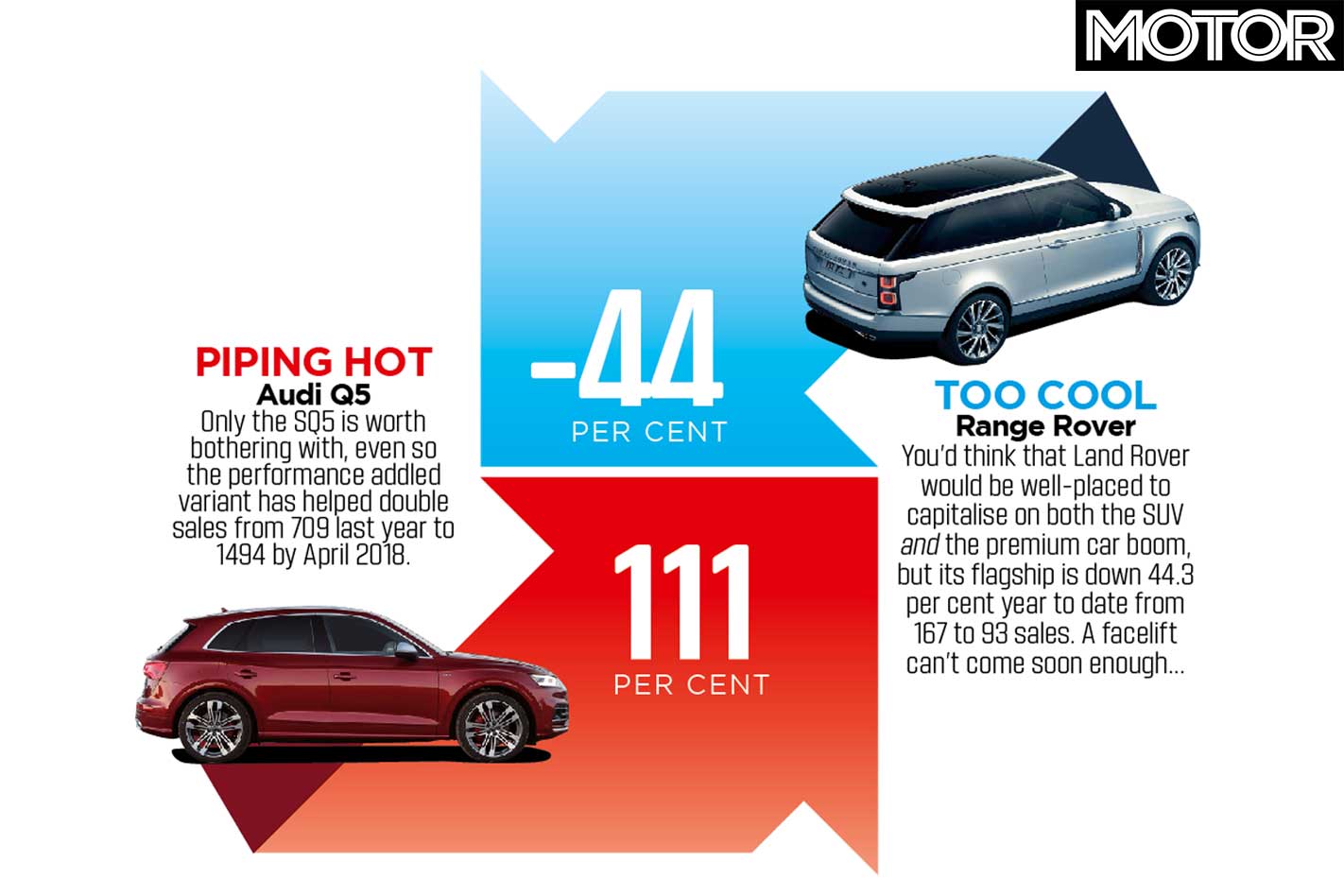
Lamborghini has hit the same 47 sales as Bentley this year, but conversely without the help of its SUV, the Urus. There is now strong potential for that Italian bull to rampage on its Italian-stallion Ferrari foe currently sitting on 81 sales year to date – up 39.7 per cent, but sans SUV.
Meanwhile, McLaren hasn’t kept pace with last year – 30 sales plays 37, down 18.9 per cent – but it will bank on the 570S Spider to boost that.
All such figures pale against the Porsche 911, though, which despite being in the final year of its lifecycle has pulled 238 buyers to April 2018 for a heady 28.6 per cent increase. The similarly old Macan may have quadrupled the iconic two-door’s volume (with 884 sales year to date) but it can’t match its growth, with only a 1.8 per cent boost.
With the new Cayenne just arriving, Stuttgart will no doubt expect that large SUV’s 39.5 per cent slump year to date to reverse. With only 337 sales compared with 557 at the same time last year, it has single handedly dragged the brand’s volume down from 1813 to 1652 – a loss of 8.9 per cent.
The Mazda CX-5 is the best-selling SUV in the country thanks to its mid-sized convenience, neat styling, generous equipment levels and sharp entry-level pricing. A recent update addressed some of its few shortfalls – including noise levels – while at the same time boosting the performance of its 2.5-litre petrol and 2.2-litre twin turbo diesel engines.
VARIANTS
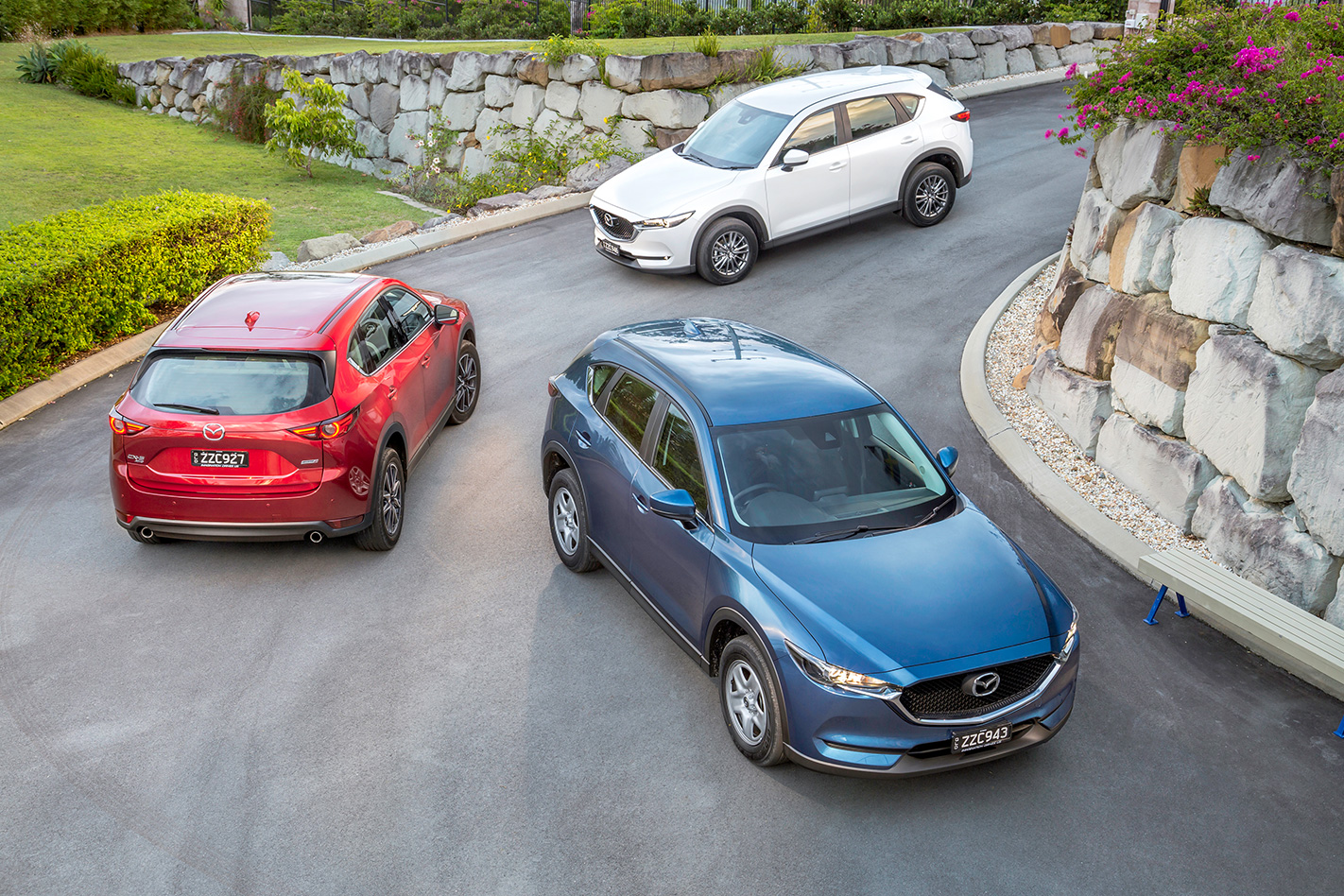
The CX-5 is offered in five specification levels starting with the entry-level Maxx FWD (front-wheel drive), which kicks off the range at $28,690 for the 2.0-litre four-cylinder petrol engine with six-speed manual.
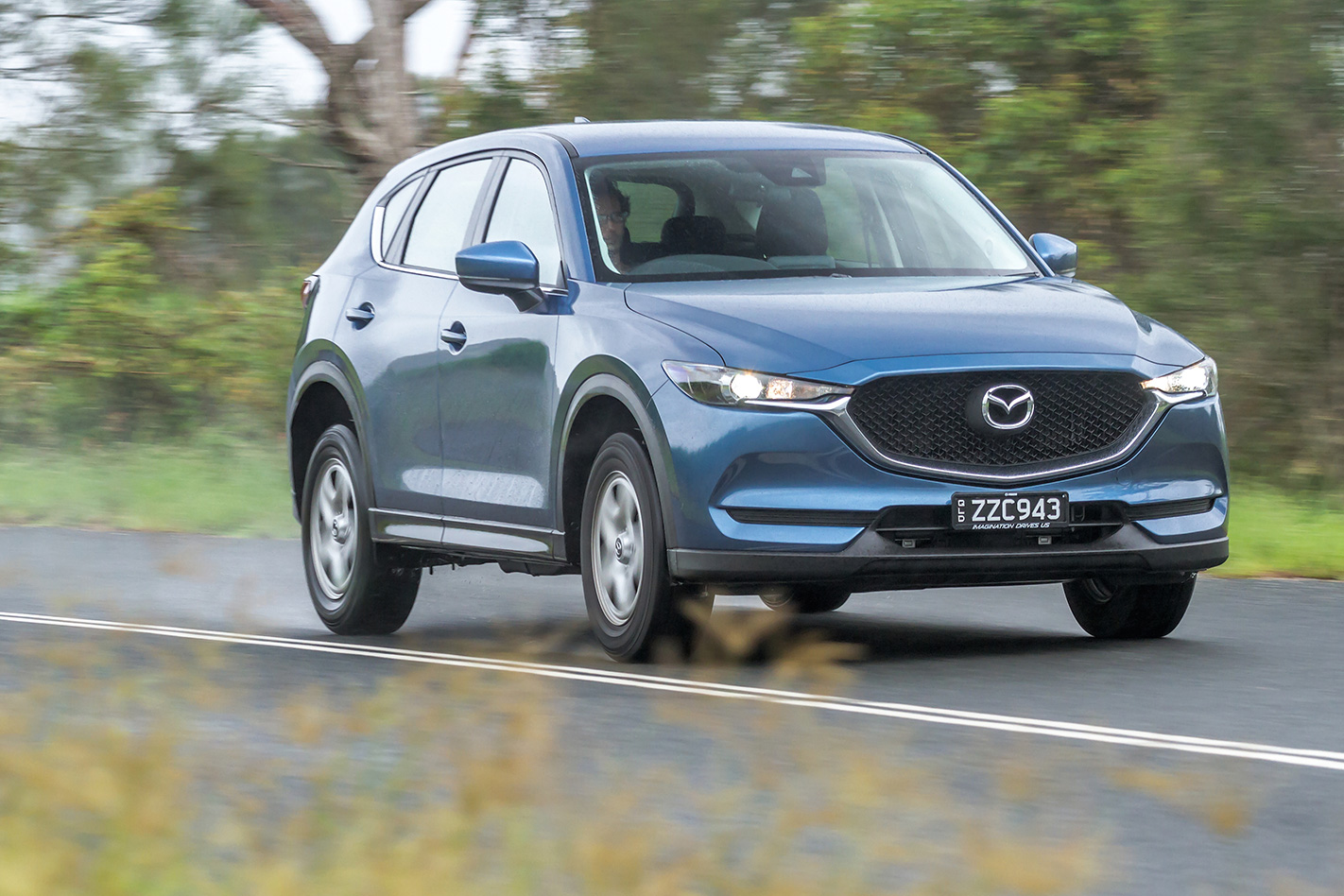
This is the only manual CX-5, with a six-speed automatic version available for an additional $2000.
A third Maxx version is available with all-wheel drive and bigger 2.5-litre engine with six-speed auto.
The Maxx spec brings plenty of features for its entry-level price, including 7.0-inch touchscreen, cloth seats, reversing camera, rear parking sensors, leather-trimmed gear shifter and steering wheel, LED head and taillights, tinted windows although the 17-inch wheels are steel items lurking behind plastic trims. It also has active safety tech such as low- and medium-speed automatic emergency braking, blind spot monitoring and rear cross-traffic alert, which lets you know if any traffic or people are approaching from the side while reversing.
Next up is the Maxx Sport FWD ($33,990) with the 2.0-litre/six-speed auto powertrain as standard along with additional features such as more attractive 17-inch alloy wheels, better quality cloth upholstery, stitched dashboard trim, satellite navigation, dual-zone air-conditioning, folding armrest on the rear seat with USB port, dusk-sensing headlights and rain-sensing windscreen wipers.
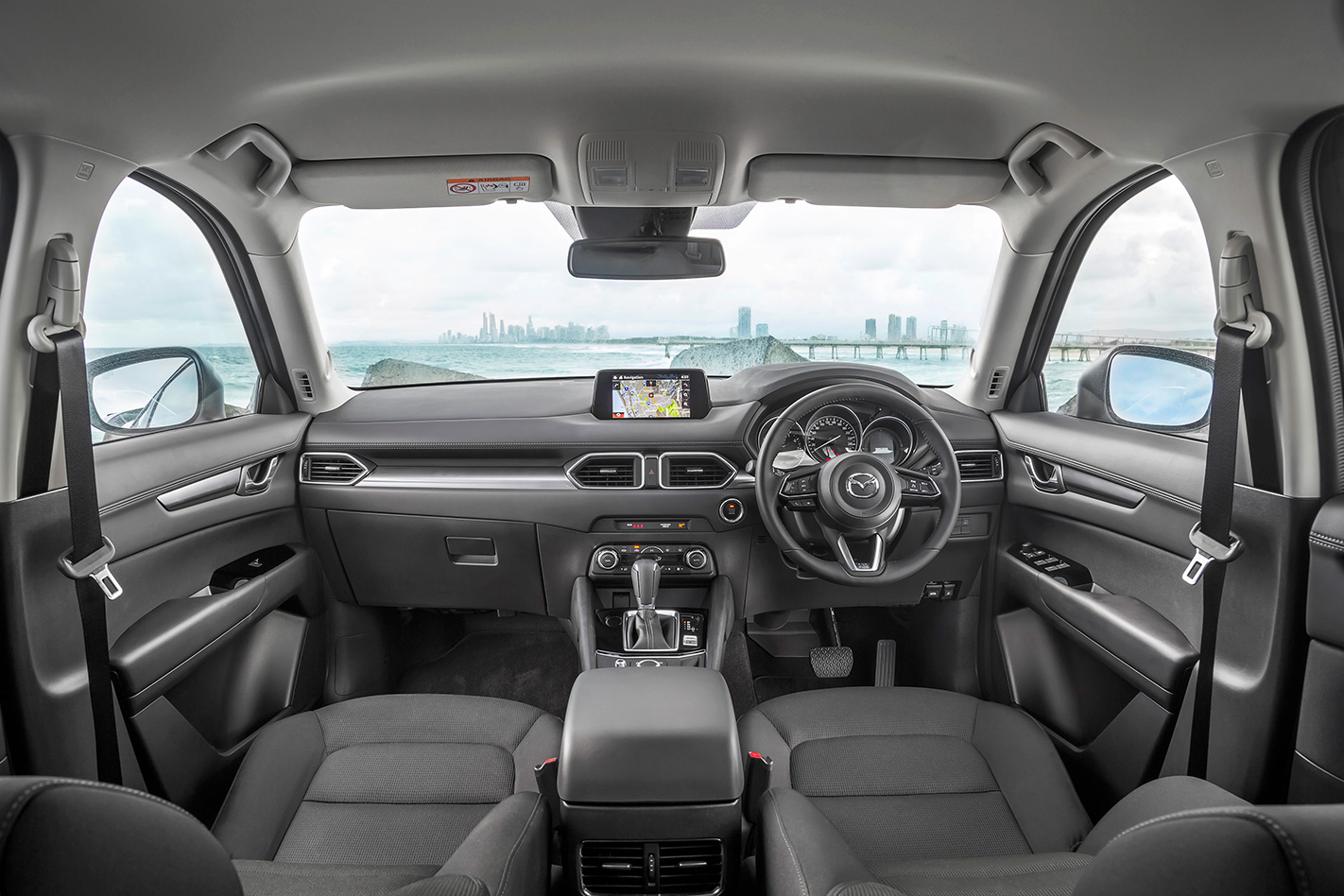
The Maxx Sport is also available with the 2.5-litre petrol engine and all-wheel drive, or with the gutsy 2.2-litre twin-turbo diesel also with all-wheel drive.
The next three spec-levels, the Touring, GT and Akera are only available with all-wheel drive with a choice of 2.5-litre petrol or 2.2-litre twin turbo diesel.
The Touring brings front parking sensors, smart-key entry, head-up display, seats trimmed with artificial leather and suede, and heated and auto-folding door mirrors.
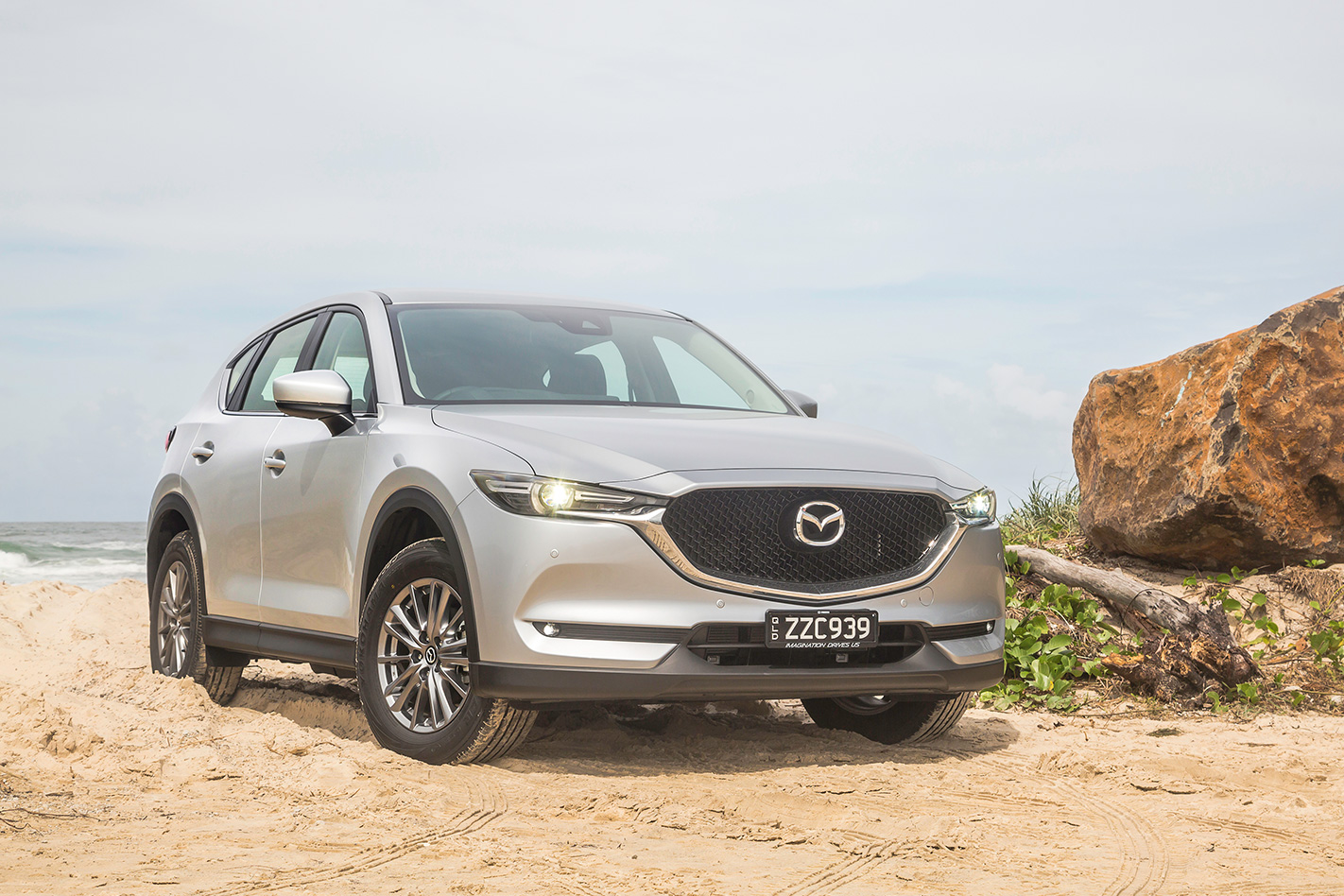
The CX-5 GT gains leather upholstery, wood interior trim, heated and power adjusted front seats, sunroof, power-operated tailgate, headlights that shine into corners and bigger 19-inch alloy wheels with sportier low-profile tyres.
The range-topping Akera has all that plus multi-element LED headlights that automatically dim for oncoming traffic, adaptive cruise control, 360-degree parking camera, lane-keeping assist, fatigue alert and automatic emergency braking that works at higher speeds.
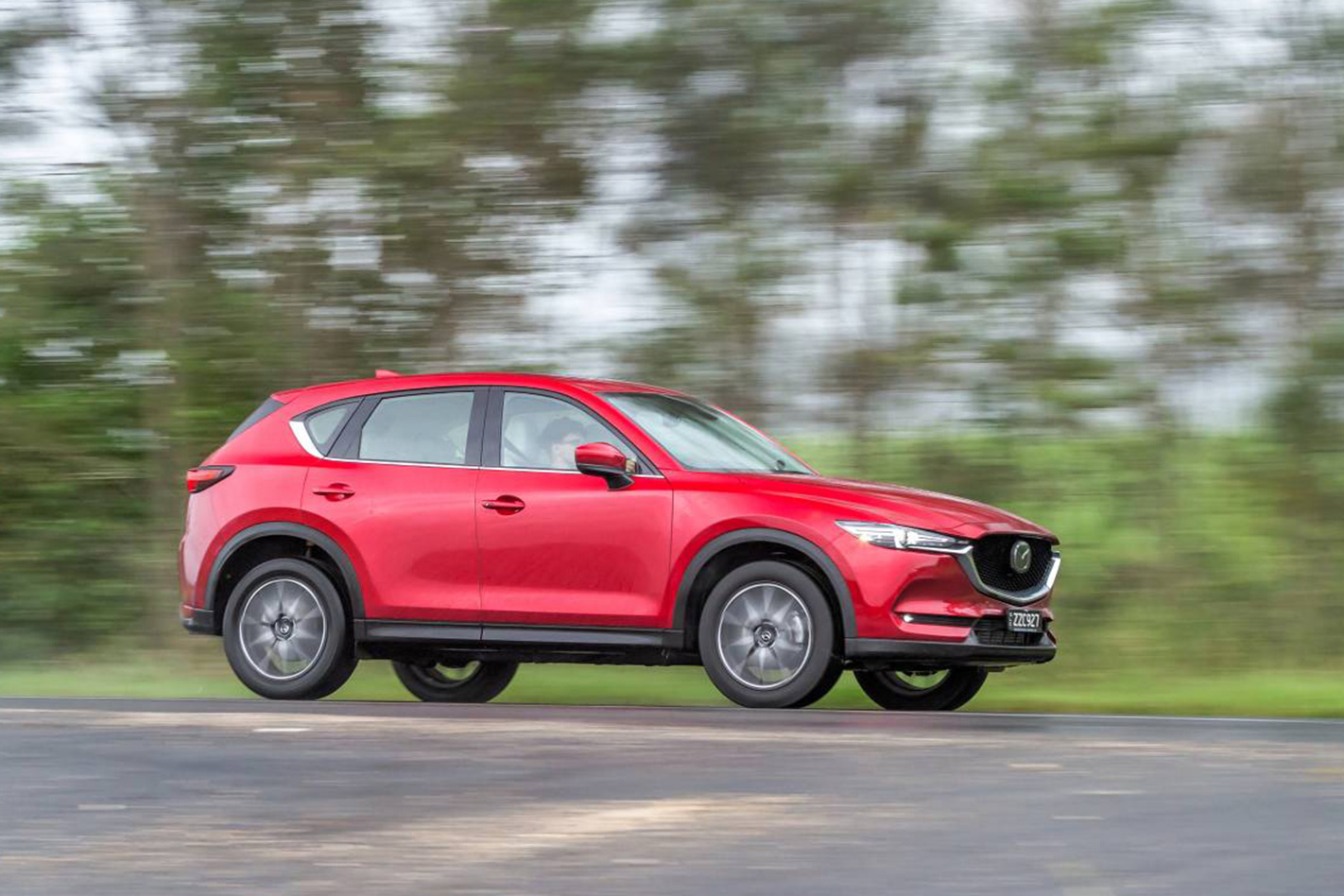
- CX-5 Maxx FWD 2.0-litre petrol, manual – $28,690
- CX-5 Maxx FWD 2.0-litre petrol, auto- $30,690
- CX-5 Maxx AWD 2.5-litre petrol, auto – $33,690
- CX-5 Maxx Sport FWD, 2.0-litre petrol, auto -$33,990
- CX-5 Maxx Sport AWD, 2.5-litre petrol, auto – $36,990
- CX-5 Maxx Sport AWD, 2.2-litre diesel, auto – $39,990
- CX-5 Touring AWD, 2.5-litre petrol, auto – $38,590
- CX-5 Touring AWD, 2.2-litre diesel, auto – $41,590
- CX-5 GT AWD, 2.5-litre petrol, auto – $43,590
- CX-5 GT AWD, 2.2-litre diesel, auto, $46,590
- CX-5 Akera AWD, 2.5-litre petrol, auto – $46,190
- CX-5 Akera AWD – 2.2-litre diesel, auto – $49,190
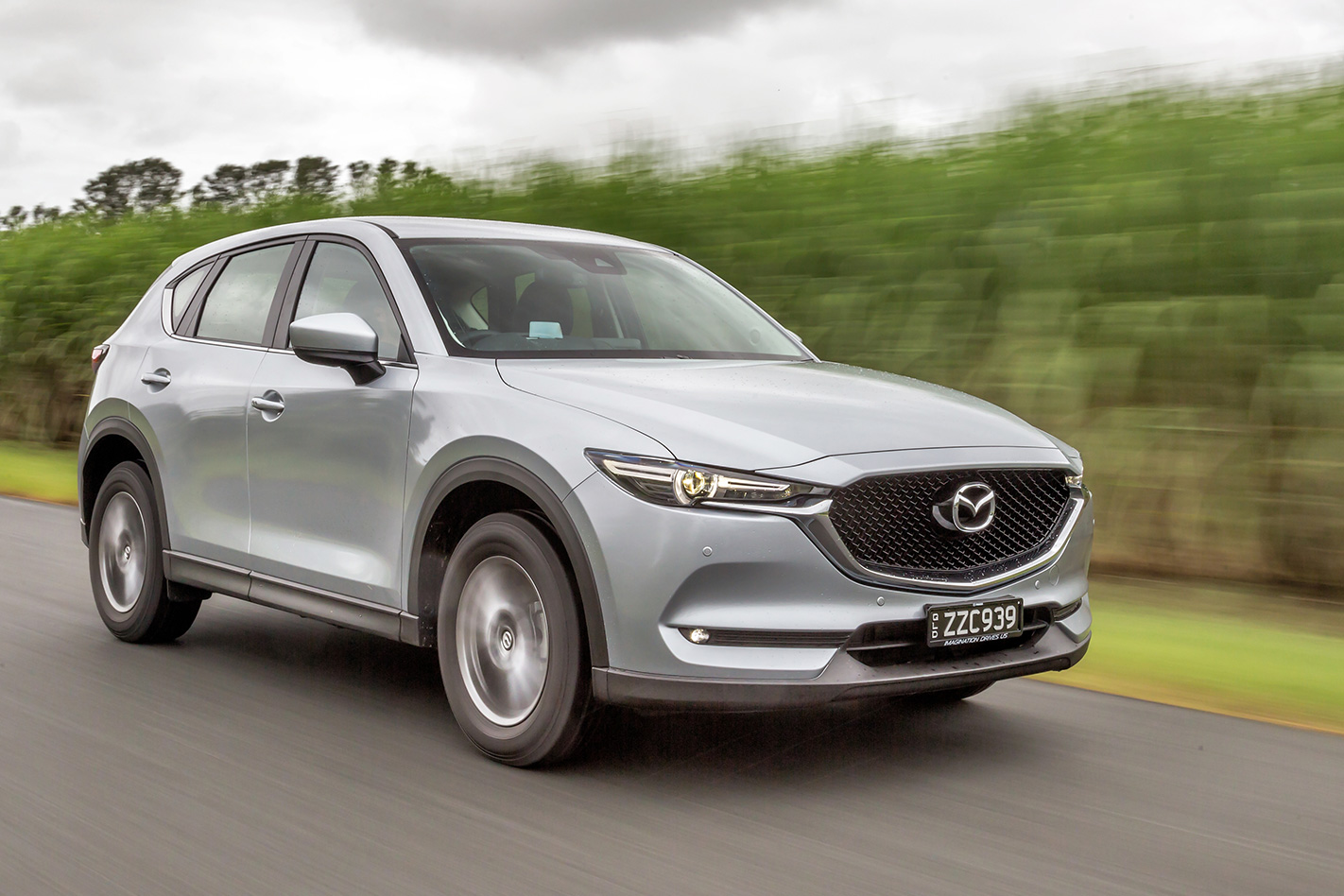
The CX-5 Maxx Sport with the 2.5-litre petrol engine offers a lot of value and versatility. You’ll enjoy the performance lift from the bigger petrol engine, and the AWD will help in sketchy conditions or on trips to the snow. The diesel is tempting, especially after the recent update that brought more power and torque, but it costs a lot more and is not as care free around town.
“He made the 1979 Hardie-Ferodo dull, he drove the opposition into the ground, he proved (if proof were needed) that Peter Brock is the finest sedan car driver in Australia. Here’s how the race looked from the driver’s seat of the winning car.”
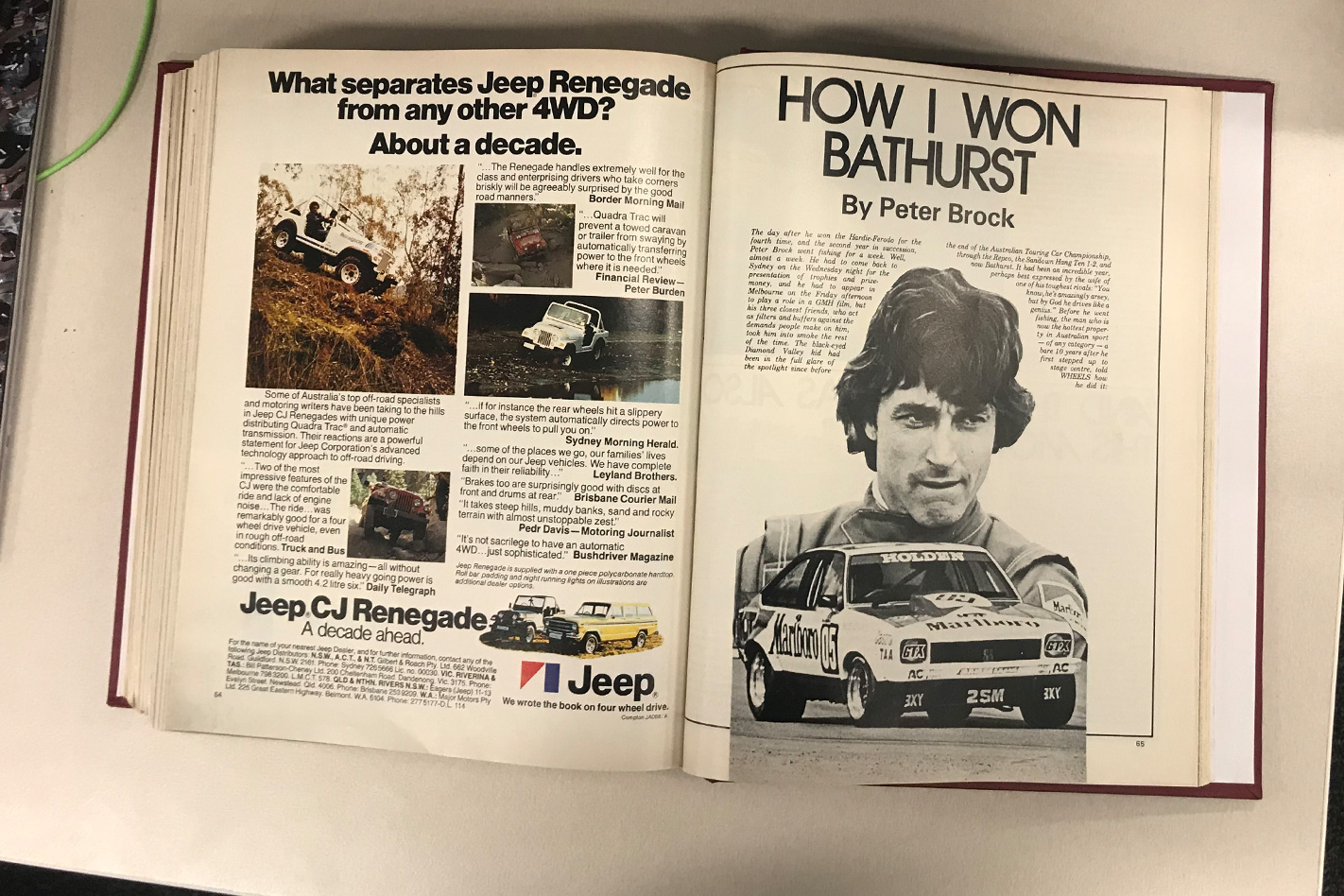
The contents page promo from the December 1979 issue for How I Won Bathurst says it all: the Marlboro Holden Dealer Team Torana wearing the iconic 05 number started from pole and led throughout, winning effortlessly by a record, and incredible, six laps.
This was Brock and co-driver Jim Richards at their dominant, brilliant, best. Brock’s story is personal, intimate and refreshingly honest, unlike so many ghosted (for it was ghosted and most assuredly not written by Brock himelf) biographies or stories attributed to famous sporting identities.
“After the Repco [Round Australia rally, which Brock also won] I took a long time to come down. I used to have nightmares and wake up at strange times and yell like crazy for someone to get out and change a wheel or open a gate … [team boss] John Sheppard got a bit tense about it because he felt the Repco was over and that was terrific, but he really couldn’t care a stuff now because his job was to win Sandown and then Bathurst.”
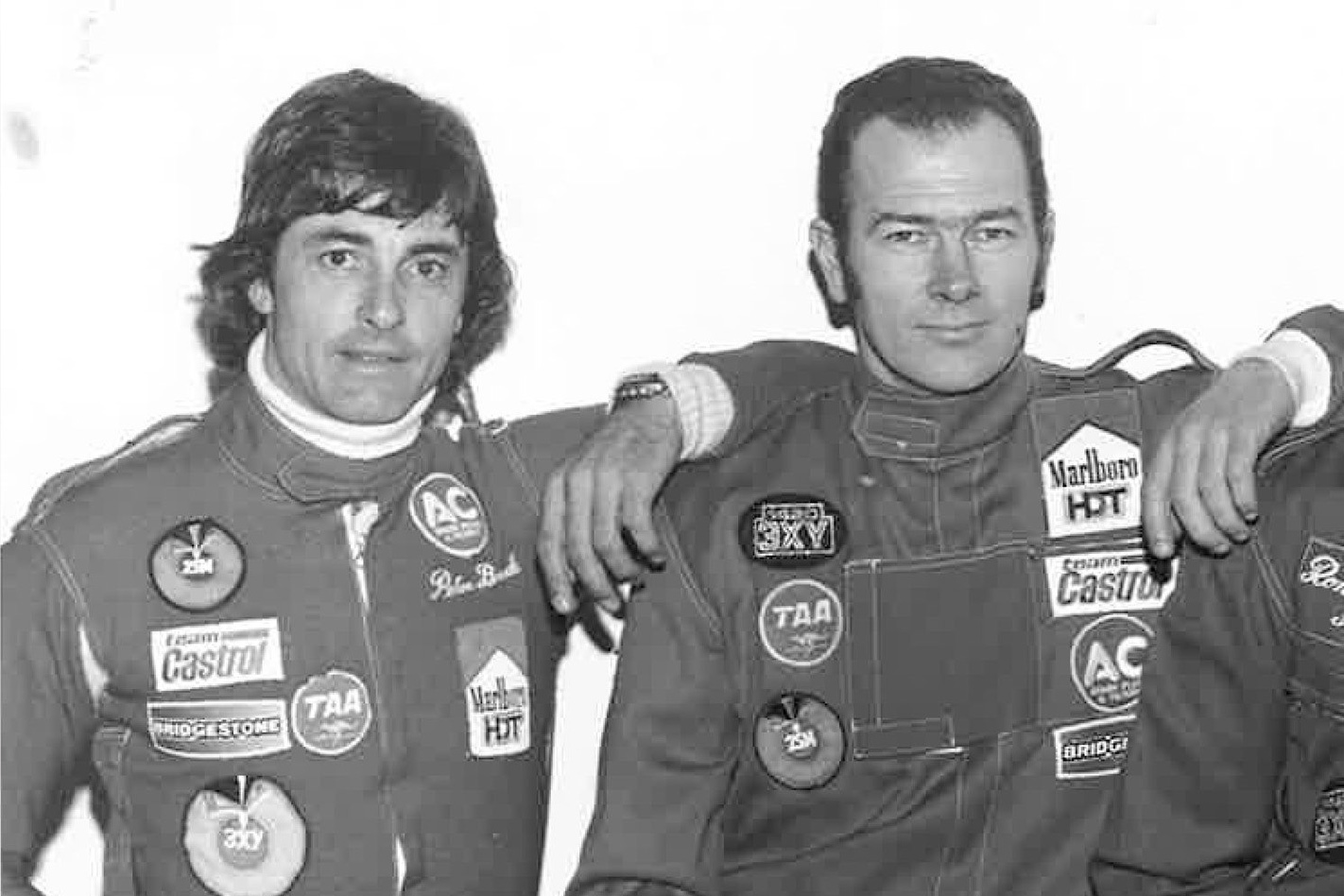
From the start and for the first few laps Brock, “gave the car plenty and I told Sheppo over the radio that she was sweet and away we went. If you want the story of the race, that’s it. The car was a dead-set shell.”
The story really does read the way Brocky talked.
“When I came down for the last lap I decided I wanted the lap record and would have a go. The car was fine, like a Swiss watch, and even if it stopped up the top I could bloody-near coast to the bottom and push it home and still win. So I gave it heaps, mate, heaps, and she gave me a 2:21.1, as I found out later, which was a good feeling, because I didn’t have to do a desperate to get it.”
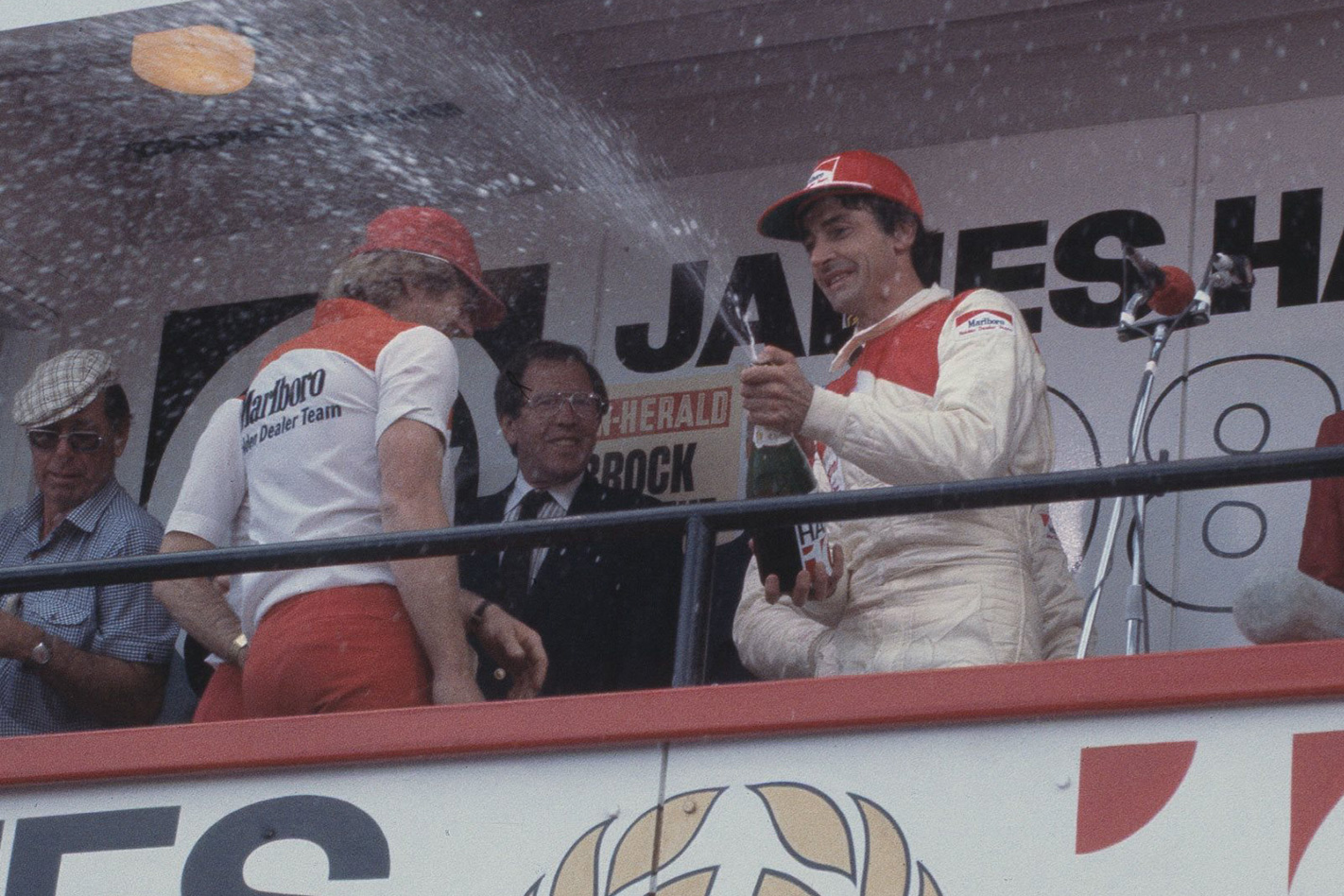
After making his Bathurst debut in 1969 in a Monaro GTS 350, Peter Brock won the Bathurst 1000 race nine times, plus the Bathurst 24-hour race, nine Sandown 500s and was Australian Touring Car Champion three times.
Ghost with the write stuff
Almost 40 years after the event, nobody is sure who wrote How I Won Bathurst, the story attributed to Peter Brock. We do know that Brock’s consummate skill as a racing driver far exceeded his literary talent.
The best you could ever hope to get from the mercurial driver was to sit still for a tape recorded interview. I was Wheels’ editor at the time and I’m embarrassed to admit that I simply don’t remember who ghosted the piece. I first suspected it might be Brock’s long-time PR man and friend, Tim ‘Plastic’ Pemberton, though he denies it. Former editor and long-time contributor Phil Scott also says no to being the author.
I now believe the great Bill Tuckey was the voice of Brock, hence the quality of the piece. One clue is that Bill’s alter-ego Romsey Quints penned a sidebar to the Brock story. It makes sense that Tuckey wrote both, without using his own name.
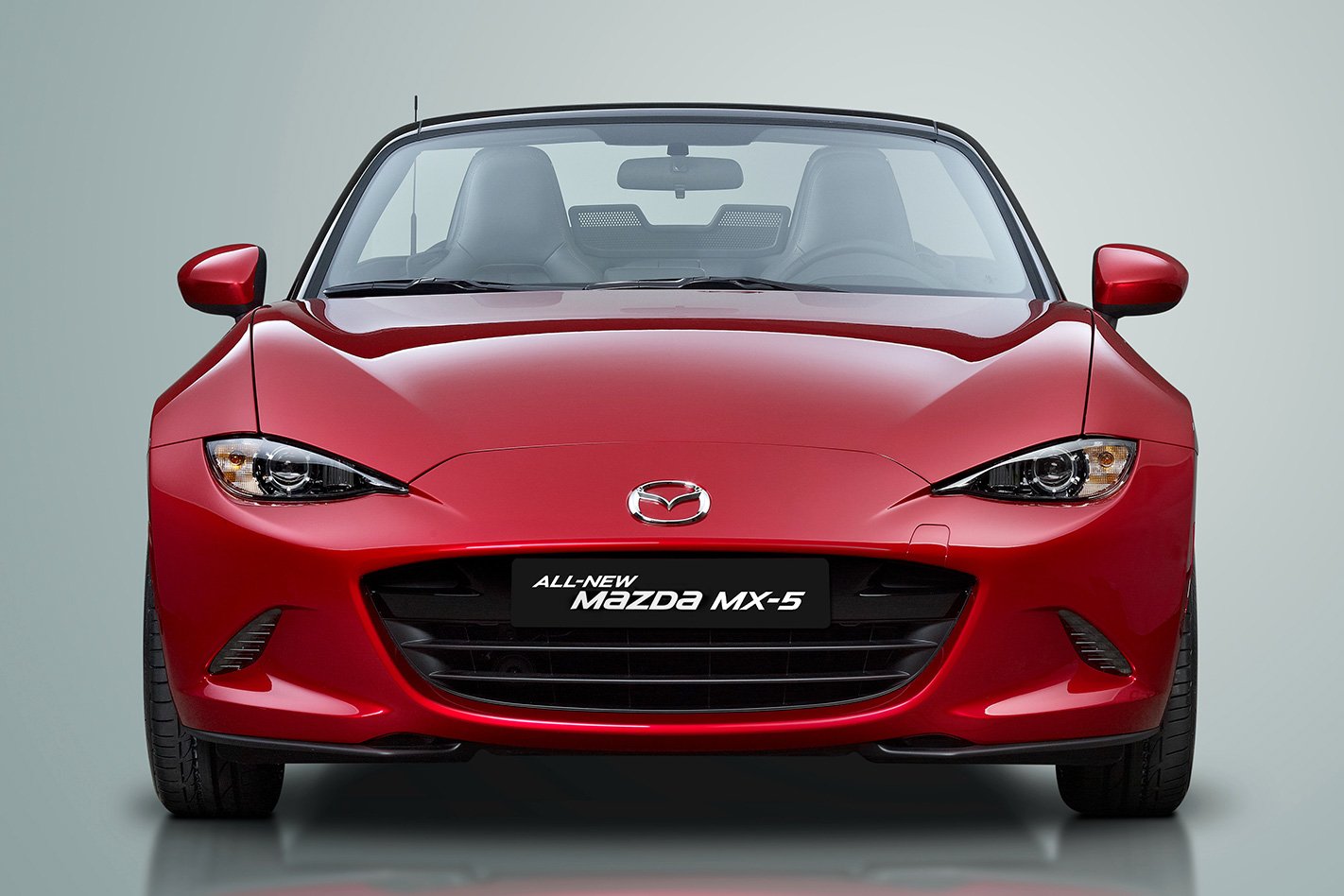
MAZDA is preparing its most serious power update yet to the ND MX-5 – and it’s all about revs.
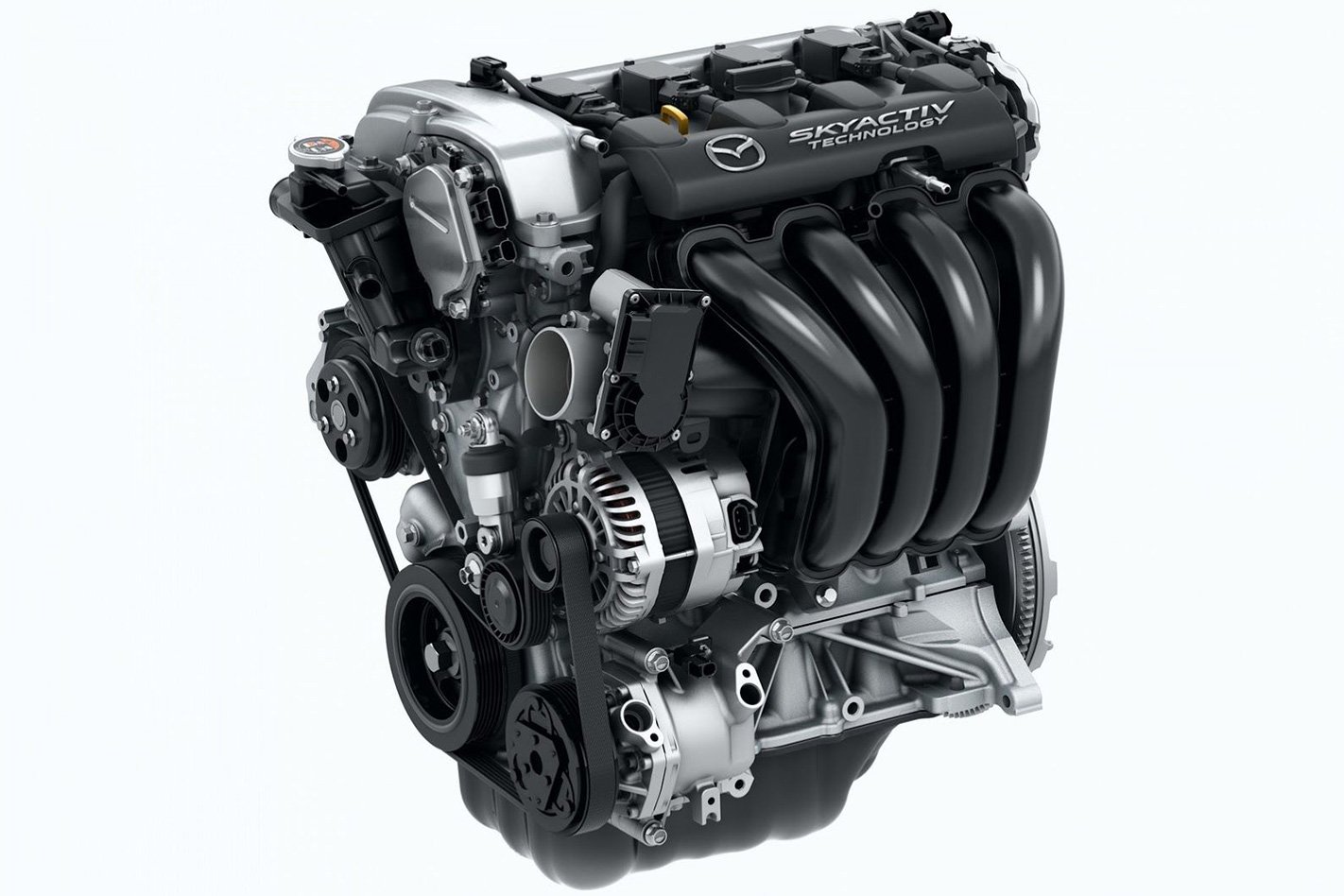
Due late in 2018 or early 2019, the major mid-life update to the fourth-generation of Mazda’s COTY-winning roadster focuses on the internals of the 2.0-litre Skyactiv engine to boost output by about 20kW, a 17 percent improvement on the current car’s 118kW peak.
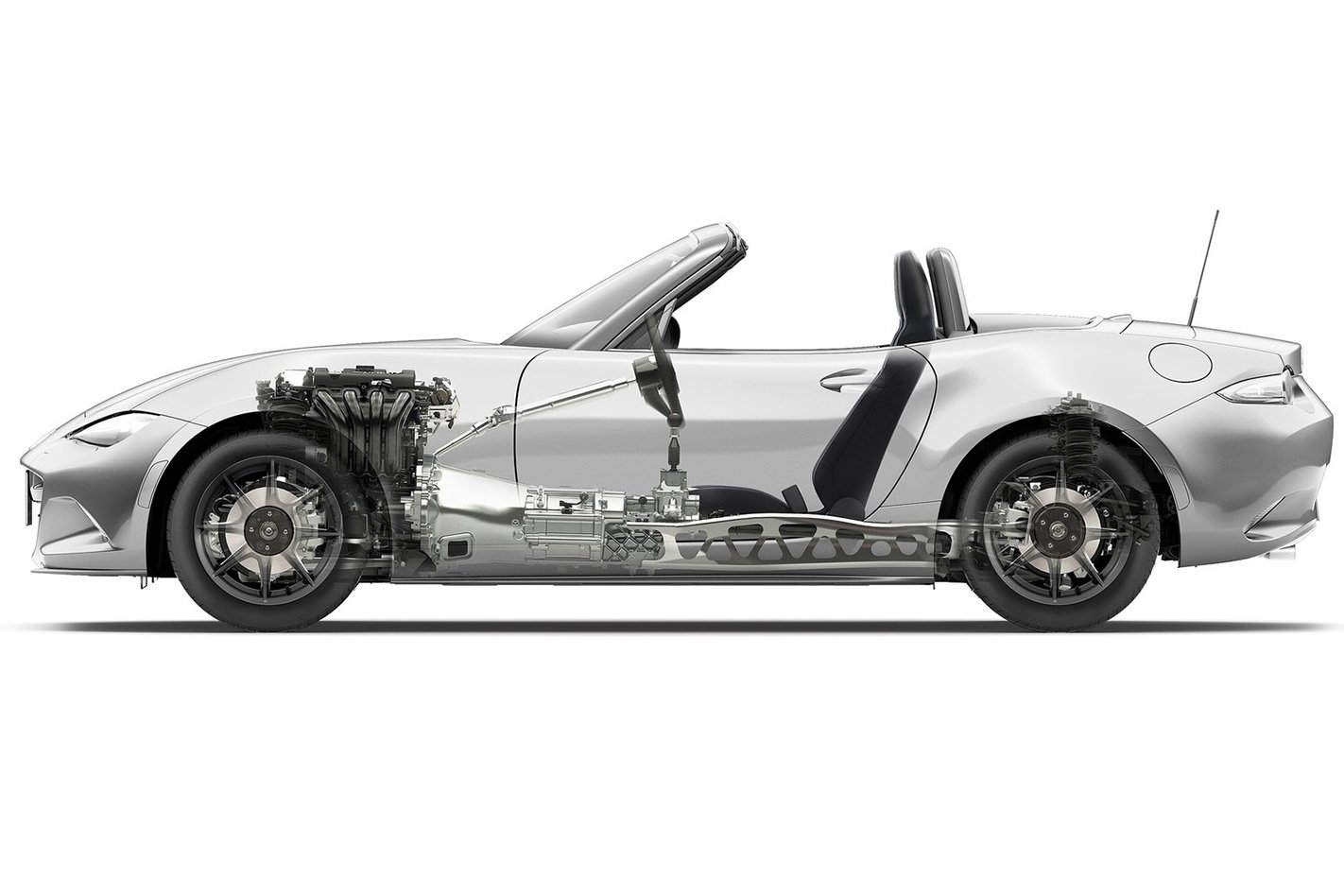
The aim is to get the 2.0 revving with the verve and character of the 1.5, an engine that makes up for its power deficiency with a sweet revving top end. Lighter pistons, valves and conrods will be matched to a new crankshaft engineered to cope with the loftier power and higher revs.
Mazda is also redesigning the air intake and developing a new exhaust to account for the extra energy the engine is producing. The result will be a unique-to-MX-5 2.0 that has a redline closer to the 7500rpm cutout in the 1.5 (currently the 2.0 gives up at 6800rpm).
Crucially, the heavily re-engineered engine will maintain its crisp throttle response, a key goal of the development team, which has repeatedly pushed back on calls to bolt on a turbo for an easy performance boost.
The rival Abarth 124 Spider – a reskinned MX-5 running a 1.4-litre turbo Fiat engine – has had more power than the MX-5 (125kW versus 118kW), albeit carrying more weight. But the Italian variant lacks the near-instant response of the Mazda and the extra kilos dilute some of the pureness oozing from the original.
This latest change will give the Mazda a handy power-to-weight advantage – for the 2.0-litre models at least; the 96kW 1.5 will be largely unchanged – given no extra kilos will be piled on.
Accompanying the power improvement will be dynamic refinements. However, the relatively low-grip but high- engagement philosophy will remain. So don’t expect significantly stiffened springs or heavier anti-roll bars. Instead engineers are focusing on damper tweaks for better control. Even the tyres will be unchanged, with 16-inch rubber for 1.5 models and 17s for 2.0-litre cars. So the MX-5 will still lean in bends – which we love – and progress to easily controlled slides (at either end) on the limit.
Other improvements will focus on active safety, with the MX-5 in line to pick up the full suite of i-ActivSense features available on all other Mazdas.
A key addition is the fitment of a long range forward-facing radar, which will work in concert with the camera already fitted to some MX-5 variants to deliver Smart City Brake Support, Mazda’s marketing term for autonomous emergency braking (AEB). The lower windscreen and nose of the MX-5 has created headaches for engineers in Hiroshima, something that delayed the fitment of a radar and required some re-engineering and calibration.
Mazda is also expected to take the opportunity to fit a reversing camera, an oversight left to the accessories list in the current MX-5. It’s one of various equipment updates that’s also likely to usher in Apple CarPlay and Android Auto, two connectivity techs Mazda has been slow to adopt. That means the base MX-5s are likely to pick up the MZD colour screen, replacing the monochrome radio display.
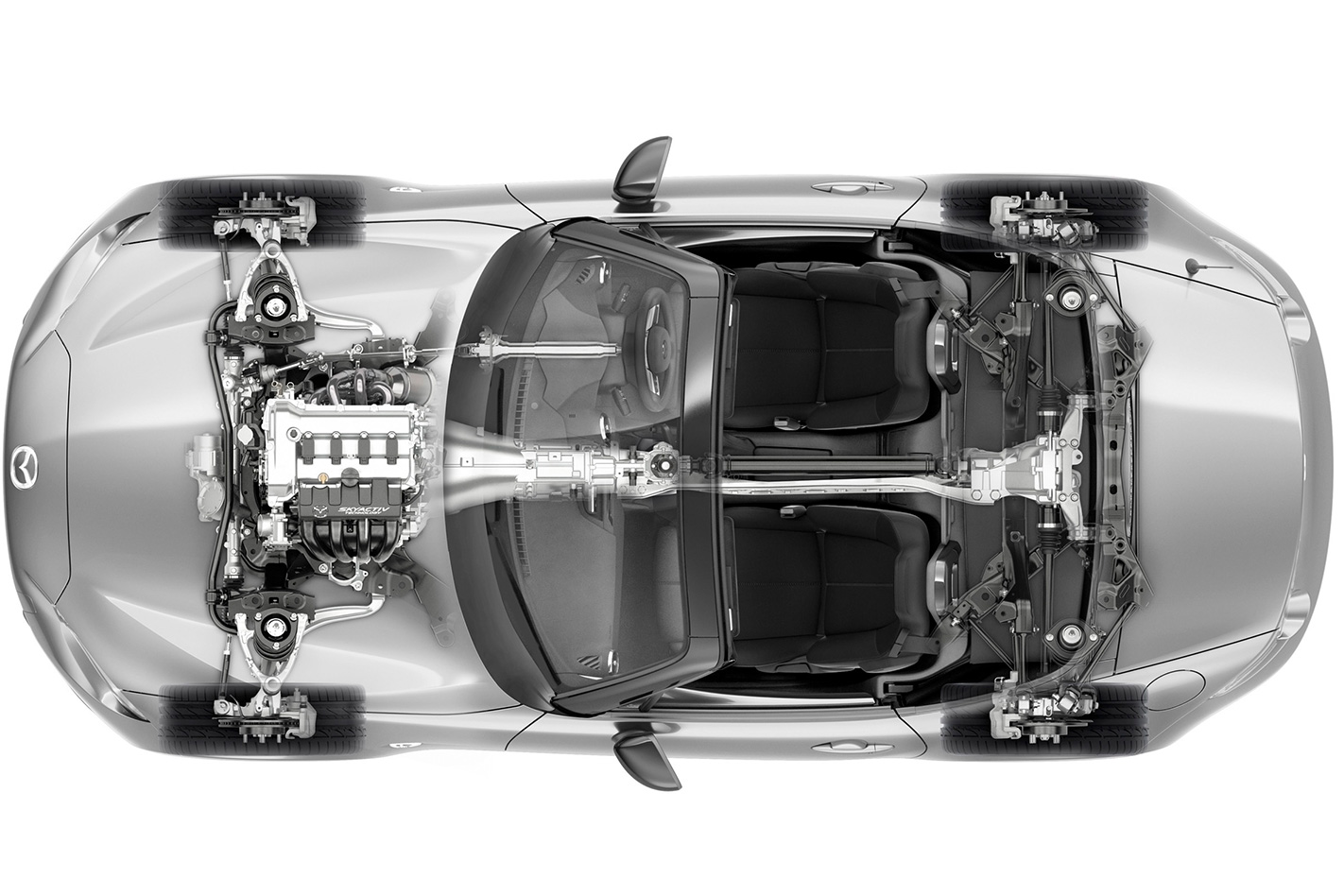
At all levels the MX-5 will adhere to Mazda’s intensive gram-by-gram philosophy, where every component is analysed and designed with light weight in mind; every gram saved makes for better performance and they all add up.
However, Wheels has learnt the 2019 MX-5 will look little different to the current car. No sheetmetal or bumpers will change, with colours and trims likely to be the most obvious visual difference. Mazda is also expected to offer more soft-top roof options, including red (already available overseas) and brown.
There’s an old saying: it’s not what you’ve got, but what you do with it that counts. It’s not always used in reference to cars but it’s very applicable to the Aston Martin DB11 V8.
It’s Aston’s first model to use an engine from its technical partnership with Mercedes-AMG, and as such the 4.0-litre twin-turbo V8 from the GT sits beneath that aluminium clamshell bonnet.
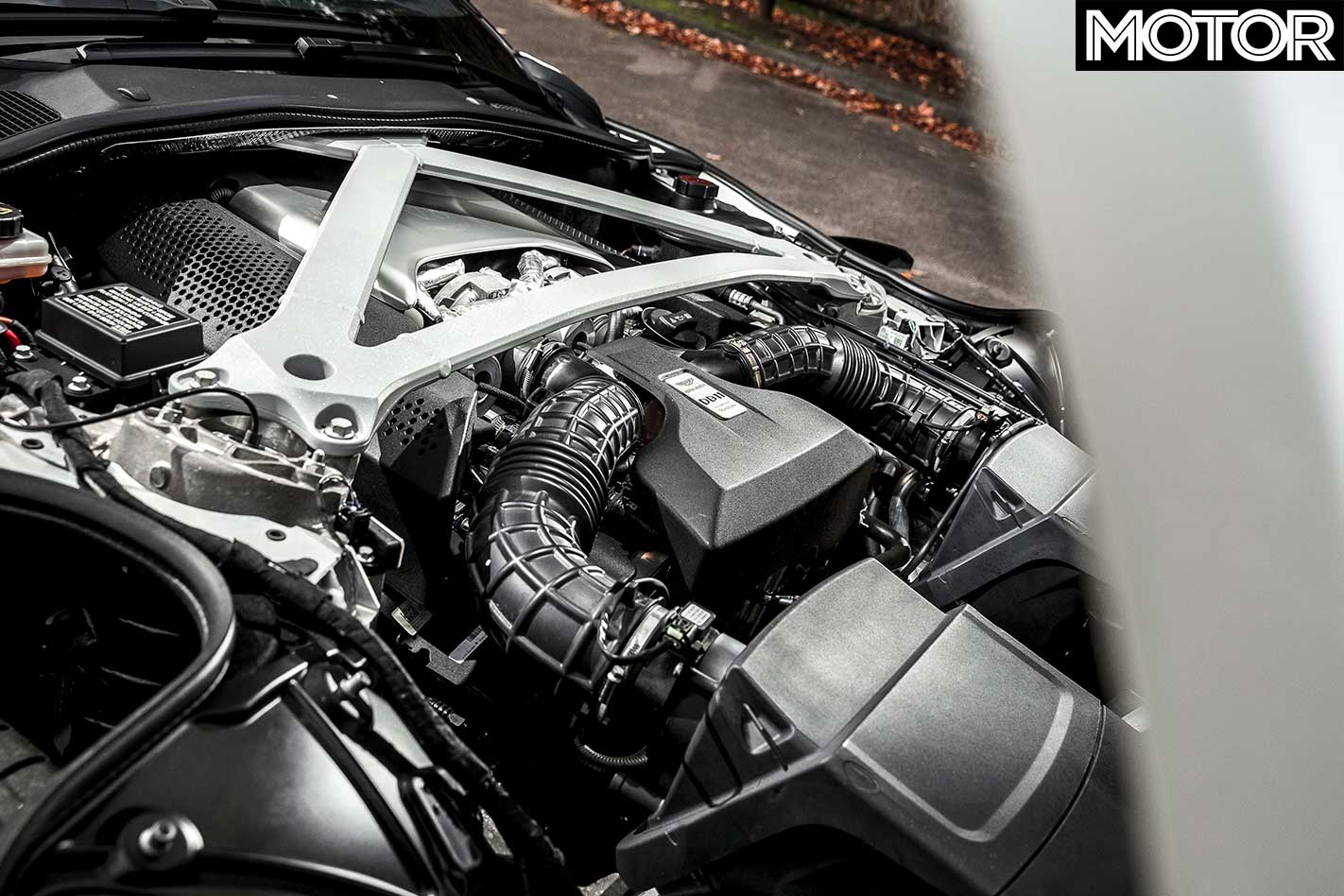
Given their layout similarities, you could be forgiven for thinking of the DB11 V8 as an Anglo AMG GT, but the two are very different in character. Part of the reason is that Aston hasn’t just plonked the engine in, connected the wires and gone to the pub.
It’s adapted the M178 to wet-sump lubrication, changed the engine mounts, developed bespoke intake and exhaust systems and recalibrated the ECU software.
The result is a lightly softer, more rounded engine character. Under full throttle there’s a deep roar, but it lacks the hard-edged bark of the AMG and the overrun theatrics are toned down slightly. That said, it’s more vocal than the V12, which is in line with Aston’s intention for the DB11 V8 to be more sporting without losing its gentrification.
In terms of numbers the 375kW/675Nm V8 gives plenty away to the 447kW/700Nm V12, but a 115kg weight loss means there is little to choose between the two in raw pace. Against the clock Aston claims the V12 is just 0.1sec quicker to 100km/h (3.9sec vs 4.0sec), though it manages an extra 22km/h at the top end (322km/h vs 300km/h).
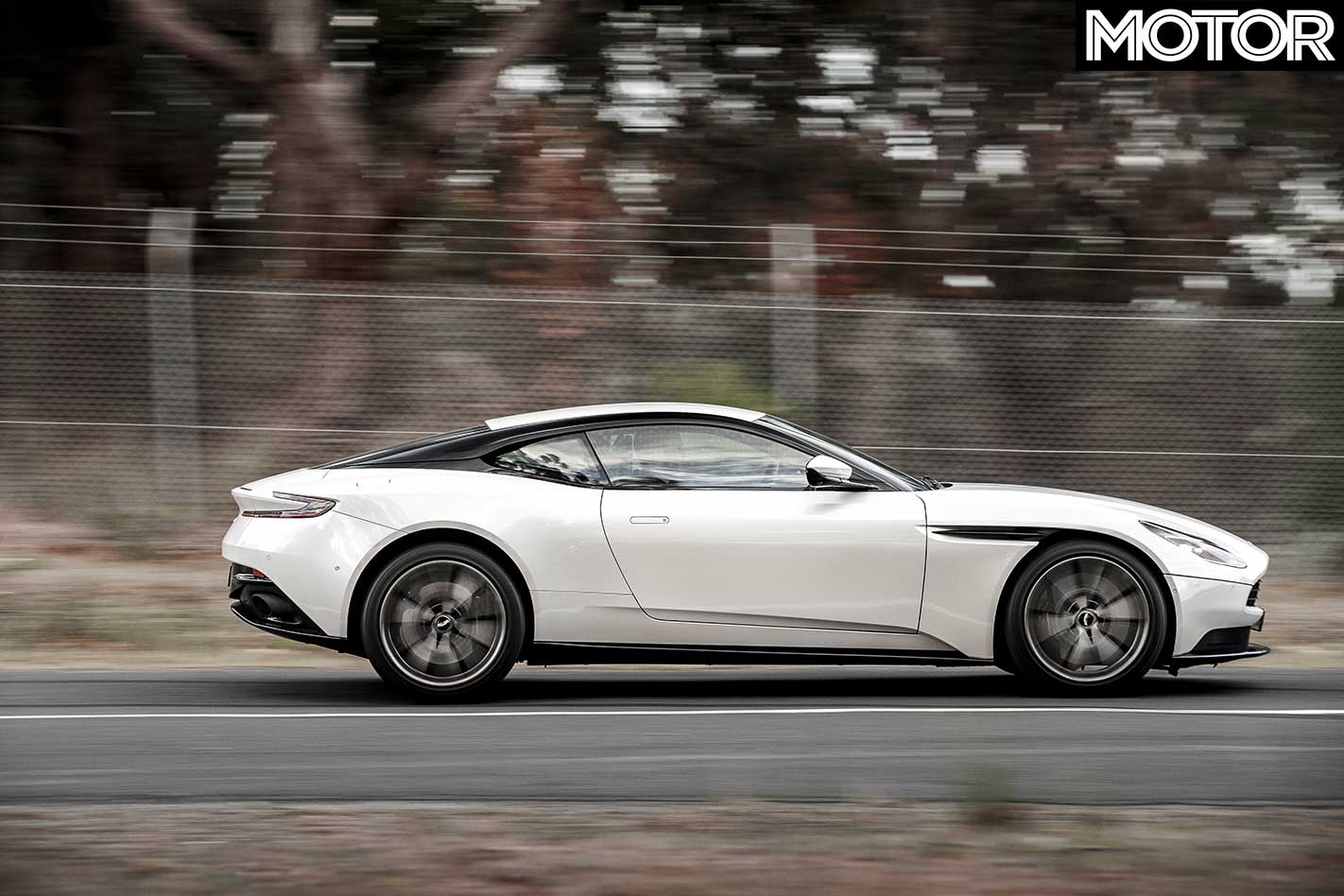
On the road it would take a back-to-back test to split them, for after taking a moment to wake the turbos the V8 hits massively hard in the mid-range and revs cleanly to 7000rpm.
Another key difference between Aston and AMG is the former’s use of an eight-speed automatic rather than adopting the GT’s seven-speed dual-clutch. Whatever it loses in shift speed (not much) is more than compensated for in smoothness, with the occasional lurch on tip-in its only real vice.
The paddles are beautiful, too; cool to touch, long enough to prevent their fixed location being an issue and very satisfying in their long-throw action.
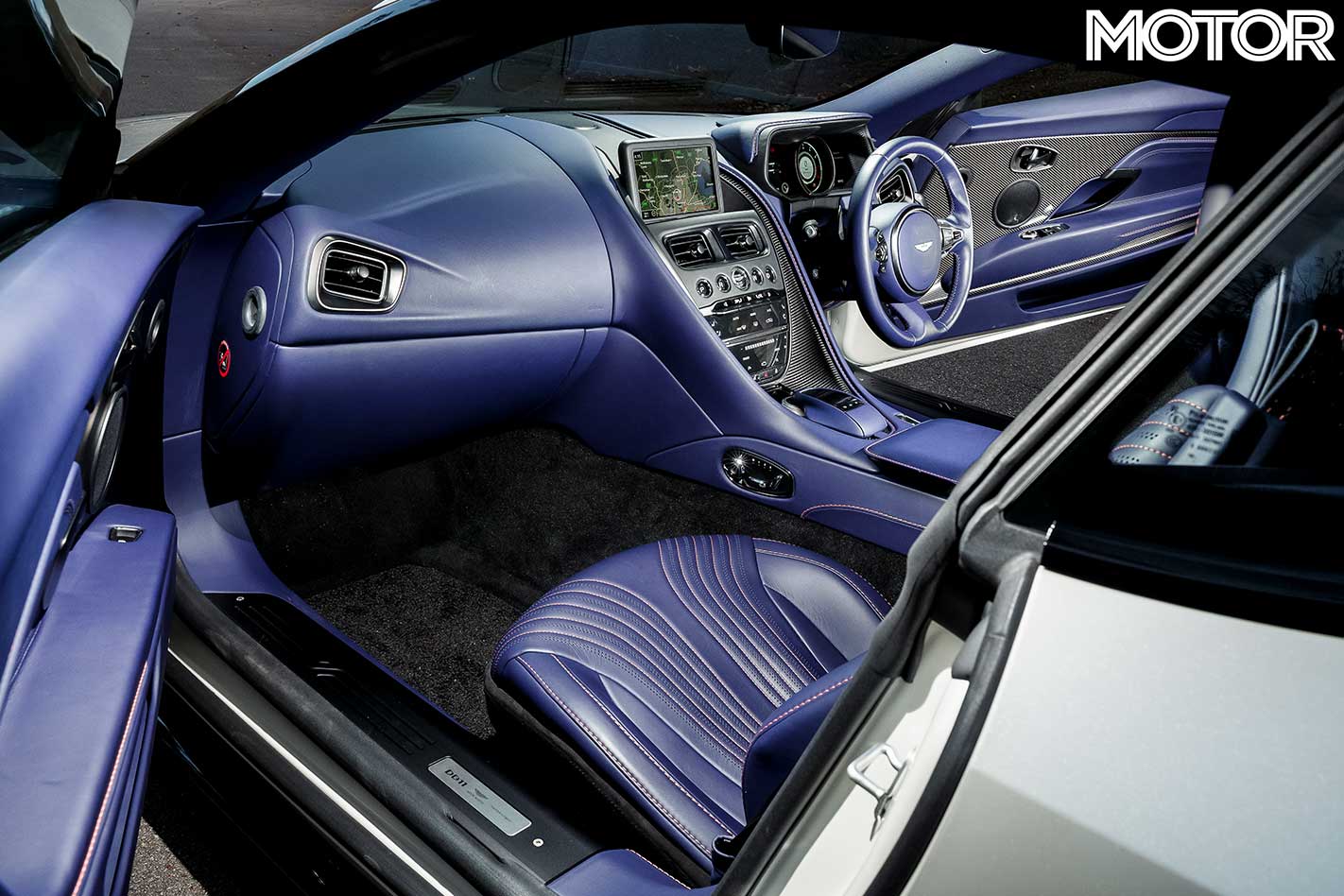
Aston used the change in engine configuration to, in its words: “Explore the more dynamic side of the DB11’s character.” The 115kg diet certainly helps, which also slightly alters the front-to-rear weight distribution from 51:49 to 49:51.
Most of the chassis has come in for attention, including revisions to the springs, dampers, anti-roll bars, bushings, geometry and ESP, though the wheels and tyres remain the same as the V12.
Essentially, the two cars handle quite similarly, though the V8 is definitely the most extroverted of the pair. Whether because of tyre condition, chassis setup or power delivery – likely a combination of all three – the V8 is much happier to lose traction than its bigger brother.
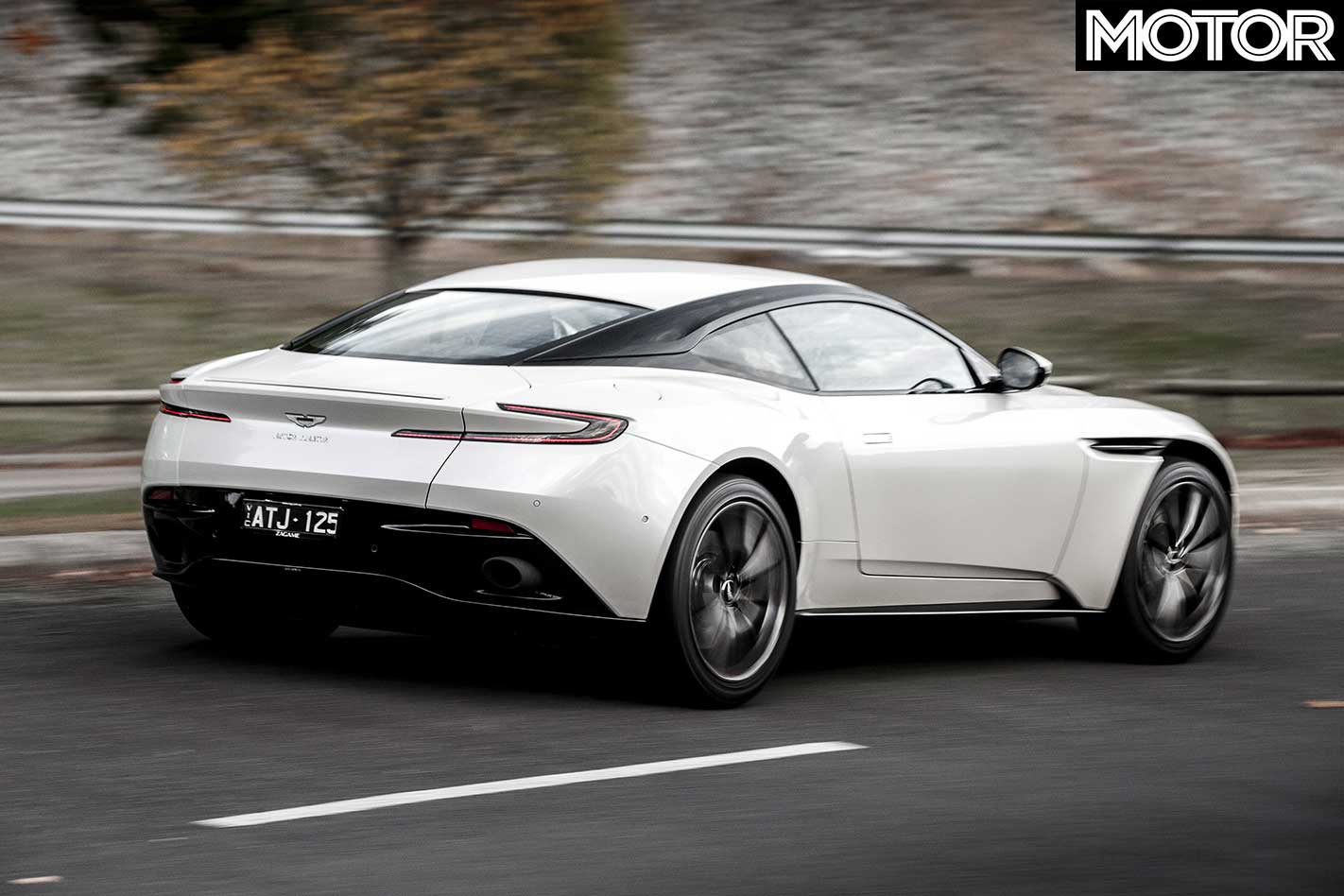
It’s still a big, heavy car with a setup biased towards grand touring ability rather than outright dynamic precision, but its more exuberant handling does make it the more fun car to punt hard. The steering is a particular highlight, but its balance is also impressive for such a big car; trail the brakes on corner entry and the rear will gently slide to help point the nose.
The penalty for this extra dynamic ability is an added terseness to the ride. It’s still good, but doesn’t have the same plushness as the V12, frequently fidgeting over small road imperfections. It’s this penalty that leaves the V12 as our DB11 of choice, which feels to better fulfil the grand tourer brief.
Yes, it’s more than $60K dearer, but that’s hardly a deal breaker when you’re talking $400 grand. If you want a sporty V8 coupe, we’d suggest the Mercedes-AMG GT R or, if you want an Aston, a fully loaded new Vantage.
2018 ASTON MARTIN DB11 V8 SPECS: Engine: 3982cc V8, DOHC, 32v, twin-turbo Power: 375kW @ 6000rpm Torque: 675Nm @ 2000-5000rpm 0-100km/h: 4.0sec (claimed) Weight: 1760kg Price: $368,000
Rating: 4 out of 5 stars Pros: grunty engine; sharper handling Cons: jittery ride; still quite soft
If Nissan ever felt like the 370Z needed a rebrand it could always call it the Tardis, for climbing behind the wheel is akin to stepping back in time. There are buttons strewn everywhere and the materials used and overall architecture belong to a previous generation of interior design.
The 370Z first appeared in these pages in February 2009. Nissan is persisting, however, and has given its junior sports car a light update for 2018, including smoked head and tail-lights, redesigned 19-inch wheels and a new colour: Cherry Red.
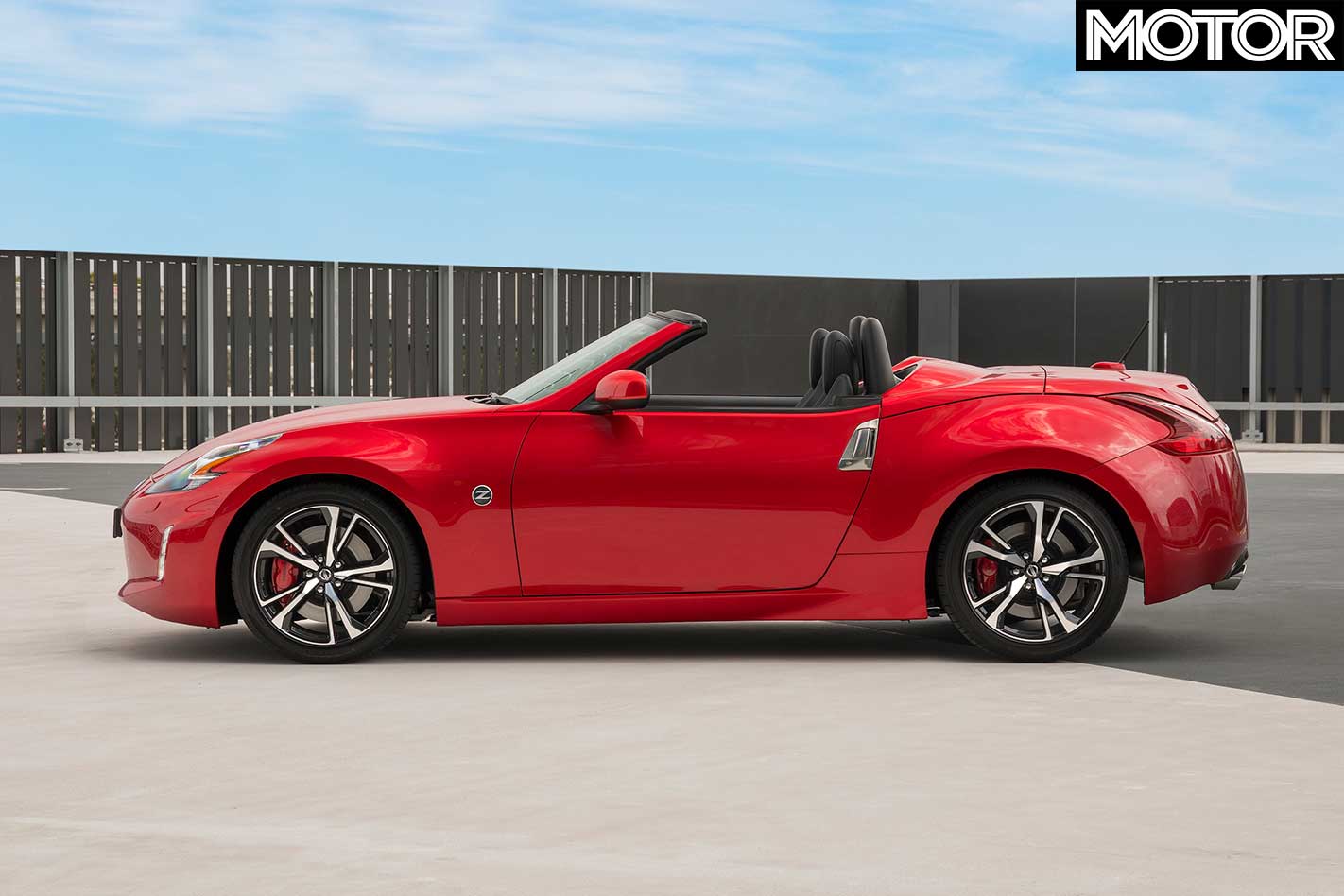
Most notable, though, is the significant price cut. The Roadster now starts at $60,990 for the six-speed manual, while the seven-speed auto tested here is $63,490. That’s $11,000 more than the equivalent Coupe, however, shaves around $5K from its previous price tag.
It places the 370Z Roadster in a fairly sparsely populated marketplace, with only the Ford Mustang convertible offering a similar blend of pace, handling and presence.
Back behind the wheel, the 370Z Roadster’s vintage has advantages. A button for everything means there aren’t countless digital sub-menus to wade through and there’s a lack of lights flashing at you from all the active safety aids. Even turning off ESP is achieved with a simple press of a button; no Sports mode, nothing.
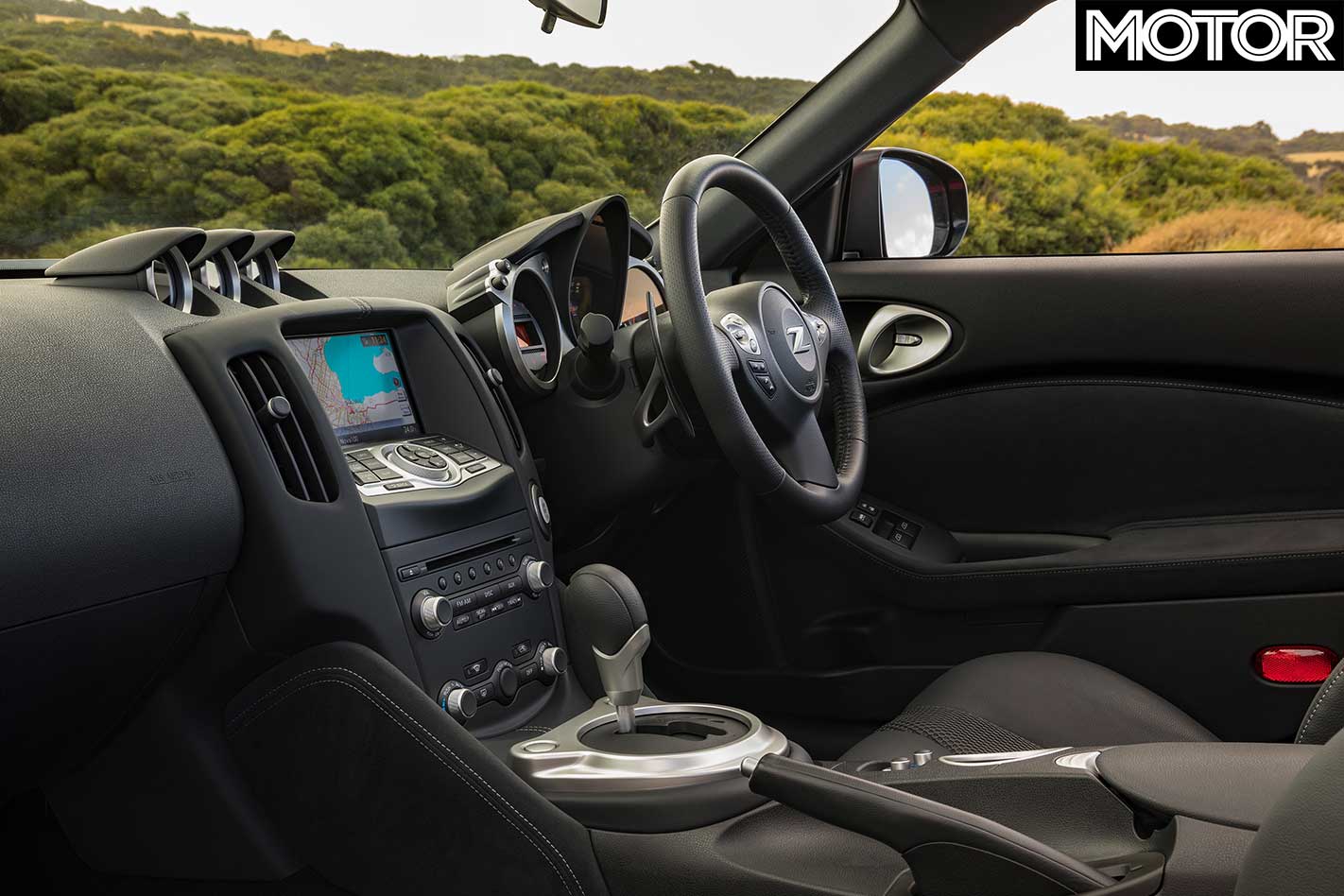
That said, ESP doesn’t completely deactivate, but provides more than enough leeway to offer a lot of rear-wheel drive entertainment.
In the wet the 370Z Roadster has to be driven with great care as there isn’t a lot of purchase on the road, however, the system seems to know when to leave you alone and when you need some support.
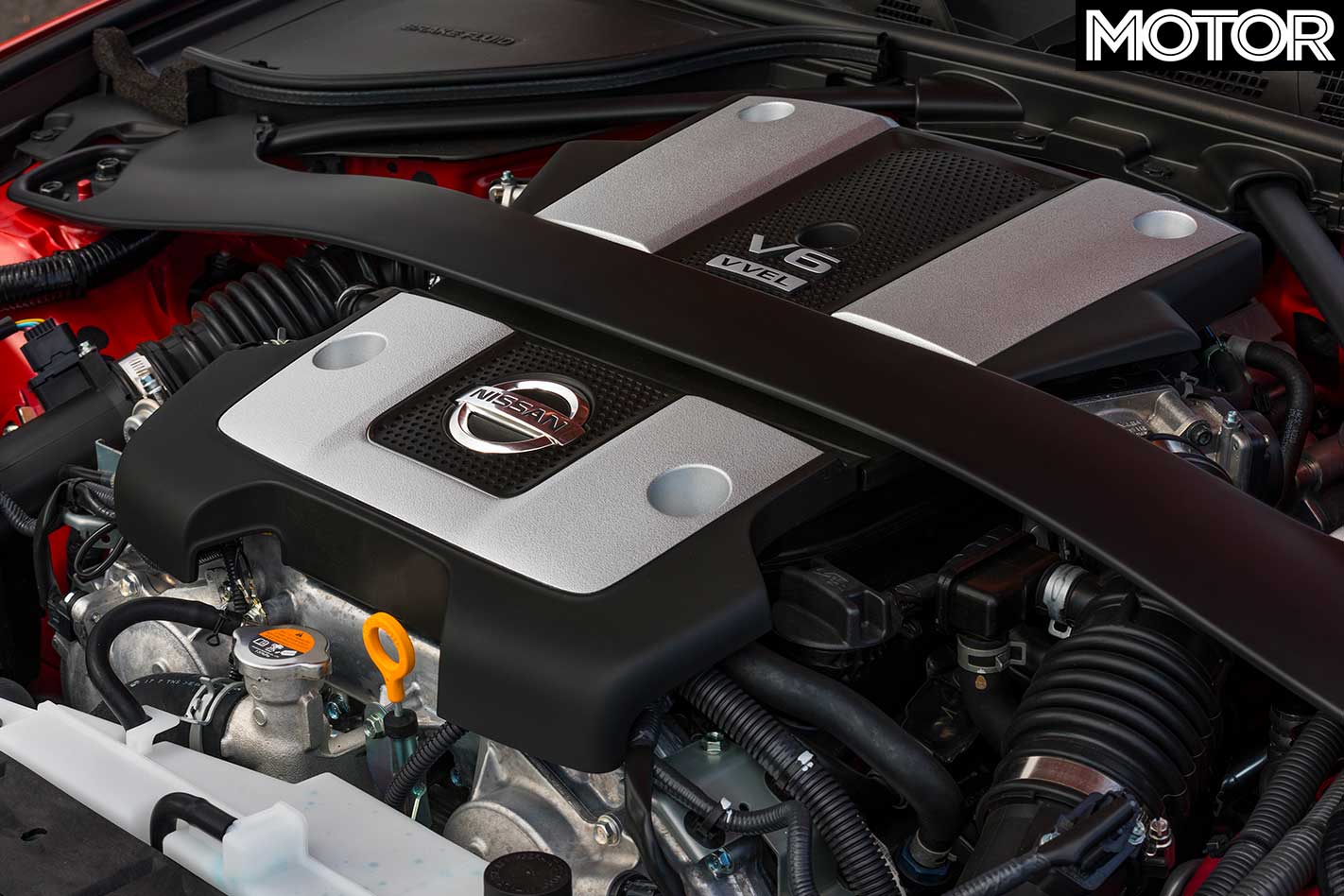
The 3.7-litre V6 isn’t the sweetest engine around, but it revs to 7500rpm and is a good match for the auto ’box, while the power feels nicely judged to the chassis. The ride is decent, too, and cutting the roof off doesn’t feel to have unduly affected the body rigidity, though the mechanical clunks and groans made during roof operation are far from confidence-inspiring.
Unfortunately, but unsurprisingly, Father Time has caught up with the Zed. It’s definitely still an enjoyable drive with an entertaining chassis, but when mechanically identical examples are available on the second-hand market for well under $30,000, it’s difficult to recommend spending more than twice that on a new one.
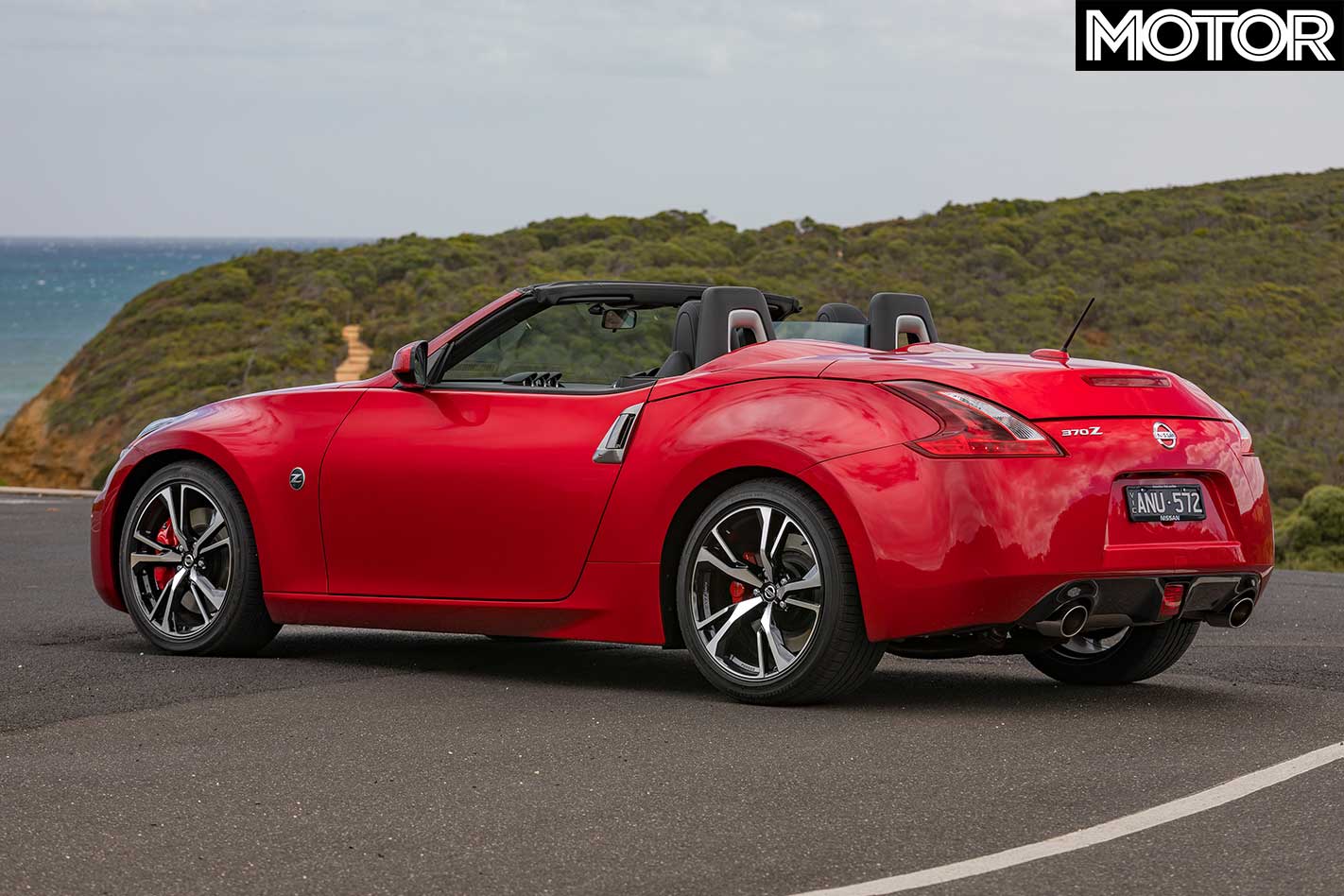
2018 NISSAN 370Z ROADSTER SPECS: Engine: 3696cc V6, DOHC, 24v Power: 245kW @ 7000rpm Torque: 363Nm @ 5200rpm 0-100km/h: 5.5sec (est) Weight: 1590kg Price: $63,490
Rating: 3.5 out of 5 stars Like: Decent pace from the atmo V6; entertaining handling; exterior design is holding up Dislike: Clunky roof; engine noise; old interior; price against a second-hand version
It came first as a breathy whisper, delivered down the phone line from the most unlikely of places.
“It’s built in Australia…”
For the longest time I didn’t believe it. After all, it seemed so unlikely.
If you’re going to design, engineer and build a supercar from scratch capable of rivalling the best from Ferrari and McLaren, as the Brabham BT62 claims to do, why would you manufacture it in Australia?
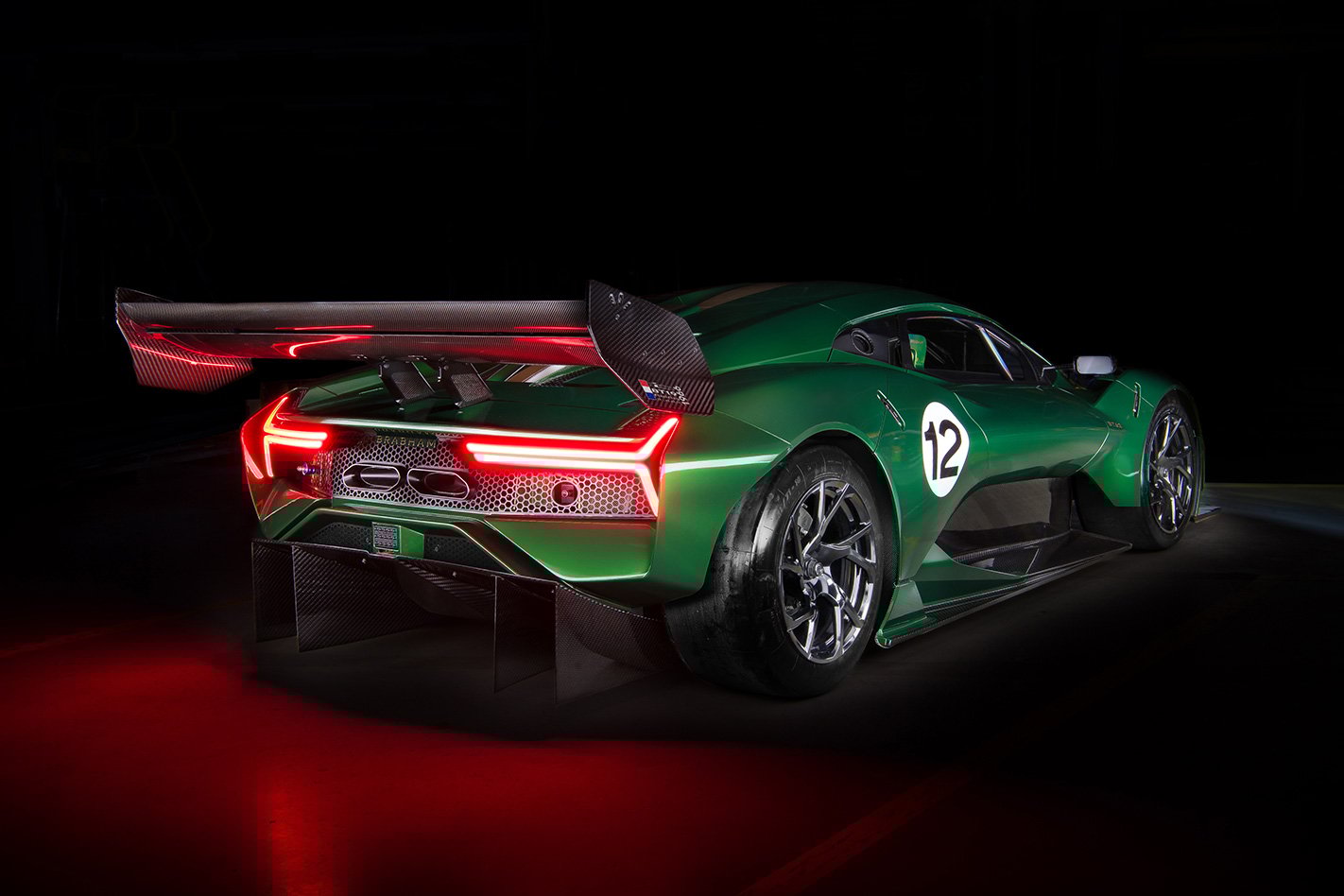
We don’t even build Commodores and Falcons anymore, let alone multi-million-dollar high-performance machines targeted at the world stage.
Australia is certainly capable of creating such a car – our ability to engineer and innovate is world class – but surely Europe or even America would make more sense? At this stratospheric end of the market, that’s where the experience and expertise lies.
And yet there it was, confirmed in black and white. A single line at the bottom of an embargoed press release, sent exclusively to Wheels weeks ahead of the Brabham’s global reveal, that read: “…based in Adelaide, South Australia, where the manufacture of the BT62 will also take place in a 15,000sqm facility.”
It means the green and gold wedge that graces our cover truly is Australia’s supercar. The fact it wears a Brabham badge, a name intrinsic to Aussie racing history, adds to a sense of Aussie pride.
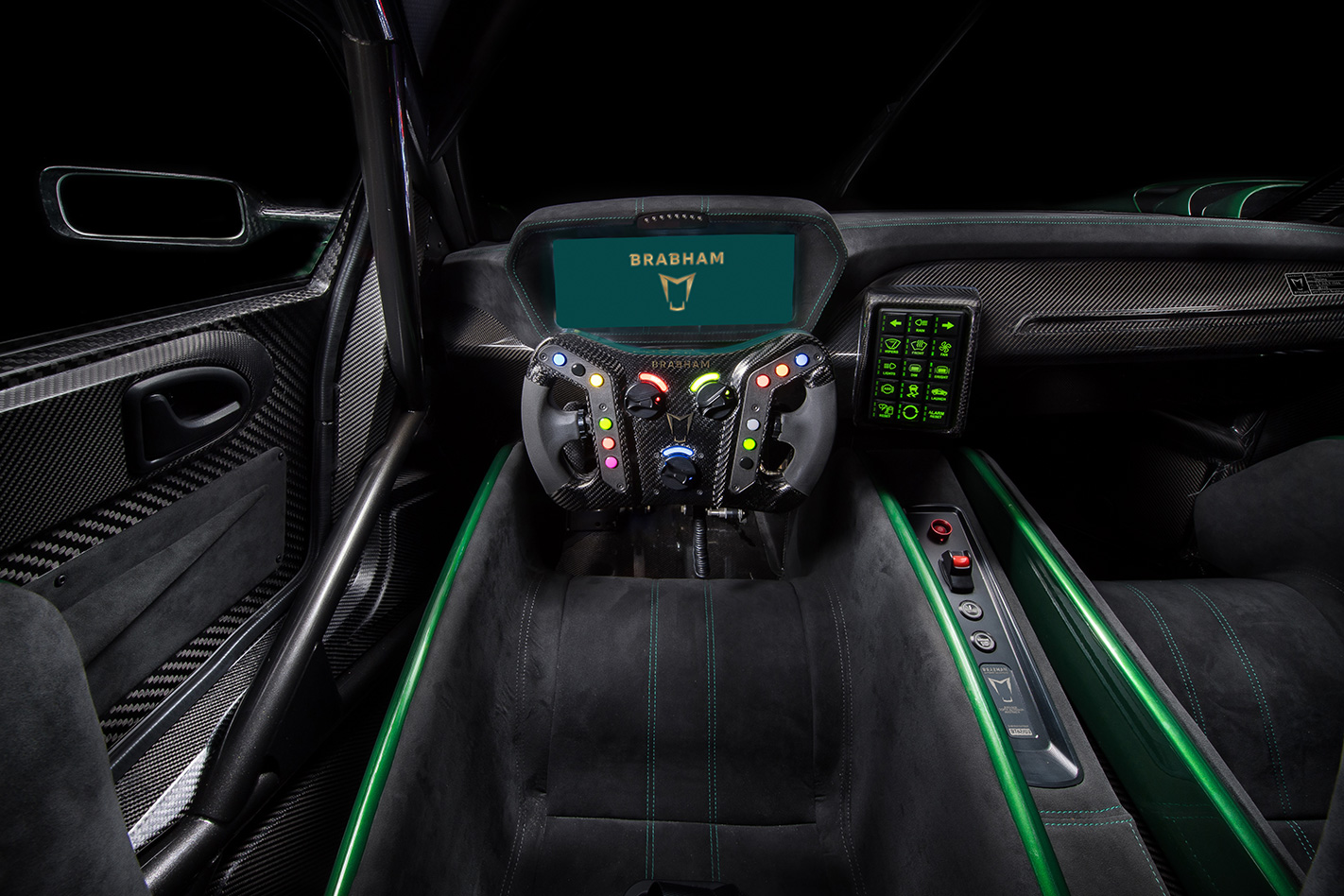
In reality it’s an Anglo-Australian project, with heavy technical input from the UK but what’s most incredible is how, in this age of information overload and social media, Brabham managed to keep the BT62 a total secret. Its launch caught nearly everyone by surprise, despite being in development for more than two years and tested on several Australian tracks, with David Brabham (amongst others) at the wheel.
The Brabham Automotive business itself is something of a curiosity. A joint venture between Adelaide-based venture capitalist group Fusion Capital and David Brabham (Managing Director) it exudes a confidence, professionalism and shrewdness that, on the surface at least, sets it apart from past low-volume Aussie cars.
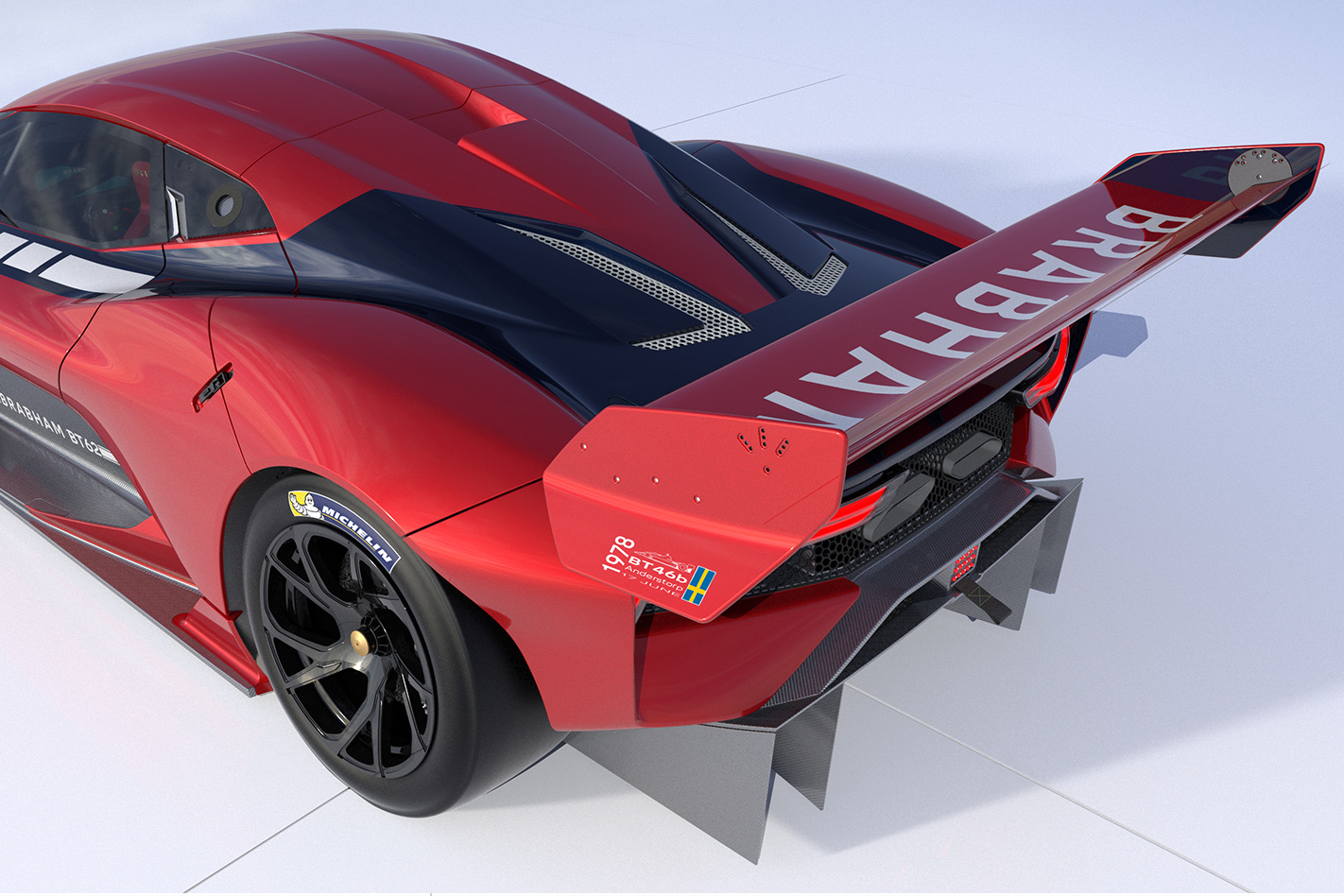
There’s plenty of experienced heads amongst the ranks too. Christian Reynolds, who heads up the Australian business, has worked at companies as diverse as BMW, Lotus, Tom Walkinshaw Racing and Tesla, and the car’s engineering head, Paul Birch, has a C.V that includes stints at Lotus and more recently at Caterham as the head of powertrain and electronics.
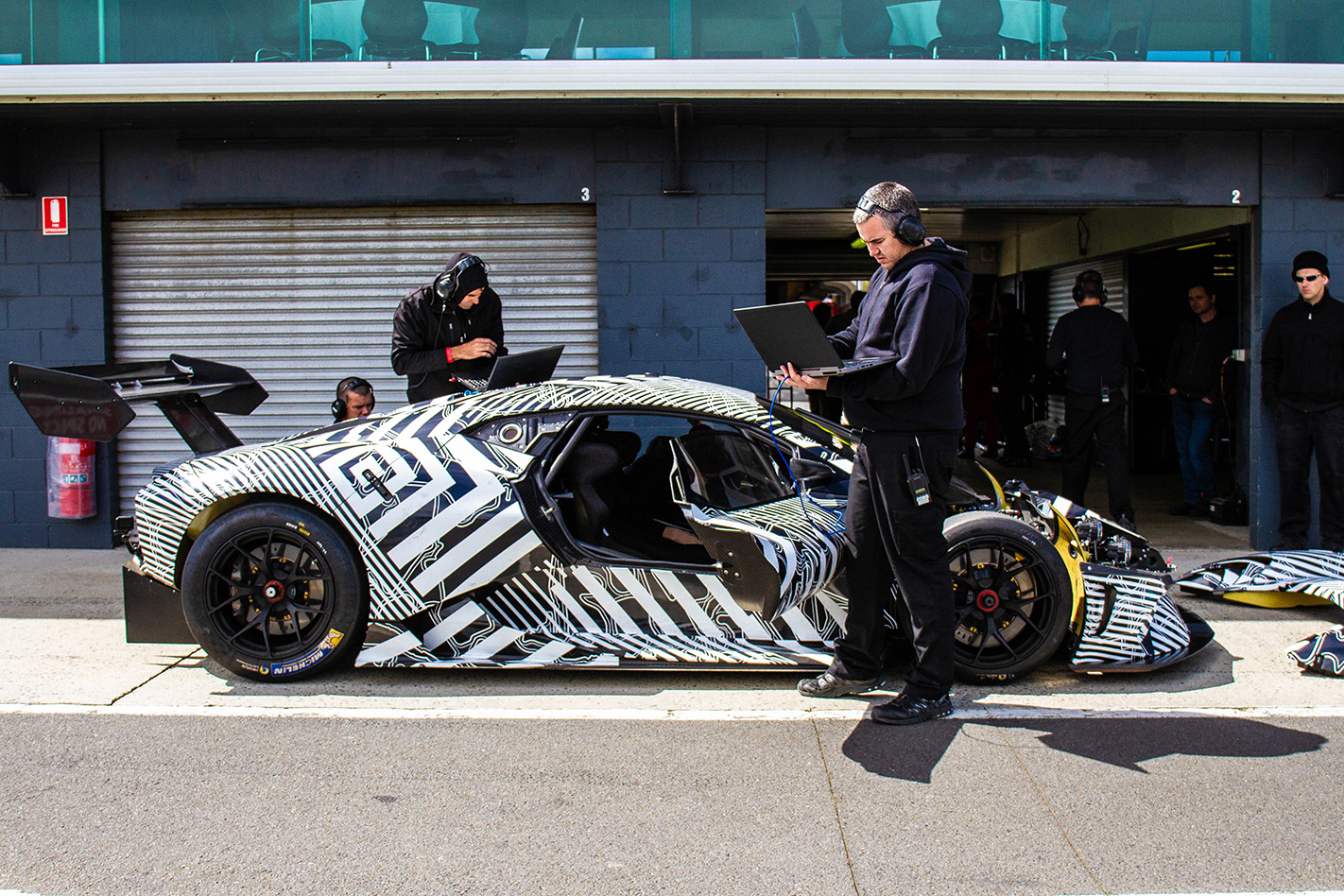
Brabham himself is closely involved and crucially, the BT62 is no pie-in-the-sky concept. A handful of cars have already been built with deliveries beginning later this year. Work has even begun on a second-generation vehicle (a third is also in the pipeline), there are aspirations to build a road-going version and Brabham seems hell bent on racing the car at Le Mans. The whole business feels well thought-out and calculated, and importantly, well-funded, with no reliance on government support.
“The finances aren’t a pressure point for us,” Reynolds told me. “We’re in a comfortable place.”
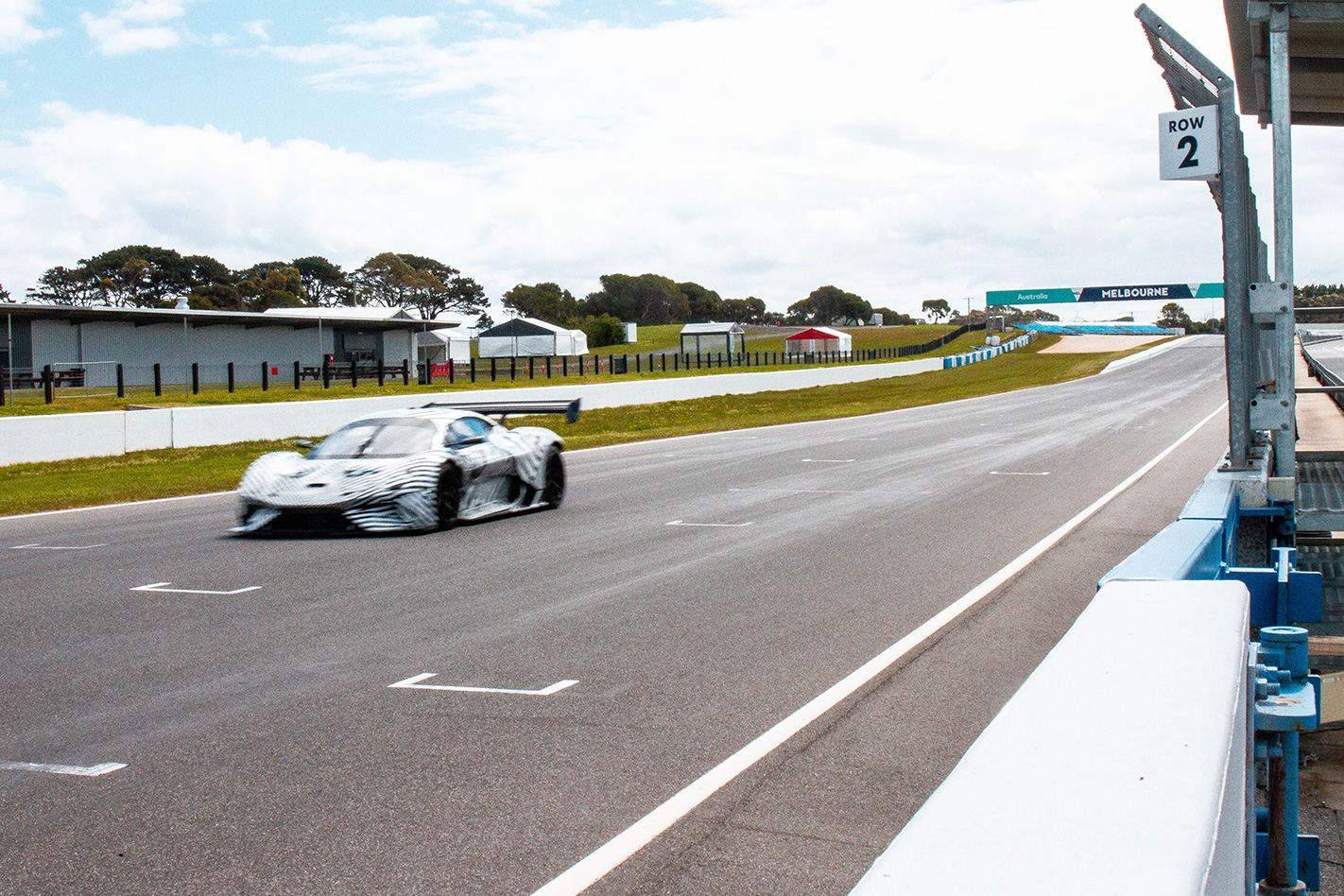
The fact the BT62 costs nearly $2 million dollars and that most of us will never see one, let alone drive one, doesn’t matter. What’s important here is what the Brabham represents. At a time when Australia is still reeling from the wound left by the closure of manufacturing, the BT62 is a green shoot of hope delivered in the most unexpected way.
Yes it’s low volume and so high-end that it’s largely irrelevant, but as an expression of what’s possible in our own backyard, it’s something to be proud of. And every one shipped around the world will wear a plaque detailing its place of origin: Adelaide, South Australia, Australia.
TELL ME ABOUT THIS CAR
Okay, so you’re keen on acquiring new small luxury SUV, particularly one wearing a BMW badge. But before we go anywhere, it pays to know a little bit of history; the German luxury brand has already had a couple of cracks at the idea before – with mixed success.
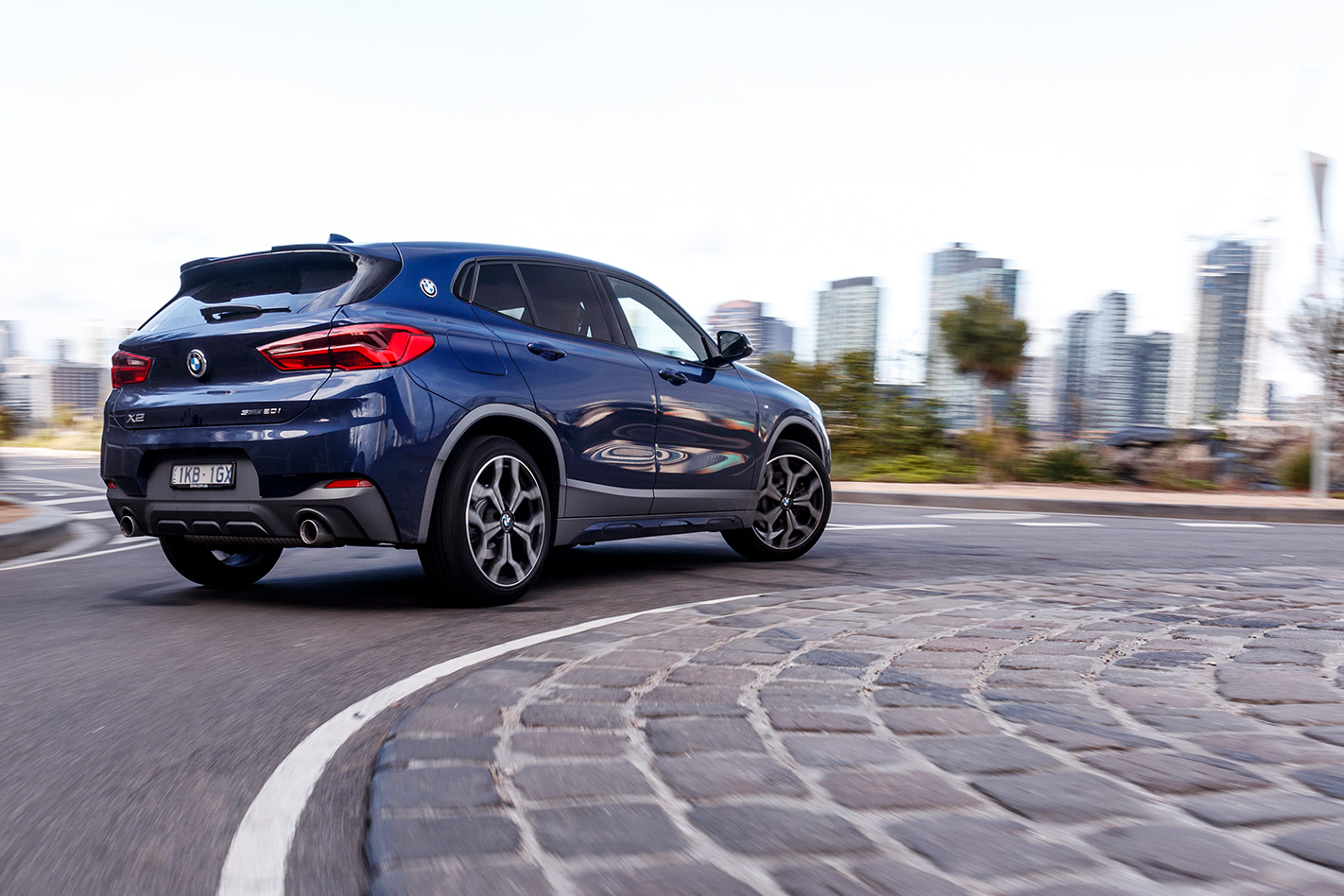
In 2009, it borrowed the best bits of the BMW 3 Series to create the X1, an awkward, gawky SUV that drove remarkably well, but only because it was a quasi-station wagon wrapped in tall SUV clothing.
Unfortunately, the second generation of the X1, released in 2015, didn’t improve on the breed. Yes, it was wonderfully packaged, but something was lost in translation as somewhere in the leap from rear- to front-wheel drive the new X1 lost much of the dynamic panache of its predecessor.
BMW has now answered that criticism with the first compact SUV to wear an even number in its name, the all-new X2. Straight away, it fixes the one big problem of the X1. But what else does it bring?
STRENGTHS
- The X2 is now a lot more enjoyable to drive compared with the car it replaces. The steering is sharp and direct, and the little BMW is quite fun to tip into a corner, helped by a nicely tuned stability control system that allows you to play on a twisty stretch of road, but is always ready to step in and rein things in when needed.
- It rides well too. Even with firm run-flat tyres, the compliant suspension tune means the low-speed ride, typical of city driving, is much smoother. The same goes for high-speed driving, where the X2 is much better at smoothing out the lumps and bumps.
- The BMW X2 has one of the best driving positions in the game. The flexibility of adjustment in the front seats, the height and position of the steering wheel, the location and visibility of the instrument cluster and even the distance to the windscreen are up there with the best in the business.
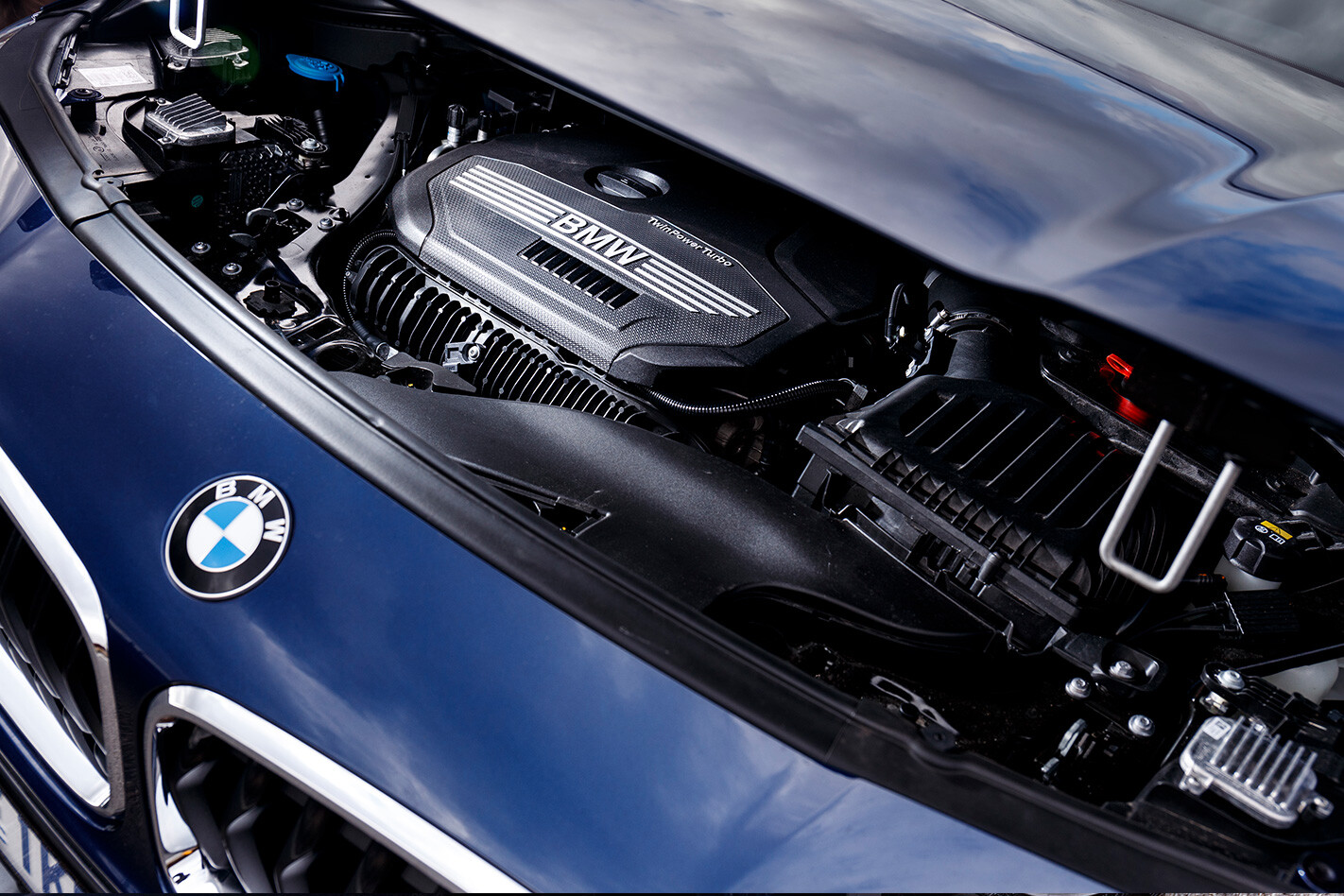
- Its 2.0-litre turbocharged engine is a pearler. Strong, and with plenty of muscle across its rev range, it is also quite frugal, even when pushed. Officially it will aim to achieve 6.0L/100km, but real-world driving conditions will add about 20 percent to this number.
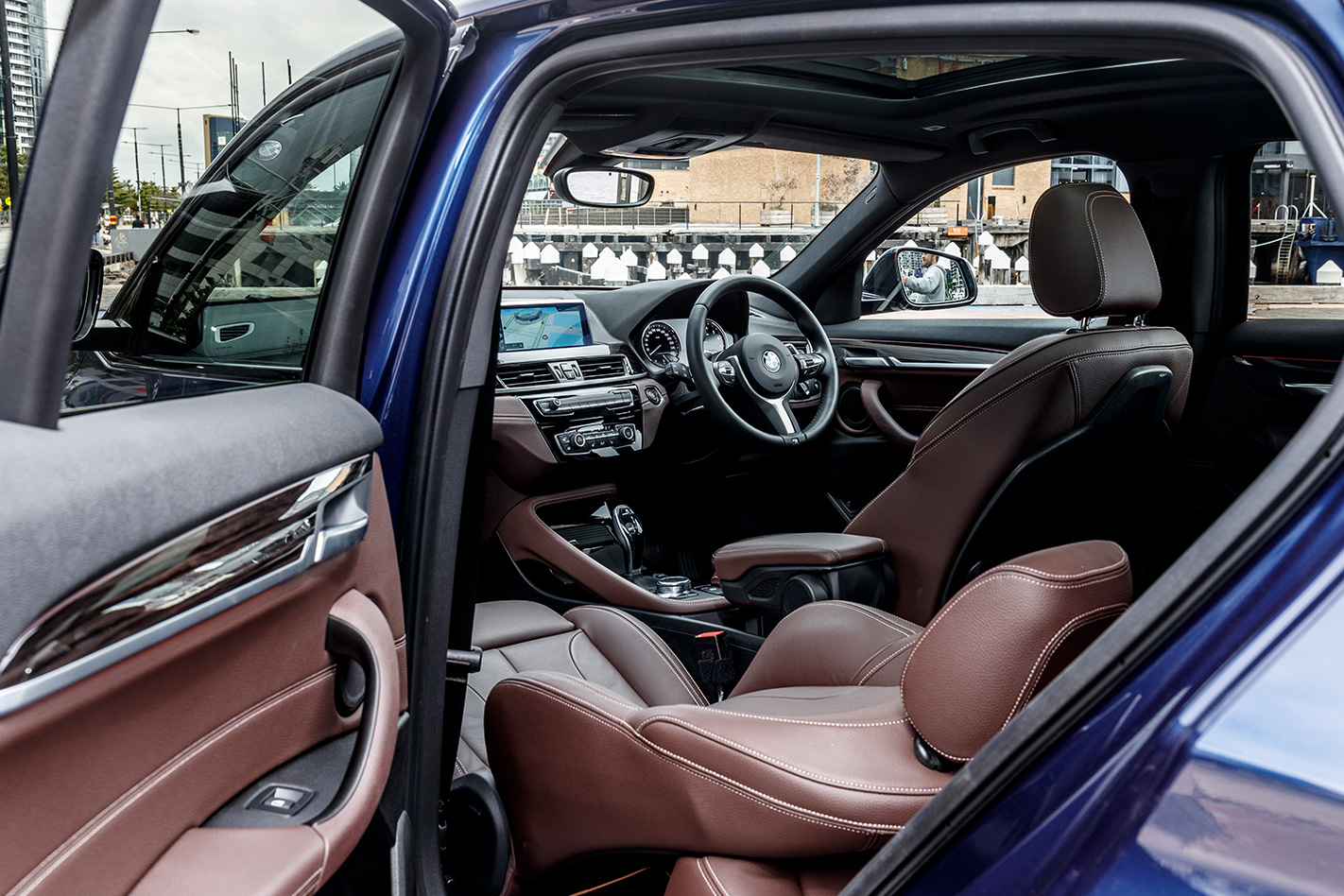
- The rear seats are roomier than the X2’s dimensions would suggest. The rear is nicely finished, with more soft-touch surfaces around the doors than hard plastics, and plenty of legroom. Even with a sunroof, there’s still adequate headroom for taller adults. There are three backrest positions available, too, from too stiffly upright to teenage-level relaxed.
- The boot is huge, coming in at 470 litres. Some of that space is taken up by a false floor that lifts up to reveal a big hidden storage space that, not surprisingly given that the X2 uses run-flat tyres that can be driven on even if they get a puncture, is about the same size as a space saver spare wheel.
- BMW’s latest iDrive system has improved even further. The dial-controlled system for infotainment and navigation settings was once derided for its complexity and three-dimensional structure, but in this latest generation feels intuitive and logical. It has taken a while, though.
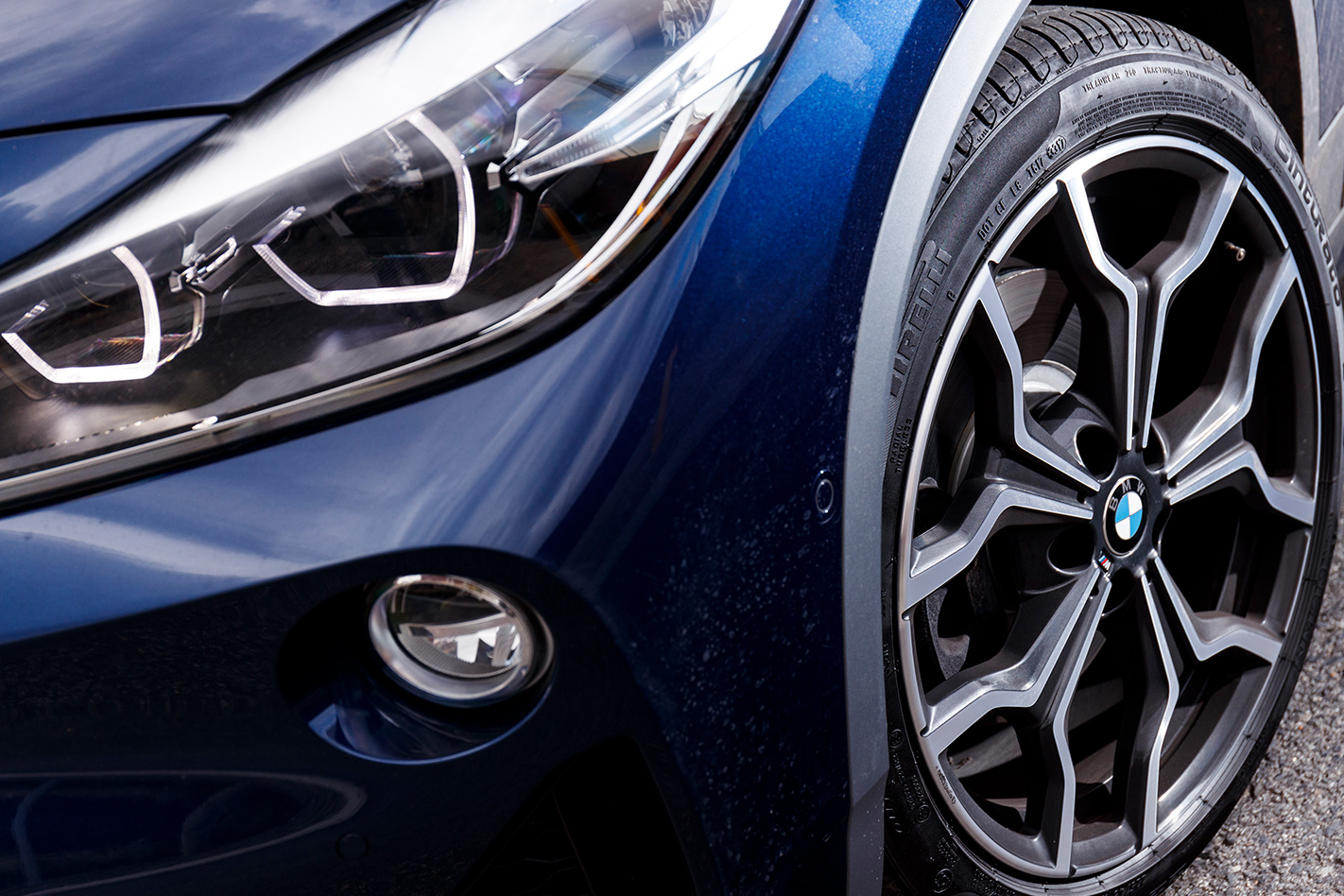
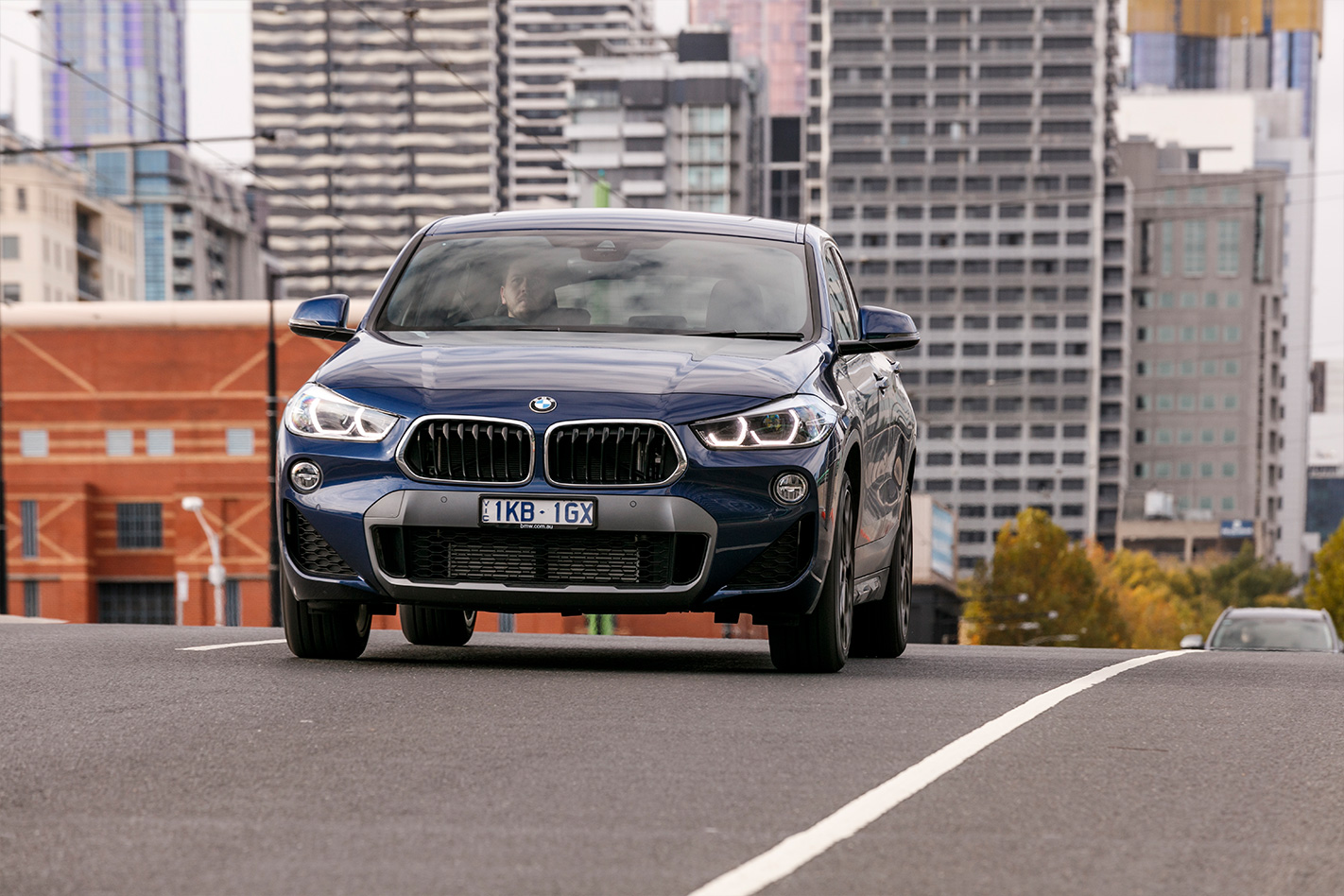
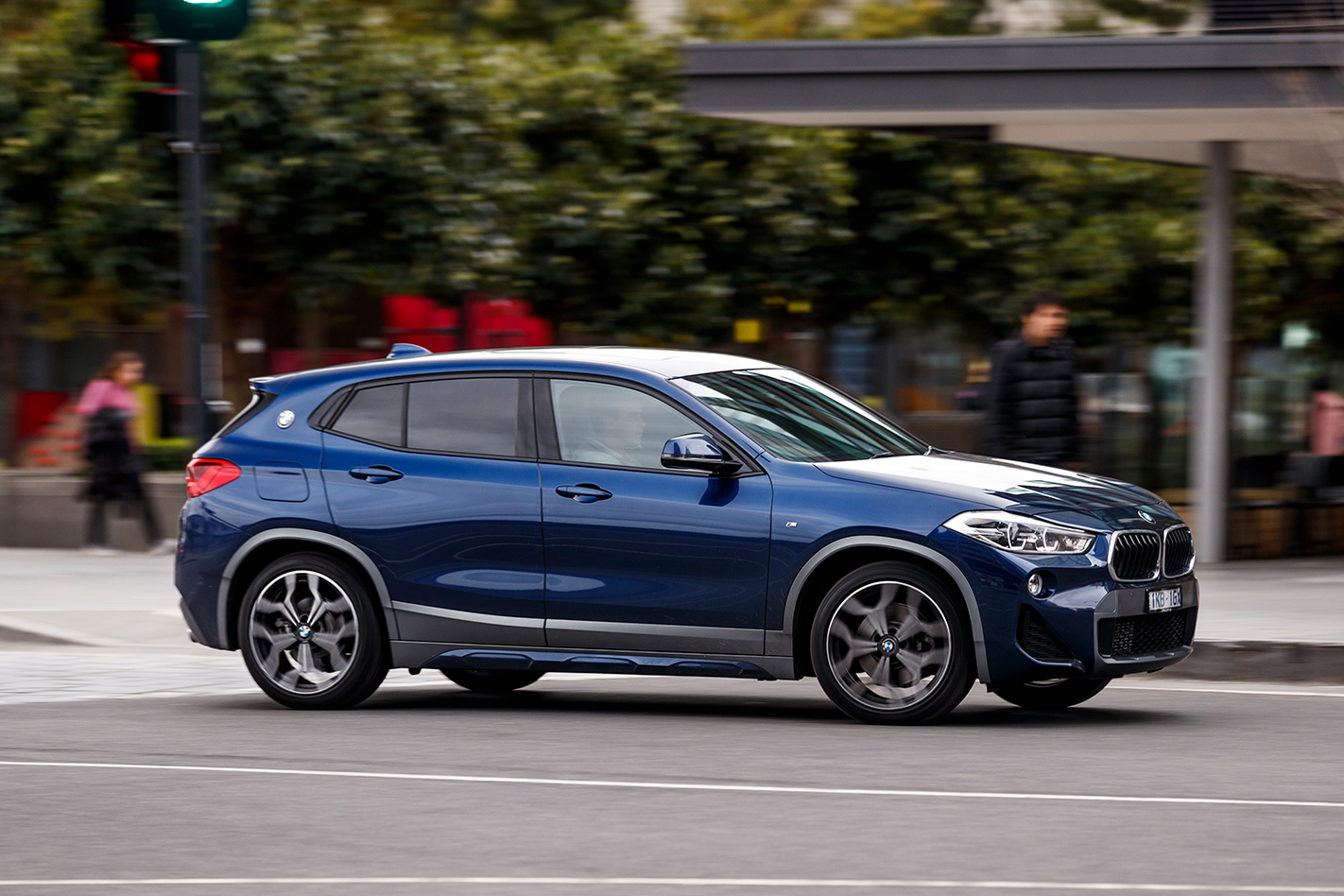
- The X2’s fresh styling is attractive. Even standing still, the off-kilter wheel arches give a sense that the X2 is a fluid, dynamic vehicle. The coupe-like profile of the rear looks good with the wheel-at-each-corner design.
WEAKNESSES
- It’s expensive. Our test car was priced from $55,900, which is thousands more than some rivals. You won’t have to look very far to see the X2 is at the more premium end of its class, even among the compact luxury SUVs.
- Options are expensive. Unless you’re prepared to suffer the de-spec doldrums, adding a few personal touches isn’t a cheap proposition; Apple CarPlay support is a $478 add-on, an anti-theft alarm is $654, and tinted windows are $500.
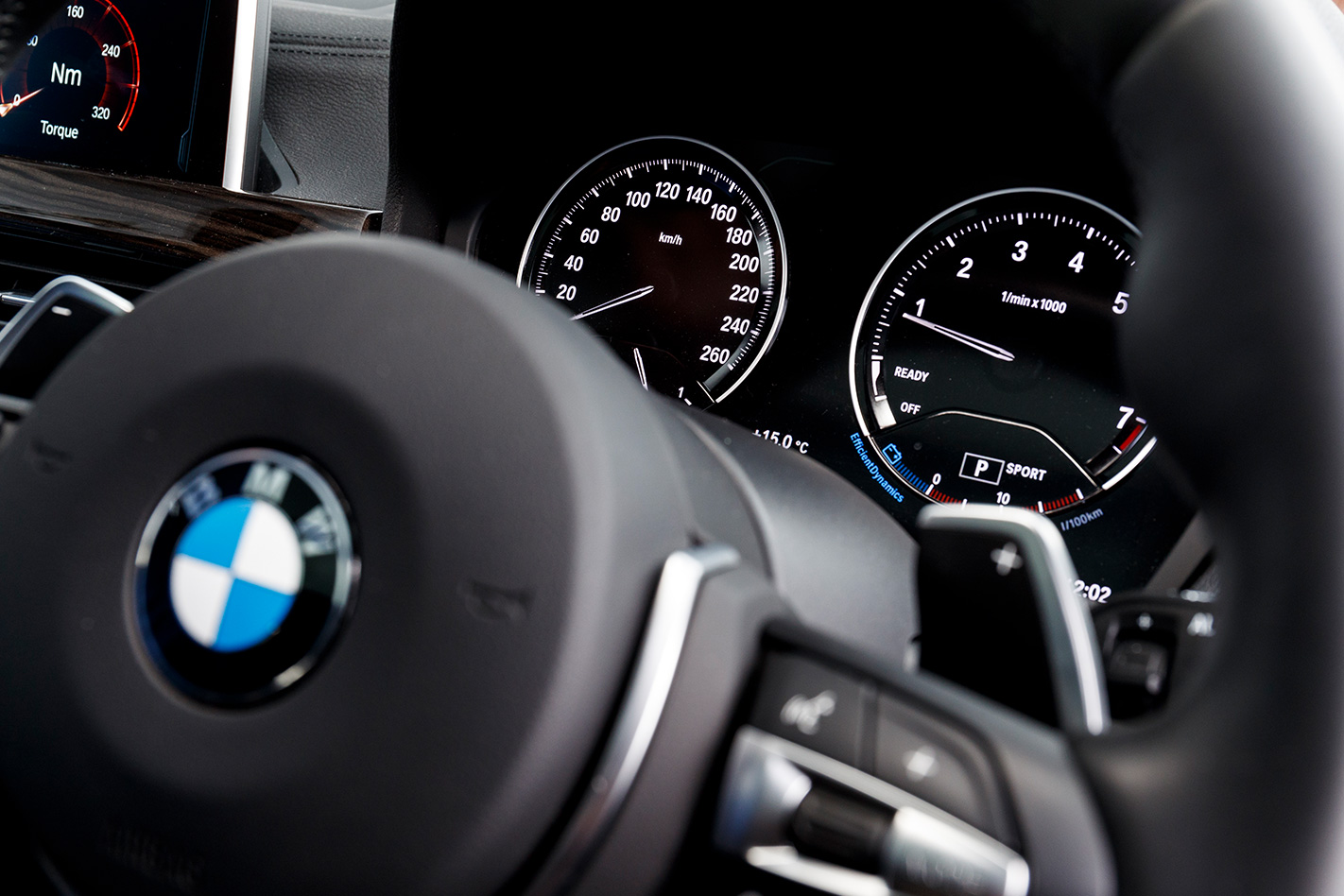
- If you’re a keen driver, you’ll need to spend an extra $400 for the X2’s adaptive dampers. They transform a school run special into a weekend dynamo at the push of a button, not to mention offering a new level of ride comfort compared with the default set-up.
- The BMW X2’s dual-clutch gearbox can be a bit grumbly. You’ll notice this at low speeds, particularly when you’re shuffling into a tight car park. In this type of driving, you’ll notice the gearbox tends to hesitate slightly and then grab in response to throttle inputs. Once you’re moving, though, the sporty gearbox will fire through its gear changes so quickly as you build speed that you’ll hardly notice it has happened.
- The rear seats may be comfortable and supportive, but quite firm in their cushioning. You’ll notice that on longer trips.
- The X2 uses a 40:20:40 split-fold rear bench. The backrest for the hard and high centre seat, which also houses an armrest with two flip-open cupholders, tips forward to reveal a long armrest, but it has the effect of pushing passengers uncomfortably further outboard and closer to the doors. The big hole it leaves leads directly into the boot.
- The BMW X2 suffers from torque steer, an unsettling tugging at the steering wheel as the engine’s twist under hard acceleration forces the front wheels to slightly turn sideways. It’s not dangerous, but other carmakers seemed to have banished the trait from their products.
ANY RIVALS I SHOULD CONSIDER?
The Audi Q2 now has a 2.0-litre engine featuring a better suspension tune and all-wheel drive than the entry-level 1.4-litre version. There’s also the expensive but sexy coupe-styled Jaguar E-Pace, and the box-fresh, typically Scandinavian Volvo XC40 that’s causing a bit of a stir via its stunning design elements, inside and out. As of writing, the Mercedes-Benz GLA-Class is soon due for replacement, so you may want to wait to see what the new one offers before making a call on buying the outgoing model.
Windscreens have gone from being passive objects through which drivers view the road ahead, to part of active, high-tech systems that can ‘see’ potential accidents before you do.
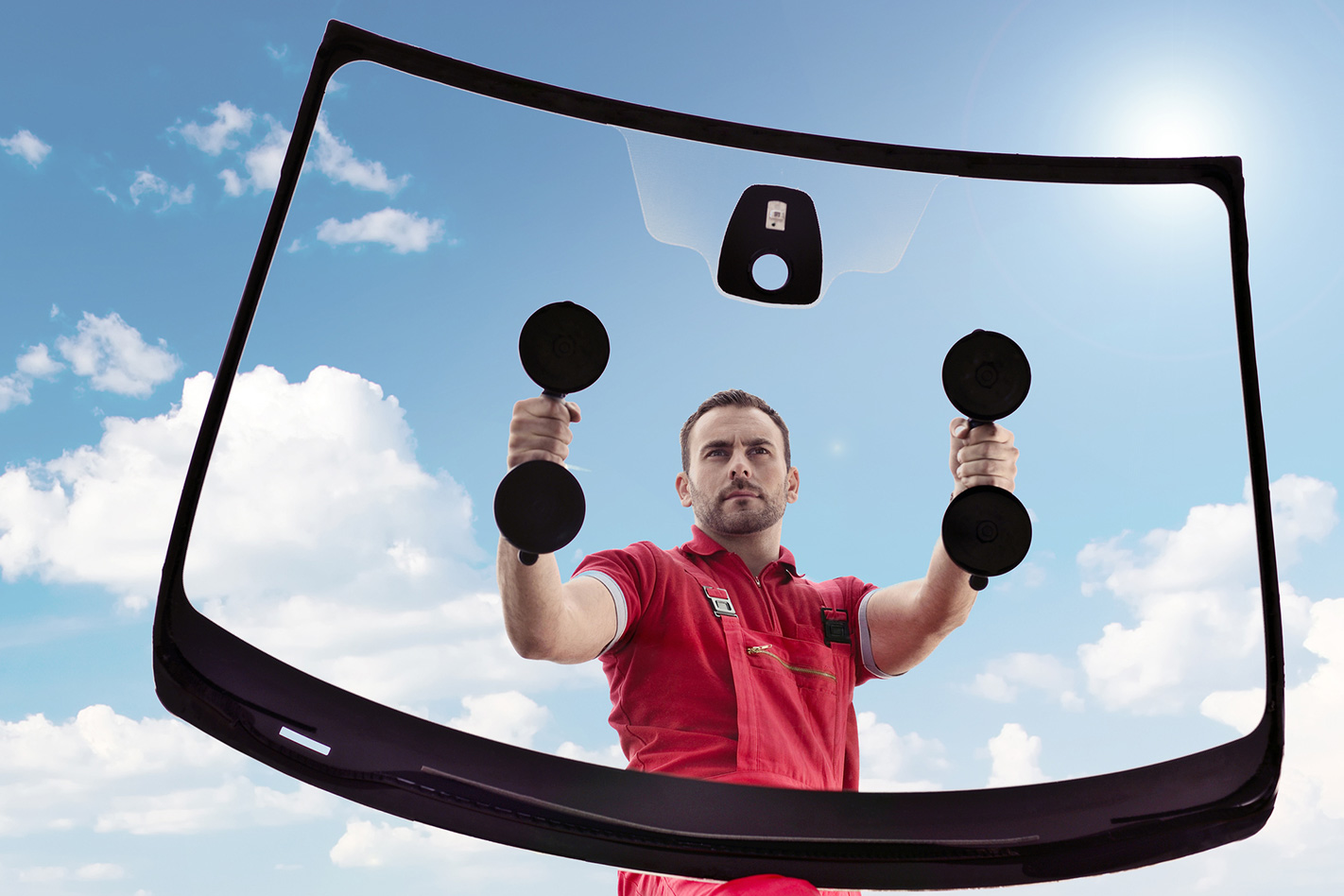
Where they once held nothing more than a rego sticker, windscreens are increasingly being used to house forward-facing advanced driver assistance system (ADAS) cameras, radars, lasers and sensors, which are used for sophisticated accident-prevention functions such as automatic emergency braking, lane keeping assist, adaptive cruise control, road-sign recognition, driver fatigue monitoring and rain sensors.
They’re also important to the car’s structural integrity, and are even used to deflect front airbags towards the occupants, requiring them to handle forces from all directions in an accident.
Needless to say, replacing a windscreen isn’t the simple replacement job it once was, meaning a rogue stone flying out from under a truck tyre could end up costing you a lot more than you think.
Much of the extra cost involves carefully separating the ADAS unit from the damaged glass and attaching it to the new windscreen, which adds to time and labour costs.
Then there’s the need to recalibrate the cameras and sensors to the car manufacturer’s specifications. This is vital, as even a one-degree misalignment can cause the auto-braking system to misjudge braking distances. But it can add hundreds of dollars to the cost pf replacing a windscreen, depending on the type of ADAS system and how advanced it is – a lone rain sensor will add to the cost.
According to Queensland mobile windscreen repairer Service8, a standard windscreen replacement for a mainstream model such as Mazda 3 Maxx, which doesn’t have ADAS installed, is about $500. However, swapping the windscreen of the range-topping, ADAS equipped, Mazda 3 SP25 Astina, could cost up to $2500.
There are two calibration methods, depending on the ADAS system, including Static Calibration that can be done while the car is stationary, which includes using a calibration tool to focus the camera on a target.
Dynamic Calibration requires driving the vehicle on the road for around half an hour and using diagnostic tools to reset tolerances using the vehicle manufacturer’s prescribed method. Some ADAS devices actually calibrate themselves while the car is in motion, which helps reduce the cost.
In each case the car may need to be tested to a default set up, which may include having the wheels realigned and inflated to recommended pressures, taking any heavy weight out of the boot and filling the tank with fuel. All this adds time and labour costs to the process.
If the windscreen repairer is unable to calibrate the ADAS you can get the work done at an approved service centre, though this adds to your car’s down time and potentially costs more.
Either way, it’s crucial the work be done right, so it might be worth checking to see if your insurance covers windscreen replacement especially if your car has a complex ADAS system.
Oh, and if you do get you ADAS tweaked for any reason, be sure the repairer provides a copy of the calibration certificate.
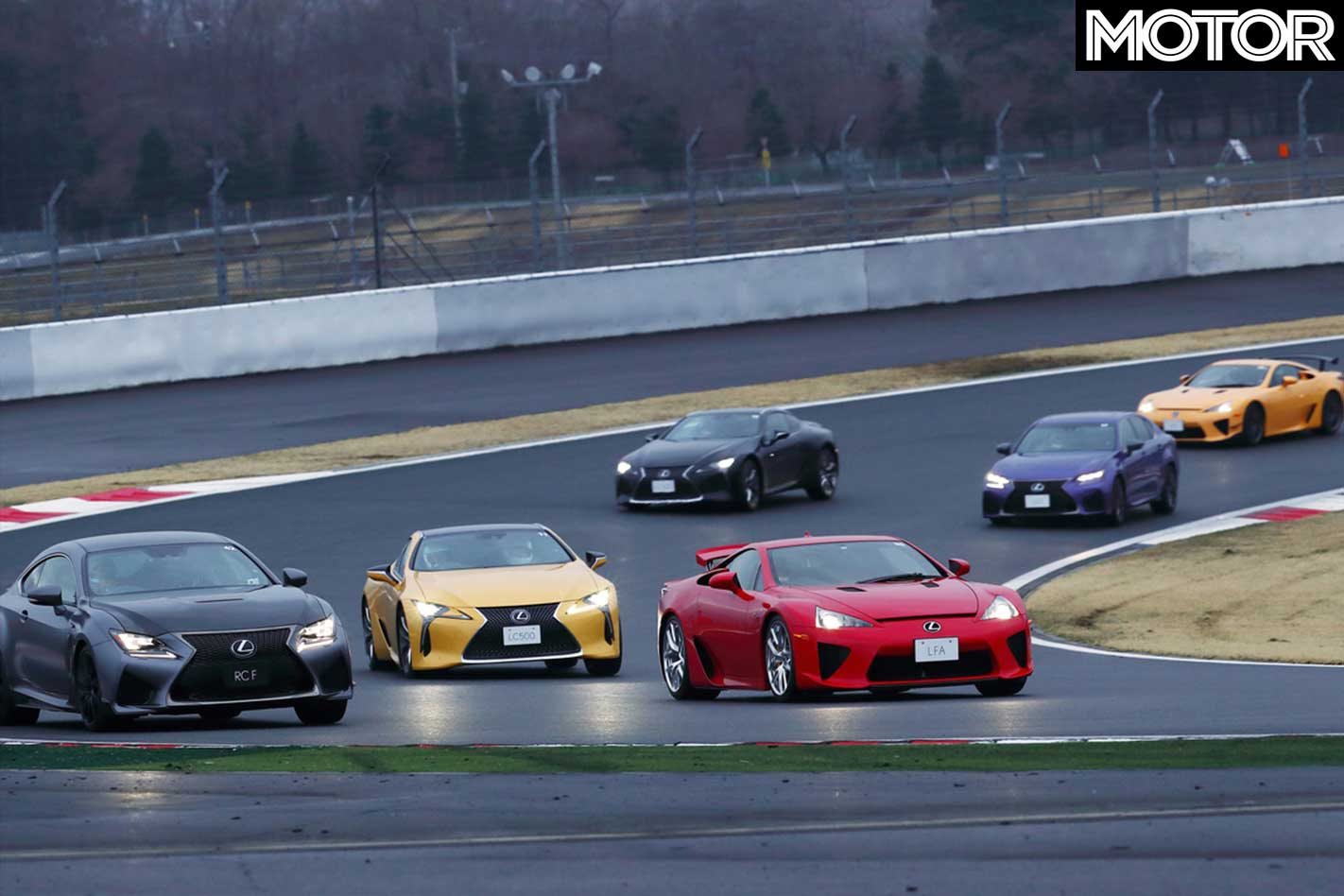
Lexus’ ‘F’ badge, assigned to its most performance-focused models, turns 10 this year.
To celebrate, the Japanese brand held a huge track event at the place which lent its initial to the badge – Fuji Speedway.
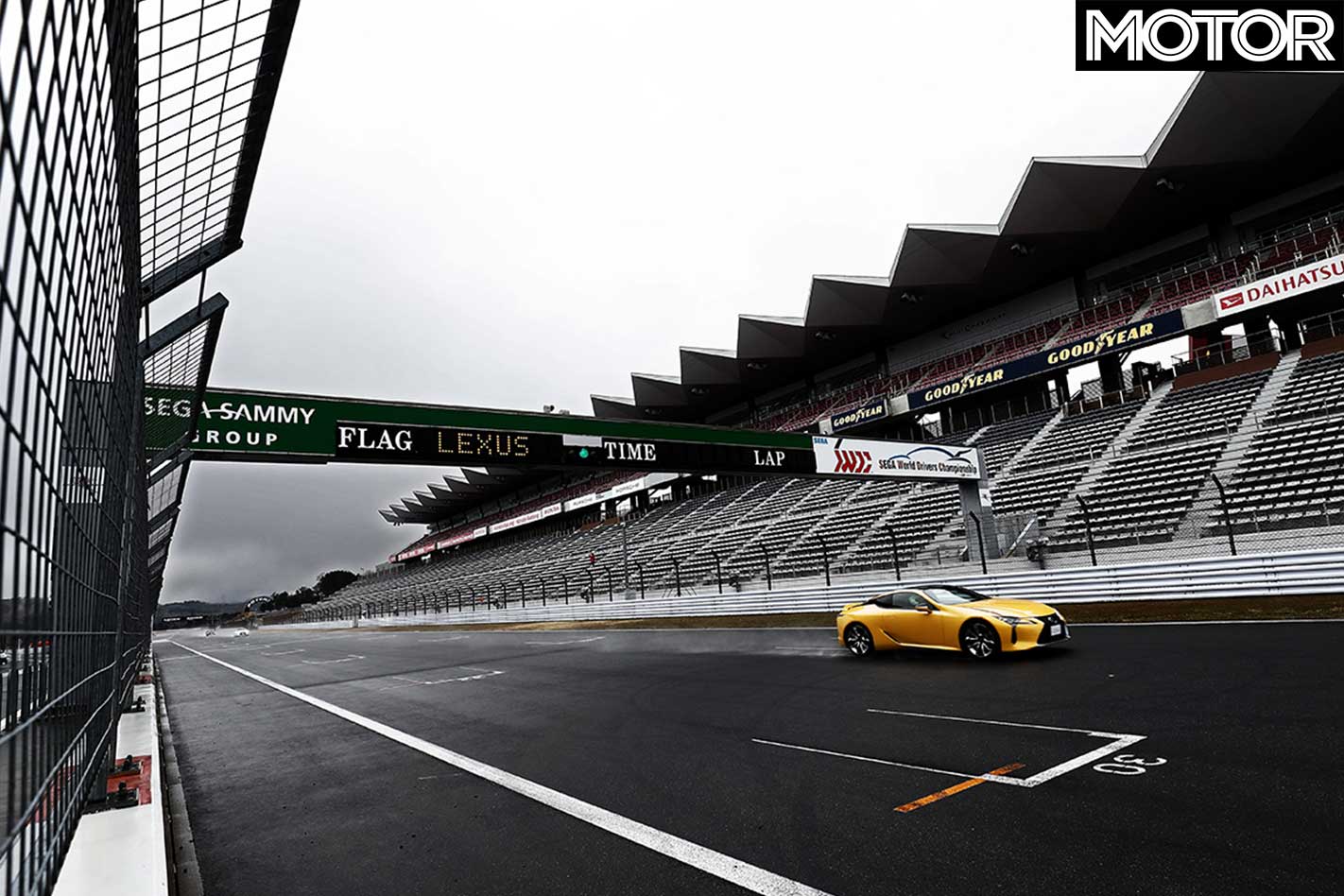
Professional Toyota and Lexus racers such as Takayuki Kinoshita, Yuji Tachikawa, Hiroaki Ishiura, and Kamui Kobayashi were present as instructors for Lexus customers on the day.
The result of the track day for those participants was the extra driving know-how, as well as video shot by Lexus of them and the cars on track.
For us, however, the best things to come out of Lexus’ celebration are the photos. Make sure you flick through the gallery at the top of this page to see all the awesome imagery captured on the day.
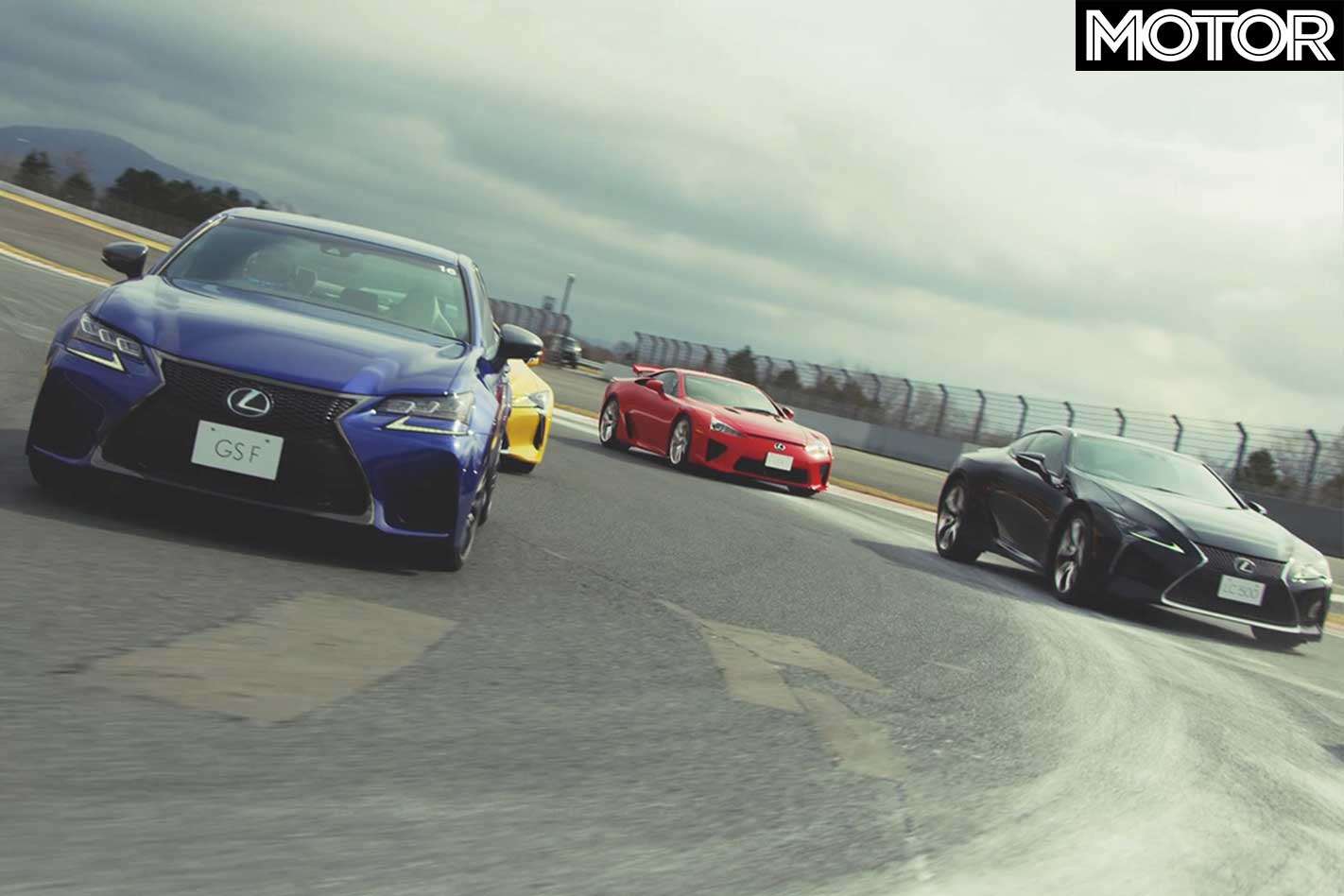
A bunch of 5.0-litre V8s packed into rear-drivers on a wet track makes snapping a sideways Lexus very easy.
Present was a range of F cars, from IS F to LFA, and everything in between and beyond.
In 2008, when the IS F was launched, its 5.0-litre V8 produced 311kW, a little less than the 351kW produced by a Lexus V8 in its F cars (and the LC500) today.
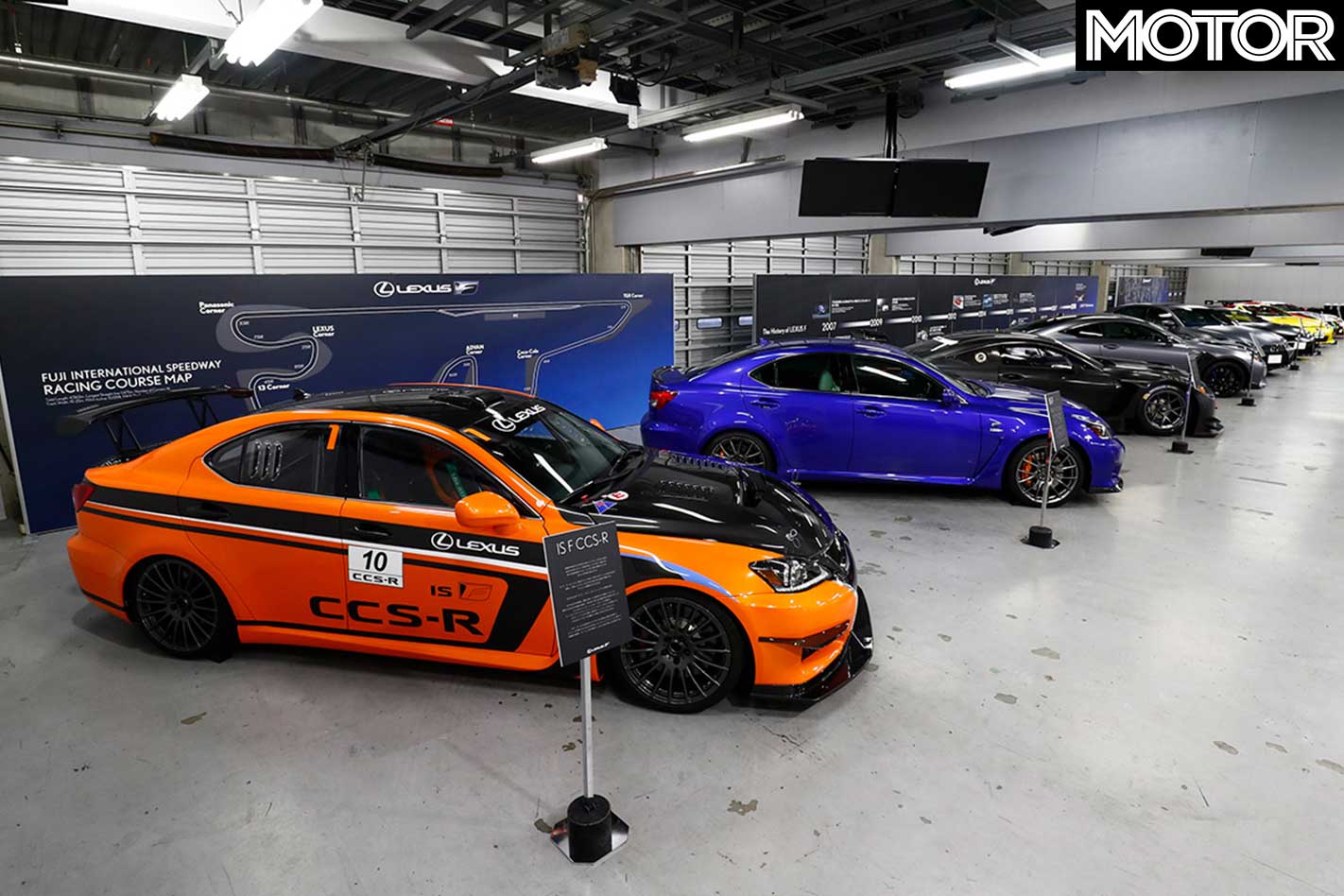
Still, it was able to hit 100km/h in 4.8 seconds, and according to Lexus had the fastest gear shift speed at the time at just a tenth of a second.
Eventually, the RC F and GS F took over as the ‘F’ cars, in coupe and sedan forms respectively. Though not an ‘F’ model per se, the Lexus LFA supercar is often grouped in with F models as it represents the pinnacle of Lexus road-legal performance.