
If you need a car that can hold its own surrounded by F1 cars, the 430kW AMG GT R isn’t a bad pick.
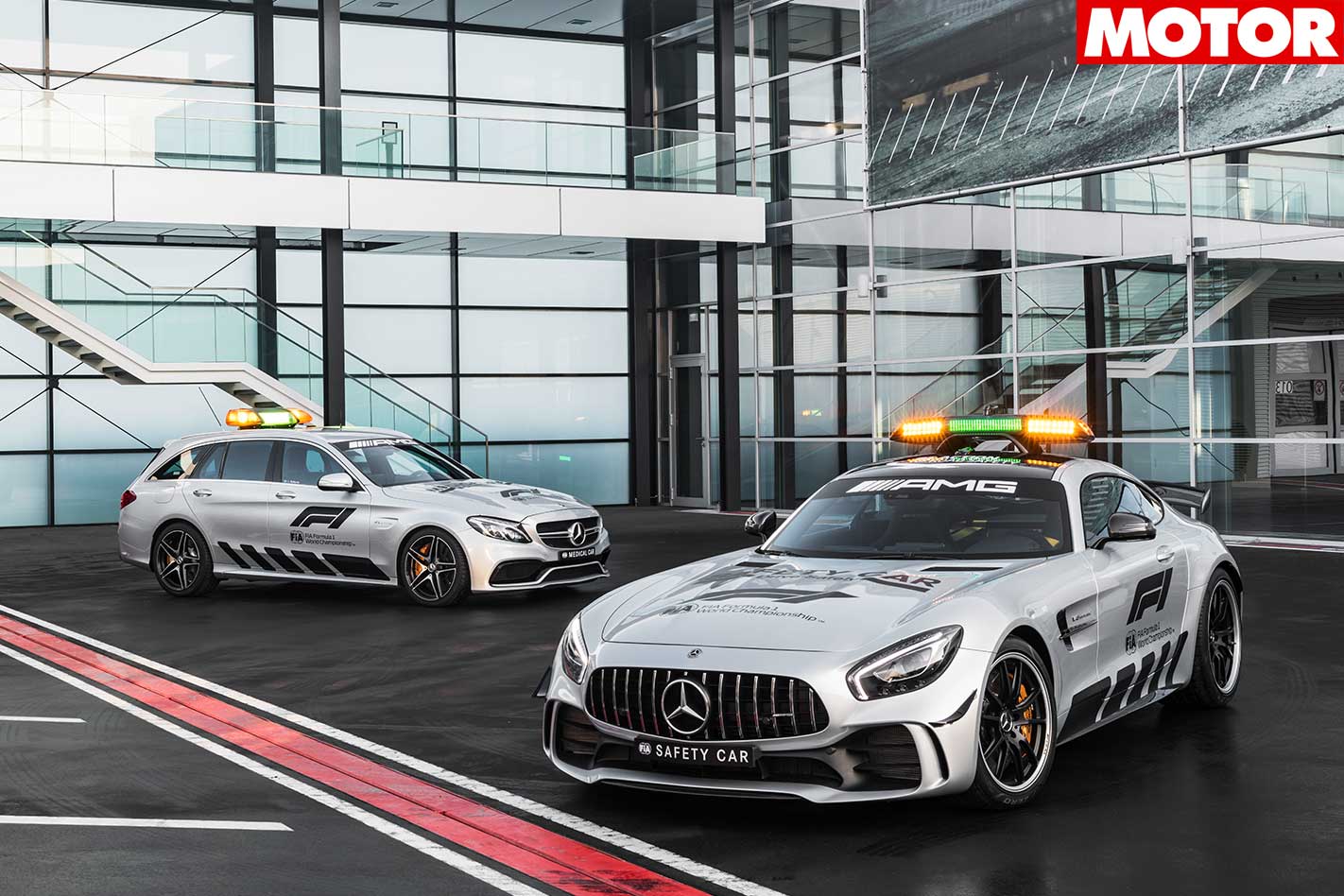
So, it’s a good thing that it’s the new safety car for the Formula 1 season in 2018, making its debut this weekend at Albert Park in Melbourne.
It also joins a long line of AMGs that have served as safety cars staring with the C36 AMG back in 1996.
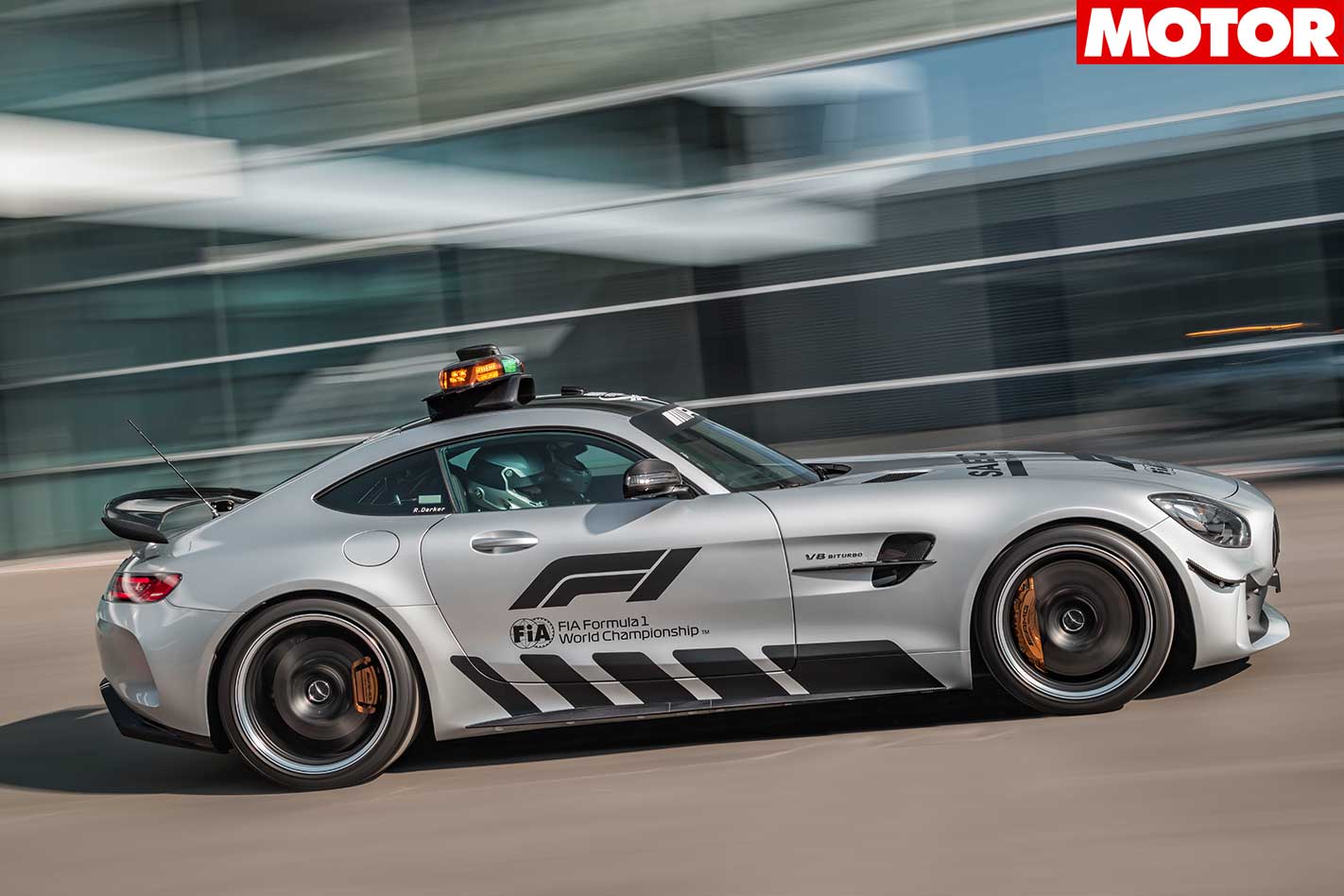
As the F1 safety car driver since 2000, Bernd Mayländer will once again be the driver in the new season, saying he’s quite pleased to have a new ‘office’ to replace the GT S he drove between 2015 and 2017.
“I am very much looking forward to my new company car,” Mayländer says.
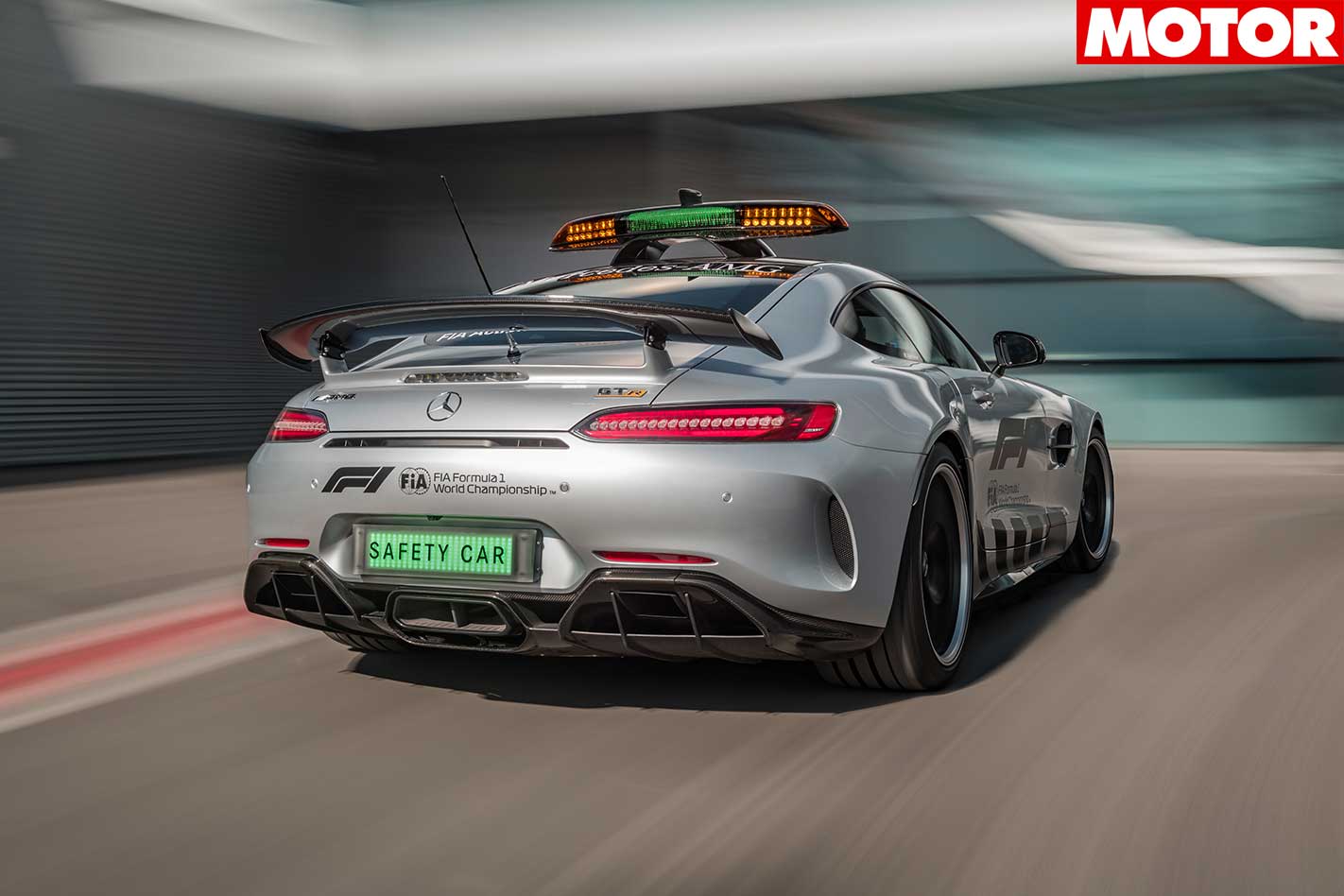
“Of course, ideally the safety car should be deployed as rarely as possible – but when we have to safely bunch up the Formula 1 field and lead it around the track, we will be superbly equipped with the AMG GT R.”
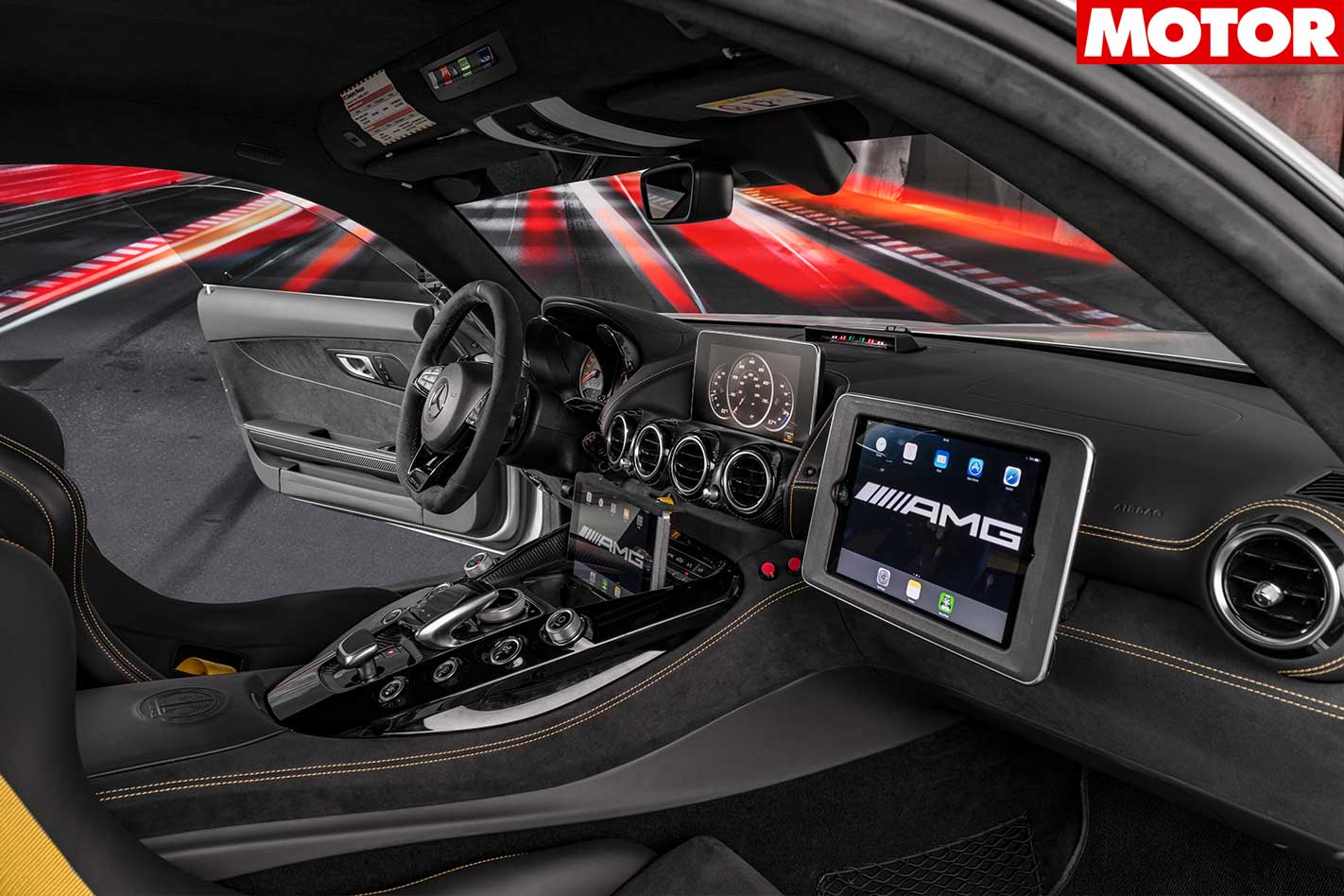
While Mayländer concentrates on driving the GT R, co-driver Richard Darker maintains radio contact with race control, and keeps an eye on the F1 cars using two iPads.
FIA F1 Director Charlie Whiting says when Mayländer and the AMG GT R take to the track it’s important that the car is fast enough to keep the F1 cars running smoothly.
As well as the GT R safety car, a Mercedes-AMG C63 S Estate will play the role of medical car, crewed by up to three medics and driven by Alan van der Merwe.
The AMG GT R will be seen on track this weekend at Albert Park, though very rarely if all goes well.
VOLKSWAGEN will launch a fastback version of its US-only Atlas seven-seat SUV at this month’s New York Motor Show.
The reveal of the five-seat version of the US-built Atlas will come shortly after the German premium car maker reveals the latest generation of its Touareg large SUV in one of the other markets that is crucial to the brand’s future growth: China.
The version of the Atlas on show at New York will be what VW calls “a near-production concept car”. It will help the car maker to build on the one in seven Volkswagen sales that the SUV models already claim, and also opens the door to “the potential for further versions in this model”.
Volkswagen said the the new five-seater was based on the same modular transverse matrix (MQB) platform that also sits under the Skoda Kodiaq, and will form the foundations for the next-generation Golf Mk8. “When it comes to design aspects, the near-production concept car impresses with a sporty, compact rear body in coupe style,” it said. “The side profile combines powerful proportions with a confident presence. A special dynamism is conveyed by the C-pillars, which are angled much lower in the style of a coupe compared to the seven-seater.”
According to the car maker, the five-seat Atlas will gain “advanced engines” paired with an eight-speed automatic transmission, all-wheel drive and “comfortable” suspension.
The fastback Atlas is part of VW’s strategy to roll out 19 SUV-based models globally by 2020. The range will kick off with a Volkswagen Polo-based SUV – the brand has only just launched the latest generation of its city-friendly hatchback in Australia.
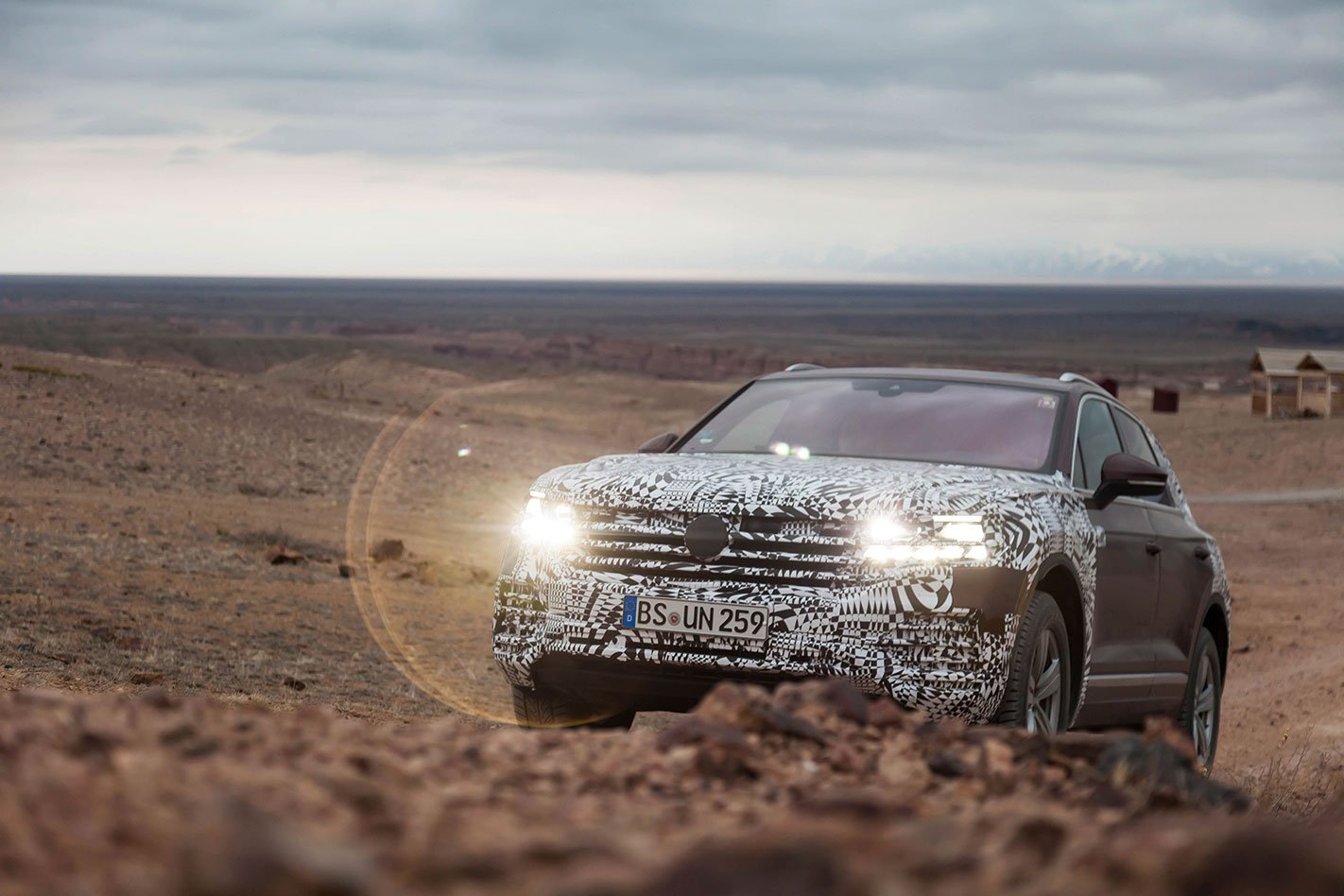
The Touareg is Volkswagen’s version of the Atlas that’s honed more to global than US tastes. VW says the third-generation Touareg will feature one of the largest digital cockpits in its class, called Innovision. “Its connectivity makes it a driving internet node,” VW said. “The drivetrain, air suspension, rear-wheel steering and roll stabilisation all ensure a safe and dynamic driving experience.”
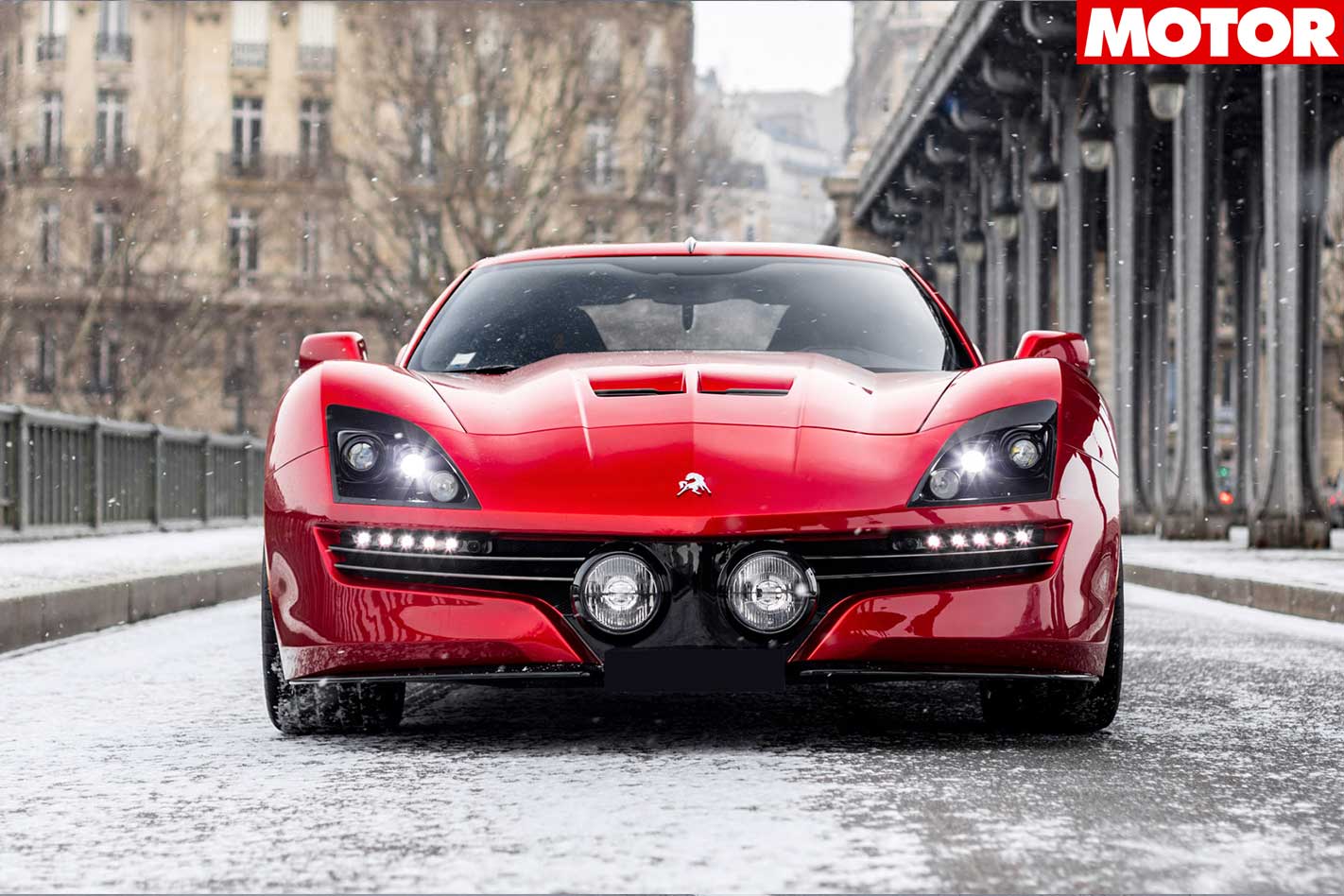
This isn’t a Corvette. It’s the Equus Throwback.
Okay, so it is a Corvette, sort of.
But this Corvette has been restyled, and given a little bit more grunt by Equus Automotive, creator of the Bass770.
The retro-inspired Throwback is a limited model, with only 25 planned by the Detroit-based company, which utilises the ‘Vette as a basis to create a “significantly upgraded” muscle car.
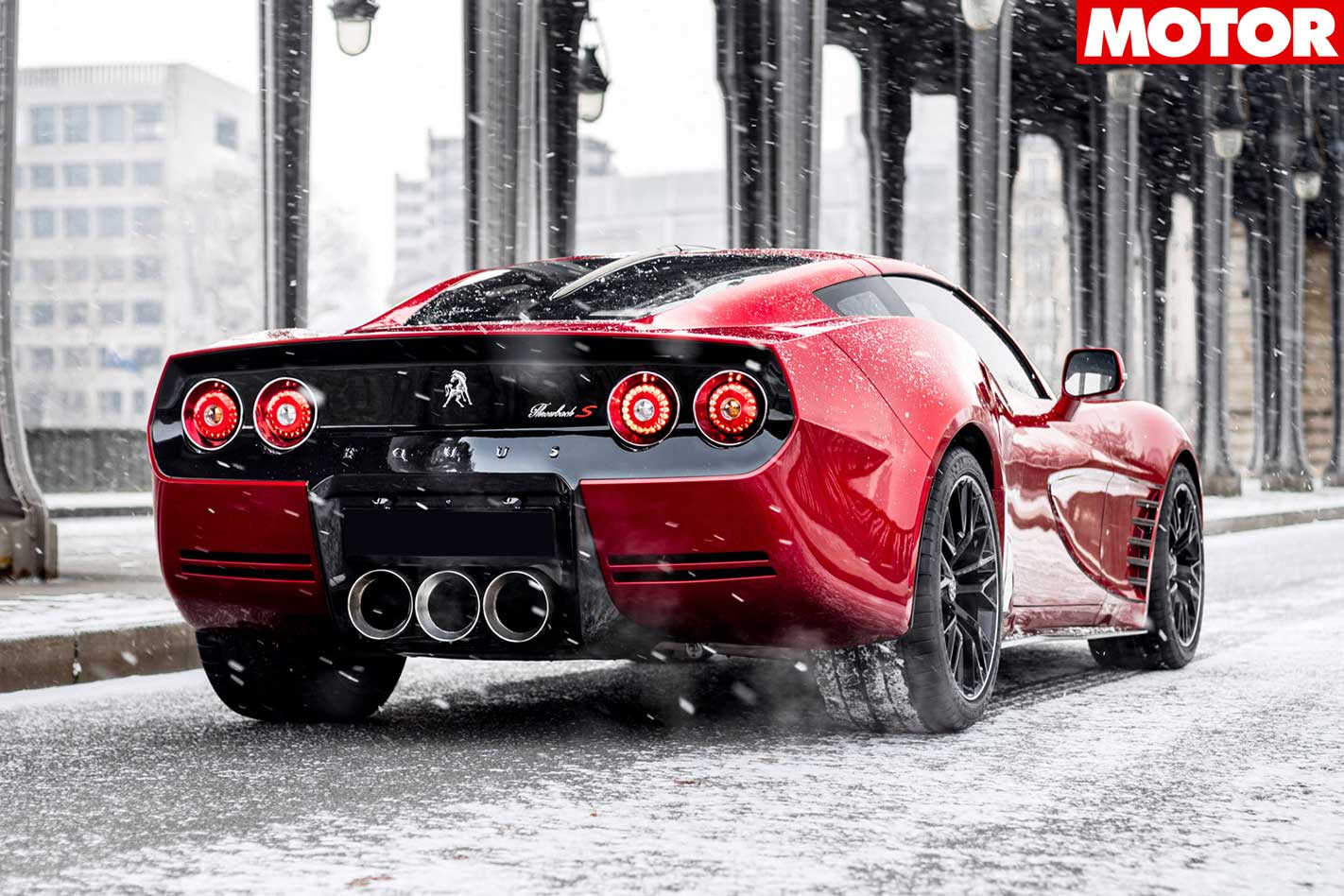
The Corvette’s supercharged V8 can be tuned to an output of 746kW and 1114Nm. Equus says it’s capable of a 2.5-second run to 97km/h (60mph), and has a top speed of 354km/h.
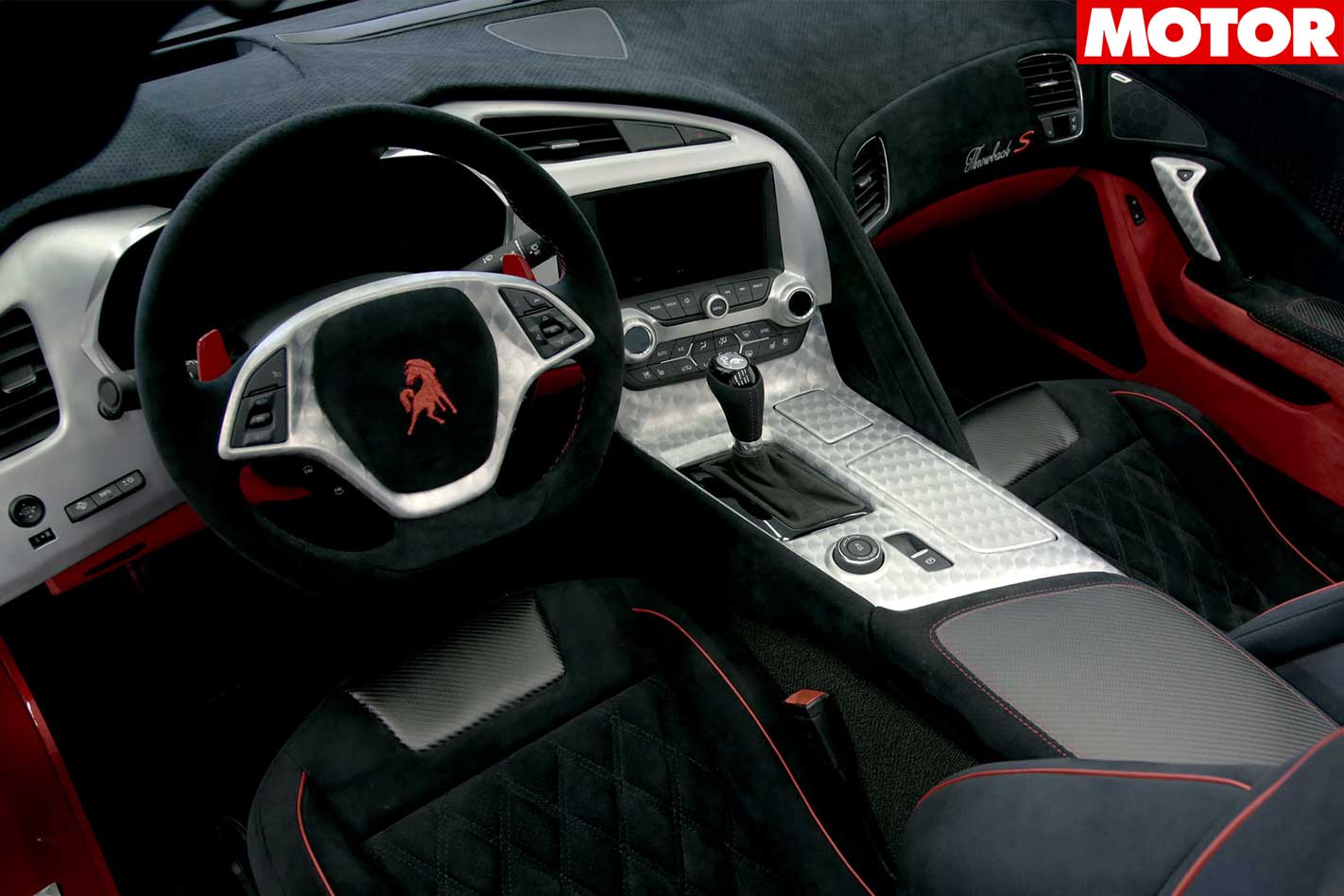
Equus Autmotive’s goal with the Throwback was to inspire a sense of nostalgia in muscle car fans while providing a car with modern-day usability.
“The Throwback model uses unique styling language in its outer skin to create a breathtaking vision of the ultimate Corvette. Equus takes the customer down memory lane to an era when Corvettes were synonymous with performance and class.
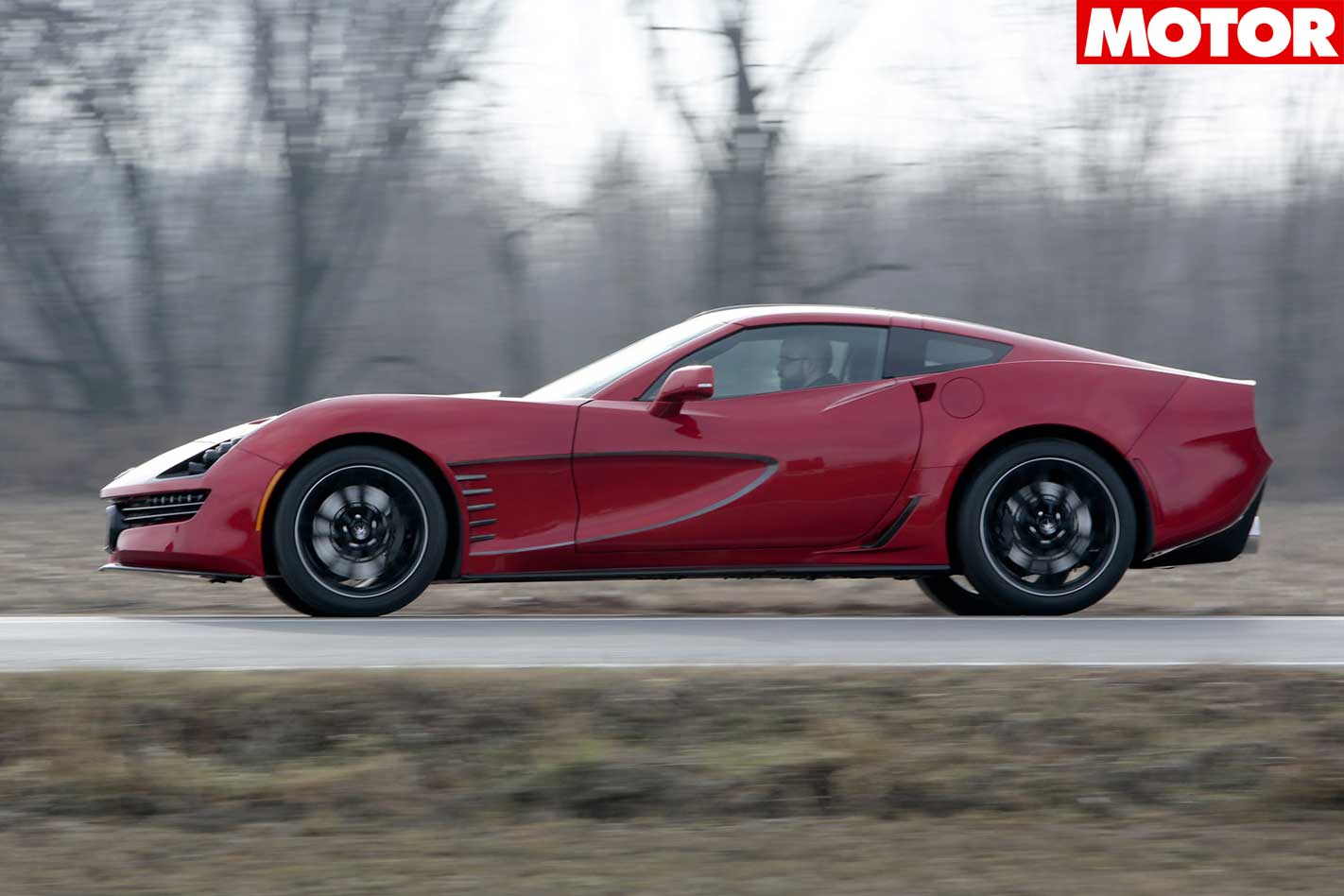
“The Throwback can be personalized for the design orientated drivers or for the fastest paced performance centric customer, always emphasizing the original love of an icon, desire for innovation and uncompromised quality.
“Just as companies like Brabus and Alpina focus on European brands, Equus Automotive is focused on providing American Sports car lovers the ultimate interpretation of todayʼs designs.
“The Throwback will be a limited production model of 25 cars, ensuring collector status and exclusivity.”
The Throwback will cost a minimum of USD$130,000 in the US, with chances of any Australian deliveries seemingly very low.
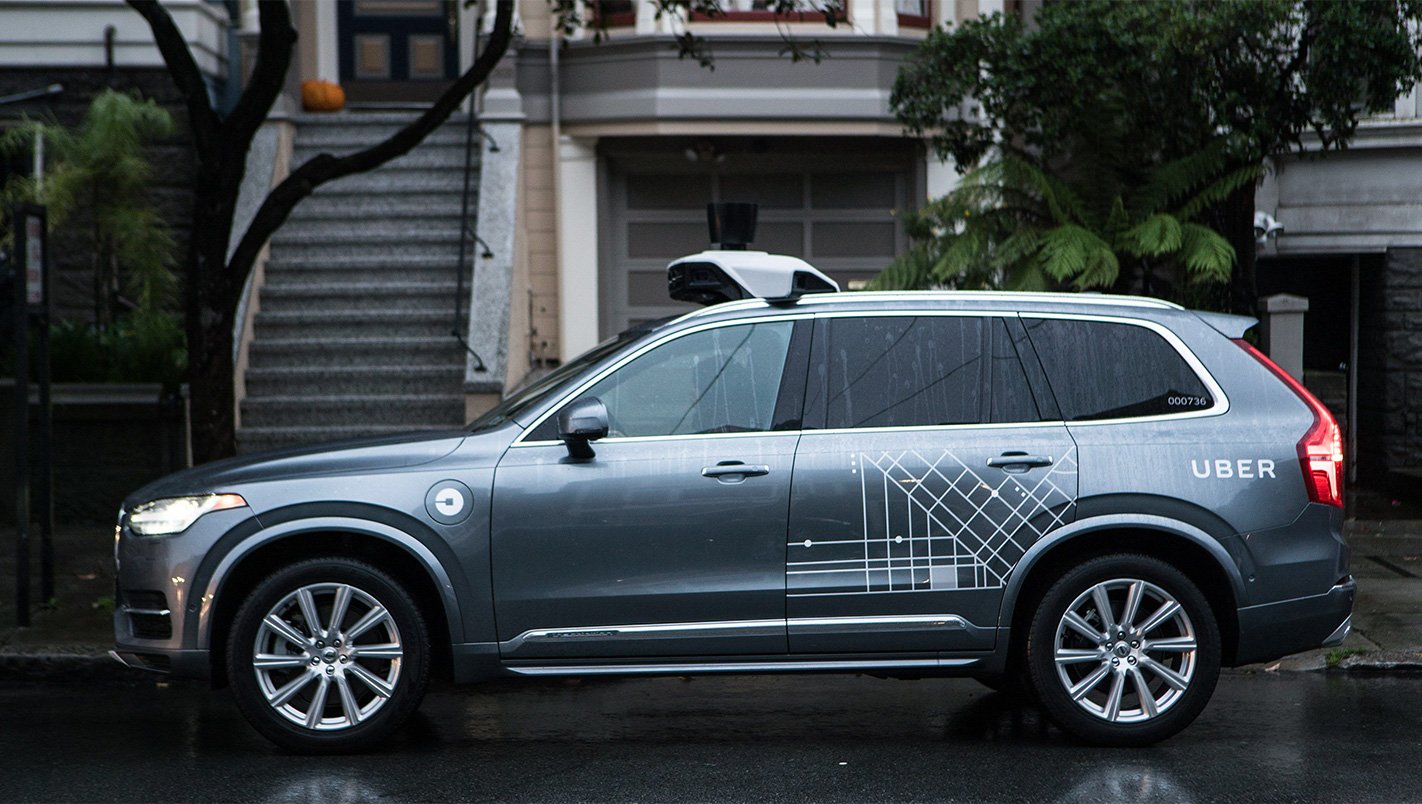
UBER has parked up its fleet of self-driving vehicles in response to the death of a pedestrian who was struck by one of the company’s autonomous Volvos in the US at the weekend.
Police identified the victim as 49-year-old Elaine Herzberg, who was crossing a street in Tempe, Arizona. She was hit by the autonomous SUV and died in hospital of her injuries. A bicycle was found at the scene, though it is thought she was walking with it at the time of the incident.
Uber has been testing its own autonomous technology using a fleet of 200 Volvo XC90s in several US states that permit such vehicle trials. It is understood the vehicle was driving itself with a human operator sitting behind the steering wheel.
Self-driving technology is supposed to detect pedestrians and it is still unclear what went wrong with Uber’s programming; however it’s reported the vehicle did not attempt to slow-down when approaching Herzberg.
This isn’t the first time an autonomous Uber has been involved in an incident; in 2016 the company’s vehicles were caught running red lights in San Francisco, and in 2017 it temporarily suspended its autonomous fleet in response to a crash. This weekend’s incident marks the first known pedestrian fatality due to an autonomous vehicle and highlights the dangers of the fledgling technology.
While it could be written off as an isolated incident, the death showcases the potentially severe consequences of a simple malfunction or coding oversight, and has members of the public suggesting that the technology isn’t yet be stable enough for widespread public trials.
“It is important to remember that this technology brings with it significant road safety benefits, but it doesn’t promise to eradicate all serious and fatal crashes, because the human element will always be involved in some way,” said a representative from the Australia New Zealand Driverless Vehicle Initiative.
“In Australia we are taking a very staged approach in how we allow this technology onto our road network … an approach of testing this technology in controlled environments and on-road deployments to ultimately ensure a safe introduction of this technology to our roads.”
There are numerous autonomous vehicle projects currently operating on Australian roads, such as the Smart Shuttle busses on trial in closed roads at Sydney Olympic Park, Mercedes-Benz’s autonomous S-Class, and Volvo’s autonomous XC90, which is similar to the one in Arizona that claimed a life, albeit operated by different software.
The autonomous vehicle industry is expected to be the next step in automobile development and promises to redefine the way cars and the roads are used, but despite them being as safe as programming currently allows, there’s some way to go before all road users are ready to share the lanes with them.
IF car company press releases were a guide for what kinds of cars fill our roads, you’d be forgiven for assuming every new vehicle was an electric SUV.
While car manufacturers continue to funnel immense amounts of cash into developing pure-electric and plug-in hybrid vehicles, consumer demand lags behind significantly.
In 2017, a record 1,189,116 new cars were sold in Australia, with just 1123 electric cars accounting for a tiny 0.09 percent of the market share.
That was a slight improvement over 2016, when electrically chargeable vehicles accounted for just 0.06 percent of the market, or just 765 electric vehicles out of a then-record 1,178,133 new car sales.
Adjusted for market share, Australia’s appetite for electrified vehicles falls below Denmark (0.4 percent) and Estonia (0.2 percent).
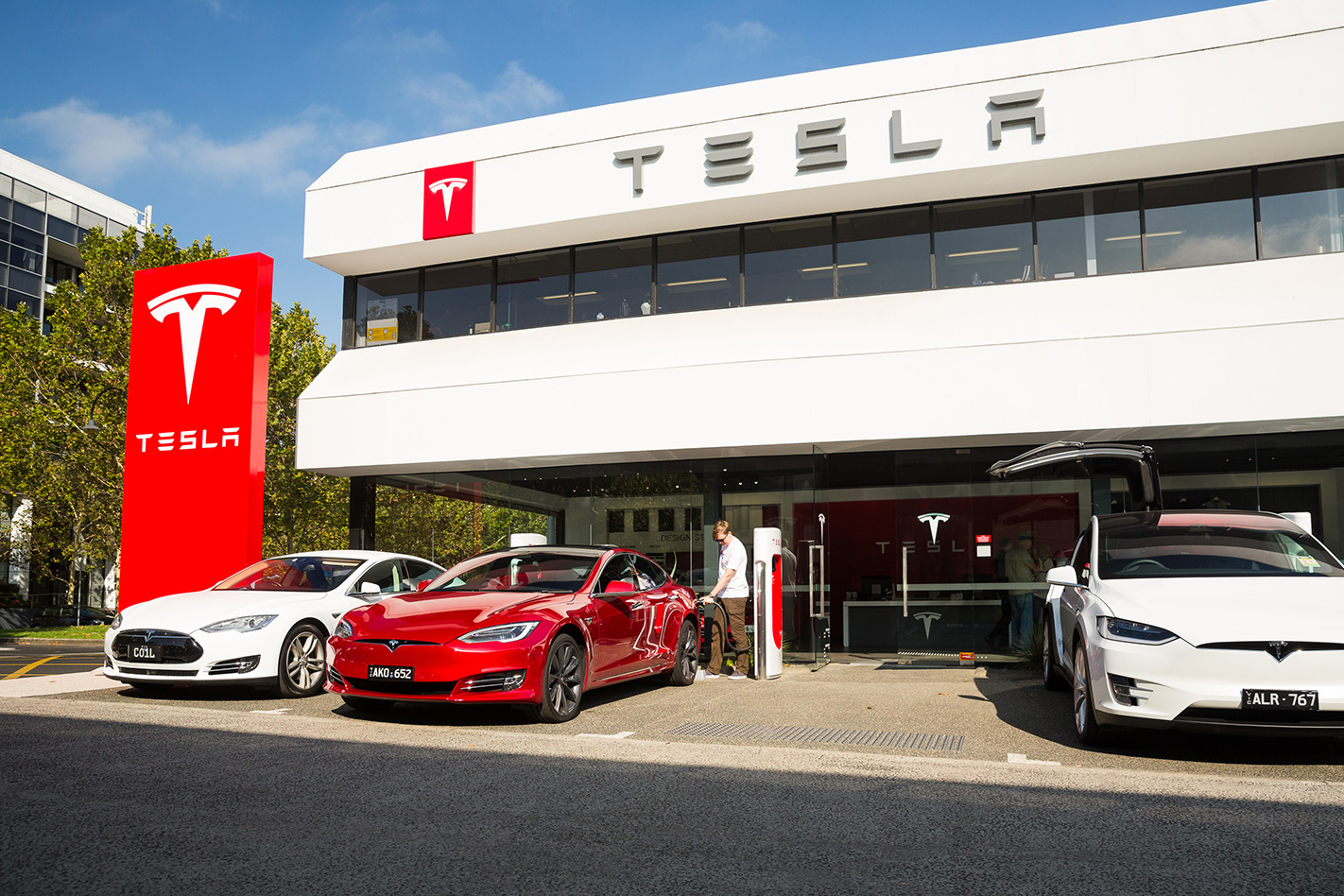
However, finding the exact number of electric vehicles sold in Australia is difficult, with Tesla’s policy of not reporting sales leaving a large void in any ledger.
While Tesla is a member of the Federal Chamber of Automotive Industries, it chooses to not provide tallies of sales for monthly reports. However, a recall for both the Model S and Model X last year gave us a good guide at how many units the American manufacturer sells in Australia.
Tesla’s recall notice showed a fix needed to be applied to 469 Model X SUVs, and 324 Model S sedans.
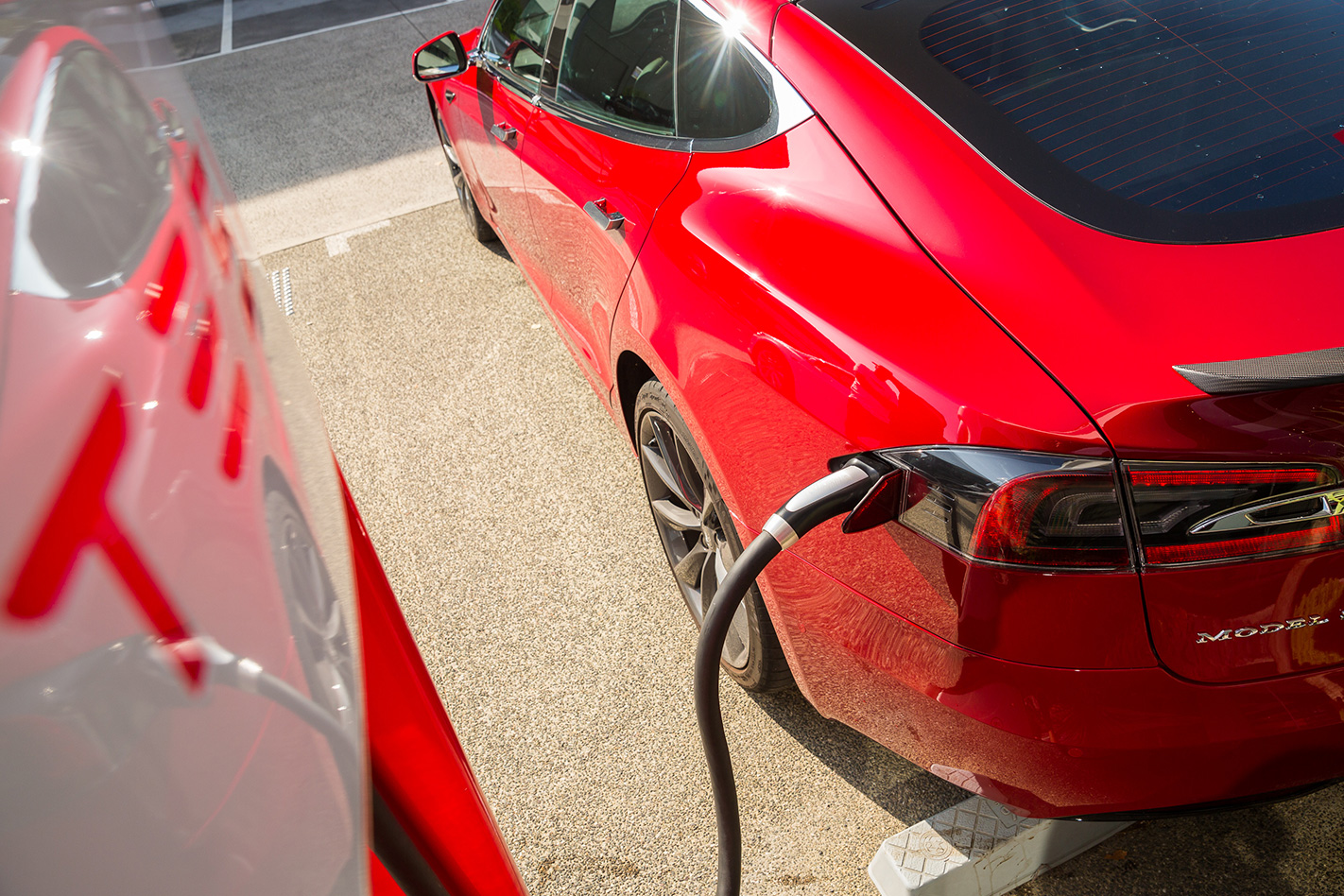
The 793 cars were all built between February and October 2016. Averaged out across a full 12 months and it can be estimated Tesla sells around 1060 cars a year.
If you include the estimated Tesla sales in calculations, the market share of electric vehicles sold in Australia increases to 0.18 percent.
Of the 1123 cars reported in VFACTS, just a third (377) were private sales, while the rest were added to business fleets. Without government incentives to purchase an electrified vehicle, consumers continue to shun volts in favour of the traditional internal combustion engine.
It is unclear what the private/fleet split is for Tesla sales, however it’s more than likely to be skewed further toward private buyers than the numbers reported in VFACTS.
According to EV-volumes.com, a data collation site that tracks global EV and PHEV sales, plug-in electric vehicles account for 1.28 percent of global new car sales.
This represents a growth of 58 percent, from 0.83 percent global market share in 2016.
The same site reports that the current global population of electrically chargeable vehicles is 3.2 million (out of an estimated 1.2 billion cars in total) with 63 percent pure electric, and 37 percent plug-in hybrids.
Electric cars hold the highest market share in Norway, with plug-in vehicles making up 39.2 percent of new car sales in 2017, with more than 135,000 sales.
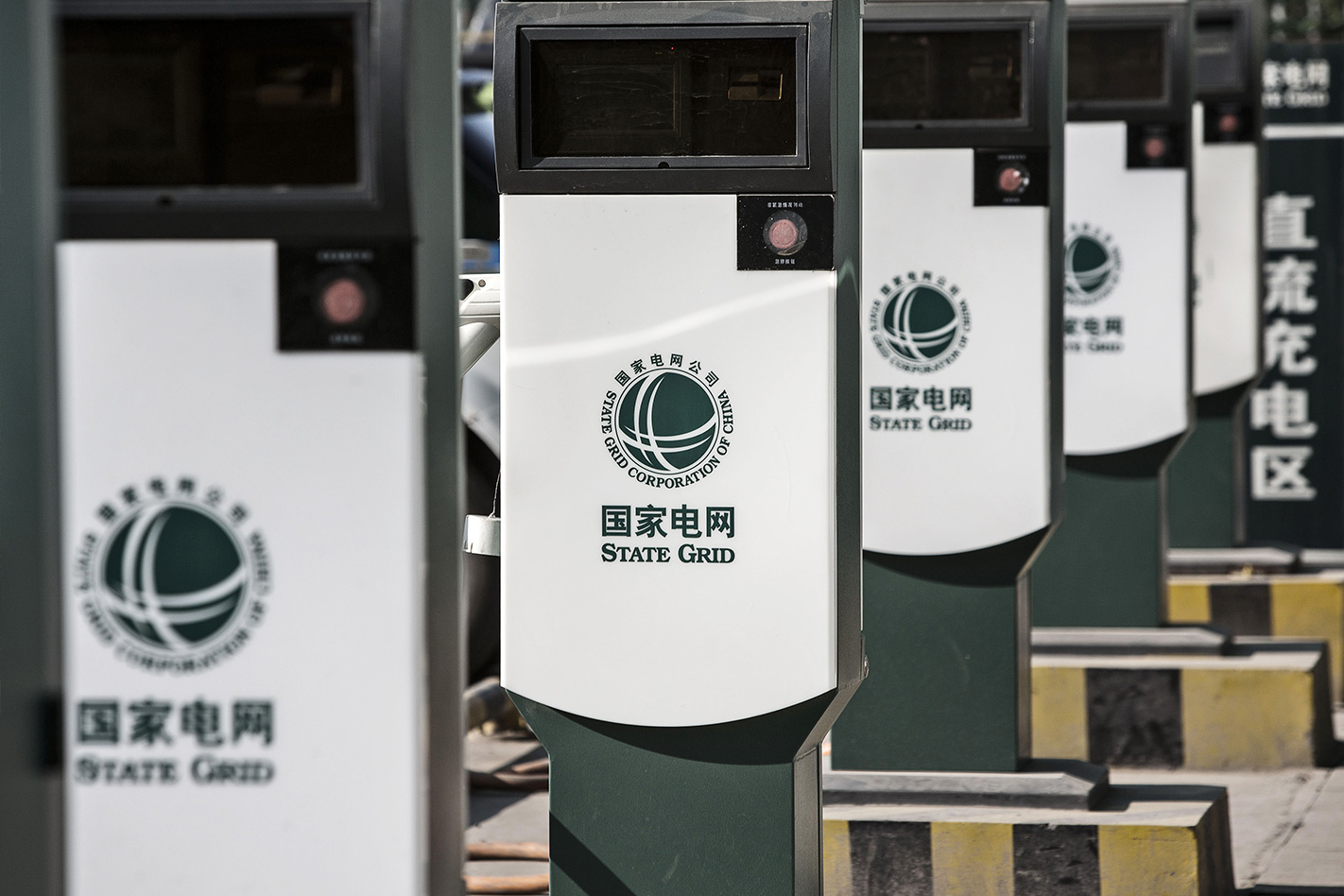
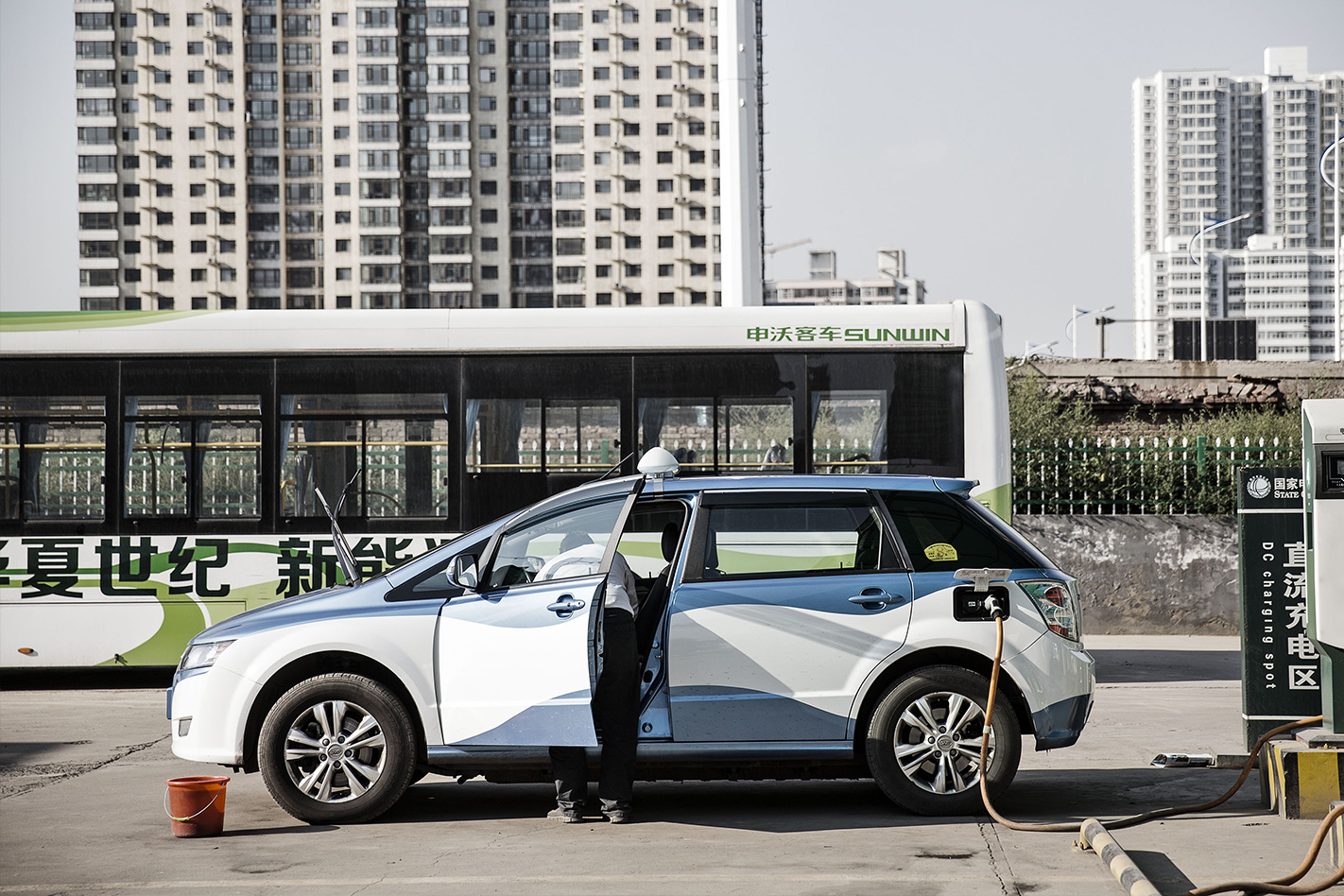
While China leads the way in terms of growth and sheer volume for electrically chargeable vehicles, with 600,000 sales in 2017 (half the global sales of plug-in electric vehicles), that accounts for just 2.1 percent of that market’s new car sales last year.
China’s push to an electric future is propping up global sales and market shares of plug-in vehicles, with the largest country in the world seeing sales growth in the segment of 73 percent last year.
China and Norway provide significant incentives for consumers to purchase a new electric vehicle, which has helped guide buyer demand.
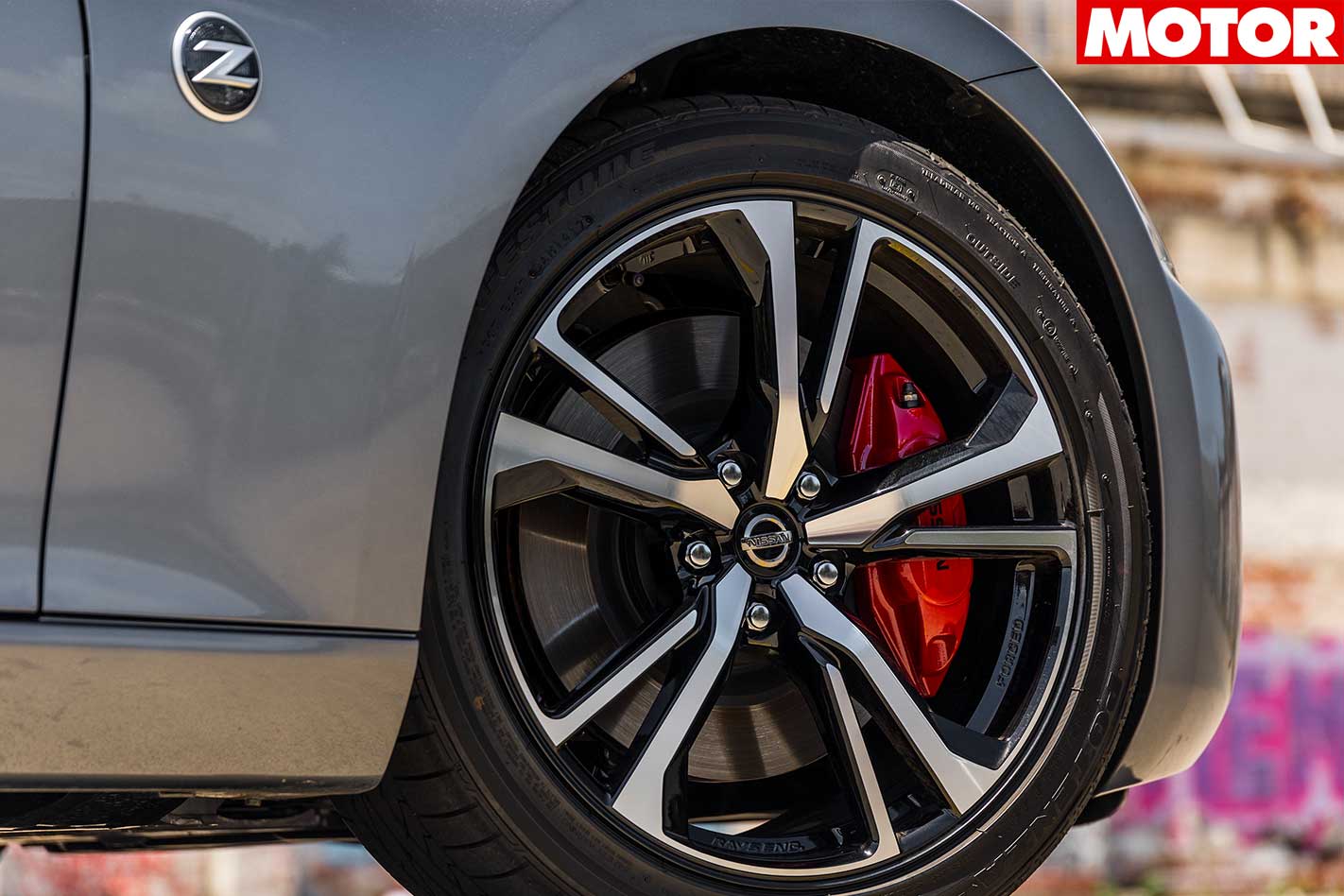
The 370Z might not be the last in the line of Zeds after all.
Nissan has issued constant denials regarding new sports cars but a new report from Autocar indicates a new Zed replacement could be in the works.
Former Nissan Australia CEO Richard Emery told MOTOR in late 2016 that “there’s no indication… for what the next step is for Zed from a product planning perspective.”
“I think Zed is [in] a diminishing segment globally, so it’s a brave company that would start from scratch in that segment and I think that’s probably extending the life cycle of existing platforms.”
Nissan’s recent Zed update and price drop would also suggest it’s sticking around for a while longer.
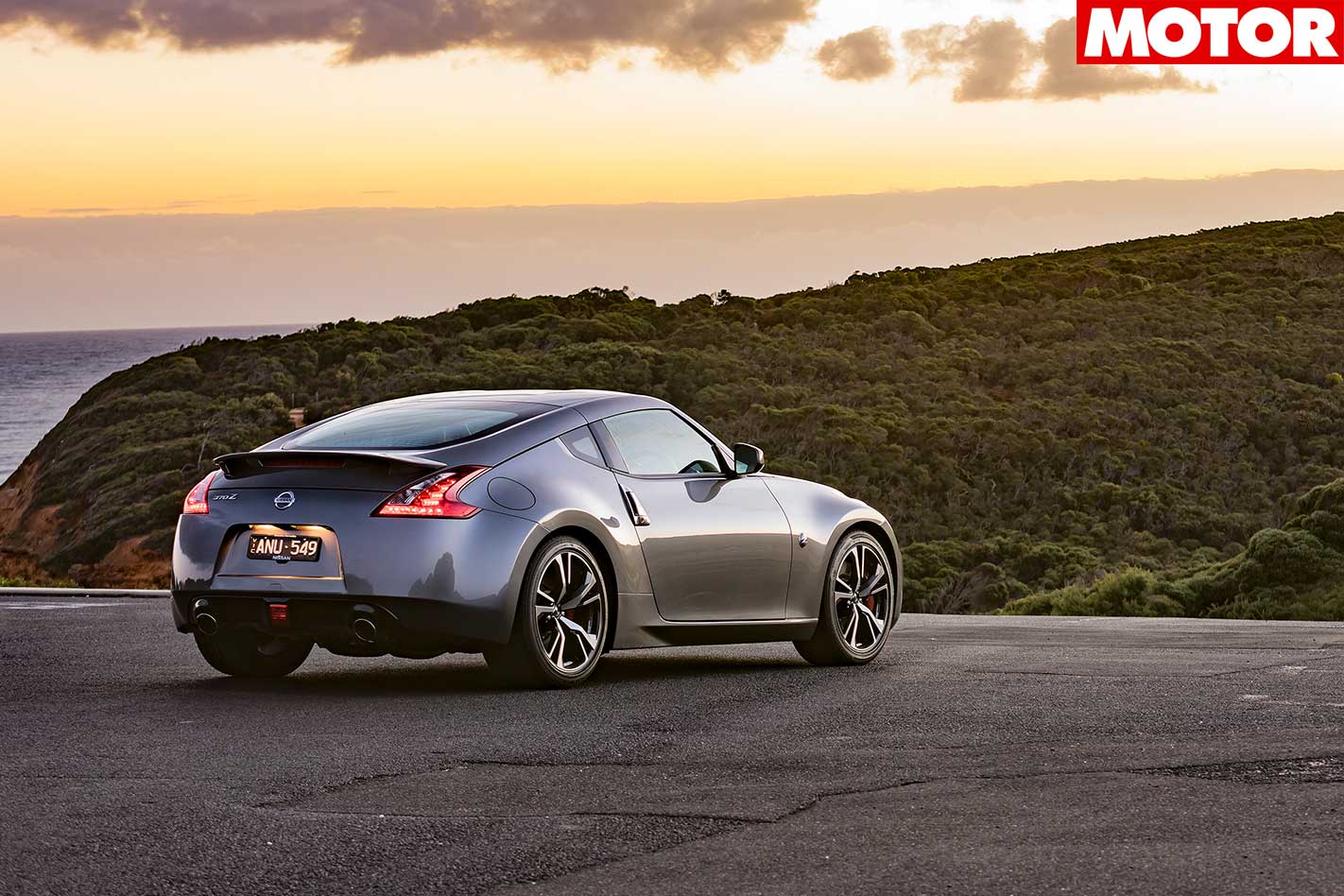
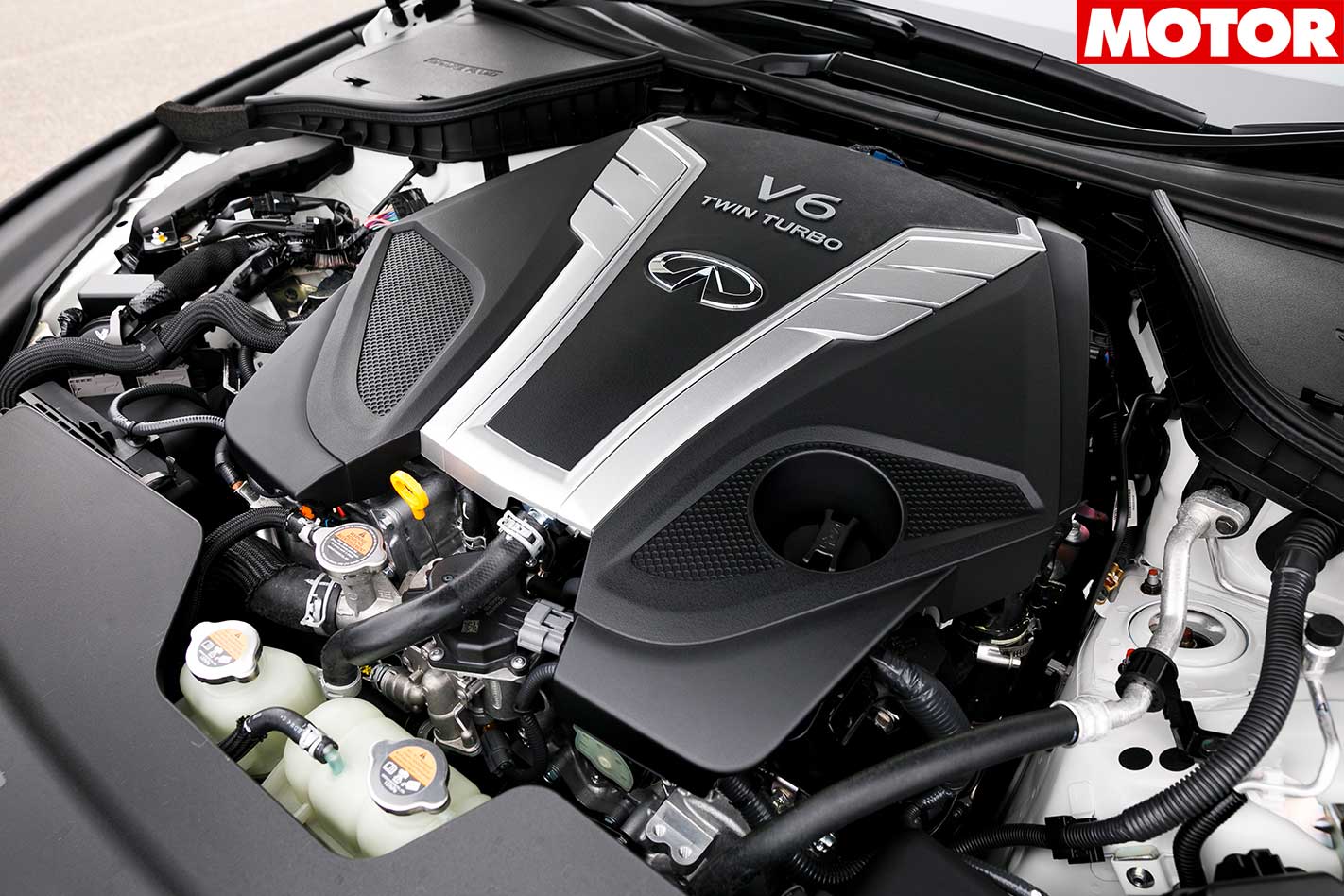
Allegedly known internally as the Z35 to follow the numbering system which began with the Z31, the next Zed car will be closely related to the next iteration of the Infiniti Q60, with its wheelbase and platform to make up the Z35’s building blocks.
The 370Z’s 3.7-litre atmo V6 will also be replaced by the Q60’s twin-turbo V6, Autocar reports, bringing power up from 245kW/363Nm to roughly 298kW and 475Nm.
MOTOR has contacted Nissan Australia for comment, and is awaiting a response.
The Mitsubishi Eclipse Cross is another model slotting into the Japanese car maker’s already SUV-heavy line-up that picks up its successful formula, albeit with a more modern edge.
TELL ME ABOUT THIS CAR
You wouldn’t know it to look at them, but Mitsubishi decided there was room to slot another vehicle in between the large-for-its-class ASX and the small-for-its-class Mitsubishi Outlander. This job was given to the Eclipse Cross, a more edgy looking, design driven soft-roader that shares the same “GS” platform as the ASX and Outlander.
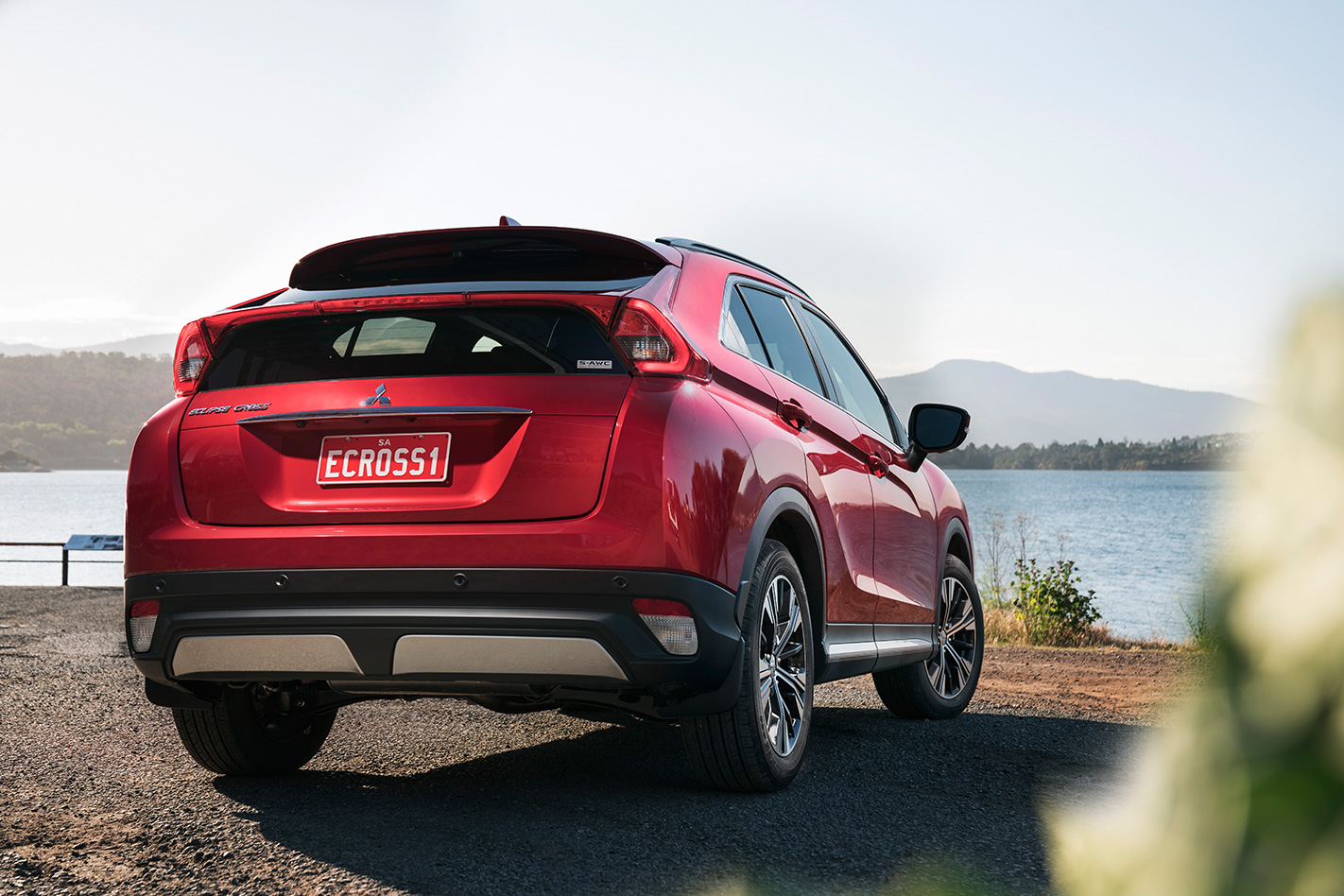
The main point of difference the Eclipse Cross holds over is stablemates is the value for money that it represents.
STRENGTHS
- The Mitsubishi Eclipse Cross is big for the segment in which it competes. Classed as a small SUV, it makes some of the competition look cramped. You’ll notice that as soon as you open up the boot to reveal up to 1193 litres of boot space with the rear seats folded down.
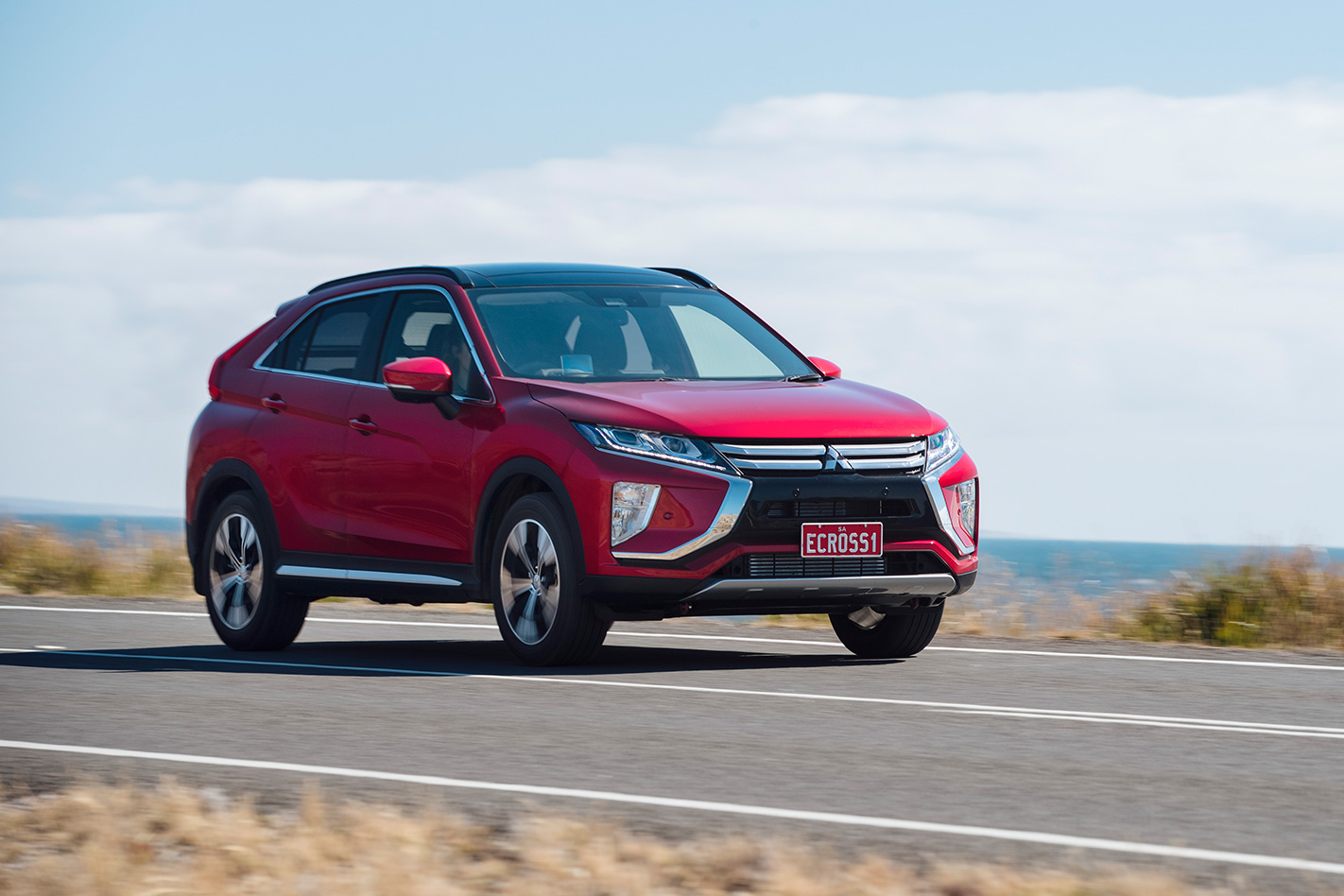
- The Eclipse Cross adopts the Mitsubishi Dynamic Shield face that’s slowly spreading across the range.
- The rear seats are teenager-friendly. If you’re not loading up the boot, the rear seats can slide backwards up to 200mm, and the seatbacks can recline. The coupe-like profile doesn’t rob the rear seats of headroom.
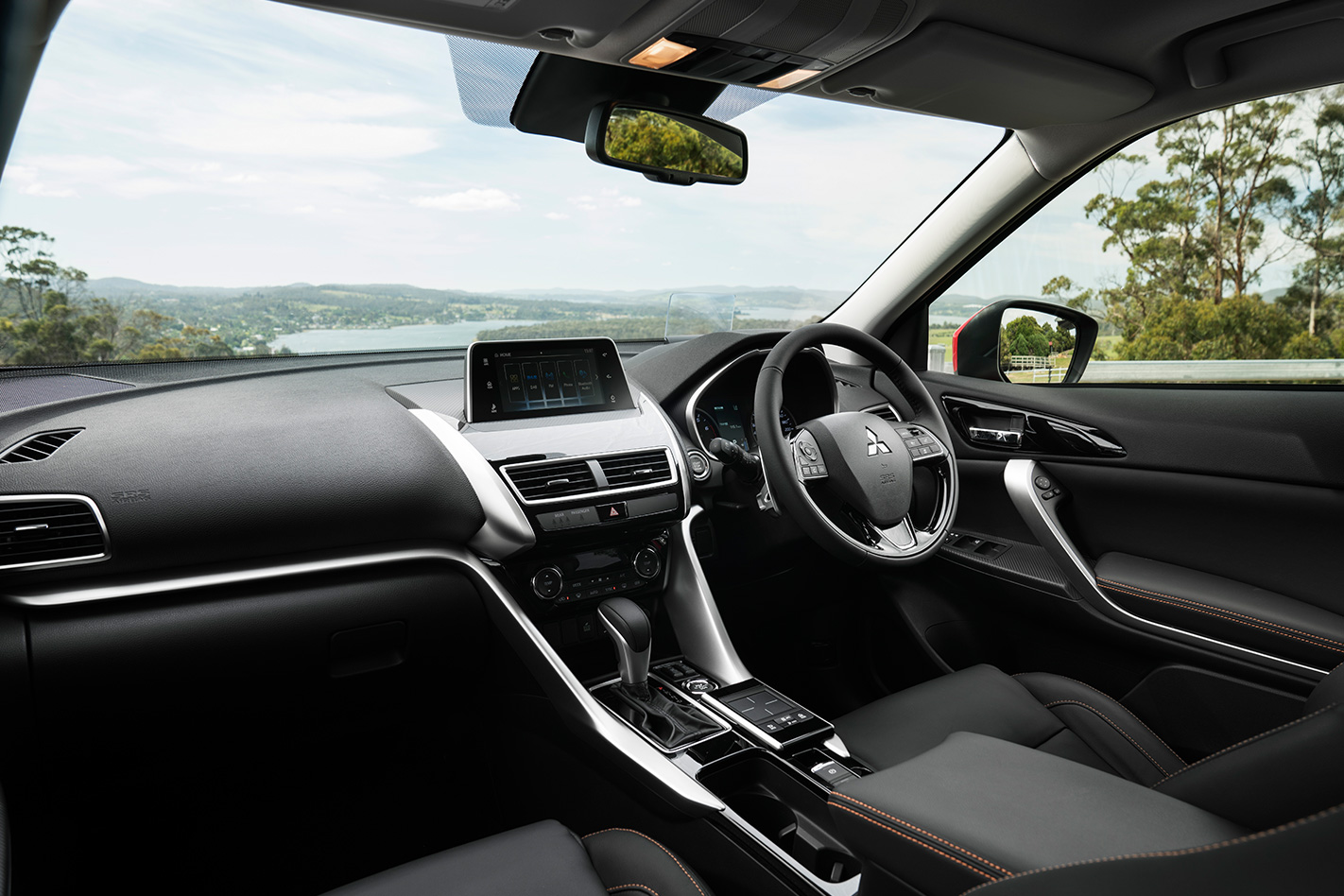
- All three variants come with automatic emergency braking, lane-departure warning, and auto high beam, wipers and headlights, making it safe and user-friendly.
- It’s well equipped. The entry-level front-drive LS comes with 18-inch alloys and digital radio for $30,500. The mid-spec Exceed (also front-drive) adds dual-zone climate, leather trim, heated and powered front seats, a head-up display, LEDs and a safety suite, for $36,000. The range-topping Exceed AWD asks another $2500 over this for all-wheel drive and a three-mode terrain selector that increases off-road ability.
- The engine is pretty perky for what it is. The Eclipse Cross uses a 110kW/250Nm turbocharged 1.5-litre engine to haul 1335kg of SUV around, with a continuously variable transmission helping to keep it in either its peak power or maximum economy band.
WEAKNESSES
- Fuel economy isn’t as good as claimed. The official figure is 7.3L/100km, but real-world use on test flicked above 8.5L/100km, even with mostly freeway work.
- It still feels cheap inside. Soft-touch surfaces cover most of the areas in the line of sight where a hand or elbow fall, but they don’t scream plushness. Hard faux brushed chrome plastics don’t add to the sense you’re buying a cut above the competition.
- A central touchpad is used to control the multimedia interface. It’s fine while the Eclipse Cross isn’t moving, but once it does, forget it.
- The head-up display is way too low for taller drivers. Even on its most elevated setting, a taller driver will have to duck down to see it, sort of defeating its purpose.
- It rides and handles like the other cars that share its platform. That means it is more suited to milk runs and commuting than an expression of the joy of driving.
- The split rear window is form over function. The top pane houses the world’s smallest windscreen wiper, and the bottom one isn’t visible over the rear seatbacks. A reversing camera helps.
- The continuously variable transmission isn’t as nice as a conventional automatic transmission, but is well-suited to the small engine. The Eclipse Cross has paddle shifters on the steering wheel to mimic an eight-speed conventional auto, but it’s not the same. If the paddle shifter doesn’t want you to shift gears it lets out an angry beep.
- The less pricey Mitsubishi ASX is a 50 cent coin’s length smaller than the Eclipse Cross, more than $5000 cheaper and offers a similar amount of interior space – and more when it comes to the boot. And yet the way the cheaper ASX soaks up the road isn’t that much different.
ANY RIVALS I SHOULD CONSIDER?
Nissan Qashqai; Holden Trax; Hyundai Kona; Honda HR-V; Mazda CX-3; Mitsubishi ASX; Subaru XV; Toyota C-HR
VW has finally revealed its weapon of choice to tackle the Race to the Clouds, the Volkwagen I.D. R Pikes Peak.
The all-wheel drive electric racer will be the contender for Volkswagen’s first attempt in over 30 years to set a record at the infamous Pikes Peak ‘hill’ climb.
Volkswagen hasn’t revealed any specs for the I.D R, just these images and a statement that it plans to offer “more than 20 fully-electric cars by 2025.”
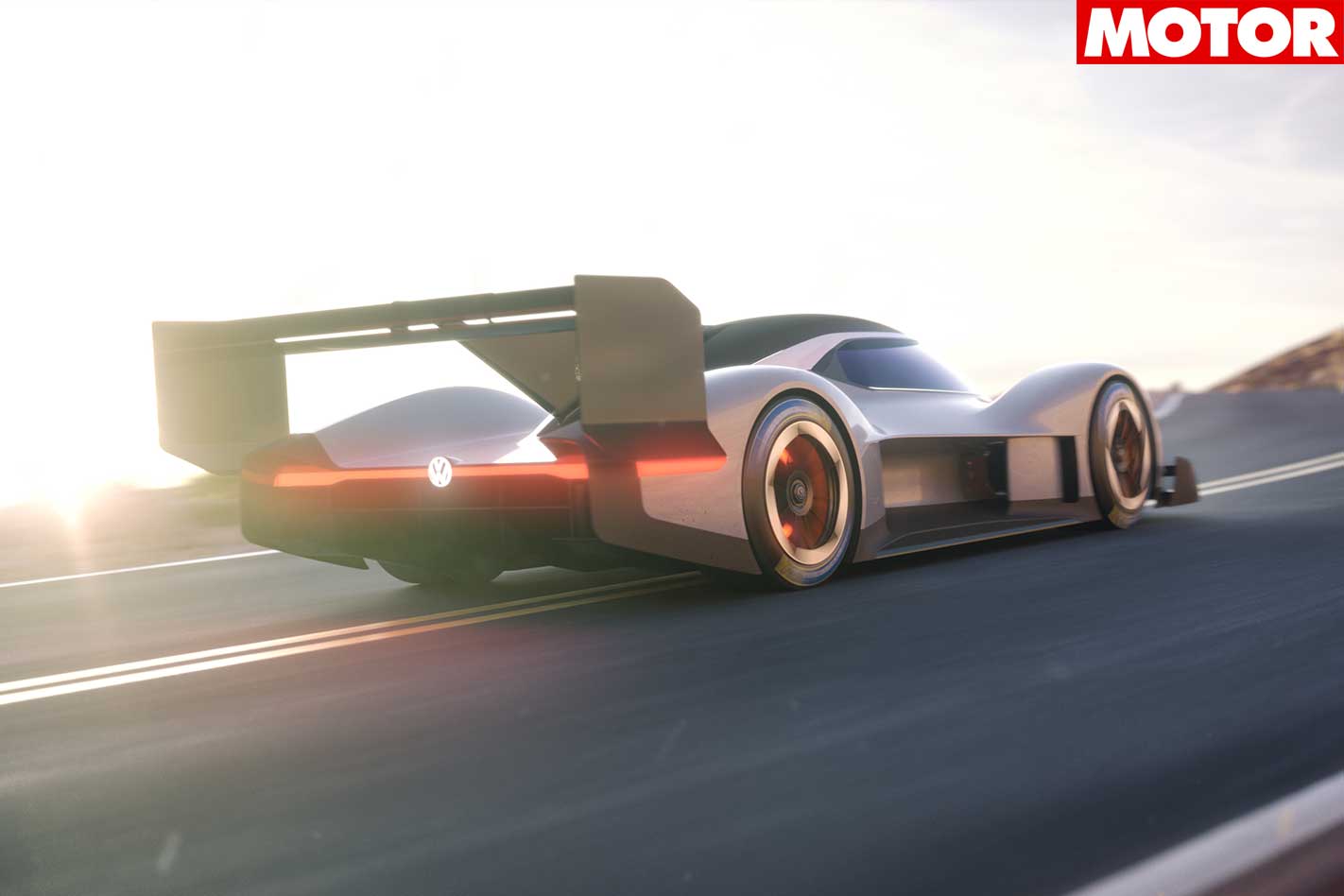
VW board member in charge of development Dr. Frank Welsch says using a challenge like this adds a competitive element which encourages innovation.
“We want to be at the forefront of electromobility with Volkswagen and the I.D. family,”
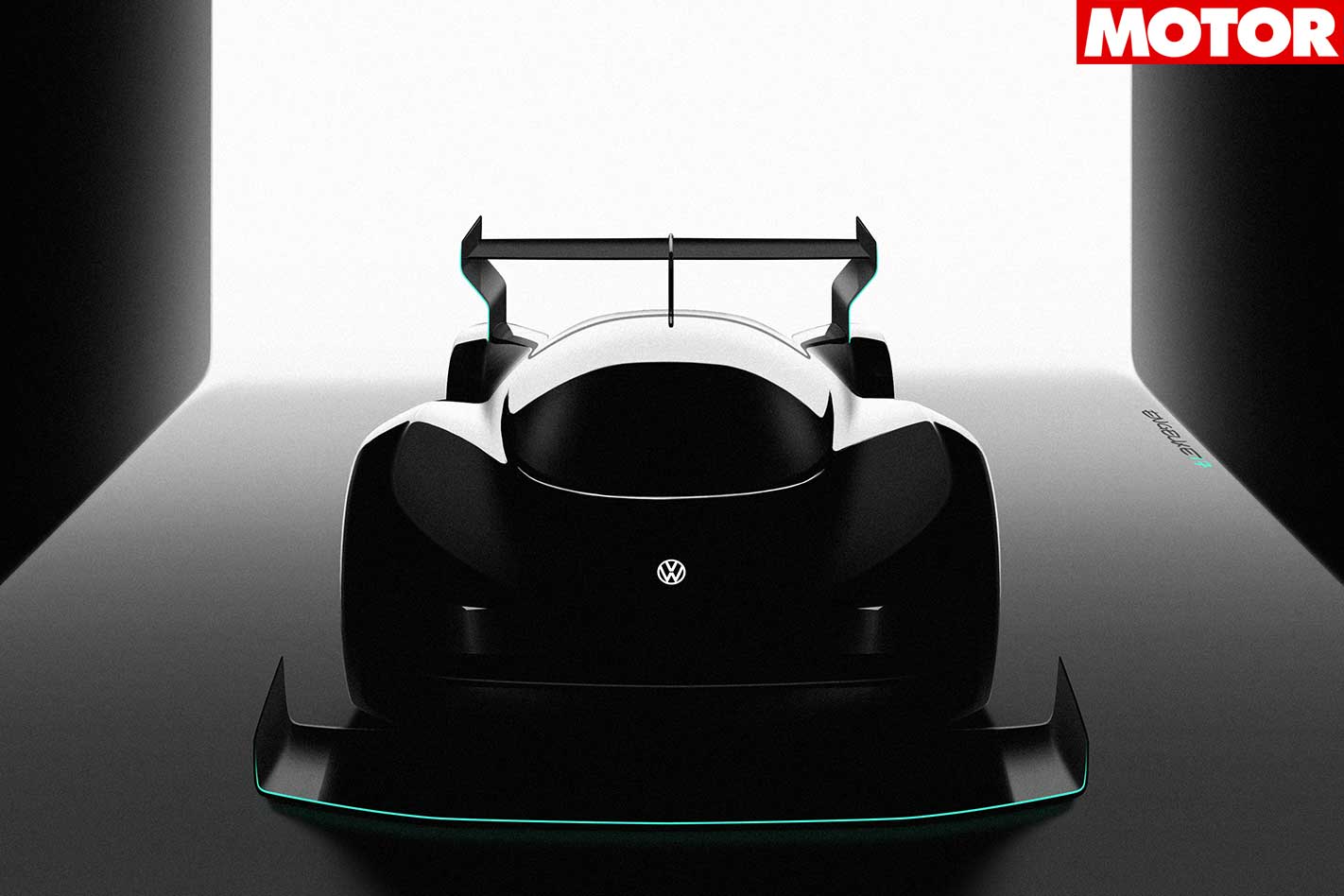
But Volkswagen Motorsport director Sven Smeets says this is also about showing the world that Volkswagen hasn’t given up on Pikes Peak.
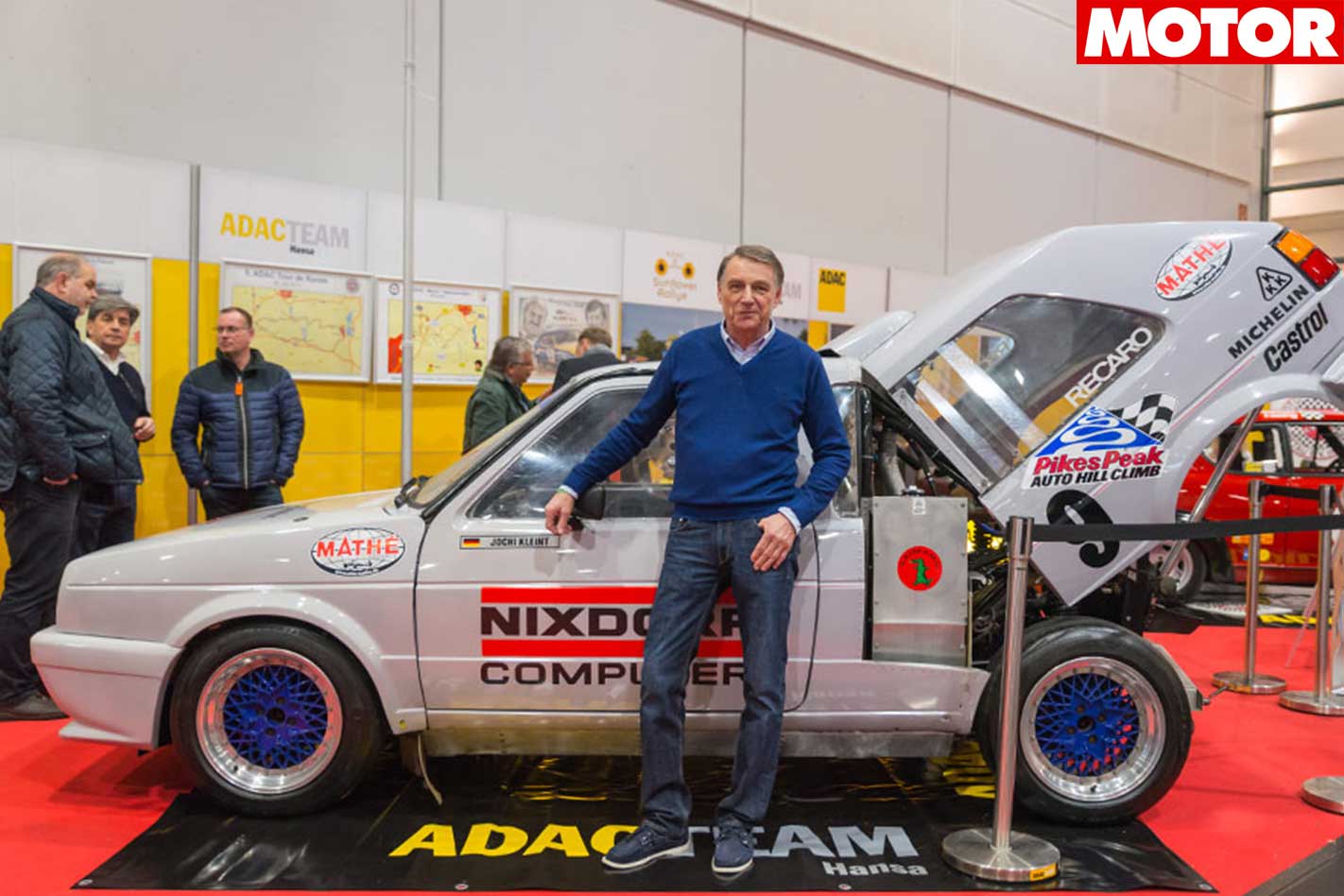
It’s been just over 30 years since Volkswagen used a twin-engined 478kW Golf to tackle the Peak, though driver Klaus-Joachim Kleint had to retire only three bends from finishing with a record time.
“The I.D. R Pikes Peak represents an extremely exciting challenge for us, to show what is possible with an electric engine in motorsport.
“The entire team behind our driver Romain Dumas is highly motivated to set a new record for electric cars.”
Volkwagen hopes to beats the category time of 8:57.118 currently held by New Zealander Rhys Millen driving an experimental electric car called the ‘e0 PP100’.
VOLKSWAGEN’S works rally team has unveiled a longtail-style electric racer that will take on the Pikes Peak rally in June, and one day spawn a new generation of R-badged battery-powered models.
Named the ID R Pikes Peak, Volkswagen Motorsport‘s single-seater all-wheel-drive notchback will pitch for the battery-powered prototype record for the June 24 timed 20-kilometre, 2100-metre climb to 4300m. To claim the record, Volkswagen will need to steer the prototype through the 156 curves to snare a time that’s better than the 8:57.118 set in 2016 by New Zealand’s Rhys Millen in a seven-motor, 1190kW e0 PP100 open-top supercar.
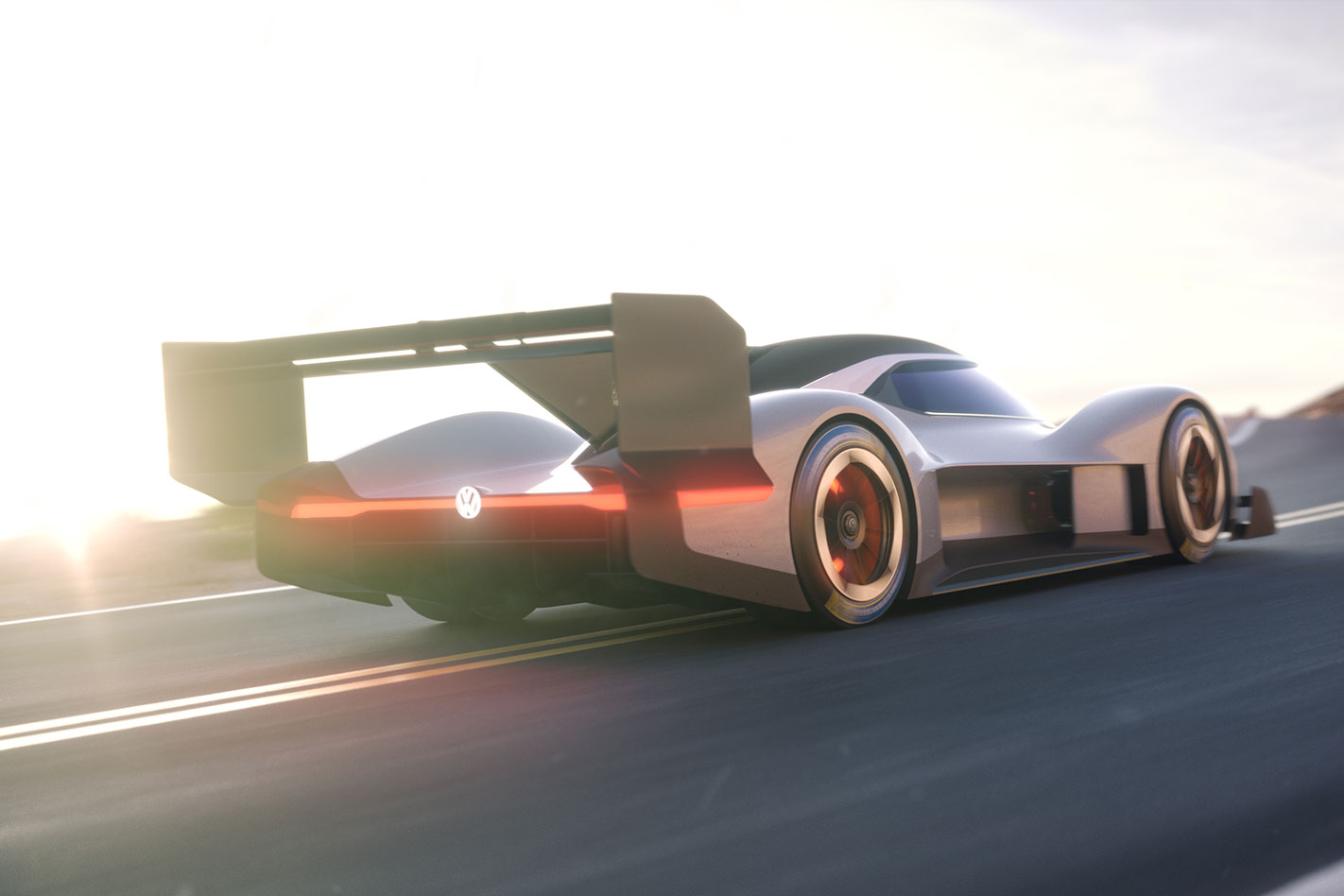
That’s good news then; Volkswagen and its motorsport division will work together on future battery-fuelled ID models that will eventually wear the coveted R badge.
The return to the Race to the Clouds is a bittersweet moment for the German premium car brand. It last campaigned the more than a century-old annual event in 1987, running a dual 1.8-litre four-cylinder-engined 485kW Golf driven by Jochi Kleint. That vehicle used a mechanical throttle system that could allow Kleint to choose between rear-, front- and all-wheel drive. It was quick, too; it could dispatch the 0-100km/h benchmark in 3.4 seconds.
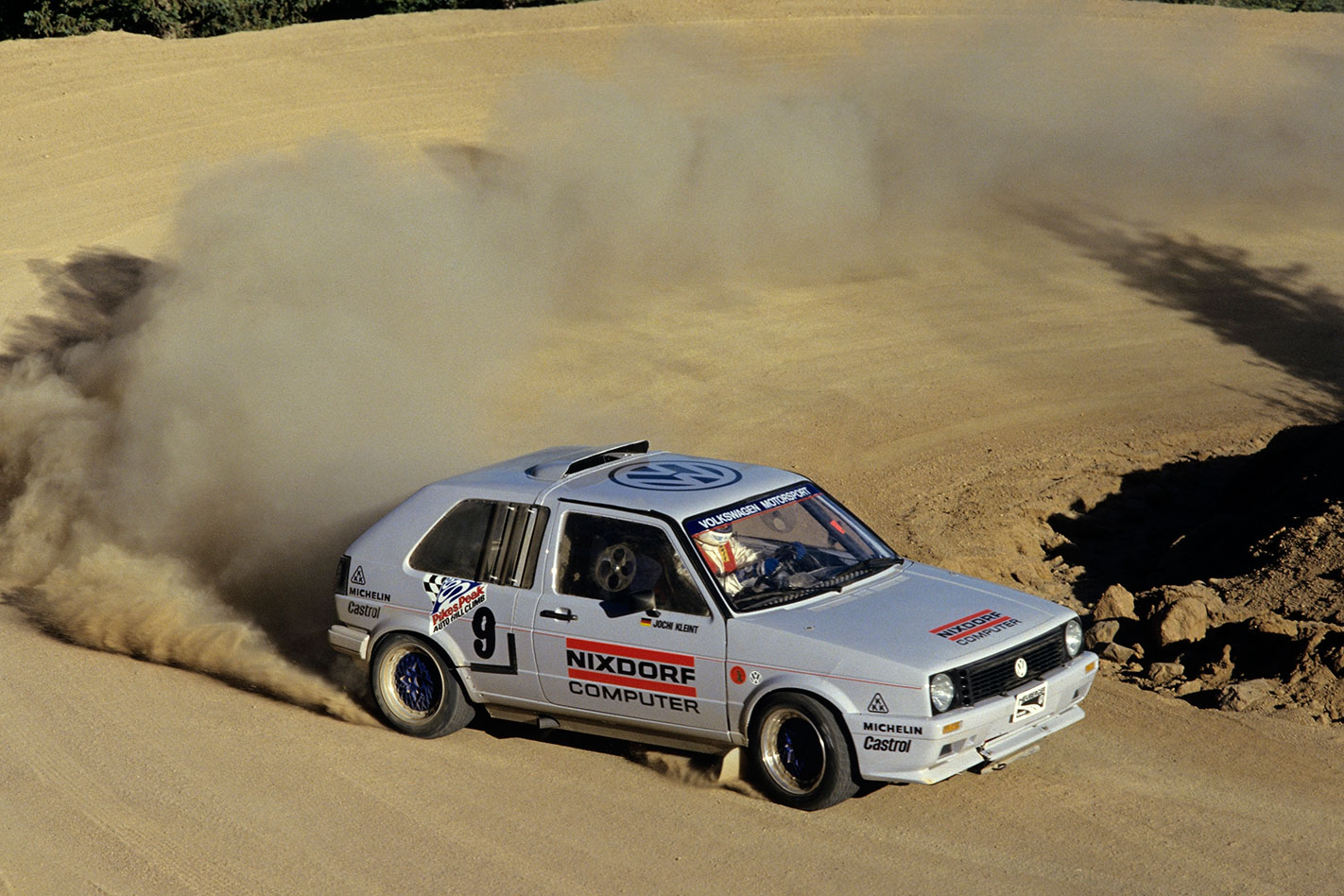
The rest, as they say, is history.
“It is about time we settled the score,” Volkswagen Motorsport director Sven Smeets said. “The ID R Pikes Peak represents an extremely exciting challenge for us, to show what is possible with an electric engine in motorsport. The entire team behind our driver Romain Dumas is highly motivated to set a new record for electric cars.”
What stands out?
The Polo looks crisp, clean and elegant, inside and out. It works very well with your smartphone, and its turbocharged engines supply great everyday performance without using much petrol. The Polo squeezes easily into small parking spots but feels like a bigger car on the road – in a good way, with reassuring roadholding. Auto braking is available.
You can also read our review of the very similar car that this Polo replaced in August 2017.
What might bug me?
In a Polo automatic, getting used to the DSG transmission in city driving. (This sort of auto works much like a manual gearbox with robotic control. It changes very smoothly once you are moving, and saves fuel. But it won’t duplicate the fluid, elastic take-up from rest that you feel in conventional and CVT autos.)If you have chosen a Polo GTI, driving at 80km/h on your space-saver spare wheel, until you can fix your full-sized flat tyre. (Other Polos carry a full-sized steel spare.)
What body styles are there?
Five-door hatch only. The Polo was previously available as a three-door but that option was dropped in 2014.All Polos drive the front wheels, and are classed as light cars, lower priced.
What features do all Polos have?
Cruise control, Bluetooth phone connectivity and audio streaming, and a reversing camera.Leather trim on the steering wheel and gearshift lever. A display on the instrument panel that can show your average speed and fuel consumption, among other functions.A 6.5-inch colour touchscreen for controlling audio, phone and trip computer functions (among other uses). A sound system with an AM/FM radio, a CD player, an SD card slot, and Aux and USB inputs.Support for Apple CarPlay and Android Auto, which work with Apple and Android phones. If you plug your phone in through the USB socket, many of its apps – including mapping and music – are mirrored on the touchscreen display and can be controlled from there.Headlight height adjustment from inside the cabin. Daytime running lights, which make the car more visible to other road users.Wheels made from aluminium alloy (which look nice without the pesky plastic trim caps fitted to most steel wheels). A full-width steel spare or (on the Polo GTI) a skinny space-saver spare.Hill-start assist, which controls the brakes to make it easier for you to take off on uphill slopes.Six airbags. Electronic stability control, which helps you avoid and control skids. (For more on Polo safety features, please open the Safety section below.)The Polo is covered by a three-year, unlimited kilometre warranty.
Which engine uses least fuel, and why wouldn’t I choose it?
The 1.2-litre four-cylinder turbo engines in the Polo Urban and Urban+ are the most fuel-efficient, both consuming about 4.8 litres/100km in the official test (urban and country combined).Like all Polos, these require premium unleaded fuel, which costs more than regular unleaded.The version in the Urban+ is the more powerful of these two, with about 20 per cent more thrust available in most situations. You can expect the Urban+ to drink slightly more fuel than the Urban in real-world driving if you use that extra performance. But both models are commendably frugal.In the real world you can expect to average 7.0 litres/100km or better over a mix of city and country driving, a figure few if any cars of this size will better.The Polo GTI gets a 1.8-litre four-cylinder turbo with significantly more power again. While it uses about 20 per cent more fuel than the other Polos, it’s still very economical.Every Polo engine offers a stop-start function, which saves fuel in the city. The engine shuts down when you stop (at a traffic light, for example), and starts when you release the brake pedal to drive away.The Polo Urban comes standard with a five-speed manual gearbox, whereas the Urban+ and GTI get a six-speed manual. All can be optioned with a seven-speed twin-clutch automatic, which has two computer controlled clutches but operates much like a traditional automatic.The Polo 66TSI and 81TSI are named for their maximum power outputs in kilowatts: the former can produce 66kW, and the latter 81kW. The engines are similar mechanically but are tuned differently.(Power outputs and all other Polo and Polo GTi specifications are available from the Cars Covered menu, under the main image on this page.)
What key features do I get if I spend more?
The least costly Polo, the Urban, comes with cloth seat trim, and a monochrome display in the instrument panel. It rolls on 15-inch wheels, and has the less powerful of the 1.2-litre turbo engines.Spend more for an Urban+ and your seats are trimmed in Alcantara (fake suede) and have heaters. You get the more powerful engine, a colour display on the instrument panel, and buttons on the steering wheel for operating the audio system and your phone. Headlights switch on automatically when it’s dark, and the windscreen wipers operate themselves when it rains. The air-conditioning will maintain a set temperature. Splashes of chrome break up the sombre hues of the cabin. And 16-inch wheels, wrapped in significantly wider and shallower (lower profile) tyres, add some grip on dry roads.On the safety front, a Driver fatigue monitor in the Urban+ assesses your use of the steering wheel over long journeys, prompting you to take a break if it concludes you might be falling asleep. And a pressure monitor lets you know early if a tyre is going flat.For about $1800 you can add a Driver assistance package to your Polo Urban+, which brings you satellite navigation, front and rear parking sensors, Adaptive cruise control (which can reduce your set cruising speed to match slower cars ahead on the highway, resuming automatically when the way is clear), and autonomous emergency braking.Spend more again for the Polo GTI and you return to cloth trim but get most other features of the Urban+ and some modifications aimed at improving performance, most notably the much stronger, 1.8-litre engine. Sport Select suspension permits you to stiffen the car’s ride from the driver’s seat (a button switches between two damper settings). There are 17-inch alloy wheels (with tyres of the same width as on the Urban+ but slightly shallower). An electronic differential lock improves control and drive for hard cornering.Inside, metal pedals add a hint of race car pizzazz, as do the gear shift paddles on the steering wheel in auto GTIs. The patterned seats are more heavily bolstered, to hold you in place better for fast cornering. External changes include unique bumpers, and side skirts.The Polo GTI too can be optioned with a Driver assistance package, which includes parking sensors front and rear, and satellite navigation (but not Adaptive cruise control or auto braking). There’s also a Luxury package, which brings you a powered glass sunroof, more supple seats with Alcantara trim, and more efficient, all-LED headlamps.
Does any upgrade have a down side?
The lower profile tyres on the Polo Urban+ and GTI will be bumper to ride on around town than those on the Urban, which have deeper (and therefore more cushioning) sidewalls.The GTI is the only Polo model not to get a full-width spare tyre. It has a skinnier space-saver spare, with a recommended maximum speed when fitted of 80km/h.The Polo GTI is also not available with the radar cruise control and auto-braking that is optional on the Polo Urban+.White, red and blue are the only standard colours on a Polo, with others costing extra.
How comfortable is the Polo?
All Polos share the same basic interior layout, but the Urban gets less of the brighter metal finishes that spice up the Urban+ and GTI. As a result it looks dark and drab. But it’s beautifully put together.You can adjust the steering wheel for reach and height, and you can adjust the driver’s seat for height also. Both front seats blend comfort with side-support very effectively, holding you in place nicely through corners.The main controls are well positioned high on the dash (near your line of sight). The main instruments are legible and clear.The Urban and Urban+ ride in a supple but very well controlled manner, so if you hit a big bump they recover quickly. Where many cars of this size sound noisy and feel tinny, the Polo is surprisingly quiet. You’ll get some tyre noise, but not much.Steering is nicely weighted, with a consistent feel throughout its arc. In general, the car feels very stable, but compact and agile.In the GTI, comfort improved when Sport Select ride adjustment arrived about August 2016, allowing you to choose softer or firmer suspension damping to suit the conditions and your mood.While the Polo Urban doesn’t have much power, it is very responsive and relaxing in everyday driving. The Urban+ steps it up a notch, with more oomph in all situations and more grip in corners.The GTI has plenty of punch and a rorty sound.The GTI’s manual gearbox feels light and easy to operate, while the seven-speed auto is very smooth and quick in its shifts once moving. However, the way the auto on all Polos engages from rest can be clunky, especially if you are on and off the throttle regularly in slow speed driving.
What about safety in a Volkswagen Polo?
Every Polo comes with anti-lock brakes, stability control, six airbags, daytime running lights, and a reversing camera. The rain-sensing wipers on the GTI and optional auto headlamps on some models add peace of mind.There are airbags ahead of the driver and front passenger, and another outside each front occupant that protect at chest level from side crashes. Curtain airbags extend down each side of the car at head level, protecting front and rear occupants.The Polo Urban+ and GTI also have auto headlamps and windscreen wipers, and a driver fatigue alert.Optional on the Polo Urban+ (only) is a Driver assistance package that brings Adaptive cruise control and auto emergency braking.Volkswagen calls this auto braking system Front Assist with City Emergency Brake, and it operates at city and highway speeds. A radar-type sensor scans the roadway ahead for obstacles, and the system will warn you of an impending collision (typically with a car ahead that has slowed suddenly). If you ignore the warning, at speeds under 30km/h it will initiate an emergency stop automatically. At higher speeds, it will add to the audio-visual warning by pulsing the brakes, encouraging you to brake yourself. If you ignore the pulse it will brake automatically – although not at maximum pressure.The Australasian New Car Assessment Program (ANCAP) rated the Polo at its maximum five stars for safety, in August 2014.
I like driving – will I enjoy this car?
The Polo is among the very best of city cars to drive. The suspension’s excellent control comes into its own on challenging, twisty roads. Teamed with good cornering grip, it makes for a car that is great fun, and that, in many good ways, feels like a bigger and more expensive vehicle.The Polo’s brakes, too, feel strong and responsive by comparison with many other light cars. That is partly because all four wheels have disc brakes, whereas some alternatives use cheaper and inferior drum brakes at the rear.The Polo GTI is a genuine hot hatch, with excellent acceleration. But while it’s feisty when you want that, it’s very easy to drive more sedately, with effortless pull most of the time.The GTI’s 17-inch tyres have excellent grip, while the XDL differential lock apportions power to the front wheel with the most traction (by gently braking the less weighted, inside front wheel in a corner). This also helps pull the car into the turn during fast cornering.Suspension on the GTI can be adjusted from inside the car for either more comfort or more responsive handling, at the push of a button. The Sport Select system which allows that also adjusts the weight of the steering, the sensitivity of the throttle and the sound of the exhaust.The arrival of Sport Select adjustable suspension about August 2016 also enhanced cornering prowess, compared with previous Polo GTIs. “It’s clear this revised GTI is a much sharper tool,” Motor magazine opined, naming the car as the best value performance drive of 2016.
How is life in the rear seats?
Leg room in the rear of a Polo is tight, especially if those up front have their seats slid well back. Head room is better, with decent space for adults.The rear windows are quite low, which allows small people a good view out the side.There are no air vents for rear passengers.
How is it for carrying stuff?
It’s a city hatchback, so space generally is at a premium. But some thought has gone into where you put luggage.The Polo gets a clever split boot floor, for example. You can store valuables or soft items in a separate compartment under the main floor, or you can lower the main floor to create a bigger space. Either way it’s still a small boot, but it will easily accommodate a few soft bags.There’s also a 60/40 folding rear seatback. If you flip the seat bases up before folding, you get an extended cargo space with a flat floor.
Where does Volkswagen make the Polo?
The Polo is manufactured in South Africa.
What might I miss that similar cars have?
Not much: the Polo has most light cars covered. However, its optional auto emergency braking is available only on the Urban+. Auto braking is standard on any Mazda2, and optional on any Toyota Yaris, for example.The Honda Jazz, with its clever rear seats, is better for carting around lots of gear.Other light cars you might consider include the Ford Fiesta, Skoda Fabia, Kia Rio, Peugeot 208, Hyundai Accent, and Renault Clio.
I like this car, but I can’t choose which version. Can you help?
The revisions of August 2017 have reinforced the distinctions between the three Polo models: Urban for runabout duties, Urban+ if you also expect to get out of town in your Polo (and can stretch to it), and the GTI for those seeking a relatively low-cost sporting drive.With a new-generation Polo waiting in the wings, Volkswagen has added features without raising nominal prices – and more so for the Urban+. However, the Polo GTI remains the pick of the bunch for what it offers enthusiasts.
Are there plans to update the Polo soon?
The current Polo arrived in 2010 and received an update late in 2014. A minor update in mid-2015 brought the bigger (6.5-inch) touchscreen interface on all models, improved smartphone connectivity, and a standard reversing camera.In August 2017 Volkswagen renamed the two less costly Polos, the 66TSI Trendline and 81TSI Comfortline, calling them the Polo Urban and Urban+ respectively. It also adjusted equipment on both Polos, fitting alloy wheels to the Urban, and auto wipers and headlights to the Urban+ (among other changes).The all-new, and bigger, Polo 6 arrived in March 2018 with prices starting at $17,990. Model names revert to the usual VW nomenclature and include the Polo 75TSI Trendline, 85TSI Comfortline and a special Launch Edition. All three are powered by new three-cylinder turbo petrol engines, which provide more power and torque without conceding fuel efficiency.The all-new Polo GTI is expected in August 2018 priced at $30,990, with a powerful 2.0-litre engine, which Volkswagen says is more powerful and torquier than previous generation Mk5 Golf GTI. The engine will be mated to a dual-clutch automatic transmission, with no plans to bring a manual gearbox for now.We will publish a separate review for the all-new Polo 6 once our reviewers get a chance to test the range.
