
THE opening round of the Supercars Championship was billed as an opportunity for the wounds of last year’s dramatic finale to be forgotten.
Not so, with last year’s protagonists, the Red Bull Holden Racing Team, and DJR Team Penske, engaging in a war of words and rulebook bickering as soon as the weekend heat was on.
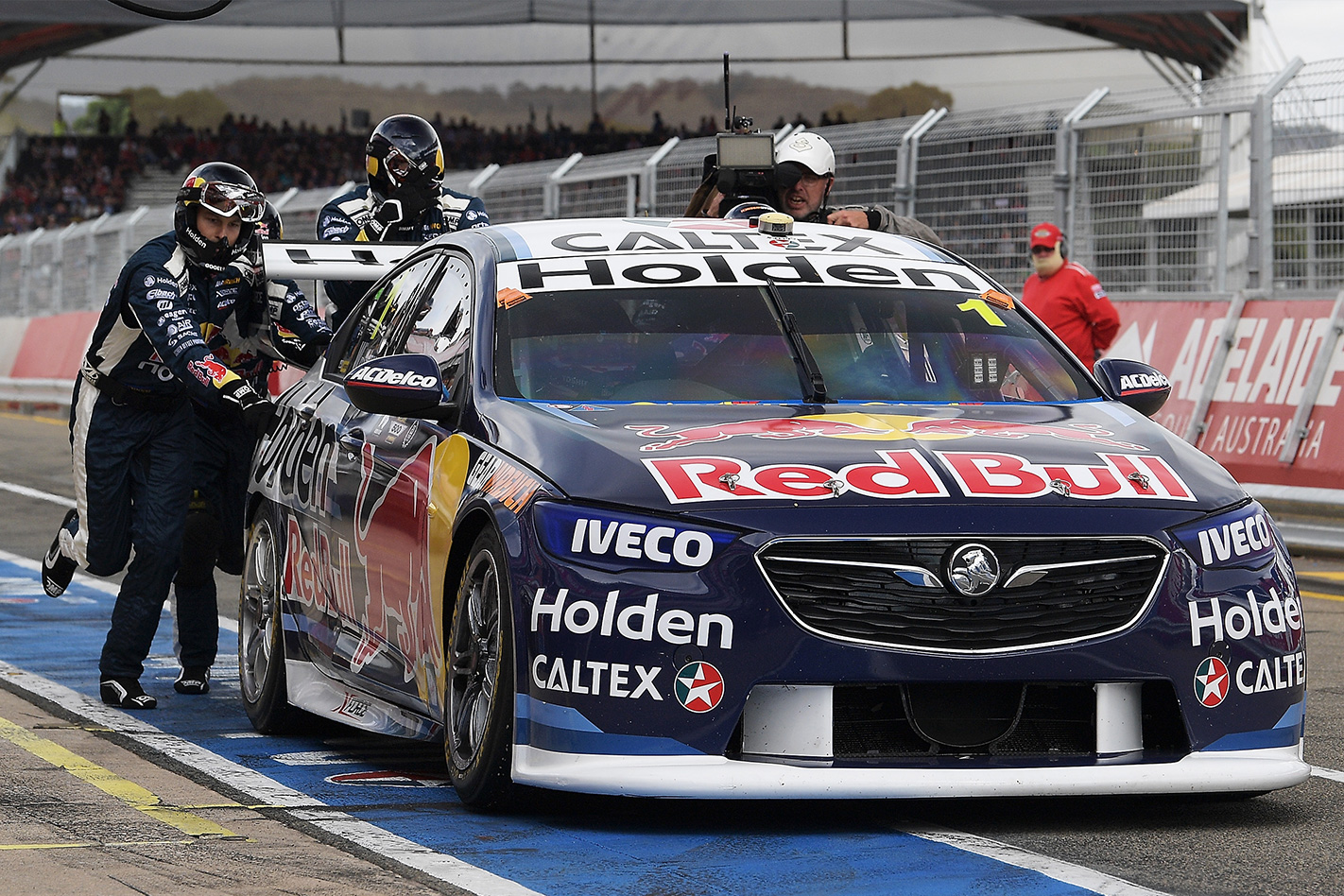
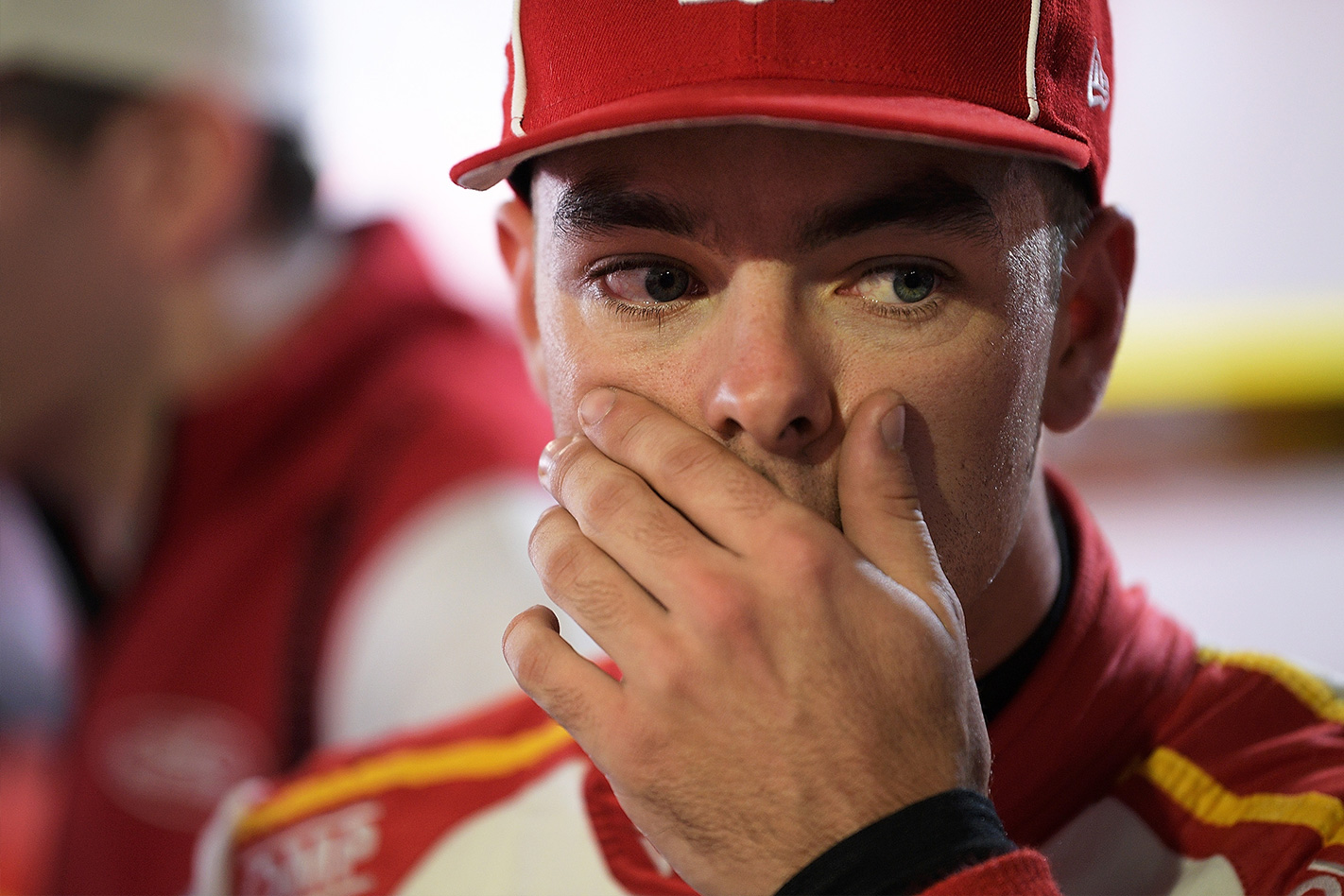
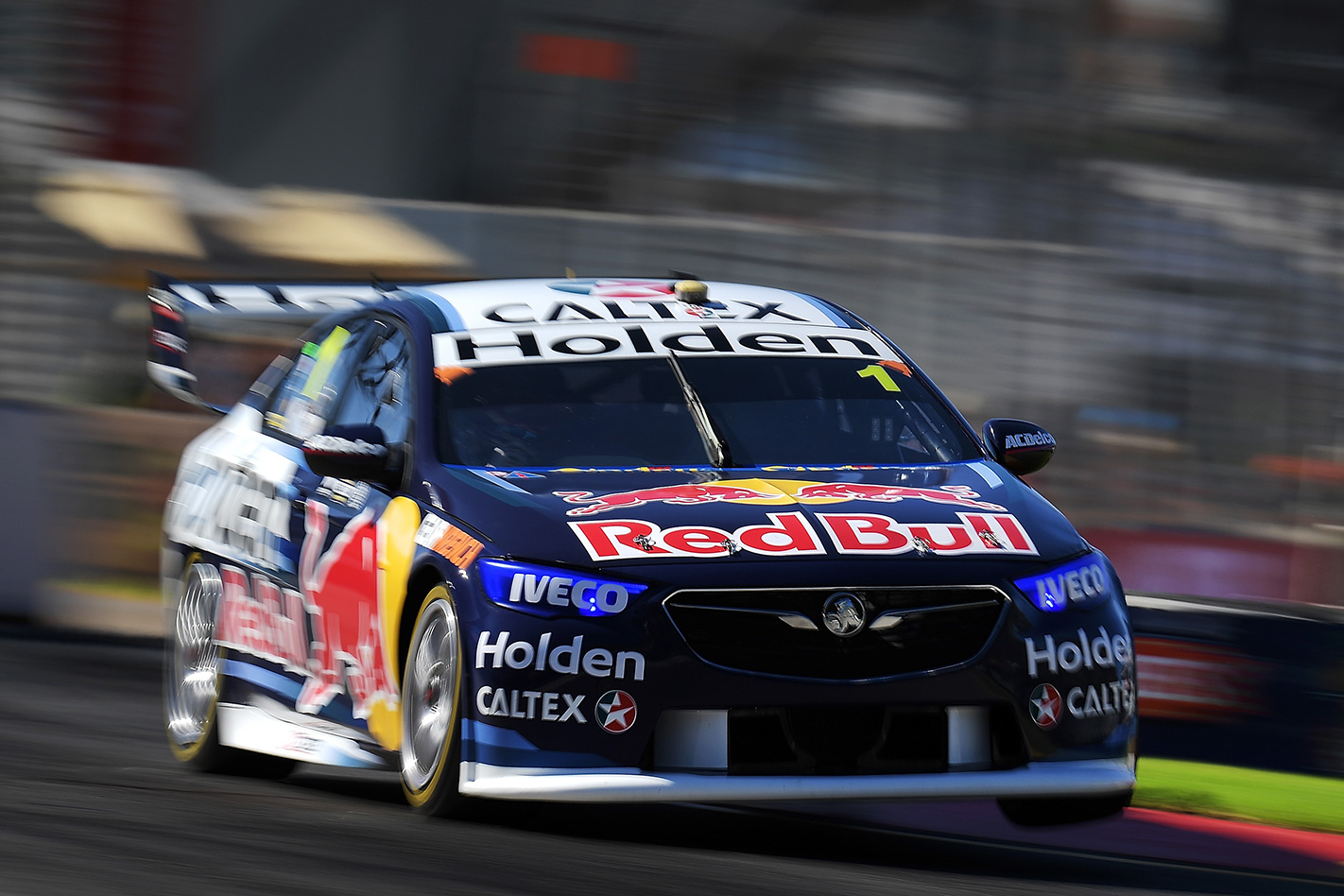
The fireworks began after the first Top 10 Shootout, when Shane van Gisbergan secured pole under controversial circumstances. DJR Team Penske’s Scott McLaughlin was second, four-tenths of a second slower than the Holden driver.
The 2016 Supercars champion put four tyres over a yellow line at the exit of Turn Seven, which some claimed was a breach of track limits.
“It’s just a bit like when you’re playing footy – if the ball goes out of bounds, they throw it in. It’s pretty straightforward.”
Red Bull’s team boss, Roland Dane was brief in his defensive retort.
“It sounds like the sore loser department to me,” he fired back.
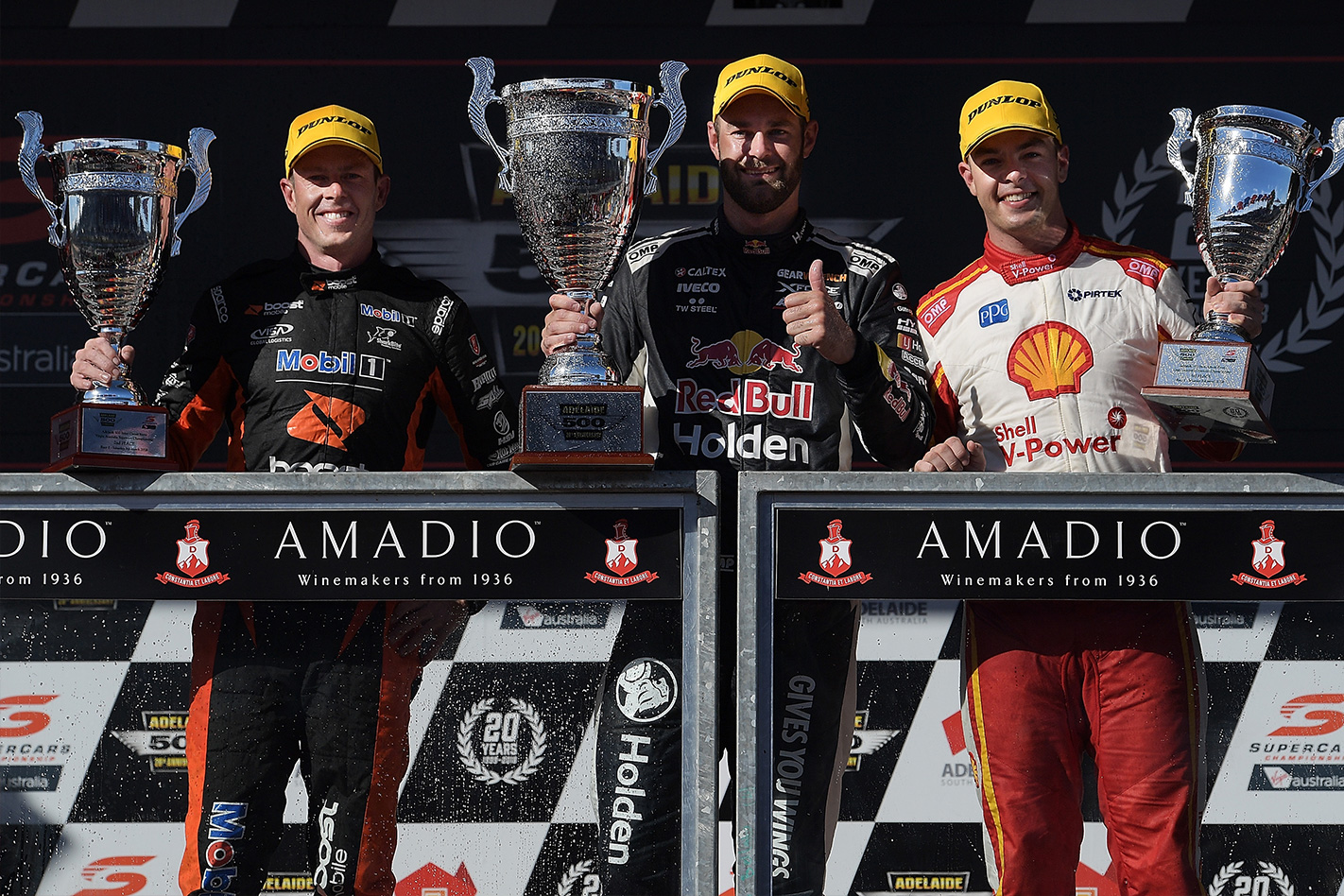
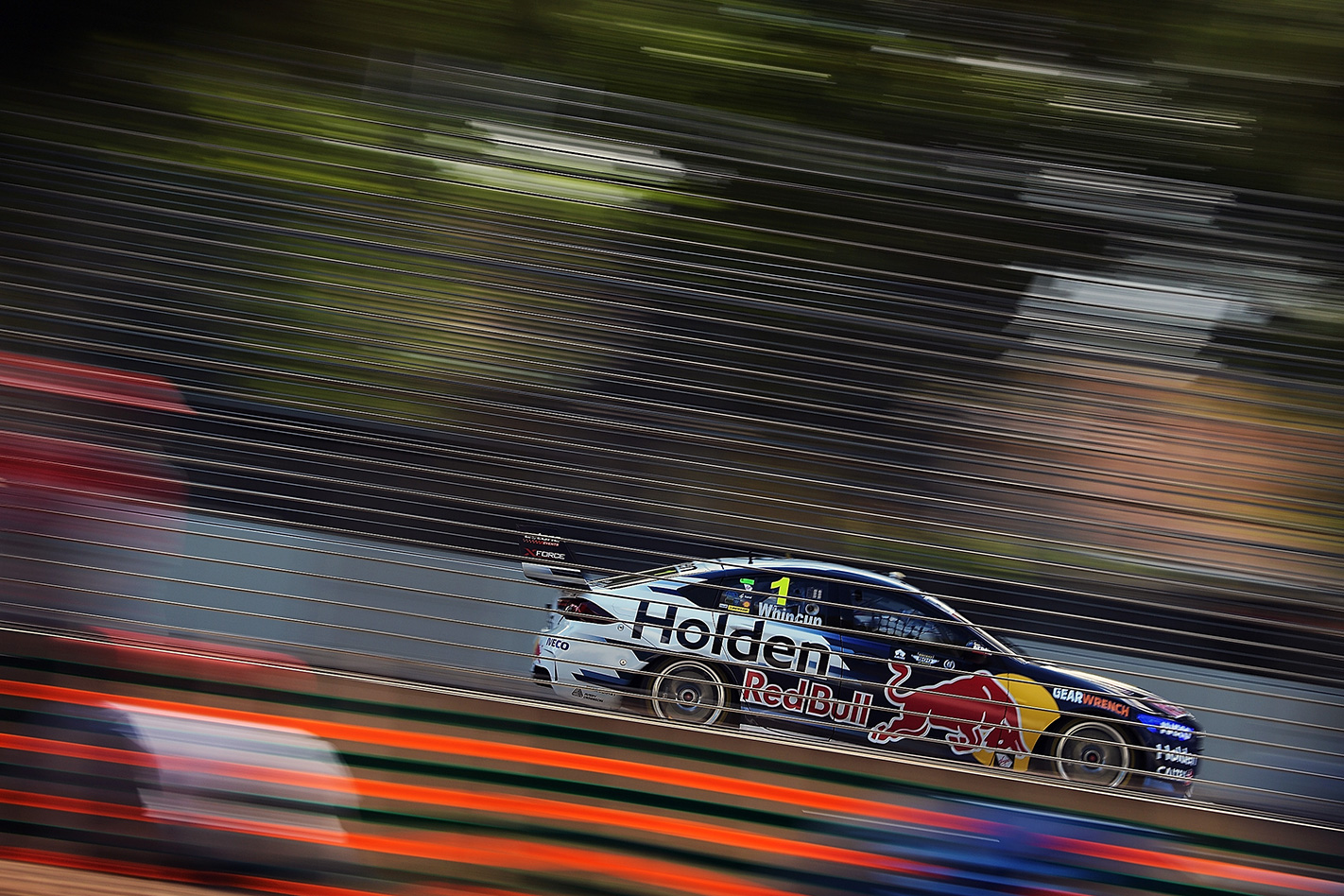
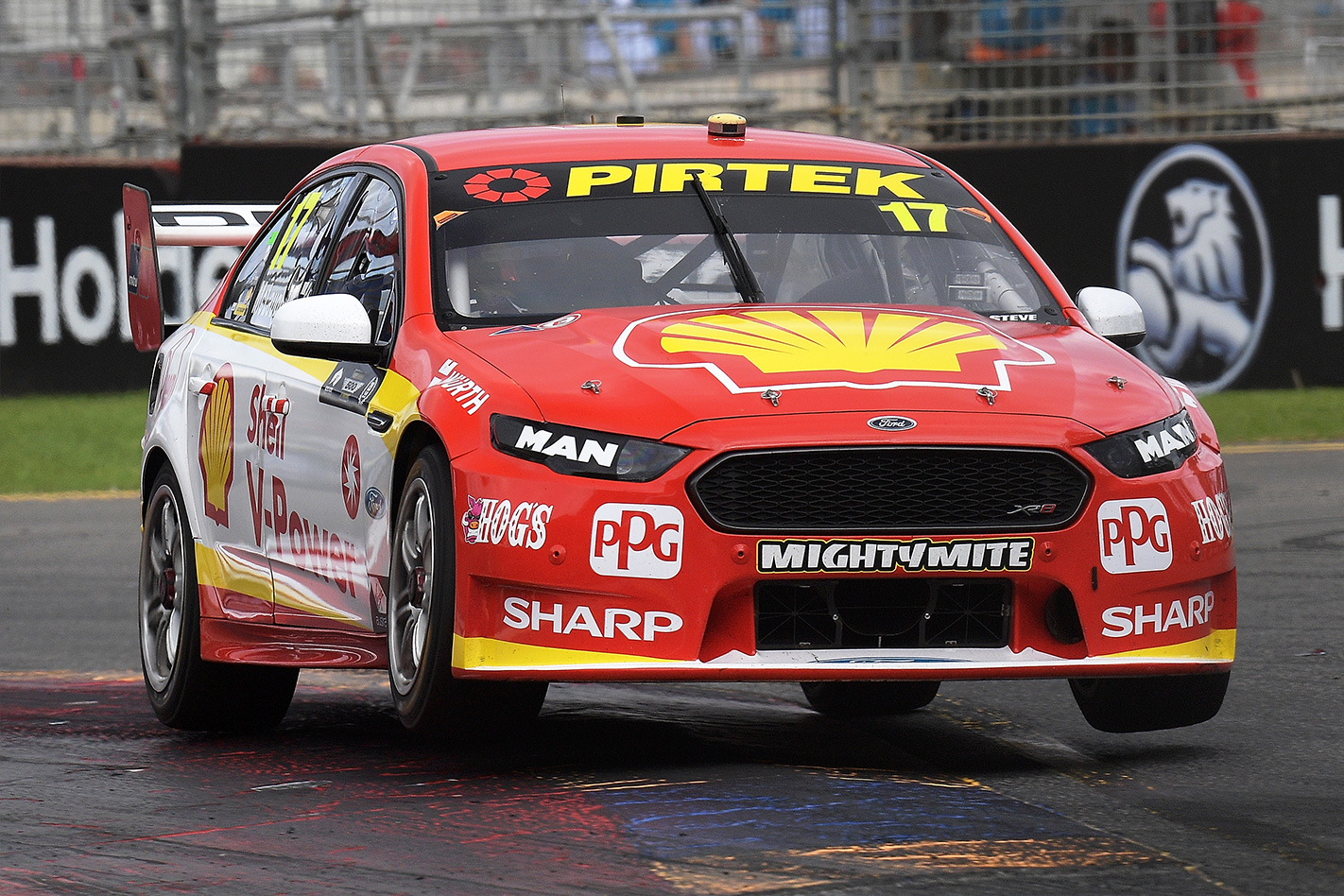
The Red Bull Holden Racing Team driver doubled-down on Sunday, again topping the shootout (this time without controversy), and going on to win the final 250km leg of the weekend.
Erebus Motorsport’s David Reynolds finished second, however the 2017 Bathurst 1000 champ was panned by commentators for appearing to give up the lead of the race without a significant fight.
Garth Tander finished third, while last year’s championship protagonists McLaughlin and Whincup both endured troubles.
During the opening race of the weekend Story began a debate around how Holden teams had gained an advantage with the new ZB Commodore.
Composite panels are not new in Supercars, but the new ZB Commodore utilises the lightweight materials to a larger extent than any previous generation car.
The ZB Commodore came in underneath the category’s minimum weight, meaning Holden teams can use lead ballast placed low down in the car to meet requirements, lowering the car’s centre of gravity.
Former factory Ford team Tickford Racing is responsible for homologating the FG X Falcon, and works in conjunction with DJR Team Penske to petition Supercars for updates.
“I think a precedent’s been set with some of these panels, and if we’re going down the path of ensuring that we have parity, we just need to ensure that what’s good for the goose is good for the gander,” Storey told Supercars.com. “And the series knows that.”
Red Bull HRT manager Mark Dutton says the ZB’s composite panels were cleared by the Supercars technical team.
“So Supercars did a study, measured all the panel weights, spoke to the various teams and manufacturers and the ZB, from my understanding, isn’t the lightest.”
The issue is far from settled, with Tickford boss Tim Edwards adding “there’s certainly a few weight issues that we need to work through with Supercars”.
Expect the debate to continue well into the middle of the Supercars season.
Andre Heimgartner had his Top 10 Shootout time cancelled on Sunday after an electronic transponder determined he had breached track limits at the Turn 2 Senna Chicane. Viewers were quick to point out that television cameras showed Jamie Whincup, who had qualified second in the shootout, appeared to be in breach of track limits, but had not been penalised by his transponder.
Mark Winterbottom was served a pit-lane drive through penalty during Sunday’s race for excessive kerb hopping, which team boss Edwards described as “absolute bullshit”.
The next round of the Supercars championship will take place at the Australian Grand Prix at Albert Park in Melbourne.
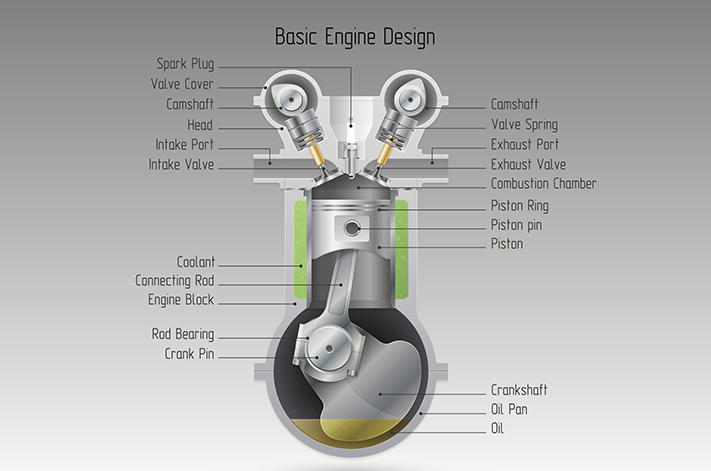
Valve timing is an important part of the internal combustion process as it regulates the flow of fuel and air in and exhaust out of the combustion chamber – that’s the part of the engine where the pistons compress the fuel and air for combustion.
Traditional engines have intake and exhaust valves that are controlled by the camshaft to open and close in sync with the pistons. The problem with this is the amount of fuel and air entering and leaving the engine is constant for a given engine speed, which can limit power when it’s needed, or consume too much fuel when it’s not.
So most modern engines open and close the valves variably, to allow more or less gases to enter and escape for improved performance and economy and to reduce emissions, depending on the driving conditions.As the above CNET video shows, variable valve timing and lift can alter the point when the valves open and close (timing), how long the valves remain open (duration), and how wide they open (lift).
This is controlled by central electronic processor which is constantly changing the timing to provide the best performance and lowest emissions, based on the how hard the engine is being worked.
At low engine speeds the valves open and close at set points to promote a smooth idle and low emissions however, at higher speed the flow of gasses changes and the timing can be altered accordingly.
By changing the point at which valves open and close the effect of air flowing into the cylinder and exhaust exiting at high speed can be used to force more air and fuel in, in a similar manner to turbocharging.
This is called valve lead, lag and overlap and the result is more power when the engine is at high speed without compromising low speed smoothness and efficiency.
There are many different ways to physically control valve timing, including multiple off-centre camshaft lobes, camshafts that partially rotate independently of the pistons, or gears at the end of camshafts to advance or retard cam timing.
Variable valve timing is very common now, hence some of the fancy names given to engines such as Honda VTEC, Mazda S-VT, Fiat (and Jeep) MultiAir and Toyota VVT-I.
When Renault first lobbed the Megane 225 into our laps in ’04, it was obvious the idea had potential.
This feature was first published in MOTOR Magazine’s August 2008 issue.
True, the car was flawed in some reasonably major ways, but if this was the future of turbo engines, bring it on, we argued. The view at the time was the chassis needed a little taming for less torque-steer and better power-down. If Renault could do this, it would have had itself a proper tool.
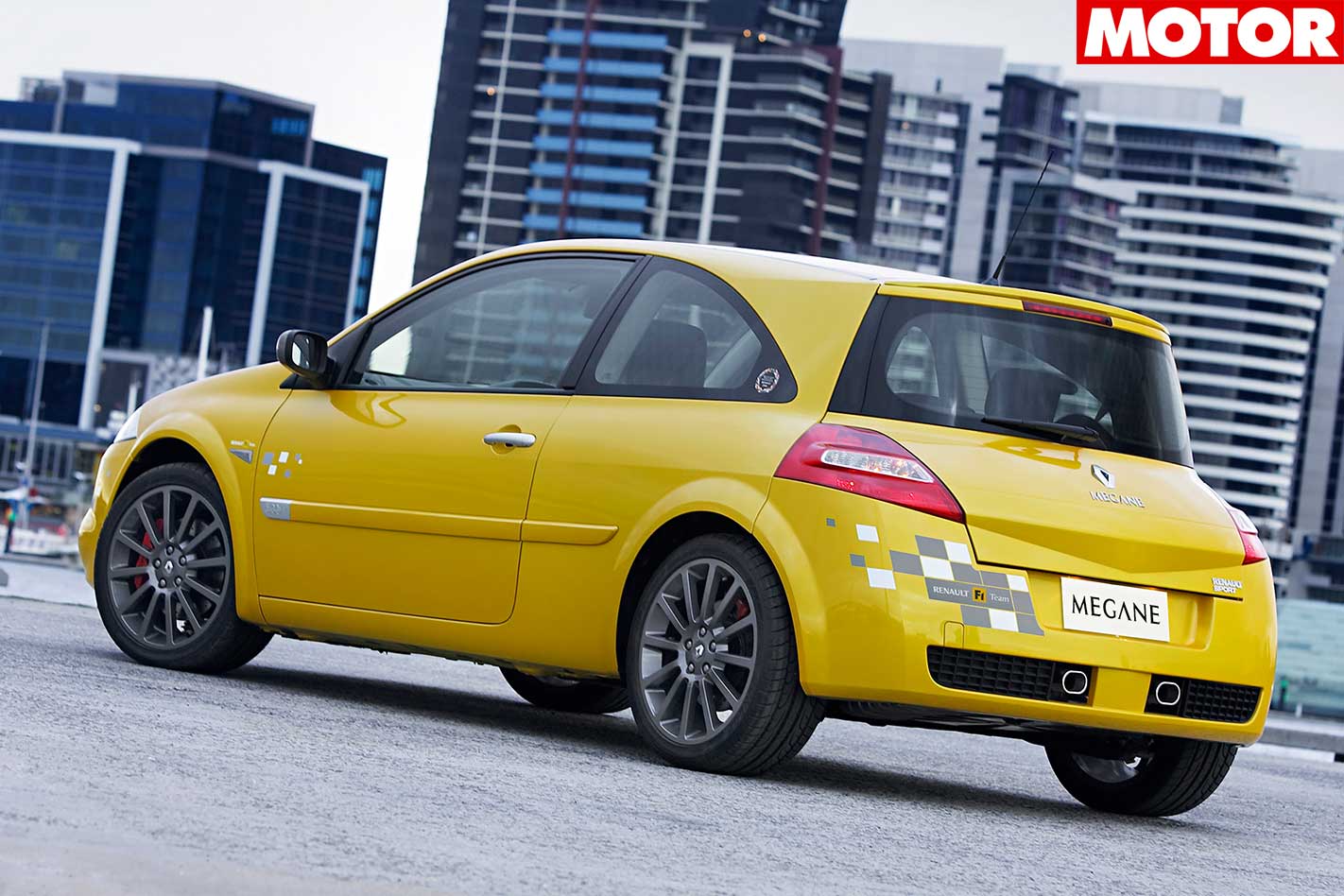
You still scored the perky styling that not everybody appreciates, but which we reckon suits the car’s extroverted nature just perfectly. Even better, you still scored the rumpy-pumpy little 2.0-litre with snail which blurted out 168kW of power and a blistering 310Nm.
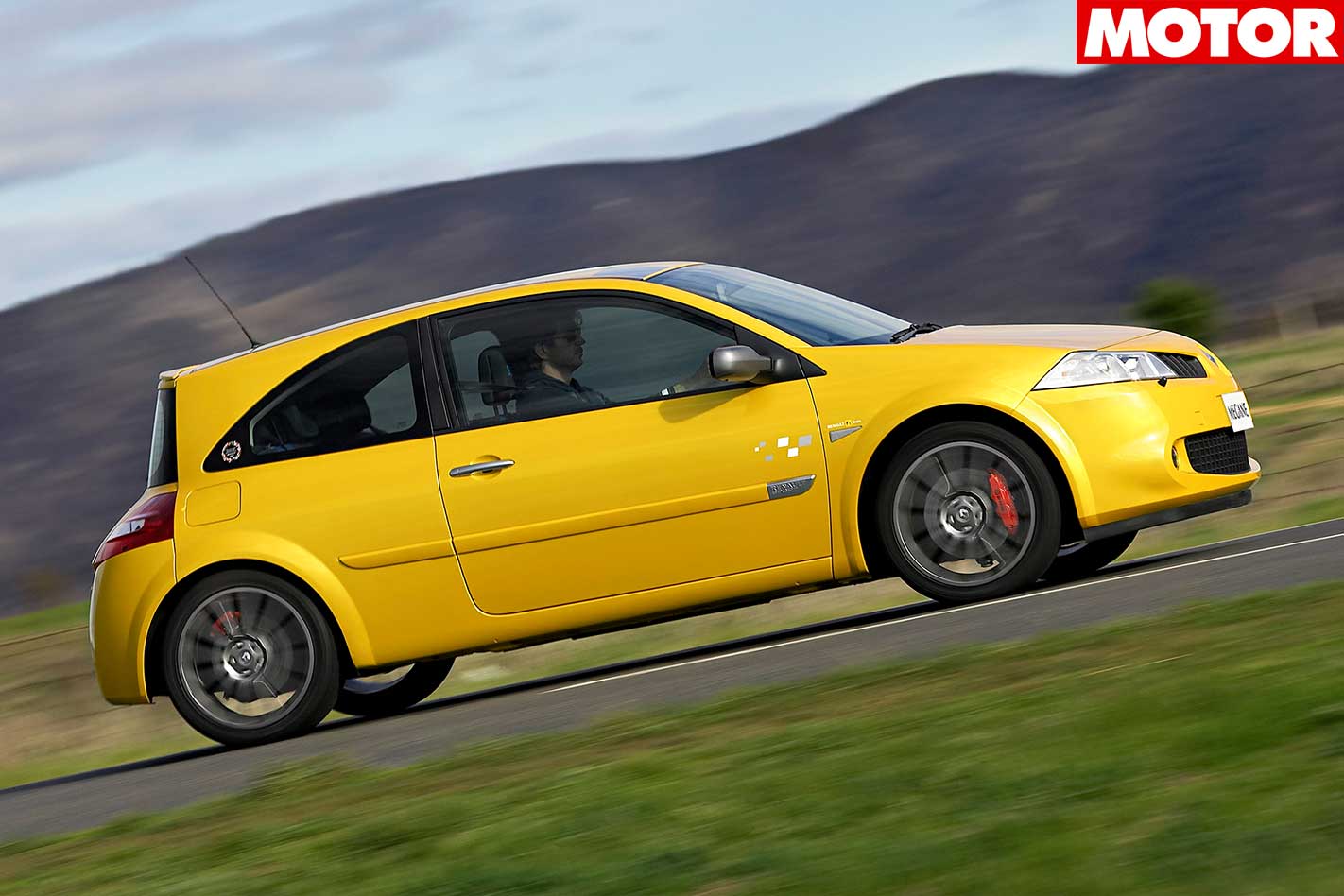
Suddenly, the thing would accelerate in a dead straight line and paste its kilowatts down hard as you exited corners. Hell, it was even composed on a racetrack and refused to degenerate into the sliding, dribbling shuffler that characterises a good many big-punch tail-draggers.
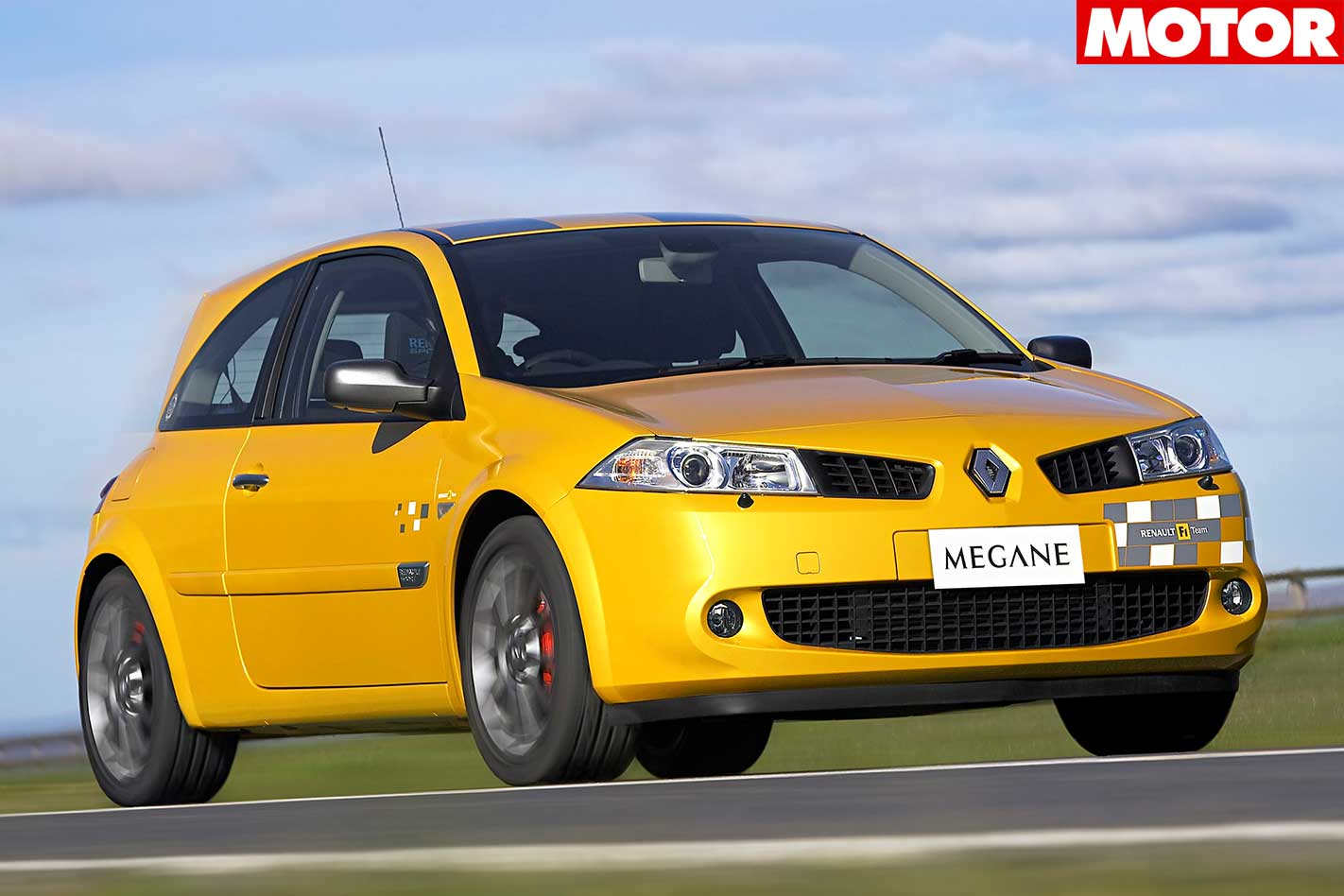
Some of the detail stuff was a bit lame – the credit card that passed for the ignition key, for instance – but other bits, like the little line of red stitching on the steering wheel indicating where the tyres were pointing, was lovely.
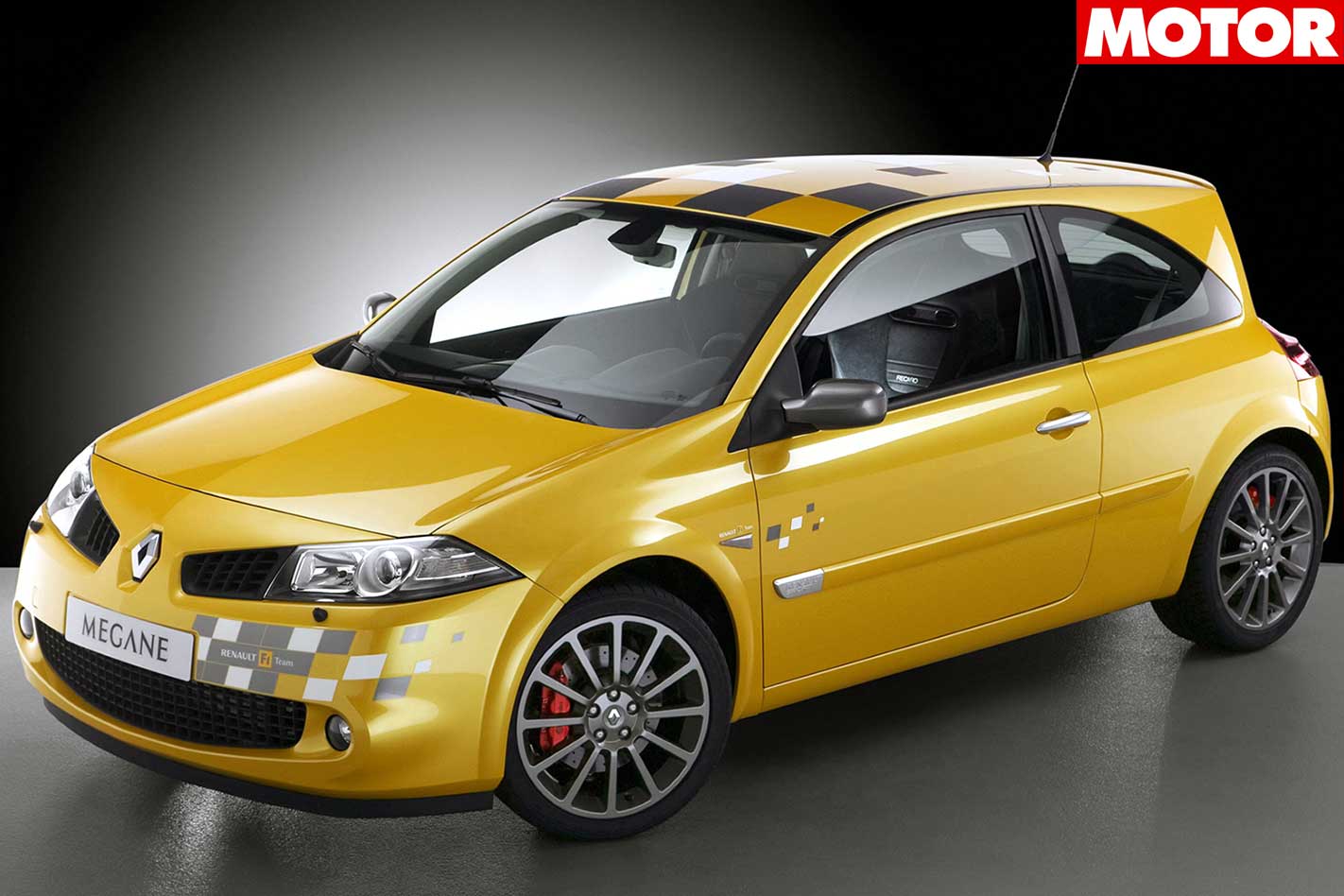
Renault initially only shipped 80 of the little blighters to these shores, and they were snapped up like mouse traps. Last month they grabbed another 20, but that’s it! If you ever needed proof that you don’t need the weight or complexity of all-wheel drive, the R26 was it.
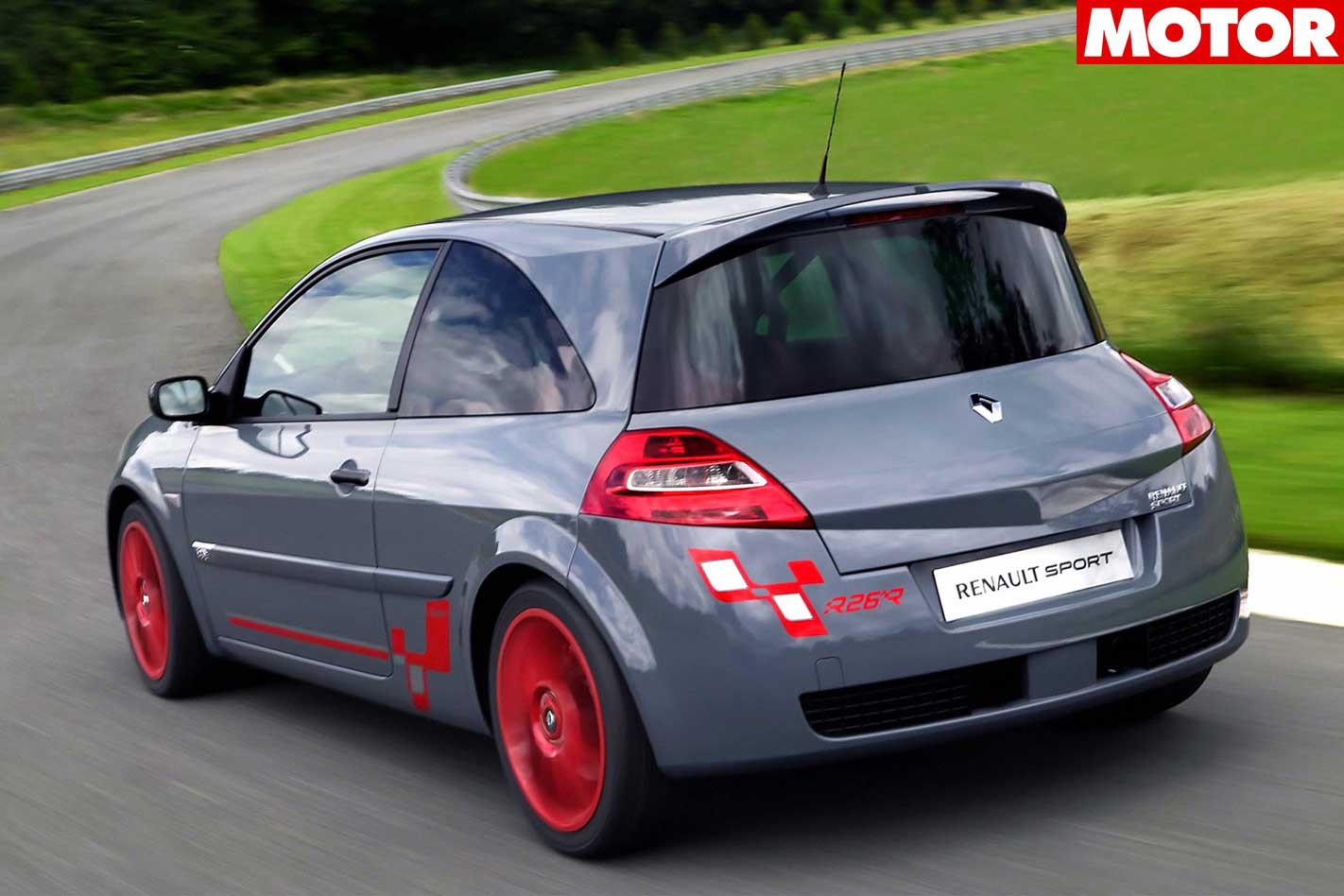
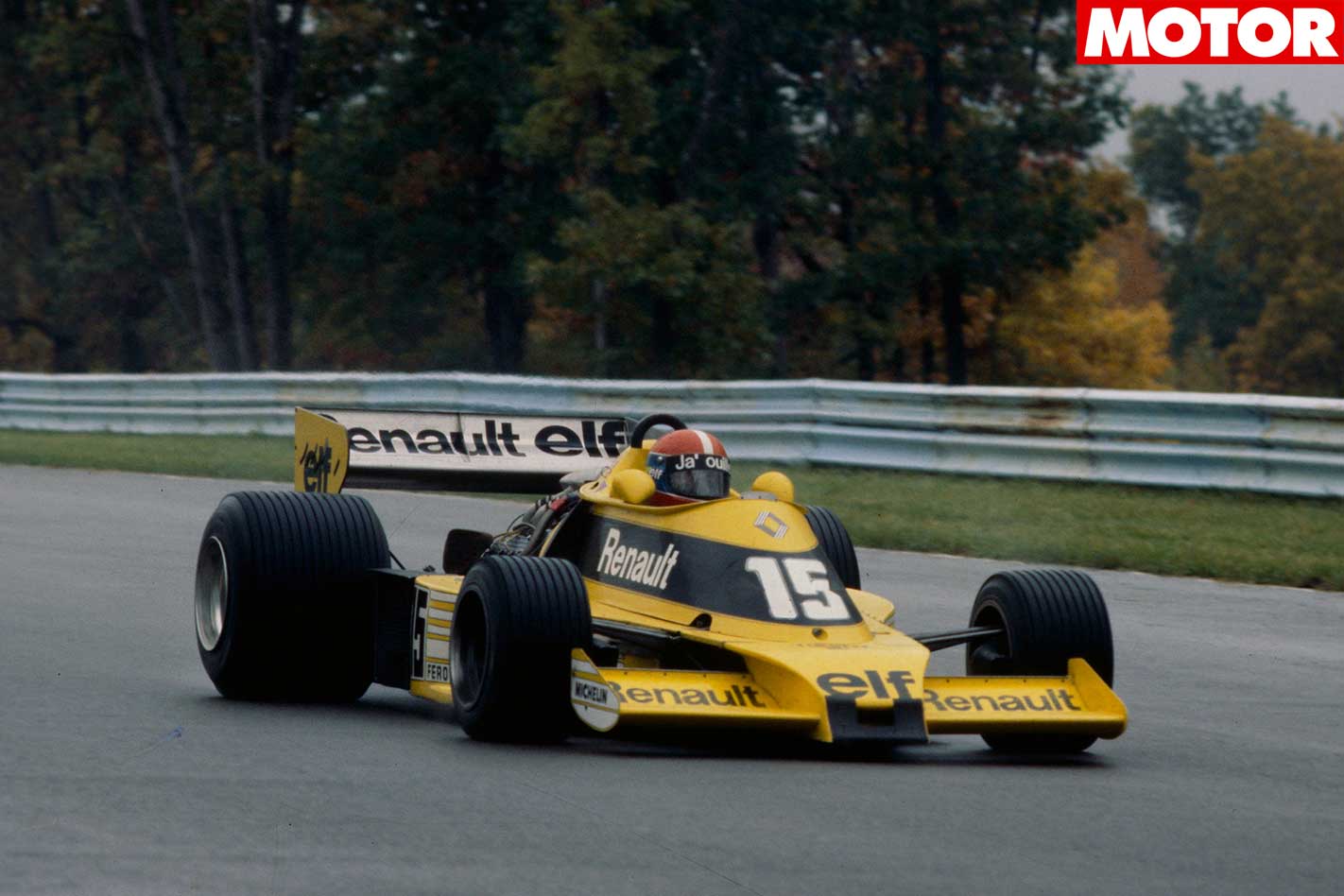
THE BREAKTHROUGH The key to planting the R26’s 168kW to its treads is a torque-sensing LSD. It works by creating torque bias as a result of friction caused during the helical gears’ separation. The bias resists ‘differentiation’ – allowing a smooth, even power delivery, turning the Megane F1 from bloody good to brilliant.
MAZDA Australia has only just whipped the silk off its unique MX-5 RF Limited Edition, and already there’s talk about more special versions joining the line-up.
Speaking at last week’s launch of the MX-5 RF LE, Mazda Australia spokesman Alastair Doak said the brand would look at ways it could keep the MX-5 range fresh, including a possible upgrade for soft-top models.
“I’m sure we’ll look at other limited editions down the track, we’ve done many over the history of MX-5. We’re very aware that we’re offering [the RF LE] as a very exclusive package and it will remain that way,” he said. “If we do another one, it will be different, it won’t be the same. We will certainly look at other things.”
The RF LE is the first MX-5 of the current generation to arrive in Australia with factory performance enhancements. It features upgraded Brembo brakes and Bilstein suspension that make it more suitable to club level motorsport.

“There’s opportunities. Over the almost 30 year history of MX-5 we’ve done lots, including things like the SP with the turbocharged engine we did locally.”
Doak was coy when asked if this was just the start of more go-faster upgrades for the ND.
“There’s a very solid plan for MX-5 that we know is coming. We’re pretty excited for some of the things that are down the track on the car.”
So, is a powertrain upgrade next? “I’d better not go near that one,” he said.

The current, fourth-gen model has had the strongest sales start of any MX-5 in Australia. Our local line-up is one of the broadest globally, with both the 1.5- and 2.0-litre engines offered in the Roadster models, and the Retractable Fastback variants on top of those.
“If you ignore the kei cars in Japan, Mazda Australia has the most comprehensive Mazda range in the world. We’re very privileged that we can actually do that,” Doak said.
“[Mazda Australia] is very much at the pointy end of discussions. We get a big say in product and we’re very grateful for that.
“Now is a nice time in the model cadence to do a limited edition; get it out in front of people again and remind them. Because sports car buyers have proven to always want the latest and greatest, so it’s always nice to get back out there and talk about it and remind people how great this car is.”
THE first of the joint class actions against Volkswagen will front the Federal Court today as Australian owners fight for compensation over the Dieselgate scandal.
The class action takes aim at the local branches of Volkswagen, Audi and Skoda, all brands that come under the wing of Volkswagen Group Australia. It comes three years after allegations surfaced that the global car-making giant cheated on emissions tests by using engine management software that could recognise if it was being assessed, and modify the way it ran to produce a lower figure.
Volkswagen Group Australia has denied that it has broken any laws here, although it has issued a vehicle recall here to remove the defeat devices from almost 100,000 vehicles.
Australia’s consumer watchdog, the Australian Competition and Consumer Commission, will also have its first day in court after alleging Volkswagen Group Australia had engaged in misleading and deceptive conduct by selling vehicles here with the defeat device installed. Volkswagen Group Australia has also denied this.
The ACCC also alleges the defeat device has affected the performance and fuel economy of the engines, made them noiser and introduced vibrations, and also affected their longevity.
The trial is expected to take about four weeks, with an extra week in reserve.
In that time, the court will need to decide if Australian Audi, Skoda and Volkswagen owners should be compensated by Volkswagen Group similar to what the company has had to do in North America and Europe.
The final part of the trial will take place in September and is expected to seek answers to questions including why the defeat device was installed, and how Volkswagen Group Australia’s fix that it has made to the recalled cars affects fuel economy and performance.
The class action relates to the EA189 1.6-litre and 2.0-litre diesel engines sold in Australia between 2008-15. Maurice Blackburn, the legal firm behind the class action, has flagged it is investigating a similar class action against the car maker relating to a separate recall for Volkswagen’s 3.0-litre V6 engine that also used an emissions cheat – and dragged luxury sports car brand Porsche into the affair.
Volkswagen’s reaction in Australia has been to update the software in both the 1.6L and 2.0L variants of the EA189 diesel engine, while in some vehicles a minor hardware update has also been installed.
Dieselgate has already cost Volkswagen Group about $US26 billion in North America alone, and forced a more rapid change to the car maker’s future product mix so that it now wants to promote itself as an electric car innovator. It still views diesel as an important part of its product mix even though some cities around the world are now talking about banning older versions of the oil-burning engines to help reduce pollution.
As the pioneer into large scale pure electric vehicles, Tesla has enjoyed a virtually monopolised market in recent years, but as other manufacturers take note and release their own EV interpretations, the US technology company’s territory is under invasion.
Jaguar’s fresh I-Pace is one such newcomer, which glides silently onto the scene right under the Tesla Model X’s nose, offering a second high-performance luxury SUV option, albeit in a smaller package.
Here’s how the Tesla Model X competes on paper with its first true rival in an emerging but potentially lucrative segment.
Price:
For now, Jaguar’s first all-electric model will be available as a single S variant priced from $119,000 – exactly the same as the cost of entry to Tesla’s Model X. Coincidence? We think not. In a Tesla showroom, that money puts the base Model X 75D on your driveway.
Tesla does offer a 100D and P100D variant of the Model X, but they’ll set you back about $142,900 and $203,600 respectively. Until Jaguar confirms additional I-Pace variants, the Jag competes with the 75D.
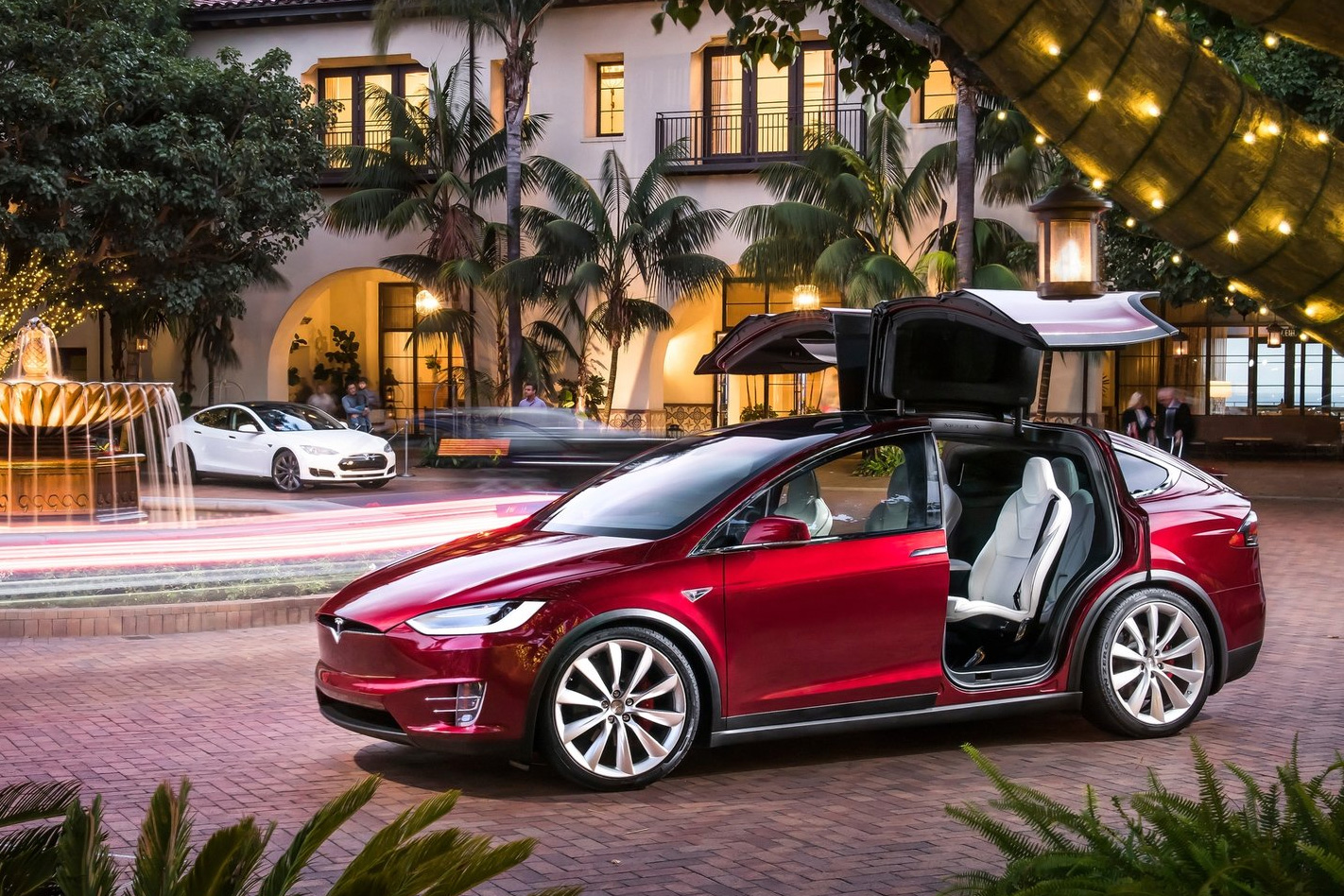
Jaguar is expected to offer a more generously equipped SE and HSE version that shares the same drivetrain at a later date.
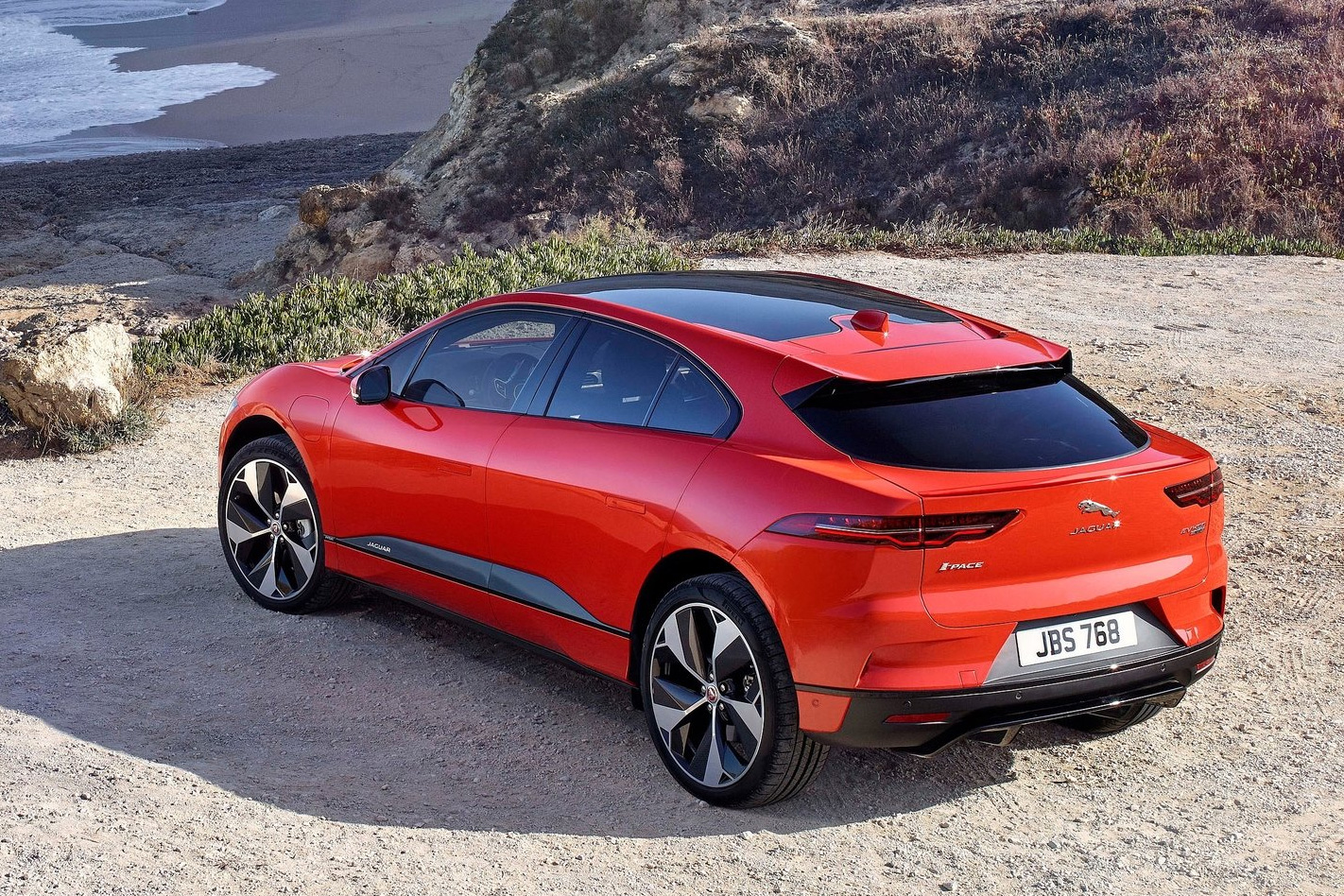
Neither car are inadequate in the acceleration and off-the-mark punch department, with instant torque and maximum traction available from a pair of electric motors and all-wheel drive.
At full throttle, the Tesla’s dual motors combine to produce 241kW and 525Nm, but the I-Pace manages a more impressive output of 294kW and 696Nm. And that’s reflected in the official acceleration figures.
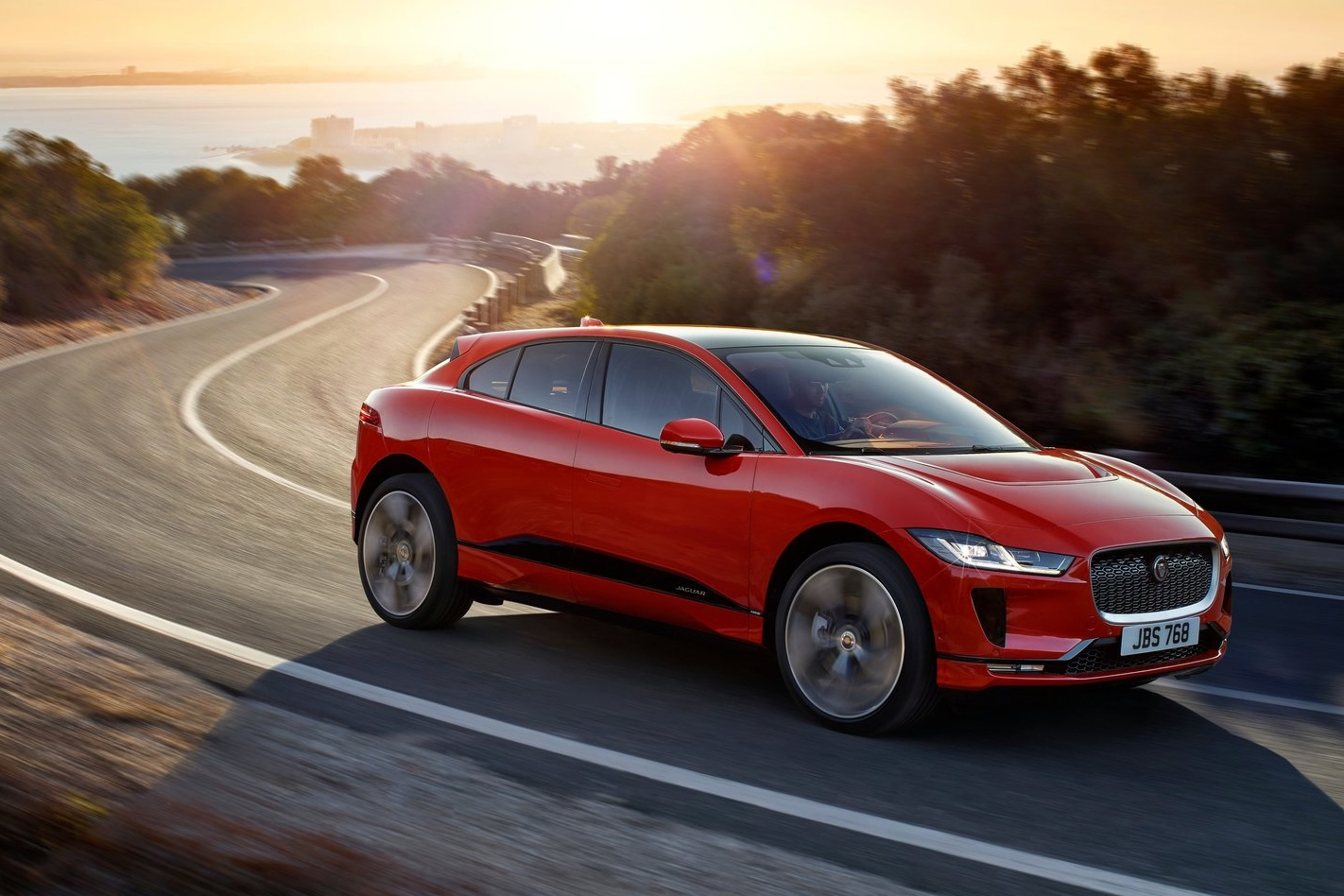
The Model X is the V-max victor of the pair and will keep battling air resistance up to a maximum speed of 210km/h, while the I-Pace levels out at an even 200km/h.
With the official reveal of the I-Pace, Jaguar staged a race with a Model X 75D and 100D, which appears to show the Jaguar completing a standstill to 60mph (97km/h) and back to zero run in a distance about a car length shorter than even the more expensive 100D Tesla.
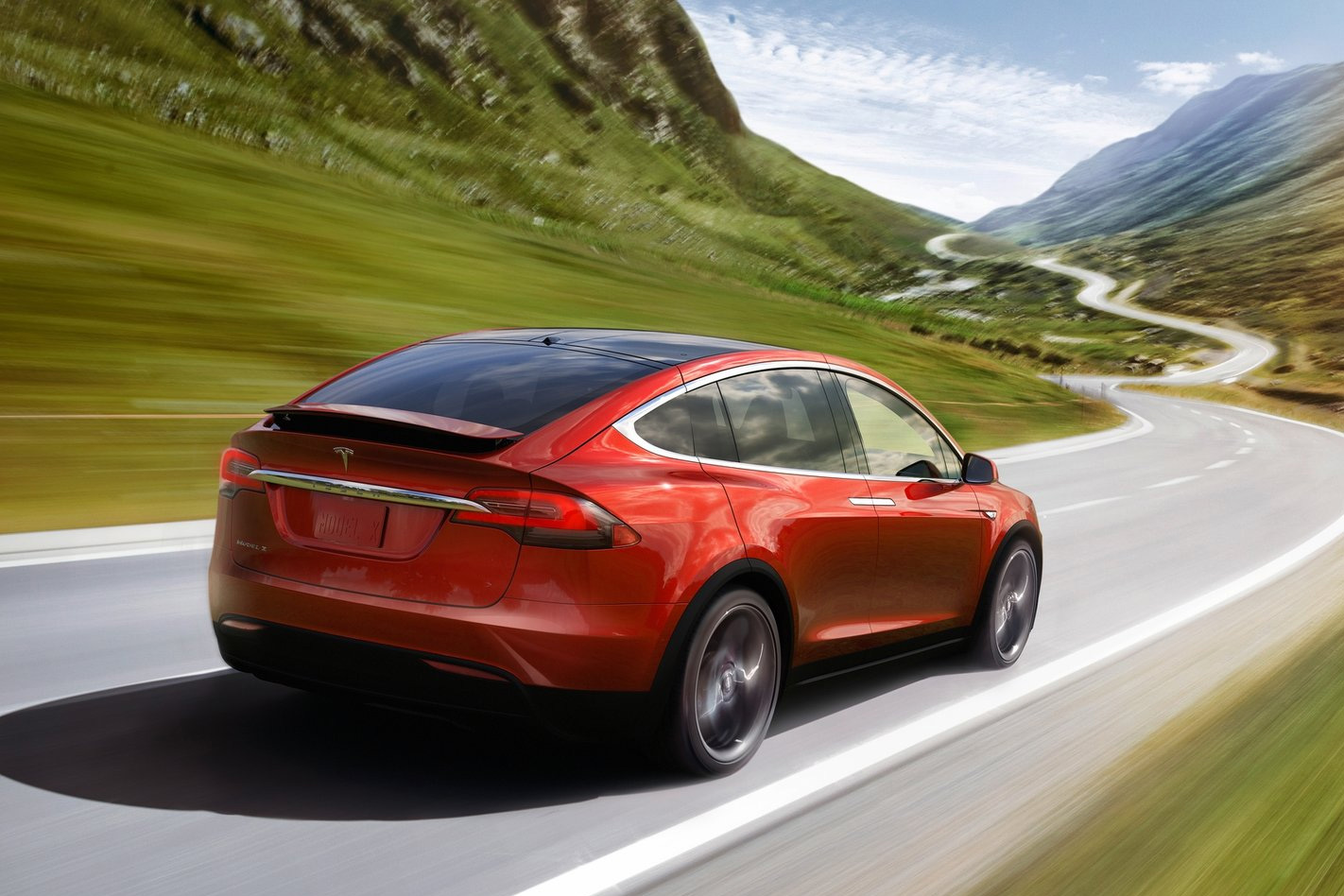
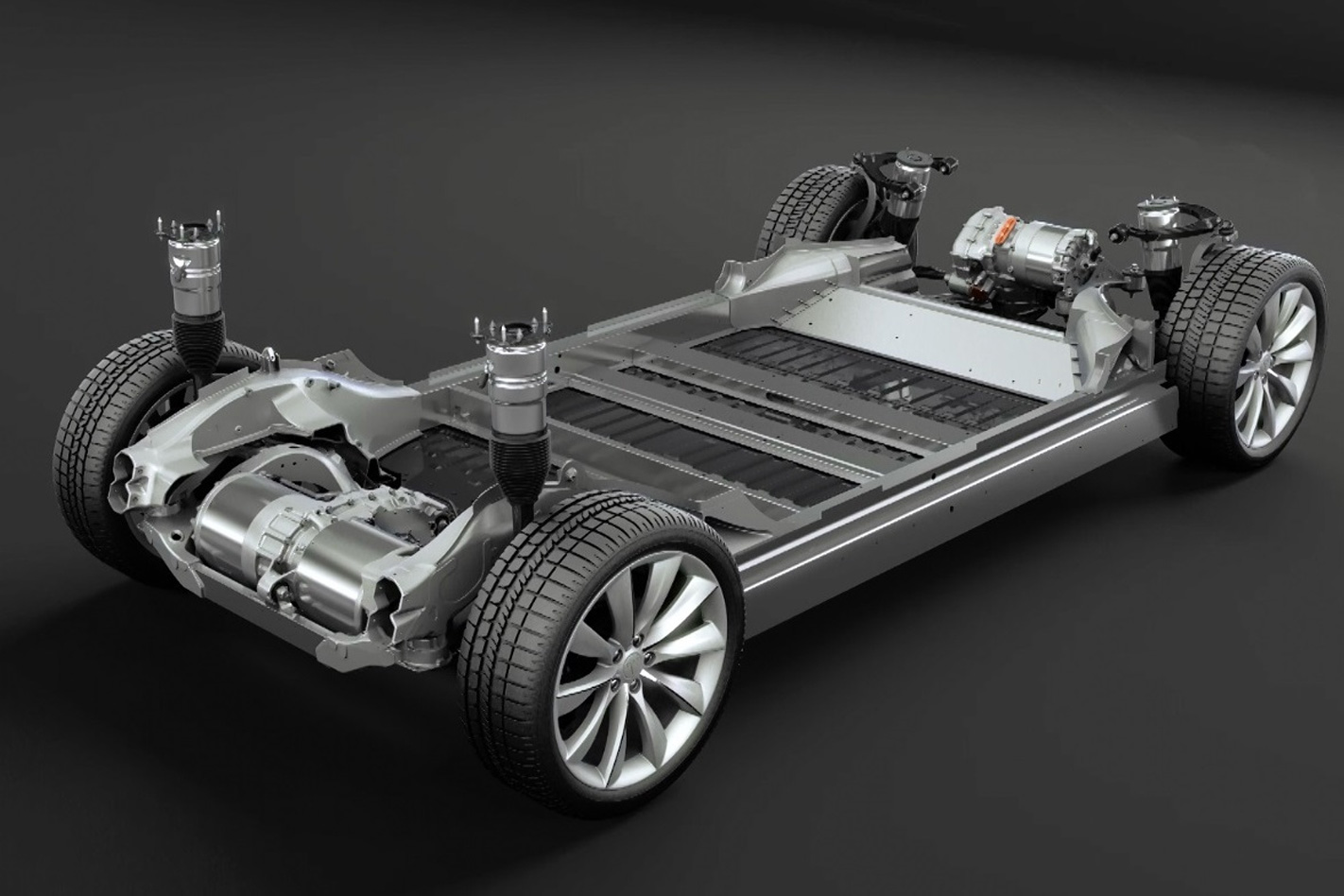
Both vehicles use a lithium ion battery pack with a capacity of 75kWh for the Tesla and 90kWh in the Jaguar. That equates to a range of 480km, says Jaguar, while Tesla claims its Model X will go 417km before needing a plug in.
Charging times are critical to EV customers, who want a minimal compromise over liquid and gas-fuelled vehicle that are relatively fast to refuel.
Jaguar claims an I-Pace owner can give their car an 80 percent charge in 40 minutes from ‘public charging’ (100kw) or a 15-minute plug in will top the battery up with enough juice for 100km.
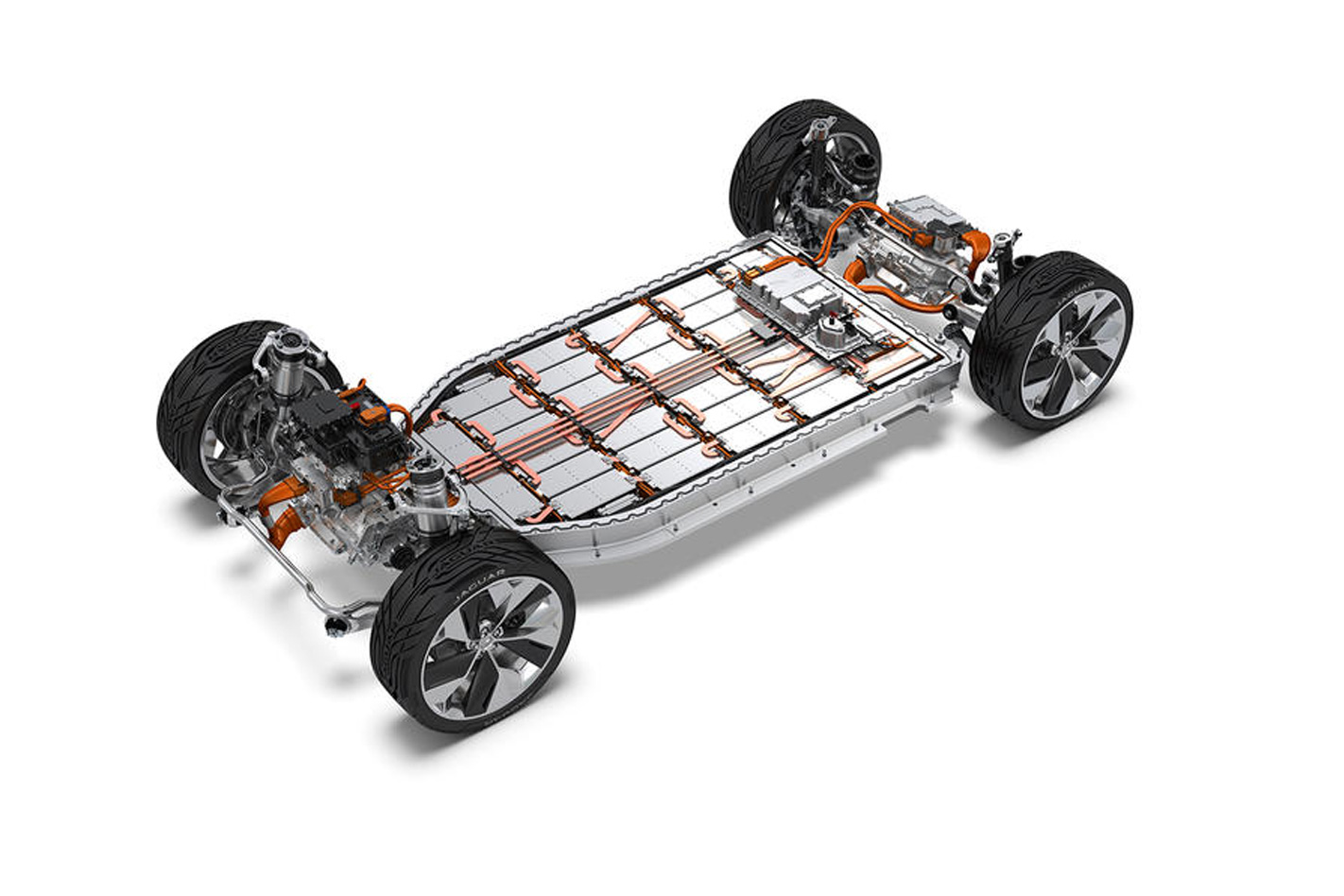
Like a mobile phone battery, EV batteries degrade over time and won’t offer the original range. Jaguar offers an eight-year battery warranty that will cover the unit if it drops below 70 percent of the original capacity within 160,000km, but Tesla does not guarantee the Model X battery for degradation.
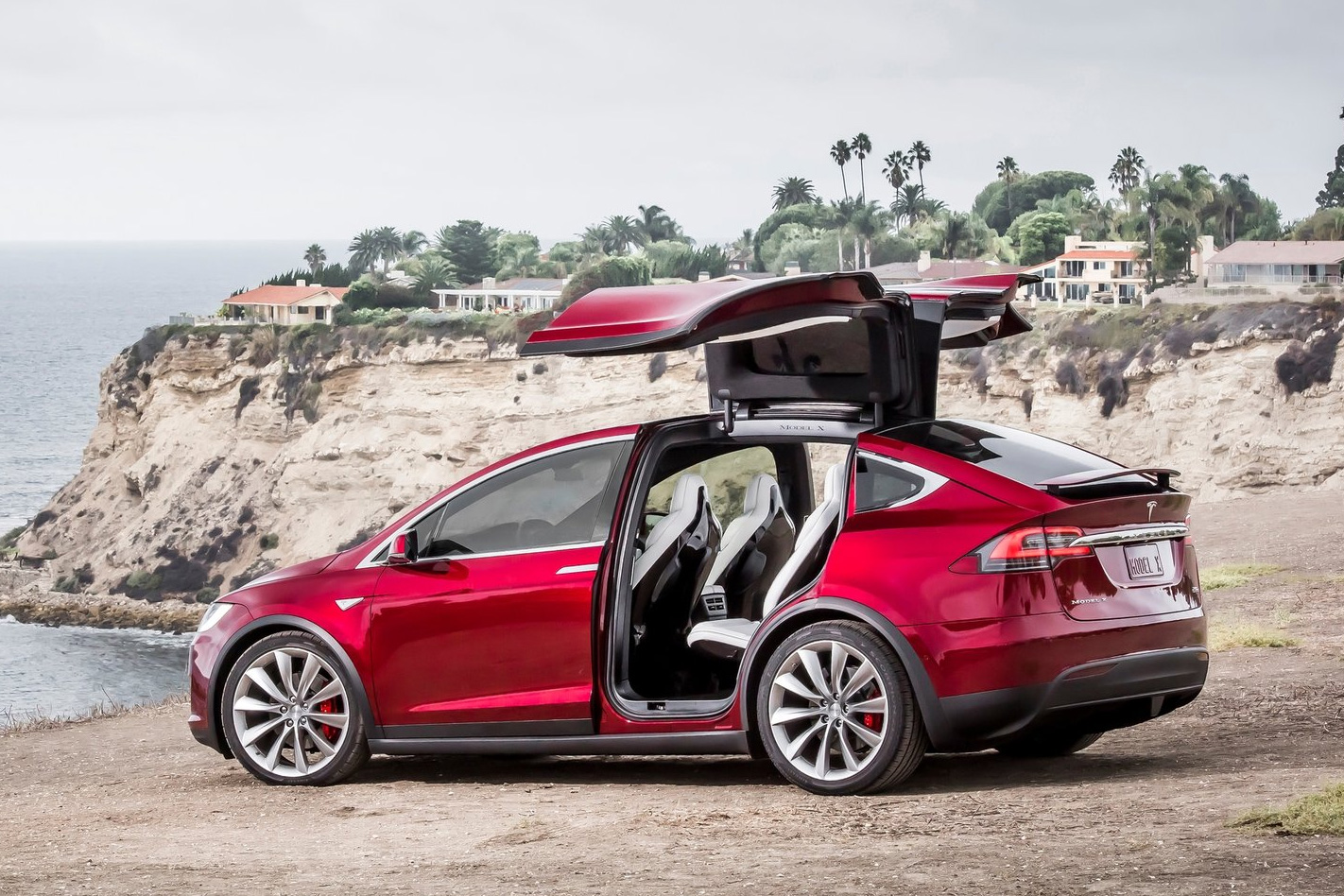
With larger overall dimensions, the Tesla offers more space inside for occupants and luggage. The I-Pace seats a maximum of five, while the Model X can be optioned up to accommodate seven.
Rear cargo volume measures 716 litres or up to 1453L with the seats folded and 27 litres in the Jaguar’s underbonnet storage compartment, while the Tesla weighs in with up to 2492 litres of combined storage when its cabin is fitted with five seats.
ONLY a select few know this, but when you’re travelling fast, and we mean really fast, something unique happens to your view of the world. Click into four digits and the earth, which was flat, begins to bend, the curvature of the globe becoming the crest of a rolling hill you never see the other side of.
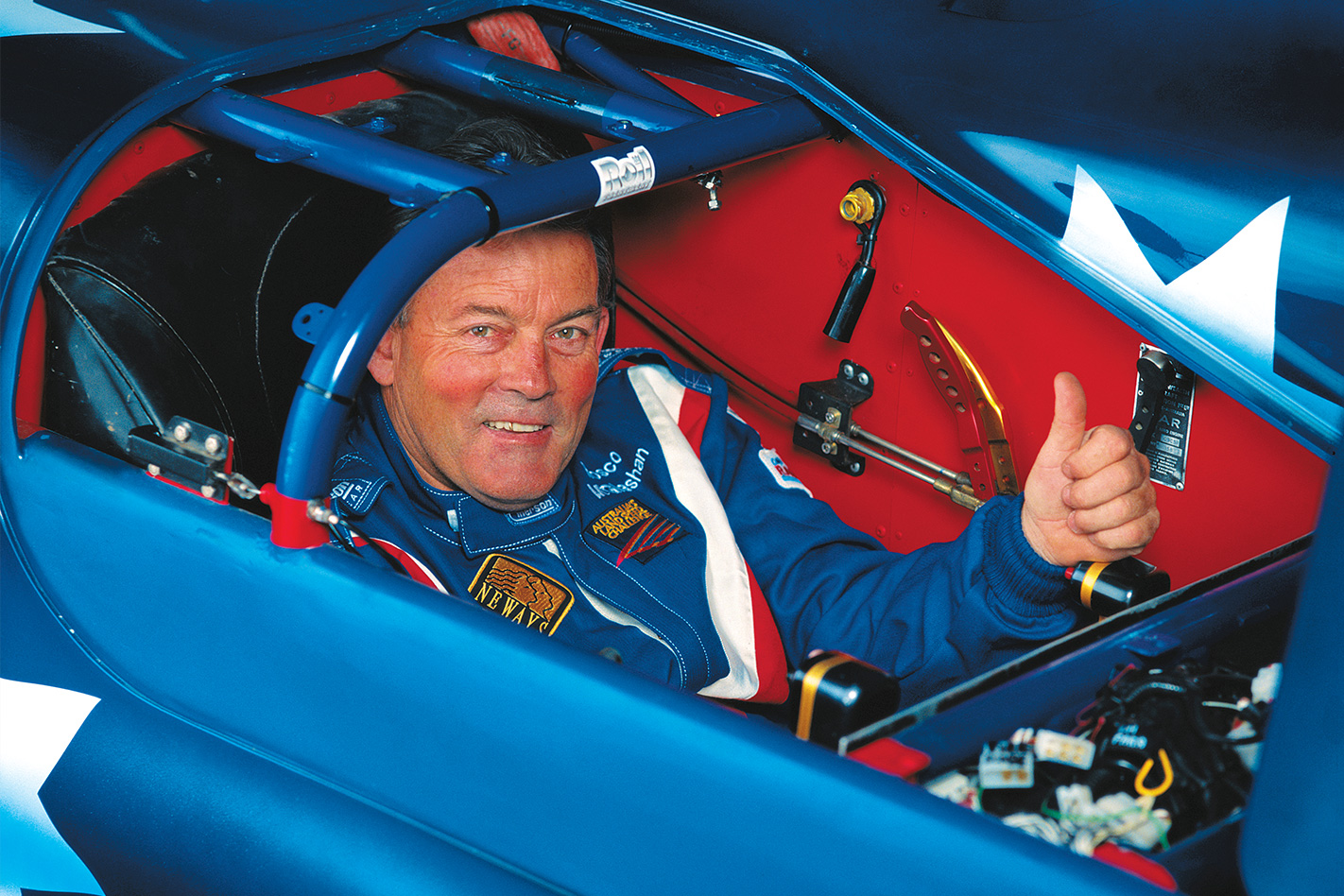
Only one Aussie has experienced this – Rosco McGlashan – and his single-minded pursuit of breaking the Land Speed Record (LSR) has driven him to extremes: physically, emotionally and financially.
“Dedication, determination, ability, and guts are all you need to break the land speed record – and a few dollars thrown in will be real handy,” explains the Perth-based speed freak.
Since 1963, just six men have managed to break the LSR: Craig Breedlove, Tom Green, Art Arfons, Gary Gabelich, Richard Noble and present record holder Andy Green, who is almost the polar opposite of McGlashan (below).
“It’s a popular misconception that driving a land speed record vehicle in a straight line is about anchoring the steering wheel, planting your foot to the floor and just waiting until you run out of fuel,” Green explains.
“If only it was that simple. The car moves around an awful lot – any road car moves around a little bit, and it moves around more the faster you go. When you go a lot faster, like 700mph [1127km/h] faster, the car moves around a huge amount. The wheels are now skimming across the surface, the shockwaves from going supersonic are creating uneven forces, you’ve got crosswinds, and the car is sliding all over the track.
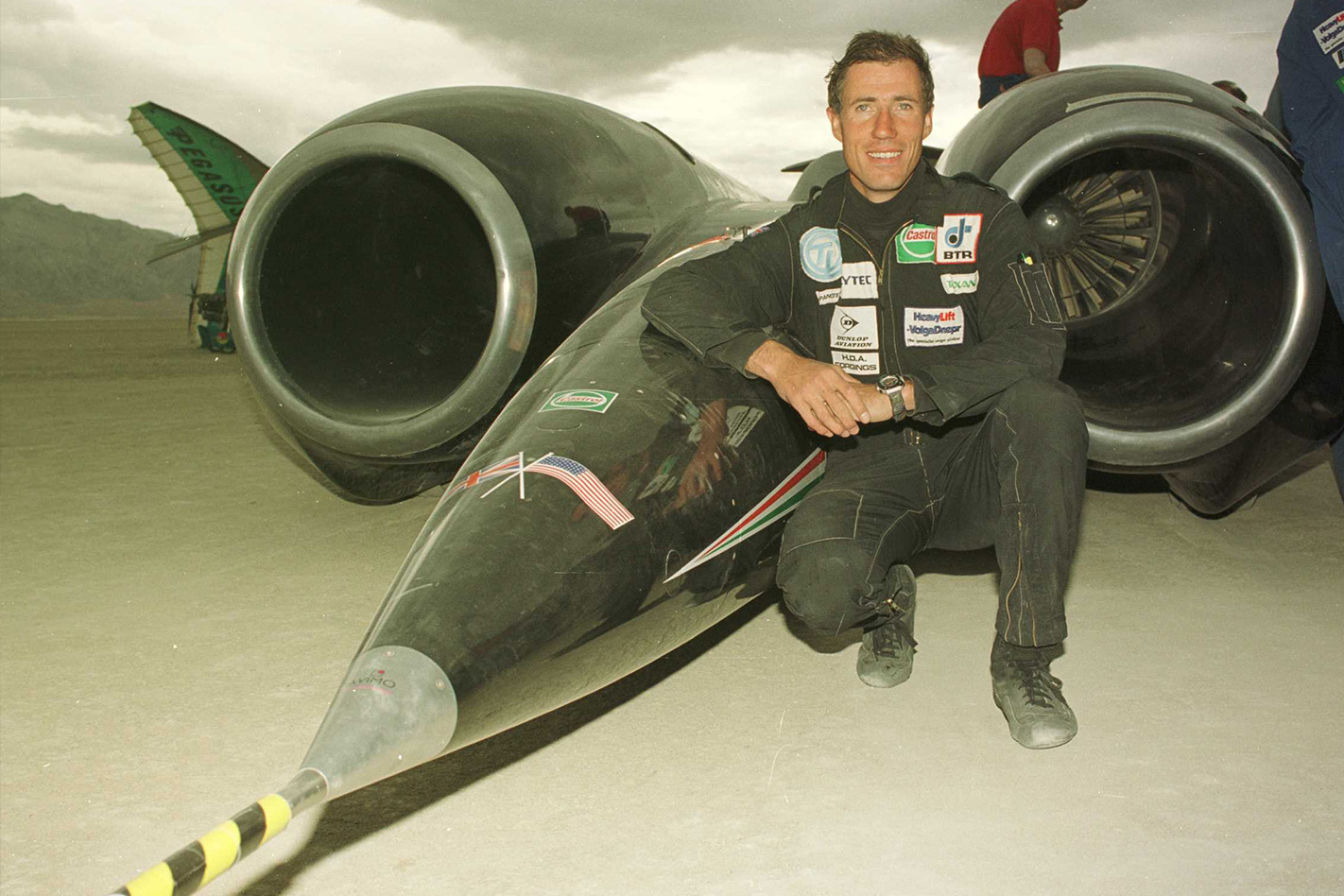
“In 1997, our car [Thrust SSC] tended to pull hard left at around 1000km/h, and that required up to 90 degrees of steering lock to keep it straight.”
The sensations of chasing big speeds on water are, if anything, even more eye-opening. If the Grim Reaper had a favourite sport, it’d be watching those who attempt to go faster than anyone else on a body of water.
Since 1940, some 85 percent of attempts at the record have ended in a fatality. You have the same odds of surviving Russian roulette when five of the six chambers contain a bullet, which begs the obvious question: why? Why do these renegades risk death or injury? Or, at the very least, serious emotional and financial stress? Is speed the ultimate drug that, once tasted, is a high that can never quite be replicated?
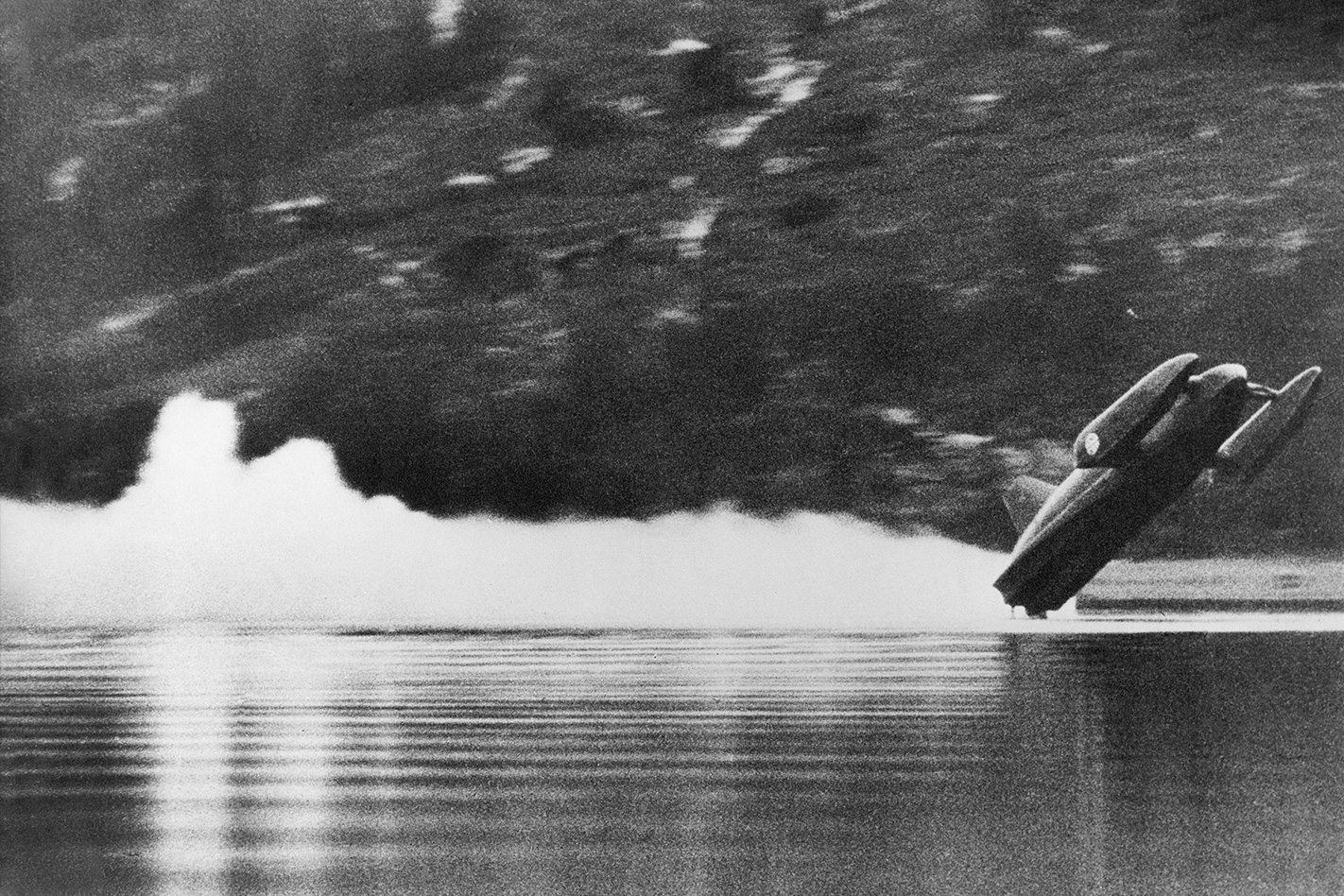
It’s a pertinent time to ponder the psychology behind the LSR. Right now, McGlashan and Green are gearing up for their latest tilts at the crown, on opposite sides of the globe and with very different approaches.
Where McGlashan is the embodiment of the cash-strapped Aussie underdog, Green is the organic component of Bloodhound SSC, a multi-million dollar outfit that has the backing of Rolls-Royce.
Green isn’t your typical LSR hunter. Traditionally the LSR history books have been filled with old barons with too much time on their hands, then later with hot-rodders and drag racers who haven’t been able to scratch the speed itch with combustion engines. That’s not Green. He brings the unflinching calm of a fighter pilot to the science behind his team’s 1600km/h target.
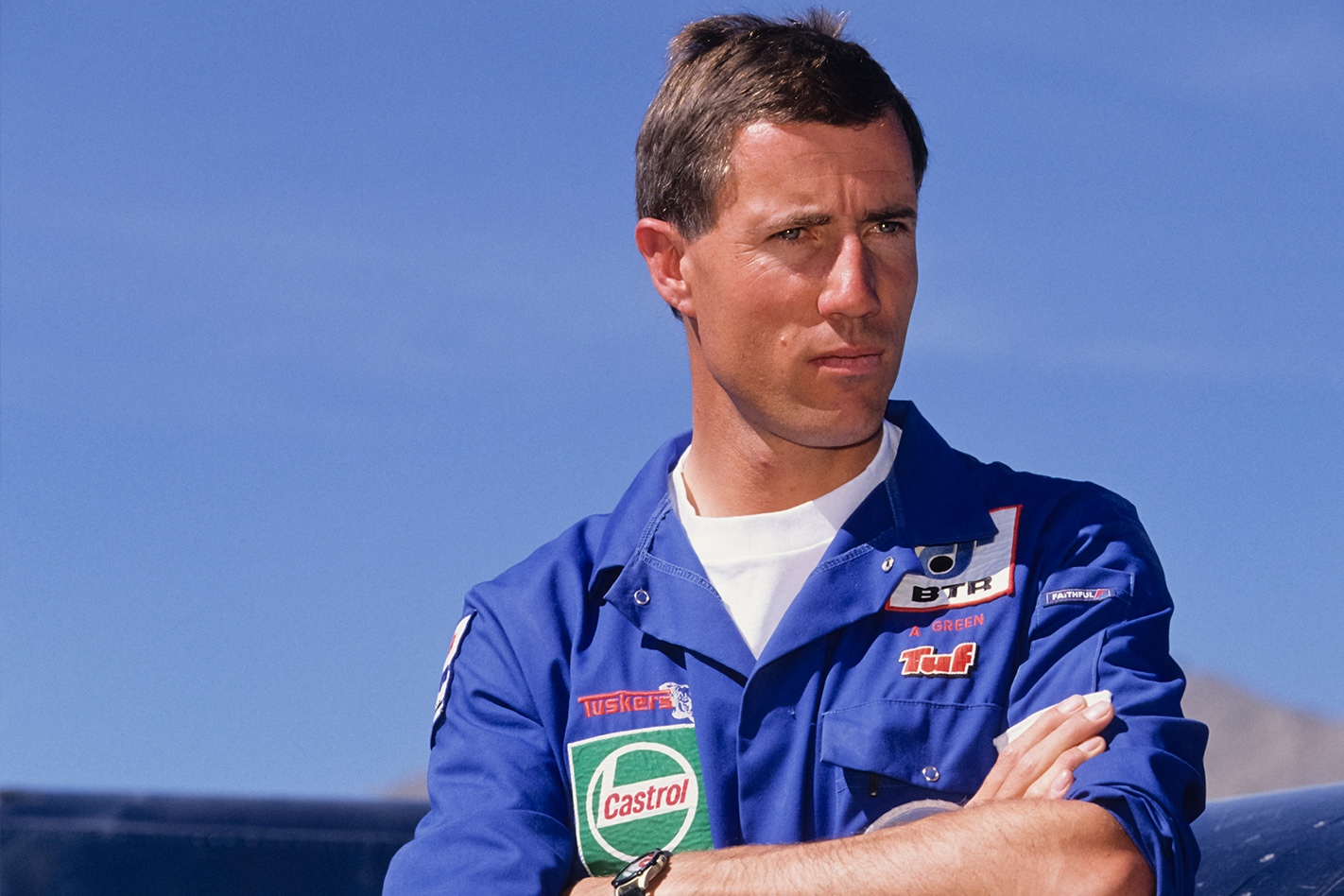
“This is not about jet engines and desert terrain, any more than Neil Armstrong walking on the moon was about spaceships. This is a human endeavour story,” he explains, acutely aware of the record’s historical significance.
Yet historical references are something that have little place in the LSR business. Every successful attempt rewrites what is possible. It’s a case of go large or go home empty handed, and McGlashan’s already established his bona fides as someone who is not going to lift if the record is in sight. If you needed additional evidence of that, he once strapped into a rocket-powered go-kart and went over 400km/h in 400m.
“I’ve driven drag cars from a really young age, but it wasn’t until I sat my arse in that rocket-powered go-kart and had a ride in that which was absolutely mind-boggling, I’ve never, ever forgotten it,” he says.
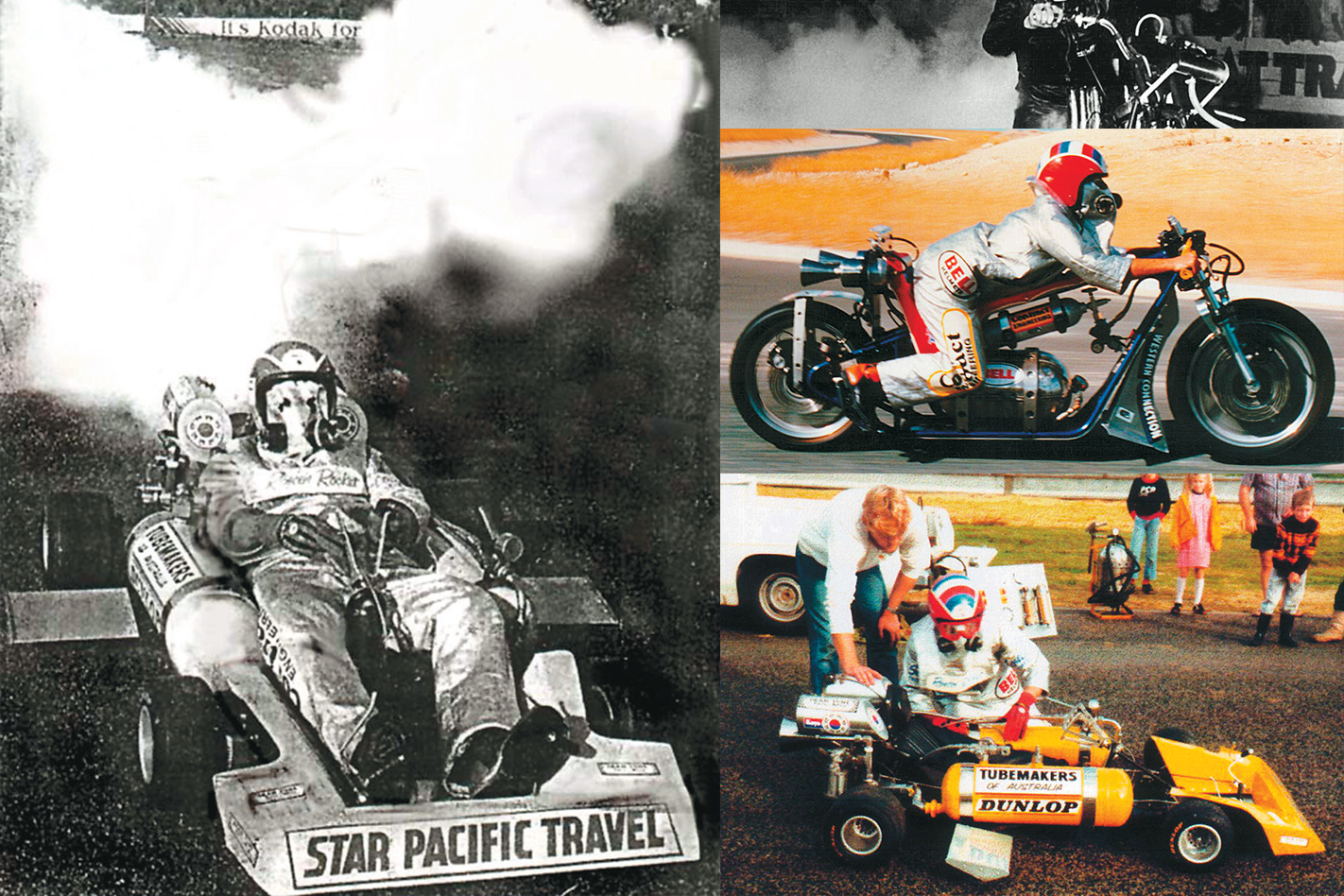
McGlashan is adamant he would have claimed the LSR title in 1995 with Aussie Invader II if he hadn’t run off course due to water turning seven kilometres of the course to slush, which he hit at almost 1000km/h. The Aussie maverick obliterated the timing gear which would have measured his record-breaking run (despite it being over 180 metres away from his original course), destroyed his car, and was left with no record.
But the bitter defeat didn’t quash McGlashan’s life-long obsession. He regrouped and promptly threw his entire life savings into funding a new $4 million LSR project, dubbed Aussie Invader 5R. Rosco is single minded, with every aspect of his life focused on emulating his hero Donald Campbell and becoming the fastest man alive.
Yet at the start of 2017 it looked like McGlashan’s dream had been shattered. The Australian Taxation Office cancelled a research and development tax incentive when the paperwork was mishandled, plunging Aussie Invader into insolvency, prompting McGlashan – who, at 68, has no day job to fall back on – to call it “dead in the water”.
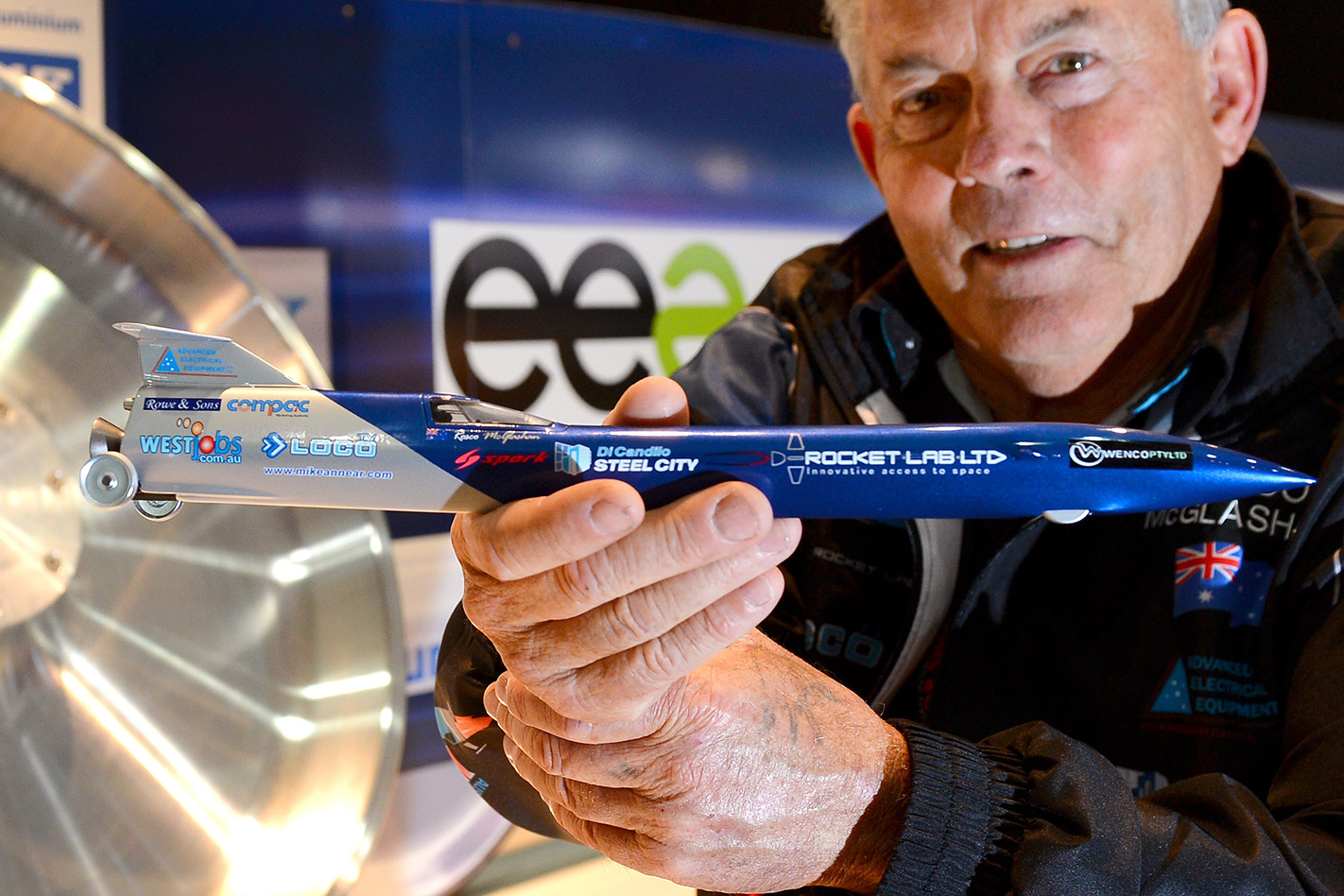
“I quit school at 12 years old to set the land speed record, and that was when Donald Campbell came across here in 1963 and started running his car at Lake Eyre in South Australia,” he tells me. “Fifty years later, I’m still doing it.
“The cops used to chase us all the time as kids. But from there I got to drive some pretty serious drag cars and had success there. It’s like an apprenticeship – it’s not like you get to just sit in a land speed car and go for it.”
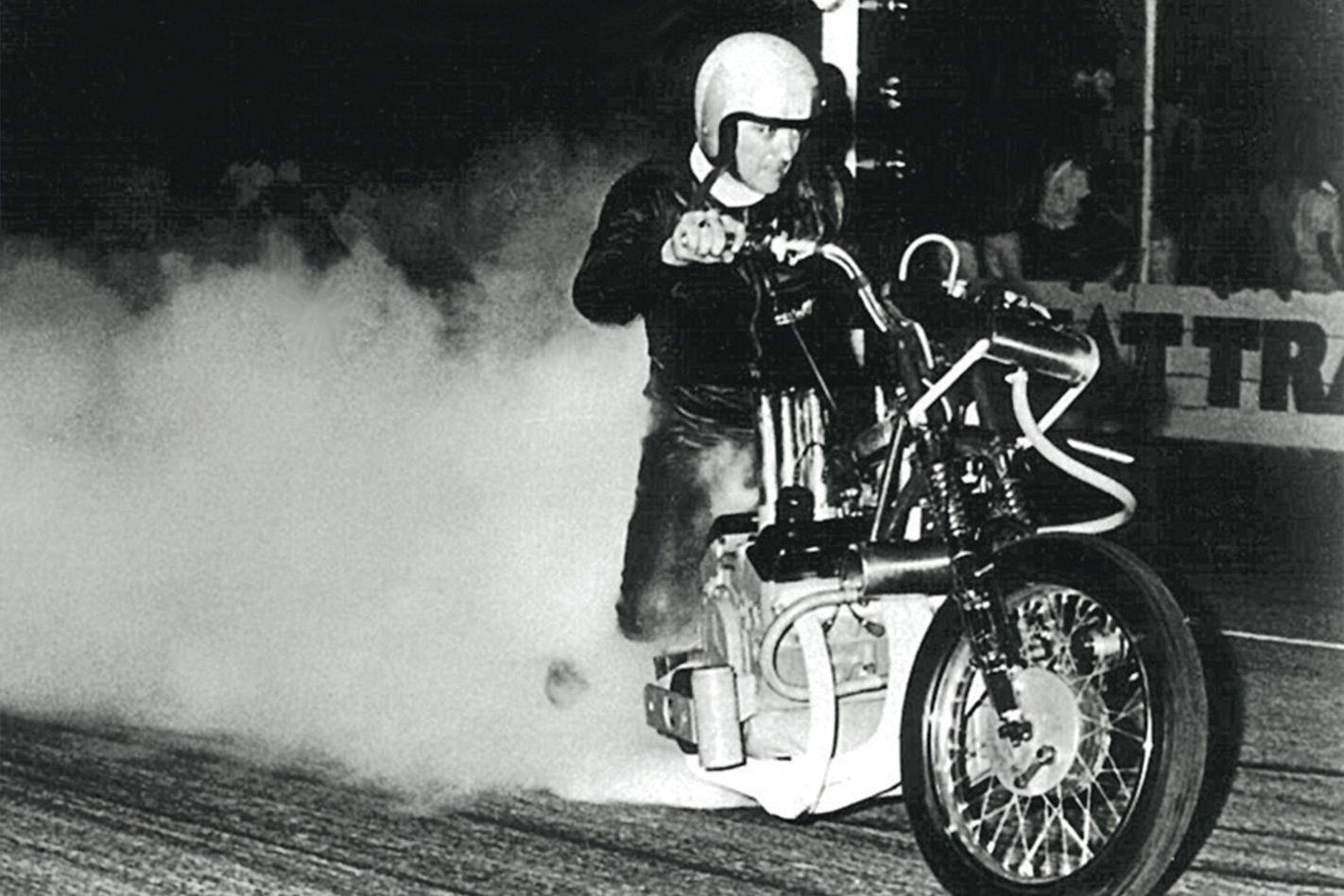
Yet McGlashan won’t be drawn into talking dates or even venues for his shot at the record, only to say that testing won’t begin until he’s completely satisfied the car is ready. If the Aussie can finally achieve his life’s ambition, he will become the oldest man in history to do so.
ANDY GREEN, meanwhile, may just secure the title for a second time before his late-50s. Bloodhound SSC ran on a UK airstrip in October last year with 55-year old Green at the controls as part of its preliminary jet-engine testing, and Bloodhound is now selling VIP tickets to phase-two testing in South Africa in November this year.
For a man who is taking a step into the unknown, travelling faster in a car than any other human, you’d think Andy Green would have at least some nerves simmering below his steely demeanour. Instead you’ll only find supreme faith in the team around him. His air force call sign of ‘Dead Dog’ belies an unflinching commitment to the engineering behind his new set of wheels. Work led by people like Craig Chapman, Bloodhound SSC’s chief engineer.
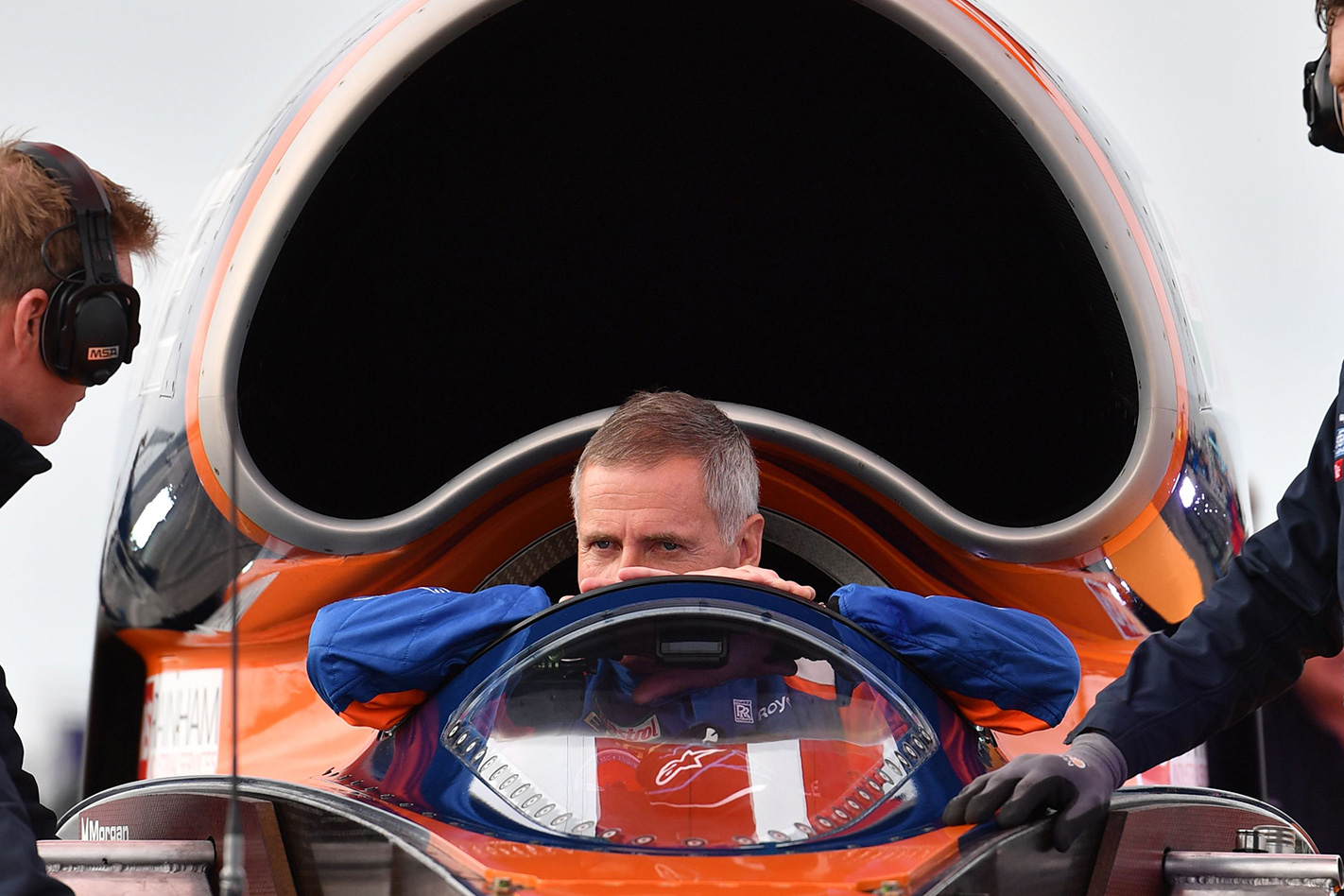
If and when Bloodhound can claim the LSR, it’s unlikely you’ll see Chapman’s name in the headlines, and it won’t be his face in the record books. But even without the glory, he concedes there’s an irresistible allure to building a vehicle that so extravagantly trashes conventions. Where else do you get to build a car where the fuel pump is a V8 lifted from a Jaguar F-Type SVR?
For McGlashan, the most unsettling part of his record attempt is the rocket itself. While Bloodhound SSC utilises a hybrid system of a jet engine and rocket working in unison, the Aussie Invader is violently straightforward – light the fuse on one of the world’s most potent rockets, steer straight, and hope a record is broken.
“The scariest thing about the whole thing is the technology that is going into the rocket,” McGlashan explains. “The hardest thing to appreciate is how to horizontally fire a rocket, which traditionally they don’t like. If we dump too much oxidiser into the motor, the whole thing will explode.”
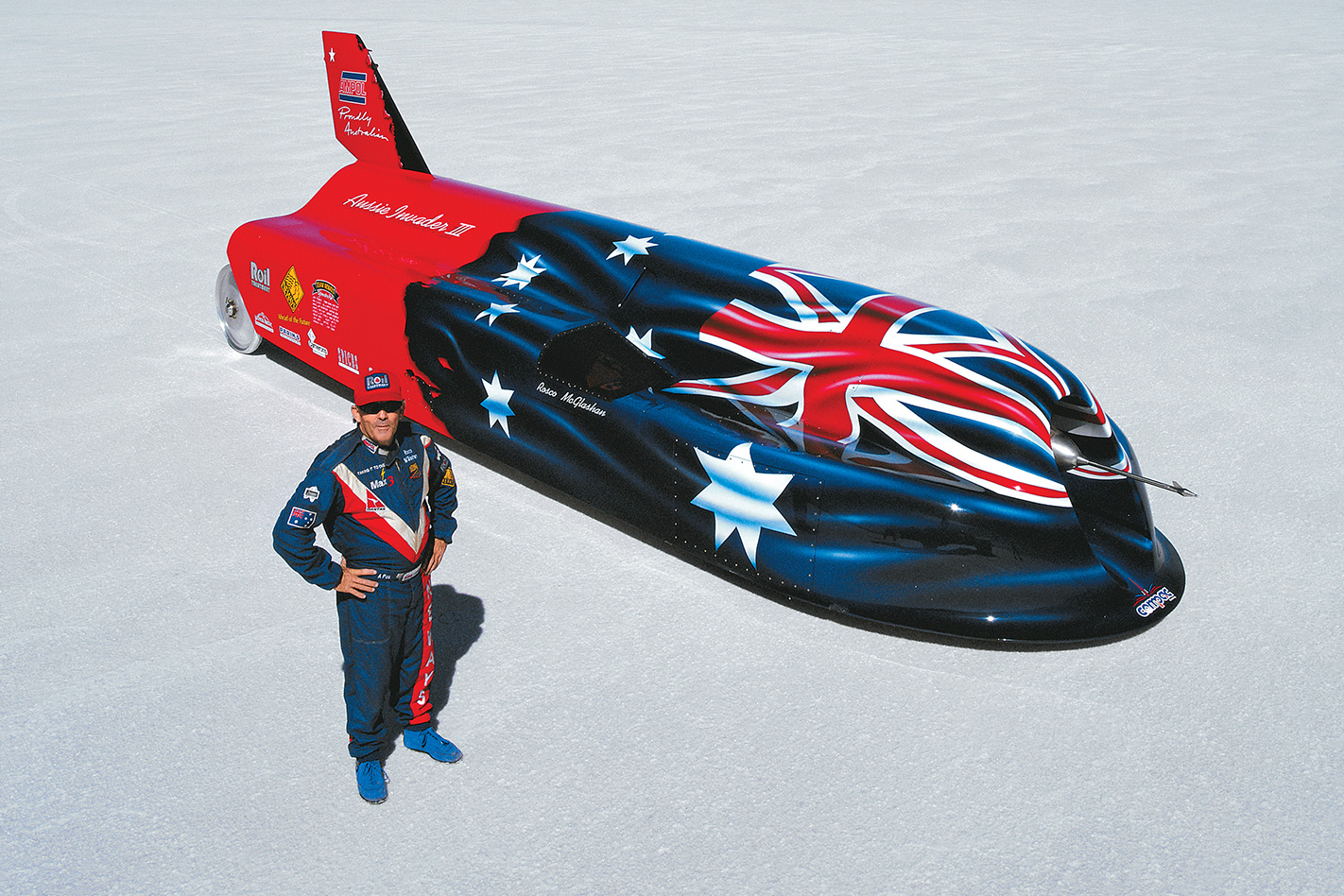
But will it really happen? Bloodhound claims to be on schedule; a well-organised and incredibly generously funded project, with multi-million dollar sponsorship deals. McGlashan’s Aussie Invader 5R is yet to turn a wheel.
Regardless, the battle, if it is that, certainly seems a long way removed from when the Automobile Club de France declared themselves the final arbiters of outright speed records in 1902. Four years later, Fred Marriott’s Stanley Steamer became the first car to travel faster than a train, breaking the 200km/h barrier.
Now, a century later, two cars from opposite ends of the world are preparing to go faster than the bullet from some handguns. The techniques might have changed, but McGlashan and Green are cut from the same cloth as Marriott.
As Andy Green insists, it’s all about human endeavour. The rest is just hardware.
BMW DOES not yet offer a Competition, CS or GTS version of its M2 – not yet, anyway – but you can sort of build a muscled-up version yourself if you don’t hold back in the M Performance Parts optional accessories catalogue.
For very serious research purposes, BMW Australia has built an M2 test car dripping in M Performance optional parts.
Circling the baby M car, the silver quad exhaust pipes catch your eye and you feel like a pervert of sorts kneeling to look under the rear of the car. But you are treated to a delicious sight.
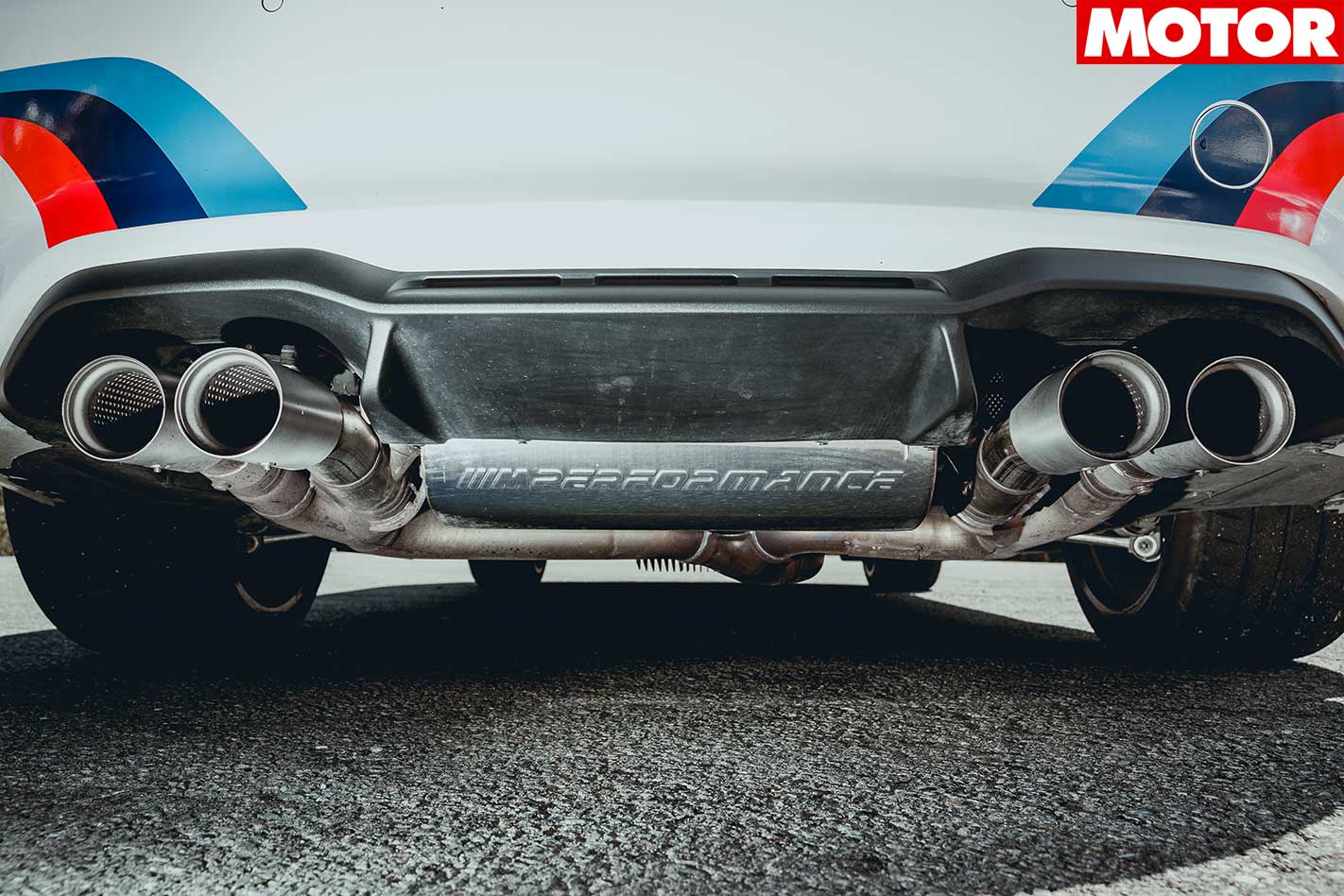
For $4490 excluding fitment, the M Performance system gives the M2 a bit of a shoutier note, as you would expect if you bought it.
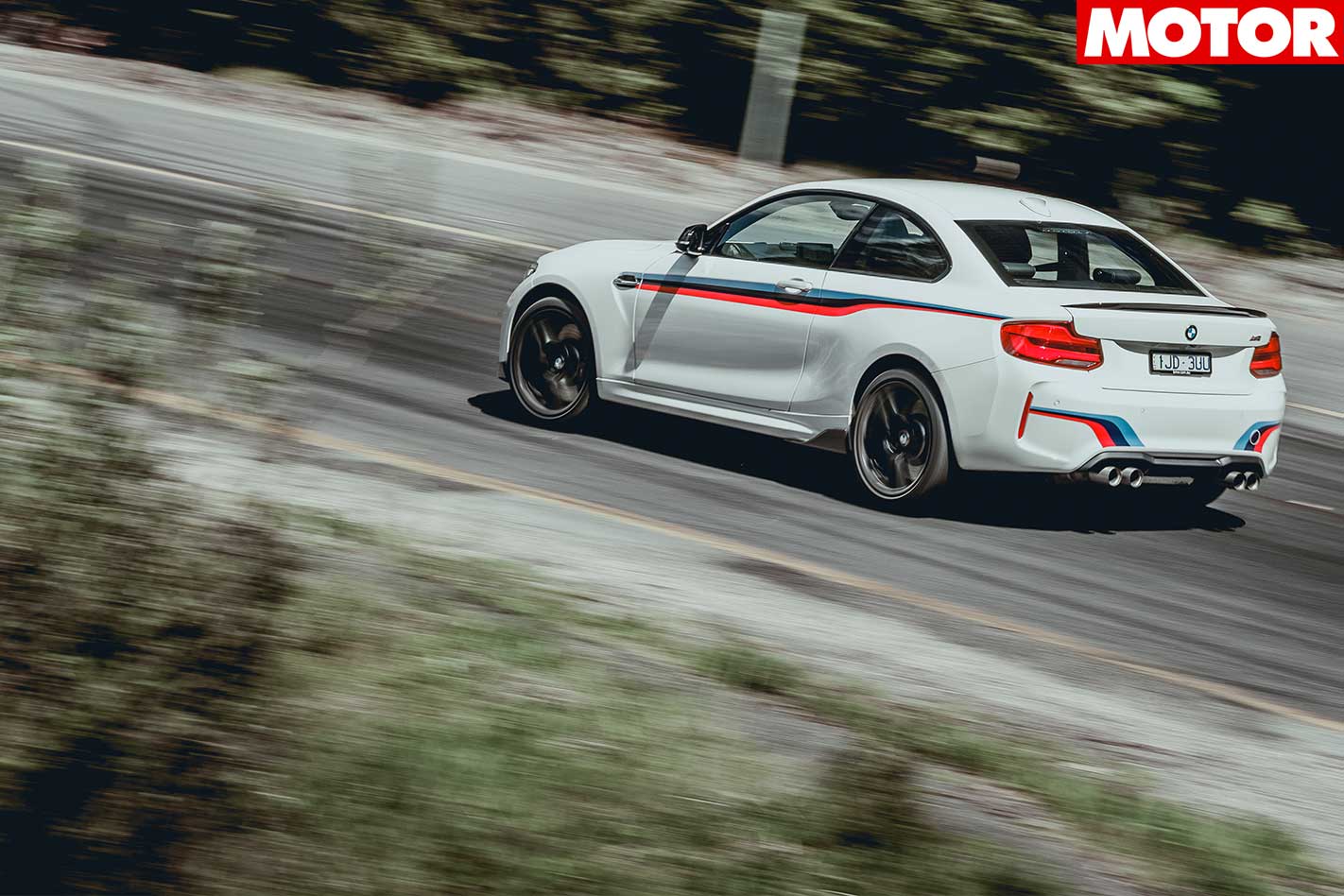
Almost like the turbo-fed cylinders are spun by a flat-plane crank. You can hear each pulse ping pong down the pipes with the sole aim to disrupt peace. It’s loud, but it does sound good.
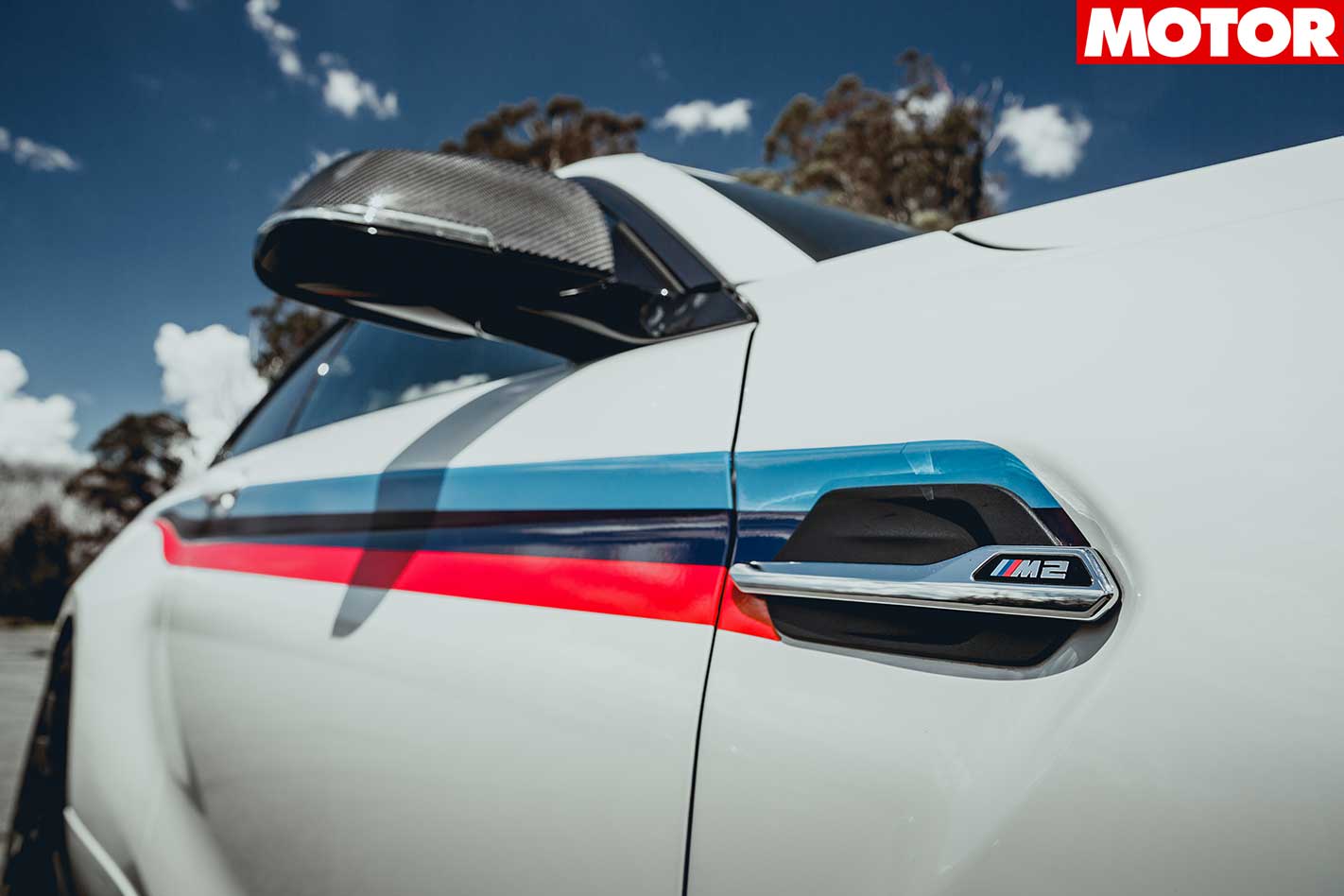
The exhaust is the second most expensive part clinging to this M Performance parts test bed. The fully forged Y-Spoke 19s are a whopping $8839. Then there are the carbon-fibre mirror caps ($750), front flics ($1658), side flics ($1658) and spoiler ($748). The stickers are $495, and the grille’s been finished in gloss black for $440.
The M2 is a focused-feeling sports car on the road, but an absolute weapon on track. They also smooth the car’s slight edginess under power and at sharp direction change. Just make sure they’re hot, at which point they deliver incredible lateral grip.
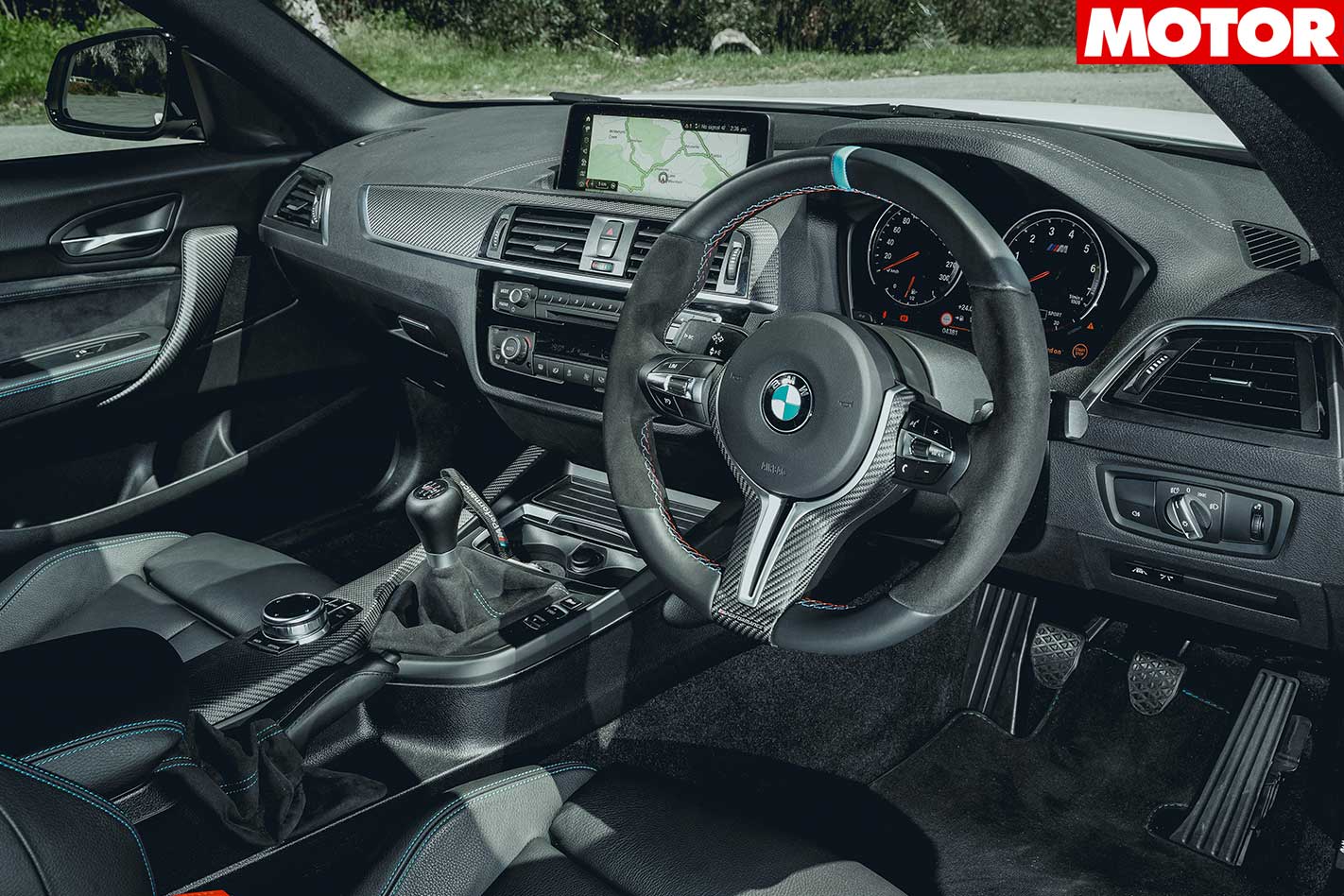
However, the drawcards of the factory BMW dress-up stuff is convenience, that warm and fuzzy OEM feeling and, crucially for some, a fully intact standard warranty.
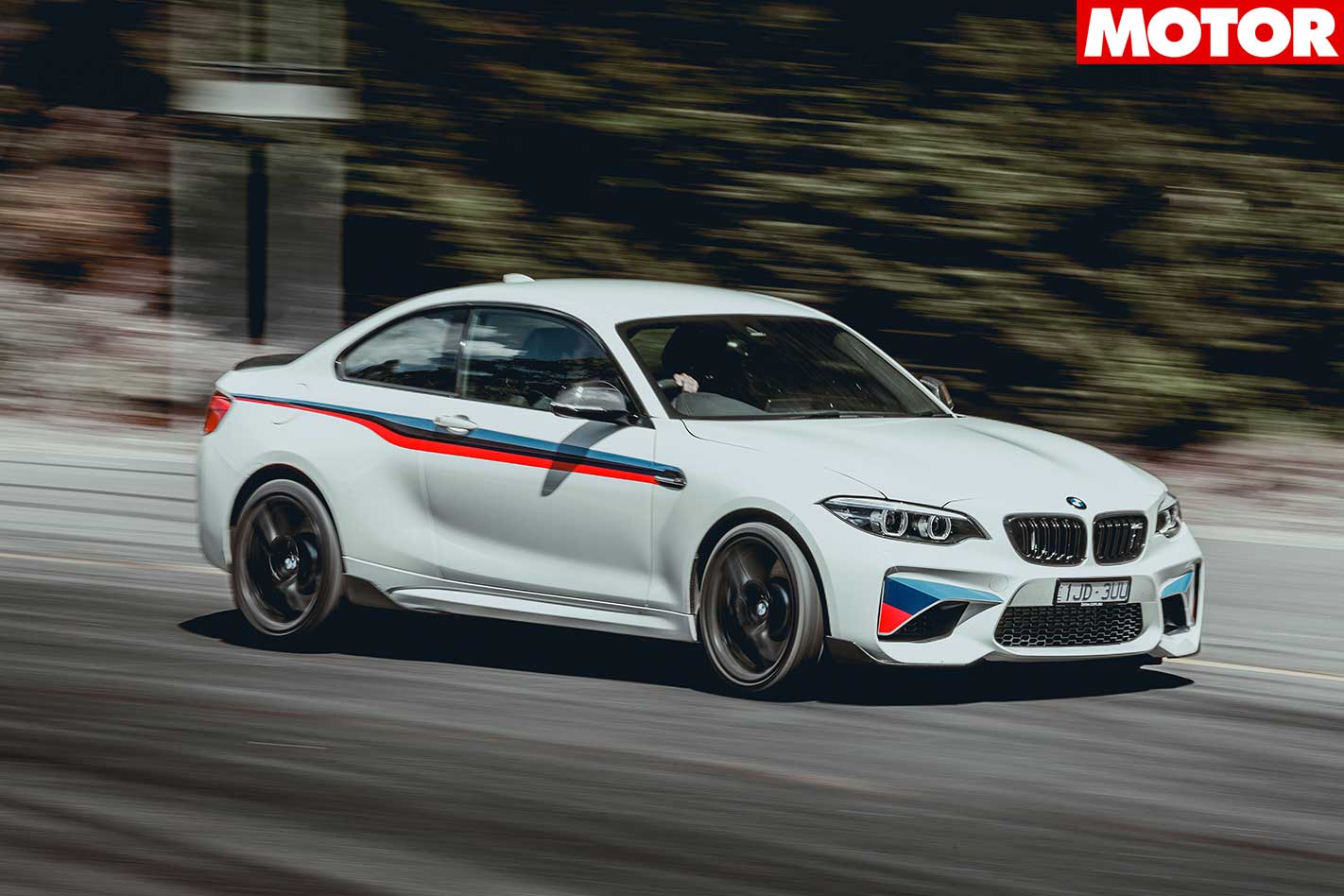
Like: Hellish soundtrack; huge grip Dislike: No power gain; stock sound already good Star Rating: 4.5 out of 5 stars
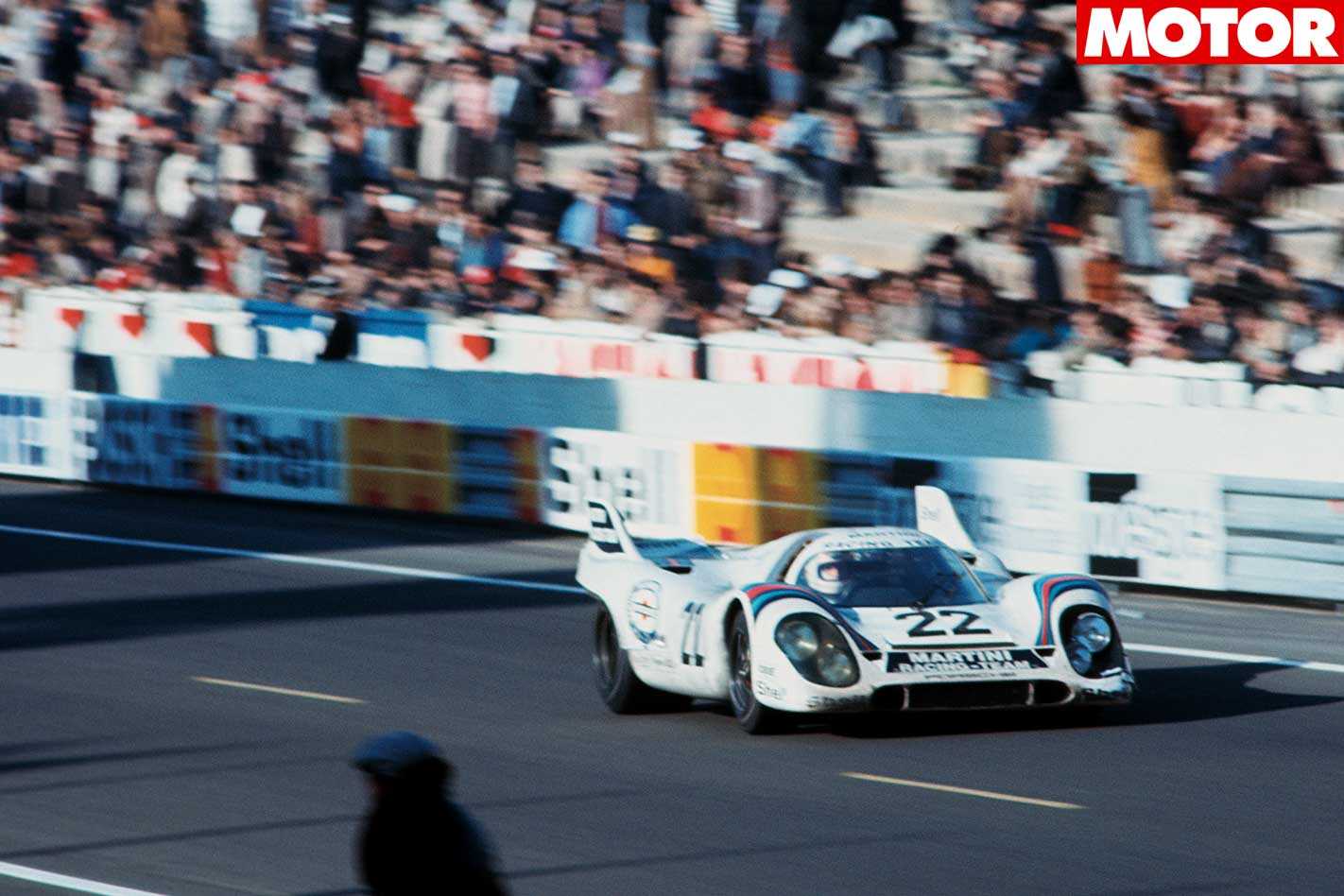
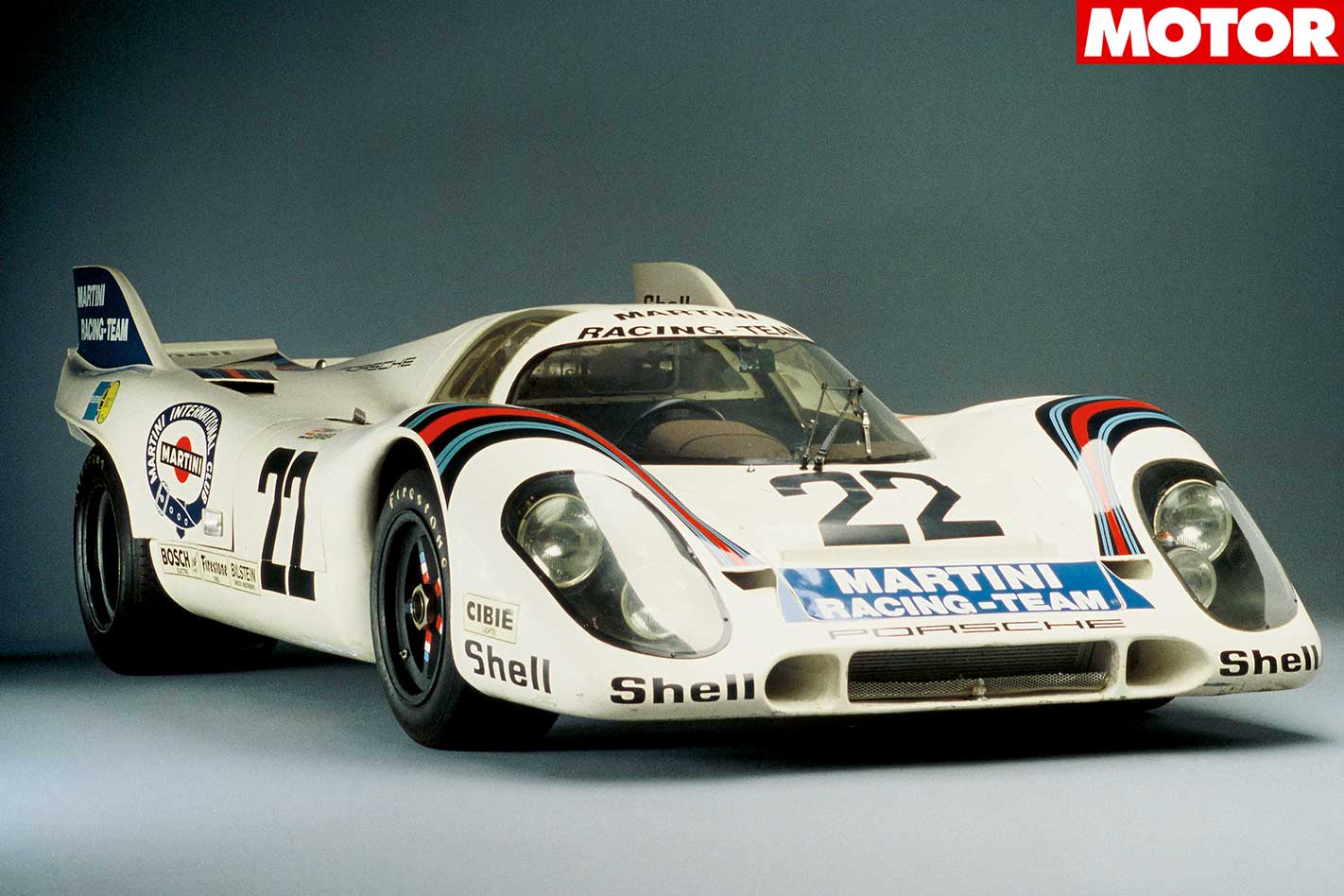
It’s 10 years since the Stuttgart crest adorned a Le Mans winner, but having dominated the event through the 1970s and 80s, Porsche is synonymous with the arduous twice-round-the-clock event. Much of it is due to this car, the Porsche 917, one of the most gorgeous race cars ever made.
This feature was first published in MOTOR magazine’s August 2008 issue.
Porsche competed at Le Mans in the junior classes in the 50s and 60s, but the 917 was its first car specifically developed for victory. And that it did, winning the classic Le Mans 24-hour endurance race twice (in 1970 and 1971).
Indeed, it still holds the overall distance record. In any language, the 917 is a dead-set legend. As a result of a dramatic increase in speed at Le Mans (particularly from the all-conquering Ford GT40), new regulations for the World Sportscar Championship were devised for the 1969 season.
The reduction in capacity rules, however, didn’t receive much response so the FIA allowed “prototype” sportscars with 5.0-litre engines and a minimum build run of 50 units (later amended to 25). Even as the rules were being finalised, Porsche began developing the 917 in July 1968.
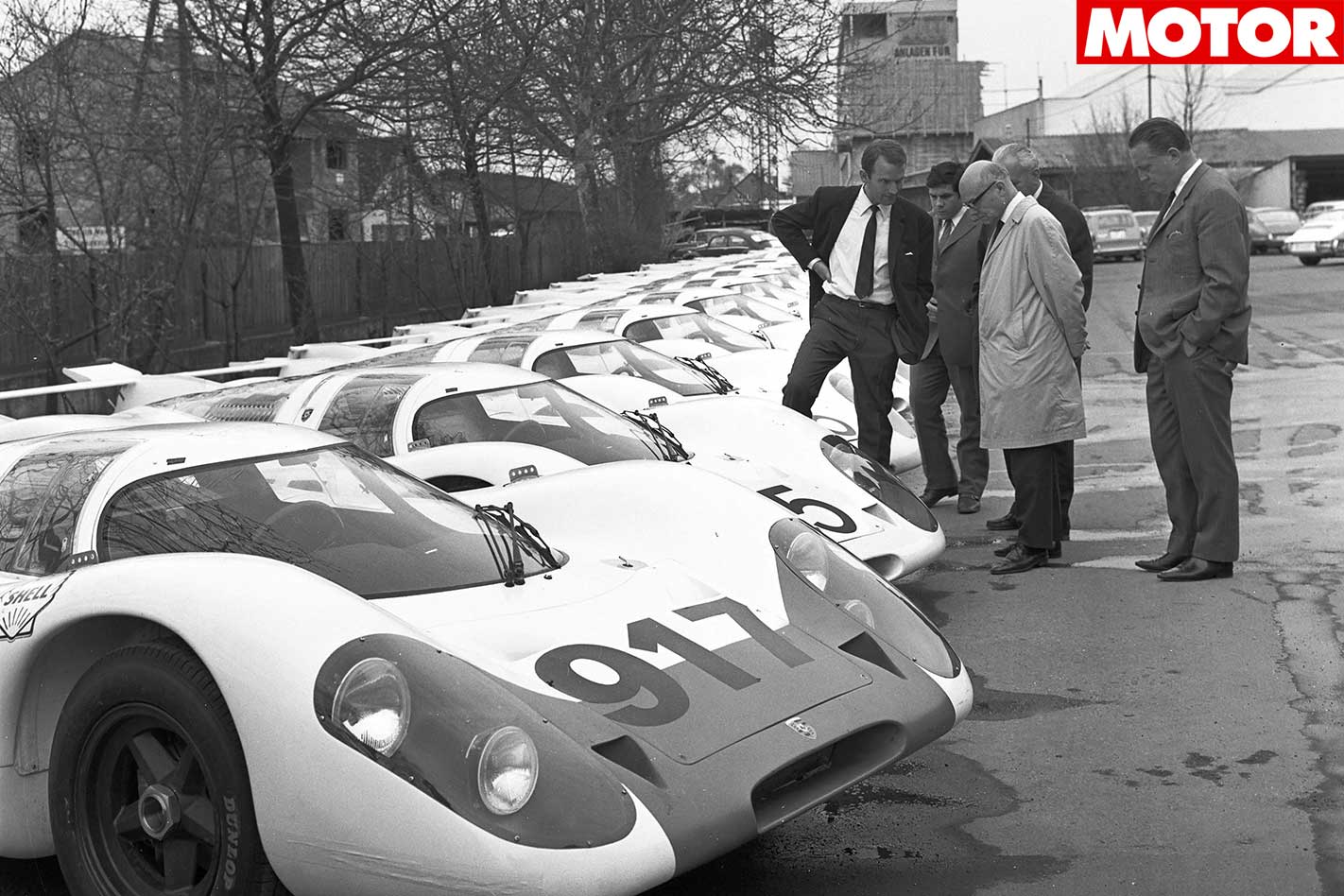
Attempts to earn an early tick of approval saw three complete cars presented to the FIA that year. However, it required all 25 cars be presented simultaneously. Less than a month after it displayed the 917 at the 1969 Geneva Motor Show, Porsche’s development director, Ferdinand Piech, presented all 25 in Porsche’s Stuttgart factory car park.
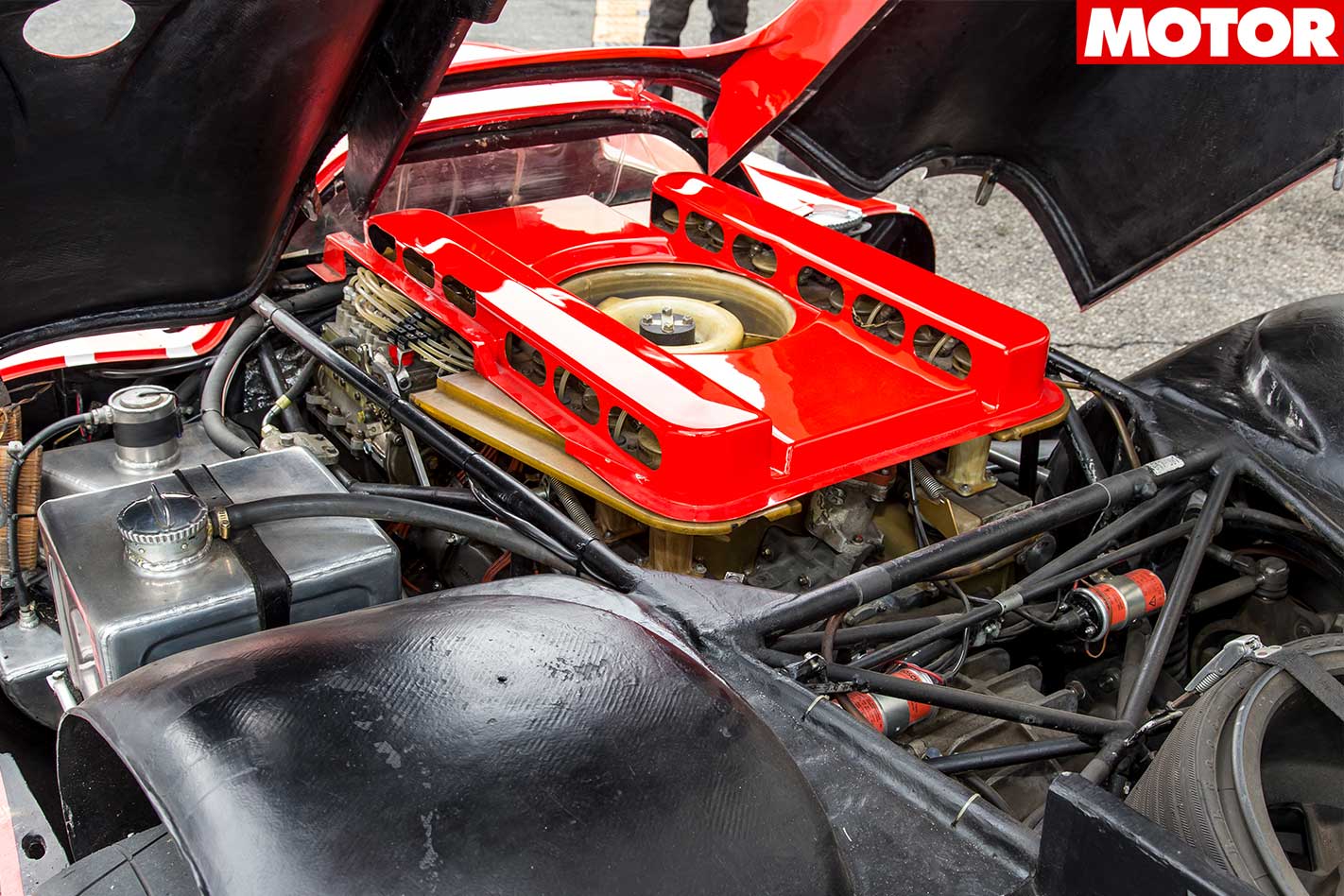
Powering the first-generation 917 was a 4.5-litre horizontally-opposed, naturally-aspirated 12-cylinder engine, producing around 470kW and 600Nm. Even with tall Le Mans gearing in its five-speed transaxle, it sprinted to 100km/h in 2.7sec on its way to 395km/h.

The 908LH was also chosen for the next race at Nurburgring, but Porsche needed to promote the remainder of the 25 cars to customer teams.
Surprisingly, it requested help from BMW supported drivers Hubert Hahne and Dieter Quester, but the Bavarians pulled the pin on the idea after opening practice. So Aussie Frank Gardner was drafted in – and reportedly paid a motsa – for the 917’s official debut alongside England’s David Piper; the pair finishing eighth.
With all its problems, Porsche pulled back its involvement to concentrate on developing the car for the 1970 World Sportscar Championship. Piech, however, pleaded to his star driver Siffert to race the 917 for a private team in the last event of the season at Austria’s Ostereichring. With Kurt Ahrens Jr as his co-driver, Siffert scored the 917’s first win in the 500km Austrian race.
Just days after the victory, Porsche engineers met with J.W. Automotive, the brains behind the Gulf GT40 triumphs at Le Mans and the reigning world champs. The J.W. engineers concluded the tail’s design was causing the instability. The solution was the wedged, short-tail 917K.
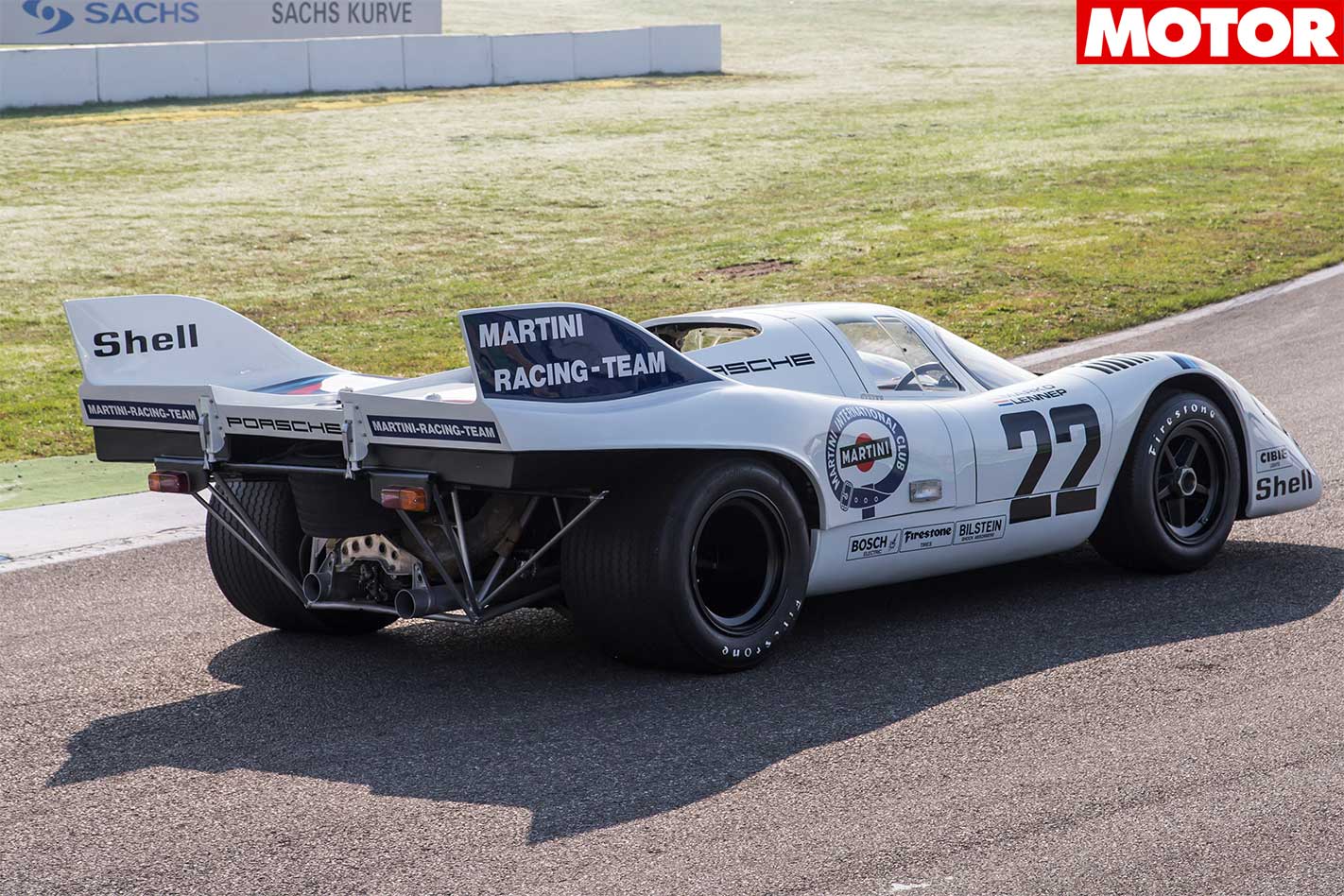
For Le Mans 1970, Porsche rolled out an improved long-tail version (Langheck or LH), to increase downforce and reduce drag. A larger 4.9-litre flat-12 countered Ferrari’s 512 attack, too. Porsche-Salzburg and Martini Racing both entered the 917LH while the Gulf Porsche team ran three 917Ks, two with the 4.9-litre and one 4.5-litre.
After a race-long battle with the lead Gulf car, the Salzburg car of Hans Hermann and Richard Attwood drove through the pouring rain to hand Porsche its first victory at Le Mans.
While the factory cars were revised long-tail versions, it was the 917K (a magnesium chassis 4.9-litre) from Martini Racing, driven by Dr Helmut Marko and Gijs van Lennep that triumphed in the 1971 Le Mans. It set a distance record of 5335.313km that stands today (Audi surpassed the record in 2010 with their R15+ TDI LMP1 racer clocking in 5410.713km). It’s the car featured here and one of three owned by Porsche and on display at its Museum.

THE REEL DEAL The Gulf-liveried J.W. Automotive Porsche is the most famous – and recognisable – of the 917s, but it is far from being the most successful. Its fame was generated by its starring role in the Hollywood cult film, Le Mans (1971) starring Steve McQueen as the tortured racer, Michael Delaney.
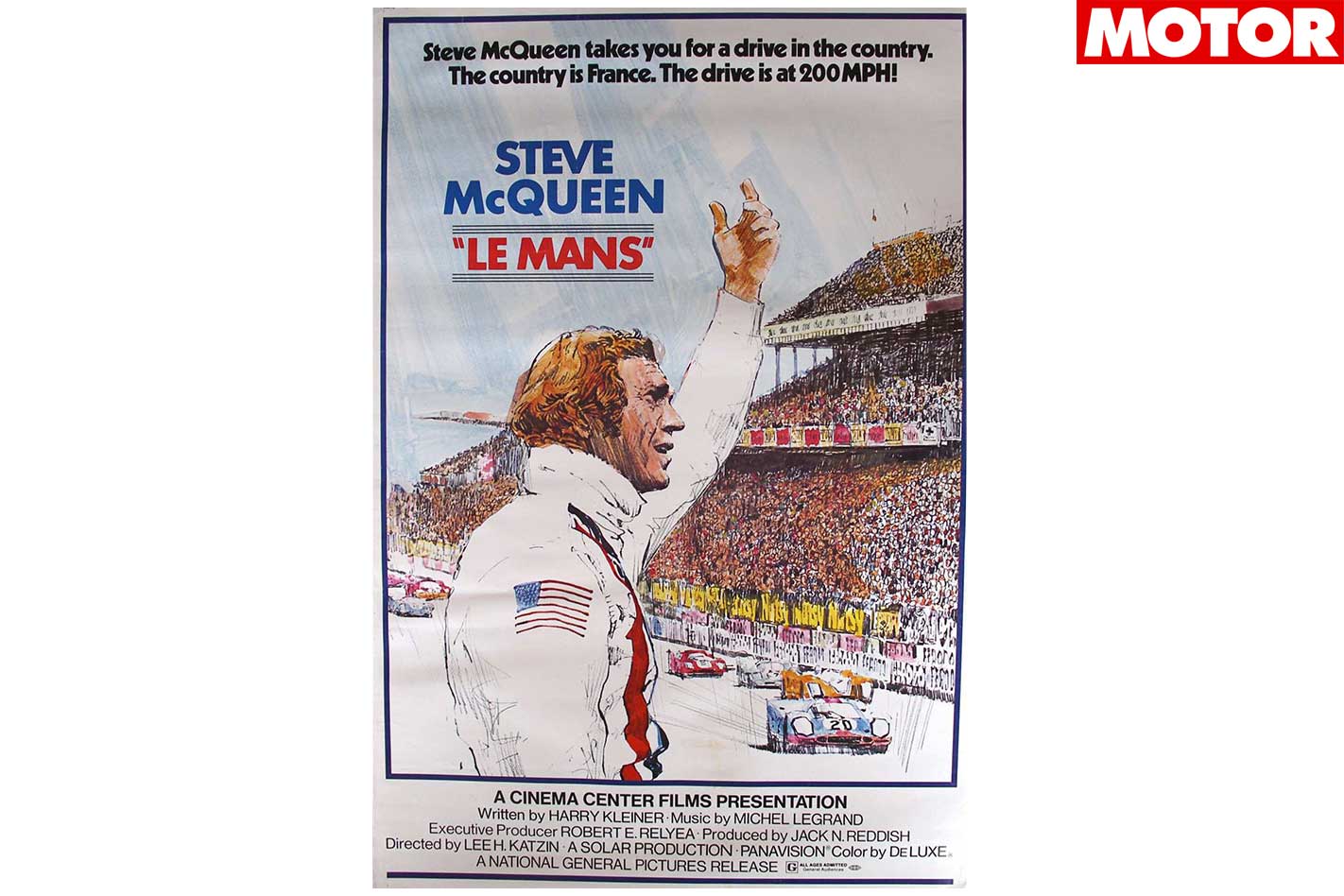
The Gulf 917K that McQueen’s character raced in the cult classic was actually driven by Jo Siffert and Brian Redman, and is now owned by comedian Jerry Seinfeld.
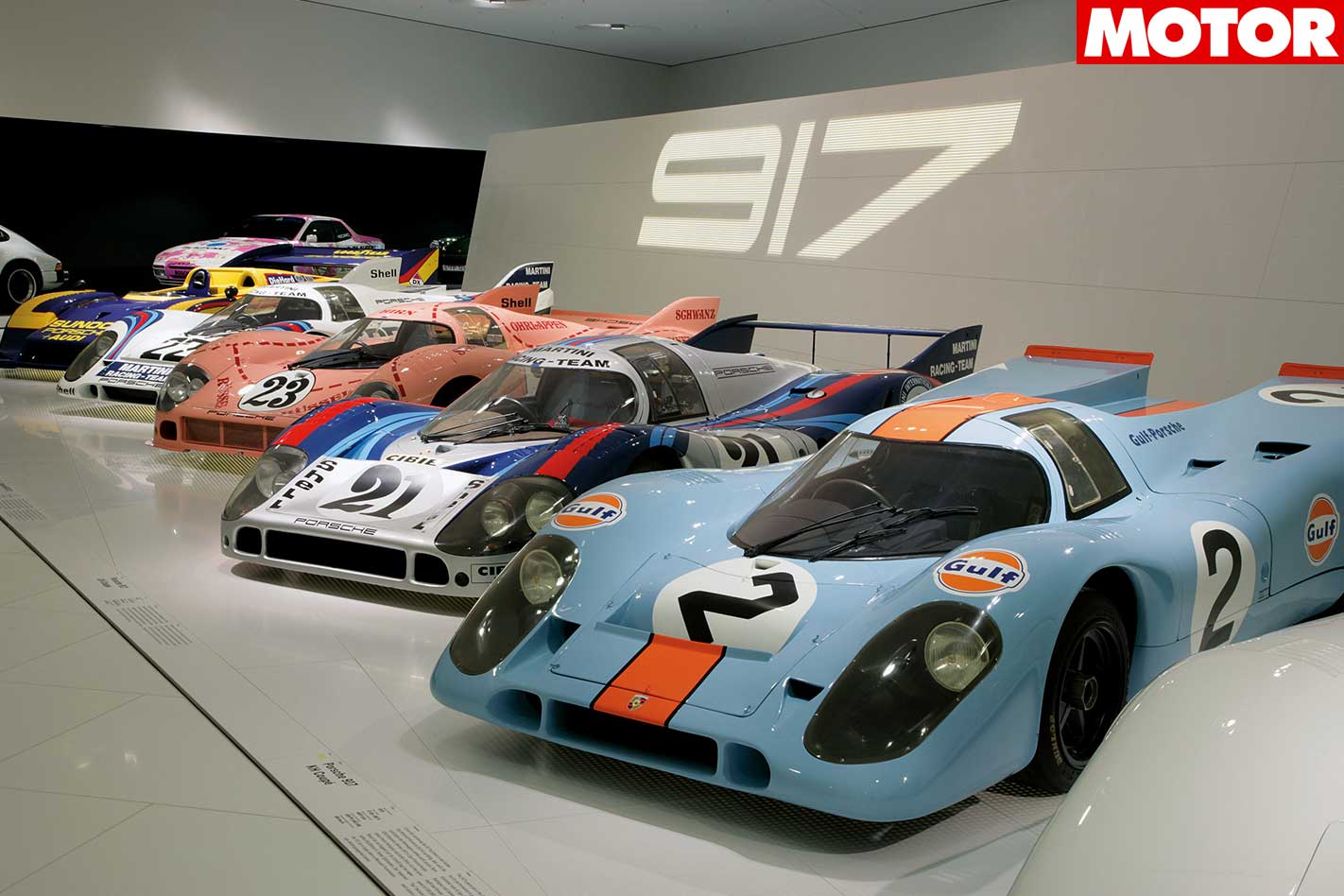
1 – Collectibility The 917 was the first Porsche to ever win Le Mans, meaning it has plenty of history and cachet and is now one of the world’s most sought after collector’s cars.
2 – Power The final 917/30 saw a 5.4-litre twin-turbo that, with 2.7bar boost, produced 1130kW! It could sprint to 100km/h in 1.9sec, 160 in 3.9sec and reach 410km/h!
3 – You can register one There were at least two street-registered Porsche 917s. One was for Count Rossi of the Martini family, sent to the USA, the other for Joachim Grossbad in Germany.
THE BAD
1 – Stability issues First-gen 1969 models were not as good looking as 1970 models, and were hampered by drastic high-speed instability. Porsche’s drivers refused to race them.
2 – Up in lights Most of the 1971 models were constructed with a full magnesium chassis to save weight and increase strength, but the metal burns intensely.
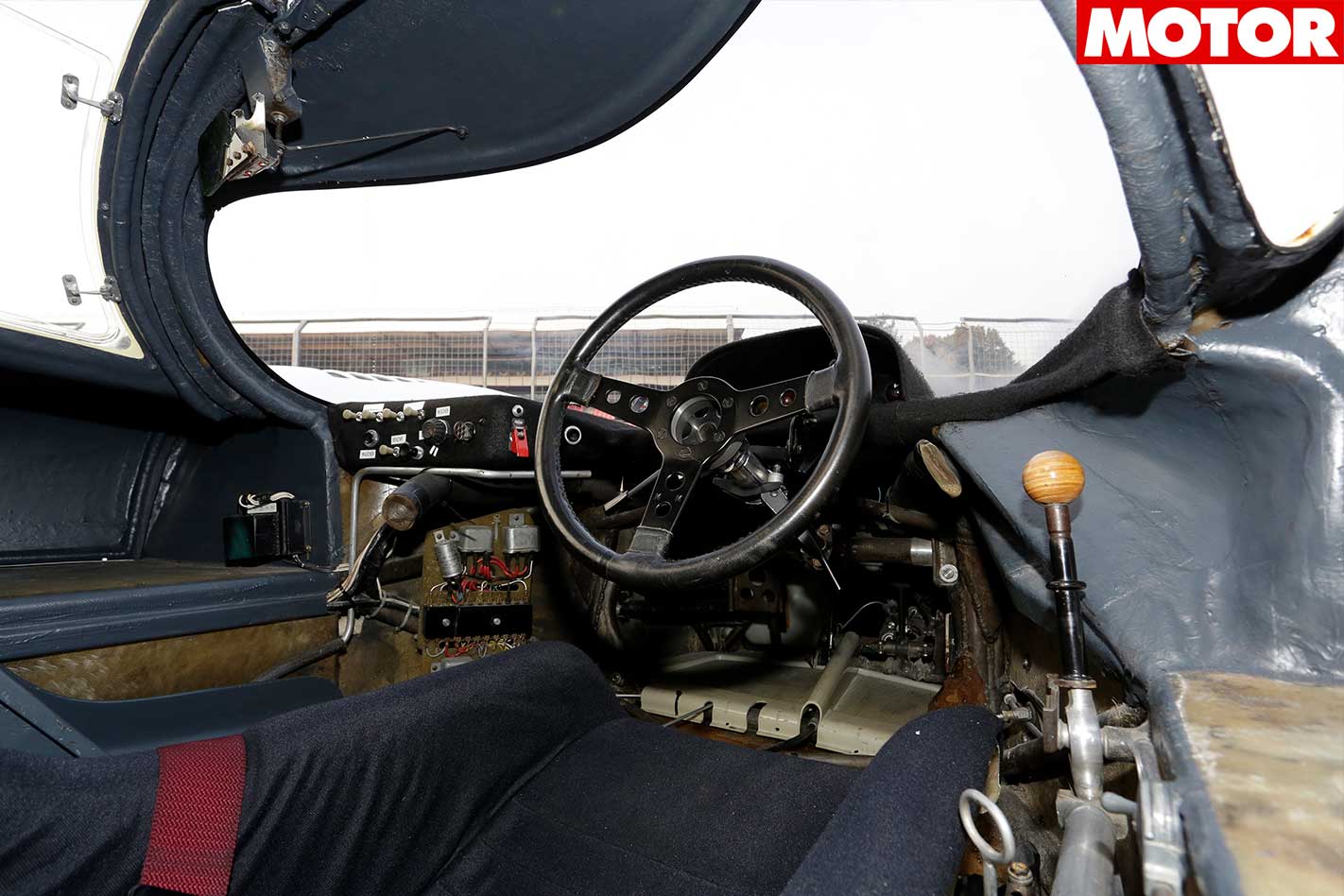
3 – Heat seeking As if Le Mans isn’t challenging enough already, the 917’s closed cockpit improved aerodynamics, but meant cabin temps often exceeded 70˚C.
IF YOU were planning to bet against Mercedes-AMG scoring a fifth-straight Formula 1 drivers’ and constructors’ championship in 2018 you might want to reconsider in light of the first week of testing at Circuit de Barcelona-Catalunya in Spain.
Defending champion Lewis Hamilton sailed to the top of the timesheets in the afternoon of the final day, with a 1:19.333 lap.
Hamilton’s time was half a second quicker than anyone else, and nine-tenths of a second quicker than third-fastest Sebastian Vettel’s best time.
McLaren will be looking at Scuderia Toro Rosso with a degree of frustration. The two teams swapped power-units during the off-season, with McLaren scoring Renault units, and Toro Rosso being lumped with previously notoriously unreliable and underpowered Honda engines.
However, Toro Rosso and Honda have seemingly gotten along famously during the first test, putting in more laps across the four-days than McLaren was ever able to achieve during pre-season testing with the Japanese power units.
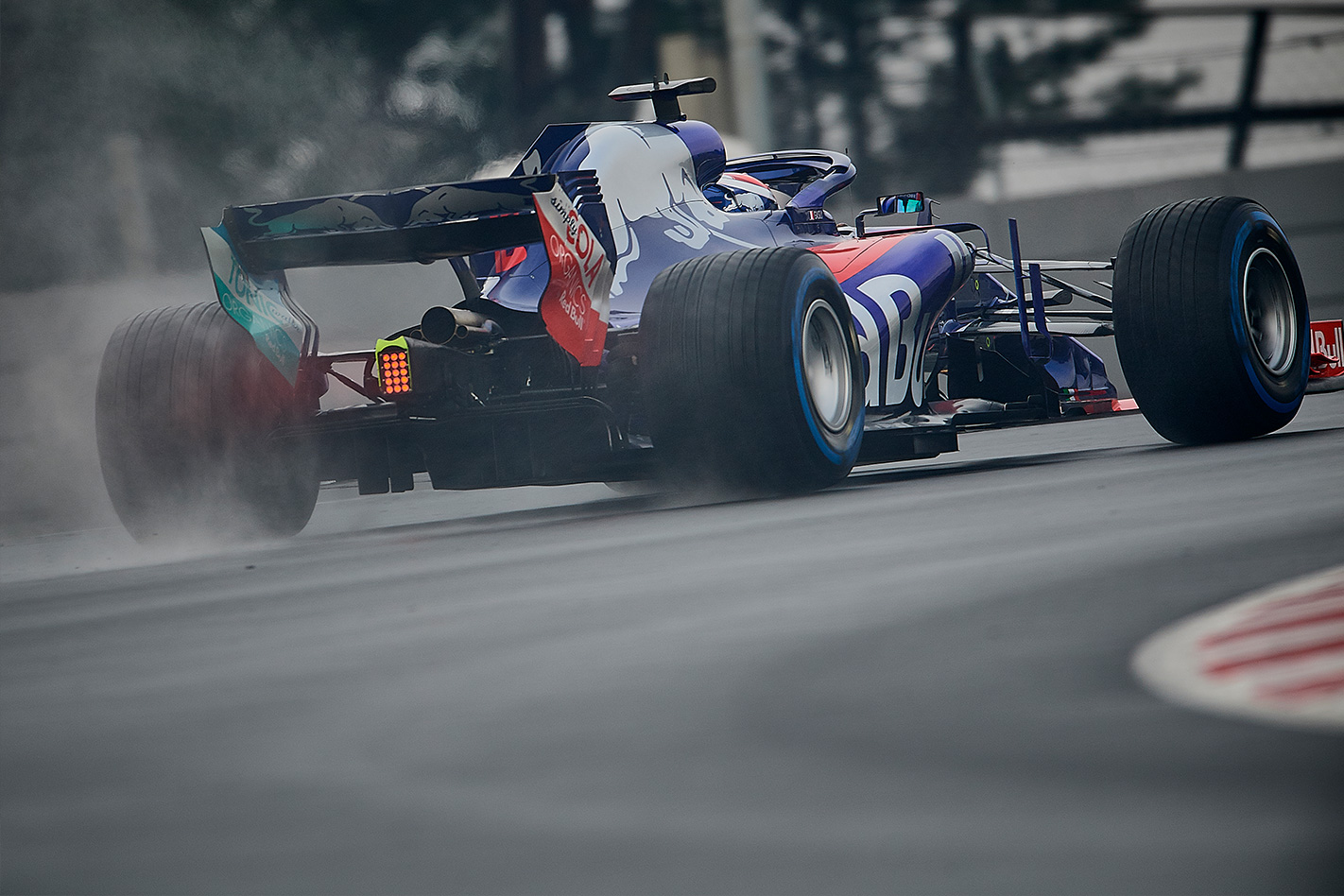
Many teams were forced to run a truncated testing schedule, as sub-zero temperatures saw the track uncharacteristically covered in snow for the beginning of day three. While this resulted in some spectacular photography, it also meant just one timed lap was completed all day.
Red Bull and Daniel Ricciardo started the pre-season strong, topping the first day, however the Aussie was scheduled to drive on day three, and didn’t complete a timed lap.
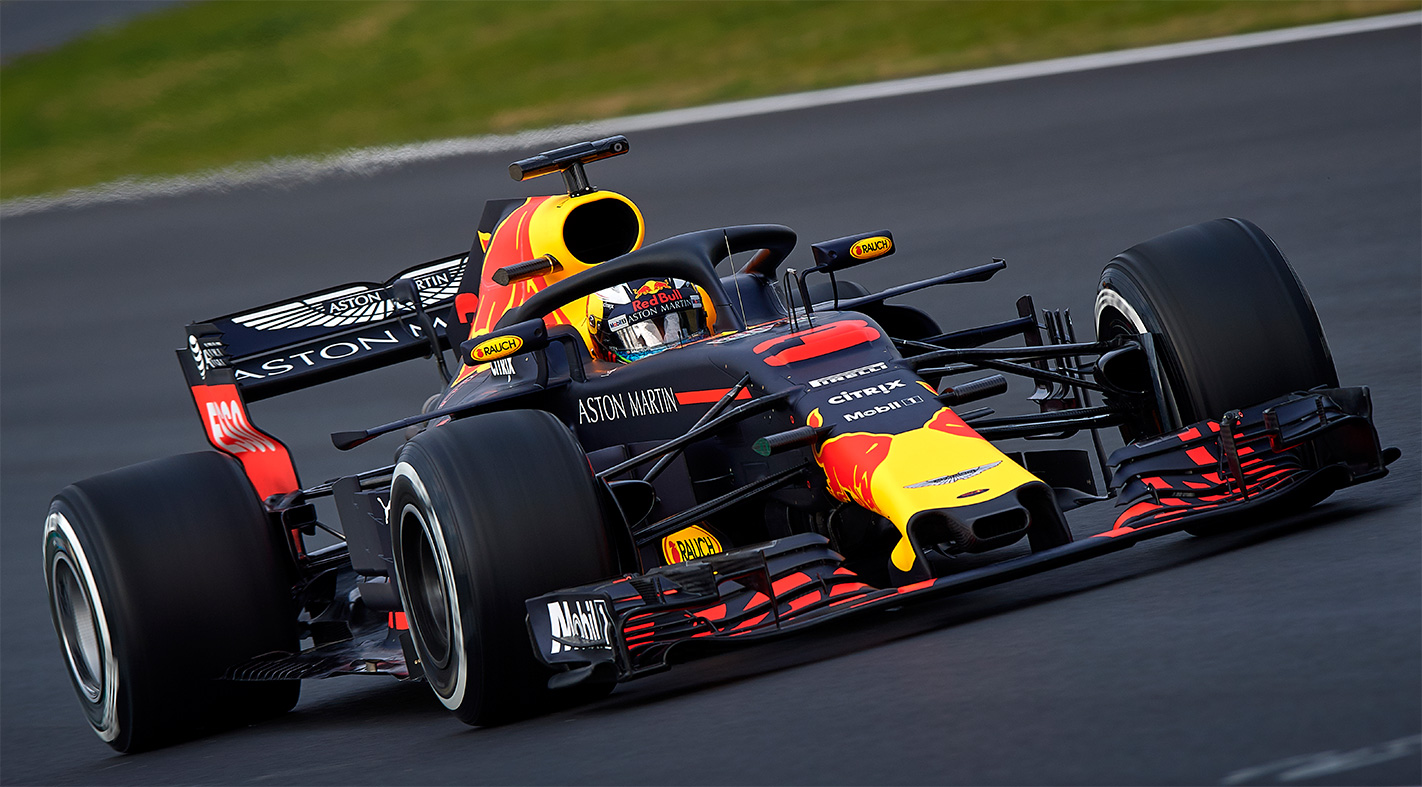
The strangest incident occurred on the first day, with Fernando Alonso spinning off the track when the right rear rubber decided to part ways with the rim at the final corner.
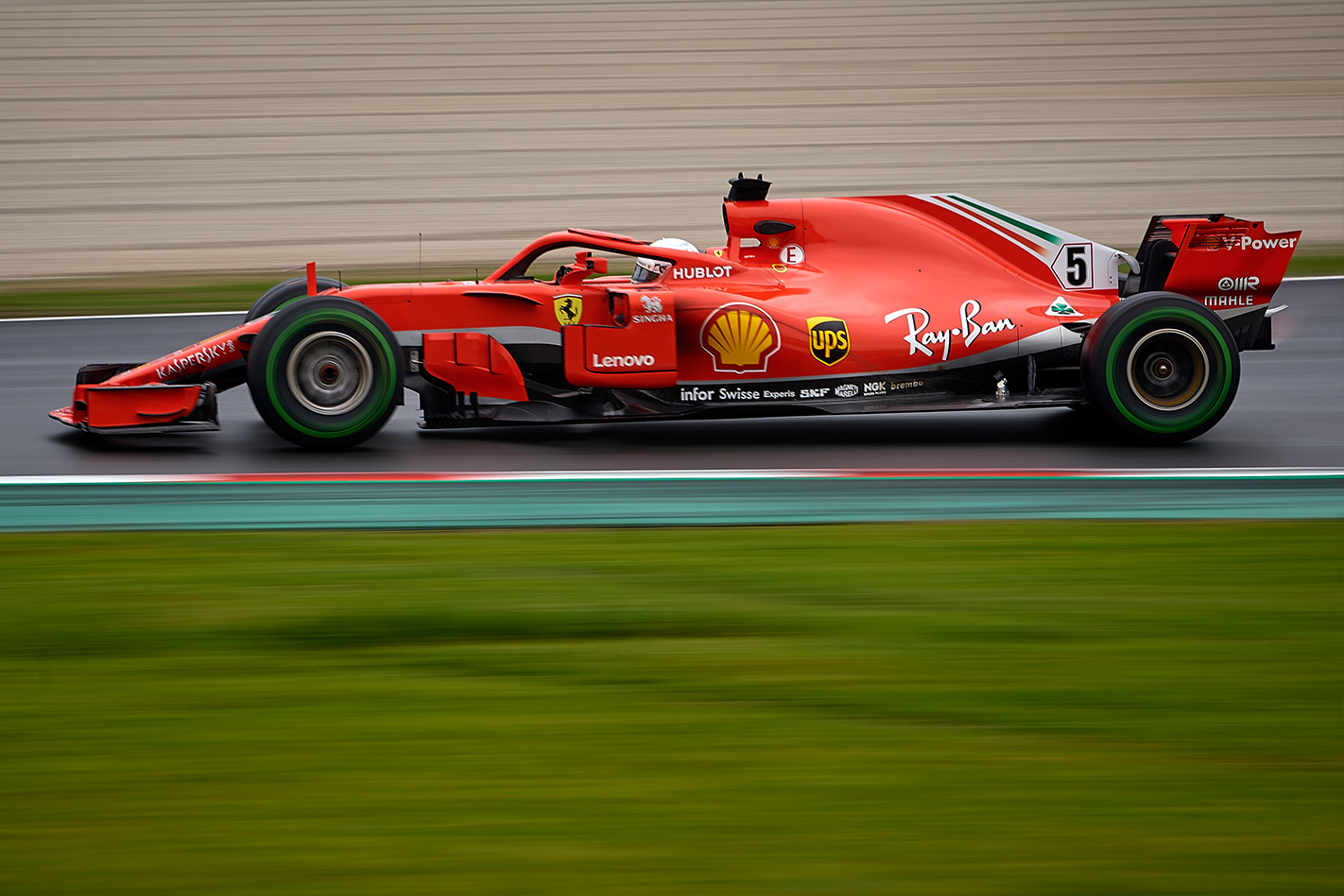
Ferrari again seems to be the most likely to challenge Mercedes in the 2018 F1 championship fight, with both Kimi Raikkonen and Sebastian Vettel consistently in the fastest runners on track.
However, the Mercedes team seems to have nailed its latest power-unit, which is all-new, where every other squad are running evolutions of their 2017 engines. It’s rumoured the Mercedes unit now produces in excess of 745kW in race trim.
The Formula 1 paddock will have the weekend to reset before starting the second pre-season test on Tuesday.
