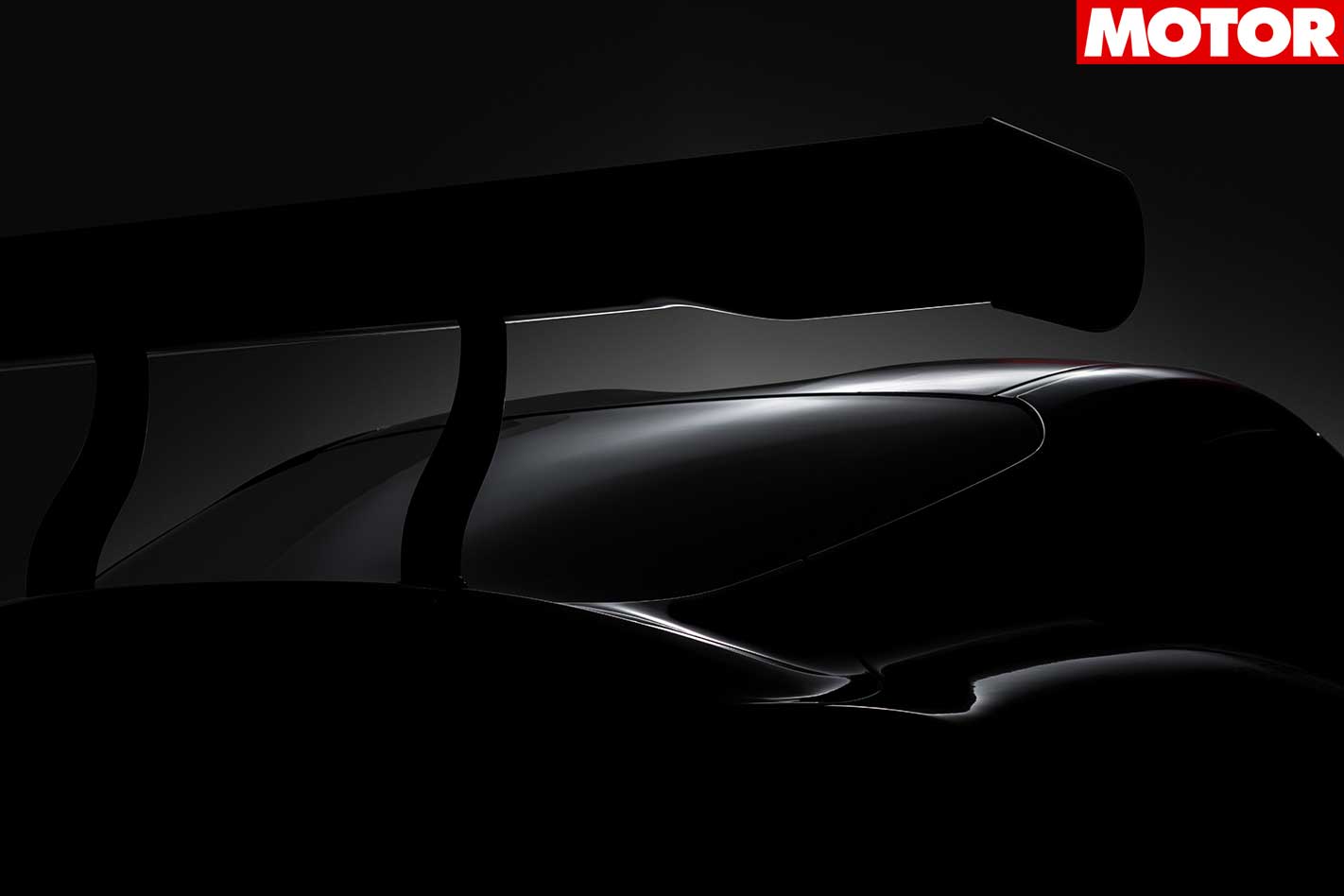
Toyota has teased the return of the Supra with a shadowy photograph of a tall rear wing ahead of the 2018 Geneva Motor Show.
But the wing doesn’t belong to the Supra, rather a racing concept which will be revealed to confirm the Supra’s existence.
In fact, the car might not even wear a Toyota badge. Rumours of a Gazoo sub-brand have been circulating, with the idea that the GRMN Yaris was testing the water.
We’re told it’s likely there are only a handful of people in the world who know everything there is to know about the incoming model.
While the reveal at Geneva is expected to be primarily a styling unveiling, Tada’s presence at the event means some technical details could come from the event.
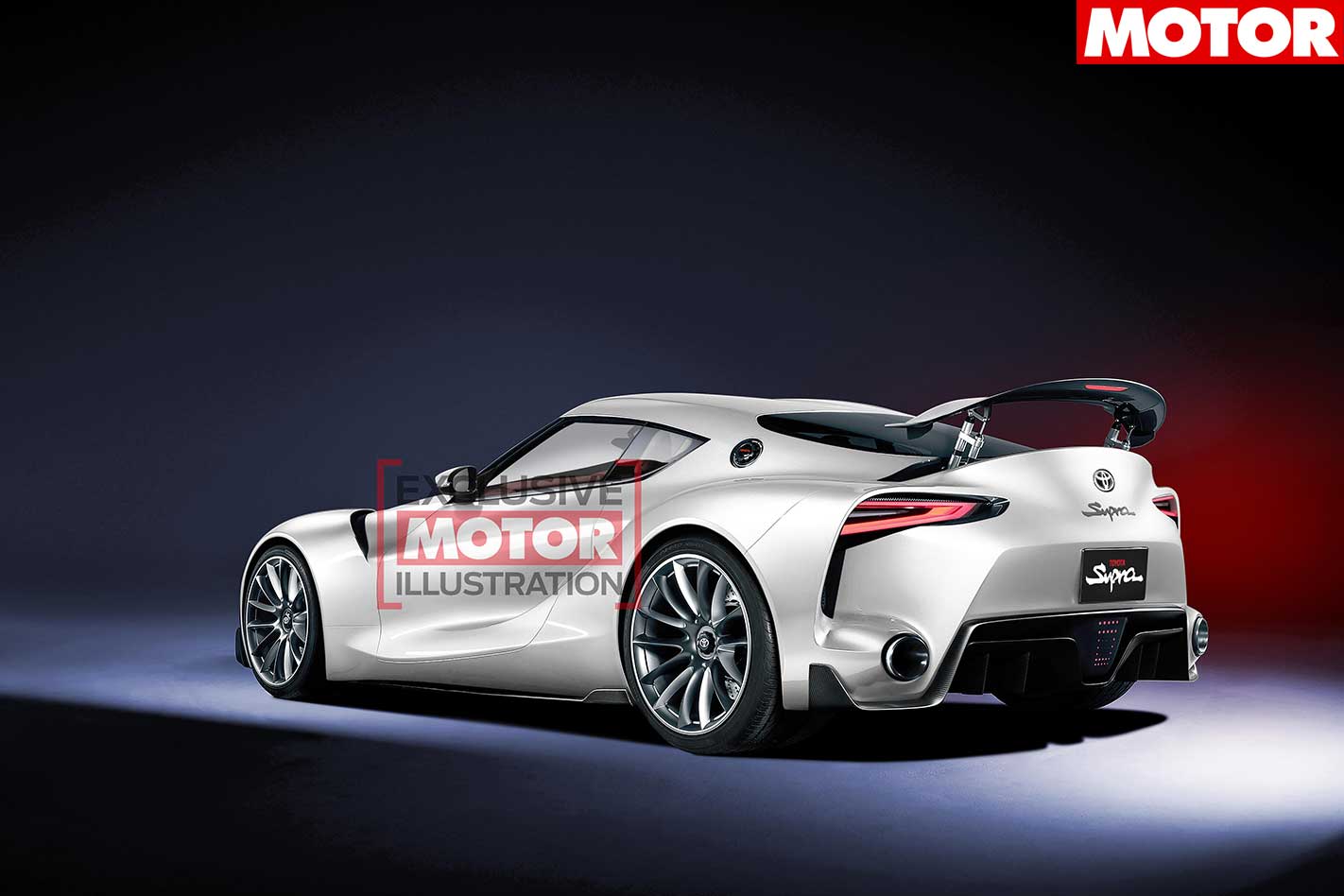
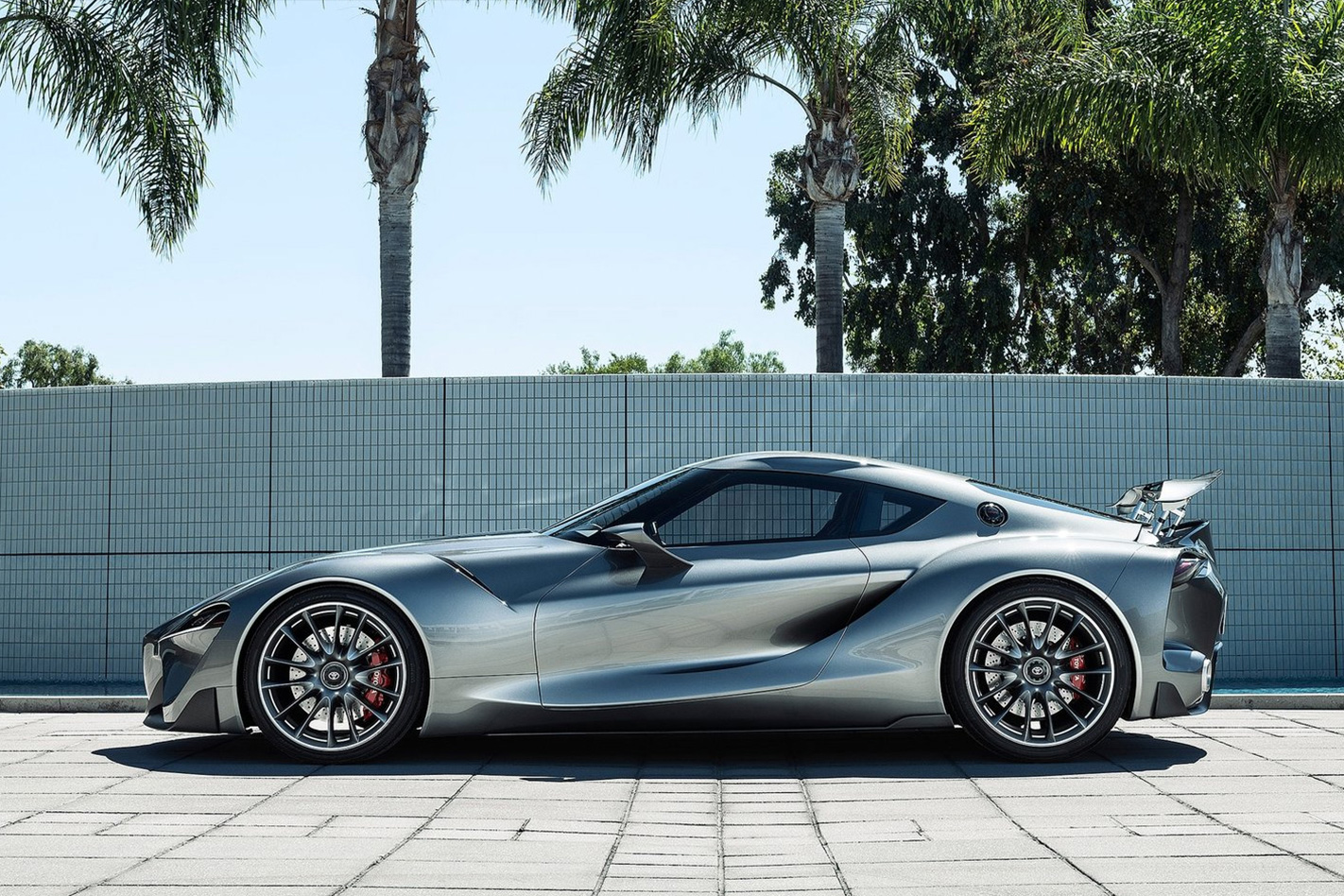
Visually, expect the car to closely resemble Toyota’s FT-1, but on a smaller platform due to the Z4’s smaller stature. Our renderings seen here are pretty spot-on, we reckon.
Featuring in the engine bay of the halo version, we’re expecting a 3.5-litre V6 with power figures in the 300kW/450Nm region, with WEC-derived hybrid tech helping power along.
Also expected is a 2.0-litre inline four-pot from Lexus in the lower-spec Supra, with around 225kW directed towards the rears.
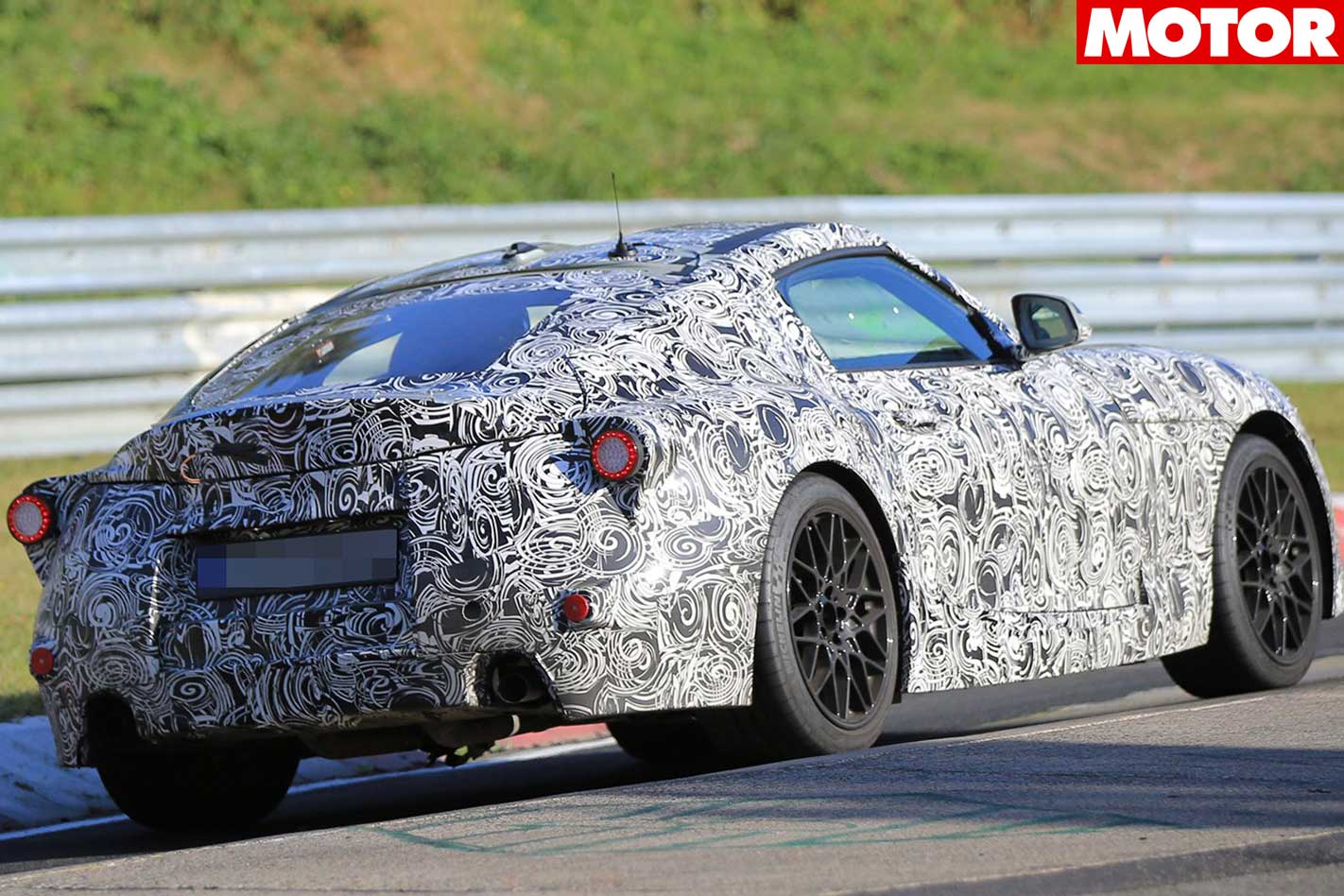
While it’s likely to be some time before we see the Supra – or whatever it’s going to be called – in its production form, 7.45pm on March 6 (AEDT) is when Toyota will officially announce its next halo.
AUSTRALIA’S appetite for cars, particularly those with a performance bent, is bigger than ever.
Supercars are selling in greater and greater numbers each year, making it harder than ever for the struggling multi-millionaire to stand out from the crowd.
Never fear, for Wheels is here with a solution, which will see a drab three-bay garage filled in the most spectacular fashion. Forget your Ferrari 488 GTB, McLaren 720s, or Porsche 911 GT3, what we have selected is on another level.

This particular GT40 never raced at Le Mans, having been produced as a spare chassis for the cars Ford did race at the French endurance classic. After being sold into private hands, it was turned into a finished car complete with a dry-sump 427ci V8 and 4-speed manual transmission in 1987. It is being sold without price estimation.

The RSR was Porsche’s first turbocharged race car, and oh boy, what a debut. Powered by a 2.14-litre flat-six engine with a turbo the size of a melon hanging of it, the RSR put 372kW to the ground via fat rear rubber which sat under thoroughly engorged rear arches.

Both the 911 RSR and GT40 will go under the hammer at the Amelia Island auction in Florida on March 9.

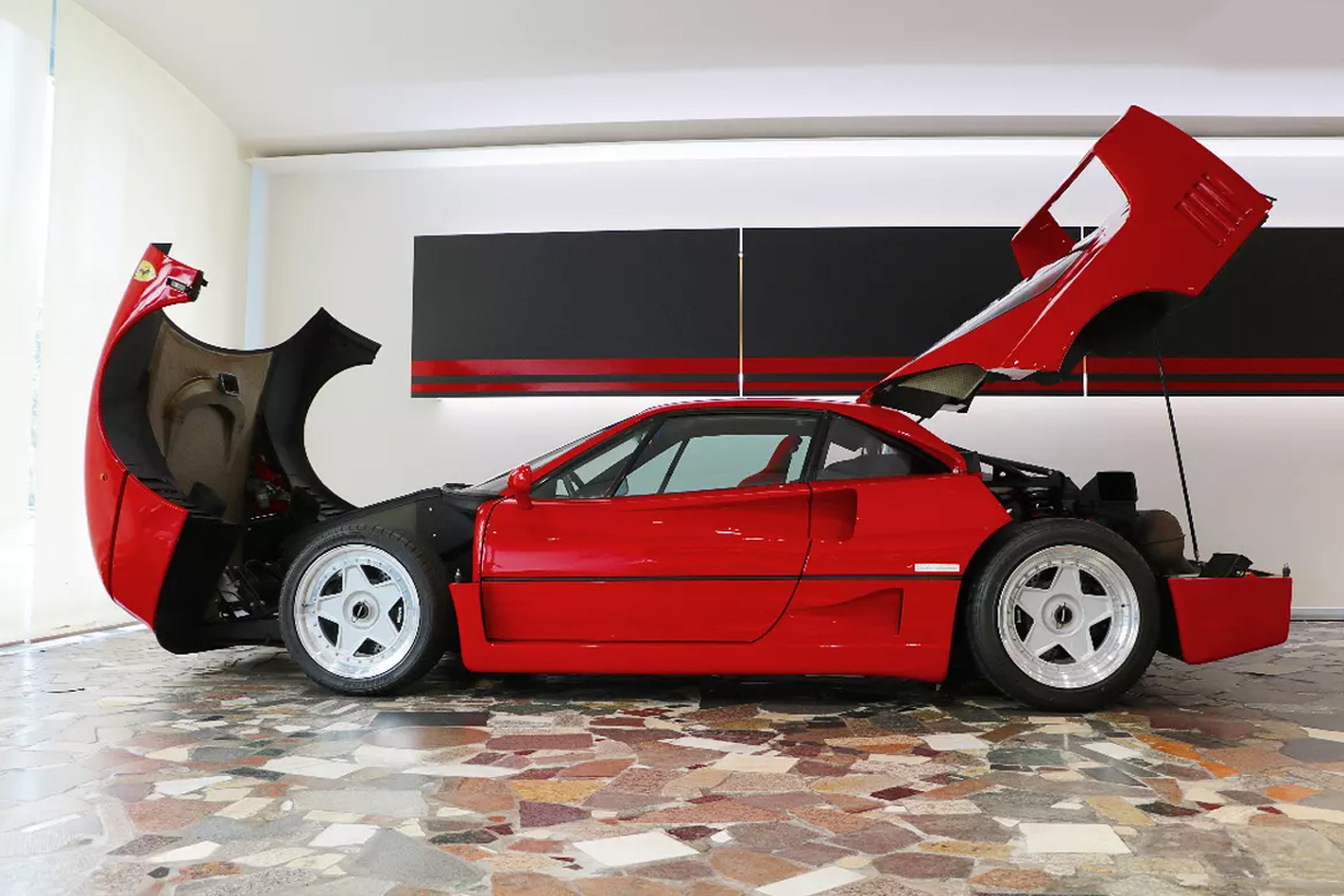
Arguably Maranello’s most famous product, a Ferrari F40 is currently for sale in Australia for a comparatively bargain price of $2.49 million.

Thankfully, you won’t have to travel all the way to Florida to snatch up the F40, with the prancing stallion being sold Down Under, after living the early days of its life out in Italy and England.
THE California Institution for Women prison is no place for a Playmate of the Year. Just ask Victoria Vetri.
This cinderblock hellhole that sits quietly broiling on the edge of the desert near Corona has been her home for five years and she has a few more left to serve. She doesn’t get too many guests, but when they do arrive, she knows others in the communal visiting area are whispering about her, surreptitiously pointing and judging.

- We drop a Mazda CX-3 into the Outback to follow Birdsville’s only cop
- 2017 Mercedes-Maybach Pullman S600 – The Shabby Sheikh
- A 2017 Ferrari 488 Spider on the famed Circuito del Mugello
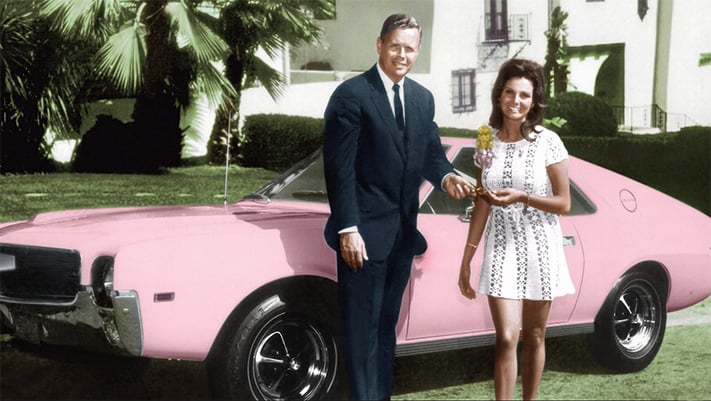
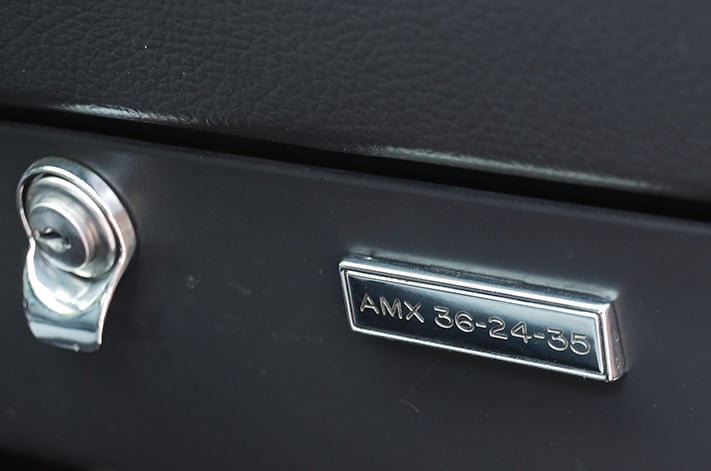
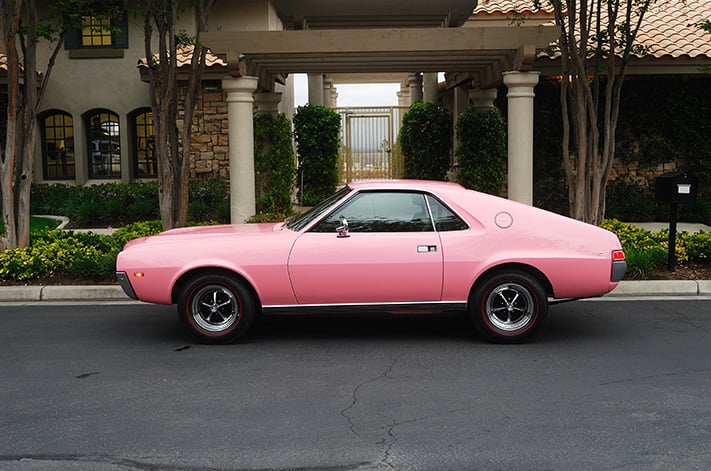
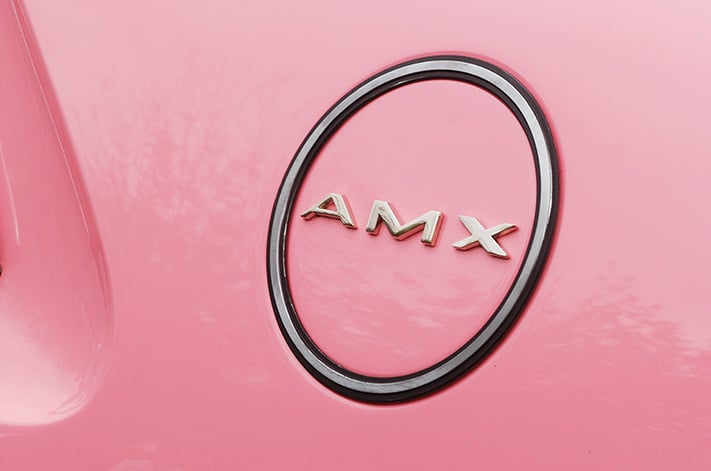
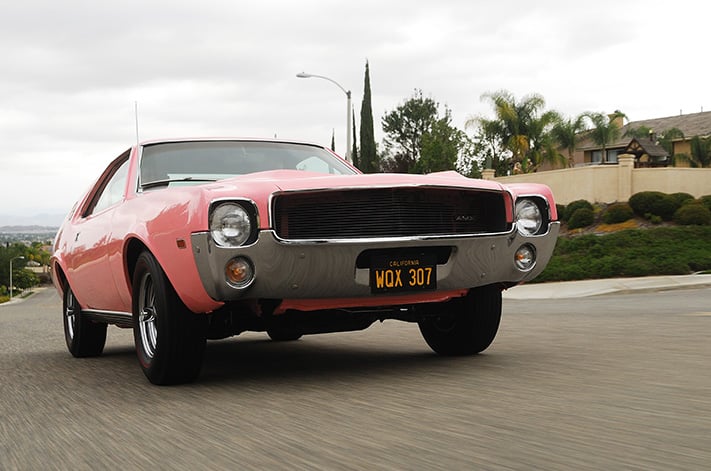
Wherever she travelled in the course of her official duties, the local AMC dealer would pull an AMX off their lot and it would be at Victoria’s disposal. AMC would traditionally number their cars but because her car was the Playmate special, Victoria’s numbered plaque read 36-24-35. Times were a bit different then.
“I hate the colour pink. When I was in Hollywood, it didn’t matter where I drove the little AMX, studio, market, wherever, it took me a little longer to reach my destination than if I would drive one of my other cars,” she explained. “Police would even pull me over, not for ticket, but for an autograph, and this happened once a week. Most people just would ask if I was ‘Playmate of the Year’ and that was end of it, however a few times I would be followed for great lengths and it would get ugly.”
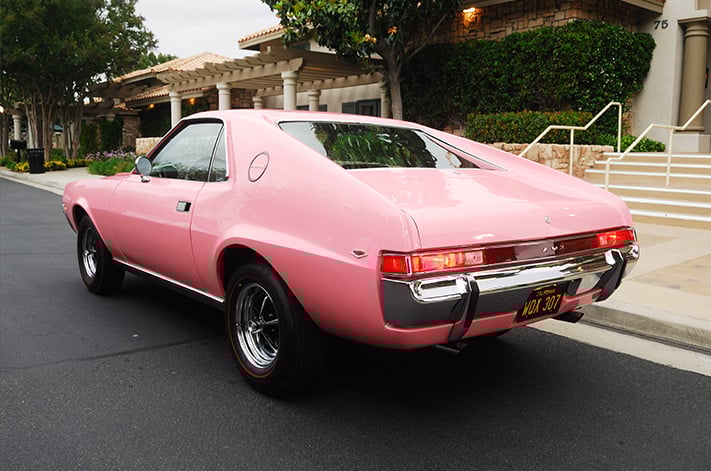
“My car was a base AMX, 290V8 automatic, but also nicely optioned with air conditioning, power steering and brakes, tilt column, AM/eight-track, fully tinted windows and bumper guards. Originally it had Magnum 500 chrome 1968 rims, but I changed them to slot dish mags. It’s one of only 484 in that 290/AT combination,” she says, clearly knowing her stuff. She vowed that one day she’d get it repainted pink.
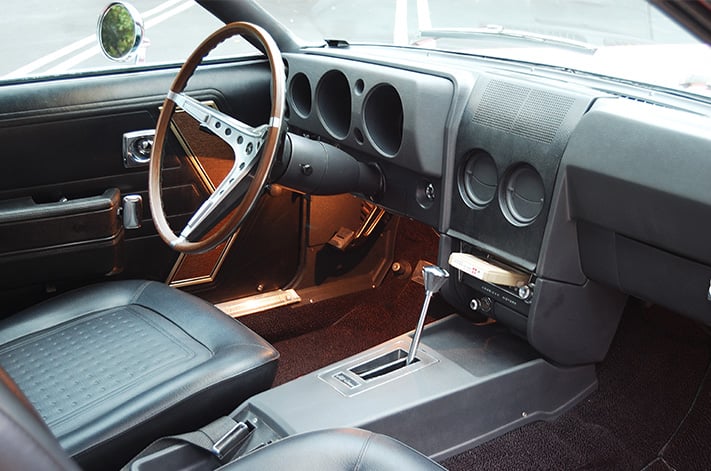
Roman Polanski flew back to California and, with the murders still unsolved, handed Vetri his personal handgun, a Walther PPK automatic as popularised by James Bond, as a measure of personal security. It was at that point that Vetri decided to respray her pink AMX. The gun was tucked away in her purse and there it stayed. Meanwhile, Polanski was pictured kneeling at his front door on 10050 Cielo Drive, the word “PIG” daubed over it in his dead wife’s blood, hoping the Polaroids would spark some spiritual vibe that would help solve the crime. As I said, times have changed.
After selling the AMX, Vetri had an argument with husband Bruce Rathgeb, over what she perceived was unfaithfulness on his part. He walked away and as he stood at his apartment block’s elevator doors, Vetri pulled the Walther PPK, which had stayed in her purse for 42 years and three months, and shot him in the back from about eight feet away.
Vetri was sentenced to nine years in state prison for shooting her husband after pleading no contest to attempted voluntary manslaughter. In addition to nine years in prison, she was ordered to pay $70,000 to California’s victim restitution fund. She cut a sorry figure at her trial, her beauty long faded, her wealth and fame a similarly distant memory.
That’ll be enough.
I BOUGHT IT: Mark Melvin
I got an email from a local AMC parts vendor that the car was for sale locally, to go check it out if I wanted. I decided if it was meant for me to buy the car it would still be there, so the next day after I got off work I headed down to this little used car lot by the beach to check it out. There it was, all banged up, greasy, dirty, but under the black paint was pink paint everywhere. Plus the DMV paperwork had her name on it. It appeared to be the real car. I asked how much, agreed to the price, placed a deposit, and returned the following weekend to take it home.
When I bought the car I was given the Playmate’s address and phone number but asked not to contact her until the DMV paper work was completed. The reason was that she couldn’t find the pink slip or title paper of the car when she sold it. Until the title was officially transferred maybe she could do something crazy like demand the car back. So I honoured the used car lot owner’s request not to contact her. Two hours after I heard that she’s shot her husband and was in jail, the used car lot owner called to let me know he had completed the DMV paper work and transferred the title into my name.
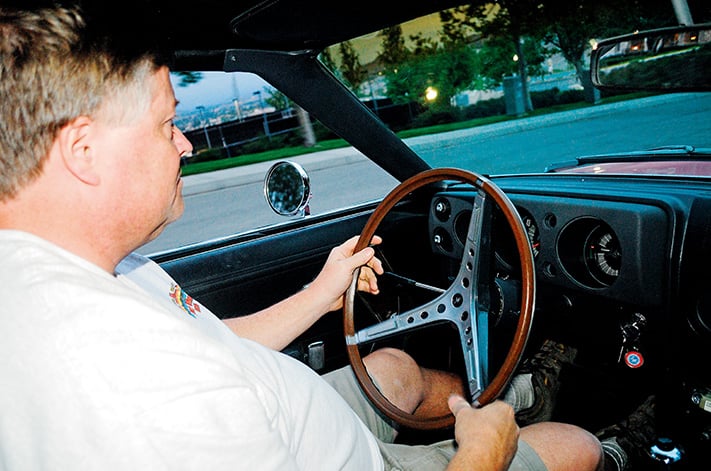
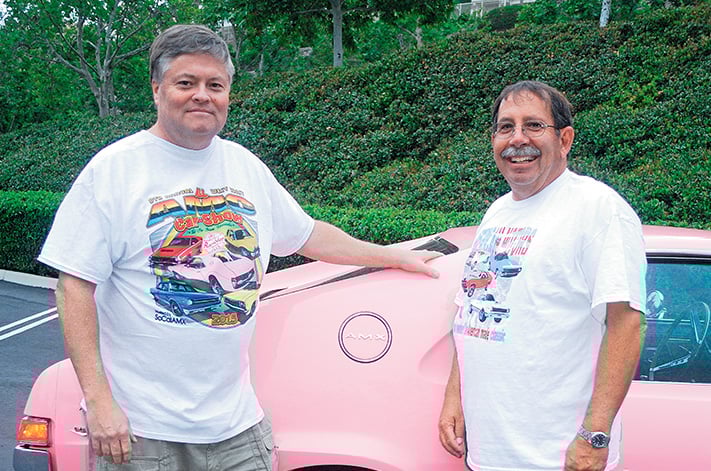
Since it appeared in the Jay Leno’s Garage video I have driven the car about 10 miles. On one of the weekends following the Leno appearance, the car’s builder Allen Taylor and myself drove over to my good friend John Siciliano’s home nearby, where we first took the car apart three years ago. I don’t plan to drive it much, trying to keep it as clean as possible and avoid some sort of “tragic mishap.” As long as it’s fun to take the car to shows and share it with the public, then I’ll do so as often as possible.
I RESTORED IT: Allen Taylor
There wasn’t a straight panel on the car when we got it. The only parts that was straight on the car were the windshield pillars. Other than that, the quarter panels were damaged, the doors were damaged, and the fenders were damaged. We had to replace the hood and the left fender. The right fender we had such a tough time finding that we actually rebuilt the original fender.
The quarter panel on the right side was all rusted out at the bottom which is typical of AMC cars. This (ns/r) side had a rip in the quarter panel that I had to hammer weld and put back together. The rear panel of the car had been rear-ended and the rear body panel had been pushed into the gas tank and had actually collapsed the gas tank. So all those panels were removed and straightened as well as the cross member on the radiator support on the lower front side. It was totally separated from both frame rails. Three or four years before Mark got this car, I had just completed mine and I did a full rotisserie restoration just like this one.
Lunar Calendar Girl
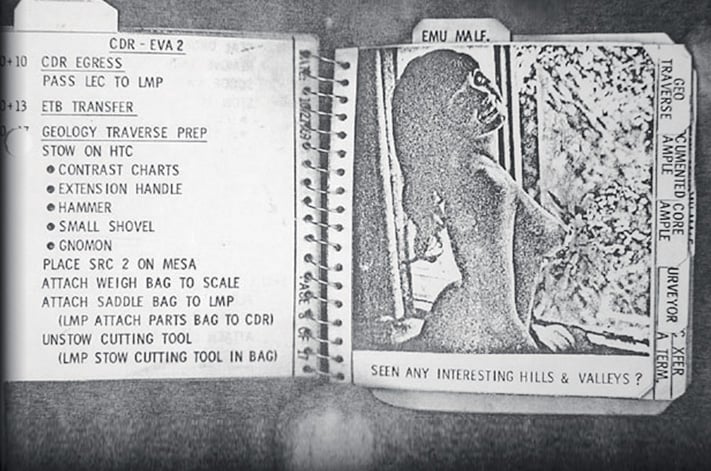
Yes, Victoria Vetri did go to the moon. The actual moon, not a Star Trek polystyrene one – or at least an image of her did. NASA equipped its Apollo moonshot astronauts with “cheat sheets” — checklists attached to the wrists of their space suits that acted as aide-memoires for their surface activities. The Apollo 12 backup crew of Dave Scott, Jim Irwin and Al Worden decided they’d give the first-teamer crew of Pete Conrad, Dick Gordon and Al Bean a bit of a grin on the lunar surface.
A little over two and a half hours into their first ‘extra-vehicular activity’ on the moon, Al Bean flipped to the page in his checklist that described the stages for taking a core tube sample. Smiling back at him was the bare-breasted Victoria Vetri, with the caption, ‘Seen any interesting hills and valleys?’
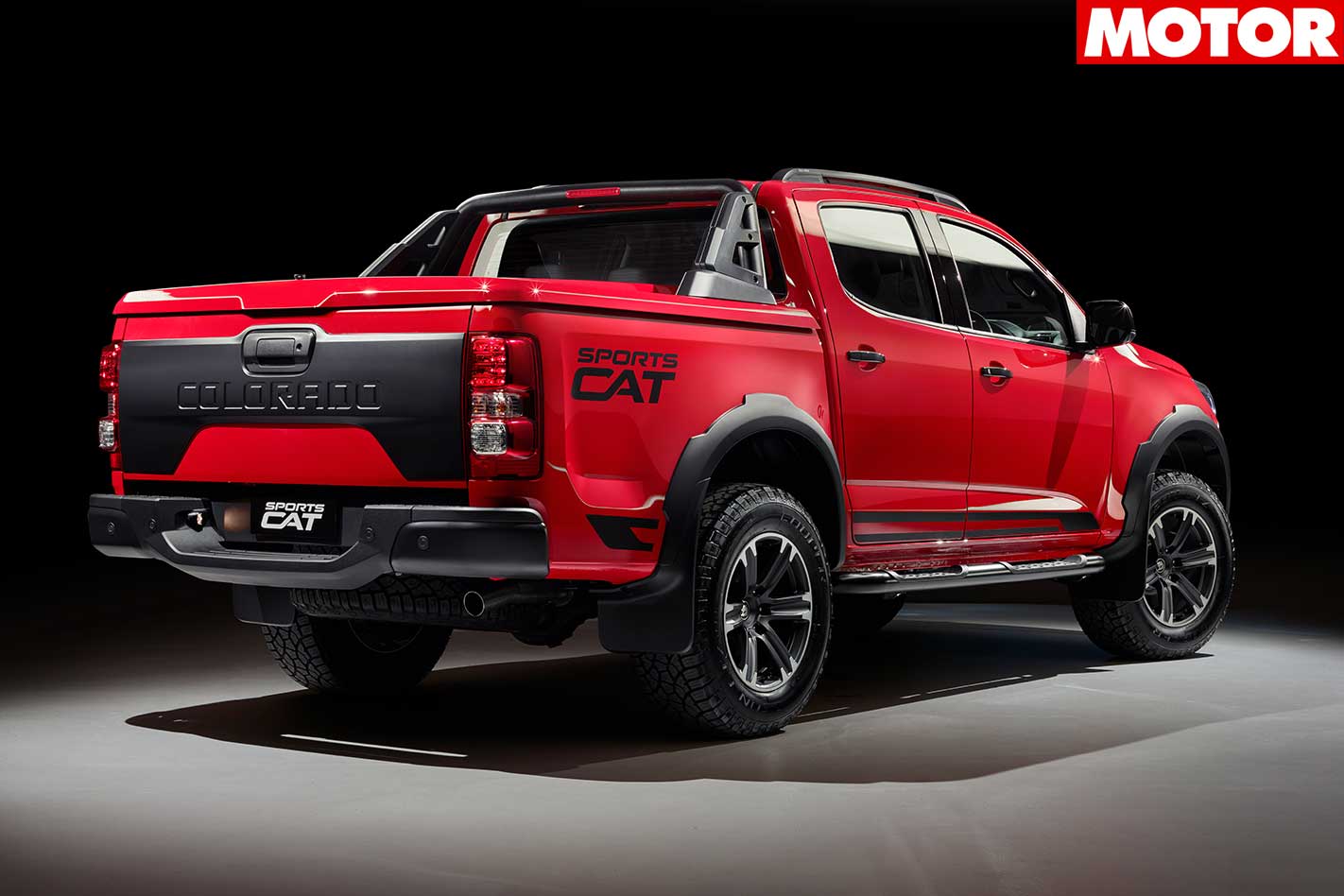
HSV’s modified version of the Holden Colorado ute is here, and HSV has revealed pricing for the SportsCat and top-spec SportsCat+.
At $60,790 before on-roads, the Colorado SportsCat represents a slightly more expensive vehicle than the Colorado it’s based on.
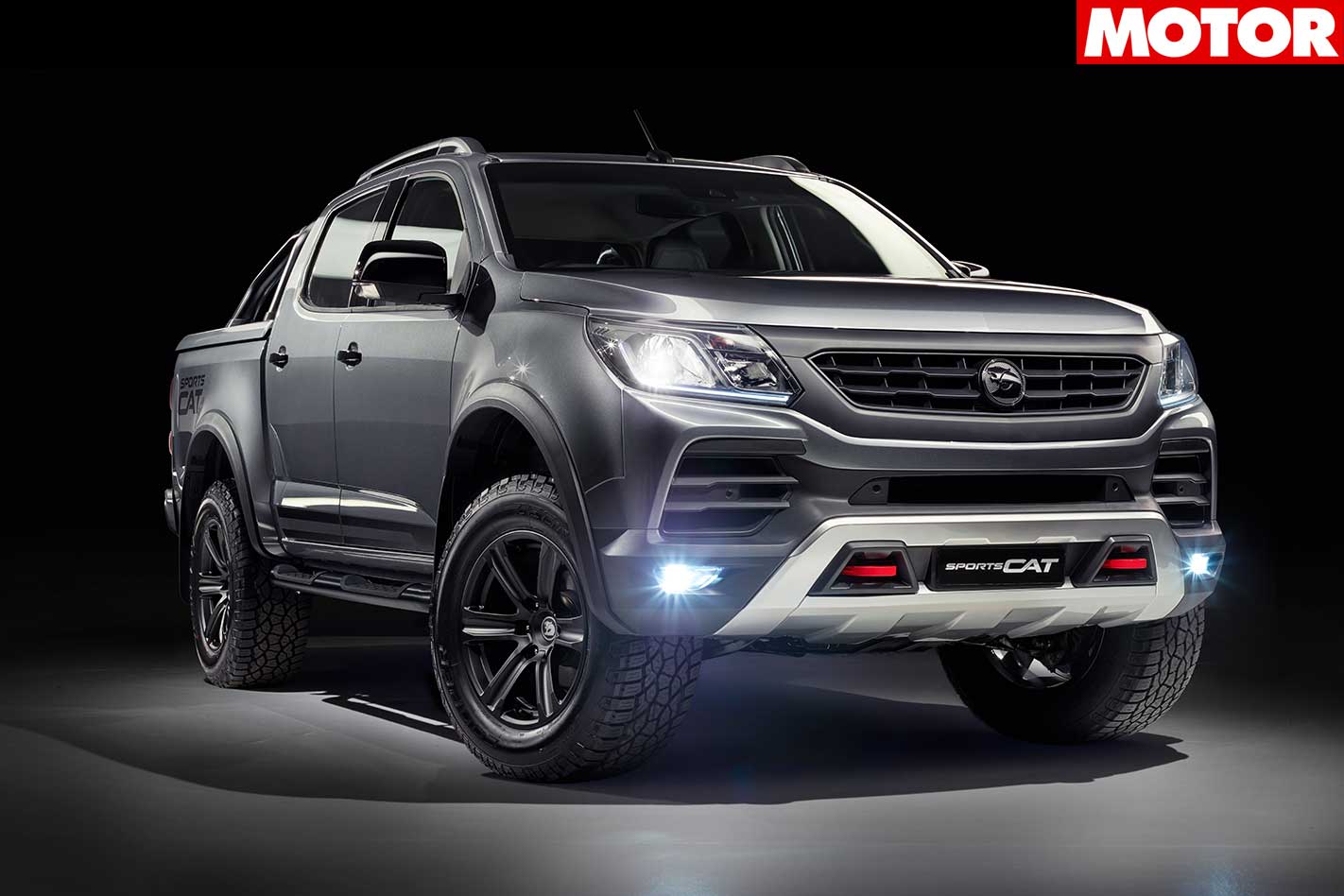
Neither version scores changes to the Colorado’s 147kW/440Nm 2.8-litre turbo diesel four-pot.
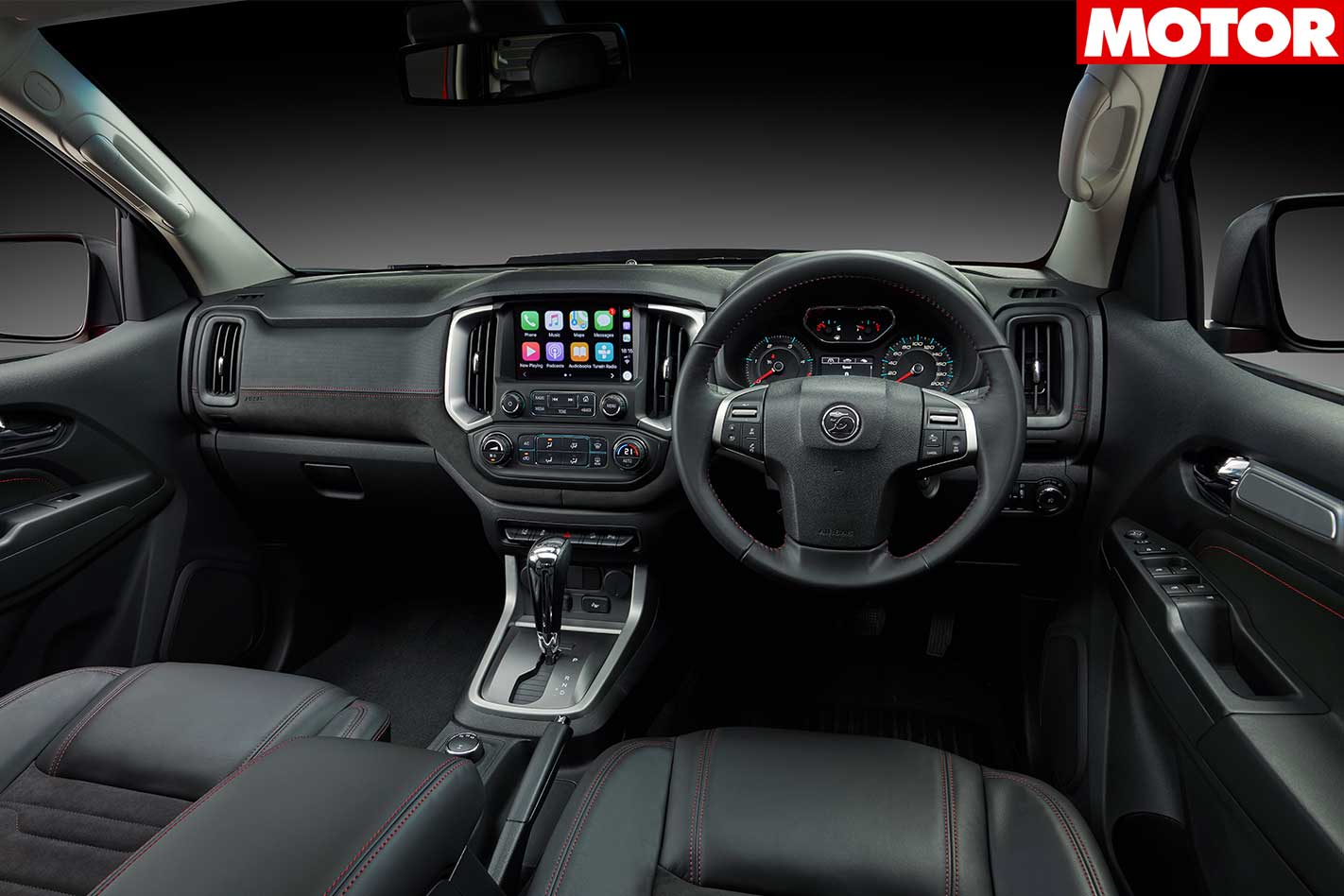
Inside, the addition of sports seats appointed in leather and suede is the most obvious change.
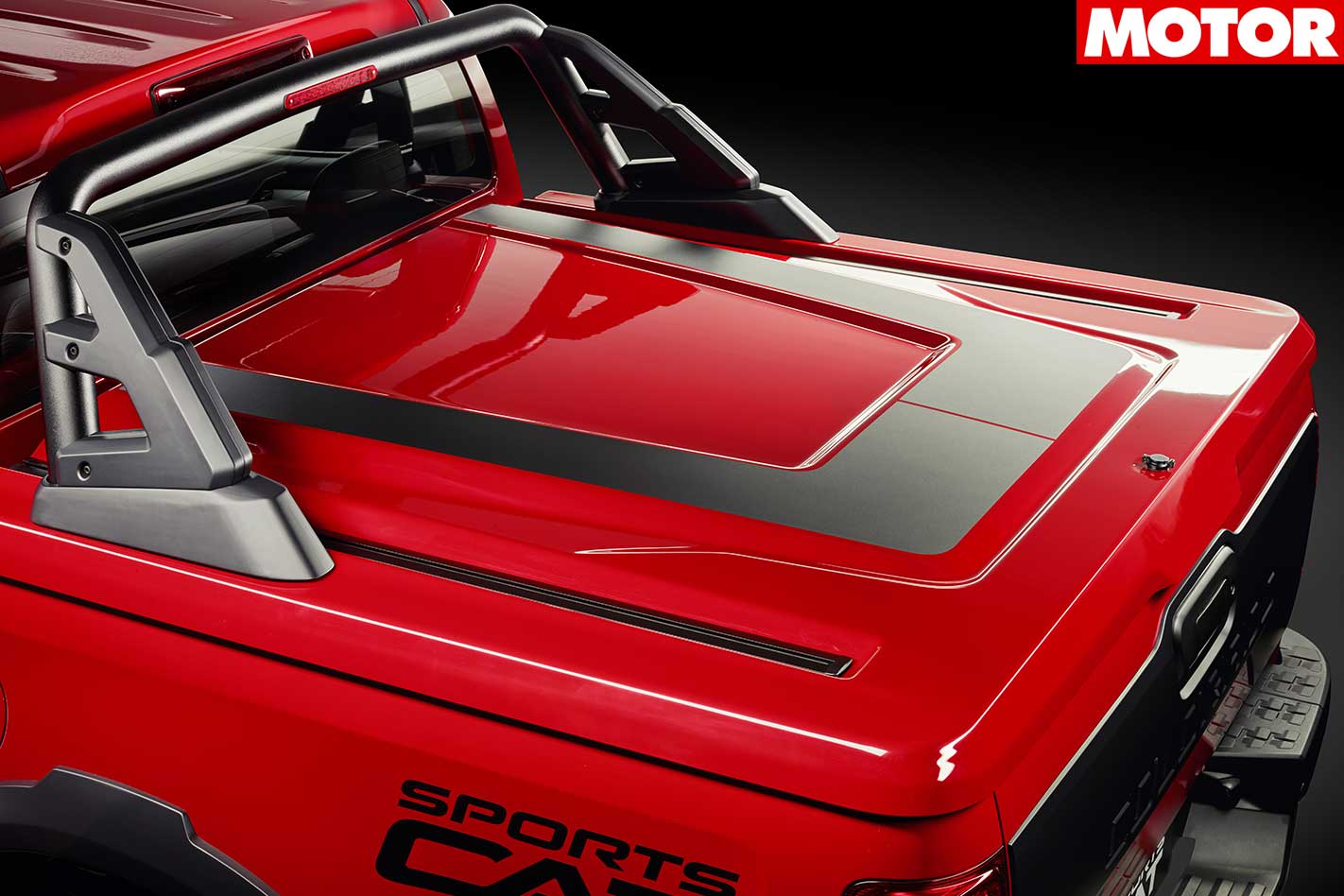
For the SportsCat+, a Sail Plane for the rear window (below) is available for $1300, while a SupaShock suspension kit sells costs $3,600.
“Given the breadth of styling, comfort and engineering enhancements, we’re confident the SportsCat range represents outstanding value,” says Jackson.
“Our two-tier product strategy provides buyers with the flexibility to choose the model that best suits their work and lifestyle requirements.”
Production of the SportsCat has begun in HSV’s new production facility in Clayton, and HSV says enquiries have already picked up regarding the model.
FINALLY, the moment you long-suffering Toyota fans have been waiting for: the triumphant return of the Toyota Supra.
Immortalised in 2001’s The Fast And The Furious but already regarded as a Japanese performance car legend long before that, the fourth-generation Supra earned itself a reputation for bulletproof performance and a tuner-friendly powertrain. A drag-strip darling, its popularity endures even 16 years after production ended.
And after a number of motorshow no-shows last year, Toyota has at last confirmed that we’ll be seeing the return of “its most iconic sports car” at the Geneva Motor Show on March 6. The company’s brief press release doesn’t mention the Supra by name, but we’re going to go out on a limb here and assume they’re not talking about the Celica.
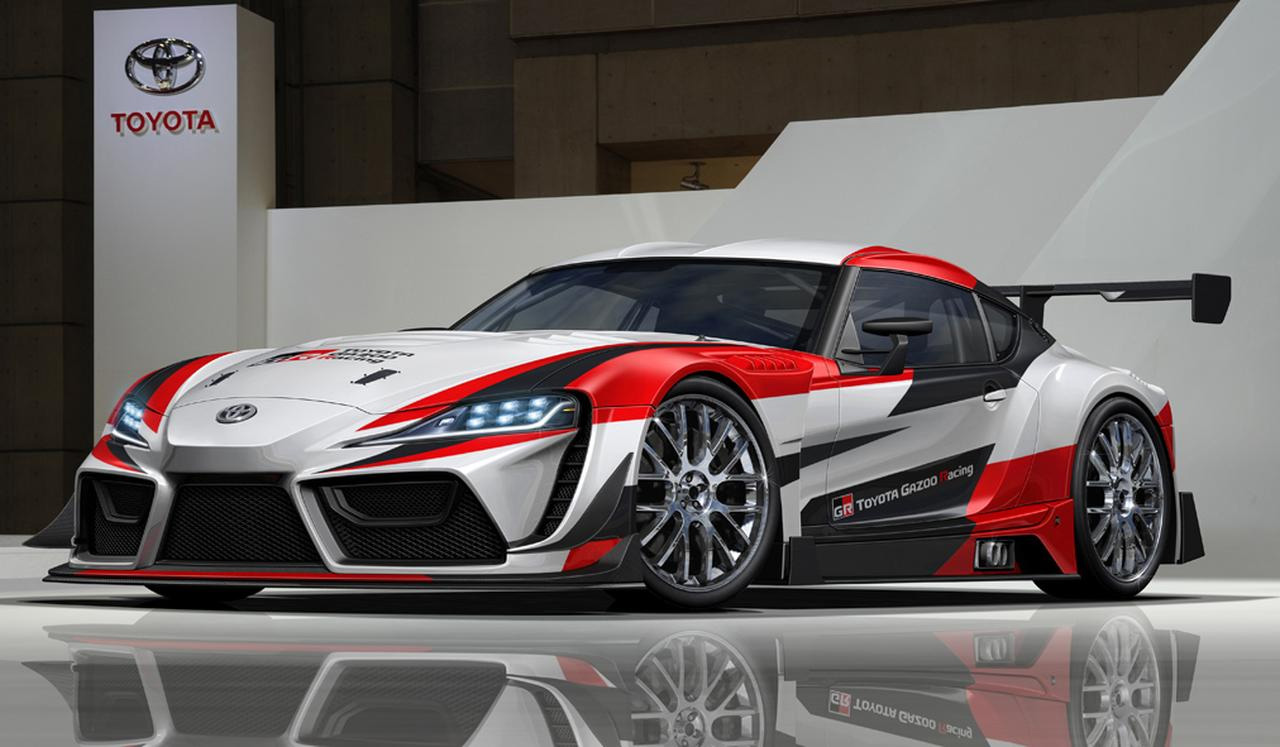
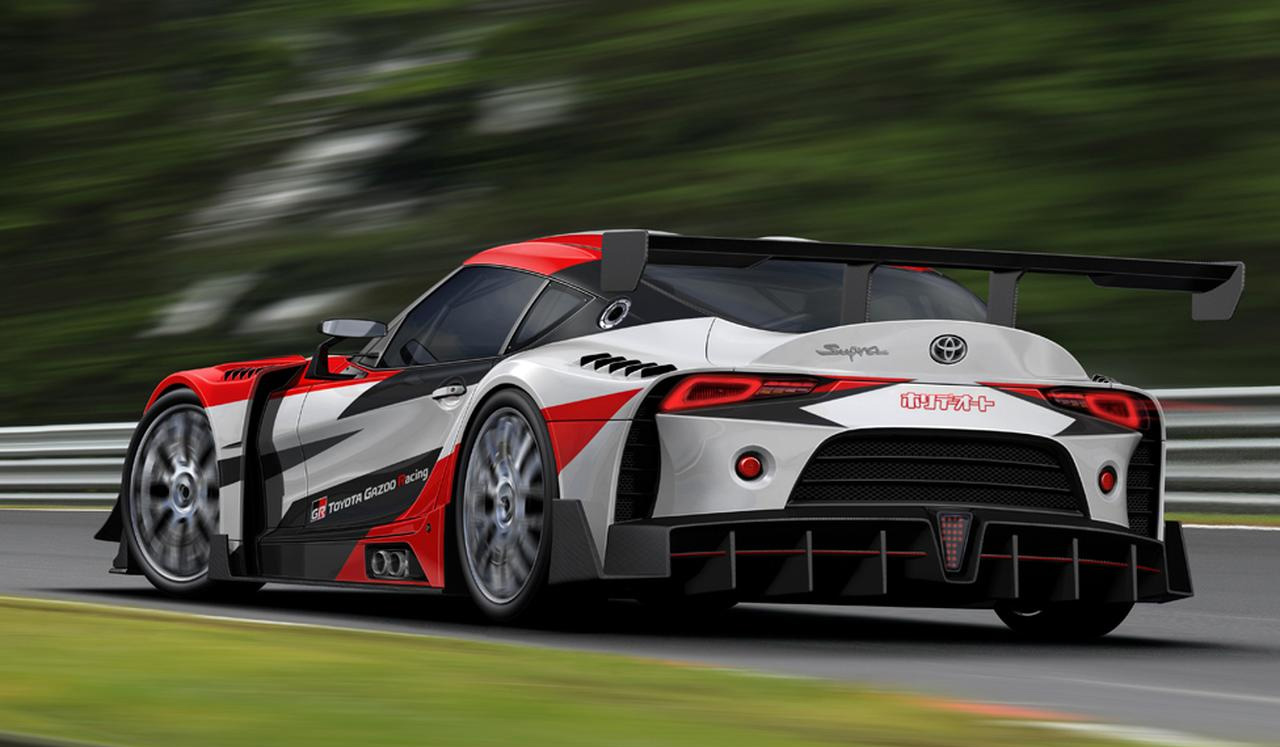
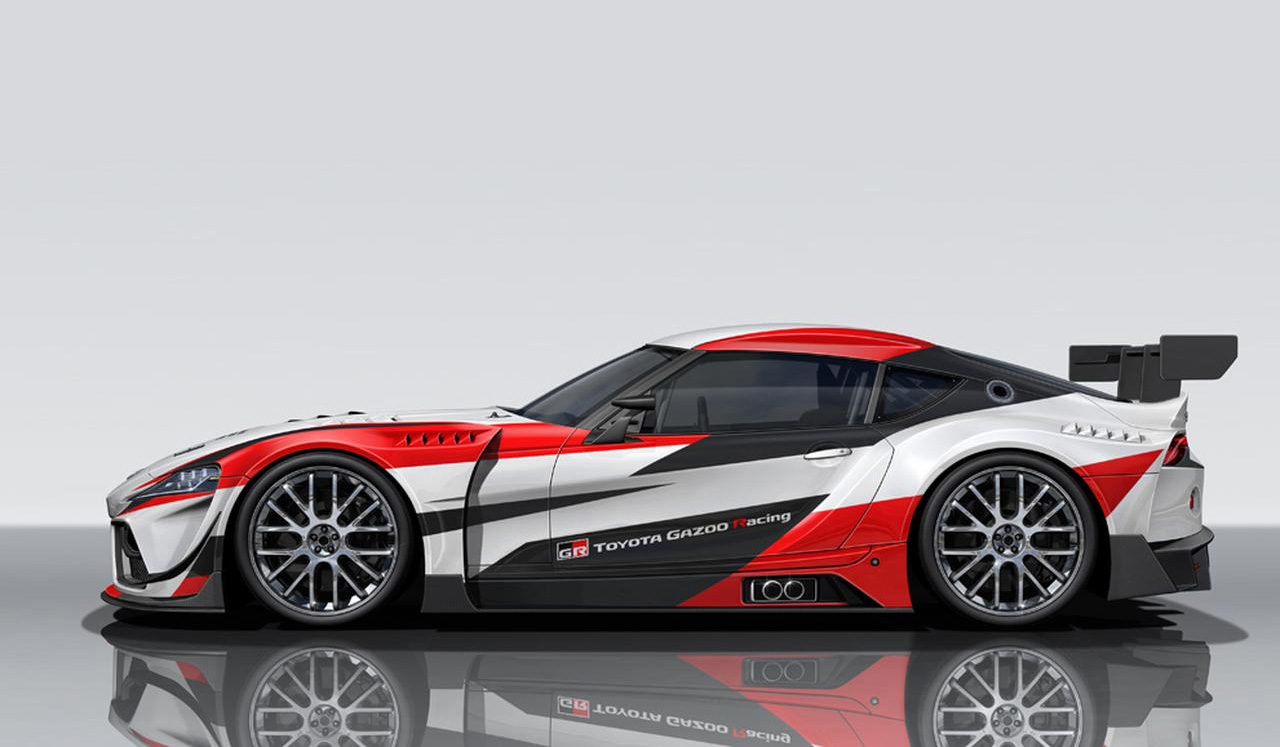
A teaser image released today is certainly tantalising. A double-bubble roof, fastback turret and integrated ducktail spoiler are all in evidence, capped off by a gigantic racing-spec wing. The wing, by the way isn’t likely going to be present on the showroom-spec Supra. Toyota says its Geneva show car will be a “modern racing concept” based on the Toyota Supra, so while the core appears production-ready, expect the racier elements to be toned down before it hits the production line.
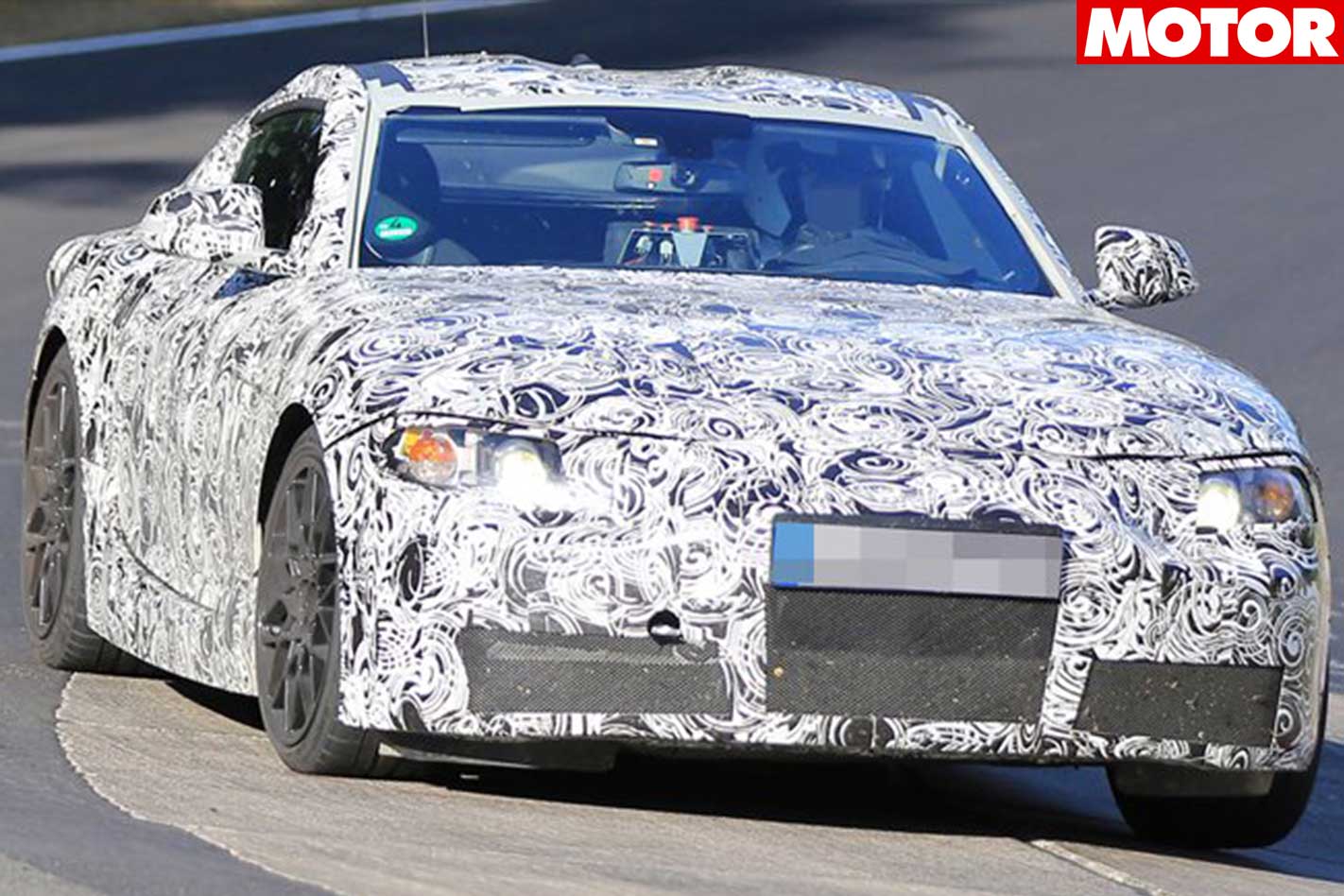
As for the numbers, they’re still a closely-guarded secret. That said, Japanese magazine Holiday Auto has not only published pics of what they say is the Geneva-bound Supra (below), but also claims to have the inside intel on its specifications. According to the publication, it’ll sit on a 2470mm wheelbase and measure 4380mm long and 1850mm wide. Height will come in at 1280mm, with kerb weight ranging between 1350kg and 1430kg.
Three engines are expected to be offered, though some may only be sold in emissions-sensitive markets like Europe. Holiday Auto reports that a 2.0-litre turbocharged four-cylinder will sit at the bottom end with a 143kW output (though that figure is hard to believe given the now six-year-old 86 makes 152kW from an atmo 2.0L), with a 188kW version of the same four-cylinder engine sitting above it.
As a result of BMW and Toyota’s technological alliance, the bulk of the Supra’s mechanicals – engine, gearbox and suspension – are to be based on BMW gear.
Is Holiday Auto’s speculation on the money? We won’t have to wait long to find out, with the Geneva Motor Show now just around the corner kicking off from March 6.
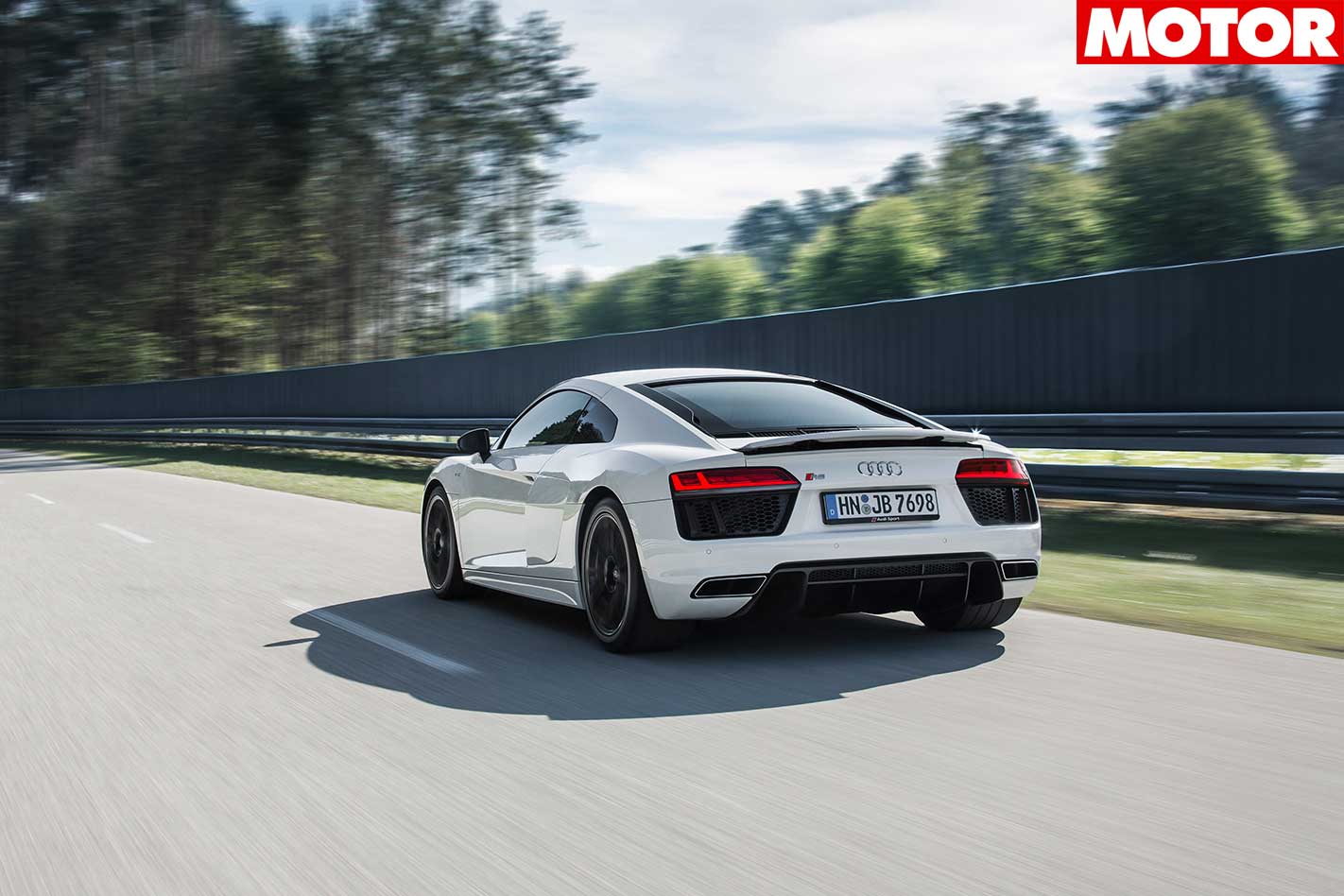
The first Audi production car to be rear-driven is coming to Australia.
The Audi R8 RWS has been confirmed to arrive in limited numbers locally, with pricing starting at $299,500 before on-roads.
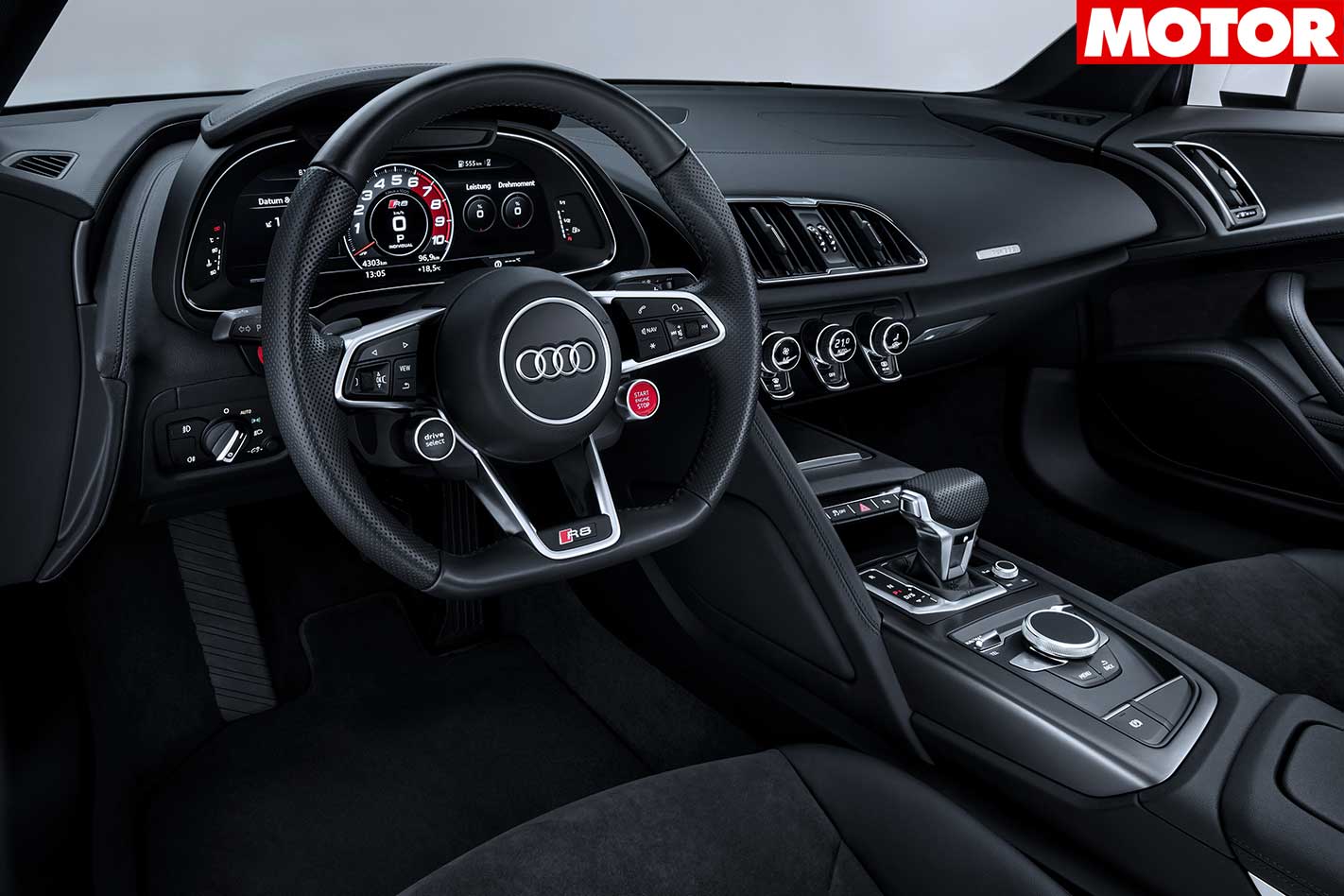
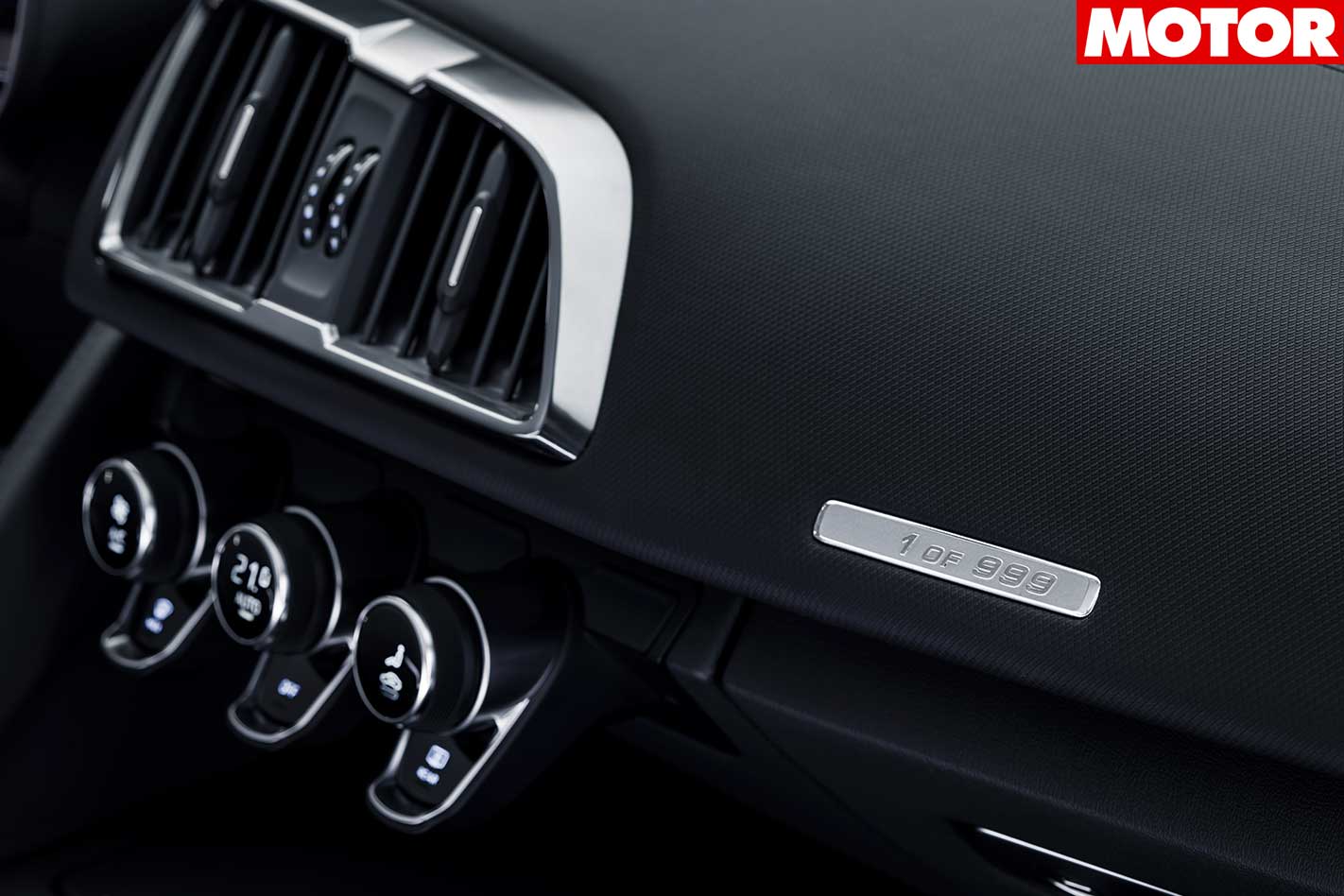
The RWS – or ‘Rear Wheel Series’ – is limited to 999 units worldwide, but few lucky Australians will be able to get one in either coupe or Spyder form.
Exactly how many are on the way Down Under hasn’t yet been confirmed with Audi Australia telling MOTOR it’s confident Australia’s reputation will secure a “healthy” allocation of cars.
“We know that we generally punch well above our weight in Australia, in terms of demand for performance cars, and so we’re hopeful of securing a reasonable number for our market.
“However as is usually the case, it’s best to get in early to have the best chance of securing one of our remaining allocation.”
Both variants are, however, the cheapest way into the R8 club, with the regular R8 V10 usually costing $354,325.
The 397kW/540Nm rear-drivers are powers by Audi’s atmo 5.2-litre V10, which sends power through a 7-speed dual-clutch and, of course, to the rear wheels.
Though don’t expect the heavier Spyder to nail that.
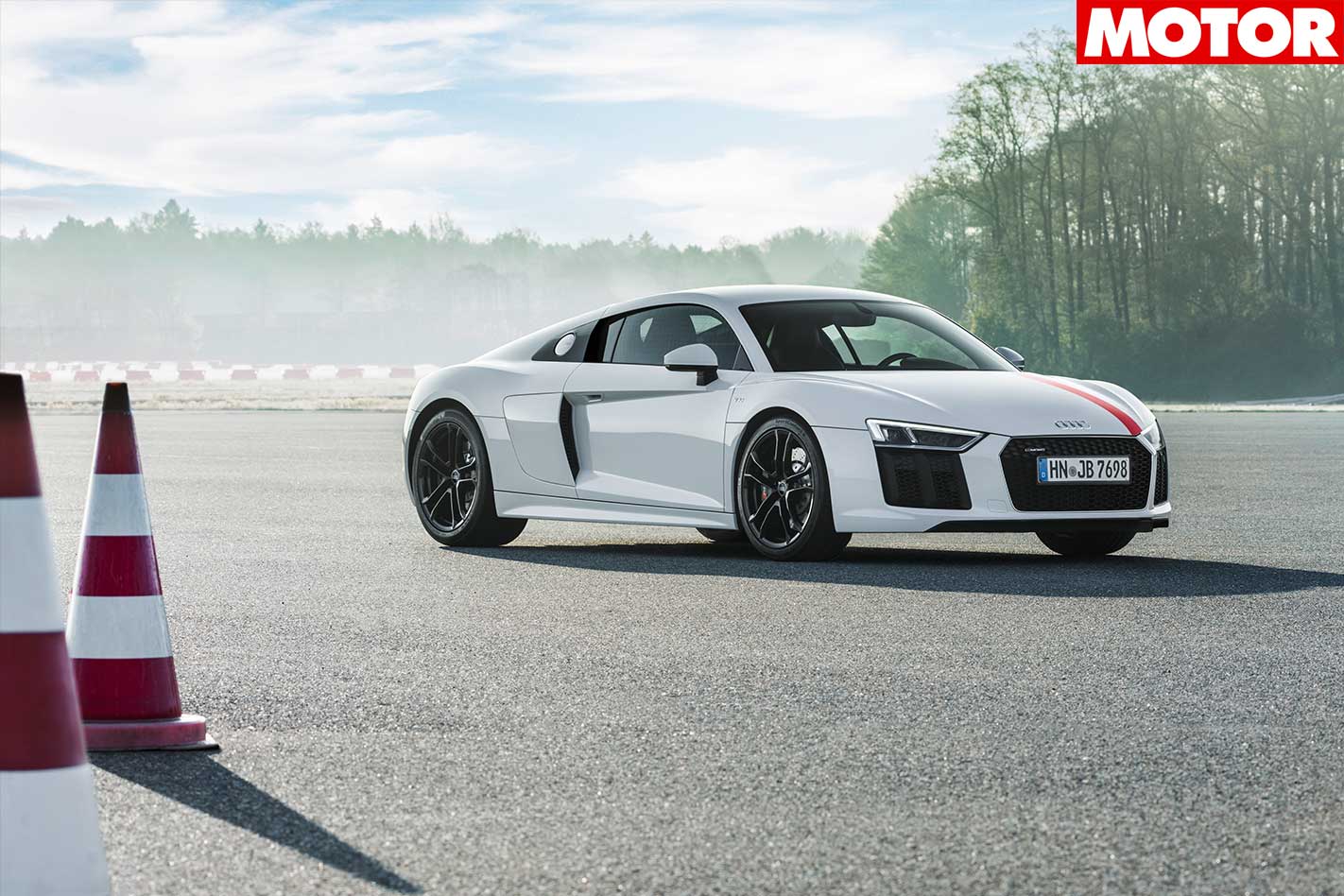
The RWS comes in ‘Ibis White’ as standard, though an Audi Sport GT stripe graphic is available as an optional extra.
“As a brand famous for quattro, this was a huge but exciting move for our brand… it’s hard to imagine any sportscar-loving owner who wouldn’t be motivated by such a modern classic supercar.”
The Audi R8 RWS will arrive in April, with local allocation yet to be confirmed by Audi Australia.
Audi is calling it the ‘Rear Wheel Series’. Instead, the Audi R8 RWS – the German luxury brand’s first rear-drive R8 sports coupe – should probably be calling the “Rear Wheel Steer” in reference to its more tail-happy focus.
Only 999 of the limited-edition R8s will be built for Audi’s global audience, with an undisclosed number available to Australian buyers from April.
Priced from $299,500 for the coupe and $321,000 for the rag-top, it’ll be the cheapest R8 since the 4.2-litre V8 version was dropped from the line-up in 2016, and the first time the price of the V10 has dipped below $300K.
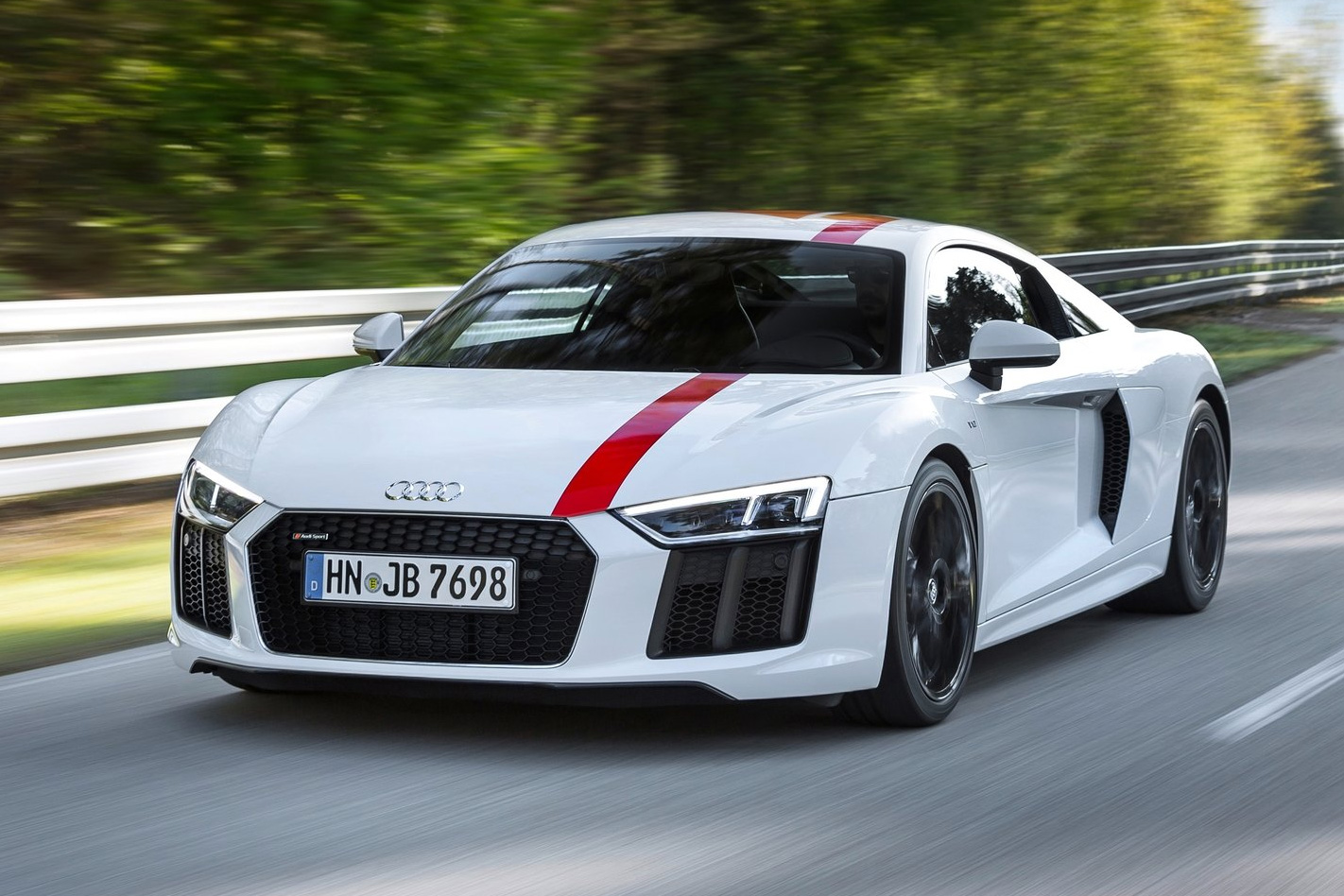
The launch of the non-quattro R8 comes in the wake of Audi winning the 2018 Bathurst 12 Hour endurance race, the car’s first win since back-to-back enduro victories on The Mountain in 2010-11. It also places the R8 on an equal rear-drive footing with the likes of the Mercedes-AMG GT, the Porsche 911 and the McLaren 570S.
The rear-drive R8 is no show pony. Audi says it shares half its components with the R8 LMS race car that claimed the Bathurst victory; itself developed to conform with the GT3 category’s demands for a rear-drive layout.
“The Audi R8 RWS is such an exciting car for us because it’s the very first rear-wheel-drive production car ever built by Audi,’ Audi Australia managing director Paul Sansom said.
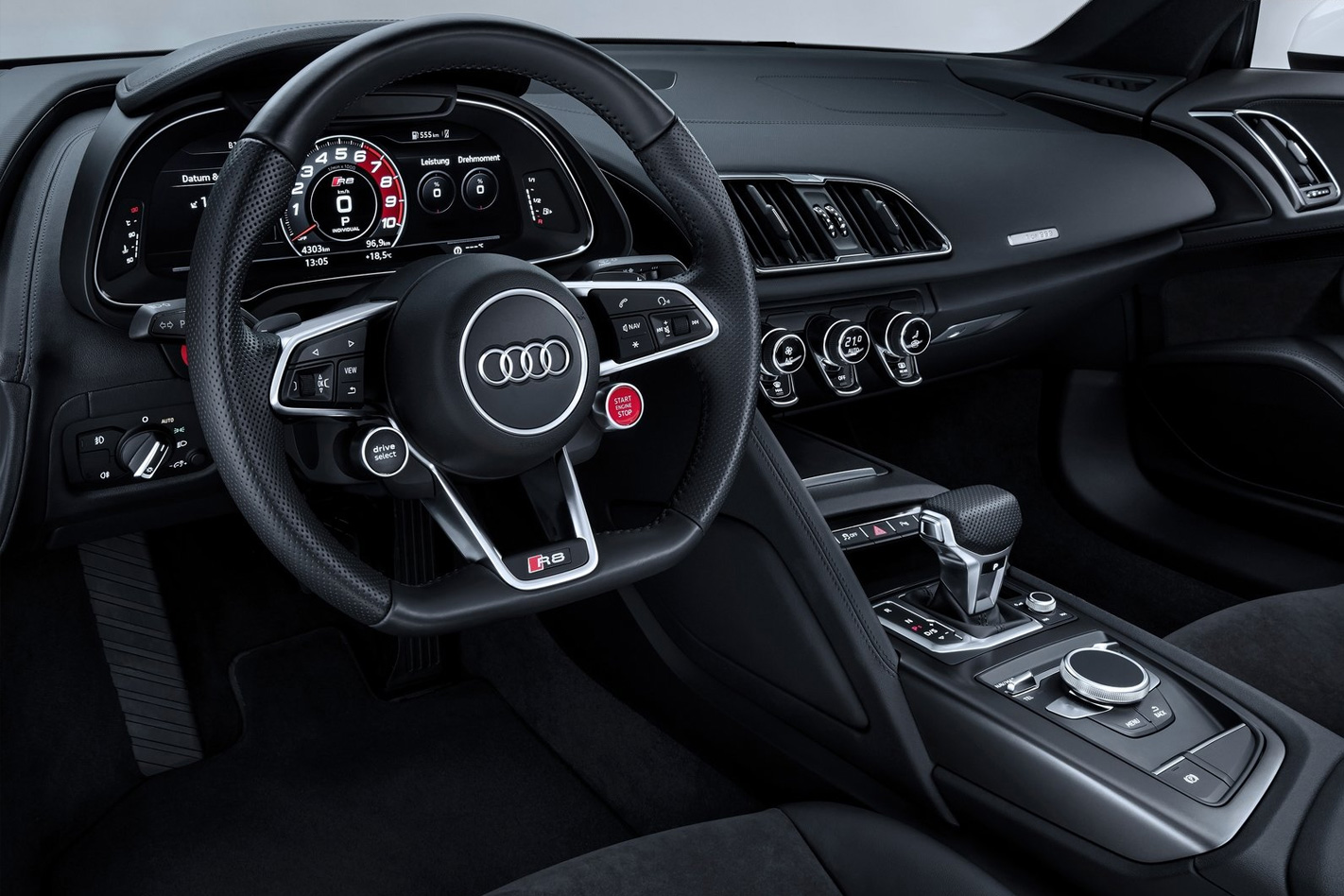
“As a brand famous for quattro, or all-wheel drive, this was a huge, but exciting move for our brand in once again demonstrating our Vorsprung, or progressiveness, to consumers,” he said.
The R8 RWS uses the same 397kW/540Nm 5.2-litre V10 engine as the all-wheel-drive version, paired with the same seven-speed dual-clutch transmission.
The loss of the front-wheel-drive mechanicals sheds 50kg of weight compared with the quattro version, but the 0-100km/h sprint misses the quattro system’s extra traction off the line, growing the R8 RWS’s time by 0.2secs to 3.7secs.
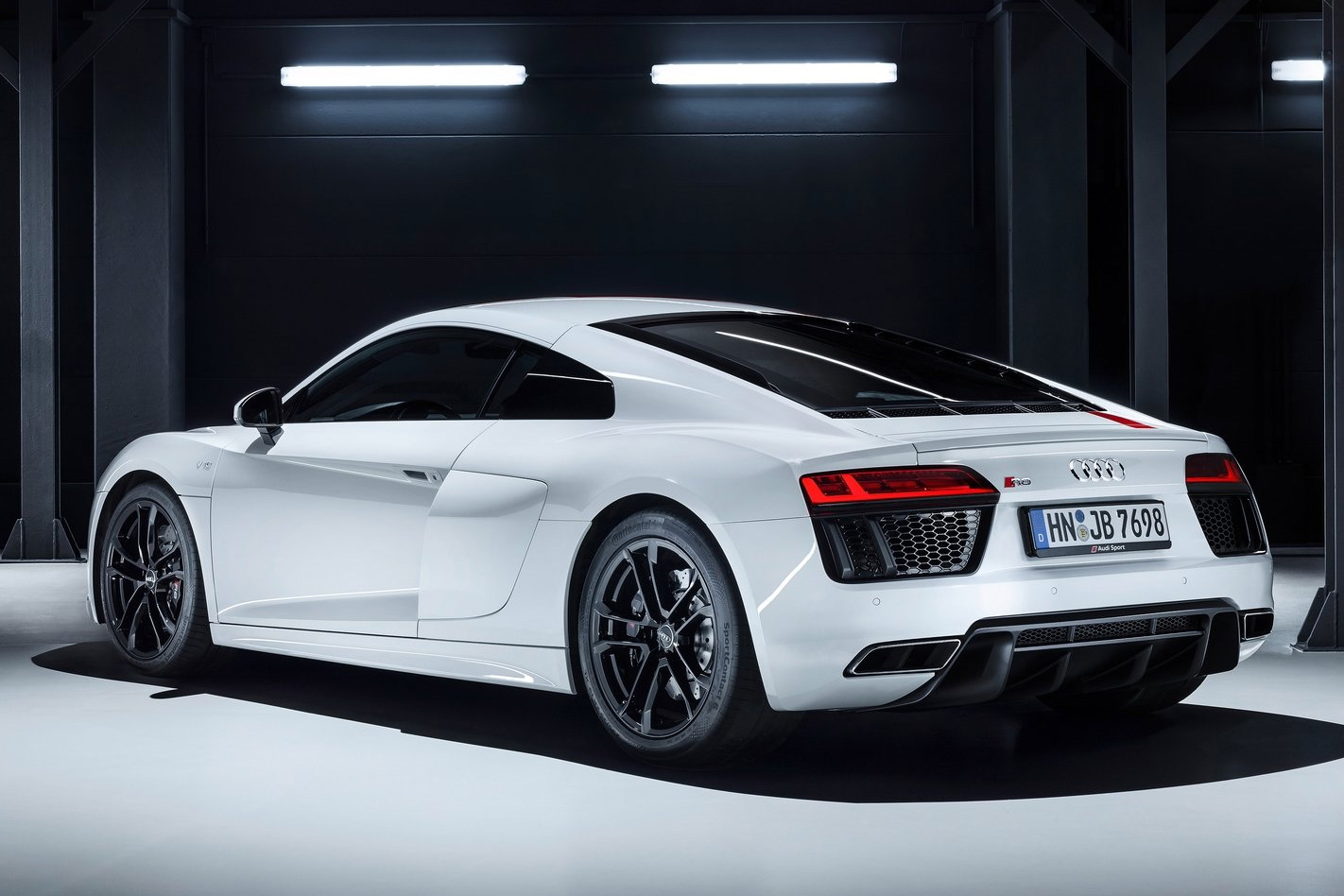
The R8 RWS comes in Ibis white with a contrasting red Audi Sport stripe, and matte black body features to help it stand out from the more boulevarde-focussed models. It sits on 19-inch alloys as standard – optional 20-inch versions are available, as are red brake calipers – with eight-piston calipers on the front and four-pot versions down the rear wrapped around race-bred wave discs.
It’s also the second limited edition version of the new-generation sports coupe to arrive in Australia. We’ve already had the Australia-only R8 Plus Neuberg land here last year, featuring more carbonfibre trim than standard models and a richer equipment list, with buyers snapping up the allocation of just 10 units.
The Audi R8 RWS isn’t expected to be the last of the special models heading our way. Australia, which punches above its weight in its love of RS-badged Audis, can expect even more special models to roll off the production line.
TELL ME ABOUT THIS CAR
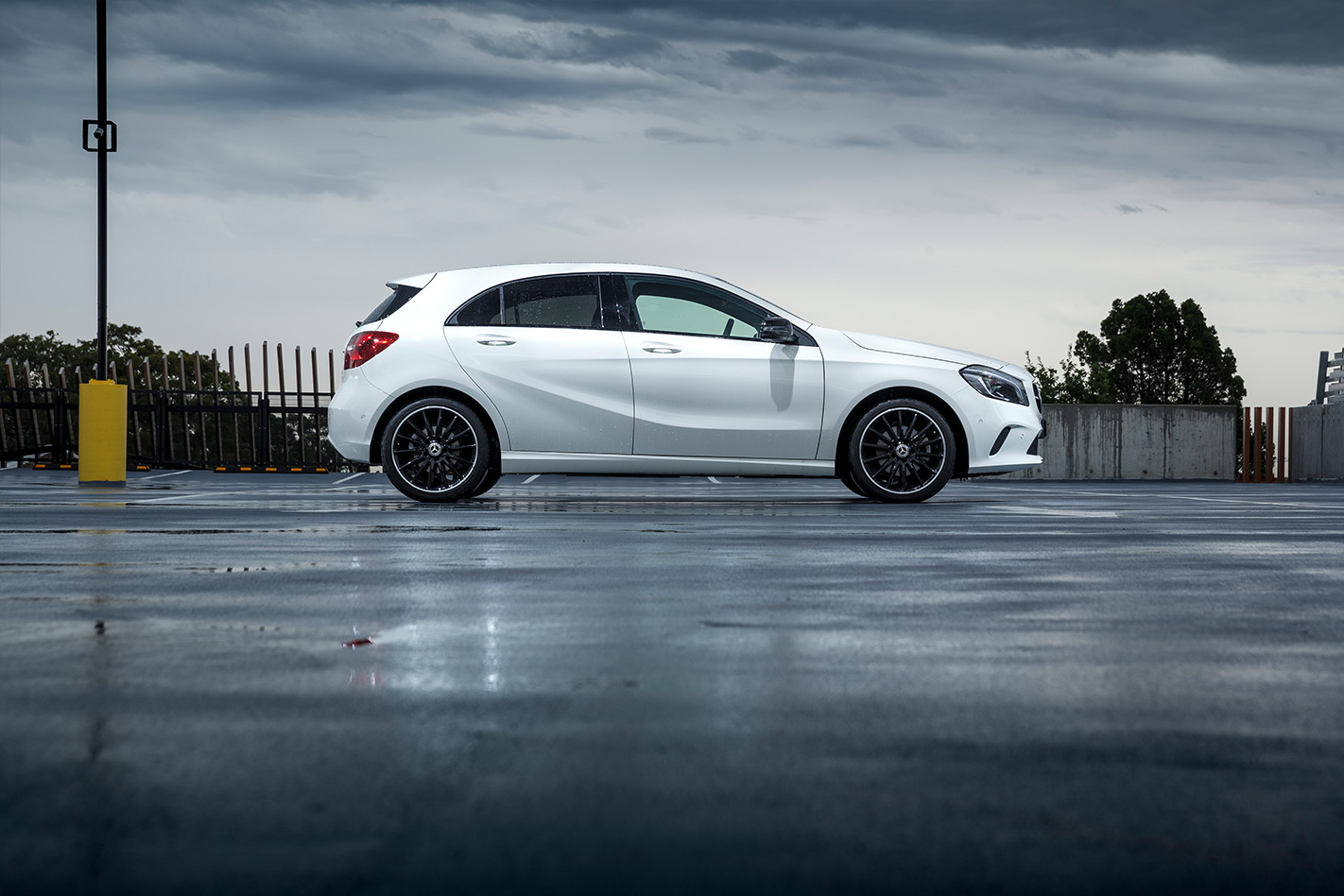
From now until the end of February Mercedes-Benz is offering a limited number of A180 City Edition hatches at a compelling driveaway price of $39,990. It’s a special version of the third-gen A-Class that includes all of the normal A180’s equipment plus premium styling additions to make it look convincingly more expensive than it actually is. It won’t be long before the current range is replaced by a new-gen A-Class, but if you’re in the market right now, the A180 City Edition represents decent buying.
STRENGTHS
Value: Cars at this entry-level end of the premium segment often come with the badge you want but very little of the equipment you need. That’s not so much the case with the A180 City Edition. It includes a generous amount of equipment as standard, including; a reversing camera, keyless ignition, digital radio, Apple and Android smartphone integration, shift paddles, parking assistance, and blind spot monitoring – much of which is absent from its competitors.
Performance: Moderate figures of 90kW and 200Nm offer perky performance in the A-Class frame and come from a 1.6-litre turbocharged four-cylinder engine. Peak torque is available from down low and across a wide chunk of the rev-range, and it maintains speed well once on the move. Fuel efficiency is also notable at 5.8L/100km.
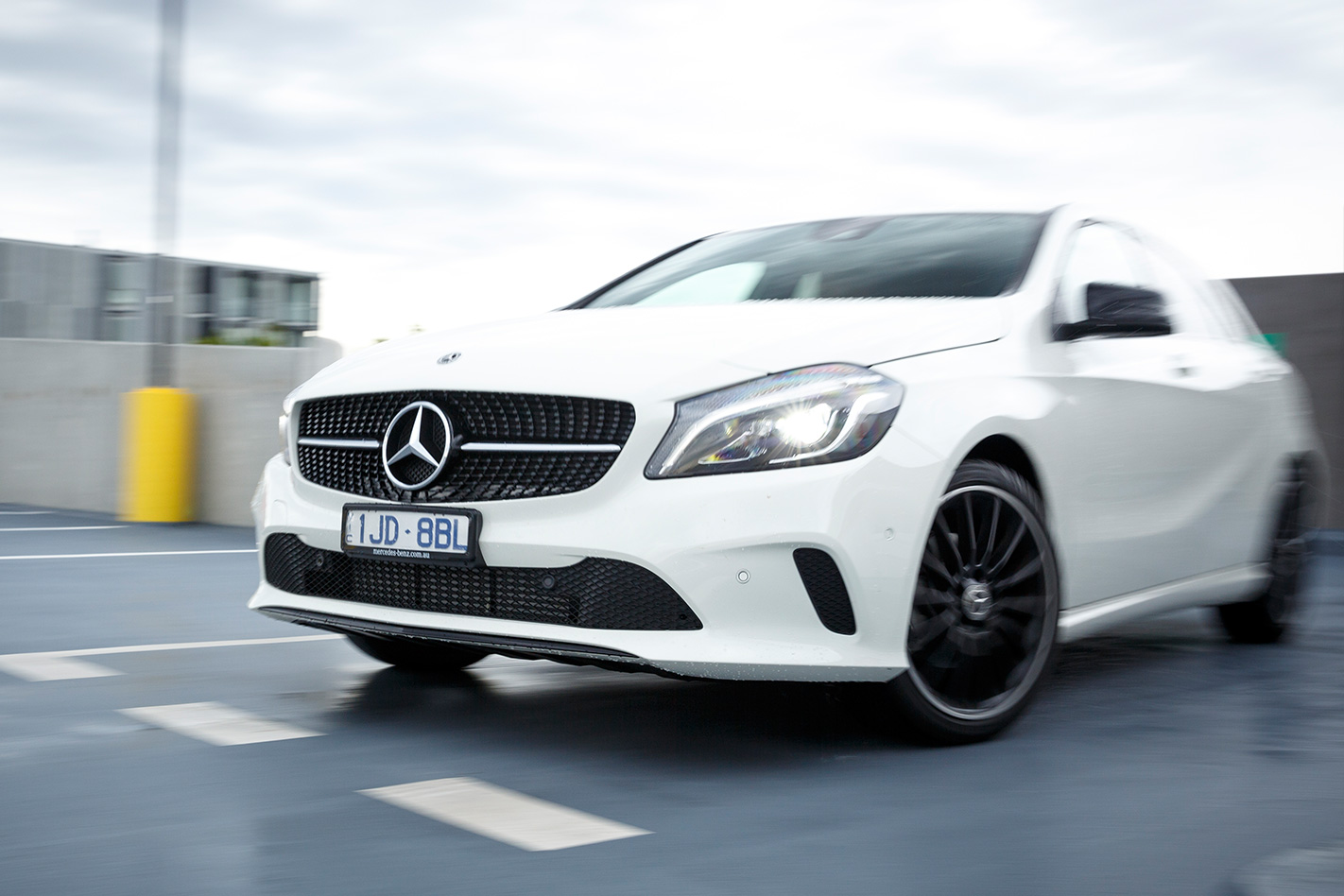
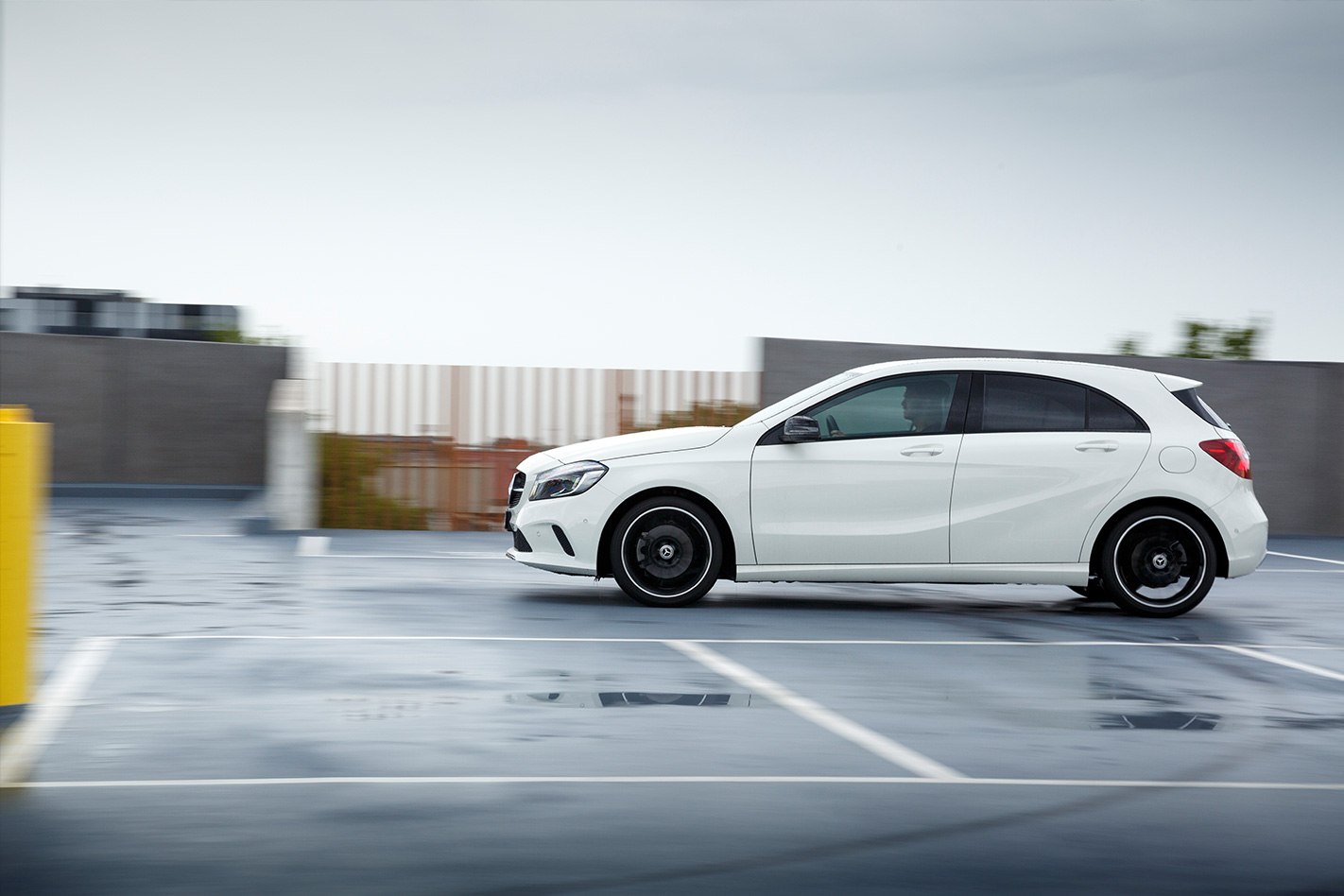
Dynamics: The third-gen A-Class is still one of the best small hatches from a driver’s perspective. It has a distinctive sportiness through its snappy steering, agile handling and a grippy, tied-down feeling that will satisfy keen drivers.
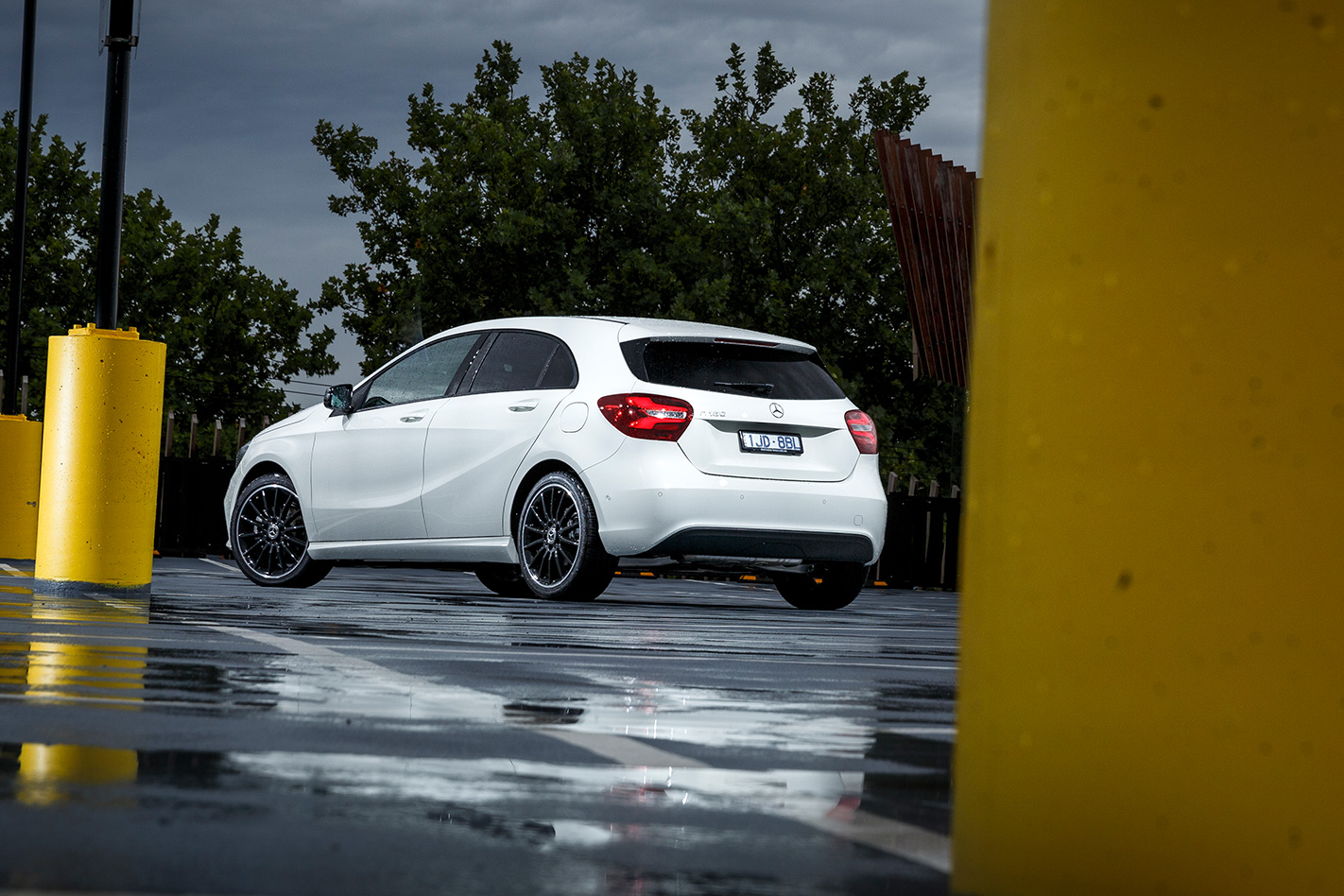
Styling: Adding the City Edition option pack to the regular A180 enhances its showroom appeal in a significant way. Included in its driveaway price are 18-inch AMG alloy wheels in black (up from standard 17s), LED headlights with daytime running lights and blue welcome light, LED taillights and reversing light, a gloss black front grille and window trim strip, tinted privacy glass from the B-pillar back, and black side-mirror caps. Inside, the standard sports seats are trimmed in black/red or black/green fabric and leatherette.
WEAKNESSES:
Ride: Back in 2016 Mercedes-Benz rolled out a midlife update for the A-Class that included adaptive dampers on all models except the A180. Sadly, the City Edition still doesn’t get them and as such the ride is quite restless and firm, especially on this limited model’s larger wheels with less bump-absorbing tyres. It’s not unliveable, but it can be tiring when you’re not making the most of its sportiness and just want to get somewhere comfortably.
Interior: One of the big issues the next-gen A-Class will address when it arrives later this year is the current car’s dated interior. It has a whole mess of superfluous buttons on the centre console and very outmoded GPS graphics that remind you the core of this car is quite a few years old now.
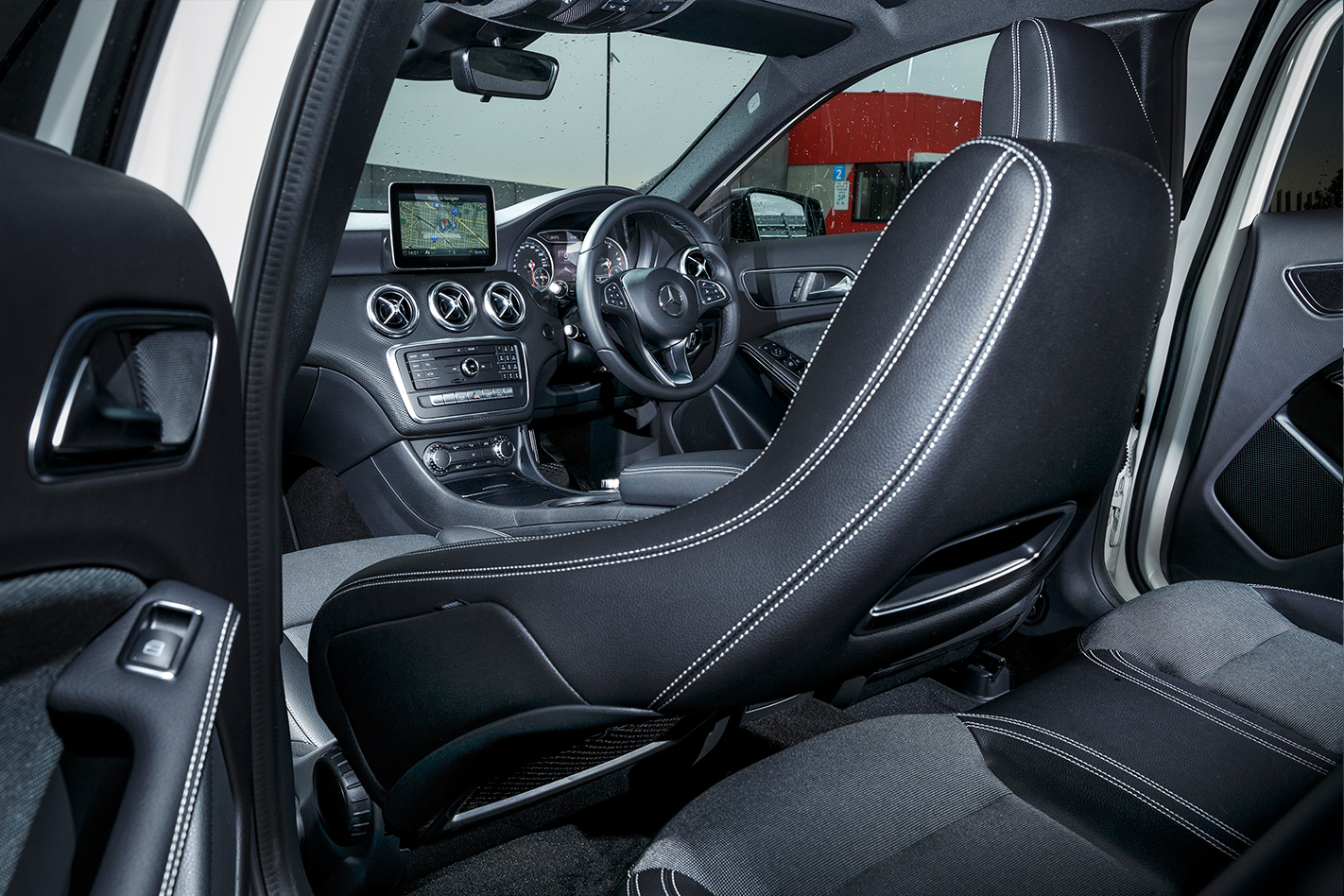
Space: While the front seats are comfortable and accommodating, the rear bench is quite tight and boot space is on the small side for this segment at 341 litres. Consider the A-Class most suited to urban-dwelling single and couples rather than small families.
Supply: Only a limited number of A180 City Editions will be offered, and Mercedes-Benz expects all of them to sell out before the end of the promotional pricing on Feb 28. Any that are left over after that date will go back to the normal retail pricing of $38,700 plus $1925 for the option pack with on-road costs on top of that. Now is the time to snap one up.
ANY RIVALS I SHOULD CONSIDER
The A180 City Edition’s closest rival is the Audi A3 1.0 TFSI, and you can read more about how they compare by clicking here. Other options include the BMW 118i and the Infiniti Q30.
AUSTRALIA’S peak motor industry body has resisted a call for automatic emergency braking (AEB) to become mandatory for all new cars sold in Australia.
Victoria’s road transport corporation, VicRoads, is lobbying the Commonwealth Government to change the Australian Design Rules (ADR) to make Autonomous Emergency Braking a compulsory fitment to all new vehicles sold in Australia,
VicRoads’ acting deputy chief executive, Robyn Seymour, told Fairfax Media she wanted to see AEB added to the next review of national standards, in the wake of research showing that the technology can reduce the incidence of rear-end crashes by 38 per cent.
“We have been advocating for the fact that the Commonwealth has a key role to play in the space of road safety and they have one of the strongest capacities to ensure we are getting safer vehicles on the road.
“It is one of the technologies we know will be very effective in reducing crashes so we’re keen to work with them on how we might develop that ADR,” she said.
But Federal Chamber of Automotive Industries chief executive Tony Weber told Wheels that making AEB mandatory isn’t necessary because market forces are already taking car manufacturers in that direction.
“Consumer demand, via ANCAP, for increased safety means that AEB will quickly move through the fleet and thus we see no need to mandate,” Weber said.
“There are a lot of safety measures that are available and you need to carefully weigh up the best value for money safety feature.
“There’s always that trade off and once governments start mandating certain safety technologies they are picking winners and governments typically are not good at picking winners.”
Whatever happens, it’s likely that Australia’s hand will be forced by international regulations, with South Korea, the European Union and United States working to implement such laws by 2019, 2020 and 2022 respectively.
“Australian cars are built to European standards, so if the Europeans mandate it, it becomes standard in Australian cars,” said Weber.
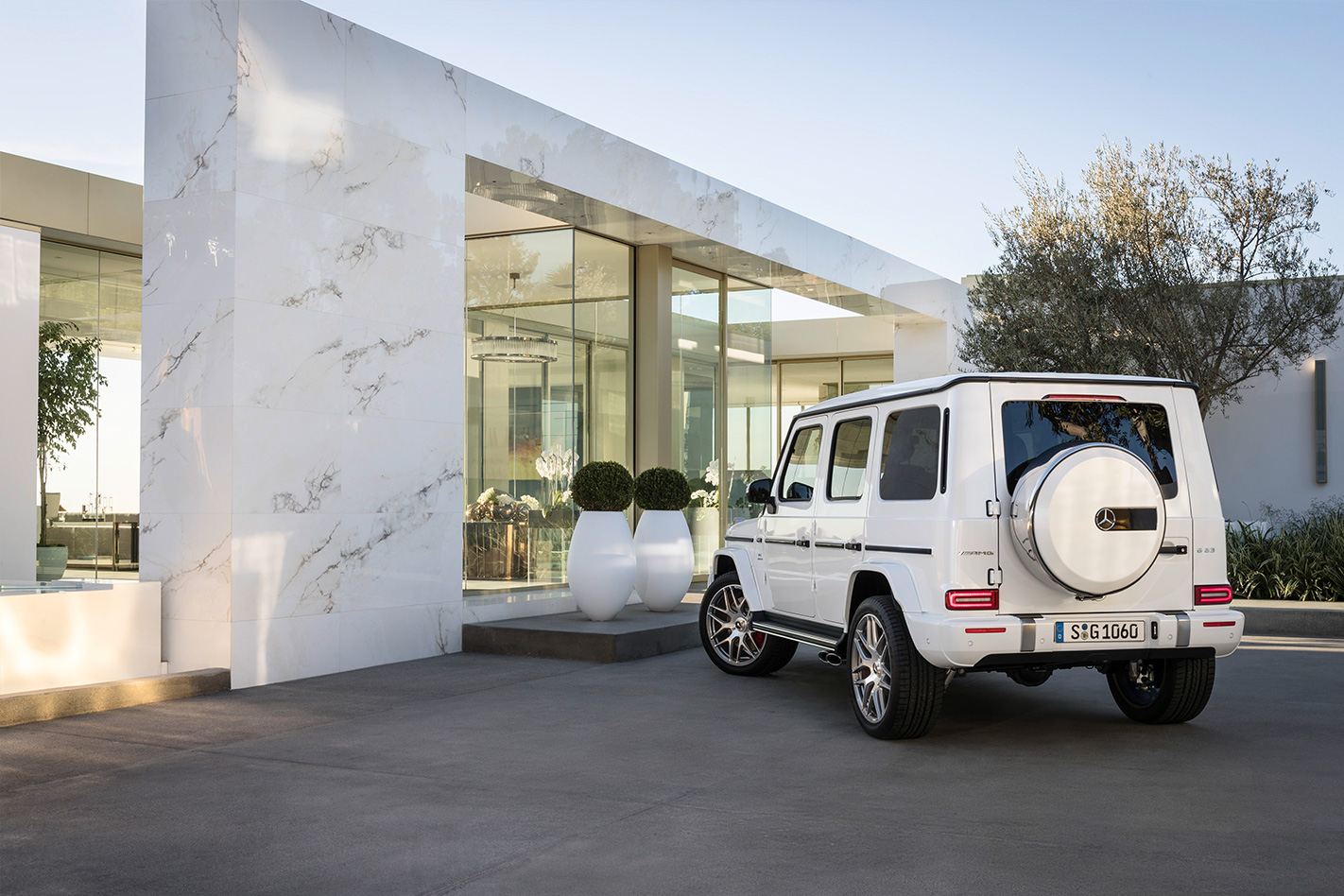
WHILE the all-new Mercedes-Benz G-Class has given Germany’s cult-hero off-roader a new lease of life, Mercedes-AMG has given it a hefty serving of steroids. Behold, the Mercedes-AMG G63, in all its ostentatious glory.
Under the bonnet is a 4.0-litre twin-turbo V8 – the same M178 V8 that you’ll find in the C63, E63, and powering other longitudinally-engined AMG product. And while that engine is minus 1.5 litres of displacement relative to the old G63’s 5.5-litre twin-huffer V8, power has increased to 430kW and 850Nm – representing jumps of 10kW and 90Nm.
Amazingly, that’s metrics still aren’t enough to make the new-gen G63 the most powerful G-Class, with the previous-gen G65’s 6.0-litre twin-turbo V12 generating 463kW and 1000Nm in its most powerful iteration.
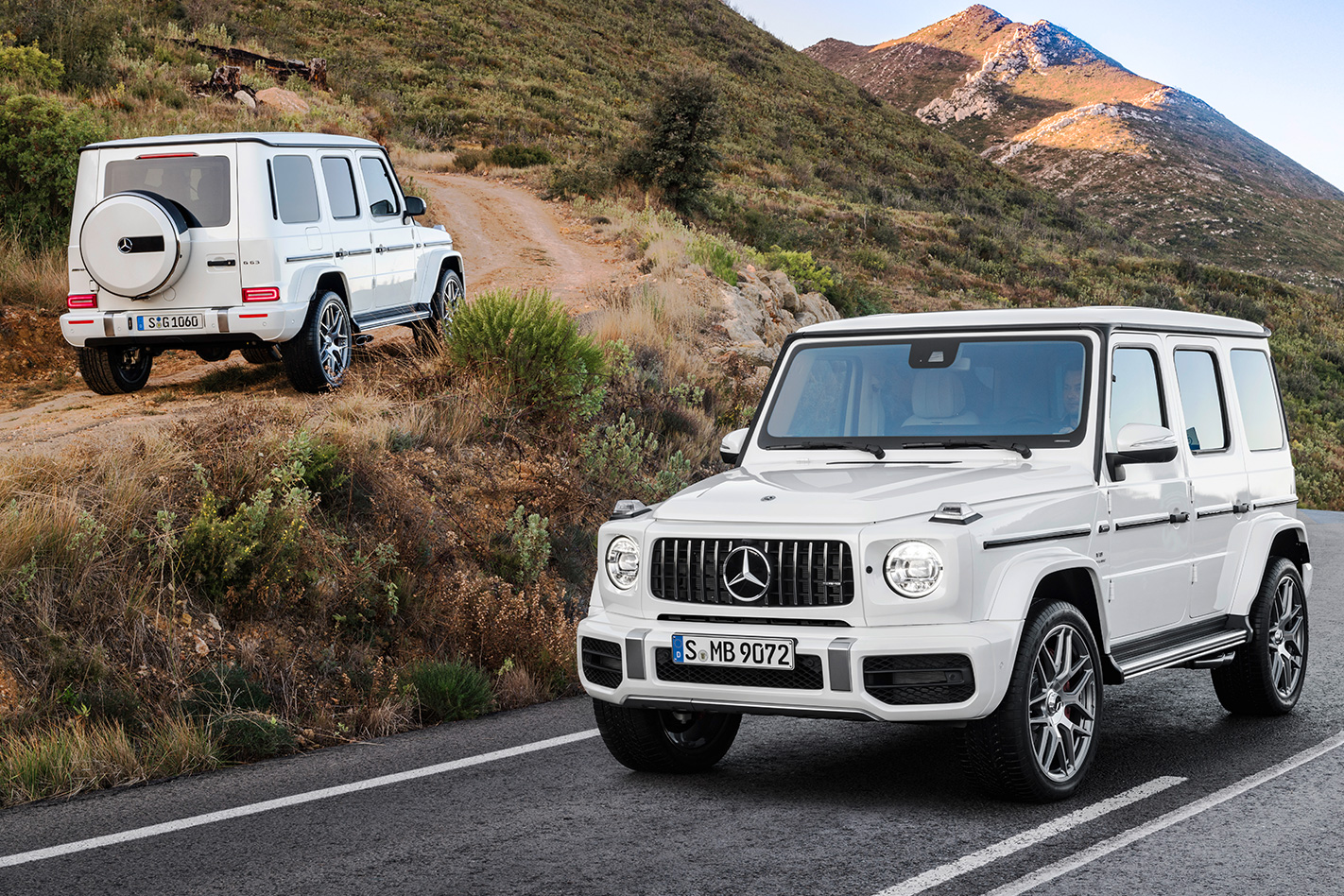
The G-Class uses a rear-biased all-wheel drive system with a 40:60 front-to-rear torque split, and comes fitted with a nine-speed automatic transmission as standard.
But just because AMG has gone bananas with power doesn’t mean the G-Class has lost any of its off-road nous. With three locking differentials and a trio of off-road drive modes (sand, trail, and rock) to keep traction in check, the G63 should keep haulin’ hard when the bitumen runs out.
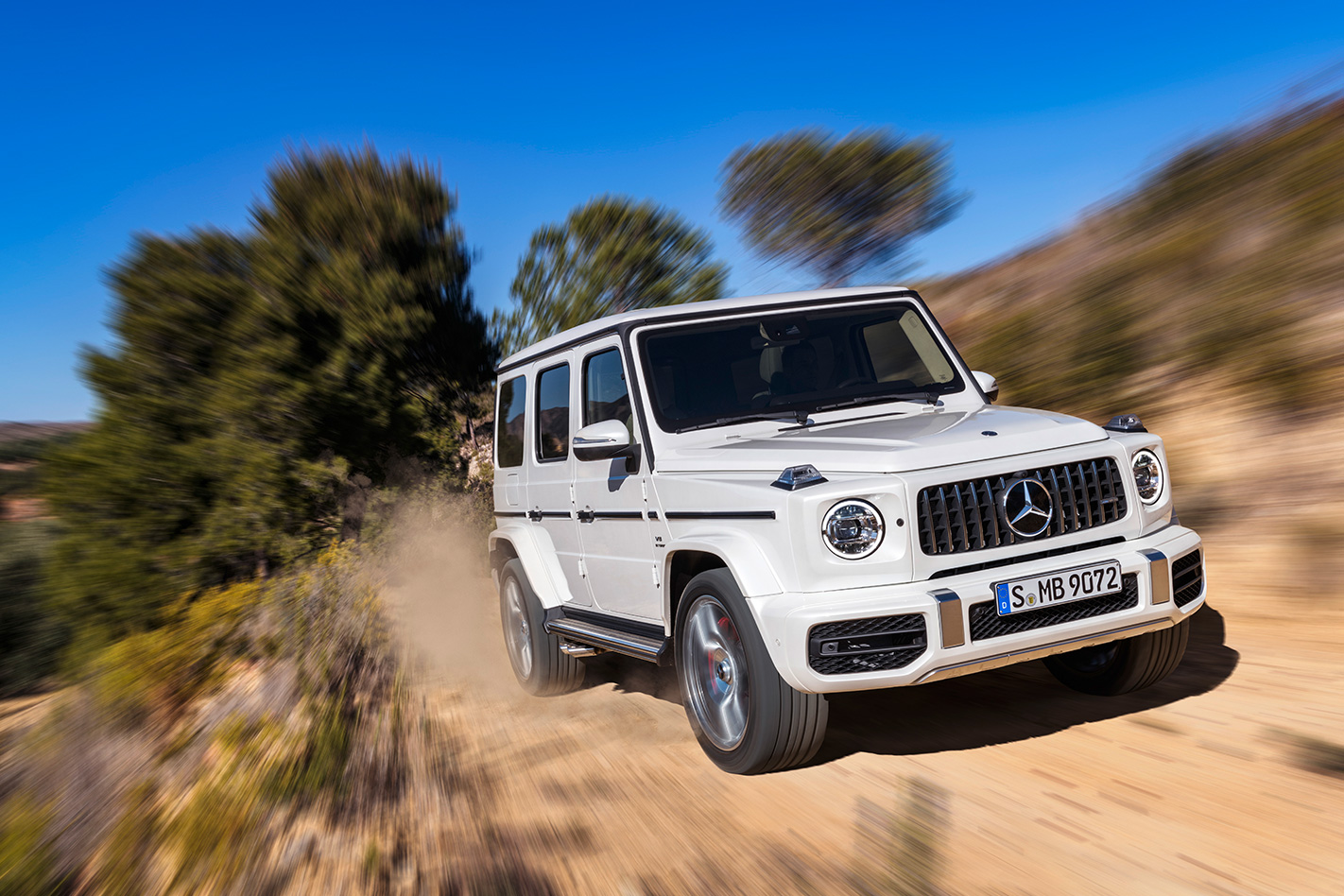
Performance is impressive considering the G’s two-tonne-plus kerb weight, with a 0-100km/h sprint claim of 4.5 seconds and a top speed of 220km/h. Vmax can be stretched to 240km/h with the AMG driver’s package, if doing 220km/h in a 4×4 fails to excite you.
Behind the wheel you can select five different on-road driving modes – Slippery, Comfort, Sport, Sport+ and Individual.
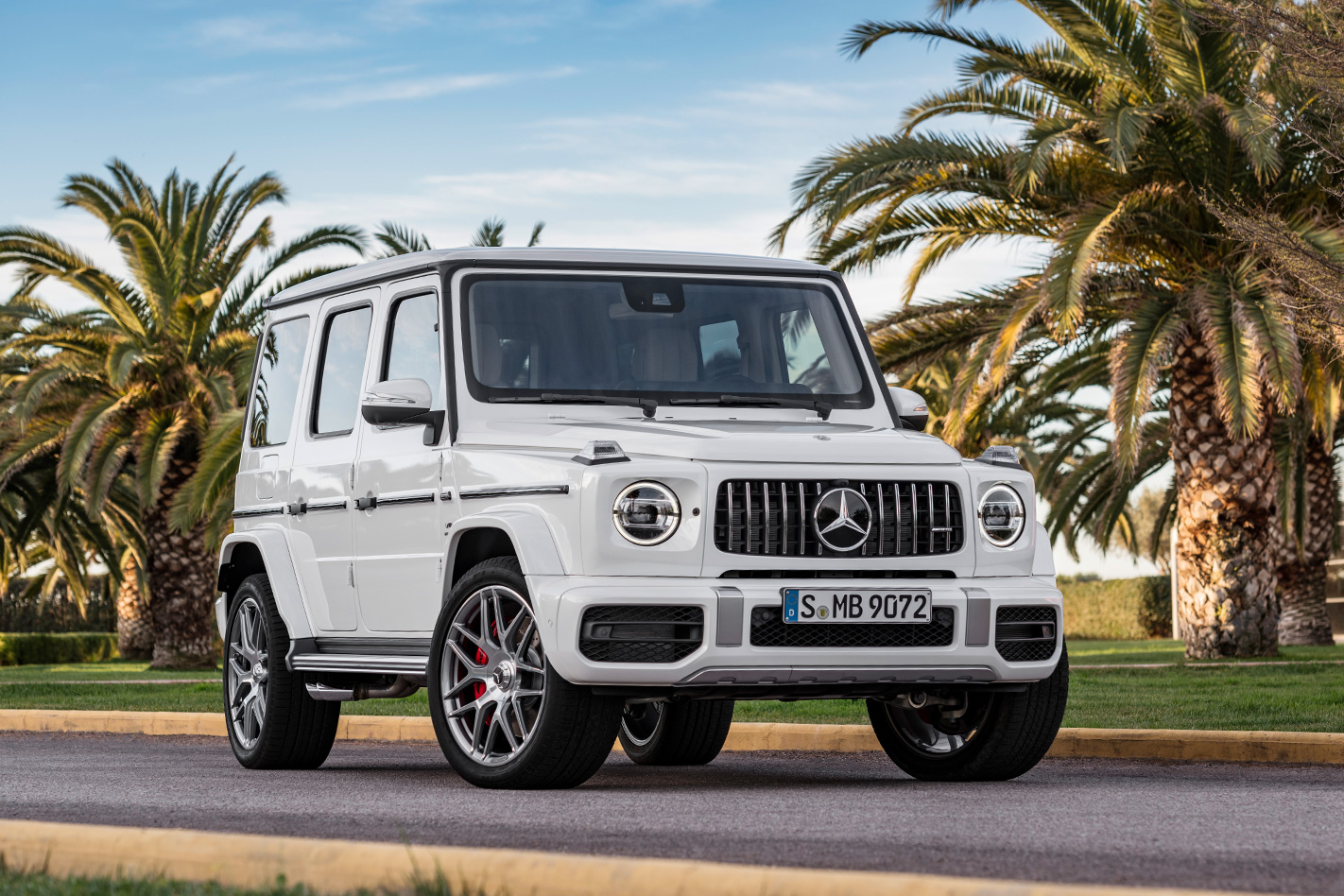
Pricing and Australian specifications will be revealed closer to the car’s local launch in the third quarter of this year, but you can expect to pay well in excess of $200,000 to get one into your garage.
You might be reading this and asking yourself, why? Mercedes-AMG knows its market, and with no shortage of customers for the outgoing G63, the company isn’t going to struggle to sell its replacement.
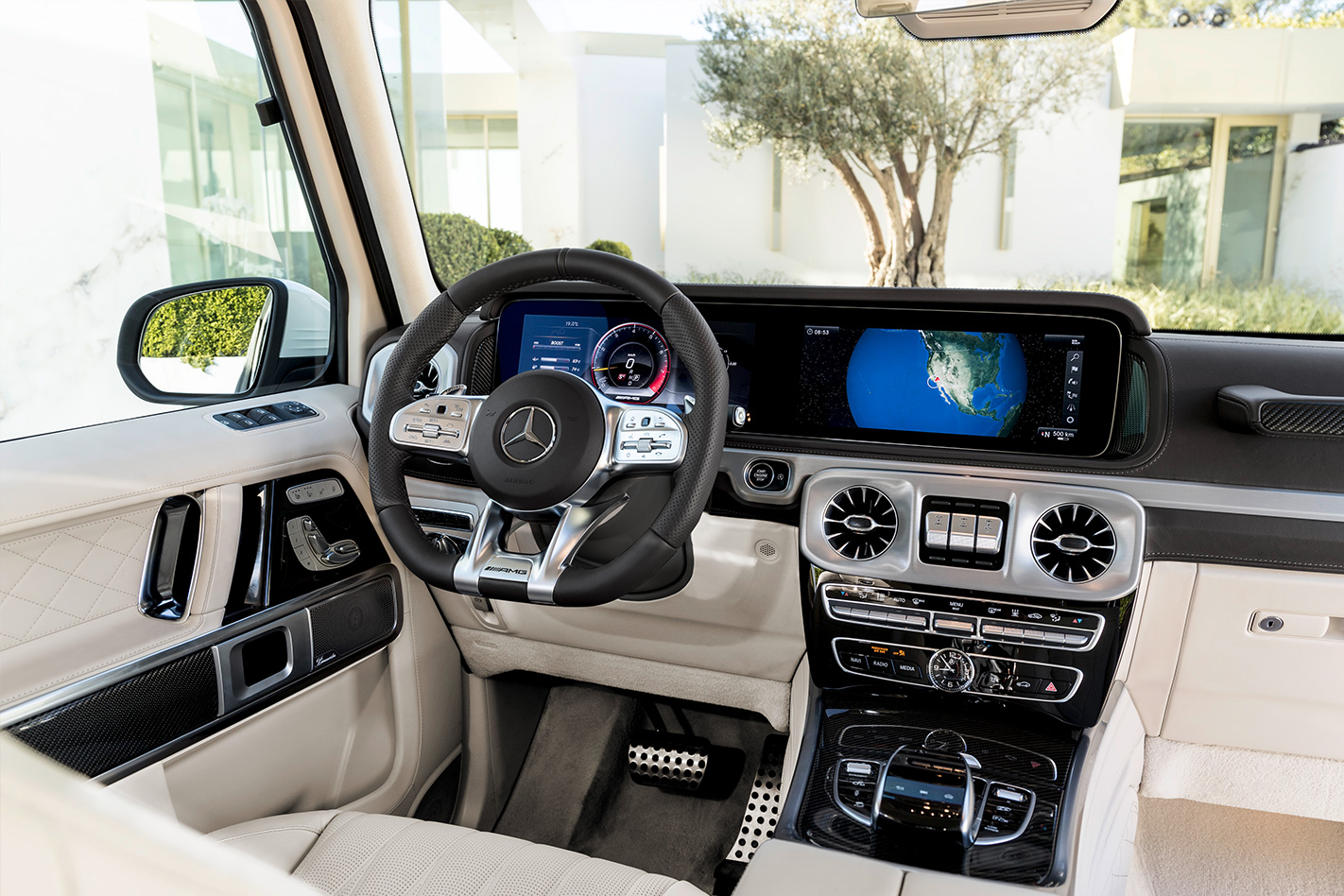
“The vehicle has nevertheless reached a completely new dimension in terms of technology with the 4.0-litre V8 biturbo engine as well as in combination with the off-road characteristics, the agility and the vehicle dynamics achieved.
“This applies to the entire G-Class model series. Mercedes-AMG is responsible for their suspension and chassis development as well as V8 competence.”