
There are two ways you can go in this world: you can stick with what you’ve got, tweak it and improve it over time or simply chuck the lot out and stump up for a brand new concept.
This article was first published in MOTOR’s June 2006 issue.
Ford was content to play out the late 1990s by upgrading the 5.0-litre Windsor in a series of steps that took the old girl from pretty ordinary to fairly damn handy. The EL model XR8 was the first to benefit from an improvement to the Windsor’s breathing capacity, followed by the later versions of the AU XR8, which got firstly a 200kW tune and finally a 220kW set-up complete with alloy heads and roller rockers.
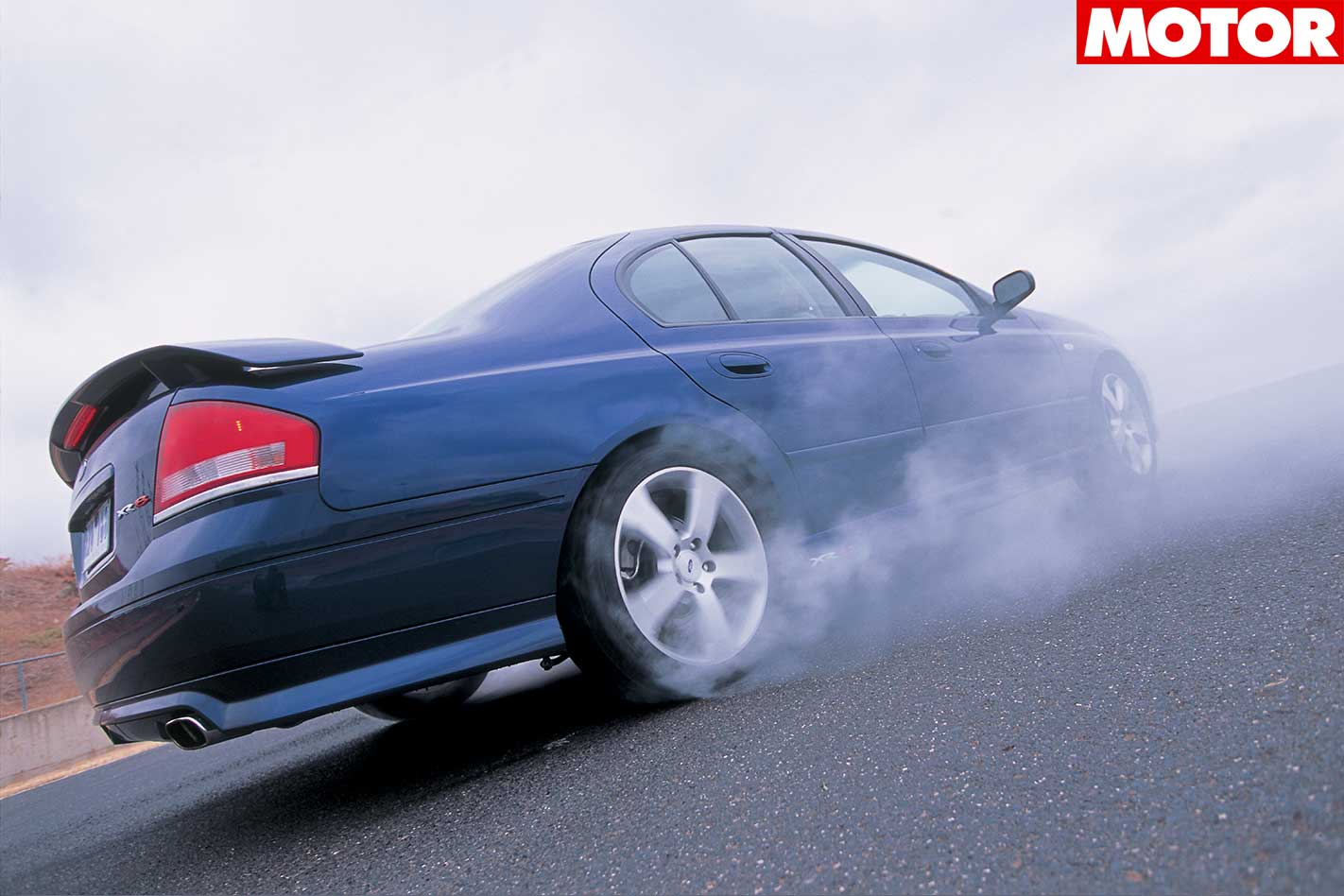
With 5.4 litres of displacement, the new motor was on the pace but even more significantly, while the Gen III stuck with pushrods and two valves per pot, the new Ford mill ran to double-overhead camshafts and four-valves-per-cylinder. But while Holden’s Gen III was straight from the GM Powertrain catalogue, nothing in Henry’s arsenal here or overseas seemed right for the job of powering the next generation of XR8s.
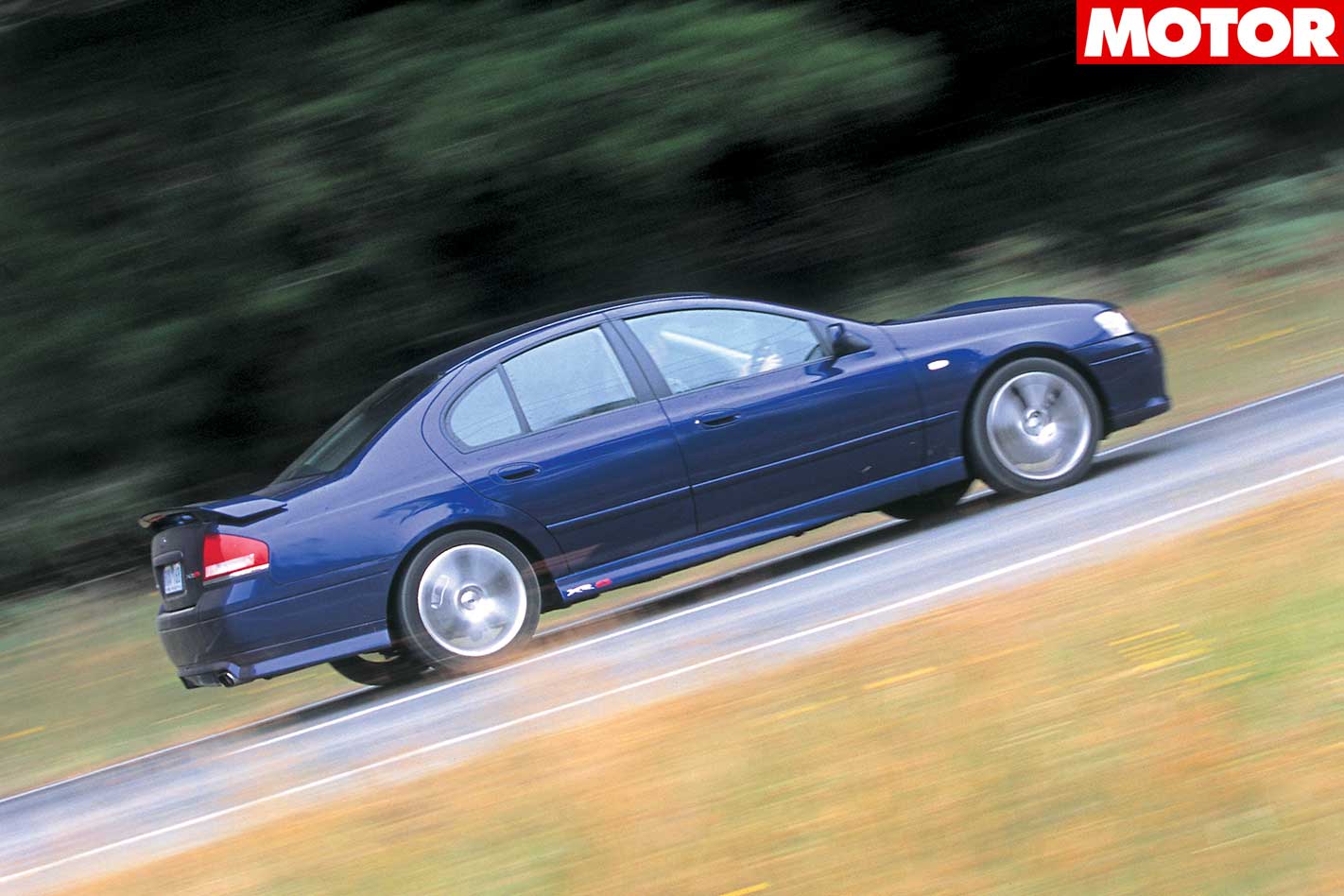
See, the DOHC 4.6-litre Mustang mill was never going to give the torque Aussie XR8 buyers were looking for, and the 5.4-litre engine wasn’t available in quad-cam form. The solution was to take the 5.4’s bottom end and mate it to the DOHC heads of the Mustang motor.
So that, in a nutshell is how we arrived at the 5.4-litre XR8 V8 but convincing the Yanks it would work was just the start. Another major drama was that the mill was so damn big and tall that it barely fitted under the BA Falcon’s lid.
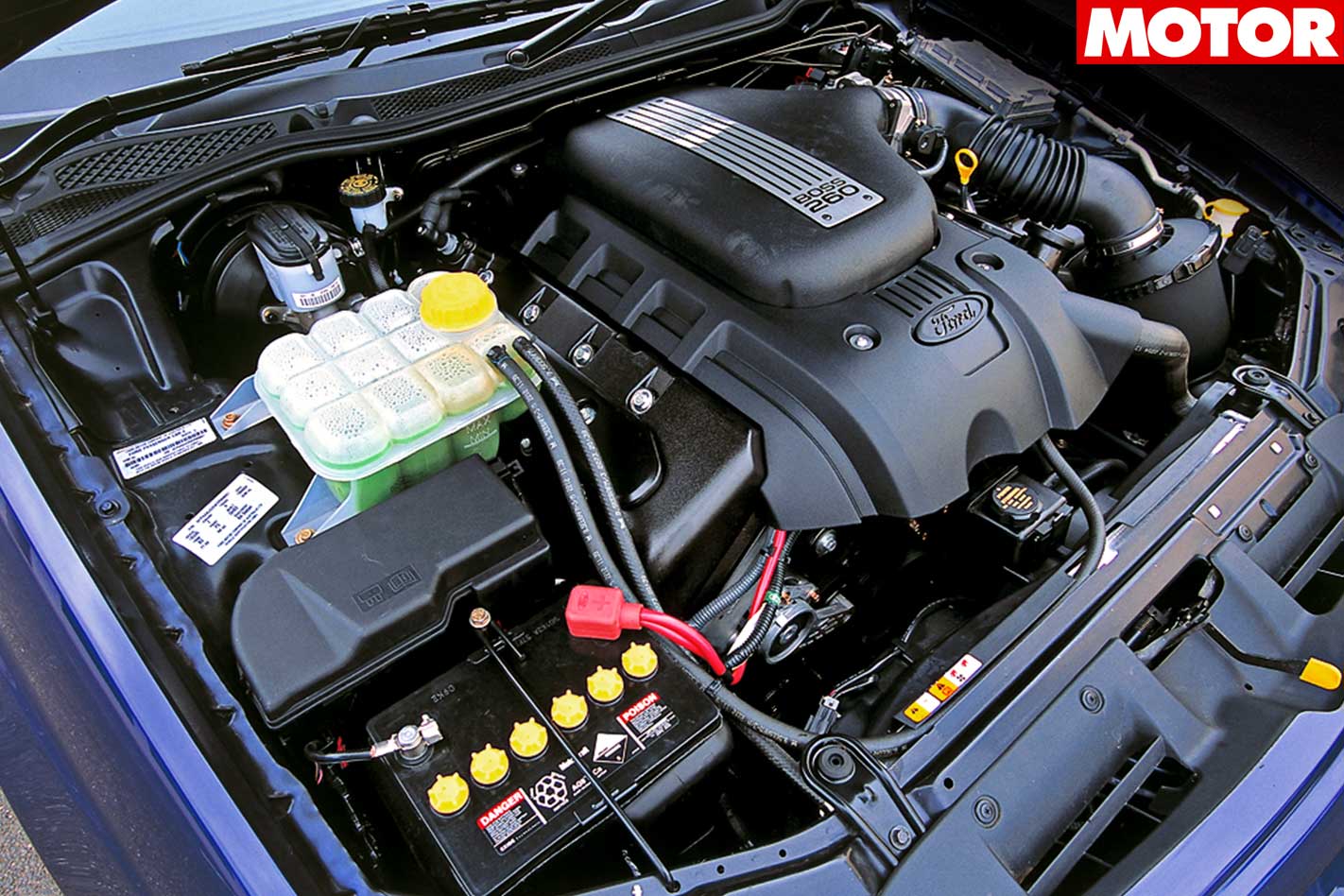
The other problem was that being a DOHC engine with big, fat heads, the not insubstantial weight was carried high. And anybody will tell you that a high centre of gravity is not good for handling.
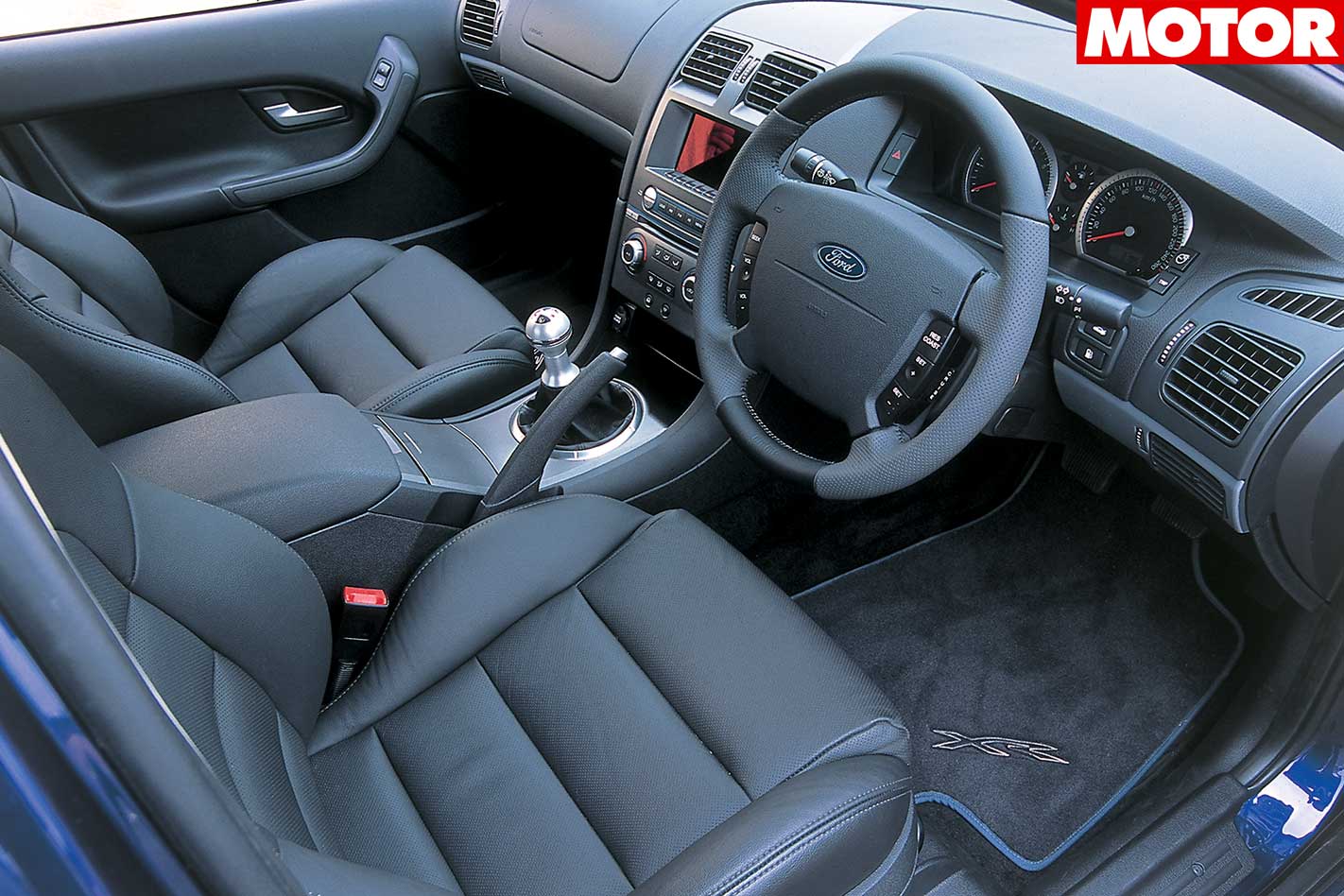
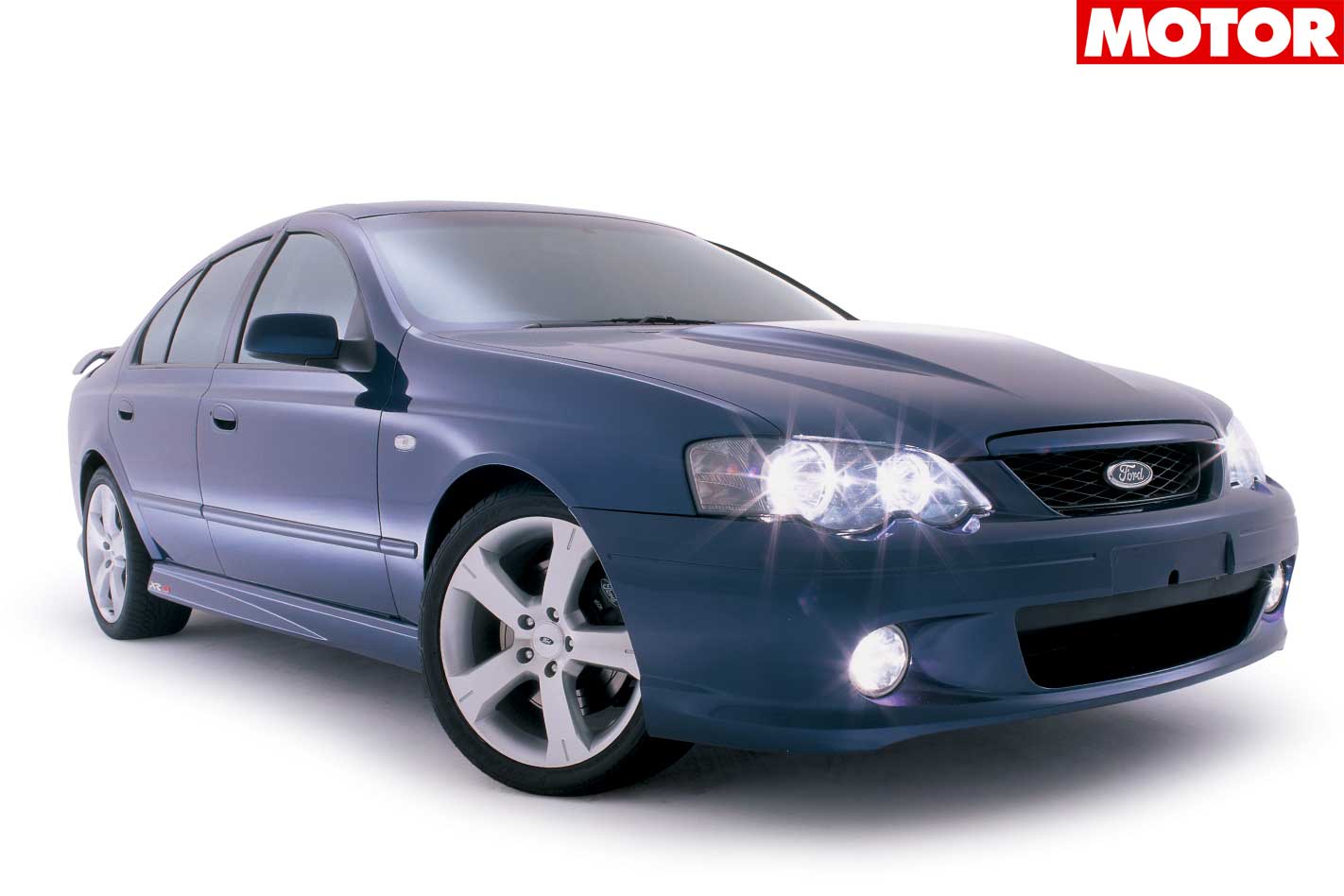
The rest of the XR8 package was a bit more familiar with the usual body kit and sportier interior trim as well as firmer suspension settings and 18-inch alloys. Throw in bigger brakes and a slippery diff and you had a pretty complete deal when it comes to hot-rod locals that are also able to seat five big bums and tow a dirty big fishing boat. So how’d it all go, then?
And it wouldn’t have been so bad had the lighter-in-the-nose XR6 Turbo not been selling alongside the XR8, just to ram home the V8’s lack of agility.
But get your head around that, and there was a fair bit to like. For a start, the XR8 was a more relaxed cruiser than the Commodore SS, with better ride and a quieter end result.
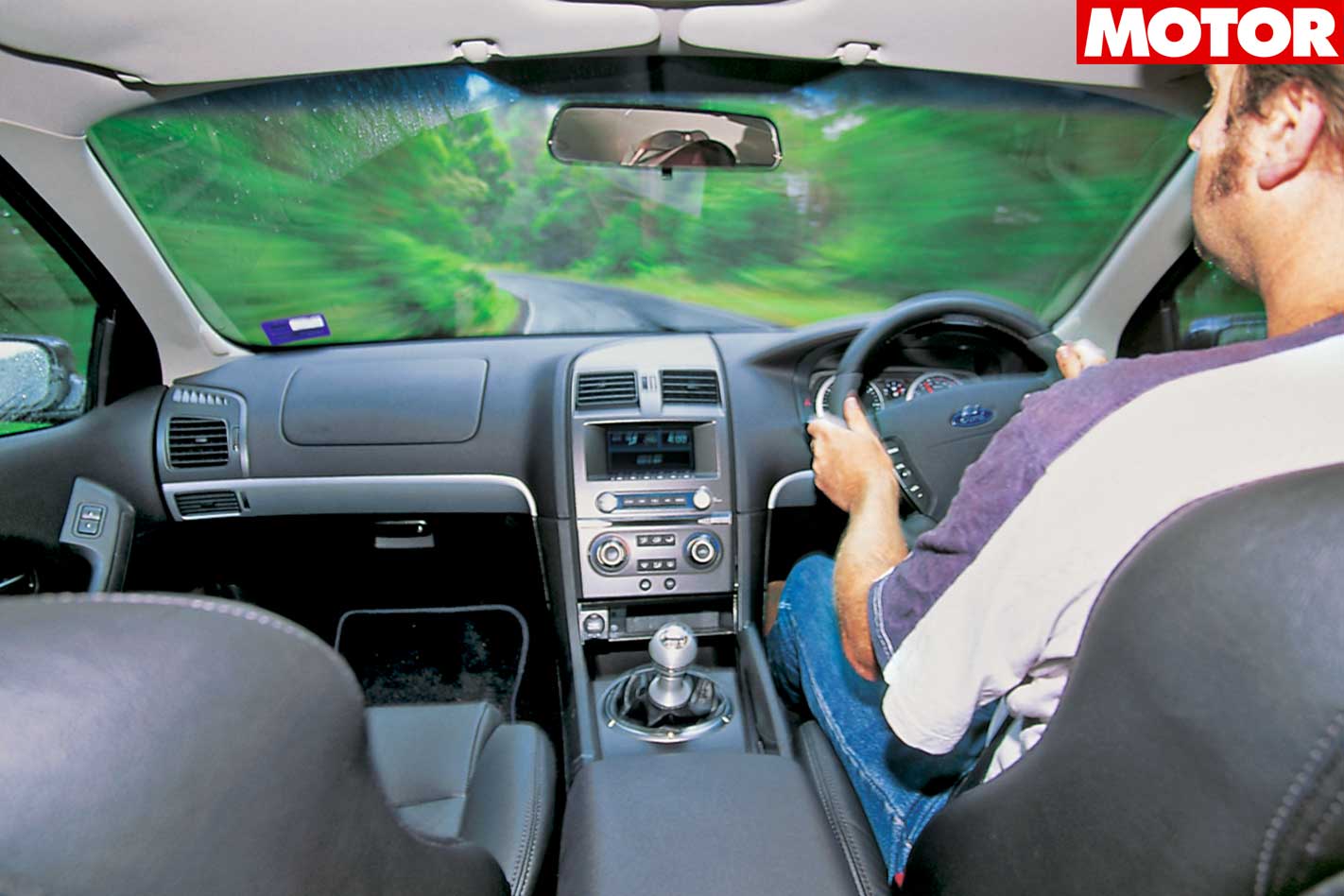
The optional four-speed automatic is far and away the most popular choice and, to be perfectly honest, makes the most sense. It’s a good tranny and it works well with the big eight because the torque-converter masks a little of the low-speed lack of urge. If it has to be a manual, you’ll be faced with the old Tremec five-cogger which is strong but clumsy and clunky to shift.
While the new V8 was certainly high-tech, it simply didn’t translate to the street. The redline of 5500rpm seemed a bit odd in light of the specification but the conventional flip-side of a slugger engine – mega low-end torque – wasn’t there, either. Then again, no production Windsor ever cracked on like the DOHC Henry from about 4000rpm onwards. Problem was, it was all over by 5500.
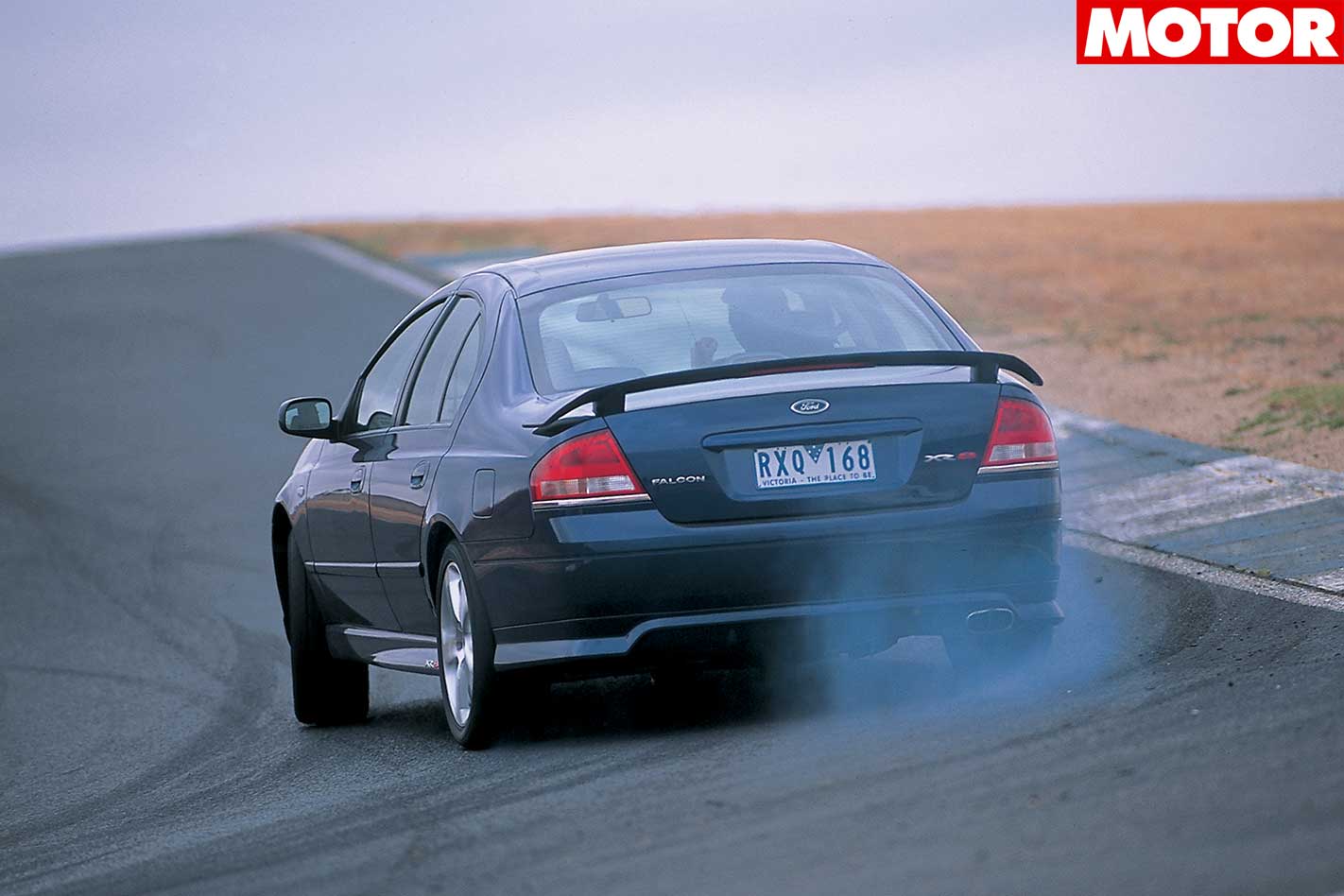
As it’s an engine-out job just to fit extractors, it’s not easy or cheap matter to screw more out of the 5.4.The long-stroke design also means that swapping to bigger cams and revving it harder isn’t really an option. Aside from a piggy-back computer that will really only maximise what you’ve already got, the most viable way to go harder in an XR8 is forced induction. Even then a turbo just won’t fit.
That leaves you with a belt-driven supercharger, but it’s not going to be a cheap one by the time you’ve got it sorted. Tuning, it seems, is just one more field of endeavour where the turbo six has got big bro kicked to bits.
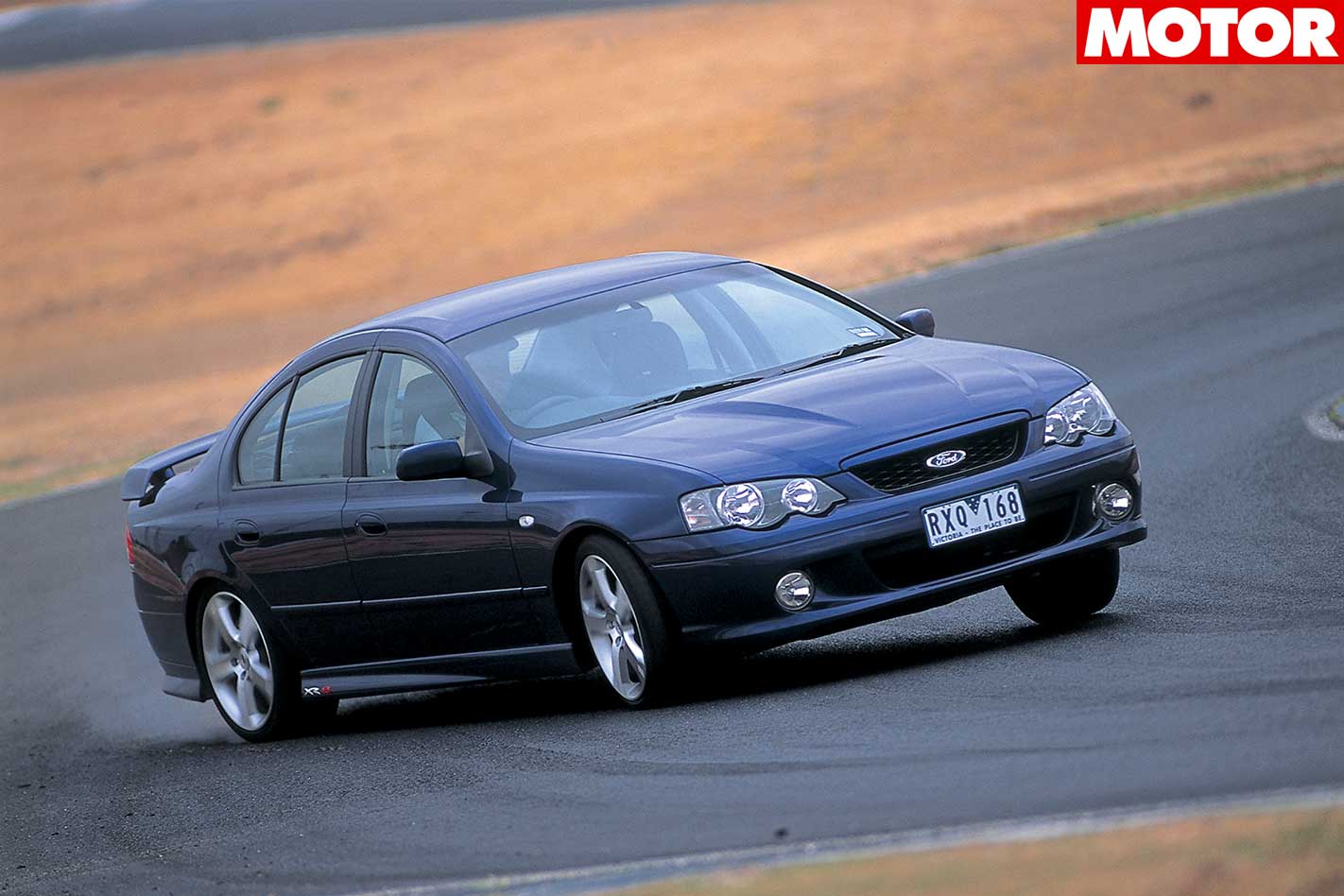
What we said? “Post-apex oversteer is readily available via the right clog and it’s so benign and predictable that big, full-oppy-lock slides are yours for the taking. And the new Henry lump easily manages to tag its rev limiter, set just beyond 5500rpm, with consummate ease.” – David Morley, March 2003
What else could you buy? For the same money you’d need to sign away for a BA XR8, you could get your hands on a VY Commodore SS – which of course is the obvious answer. If you’re prepared to think outside the box and go older, try a BMW 5-Series or Audi A6 from the mid 1990s.
It’s a Commodore, folks, but not as we know it. Or is it?
Behind the wheel of the new ZB Commodore on Holden’s hill course at its Lang Lang proving ground, the steering is familiar, the ride/handling balance is familiar and the pace and noise coming from this V6-equipped car is also familiar. But we’re getting ahead of ourselves.
On the face of it, the ZB Commodore offering is fairly simple to understand. There’s a 191kW/350Nm 2.0-litre turbo front-driver, a 125kW/400Nm 2.0-litre turbo diesel front-driver and a 235kW/381Nm 3.6-litre V6 with all-wheel drive. Dig a little deeper into the extensive model mix, however, and things get a little more complex.
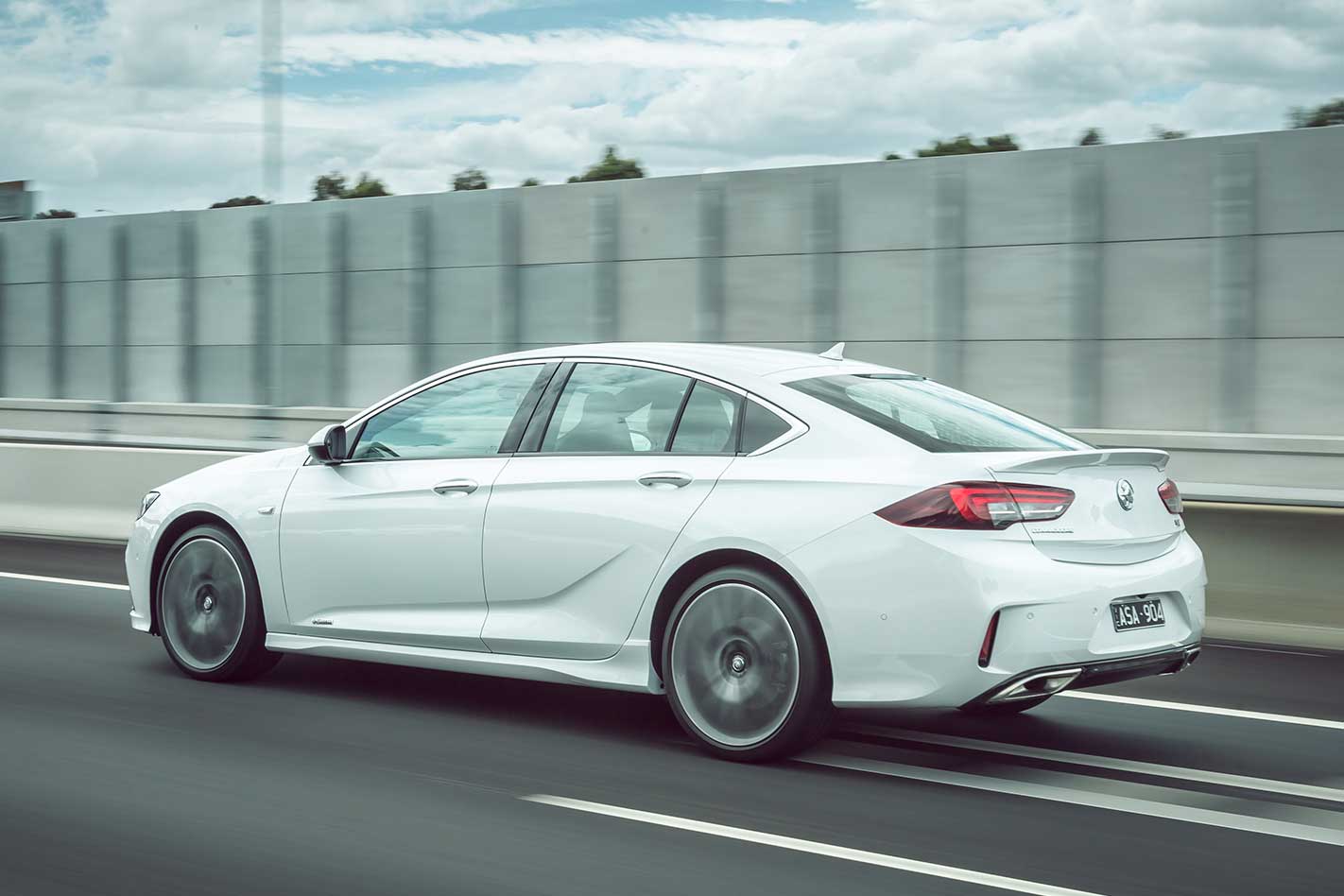
The $37,290 RS adds 18s, a bodykit, excellent sports front seats, leather steering wheel and extra safety gear, while the $40,990 Calais includes leather trim, heated front seats, a larger 8.0-inch infotainment screen with sat-nav and digital radio, wireless phone charging and new instruments.
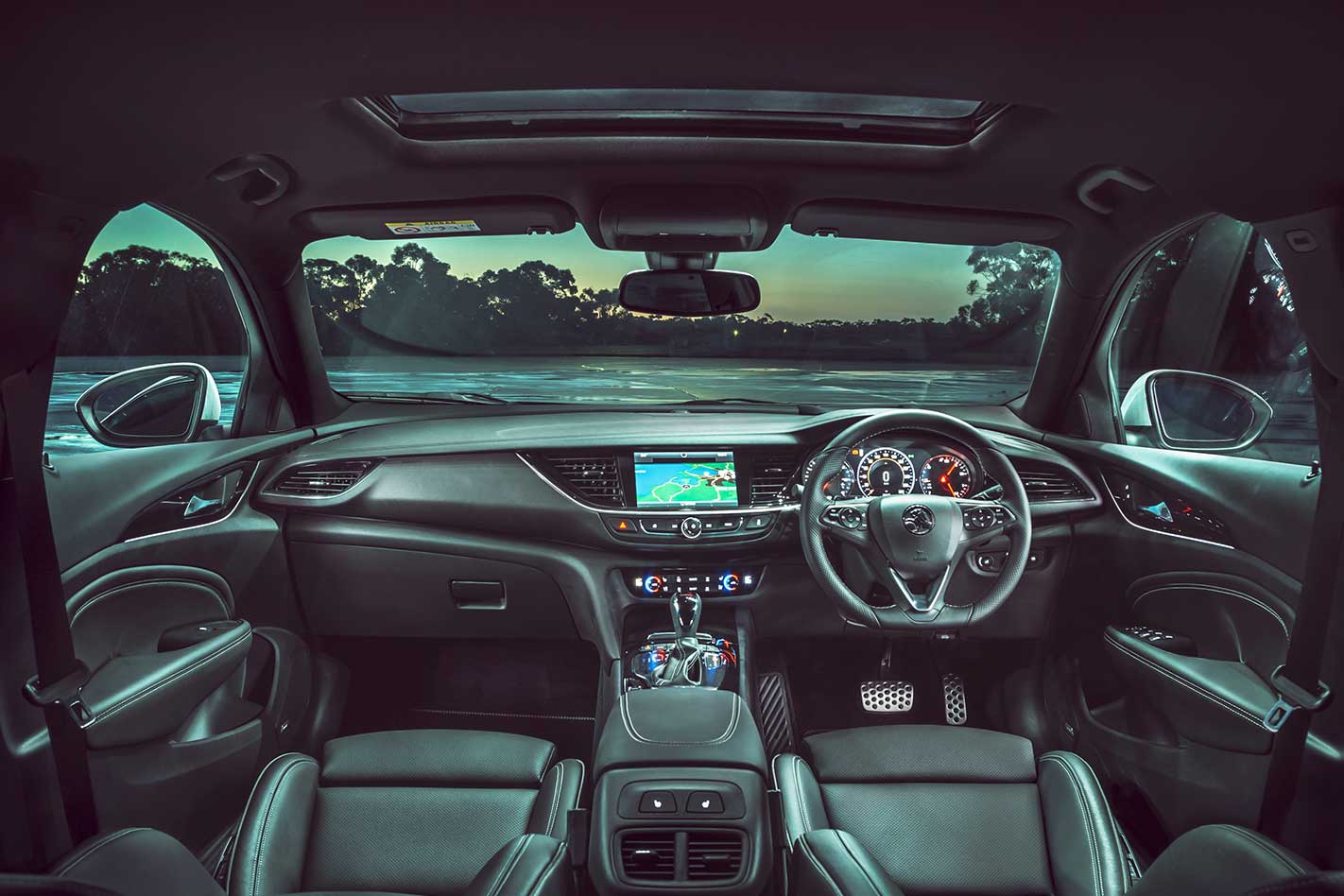
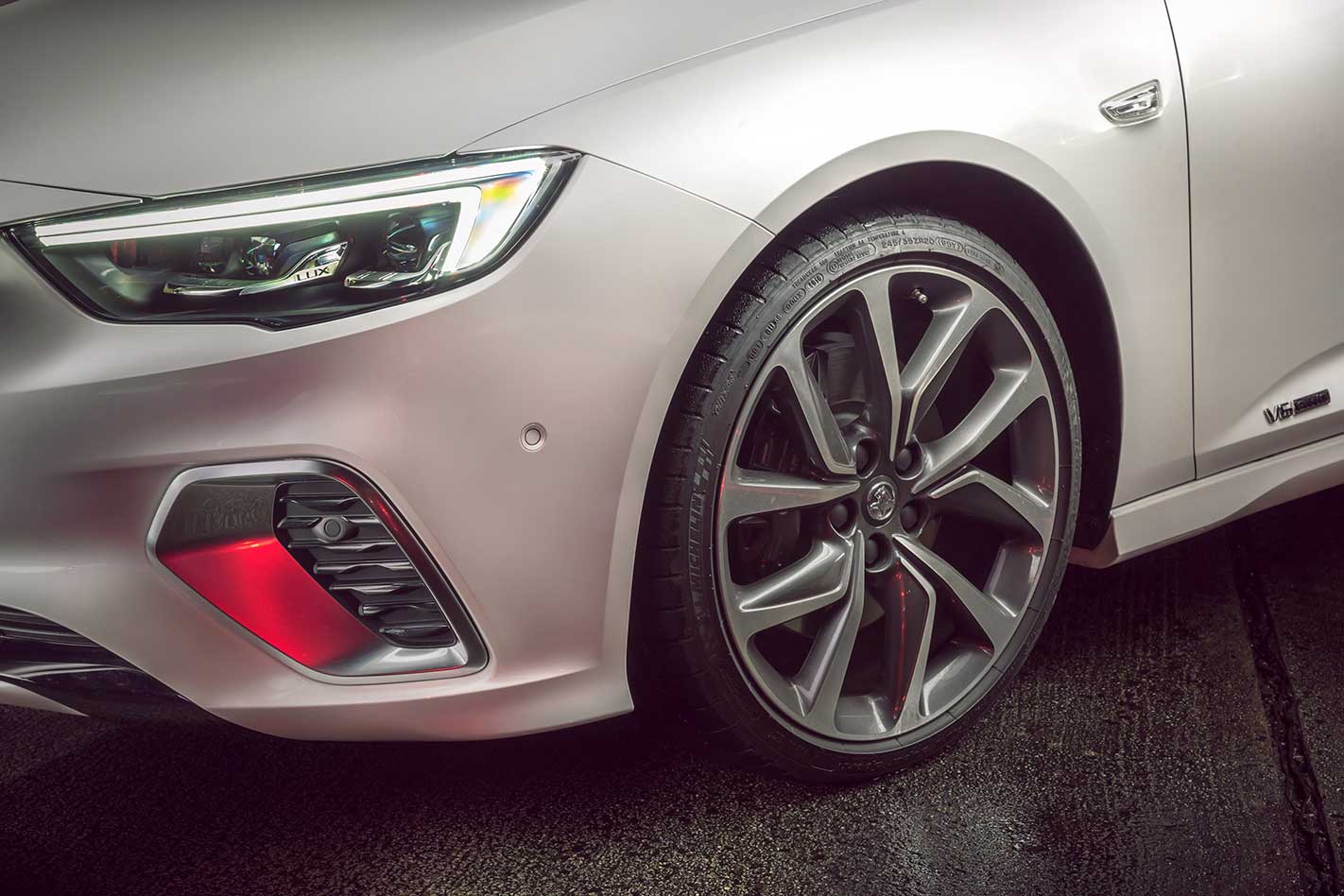
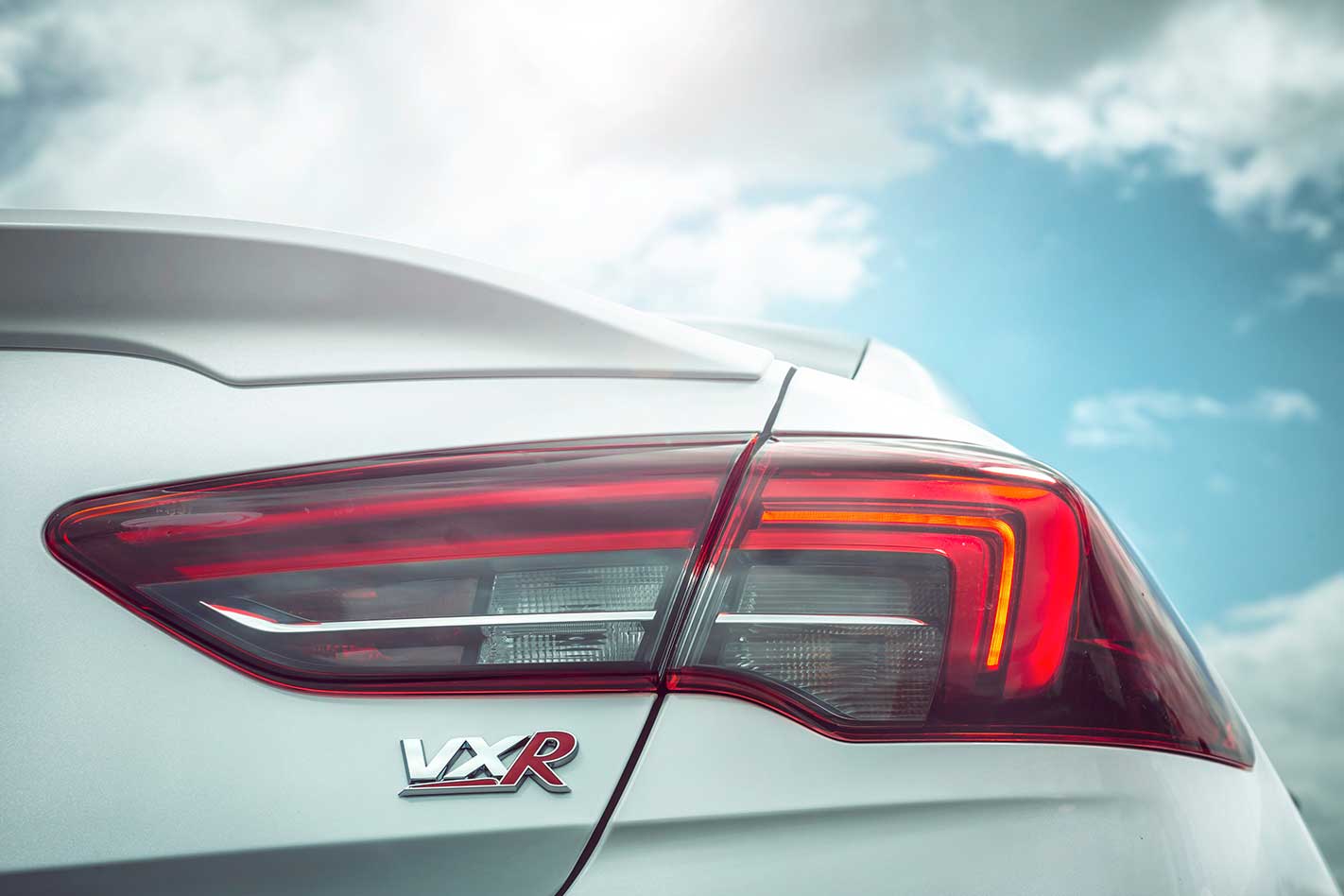
Finally the range-topping VXR takes all the kit from the rest of the range and adds adaptive suspension, Brembo front brakes, adaptive cruise and performance sports seats. Whew. As the most focused performance model, you might expect us to simply concentrate on the VXR to the exclusion of the rest of the range, but just as with the lineup itself, things aren’t quite that simple.
Trouble is, it’s just not quick enough. As the heaviest of Holden’s four V6 liftback models (RS, RS-V, Calais-V and VXR) pure physics suggest this performance halo will actually be the slowest of the quartet. It’s not a couple of kilos here or there, either, the 1737kg VXR carrying an extra 65kg over the V6 RS, in which we recorded a best 0-100km/h time of 6.11sec.
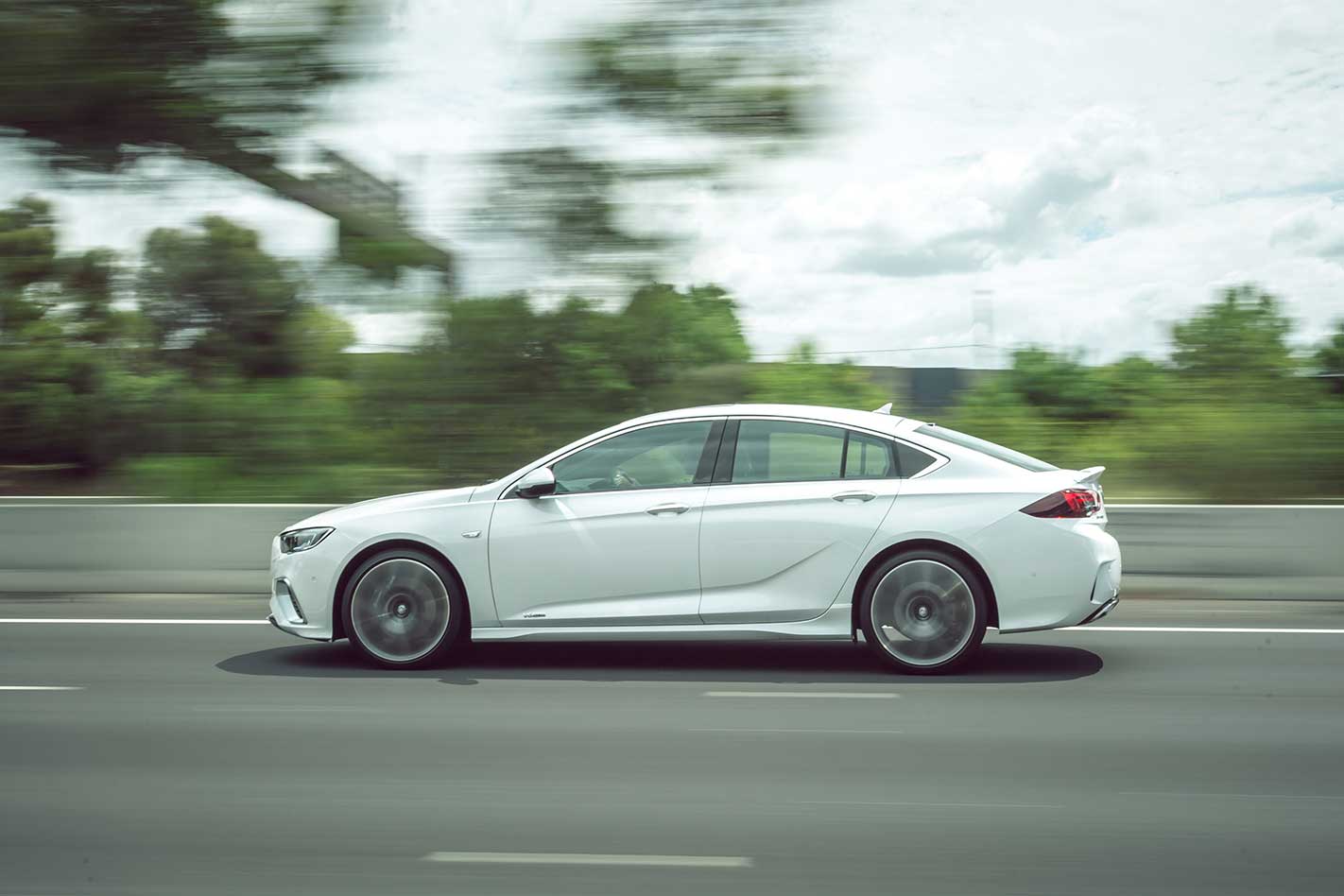
For keen drivers these models are the picks of the range, especially for anyone currently driving the likes of a VF SV6. It’s a base RS which prompted the familiarity mentioned in the opening paragraph. It’s the quickest, most powerful and sweetest six-cylinder Commodore ever, the new V6 revving with a more cultured roar than the sometimes strained notes of Commodores past.
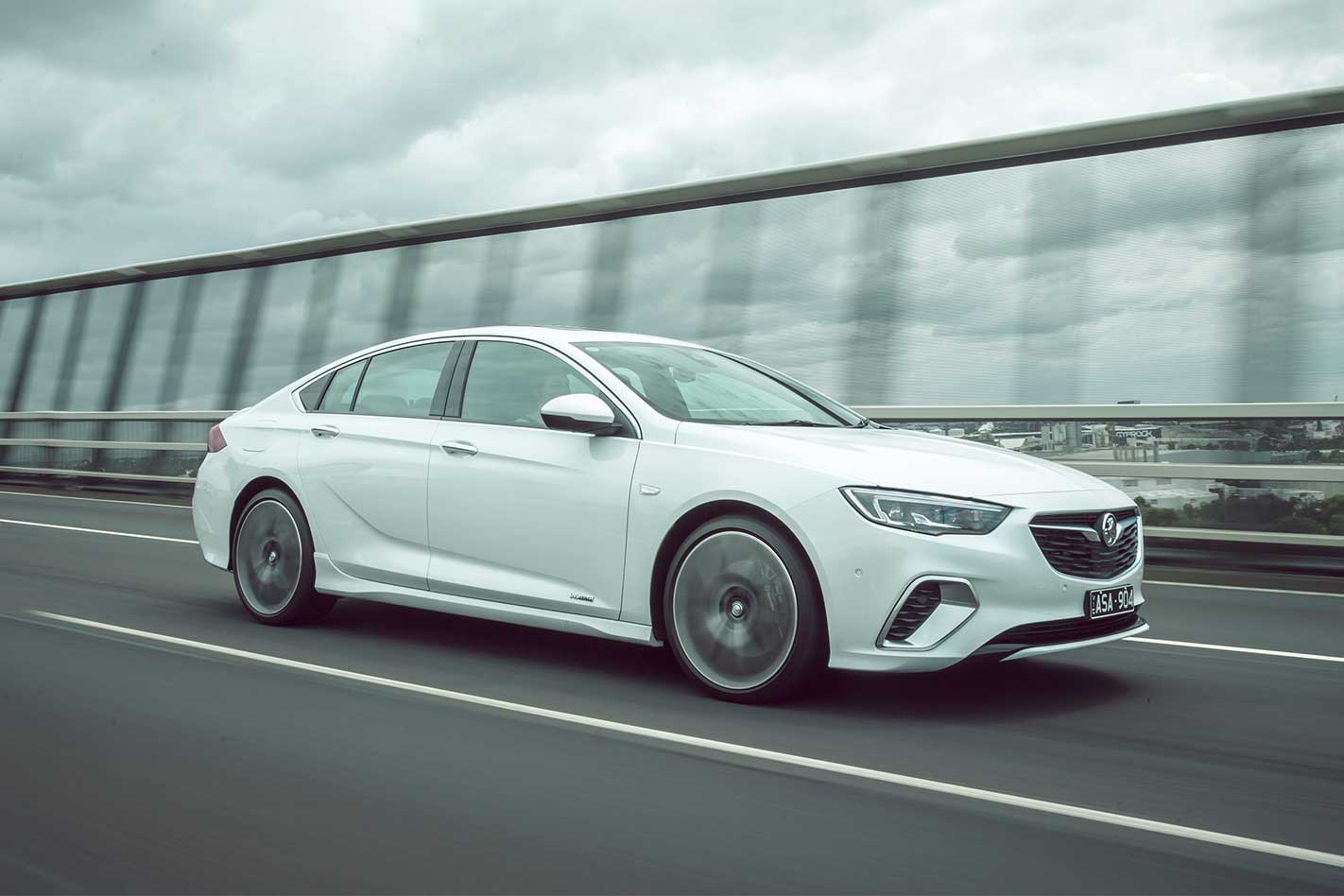
The steering is top notch, one of the world’s best electrically-assisted systems (and that’s now pretty much all of them), plenty of balance and communication and that Twister AWD setup is happy to shuffle torque to the outside rear wheel and drive the car towards a corner exit while providing impregnable traction.
You’re not going to be left sweaty-palmed and short of breath, but on the right road there’s no doubt this is an entertaining car to drive. Other notes are that the V6’s initial throttle tip-in is a bit sharp and beware of the 20-inch wheels as they introduce a sharpness to the ride absent on the 18s.
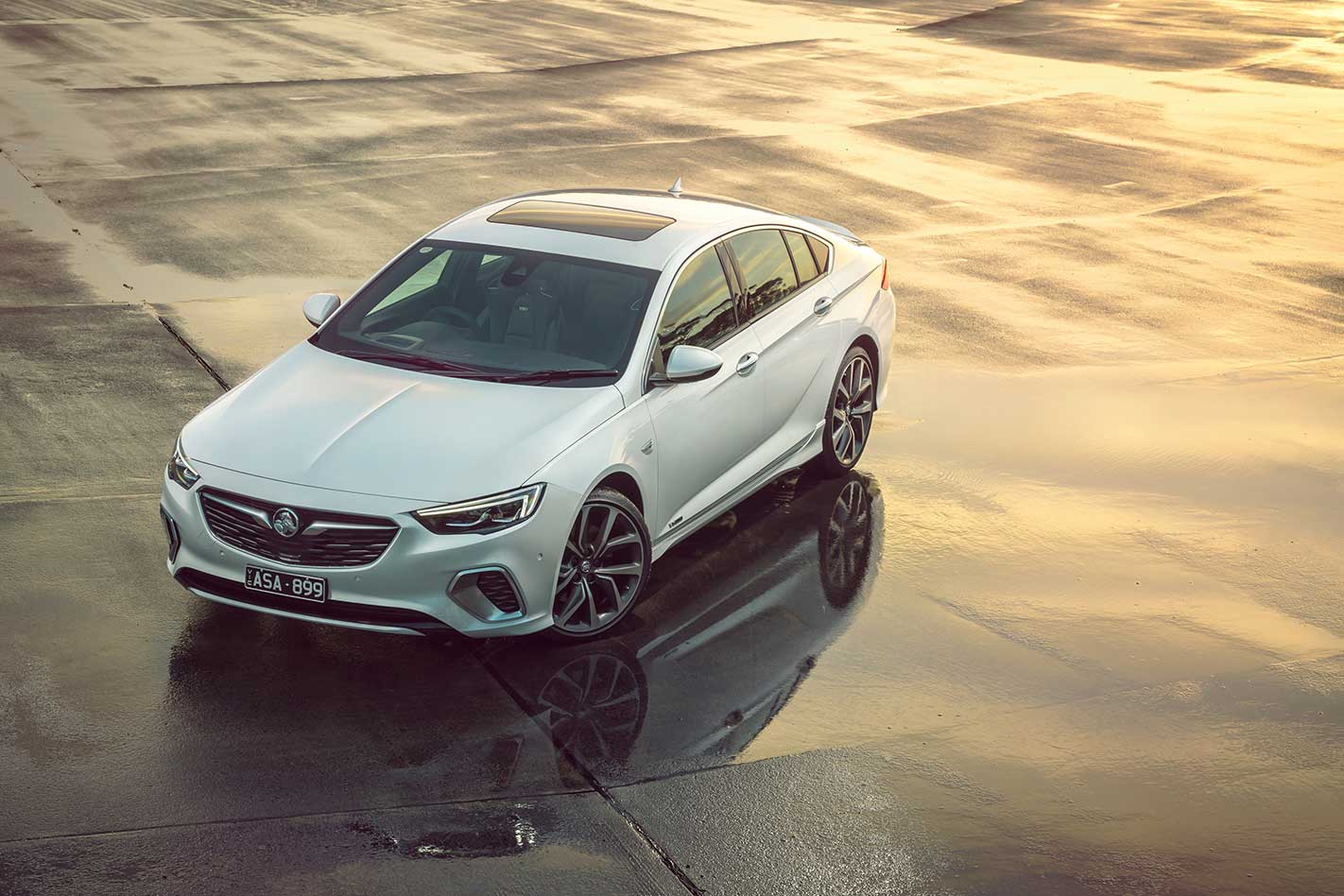
Certainly, the ‘Opel-spec’ Commodore with European settings Holden provided for back-to-back assessment showed the value of its local work, the overseas car having leaden, syrupy steering, heaving over mid-corner bumps and struggling with torque steer.
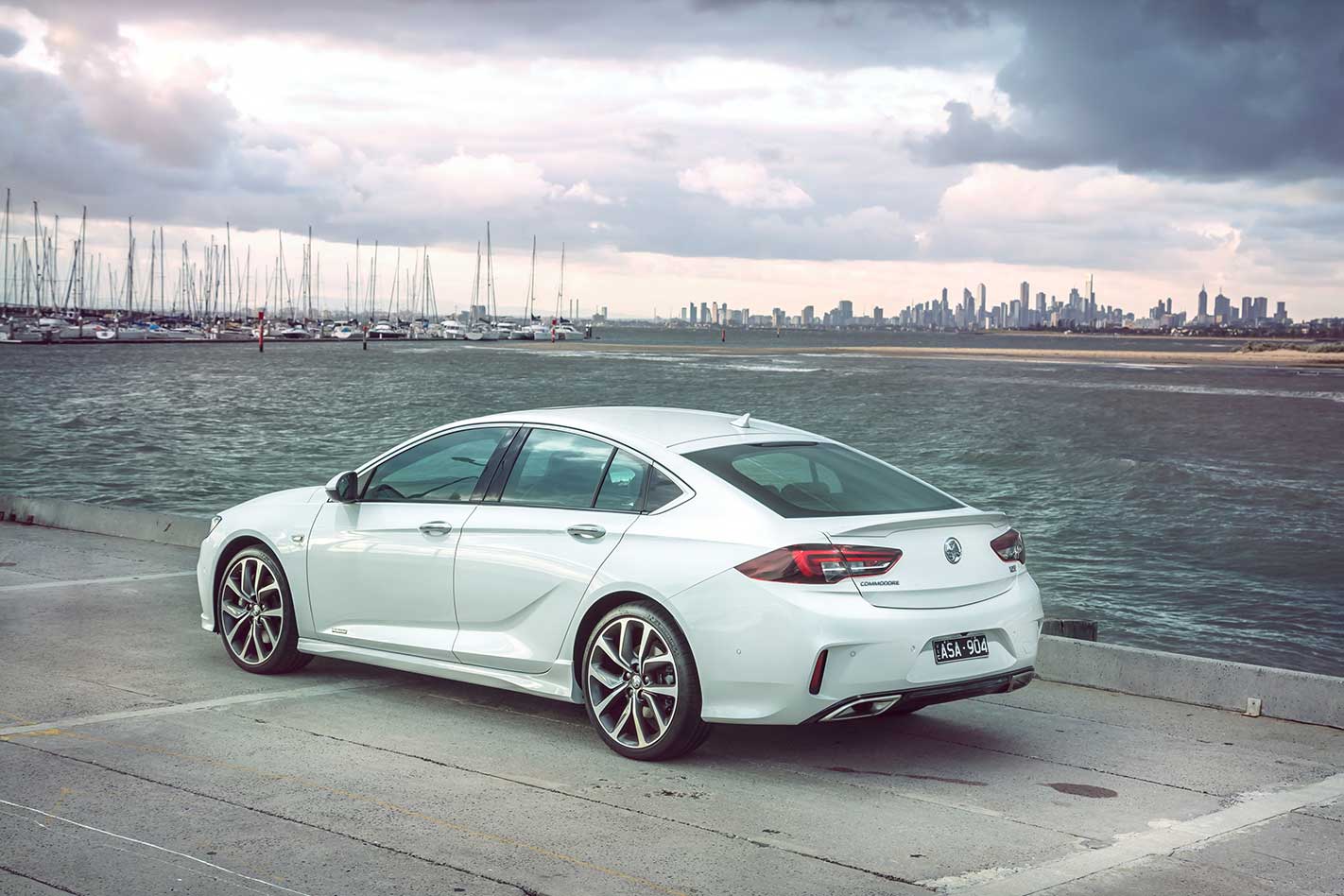
We’ll investigate the VXR further next month in a comparison against the Stinger GT, however it’s difficult not to imagine it would be a more enticing car with a high-output version of the 2.0-litre turbo four – say 250kW/400Nm and 0-100km/h in 5.5sec. In essence, Holden’s engineers have done a fine job of appropriating a global platform for local roads, the question is whether local buyers will be enticed enough to try it and like what they find.
Star Rating: 3.5 out of 5 stars
The hot-hatch class gets even hotter with the tough-looking, multi-talented Renaultsport Megane RS280. And you can buy it in orange.
WHAT IS IT?
Renaultsport’s third-generation hot Megane, based on the lukewarm but promising Megane IV GT, meaning four-wheel steering, a turbocharged four-pot and a dual-clutch ’box. Except that in this instance, Renaultsport hasn’t forgotten that purists love a manual transmission and pumped guards, and a bespoke suspension set-up that truly transforms this car.
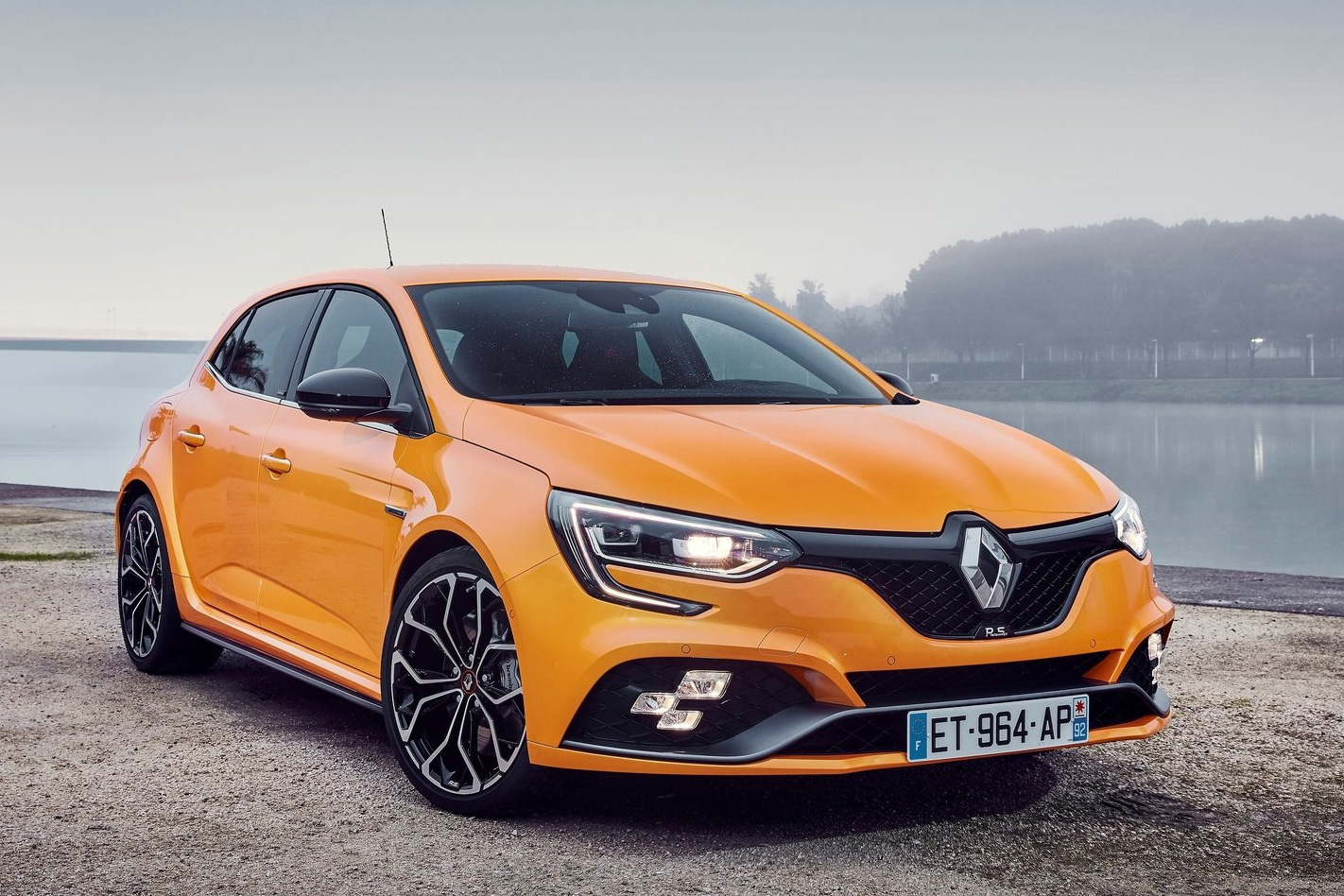
In the surprisingly cold climate of southern Spain in winter, we tested a ‘standard’ Megane RS280 with Sport chassis tune and auto ’box before moving into the red-blooded Cup version on the Jerez circuit, complete with a mechanical torsen LSD, a six-speed manual ’box, and even more-focused suspension.
MAIN RIVALS
Honda Civic Type R, Ford Focus RS, Volkswagen Golf GTI and Golf R, Peugeot 308 GTi 270, and the forthcoming Hyundai i30N, as well as Alfa Romeo’s ageing but pretty Giulietta Veloce.
THE WHEELS VERDICT
Giving the hottest Megane greater appeal to the masses, while not ignoring the fan-boy demands of manual-loving purists leaves this five-door-only hot hatch in revered territory. Its brilliant suspension control, the intriguing charms of four-wheel steering and the fruity grunt from its new 1.8-litre turbo donk more than make up for any design flaws inherited from the regular Megane. Not to mention the fact that it looks deeply sensual. Especially in orange.
THE WHEELS REVIEW
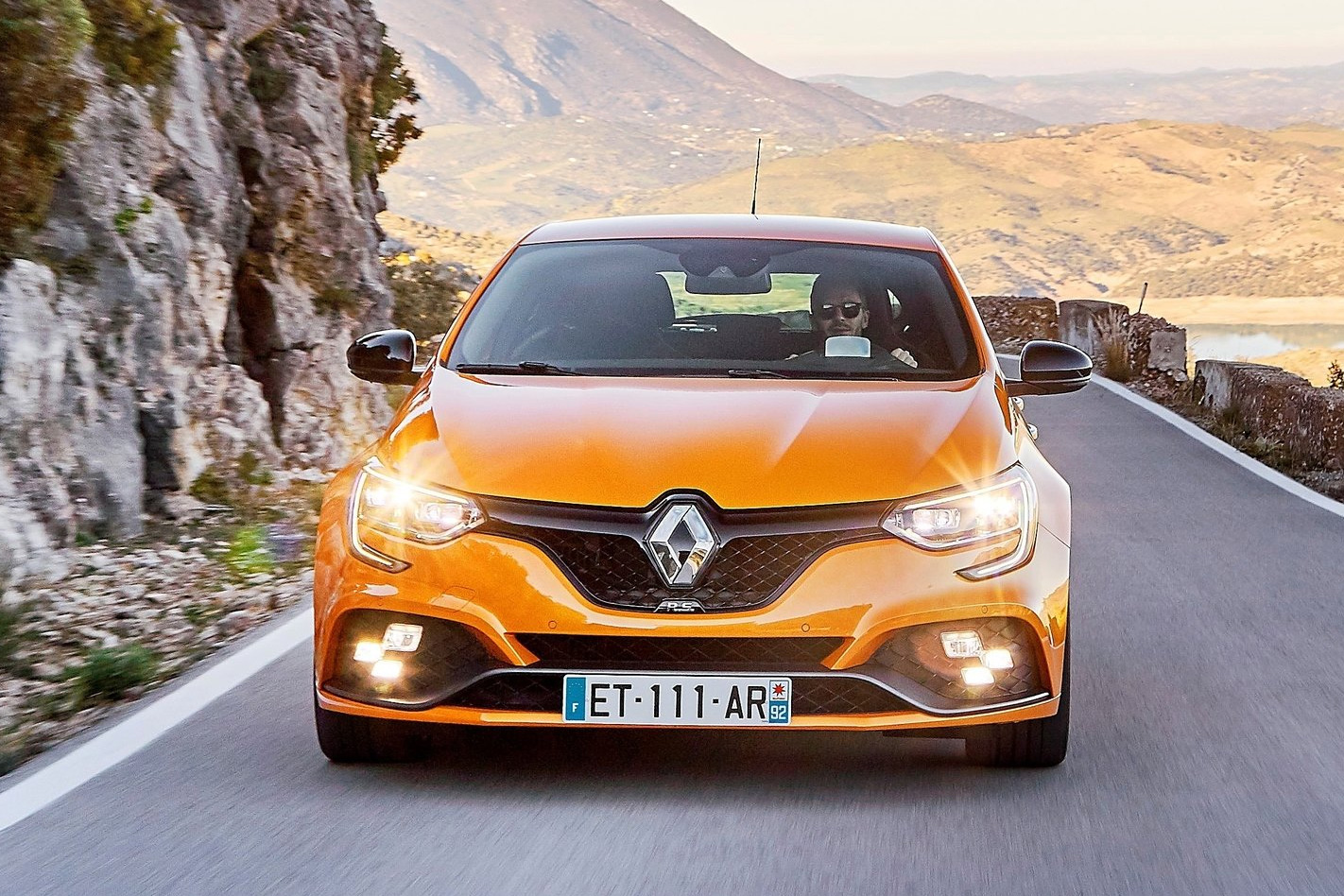
IF WE needed any further proof that we’re living in the golden age of the hot-hatch, then this glorious pearlescent-orange Renault is it. Pumped to within an inch of appearing gratuitous, and preened so beautifully in just about every area, the new Renaultsport Megane RS280 has ‘want’, ‘need’ and ‘must have’ written all over it.
Much like its heavily re-engineered predecessor, this is no shoehorning engine experiment, and nor is it merely a simple exercise in modernising the cracking hot-hatch that fans have salivated over for nearly a decade. This is fresh thinking for Renaultsport, despite the fact we’ve seen a five-door hot Megane before.
The French performance outfit had considered continuing with a three-door format but felt the development budget was better spent turning the rather unspectacular, if worthy (in GT form) Megane IV into a hatch that’s hairy chested, standing four-square and proud as if that’s the way it was meant to look. Once you’ve seen how tremendously taut the Megane’s bodywork has been stretched over much-modified underpinnings, you’ll never look at a stock Megane again without feeling like something is missing.
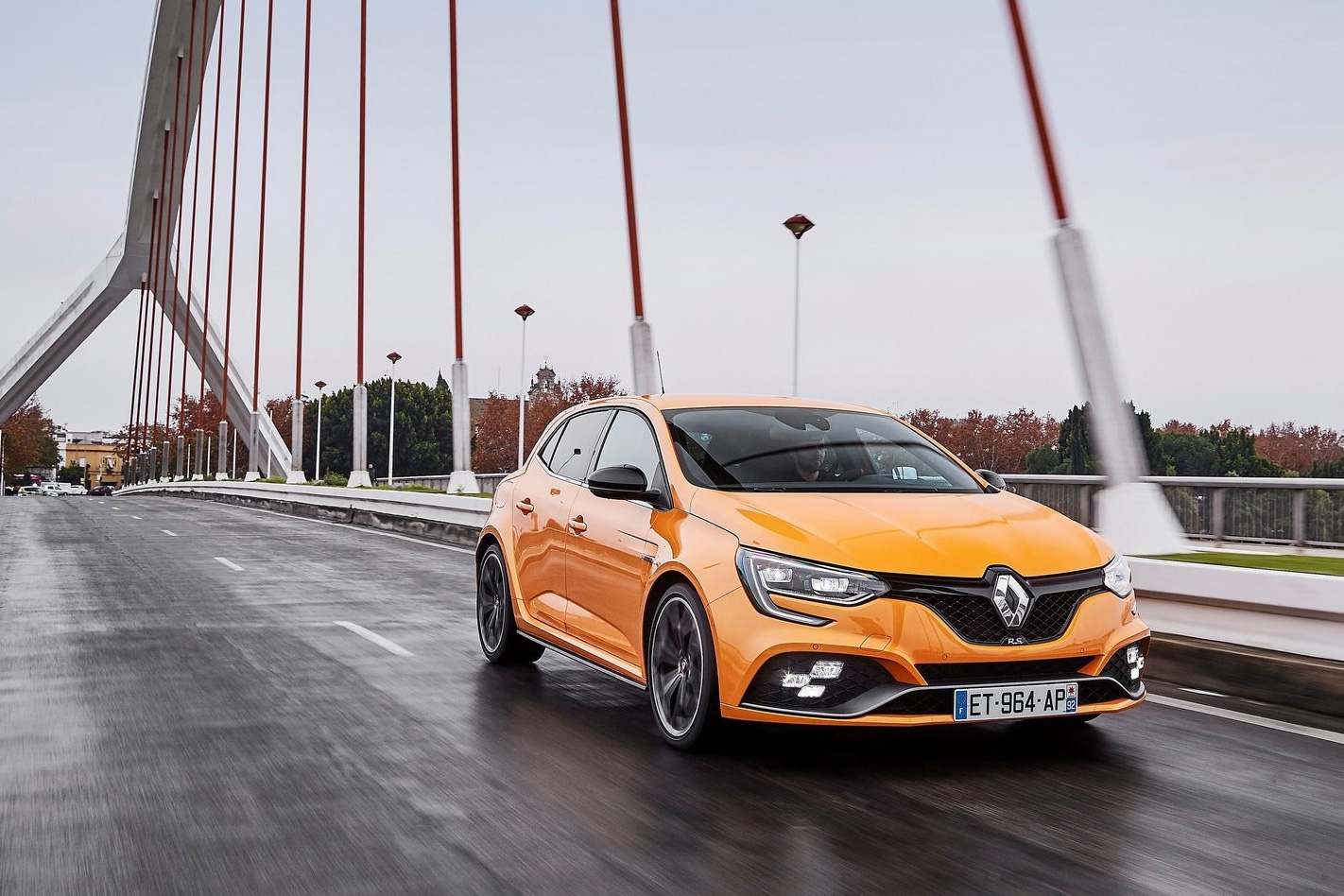
Despite a reduction in engine capacity, the Megane RS280’s new-generation engine (shared with the new Alpine A110 sports coupe) smashes out 205kW at 6000rpm and a chubby 390Nm from 2400-4800rpm. Yet this engine will comfortably pull from just 900 revs without complaint, as well as nail the 7000rpm cut-out without choking. Tied to an eager six-speed manual with perfect pedal placement or a heavily re-engineered six-speed EDC dual-clutch (for the first time in a hot Megane), it forms a drivetrain that effortlessly complements the new Megane RS’s supreme agility.
This is also the first time that I think anyone could honesty say that a synthesised induction note actually sounds real. According to the head of Renaultsport’s engineering department, Olivier Guintrand, they spent “a very long time” trying to perfect the acoustics of this new drivetrain. And the result is both a rich induction sound inside the cabin and, thanks to ignition-cut electronics, a fruity, crackly exhaust note that, on the EDC version, fires out one of the best exhaust upshift barks in the business. Make no mistake, the tough new Megane RS has the muscle to match its machismo.
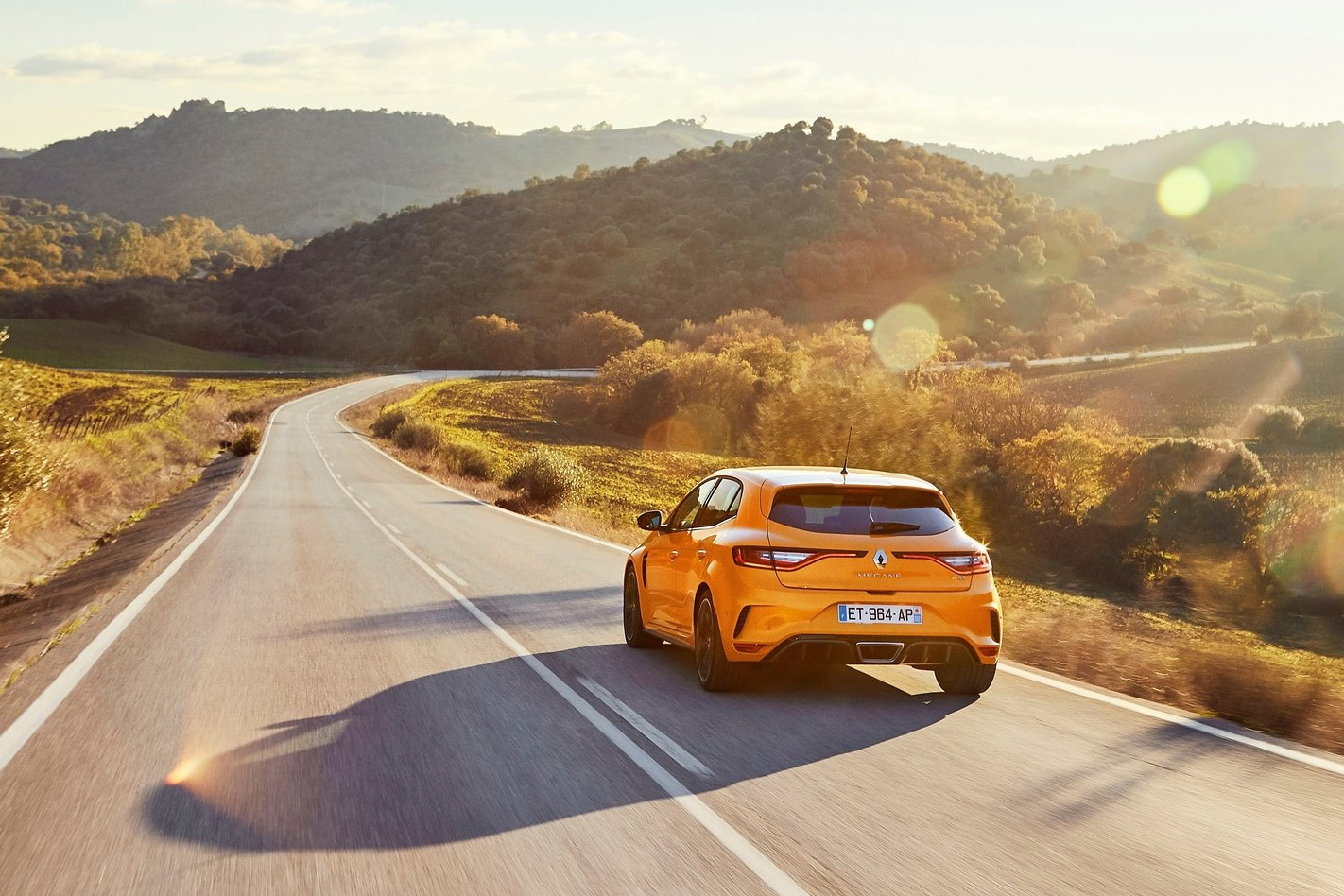
The ‘4 Control’ four-wheel steering adds an interesting flavour too. Despite wearing fat 245/35R19 Bridgestone Potenza S001s, the smokin’ Megane’s turning circle is just 10.3m, making it not only a champion in tight spaces but a mega-agile device when the road turns pretzel.
Normally, the rear wheels point in the opposite direction to the fronts up to 60km/h, but in Race mode (as opposed to Sport, Neutral, and Comfort, as well as an impressively configurable Perso mode), this threshold is extended to 100km/h. And while there’s a degree of trust that needs to build when pushing the Megane’s chassis at first (some people don’t like the rear-endy, oversteery feeling of the back end, especially on our very slippery test roads), there’s actually plenty of purchase here.
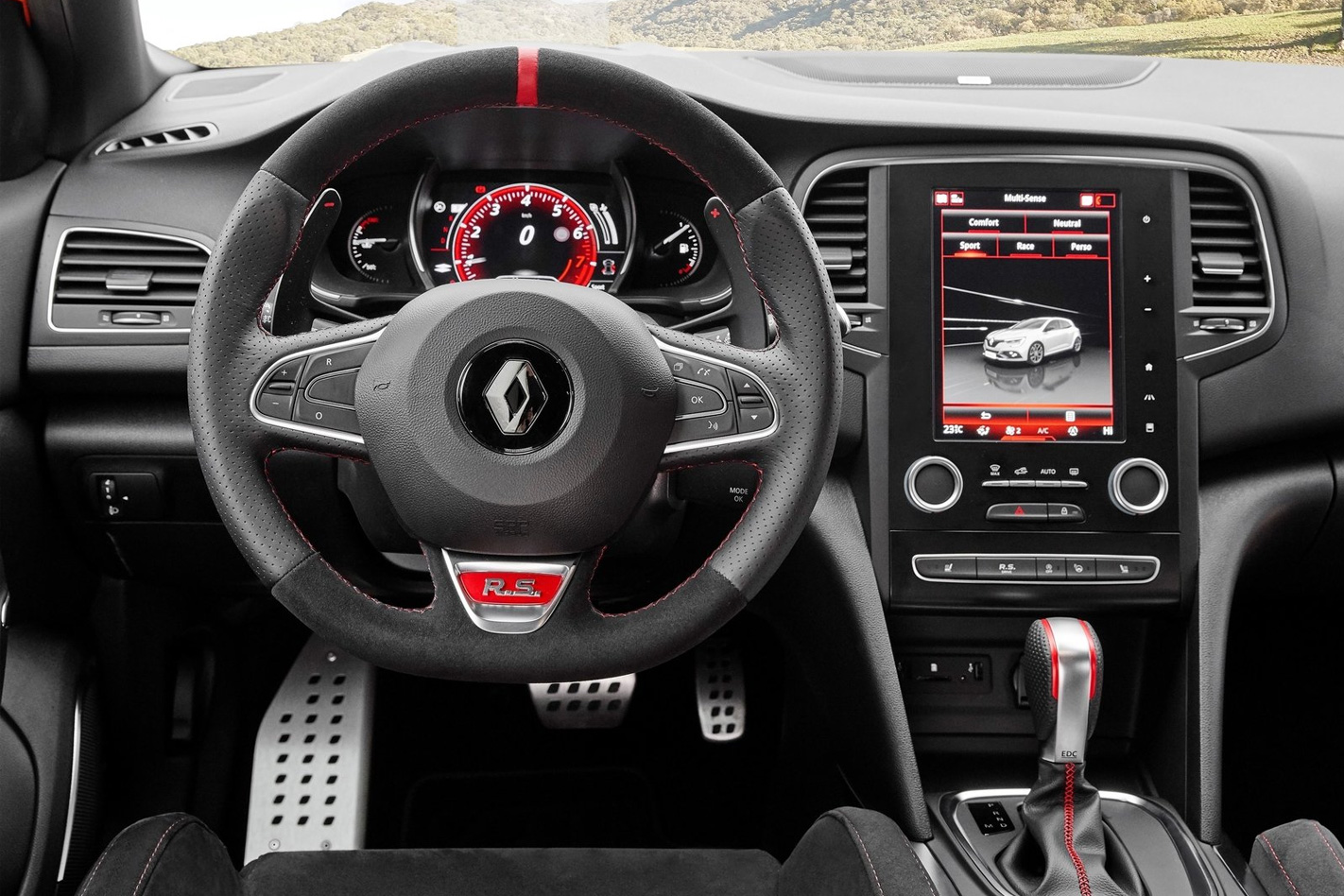
Those moments where the EDC ’box isn’t doing quite what you want does expose one flaw in the Megane’s towering repertoire. The column-mounted shift paddles are too short. Because the driver’s ergonomic set-up has to accommodate Renault’s infamous ‘carbuncle’ multi-function audio protrusion, there simply isn’t room for the paddles to extend any lower. And while we’re at it, full manual seat adjustment with lever-activated backrest rake isn’t ideal for everyone to achieve a perfect driving position (though my 179cm frame had no issue whatsoever). Nor is the wind noise from around the mirrors and A-pillars at 120km/h, or some of the resonances from the tyres on coarse surfaces – all easily drowned out by the robust Bose stereo.
Unexpectedly terrific as the dual-clutch Megane RS280 Sport is, it’s the manual Cup that really needs to nail the brief if it’s going to withstand Honda’s new-gen Civic Type R onslaught. And after nine laps at Jerez, there’s a bloody strong chance the new Megane Cup is everything Renaultsport wants it to be.
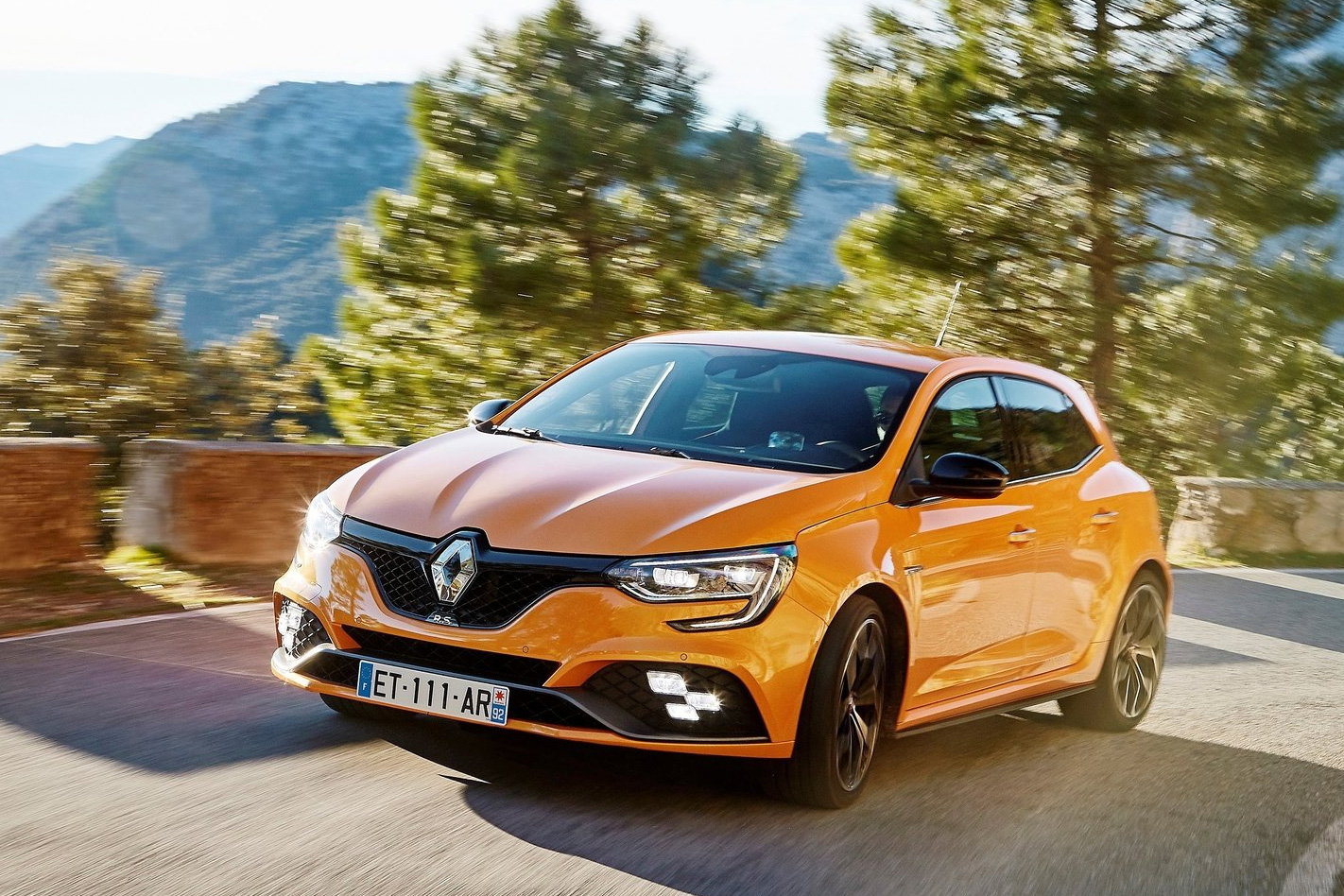
With the ‘multi-sense’ drive mode selection set to Race (meaning ESC off), you can throw the Megane around and it responds with lovely oversteer slides that remain fluid and focused, just like the car itself. And while the brakes on our Cup test cars – 355mm vented-disc fronts and 290mm solid rears, clamped by Brembo calipers – were starting to groan after an entire morning’s flogging, there’s little reason to doubt the new Renaultsport Megane RS280’s credentials as a potential best-in-class hot hatch.
In fact, all the things that aren’t quite perfect on this car – some dud cabin plastics and underdone rear-seat packaging being the main two – already apply to the regular, rather lukewarm Megane. So the fact this super tough-looking bully of a hot hatch has emerged so darn strong and seductive speaks volumes about how much engineering effort has been invested in making it great.
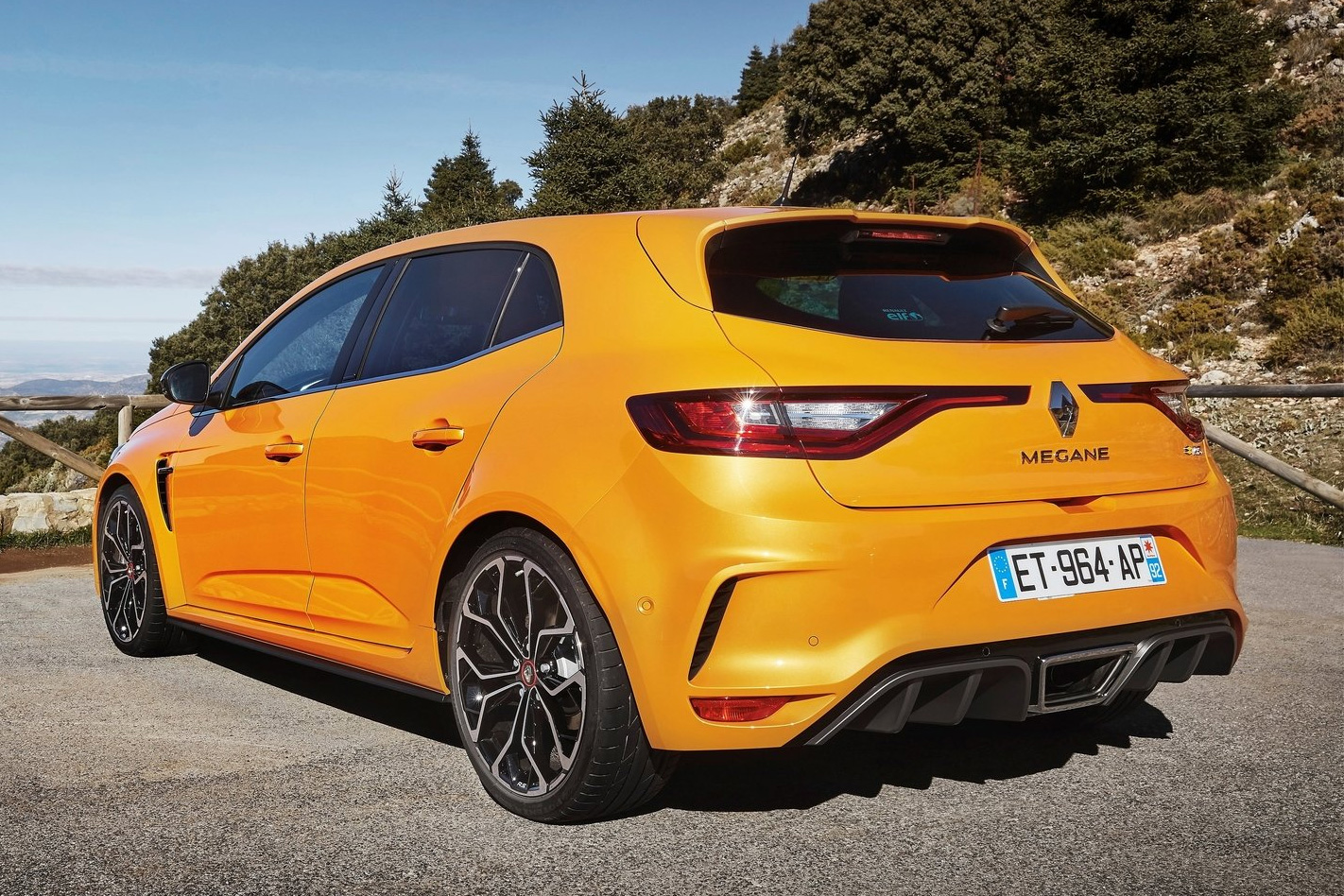
As for Oz-bound Megane RS280s, expect the Sport to arrive in around September this year, in both manual and dual-clutch varieties ($45,000 to $47,500 estimated), though we won’t get the same drivetrain with the Cup chassis. That’s being reserved for next year’s $50K-plus Trophy version. Pity, though – with its sinister black rims and sub-$50K sticker, an RS280 Cup has a lot of appeal for Aussie Renaultsport fans.
As it stands, broad and tough with more than a hint of bad-boy character, the new-gen Renaultsport Megane is pretty much everything we wanted it to be. A better all-rounder than its predecessor without scrubbing off too many edges, yet a car brimming with personality, individuality and flavour. That’s what we want in a French hot hatch, and that’s exactly what you get here.
SPECS
Model: Renaultsport Megane RS280 Engine: 1798cc 4cyl, dohc, 16v, turbo Max power: 205kW @ 6000rpm Max torque: 390Nm @ 2400-4800rpm Transmission: 6-speed dual-clutch Weight: 1430kg 0-100km/h: 5.8sec (claimed) Economy: 7.0L/100km Price: $47,500 (estimated) On sale: September
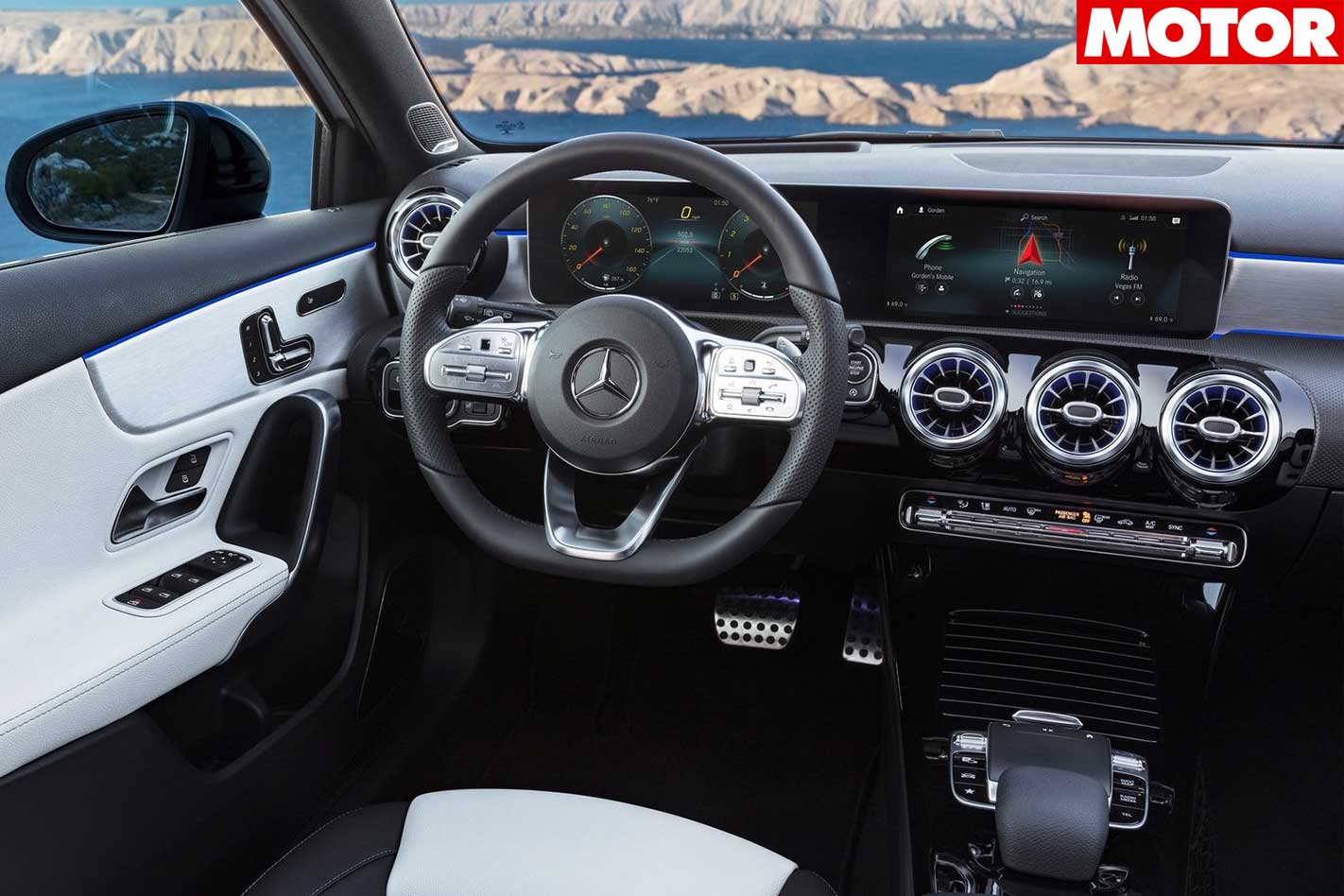
Mercedes-AMG will debut a new and more affordable product by the end of the year, with the first-ever A35 AMG set to rival the likes of the Audi S3 and BMW M140i, and fill the void to the next-generation A45 AMG all but confirmed to soar in power and pricing.
The evolutionary fourth-generation A-Class launched globally just last week in Amsterdam, with the most powerful model revealed so far being the A250 featuring an upgraded version of the existing 2.0-litre turbocharged four-cylinder petrol engine. It now delivers 165kW (up 5kW) and 350Nm, and the lighter new hot hatchback claims a brisk 6.2-second 0-100km/h.
However, the current A250 is priced from $55,200 plus on-road costs, and that isn’t expected to change much when the A-Class arrives in Australia by the third quarter of 2018.
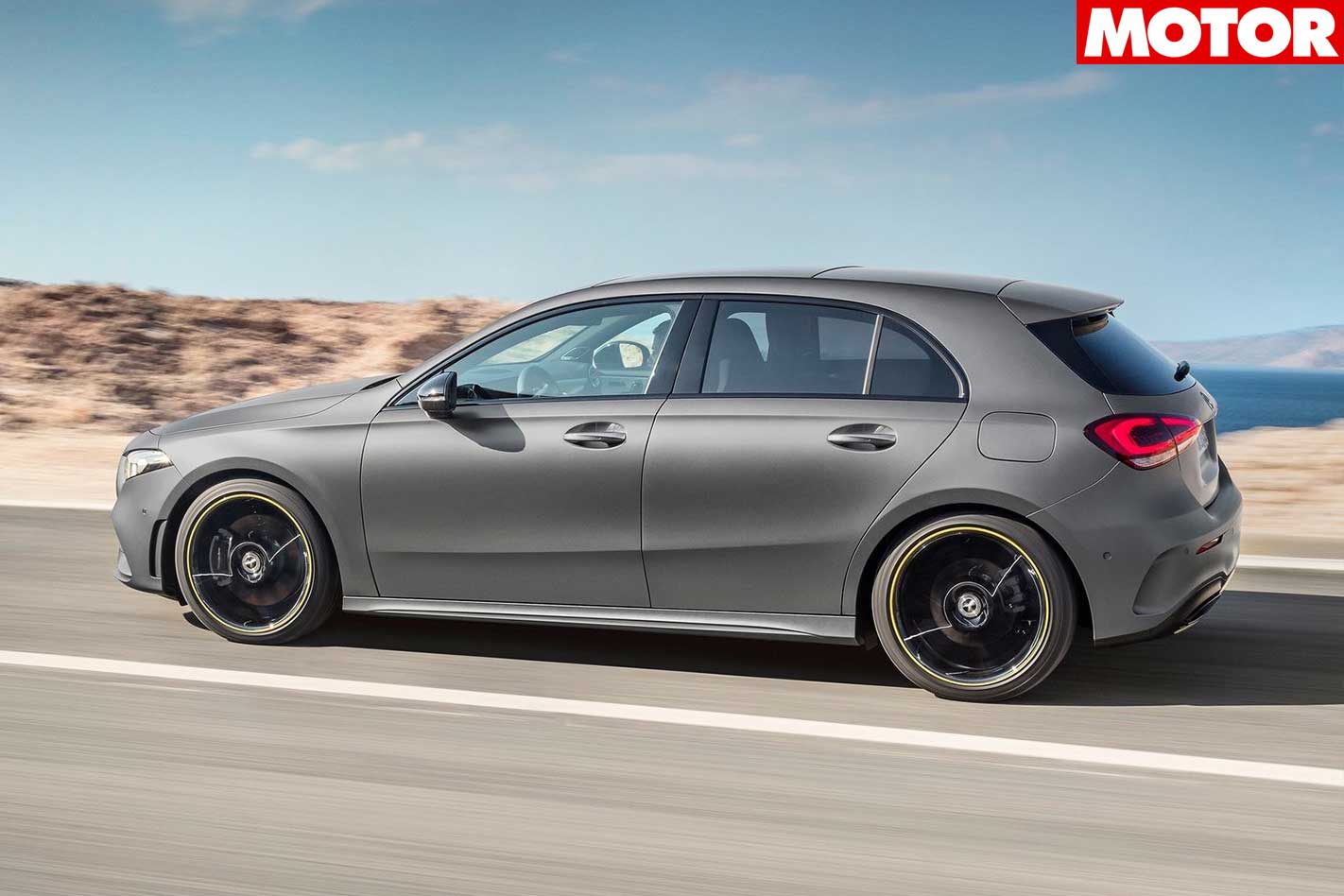
The A35 AMG will use an Affalterbach-tuned version of the Benz’s latest 4MATIC all-wheel drive system, which replaces a hydraulic pump for the actuation of the rear differential with an electro-mechanical clutch claimed to be much faster acting than before.
For even the new A250, selecting the sportiest Drive Select mode prioritises a more rear-driven feel than the previous system, which prioritised front-drive until slip was detected, at least according to Benz experts speaking at the launch of the new A-Class in Amsterdam.
This is a move that falls in line with AMG’s strategy of reducing fuel consumption, and meeting stringent European emissions targets, in its penultimate models. Already there’s a precedent – the CLS 53 AMG uses a 320kW/520Nm 3.0-litre turbo inline-six teamed with an electric motor fitted between engine and auto, dubbed EQ Boost, to add 16kW/250Nm.
It therefore leaves the next CLS 63 AMG to use big V8 power, and likewise the A45 AMG will use enormous boost to ramp up its four-banger outputs to at least 300kW, and more likely 320kW, with a sub-4.0sec 0-100km/h an obvious target that engineers will hit. And hit hard, given the current 4.2sec time is managed from 280kW/475Nm.
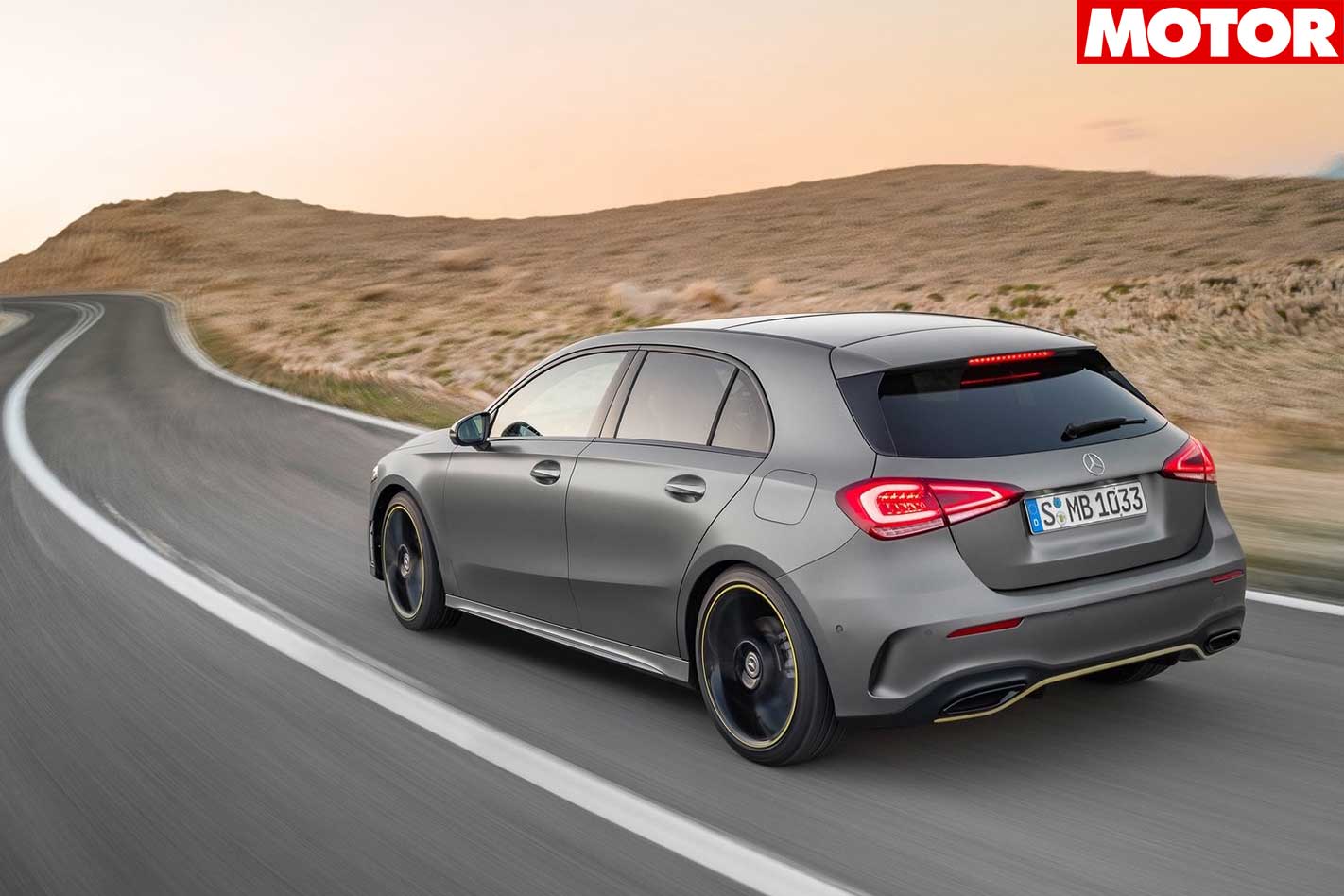
The A35 AMG could be shown as early as next month’s Geneva motor show, though October’s Paris show is more likely given the global on-sale date of late this year. The A45 AMG will then follow by mid-2019, we are reliably told.
Nissan has announced it will give the 370Z a facelift to “set it apart from the previous iteration.”
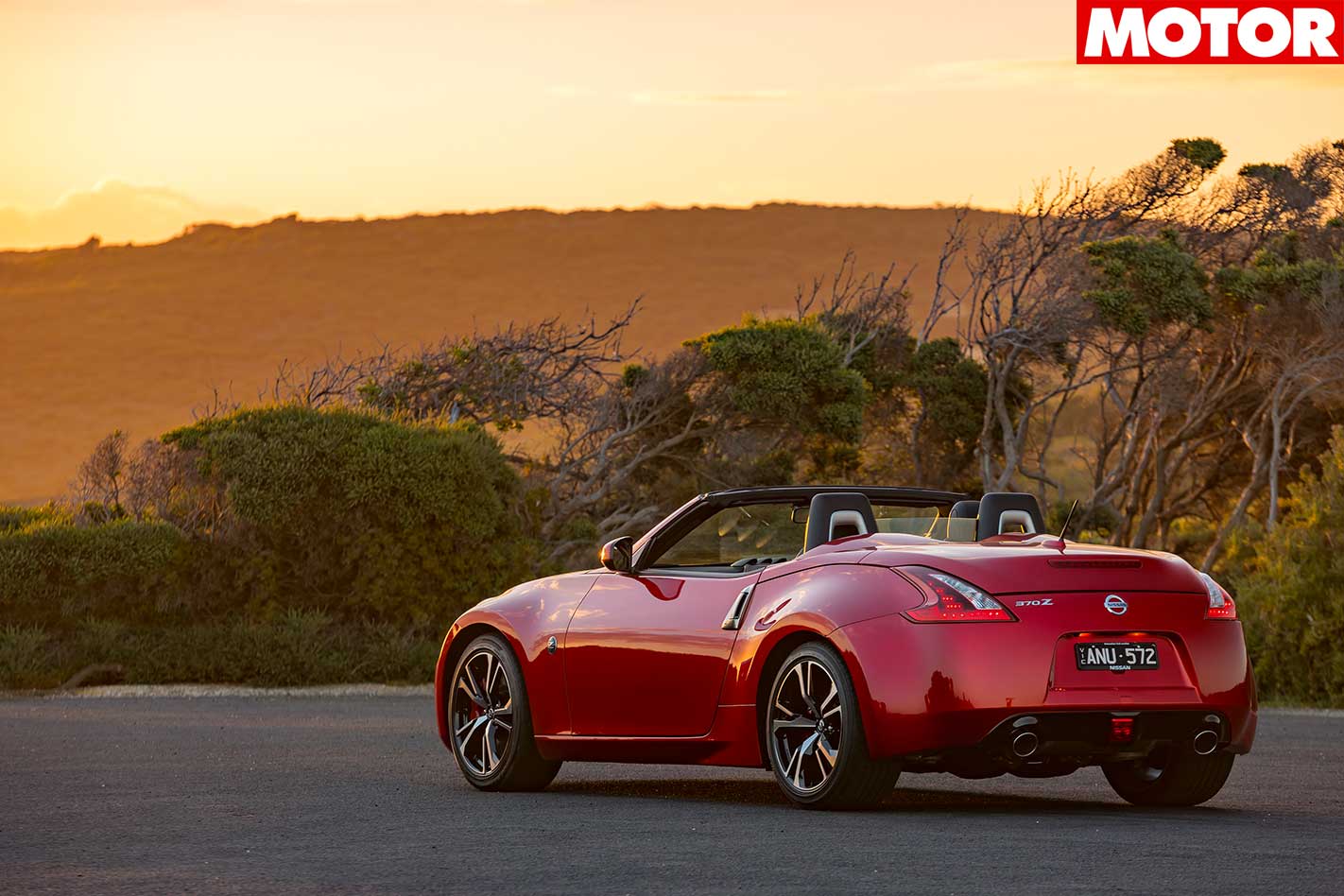
The facelift includes smoked front and rear lights, smoked paint finish on door handles, and a new design for its 19-inch alloy wheels.
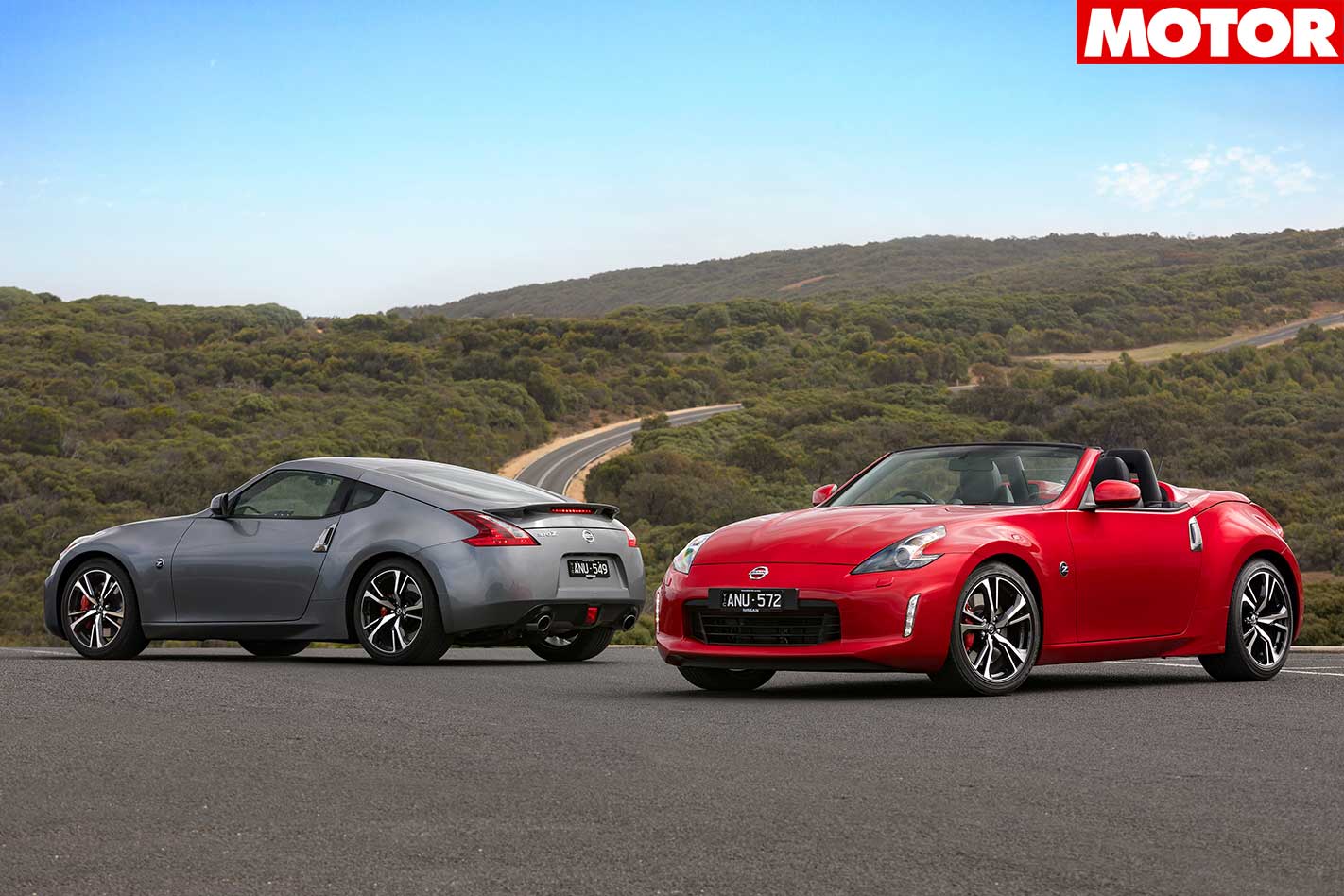
And that’s it. That’s the whole visual facelift.
These changes happened in the US market in mid-late 2017, but the facelifted models will now be seen in Australia.
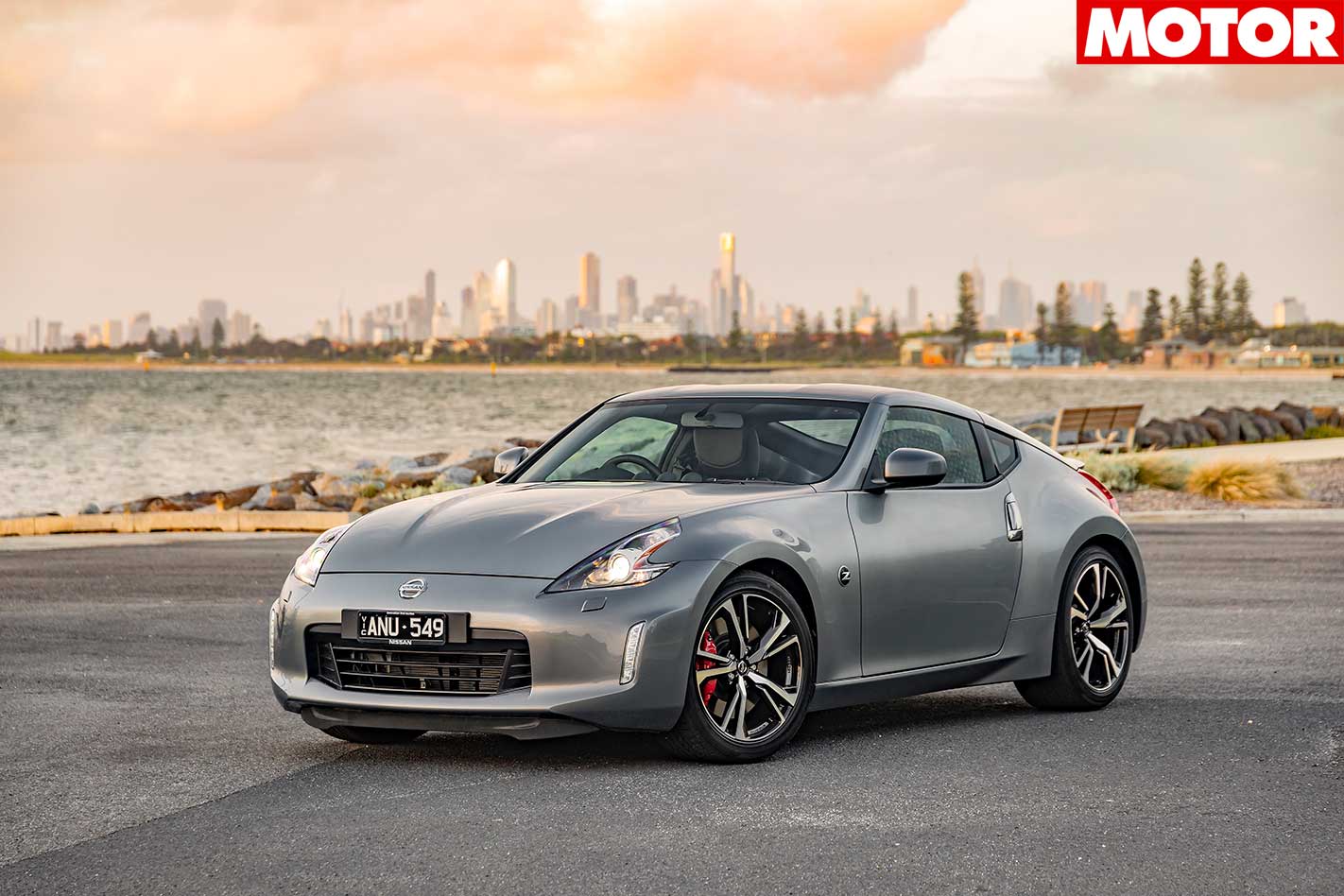
The 370Z was introduced in 2009, after seven years of the 350Z. Since 2002, little has changed across both cars, leaving a car that is essentially a decade-and-a-half old.
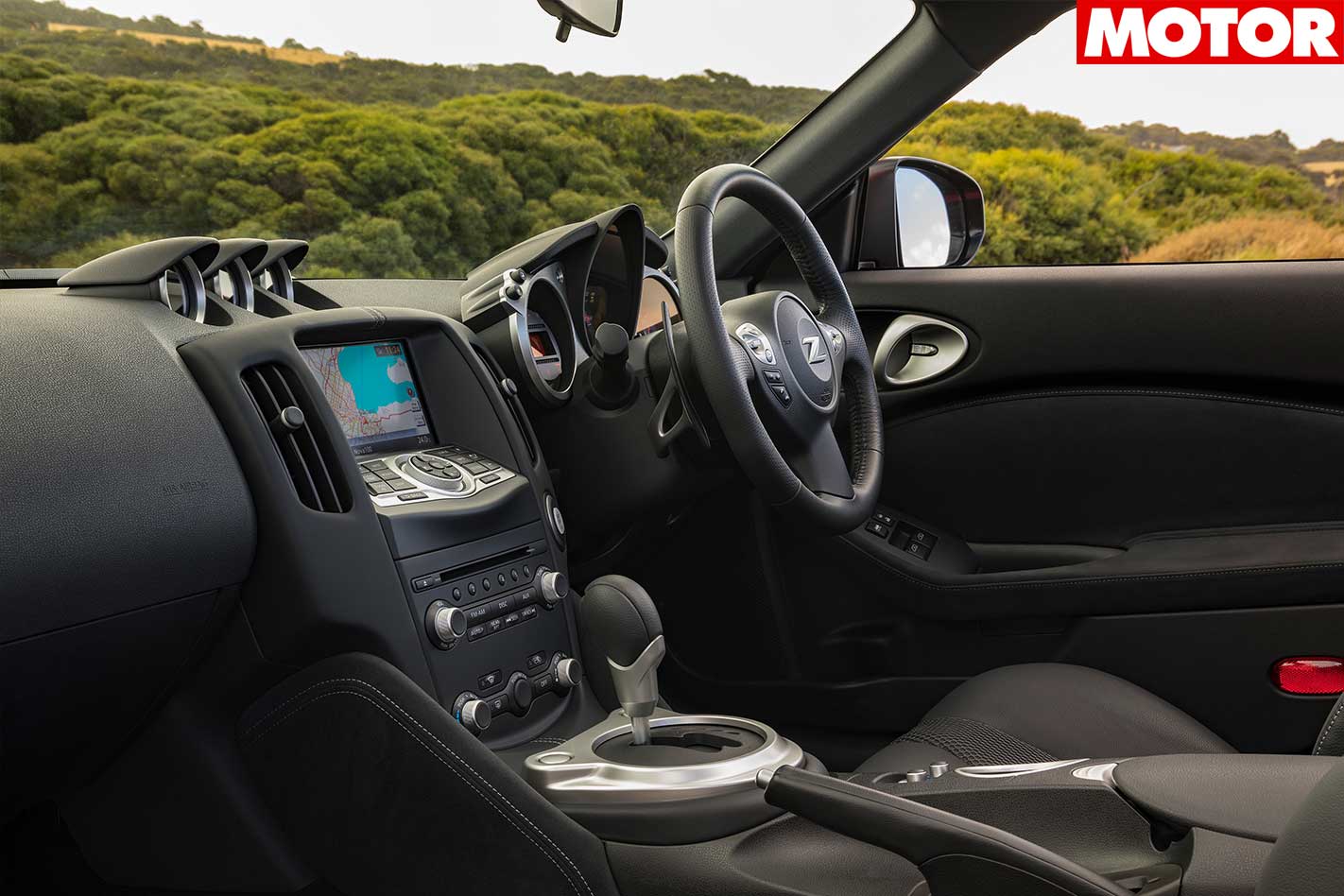
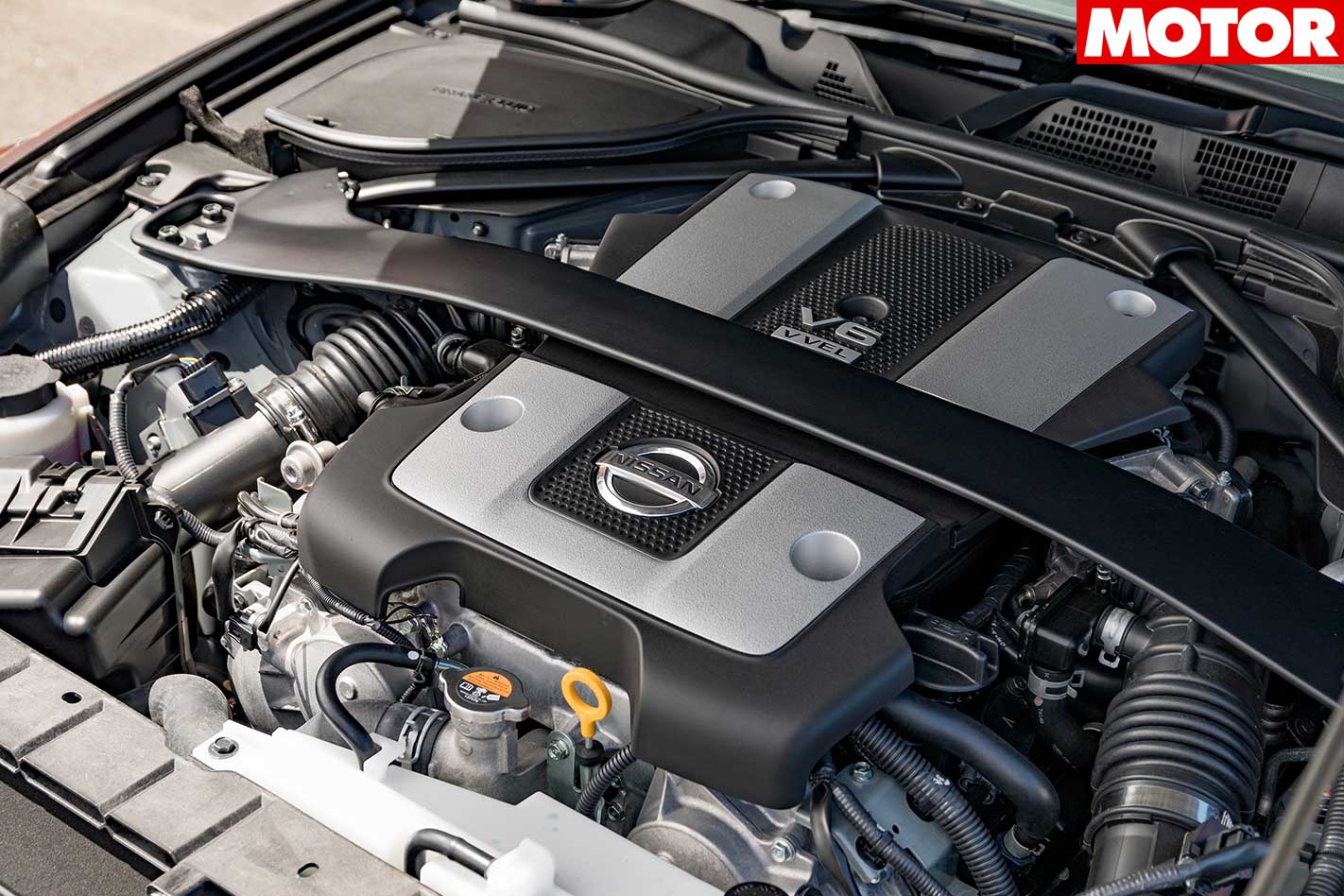
The facelifted 370Z’s engine still has the same 245kW/363Nm output as it had previously, though one mechanical change that has been implemented is the use of a high-performance Exedy clutch, which Nissan says “makes it more responsive and fun to drive.”
Also unchanged is the pricing for the sharper Nismo 370Z at $61,990.
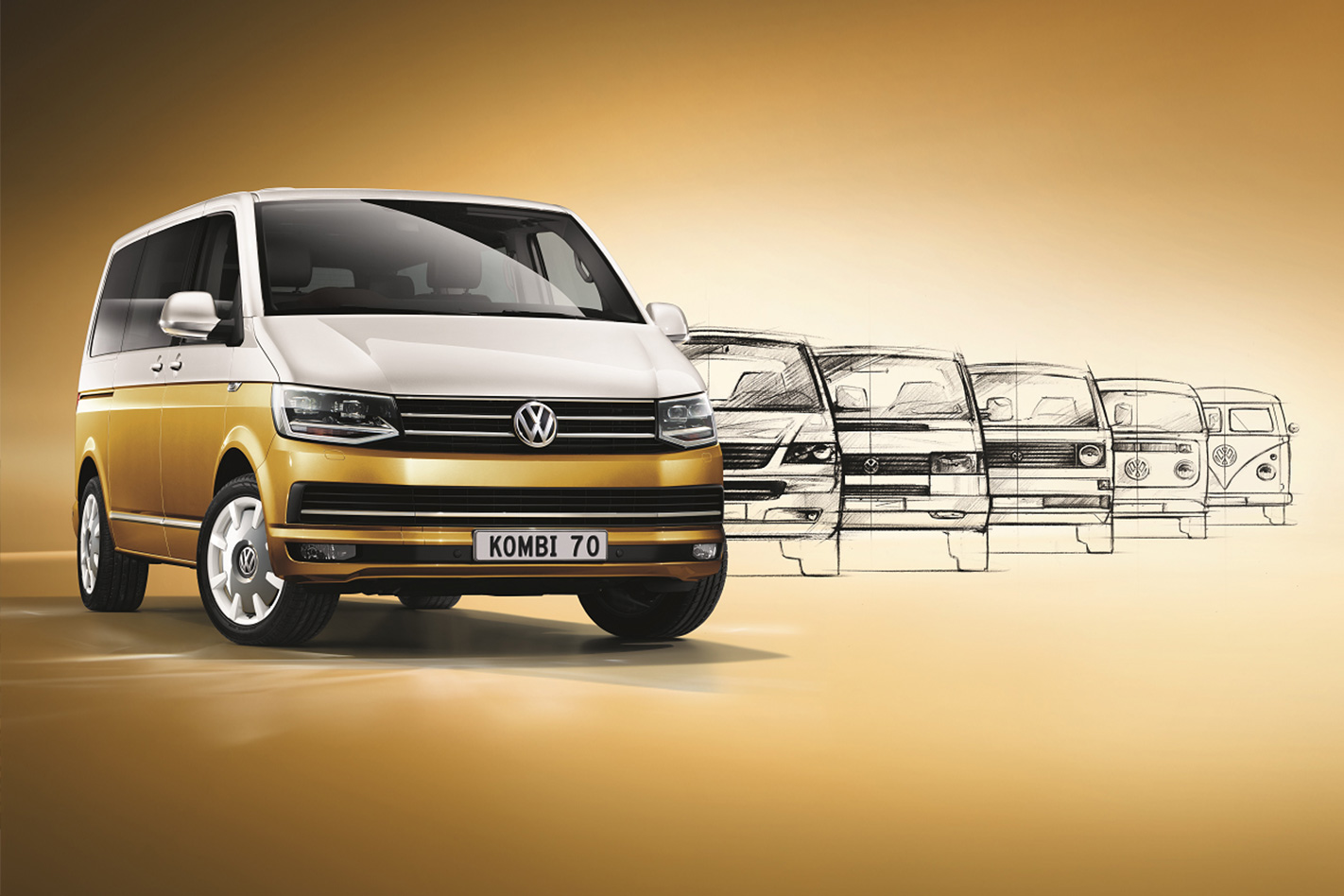
IT IS 70 years since the VW Type 2, more commonly known as the Kombi, was first revealed.
To celebrate, Volkswagen Australia will sell a new Multivan ‘Kombi 70’ special edition, based on the TDI340 Comfortline DSG badged people-mover.
Changes for the Volkswagen Multivan Kombi include a range of two-tone colour choices, 18-inch retro ‘disc’ alloy wheels, wood-effect flooring, alcantara upholstery, LED headlights and DRLs, and electric power sliding doors with power latching.
The Multivan is also fitted with the ‘Good Night’ package, which adds fabric blinds, Multiflex board bed extension, washable bed cover, rechargeable mini flashlight and three drawers underneath the three-seater bench seat.
Only 120 units will be available, with pricing set at $64,990 drive away – the entry-level van the Kombi 70 is based on sells for $52,990 plus on-road costs.
The different colour combinations available include Candy White/Curcuma Yellow, Candy White/Starlight Blue, Candy White/Indium Grey, and Indium Grey Metallic/Deep Black.
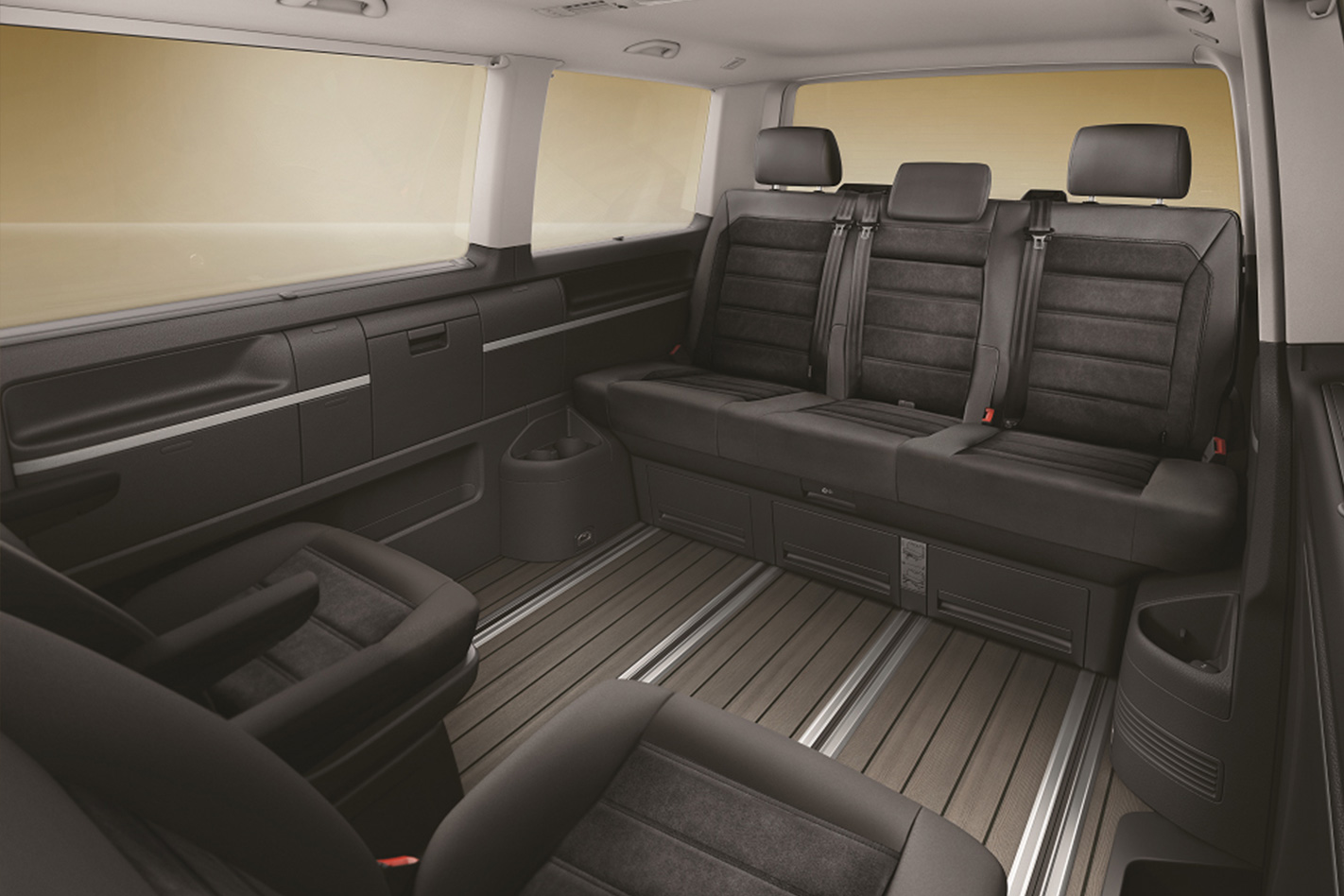
VW has been teasing a return to production for the cult-classic Type 2 since the start of the century with a number of concept cars and limited-run special editions.
The Transporter got its own microbus treatment back in 2006 with the Kombi Beach.
Kombi nostalgia at VW is high, with an all-electric ID Buzz concept revealed at the Detroit auto show, which the German manufacturer claims will be put into production by 2022. It’s not the first time VW has said a concept Kombi will become reality, so we won’t hold our breath just yet.
Engineers have wrung a remarkable amount out of the internal combustion engine.
Dry-sump systems have banished oil surge, variable valve lift has broadened power bands, while turbo and superchargers have sent outputs soaring. However, the electric motor will wipe those advancements if people like Elon Musk get their way. As a propulsion unit, they’re simpler and more efficient.
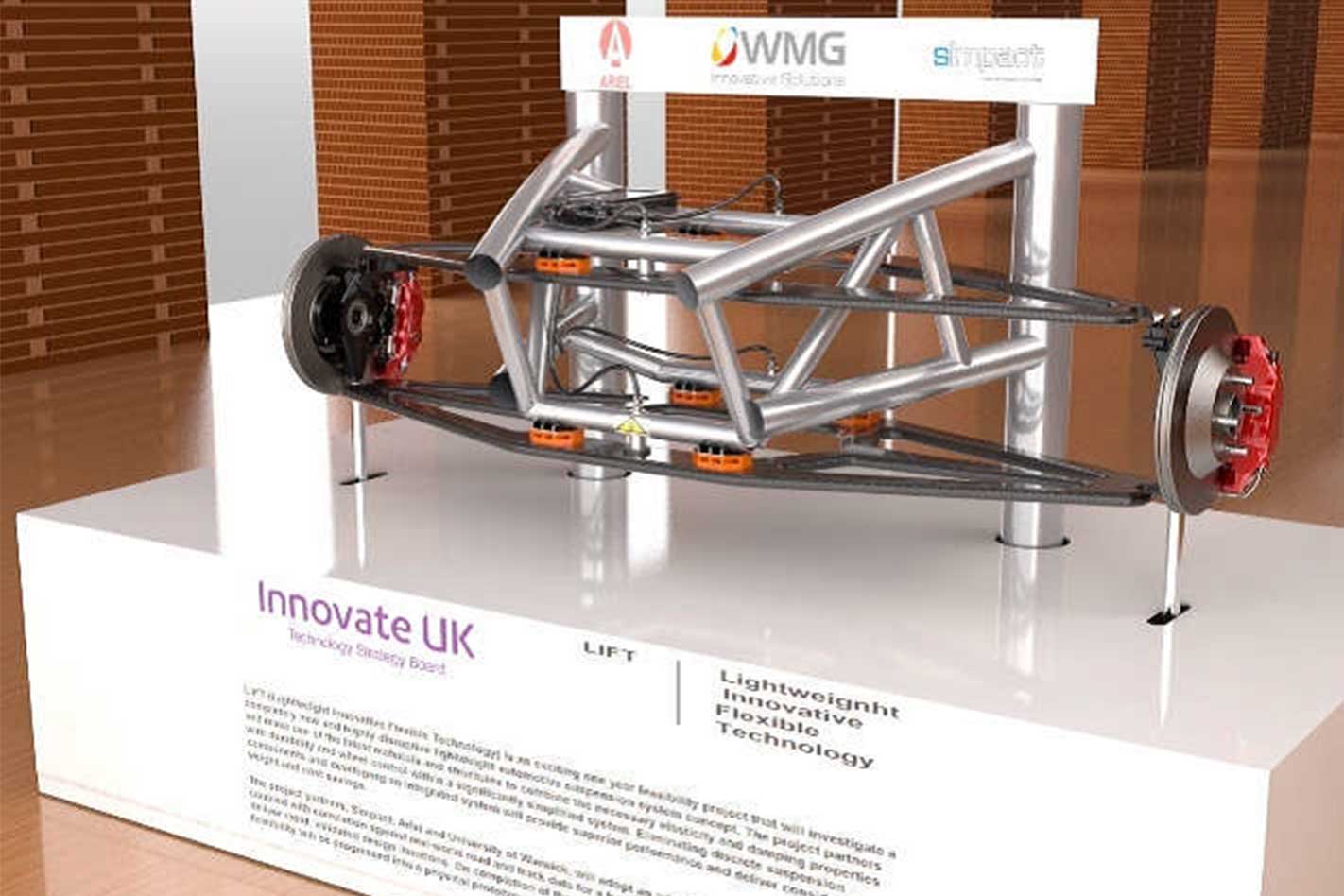
Yet, revolutionary change isn’t on the horizon just for means of propulsion. The coils under your guards are set for the same fate if Simpact, a small UK engineering consultancy, gets its way with a radical rethink on suspension. Its idea, ultimately, is to junk bushes, roll bars, dampers, and springs for a flexible wishbone.
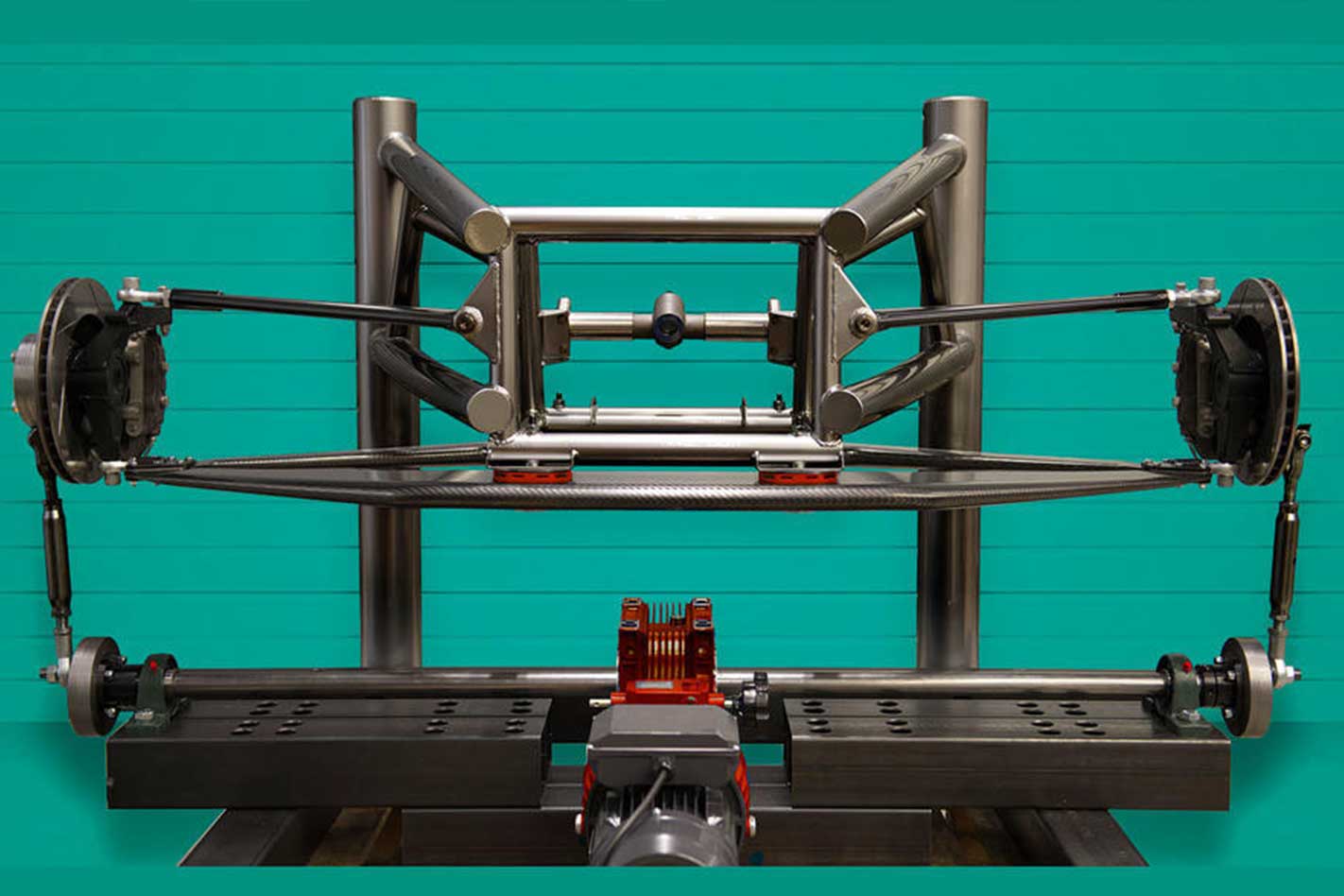
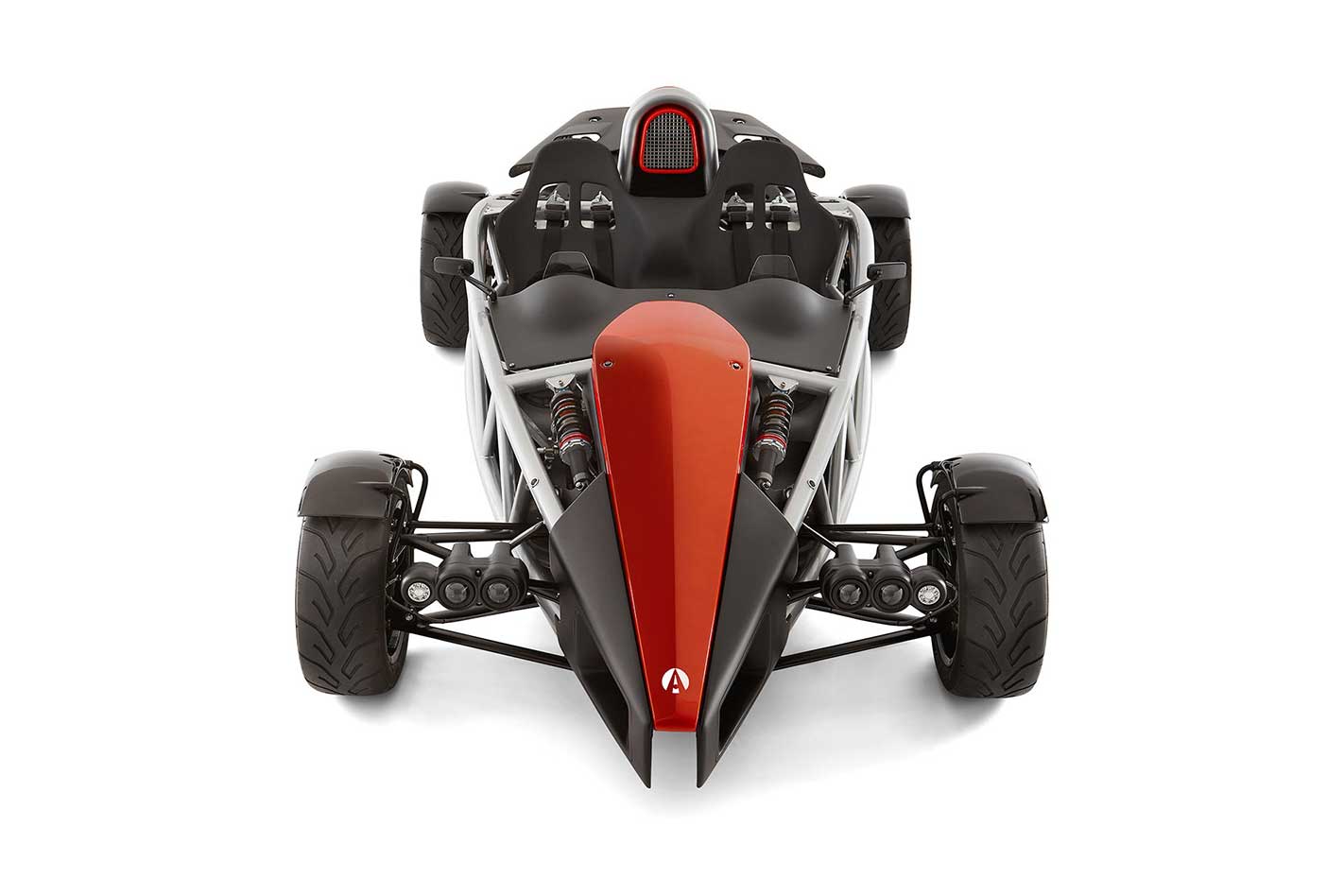
Partnering with Ariel motor company to develop the technology, the system is said to be able to shed 38 per cent from an Atom’s already featherweight suspension assembly.
This is an incredible achievement as the Atom’s suspension design does not include anti-roll bars, something else the wishbone replaces. There are also massive benefits to service life, with the system claimed to last almost 1,000,000km.
“[We wondered] wouldn’t it be fantastic if you could have vehicle suspension that is a little bit like the wings of an eagle, that it organically adjusts itself to the environment it is in,” commercial director Tim Williams tells MOTOR.
Simpact then undertook a one year project to prove such an idea in a digital environment, leaning on Warwick University for numerical modelling. It was a success, but had sceptics.
“We thought if we were going to take this forward, [we would need to] develop it within a new collaborative R&D project into an actual on-vehicle demonstration. We really needed to at least make something to prove the flexible wishbone works.”
A physical rig was built last year to great response. Such that Simpact is currently on the lookout for funding to build a prototype Atom with LIFT, which might later see it installed on the incoming Ariel ‘hyper’ car. Which it says has world-beating potential.
Ariel Hypercar?
In Ariel’s push to be known as more than just an Atom company, it will release an Evora-sized two-seat coupe with an appetite for Porsche’s and Mercedes-AMG’s best.
Known as the P40 in its current concept and development stage, the car is touted to shred 0-160km/h in 3.8sec and is due for production in less than two years. Power is supplied by four electric motors, for 868kW in total and all-wheel drive. It’s torque peak is also said to be a staggering 1801Nm.
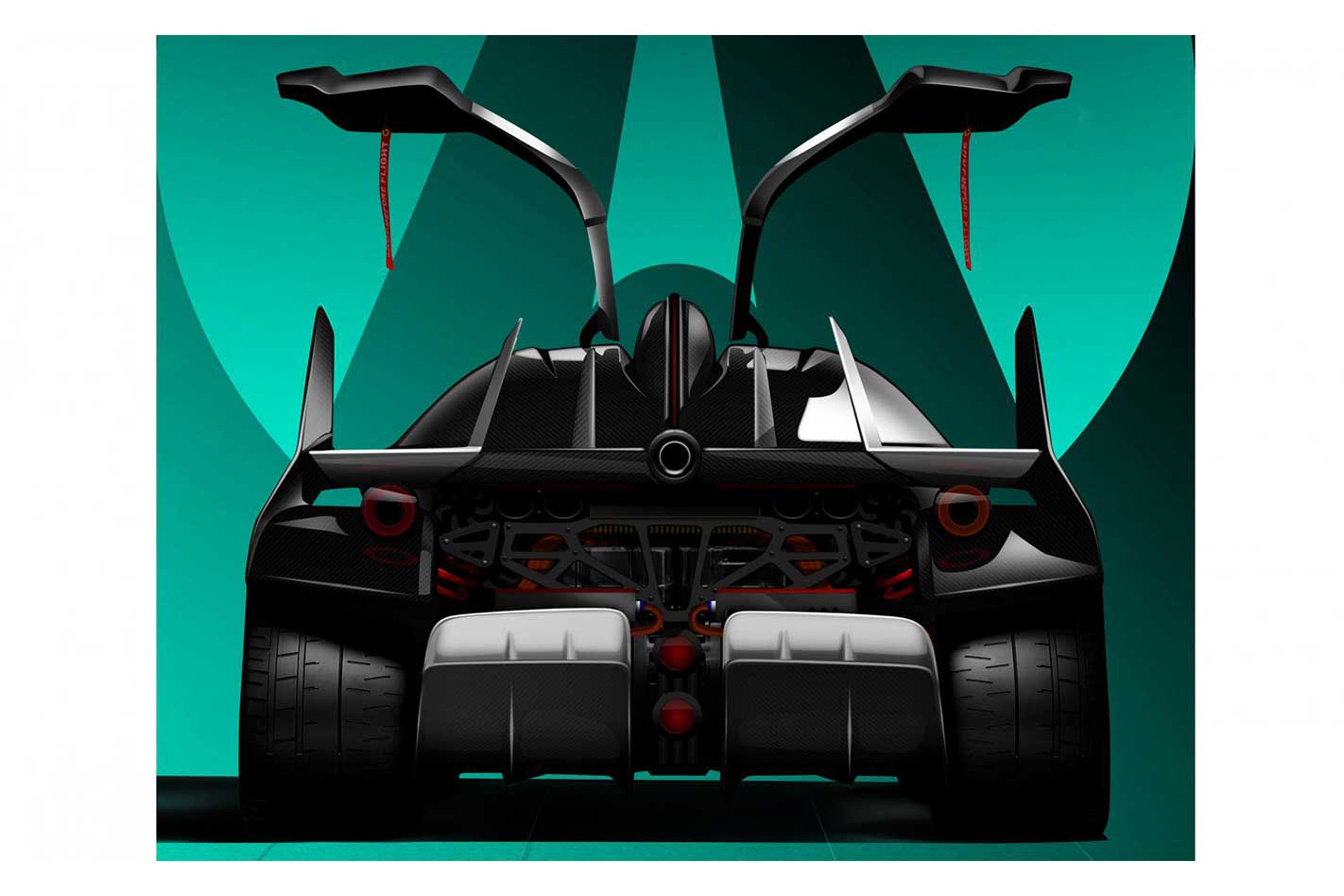
It will be based around an aluminium monocoque and showcase British manufacturing as much as possible. This is where Simpact will come in. Though Tim Williams wasn’t more forthcoming as to how the LIFT system would present itself on the P40, considering the concept is currently displayed with traditional coilovers.
The British government has poured £2m of funding into the project through the same agency which supported the birth of LIFT.
Five LIFT tidbits
1 – POWER OF PIEZO
The minds behind the project say LIFT will eventually use piezo fibres for improved suspension compliance, fully replacing the role of a damper. Such fibres can adjust their flexibility based on electric current, to further disperse energy and further hone the system’s damping control.
2 – BACK AND FORTH
Suspension systems also have to deal with front and backwards forces, but Dirk Landheer says that’s not a problem. Sensors on a regular Atom amassed data on how its suspension behaves, so engineers could apply that to LIFT. While the design has been proved in simulation tests.
3 – TEST PILOT
4 – ONE FOR ALL
The system is said to be scalable from light to heavy-duty projects and can be tuned for different characteristics. The team analysed a Toyota Yaris and revealed it could save 46 per cent of mass in the suspension.
5 – CHARGED UP
Considering lightweighting projects in the UK are inspired by an interest in electric vehicles, piezo fibres present the ability to harvest energy from the arm movements. Your cigarette lighter contains piezo crystals and when the button is pressed, they’re ruptured to spark electricity.
BATHURST’S formidable Mount Panorama circuit is arguably more deeply entwined into the tapestry of Australian motorsport than any of our other legendary racing assets.
Perhaps it’s the unfathomable elevation from Murray’s Corner to Brock’s Skyline, maybe it’s the spirit of racing nobility that has fought it out over the years here, or perhaps it’s the fact that, for a majority of the year, the fearsome track is just another public road.
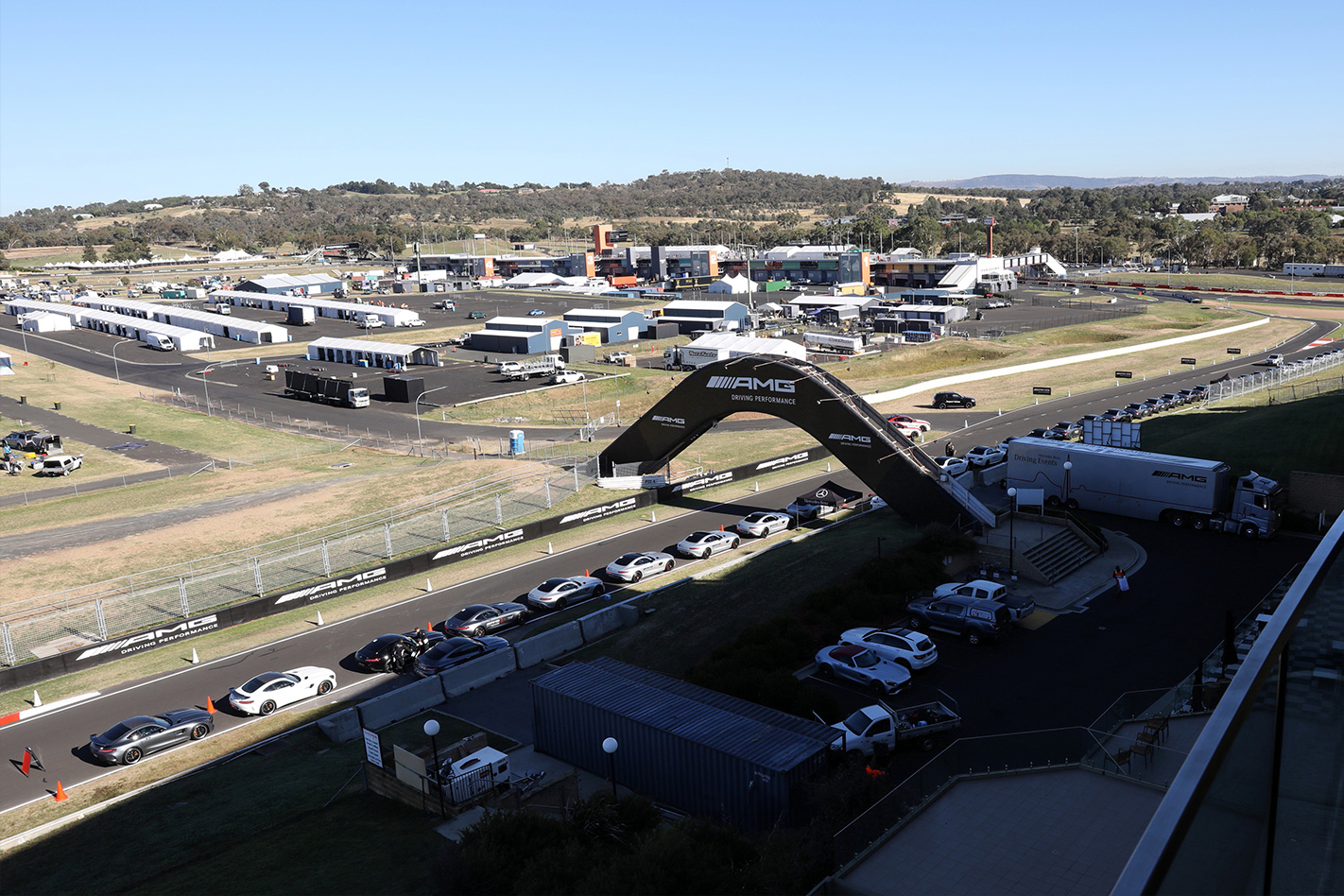
As a street circuit, you can turn up at almost any time in any road registered car and lap one of the world’s most famous racing tracks – as long as you stick to the speed limit. But if you want to get a little closer to what it must feel like to complete a lap or two of Mount Panorama in anger, the opportunities are few and far between.
If that seems like just a little too much of a commitment however, there is another possibility.
If you are a member of the AMG Club (by having taken delivery of a new Mercedes-AMG in the last three years) and were quick enough to snap up one of the circa 140 places on this year’s AMG Driving Academy, you would have been one of the handful of mere mortals to hit Mount Panorama under racing conditions.
Just hours after the 2018 Bathurst 12 Hour endurance race had concluded (in ceremoniously unspectacular circumstances) we were back at the track. The shards of smashed carbonfibre had been cleared and the final campsites were being packed up but we had another full day under the supervision of AMG’s expert driving instructors and a fleet of more than 50 hot AMG machines.

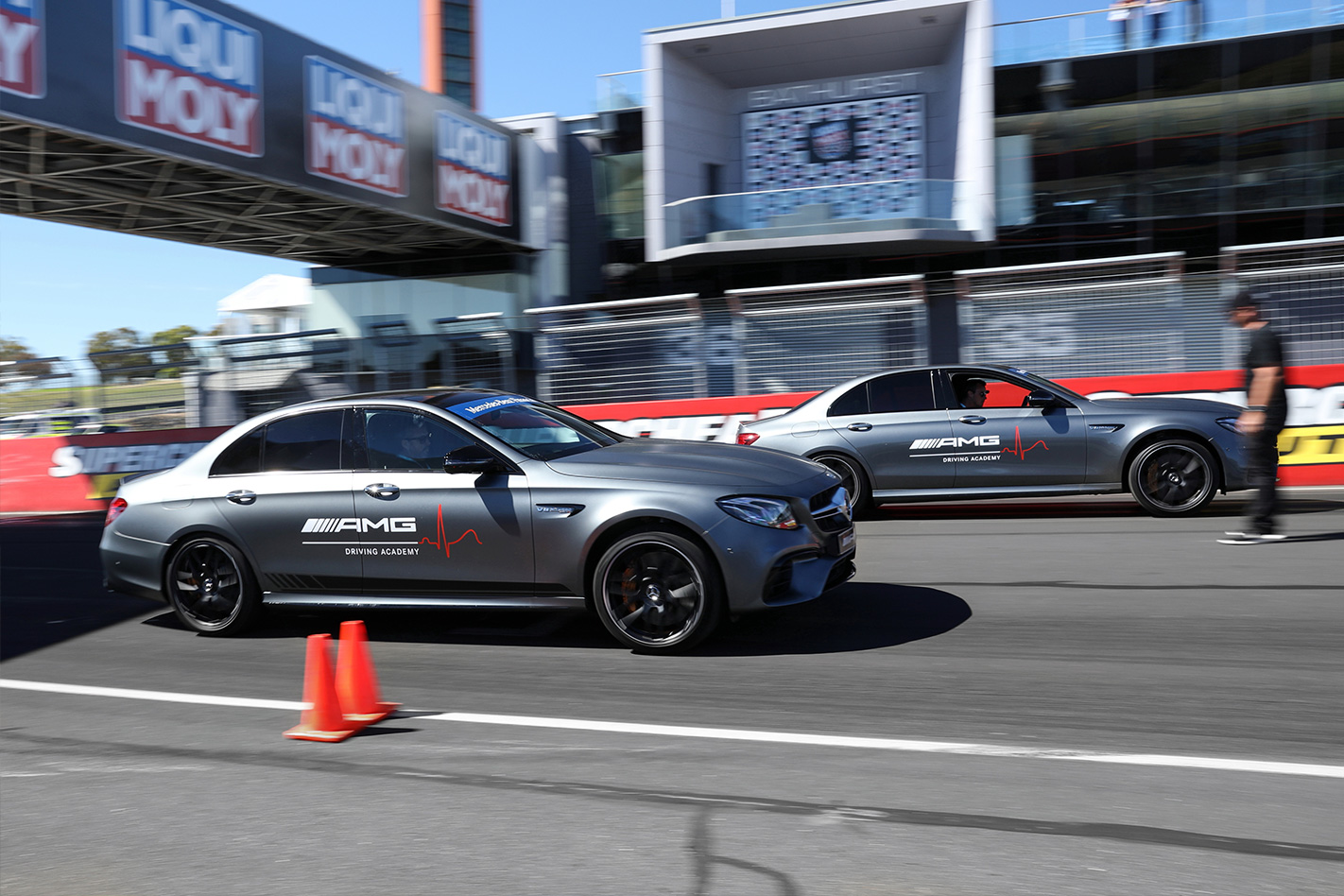
The exception to the valuable educational experience was our first task and a blatantly frivolous drag race along the start/finish straight in a E63 S. There’s not a lot to learn from a full launch-control start in AMG’s most powerful road car to date, but revving the 4.0-litre turbo V8 to 4000rpm and sidestepping the brake with your left foot is addictively good fun.
When Wheels tested the E63 S’ zero to 100km/h acceleration in the July edition, we managed to shave a tenth from the official time of 3.4 seconds, but more remarkable than the time is the car’s ability to consistently perform the punishing launch.
There are a number of brands that certainly wouldn’t allow their vehicles to be subjected to an entire morning of full-noise race starts but we didn’t see one E-Class miss a beat and it’s a real vote of confidence by Mercedes for its hardware.
When you’re in the guts of it, those walls seem to tower above you with a foreboding and unforgiving presence. Get it right however, and you’ll blast out into Quarry Corner and on to the famous Grate. With the correct line, it’s possible to carry a huge pace through the series of four corners and a pass in a turbo V8 C-Class highlights just how manic the speeds are when the V8 Supercars and GTs come through. Sulman Park flashes by and we are at the top of the mountain. What’s next?
Perhaps it was the immense torque of the C63 or the distraction of having to concentrate intently on not smashing up $160,000 worth of someone else’s car, but we hadn’t fully appreciated the altitude climbed on the upside of the mountain, but that was about to change.
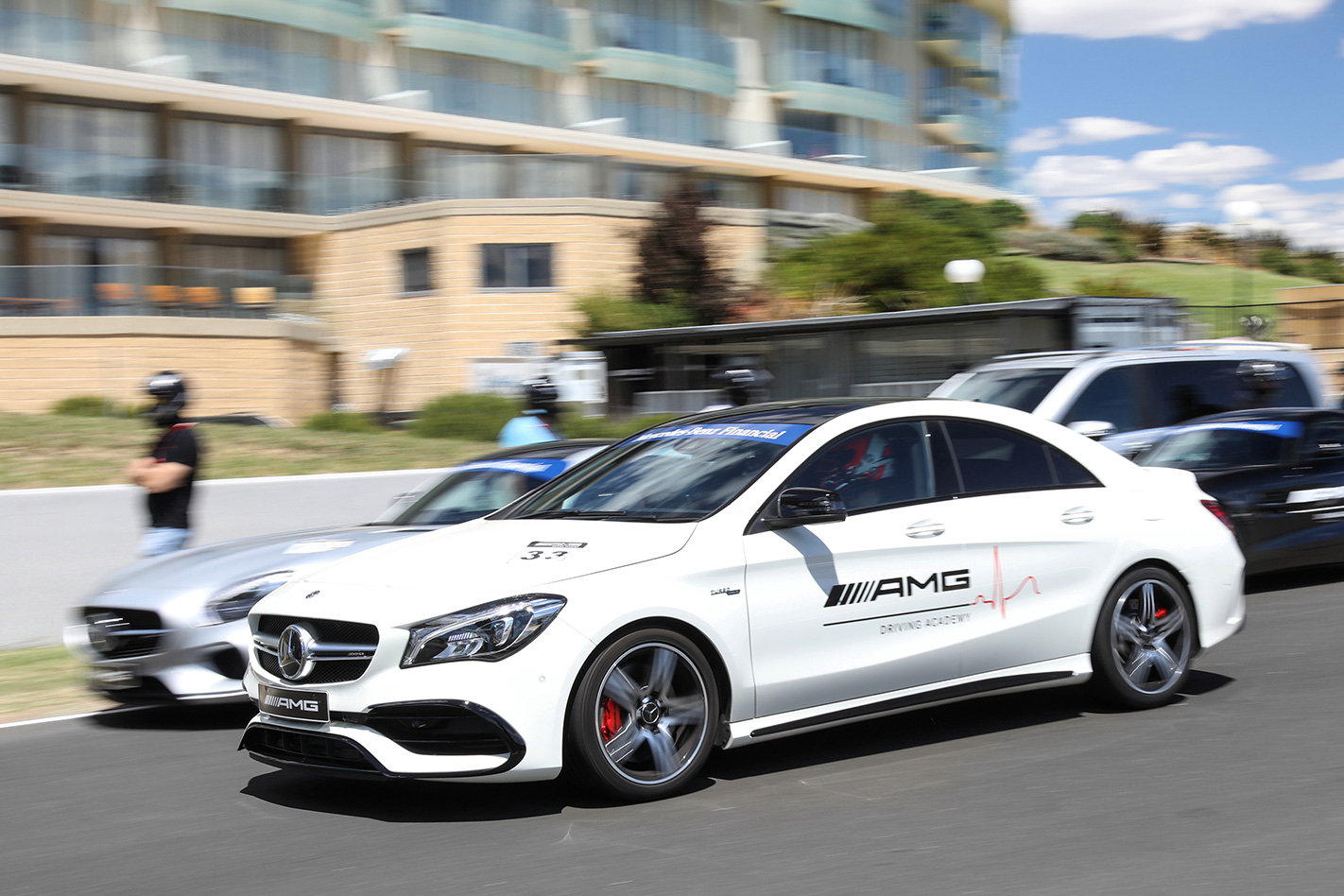
Jumping into a combination of A45s and CLA 45s, our next challenge was to learn the punishing downhill portion from Skyline to Forrest’s Elbow.
You can appreciate why so many cars check out early at the penultimate turn before Conrod Straight. Forrest’s Elbow fools you into thinking it’s a 90-degree turn but it’s actually slightly sharper and without a clear view of the exit, many drivers make the mistake of apexing early, getting on the loud pedal and washing out to a very unfriendly wall.
It is astonishing just how steep the track is on the downside – a feature that simply cannot be appreciated by television coverage or clever low-slung photography.
For the final module we swapped to the flagship AMG GTs for a crack at the fastest piece of track – the terrifying Conrod Straight and the Chase.
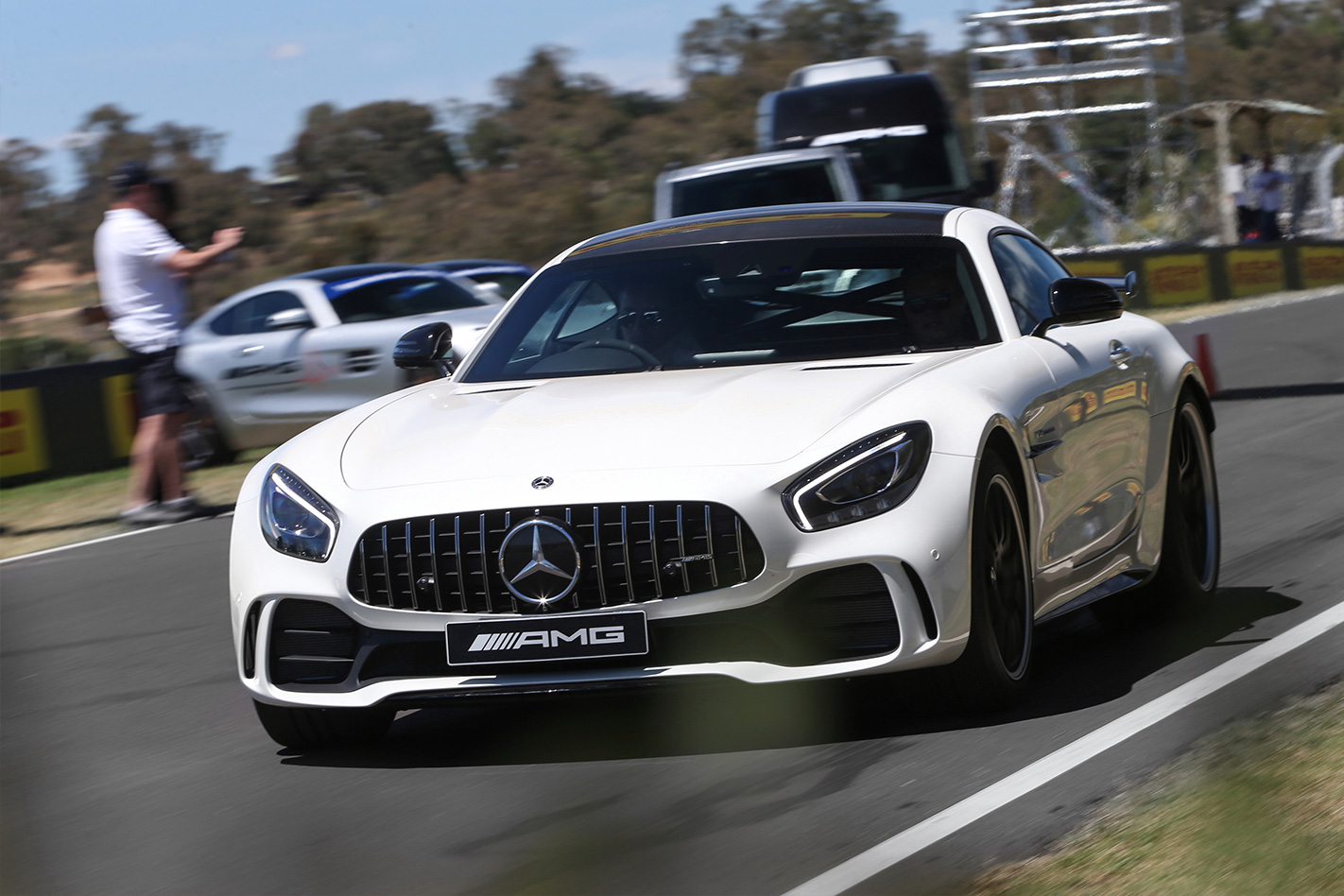
The expert tuition from the passenger seat had certainly helped build my confidence for the afternoon’s attack and I was feeling calm and collected as we strolled out to the waiting AMGs.
Like the morning’s activity, we gradually cycled through the various AMG examples and it was hugely satisfying to connect the parts we had learned in small steps. With a little familiarity, some great direction and a capable high-performance car, Bathurst is still daunting but not as horrifyingly impossible to negotiate as you might imagine.
The key, as the Driving Academy teaches, is to maintain the correct line, gradually build up the speed and never get ahead of yourself or try to impress the massively experienced instructor to your left. They’ve encountered too many dickheads before and, no, they are not a talent scout in disguise.
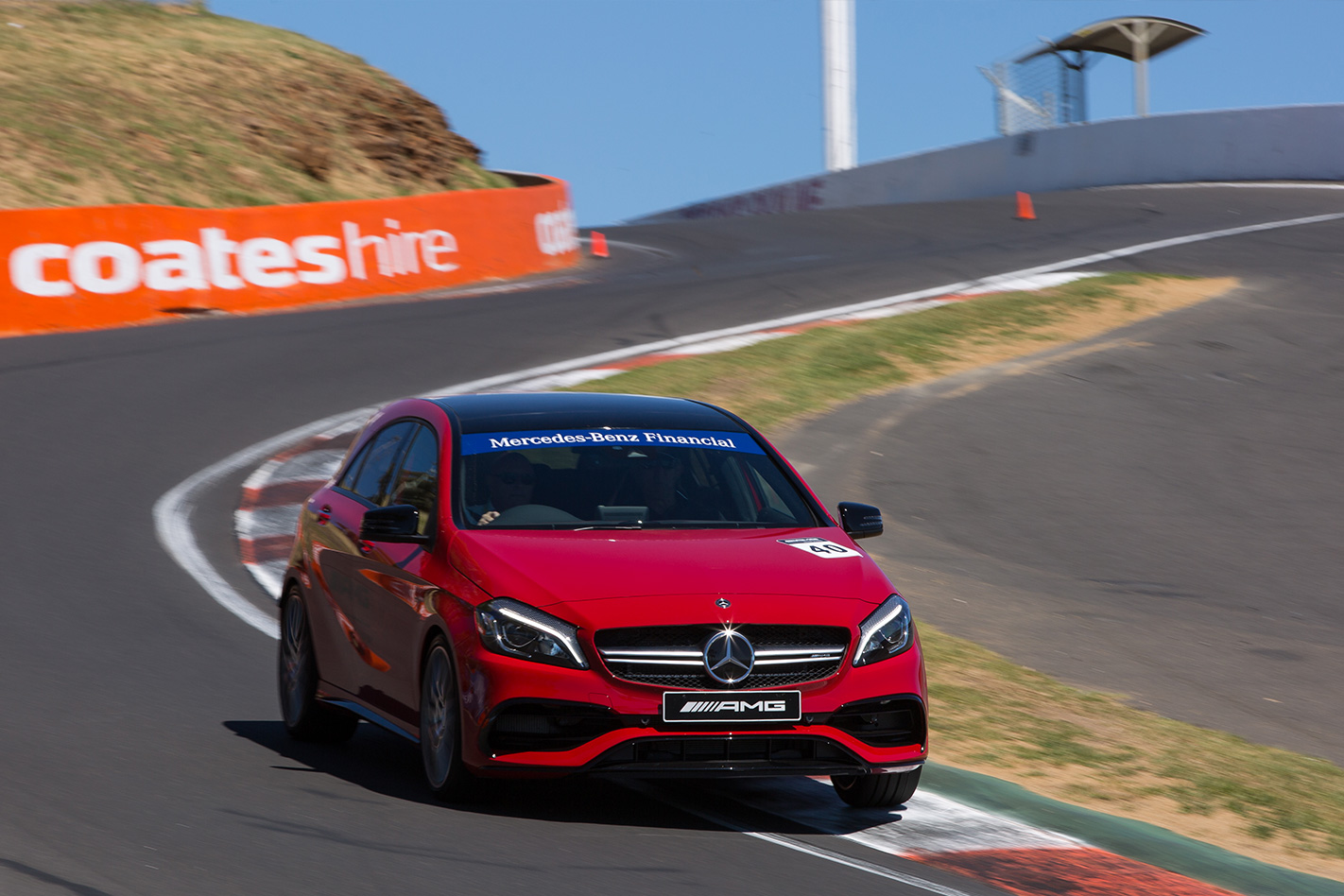
It might only pack a relatively paltry 280kW but on a track like Mount Panorama it is ridiculously quick. If the V8s are galloping greyhounds, the A45 and CLA 45 are jack russells with serious little-dog attitude snapping at their heels.
Another notable mention has to go to the E63 S which was easily the fastest thing in amateur hands thanks to its loutish power output reined in by all-wheel drive. I still can’t believe how fast it dealt with the Cutting.
The afternoon in the driver’s seat concluded with a few laps at the wheel of a GT S. There’s no doubt that the GT is a brutally quick machine and has a delightfully light-footed nature when blasting through both slow and high-speed corners.
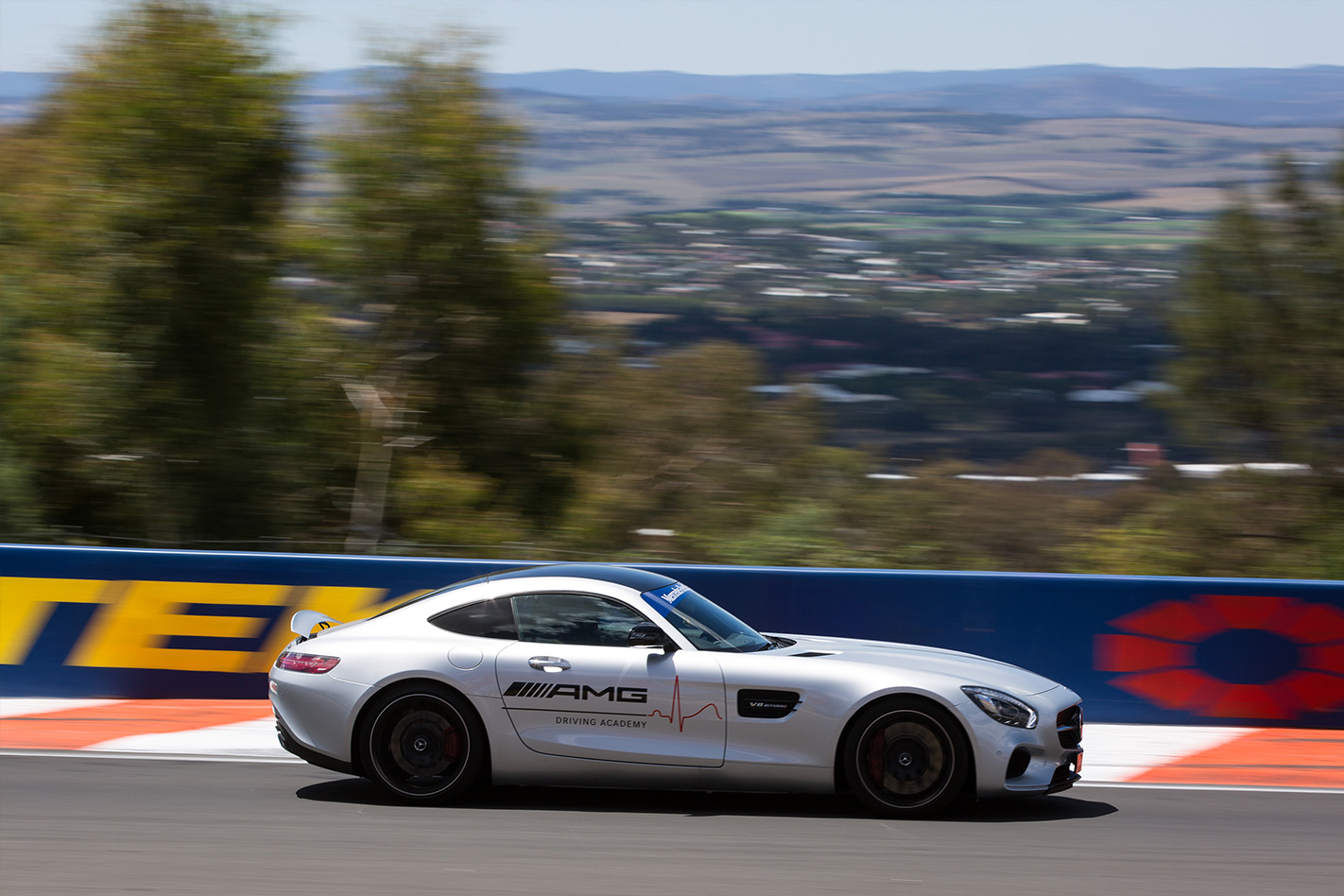
With the driving mode flicked to Race and driver assistance firmly off, the factory AMG driver threw the coupe at the mountain with a pace that is still simply unfathomable. Every corner I had agonised with to find extra pace was despatched with a clinical efficiency, unbelievable pace and, most surprisingly, incredible smoothness.
It was honestly like Max was dancing with the car with the tail threatening to step out and kill us both on virtually every bend but the car was perfectly under control at all times. I was the awkward gooseberry along for the ride, struggling to comprehend how someone could be so much faster.
There are average drivers, good drivers and exceptional drivers. Then, somewhere an immeasurable distance beyond the ability of an exceptional driver, are racing drivers.
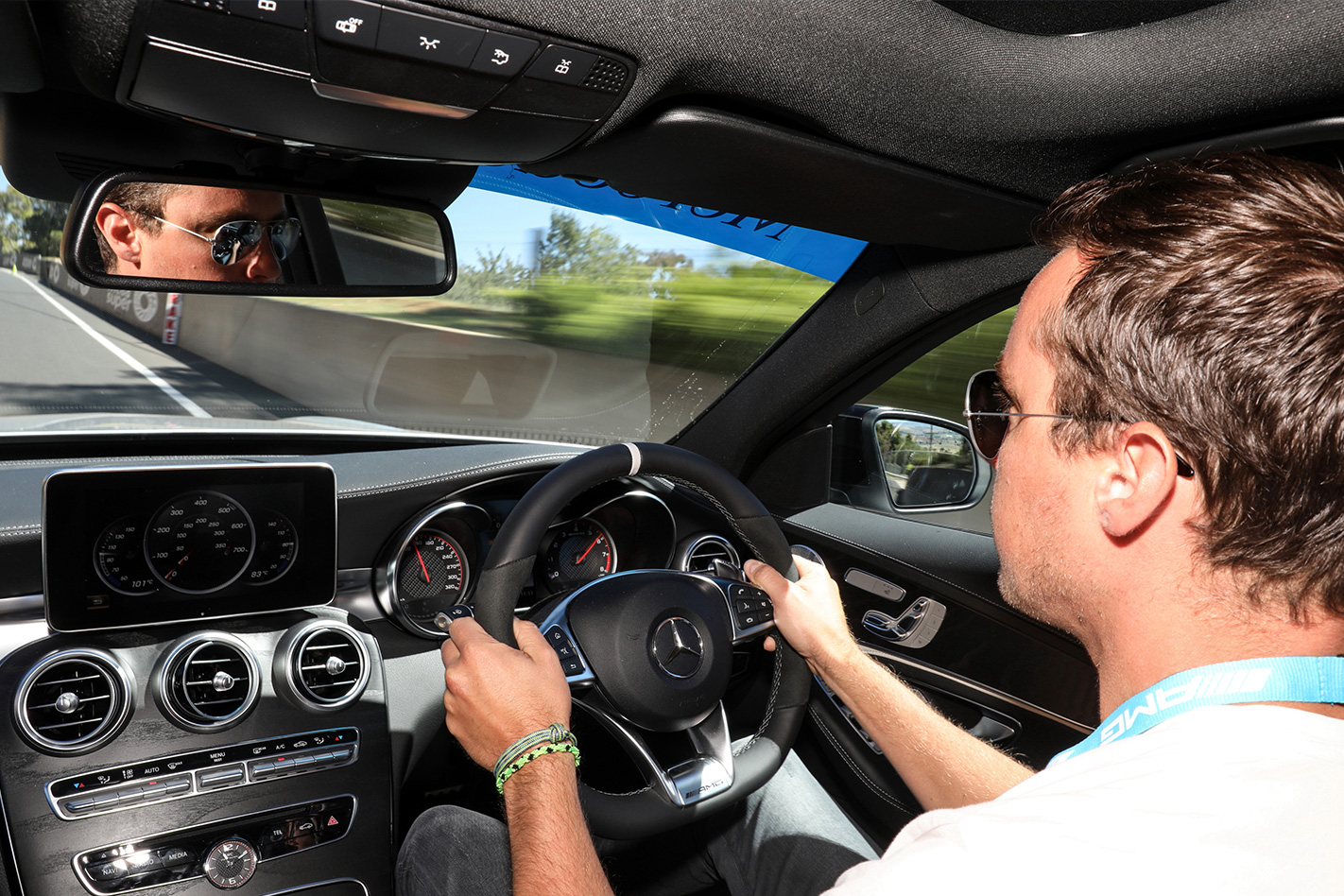
For a very fortunate few, the AMG Driving Academy offers the same incredibly valuable educational experience, but perhaps the hardest lesson to take away from a truly exceptional day is that I will never be a racing driver.
What looks to be the pricing and specs for each variant of the local 2018 Ford Mustang have been leaked online.
A reliable (yet unofficial) source alerted MOTOR to the information, which outlines pricing for each variant, as well as specs for both engine types in the incoming Ponies.
Ford Australia has not confirmed the information.
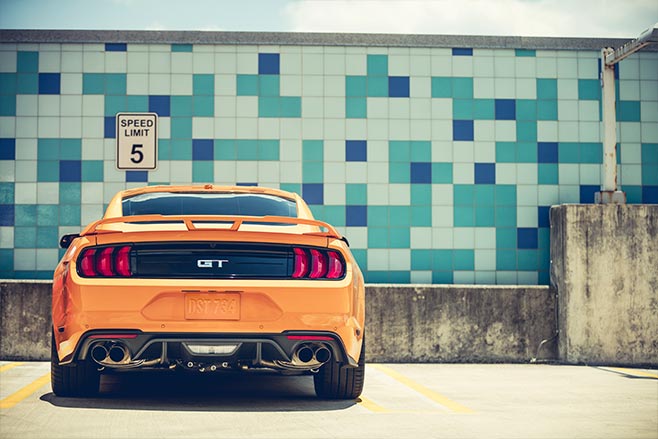
This, by the way, is 4kW and 13Nm less than the US-spec Mustang GT.
In automatic, leaked info says that price rises to $66,259. Chopping the roof off brings that up to $74,709. There’s no manual drop-top, just as in the current gen.
Compare these prices to the $57,490, $59,990, and $65,916 (respectively) currently available, there’s a noticeable increase in pricing. But that comes with a noticeable improvement in both performance and spec.
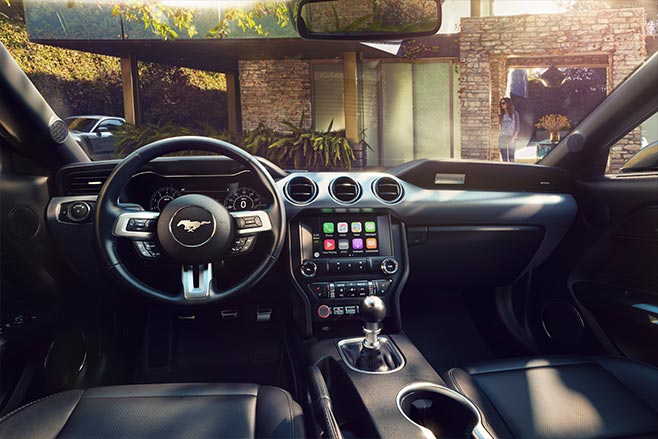
In fact, the leaked specs show its power figure as down from 233kW to 224kW, though torque is up by 9Nm to 441.
Read our 2018 Ford Mustang GT review
A manual Eco will cost $49,990 according to the leaked info, while an auto comes in at $52,990, and a convertible at $59,490.
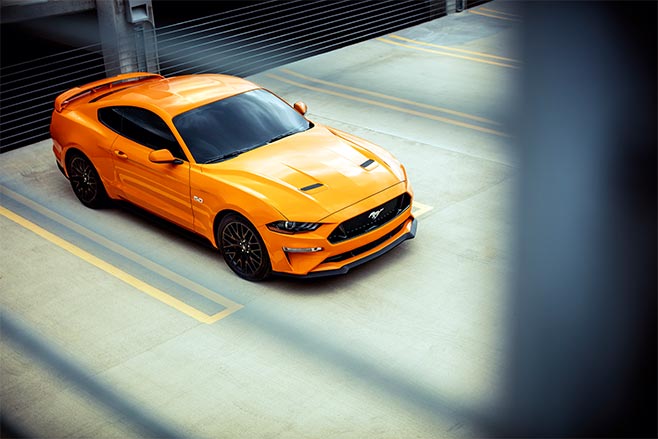
Also available is a wing for $750, Recaro seats for $3000, and MagneRide suspension for $2750.
As the Nissan 370Z continues to drive further into its twilight years, Nissan Australia has kept chipping away at its aging sports car to help keep it relevant.
The regular 370Z range will now benefit from a small number of subtle upgrades, most of them cosmetic. A vibrant Cherry Red hue replaces Bordeaux in the colour palette, while new-design 19-inch alloys are now bolted to each hub.
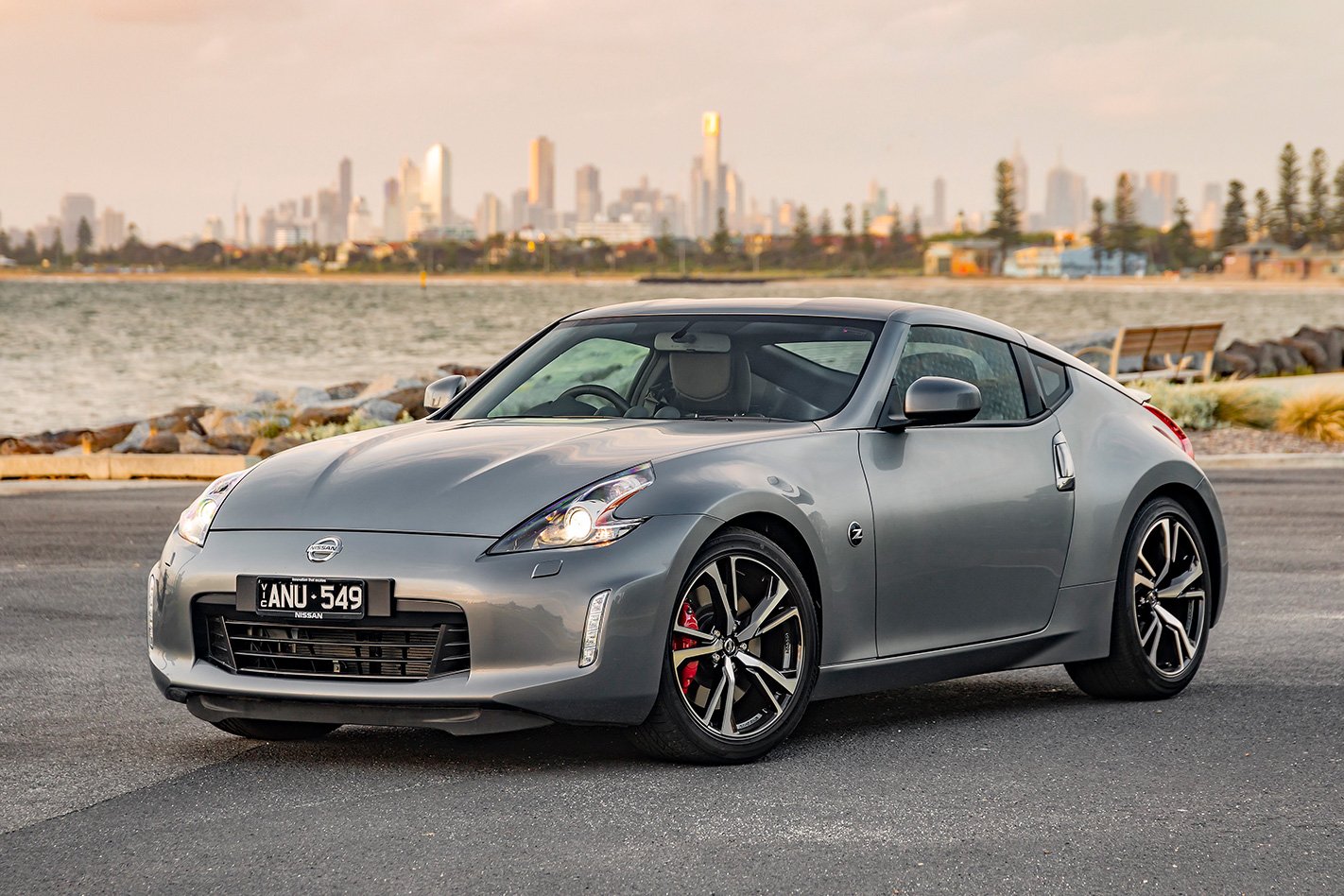
The headlamp and tail-lamp clusters receive darker internals and are matched with doorhandles painted in smokey silver, though that rounds out the obvious differences between the 2018 model and the car it supersedes.
Hop into a manual-equipped 370Z Coupe or Convertible, however, and you’ll enjoy an uprated clutch (made by performance brand Exedy) that offers crisper response.
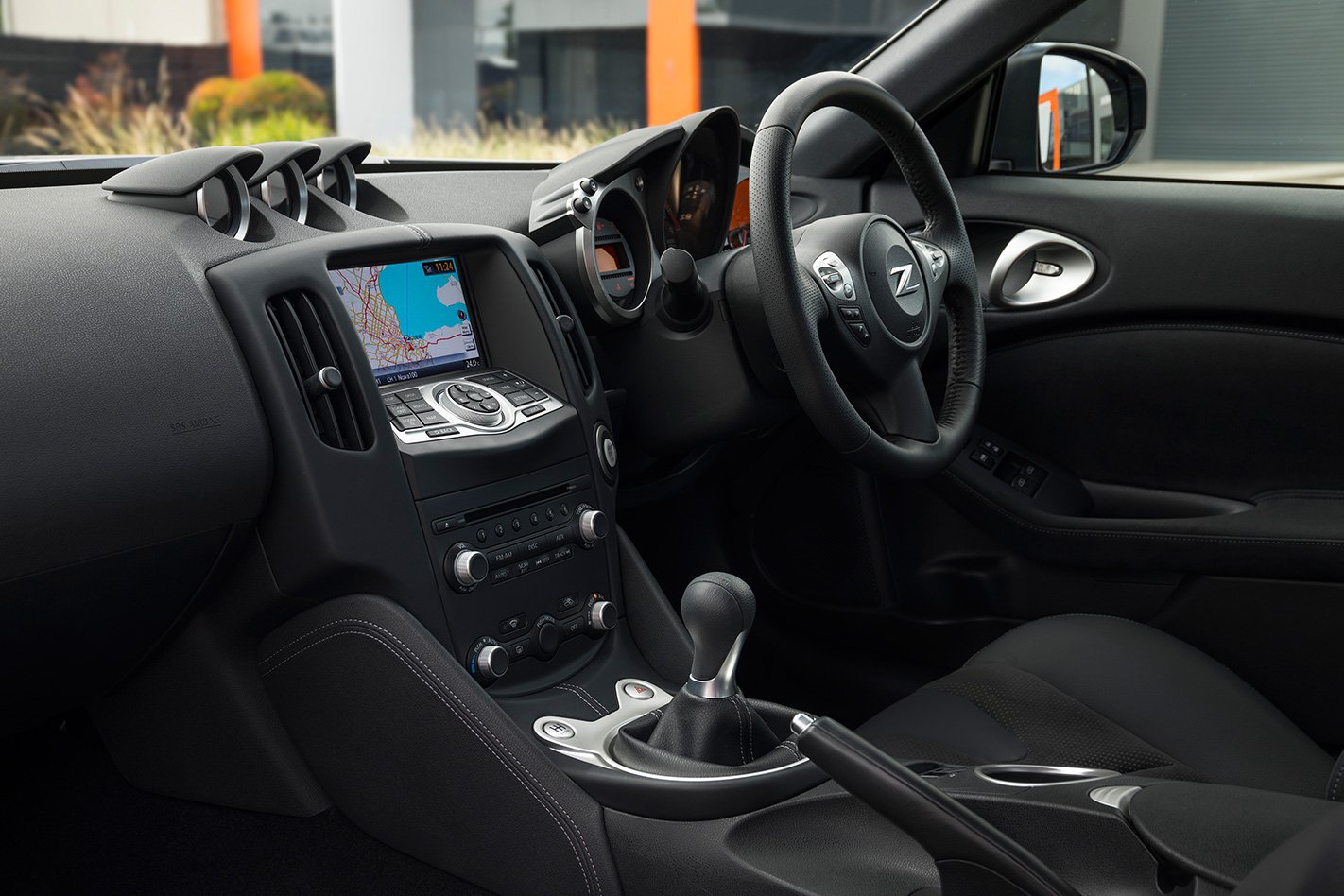
The 2018 enhancements only apply to the vanilla 370Z models – the 370Z Nismo, having only launched recently, sees no alterations to its offering.
A substantial price cut introduced in the latter half of last year saw the cost of entry plummet to just $49,990 for the standard 370Z coupe manual, while the launch of the 370Z Nismo in August brought some much-needed sparkle to the Z range. The updated-for-2018 370Z range sees no changes to that pricing.
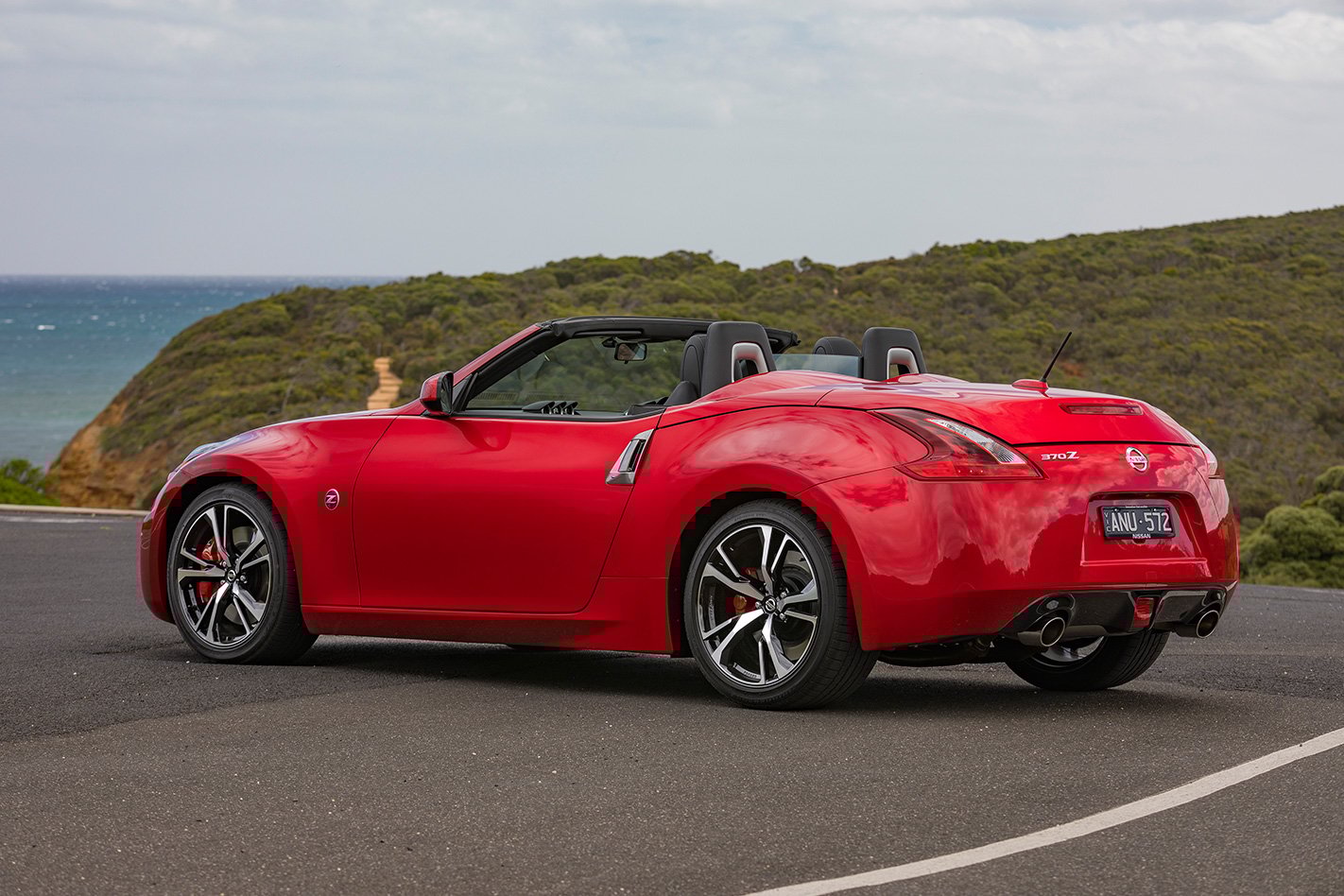
Nor does it see any changes to performance. Engine and suspension specs carry over from the 2017 model, and besides the uprated clutch in manual models, there are no drivetrain changes either. A paddle-shifted seven-speed automatic continues to be offered across the range, in both Coupe or Roadster forms.
All models are powered by a 3.7-litre naturally-aspirated V6, producing 245kW/363Nm in regular 370Zs and 253kW/374Nm in the Nismo.
2018 NISSAN 370Z PRICING
- Nissan 370Z Coupe manual – $49,990
- Nissan 370Z Coupe auto – $52,490
- Nissan 370Z Convertible manual – $60,990
- Nissan 370Z Convertible auto – $ 63,490
- Nissan 370Z Nismo Coupe manual – $61,490
- Nissan 370Z Nismo Coupe auto – $63,990
