
Haval’s H9 three-row SUV copped its fair share of bad press when it first launched here, so the Chinese carmaker went back to the drawing board resulting in a series of improvements, new active safety kit and a significant price cut.
It’s hoped the changes, and a $5500 drop in entry-level pricing, will be enough to make more people seriously consider the Chinese alternative to the Japanese and Korean seven-seaters.
The key changes include a powertrain boost; with the 2.0-litre turbocharged petrol four now producing 180kW/350Nm, up from 160kW/324, coupled to a new eight-speed automatic transmission, which replaces the old six-speed shifter.
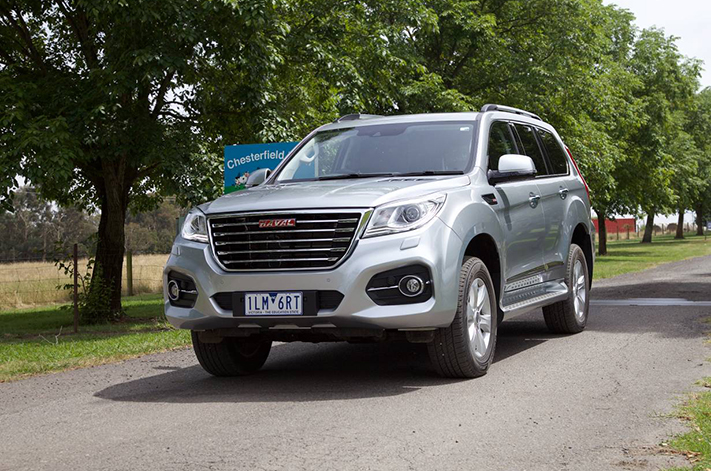
Despite the extra performance it’s 10 percent more economical, with fuel consumption now 10.9L/100km, which is still a little in the greedy side, but a considerable improvement over the original H9’s 12.1L/100km.
Advanced driver assist functions such as blind-spot monitoring, rear cross traffic alert and lane departure warning have also been added, though it still lacks automatic emergency braking.
The Haval H9 has also received styling changes including a new centre console and instrument panel which now includes a digital speedo.
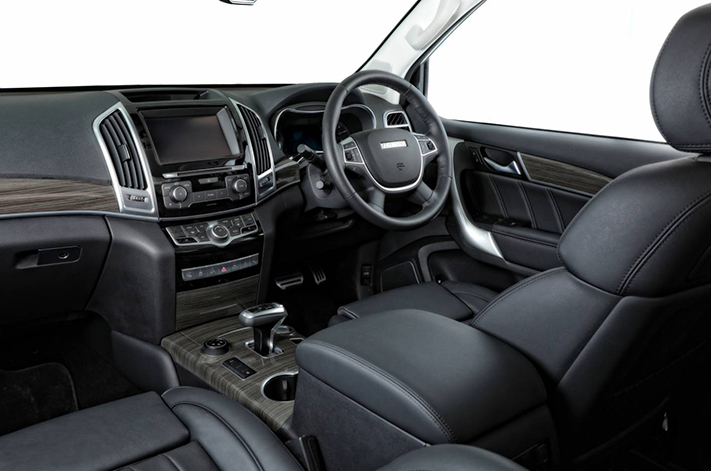
The H9 comes with two newly-named variants, with the Premium and Luxury making way for the Lux and Ultra. The entry-level Lux starts at $40,990, down $5500 from 2017 model despite upgrades including a sunroof, centre armrest with power-outlet, 18-inch wheels and auto-dimming rear-view mirror.
Standard equipment across the H9 range includes 8.0-inch touchscreen, satellite navigation, paddle shifters, front and rear parking sensors, front and rear fog lamps, hill-start assist, hill-descent control, cruise control, tri-zone climate control and third row air vents.
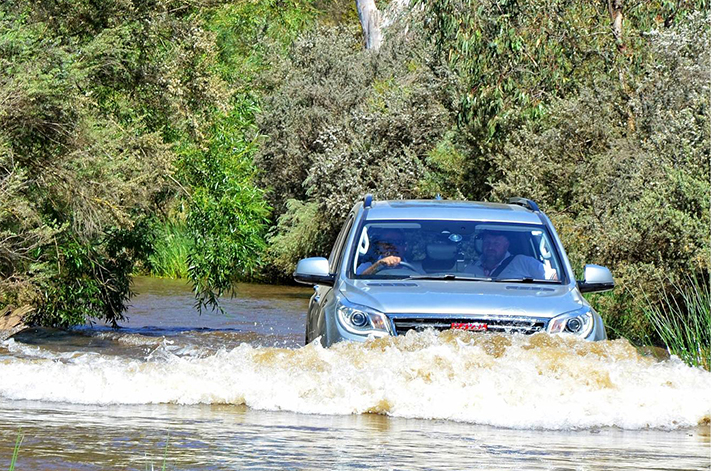
It’s surprisingly good off-road credentials have also been enhanced with an electric differential lock and an All-Terrain Control System which allows the driver to select different modes to suit different road and track conditions including Sand, Snow, Mud and Sport plus 4L (low-range four-wheel-drive for rough off-roading) and an Auto mode which adapts to any on- or off-road situation.
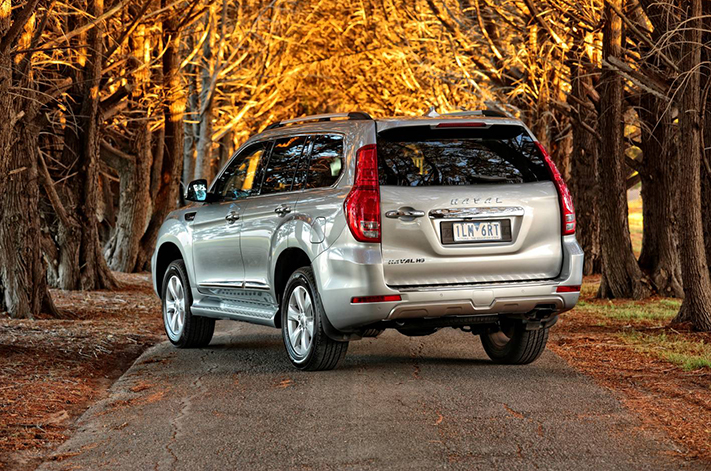
The range-topping H9 Ultra replaces the Luxury and is $5000 cheaper. Priced at $44,900, the Ultra gains some decent kit for the sub-$45k price including panoramic sunroof, heated steering wheel, Comfort-Tek eco-leather seats with first and second-row heating, massage and ventilation function and premium sound system.
As a further incentive, driveway pricing for the H9 Lux and Ultra will be just $1000 more than retail, coming in at $41,990 and $45,990 respectively.
Haval sold just 59 H9’s in Australia last year, but its Australian chief marketing officer Tim Smith believes the changes will attract more buyers seeking an affordable but well-equipped family SUV.
“We’re very confident we have made a compelling argument for Australian families to test drive the new HAVAL H9,” Smith said.
“We’ve worked very hard to deliver a seven-seat SUV that delivers for Australian families at the best possible price.”
TRADIES, start salivating. The top-dog Ford Ranger Raptor is just around the corner and Ford is in the process of prepping for its global unveiling on February 7 in Thailand, where the covers will be finally lifted from its muscular form.
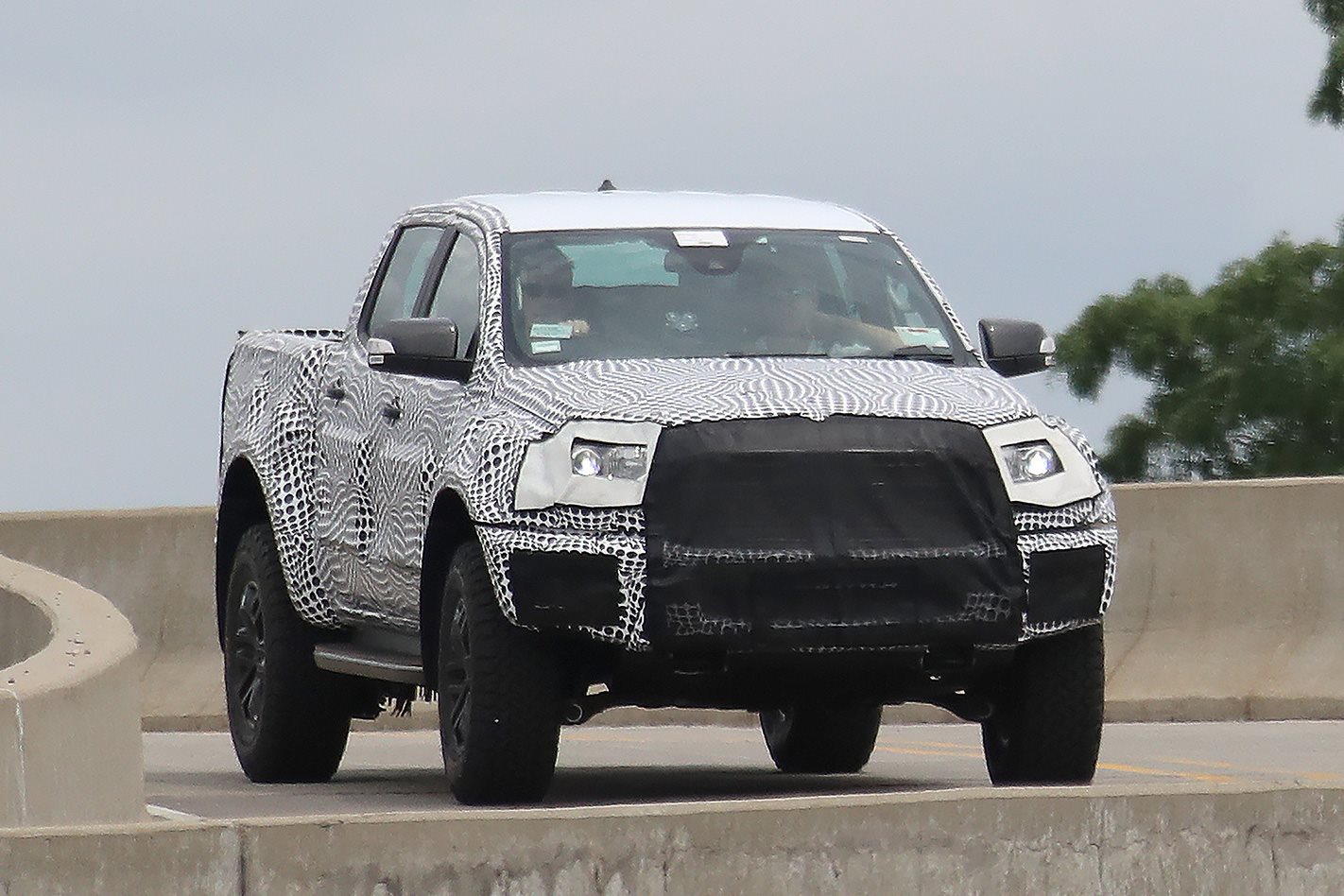
So far all we’ve seen of the heavily-modified commercial ute is some camouflaged prototypes doing circle work in teaser videos, but there are already enough nuggets of info floating around for us to get a fairly clear picture about Ford’s brawniest Ranger. Here’s what we know:
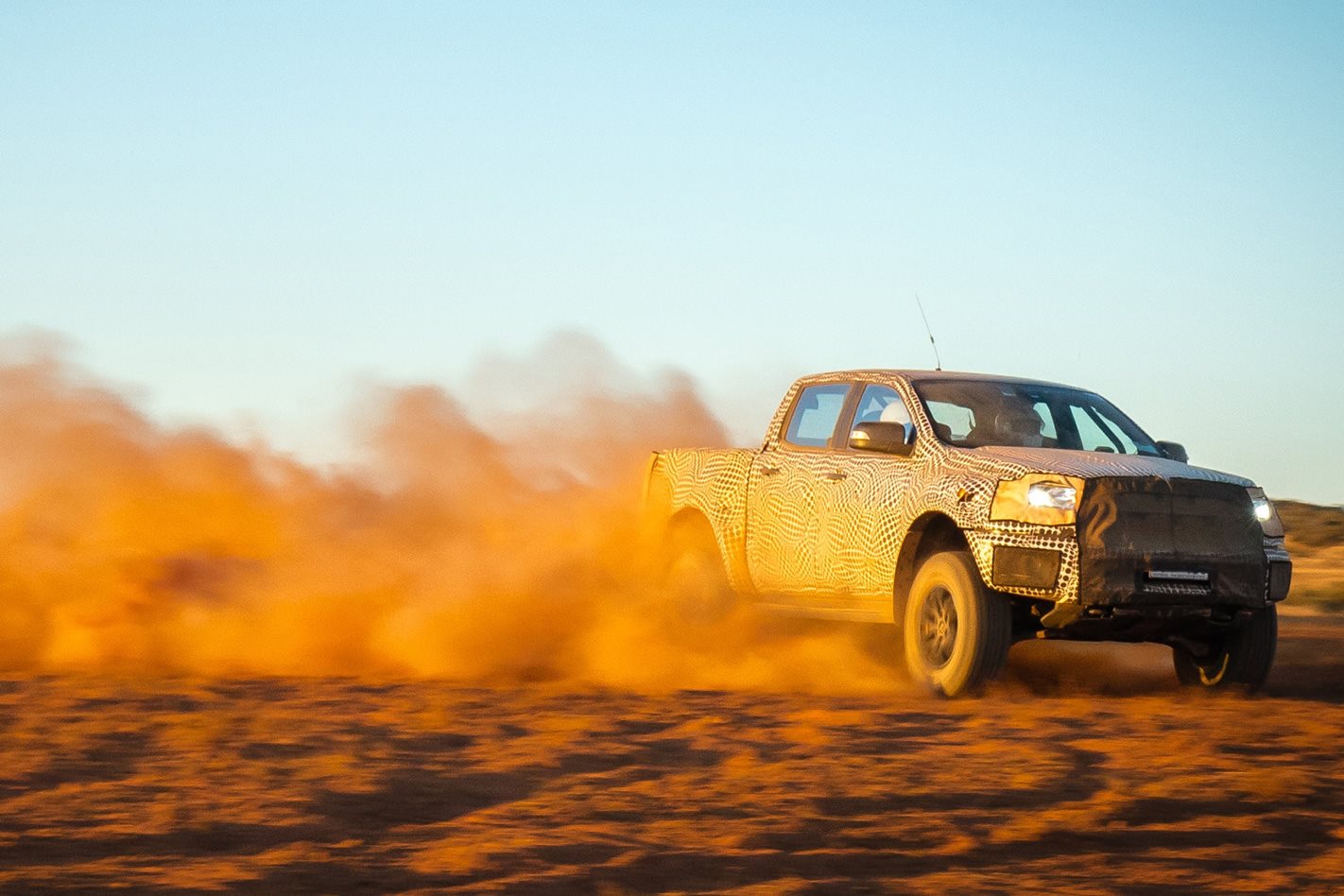
We’re not talking about a thin smear of Revlon here – judging by the appearance of prototype vehicles, the Ranger Raptor will wear some serious war paint in the form of bulging stick-on wheelarches on top of wider sheetmetal. Bumpers will be cut high and tight to improve approach and departure angles, while under-body cladding is likely too.
Butch styling will likely have some impact on the Raptor’s utility as well, with the rear wheel tubs potentially needing to be widened to accommodate the wider off-road rubber. Will owners care that they can no longer slide an ISO pallet between the humps of their Ranger? Unlikely.
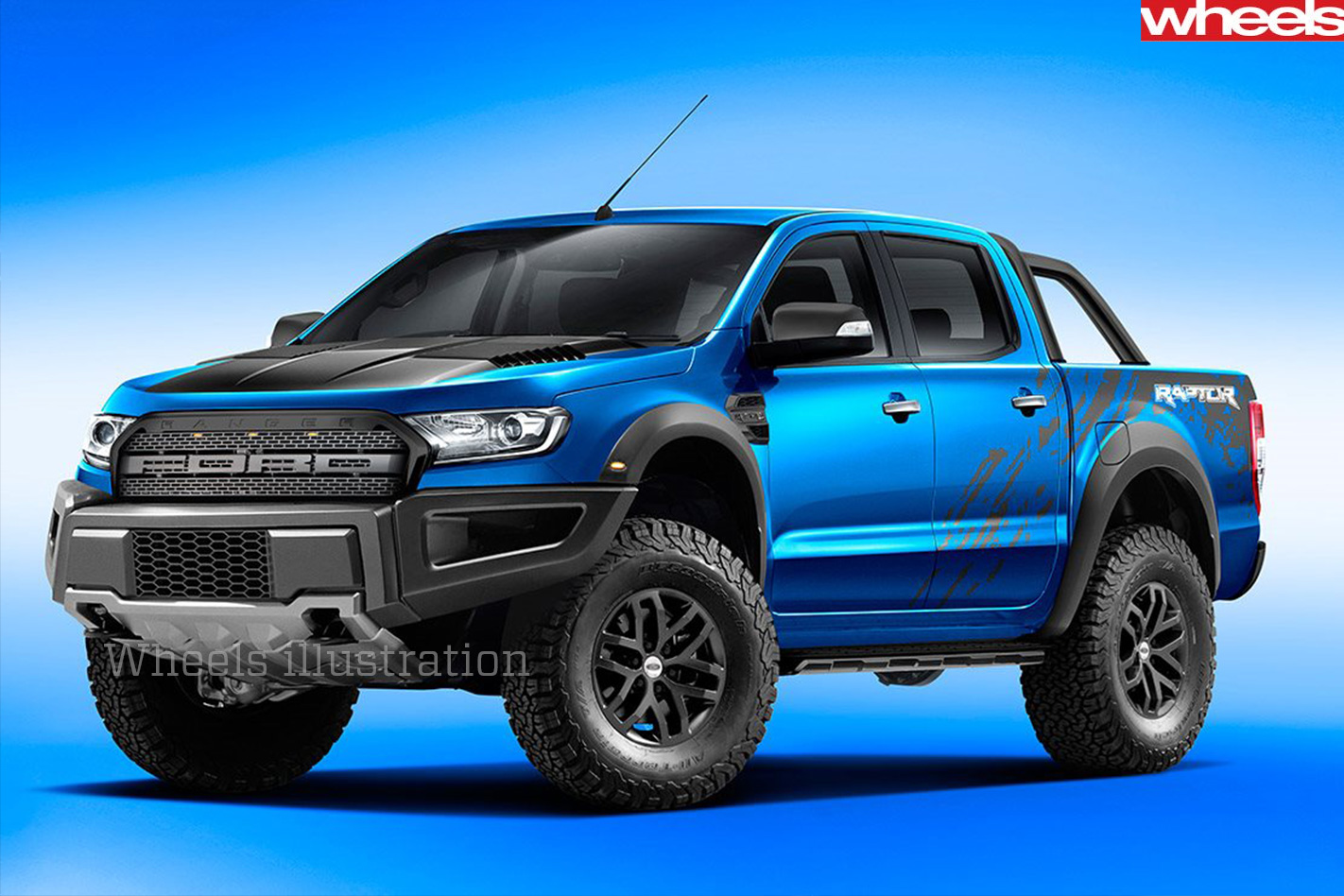
Expect some aesthetic inspiration from the bigger F-150 Raptor, with features like a prominent FORD script across a blacked-out grille (something current Ranger owners have been applying to their utes for years now thanks to the aftermarket), and a unique tailgate treatment. This thing should look tougher than a tatted-up bodybuilder.
POWERTRAIN
Our American cousins will receive a twin-turbocharged petrol V6 EcoBoost engine borrowed from the head-kicking F-150 Raptor, but Oz-delivered (and Thai-made) Ranger Raptors will be motivated by something very different: a 2.0-litre turbodiesel four-pot. That may sound like a downgrade – especially considering the current Ranger receives a ballsy 3.2-litre inline five turbo-diesel with 147kW and 470Nm – however power and torque outputs are still unknown and expected to at least equal, if not exceed, those of the bigger 3.2L.
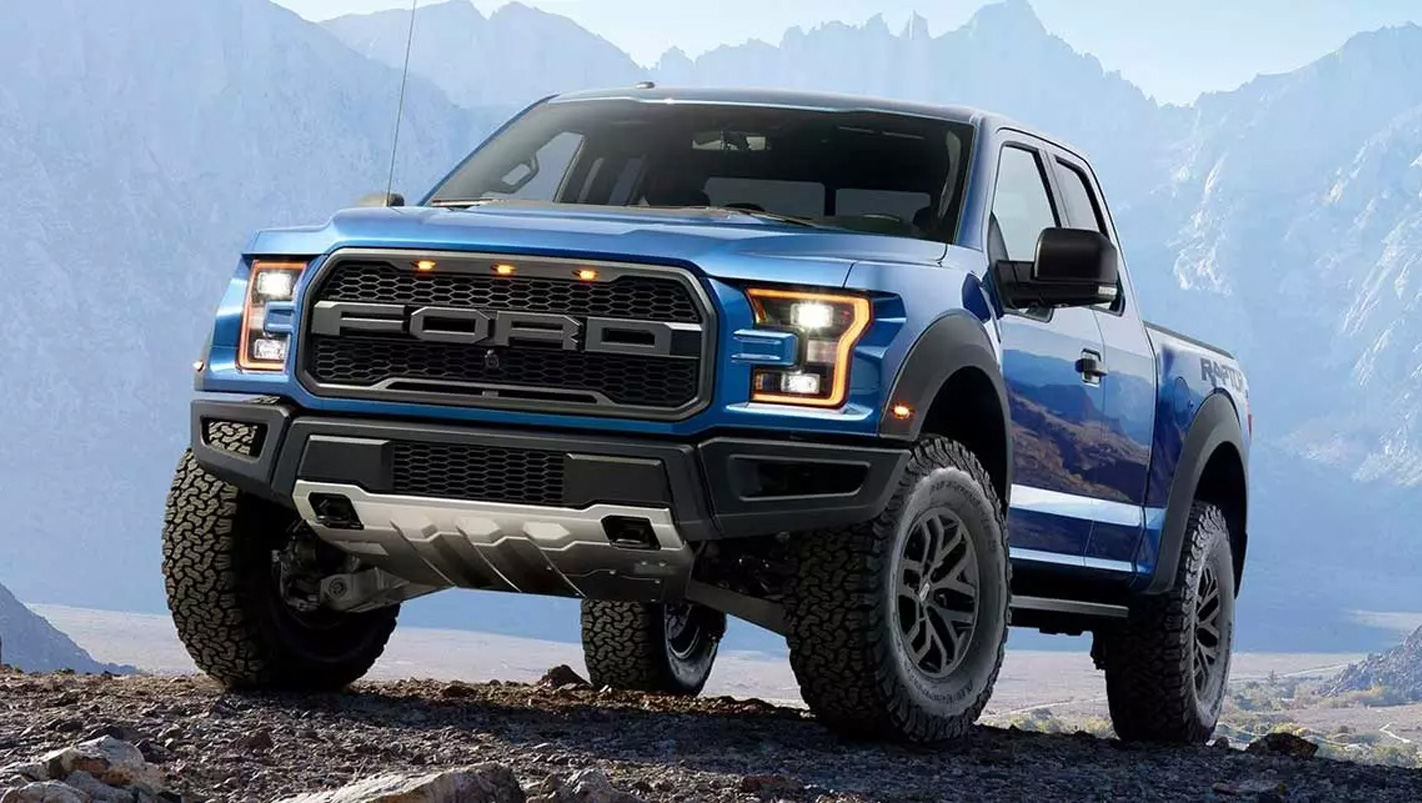
Will it still have a low-range transfer case given that huge spread of ratios? The F-150 Raptor does, and it also features a wet-clutch transfer case that can vary the front-rear torque split on the fly – giving it AWD as well as 4WD attributes. Clever, but it’s not known whether the Ranger Raptor will boast the same capability.
SUSPENSION
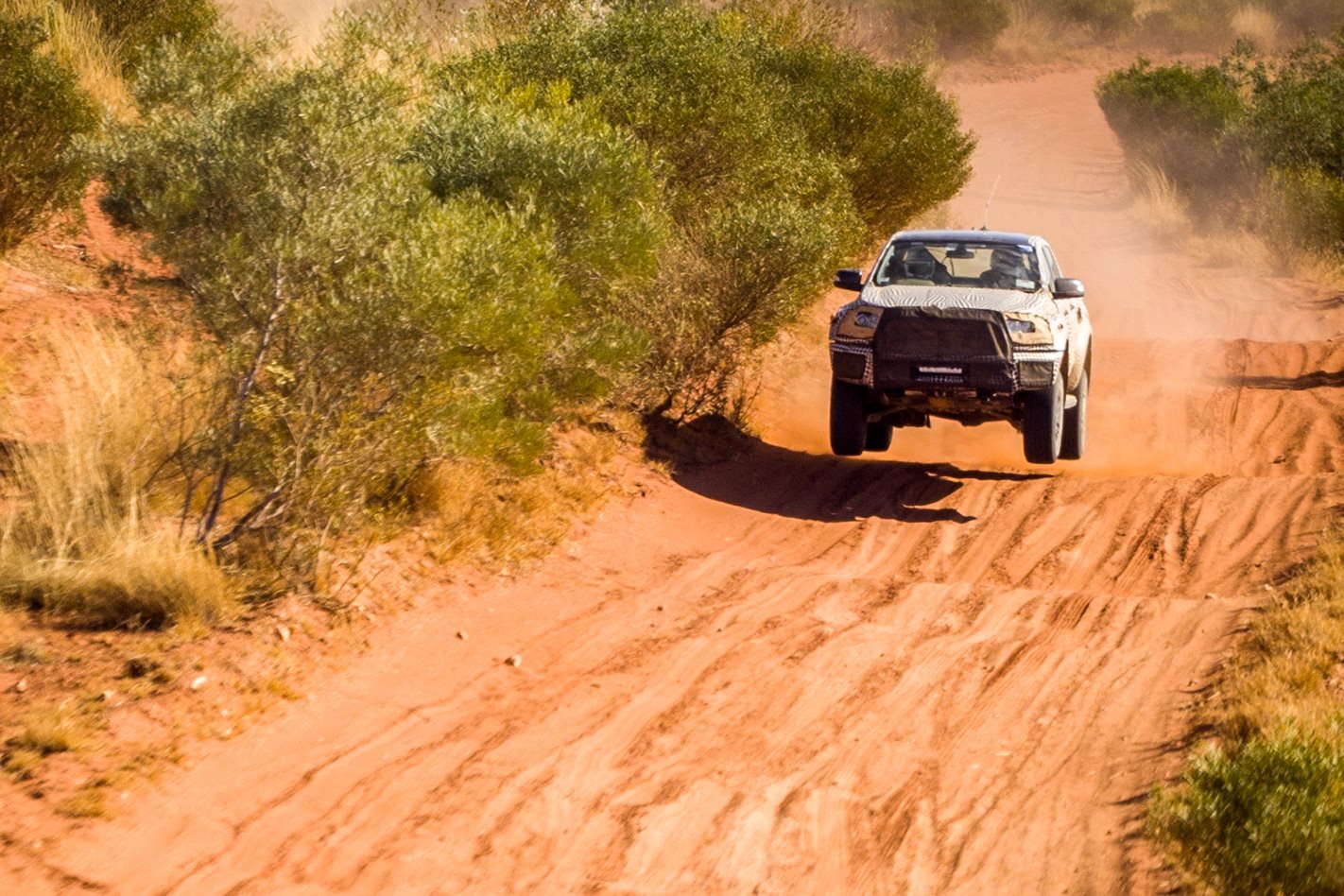
Don’t expect to see a regular Ranger rear-end when you peek under the Raptor’s rump. Rather than leaf springs, the Raptor is believed to take the coil-sprung live axle rear of the Ford Everest – with a Watts linkage to improve handling – and equip it with springs and dampers suited to hard-core off-roading. A Thai-market hype video recently released online describes the Ranger Raptor as “ready for jumps”, which should give you a pretty good idea about what this rig is engineered for.
WHEN, AND HOW MUCH
The Ranger Raptor’s official debut is set to happen on February 7 in Thailand, with a local on-sale date potentially as early as mid-year. As for the price, with the current top-spec Ranger Wildtrak retailing for a smidge under $60K we’re anticipating the hard core Ranger Raptor will blast into Ford showrooms with a circa-$80K sticker.
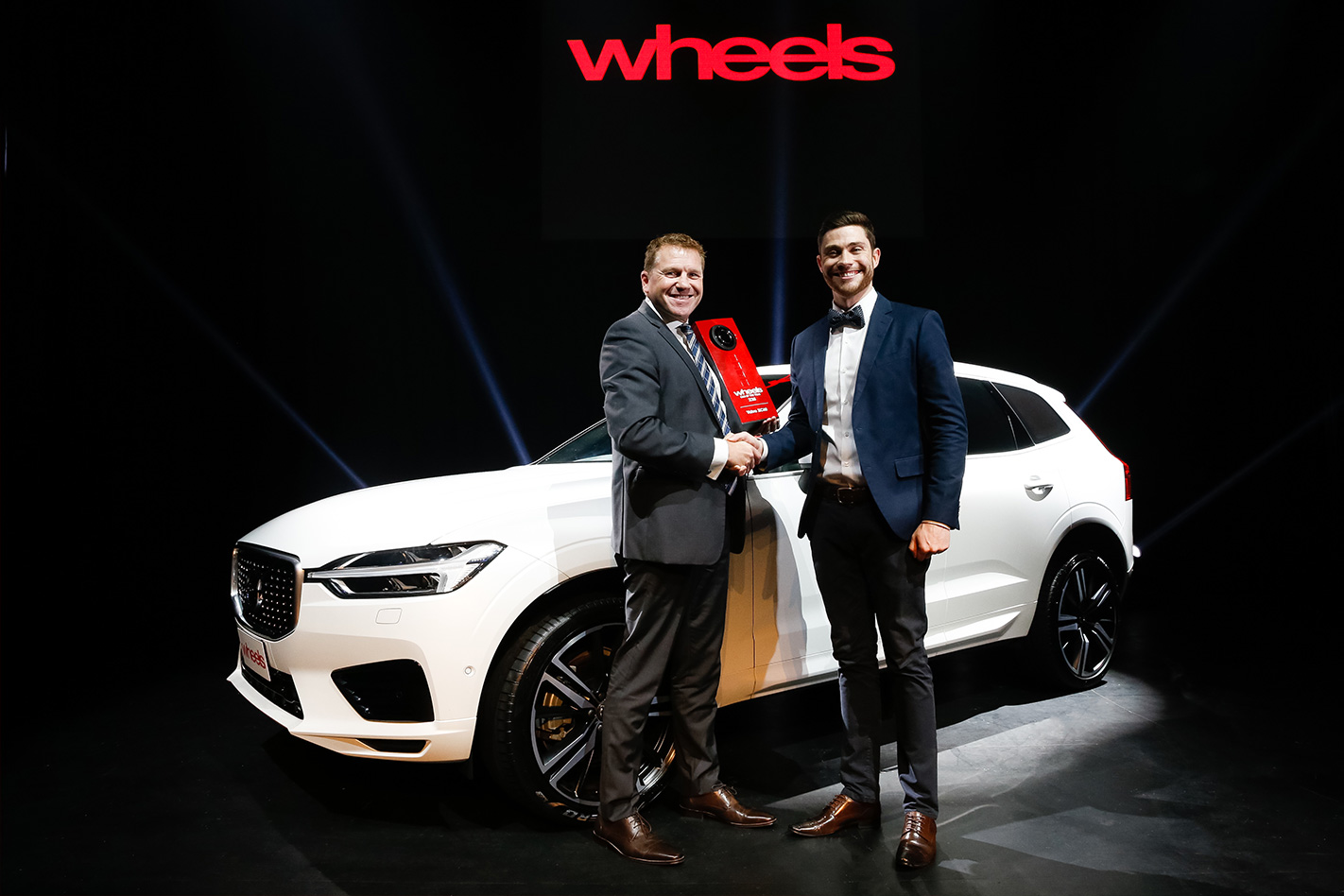
AUSTRALIA’S auto industry heavy-hitters only assemble in the same room a couple of times each year, and the most prestigious occasion that brings them together is the Australian Motoring Awards.
Melbourne’s Forum Theatre hosted the 2018 AMAs last week, and welcomed more than 200 of the local industry’s key staff members to a gala dinner.
Four accolades were handed out, including the WhichCar Style Award, 4×4 of the Year and MOTOR’s Performance Car of the Year, before Wheels editor Alex Inwood took to the stage to present the 55th Wheels Car of the Year.

Wheels’ six COTY finalists were assembled on the floor of the Forum for guests to admire before the XC60 was named Car of the Year and Volvo was presented with its very first COTY trophy.
Check out the video here for your look inside the industry’s night of nights, and be sure to grab a copy of the January issue of Wheels, available now, for all of our COTY coverage.
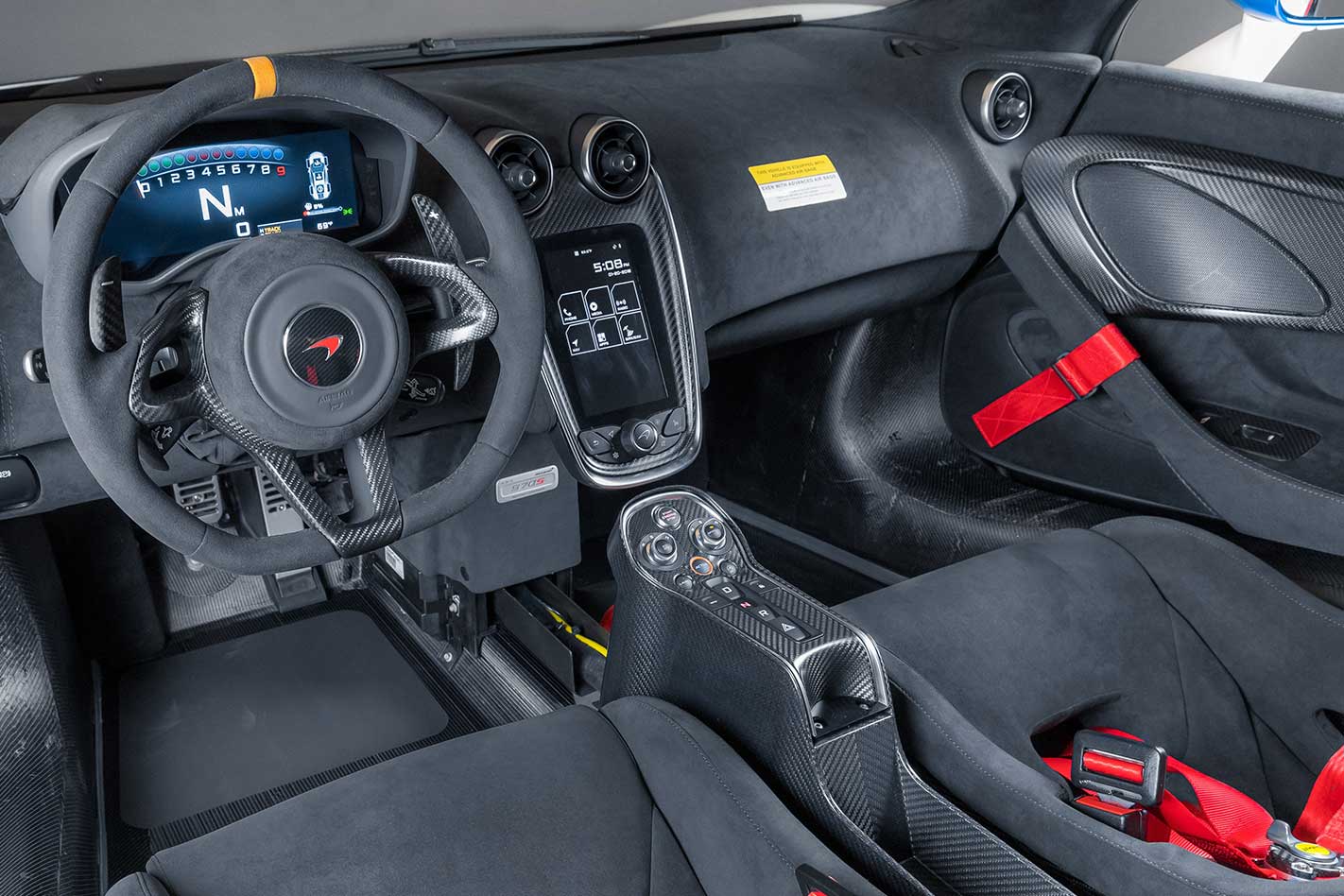
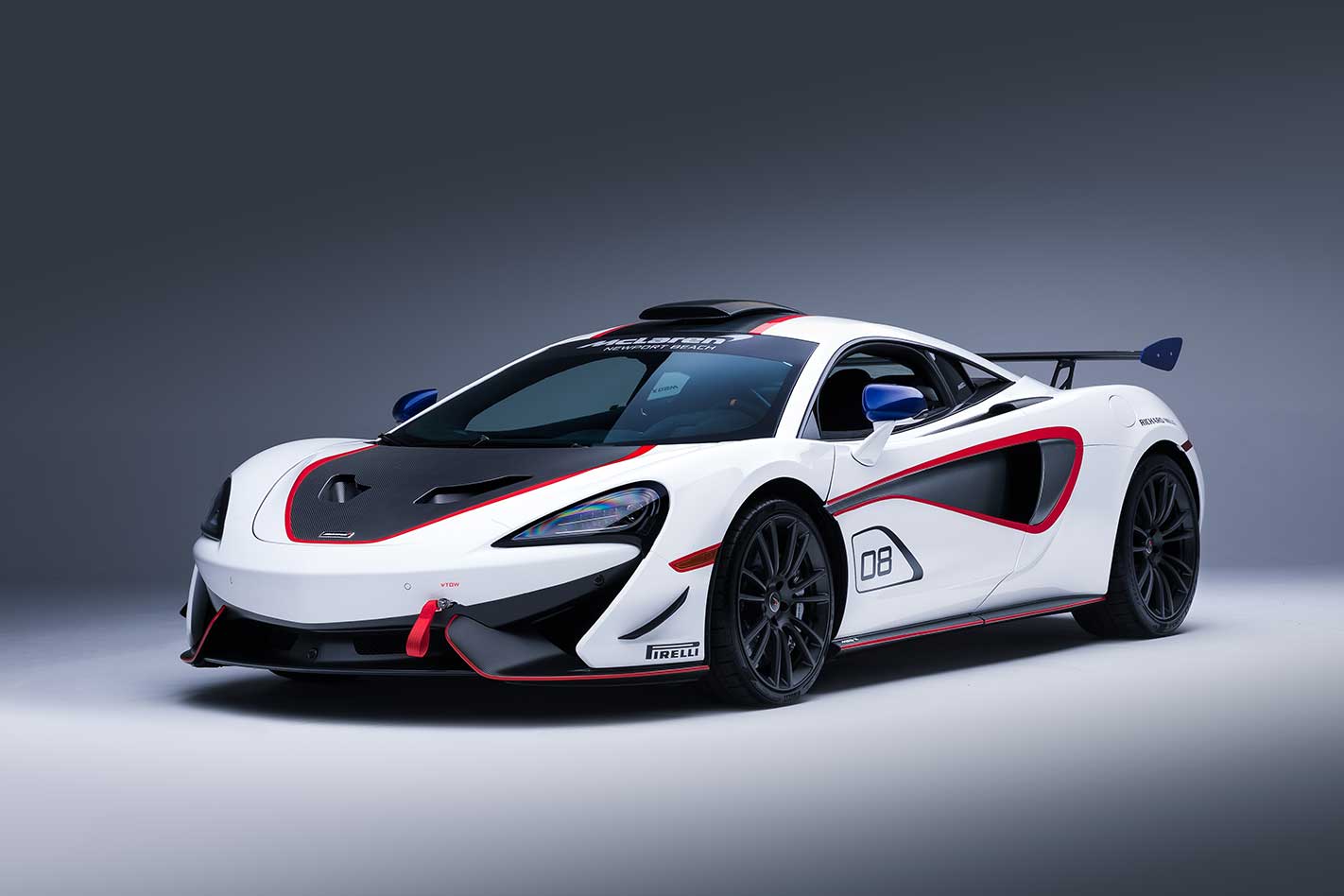
McLaren Automotive has revealed it spent the last eight month designing and building ten unique race-inspired McLarens.
The MSO X series is comprised of 10 McLaren 570S GT4-based cars, which are road legal.
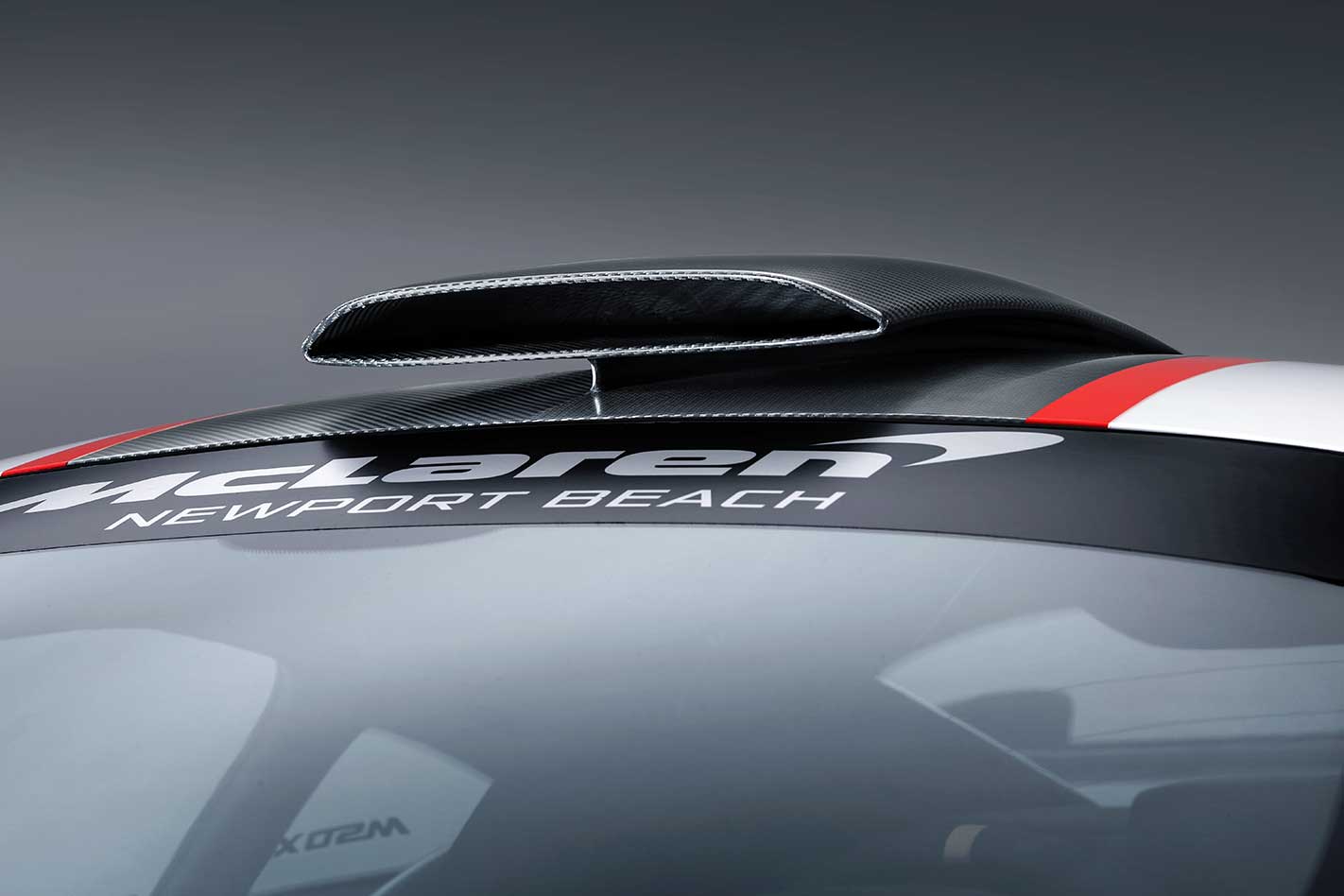
They all feature a race-inspired wing, providing almost an extra 100kg of downforce. In addition, a carbon fibre roof snorkel inspired by the McLaren F1 GTR Longtail increases induction airflow.
McLaren sales and marketing executive director Jolyon Nash says cars from McLaren’s MSO branch are usually driven by customers’ individual desires.
“Customers come to us with their thoughts and ideas and MSO works with them to set boundaries within which they can then let their imaginations run wild.
“What could be better than a McLaren buyer playing the role of ‘race engineer’ in briefing the MSO team and directing them to test and validate those ideas to create a race-bred road car such as this?”
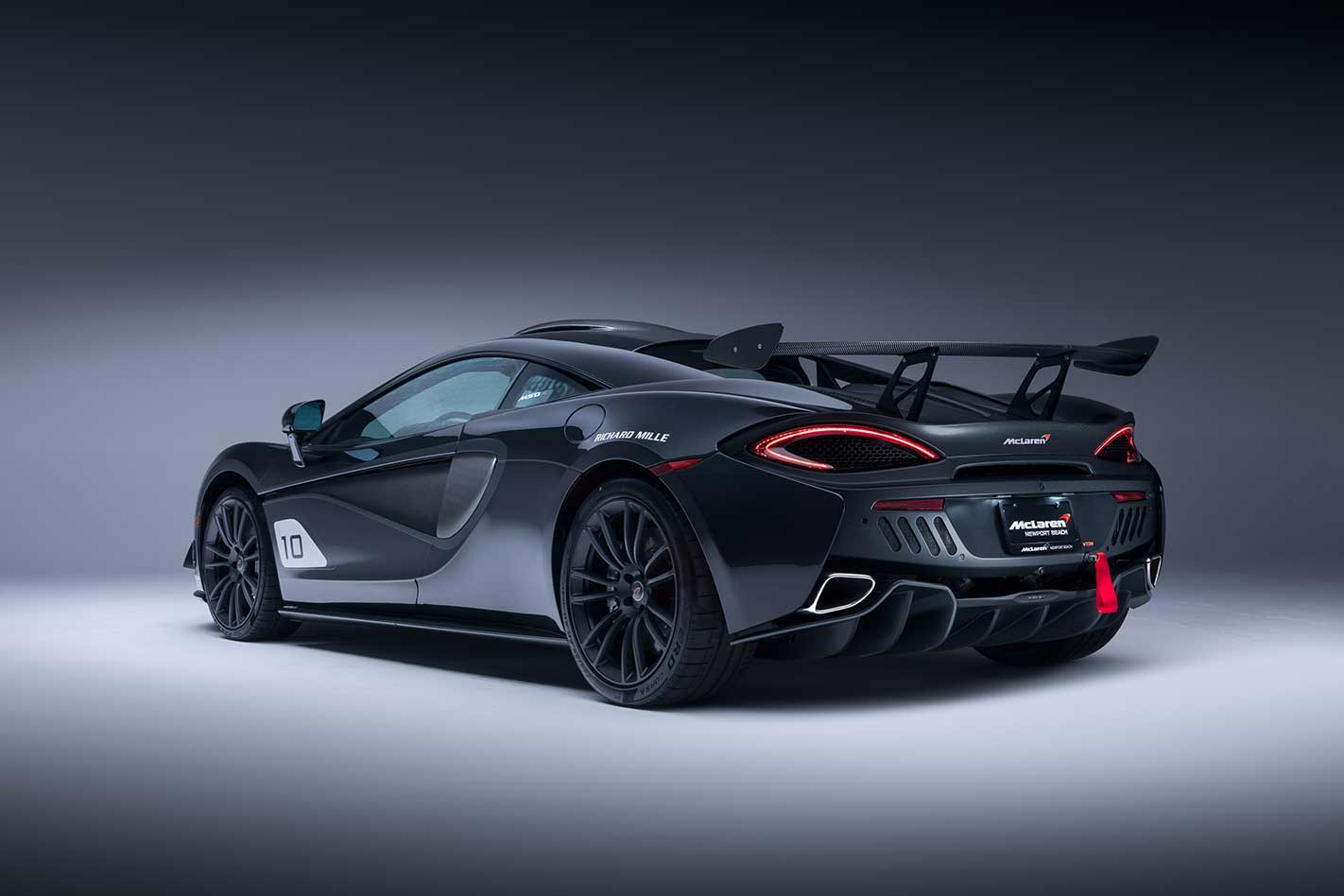
Dealer principal at McLaren Newport Beach Pietro Frigerio says he’s impressed with how quickly the project was carried out and completed.
“The aim of this project was to have a serious track car that could still be driven on the road and this finished project screams ‘race car’ to the casual onlooker,” says Frigerio.
Lamborghini pre-drive events seem to trigger global political upheaval.
When we laid hands on the Centenario, Britain voted for Brexit. The election of President Trump also coincided with us getting behind the wheel of the Huracan Performante.
So, not surprisingly, we expected something big when sampling the Lamborghini Urus prototypes at Nardo. However, nothing happened. And just as the Urus has seemingly broken this bizarre pattern of Lambo launches and global political episodes, it has also broken from expectation when it comes to the Sant’Agata brand.
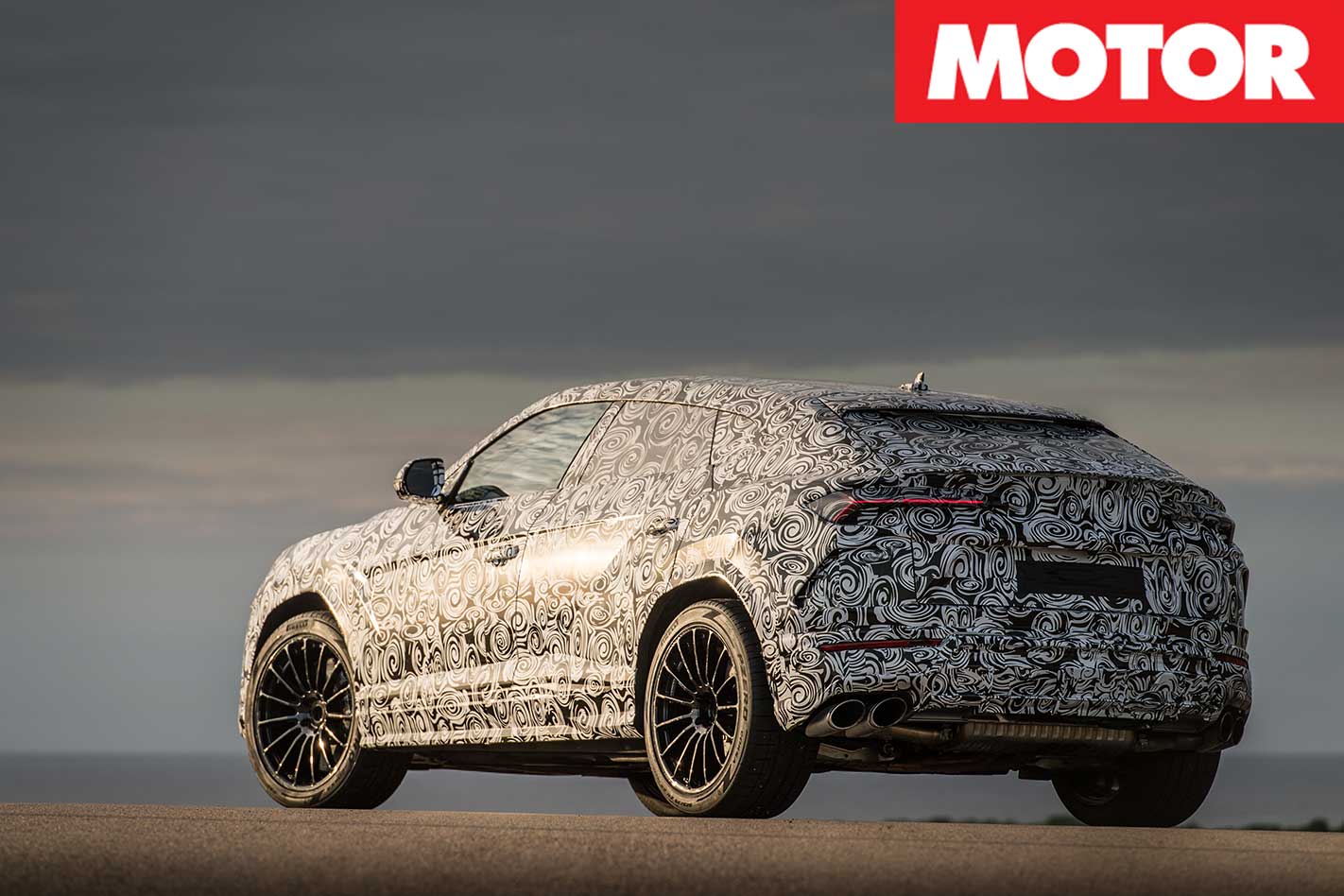
However, as you have already been mentioned at its launch, the body was created with a low drag-coefficient target and loads of downforce in mind. Despite being an SUV, it employs spoilers, splitters and diffusers to wrap around the Urus and plant it to the ground.
Taking advantage of this aero trickery is a twin-turbo V8, which again is a break from tradition. We’re used to howling V10s and sonorous V12s powering two-door coupes. Utilising the 4.0-litre bent eight could be seen as Lamborghini scraping the Volkswagen Group parts bin. However, with 478kW and 850Nm, there could be worse options – especially when it’s the unit that will be powering the next RS6/RS7.
To put its performance into perspective, the Porsche Cayenne Turbo does 0-100km/h in 3.9sec (Sport Chrono Pack). Its top speed is also 288km/h. Impressive numbers, yet the Urus shreds them. Just 3.6sec to 100km/h is the official line, but 3.35sec is what the in-dash readout says.
Yes, that’s with launch control (and an eight-speed ZF auto), perfect weather and what seems like the grippiest piece of Roman tarmac. Still, 3.35sec is quicker than a Huracan. The top speed is also expected to be in excess of 303km/h.
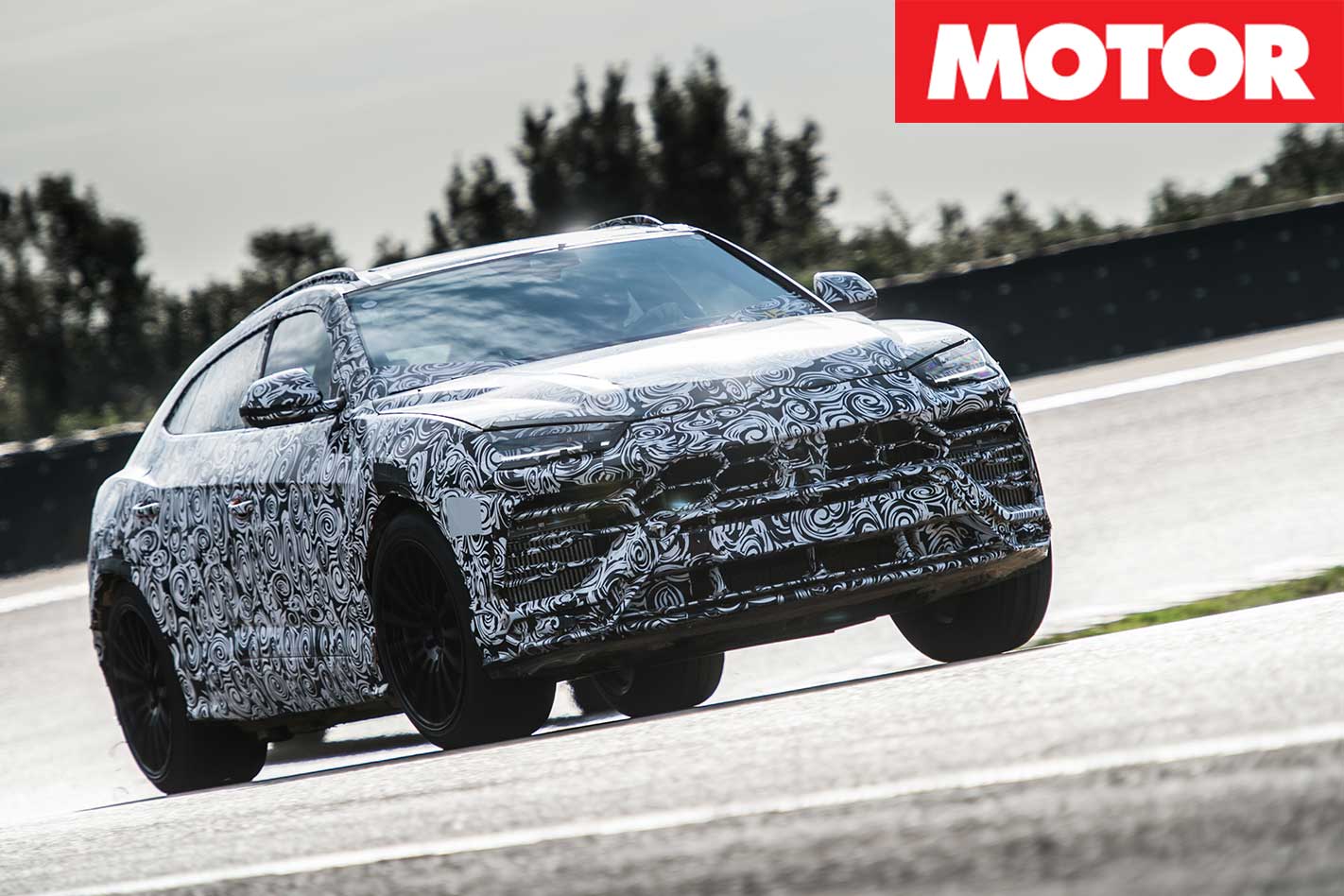
This remarkable achievement required plenty of extra work in the chassis department. The four-wheel drive system uses a Torsen centre differential for a wide torque split front to back and a mechanical rear-diff lock for a subtle left-to-right distribution. In other words, there is no brake-induced torque vectoring like in the Cayenne, and no conventional self-locking centre diff.
Part of the package is a 48 volt system, which powers the fully adjustable sway bars along with the air-conditioning.
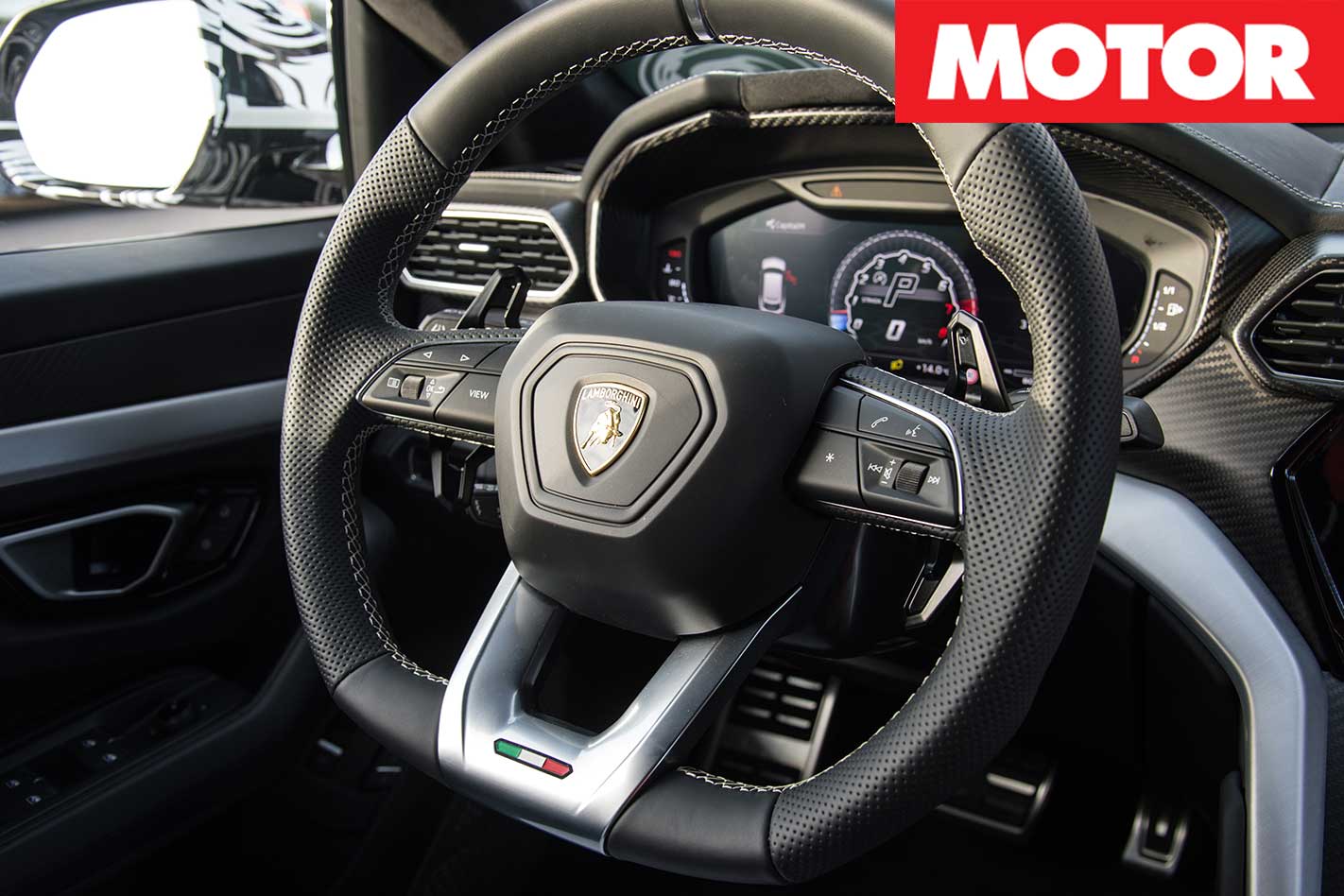
Completing the high-tech DNA is the adaptive air suspension and the rear-wheel steering. The maximum steering angle (three degrees) reduces the turning circle by 0.6m while extending the virtual wheelbase at speed by one foot.
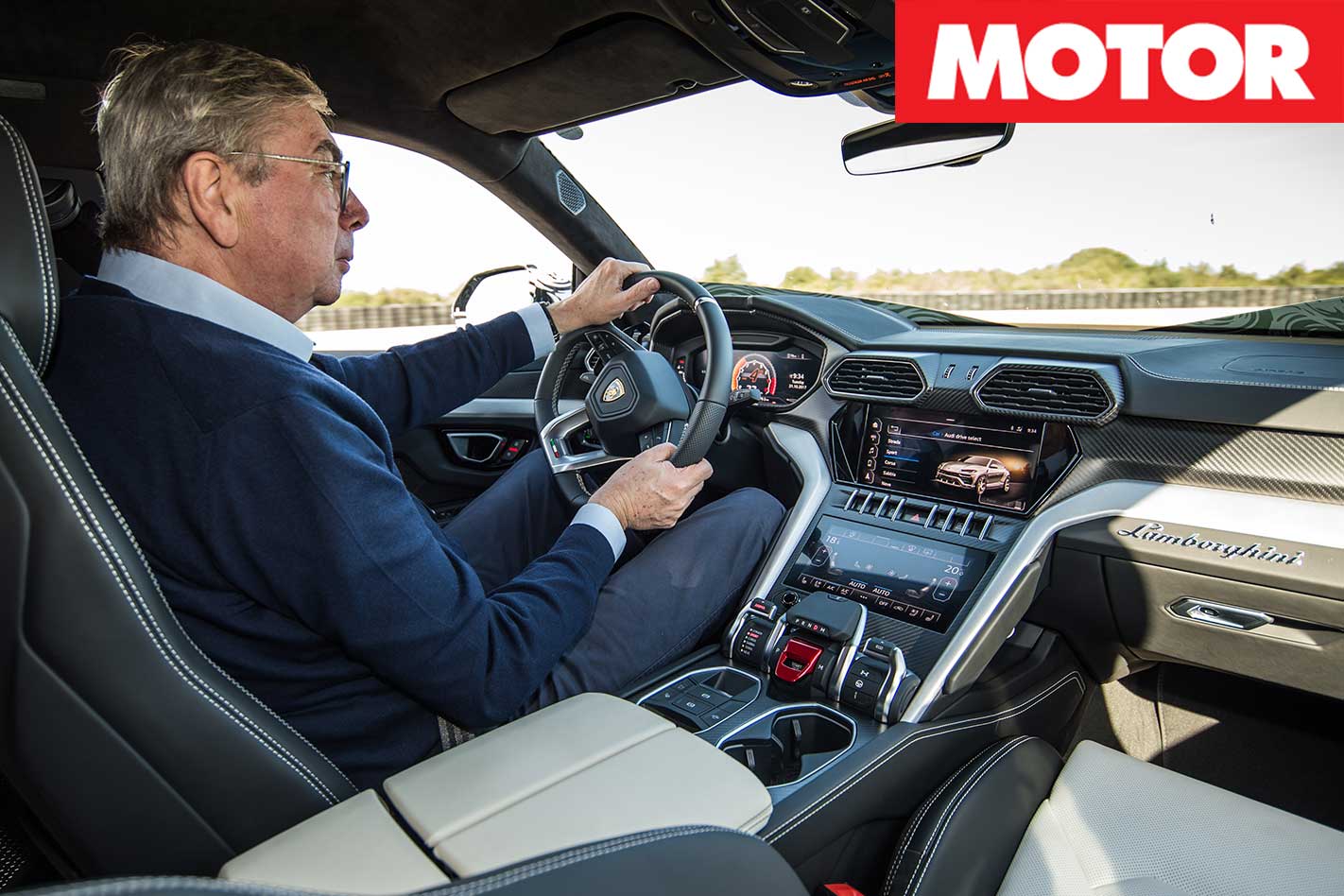
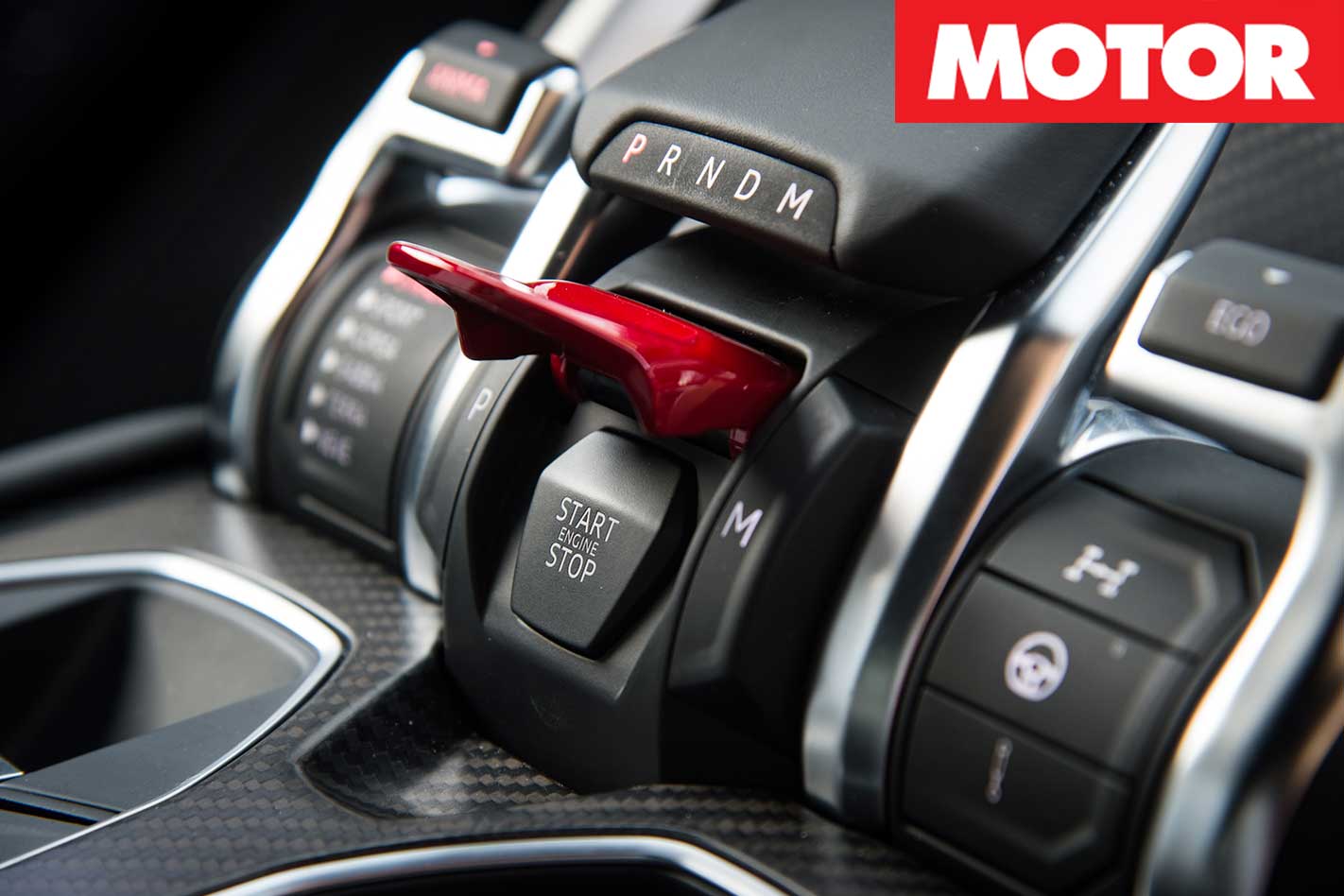
However, while that all sounds very supercar and Lamborghini, having dedicated off-road modes doesn’t. The Urus gains Sabbia (sand), Terra (dirt) and Neve (snow) modes to accompany the usual Strada (street) and Corsa (track) settings. Ego allows you to personalise the driveline, steering response and suspension settings individually. It’s all part of new switchgear named Tamburello – which translates to ‘tambourine’. We’re confused, too.
While sheer speed is one thing, to make it accessible in a confidence-inspiring fashion, is another. Especially when you consider the fact that the Urus comes with all the wrong ingredients for going fast – considerable mass, high centre of gravity and substantial weight.
Despite these genetic downfalls, it hugs the road, it juggles power and torque and it decelerates ferociously. The eight-speed automatic is correctly spaced, but it shifts more leisurely than a rapid-fire dual-clutch and isn’t as eager as the boosted V8.
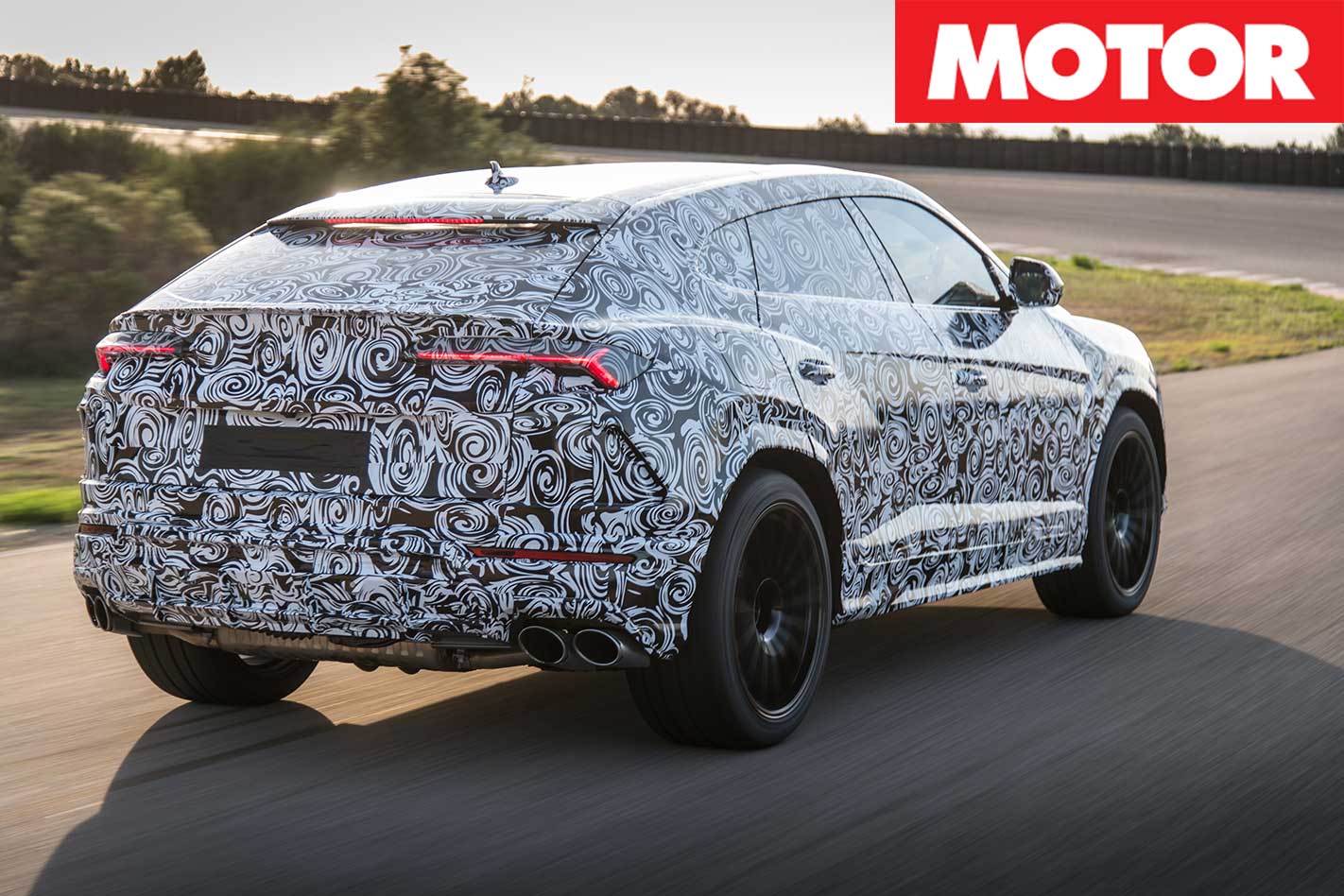
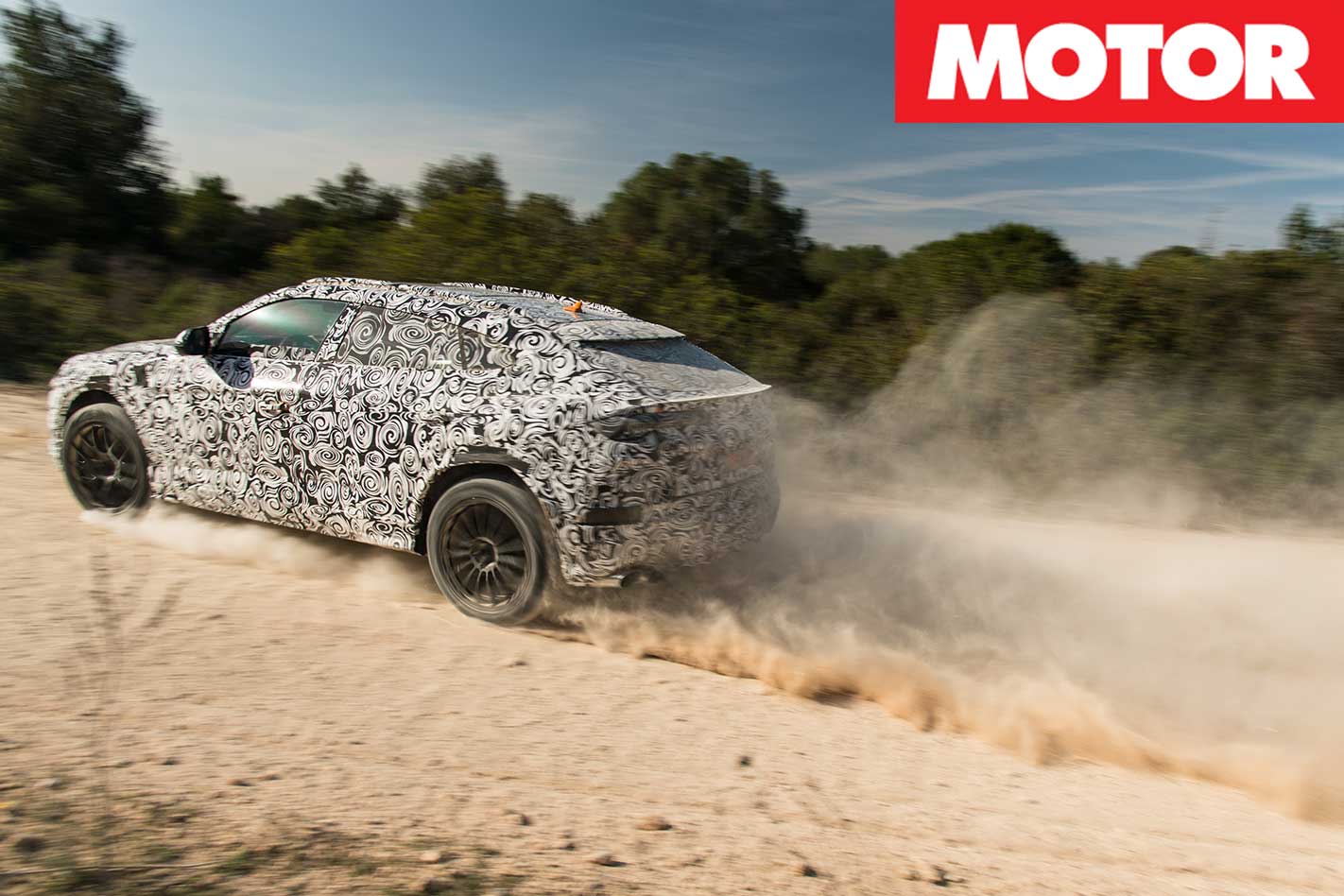
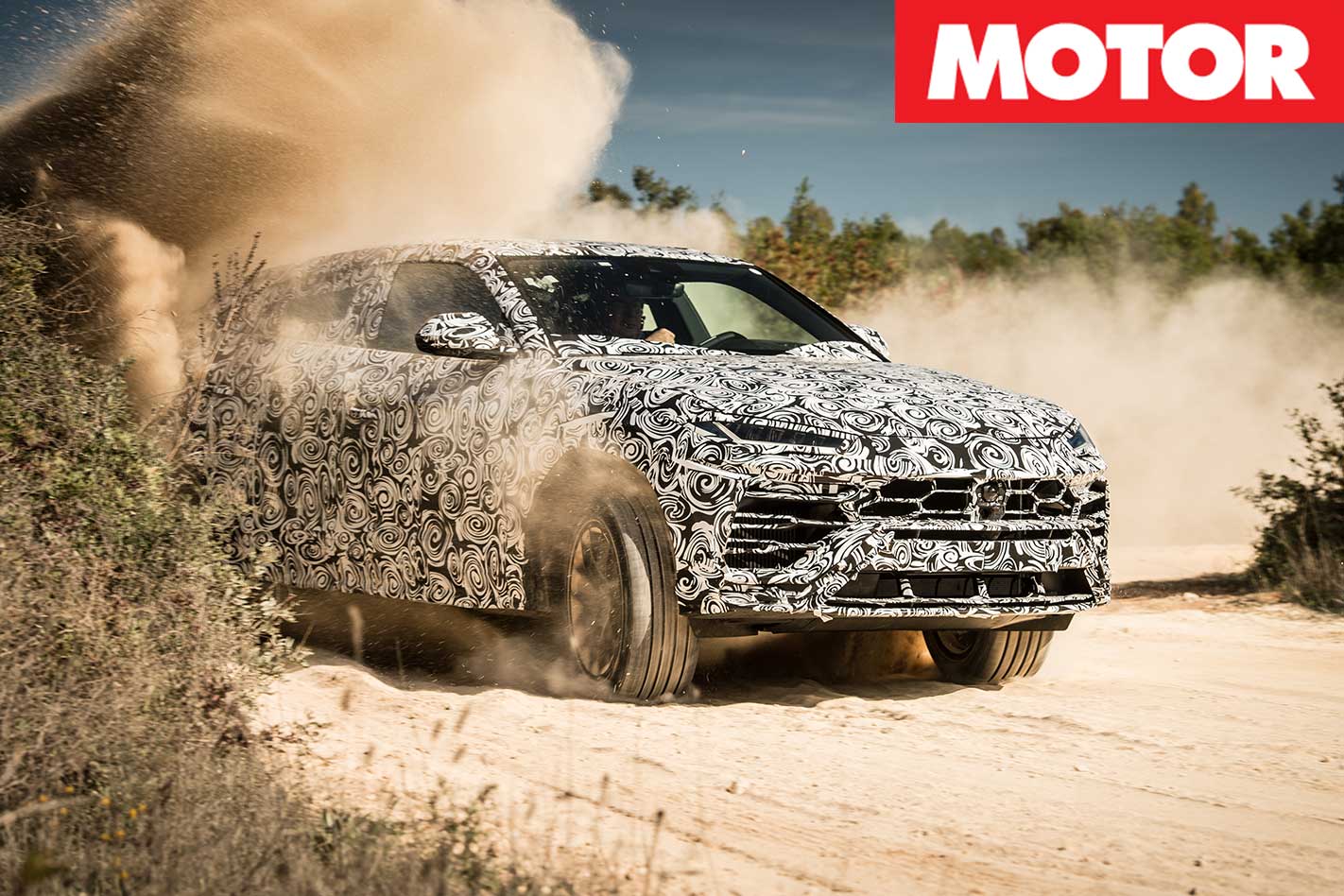
Nardo’s off-road test isn’t really a test, however. The absence of serious climbs and descents matched with the fact that the surface is a mix of sand and sealed gravel is the proof. There are no deep ruts, grooves and potholes for a sterner test.
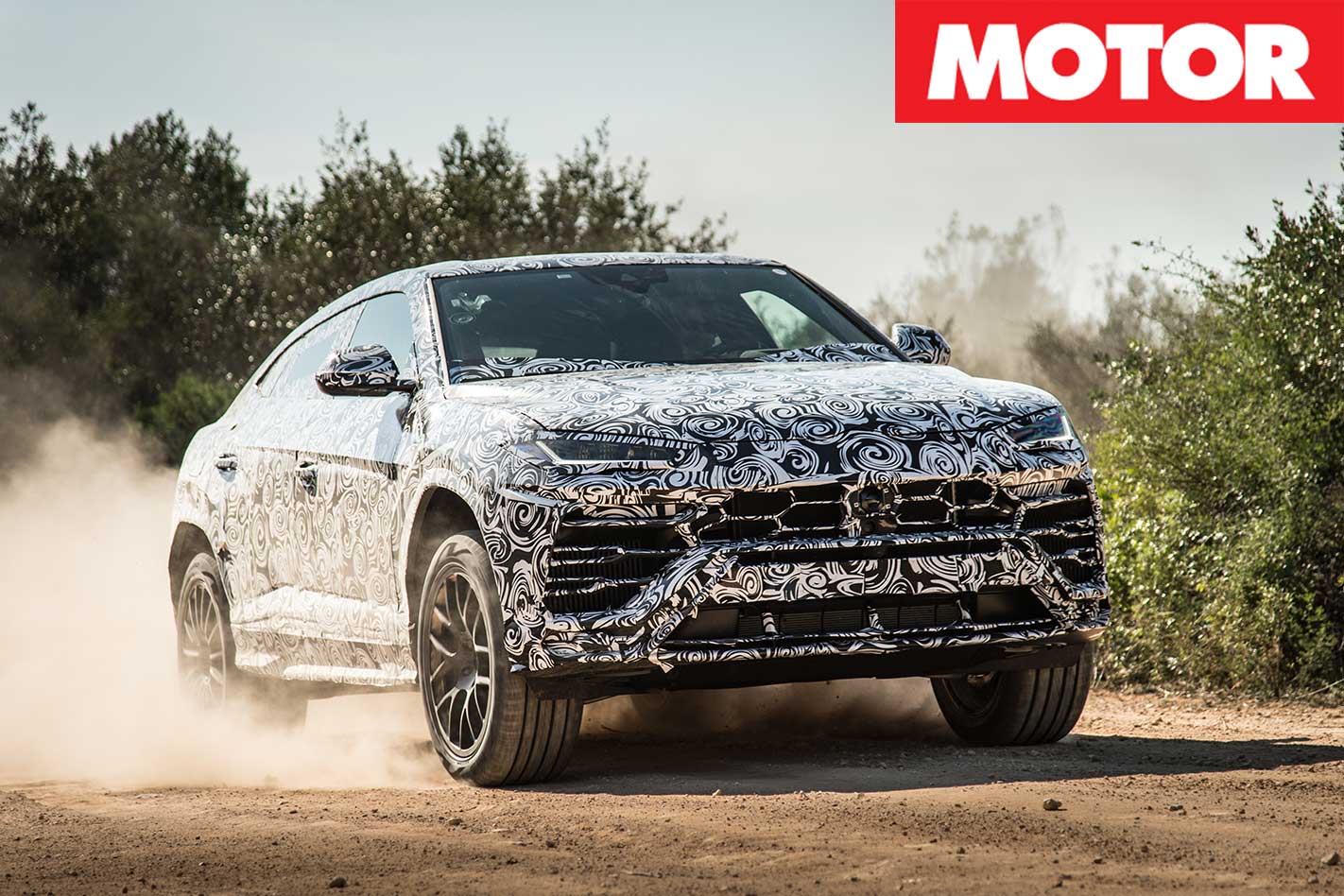
With your right hoof commanding 478kW and 850Nm, understeer does not stand a chance – unless of course you find yourself braking too late, thereby converting the mega-SUV into a part-time sand-shoveler.
So are there any negatives to the super SUV? Well, I’ve already mentioned the leisurely eight-speed auto. However, I’ll add mildly frustrating front-end pitch through fast corners, slightly lackadaisical tip-in, generous amounts of dive and squat, poor cabin ergonomics and an exhaust note that doesn’t quite stir the loins – even in Corsa.
Ultimately, the brawny V8 isn’t quite as special as the charismatic, naturally aspirated V10 and it downs fuel at the rate of an ocean liner.
An ‘eco-focused’ V6 plug-in hybrid (think Porsche 2.9-litre twin-turbo V6 with electrification) is in the pipeline, as is a lighter, 515kW-plus Performante version.
Basically, the Urus can do things no other SUV would even attempt to achieve.
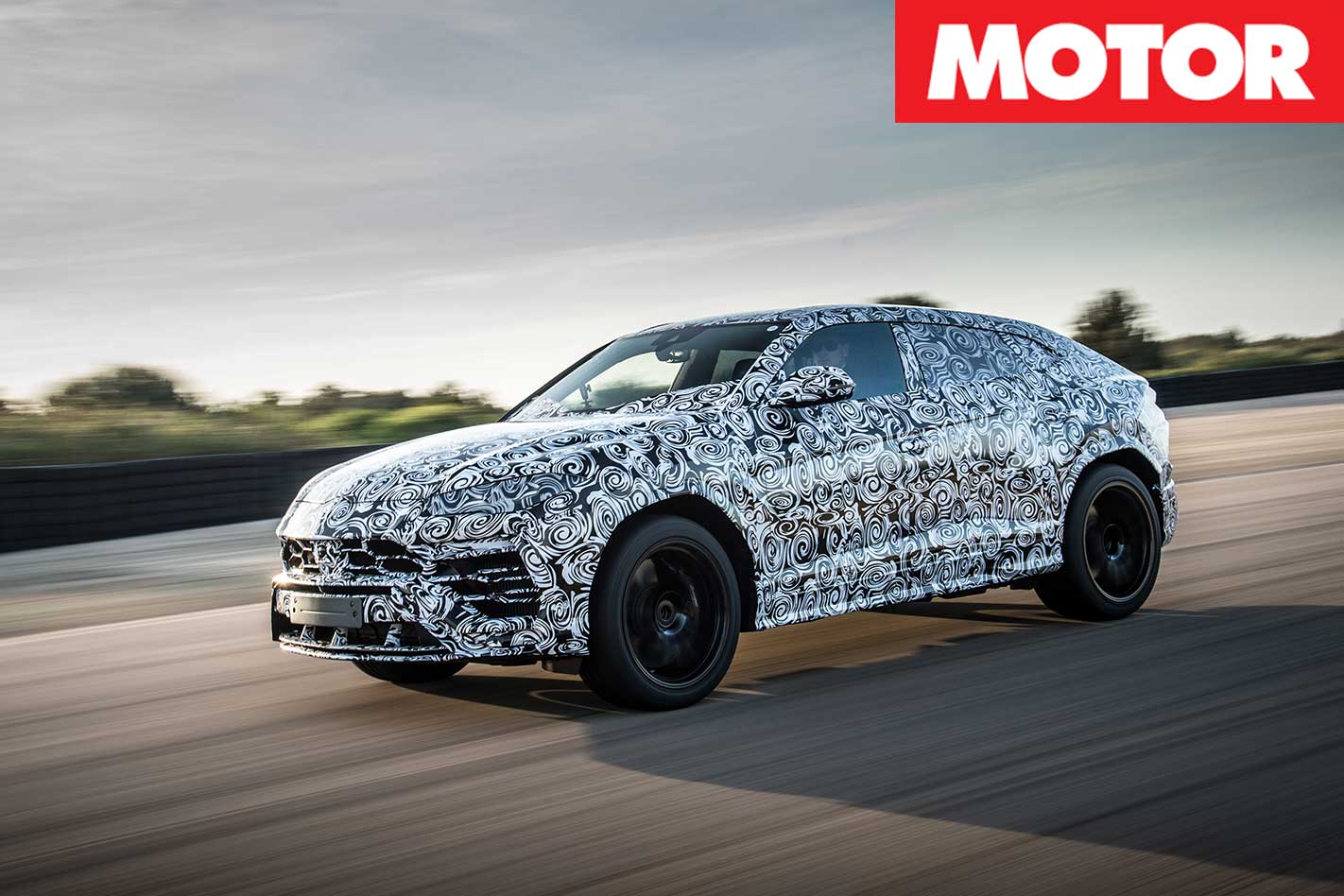
Luckily, the fact Lamborghini has created an SUV, and a great one at that, remains the headline news.
2018 LAMBORGHINI URUS SPECS: Body: 4-door, 5-seat SUV Drive: all-wheel Engine: 3996cc V8, DOHC, 32v, twin-turbo Bore/Stoke: N/A Compression: N/A Power: 478kW @ 6000rpm Torque: 850Nm @ 2250-4500rpm Power/Weight: 217kW/tonne Transmission: 8-speed automatic Weight: 2200kg Suspension: Multi-links, adaptive air suspension with electromechanical active roll stabilisation (f/r) L/W/h: 5112/2016/1638mm Wheelbase: 3003mm Tracks: 1695/1710mm (f/r) Steering: electrically assisted rack-and-pinion; rear-wheel steering Brakes: 440mm carbon-ceramic discs, 10-piston calipers (f); 370mm carbon-ceramic discs, 6-piston calipers (r) Wheels: 23.0 x 10.0-inch (f); 23.0 x 10.5-inch (r) Tyre sizes: 285/35 R23 (f); 325/30 R23 (r) Tyre: Pirelli P Zero Price: $390,000
LIKES: Car-like handling; Huracan-esque pace DISLIKES: Front-end pitch; slow auto; ergonomics
RATING: 4 out of 5 stars
What stands out?
In the spacious and inviting Odyssey, Honda has created a well-made blend of wagon and people mover that’s easy for everybody to get in and out of. All eight (VTi) or seven (VTi-L) occupants will appreciate the versatile seating, ample storage and excellent ventilation, while the driver is likely to enjoy the logically presented dash, light controls, sharp steering, strong yet frugal performance, and superb all-round vision.
What might bug me?
If you have chosen the less costly of the two Odysseys, the VTi, and want to carry small children, the intrusion of child-seat tethers into third-row passenger space. The second-row seats do not have ISOFIX latches, and therefore you must run child-seat tethers back to anchors mounted in the ceiling above third-row occupants. Each strap bisects the third-row passenger space on that side. And while the anchors are shrouded, taller heads might contact the shrouds during hard cornering. Ouch! In contrast, from 2017 the capacious second-row captain’s chairs fitted to the more expensive Odyssey VTi-L provide ISOFIX latches for fast, easy and secure placement of child seats.Discomfort up front on long trips: the Odyssey’s flat front-seat cushions are short on under-thigh support.Finding space for big feet in the second row. If you’re long-legged, beware the odd placement of the (space-saver) spare wheel. It is directly beneath the front seat row, creating a hump that fouls second-row leg room.On bumpy roads, an unsettled ride. Except on smooth roads, the suspension feels busy, and you hear a fair bit of road noise as well.Driving under 80km/h on your space-saver spare tyre, until you can fix your full-sized flat.
What body styles are there?
Five-door wagon only, with seating for seven or eight.The Odyssey drives its front wheels, and is classed as a people mover, lower priced.
What features do all Odysseys have?
An MP-3 compatible entertainment system with an AM/FM radio, CD player, USB and HDMI inputs, Bluetooth connectivity for audio streaming, voice control, and six speakers, controllable from a 7.0-inch touchscreen. Speed sensitive volume, which rises as cabin noise intrusion rises.Climate control air-conditioning with at least two zones (the driver and front passenger can set temperatures independently), and vents in the ceiling for passengers in the rear two seat rows.Height and reach adjustment for a leather-wrapped steering wheel, from which you can operate the cruise control, the audio system and your phone (via Bluetooth). Height adjustment for the driver’s seat.A reversing camera with normal, wide, and top-down views.Headlights that switch on automatically when it’s dark, fog lights, and tail-lights and daytime running lights illuminated by long-lasting LEDs.Power-folding and heated exterior mirrors.Seating for at least seven people (the less costly Odyssey, the VTi, seats eight). Front and rear 12-volt power outlets.A power-operated rear door, on the passenger side, which slides to open like the doors on many commercial vans. Third-row seats that fold away into an underfloor recess, releasing a flat luggage area.Seventeen-inch alloy wheels (which look nicer than steel wheels and don’t need plastic trim), and a space-saver spare wheel. A tyre-pressure monitor, which could give you extra time to get a slow-puncture seen to.Automatic transmission, with paddle shifters.Hill-start assist, which helps you start on an uphill slope by controlling the brakes automatically.Six airbags. Electronic stability control, which is mandatory on new cars and can help you recover from a skid. (For the placement of airbags, and more on Odyssey safety features, please open the Safety section below.)Every Odyssey is warrantied for five years and unlimited distance, and for six years against rust perforating the body.
Which engine uses least fuel, and why wouldn’t I choose it?
Only one engine is available in an Odyssey, a 2.4-litre, four-cylinder petrol. On the official test it consumes no more than 7.8 litres/100km (city and country combined).This is a lively engine, which responds well to your right foot and delivers plenty of acceleration from city and normal highway speeds.In a real-world comparison conducted for the October 2016 edition of Wheels magazine, an Odyssey VTi with this engine averaged 11.2 litres/100km – significantly less than the 13.5 litres/100km recorded by an accompanying Kia Carnival V6 petrol.Every Odyssey drives through a continuously variable transmission (CVT). Unlike conventional autos with fixed ratios, a CVT adjusts incrementally to the conditions and your demands, usually at a benefit to both performance and fuel-efficiency.Both Odysseys provide paddle shifters, accessible from the steering wheel, which let you change up or down manually through a series of artificial ratio steps built into the CVT. For example, you can change down in preparation for an overtaking manoeuvre, so that the car responds more robustly to your depressing the accelerator when the right time arrives. (Note that the CVT will not allow you to damage the engine through over-revving, instead selecting a higher ratio automatically when required.)
What key features do I get if I spend more?
The least costly Odyssey, the Odyssey VTi, comes with fabric-covered seats, and the equipment in all Odysseys.Spend more for an Odyssey VTi-L and you get leather on the seats, and power adjustment and heating for both front seats. There is a power-opening sunroof, which can be operated remotely from the key. Headlights use very bright and long-lasting LEDs rather than conventional bulbs, and auxiliary lights shine into corners when you turn the wheel. You can unlock and start the car without taking the smart key from your pocket or bag. And there is satellite navigation.The Odyssey VTi-L also brings sensor-based active safety aids: Adaptive cruise control, forward collision warning, collision mitigating braking system, lane keeping assist, blind-spot monitoring, and a rear cross-traffic alert. The reversing camera adds views from all sides of the car. And a Smart parking feature can guide you into parking spots.The tri-zone air-conditioning in an Odyssey VTi-L supplies independent controls to rear passengers also, and adds floor vents to the roof vents for those in the third seat row. Shades and privacy glass help keep the sun off those in the back. And the sliding rear door on the driver’s side too power-opens at your touch.The VTi-L replaces the VTi’s sliding and reclining 70-30-split three-person middle-row bench with a pair of captain’s chairs – bucket seats, each with armrests on both sides. Uniquely, these can slide sideways and back for limo levels of leg room. Each also comes with an in-built ottoman, for legs-stretched-out comfort. If you carry child seats, they also have ISOFIX latches for easy and secure placement.Outside, side-skirts, spoilers, LED-strip fog lights and two-tone 17-inch alloy wheels tart-up the Odyssey VTi-L’s body.The Odyssey VTi-L also has a 1000kg towing capacity allowing it to pull modest loads.
Does any upgrade have a down side?
Choosing the more expensive VTi-L means you can seat only two passengers in the middle row, reducing total seating capacity from eight people to seven.Some people may prefer the softer and warmer properties of the standard VTi’s fabric seat upholstery to the VTi-L’s leather-faced material.
How comfortable is the Odyssey?
Honda has been building Odysseys since the mid-1990s, and this is evident from the moment those big doors open. Entry and egress is easy even to the rearmost bench, thanks to an intuitive one-step fold and slide middle-row nearside chair.From the driver’s seat, deep windows, thin pillars and a low dash allow clear views out. The lofty yet still very car-like driving position is defined by the considered placement of the T-bar transmission lever within very-near reach, crystal-clear dials (with an expansive speedometer), volumous air vents (accessible in all three rows), and a versatile bin compartment and shelving unit with charging facility – the unit retracts to facilitate side-to-side or front-to-back access. Every seat row has storage, lighting, charging points and beverage holders within an easy arm’s reach.While it takes a little effort initially in the VTi (or a simple push of a button in the VTi-L), the third seat-row’s acrobatic turn as it tumbles and tucks itself level with the cargo floor to reveal a sizeable luggage area makes the Odyssey a very practical family hauler.Honda has tuned the controls to feel light and natural – from the progressive accelerator action and linear transmission, which make it easy to feed in power smoothly, to equally well moderated steering that is nevertheless eager enough to make this big car seem surprisingly small and agile. It takes no time to feel relaxed and in control behind the wheel. Unlike most tall vans, this people mover isn’t affected much by crosswinds, either.Less good is the touchscreen unit’s fiddly volume control for the audio system or a Bluetooth connected phone, prompting you to prefer the secondary controller on the steering wheel. Front seat cushions are flat and feel unsupportive after an extended stay, lacking sufficient bracing and bolstering to be considered truly comfortable. Additionally, there is no driver’s lumbar adjustment. And you might find the old-fashioned foot-operated park brake cumbersome to operate – although it’s a space saver in that it does not take up precious real estate elsewhere.Of more concern is the jittery and unsettled ride over anything barring the smoothest roads, and the suspension noise and tyre drone that often accompanies it. The resulting bumpy attitude can be tiresome after a while, particularly for third-row occupants.
What about safety in a Honda Odyssey?
Every Odyssey has the mandatory stability control, six airbags, auto-on headlights, LED daytime running lights, and a multi-angle reversing camera. It is a package that protects you in a crash, maximises your visibility to others, and allows you to check behind this big vehicle from the driver’s seat for risks when reversing.Seatbelt reminders are fitted only to the front seats, however, and the Odyssey does not supply standard rear parking sensors (which could alert you to someone at risk behind you).There are airbags directly in front of the driver and front passenger; one outside each front seat to protect from side impacts at chest level; and side-curtain airbags extending the full length of the cabin, protecting those in all three rows of seats at head level.The Odyssey VTi-L adds features designed to keep you in touch with what is happening outside the rear of the car.A Blind-spot information system uses radar sensors to scan the road near your rear corners for adjacent or overtaking vehicles – which might not have appeared in your mirrors. Should you indicate to change lanes into the path of another driver, it will flash a light in the relevant exterior mirror and sound a warning.A Cross-traffic monitor uses the same sensors when you are reversing – say from a driveway or shopping-centre parking space. If they detect the approach of another vehicle behind you, the Odyssey sounds a warning and seeks to show the danger on your touchscreen display.Adaptive cruise control sticks to a certain speed but then slows to match the speed of a vehicle in front. This is coupled with lane keeping assist, which helps steer the Odyssey between lane markings.The VTi-L also offers limited autonomous emergency braking, which scans the road ahead and brake the car automatically to reduce the impact of a collision with the car in front. A forward collision warning alerts you when it senses a potential impact based on the speed of the Odyssey and a vehicle in front.The Australasian New Car Assessment Program (ANCAP) awarded the Odyssey five stars for safety, its maximum, in May 2014.
I like driving – will I enjoy this car?
Although it is an ageing powertrain with a hefty 1.8 tonnes to haul around, the Odyssey’s naturally aspirated 2.4-litre four-cylinder petrol engine is a strong and yet sweet performer, with eager off-the-line acceleration and enough power in reserve at highway speeds for fast overtaking manoeuvres. This unit loves to rev, and while it doesn’t mind making some noise doing so, it sounds lusty and lively. And that flaring of the engine revs common to many CVTs when you mash the go-pedal down is minimal in the Odyssey, with the paddle shifters also allowing some manual control.That the Honda also returns reasonably impressive fuel economy is testimony to the quality engineering under the bonnet.Likewise, the electric power-steering behaves better than the Odyssey’s boxy dimensions and considerable bulk suggest, with sharp and responsive handling and a pleasingly flat and controlled attitude through corners – even tight corners. There is sufficient precision and fluidity for a keen driver to really enjoy a fast back-road blast in this people mover, backed up by plenty of predictable grip. Achieving a low centre of gravity was one of the top priorities during this car’s gestation. Who knew!Only the tetchy ride quality and tyre-noise intrusion detract from a sparkling performance dynamically.
How is life in the rear seats?
Sliding side-doors mean that accessing the middle row could not be simpler. Especially when they’re powered via remote control. Sashay in like a rock star!Once sat, all three reclining and sliding middle-seat positions in the VTi provide almost opulent levels of spaciousness and comfort, with the bonus of better cushion support than the seats up front.In a VTi-L, the captain’s chairs with their ottomans are like travelling business class on a plane. They too recline and slide, and also move sideways for added versatility. The general ambience back there is very pleasant, aided by that airy glasshouse, nearby face-level vents, and armrests galore. Limousine levels of room makes row number two the preferred way to travel – especially when the third-row seats are folded into the floor, allowing the middle chairs to slide nearly a metre further back. Future Uber drivers, take note.The middle row seats’ ability to slide and tip forward in one easy move makes access to the third row a cinch, though it’s worth remembering all three rearmost pews (their backrests fold 40-20-40 for added convenience) are best for pre-teen kids rather than adults, who’d find trying to sit three abreast very squeezy indeed. All expected amenities are present, though in a VTi those child-seat tether anchors are sited wearingly close to taller scalps, so beware.Road and tyre noise are most obvious in row number three, as is the often unsettling ride. Honda needs to sort the ride out.
How is it for carrying stuff?
The Odyssey is a box-shaped wagon, so its ability to carry stuff is commendable. The low floor and high roof means there is a minimum 330 litres of (quite narrow and tall) storage behind the third-row backrest – about as much as you would have in a smallish hatchback. Fold and tumble that third row down into a cubby in the floor and push the middle-row seats to their most forward position, and space balloons to a sizeable 1332 litres floor to ceiling.Aiding the Honda’s load carrying ability is a high tailgate aperture, while a low floor makes heaving heavy objects inside easier than in most wagons.Note, however, that the Odyssey’s deadly rival, the Kia Carnival, is far better at carrying cargo, going from 960 litres to 2220 litres in five-seater mode, and a vast 4022 litres when the second row is also folded to create a two-seater mode.Towing capacity only applies to the VTi-L and is 450kg for a trailer without brakes and 1000kg with brakes. That’s about half that of the Carnival.
Where does Honda make the Odyssey?
The Odyssey sold in Australia hails from Japan. Australia is one of the few countries in the world to receive this vehicle. North America also receives an Odyssey, but it is an entirely different and altogether larger vehicle based on the big Honda Accord V6 platform. That US model is closer in size and capacity to the Kia Carnival.
What might I miss that similar cars have?
Possibly better fuel economy on long trips, from a diesel engine – which you can have in a Kia Carnival, for example.Decent towing capacity. The Odyssey VTi-L’s braked trailer towing capacity is rated at just 1000kg while the VTi is unrated. You can tow twice as much as the VTi-L with any Carnival, for example.Nine or more seats, such as you can have in the larger (but cruder) Volkswagen Caravelle, LDV G10 and SsangYong Stavic.Autonomous emergency braking. Only the Volkswagen Multivan offers AEB in a dedicated people mover, and then only in Highline and Executive guises from about $80,000 plus. But it is available at lower price points in some seven-seat SUVs, and it is standard in every Mazda CX-9.Maybe all-wheel drive. The significantly more expensive Volkswagen Caravelle 4Motion offers all-wheel drive in a people-mover – a boon in snow, sand, gravel or mud. So do many seven-seat SUVs.Among other dedicated people movers you might consider are the Citroen C4 Grand Picasso and the Toyota Tarago.
I like this car, but I can’t choose which version. Can you help?
Easy. The Odyssey VTi-L.Though it is very much more expensive and loses the middle-row centre seat in the process, the captain’s chairs that replace the VTi’s three-seater bench have in-built ISOFIX child-seat latches, meaning you can carry small children without compromising third-row amenity.Additionally, the heated and power-adjustable front seats, leather upholstery, sunroof, rear climate controls, sunblinds, keyless entry and start, active headlights, surround-view camera, and lane-change and blind-spot warnings with rear cross-traffic alert, help soothe that price-premium sting.And from December 2017, the VTi-L also gained the ‘Honda Sensing’ driver assistance package as standard, which includes adaptive cruise control, forward collision warning, lane departure warning and lane keeping assist.
Are there plans to update the Odyssey soon?
The current Odyssey was launched in 2014, and received the mildest of revisions early in 2017 – namely the ISOFIX child-seat latches in the VTi-L’s middle seats.Another update in December 2017 updated the front end of the VTi to look more like the VTi-L. The VTi-L meanwhile gained the ‘Honda Sensing’ driver assistance package as standard, which includes adaptive cruise control, forward collision warning, lane departure warning and lane keeping assist.The VTi-L also received new design elements including LED strip fog lights while inside, the second row captain’s chairs are now fitted with more luxurious headrests and additional seat-mounted storage compartments, while up front sees new instrument panel and door trims, new engine start/stop button, and auto-folding electric door mirrors.This review and models featured at the top of the page will be updated soon to reflect the changes. In the meantime you can read about them here.We we can expect a complete rebody before the end of this decade – our bet is the second half of 2019 at the earliest.From July 2017, Honda extended the warranty on new Odysseys to five years.
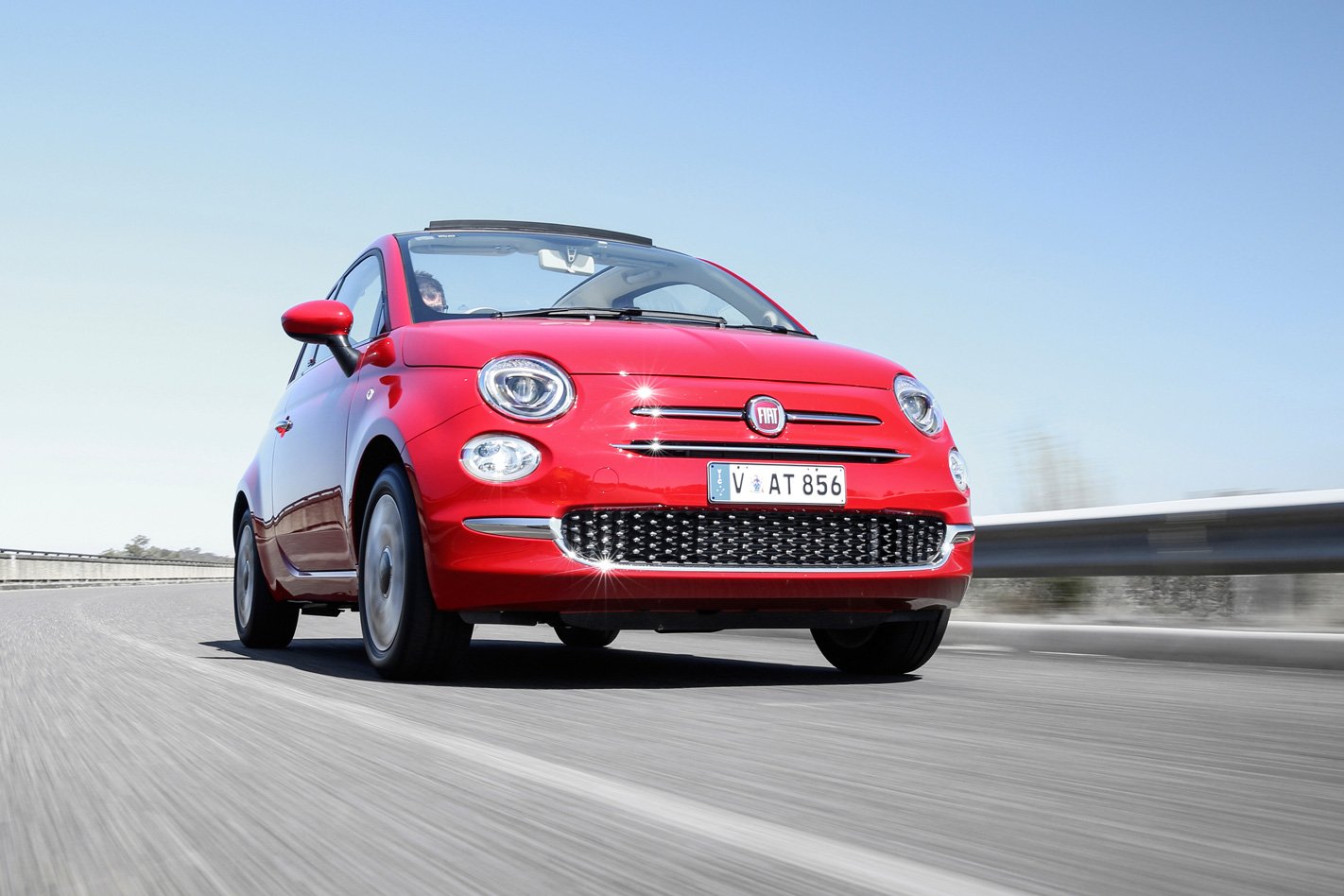
1. Fiat 500C
$21,990
More glorified sunroof than fully fledged convertible, but the cheeky Fiat is the cheapest way to get your top off. Pity about its rear vision…
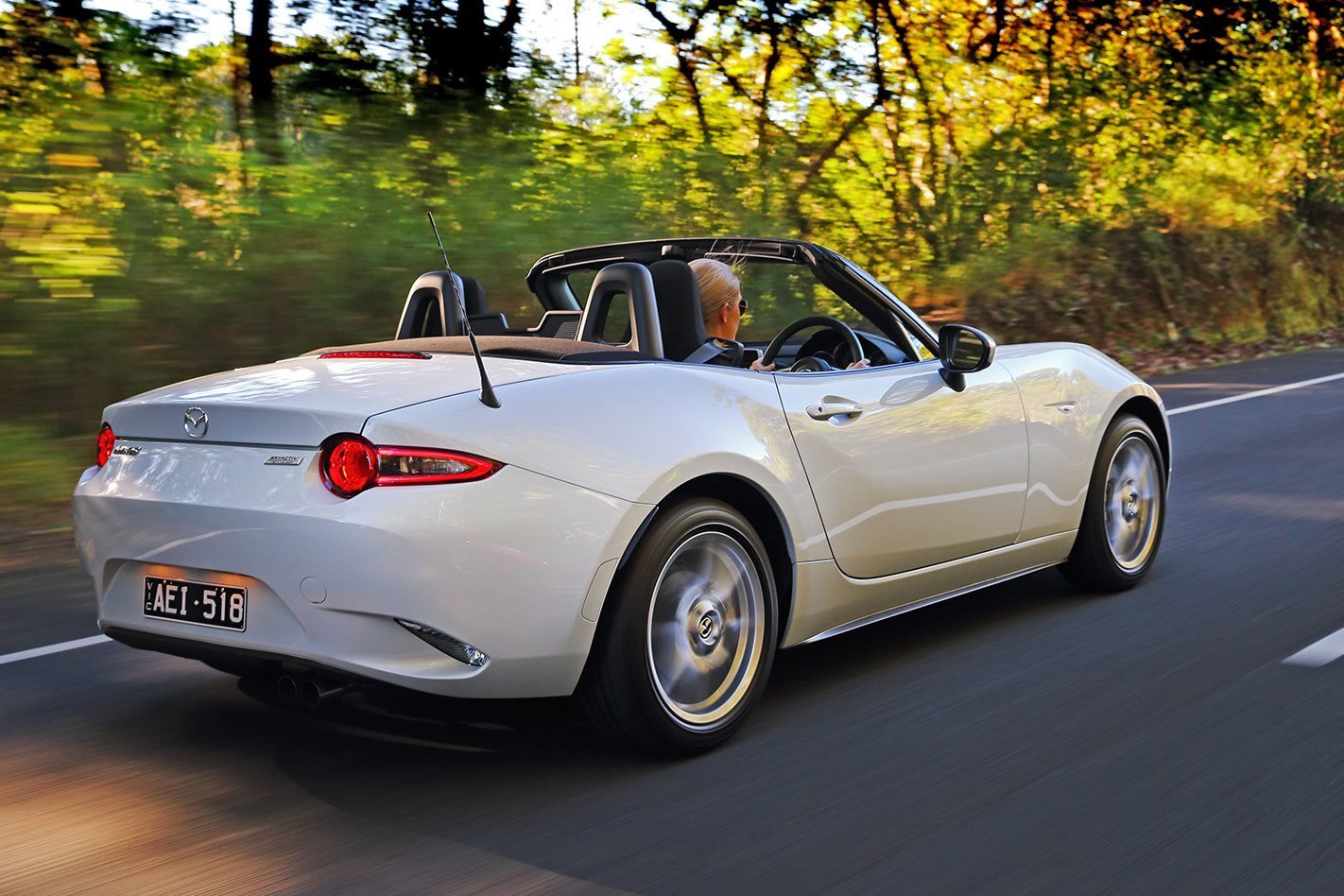
2. Mazda MX-5
$33,340
Not only is the MX-5 the second cheapest convertible in Australia, it’s also one of the most rewarding cars to drive, and a Wheels COTY winner.
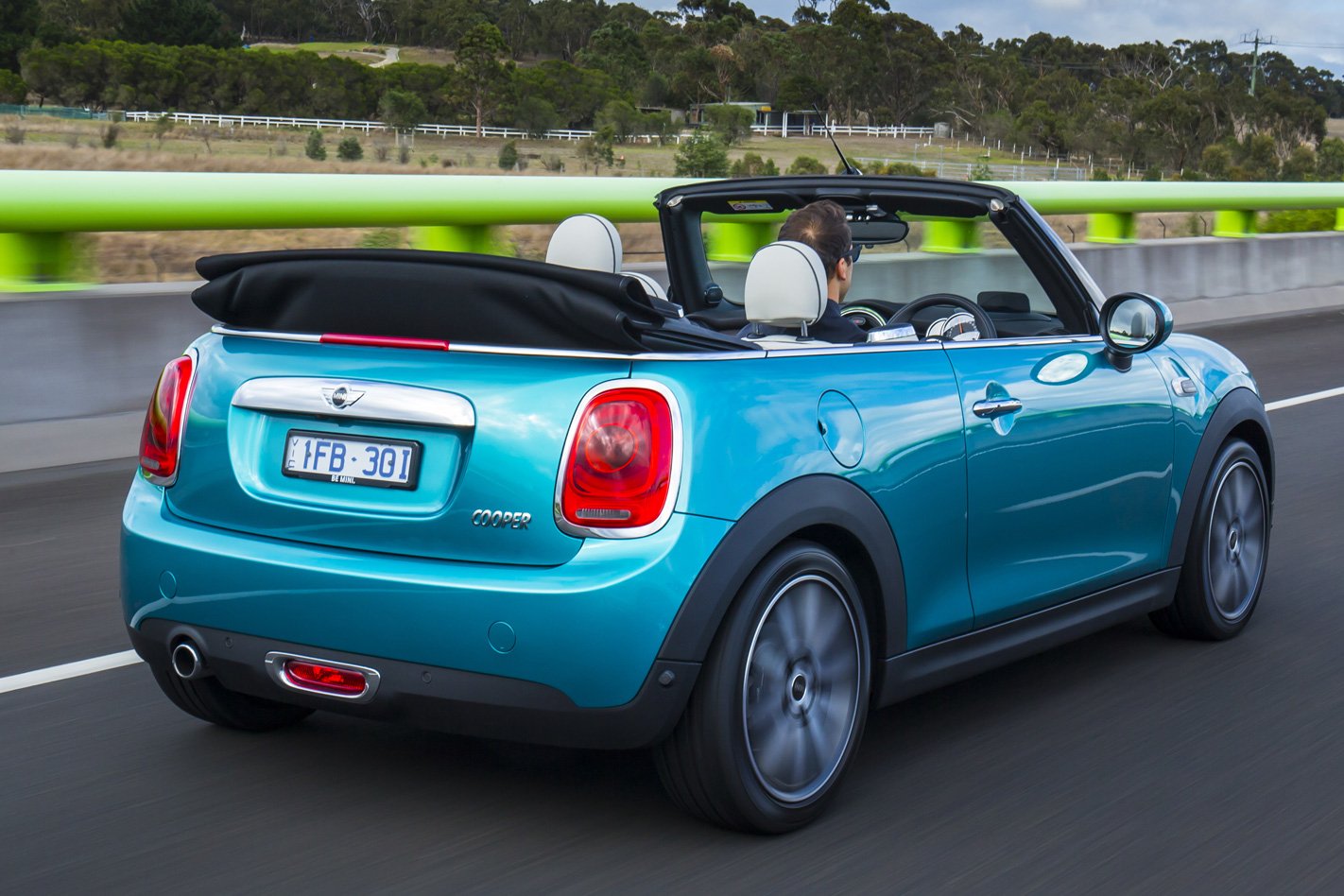
3. Mini Cooper Convertible
$38,900
Mini’s most affordable drop-top has a proper electrically folding roof for pure cabriolet motoring but also offers a second row of seating.
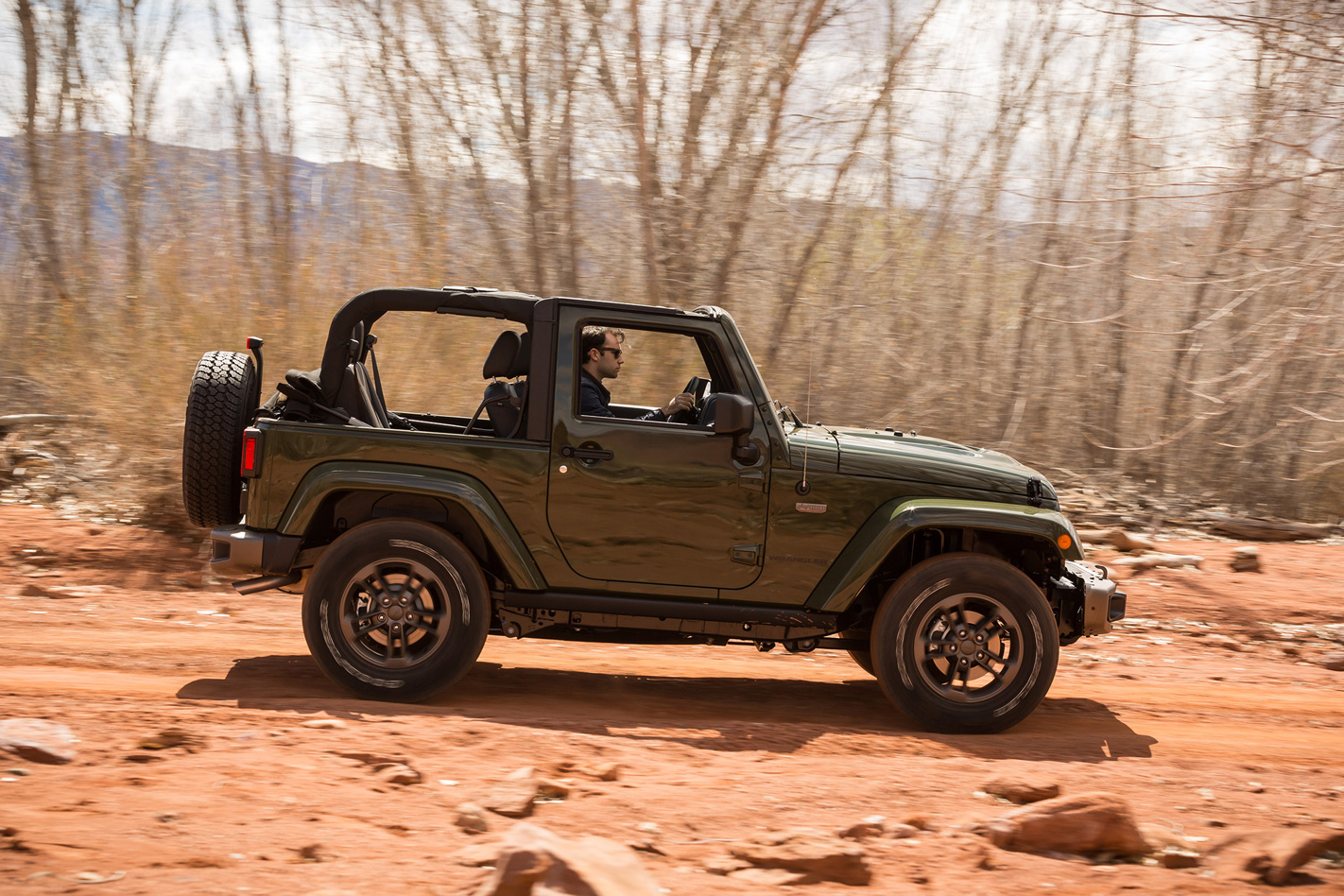
4. Jeep Wrangler
$38,990
While most convertibles focus on a tarmac motoring experience, Jeep’s Wrangler promises fun both in the bush and on the beach.
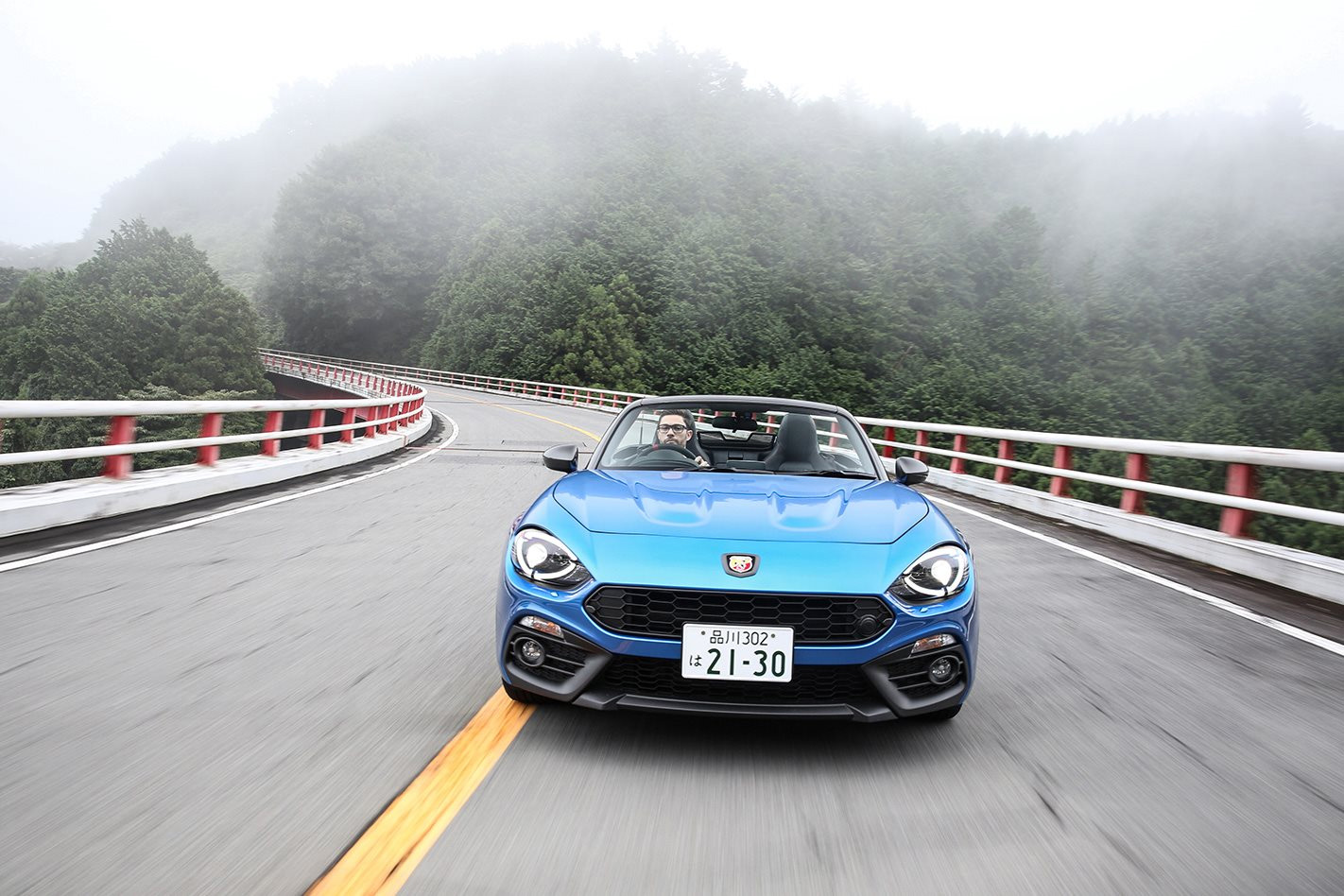
5. Abarth 124 Spider
$41,990
Sharing much of the MX-5’s structure, the Abarth is another two-seat, rear-drive option wrapped up in a more serious performance package.
THE 2018 Geneva Motor Show is just around the corner, and Europe’s season opener already looks like shaping up to be a spectacular one.
While the Detroit Motor Show lacked much of the lip-smacking sizzle of previous events, Switzerland’s second city promises to whet our appetite. So, what can we expect? Yes, there will be the focus on the current darlings everyone is keen to woo – autonomy and electric vehicles – but there’s still expected to be an appropriate mix of fire-spitting, tyre smoking and eardrum-splitting analogue machinery to remind us that always prove such glorious incongruity in speed-hating Switzerland.
Audi A6
The fifth generation of Audi’s BMW 5 Series fighter is expected to lob at Geneva, sporting the German luxury brand’s new MLB Evo architecture, and potentially a plug-in hybrid drivetrain. Expected to be an advance on the 2014 Prologue concept car unveiled at Los Angeles, the A6 is also expected to offer 2.0-litre four-cylinder and 3.0-litre V6 engines – all turbocharged – as part of the car maker’s move to greater fuel efficiency, with an e-tron plug-in hybrid also expected on the show floor at Palexpo.
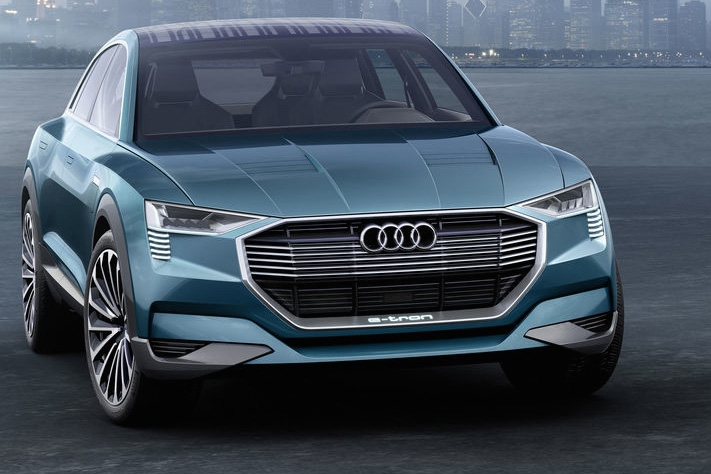
Audi eTron Quattro
An electric SUV boasting a 500km range will more than pique the curiosity of luxury car buyers wanting to break the bonds with hydrocarbons in their garage. After a concept teaser, this should be our first look at the production form of the eTron Quattro before it heads into showrooms later this year.
Bentley will contest this year’s Pike’s Peak challenge in the US, but not by building a Monster Takajima-fighting, carbon-clad spaceframe specialist. Oh no. It will be a W12-engined version of the Bentayga, the gumboot-clad gentlemen’s club on wheels. To offset that, it needs something down the more efficient end of the carbon food chain, and to that end, we expect Bentley to whip the wraps off a V8-engined plug-in hybrid on press day.
BMW 2 Series Active Tourer
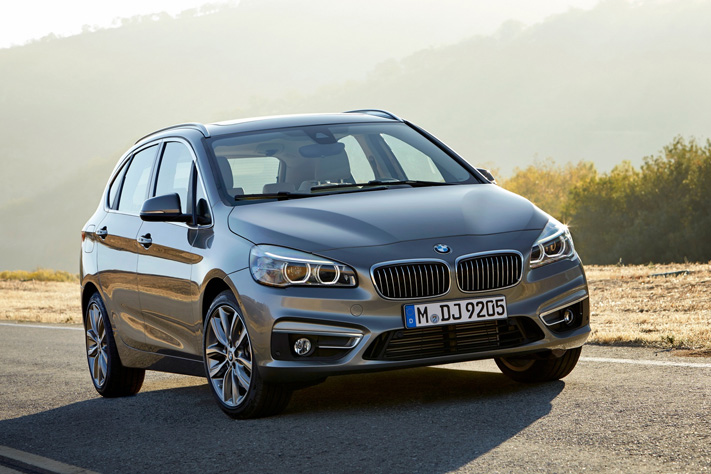
The front-wheel-drive blitzkrieg continues at BMW with a facelifted version of the small SUV-styled hatch that has more to do with Mini than Munich. It also introduces a dual-clutch gearbox option, putting the “re” back in “active”.
Remember all the fuss when BMW introduced the X6, coupe-styled SUVs. We were all frothing at the gills over that one, but now this sub-genre has proliferated and the X4 has long been a more socially acceptably-sized take on the theme. Running on the new CLAR chassis, the X4 will get a revised range of engines, sleeker styling and BMW’s iDrive 6 infotainment system.
BMW Z5
BMW is ditching the recently deceased Z4’s steel roof with a cloth one for the next generation of its two-seater sports car being developed alongside the fixed-roof Toyota Supra. Toyota’s involvement alludes to a petrol-electric hybrid version of the sports car.
A big makeover for the Cactus results in the loss of the shopping centre car park ding-friendly Airbumps with piddling-by-comparison sill details. And we’d just warmed to the looks of the car it will replace.
Ferrari 488 flagship
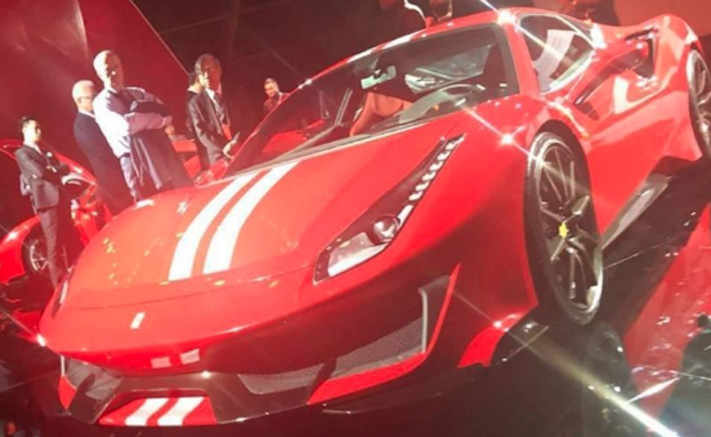
There’s something of a supercars arms war at the moment, and Ferrari, instead of leading the pack, is in danger of falling behind it. In response, it’s expected to bring in a more hi-po version of the 488 GTB. With stacks of carbon fibre, a more aggressive aero package, an engine from the 488 Challenge and sharper software calibrations, it could well wear either a Speciale or GTO badge.
We’re only going to get diesel-engined versions of the Edge for now – rebadged as the Endura – so in all likelihood the diesel-only Edge display at Geneva will offer some relevance. Of note will be whether there’s a ST-Line badge in the mix, featuring Ford performance-fettled suspension tweaks and an aero package, but lacking the twin-turbo V6 petrol punch of the ST-badged version.
Hyundai Santa Fe
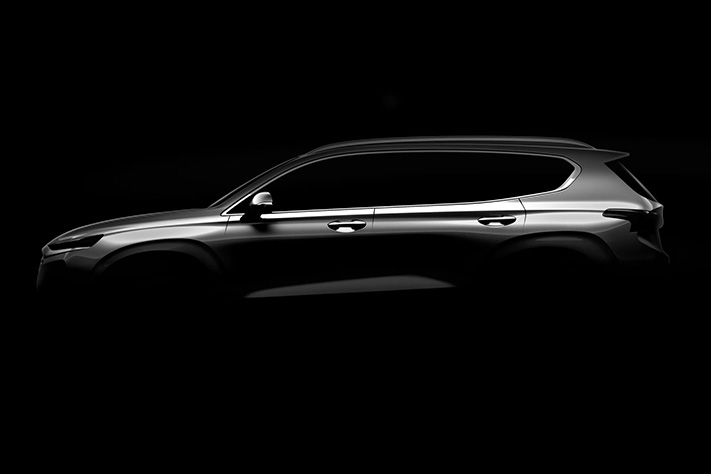
We’ve seen only a teaser image of the next-generation Santa Fe so far, but under its new skin the large SUV is expected to introduce the latest safety advances to the Korean brand. One, we’ve noted, is an automated braking system that will stop you backing out in front of oncoming traffic.
One of our 2018 Wheels Car of the Year contenders ditches hydrocarbons for electrons to give it the science to match its futuristic external looks. The Kona EV also hedges its sister company’s roll of the dice on hydrogen fuel cells, unveiled at the 2018 Consumer Electronics Show.
Jaguar I-Pace
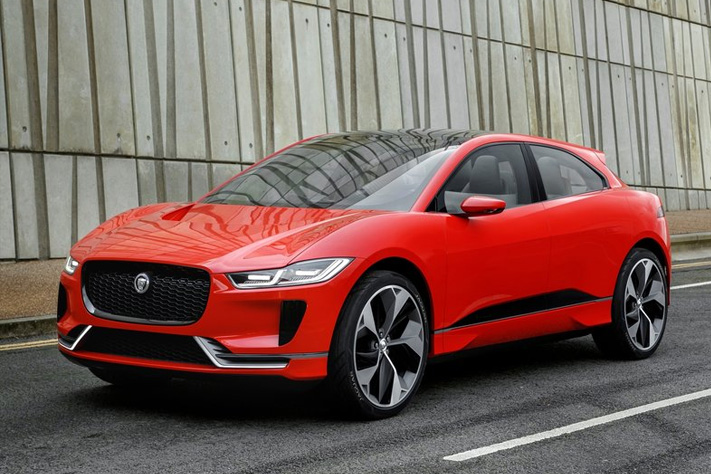
It’s described as a five-seat electric sports car, but Jaguar’s first pure electric play turns conventional design on its head. The EV packaging has allowed the Brit to build a car on an extended wheelbase that offers up much more room than its diminutive size suggests.
Well, it won’t be called the UX. We hope. It’s the first genuinely compact SUV for Toyota’s luxury marque, and built on the same future-facing platform as the car it will most closely resemble, the Toyota C-HR.
McLaren Senna
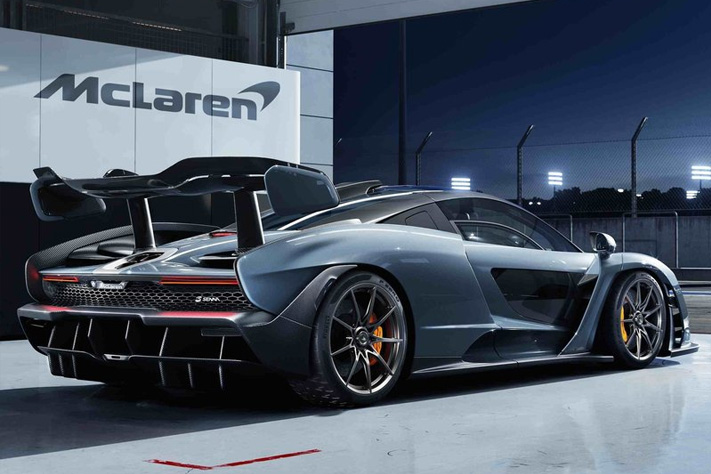
Eye candy always gets the blood pumping. McLaren’s hypercar project, named after one of its most famous Formula One drivers, will one day hunt Mercedes-AMG Project Ones and Aston Martin Valkyries on the world’s race tracks.
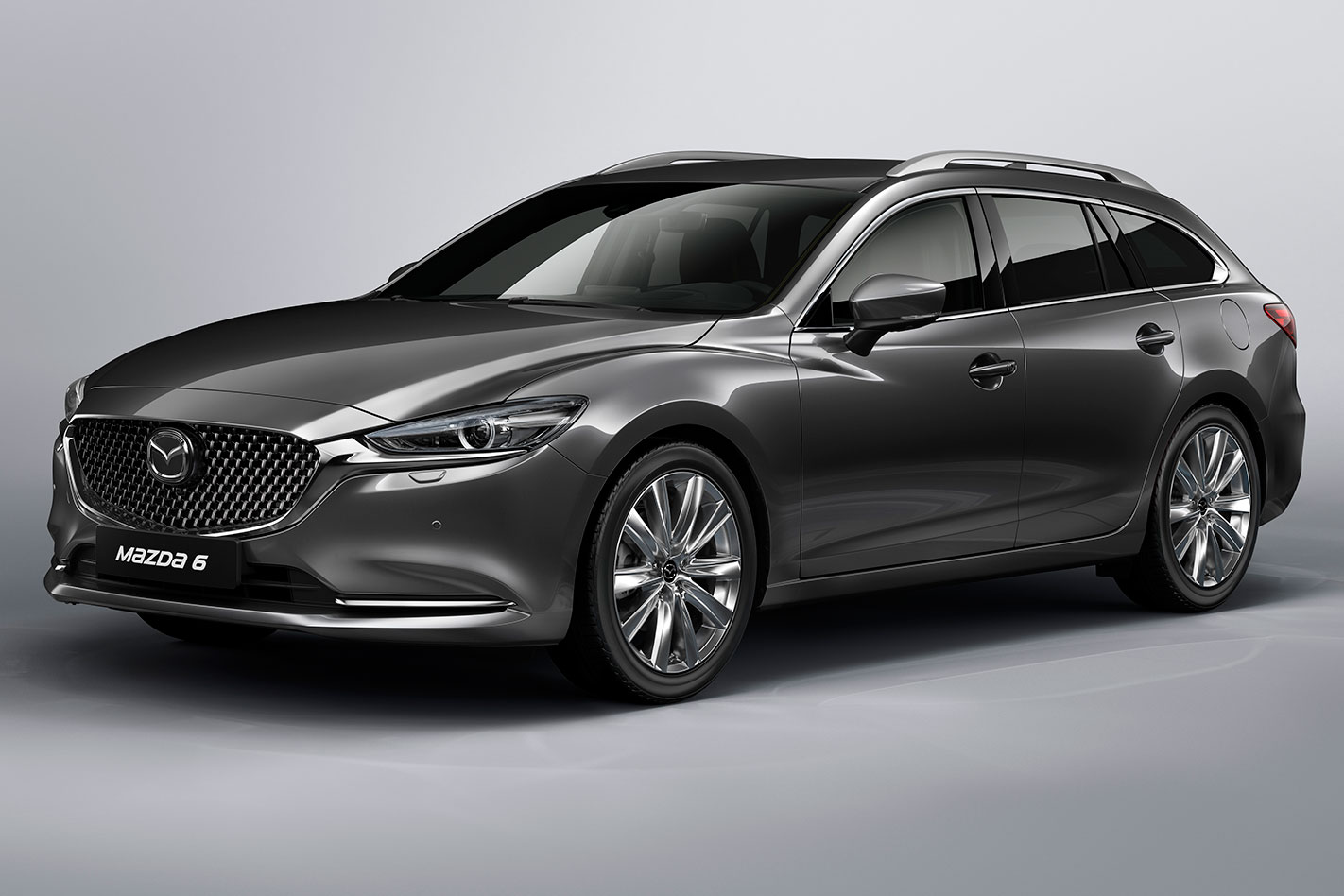
Mazda 6 wagon
Mazda introduced a turbocharged 2.5-litre version of the 6, featuring the same engine used under the bonnet of the seven-seat CX-7, in front of the North American audience earlier this year. Now the focus swings to Europe, where the wagon version has its day in the spotlight.
Mercedes-AMG GT Coupe
The two-door Mercedes-AMG GT mutates and grows an extra couple of appendages – rear doors – to become the Mercedes-AMG GT Coupe. Because some GT owners are responsible and have to take their children to school.
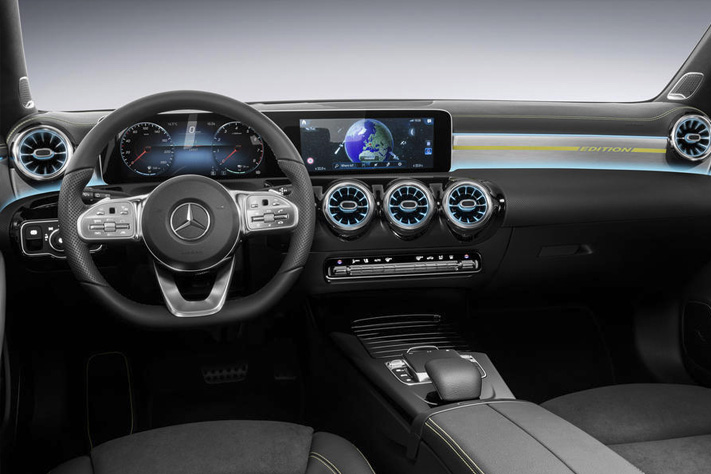
Mercedes-Benz A-Class
Once it used to be the S-Class limousine introducing itself as the flagship of the marque. In just over a months’ time, the smallest hatchback in the Merc line-up will assume much of the tech of the flagship Benz with similar autonomous tech and an interior that breaks the mould, pours petrol on it and then starts flicking matches.
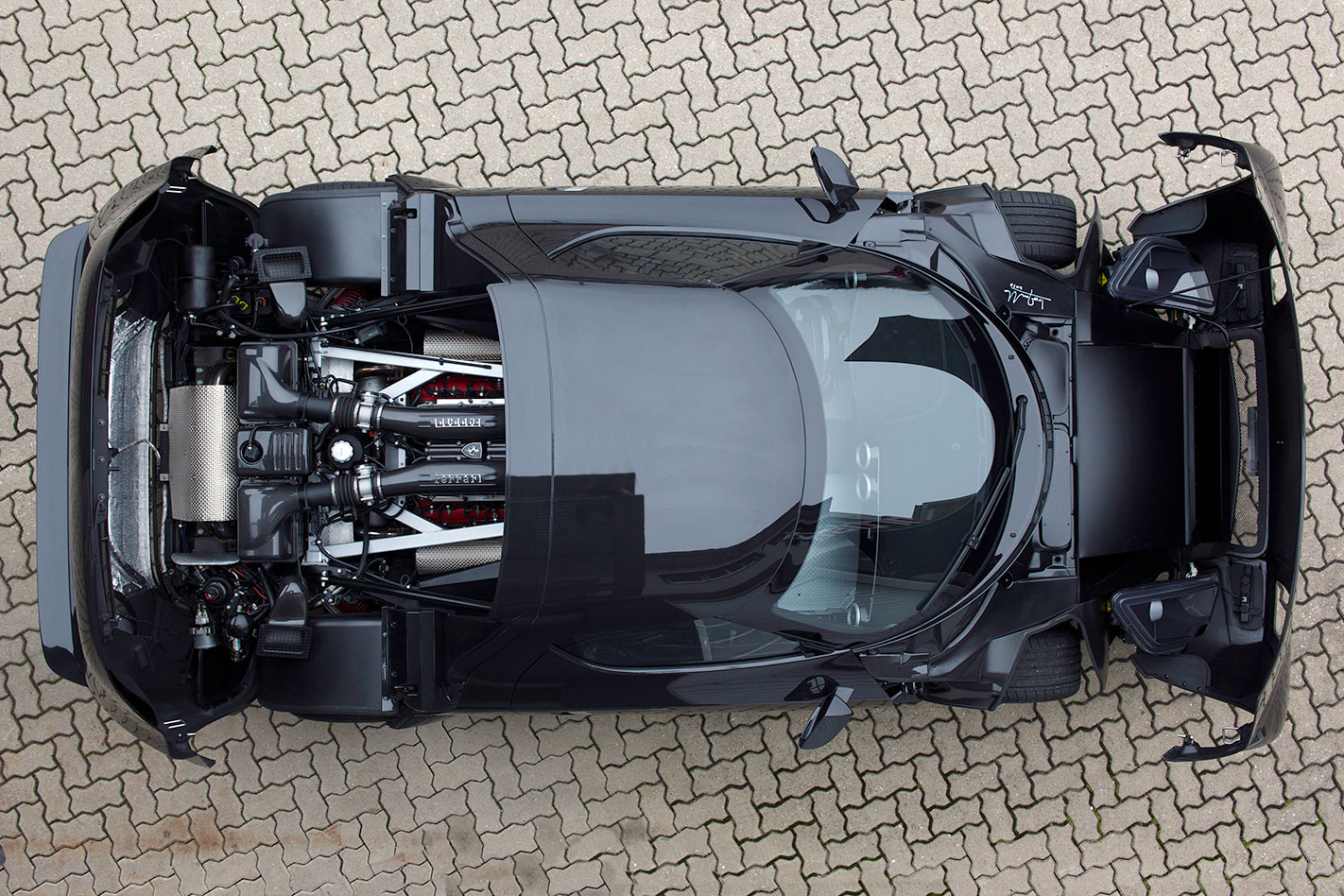
Almost a decade ago, a German billionaire hatched plans to rebirth the form of the 1970s-era Lancia Stratos in a modern-day tribute. At Geneva, we’ll see the production version of his dream realised.
The New Stratos, as it will be called, will be limited to a run of only 25 units, and costing anywhere from $600K each – the pricetag is yet to offically be set. But buyers will be able to choose from one of three forms; a track-focussed GT, a road-going version, and a Safari in the ilk of the World Rally Championship fighter that was the foundation of the Stratos’s development.
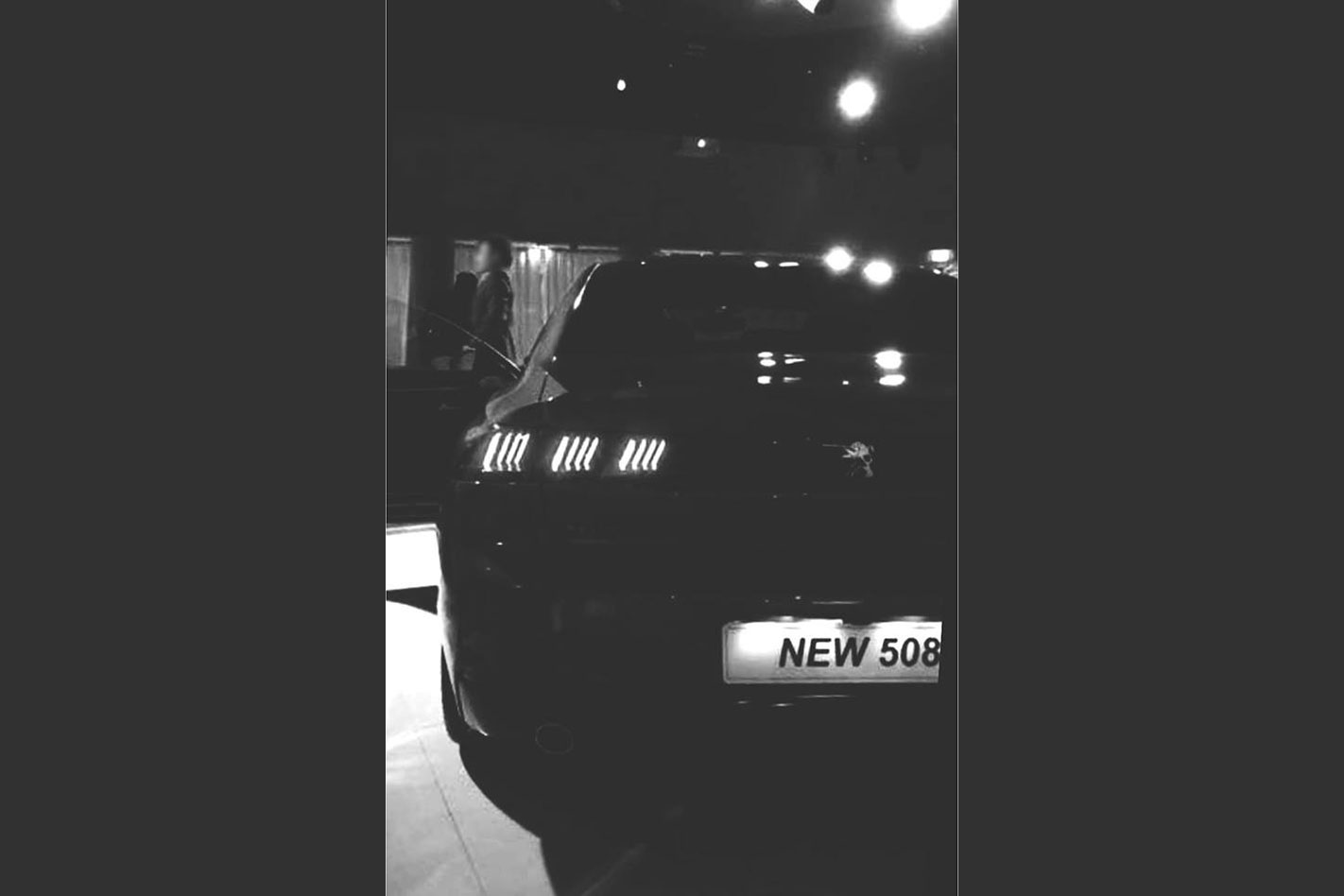
Peugeot 508
Is this the car that’s likely to morph into the next-generation Holden Commodore? Peugeot’s mid-size sedan and wagon range raids the concept car cupboard for sharper, four-door coupe styling – no word yet on the wagon – as the brand’s owner, Groupe PSA, consolidates its model line-up that includes the Opel Insignia, the foundation for the 2018 Holden Commodore.
Range Rover SV Coupe
Anniversaries are important markers in the life of anything. What better way to celebrate Land Rover’s 70th birthday, than a flagship limited-edition, two-door fastback fettled by the pipe-smoking men and women in overalls that make up its Special Vehicle Operations division.
Rimac Concept Two
Rimac wasn’t happy with the Concept One two-seat electric hypercar, so it’s building another, better one. Guess what they’re calling it? Just don’t put Richard Hammond behind the wheel, please.
Subaru Viviz Concept Tourer
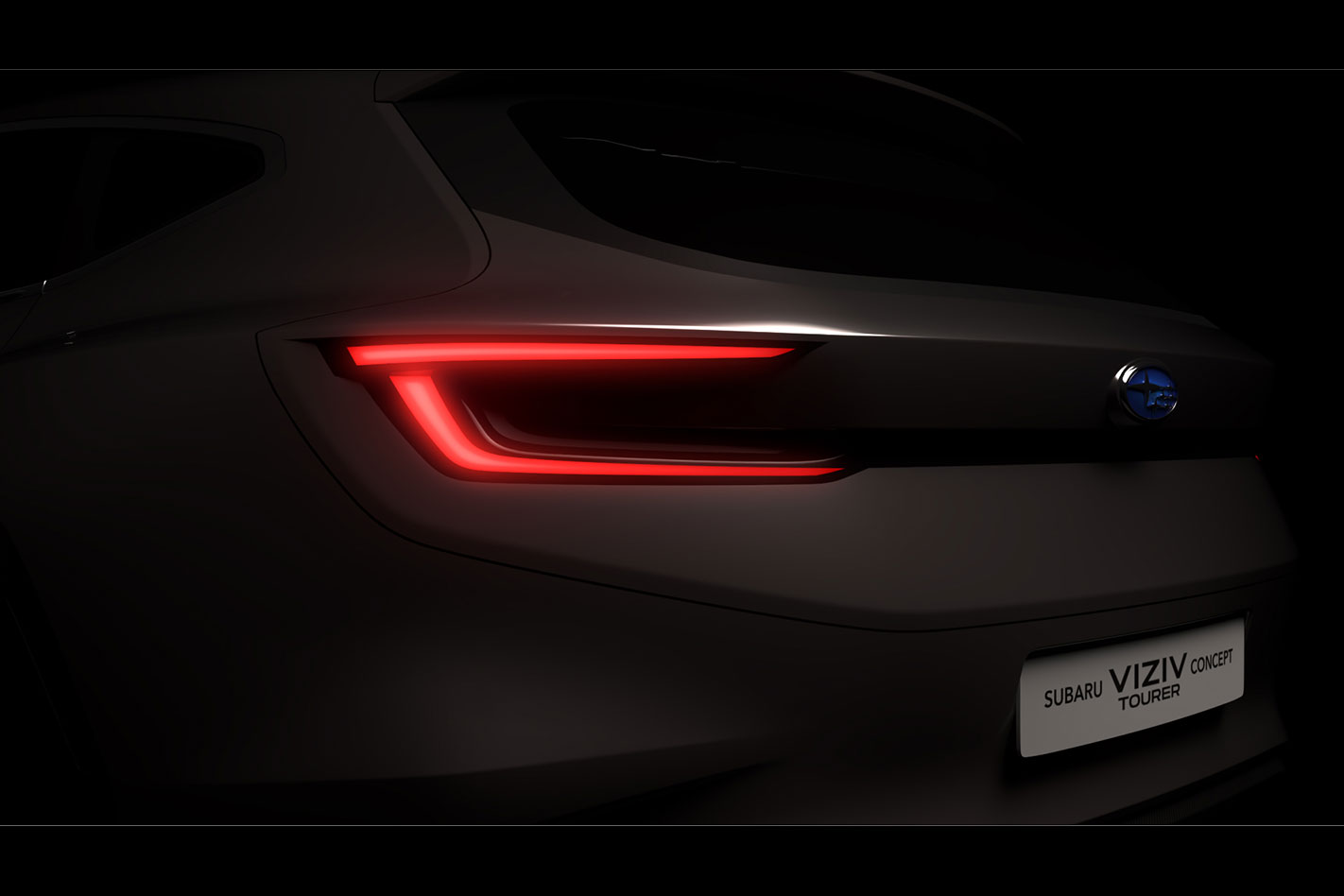
We’re punting that this concept car heralds a next-generation Subaru Levorg wagon rather than a replacement for the Forester. The flush-look rear indicates Subaru has worked hard to covert the wagon’s external dimensions into as much space as possible.
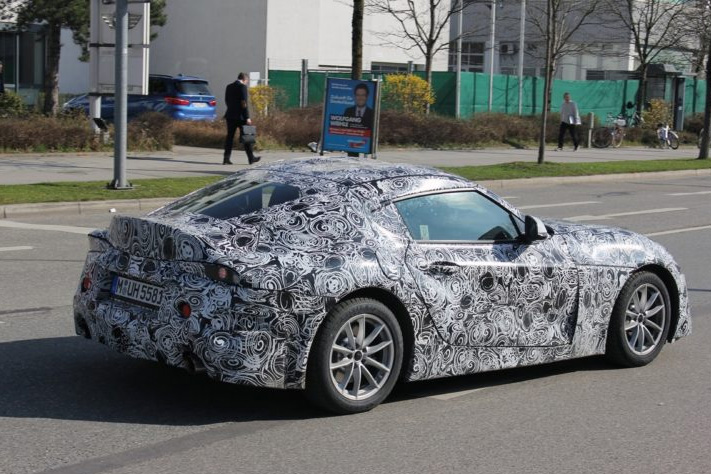
Toyota Supra
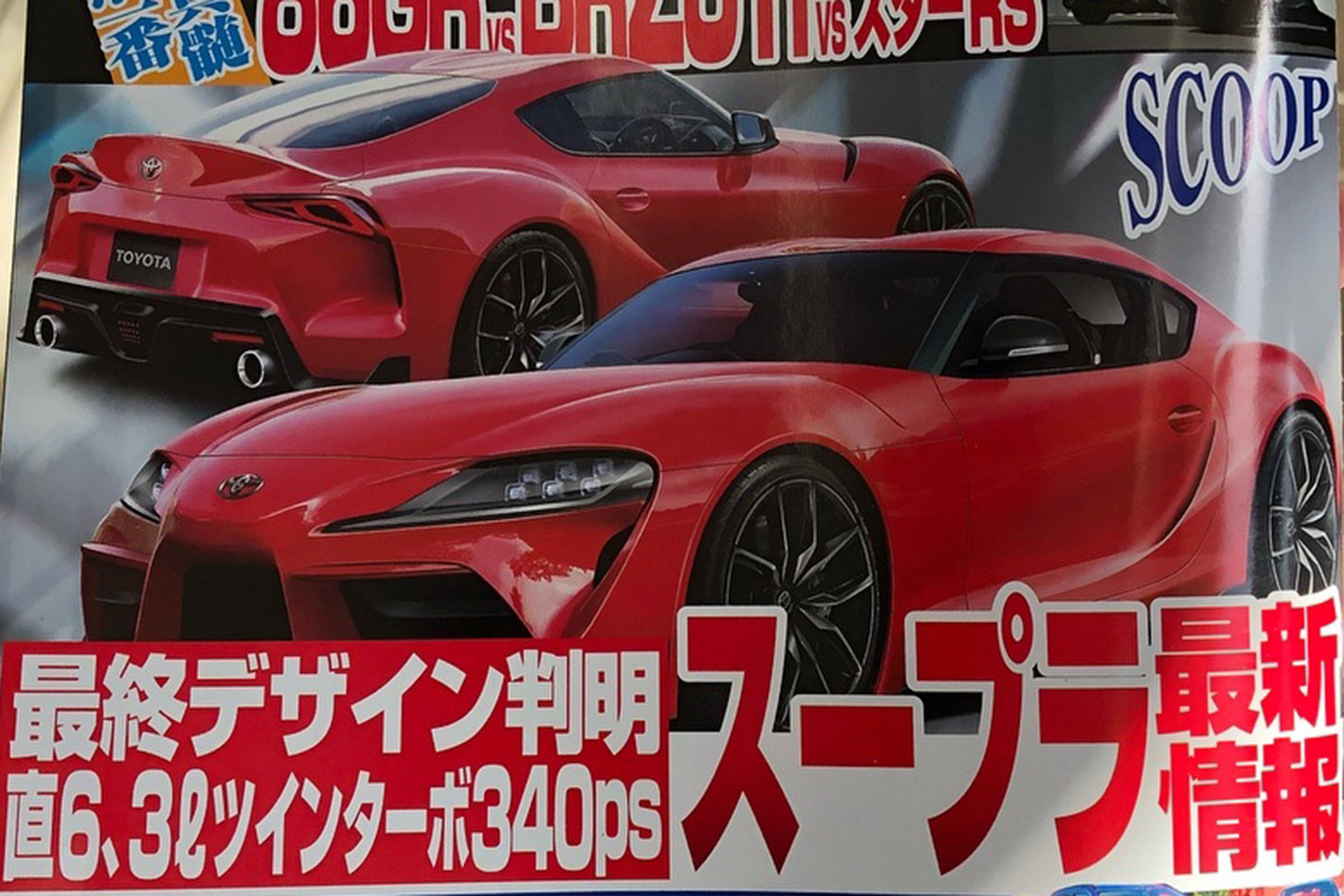
Toyota has confirmed the return of “its most iconic sportscar”, and there’s really only one in the works at the moment, the Supra. The Japanese car maker attached a dark image of a big-winged track car alongside the release, but we’ve noticed elements that match spy images of what is believed to be the fifth-generation Supra that’s being co-developed with German luxury brand BMW. Watch this space.
Volkswagen ID sedan
Volkswagen used to build a flagship sedan called the Phaeton, but made the mistake of fitting some of the versions it sold with a resource-sapping W12 engine. It plans to make amends with a battery-fed sedan that will wear the ID badge now closely associated with its electric ‘don’t-mention-diesel’ vehicle push.
Volvo V60
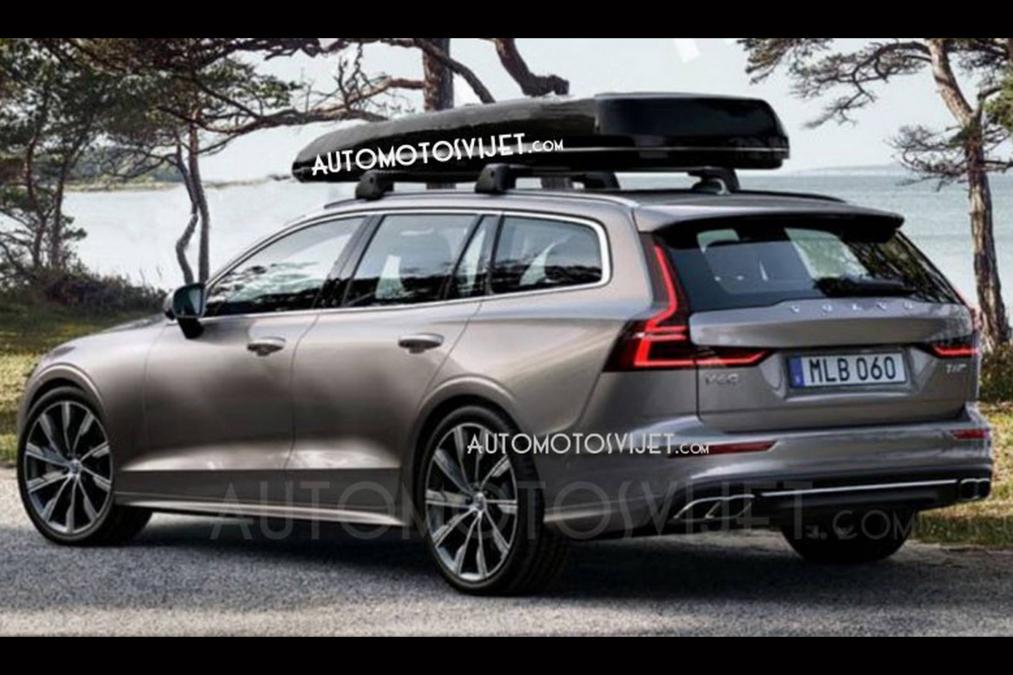
The S60 sedan needs a sleek, swept liftback wagon in its clean, minimalist life to feel complete. Sweden, using Chinese money and an all-new platform that is as happy sucking down electrons as it is fossil fuels, plans to oblige.
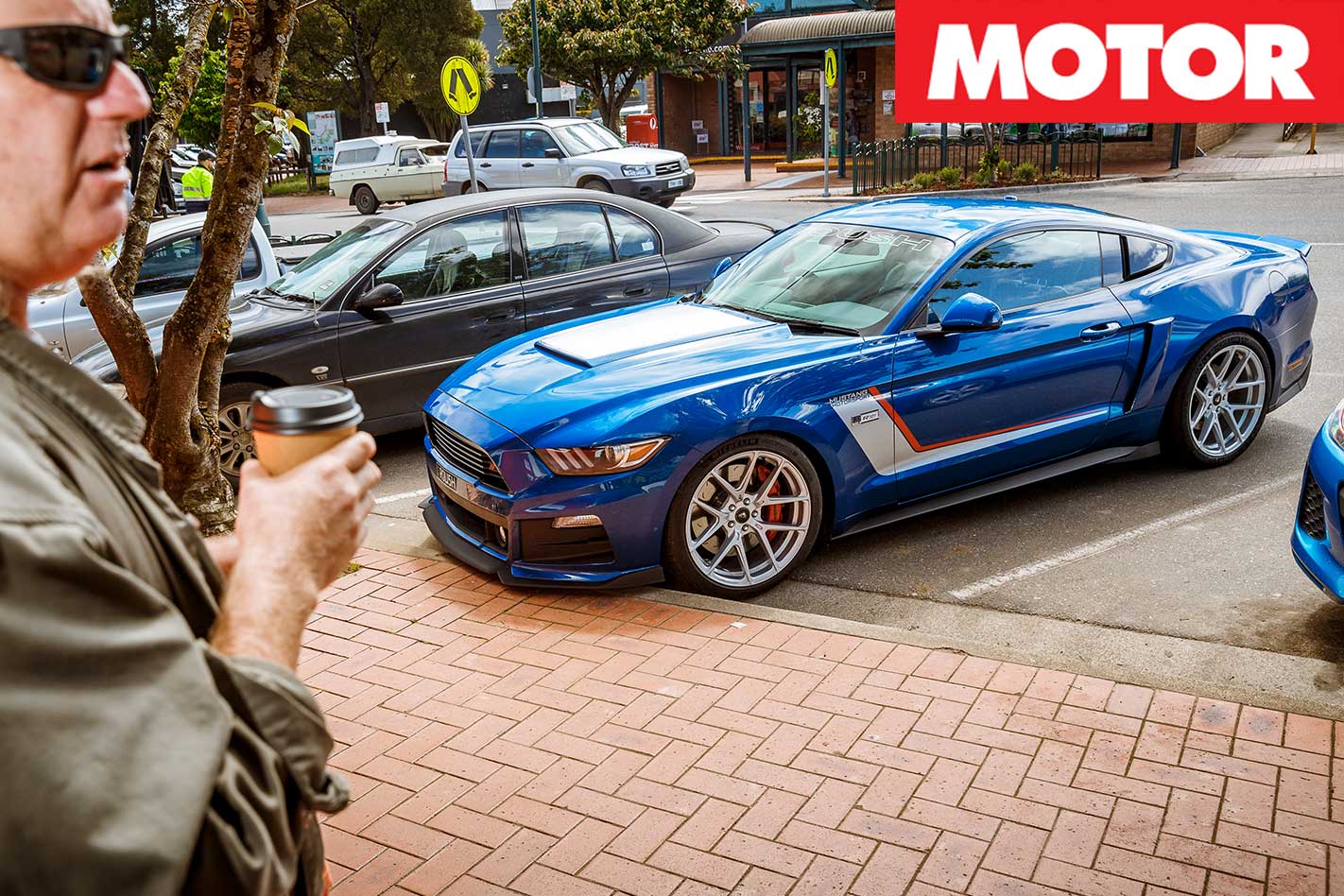
If, as the rest of car-loving Australia has been, you’ve been following the Mustang phenomenon, you’ll know that Motor devoted this year’s annual Hot Tuner hoot-nanny to this very vehicle.
You will also, therefore, be aware that this car, the Mustang Motorsport R727 took home the silverware when the sums were added up, the tanks refilled for the drive home and the busted bits and pieces from some of the other contenders were shovelled up and binned. The R727 was not only right at the top of the Hot Tuner results for acceleration and lap times, it was crushingly effective in the way it got there.
A low 12-second quarter speaks volumes, but so did the racetrack-friendly tyres and the competition-spec pads on board at the time. And, of course, that’s how Hot Tuner is traditionally won: you fit track-smart gear and hand out a big can of ass-whoop to anybody else who shows up.
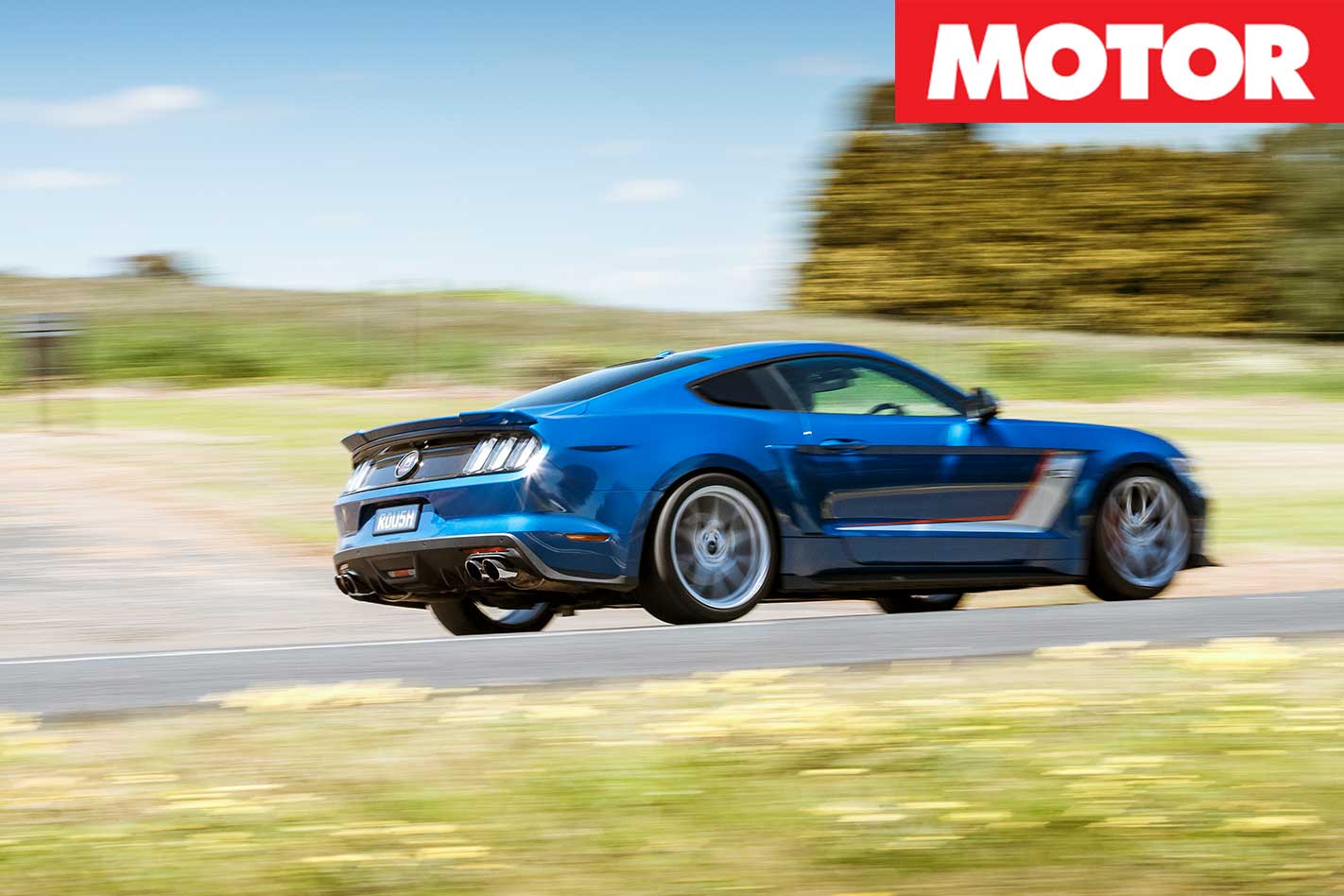
Or, to put it another way, is the racy Mustang Motorsport R727 a viable proposition in the world of speed humps, speed limits and snoozers in SUVs? Or is it a real-world turkey that wants to divide its time between killing you and annoying others?
In the interests of such pure scientific endeavour, we managed to borrow the very same R727 that ran at Hot Tuner and took it for an extended drive, both through the ’burbs and into the bits of Australia where cows outnumber Mustangs. So, the first thing to check is what bits of the R727 that made it such a Winton weapon have been changed.
The front hoops have been changed to a more road-friendly compound, but still have ‘Michelin’ moulded into the sidewall, and still measure a monster 275/35 20 (305/30s out back) so they continue to utterly fill the guards.
Also, you no longer need heat in the front tyres to get the car to bite and, had it been raining, we probably would have been even happier (certainly more relieved) with this particular change. The only catch is some serious road noise on coarse-chip surfaces. Although it has to be said that the Michelins are hardly on their own there.
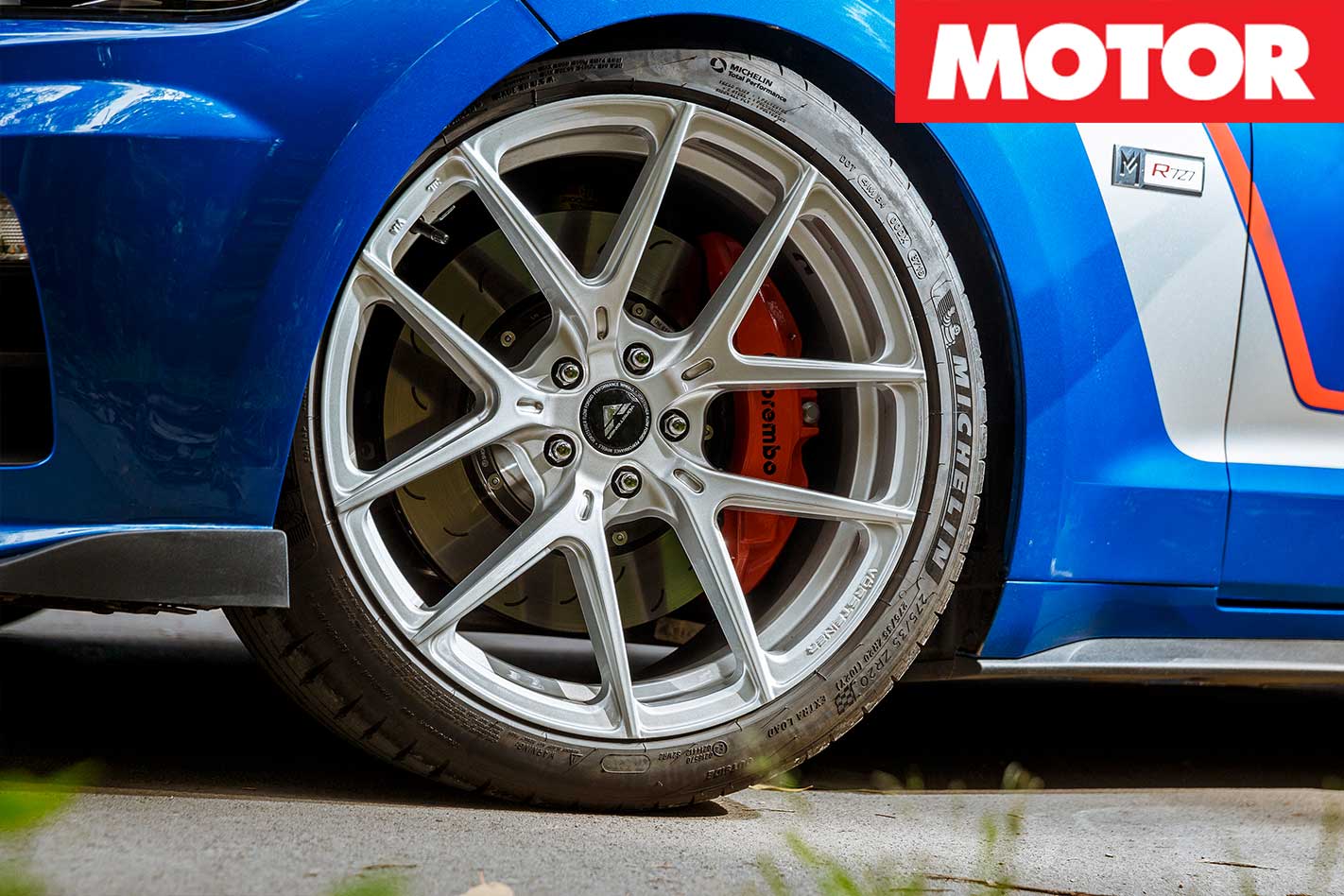
While you can’t fault the race-compound pads for hauling you down during multiple laps of Winton, they did feel and sound kind of grainy and, if you’re going hard enough on the road to require the stop-after-stop performance of the race items, you yourself probably want locking up. So no problems with that change.
Secondly, since the need for ultimate corner speed is replaced, in any decent road car, by a requirement for a combination of grip, stability, feel and feedback, the car got a new set of front-end alignment settings. Combine the new alignment with the different front tyre and it should transform a car that, at Winton, didn’t want to tell you a whole lot about what it was up to. A bit like a sulking teenager.
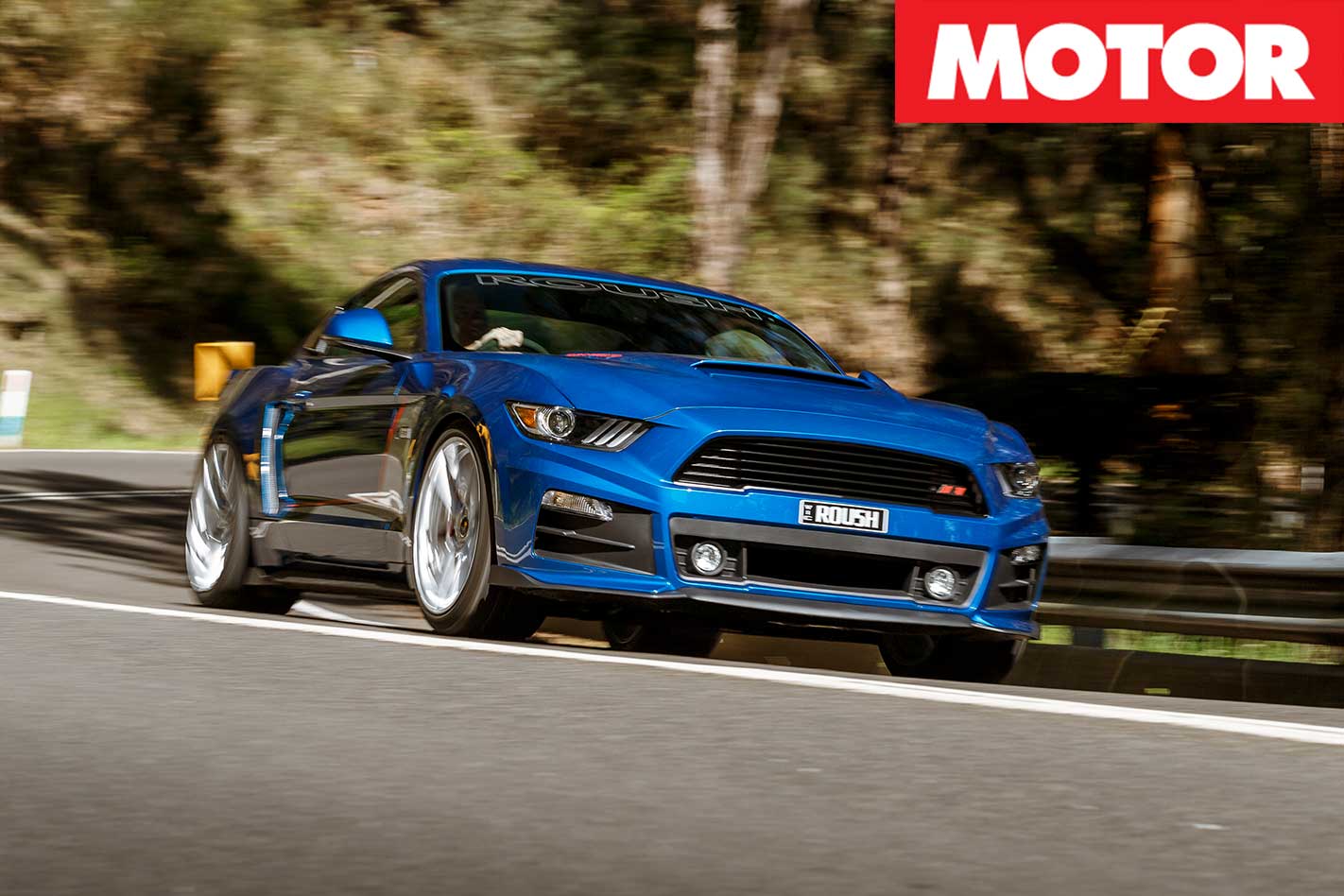
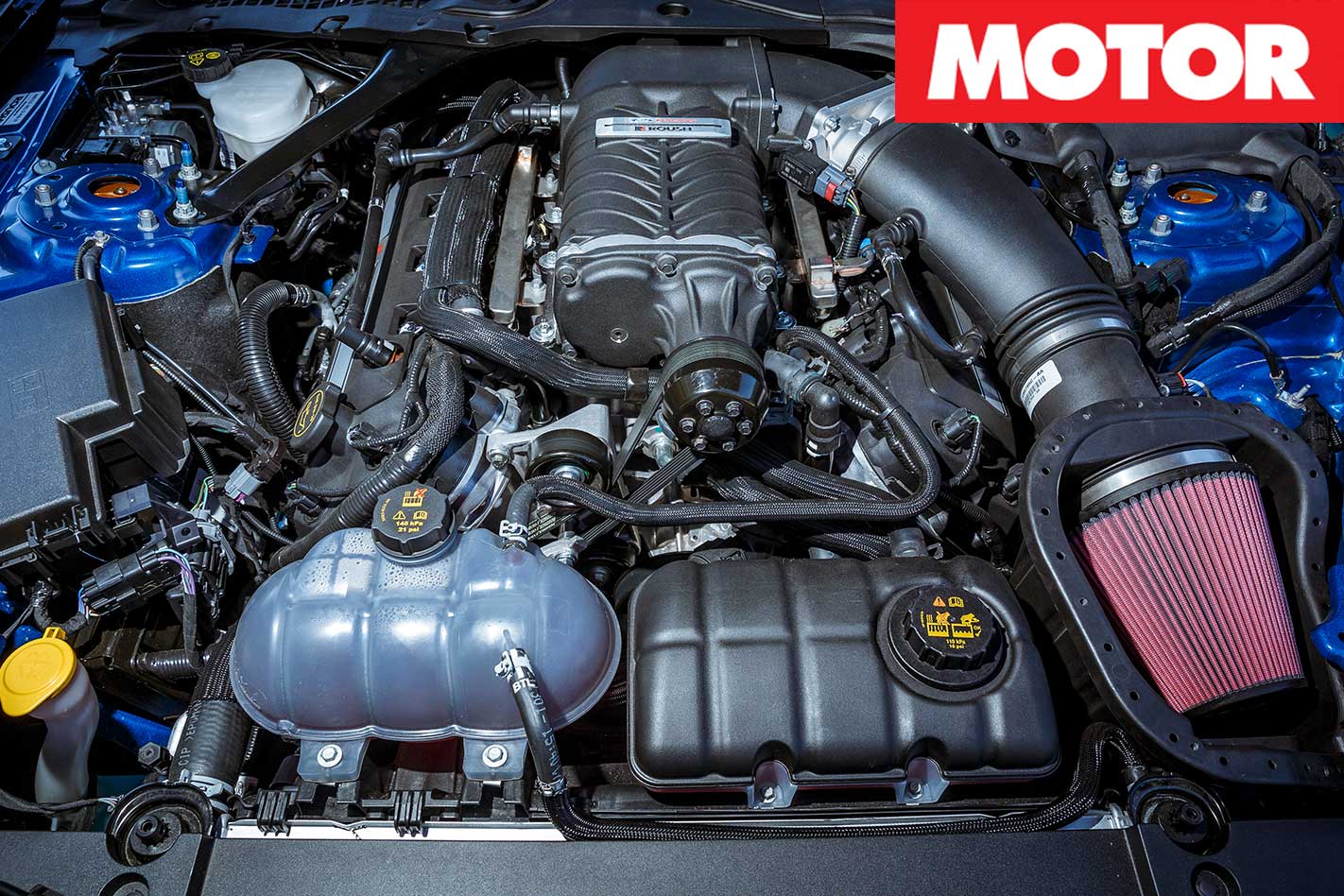
The mechanical basis is Mustang Motorsport’s Level 4 package which gets you a total of 543kW, courtesy of a Roush supercharger and an exhaust system also from the House of Roush. Local suspension geniuses Shockworks supply a set of coil-overs which are adjustable and, in this case, have been backed off to their comfort setting in the interests of making for a proper road car. Yes, it’s another change, but it’s easily reversible at the track, so we’ll let that one slide.
If you don’t want the frills and bells, then your spend to this point has been a neat $24,250 provided you stick with the stock brakes and tyres, but the R727 is a bit more special than that and incorporates a retrimmed interior, the 20 x 10-inch and 11-inch (rear) alloys and even the steering wheel from the Stateside GT350. Put it all together and you’re looking at around $56,000 over and above your Mustang GT auto. And we’ve gotta say, that interior does make things a bit more comfy for a longer trip.
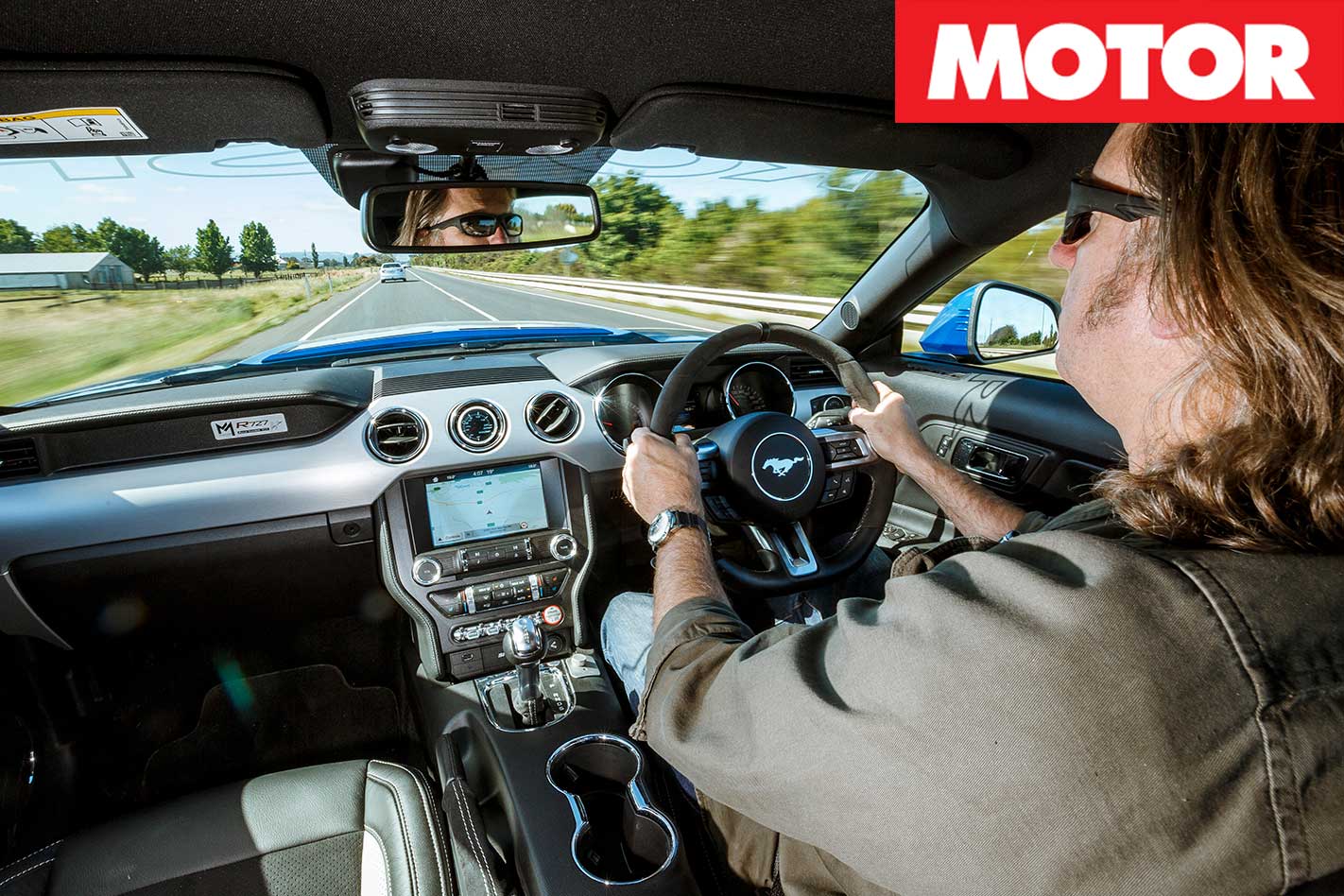
The engine is the gift that truly keeps on giving. The active Roush exhaust means you can sneak away first thing in the morning without returning home to find your neighbour’s garbage on your lawn. Or you can open the valve and just soak up what is a very sophisticated racket. You can even open and close the valve remotely via a phone app – apparently. Although why you’d want to fiddle with the zorst when you’re not around to hear it is the big question for me.
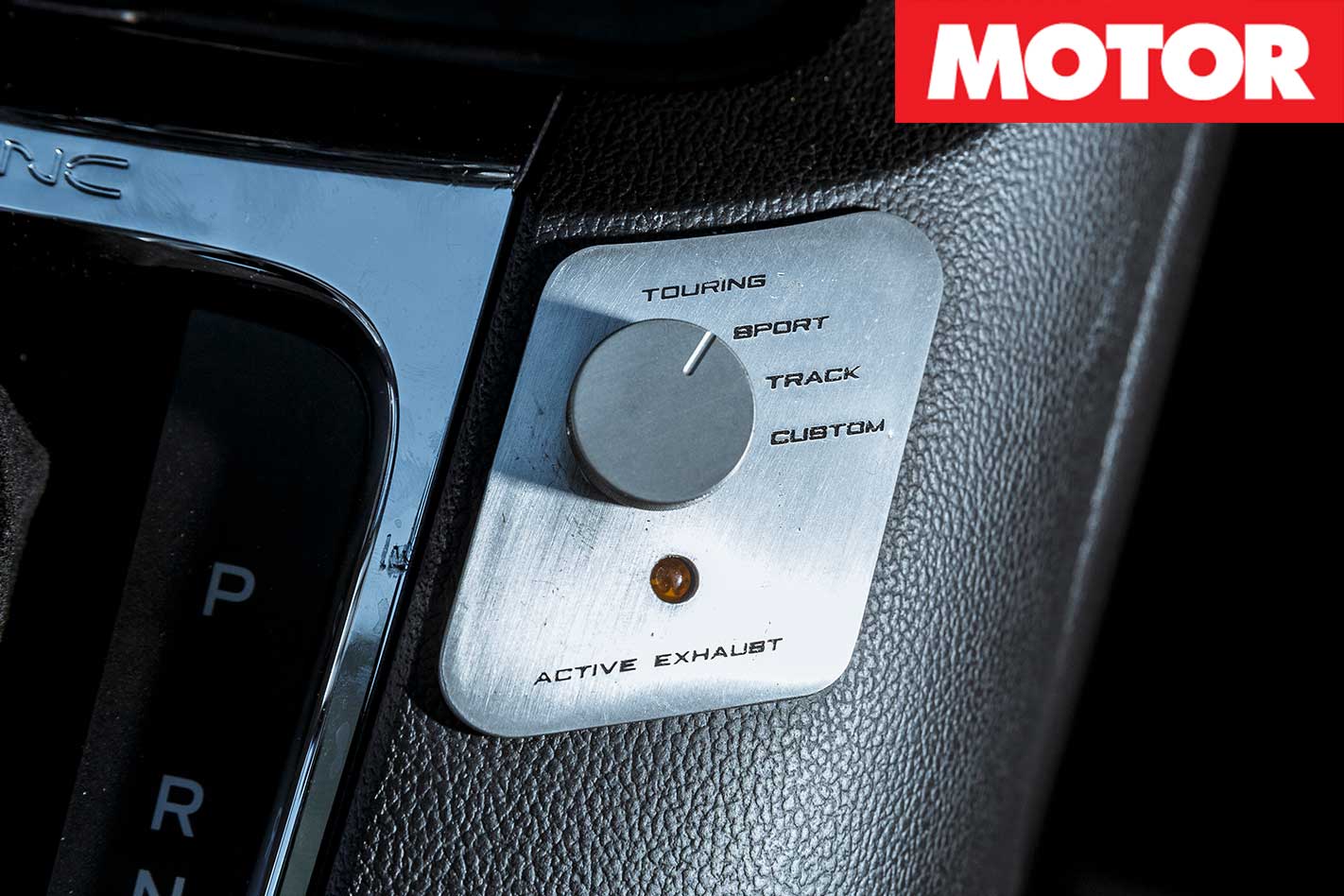
The Roush retune of the trans has made it a bit too savage in Sport or Track, particularly when you step off a light pedal application at a low speed, at which point the throttle seems to snap shut too abruptly. Switching to Normal fixes it, though, so no harm, no foul. And all the while, the engine pours on the grunt in a way that agrees with the concept of progression.
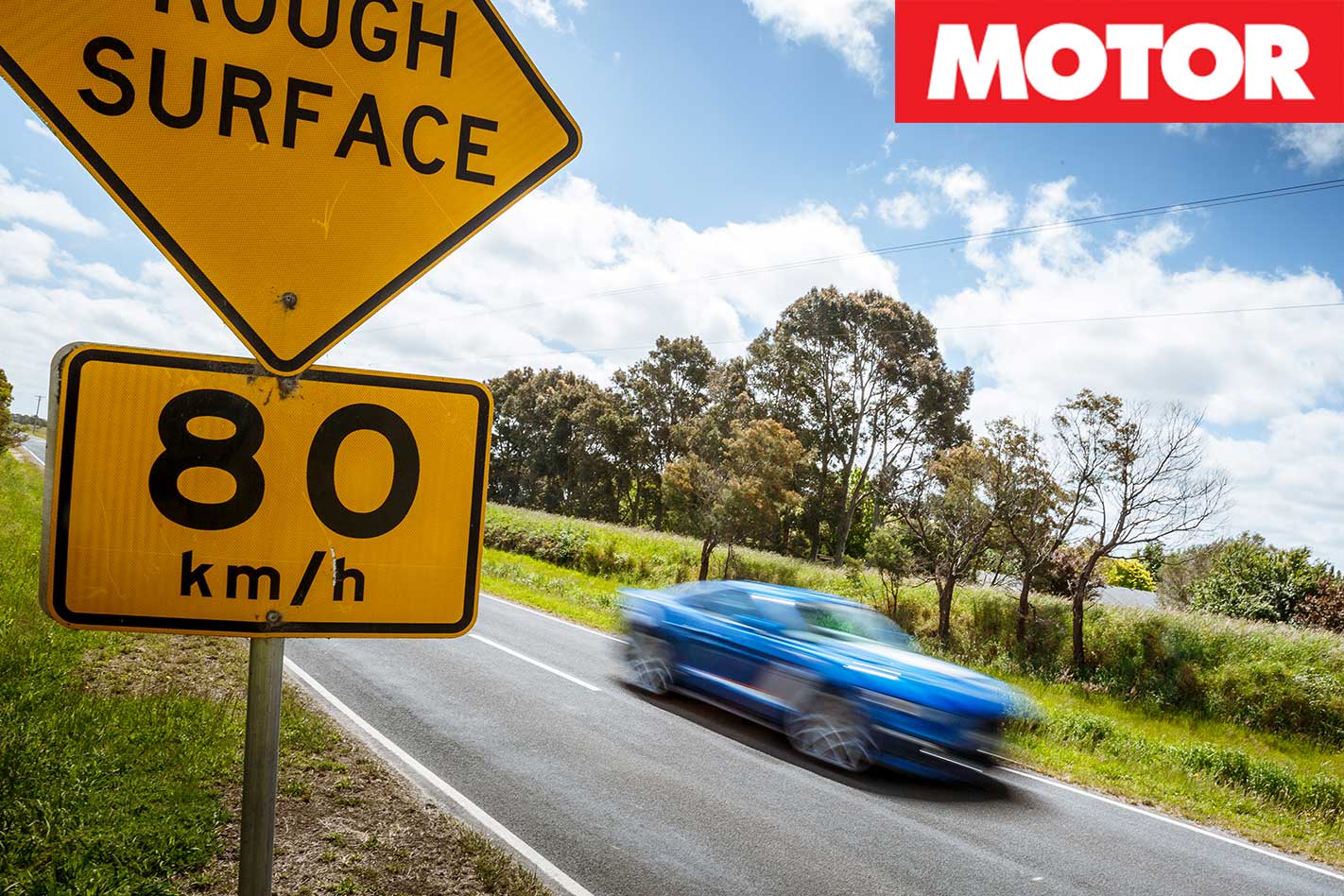
With the coil-overs in Comfort, the Mustang rides remarkably well. In fact, we’d say it’s even comfier than a stocker, with less pitch, more control and less roll with just a bit more head-toss reaction in the cabin as a result of the improved lateral grip. And the new wheel alignment settings have eradicated the feeling at Winton that you were missing the mid-corner news bulletins. You still get that trademark Mustang feeling of having an awful lot of bonnet in front of you, but with the fresh angles, you now have a much better idea of what’s happening beyond the bonnet scoop.
Retaining factory levels of civility and driveability is all the rage right now, and rightly so. If you can build performance without trading off liveability, then that performance comes at a reduced cost. Beyond a slight stumble now and then when flicking between Reverse and Drive (a function of the new Roush engine calibration) I really couldn’t fault the thing provided I remembered the Normal driving mode thing. And when you consider the potential within, that’s really saying something.
Could I live with it? Hell yeah!
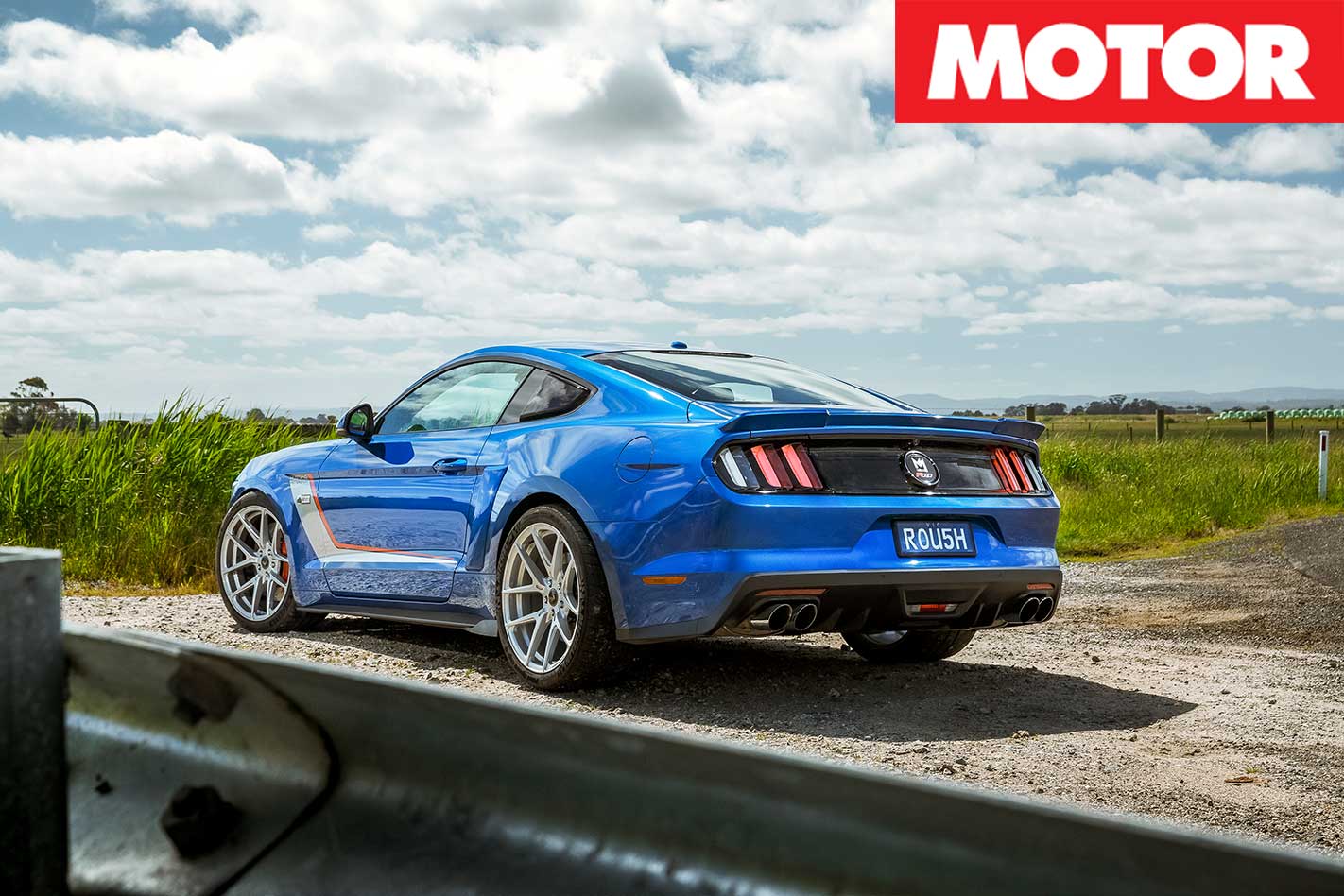
Pros: Ease of use as a daily; epic grunt; handling Cons: Tyre noise; body kit for everyday use; auto
Star Rating: 4 out of 5 stars
Folklore reads that convertibles aren’t good at being sports cars, but in many instances that simply isn’t true.
Unfortunately, however, perceptions can affect resale even with top driver’s cars. On the upside, it means that those in the know can seize an opportunity.
Forget the stereotypes with these wind-in-your-hair two- and four-seaters, because seeing these options as somehow lesser to coupe (or hatchback) counterparts is a load of hot air. Instead, these five will delight and excite all of the senses all for under $40,000…
1. Mazda MX-5 – under $12,000
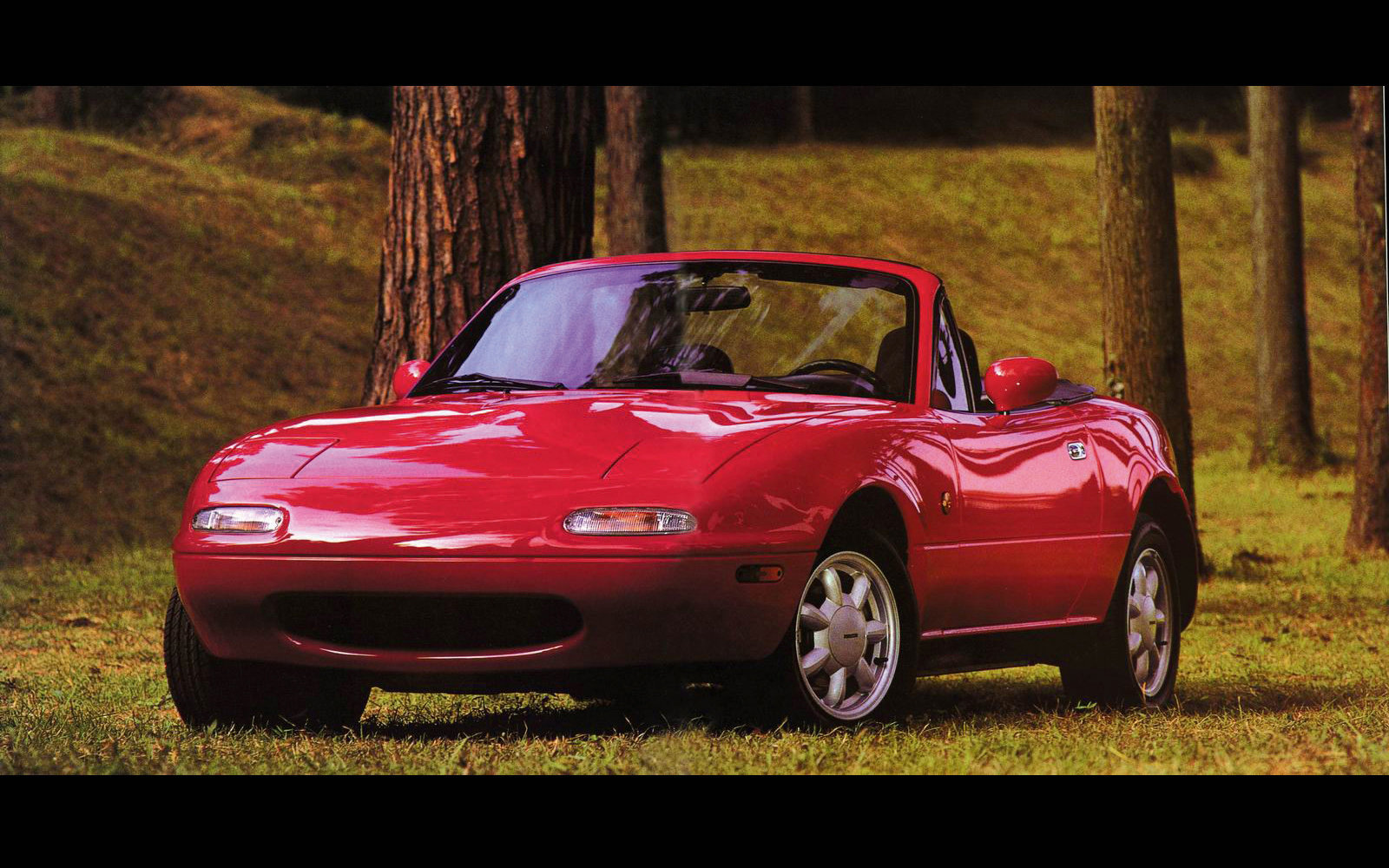
Coming from an owner of a 1989 Peugeot 205 GTI whose housemate owned – until recently – a 1989 NA MX-5 with identical kilometres, you can safely say that the Japanese roadster is screwed together much better than the French tin-top.
Prices have bottomed out, parts are cheap and issues rare. Choose a 1989-1996 NA 1.6-litre with 85kW and ‘daisy’ alloy wheels for $5000 with 150-200,000km (although the odometer really doesn’t matter here), or a 1998-2004 NB 1.8-litre with 106kW for a few thousand dollars more.
Or, splurge with the rare 2004 NB SE 1.8-litre turbo and enjoy 121kW/206Nm in a 1093kg rear-driver with a delightful six-speed manual transmission, for around $12K.
2. BMW Z4 3.0 – $12,000-$17,000
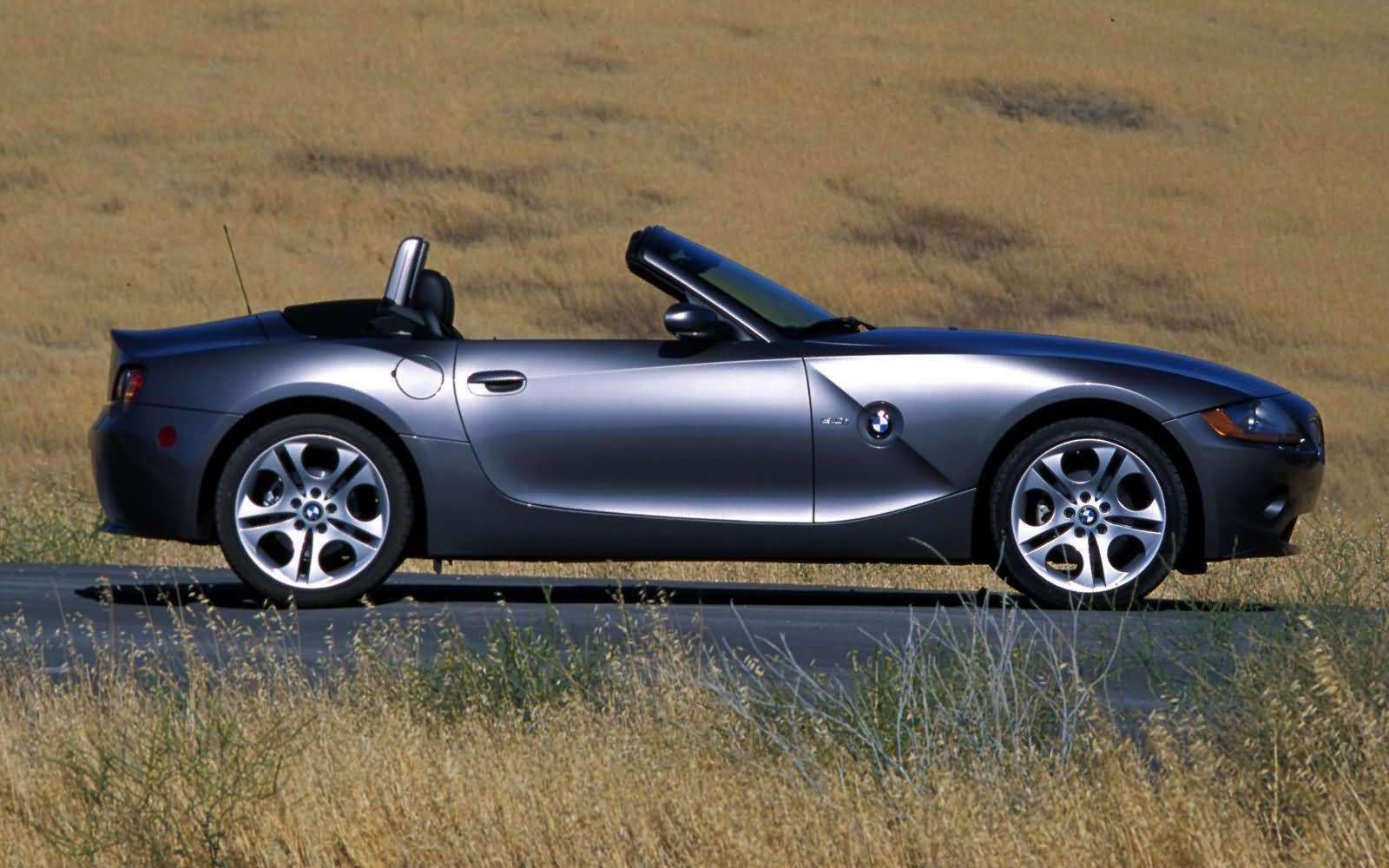
Whether you think the flame-surfaced styling was hot or should simply be burnt, there’s no arguing with proportions that plonk the driver’s bum on the back axle and push the front wheels so far ahead of the dashboard line.
Let’s not forget this was a near-$100,000 roadster 15 years ago, and a creamy 170kW/300Nm 3.0-litre straight six-cylinder is good enough to push the 1365kg two-seater from standstill to 100km/h in 5.9 seconds.
Stirred via a six-speed manual, the only dud notes concern the (then-new) electro-mechanical steering and lack of a limited-slip differential. Factor in about $2500 for the latter.
3. BMW 135i – $17,000-$25,000
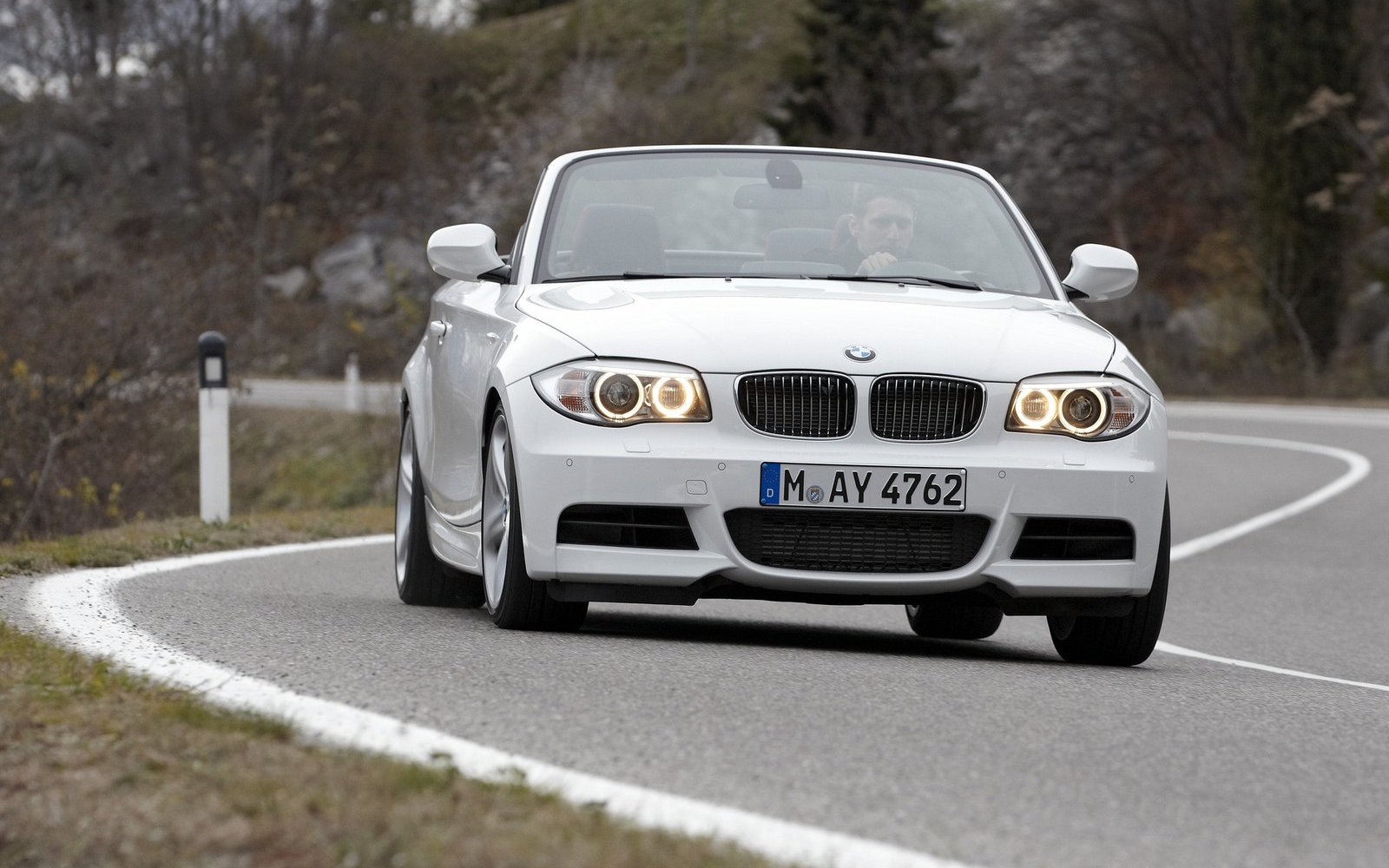
Okay, we’re doubling down on our Munich maulers here, but a decade-old 135i coupe will still set you back around $5000 more than its convertible counterpart, which still boasted excellent body rigidity.
This four-seater has aged well, and the 225kW/400Nm 3.0-litre twin-turbo six-cylinder is strong enough to deliver a 5.6-second 0-100km/h.
Being a Bimmer, there are plenty of six-speed manual examples around as well, all of which for under $20,000 will beat the equivalent Z4 or first-generation – and a decade-older again – Porsche Boxster to triple-digit speed. Steering, damping and dynamics were all good, tin-top or fabric.
4. Mini Cabrio John Cooper Works – $17,000-$25,000
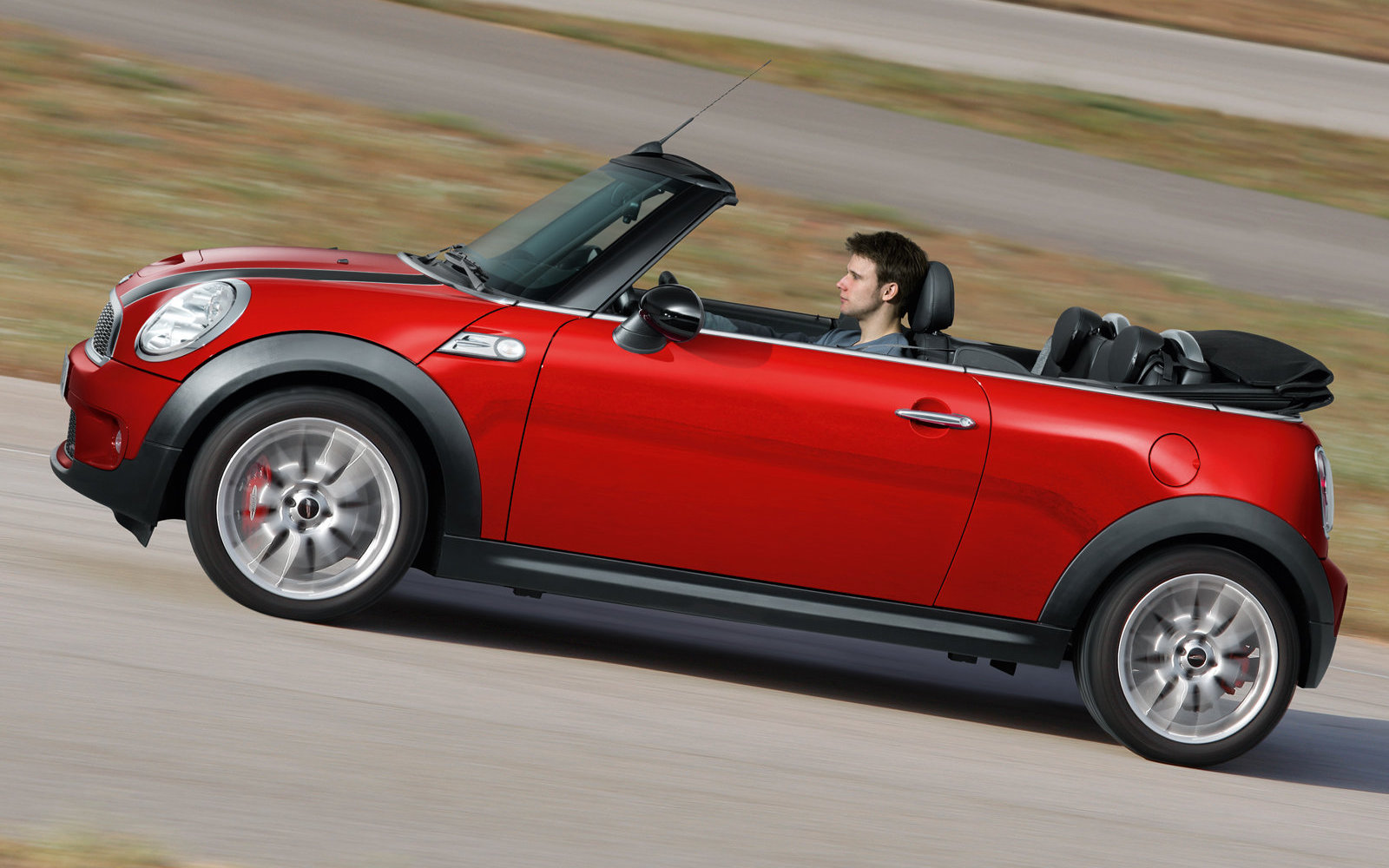
This joyous 155kW/260Nm 1.6-litre turbo is matched with one of the fartiest exhaust notes and dartiest steering around, making the Mini feel more like a quick slot-car than a dainty play-thing.
There’s no great depth to its ride comfort or cabin materials, but who cares when this front-driver stands on its nose at every corner, cocks a wheel and blurts from standstill to 100km/h in 6.9 seconds?
For under $20,000 we’d rather a circa-2010 one of these than a new Toyota Yaris.
5. Porsche Boxster 987 – $25,000-plus
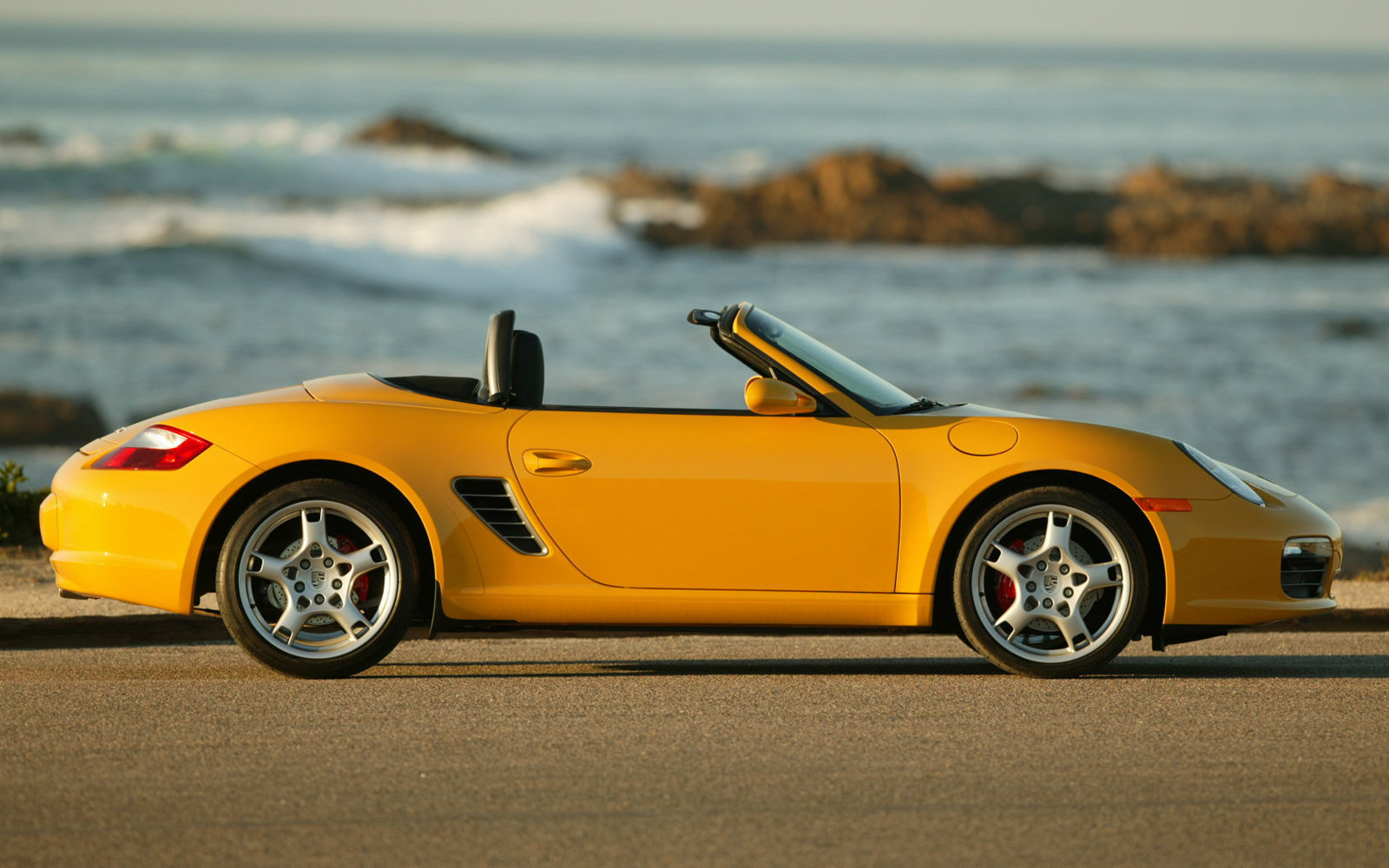
Circa-2006 examples of the Boxster are now trending below $30,000 – they’ve certainly held up better than a Z4, with the 180kW/273Nm 2.7-litre flat six-cylinder even claiming a slower 6.1-second 0-100km/h sprint.
But this Porsche has never been about numbers, but rather mid-engined harmony and sweetness. We’d try to stretch to $35,000 for a Boxster S and its 206kW/320Nm 3.2-litre flat six and 5.5sec 0-100km/h, though.
Note that it was good enough in its day to rival an E92 BMW M3 coupe – all of which remain above $40,000 – and this is a Stuttgart-born bargain.
