
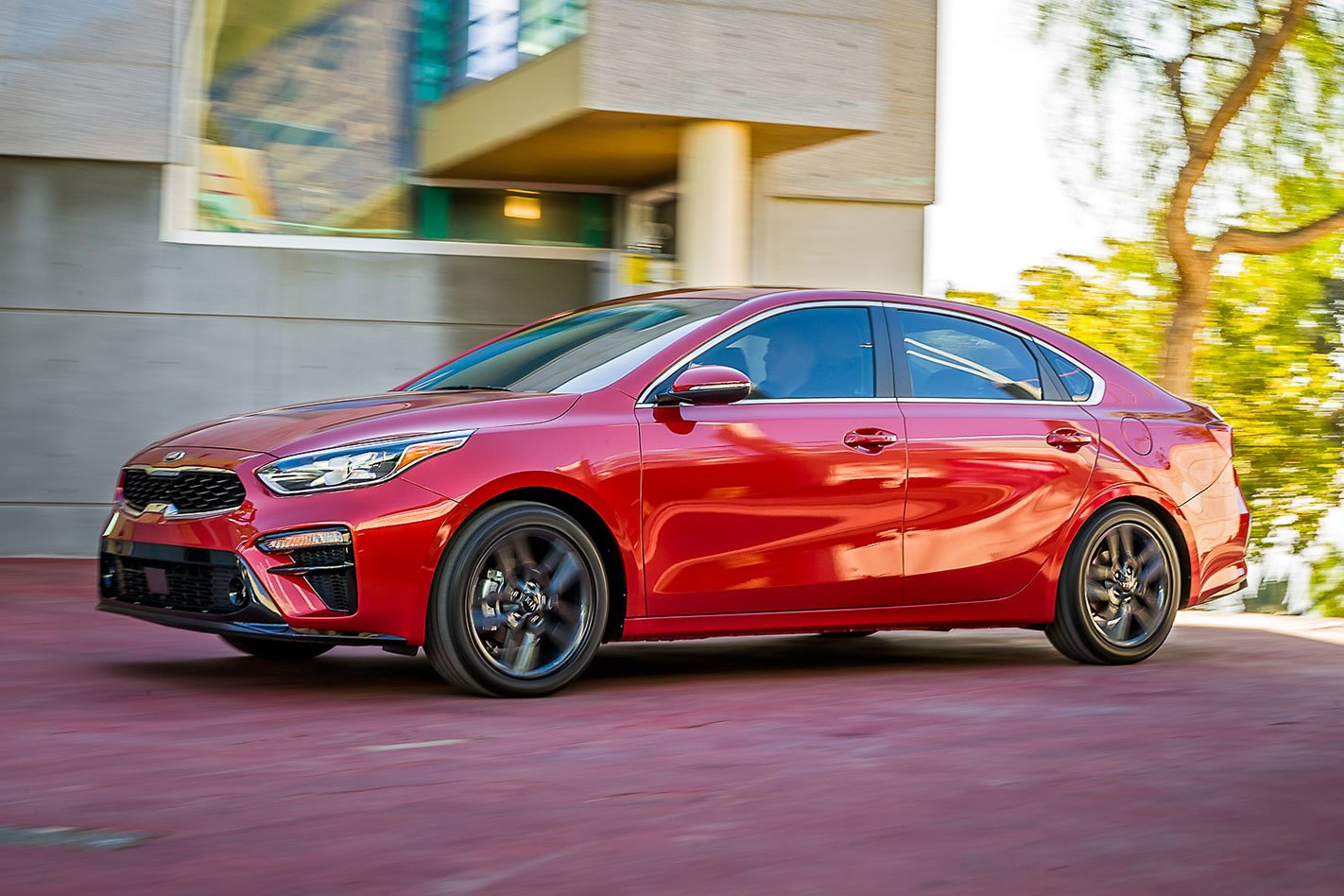
KIA has unveiled its latest-gen small four-door at the Detroit Motor Show, with the new Forte making its debut at North America’s biggest motor show ahead of its mid-2018 local arrival as the Cerato sedan.
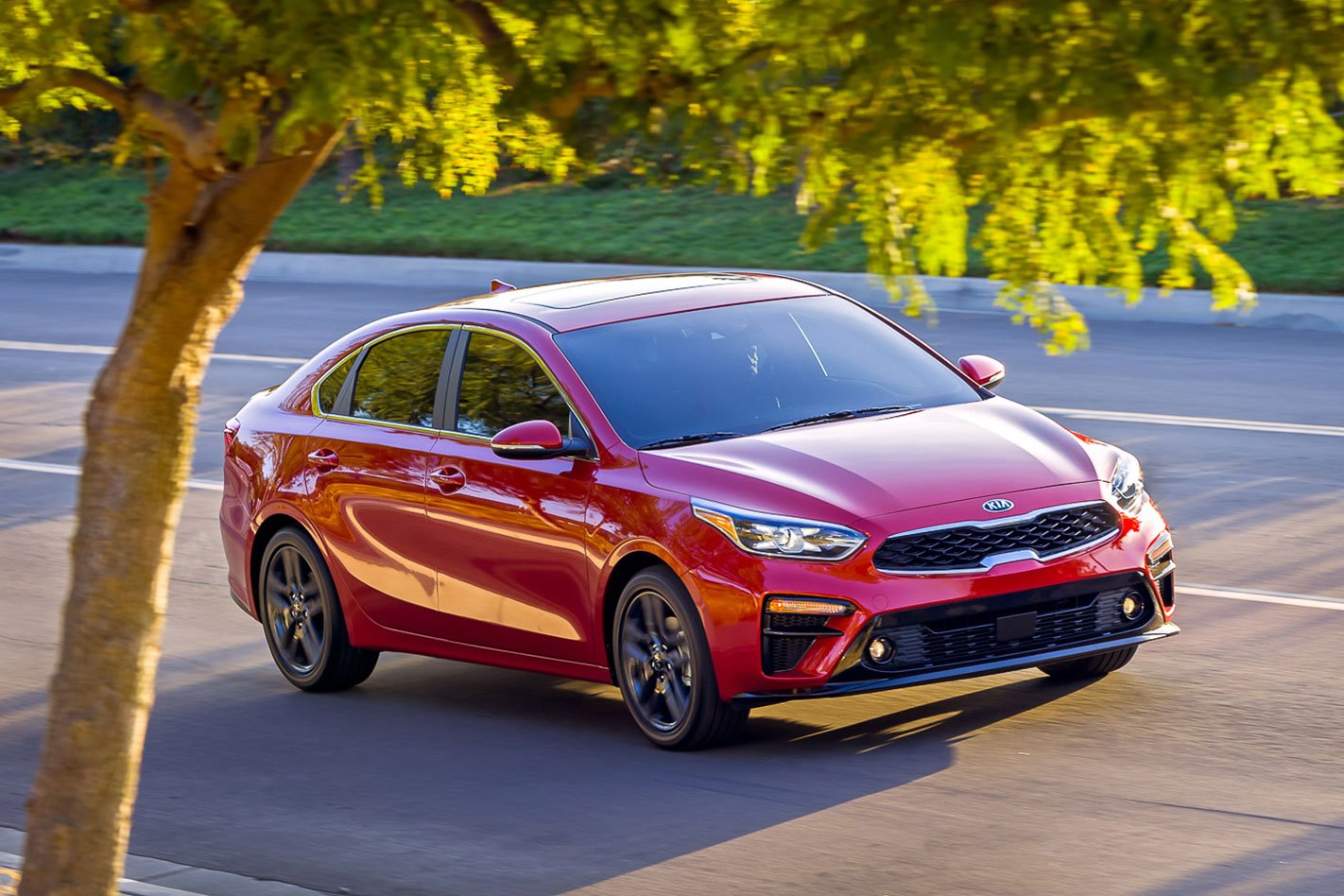
Stretched 81.3mm longer and 17.8mm wider to occupy a 4640mm-by-1798mm footprint, the fresh-look Cerato sedan offers more cabin space than before as well as a bigger ‘n’ bolder visual presence. Design cues cribbed from the Stinger are evidenced in the front bumper, while the rear end’s stumpy deck lid appears almost Audi A3-ish and its tail-lamp LED graphics look like heavily inspired by Jaguar.
How does the hatch look? No idea yet. In the sedan-friendly US, Kia doesn’t bother with a Forte hatch.
An eight-inch colour infotainment touchscreen sits in a tombstone housing atop the centre stack, while a wireless charging pad will be available in some grades. For the US-market Forte, more advanced safety tech such as lane-keep assist, AEB and active cruise control make their way onto the spec list, as does smartphone mirroring in the form of Apple CarPlay and Android Auto.
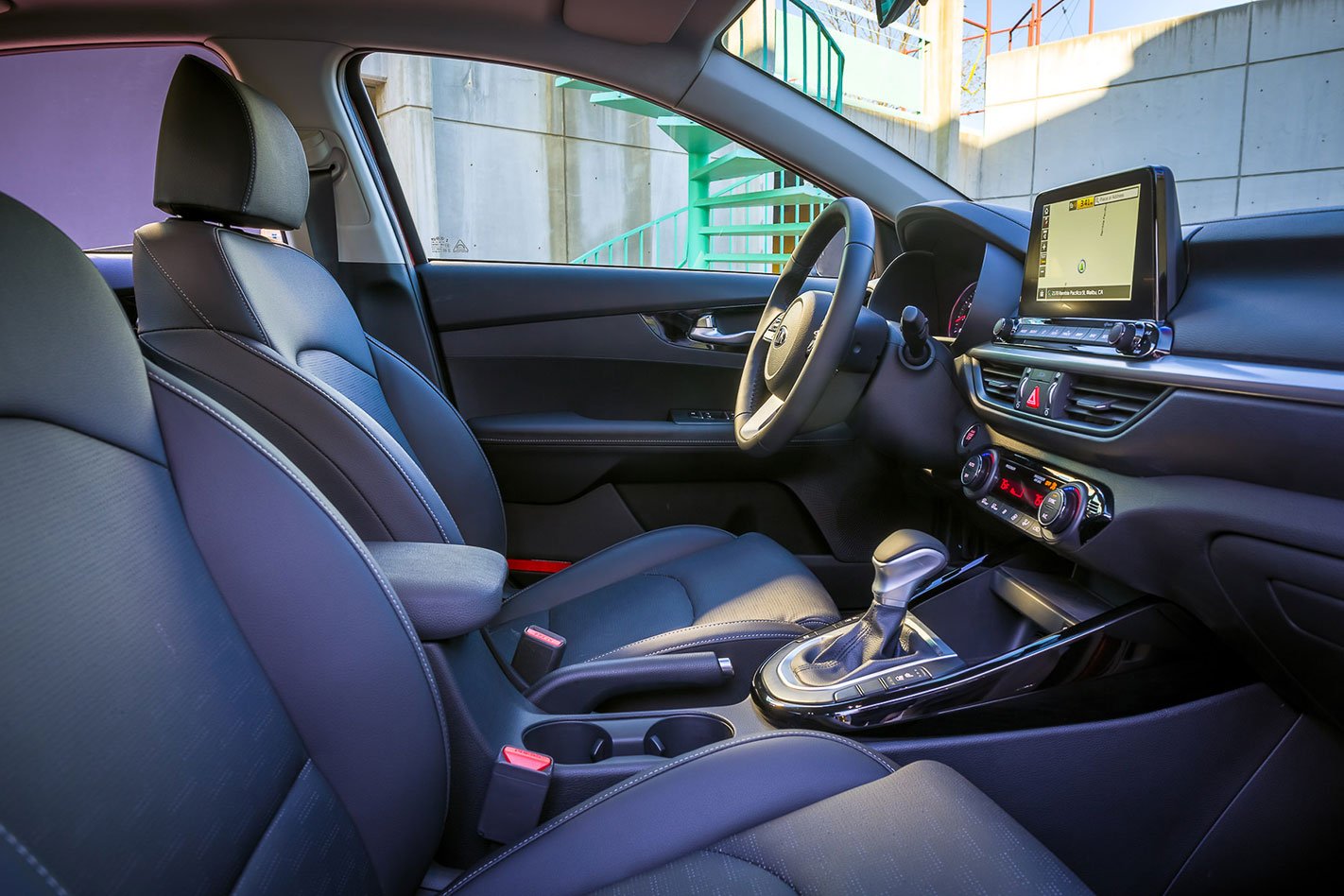
A six-speed manual will be standard, with an “Intelligent Variable Transmission” available as an option.
Other mechanical changes include reworked suspension geometry for sharper steering response, while the electrically assisted steering has been retuned to dial out the artificial feel of the current model.
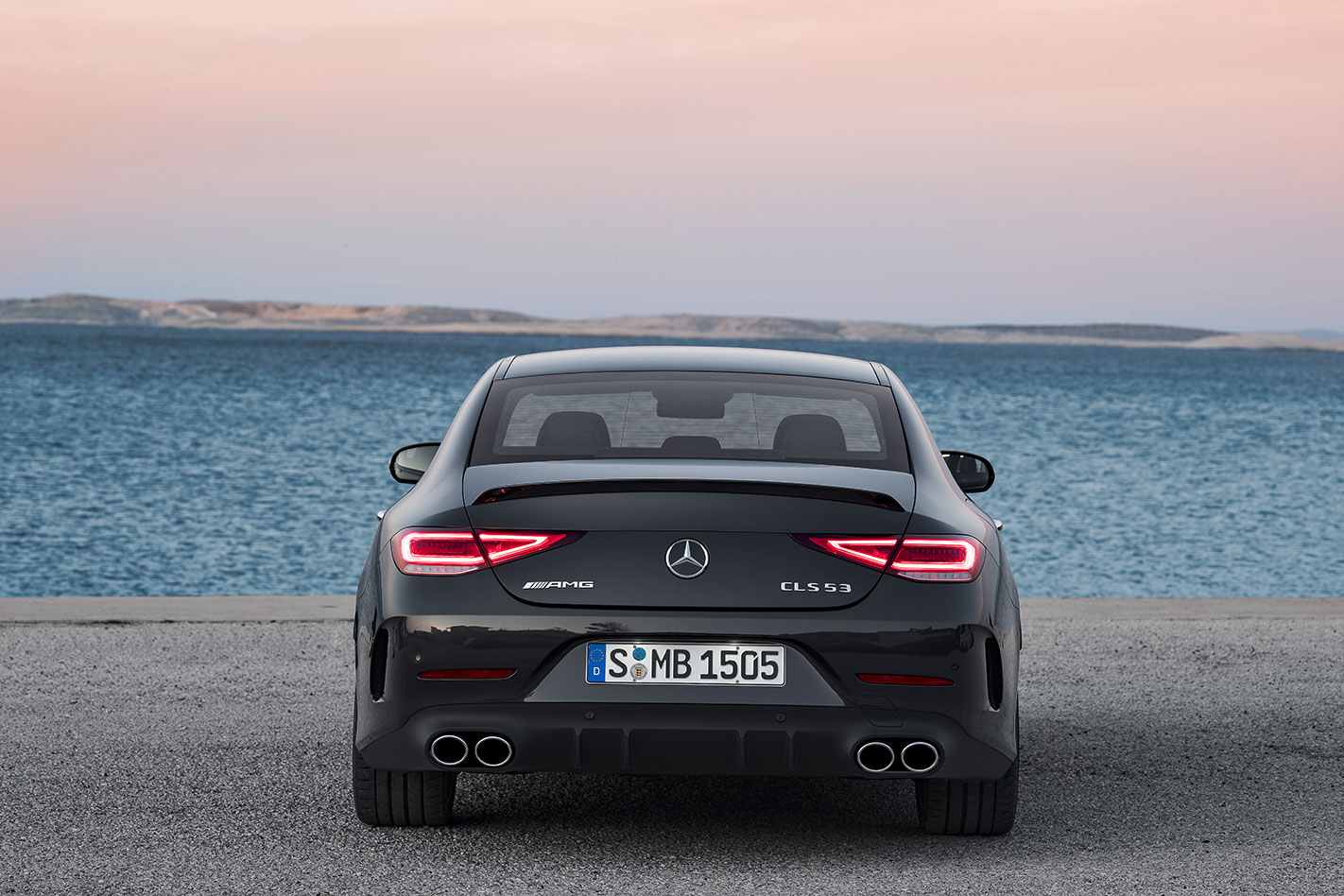
MERCEDES-AMG has launched its long-awaited 53-series “AMG-lite” badge, introducing three new models featuring a 320kW 3.0-litre twin-turbo in-line six-cylinder engine, and an electric compressor and motor.
The fastback-styled CLS saloon, and the E-Class Coupe and Cabriolet will be the first models to wear the new badge. Combined with the 16kW/250Nm electric starter motor/altenator fitted between the engine and the transmission and powered via a 48-volt system, and mated to a nine-speed automatic transmission, the combined power unit is good for a 4.4-second 0-100km/h sprint in the E53 Coupe, with drive in all three cars sent to all four wheels.
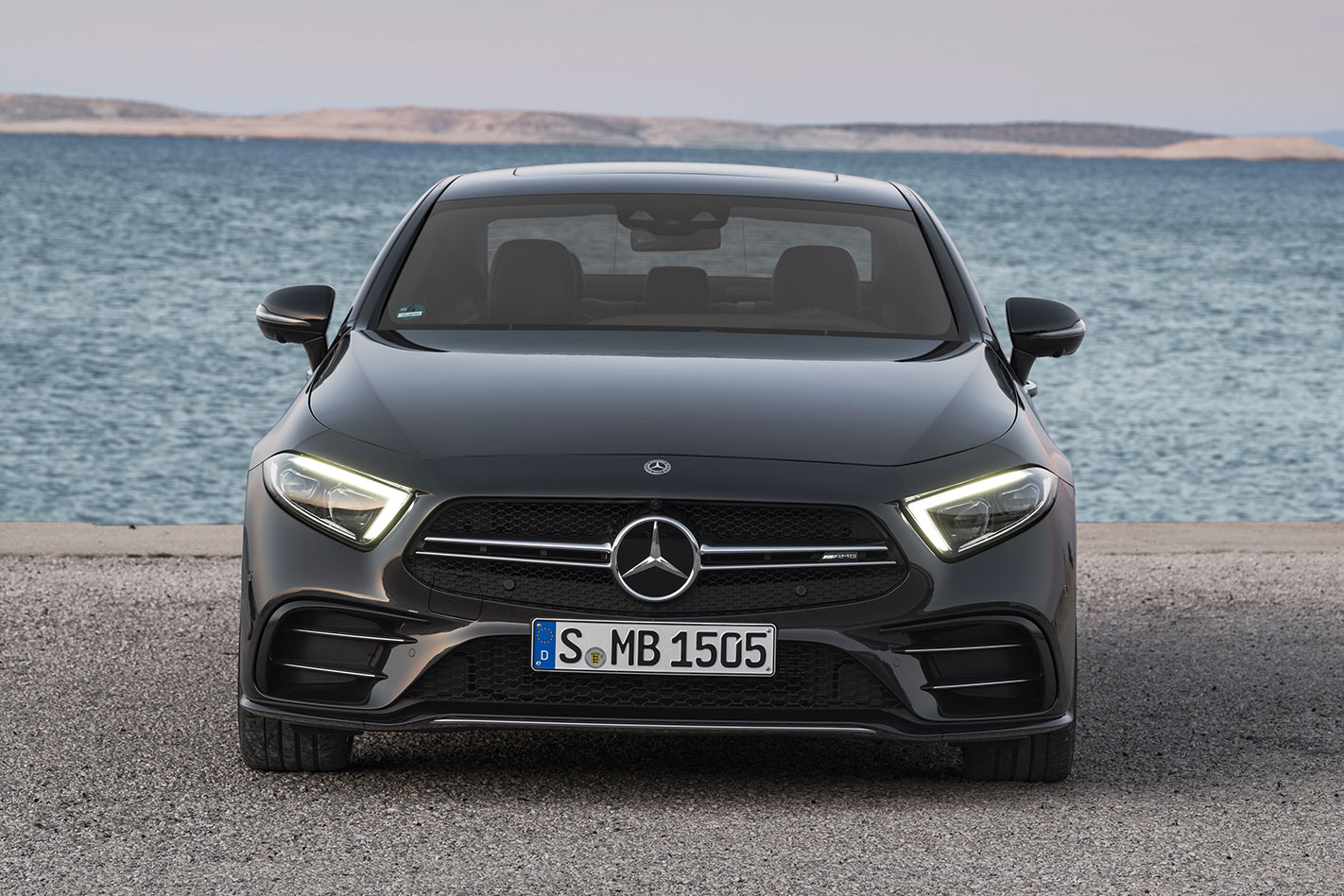
“With the new 53-series models we are extending our portfolio in a first step towards a hybridised future with a leading-edge combination of sporty design, performance and efficiency,” Mercedes-AMG chairman Tobias Moers said.
“The basis for this is a contemporary drive configuration in the form of a six-cylinder in-line engine with electric auxiliary compressor, EQ Boost starter-alternator and 48-volt on-board electrical system,” Moers said.
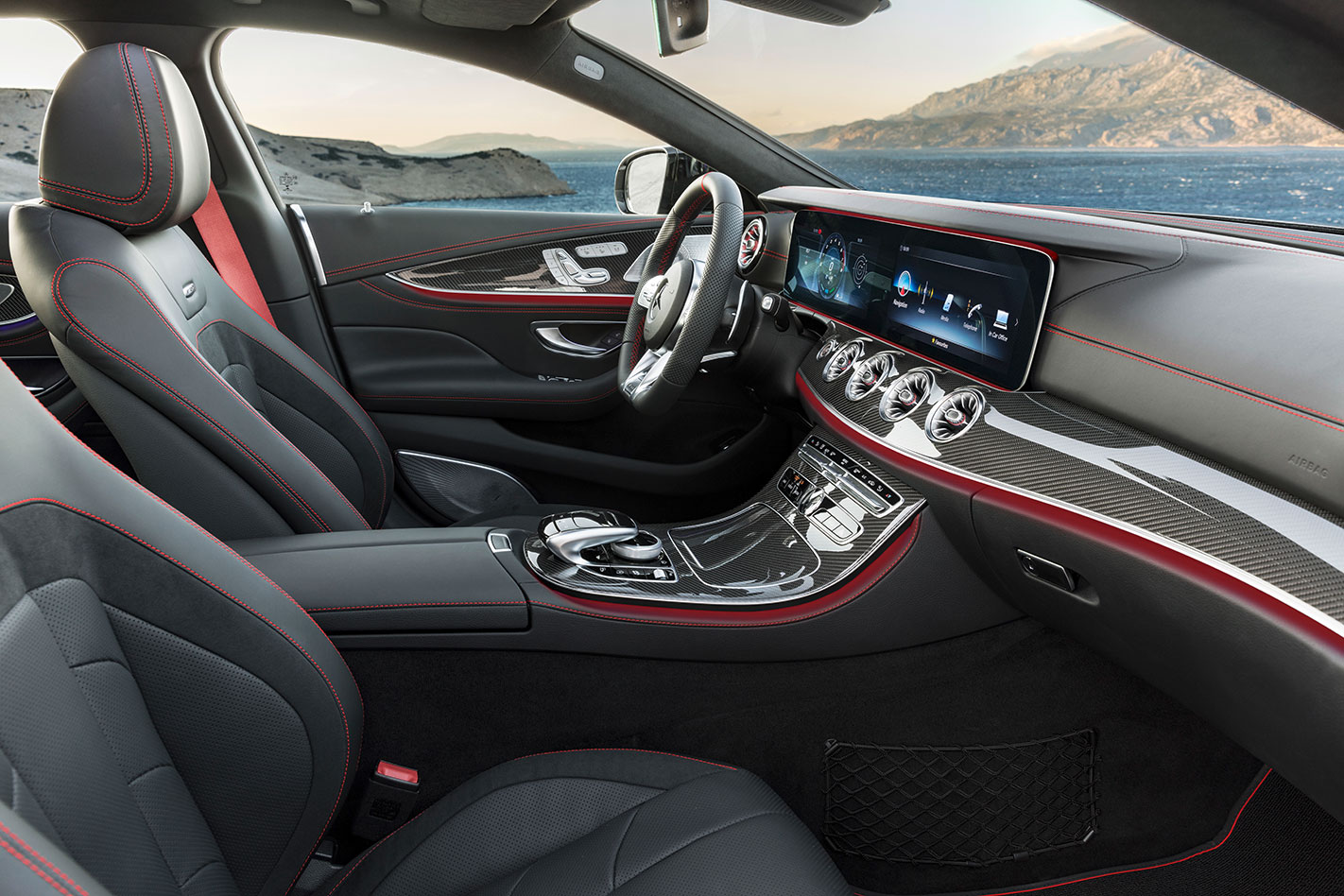
The electric compressor allows the 53-series to provide the in-line six with a big dose of torque low down in the rev range – right where turbo lag would have bogged it down. “Supported by the EQ Boost starter-alternator when moving off, the electric auxiliary compressor builds up a high charge pressure without any delay, for a faster increase in torque for acceleration until the large exhaust gas turbocharger is deployed,” the car maker said.
The 53-series cars also introduce a new AMG Performance steering wheel to the Mercedes-AMG line-up. The wheel wheel is wrapped in nappa leather, with options available including wood inserts in piano lacquer or Dinamica microfibre in the grip area.
Aspiration: we’re always told to use it to better ourselves and aim for a league higher than which we currently occupy.
Infiniti has employed this ethos with the Q50 Red Sport. The Japanese-built Infiniti is going after zee Germans. Hence, the $79,990 Red Sport has the undercard performance variants – like the BMW 340i, Audi S4 and Mercedes-AMG C43 – in its cross hairs.
Since its launch in 2014, Infiniti has sold about 1000 Q50s (all variants) Down Under and it has refreshed the range. The Red Sport gains updated 19-inch alloys, red brake calipers, red stitching, new steering wheel (with shift paddles moved from the column), gear lever and LEDs feature.
Mechanically, Infiniti has made refinements to the infamous Direct Adaptive Steering as well as incorporating Dynamic Digital Suspension (Infiniti-speak for adaptive dampers) to increase the sportiest variant’s credentials.
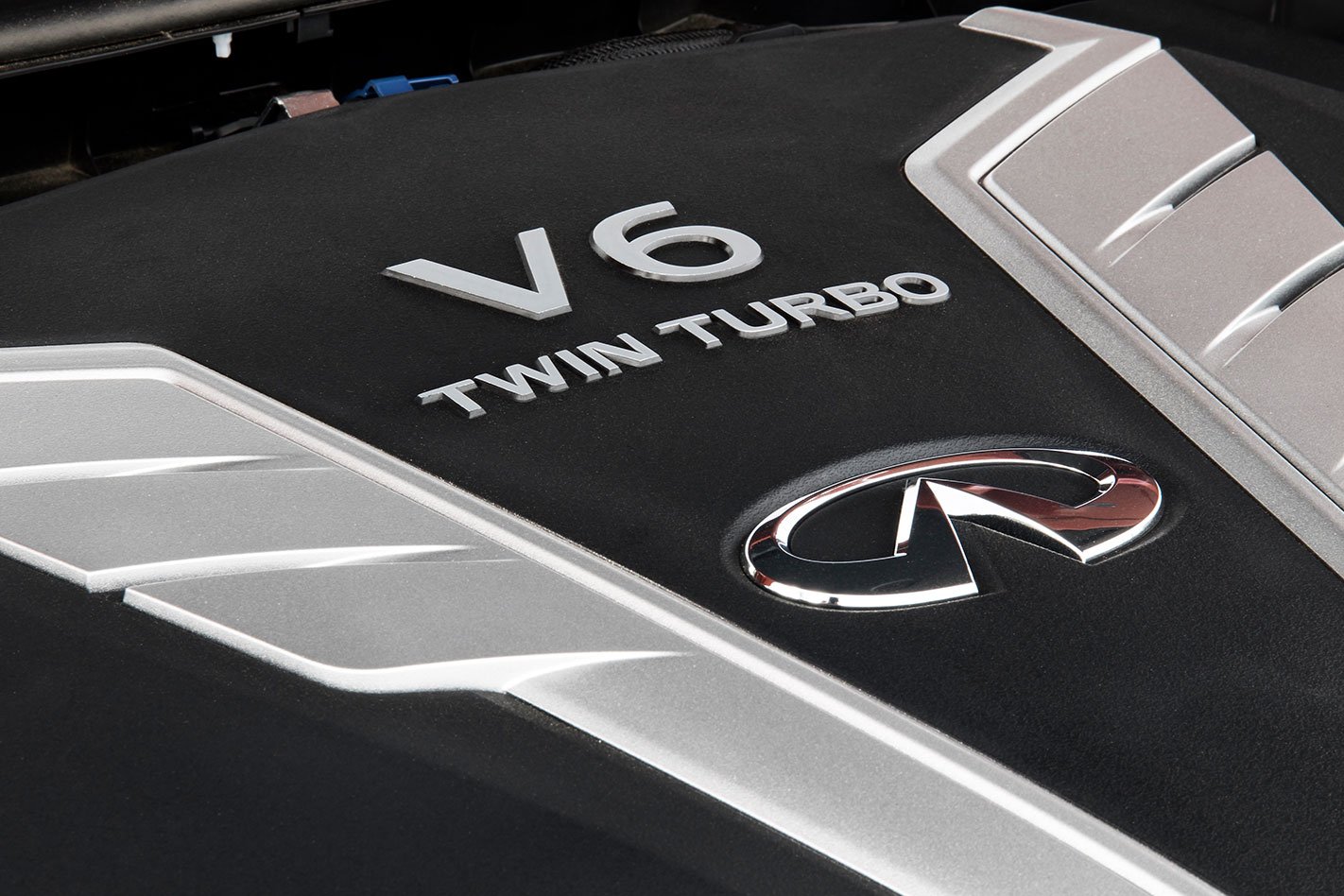
From the get-go it’s hard to ignore the twin-turbo V6, especially when it produces a significant 298kW of power and a hefty 475Nm of torque. After all, the 3.0-litre boosted six is from the same VR engine family as the mighty R35 GT-R, so it keeps venerable company. Sending all the power to the rear wheels via a relatively intuitive seven-speed automatic translates to a 0-100km/h time of about five seconds.
Its full head of steam comes on from just 1600rpm and it feels every bit as strong as the outputs suggest. The Red Sport is properly rapid and, on the run at least, it will trouble many performance-orientated, luxe competitors. When traction isn’t a factor, the in-gear acceleration from the VR30DDTT is comically addictive.
Despite being version 2.0, the Q50 Red Sport still can’t avoid the fact its steering isn’t physically connected to anything (despite all the traditional gubbins remaining as a fail-safe in the event of a crash). Essentially, you’re at the helm of an arcade-style wheel that computes inputs in bytes rather than via a physical connection. Yes, you get Sport+ mode that adds artificial weight, but it still feels disconcerting and disconnected – because it is. None of the modes result in meaningful feedback and that lack of feel makes placing the Q50 hard as the sensation is taken out of your hands.

The brakes (355mm front and 350mm rear) offer the great progression and feel the steering lacks, arresting the rather portly 1784kg Red Sport’s pace in a reassuring manner.
Getting the best out of the dynamics is all about dialling it back to receive more. Yes, the ride quality could be better – even with the adaptive dampers in their softest Comfort mode – but it’s acceptable at speed and general NVH levels are low.

Aspiration should always be moderated by realistic expectations. For the Q50, that, ahem, sting in the tail comes via Kia’s impressive Stinger. Ultimately it achieves the brief more comprehensively with a smaller hit to the wallet. While the devilishly fast, well-specced and stylish Infiniti aspires to greener European pastures, it seems a fellow Asian upstart has already come in to cut its grass.
STAR RATING: 3/5
Like: Engine is a powerhouse; exterior styling Dislike: Steering; needs a proper diff; ride quality; ESC
2018 Infiniti Q50 RED SPORT SPECSEngine: 2997cc V6, DOHC, 24v, twin-turbo Power: 298kW @ 6400rpm Torque: 475Nm @ 1600rpm Weight: 1784kg 0-100km/h: 5.1sec (estimated) Price: $79,990
AUSSIES are likely to miss out on the newest addition to Hyundai’s fledgling N division, with the box-fresh Veloster N expected to be built solely in left-hand drive.
Revealed today at the Detroit motor show, the Hyundai Veloster N utilises the same 202kW/353Nm turbocharged four-pot and mechanical underpinnings as the highly rated i30 N, due Down Under in March.
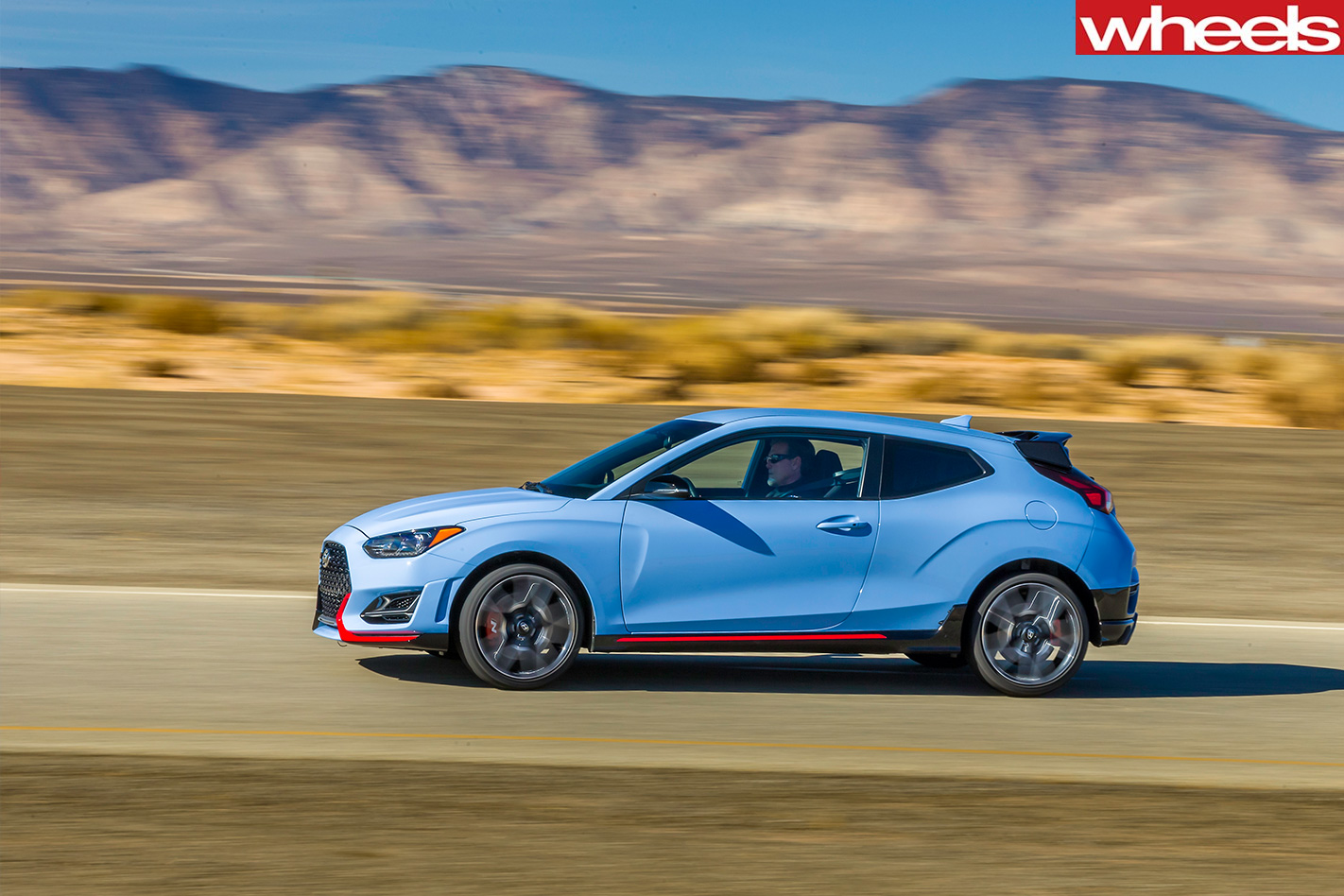
The two also share the same platform, though Hyundai insiders hint the Veloster N (based on the second-gen Veloster) holds even greater performance potential due to its lighter kerb weight.
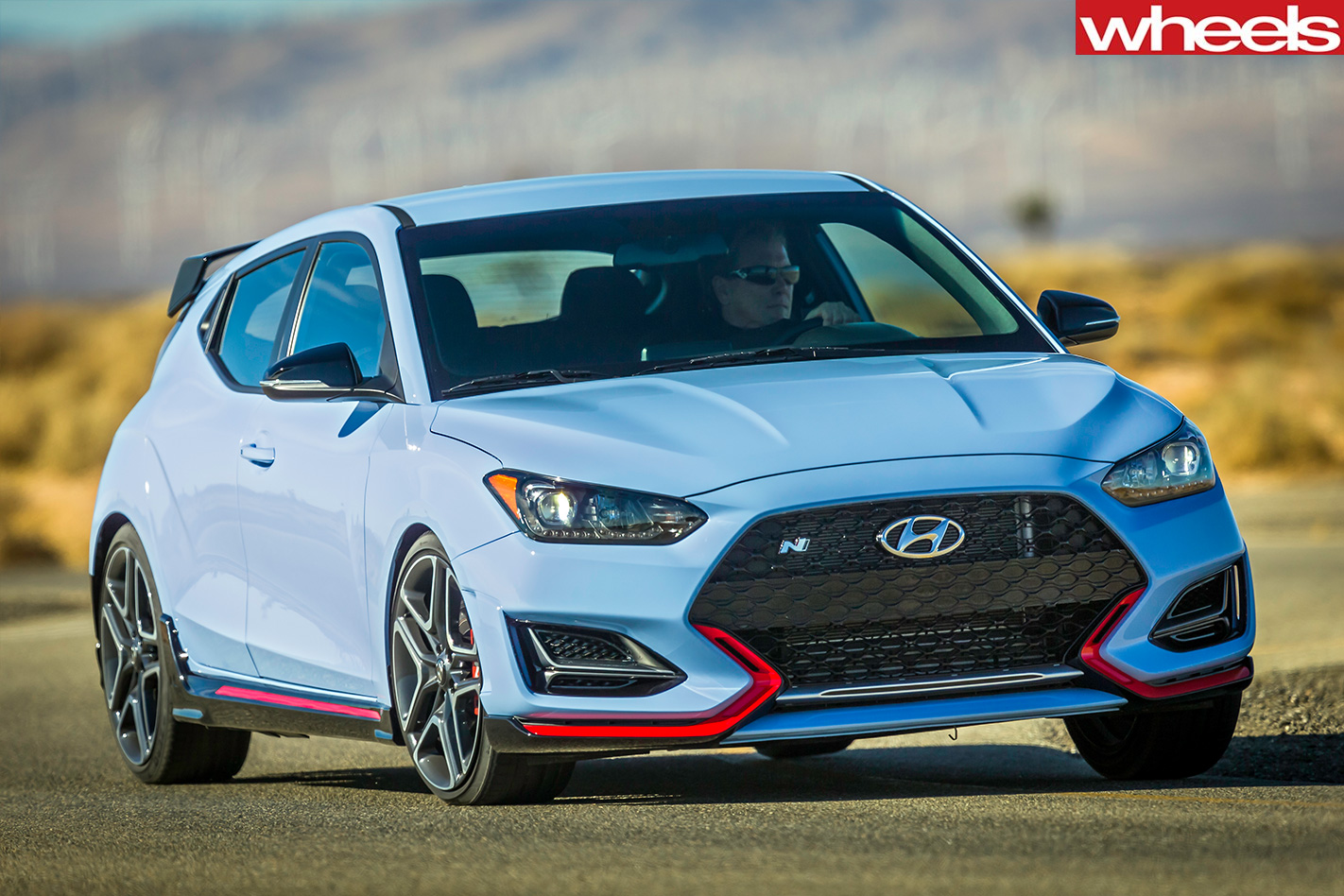
Especially if Hyundai is able to secure similar pricing as i30 N, which is tipped to cost around $40-45K.
Yet for now, the Veloster N is a domestic and American market only model, meaning it will be built solely in left-hand drive at Hyundai’s Korean plant.
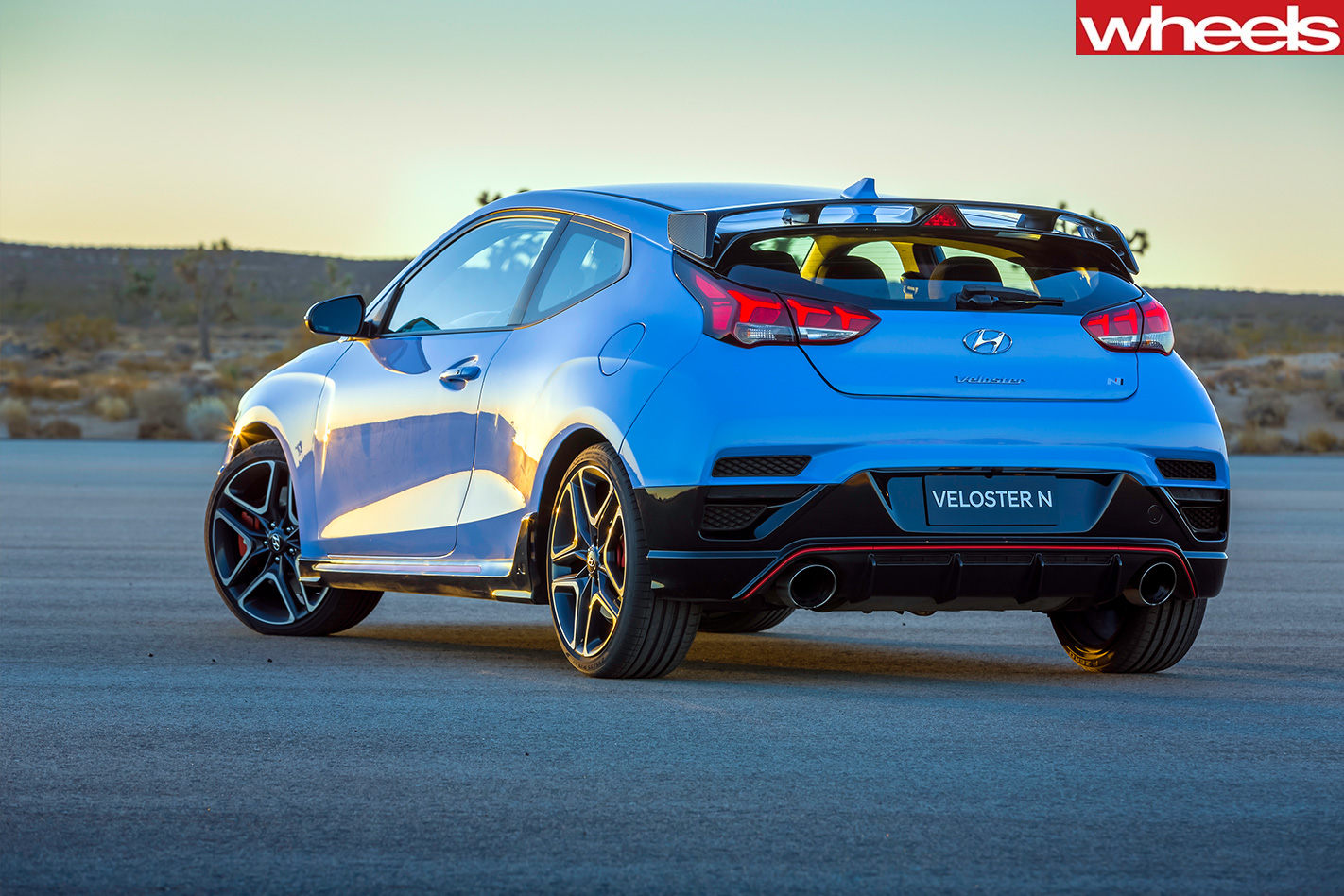
Like i30 N, the Veloster N features an all-new front suspension and steering set-up, a broader front track and a freer flowing exhaust to go with its beefier 2.0-litre four pot.
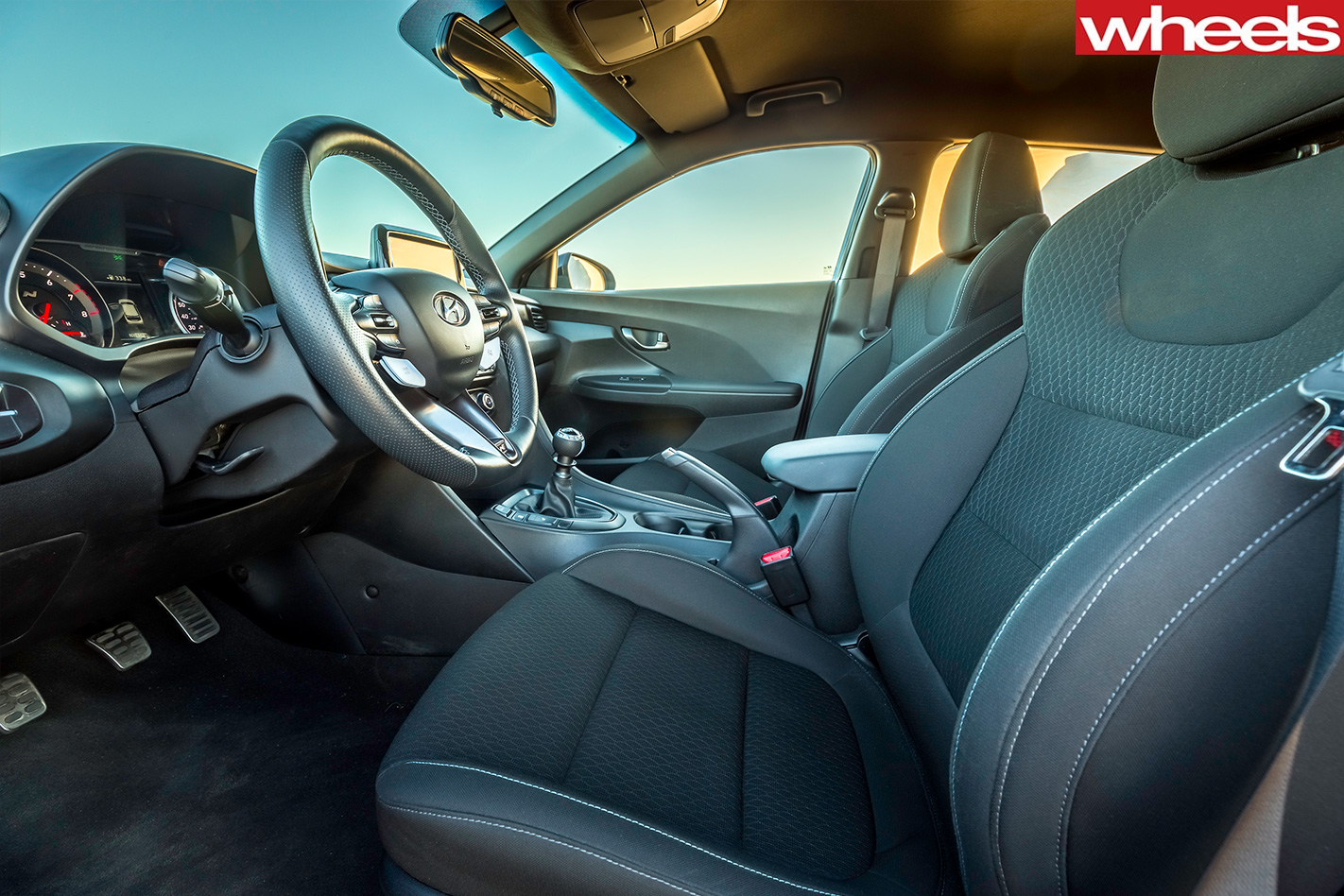
Initially only the higher 202kW/353Nm engine tune will be available, with the lower output 184kW version still being evaluated. That means Veloster N scores the i30 N’s Performance Pack, which adds an electronically controlled limited-slip differential and larger front brake rotors. The sole gearbox offered at launch is a six-speed manual with rev-matching.
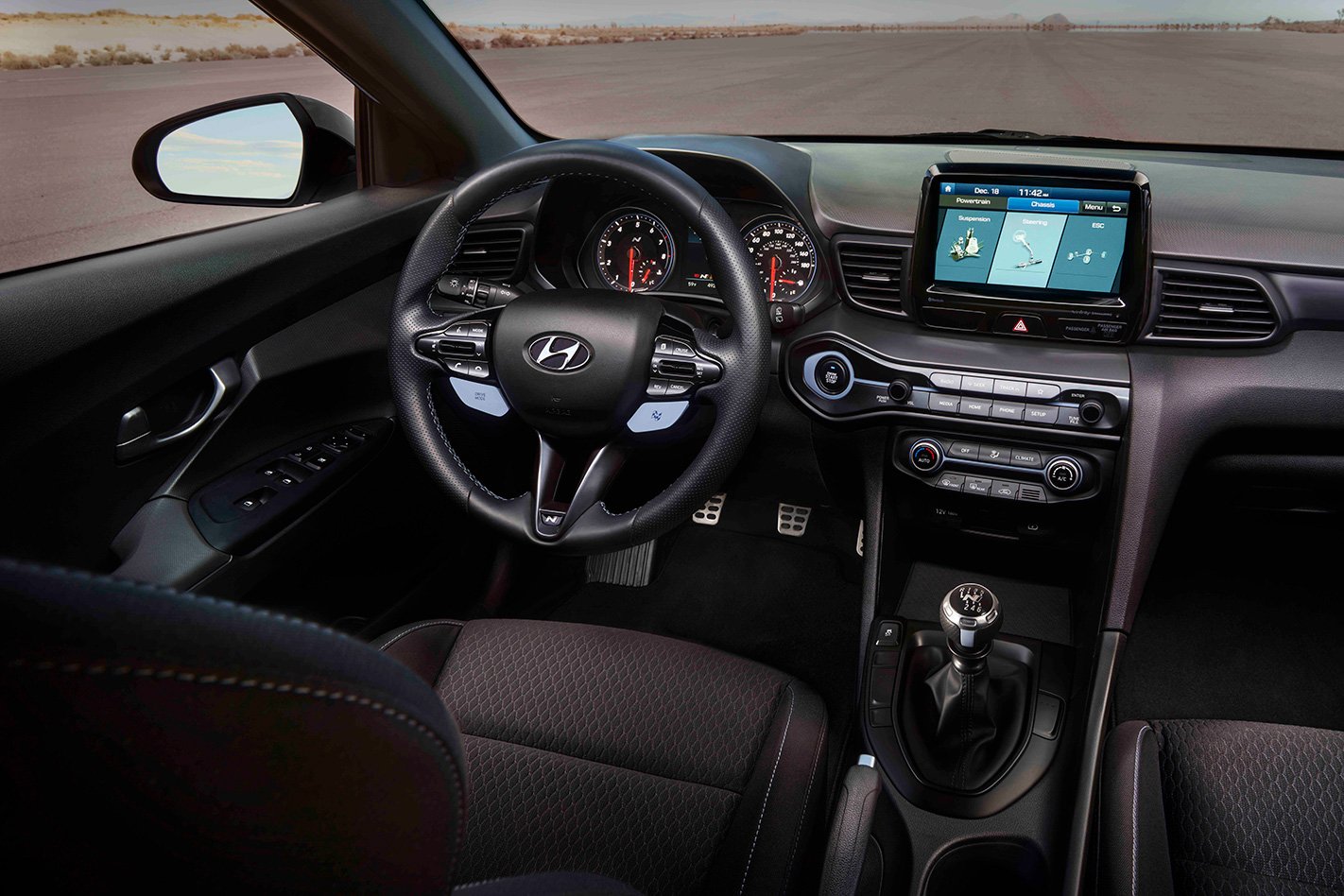
Inside, changes include heavily bolstered cloth sports seats and an N-design sports steering wheel and shift knob.
Hyundai Oz has already expressed interest in the Veloster N, though admits it’s unlikely to come our way.
CONSERVATIVELY similar on the outside but radically different underneath is the calling card of the all-new Hyundai Veloster, revealed today at the Detroit motor show.
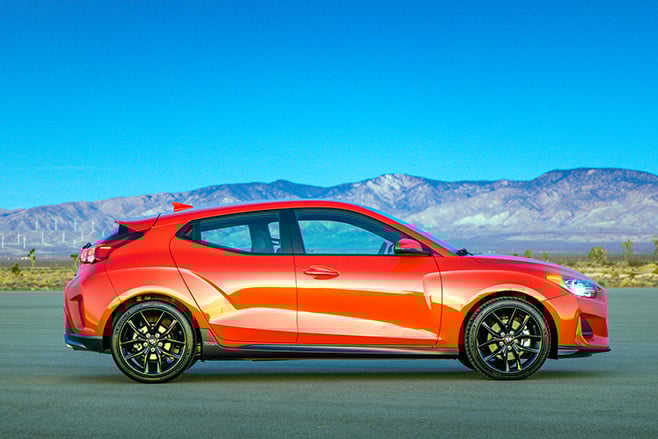
Now in its second generation, the 2019 Veloster retains the original’s unusual three-door coupe body style (with an extra door on the left-hand side for easier rear-seat access), but moves to the same, highly rated platform as the PD i30, bringing the promise of sharper, more engaging dynamics.
Standard multi-link rear-suspension across the range further bolsters the Veloster’s dynamic potential, aided by local suspension tuning and stronger, more powerful engines.
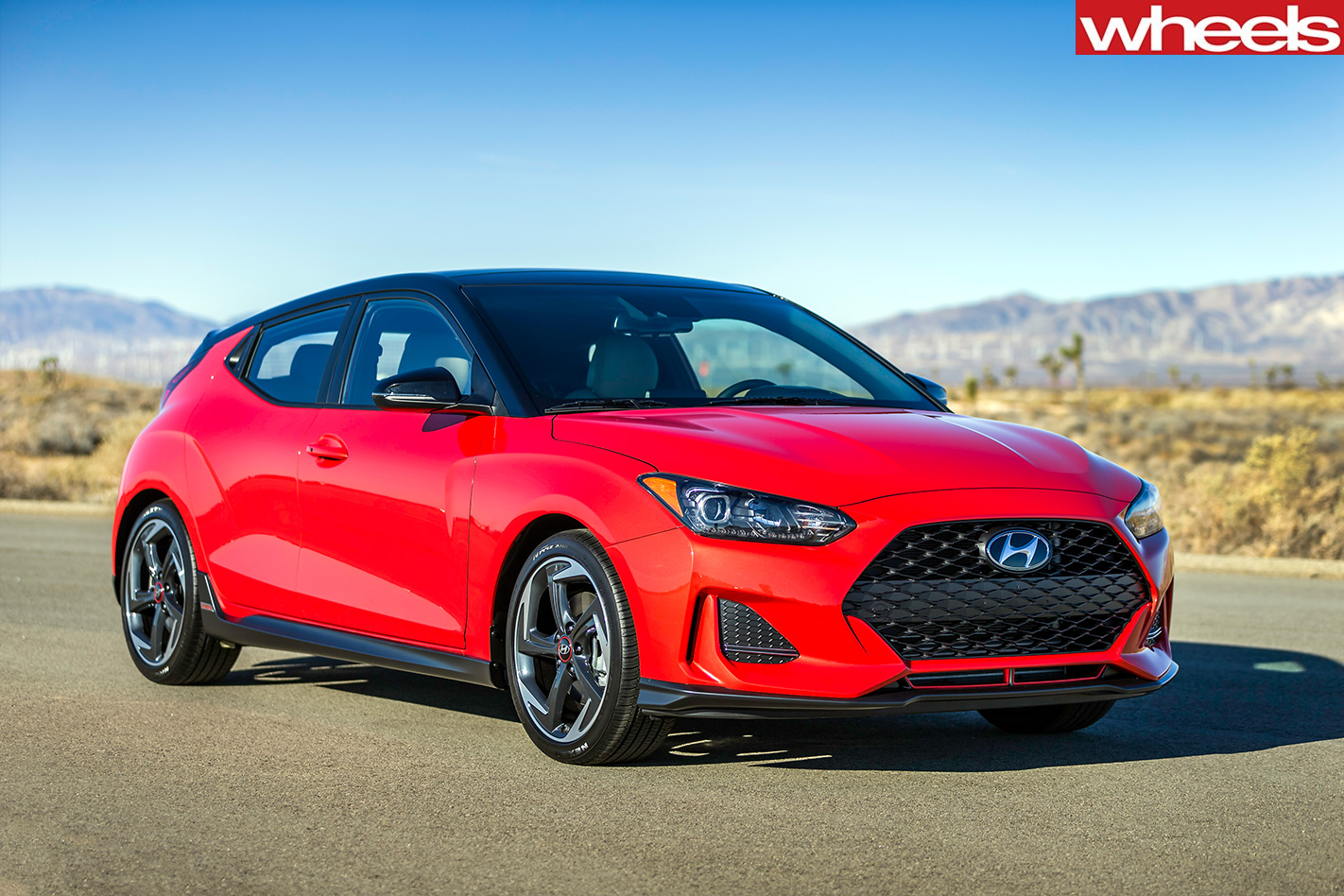
A hardcore performance variant from Hyundai’s N department, powered by a 202kW 2.0-litre turbo four, is also in the pipeline, though is yet to be confirmed for Australia.
Both regular Veloster variants will be available with either a six-speed manual or an automatic; a six-speed auto in the Veloster and a seven-speed dual-clutch in the SR Turbo.
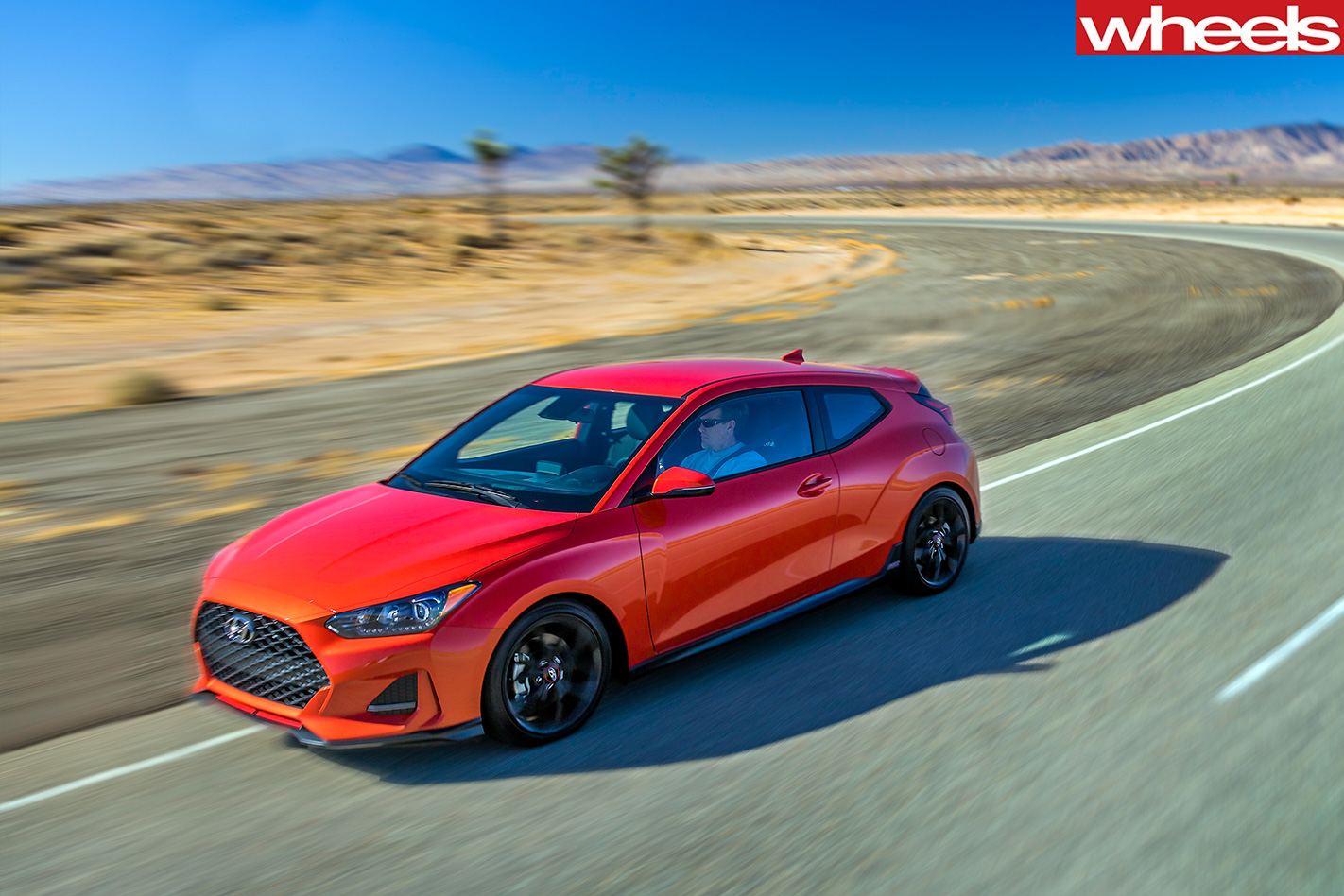
A pointy front-end and engaging rear-axle were goals of the local suspension team, with both Veloster variants expected to use the same tune despite differing wheel sizes (17s for Veloster and 18s for SR Turbo).
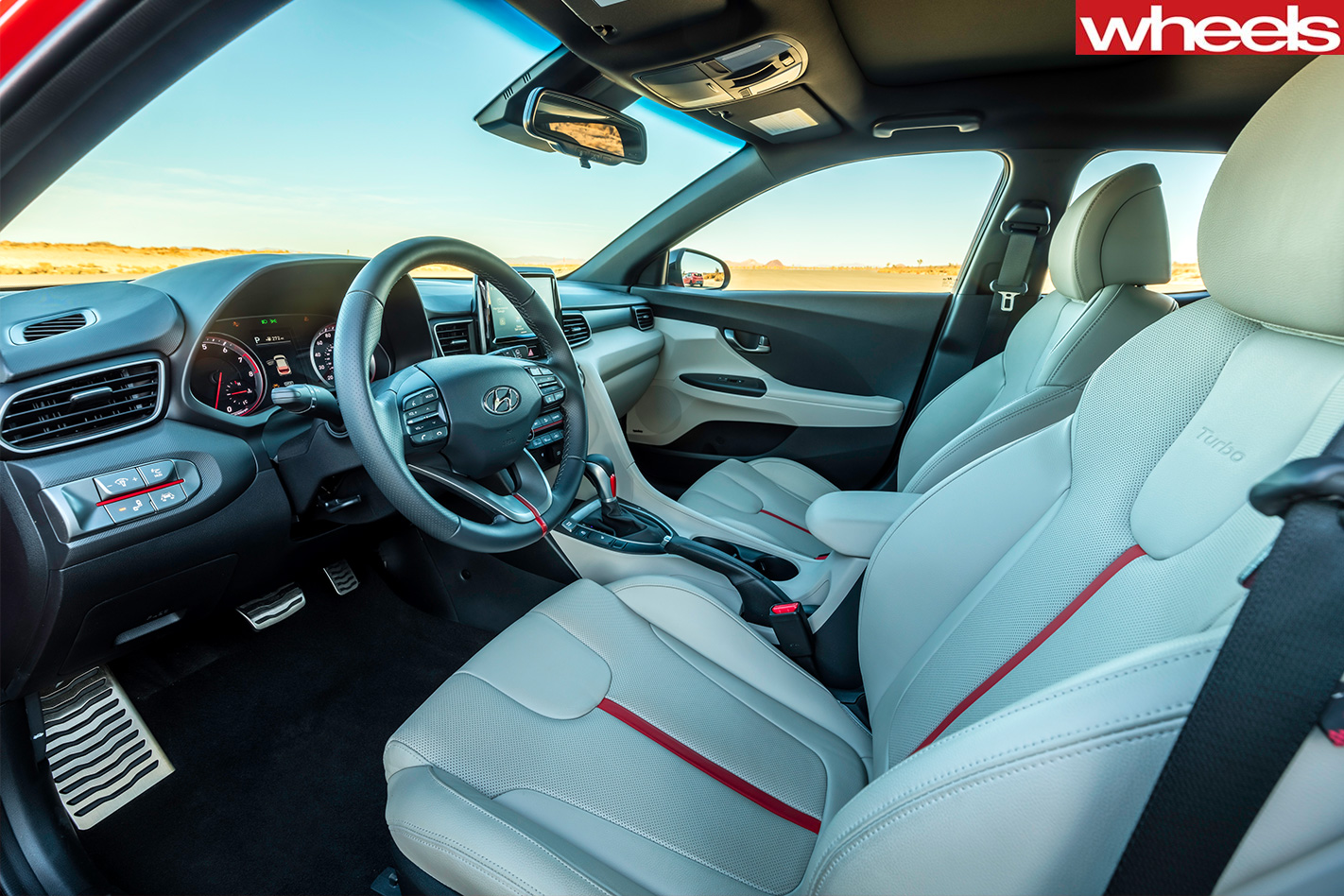
Noise, vibration and harshness levels are significantly reduced too, according to Hyundai, with an overhauled, driver-focused cabin introducing an angular styling theme that, while similar to the i30’s, boasts a redesigned centre stack and air vents.
As Australian customers now expect, the Veloster will arrive with a bulging list of safety features, including AEB, reverse camera, lane-keep assist, blind-spot detection, rear-cross traffic alert, high-beam assist and driver attention monitoring.
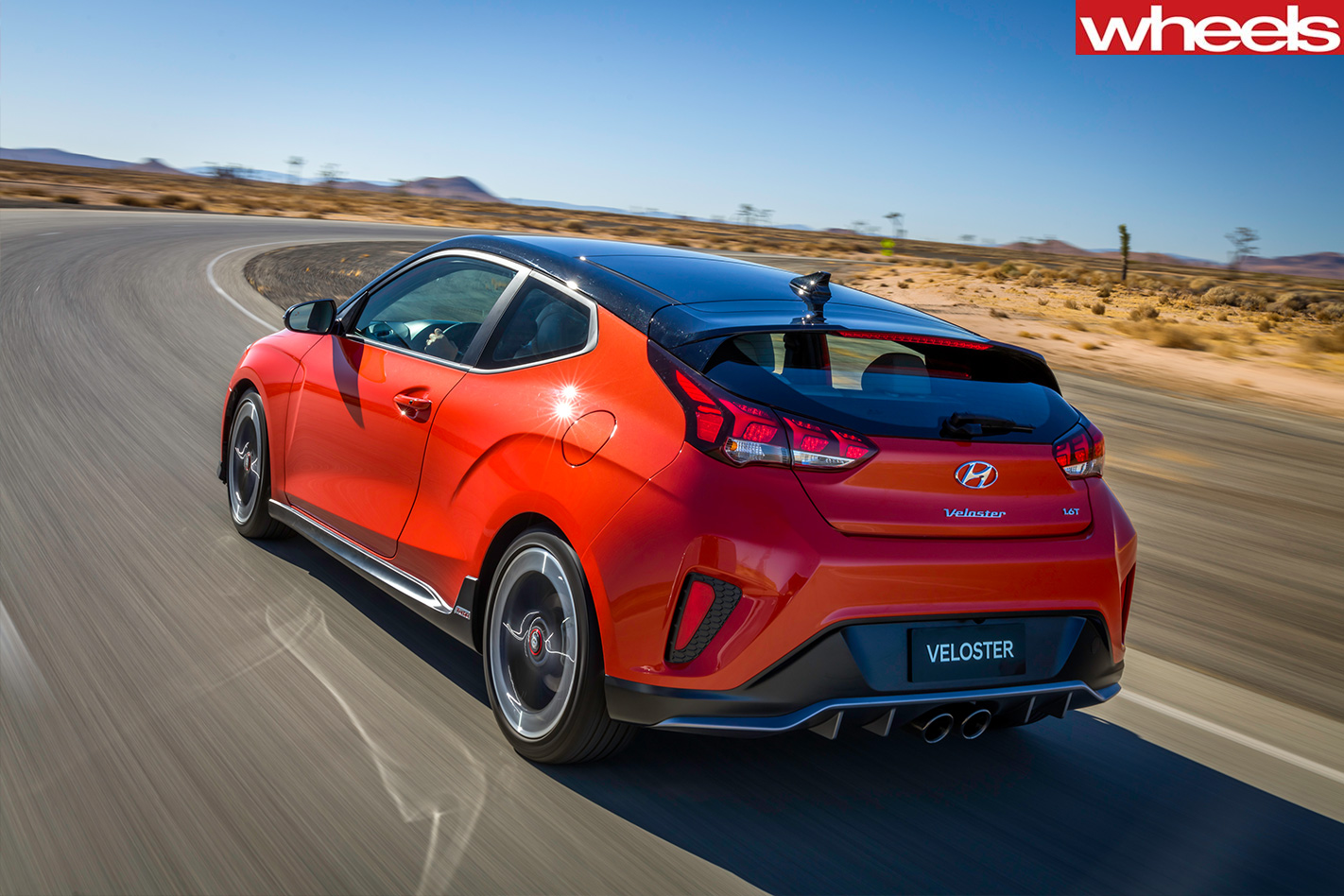
Styling wise, the Veloster follows the i30’s lead in striving for a more European look, with a redesigned grille, lower roofline and beefier front wheel arches conveying a more muscular stance.
As for pricing, Hyundai expects the new Veloster to cost around the same as the current model, meaning a possible starting price just under $30K.
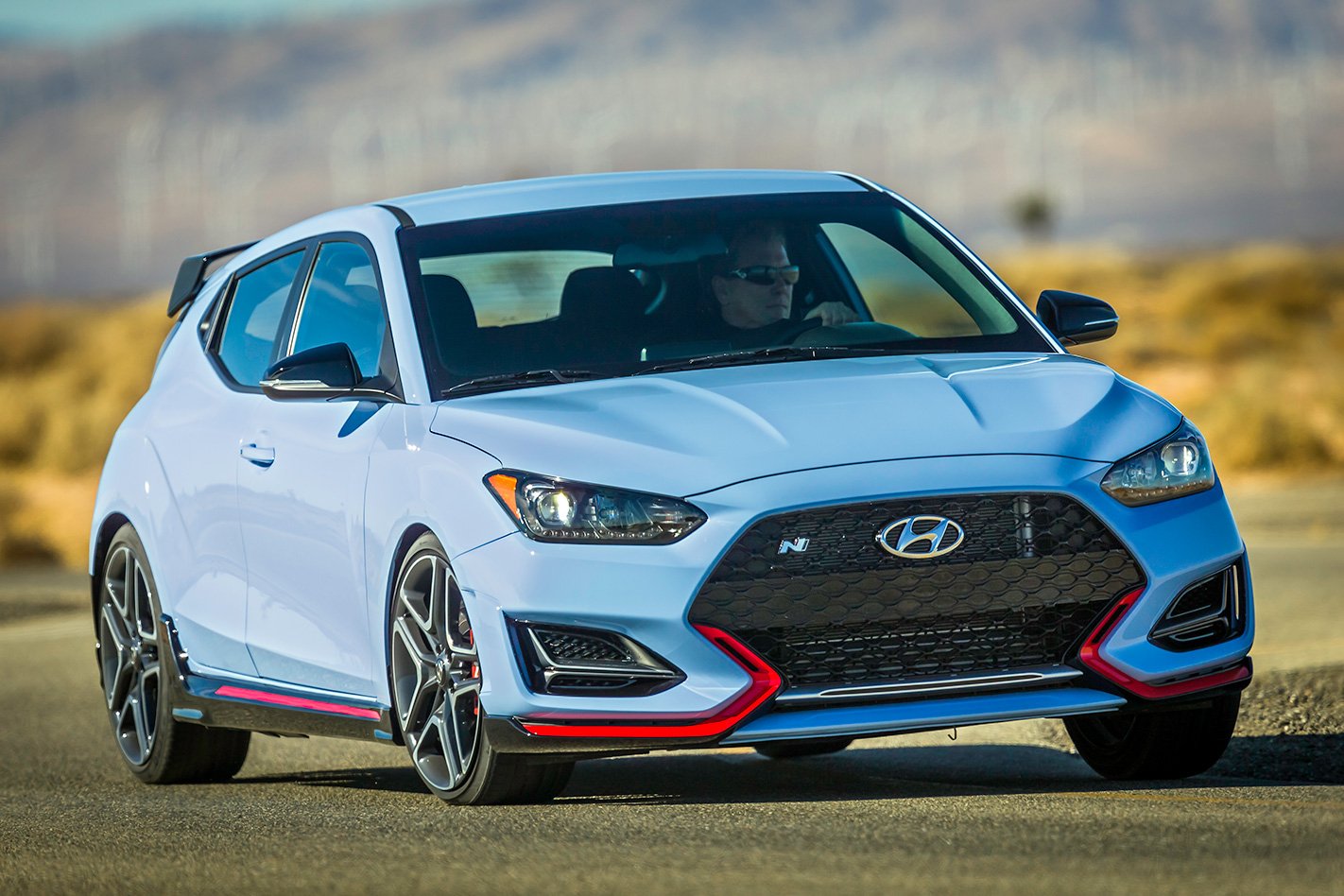
Hyundai has pulled the wraps off the new-generation Veloster N at the Detroit Motor Show, ensuring ‘Hyundai Veloster’ and ‘performance car’ will no longer be mutually exclusive terms.
The current-generation Veloster Turbo’s unique design and 150kW turbo engine mean it’s not without appeal, but its safety-first approach to handling did little to raise the pulses of enthusiasts.
The Veloster N promises to change all that by wrapping the highly entertaining mechanicals of the forthcoming i30 N in a quirky four-door coupe-hatch bodyshell.
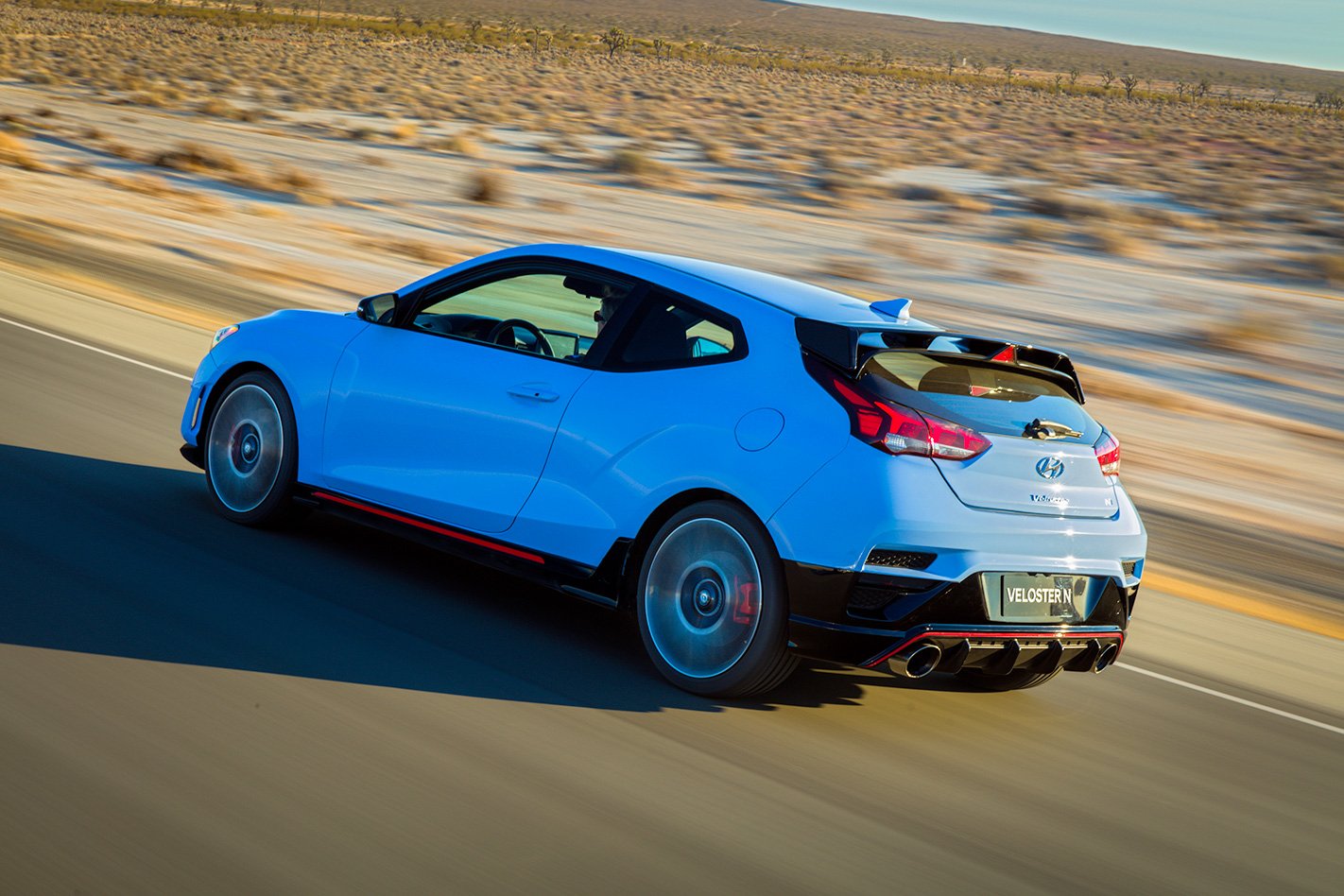
A six-speed manual is the only available gearbox, though it’ll match revs on downshifts if your heel ‘n’ toe is a bit rusty, and an electronically-controlled limited-slip diff apportions more grunt to the wheel with the most grip. No performance claims have yet been made, but expect a 0-100km/h time of around 6.0sec and a 250km/h top speed.
Adaptive suspension is standard, as are sizeable brakes measuring 345mm front and 315mm rear covered by 18-inch rims wearing 225/40 R18 Michelin Pilot Super Sports with 19s wrapped in 235/35 R19 Pirelli P Zeros are optional.
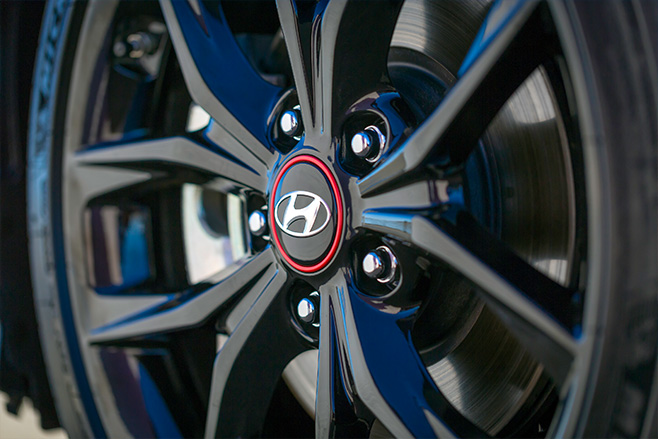
Differentiating the Veloster N from its more prosaic siblings is a unique twin-spoke wheel design and body add-ons with paintwork limited to four colours: Ultra Black, Chalk White, Racing Red and the Performance Blue hero colour taken from Hyundai’s World Rally Car.
The next Hyundai Veloster has been revealed at the 2018 Detroit Show, with the same 150kW/265Nm 1.6-litre engine as its i30 SR cousin.
It’s also available with either a six-speed manual transmission or a seven-speed dual clutch auto, with paddle shifters.
The new Veloster Turbo also gets a handling update, with torque vectoring to “improve dynamic cornering during more enthusiastic driving.”
“This active braking redirects power to the outside front wheel in the turn, reducing wheelspin for enhanced cornering grip and corner-exit acceleration.”
Steering is done via an electric system which “adjusts assistance to changing driving conditions.”
The design change, to follow Hyundai’s recent design language, echoes that of the i30 from the front, though has a new look at the rear, with a few design cues leftover from the last generation.
It also has extra ‘half-doors’ to allow rear passengers easier embarking and disembarking.
A new infotainment system brings the Veloster into a new class of car, as it did with the i30, by making premium features available on a more affordable car.
Functions like Android Auto and Apple CarPlay, a heads-up display, wireless phone charging and an eight-inch touch display can be had with the new generation car.
The US market will start seeing 2018 Veloster Turbos available in late 2018, though word on Australian arrivals is yet to be confirmed.
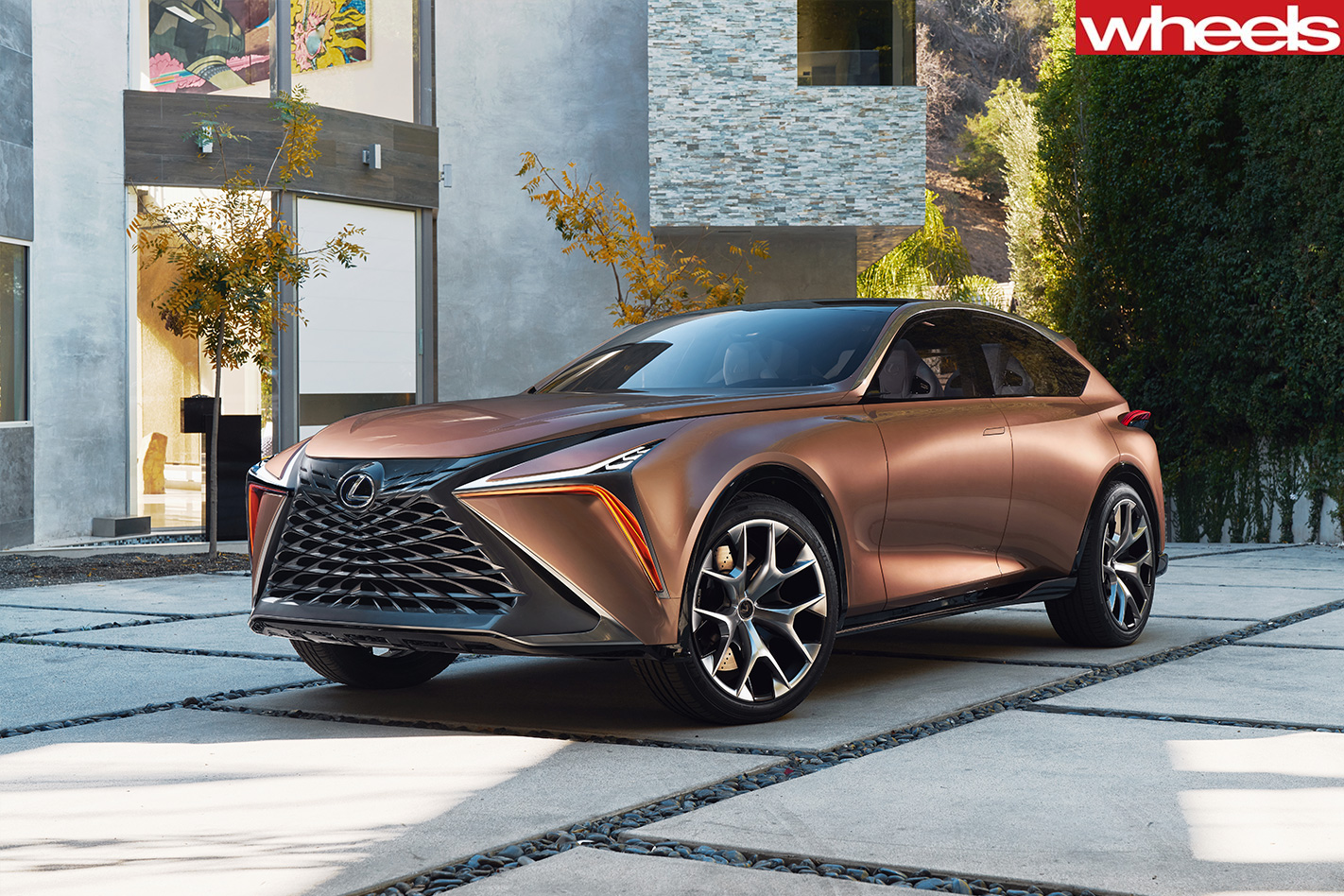
LEXUS has yanked the sheets from a concept called LF-1 Limitless, heralding a large crossover flagship that will join its ranks alongside the more serious all-terrain LX, as the Japanese car maker continues its ventures into high-rider territory.
Revealed in a frosty Detroit, the new design study previews a production model that will slot into the line-up offering a more driver-focused, on-road proposition at the high end, causing a headache for other luxo soft-roading newcomers such as the BMW X7 and Audi Q8.
While the Toyota Landcruiser-related Lexus LX offers some serious off-road credentials – including a low-range transmission, locking differential and transfer case – the concept shown in Motown points to a showroom model that aims to appeal to drivers who wish to stay on bitumen.
Only a rear-drive chassis is mentioned at this stage however, compounding Lexus’ strategy to target driving enthusiasts with a new offering, while the LX continues to hunt the unbeaten path.
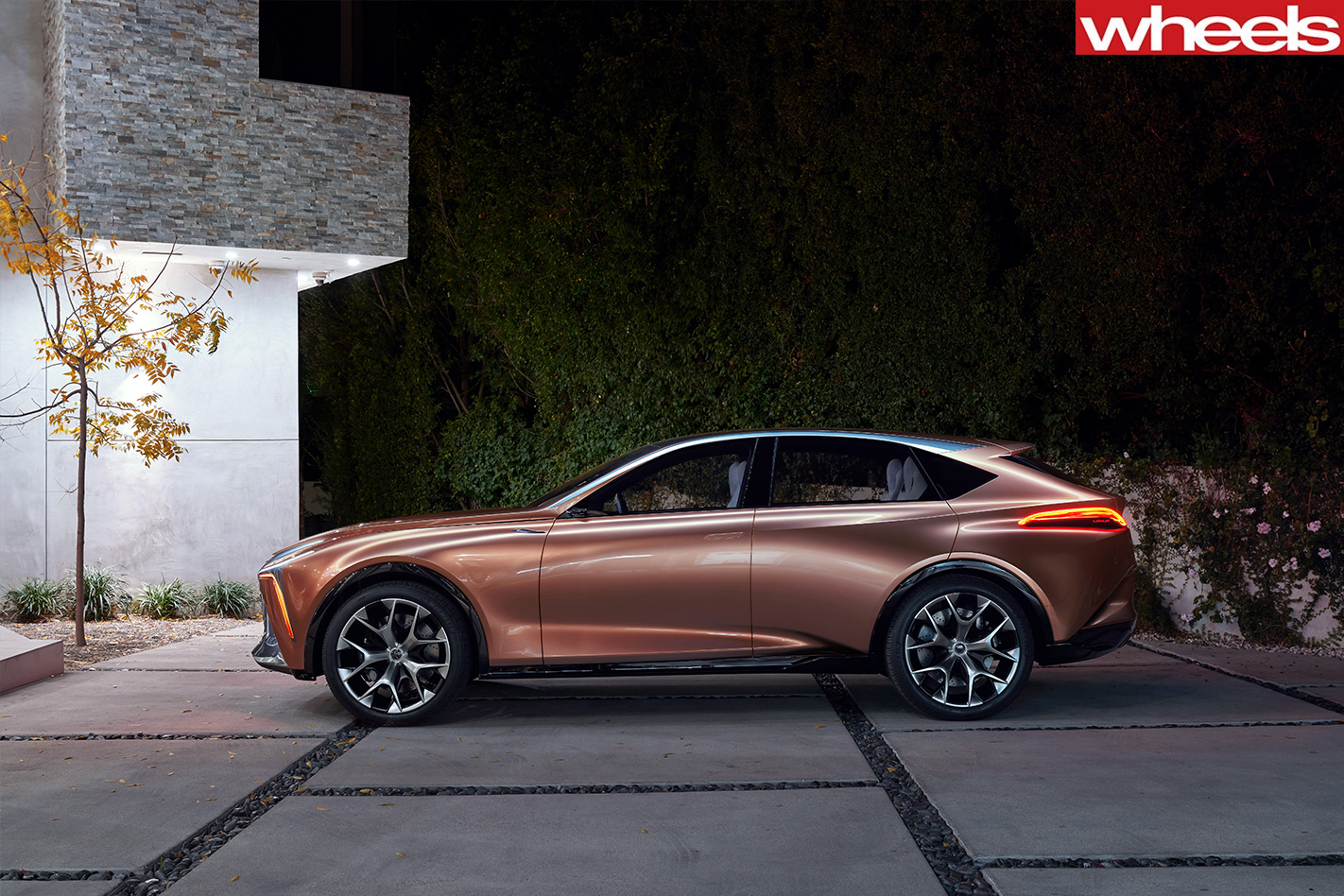
Measuring 5014m in length, 1986mm wide and 1605mm tall, the LF-1 is in the ballpark of the LX with the same width but 50mm lopped off its length and a significant 260mm taken from its height for a lower centre of gravity and boosted corner-carving ability.
Unlike some manufacturers, Lexus concepts are renowned for making the trip from drawing board to production line relatively unscathed so you can expect much of the radical design to surface in a showroom as soon as the car is confirmed – most likely with a different name.
Borrowing more DNA from a coupe or sedan than SUV, the LF-1 wears massive 22-inch wheels and is sculpted with exaggerated lines and features that thumb their noses to more subtle approaches from rival manufacturers.
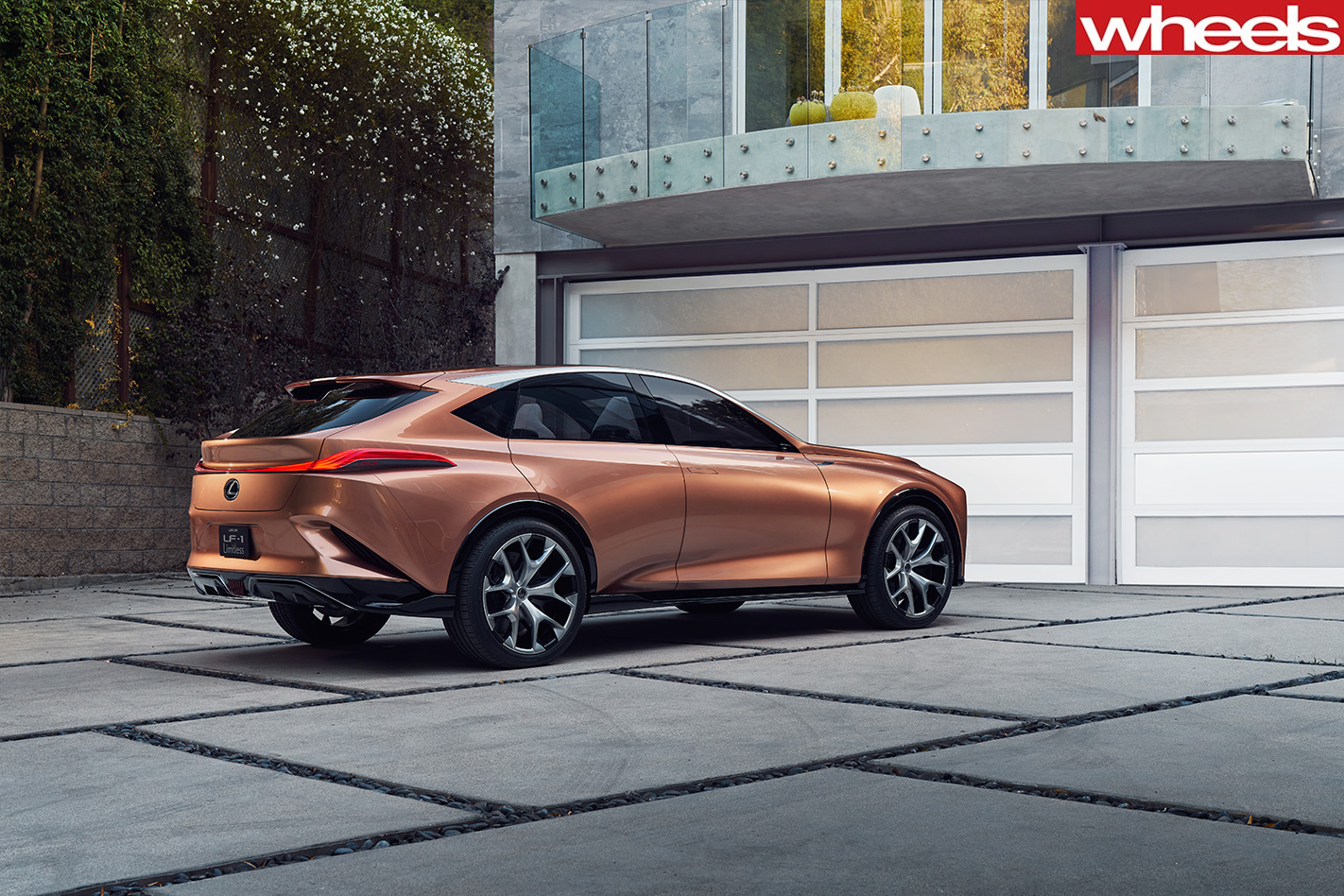
The angular design of the NX concept has been toned down in place of more car-like proportions, including the long bonnet, short front overhang and longer cantilevered rear end.
Chrome-look trimming that features heavily in some previous concepts and current production Lexus designs has taken a back seat and the massive spindle grille is highlighted by LED lighting to ‘greet’ passengers.
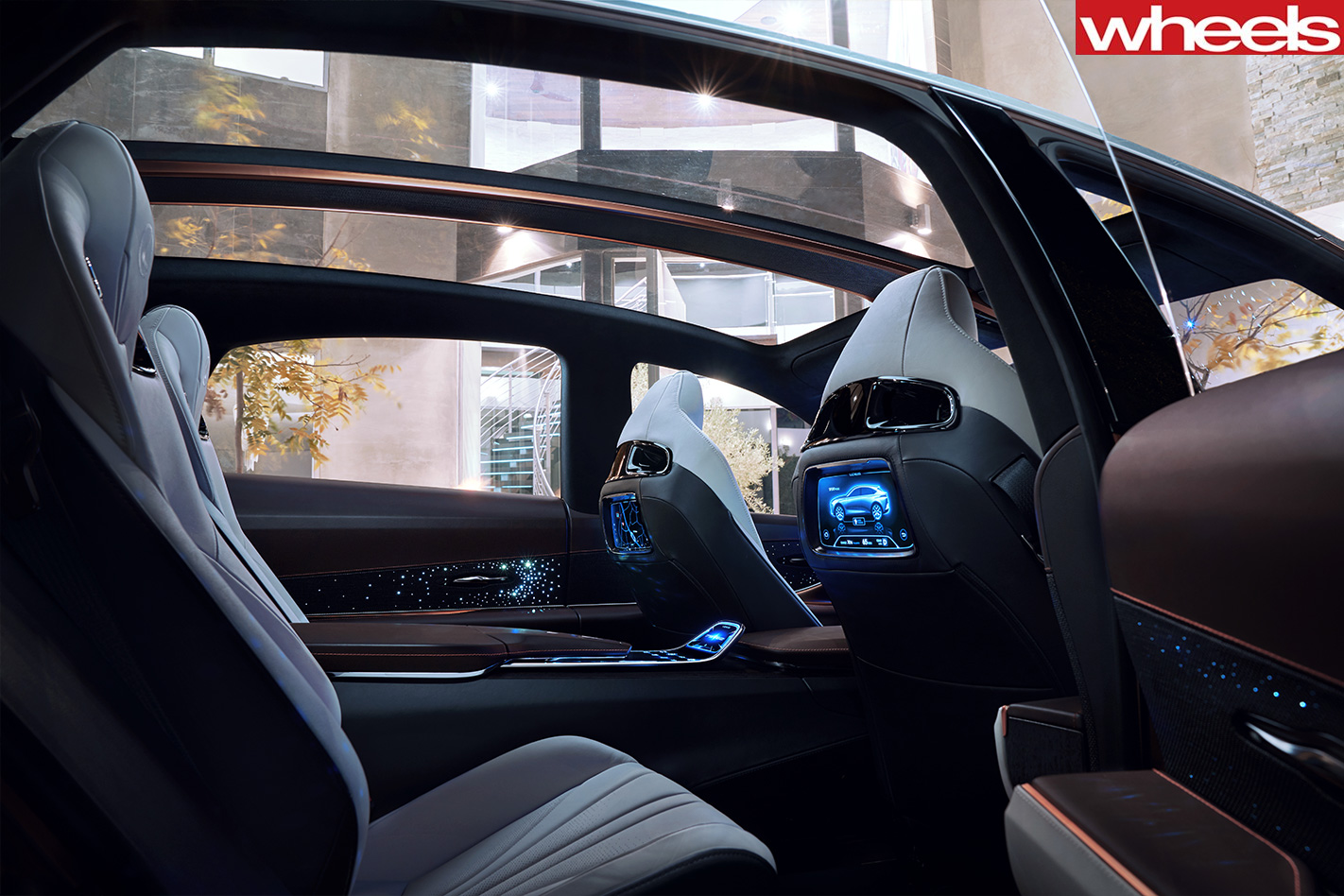
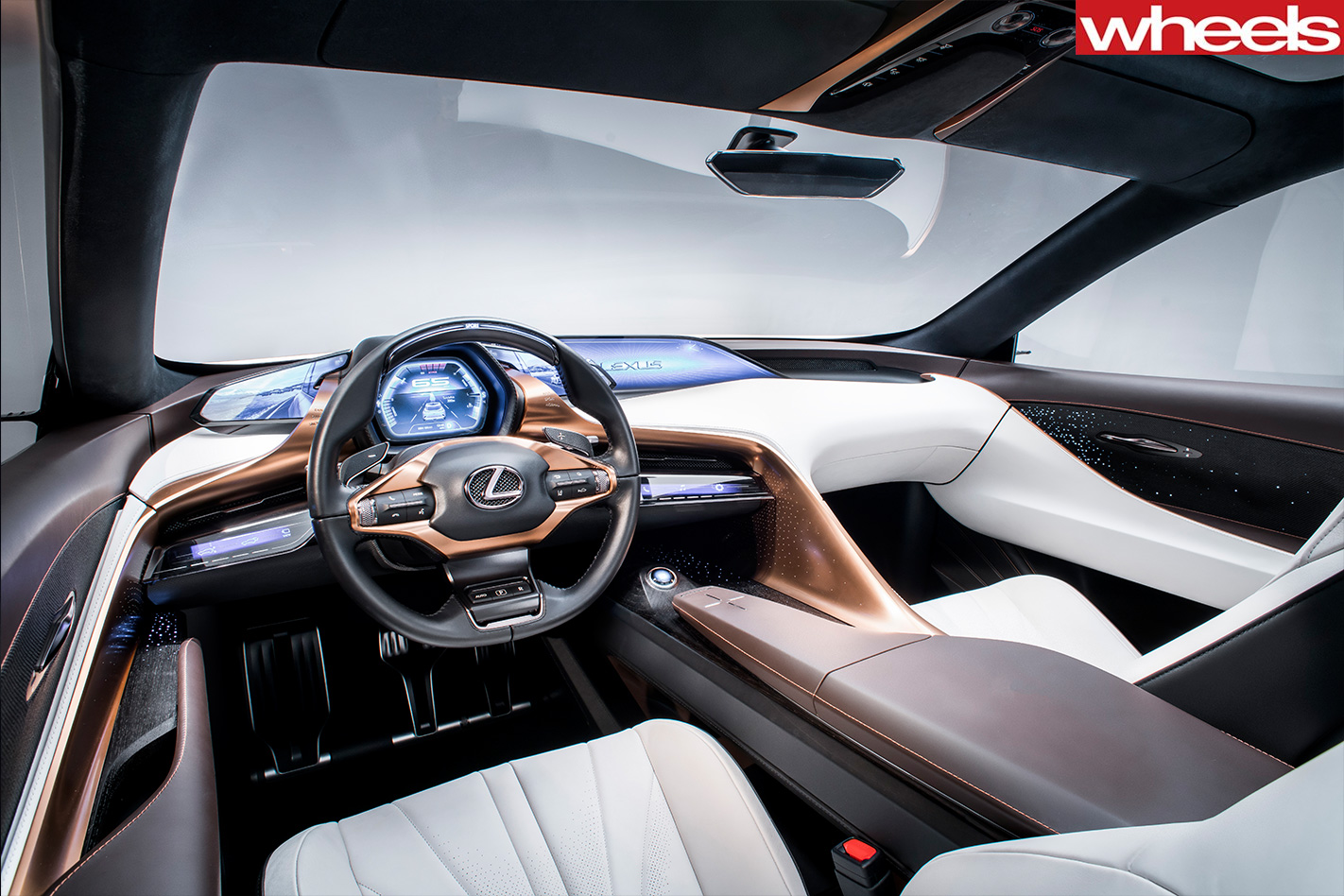
On the inside, driver controls and ergonomics borrow cues from the LC flagship coupe, with many mechanical knobs and switches usurped in favour of touchscreen and gesture controls for a cleaner cabin design.
An enveloping pod puts the driver centre stage with digital screens presented for maximum visibility, but other occupants are also treated to screens in the second row and miniature LEDs pinprick the interior surfaces with ambient lights.
As you might expect, Lexus mentions autonomous driving capability for the LF-1 concept and a Chauffeur mode that controls the by-wire steering, acceleration and braking more efficiently than a human can, says its maker.
INFINITI has revealed what it terms “the next step” in its design language at the Detroit Auto Show today, whipping the covers off its sleek and attractive Q Inspiration Concept – a car which it also says is a concrete preview of the next generation of production cars.
There are, of course, elements that are definitely not going to be seen at the end of the Infiniti production line. Things like the Eames-inspired seats and full-length glass roof, for example, plus those suicide rear doors – a show-car staple that nearly always gets nixed.
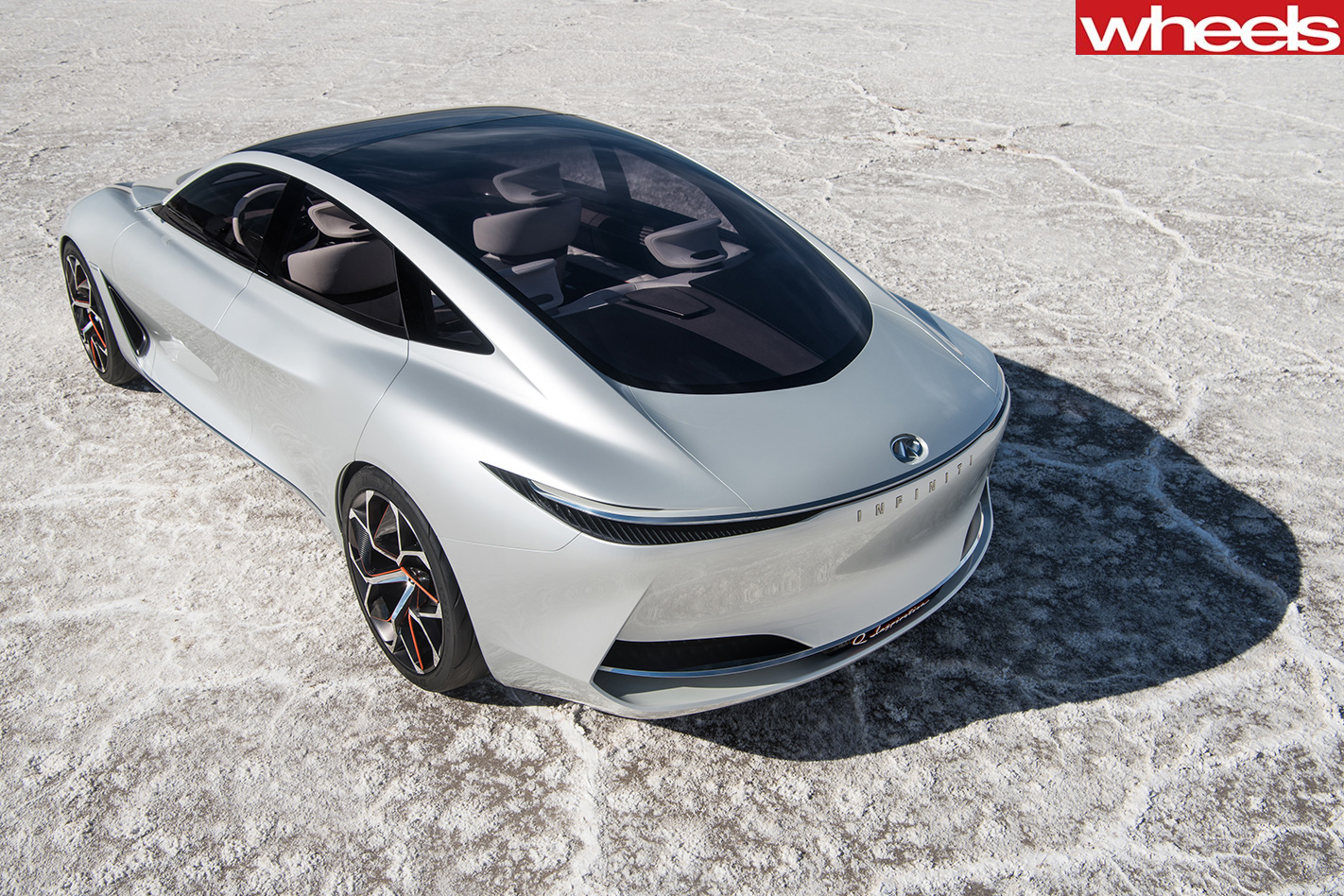
And the Q Inspiration lights the way, with taut, stretched sheet-metal linking the wheel arches, and plenty of adventurous venting around the front wheel wells, lower bumper and bonnet – the latter of which neatly disguises the bonnet shutline. Its fastback four-door design is overtly sporty while still remaining elegant.
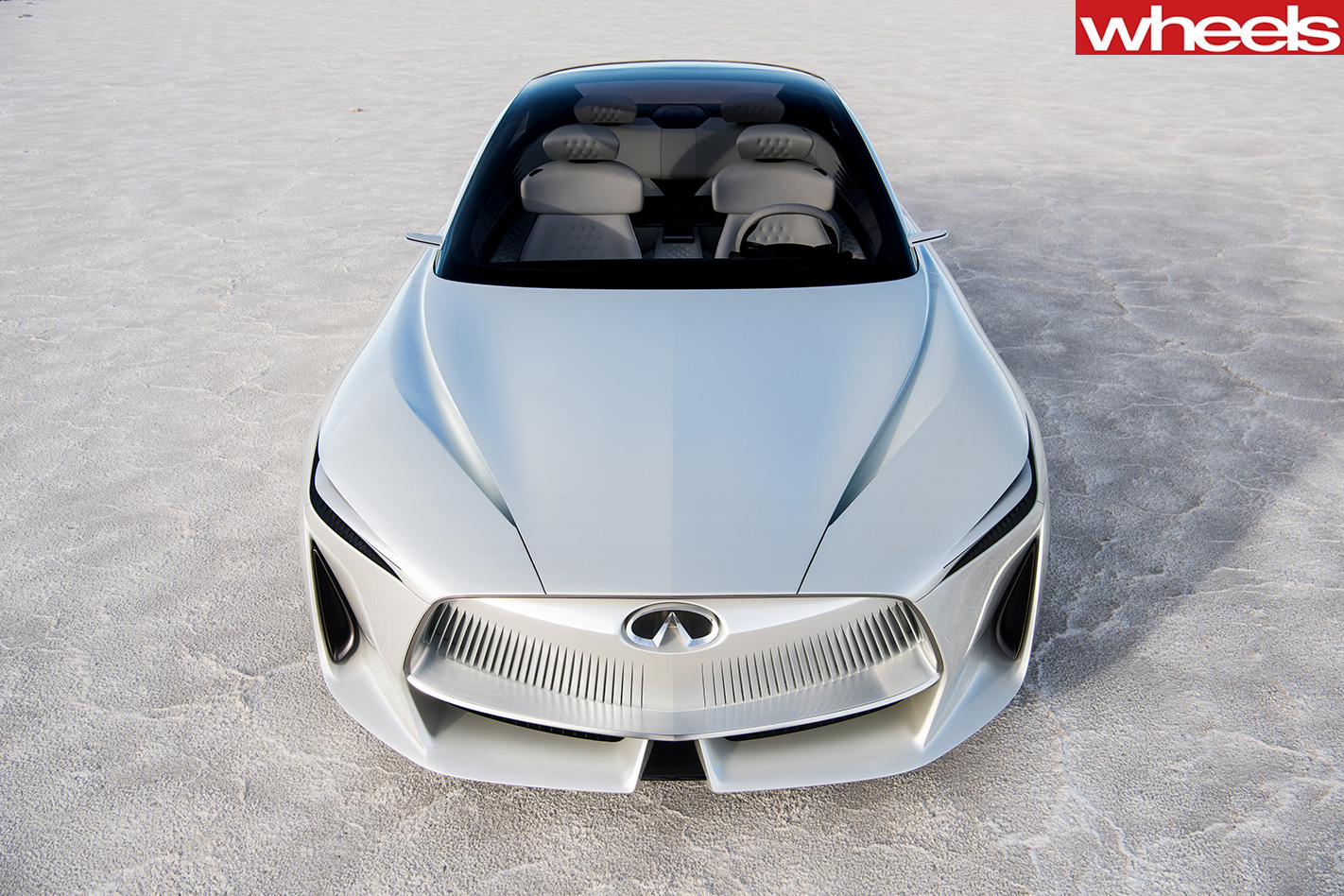
Around the back, thin tail-lamp slits are linked by a thin chrome bar to emphasise the car’s width, and though the absence of exhaust outlets suggests this thing is electric, Infiniti says a version of its variable compression ‘VC-Turbo’ engine, already set to power the next-gen QX50 SUV, lurks under the Q Inspiration’s bonnet.
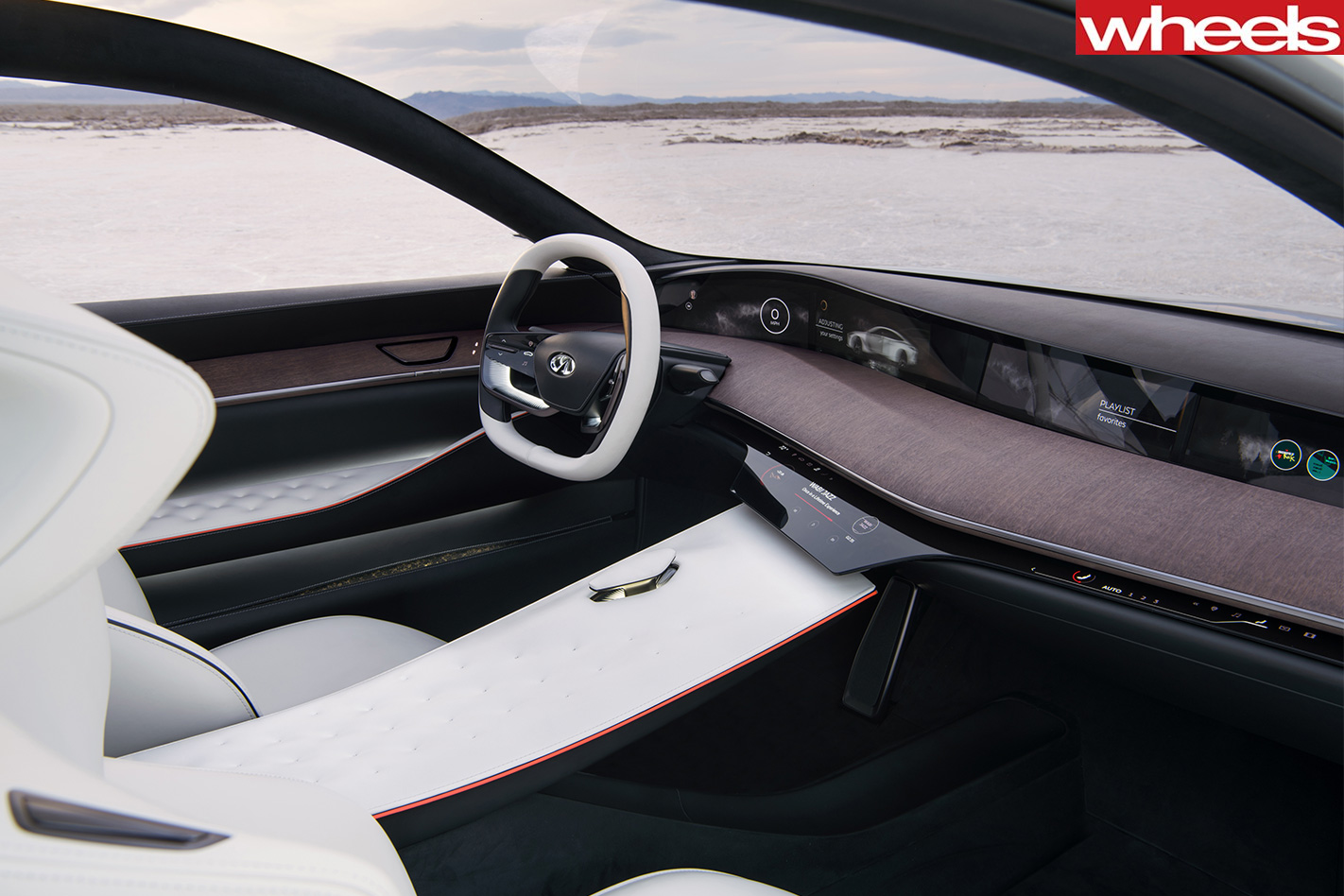
With Infiniti billing it as a mid-size sedan, the Q Inspiration could form the basis for the Q50’s replacement. First going on sale in in 2013, the present-generation Q50 will reach the end of its lifespan at the end of this decade, by which time an all-new model will be ready to grab the baton, and the Q Inspiration may just be a sign of what’s to come.
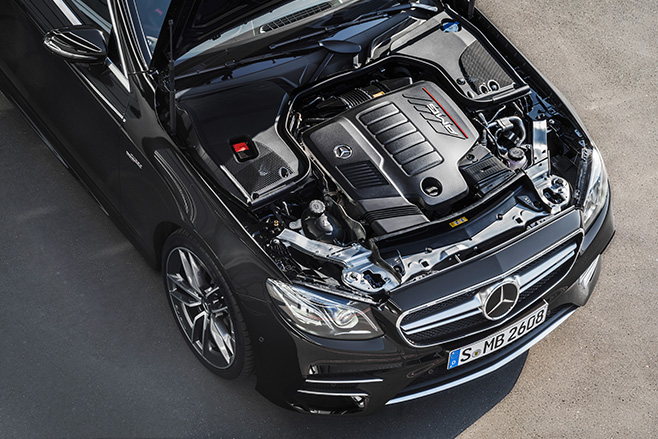
With Mercedes’ new 3.0-litre inline six-pot nestled in the engine bay, the new E53 aims to bridge the gap between E43 and E63 models.
As such, it scores a very respectable 320kW and 520Nm, which increases to 336kW/770Nm when the ‘EQ Boost’ system is active.
The EQ Boost is the starter-alternator in the 48-volt system, which also powers some mild hybrid functions of the six-pot. It also acts as a power source for the electric compressor, which allows for “a faster increase in torque for acceleration until the large exhaust gas turbocharger is deployed.”
That extra tenth comes thanks to the Cabrio’s hefty kerb weight of 1980kg, though even the coupe is a weighty beast at 1895kg.
Both variants run with Mercedes’ 4Matic+ all-wheel drive system, which is able to vary on a scale between AWD and fully rear-wheel drive. Its computer constantly varies the torque split based on driving conditions and driver input.
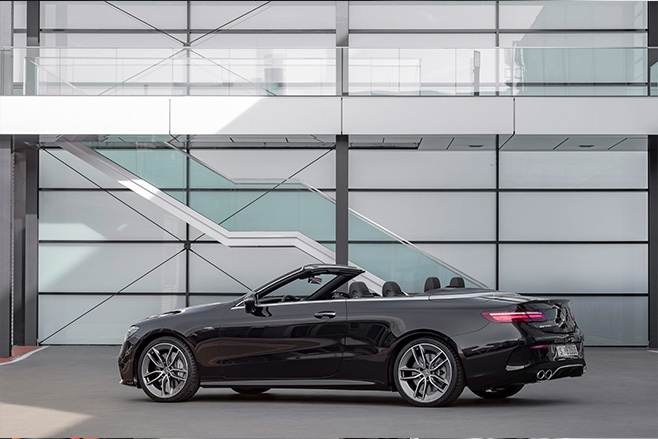
It also scores chrome highlights around the grille and on the front splitter, as well as the fins on the outer air intakes.
Pricing and arrival for Australia are yet to be announced, but it’ll be somewhere between that of the $159,611 E43 and the $209,611 E63.
