
LEAKED images have given us our first look at the 2018 Mazda 3, the car that will introduce a new generation of fuel-saving Skyactiv technology to the small hatch and sedan range.
Sharply styled, edgy but minimalist inside and hinting at its dynamic strength, the set of Mazda Kai Concept images leaked on a Belgian website show a concept version of the car that has, at times, ranked as the top-selling vehicle in Australia – take away fleet sales, and the Mazda 3 is one of the best-performing cars among private buyers.
Looking something like a shrunken-down Mazda RX-Vision concept, the Kei is likely to evolve into the Mazda-badged model that introduces Skyactiv-X, a high-compression petrol engine that can act like a diesel engine, ditching the spark plug in the interests of reducing fuel use and emissions.
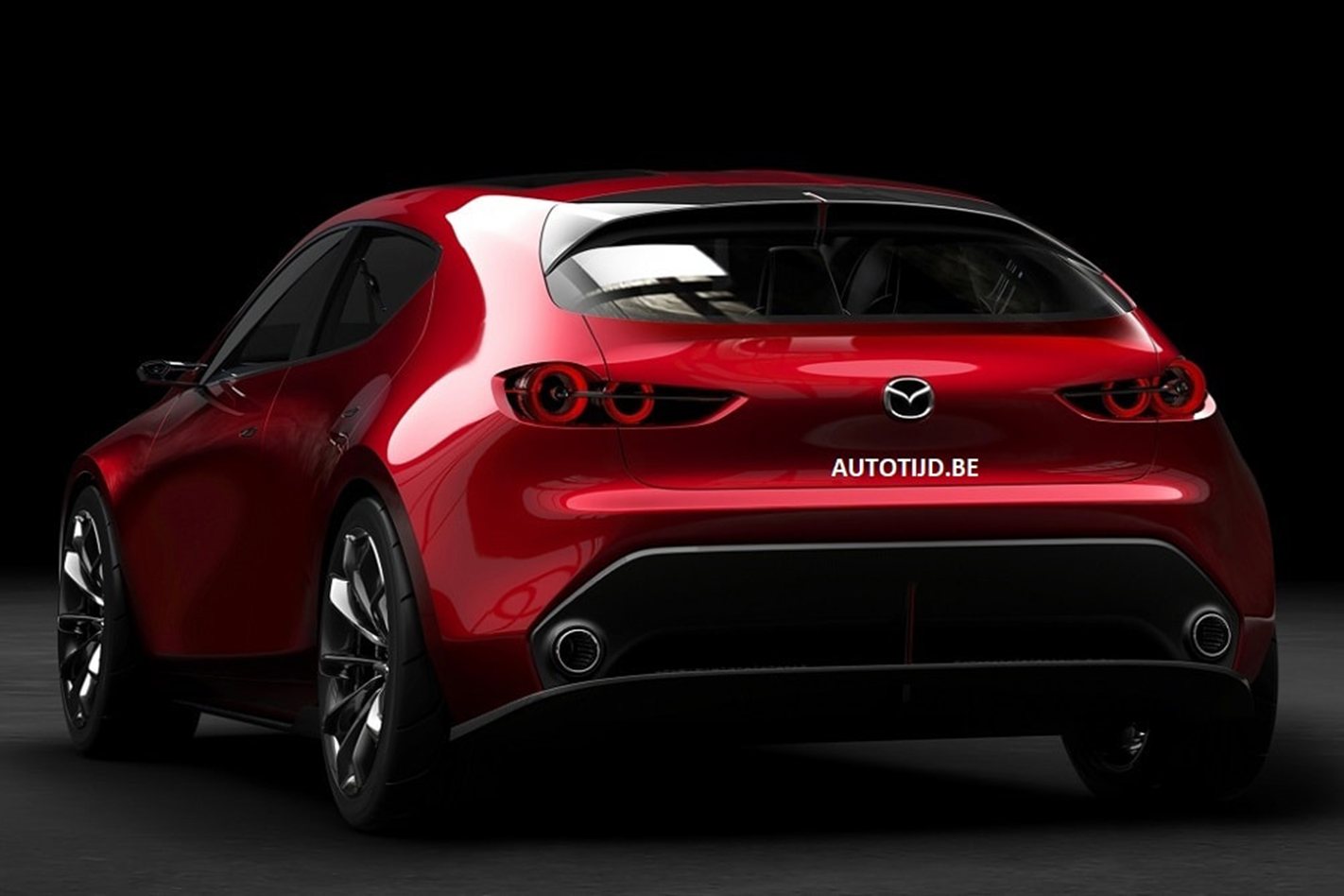
Down the back, the Kai concept hints at the Alfa Romeo Brera, itself a seductive design.
Making its debut alongside the Mazda Kai Concept will be what the car maker calls its “next-generation design vision”, a four-door, fastback-styled sedan that “embodies the concepts that will define the next generation of Mazda design, resulting in a more profound expression of the globally-acclaimed KODO design language Mazda debuted on the Mazda CX-5 in 2012”.
Mazda will also show an updated MX-5 RF, the hard-topped version of the two-seat roadster.
The media day for the Tokyo Motor Show starts today.
What stands out?
The Commodore is a roomy and comfortable family sedan or wagon, with great roadholding and the option of a big V8 engine. All models have a reversing camera and a self-parking system, and the more expensive can be ordered in sports or luxury versions.
What might bug me?
Paying for fuel, if you use the performance – especially in a Commodore V8.That your new family car does not have auto emergency braking or active cruise control (which can reduce your set speed to match slower cars ahead on the highway, until the way is clear). These features are available on many imported cars that cost no more.Trying to squeeze long objects into the boot: the seatbacks on the sedans don’t fold.
What body styles are there?
Four-door sedan and five-door wagon. Both are rear-wheel drive.The Commodore is classed as a large car, lower priced.
What features do all Commodores have?
Cruise control, and headlamps that switch on automatically when it’s dark.Dual-zone air-conditioning, which allows the driver and passenger to set temperatures independently.A reversing camera, front and rear parking sensors, and a self-parking system (which can guide you into a parking spot).An 8.0-inch colour touchscreen with a radio receiver, Bluetooth connectivity for audio streaming, USB input, voice control, and a suite of smartphone-compatible apps for music and other functions.Height and reach adjustment for the steering wheel, from which you can operate the cruise control, the sound system and your phone.Trailer sway control, which can operate the engine and brakes automatically to dampen oscillation.Wheels made from an aluminium alloy (rather than heavier and uglier steel). A full-sized spare wheel and tyre (except on the least costly Commodore, the Evoke, where this is optional).Six airbags. Anti-lock brakes, and electronic stability control – which can help you avoid a skid. (For the placement of airbags, and more on Commodore safety features, please open the Safety section below.)All Commodores are warrantied for three years and 100,000km.
Which engine uses least fuel, and why wouldn’t I choose it?
Three engines are available in a Commodore: two V6 petrols and a V8.The most fuel-efficient is the smaller V6, a 3.0 litre, which comes in the least expensive Commodore, the Evoke. It consumes 8.3 litres/100km on official test figures (city and country combined), and even this engine is sprightly.One reason you wouldn’t choose it is that you would like the extra grunt – and easier towing – that comes with the bigger V6 in the better equipped Commodore SV6 and Calais.This 3.6-litre offers about 20 per cent more power in most conditions, with a bit more zing to the exhaust note, while burning about 10 per cent more fuel.In the real world you can expect to average about 11.5 litres/100km from a Commodore SV6 over a mix of city and country driving – about the same as a turbo-petrol Ford Mondeo or Kia Optima GT, and 10-20 per cent more than a Subaru Liberty or Mazda6.There is a good reason why you migh bypass both V6 engines: you want to enjoy the outstanding performance and smoothness of the much bigger V8 – designated by General Motors the LS3 – that you can get in the Commodore SS, SS-V Redline and Calais V.In many driving conditions, the V8’s 6.2 litres can lazily supply half again as much urge as you would get from the smaller V6. It sounds great doing it, too, with a roar that gets better at higher revs.While the V8 can be thirsty, if you drive gently it’s easy to keep consumption near 14 litres/100km in the real world.The V6 engines come only with a six-speed automatic transmission, as do all wagons, and Calais and Calais V sedans. The sportier V8 sedans come standard with a six-speed manual gearbox, with the six-speed auto an extra-cost option.(Power outputs and all other Holden Commodore specifications are available from the Cars Covered menu, under the main image on this page.)
What key features do I get if I spend more?
The least costly Commodore is the Evoke, which comes with the smaller V6, cloth seat trim, 16-inch wheels, and the equipment in all Commodores. A tyre repair kit is standard, but you can have a space-saver or full-sized spare tyre as an option.Spend more and you can have an SV6, historically the most popular VF Commodore. That brings you the bigger V6 engine, leather wrap on the steering wheel, and some fake leather on the seats. You can leave its proximity key in your pocket or bag while unlocking and starting the car. There is satellite navigation, and a head-up display (a speedo and tacho show on the windscreen). And you gain LED daytime running lamps, a blind-spot alert, and a rear-traffic alert.The SV6 also has a stiffer, ‘sports’ suspension setup, and bigger (18-inch) wheels with wider and lower profile tyres, for more grip and more responsive steering. The big wheels work with a rear wing and side skirts to add some visual flair. The nose also looks different from the Evoke, with less chrome, a wider grille opening, and small vents near the outer edge of the bonnet.The Commodore SS has the same equipment and similar styling treatment, but steps up the wheel size to 19 inches, comes with the V8 engine, and has a limited-slip differential (which can help the car accelerate by reducing wheelspin).(Formerly the next price step took you to the SS-V, which had 19-inch wheels and added front foglights and part-leather trim. About January 2017 Holden dropped the SS-V from the Commodore line-up, however.)Spending more again will get you an SS-V Redline, which uses the same V8 engine but stiffens the suspension another notch and adds bigger, more powerful Brembo brakes. Wheel diameter remains 19 inches but wider rear tyres are fitted. The automatic transmission gains shift paddles on the steering wheel. Smart key entry allows you to unlock the car with your key safe in a pocket or handbag. Windscreen wipers operate automatically when it rains. There is a sunroof, and a nine-speaker Bose sound system. Driver aids include a system that warns you of an impending frontal collision, at speeds over 40km/h.The Calais shifts the focus from performance to comfort. It returns to the 3.6 litre V6 engine and drops the limited-slip differential. Equipment is generally at SV6 level, but the 18-inch wheels are shod with slightly narrower and taller-profile tyres, the suspension tune is softer, and the cabin has leather trim. Only an automatic gearbox is available.The Calais V comes as a V6 or a V8, and generally mirrors the SS-V Redline’s fit-out but with 19-inch wheels and the softer suspension. It adds powered and heated front seats, and heated exterior mirrors with lights to illuminate the ground near the doors.Each version except (for 2017) the Calais is available as a wagon – marketed as Sportwagon.As a send-off for the Australian-built Commodore, for which production is to end in October 2017, Holden has also offered two enhanced sports sedans in small numbers.The Commodore Motorsport Edition is based on the SS-V Redline, but adds adaptive suspension, better cooling and brakes, heated front seats, and cosmetic enhancements, while increasing wheel size to 20 inches. Holden said it would build up to 1200 of these.The Commodore Director is a Calais V with similar modifications, limited to 360 vehicles.
Does any upgrade have a down side?
The shallower – or lower profile – tyres fitted to the bigger rims tend to ride more roughly, and may cost more to replace. High performance tyres on the sportier versions may wear more quickly. Stiffer suspensions tend to be less comfortable. The more powerful engines use more fuel.Red and white are the only standard colours; the remaining seven cost more.
How comfortable is the Holden Commodore?
The presentation and ambience inside a Commodore depends on the model you’re riding in.The Evoke gets a cheap feeling plastic steering wheel and some harder plastic finishes. That is offset by the logical touchscreen menus and comfortable seats. There’s good storage for smaller items, with decent door pockets and a covered centre console.The SV6 and SS models bring a leather-clad steering wheel, and a sportier look thanks to some red tinges on the instrument cluster and elsewhere. However the SV6 and SS are also quite busy, with lots of different finishes: there’s matte metal, shiny chrome, Alcantara suede, shiny black plastic and textured grey plastics, for example.By the time you get to the Calais V there is plenty more leather, and suede-look finishes that can be had in a lighter colour. It’s an elegant touch for what is an upmarket interior.Being a big car, the Commodore also rides comfortably. That is partly because there’s plenty of distance between the front and rear wheels, so it’s less prone to pitching than a smaller car would be. It is also impressively quiet, something appreciated on long drives at freeway speeds.In automatic form, the bigger of the V6 engines is the more soothing of the two, being less likely to change down a gear on moderate applications of the accelerator.
What about safety in a Commodore?
Every Commodore comes with anti-lock brakes, stability control, six airbags, auto-on headlights and a reversing camera.The airbags are in the usual places: two directly ahead of the driver and front passenger; two outside the driver and front passenger to protect at chest level from side impacts; and curtain airbags on each side extending past both seat rows, to protect all outer passengers at head level from side impacts.Every Commodore but the Evoke also has long-lived LED daytime running lamps (which make it easier for other drivers to see you), a Blind-spot alert and a Reverse traffic alert. The Blind-spot alert informs you of other vehicles lurking near your rear corners, which might not show in your mirrors. The Reverse traffic alert helps when you are backing blindly out of a parking spot, warning you of cars approaching from either side.The SS-V Redline and Calais V lift the sensory safety another couple of notches with Lane departure and Forward collision alerts – both based on camera-type sensors. The former monitors your position on the highway in relation to lane markers, warning you if you have let the car wander (perhaps from distraction or fatigue). The latter looks ahead of you for vehicles that have slowed suddenly, warning you if it thinks you are approaching too fast.Unlike most similar systems, the Commodore’s Forward collision warning is not designed to prevent crashes at very low speeds: it operates only above 40km/h.No Commodore has autonomous emergency braking (which could apply the brakes automatically to prevent a crash).The Australasian New Car Assessment Program (ANCAP) awarded the Commodore its maximum safety rating, five stars, in May 2013.
I like driving – will I enjoy this car?
The Commodore is one of the more affordable rear-wheel-drive cars, and the rear-drive affects how it performs – in a good way. The main advantage is that the wheels driving the car are not also steering it. Tyre grip is more evenly spread over the demands of accelerating and turning, and power from the engine is not fed through the steering system. The benefits become more obvious as the power output increases.Even the more comfort-oriented Commodore models – such as the popular Evoke, Calais and SV6 – exhibit excellent road manners. The car corners confidently and brings high levels of grip, along with excellent control that ensures it is predictable and recovers quickly from lumps and thumps.This is a car that rises to the challenge of faster, flowing bends.Those seeking maximum excitement can opt for the sportier V8 versions, which have a stiffer suspension set-up that translates to sharper responses – the car reacts more immediately to steering inputs, for example.The V8 engine is the standout choice, and the one Holden has invested the most time and effort in for this latest version of the Commodore, the VF Series II.It has loads of pull in any gear, at almost any speed. Even in fifth or sixth gear up a hill it usually accelerates up confidently. Drive the engine harder in first or second gear and it’s very brisk and loads of fun.There is enough power from the V8 to have the rear tyres fighting for grip, especially on a wet road. Traction control steps in to restrict wheelspin.The V8 also has the sound to match its high performance. There’s a distinctive roar that intensifies with engine speed, to the point where it can be quite loud in the cabin. Enthusiasts will love it, but those looking for a relaxed, refined ride may be put off by the bellowing and burbling.The bigger Brembo brakes on the SS-V Redline have a slightly firmer pedal feel, but their biggest advantage is being able to take more high speed punishment. The benefits on the road are likely to be minimal for most drivers, but those looking to take their car on a track will appreciate their extra performance in extreme situations.The limited-run Commodore Motorsport Edition, and Commodore Director, take trackworthiness to another level, with their more capable brakes, engine oil and transmission coolers, and electronically controlled suspension dampers that react to road conditions and can be adjusted from the driver’s seat.“The LS3’s grunt means you can hold the car in these lovely, flowing oversteer drifts across the top of the track, yet there’s real precision to its turn-in and mid-corner purchase,” Wheels magazine senior reviewer Nathan Ponchard reported after sampling a Motorsport Edition at the Phillip Island race circuit.
How is life in the rear seats?
The Commodore is one of the few cars where three adults can comfortably fit across the rear. It also has great head and leg room, along with rear air-conditioning vents.However there is no centre rear headrest, and the outer rear headrests are fixed, so taller people cannot raise them for comfort.It is designed to take three child seats (although some wider seats might not fit). However on the sedans, the mounting brackets for the top tethers are not fitted on the two outside seats; you’ll need to grab a spanner to screw in the appropriate bolts.
How is it for carrying stuff?
Only wagons get a split-fold seat set-up, leaving buyers of the sedan with less flexibility for carrying long or bulky items (there’s only a ski port that reveals a small hole in the centre of the rear seat).Still, the boot on the sedan is sizeable and easily swallows a family’s holiday gear.
Where does Holden make the Commodore?
All Commodores were assembled at Holden’s plant at Elizabeth, South Australia, until production ended in October 2017.
What might I miss that similar cars have?
Auto emergency braking, which some slightly smaller family cars offer as standard – among them the Mazda6, Subaru Liberty, Kia Optima, and Volkswagen Passat.Adaptive cruise control, which can moderate your set cruising speed to accommodate slower traffic. Many other family cars offer this.Depending on which Commodore model you’re considering, other cars you might want to look at are the Kia Stinger, Volkswagen Arteon, Ford Mustang, Toyota Camry, Skoda Superb, and Hyundai Sonata.
I like this car, but I can’t choose which version. Can you help?
As Aussie-built Commodore stocks begin to dwindle, any of the V8s looks like great value.However, our reviewers are particularly partial to the SS-V Redline, citing its superb chassis and Brembo brakes.
Are there plans to update the Commodore soon?
The Commodore VF arrived in 2013. A minor update for the VF Series II in October 2015 focused on the V8s, replacing the 6.0-litre engine with the stronger, 6.2-litre, LS3 V8 that had previously been reserved for Holden Special Vehicles cars.About January 2017 Holden dropped the SS-V trim-level and the Calais Sportwagon, and extended satellite navigation to all V8s and the SV6 and Calais, with V8s, the SV6 and the Calais V also gaining a head-up display.The limited-run Motorsport Edition and Director went on sale for pre-order in January, with most spoken for a week later.Holden ceased producing the Commodore in Australia on October 20, 2017.Its imported replacement, the ZB Commodore, went on sale February in 2018 and is primarily a front-wheel drive car, with all-wheel drive also available. There are three engines: turbocharged petrol and diesel four-cylinders, and a petrol V6.The new Commodore range also includes Sportwagon versions and luxury-focused Calais variants.
The Lexus CT 200h has received a mid-life update which brings fresh and sportier styling, cabin improvements, and autonomous emergency braking as standard.
The upgrade brings Lexus Safety System+ to the hybrid CT, with camera and radar based pre-collision technology capable of detecting and preventing or mitigating a collision with pedestrians or vehicles.
As well as auto braking, the system also features lane departure warning with steering assist, active cruise control and automatic high beam.
Infotainment has also been enhanced with a 10.3-inch touchscreen replacing the 7.0-inch version in the previous model.
The additional equipment sees prices rise by around $2000 for the CT200h Luxury and F Sport variants, with the range-topping Sports Luxury going up by just $510.
While the CT200h has been withdrawn from the US market it’s still reasonably popular in Australia. It’s the Japanese luxury brand’s most popular hybrid model here, with 7000 sold since it was introduced in 2011.
It shares the Toyota Prius’ hybrid powertrain which includes a 1.8-litre petrol engine and two electric motors run by 1.3kWh nickel-metal hydride batteries.
It can travel at up to 45km on batteries, which can be charged while on the move thanks to regenerative braking.
With the engine in use it has a combined fuel consumption of 4.1L/100km.
MY18 Lexus CT 200h pricing
- Luxury $40,900
- F Sport $50,400
- Sports Luxury $56,900
TOYOTA is about to trial a new phone-based sat-nav system that’s so smart, it can tell you which lane of a multi-lane freeway is humming along the fastest.
The catch? It’s a trial of the technology, using 500 taxis plying the streets of Tokyo and fitted with satellite-based monitoring systems that track how fast they are moving. The system will analyse both video and data logs to send out alerts on which lane is travelling the smoothest to other drivers using the TC Smartphone Navigation app.
“Toyota has been providing services such as airbag-deployment emergency notification, automatic navigational map-data updating and operator services using its data communications module (DCM) commercialised in 2002,” the car maker said in a statement.
”Toyota started to make DCMs standard on Lexus-brand vehicles and optional on Toyota-brand vehicles in 2005,” it said. “Using driving data collected from DCMs, Toyota also has been providing its ‘T-Probe’ big-data traffic information service since 2011, which is currently available through original-equipment navigation systems and through Toyota’s TC Smartphone Navigation smartphone app.”
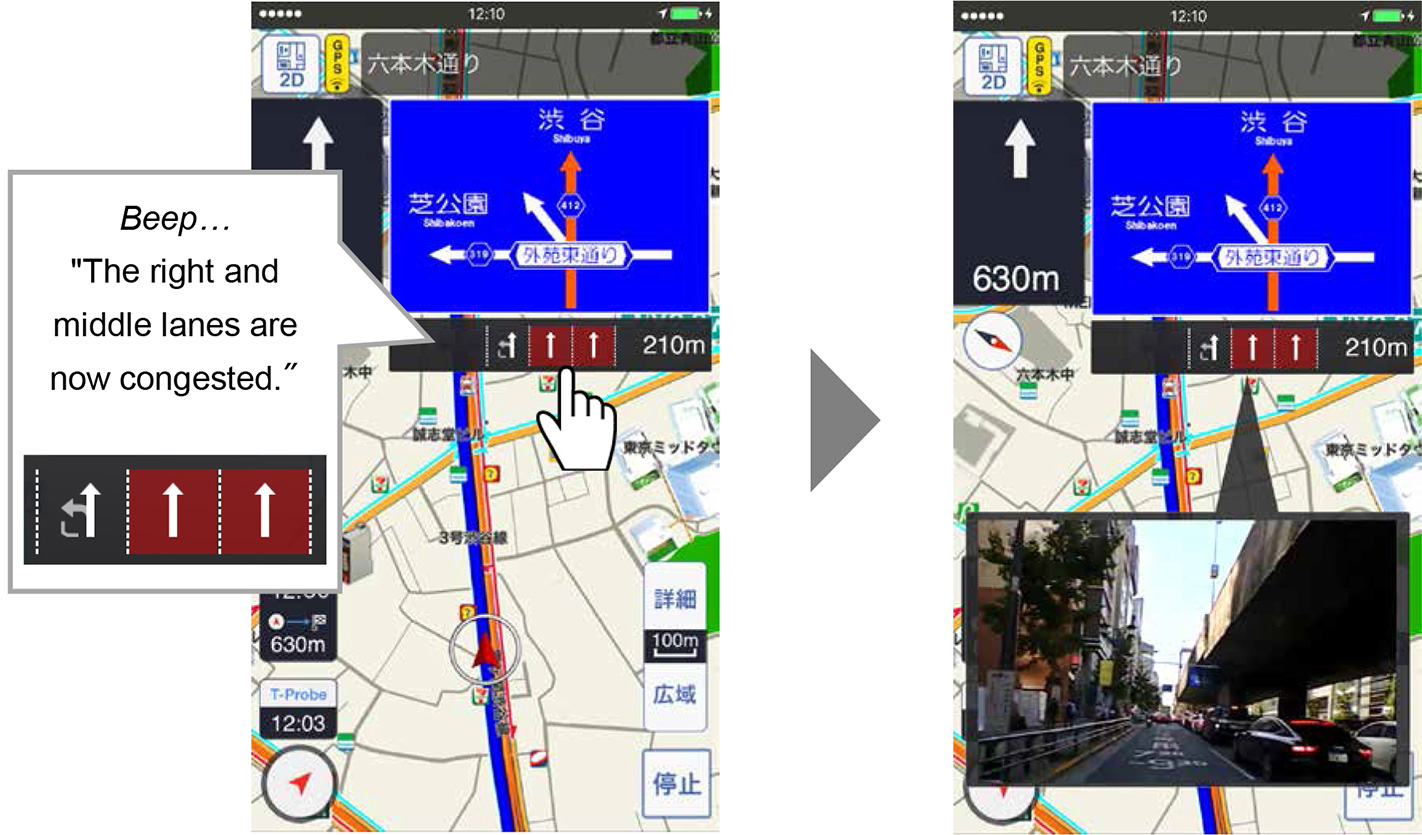
The app is currently only available in Japan. The trials, which start soon, will cover traffic conditions in the Tokyo metropolitan area before potentially being bumped to a much wider area.
Once it’s working, the system will alert the driver with a beep, and then show and say which lanes are congested, and which are freer-flowing. If you don’t believe it, the app will allow a user to tap on the screen and a real-time image of the traffic will pop up.
Toyota says one of the aims of the smart navigation system is to expand it to cover “road construction and traffic accidents, on roadway obstacles, as well as on parking-space vacancies and the degree of congestion around various retail outlets directly facing streets and other roadways”.
Current sat-nav systems that show real-time traffic information, such as Google Maps or Apple Maps, are limited to showing how fast traffic is moving along a section of road as a whole, not a single lane of a road.
EUROPE’S watchdog has confirmed overnight that it had raided the head offices of “several German car brands” as it launches an investigation into cartel-like practices affecting diesel-engined cars.
“The European Commission can confirm that on 23 October 2017 its officials carried out inspections at the premises of car manufacturers in Germany,” the group said in a statement released overnight.
“The inspection is related to commission concerns that several German car manufacturers may have violated EU antitrust rules that prohibit cartels and restrictive business practices,” it said.
The raids are believed to have targeted Daimler, the owner of Mercedes-Benz, and Volkswagen Group, which owns brands including Audi, Porsche, Lamborghini and Skoda. BMW has also said EU officers had raided its corporate offices last week as part of an investigation linked to claims that the car makers colluded over the size of AdBlue tanks that hold liquids used to reduce the harmful emissions coming out of diesel engines.
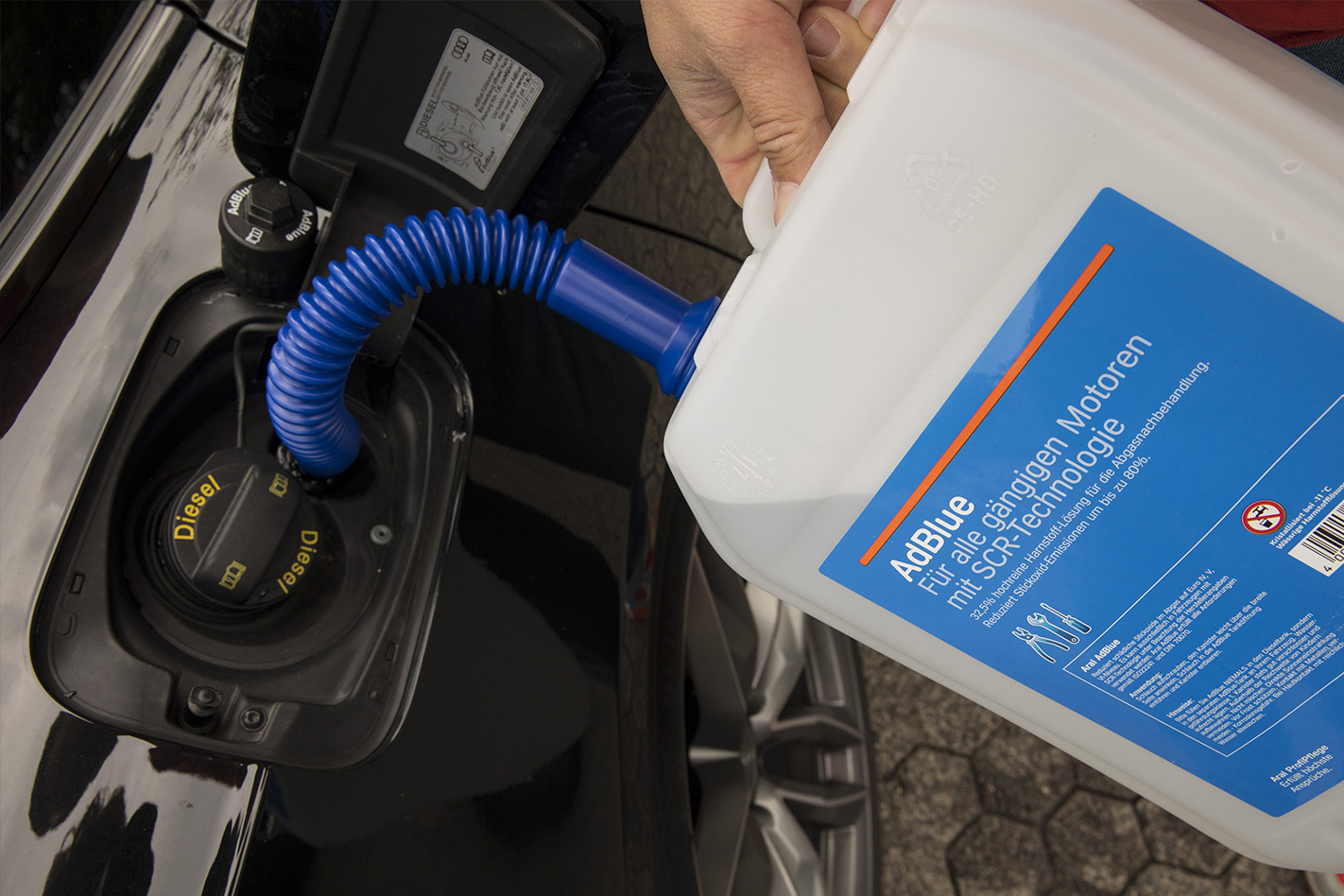
Last week’s separate raid on BMW came as Daimler revealed it was working with the EC after flagging to authorities that it may have engaged in cartel-like behaviour. Under the European Commission’s leniency laws, Mercedes-Benz is likely to receive less severe penalties should the EC then confirm price fixing.
The claims are believed to stretch back to the mid-1990s, meaning millions of cars are likely to have been affected. The EC said the searches were an early step in its investigation and did not mean that any of the companies it had inspected had been found guilty of anti-competitive behaviour.
Midsize SUVs are all the rage these days – especially in the luxury market – and private school car parks across the country are thick with GLCs, Q5s and X3s.
The Lexus NX range arrived in 2014 at a critical time for the Japanese luxury automaker, giving it a core new model at a time when the SUV craze really began to light the ‘burners.
However, while the NX has proved to be a top-seller for Lexus, it’s never been at the pointy end of its own segment. This mid-life update aims to go some way towards rectifying that.
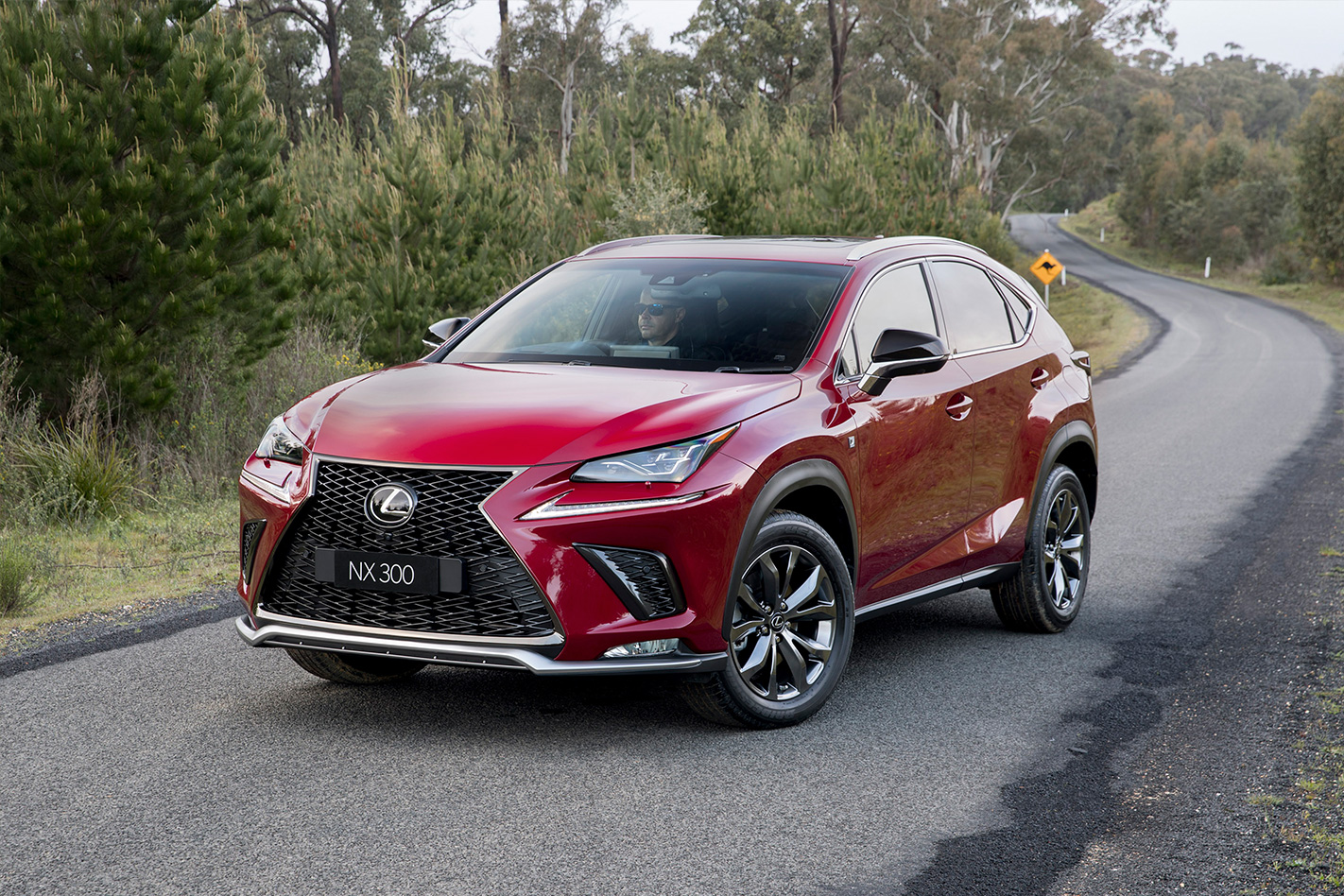
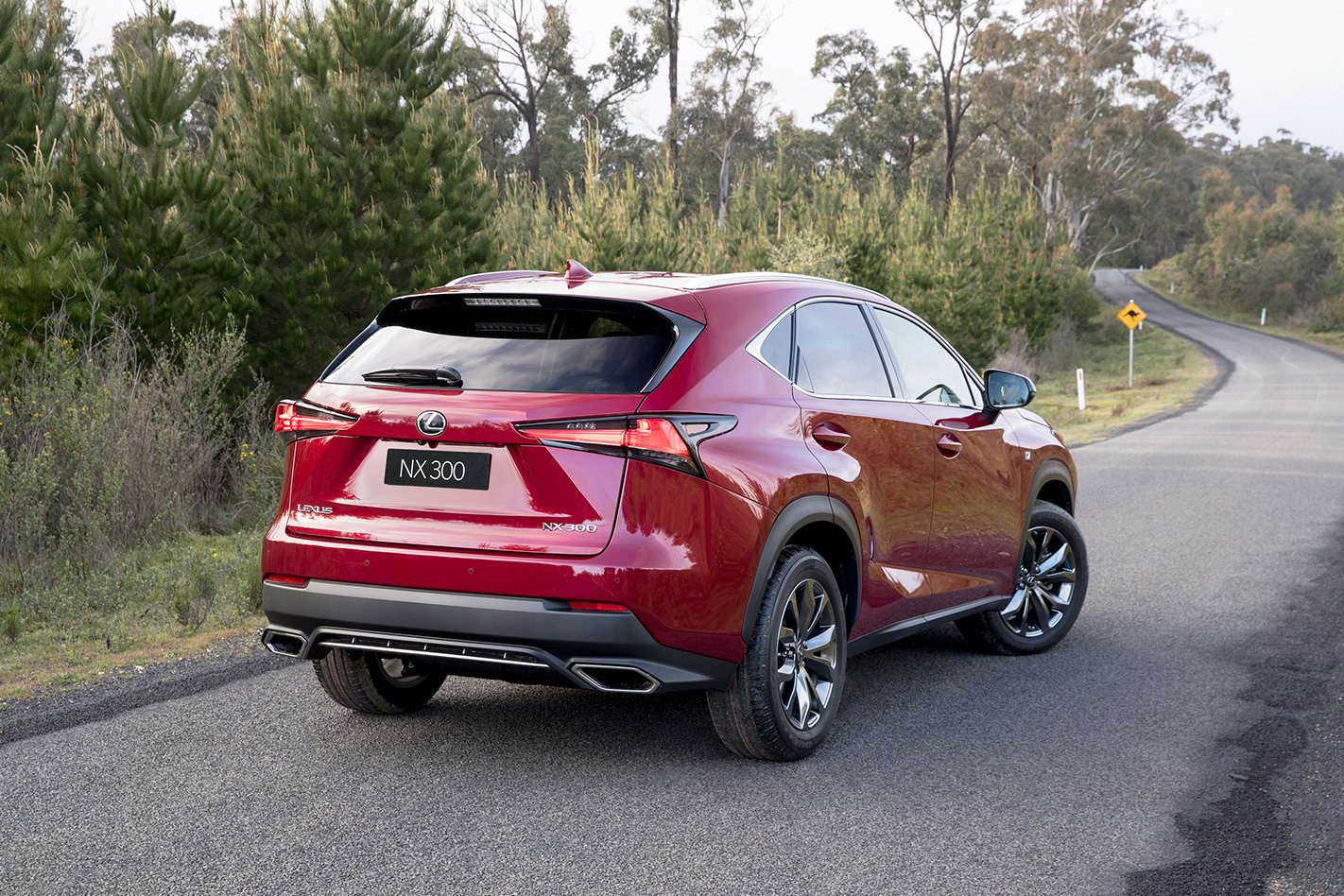
The first major update to the Lexus NX. Big changes are limited to how the models are specced – a wider application of active safety gear as standard, for example – while cosmetically there are few alterations. Inside and out, bar some extra colour choices, slightly tweaked body plastics and infotainment upgrades, the new NX looks pretty similar to the old one. Autonomous emergency braking is standard on all models now though, which is definitely a move in the right direction.
WHY WE’RE TESTING IT
Lexus reckons it has improved the way the NX rides and handles, which is good news considering its first attempt at the car failed to impress in those areas. Other changes are minor, though there’s a new infotainment setup to play with, and a few upgrades to standard equipment levels.
THE WHEELS VERDICT
You’d normally expect a car to get better and better as you ascend through its model hierarchy, but in the NX’s case that’s definitely not true. The base model NX300 Luxury is the brightest member of this family, and that’s largely thanks to the fact it’s not equipped with the ineffective adaptive suspension that’s standard-fit on the mid-grade F-Sport and high-trim Sports Luxury.
With no upgrades under the bonnet for this mid-life refresh, there’s still no reason to recommend the slack 300h hybrid variant. Unless you’re happy to sacrifice driveability in the pursuit of fuel economy, that is. Stick with the petrol turbo. There’s more kit on offer to justify a slight price rise, but unfortunately the changes applied for the 2018 model year don’t go far enough to keep the NX in the same league as its German rivals.
For now, the only measurable advantage it has against its more sophisticated competitors is its price – with retail stickers starting in the mid-$50k region, the NX is roughly $10k more affordable than the German-badged options.
THE WHEELS REVIEW
LEXUS is a relative newcomer to the mid-size SUV game, but since launching in 2014 the company’s NX model family has quickly become its top-seller in Australia. However, that’s more a result of it being a mid-size SUV rather than a superior product to other vehicles in the Lexus stable. Because it isn’t by a long shot.
Lexus has knocked things out of the park on its first try before – think original LS400 that put the brand on the map, or perhaps the first-gen IS – but unfortunately the NX hasn’t been quite as compelling. It may be a popular choice within Lexus showrooms, but out on the streets it’s a different story. The Europeans dominate.
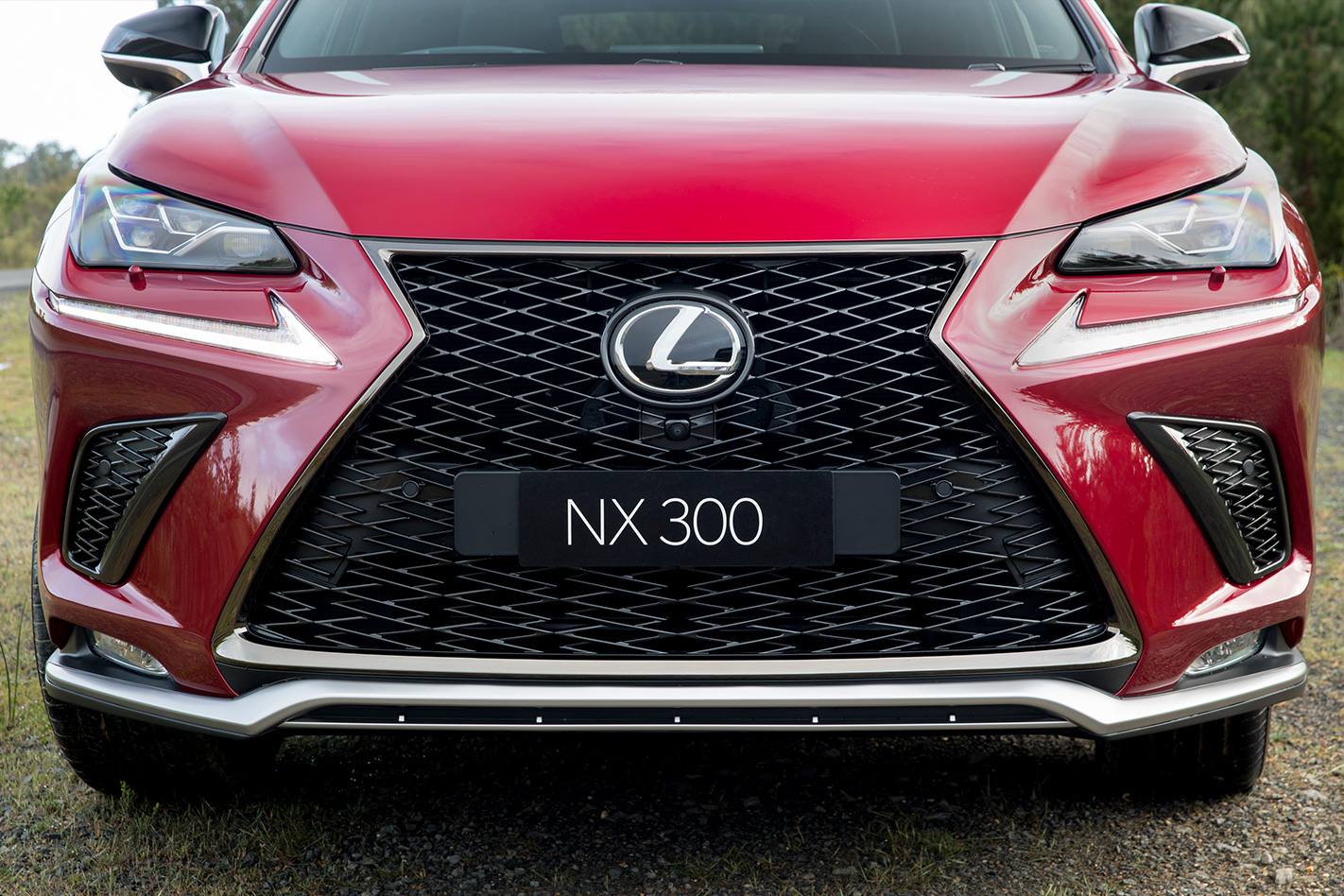
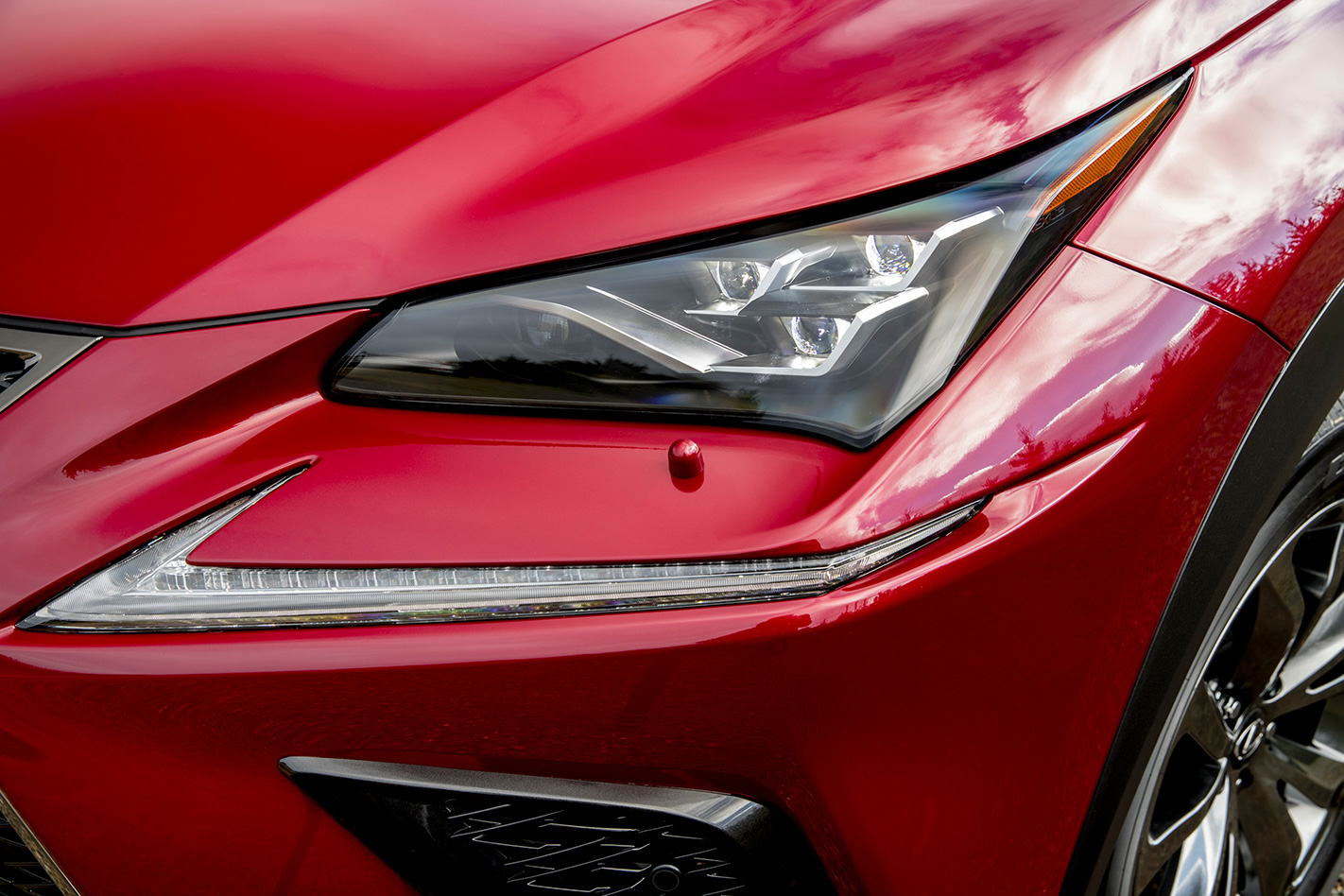
Now halfway through its lifecycle, this is the NX’s chance to redeem itself. The bodywork is largely carry-over, but squint and you’ll find bi-LED headlamps on all models, new taillight graphics, reshaped bumper plastics, tweaked grilles and new wheels.
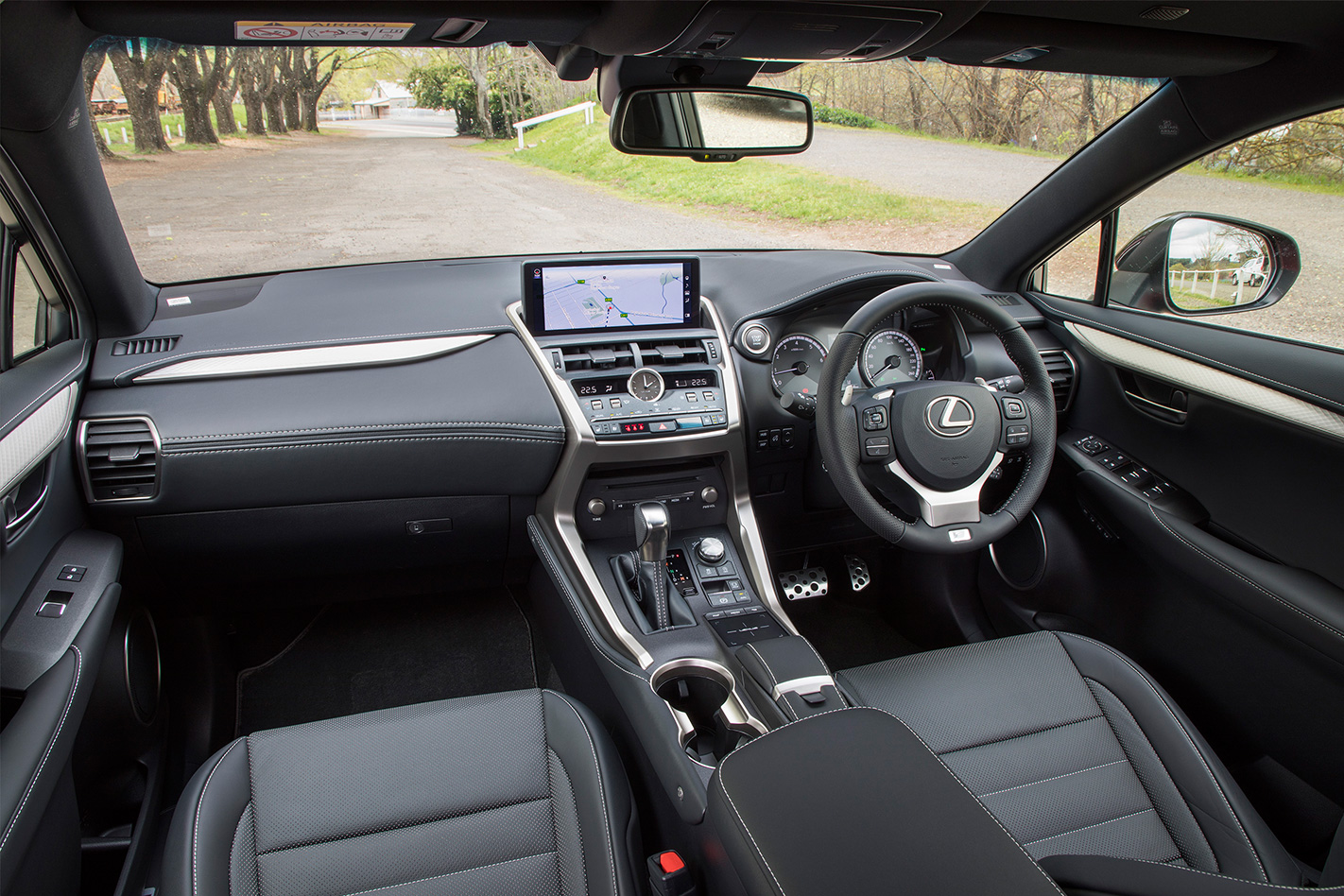
And that means the same usability issues carry over. It’s easy to get lost in the button-heavy centre stack, and there’s only a token shelf squeezed between the ventilation and audio controls that isn’t big enough for any contemporary smartphone. It all feels rock-solid and well built, but visually and ergonomically this is one messy design.
At least the infotainment issue has been addressed, with the latest iteration of Lexus’ touchpad interface now standard equipment across the NX range along with the aforementioned big screen. The laptop-style touchpad’s responsiveness to inputs has vastly improved, it’s still a clunky system to navigate through. At least it means the pre-update model’s stingy 7.0-inch screen has been turfed forever.
There’s no change to the 2.0-litre turbo petrol four in the front of the NX300 (formerly known as the NX200t), though that engine and its six-speed auto have always been good partners for the NX. Weighing a minimum of 1700kg – add 70kg for the AWD 300 Luxury we’re testing here – it’s a heavy thing, but the turbo four doesn’t sweat too much.
What grates, though, is the ride. Suspension improvements that see stiffer stabilisers, low-friction dampers and myriad other minute spring and damper setting alterations do improve the NX’s handling somewhat, but on the 300 Luxury, with its passive dampers, it’s not as compliant as some of its key rivals.
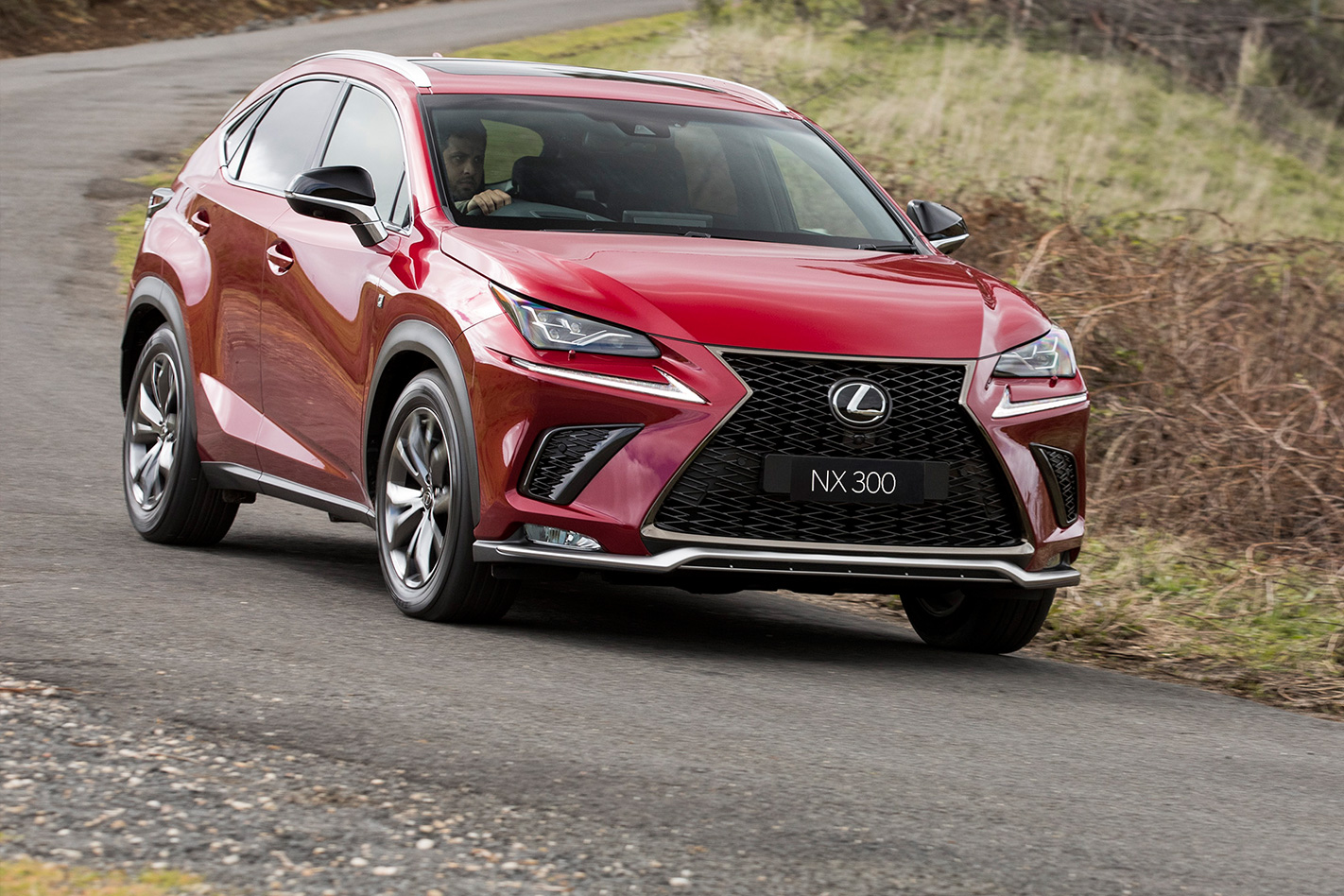
And that’s a problem given Lexus’ rivals aren’t sitting on their hands. BMW and Audi have just launched new-generation models of the X3 and Q5 – both of which have impressed us greatly – while Alfa Romeo is also entering the fray with its Stelvio, which, unlike the NX, boasts genuine driver appeal.
Even high-end variants of mainstream mid-size SUVs like the Volkswagen Tiguan and Peugeot 3008 are more compelling than the Lexus. That’s not good news for Japan’s premier luxury carmaker.
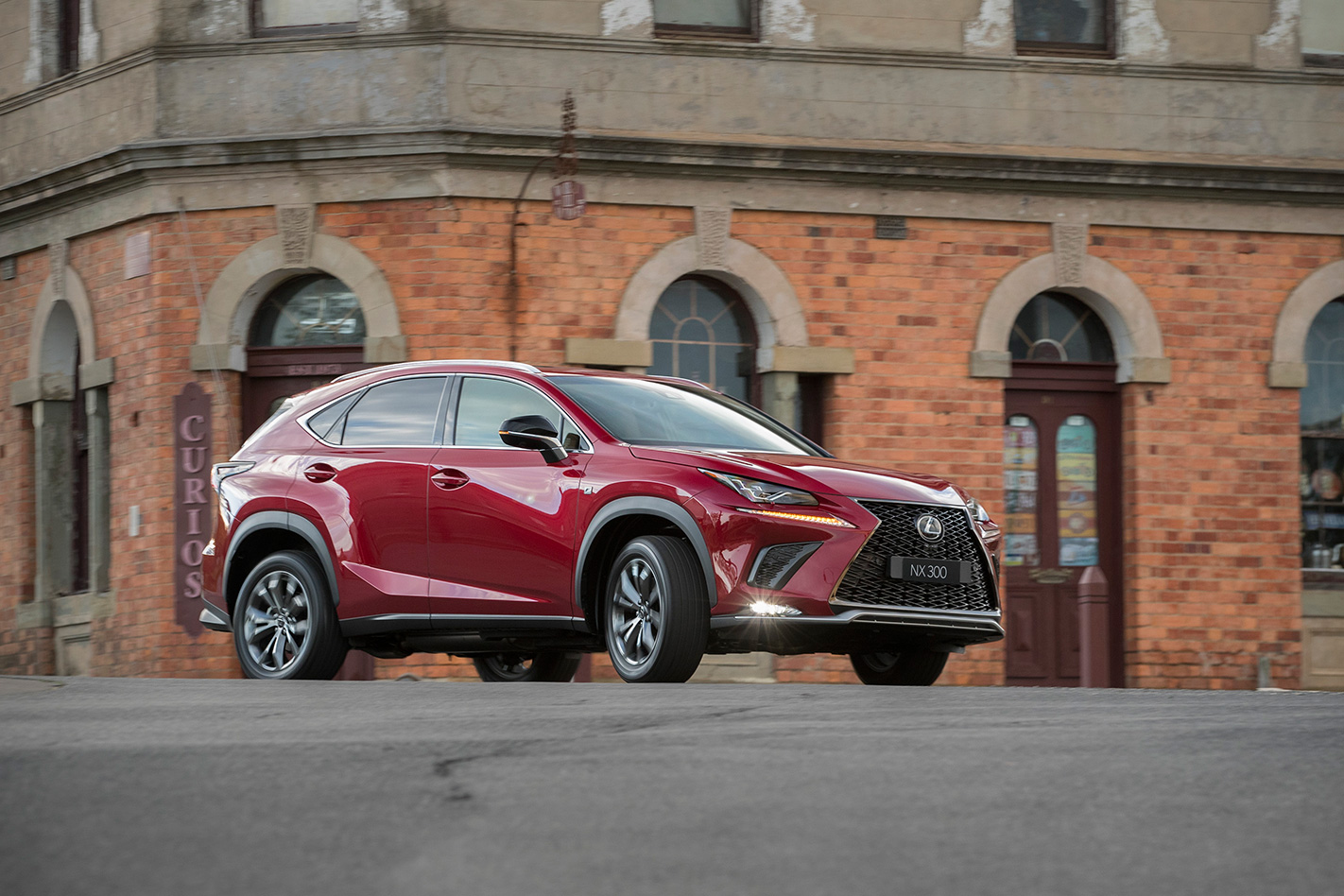
Buy a petrol-powered Luxury model and throw the $6000 enhancement pack at it to gain a panoramic glass roof, 14-speaker Mark Levinson audio, and colour head-up display. In that configuration, the NX is at its most compelling.
2018 LEXUS NX300 LUXURY AWD SPECS
- Model: Lexus NX300 AWD Luxury
- Engine: 1998cc 4cyl, dohc, 16v, turbo
- Max power: 175kW @ 4800-5600rpm
- Max torque: 350Nm @ 1650-4000rpm
- Transmission: 6-speed automatic
- Weight: 1770kg
- 0-100km/h: 7.1sec (claimed)
- Economy: 7.9L/100km (claimed)
- Price: $59,300
- On sale: Now
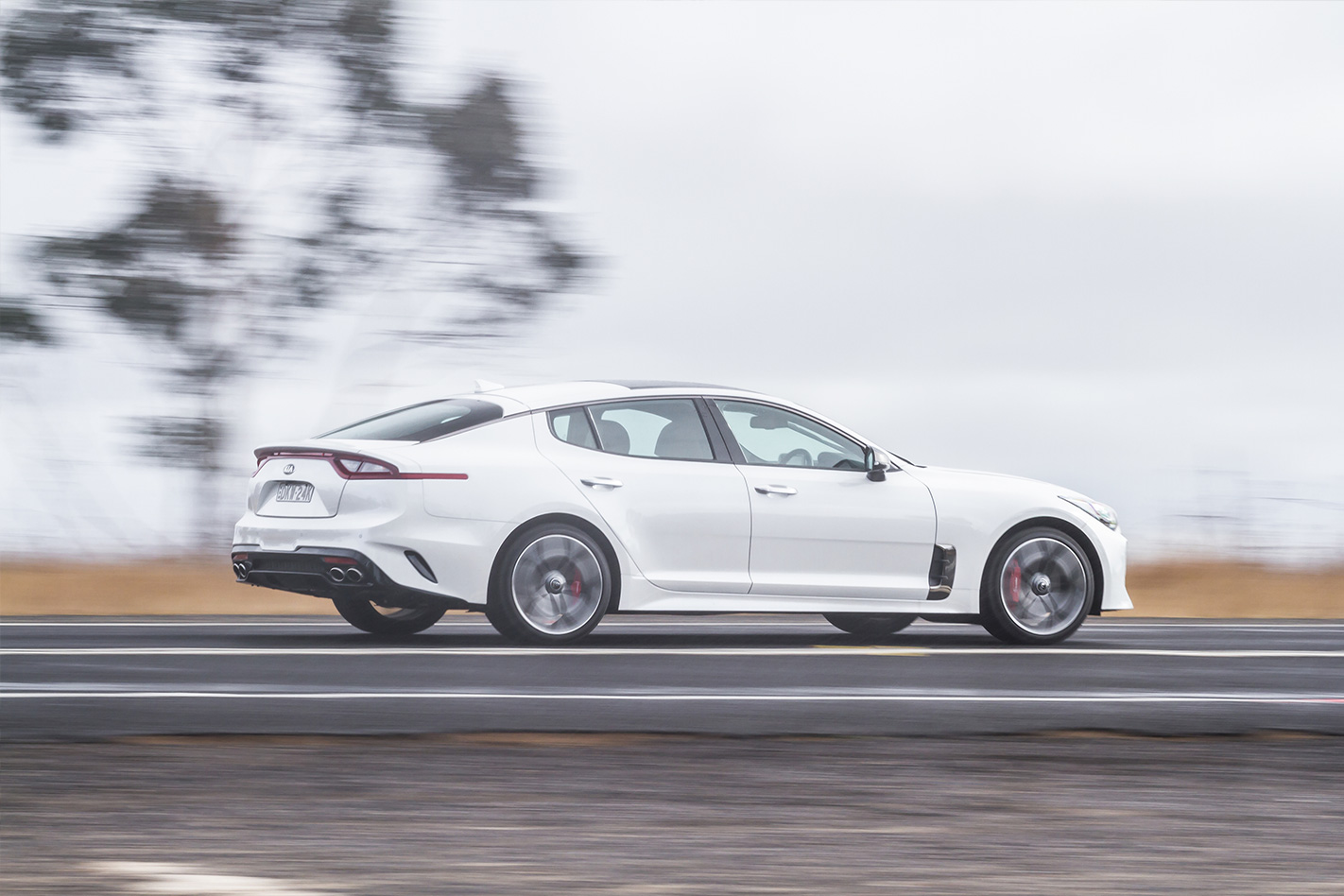
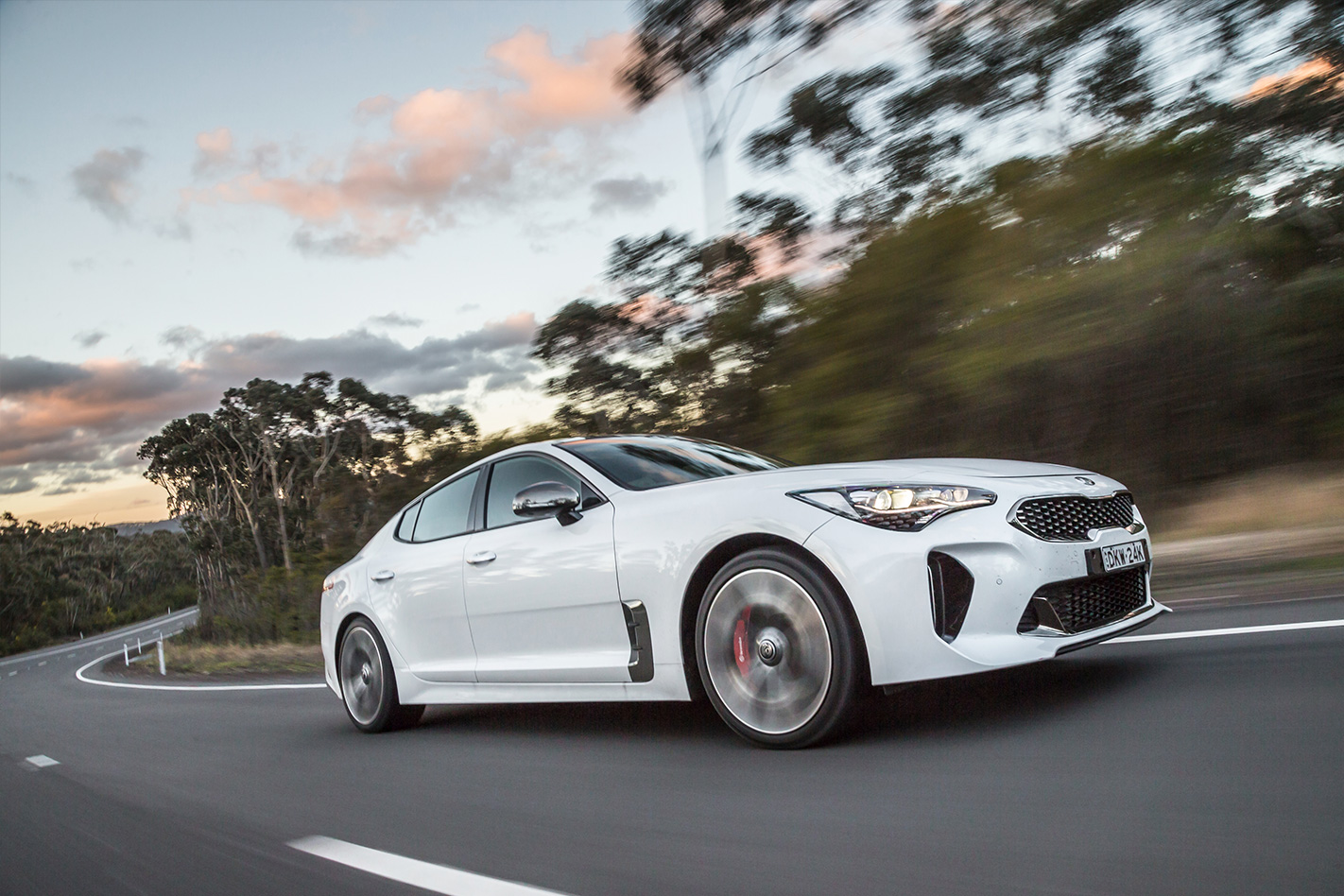
Kia has defied convention to launch a rear-drive sports car in Australia at a time when the world seems focussed on churning out front-drive drudgery. Here’s our look at the mid-spec V6 version of the Kia Stinger.
TELL ME ABOUT THIS CAR
Unless you’ve been living under a rock for the last year, you’ve probably heard a lot about the Kia Stinger already. Much of that press coverage has been devoted to the range-topping Stinger GT. For a long time, we thought the GT would be sole V6 Stinger that Kia was building, so when it was announced that the range would be fleshed out by equally powerful 330S and 330Si models, our interest was more than piqued.
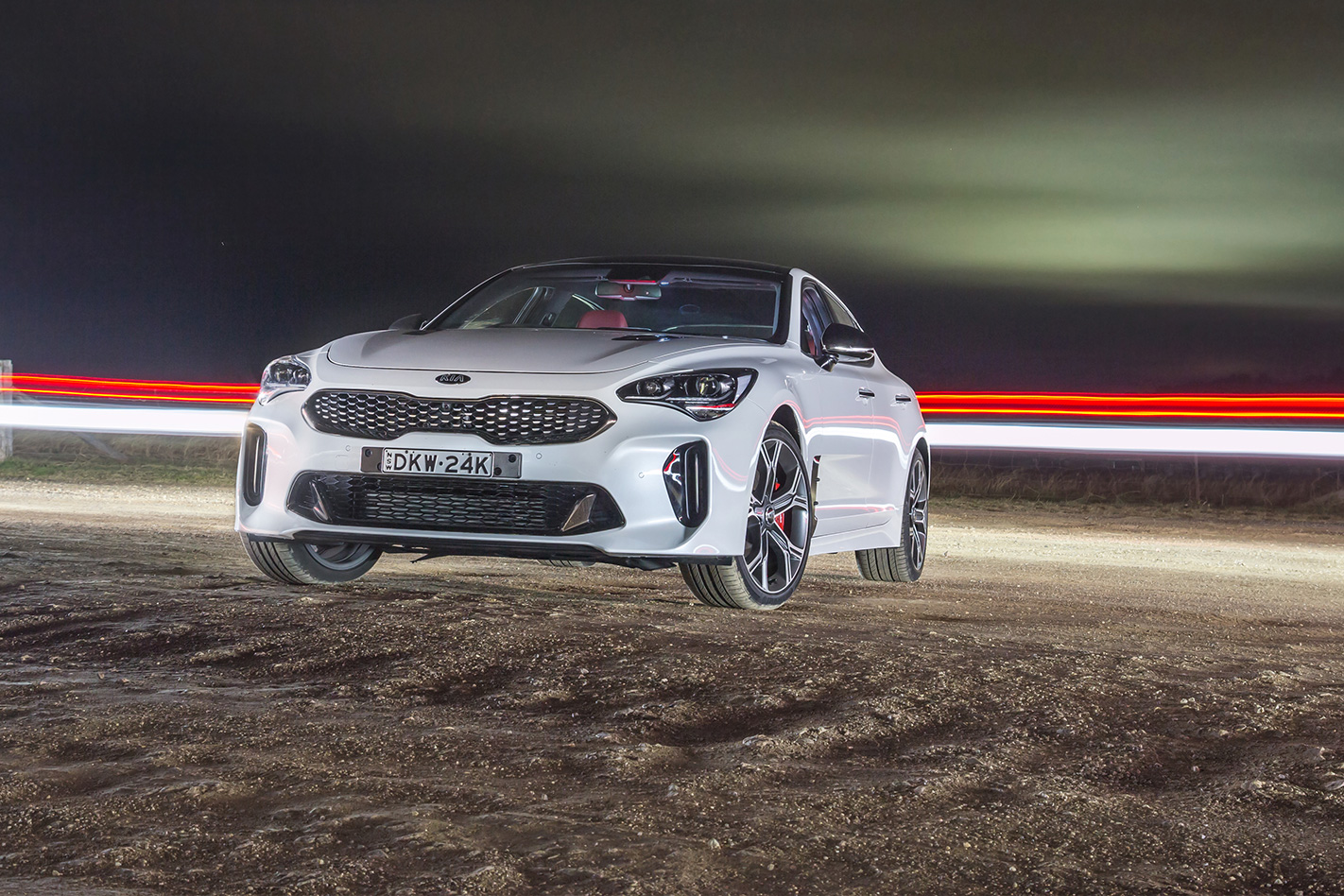
The departure of the Aussie-built Ford Falcon and Holden Commodore rear-drive sedans leaves a big hole in the market and the Stinger looks set to capitalise heavily on this otherwise unfulfilled demand. With a 272kW twin-turbocharged V6 driving the rear wheels through an eight-speed automatic transmission and priced from $55,990 (or $4K less than the GT), the 330Si’s key point of difference to the GT is that it runs on steel springs rather than adaptive dampers.
STRENGTHS
- It’s really quick. We persuaded it to 100km/h in just 4.9 seconds, helped by a launch control system. Don’t worry about Commodore SS-Vs outdragging you away from the lights. That isn’t going to happen.
- The interior is a lot more mature and of better quality than we expected. We were worried that all the budget had been ploughed into the go-faster bits and that the cabin would be an afterthought. It’s actually a really pleasant environment.
- There’s stacks of space inside. Okay, so it’s not as broad across the rear bench as a Commodore, but it’s hardly pinched in the back. The seats are generously proportioned and comfortable for long-distance cruising.
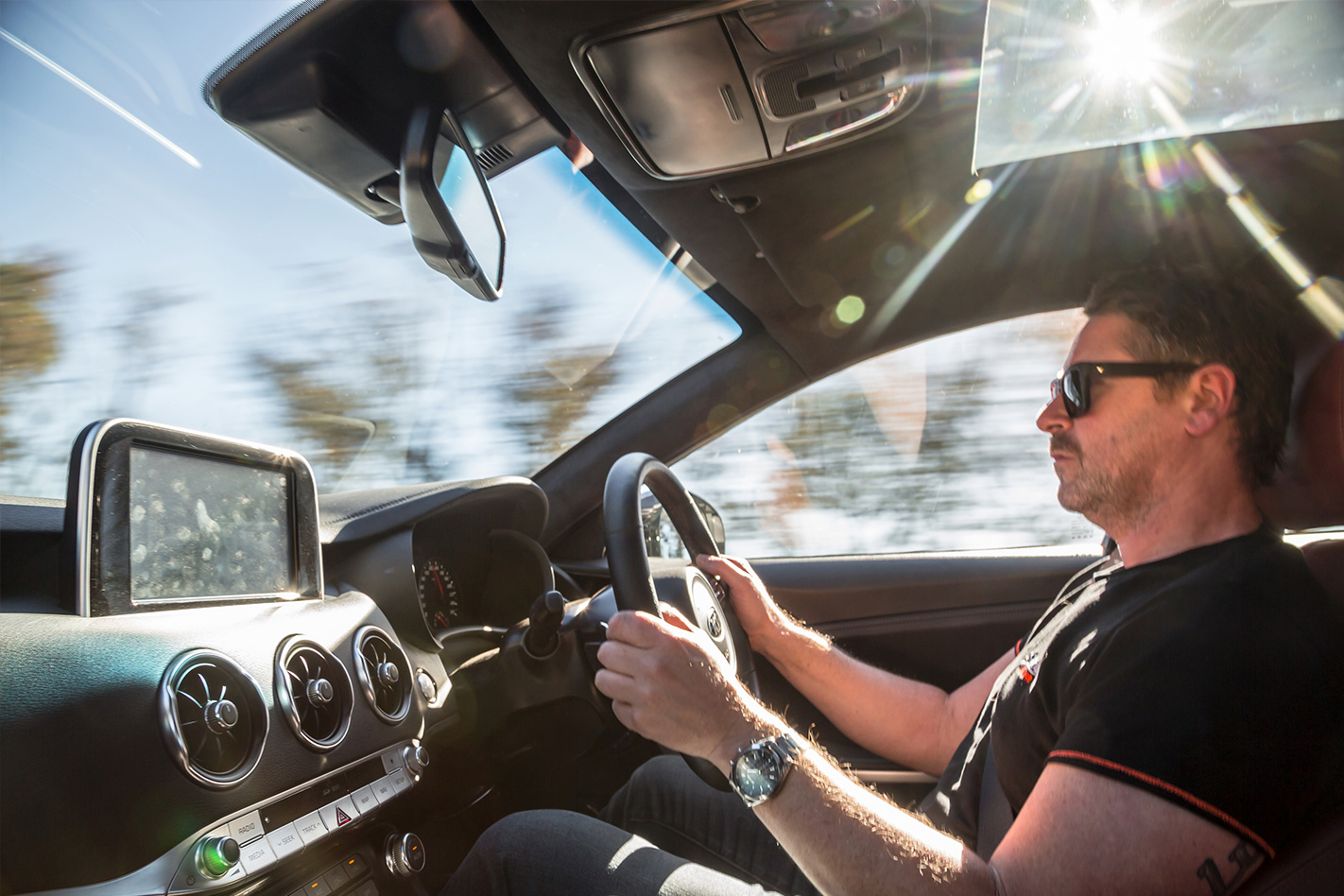
- Ride quality and engine refinement are extremely good. If you really put a premium on a comfy ride, ignore the GT and go for this one.
- The steering isn’t bad for an electrically assisted variable ratio setup. It feels particularly slick at low speeds.
- You won’t need to pack light. Even with the rear seats in place, the Stinger’s liftback gives you access to 406 litres. The rear seats fold almost flat and then you’ve got up to 1114 litres to play with.
- How many other cars can you think of that can get to 100km/h in 4.9 seconds and come with a seven-year factory warranty?
WEAKNESSES
- If you’re expecting something a bit rorty, you might be disappointed by the Stinger 330Si’s meek engine and exhaust.
- The exterior styling divides opinion. While it’s undoubtedly an assertive-looking car, some of the detailing is a little contrived and the lines can look bulky around the rear three-quarter.
- Get a bit overenthusiastic with the throttle and you’ll realise this big, heavy car has quite the appetite for its very soft rear tyres. Switch the stability control off with caution!
- The transmission has a penchant for changing gear of its own accord. In order to assume full manual control of the gearbox, you need to switch off some key electronic safety programs. Not ideal.
- There are some ergonomic glitches inside. The starter button is hidden around the back of the steering wheel, right where the watch clasp on your left hand will scratch the leather on the steering wheel when you’re groping for it in the dark. Likewise, the gear shifter is the wrong way round for performance gear changing and working with the weight shifts of the vehicle. Pressing it forward should always change down, not up.
- The rear seats do feel quite claustrophobic given the car’s rising window line and dark headlining.
Although we position the Stinger as a natural Holden Commodore successor, Kia developed the car with quite a different set of rivals in mind. They regard it as a (virtually) half price Audi S5 Sportback or BMW 440i Gran Coupe. Judged on that basis, it’s a soar-away success. Even as an alternative to the now-departed V8 Commodore, it’ll put smiles on plenty of faces. And is the 330Si the range’s sweet spot versus the GT? Let’s just say that you might find it hard to pay four grand more for a car that’s heavier and doesn’t ride as well.
THE HISTORY of Formula 1 is littered with great race cars, from modern legends like the Mercedes F1 W05, and Red Bull RB9, to classic monsters like the McLaren MP4/4, Williams FW14, and Lotus 72.
In a list of iconic F1 racers, it would be amiss to not include at least one of the creations to roll out of the big red doors at Maranello.
Ferrari is built atop a reputation of designing and racing beautiful and successful F1 cars. Of those, the 312B is one of the classics.
The 312B never won a constructors’ or drivers’ world championship, but with the likes of Mario Andretti, Niki Lauda, Clay Regazzoni, and Jacky Ickx sitting behind the wheel, it was always going to be looked back on fondly.
Now, there is a documentary on the iconic car, which raced in F1 from 1970 until early 1975, in a number of different guises.
Speaking to members of the Ferrari team from the ‘70s, along with F1 reporters and drivers, the documentary looks at the history of the iconic car, and what made it so special.
The sound of the 312B’s 3.0-litre naturally-aspirated Flat-12 engine roaring to redline would be worth the price of admission alone.
The film was released in Australia late last week, with limited showings around the country.
So grab your mates together, and head to the cinema for some of the best-sounding cinema you’ll hear all year.
WITH PORSCHE, less is often more. Weissach’s greatest products have regularly been the ones that were most surgically pared back; a purer distillation of the company’s essence.
Can the latest Porsche 911T elbow its way into that pantheon of greats? Is this the 911 we’ve been screaming out for?
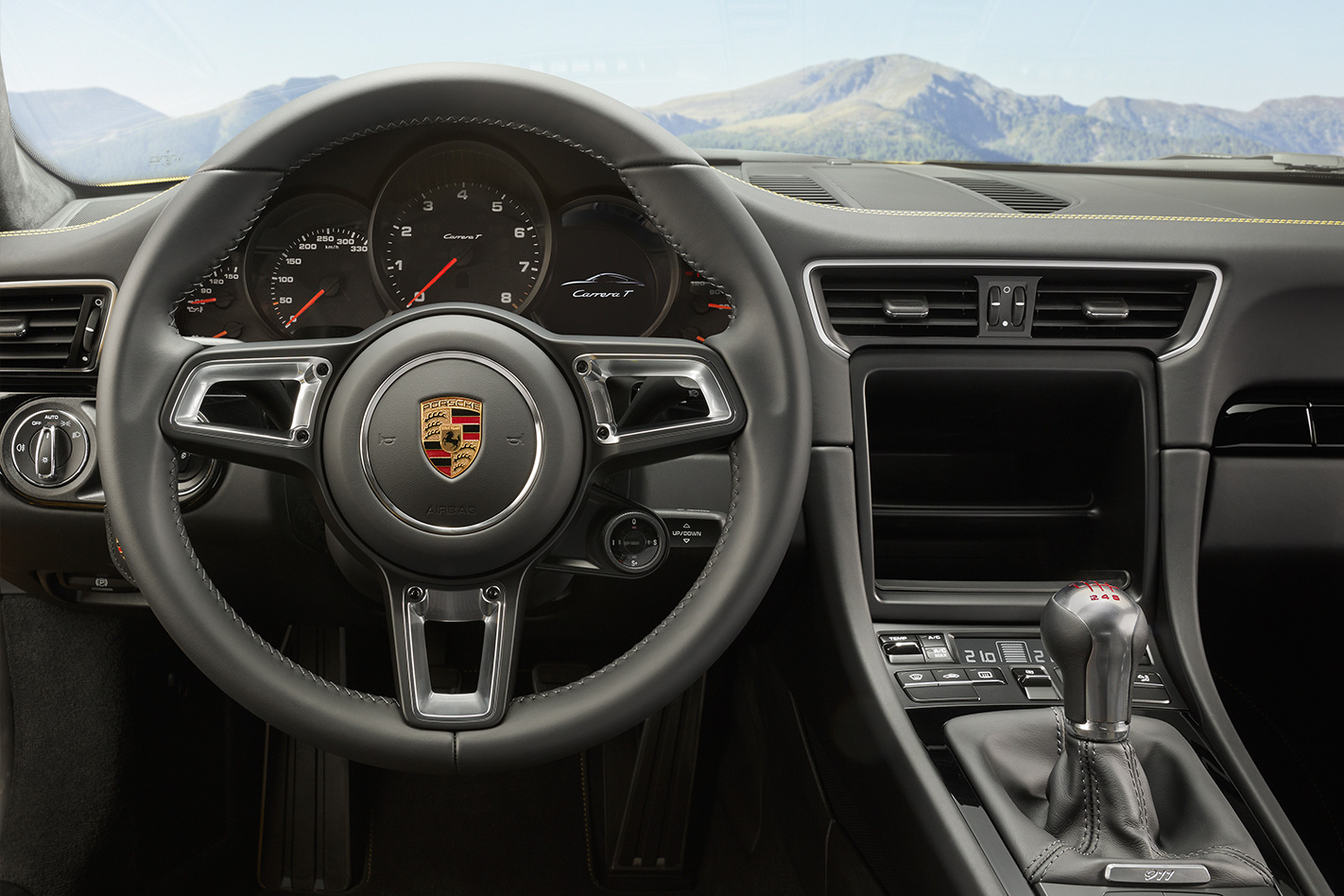
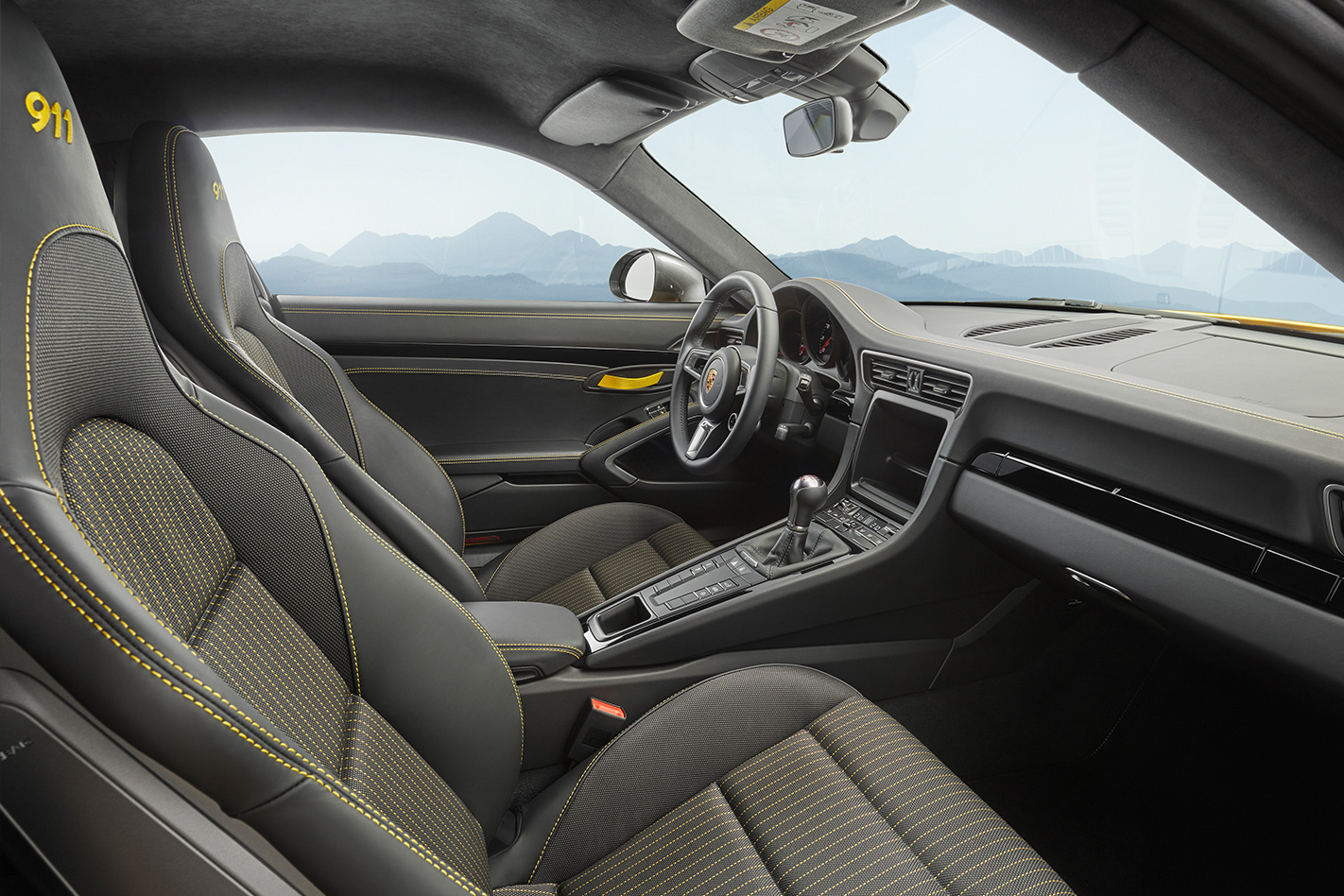
Inspired by the philosophy of the 1967 911T, the latest version is, ostensibly, a 911 Carrera with the Porsche Active Suspension Management (PASM) option ticked and then a whole lot of unticking going on.
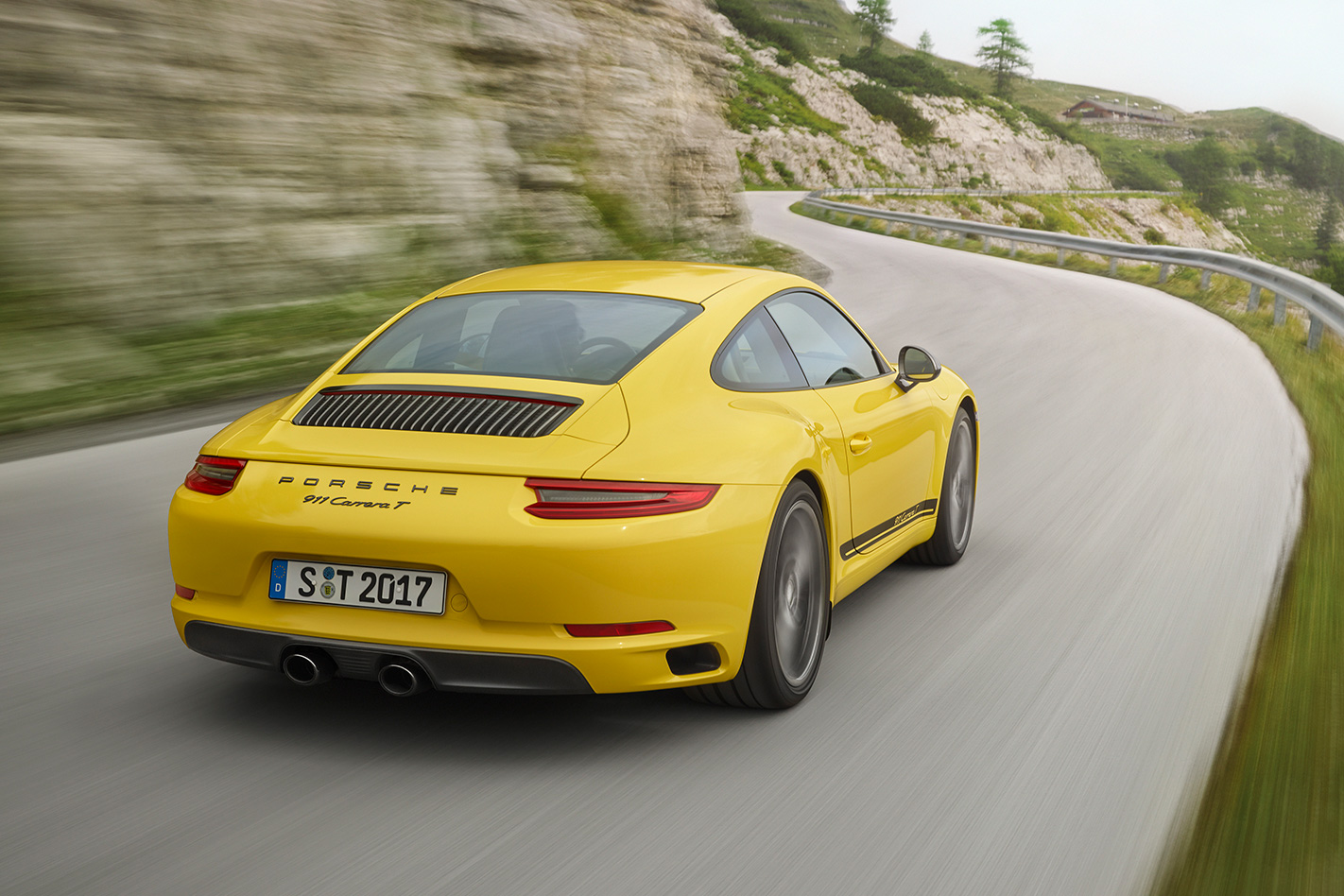
In come a shortened gear shift lever for the manual car, a subtle front spoiler lip, grey mirror shells and 20-inch titanium grey Carrera S wheels. A sports exhaust is fitted as standard with black tips and the interior also gets Sports Seats Plus. Purists will doubtless prefer to option in the bucket seats. The price? $238,400 for the manual car, with a PDK twin-clutch option offered as well.
With prior 911 generations, we’ve had to wait for the GTS models to get a ‘best-of’ compilation of the Carrera range and even then, it was possible to come away with the feeling that a lot had been loaded on, and that the 911 had strayed so far from its original source that the 718 Cayman seemed a more accurate inheritor of the philosophy of the fast and focused Porsche coupe.
MERCEDES-Benz’s X-Class dual-cab trade ute has arrived with the aim of separating cashed-up tradies from a fair wad of their hard-earned. We jump behind the wheel for the first time.
WHAT IS IT?
Mercedes-Benz has form with commercial vehicles, but its X-Class represents a first foray into the dual-cab utility market with offerings that span workhorse to premium family car.
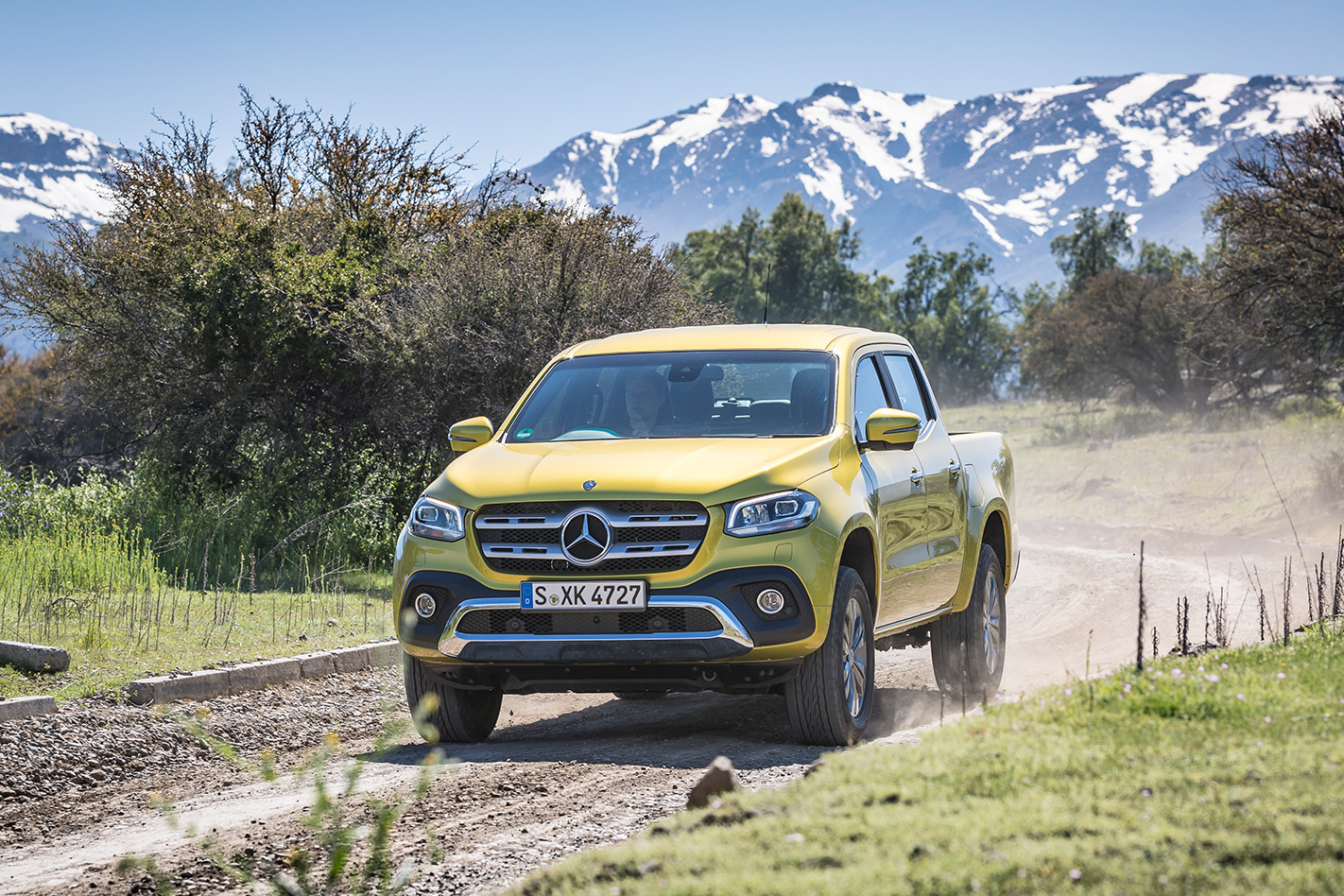
Our first test on the international launch in Santiago, Chile provided some of the answers to our burning questions, the chief one being: As a derivative of the D23 Nissan Navara, is the Mercedes-Benz X-Class sufficiently classy and comfortable to carry the three-pointed star?
MAIN RIVALS
Volkswagen Amarok, Ford Ranger, Toyota Hilux
THE WHEELS VERDICT
In the absence of pricing – and driving experience on Aussie turf – it’s difficult to know exactly how well the X-Class stacks up against the dual-cab ute establishment. The upper versions demonstrated significant differentiation from the donor Navara and a good sense of comfort, refinement and class. They could be a hit in the as yet uncharted premium dual-cab utility waters. The lesser versions, meanwhile, didn’t feel to deviate far from the one-tonne ute norm, and will likely need to be competitively priced against the mainstream to succeed.
THE WHEELS REVIEW
THE mountains surrounding Santiago, Chile provided the spectacular backdrop to our first drive of Mercedes’ forthcoming entrant to the booming dual-cab ute segment.
The Mercedes-Benz X-Class, which, in a deal with the Renault-Nissan Alliance, borrows heavily from the D23 Nissan Navara, will arrive in Australia next April. Like Chile and its South American neighbours, we’re a key market.
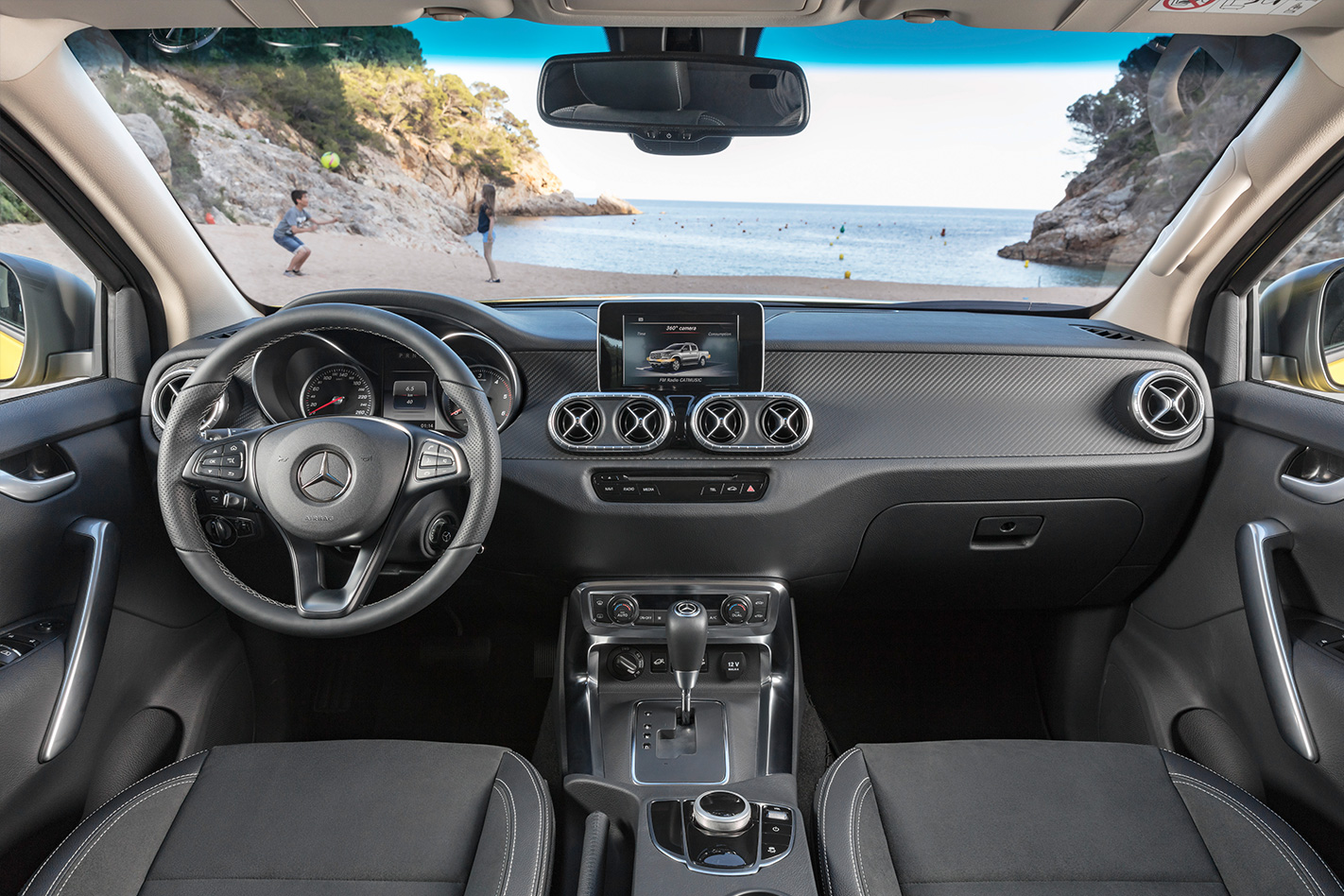
Yet the cabin of the base X-Class Pure also reminds you that this is a vehicle from the Mercedes Benz Vans division, with rough ’n’ ready features such as the vinyl floor, and plenty of hard surfaces. At the other end of the spectrum, the X-Class Power’s cabin feels more closely aligned with the brand’s passenger cars, with plush carpets, stitched leather on the dash, powered seats and comprehensive infotainment.
Driving the X250d in Power specification reveals that Benz has done a mostly thorough job in re-engineering the platform. The refinement is worlds better than that in the Nissan, well isolated from both road noise and the gruff four-cylinder turbo-diesel.
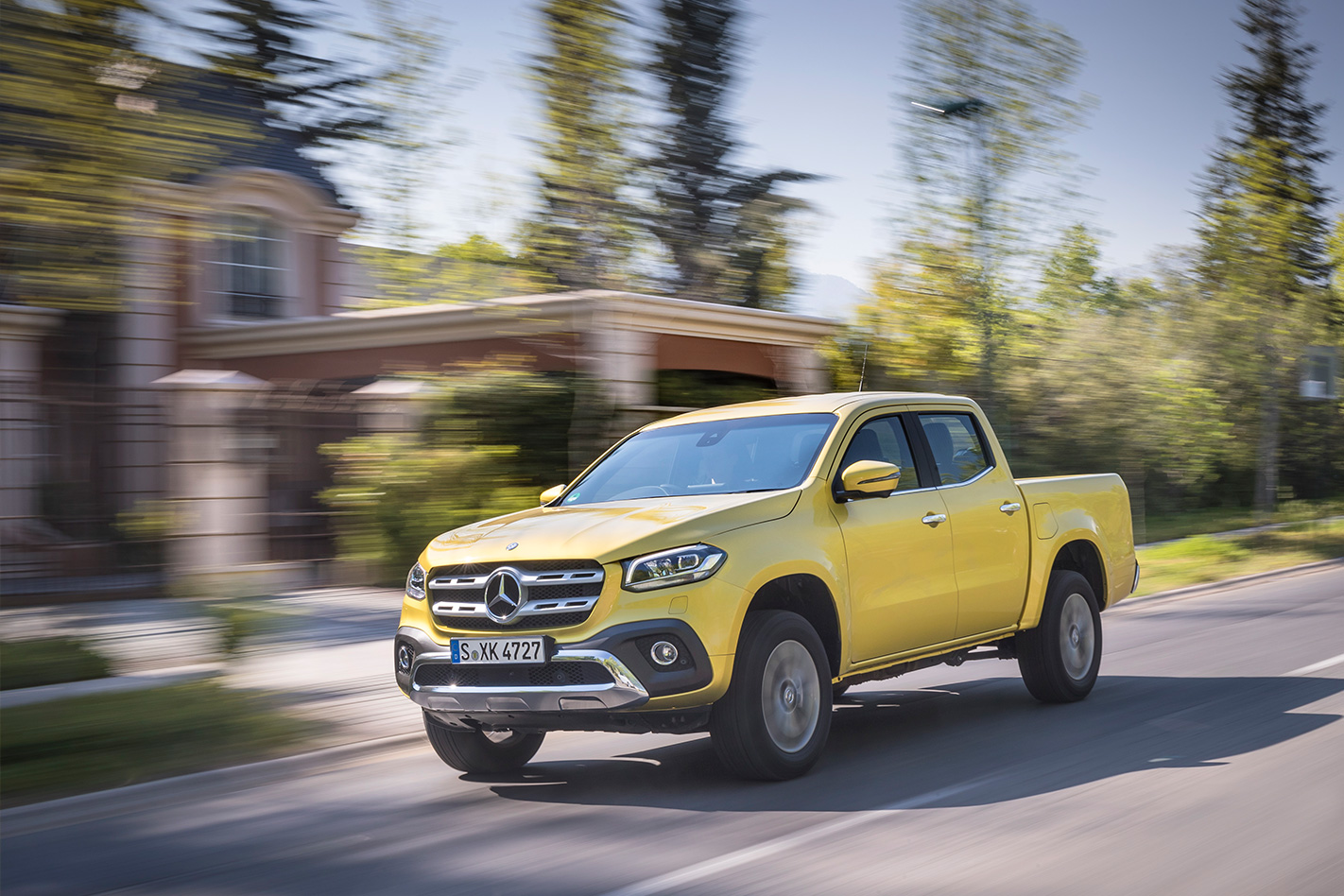
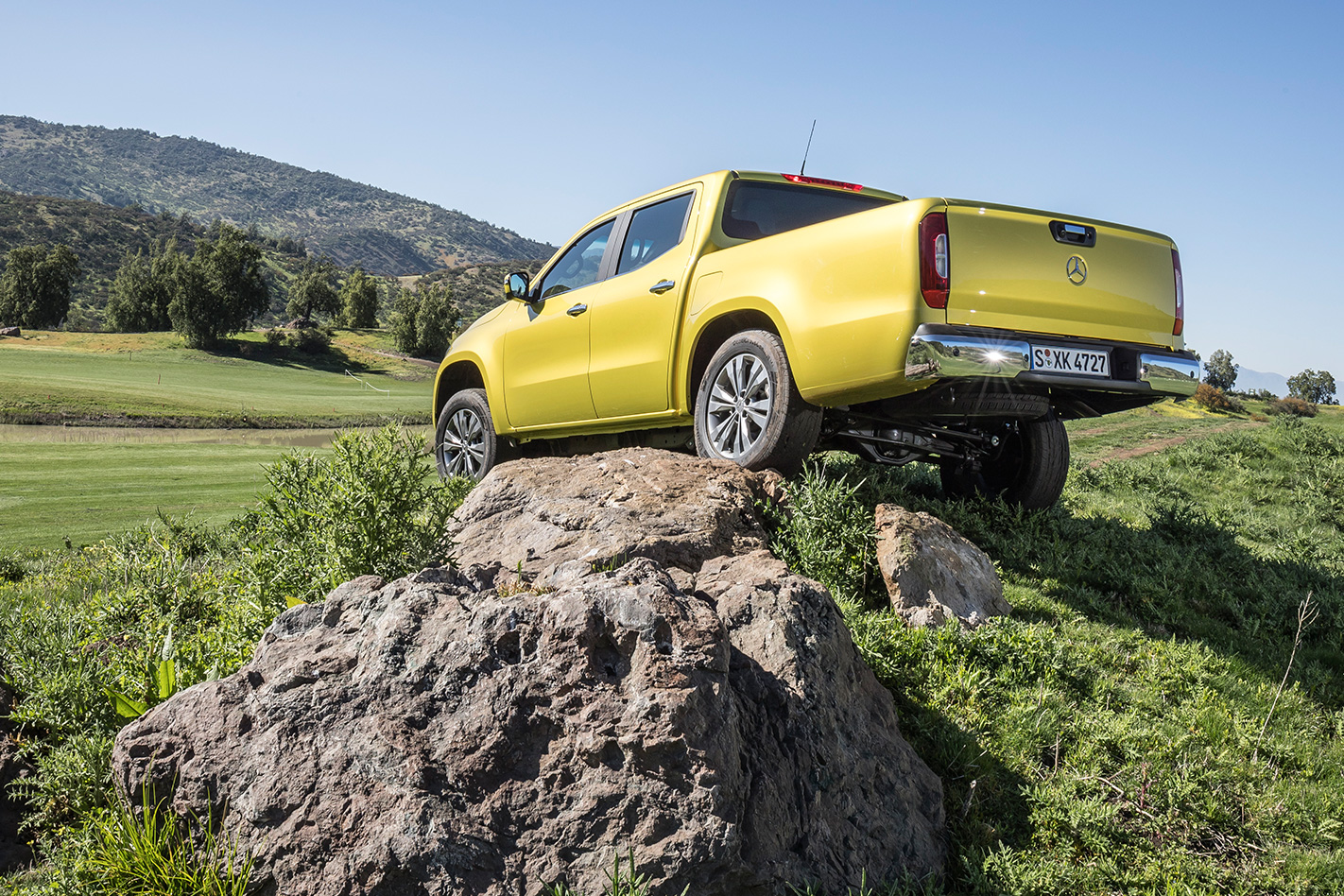
The suspension calibration, however, is a great leap forward. The X-Class is better at soaking up bumps and undulations, maintaining composure on sweeping tarmac and control on more rugged terrain. The Nissan’s multi-link coil rear suspension sets the X-Class apart from the average leaf-sprung live axle ute, and is well behaved and predictable. Mercedes-Benz stressed the amount of work it put into the spring and damper calibration, in part to realize the benefit of the X-Class’s significantly wider tracks than the Navara. The suspension mounting points and bushes are revised, and the result is a smoother and quieter ride.
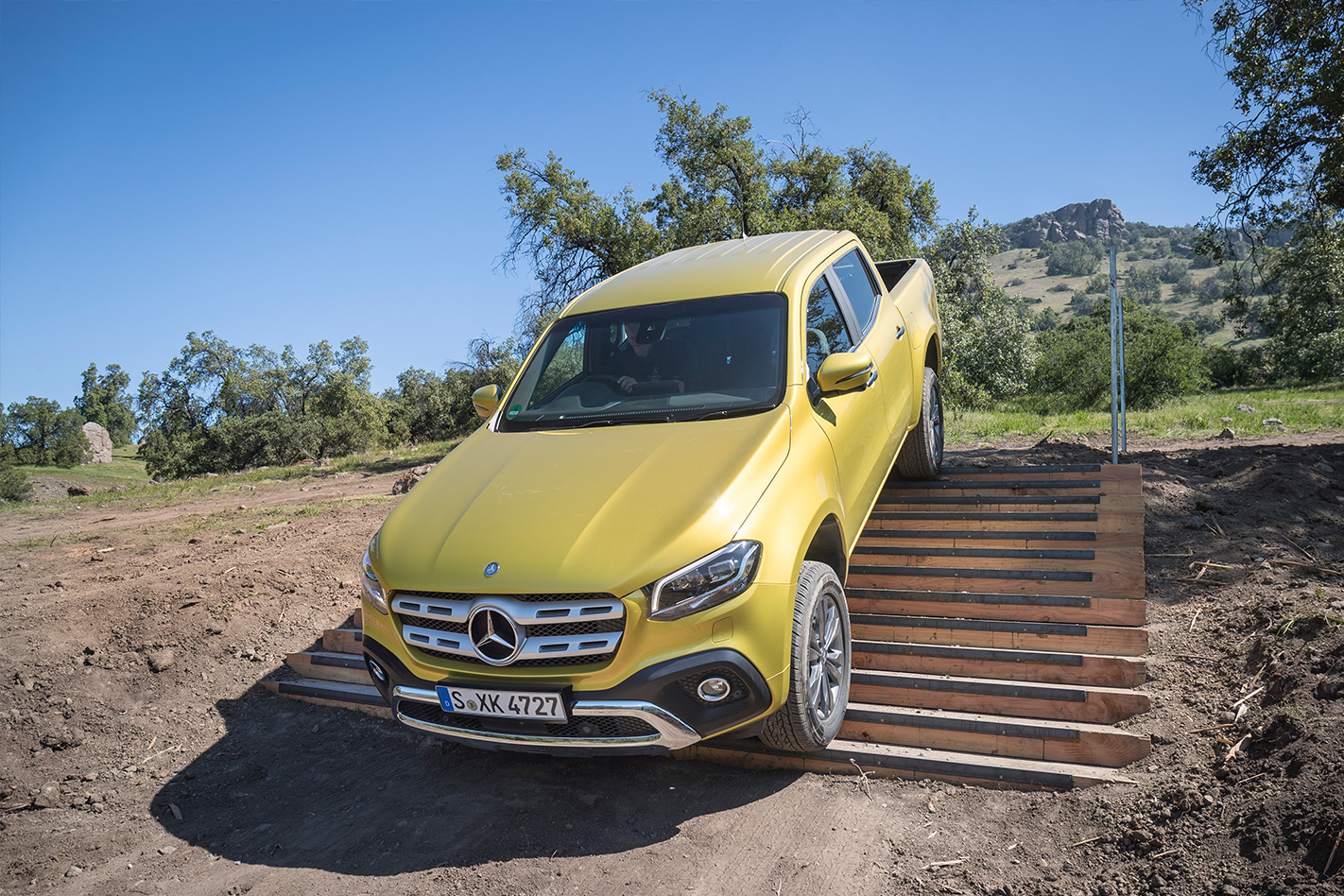
The 450Nm twin-turbo Renault/Nissan engine remains a stout performer with plenty of grunt across a decent range, powering via a slick seven-speed automatic. Yet while we found the X250d Power far more refined than its Nissan relative, some of the Navara’s gruffness carries into the lesser versions such as the X250d Progressive we sampled. It seems it misses out on the same level of insulation as the Power, which might remove some of the supposed upside of paying extra for a premium ute.
We’ll have to wait until later this year for Australian X-Class pricing, however for a shot at success the X220d and X250d in Pure and Progressive spec will have to be close to the existing players, leaving Mercedes-Benz with room to command a premium on its range-topping X350d Power in the as yet untapped premium ute market.
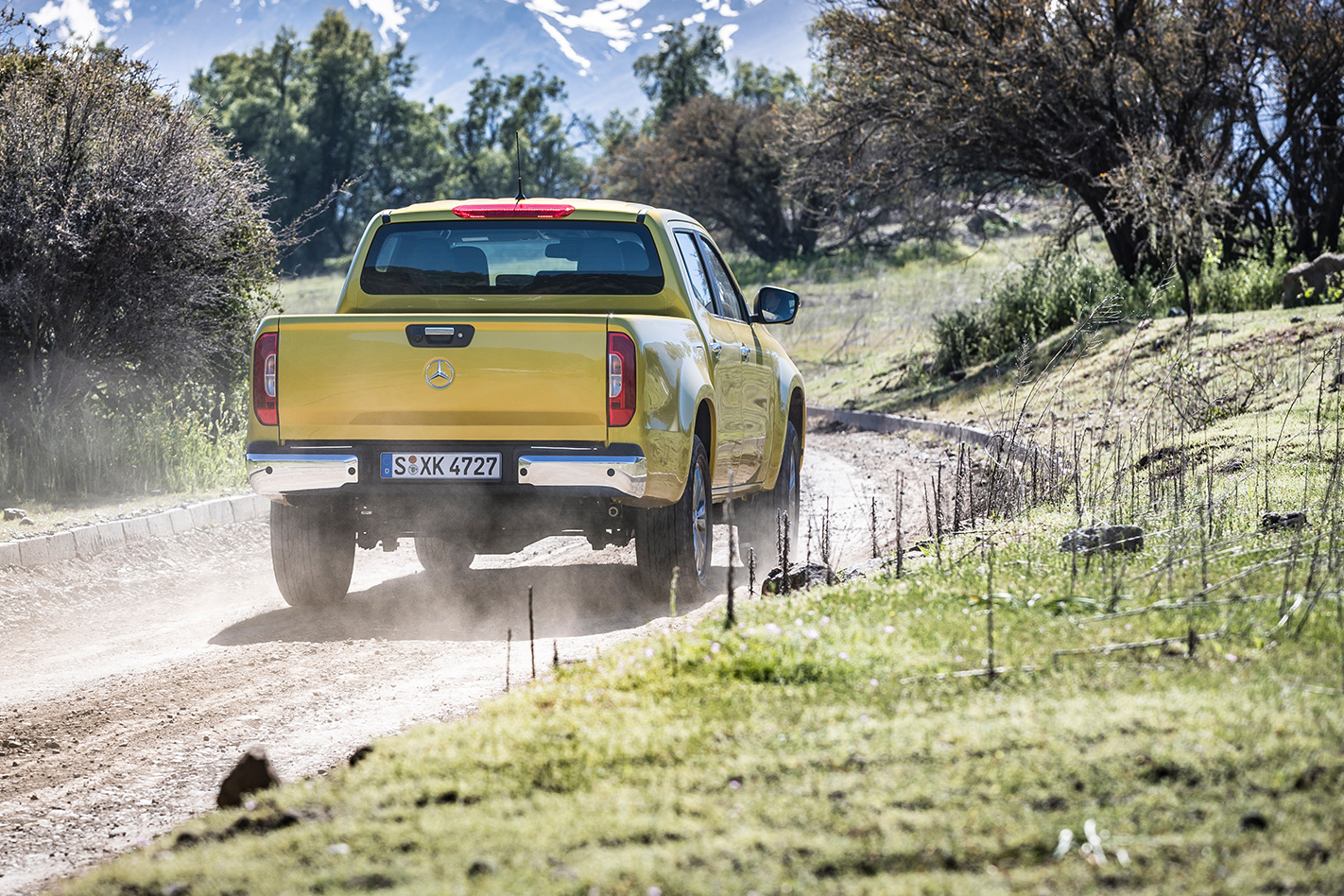
SPECS
Model: Mercedes-Benz X-Class X250d Power Engine: 2298cc 4cyl, dohc, 16v, turbo-diesel Max power: 140kW @ 3750rpm Max torque: 450Nm @ 1500-2500rpm Transmission: 7-speed automatic Weight: 2234kg 0-100km/h: 11.8sec (claimed) Economy: 7.9L/100km On sale: April 2018
