
FOR HOLDEN, the new VE Commodore is an opportunity seized, a challenge accepted.
“We all wanted to do a BMW; there’s no shame in that,” says plain-talking engineering and design executive director Tony Hyde. “We all wanted to do the stuff that the good German guys had done, but we knew we had to sell it for $35,000, to make life a little difficult.”
It’s a succinct summary of the magnitude of the task Holden set itself with the VE Commodore.
Money is one of the ways in which the scale of the 2006 Commodore program is different from anything in Holden’s history. The bill for the VE program totals more than $1 billion, much more than Holden has spent on any previous Commodore.
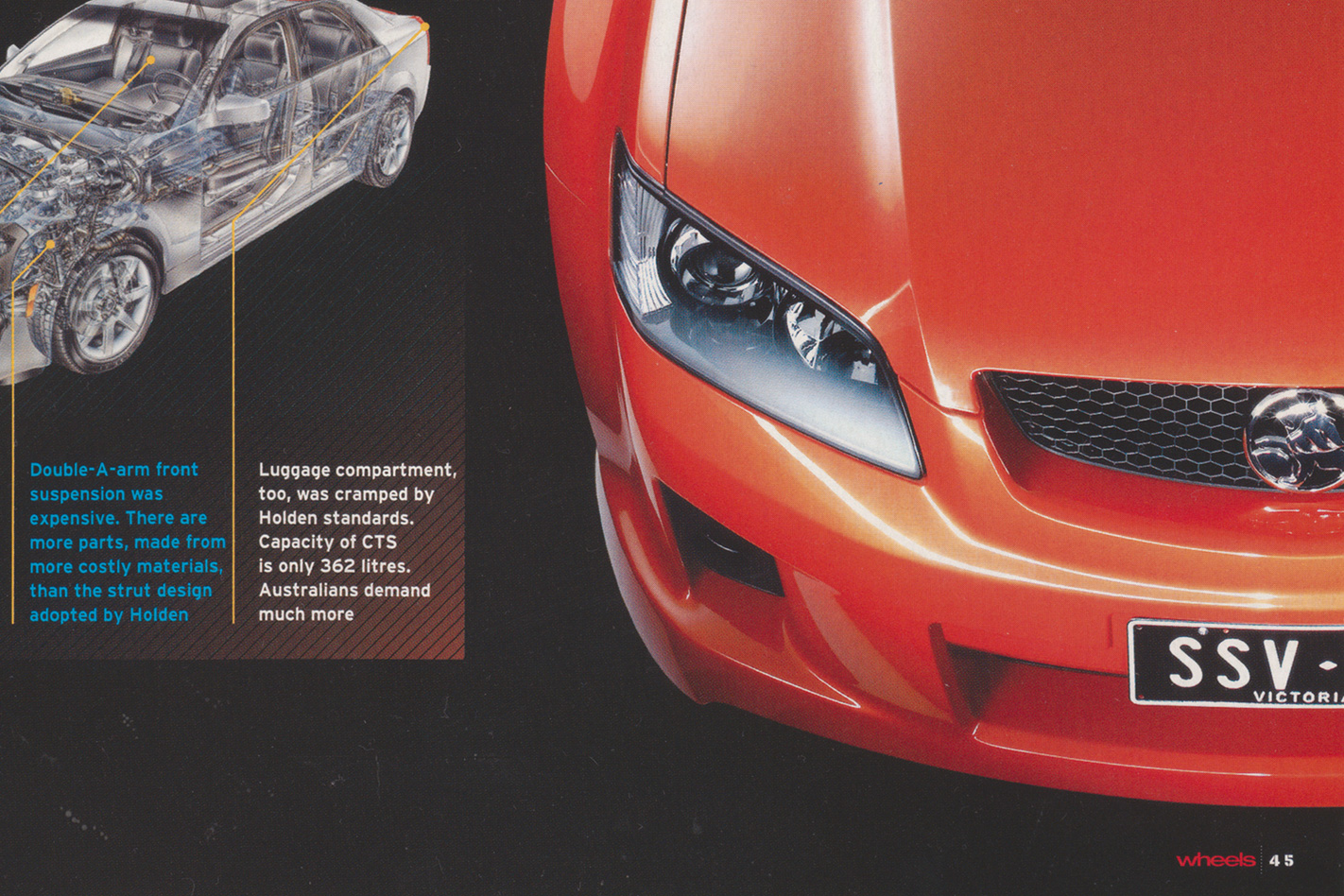
It’s been more than 30 years since anything like the VE happened at Holden. The HQ, which spawned a generation of Holdens that preceded the 1978 switch to the first European-designed and engineered Commodore family, was the last time something this big had been attempted.
The decision that Holden would design and engineer its own brand-new Commodore wasn’t automatic. If things had turned out just a little differently, Australia would have had a Cadillac-based Commodore instead of a BMW-like Commodore.
Planning executive director Ian McCleave recalls the early stages of the VE story clearly. It began soon after Holden’s ’97 launch of the VT, the basis of every Commodore model from then until now. Rob McEniry, then a General Motors executive, but these days the man running Mitsubishi Australia, had been given an important task.
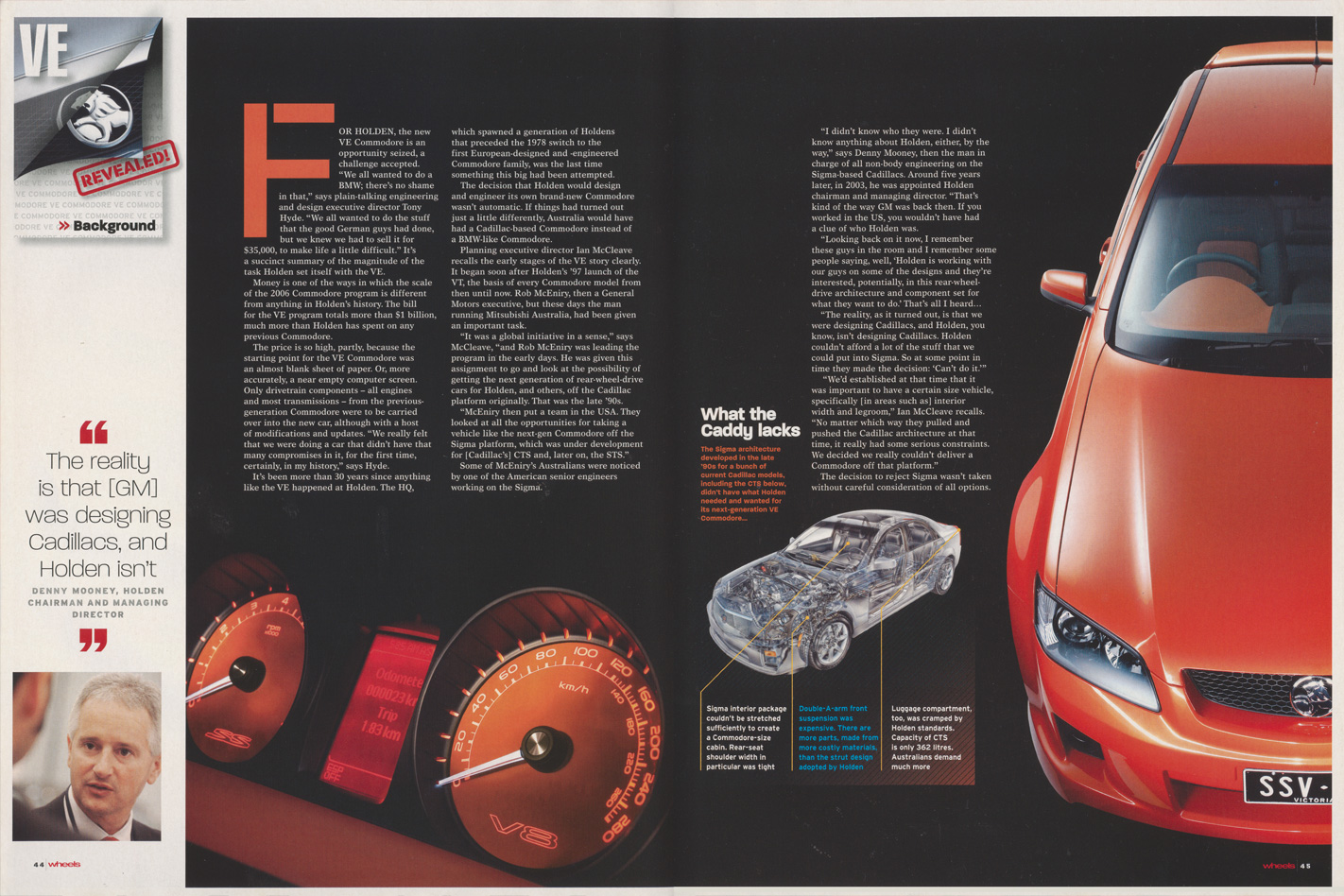
“McEniry then put a team in the USA. They looked at all the opportunities for taking a vehicle like the next-gen Commodore off the Sigma platform, which was under development for [Cadillac’s] CTS and, later on, the STS.”
Some of McEniry’s Australians were noticed by one of the American senior engineers working on the Sigma.
“I didn’t know who they were. I didn’t know anything about Holden, either, by the way,” says Denny Mooney, then the man in charge of all non-body engineering on the Sigma-based Cadillacs. Around five years later, in 2003, he was appointed Holden chairman and managing director. “That’s kind of the way GM was back then. If you worked in the US, you wouldn’t have had a clue of who Holden was.
“The reality, as it turned out, is that we were designing Cadillacs, and Holden, you know, isn’t designing Cadillacs. Holden couldn’t afford a lot of the stuff that we could put into Sigma. So at some point in time they made the decision: ‘Can’t do it’.”
“We’d established at that time that it was important to have a certain size vehicle, specifically [in areas such as] interior width and legroom,” Ian McCleave recalls.
“No matter which way they pulled and pushed the Cadillac architecture at that time, it really had some serious constraints. We decided we really couldn’t deliver a Commodore off that platform.”
“We went into all sorts of loops on reskinning VT, or reskinning VT but maybe with new some suspension, [or] all-new, doing something off Sigma,” Tony Hyde remembers. “We got into this whole planning thing, where they had four, five, six, seven bloody alternatives, ranging from the most expensive to virtually do nothing … and commit suicide.”
The reason Holden was so interested in adopting Cadillac’s architecture was simple. Opel, Holden knew, had decided to kill its Omega sedan. It was the end of the line for the series of large, rear-wheel-drive European cars that had served as a basis for every generation of Australian-made Commodore since the late ’70s.
The only potential alternative donor was the American Sigma.
In 2000, the decision was finally made that Holden should begin design and engineering work with a clean sheet. Almost clean, anyway. “Powertrains are locked in earlier than the vehicle itself, in a sense,” says Ian McCleave. “You’ve got a powertrain plan that is basically dictated at corporate levels.
“We deliberately wanted to get that into the VZ earlier, so we’d have the experience with it,” he adds, alluding to the 2004 introduction of the all-new Alloytec V6 engine. “From my perspective, it was very important to get it into the current platform, learn all about it, so we weren’t launching a new car and a new engine together.”
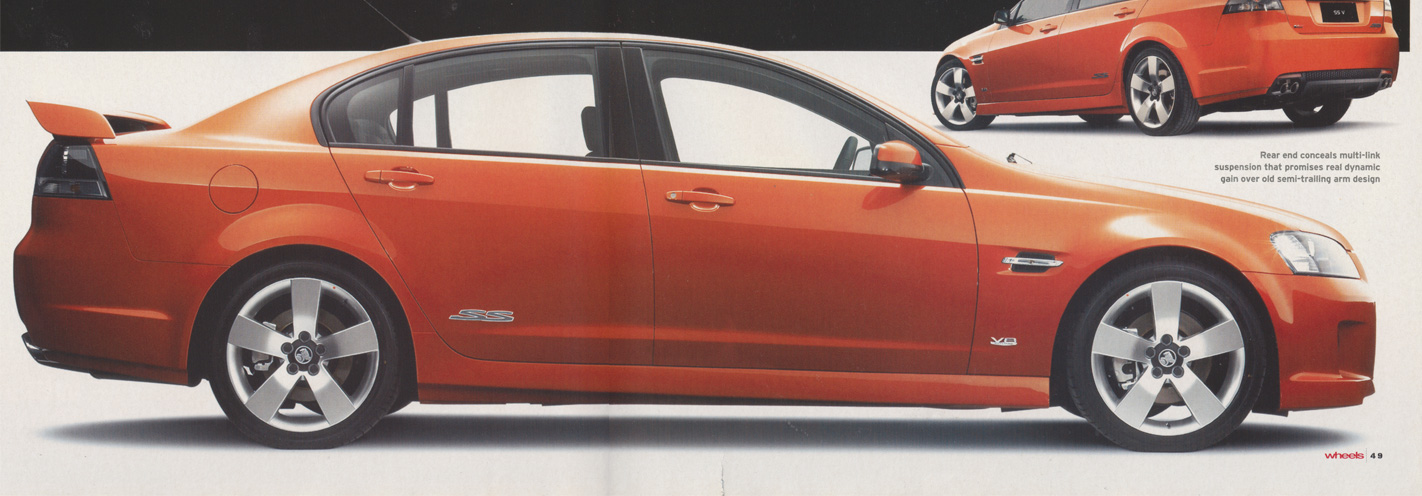
Other technical decisions were also debated, suspensions especially. “The front suspension was awfully tired,” admits Tony Hyde. “And the rear suspension, alright, it’s a nice semi-trailing arm thing, but that wasn’t what we wanted to do.”
Hyde headed the faction favouring simpler, cheaper struts with their single A-arms. “We clung to, ‘Well, shit, BMW has got struts. It can’t be that bad, you guys.'”
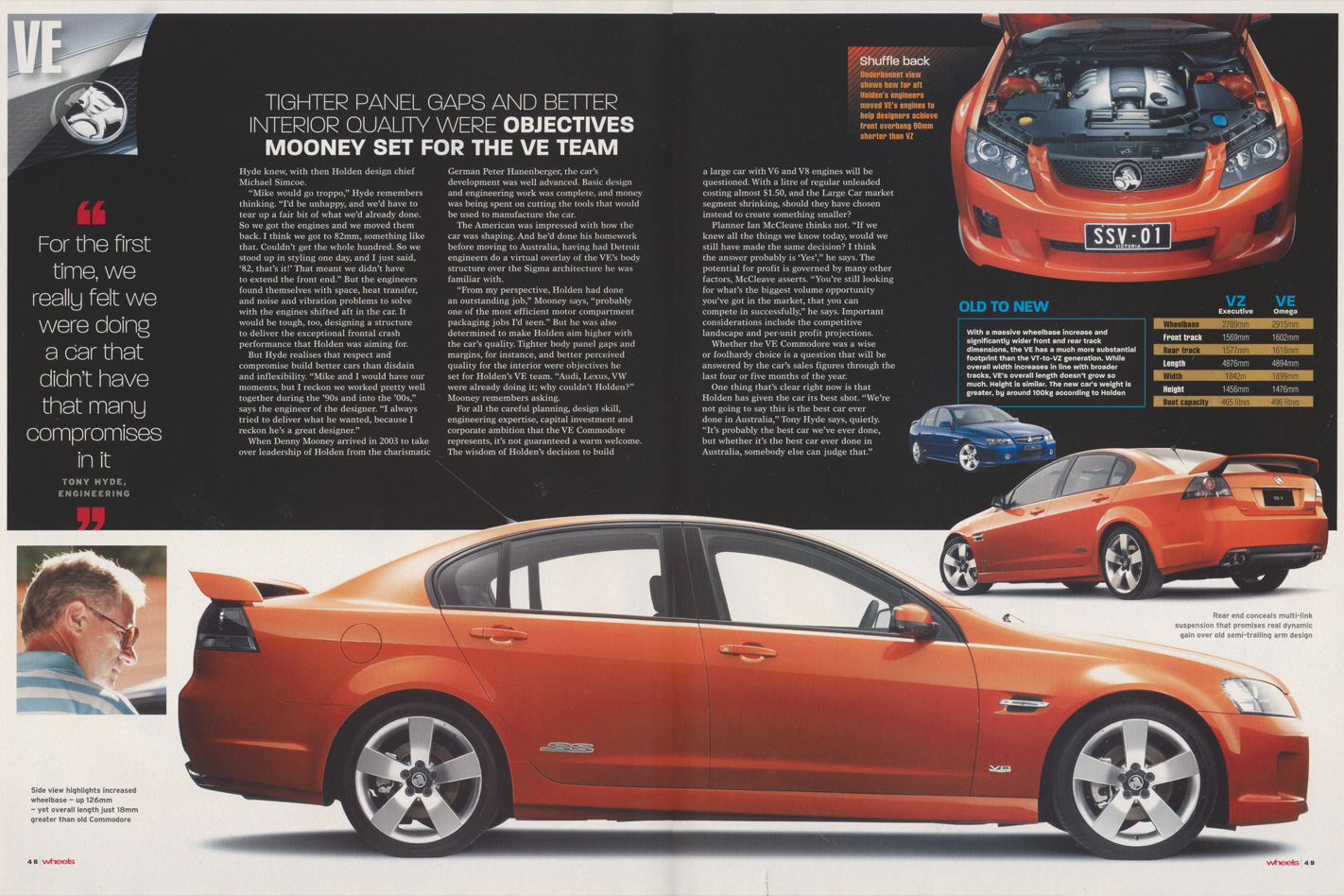
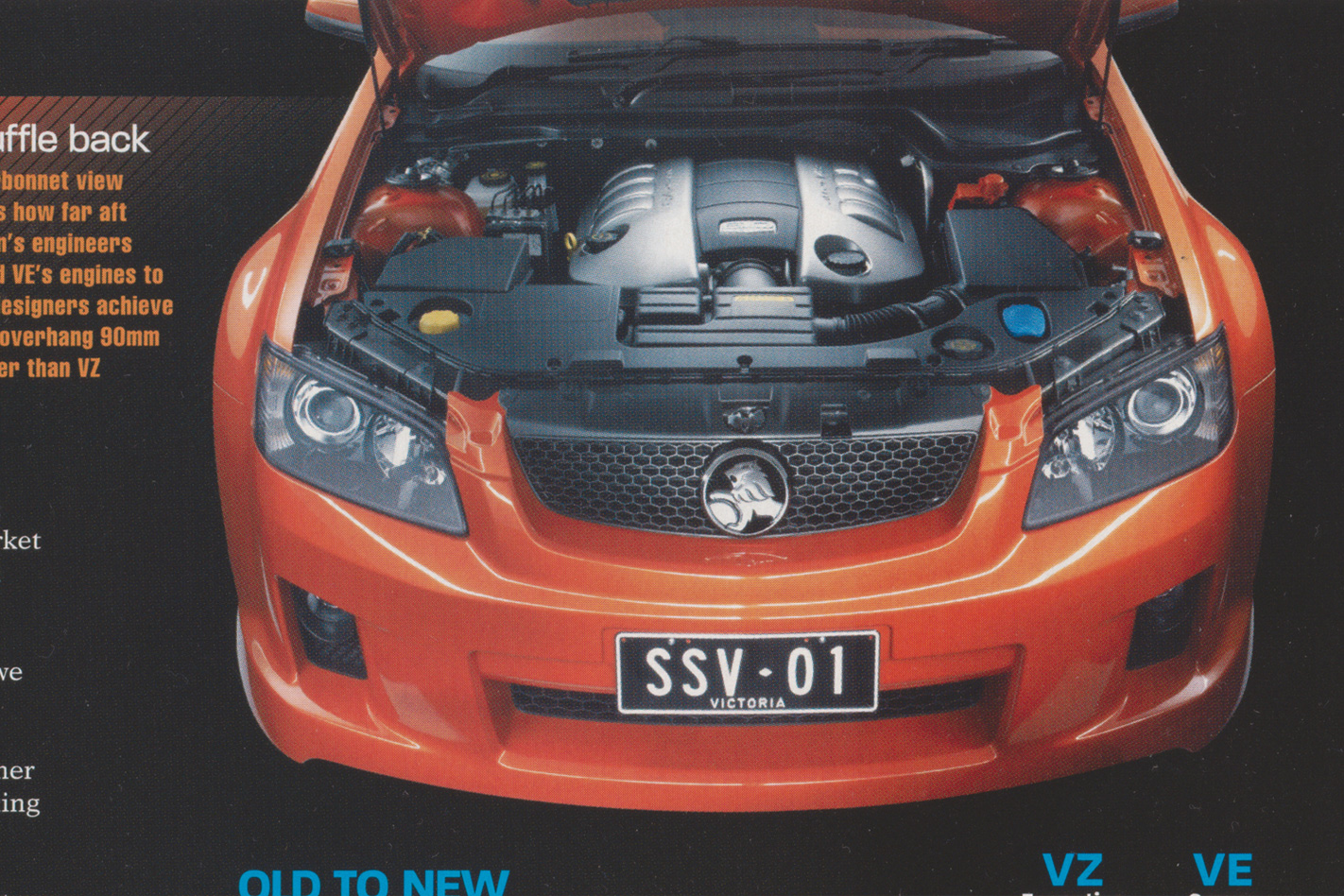
The toughest battles as the VE took shape were over the car’s all-new body structure. While the design department wanted to minimise frontal overhang, this would create problems for the engineers. With the car’s structure still taking shape, Hyde’s crash specialists were insisting on 100mm of crush space ahead of the VE’s engines. As the design then stood, there was only 60mm.
The only obvious solution was to extend the frontal overhang by 40mm. This spelled trouble, Hyde knew, with then Holden design chief Michael Simcoe.
But Hyde realises that respect and compromise build better cars than disdain and inflexibility. “Mike and I would have our moments, but I reckon we worked pretty well together during the ’90s and into the ’00s,” says the engineer of the designer. “I always tried to deliver what he wanted, because I reckon he’s a great designer.”
When Denny Mooney arrived in 2003 to take over leadership of Holden from the charismatic German Peter Hanenberger, the car’s development was well advanced. Basic design and engineering work was complete, and money was being spent on cutting the tools that would be used to manufacture the car.
The American was impressed with how the car was shaping. And he’d done his homework before moving to Australia, having had Detroit engineers do a virtual overlay of the VE’s body structure over the Sigma architecture he was familiar with.
For all the careful planning, design skill, engineering expertise, capital investment and corporate ambition that the VE Commodore represents, it’s not guaranteed a warm welcome. The wisdom of Holden’s decision to build a large car with V6 and VS engines will be questioned. With a litre of regular unleaded costing almost $1.50, and the Large Car market segment shrinking, should they have chosen instead to create something smaller?
Planner Ian McCleave thinks not. “If we knew all the things we know today, would we still have made the same decision? I think the answer probably is ‘Yes’,” he says. The potential for profit is governed by many other factors, McCleave asserts. “You’re still looking for what’s the biggest volume opportunity you’ve got in the market, that you can compete in successfully,” he says. Important considerations include the competitive landscape and per-unit profit projections.
Whether the VE Commodore was a wise or foolhardy choice is a question that will be answered by the car’s sales figures through the last four or five months of the year.
One thing that’s clear right now is that Holden has given the car its best shot. “We’re not going to say this is the best car ever done in Australia,” Tony Hyde says, quietly. “It’s probably the best car we’ve ever done, but whether it’s the best car ever done in Australia, somebody else can judge that.”
THE PRICES listed our in magazine Showroom are what you’ll need to outlay to park a given model in your garage, but they are not the cost of owning that car, as our annual Gold Star Value awards reveal in this month’s issue.
Running costs such as fuel, insurance and servicing contribute significantly to the cost of ownership. However for most models the cost of depreciation by far outweighs these expenses.
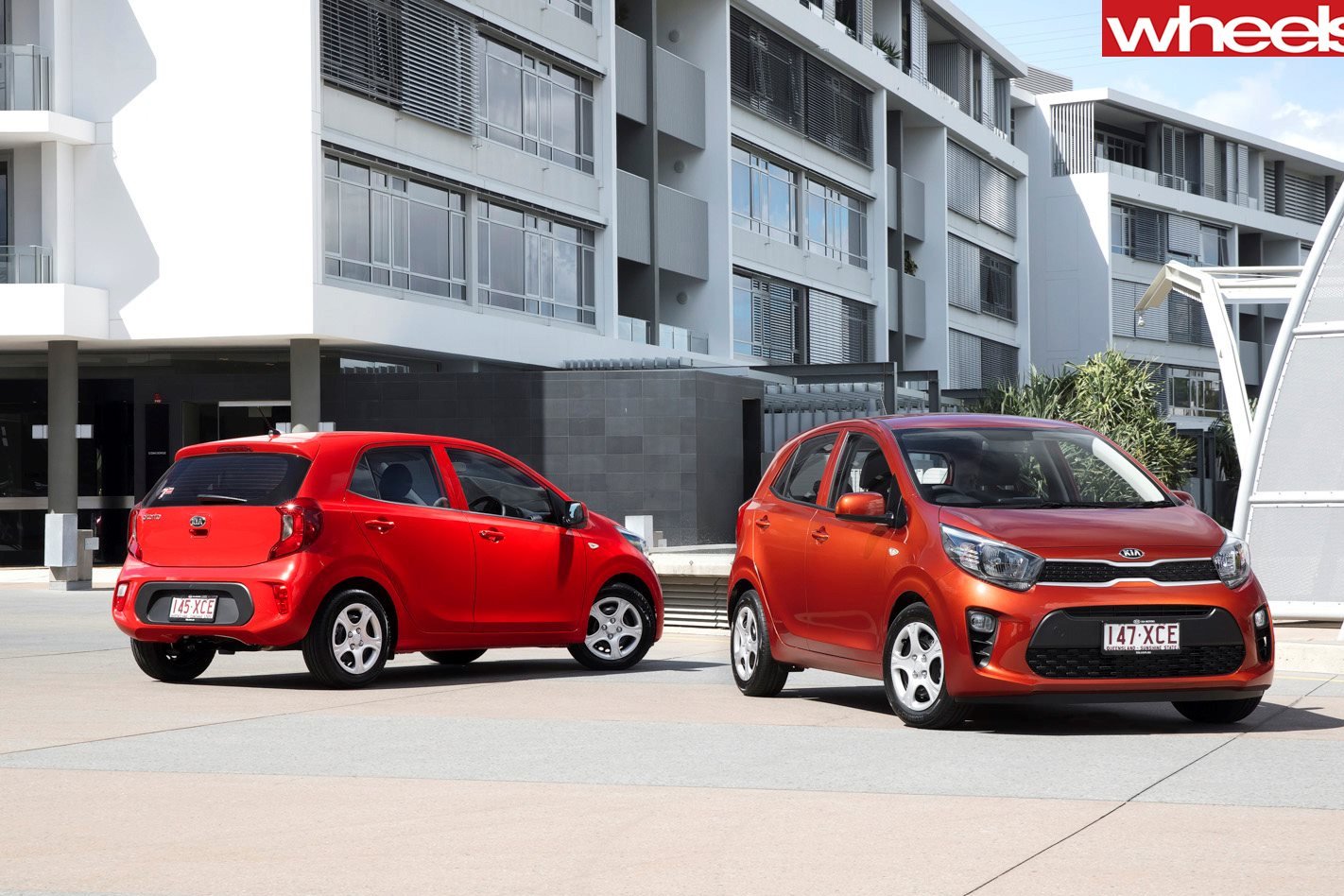
Spoiler alert: the Kia Picanto S won the Gold Star Value City Cars category and, with a top score of 93.3 out of 100, it could be considered the overall Gold Star Value Awards winner too.
The $14,190 Kia is cheaper to own than the vast majority of new cars, and its 46 percent Glass’s three-year resale is pretty good by class standards. Yes, losing more than half its value is considered a decent result as depreciation goes. This means the Picanto will lose 54 percent of its value in the first three years, or around $7663.
In the same time, the average Australian driver will spend about $2243 fuelling the Kia, $1860 on insurance, and $969 on three services, according to Kia’s capped-price scheme. That’s $5072 in total – a figure that the depreciation over the same period tops by around 50 percent.
In a popular medium SUV such as 2017’s $45K category-winning Kia Sportage GT Line, the costs of fuel, insurance and servicing rise to about $7000 over three years, but depreciation based on the Kia’s 53 percent three-year resale figure skyrockets to $21,615.30.
The total three-year ownership cost of the Kia is about $30K. And remember, this is for a reasonably priced family wagon that our analysis indicates is the best in its class in terms of minimising your cost of ownership.
We hate to say it, but a GoGet is starting to sound ideal. Read on below for the best- and worst-case scenarios of all the cars put through our Gold Star Value analysis, in terms of resale and the dollar cost of depreciation.
In the first three years, the best of them will shed roughly the value of a good, used small car, while the worst will burn the equivalent of a house deposit… in Sydney.
LOWEST DEPRECIATION
Mazda 2 Neo Price: $14,990 Glass’s 3yr resale: 53 percent
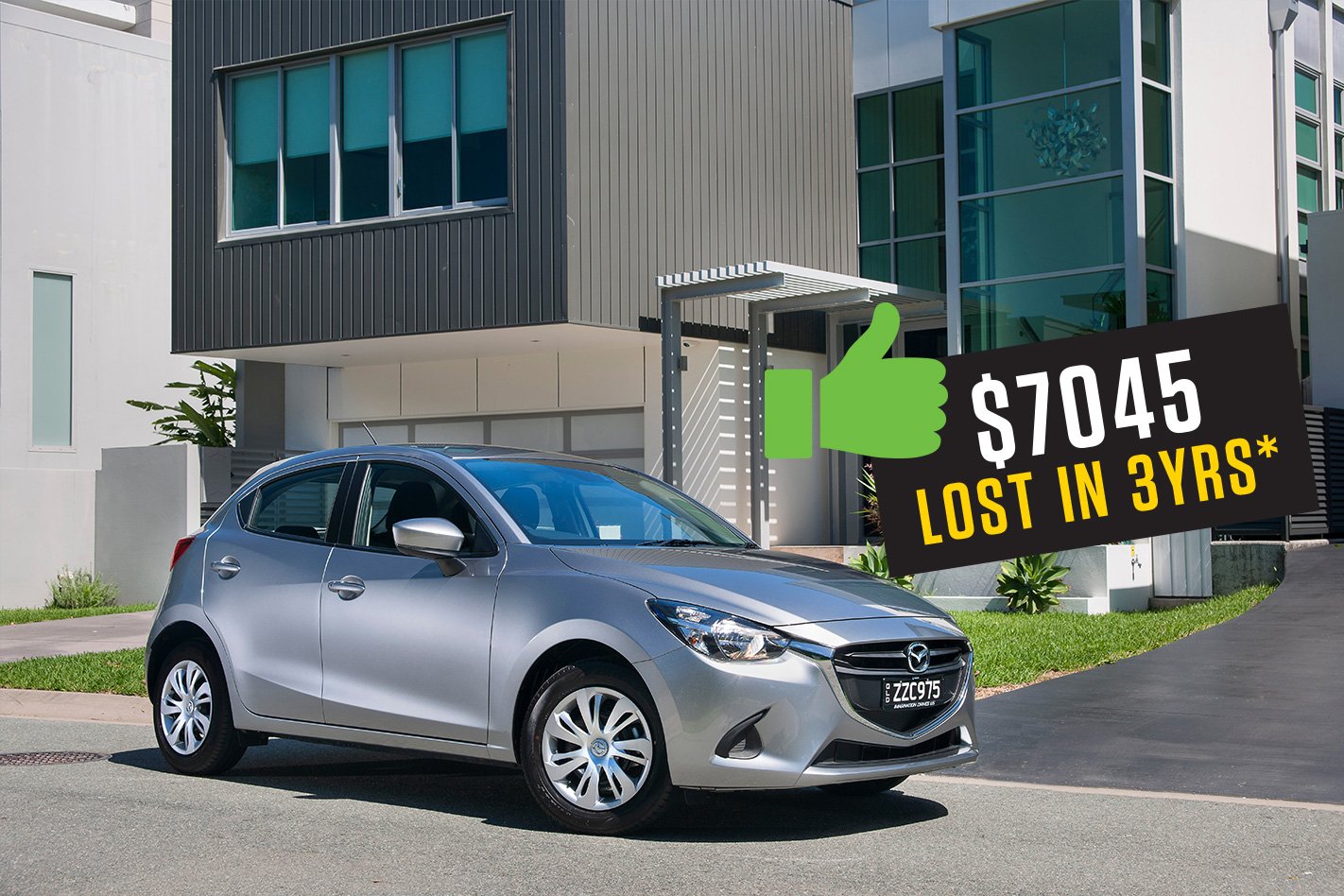
The Mazda 2 Neo is among the least costly of any car considered, at $14,990, so although it will lose almost half its value in the first three years, with a 53 percent three-year resale, that’s only $7K lost to deprecation, which is as good as new cars get.
HIGHEST DEPRECIATION
Mercedes-AMG S65 L Price: $492,715 Glass’s 3yr resale: 48 percent
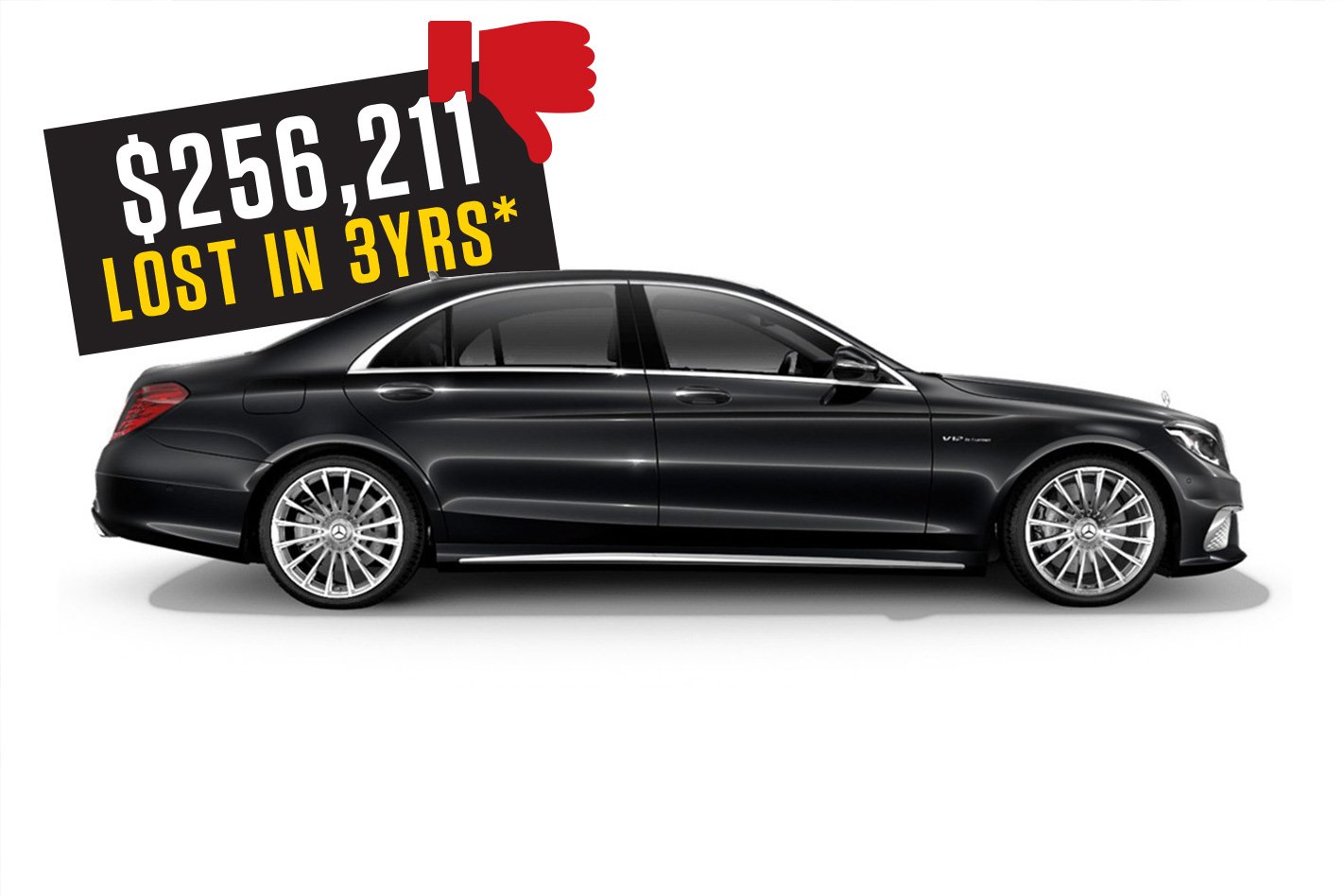
No doubt some bargain hunters will see the appeal in a half-price, twin-turbo, 1000Nm V12 limo, but we’d wager they’ll be outnumbered by those who fear the ongoing maintenance costs.
BEST RESALE
Audi TT RS Price: $137,900 Depreciation: $37,233.00
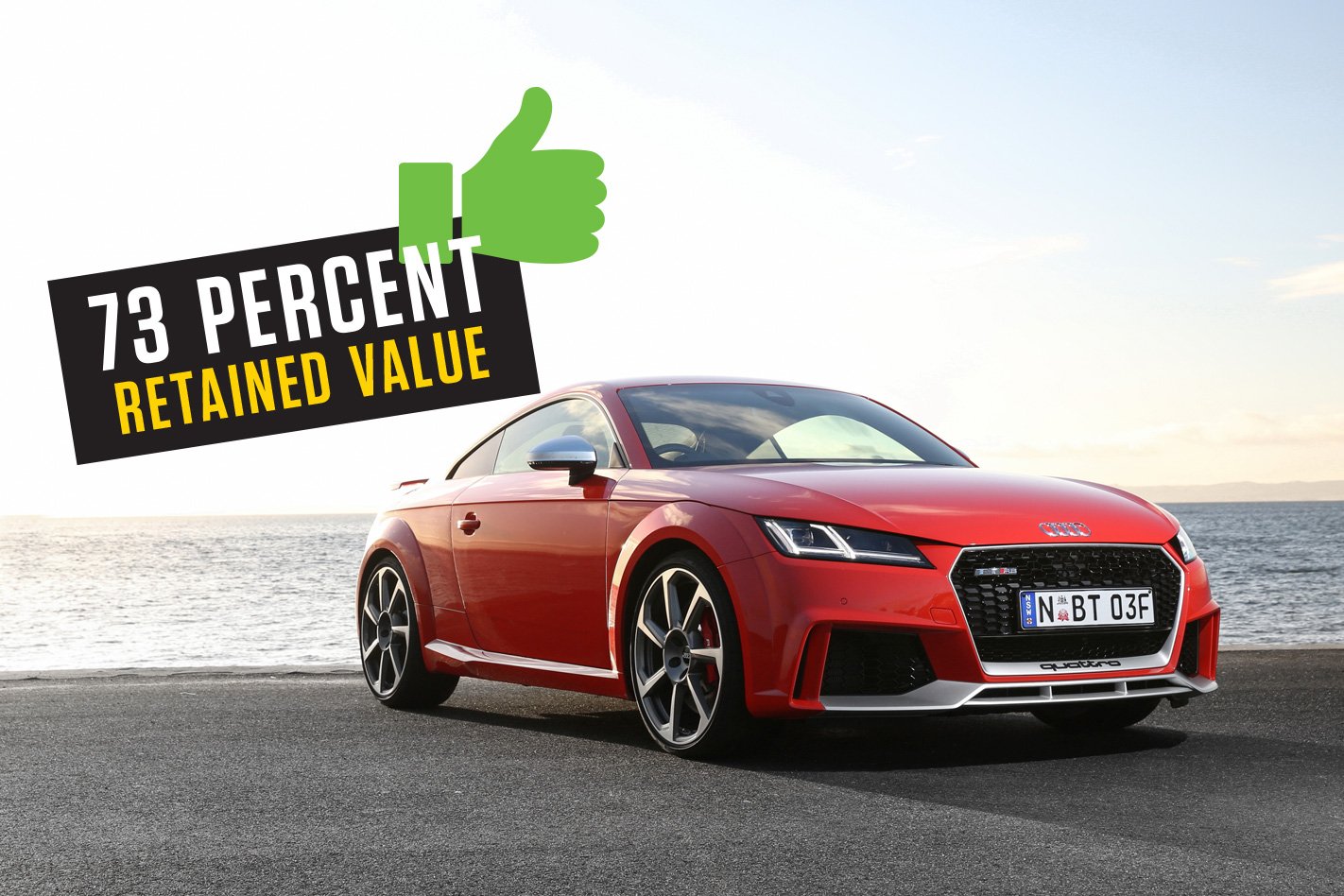
Yet its three-year resale of 73 percent equals the best of any car put through the Gold Star Value wringer, keeping the $137,900 coupe’s expected cost of depreciation within $140 per year of the $78K AMG A45’s (53 percent resale).
WORST RESALE
GREAT WALL V240 4×2 Price: $22,990 Depreciation: $16,322.90
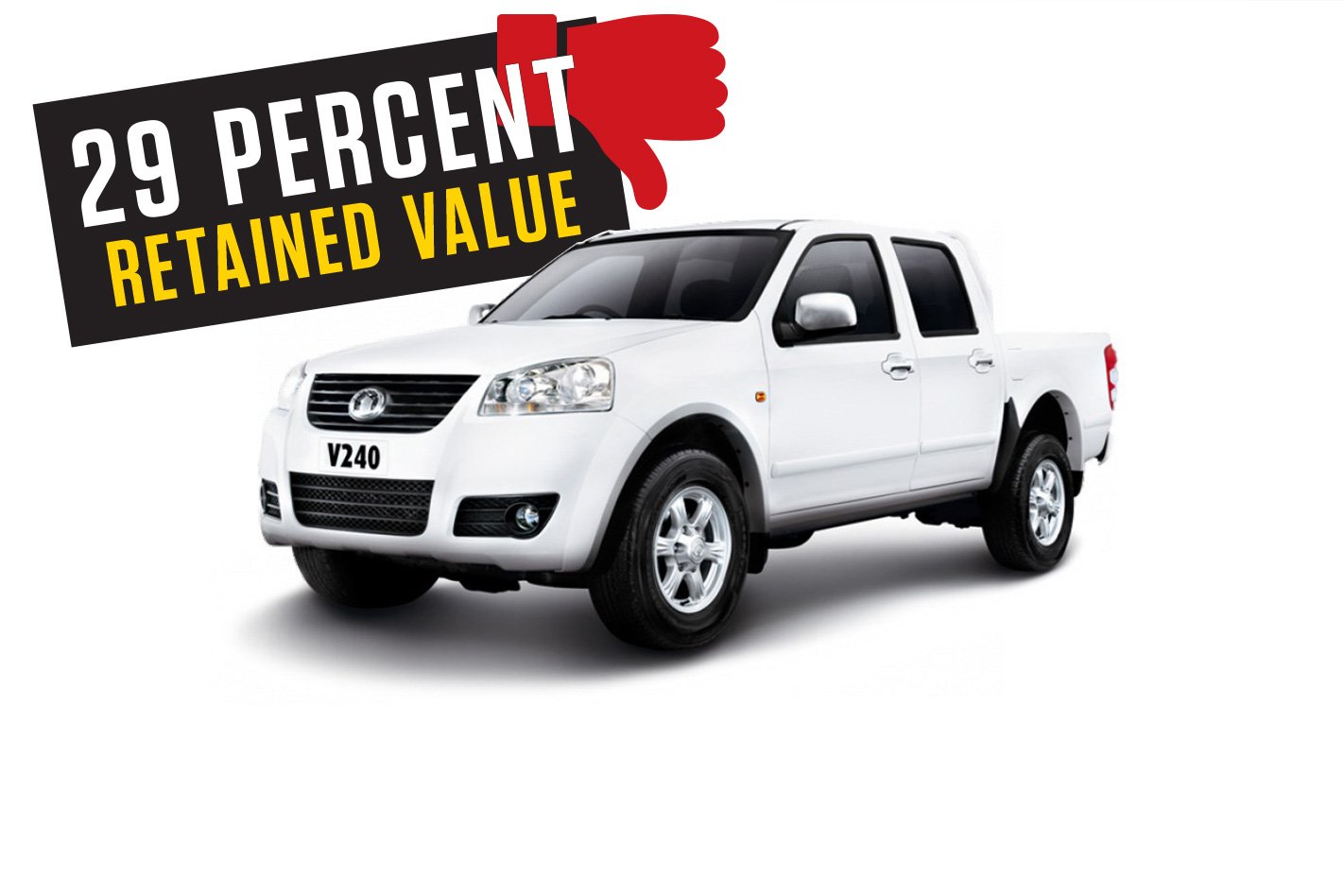
Yet the Great Wall will actually lose a similar amount in three years courtesy of a Glass’s resale of 29 percent, the worst of any vehicle considered for Gold Star Value in 2017.
Early risers
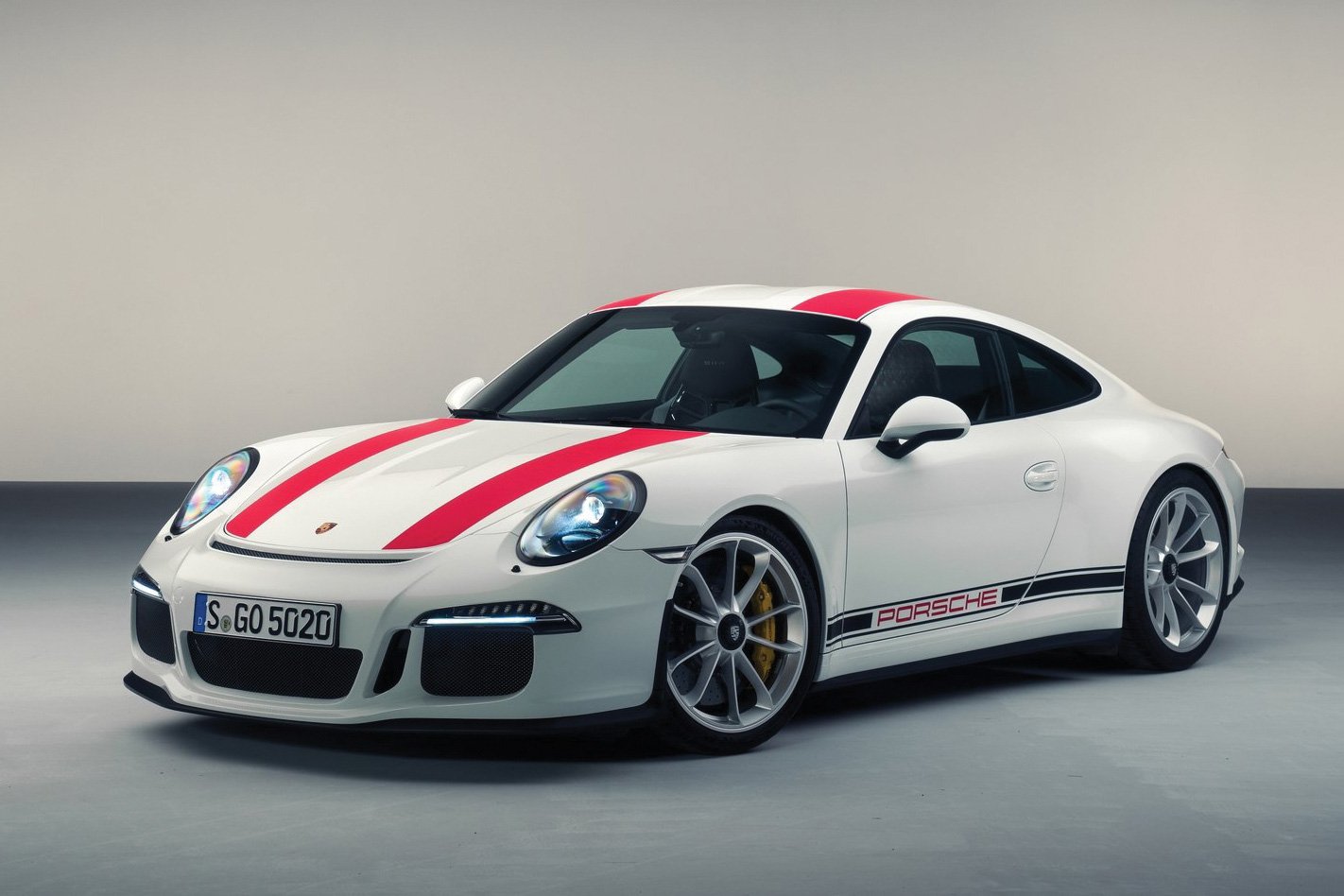
The rise in values of significant cars as they come to be considered classics is usually the work of decades. Yet a recent phenomenon has seen some models, such as Porsche’s 911 R and HSV’s GTS-R W1, seemingly generate instant classic appeal.
A virtually new 911 R was offered recently by an opportunistic owner at $1.2m, triple the new price. Build No.35 of HSV’s local muscle sedan swansong, meanwhile, was recently passed in at auction $87,600 above its new price.
Could the accelerated rise in the value of significant driver’s cars be the result of the march towards a future where there won’t be any drivers?
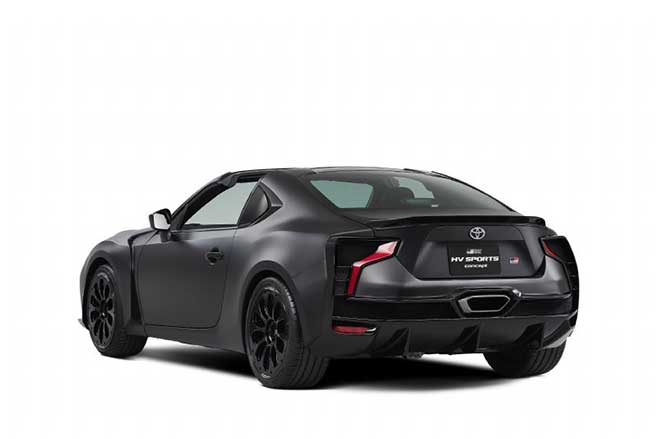
Following in the footsteps of the lightweight Toyota Sports 800 from the ‘60s, or the Toyota Supra which endured over 20 years of evolution, a new Toyota rear-driver is set to be revealed by the brand.
Set to debut at the Tokyo Motor Show, it will feature a powertrain similar to that in the Toyota Gazoo Racing TS050 Hybrid which competes in the World Endurance Championship.
“The LED headlights, five-bolt wheels and rear diffuser evoke the components used on the hybrid-powered WEC racer,” Toyota said in a statement.
By ‘similar’, we assume (or hope) Toyota means that it will have a hybrid V6.
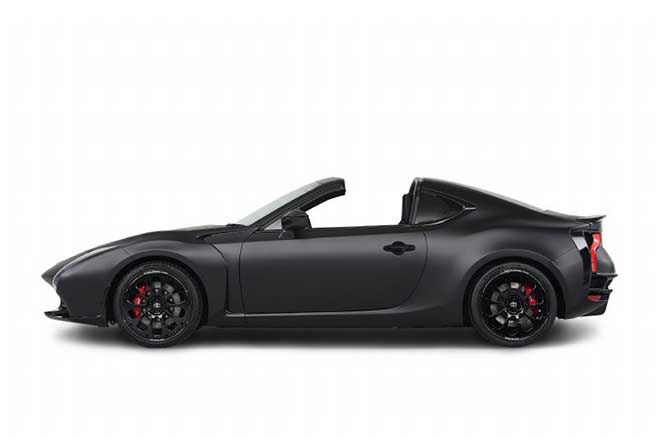
The hybrid battery will be placed in the centre of the vehicle “for optimal front-rear balance and a low centre of gravity.”
The car will have an automatic gearbox which Toyota says can be used manually “at the press of a button, using a compact H-pattern gearshift.”
Not that we can think of many targa-topped cars that aren’t advertised as sports cars.
The concept gets its ‘GR HV’ name from both the initials of the Gazoo Racing team, and the fact that it will be a hybrid vehicle.
Whether it will see the light of day as a production car, we don’t know, but Toyota does already have a hi-po hybrid V6 at its disposal. The LC500h drivetrain in an 86-like body?
SOMETIMES it can be easy to forget just how much faster a Supercar touring car is over a normal road-going production vehicle.
Luckily for us, someone went and invented the brilliant concept known as a Speed Comparison. It’s beautifully simple, put three different cars of varying power and speed on the race track, release them at different times, and watch them cross the finish line in an almighty scrap.
Holden put on one such display at the 2013 Bathurst 1000, and it is a wickedly tense example of how a race car is the final word in speed.
While watching a ’13 HSV Gen-F GTS chase down a 2002-spec HSV VX GTS 300 is entertaining enough on its own, the way the HRT race car catches both of them is gobsmacking.
Despite starting its lap of Mount Panorama almost 40 seconds after the VX leaves the line, the closing speed of the Supercar means the trio cross the finish line astern.
A similar experiment was done by Holden nine years earlier in 2004. However, instead of two road cars, the V8 Supercar faced off a VY Commodore SS, and Peter Brock’s iconic 1979 Holden Torana A9X race car.
The ’04 Speed Comparison wasn’t as close at the finish line, but showed that even a then 25-year-old race car can pants a high-performance road car on a hot lap.
The A9X was the same car Peter Brock and Jim Richards raced to victory in the ’79 Bathurst 1000, with a winning margin of six laps!
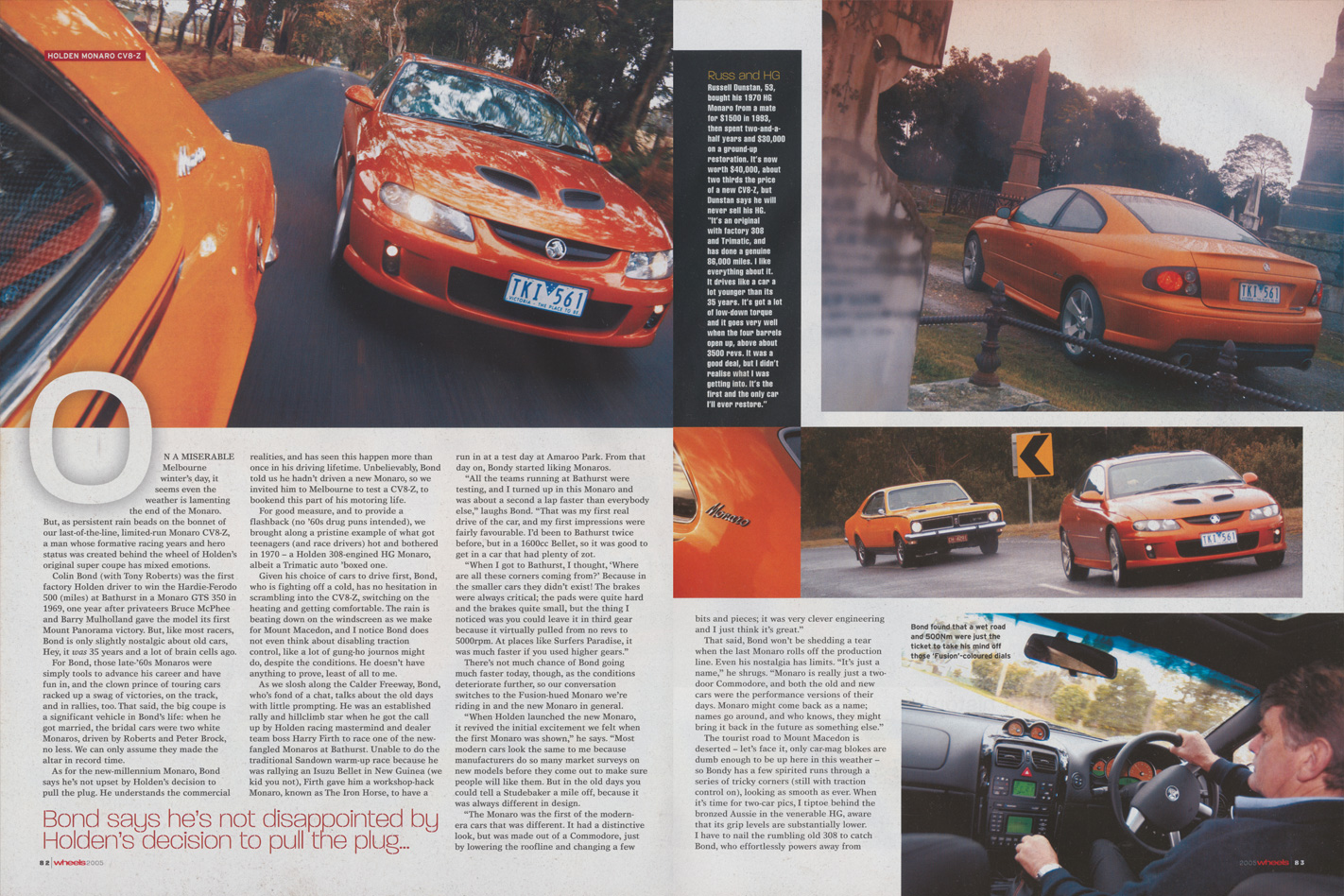
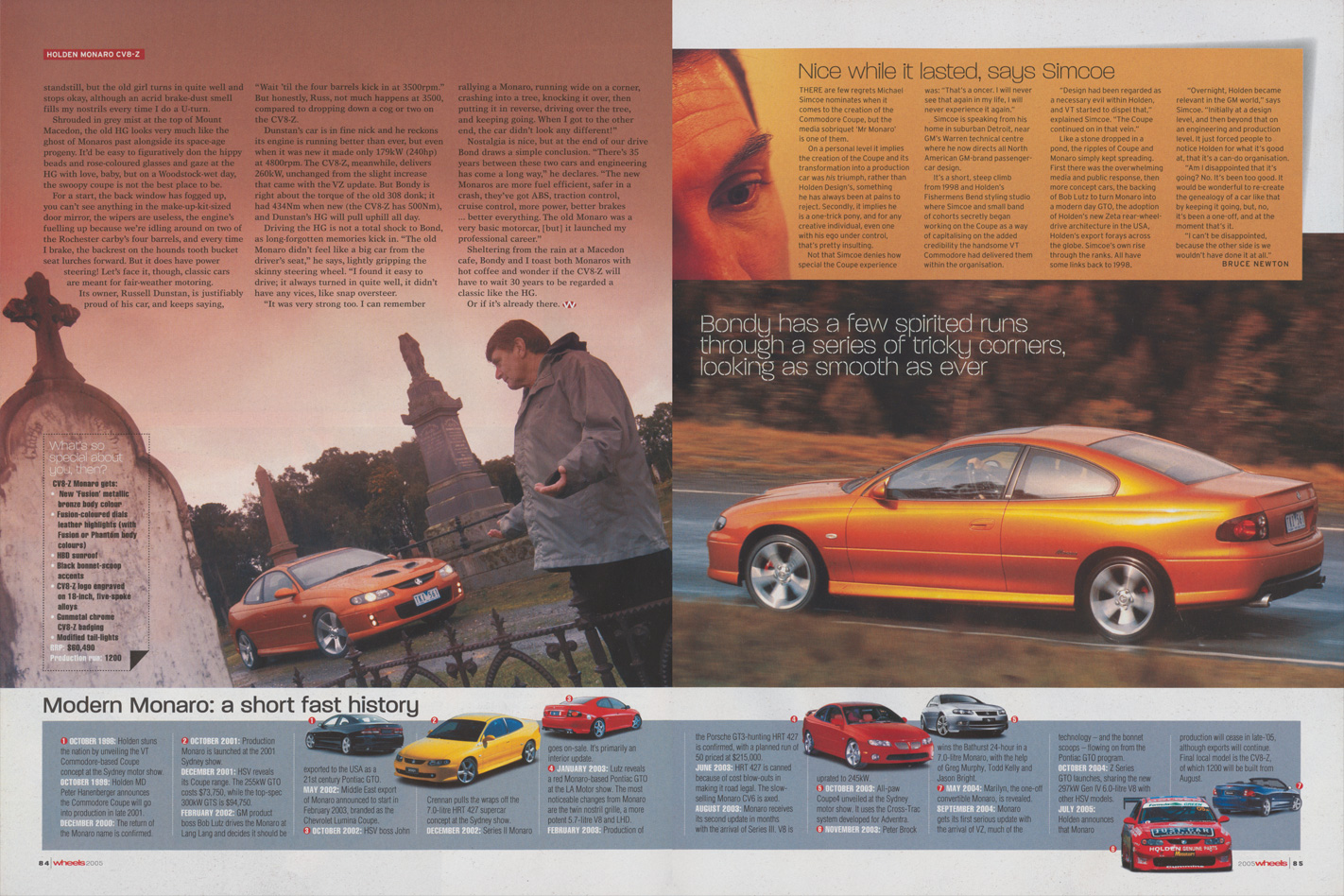
ON A MISERABLE Melbourne winter’s day, it seems even the weather is lamenting the end of the Monaro.
But, as persistent rain beads on the bonnet of our last-of-the-line, limited-run Monaro CV8-Z, a man whose formative racing years and hero status was created behind the wheel of Holden’s original super coupe has mixed emotions.
Colin Bond (with Tony Roberts) was the first factory Holden driver to win the Hardie-Ferodo 500 (miles) at Bathurst in a Monaro GTS 350 in 1969, one year after privateers Bruce McPhee and Barry Mulholland gave the model its first Mount Panorama victory. But, like most racers, Bond is only slightly nostalgic about old cars. Hey, it was 35 years and a lot of brain cells ago.
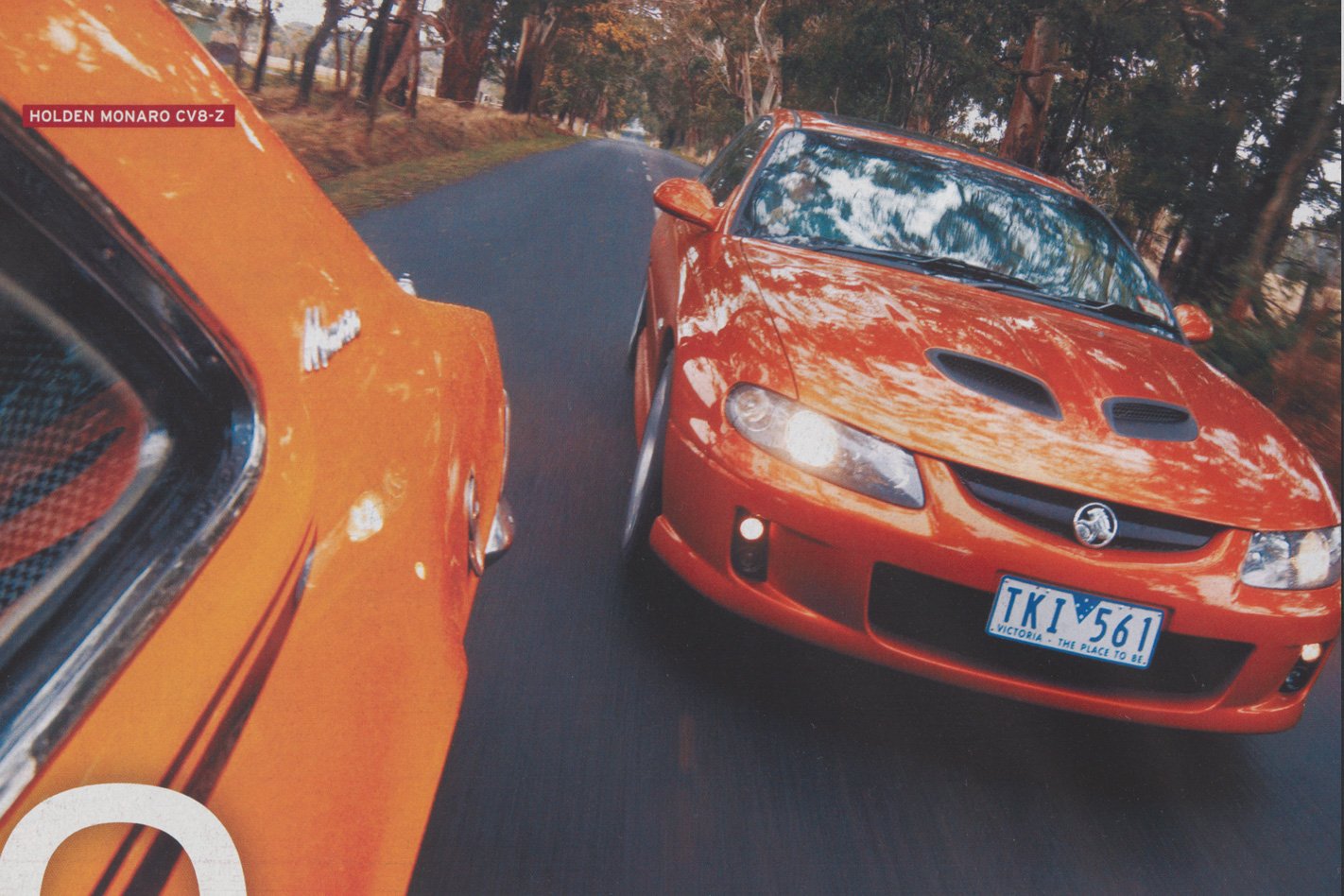
As for the new-millennium Monaro, Bond says he’s not upset by Holden’s decision to pull the plug. He understands the commercial realities, and has seen this happen more than once in his driving lifetime. Unbelievably, Bond told us he hadn’t driven a new Monaro, so we invited him to Melbourne to test a CV8-Z, to bookend this part of his motoring life.
For good measure, and to provide a flashback (no ’60s drug puns intended), we brought along a pristine example of what got teenagers (and race drivers) hot and bothered in 1970 – a Holden 308-engined HG Monaro, albeit a Trimatic auto ‘boxed one.
Given his choice of cars to drive first, Bond, who is fighting off a cold, has no hesitation in scrambling into the CV8-Z, switching on the heating and getting comfortable. The rain is beating down on the windscreen as we make for Mount Macedon, and I notice Bond does not even think about disabling traction control, like a lot of gung-ho journos might do, despite the conditions. He doesn’t have anything to prove, least of all to me.
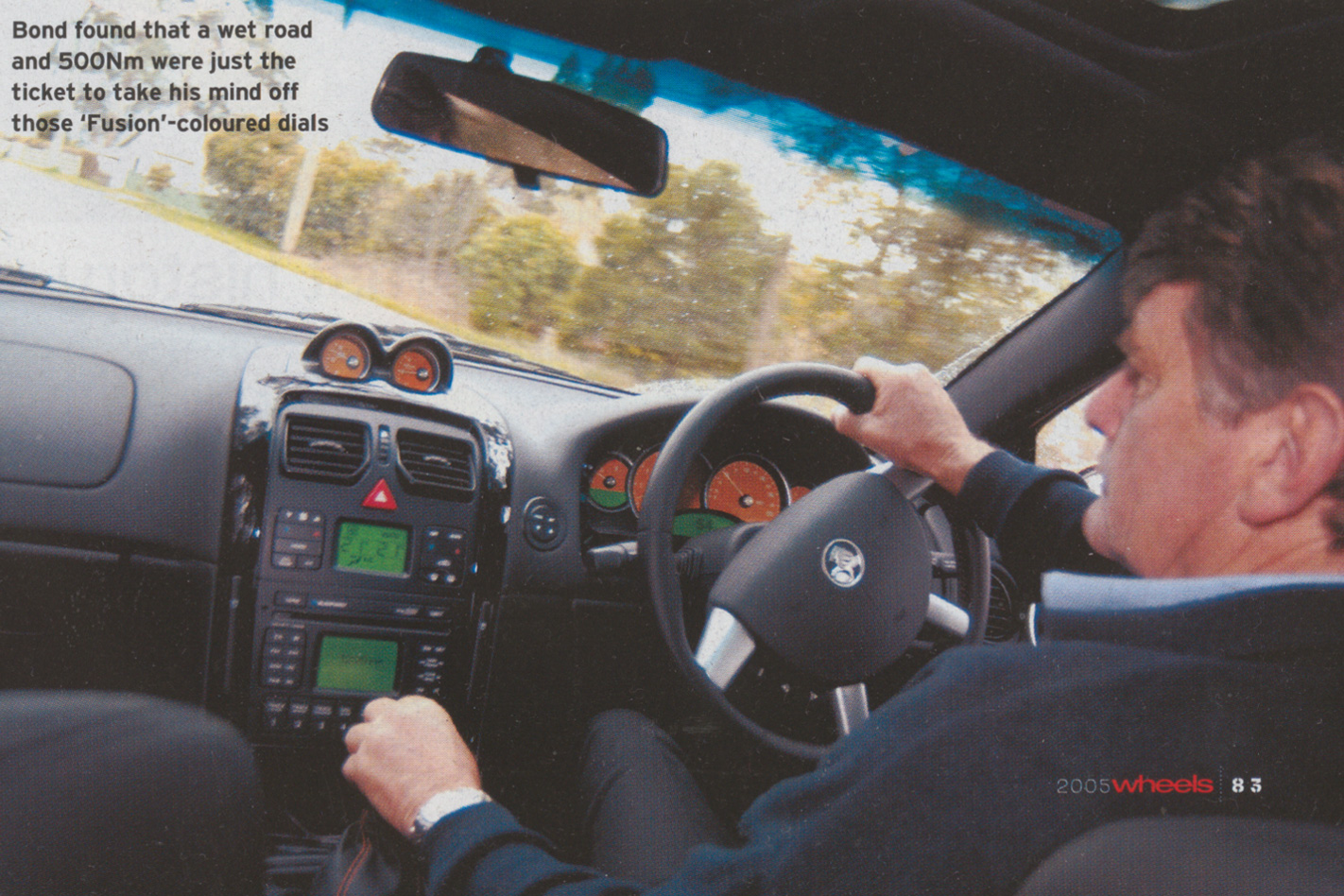
“All the teams running at Bathurst were testing, and I turned up in this Monaro and was about a second a lap faster than everybody else,” laughs Bond. “That was my first real drive of the car, and my first impressions were fairly favourable. I’d been to Bathurst twice before, but in a 1600cc Bellet, so it was good to get in a car that had plenty of zot.
“When I got to Bathurst, I thought, ‘Where are all these corners coming from?’ Because in the smaller cars they didn’t exist! The brakes were always critical; the pads were quite hard and the brakes quite small, but the thing I noticed was you could leave it in third gear because it virtually pulled from no revs to 5000rpm. At places like Surfers Paradise, it was much faster if you used higher gears.”
There’s not much chance of Bond going much faster today, though, as the conditions deteriorate further, so our conversation switches to the Fusion-hued Monaro we’re riding in and the new Monaro in general.
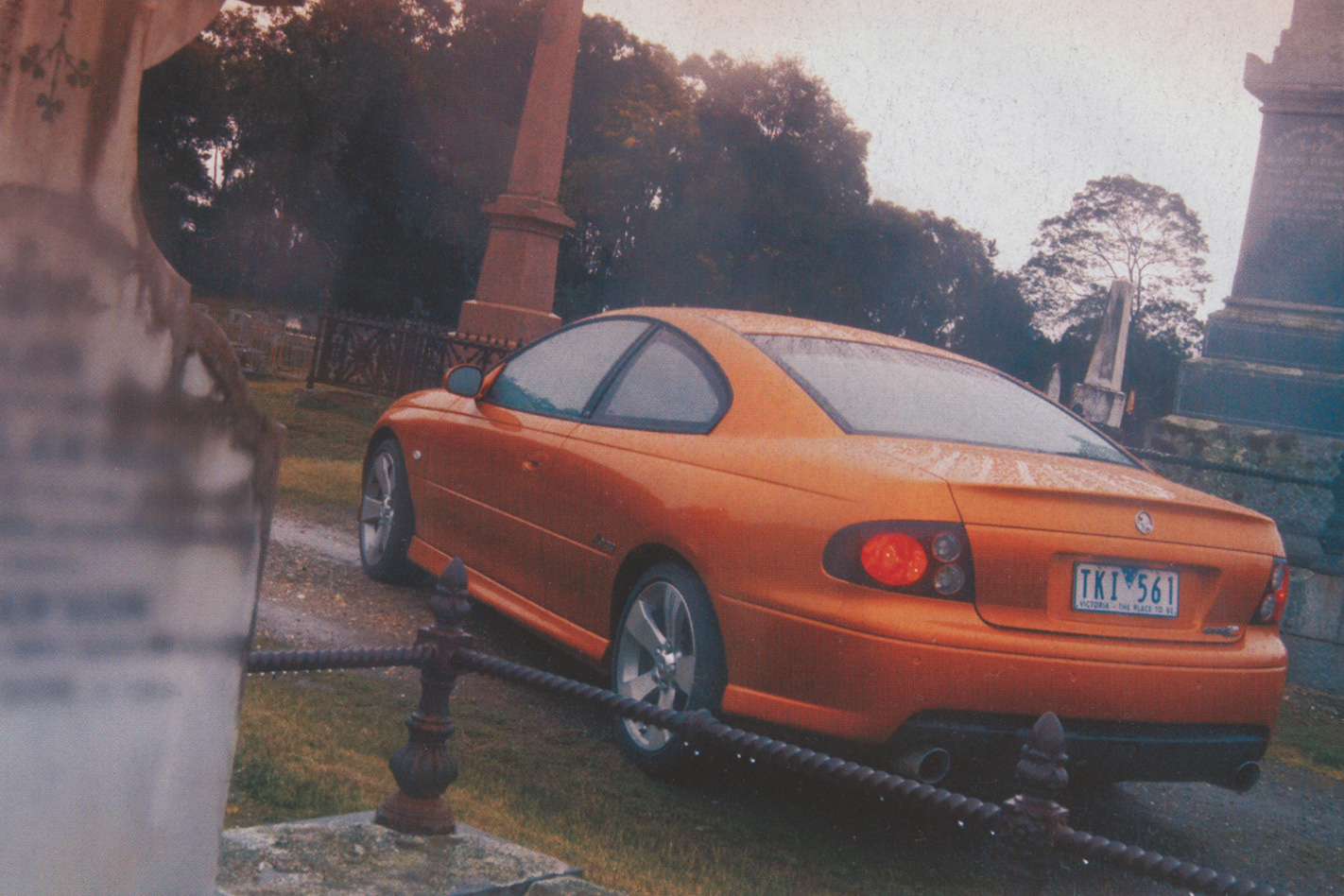
“The Monaro was the first of the modern-era cars that was different. It had a distinctive look, but was made out of a Commodore, just by lowering the roofline and changing a few bits and pieces; it was very clever engineering and I just think it’s great.”
That said, Bond won’t be shedding a tear when the last Monaro rolls off the production line. Even his nostalgia has limits. “It’s just a name,” he shrugs. “Monaro is really just a two-door Commodore, and both the old and new cars were the performance versions of their days. Monaro might come back as a name; names go around, and who knows, they might bring it back in the future as something else.”
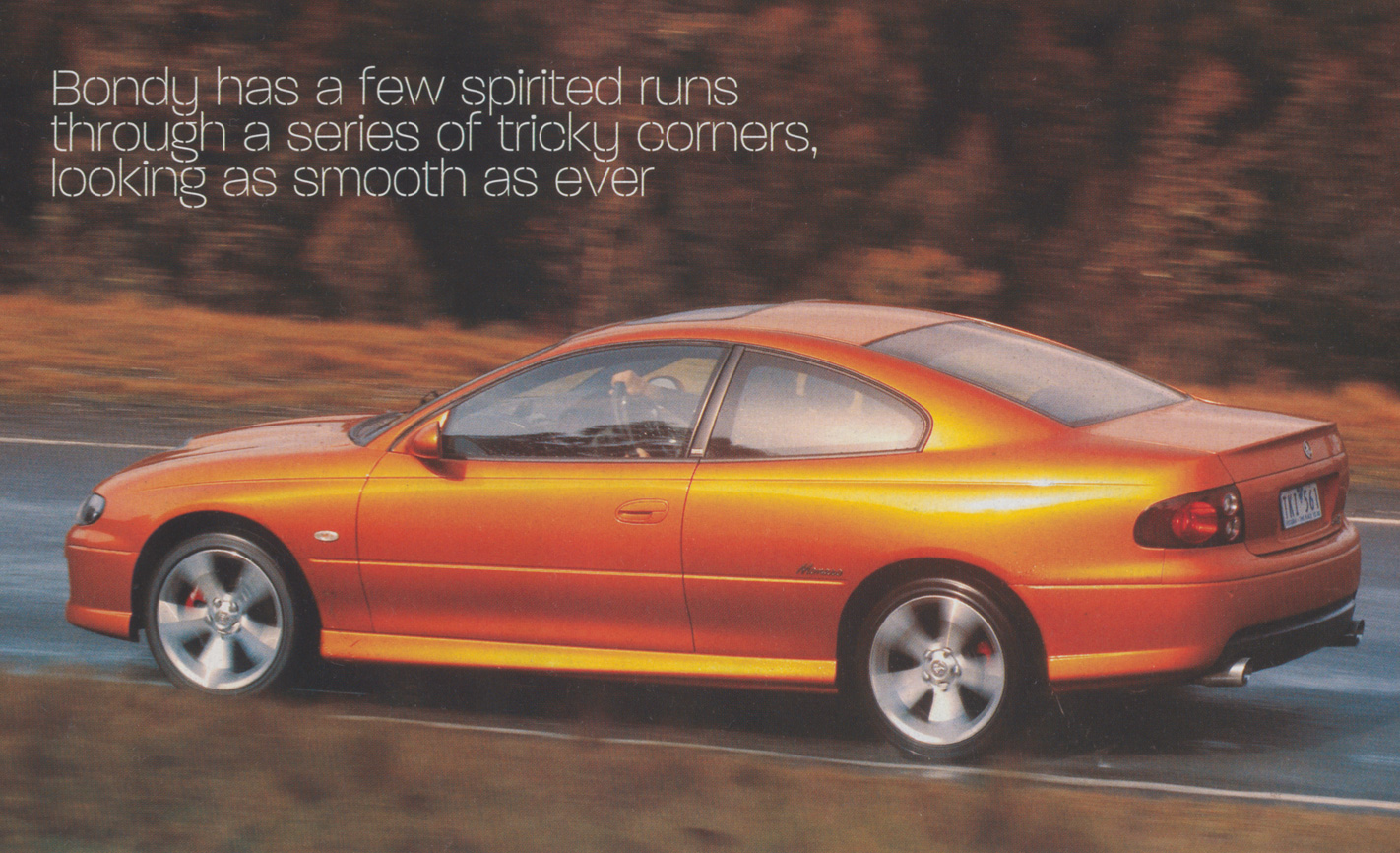
The tourist road to Mount Macedon is deserted – let’s face it, only car-mag blokes are dumb enough to be up here in this weather – so Bondy has a few spirited runs through a series of tricky corners (still with traction control on), looking as smooth as ever. When it’s time for two-car pies, I tiptoe behind the bronzed Aussie in the venerable HG, aware that its grip levels are substantially lower.
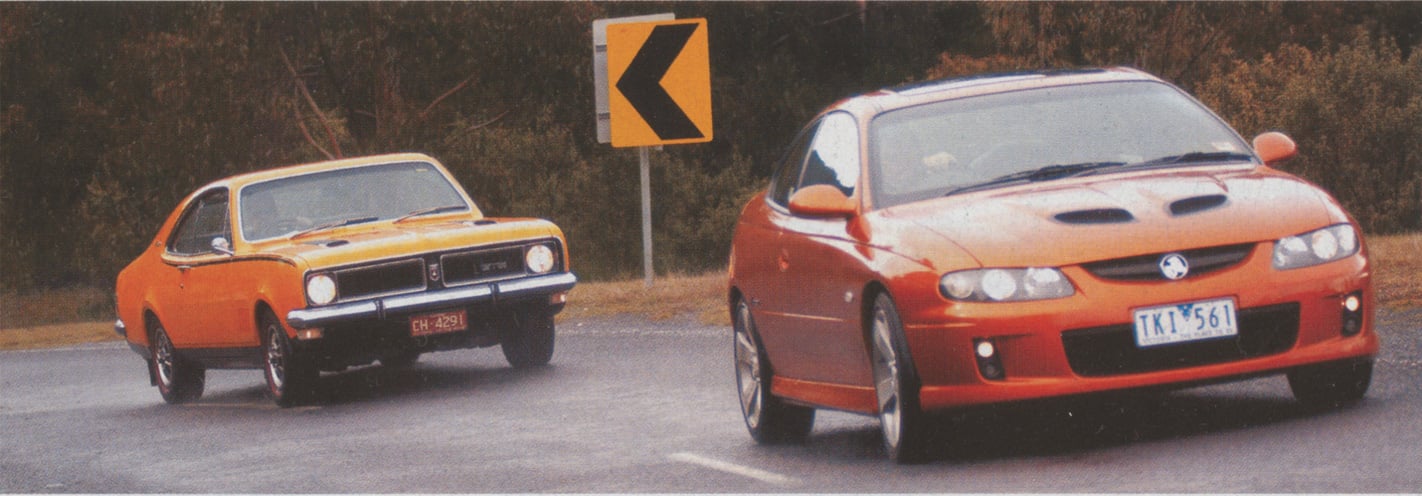
Shrouded in grey mist at the top of Mount Macedon, the old HG looks very much like the ghost of Monaros past alongside its space-age progeny. It’d be easy to figuratively don the hippy beads and rose-coloured glasses and gaze at the HG with love, baby, but on a Woodstock-wet day, the swoopy coupe is not the best place to be.
For a start, the back window has fogged up, you can’t see anything in the make-up-kit-sized door mirror, the wipers are useless, the engine’s fuelling up because we’re idling around on two of the Rochester carby’s four barrels, and every time I brake, the backrest on the hounds tooth bucket seat lurches forward. But it does have power steering! Let’s face it, though, classic cars are meant for fair-weather motoring.
Its owner, Russell Dunstan, is justifiably proud of his car, and keeps saying, “Wait ’til the four barrels kick in at 3500rpm.”
Dunstan’s car is in fine nick and he reckons its engine is running better than ever, but even when it was new it made only 179kW (240hp) at 4800rpm. The CVS-Z, meanwhile, delivers 260kW, unchanged from the slight increase that came with the VZ update. But Bondy is right about the torque of the old 308 donk; it had 434Nm when new (the CV8-Z has 500Nm), and Dunstan’s HG will pull uphill all day.
Driving the HG is not a total shock to Bond, as long-forgotten memories kick in. “The old Monaro didn’t feel like a big car from the driver’s seat,” he says, lightly gripping the skinny steering wheel. “I found it easy to drive; it always turned in quite well, it didn’t have any vices, like snap oversteer.
Nostalgia is nice, but at the end of our drive Bond draws a simple conclusion. “There’s 35 years between these two cars and engineering has come a long way,” he declares. “The new Monaros are more fuel efficient, safer in a crash, they’ve got ABS, traction control, cruise control, more power, better brakes … better everything. The old Monaro was a very basic motorcar, [but] it launched my professional career.”
Sheltering from the rain at a Macedon cafe, Bondy and I toast both Monaros with hot coffee and wonder if the CV8-Z will have to wait 30 years to be regarded a classic like the HG.
Or if it’s already there.
WHILE you may wonder what the extra weight and girth has done to the Clio, or whether an RX-8 with less power than the original can truly be called a GT, there’re no such ambiguities with the big locals in this mix.
This Performance Car Of The Year article was first published in MOTOR Magazine November 2008.
You lay down your cash for a HSV GTS and you won’t get any nasty surprises. Mind you, if you bought this here actual car, you might get quite a pleasant surprise because this is the fittest one we’ve sampled yet.

And it only got stronger from there. The 400m came up in 13.4 at 173.8 and the big fella from Clayton creamed the standing kilometre in 24.1 at 223.7km/h. The heaviness of the gearshift seems to disappear when you’re banging them through on a runway, and bang them through you will because even with the extra few hundred revs of the 6.2 over standard Holden fare, redline comes up mighty quick in the first few gears.
The axle-tramp we’d noticed in other GTS (mainly under brakes) seemed banished in this one, too, and the whole thing was rock solid even at warp speeds. Which kind of makes the lap-time a bit harder to explain. See, while the GTS was the quickest local down the shute, it couldn’t match the F6 when it came to getting around Wakefield.
Even with the magnetic dampers switched to kill, the HSV seemed set up a bit soft with too much body roll.
That said, fore-aft pitch was well controlled and there was plenty of power-down apart from when you got totally lairy with the gas. At which point all that wheelbase allowed you to hold silly drift angles and adjust them with the noise pedal. Nice.
On the road, the relatively soft spring rates don’t matter so much, but you will still feel a bit like a pimple on a pumpkin when it comes to hurling her about. The seats are okay but they’re designed with butt-crack and donuts in mind, so they’re quite vast.

Yeah, even on a day of low ambient temperature, the engine oil went to 150-degrees C. HSV says don’t worry about it (the gauge has been recalibrated to look less scary, too) but I wouldn’t be happy if it was mine. For 78 grand, I want an oil cooler.
A SLEEPER isn’t often a term you’d associate with a German badge.
However, for a variant that whispers its intent, the unassuming A5 fits the aforementioned bill. And when the redesigned, more angular A5 Coupe is dressed in Gotland green and wearing optional Audi Sport 19-inch alloys, it seems more of a style statement than the last word in performance.
After all, you can step up to the S5, or wait for the upcoming RS5, for that. What your $81,500 does buy you is a four-seat coupe with a cabin that matches Audi status quo. Its simplistic, yet highly sophisticated approach feels upmarket. It’s ergonomically sound and the standard Virtual Cockpit is brilliant by being intuitive, not intrusive.
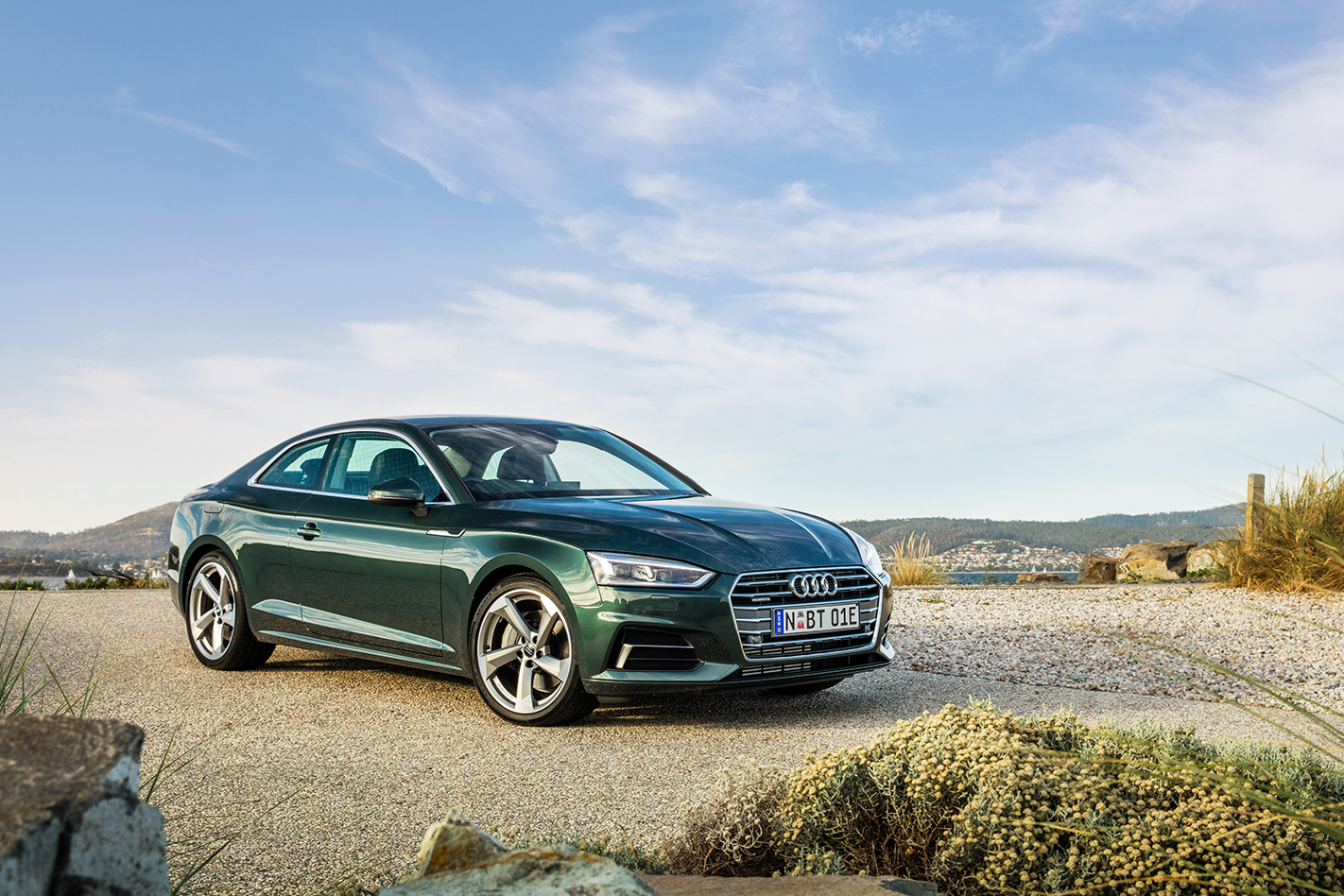
You need to chuck it into a corner in a spirited fashion to get it rotating, but with the self-locking centre diff and torque vectoring, it will hang on and shoot you out the other side. The progress is as staggering as it is unassuming.
The suspension soaks up the road with aplomb (sans adaptive dampers), while extra pitch isn’t a hindrance. Ego-stroking aside, the A5 is benign. In terms of feedback, it’s about as tactile as a partner filled with scorn. So while it is potent and capable, it’s clinical in its execution.
However, if you want to surprise your mates on a twisty road and look good while doing it, the ‘non-performance’ A5 is a bit of a devil wearing Prada.
2017 Audi A5 20 TFSI Quattro Sport specs: Engine: 2.0-litre I4 turbo Power: 185kw Torque: 370nm Weight: 1500kg 0-100km/h: 5.8sec Price: $81,500
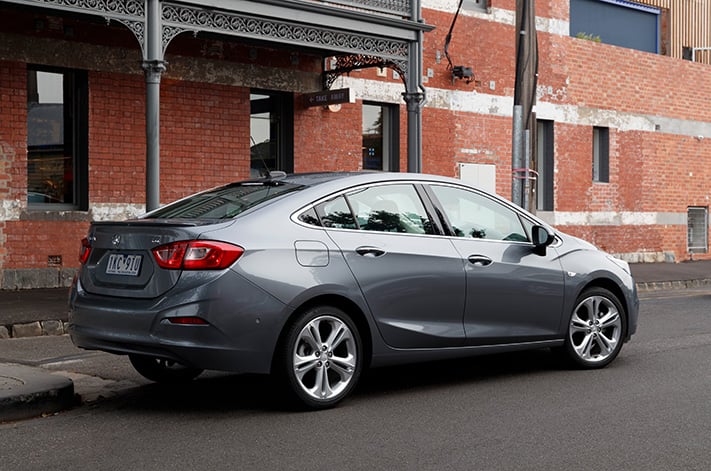
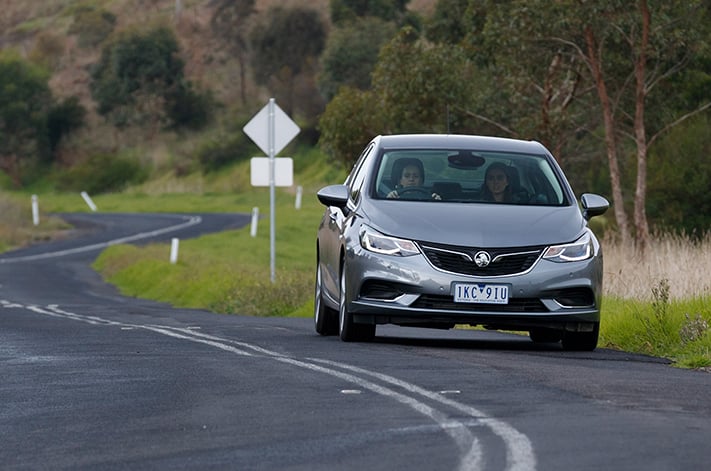
The Astra sedan joined the Astra hatchback in Holden’s ranks in July 2017 offering more interior and cargo space and sharper pricing.
Unlike the hatch, which is built by Opel in Poland, the Holden Astra sedan is actually a rebadged Chevrolet Cruze and is sourced from South Korea.
The sedan is similarly equipped to the hatch but lacks some key features, such as automatic emergency braking (AEB) and a more powerful 1.6-litre four-cylinder turbo engine option.
The differences are enough for Holden to give the two cars their own variant names. The sporty Astra hatch has three variants, R, RS and RS-V while the luxury hatch has four luxury focused variants LS, LS+, LT and LTZ which could cause confusion if trying to decide between the two body shapes.
VARIANTS
The entry-level LS shares the 1.4-litre turbocharged four-cylinder petrol engine with the Astra R hatch. This is the only engine in the sedan range but the LS is the only variant to be offered with a choice of six-speed manual as well as six-speed automatic.
The LS also features cloth seats, reversing camera, rear parking sensors, cruise control, dusk-sensing headlights, hill-start assist, 16-inch alloy wheels and a 7.0-inch touchscreen with Apple CarPlay/Android Auto smart phone pairing.
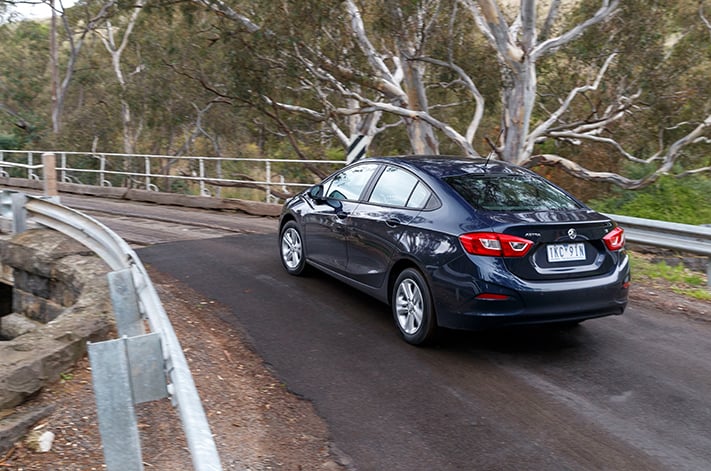
The LS+ is essentially the same as the LS but comes with the automatic transmission as standard and a driver assistance pack comprising forward collision alert, forward distance indicator, lane-keeping assistance and lane departure warning.
You also get leather-wrapped steering wheel, auto high-beam assist and LED daytime running lights.
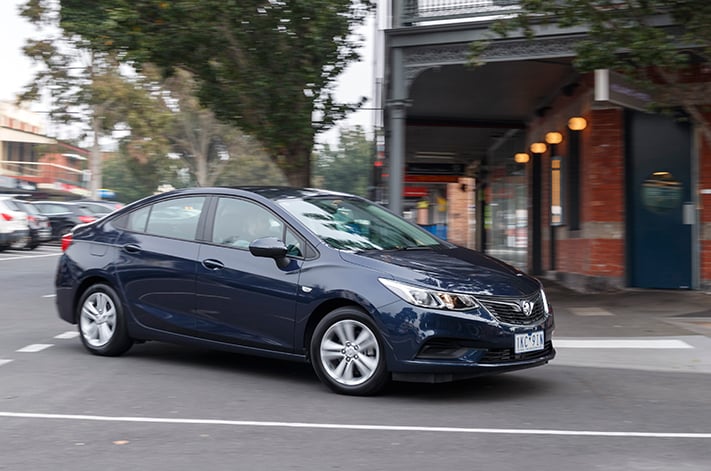
The Astra LT has the LS+ additions plus 17-inch alloy wheels, rear lip spoiler, chrome-effect trims, keyless entry and start, rain sensing windscreen wipers, front parking sensors, advanced automatic park assist, heated external and blind spot warning. It also gains an upgraded infotainment system with a larger 8.0-inch touchscreen, digital radio (DAB+) and built-in satellite navigation. A 4.2-inch driver information screen in the instrument cluster is also included.
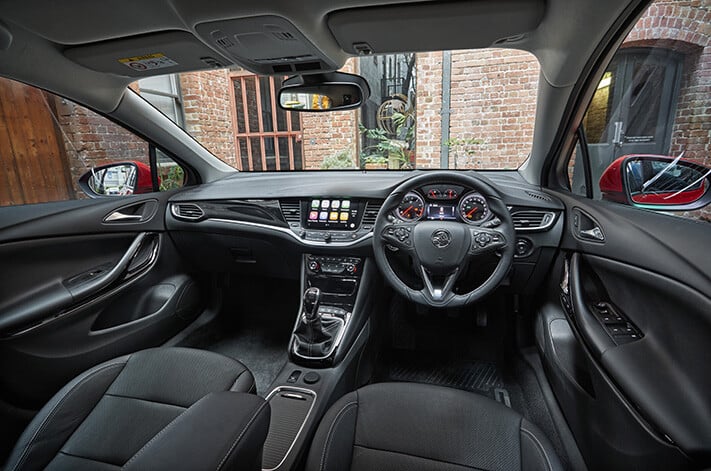
The range-topping LTZ has more creature comforts including an electric sunroof, climate control, leather-trimmed seats, heated front-seat with lumbar support, heated steering wheel, bigger 18-inch alloy wheels and chrome-look interior highlights.
- Astra LS manual – $20,490
- Astra LS auto – $21,490
- Astra LS+ auto – $22,740
- Astra LT auto – $25,790
- Astra LTZ auto – $29,790
The feature-packed LT represents good value for its mid-$20K price tag and lacks little compared with the LTZ.
AVAILABLE OPTIONS
- Premium paint – $550
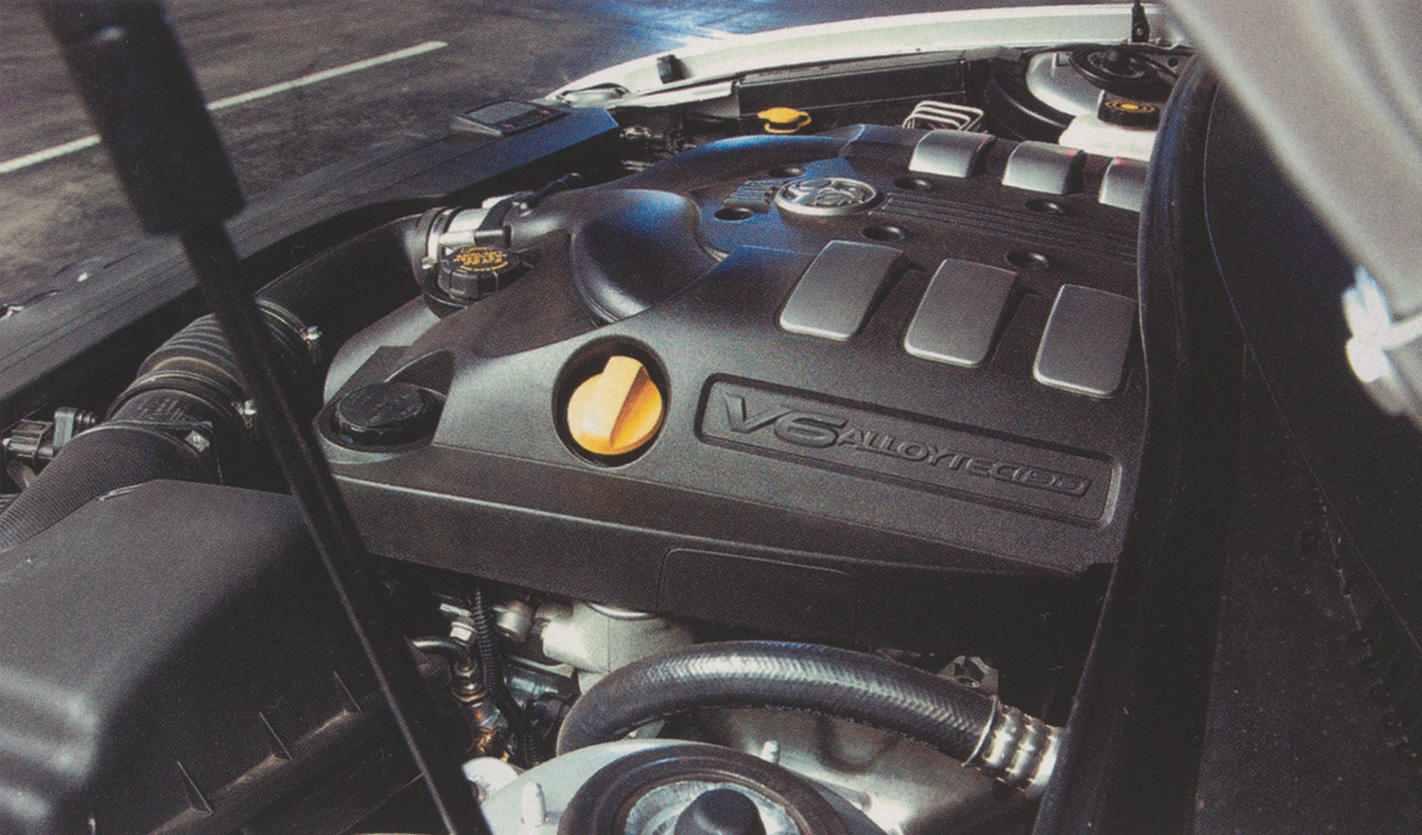
IF ANY doubt existed about Holden’s long and expensive quest to replace the ageing, uncouth Ecotec VG with the cutting-edge power of the quad-cam Alloytec, it is dispelled in a single burst down the quarter-mile drag strip.
The last time we tested an automatic Commodore it had 152kW, a four-speed automatic, ran 16.2 seconds over 400m, and took 8.8 to hit 100km/h. Already, without seeing the Correvit’s display, we’ve no doubt the VYII‘s numbers are about to go out with the rubbish.
Now, in the VZ SVG, the Alloytec 190 has gained no less than 38kW over the Ecotec, not to mention a five-speed automatic, and, quite apart from any other driveability, refinement, fuel consumption or emissions improvements, it’s a much quicker piece of gear. That 400m time has dropped by almost a full second to 15.3, and no less than 1.3 seconds has been lopped off the dash to 100km/h.
Reason for celebration itself and fine in isolation … if only there wasn’t a big, purple, throbbing BA Falcon XR6 already sitting here, hungry to try and steal the SVG’s thunder.
Heavier, less powerful, and with one less ratio than its new Holden rival, the XRG has the odds stacked against it. And so it is no surprise the Falcon is slower in a straight line, even if the margin isn’t by as much as it should be, and an awful lot closer than you’d expect.
You want complications? How about the model line-up offered by each manufacturer.
The SV6 Commodore is Holden’s clear six-cylinder performance leader, being one of only two models in the range to get the 190kW version of the Alloytec apart from the softer, pricier Calais. If it’s a six-speed manual you’re after, there is no other choice, and the additions of FE2 suspension and an SS-style body-kit leave little doubt of the SVG’s intentions.
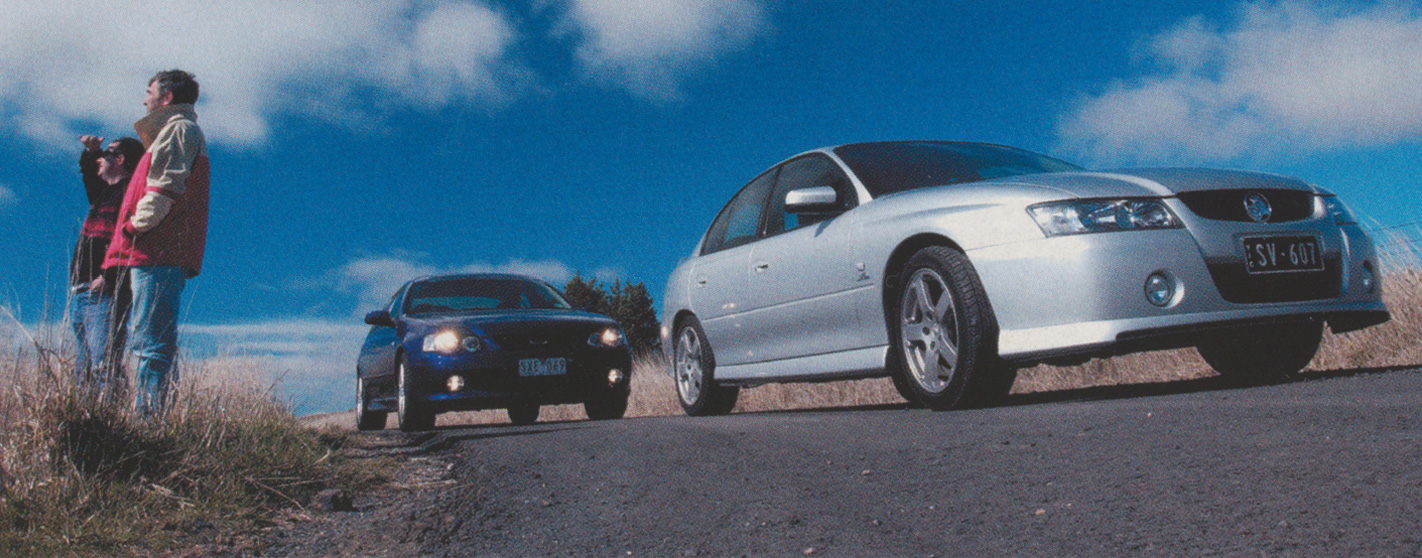
Clearly, SV6’s natural enemy is the naturally aspirated XR6, hence the face off.
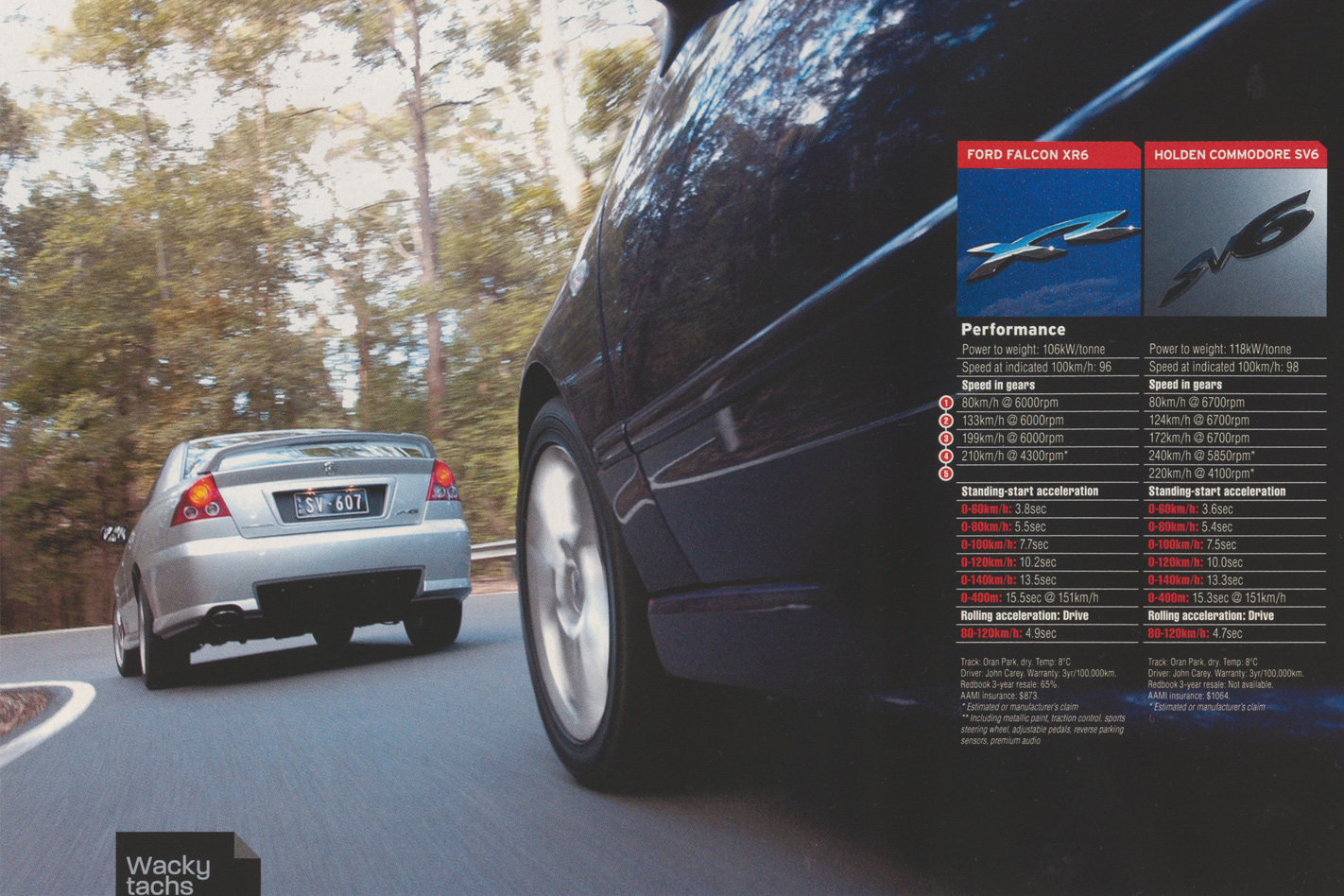
Pricing seems closely aligned, but look a little closer and the SV6 is better value. It costs $38,990 as either six-speed manual or five-speed auto, which is a little more than a manual XR6 at $38,G55 or a little less than the $39,575 auto. The Holden offers more power and an extra gear ratio, but the mechanical package is also sweetened by standard traction control and comfort by four-way power windows against the Falcon’s fronts-only.
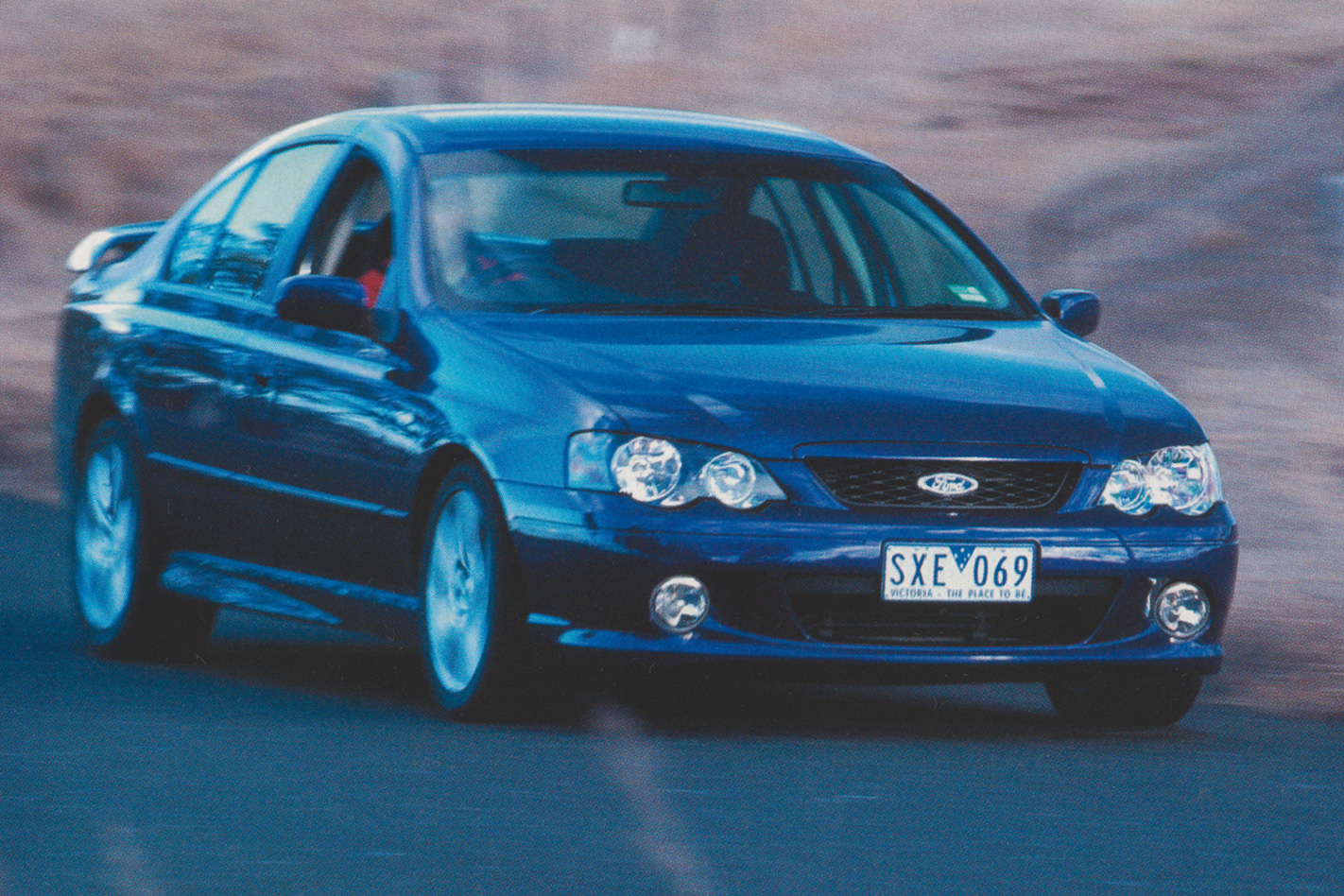
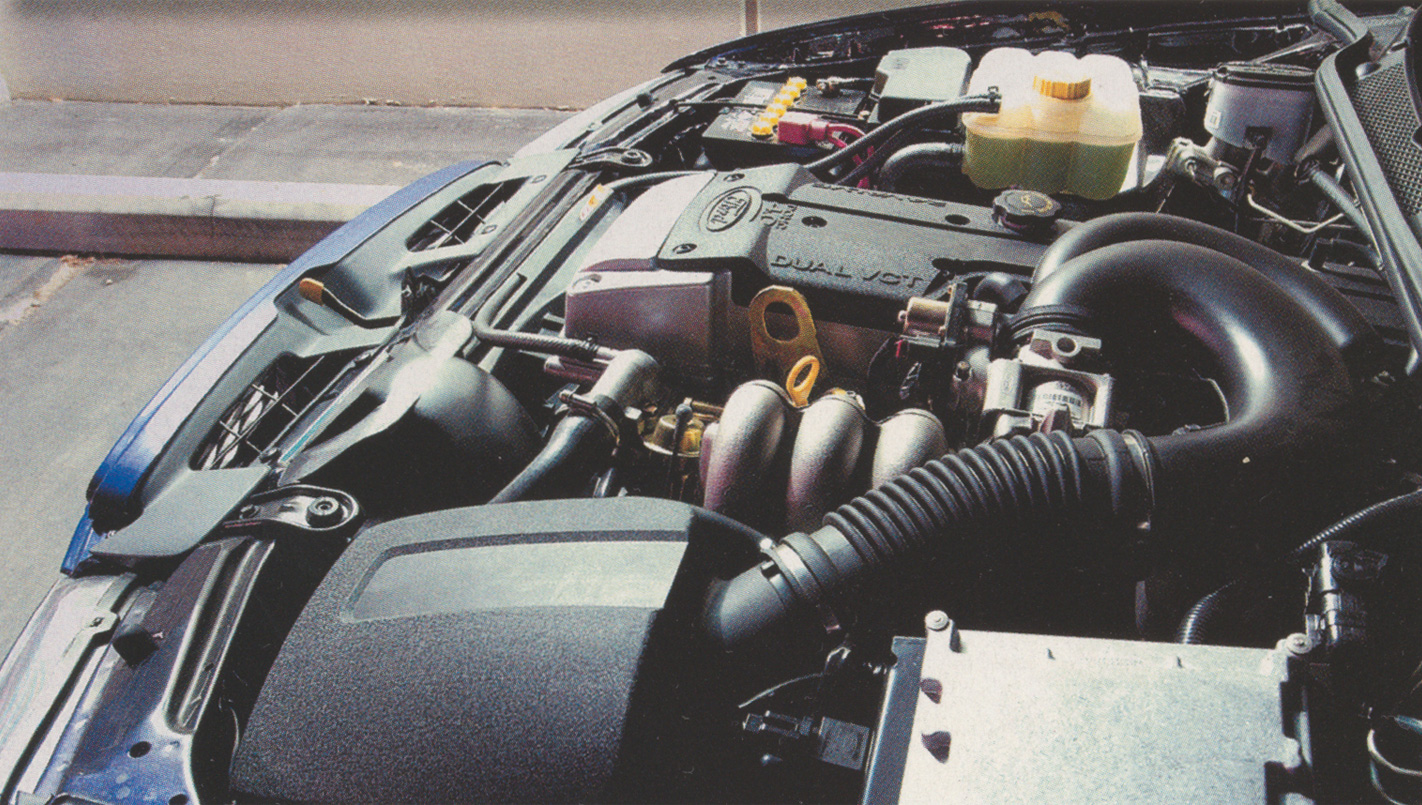
We covered Holden’s new V6 extensively last month, but the lowdown is that the 3.6litre, all-alloy, quad-cam, 24-valver delivers all the power you’d expect, with 190kW at 6500rpm and 340Nm at a commendably low 3200rpm. The BA Falcon’s larger-capacity in-line six delivers its 182kW lower down, at just 5000rpm, and, while peak torque arrives at a similar 3250rpm, there’s more of it, with 380Nm reflecting the extra cubes.
Not surprisingly, then, the engines are of distinctly different characters. The Holden V6 uses revs to achieve power from a smaller capacity, and with a larger bore than stroke is happy to get there. Gearchanges at full throttle occur at around 6700rpm while the Falcon’s undersquare six stops well short of that with 5800rpm being the absolute shift point.
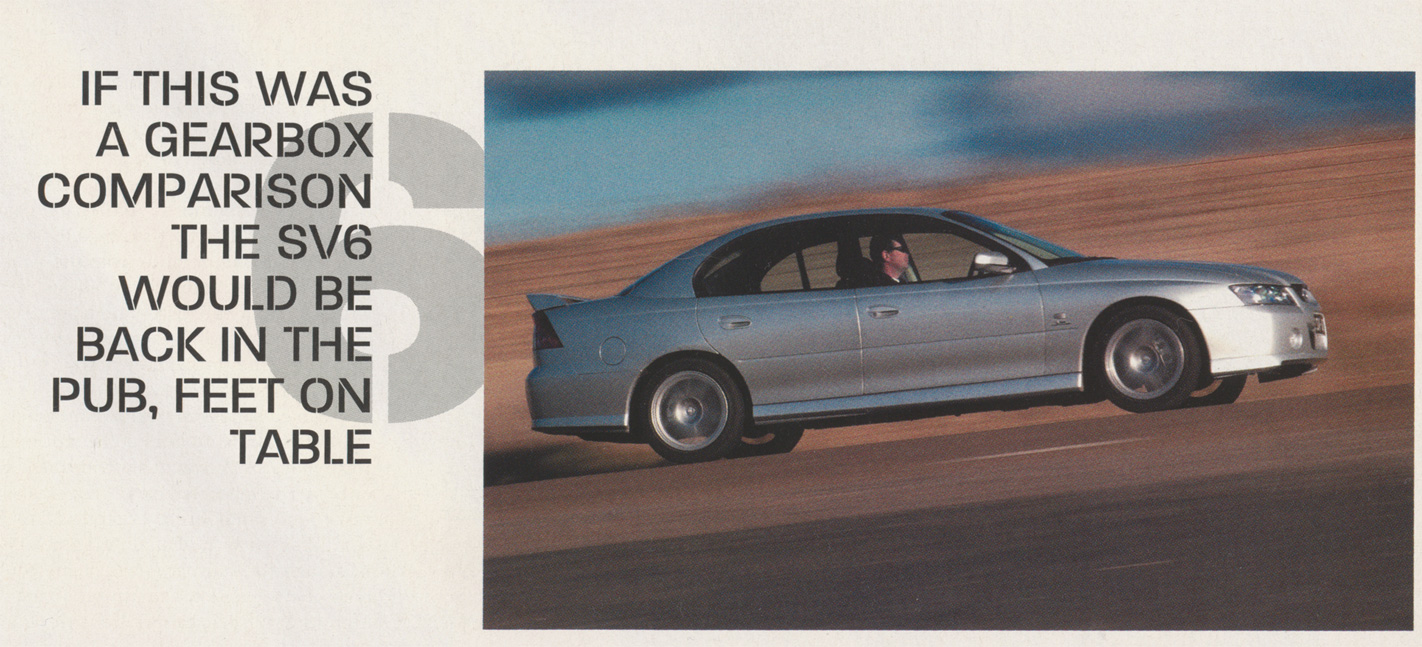
Both launch strongly from standstill. While the Commodore might not match the Falcon’s pulling power, Holden’s claim that 90 percent of the Alloytec 190’s torque is produced between 1630 and 5460rpm seems entirely believable – it’s just that there’s less of it. What can’t be denied is the absolute superiority of the SV6’s five-speed auto to make the most of what’s there; it’s the gearbox as much as anything that separates these cars.
Shift quality is one thing – and the Holden’s five-cogger only gives a brief pause between ratios before getting back on the power – but how it improves driveability is another. On a winding, hilly road, for instance, with the driver on and off the throttle, the XR6 will hold third only for as long as necessary before dropping way back to second, then straight back again as the driver lifts off for the next corner. The SV6 is more likely to hold a lower gear no matter the throttle position as its intuitive software correctly guesses the driver’s intentions. With closer ratios, any kickdown is far less dramatic in terms of increased noise and revs, and the shift itself is smoother.
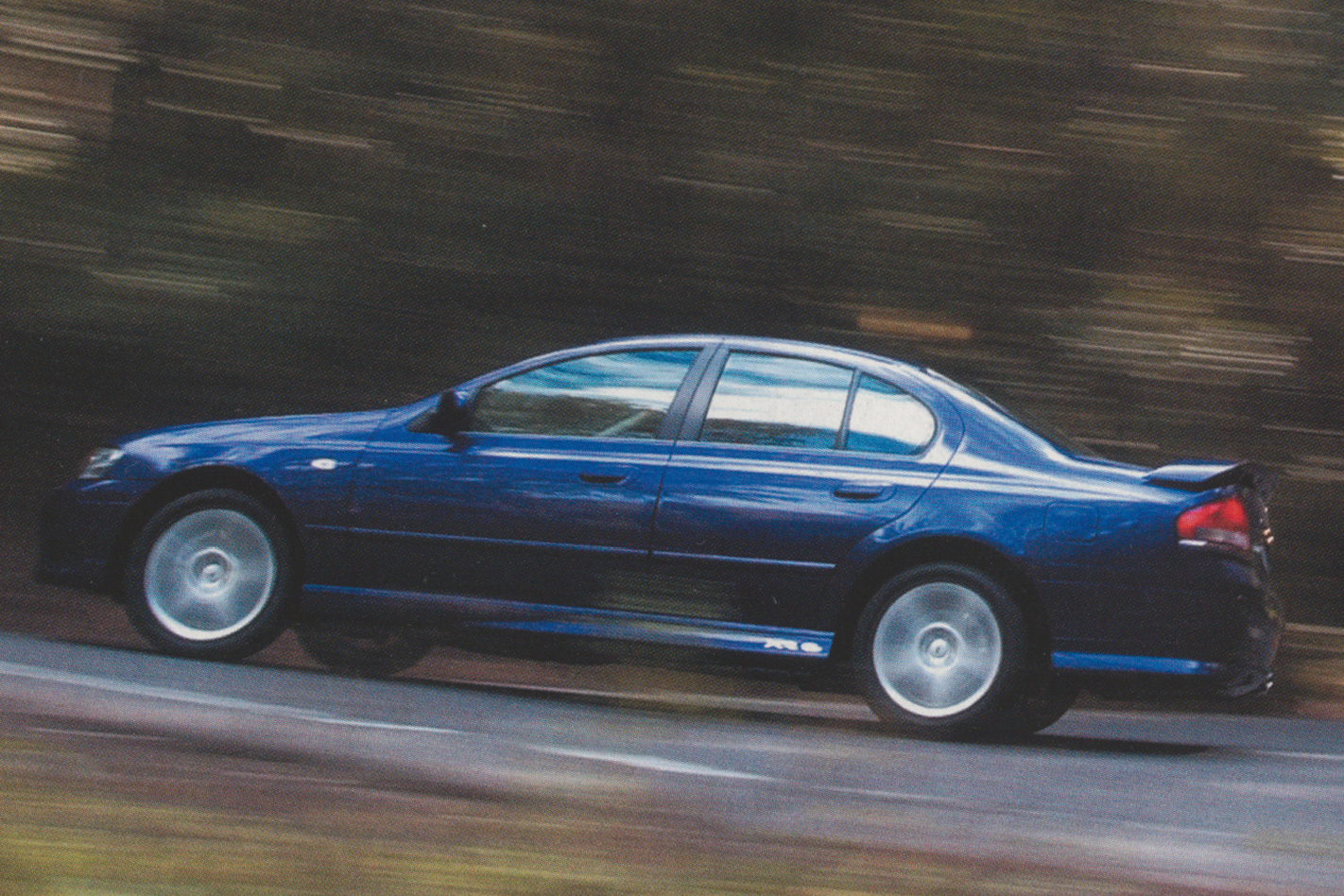
There’s not much to pick between the two when it comes to noise levels. The XR6 might have marginally more tyre roar on coarse surfaces, but that’s off-set by a disappointingly uninspiring engine note from the Alloytec 190 – it’s all hissing induction noise as revs rise, without much exhaust – and a small amount of gearbox whine. The Falcon six is gruff as ever, but wind down the window and the extra exhaust growl seems worthwhile.
If the closeness in performance between the two was surprising, fuel consumption figures were more so. Again, it’s a win to the SV6, but only by the most narrow of margins. Over the test the Commodore averaged 12.3L/100km compared with the Falcon’s figure of 12.5.
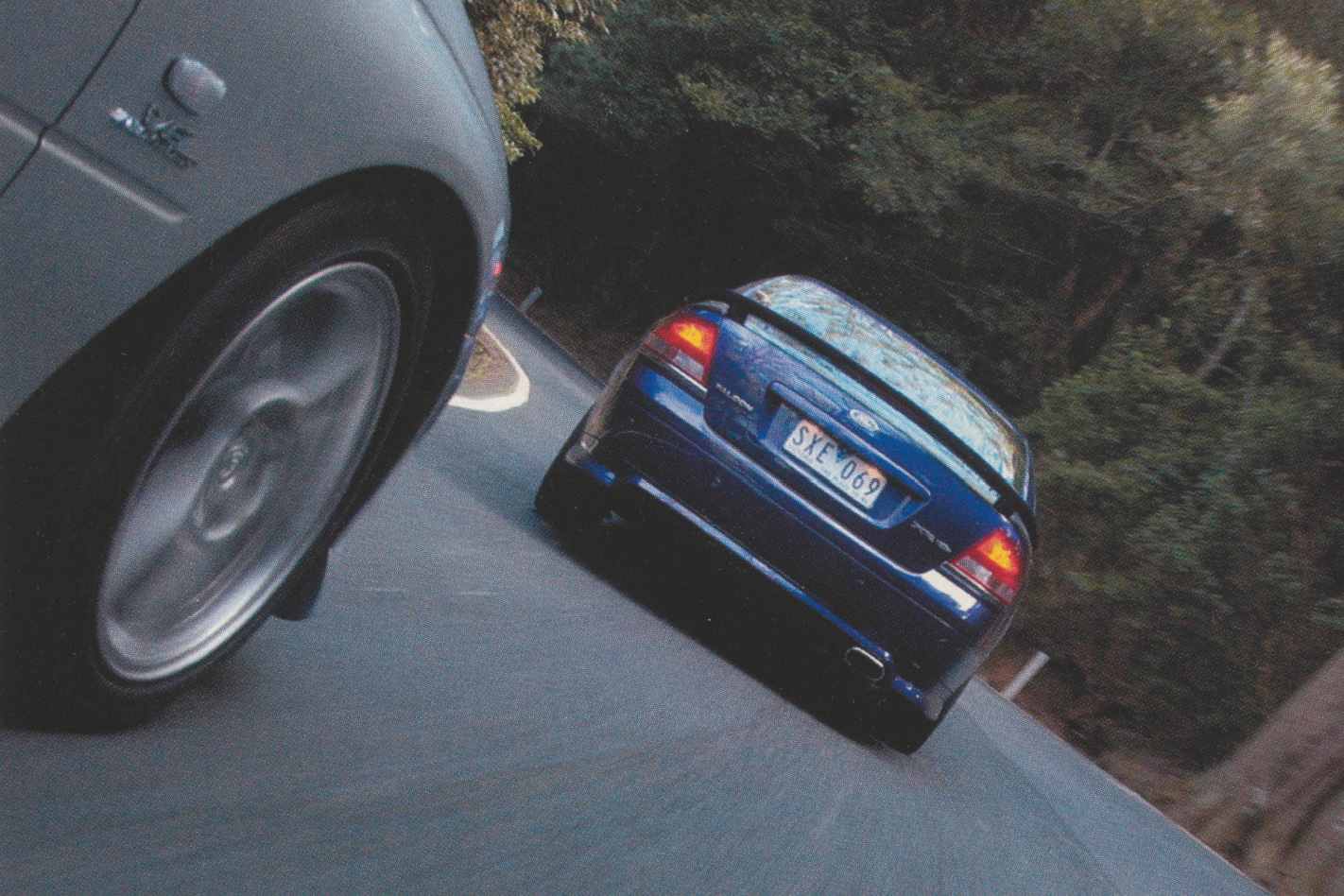
These twisting, lumpy roads put the difference in chassis philosophy between the two companies into stark contrast, and highlights that for invigorating rear-drive handling in what are basically family-sized and low-cost commuter cars, nothing comes close to the best an Australian six can offer.
The SV6 has a firmer suspension tune with stiffer springs and damper rates that inhibit roll and improve grip, but at the expense of comfort. The ride quality stops short of being harsh, but over anything but the smoothest of surfaces, it’s always busy. When the road degenerates into dips and humps, anything encountered is transmitted back to the car with interest, especially from the especially stiff front end that seems out of kilter with the rear.
Far from cumbersome, either. The Ford might weigh more than the SV6, and that weight can be felt during directional changes, but with a longer and wider footprint on the road, it is also immensely stable and less likely to be thrown off-line by mid-corner bumps than the stiffer Commodore.
The Falcon also steers better, despite the new power-assistance pump on the VZ Commodore and stiffer mounting of the Holden’s front stabiliser bar that makes the most marginal of differences. The XR6 gives terrific feedback off-centre, and a linearity of assistance lacking in the SV6. The Holden, however, has the Ford’s measure in road holding (and both wear same-size 235/45R17s) even if there’s a more front-heavy tendency towards understeer that’s a counterpoint to XR6’s better balance.
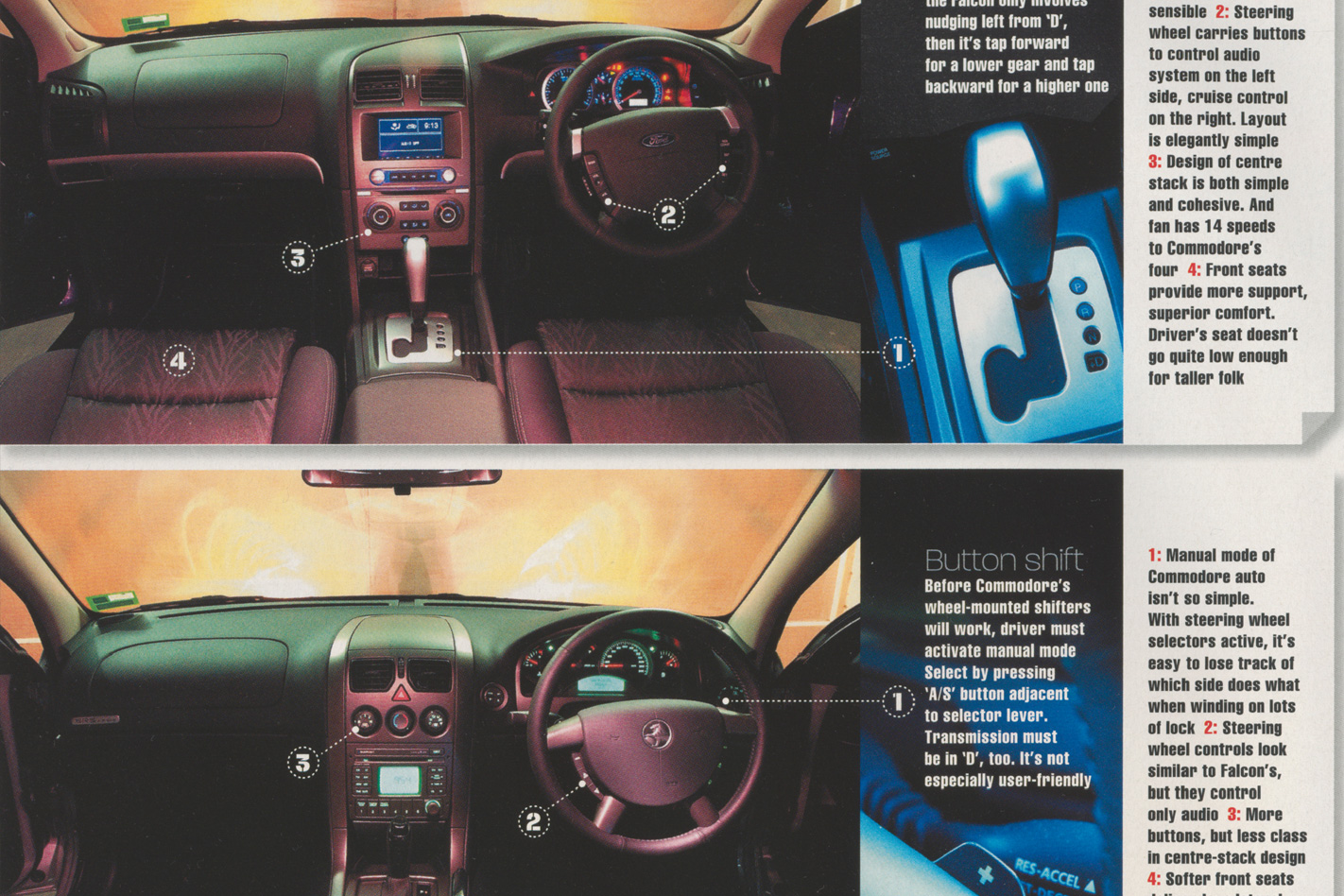
Otherwise, the interiors hold no surprises for anyone who’s been in a Falcon or Commodore. The XR6 has the BA’s centrally mounted information display for stereo and ventilation control; the SV6 more conventional controls. Storage space near the driver is virtually identical with permanent cupholders and a shelf ahead of the gearshift, but Falcon’s centre-armrest bin is bigger.
Choosing a winner between these two is not easy, and far more difficult than at first seems obvious given the huge advances the VZ Commodore has made in performance and refinement with its new drivetrain.
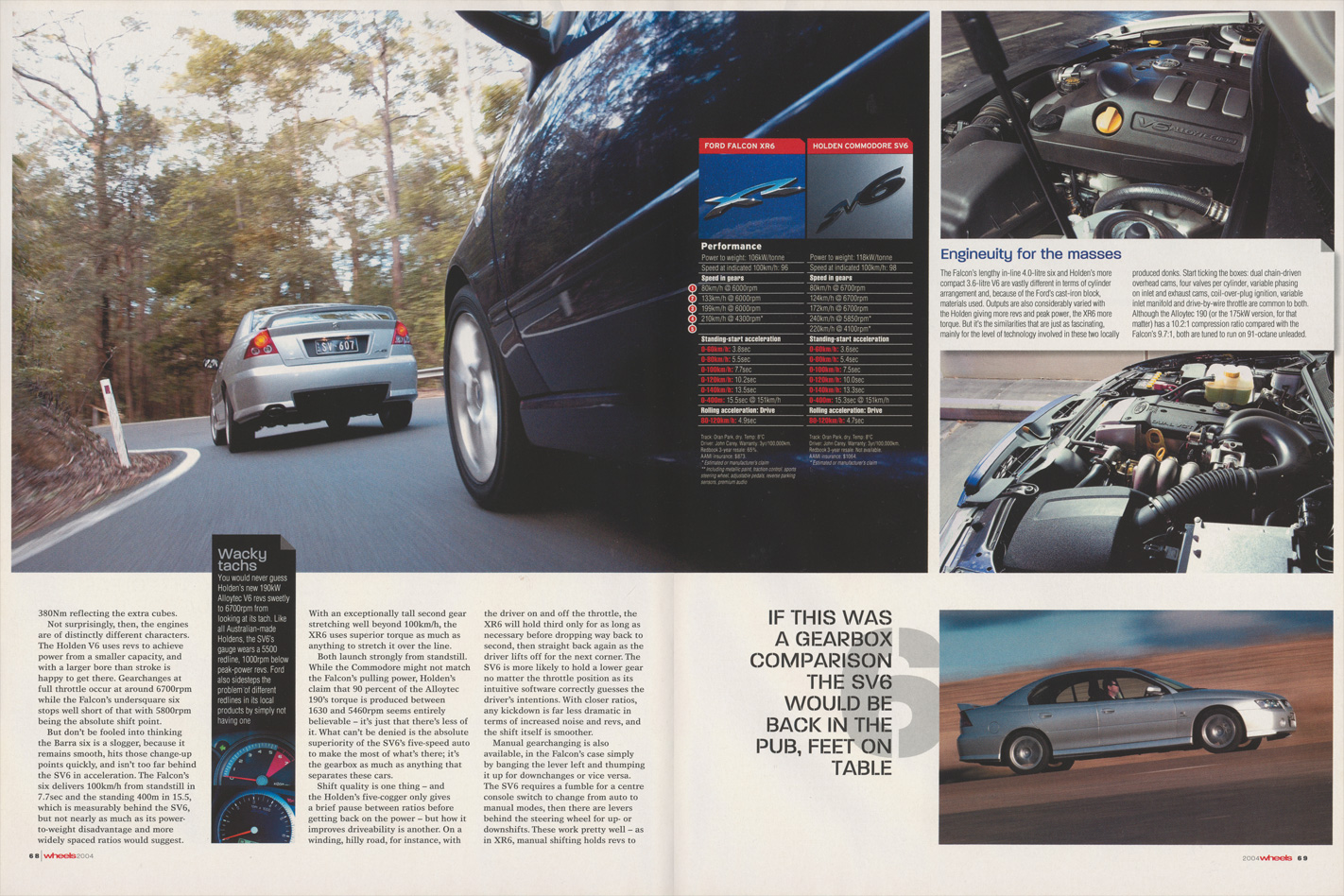
For all its 190 kilowatts and extra ratio in the automatic, SV6 only just manages to better XR6 in acceleration and fuel economy. If this was a gearbox comparison, the SV6 would be back in the pub, feet on the table, telling everyone where it went right. The added driveability and intuitive way the SV6 picks up and holds gears makes it subjectively superior to the Ford’s four-speed, even if there’s not much in the measurable numbers.
But the XR6 is the more complete car, with its compliant suspension making it easier to live with day to day, and the pulling power of its big six largely making up for its less adept – but by no means unrefined – four-speed automatic. And while it might feel softer, it is by no means slower or less agile than the SV6 point-to-point.
Little design details such as gas struts to hold the boot open instead of space-consuming springs, a gearshift for manual changes instead of a compromised wheel-mounted system, and even its more supportive seats all add up. That the XR6 manages to be this impressive without any major mechanical advances over an XT Falcon marks it as a remarkable car, and able to hold its head high against Holden’s latest technical onslaught.
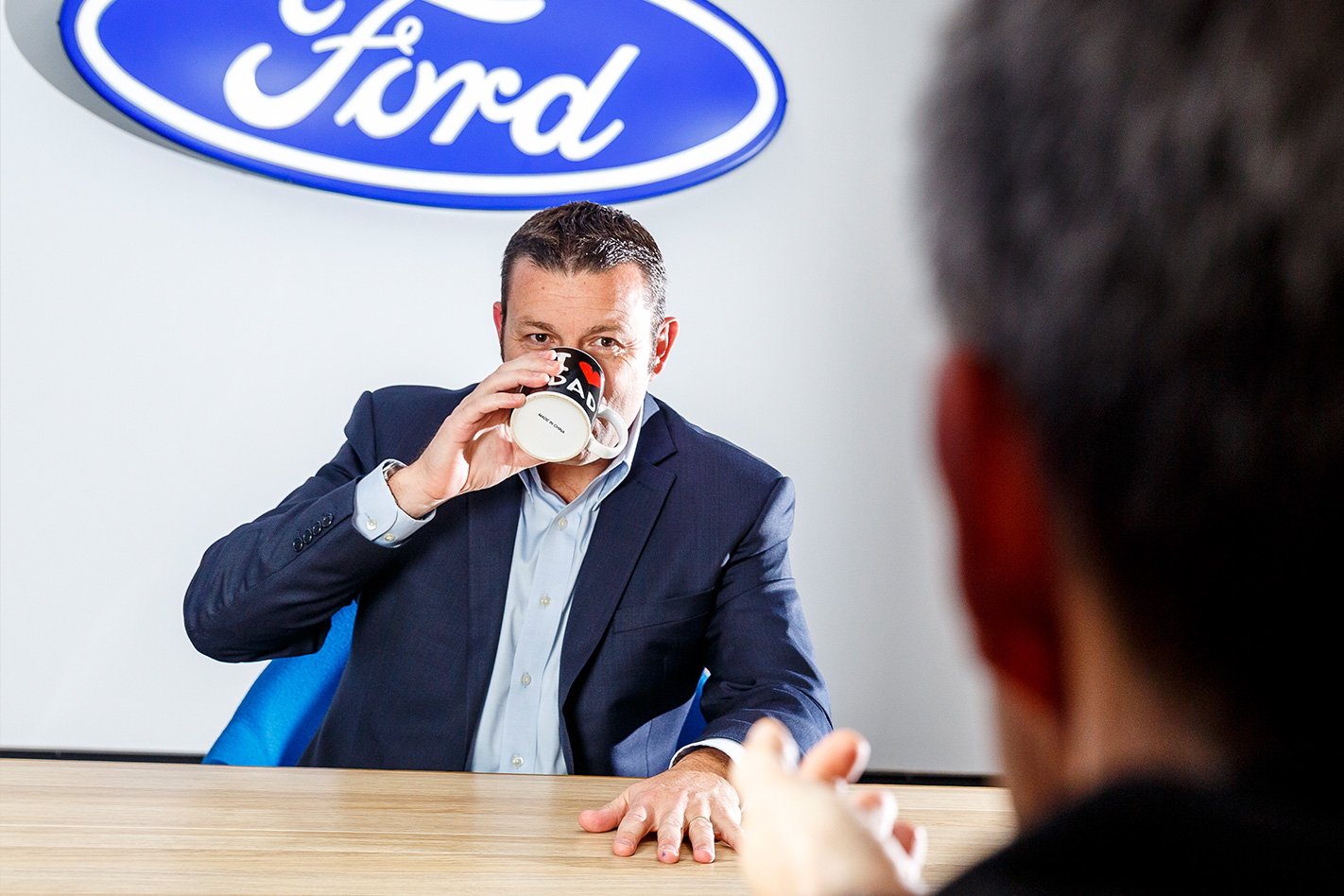
“MANY people talk about us in the same breath as Holden, yet we don’t even talk about Holden within these walls,” Ford Australia president Graeme Whickman says matter-of-factly.
Think about that.
Our motoring lives have been built on a Ford versus Holden rivalry that dates back nearly 80 years and a Falcon versus Commodore rivalry that dates back nearly 40.
But just like the assembly lines from which these treasured Aussie nameplates came, so this legendary rivalry is being deconstructed.
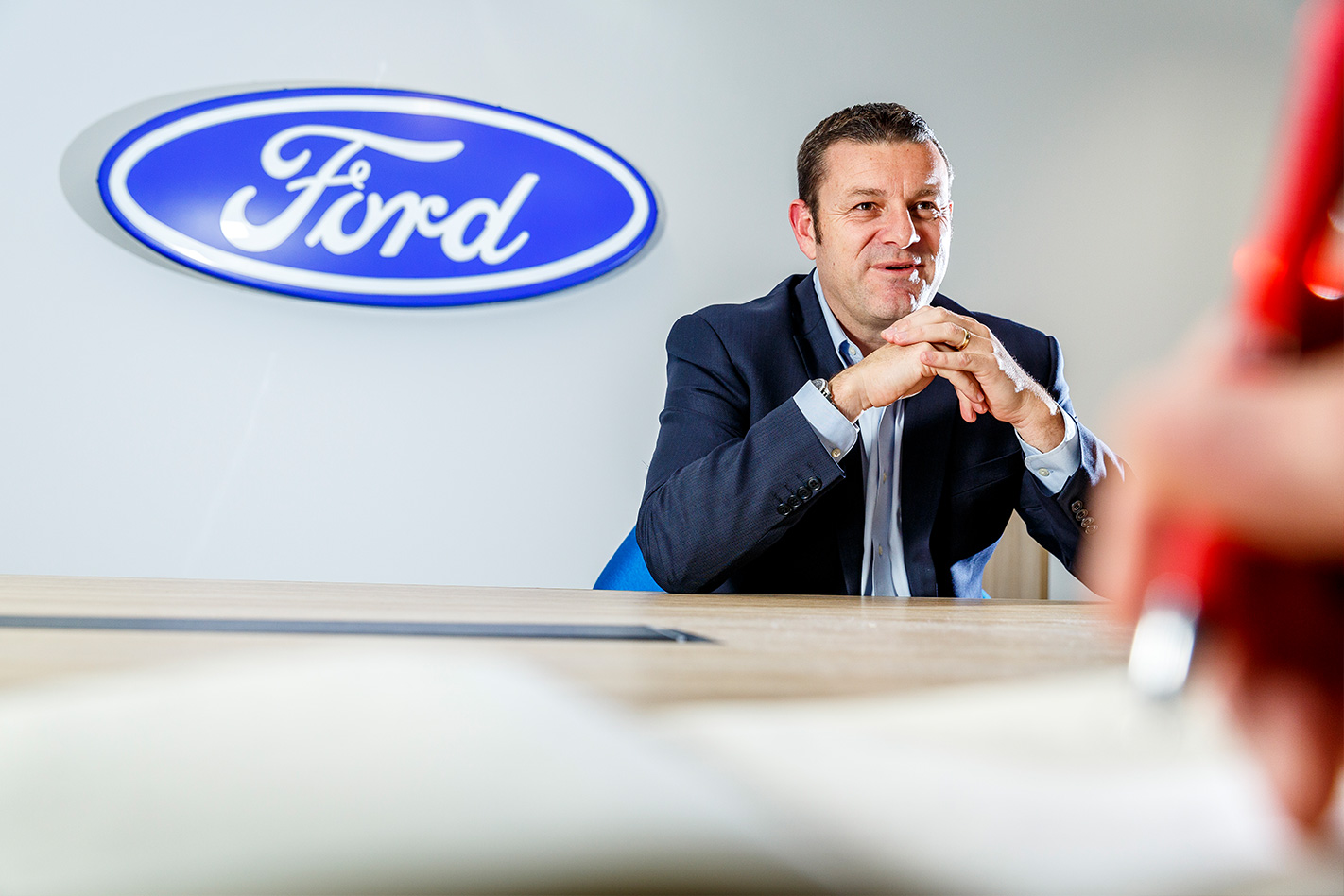
Interviewed by Wheels in the lead-up to the first anniversary of the end of production of the Falcon and Territory, Whickman is talking about the changes that he and his team are driving.
“In the past some people have coined the phrase the ‘Falcon Motor Company’. And whilst that’s a tremendous legacy, it was also a gating function and I think some people couldn’t see past the Falcon,” Whickman ponders.
“[Falcon] cast a very large shadow and I don’t think people could see we had other offers in the marketplace… it is interesting to see what’s happening with the Ranger, because over that longer time we are seeing another product get a bit more of the limelight.”
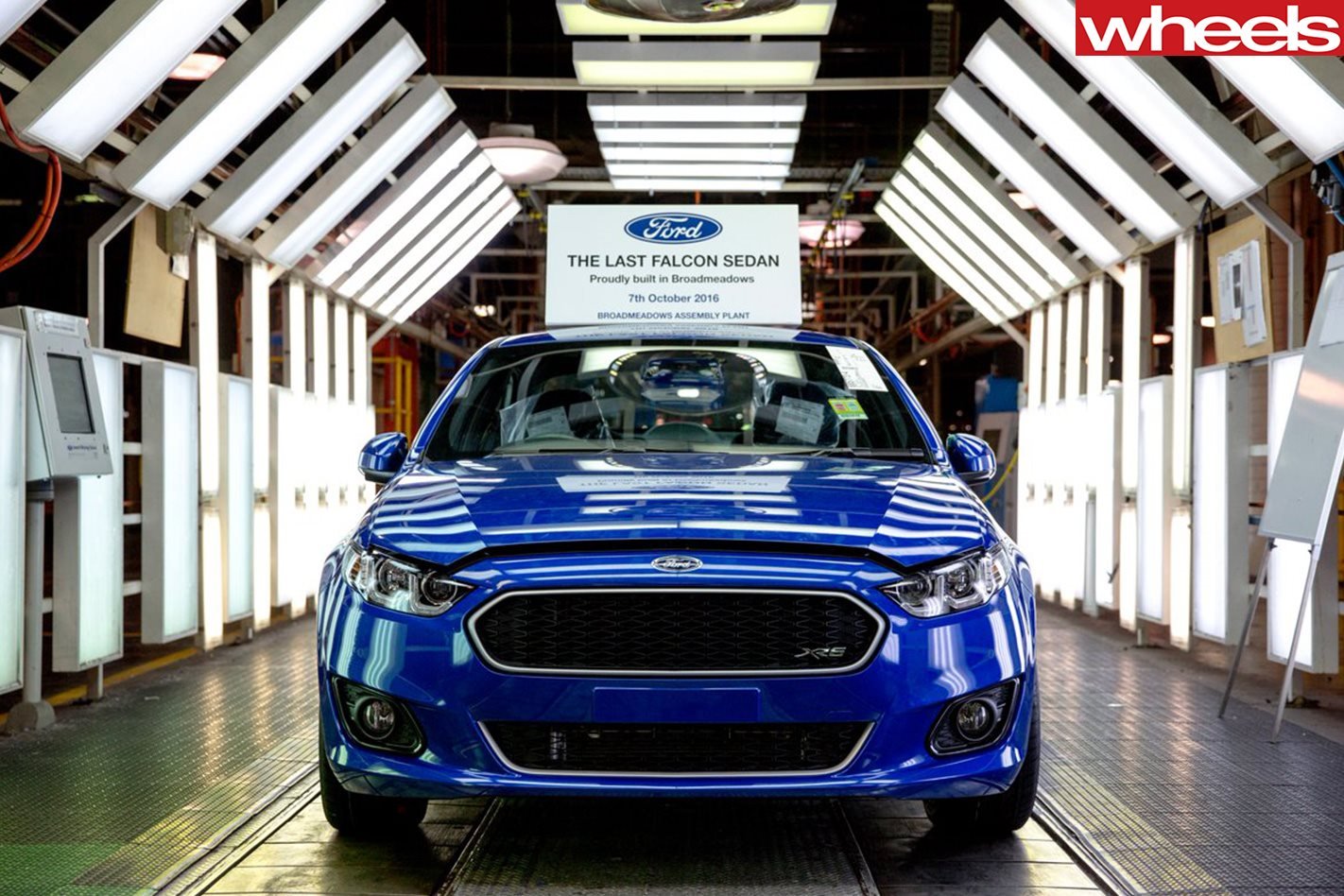
Overall, with Falcon and Territory sales almost completely out of the mix, Ford registrations are – according to VFACTS – roughly equivalent to 2016. That’s an achievement considering those two models were still worth more than 13,000 registrations last year.
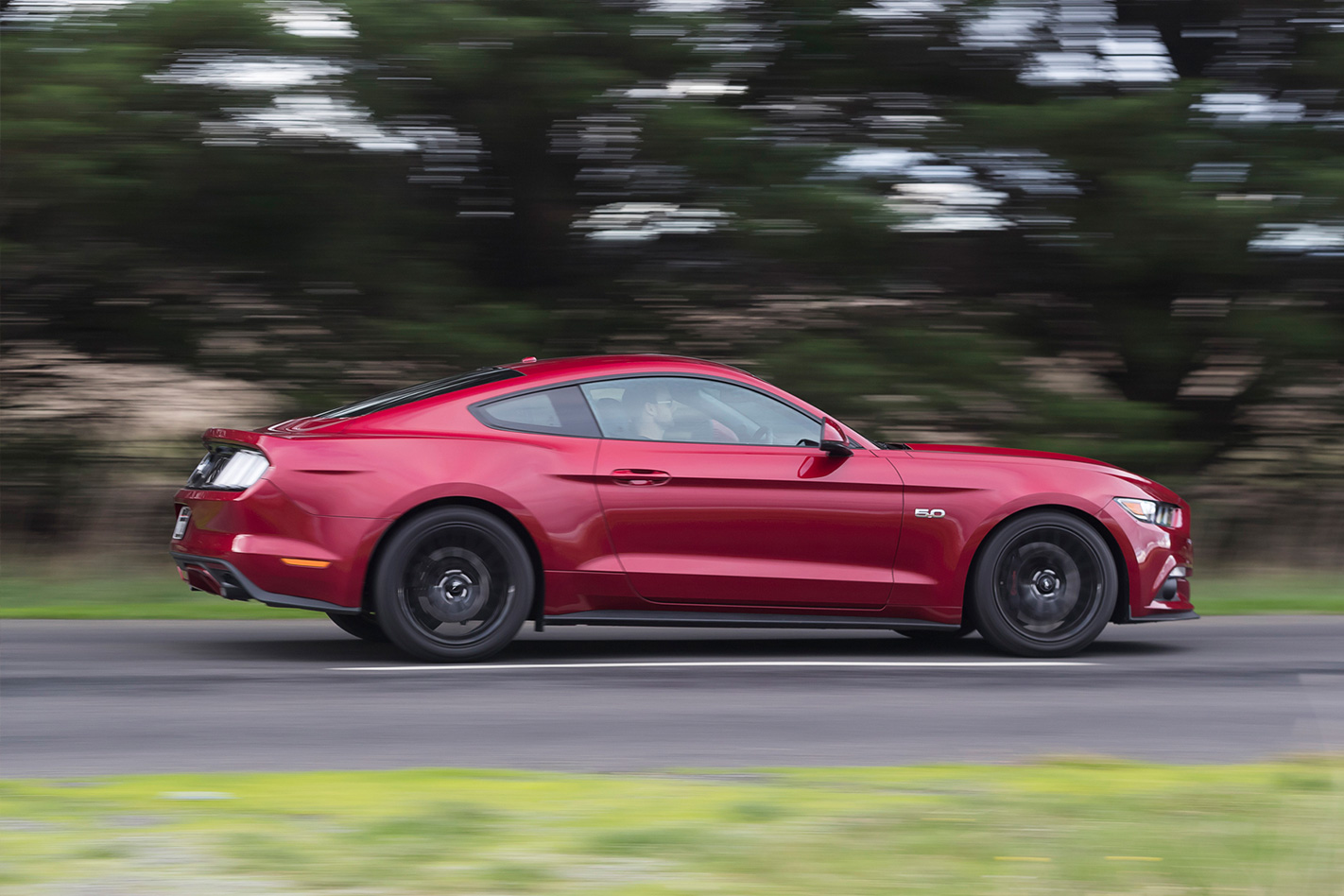
You could argue Ford has traded its dependence on Falcon for dependence on the locally developed – but not built – Ranger, which accounts for more than 50 percent of its sales. The other star turn is the Mustang, which dominates the sports car market and has clearly appealed to traditional Falcon ‘XR’ customers.
“Our retail sales have grown considerably year-on-year so we are obviously talking to more people and gaining their business. “[But] if you go out and look at who is driving a Ranger I would argue it’s not who you think it is in terms of the insinuation it’s the same group of people, because it isn’t,” Whickman asserts.
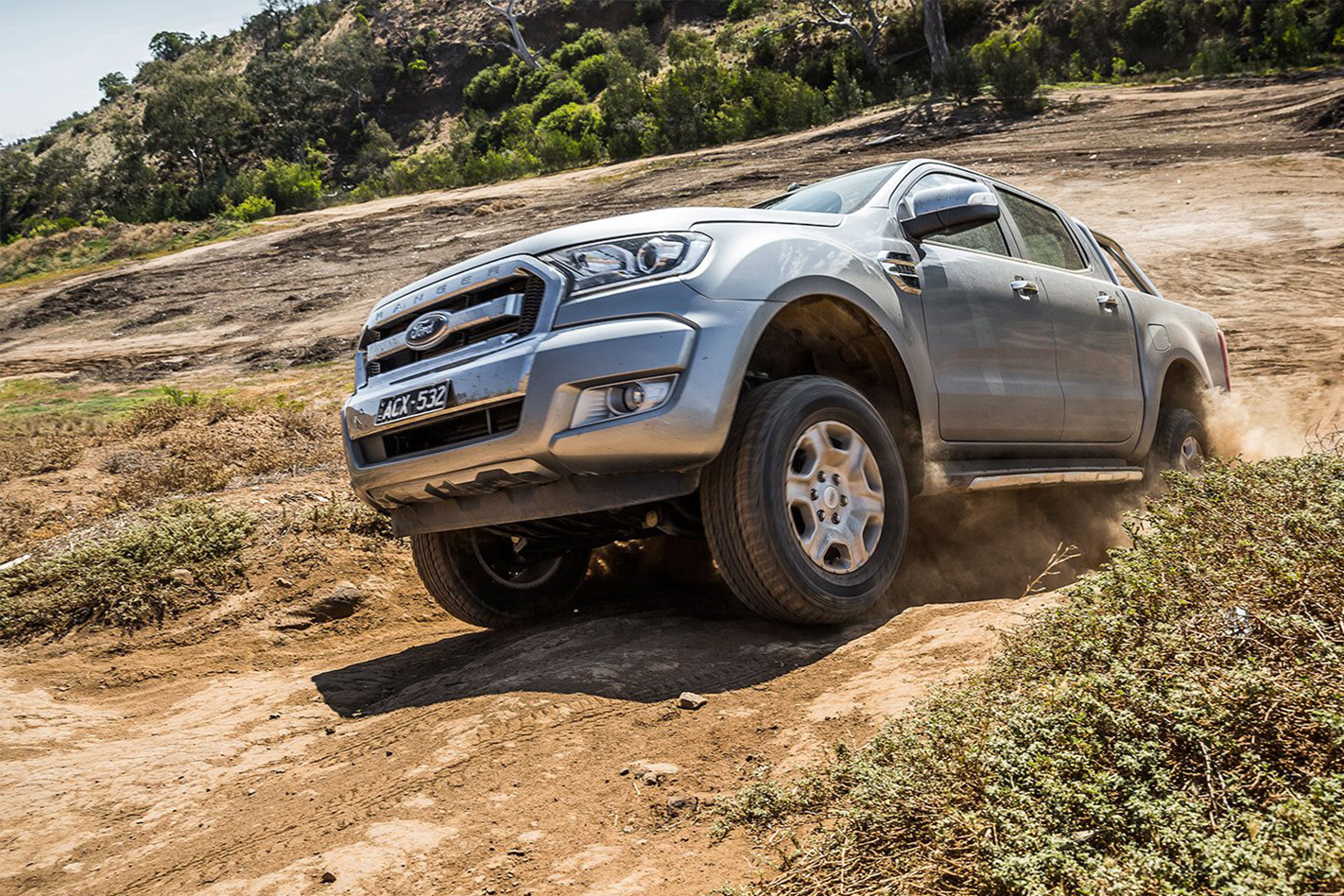
Yet, by contrast with the success of the Ranger and Mustang, the Focus and Fiesta are bit players in their still-sizeable passenger-car segments and Ford has yet to prove it can market an imported SUV successfully, as opposed to the home-grown Territory. Ecosport is down; Escape/Kuga is slightly up on a small base; Everest is showing solid improvement but off a small base.
But the figures he alludes to most are rising rates of Ford customer satisfaction. Whickman’s been banging this drum ever since he arrived in Australia as marketing and sales chief in 2013.
Ford Australia’s strategy is dubbed ‘Dealerships of the Future’ and it includes stuff like free service loan cars, auto club memberships, iPad-based service apps, free sat-nav upgrades, and even the motor show-style unveiling of purchases to new owners.
“Success might look like we sell the same number of vehicles we sell at the moment and that we are healthy and sustainable, but we have higher levels of respect and we have customers that are happy. People at barbecues talk about the fact they have a Ford.”
Then there’s his desire to better promote the massive engineering and design presence Ford retained in Australia post-manufacturing.
“Given what is happening in Australia, the state of the economy and how things are structurally shifting, Ford is a great example of what Australia could be, which is exporting ideas.”
“Things don’t happen by default, they only happen by design. So if you don’t continue to apply energy; if you don’t continue to generate emotional resilience; if you don’t continue to point the team in a particular way, then you run the risk of staying still or going backwards.”
And looking back is something Whickman isn’t contemplating.
