
Mitsubishi’s got a rally pedigree that’s bordering on legendary.
Sure, nowadays there aren’t many – if any – new ‘Mitsys’ that’ll stir the heartbeat of an enthusiast, but decades back you’d see them conquering rally stages the world over, butting heads with Subaru and Ford regularly.
Thing is, they were usually Evos.

Long story short is this: Australia had the Chrysler Valiant Galant in the ‘70s, then the Sigma in the ‘80s, both of which were just Mistubishi Galants. Then came the Magna in the late ‘80s, which was based on the Galant.
The Legnum is actually just a Galant wagon. And if this one’s as all-wheel-drive as it looks, it’s a VR-4.
To Australians, it’s almost an AWD Magna wagon, with a twin-turbocharged 2.5-litre V6 putting out a respectable 206kW.
It’s not the kind of car you’d buy if all you wanted to do is pick up the kids from school or head up to Woolies.
This one in particular is being steered byt member of Polish slide seekers known collectively as Projekt 86 Drift Team.
And it looks like they know what they’re doing.
So… does anybody else have the sudden urge to look for a way to import a JDM-spec Legnum VR-4 from Japan?
Or, even better, you could just take a look at this one we found for sale here in Australia on TradeUniqueCars.com.au…
Photos via Projekt 86 Drift Team
Between the different drivetrain options, trim levels and cab styled there are 27 different Nissan Navara variants a buyer can choose from.
All that choice means there’s a Nissan Navara to perfectly fit your needs, but which one is it? We assembled a cross-section of the range to break down the major differences.
Nissan Navara ST dual cab 4×2
In sales terms, dual cab utes are going from strength to strength right now. It’s hard to ignore the everyday practicality of having room for five people as well as the ability to both carry and tow a decent load.
This is the mid-spec Navara ST, and this one’s a two-wheel drive version though you wouldn’t really know it from first glance.
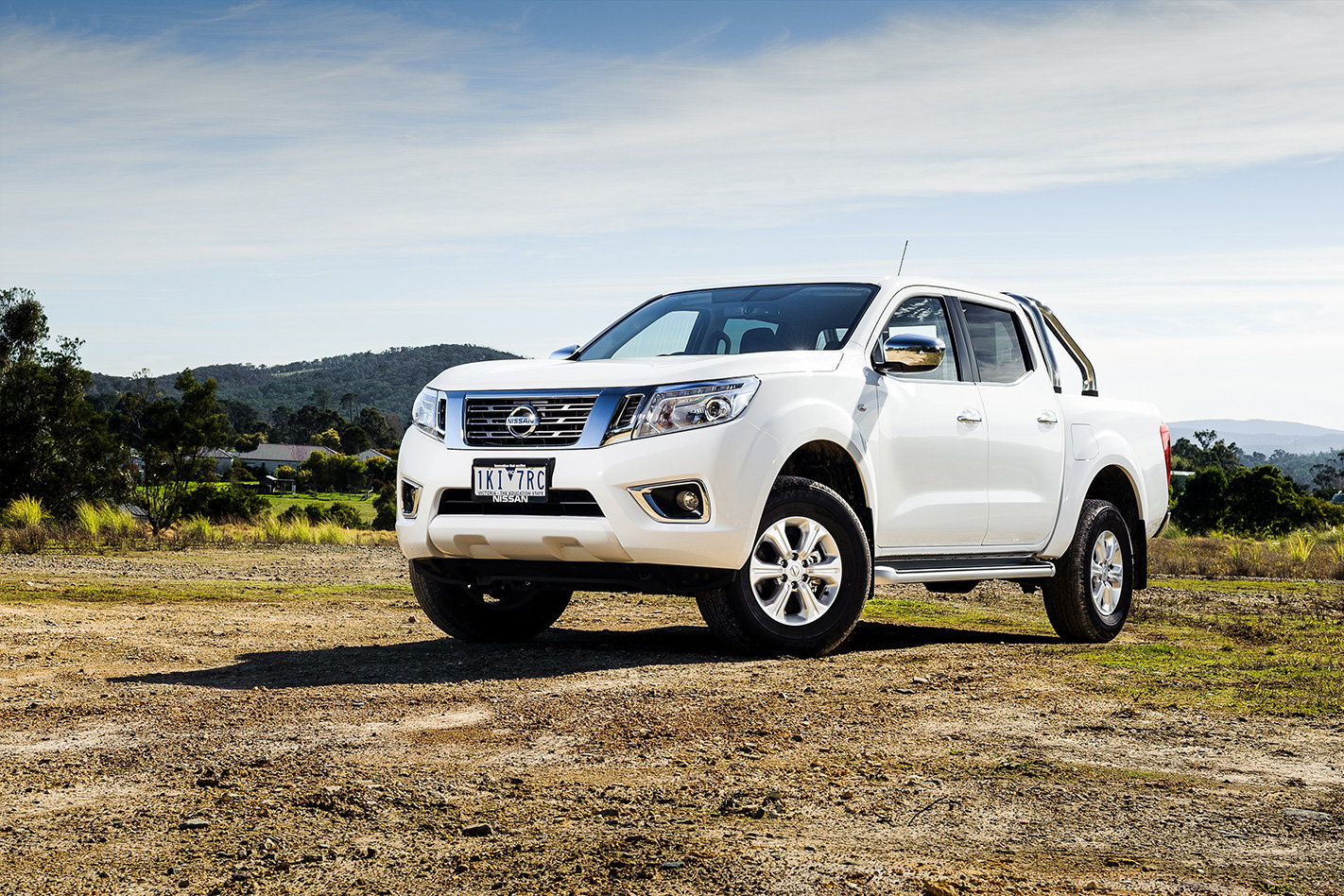
The ST uses a 2.3-litre twin-turbo diesel to make 140kW and 450Nm. Payload, including passengers, is just over a tonne depending on whether you opt for the 6-speed manual or 7-speed auto.
Towing is 3,500kg with trailer brakes.
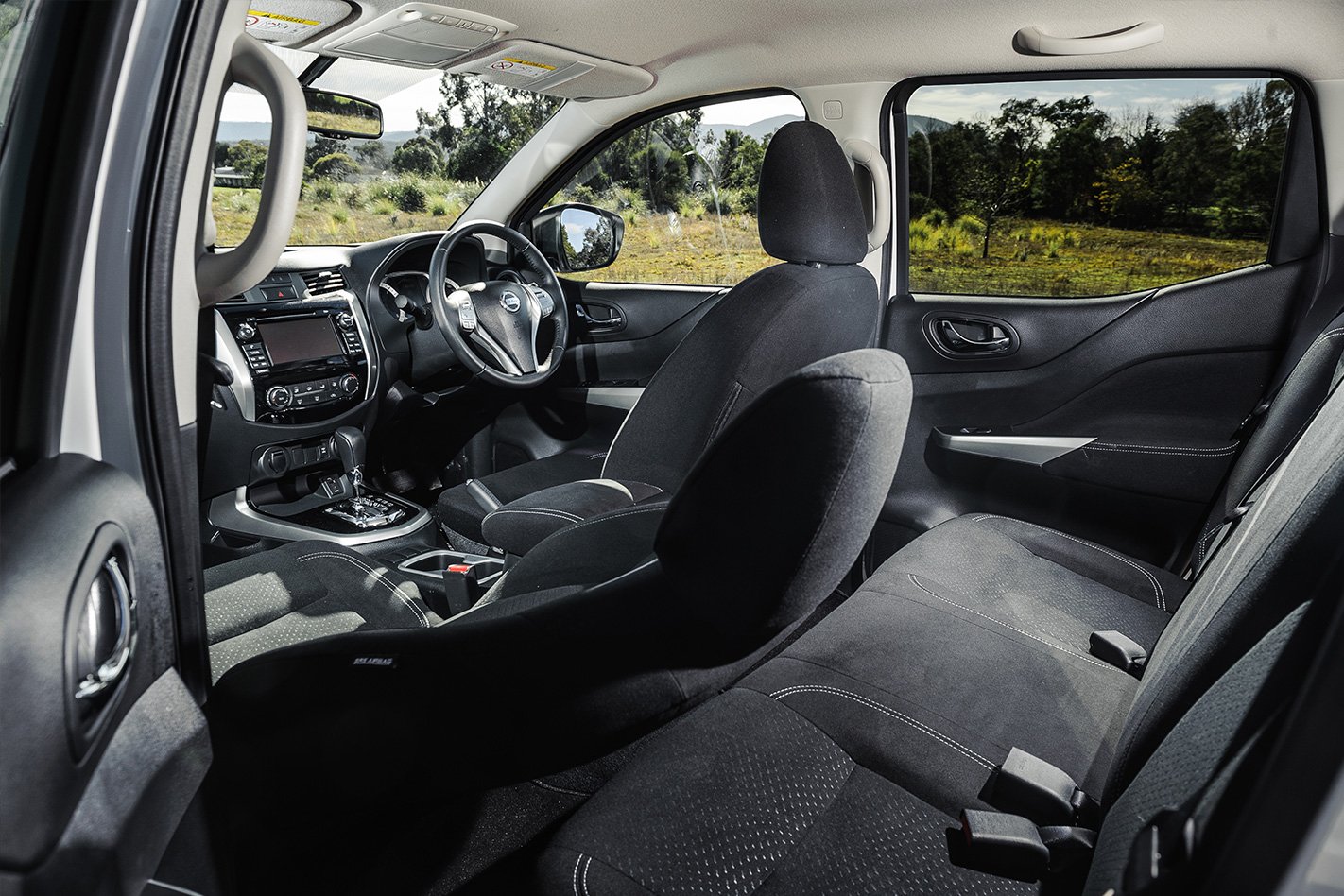
All save one dual cab Navara variant uses a five-link coil sprung rear end. This improves ride and handling when empty but in the real world, it can’t compete with the loaded performance of steel leaf springs. However, the dual-cab remains the best compromise between work and play and even as back-up family transport.
| WATCH: 2017 Nissan Navara range review video
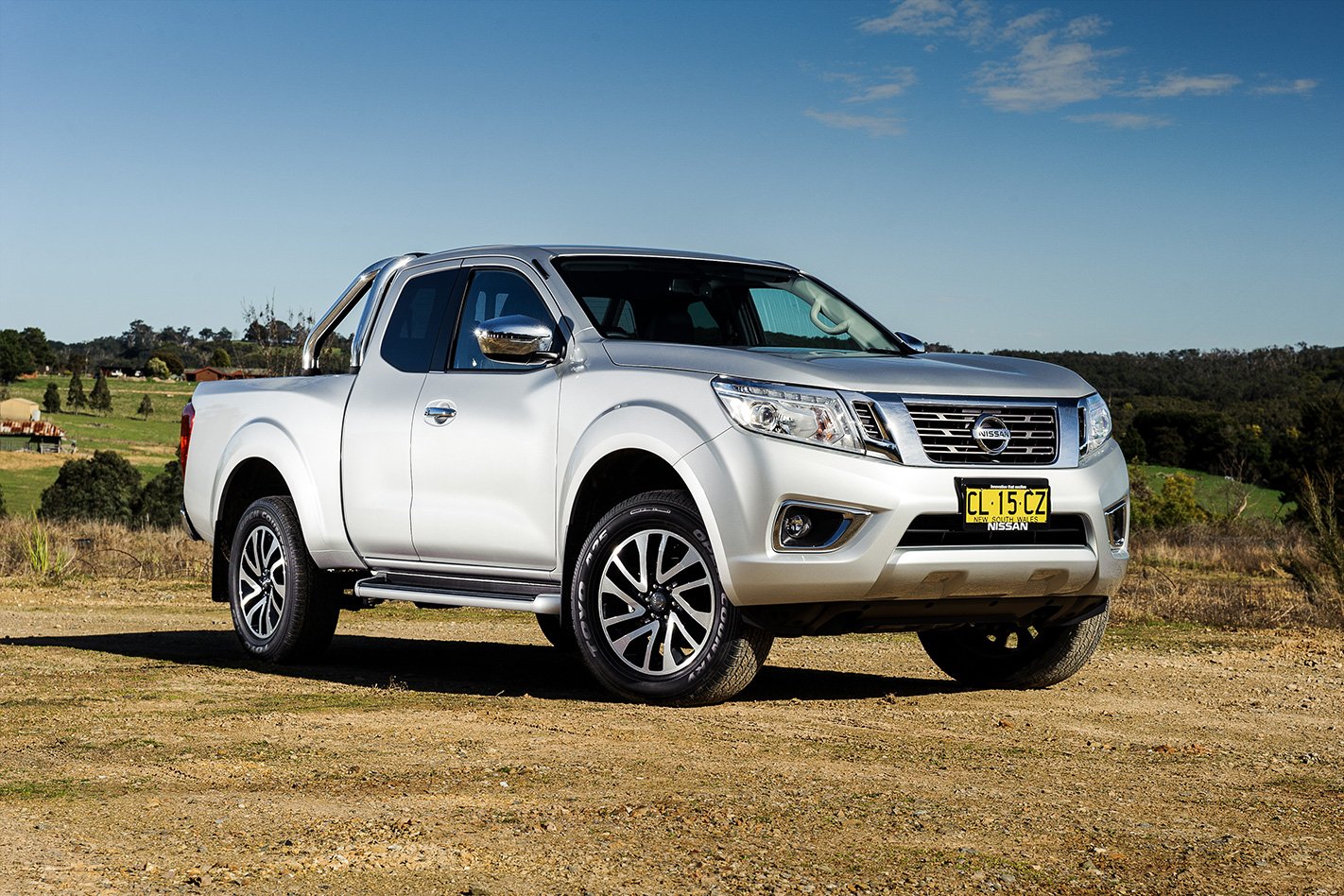
Navara ST-X 4×4 king cab
There’s a lot of kit hiding inside this Nissan Navara ST-X. This is the king cab version, which offers extra space behind the front seats.
Access to the extra cab space is by rear-hinged doors, and there’s some handy yet squeezy seating on offer back there for smaller people on short trips.
Power is supplied by the top-of-the-range twin-turbo version of Nissan’s 2.3-litre diesel power plant. Outputs are 140kW and 450Nm. Towing is 3.5 tonnes braked.
Gearbox options are either a 6-speed manual or 7-speed automatic.
Being an ST-X you get all the fruit like leather heated seats, some chrome highlights, 18-inch alloy wheels and a sports bar.
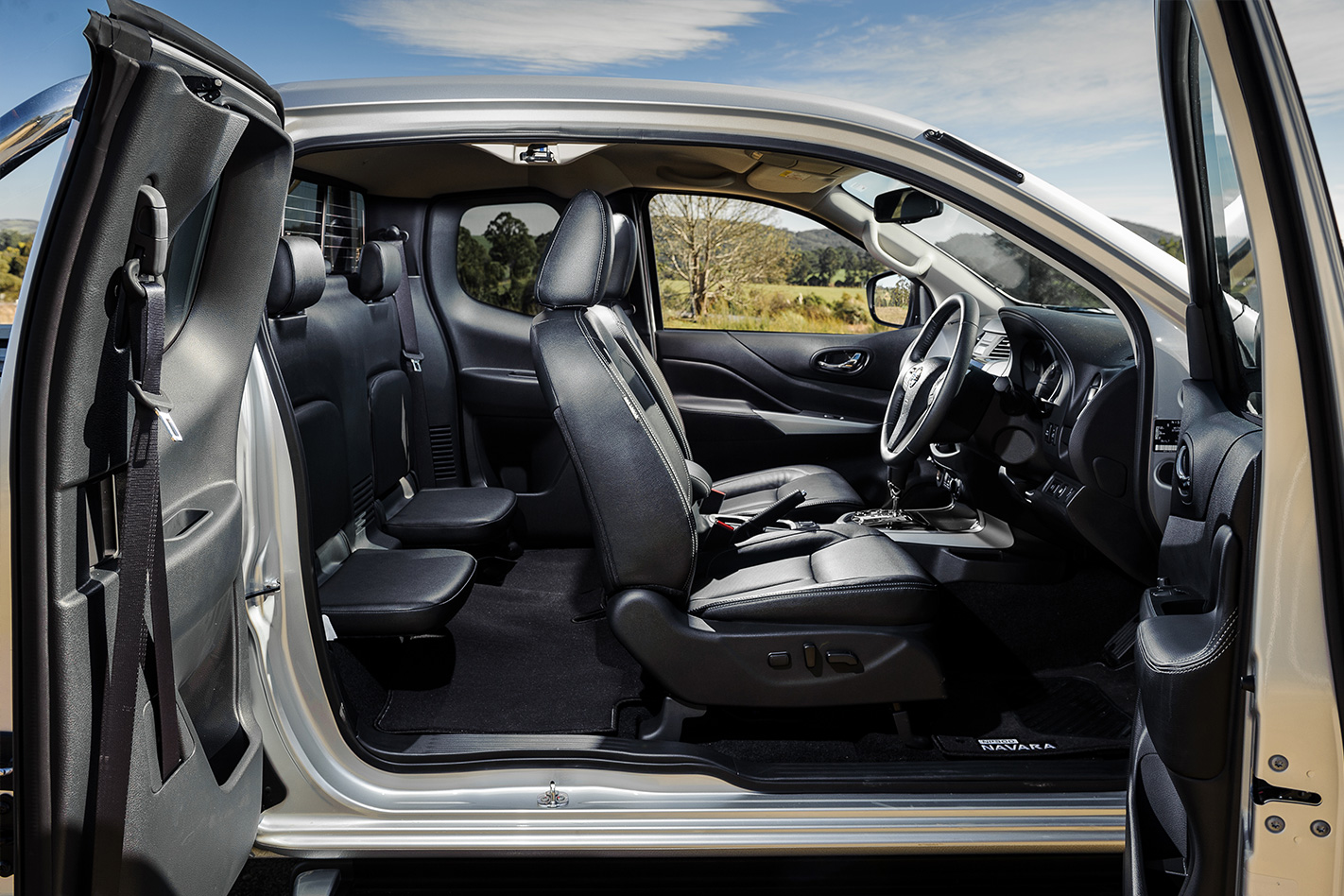
One of the big plusses of a king cab is the extra load space out back compared to a dual cab, and like the single cab range it sits on leaf springs out back. Payload is just under a tonne and depends on transmission choice.
If you’re not lugging people around on a regular basis and a decent load area is your thing then it’s hard to ignore the King Cab option. You can still get all the creature comforts with some practicality on the side.
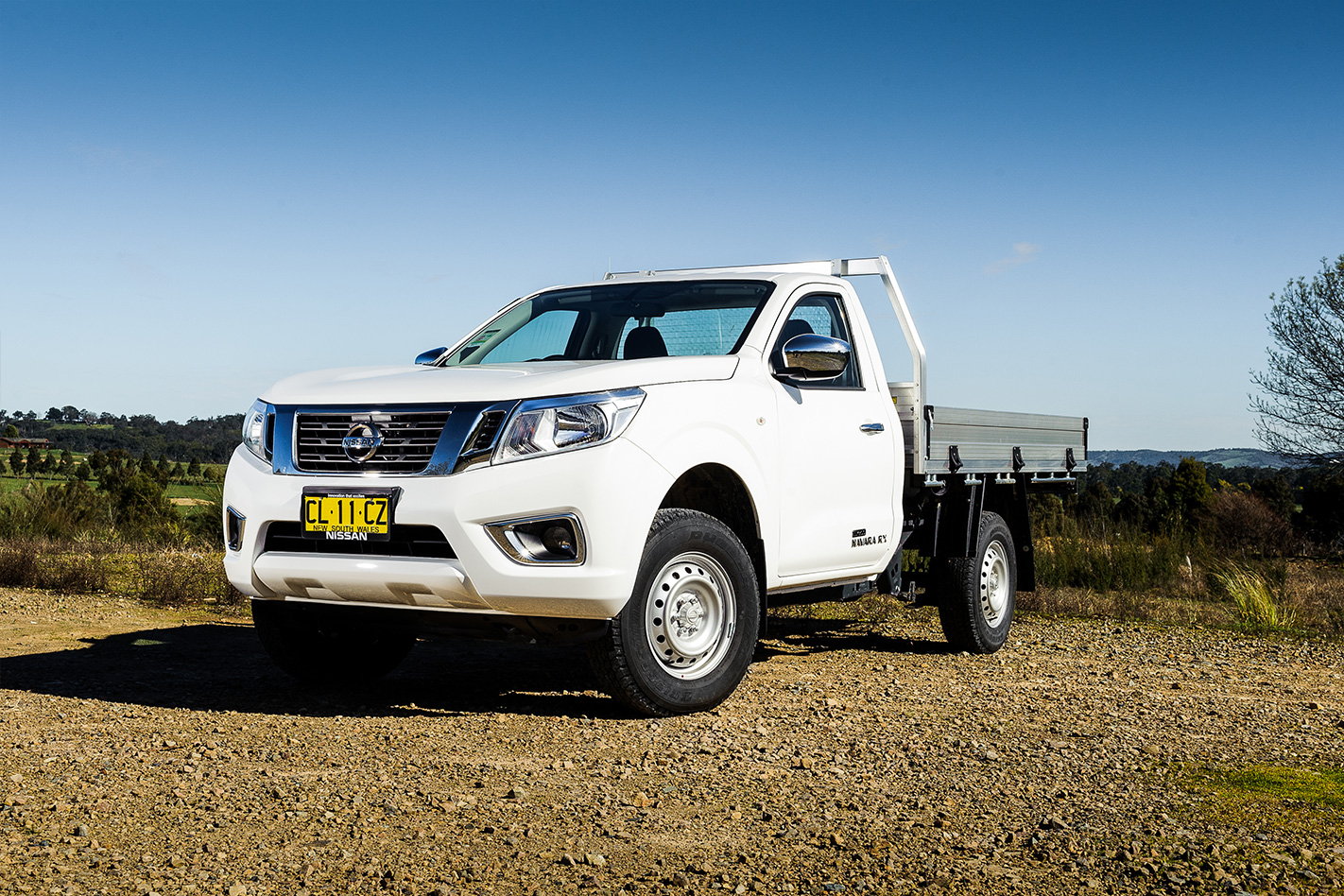
Nissan Navara RX 4×4 single cab
If your taste in wheels is work-focused, the Nissan Navara RX 4×4 may be just the thing for you.
Under the bonnet is a single turbo version of Nissan’s 2.3-litre diesel engine that makes 120kW and 400Nm of torque.
Its 4X4 mode is selected via a shift on the fly dial on the console.
Transmission wise there’s a choice between a 6-speed manual or 7-speed auto. Its rear suspension is old-school steel leaf springs. Payload is a whisker over 1200 kilos while braked towing is 3.5 tonnes.
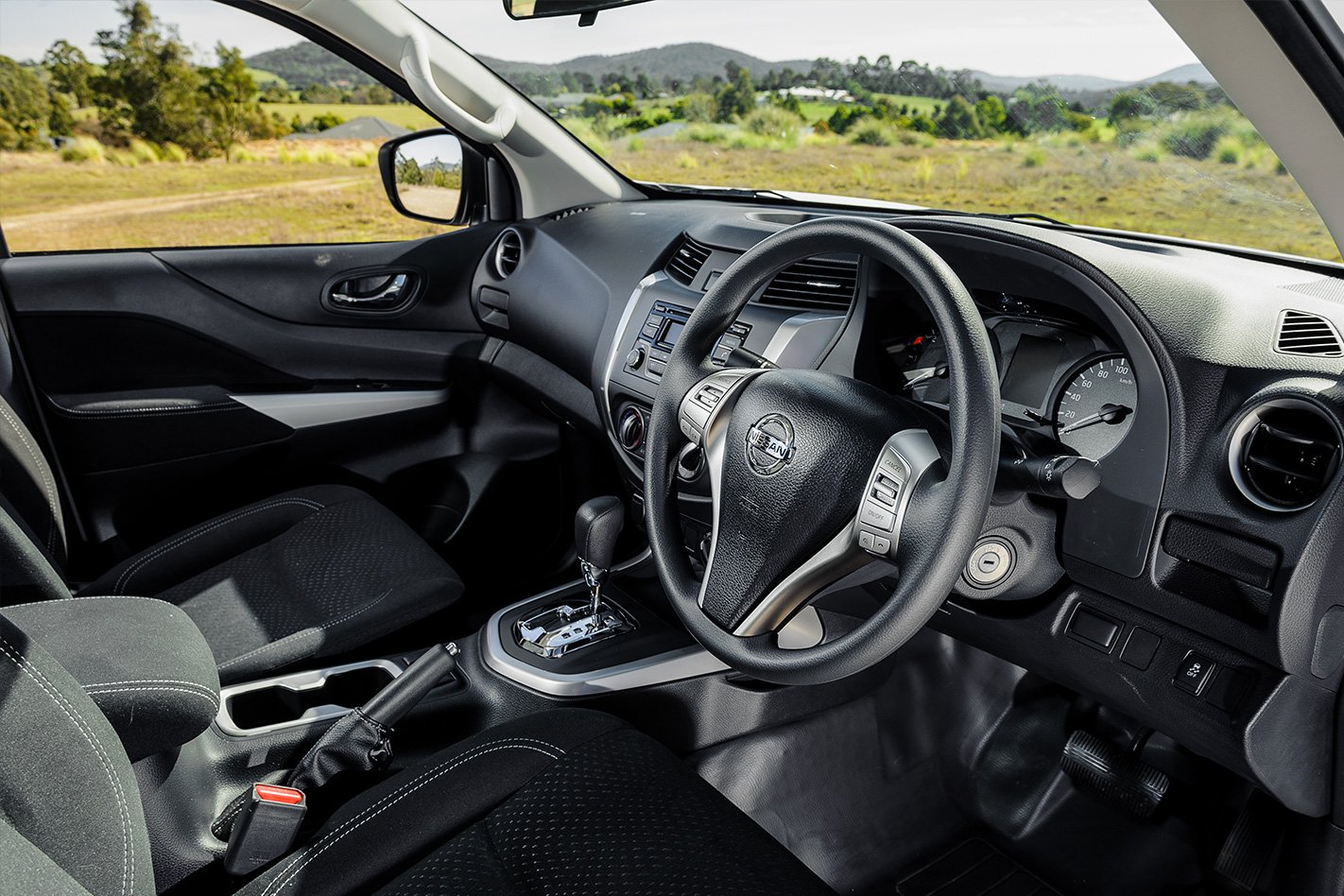
As for the interior, it’s pretty basic and clearly made to get dirty with hard plastics and removable rubber floor mats.
The RX is a no-frills off-road workhorse that fits the bill for the building site or the rural back blocks. It offers both rugged practicality and business efficiency. And nobody will notice if you don’t wash it on the weekends!
On paper, the 2018 SuperUtes category is far from a mouth-watering concept.
If race series were meals, the thought of high-riding, diesel-powered tradie trucks lumbering around Australia’s racetracks is about as tasty as a half-kilo of lard garnished with overcooked brussels sprouts. Why, then, am I quite excited about the potential of this seemingly foolhardy endeavour?
A quick recap for the uninitiated: with local manufacturing scheduled to be done and dusted by October 2017, Supercars wanted a new support category to replace the much-loved V8 ute series for 2018 and beyond. Rather than create a whole new ballgame, Supercars merely changed the rules, opening the doors to the full-size utes that dominate local sales charts.
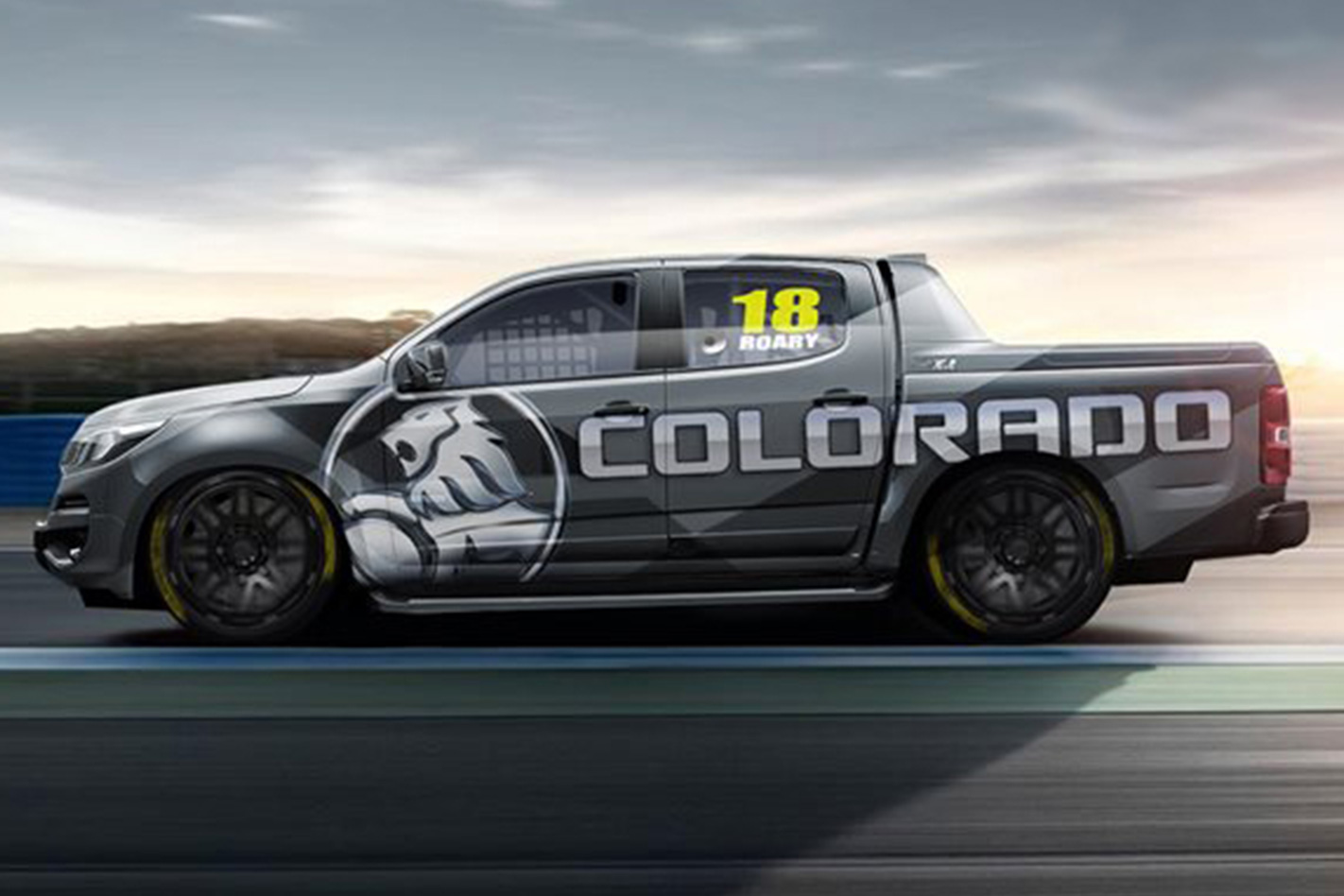
Supercars’ rationale is easy to understand; motorsport around the world is desperate for manufacturer involvement and the easiest way to encourage that is to feature the vehicles manufacturers want to sell.
Full-size utes are in huge demand right now; if you combine 4×4 and 4×2, the Toyota Hilux and Ford Ranger are the first and second biggest sellers respectively so far this year. They’ll join the Mazda BT-50, Isuzu D-Max, Mitsubishi Triton and Holden Colorado on the 2018 SuperUtes grid, though only Holden has officially pledged its support for the category.
But what use is manufacturer involvement if watching the trackside grass grow is more exciting than the on-track action? Well, that on-track action may well be the SuperUtes’ trump card. There are two key ingredients to spectacular racing: vehicles with more power than grip and/or asking vehicles to do something they weren’t designed to do. Early indications are that SuperUtes may tick both of these boxes.
Granted, with a minimum weight of 1800kg and maximum power output of 254kW the SuperUtes aren’t going to be the fastest things on four wheels, but if footage of the prototype power sliding around the Norwell driver training facility is anything to go by, maximum torque of 677Nm and an unfavourable centre of gravity should result in plenty of sideways motoring.
Likewise, just as running F1 cars in the wet or Stadium Super Trucks on a street circuit virtually guarantees must-watch action, the prospect of 32 giant utes navigating the concrete canyons of Adelaide, Townsville or Bathurst and attempting to emerge unscathed will have me glued to the telly for curiosity’s sake if nothing else.
Maybe I’ll be proven wrong, maybe it’ll be like watching the CCTV from the Bunnings’ carpark in fast forward, but I’m prepared to bet there will be a few converts post-2018 Clipsal 500.
BMW recently announced its celebratory 7 Series 40 Jahre edition, in the same vein as its M3 30 Jahre.
However, BMW also announced that Australia will be getting the four-decade-old limo. It’s likely to turn it from a celebration of luxury to one of exclusivity, as Australia is slated to receive four 7 Series 40 Jahre.
Two of those four will be based on the 740i, powered by BMW’s 240kW/450Nm found in other -40i variants. These will set hopeful owners back $267,500, which is $39,400 more than a regular 740i.
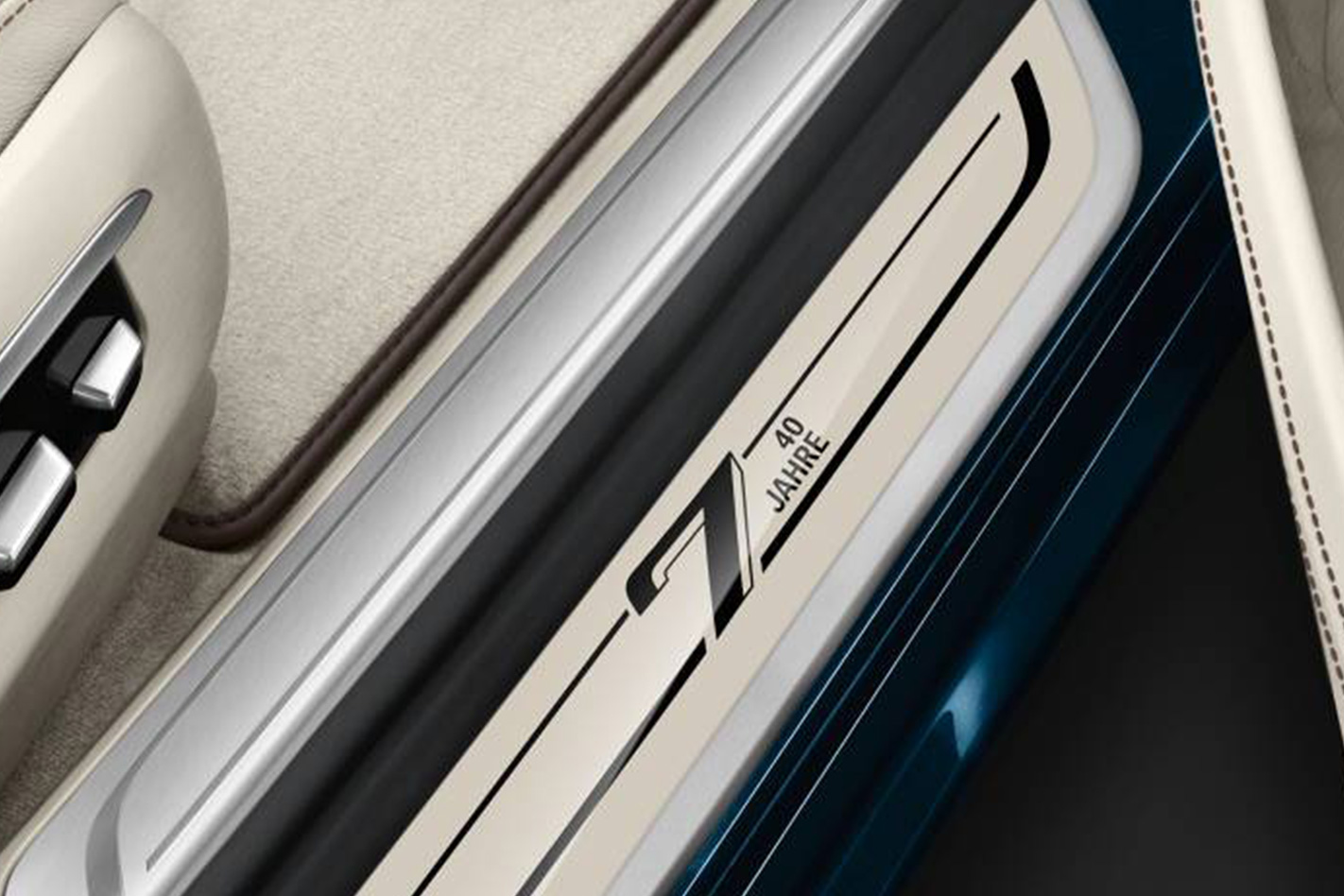
Lastly, at the top run of the 7 Series ladder, sits the BMW M760Li xDrive. They’re usually a handsome $425,000, but the 40 Jahre version sports a modestly increased price tag of $443,500.
Still, a 448kW/800Nm twin-turbo 6.6-litre V12 isn’t a bad thing to have when you’ve got that kind of cash to burn.
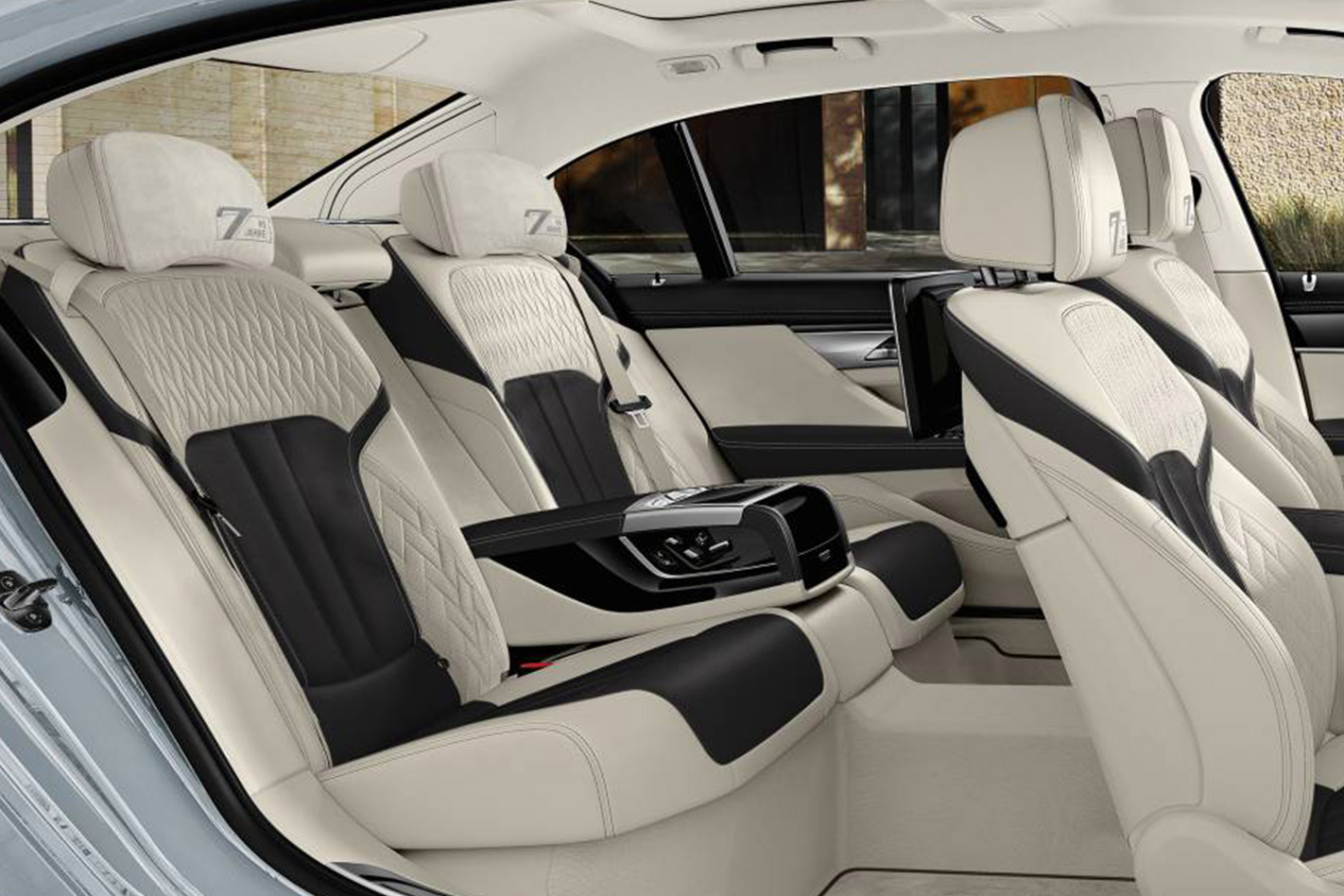
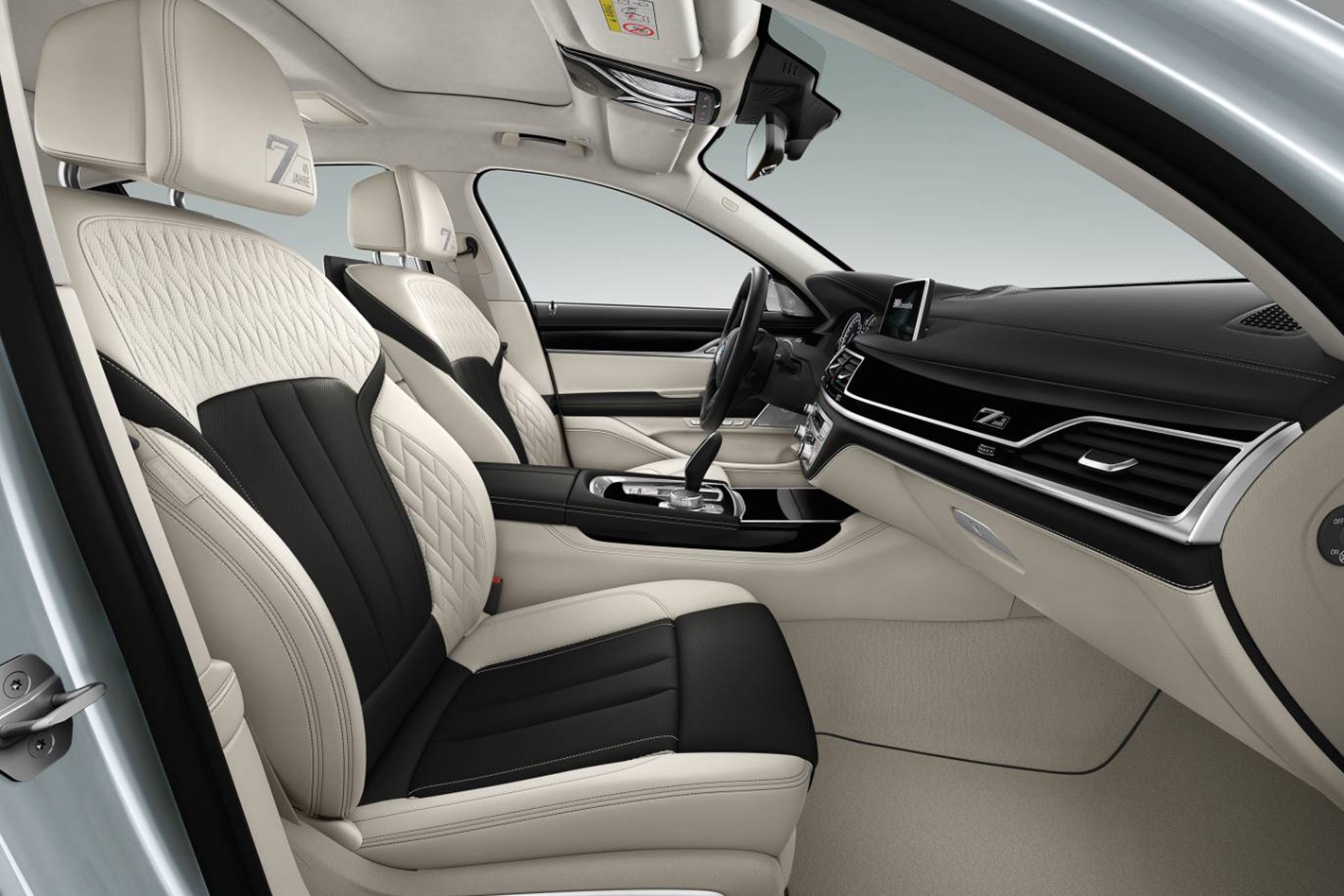
In addition, all four 40 Jahre units are finished in Frozen Silver metallic, with 20-inch ‘V-spoke’ light alloy wheels, and a Merino leather interior with black and white upholstery, piano black trim, and a white Alcantara roof lining.
BMW Australia CEO Marc Werner says the special editions will show up on our shores at the end of 2017.
“The latest generation has been well-received by Australian media as well as consumers, its combination of innovative technologies, high specification levels and traditional BMW driving experience driving it to segment leadership in 2017.
“We cannot wait to see the 40 Jahre Edition in the metal towards the end of the year.”
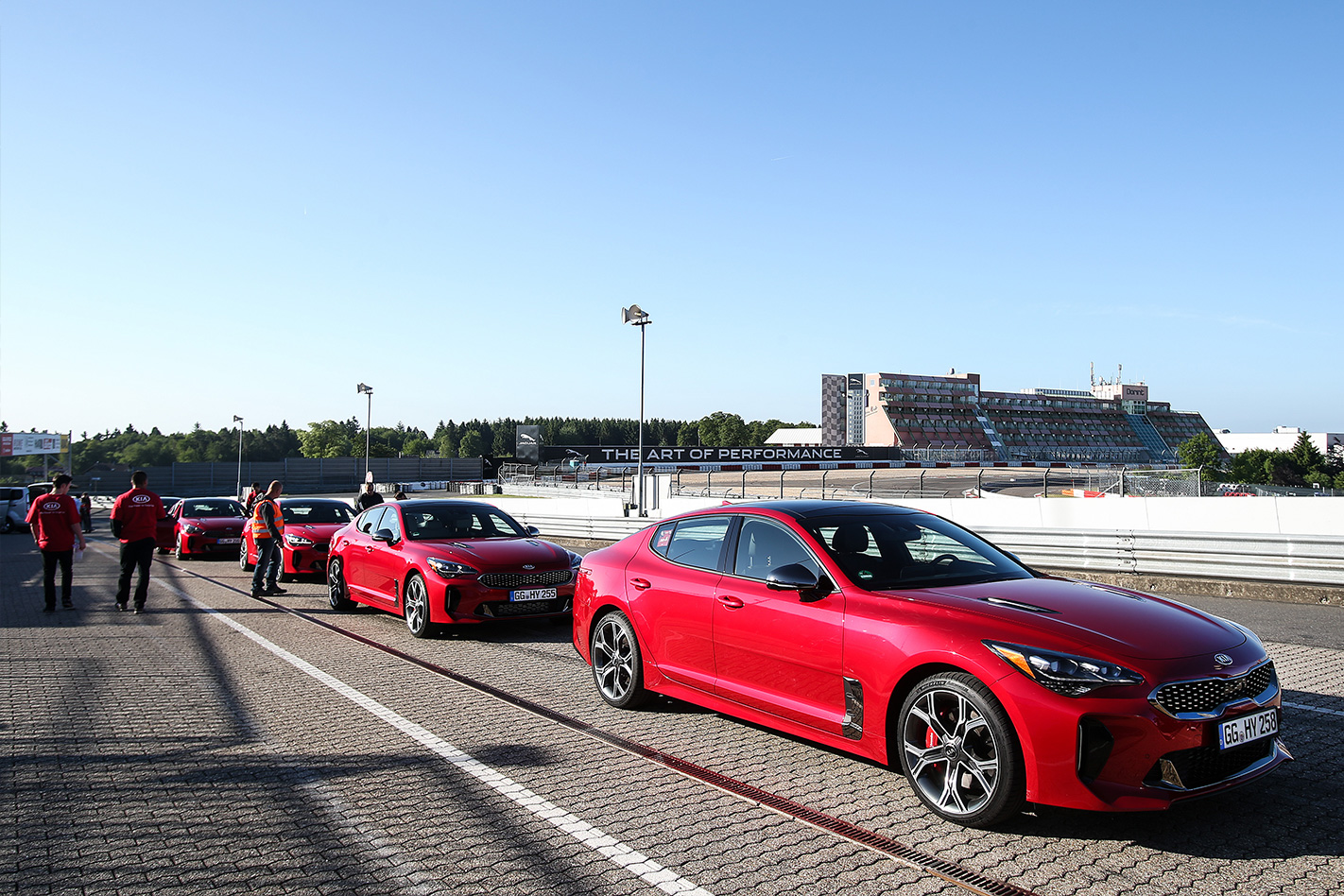
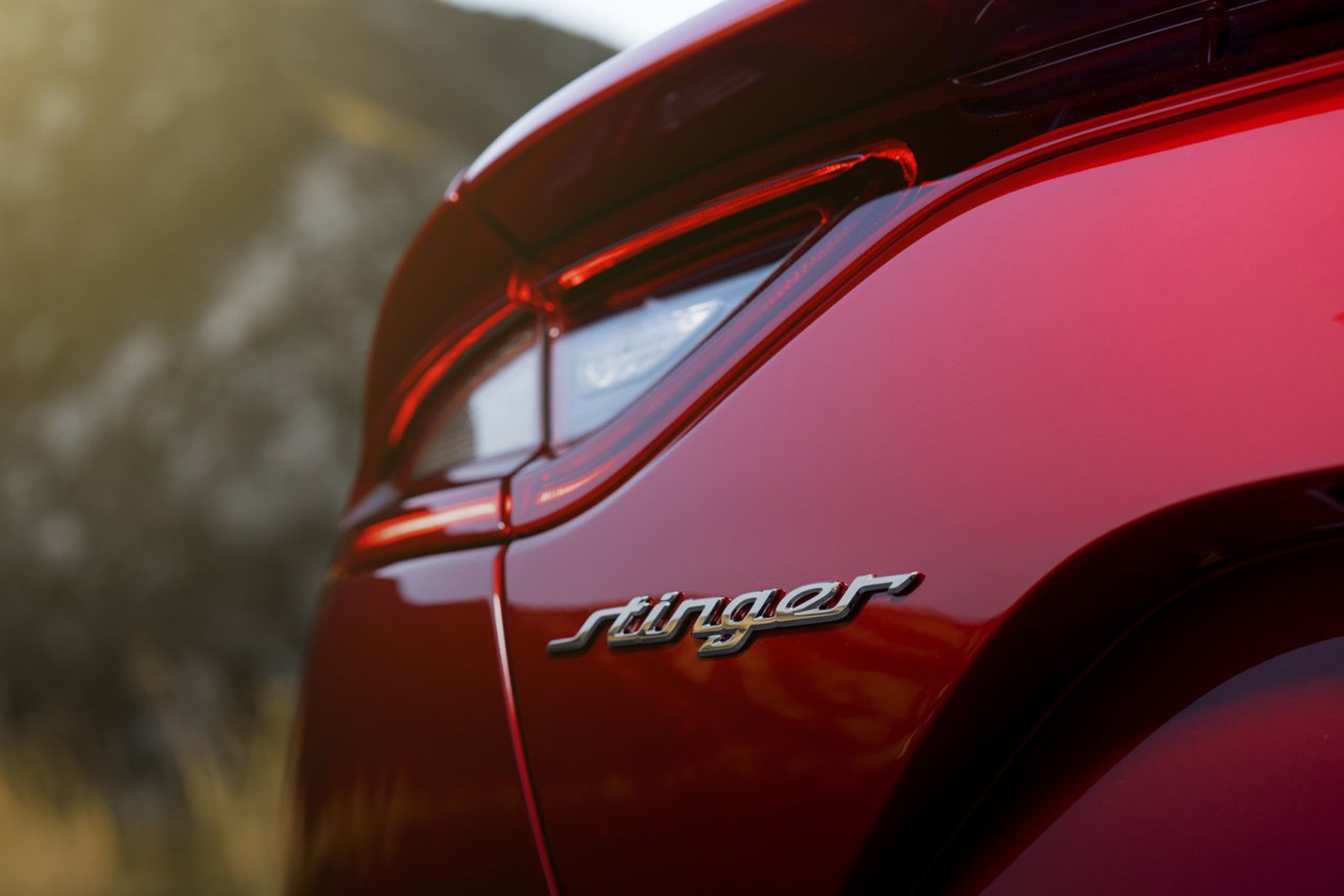
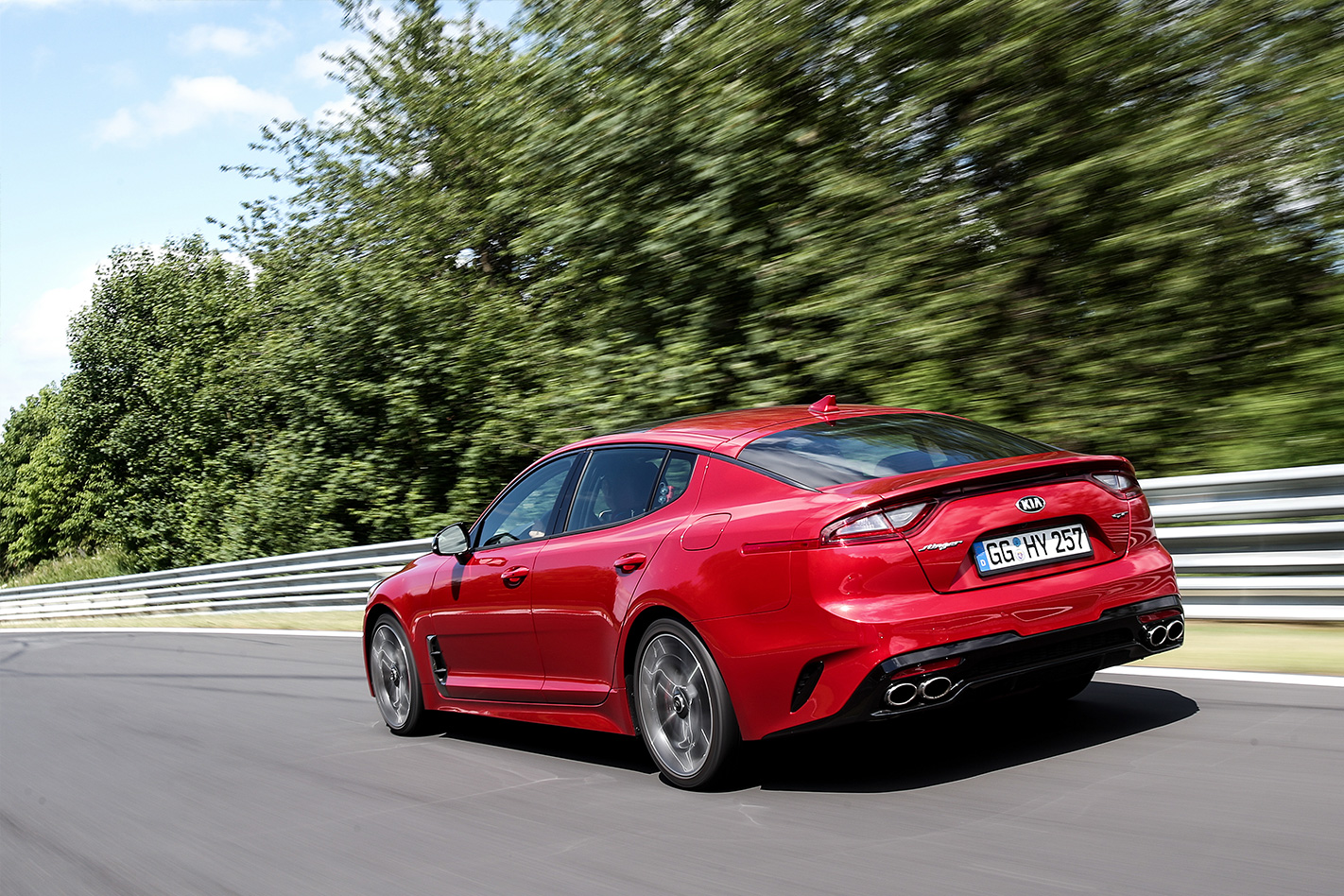
Kia has announced more details about equipment levels for the 3.3-litre V6 variants of its eagerly awaited Stinger.
As previously revealed, the S, Si, and GT will be priced at $48,990, $55,990, and $59,990 respectively, with the price differences reflecting its varied equipment levels.
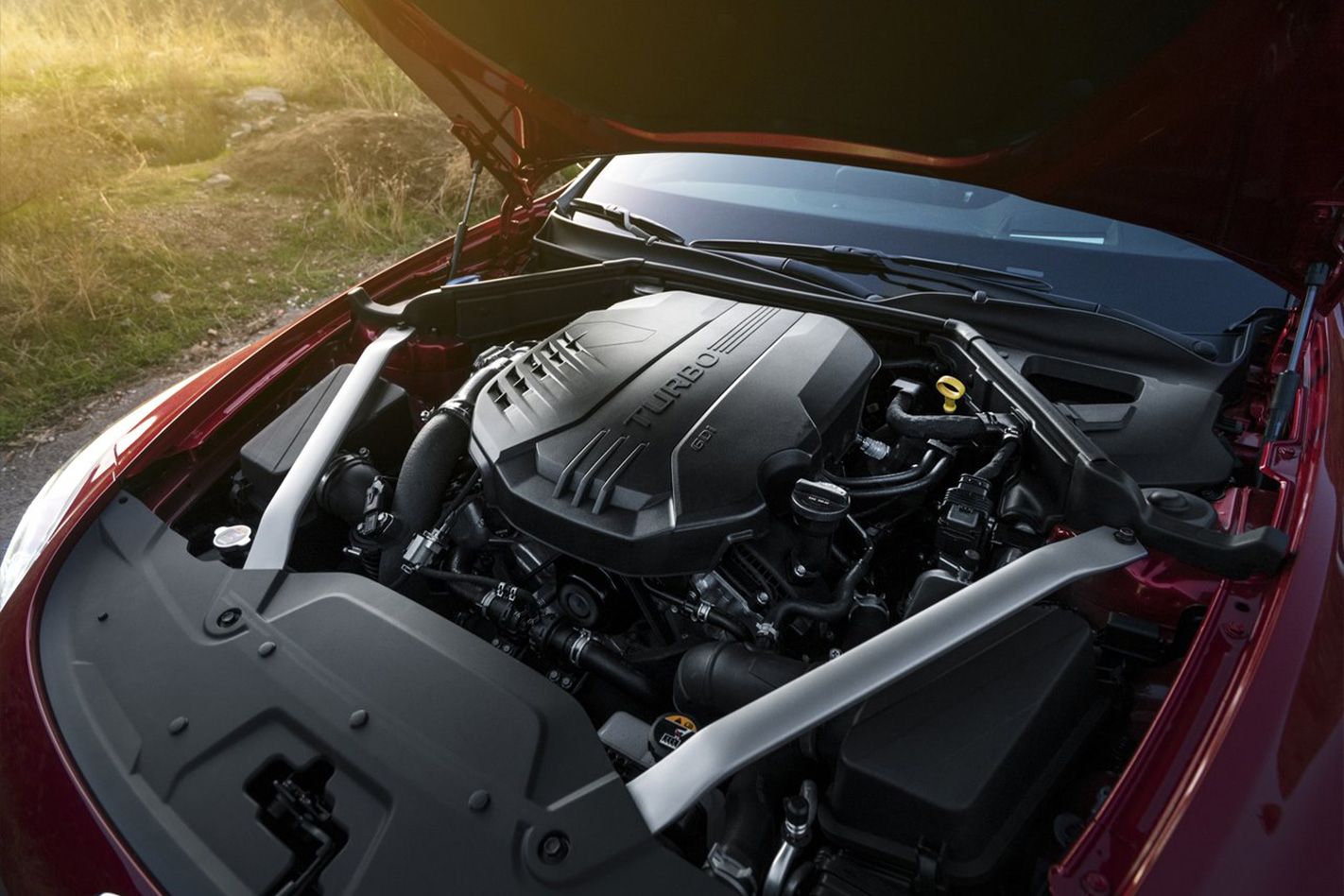
All three V6 models will have the 272kW/510Nm 3.3-litre bi-turbo V6 under the bonnet, coupled with an eight-speed automatic gearbox providing power to the rear wheels, and stopping power courtesy of Brembo brakes (350mm quad piston up front and 340mm dual piston in the rear).
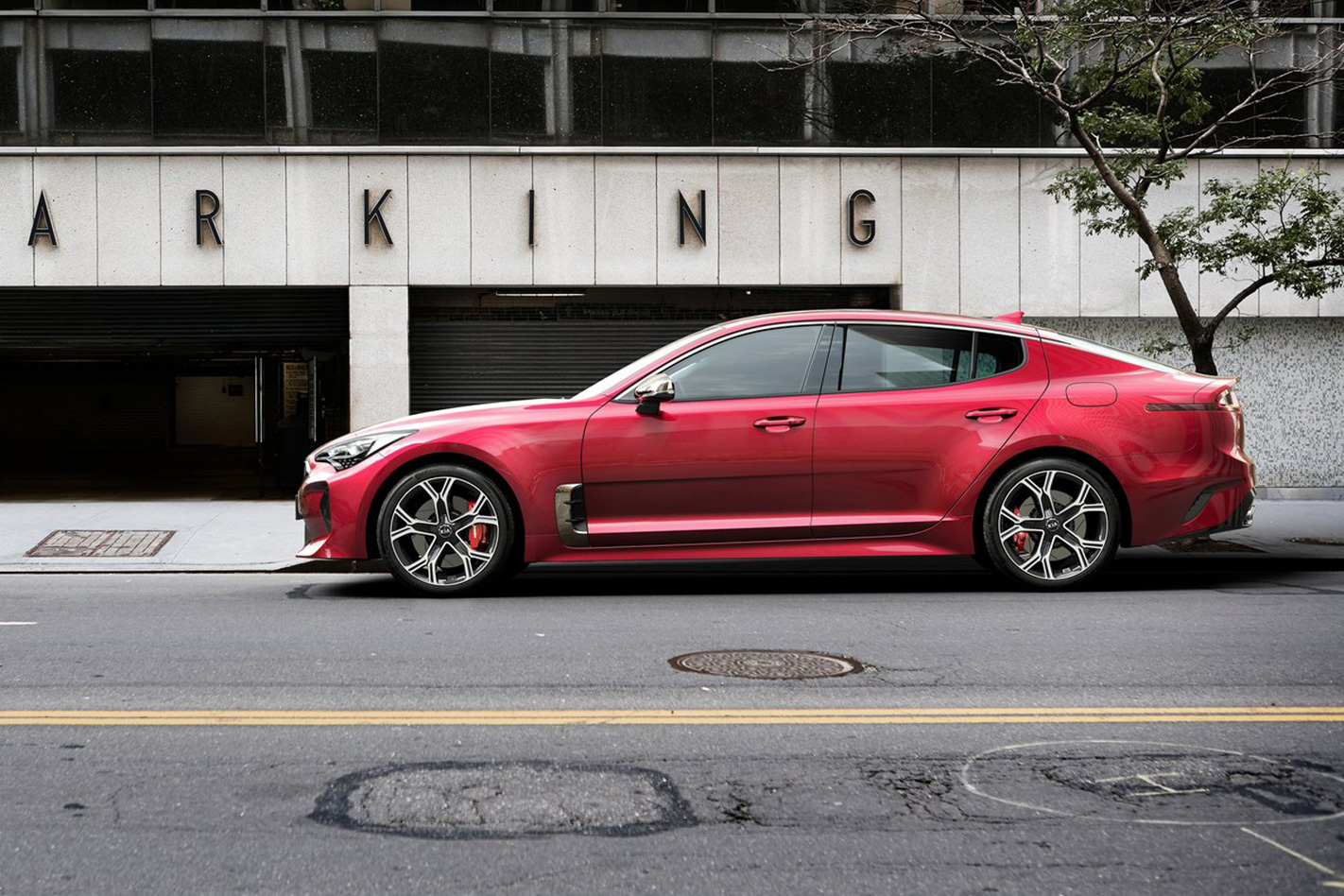
The entry-level S comes standard with:
- 18-inch alloys with 225/45R18 Continental ContiSportContact 5 rubber
- Hill-assist
- Reversing camera
- Rear cross traffic alert
- Active hood pedestrian protection
- LED daylight running lights
- Leather upholstery
- Power adjusted front sports seats
- Cruise control
- 7-inch touchscreen
- Satellite navigation
- Apple CarPlay and Android Auto
Stepping up to the Si brings:
- 19-inch alloys with 225/40R profile front tyres and 255/35R19 rears.
- Autonomous Emergency Braking with Forward Collision Warning
- Lane Keeping Assist
- Driver Attention Alert
- Front parking sensors
- Rain-sensing wipers
- Active cruise control
- Under floor luggage tray and a luggage net.
- 8-inch touch screen
- Nine speakers including two under-seat subwoofers
The range-topping GT gains a host of features over the Si, including:
- 360-degree camera view
- Blind Spot Detection
- LED headlights with auto levelling
- Dynamic Bending Lights
- High Beam Assist
- Head Up Display (HUD)
- Electrochromic door mirrors
- Powered sunroof
- Nappa leather seats with GT logos
- Extra front seat adjustments including lumbar support, powered bolster adjuster, and thigh extender
- Two-position driver seat memory
- Flat-bottomed steering wheel
- 7-inch colour TFT-LCD instrument cluster screen
- Alloy sports pedals
- Suede covered roof lining and pillar trims
- Wireless phone charging
- 15-speaker Harman/Kardon sound system
In the meantime, Kia is in the final stages of finalising the pricing and equipment for the more affordable 2.0-litre four-cylinder model.
NEARLY 70 years ago, Australian servicemen helped save West Berlin from the grips of Stalin’s regime, dropping food instead of bombs, in the biggest humanitarian airlift operation in history.
Mike Duff visited the key sites of our role in the remarkable Berlin Airlift in a German-built Opel that’s headed here to fill the shoes of an Aussie icon.
Duff drove an Opel Insignia powered by the 191kW 2.0-litre turbocharged four, which will come here as Holden’s new ZB Commodore 2.0T, across Germany on its famed autobahns where he pushed it to 248km/h.
That just happens to be about the cruising speed of a Douglas C-47, which the Royal Australian Air Force used tirelessly during the Berlin Airlift. Duff found one RAAF example on display at the Luftwaffe Museum at Gatow near Berlin which provided a symbolic photo opportunity.
According to Duff, the Insignia made the 550km journey from Russelsheim to Berlin “without breaking a sweat”, allowing him to look further into Australia’s involvement in the Airlift and the Cold War remnants that still scar the German landscape.
Read about his journey, the Berlin Airlift, and his impressions of the car that will form the backbone of Holden’s post-production line-up, in the September edition of Wheels out now.
Here is a selection of images of that journey from Tom Salt to get you primed.
With the Holden Commodore SS effectively handing the rear-wheel drive reins to the new Kia Stinger GT in the coming months, where do enthusiast punters turn to if moving from an Australian sports sedan to a South Korean liftback simply isn’t the preferred option?
Near-new and circa-$60K is the criteria here, which all but rules out performance German machinery. A decade-old BMW M3 or Mercedes-AMG C63 can be had for around this coin, but 10 years is the automotive equivalent of a galaxy away from brand new.
The 6.2-litre V8-engined Commodore claims a zero to 100km/h sprint in 4.9 seconds, while the word is the 3.3-litre twin-turbo V6-powered Stinger can match it – and that just happens to be the performance the below left-of-centre trio from Japan, Sweden and the UK deliver.
2012 Jaguar XF R Five years ago it cost $210K plus on-road costs new, but today a 2012-built Jaguar XF R asks around a quarter of that price. This large sedan from the Motherland scored a 375kW/625Nm 5.0-litre supercharged V8 engine that claimed a 4.9sec 0-100km/h. In-gear however, the blown rear-drive sedan is much faster than that. Think FG X Falcon XR8-quick.

We found a pre-facelifted version, built in 2011 and with 75,000km on the clock, asking a couple of hundred less than $60K. But the prettier post-facelift version, in 2012, can be found for just over that mark before the seller is haggled down to a figure starting with a ‘5’.
2014 Lexus IS F The IS F launched in 2008 and it was not a match for the M3 or C63. That should have been that, but Lexus performed more engineering tweaks to this car than the average Hollywood actress has had Botox shots.

We spotted a three-year-old example with just 32,000km on the clock for circa- $60K – or half its ask brand new. A 2012 example with 100,000km can be had for $40K – and being a Lexus it will never, ever go wrong.
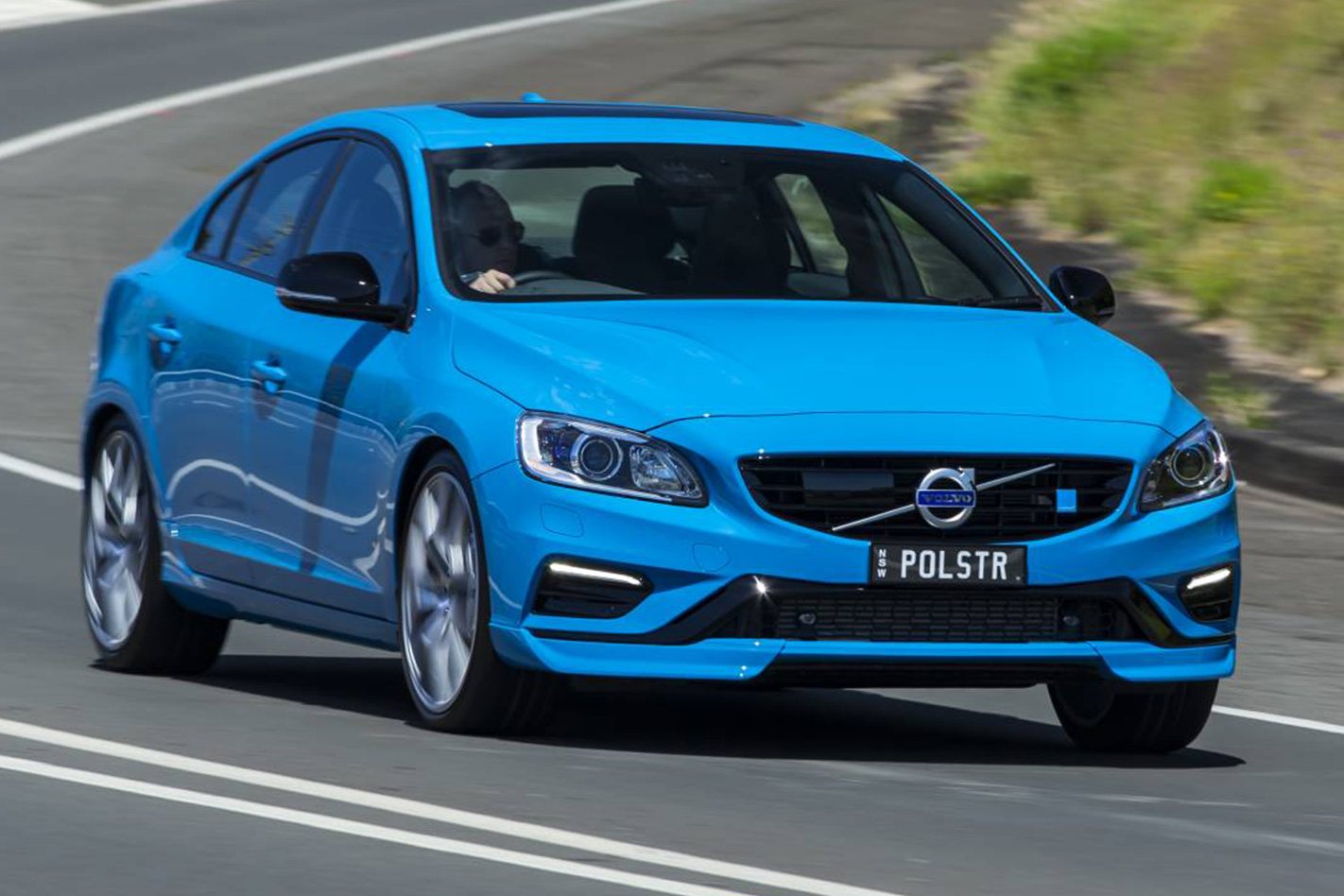
2014 Volvo S60 Polestar Remove your hands from the typewriter, please – there is no need to pen a complaint. Yet. The S60 Polestar does not have rear-wheel drive, but it absolutely is a depreciation disaster for the first owner, which is great news for you.
As with the Lexus, this Volvo couldn’t touch the German competition when it was – and in its latest incarnation is – priced new from $100K. However, we discovered a three-year-old S60 Polestar, with 35,000km on the clock, for just $42K. Or $58K of its value wiped.
THE fallout from Dieselgate continues to bite at Audi, with the car maker announcing the biggest restructure of its boardroom since the VW emissions scandal broke two years ago.
The company – the Volkswagen Group’s best earner – announced it would replace key longstanding board members including its manager of finance, Axel Strotbek, production chief Hubert Waltl, human resources chief Thomas Sigi, and sales head Dietmar Voggenreiter.
The shake-up comes three months after Volkswagen Group’s supervisory board voted to extend the tenure of Audi chief executive Rupert Stadler – who has steered Audi through the scandal that scooped up more than 16,000 of the brand’s luxury cars sold here – by an extra five years.
No reason was given for the changes at the top of Audi’s management structure. However, in the wake of the restructure, Stadler said the company’s goal was to “now set the course for the future and to systematically move forward with our transformation towards e-mobility, digitisation, and mobility services”.
“Our growth plan and Strategy 2025 provide the roadmap,” he said.
Audi announced earlier this year it would cut back on research and development costs – believed to be linked to internal combustion engines – to help pay for an accelerated battery-powered push that it hopes will leave the Dieselgate scandal in its wake. Audi plans to launch five electric cars on the world market by 2022.
It’s part of a big shift at Volkswagen Group that is rebranding the global carmaker as a leader in electric car development.
As part of the move, Audi, and its sister performance brand Porsche, have both quit LMP1 endurance racing, where they developed advanced petrol-electric hybrid systems capable of tackling the demands of the annual Le Mans 24-hour race. Instead, they will join Formula E, a lower-cost battery-powered open-wheeler race series that appears to be a better fit with the company’s electron-based direction.
Audi’s EV push will start next year with the e-tron quattro, a small battery-powered five-door SUV that Audi says will be built in Brussels from 2018. A four-door Sportback version of the e-tron is expected to arrive in 2019.
Audi will also collaborate with Porsche to develop a new platform that will underpin future products, saving money by sharing modules and components between the brands.
WHAT IS IT?
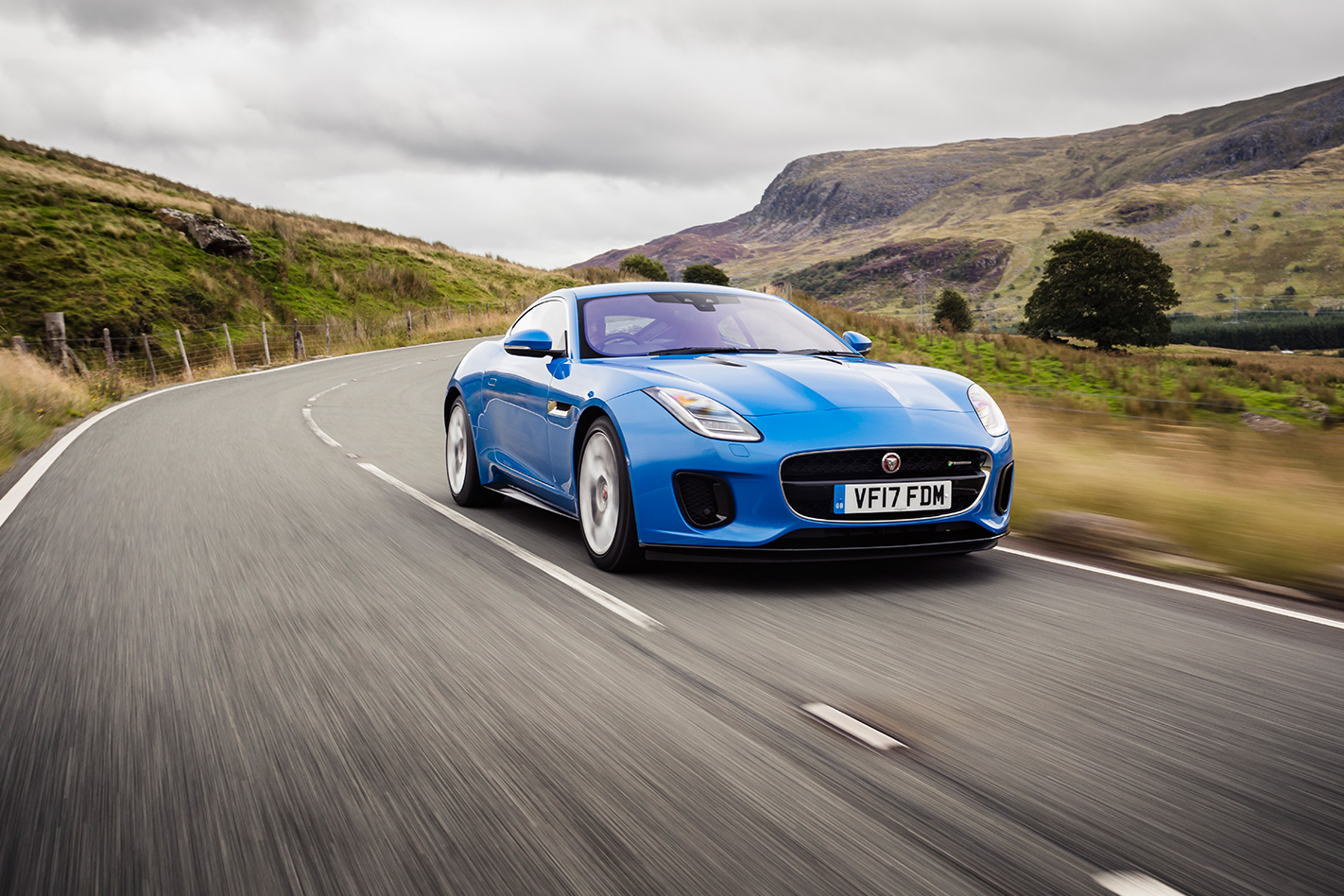
Jaguar has dropped their latest four-cylinder turbocharged Ingenium engine into the snout of the F-Type coupe. The smaller engine variant also drops the entry price for F-Type ownership to a snip over $107K.
WHY WE’RE TESTING IT
The F-Type is better known as a snarling, sensual, if expensive, coupe. Does the new entry-level model capture the character and spirit of its big-engine siblings, or is it just a case of all pomp without the circumstance?
MAIN RIVALS
Audi TT S, BMW M2, Mercedes-Benz SLC 300, Porsche 718 Cayman
THE WHEELS VERDICT
If you aren’t buying into the F-Type experience for its big engine drama, the entry-level model’s sharp handling, palatable pricing, and fuel-efficiency makes it an attractive and attainable sportscar proposition.
THE WHEELS REVIEW
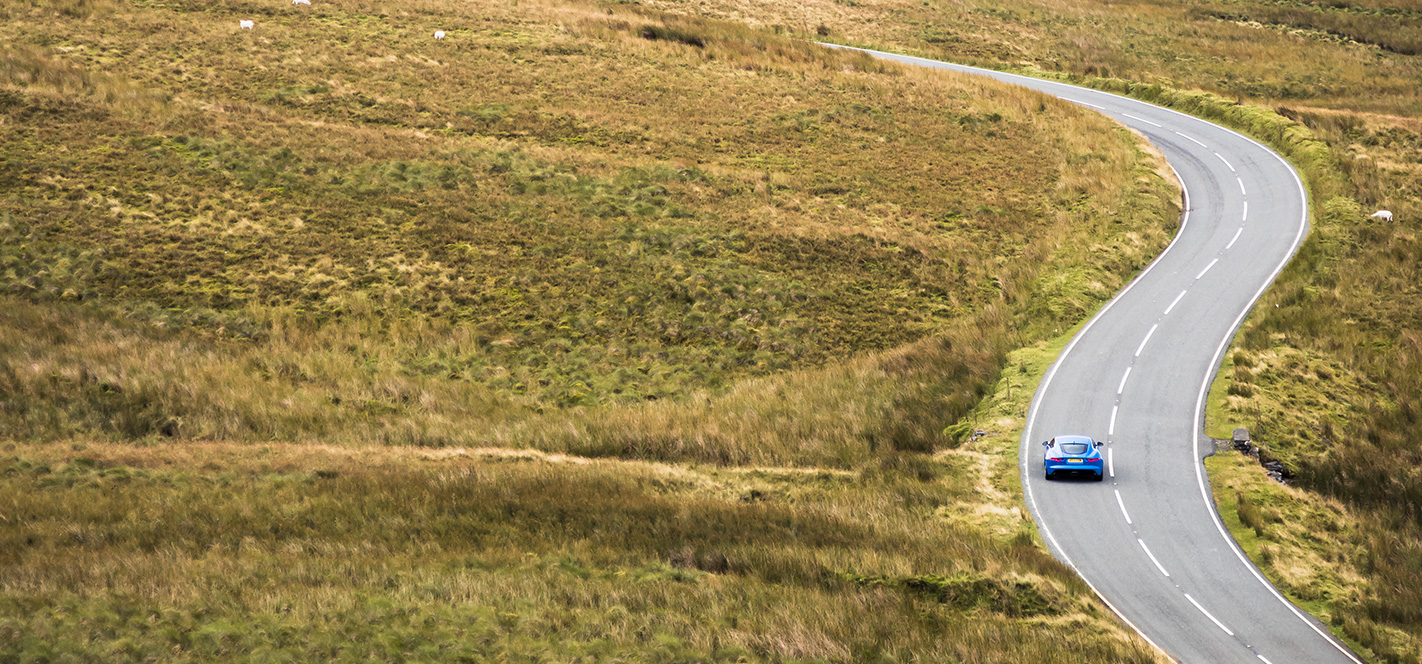
IF PORSCHE can get its four-cylinder sports cars so wrong, what hope for Jaguar? Quite a lot, it turns out, because when you jump in the new entry-level, four-cylinder F-Type, it quickly impresses with its agility, performance and – to a certain extent – even its sound.
A four-cylinder F-Type wasn’t in the original plan, but then along came Jaguar Land Rover’s new four-cylinder Ingenium engines. “As soon as we started producing that engine, I knew we had to do this car,” says project boss Erol Mustafa.
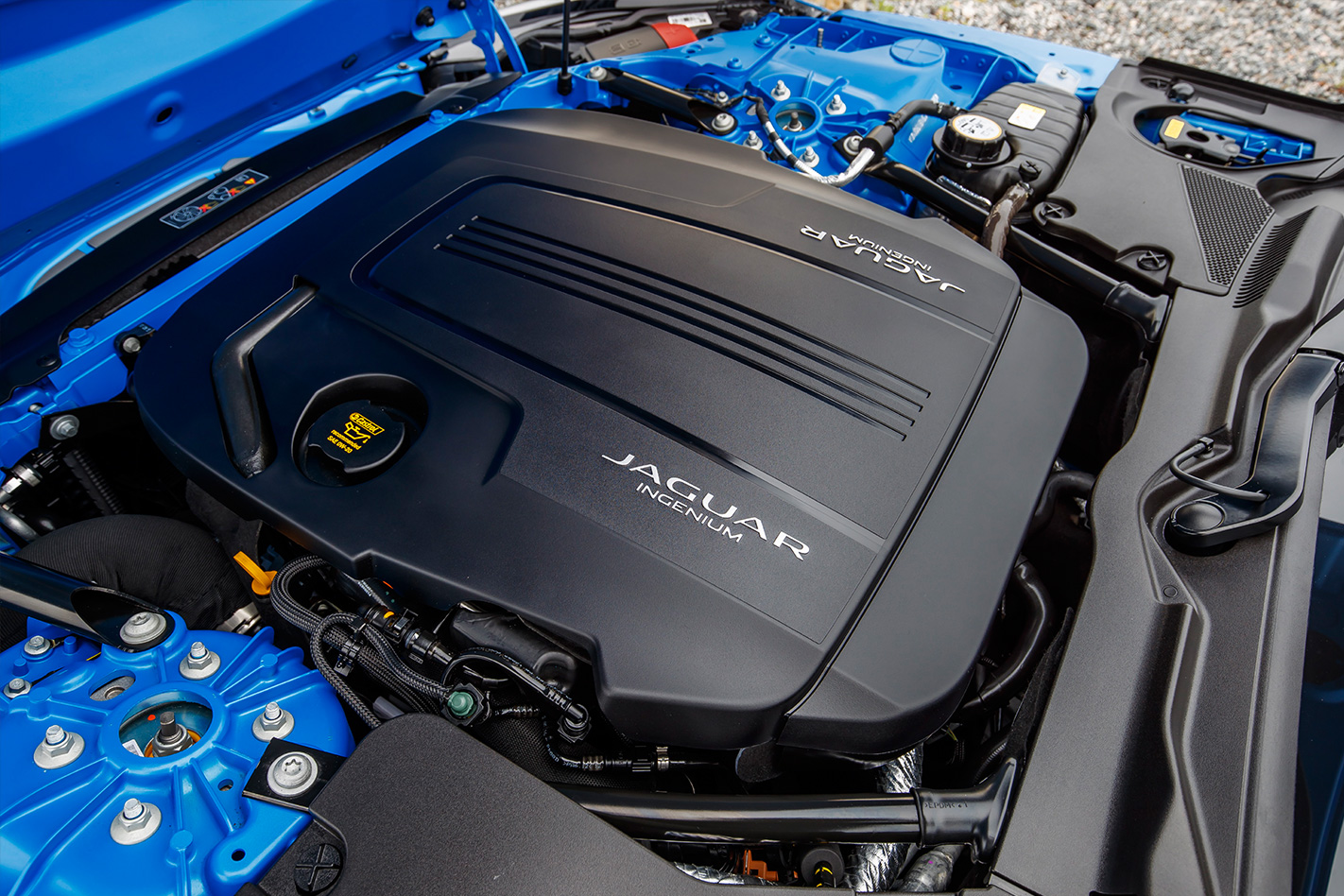
After the supercharged response of other Fs, the new car’s soggy throttle detracts a little from its immediacy, but the turbo brings a perky hit of boost low down that makes the rear, LSD-free tyres feel like they’re grafting hard to transmit power, and there’s a lustiness to its mid-range delivery too.
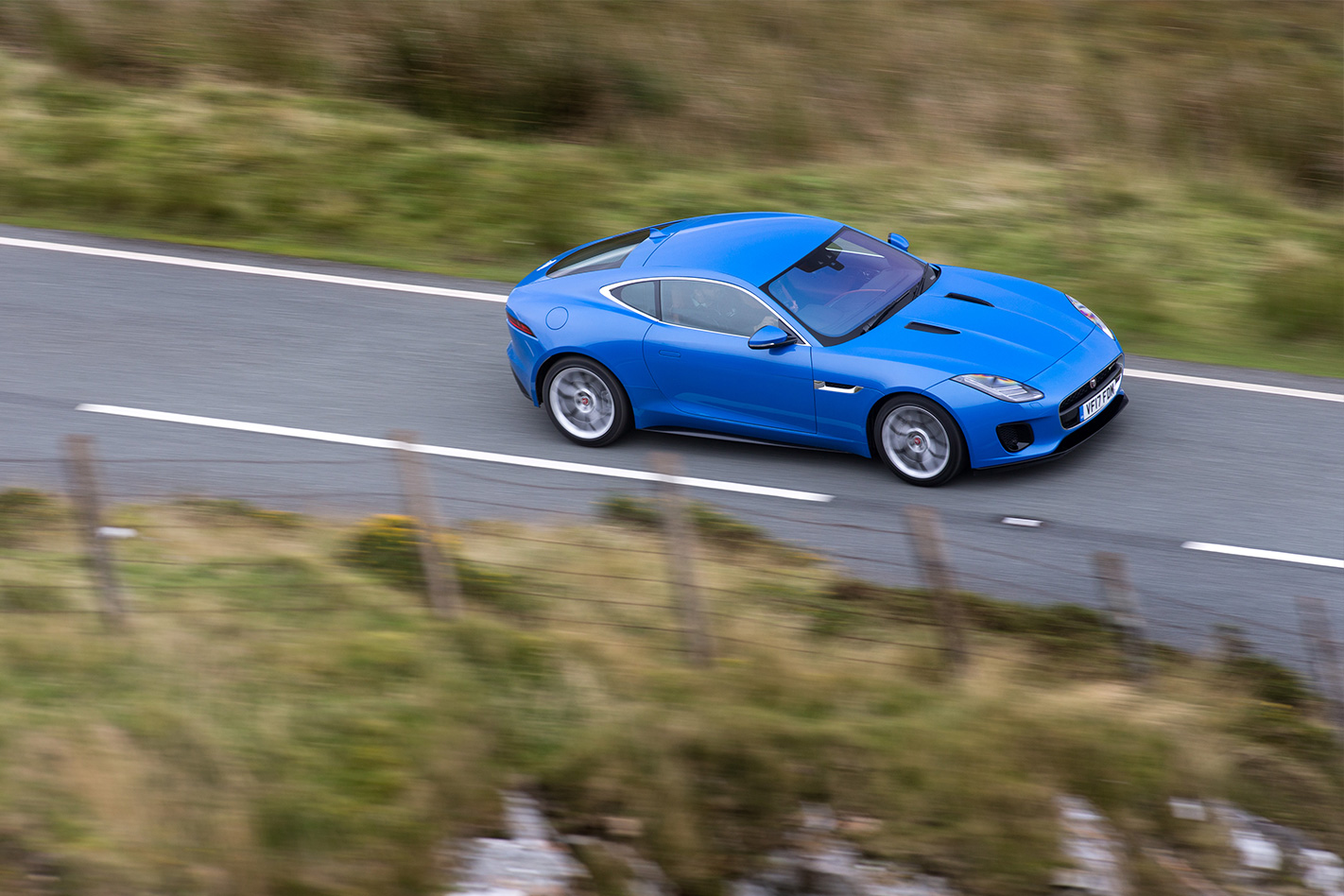
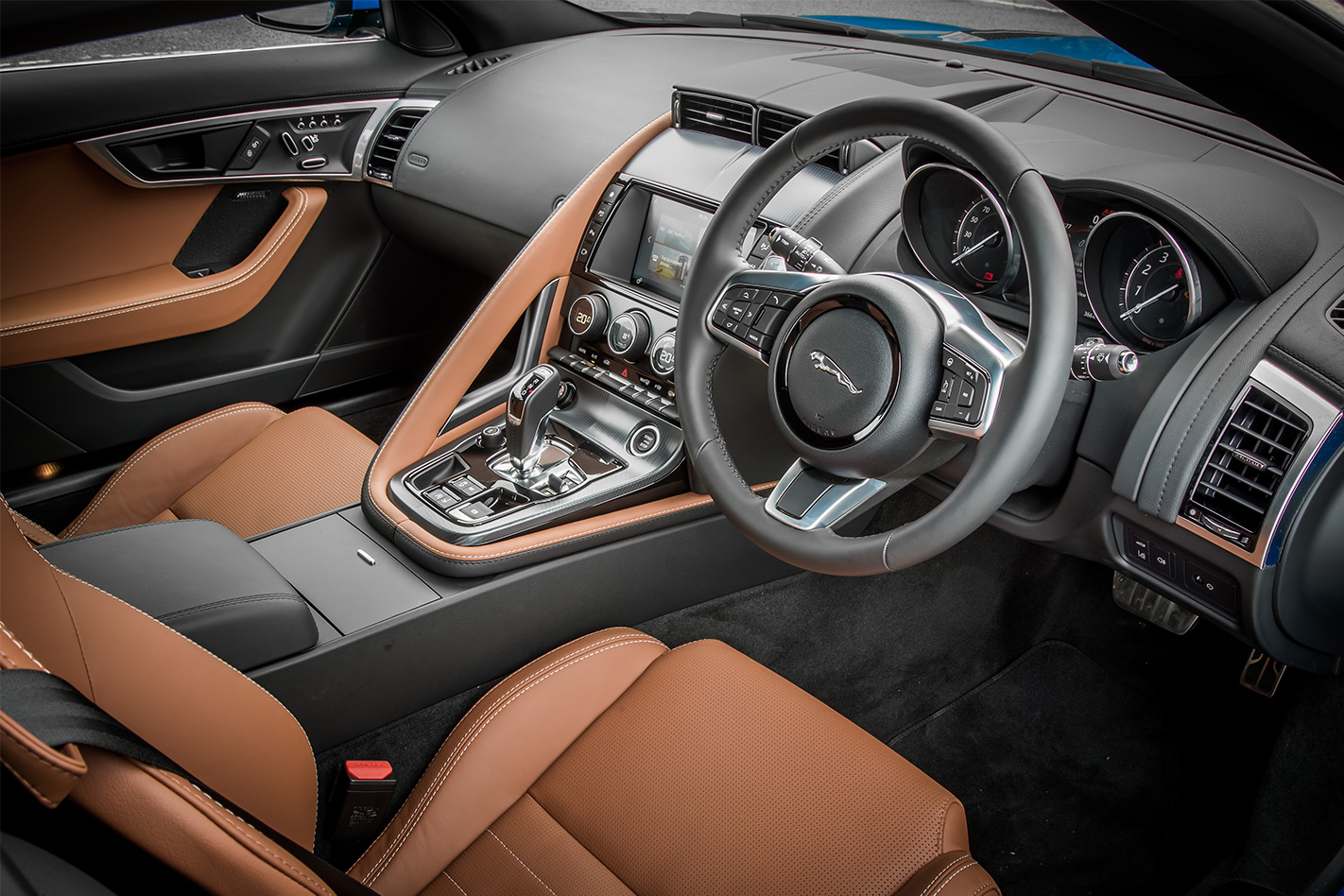
The auto keeps the same ratios as other F-Types, but its shift calibration is adapted to suit the four’s power delivery. Given the choice, we’d choose it anyway. It feels natural to shift well short of the 5500rpm power peak, but the tightly stacked, punchy gear changes land you bang in the power band time and again; it’s easy to get in a cross-country flow.
The handling benefits from having fewer cylinders too, because this F-Type’s lighter nose feels far more responsive, diving for the apex with precision and enthusiasm. There’s more adjustability off-throttle than V6 models too. Spring rates are dropped 4 percent front, 3 percent rear, but perhaps it’s because adaptive dampers are off the menu and this F-Type rolls a little more freely as a result, giving you extra options to play with the weight transfer. Shame the re-tuned electric power steering feels heavier, too keen to self-centre and communicates so little road-surface information.
SPECS
Model: Jaguar F-Type coupe Engine: 1997cc four-cylinder turbo, dohc, 16v Max power: 221kW @ 5500rpm Max torque: 400Nm @ 1500-4500rpm Transmission: Eight-speed auto Weight: 1525kg 0-100km/h: 5.7sec (claimed) Economy: 7.2L/100km Price: $107,012 On sale: November
Hard-core is one way of describing them. Extreme, focused, harsh, uncompromising.
This article first published in MOTOR Magazine November 2004.
Whatever, the message from this quartet is crystal: we’re built for power, speed and the rest can take a back seat, if there is one. Which is fine by us; there’s something to love about any car maker with the clout and courage to build a low-volume, speed-sport road racer that forsakes comfort, luxury and equipment for the sake of getting from point A to B in FQ time.
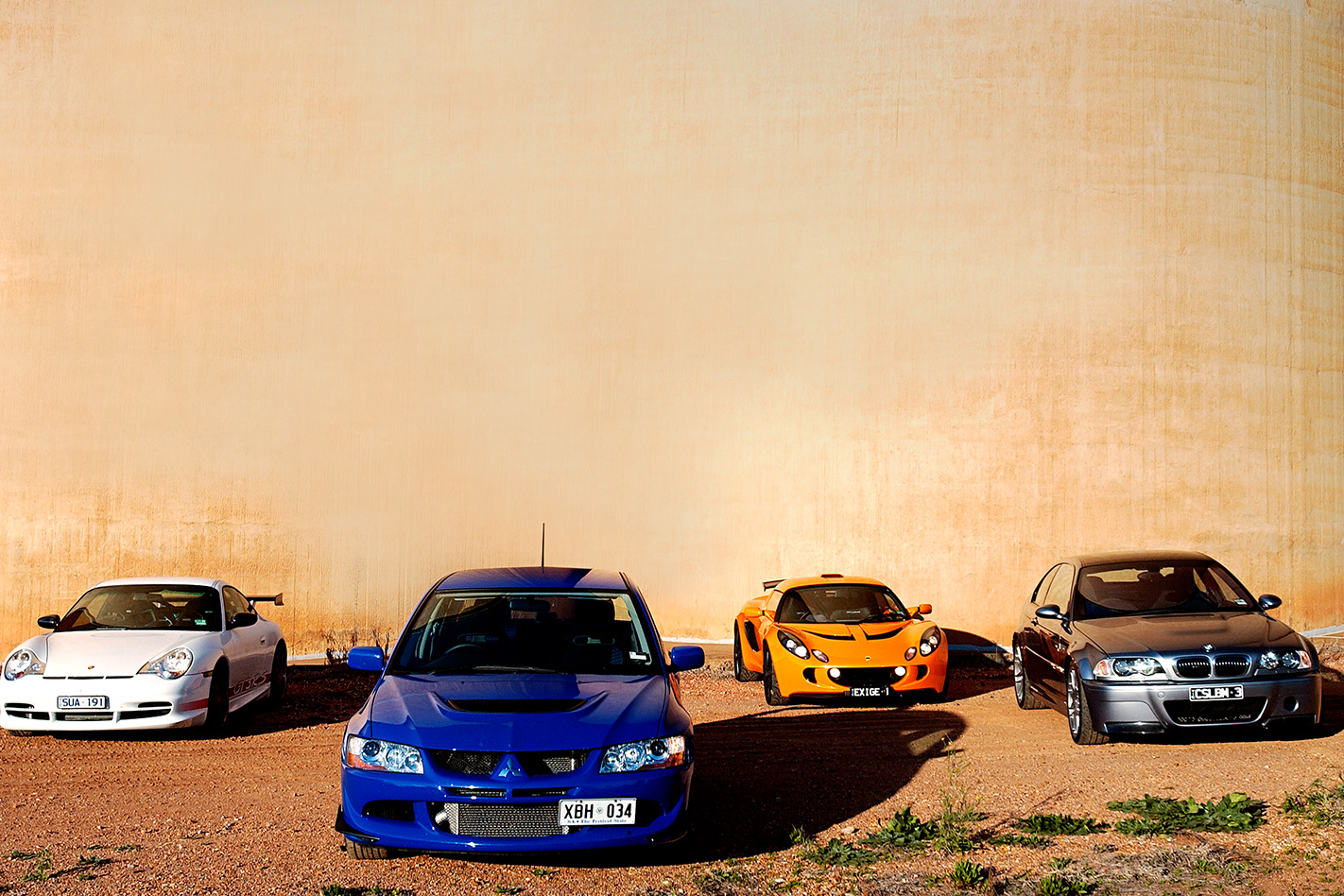
What we have gathered here – for a total of just 28 hours – are four flagships from four such makers: Mitsubishi’s Lancer Evolution VIII Ralliart, Lotus’s Exige, BMW’s M3 CSL and Porsche’s 911 GT3 RS all lightweight, super road racers sharing the single aim of speed.
What you won’t find here are the luxuries and their accompanying weight burden: not one possesses cruise control, sat-nav, a multi-CD stacker, or electric seats – and only one has the luxury of reclining seats, and just one other has rear seats. In one, carpet is an option.
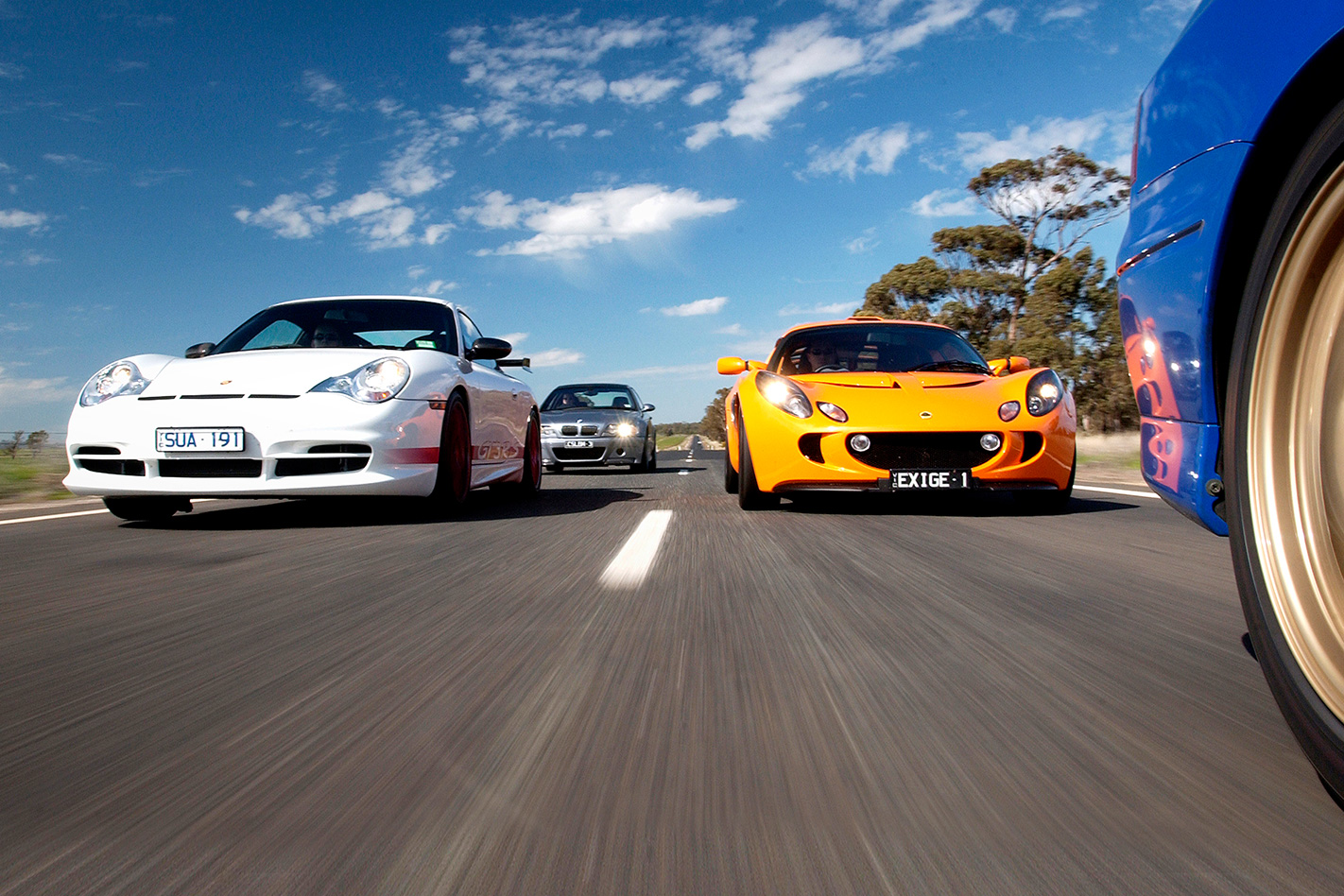
So efficient are their engines at extracting power from modest capacities – not one bigger than 3.6-litres – if each had the same 5.7-litres as a 300kW HSV V8, these hard-tuned racers would range between 339kW and 472kW!
So, differences aside, who makes the purest road and track star? Can a four-cylinder Lotus really compete with a Porsche twice its power and almost thrice its price? Is a humble Japanese sedan any match for the blue-bloods from Germany, and is power more important than weight? And is all-wheel drive enough of an advantage over rear-drive and super-sticky semi-slicks?
Sweeping, quiet country roads around rural New South Wales, and our standing quarter-mile test track were the perfect places to take $675,000-worth of pure-breds to find out.
EVO Ralliart
A World Rally car stuffed inside a four-door sedan, Mitsubishi’s Evolution is the most visually unassuming of the assembled crop, but among them it hits least where it hurts most: $61,990 buys a big bag of blammo. No wonder it’s the 2004 Bang For Your Bucks champ.
But in this company, that’s not enough. So Mitsubishi threw together this mildly-tuned, one-off hottie using Ralliart power and dress-up bits. Despite its blue and gold STi-styling, it’s actually been built for Mitsubishi boss Tom Phillips to showcase some of what’s available for the E8.

It not only brings down the chassis, but offers less roll and, with its spongy reclining Recaros, a ride quality so good it was always first pick on the freeway hauls. And when a lowered EVO offers the best ride and comfort, you know this is a hard group!
The EVO’s 2.0-litre four is the most size-powerful engine here and breaks the 100kW per-litre barrier, which isn’t a massive surprise, given that it’s the only one that’s boost-induced. More than the extra power, it is thanks to the removal of the standard car’s 5000rpm launch rev-limiter that it shoots to 100km/h in 5.0, three-tenths faster than the original recipe. It’s faster over the quarter-mile too, by 0.3 secs and 2km/h.
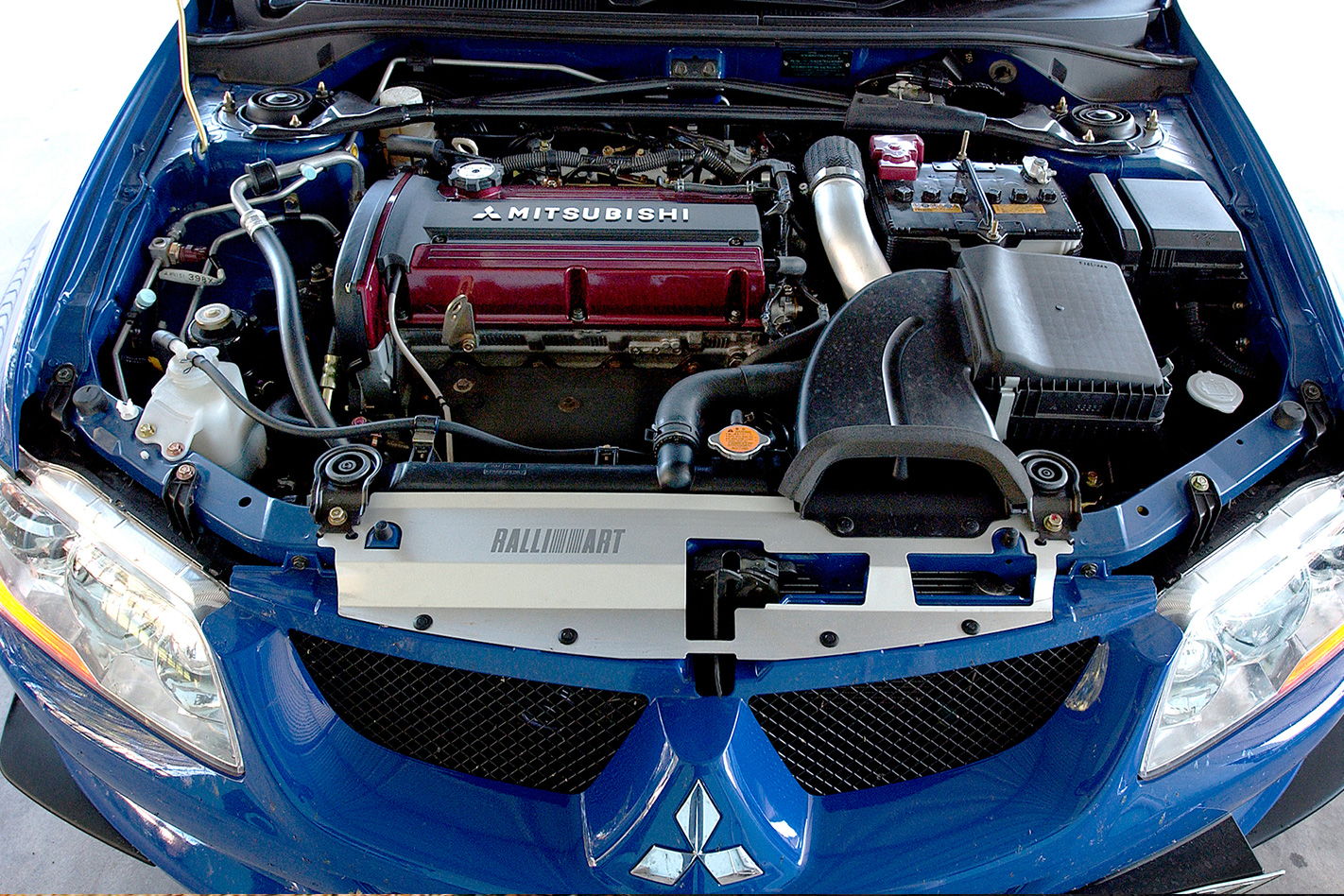
Though it’s heaviest here by 85kg, the EVO’s trump card is its mass of mid-range torque. While atmo engines respond with immediacy, their peaky natures require a wind-up to extract the best. The EVO is simple: boot, boost, bang an instant mountain of torque from 3000rpm. And it’s punchy enough to keep pace with the CSL – until the BM fills its lungs and runs away.
No, it’s the Exige that offers the EVO its closest competition. To 100 kays, it’s even-Stevens, but the EVO’s third- and fourth-gear power rush edges it ahead above 130km/h.
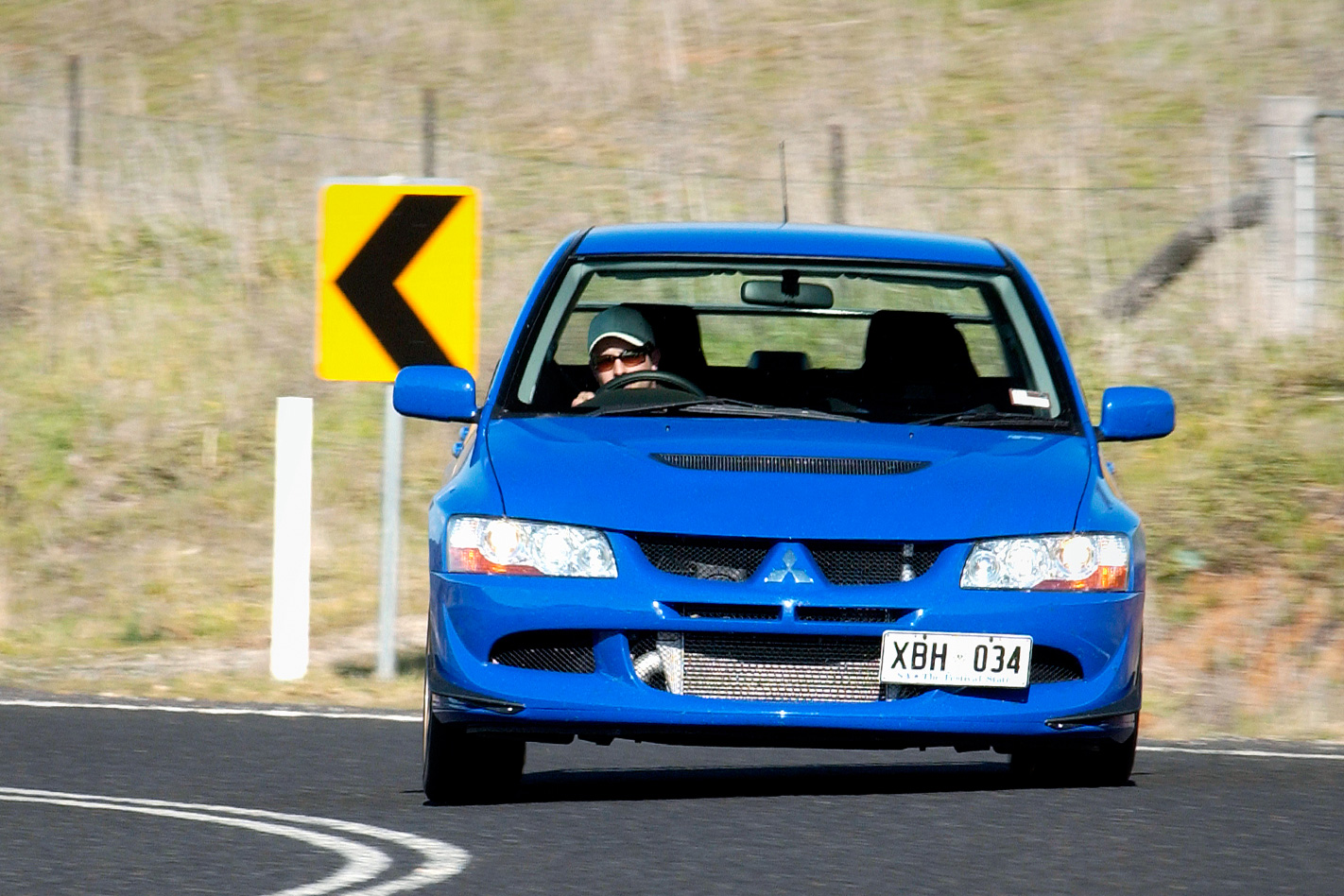
Believe in the diffs, bury the boot, and it’ll explode from every corner with a few degrees of oppy-locked oversteer, such as to roll back any disadvantage from being the only one here on full-treaded road tyres.
A third of the BMW’s price, a quarter of the Porsche’s and $35k less than the Lotus, the EVO offers supercar performance on a family-sedan budget. And on a flowing, wet mountain pass, it’s the EVO in which you’d be most comfortable, fastest and most feared.
Lotus Exige
The Lotus Exige is Bruce Lee. It’s highly skilled, raw, lean and mean, always controlled and ready for a fight. Don’t underestimate the Exige, because it’s ready and able to kick the shitake out of anyone.
Its 13.7 quarter-mile may be slowest here, but it’ll still leave a Commodore SS for dead. The Exige’s 887kg is half that of an FPV Falcon, and the equivalent of five adults’ weight less than the Porsche. Superb through the swerves, its steering is small enough to twirl in hand-cuffs, but so direct, full of feedback and feel.
Its Yokohama semi-slicks offer so much grip that even when red mist falls, they just dig in and ask, “Is that all you got?”, while its brakes dig in its nose like a flea into a dog’s back.
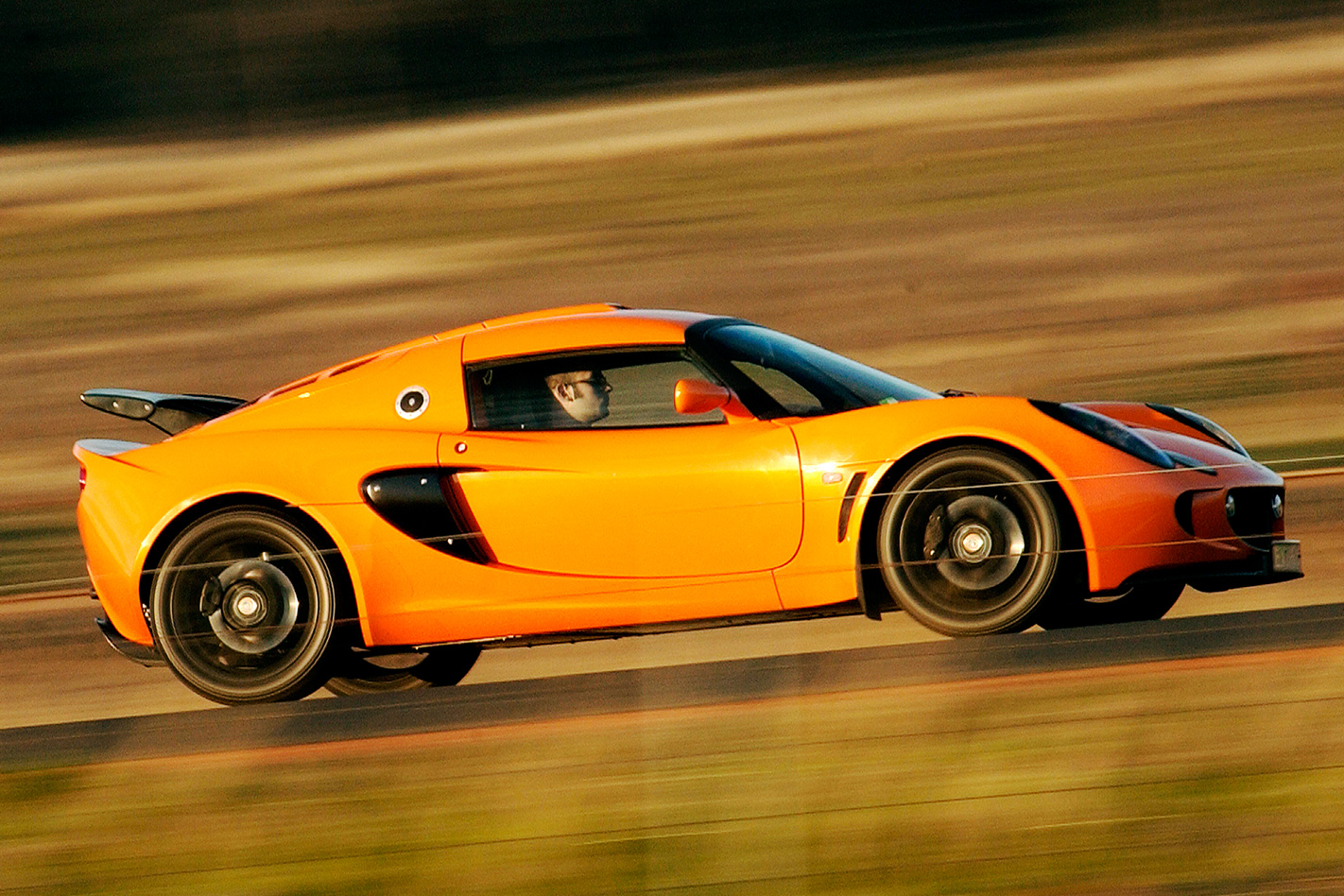
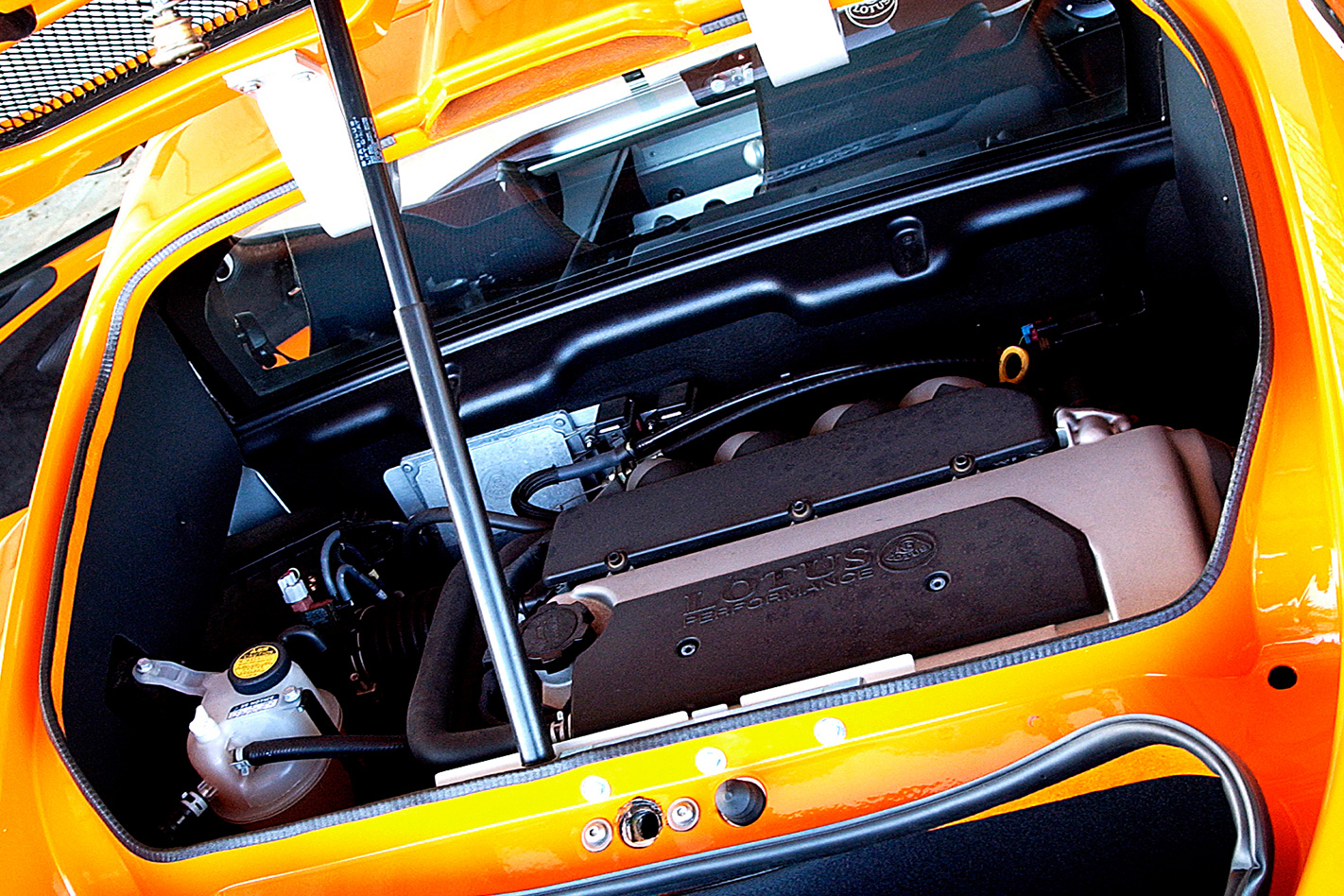
For $5k over the similarly-engined Elise 111R, the Exige offers unique wheels, front splitter, hardtop, meshed engine hatch, side scoops and rear wing. Its Toyota engine is good, but not only is it the smallest here, its air-sucking 1.8-litre makes just half the power of the Porsche – and just half the torque of everything else.
Off cams, it’s still grunty and eager, but has most of its horses hiding in the top paddock. Getting speed from the Exige is like inflating a balloon with a hole in it: let your attention stray, and it goes limp. From 4000rpm, it picks up the pace, but it’s at 6250rpm when it turns nasty.
It’d want to be damn fast, because practicality wasn’t a pre-requisite on Exige’s resumé. It’s the hardest-riding here, but its suspension is, surprisingly, comparatively compliant (check the body roll, left) and bumps throw it around simply because it’s so light.
Rear vision is as good as any ’70s supercar’s – think fencing through jail-cell bars, with blind spots in the C-pillars as big as a Commodore’s. Just entering the waist-high wonder is like climbing into a mailbox slot, but once in, it becomes part of you as the world becomes a narrow, 180-degree view, trapping car door handles, truck wheels and groins.
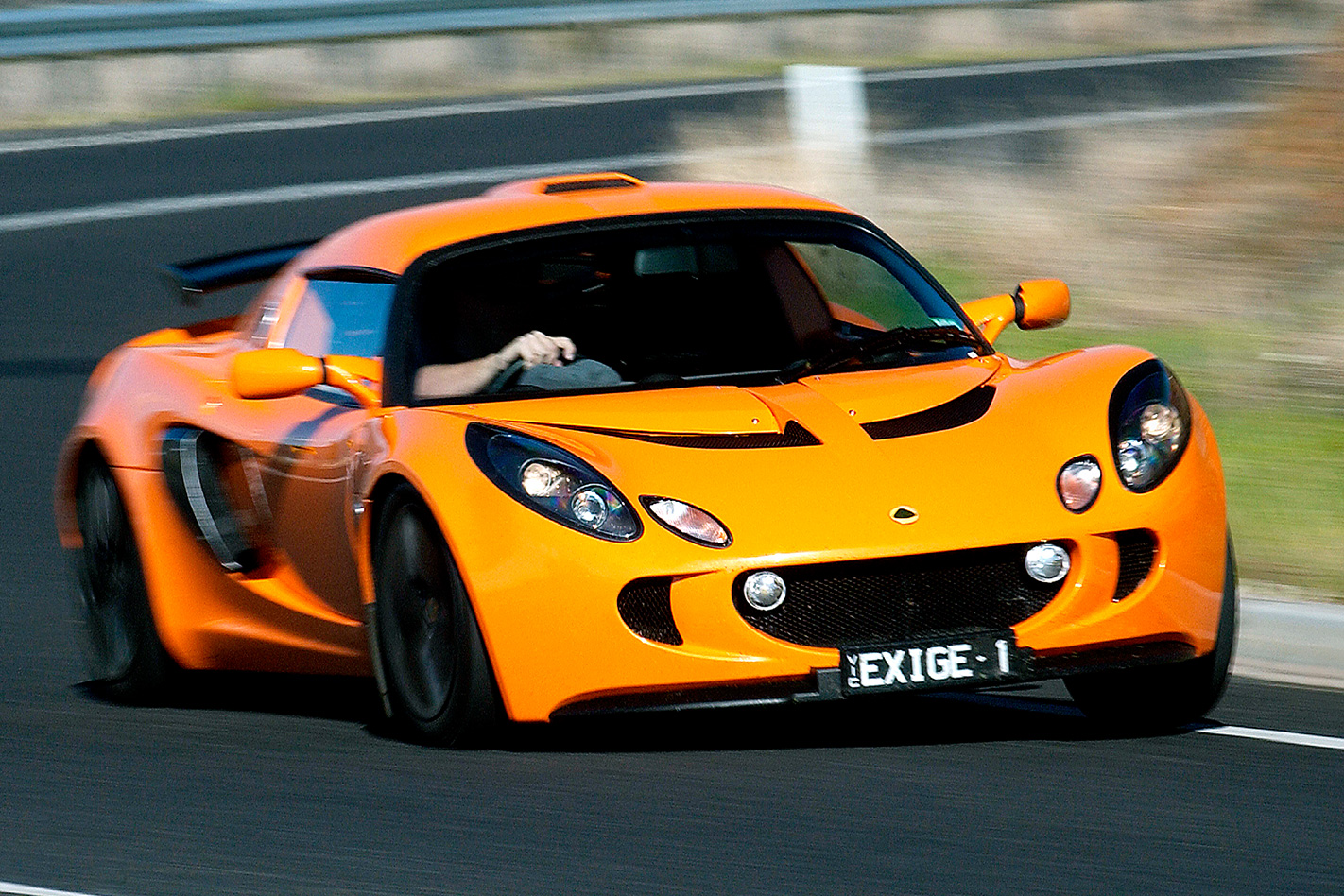
Masochistically, its quirks add charm and character: the Exige is the purest, most uncompromising, and focused road racer here, and it doesn’t pretend to be anything else. Want comfort? Bugger off, then. You need to be phsically eager to wrestle the best from the Exige.
It was always last pick on mornings, nights and freeway runs, but on a sunny day, with a smooth, tight winding road ahead, Exige is the king.
M3 CSL
Ka-ching! Our hand’s deep in the big biscuit tin with BMW’s M3 CSL. For an extra $68,000 over an M3 SMG, the CSL gets more power and less equipment. But, at $210,000, it’s double the price of the Exige. Does the speed match the greed? Let’s see.
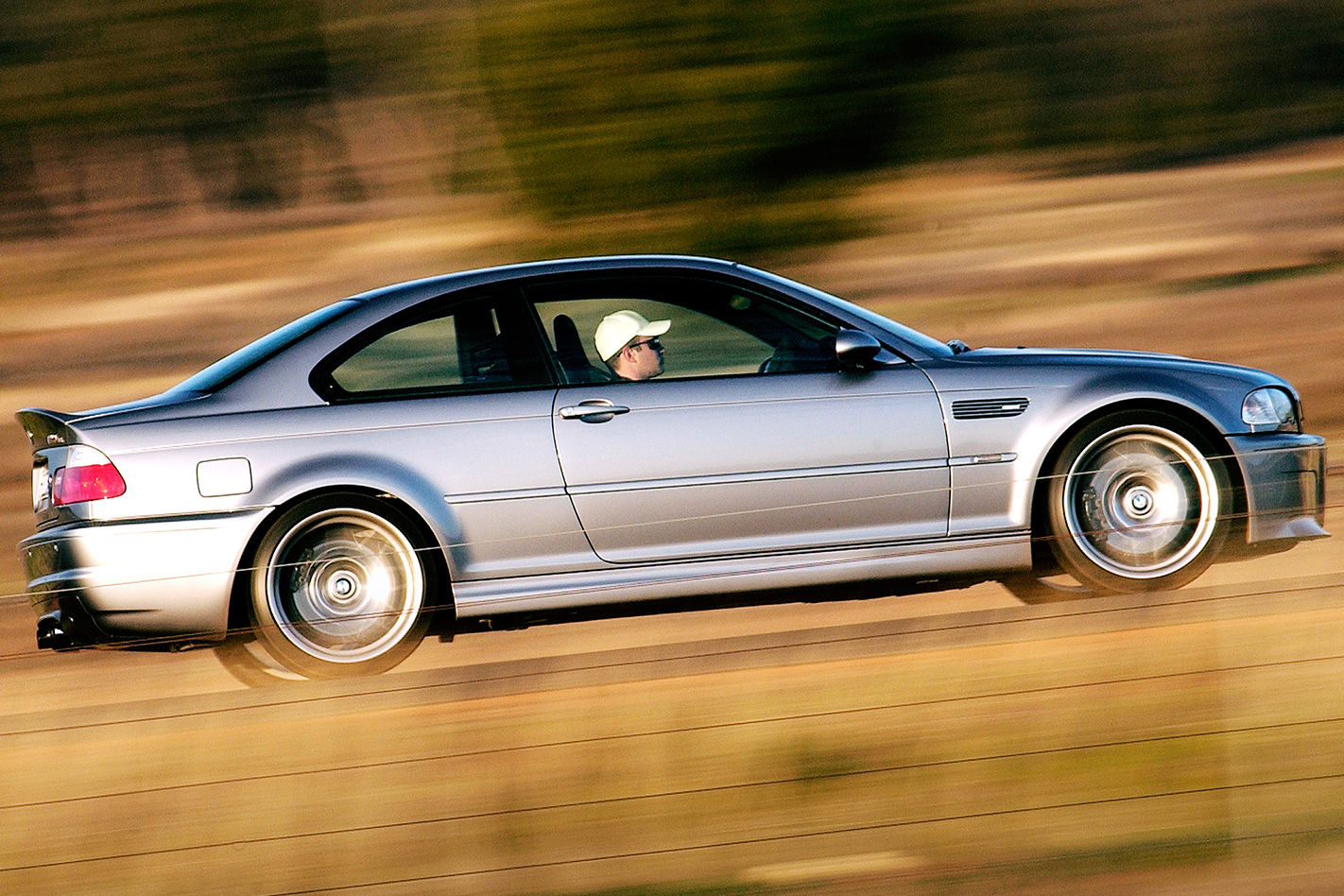
Try as we did to match BMW’s claimed 4.9, the CSL was slowest to 100km/h in this group – if you call 5.2 slow – but it’s a grossly misleading, out-of-context figure. Its 13.3 quarter-mile jumps it to second-fastest, and its 179km/h trap-speed is a massive 14km/h more than the EVO and Exige. The tricky SMG’s launch control works hard to put 265kW through its super-tacky tyres, but 235mm just isn’t a lot of Michelin. Or you’d think that until you turned in. Fork me!
The CSL’s thick alacantra wheel offers the best turn-in here, and its slick-impersonating Cup tyres bite hard with immense mid-corner grip that raises it to the levels of the super-light Exige. Push, push, push, and the CSL just grips as if vacuumed to the ground without any comprehension of tyre squeal. It invites you to build confidence, so jump on the gas real hard, real early, and it’ll blaze up a pair of lines as dark as night, as predictable as a ‘horse walks into a bar’ joke.
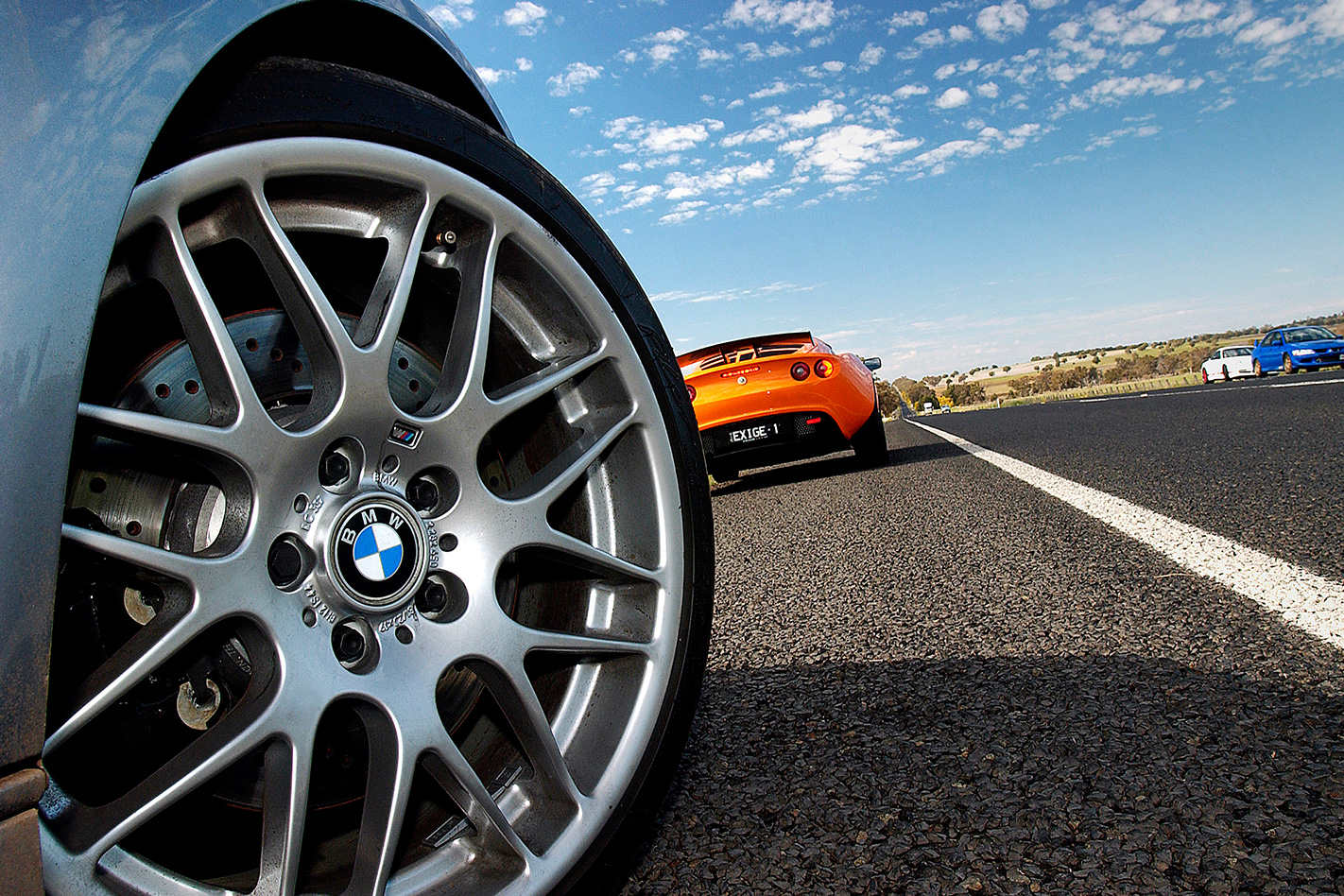
Stamp on its brakes and the tyres aren’t even fussed with ABS, its single-piston calipers doing a job way better than their specs would suggest. A weak point? Hardly.
Inside are luxuries lacking in the four-cylinders: climate control, trip computer, carbon-fibre console and door trims. Instead of stereo and cruise controls on the steering, there’s a single on/off button for M-track a ‘competition’ mode that ups the limit of, rather than disables traction control.
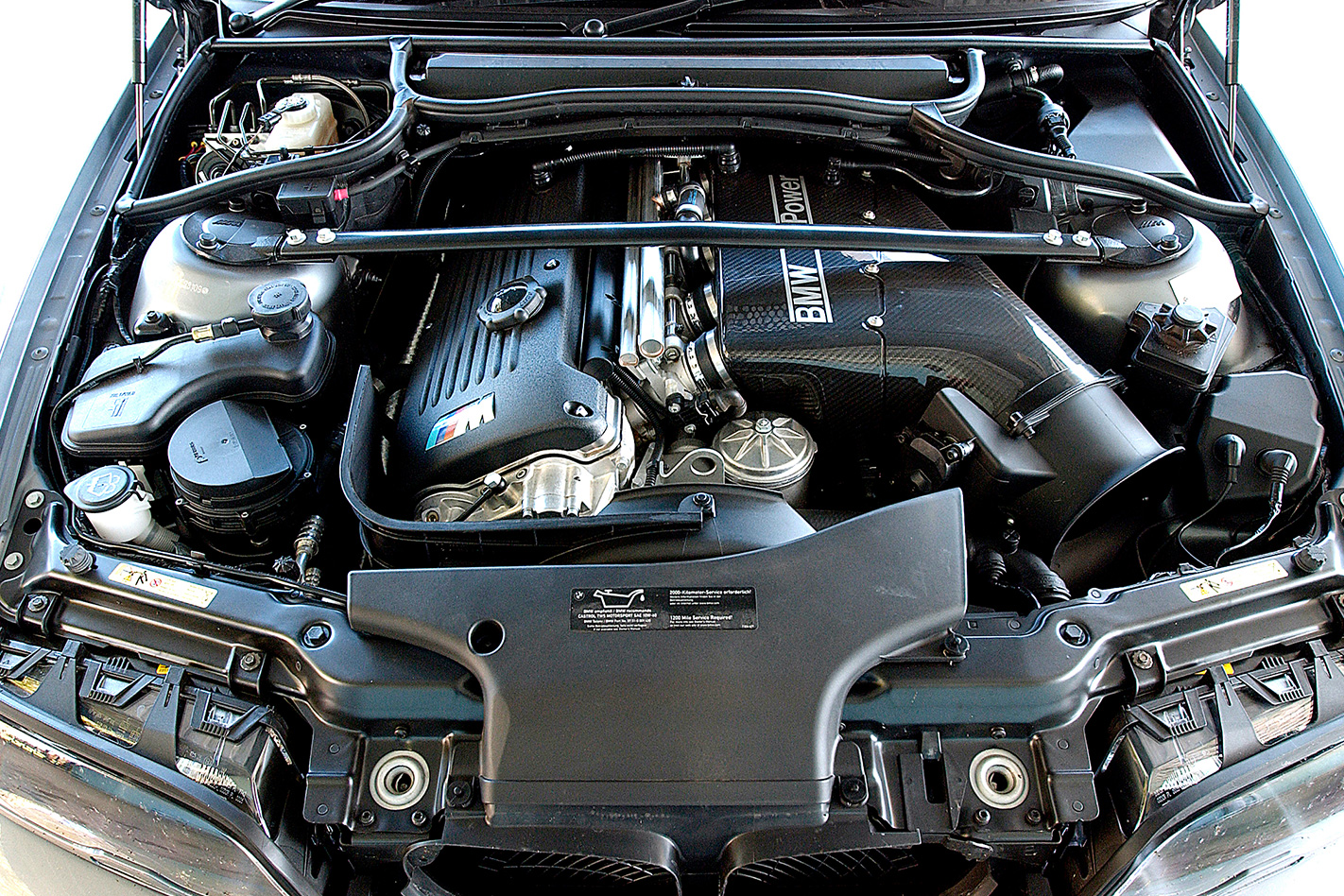
And all with a heavenly sonic blast that’d put goose bumps on a baking turkey. Brake hard and tap the paddle down a gear and the ’box blips the throttle like a pro’.
Keep in mind though, that the M-power straight-six does lose 400cc and gain 25kg to the Porsche, so it’s not entirely fair. Especially when the CSL is $78,000 less.
With just 23 of its kind in Australia, the CSL is a big step up from the M3, and on an open track day would be the one to watch for most in the mirrors, regularly pumping out lap times that would be the envy of many a race car. But is it the best here when a Porsche is present? Let’s see.
Porsche GT3
So, let’s continue discussion of the previous page’s battle between Porsche and BMW. The CSL is half a car length in front as it passes 110km/h. As the M3 shifts into third gear, a white and red blur lurches by, landing two car lengths ahead! Damn, how the hell did that happen?
Simple: the Porsche’s tall-gearing tops out at 135km/h in second gear; its panoramic spread of 385Nm takes care of any tall-gearing issues and throws it down the road with a massive advantage of torque and in-gear top speed.
Third gear rams it home, grunting the GTS away from the CSL with ease, if not comfort. Yep, the GT3 RS is a bullet at the drags, but the view through the CSL’s screen suggests that it’s far from docile: its 295 Pirellis follow bumps and lumps, squirming the chassis as it powers down a twisty 280kW, like Houdini escaping from a straight jacket. Don’t forget standing starts: the rear-engined GT3 blasts off the line, blitzing the others with a 0-100km/h in 4.3 seconds!
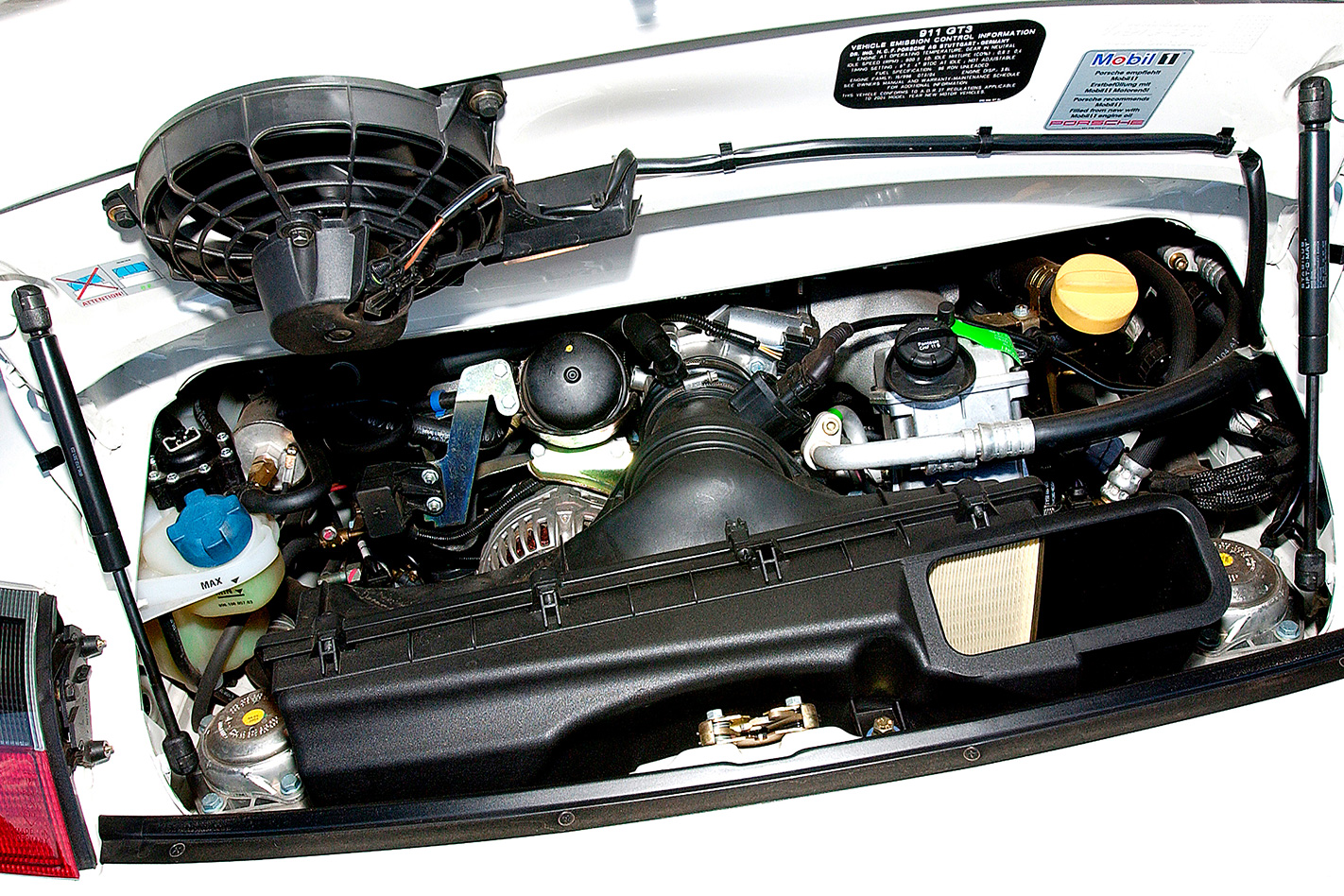
We detailed the RS’s changes over the GT3 Club Sport last issue, but it loses 50kg through a Perspex rear window, carbon/kevlar boot and bonnet.
Its wrap-around seating is spot-on, as low as the Exige’s. It’s almost as intent on lap times too, save for its consideration of climate control, trip computer, a decent CD stereo and, shock-horror, cup holders!
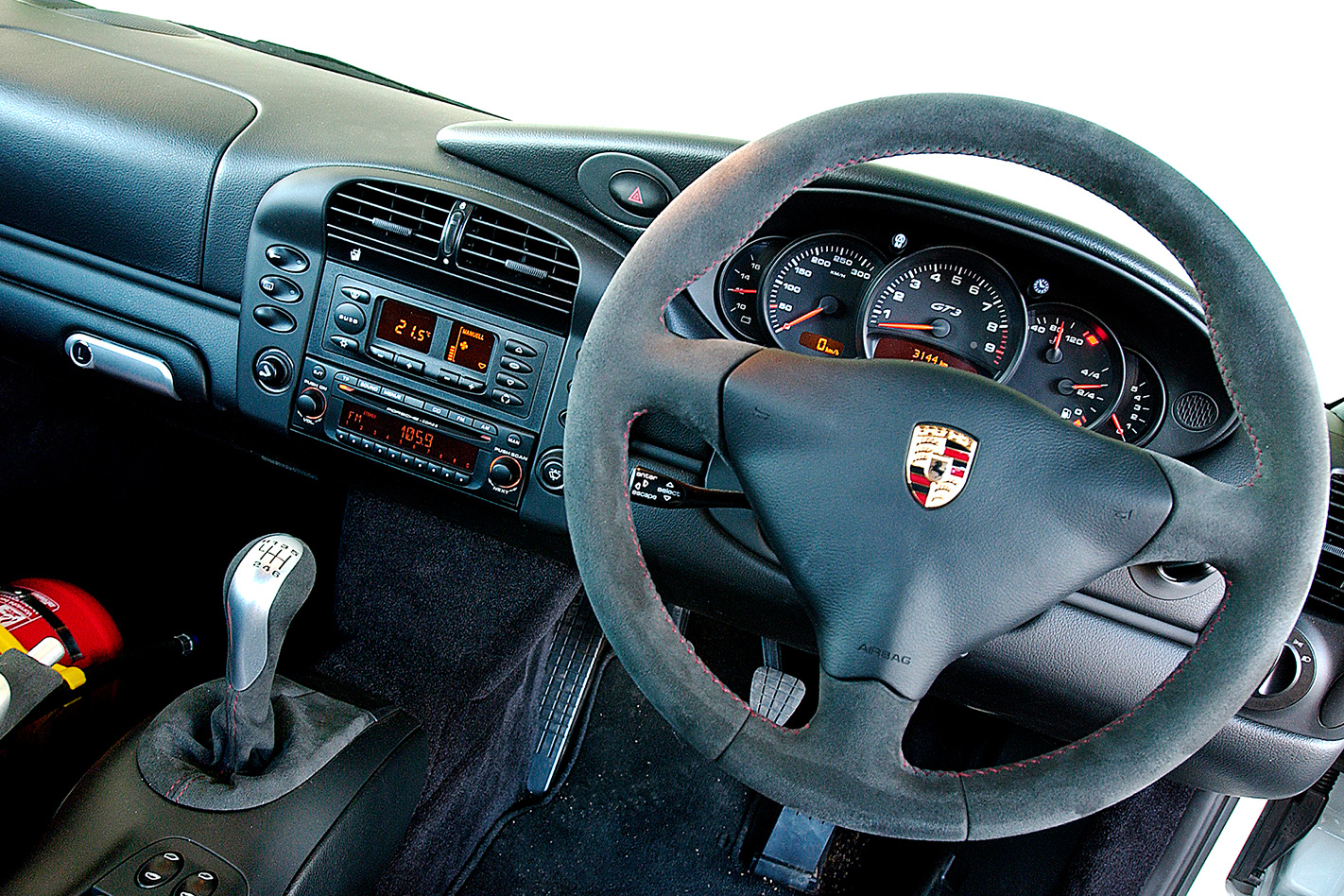
It’ll blow away the Exige, EVO and CSL in any and every straight-line test. And while it’ll carry similar speed into the turns, you dare do it only with a clenched ring, tightened hands and a bead of sweat on the brow. It’s pure and simple hard work compared to the other three here. You don’t throw the RS at corners you ask politely, and smoothly feed on the power carefully, so as not to piss it off.
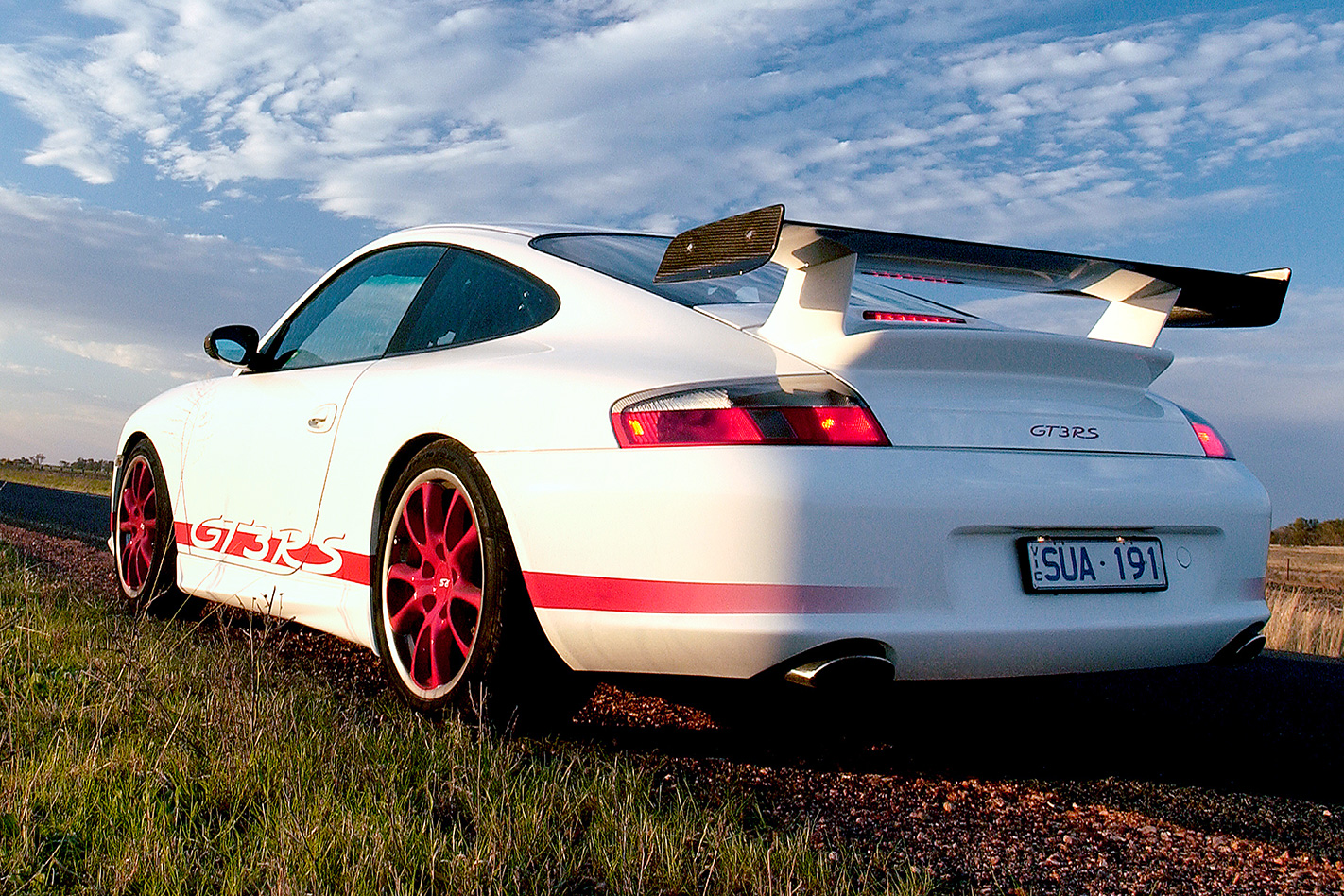
It may be a most intimidating car, but don’t take any shit from the RS. Grab it by the collar, present it your fist, be assertive without being clumsy, and it’ll reward you not just with speed the others can’t match, but with a euphoric, brainwashed conviction that a stripped-out, hard-riding, ready-to-race $288,000 two-seater really is damn good value.
And the best road racer is…
So which is the best road racer here? Normally it’s the most expensive, and it’s hard to argue against the Porsche. But the EVO VIII is truly a bang-for-bucks champ. It’s comfortable, fast, practical, well-equipped and with all-wheel drive, is a blast to simply point and shoot on any road, in any condition. Its 98km/h peak in second gear lost out a touch in 0-100km/h bragging.
Big deal. Personally, we’d save some dollars on the dress-ups and fit some semi-slick tyres and squeeze out a few more kilowatts to really ruffle some expensive feathers. This tuned blue EVO is impressive, but we know there’s potential for more.
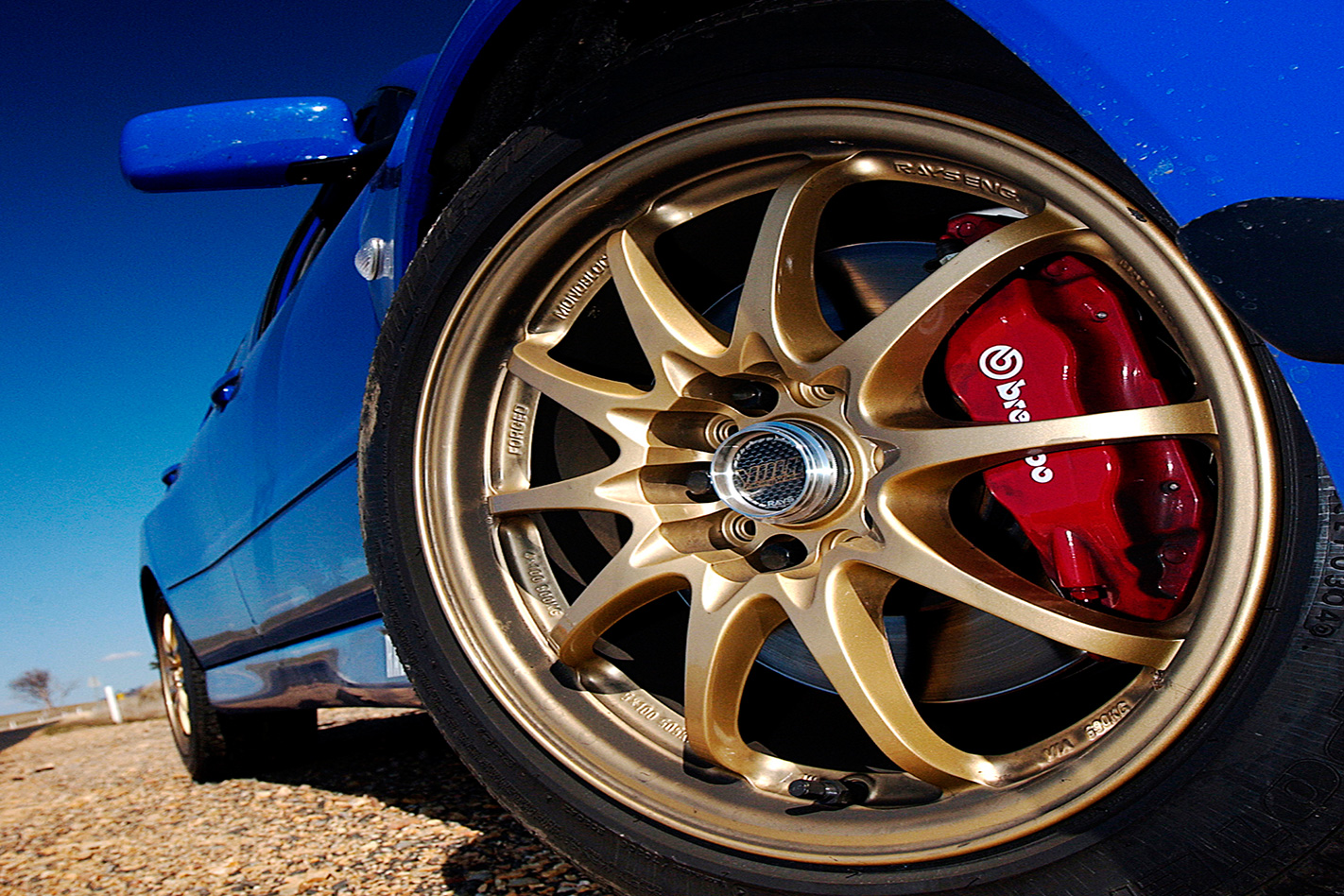
Worked hard, it’ll match the CSL and RS, and maybe even claim the odd upset when corners are abundant. But it demands more constant attention than the bigger, badder machinery.
The Exige is the purest, least compromised-for-comfort road racer here. On a dry, tight winding road, few will keep pace, present company included.
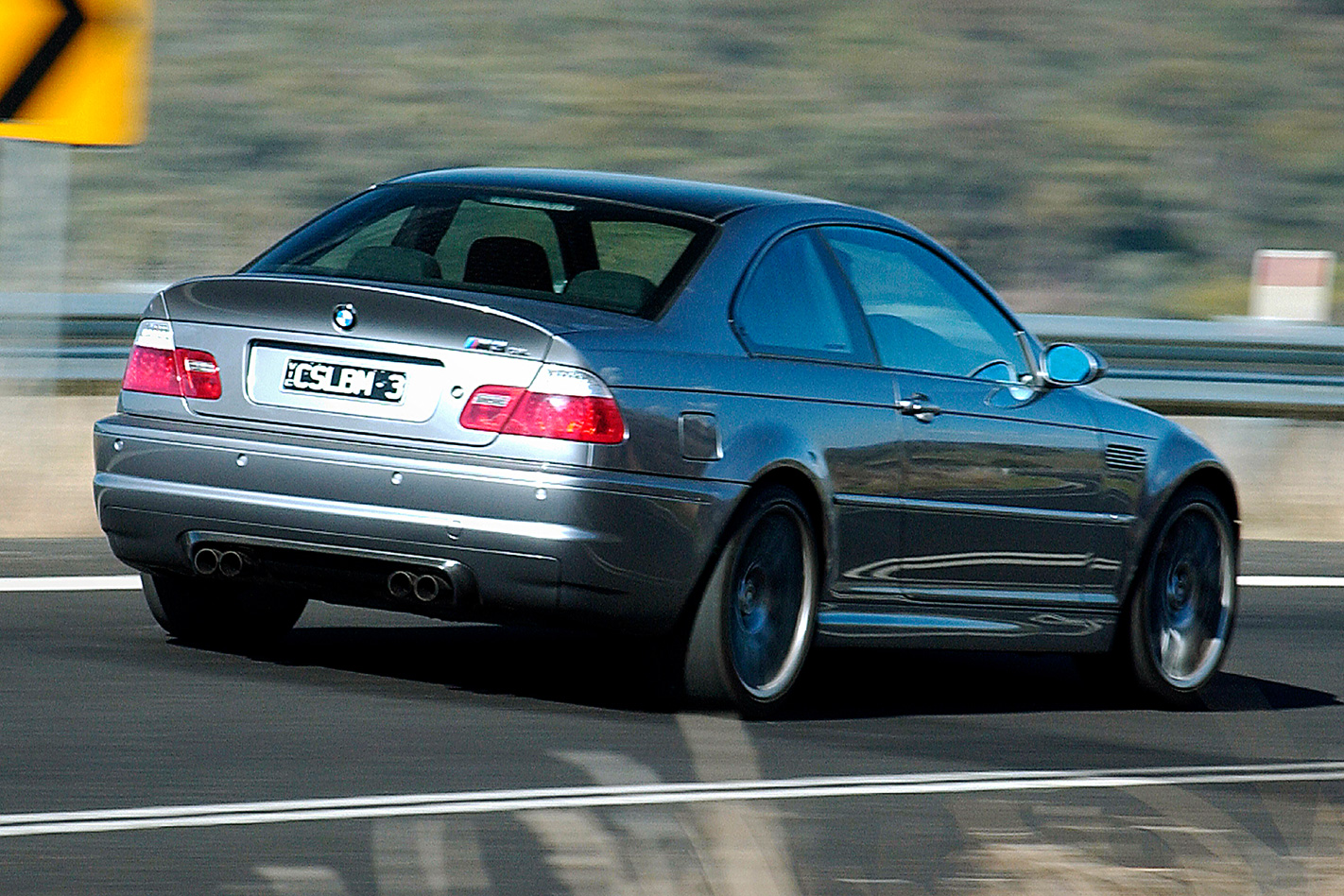
Until the GT3 RS winds up and blows it away. It was fastest, no ifs or buts, with the torque to beat the EVO, the braking to beat the Beemer, and the ease of speed the Exige could only dream about. It doesn’t win in every category, but it’s always up there. And anything that can make a CSL feel slow is a damn missile in our books.
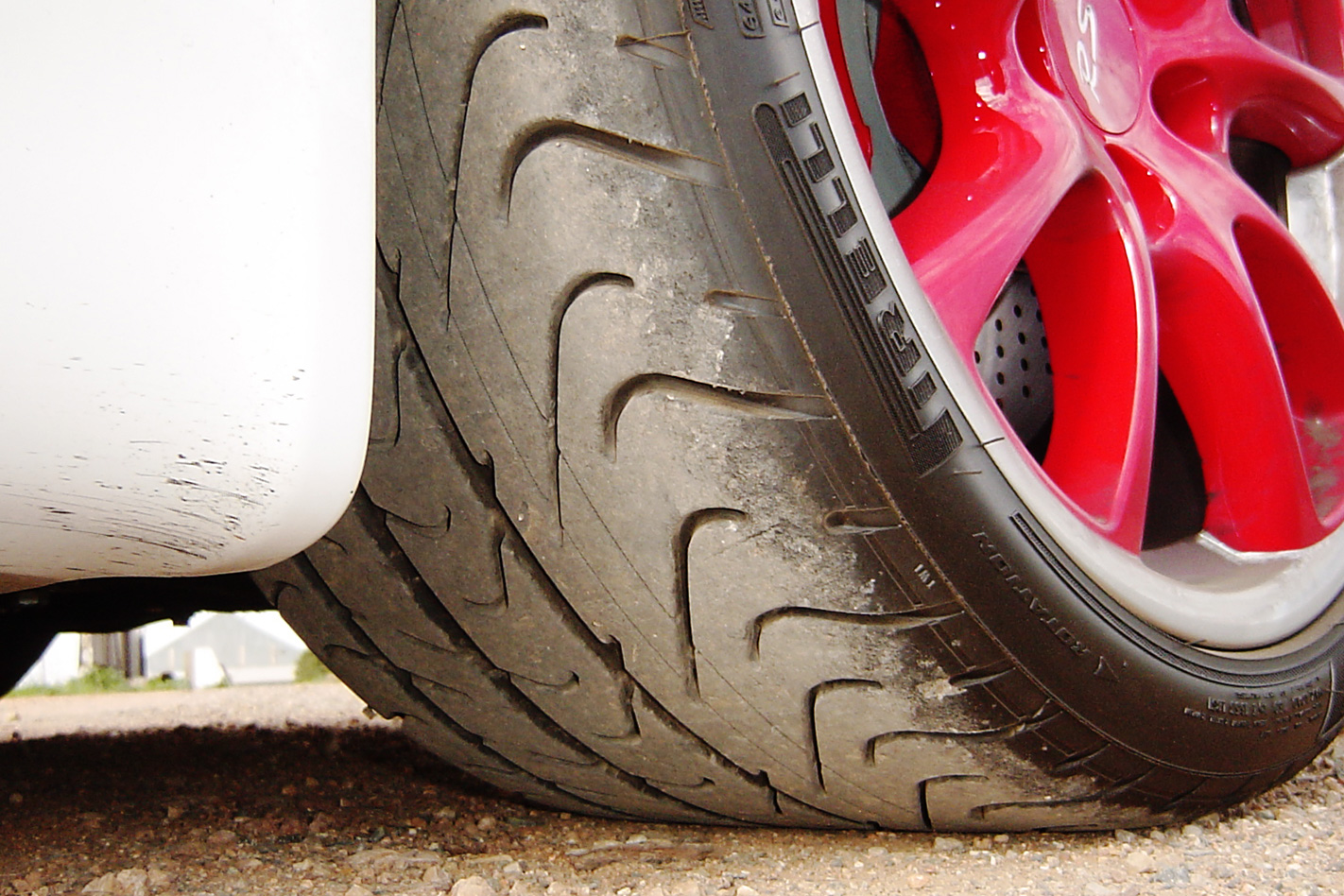
For 300 thou, you expect hard-core performance, and Porsche’s GT3 RS is a demanding drive. But it’s clearly the hardest, fastest, most thrilling road racer amongst this extreme team.
