
Why would you buy a compact SUV when there is the Audi S4 Avant?
No, seriously, it doesn’t make sense. Not only is it a capable, fuss-free fast cruiser and twisty-road bruiser, the wagon has all the space you’d ever need. To be exact, it has 505 litres with the 40/20/40-split rear seats in place and a cavernous 1510 litres with them folded.
That’s a handy jump over the 480/965 litre sedan. However, it does add 0.2sec to the sedan’s 0-100km/h time of 4.7sec despite being just 45kg heavier (sedan 1630kg). Luckily it doesn’t translate to a tangible deficit on-road with the ample 260kW and meaty 500Nm offered up from the now turbo 3.0-litre V6.
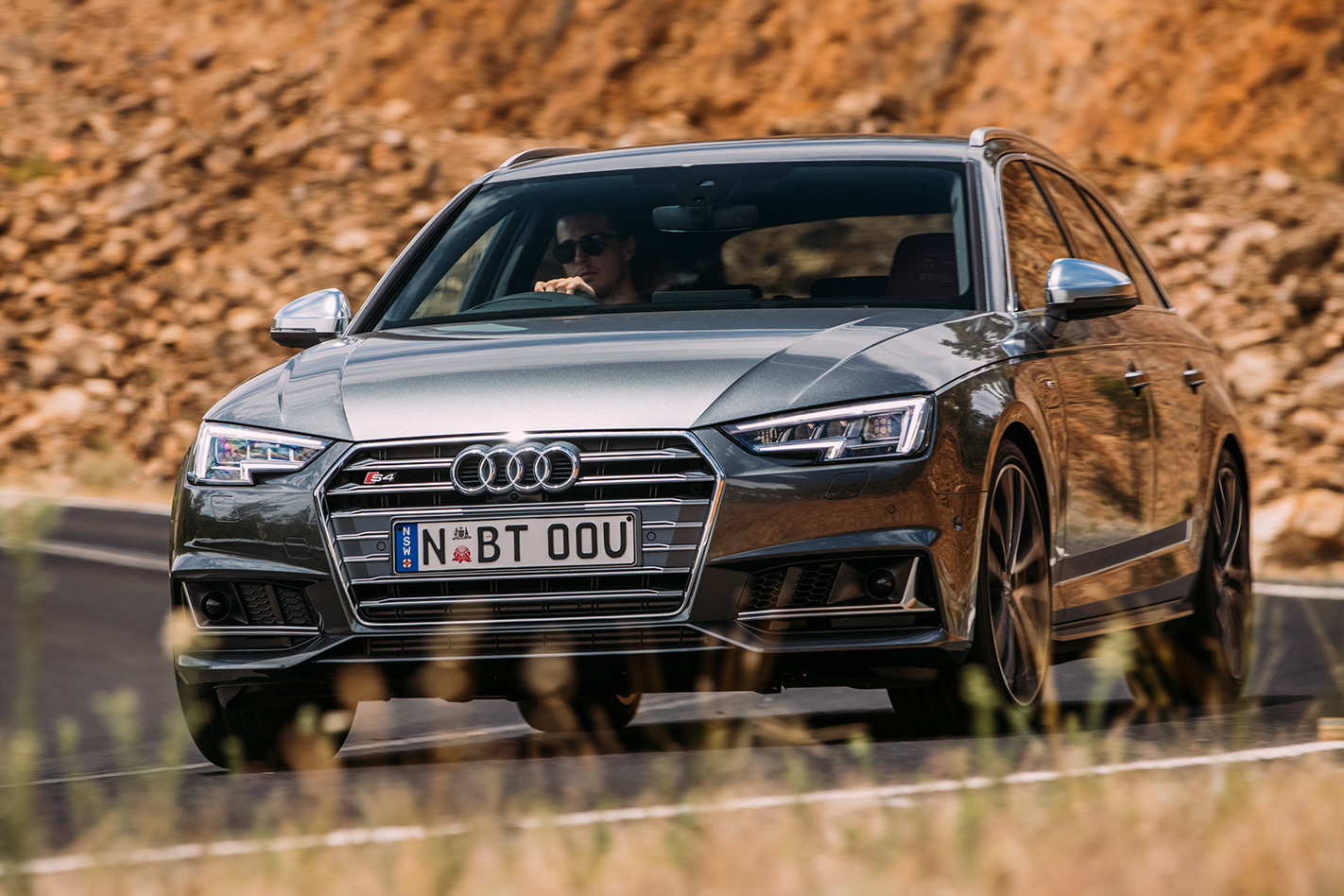
An essential option to tick is the $2950 quattro sport differential as it makes the wagon – sorry, Avant – playful at the rear, largely quelling understeer with the torque-vectoring diff. With adaptive dampers the ride quality on the 19-inch alloys is plush (and tailorable with Drive Select) while the steering is best left in Auto mode.
As ever, the S4’s cabin seals the deal – especially with the $5900 S performance package featuring massaging seats. It’s a lovely place to be and ergonomically sound. Plus, with virtual cockpit, it’s also tech savvy.
Pragmatism and performance are no longer mutually exclusive ideals.
2017 Audi S4 Avant specs: Engine: 3.0-litre v6 turbo Power: 260kw Torque: 500nm Weight: 1675kg 0-100km/h: 4.9sec Price: $102,900
- Introduction: Real Revolution
- Update 1: Tour of Duty
- Update 2: Under the Cover of Piety
- Update 3: Conclusion
Introduction: Real Revolution
SOMETIMES fortune deals a hand that couldn’t seem more premeditated if fate itself was pulling the strings. Case in point – the latest Toyota Prius.
Launched early last year, only months after the Volkswagen Group’s diesel emissions cheating scandal has left every oil-burner literally under a cloud darker than the soot that purportedly spews from their stinking exhaust pipes, the fourth-gen petrol-electric hybrid has suddenly found itself standing as one of a handful of legitimate non pure-electric eco alternatives to normal petrol cars.
Additionally, the Prius was the first to receive the hotly anticipated Toyota New Generation Architecture (TNGA), which is set to underpin many models in the maker’s vast empire. Espousing lighter, stronger, quieter and more spacious engineering, with a switch to a pair of double wishbones after years of a torsion-beam rear suspension. It’s highly promising stuff.
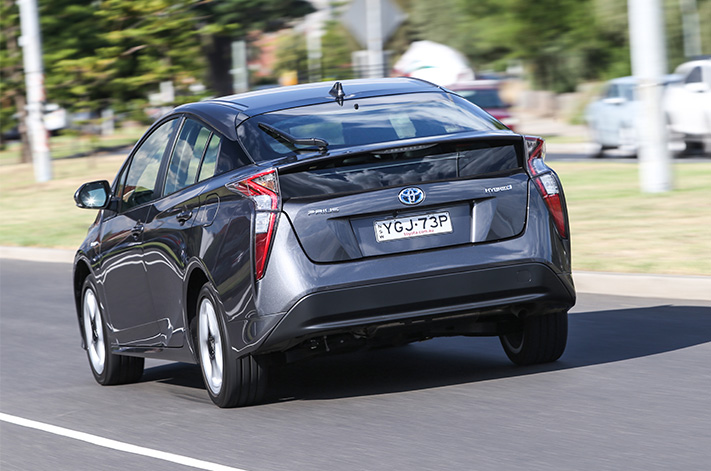
Finally, all that TNGA goodness provided an opportunity for the reborn hybrid icon to usher in some fresh design thinking inside and out, to further help it stand out as the green car of choice for the masses as we head towards an uncertain future. Like we said, it’s as if Toyota’s strategists couldn’t have timed the Mk4’s debut better.
But the best laid plans… more than 12 months on and the fourth Prius since October 2001 has yet to fire. And this is despite headline improvements like industry leading fuel economy (3.4L/100km is the official average), improved space and significantly more active safety gear, such as autonomous emergency braking, as part of higher standard specification levels that more than offset a $2500-plus price jump in the base version.
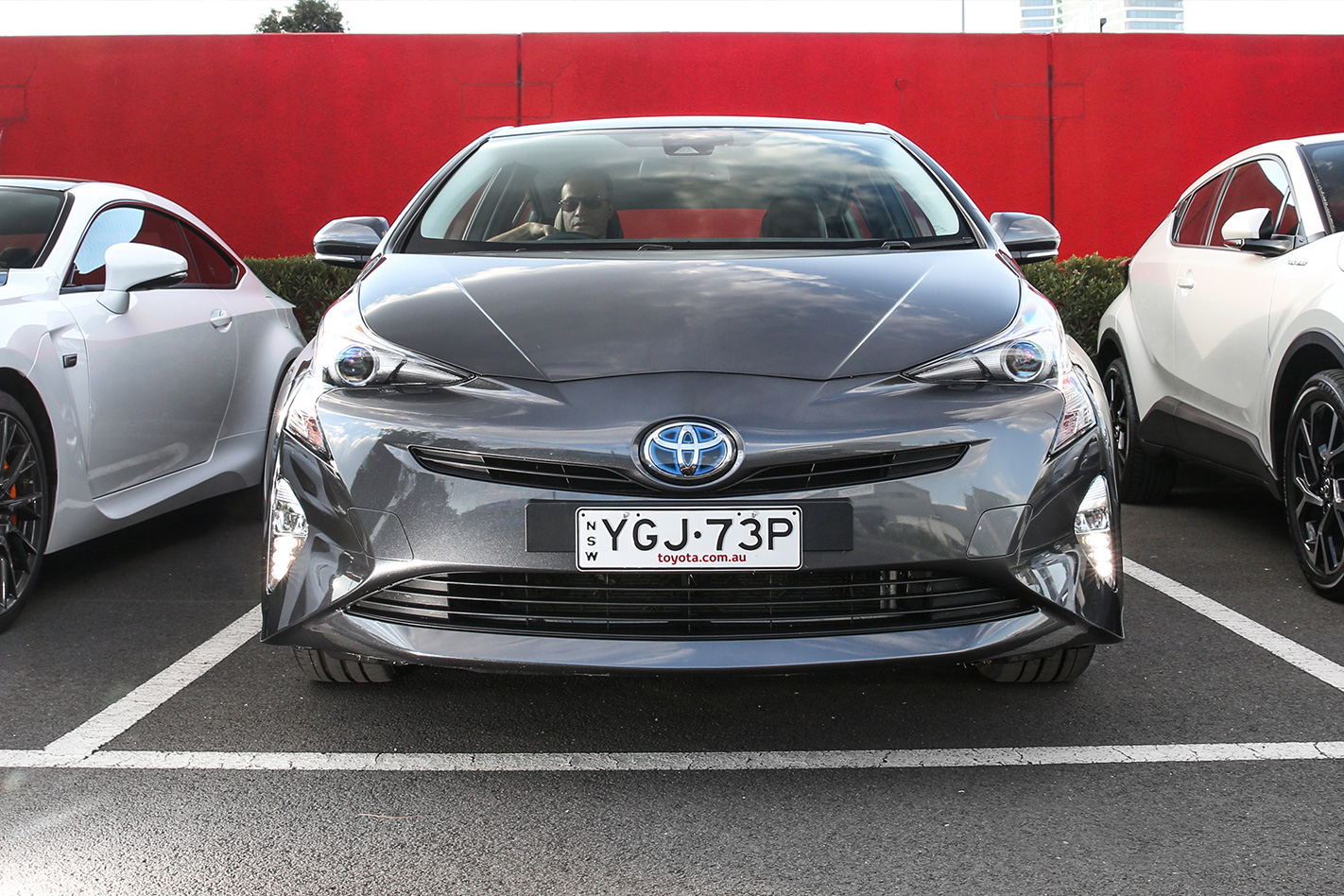
If you’re wondering why, consider seeing an ophthalmologist, because the Prius’ styling – while commendably aero at just 0.24Cd – is provocative at best, and a poke in the eye at worst. That insectoid snout would make Mothra squirm. We reckon it blinds people to the huge steps the series has made in terms of handling, body control, comfort and refinement.
With previous iterations woefully devoid of steering feel and ride finesse, I vowed I’d never own one. That’s why I put my hand up for a long-term Mk4 after experiencing the range at the most recent round of COTY testing. In many ways, and despite the grotesque looks, the redesign represents one of 2016’s biggest improvers.
The three-month wait for our i-Tech to arrive from Japan was worthwhile. I chose Graphite metallic to help neutralise the challenging aesthetics, helped out by the attractive toy car-like 17-inch lightweight alloys that the upper-spec version brings (up from the tiny 15-inch items).
For an $8K premium, the i-Tech also nets satellite navigation, leather seats with electric driver’s side adjustment and heating elements for the front pair, digital radio, blind-spot monitoring and rear cross-traffic alert systems. That’s on top of the standard $35,690 Hybrid’s active cruise control with auto braking, lane-departure warning with steering-nudging input, auto high-beam, seven airbags, rear camera, keyless entry/start, head-up display, LED headlights, 10-speaker audio and full multimedia connectivity including a wireless charger for Android phones. Too bad I use another platform.
Oddball, low-Cd styling makes sense alongside sister the Mirai – one of the first commercial hydrogen fuel-cell cars.
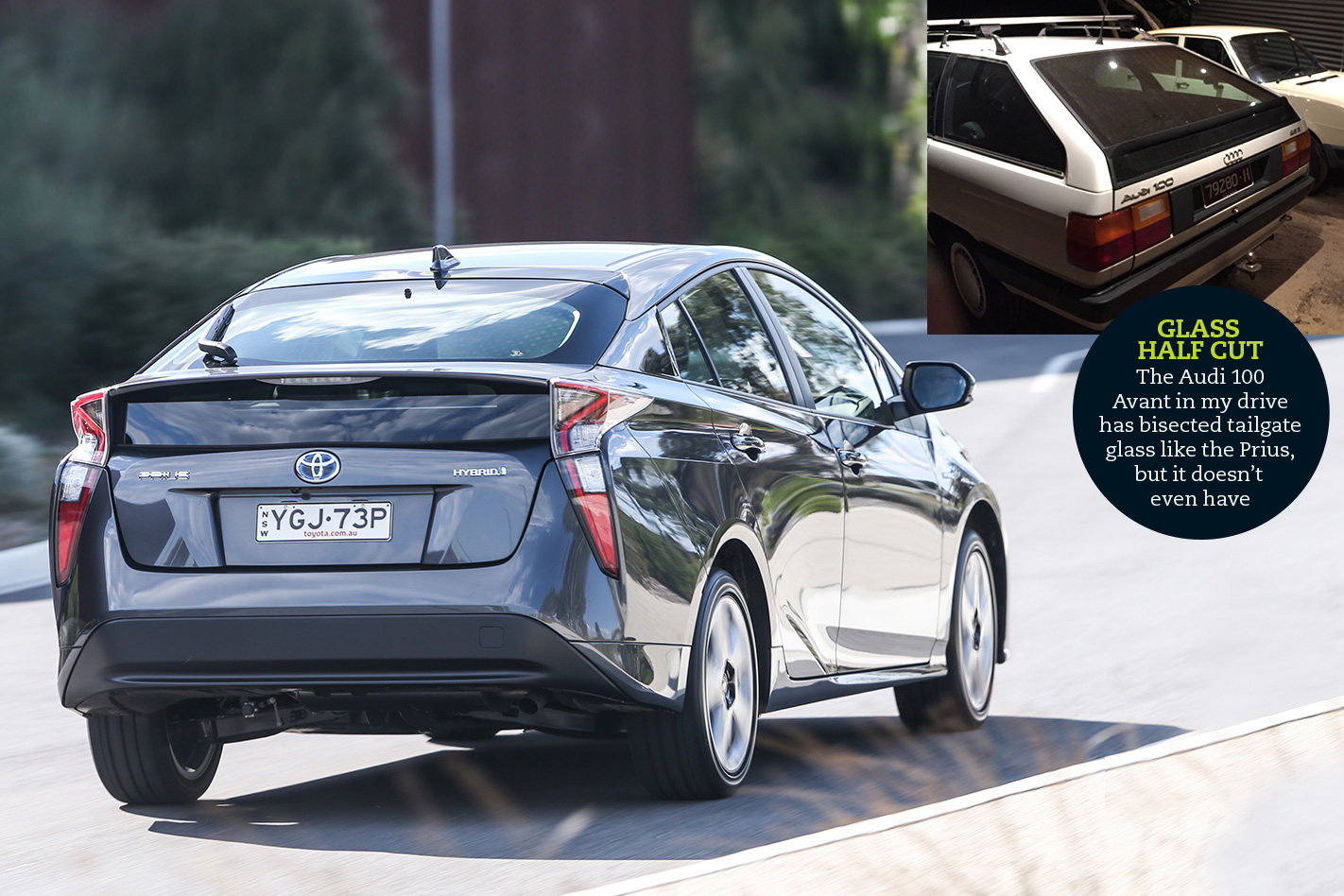
In the first month of getting to know YGJ-73P, I am struck by how soft and cosseting the sumptuous front seats are, amused by the bisected rear window, annoyed by the foot-operated park brake (I’ve stopped using it in protest – I guess if it rolls into something the styling might improve), pleased by the build quality and delighted by the economy. Likewise, the performance is ample and ride nicely absorbent. However the steering is a tad too low-geared and feel-free while the brakes are too snatchy and wooden in feel – a typical Toyota hybrid trait. Still leagues ahead of before though.
So things are falling into place for the Prius. This should be interesting.
Update 1: Tour of Duty
Hybrids only work in the city, right? Actually, Byron is finding an unlikely grand tourer in the Prius.
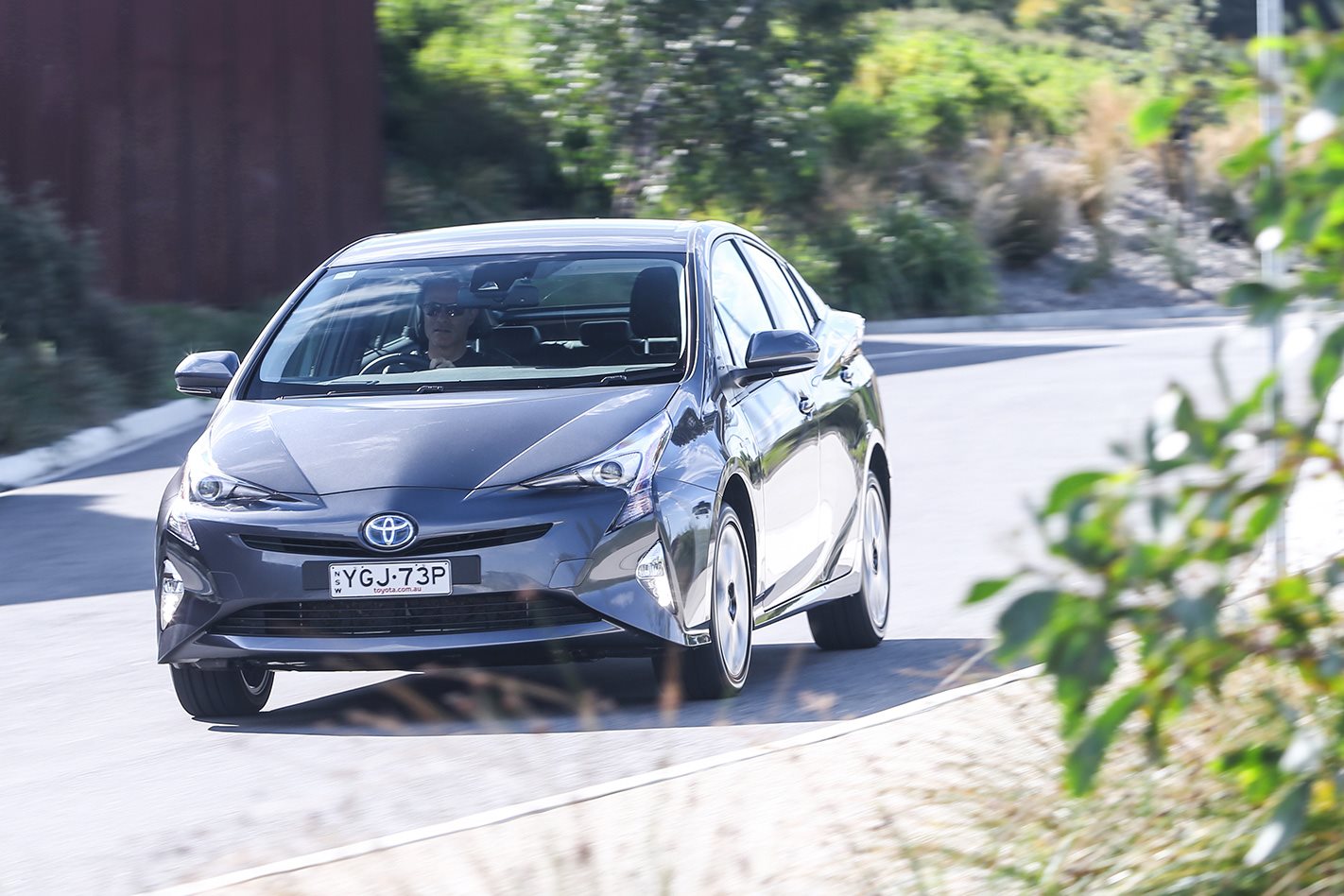
CONVENTIONAL wisdom dictates that series parallel petrol-electric hybrids like our Toyota Prius work best in inner-urban areas, where the battery-fed motor can more-often take over rather than merely assist the internal-combustion engine.
The thing is, we’re neither conventional nor particularly wise, as two sizeable intrastate trips, each taking in hundreds of kilometres, proved. One was work related. The other an extended public holiday getaway.
Our Prius’ 1.8-litre Atkinson Cycle four-cylinder engine (which refers to a combustion process that prioritises fuel economy over performance) was indeed working overtime, since there was only limited electric assistance during those long stints, mostly sitting at a safe 106km/h indicated, though occasionally hitting 118km/h, as one friendly policeman pointed out.
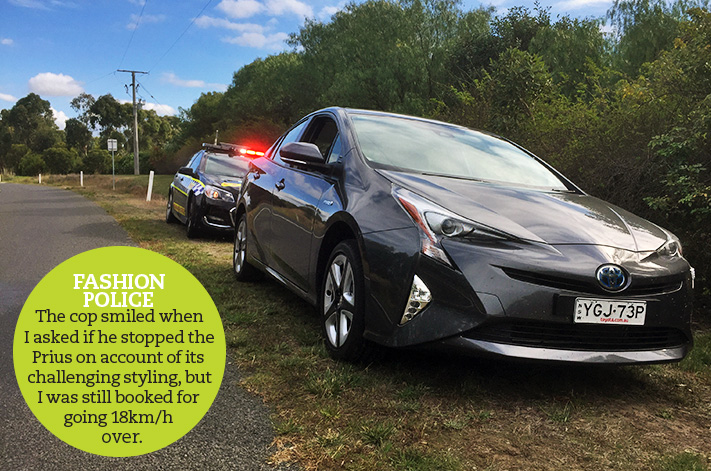
Besides copping a $300 fine and three points, the upshot was a jump in fuel consumption, from an outstanding 4.8 litres per 100km to a still-commendable 5.5L/100km average. Pretty good, actually, considering how packed-to-the-gunwales our ride has been this month.
Remarkably, the latest Toyota hybrid is more than agreeable out on the open highways. Much noise has been made about how much stronger and quieter the Mk4 Prius is over its raucous predecessors, but now there is evidence to back this up; even on the frugal-focused Bridgestone Turanza 215/45R17 tyres, the i-Tech feels planted and poised at speed in the wet. Road drone is subdued and wind rustle at cruise is pleasingly contained – helped no doubt by excellent aerodynamics.
More good news. The large front seats have a sumptuous look and feel, yet there is more than sufficient support even after a few hours.
Taller occupants will appreciate the extra amount of downward as well as rearward adjustment. And smart detailing abounds, including a passenger-side seat heater light so the driver knows if it’s been left on. Minor but useful. For the first time ever, the Toyota Prius i-Tech’s $45K premium pricing seems justified.
Downsides? Rear seat entry and egress isn’t made any easier by that sloping roof line and resulting small door aperture; the foot-operated park brake catches me out if somebody else has activated it; jutting dash extremities can snag kneecaps; the battery pack’s back cushion-sited fan is noisy; and rear vision is hampered two ways – first by that bisected hatch, and then by the lack of a wiper for the bottom pane, which excels only at collecting grime.
Still, as our country adventures revealed, Toyota’s petrol-electric hybrid is no longer a fish out of water away from the urban jungle. I’d even call it an unlikely grand tourer.
Junk in the trunk
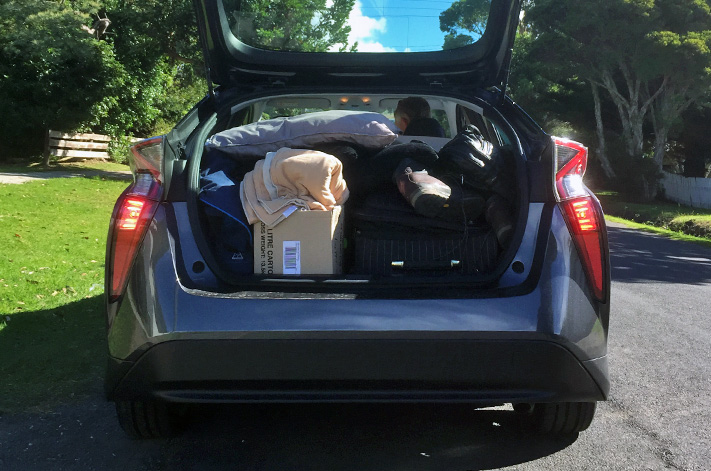
A smaller battery pack and related electrical gubbins means the Prius’s boot is more spacious than it might seem.
Rear seats folded, we crammed way more into the Prius than the picture below suggests, including a mountain bike, enough food and booze for six to eight people over five days, lots of clothes, bedding, one upright oil radiator, a VCR (we went retro with our entertainment) with about 25 associated tapes (where else can I find Barbara Stanwyck classics?), and — last but not least — our 13-year-old Labrador Retriever, Romy.
Update 2: Under the Cover of Piety
Our little Prius absolutely shatters stereotypes in this past month’s check in
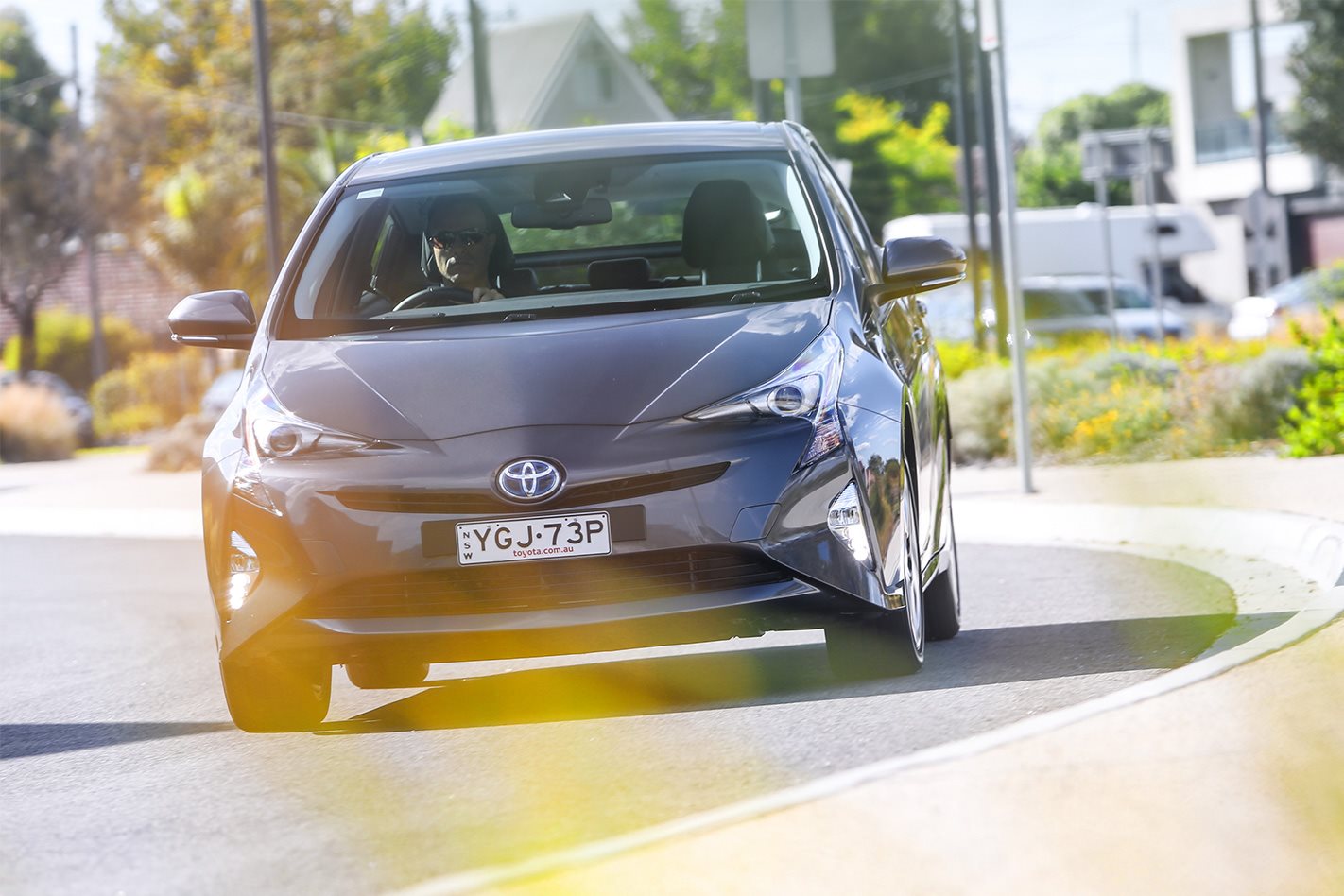
PIOUS. Enviro-wanker. Greenprius.
Okay, I made the last one up, but the first two are actual insults levelled at me, and even occasionally in relation to my Prius.
Well, you can add hoon too, to such not entirely unwarranted barbs. I am, after all, a cyclist and a vegetarian.
This month, in the middle of nowhere early one cold and dreary Sunday, the Toyota Prius and I bonded. Truly bonded. The very ribbon-like stretch of rural road was invitingly damp, bumpy and completely desolate for as far as the eye could see, so I went for it.
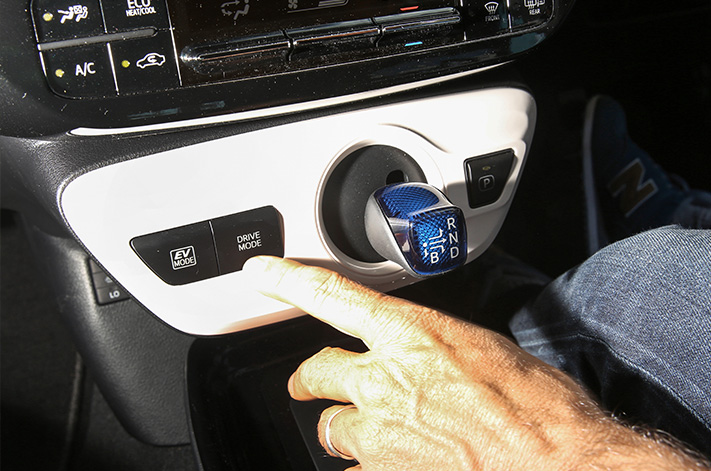
Hard, fast and furious, with the Sport Mode activated (oh, how comically horrible are the graphics!), the chassis’ response proved revelatory. At speed (and there’s plenty of it instantly if you’re willing to prod the pedal), the steering weights up nicely and reacts with a newfound sharpness. The front end tucks in naturally with pleasingly taut body control and little understeer. Actual fun. From a Toyota hybrid. Will wonders never cease?
Sure, the helm still feels artificial, there isn’t much driver involvement beyond pointing the wheel, and there’s no escaping some of that dreaded CVT-induced engine drone, but this gen Prius’s tidy handling, roadholding and ride comfort when pushed are totally unforeseen delights.
Underlining this was the hallowed company the Prius kept during that weekend away – my 1982 Alfa Romeo Alfasud Super. In convoy just because, the Italian model, which UK’s Car magazine dubbed the Car of the Seventies, showed just how far the Prius has progressed. While the Alfa’s incredible steering tactility and delicate control still beguile four decades on, the hybrid is like a 787 Dreamliner to the 1.5-litre boxer four’s Lockheed Constellation – slow, noisy and smelly.
If only the Toyota could infuse something approaching the Alfa’s visual charm. Admittedly, the profile and rear have grown on me and I even find delight in seeing the snaking LED tail-light strip stay on as I walk away at night. But its wilfully divisive nosecone must surely keep prospective buyers away.
Which is a shame because it is turning into a dynamic, enjoyable and – of course – extremely economical five-seater with ample boot space and practicality to go with its green credentials.
If detractors could see just how expertly the Prius can dance under duress, they might be less liberal with their labelling. Can you imagine how shocked some owners would be at the shenanigans their sanctimonious hybrid is capable of?
Kanpai, Toyota!
Update 3: Conclusion
After fourth months with the Prius, Byron has found real depth of ability under that divisive exterior
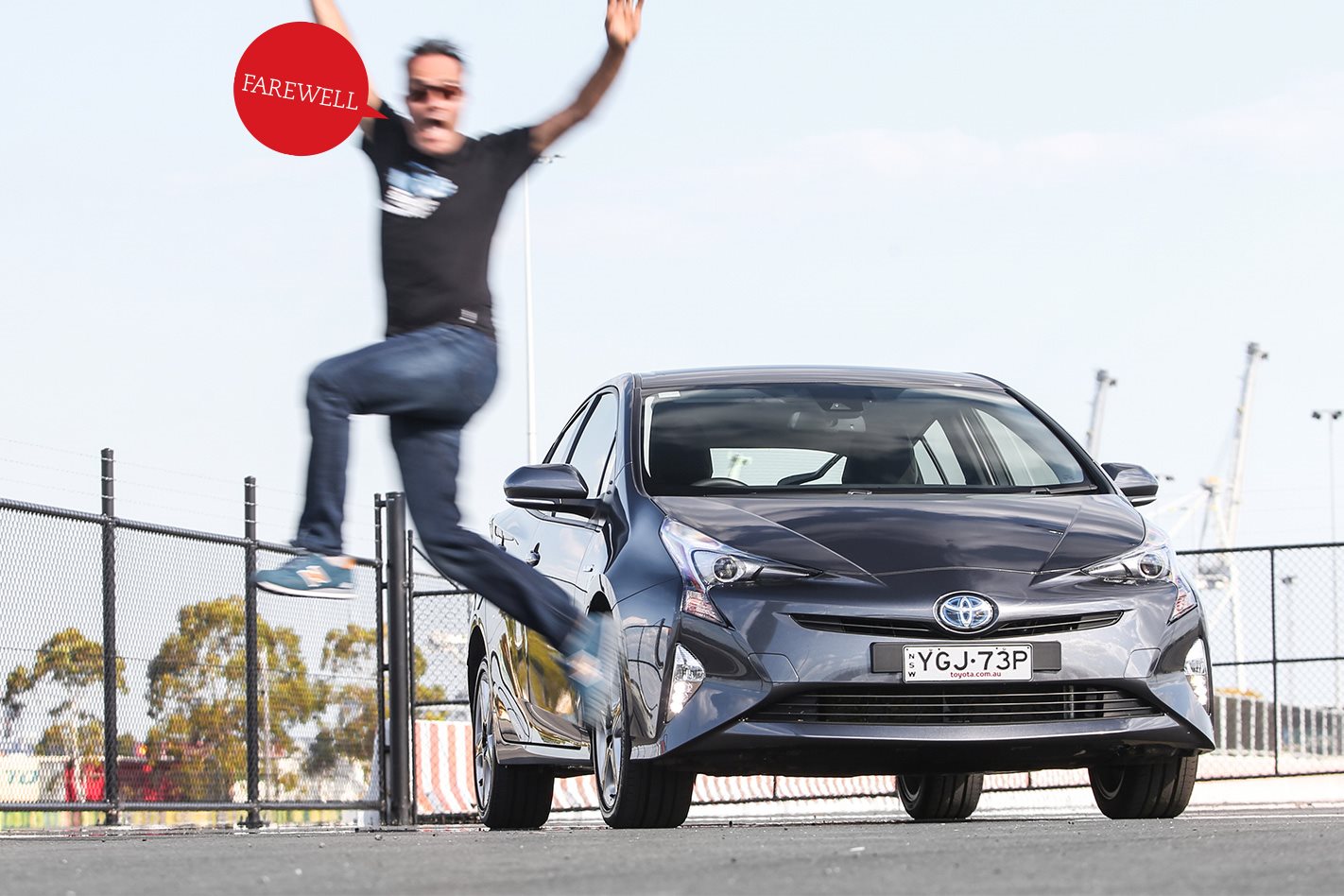
FOUR months in and nearly seven thousand kilometres on, it’s time for our Toyota Prius to check out. And, pun aside, what a shock this petrol-electric hybrid has been.
Intriguingly, YGJ-73P has had to live alongside an actual electric vehicle, my partner’s 2012 Nissan Leaf – a car with true zero tailpipe emissions. I wanted to ascertain how a petrol-electric series-parallel hybrid would seem against a real EV.
Ultimately, regarding the Prius as electric is like expecting an emu to fly.
Neither offers much range. The paltry 2km (at under 37km/h) in the Toyota Prius’ case barely registers, except in slow and heavy traffic, and when the internal-combustion engine does flare up, any EV smugness turns to smog.
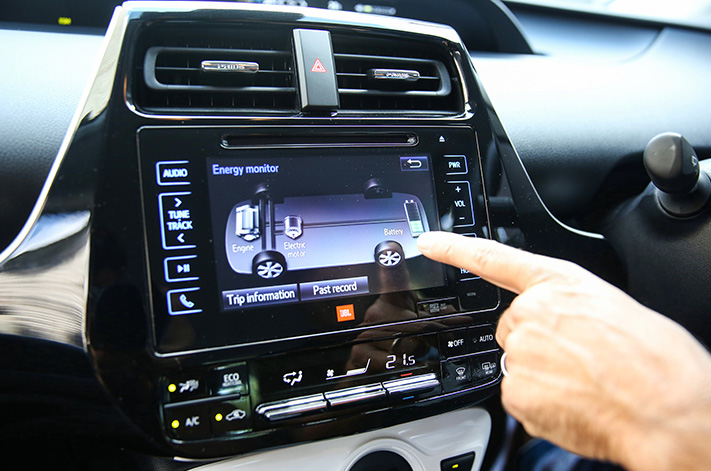
Far better then to focus on how the Toyota’s electricity enhances the experience instead. Such as with added acceleration; excellent real-world fuel consumption (4.8L/100km embarrasses most diesels); and regenerative braking that allows the driver to minimise efficiency-destroying and/or jerky braking with just a flick of the transmission lever across from ‘D’ to ‘B’. Brilliant.
However, while every Prius has managed all this since the 1997 original, where the box-fresh fourth-gen leaps ahead is in how much more driver orientated it is.
While not especially tactile, the steering is now eager and measured in its response; fast tight turns reveal a taut and controlled chassis that points precisely where directed; and the struts and wishbone suspension set-up soaks up bumps big and small like no previous iteration could. Keen drivers will find something here to dig.
And finally, there is the comfort and refinement. Larger inside than its diminutive hatchback dimensions suggest, the latest Prius offers room, practicality and peace akin to a midsizer, complete with a usefully long and deep boot.
Except for lower-than-normal rear-door apertures due to the sloping roofline, this is proper family car fare.
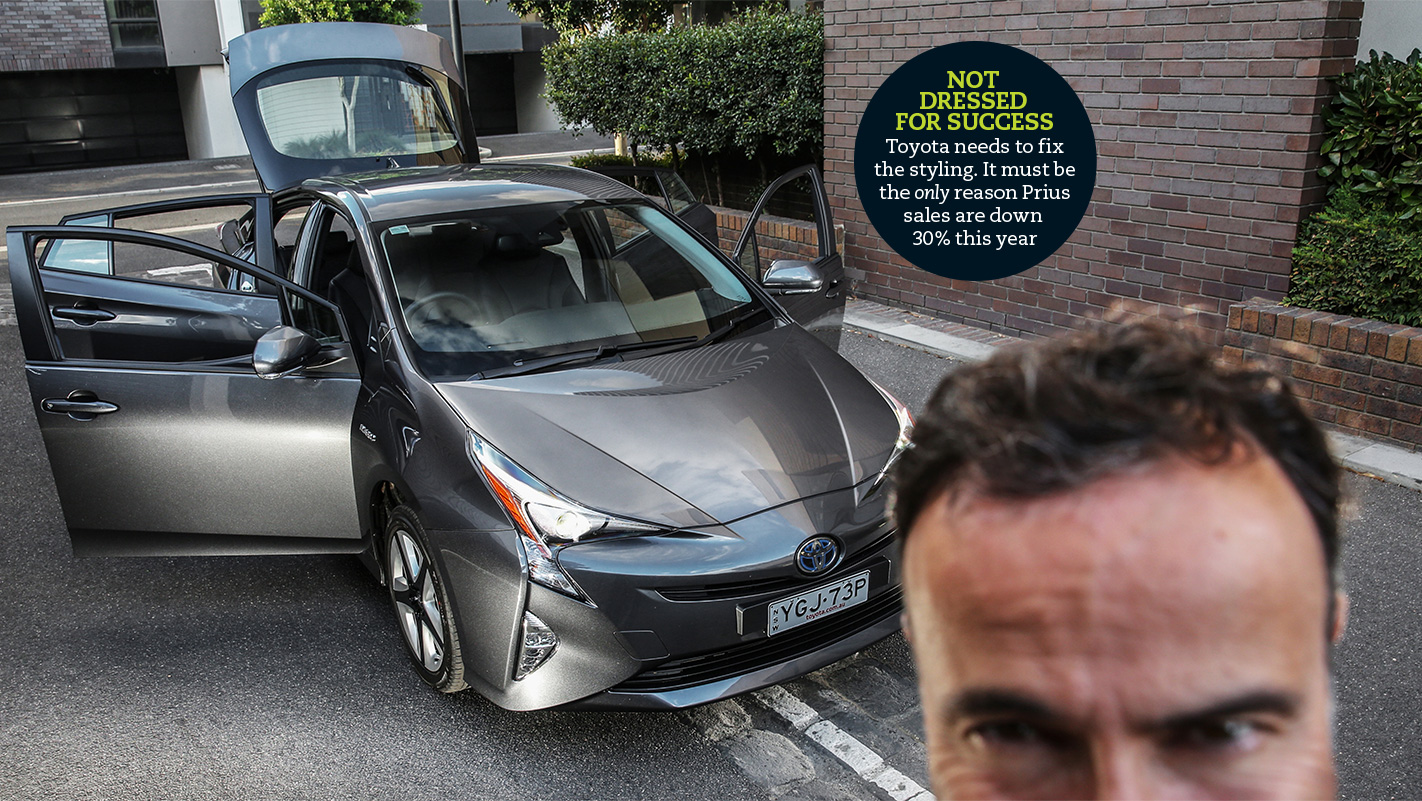
Disappointments? Few really, like the vision-impeding and filth-collecting bisected rear glass, busy instrument graphics, and fiddly park-brake pedal. But all this pales against the car’s crinkly styling, as though somebody slept on the original paper drawings. Pretty she ain’t.
Massively improved nonetheless, the latest Toyota hybrid is an interesting, enjoyable and effective alternative to any number of hatchbacks, sedans or SUVs under $50K.
One day soon fuel prices will rocket and the Prius’ time will arrive. When that happens rest assured that the car is finally ready.
But why wait until then to enjoy one?
That panic-inducing moment when you pat your pockets and realise your car keys are missing may become a thing of the past, thanks to automotive component juggernaut Bosch.
Developed by the German company’s Australian engineers, the Perfectly Keyless app turns any compatible smartphone into a key, allowing users to remotely unlock and lock cars without needing to touch their phone – or carry a set of keys.
According to Bosch, the app also allows owners to authorise other people to use their car, provided they also have the Perfectly Keyless app installed. Useful not only for parents with kids of driving age or people loaning their car to friends, but also to ride-sharing companies and corporate fleets.
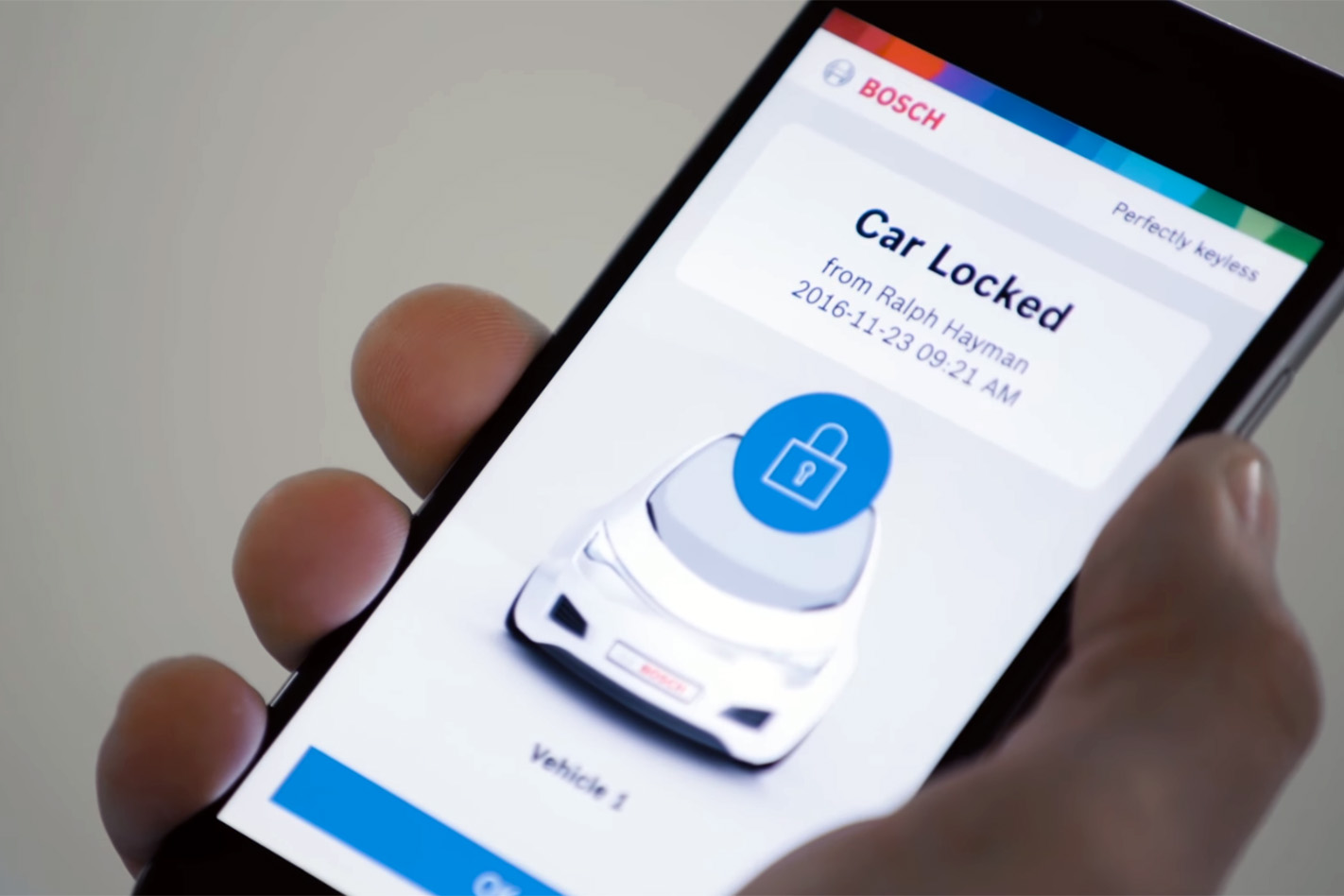
However, the system does rely in part on cars being designed with compatibility in mind. Proximity sensors and a keyless entry control unit need to be fitted to the car, so it’s not necessarily a system that can be easily retrofitted to existing vehicles.
But the convenience implications are huge. Most Australians rarely leave the home without their smartphone, and eliminating the need to carry a set of keys will be a boon for those looking to declutter their lives.
However, the most obvious question remains – what if your phone battery goes flat?
There’s time for Bosch to develop an answer. As its Australian division, which took the lead on the Perfectly Keyless system, readies it for volume production, there’s still two years before it’s set to reach the market. You’ll have to keep your car keys in your pockets until then.
Fiat has introduced a new special edition 500 model in celebration of the iconic three-door hatchback’s 60th anniversary.
The Fiat 500 Anniversario Edition features a series of aesthetic touches that hark back to 1957 when the revolutionary new small car first rolled off the Turin production line.
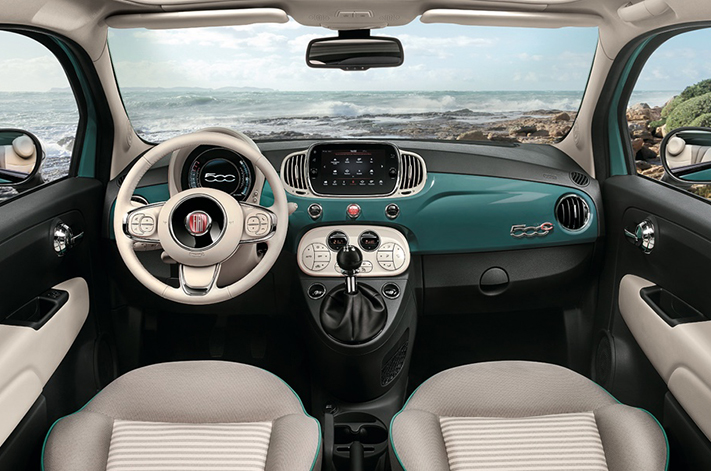
These include two new retro inspired colours, Riviera Green and Sicilia Orange, and interior touches that include horizontally striped fabrics with piping and embroidered 500 logos.
Exterior details include chrome accents on the bonnet and mirror caps, vintage Fiat badging, an “Anniversario” logo on the tailgate, and 16-inch vintage style alloy rims.
“The Fiat 500 Anniversario Edition offers a glimpse into the iconic heritage of the Fiat brand and pays tribute to the vehicle which launched 60 years ago,” said Fulvio Antonelli, head of Fiat Brand Australia.
“The Anniversario is a modern Italian-made hatchback that represents a reworking of the vehicle’s unmistakable design signature.”
The Fiat 500 Anniversario Edition will be based on the Lounge model with a 1.2-litre four-cylinder engine and a choice of five-speed manual or six-speed automatic transmissions.
Pricing will be announced closer to its arrival in the beginning of October, but expect it to be a little north of the Lounge, which retails for $19,990 and $21,490 for the manual and auto respectively.
Anyone interested in securing one of the 60 cars can register their interest at www.fiat.com.au/fiat500-anniversario
IF YOU are having trouble breathing right now because of the excitement, we fully understand. After all, it’s not often that a pukka Jaguar XJ220 comes up for sale in Australia – a market that never officially received Jag’s 1990s supercar.
Built between 1992 and 1994, the XJ220 was Jaguar’s halo model, and thanks to sleek aero-centric bodywork was capable of reaching 350km/h – making it the fastest production car in the world for a short period of time before the McLaren F1 came along.
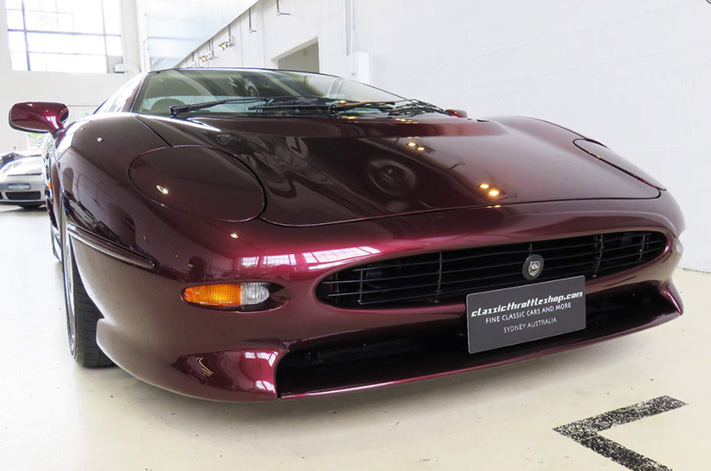
Only 277 XJ220s were ever built. Of those, a scant 70 rolled off the production line in right-hand drive. When the car launched 25 years ago they cost a whopping $470,000. Adjusted for inflation, that’s roughly $795,000 in today’s money.
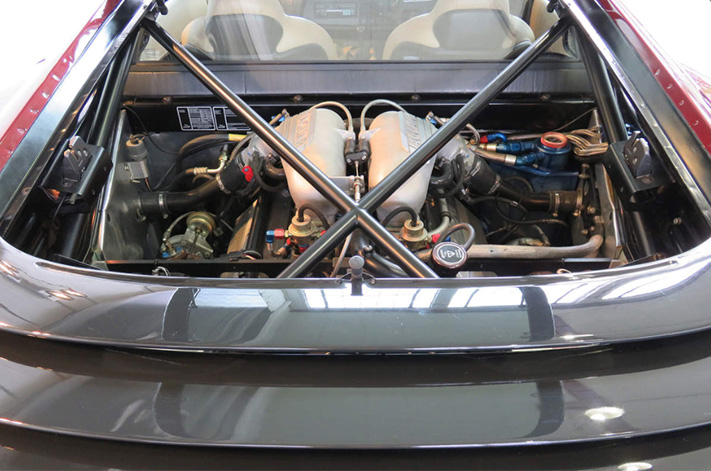
Remarkably (or perhaps, tragically) this car has only travelled 976km. While that makes it possibly one of the lowest-mileage XJ220s in the world, there’s a sense of sadness for such a magnificent car to spend much of its 25 year life tucked away in a garage.
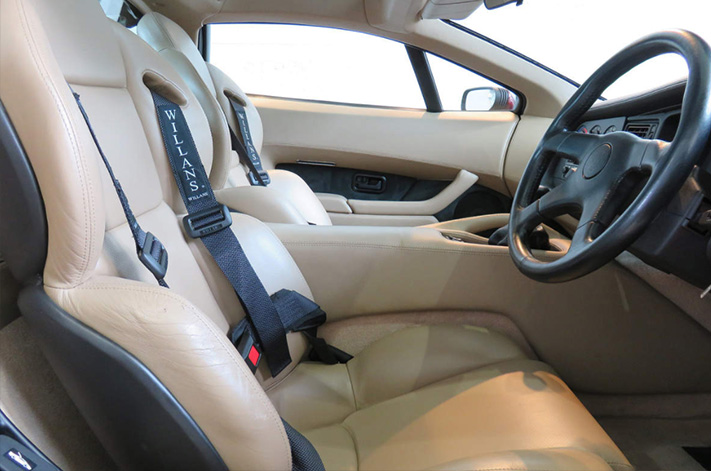
The car is being sold with a set of leather-bound, silver gilded paperback manuals, along with both original keys.
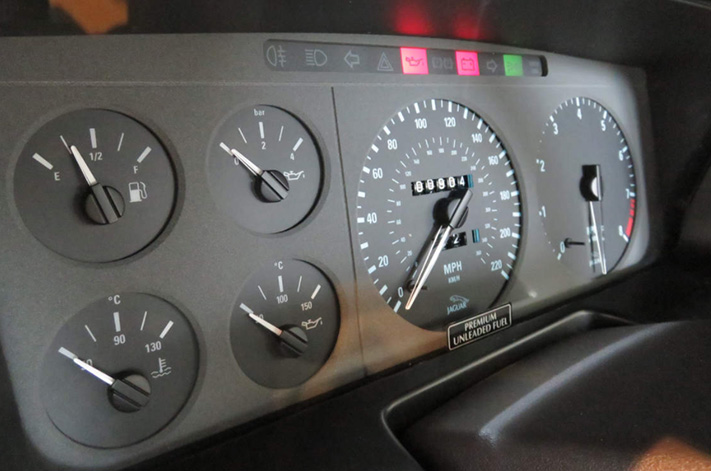
It’s unclear how many XJ220s have migrated to Australia. However, a silver model was recently spotted in Melbourne lurking near the famous Duttons Garage.
Ever had that sphincter-clenching moment when you’re on the way out the door and you realise you haven’t charged up your phone and you JUST KNOW the five percent remaining charge won’t last long enough to see you through to the next available wall outlet?
Terrifying indeed, but what if you could instantly inject a few more kilojoules of energy into your phone by dousing it in petrol? Handy, right?
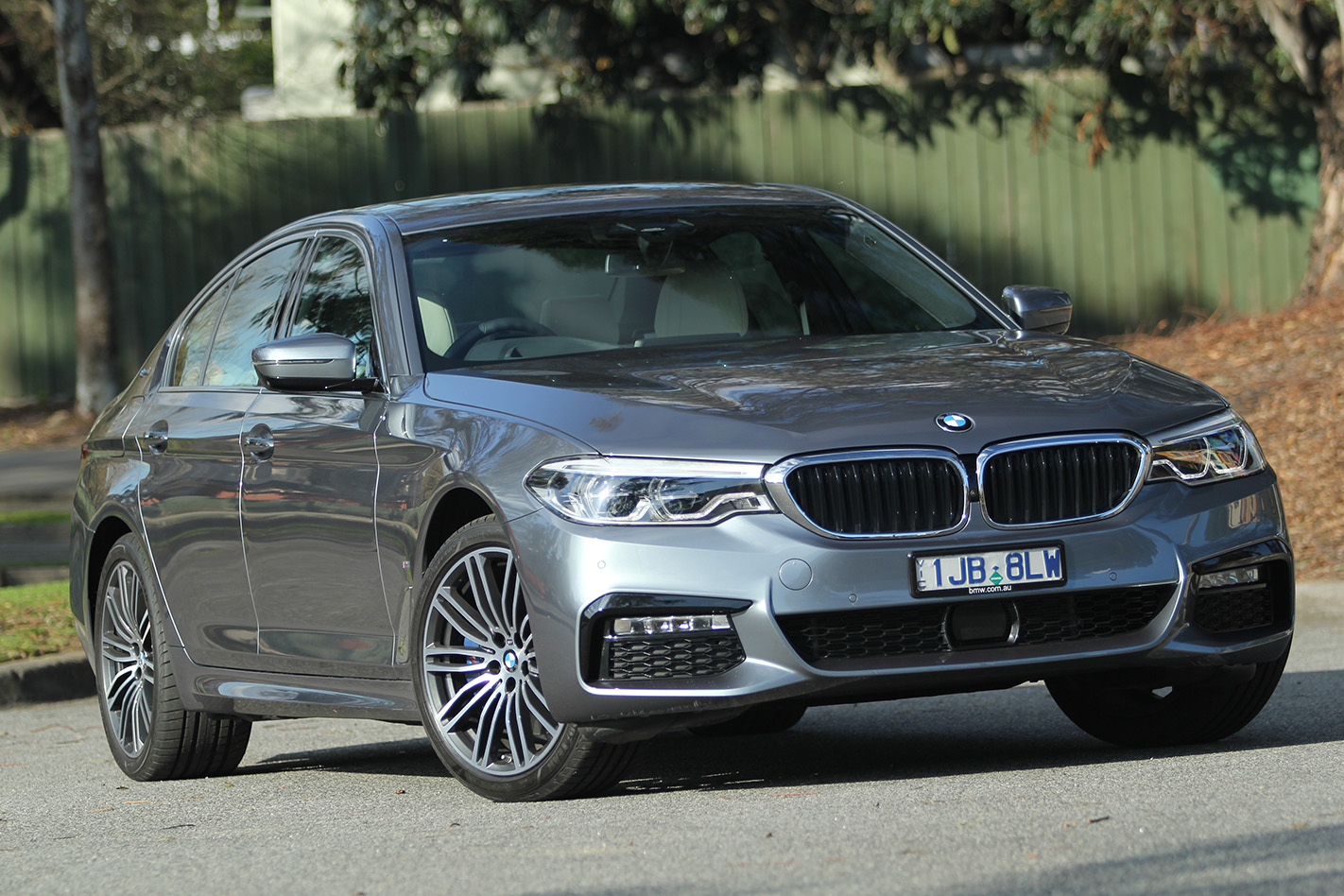
After all, with the ability to both charge up from a wall outlet AND draw power from a conventional petrol-powered engine when the battery simply isn’t big enough – or power points aren’t available – a plug-in hybrid is meant to be the theoretical “best of both worlds” device.
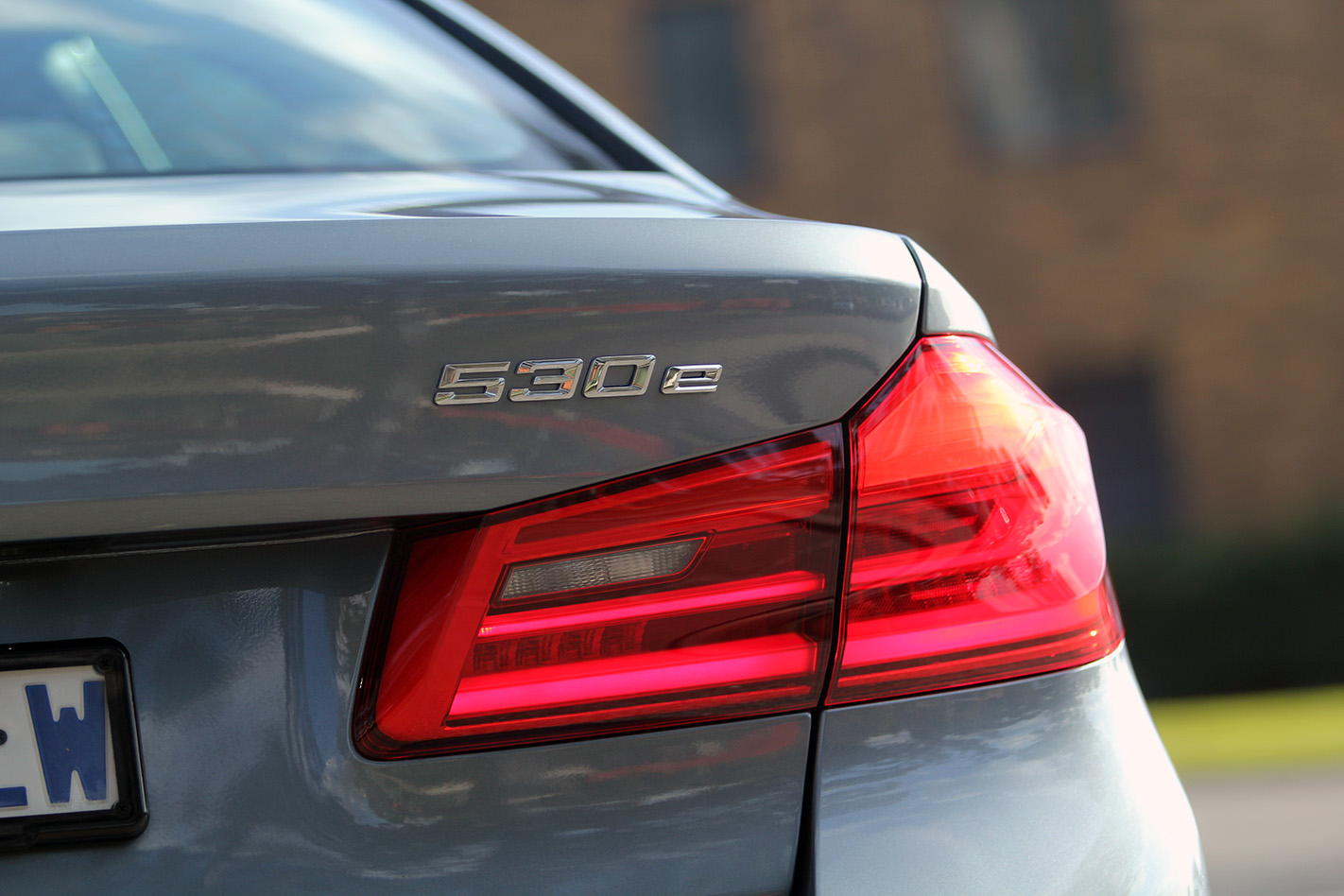
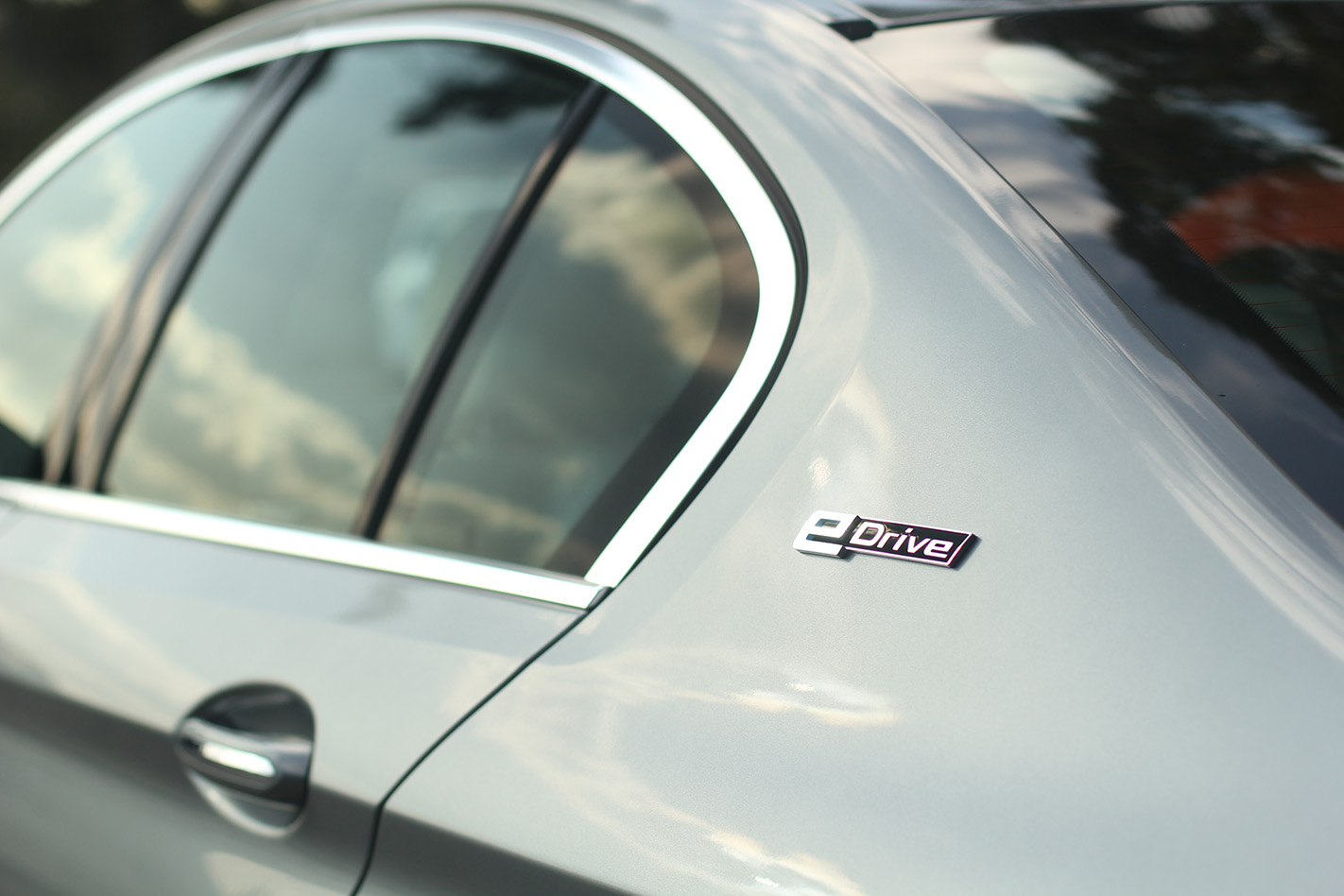
Is it though? We spent a week behind the wheel of BMW’s 530e iPerformance plug-in with the goal of running it on electric power as much as possible. Granted, that’s not really the intended mode of operation for BMW’s battery-enhanced 5 Series – the small capacity of its 9.2kWh lithium-ion battery coupled with low EV-only outputs are clues that the German manufacturer expects most owners to operate it as a conventional hybrid most of the time.
NUMBERS GAME
Looking at the spec sheet, BMW claims the 530e can cover up to 50km in all-electric mode. That’s optimistic, and a number that comes with several caveats. If you’re okay with running sans heater, air conditioner, headlamps and pretty much anything electrically-powered that isn’t the car’s 70kW drive motor, you may get close to that number.
Fat chance of choosing that path in the dark, frosty heart of a Melbourne winter, though: I’ll take a range reduction in favour of a warm cabin, thank you.
THE REAL WORLD
Day one in the 530e was a wash. Picked up from BMW with a full battery, it was then driven 42km from Wheels HQ to the airport. The battery ran out of juice about three-quarters of the way there, forcing us to burn precious hydrocarbons in order to make our flight. Damn.
Once at the airport, one of the bigger issues with EV ownership presented itself: the lack of charging infrastructure in Australia. Unless you own a Tesla and can afford to park at Qantas Valet, you’re fresh out of luck if you want to juice up your EV at Melbourne’s principal air transport hub. Battery still empty upon our return to Melbourne, we sent a few more kilograms of CO2 into the atmosphere on the 41km drive home.
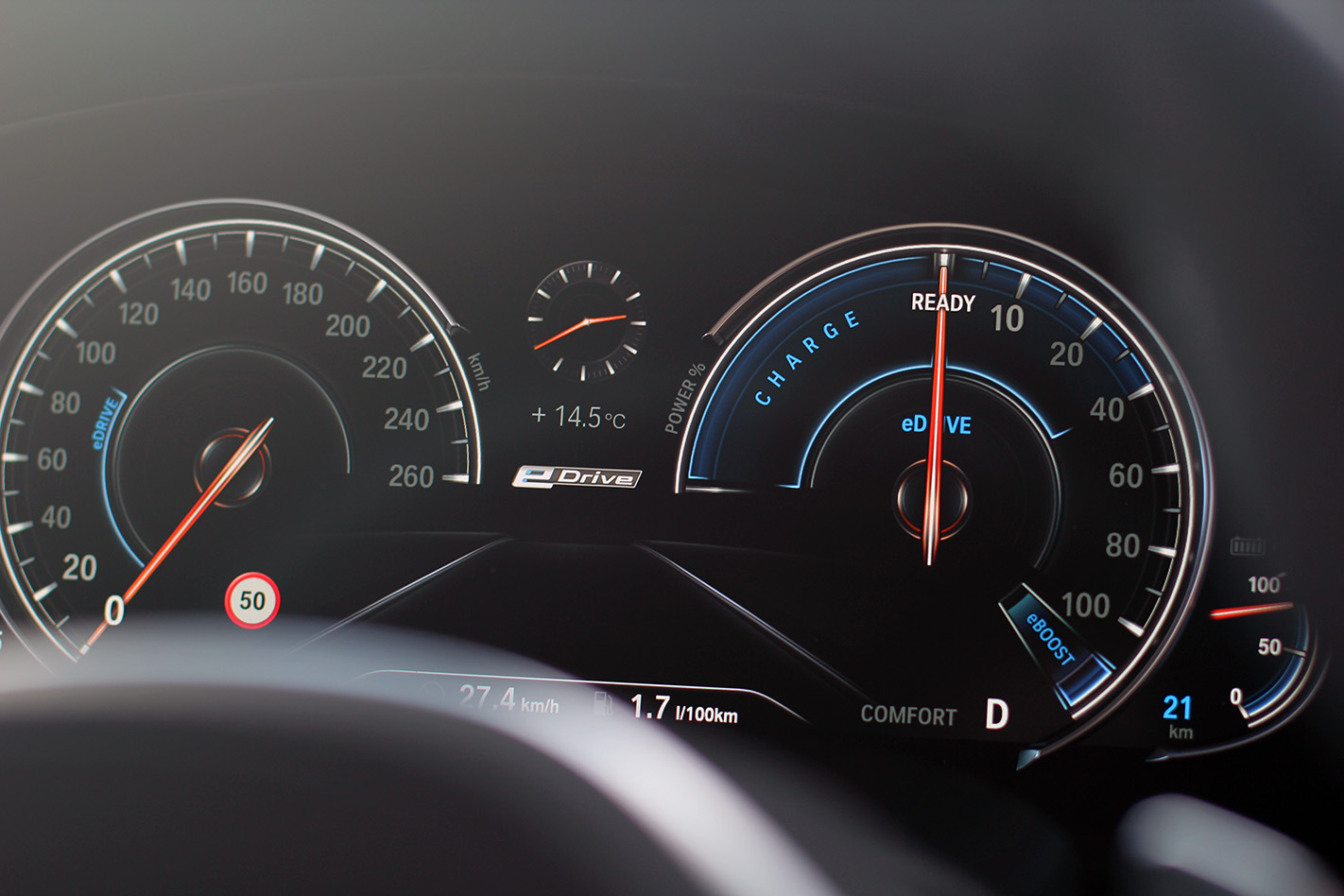
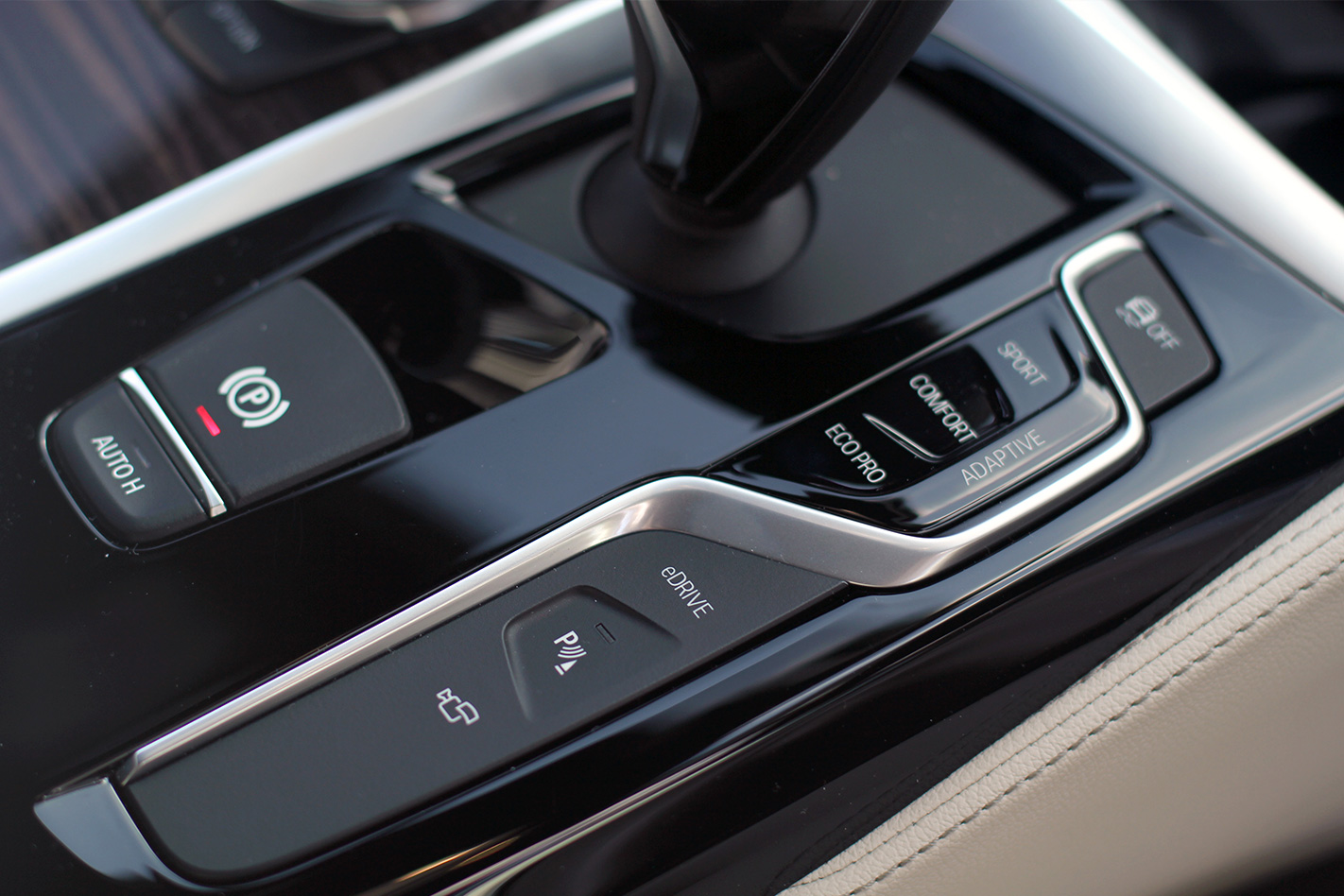
Helping the 530e’s cause is its ability to pre-heat the cabin ahead of departure while still plugged into mains power, as long as you remember to programme the time you intend to leave before putting it on charge.
The advantage of that is twofold – not only do you get to hop straight into a toasty warm car, but you also don’t have to watch your range melt away as precious battery power is consumed by the heater. In winter, it’s one of the 530e’s best features.
Or so we thought. Stop-start traffic in the late afternoon must flow less smoothly than in the morning, and the constant acceleration/deceleration cycle saps power at a greater rate than when cruising at a more consistent speed, even with the energy recuperation provided by regenerative braking. We were two kilometres shy of home base when the battery gave up and the petrol engine kicked in.
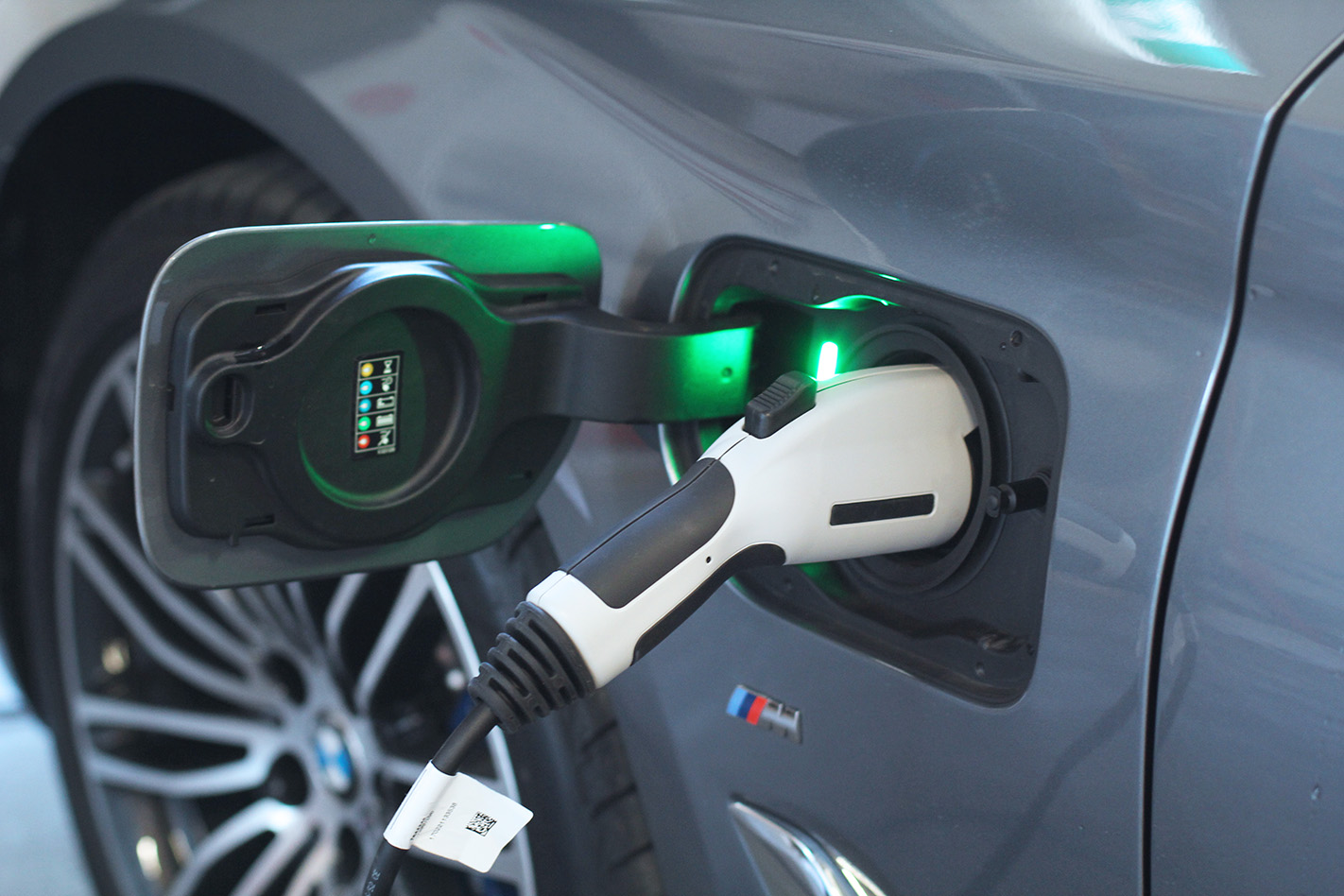
At least the drive home could be done without worrying about conserving range, and the four hours needed to take the battery from empty to 80 percent (bank on six hours for a full charge) is easily compatible with the workday cycle.
But given we were driving less than the average commute distance, having to top up the battery at the workplace was a little bit of a letdown. After all, not everyone will have the luxury of tapping into powerpoints at their workplace. Paying a visit to a friend across town also had us with the charge cable in hand, sheepishly asking to borrow some volts.
A wireless charging capability will be available as an option from next year, but again there’s an infrastructure issue. Unless it’s your own garage or driveway, don’t count on there being many inductive loops for you to park your 530e over.
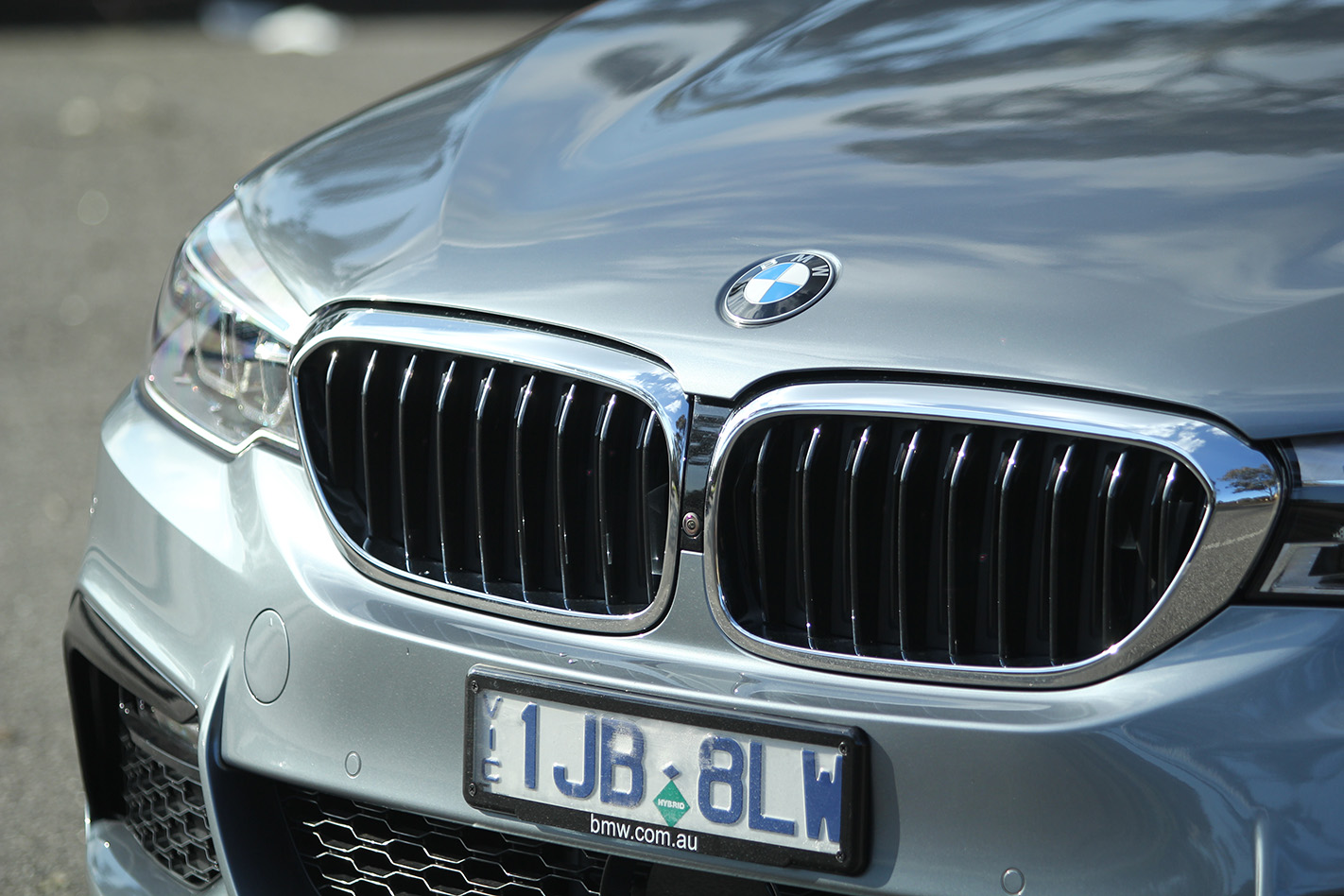
However BMW needs to work on the 530e’s brake feel. Many manufacturers struggle with giving their hybrids a smooth and progressive brake pedal, thanks to having to integrate regenerative braking with conventional mechanical brakes. However the 530e’s mushy pedal – which only seems to get softer the further you press it – is well below par. We often found ourselves coming to a halt much closer to cars in front simply because it was hard to gauge how much pedal pressure was needed.
There are other compromises too. With only the 70kW/250Nm electric motor in play the 530e’s performance is best described as ‘borderline adequate’. Fine for commuting, especially with peak torque being available from the get-go, but a little short of breath on highways.
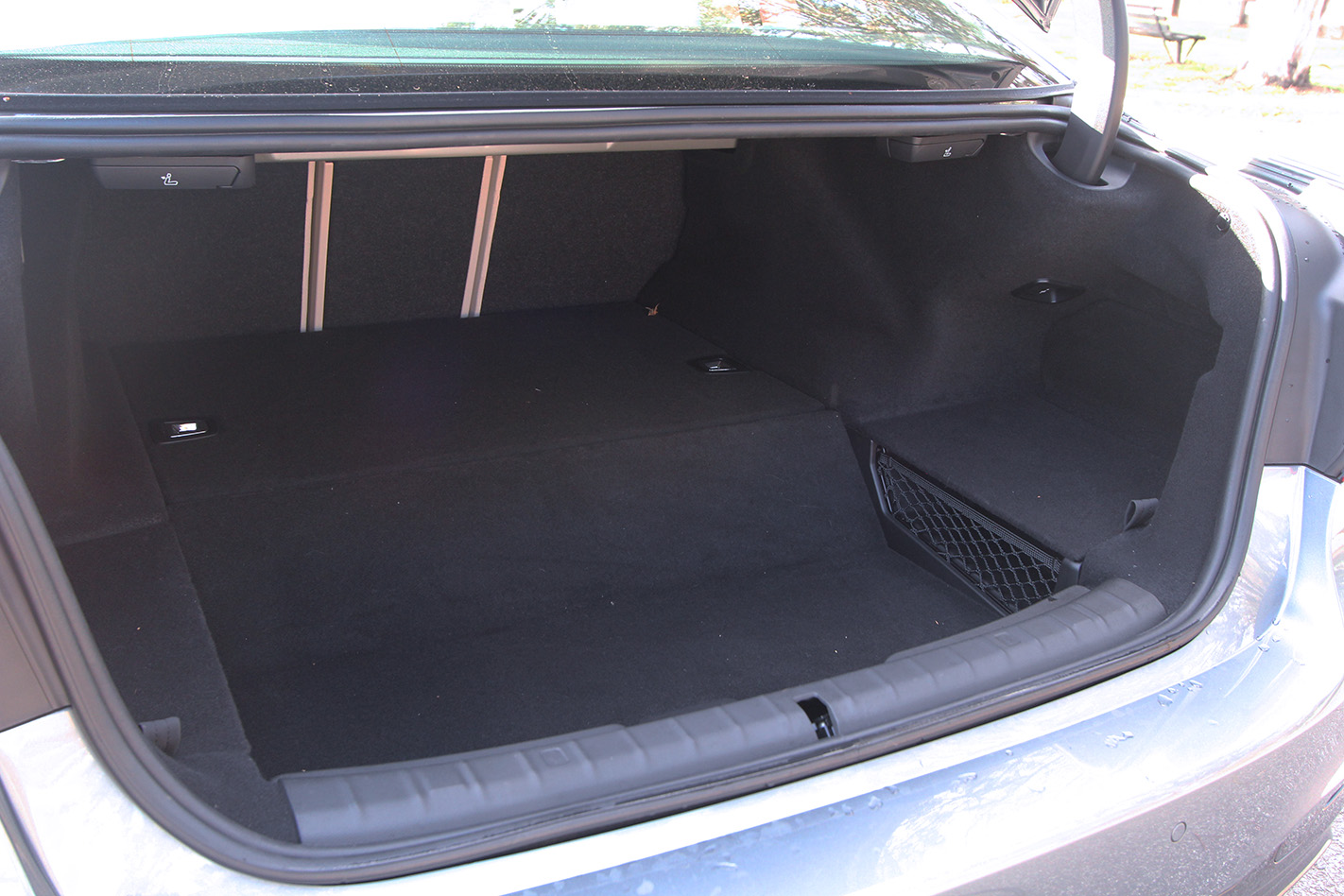
A significantly shrunken boot capacity is another 530e-specific handicap.
Of course, that’s the 530e’s “killer app” right there – the ability to spend most of its time under electric power, with the option of petrol power whenever you should want or need it. The only problem is that even during what we considered to be a modest amount of motoring we were forced to revert to fossil fuels when we didn’t want to.
If BMW were able to double the battery capacity, living a life largely independent of the petrol price cycle would be far more achievable. Until then, better keep that charging cable within easy reach.
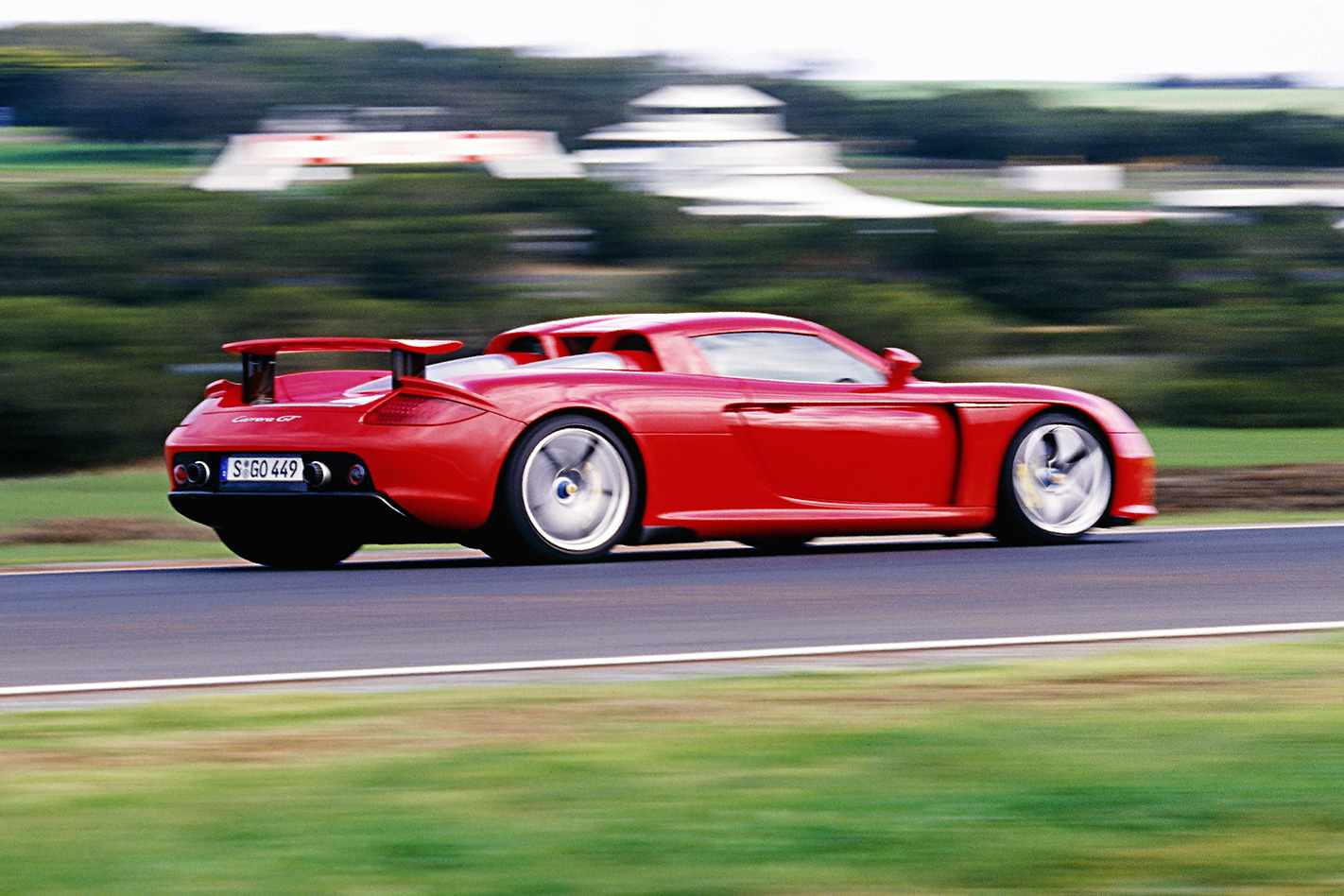
Porsche’s Carrera GT is the finest, fastest road car in the world. Need convincing? Then look at these nerdy numbers: at Phillip Island’s GP circuit, a V8 Supercar reaches 285km/h – with 463kW, 1355kg and sticky slicks.
This article first published in MOTOR November 2004.
This Carrera GT has less power, more weight and runs treaded road tyres. And it just hit 280km/h with a passenger! The super-fast Porsche 911 GT3 RS that blitzed the road racers over the previous pages cracks ‘just’ 242km/h. Welcome to the supercar club.
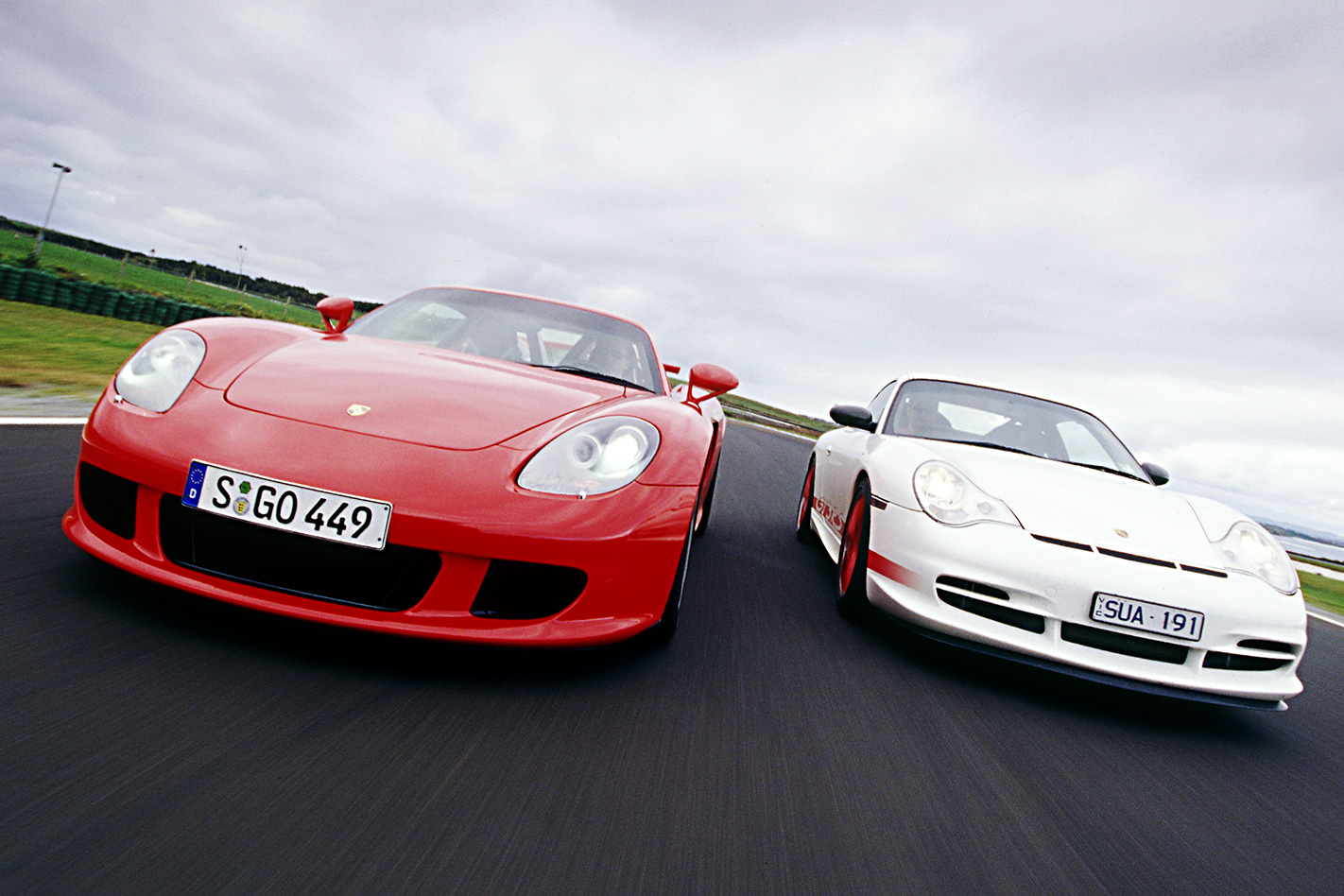
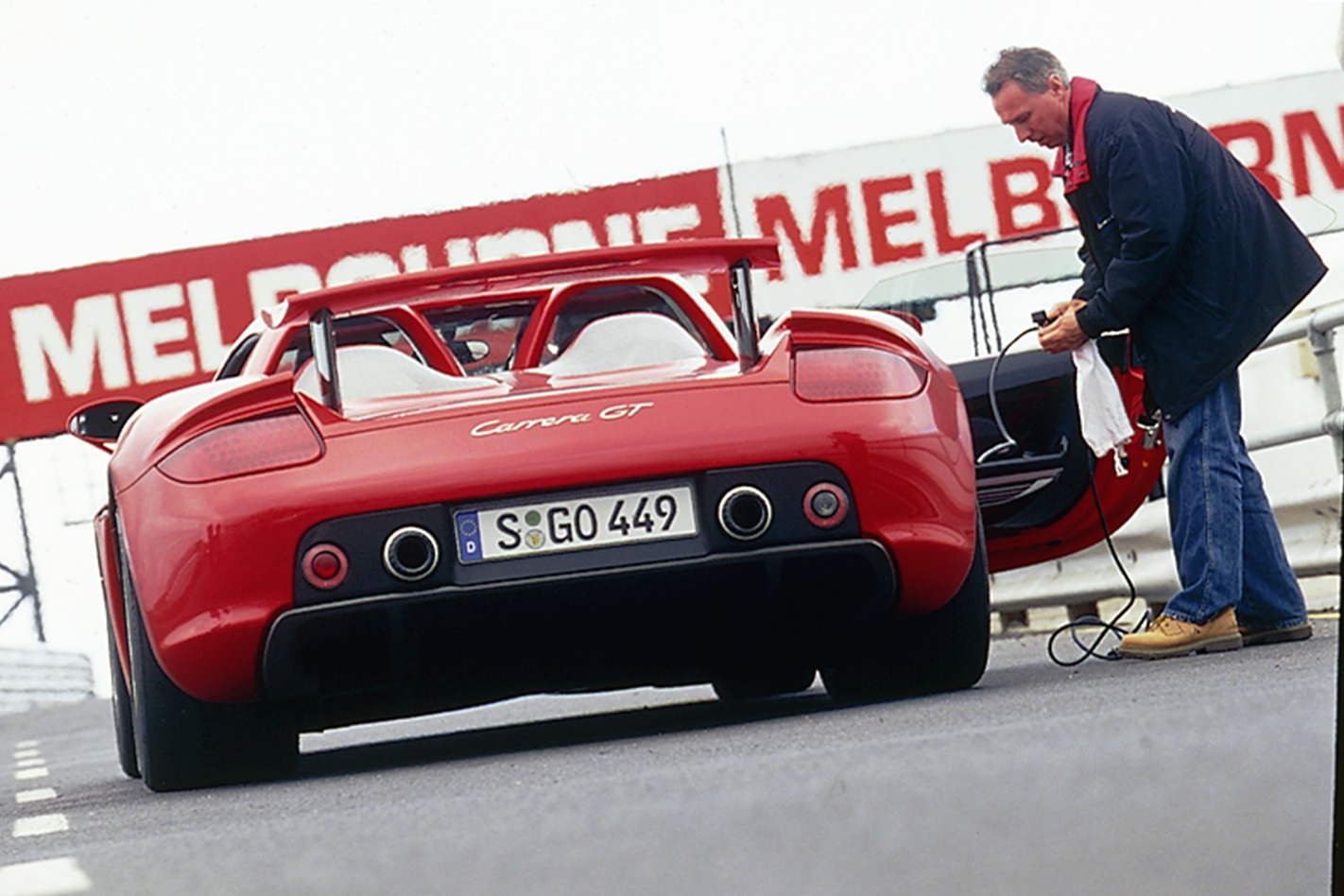
Job description number one was meeting the press for a few intimate hot laps of Phillip Island GP Circuit. What else would you do with a rare, super-priced supercar? Not much else, it seems, given that the GT only comes in left-hand drive; it’s a no-go for our public roads. The two sold to Aussies will remain on Euro soil.
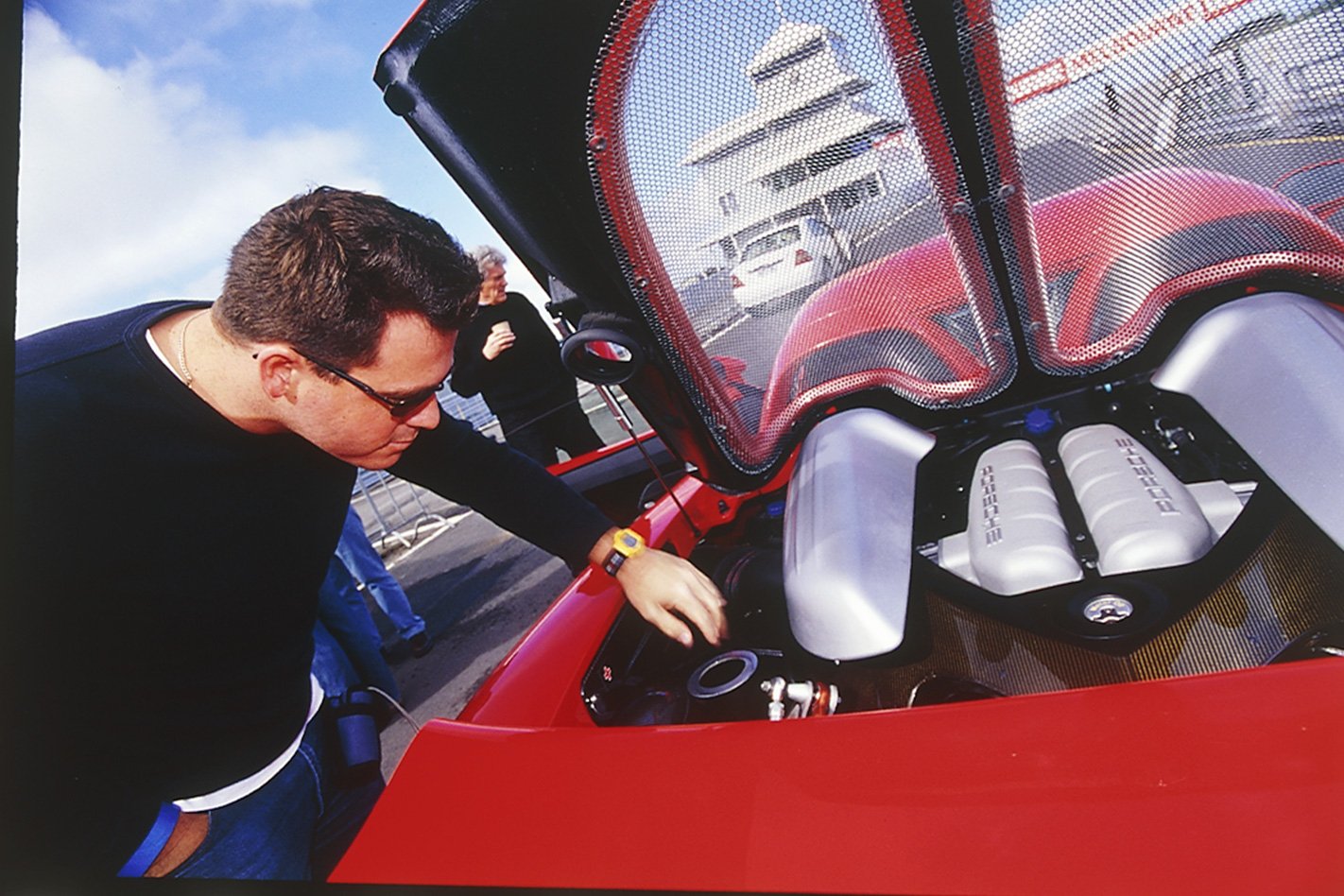
As it idles in PI’s pit lane, compared to the 911, the Carrera GT looks flat and wide, like a stepped-on 911. The large but light carbon-fibre door swings open with the resistance of a fly-screen to reveal what is a relatively small aperture, not much larger or easier to ingress than an Exige.
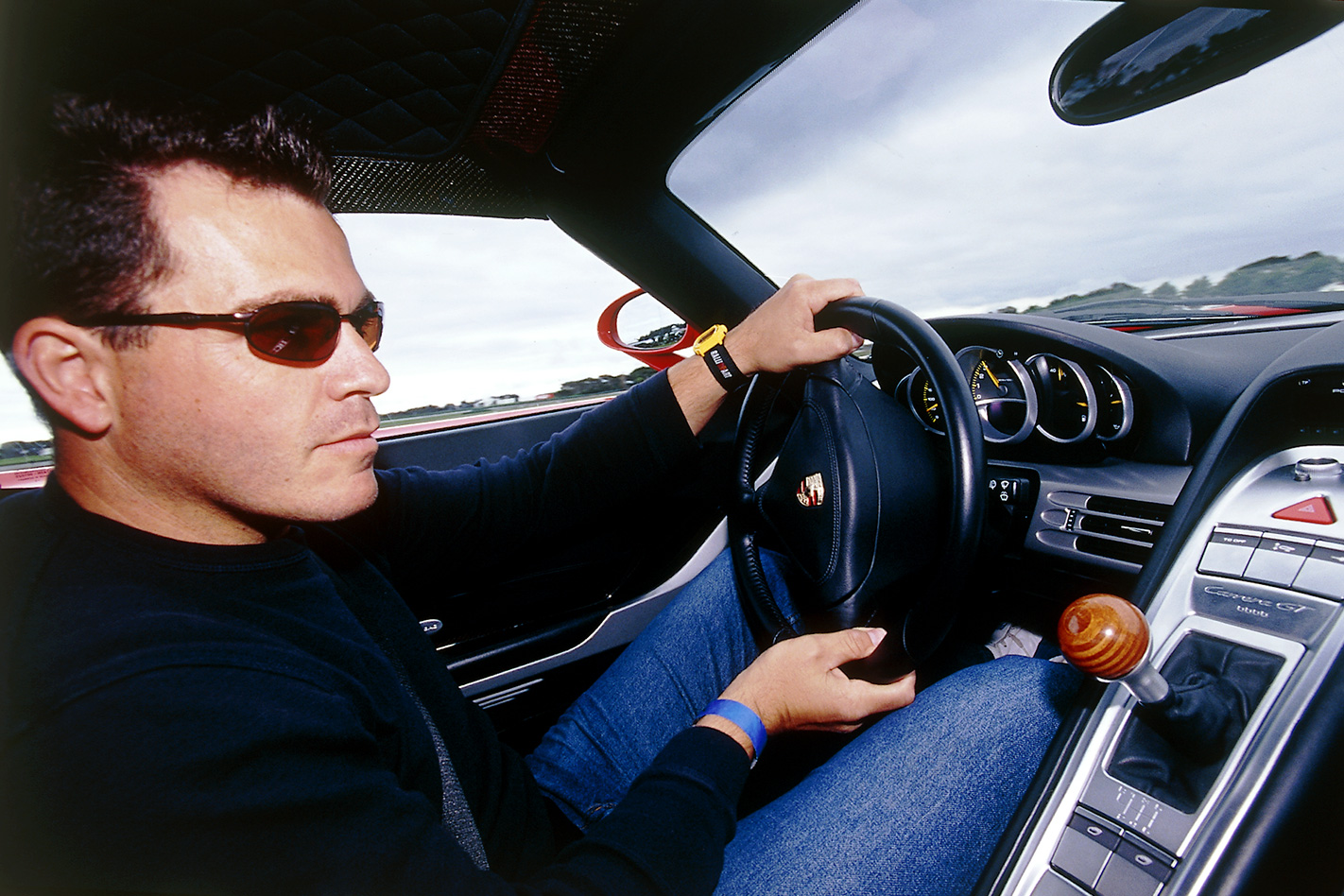
The steering wheel, like the seats, is manually adjustable only for reach, but perfectly sized and placed, with the oddly wooden shifter just a wrist twist away.
With death threats and multiple resignations ready if one of us binned Porsche’s baby, an unfamiliar left-hand twist of the key, stirs the V10 for half a second before it whines into life. From its 950rpm idle, the brush of the accelerator unleashes a rush of violence and a r-r-r-r-mmmm! That’s 7000rpm!
Then the passenger door opens and in jumps Porsche Carrera Cup pilot Alex Davison to ride shotgun and chaperone. Which is kinda like having Carmen Electra over at your place with a bottle of scotch, and Dennis Rodman is sitting in the corner with arms crossed. Damn.
Still, for a million bucks we’d probably be a little over-cautious too, this being just one of 1500 Carrera GTs planned for production over the next three years. Davison suggests, a tad condescendingly, that I shouldn’t bother trying to heel-and-toe, it’s too hard.
There is one driving trick, though, that came with plenty of warning: the GT’s tiny twin-plate carbon clutch is a right bastard when combined with the V10’s lack of inertia – stalling is commonplace. It’s better to ease off the clutch without touching the accelerator; revs increase automatically and it crawls away with aplomb. So far, so easy.
To get the full rush, once clear of the pit lane, we slow to 5km/h in first gear and absolutely nail the throttle. This, as we discover, is not the best method of acceleration. Instantly, a ferocious explosion erupts from just behind our heads with the speed, sound and cutting intensity of a dentist’s drill. The speedo and tacho flick around the dials as rear tyres spin as if we’ve just driven over a patch of ice, as its traction control light impersonates a strobe.
Grab second and the tacho whips around to eight again so fast it feels like it’s wheel-spinning – but this time it’s hooked up. Last issue we proved this car could zero-to-100km/h in 3.8 seconds, but it’s above this speed that it continues to suck back the road. It peaks at 135km/h in second – yes, same as the GT3 RS – but hammers out this wonderful concentration of sound and speed.
From inside, it’s no louder than the RS, but a lot harsher, angrier, and more intense in every way. It revs way harder and faster, with incredible throttle response and an undying rate of acceleration. And we’re doing near-on 200km/h before we’ve hit turn one. Need another number? Its standing kilometre time of 20.4 @ 266km/h blitzes the Lamborghini’s Gallardo’s 23.5 @ 236km/h.
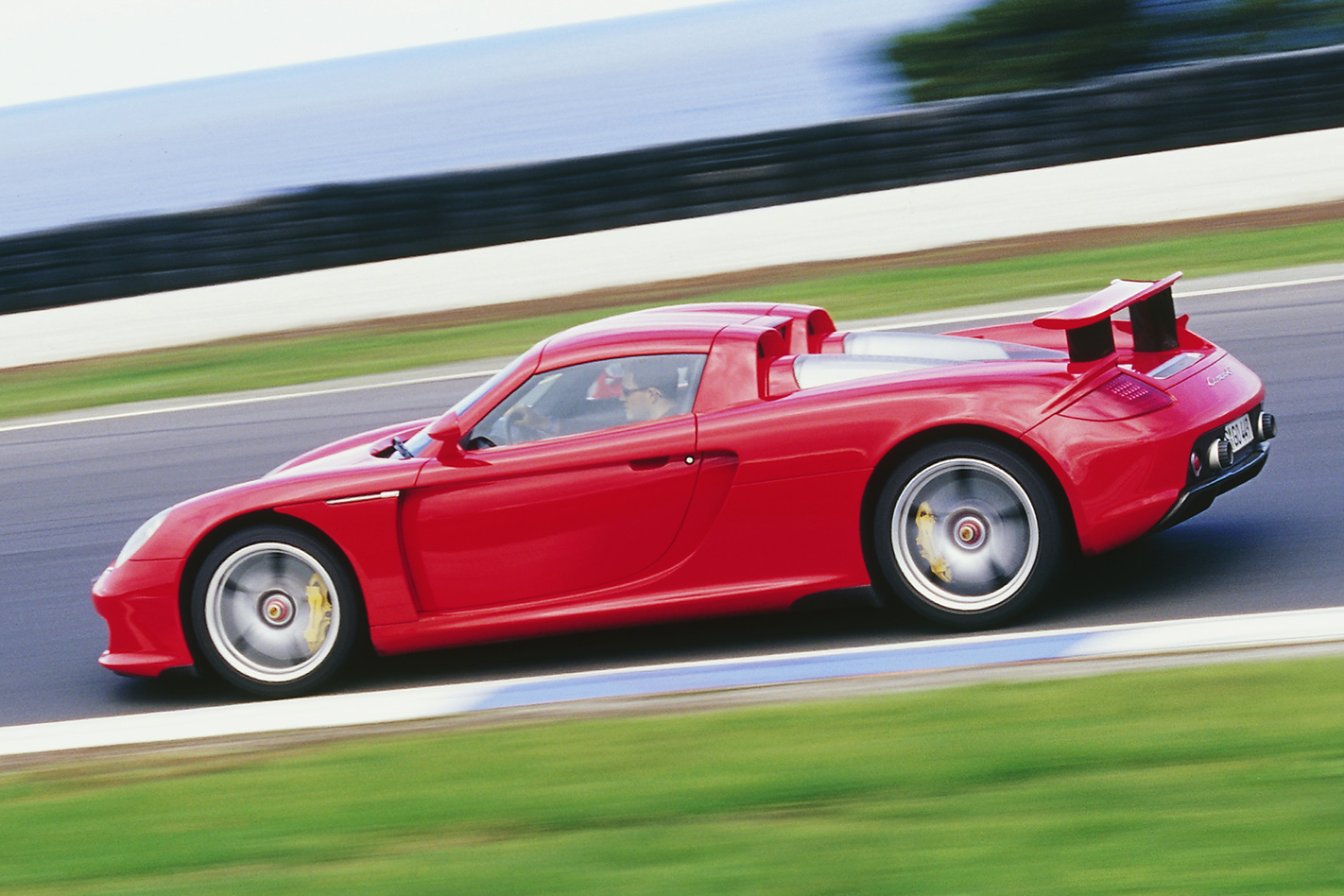
If there’s any movement, it’s from the tyres. Sure, there’s lots of grip from the massive 19 and 20-inch Michelins, but these are still road-treaded tyres that sometimes struggle to put down 450kW – 24 more than a Murciélago.
The brakes work better at speed: grinding like a rock’s been caught in the calipers in the pits, bury the brake pedal and it doesn’t sink the nose as much as drill the entire chassis of the GT into the ground with literally enough braking force to pull passengers out of the seat. It may lack the Gallardo’s all-wheel-drive traction, but the GT’s larger brakes are every bit as capable.
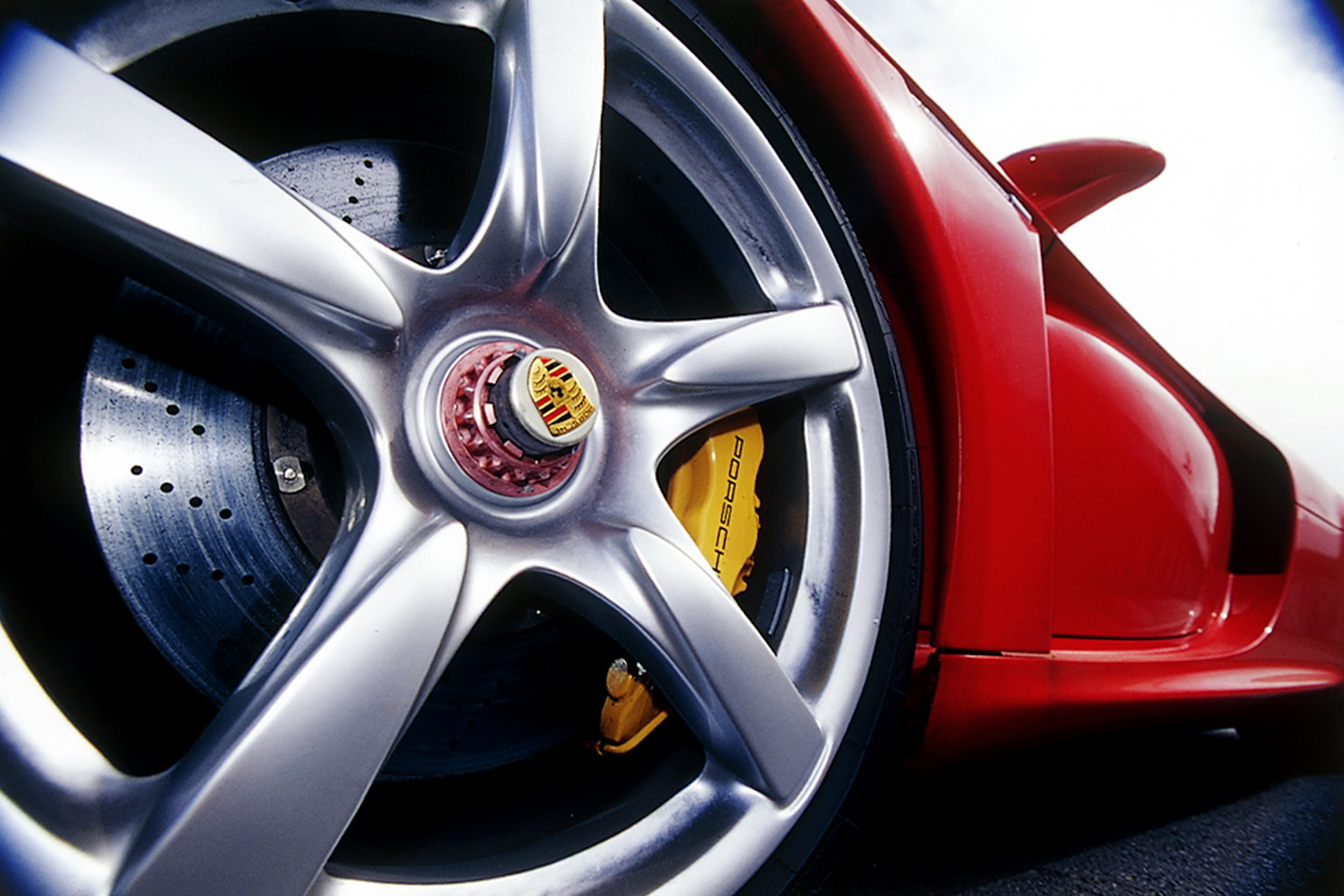
After a few laps, the on-board tyre monitor’s showing rear pressures up around 45psi, needing a slight bleed. The lasting impression is that there’s an incredible chassis, as stiff as a rock, perfect steering, amazing cornering potential, the ability to powerslide on command, an engine stuffed full of power and torque, but tyres that just can’t keep up. But when we’re sitting at the local Porsche dealer with a $1.1million cheque in hand, then we’ll get concerned.
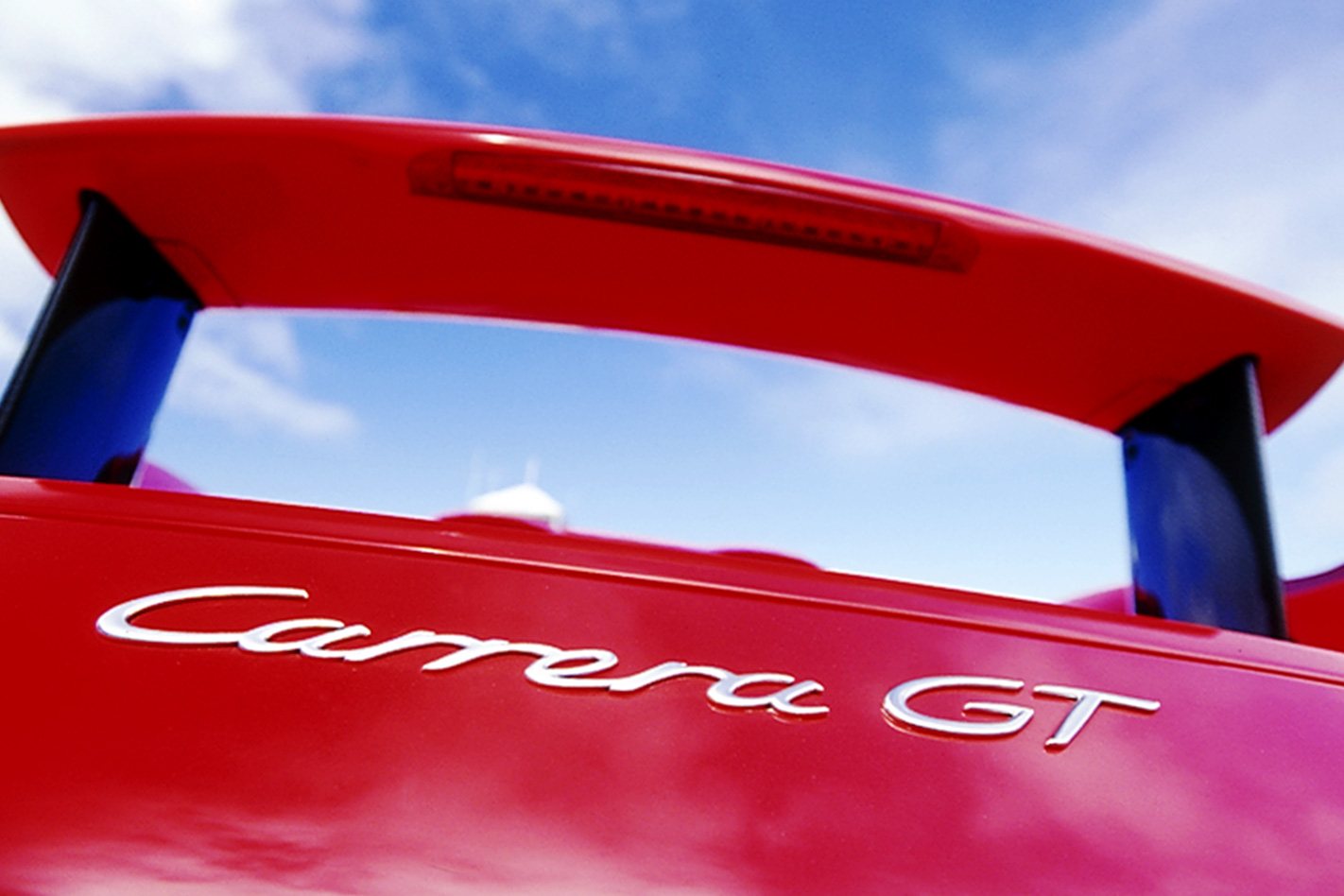
Few things speak as clearly as lap times and a sub-two-minute lap around Phillip Island is sharp for a road car. The GT3 RS lays down a wriggly but impressive 1min:53 seconds. Then the Carrera GT fires up and in one hot lap, slams down a 1min:44secs. So there.
As we proved last issue, it laps faster than a Ferrari Enzo, itself on par with McLaren’s F1. If there’s a faster, better supercar than Porsche’s Carrera GT, we haven’t driven it.
A Carrera for the ‘50s, the Porsche 356
Twin-cam was born in July 1955, when Porsche’s 356 Carrera became the first production car to run dual overhead camshafts. With two valves per piston sucking through a pair of Weber carbies, the 1588cc air-cooled flat-four ponied up 86kW at 6500rpm with a sound of a VW Beetle on Red Bull.
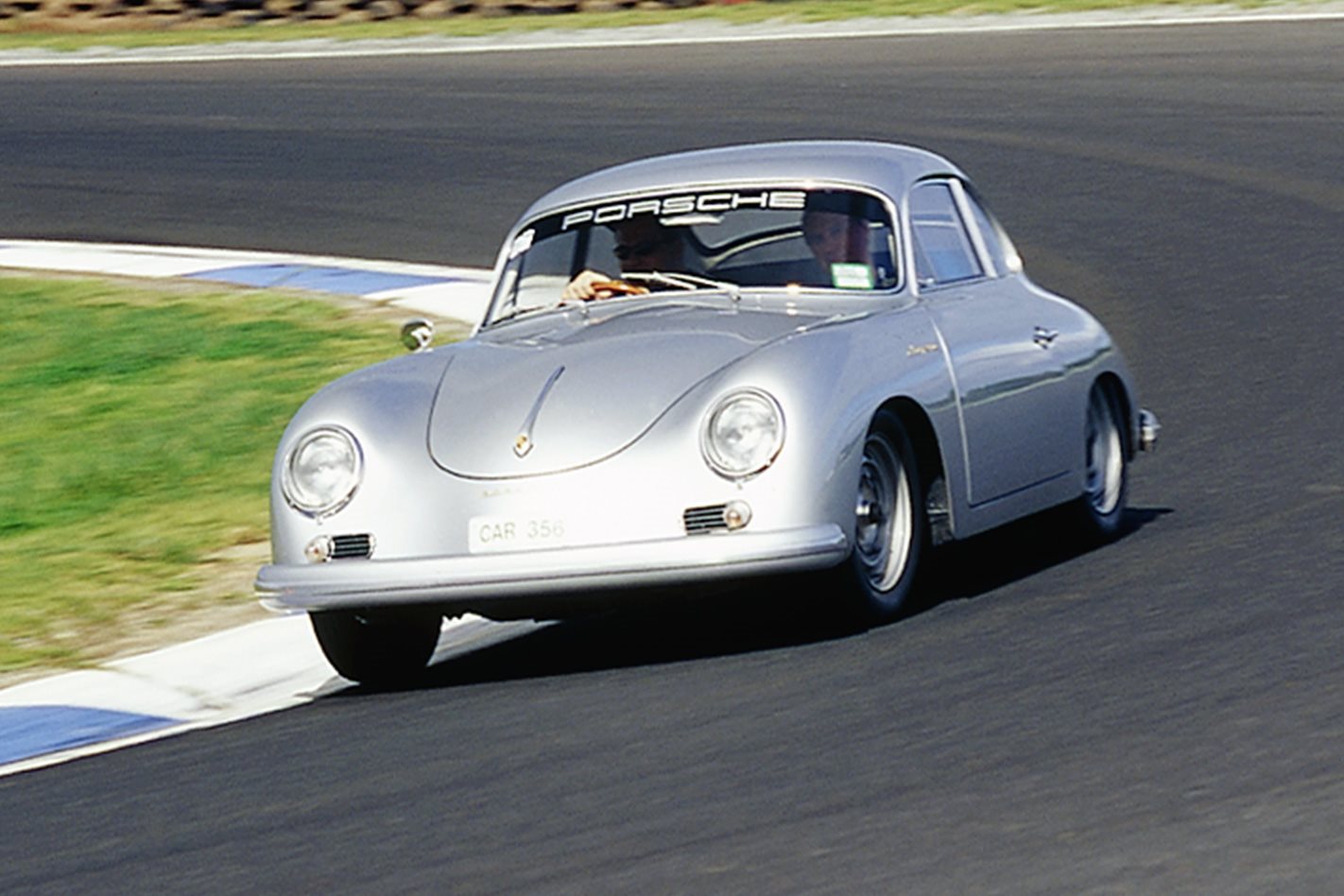
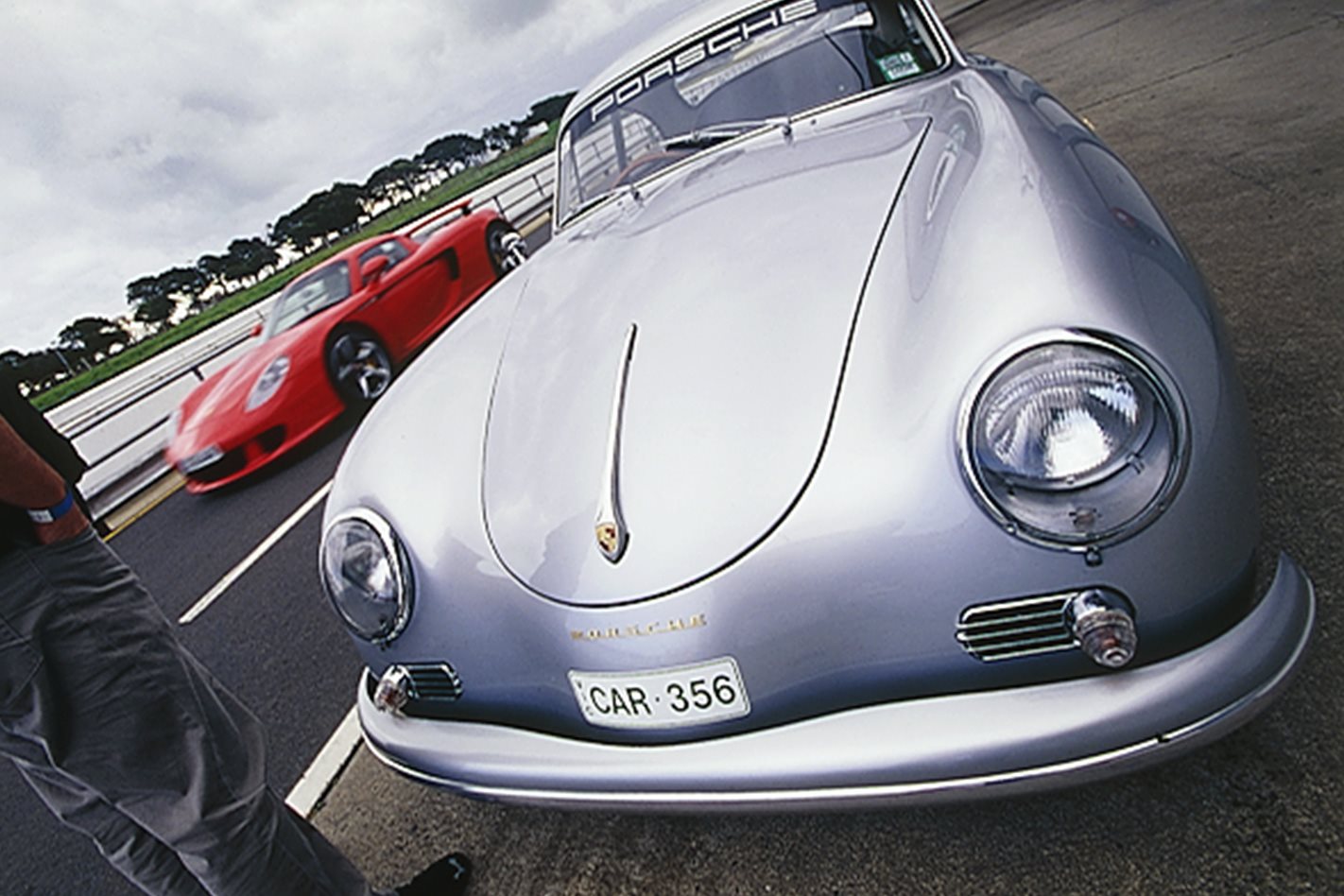
Around Phillip Island, by today’s standards the 356 Carrera doesn’t go, corner or stop. But 50 years ago, this was technology at its fastest and finest.
SOUND the claxons, because Formula 1 is returning from Summer break with one of the most exciting Grands Prix races of the year.
The F1 circus has dusted off the team uniforms, and headed to the forests of Belgium with a fresh new tan, ready to tackle the most daunting corner on the modern calendar.
We are of course talking about the Eau Rouge / Radillion uphill left, right, left chicane at Spa-Francorchamps. It’s a corner which requires considerable bravery to truly master, and with the fastest cars in history making up this year’s grid, Sunday’s race is poised to offer up some great moments.
To build the excitement, we have compiled a list of some of our favourite moments from F1 races at Spa-Francorchamps over the years. Let us know your favourite moment and if we missed anything spectacular!
1. 1998 – Chaos and Fury in the wet
Where to start but with the (very wet) 1998 event? Chronologically, it makes sense to begin with what is arguably the most expensive motorsport crash in history. The field had barely made it through the opening La Source hairpin when David Coulthard speared into the wall and bounced back into the path of the following pack.
With large amounts of spray disguising his return to the track, carnage ensued, with the majority of the field involved in the pile-up. This was a time before wheel tethers, so pieces of carbonfibre and tyres alike were jettisoned into the air.
The race was red flagged, a restarted more than an hour later, with many drivers jumping into spare cars. The second attempt at a race start went much smoother, with just Mika Hakkinen and Jonny Herbert crashing, while Damon Hill in a Jordan briefly leading the pack.
Hill was quickly caught and passed by wet-weather maestro Michael Schumacher, but the German’s lead was quashed when he attempted to lap David Coulthard. In the torrential conditions, Schumacher rammed the slow-moving McLaren, ending his race. Upon his return to the pits, Schumacher attempted to confront Coulthard, but was prevented from doing so by a large pack of Ferrari and McLaren engineers.
This handed the lead back to Hill, who held on to claim Jordan’s first Grand Prix victory.
Not content with confronting just Coulthard, it was alleged Schumacher also had a stern talking to with Jordan team owner Eddie Jordan over the use of team orders, which prevented Michael’s sibling, Ralf Schumacher, from challenging Hill for victory.
2. 1999 – The stupidest dare in F1
Not to be outdone by the previous year’s efforts, the 1999 event at Spa-Francorchamps witnessed two of the biggest crashes in Eau Rouge history.
Driving for BAR Supertec, teammates Jacques Villeneuve and Ricardo Zonta dared each other to attempt the high-speed chicane flat-out.
Not deterred from a large shunt at the same set of bends in ’98, Villeneuve had it in his head that some changes to the famous corner meant it could now be tackled with the throttle firmly planted the entire way. It couldn’t.
During practice, filled with typical bravado, Villeneuve attempted Eau Rouge flat-out, with catastrophic results, writing his car off.
Not deterred by witnessing his teammate’s shunt, Zonta rolled out onto the track, and promptly outdid Villeneuve with an even bigger crash.
With quick succession, both drivers had destroyed their cars, all for the sake of a dare.
The disbelief by team boss Craig Pollock on the pit wall says it all really.
3. 1987 – When an Unstoppable Moustache meets an Immovable Brazilian
Nigel Mansell and Ayrton Senna are two of the most doggedly determined and stubborn drivers in Formula 1 history, so when the two of them are battling for the same piece of tarmac at Spa-Francorchamps, fireworks are sure to fly as they did in 1987.
Like 1999, the 1987 Grand Prix required two different starts after a multi-car crash on the first lap. On the second race start attempt, Senna in his Lotus-Honda dashed to the lead from the second row, shaming Mansell and his Williams-Honda teammate Nelson Piquet.
Mansell shadowed Senna for the first part of the opening lap, before attempting an ambitious move around the outside. Debate still rages as to which driver is truly to blame, but the pair made contact, and were both forced to retire from the race as a consequence.
The British driver stormed into the Lotus garage after the race, with some particularly stern words, and even punches, exchanged with Senna and his team.
4. Aussie Grit puts down the Spanish Matador
When discussing the best overtakes in Formula 1 history, it’s impossible to go past Mark Webber’s pass on Fernando Alonso through Eau Rouge in 2011.
While our patriotism might be partly to thank for the nomination, the overtaking manoeuvre is also looked at admirably by other drivers and international media alike.
Webber caught Alonso as he was exiting the pit lane, with the pair neck-and-neck entering the fearsome Eau Rouge. The pair are both staunch rivals, but great off-track friends, with immense mutual respect.
This ensured both drivers made it through the corner cleanly, but Webber’s ability to stick his car down the inside of Alonso, and take a shallow line through the high-speed bend, is awe-inspiring to this day. The Aussie would go on to finish second, behind his Red Bull teammate Sebastian Vettel.
5. Don’t mess with The Finn
Michael Schumacher was well on his way to winning the 2000 Formula 1 season when the circus rolled into Belgium. The thorn in his side had been Finnish driver Mika Hakkinen, and his silver and black McLaren.
The pair engaged in a forceful dogfight during the race, with Schumacher defending aggressively. Hakkinen was closing in on the Ferrari driver rapidly along the Kemmel Straight, before Schumacher shut the proverbial door on the Finn with force.
This upset the McLaren driver, who was determined and on their next lap, Hakkinen again had a significant speed advantage coming out of Eau Rouge, and was fast-approaching the rear of Schumacher’s car. This time however, there was a backmarker in the pair’s way.
As the Ferrari darted left, Hakkinen went right, passing both cars, and claiming the lead of the race. The Finnish driver went on the win the Grand Prix.
AT Supercars events, the most prized parking spots are reserved for senior series executives and local bigwigs.
The exception is when Roger Penske visits. Such is Penske’s stature that one of the prime spaces is set aside for his vehicle. Nowhere is his standing more obvious than when he attends the Perth SuperSprint at Barbagallo Raceway.
There he receives personal parking right near the entrance to the paddock. This year the only spot that was closer to the gate was set aside for an ambulance. His place was initially designated by an official “RESERVED ROGER PENSKE” sign.
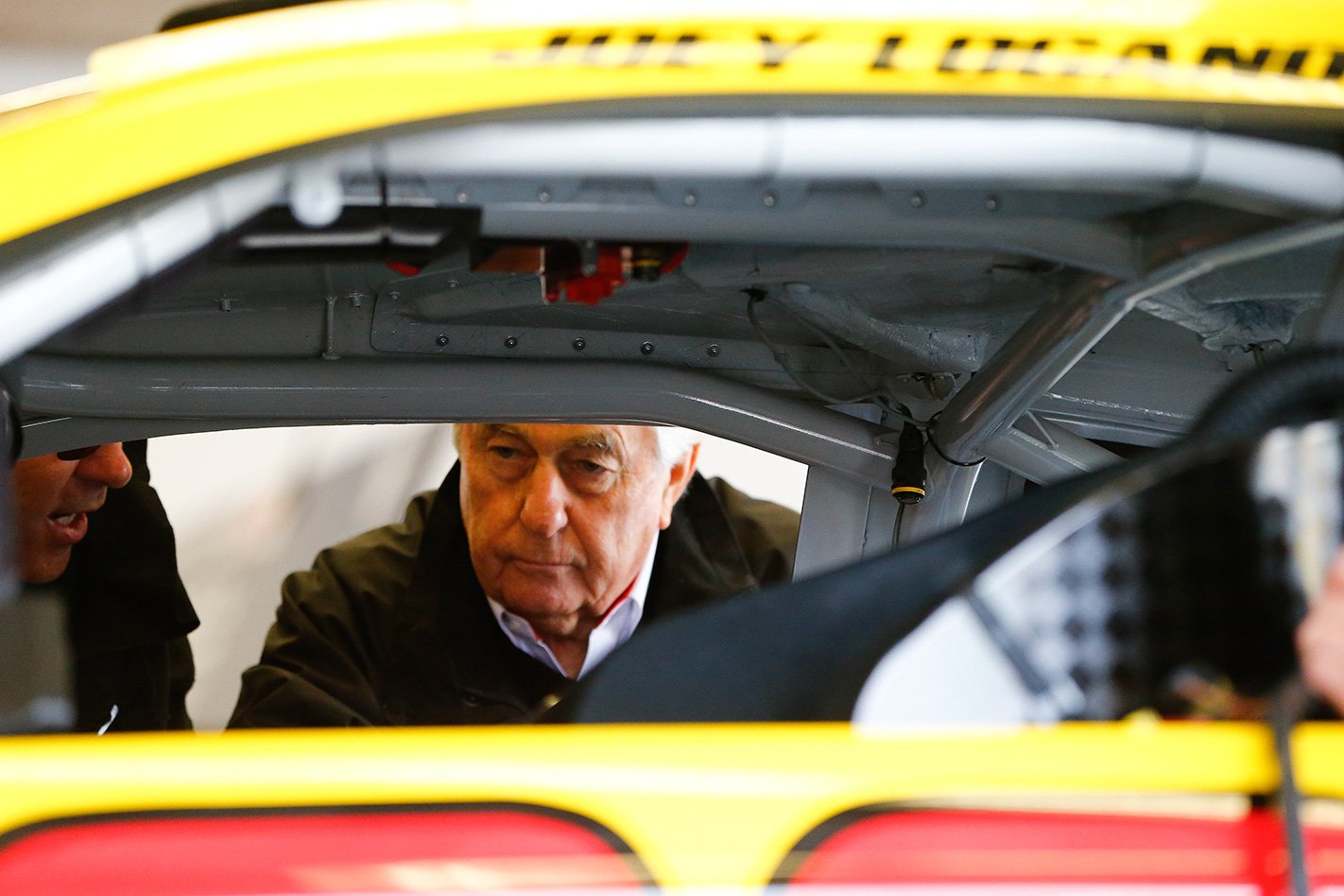
Team Johnson seeks to enter Tru-Blu Falcon in TCM
Penske is the only Supercars team owner accorded ‘red carpet’ welcomes like this. The sport is proud that the best known team principal outside F1 chose to expand his Team Penske empire across the Pacific.
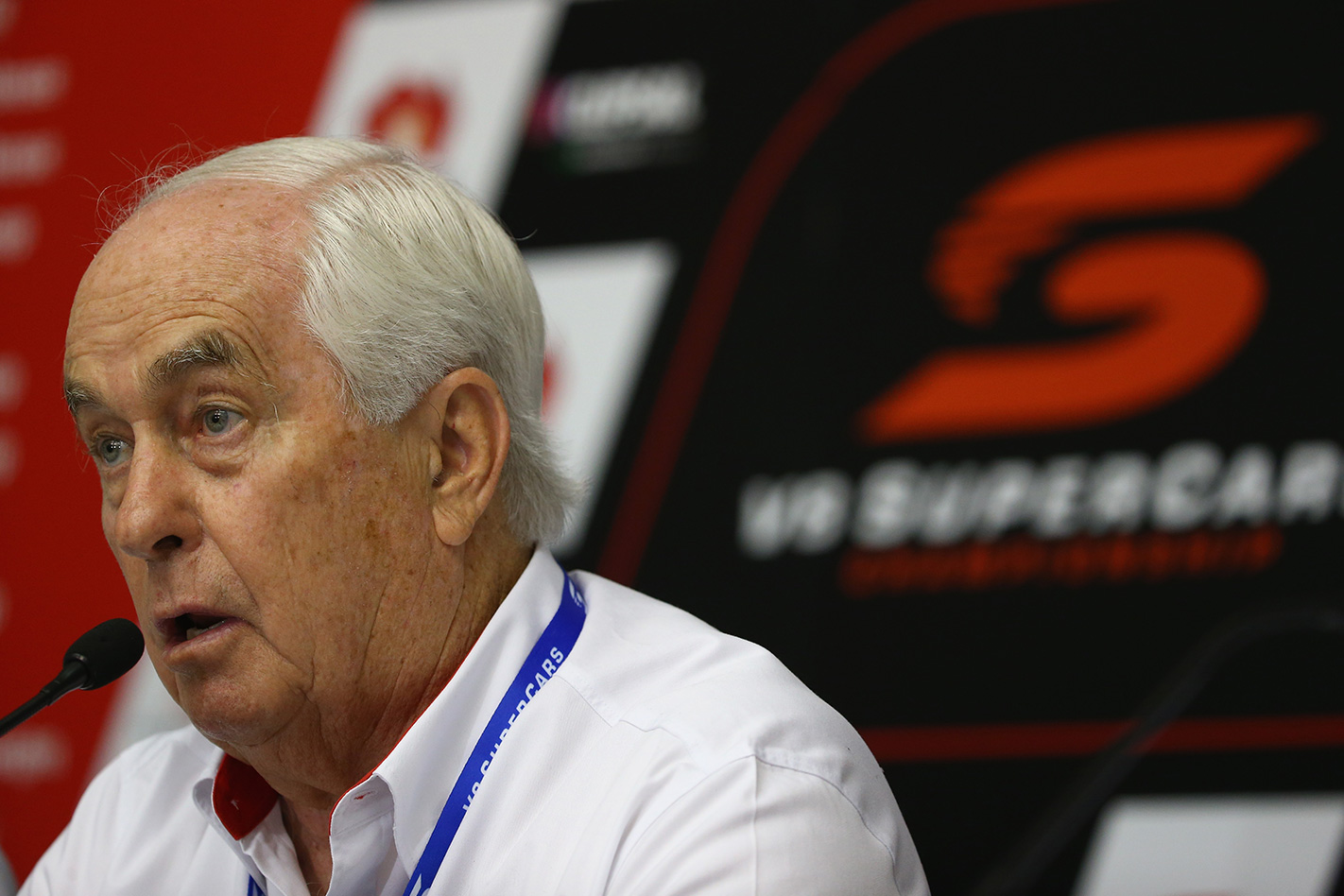
Known as ‘The Captain’, Penske carries an air of authority that stops a room. Yet he has an inclusive manner. An old-school gentleman, he is always impeccably dressed – an attention to detail that is reflected in the pristine presentation that has been a hallmark of Penske race teams and drivers.
Perth is about as far from Penske Corp HQ at Bloomfield Hills, outside Detroit, as you can get, but he has made the annual trek to coincide with Barbagallo because Western Australia is an important market for the company’s trucking and industrial powerplant interests.
The extraordinary success of Team Penske in American and international racing during the past 51 years has been integral to the growth of Penske Corporation from a single car dealership to a diverse global transport enterprise. He has always used racing to promote his businesses, which is why he bought 51 per cent of DJR.
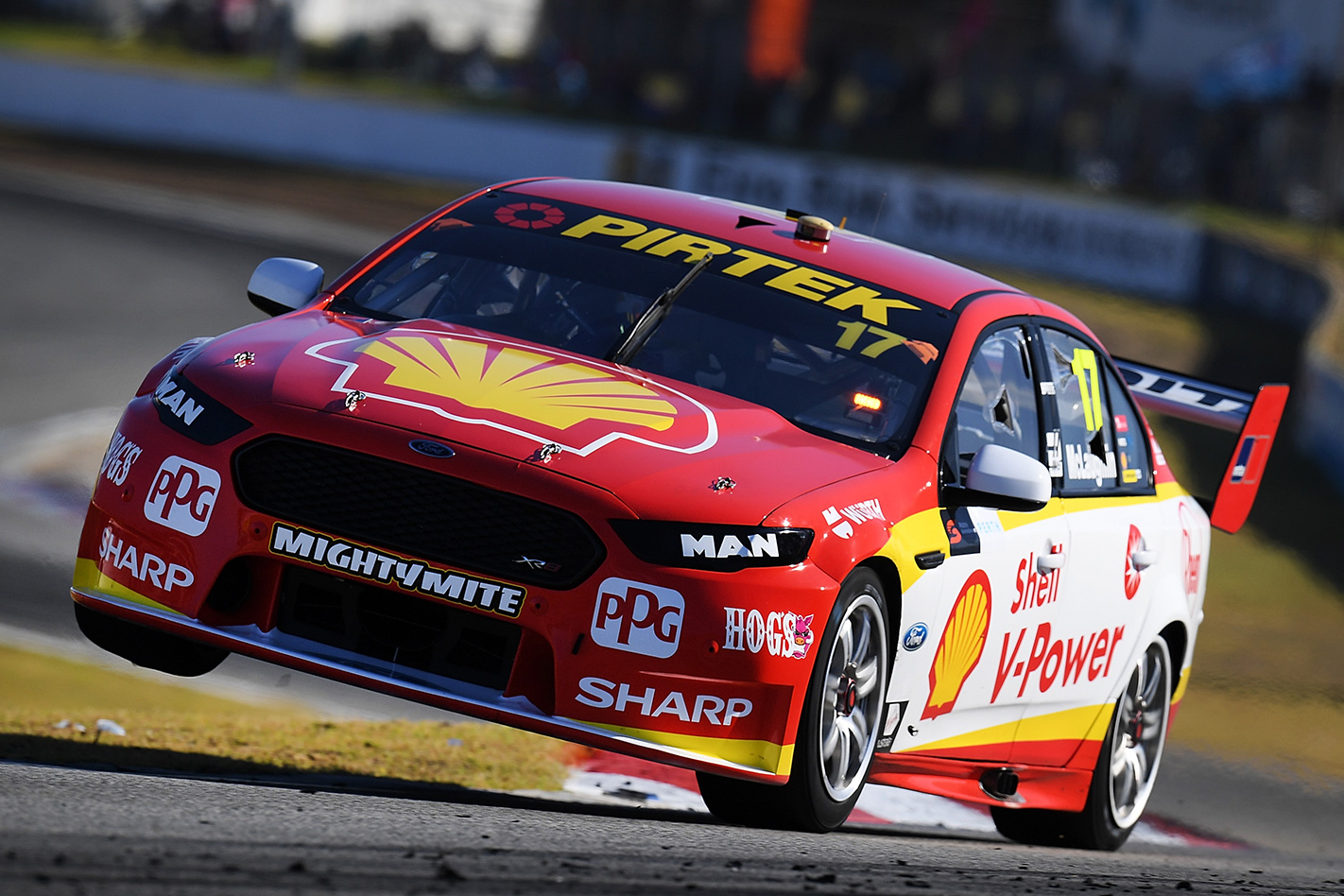
After a two-year reorganisation, DJR Team Penske has emerged this season as the Supercars squad to beat. It has Triple Eight Race Engineering on the back foot, scrambling to catch up.
Penske’s patronage has restored DJR to its glory days of the late 1980s and much of the ’90s, when it was firmly entrenched among the leading teams. His takeover was a rescue, providing the multimillion-dollar investment to secure its future.
The deal was predicated on former Supercars champion Marcos Ambrose returning from his stint in NASCAR to lead the American-directed effort. The team cut back to one Falcon to concentrate on rebuilding under Ambrose’s guidance while he recaptured his own form.
“We started out thinking that we would be somewhat competitive, but when we got to the track and looked at the results, we were struggling,” Penske tells MOTOR.
“We were also counting on Marcos. He then decided he really wasn’t up to it. Whether it was mentally or physically or just that the game had been raised, I don’t really know. But I take my hat off to him for saying, ‘Hey, you need to go on without me’ and it was a very good discussion with him.”
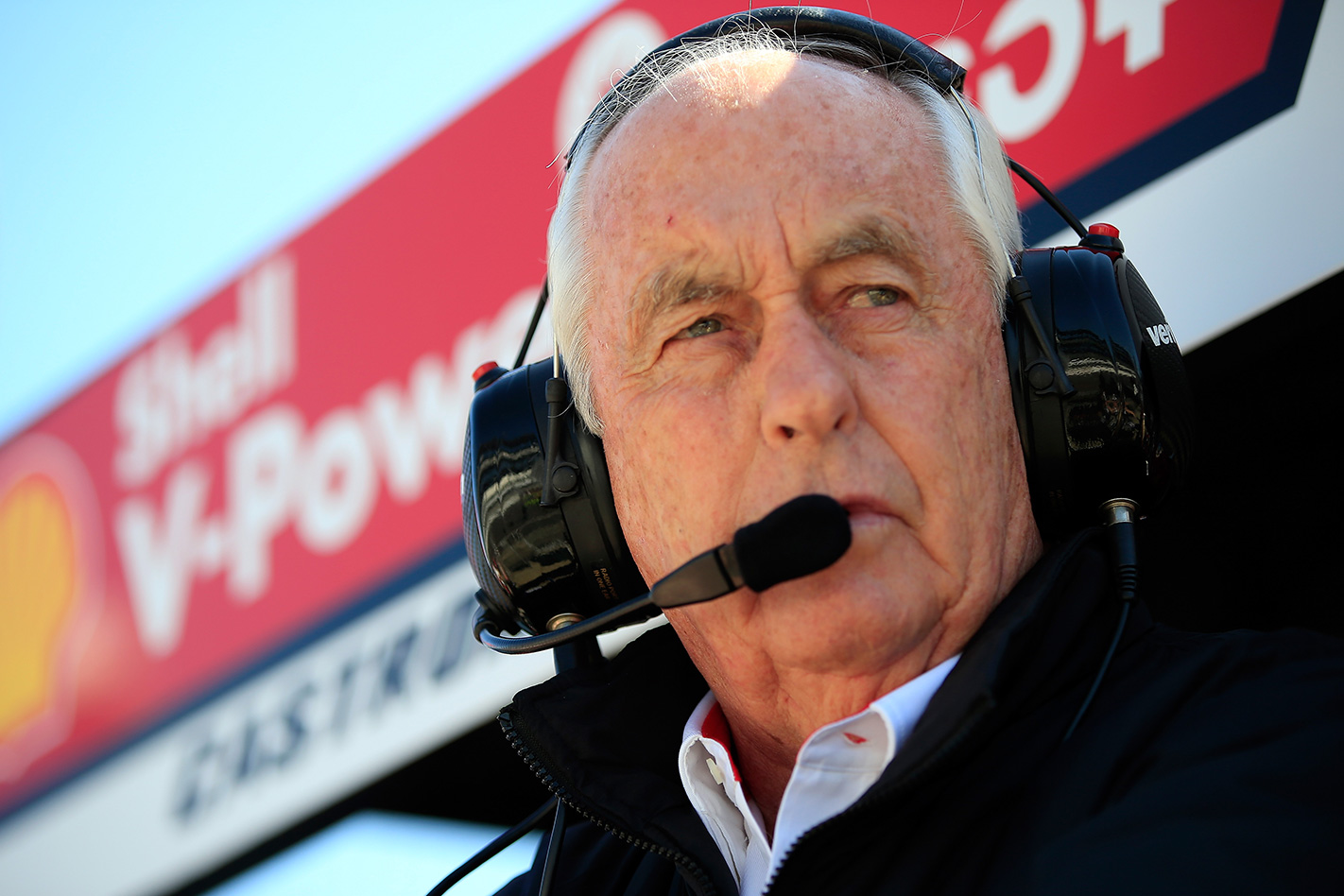
“I think that’s the bottom line. He did, we did. We were disappointed that we didn’t provide him with a proper car and be able to help him. I think he felt the same way, that maybe he wasn’t able to deliver what we wanted from him.”
He didn’t regard losing Ambrose as a setback, lamenting that the partnership wasn’t able to flourish. “I guess it was more of a disappointment because we really wanted to provide him with a real race team that he could come back here and be on top,” Penske adds.
“That’s the disappointment I had. I think we felt we let him down and he really didn’t maybe have a chance to grab the gear here and get going the way he could. But I think he was so professional in how he handled his dismount.”
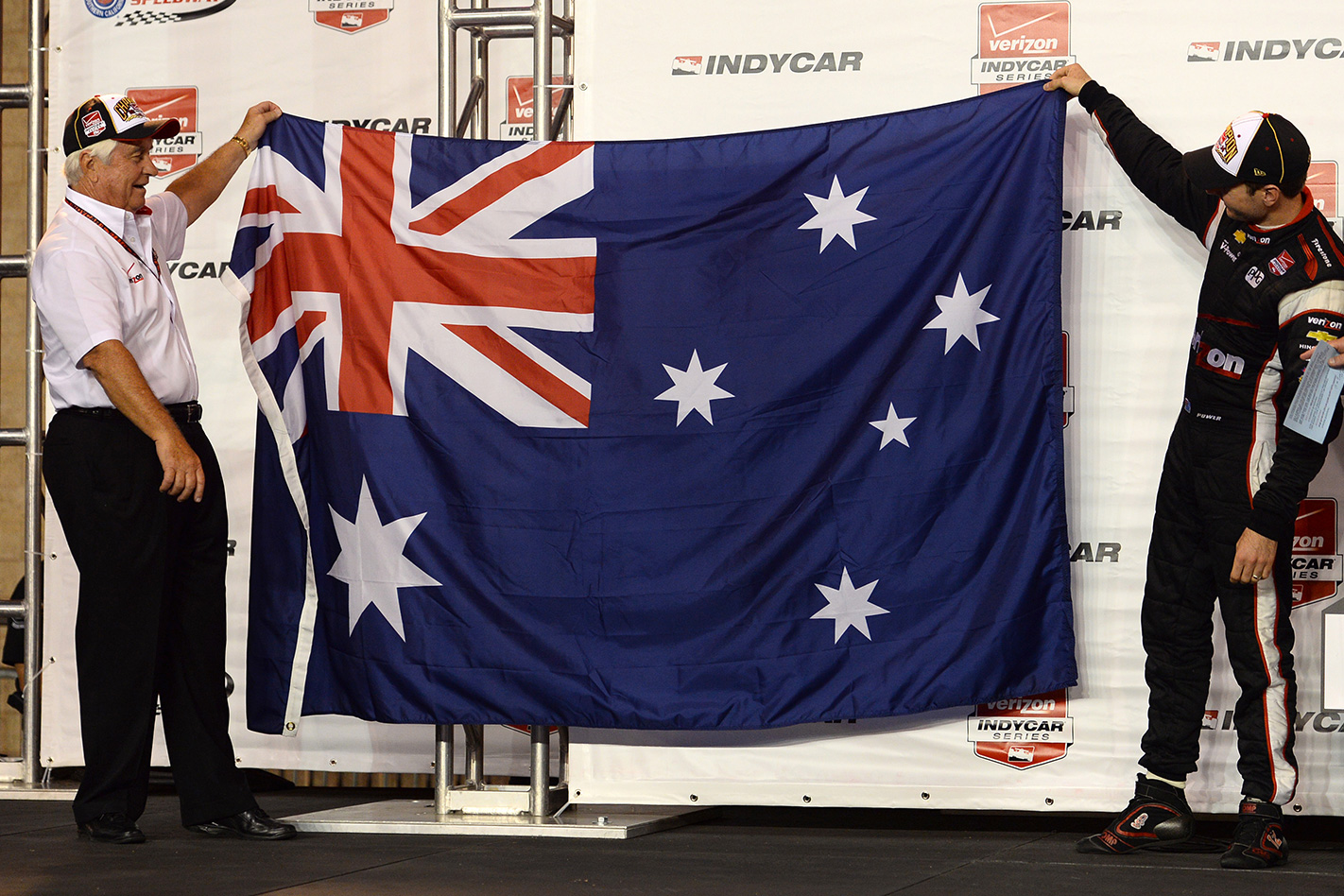
DJRTP endured two winless seasons as Pye was joined by Fabian Coulthard in a re-expanded line-up last year. But according to Penske, running two cars and other changes paved the way for the team’s transformation this year. “The bottom line is the experience we have now that we didn’t have when we walked in the door,” he says.
“We built some new cars as we came into this year and, at the end of the day, I think McLaughlin coming on board and teaming with Coulthard, you’d have to say that was a big step. They’re young, they’re experienced and they know how to win. And then I think our technical guys stepped it up.
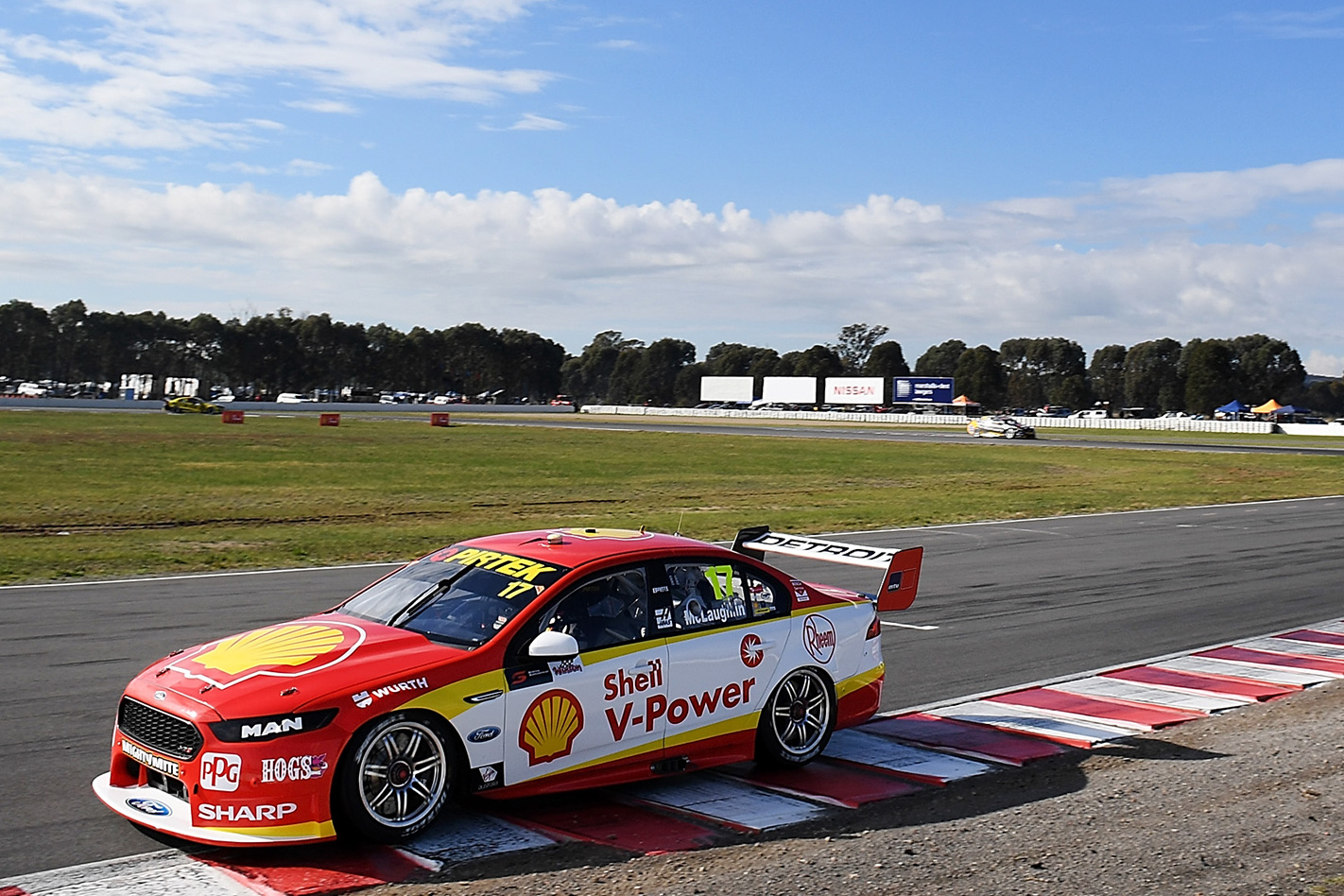
Penske is a racer at heart and his commitment to conquering Supercars never wavered through the initial difficulties. “One of the great things about coming out here was that it was a real challenge,” he says.
“We were not going to walk away from V8 Supercars just because we had a couple of bad years. And they weren’t that bad. Maybe our reputation was ahead of our batting average.”
As well as securing McLaughlin in the wake of Volvo’s withdrawal, DJRTP was joined by disaffected touring car technical guru Ludo Lacroix, the gifted and eccentric designer of Triple Eight’s previously pace-setting racers.
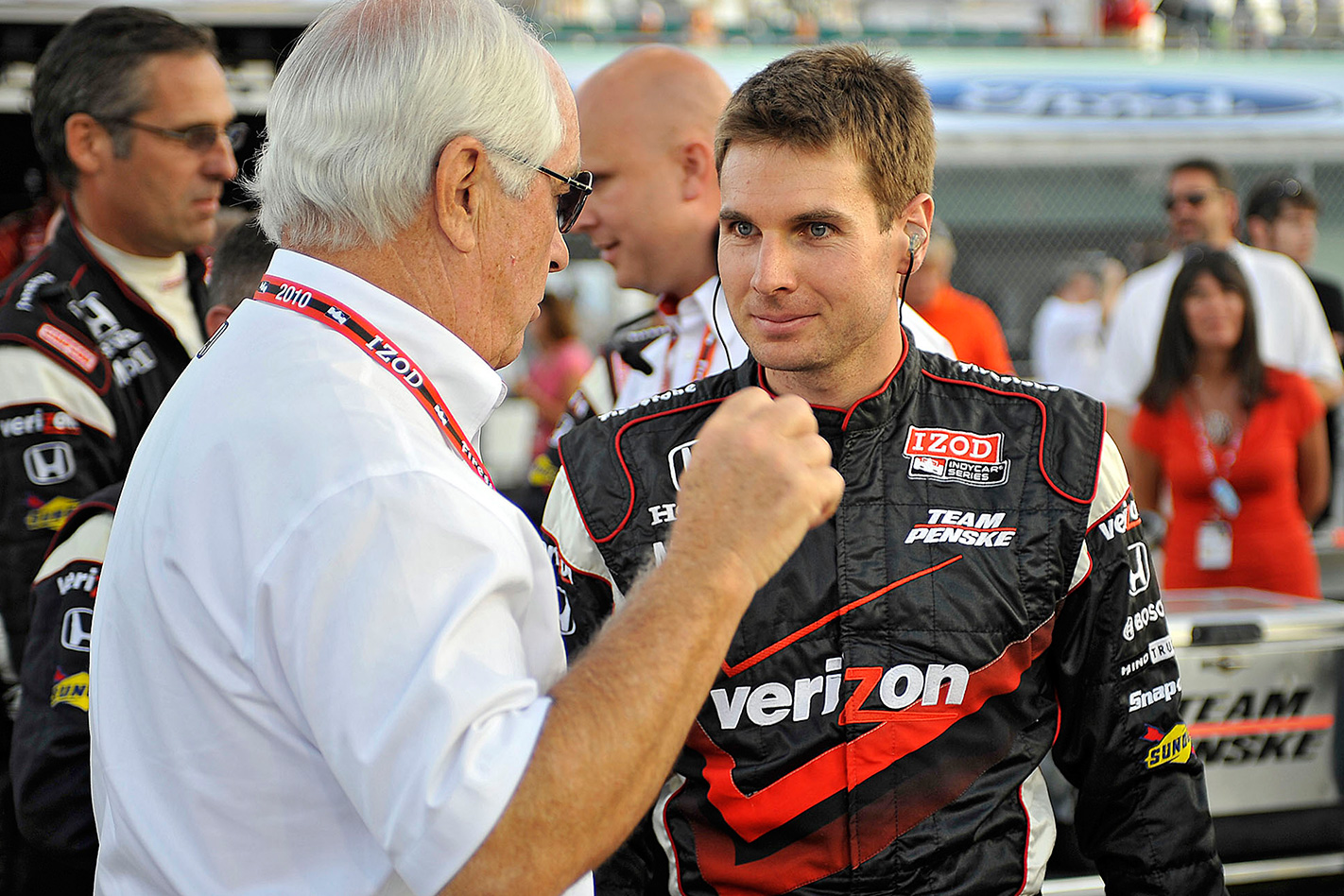
“I was as surprised as anyone else when we got the call from Ludo that he was interested in coming on board with us,” Penske says.
“I met him at Bathurst (last year) and I didn’t even know who he was. Obviously, when he showed some interest, Tim Cindric (US-based Team Penske president who oversees all racing activities) followed up with him and he ended up coming on board. He didn’t really come over until January 1, so we didn’t have two or three months to do a brain drain on everything he knows. But I think his energy and certainly his knowledge have made a big difference.”
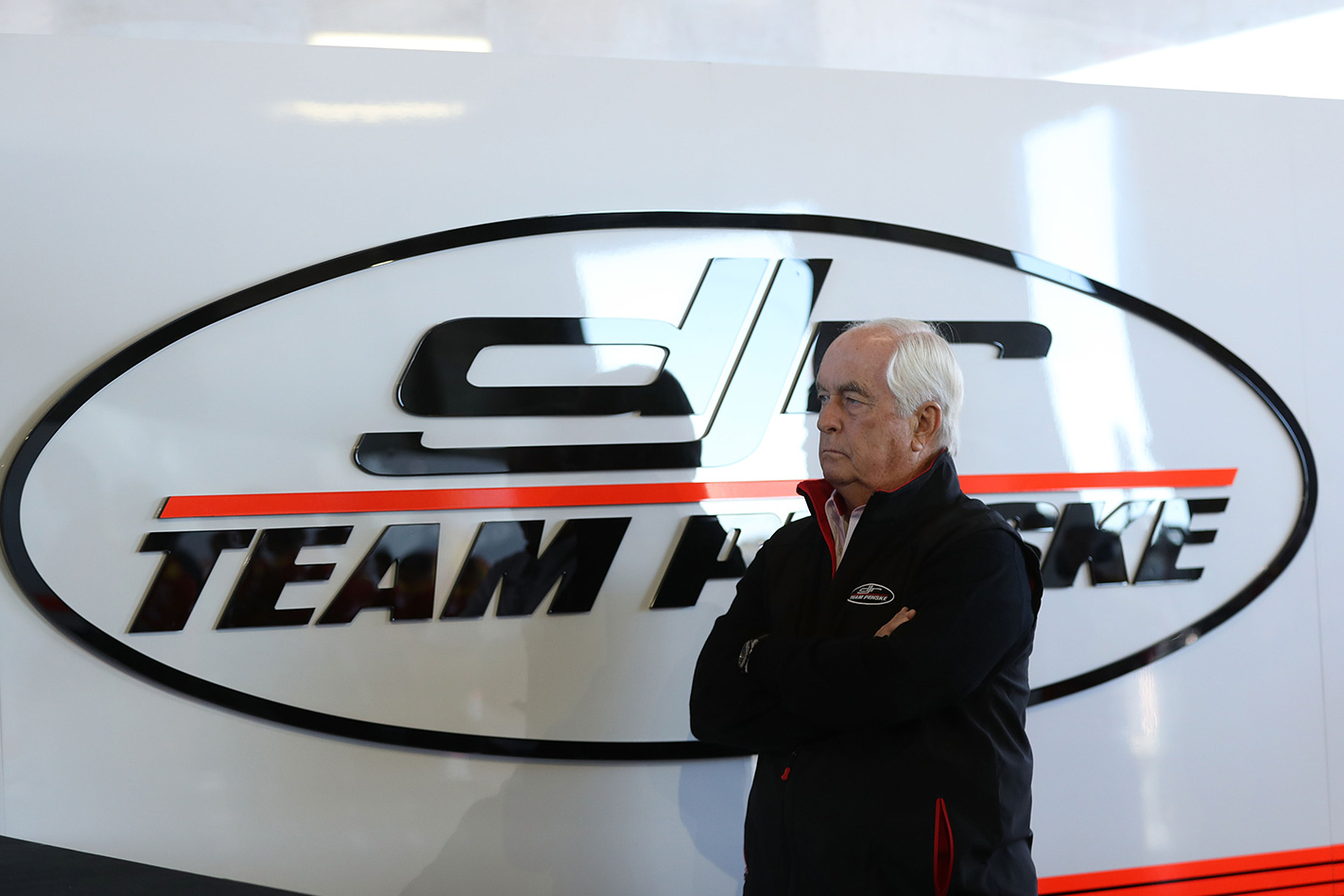
“People talk about how big a budget we have,” he says. “I can tell you this; the budget we have down here, we’re scraping for every sponsorship dollar we have. We’ve always done that and that’s why our company’s been successful. I would have to say that we’re trying to run within a budget that we think is pretty much the same up and down the garage area.”
Leaving aside that Penske cleared DJR’s debts and funded its expansion, there is no question that Penske companies largely underwrote the team’s racing operations in 2015/16. The return of Shell this year as the primary sponsor, gaining season-long signage on both Falcons and team naming rights suggests DJRTP has become a self-funding operation.
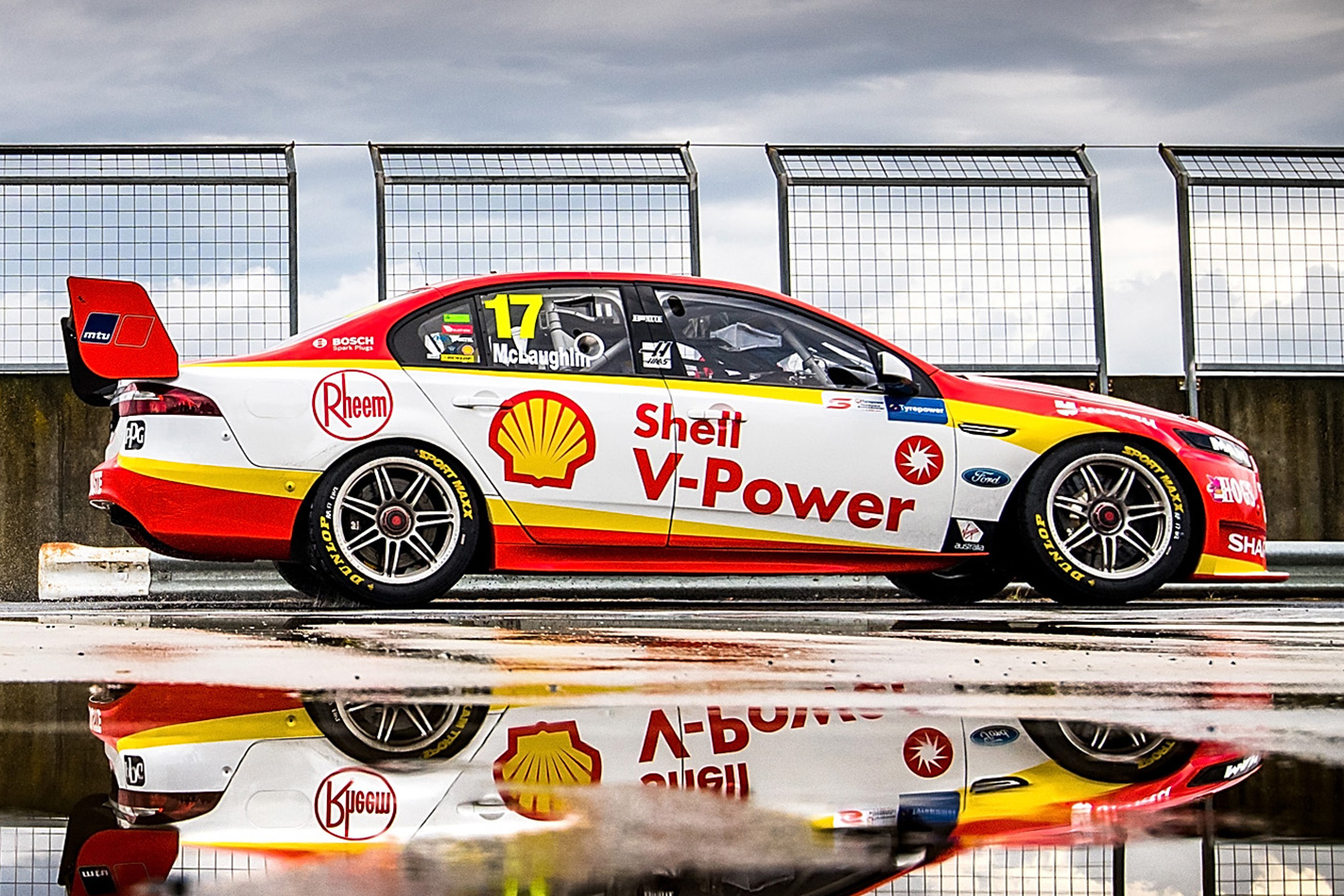
“One of the things that I will say I’m so proud of is to be able to see our two cars here (Perth) having the same livery on them every day,” he says.
“That’s the way it used to be (in US racing), instead of now, where you’re changing brands all the time. That’s what you need to do to be able to afford it. Because of our relationship with Shell/Penzoil in the US, it gave us an entry here, plus there’s a great B2B play here with Shell working with us and our customers. For me, it’s the secret sauce for us to keep goin’.”
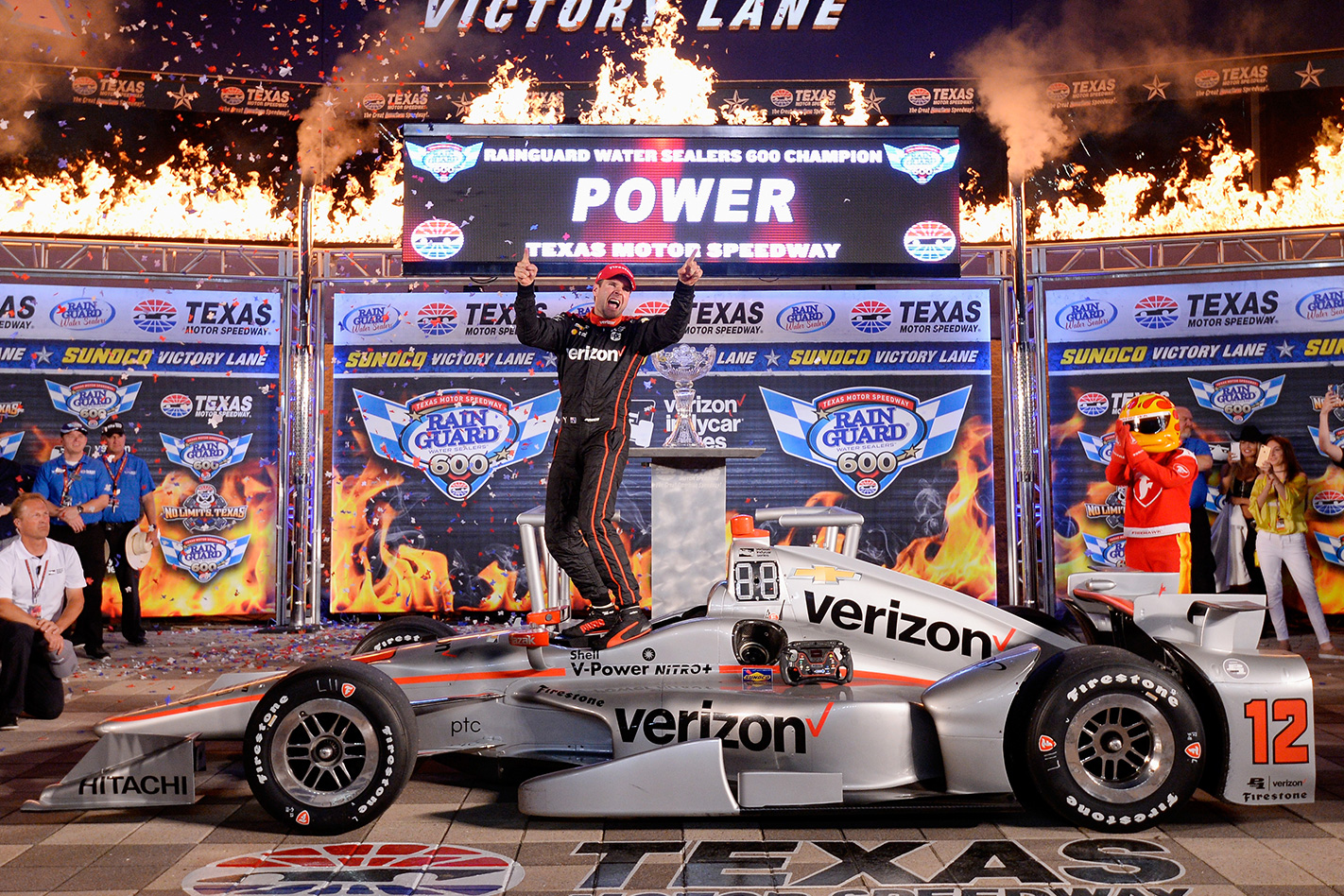
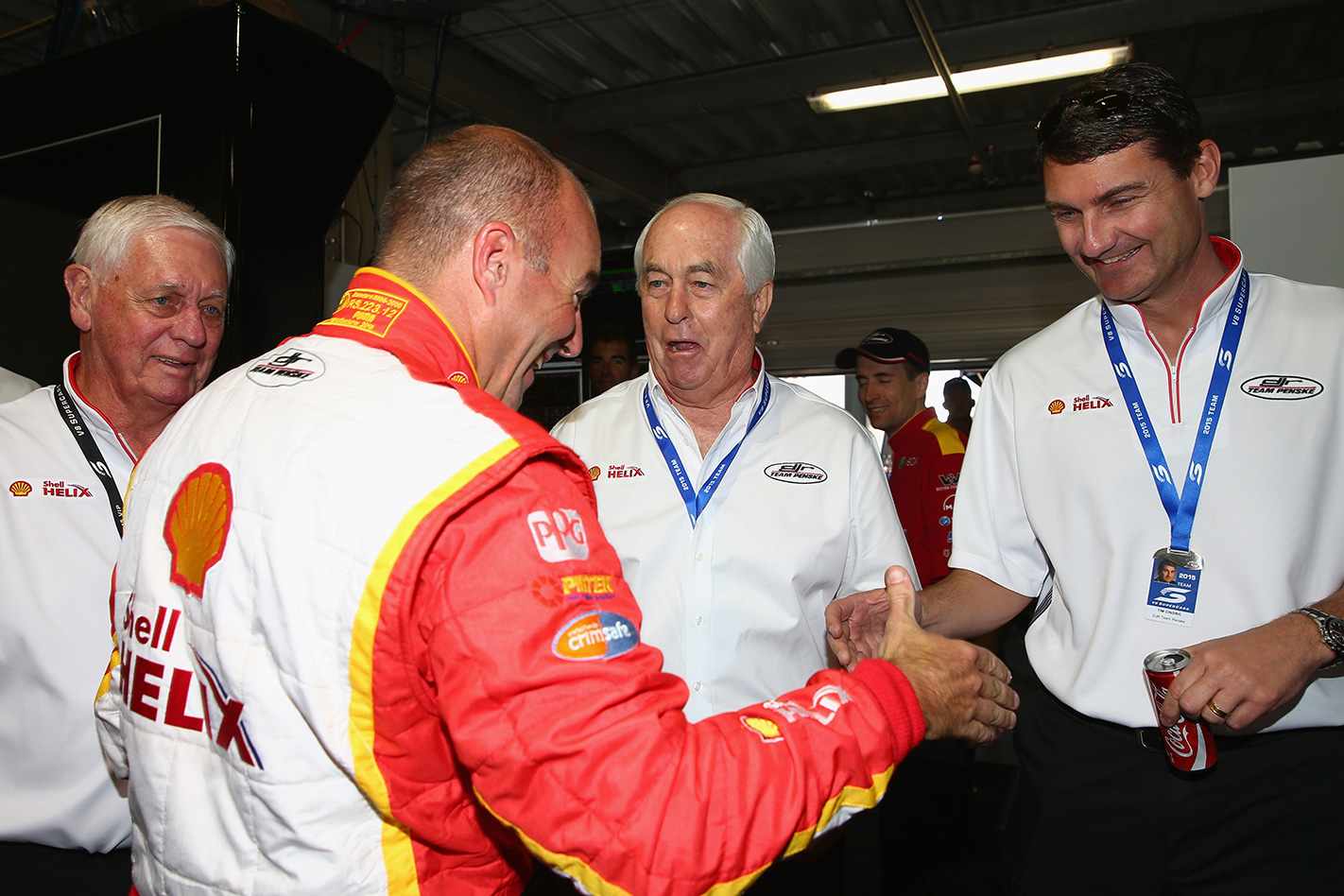
“Well, you gotta have a big smile to think that we can walk down the pit lane and shake Roland’s hand and say ‘Hey, y’gotta beat us today, too’,” he grins.
“That wasn’t the case for a couple of years and I’m sure he looks forward to the competition. There are other good teams out there also and I want to be sure that people don’t think it’s just Triple Eight and ourselves. I think each race we go to, if we can be fast, that gives me a lot more confidence that we have a solid base.”
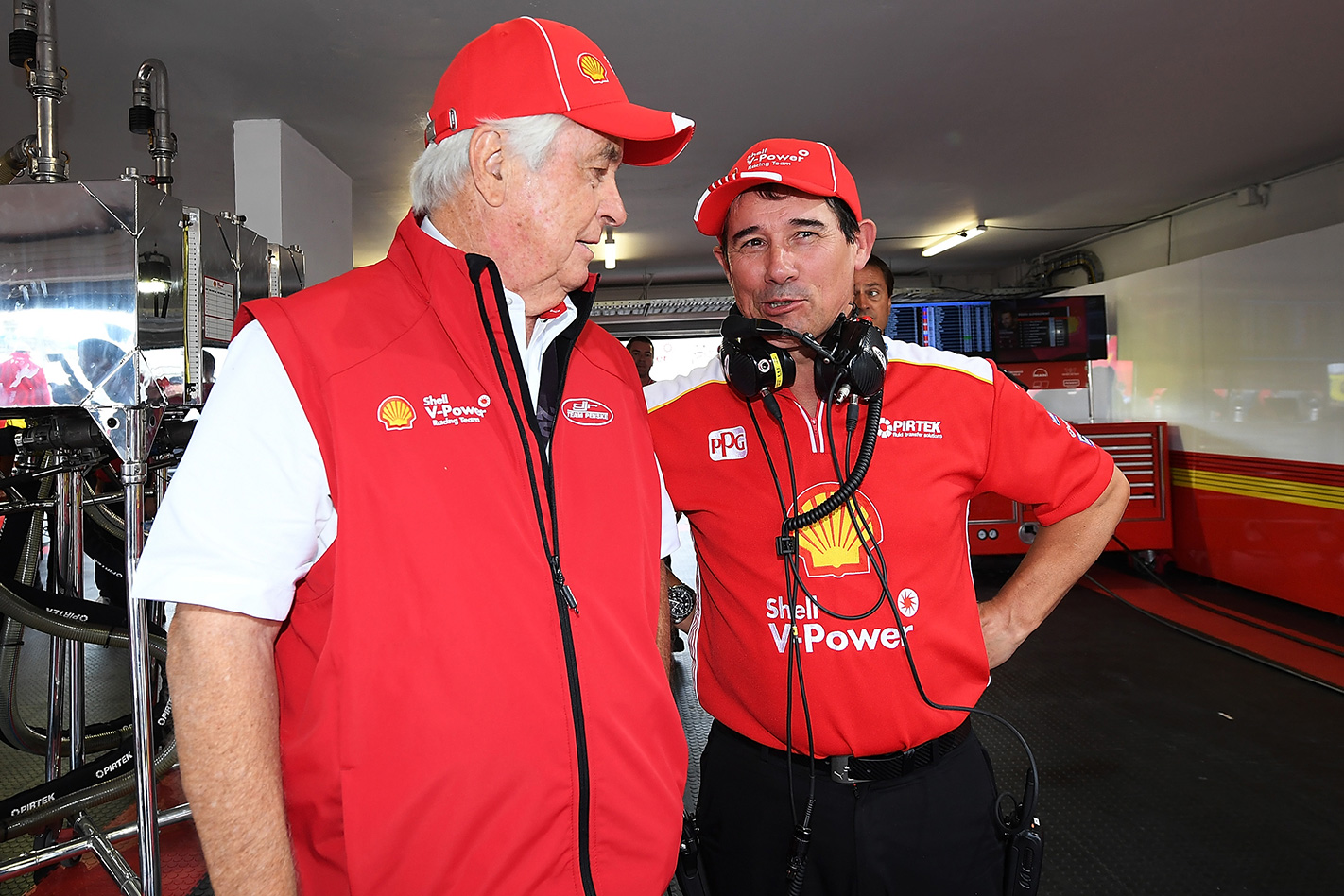
“It’s pretty amazing to sit here and say we won some races because that was our goal this year. But there’s no question that we now have to focus on trying to win the championship. Our two drivers are dedicated to winning the championship and we have to give them the cars that do that. Of course, the championship is the goal.”
Throughout half a century, many greats have raced for Penske. McLaughlin and Coulthard are very much in the mould of Penske drivers, who need to be presentable as well as talented. McLaughlin is the quickest of the Kiwi pairing, blazing a pole-winning trail that attests to his sheer speed. He is a natural fan favourite because he is gifted, audacious and cheeky.
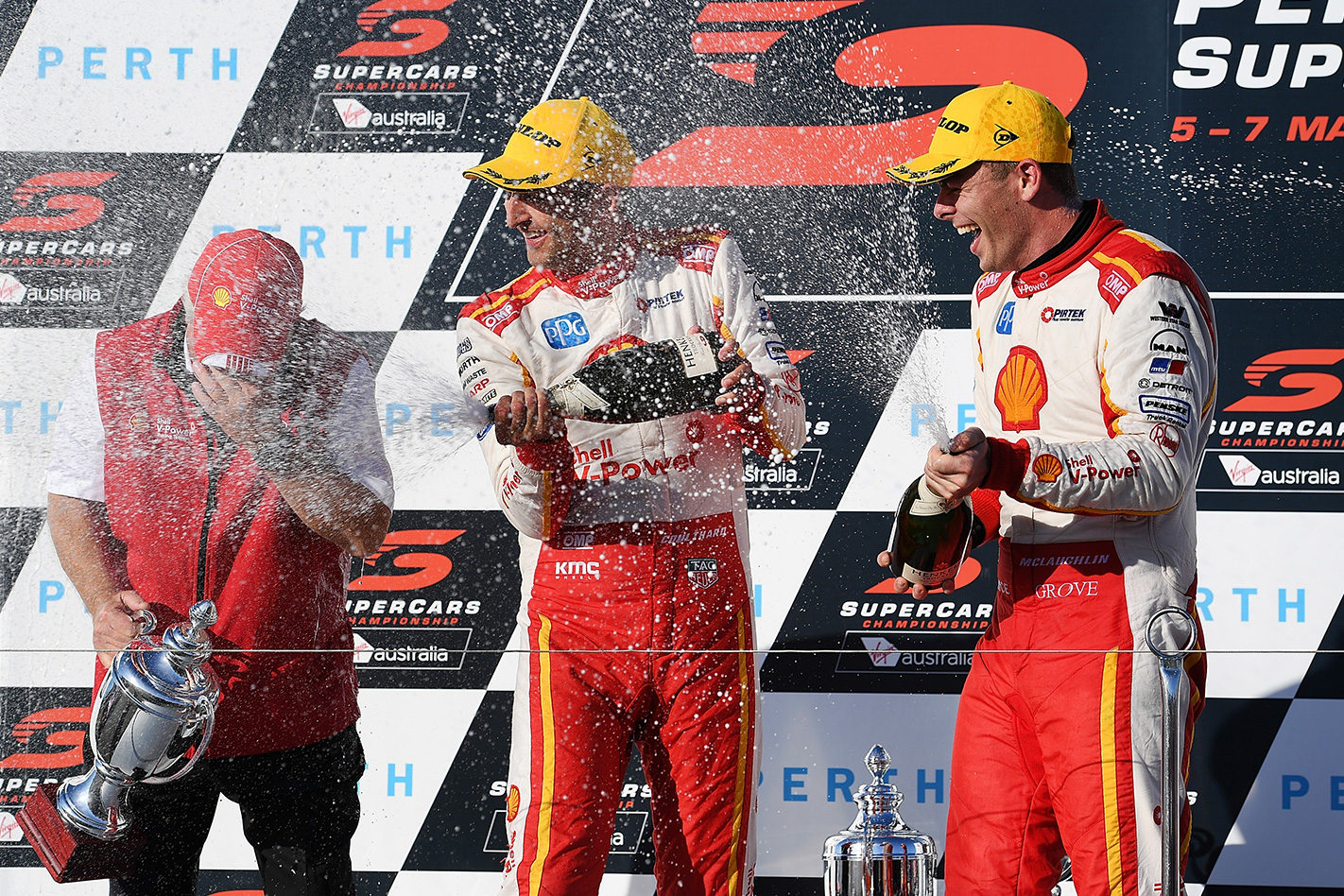
“I think the first step of building the real bridge here was Fabian coming on board last year,” Penske says. “He had to go through a time where we were building, so for him to stay cool and commit himself to be with us for the future was a big one.
He and Scott work so well together, and he’s really stepped it up. He was a winning driver before he joined us and there’s no question you’re seeing that with what he’s able to do this year. He’s a terrific asset to the team.”
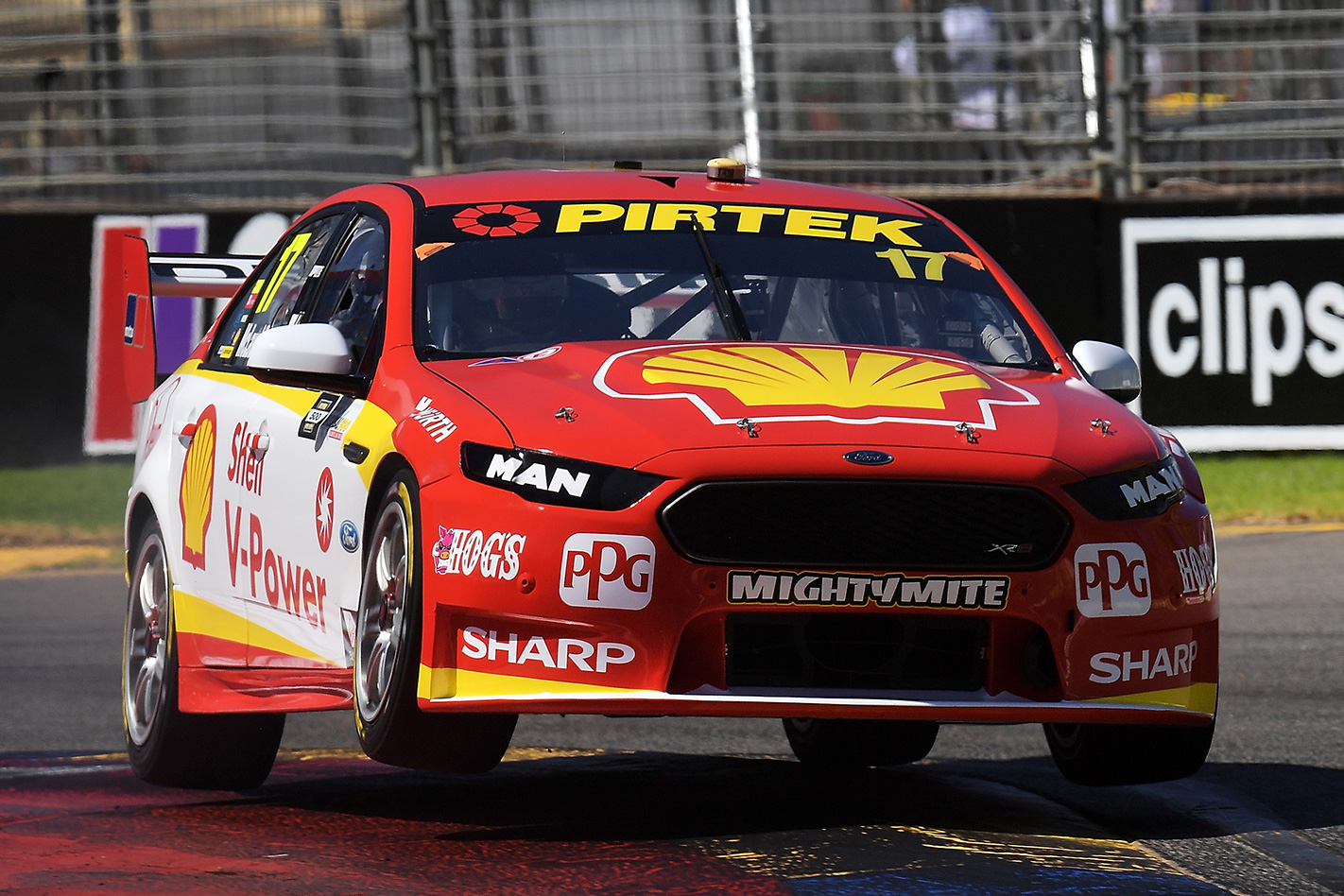
We’ve got some real good cars now, they both say that. We’ve been able to give them the pay-off of a good car and they both know how to win races when you give them the equipment to do it.”
Approaching his ninth decade, Penske has no plans to slow down, either in business or racing. He is fit and healthy, with the energy, enthusiasm and desire to keep going as the hands-on face of a multi-national corporation and an iconic race team, both of which feed his undiminished competitive spirit.
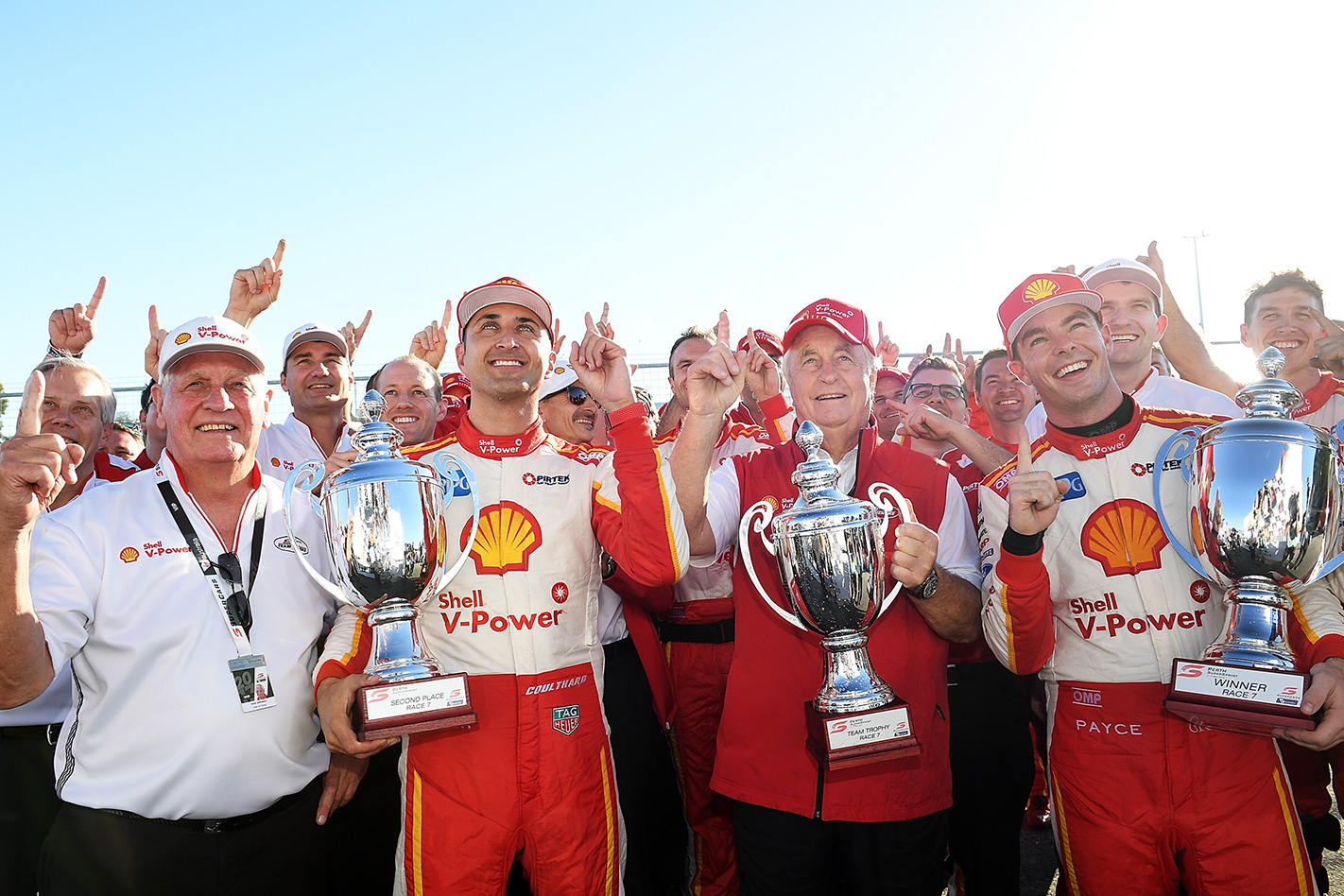
“You have to be able to respond to criticism, respond to failure and respond to the competition. I guess that’s what I’ll do as long as I can. It’s exactly what I love doing. And then to be able to come to the racetrack, this is my golf game or fishing trip.”
Roger Penske’s Racing Empire
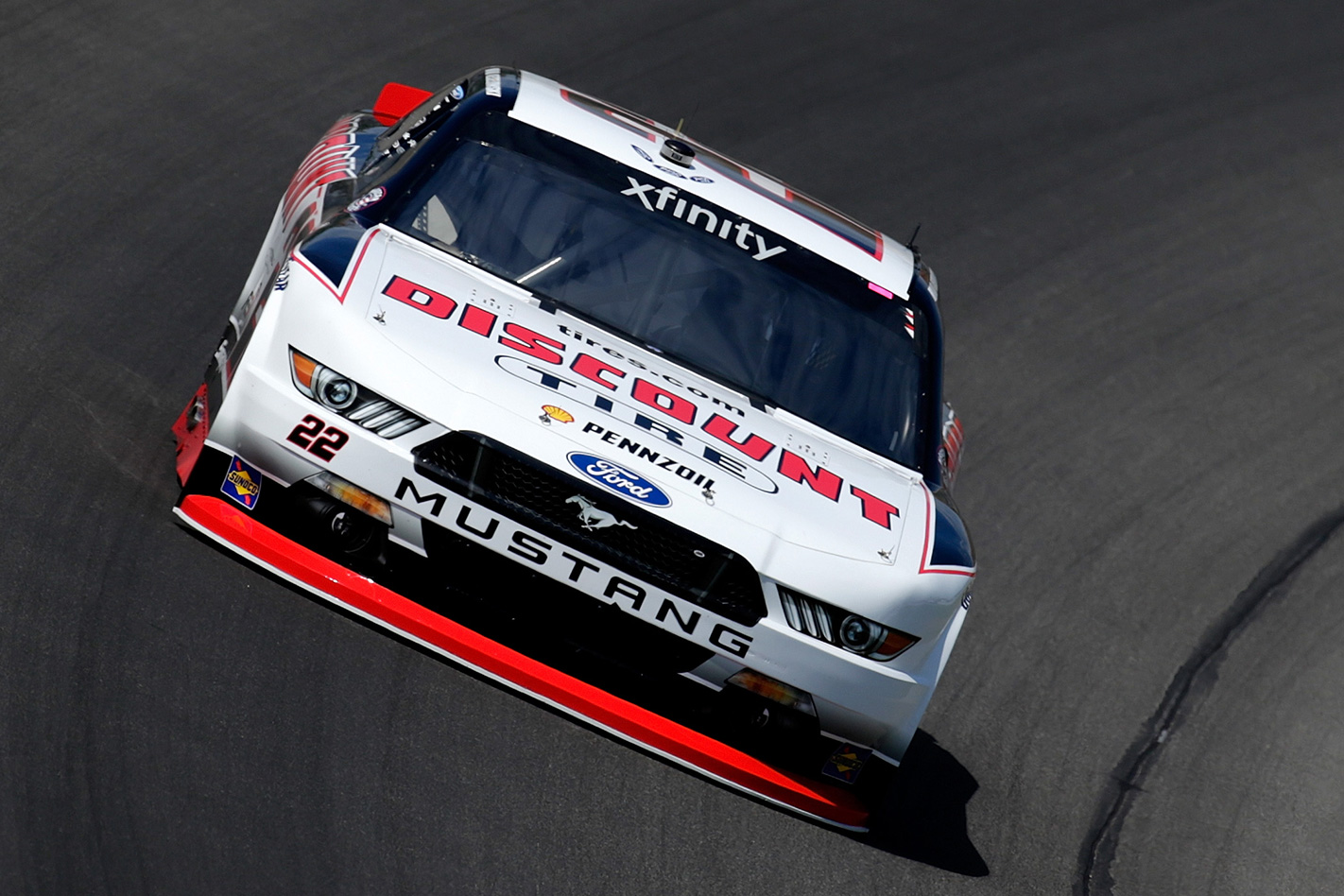
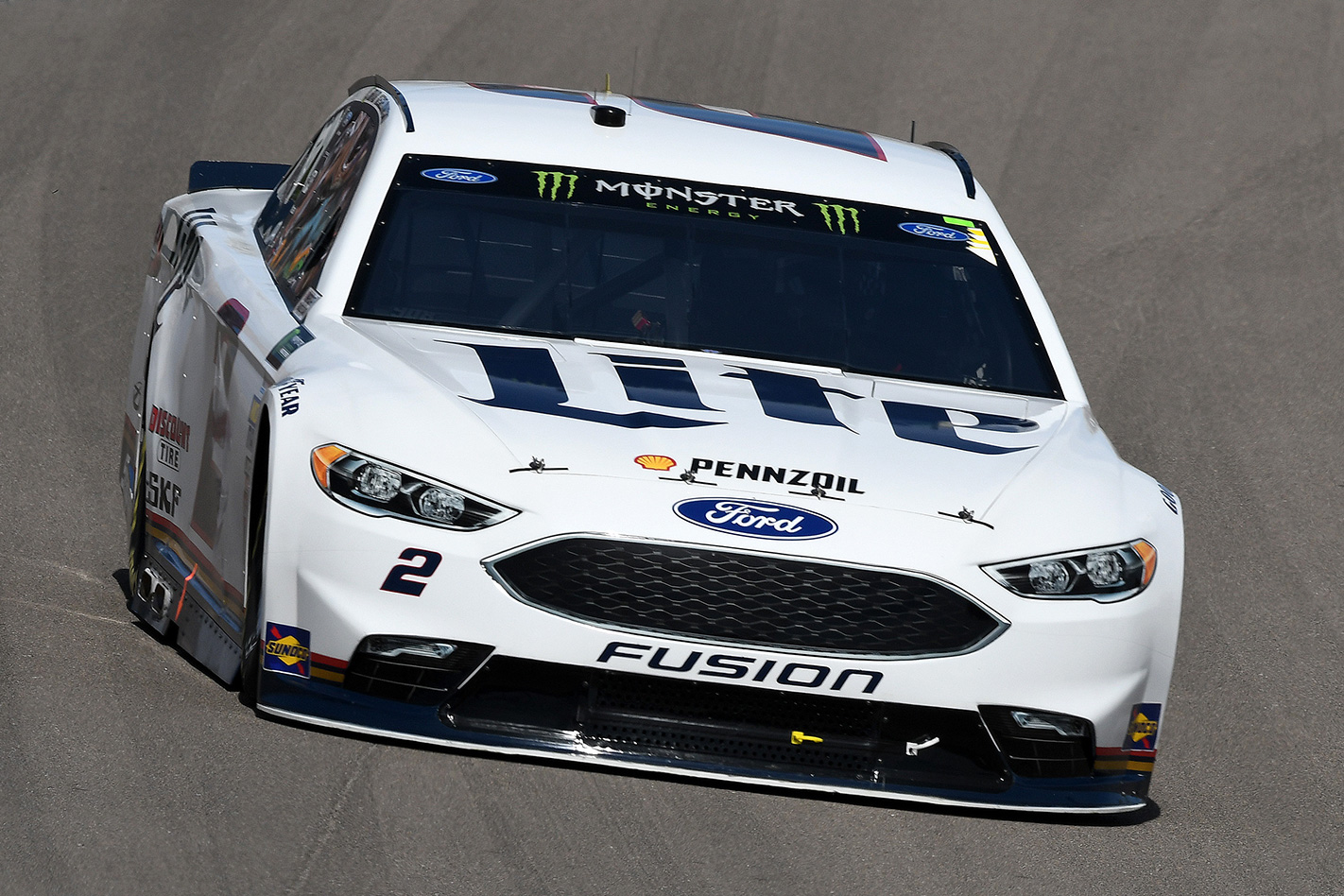
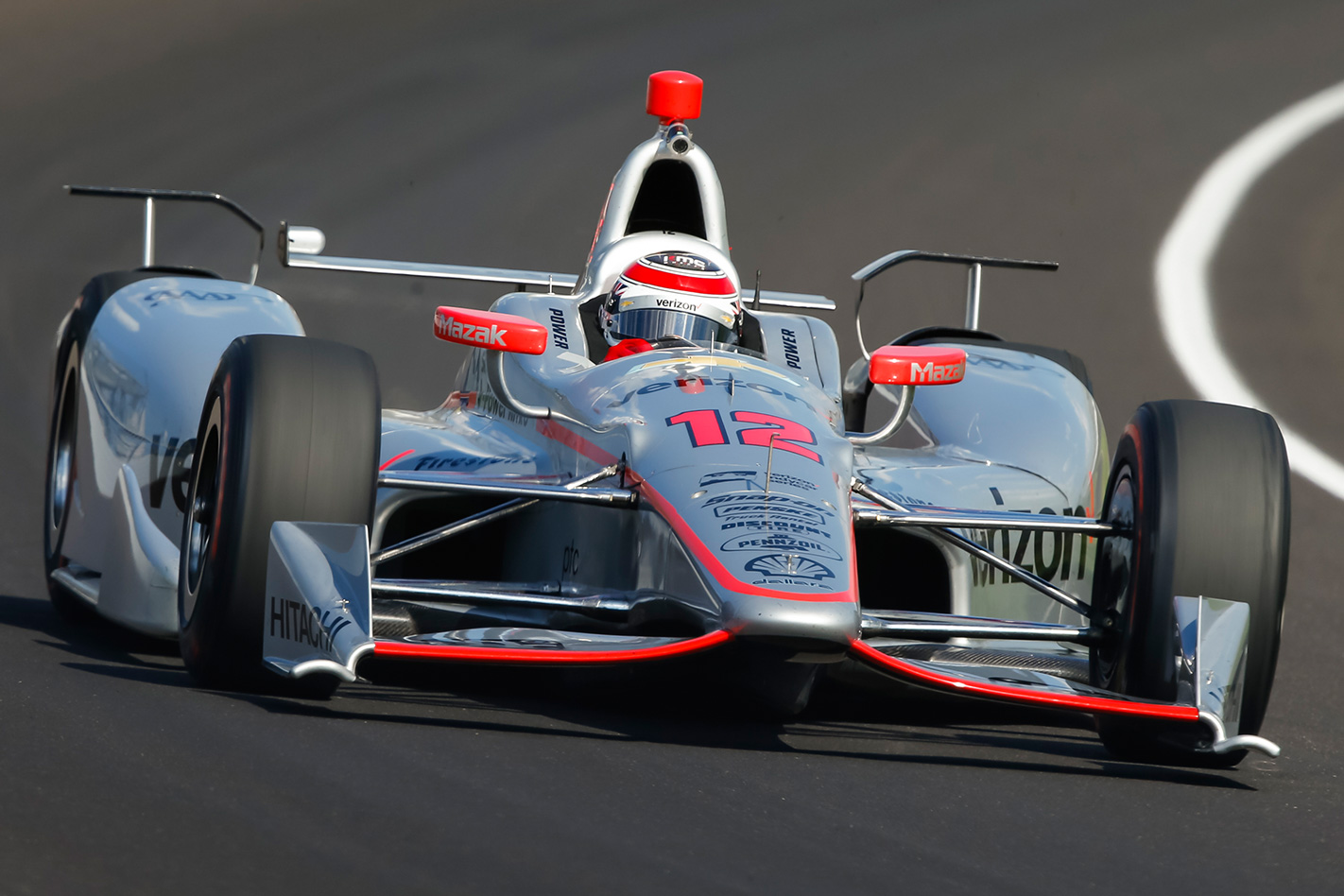
The Team Penske juggernaut has been in motion since 1966 and has scored wins in every catergory it has entered from Trans-Am, Can-Am, endurance racing, Formula 1, American Le Mans, NASCAR, IndyCar and now Supercars.
NASCAR XFINITY
NASCAR CUP
VERIZON INDYCAR
WHO doesn’t love a good barn find? The prospect of one day stumbling upon an unloved and forgotten gem in some remote and dilapidated shed, hauling it out and giving it a new lease of life is the stuff of fantasy for all classic car fans, but not beyond the realm of possibility.
So imagine how it would feel to not only unearth an example of Ferrari’s late-1960s 365 GTB/4 Daytona, a car that is already highly desirable in any of its incarnations, but a version that is thought to be completely unique.
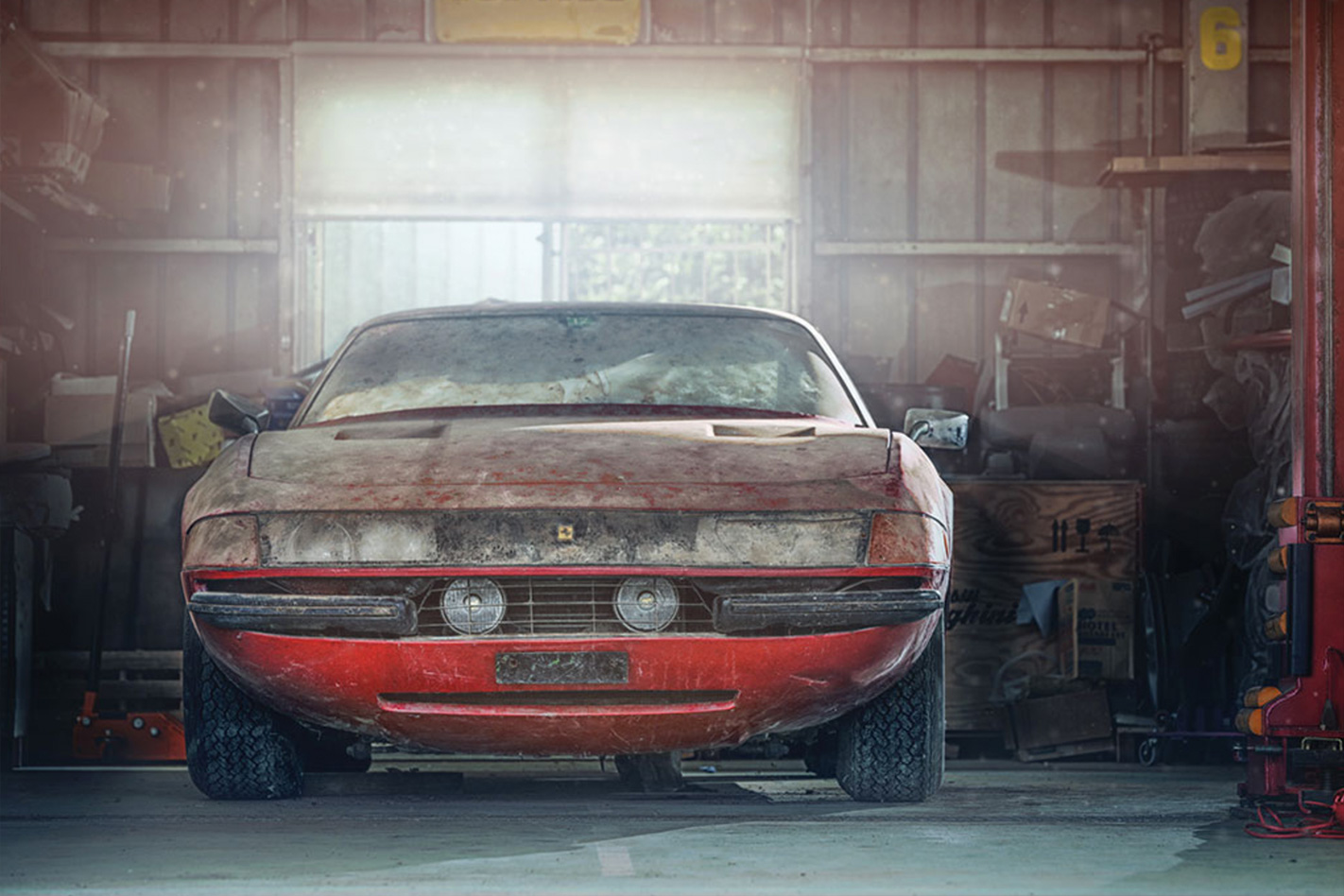
Hidden away in an unassuming Japanese workshop, the ultra-rare 1969 Daytona has not seen the light of day for nearly 40 years, but it is at last looking for a new home and will be auctioned by high-value car authority RM Sotheby’s early next month.
Guide price? Save yourself a bus ticket if you don’t have about $2.5m to spend, but we expect a car of such unimaginable exclusivity to fetch a far higher figure than the maximum guide estimate.
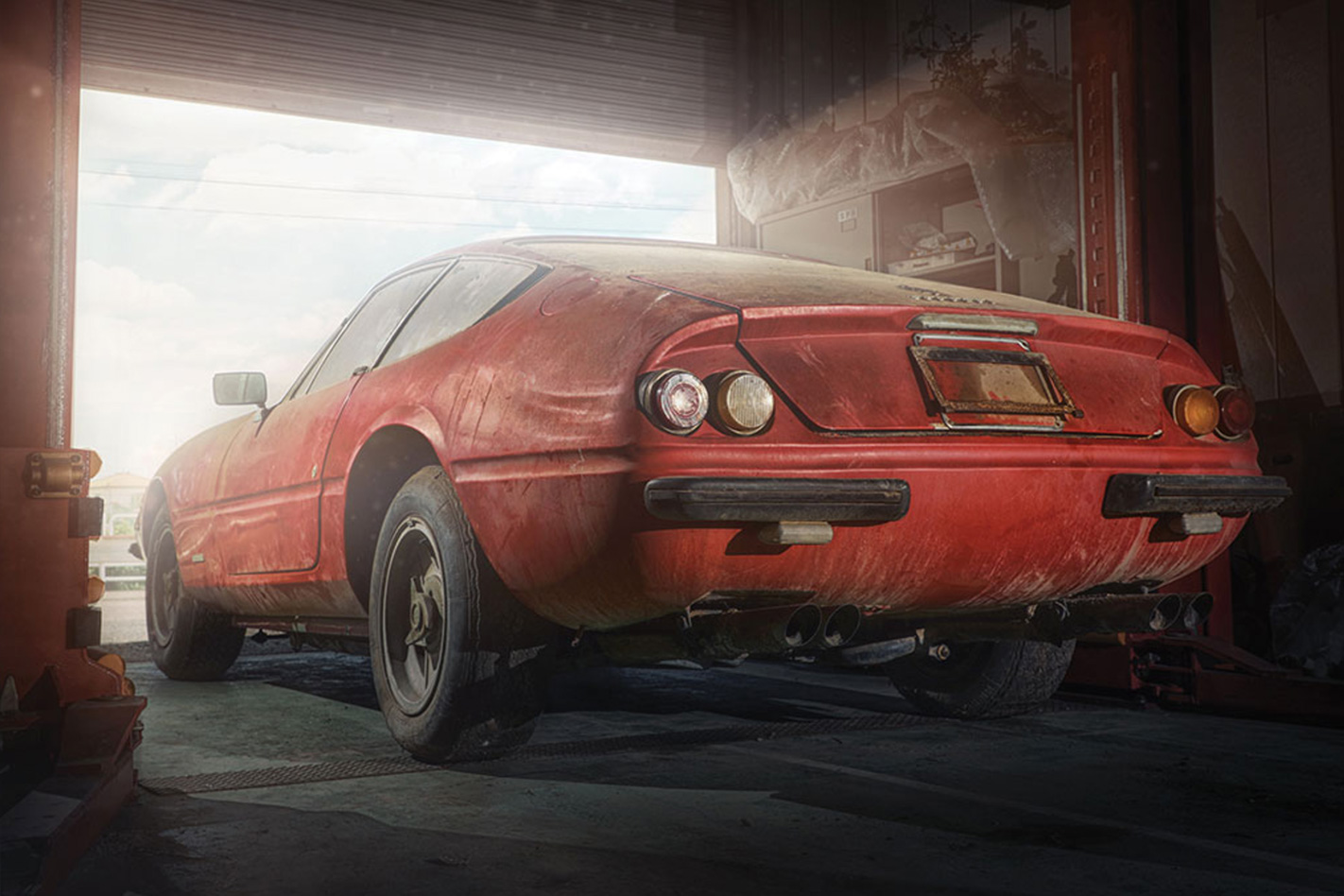
Unlike a majority of barn-finds, you won’t have to scuttle off and check its VIN plate or rego stickers with all the hard work conducted by renowned exotic Ferrari expert Marcel Massini. Engine and transmission numbers are matching (12653), as are the original and crucial alloy body panels, which were also stamped for authenticity.
Some rare finds have barely turned a wheel, but the Rosso Chiaro coupe has a distinct daily-drive charm about it. In the boot, its tool kit includes a soft mallet for fastening the spin-on wheel hubs that still bears the dents of many uses, although the spare wheel appears unused.
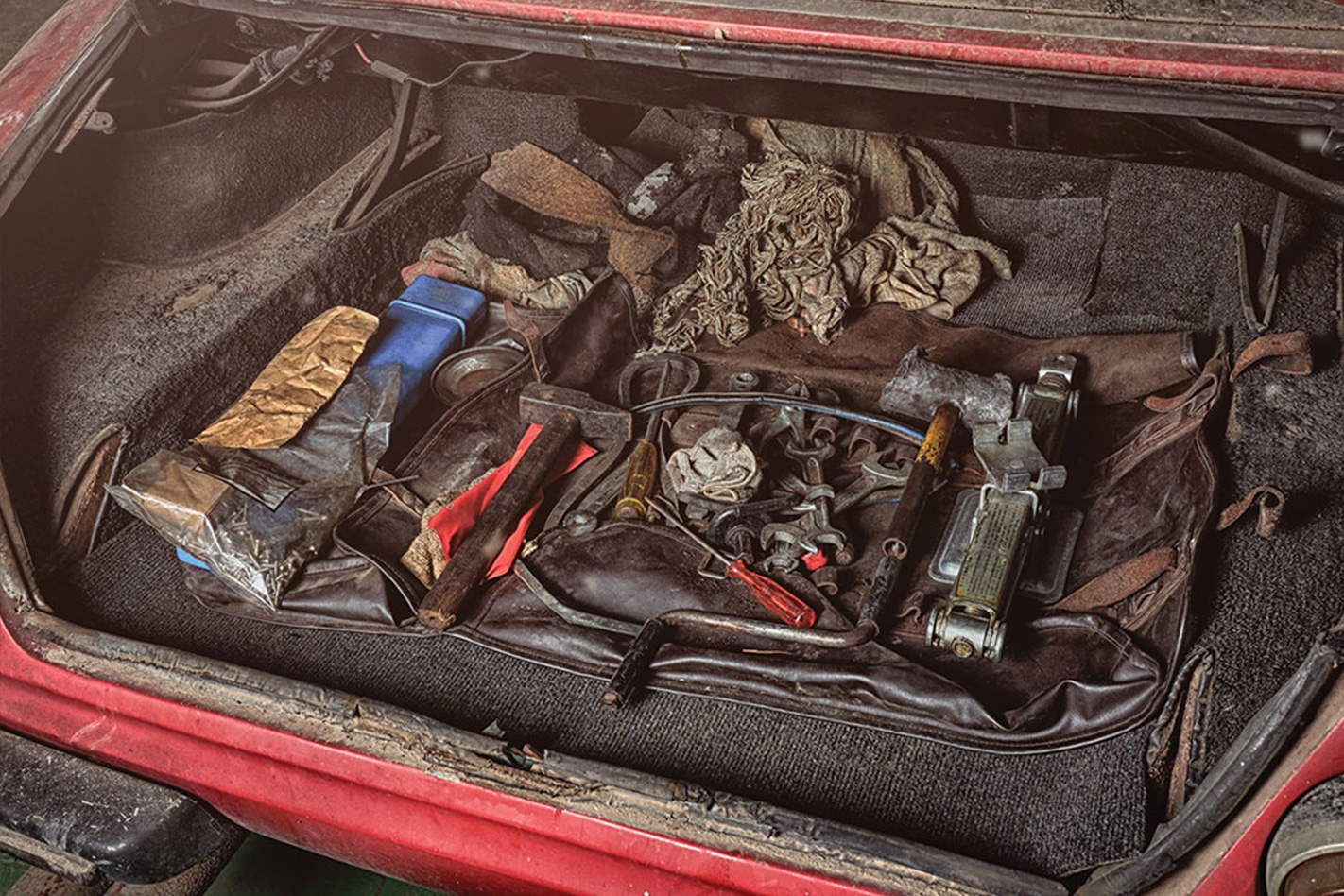
The car is in typical barn-find condition with a fine veneer of 40-year detritus, but the paint and body appears to be in surprisingly respectable shape and would sit proudly at the centre of even the most lavish car collection in either its unrestored condition, or after a loving restoration.
Either way, the lucky owner will never have to experience the automotive equivalent of turning up to the races in the same dress as someone else.
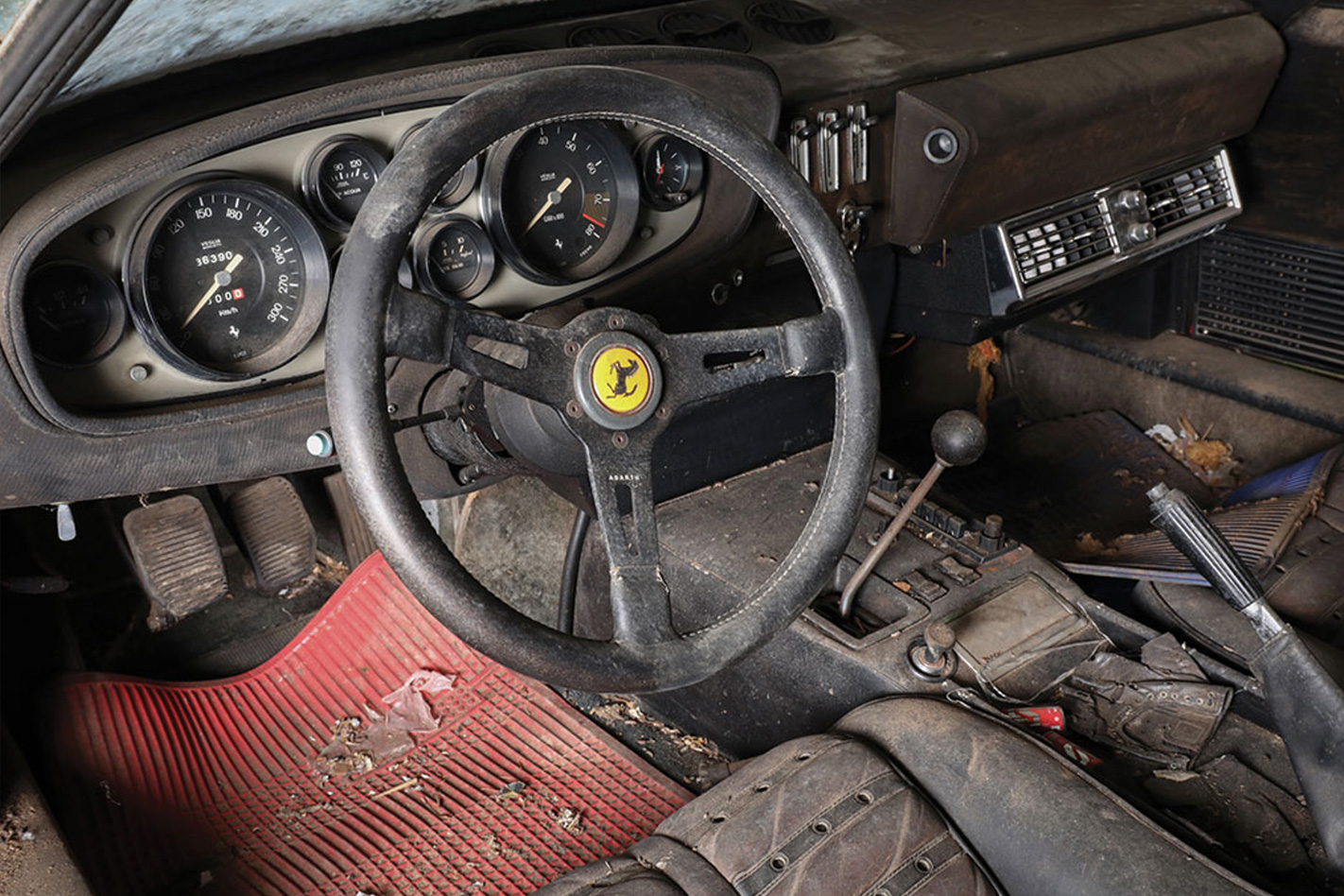
As if that wasn’t enticing enough, the car’s first owner in 1971 was a close friend of Enzo Ferrari and is displaying just 36,390km on its odometer. It’s fair to say it probably hasn’t been clocked.
