
THE HYPE surrounding Kia’s rear-drive, twin-turbo V6-powered Stinger GT continues to build as the car gets ready to launch in the third quarter of this year.
There have been rumours of a racing version entering the local Supercars championship, and the classic rear-drive, front-engine formula has plenty of people excited – particularly as its arrival will coincide with the Holden Commodore ditching the same tried and true format.
The car is yet to hit roads around the world, but here are a smattering of Stinger facts we already know.
Australians will get a unique soundtrack Kia’s local engineering team is hard at work preparing the Stinger for local conditions. But unlike most of Kia Australia’s localisation work, the engineers won’t just be focusing on ride and handling. Australians could be in line for a bespoke exhaust note when the 3.3-litre twin-turbo V6 lands Down Under to give it some added aural appeal.
Kia’s local development team is led by technical consultant Graeme Gambold, and corporate communications manager Kevin Hepworth said the vehicle dynamics expert has a free reign to fettle any part of the Stinger he sees fit.
“Gambold has permission to work on whatever he likes on this car,” he told Wheels
Hepworth explained that the engineering team was confident the Singer’s performance would appeal to Australian tastes, but there were ongoing “discussions” regarding a possible exhaust tune specific for Australian cars.
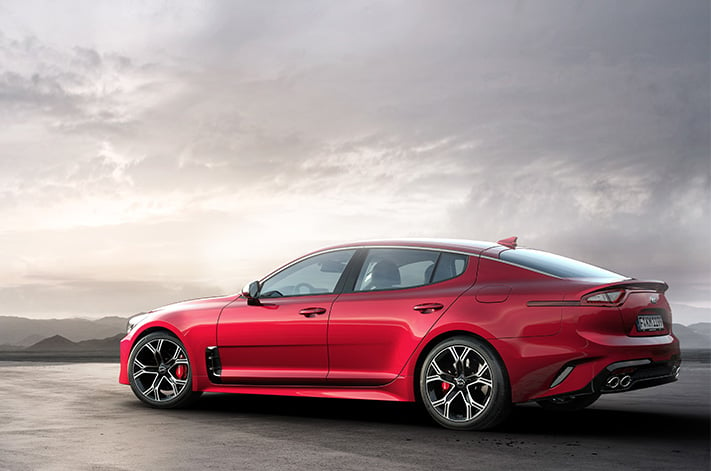
But if straight-line performance is all you care about, don’t worry, as the Stinger will launch to 100km/h from a standstill in just 4.9 seconds according to Kia. That makes it the fastest car in the Korean manufacturers history, and quicker than the Holden VF Commodore SS-V Redline, Alfa Romeo Giulia Veloce, and on pace with an Aston Martin V8 Vantage Coupe. As for top speed? Kia is targeting 270km/h.
Squad goals The Stinger is in its final stage of development, and the manufacturer says there is a 100-strong team still involved in preparing the car for the public. That includes putting the car through a rigorous winter testing regime in temperatures as low as -35°C. The men and women suffering those frankly ridiculous temperatures do get to slide the car on vast frozen lakes. You win some, you lose some.
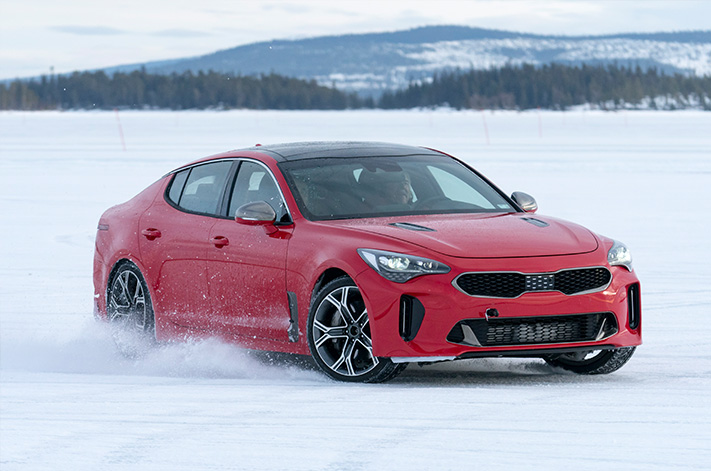
Get low In order to maximise sportiness of the Stinger, Kia has worked on perfecting a low-slung drivers position. Kia claims that in its lowest setting, the driver’s glutes are just 180mm above the road. It should make for an impressive go-kart-esque sensation behind the wheel.
On March 31, 1998, Porsche built the last air-cooled 911. This was a point of historical significance to some people, as it left the Volkswagen Beetle (still being produced in both Brazil and Mexico) as the last air-cooled rear-engine car on earth, right? Smile and say, “Wrong.” There’s still one other outfit holding the rear engine fortress – one that’s been at it longer than even Volkswagen, too.
Bouncing Czech was first published in Wheels in August 1998.
The other bit of interest is that the car we’re talking about is probably the most exclusive series-produced car on earth. Annual production comes to some 20 or so a year. And to further confuse, the price starts at roughly $78,000. Not $780,000, not $7,800,000 but $78,000! So what is it? Why a Tatra, of course.
 The Bouncing Czech – August 1998
View this article in its original format in the archive.
Nestled away in the eastern end of the Czech Republic is the Koprivnice headquarters and main plant of Tatra a.s. The company is probably better known worldwide for its range of fascinating heavy diesel trucks – big air-cooled diesel V8s, V10s or V12s with all-wheel drive and tubular backbone chassis featuring fully independent suspension – than for cars even though the outfit’s been building cars since 1897. The company hasn’t been without innovation in the cars either – early on, Tatra introduced the pedal-operated brake (despite outcries of the potential dangers of such a feature in the press of the day). By the early ’30s Tatra’s formula had become well-established – front-engine, rear-drive cars with horizontally opposed air-cooled engines and independent suspension on all wheels (even if it was via swing-axles at the rear end). In 1933 that was to change.
With a top speed of 140km/h it was fast by the standard of the day, even though the kerb weight of roughly 1800kg meant it was no lightweight. Subsequent versions had larger and more powerful engines (3.4 litre), and handling that was even more suspect.
In 1937 the 87 was introduced, notable for having weight pared by more than 400kg, a new engine which reverted to a 3.0 litre capacity, as well as a wheelbase reduction to improve handling. With a top speed just shy of 160km/h, improved dynamics were probably a good idea.
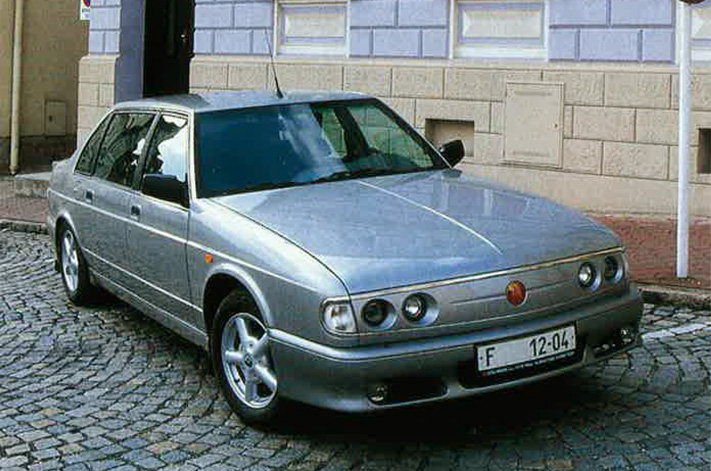
Tatra kept building air-cooled rear-engine cars throughout Czechoslovakia’s ‘experiment’ (as some of the people we recently talked to referred to it) with socialism to the present day. Tatra’s latest model, the T700, is a heavily facelifted version of the Vignale-styled T613 of 1970.
The mechanical package is pure Tatra; an air-cooled twin cam V8 displacing 3.5 litres and developing 147kW at 5700rpm, and with peak torque of 300Nm coming on stream at 4000rpm, and it’s coupled to a five-speed manual transaxle. No automatics here. The T700 diverges from Tatra tradition solely through the use of Bosch fuel injection. One of Tatra’s engineers mentioned that a more powerful 4.3 litre version of the eight is under development, with planned introduction sometime in 1999. Hey, 4.3 litres. Same as a Mercedes E-class.
Yes, but in fact the Tatra is closer to an S-class than it is to Mercedes’ mid-ranger, at least as far as size is considered. Whoever said that size doesn’t count never worked on the T700. Looking at the Tatra from a distance, the proportion belies the T700’s mass, especially if there are no people near the car.
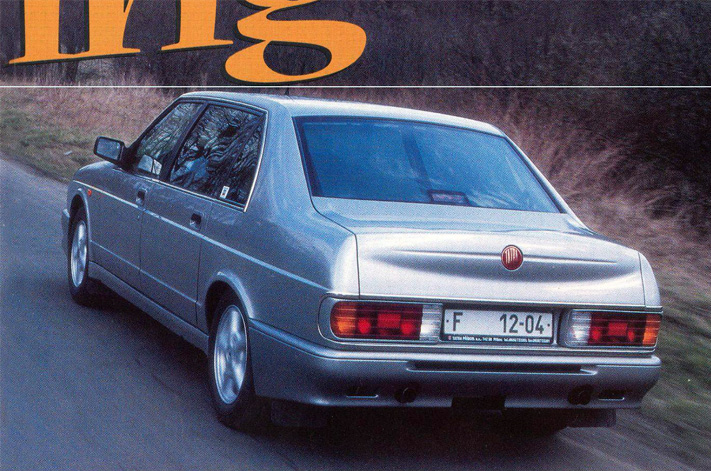
It’s difficult to realise that the wheels are 16-inchers, for example. Riding on a 3130mm wheelbase (a mere 20mm shorter than Tatra’s first rear-engined car of a mere 65 years ago) the T700 spans an impressive 5135mm from bumper to bumper and, as a side view shows, a lot of the car’s length is in the rear compartment.
Because the ‘h’ point is relatively high in the rear (you are sitting atop the petrol tank, forward suspension pick-up points and engine mounts – higher than the front seat occupants) and because there’s a lot of glass (including quarterlights in the C-pillars) the cabin’s airiness makes the T700 seem even roomier than it is. In terms of dimensions the length, legroom and width are sinfully good. Seat comfort is also well above the norm with plenty of lateral and thigh support. Tatra also offers electrically adjustable Recaro rear seats as an option. Where the big Tatra comes up short is with headroom. Lanky Mr Robinson found that the high ‘h’ point meant that his scone was getting close to the roof. Real close. Entry and exit through the mile-long rear doors is a snap for any full-blooded humanoid.
Exterior styling is based on the Vignale-styled 613 and is professionally done. The six-light upper means there’s a certain late ’60s look about the centre body but the car works pretty well for a large, rear-engined sedan. Not that there’s a lot of competition in the genre.
As you’d expect for a luxury car the interior fittings are pretty good. The T700 we got to drive had the basic cloth interior (leather’s available as an option) but with enough walnut on the instrument panel to make you think you were in something British. The workmanship was generally good, though it could be selectively spotty. The seats, for example, are superbly done with bloody perfect French seams and the sort of needlecraft you’d expect in one of those Parisian haute couture dresses with a five figure price-tag. Then you take a glance at the dashboard and you notice the leather covering for the dashboard (and it’s real leather, not vinyl) doesn’t seem to be quite so meticulously crafted. There are a couple of unique touches (surprise, that) like steering column stalks controlling lighting and wipers which look – and feel – like something from the Honda parts bin, and lashings of blue velvet (maybe those at Tatra are all David Lynch fans) around the instrument binnacle and HVAC registers. The air-con’s standard and it’s of the climate control variety.
Dip the clutch (which isn’t particularly heavy but has a dead feel), slip the shifter into first (which is down and to the left), apply a touch of throttle as the clutch is lifted, and we’re on our way. Gearchange effort is reasonable and more precise than we were expecting – no mean feat considering the distance back to the transaxle.
The steering is power-assisted (the power steering pump and air-conditioning compressor sit behind the engine about as far aft in the Tatra as anything can without residing on the bumper) with surprisingly good feel and reasonable weighting when puttering around town. Performance is better than expectations when you realise that the T700 we drove was tipping the scales at nearly 1900kg and is moved by 147kW. That’s a power to weight ratio a few grams below the 13kg threshold. That’s $14,000 econobox and Toyota Prado territory. Still, Tatra’s manufacturer’s figure of 10 seconds from 0-100km feels reasonable as does the claimed 230km top speed.
But cruising at 230km in the Tatra might require balls of titanium The T700 feels stable and pleasant around town, but as speed increases it becomes harder and harder to ignore the fact that this is a heavy rear-engined car. Tatra’s Koprivnice main office and works has a large test facility (built primarily for the company’s large trucks) but there’s a moderately banked circular track (laid across the slope of a hill with definite ‘uphill’ and ‘downhill’ sections) where we got our first taste of this Czech treat And it was, er, memorable.
Archive: Holden SS Group A versus HDT Brock Group Three Comparison Review
As speed increases the nose of the T700 lightens appreciably. Up to and including the 150km/h threshold, all is fine. More or less. But as you approach and then exceed the old ton the Tatra starts to get light in the nose and heavy in the tail. The downhill sections of the track were especially interesting. This writer and colleague Robbo seemed to experience comfort levels in the Tatra that rated below that of genteel British cameraman Ian Dawson, who also took a turn at the wheel. Perhaps Dawson’s period of time as a Volvo owner has made him feel indestructible.
Out on the road the car also starts to feel familiar in an unfamiliar way when you put the boot in on a twisty section. Sort of like a two-tonne Porsche 911, if such a thing is imaginable. It’s not treacherous as much as it is slightly spooky and with time we’re certain that you’d get used to the Tatra, just like an old 911.
Production of the T700 runs at about 20 cars per year making this one of the most exclusive series-produced cars on earth. At Tatra, T700s are hand-built in the R&D shops. Sadly there’s no factory-sponsored export of Tatras to Australia planned. There was an abortive attempt to sell the T700’s predecessor in the UK a few years back – the British importer-to-be even provided the seed money for engineering right-hand drive as well as the Porsche-developed injected version of the Tatra bent eight and some suspension tweaks to tame the beast, plus the fellow who designed the Tatra V8 went to work at Porsche afterwards. But it all came to nought. It’s certainly an uncompromising car – which means it isn’t for everybody – and the name, when it is known, carries some negative baggage – Czech Republic President Havek won’t ride in one because the old Tatras were used by Czechoslovakia’s secret police, and in his former life as a political dissident he got chauffeured in them.
Sure, the Tatra’s a big, heavy rear-engined car with what might be charitably described as ’interesting’ dynamics. Nonetheless, we’re glad it’s there enriching the global car park If only at the rate of 1.67 T700s a month.
A Chinese electric performance car manufacturer has torn the previous Nordschleife record for a production car apart after its EP9 set a lap time of 6:45.9.
The car, with separate electric motors for each wheel (making it AWD), boasts a hefty megawatt of power, or 1000kW.
Because of this, and its 1480Nm of torque being available at all times, the EP9 has a claimed 0-200km/h of 7.1 seconds, and a top speed of 313km/h.
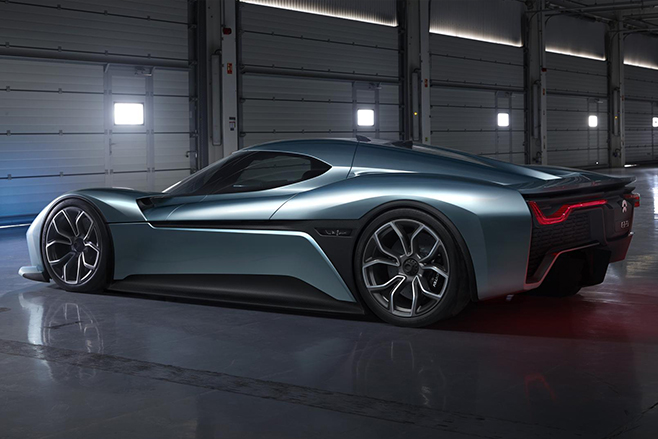
Nio head of performance & FE team principal Gerry Hughes says weather conditions held the car back on its first lap attempt a short while ago.
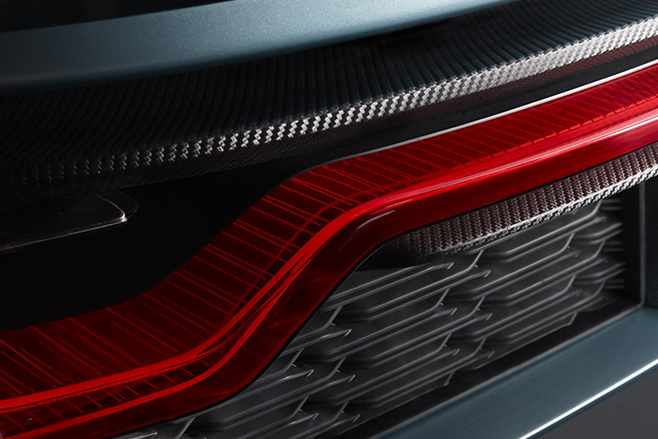
“In the inclement weather that the Nürburgring Nordschleife is known for, the EP9 completed two laps of the 20.8km ‘Green Hell’, one of which was in 7:05.12, beating the previous EV lap record, making it the fastest electric car in the world.
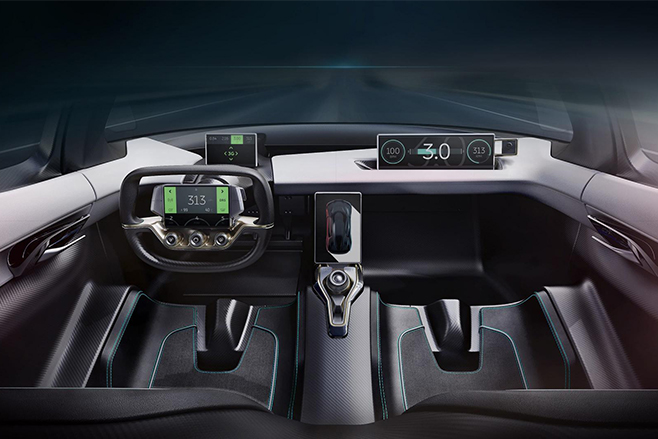
Nio will build 10 more EP9s built to order and priced at $1,992,000 AUD, and is also aiming to release a fully autonomous electric vehicle in the US market by 2020.
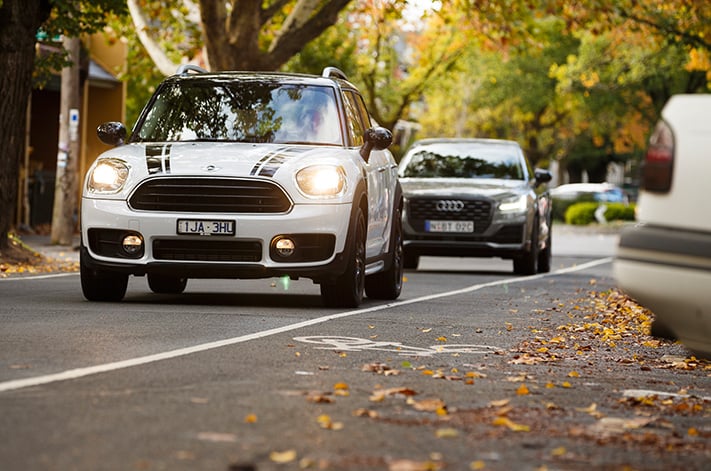
It’s Jimmy Choo desert boots at dawn, as the established Mini Countryman stares down an all-new interloper in the suave shape of the Audi Q2 for the hearts and purses of premium compact SUV buyers.
One of the first players in this field way back in 2010, today’s Countryman is actually the new-from-the-ground-up second-gen F60-series launched in March. Larger and roomier in every dimension than before, it brings a hefty boost in standard equipment to help offset a substantial $3400 price increase for the base Cooper auto from $39,900.
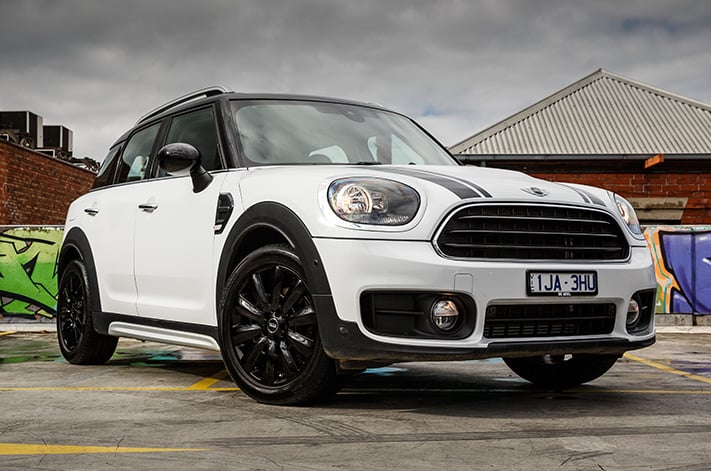
That’s still less than what Audi charges for pint-sized Q2, which starts off from $41,100 for the 1.4 TFSI COD S-tronic Design we requested, or $47,800 for the limited-run Edition #1 we ended up receiving.
Using a variation of the MQB modular architecture underpinning the current Audi A3 and Volkswagen Golf among a slew of other VW Group vehicles, the Q2 is meant to be a sort of coupe-like crossover rather than a family-focused premium carryall, and is aimed squarely at the massively successful Mercedes-Benz GLA, as well as the Infiniti Q30. And, of course, the Mini SUV that started it all.
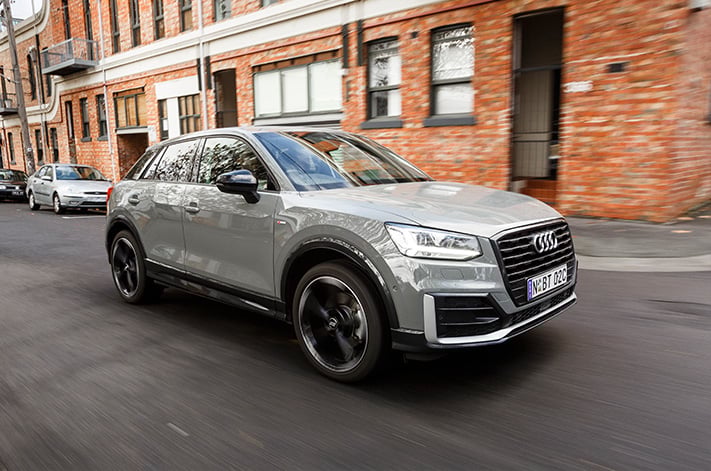
PRICE AND EQUIPMENT – Winner: Mini Countryman Cooper
In isolation, the Q2 Design seems reasonably well specified, with AEB Autonomous Emergency Braking, automatic self parking, reverse camera, satellite navigation, dual-zone climate control air-con, leather upholstery, Apple CarPlay/Android Auto and 17-inch alloys.
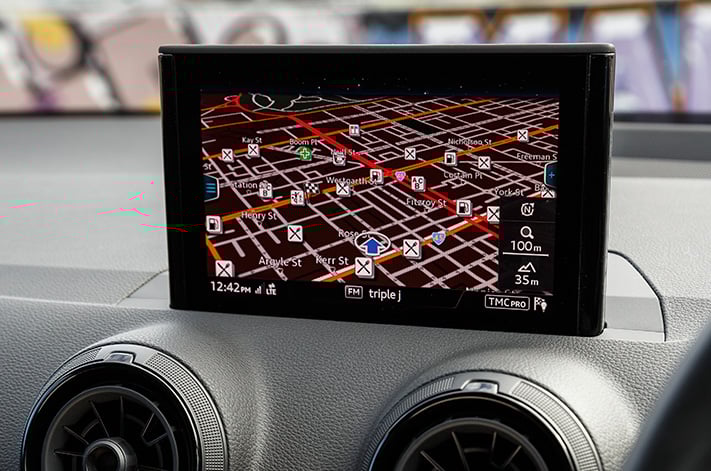
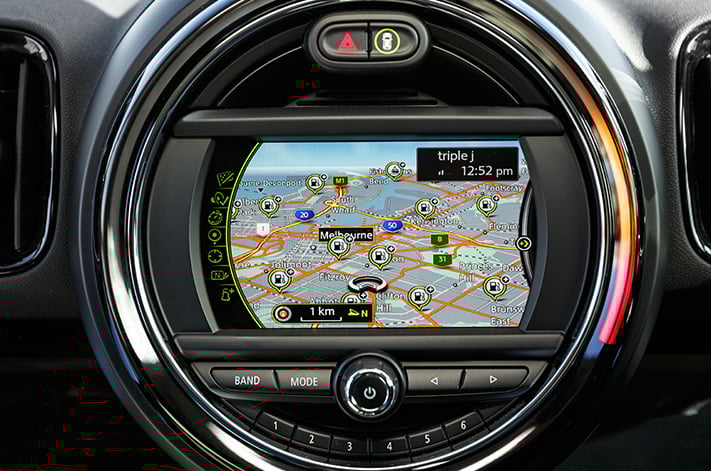
However the Countryman offers plenty more still, and for less, including the adaptive cruise control with stop-and-go function, Forward Collision Warning and automatic high-beam system tech that Audi charges another $1600 as part of an Assistance Package (fitted to our car). And then the base Mini blitzes its compatriot for features like a powered tailgate, keyless entry, push-button start, DAB+ digital radio and 18-inch alloys. Note though, the tyres are runflats so there is no (space-saver) spare as in the Audi.
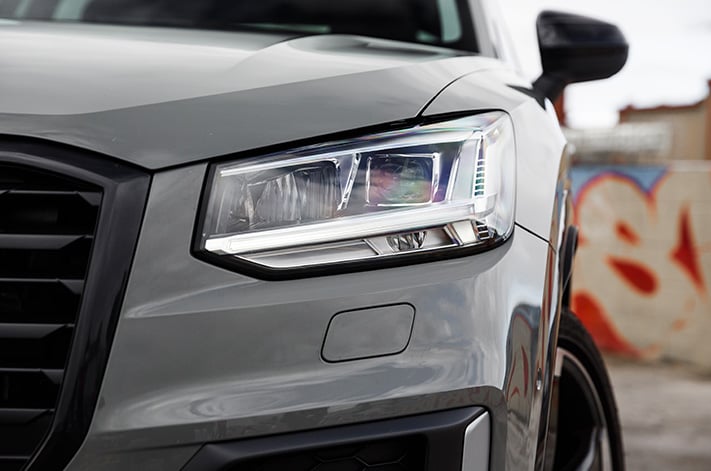
At least the Edition #1 is alone here with an LED exterior and interior light package, sequential-action indicators, privacy glass, 19-inch alloys and some additional fancy trim inserts, although its front sports seats and 40/20/40 folding rear backrest are also Cooper inclusives. The Audi just cannot win the spec battle. BMW reckons there’s $6500 worth of extra kit over the previous model. Maybe it should be called the Maxi Countryman!
Both Germans offer a three-year unlimited kilometre warranty.
INTERIOR AND VERSATILITY – Winner: Mini Countryman Cooper
The Q2 wins hands-down as far as interior aesthetics and quality are concerned, with a designer austerity that’s as visually seductive as it is lushly tactile and richly aromatic. Definitely one for the sensory pleasure seekers.
Gorgeous graphics, clear markings and beautiful switchgear highlight an obsessive attention to detail that enhances what is actually a top-class effort in terms of ergonomics and practicality. That the Audi excels in the mundane stuff like occupant space, seat comfort, driving position, ventilation and storage is quite a feat.
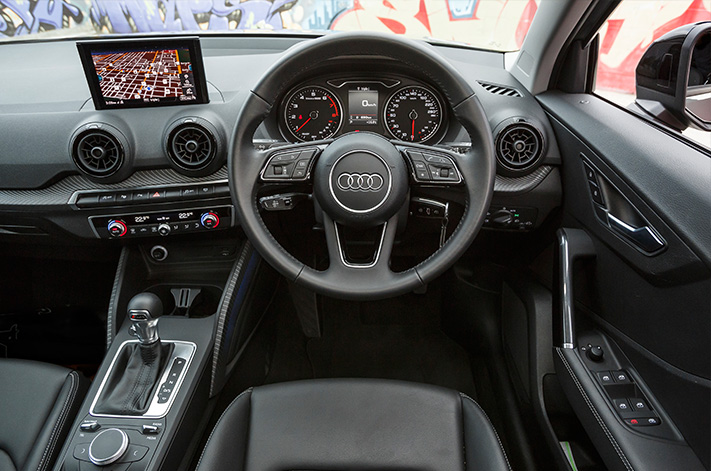
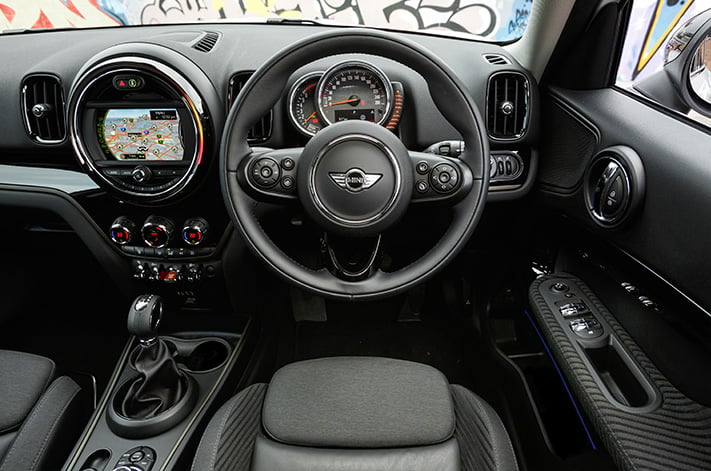
By comparison, the Countryman’s dash is an obvious, busy retro pastiche that borders on being garish. Well made and easy to navigate for sure after a brief period of familiarisation, it has none of the Q2’s charm or sophistication. Important stuff at the petite premium SUV segment.
What the Mini does maximise is space and utility (thanks in part to a 75mm wheelbase stretch over the old version, making the Countryman’s 69mm longer than the Audi’s), on finely supportive seats, front and rear. That back row’s 40/20/40 bench slides and reclines individually for extra versatility, with ample comfort and storage. Three adults could fit back there without too much bother while the Q2 would be a squeeze. Central air outlets, better vision all-round and super-easy entry and egress underline the Cooper’s function-over-form focus.
Further back still, both boots are surprisingly large, though again it’s the Countryman that has the most bountiful cargo area with the biggest and deepest floor. Volume capacity is rated at 450 litres against the Q2’s 405 litres.
Finally, no matter where you are seated, the Mini is substantially quieter as well as far more comfortable to ride inside – sealing the deal for the way better-equipped Cooper from an everyday useability point of view.
ON THE ROAD – Winner: Mini Countryman Cooper
The Q2’s standard 1.4-litre direct-injection four-cylinder petrol turbo is just terrific, providing a strong, steady and sweet stream of thrust right up through the rev range. Paired to a seamless seven-speed S-tronic dual clutch transmission, there is initial step-off hesitation, but after that, and especially when the lever is slotted into ‘S’ for Sport, it perfectly fits the performance SUV image that the Edition #1’s big wheels and fat tyres promise. Just what you’d expect from something wearing the four rings.
No qualms about the Countryman’s 1.5-litre turbo triple either, which feels like the little engine that could, with its unexpectedly punchy acceleration and lively mid-range oomph. There isn’t much between the two to about 80km/h, actually, with the Cooper keeping the Q2 honest, but after that the latter’s extra cylinder overcomes its circa-100cc capacity deficit to start pulling away. Decisively.
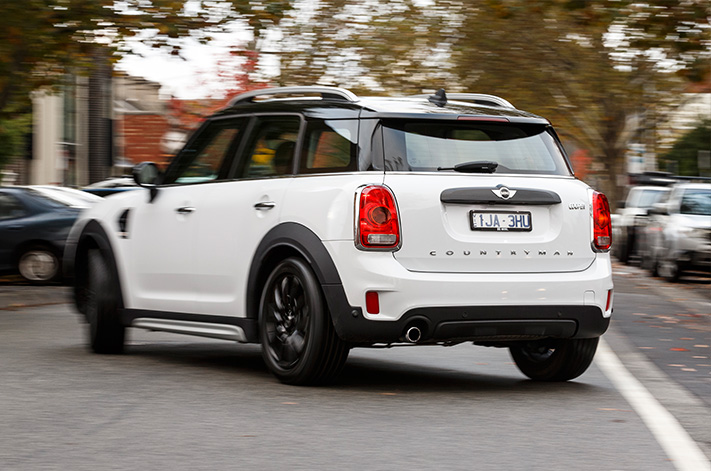
Curiously, the Cooper’s six-speed torque-converter auto is a tad sluggish shifting up, resulting in an odd robotised manual-like delay between ratios. Note, too, that – unlike the Audi – there’s a rorty thrum to the Mini’s exhaust note as revs rise that’s in stark contrast to the sewing-machine slickness of its rival. Remarkably, there was just 0.2L/100km in it once the real-world fuel figures were tallied up – in the Q2’s favour. Again, both are awfully close.
Where the two begin to really converge is in dynamic behaviour.
Predictably the Q2 is the sportier of the duo, with fast and precise steering for sharp, taut handling characteristics. The front end sticks doggedly to a chosen line, providing excellent feedback and control. From behind the wheel, there’s just no way the Edition #1 on 19-inch rubber feels like an SUV. More like a spicy hatch.
The flipside is a firm suspension tune that turns from busy to terse on anything other than smooth surfaces, undermining occupant comfort in the process. Like our passengers, our car was crying out for adaptive dampers, so we strongly recommend these. Plus, there’s just too much road and tyre noise droning in, particularly from the (torsion beam) rear end. This is a vocal little runabout.
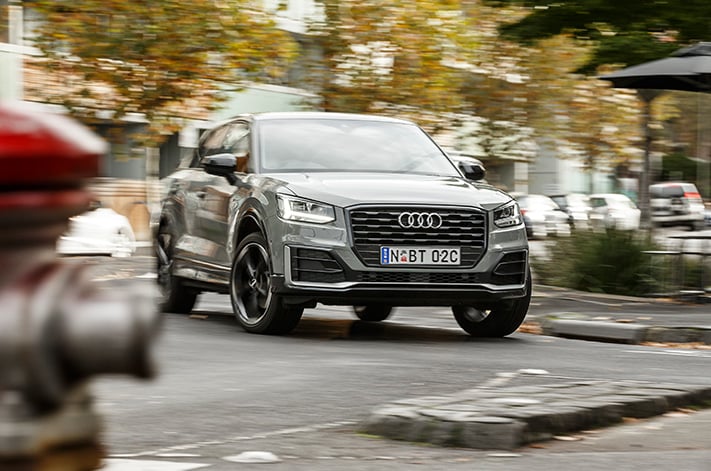
Meanwhile the Mini prioritises comfort to its eternal benefit. The steering isn’t quite as eager as the Q2’s, and there is noticeably more body movement through corners, but the Cooper still turns in with deft enthusiasm, backed up by excellent grip. Its (multi-link) rear end will gently push the front through a corner in a fluid arc if the driver’s on it. And the ride, not always settled or supple admittedly, just smothers away bumps compared to the Audi.
About the only real criticism we can level to the Countryman is that its handling feels like an SUV that’s been tuned to seem Mini-like, rather than the previous version which was the Mini of SUVs.
VERDICT – Winner: Mini Countryman Cooper
Have no doubt that the Q2 Edition #1 is absolutely on-brand. Gorgeous proportions. Stunning detailing. Advanced tech. Searing powertrain. Exceptional efficiency. Athletic agility. And a premium price tag to match. If the above traits matter most, this is your car.
But while we lament the… err… gentrification of the Mini’s one-time raffish edginess – most noticeable in the latest Countryman – it is the better equipped, more comfortable, roomier and more practical of the two. And the Cooper’s still great fun, almost as gutsy and toweringly capable dynamically.
A small but hard-earned victory for the Mini.
Compare the Audi Q2 Edition #1 and the Mini Countryman Cooper here!
SPECIFICATIONS
Model: Audi Q2 Edition #1
Engine: 1395cc 4-cyl, dohc, 16v turbo
Max power: 110kW @ 5000-6000rpm
Max torque: 250Nm @ 1500-3500rpm
Transmission: 7-speed dual clutch
Fuel use: 5.6L/100km
Kerb weight: 1355kg
Price: $47,800
Model: Mini Countryman Cooper
Engine: 1499cc 3-cyl, dohc, 12v turbo
Max power: 100kW @ 4400-6000rpm
Max torque: 220Nm @ 1400-4300rpm
Transmission: 6-speed automatic
Fuel use: 6.0L/100km
Kerb weight: 1390kg
Price: $39,900
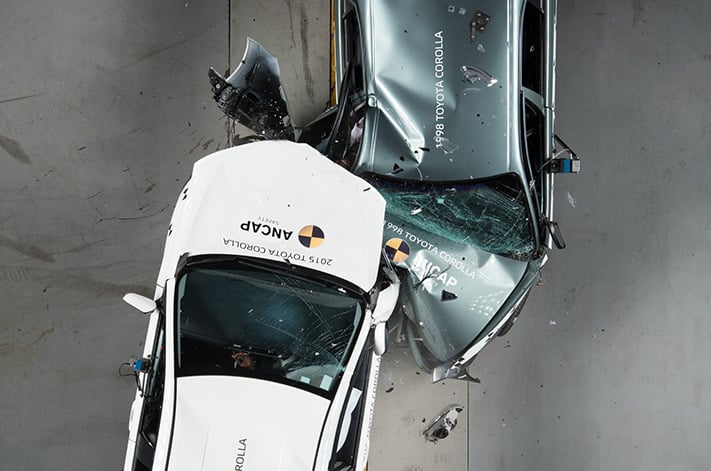
Older cars crash more, statistics show. But as Australia’s road safety watchdog has demonstrated in a chilling new-versus-old crash test of Australia’s best-selling passenger car, the outcome is much, much worse for the older car.
The Australasian New Car Assessment Program (ANCAP) is an independent road safety group charged with building awareness about the crashworthiness of cars on our road. It has taken two base-model Toyota Corolla five-door hatchbacks – one built in 1998, and the other in 2015 – and smacked them together in a demonstration of just how much passive safety has advanced over 17 years.
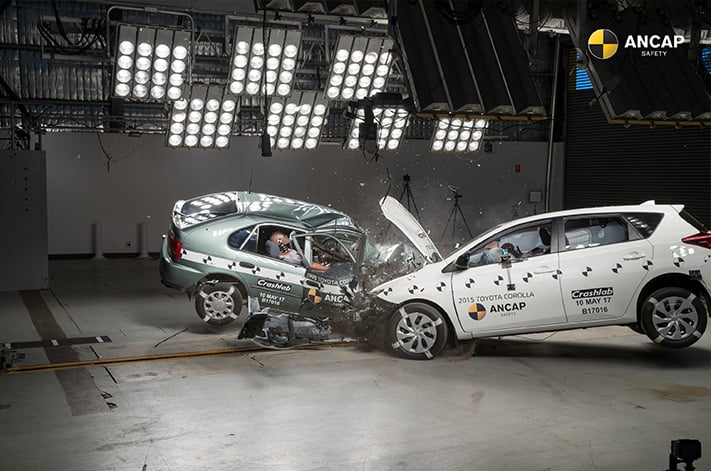
The 64km/h speed at which the test was conducted represents what ANCAP calls a small overlap, the most common type of crash where one vehicle starts to turn into the path of another.
Slow-motion footage from both sides of the crash test reveal two very different outcomes.
It wasn’t good for the 1998 Toyota Corolla. “The older car sustained catastrophic structural failure with dummy readings showing an extremely high risk of serious head, chest and leg injury to the driver,” ANCAP chief executive James Goodwin said. “It achieved a score of just 0.40 out of 16 points – zero stars.”
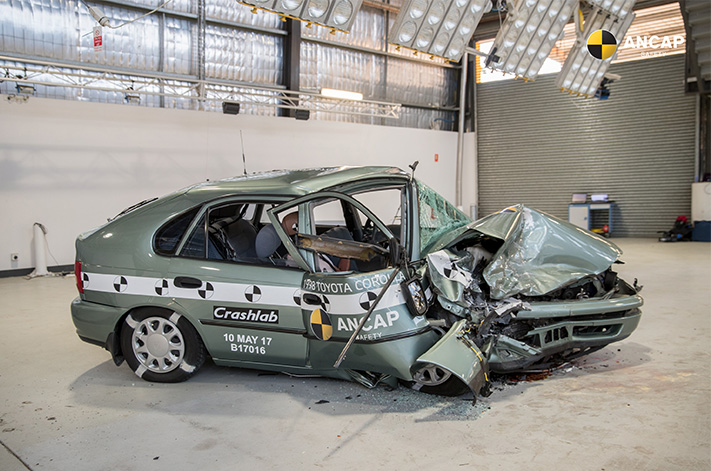
ANCAP has no used car rating for the 1998 Toyota Corolla.
The 2015 Toyota Corolla, meanwhile, held up well, scoring 12.93 out of 16 points to give it the equivalent of a five-star crash rating, Goodwin said. That generation of the Corolla earned its current five-star used car rating from an crash test performed 2012.
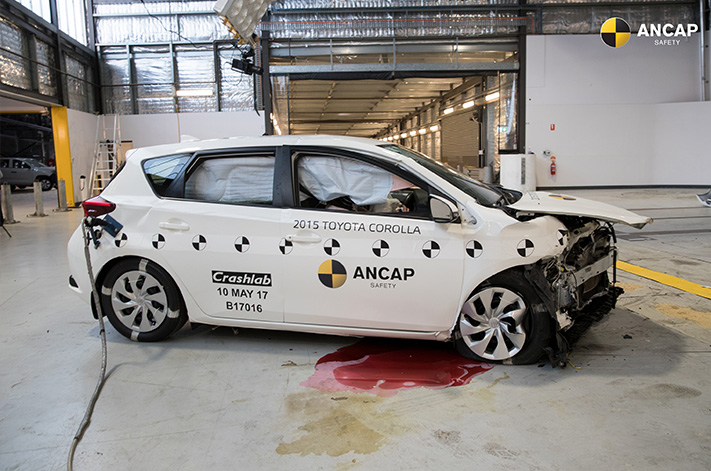
ANCAP says the modern versus old crash test is important because cars built before 2000 are over-represented in crashes – they make up one in five of the vehicles on our roads, yet count among 33 percent of crashes. In contrast, cars built after 2011 make up more than three in every 10 cars on our roads, but feature only in 13 percent of crashes.
| Ford Mustang scores a ‘shocking’ 2-star ANCAP rating
ANCAP’s test mimics that of the US-based Insurance Institute for Highway Safety, which almost a decade ago celebrated its 50th anniversary by crashing two Chevrolet Malibu sedans – one built in 1959 and the other built in 2009 – into each other.
It’s also nowhere near as bad as crash test footage showing a 1978 Holden VB Commodore colliding with a concrete block at 100km/h, where the engine bay and passenger cell collapsed to as far back as the boot.
The Australian Bureau of Statistics’ latest census shows that as at January 1, 2016 there were 18.4 million registered motor vehicles on our roads – 13.8 million of them were passenger cars – and that number was growing by 2.1 percent. The 2017 census results are due in about July.
The average age of the Australian vehicle fleet in 2016 was 10.1 years – the same as it was in 2015 – with Tasmania recording the oldest average of 12.6 years.
Last year was a record run for Australia’s new vehicle sales, with the market rising 2.0 percent year-on-year to post a combined 1.178 million sales.
Road safety experts are concerned by a rise in the national road toll to 1193 deaths last year, the second successive rise the toll has made since 2014, and despite new cars becoming even safer.
Over the first four months of this year the national toll has fallen more than 13 percent to 372.
Back in 2012 Mazda proved to the world that mainstream midsize SUVs didn’t have to be boxy-looking, dull-to-drive family wagons. Back then, the arrival of the first-generation CX-5 wowed us with its impressive dynamics and stylish design – and buyers responded with great enthusiasm too.
And now we have the second-generation CX-5 in showrooms. It neatly picks up where the first-generation model left off, offering the same capable mechanical package wrapped in a more up-to-date interior and exterior.
There’s more to it than just that, however. Let’s take a closer look.
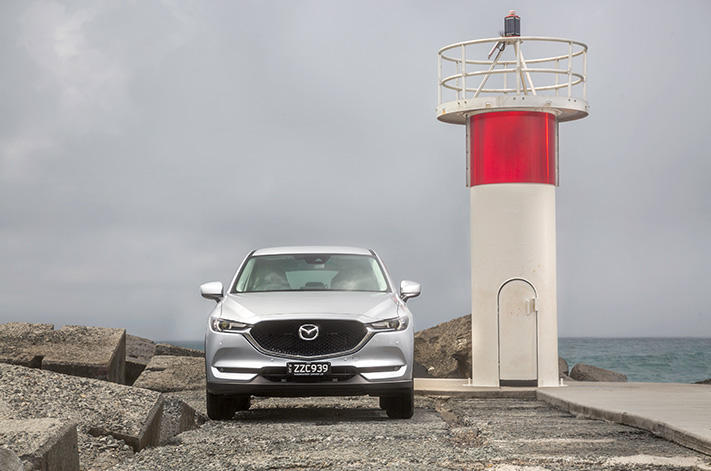
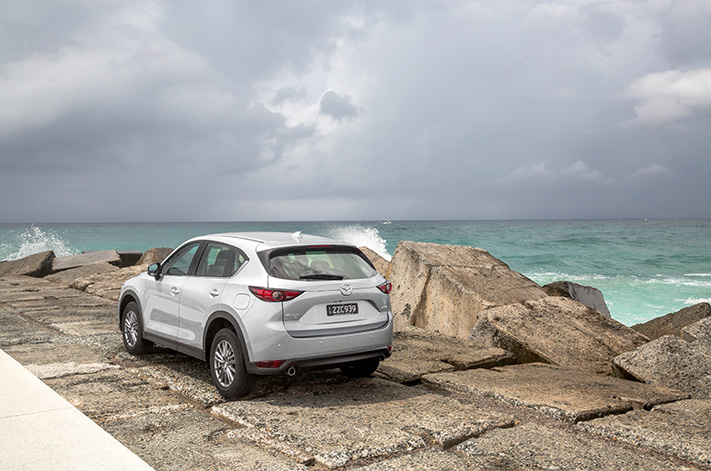
WHAT STANDS OUT Design is the CX-5’s standout feature, with a bold front end that proudly frames the Mazda emblem within a huge grille opening. Narrow headlamps are linked by a chrome bar that stretches beneath that distinctive grille, and there’s no risk of getting lost in the crowd with the second-gen CX-5
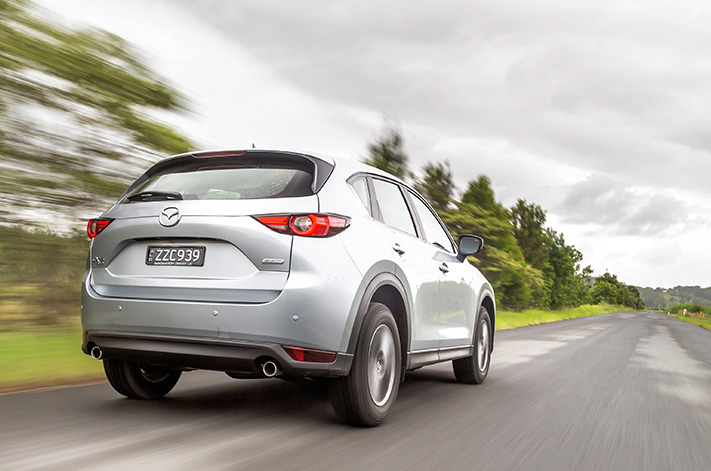
Around the back, a pair of slim tail lamp housings are inset to the tailgate to add some visual width, and the rest of the CX-5’s sheetmetal is taut and toned. The net effect is a car that looks very much like a downsized CX-9, and that’s definitely a good thing considering how handsome and sophisticated that car looks.
And those similarities carry over to the interior design. There’s a very upmarket aura in here, and lots of soft-touch materials and quality switchgear. If you’re looking for a dash of luxury in a mainstream SUV, here it is.
WHAT’S INSIDE All CX-5s enjoy Mazda’s simple and intuitive MZD-Connect infotainment system, however the base model Maxx grade misses out on integrated sat-nav.
It also doesn’t receive air vents for the rear seat passengers, which is a bit of an oversight for a car pitched at families and sold in a country as hot as Australia.
But even though this new model is just a single centimetre longer than the outgoing model, there’s now loads more space on the inside – especially for those in the back. The outgoing CX-5 has hampered by a cramped second row with poor legroom, but this second-generation car has plenty of space for both your knees and toes.
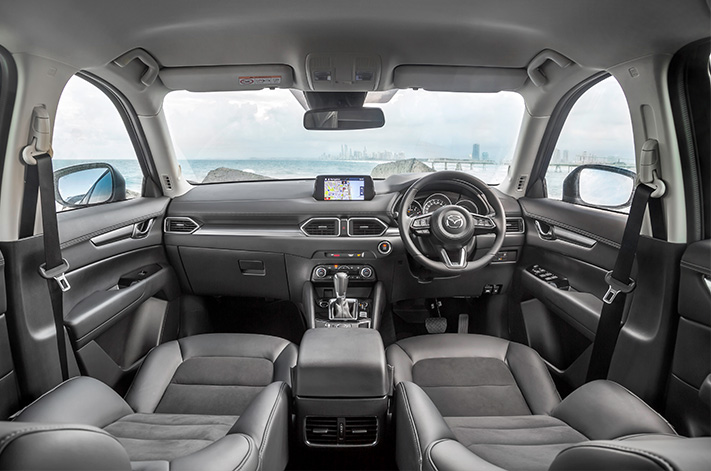
And there are other neat touches too. In this range-topping Akera grade we have here, there are even a pair of USB outlets hidden away in the centre armrest – perfect for when the kids are running out of voltage in their tablets.
Designed with practicality as well as comfort in mind, the CX-5’s rear seat now boasts a 40/20/40 split rather than the more common 40/60 configuration, which allows the centre seat to be folded independently to carry both long items and two rear passengers at the same time.
The boot measures in at 442 litres with the rear seats up, with limited under-floor storage. It’s a useful size – and the release handles make it easy to drop the rear seats – but the absence of shopping bag hooks isn’t great for a family SUV.
CHOOSING YOURS The best buying in the CX-5 range is right in the middle of the range, with the new Touring variant occupying the sweet spot as far as the balance between price, performance and equipment is concerned.
Its ride is also nicely compliant on its 17-inch alloy wheels, which wear chubbier, softer rubber than the 19-inch wheels of the GT and Akera. All-wheel drive is standard, the 2.5-litre petrol engine is a strong performer, there’s a diesel option for those who want long-distance frugality and cabin refinement is exceptional.
Going up to the GT grade nets you a powered tailgate, premium audio and a sunroof while the top-shelf Akera brings radar-assisted cruise control, side camera view and lane-keep assist, but for many the extra expense may not be worth it.
SUMMING UP The second-generation CX-5 is not wanting for appeal. Everywhere you look there’s something to love.
A more spacious interior makes it more liveable, high-end design features make it nicer to look at, there’s more equipment on the inside to enjoy and it’s just as nice to drive as before. Well done, Mazda.
More details, including teaser pictures, have emerged of Skoda’s new Karoq SUV, which is due to debut in Stockholm this week ahead of its November launch.
Designed to the Czech carmaker’s new ‘crystalline’ design language based on Bohemian glass art, the teaser pics suggest the Karoq won’t be as bland looking as a prototype spotted in March.
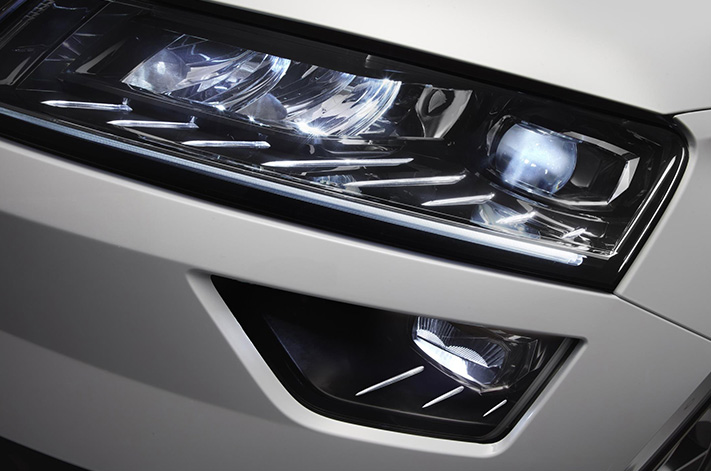
The front looks a lot like the larger Kodiaq, including full-LED headlights with eight light strips that create a unique ‘eyelash’ lighting pattern.
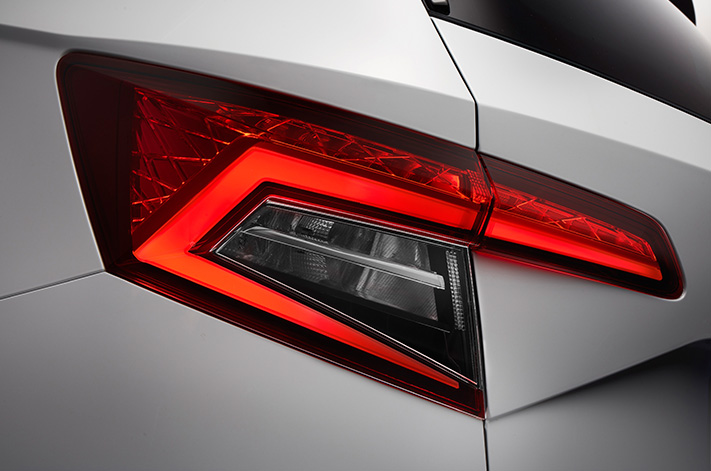
LED technology is also used for the C-shaped tail lights, which differ to the ones seen on the prototype by having a thinner inner segment integrated into the tailgate.
At 4832mm long by 1841mm wide, it’s a little bigger than its Nissan Qashqai rival while having the same 1605mm height.
With a 2638mm wheelbase [2630mm for AWD version, the same as Qashqai] the five-seat Karoq has generous interior proportions including a generous 521-litre boot capacity with the rear seats up which is significantly more than the Qashqai’s 430 litres.
With optional VarioFlex sliding rear seat, this can extend to 588 litres at the expense of legroom while still being a handy 479 litres with the seats all the way back. That upper figure is more than medium-sized SUVs such as the Nissan X-Trail [550 litres] and Toyota RAV4 [577 litres].
With the seats folded down, cargo capacity extends to 1630 litres. With the VarioFlex system, which features three separate rear seats that can be adjusted and completely removed individually, the Karoq’s load capacity becomes a van-like 1810 litres.
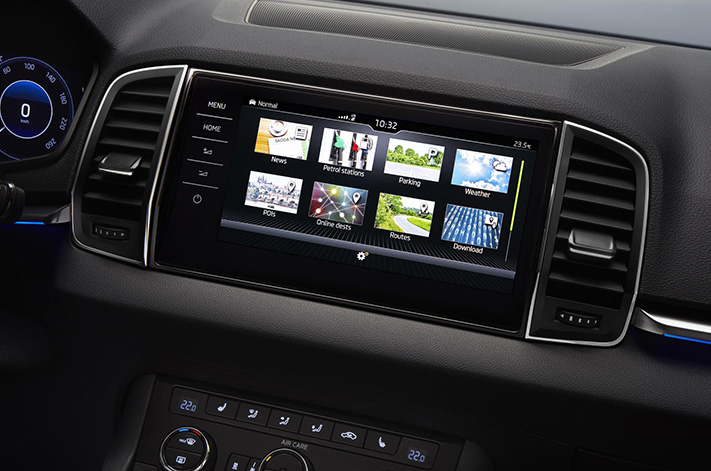
The interior will also feature design elements to the dashboard door trims.
It will also come with plenty of new technology, including automatic city braking and a range of turbocharged petrol and diesel engines, with front-wheel drive and a manual gearbox standard on European market cars.
Skoda is yet to say how base cars will be configured once they arrive here.
Based loosely on the Volkswagen Tiguan, the Karoq steps up to Volkswagen’s new MQB platform that includes the ability to roll out plug-in hybrid and fully electric versions.
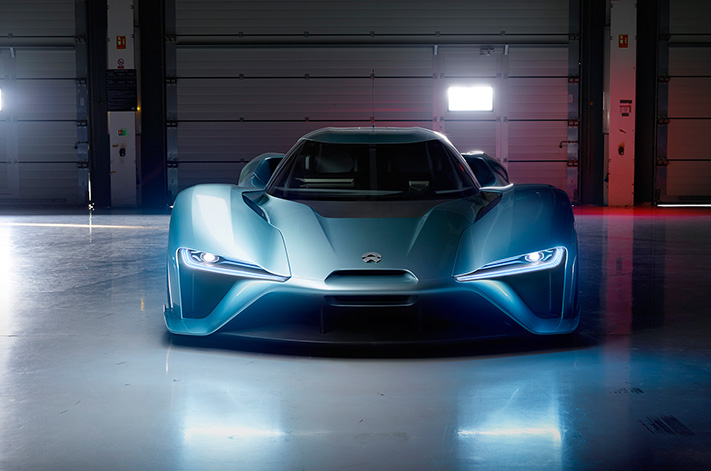
THIS could be a moment more pivotal than we realise. In registering a 6:45.9 lap of the Nordschleife, the Nio EP9, a car developed by Chinese FormulaE outfit NextEV, might have driven another nail into the coffin of internal combustion.
It’s worth putting that record in a frame of reference though. Stefan Bellof still holds the all-time record of 6:11 in a Porsche 956 and Nio’s claim on the production car lap record seems fairly tenuous given that only a handful of these cars have ever been built. The original production run was scheduled to comprise just six cars at A$2m each (US$1.48m), but demand has now seen Nio add another ten build slots to that list.
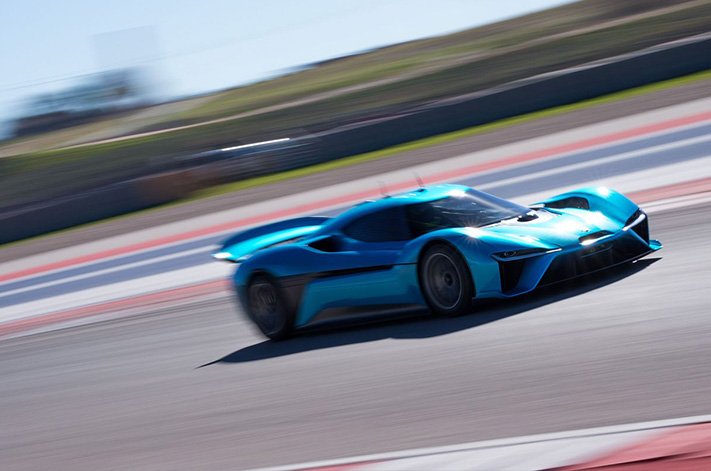
Last year the car set a laptime of 7:05 at the Ring and claimed the EV crown at the circuit but with better conditions that record has been whittled down, eclipsing the previous king, the Lamborghini Huracan Performante, by more than six seconds. It even beat the contentious 6:48 mark set by Radical in their SR8LM, a barely disguised club racer.
In February, the Nio EP9 lapped the Circuit of the Americas while driving autonomously in 2:40.33 which is just 19s slower than it managed when a racing driver was behind the wheel. In other words, the RingTaxi drivers might need to start looking for a new line of work.
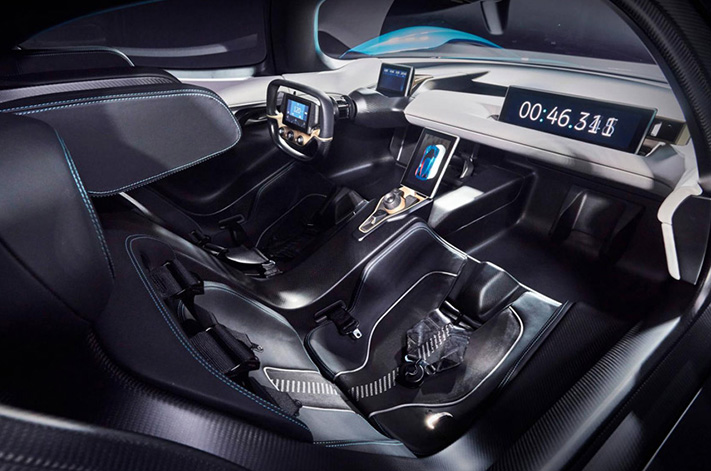
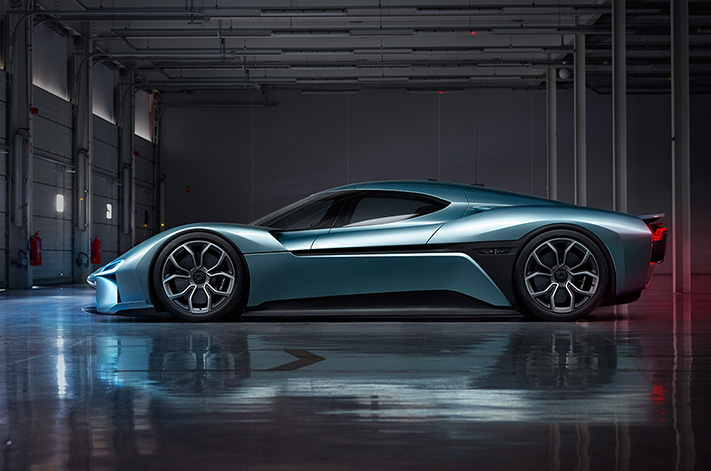
Nio has shown that it’s not just a manufacturer of niche hypercars either, having unveiled the ES8 last year, an electric seven-seat SUV. But for now, this could mark a watershed. It’s the moment that the electric supercar has come of age. Has the baton been permanently passed on? Things may never be the same again.
7:05 Electric EV lap in-car
Behind the scenes NIO EP9
Supercars Australia’s Super 5000 project – a modern interpretation of the loud, popular and powerful old Formula 5000 open wheeler category – will soon be revealed publicly with the ambitious target of a healthy grid of cars hitting the track on the championship support card next year.
An imbroglio between Supercars Australia and former magazine publisher-turned entrepreneur (and occasional racer) Chris Lambden over their respective bids to launch rival reborn Formula 5000 categories replete with modern safety elements has been raging across the media lately.
But it is apparent that Supercars is intent on winning the race to get its Super 5000s on to the grid first.
Until now, Supercars has preferred to stay quiet about its secret project until it gets its ducks in a row.
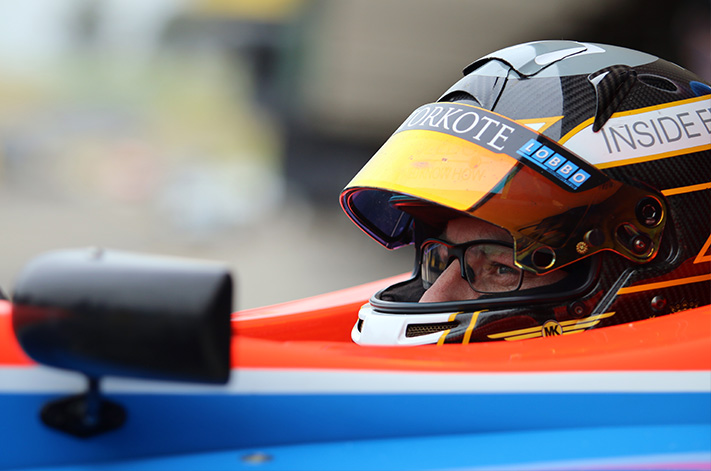
Wheels, though, has some more pieces to add to the puzzle. We’ve learned that the Super 5000 prototype has been tested privately in the hands of Alex Davison, Lee Holdsworth and most recently Garth Tander, a PAYCE-backed driver.
With Supercars investing heavily in Simona de Silvestro it’s not surprising to hear that the Swiss is also earmarked to test the 5000 prototype. Maybe even race it.
While Warburton confirms that the Super 5000 push “is backed by a private investor who has built and run the car”, he adds that “we retain control of the IP [intellectual property] and CMA [category management authority] rights so have ultimate decision what we do with it”.
While Supercars insists it doesn’t own this project, Wheels was told that “we provide advice when required”.
Supercars (or at least some people there) obviously believes that its at-times patchy support bill at championship races needs boosting with something exciting and boisterous. Its proposed new turbo-diesel ute series was given a tepid reception and was recently delayed until next year.
Super 5000 cars will be engineered to race on the support card at marquee Supercars championship events including the Newcastle street race. One exception is Bathurst, a circuit that is probably too intimidating.
Part of the pitch to win over the recalcitrant team owners is a plan that the Supercars ecosystem supply parts and engines to the Super 5000 project to generate revenue.
On the outside looking in, it appears Supercars is in pole position to make its idea a reality. It has the backing, the engineering and most importantly, the clout.
Study asks: Does motorsport make you a better driver?
“We’re not too far off making an announcement; we have the right people driving it [the prototype] to get their opinions,” Wheels was been told. “Our intention is to show the car soon, hopefully gain some interested parties and get them on the Supercars card in 2018.”
Lambden is upset that Supercars appears to have snatched his idea for an affordable and relatively safe, crowd pleasing V8-powered category.
He released a statement to the media earlier this month, presenting reasons why he feels Supercars has hijacked his concept.
Lambden says his objective was simply to create a snarly, safer reinvention of the old Formula 5000 class popular in the 1970s.
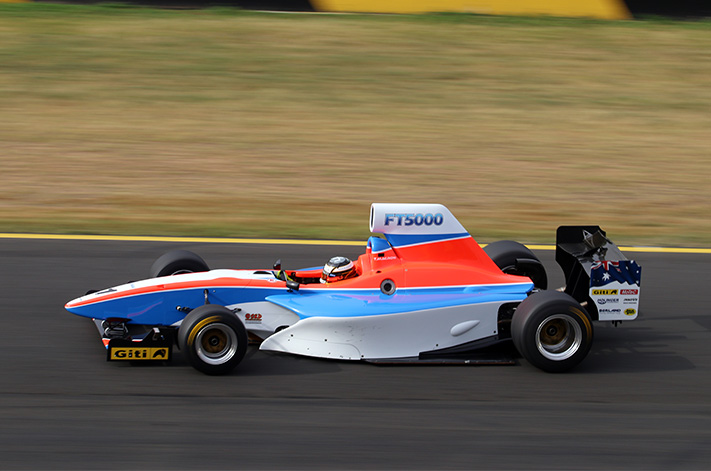
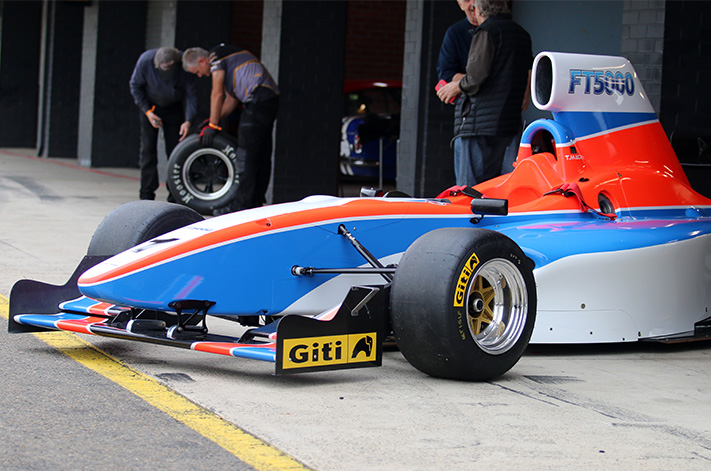
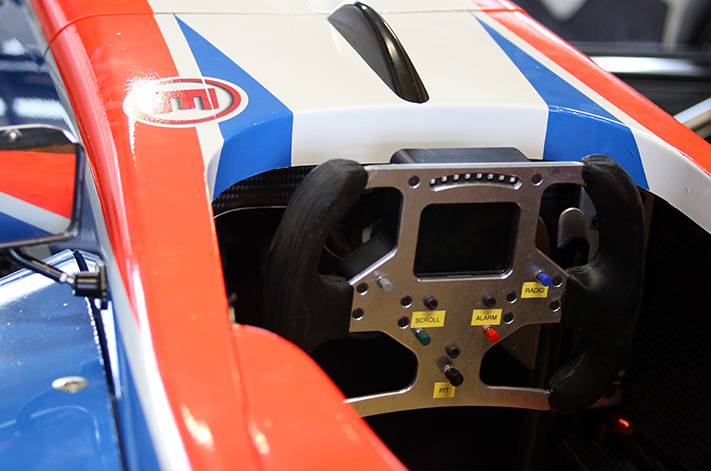
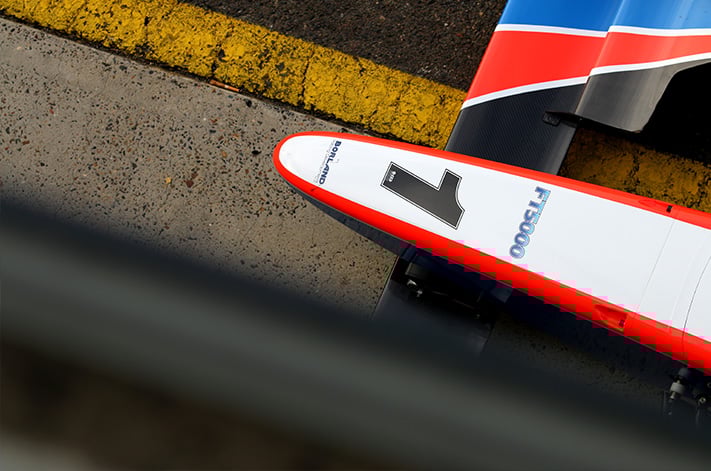
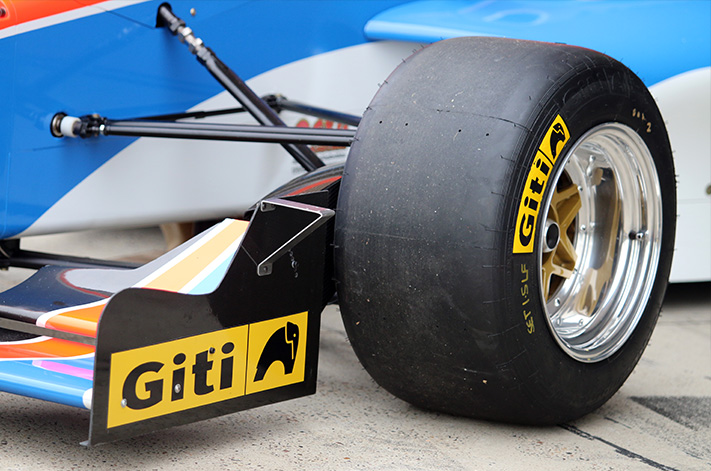
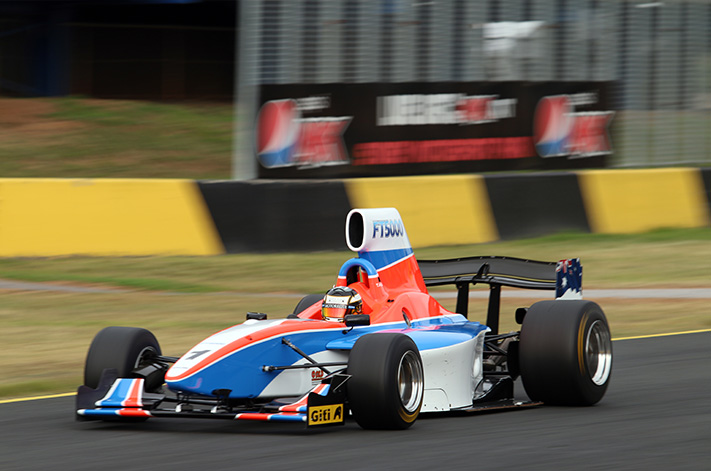
He wisely didn’t attempt to reinvent the wheel (or chassis), basing his car on a carbon-fibre Swift Formula Nippon of a few years ago powered by a control 560-horsepower Ford Coyote V8 engine hooked up to a Holinger gearbox.
Lambden, who has invested significant personal funding into his venture called Formula Thunder 5000, with practical support from specialist local engineering businesses, went public with his prototype in March last year.
His FT5000 prototype, looking and sounding tremendous, has been tested with encouraging results at several venues. Prospective buyers were showing interest. Lambden has a price of $270,000 on his cars (Supercars is aiming to offer its cars at a cost of $250-270K).
Then last July in Townsville, a rival concept emerged from nowhere, presented to the Supercars team owners during chief executive James Warburton’s Vision 2025 address.
Looking like a Formula 5000 car of the 1970s, but with an all-new modern carbon fibre chassis and using the 650-horsepower V8 engines already used in Supercars racing, the concept was pushed by the Supercars management group as a great addition to the championship support card.
It was immediately rejected by the teams and the Supercars board of directors. “They did not believe that there was space in Australia for an open wheeler category and didn’t want the company to launch a potential loss-making category,” Warburton told Wheels.
“What a waste of time. Dream on,” said Triple Eight team boss Roland Dane, speaking to Auto Action in August last year.
But that wasn’t the end of the idea.
The project is proceeding speedily with private funding from moneybags Supercars’ sponsor Brian Boyd of PAYCE, and design leadership from well-known Supercars engineer Oscar Fiorinotto.
Warburton says Supercars has allowed the backer and designer to finish the project to see if there is sufficient interest from enthusiasts. Out in the commercial world, a third party has been trying to whip up interest, referring to a ‘guaranteed’ series on the Supercars bill.
Lambden has generated a lot of sympathy from motor racing supporters over his claims that the “copycat” car threatens to ruin his dream.
The story of this conflict should frustrate and aggravate lovers of motor racing. As one respected elder statesman of motor sport observes with a grimace: “There can be no winner here.
“Two of a very specific formula never works,” says Greg “Pee Wee” Siddle the veteran Australian motor sports insider who has managed F1 world champion drivers, and a Supercars champion, and run race teams here and abroad.
Here are two immediate examples: the damaging split in Indycars and two warring touring car categories in New Zealand.
The shock realisation of rival ‘big banger’ open-wheeler formulas has triggered no amount of confusion across local motor sport, certainly damaging the prospects of either attracting a viable number of entrants.
Lambden says to nick his idea smacks of desperation. Judging by comments on web sites and across social media, motor sports enthusiasts believe the former touring car racer is the ‘good guy’ and Supercars the villain in this messy hullabaloo.
“Supercars proposed the copy-cat concept to the Supercars teams four months after our FT5000 car was publicly unveiled in March last year to a tremendously positive reception.”
He also suggests that Supercars appears to be the source of some mistruths about his project.
Lambden has never met Boyd and has no quarrel with him. “He is clearly a tremendous benefactor across motor sport.”
Lambden accepts that competition is part of business. But says the market dominance of Supercars in Australian motor sport and the attendant power it brings shouldn’t be an excuse for arrogance.
Strong words.
Supercars told Wheels it was never the intention compete directly with Lambden’s proposed formula. “We thought the two would be distinctly different, his more at an enthusiasts level.”
“We never wanted a war with Lambden. We started this project two and a half years ago, very quietly.”
Having none of that, Lambden is calling “bullshit”. He is also mystified that the rival project appears to be surviving despite the wishes of many Supercars’ team owners and the board.
Even in the unlikely eventuality that the Supercars’ 5000 idea ultimately falls over, its simple existence is spooking people who had shown interest in the mooted earlier FT5000 series. “Two of anything doesn’t work,” Lambden reiterates.
“While this copycat project is a pain, there’s a hope it might, as a response, solidify support for what we’re doing.
“There are people out there not necessarily on the Supercars bandwagon.
“I’d suggest the time for ‘wait and see’ is over. If we are to create a spectacular, cost-efficient and independent ‘big-banger’ open wheeler spectacle, then the support of what I’d call real motor sport people is needed now – despite, and as a response to, this copycat distraction.”
Supercars does make itself a big target. It’s not the first time it has been labelled a bully.
In recent days, someone on social media suggested: Don’t bother coming up with a good idea for Australian motor sport because Supercars will steal it.
Check out ‘First test’ video clip of the FT5000 car (Sydney Motor Sport Park)
THE Lamborghini Urus, the Italian supercar brand’s SUV wannabe, will pack at least a 485kW twin-turbo V8 punch when it launches late this year, the brand’s chief executive has revealed.
Stefano Domenicali confirmed to Automotive News Europe overnight that as well as staking its claim as one of the world’s most powerful SUVs, the third model to sit alongside the Huracan and Aventador will add a plug-in hybrid version that will lay claim to having the lowest carbon dioxide outputs in its class. It should launch about a year after the hydrocarbon-burning model.
According to ANE, the Urus – which is expected to arrive in production form late this year, possibly at September’s Frankfurt motor show, and feature styling borrowed heavily from the V12-powered, mid-engined Aventador (pictured, below) – should double the carmaker’s sales by the time production fully ramps up in 2019.
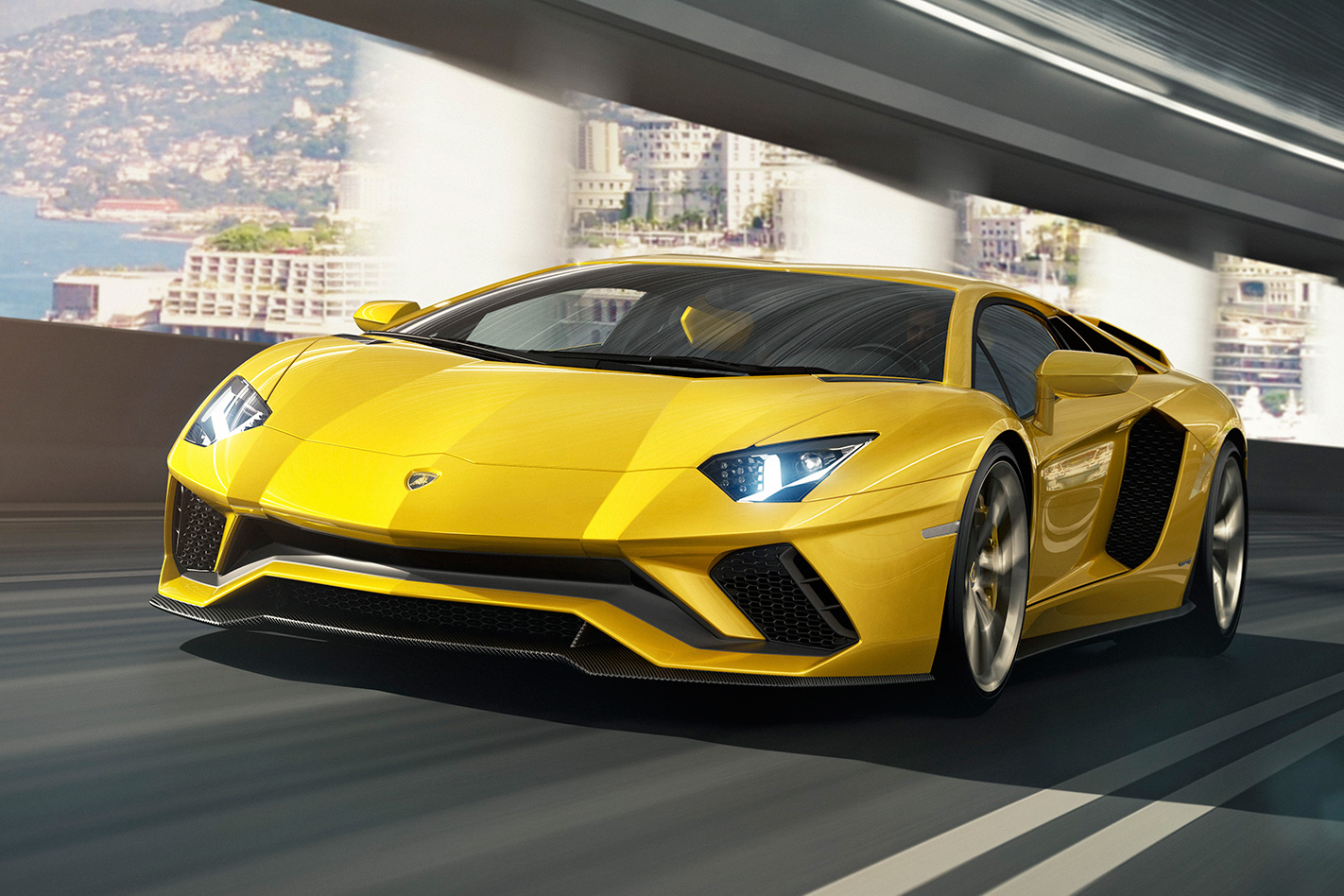
The Urus will differ from its low-slung siblings by offering four seats and what Lamborghini claims will be a “versatile luggage compartment”. It should also use an active air suspension system that will allow the driver to vary the ride height on the move, as well as all-wheel-drive traction distributed via either a traditional torque converter or a seven-speed dual-clutch gearbox – watch this space.
The Urus will deliver its 485kW via a twin-turbo V8 that the carmaker claims will be very different to the 4.0-litre unit developed by sister brand Audi and producing up to 445kW, and rolled out to the German luxury brand’s more performance-honed products including the RS6 Avant, RS7 Performance and the S8 Plus.
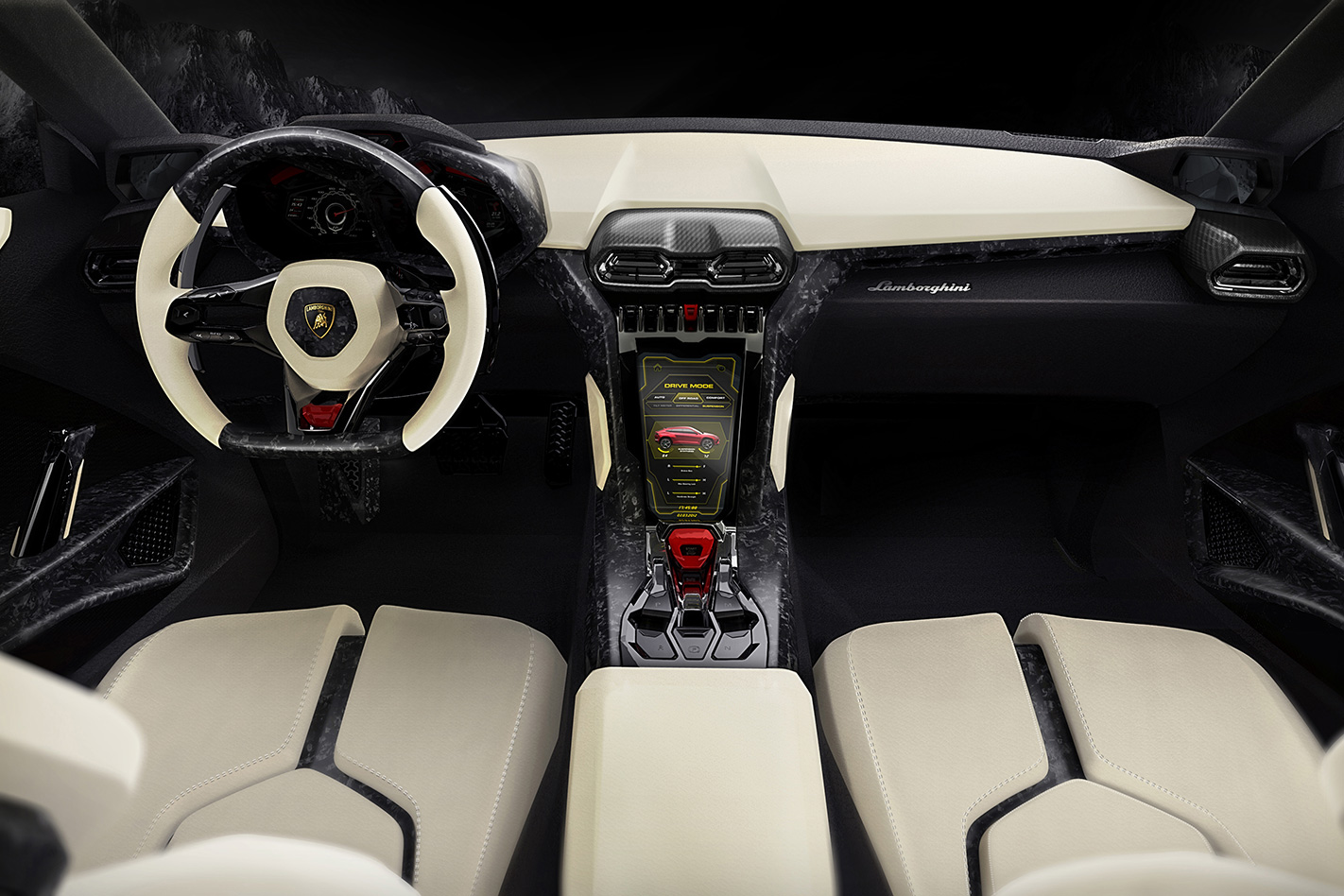
The Urus is even tipped to be in the running for an oil-burning engine – the level of acceptance of diesel drivetrains is quite high in SUV circles. Sister brand Bentley already has a triple-turbo 4.0-litre V8 under the bonnet of its more stately Bentayga soft-roader punching out 320kW/900Nm that may fit Lamborghini’s performance brief, with a bit of tweaking.
