
IF YOU are still fizzing with a blend of jealousy and lust at the story we ran in April about an unused 1993 Porsche 911 RSR barn find, then you are not going to believe this selection of some of the world’s most jaw-dropping discoveries.
The Baillon Collection
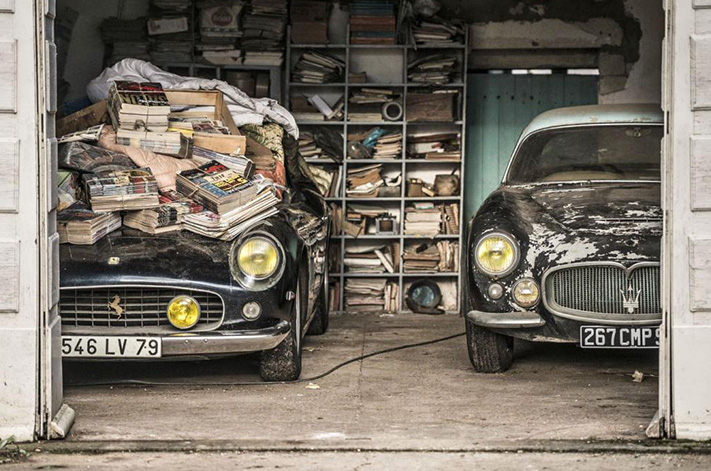
What’s better than one incredible barn find? What about 100? Okay so 40 of the rare and historic vehicles unearthed as part of a deceased estate in France in 2014 will never drive again, but the rest of the extraordinary haul changed the world’s ultra-desirable classic vehicle count overnight.
The unbelievable fleet was too extensive to detail in full here, but highlights included a Maserati A6G 2000, Bugatti Type 57 Ventoux and a Talbot Lago T26 Saoutchik that is believed to have belonged to king Farouk of Egypt.
While many of the beautiful cars had succumbed to the years and elements, some proved that spending 50 years under a pile of magazines needn’t affect value to any great degree, including this Ferrari 250 GT California Spyder, which later sold for $US18.5m ($A25m).
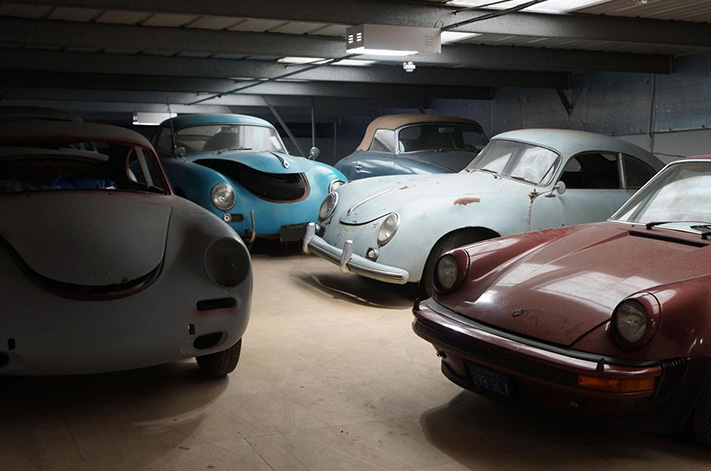
And what’s better than one supremely desirable and rare Porsche? How about 200? That’s what went up for grabs in a sleepy corner of the UK in 2013. Curiously, the collection was discovered in the USA but shipped to Kings Lynn to be sold by relatively small-time auctioneer Anglia Car Auctions.
Among the many 911s, 912s and 356s were a number of highlights, including a 1956 356A Coupe, 356B roadster and a 356 Super 90.
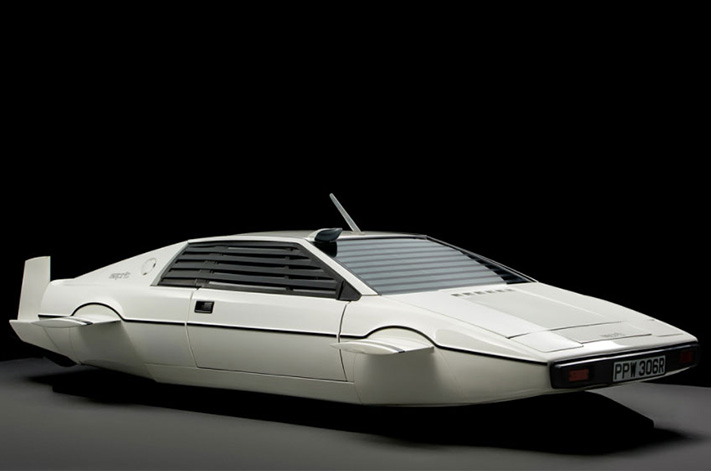
It’s hard to believe such valuable and rare cars can be forgotten so easily but it is even more difficult to understand when unique one-off vehicles are lost, such as arguably the most famous Bond car to date.
Created for the 1977 007 film The Spy Who Loved Me, the submarine Lotus Esprit was purchased for a very reasonable $100 as part of a shipping container blind auction in 1989. Little did the new owner know that the container’s contents were worth closer to a cool million.
Elvis Presley’s BMW 507 roadster lives on
The car was one of several vehicles modified and used for the feature, and is believed to have been forgotten by the production company that was renting the container. On set, the watertight Lotus was nicknamed Wet Nellie.
As another celebrity twist in the swimming Lotus story, the car was eventually bought by technology start-up Tesla’s founder Elon Musk, who reportedly has plans to slot in an electric powertrain and enable the car to pull the amphibious stunt it performed in the film – but for real.
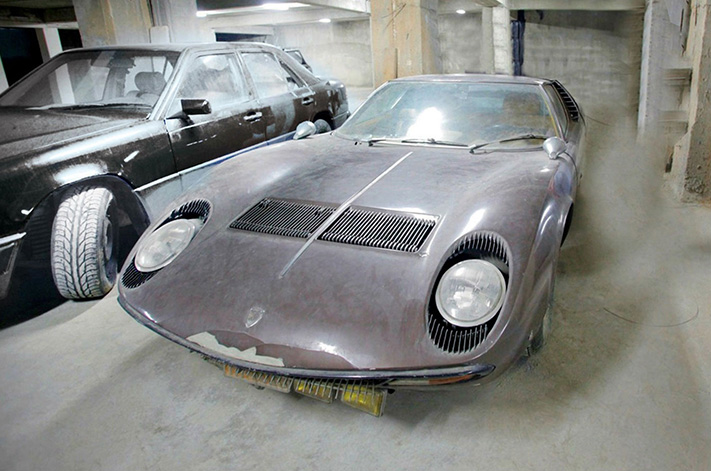
An example of what is often cited as the world’s prettiest car clearly wasn’t enough to keep one 1970s Greek pop star’s attention for long.
After an engine problem rendered the 1969 Lamborghini Miura S undriveable, Stamatis Kokotas banished the car to the basement carpark of the Athens Hilton and that’s where it stayed.
The car was last seen in London where it failed to make its reserve in auction.
Our final instalment of the best barn finds proves that it pays to dig deep if you really want to unearth something special.
The history of this Ferrari Dino 246 GTS is not completely clear but it is believed that the vehicle was stolen in 1974, but the thief decided that the conspicuous car probably needed hiding until the heat was off.
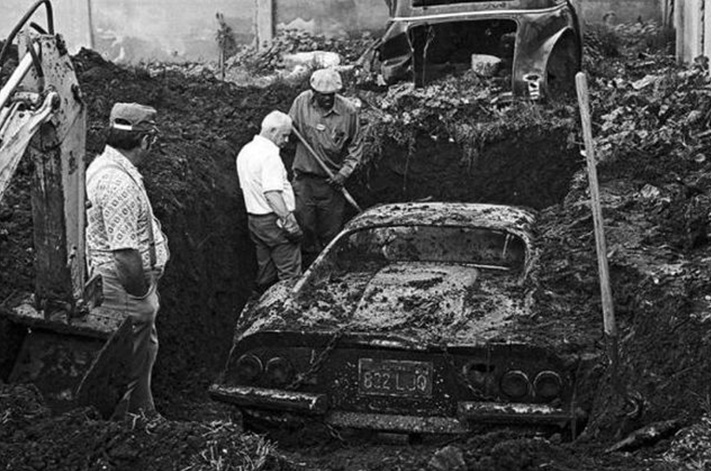
While more accomplished and experienced criminals might have opted for a respray, export overseas as parts or time-out in a back-street lock up, this guy decided to bury it.
When the car was discovered by playing children in 1978 it was in a sorry state, which you can kind of forgive it because it had spent four years underground.
The Ferrari proves that if something is valuable, rare or desirable enough, anything can be brought back from a dilapidated barn find, and that you never know where the next discovery of the decade will turn up. Happy hunting!
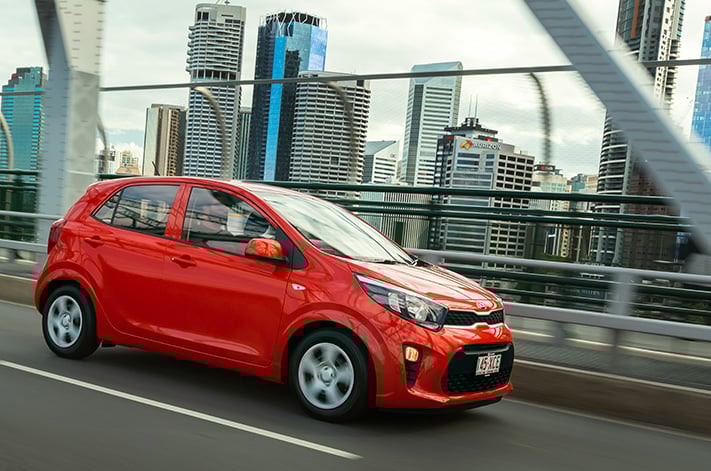
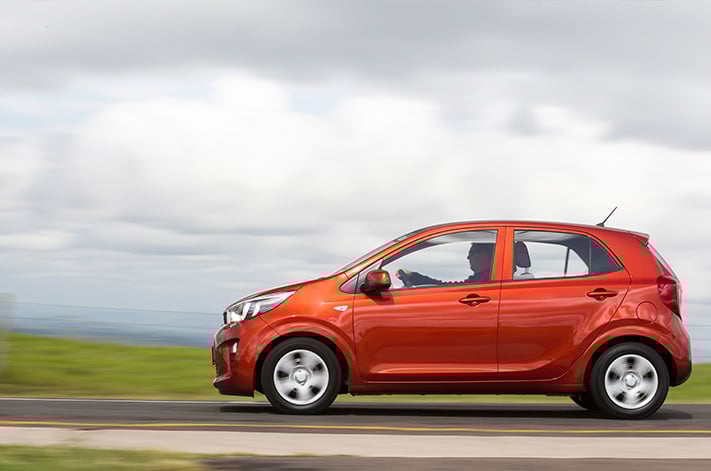
Kia’s brand-new Picanto micro hatch is now in Australia, and with a fresh-for-Aus manual transmission option and a slick touchscreen infotainment system with smartphone mirroring, the Korean company’s local arm expects the Picanto will continue to trounce its rivals in the microcar segment.
But while the equipment list for Australian-delivered Kia Picantos is already impressively feature-rich, one item notable by its absence at the Aussie launch this week was autonomous emergency braking (AEB).
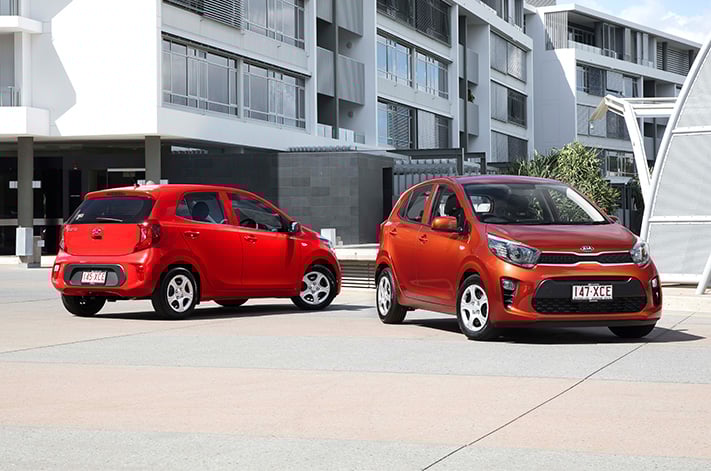
While already available in European- and Korean-market Picantos, the engineering needed to homologate AEB for Australia could not be completed in time for the car’s local launch. Instead, Kia will introduce the technology to the range later in the year as a running change
When it does arrive, it will give the Picanto a fairly significant unique selling point. To date, the Volkswagen Up, which was discontinued in 2014 was the only vehicle in the microcar class to offer AEB in Australia.
Even in the light car market – the next size category up from the Picanto – AEB is still a rarity. It’s currently available in the Skoda Fabia and was added to certain models in the Toyota Yaris and Mazda 2 ranges this year, but it’s far from widespread.
It’s unclear whether Kia Australia will make AEB available as part of an option package, add it to the existing Picanto S’s standard specification or introduce it as part of an up-spec model that includes the technology bundled in with extra equipment.
A modest price increase may arrive at the same time to compensate for AEB’s addition, should Kia Australia elect to build it into the standard equipment list.
Those details will likely be announced in the third quarter of 2017, when information of the local launch of the 1.0-litre turbocharged Picanto GT is also expected to be made public.
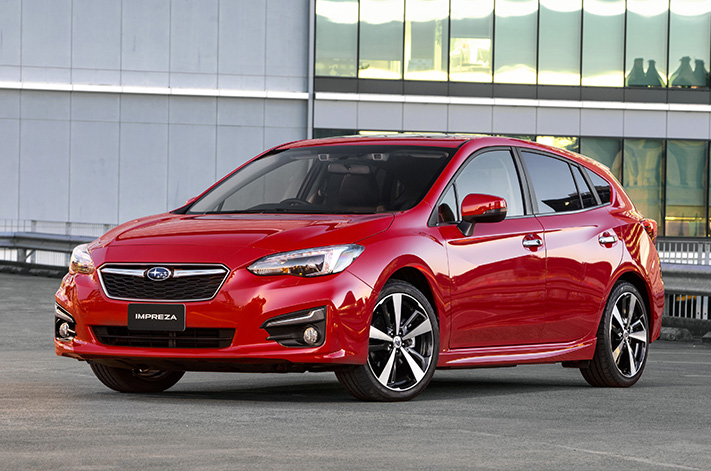
At $29,190 before on-road costs, the Subaru Impreza 2.0i-S hatch is the most expensive of the Japanese carmaker’s small car offerings. Does the high price tag meet similarly lofty expectations?
TELL ME ABOUT THIS CAR
The Subaru Impreza 2.0i-S sits at the top of Subaru’s four-tier small hatch line-up. There’s a sedan version available that, surprisingly because it uses more metal than the hatch, is $200 cheaper. Go figure.
But befitting its place at the top of the Impreza tree, this flagship features all the Japanese brand’s top-of-the-line safety gear, including a few features that will have some rivals lifting an eyebrow in wonder at how Subaru can do it for the price.
STRENGTHS
- Subaru’s Impreza rides really well. The car is built on something called the Subaru Global Platform that will underpin a new generation of cars, including the Impreza-based XV SUV due here in a few months’ time. The car’s suspension is tuned really well, and will ride handsomely over even the roughest road surfaces.
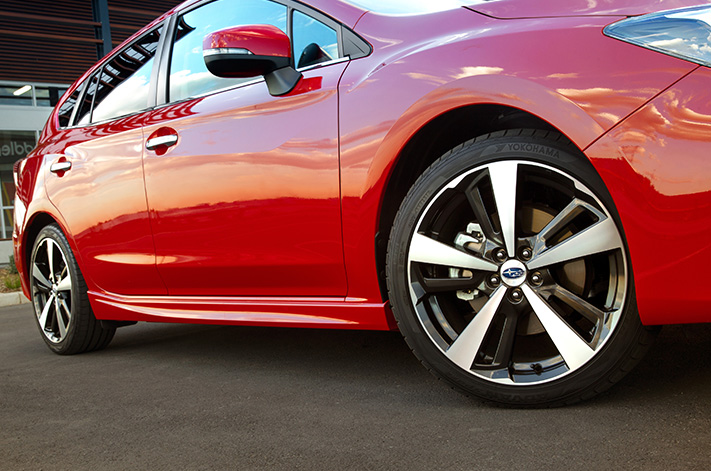
- It also drives really well. The Impreza features an impressive ability to hold the road, and it uses more premium (and, we should note, more expensive) 18-inch Yokohama tyres to improve grip. The 2.0i-S also gains electronic torque vectoring – as you turn into a corner, the car will lightly grab the front brake for the wheel inside the corner to help the Impreza rotate, sort of like grabbing a pole to swing yourself around.
- It has all-wheel drive. Subaru has used its all-paw advantage to drive a wedge between it and front-wheel-drive opposition costing about the same as the Impreza. It’s a moot point if it’s a safety thing, but it gives extra confidence on either a dirt road or trip to the snow.
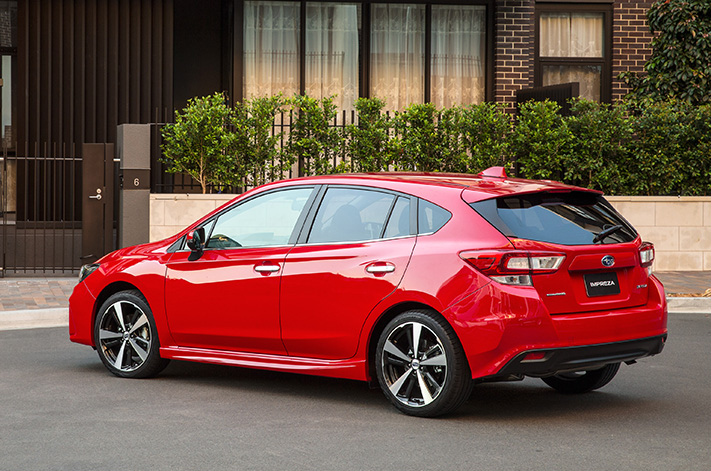
- It has LED headlights and daytime running lights. Lesser Impreza models use halogen globes that struggle a little to light up the road adequately, but the range-topping variant uses one of the latest advances in headlight tech. Included are active LED beams that turn slightly with the steering wheel to give more visibility in corners.
- It’s a small thing, but the Subaru’s high-mounted reversing camera doesn’t collect water droplets, so backing out of the driveway in the rain is refreshingly clear.
- The engine has an idle-stop function. If you’re stuck in traffic or caught at the lights, the Impreza will shut down the engine to save on fuel. But if you’re a bit too quick, you can sometimes catch the engine napping a bit too long before it fires back into life.
- The new body built around the Impreza makes the interior more roomy. The back seat is no longer punishing to sit in. The new Impreza has more distance between the front and rear wheels, and that has converted to even more interior space. Fitting in was never a problem for the front seats, so more rear legroom is welcome.
- The Subaru Impreza made it through to the second round of the 2017 Wheels Car of the Year awards. Just to get consideration for the award is special.
- The 2.0-litre petrol engine lacks low-down accelerating power and always sounds as though it struggles to get the Impreza moving.
- The continuously variable transmission is nowhere near as nice to use as a more traditional automatic. The CVT has variable gear ratios, so either sits the engine in its revvy, noisy power band, or its gutless fuel-sipping zone. The 2.0i-S gets a pair of paddle shifters behind the wheel, but they may as well be connected to the gearbox via a pair of wet strings for all the good they do – a shame given that the Impreza is such a fun car to throw at a twisty road.
- The multimedia interface. It speaks in broken English, the touchscreen is difficult to use and distracting, and it integrates poorly with the multifunction steering wheel.
- It’s the only Impreza with leather, and even then it’s only bits of leather. It’s the only Impreza with a powered driver’s seat, and the only one with heated front seats, rain-sensing wipers and dusk-sensing headlights. You can get a mix of these at a lower cost in some rivals.
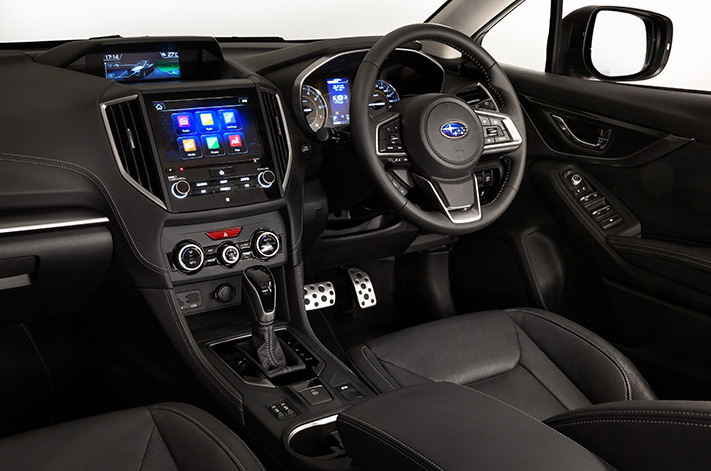
- The leather trim tends to make the seats a bit flat and unsupportive compared with the body-hugging cloth ones used in lower-grade models. It means that when you take advantage of the 2.0i-S’s fun-to-drive character, your shoulders will wash from side to side.
- Apart from helping to save fuel, electric steering lets car makers introduce self-parking functions to their products. Some will steer and brake themselves into a number of differently aligned parking spaces. Not the Impreza, though.
- The Impreza uses Subaru technology called Eyesight that uses a pair of cameras – much like a human’s set of eyes – to measure and keep a safe distance from the car in front when cruise control is activated, and even avoid a crash. But it will beep at the driver every time a car in front moves in or out of the system’s range.
- Just like you, Eyesight has trouble seeing in poor driving conditions, such as if it’s dark and there’s lots of spray from passing traffic. Orange warning lights pop up on the dash, and a tone sounds to warn that the system is disabled.
- It sits on performance tyres that aren’t as forgiving to coarse-chip road surfaces, so the interior of the 2.0i-S is not as hushed as other models in the line-up.
- The cheaper sedan is better at carrying stuff. The hatch’s 345-litre boot can’t compete with the sedan’s 460-litre cavity.
ANY RIVALS I SHOULD CONSIDER?
Near the top of your list should be a Holden Astra RS-V with a user-friendly six-speed automatic transmission, or a six-speed manual gearbox. But as for others? Well, a new Hyundai i30 that shows a lot of promise is just around the corner, as are a new Volkswagen Golf and a new Honda Civic hatch. But if your heart is set on the Impreza and its all-wheel-drive edge over rivals, you won’t be disappointed.
THE preliminaries are behind us, and it is time for the Final Fight, and to settle once and for all the question of which Aussie-built Muscle Car is the best.
The winner of each decade has been chosen by you, our readers, and now you can have the final word and decide which deserves the crown.
The list of victors is made up by three Fords, a pair of Tickfords, and a sole Chrysler with not a Holden in sight – sorry GM fans!
DECADE WINNERS
- 1960s: Ford XW Falcon GT-HO Phase I (29% of votes)
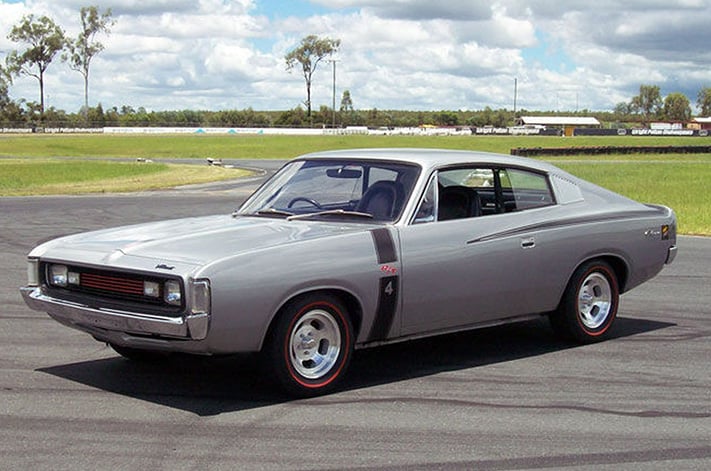
- 1970s: Chrysler VH Valiant Charger R/T E49 (38% of votes)
- 1980s: Ford XE Falcon Fairmont Ghia ESP 5.8 (36% of votes)
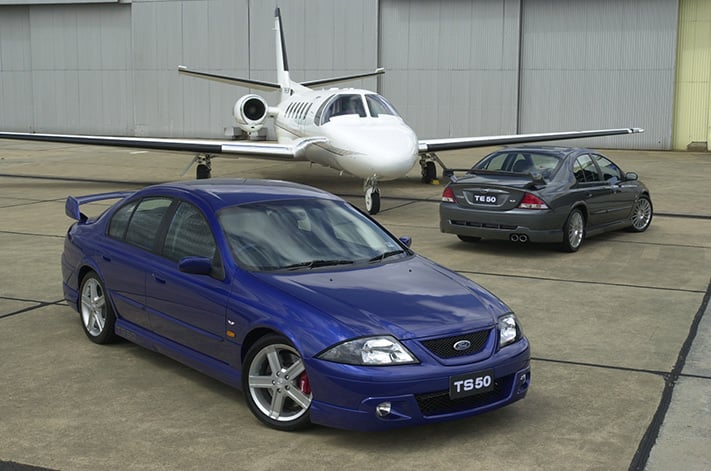
- 1990s: Tickford T1 TS50 (21% of votes)
- 2000s: Tickford T3 TE50/TS50 (35% of votes)
- 2010s: Ford FG X Falcon XR6 Sprint (38% of votes)
While no Holden or HSV featured in the winners group, three appear on the runners-up list. The HSV VS GTS-R missed out on victory in the 1990s by a single percent of the vote tally. But as the saying goes, it doesn’t matter if you win by an inch or a mile …
DECADE RUNNERS-UP
- 1960s: Holden HT Monaro GTS 350 (22% of votes)
- 1970s: Ford XY Flacon GT-HO Phase III (24% of votes)
- 1980s: HSV VL SS Group A Walkinshaw (22% of votes)
- 1990s: HSV VS GTS-R (20% of votes)
- 2000s: FPV FG F6 (19% of votes)
- 2010s: Ford FG X Falcon XR8 Sprint (18% of votes)
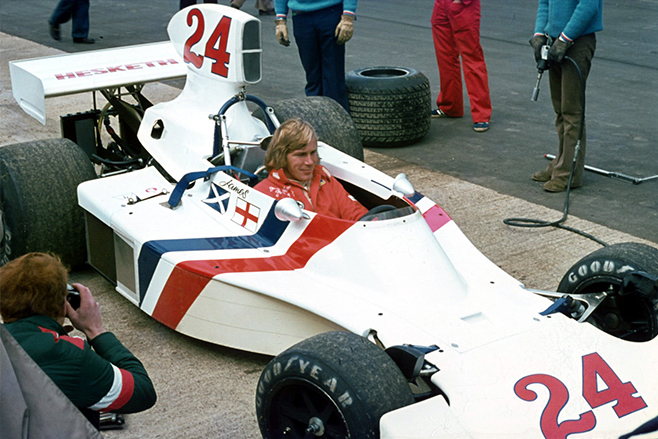
Some of the most iconic liveries in Formula 1 are instantly recognisable, like the JPS Lotuses, or James Hunt’s very white Hesketh 308. But what if those artworks were still around?
UK designer Sean Bull gave us a glimpse recently, when he transferred a selection of historic Formula 1 liveries onto current F1 cars.
The result is pretty striking, so we picked out a couple of favourites and compared them with their inspiration, to show you just how well Bull has translated the designs.
James Hunt’s Hesketh 308B
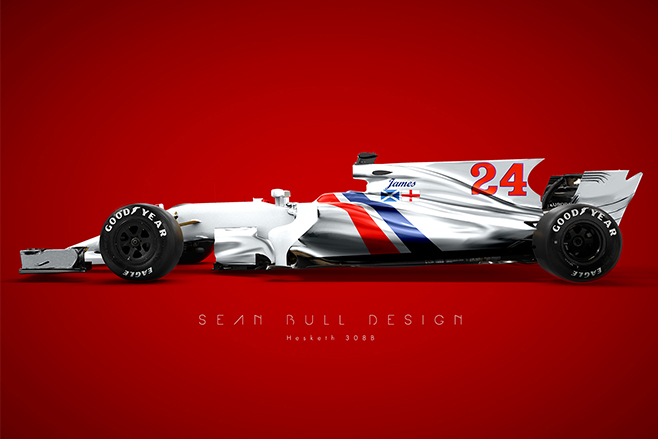
Even if the car had looked more exciting, it would have been difficult to be noticed over the loud antics of its driver.
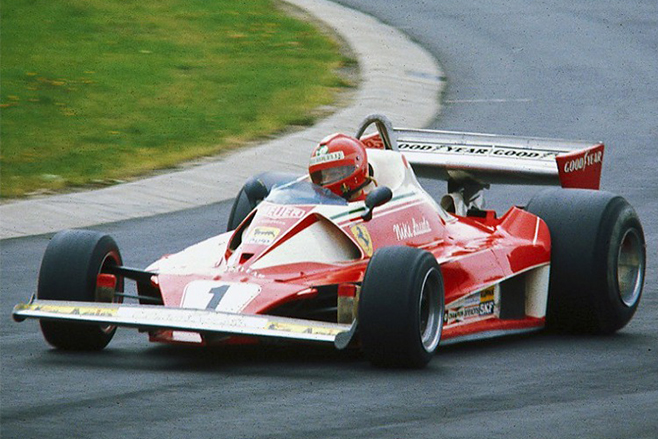
Niki Lauda’s Ferrari 312T
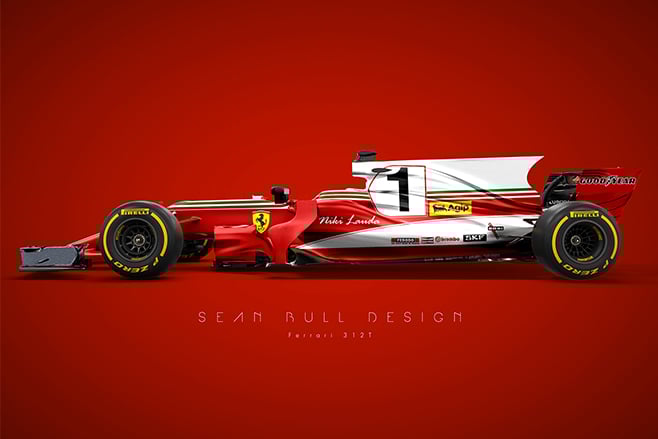
In 1976, Lauda was infamously almost burned to death when his car ended up off the track and on fire. He managed to escape, returned to racing six weeks later, and was only one point away from tying first place for the championship with hunt.
Bull’s modern recreation of that livery is a fitting tribute to a phenomenal time in F1 history.
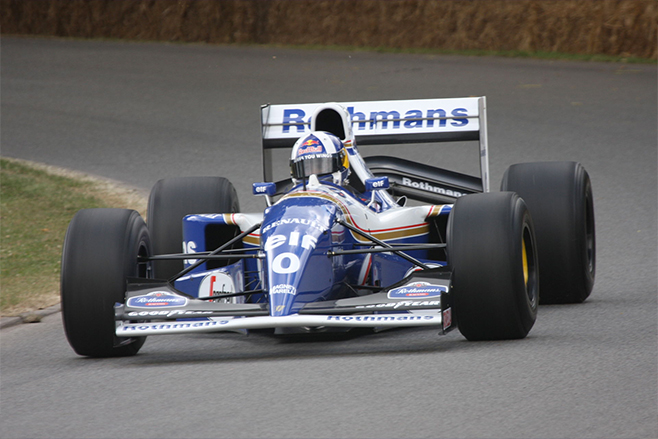
Ayrton Senna’s Williams-Renault FW16
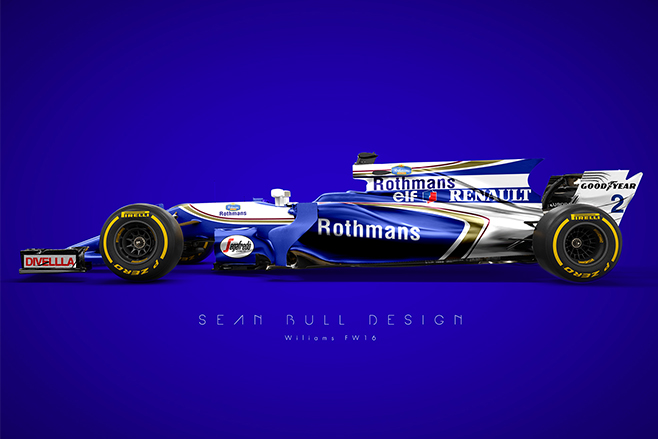
One thing that’ll be hard to forget is the car he undertook his last race in.
The team’s founder, Frank Williams, is often quoted as saying “Ayrton was no ordinary person. He was actually a greater man out of the car than in it”.
There are plenty more examples of livery swapping and redesigning on Sean Bull’s site, including some reverse swaps of modern liveries on old cars.
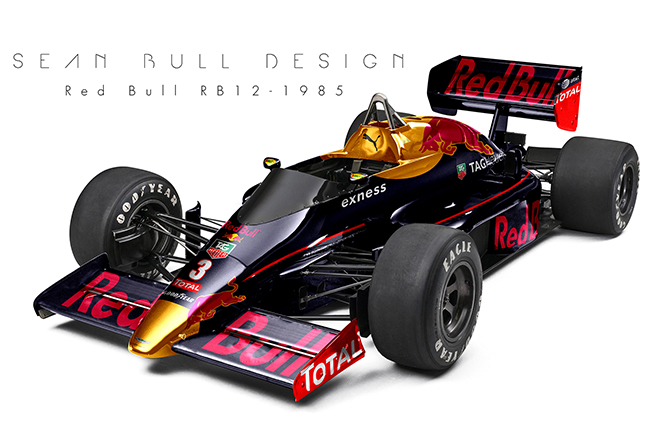
One of our favourites in that regard is this one, a Lotus 97T with the 2016 Red Bull livery on it. Does Danny-Ric like metal-flake paint? Who knows?
Historic image sources: Hunt image Lauda image Williams image
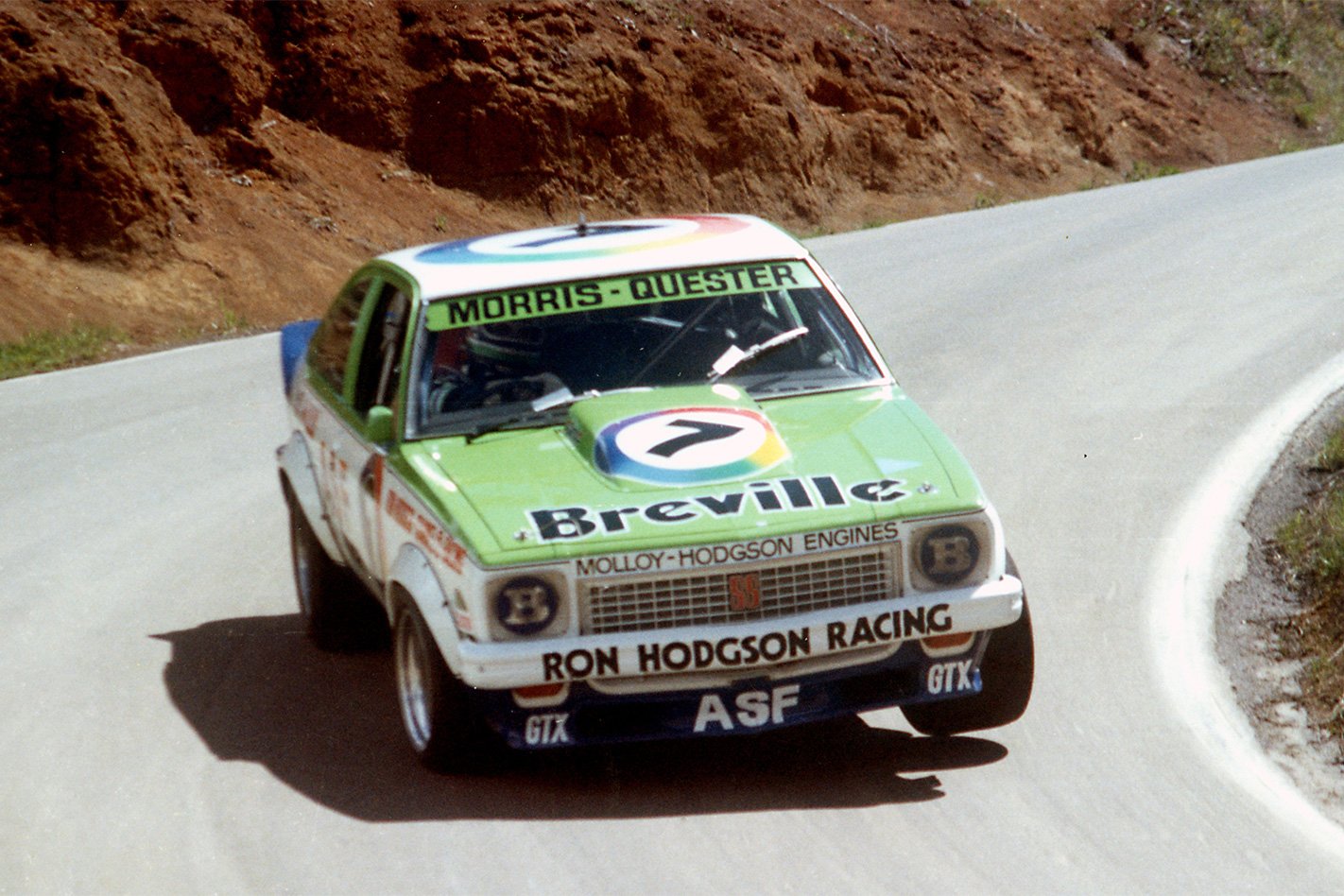
The Holden Torana A9X that Bob Morris drove to the 1979 Australian Touring Car Championship is set to be auctioned in Sydney.
Offered by Mossgreen auctions, the ex-Morris A9X has the potential to be the first Australian muscle car to sell for more than $1 million at auction, with a guiding range between $850,000-$1,050,000.
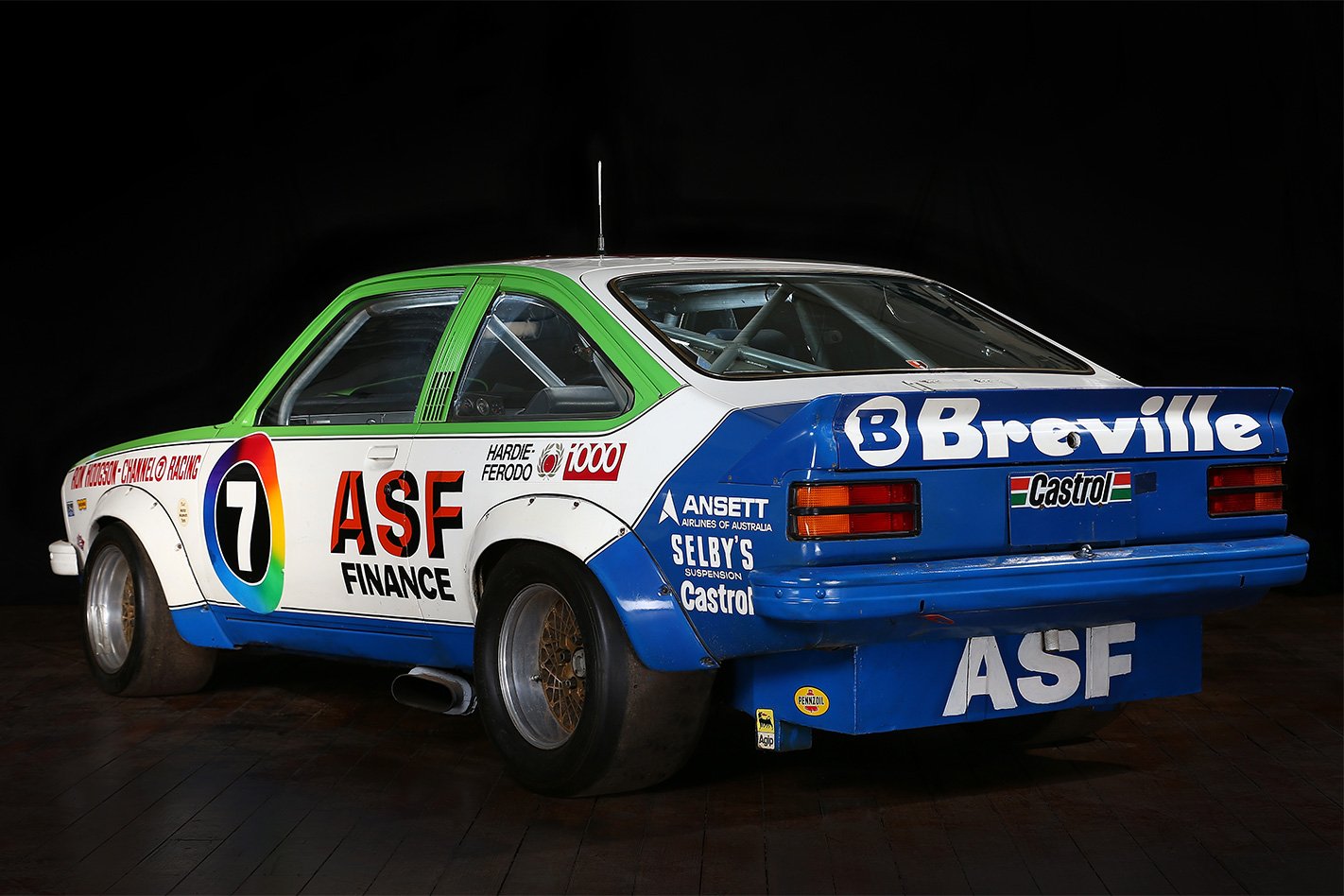
The car also placed second in the 1978 ATCC behind Brock and lined up on the front row of the 1979 Bathurst 1000 before DNFing on lap 95. Morris took victory at Calder Park in 1978 as well as landing podiums at Symmons Plains, Oran Park, Sandown and Lakeside.
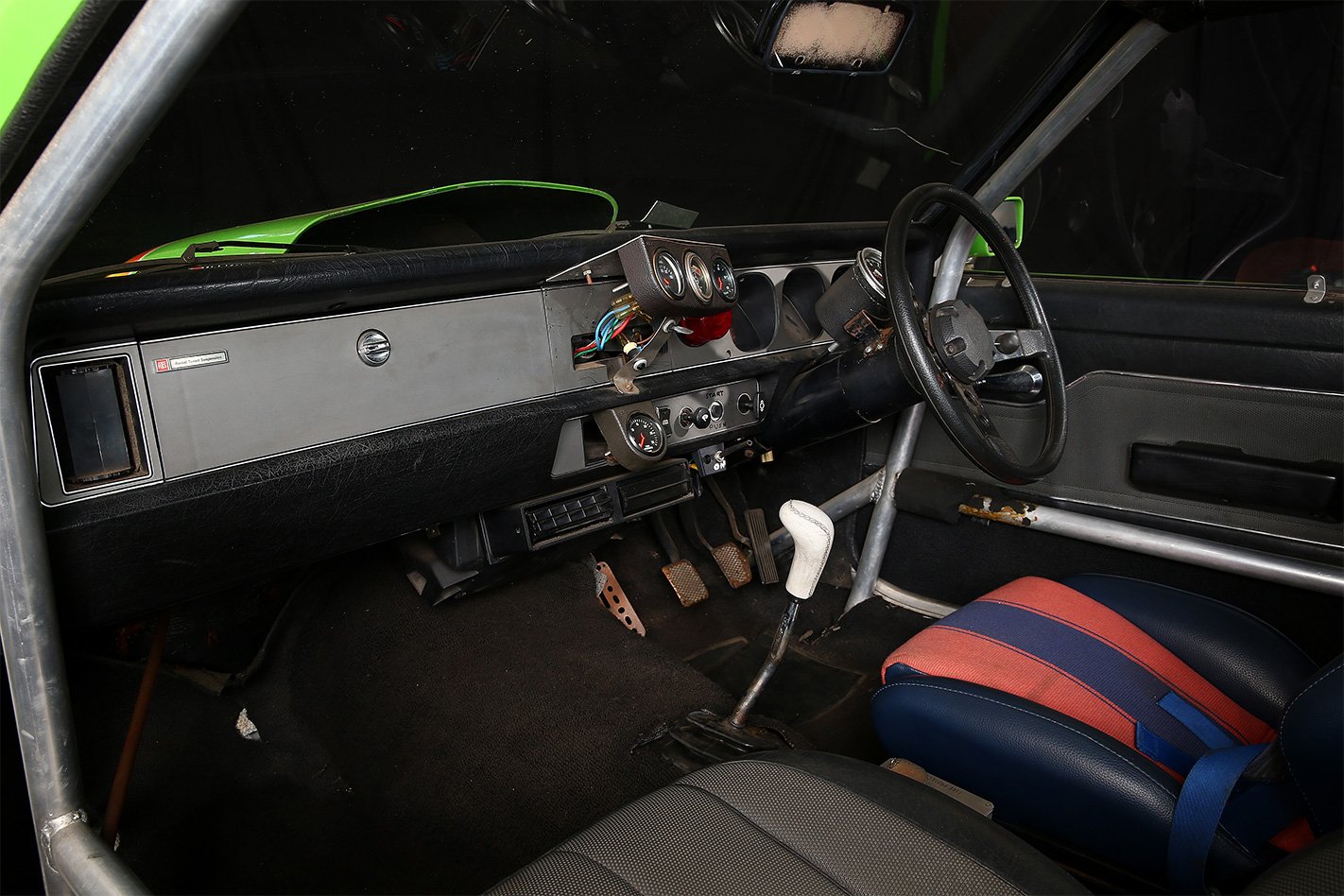
Purchased by its current owner, Peter Briggs, in 1979, the car was retired from competition in September 1980 and was placed in the York Motor Museum, where it has remained bar a stint at the Fremantle Motor Museum.
Mossgreen’s auction of rare collector cars takes place of May 28 at Carriageworks in Sydney.
DJR-Team Penske young gun Scotty McLaughlin is someone who clearly gets great joy from racing cars. But no weekend has brought quite as much pure delight as the one just past, the Supercars Championship contender landing two spectacular wins in the Perth SuperSprint at Barbagallo Raceway.
McLaughlin’s always evident talent has rarely shone brighter as he converted two front-row starts –including a pole on Sunday – into an unbeatable weekend in the Western Australian sunshine.
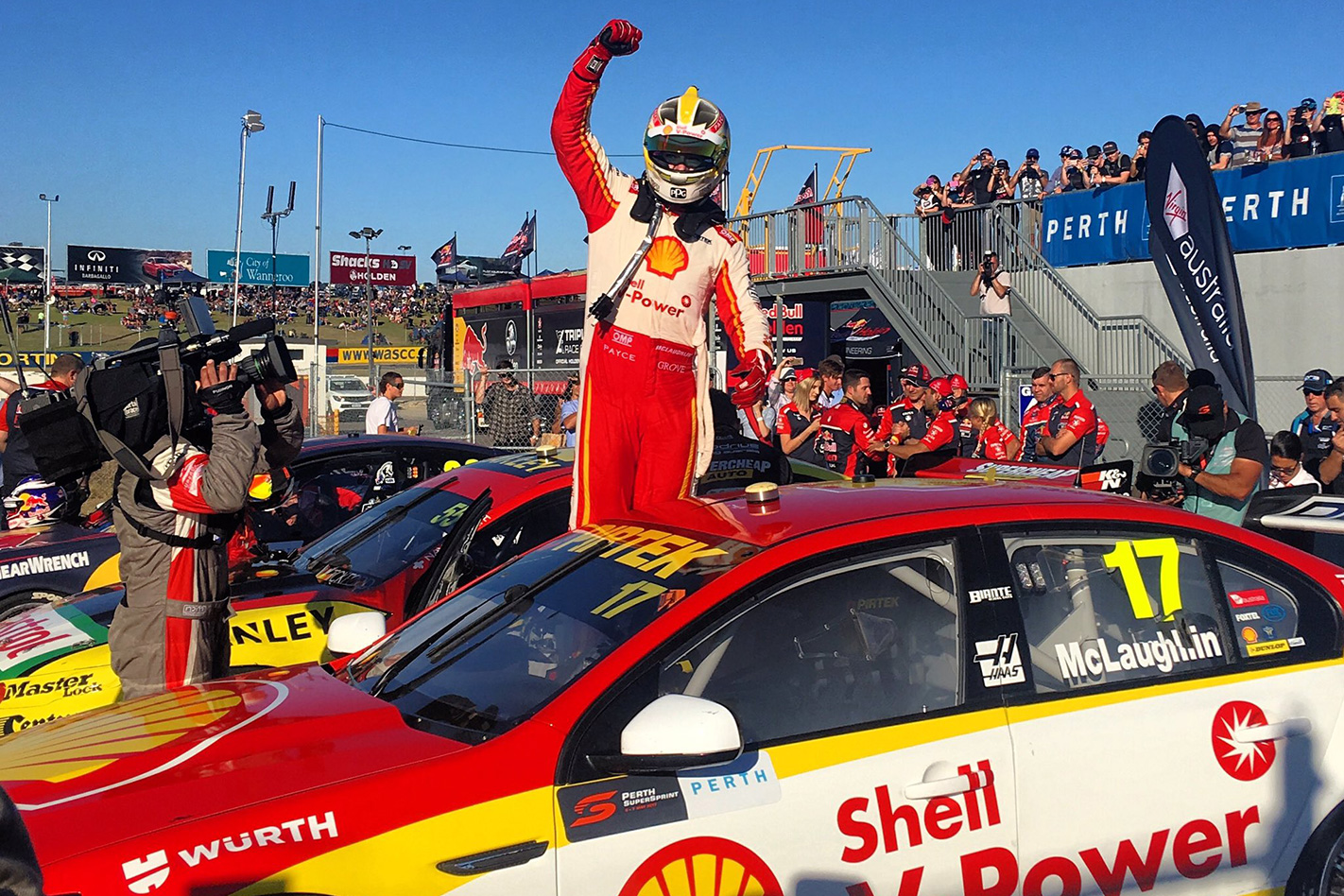
The abrasive nature of the Perth track’s asphalt and the mandated use of Dunlop super soft compound rubber was expected to produce unpredictable results with alarming tyre degradation and the anticipation of bold strategies from some teams.
But this year the boffins were on top of their game. Daring pit strategies were uncommon, and the races unfolded into contests between the big hitters of the series.
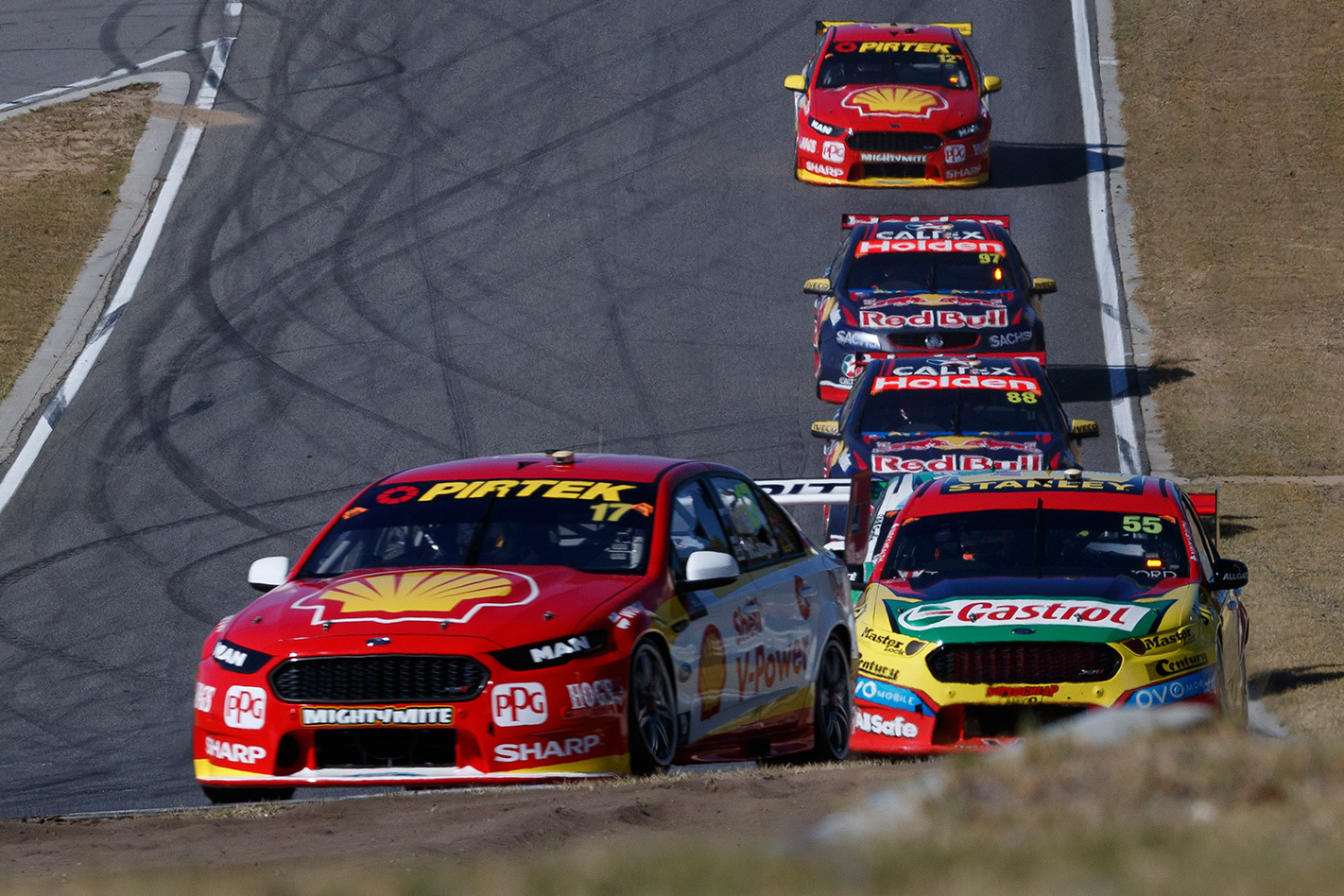
Prodrive’s Chaz Mostert, who won the previous round at Phillip Island, finished second on Sunday after a sixth place on Saturday.
2017 Russian Grand Prix: Mercedes’ Bottas snares maiden F1 win
Jamie Whincup, surprisingly win-less in 2017, conjured up a pair of third places and an optimistic comment. “We would love to have a win, so would the other 25 drivers in the category. But we will get there; it’s not too far away. We will keep chipping away as we always do – it’s that extra one per cent that’s needed.
“Two podiums here is a great result for us. Everyone is being all ‘doom and gloom’ over the competition we are facing, but it’s awesome for the category,” Whincup added.
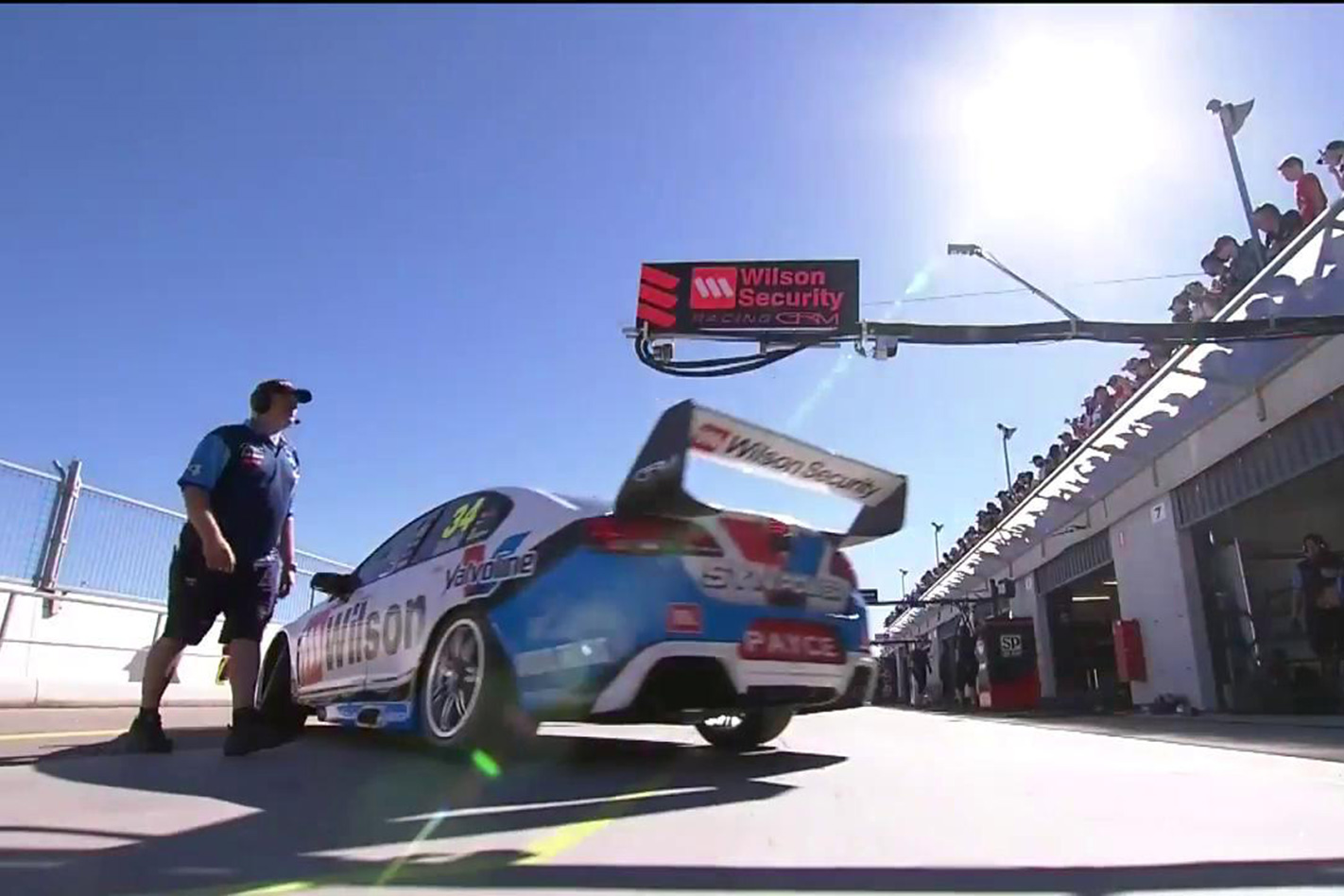
Defending champ van Gisbergen managed a fourth and a sixth in Perth, enough to maintain second in the points. Just.
“It was a pretty straightforward race; we just went about the strategy,” said the matter-of-fact Kiwi, who near the end of the race commented over the radio that he was bored. “The car felt okay, but we are still lacking pace. We just aren’t fast enough, and from my point of view, it was a pretty uneventful race. I didn’t pass anyone until my last lap. I just kept driving around. The car feels good, but we just need to make it faster.”
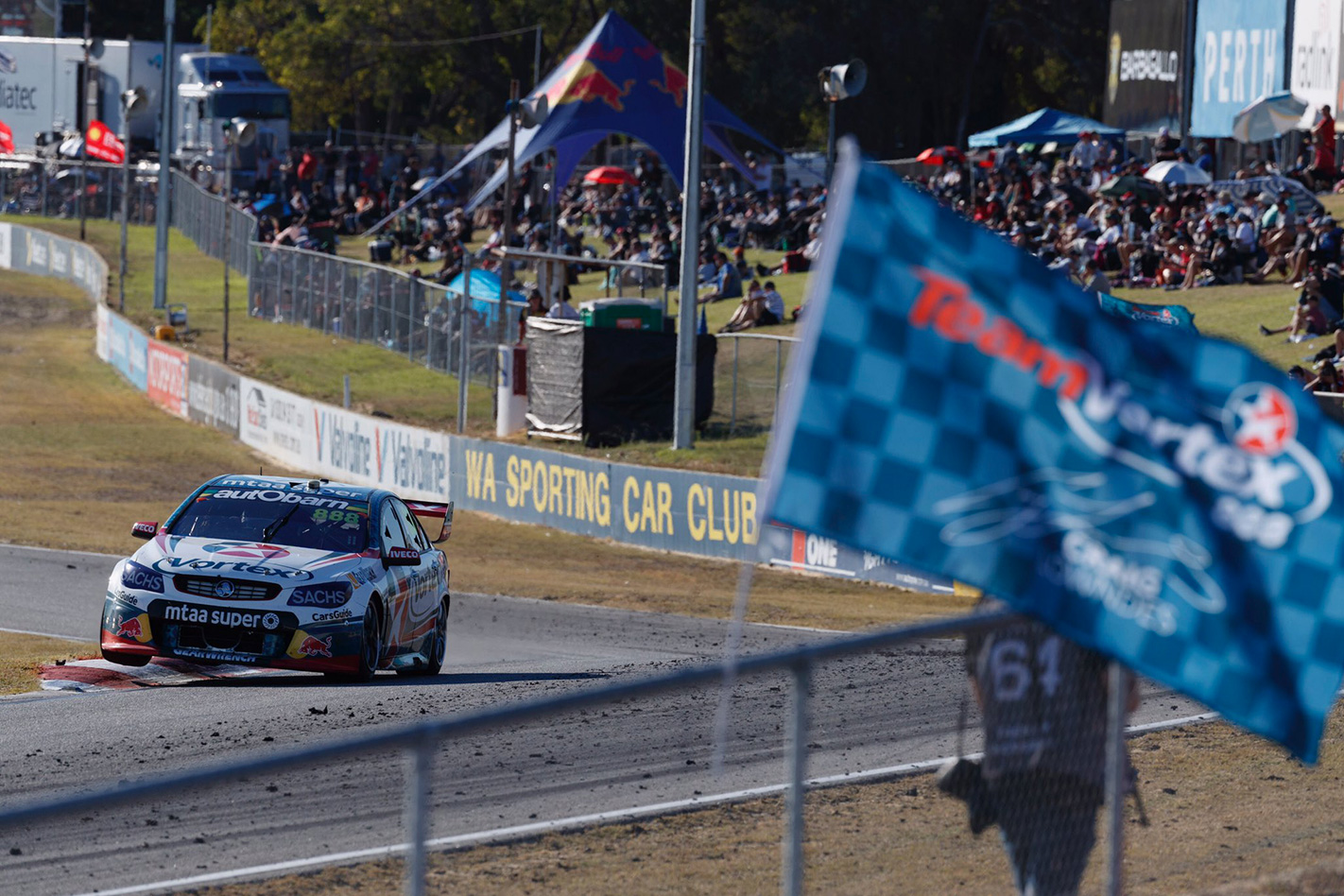
But the man with the immovable grin was McLaughlin. “My aim was to get some points off the guys in the top four places and we managed to do that,” said the Ford driver.
“I was pretty disappointed after [the previous round at] Phillip Island that we didn’t get at least one race win there. I felt like we had a strong car there.”
The points now stand at: Coulthard 802; van Gisbergen 783; Whincup 780; McLaughlin 771; Mostert 771.
Next race in the series is the Winton SuperSprint from 19-21 May.
MotoGP: Pedrosa uncatchable at Jerez
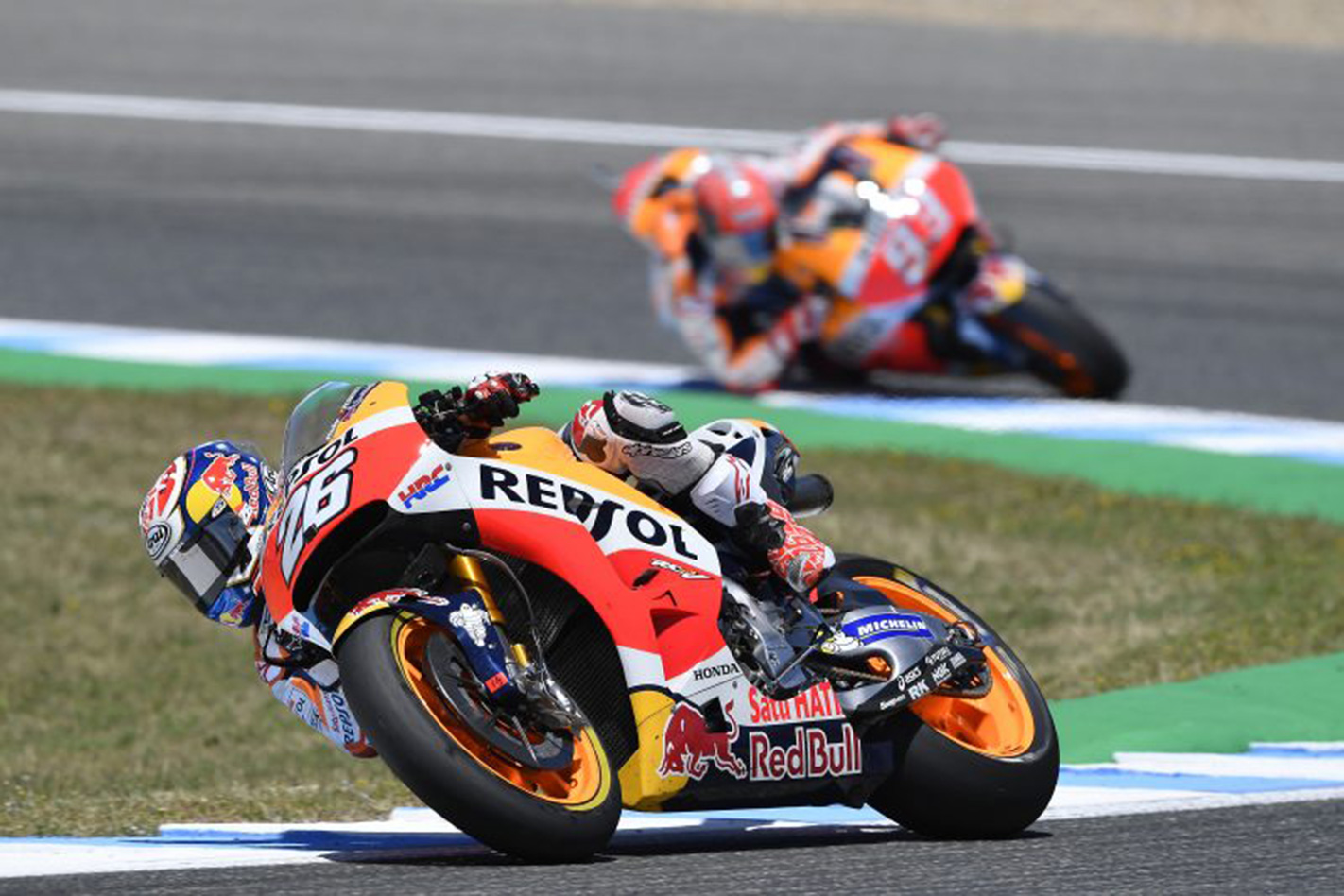
Dani Pedrosa showed he can still be a major force in MotoGP with a faultless ride to victory at the Gran Premio Red Bull de España at Jerez, leading a local riders’ podium lockout.
Fernando Alonso to the Indy 500 – how it happened
It was no Sunday afternoon cruise, with teammate and reigning world champion Marc Marquez never far away as the Honda pair – and many others in the field – dealt with fading tyre performance. A number fell during the race including Cal Crutchlow and Andrea Iannone.
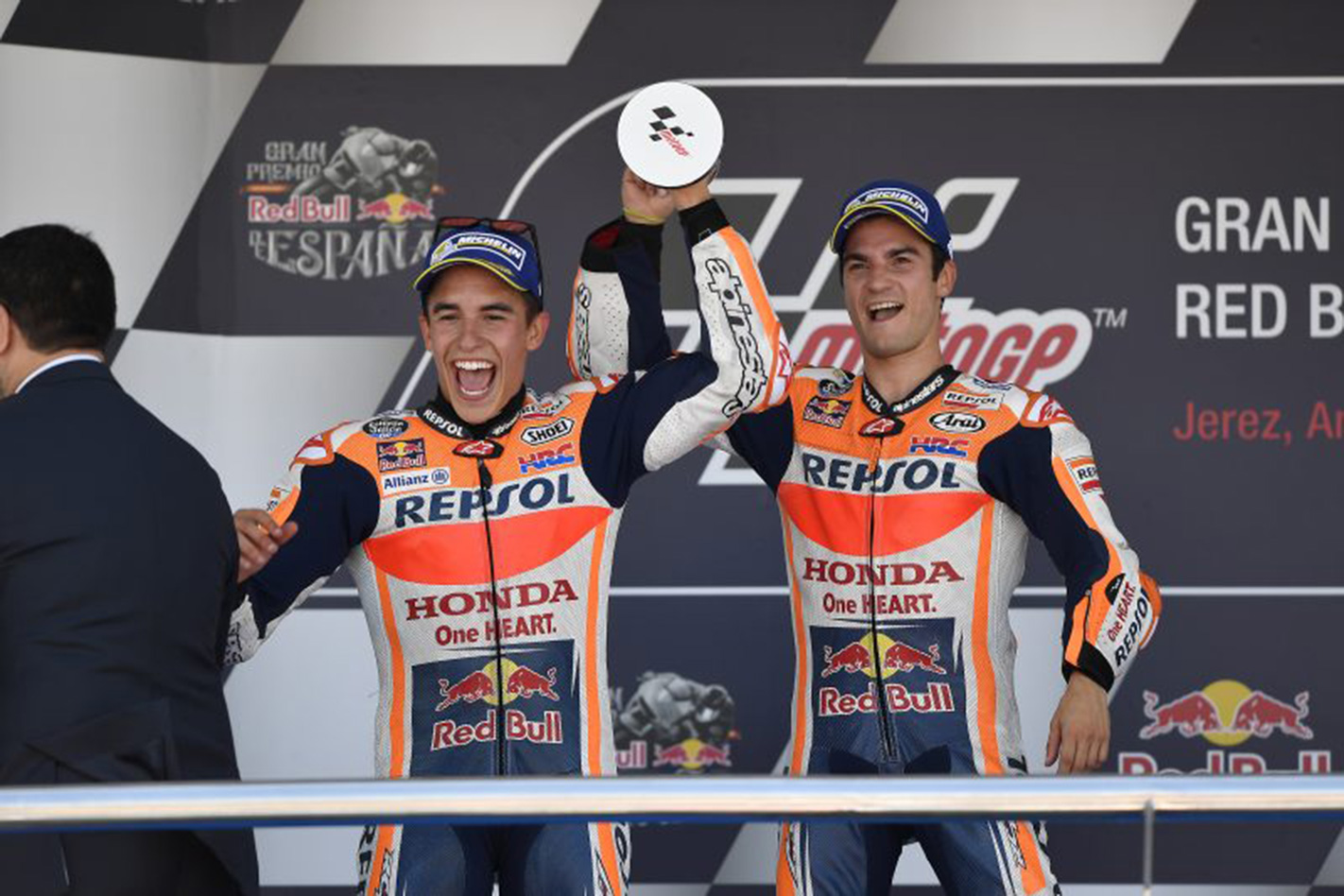
Jorge Lorenzo had his best grand prix this season since moving to Ducati, coming home third some 14 secs back from the winner. It was his first podium of the year, the former world champ moved to say “this feels like a victory”.
MotoGP rookie Johann Zarco (Tech 3 Yamaha) was outstanding, aggressively carving past some big names to take an impressive fourth ahead of the factory Ducati of Andrea Dovizioso and Maverick Vinales (Yamaha).
Aussie Jack Miller was taken out of 10th place after five laps, ruining what has been a solid start to his 2017 season. He was later fined 1000 euros ($A1480) after shoving Alvaro Bautista, the rider who took him out of the race, in the back. He also kicked the Spaniard’s bike.
“He (Bautista) came in hot… I was already halfway into the corner and then he lost the front and just cleaned me out,” Miller told motorsport.com. “And then I pushed him. It’s not the right thing to do.”
The race was the 3000th GP of the world championship dating back to 1949 but also memorable as the Repsol Honda Team’s 100th victory in the MotoGP class.
A further milestone; Pedrosa is now the only rider to have won at least one race for 16 consecutive years.
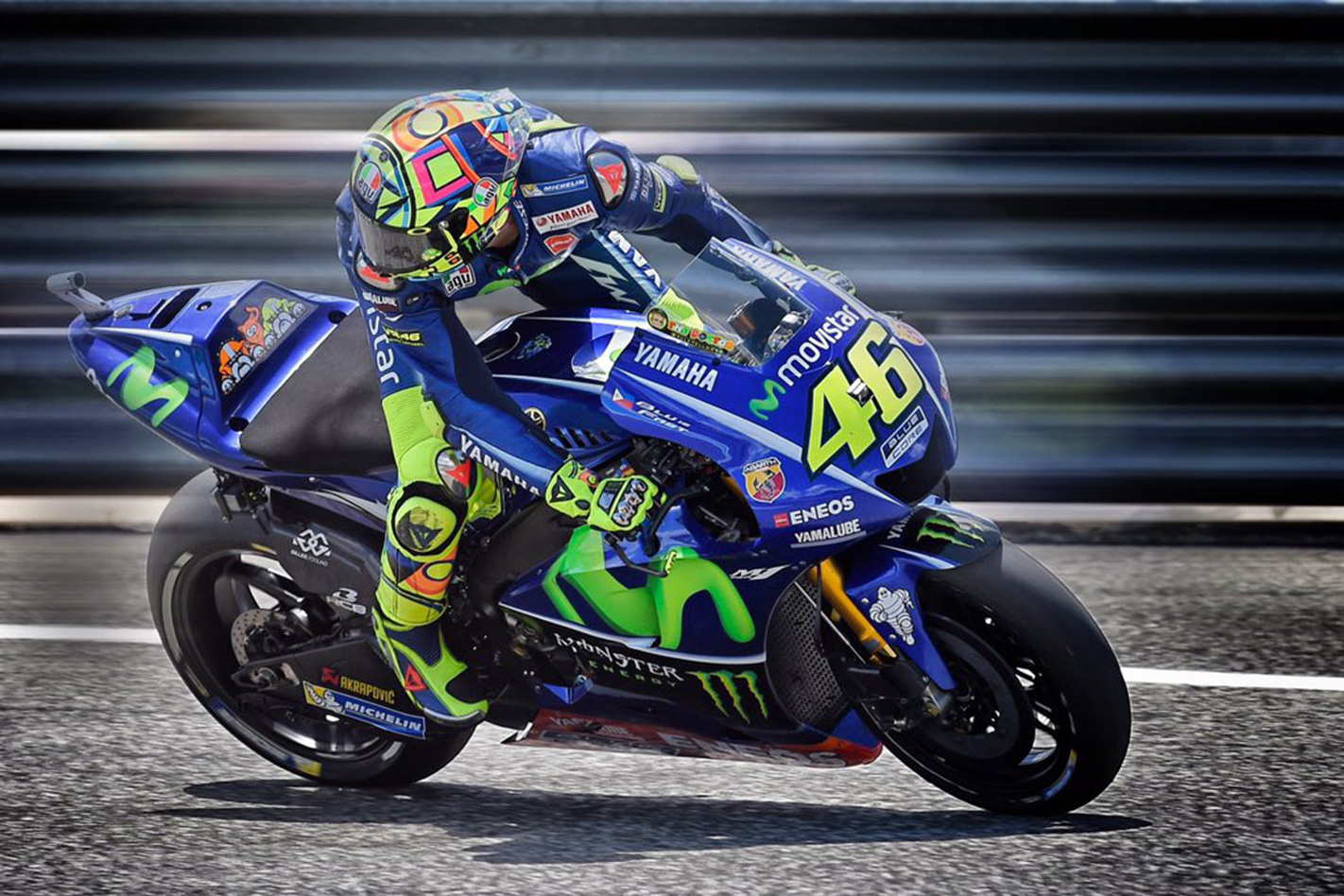
Rossi’s championship lead at the top of the table looks shaky, with Vinales and Marquez edging closer. Just four points cover the three riders.
WEC: Toyota races to one-two blitz
Toyota has claimed its first one-two World Endurance Championship finish since Shanghai in 2014 in the Six Hours of Spa.
In tricky, light rainy conditions, Sébastien Buemi held off the fast-finishing Kamui Kobayashi in the final stages, hanging on to take victory by just 1.9 secs in a tense finish at the Spa-Francorchamps circuit.
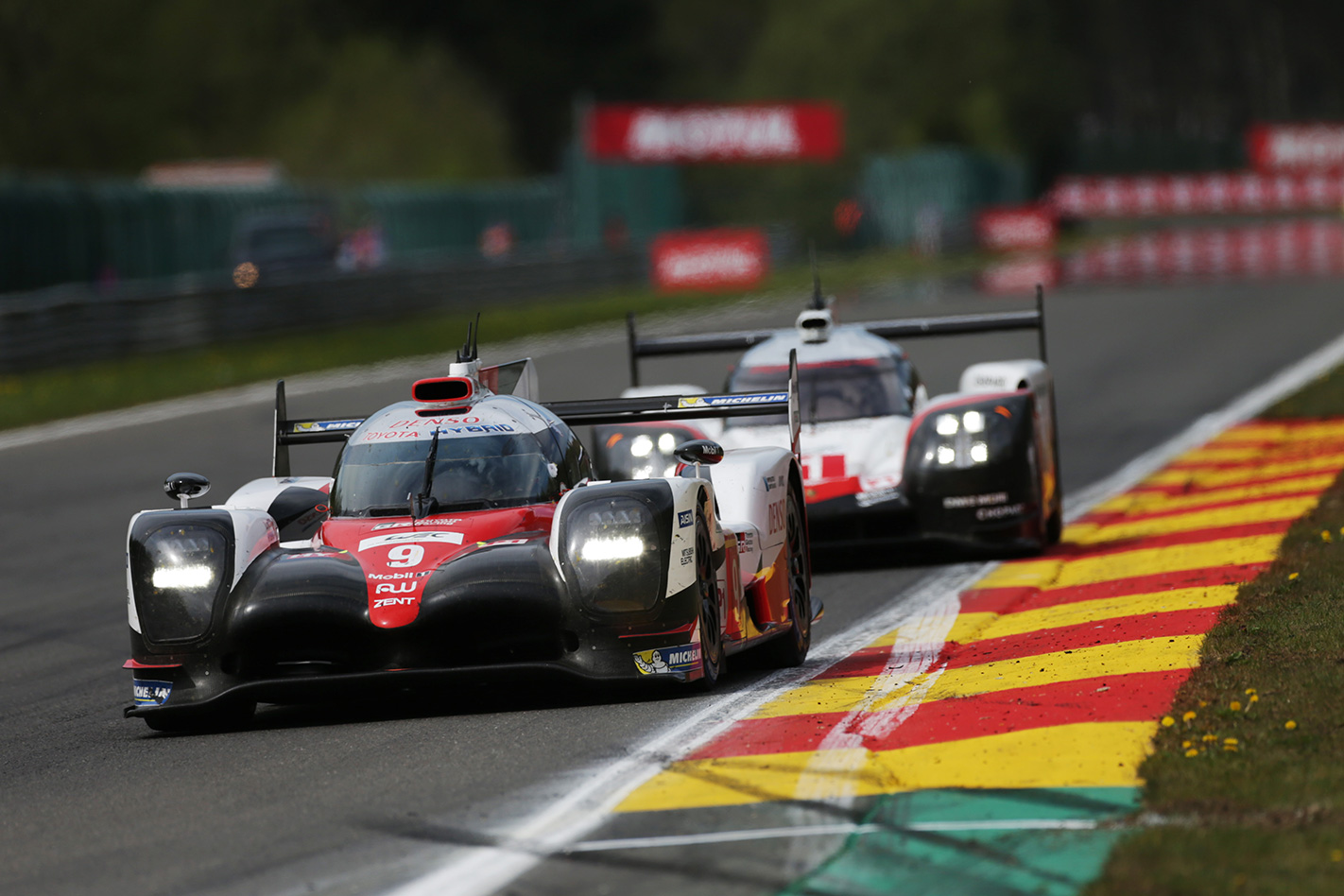
Mike Conway and Kamui Kobayashi, forced to drive as a duo after colleague José María López was ruled out through back injury, looked set to take the win but were unfortunate to lose out in both of the full-course yellow periods.
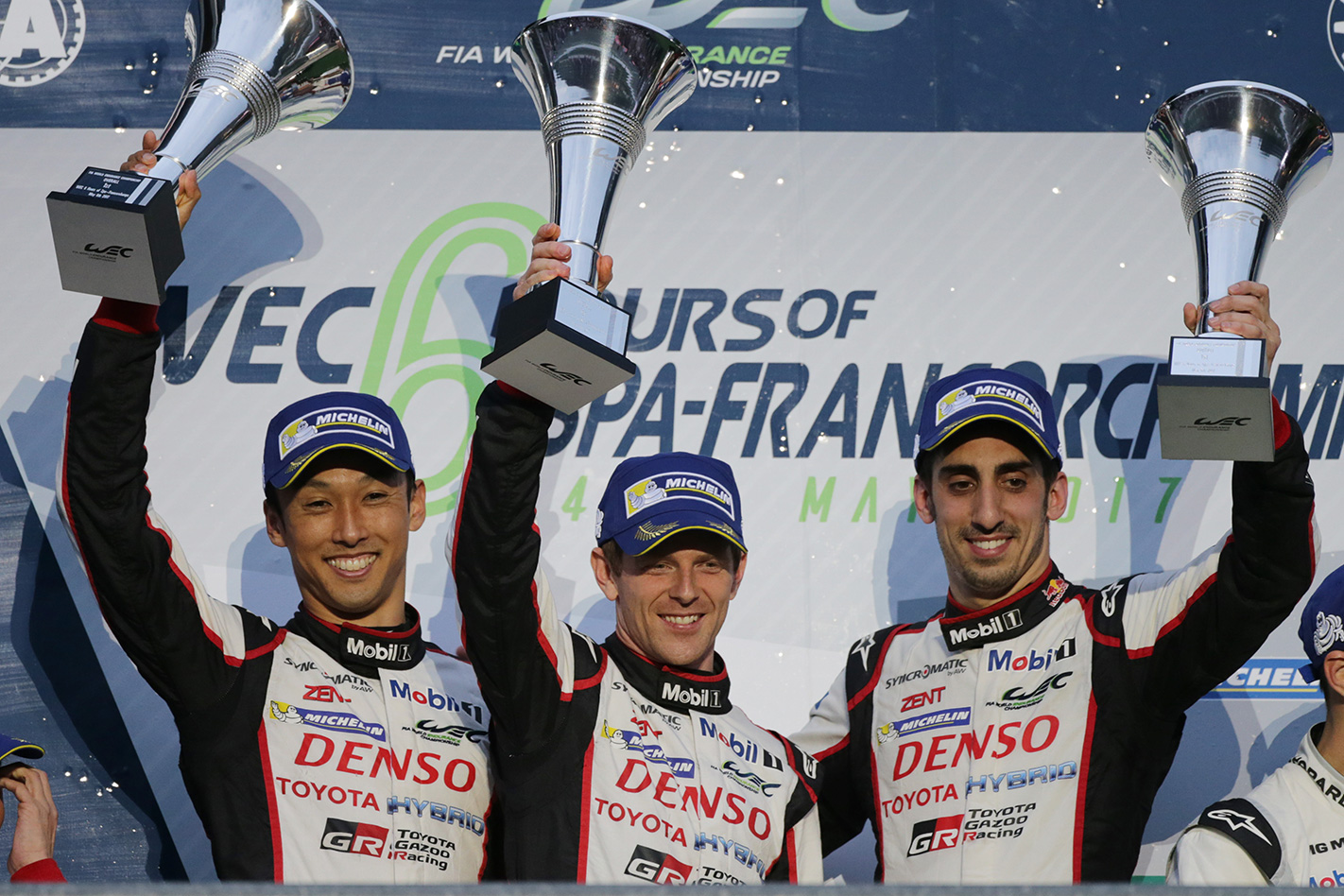
Toyota also took the chance at Spa to enter a third car fitted with a low-downforce configuration optimised for the long straights that characterise the Circuit de la Sarthe at Le Mans.
Stéphane Sarrazin, Nicolas Lapierre and WEC debutant Yuji Kunimoto brought home the #9 car in fifth place and provided the team with good data for the 24 Hours of Le Mans in mid June.
THE ringmaster is gone. After four decades as the seemingly immovable, omnipresent overlord of the Formula 1 circus, Bernie Ecclestone’s ruthless rulership has finally been ended in the kind of bloodless coup he was renowned for orchestrating.
First published in the April 2017 issue of Wheels Magazine, Australia’s most experienced and most trusted car magazine since 1953.
Overtaking the octogenarian at the front of F1’s executive grid is an Anglo-American management triumvirate – hired by new owners Liberty Media to maximise its latest, $8 billion acquisition by reinvigorating the sport and reversing waning audience numbers.
In plain English that means the trio’s real task is to drag Formula 1 kicking and screaming into the 21st century. One of them, Ross Brawn, is well-known to motorsport fans. The others? Well, the others are American businessmen.
But don’t fret that Formula 1 is headed for a diet of Big Macs and crappy comb-overs. For all their faults, Americans know how to do sport. Basketball games are more like concerts and involve fireworks and staff who race around and shoot you with shirt cannons. And then there’s NASCAR, which, despite racing on boring, circular tracks, regularly attracts crowds of 100,000 plus. F1’s new leaders are already talking sense about new TV deals, online streaming, greater fan interaction and simplified, less convoluted rules to promote harder and closer racing. This could be the change that Formula 1 needs.
SO, WITH Ecclestone demoted to backmarker status with a token ‘chairman emeritus’ advisory role, Chase Carey assumes Ecclestone’s CEO title and adds the chairman’s role. Handlebar-moustached New York native Carey was a long-time lieutenant of Rupert Murdoch, having helped set up both Fox News and Fox Sports.
Fellow American Sean Bratches – previously a key architect behind sports network ESPN – holds the commercial reins to improve F1’s off-track performance.
Meanwhile, a far more familiar face for fans is responsible for greater entertainment on it – and occupying the newly christened title of managing director, motorsport. Ross Brawn is one of F1’s most successful and respected technical figures, having helped mastermind each of Michael Schumacher’s record seven drivers’ titles with Benetton and Ferrari, adding a constructors’ title with his eponymous team in 2009 for good measure.
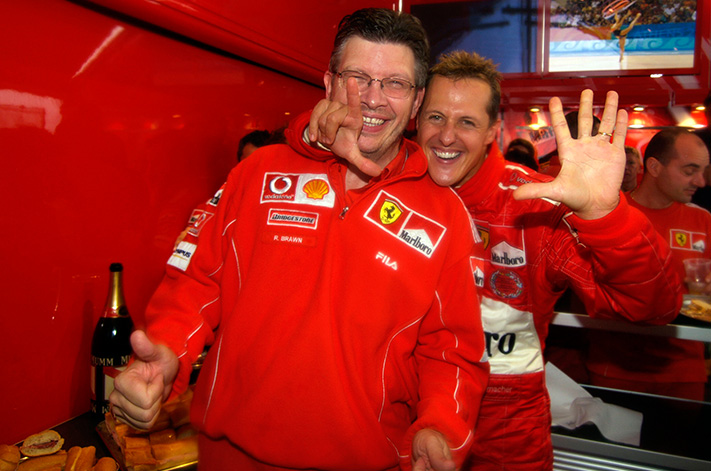
The new-look Formula 1 Group is being cautious as to how much it reveals about its broader plans, but its parent company is acutely aware that F1’s global audience shrank by a third between 2008 and 2015, stabilising at 400 million for 2016.
The decline coincided with the start of the global financial crisis but is largely attributable to the widespread switch from free-to-air television to lucrative pay-TV arrangements. It’s obvious that Liberty Media intends to more than just maintain F1’s claim to the title of world’s most watched annual sport, by radically altering how people view a spectacle that has failed to embrace social media.
“The TV world is just a part of a much larger digital universe,” says Carey. “We want to use all the [digital] platforms and technologies available to create a richer experience for the fans, and let them connect on multiple devices in different ways.
“We want to enable fans to connect 24/7 with their favourite driver, their favourite team, and better understand what’s going on in the sport.”
Carey says F1 can’t ignore the fact that people are increasingly accessing digital content that gives them “what you want, where you want, when you want.”
Live streaming of race weekends on devices seems a near-certainty, while the sport’s new controllers clearly envision a future in which fans access additional information on a tablet or smartphone while watching the corresponding action on TV.
Varying levels of accessible information on devices and apps would cater to both the more casual viewers and hardcore fans, with the sport’s most obsessive followers likely to pay extra for the privilege of deeper and richer technical detail.
Brawn says the vast amounts of track and car telemetry could be a wealthy source of information that transfers from pitwall monitor to TV.
“On the pitwall, we always knew where every car was, what it was doing, how it was doing with its tyres, and where it was on pitstops. But that information isn’t necessarily apparent to all the viewers. I believe we can put layers of information in our [broadcast] which will enable the more enthusiastic fan to get deeper in and see what’s there if they want to search for it,” he says.
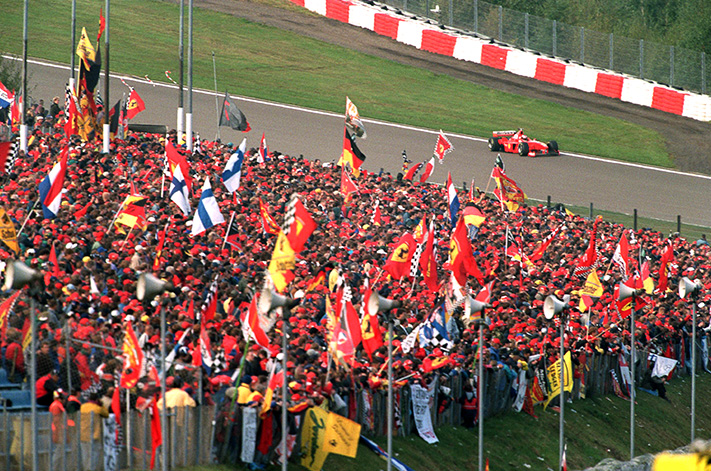
Virtual reality technology is also being considered, which Carey says has the potential to give viewers the POV of Lewis Hamilton while he’s racing in Monaco. Bratches says improved real-life access to drivers could be possible with the expanded grand prix events – which would be a welcome change for a motorsport often accused of elitism compared with more fan-inclusive series such as IndyCar and MotoGP.
“These are world-class athletes there to perform and to win for themselves, their teams and their sponsors, so there needs to be boundaries at the circuits in terms of their interaction. But outside that, they are the face of the sport, and we plan on aggressively celebrating and amplifying their personalities to engage fans and continue to reinforce the Formula 1 brand,” he says.
Bratches assures that nurturing the F1 brand also means preserving historical races such as Silverstone and Monza, but doesn’t mean an end to some of the more characterless tracks in less traditional territories that are richly financed but poorly attended.
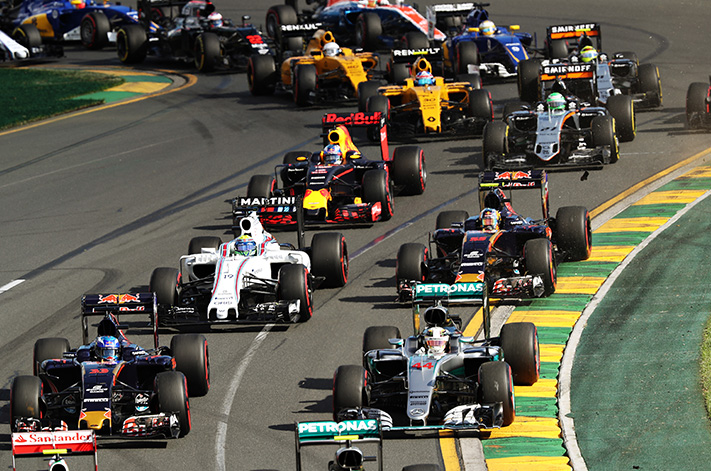
Carey describes the Western Europe races as the foundation of the sport, though also cautions that many of the events “feel a little bit too much like they were 15 years ago”. While burgers and fries aren’t about to be served in F1’s exclusive Paddock Club, or F1 races divided into quarters to cater to limited attention spans, Carey believes American football’s famous annual extravaganza is a good model for the potential to expand grand prix weekends.
“I’ve talked about having 21 Superbowls,” says Carey, referencing 2016’s 21 races (there are 20 in 2017). “I think the nature of [F1] is that it should be part of a big, week-long event that has the sport as the core.
“You don’t need gimmicks… but we’ve got to make these [grand prix] events bigger and broader than they are today and develop new ways to engage fans. We’ve got to make the sport part of a rich and multi-dimensional experience that has things going on all around the track for all ages and families.”
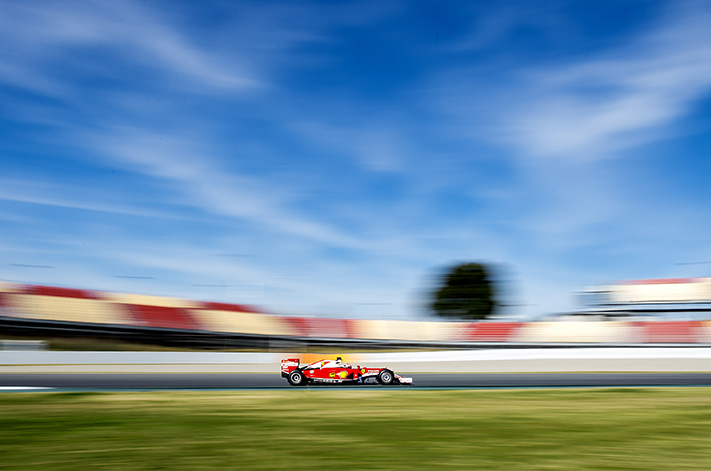
Liberty Media acknowledges that it has inherited a sport with no shortage of criticisms, and a sport already desperate to improve action on the track with the most drastic regulation changes in years.
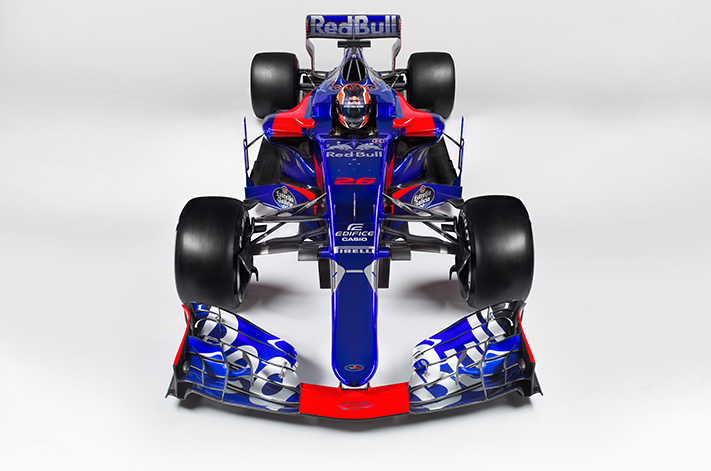
Wider, longer and lower F1 cars for 2017 are designed to look more aggressive and predicted to be three to five seconds a lap quicker than last year’s cars. Slower-wearing Pirelli tyres should allow drivers to race flat out for longer periods.
Some drivers and respected technical observers have already expressed concerns pre-season that the higher-downforce cars won’t necessarily help F1’s perennial issue of limited overtaking.
The rear-wing-adjusting drag reduction system (DRS) remains in place to assist, though Brawn wants to remove it as he targets racing battles that are exciting and not artificially enhanced.
“Overtaking is about quality not quantity. The overtakes that happen now are all sort of DRS assisted … They’re not as exciting as they could be. But we drove ourselves into a corner in respect to the cars we have, and we had to Band-Aid it. I think that we could get ourselves out of that and come back with some good solutions.”
Brawn will need all his famous tactical nous as he tries to shape the future of the sport with the approval of the teams and the governing body, the FIA.
Even Ecclestone found himself frustrated in recent years by the increasing influence of the manufacturer giants such as Mercedes and long-term powerhouse Ferrari, which possesses a right of veto over any changes to the sporting or technical regulations.
This was most recently exercised in 2015, when it opposed a proposed reduction in the cost of customer engines. Only a year earlier, two F1 teams – Caterham and Marussia – had spun off into administration. Manor followed at the start of this year.
Brawn says it will take time to get the sport “back to a better place”, including the creation of an economic climate that will attract new teams rather than lose them. “We have to set a vision of where we want the sport to be in a point in the future, and realistically you’ve got to set that three to five years ahead,” he says.
Brawn uses Leicester City’s shock triumph in last season’s English Premier League as an analogy for his dream F1 scenario – “where private teams have just as good an opportunity to win a race or even a championship as the large manufacturer teams”.
As Melbourne begins to dismantle the Big Top at Albert Park after first GP of the year, Australia will have provided the first clues to the success or otherwise of the latest rules. And the first sense of life beyond Bernie who was dictatorial yet made millions for many as he dragged Formula 1 out of its chain-smoking, overall-stained amateur days and polished it into the world’s most technically advanced sport.
Greater rule-tinkering is guaranteed in the years ahead, but fans will be satisfied if it means they’re rolling up for what really is the Greatest Show on Earth.
It may come about just once per year, but the Bulmer family’s annual camping trip is a thing to behold, if only for the sheer audacity of the amount of gear we manage to cram into the luggage bay of the poor chariot at our mercy.
This year the hapless victim was the Skoda Superb wagon, and what better way to put its all-wheel-drive system and cavernous cargo bay to the test than take it bush for a long weekend?
The trigger for this sojourn into the wild was a mate’s annual clarion call to join with him in an orgy of tree-felling, dubbed the ‘Merrijig Chainsaw Massacre’, nominally to restock his cabin’s dwindling wood supply.
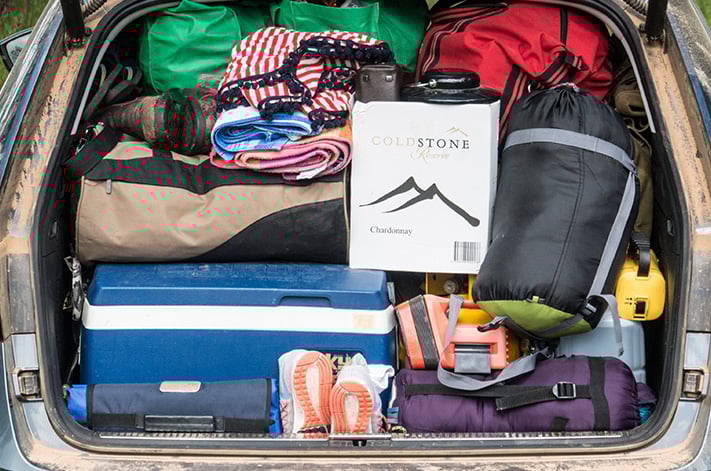
Displaying the sort of cavity-filling ability to shame a dentist, I packed the Superb’s generous boot – all 625 litres of it – at a density no Skoda engineer ever thought possible. Suitably laden, we set off on the three-hour drive over Aussie backroads, complete with potholes, yumps, blind crests and roadkill, with an honour guard of stout-looking red gums a constant reminder of the need to stay to alert.
The variable road quality, including a 10km stretch of corrugated dirt, was a great opportunity to sample the adaptive dampers. These are part of the optional Tech Pack, which lists for $3400 and offers three modes accessed via the touchscreen.
| 2017 Skoda Superb 206TSi 4X4 Wagon Quick Review
Perhaps not surprisingly, given the combined weight of four passengers and a boot-load of camping gear, the firmer Sport setting proved the best option. What was a little surprising, especially given the Superb’s handsome 19-inch wheels, was the fact that Sport mode manages to avoid the teeth-rattling firmness of some such systems, providing a sweet blend of ride comfort and body control.
The latter was particularly appreciated, given those imposing river red gums. In fact, the Superb maintained truly impressive handling precision and roadholding, despite the weight gain, something sorely appreciated when carving such ducking and diving backroads with a car-load of kids.
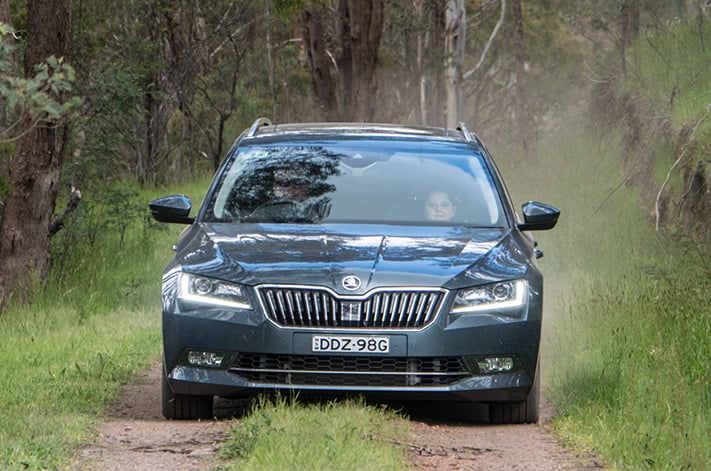
The punchy 206kW turbocharged four-pot also proved utterly unfazed by the hefty weight penalty. Like us, it seemed to relish the fresh country air, delivering brisk overtaking performance and effortless cruising.
Remarkably, when the weekend was over, I somehow managed to cram all that gear back in, plus the mandatory clumps of mud and dirt, much to the amazement of my camping neighbour, who confided that he thought I must have had a trailer stashed in the bushes nearby.
Read part one of Whichcar’s long-term review of the Skoda Superb wagon here.
This article was originally published in Wheels magazine January 2017
It’s arrived in Australia with a new face, re-styled interiors and a wider model range than before.
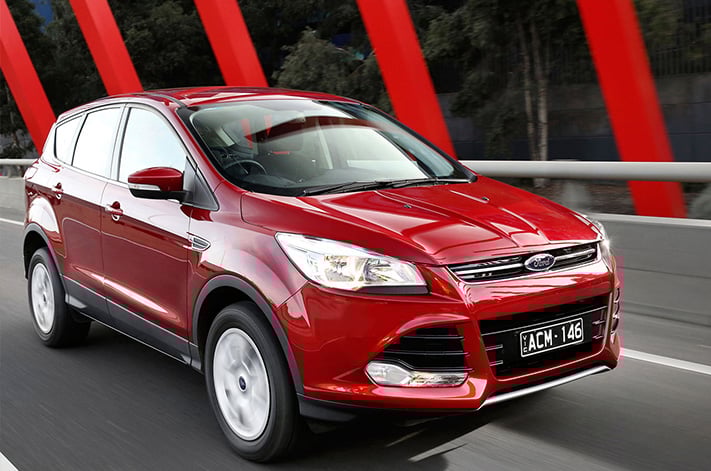
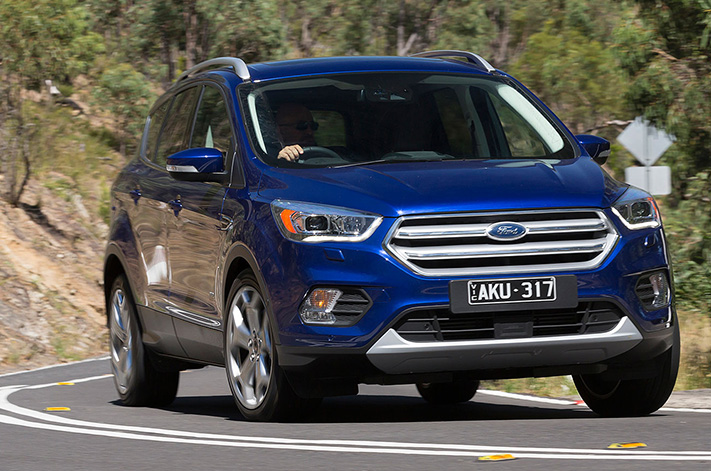
This is Ford’s attempt to up its sales in the segment but while it’s fundamentally a Kuga underneath, the new Ford Escape is more than just a facelift.
What stands out?
The most important thing to point out is that while the Kuga only offered all-wheel drive versions, the Escape now adds a front-wheel drive 1.5-litre turbocharged engine at mid-spec level. This major addition to the range fills the gap the Kuga couldn’t, by offering a new price-point.
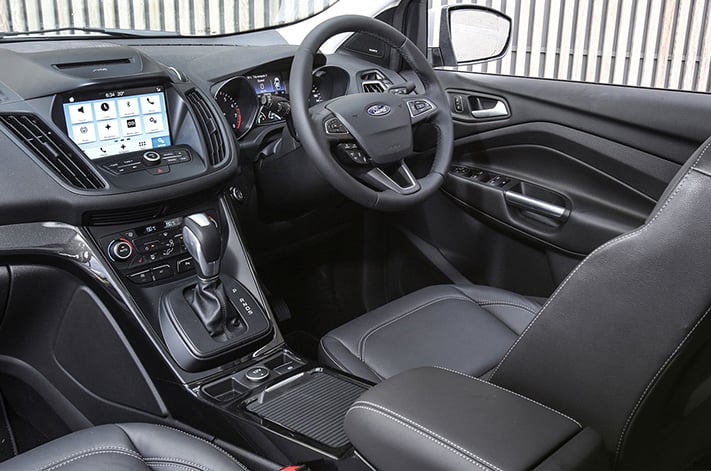
The facelifted aspect of the Escape gives it a fresher look, but the three-tiered-cake like dash design does make it feel dated.
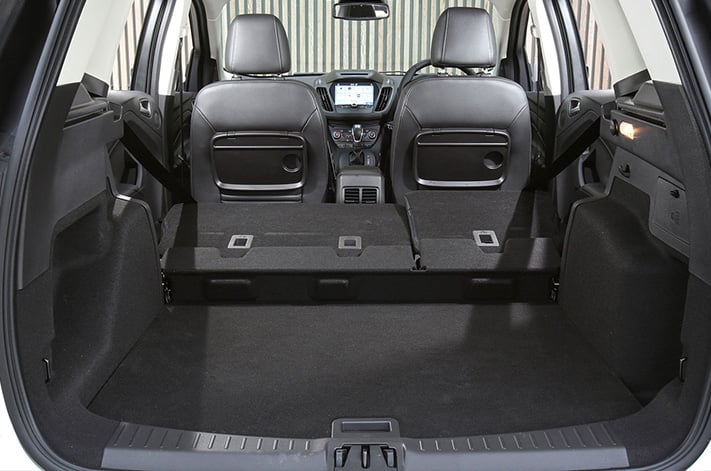
Still, the Kuga’s positive traits have clearly carried on in the genetics of the Escape with enjoyable steering, comfortable seats and plenty of space thanks to a 1603-litre boot when the rear seats are folded. Even better, they fold nearly flat.
What’s inside?
At all levels, Ford has introduced its SYNC3 technology which includes connectivity like Apple CarPlay and Android Auto. All variants also receive satellite navigation, rear parking sensors and a reverse camera.
The Escape comes with a lower pricetag than its predecessor and offers plenty more features, not least of which include paddle-shifters added to the new-look steering wheel.
Automatic windscreen wipers and headlights, keyless entry and roof rails are just a few of the additions added to the mid-spec Trend. The top spec Titanium gets keyless entry, power folding mirrors, heated front seats and active park assist technology, as well as a few aesthetic differences.
An optional technology pack is also available for an extra cost, which adds lane departure warning, lane keep assist, auto high beam, autonomous emergency braking up to 50km/h, adaptive cruise, blind spot monitoring and tyre pressure monitoring system.
But this pack is only available in the Trend and Titanium, so those looking to spend the entry-level money will miss out on the safety gear.
Choosing yours
The new 1.5-litre front-wheel drive is likely to be the most popular of the Escape range, and the mid-spec Trend with that engine would be out pick. It’d be worth considering purchasing the optional Technology Pack, purely worth it for the safety technology.
Summing up
The addition of the 1.5-litre engine and front-wheel drive option, as well as more gear for a better price tag widens the appeal in the Aussie market.
The new update makes up for the Kuga’s shortfalls and puts it on to a level playing field as a contender in the mid-size SUV segment.
