
German mega-tuner RUF has built itself an awesome reminder of just how mental its CTR Yellowbird really was.
What’s a CTR Yellowbird, you ask? Shame on you. RUF’s CTR, more famously known as the Yellowbird, made a trifling 320kW and 550Nm on its down days. No traction control. No PASM dampers.
It was the star of the jaw-dropping vid of Auto Motor Und Sport tester (and Nurburgring ace) Stefan Roser, taking a firm grasp of one of the scariest Porsche offshoots ever created and absolutely ragging it around the entire length of the track. Sideways. All the time. Just Stefan, a spookily fast CTR and a lot of arm-over action.
RUF has come to Geneva this year with what looks for all the world like a 964-era 911 tarted up as a CTR clone – only it’s not. And it’s not even a Porsche. RUF – like HSV – is recognised as a small car maker in its own right, so it’s gone and built a brand new CTR to celebrate 30 years since the Yellowbird was launched on an unsuspecting world.
And it’s stunning.
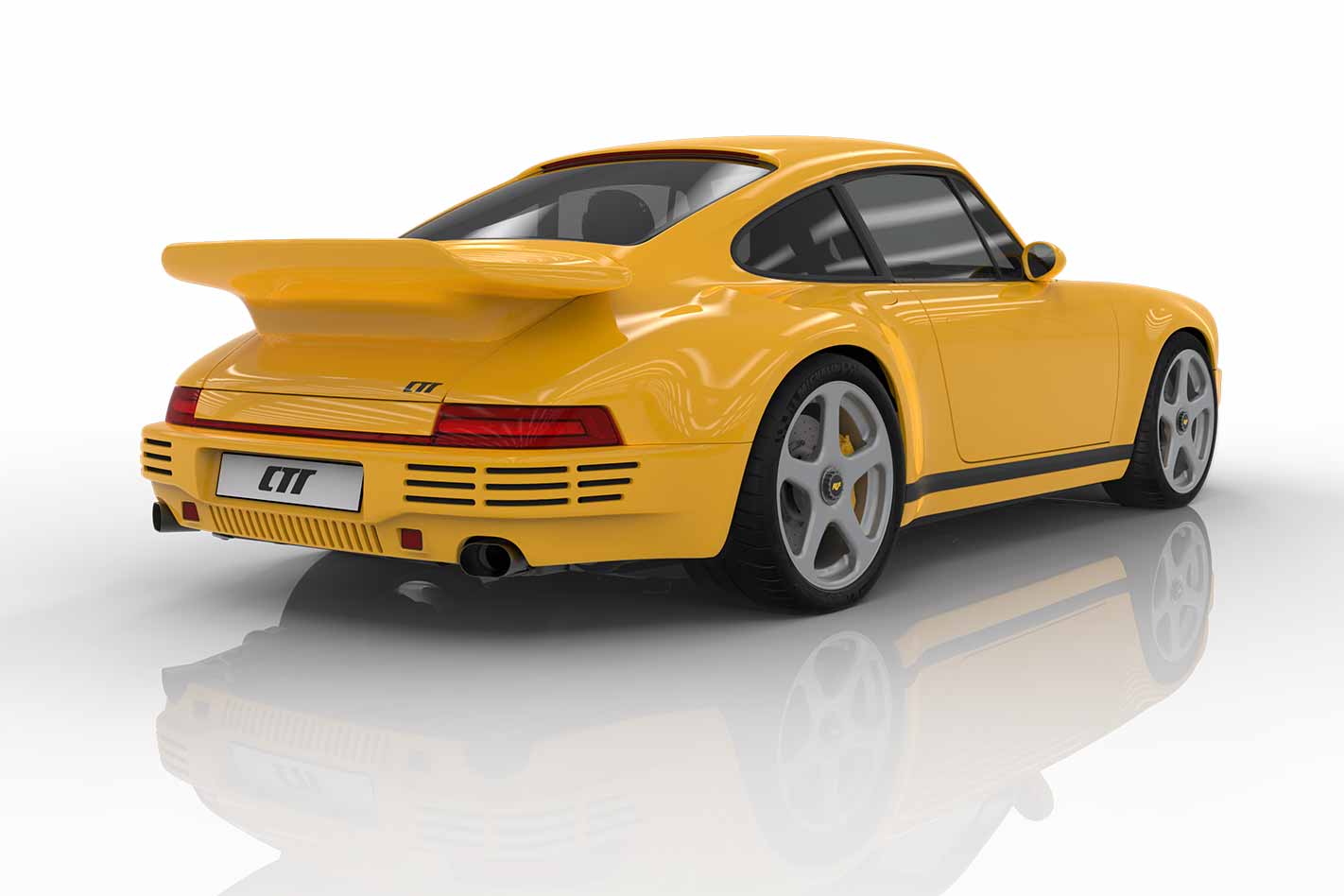
While there are no Porsche badged bits on the body or chassis (okay, aside from a Porsche-spec dash unit), the powerplant is all Stuttgart. A Mezger-spec 3.6-litre water-cooled twin-turbo at heart, RUF has tuned it to produce 522kW and a faintly terrifying 880Nm – just reference back to that 1200kg weight figure above again.
Oh yeah, it’s still rear-engined, too. Ulp.
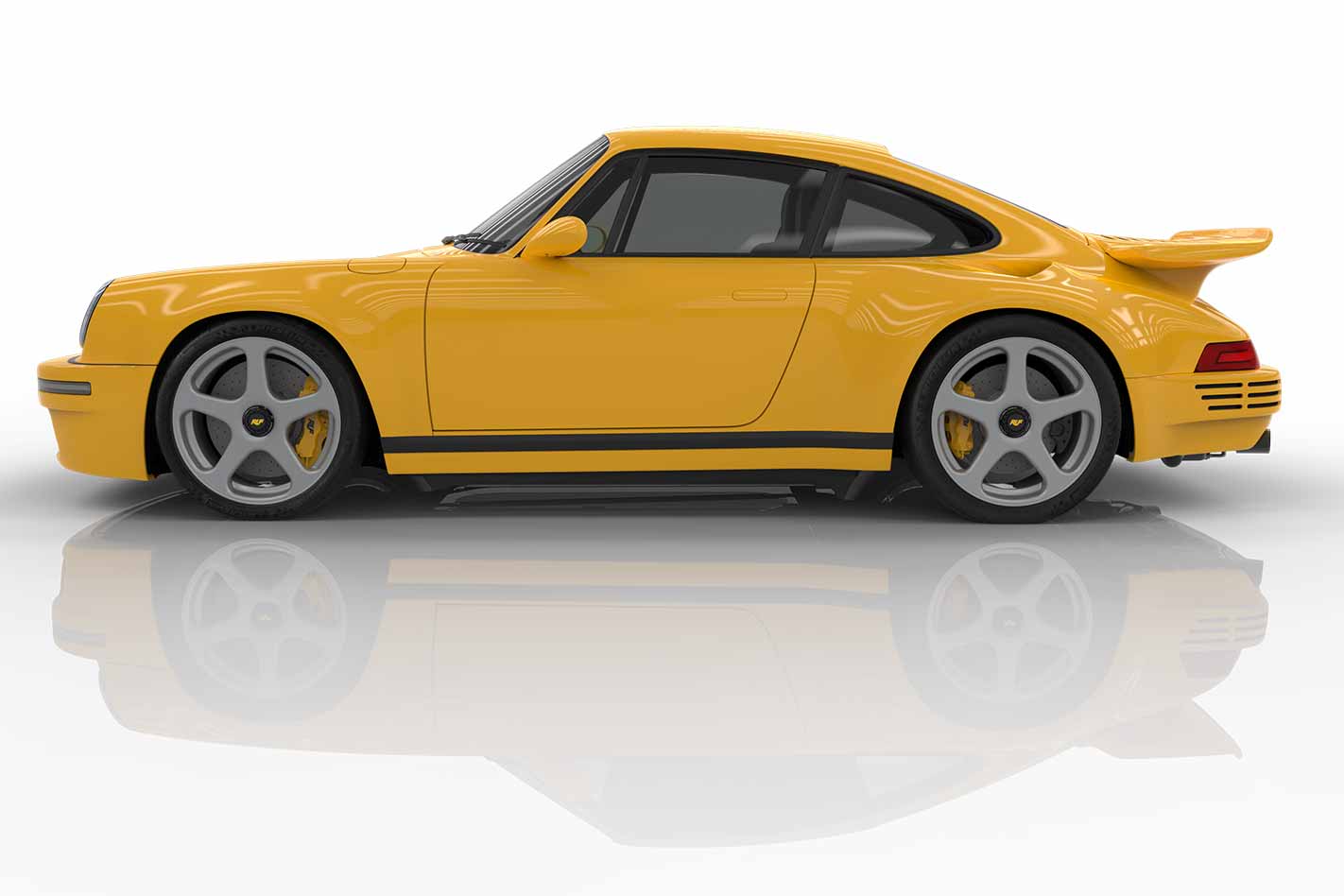
Just 30 CTRs will be built, and are priced accordingly; a cool $1,044,000 in our Aussie dollars, or 750,000 Euro. No word on whether Stefan will be given another crack at the car – though wouldn’t that be awesome?
EUROPEAN expansion is key to Cadillac’s ambitions to supply a range of vehicles to Australia in about 2021, the US luxury brand says.
As part of the iconic American luxury brand’s move into mainland Europe, Cadillac has nominated the UK market as central to its desire to bring the brand back to Australia.
Speaking at the 2017 Geneva Motor Show, Cadillac president Johan de Nysschen nominated the UK as one of the core focuses for a planned European invasion.
“Right-hand drive is a key requirement to be a high-profile brand in Europe and you simply cannot do that if you don’t enter the UK market,” he said. “Once you’ve entered the UK market, well obviously you’ve just unlocked the first big hurdle to entry into some of the right-hand-drive markets; Japan, Australia, South Africa.”
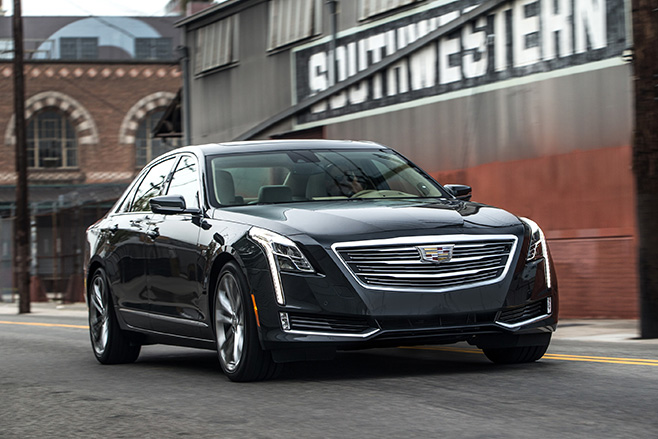
“We will only be able to expand our footprint in Europe when we are able to bring the right products to this market,” said de Nysschen.
“That is our major prioritisation right now … to create the two big volume hubs for Cadillac globally through the US and China. We need to build up the product portfolio.
“We can’t invest in all the vehicles unless we have the volume, the quickest place to unlock the volume is with the two big markets.”
As well as upcoming models including the CT2, CT3 and CT6, Cadillac is looking at a range of SUVs, including the XT5, upcoming XT4 and mooted XT7.
Coincidentally they are being styled under the guidance of an Australian, Andrew Smith, who is in charge of Cadillac.
De Nysschen also said new powertrains that were more appealing to European buyers would be crucial to those plans.
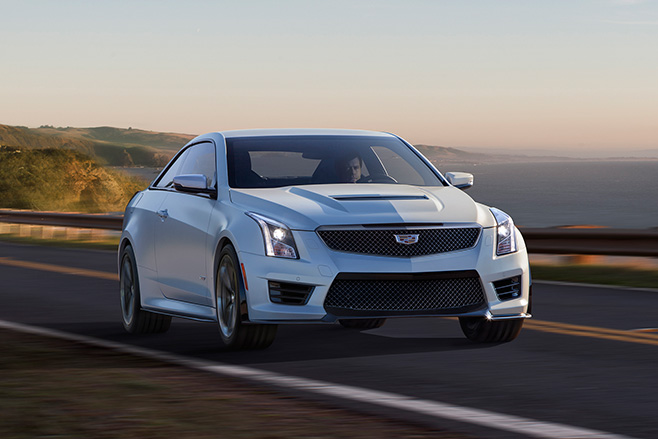
He named hybrid as an area of growth to provide the CO2 and fuel benefits needed in Europe.
Bu de Nysschen warned there was no rush to enter markets where the product was not right.
“We have to be very measured in the timing of when we also decide to embrace ideas such as a stronger entry into the European markets and right-hand-drive markets. You simply cannot do everything at the same time.”
Cadillac had planned to enter the Australian market as the 2008 global financial crisis was taking hold and General Motors was evaluating all parts of the business with the view to cutting costs.
Those plans were shelved at the 11th hour, forcing Cadillac to abandon its Australian assault.
A NEW range-topper with even more city smarts has joined the Renault Captur range as part of a mid-life makeover of the compact SUV rolled out at the Geneva Motor Show.
The addition to the Renault’s European line-up, the Captur Signature S Nav, adds hands-free parking to the French brand’s showroom.
The restyled-for-2017 Capture retains its striking two-tone colour scheme but with the addition of three body colours – Desert Orange, Ocean Blue and Amethyst – as well as a new Mercury Silver option for the roof. The extra colours mean there are now 36 potential combinations to enable customers to mix and match the Caprur’s appearance.
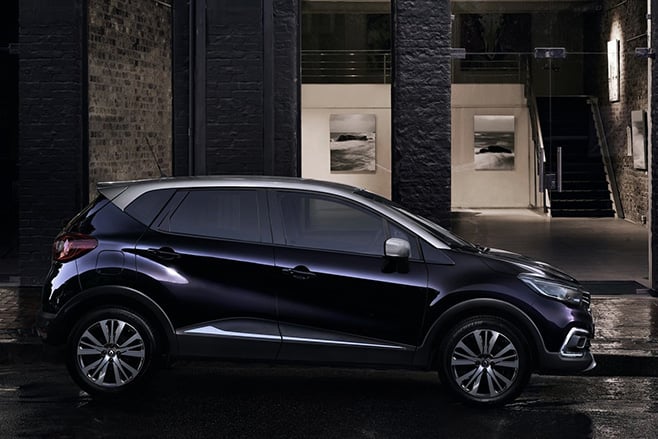
There’s also a glass roof (depending on the version) and three new alloy wheel designs including a set of 16-inch rims and two sets of 17-inch wheels.
As with other new Renault models, the Captur now comes with optional full LED headlights and signature C-shaped LED daytime running lights.
Renault says the 2017 Captur’s cabin is more refined with new seats that provide additional lateral support and greater comfort. The steering wheel also feels more upmarket and in some models comes trimmed with full-grain leather.
Interior aesthetics are also enhanced by higher-quality plastics and chrome highlighting a range of subdued colours.
The showroom-topping Captur Signature S features heated Nappa leather seats, full-grain Nappa leather steering wheel trim, leather trim door panels, and pedals and door sills in aluminium.
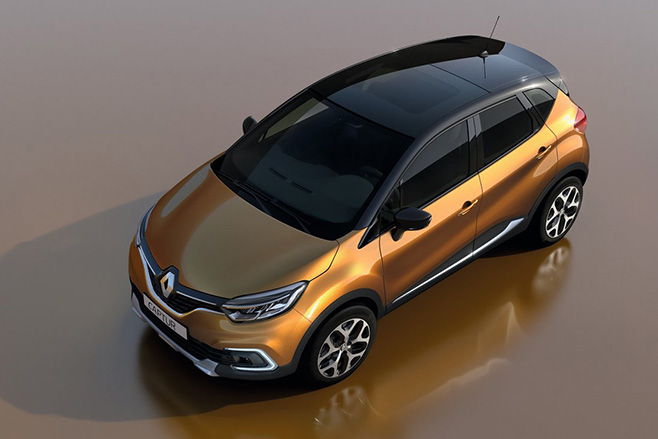
The extra technology rolled out to European market versions of the Captur includes a blind spot warning system, a reversing camera and front parking sensors though this isn’t standard across the range.
The 0.9-litre petrol and 1.2-litre petrol engines are expected to carry over from the existing model.
With the entry-level Captur Expression receiving little if any of the new kit, expect the starting price to remain around $24,000 with the Captur Signature S Nav priced in the mid-$30K range should it come here. WhichCar has contacted Renault Australia for local details.
The Captur is one of Europe’s biggest selling crossover vehicles but is very much a niche vehicle in Australia, with just 1563 sold here throughout 2016.
It has been a whole decade since the last Honda Civic Type R launched locally and this successor appears to be a whole different beast to the previous atmo three-door model.
It remains front-wheel driven but gets a mechanical limited-slip differential (LSD) like the big boys in the hot hatchback segment (Megane RS, Golf GTI Performance, 308 GTi 270) do. It will also swamp those rivals (and its front boots) with a 235kW/400Nm VTEC 2.0-litre turbo four-cylinder petrol linked only to a six-speed manual (complete with auto rev-matching).
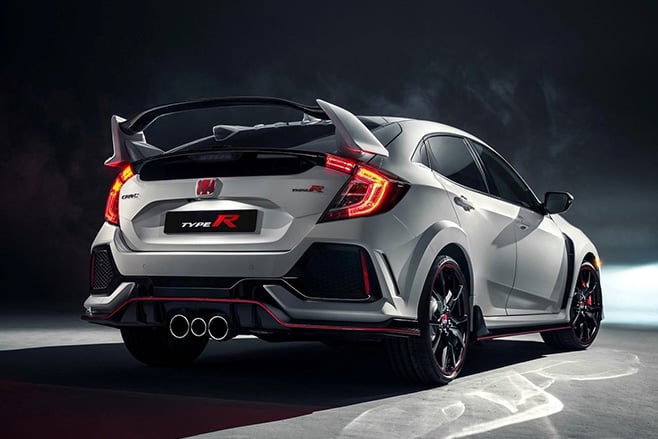
Torsional rigidity has been improved by 38 per cent compared with the short-lived previous-generation Civic Type R that was mechanically similar but never saw the light of day locally. Wild wings and gills – true to the concept car shown at September’s Paris motor show –also contribute to a “best-in-class balance” between lift and drag, the Japanese brand claims.
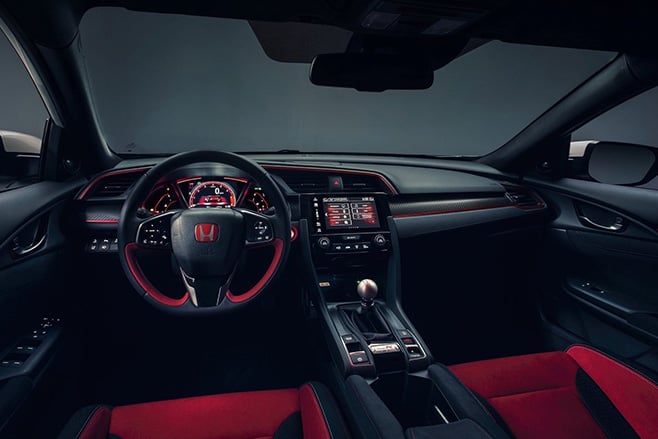
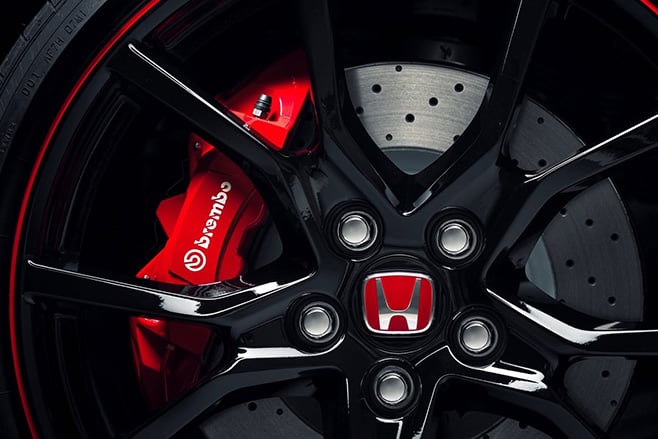
The Type R will also be the first hatchback model sold locally with adaptive suspension, complete with Comfort, Sport and R+ modes that further act on the steering weight, throttle response and even “gearshift feeling” according to Honda. Although tyres and brakes haven’t been specifically detailed, the pictured production model wears 20-inch black rims wrapped in Continental rubber, and with Brembo callipers behind.
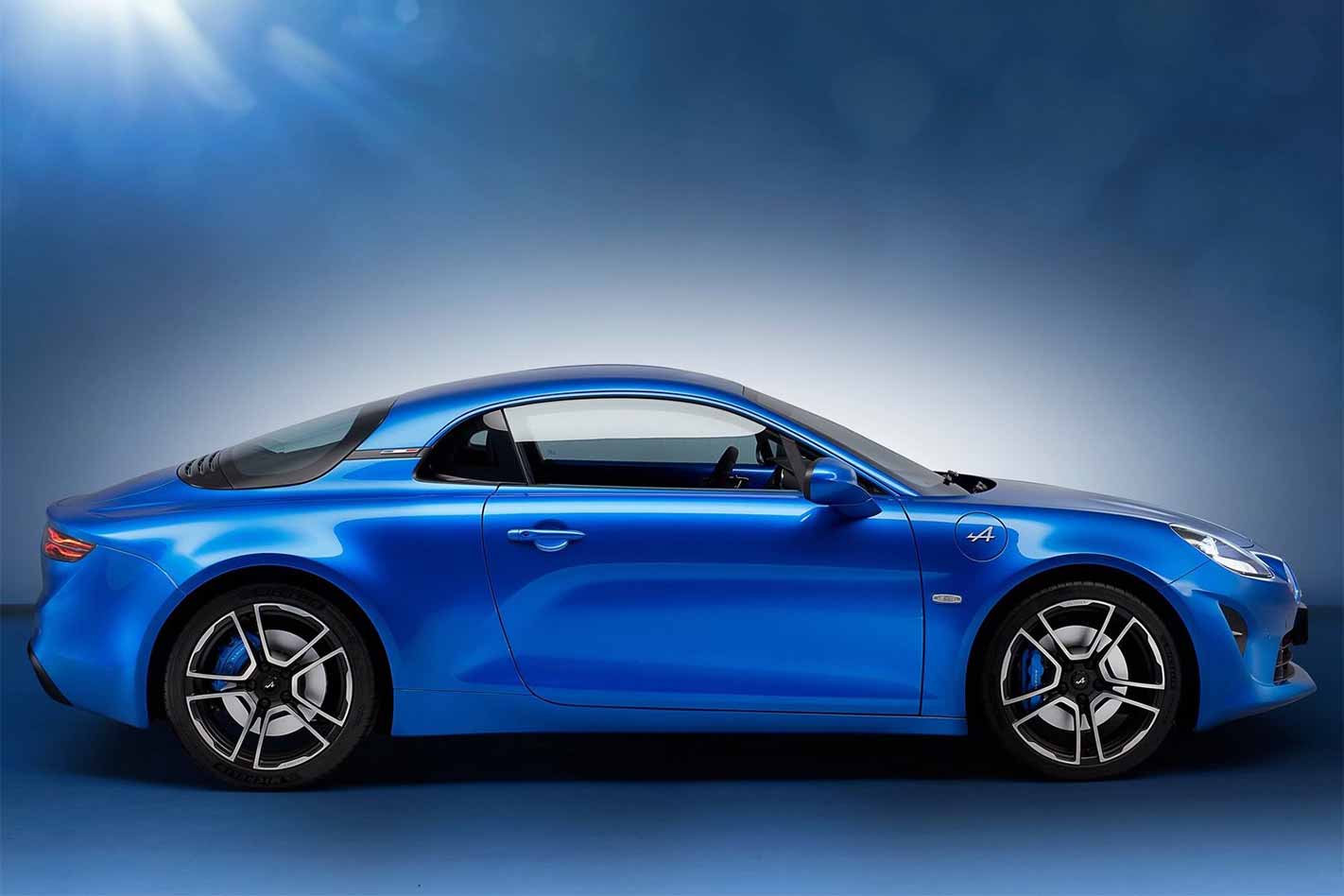
It may have had one of the longest gestation periods of any new vehicle release, but the Alpine A110 has finally been revealed as France’s challenger to the German Porsche Cayman, British Lotus Exige and Italian Alfa Romeo 4C.
Renault’s revered and revived racecar brand previously trickled in teaser images of its A110, and the production model looks true to the concepts we’ve seen past. Now, however, there are figures to back up its slinky form.
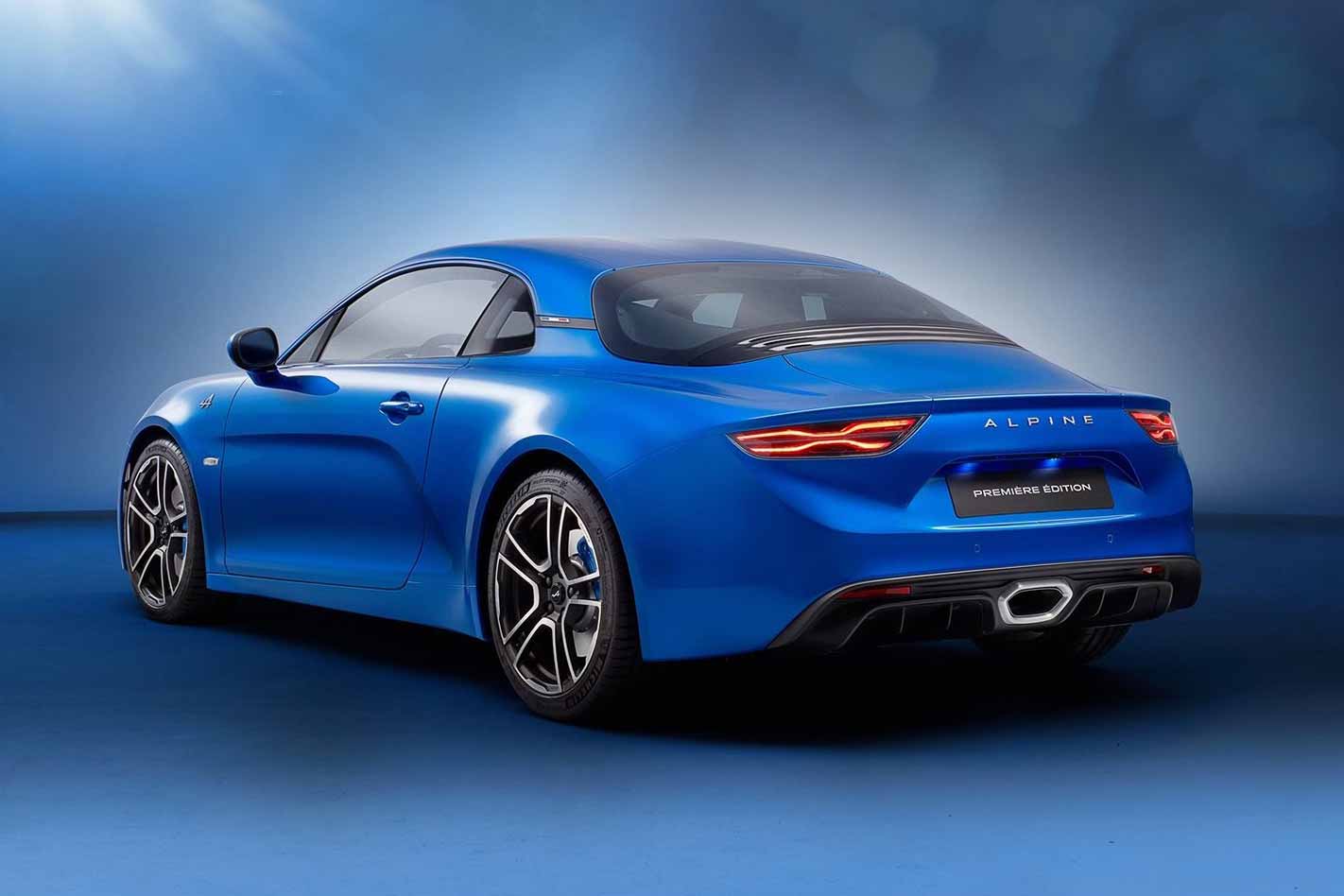
The rear-wheel-drive two-door coupe uses a new 1.8-litre turbocharged four-cylinder developing 188kW of power and 320Nm of torque, delivering a claimed 4.5-second 0-100km/h and 249km/h top speed. And note the fuel filler flap on the front guard: the fuel tank is behind the front axle, while the engine is positioned in front of the rear axle.
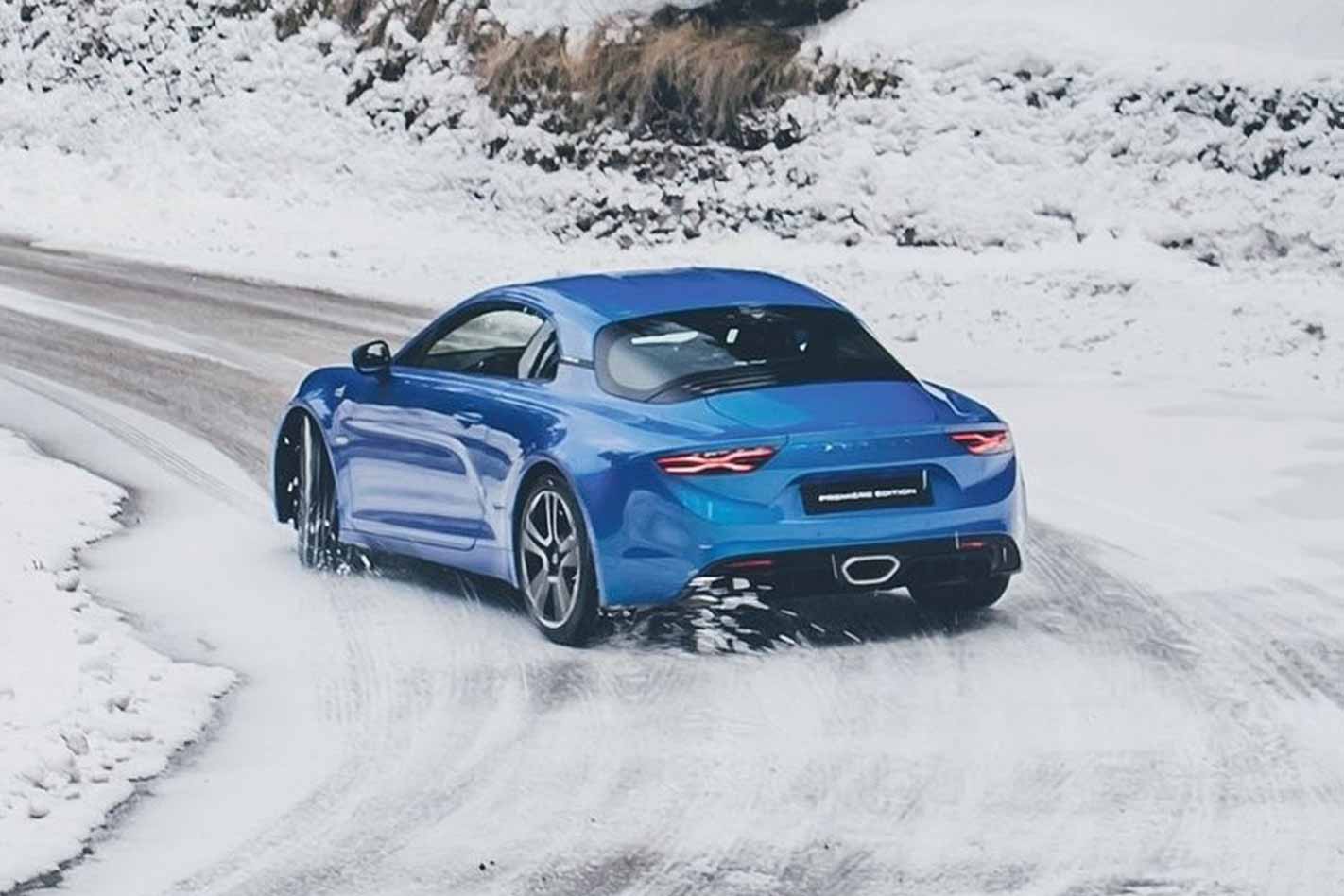
Double wishbone front and rear suspension tie with all-aluminium Brembo brake callipers and 18-inch forged alloy wheels to save weight, while deeply sculpted Sabelt bucket seats are claimed to weigh just 13.1kg each.
The cabin design of the Alpine A110 appears to be more luxurious than an Alfa or Lotus, yet more minimalist than a Porsche.
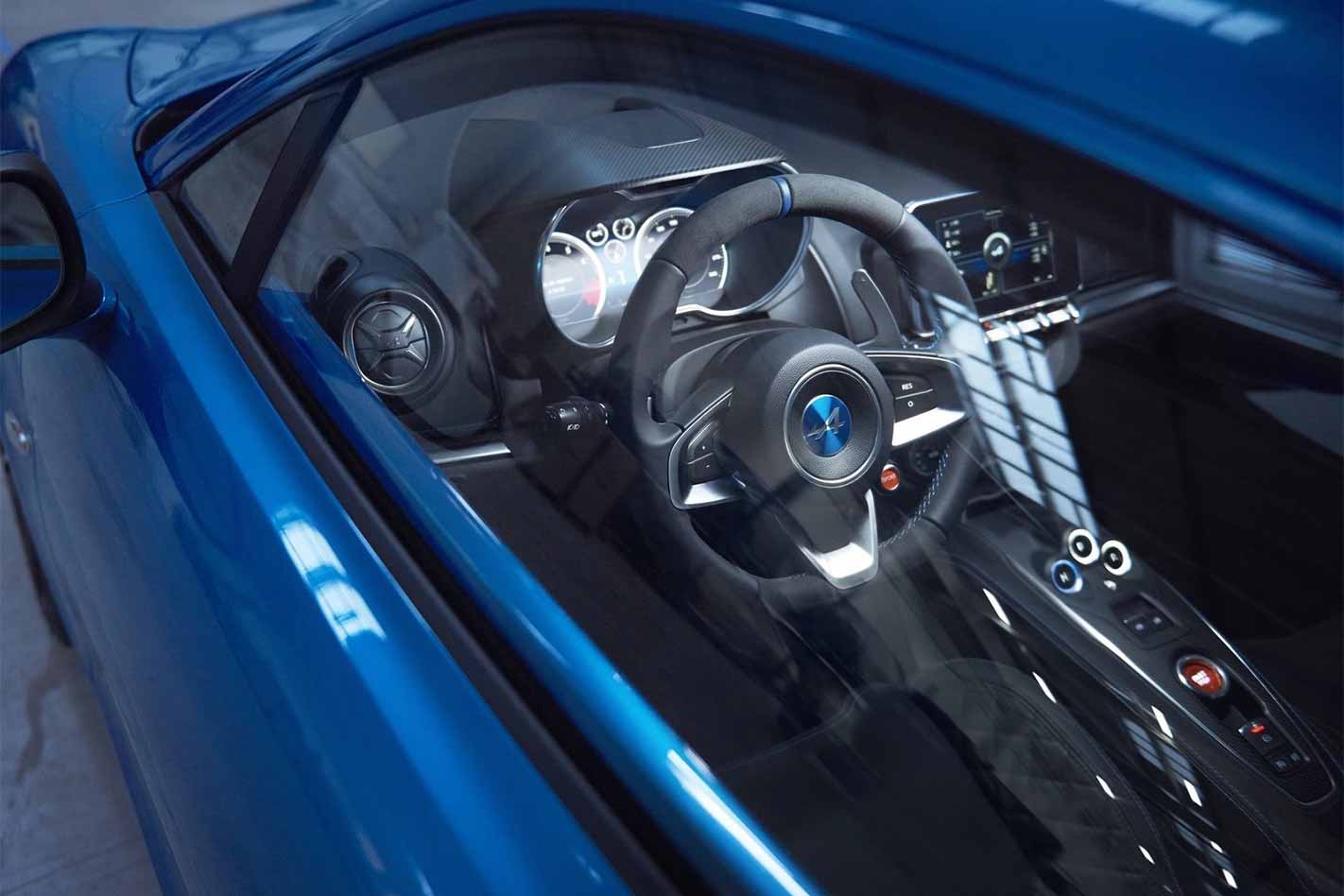
Alpine’s first 1955 units – commemorating the year Jean Rédélé launched the brand – will be in A110 Premiere Edition specification, complete with an Alpine Blue, Noir Profond (black) or Blanc Solaire (white) exterior, French flag-waving ‘tricolore’ blue, white and red badging inside, aluminium pedals and more, priced at 58,500 Euro or $81,500 Australian.
That pricing is consistent with Renault Australia’s communication of where the Alpine will sit in the market – south of $90K. Although confirmed for right-hand drive production and initially thought to be a natural addition to the local market, Renault Australia now says a decision has not yet been made to bring the coupe here.
“We are studying the opportunity to distribute Alpine in Australia and will communicate at a later stage when our decision is made.”
A SECOND-generation Subaru XV has arrived at Geneva, featuring beefed-up safety, more mature looks, and what the Japanese carmaker claims is even more comfort.
Featuring the first major redesign since it launched globally in 2012, the Subaru XV jumps across to the carmaker’s new global platform that also underpins the recently launched Subaru Impreza small passenger vehicle, and is due on sale in Australia mid-year.
Its new look doesn’t stray that far from the jacked-up hatchback design that made the previous XV one of the best-looking city-friendly SUVs on the market, although the grille is now much more upright than for the model it will replace.
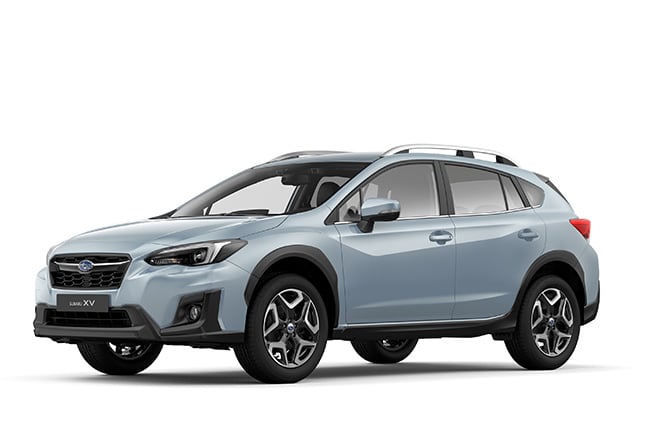
Under its bonnet, the XV moves to a much-improved version of Subaru’s “boxer” 2.0-litre flat-four engine. The carmaker says the 115kW/196Nm engine (it makes an extra 5kW but no extra torque over the model it will replace) is now smoother and quieter, and paired with a continuously variable transmission that includes three pre-programmed gears.
The new body is stronger and more rigid than the one it replaces, meaning that when it is combined with a 5mm lower centre of gravity, the new XV should perform better on the road. It resists the trend to front-wheel-drive to stick with Subaru’s all-wheel-drive system on all models.
According to Subaru, the 2017 XV has achieved what it says is an enhanced dynamic feel. “Steering and pedal feedback, vehicle response, noise and vibration have been refined to achieve a positive driver experience,” it said.
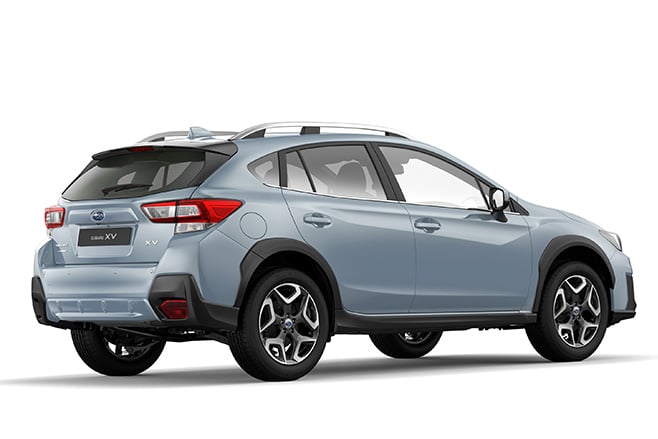
Subaru has also beefed up the XV’s off-road ability, addressing one of the weak points of the previous car that was more comfortable tackling roads to the local cafe than the favourite canoeing spot. The X-Mode, which can brake individual wheels to improve traction and even control engine revs, “enhances off road ability of [the XV’s] Symmetrical All-Wheel Drive, offering increased SUV capability,” it says.
Inside, the XV’s front seats have been revised for what Subaru claims is “improved quality”, and now feature grey trim “to enhance XV’s character”. The multimedia and sat-nav interface steps up to an eight-inch touchscreen display. Orange stitching on the dash adds a contrast.
The XV also adds Subaru’s Eyesight system, which uses two cameras just like a human’s eyes to spot danger and automatically jump on the brakes to avoid a crash. It’s also now linked to the headlights, helping control the high beams so the XV doesn’t dazzle oncoming drivers.
The Subaru XV is one of the stronger performers in Australia’s small SUV segment, up against the likes of the sharp Mazda CX-3 and ageing Mitsubishi ASX, the value-packed Nissan Qashqai and the cheap Holden Trax.
AUDI has let loose a new, boosted version of its ferocious RS5 Coupe at the Geneva Motor Show, with two fewer cylinders, but two more turbos.
Neckarsulm’s latest BMW M4 and Mercedes-AMG C63 fighter uses a 2.9-litre twin-turbo V6 petrol engine to produce the same 331kW as the old one, but makes a significant torque leap to 600Nm – well up on the 430Nm produced by the superseded 4.2-litre atmo V8.
Audi claims the downsized engine – smaller even than the closely related 3.0-litre turbo V6 used in the new Audi S4 and Audi S5 – was developed in-house from the ground up, though it has already been seen in Porsche-engineered guise within the bay of the Porsche Panamera 4S producing lesser outputs of 324kW/550Nm.
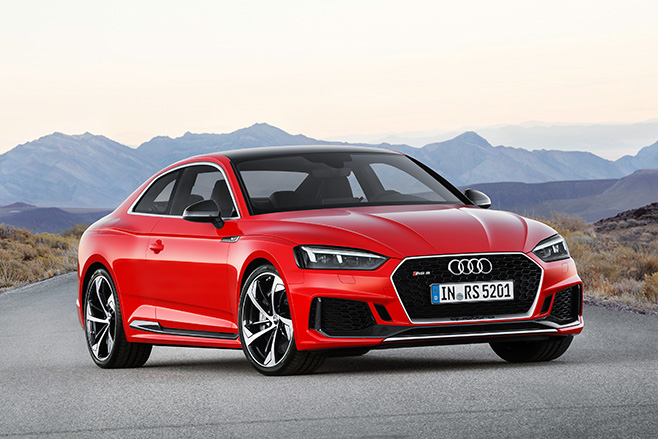
The RS5 will now hit 100km/h from zero in 3.9 seconds – 0.8 seconds faster than before. Fuel use drops to 8.7L/100km from the V8’s 10.5L/100km.
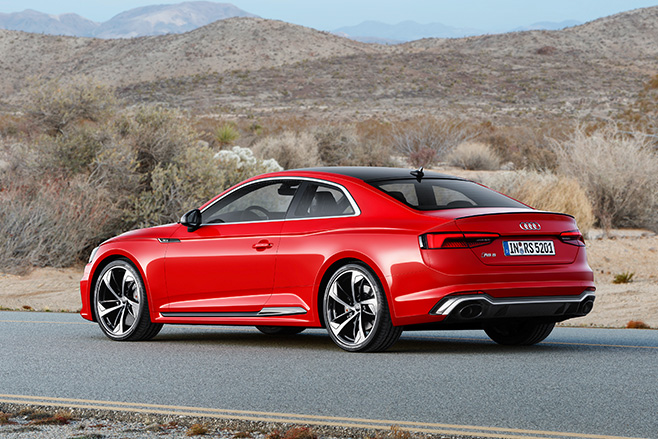
Kerb weight drops by 60kg to 1655kg via an aluminium intensive construction. A carbonfibre roof is optional.
Handling upgrades include a wholly revised rear suspension, which Audi says delivers a significantly more comfortable ride – even on standard 19-inch wheels.
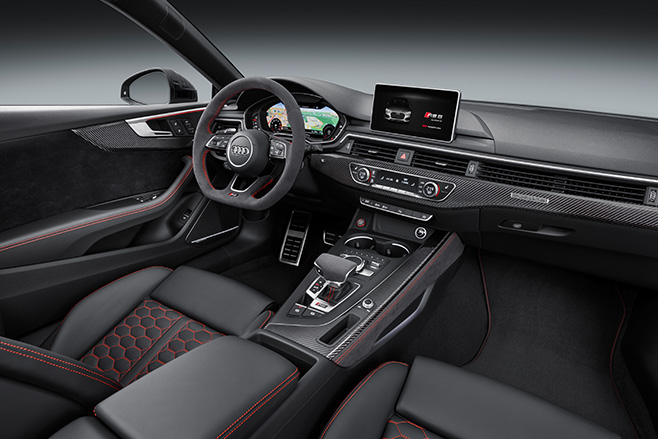
Interior upgrades include Alcantara trim for the flat-bottomed steering wheel and gear selector lever, RS sports seats and RS-specific displays for the digital dashboard.
Australian buyers can expect the new RS5 to land before the end of the year, with pricing to be announced closer to its arrival. The previous model sold for almost $180,000.
THE second-generation Volvo XC60 has arrived at the Geneva Motor Show, featuring optional driver assist technology that can take care of the brakes, steering and accelerator at speeds of up to 130km/h.
The 2017 Volvo XC60 updates one of the strongest-selling cars in Volvo’s showroom, and the one that wowed the market after it introduced Volvo’s city braking function that could automatically avoid, or lessen, a crash into the car in front.
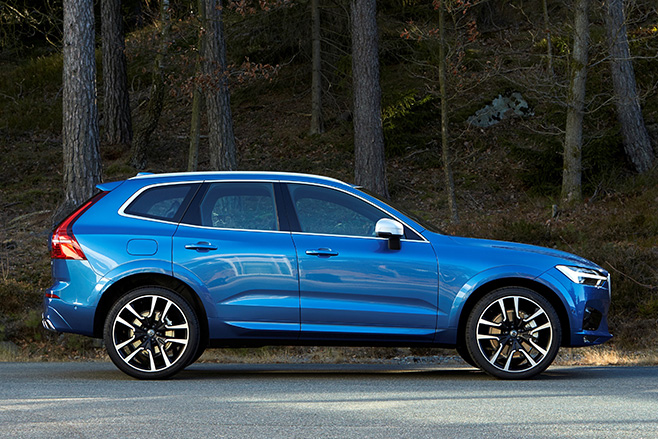
As well, the new City Safety system introduces automated steering that will take control of the wheel when the car senses a crash is about to happen, and take evasive action. The steering tech also extends to the blind spot alert, preventing the XC60 from dropping into the next lane, and avoiding a head-on collision.
“We have focused on building a car that can deliver pleasure to all of your senses – from a commanding view of the road ahead in a beautifully appointed and calm cabin, to a safe, inspired and confident ride,” said Henrik Green, Volvo’s senior vice-president of product and quality.
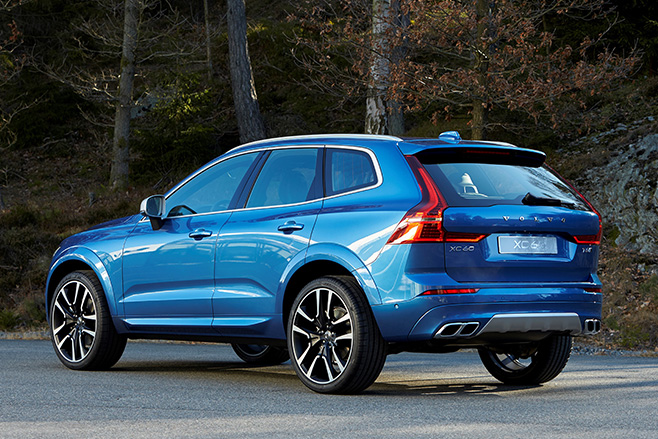
“We’ve paid particular attention to making life easier for our customers by providing them with the creature comforts and services that take the hassle out of everyday life.”
The most powerful drivetrain in the XC60 line-up will be the T8 Twin Engine, a plug-in hybrid featuring an electric motor paired with a turbocharged four-cylinder petrol engine, delivering 305kW and sprinting from 0-100km/h in 5.3 seconds, or about the same time as a high-performance Volkswagen Golf R.
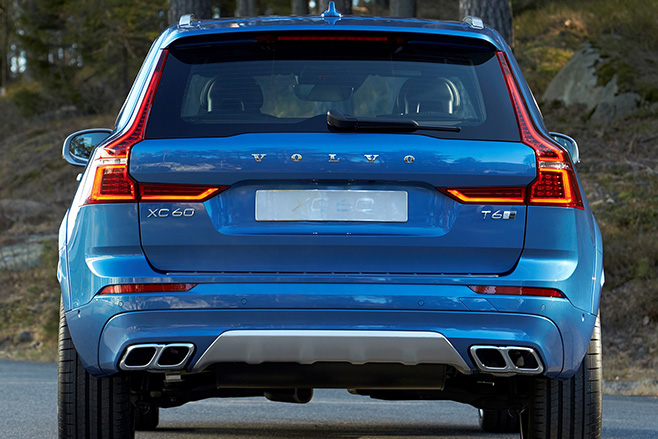
Other engines on offer in Europe are a pair of diesels and a T6 petrol engine that’s both turbo- and supercharged.
The new XC60 is set to go into production in mid-April at the Torslanda Plant in Sweden.
THE highly anticipated Honda Civic Type R hot hatch may have only just arrived, but it has already set its sights on reclaiming the Nürburgring’s front-drive lap record.
The new Civic Type R dumps atmo induction for a turbocharger, with its 2.0-litre VTEC engine now producing 235kW and 400Nm.
While that represents only a modest 3 percent power increase, Honda says a six-speed manual transmission, carried over from the outgoing model but improved by a rev match control system, will help boost performance.
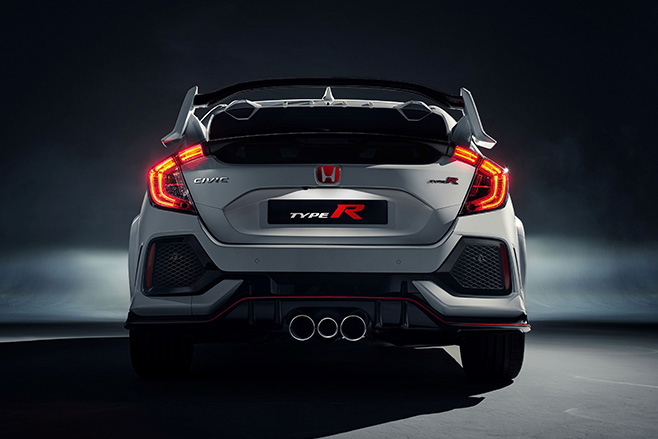
The tweaks should see a slight gain on the previous Type R’s 0-100km/h time of 5.7sec. While that won’t exactly send a shudder through the all-wheel-drive Focus RS or Golf R, it’s enough for the Japanese carmaker to find another 1.5sec to have a crack at reclaiming the Nürburgring lap record for front-wheel-drive production cars – currently a 7min 49sec set last year by the Volkswagen Golf Clubsport S.
The attempt will also be assisted by stiffer suspension, with the front Macpherson strut rig of the standard hatchback revised with new geometry to minimise torque steer and maximise sporty handling. At the rear, the new independent multi-link system of the standard car gains unique high-rigidity suspension arms.
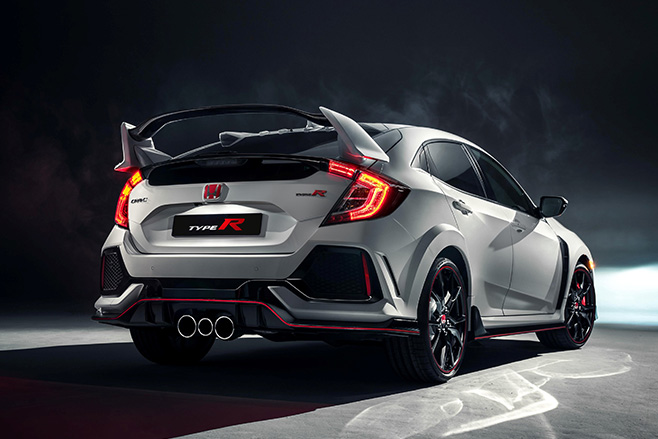
While performance is important, Honda’s Civic Type R project chief, Hideki Kakinuma, said the new-generation hot hatch was designed strike a balance between agility and comfort.
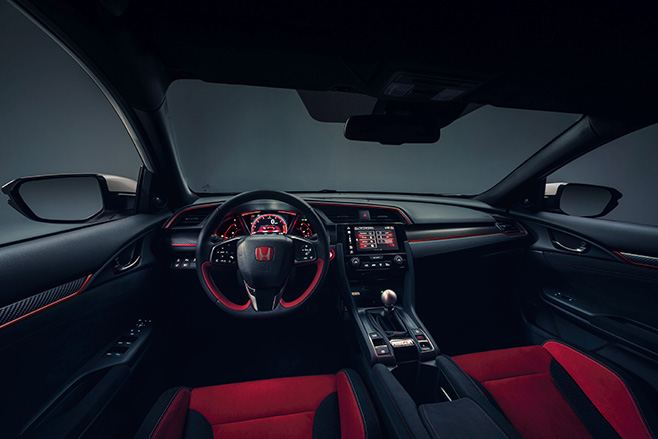
Enhanced driving modes help achieve a balance between track-day hero and daily driver, and include a new ‘Comfort” setting alongside “Sport” and track-focused “+R” modes. Each mode tailors the adaptive dampers, steering force, gear shift feeling and throttle response of the car.
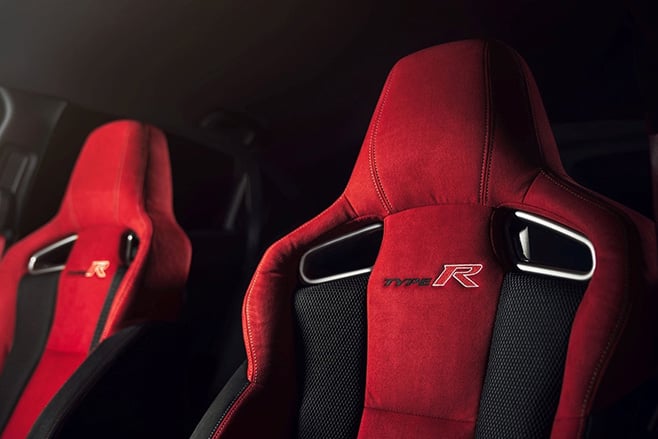
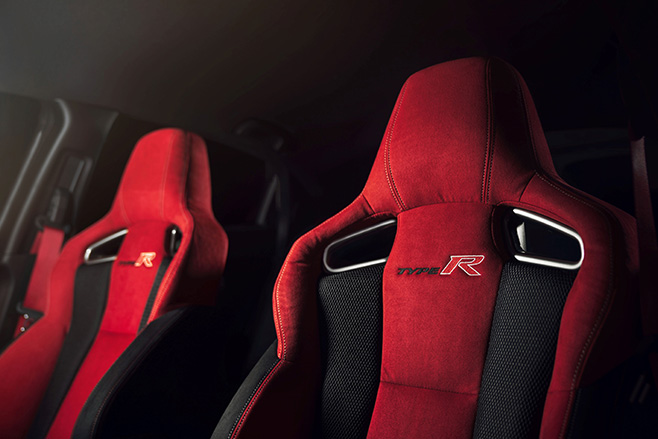
Despite being based on the all-new 10th generation Civic, the interior harks back to the existing model with plenty of red trim including the inserts of the seats which seem to have carried over.
It will be exported around the world including North America, marking first time that any Honda-badged Type R has been officially sold there.
It will go on sale in Australia later in 2017, with full specifications and features to be announced closer to launch.
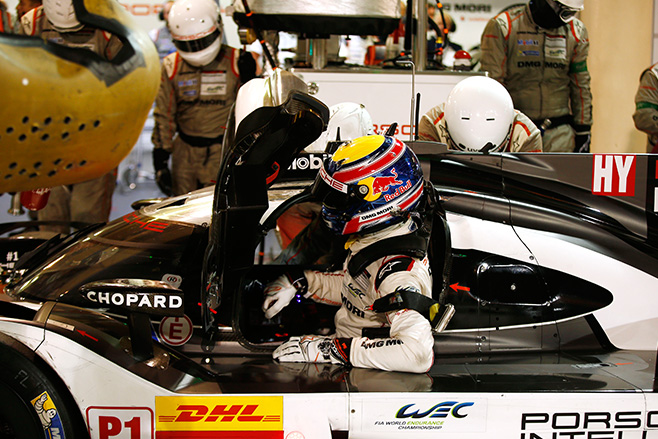
GOING for a drive with former Australian Formula One ace Mark Webber could soon be a reality thanks to advanced autonomous technology.
Porsche is working on technology that utilises the sensors and software of future autonomous vehicle technology to act as a demonstration and training tool for future models.
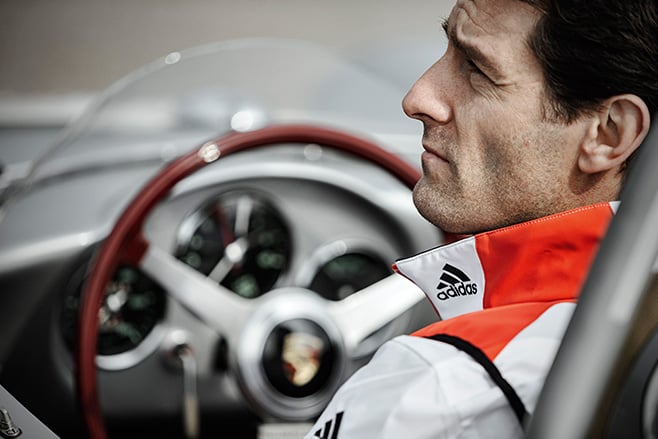
The technology would allow owners to sit in their own car and experience a lap of a race track as though Mark Webber was at the wheel – all without touching the pedals or steering wheel.
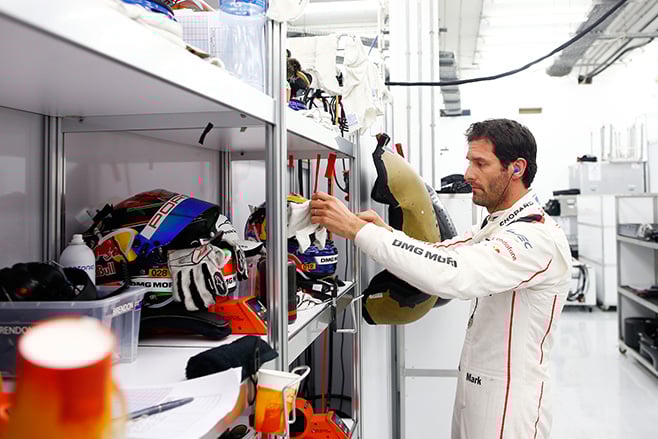
Speaking at the 2017 Geneva Motor Show Porsche CEO Oliver Blume nominated Webber – a Porsche ambassador and World Endurance Champion driving a Porsche – as the ideal driver to set reference laps for the advanced track-focused autonomous technology.
“Afterwards you’re driving by yourself and match and learn, okay, Mark Webber brakes there, accelerating there…”
Blume said as well as the thrill of experiencing a lap of a track in a Porsche at the pace Mark Webber would attack it, such technology could also be used as a virtual driver training tool.
“It can make you a better driver, safe learning system,” he said.
It’s not the first time car makers have toyed with the idea of exploring the limits of a car on a race track using autonomous technology.
While the prospect of having a computer control a car on a race track may seem like the pinnacle of autonomous technology, it’s actually relatively easy due to the controlled nature of a track environment; all cars are travelling in the same direction and at a similar speed and there are no outside influences such as pedestrians, for example.
The Porsche boss is clearly excited about the prospect of embracing such technology, later reiterating that it would be a unique experience for owners.
“It’s Mark Webber; you are sitting there in the car, the car is driving for you like Mark Webber. Afterwards you’re driving by yourself,” said Blume. “It might be a very interesting option.”
“The most important thing for us in future will be a car that will be driven by yourself,” he said. “The most important thing for Porsche drivers is to drive. We’ll have a steering wheel in future – always.”
But Blume said future Porsches would take advantage of the imminent arrival of autonomous technology, using it to relieve the boredom of driving in some situations.
“For example, when you are in a traffic jam the car will be able to move you through the traffic jam, you in parallel will be able to read a newspaper,” said Blume. “When you are going to a restaurant in the evening and everything is fully parked the car is looking for parking and at the end you can go for the car and it will fetch you from the restaurant.”
No word on when to expect a Mark Webber performance button on your Porsche, but best guesses suggest it could be something we hear more of in a few years.
