Stop! Don’t buy that mid-sized SUV… yet. 2017 is set to be a year of major new entrants for this mega-popular vehicle segment, so if you want the latest and greatest mid-size softroader or crossover, you may be better off waiting a short while.
We’ve already had recent new arrivals in the shape of the bigger, second-generation Volkswagen Tiguan and the Ford Escape, which is not much more than a rebadged version of the updated Kuga.
But coming this year are a couple of big names in next-generation form, as well as a group of nameplates that may be less familiar but will be worthy of attention.
As WhichCar prides itself on ensuring buyers are across all their options in the new-car market, here’s our guide to some of the key new mid-sized SUVs heading to showrooms later this year.
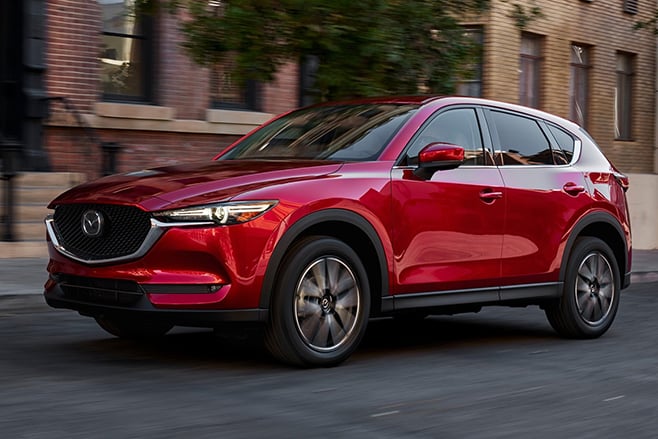
MAZDA CX-5
Due: April
The Mazda CX-5 has become Australia’s most popular SUV since the original debuted in 2012. Five years on and an all-new replacement aims to build upon that model’s good points. Due to launch at the end of March, it’ll be in showrooms from April.
A good start will be the availability of rear air vents for the first time, along with an auto tailgate for mid-range variants and above. A new mid-spec Touring variant expands the line-up to five, and increase technology borrowed from the larger CX-9 includes radar cruise control with stop-and-go function, and traffic sign recognition.
Engine choices will again comprise two petrols and one diesel, with front-wheel drive continuing as an alternative to all-wheel drive on some models. Pricing is expected to increase by $500-$1000 across the board, for a starting price of about $28,000
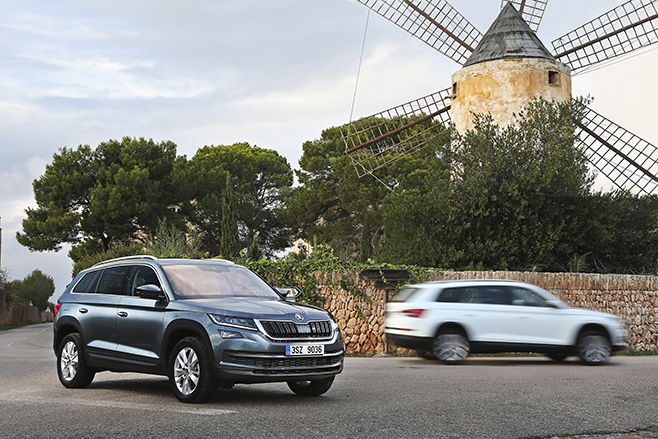
SKODA KODIAQ
Due: Mid 2017
Kodiaq will be Czech brand Skoda’s first serious SUV play after the quirkier (and smaller) offering that is the Skoda Yeti. At 4.7 meters it will be one of the longer vehicles in the mid-sized-SUV class, though it puts its size to good effect with seven seats (instead of the average five) and a 720-litre boot it claims is class-leading. All models will be all-wheel drive and fitted with a seven-speed dual-clutch auto – mated initially to a 132kW turbo petrol engine with a 140kW turbo diesel due to join at a later point. Interesting features include the optional Tow Assist, which can automatically steer an attached trailer into a designated spot.
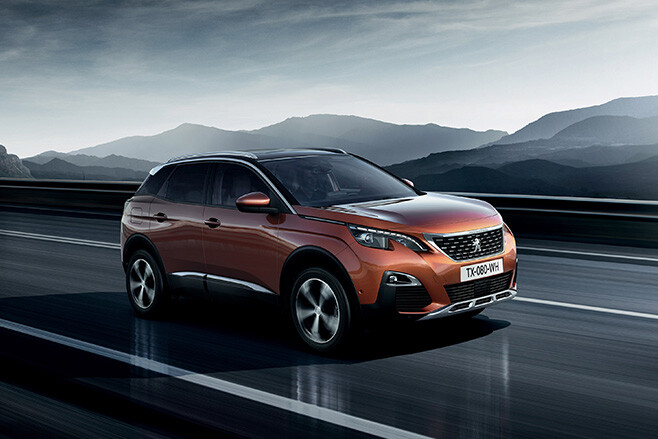
PEUGEOT 3008
Due: April
The French brand’s 2017 product offensive arguably has no more crucial a model as the Peugeot 3008. Peugeot’s original was an MPV but there’s a wise switch to the vastly more popular SUV design second time around. It also brings a bigger boot (520 litres), available driver aids such as autonomous emergency braking and semi-automatic parking, tablet-style touchscreen, and Peugeot’s i-Cockpit digital display arrangement.
A flagship GT model has yet to be confirmed for Australia but would bring a powerful diesel engine, an optional two-tone colour scheme, and a more upmarket interior. Regular 3008s will have a choice of 1.6-litre turbo petrol or 2.0-litre turbo diesel – both mated to a six-speed auto.
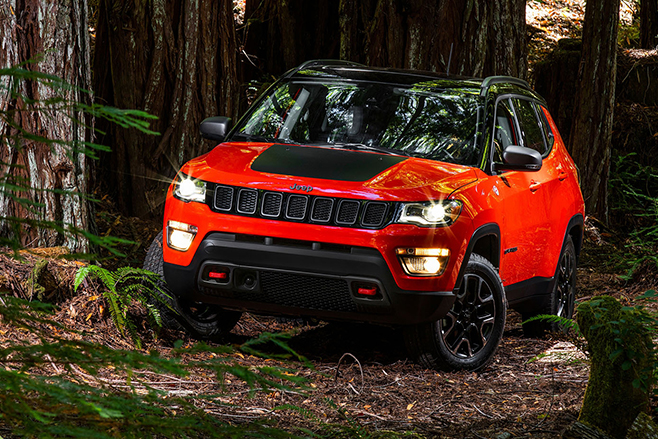
JEEP COMPASS
Due: Late 2017
The current Jeep Compass has been around for about a decade but finally hits the dust later this year as an all-new successor appears (also accounting for the little-loved Patriot). Details are sparse at this point for a model that stylistically merges design elements from the 4WD brand’s Cherokee and Renegade models.
What is guaranteed is an interior that looks significantly more modern and presents vastly higher quality than the model it replaces. A Trailhawk variant will feature in the range for buyers looking for an SUV with genuine off-road capability (and looks).
HONDA CR-V
Due: Mid 2017
One of the biggest nameplates in Honda’s showroom moves onto generation No.5 in mid 2017. The next-gen Honda CR-V’s design is mostly evolutionary, though it has been sharpened – especially at the rear that looks markedly different to the old model. A new, stronger chassis promises a much-needed improvement in ride and handling while Honda says a stretched wheelbase delivers benchmark rear legroom.
A five-seater traditionally, speculation has persisted that the new CR-V will also be available with an optional third row. Expect the interior to feature improved quality, even if this wasn’t a big criticism of the outgoing CR-V. Buyers will have the choice of models powering only the front wheels or all four wheels; engines for the Australian market are still to be confirmed. Driver assist technologies Honda will make available include adaptive cruise control that also operates at low speed, blind spot detection and lane keep assist.
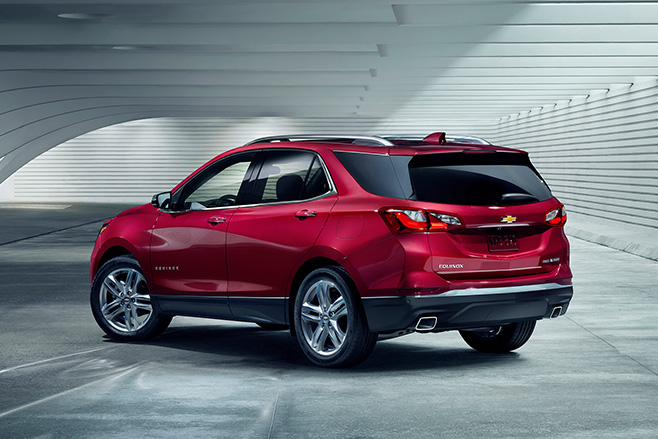
HOLDEN EQUINOX
Due: Late 2017
A brand new SUV line-up will eventually be key to Holden revitalising both its product line-up and sales future in the years ahead, and its high-rider revolution starts in late 2017 with the Equinox. The model that will replace the five-seater Captiva 5 that disappeared in 2015 is a rebadged version of the latest-generation Chevrolet Equinox sold in North America. (The existing seven-seater Holden Captiva will be replaced by another Chevrolet, the Acadia, in 2018.)
The exterior design’s rear-quarter styling – with the angled, wraparound rear glass – is reminiscent of the Mercedes-Benz GLE (formerly the ML). At 4.65 metres, the Equinox is slightly bigger than the Captiva 5 – as well as the Mazda CX-5 it must target.
Both front-drive and all-wheel-drive variants are expected to be offered. The three turbo engines offered on the US model include a 2.0-litre turbo petrol and a 1.6-litre turbo diesel. Parents worried about lending their Equinox to offspring may be interested in the Teen Driver feature, which allows the setting of controls and can also provide a report card to encourage good driving behaviour.
An interesting mix of new cars are due in Australia in the next couple of months including some all new models highlighted by the third-generation Hyundai i30. The European-designed i30 is expected to boost popularity of the big-selling the Korean car, which is headlined by the 1.6-litre turbo powered SR range topper.
The i30 will do battle with the Toyota Corolla, Mazda 3 and the all-new Honda Civic hatch, which is on its way from the UK to complement the 2016 sedan. This will be followed later in the year by the highly anticipated Honda Civic Type R hot hatch.
The other big launch is the all-new Mazda CX-5 SUV, which is the biggest selling soft-roader in Australia. The new model is expected to share many of the traits with its bigger Wheels Car of the Year winning CX-9 which should extend the model’s sales reign.
Also look out for the new Mini Clubman JCW and Countryman. Other new metal includes the beastly V12-powered BMW M760Li xDrive, the most powerful road-going car ever to come from the Munich carmaker.
The Jaguar F-Type gains mild styling tweaks and LED headlights, lighter, more supportive seats, as well as an overhaul of the multimedia interface. Also adds a special app that links a GoPro camera with the car’s telemetry. A limited-run 400 Sport edition joins the line-up (coupe or convertible) featuring a retuned version of the 3.0-litre supercharged V6 making 294kW (up from 280kw); torque remains at 460Nm. Also brings the Configurable Dynamics system, dark grey 20-inch alloys and Super Performance brakes.
A host of facelifts and new variants of existing models are also due, including the special edition Holden Commodore Director, Magnum and Motorsport models which are set to sell as fast as their 304kW/570Nm LS3 V8s will take them.
NEW MODELS ON SALE MARCH-APRIL
- Abarth 500 facelift
- Audi A5 Coupe
- BMW M760Li xDrive
- Citroen C3 and C4 Cactus petrol auto
- Ford Transit
- Holden Commodore Director, Magnum and Motorsport
- Honda Civic hatch
- Hyundai i30
- Infiniti Q60 S
- Jaguar F-Type facelift and 400 Sport
- Kia Picanto
- Maserati Ghibli facelift
- Mazda CX-5
- Mini Clubman JCW All4 and Countryman
- Nissan Pathfinder facelift and X-Trail diesel
- Peugeot 2008;
- Skoda Superb S
Incremental gains meet some backwards moves
ALMOST two decades have passed since Toyota launched the Toyota Prius, now a name virtually synonymous with hybrid propulsion. Few would have imagined the dorky-looking petrol-electric sedan that went on sale in Japan in 1997, and which reached Australia in 2001, marked the beginning of a global phenomenon. Now at gen-four, it’s the most successful eco-car the world has ever seen.
Toyota’s hybrid drivetrain – four-cylinder petrol engine and two electric motor-generator units, all connected by a CVT-mimicking planetary gear – has evolved gradually with each generation. For the new Prius, engineers improved the thermal efficiency of its 1.8-litre engine. No other mass-produced engine betters it, they claim. At the same time, the hybrid’s motor-generators, transmission and power electronics were redesigned for less weight and more efficiency. The drivetrain’s control software was also updated.
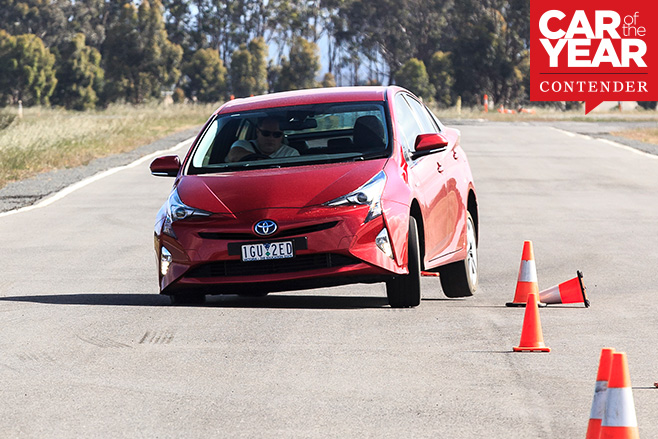
But the car’s new architecture does bring welcome improvements in driving dynamics. The new Prius is the first car to utilise the Toyota New Global Architecture, specifically the GA-C version. This brings greater stiffness, a multi-link rear end in place of the previous torsion beam, a lower centre of gravity and an improved steering system.
It’s the best Prius yet to drive, no question.
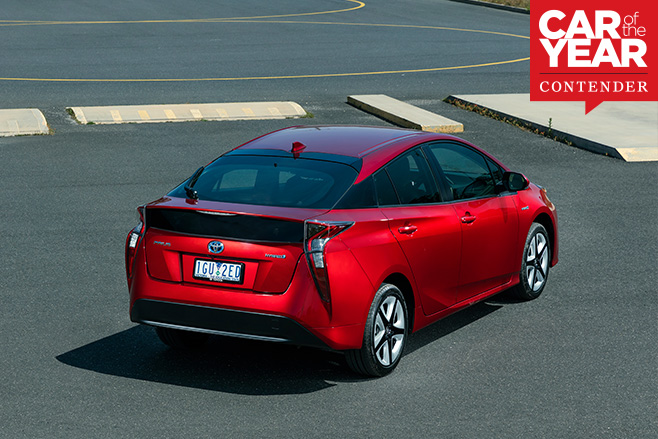
The five-seat interior, which is slightly larger in most key dimensions, is better equipped than ever. Sensor-based safety and driver-aid systems are standard even in the basic $34,990 model. The i-Tech version, with some extra driver-aids, larger wheels, sat-nav and leather, costs $8000 more. Both come with seven airbags and the Toyota scores a five-star safety rating from ANCAP.
Where the Prius fails spectacularly is design. Toyota seems to have run out of ideas on how to advance with its hybrid icon. And this is evident inside and out…
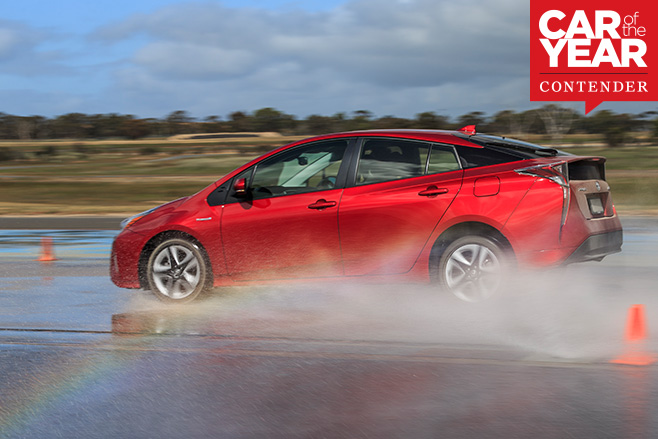
It’s even worse on the outside. The new Prius is an obvious evolution of the 2003 model’s shape. But instead of creatively updating the basic form, Toyota’s designers have done little more than desperately add details… until it was properly grotesque.
The new Prius brings incremental improvements – some of them long overdue and quite welcome. But the hybrid’s style, especially its exterior, is a giant step backwards. And it goes almost without saying that small advances, plus ugliness, is not a Car of the Year-winning combination.
Specs
BODY Type: 5-door hatchback, 5 seats Boot capacity: 457 – 502 litres Weight: 1400kg
DRIVETRAIN Layout: front-engine (east-west), FWD Engine: 1798cc 4cyl (90kW/142Nm) + battery Transmission: CVT automatic
CHASSIS Tyres: 195/65R15 – 215/45R17 ADR81 fuel consumption: 3.4L/100km CO2 emissions: 80g/km Collision mitigation: Yes Crash rating: 5-star (ANCAP) Prices: $35,690 – $43,850
Mostly well done, but dynamically under-cooked.
BIG, honest, good-looking and unpretentiously capable, the Skoda Superb embodies the same virtues as Australia’s best. It’s the kind of car happy Falcon and Commodore owners looking for more of the same should consider come replacement time.
There are some important differences, of course. The Czech brand’s sedan is actually a liftback, and both it and the wagon version are built on a platform that’s front-drive or all-wheel drive, not rear-drive. And the Skoda’s engine line-up is exclusively four-cylinder and includes a diesel engine.
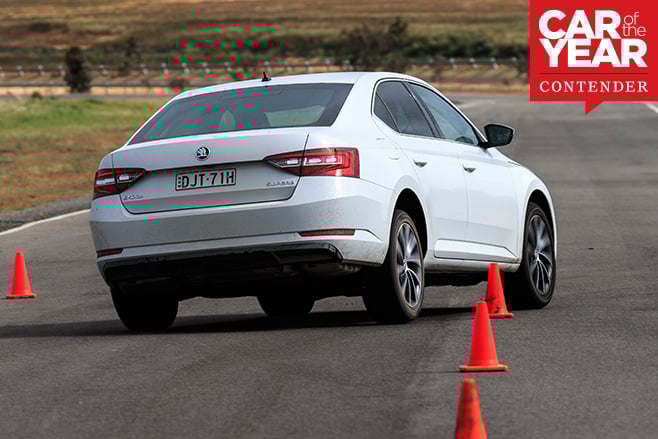
The power and torque of the front-drive Superbs, especially the 162TSI, can sometimes prove too much. Judges’ notebooks contain mentions of uncouth axle-tramp when accelerating from rest, and some even suggested the 162TSI would be a better car with less engine.
Once rolling, the most affordable Superb feels feisty. The gravelly but efficient 140TDI is almost as eager, but it’s the 206TSI that is easily the most impressive drive. Its all-wheel-drive tames the axle tramp and elevates the handling to another plane, especially on dirt, where Skoda’s ESC and ABS expertise was evident. Some judges thought the 206 TSI the dynamic equal of much more costly cars from VW Group stablemate Audi.
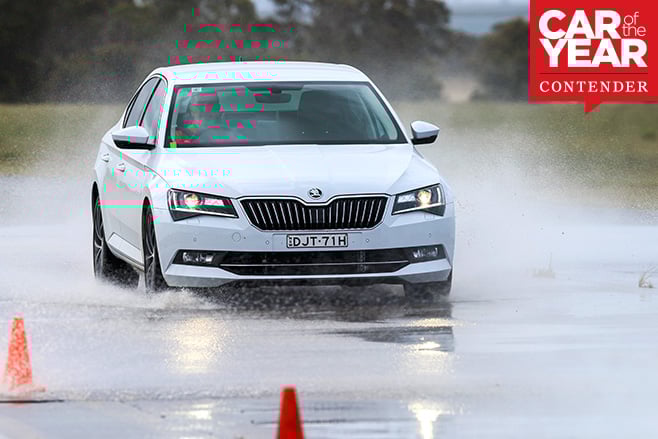
Thanks to MQB, the Superb comes equipped standard with an up-to-date suite of sensor-based advanced safety and driver-aid systems, including active cruise control, plus good smartphone connectivity. ANCAP rates the Skoda a five-star car for crash safety, too.
But the car also includes plenty of much simpler but still surprising practical features. Best of these are the compact folding umbrellas stowed out of sight inside the front door trims. The brand’s slogan is ‘Simply Clever’, and the Czechs really do strive to live up to it.
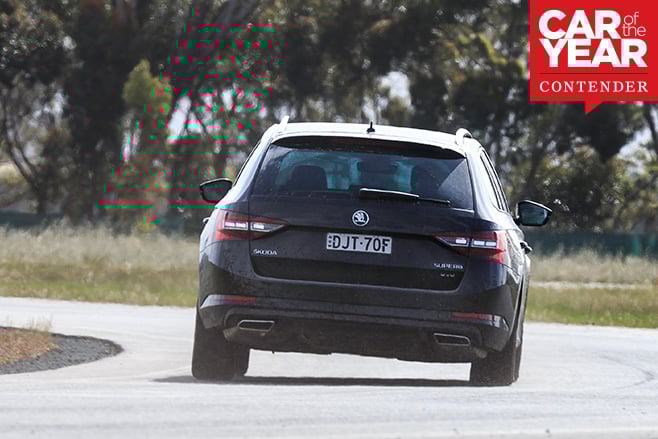
Dynamically, the Skoda should be better. The brand used to consistently engineer its cars for a sweeter-than-average blend of ride comfort and handling. The roads of the Czech Republic are often as awful as Australia’s, so cars that worked for Skoda at home were fine here. But the new Superb has a too-firm ride and the stiffness doesn’t appreciably enhance handling. Adaptive dampers do improve things, but they’re part of a $3400-$4700 Tech Pack option bundle.
Still, most judges would endorse the sentiment expressed in the notebook of Alex Inwood. “Don’t buy an SUV, buy this instead.”
Specs
BODY Type: 4-door liftback sedan/ 5-door wagon, 5 seats Boot capacity: 625 – 660 litres Weight: 1463 – 1600kg
DRIVETRAIN Layout: front-engine (east-west), FWD/AWD Engines: 1968cc 4cyl turbo-diesel (140kW/400Nm); 1984cc 4cyl turbo (162kW/350Nm); 1984cc 4cyl turbo (206kW/350Nm) Transmission: 6-speed dual-clutch
CHASSIS Tyres: 235/45R18 – 235/40R19 ADR81 fuel consumption: 6.4 – 7.3L/100km CO2 emissions: 125 – 169g/km Collision mitigation: Yes Crash rating: 5-star (Euro NCAP) Prices: $39,990 – $52,690
The Toyota Corolla topped February’s car sales chart in a rare highlight for passenger cars in a month when they were outsold by SUVs here for the first time in history.
Corolla’s result was achieved despite being among numerous models that slipped in sales compared with the same period in 2016.
It edged out its ute stablemate, the HiLux, by just six units, while January’s table-topper, the Mazda 3, occupied third place as the only other vehicle to register more than 3000 sales.
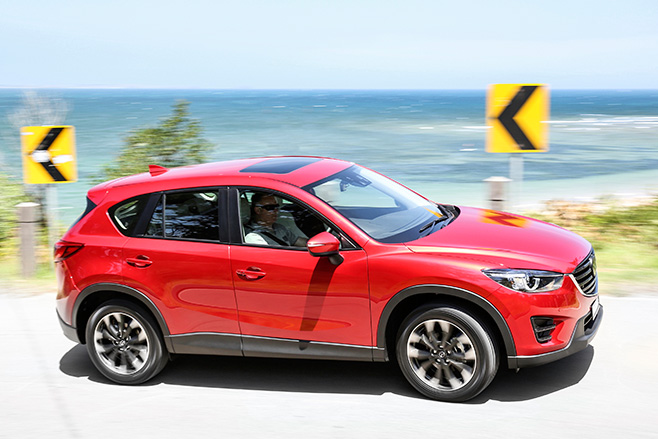
The HiLux was joined by the Ford Ranger (fourth, 2931 units) and Toyota RAV4 (eighth, 1726) as the only models in February to increase sales compared with February 2016.
Mazda’s ever-popular CX-5 led the way for SUVs last month, placing seventh with 1933 units. The model is in run-out mode ahead of the second-generation version’s impending launch.
The Holden Commodore only just managed to squeeze into the top 10 after its year-on-year figures showed a 33 per cent slump.
Overall vehicle sales fell 8 percent in February, contributing to a 4 percent year on year decline that could point to an end of Australia’s run of successive record sales years.
Sales for 2017 by the end of February trail the same point in 2016 by 6881 vehicles.
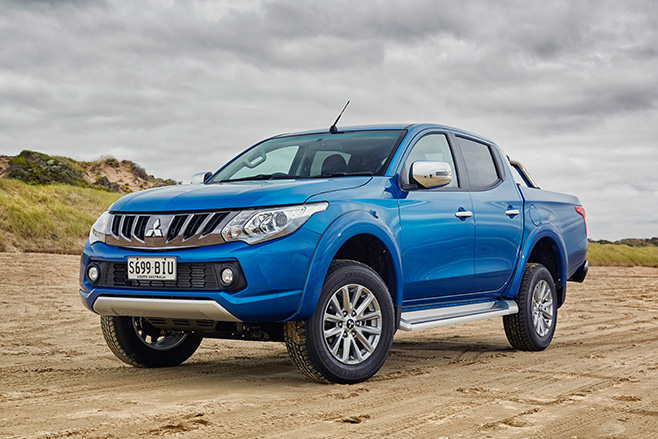
Toyota was Australia’s most popular brand yet again – its 16,308 February sales well clear of second-placed Mazda (9923).
Mitsubishi made the most notable moves in the top 10 brand ladder, securing fourth place with 5758 units – albeit in a close battle with Holden (5724) and Ford (5669).
Volkswagen also outsold Nissan for the month – 4618 versus 4425 – in a rare switch of positions.
After the first two months of 2017, only Toyota, Kia and Subaru can point to positive growth compared with the combined sales of January and February 2016.
Top 10 Cars – February 2017
- Toyota Corolla 3392
- Toyota HiLux 3386
- Mazda 3 3143
- Ford Ranger 2931
- Hyundai i30 2003
- Mitsubishi Triton 1990
- Mazda CX-5 1933
- Toyota RAV4 1726
- Hyundai Tucson 1596
- Holden Commodore 1566
The Internet has revealed every colour and trim combination for the sold-out limited edition Porsche 911 R – including a breakdown of where each was sold nationwide.
Instagram feed ‘rhd911r’ has listed 29 examples of the $404,700 manual-only supercar in the Australia, with 11 in New South Wales, seven in Victoria, four in Queensland, three in South Australia, two in the Australian Capital Territory and one each in Tasmania and Western Australia. A source has since confirmed these as accurate.
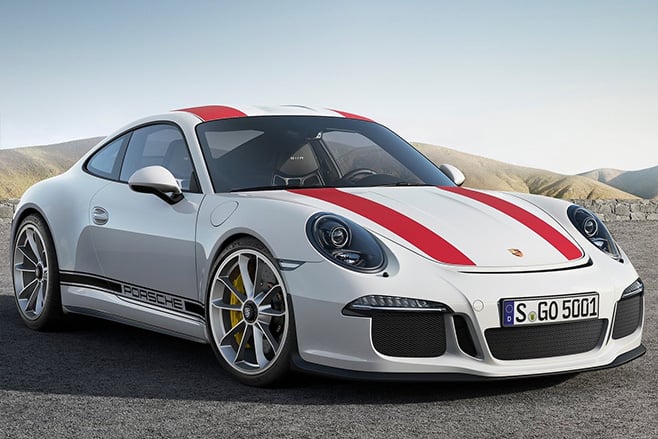
Finding five owners each is the white with green stripes combination (three VIC, one each NSW/SA) and GT silver without stripes (two NSW, one each VIC/WA/ACT).
Only three buyers each have purchased black with green stripes (one each ACT/NSW/QLD) and GT silver with red stripes (one each NSW/SA/VIC).
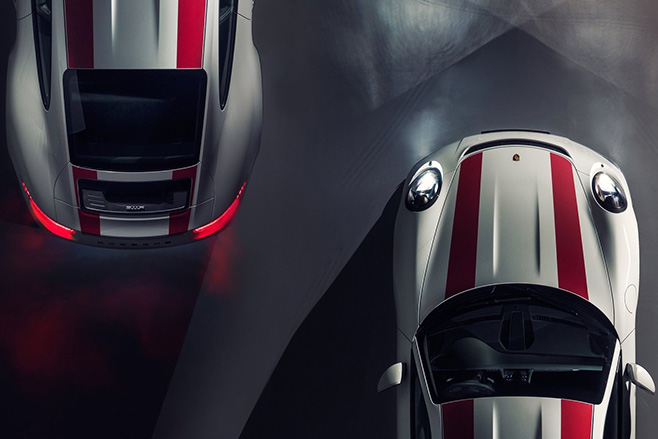
It comes in the same week that Sydney car dealership Scuderia Graziani listed a white version of the 3.8sec 0-100km/h coupe for a staggering $1.2 million – three times its $404K retail price new, and following last year’s prediction by British finance experts Magnitude Finance that the manual-only supercar could stir record levels of used-car appreciation.
THE WINNERS
Winner: SUVs Sports utility vehicles are riding higher than ever after outselling passenger cars for the first time in Australia. The latest official industry sales figures reveal 35,497 SUVs were sold in February, compared with 34,740 sales for passenger cars. The result had been a matter of time, with trends in recent years consistently showing rapid growth for SUVs while passenger cars have steadily declined.
Winner: Infiniti Okay, so growth is relative in terms of Nissan’s luxury brand coming off a low base, but February showed further notable progress. February’s 119 sales versus 50 for the same month last year represented a 138 per cent increase – and a 94 percent year-on-year rise. Key models for growth are the Infiniti Q30 and QX30 twins, and the QX70 SUV.
Winners: Maserati and Bentley Italian luxury brand Maserati exactly doubled local sales from February 2016 to last month – 86 versus 43. It’s all down to the Maserati Levante SUV, which account for 66 of those 86 sales. It has also boosted overall brand growth by 95 per cent year to date. Bentley’s vastly more expensive SUV, the Bentayga, is also helping the British brand. February sales were up 88 percent, with year to date sales up 117 percent.
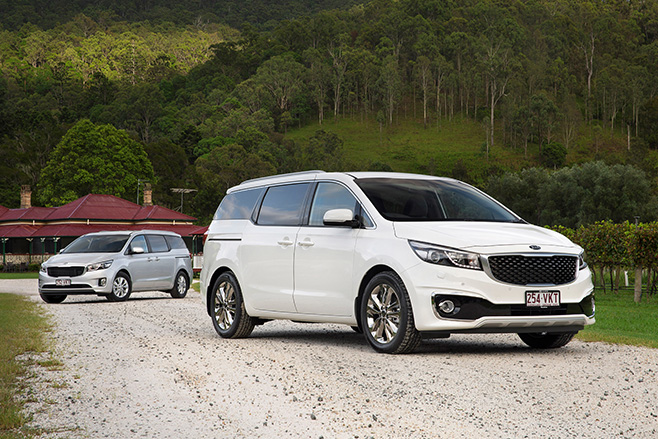
Winner: Kia Hyundai’s sister company is currently the better performer in terms of growth. Continuing its momentum of 2016, Kia increased sales last month by 36 percent compared with February 2016. The company’s year-to-date sales are up by almost a third, driven particularly by the Cerato small car and Sportage mid-size SUV. The new pint-size Kia Picanto is also chipping in nicely.
Winner: Renault The much improved, second-generation Renault Koleos SUV is playing a pivotal role in Renault’s 2017 sales charge. February’s month-on-month jump of 23 percent virtually matched the brand’s year-to-date increase of 22 percent. The Clio city car is another good performer.
THE LOSERS
Loser: The entire Australian new-car market Is the Australian new-car market’s impressive run of consecutive years of growth set to end in 2017? While it’s too early to suggest the sales trend is heading in that direction, February’s 8 percent fall wasn’t insignificant – even considering that last month had one less selling day than February 2016’s leap-year month. The drop equated to 7418 vehicles. Even SUVs were in decline despite overtaking passenger cars for the first time. Year to date the market is down about four per cent.
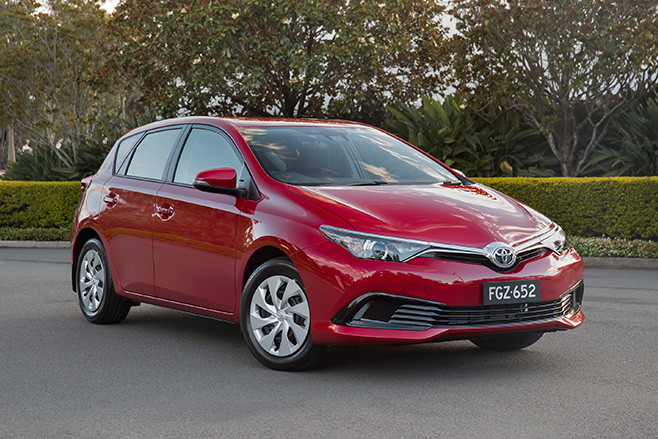
Loser: Mercedes-Benz’s rivals Audi and BMW sales both fell by double digits in February – 15 and 27 percent respectively – while Mercedes-Benz increased sales by almost six percent. Mercedes’ growth is more limited year to date, at just less than one percent, though Audi is down 10 percent and BMW down 15 percent. Lexus sales were down seven percent for February and down nine percent year to date.
Loser: PSA Group – Peugeot and Citroen While things are trés bien for Renault (see Winners section), Peugeot and Citroen continue to slide. Citroen’s 53 percent drop for February effectively mirrored its year-to-date struggles – with minus 51 percent resulting from every model showing decreasing sales. That’s the same case for Peugeot, even if its percentage declines are slightly better – 47 percent and 39 percent respectively.
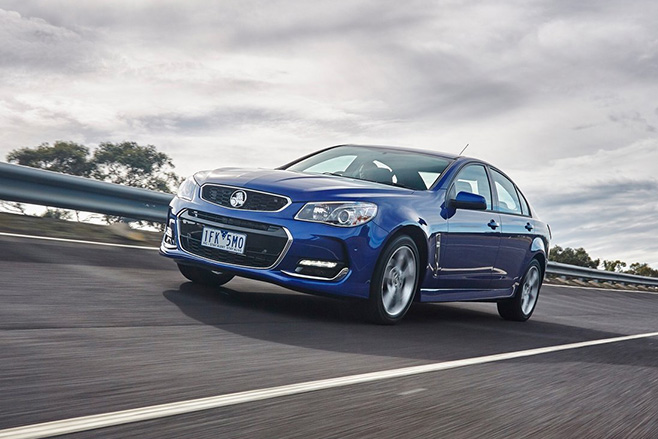
Loser: Nissan The Japanese brand was overtaken by Volkswagen in a rare positional switch in February. The blame for that lies with monthly sales that fell 26 percent, which contributes to year-to-date decline of 18 percent. No one model is particularly to blame, though the company’s decision to drop the Micra cost it more than 200 units compared with February 2016.
Loser: Holden Holden had a disappointing month on paper – down 22 percent, though that was primarily down to the Cruze that is fast-disappearing after local production of the small car ended last October. The Opel-sourced Astra isn’t compensating for its loss yet, though the sedan variant is yet to join the hatch released late last year so it’s only fair to give the model more time. The same benefit can’t be applied to the Commodore, though, which fell 22 percent in February. Bright spots for the month included the Trax baby SUV and Trailblazer seven-seater SUV.
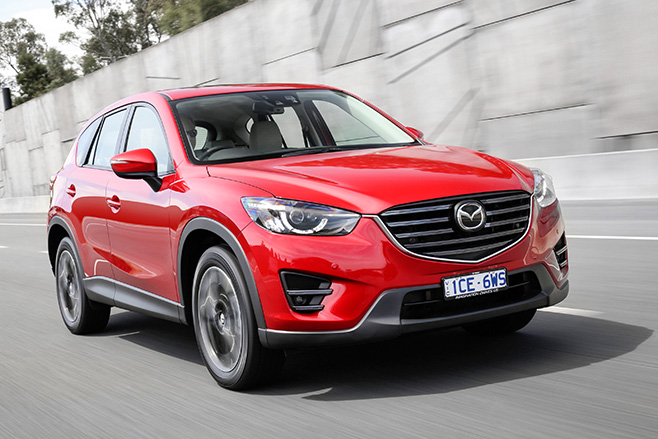
THE Mazda CX-5 was the biggest-selling SUV in 2016, easily outselling rivals including the Hyundai Tucson and the Toyota RAV4.
The Mazda CX-5 was so popular it snared almost one in every five medium SUV buyers. It’s a hotly-contested market though, and from the Holden Captiva to the Nissan X-Trail there’s no shortage of rivals for the CX-5.
Price and features
Coming in either front- or all-wheel-drive versions priced from $27,890, the most basic CX-5, the Maxx, comes pretty well equipped. The list includes cruise control, a reversing camera, a touchscreen display with Bluetooth connectivity, tyre pressure sensors, keyless entry, a fuel-saving stop-start engine system, electronic stability control and six airbags.
Even the most basic CX-5 comes fitted with a low-speed collision mitigation system that can automatically jump on the brakes to avoid running into the car in front, and a blind-spot monitor.
Versions of the CX-5 come fitted with a six-speed automatic gearbox (the cheapest one is fitted with a six-speed manual gearbox), and the choice of either a 2.0-litre or a 2.5-litre four-cylinder petrol engine or a 2.2-litre four-cylinder turbo diesel.
Model grades include the entry-level Maxx, Maxx Sport, GT and range-topping Akera grades that bump CX-5 prices out to slightly more than $50,000.
Pros and cons
It’s roomy inside, featuring a 403-litre boot that expands to 1560 litres with the rear seats folded down flat. Another positive virtue is the CX-5’s excellent roadholding – you get the feeling that the people who engineered this car are keen drivers.
A reversing camera may be standard across the range, but front and rear parking sensors are not. That said, rear cross traffic alert and blind spot monitoring are factory-issue across the whole CX-5 range, and so is autonomous emergency braking (AEB). Note, however, that the high-spec CX-5 GT and Akera receive a more capable version of AEB, rather than the purely low-speed system of the Maxx and Maxx Sport.
One negative is the CX-5’s age. An all-new version of the Mazda CX-5 is due on sale in Australia at the end of March, promising even more refinement than before. The engine and gearbox combinations are likely to remain the same for the second-generation SUV, although improvements in safety and driver support systems – such as a head-up display – are likely. If you can wait, it may be worth holding out for the new-generation model
The one to get
The mid-range CX-5 Sport Maxx is the sweet spot when it comes to model grades. Compared to the entry-level CX-5 Maxx, it scores niceties like fog lamps, rain sensing wipers, dual-zone climate control and satellite navigation, as well as the added versatility of a 40/20/40 split fold rear seat.
In terms of powertrains, while the 2.2-litre diesel engine has commendable long-distance economy – great if you do regular highway runs – it’s the 2.5-litre petrol that’s the nicest motor for day-to-day use. Unfortunately you can only have that engine with an all-wheel drive powertrain, which jacks up the cost, but the tradeoff is excellent tractability, refinement and decent economy.
FAKE or real? Experts are raising doubts about Lamborghini’s claim that the hottest lap around the infamous Green Hell, a 6min 52.01sec set in the Huracan Performante, is the real deal.
Lamborghini’s video showing how the Performante smashing the Nurburgring lap record has been called truly incredible by some.
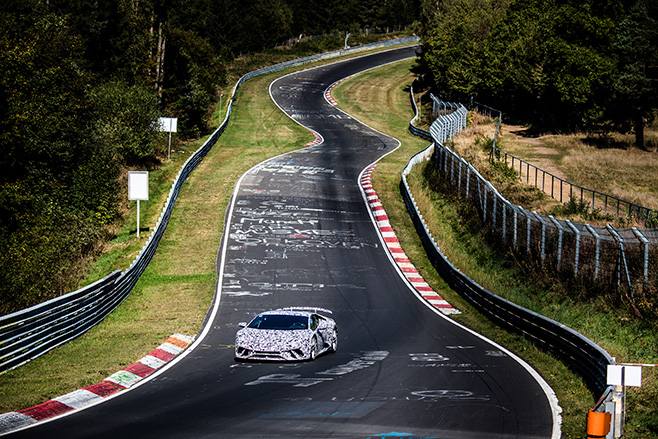
It calls the lap time into question, and if proven correct it could potentially open up a war of words between the manufacturers similar to the stoush that brewed after Nissan claimed its GT-R super car could lap the ’Ring faster than a Porsche 911 Turbo.
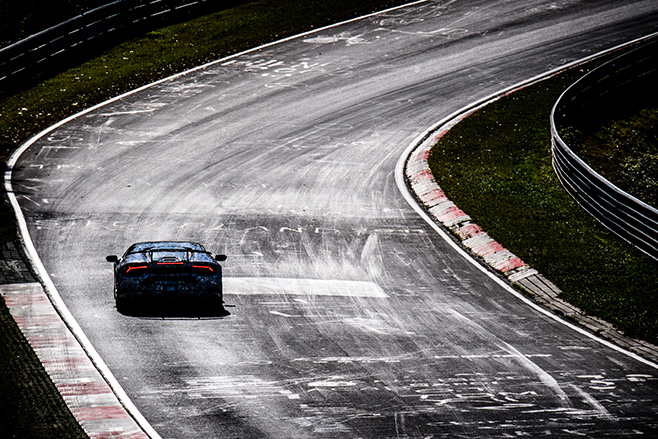
The crux of the website’s argument surrounds the speedometer superimposed on the video. The analysis points to inconsistencies in the speed reading when the gear and revs are at the same point in different sections of the video.
But Bridge to Gantry doesn’t stop there, later claiming that Lamborghini sped up the video’s frame rate.
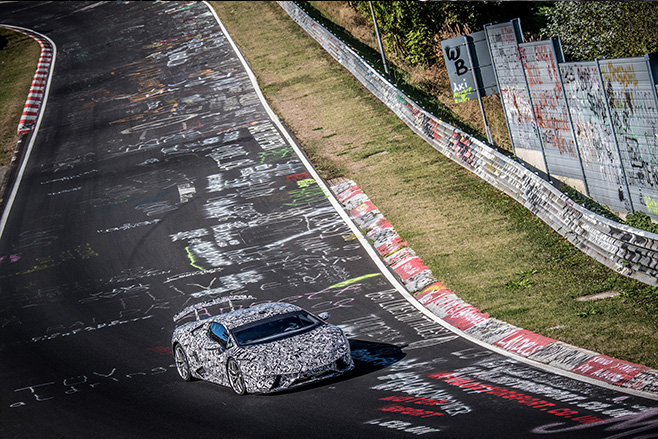
Manufacturers will often make claims about how quickly their cars can tame the Green Hell – without any independent verification – leading to accusations of foul play.
Here’s how you know 2016 was one of the best, if not the best, years ever for performance cars. The Lamborghini finished fifth. Man alive – fifth!
But before you go surmising that this was because the LP580-2 is rear-drive when the Huracan was originally conceived as an all-paw monster, let me assure you, this was not the case. Nope, the Huracan LP580-2 simply lucked out by being born in the wrong year. The same year as Ferrari turned up to PCOTY, the same year as Porsche released a new 911 Turbo S and the same year that the mucho loco, and bargain-priced, Ford Focus RS came along.
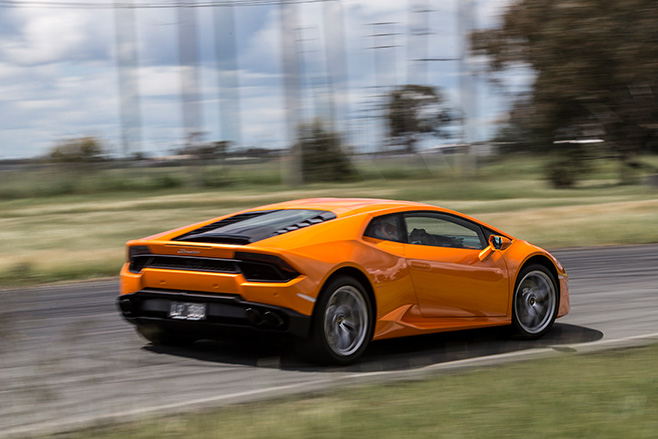
The Lambo runs everything pretty hard in the numbers department, too, with lazy 11s recorded down the strip despite lacking all-wheel drive traction. Miraculous, then, that the Huracan simply grips up from a standing start and heads for the hills without bulk wheelspin being the result.
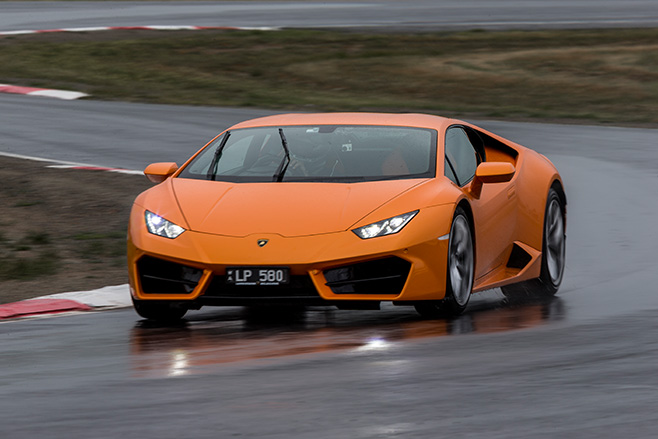
That excellence fades a little on the wet track we were blessed with, and it’s then that the Lambo was quickly voted the one most likely to try to kill you. But by Gallardo Balboni standards, the Huracan is vastly better mannered. However, it remains that the big, heavy engine, mid-mounted as it is, combined with a mid-corner chicken-out on your part will see it attempt to swap ends.
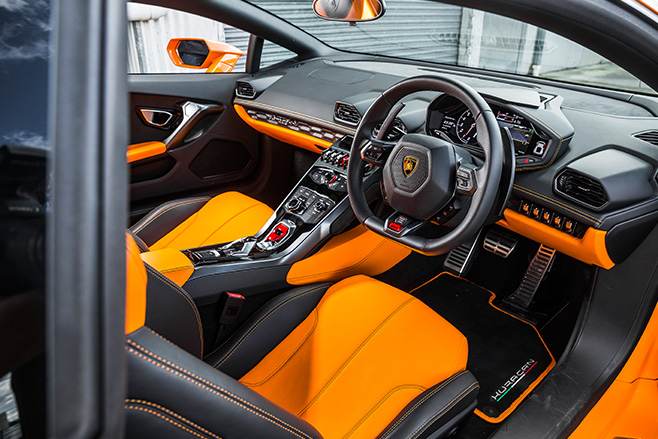
Oh, and where your $15,000 Kia now has a standard reverse camera, the mega-buck Lambo does not. Then again, neither does the Ferrari. Sheesh.
THE NUMBERS 0-100M: 3.55sec (5th) 0-400m: 11.25sec @ 209.46km/h (5th)
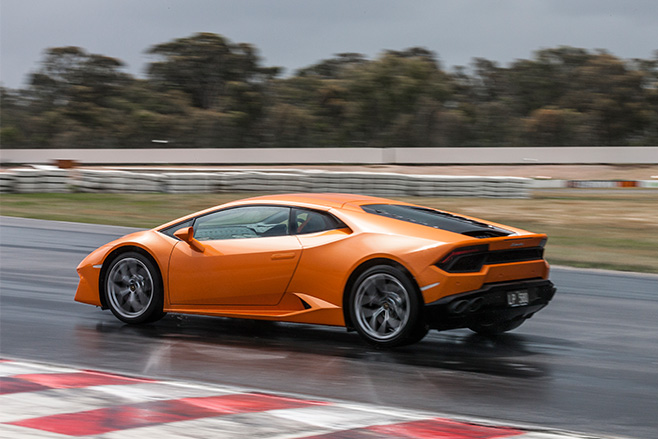
DYLAN CAMPBELL: =5th Fifth does not convey how much I love this car. A rear-drive Huracan is so right it’s not funny.
SCOTT NEWMAN: =4th Makes you work to extract its best, which is as it should be.
TIM ROBSON: 2nd Ooooh boy. What a rush! Wish it had more front end, though.
JOHN BOWE: 3rd Gorgeous engine, worth the money just for the sound it makes.