
It may look a lot more generic, but has the Land Rover Discovery still got what it takes to impress all those mums on the school run?
WHAT IS IT? The fifth generation of Land Rover’s three-row all-terrain wagon gets fresh and less polarising styling, and a host of comfort, safety, convenience and capability features in a line up comprising 13 variants.
WHY WE’RE TESTING IT New from the tyres up the Discovery is the Land Rover product for the adventurous family. With more generic styling, higher levels of equipment and luxury and a lower entry price than its predecessor, the latest model is sure to find plenty of buyers.
MAIN RIVALS Toyota LandCruiser 200 Series, Mercedes Benz GLS, Audi Q7, Nissan Patrol
THE WHEELS VERDICT The Land Rover Discovery is a little less country on the outside, but a lot more city-smart inside. Lighter, cheaper and more luxuriously appointed than the car it replaces, it should stand out on the school run.
PLUS: Wider range to appeal to larger audience; weight savings allow smaller engines and more equipment; lower entry level price; quality ride and refinement MINUS: Generic styling robs it of character; large diameter wheels limit off-road use; expensive and extensive options list
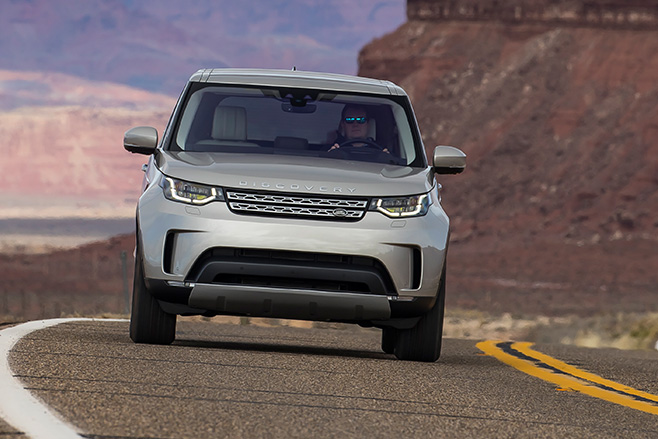
Land Rover Discovery has always had the high levels of equipment, performance and ability to match and exceed any of these vehicles both on and off road, but what was with the shipping container styling? And who really needs all that off road ability anyway?
The Indian-owned British brand knew this only too well so, when it came to developing the fifth generation of the model that was first seen back in 1989, it started with a clean sheet of paper.
The design of the body was planned to be more rounded and less polarising and a large model range would offer more choices for those with no intention of ever using the exceptional off road ability; and that’s most Discovery buyers.
The new Discovery range will start from $65,690 when it arrives here in the second half of this year. That base model is the Discovery S Td4 diesel five seater, but this engine variant won’t get here until a few months after the first shipment in July. The early arrivals will start with the 177kW/500Nm Sd4 and 190kW/600Nm Td6 engines in SE, HSE, HSE Luxury and First Edition variants.
That engine is Land Rover’s latest Ingenium 2.0-litre diesel engine in the base 132kW/430Nm Td4 tune and high series Sd4 tune.
There is a supercharged V6 petrol engine available in some markets but Land Rover Australia stopped offering it in the previous model Discovery due to low take-up here and won’t offer it in the new model.
Our first drive of the Discovery in the US was in the Sd4 and Td6 HSE Luxury specification vehicles.
The Sd4 engine with a single-range transfer case (no low range for off-road driving) will serve 80 per cent of Discovery buyers, those that will never venture off road or test the vehicle’s 3500kg towing capacity. It is more than adequate for the school pick up run including the extra passengers you inevitably pick up serving such duties.
The Td6 will be the choice for those wanting to branch out off road and/or tow a trailer. There is no question of the 3.0-litre V6’s superior performance on the highway, especially when overtaking, when you can feel the benefits of the torque and lower overall weight. Mated to an eight-speed automatic transmission, as is the four-cylinder engine, the V6 always has power on tap for whatever your needs.
The styling inside and out will draw attention among the luxury SUV brigade. Three-row seating is only available with the automatic air suspension package so seven seats start to add up on the base prices.
Then to really impress the other mums, you’ll want the $4800 Intelligent Seat Fold Pack. This first in the SUV world gives you powered second- and third-row seats conveniently operated from the rear doors, the cargo compartment or remotely via the Land Rover control app for your smartphone that also lets you remotely control things like heating and even remote starting.
The third-row seat is full size and able to accommodate two adults for extended trips. The rear of the Discovery is cavernous offering up 2500 litres of cargo space and 2.0 meters of length behind the front seats with the second and third rows folded.
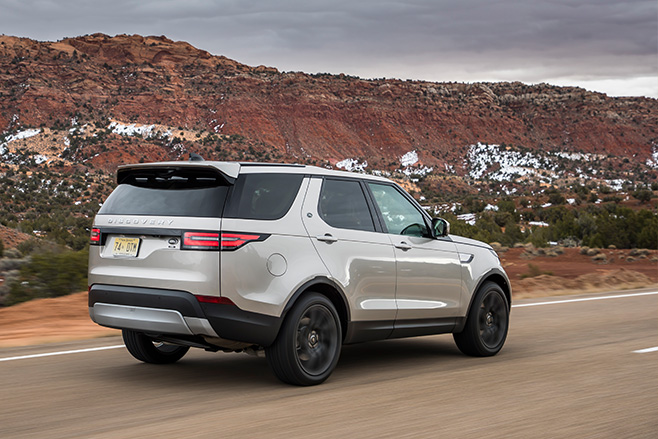
The rear door is now a single lift-up composite piece in lieu of the traditional horizontally split tailgate.
While some might think that would do away with the convenient seat/shelf that the lower tailgate has always formed, Land Rover has cleverly added an inner tailgate that folds out when the main tailgate is open, and it is able to accommodate up to 300 kilograms.
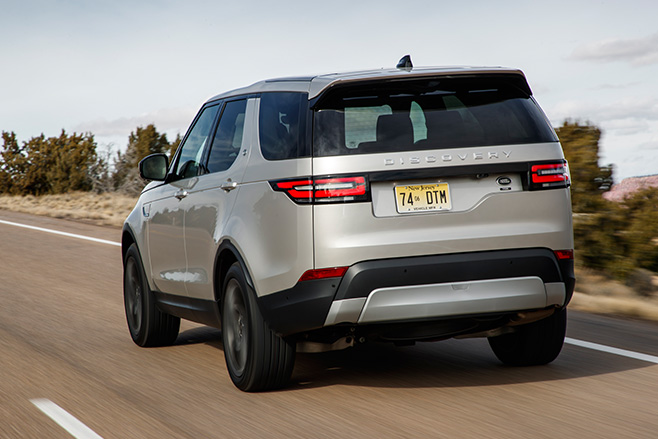
LR’s designers have also tried to retain some Discovery traditional styling with the asymmetrical treatment on the tailgate. It’s debatable how successful they’ve been in that regard; it looks odd and clumsy now and is possibly the most controversial aspect of the new Gerry McGovern design that ties closely with other Land Rover and Ranger Rover products.
The body now rides on the aluminium architecture that Discovery shares with Range Rover and Range Rover Sport. The lighter weight of the materials plus the four-cylinder engine adds up to a total of up to 480 kilograms depending on specification.
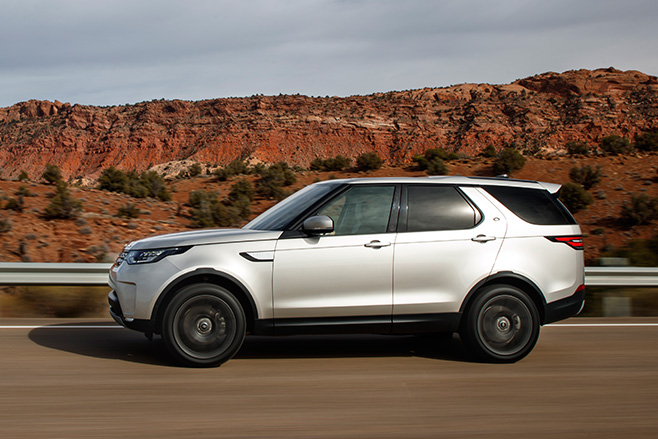
It uses steel suspension components in lieu of the aluminium ones used on Range Rover Sport to better cope with its intended off road use.
Speaking of off road, the new Disco uses electronic traction control plus the latest version of its acclaimed and often imitated Terrain Response system, TR2. This adds an auto mode to the existing modes for Normal, Grass Gravel Snow, Mud and Ruts, Sand, and Rock Crawl.
The auto mode reads the terrain and driving style to choose the right mode for the conditions and takes the guesswork out of it for the driver. It’s a system that makes even the most inexperienced off roader look and feel like an expert.
The all-new design and extended Discovery model range was aimed to entice more buyers and Land Rover is already claiming it has 20,000 orders for the new vehicle.
In Australia that number is closer 300 to 400 at the time of the international launch, but Land Rover Australia is hoping to have up to 1000 orders on the books by the time the first ones land here in July.
Vote for the Land Rover Discovery to win the 2018 Wheels Car of the Year Readers’ Choice competition
SPECS Model: Land Rover Discovery S Sd4 Engine: 1999cc 4cyl, dohc, 16v, turbo diesel Max power: 177kW @ 4000rpm Max torque: 500Nm @ 1500rpm Transmission: 8-speed auto Weight: 2184kg 0-100km/h: 8.3sec (claimed) Fuel economy: 6.3L/100km (EU, claimed) Price: $71,560 On sale: July
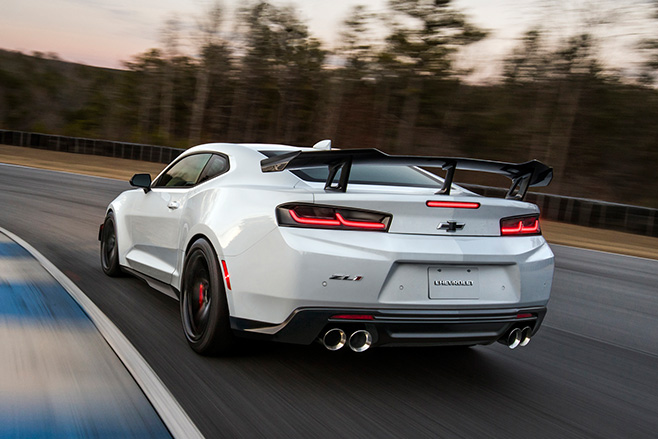
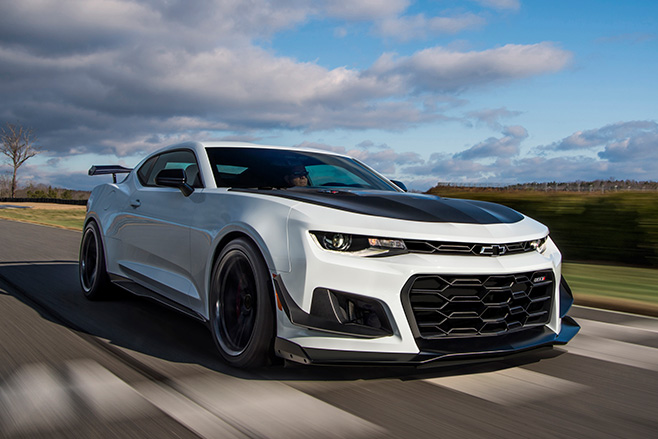
This is the Chevrolet Camaro designed to send Mustangs running to mummy.
Named the ZL1 1LE, the brand’s taken its Camaro shoehorned with the Corvette Z06’s LT4 engine and thrown at it a weapons-grade performance-pack.
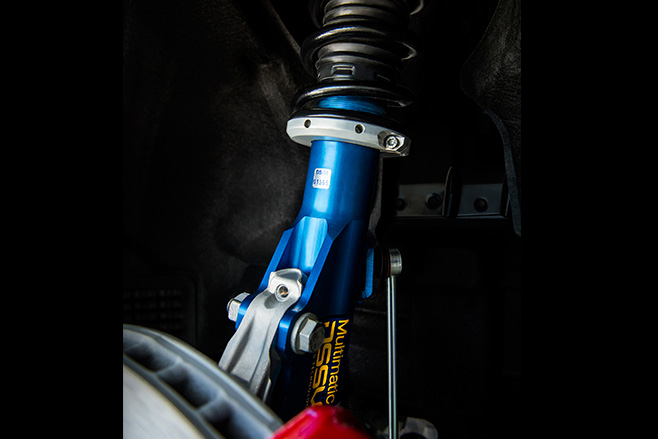
But how do you make the brand’s baddest Camaro even meaner? Let’s start at the suspension.
But their light-weight and tricky damping tech is only the start of it. They allow drivers to adjust ride height, and camber plates allow front wheel geometry tweaks.
The six-speed manual-only driveline’s been left untouched. No surprise when the ZL1 readies 485kW and 881Nm at its rivals. Instead, straight line speed’s boosted by more grip and a new diet.
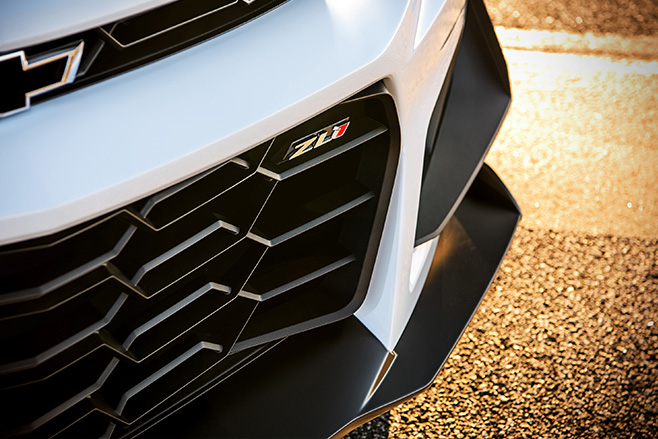
These wheels grow an inch in width, but lose an inch in diameter on the ZL1’s 20-inch items. And as a result the footprint grows by 10 per cent, while dropping 3.3kg at each corner.
A new carbon fibre rear wing and front bumper dive planes make use of the wider spread of grip, as do its gluey new tires.
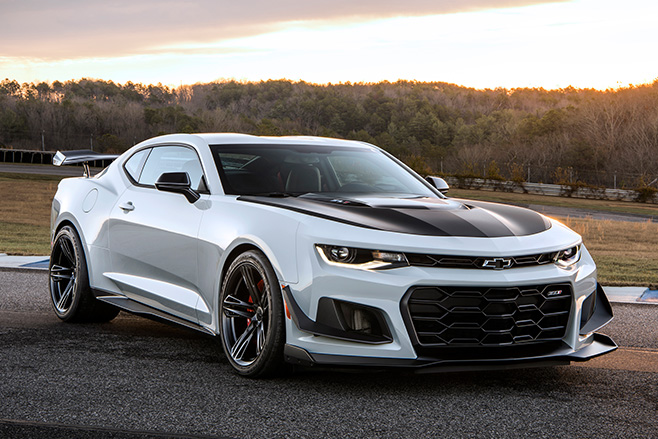
Blending the two badge’s recipes gives us the GT3 variant of Camaros. And the new goodies propel the ZL1 1LE around GM’s 18-turn 4.6km test track three seconds quicker than the non-1LE coupe.
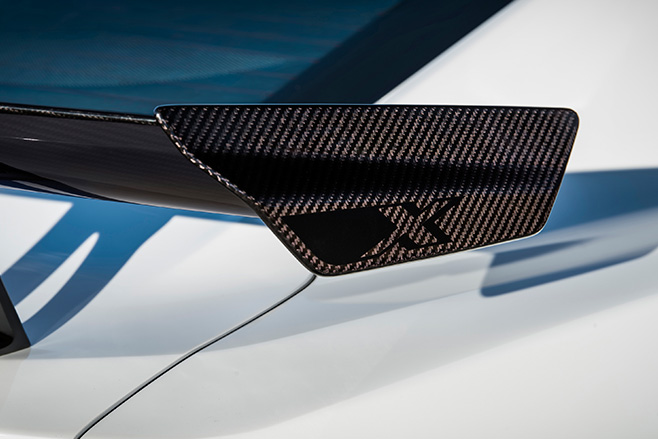
A standard ZL1 currently asks for US$60,000 (AU$78,914), but the 1LE optimised variant’s pricing will be announced closer to the car’s on-sale date later this year.
But with the Alpha platform which the Camaro is based on designed exclusively for left-hand drive, don’t expect a Holden or HSV ZL1 1LE anytime soon.
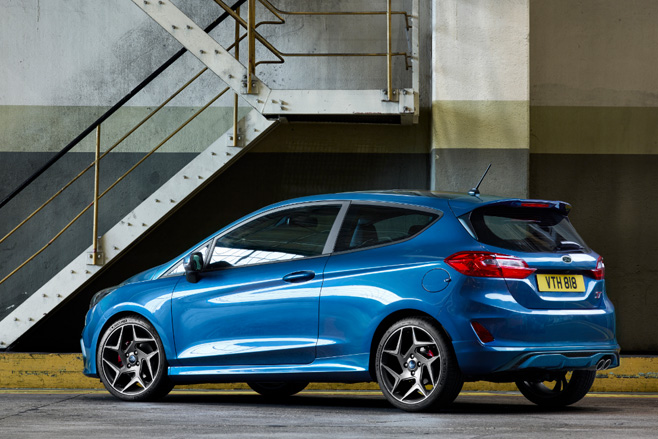
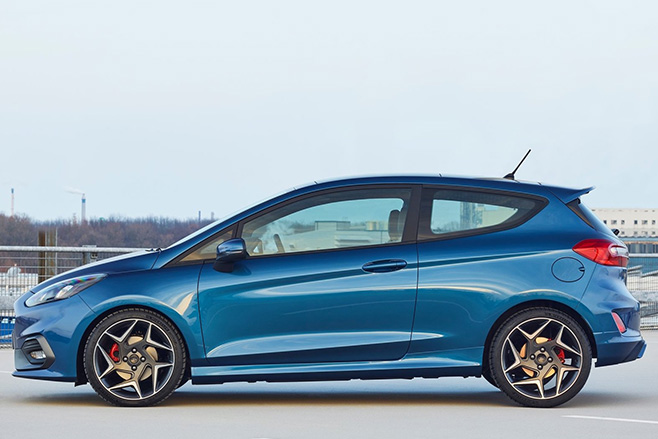
THE 2017 Ford Fiesta ST will tap a tiny 1.5-litre three-cylinder engine that can pump out 147kW and 290Nm – but run as a two-cylinder fuel miser when it needs to.
The carmaker has revealed a new version of its entry-level performance hatchback that will bow at March’s Geneva Motor Show. And despite the tiny donk, Ford Performance reckons the three-door will sprint from rest to 100km/h in just 6.7 seconds, 0.3sec faster than the 134kW/240Nm car it will replace.
When it goes on sale in Australia in 2018 it will be the first-ever three-cylinder car from Ford’s performance stable to wear the ST badge.
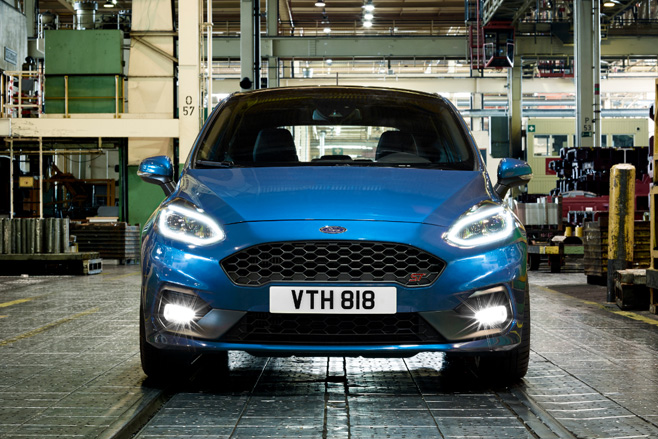
The ST’s alloy engine is an advance on the 1.0-litre three-pot used in the Fiesta Sport sold in Australia.
Badged an EcoBoost because of the new turbocharger it wears, the twin-cam engine uses a combination of port and direct fuel injection to help boost performance.
The engine uses an integrated exhaust manifold that delivers torque faster by minimising the distance exhaust gasses travel between cylinders and the turbocharger. It can also shut down a cylinder while coasting or cruising to save fuel.
Adding to the list of debuts, the Fiesta ST will also become the first Ford Performance model to switch between normal, sport and track driving modes.
Ignoring normal mode because, well, who’d use it, the sport mode remaps the engine and throttle response, and the electric power steering assistance adjusts to offer “more
feedback and finer control for fast road driving”.
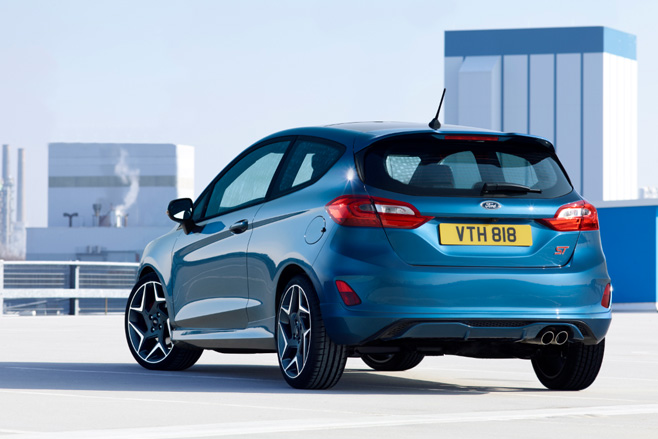
One of the important details that has failed to come out in the official reveal is who will be changing gears. The current version of the ST comes with a six-speed manual transmissions, but rivals including the Renault Clio RS and Volkswagen Polo GTI either stick to a dual-clutch automatic, or offer a manual shifter as an option.
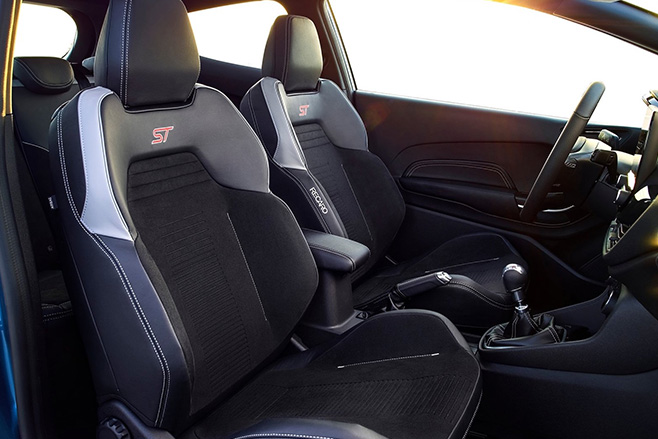
Inside, the Fiesta ST will get a flat-bottomed steering wheel that’s becoming something of a performance car signature, heavily bolstered Recaro seats and a long list of optional bits of trim and styling packs.
The Geneva Motor Show starts on March 7. Keep an eye on WheelsMag.com.au for all the news from the show floor as it happens.
It’s all change for Formula 1 in 2017.
A major shake-up of the technical regulations, aimed at making the cars wider, more aggressive and much faster means that the form book is wide open.
While any regulation change usually favours the bigger teams, there exists the opportunity for any team to steal an advantage with a clever interpretation of the rules, a la Brawn GP in 2009.
Testing starts today in Barcelona with the first grand prix in Melbourne on March 26.
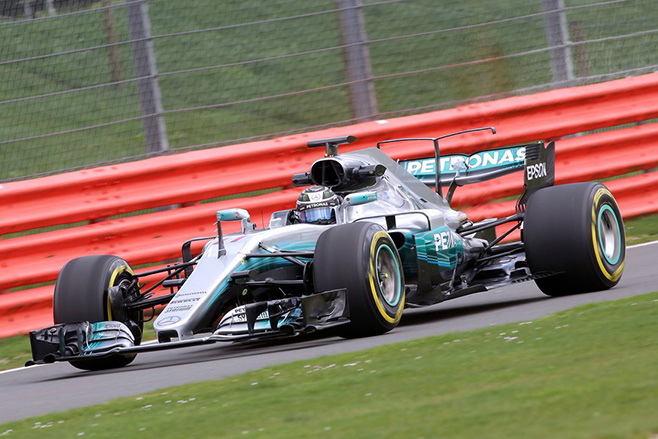
Its car may have the silliest name, but is also the favourite for the title. Despite the loss of its world champion driver (Nico Rosberg) and its technical boss (Paddy Lowe) late in 2016 it still has the biggest budget, most staff and one of the best drivers in Lewis Hamilton. The biggest question mark is whether Valtteri Bottas can challenge Hamilton.
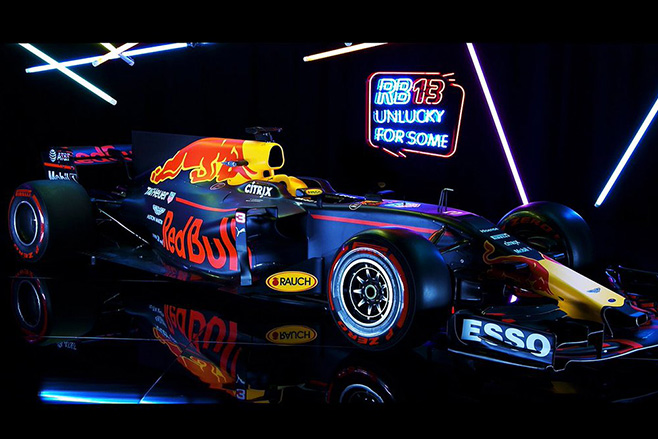
Red Bull’s aero guru Adrian Newey is reportedly very excited about the 2017 regulations, which is probably bad news for all the other teams. With arguably the strongest driver lineup on the grid and extra power from the Renault (badged TAG Heuer) power unit, there’s every reason to believe Red Bull will be battling for another world title.
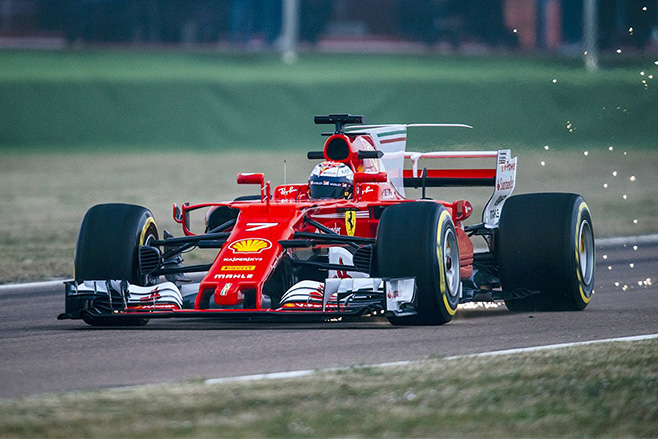
On the evidence of 2016 Ferrari would be better off looking over its shoulder at the likes of McLaren and Williams than it would be looking ahead to Red Bull and Mercedes. Nonetheless, Ferrari has some bold design elements on its SF70H which could vault it to the front of the grid, or have it playing catch-up all season.
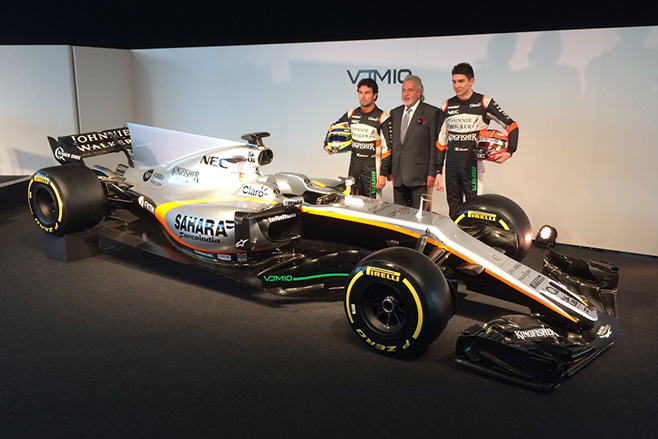
Force India overachieved in 2016 to score 4th, as its budget is a mere fraction of the teams’ ahead of it. Will struggle to repeat the feat with the works McLaren and Renault teams now finding their feet, but Sergio Perez is a very safe pair of hands and new recruit Esteban Ocon is a star of the future.
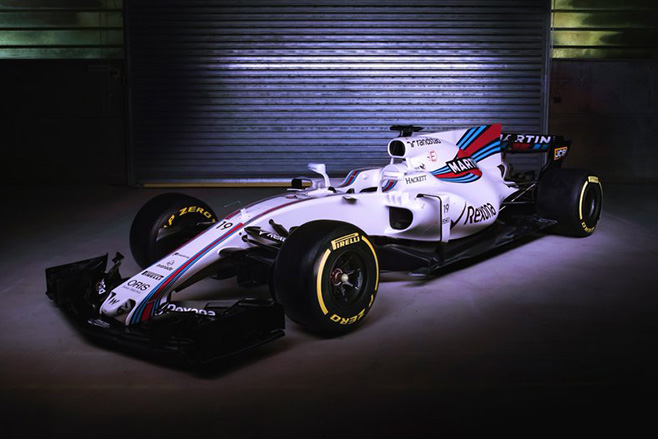
A rebuilding year for Williams. It’s done well financially out of releasing Bottas to Mercedes, which should help its future development, as will the as-yet-unannounced return of Paddy Lowe to the Williams fold. However, Canadian youngster Lance Stroll has much to learn while Massa is still quick but past his best.
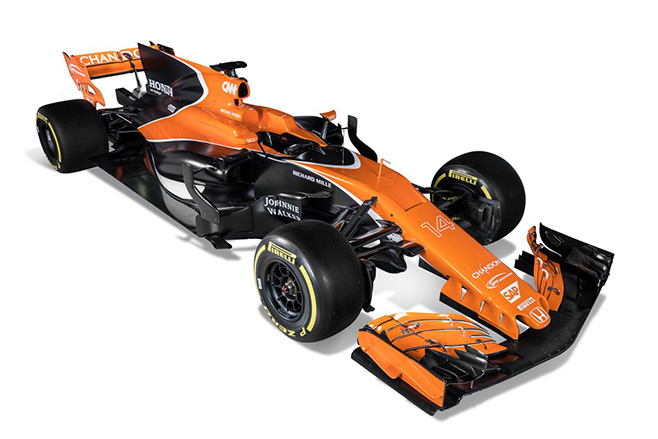
The year McLaren has to deliver. After two terrible years it’s a new era at McLaren, signified by its bold new colour scheme. Ron Dennis is gone and his loyal lieutenants shuffled out, replaced by the very capable Zak Brown. McLaren has the resources, the expertise and the drivers, what it’s run out of is excuses.
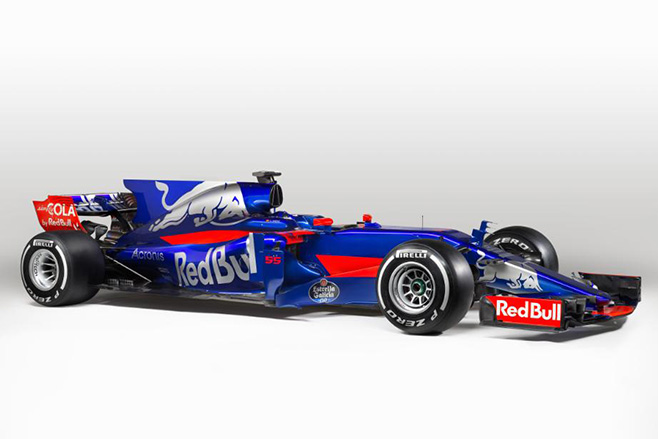
Toro Rosso wins the livery competition if nothing else, with a bold new colour scheme that harks back to the mid-1990s. The Red Bull B-team is bullish about its prospects, but will need to perform well to head a fiercely competitive mid-pack. Carlos Sainz Jr. is an undoubted star, but Russian Daniil Kyvat is still attempting to rebuild his career after last year’s Red Bull demotion.
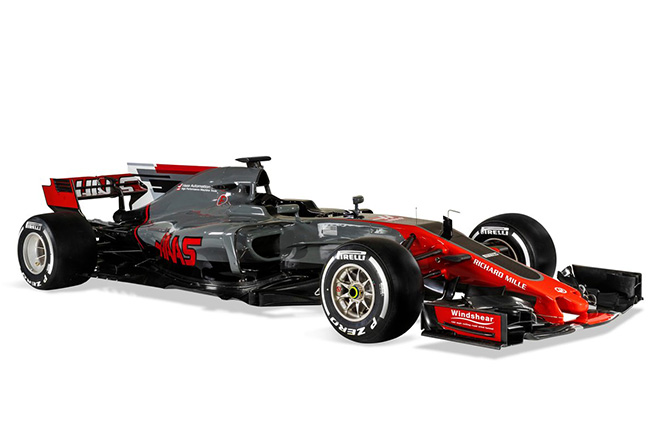
Haas had one of the most successful debut F1 seasons ever, but can it take the next step? Continues to rely heavily on Ferrari’s technical expertise but the addition of Kevin Magnussen gives it a quick and experienced driver lineup.
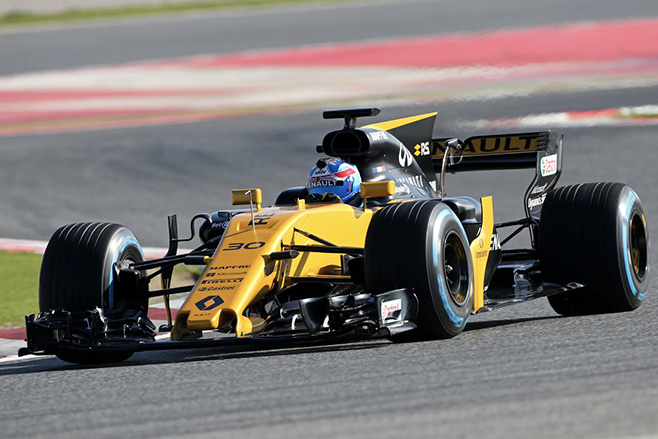
Renault has a mountain to climb. Years of struggling to pay the bills under the Lotus banner left the Enstone operation a shell of the outfit that won back-to-back titles in 2005 and 2006. The rebuild is underway but has proved more difficult than expected. Still, with a properly designed car and progress with the engine 2017 should be vastly more competitive than 2016.
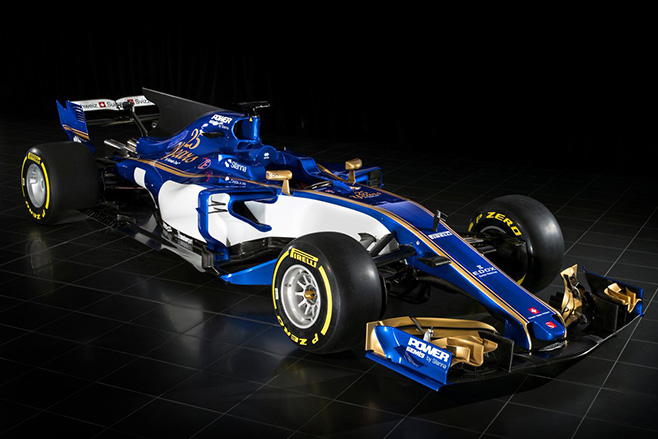
The bad news for Sauber is that it can pretty much lock in last place right now. The good news is that with the sad demise of Manor (leaving just 10 teams on the grid) it won’t face the season-long battle for 10th place it endured in 2016. With new investors the team’s survival seems safe for now, but with a tight budget and year-old engine an occasional points finish would be a good result.
Mercedes-Benz mutation fails evolutionary test.
SOME say that basing your Japanese premium hatch/crossover range on a competing German brand’s small-car architecture and claiming it as your own might be a bit of a con; others reckon that by adding your own design identity and chassis tuning to an already good thing, you’re creating a winning unique cross-cultural fusion.
Let’s split the difference and call it identity confusion, since the Infiniti Q30 and its QX30 crossover sibling, which both hail from England, are a confluence of Japanese design and German engineering that actually works.
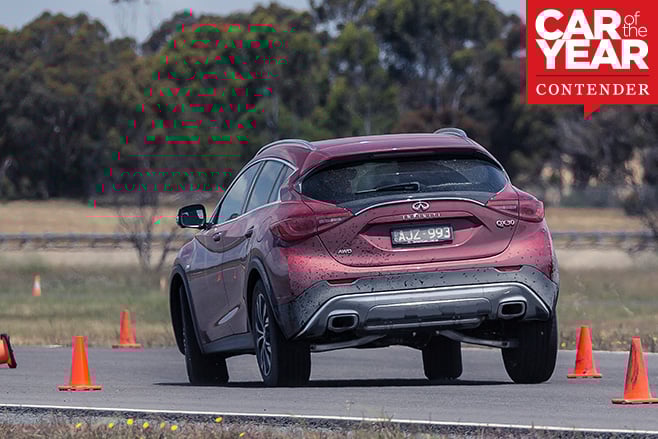
Until you step inside, that is, because virtually everything seen, felt, touched, and prodded – including the instrumentation markings and switchgear – is ex-Stuttgart not Yokohama, with the sole exceptions of the dashboard capping and central touchscreen/sat-nav that’s more Altima than ultimate. Cheap fonts and clashing typefaces detract – so pay more attention to detail, please, Infiniti; don’t you know you’re competing against the Audi A3 here? At least the GLA’s column-mounted auto shifter has been junked for the AMG 45’s natty little lever.
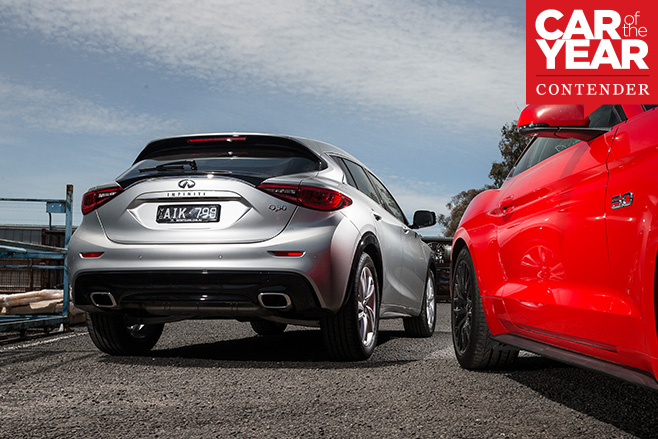
That said, at least the Benz-based DNA gives the Japanese-branded twins a spirited and sporting chance. In fact, in one way, the Infiniti versions outshine the donor cars.
Beginning with the 1.6-litre GT with its sweet and revvy 1.6-litre four-pot turbo, eager performance, aided by a slick-shifting seven-speed dual-clutch auto, progressively weighted steering, and impressively tidy handling don’t come as a surprise after several years of various GLAs, but the suppler ride is unexpected.
In the QX30 with its gutsier 2.0-litre AWD set-up, meanwhile, the combination of expert ESC and traction tuning, excellent grip, and strong brakes made for a fast and enjoyable back-road blaster – as well as a fun machine on gravel.

But there are too many anomalies to keep the Q30/QX30 from progressing to Round Two, beginning with the initial unavailability of a reverse camera (a fix is coming soon, we hear). Some judges hate the 2.0t’s synthesised exhaust note (“whizz-fizz pap!,” wrote one), while the parts-bin dash presentation doesn’t quite gel.

Competent and even charming as they are, both the Q30 and QX30 are simply different for the sake of it, not for the good of it. Maybe the next-gen versions will leave their mark.
Specs
BODY Type: 5-door hatch, 5 seats Boot capacity: 430 litres Weight: 1413 – 1521kg
DRIVETRAIN Layout: front engine (east-west), FWD/AWD Engines: 1595cc 4cyl turbo (115kW/250Nm) 1991cc 4cyl turbo (155kW/350Nm) 2143cc 4cyl turbo-diesel (125kW/350Nm) Transmissions: 7-speed dual-clutch
CHASSIS Tyres: 235/50R18 – 235/45R19 ADR81 fuel consumption: 5.2 – 6.9L/100km CO2 emissions: 120 – 159g/km Collision mitigation: Yes Crash rating: 5-star (ANCAP) Prices: $38,900 – $56,900
Brilliant chassis, but timid design and outrageous pricing neutered this cat.
JAGUAR’S previous-generation Jaguar XF of a decade ago was the company’s game-changer. The XF II, the first under Tata stewardship but wholly British in design and engineering, builds on much of its predecessor’s inherent strengths by adopting the brilliant lightweight rear-drive architecture from the excellent (and woefully underrated) Jaguar XE, and basically stretching it. Double wishbones, multi-links, the works…
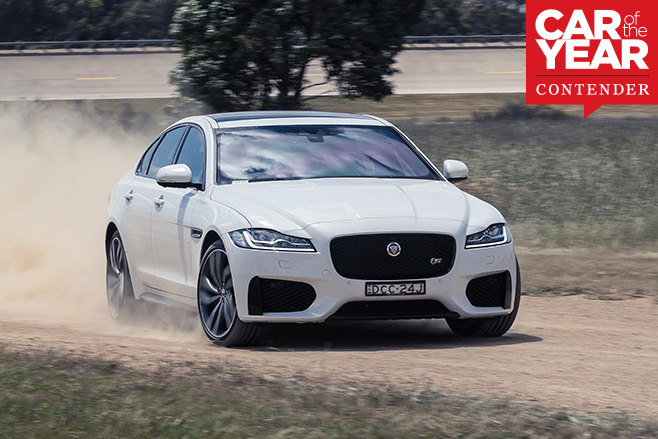
Push the start button, and the XF’s grand-touring athleticism and finesse continue to flow through, whether you’re in the rorty 2.0-litre 25t turbo and 3.0-litre V6 35t supercharged petrols (both ex-Ford), or the new-fangled Ingenium 20d turbo-diesel, which excels for refinement as well as mid-range urge, with incredible frugality (the claim is 4.3L/100km) to boot. In all cases, kudos must go to the ZF-supplied eight-speed auto, which is surely one of the world’s best.
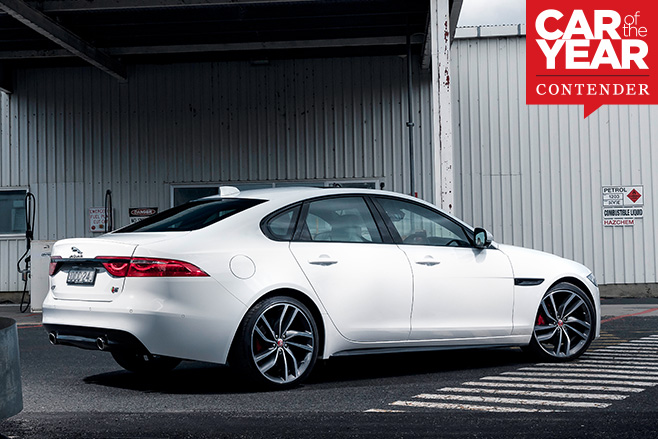
However, after the enduring and endearing handsomeness of the previous version (and XE), it appears that Jaguar’s designers somehow lost their nerve with XF II, diluting its confident stance and losing the perfect proportions.
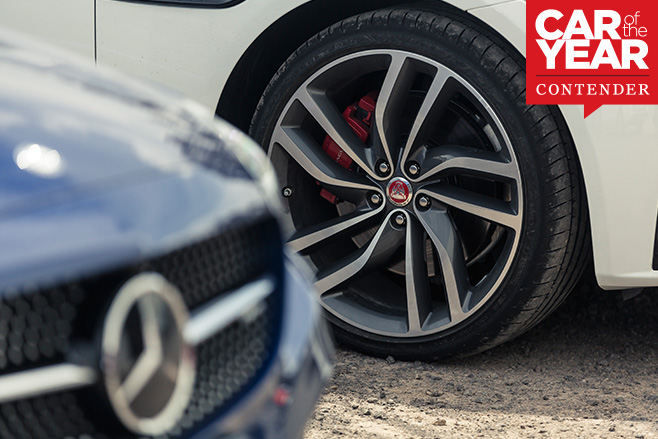
Having the cheaper yet better-specified Mercedes-Benz E-Class to keep the XF honest highlighted Jaguar’s pricing folly. It’s as if nobody told the Brits that (most of) the Germans twigged nearly a decade ago that you can’t expect Australians to blindly throw more cash for equipment that others include in cheaper similarly sized models. The Leaping Cat cachet only reaches so far, especially when the Stuttgart taxi looks so much sharper and more contemporary inside and out…
Specs
BODY Type: 4-door sedan, 5 seats Boot capacity; 540 litres Weight: 1590 – 1750kg
DRIVETRAIN
Layout: front engine (north-south), RWD Engines: 1999cc 4cyl turbo-diesel (132kW/430Nm) 1999cc 4cyl turbo (177kW/340Nm) 2993cc V6 turbo-diesel (221kW/700Nm) 2995cc V6 supercharged (250kW/450Nm) 2995cc V6 supercharged (280kW/450Nm) Transmission: 8-speed automatic
CHASSIS Tyres: 245/45R18 – 245/40R19 ADR81 fuel consumption: 4.3 – 8.3L/100km CO2 emissions: 114 – 198g/km Collision mitigation: Yes Crash rating: 5-star (Euro NCAP) Prices: $82,754 – $129,065
Meet the three-cylinder with meat – the new-generation Ford Fiesta ST has been revealed and it will officially ditch a cylinder on the switch to 1.5-litre turbocharged power.
The next version of one of our favourite hot hatchbacks moves to 147kW (up 13kW) and 290Nm (rising from 240Nm) despite downsizing from the current 1.6-litre turbo four banger.
A claimed 6.7-second 0-100km/h doesn’t attempt to make global headlines, but a standard six-speed manual indicates that Ford would rather please drivers than consumers. Perhaps to appease turbo-triple sceptics, it also makes several compelling claims for its new engine.
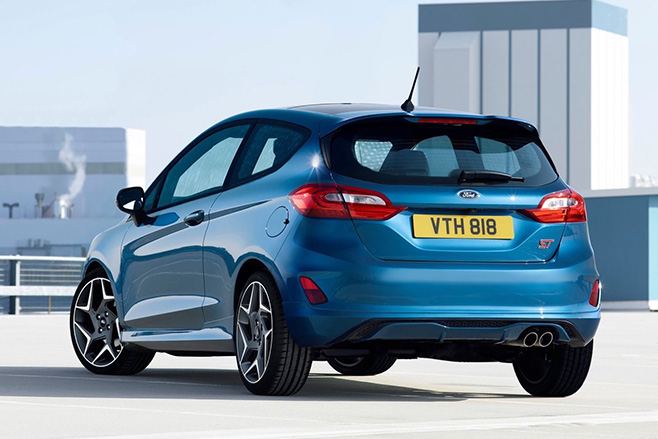
Plus, a triple always sounds more charismatic than a four (that’s us, not Ford, saying that…)
It should be lighter, although kerb weight isn’t provided. Fuel consumption, however, drops to 4.9 litres per 100 kilometres (from 6.2L/100km) partially thanks to cylinder deactivation technology. Yes, the Fiesta ST can run on two cylinders when cruising.
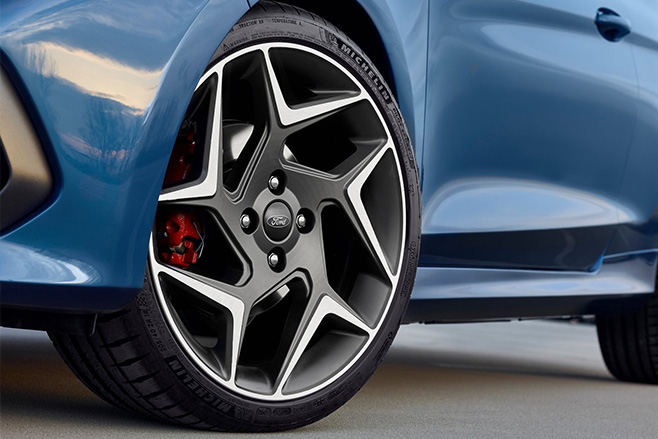
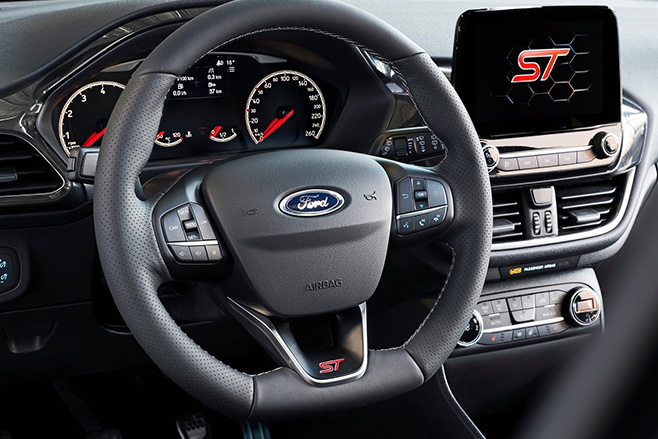
Fez owners will still find Recaro sports seats, but the scourge of multiple Drive Modes has finally nabbed the ST. Normal, Sport and Track modes appear, only the latter of which provides a “wide angle” electronic stability control (ESC) setting, although a separate button can turn it “fully off”. Torque vectoring control can also brake a spinning inside wheel.
In Australia the ST is the most successful variant of the entire Fiesta range and the only version imported from Europe. It could even mean that we see this hot hatchback locally before the cooking models that are imported from Thailand, a factory that is still building the old model for our market.
“What you’ll see in Europe is a European outcome,” he told MOTOR at a media event in Melbourne last week.
“Things will play out over time. We see global vehicles come through, we’re a global company, as you would expect. When we’re ready to talk about the Fiesta, we’ll come and chat with you.”
ONE of the world’s rarest and most coveted modern-day Porsche 911s has come up for sale in Australia, though despite being second-hand, it’s more expensive than any new car on sale in Australia.
Scuderia Graziani, a used car dealership in the heart of Sydney, lists a sold-out Porsche 911R with a mere 68km on the odometer. The price? A snip at $1,199,000, or more than you’ll pay for a brand-new Rolls-Royce Drophead Coupe.
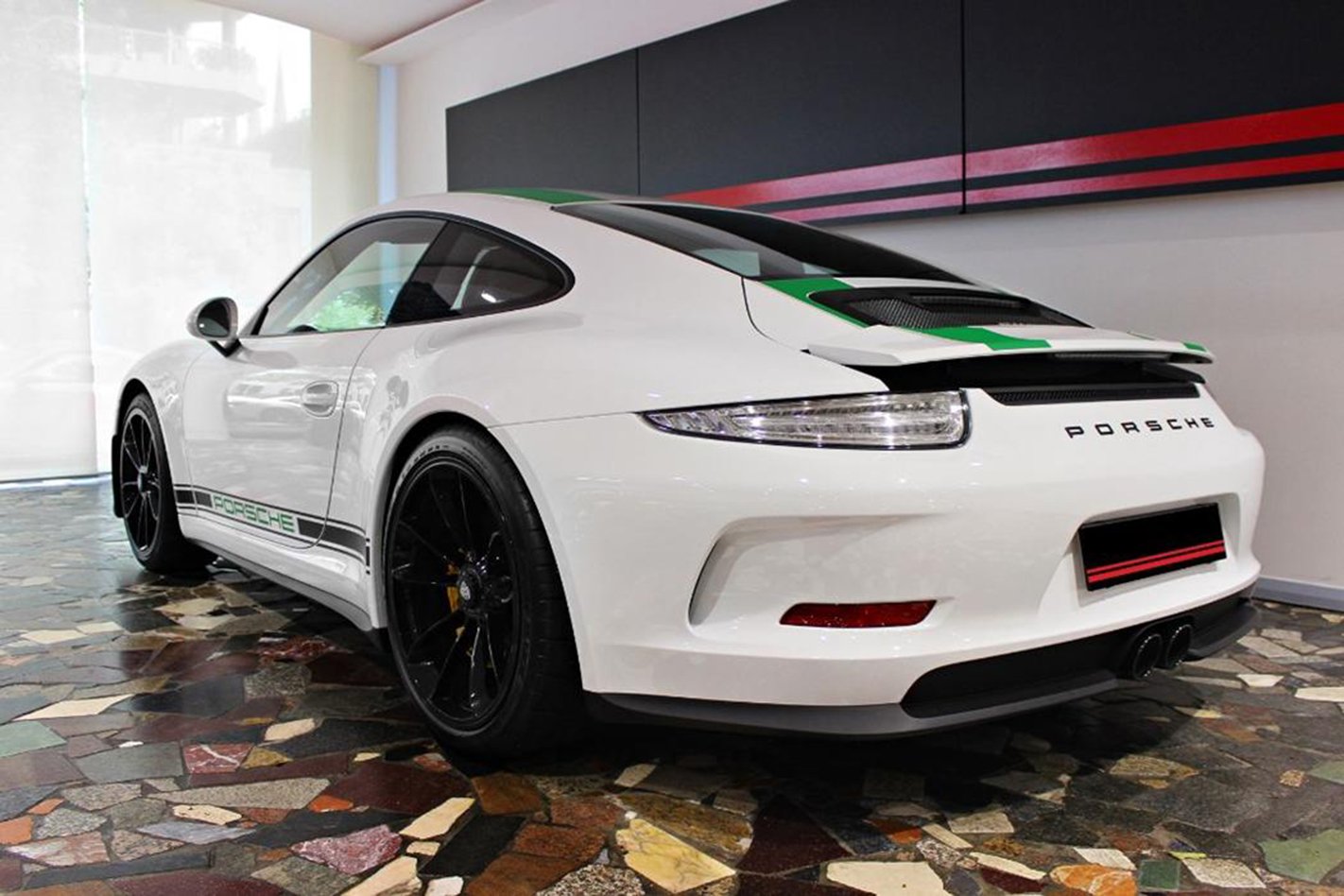
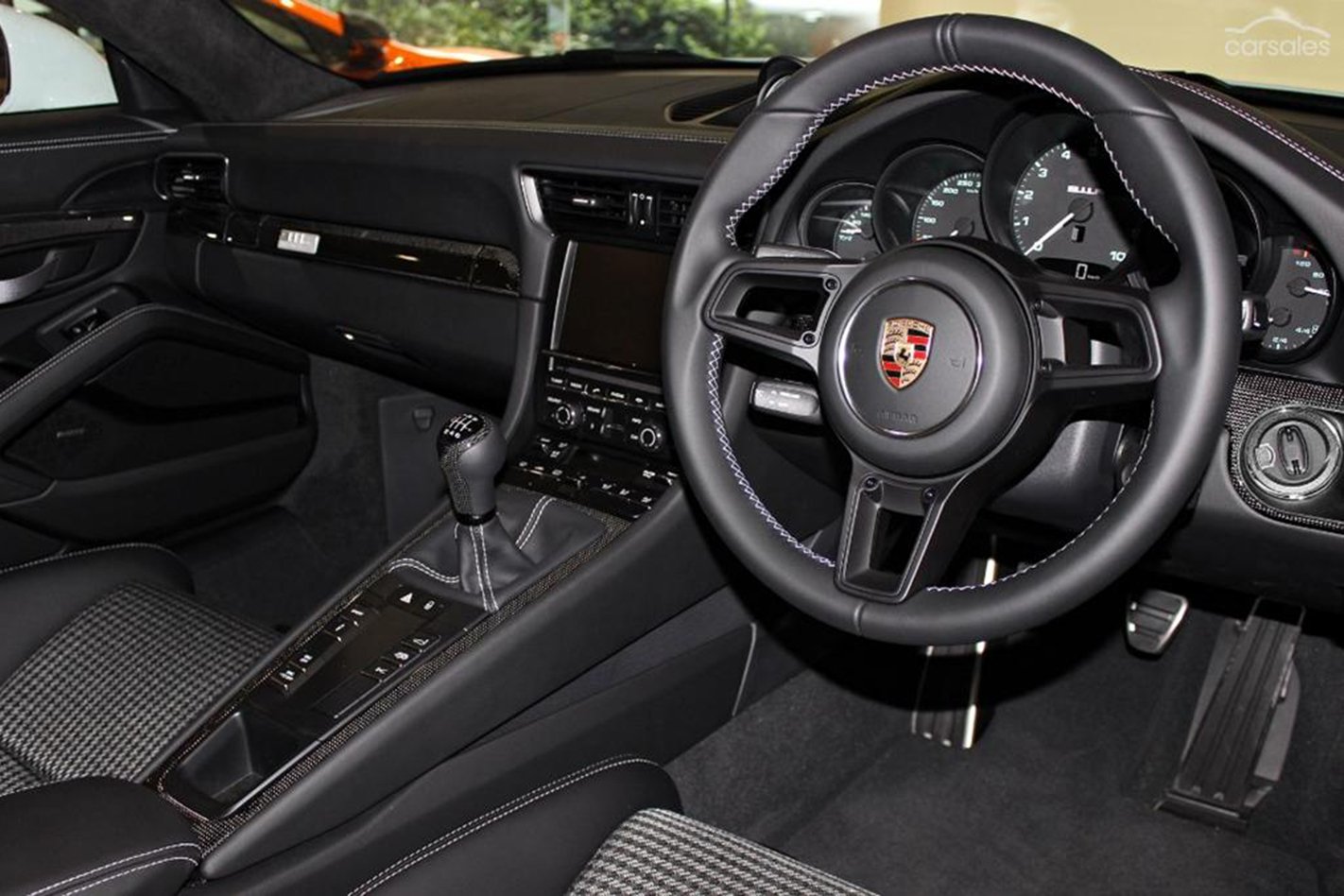
Whether or not it’s worth the exorbitant price tag, the 911R uniquely features a manual gearbox linked to the same 368kW/460Nm 4.0-litre naturally aspirated flat-six engine as found in the Porsche 911 GT3 RS.
A total of 991 Rs were built worldwide, and an “extremely limited number” were brought to Australia, priced at $404,700. Sales were believed to be just 29, but only 28 cars remain here after one was spirited away to the UK. Of the cars sold here, only five of those came in the white and green colour scheme. It is believed would-be buyers who missed out on a Porsche GT3 RS were offered first dibs on the R.
Clearly many more missed out on a 911R, and there has been widespread speculation about the prices at which they have been changing hands privately. Industry sources confirm this is the first time an example has been advertised in Australia.
For a purist Porsche collector, the 911R with its three-pedal-only configuration is the must-have model of the 991 generation.
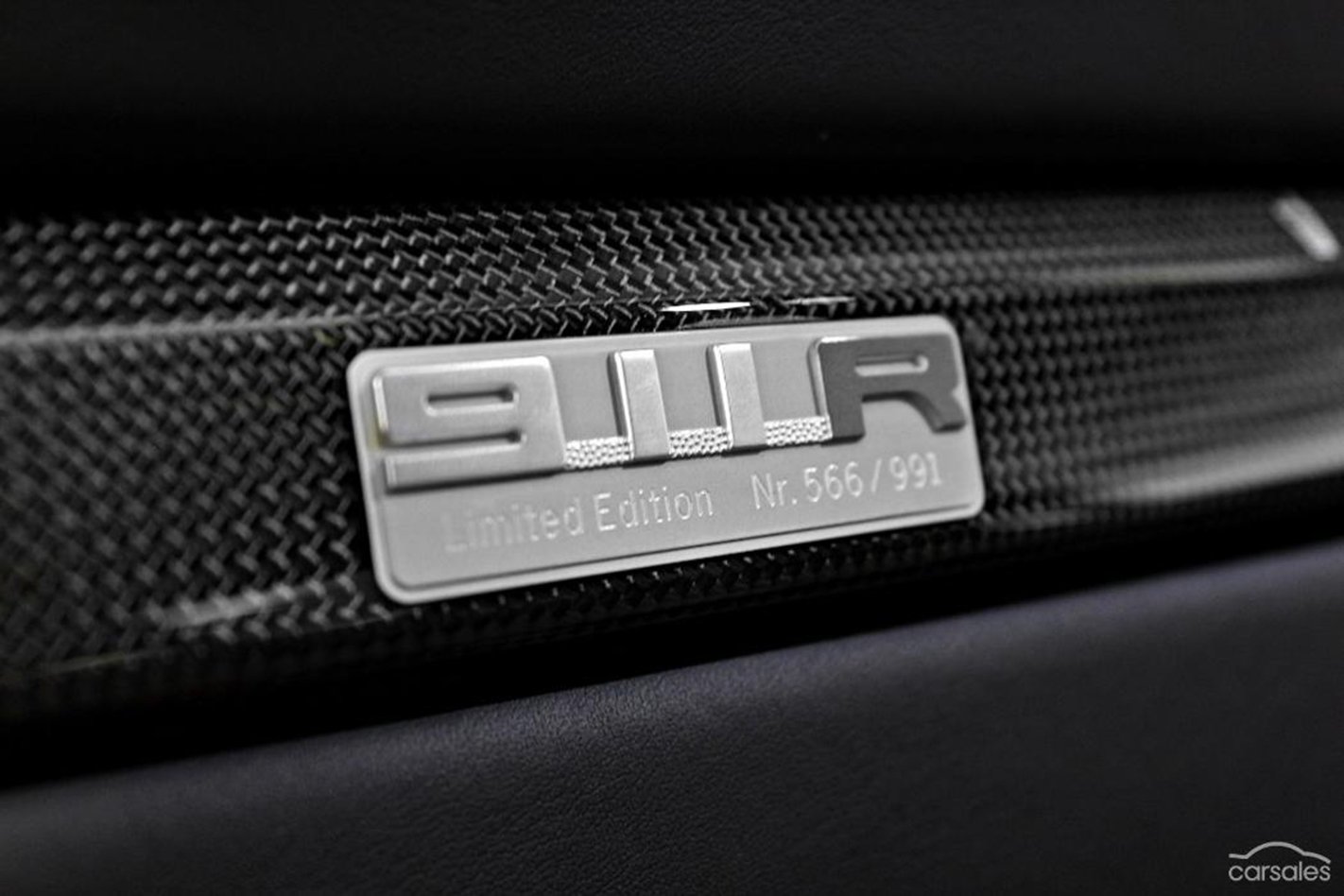
The 911R sends performance from its naturally aspirated flat-six to the rear wheels. It is enough to propel the coupe from 0-100km/h in just 3.8 seconds, and can push the lightest 911 in the line-up to a top speed of 323km/h. All-wheel steering helps with high-speed stability.
Also in the Scuderia Graziani stable is a 2010 Porsche 911 GT3 RS advertised at a comparatively bargain basement price of $599,990.
Here’s the thing: PCOTY is not just Bang For Your Bucks with no price ceiling.
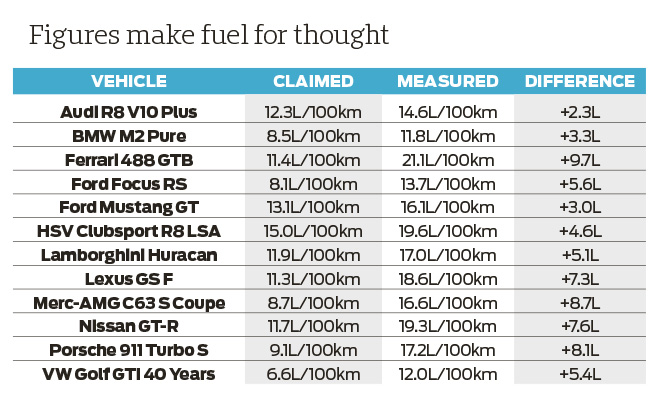
Nope, the pure mathematics of BFYB are replaced with a much broader set of criteria which, as well as allowing for a little subjectivity, also means we have to test the contenders for a similarly broader skill-set. Which, in turn, means we need to take to the Queen’s Highways and see how they fare in the real world. As in, as transport as well as mere trackside trinkets.
It will come as no surprise to learn that the real track monsters out there can also be right pigs when it comes to the more mundane stuff like getting in and out of them as well as making your ears bleed on any journey farther than the next suburb.
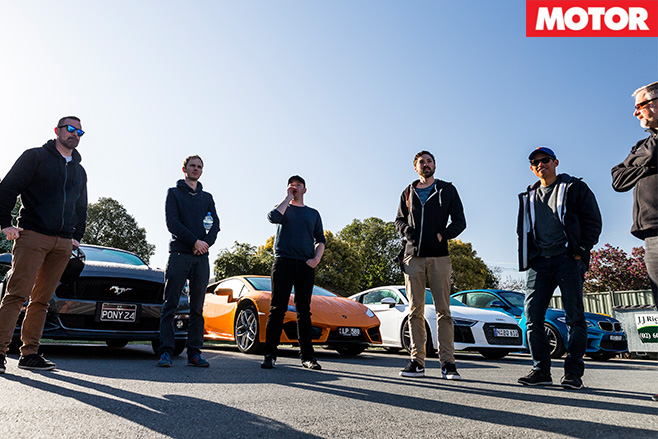
Let’s start with a pair of hatchbacks. Now, the VW Golf GTI has, since its re-emergence in Mark V form in the mid-2000s, stamped itself as the hottest of the hot. But the trick the GTI in Mark V, VI and now VII forms, has also pulled off is to convince us that it’s probably the most refined of these little freaks.
The new 40 Years version does nothing to alter that perception, to be honest. Yes, the ride is firm, but it’s beautifully controlled and driven to its strengths, the GTI is one hell of a road car. Most of all, it’s accessible performance, 95 per cent of which you will be able to use 95 per cent of the time.
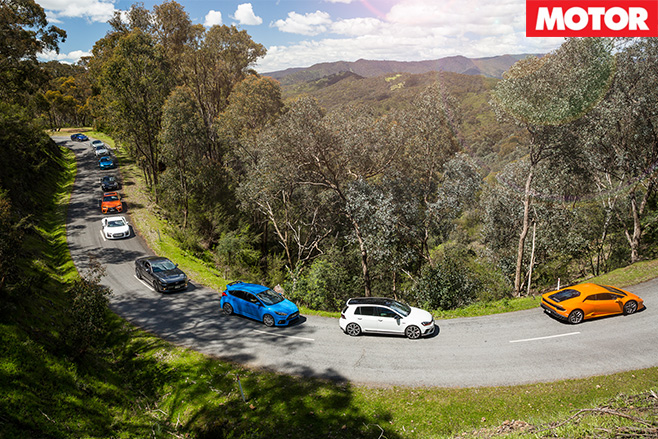
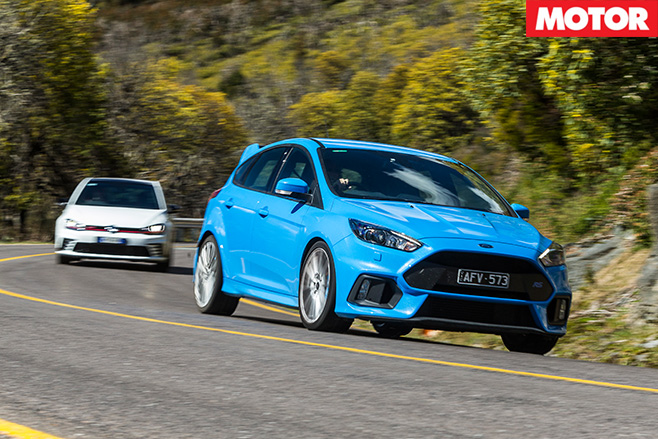
However, point it up a winding track and it suddenly comes alive again. And practicality? Well, it is still a five-door hatch, right? Okay, so you can’t have it without the third pedal, but I cannot force myself to complain about that. Point to point on the right road, the Focus RS would be all but unbeatable by almost anything else here (with one notable exception that I’ll get to later).
Remember that bit about track-focused cars being pigs on the road? Yeah, well the BMW M2 Pure proves that such is not always the case. Because as well as scoring well on the track, the M2 also emerged as a truly magnificent road weapon.
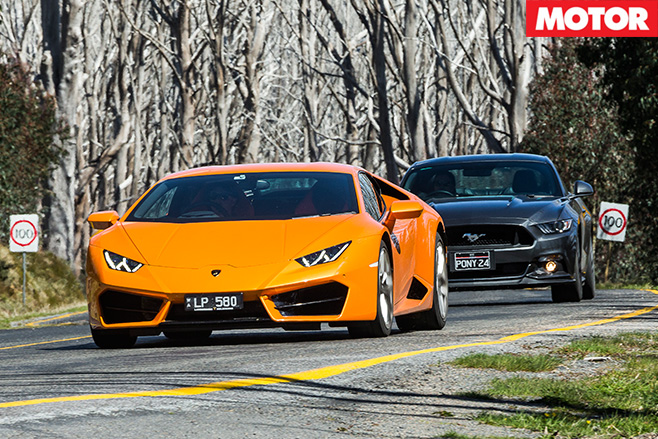
Now, if the year 2016 was a champagne year for supercars, it was also a pretty handy 12 months for big, V8, rear-drive passenger cars, too. The Ford Mustang GT is the one everybody wanted to know about (well, in the towns we travelled through, anyway) and it remains a stunning looking car that could only ever be a Mustang.
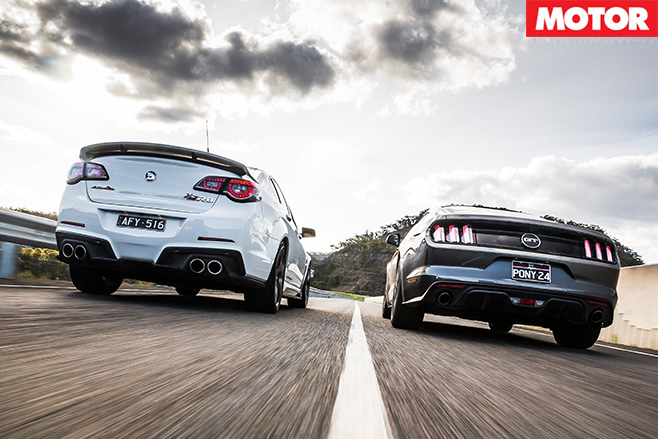
The existence of the Mustang also ensures the old rivalry between Holden and Ford continues and, for now, the red corner is still populated by an Australian-made car. The Clubbie doesn’t really feel like a 400kW car (or, at least, how we expected one to feel) but it still hauls butt when you floor the gas on that blown 6.2. And the body roll that you feel on the track means that it actually rides pretty well on the road and that, combined with the no-surprises steering and loping gearing makes it a fairly complete road car.
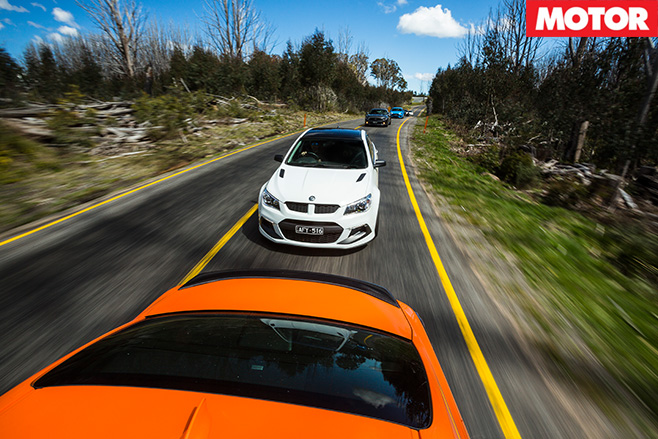
The GS F from Lexus is kind of like the Japanese equivalent of something like the HSV, actually. It’s a roomy four-door with a thumping great V8 up front, rear-drive and plenty of innate ability. But it also shares a little of the Stang’s retro-tech by sticking with a normally aspirated engine rather than relying on the efficiency benefits of forced induction. As such, however, it makes for a really entertaining road car. The power is stacked high but the rewards are well and truly there if you make the effort to access it.
At track speeds, you could argue that the GS F lacks that last little blob of involvement, but road velocities never really see that surface to any degree. The paddles work brilliantly and the automatic tranny obeys them like it should – here’s the Q-ship you’ve been waiting for.
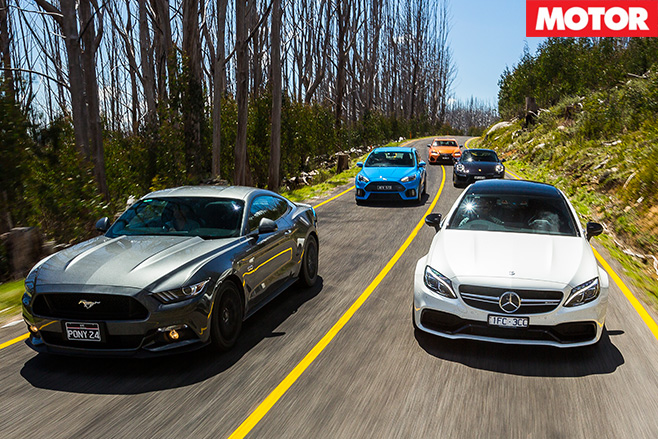
The engine – now a twin-turbocharged V8 – might not swell up and explode like the old atmo 6.2, but to criticise it for having bulk torque everywhere instead is to sound churlish to us.
And the even better news is that the active exhaust on the C63 S can still be activated whenever the driver likes, leading to some distinctly anti-social blurts and bangs. And that’s just in the motel car-park warming it up for the off. Everybody in Wangaratta must have heard the C63 S idling… Interesting, because we were staying in Benalla.
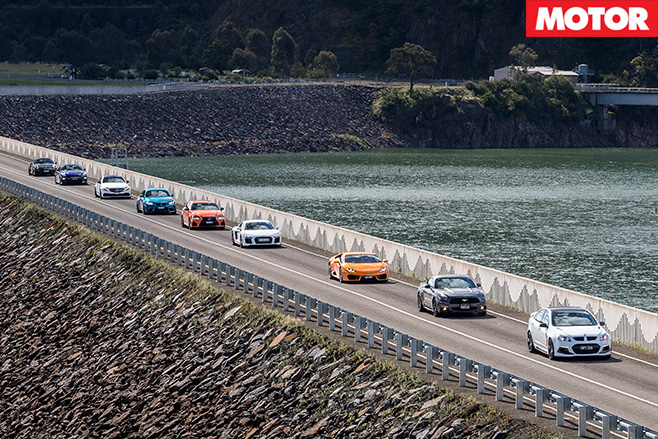
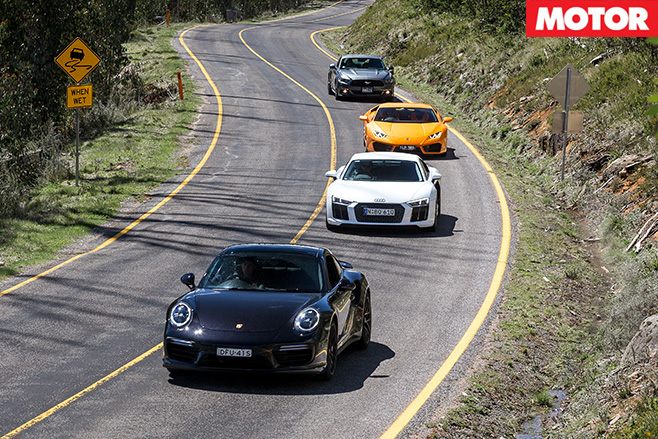
Of course, there is one supercar that has never had that sort of criticism levelled at it, and that’s the Porsche 911 and all its derivatives. Including this one. The Turbo S is the supercar that makes you question why you can’t change lanes safely in some other supercars.
It’s the one that forces you to wonder aloud just why some competitors are so difficult to enter and leave. And why you can’t judge where the nose is. And why on Earth the damn thing can’t idle along in stop-start traffic.
That said, the Turbo S ain’t perfect: the cup-holders are in another suburb from the driver’s chair and there’s pretty much nowhere to stash modern-day millstones like mobile phones and such. A big bottle of water? Forget it.
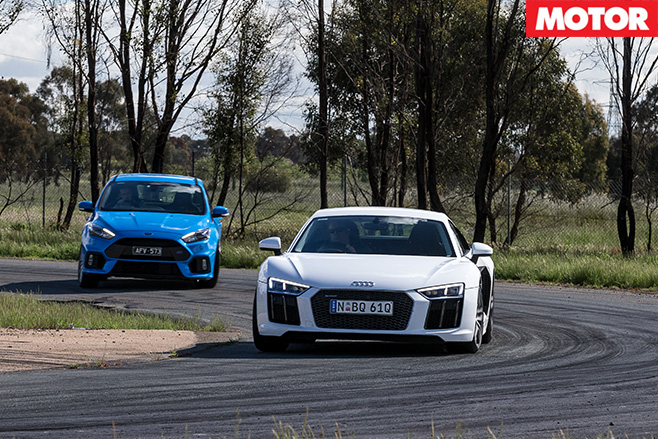
Although it costs but a fraction of the Porsche’s sticker, the Nissan GT-R wouldn’t be too far behind either. As a getaway car, the GT-R’s sheer pace would serve it well and its mid-range poke, top-end and sheer bloody-mindedness ensure that’s it’s a dead-set weapon on the tar.
But it’s a little less friendly to use than some and although Nissan has softened both the suspension and the tranny’s shift-shock, there’s still no mistaking it for a Godzilla. It’s noisy, a bit rattly through the clutch packs and to us old blokes, it still feels about equal parts supercar and arcade game. And you can only wonder how many nose-to-tails that configurable info screen has caused.
The elephant in the room? Why oh why does an otherwise sensible car like this have fixed-back seats. Race seats are fine, but without a recline function, they just seem a bit try-hard. Two-wheel drive Lamborghinis have not always been the stuff of happily ever after. But the Huracan LP580-2 is a much more benign character than the old Gallardo Balboni ever was.
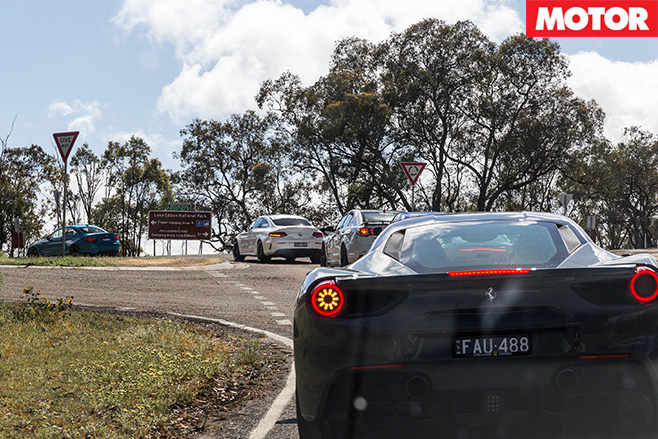
Which brings us to the Ferrari – the car that should be the orneriest to live with. I mean, if it’s going to follow decades of Ferrari tradition, it should be difficult to enter or leave, uncomfortable once you’re in and a bit tricky to drive.
Fact is, once you’ve got your head around the steering wheel workstation, the 488 is none of those things. I got used to the indicators on either side of the tiller, but the dip-switch was like the TV remote at Chez Morley: never seemed to be in the same place twice.
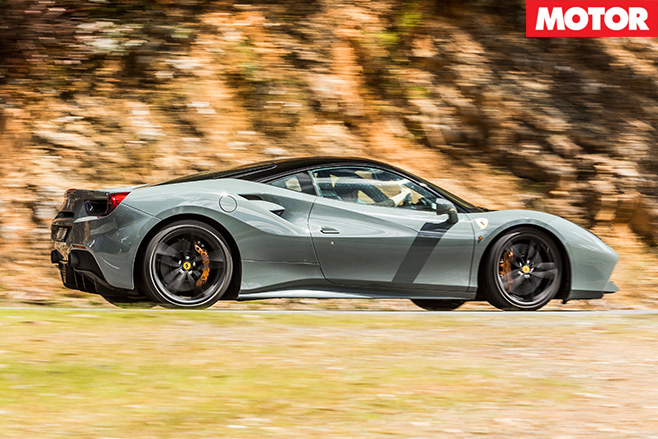
The 488’s turbomotor lacks the last little daub of drama of the old atmo screamer, but it doesn’t actually feel boosty at all; it feels more like a big capacity, old-school donk, if you want to know the truth.
The Volkswagen Arteon has been teased ahead of its debut at the Geneva Motor Show next month.
Revealing its nose and rear, the photos of the five-door coupe showcase a handsomely businesslike face (and butt) for the likely Passat CC replacement.
The teaser image shared by the German automaker shows LED headlights fitted to the front chrome grille, with thick silver bars running across its width. The latest interpretation of VW’s current design language, it puts the German brand on a more premium footing than before.
According to the Arteon teaser’s press release, Volkswagen will equip its new quasi-luxe sedan with new features including driver assistance systems “that are typically reserved for luxury automobiles”.

The Arteon will be marketed as a “premium mid-sized” fastback, situated above the Passat in the carmaker’s line-up, and promises a spacious interior.
Speculation that the Arteon will be based on the Sport Coupe GTE Concept revealed at last year’s Geneva Motor Show suggest the new coupe may be of similar size to the popular Holden Commodore, with generous space inside.
Given its expected close relationship to the Passat, we’re expecting to see a similar drivetrain range: the Passat currently carried a 2.0-litre turbo-diesel and 1.8-litre four-cylinder turbo petrol.
If it does follow the Sport Coupe GTE Concept, however, we may even see a plug-in hybrid version.
