
DOES motorsport make you a worse driver on the road? A world-first Queensland University of Technology (QUT) study is about to find out.
The study, commissioned by the Australian Institute for Motor Sport Safety (AIMSS) and RACQ, aims to either debunk or prove the thinking that improving driving skills – either by taking part in amateur motorsport or driver training – makes drivers more at risk, or more safe, on the roads.
The report’s author, QUT School of Public Health and Social Work senior lecturer Kristi Heesch, said she hoped the findings would put an end to the argument.
“We’re doing two things,” Heesch said. “We’re looking at how driver training pre- and post-licensing affects driver behaviour, as well as motorsport.
“The interest in motorsport is that there have been very few studies that have looked at the impact of motorsport. Most of those have grouped people who have been both fans and enthusiasts as well as participants, not looking at them separately.”
Key to the study is the advanced driver training that drivers must complete to advance their motorsport licences, she said. “So does that give you skills that make you more safe, less safe on the road? We don’t know, we have no idea.”
According to Heesch, the aim of the report was to “say something more definitive than what’s been said in the past”.
“On the other hand, if we do find that not to be true … that, of course, makes the motorsport people happy. I guess that will be controversial in that people are pretty set on the idea that motorsports overall is pretty bad.
“There’s another thinking that’s out there: I must be good because I’ve had driver training.”
The study will also try to determine what influences advanced training had on a driver’s behaviour.
The report will be based on a survey of Confederation of Australian Motor Sport licence holders, and RACQ members.
Click here to access the survey
Preliminary findings will be sent to both AIMSS and RACQ in May, with the final report released at the end of this year.
Whatever the report’s findings, Heesch said she believed they would spark debate worldwide.
“I kind of knew I was walking into a controversial topic,” she said.
Our first independent AEB test program reveals hits and misses from the 2017 COTY field.
Mazda’s CX-9 was one of the standouts in Wheels’ inaugural autonomous emergency brake (AEB) testing for COTY 2017.
Priced from $42,390, the seven-seat SUV shone in the most comprehensive independent test of its type in Australia of what is an increasingly relevant safety feature.
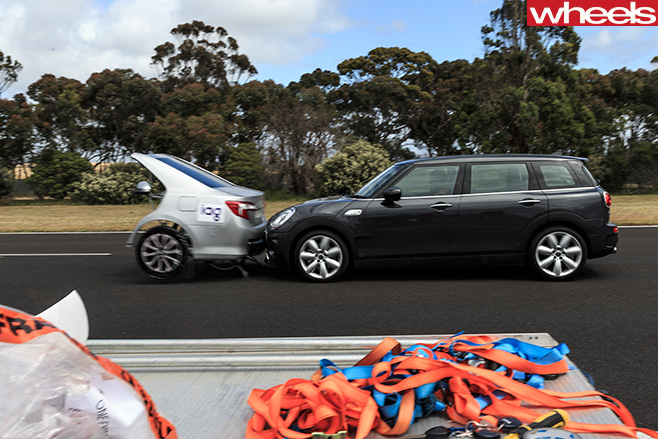
As first reported last month, the tests were conducted in conjunction with Insurance Australia Group’s (IAG) research department, and involved driving towards the two custom target vehicles at speeds of 10, 20 and 25km/h.
The AEB testing was introduced to COTY in 2017 as an evolution of Wheels’ long history in independently verifying active safety systems, from ABS to ESC.
As one of the most affordable vehicles on the market with AEB standard on all models, the CX-9 was praised by judges for raising safety standards in the large SUV category that’s popular with families.
The CX-9 wasn’t alone in performing well in the ground-breaking AEB tests, which featured a ute target vehicle for the first time anywhere in the world.
Seven manufacturers provided models that successfully aced all six disciplines. These were Mercedes-Benz (with the C-Class Coupe, GLC and E-Class), Audi, Holden, Infiniti, Skoda, Subaru and Volvo.
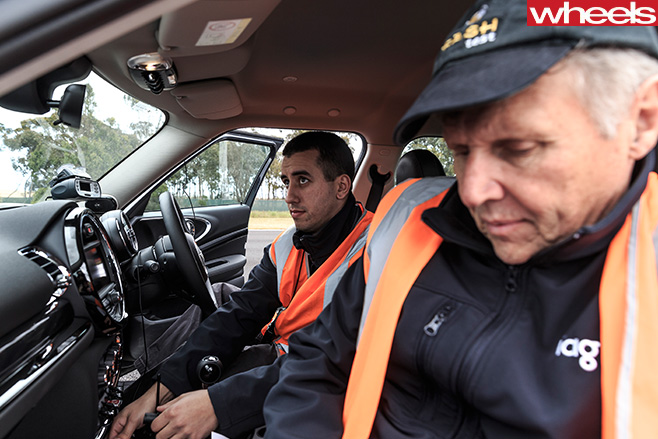
In a year when Toyota’s Hilux topped the sales charts – the first time a ute has achieved the feat – Wheels’ exclusive testing revealed there were potential concerns with some systems reacting to the unique rear-end design of pick-up trucks, which are similar to SUVs.
AEB systems from BMW, Jaguar and Volkswagen successfully detected the Camry target vehicle, but did not consistently detect the Navara ute (see results panel right.)
Wheels Car of the Year AEB test results
| u00a0 | Mid-sized sedan target vehicle | Ute target vehicle | ||||
| Car | 10km/h | 20km/h | 25km/h | u00a010km/h | u00a020km/h | 25km/hu00a0 |
| Audi A4/Allroad | u00a0u2714 | u00a0u2714 | u00a0u2714 | u00a0u2714 | u00a0u2714 | u00a0u2714 |
| BMW M2 | u00a0u2714 | u00a0u2714 | u00a0u2714 | u00a0u2717 | u00a0Not tested | u00a0Not tested |
| Holden Astra | u00a0u2714 | u00a0u2714 | u00a0u2714 | u00a0u2714 | u00a0u2714 | u00a0u2714 |
| Infiniti Q30/QX30 | u00a0u2714 | u00a0u2714 | u00a0u2714 | u00a0u2714 | u00a0u2714 | u00a0u2714 |
| Jaguar XF | u00a0u2714 | u00a0u2714 | u00a0u2714 | u00a0u2717 | u00a0Not tested | u00a0Not tested |
| Jaguar F-Pace | u00a0u2714 | u00a0u2714 | u00a0u2714 | u00a0u2714 | u00a0u2717 | u00a0Not tested |
| Mazda CX-9 | u00a0u2714 | u00a0u2714 | u00a0u2714 | u00a0u2714 | u00a0u2714 | u00a0u2714 |
Mercedes-Benz | u00a0u2714 | u00a0u2714 | u00a0u2714 | u00a0u2714 | u00a0u2714 | u00a0u2714 |
Mercedes-Benz GLC | u00a0u2714 | u00a0u2714 | u00a0u2714 | u00a0u2714 | u00a0u2714 | u00a0u2714 |
| Mercedes-Benz E-Class | u00a0u2714 | u00a0u2714 | u00a0u2714 | u00a0u2714 | u00a0u2714 | u00a0u2714 |
| Mini Clubman | u00a0u2714 | u00a0u2717 | u00a0Not tested | u00a0u2717 | u00a0Not tested | u00a0Not tested |
| Skoda Superb | u00a0u2714 | u00a0u2714 | u00a0u2714 | u00a0u2714 | u00a0u2714 | u00a0u2714 |
| Subaru Impreza | u00a0u2714 | u00a0u2714 | u00a0u2714 | u00a0u2714 | u00a0u2714 | u00a0u2714 |
Volkswagen | u00a0u2714 | u00a0u2714 | u00a0u2714 | u00a0u2717 | u00a0Not tested | u00a0Not tested |
| Volvo S90 | u00a0u2714 | u00a0u2714 | u00a0u2714 | u00a0u2714 | u00a0u2714 | u00a0u2714 |
Porsche 911 GT3
The 2017 911 GT3 will have design tweaks to bring it in-line with the rest of the 991.2 series, but the biggest changes will be under the boot with the 368kW 4.0-litre unit found in the current GT3 RS replacing the naturally aspirated 350kW 3.8-litre flat-six engine. Purists will be pleased to know it will have a manual option, with the same six-speed unit found in the limited R models offered along with the seven-speed dual-clutch PDK transmission.
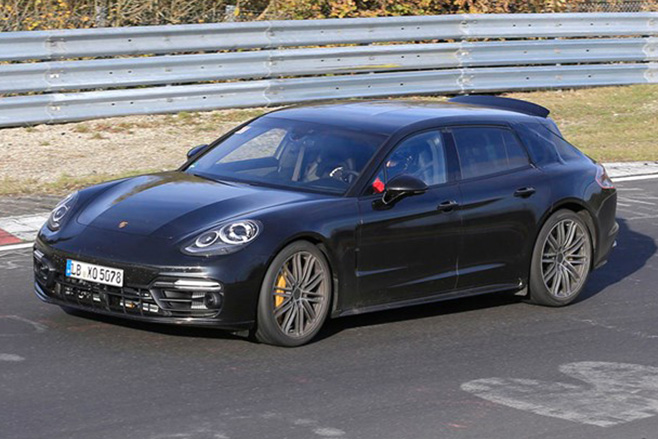
Porsche Panamera Shooting Brake
You have to wonder why the Panemera wasn’t designed like this to begin with. The wagon’s design is clearly inspired by the 2012 Porsche Panamera Sport Turismo concept, with the flatter rear providing more headroom than the current liftback. Engine options will include a 324kW/550Nm 2.9-litre twin-turbo V6 and a 4.0-litre twin-turbo diesel V8 producing a thumping 310kW/850Nm that’s set to be the world’s fastest-accelerating diesel with a claimed 0-100km/h of just 4.3sec.
Range Rover Sport coupe
Land Rover is again providing the motoring world what it didn’t really ask for – a fastback SUV. Land Rover already has the Range Rover Evoque Coupe in its lineup, but the new one, code-named L560, is based on the bitumen-loving Range Rover Sport to directly take on the BMW X6 and Mercedes-Benz GLE Coupe. It’s likely to share the 3.0-litre supercharged V-6with other Range Rover models coupled with an eight-speed automatic. A turbo-diesel V-6 and a supercharged 5.0-litre V-8 could be offered as optional upgrades.
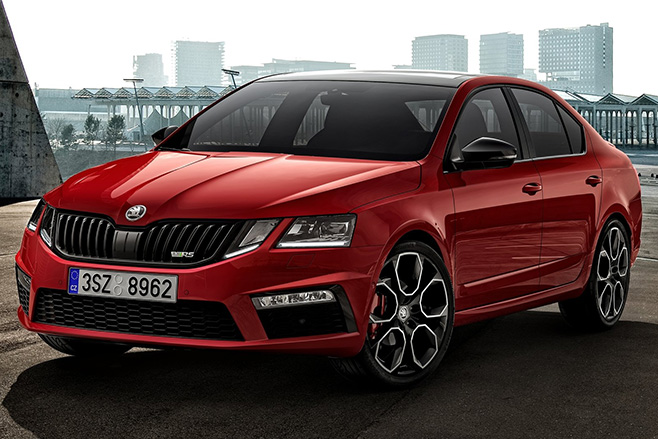
Skoda Octavia RS245
Based on the existing Skoda Octavia RS230, the RS245 will have a more powerful version of the 2.0-litre four-cylinder turbo petrol engine producing 180kW and mated with either a six-speed manual or seven-speed dual-clutch automatic transmission.
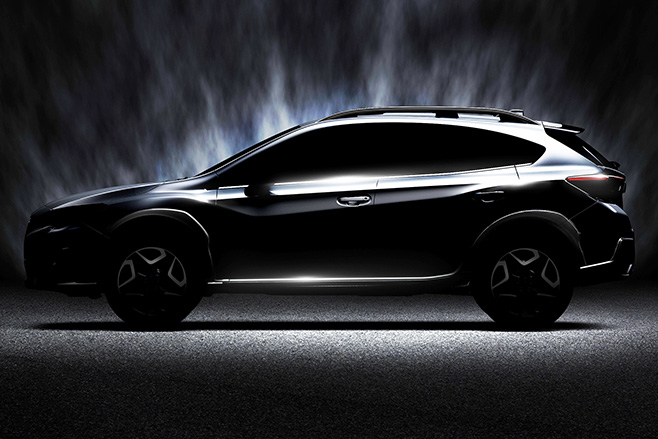
Subaru XV
So far all we’ve seen is the teaser pic of Subaru’s next-gen crossover. It will be the second vehicle built on the scalable SGP platform, after the Impreza, which Subaru claims will improve suspension and safety. Powertrain and equipment won’t be known until its Geneva launch, though we’re expecting the same 2.0-litre petrol four-cylinder engine found in the Subaru Impreza.
Suzuki Swift
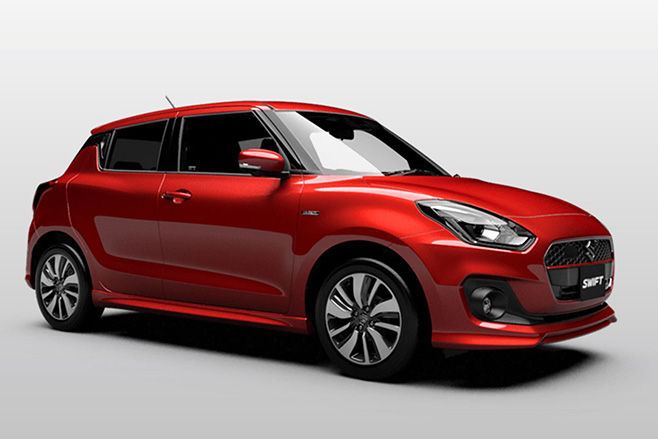
The third generation of Suzuki’s compact hatch has been leaked, teased and revealed over the past couple of months and finally makes its official debut at Geneva. Built on Suzuki’s stiffer and lightweight “Heartect” architecture, the 2017 Suzuki Swift will come with a host of new technologies including driver assist systems and improved infotainment. Powertrain options include a 48-volt hybrid system powered by a 1.2-litre “DualJet” port and direct-injected engine carried over from the existing model and a three-pot turbocharged 1.0-litre BoosterJet unit.
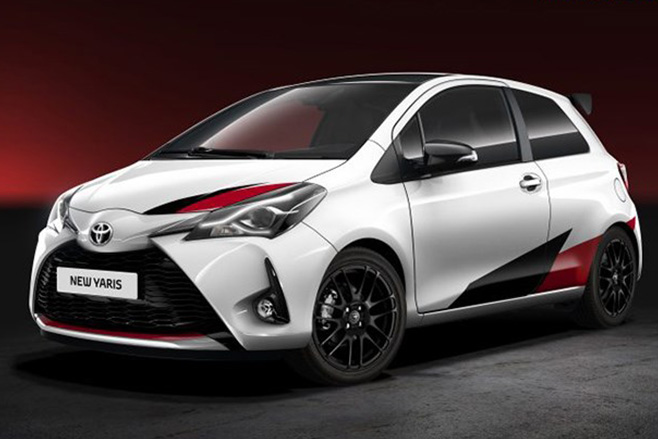
Toyota Yaris hot hatch
The 157kW Toyota Yaris hot hatch has only been developed for Europe and Japan and has little chance of coming here, but we’ll be looking at it admiringly from afar when it’s unveiled at Geneva. Not much is known about it except that it will come as a three-door only and will only be manufactured in France in small numbers, using bespoke parts and with plenty of additional hand-built elements.
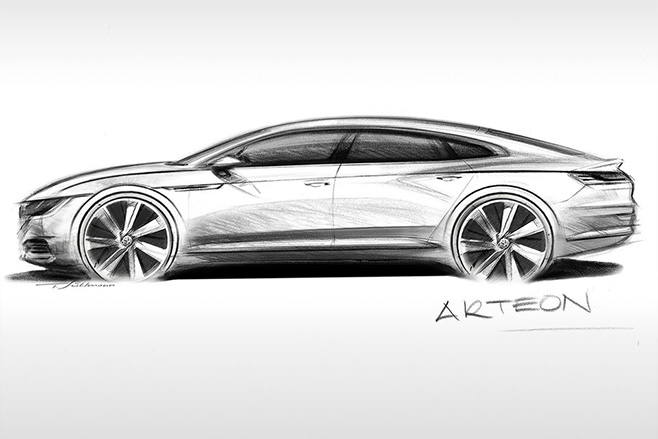
Volkswagen Arteon
The Arteon is the name of a concept expected to lead to the third-generation of the Volkswagen CC four-door coupe. Similar to the two generations of the Passat-based coupe that preceded it, the Arteon will sit at the top of VW’s mid-size passenger car range. The concept’s design includes “overt accents” such as standard 19-inch alloys, frameless windows, LED matrix headlights and “dynamic scrolling indicators” that appear to ripple in the direction the car is turning.
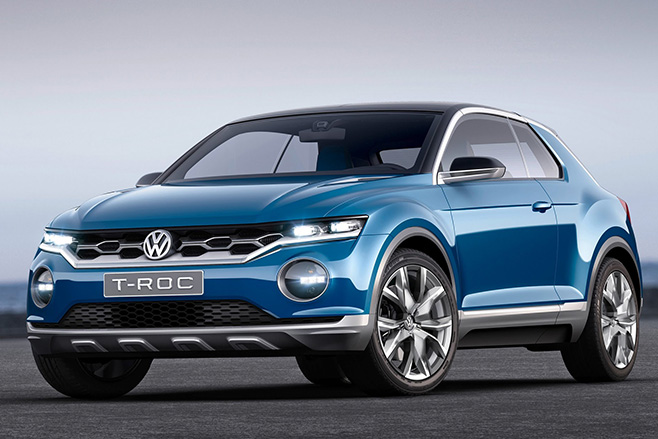
Volkswagen T-Roc
The production version of the Volkswagen T-Roc will make its debut at Geneva, three years after the concept that spawned it was revealed in the same hall. The Golf-based crossover will share the dimensions and much of the design of the concept but will sadly lack its targa top. Engine options will include three petrol turbos including a 1.0-litre three cylinder engine and 1.5-litre and 2.0-litre four cylinders with the biggest pumping out 180kW. There will also be 1.6-litre and 2.0-litre four-cylinder turbo diesels.
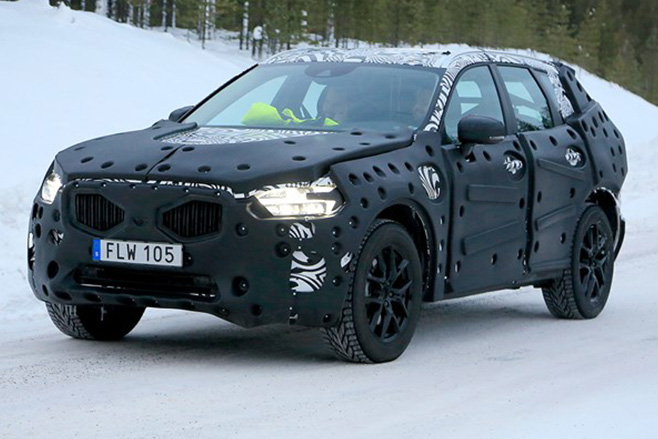
Volvo XC60
The long awaited successor to the Volvo’s popular mid-sized high-rider is a hugely important model for the Swedish carmaker, which has been falling behind in the hotly contested luxury SUV market.
It will share the XC90s Scalable Product Architecture (SPA) platform, which in turn underpins both the new S90 sedan and V90 estate. The powertrain line-up is also expected to come from the XC-90’s range of turbocharged four-cylinder petrol and diesel “Drive-E” motors working on their own or as part of a “Twin Engine” hybrid system.
Within months the Skoda Octavia RS has moved from offering 162kW of power, then to 169kW and now 180kW thanks to an RS 245 flagship for the liftback and wagon range.
As the family friendly cousin to the Golf GTI, the Octavia RS 245 has followed where Volkswagen has gone with the Mark 7.5 and offered a 2.0-litre turbo four-cylinder with 11kW/20Nm more than before, the latter 370Nm available from 1600rpm until 4300rpm.
The RS 245 likewise gets an electronically controlled mechanical limited-slip differential (LSD) that debuted late last year locally in the pre-facelift Octavia RS 230 from $41,490 in liftback guise and $43,190 in the wagon or ‘Combi’ bodystyle (both plus on-road costs).
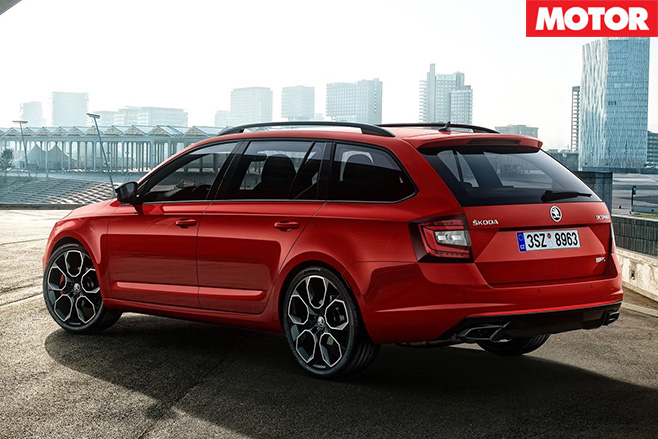
Where the RS 230 was available as a manual only, however, Volkswagen Group’s new seven-speed dual-clutch automatic DSG has been added to the options list for the RS 245.
Skoda Australia told MOTOR that while it knew a small batch of enthusiasts would buy the manual-only RS 230, it strongly believes the new auto option will be necessary to make the RS 245 work as a regular model in the range. Skoda Australia can’t confirm the new RS 245 will make it Down Under yet, except to say it is confident it can make it happen.
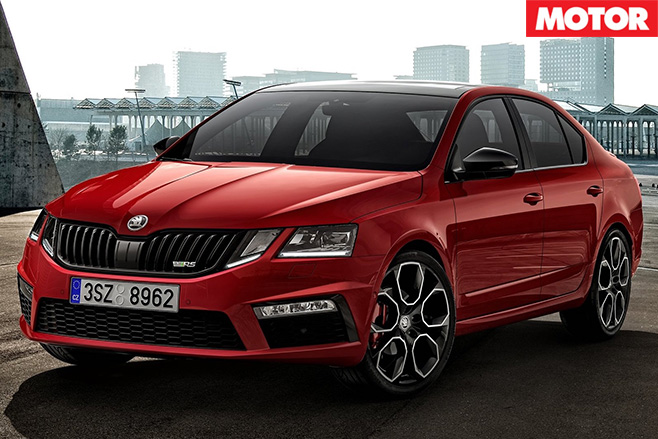
The 169kW/350Nm outputs of the limited edition Octavia RS 230 replaces the pre-facelift 162kW/350Nm Octavia RS 162 currently on sale to become the new Octavia RS 169 entry performance model, but without its LSD.
There’s new infotainment and active safety kit, too, while adaptive suspension and variable-ratio steering are options overseas, but TBC locally.
AUSTRALIA’S consumer advocate has joined its US counterpart to savage Volkswagen Australia over its handling of the Dieselgate scandal – and the lack of compensation payouts.
Choice and the US-based Consumer Reports – both known for their no-holds-barred approach to fighting for consumer rights – have jointly written to Volkswagen Group’s global chief executive, Matthias Meuller, asking why Australian owners are being treated differently to those in the US.
More than 600,000 cars are affected in the US, with Volkswagen Group offering to either buy back or compensate owners via deals struck with the US courts running into the billions of dollars.
About 100,000 Australian owners have Volkswagen, Skoda, Audi and even Porsche-badged cars affected by the Dieselgate scandal. In most instances, the vehicles will have their firmware updated to remove the defeat device, although some will also need modified parts fitted to the engine.
“Last year, Volkswagen agreed to a civil settlement giving affected US consumers the choice to have their car repaired or bought back by the company,” the joint letter says.
“The company would go on to plead guilty in the US to criminal charges and agree to pay $US4.3 billion ($A5.6 billion) in criminal and civil penalties. Overall, Volkswagen is demonstrating in the United States that it plans to make US consumers whole.”
However, it says the carmaker’s approach in Australia “has been to avoid, confuse, and deny”.
“In court, the company expressly has denied installing any ‘defeat devices’ in Australian vehicles, yet has admitted that the vehicles operate in a testing mode and a non-testing mode,” the letter says.
“Moreover, Volkswagen is running a recall in Australia to deal with what the company obliquely calls ‘the emissions situation’, and has announced that the only recourse for Australian consumers is to accept a technical fix to deal with the “deviations” in emissions between tests and normal road use.
“We are surprised and disappointed that Volkswagen is treating Australian consumers so differently from those in the United States.”
It urged Volkswagen to “come clean” on admitting the cheat devices were installed on cars sold here, and to “act promptly to properly compensate Australian consumers”.
In Australia, Volkswagen is fighting two separate class actions seeking compensation, and fighting allegations levelled against it by the consumer watchdog that it breached advertising laws by installing the firmware in cars sold here – claims it all denies.
“It is concerning that Choice has no grasp of this issue. Volkswagen Group Australia is in constructive dialogue with the Australian Competition and Consumer Commission and representatives of the Australian government. The matter is before the Federal Court. Choice’s belated buy-in adds no value,” the carmaker said in a statement issued in response to the letter.“Volkswagen Group Australia believes there is no legal basis for the cases against it in Australia,” it said.
“As Choice should be aware, US emission regulations are unique in the world in that they are based on nitrous oxide. Australia’s regulations, like those of the more than 70 countries that subscribe to the EU emissions regime, are based on lowering fuel consumption and carbon monoxide.”Volkswagen Australia said all its new vehicles complied with Australia’s Euro 5 standard, or the even more stringent Euro 6 regulations.
It has the Golf GTI’s 162kW EA888 four-pot engine and matches it to 100km/h (6.5sec).
It has a lap timer in the infotainment system. And with the popular R-Line option pack it looks half angry with a smart bodykit and those chunky 20-inch wheels. So is the new Tiguan 162TSI – the hottest version of Volkswagen’s ‘baby’ SUV yet – a Golf GTI on stilts?
No, it isn’t. And though we have no idea if they were ever tempted, Volkswagen’s done the right thing by not fitting GTI badges. Not only would have been confusing – the GTI badge has never gone on an all-wheel drive car, let alone an all-wheel drive SUV – but it would have been wrong. Tiguan 162TSI is what this car is.

Around town the Tiguan is brilliant and even people not interested in performance driving should grab the $4000 R-Line pack for the ride-transforming adaptive dampers alone.

Parked next to the old Tiguan the new one is noticeably larger but still reasonably compact, its respectable 1637kg helping maintain relatively perky performance. Boot it and the 162TSI accelerates rapidly if uneventfully, the 4MOTION ensuring fuss-free traction. The sound is very mild mannered – it won’t be attracting attention – with a subdued turbo whistle and muted DSG fart.
The R-Line’s adaptive dampers, in their firmest Sport mode, work well on a smooth road but quickly lose compliance and make driving fast unpleasant when the road gets bumpy. Thankfully an Individual mode lets you combine a sporty engine and DSG with softer dampers, making the 162TSI a surprisingly fast, compliant and engaging back-road burner.

Until then the 162TSI, though the fastest Tiguan yet, remains a brilliant daily driver – not a car you’re likely to drive for driving’s sake, but one in which you’ll happily take the scenic detour.

LIKE: Pretty zippy; ride; comfort; interior DISLIKE: It does sporty well but it’s not a performance car
SPECS Engine 1984cc inline-4, DOHC, 16v, turbo Power 162kW @ 4500-6200rpm Torque 350Nm @ 1500-4400rpm Weight: 1637kg 0-100km/h: 6.5sec (claimed) Price: $48,490
Two months on from the arrival of the new Volkswagen Amarok V6 range-topper, Volkswagen Australia has announced 2017 pricing for the four-cylinder variants of its rugged 4×4 and 4×2 ute family.
Now sporting updated exterior plastics and a greatly improved interior, the four-cylinder Amarok range also benefits from the same in-car technology upgrades that were first seen in the already-launched Amarok V6.
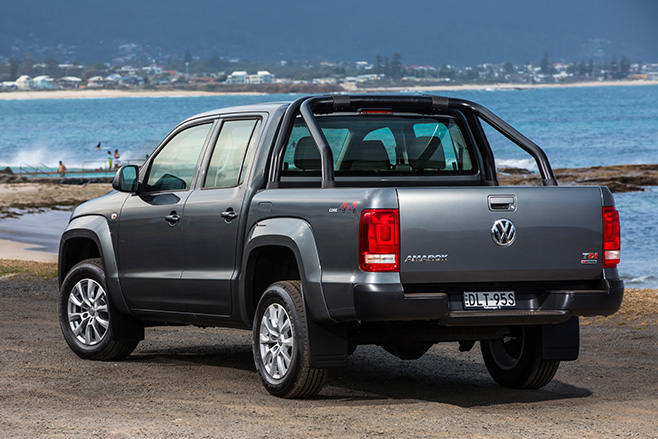
New features include an all-new dashboard, Apple CarPlay and Android Auto smartphone mirroring, new front bumper designs and a revised underbody guard on 4×4 models (also available on 4×2 Amaroks as a cost option). A reversing camera and rear parking sensors are standard on 4x4s and optional on 4x2s, though cab-chassis models don’t receive sensors at all.
The range has been rejigged to eliminate high-grade Highline four-cylinder models (the Highline spec is now reserved for V6 variants) though the Core Plus grade effectively takes its place by offering higher-quality cloth upholstery, carpets, front parking sensors, body-colour exterior plastics and post-collision braking system.
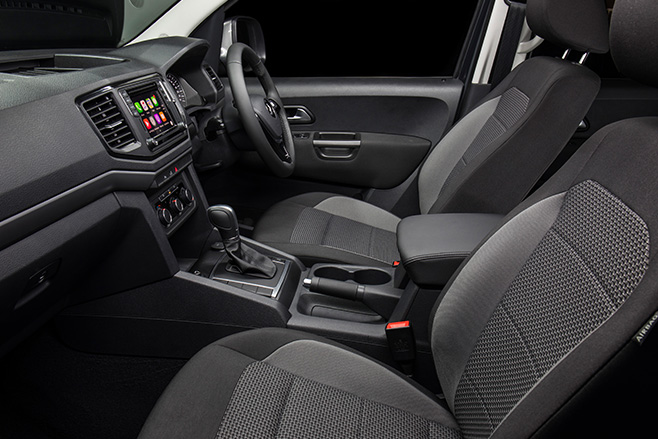
The range will continue to be offered with either a six-speed manual or eight-speed automatic, but last year’s entry-level model Amarok TDI 340 4×2 has been discontinued. The auto-only TDI420 4×2 cab chassis becomes the new entrypoint to Amarok ownership, priced at $38,490 – seven thousand dollars more than the superseded TDI340 4×2 manual.
One other notable absence from the 2017 Amarok range is a single-cab bodystyle. Dual-cab utes and cab-chassis variants continue to be offered, but a two-seat Amarok won’t be available in 2017-spec for now.
Pricing
| Amarok TDI420 2WD Dual Cab Chassis 8-spd Automaticu00a0 | $38,490 |
| Amarok TDI420 2WD Dual Cab Ute 8-spd Automatic | $39,990 |
| Amarok TDI400 Core 4×4 Dual Cab Chassis 6-spd Manual | $41,990 |
| Amarok TDI400 Core 4×4 Dual Cab Ute 6-spd Manual | $43,490 |
| Amarok TDI420 Core 4×4 Dual Cab Chassis 8-spd Automatic | $44,990 |
| Amarok TDI420 Core 4×4 Dual Cab Ute 8-spd Automatic | $46,490 |
| Amarok TDI400 Core Plus 4×4 Dual Cab Ute 6-spd Manual | $47,490 |
| Amarok TDI420 Core Plus 4×4 Dual Cab Ute 8-spd Automatic | $50,490 |
| Amarok V6 Highline 4×4 Dual Cab Ute 8-spd Automatic | $59,990 |
| Amarok V6 Ultimate 4×4 Dual Cab Ute 8-spd Automatic | $67,990 |
The 87th Geneva Motor Show kicks off in Switzerland in early March, and it’s already gearing up to be an exciting one. Along with Paris, it’s the biggest show on the European circuit, with carmakers keen to earn the most bragging rights on their home turf.
We’re likely to see a number of exciting global reveals unveiled, ranging from small hatchbacks to SUVs, and right up to jaw-dropping concepts and stunning supercars.
Here’s part one of our two-part series looking at what we’re expecting to see unveiled.
Alpine
Renault’s newest performance sub-brand introduces its sports coupe, the reborn A120 (pictured top). The production version of the car’s lightweight aluminium shell is expected to closely follow the lines of the 2016 Alpine Vision Concept, giving Renault a direct mid-engined competitor to the composite-bodied Alfa Romeo 4C. The French carmaker recently teased the A120’s flat rally-inspired underbody that sucks the car down to the road surface – which means it doesn’t need a big, fuel-sapping rear wing to create downforce.
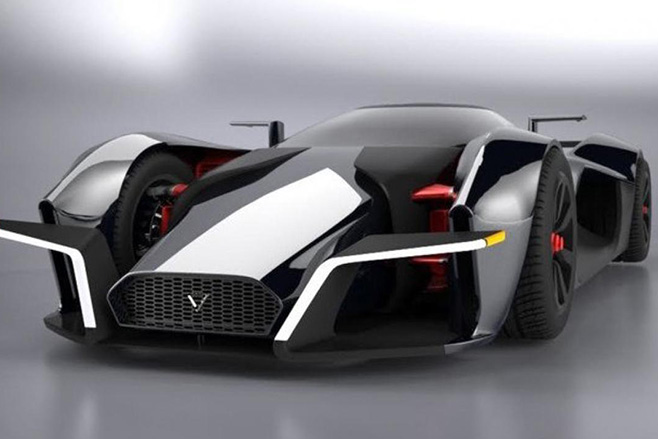
Dendrobium electric hypercar
The long, low and angular Singapore-made coupe we saw unveiled at last year’s Geneva motor show is back for another showing. What’s different about this showing of the aluminium and carbonfibre two-door? Well, we can’t really tell, although the car’s performance figures – a Bugatti Chiron-rivalling 1120kW and a Mack truck-like 4000Nm – are still being bandied about as a possiblility.
Ferrari F12 M
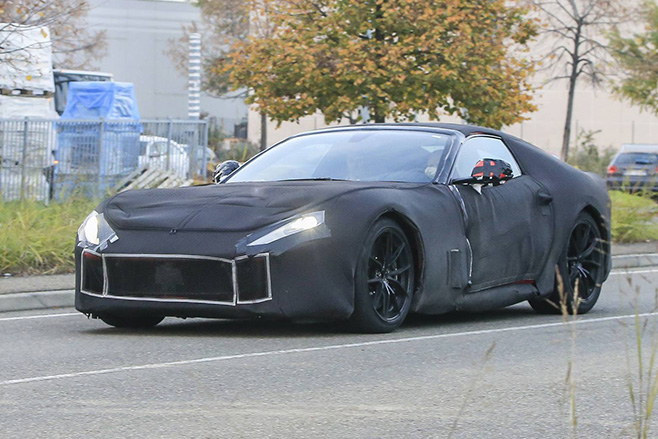
The Prancing Horse’s F12 Berlinetta undergoes a mid-life tweak via the introduction of the “M” badge. The F12 M’s atmo 6.5-litre V12 should boast almost 600kW and 720Nm when official numbers are revealed, giving it enough straight-line poke to hit 100km/h in substantially less than three seconds. Also expect a revised electronic steering system that twists all four wheels rather than just the fronts.
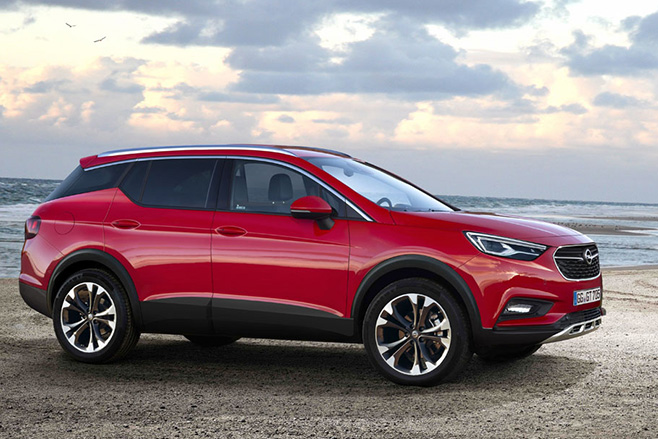
Holden Grandland X
Okay, so it will wear an Opel badge when it is unveiled at Geneva, but a SUV-styled seven-seat people mover is expected to have Holden knocking at its German sibling’s door asking about availability. That “SUV-styled” tag is important; we’re unlikely to see the Grandland X adapt all-wheel-drive underpinnings, and instead stick to front-wheel drive. When it does come here, it will likely be positioned against the likes of the Nissan X-Trail and Mitsubishi Outlander that also offer seven seats.
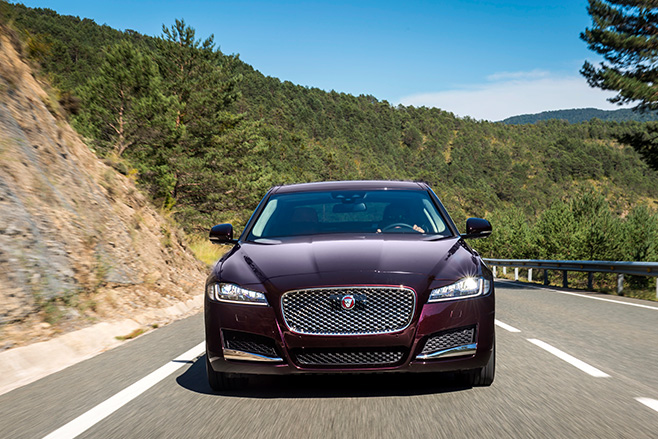
Jaguar XF Sportbrake
The Jaguar F-Pace SUV has launched, so it’s now time for Jaguar to turn its attention to luxury car buyers that don’t want the heft of a high-riding soft-roader, and prefer a traditional wagon. It’s the second crack at the mid-size fastback wagon – the XF Sportbrake’s first-generation car never sold here in Australia. This one, though, is highly likely to come here.
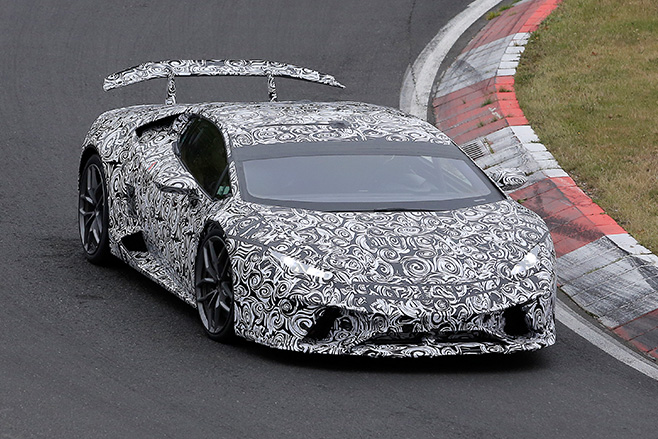
Lamborghini Huracan Performante
The Bulls may have been largely invisible for most of the Bathurst 12 Hour – the best-performing Lamborghini finished sixth and two laps off the pace – but Geneva is expected to usher in the fastest version yet of its entry-level road car, the V10-engined Huracan Performate. Rumour has it the low-slung two-door has knocked off the Nurburgring lap record via a hardcore weight-shedding diet and improved aerodynamics.
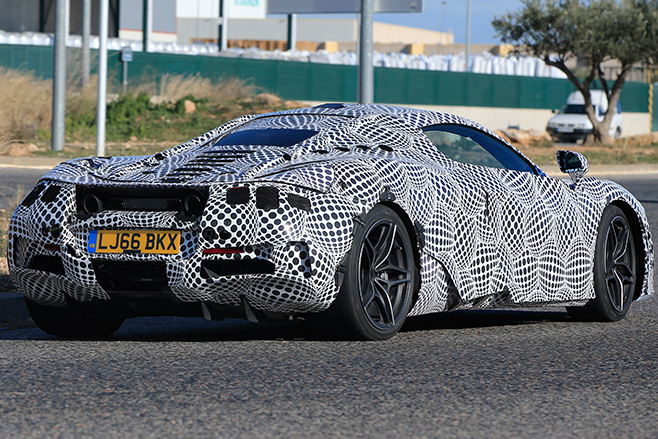
McLaren P14
The as-yet unnamed McLaren 650S replacement – the “P14” relates to the British supercar maker’s internal name for its development program – marks the official start of the next Super Series program. Few details of the radically restyled mid-engined sportscar have been leaked ahead of the car’s Geneva reveal, but we can share that McLaren says the P14 will have “outstanding breadth of handling balance, grip and ride comfort”. The only official image we’ve seen of it is at the new car’s best: sideways and smokin’.
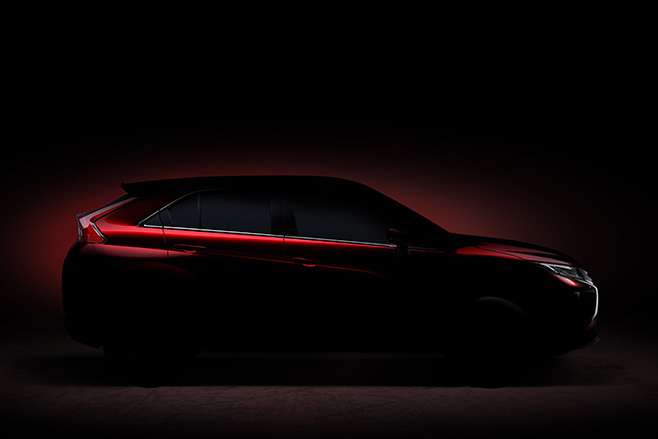
Mitsubishi Eclipse
The Eclipse name was once associated with a small Mitsubishi-badged sports coupe. In a telling sign of how much buyers’ tastes have moved, it is now expected to be the badge worn by a new compact SUV in Mitsubishi’s future showroom. The Eclipse follows Toyota’s bold move with the Toyota CH-R compact SUV, pushing design to the edgy, urban fringe. This is also our first look at how Mitsubishi plans on overhauling its entire SUV range.
There’s plenty more expected to be shown at Geneva, including the following:
Porsche 911 GT3 facelift Porsche Panamera Shooting Brake Range Rover coupe Skoda Octavia RS245 Subaru XV Suzuki Swift Toyota Yaris Gazoo Racing Volkswagen Arteon Volkswagen T-Roc Volvo XC60
Choose anyone to act as chauffeur for a hot lap of the Eastern Creek circuit in the new Alfa Romeo Giulia QV and chief test driver Armando Bracco would probably be that guy.
He might look kind of relaxed and jolly but hell, he developed the car’s dynamics so at the very least he’d be able to demonstrate a thing or two and be entertaining at the same time.
“Today we don’t drive fast,” he says, which is a little bit disappointing. Then there’s the kicker line: “Today,” he announces with a glint in his eye, “we drive sideways.”
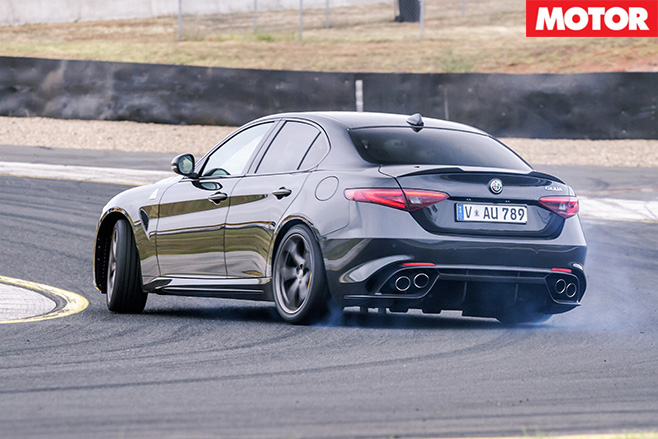
You’ve probably heard about the Giulia QV, which has now arrived in Australia to do showroom battle with the likes of BMW’s M3 and the AMG C63 S. On paper it’s got the hardware. Rear drive, 375kW of twin-turbo V6 power and plenty more stuff – some of which has filtered down from Ferrari instead of up from Fiat, as has been the case in recent years. So it’s already sounding very positive.
It is obviously the pinnacle of the Giulia range, which starts at less than 60 grand for the 147kW 2.0-litre turbo model, progresses through to $72,000 for the tasty-sounding Veloce with a 206kW version of the same engine and peaks at the $144,000 QV.
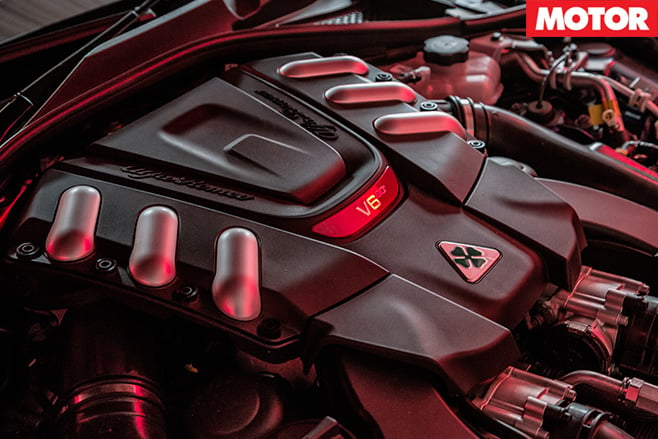
First up, despite the prodigious power output and Armando’s shenanigans, the QV isn’t necessarily an oversteering, tyre-spinning monster. A couple of tricks from the Ferrari 488 have been used, such as the electronic locking diff and torque delivery limited in the lower gears to ensure it can get its power down and launch either from standstill or out of a corner. It’ll do a claimed 0-100km/h time of 3.9 seconds on its way to a 307km/h top speed.
It certainly feels that quick, launching hard with the engine emitting that strangely burping V6 rumble, building power and noise levels as it heads for the redline. The dial on the centre console attenuates throttle action, traction control and other parameters, right up to race mode where stability control is virtually absent.
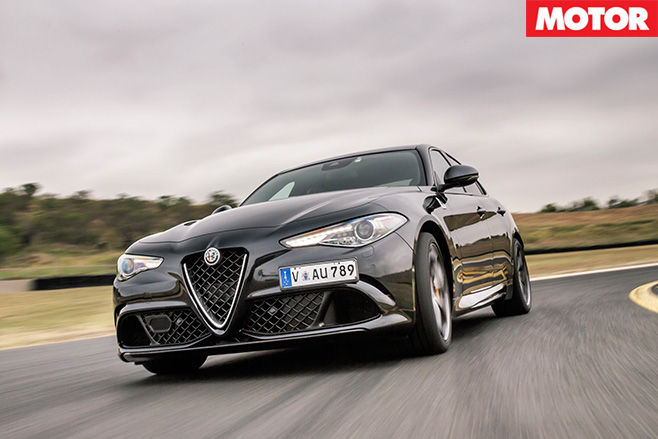
Because it’s based on the all-new Giulia, previous Alfa foibles have been banished, meaning the driving position behind the three-spoke wheel is perfect, the cabin’s electronics and infotainment system are state of the art and the conventional eight-speed auto works like a charm.
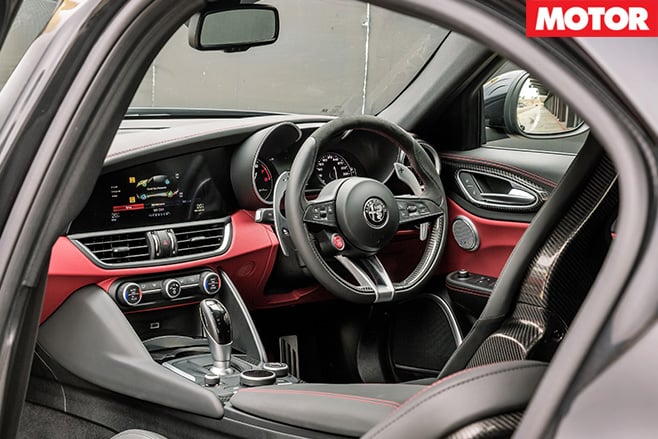
The QV looks good as well, from the deep front air dam with its pop-out splitter to the side-skirts, rear diffuser and tiny little boot-lid spoiler. Much of that, plus bits of interior trim, are made from carbon fibre, but crucially, so are the bonnet and roof, so weight has been kept to a competitive sub-1600kg level.
The Giulia QV has the demeanour of a car that’s going to be easy to live with on the road as well as being brutally quick on the track and it’ll be interesting to see how it goes in the real world. However, the mere fact that Alfa has pulled such a lively rabbit out of its corporate hat can only be applauded.
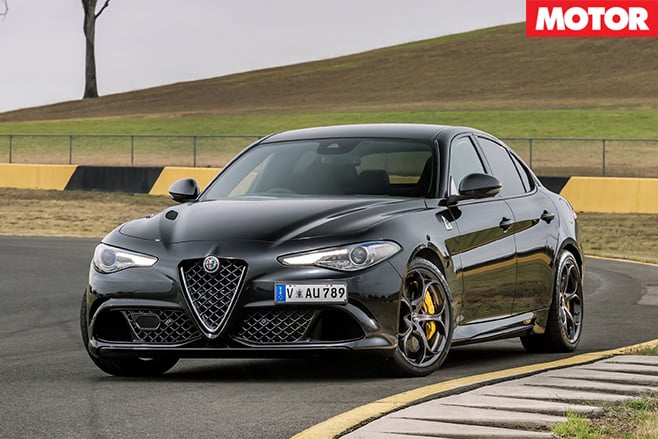
LIKE: Use of Ferrari parts; power packed; sorted dynamics DISLIKE: Not yet tested on Aussie roads; need more time behind the wheel
SPECS Engine: 2891cc V6, DOHC, 24v, twin-turbo Power: 375kW @ 6500rpm Torque: 600Nm @ 2500-5000rpm Weight: 1585kg 0-100km/h: 3.9sec Price: $143,900
If you were feeling a bit old today, this story isn’t for you. It has been confirmed Alex Rullo will race full-time in the Supercars championship at just 16 years of age.
The Perth Schoolboy has been signed to drive for the small Lucas Dumbrell Racing squad, and will be the youngest ever driver to compete in the championship eclipsing team owner Lucas’ younger brother Paul Dumbrell who made his debut in 1999.
Rullo will be just 16 years and eight months of age, four month younger than Dumbrell when he took to the grid.
The Western Australian is a kart graduate, having his first taste of a V8 Supercar in 2014 at the Wanaroo 300, before competing in the Kumho V8 Series (the unofficial third-tier of Supercar completion) in 2015.
Rullo raced in the Dunlop Series in a Car of the Future chassis for LDM last year, finishing 17th in the championship, with his best result of 6th at Barbagallo and Sandown.
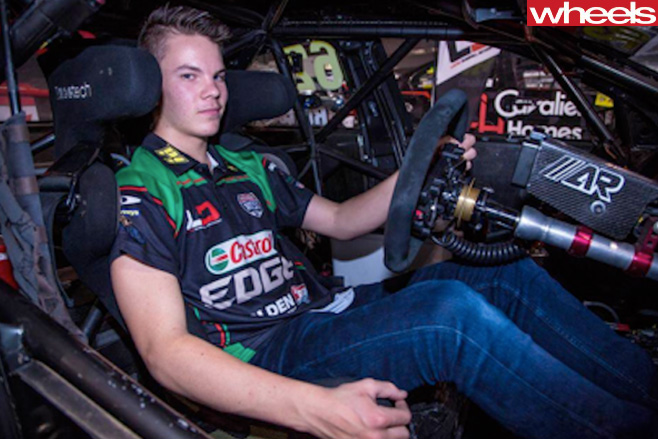
“For a 16 year old, Alex shows a level of maturity beyond his years and applies this to all areas of racing.
“We look forward to watching Alex continue to grow and develop his skills as a driver throughout the year.”
The schoolboy will be completing his Year 12 education while also competing in his rookie season, and is too young to hold a license which allows him to drive solo on the road.
CAMS introduced a new Superlicence system for Supercars this year, similar to that seen in Formula One. It stipulates a driver must be 17 before attaining a Superlicence. CAMS announced in a statement it has made an exemption for Rullo, whose licence will be reassessed following each round until he turns 17 in July.
Rullo will take part in his first test as a full-time driver in the main game at Winton on February 16, before making his debut at the Clipsal 500 on March 2.
The youngster will race with the #62, which he has used since his karting days – a reference to the character Ricky Bobby in the NASCAR-themed movie Talladega Nights.
