
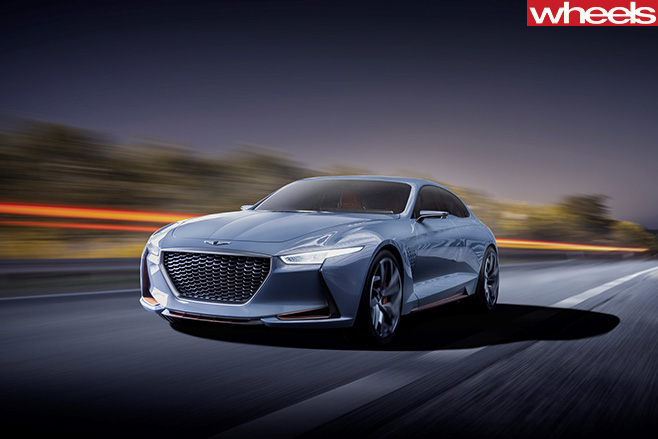
Ex-Bugatti designer Alexander Selipanov has taken up the role of Chief designer for Hyundai’s fledgling luxury brand Genesis.
The Russian national was responsible for penning the exteriors of ultra-high-end cars like the Bugatti Vision Gran Turismo show car, presented at the Internationale Automobil-Ausstellung 2015, and the Bugatti Chiron, unveiled at the Geneva International Motor Show 2016.
Speaking on his new appointment, Selipanov said he was confident he would be an asset for the Genesis design team.
“I am sincerely excited about this opportunity, because it will be a new chapter in my career,” he said.
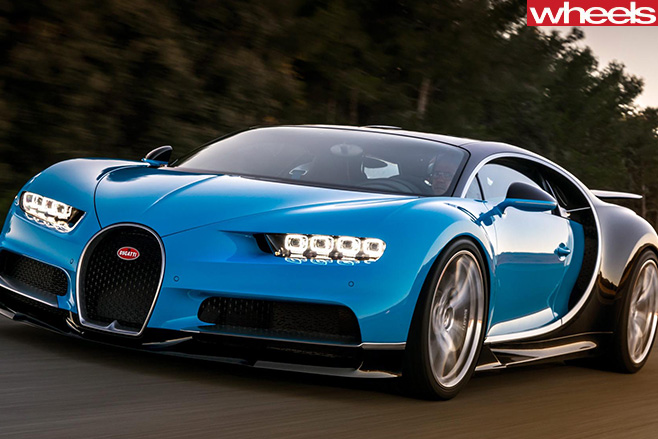
Previously Hyundai’s luxury sub-brand, Genesis was announced it would be spun off as a standalone marque in November 2015.
Since then, it has added a host of highly credible names to its stable, from several luxury and high-performance sports car brands.
Selipanov will be based out of the brand’s Global Advanced Studio, located in Europe, and will report directly to Luc Donckerwolke, Head of the Genesis Design.
Donckerwolke himself is still something of a fresh face to Hyundai and Genesis, having joined the latter shortly after its reinvention as a separate marque.
Donckerwolke previously worked for brands including Peugeot, Audi, Skoda, Lamborghini, SEAT and Bentley.
While working at Lamborghini, the 51 year-old worked closely with Manfred Fitzgerald, who collaborated to create supercars including the Diablo and Murcielago.
Fitzgerald is yet another high-profile recruitment for Genesis, and has been based out of Hyundai’s HQ in Seoul serving as the head of Genesis.
Lee is known as the most successful Korean designer in the global automotive industry.
The recruitment drive shows Hyundai are serious about the brands future, meaning expectations for the Genesis brand are extraordinarily high as it looks to set itself apart from upmarket Asian brands such as Lexus and Infiniti.
Following the G80 and G90 (two cars created prior to the arrival of the new team), will be the G70, which is due to hit global markets in 2017.
For that car, along with future designs, the team have no restrictions with what they can do, as recent spy pics have demonstrated.
Chief among design philosophy for the brand will be the prominence of short front overhangs, long wheelbases, long rear overhangs, ‘crest’ grilles, and descending ‘parabolic curve’ character lines.
Genesis, you have our attention. Now it’s time to deliver.
There’s everything from a new Toyota Camry that looks to kick boring out the door, to Kia’s four-door, rear drive future
THE 2017 Detroit Motor Show kicks off in early January at the home of the US car industry. Wheels will be there for all the big global reveals as they happen, and here’s what we can expect to see.
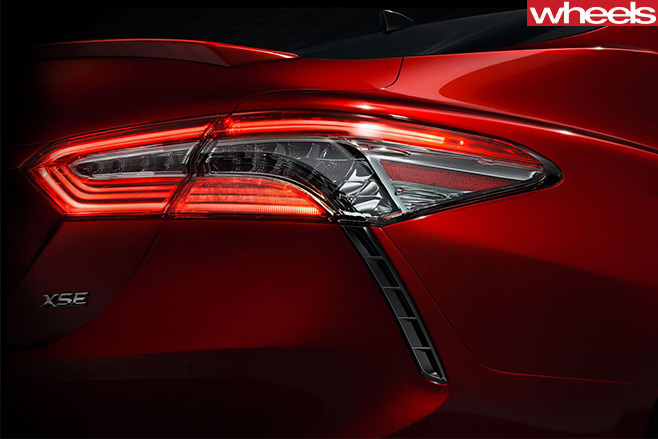
2018 Toyota Camry
2017 Kia GT
Unofficial images have leaked online, ruining some of the surprise for Kia’s rear-drive coupe. Well, only some of the surprise. The production version of the sleek-looking sports car follows much of the same lines as revealed in the 2012 concept car that heralded the arrival of a Kia we’d be keen to park in the driveway, and is only hosed down a little bit. Expect a twin-turbo V6 to slip under the bonnet for an up-spec model priced around the $50K mark when it lands here, potentially in late 2017.
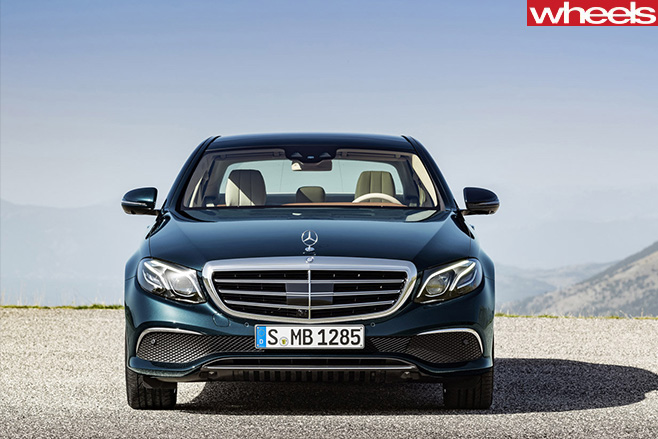
2017 Mercedes-Benz E-Class Coupe
2017 BMW 5-Series Touring
Baby’s about to get back! The big-booted version of the all-new 5 Series sedan is expected to get its first outing at Detroit, completing the four-door line-up. Sadly, seeing it from afar may be as close as we get to the Touring; Mercedes-Benz has already suggested the jacked-up E-Class All-Terrain crossover – caught somewhere between a traditional slow-selling wagon and a popular high-riding SUV – is as close as we’re likely to get to its mid-size luxury load-lugger.
2017 Lexus LS
This will be generation five of Lexus’s limousine. So far we’ve only seen a single teaser image that shows it is shaping up as a dynamic groundbreaker; double wishbones front and rear, rear drive, front-engined and wearing a big, spindle-shaped Lexus grin up front. According to Lexus, the LS will feature “visionary technology”, and be built on an extended version of Lexus’s new global architecture for luxury vehicles, the (GA-L) platform. “Shared with the forthcoming LC luxury coupe, this will help the new LS deliver a more dynamic driving experience,” Lexus says.
Let’s be honest, an HSV Senator isn’t going to threaten tuned-up Golf Rs or an R35 GT-R for the outright win, but the big, luxurious, five-seat, family-size rig did bloody well in tough, rain-slicked conditions.
Hot Tuner 2016 is brought to you by Valvoline SynPower
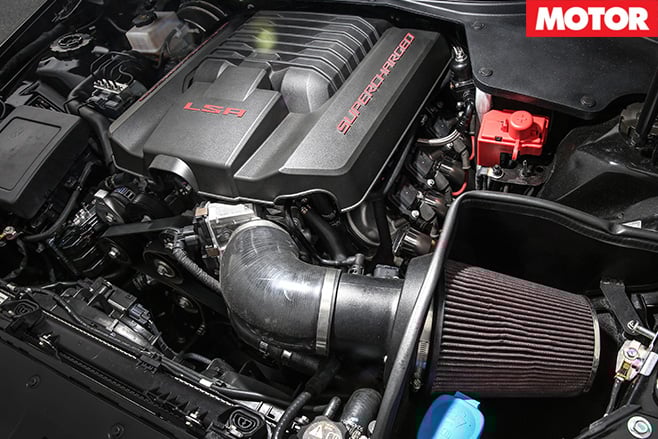
A sign of how easy it is to liberate power out of the 6.2-litre factory supercharged LSA V8: the bolt-on Gen-F2 HSV made 421kW at the wheels, only 29kW behind the event’s horsepower king, Hi-Torque’s R35 GT-R. And that is through a power-sapping 9L90E six-speed automatic transmission!
The Senator was third-fastest to 100km/h at 4.13sec, trailing the BWA Golf R and R35 GT-R, while a towering burnout saw Kent Dalton drop the HSV’s standing 400m time to 11.76sec and a blistering 211km/h through the traps.
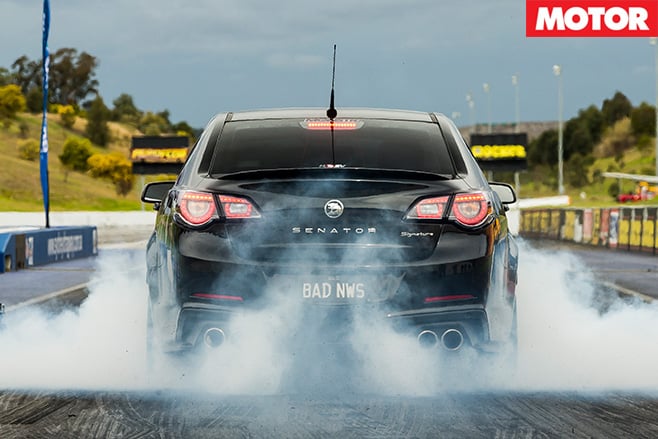
Unfortunately it couldn’t overcome its family car roots, weight and sheer size blunting performance on the South Circuit. Tony D’Alberto stopped the clocks at 1:05.7sec to finish seventh, a mere 0.1sec behind the VCM C63 AMG.
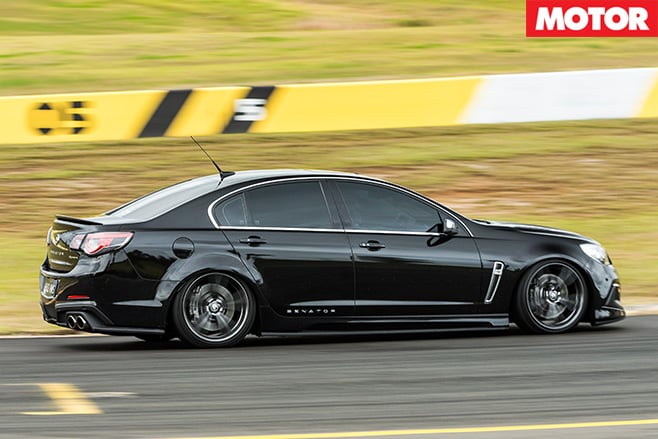
That result confirms the HSV is neither slow nor a drags-only straight-line warrior. Still, when the rain came down as we went out to drive, I started bargaining with celestial beings so as not to end up backed into a concrete wall. I needn’t have worried because the Senator was amazingly easy to steer.
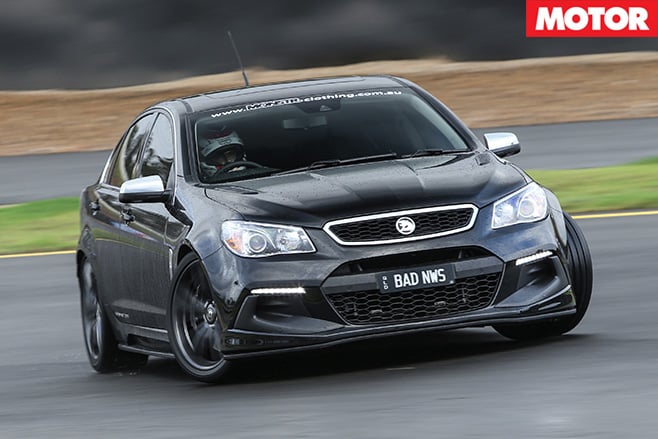
It really shows just how good a package the supercharged Gen-F2 HSVs are that they need only minor fettling to create what is a fast, reliable and comfortable machine you could almost mistake for a factory product if not for the ride height. I couldn’t even tell the black beast had an aftermarket camshaft !
My daily driver is a lightly-tuned VF1 SS-V ute, so a mildly modified late-model HSV isn’t a world away from what I am used to driving most days of the week. If I’m honest I have never wanted for power out of my little 6.0-litre, but the way the supercharged LSA V8 and Hi-Torque’s added mods deliver its power had me looking at power upgrades the very next day. The flexibility the Senator offered – from family man to tyre-frying hooligan and back in a seamless transition – was intoxicating.
This is a car you could easily lap Australia in (if you could find E85 on the Nullabor), with your whole family enjoying supreme comfort, great ride quality, good road-holding, excellent brakes, great handling and steering. Harding and the Hi-Torque boys might be known for insane street machines but this lightly-tuned Senator shows sometimes less is more.
OVERALL RANKING: 7TH
DISCIPLINE RANKING 7th | Lap time: 1:05.7sec 2th | Lap V-Max: 161.04km/h 8th | Lap V-Max: 98.14km/h 5th | Lap V-Max: 51.34km/h
The oldest and most off-road-focused version of the Nissan Patrol is bowing out with a final, limited model called the Legend Edition.
Nissan Australia had been expected to end sales of the Y61 Patrol, which would have required significant investment to bring its 3.0-litre four-cylinder turbo diesel engine up to modern emissions standards.
Driveaway pricing for the Legend Edition is $57,990 for a five-speed manual gearbox model, or $60,990 for the four-speed auto alternative. Just 300 units will be available.
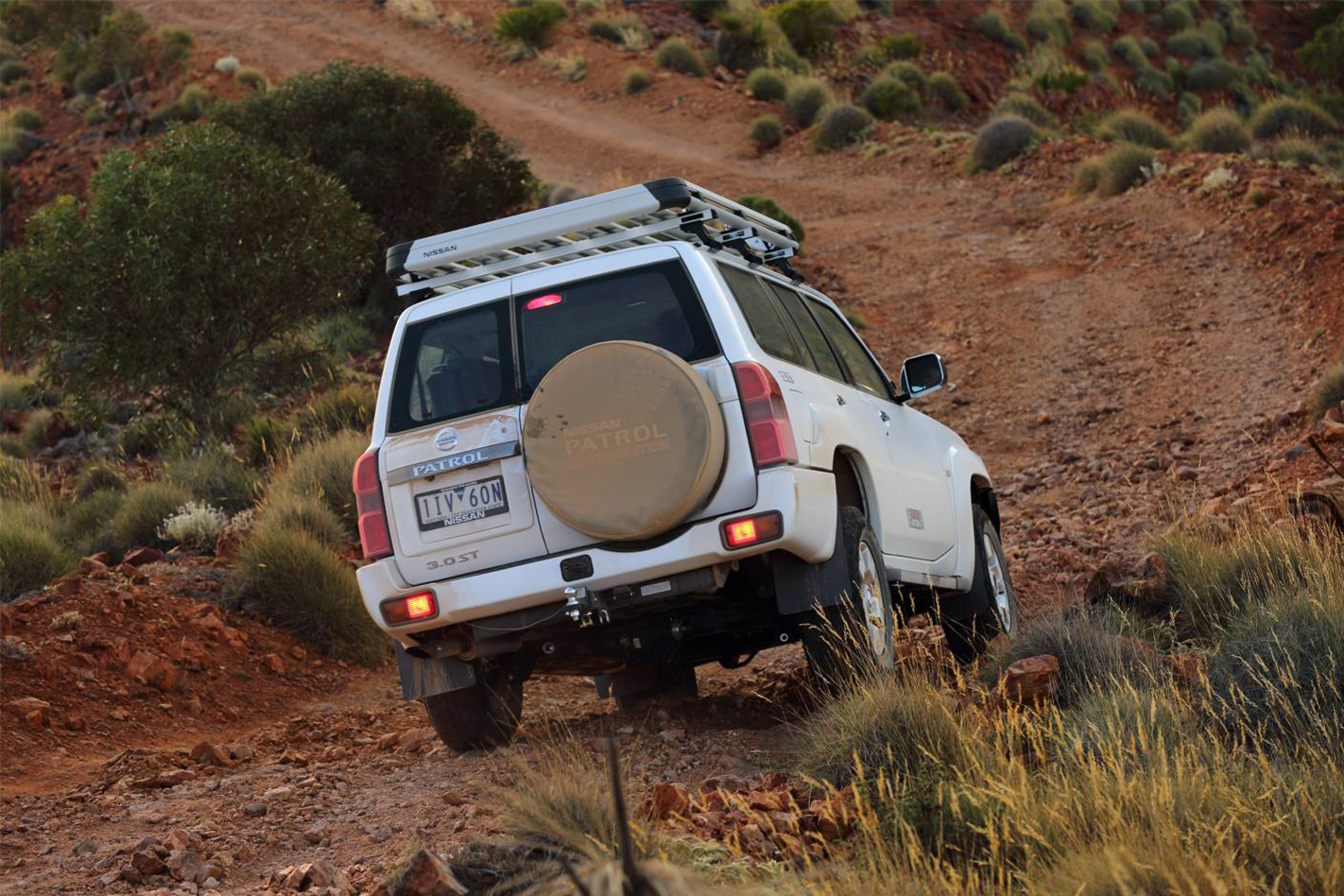
Both are $8000 higher than the driveaway pricing for the Nissan Patrol ST on which the Legend is based, though Nissan has added a range of accessories valued at $10,000 to give buyers a $2K win.
The accessories include a heavy-duty steel bull bar, electric winch, snorkel, tow bar, roof rack, navigation, reversing camera, Legend Edition decal, and a soft external spare-wheel cover featuring ‘Legend Edition’.
More than 100,000 units of the Y61 Patrol have been sold since this generation of the workhorse Nissan was released in 1997.
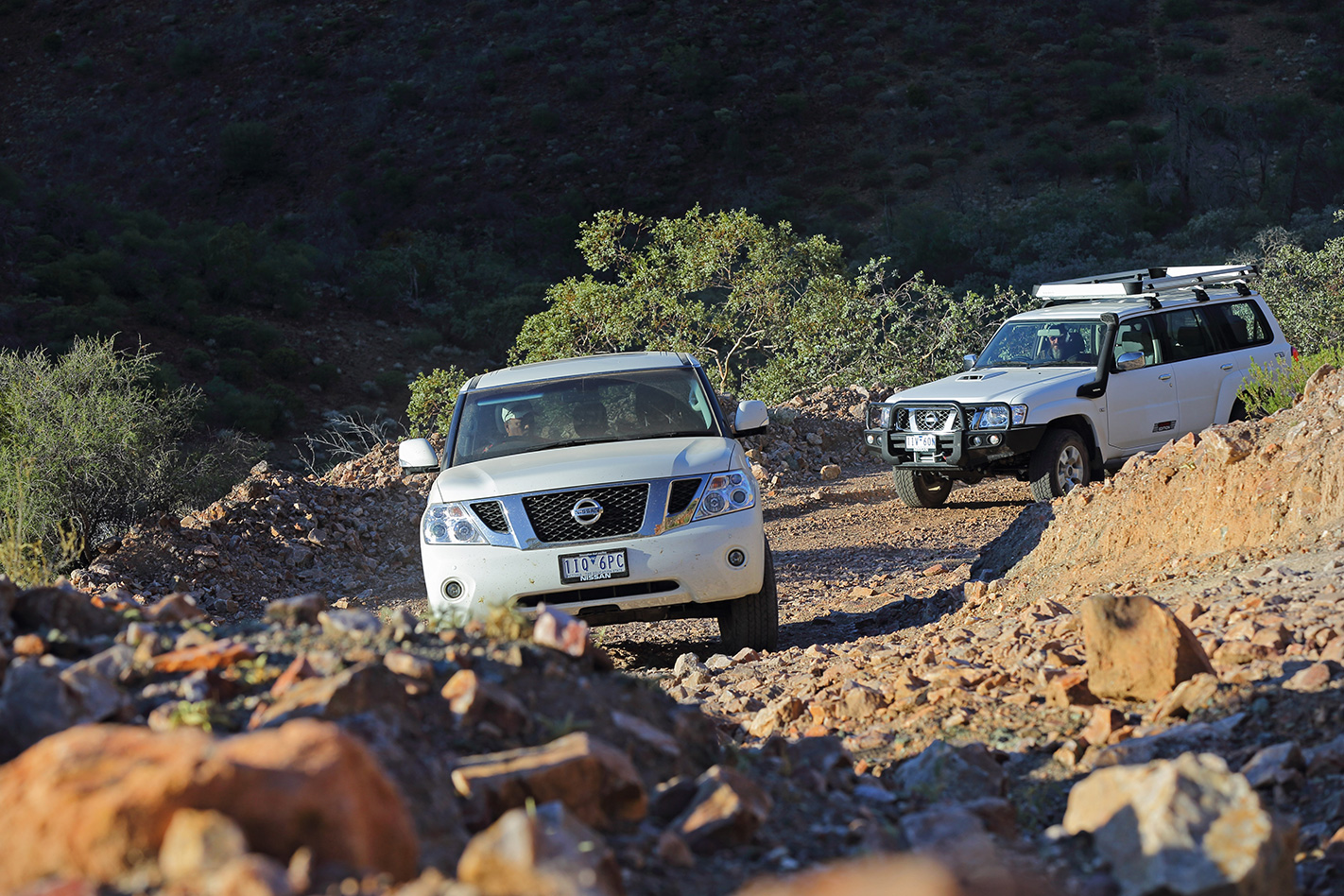
It leaves the SUV-style and more luxury-focused version of the Patrol, the Y62, which debuted a few years ago but was given significantly revised pricing in late 2015 – cutting almost $20,000 from its starting price, to $69,990, and adding more equipment.
The Y62 Nissan Patrol features a more sophisticated suspension compared with the Y61 that uses an old-school live-axle rear suspension. It’s powered exclusively by a 5.6-litre V8 petrol engine, meaning the Patrol will no longer be available with a turbo diesel that is traditionally more popular for off-roaders owing to better fuel efficiency and driveability.
The V8 is notably thirsty, with an official consumption of 14.5 litres per 100km. The auto-equipped Y61 Patrol, on the other hand, consumes 11.8L/100km on average.
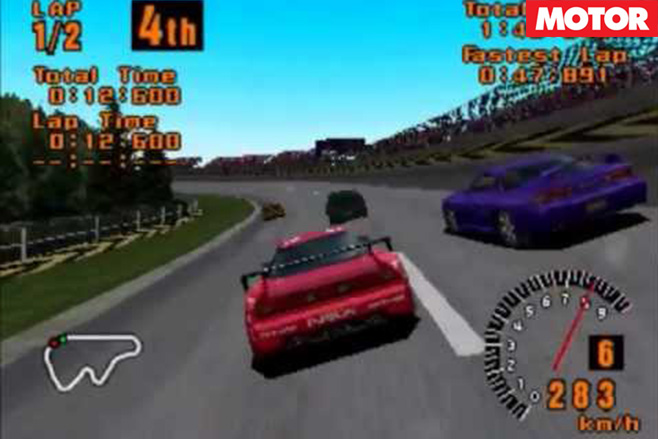
It’s amazing how quickly video game graphics have progressed. Remember when the first Gran Turismo (almost 20 years ago!) was released and both critics and fans were lauding its photo-realistic visuals?
We’re not sure when the last time you played an early Gran Turismo was, but we can assure you that by today’s standards, the graphics look like we programmed them. Take a look at the pic below for an example.
GT Sport is developed to take full advantage of the processing power of Sony’s new PS4 Pro console, supporting 4K resolution, HDR and even virtual reality for some cars and tracks. The result is jaw-dropping graphics; at certain points in the trailer it is honestly difficult to know whether it’s game footage or a film (that orange BMW M4 safety car, for example!).
In a bold new move, the game will also allow aspiring racers to qualify for an FIA digital race licence, preventing novice drivers from competing in certain online races.
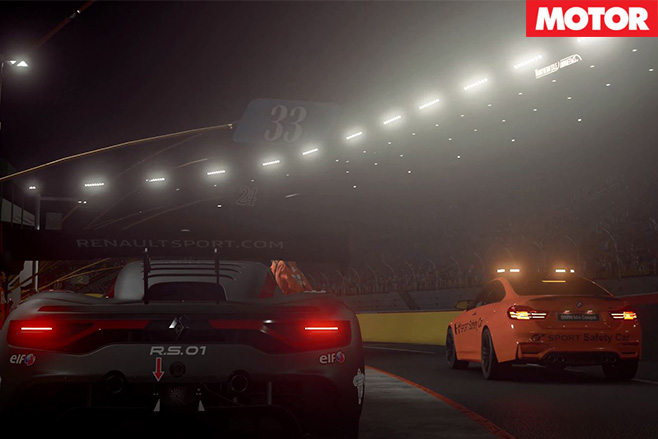
Still, while graphics are great, we’re more interested in the handling model, something that recent Gran Turismos have struggled with somewhat. Can it catch up to PC-based sims like iRacing, Project Cars and Assetto Corsa?
Alfa Romeo’s future could potentially be determined by the success or failure of the Alfa Romeo Giulia, which is the long-delayed successor to the 159.
Pricing won’t be provided until closer to the launch of the Alfa that will compete against notable rivals including the Audi A4, BMW 3 Series, Jaguar XE and Mercedes-Benz C-Class.
It’s worth noting, however, that the Giulia’s competitors start from between $55,000 and $61,400.
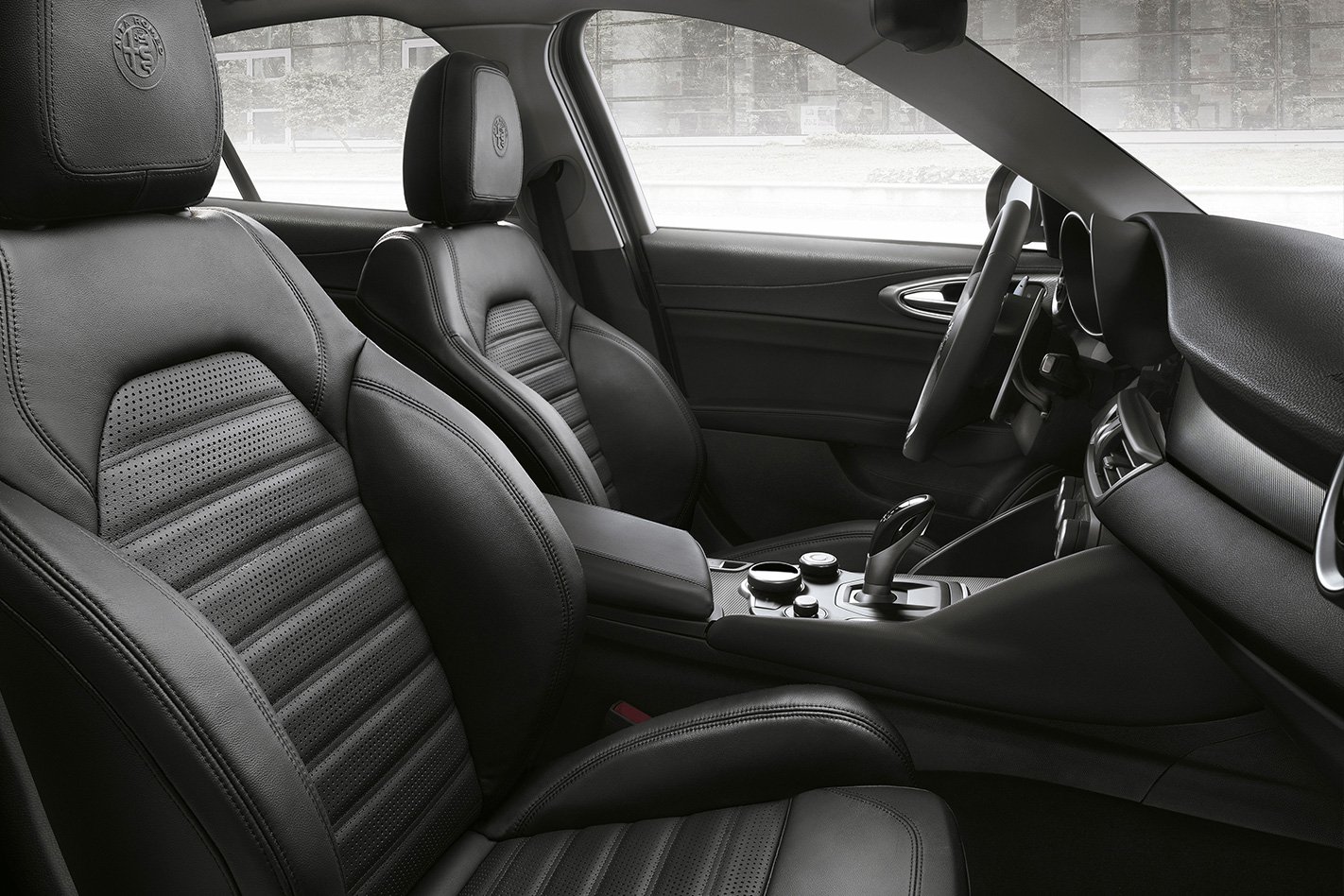
The Alfa Romeo Giulia range will comprise four trim grades, covered by a total of five engines and just a single, eight-speed automatic transmission. The Giulia Super is the one trim grade to offer a choice of engines – a turbo petrol or turbo diesel.
Here’s WhichCar’s easy-glance guide to the line-up, from base model Giulia to range-topping Quadrifoglio:
Alfa Romeo Giulia Engine: 2.0-litre turbocharged four-cylinder Power: 147kW Torque: 330Nm Acceleration (0-100km/h): 6.6 seconds Fuel consumption (official): 6.0 litres per 100km
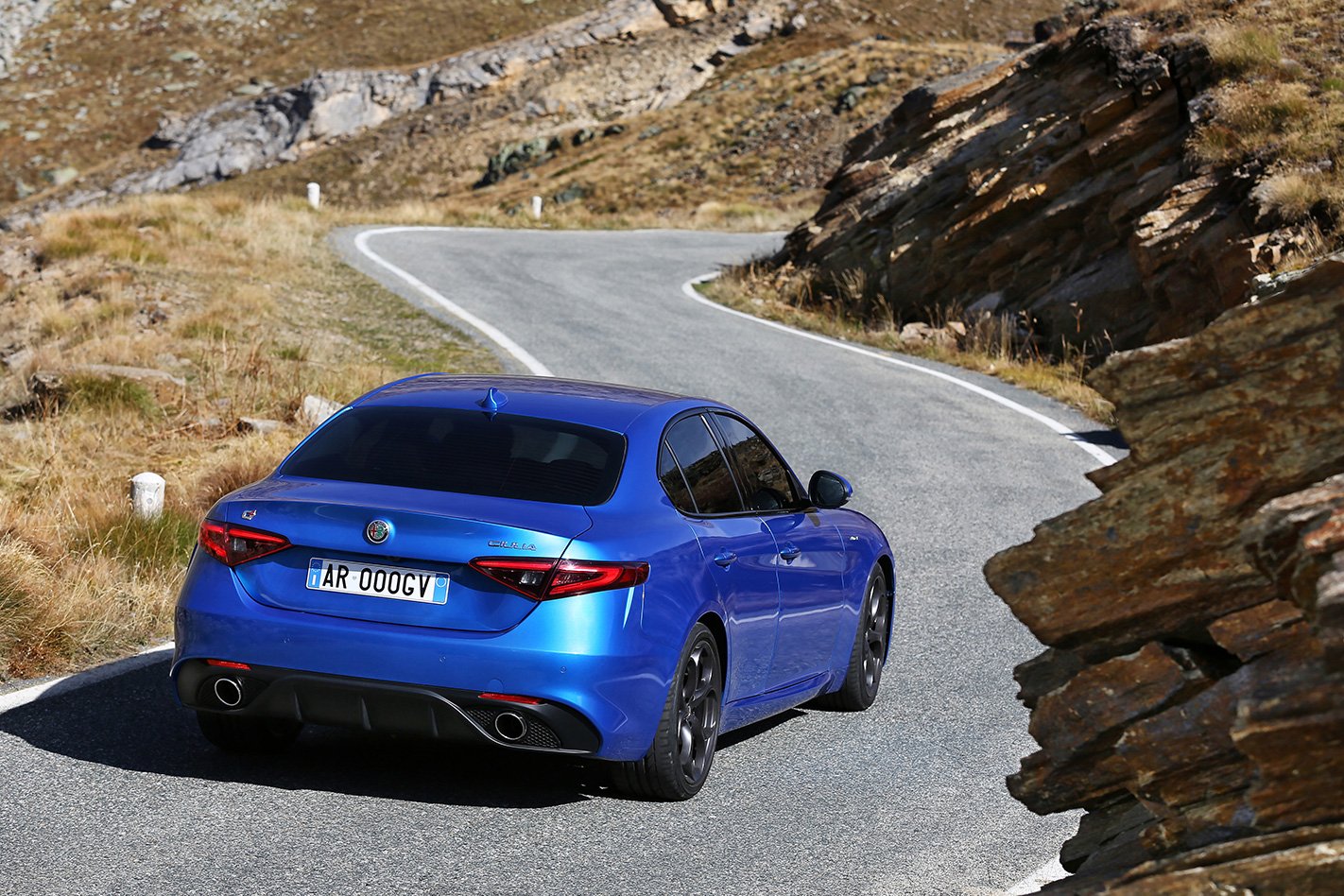
Standard features Forward Collision Warning Autonomous Emergency Braking Lane Departure Warning Bi-xenon headlights Leather seats 18-inch alloy wheels Navigation 6.5-inch infotainment display Rear sensors and camera
Alfa Romeo Giulia Super Engine: 2.0-litre turbocharged four-cylinder / 2.2-litre turbocharged four-cylinder diesel Power: 147kW / 132kW Torque: 330Nm / 450Nm Acceleration (0-100km/h): 6.6 seconds / 7.1 seconds Fuel consumption (official): 6.0 litres per 100km / 4.2 litres per 100km
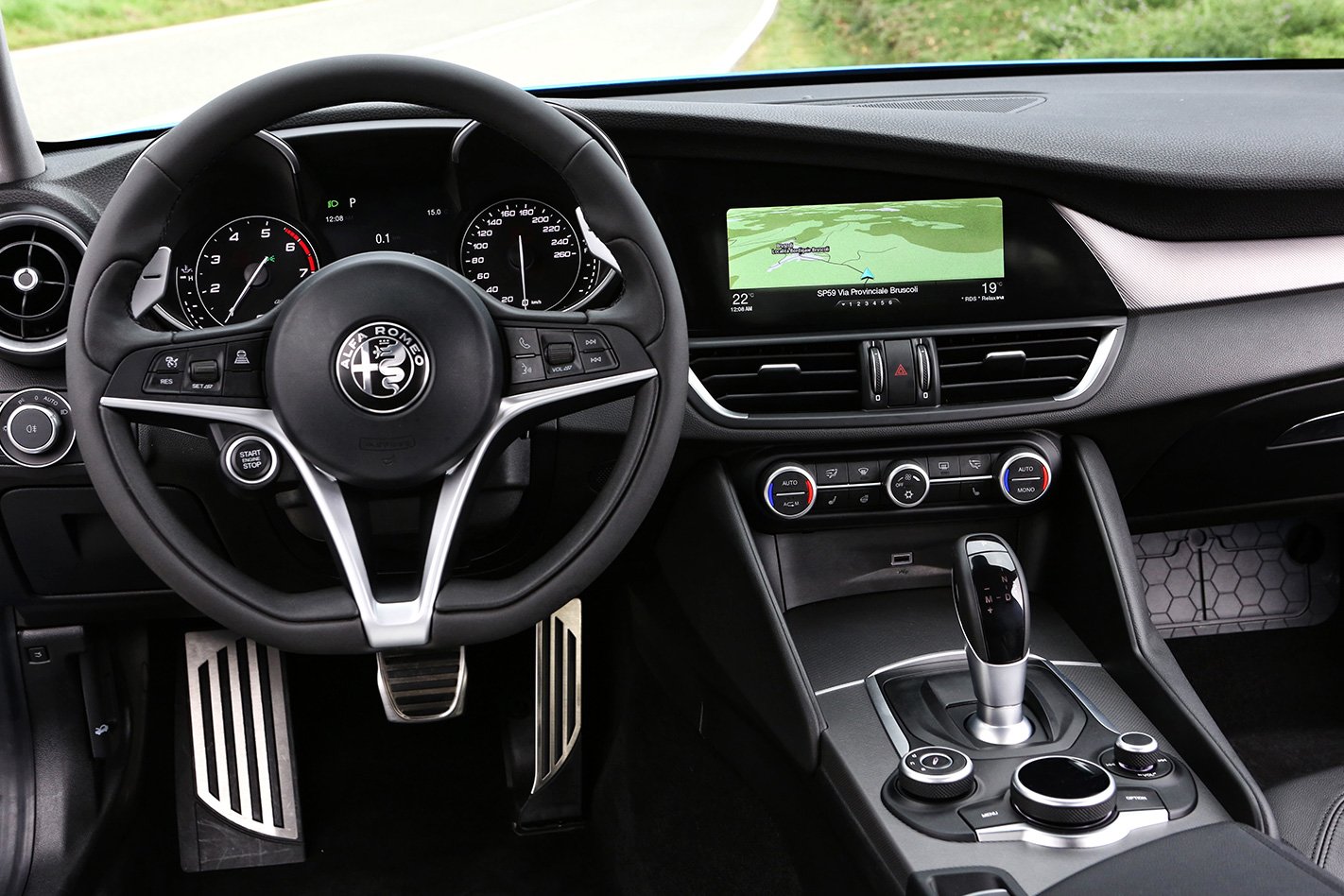
Standard features – in addition to base Giulia Higher-grade leather for seats (and doors) 8-way electrically adjustable driver’s seat Active cruise control Heated steering wheel Blind spot monitoring
Alfa Romeo Giulia Veloce Engine: 2.0-litre turbocharged four-cylinder Power: 147kW Torque: 330Nm Acceleration (0-100km/h): 6.6 seconds Fuel consumption (official): 6.0 litres per 100km
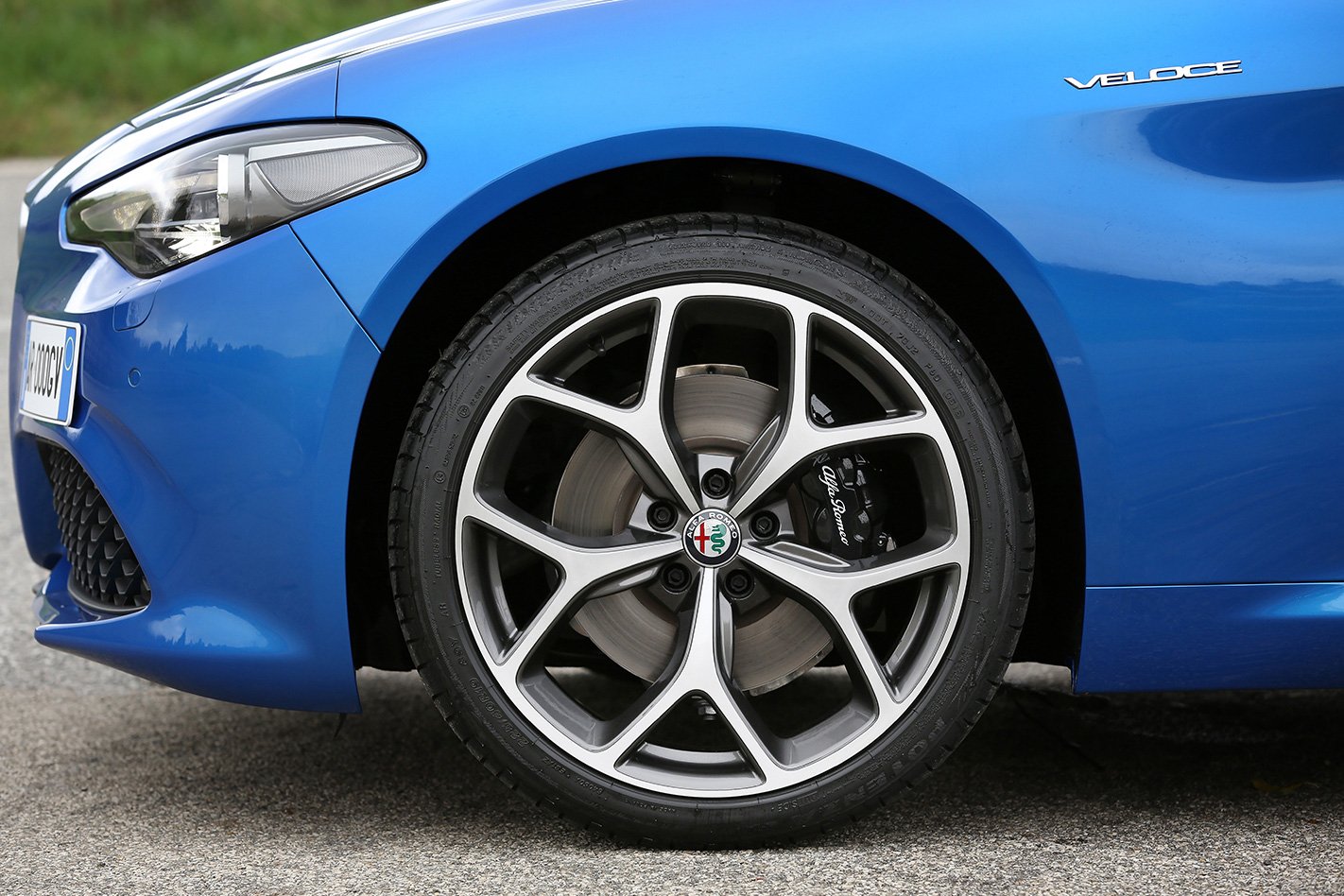
Standard features Forward Collision Warning Autonomous Emergency Braking Lane Departure Warning Bi-xenon headlights Leather seats 18-inch alloy wheels Navigation 6.5-inch infotainment display Rear sensors and camera
Alfa Romeo Giulia Quadrifoglio Engine: 2.9-litre twin-turbocharged V6 Power: 375kW Torque: 600Nm Acceleration (0-100km/h): 3.9 seconds Fuel consumption (official): 8.1 litres per 100km
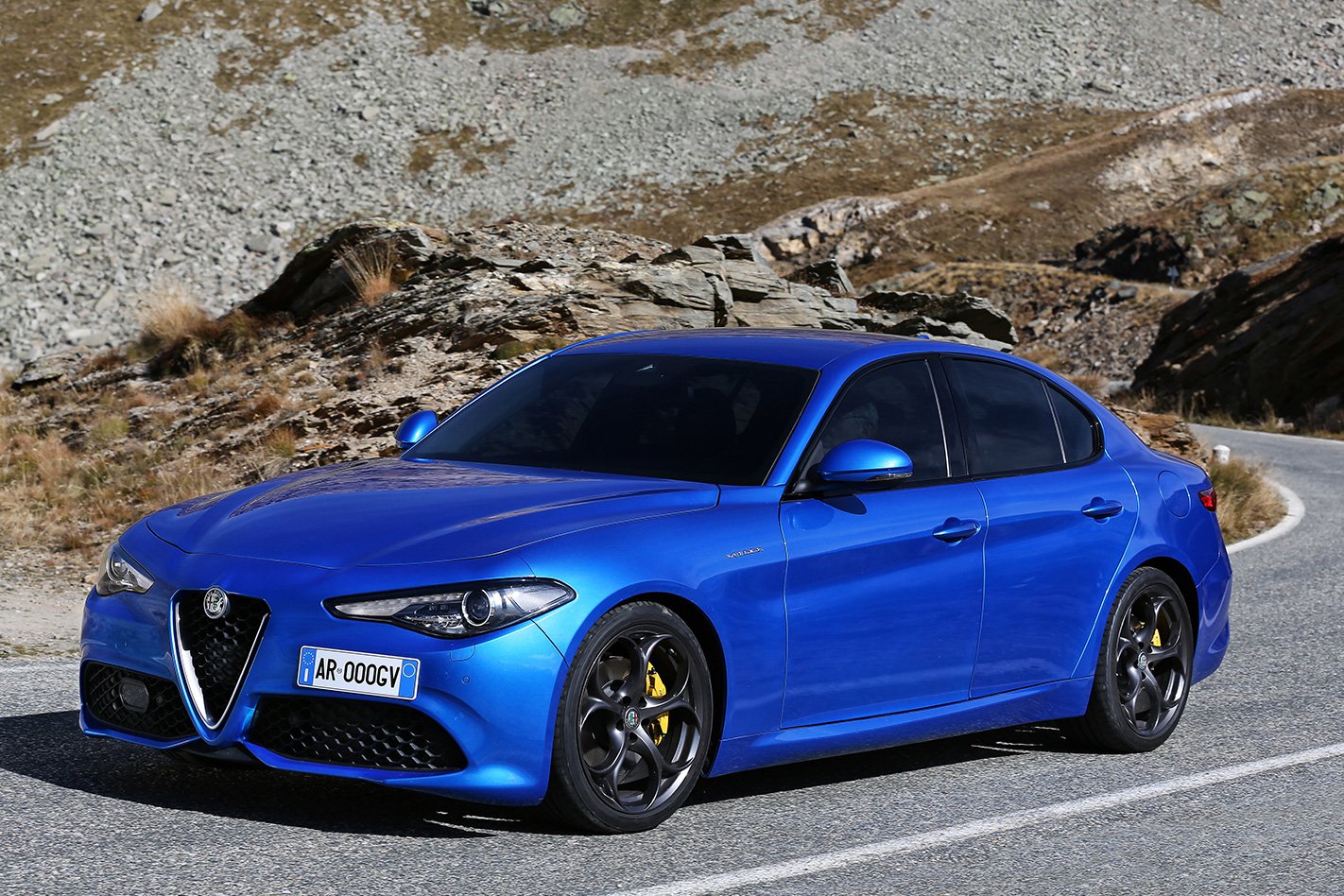
Standard features 19-inch forged-alloy wheels Adaptive headlight system Auto high beam Leather dash trim with contrast stitching plus aluminium and carbon fibre trim highlights Leather/Alcantara bolstered sports seats Harman Kardon 14-speaker audio system 8.8-inch infotainment display DNA Pro (an adjustable vehicle settings system) Chassis Domain Control (a vehicle dynamics optimisation system) Torque vectoring (a system that enhances cornering stability) Active Aero Splitter (an active front flap that can alter downforce for improved grip)
Whenever something the size of a freight train crashes, it’s always going to make one hell of a mess.
And when its cargo consists of around 100 brand new BMWs SUVs, the resulting scene looks like the housewives of Toorak and Vaucluse decided to hold an impromptu demolition derby.
The train was less than 100 kilometres from BMW’s factory in Spartanburg, South Carolina when it derailed, immediately turning dozens of X3s, X4s, X5s and X6s into scrap, though some unkind souls might say the accident actually improved the styling of BMW’s polarising coupe-SUVs.
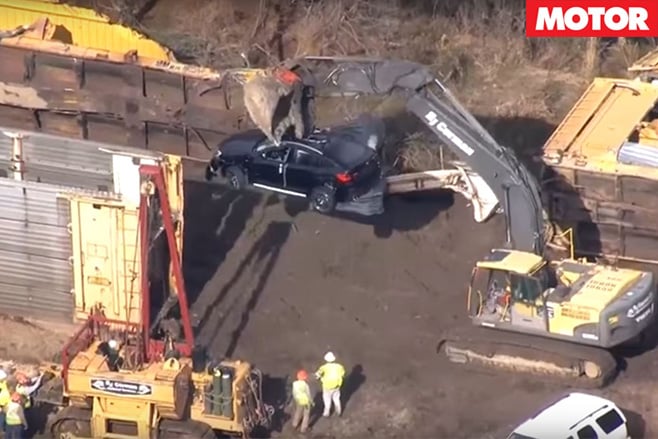
If you’re after a new B58 3.0-litre turbo six for your project car, we suspect there will be some cheap half-cuts appearing in South Carolina in the near future.
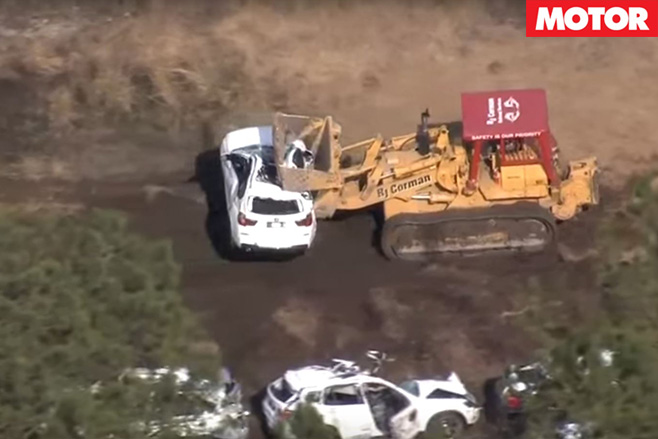
One of the more famous incidents of recent times was a collision between two cargo ships in the North Sea in December 2002. One of them was carrying almost 3000 BMWs, Saabs and Volvos and sunk to the sea floor in less than 90 minutes, though thankfully the crew all escaped without injury.
THOUGH two decades late to the Subaru Outback-style crossover party, Mercedes-Benz has tried to tick all the boxes in turning the practical but dull E-Class wagon into a hip and happening luxury SUV alternative, with industry-leading safety thrown in.
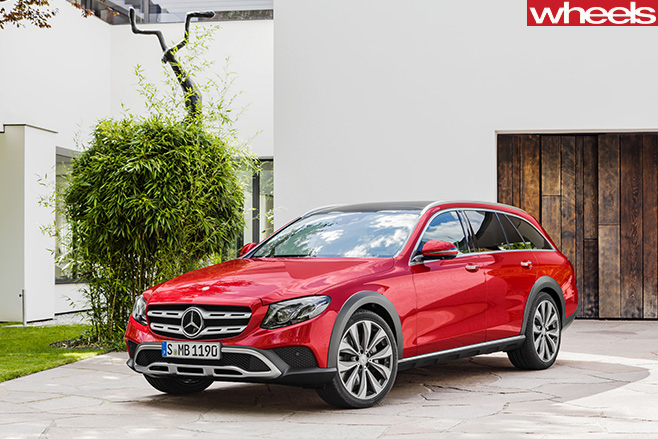
WHAT IS IT Basically a jumped-up wagon version of the impressive Mercedes-Benz W213 E-Class sedan, the E-Class All-Terrain melds space, refinement, safety, and dynamics to a high-riding crossover with some off-road capability. Aimed at the firmly established Audi A6 Allroad and Volvo’s Cross Country set, the E220d All-Terrain coming in mid-2017 will initially stand as the sole E-Class wagon.
MAIN RIVALS Audi A6 Allroad, Volvo V90 Cross Country
THE WHEELS VERDICT Expectations surrounding any E-Class are high. Given that, we weren’t sure what to make of the high-riding All-Terrain; surely a heavier wagon with a higher centre of gravity would detract from the sedan’s excellent dynamics and superb refinement? We shouldn’t have worried. The combination of one of the world’s best diesel engines and air suspension makes the newcomer a supernaturally quiet, refined, relaxing and economical grand tourer – and fun. PLUS: Refinement; comfort; safety; design; quality; steering; handling; AWD security MINUS: E220d could use more poke; silly auto shifter; no petrol option for Oz
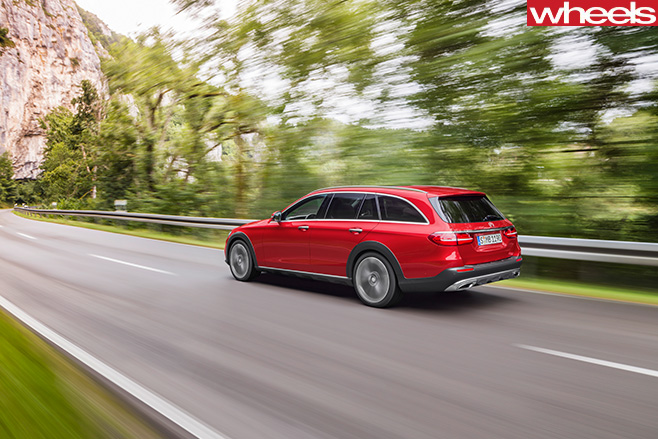
Well, not quite. Come May, Stuttgart is having one last go with the S213 series-based E220d All-Terrain – the brand’s first foray into premium crossover territory, taking on the long-established Audi A6 Allroad and upcoming Volvo V90 Cross Country.
It’s an important symbolic move. The All-Terrain has 29mm more ground clearance than the regular E-Class estate, and looks more rugged with its twin-louvered grille, beefier bumpers, bigger air intakes, black wheelarch surrounds, and chunkier 19-inch alloys. In other words, every crossover styling cliche introduced with the pioneering mid-’90s era Subaru Outback.
But the All-Terrain is more than just a jacked-up marketing exercise. Yes, the MRA Modular Rear-drive Architecture and wheelbase are the same as the 10th-gen E-Class sedan’s. But with 4Matic all-wheel drive, a wider front and rear track to accommodate the larger wheel and tyre package, and a trick air-suspension system that varies ride height according to four selectable driving modes, there’s been some serious re-engineering. Adaptive dampers, vital to the All-Terrain, are also part of the package.
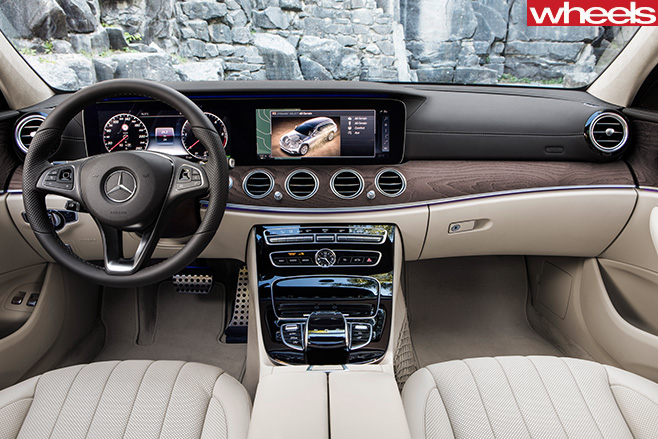
Inside, the passenger compartment is pure, opulent, and cocooning E-Class. Four adults can splay out in style. The driving position is perfection, with a vast rectangular screen ahead that is as informative as it is elegant. Lush materials, gorgeous metallic switchgear, lavishly crafted vents and comfortable and supportive seats set this cabin apart as Mercedes’ finest in years.
More importantly, the whole suite of Benz’s advanced active-assistance and semi-autonomous driving technology is available to the All-Terrain, thrusting it to the apex of real-world safety systems.
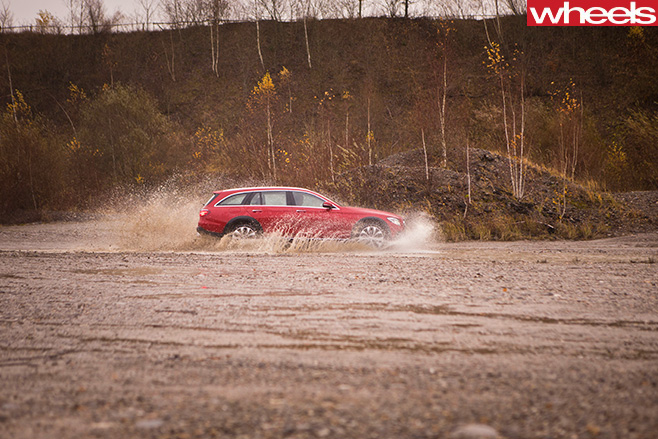
Mercedes’ energetic 143kW/400Nm 2.0-litre all-aluminium four-pot turbo-diesel will be the only engine offered. Mated to a nine-speed auto, the engine might be the quietest, revviest, and most un-clattery diesel yet. Power delivery is velvety and intelligent, and gear ratios shuffle imperceptibly. However, while mid-range response is strong enough, off-the-line performance is a tad languid, betraying the two tonnes the Benz must drag around. At least the fuel economy is fabulous.
Dynamically, too, the All-Terrain creams SUVs. It has beautifully tactile steering that’s both quick and free from kickback, providing taut and controlled handling without the inertia or understeer that most crossovers suffer, and astounding high-speed grip. The E220d patrolled Austria’s alpine roads like a snow panther.
But the piece de resistance is the serene ride extolling a suppleness no modern Mercedes this side of an S-Class can match; just a loping, relaxing cushiness to drink in. We trust such comfort will translate from Austrian to Australian roads. First class travel, in other words.
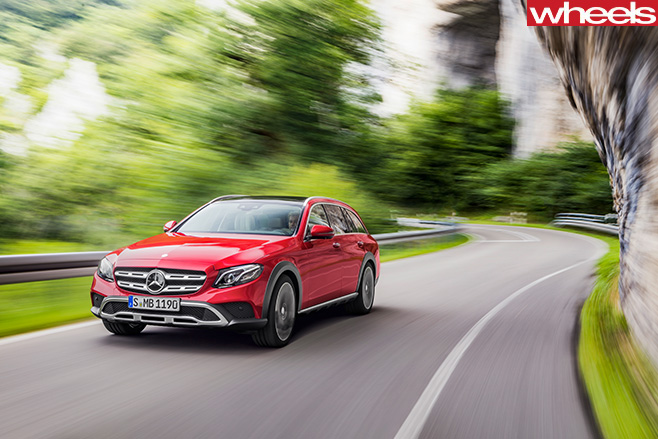
SPECS Model: Mercedes-Benz E220d All-Terrain 4Matic Engine: 1950cc 4-cyl, dohc, 16v, turbo-diesel Max power: 143kW @ 3800rpm Max torque: 400Nm @ 1600-2800rpm Transmission: 9-speed auto Weight: 1920kg 0-100km/h: 8.0sec Fuel economy: 5.3L/100km Price: Approximately $110,000 On sale: May 2017
It seems Commodore is not the only performance model moving to offer all-wheel drive (AWD), with the US-only Dodge Challenger now able to shift grunt to all four wheels – although the extra traction is not teamed with the engine that may need it most.
Dodge has not mated the AWD system with the burly 527kW/881Nm 6.2-litre Hemi V8 available in the range-topping Hellcat. Despite tempting its back boots into furious wheelspin at any point, it can still manage a 3.6-second 0-100km/h.
Instead, defunct-in-Oz Dodge has mated its 3.6-litre direct injection V6 – again, like a certain future Holden – with AWD to create, the company claims, “the world’s first and only all-wheel drive American muscle coupe.”
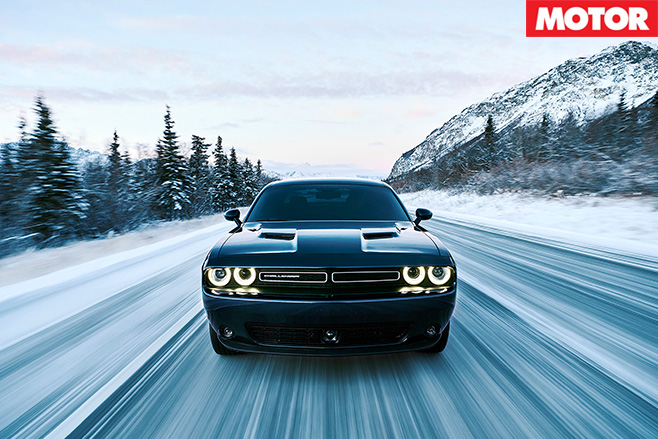
The major upside of this all-weather muscle car is that its AWD system typically pushes 100 per cent of torque to the rear wheels. Only when sensors detect a lack of traction does the front driveshaft engage.
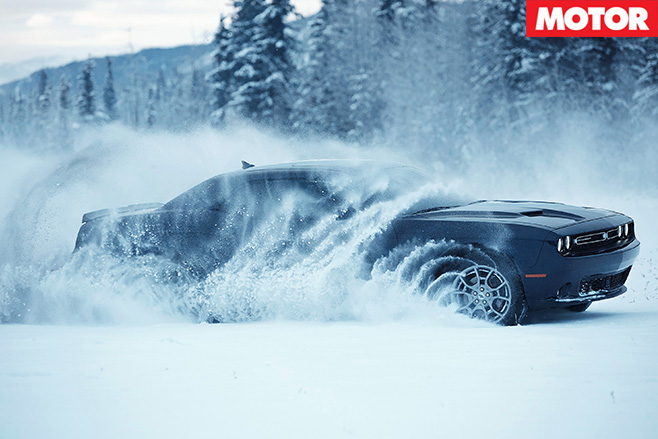
The electronic stability control (ESC) system promises to maintain a “fun-to-drive character” while a Sport mode changes the shift patterns of the automatic to become more aggressive.
Fiat Chrysler Automobiles Australia (FCAA) is working hard on a business case to bring the next-generation Challenger Down Under – but no decision has yet been made.
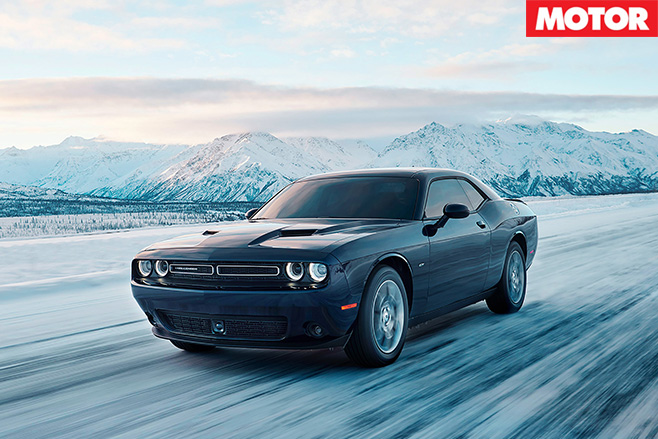
But the V6 AWD versions can probably stay in snowy Michigan.
FIAT Chrysler Automobiles is working on a business case to sell a family of Ram trucks in Australia, including the most affordable 1500 model.
Crucially, the large trucks – which could include the 1500, 2500 and 3500 – would come from the US factory with the steering wheel on the right-hand side, making them more affordable and appealing than the local conversions currently offered in Australia.
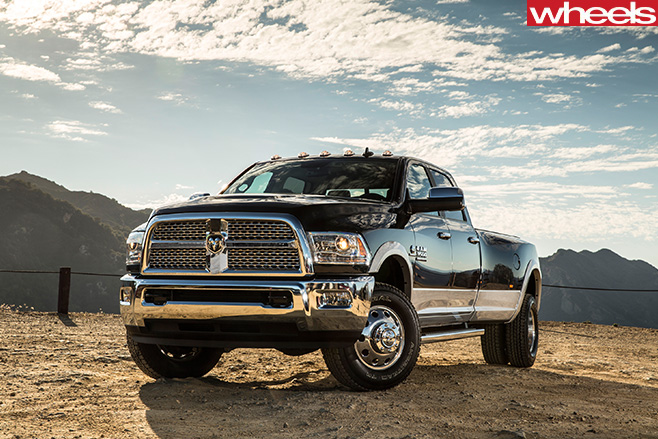
However, any plans for factory-built right-hand-drive Rams would likely not materialise until 2019 at the earliest, around the time the next generation of the mighty US pickup is expected.
Between now and then Zanlunghi and his team will work hard on crunching the numbers to see if the Ram brand can add up.
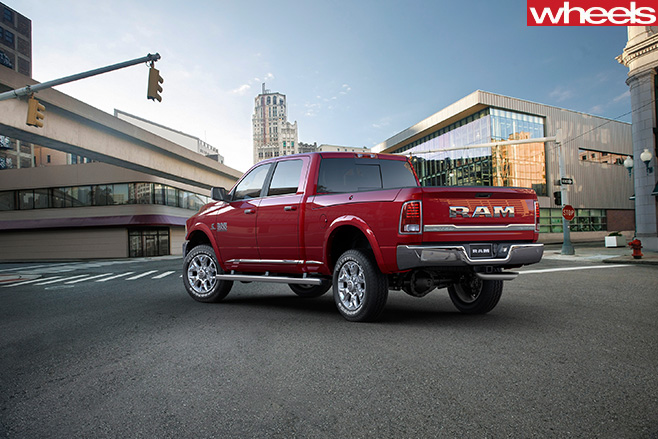
Dual-cab versions of the Ram 1500 sell for less than $US30,000 in America, before local taxes are added. That could potentially translate to an Australian starting price around $70,000, well below that of similarly sized pickups converted to right-hand drive locally in Australia.
Large pickups typically attract big interest but small sales in Australia. The market is currently confined to local converters, who switch the steering wheel from the left to the right, typically upping the price to well into six figures.

Zanlunghi referenced current high-end utes as potential targets, although he admits the brand would in some ways be drilling a pilot hole.
“There really isn’t currently an E[-sized] pickup truck … we’d have to create our own market,” he said. “We’re looking at what plays at that high end … the Ford Wildtrak, Volkswagen Amarok V6, [Toyota] LandCruiser 70 Series.”
The upcoming Mercedes-Benz X-Class is also likely to be on the hit list.
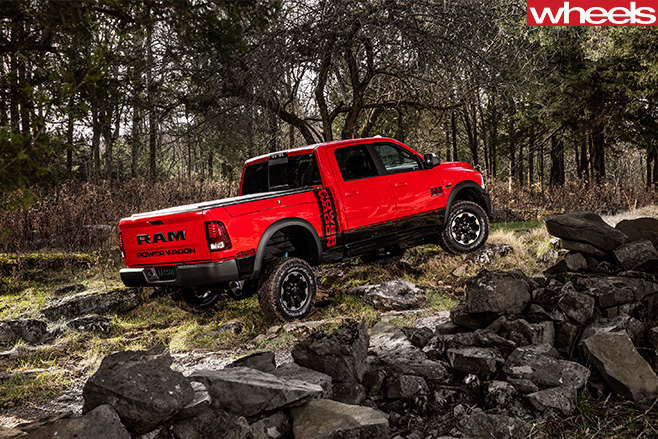
Zanlunghi pointed to fleet and government sales as crucial to any business case, although the growing grey nomad market – many of whom love large trucks – would also no doubt be on the hit list of potential buyers.
Zanlunghi won’t talk specifically on timing if all the boxes were ticked for Ram, but he hinted that the current pickup – which appeared in the States in 2009 – is too close to the end of its model life to justify the multimillion-dollar investment in right-hand-drive production.
“If you can amortise [the investment] out over more years, the better chance you’ve got to pay for it,” he says. “If we’re looking to amortise it over three years instead of six years, it probably makes more sense.”
