
Lego has paid homage to the 1966 Ford GT40 and 2016 GT by adding them to its growing Speed Champions range that includes the Ford Mustang GT, Corvette Z06, Porsche 918 Spyder and Audi R8 LMS Ultra.
The new models celebrate Ford’s Le Mans endurance race winners that saluted the chequered flag 50 years apart – with the GT40 model representing the 1966 Ferrari beater and the 2016 GT in the red, white and blue EcoBoost livery of this year’s winner compete with pivoting rear spoiler.
The set also come with mini figure drivers, a podium and trophy.
Craig Callum, the head designer of Lego Speed Champions, said replicating the Ford supercars came with its fair share of pressure.
“Designed for children, but with grown-up fans in mind too, we know these models will be closely scrutinized for authenticity,” said Callum, who has one of the most enviable jobs in the world.
“The Ford GT40 is one of the most iconic race cars of all time, and the new Ford GT is just incredible.
“The most challenging part when we’re designing the vehicles is obviously trying to get them down to such a small scale. We’re building cars that have some really complex shapes – especially with the GT,” said Callum.
It looks like Lego got the balance right, with nice looking models with enough detail and construction required to keep even master builders entertained for a while.
Unfortunately you won’t be able to get the Ford GT40/GT set for Christmas as it won’t be released until March next year. They’re expected to cost around A$45 like the other two-car sets.
FORD has launched a new version of the Fiesta city hatchback that can run on just two cylinders to save fuel.
Four variants of the popular small hatch were unveiled, destined for Europe, the Middle East and Africa.
Notably, Australia is not yet among the list of countries that will receive the car at launch, with the first local deliveries believed to be slated for late in 2017 or early 2018.
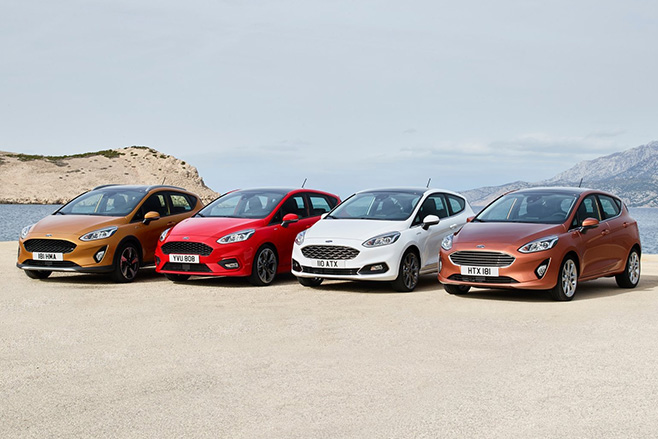
The Fiesta line-up will include an “Active crossover”, a vehicle that blurs the line between traditional passenger car and SUV that includes features including body cladding and roof rails.
Also included in the new line-up are a sports-oriented Ford Fiesta ST-Line model; the luxury-focused, Europe-only Vignale, and a high-end Titanium.
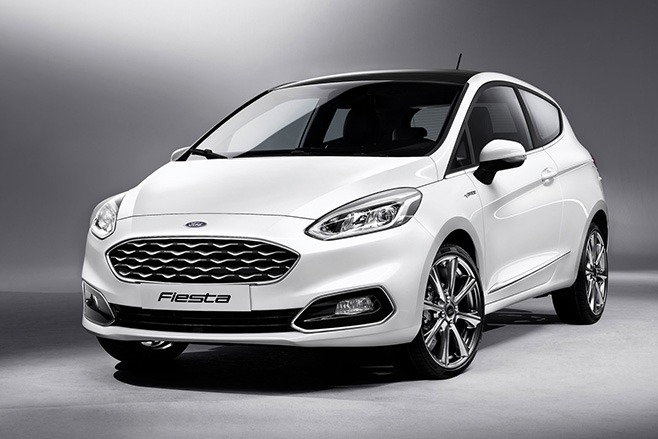
The new Fiesta has been given a subtle front-end facelift, giving a more modern feel through the use of softer lines and creases around the bumper.
This has extended to the headlights, which now appear almost oval when compared with the somewhat rectangular lights on the current model.
Down the rear, changes are more substantial courtesy of updated tail-lights.
Although the only official images of the rear relate to the three-door Vignale, the setup looks similar to the horizontal layout to that of its predecessor.
The previous-generation Fiesta’s fussy interior has also received an overhaul, with the number of buttons on the console – a criticism of the old car – moved to a range-wide centrally mounted eight-inch multimedia touchscreen.
The setup allows for smartphone integration via either Apple CarPlay and Android Auto, using Ford’s Sync 3 connectivity system.
Voice control is expected to be available, along with the option of a more premium Bang & Olufsen audio system.
The 2017 Fiesta will feature a new collision avoidance system that can automatically slam on the brakes to avoid or minimise the damage from a crash with the car in front.
According to Ford, the new car will include 15 new driver assistance systems including a lane-keeping function, warnings to stop you backing out into oncoming traffic, and a blind spot monitor that sees what the wing mirrors don’t.
A diesel engine will complement a frugal 1.0-litre EcoBoost three-cylinder petrol engine that will only use about 4.9L/100km. It can shut down one cylinder to run on just two under light loads. The 1.0 will come in three variants, including a 73kW, 92kW and 103kW and a 51kW or 62kW power plant for the entry level 1.1-litre engine.
These engines will all be available with a manual gearbox, other than the 73kW, which also offers an auto.
Meantime the 1.5 litre turbo will feature power levels of either 62kW or 88kW, likewise with the manual.
TELL ME ABOUT THIS CAR
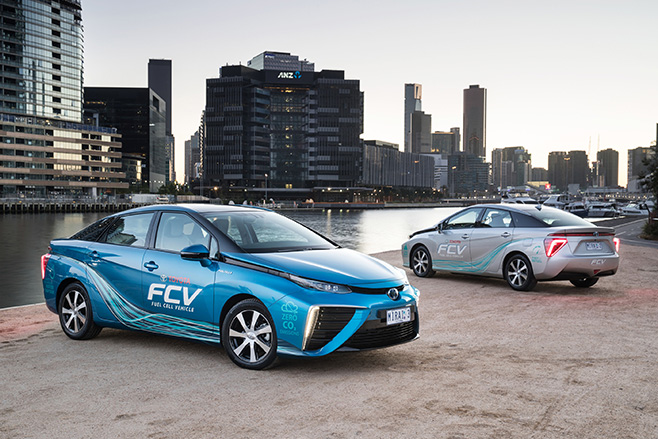
The Mirai is Toyota’s first mass produced hydrogen car and one of the first of its type in the world. It is only sold in Japan, America and some parts of Europe and is sold in very small numbers because it is quite expensive (upwards of $80,000). Toyota has brought three Mirais to Australia to help kickstart the discussion about selling hydrogen-powered cars in Australia.
STRENGTHS
- It’s clean. The Toyota Mirai runs on pure hydrogen that is fed into a fuel cell, which performs a chemical reaction to create electricity. The electricity is then used to power an electric motor, meaning the Mirai performs very much like an electric car. There is an exhaust pipe but the only thing that flows through it is steam and water. The Mirai carries enough hydrogen in its two high pressure tanks to cover about 550km, making it comparable to regular petrol- and diesel-powered cars.
- It stands out from the rest of the cars on the road. The Mirai has been designed to look futuristic, so it in some ways visually reinforces the technology going on beneath the skin. It has some bold shapes and angles – which don’t conform to the classically elegant proportions – as well as plenty of creases and sharp edges.
- It does what people expect of a medium car. Despite not emitting any harmful gases and running only hydrogen the Mirai is otherwise thoroughly normal. There are four comfortable seats and all the infotainment and comfort features expected of a mid-sized car.
- It goes well. The Mirai’s electric motor makes 113kW of power, which is similar to most small cars. But it also has 335Nm of torque, or pulling power, that makes it good for zipping around town. So even though it is quite heavy (1850kg, about 300kg more than a Toyota Camry) the Mirai accelerates briskly.
WEAKNESSES
- Lacks cargo space. The Mirai has a wide and deep boot, but it doesn’t extend far into the car. That’s because one of two hydrogen fuel tanks sits between the back of the rear seats and the boot itself. So boot space is limited to 361 litres.
- It’s not exactly exhilarating. Our drive was very brief, but it’s fair to say the Mirai is not what many would expect of a car costing upwards of $80K. It’s more like a mid-sized car costing half that price when it comes to performance and cornering nous.
- Nowhere to refuel. There are currently no public hydrogen refuelling stations in Australia. Toyota gets around this with a custom made Hino semi-trailer that has a hydrogen refuelling rig on it. The truck can go anywhere in Australia to allow each of the three Mirais to be refuelled anywhere. There would be obvious limitations to this if the car were to go on sale.
MORE spy images of the 2017 Toyota Supra provide further evidence that the Toyota 86’s big brother will feature plenty of styling inspiration from the striking 2014 FT-1 concept.
Our photographer has captured the fifth-generation sports car with a slightly reduced amount of swirly camouflage – enough to reveal slim-line tail-lights, side mirrors and three large front air intakes.
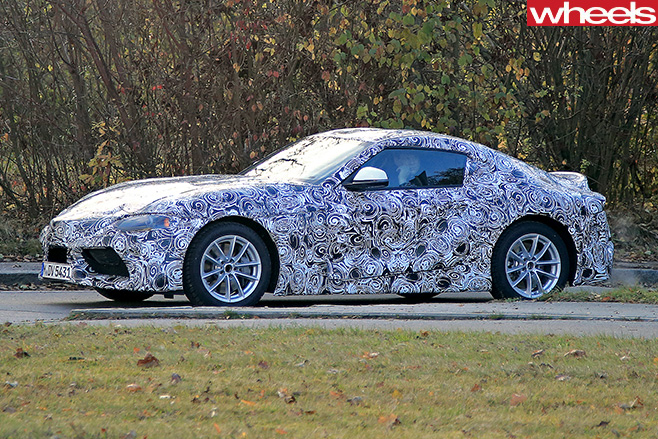
Up front, the sloping bonnet has more in common with the last-generation, JZA80 Supra last produced in 2002.
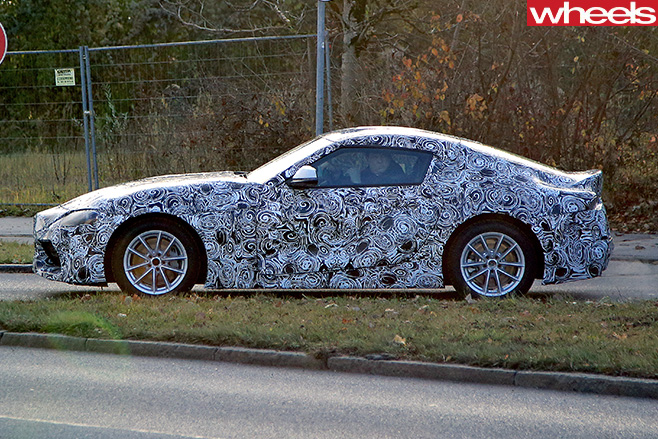
The Supra’s design is set to look markedly different from the BMW Z4 replacement with which it shares its platform – beyond the expectation that the Toyota is tipped to be offered exclusively as a coupe, while the BMW-badged model likely to be called Z5 will continue as a roadster.

Potential powerplants for the Supra remain the subject of conjecture, though Toyota and BMW are both expected to use their own engines. An in-house Toyota six-cylinder of some form would be anticipated to link the Supra to its predecessors and also help to elevate it above the four-cylinder 86.
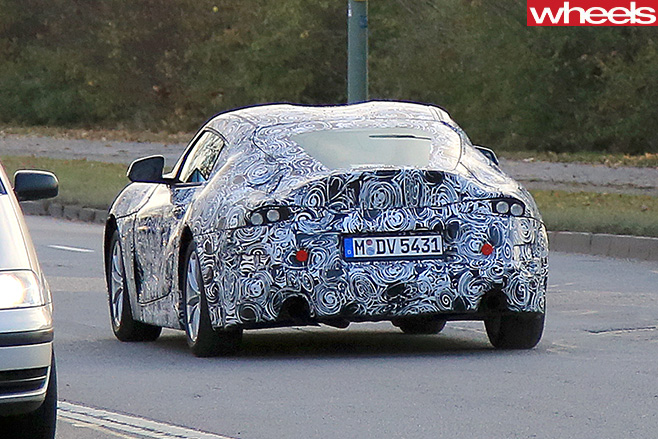
The Supra and Z5 will reportedly be manufactured by Austrian vehicle specialist Magna Steyr.
The Supra should make its first official appearance sometime in 2017 before it hits showrooms the following year.
FORD has revealed its all-new Ford Fiesta range featuring advanced driver assistance technology and four different variants, including a crossover variant.
However, the international fanfare surrounding the global launch was somewhat muted here, with Ford Australia saying it the models shown are for Middle Eastern, African and European markets, meaning it wouldn’t comment further on if or when the seventh-gen Fiesta would make its way here.
Surely it’s a matter of when the new Fiesta arrives here – the current model has been a reasonable seller in Australia but nowhere as prolific as in Britain where it’s been the best-selling light car for the past seven years.
With sales down this year against the likes of the Mazda 2 and Hyundai Accent, Ford Australia would want the new-look Fiesta in its showrooms as part of its post- manufacturing rejuvenation.
The four versions of the seventh-generation Fiesta revealed overnight include the stylish Fiesta Titanium, the Ford Performance-inspired Fiesta ST-Line, the upscale Fiesta Vignale and the new Fiesta Active crossover with subtle SUV design cues.
The Fiesta has followed the trend of giving small cars a more mature appearance though it isn’t radically different to current model. The front has a chirpier looking version of the Ford family pentagonal grille with scoops on the side leading to the fog lights. The headlights still sweep back but lose the teardrop tail.
The rear end is also more subdued, with smaller, horizontal tail lights that seem to follow another new small-car design rule that seemingly makes it mandatory to copy the Volkswagen Golf.
Despite initial thoughts that the new Fiesta’s interior would mirror the cockpit of the recently launched 2018 EcoSport crossover, the inside is all new with soft-touch materials which don’t look as plasticky as the current model’s. The dashboard is less cluttered with a floating eight-inch touch screen taking away the need for the cluster of buttons that marred the centre of the dashboard.
The screen displays Ford’s SYNC 3 software which links to for music, smartphone integration and satellite navigation via Apple CarPlay and Android Auto with voice control. An optional B&O premium audio system is available in Europe to take music up a notch or two.
While it’s an all-new model, it has the same Global B underpinnings of the sixth-gen Fiesta, with the money saved on platform development put into new technology that according to Ford makes it the most advanced small car in the world.
These include a suite driver assistance features including Active Park Assist, Blind Spot Information, Cross Traffic Alert and Lane Keeping Assist and an anti-collision system that detects potential threats up to 130 metres away.
Power will come from a choice of three-cylinder turbocharged EcoBoost petrol engines and a 1.5-litre turbo diesel.
The three-cylinder 1.0-litre EcoBoost petrol unit in three power guises – 73kW, the 92kW in the current Sport variant, and 103kW. All three are mated to a new six-speed manual gearbox, though the 73kW donk comes with a six-speed auto option.
Entry-level models will come with a three-cylinder 1.1-litre Ecoboost petrol engine, in either 51kW or 62kW power guises, paired to a five-speed manual gearbox.
The 1.5-litre turbo unit will come with a choice of 62kW and 88kW versions paired to a six speed manual gearbox. It would be surprising if that variant were to make its way to here considering the lack of appetite for small oil burners.
A NISMO version of the all-new Nissan Micra is looking more likely every day. And even though Australia is likely to skip a generation of Nissan’s city car, there’s still a glimmer of hope the proposed hot hatch could make its way to Australia.
Nissan Australia told Wheels it is yet to rule out taking the new Micra, saying it continues to look for options to replace the uncompetitive outgoing model.
That would pave the way for a Nismo variant, as envisaged above, to come to our shores to provide a more affordable offering than the $299,000 Nismo GT-R.
Even if the boggo Micra doesn’t come, there’s technically nothing to stop the Nismo version arriving on its own. Speaking in general terms, Nissan Australia says it “always considers all available options to be open”. However, viability of any standalone variant would be subject to a lot of factors, not least the Australian homologation process.
Still, you can never have enough hot hatches, which seems to be the mindset at the Renault-Nissan Alliance.
In a recent interview with British car magazine Auto Express, Renault Group product planning and programs vice-president Bruno Ancelin dropped hints about Nismo extending its range to the Micra to complement the Renault Clio RS 220.
“We are looking for synergies with Nismo … we could probably look to synergies to help each other. This is a key activity that we have inside the Alliance.”
“They [Nissan] have the Nismo, but they have no Micra Nismo, and we have the Renault Sport Clio.”
Ancelin’s comments backed up those by Nismo program manager Bob Laishley, who told Wheels in July that a small Nismo, possibly based on the next generation Micra and/or Pulsar, was a high chance.
“For sure we’re looking at working in that area. I would like to do something in that space.”
Nissan’s performance sub-brand has dabbled with the Micra before.
In 2013 it put out a cosmetically enhanced version of the dour little hatch (called the March in Japan), with lower suspension, 16-inch alloys wrapped in low-profile tyres and an aggressive aero kit that was in danger of making it look decent.
Nismo won’t have to try too hard to make the new version look good, and with its pledge to ensure all modifications will be performance based and not just glorified bodykits, it’s easy to see why there’s so much anticipation.
First published in the July 2013 issue of Wheels magazine, Australia’s best car mag since 1953.
Three cars, three days, 1500 kays. We know VF is good, but what’s it like in the harsh light of the real world?
LONG, long time ago, people aspired to own a Holden. My great uncle Bill, bless his long-departed soul, almost bought a Humber Hawk because the wait for a brand-new Holden FX was so long. He eventually secured a black, second-hand 1950 model, at a time when Holdens were part of the fabric of society. And of our family.
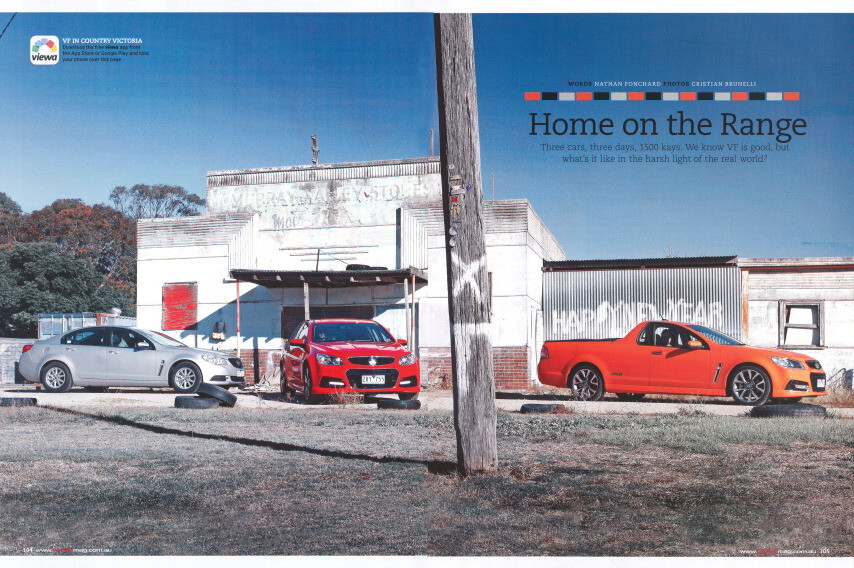 Home on the Range – July 2013
View this article in its original format in the archive.
Bill owned nothing but Holdens his entire life, and even then, he didn’t own many – the ’50 FX, a ’56 FJ Special, a ’71 LC Torana two-door and, finally, a ’75 HJ Kingswood sedan. Cars he could work on and service himself. Cars that fringed my childhood. Cars I can still smell.
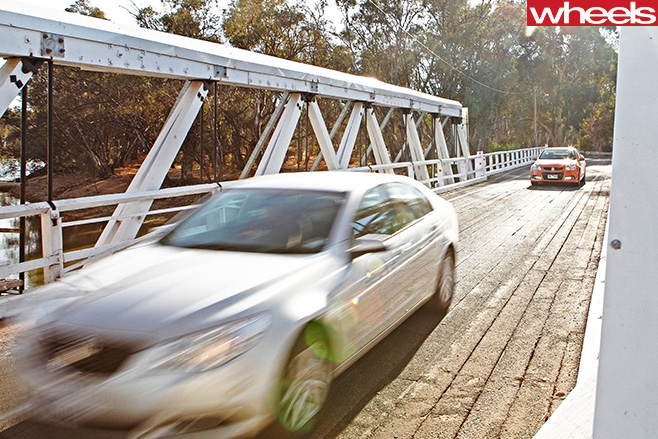
Pulling into the carpark of Holden’s HQ in Salmon Street, Port Melbourne, a month before VF goes on sale, it’s hard not to feel a little excited. We’re here to pick up an Evoke sedan, an SV6 Sportwagon and an SS-V Ute for another big Wheels drive. For anyone who’s been brought up on Aussie car mags, taking the latest home-grown model for a lap around, well, something, is always a great moment in time. But for how much longer…?
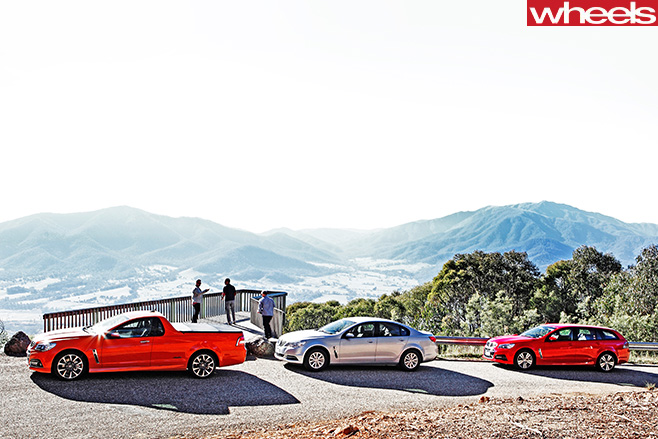
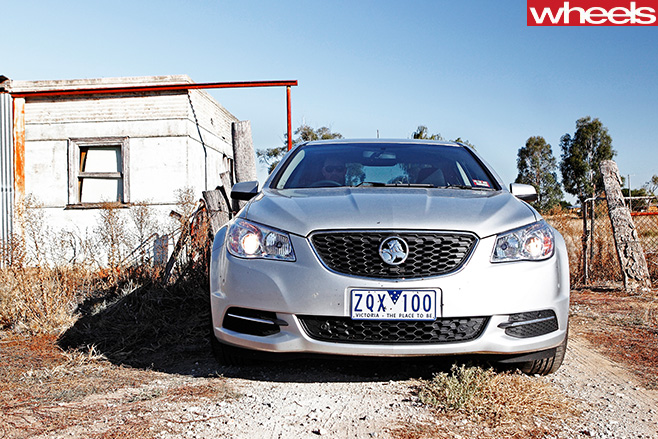
Well, that was the plan. Just down the road from Salmon Street, we park alongside the Yarra for a ‘Melbourne’ shot, and are instantly surrounded by a bunch of folk wanting to check out the VF. The SS-V’s striking new orange hue called Fantale is what draws everyone in first. They like the new front, love the Ute’s colour, and think its 19-inch wheels are beaut, but what’s that? “I think you’ve got a nail in your front tyre mate.” Sure enough, there’s a whacking great piece of metal embedded into the SS-V’s front-left tyre. Luckily, Holden’s two kilometres away. Worryingly, the silver Holden Commodore Evoke – the only VF sedan we have in our fleet – is virtually ignored.
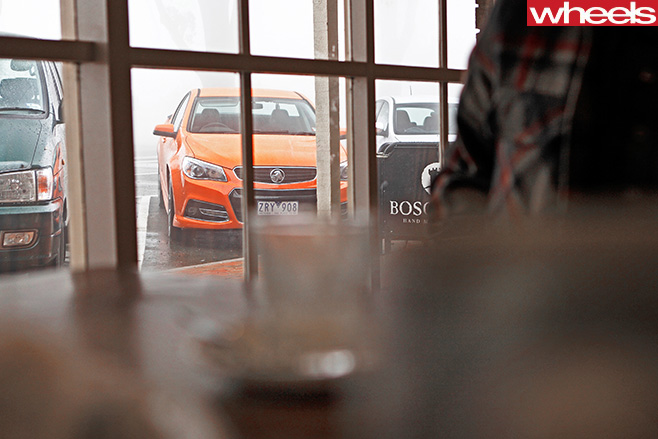
I’m in the manual Holden Commodore SS-V Ute and it’s brushing off the conditions like Ruddy does suggestions of another leadership challenge. But regular Wheels contributor, Byron Mathioudakis, is behind me in the Evoke and he’s doing it tough. It’s those Bridgestone Ecopias – chosen because of their exceptionally low rolling-resistance, not their wet-weather grip. Admittedly, Byron’s stoking the Evoke along, but the car is sliding all over the place. Only the excellence of Holden’s ESC system keeps it pointing steadfastly in the right direction. In the meantime, the SS-V is rock solid, as is the SV6 wagon – both wearing Bridgestone Potenza RE050As. If I was buying an Evoke, first thing I’d do is dump the stock wheel/tyre package and order the optional 18s with the same-type rubber as the Calais (Bridgestone Turanza T001) in a 235/50R18 size. Better looks and grip.
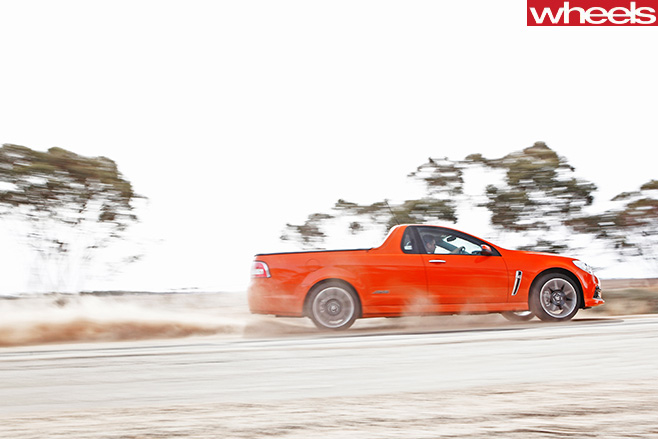
The SS-V, however, is … beautiful. Its leather and mock-suede upholstery is super-modern, yet classy, and I personally love the stitched fabric on the dash. The seats themselves are superb, but in Holden’s switch to global switchgear – the indicator stalks, window buttons, and most controls are shared with other GM products – seat adjustment has taken a backwards step.
That aside, this SS-V manual Ute is bloody excellent. The keenness of its steering blends seamlessly with its chassis, making it feel much smaller than it actually is. Yet the thing that stands out most is that you forget you’re driving a Ute. Its ride is level, absorbent and brilliantly controlled, especially considering its sporting focus and 19-inch wheels, and its new-found refinement is remarkable. Even the carry-over 6.0-litre V8 has a crisper, more cultured induction growl, and anyone who complains that the six-speed manual is heavy and truck-like is a massive whinger, with a capital ‘W’.
With Mt Hotham having been re-routed out of our schedule, Day Two starts with a back-track towards Victoria’s high country. Half way there, we discover the road is closed due to tree-felling and won’t re-open until 4pm… So we turn around and head to Mt Beauty on the incredible Tawonga Gap Road instead.
Being the last really twisty and hilly piece of tar we’ll see for the rest of the trip, we go for it. I start in the SS-V Ute, stability control activated due to potential ice, and marvel at the almost subliminal delicacy of its ESC system, and its inherent poise. Refinement and reward … in a Ute. Only Australia could produce a two-door sports car with a 2064-litre boot.
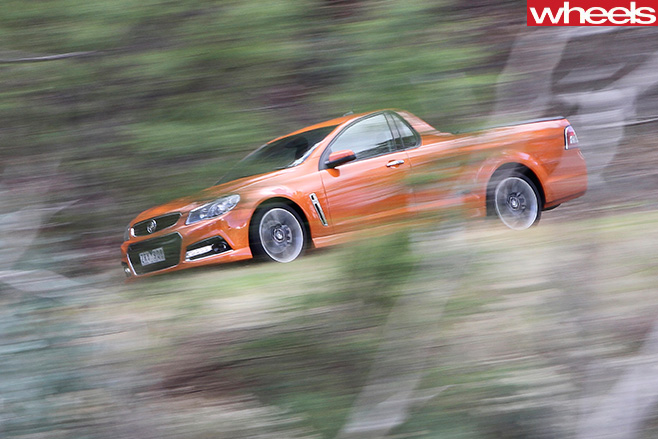
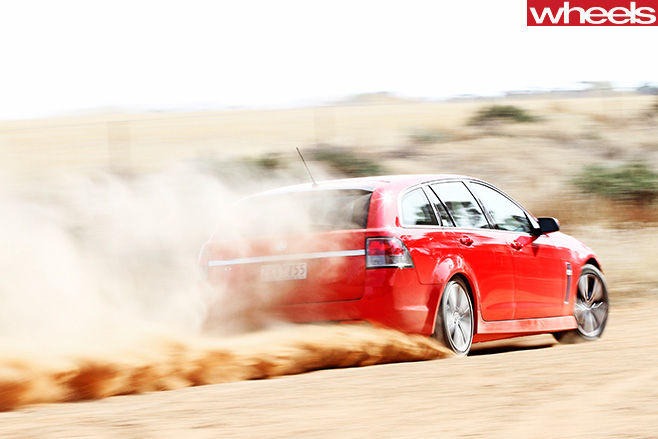
Stability control off, the SV6’s true dynamic nature is exposed. The electronics err towards slight understeer to keep mums and dads safe, but switch it off and you can throw 1776kg of SV6 Sportwagon around like few would believe. Its turn-in, body control, and throttle adjustability all demonstrate how good VF is as a driver’s car. Back in 2006, the volume-selling SV6 was the worst VE. Now it’s arguably the best VF.
Even the softer Evoke is fun on the Tawonga Gap Road, and while it mightn’t be as quick, or as grippy, as the FE2-suspended pair, its 3.0-litre V6 is sweeter than the punchier 3.6, and its keen, yet supple chassis is willing to give you everything it has. All that’s holding it back is those grip-shy Ecopia tyres.
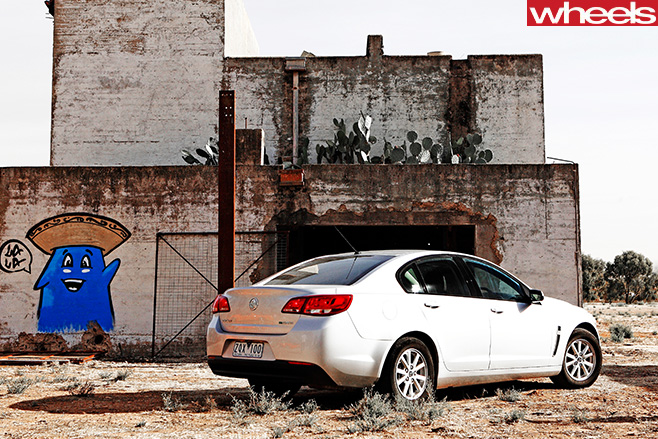
No Wheels drive worth its salt is complete without an obligatory dirt section, so we begin the final day looking for anything unsealed. The answer lies just outside of Lake Boga – 16km south-east of Swan Hill.
Ah, Lake Boga – all it’s missing is an ‘N’. And, for the last 10 years, a lake. On the edge of town, we find an abandoned motel – Catalina – which closed when the lake dried up and no one wanted to stay. But in the 1950s, this motel was probably all that most people needed. Double-bed and bunk-bed rooms. A bar and open-plan dining, eerily with old champagne glasses still sitting on the shelves. And the lake right out front.
I can’t help thinking about the irony of all this. Today’s VF Commodore is all that most people need, too. But with so much choice, do they still want it?
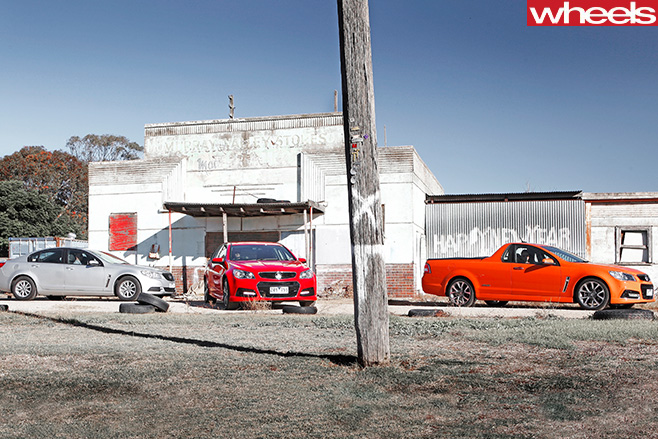
Thinking about the VF on the final leg into Melbourne, it’s hard not to be impressed. The harder you drive it, the better it gets. The only fault I can find in the electric power steering is a moment of stickiness with about 20 degrees of lock on through a constant-radius corner. Even then, it’s only noticeable in the Evoke and SV6, not the V8 SS-V, but that’s hardly a deal-breaker. One tiny flaw in an otherwise accomplished package.
Indeed, the Aussie car has never been better than VF – not by a long shot. The more time you spend in any new Commodore, the greater your affection for it. But is the Australian public willing to accept this modern twist on what was once a traditional favourite? Will people view the VF like they would having wi-fi and a flat-screen in a 1950s motel? Only time will tell…
Techno for jam
The vast leap in connectivity applies across the VF range, but only the SS-V on this test featured the techno works burger. Its trick, full-colour instrument display looks the biz, but we discovered one gaping flaw in the standard sat-nav. When we were looking for the town of ‘Charlton’, it found three of them, without assigning states. We touched the first one, assuming it knew we were in Victoria, but it started directing us to Charlton in NSW, 900km away. It needs a software fix.
Does she like a drink?
Holden’s focus on real-world driveability, not just a great fuel number on the windscreen sticker, has made VF much more pleasant to drive. Yet economy hasn’t suffered. Over 1500km, the hard-driven Evoke averaged 9.9L/100km, the fully-loaded SV6 wagon used 10.6L/100km and the manual SS-V Ute drank 12.2L/100km. None of the cars were driven for economy, but Evoke was the only car performance tested. We clocked 0-60km/h in 3.9sec, 0-100km/h in 8.1, 0-160km/h in 19.1 and the standing 400m in 15.9sec at 144.95km/h.
THE ambitious project of former magazine publisher and racer Chris Lambden to create a viable, modern interpretation of the old thunderous Formula 5000 cars of a generation ago has received a couple of big boosts in recent days.
First comes confirmation from the well-regarded Birrana open-wheeler team owner, Malcolm Ramsay, that he will join the first group of people to pre-order an FT5000 car, a big show of support for the fledgling formula.
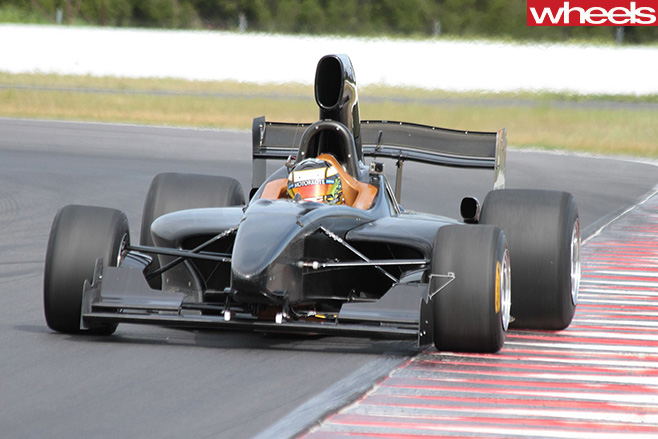
Commented Ramsay: “At last, an open wheeler with real muscle, which will provide drivers with a real challenge – if you can put one of these on pole, you will have earned it.
“Now we just need other serious teams and drivers to join us, for what I believe will be a terrific formula and series.”
In a further boost, the prototype FT5000 car recently completed a full 65-lap test day at Phillip Island without a single mechanical issue, dipping in to the 1m24s with driver Tim Macrow at the wheel.
Bob Whyms Automotive was established in Sydney in the mid-1970s and its background is in air-cooled VWs.
Hot Tuner 2016 is brought to you by Valvoline SynPower
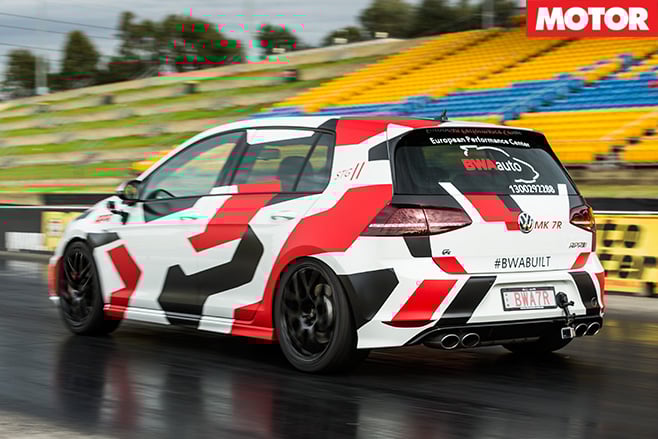
These days there aren’t so many Beetles clattering around but the business, now branded as BWA and concentrating on marques such as Porsche, VW, Audi and Mercedes, remains a family concern, with Craig Whyms – who happily admits he lives and breathes this stuff! – arriving at Hot Tuner with a 2016 MkVII Volkswagen Golf R.
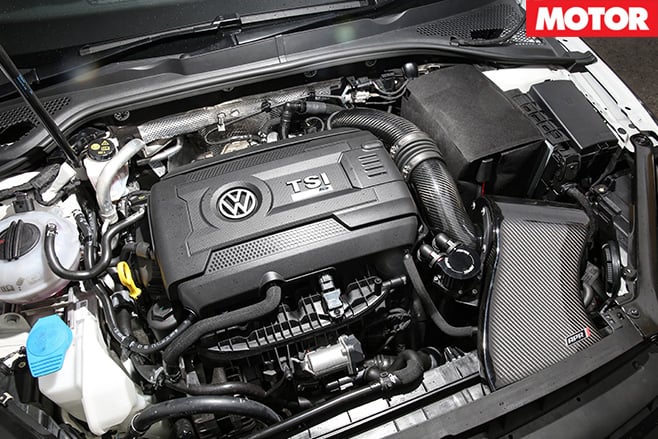
Of course, the Golf R is here because it’s enhanced. BWA has hardware and software relationships with several international tuning-tech companies, with this particular Golf R’s direct-injection turbo engine upgraded with APR tech.
But this Golf R has had a bit more thrown at it, taking an internally standard engine to a sensible maximum at a cost of around $9K. Just as hot-rodders have done for decades, the BWA ‘stage two’ package concentrates on better breathing, with a free-flowing air-intake system and a larger intercooler.
On the other side of the whistle there’s a higher-flow downpipe (standard with this level of power). With more boost arriving earlier in the revs, there’s a requirement for more fuel. But as Whyms explains, the standard injector hardware (with a new tune issuing the on/off orders) is up to the task. Aussie models have eight injectors (apparently some other international-market Golf Rs only have four) so there’s fuel flow like it’s coming from a firehose.
The brakes are sourced from the US – $4800 worth of Stop Tech 355mm rotors squeezed between six-piston calipers. On this Golf R, they’re backed up by standard-size rears that team well with the big fronts for fast road use.
As Whyms points out, those big brakes need larger-than-showroom wheels, this fire-breather being shod with 18 x 8.5-inch Kings and 235/40 Yokohamas.
German-made KW Club Sport is the brand and model on the suspension. Whyms notes that, although great on track, these ones are set-up a little softer than customer spec in order to cope with the jolts of Sydney’s more chopped-up roads.
All up, $20K worth of extra stuff has created an 11-second street weapon. “It’s absolutely daily driveable, good manners and all that,” says Whyms. “But capable of fun when it needs to be.”
SPECIFICATIONS Drive: all-wheel Engine: 1984cc inline-4, DOHC, 16v, turbo Gearbox: 6-speed dual-clutch Suspension: coil-overs, A-arms, anti-roll bar (f); multi-links, coil-overs, anti-roll bar (r) Brakes: 355mm ventilated/slotted discs, 6-piston calipers (f); 310mm ventilated discs, single-piston calipers (r) Wheels: 18 x 8.5-inch (f/r) Tyres: 235/40 ZR18 (f/r); Yokohama Advan AD08R
PARTS AND PRICES APR Stage 2 tune: $1874 Intercooler: $1799 Transmission tune: $1299 Exhaust downpipe: $1564 Intake: $850 Inlet pipe: $170 Suspension: $4900 Brakes: $4800 Wheels/Tyres: $2500 Total Mods cost: $19,756 Vehicle cost (mSrp): $55,240 Total cost: $74,996
AN ALL-wheel-drive supercar-baiting Mercedes-AMG E63 will soon arrive in Australia. We get an early taste of it in Portugal.
WHAT IS IT? The new E63 carries on where its predecessor left off. Being based on the still-fresh W213 Mercedes-Benz E-Class gives it the best possible start, with a brilliant cabin and a toyshop’s worth of standard kit. Power comes from a retuned version of the turbo 4.0-litre V8 that we’ve already seen in the C63 and AMG GT, with the S version delivering a mighty 450kW. The big news is the arrival of all-wheel drive – a first for right-hand drive – but don’t worry, there’s still a ‘drift mode’ that turns it into a pure rear-driver. The most powerful E63S will be going on sale in Australia around July next year, with the decision still being mulled over whether to also bring the 420kW ‘standard’ car.
WHY WE’RE TESTING IT Australia buys a higher percentage of AMG products against total Merc sales than any other market, with the new E63 set to build on the work started by its predecessor. The new car is faster than before – it’s the fastest production E-Class ever – but it also adds a generous dose of new technology, plus the dynamic stability of the all-wheel drive system. There’s still a big, loud V8 engine to provide huge performance, but Mercedes also claims the new E63 is more usable day-to-day.
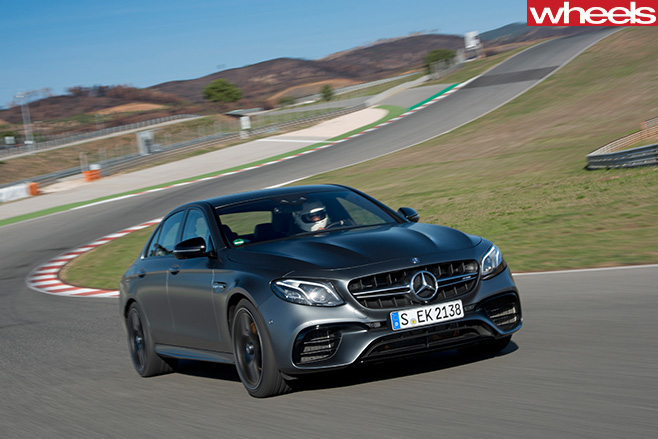
THE WHEELS VERDICT AMG knows how to give its buyers what they want: huge performance, operatic soundtracks and all the comfort and usability of the Mercs they are based on. The E63 is an incremental step rather than a radical departure, but the arrival of the standard 4Matic system giving it enough grip to match its performance. Some purists might regret the loss of the old 63’s rear-drive character, but it’s hard not to see the towering appeal of a car that combines practicality with so much performance.
PLUS: Straight-line speed; twin-turbo V8’s vocals; comfort; drift mode keeps rear-drive hooliganism alive MINUS: All-wheel drive kills some character; some low-down turbo lag
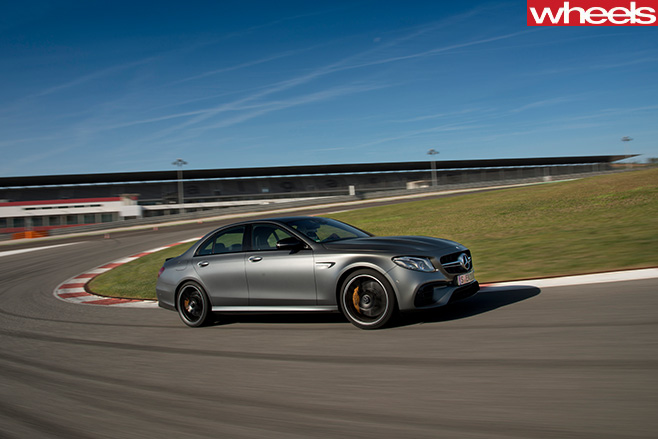
Don’t worry about the new tech; what needed to stay the same is unchanged. At heart the E-Class remains a complex car based around a simple mission, with a big V8 up front supplying a surfeit of firepower. The engine is a developed version of the 4.0-litre eight that we’ve already seen in the C63 and AMG GT, but with new twin-scroll turbochargers nestling in its vee to boost power up to 450kW in the brawnier S version. That makes it the most powerful engine ever fitted to a factory E-Class – there’s also a fractionally less brawny 420kW non-S version, but that’s not yet confirmed for sale in Australia.
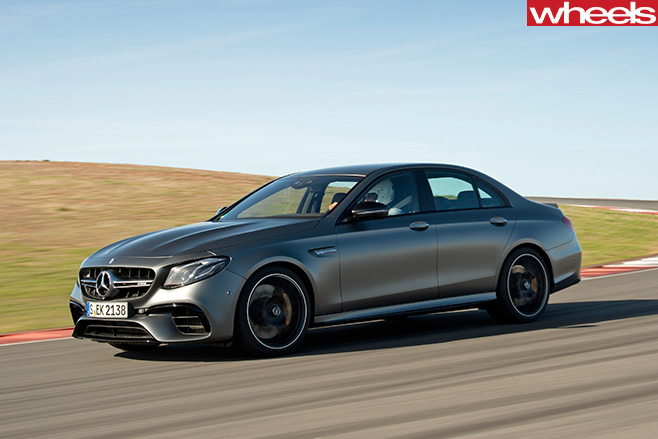
The engine pulls from the basement to the penthouse; there’s some low-down lag if you go looking for it, but left in Drive the new nine-speed auto is adept at kicking the turbos into life. At the top end there’s an entirely Affalterbach-appropriate level of Gotterdammerung as the engine closes in on its 6800rpm limiter, and even with the switchable exhaust in its quiet mode there’s plenty of V8 burble. Hands down, this is a more charismatic engine than those in the outgoing BMW M5 or Audi RS7.
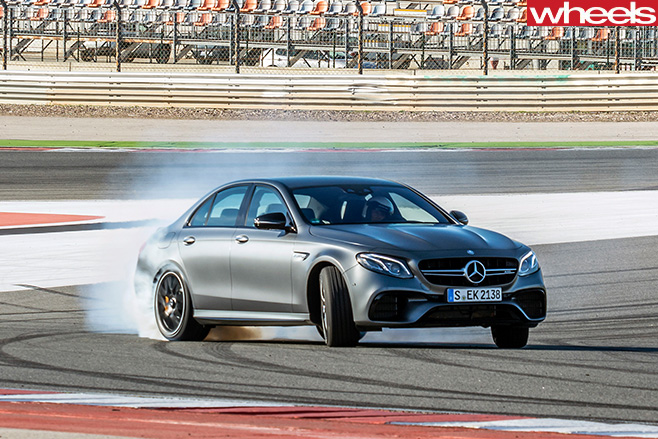
Yet something has been lost in the transition to all-wheel drive. The last E63 stayed rear-drive in right-hook markets only because of Merc’s well documented cock-up in making its all-wheel-drive system incompatible with having a steering wheel on the proper side; in left-hand-drive markets most buyers took the 4Matic system as soon as it was offered. But the combination of a surfeit of power and a deficit of driven wheels gave the previous 63 a brutish character that suited it perfectly – happy to waft but requiring full respect when pushed hard.
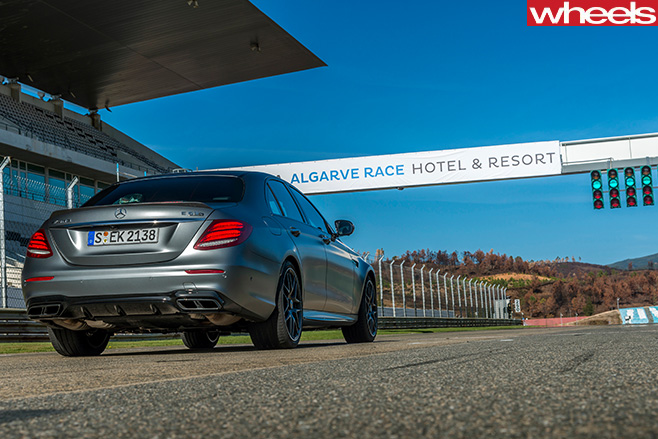
There’s no official word on price, although we’re told the new car shouldn’t carry too much of a supplement over the outgoing E63; figure around the $250,000 mark with more standard kit including the full battery of active safety and assistance systems from the standard E-Class, including Drive Pilot. We know that AMG buyers tend to be looking for the fastest and flashiest but it’s worth pointing out that the new ‘entry level’ AMG E43 is pretty exciting in its own right, and comes with a serious saving. But as AMG has long since proven, nothing succeeds like excess.
SPECS Model: Mercedes-AMG E63S Engine: 3982cc V8, dohc, 32v, twin-turbo Max power: 450kW @ 5750rpm-6500rpm Max torque: 850Nm @ 2500rpm-4500rpm Transmission: Nine-speed auto, all-wheel drive Weight: 1955kg (EU) 0-100km/h: 3.4 sec (claimed) Fuel economy: 9.1 lit/100km (EU) Price: $250,000 (est) On sale: July 2017
