
AN ALL-new Jeep Compass unveiled in the US today is shaping up to be the iconic US brand’s most important model.
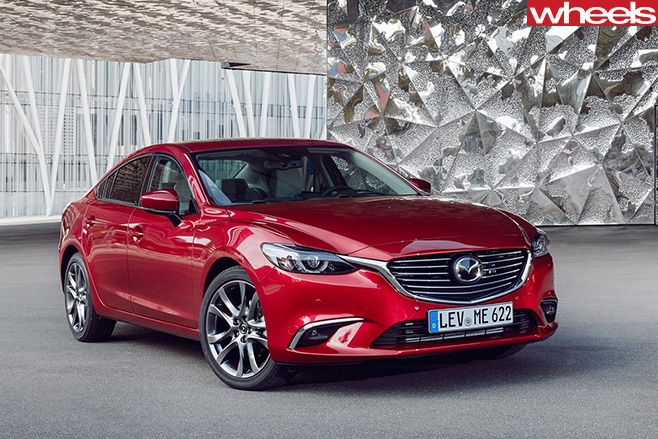
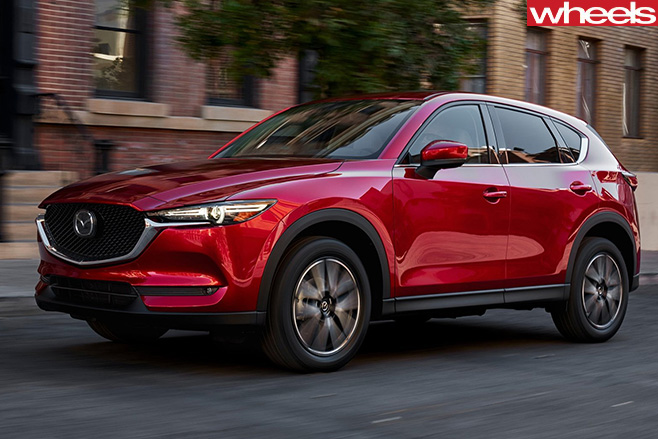
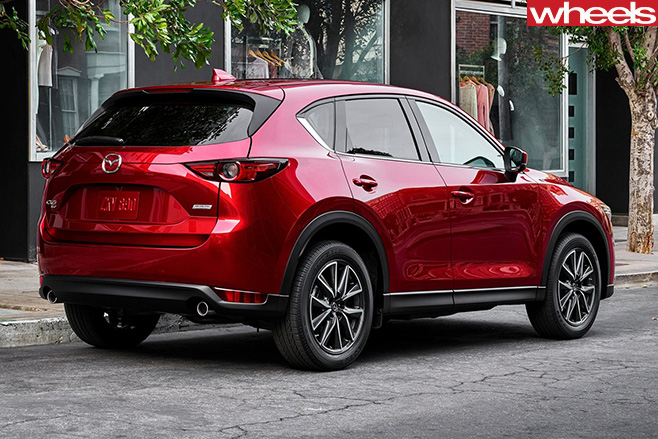
The second generation of the Mazda CX-5 fighter – launched at the Los Angeles Motor Show in the brand’s 75th anniversary year – is its best chance yet to shake up the booming mid-size SUV segment.
Sharing nothing with the smaller – and dated – car it replaces, the all-new Compass should be more sharply priced when Australian sales start late in 2017, thanks to low-cost sourcing from a box-fresh green-field site in India – the home of all right-hand-drive production.
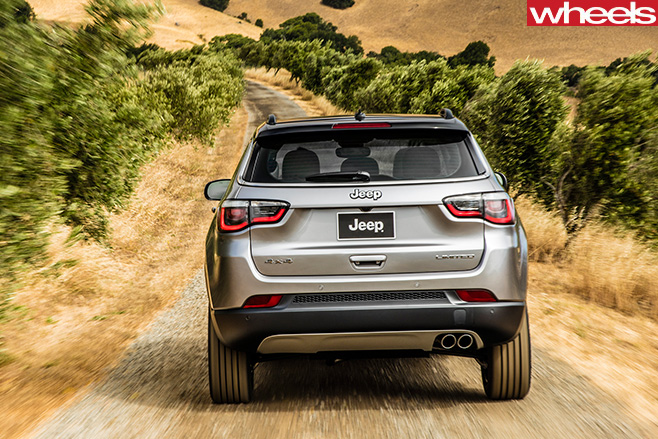
Expect prices to start from about $30,000 for the entry-level version.
The new Compass is based on the Small Wide 4×4 platform that also underpins the Renegade. Jeep claims the Compass will be “the most capable compact SUV with the most advanced 4×4 systems in its class”, even though the basic architecture is based on a transverse engine/front-wheel-drive layout.
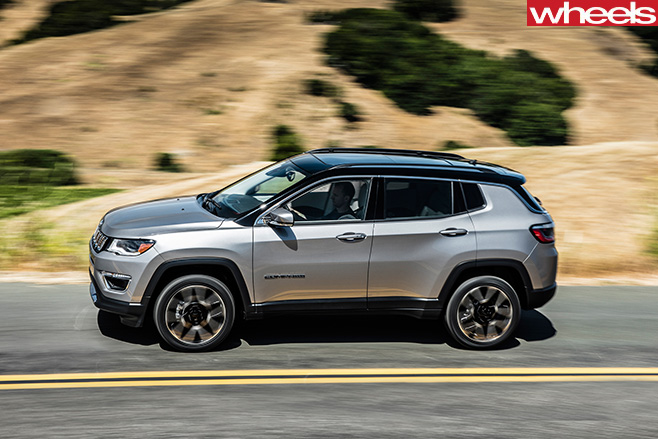
Engine choices for Australia are yet to be confirmed, but expect a spread of four-cylinder engine applications including a 1.4-litre four-cylinder turbo, 2.0-litre turbo-diesel, and 2.4-litre naturally aspirated unit. Front-drive versions will use six-speed transmissions, while a nine-speed auto is earmarked for AWD variants.
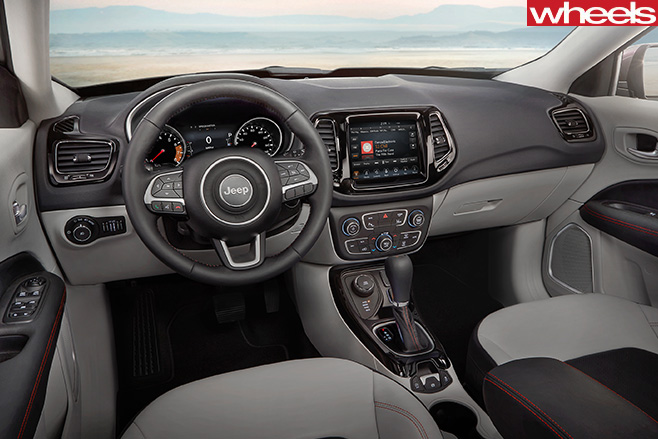
The new Compass is a complete visual departure from the previous model, gaining a shrunken Jeep Grand Cherokee look to give it an upmarket and international appeal. While traditional Jeep design cues such as the seven-slot grille and trapezoidal wheelarches abound, the newcomer ushers in a chrome ring embellishment that circles the entire turret of the vehicle, as well as LED headlight detailing meant to evoke the human eye when lit.
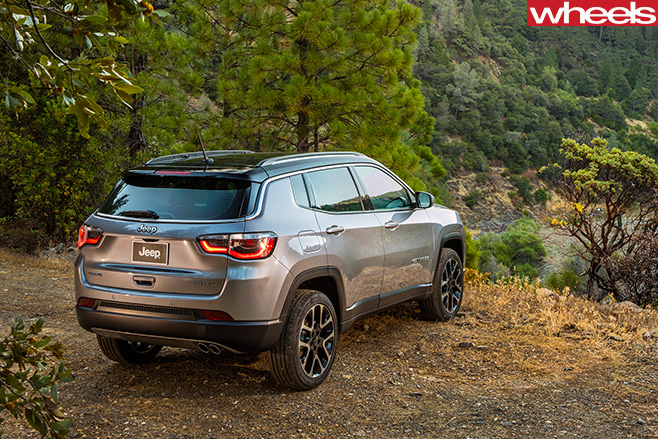
At a tad under 4.4 metres long, 1.82m wide, and 1.64m high, the Compass’s dimensions are smack in the middle of its class. Its 2636mm wheelbase is about 60mm longer than the Renegade, allowing for full five-seater capability and 438 litres of cargo capacity – extendable to 1251L with a lowered split/fold backrest.The cabin will feature light as well as dark contrasts in line with more sophisticated international consumer tastes than what previous compact Jeep efforts such as the old Compass and its boxy Patriot twin (now discontinued) could muster.
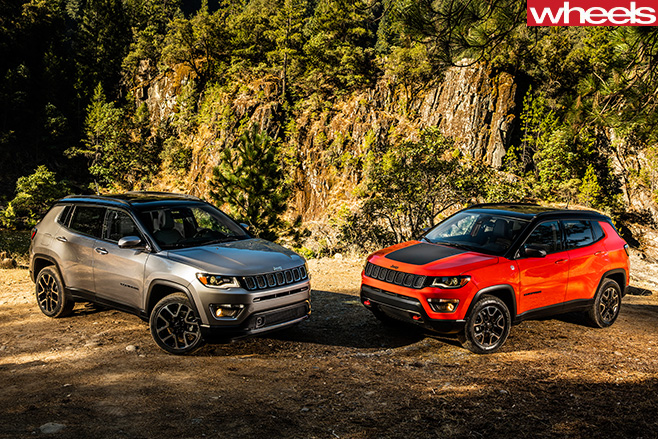
Active safety tech such as lane departure warning, blind spot monitoring, rear cross traffic alert and hill descent control systems are also part of the package, along with adaptive cruise control.
A single rather than dual transfer case with rear-axle disconnection is used in the interest of saving money and keeping weight and complexity down. AWD models do score Jeep’s Selec-Terrain switch offering automatic FWD or 4WD modes based on conditions and driving style. There are also modes for snow, sand, and mud. Testing the system included a visit to New Zealand’s Snow Farm near Queenstown.
Active Drive Low brings a 4.33 final drive ratio; a crawl ratio of 20:1, and up to 100 percent front/rear torque split.
Wheel articulation is up to 200mm. Part of that has to do with what Jeep calls its Chapman strut rear suspension set-up, which is a non-steering McPherson strut based design similar to the front end, but allowing for the greater movement of the wheel. The steering is electric rack and pinion.
Jeep reckons 1.8 million kilometres of accelerated testing have ironed out quality bugs; combine that with road-test simulators, and the figure jumps to 25.7m kilometres. Shakedowns have included Brazil and China.
Jeep also talks about greater structural robustness, in part due to the application of 64 percent high-strength steel and composite for crash and load management.
The Compass will also be built in Mexico, Brazil, India and China, making it Jeep’s most globally focussed vehicle to date.
Mazda’s legendary rotary engine will return in 2019 – but in a very different capacity to the sports cars that have helped shape the brand.
Rather than a high-revving engine for a new Mazda RX-7, the 2019 rotary will be an electric vehicle with a small rotary used as a generator, or range extender, to recharge the onboard batteries.
In response to tightening CO2 emissions targets in European and other regions Mazda research and development boss Kiyoshi Fujiwara confirmed an electric car was being developed.
“In 2019 we will introduce an EV,” said Fujiwara of the top secret project that evolves the Mazda2 RE development vehicle of 2013.
“We would be able to have two systems.”
In announcing it was working on the range extender technology years ago Mazda said it was considering developing the compact rotary engine for use as an external generator, where its unique configuration would make it much more compact than existing generators with cylinders and pistons.
He also said the rotary engine would play to one of Mazda’s most loved technologies.
“The range extender unit is one of our unique technologies, therefore even EV vehicles that technology can develop our brand image.”
For now the yet-to-be-named 2019 Mazda electric car is not planned for sale in Australia, with Mazda Australia managing director Martin Benders saying it was not necessary due to the regulatory environment and customer demand.
“We won’t be a priority market for it,” said Benders. “That doesn’t mean we won’t bring one out for evaluation or other things.”
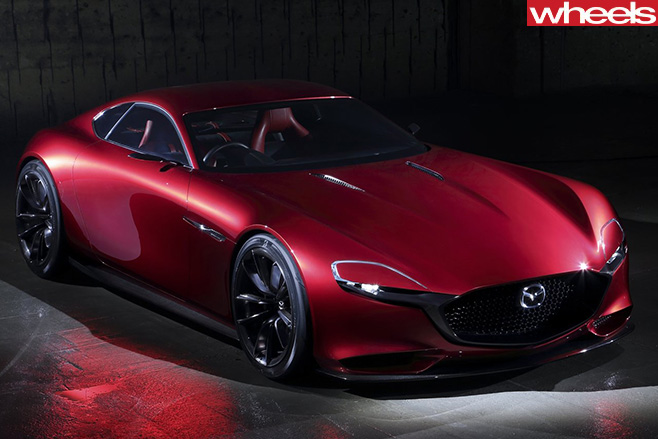
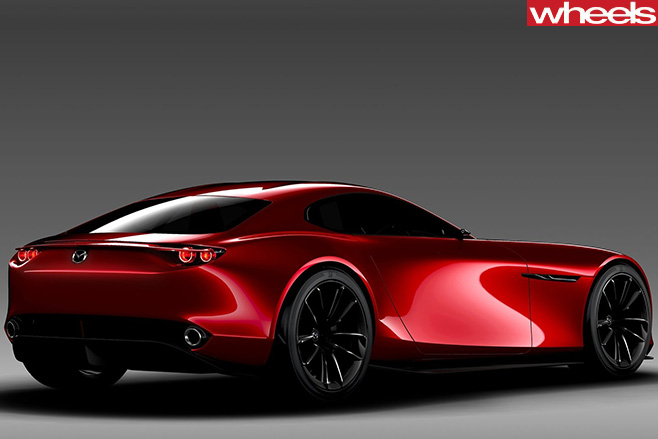
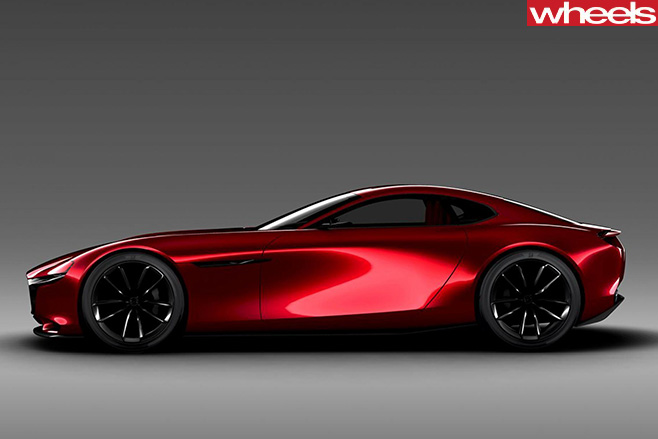
Of course the rotary most Mazda fans are awaiting is a production version of the sleek RX-Vision concept that was designed to reaffirm the company’s commitment to reintroducing a rotary. Rumours suggest Mazda could revive the RX-7 nameplate for such a car.
“The RX-Vision is our vision model for our company … therefore the future I’d like to introduce the rotary engine into RX-Vision [production] models,” said Fujiwara.
Fujiwara confirmed Mazda was developing “completely new technology” for the new generation SkyActiv rotary engine, with the ignition system one area of focus.
He said no decision had yet been made on whether to employ turbocharging for the new generation rotary, something that indicates the earliest we could see it would be about 2020 – coincidentally the 100th anniversary of Mazda.
Fujiwara ruled out a rotary hybrid initially, highlighting that the weight of the batteries and the hybrid system would detract from the rotary sports car philosophy of light weight.
“Most of the rotary fans … are waiting for a pure sports car without any electrification,” he said. “As a first step I’d like to try the pure [version of rotary].”
However, he didn’t completely rule out a hybrid rotary, saying that if the weight of batteries reduced significantly it could make sense.
Mazda Australia has asked for the 2.5-litre turbocharged four-cylinder developed for the CX-9 to be used in other models, including the just-revealed second generation CX-5.
Speaking at the Mazda CX-5 unveil even in Hollywood, California, Mazda Australia managing director Martin Benders said Mazda Australia had requested the 170kW/420Nm engine from the Mazda CX-9 be used in cars such as the CX-5.
With an emphasis on torque and low rev flexibility, the 2.5-litre turbo is more about relaxed motoring with more performance rather than setting lap times.
“We know that the engine’s based on the 2.5; the turbo doesn’t take up that much room in the engine bay, so it should be feasible, whether it’s possible or whether they want to do it is another thing.”
“We think that a car line sells better if you give people more as you go up the grade. So if you go Mazda3 2.0-litre or 2.5, or even CX-5 currently, from a 2.0-litre to a 2.5 petrol … then it’s more interesting.”
Instead Mazda would pitch 2.5-litre turbo models as more luxury performance models – and cars that could include more equipment.
Australia is only just getting used to the boom in SUVs – both the number of models available and how many are being sold – yet already there’s a newcomer set to steal its thunder: the CUV, or crossover utility vehicle.
The man in charge of General Motors design, former Holden design boss Mike Simcoe, says CUVs are only just getting started.
“There’s a change you can see in the marketplace which is a place somewhere between SUVs and traditional vehicles, hatches and sedans … and it’s a market that’s growing very quickly,” Simcoe told Wheels at the recent Los Angeles motor show.
“Customers clearly like a higher driving position, and as the market is filled with vehicles that are taller and have higher driving positions there’s more need for customers to be part of that.”
Simcoe said the imminent growth in CUVs was in response to customer demand and an evolving market, with developed markets, in particular, demanding more models and variants.
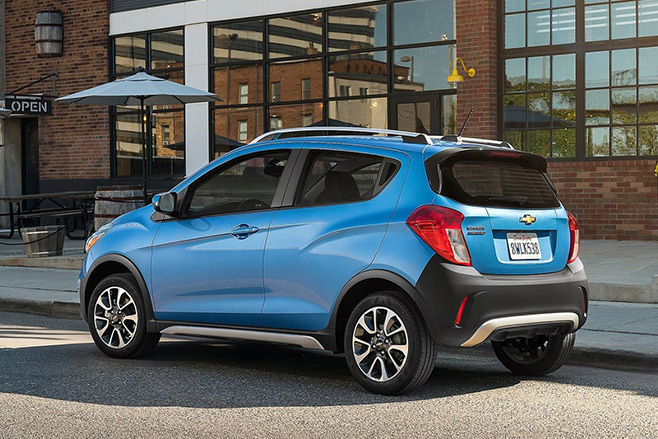
“In the same way that SUVs are working with consumers, CUVs will start doing the same thing. Will they overtake [passenger cars], we’ll see, but the trend will continue.”
No surprises, then, that GM, Holden’s parent company, is working on a range of CUVs.
As part of a 2017 model offensive Opel last week confirmed it would add two new CUV models to its range, one similar in size to the Barina and one similar to the Holden Astra.
Then there’s the Subaru Outback-style version of the upcoming Opel Insignia; sources say the high riding version will be sold in Australia as a Holden.
However, Simcoe believes the makeup of CUVs will continue to evolve. Rather than just high riding versions of existing hatches or wagons – such as the Subaru XV or Audi Allroad – car makers will begin developing specific bodies and designs. It may be as simple as the Mercedes-Benz GLA, which uses the design language and underpinnings of the A-Class but in a slightly chunkier and more spacious body.
“You’ll see more and more specific proportions related to CUVs and SUVs,” said Simcoe.
For those needing some space for the family, without wanting to give up driver enjoyment, this segment is for you. We take a look at medium and premium medium cars, all under $60,000, to bring you the best value thank to Wheels 2016 Gold Star Cars.
BEST VALUE MEDIUM CARS UNDER $45,000
The Subaru Liberty is the whole package. As one of the cheaper options in its class ($29,990), it comes with more equipment than many of its rivals. As standard, the Liberty sedan receives dual-zone climate control, automatic headlights and wipers, a reversing camera, leather steering wheels, a full size spare and metallic or pearl paint in nine different colours. It also includes Subaruu2019s EyeSight active safety suite; adaptive cruise control, lane departure warning and automatic emergency braking. Add to that its all-wheel drive system and youu2019ve got a lot of gear for a car that comes in under $30,000.Without these features, the Liberty probably wouldn’t have taken top podium, because it’s got a six-month service interval and uses premium unleaded. But with all that gear and a fuel consumption figure of 7.3L/100km (not the thriftiest but also not the worst), it deserves top spot.

BEST VALUE PREMIUM MEDIUMS UNDER $60,000

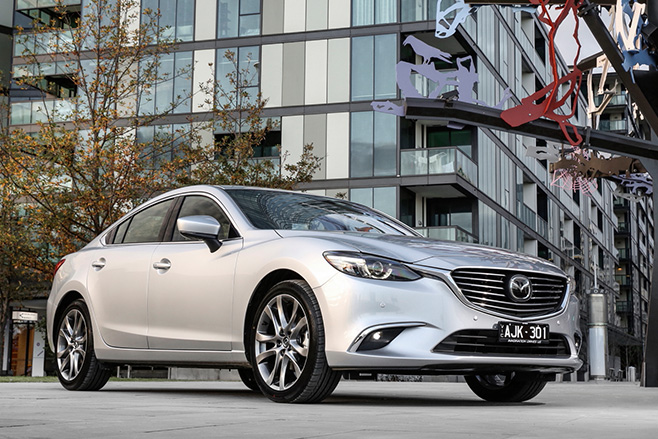
It all came down to price, equipment level and power for the two German rivals, The Volkswagen Passat and the Audi A4. The Passat 140 TDI Highline and the Audi A4 1.4 TFSI Sport aren’t exactly equal. The Passat is at the high end of the model range ($47,490) and still costs $8,000 less than the base model A4 ($55,500).
So in buying the Passat, you’re getting more for less. Add to that the more powerful (150Nm and 30kW) and fuel efficient (4.8L/100km) 2.0-litre turbo-diesel engine of the Passat and it’s got enough points to sit in gold position.
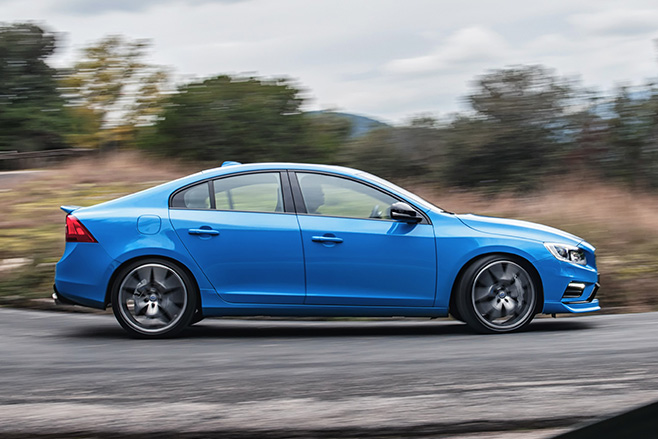
That’s not to say the other candidates aren’t still good value. The Audi A4 holds its worth thanks to a 59 percent three-year resale figure, while the Volvo S60 uses less fuel and costs less to insure than both the Audi and VW.

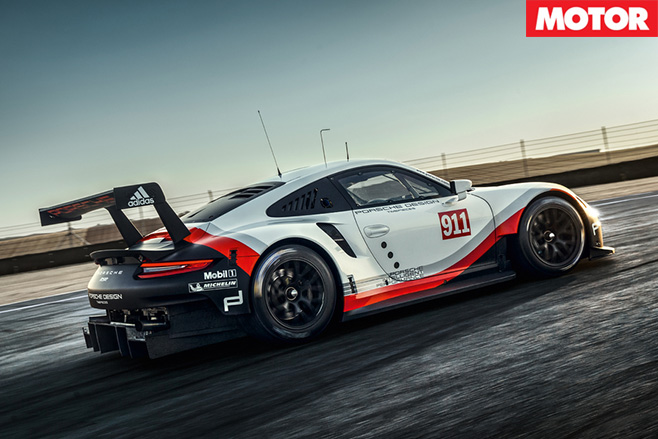
Porsche has literally moved forward and unveiled a mid-engined 911 RSR racecar primed to seize victory back from new turbocharged rivals in the Le Mans 24 Hours GT category.
The German brand states that its “all-out newly developed GT racer … makes full use of the breadth of the Le Mans 24 Hours GT regulations” and that includes “the ultra-modern, flat-six unit positioned in front of the rear axle.”
“While retaining the typical 911 design, this is the biggest evolution by now in the history of our top GT model,” admits head of Porsche Motorsport, Dr Frank-Steffen Walliser.
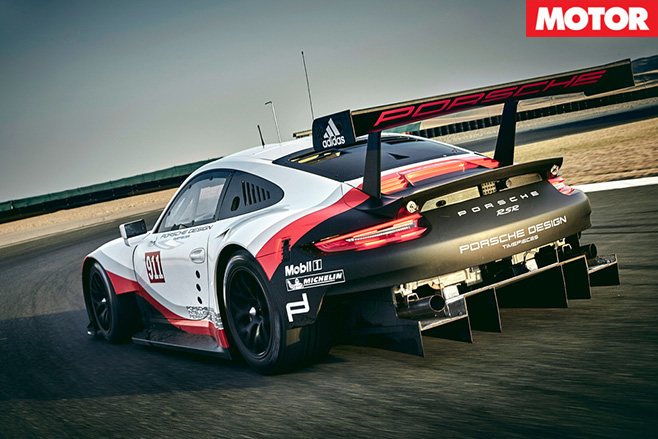
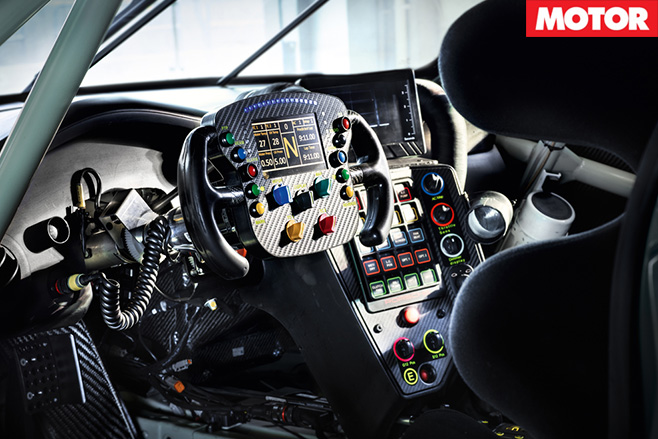
Porsche claims all components have been “designed from scratch” including the engine, (mostly carbonfibre) body structure, aerodynamics, adjustable double-wishbone front and rear suspension, and six-speed sequential transmission (with steering wheel shift paddles and three-disc carbon race clutch leading power to 310mm-wide Michelin rear slicks).
Four-wheel electro-hydraulic steering features and, in a sign of the times, the RSR even gets a radar-based collision warning system so that “even in the dark, the faster LMP prototypes are detected early enough and misunderstandings can be avoided.”
Although Porsche last won the LM-GTE Pro class at the 2013 Le Mans, was pushed to third the following year, fifth last year, and seventh this year behind the Ford GT (first place) and 488 GTE (second), the company is clear about sticking to natural aspiration.
“For the 911 RSR, we deliberately focused on a particularly modern and light normally-aspirated engine, as this gave our engineers immense latitude in developing the vehicle,” claims Dr Walliser.
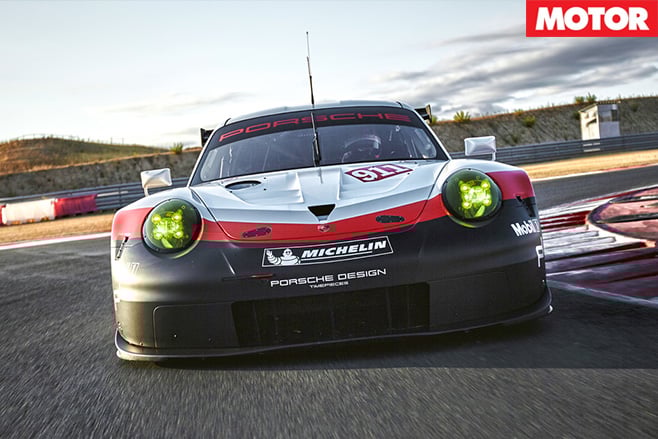
Porsche is no doubt hoping the mid-engined 911 RSR is its GT championship comeback kid – and follows the 2015/16 LMP1 class wins of the 919 Hybrid – when its two factory entries start racing in 2017. It claims the latest racecar has covered 35,000km in testing, more than any other Porsche GT model.
The McLaren “Hyper-GT” is real. The British sports car maker confirmed overnight it will build more than 100 bespoke grand tourers with an anticipated price tag of about $3.3 million each.
But you’re not going to be able to buy one – McLaren says they’re already sold out.
Revealing overnight that the rumoured hypercar was indeed a real thing and due in 2019, the carmaker said the spiritual reincarnation of the 1990s-era McLaren F1 would be “the most exquisitely crafted and luxurious road-going McLaren to date”. Only 106 – the same number of McLaren F1s built over its eight-year production run – will be made.
It also teased a single image of what form the mid-engined hypercar would take, with the classic McLaren F1’s 1+2 seating arrangement placing the driver in line with the centre of the car, with the other two seats fanning out behind it. What appears to be a wrap-around dash flicks out to either side.
The BP23 is expected to use similar lifting doors as used on the McLaren P1 hypercar revealed in 2013. However, they’re expected to extend further into the roofline to allow easier access to the rear seats.
What will power the BP23 remains deeply under wraps, but the “Hyper-GT” hints that whatever the drivetrain is, it will be tuned more to loping along freeways than smashing Nurburgring lap records.
We can get a sense of how McLaren is thinking, though. The McLaren P1 was thought of as a modern-day spin on the F1, only with two seats instead of three. It used a twin-turbo 3.8-litre V8 firing out 542kW and 720Nm, but when paired with a Formula One-style kinetic energy recovery system than can also plug into a home charging system, the electric motor steps performance up to 674kW and 980Nm. Its top speed is electronically limited to 350km/h. The BP23 is expected to build on those numbers.
The P1 also introduced McLaren’s active ride height, and used a large adjustable rear wing to give ground effect suction and optimised downforce. Its Instant Power Assist System and F1-inspired drag reduction system give the P1 an instant boost of power and straight-line speed.
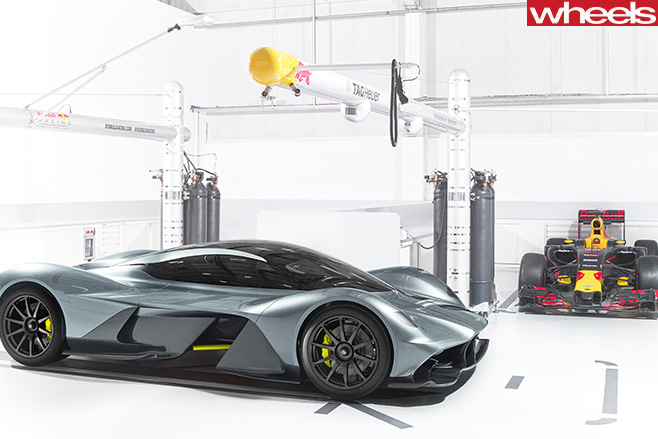
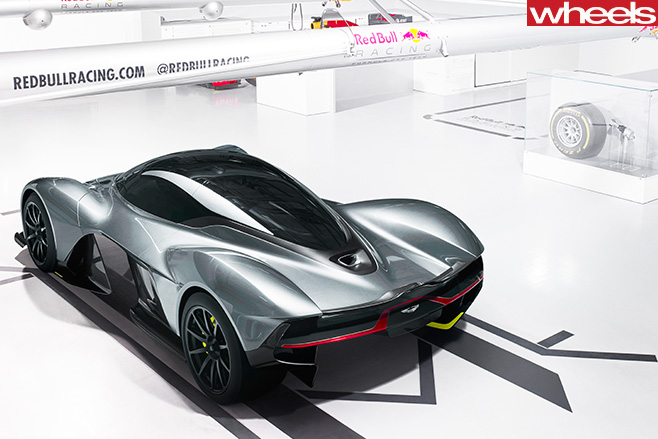
But don’t worry. Just over the hill from McLaren, rival sports car brand Aston Martin is working on a hypercar in conjunction with Formula One team Red Bull Racing, called the AM-RB 001.
Unlike the BP23, the AM-RB will rely exclusively on hydrocarbons, and no electrons, for propulsion, via an all-new, mid-mounted, high-revving, naturally aspirated V12 engine.
Time to make that phone call.
Car makers seem determined that battery-powered vehicles won’t be switched off for a third time.
The electric car died in the early 20th century and again in the 1970s, but the range of options is set to be extended extensively from 2018 onwards.
Volkswagen Group, looking to combust the diesel-gate saga into history as quickly as possible, has announced the most aggressive EV strategy yet.
It plans to reach 2025 with about a quarter of its sales comprising vehicles powered by electricity alone. The company embodied its ambitions at September’s Paris motor show with the VW ID concept – a hatchback it believes will sit alongside the original versions of the Beetle and Golf for automotive significance.
Powered by a 125kW electric motor claimed to be capable of a 600km range on a single charge, VW also says mass appeal will be aided by it being priced similarly to a Golf TDI – meaning about $35,000.
Its electrification intentions are so serious, Audi has abandoned its long and dominant love affair with Le Mans to focus its efforts on the relatively new electric-focused motorsport series Formula E.
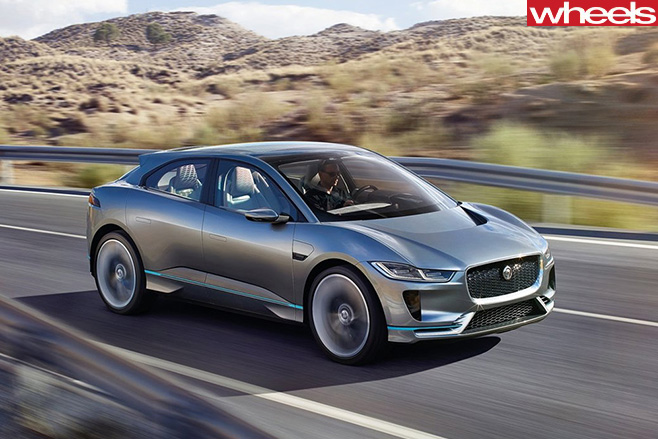
Fellow Le Mans winner Jaguar is following suit – both with Formula E entry and an electric SUV in 2018. The British brand unveiled its i-Pace this week at the 2016 Los Angeles motor show, a vehicle that will match the Q6 e-tron’s 500km range – and its 300kW/700Nm outputs matching the full potential of Mercedes-Benz’s new EQ electric-drive system.
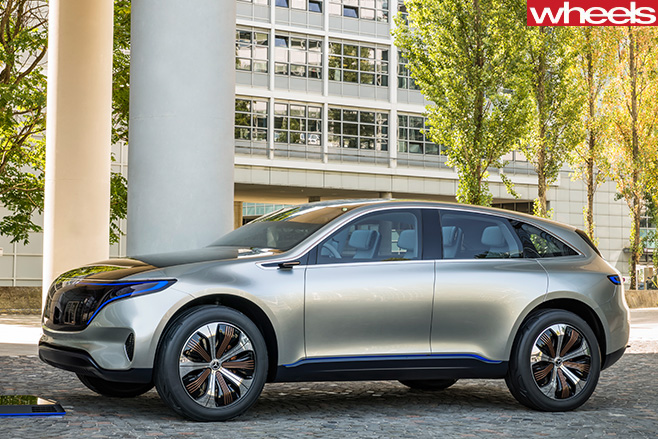
Boss Dr Zetsche said Mercedes had the ability to cover every vehicle segment from the A-Class to S-Class with EQ models thanks to a scalable steel/aluminium/carbon fibre architecture that can be varied in both wheelbase and width.
Scalable lithium-ion battery packs also allow for varying performance from the dual electric motors between models.
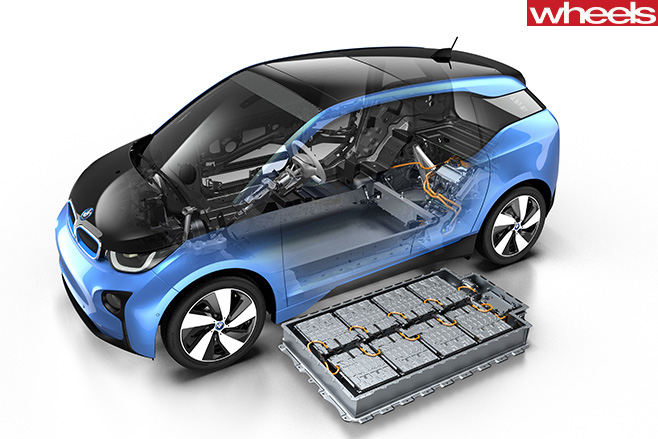
BMW established its electric-focused sub-brand – i – back in 2011, with the i3 EV launched two years later (though also with a range-extender variant supported by a two-cylinder petrol engine). This year an updated version was released with an extra, higher-energy variant capable of almost doubling the regular i3 EV’s range to 390km.
The company has since broadened the i division’s remit to include other technologies including autonomous driving, and there were reputable reports around the Paris show that BMW executives were holding crunch talks about its EV strategy.
Global sales of the i3 were only 25,000 in 2015, and its only other EV was a $300,000 plug-in hybrid, the BMW i8.
It’s no coincidence luxury car makers are mostly leading the way, hitherto dabbling only with the halfway-house hybrids. While there’s an obvious need to continue advances in efficiency to meet ever-stricter emissions regulations and penalties, the T-word has been a grumblingly acknowledged success story across boardroom tables.
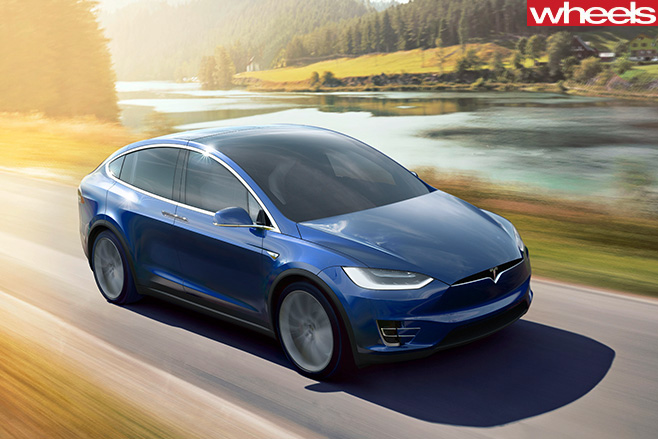
Tesla has achieved a level of near-fanaticism, and certainly a public perception, that usually requires decades of heritage and billions of marketing dollars. It’s hard to believe the start-up’s first entirely in-house creation, the Model S, was launched only four years ago.
It has recently followed that with the Tesla Model X SUV, and in late 2017 its most serious play for volume sales comes in the form of the Model 3 compact car that will cost from about $60K – half the price of the cheapest Model S.
That would account for about a fifth of the global EV sales estimated for 2025 by global industry analyst IHS Automotive. (Goldman Sachs estimates it will be mostly hybrids that establish a 25 per cent market share for electrified vehicles by 2025.)
It suggests either the forecast is too pessimistic or manufacturers are overly optimistic, though car makers employ their own crystal-ball-gazers to ensure they don’t invest billions on a product no-one will buy.
It certainly seems the next five years will be the turning point for EVs, as the new wave coming on line are all equipped with the potential to overcome at least two of the three key negatives that have traditionally hindered EV sales: high price tags, range anxiety and long recharging times.
The likes of the VW ID and Tesla Model 3 will be particularly affordable, and government incentives would be expected to continue where they’ve helped EV sales in markets such as Europe, California, the UK, and China, the world’s largest car market.
More expensive EVs such as the Q6 e-tron, i-Pace, Mission E and higher-end Benz EVs are teasing 500km ranges.
And if charging networks continue to expand slowly, charging times are shrinking rapidly.
Porsche says 80 per cent of the Mission E’s battery will be able to be recharged in 15 minutes, and Mercedes is claiming as little as five minutes for a 100km boost from its fastest-charging system. The disclaimer is that these charging capabilities will require correspondingly powerful outlets that won’t come cheap.
With the Turnbull government proving to be less progressive than initially promised, subsidies aren’t likely to help Australian buyers any time soon.
It hasn’t helped a local scenario where the Mitsubishi i-MiEV and Holden Volt have been and gone, and the remaining battery cars – the i3 and Nissan Leaf – have both slumped in 2016 for combined sales of 119 units to the end of October.
Can things change? Let us switch back onto this in 2020.
BATTERIES ONLY INCLUDED: New EVs confirmed
2017 Tesla Model S Hyundai Ioniq EV (TBC for Australia)
2018 Audi Q6 e-tron Jaguar i-Pace Tesla Model 3
2019 Electric Mini
2020 BMW X3 EV Mercedes-Benz EQ SUV Porsche Mission E Volkswagen ID
2021 BMW i5 (badge, timing TBC)
One hundred Australians have signed up to buy an Alfa Romeo Giulia QV ahead of its February local launch – and without even knowing the price.
Other specifications for Italy’s M3-fighting medium sports sedan have been fully detailed, however, with the 2.9-litre twin-turbocharged V6 petrol engine delivering 375kW at 6500rpm and 600Nm between 2500rpm and 5000rpm.
In this market (and the UK and Japan) only an eight-speed automatic transmission will be available – a six-speed manual is reserved for left-hand drive production only.
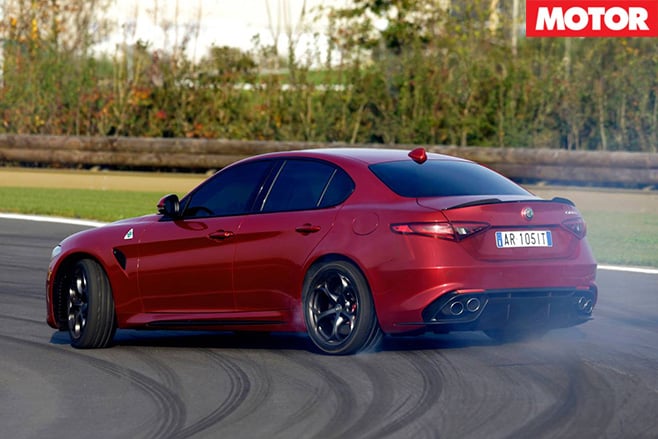
Other claims come thick and fast. Alfa Romeo asserts that its engine, with cylinder deactivation technology that can shut off three cylinders when cruising, is more frugal than the AMG and BMW pair with an 8.2L/100km consumption claim 0.1L/100km thriftier.
It further claims its rear-driver is the first in its segment with active aerodynamics thanks to a front splitter that automatically lowers at speed to reduce drag. And its Nurburgring lap time of 7min 32sec is still spruiked as a sedan record.
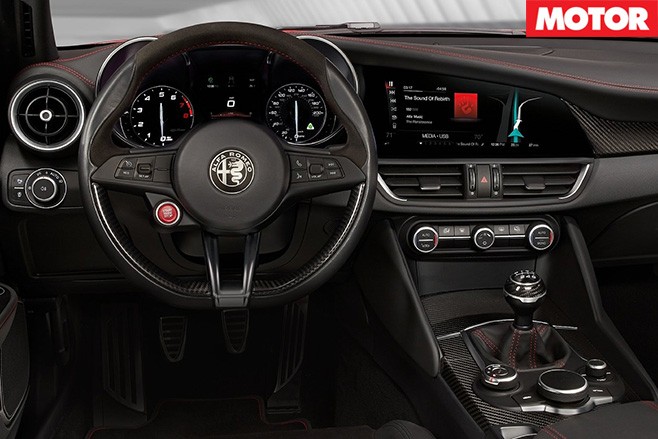
Carbon-ceramic brakes and Sparco racing buckets are on the options list, but standard equipment for our market is confirmed to include 19-inch alloy wheels, swivelling bi-xenons with auto high-beam, leather/Alcantara sports seats with full electric adjustment, dual-zone climate control and 8.8-inch colour screen with nav and 14-speaker Harman Kardon audio.
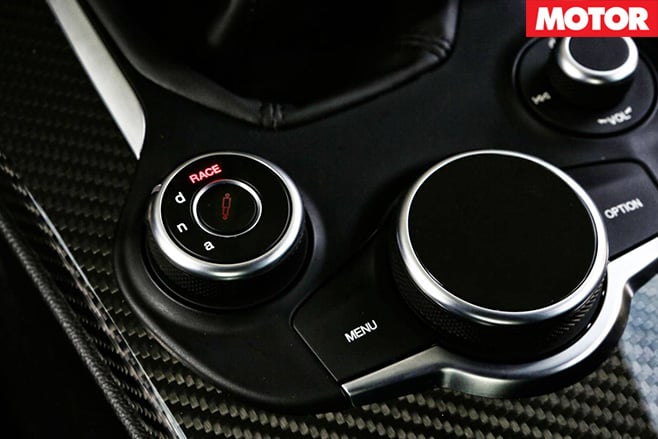
Although pricing isn’t yet released, expect the Giulia QV to be priced under $150,000 from just after its local public debut in southern Victoria at the Alfa Romeo Portsea Polo event on January 14, 2017.
Alfa’s comeback kid versus the establishment will certainly be one of 2017’s great showdowns.
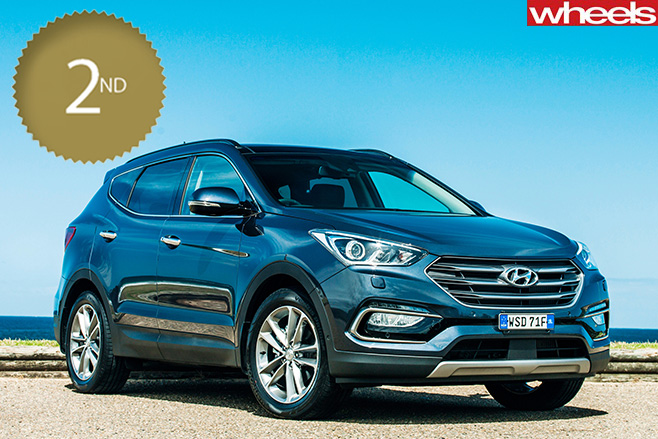
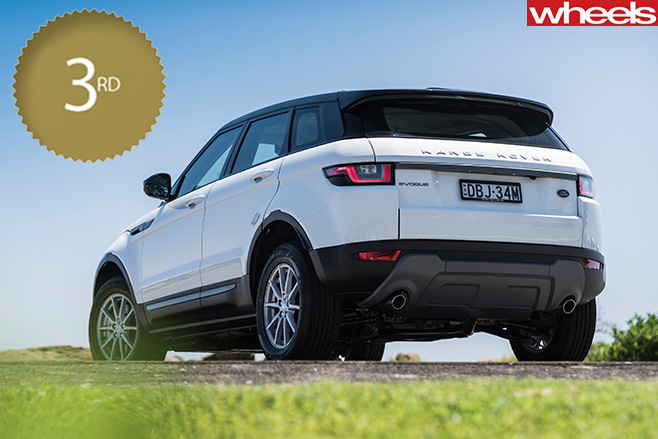
If you want it all: the label, the space, and all the tackle then the Kia Sportage, Hyundai Tucson and Range Rover Evoque are worth a look.
Kia Sportage Platinum
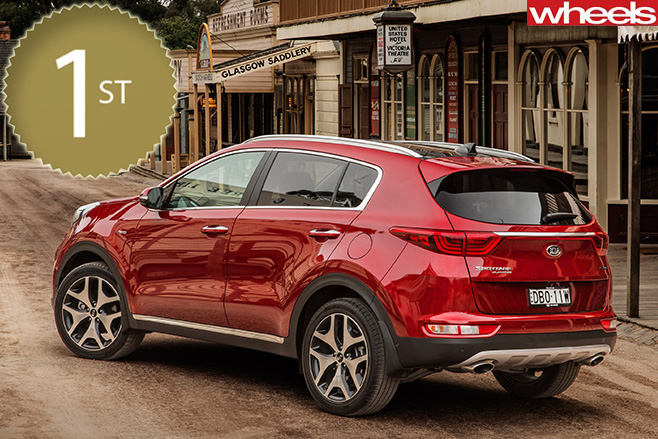
A diesel, all-wheel-drive-only affair sees Kia’s priciest Sportage, the Platinum, triumph on the back of a catalogue of cash-saving credentials. The 2.0-litre oiler gives a stout 400Nm with 6.8L/100km cycle, backed up by cheap-as insurance, a convenient 12-month service interval and a confidence-inspiring seven-year warranty.
The only field it didn’t rank first in was depreciation. The Sportage Platinum’s value equation is as impressive as its cabin finish, refinement, luxury and active safety equipment, and efficient engine.
Hyundai Tucson Highlander
Range Rover Evoque TD4 150 Pure
MORE GOLD STAR COVERAGE
WHEELS GOLD STAR VALUE AWARDS
What if someone could expose the hidden costs, crunch the numbers, present the data, and draw conclusions about how to best spend your hard-earned on a brand new car? Enter Wheels’ annual Gold Star Value Awards.
Find out more
BEST LARGE SUV/4WD
A large SUV or 4WD is a great solution for those with a sense of adventure.
View the results
BEST MEDIUM SUV 7-SEATER
An SUV that’s nimble enough to traverse the city-scape, but with added utility.
View the results
