
BMW has a way of confusing people with the way it names its models, so let’s start by clarifying what this car is. Back when the 4 Series range emerged it was fairly easy to tell the difference between the 3 Series (four-door sedans) and BMW 4 Series (two-door coupes and convertibles). Then BMW went and made a four-door sedan with the same swoopy roofline as the 4 Series and had to come up with a new name, so it created the 4 Series Gran Coupe. Then the same thing happened with the 5 Series and 6 Series.
These days the ‘even’ number model ranges are the sportier looking ones, and this is one of those – a four-door 4 Series that looks better and is somewhat more exclusive than the relatively everyday 3 Series sedan.

STRENGTHS
- Engine. The 440i uses BMW’s new-gen turbocharged 3.0-litre inline six-cylinder producing a strong 240kW and 450Nm. It’s a real highlight of the package. Effortlessly torquey and tractable, it can be a pussy cat around town when you need it to be, and opens up with a glorious engine note and plentiful power when the road allows.
- Gearbox. Behind the brilliant engine is an equally impressive 8-speed automatic transmission. Shifts are almost undetectable when pottering about, and more than snappy enough in when sharp changes are asked for. It could be used in a case study about the effectiveness of the traditional torque converter auto in this era of iffy dual-clutch transmissions.
- Practicality. You read that right. The 440i somehow manages to retain adequate rear seat room and a cargo area that is in fact more useful than the 3 Series sedan on which it is based, despite a dramatically chopped and stylised roofline. The boot lid is more of a hatch, hinging from the top of the rear windscreen where the glass meets the roof. It lifts up to reveal a long and deep boot with no parcel shelf in the middle to worry about.
WEAKNESSES
- Value. Purchasing a 440i Gran Coupe costs $10,000 more than equivalent 340i sedan – $99,855 vs $89,855. That’s a lot of extra cash that could be saved or spent on options to make a 340i more appealing. The 340i is an attractive sedan in its own right, and features the same excellent engine and gearbox as the 440i. A $10k premium is a lot for what, it could be argued, is just a slightly better looking version of the same car, albeit without the fancy rear hatch.
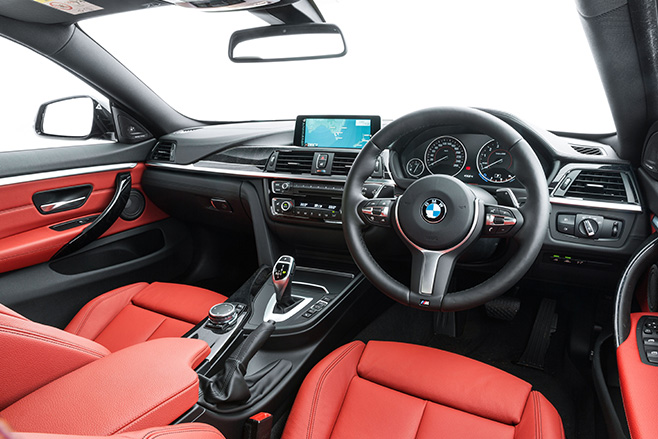
- Interior. Quite a few BMW models are starting to look long in the tooth on the inside, and the 4 Series is one of them. It’s still a nice place to be – well made, finely trimmed and covered in premium materials – it just feels last-gen compared to the cutting edge cabins of the Audi A4 and Mercedes-Benz C-Class.
- Access. Something’s got to give when you take a chunk out of the 3 Series’ roofline, and it becomes obvious when getting into and out of the Gran Coupe’s back seats. They’re a bit tricky as the door openings are considerably smaller than those of a 3 Series. Once inside, though, leg and headroom isn’t too bad at all, and only those who have a car full of people on a regular basis might find it enough of an issue to steer clear.

ANY RIVALS I SHOULD CONSIDER?
When Audi brings the Audi A5 Sportback to Australia it will be the 4 Series Gran Coupe’s only direct competition. Until then, the BMW sits on its own in the premium, design-oriented, mid-size four-door category. No doubt anybody interested in the 440i Gran Coupe will also look at the more conventionally styled Audi S4 (soon to land) and Mercedes-AMG C43 ($101,900) which offer similar levels of performance with more up-to-the-minute styling, especially inside.
There’s no questioning Australian’s love SUVs. With adventure ingrained in our culture, and the preference for ride height and practicality, it comes as no surprise. But if you’re looking to buy an SUV, chances are you’re not going to get it cheap. From small to medium to large SUVs, and even four-wheel drives and seven-seaters, here are the smartest purchases for your wallet.
BEST VALUE SMALL SUVS
- Mazda CX-3 Neo

The small SUV segment is taking Australia by storm thanks to their SUV characteristics and tendency to be cost efficient. It’s for this same reason the Mazda CX-3 is not only a popular choice in Australia, but also excellent value. Not only is it cost effective, but it’s also a hoot to drive around the city thanks to its 109kW 2.0-litre four-cylinder engine which is bigger than its rivals. While it’s not the most cost effective to run in regards to fuel economy (although at 6.3L/100km it’s not terrible), it’s got plenty going for it to put it top of the list for small SUVs. Mazda’s small SUV is one of the cheapest in the segment ($19,990), has a segment-standard three-year warranty, 12-month service interval, and the least costly insurance premium at just $620. It also holds its value well after three years.
- Suzuki Vitara Rt-S

- Peugeot 2008 Active

BEST VALUE MEDIUM SUV UNDER $45,000
- Kia Sportage Si

The Sportage Si may be the most expensive in this company compared to the Mazda CX-5 and Tuscon, but it’s also the only one that offers an automatic six-speed gearbox (the others offer manual as standard). The medium-size SUV is front wheel drive so it’s more fuel efficient than all-wheel drive options, although that’s also the case in other podium winners, but Kia’s seven-year warranty is enough to push the Sportage into first place.
- Mazda CX-5 MAXX

- Hyundai Tucson Active

BEST VALUE SUV UNDER $65,000
- Kia Sportage Platinum
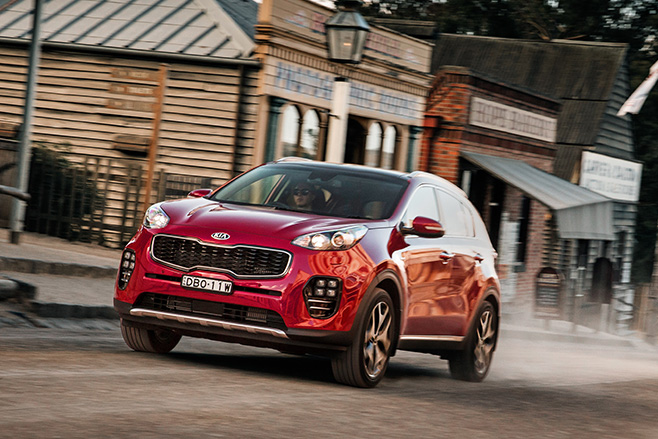
Kia’s seven-year warranty is one of the brand’s biggest assets, with the Sportage Platinum taking the top prize for the under $65k mid-size SUVs. The diesel, all-wheel-drive is the most expensive in the Kia Sportage range. With a fuel-efficient (6.8L/100km) 2.0-litre diesel engine, cheap insurance, 12-month service interval and the top-seven-year-warranty, the Kia stills takes the best value spot despite its lacking in the depreciation department.
- Hyundai Tucson Highlander

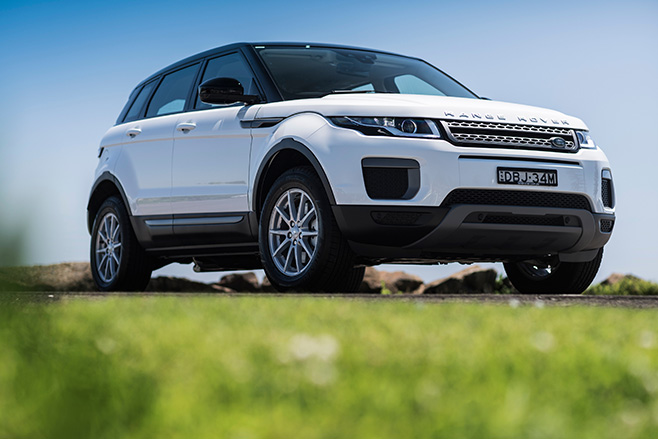
- Range Rover Evoque td4 150Pure
BEST VALUE LARGE SUVs AND 4WDs
- Hyundai Santa Fe Active CRDi

Hyundai may not offer a seven-year warranty like Kia do, but the turbo-diesel Santa Fe’s price sits at $2000 less than the Kia, thanks to its manual option. Of course, when you team a diesel engine with a manual gear box, you also achieve excellent fuel efficiency figures (6.3L/100km. The Kia sits at 7.8L). The Santa Fe also has the cheapest insurance premium and a 56 percent three-year retained value.
- Kia Sorento Si

- Mitsubishi Pajero Sport GLX

BEST VALUE SUV 7-SEATER
- Kia Sorento Si
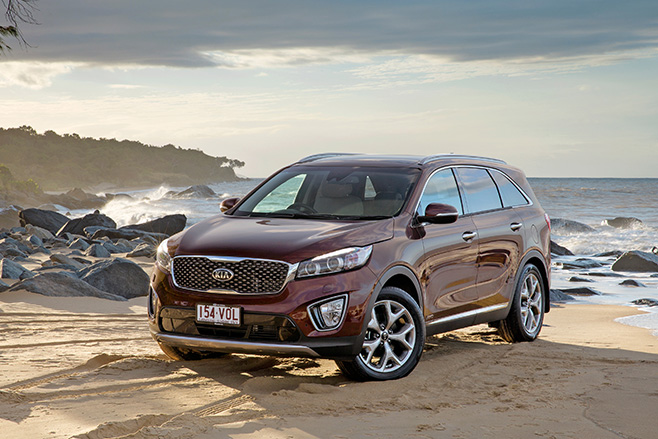
Chances are if you’re looking for a seven-seater, you’ve got a growing family and value and comfort are high on your priority list. The Kia Sorento is one of the few medium size SUVs that offers two extra seats without having to fork out for the top-spec variant. Now, the upside is you can have a powerful V6 petrol engine, which saves you dollars during purchase, but the downside is the 3.3-litre likes to drink using 9.9L/100km, which is a lot more fuel than you’d use in the diesel. That’s what lets the Sorento down, but for the most part, with a good resale, inexpensive insurance and Kia’s seven-year warranty (which the Korean brand can thanks for its domination of the best value SUVs), it topples the Mitsubishi Outland and Hyundai Santa Fe for the best value seven-seater.
- Mitsubishi Outlander XLS

- Hyundai Santa Fe Active

TELL ME ABOUT THIS CAR
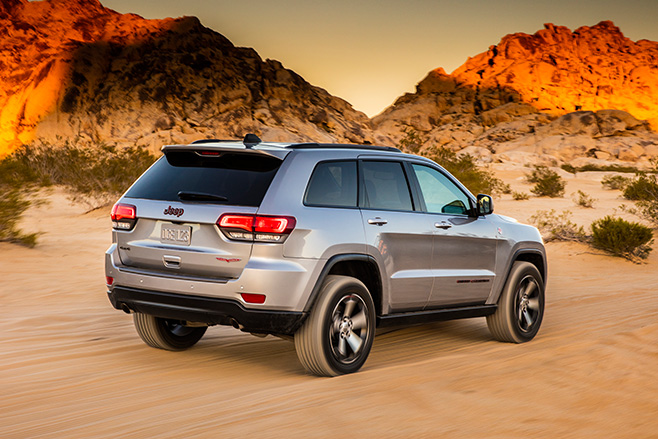
The Jeep Grand Cherokee Trailhawk is the most off-road capable variant of Jeep’s full-size 4×4 SUV. Trailhawk adds extra underbody protection, increased ride height, additional axle articulation and ultra-tough tyres to take you into extreme off-road terrain where a regular Grand Cherokee may struggle.
STRENGTHS
- The adjustable air suspension allows you to raise the Trailhawk 62mm higher than other models in the Grand Cherokee range. This extra ground clearance allows you to tackle far steeper, more rugged or rocky conditions.
- Trailhawk’s suspension has extra ‘axle articulation’, meaning the suspension has a greater range of movement, increasing the chances of a driven wheel remaining in contact with the ground on rough terrain, and therefore maintaining traction and drive.
- The tyres fitted to Trailhawk have Kevlar reinforcement in the sidewalls, allowing them to absorb serious off-road punishment, and resist tears from rocks, etc.
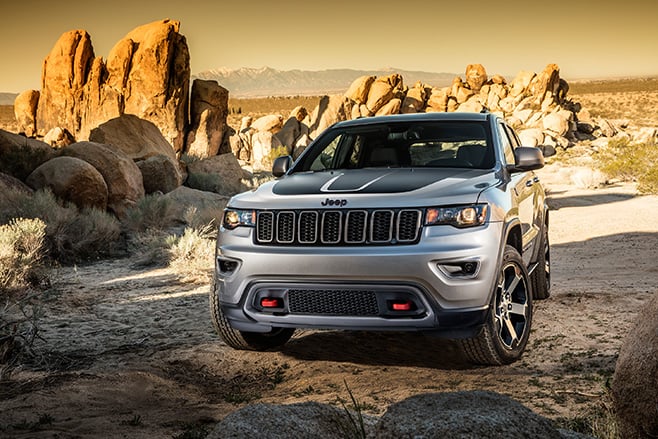
- A terrain selector allows you to choose between rocks, sand, mud and other conditions. The vehicle then choose the optimum ride height, throttle mapping, etc, best suited to that particular environment.
- The underbody of the Trailhawk is protected by four additional steel plates. This ensures rocks don’t damage driveline components. The underneath of the sidesills are also protected.
- A crawl function, that works both uphill and down, removes the need for the driver to control the throttle in very rugged ascents and descents.
- Despite the extra off-road ability, Trailhawk remains composed and refined on the road.
WEAKNESSES
- For a large SUV, the rear seat is not especially commodious, and a slightly low seat base makes taller passengers feel their knees are bent at an acute angle.
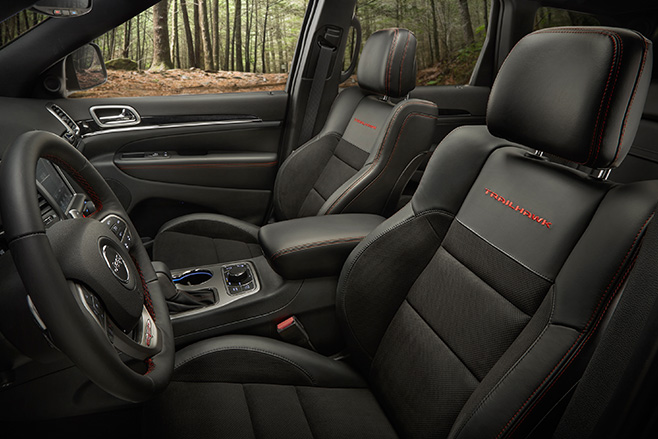
- Some cabin trim can feel a bit budget.
- The Trailhawk’s specific tyres and suspension settings do take away a small amount of on-road precision. For keen drivers who only do light-duty off-road driving on firetrails, etc, one of the regular Grand Cherokee models may be better suited.
- The extra protective equipment adds weight, so Trailhawk is a fairly heavy vehicle, and this adds to consumption and dulls acceleration slightly compared regular Grand Cherokee models.
- This current Grand Cherokee series has been the subject of numerous recalls to rectify faults, casting a shadow over the vehicles’ reliability. However Jeep insists this is behind them now, and the company says it has also moved to improve service times and parts supply.
For comparable off-road ability, you’ll need to look at the Land Rover Discovery, but to stay within the price bracket set by the circa-$75,000 (estimated) Trailhawk, that means the entry-level TD V6 model, which is not as well equipped as the Jeep, so you’ll need to hit the options list. However, Discovery is on the cusp of replacement with an all-new model.
The Toyota Prado VX TD is priced about on par with the Jeep, and should deliver typical Toyota bulletproof reliability. However its 2.8-litre four-cylinder diesel puts out slightly lower outputs than the Trailhawk’s 3.0-litre V6, and its on-road handling is not as assured, due to its separate-chassis underpinnings, compared to the monocoque design of the Grand Cherokee.
The Volkswagen Touareg V6 TDi delivers comparable outputs from its 3.0-litre V6 diesel, and has an outstanding sense of interior quality and craftsmanship. Also pretty handy off-road. However it’s a vehicle very late in its model life, with an all-new version, sure to be lighter, on all-new architecture, due next year.
Then there’s the Mercedes-Benz GLE. It has plenty going for it, but to stay anywhere near the Jeep on price, you’ll be in the base GLE250d, with a 2.1-litre diesel four, and you’ll still be paying at least $10K more before you’ve even looked at the options list. It’s also likely to turn tail at really nasty terrain the Jeep will eat up.
In these troubled political times, people are looking for a senator they can trust.
Here’s one, HSV’s Gen-F2 Senator Signature, now packing 400kW/671Nm of 6.2-litre supercharged LSA V8. Were it to run for office, there’d be no doubting its allegiance: it would undoubtedly be number one on the Motoring Enthusiast Party’s ticket.
Despite this, in true political fashion we’re a little unclear about what the Senator stands for. At $92,990, it sits less than arm’s length from HSV’s GTS flagship in price, yet its mechanical make-up seems more aligned with the $10K cheaper HSV Clubsport. Around 150 find homes every year, so it appeals to a small but dedicated segment of the community.
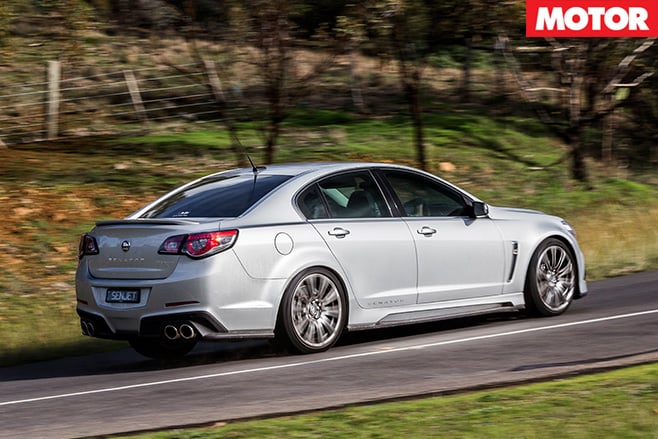
The standard 20-spoke alloys are classier than the Clubsport’s more aggressive 10-spokers, the brake calipers are an understated silver rather than look-at-me red, and while HSV offers a full colour palette, including Sting Red, Jungle Green and Slipstream Blue, you’re more likely to see a Senator in a more subtle shade such as silver Nitrate, the grey of Prussian Steel or the deep green of Regal Peacock.
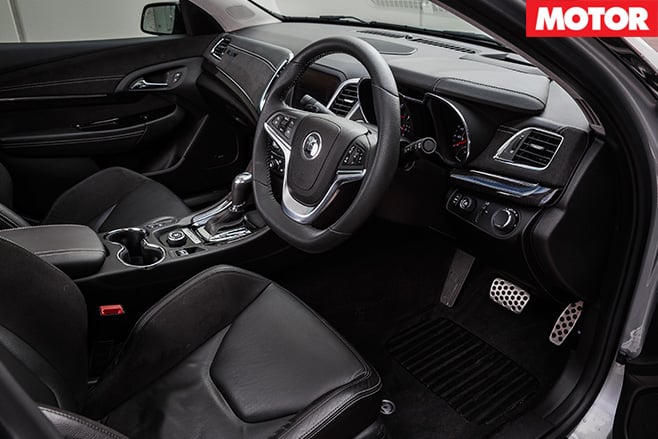
The seats are big and comfy, the driving position is excellent and there’s plenty of equipment, but the Commodore-origins of the Senator’s interior inevitably become more of a problem as the price rises.
The other side of that coin is that $90-odd grand still isn’t a lot of money for this level of performance. In fact, it’s cheap – anything European at this price point is giving away the best part of 150kW/200Nm and would be nothing but a speck in the Senator’s rear-view mirror given its 4.5sec 0-100km/h and 12.6sec quarter mile potential.
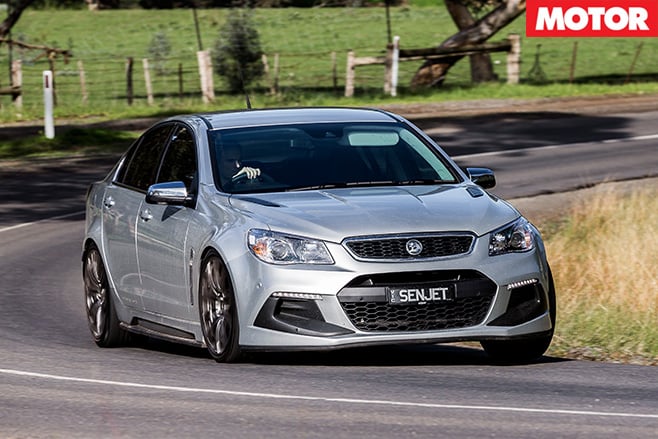
Step slightly over the limit and understeer and oversteer both build progressively, with the sensational ESP system ready to mop up any excesses. The brakes are equally brilliant and only the slightly slow steering response off-centre raises its head as an issue.
Of course, this cornering capability is true of the cheaper Clubsport, but the Senator’s ace up its sleeve is its magnetorheological dampers, dubbed Magnetic Ride Control (MRC), taken from the GTS.
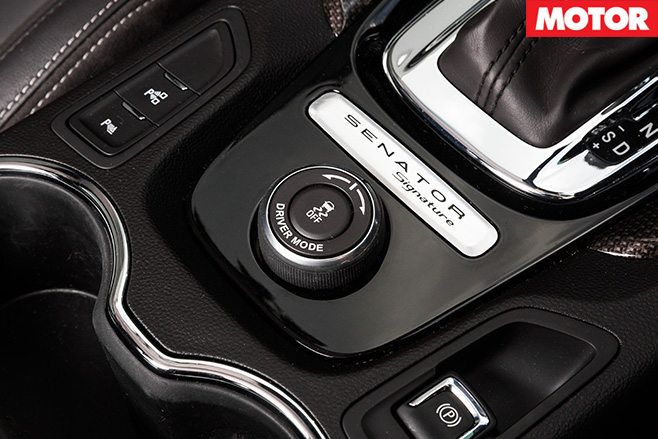
Outwardly conservative and sensible but with a mischievous, fun-loving heart, the Senator LSA is like Barack Obama with wheels. But it’s a hard car to recommend. It’s a great drive, brutally fast, looks good and the MRC dampers are an advantage, but the price gap to the GTS is just too small.
For an extra $3000 (or $5500 for auto) you get range-topping kudos, the full 430kW/740Nm and monster six-piston AP Racing brakes. For these reasons, the GTS gets our vote.
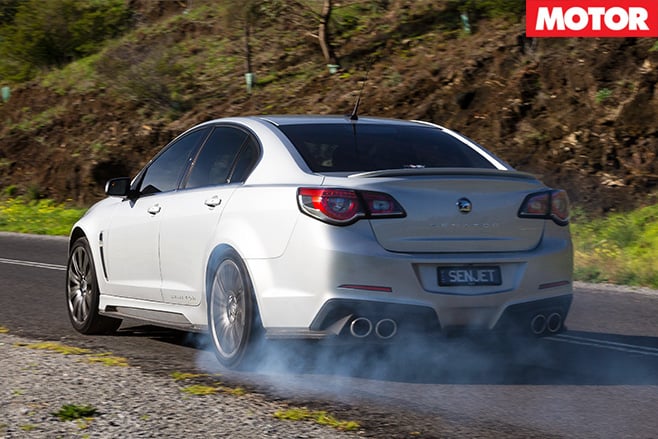
LIKE: Classy looks; ride comfort DISLIKE: Slow-ish steering; crazy fuel thirst
SPECS Engine: 6162cc V8, OHV, 16v, supercharger Power: 400kW @ 6150rpm Torque: 671Nm @ 4200rpm Weight: 1902kg 0-100km/h: 4.5sec (estimated) Price: $92,990
Once upon a time, everybody knew how to drive a manual car. Remember those things? Three pedals in the footwell, funny stick thing in the middle… Today, they’re an endangered species – the cars and the people learning how to drive them.
Thankfully, there is still a glimmer of hope for those who haven’t given up on pure driving enjoyment. No automatic ‘box, no matter how fast or precise, can mimic the proper mechanical connection of a clutch pedal and an H-pattern shifter.
There are a handful of manufacturers who understand our plight, and they should be applauded for sticking with the old school tech we love.
Below are the five best manual cars on sale today.
The M2 is brilliant for a number of reasons. It harks back to the halcyon days of performance BMWs, and sticks to the marqueu2019s classic formula of straight six power, rear-wheel drive and limited electronic interference.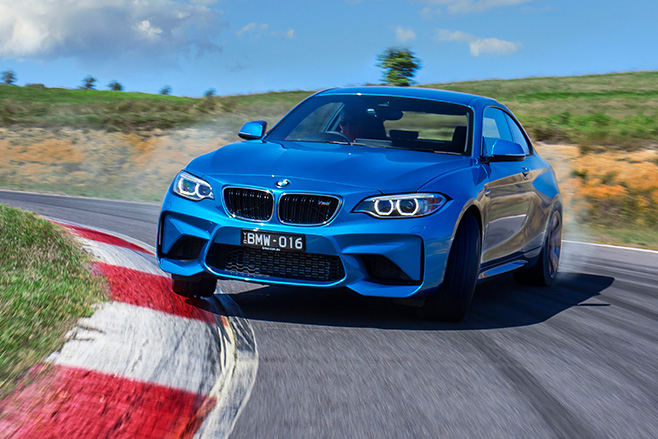
Putting a manual gearbox behind the 3.0-litre engine’s 272kW and 465Nm only improves the M2 package. It’s a car that cries out to be driven by the scruff of the neck, and there’s no better way to do that than with the full control of a do-it-yourself shifter placed directly over the top of the gearbox.
What’s more, the fun-loving M2 Pure is $10,000 cheaper than the M2 with dual clutch transmission on board, and is no less match-fit around a track or on the road. BMW offers manual gearboxes in a surprisingly wide range of its models and deserves to be at the top of this list.
If our top five was based solely on manual gearbox feel alone, the Porsche 718 would top it. Thereu2019s nothing quite like the oily-slick, bolt action precision of Porscheu2019s mid-engine manual gearboxes. The 718 duo of Boxster (convertible) and Cayman (coupe) are driveru2019s cars in every sense of the term. Theyu2019re at their best when being put through their paces, and they offer an unrivalled level of connection between man and machine when all energy is focussed on the driving experience.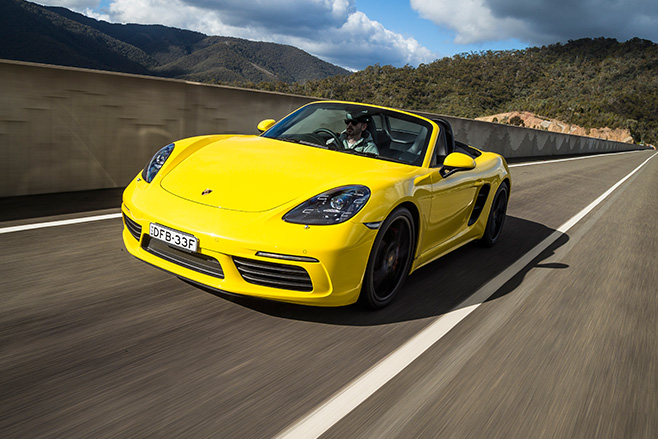
There’s no doubt that Porsche’s PDK auto is one of the very best on the market, and in ultra-rapid, motorsport-bred cars like the Porsche GT3 RS it gets hard to make a case for the humble old manual, but in Porsche’s more accessible machines like the 718 Boxster and Cayman it’s almost a shame to take away that ultimate final layer of driver involvement.
Years ago it was very difficult to buy an automatic MX-5. An order could be placed, if you really wanted one, but money had to change hands up front and there was no way to back out. Such was Mazdau2019s insistence that its delightful little roadster was best enjoyed pure.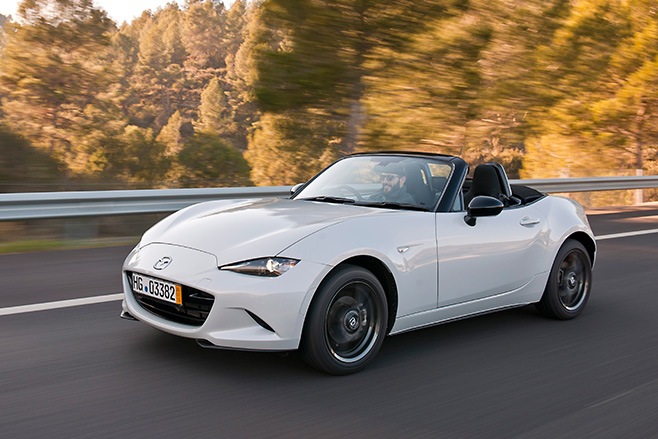
It’s not so difficult to get an automatic in the new generation MX-5 – the reigning Wheels Car of the Year – but it is still a crime against the car’s origins. Mazda set out to create a lightweight, spirited convertible that conjured up memories of vintage British roadsters, with all the benefits of modern technology, like safety and reliability.
They succeeded, and though it lost its way a little bit in the two generations between the NA and the ND, the current car returns to its roots and is so good it deserves to get the manual ‘box it was always designed to have. If you haven’t driven one, it might be hard to understand why MX-5 fans – us included – are so adamant about this point. The best thing we can suggest is to go out and test drive one, but be prepared to fall in love with it like so many before you already have.
The small sports car joint venture between Toyota and Subaru is one of the great success stories of modern motoring. The 86/BRZ twins are two of the most engaging cars on the market right now, made even more appealing by their sharp price points.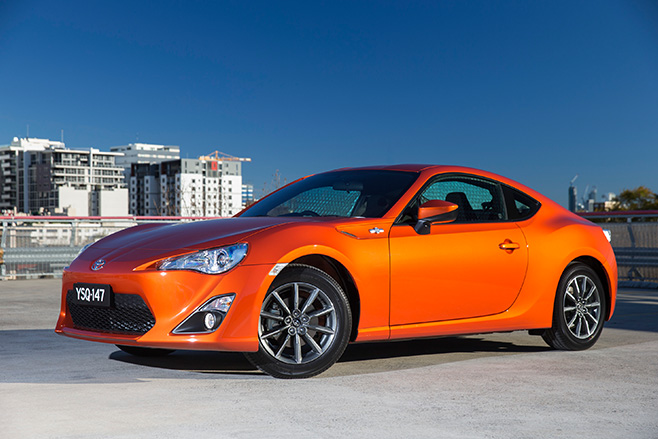
There’s a saying about how much better it is to drive a slow car fast than to drive a fast car slow, and that applies to the Toyobaru. It’s not a rocket ship. The 2.0-litre four-cylinder engine only makes 147kW and 205Nm, but it’s all about low speed fun. Especially when really driving it through the six-speed manual transmission.
It’s hard to think of a new car better suited to a bit of entry-level motorsport like motorkhanas or club track days.
Itu2019s fair to say the Ford Mustang is all about image. Itu2019s big, bold, brash and proudly American. For these reasons it really should have a V8 and a manual in it. Itu2019s a matter of street cred, and having a manual in your V8 Mustang sends an u2018Iu2019m serious about drivingu2019 message that we think is important. Itu2019s also important because the automatic gearbox in the Mustang GT is, um, not very good.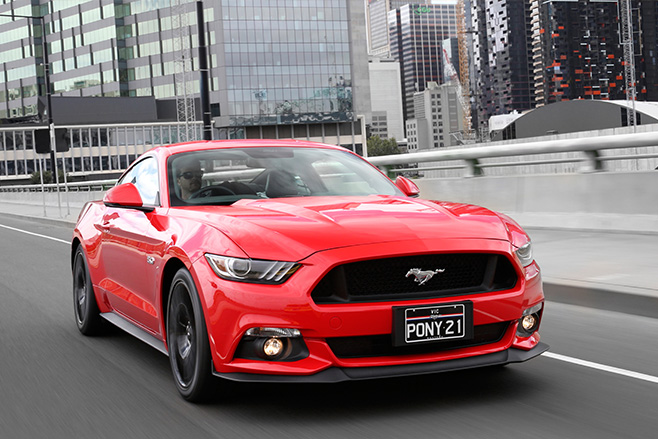
There is some appeal to the Mustang EcoBoost with its turbocharged four-cylinder engine and a manual gearbox, though anybody brave enough to buy one should be prepared to answer endless questions about why their Mustang sounds like its running on half its cylinders. Regardless of engine choice, shifting gears yourself in a Mustang is when the package is at its most satisfying. Get a manual.
First published in the January 2013 issue of Wheels magazine, Australia’s best car mag since 1953.
We fang BMW’s fast-but-aloof M5 in its homeland to see if autobahns and alpine passes can bring out its best.
DOES BMW’S F10 M5 measure up to its predecessor? Wouldn’t have a clue; I’ve never driven the atmo V10 E60 or, in fact, any M5 at all. It’s taken me a year just to get around to driving the ‘new’ one. Think my lack of BMW M5 experience is a poor position from which to judge the current twin-turbo M5? I think it’s the perfect perspective, because I’m measuring it not against smaller, lighter atmo in-line sixes, a V8 or a V10, but holding it up next to a legend; an iconic image built up in my head by decades of folklore. That legend is defined by my lasting visual: the streak of howling, V-maxxed E34 in a ’90s magazine test.
Think sports sedan – that’s the M5 more than any other car. It’s a bigger, four-door M3 that can carry the family or a car-load of execs, crushing kilometres with consummate ease, before turning an alpine road into a rollercoaster. A car that cossets its occupants and cruises like a heavyweight one moment, shrinking around you the next, changing direction like a featherweight, and letting the driver subtly and joyously adjust and slide it, still covering ground with devastating pace. Right?
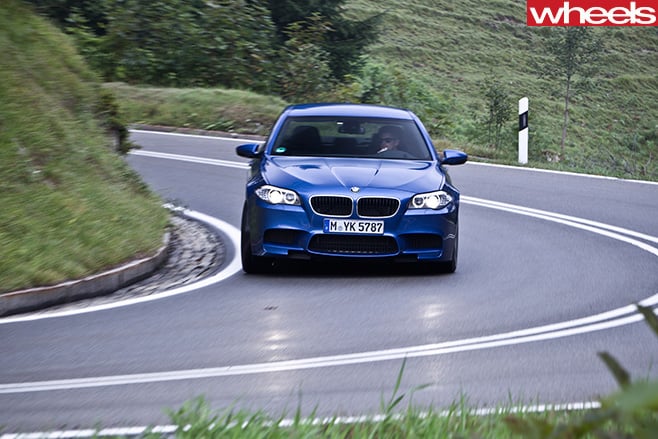
But is it simply a case of horses (all 550 of ’em) for courses? Were the twists of Lake Mountain Road in Victoria’s Yarra Ranges too tight for a now-1945kg M5 to deliver its best? Would a mix of autobahn arrowing, and soaring, sweeping, mountain-road scything let the big Bee Em demonstrate its full skill-set, and leave me stunned at its awesome breadth of ability?
In short, would it make more sense in its native, car-loving Germany than it does in Australia? It seemed only fair to find out.
***
TWENTY-SEVEN years late to the M5 party, I land in Munich on a grey, Tuesday morning, where a Monte Carlo metallic blue, twin-turbo V8 four-door is waiting, parked next to the autobahn.
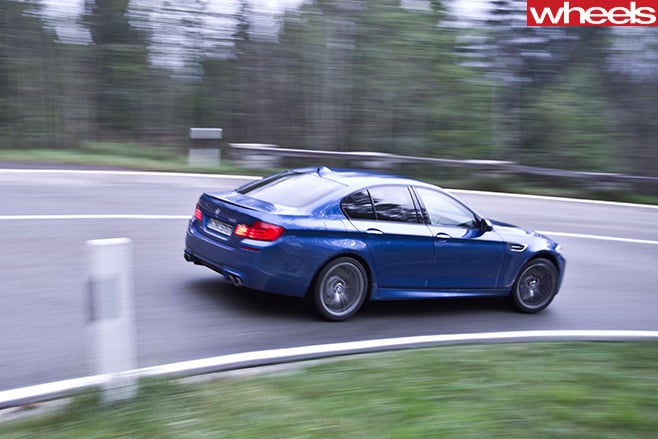
This is the land of fast, safe, fun high-speed driving that we enthusiasts dream of. Here, I’ll blast away the frustrations of conservative limits, officious officers, and fast-lane daydreamers with one, long squeeze on the right pedal. With that thought, it’s onto the Bundesautobahnvia the Munich ring-road for a Vmax.
Erm, not quite. It’s actually straight to the servo for a packet of chips and an Austrian energy drink to ease my grumbling stomach and jet-lagged mind, and help me summon the focus needed to hustle the two-tonne sedan the way the M-legend says I should.
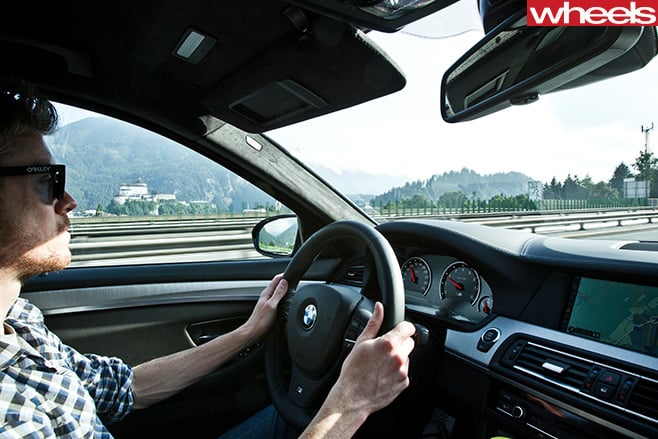
There’s a moderate amount of traffic, but with 680Nm at 1500rpm, the super sedan zaps into gaps as quickly as they emerge, with a gruff, muffled metallic note that isn’t as distinctly V8 as most V8s.
There’s always someone faster and slower than you – a grimy Astra spears past me, and I leapfrog a 911 – which is a realisation lost on the common Australian Highway King. You know the guy: “No-one overtakes me!” With egos gone, everybody can get where they’re going at whatever speed they like.
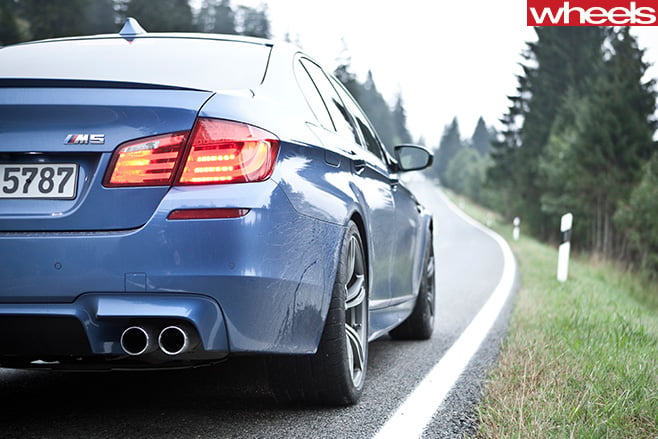
I’m barely aware of the car; it delivers everything I ask of it, is comfortable, cultured, and quick, but a bit too polite.
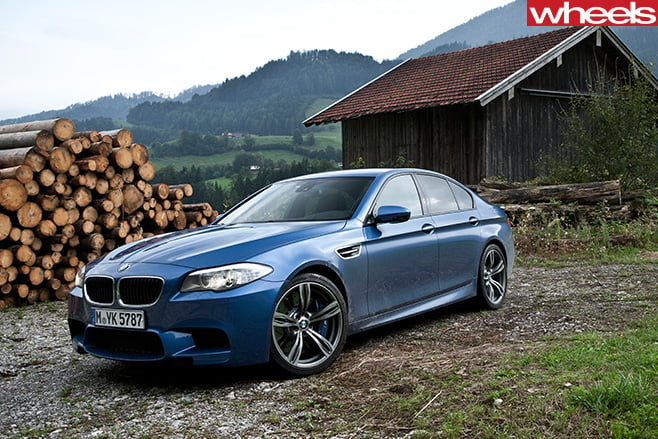
On a superficial level the M5 has the talent, and will likely please plenty of owners – enormous grip, flat cornering, 0-100km/h in 4.5sec and hugely powerful brakes – but it’s all a bit aloof. The throttle’s not as sharp as I’d like and the steering isn’t communicative enough. When those 412kW do come rushing in, they flummox the chassis, or, at least, that’s what the apoplectic ESC light says.
So, the M5 works in Germany, but it still doesn’t excite in the way it should. M5 legend shattered, just like that? Not quite – I still need to drive an E39, maybe an E28, too.
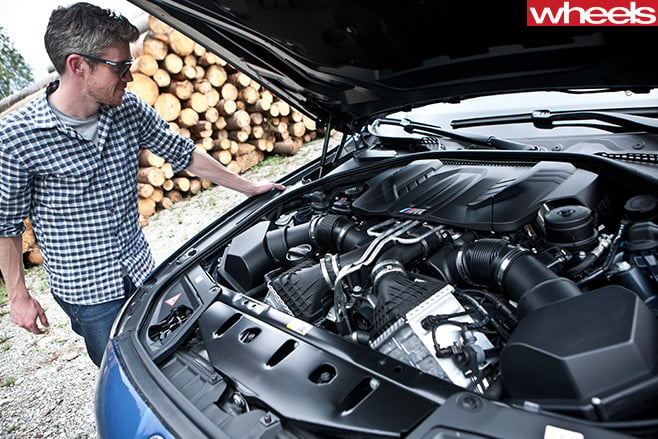
BMW tells us turbos can almost match the switchblade response of a great atmo engine, but it’s Mercedes-Benz that proves it. See, this isn’t just an atmo-is-better-than-turbo thing – the twin-turbo E63 provided Butler the sports-sedan experience he sought back in April, and the M5 couldn’t, and that’s down to a shift of the M Division’s ideals.
The 535d can demolish autobahns (or freeways), which should leave room atop the range for the M5 to be a bit of a lunatic. Today, despite being devastatingly fast, and a handful at the limit, it keeps the driver at arm’s length. More like a faster 550i than the M5 legend held in my mind.
“It’s a good place to try for a vmax”
Robbo’s trip advice: “Once you leave the Munich ring-road the autobahn is normally unlimited; good place to try for a Vmax. Austria and, sadly, Italy are no longer safe for serious speed.
“Just before the German-Austrian border feed Oberaudorf and Bayrischzell into the nav. The road connecting these two towns is fantastic for a serious drive on mountain roads – I once did a 911 Turbo-versus-360 Fazz comparo here.
“The A22 from the Austrian border to Verona is a fantastic piece of motorway. Be warned, the Italians now have average-speed cameras along the route. Wish I was coming with you.”
THE Jaguar i-Pace – the British luxury marque’s first electric car – has been unveiled at the Los Angeles Motor Show ahead of its expected 2018 showroom debut.
The 4680mm long, fastback coupe-styled i-Pace sits on a 2990mm wheelbase that places it somewhere between the slightly shorter F-Pace SUV and the slightly longer XE sedan. Its fastback design combined with a compressed glasshouse mimics that of a growing class of SUV coupes, including the Porsche Macan, Mercedes-Benz GLC and the BMW X4.
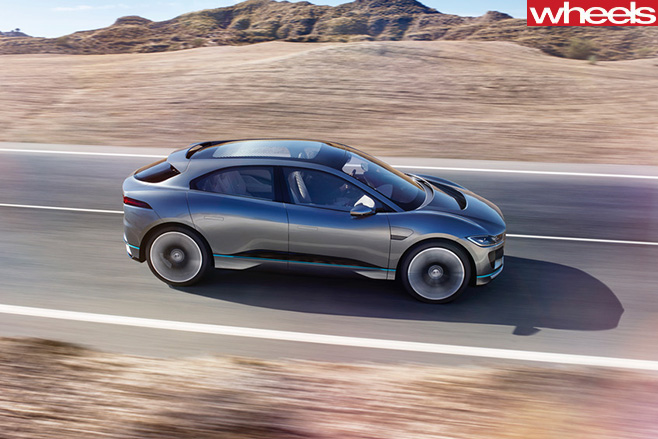
The i-Pace will use a 90kWh lithium ion battery pack sandwiched in the floor to give it a 120mm lower centre of gravity compared with the F-Pace. The battery pack is big enough to wring out a 500km range – enough to out-distance a Tesla Model X P90D.
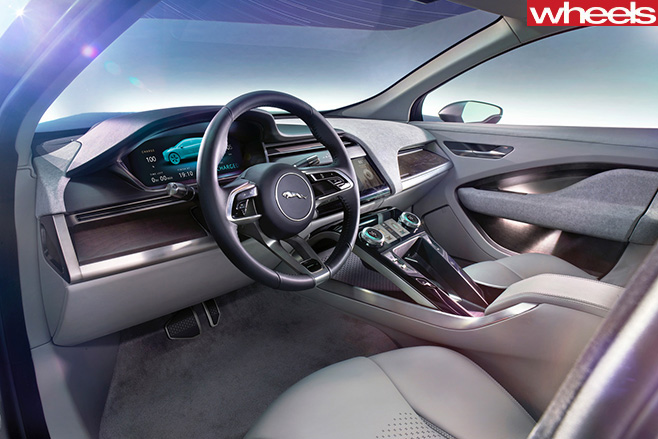
The sandwiched battery pack means that interior space is unlikely come at a premium. The cab-forward look of the passenger cell suggests plenty of room to carry five passengers in comfort, while the 535-litre boot is bigger than that of the Jaguar F-Pace, which Jaguar claims is a class leader for load-lugging ability.
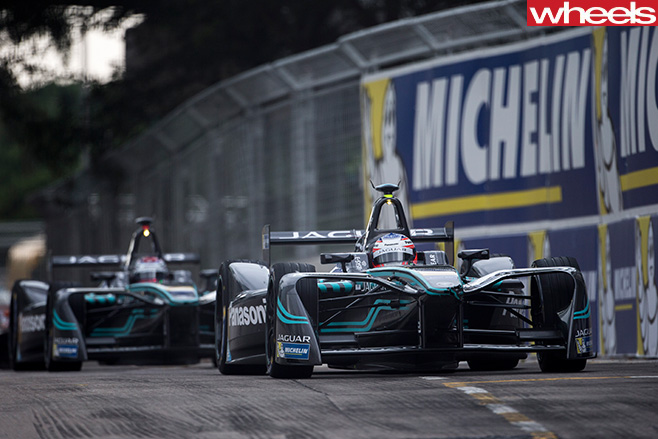
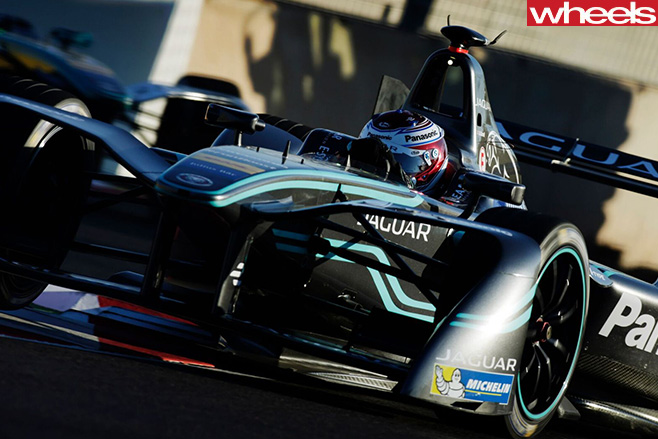
The British brand’s EV push comes as the former Le Mans winner breaks a 12-year motorsport drought by entering the Formula E electric racecar series for the 2016-17 season.
Depreciation takes its toll on otherwise excellent cars.
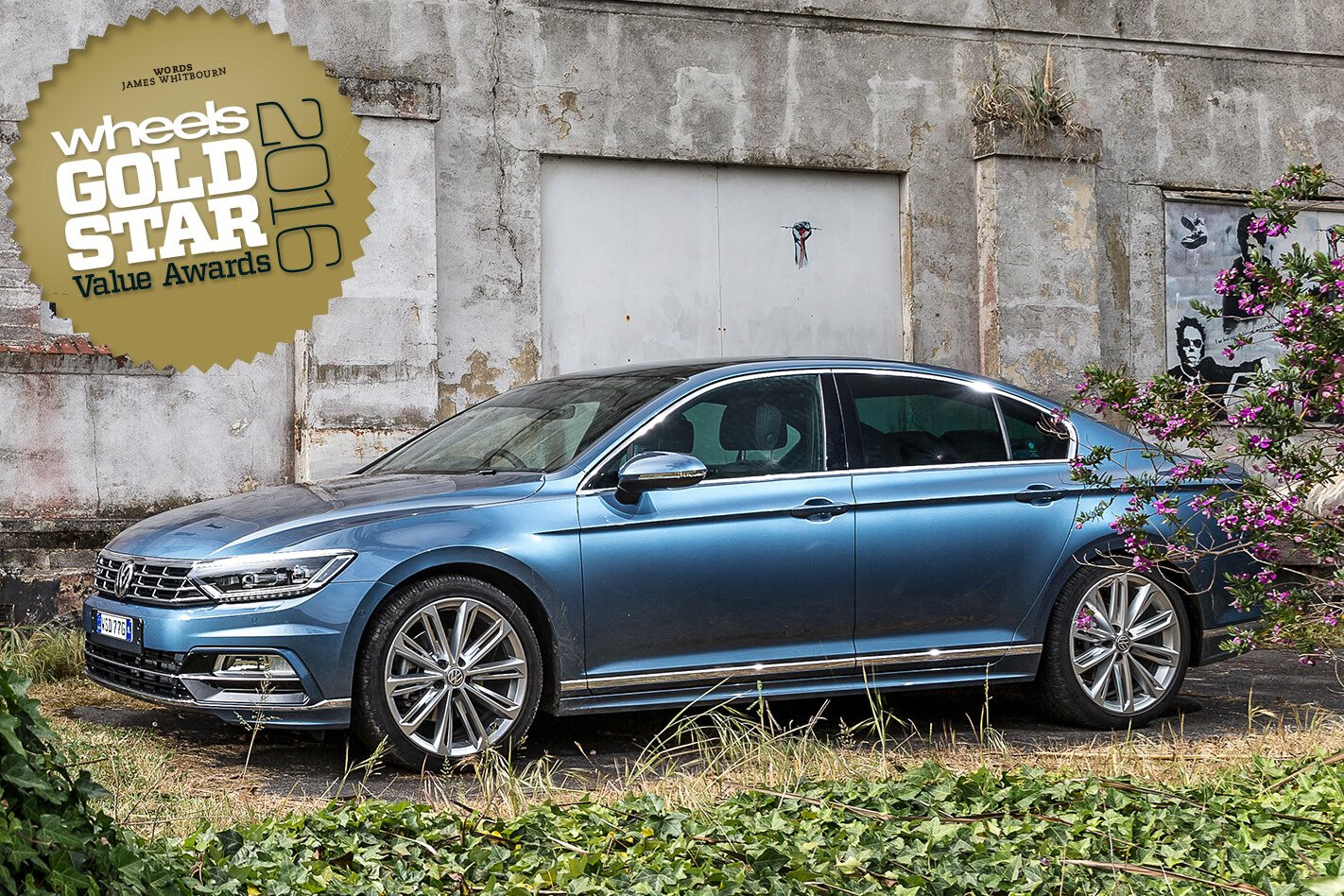
Volkswagen Passat 140 TDI Highline
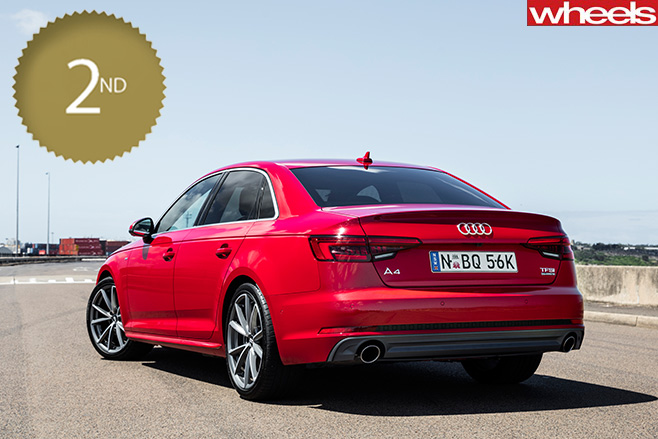
It’s interesting to observe how a high-end Volkswagen sedan and an entry-level Audi compare in the moderately expensive mid-size realm. The VW costs $8K less than the Audi, despite them being the most highly equipped Passat and the least kitted-out A4.
Meanwhile, the Passat offers 150Nm and 30kW more than the 1.4-litre turbo-petrol A4, courtesy of a 2.0-litre turbo-diesel that uses less juice to contribute to a 26 percent (or $260) annual fuel saving.
The Passat, however, doesn’t hold its value as well as the A4, according to Glass’s forecasts. You’ll see $23,745 go down the drain in the VW compared with $22,755 in the Audi, thanks to respective 50 and 59 percent three-year resale figures, which narrows the ownership cost difference between these German sedans.
Audi A4 1.4 TFSI Sport
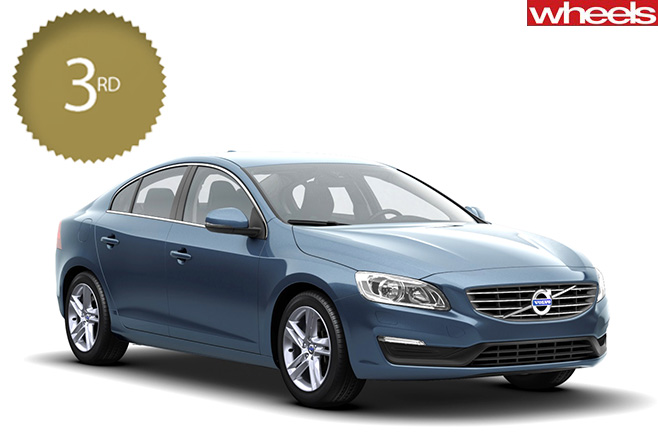
Volvo S60 D4 Kinetic
MORE GOLD STAR COVERAGE
 WHEELS GOLD STAR VALUE AWARDS
What if someone could expose the hidden costs, crunch the numbers, present the data, and draw conclusions about how to best spend your hard-earned on a brand new car? Enter Wheels’ annual Gold Star Value Awards.
Find out more
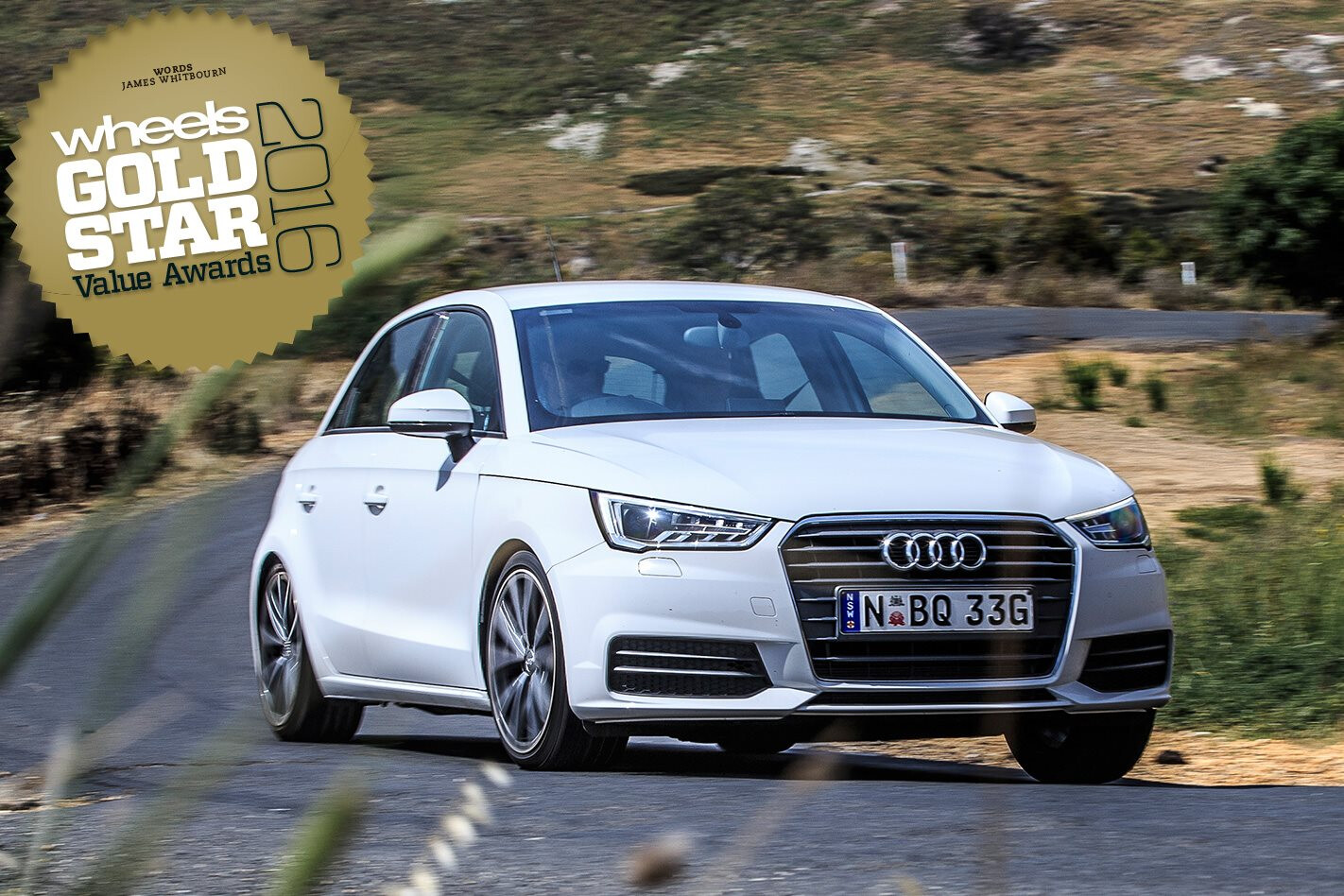 BEST PREMIUM COMPACT CARS under $50K
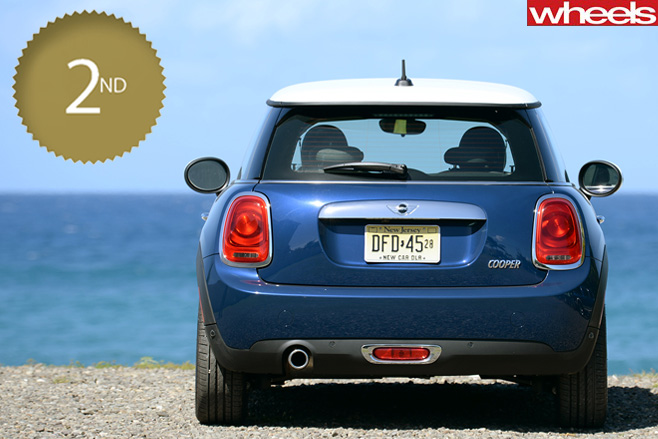
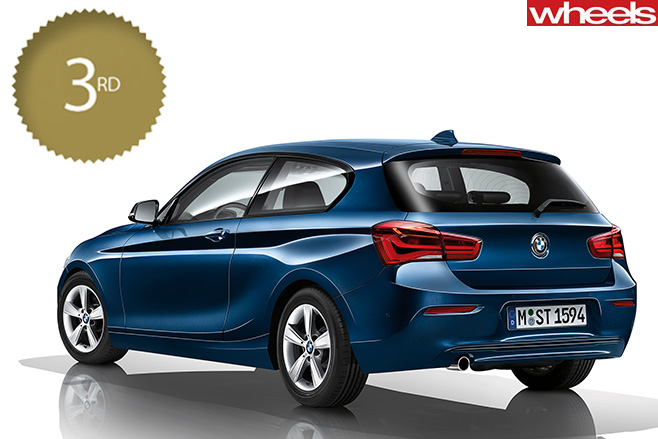
These three compact cars, Audi A1, Mini Cooper and the BMW 118i, will give you greater economy in a nifty city-car size, with a touch of class.
View the results
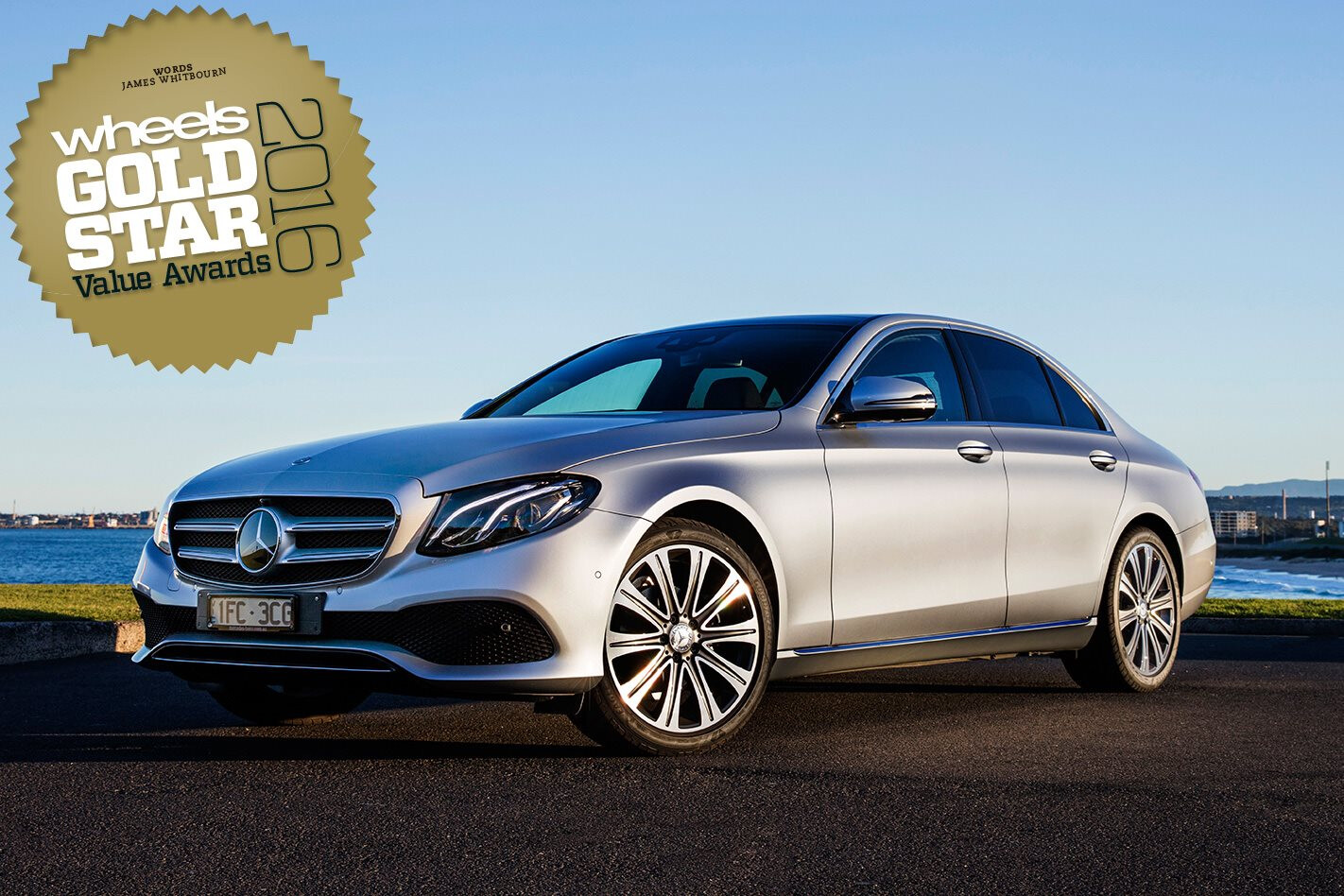 BEST PREMIUM LARGE CARS
Gone are the days when big luxury cars were all gas guzzlers.
View the results
These three compact cars, Audi A1, Mini Cooper and the BMW 118i, will give you greater economy in a nifty city-car size, with a touch of class.
Audi A1 Sportback 1.5 TFSI
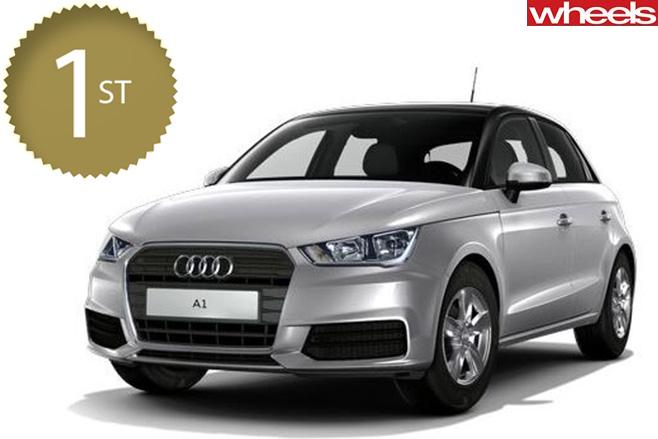
Audi reckons it pioneered the segment (don’t they all?) but has certainly perfected the beautifully finished interior, which makes the A1 a compelling luxury hatchback. In another Ingolstadt tradition, the small-engined variants of its various models are often the best steers, and that’s certainly true of the charming turbo-triple A1.
Even more importantly here, it uses just 4.2L/100km, which combine with low-cost insurance and sound resale to help this $27K ‘base’ hatch to the gold.
Mini Cooper
BMW 118i
MORE GOLD STAR COVERAGE
WHEELS GOLD STAR VALUE AWARDS
What if someone could expose the hidden costs, crunch the numbers, present the data, and draw conclusions about how to best spend your hard-earned on a brand new car? Enter Wheels’ annual Gold Star Value Awards.
Find out more
 BEST PREMIUM MEDIUM CARS $45K to $60K
Depreciation takes its toll on otherwise excellent cars.
View the results
BEST PREMIUM LARGE CARS
Gone are the days when big luxury cars were all gas guzzlers.
View the results
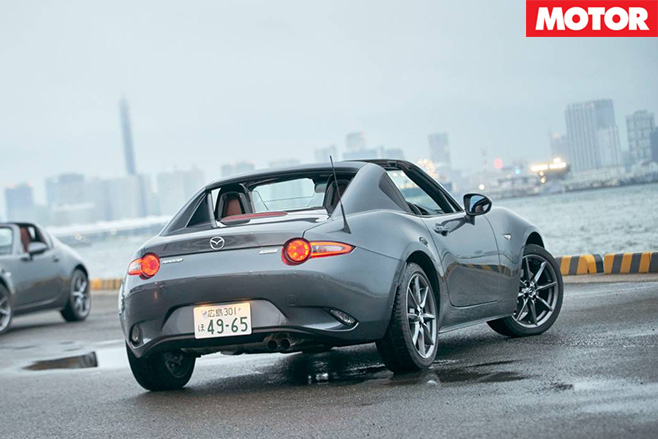
Mazda MX-5 buyers will need more dough to buy the Retractable Fastback (RF) flagship version which lands locally in February for $38,550 before on-roads.
The Mazda MX-5 RF is available only with a 2.0-litre engine, although it joins its soft-top sibling by being offered in base manual ($38,550) or automatic ($40,550), and GT manual ($43,890) or automatic ($45,890) model grades.
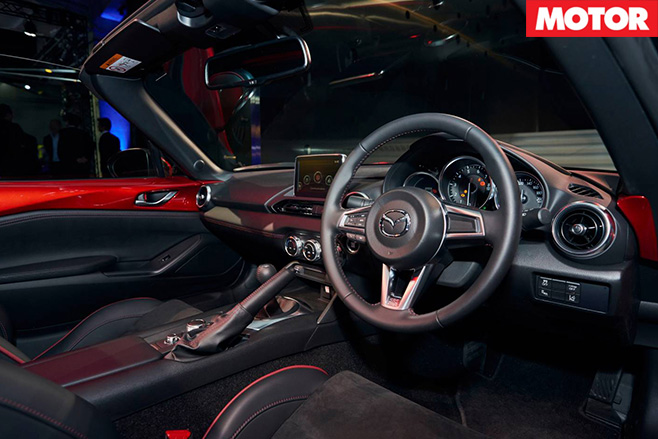
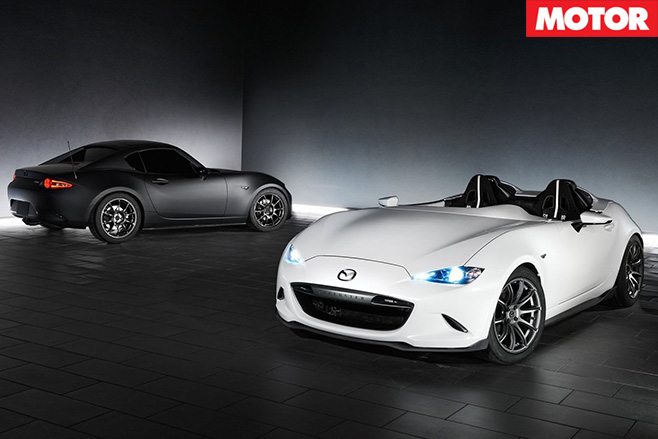
If Mazda builds production versions, expect to see them later in the MX-5’s lifecycle.
