
MERCEDES-BENZ has bookended it’s 2017 E-Class line-up in terms of powerplant options with the introduction of the E350e Plug-in Hybrid, and the new range-topping Mercedes-AMG E43 4MATIC.
The E350e sedan is powered by a four-cylinder petrol engine, in conjunction with a powerful electric motor that punch out 210 kW and up to 550 Nm of torque. These are mated to a 9-speed automatic transmission which helps take it to 0-100kmh in just 6.2 seconds, at least a second faster than all E200/220 variants.
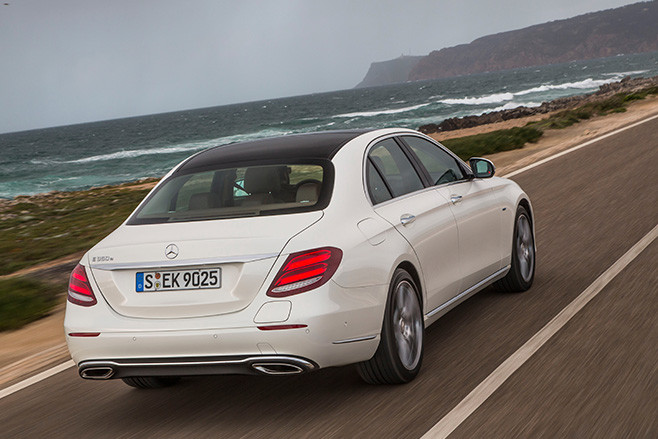
It sips petrol like a child does medicine, just 2.4L/100kms and has an all-electric range of 30kms for total frugality.
Priced at $131,600, about the same as the flagship E400, the E350e also comes with air suspension, panoramic glass sunroof and a pre-entry climate control system as standard.
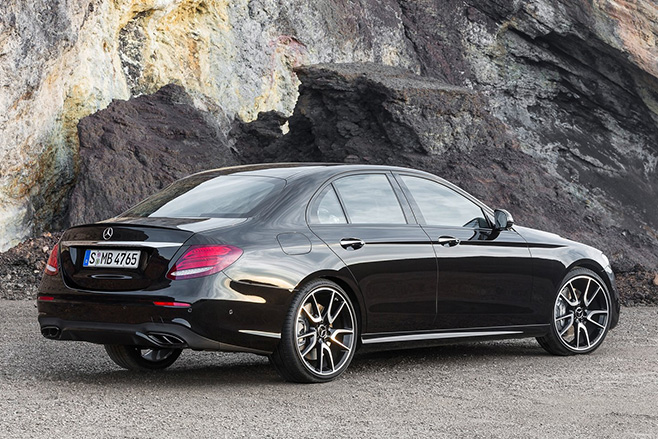
At the other end of the scale, the AMG E43 4Matic borrows the E400’s 3.0-litre V6 engine but ups power by 25kW to 295kw thanks to a pair of larger turbochargers and a retuned engine computer.

Peak torque of 520 Nm is available right from 2500rpm, generating performance on par with smaller sports cars with a 0-100km time of just 4.6secs. It naturally drinks the hybrid under the table, though the E43’s 8.3L/100km factory claim is pretty respectable considering its performance.
Priced at $159,900, the E43 4Matic has all the standard Mercedes-Benz E-Class features plus Nappa Leather upholstery, AIR-BALANCE package and AMG 4Matic all-wheel drive system, sports exhaust system and sports braking system.
The wolf’s clothing, which includes AMG body styling and 20-inch AMG wheels, is kept modest to balance performance and refinement.
“Our new E-Class has raised the industry benchmark when it comes to new technologies, and these outstanding new variants are no exception”, said Horst von Sanden, CEO and Managing Director, Mercedes-Benz Cars Australia/Pacific.
“Following the successful introduction of both our plug-in hybrid and AMG 43 models, we can’t wait to offer this technology and performance in the all-new E-Class early next year.”
The new E350e and E43 are now available to order with the first arrivals scheduled for February 2017.
PRICING
Mercedes-Benz E350e sedan – $131,600 Mercedes-AMG E43 4Matic – $159,900
THE future looks bright for the heaviest hitting 911 of them all. Porsche is putting plenty of development miles under the wheels of its fearsome new 911 GT2 RS, due to start torturing tarmac in 2018.
The German sports car powerhouse is set to turn the 991.2 version of the GT2 RS into the most powerful production flat-six Porsche ever built.
With an engine based on the 3.8-litre 911 Turbo motor, the two-door coupe will deliver upwards of 480kW and could possibly even stretch beyond 500kW. That will make it just the thing for those weird people who feel the 427kW 911 Turbo S simply isn’t quick enough for them.
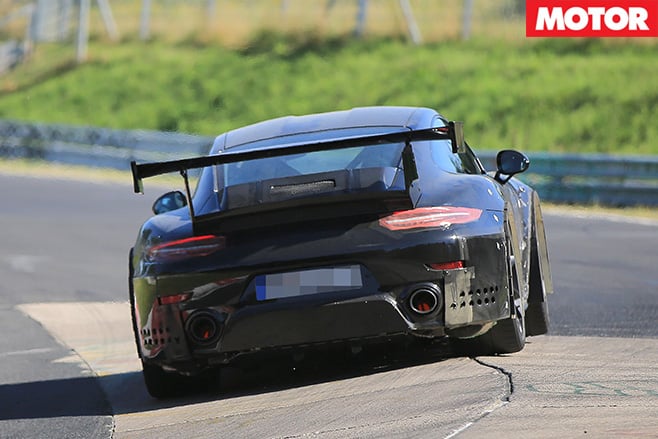
But our sources suggest Porsche won’t turbocharge the high-revving 4.0-litre flat six from the GT3 RS to create the GT2, but will instead heavily modify the smaller, force-fed 911 Turbo engine.
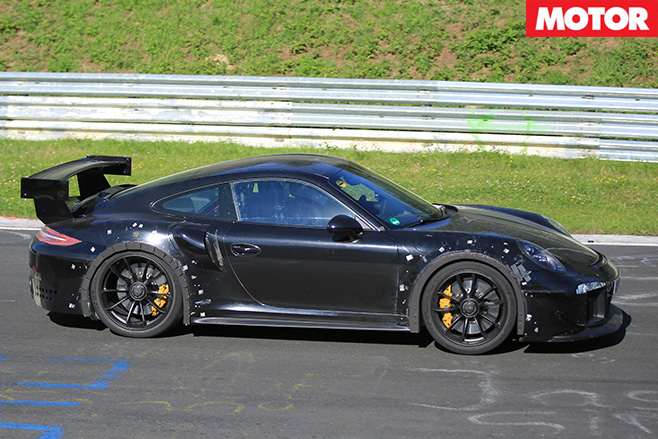
Sources suggest it will rev higher than the current 911 Turbo motor and sacrifice some low-end torque to do it, though its peak engine speed won’t be anything like the 8800rpm of the limited-edition 911 R’s motor.
Porsche plans to channel all of the engine’s 700-odd horsepower, plus upwards of the Turbo S’s 750Nm of torque, through just the rear wheels. If constant driving assurance is a big-ticket item for you, then the GT2 RS might be something to avoid.

Even with just two tortured Michelins to work with, Porsche sources expect the GT2 RS to deliver a sub three-second time for the sprint to 100km/h and top speed will be well in excess of the 330km/h mark.

Porsche high-performance boss Andreas Preuninger always said the GT2 RS would arrive late in the lifespan of the current 991 generation 911 and that sets a launch date of around early 2018, probably at the Geneva Motor Show in March.
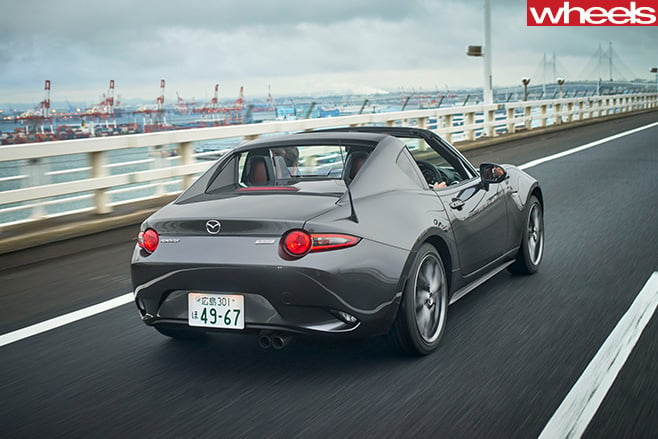
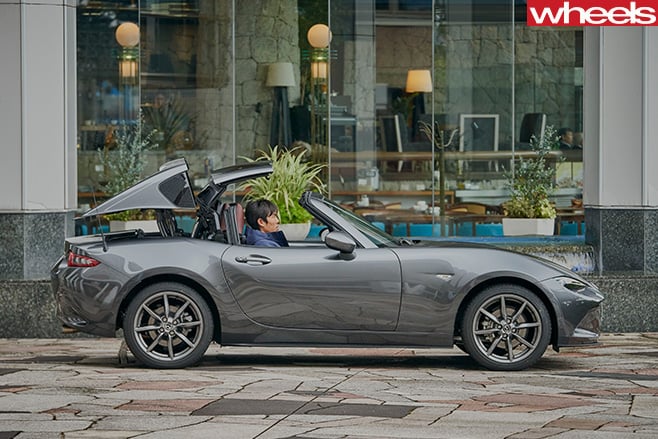
THE Mazda MX-5 RF won’t become a replacement for the award-winning Roadster that launched a new generation of the carmaker’s two-seat sports car, the company says.
Mazda has equipped the targa-roofed MX-5 RF with a richer list of features than its 2016 Wheels Car of the Year-winning soft-top sibling, as well as building in an almost $4000 gap to the highest-priced rag-top version.
However, Mazda says it believes it now has enough product differentiation in place that the Roadster’s sales appeal will stand out from the RF’s.
“So from that point of view, the price gap in the range will mean that the RF – which will be a flagship for the MX-5 range – won’t replace the Roadster.”
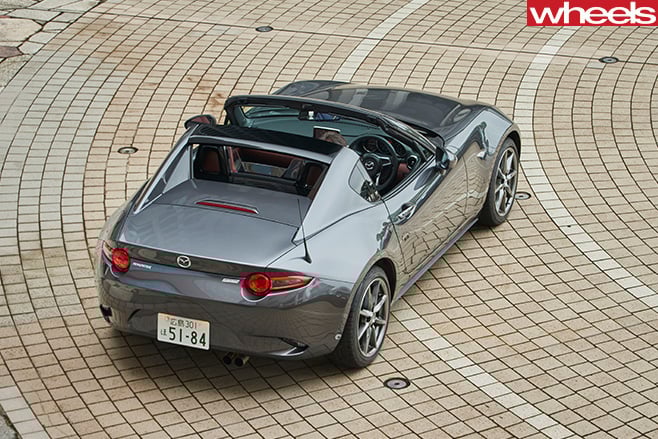
However, the price gap will also be offset by the fresh look, increased security, and improved refinement brought about by the targa’s metal roof and fixed side panels.
The newcomer introduces more driver assist systems and luxury features to the MX-5 badge. These include blind-spot monitoring, rear cross-traffic alert, lane-departure warning and automatic high-beam headlights as well as the availability of Nappa leather seat trim, though these will eventually filter down to the convertible.
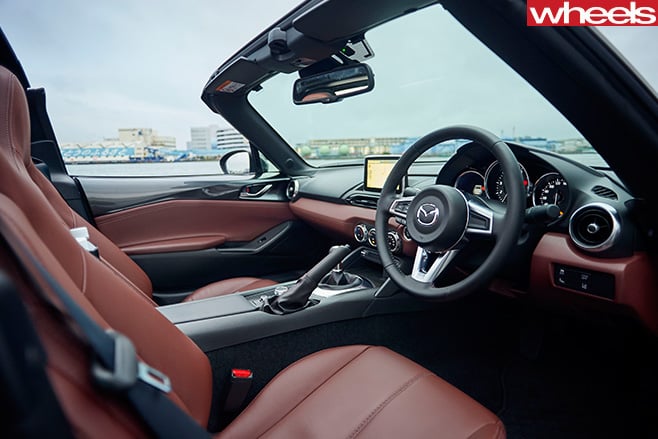
Doak said the RF gave the MX-5 a different look and character that would “appeal to a broader range of customers who might not have considered an MX-5 in its purer soft-top form anyway”.
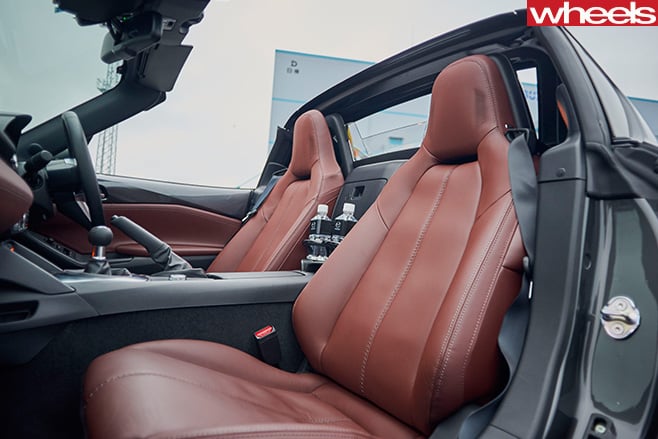
Unlike the previous-generation RC, Mazda believes the RF will only account for about three in every five MX-5 sales, though Doak admits this is only an educated guess.
Still in its first full year on sale, the ND Roadster is on track to break the 1500 unit sales barrier in 2016, making it the series’ most successful in its 27-year run in this country. The convertible had attracted almost 1390 sales in the first 10 months of this year.
By the time FPV had reached the end of the Series 1 FG-based product, it had also kind of reached the end of the development road for the 5.4-litre DOHC atmo V8. So what did it do?
Instead of rolling the arm and coming up with some half-arsed update, it got serious with its partner company Prodrive and came up with something really special. And that thing was the FPV GT. Okay, so nobody spent too much time on the name. But plenty of hours and cubic dollars went into the lump that filled the engine bay.
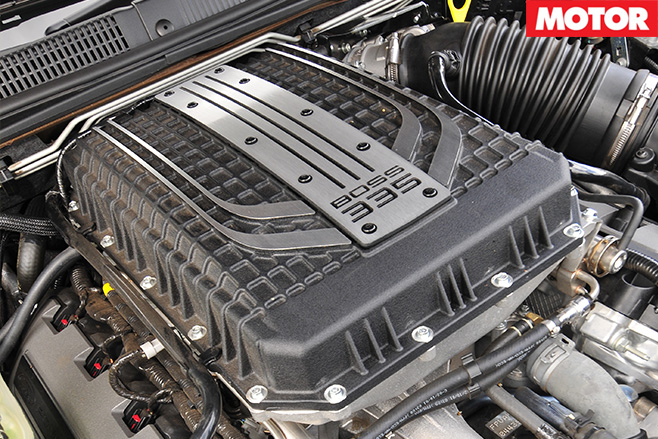
Taking the new Coyote V8 (as seen in the Mustang GT), the brains trust at Prodrive came up with a great solution to the move from 5.4 to 5.0 litres: supercharge the bugger. Before 2009, when all this was going on, nobody, not even the Yanks, had gone into production with a blown Coyote.
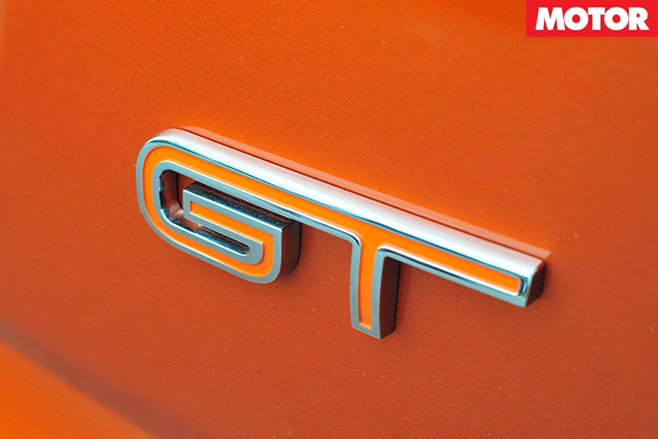
Interestingly, FPV came up with two specifications for the engine it called Miami (it was all glamour). There was a 315kW tune for the GS, and 335kW for the GT. Thing is, we reckon that just as they had been with the Phase III GT-HO of almost three decades earlier, the blokes in the suits were being a bit coy with the actual numbers.
Independent testing (by me) at the time suggested there was probably closer to 350kW or even 360kW at the crank of these buggers. Suddenly, the FPV GT went from a 5.4-litre car with a 14.1 second quarter mile time to a 5.0-litre with the ability to haul across the same stretch of hotmix in closer to 13 seconds neat.
And just to ice that cake, there was a final iteration of the GT dubbed the GT F (F for Final), which boasted 351kW and gave FPV (or Ford Australia, more correctly) licence to revive the old 351 badge. There were still issues, mainly with power-down, driving position and an interior that was already dated. (And those basket-weave seats in the GS that looked like lawn furniture. What were they thinking?) But small improvements were made. Not enough, however, to suggest you should choose one iteration over the other.
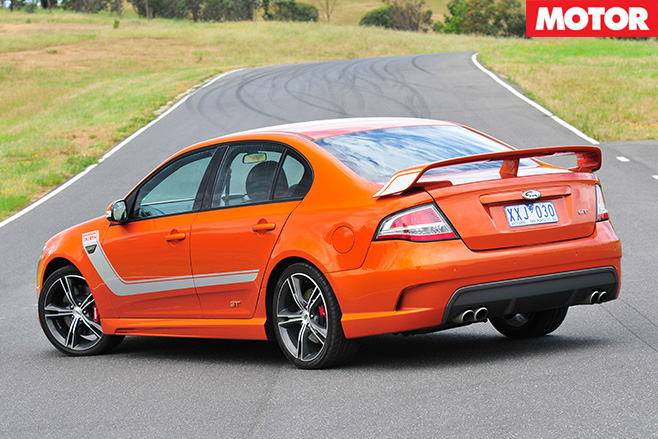
And, we say, a more than worthy occupant of the number five spot in this discussion.
IN DETAIL Engine: 4951cc V8, DOHC, 32v, s/c Outputs: 335kW/570Nm Weight: 1862kg Price: $71,290
What’s our fave Falcon? Check out MOTOR’s take on the top 10 Fast Ford Falcons ever made here.
Cars at this level need to tick a few boxes to deliver on value.
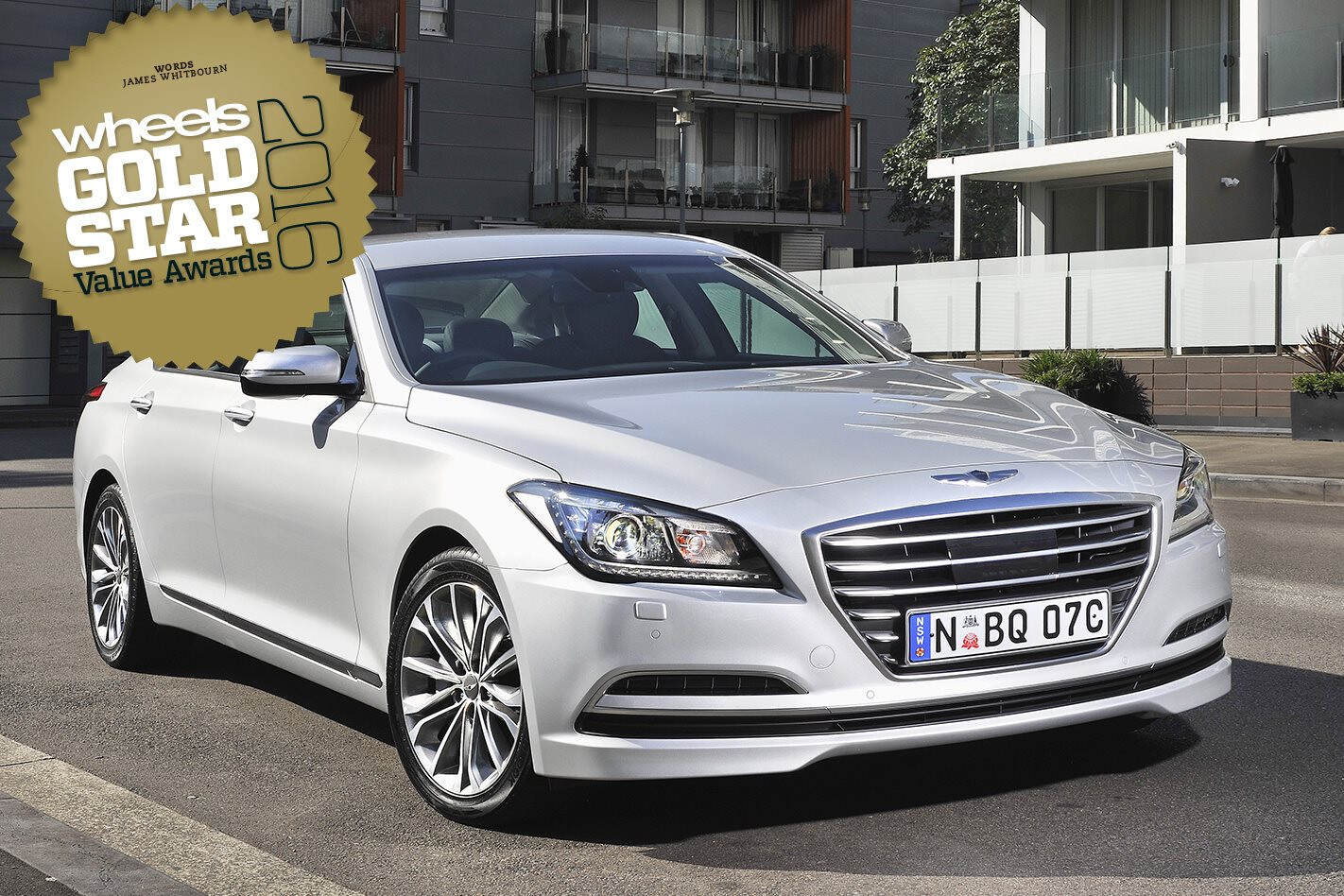
Hyundai Genesis
We bumped the category ceiling for 2016 to give every large car on sale the chance to excel. The thing with letting pricier cars in is that they’re unlikely to do well. Depreciation usually ends their hopes by making the cost of three-year ownership too high – which makes the Hyundai limo’s gold all the more impressive. At $61,500, it’s more than $10K costlier than its nearest rival, yet a retained value of 52 percent means it actually costs less after three years. Thirsty in the grand scheme but not by class standards at 11.2L/100km, the 3.8-litre V6 makes up some ground by happily slurping regular unleaded petrol. And, in this category, no brand can top its five-year/unlimited-kilometre warranty.
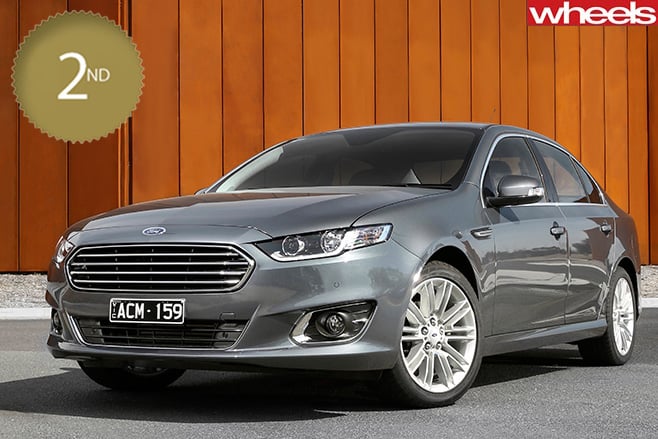
Ford G6E Turbo
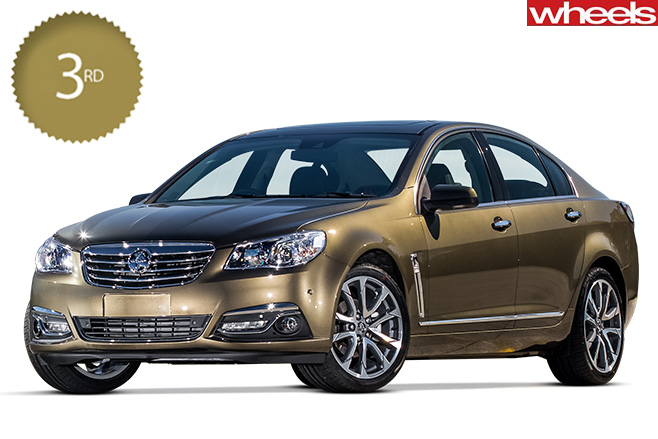
Holden Calais V
MORE GOLD STAR COVERAGE
 WHEELS GOLD STAR VALUE AWARDS
What if someone could expose the hidden costs, crunch the numbers, present the data, and draw conclusions about how to best spend your hard-earned on a brand new car? Enter Wheels’ annual Gold Star Value Awards.
Find out more
 BEST LARGE CARS under $45K
Economical engines have helped large cars avoid becoming instant money pits.
View the results
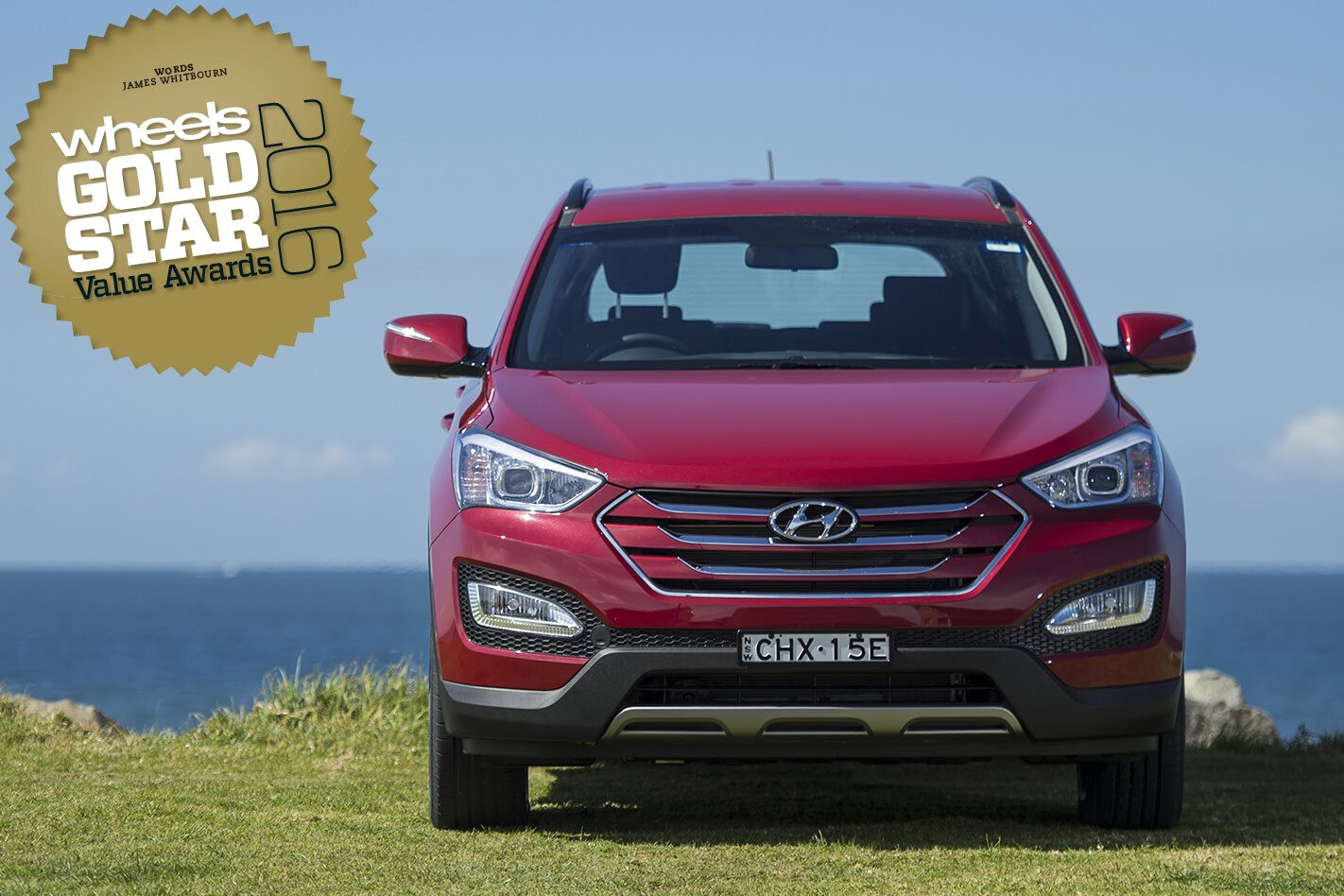 BEST LARGE SUV/4WD
A large SUV or 4WD is a great solution for those with a sense of adventure.
View the results
Economical engines have helped large cars avoid becoming instant money pits.
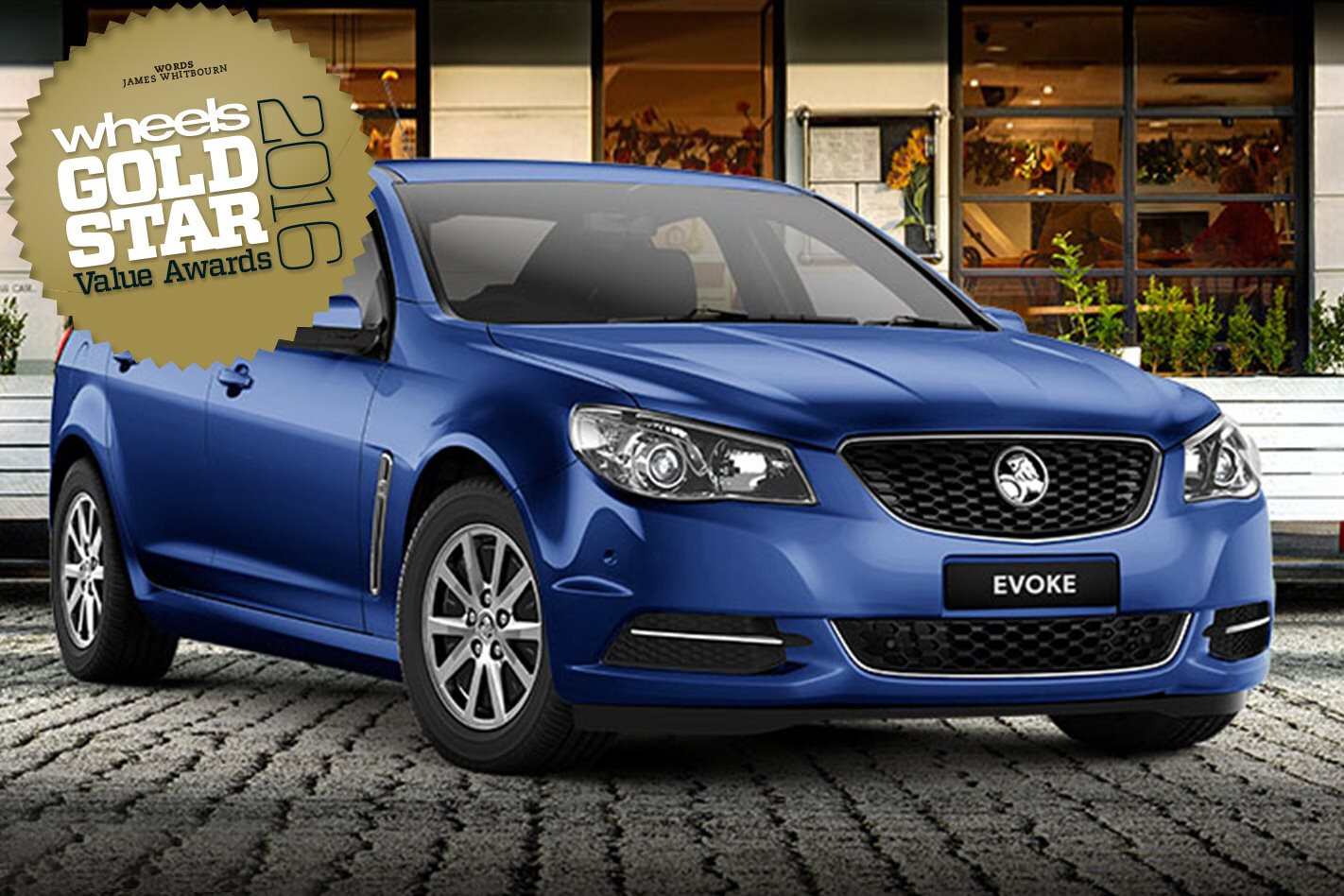
Holden Commodore Evoke
Although the broad view is that large cars are on the nose, the Holden Commodore remains a terrific car and a decent value proposition. The Commodore Evoke’s 3.0-litre V6 isn’t the most economical engine in the category, yet hard work by Holden ensures it uses 8.3L/100km, while mustering what was once HSV-level power (185kW) on regular unleaded.
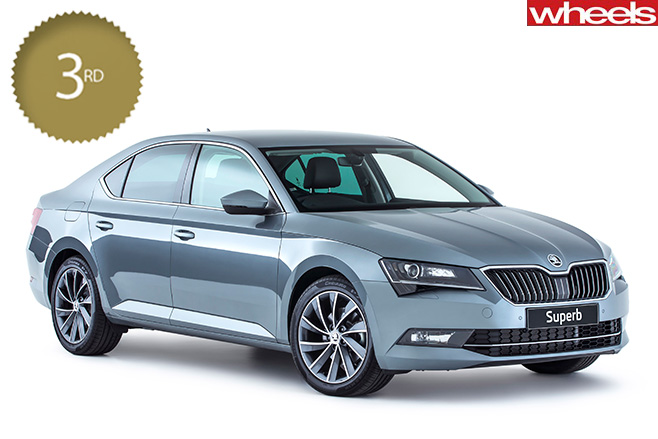
The entry-level Commodore is well priced at $35,490, which helps in the context of a 39 percent three-year retained value. Yes, all big cars are resale shockers, but the Commodore matches the third-placed Superb and fares better than Falcon. It’s also inexpensive to insure at $866.68.
The fact that the homegrown Holden remains a top-ten seller suggests the average Australian has the nous to know a great car – and good value – when they test-drive it.
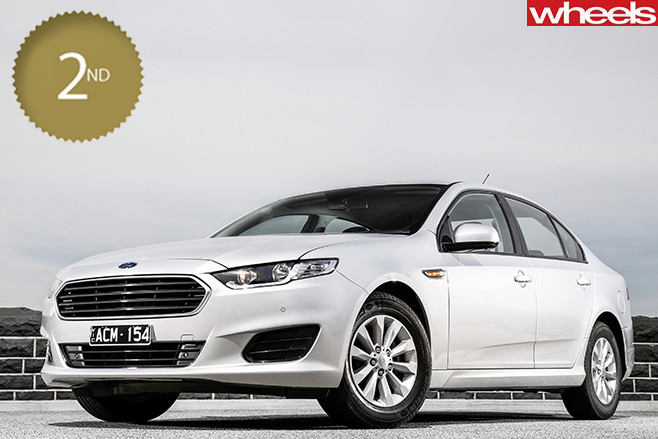
Ford Falcon Ecoboost
Skoda Superb 162 TSI
MORE GOLD STAR COVERAGE
WHEELS GOLD STAR VALUE AWARDS
What if someone could expose the hidden costs, crunch the numbers, present the data, and draw conclusions about how to best spend your hard-earned on a brand new car? Enter Wheels’ annual Gold Star Value Awards.
Find out more
 BEST LARGE CARS $45K to $65K
Cars at this level need to tick a few boxes to deliver on value.
View the results
BEST LARGE SUV/4WD
A large SUV or 4WD is a great solution for those with a sense of adventure.
View the results
Mazda has revealed pricing and some specification details for the long-awaited MX-5 RF Retractable Fastback, ahead of its February 1 release in Australia.
Kicking off from $38,550 before on-road costs, the rakish two-seater coupe with the targa roof opening and a 2.0-litre engine will attract a premium of about $4000 over the continuing Roadster 2.0 convertible equivalent. Like the rag top, it will also offer a better-equipped GT 2.0 version, priced from $43,890. Even at this price, the newest addition to the MX-5 family is still cheaper than the previous generation’s entry-level model.
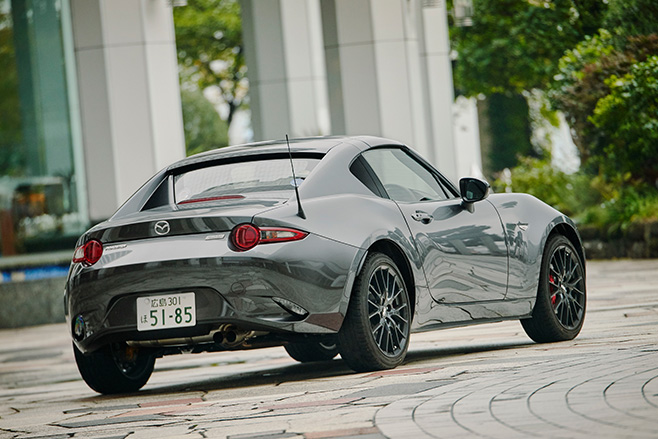
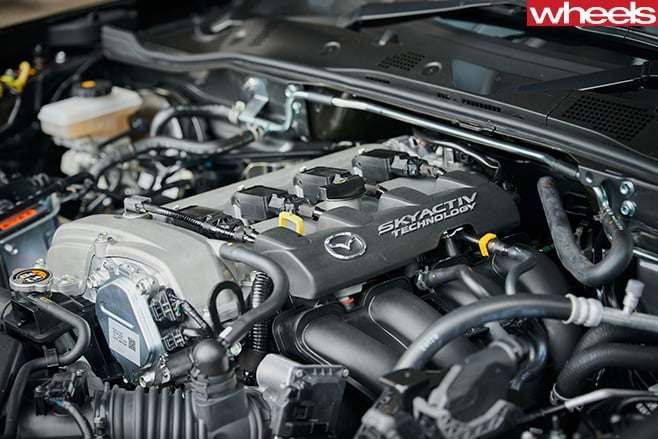
The 2.0-litre engine is the same 118kW/200Nm naturally aspirated four-cylinder SkyActiv-G unit found in the Roadster, driving the rear wheels via either a six-speed manual transmission or – for $2000 extra in both cases – a six-speed Aisin automatic transmission related to the unit found in the Toyota 86 and Subaru BRZ.
With no RF 1.5 planned for now, this gives the Mazda MX-5 range one of the broadest spread of variants in the series’ 27-year run in Australia; the Roadster 1.5 manual starts from $31,990, while the RF GT auto – offering leather, Bose audio, heated seats, a digital speedo, LED tail-lights and trim upgrades – tops out at $45,890. A new Nappa leather seat upholstery option in lieu of the GT’s regular cowhide is an extra $1000 for the flagship version.
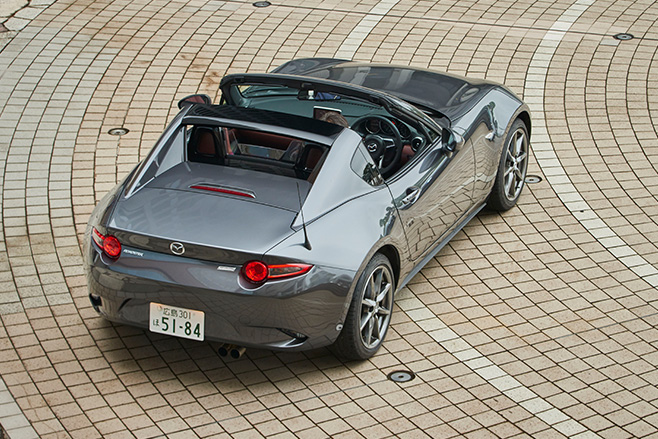
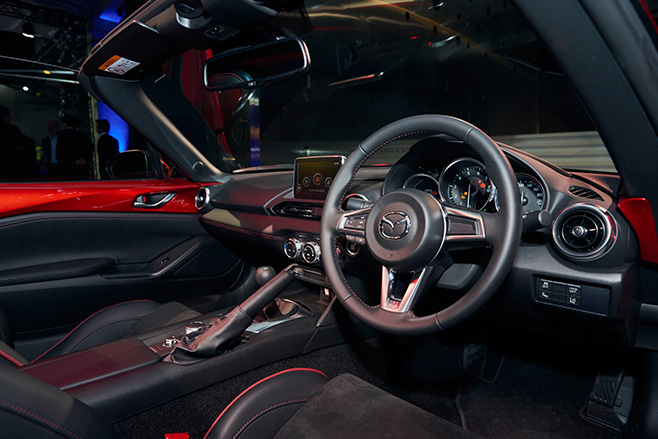
Additionally, the RF will score a 4.6-inch TFT screen in the instrument display, LED headlights with adaptive lighting, and a leather-wrapped steering wheel, as well as a series of driver-assist system items not available on the Roadster, including blind spot monitoring, lane-change assist, and rear cross-traffic alert devices. These are likely filter down to the rag-top.
Mazda hopes the RF’s rich packaging, along with its targa coupe silhouette, more secure roof panels and extra sound deadening will lure in a different type of buyer to the MX-5 family. The roof takes 13 seconds to retract and can be operated at speeds of up to 10km/h. It adds around 45kg in extra weight compared with the Roadster equivalent.
The RF also adds a new paint colour to the MX-5 palette – Machine Grey Metallic, which attracts the same $250 premium over the normal hues as the Soul Red.
2017 MAZDA MX-5 ROADSTER PRICING
1.5 Roadster (man) $31,990 1.5 Roadster (auto) $33,990 1.5 Roadster GT (m) $37,990 1.5 Roadster GT (a) $39,990 2.0 Roadster (m) $34,490 2.0 Roadster (a) $36,490 2.0 Roadster GT (m) $39,950 2.0 Roadster GT (a) $39,950
2017 MAZDA MX-5 RF PRICING
2.0 RF (m) $38,550 2.0 RF (a) $40,550 2.0 RF GT (m) $43,890 2.0 RF GT (a) $45,890
These are the scariest moments from rain-soaked penultimate round of the Formula One season at Sau Paulo, Brazil.
Rain. It is motorsport’s great equaliser.
Or, in the case of Formula One, the harbinger of chaos and carnage – which, let’s be honest, is a nice change from the regular snooze fest of modern F1 (can we pass each other on track, and not in the pits, cool).
This was exemplified once again with the Brazilian Grand Prix, which ran under torrential conditions, forcing three different starts under safety car after it was red flagged twice.
There were spins, saves and carnage aplenty. To save you the trouble of finding all the footage, we have gathered it all here in one convenient chunk.
First, there was Sebastian Vettel’s code brown moment, spinning off track, sliding across the sodden grass, and coming to a halt facing the wrong way on track in the middle of a blind crest. Throw in the fact driver visibility is at an all-time low.
The save and drive of the race has to go to Max Verstappen, for his incredible passing manoeuvres late in the race (moving from 16th to third), and this seat of your pants save.
Running second, while battling with championship protagonist Nico Rosberg, Verstappen begins aquaplaning through the long final curve of the Sau Paulo track.
But in one of the greatest saves of the year, the 19-year-old Dutchman simultaneously stops his car from slamming the armco barrier and shattering into a thousand carbon fibre pieces, and doesn’t lose his position to Rosberg.
Listen to the reaction from the commentators in this video and you get a sense of the awesome he just achieved.
To demonstrate just how horrible the conditions were, watch as Haas F1 driver Romain Grosjeon snap two wheels off his car…on the formation lap!
While making his way around the track to line up on the grid, the Frenchman lost control and slammed into the barriers, suffering heavy damage to his Hass Formula One car. The cringe inducing moment left Grosjean walking away from his mangled car with nothing else to do but hang his head in his hands.
The spray during the race was so bad that TV crews didn’t even see this incident between Jolyon Palmer and Daniil Kvyat, with the Renault driver slamming into the Toro Rosso with barely any warning.
Just for fun, enjoy this video of Verstappen rounding up Rosberg in spectacular fashion during some of the worst conditions of the race.
LEWIS Hamilton survived a remarkable five safety car periods, two red flag stoppages and the pressure of surviving aquaplaning on a treacherously wet Interlagos circuit to post his first victory in a Brazilian Grand Prix, the penultimate race in the 2016 season.
After a chaotic, rain-soaked race that stretched into a survival of the fortunate and the fearless, extending to more than three hours, the Briton has closed to within 12 points of championship leader Nico Rosberg, who finished second for another Mercedes one-two.
It was the third race in a row Hamilton has won from pole, underscoring his late-season recovery in the title chase in what he claimed was one of the easiest victories he’s snared.
This means of course the title will now be decided in a showdown at the final race in Abu Dhabi.
“When it rains, it’s usually a good day for me,” said Hamilton as he celebrated on the podium, adding that he’d made no mistakes, and had no issues.
“I’m hunting – all I can do is keep doing what I’m doing right now.”
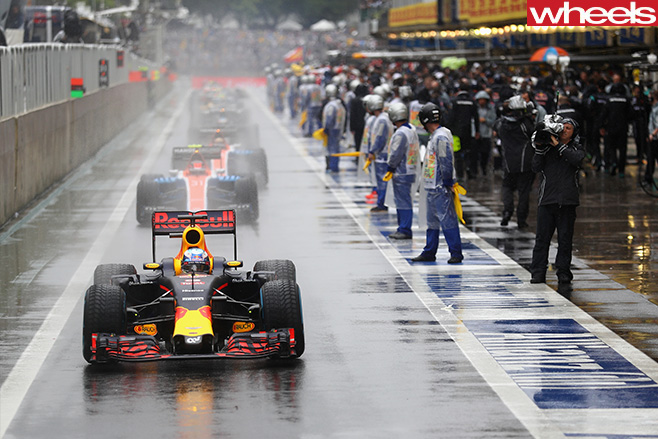
Falling back to 15th after switching to full wets, the young Dutchman launched a stunning change back to a podium finish, collecting the scalps of teammate Daniel Ricciardo (who finished eighth), Ferrari’s Sebastian Vettel, and others.
His unorthodox overtakes, often around the outside where the grip was marginally better, reminded us of his karting background.
“One of the best drives I’ve seen in Formula One,” exclaimed an impressed Christian Horner, the Red Bull team boss. “The way he drove in those last 15 laps… he was fearless in pretty horrific conditions.”
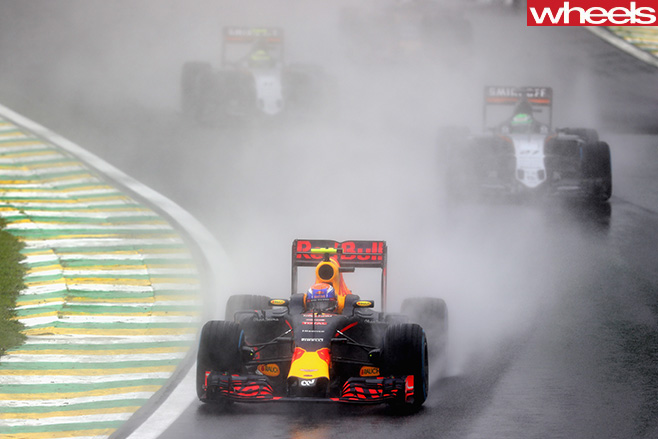
Verstappen had a lurid spin during race but managed to keep the Red Bull off the wall in a manoeuvre he admitted was half skill and half luck.
Behind Verstappen at the flag was Sergio Perez (Force India), Vettel, an impressive Carlos Sainz (Toro Rosso), Force India’s Nico Hulkenberg, and then Ricciardo, whose race was hindered by a five-second time penalty incurred for entering the pit lane while it was closed, as well as visibility problems after his visor fogged over.
Sauber’s Felipe Nasr and McLaren’s Fernando Alonso filled the final points’ places.
Back to the winner. Hamilton declared from the moment he arrived that all he could do was try to win the grand prix. He’d never won in Brazil in nine previous attempts.

Being a shortish racetrack with limited overtaking opportunities, starting up front at Interlagos is always an obvious advantage. Hamilton took his 11th pole of 2016 with Rosberg next, the Silver Arrows blocking out the front row for the 13th time this season.
Raikkonen surprised himself by being third fastest in his Ferrari despite his lap, in his eyes, being a bit “average”.
Verstappen was fourth for Red Bull, followed by Sebastian Vettel and Ricciardo, who was quietly hoping for rain during the race.
He got his wish but not the outcome he wanted.
Lorenzo uncatchable in Valencia Moto GP world championship finale

Sayonara and arigato. And ciao and salve to his new employer.
Lorenzo got the hole-shot from a tardy championship titleholder Marc Marquez, before riding off to take a quite magnificent flag-to-flag victory.
Under the blue skies of a long-awaited dry race day, Ducati’s Andrea Iannone also got off the line well to take second, while Valentino Rossi was further back in fourth behinds Maverick Viñales (Team Suzuki Ecstar).

But Marquez managed to move into second in the closing stages as the Ducati’s long-suffering rear lost interest.
Valentino Rossi and Iannone tussled for the final podium place, with the Ducati rider grabbing third on the penultimate lap.
The podium decider was left to a brutal, classic battle between Iannone and Rossi – with the rider from Tavullia seeming to have got the better of his younger compatriot, until Iannone hit back with an aggressive move that also gave him a gap he was able to hold onto over the line. Viñales completed his final weekend with Suzuki in fifth
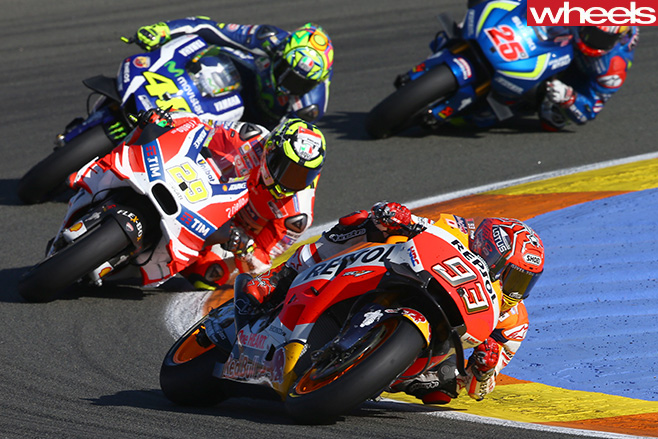
Heading to Valencia, the 2016 Moto2 championship was already in the hands of Johann Zarco, but someone forgot to tell the Frenchman he could take things easy in the final race of the year.
Instead of playing his usual waiting game, Zarco elected to get aggressive early, slicing and dicing up front in some hard but clean exchanges with Franco Morbidelli. Tom Luthi joined in mid-race watching the lead change countless times before Zarco asserted himself in the closing stages, easing away from Morbidelli. The Italian, his rear tyre sliding helplessly, relinquished second to Luthi on the final lap of one of the more entertaining races of the year.
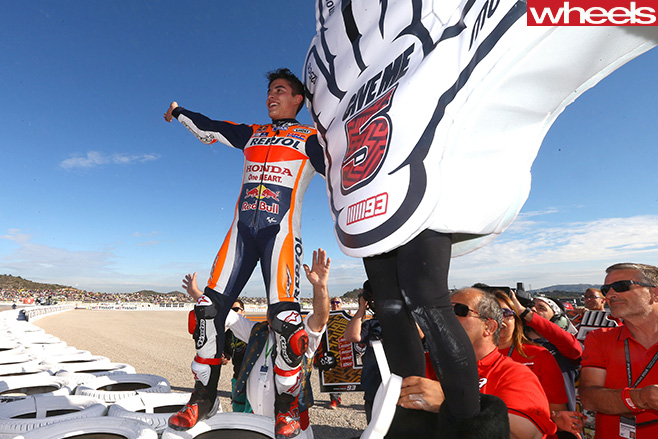
New world Moto3 champ Brad Binder signed off from the baby class with yet another stunning win, highlighted by a stunning 22ndto first fightback after his KTM became briefly temperamental in the early laps.
Binder, who is off to Moto2 next year, won seven GPs this season.
The first time Wheels founding editor Athol Yeomans cracked the magic Ton – 100 miles per hour (160km/h) – he was driving a modified FJ Holden.
The secret to its wildly increased performance was a cylinder head modified by Phil Irving that upped the power to 90bhp (67kW), a 50 percent increase over the standard ‘grey’ Holden engine.
Read Rab Cook’s classic story, as published in the February 1974 edition of Wheels.
Repco produced about 100 of these completely rebuilt engines and they quickly became compulsory for anyone wanting a truly hot Holden.
Irving is best remembered in motor racing circles as the designer of the 1966 and 1967 world championship Repco-Brabham V8 engines. He could, as Rab Cook pointed out in his 1974 profile of Irving, just as easily be known as the designer of British Vincent motorcycles, the prolific author of a number of significant automotive books – the best known probably Tuning for Speed and his autobiography – and as the writer of hundreds of articles for car and motorbike magazines.
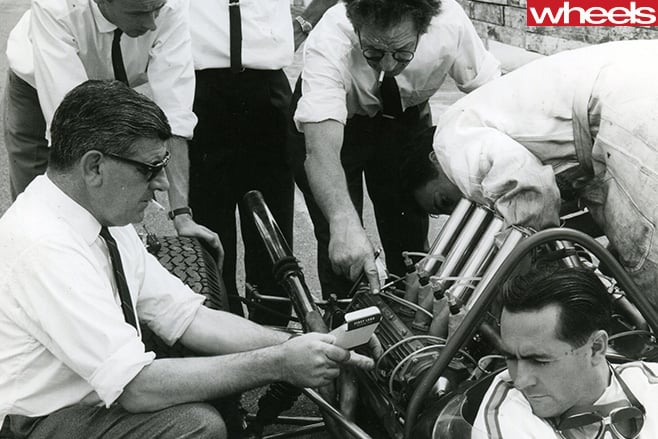
When Cook moved to Australia in the early 1970s (and began writing freelance for Wheels), Irving provided him with a car for the first few weeks after his arrival. Irving was that sort of bloke.
In his later years, Phil’s Warrandyte (Vic) home, Owl’s Nest, housed an old Land Rover and at least two ‘aunty’ Rovers from the 1950s, plus sheds containing dozens of old motorbikes in various stages of repair.
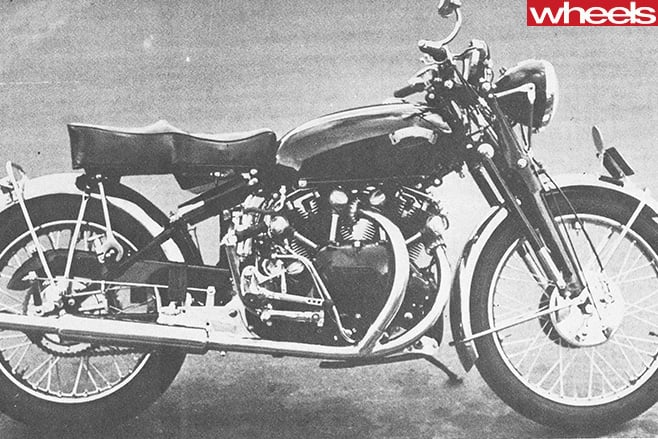
Irving, a great Australian, deserves wider recognition for his many achievements.
Simplicity the key to success
Phil Irving summed up his engineering philosophy in Australian Motor Sports & Automobiles (June 1967): “In my view, blind worship at the shrine of the super complicated is a thing to be eschewed with vigour – the simpler a thing can be made, provided it gets results, the better.”
In defending his simple Repco-Brabham V8 against engines like BRM’s hugely complicated H16 and the heavy Maserati and Ferrari V12 engines, the ever pragmatic Irving argued that a broad spread of torque was more important than top-end power. Before the new three-litre formula arrived in 1966, the pundits had talked about the need for at least 350bhp. Phil called this “printer’s ink” power and made the point that Brabham still scored three pole positions on his way to winning four of the ’66 season’s nine races, en route to clinching the world championship and manufacturers’ title.
To honour Irving’s “great achievements”, CAMS named its highest engineering award the Phil Irving Award.
Irving died in 1992 at the age of 89.
