
Mid-range light cars come with creature comforts that initially cost more but help retain value.
Mazda 2 Maxx
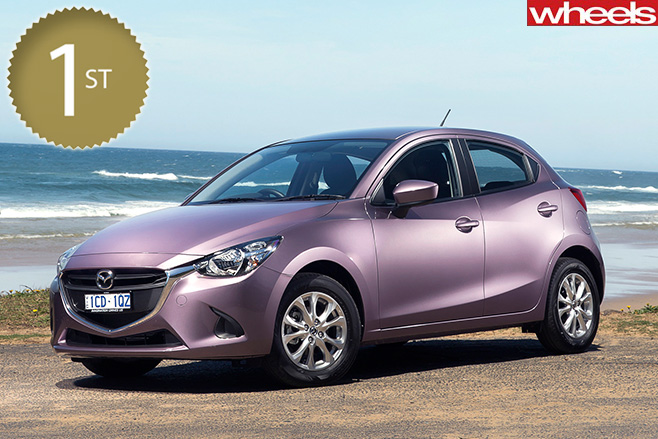
The Mazda 2, like its podium mates, sticks closely to the lower limit of the category at $17,690, and one of the things the extra $2700 buys is a slightly more powerful version of the 1.5-litre four-cylinder engine that actually makes the 2 slightly more economical.
A 52 percent Glass’s three-year retained value figure supports our theory that a specced-up hatch will be easier to move for a good price than a boggo special, at a percentage point better than the Mazda 2 Neo in the sub-$17K Light category.
So the Mazda 2 Maxx matches its less-costly sibling on many counts, uses less fuel, and counters its higher price with marginally superior resale – and you’ll enjoy it more along the way. Sounds like a winner to us.
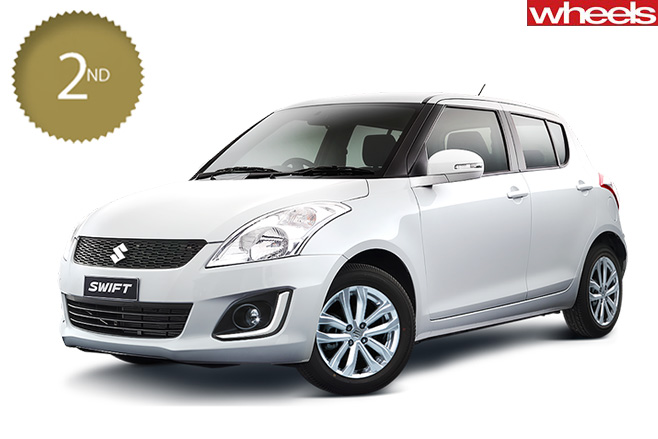
Suzuki Swift GL Navigator
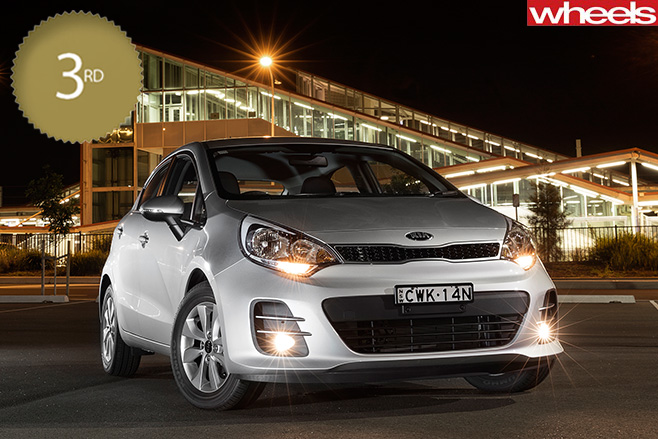
Kia Rio S Premium
MORE GOLD STAR COVERAGE
 WHEELS GOLD STAR VALUE AWARDS
What if someone could expose the hidden costs, crunch the numbers, present the data, and draw conclusions about how to best spend your hard-earned on a brand new car? Enter Wheels’ annual Gold Star Value Awards.
Find out more
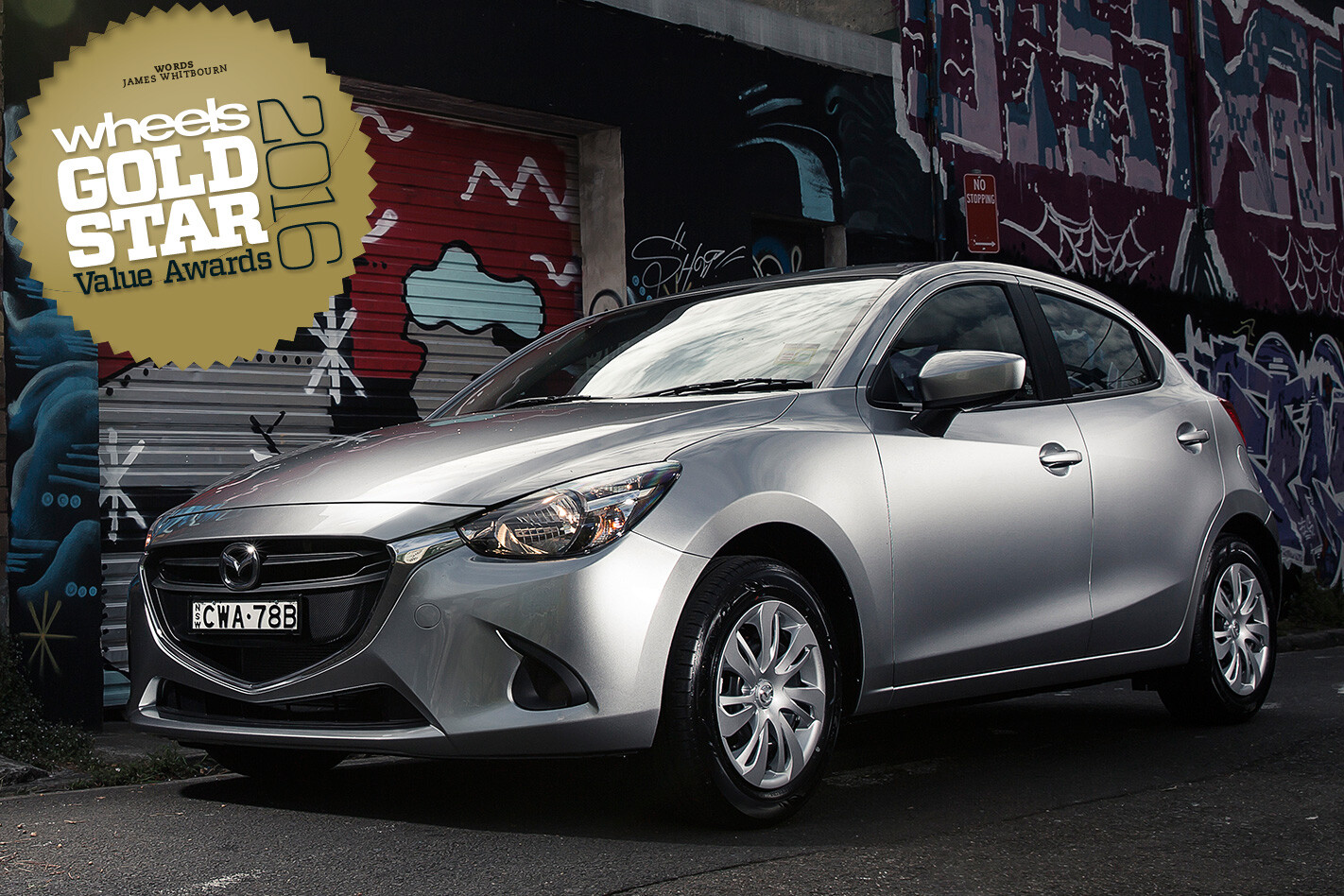 BEST LIGHT CARS under $17K
You want a Light car to be light on the pocket, as these three are.
View the results
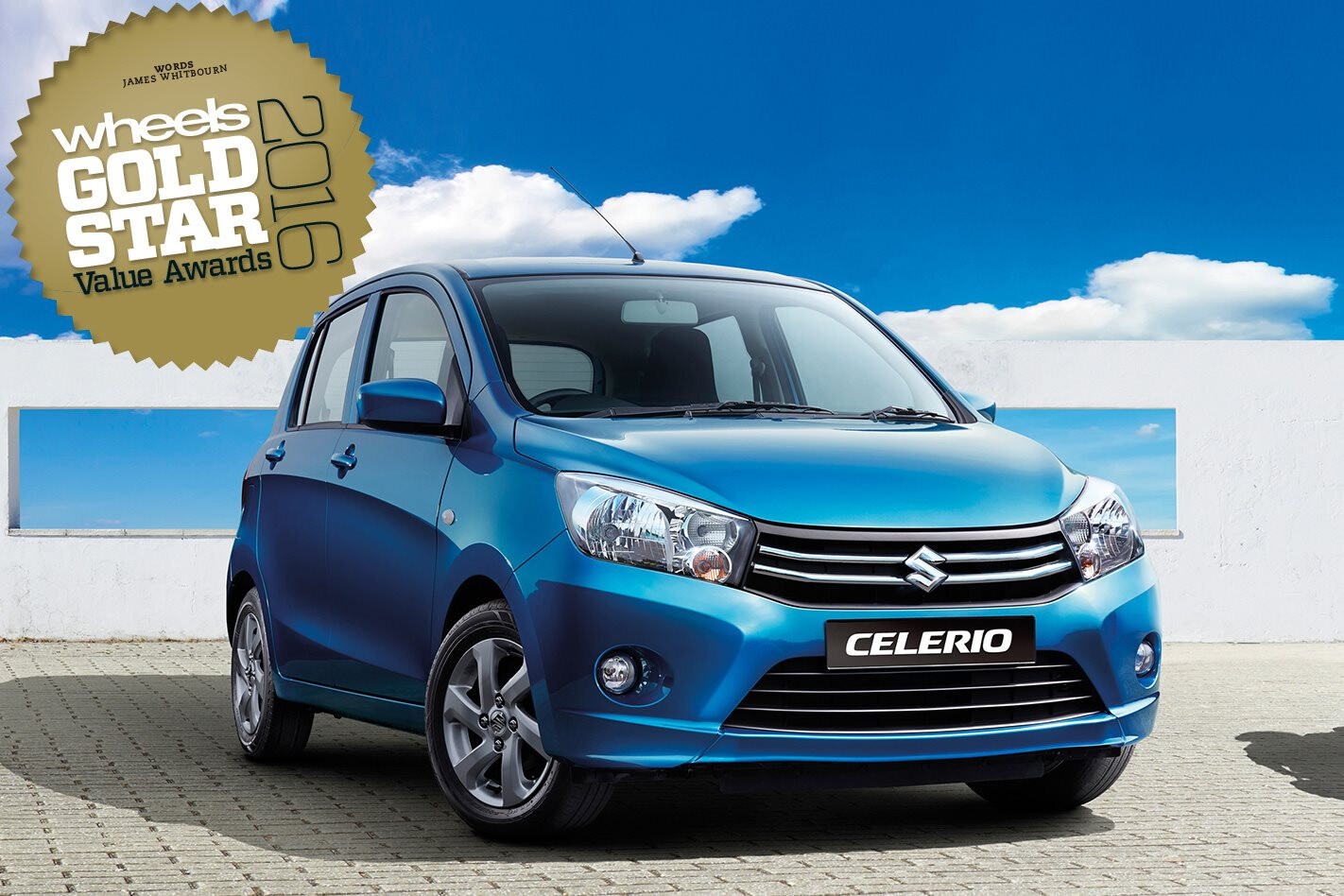 BEST CITY CARS
Just because they’re small and cheap to run doesn’t mean all city cars offer great value. Here are three that do.
View the results
Mazda’s MX-5 may be the world’s most popular sportscar, but it’s still like any family. Roping everyone together for a catch-up can be a pain.
Today, though, we’re lucky, we didn’t have to coral the four generations ourselves. Mazda’s dipped into its own Heritage Collection and wheeled out each of its MX-5 models for us to taste.
They weren’t covered in dust, either, despite some of these cars being over 25 years old. Underneath they’ve been restored nut and bolt and are regularly displayed in Mazda’s HQ.
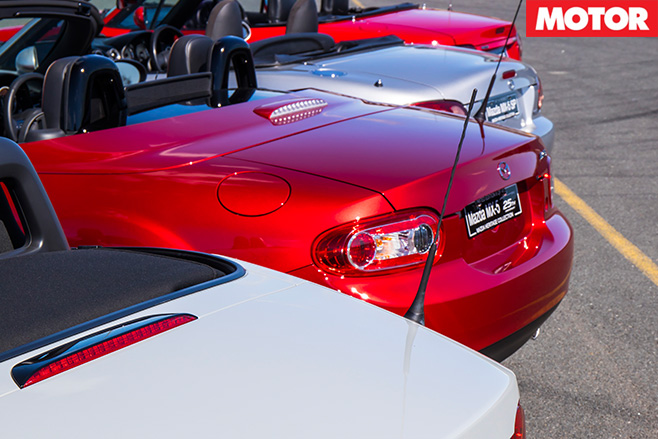
Mazda warned it doesn’t want any ten-tenths stuff, but there’s enough rope on offer to have a decent blast and learn how the MX-5’s magic has evolved over three decades.
NA: 1989-
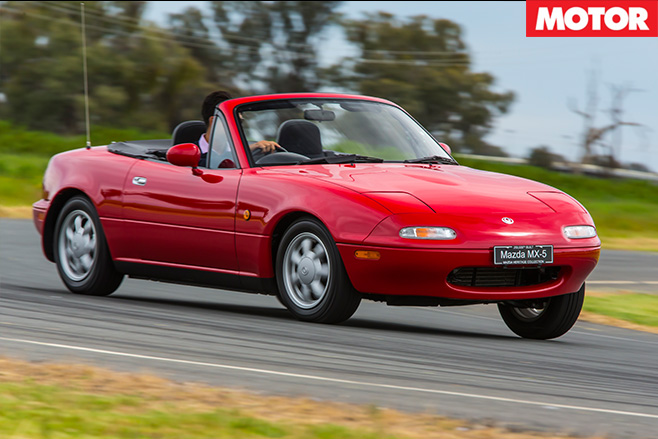
Kicking off is Mazda’s original hit, the 1989 MX-5, or NA series as its known among trainspotters.
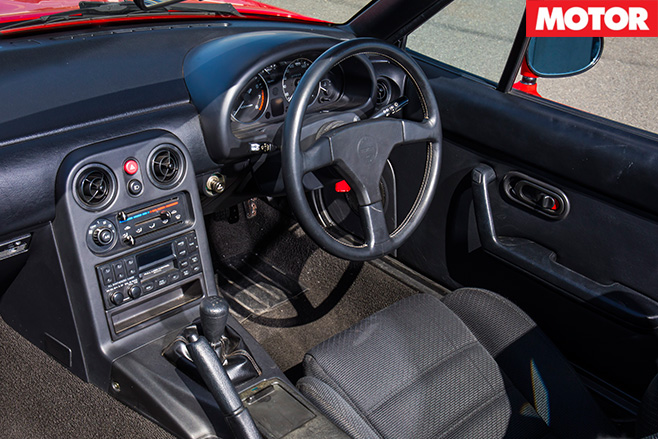
However, this timelessness falls away once you open its tiny little doors, where you’re greeted by old plastics and cloth. The oily bits might be brand new, but the NA’s 8000km-old interior certainly isn’t.
Still, there’s an attractive simplicity about the place, from the stubby lever knob to the large airbag-less steering wheel, and it’s surprising how roomy the place feels.
Firing up the mighty 1.6-litre’s with a key buoys nostalgia, and the five-speed gearbox slots tightly into first, where we’re given access to a piffling 85kW and 130Nm.
It’s softly sprung and rolls, but to its benefit as its chassis balance allows you to work its tiny 185mm-wide tyres.
You quickly find a rhythm, and we could’ve driven for hours if it wasn’t for what was waiting for us next…
NB: 1998 –
See, Mazda didn’t roll out any old NB-series MX-5 here. It’s actually the boost-sucking SP version of which only 100 were built in 2001.
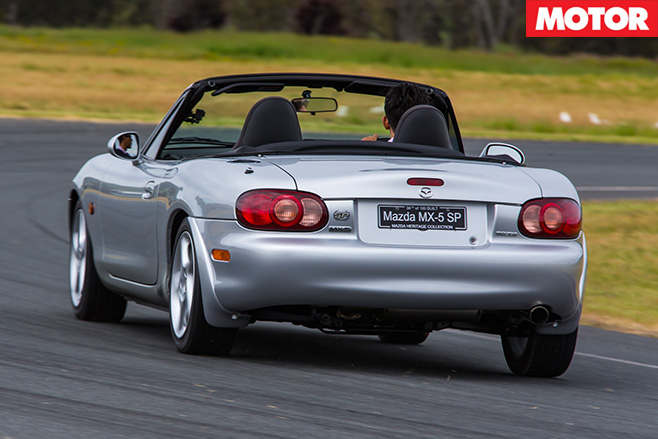
That’s more power than Fiat’s incoming turbocharged Abarth 124 Spider and has only 1050kg to haul.
Not only was this SP the world’s first factory turbo MX-5, its airbox would have made it one of the first Aussie cars to sneak carbon fibre into its engine bay – take that, Ford Falcon XR6 Sprint.
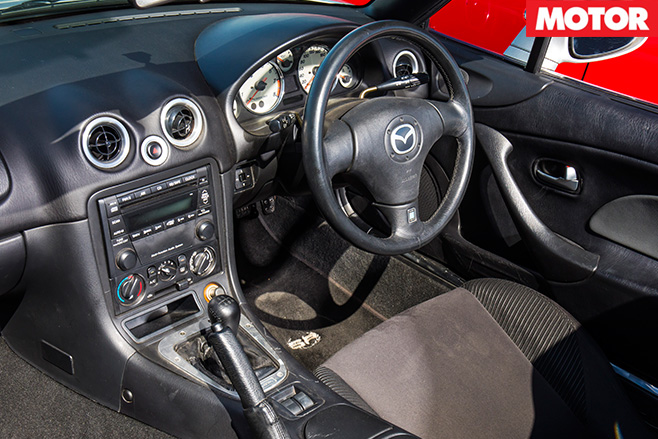
There’s a stutter when slowly rolling off full throttle, but the power delivery’s smooth and linear and the needle rips towards 7000rpm redline much faster than its older brother.
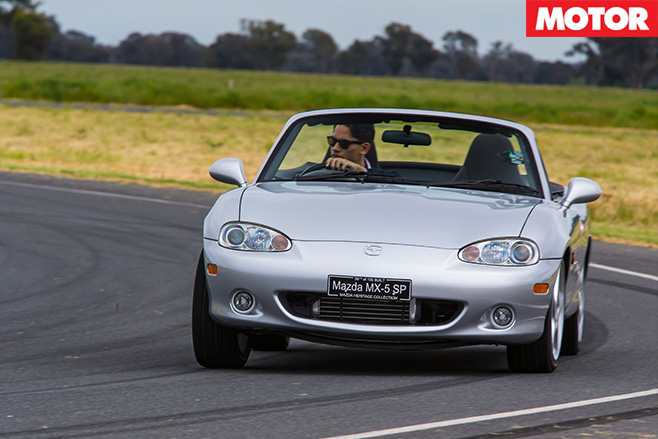
But dynamically the car’s nose feels slightly heavier and less playful, with a less interested front-end than its older brother. Obviously Mazda took note…
NC: 2005 –
Because the third-generation car instantly has more grip across the front-axle. There’s also more point and agility. Unsurprisingly, it also feels generations ahead in body rigidity, feedback, and roadholding ability.
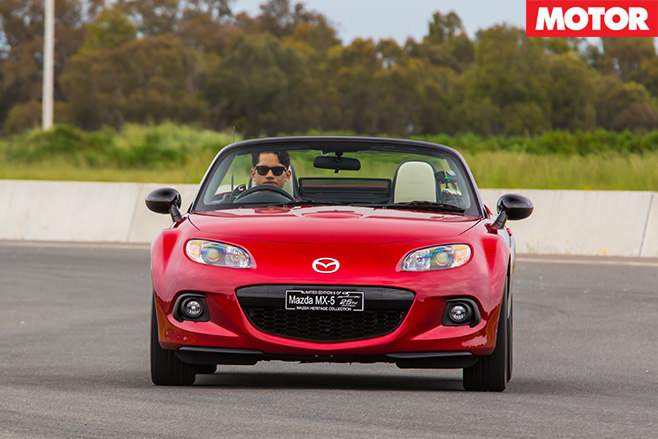
Launched in 2014, this special 25th Anniversary edition heeded the car’s twilight years. It would have lacked technology against rivals, Bluetooth and a simple-LCD display the height of its connectivity smarts, but not luxury.
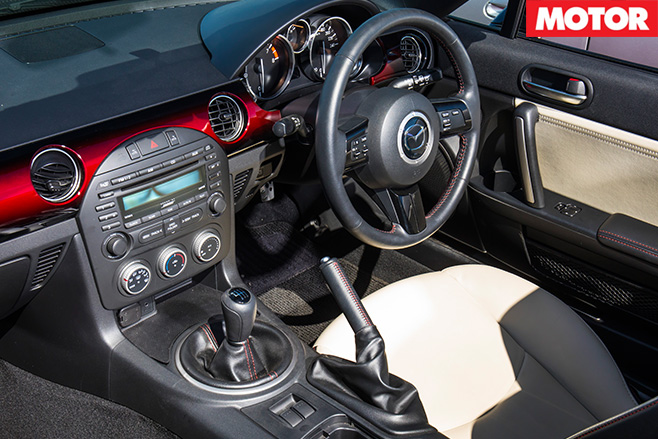
However, there’s something missing from the NC which made the NA and NB so magical. Exactly what that was became obvious in the latest generation…
ND: 2016 –
Mazda’s feverish quest to slim down the fourth-generation car paid dividends, because hooking the ND into a corner at Wodonga TAFE’s racetrack reveals an instrument much like the first two gens.
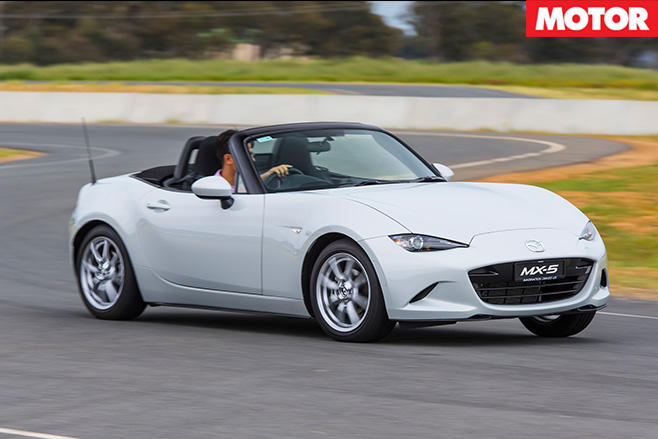
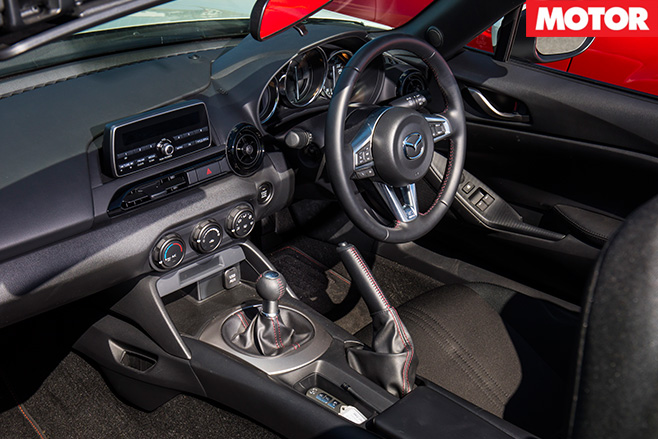
The diet helped, which dropped weight to 1009kg for the 1.5-litre MX-5, but compromised some aspects of its cabin. It’s, erm, cosier than the NC’s and the soft-fold roof makes it feel a little no-frills.
No MZD connect means there’s a single-dot matrix LCD display, like the NC, and makes it feel a little pared back for technology.
Mazda’s managed to not only recapture the original car’s magic for the ND, but its value too. Putting the roadster in reach of the masses again, it launched this year at $31,990 for the 1.5-litre.
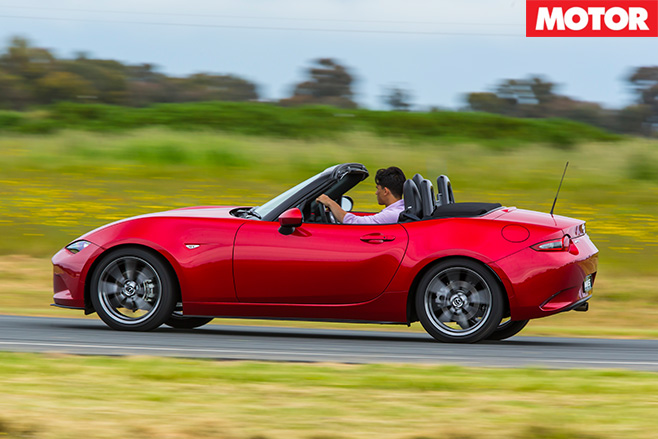
Mazda’s inspired idea to revive the British-roadster proved a hit. And 27 years, one million cars, and three generations later, evolution has arrived back at the original’s tactile, involved, pared back driving experience – and price.
By this showing, the family’s closer knit than ever.
Australia’s road rules watchdog has recommended that drivers behind the wheel of autonomous cars be banned from reading books, checking their phones and watching TV.
Well, that is at least until the states and territories agree to change their road rules to allow drivers to take their hands off the wheel – an important step in the roll-out of cars that can drive themselves.
Many carmakers are starting to paint a picture of an on-road utopia where drivers will be able to switch off driving and instead switch onto books, movies and social media while the car picks its own way along the road.
In light of this, the National Transport Commission today released a set of guidelines it wants the nation’s transport ministers to think about when setting the legal framework in place that will one day allow self-driving cars to ply our roads.
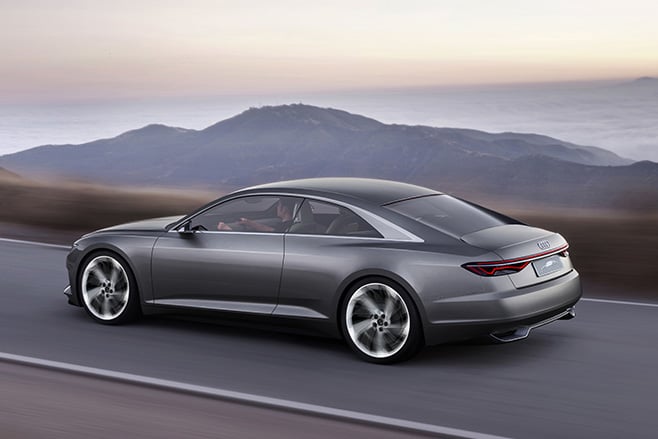
However the NTC warns that if and when cars with self-driving ability arrive here, until laws are changed a driver will still need to be in full control of the vehicle, including leaving a hand on the steering wheel at all times.
“The human driver of a partially or conditionally automated vehicle should only undertake non-driving tasks currently permitted by the road rules and existing enforcement policies and guidelines, unless or until a new position is developed and agreed … or an exemption is provided by a road agency,” it says.
It has asked transport ministers to “reaffirm the existing policy position that … The human driver remains in full legal control of a vehicle that is partially or conditionally automated, unless or until a new position is developed and agreed”.
Until this is done, it means an autonomous car owner will fall under the same set of road rules as conventional cars, so they won’t be able to realise any of the benefits the cars will bring, including picking up the smartphone to browse social media or send an SMS message.
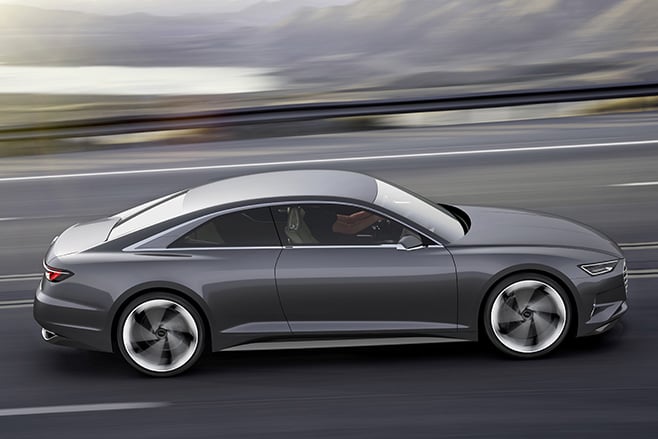
German luxury carmaker Audi has flagged it wants a version of its facelifted Audi A8 limousine that is capable of Level Three autonomy, the next big step in self-driving cars that hands some of the work behind the wheel across from the driver to the vehicle, on the world’s roads in 2018.
Level Three autonomy, which introduces some levels of automation for chores such as crawling along in stop-start traffic, will still need the driver as a fallback when the car’s on-board computers can’t deal with a situation, such as heavy rain or if an emergency vehicle is approaching.
That said, the NTC suggests that state and territory governments initially focus on setting the legislative framework to deal with Level Three autonomous cars: cars that currently feature neat tricks such as active cruise control and automatic emergency braking.
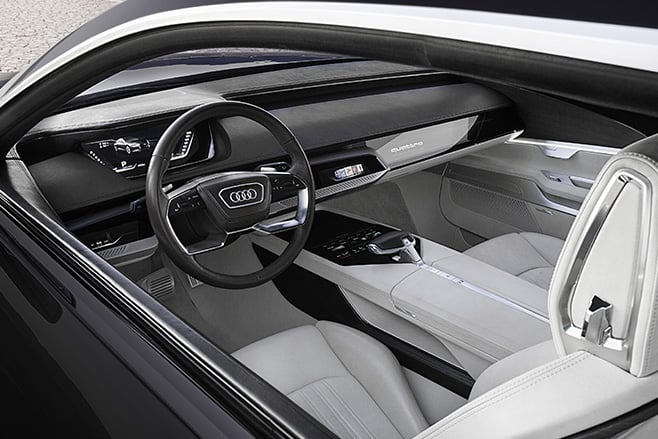
According to the NTC, one of the next steps Australia needs to take is to remove the assumption from road rules that a human driver is in control of the car.
It has also flagged that insurance companies will need to change the way they think about assessing third-party insurance claims, which also assume a human and not a computer is behind the wheel of a vehicle.
The NTC has set a target date of May 2018 as the cut-off date for governments to change their road rules to allow automated driving.
The next step for carmakers beyond Level Three autonomy is Level Four, which allows a car to act as though the driver isn’t there except in extreme situations. The top Level Five means the car is capable of driving itself all the time, and the people inside it are just cargo.
The German car maker’s popular hatchback will introduce technology such as gesture control, higher-resolution touchscreens, trailer-steering assistance, and low-speed semi-autonomous driving as part of an electronics-biased facelift.
Here’s whichcar’s quick guide to all the latest Golf’s key changes.
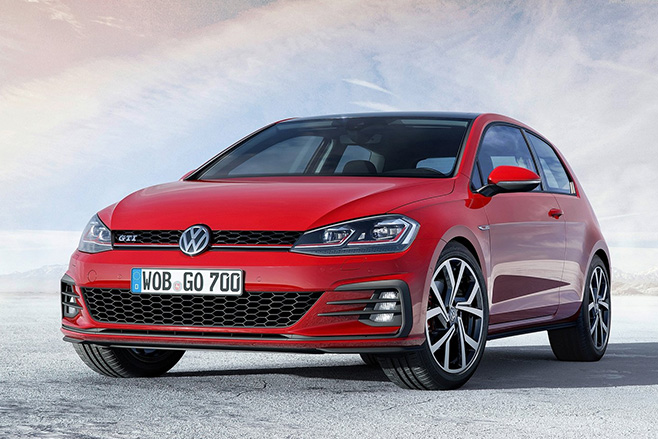
GESTURE CONTROL
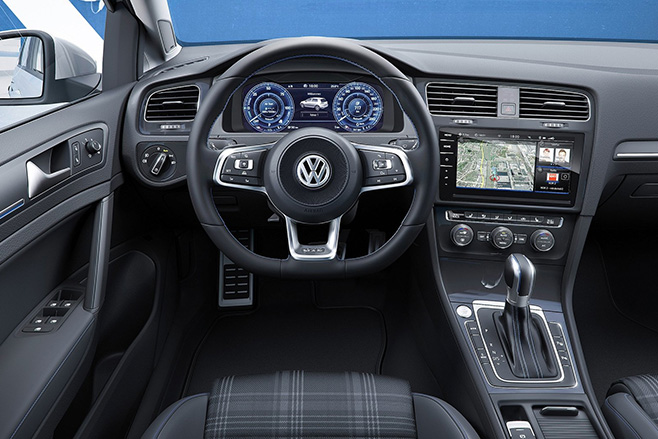
Both a VW-first and segment-first, gesture control is available on the Golf’s most advanced infotainment system – Discover Pro. Proximity sensors first detect a hand nearing the screen to increase the number of functions displayed, then allows the user to ‘swipe’ left or right without touching the screen to access options for the likes of radio stations and music playlists. Functions that can be controlled by gestures are subtly highlighted, while successful selections are greeted by both visual and audible confirmations. The system also retains touch and voice control.
LARGER, HIGHER-RESOLUTION INFOTAINMENT DISPLAYS
The Golf’s base touchscreen display system changes from black and white to colour, and increases in size from 5.0 to 6.5 inches. Resolution is also doubled for sharper graphics. The aforementioned Discover Pro display jumps from 8.0 to 9.5 inches, features a glass surface, and increases resolution from 800×480 pixels to 1280×640.
ACTIVE INFO DISPLAY
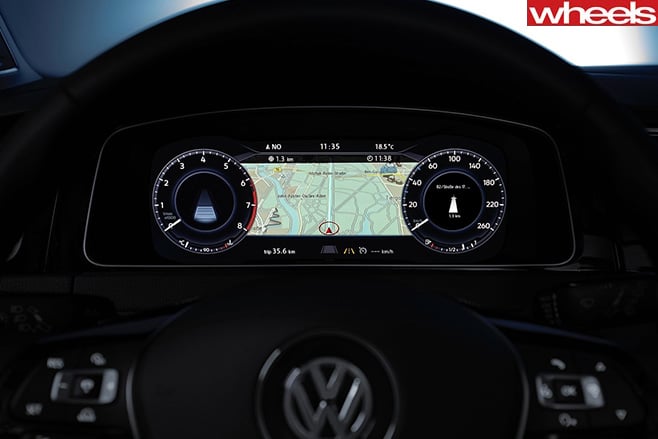
Golf buyers can opt for this digital instrument cluster as an alternative to the standard analogue dials ahead of the driver. Borrowed from the larger Volkswagen Passat and based on the technology first seen in Audi’s similar Virtual Cockpit, the display is a 12.3 inch super-high resolution screen. Five configurations enable the driver to view different information, whether they want to focus on navigation, assess driving efficiency, or simply have a graphical form of a traditional instrument cluster.
SMARTER SMARTPHONE INTEGRATION
Media Control gives occupants another option for controlling the Golf’s infotainment system – via their tablet or smartphone. Phone-call quality can also be improved by inserting smartphones into a special storage area where an inductive loop not only allows for wireless charging, but also enables the car’s external antenna to be used by your phone.
SECURITY AND SERVICE
A new, optional smartphone-linked set-up that gives owners a direct line to VW’s Emergency Call Centre for breakdowns, can notify the same centre in the event of a crash, and schedule services with the dealership.
DRIVER AIDS
Available assistance systems include two semi-autonomous driving systems: a segment-first Trailer Assist system which can take control of the tricky steering required for reverse-parking a boat or caravan, and Traffic Jam Assist, which can take the stress out of rush-hour commutes at a speed of up to 60km/h.
NEW TSI EVO ENGINES
A new 1.5-litre four-cylinder petrol turbo engine range joins the Golf line-up, both featuring variable turbine geometry that’s rare for a petrol vehicle at this price point and helps improve driveability. A 110kw/250Nm version is first up and can cut out cylinders to improve fuel consumption. A ‘Bluemotion’ unit follows with lower outputs (96kw/200Nm) but also lower consumption (4.6L/100km). It includes a coasting function that can disengage the engine when it’s not under load.
MORE POWER FOR GTI MODELS
The regular GTI lifts by 7kw to 169kw of power, while the more expensive, more powerful GTI Performance variant gains 11kw for a total of 180kw. They arrive a little later than the regular Golfs – in the third quarter of 2016.
7-SPEED ‘DSG’ AUTO
Volkswagen has beefed up its seven-speed auto to handle more torque, meaning it now replaces the six-speed dual-clutch automatics previously available. Six-speed manual gearboxes remain standard for most variants.
GTE PLUG-IN A POSSIBILITY
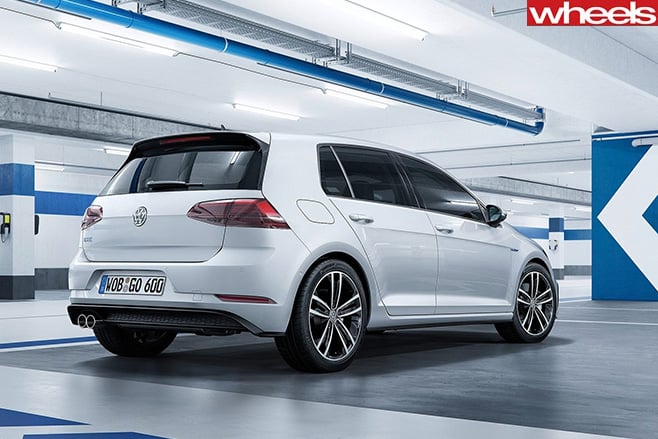
VW Australia has been considering the Golf GTE plug-in for a couple of years and says it is “working hard” to bring it here. The petrol-electric GTE features the same drivetrain as the Audi A3 e-Tron already sold here, offering the same 50km electric-only range.
STYLING CHANGES
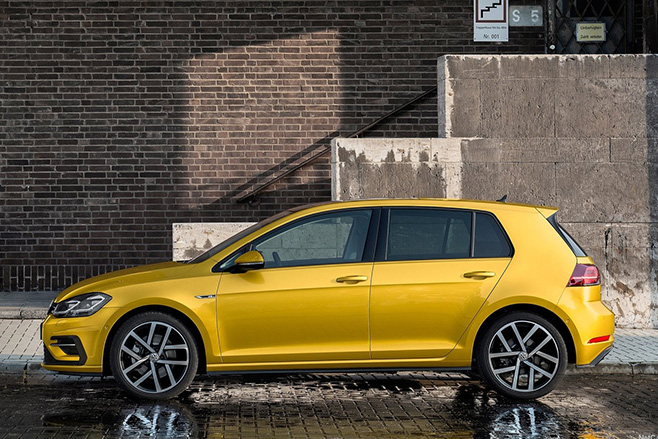
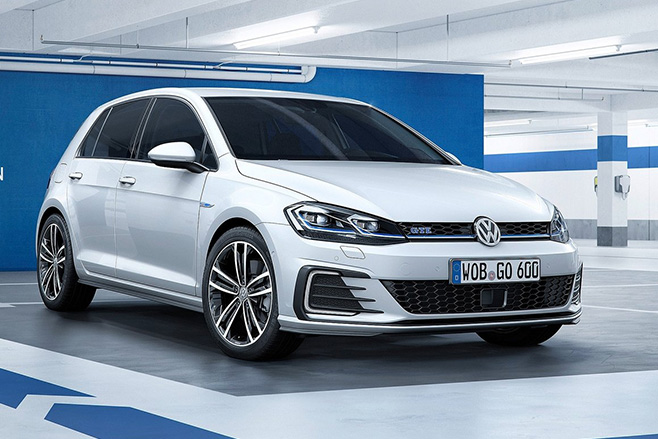
Volkswagen is cautious with visual changes to the Golf even between generations for such a hugely important car (it’s Europe’s best-selling model), so it’s no surprise that there are merely minor visual tweaks for this update. There are revised bumpers front and rear, new alloy wheel designs, and all Golfs now come standard with LED tail-lights. Lower-end models feature halogen lights with embedded LED daytime running lights while higher-end models swap xenons for new LED headlights. Inside, the Golf cabin receives some new seat covers and trim sections.
Expect to wait until closer to the updated Golf’s mid-2017 launch for more details on the full line-up and specifications for Australia.
The Holden Astra lobs in as the long-awaited replacement for the Holden Cruze hatch, and will have its work cut out for it in the hotly-contested small car segment. We’ve already detailed the basics of the 2017 Astra range’s prices, features and specifications, but here are some details that you may not have already heard.
1. The European motoring media have crowned the new Astra the European Car of the Year, which bodes well for its Australian arrival.
2. Exterior design of the Holden Astra is inspired by the Monza coupe concept, and while it looks a little less resolved in the real world it should still stand out from the crowd.
3. The base model R misses out on standard driver aids such as Automatic Emergency Braking and Lane Keep Assist. They will be available in a $1000 option pack but not till March.
4. No rear air-con vents isn’t much chop in Australian hot weather and more than one USB port would be handy.
5. Right now the latest Astra only comes as a five-door hatchback but you can expect both sedan and a wagon to arrive in 2017. For now the previous generation three-door Astra sells alongside, while the locally-built Cruze is finished.
6. Electric-assist power steering tune was developed by Holden engineers at the Lang Lang proving ground. They also contributed to the Astra’s stability control tune.
7. The six-speed automatic transmission mated to the 1.6-litre engine was introduced to the Astra program at Holden’s insistence. It won’t be available until March.
8 .Astra debuts the Holden Eye forward-facing camera that allows tech such as AEB, Lane Keep Assist, Forward Collision Alert and Forward Distance Indicator to be standard in the RS and RS-V and optional from next March in the R.
9. “Intellilux” adaptive LED headlamps are optional as part of a $3990 pack for the RS-V. There are eight LEDs in each headlight that switch on and off automatically to vary depth and spread of light.
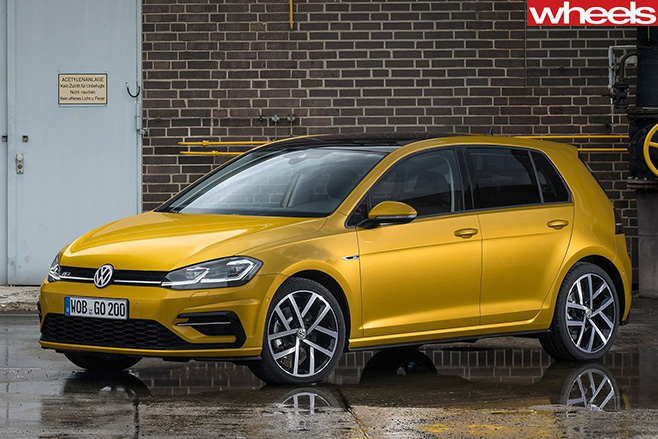
The Volkswagen Golf is cementing its position as the small-car class’s most sophisticated model with a major update incorporating new driver aids, a new ‘Evo’ engine, and advanced infotainment systems with available gesture control.
VW released images and details overnight for its Golf 7 facelift, which will go on sale locally from mid 2017.
Subtle exterior tweaks make the news all about the Golf’s engine bay and interior, which bring a number of firsts for its segment.
While an Evo badge would normally get us excited, in this instance it’s applied to VW’s new 1.5-litre four-cylinder petrol range that’s more about driveability and efficiency than performance.
The initial 1.5-litre unit produces 110kW and 250Nm, the latter figure produced at just 1500rpm with cylinder-deactivation technology dubbed Active Cylinder Management contributing to a European-quoted fuel consumption of 4.9 litres per 100km.
An even-thriftier Bluemotion version will follow, offering 96kW, 200Nm, and a coasting function to help achieve official efficiency of 4.6L/100km.
That includes switching the seven-speeder into the Volkswagen Golf GTI and GTI Performance models, both of which gain small power hikes for their 2.0-litre four-cylinder turbos. The GTI’s output jumps 7kW to 169kW, while the Performance climbs from that total figure by 11kW to 180kW.
The GTI models arrive slightly later in Australia, in the third quarter of 2017.

Volkswagen Australia, though, has confirmed it is aiming to introduce the GTE plug-in hybrid that uses the same petrol-electric combination as the Audi A3 e-tron already here.
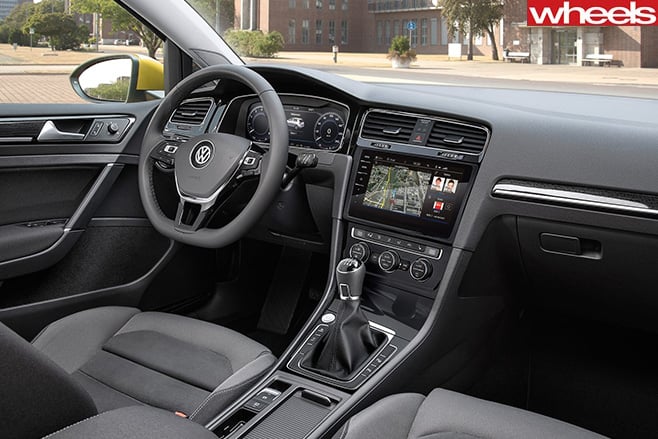
More advanced infotainment systems and smarter smartphone integration dominates the interior update that also includes some new trim and seat covers.
Small monochrome displays are out even for base models, with all Golfs adopting larger and higher-resolution colour touchscreens.

Sensors allow users to make a ‘swipe’ gesture to flip through multiple screens and options, and combines with touch and voice control to reduce the number of physical buttons.
The display size increases from 8.0 to 9.2 inches, and the entry-level 5.0-inch display widens to 6.5 inches.
Media Control also allows occupants to control infotainment functions via their tablet or smartphone, while the latter can be paired with the car’s on-board antenna for improved phone call reception.
If you’re still trying to spot the visual differences between Golf 7 and Golf ‘7.5’, there are revised bumpers front and rear, new LED tail-lights standard on all models, new wheel designs, while on some models new LED headlights replace xenons as standard.
ONE of automotive history’s most iconic cars, the AC Cobra, is returning.
AC Cars is bringing back the venerable muscle car icon with a 410kW engined Mk VI GT 378.
However, in a move that is likely to shock Ford and Shelby fans, the new Cobra 378 will be powered by a GM V8s – LS3 and LSA engines, which will be familiar to Australians as the engines used in Holden Commodores and HSVs.
The naturally aspirated LS3 will produce 328kW, while the supercharged LSA is expected to pump out 410kW – similar to the power from the flagship HSV GTS.
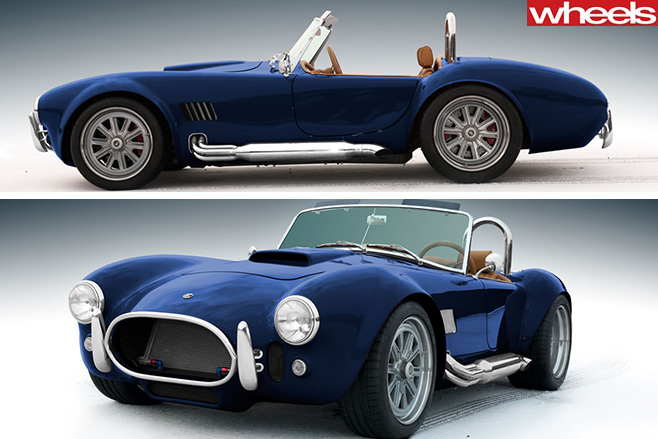
AC claims the new Cobra Mk VI GT will tip the scales at a scant 1050-kilograms, which will result in a power to weight ratio which will ensure it lives up to the legendary performance of its predecessors.
Brembo brakes will be used to bring the car to a halt, with Wishbone suspension and KW adjustable shocks doing its best to keep it planted in the corners.
The combination of classic ’60s styling and bodywork, with modern suspension and powertrain are sure to make the new Cobras popular with collectors and muscle car enthusiasts.
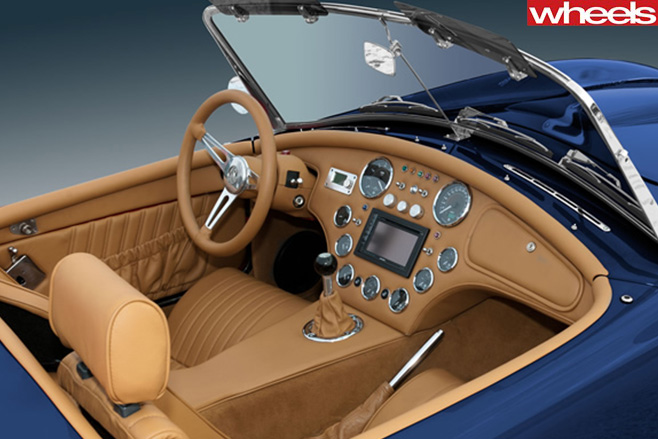
“It’s had significant upgrades but the underlying hardware – the chassis and surrounding parts – are essentially as they were before, just with more modern mechanicals.”
Lubinsky said the first customer cars are currently entering production, with deliveries beginning in Britain between February and March next year.
The car will also be sold to US customers. No word on if it will be available Down Under.
Holden ups its competitiveness in the small car segment with the launch of the latest-generation Astra five-door hatch.
WHAT IS IT? Astra is an Opel-developed five-door hatchback based on a brand new architecture and offered in Australia with a choice of two petrol-turbo four-cylinder engines, manual or automatic transmissions and three equipment specifications.
WHY WE’RE TESTING IT Despite the rising popularity of SUVs and pick-ups, small passenger cars remain the number one sales segment in Australia. After both its Korean experiment and building the Cruze locally didn’t work, Holden has opted for the Astra to reclaim its share of the market.
MAIN RIVALS Mazda3, Volkswagen Golf, Honda Civic, Toyota Corolla.
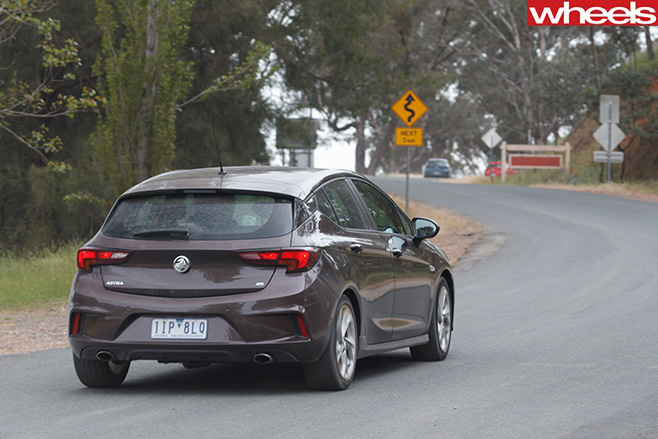
PLUS: Dynamically excellent, interior spacious, loaded with tech in upper specs MINUS: Premium pricing, 1.4 needs sports mode to show its best
THE WHEELS REVIEW So here we go. Holden hasn’t become an importer yet, but the arrival of the Astra small car is the latest significant milestone on the way to that momentous change for Australia’s automotive brand.
The Opel-developed, Polish-built BK Astra five-door hatchback replaces the locally-built Cruze sedan, hatch and wagon in Holden dealerships, while the previous-generation PJ Astra continues on for now in three-door form. Holden Cruze production ceased October 7, about 12 months before locally-developed Holden Commodore ends its life.
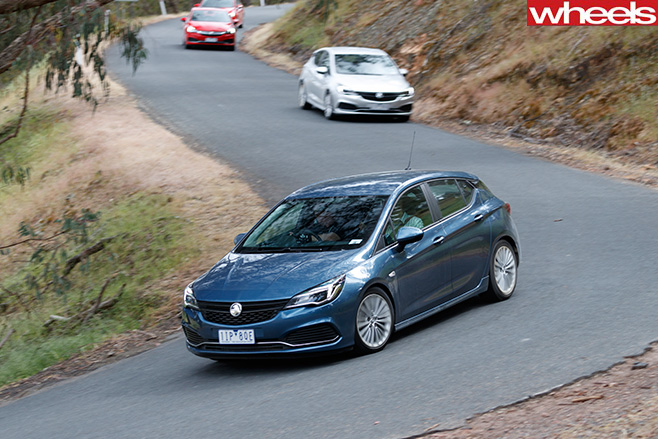
The European arm of General Motors also had a crack at selling the nameplate here in its own right in 2012-13, but that foray was built on an unconvincing rationale and ended quickly and badly.
Holden is selling the Astra as a benefit of the transition from manufacturer to importer. Without the need to keep the assembly line rolling at Elizabeth it can pick and choose what models it wants from the global GM larder.
And in this case it’s chosen well. Astra raises Holden’s competitiveness in the largest new vehicle segment of them all from also-ran to potential gold medallist. This car has the all-round composure and sense of quality of the Volkswagen Golf, steers with the clarity of a Mazda3 and rides with the suppleness of the Honda Civic.
There’s nothing revolutionary about the way Opel – with some input from Holden engineers – has gone about all this. As its Monza concept-inspired looks suggest, it is simply bang-up-to-date.
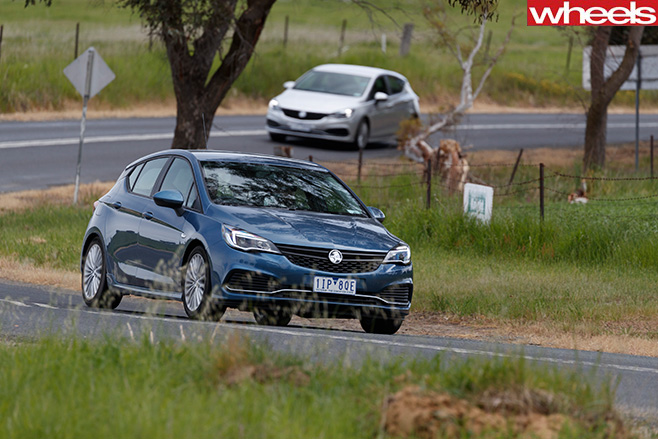
The suspension set-up is absolutely orthodox Mac struts and Watts link beam axle, while the steering is electric assist rack and pinion, which like the auto’s shift points and throttle, can be adjusted through normal and sports modes.
Flinging both the 1.4 and 1.6 along some winding roads north of Canberra during the local launch reminded us just how much fun a well-sorted, lithe and moderately powered vehicle can be.
Torque vectoring by brake, an acute steering tune – developed by Holden – and an adjustable, flat-riding chassis helped the Astra happily burrow its way into corners and then pull out nice and hard with the aid of two engines that enjoy a rev.
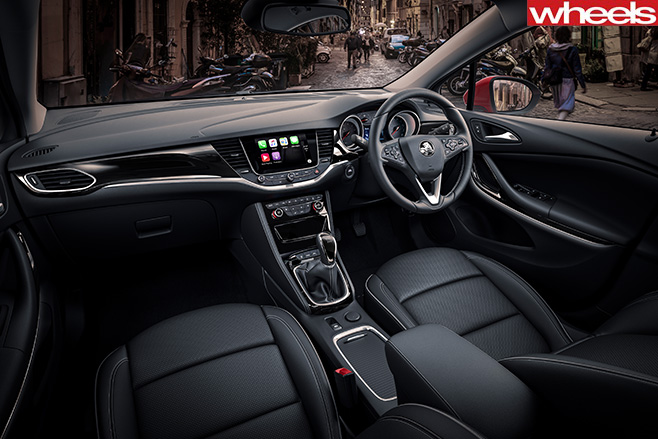
Inside, the Astra can comfortably accommodate four adults in a cabin that is noticeable for stylish presentation, supportive – if Germanically-firm seats – and some clever touches like the pocket in the centre stack to slot your smartphone and the ledge to rest your thumb on when operating the touchscreen. If you’ve ever bounced down a rough road stabbing at the screen and ended up listening to One Direction while trying to select Rage Against the Machine, you’ll know what a nice detail idea this is.
But there are some drawbacks. There are no rear air-con vents or door grabs and only the driver gets an auto-up power window.
But the real issue for Astra is Holden. It has acknowledged its past flaws, declared itself a new-age car company and set its sights on the future.
The Astra will be a great test of its mettle, because the three-model range is no longer cut-price – as the Cruze was. It is well equipped, but Mazda, Hyundai and Toyota – heck VW for that matter – play this game hard and if sales numbers don’t hit targets it will be telling to see how well Holden and its powerful dealer body resists the instinct imbued over decades to discount in search of volume.
So yes, the Astra is the vanguard of a future many of us are dreading, but at least the car itself is worth welcoming.
SPECS Model: Holden Astra RS-V Engine: 1598cc 4cyl, dohc, 16v, turbo Max power: 147kW @ 5500rpm Max torque: 300Nm @ 1750-2000rpm Transmission: 6-speed Automatic Weight: 1363kg 0-100km/h: 7.4sec Fuel economy: 6.3L/100km Price: $33,190
Volkswagen Australia will aim to introduce every facelifted Golf GTI model grade locally, including the new 180kW Performance in manual gearbox and three-door hatch trim.
The Mark 7.5 Golf GTI takes its 2.0-litre turbo four-pot from 162kW to 169kW, matching the outgoing Golf GTI Performance. That limited-slip differential-equipped model shifts to 180kW, although no torque figures have been given. Both currently produce 350Nm.
A new seven-speed dual-clutch DSG transmission replaces the six-speed unit currently in Golf GTI and R model grades.
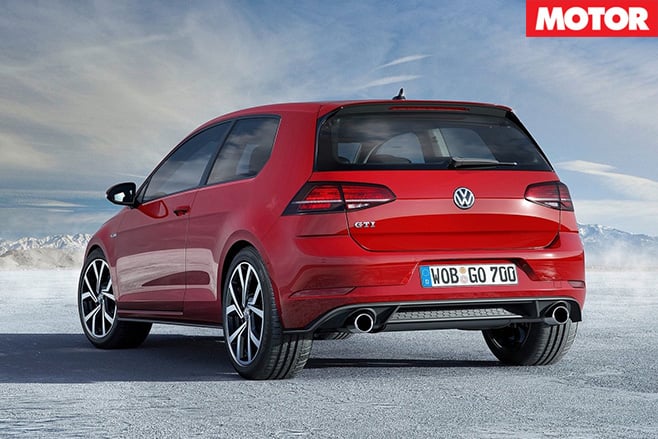
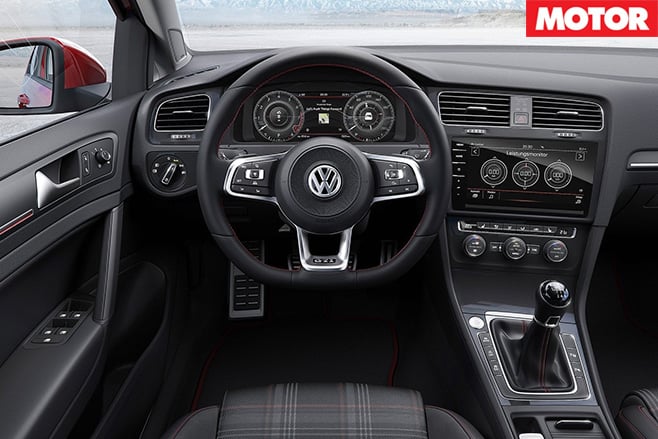
Inside a new 9.2-inch colour touchscreen with gesture controls is a sizeable step up on the outgoing 6.5-in unit. A mammoth 12.3-in colour display ahead of the driver also replaces the analogue speedometer and tachometer of the current Golf GTI and R – although it’s unclear if either will make the standard or optional equipment list. Thankfully, tartan trim remains.

“That the Golf GTI 40 Years sold out in manual form almost before the cars arrived in the country sends a pretty strong message,” Volkswagen Australia corporate communications general manager Paul Pottinger told MOTOR.
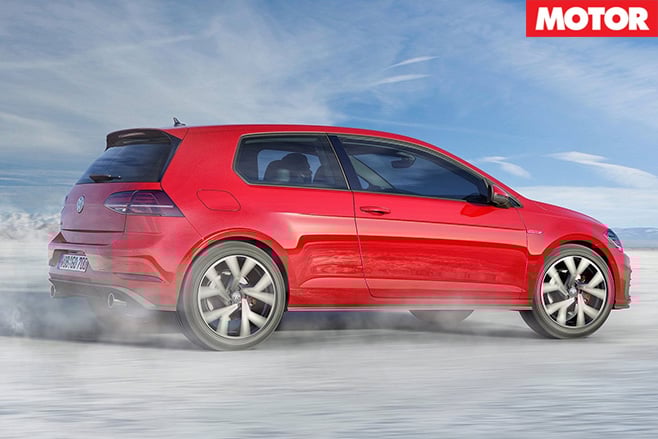
He confirmed that includes reintroducing the three-door bodystyle that was available in 2005’s Mark 5 and 2009’s Mark 6 Golf GTI, but was ditched here with 2013’s Mark 7.
“Golf R has and will retain those strengths that make it unique,” added Pottinger.
“R has never been more successful – in fact it has outsold GTI at some points this year despite the steeper price.”
TELL ME ABOUT THIS CAR
This is the fifth generation Holden Astra sold in Australia and it takes over from the now defunct Cruze in the vital small hatch segment. Developed by Opel with some input from Holden, the five-door hatchback is based on a new platform and slightly smaller than its predecessor. Yet it manages to eke out more interior room by some measures including rear legroom. It is also substantially lighter. The R is the base model, powered by a new 1.4-litre turbo-petrol engine and offered with the choice of six-speed manual and automatic transmissions. It goes on-sale alongside the RS and RS-V, both powered by a 1.6-litre turbo-petrol engine, on December 1.
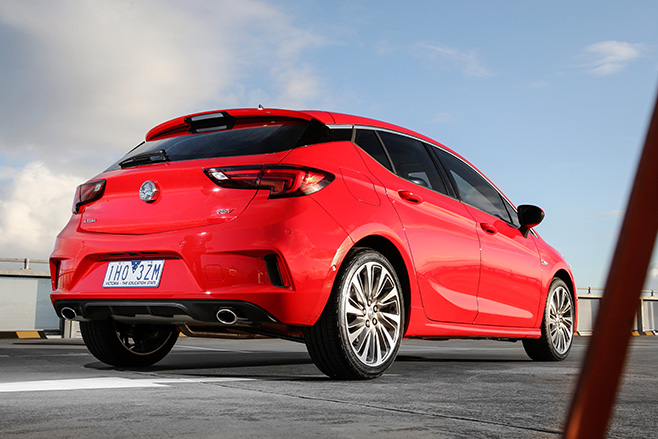
STRENGTHS
- Cabin – The Astra has no problem fitting four adults inside its relatively modest proportions. Seats are comfortable, there is reasonable storage and it’s a quiet and comfortable place to reside. There is a high level of perceived quality in the trimmings, while standard Apple Carplay and Android Auto are key standard infotainment features.
- Dynamics – The Astra is a really enjoyable car to drive as well as ride in. Holden has tuned the steering for Australian conditions and it really shows up well. The handling is neutral and the body control exemplary, yet shock absorbency is also compliant enough to provide a comfortable ride.
- Equipment – Six airbags, electronic stability control, ABS, traction control, hill start assist, 17-inch alloy wheels, rear view camera, rear park assist, 2 x ISOFIX, cruise control with speed limiter, a 7-inch colour touch screen, DAB+ radio and Bluetooth audio streaming are all part of the package.
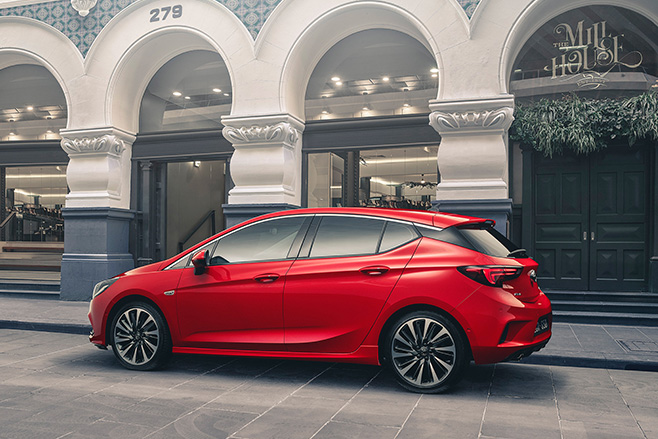
WEAKNESSES
- Pricing – Astra is more expensive than its Holden Cruze predecessor and the entry-level R commands a higher recommended retail price than its obvious rivals such as the Mazda3 and Toyota Corolla. We’re not talking big amounts but it will be interesting to see if Holden starts discounting or going with drive-away incentives if sales don’t match expectations.
- ANCAP rating – The Astra R doesn’t get one because it doesn’t have the Autonomous Emergency Braking that the higher-spec RS and RS-V get as standard. It could have got five stars if it had been crash tested in Australia, but instead the rating was based on European results. Bottomline, the R is structurally identical to the rest of the range. By the way, AEB becomes available as part of a $1000 option pack next March.
- Engine – Well, sort of a weakness. The 1.4 combined with the auto is lethargic in standard drive mode. But switch to sport and the shifts and throttle sharpen up noticeably. You might use a little more fuel, but that doughy feeling as you accelerate vanishes too. Speaking of fuel use, the 1.4 manual is the only model in the range to miss out on stop/start tech.
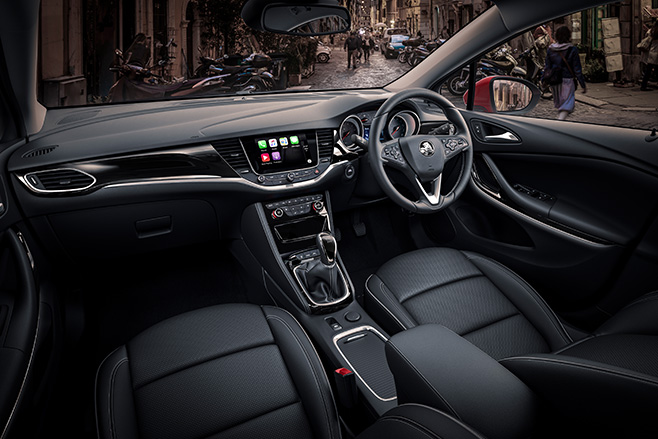
ANY RIVALS I SHOULD ALSO CONSIDER?
Heaps. The small car segment is still the most popular in Australia despite the rise and rise of SUVs and 4×4 utes. The popular models include the Toyota Corolla, Mazda3, Hyundai i30 and Volkswagen Golf. The best offerings in the class include the 3, Golf and funky Peugeot 308. The updated Ford Focus and new Renault Megane and Honda Civic sedan and are also worth strong consideration.
