There is a perverse irony in the timing of the Falcon’s farewell.
Production will end at Broadmeadows on the same day as qualifying for the Bathurst 1000. Talk about adding insult to injury. For the closure to be scheduled just ahead of the race that added so much to Falcon folklore seemed, at best, insensitive; at worst, disrespectful.
To enthusiasts, the decision was typical of the disregard for racing that infected Ford Australia’s senior management in recent years and, indeed, the disinterest in the company’s local performance car heritage.
Ford maintains that sending the last Falcon down the line on Friday, October 7, when the diminished Ford ranks in Supercars will be battling for places in the Top 10 Shootout at Mount Panorama, is a coincidence dictated by the logistical requirements of the Campbellfield factory’s closure.
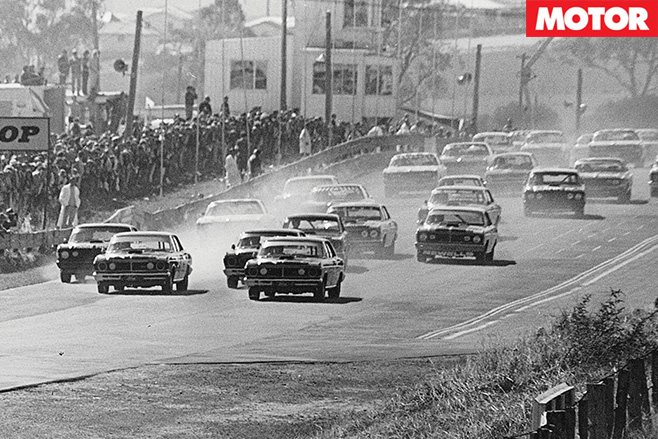
While neither as continuous nor as successful as Holden’s involvement, Ford’s presence throughout much of the past 50 years helped maintain Falcon’s street cred, even in the near-decade when there were no road-going V8 Falcons.
That Falcons continued to race in between Ford Australia’s official and covert participations was mainly due to the persistence of Allan Moffat and Dick Johnson. They kept the Falcon flame burning in the second half of the 1970s and the early ’80s respectively.
Broadmeadows has always had an inconsistent involvement, coming and going at various levels. In touring cars, it ran full factory Falcon teams in series production racing, including the then Bathurst 500, from ’67-72; then under the post-supercar scare Group C regulations (more liberal rules allowing more modifications that were supposed to bring an end to road-going homologation specials – but didn’t) in ’73-74.
Ford withdrew at the end of ’74 and didn’t return with an officially factory-backed team until the late Geoff Polites orchestrated Craig Lowndes’ defection from Holden to join a new Ford-funded team run by Fred Gibson. During Polites’ reign as president of Ford Australia in the late ’90s/early 2000s, the company’s racing and performance car traditions were re-embraced with a vengeance.
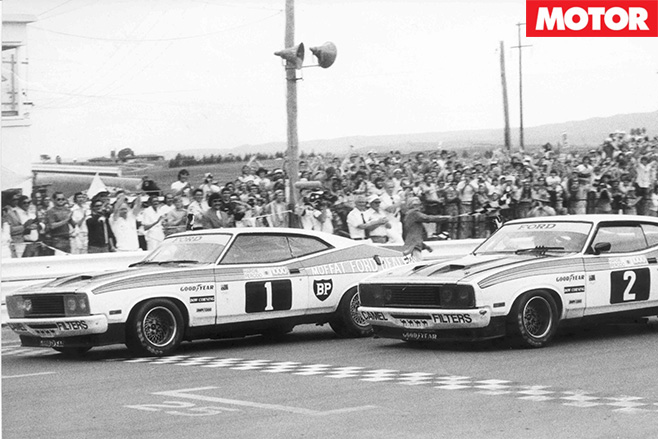
The apogee of illicit support was in 1977, when the Moffat Ford Dealer Team XCs of Moffat and original Holden defector Colin Bond swept all before them, including their immortal 1-2 form finish at Bathurst.
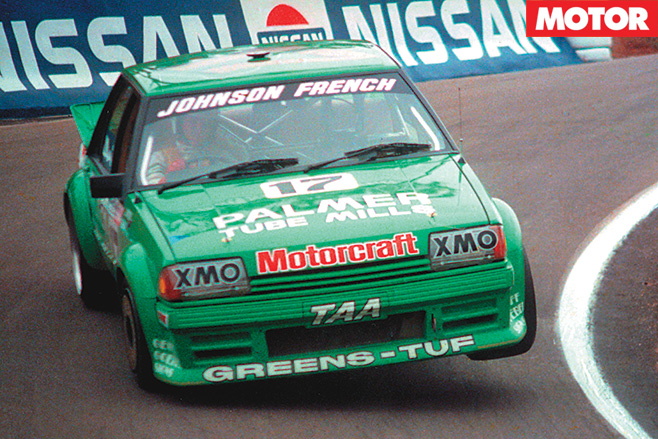
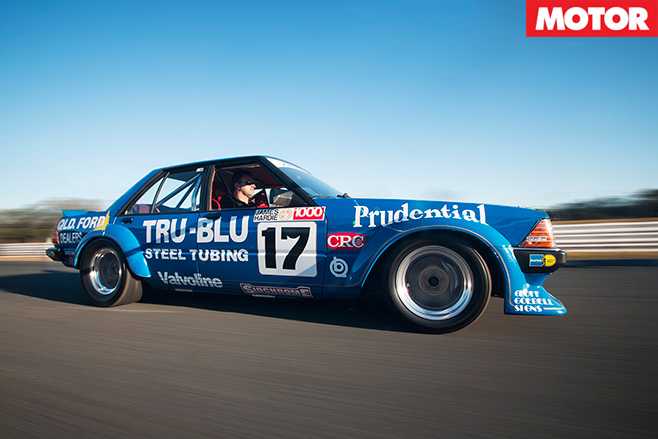
Johnson developed a Group C version of the XD Falcon, despite Ford Oz’s efforts to discourage the model’s participation in racing. His Ford fame – and encouragement and limited support from Broadmeadows – was cemented when he famously hit ‘The Rock’ while leading on lap 17 of the 1980 Bathurst 1000.
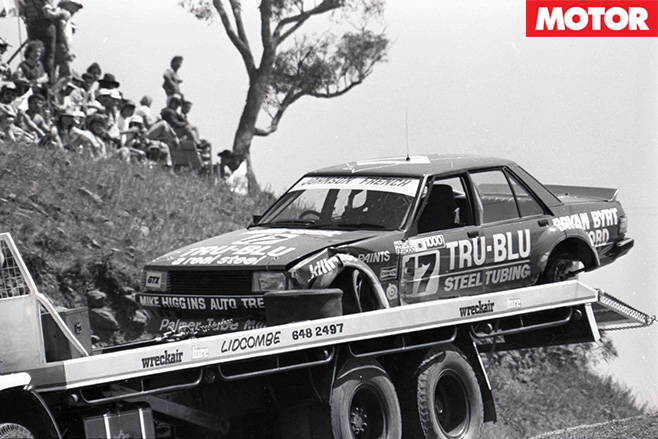
Little did Edsel expect the response. A legend was born and donations arrived in the mail by the sacks full at Johnson’s Shell service station in Daisy Hill in Brisbane’s southern suburbs.
With Ford’s matching contribution, the appeal raised more than $70,000 – big money and a substantial annual racing budget in those days – and allowed Johnson to build a new car and keep his ‘renegade’ XD racing program alive to win the ATCC and the crash-shortened Bathurst 1000 in ’81.
Ford’s flirtations ended with committed technical and financial backing initiated by the late Howard Marsden, who reprised his early ’70s role as Ford Australia’s competitions manager at the start of the 21st century.
After the Gibson Motorsport/00 Motorsport debacle, aggravated by Holden Racing Team’s continued domination from 2000-02, increased support was spread across leading Ford teams, headed by Ford Performance Racing.
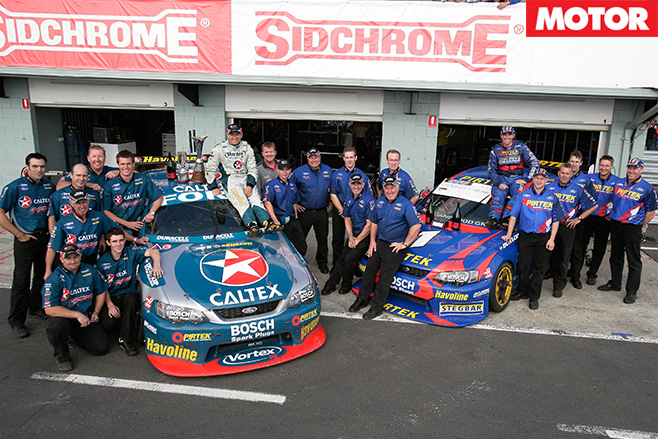
There was also substantial funding of Stone Brothers Racing and Triple Eight Race Engineering, along with significant support for Dick Johnson Racing, and despite FPR’s serial under-achievement for the rest of the decade, the noughties were golden years for Falcon on the track.
It also coincided with the switch from the recalcitrant AU Falcon racer to the front-running BA model, which was still identifiably production-based under the skin. From the FG in ’09, any relationship with the road cars – like its Commodore counterpart – became little more than cosmetic and all pretence disappeared in Supercars with the control chassis-based Car Of The Future (now New Generation) rules introduced in 2013.
SBR won the 2003-04 V8 titles with Marcos Ambrose and the ’05 crown with Russell Ingall in BA Falcons.
Lowndes’ escape from FPR to Triple Eight in ’05 immediately restored his race-winning fortunes and coincided with the team’s emergence under Anglo-Irish entrepreneur Roland Dane as a front-runner.
Triple Eight won three Bathurst 1000s in a row for Ford. Lowndes and then new teammate Jamie Whincup scored an emotional victory in their BA Falcon at Mount Panorama in 2006, claiming the inaugural Peter Brock Trophy just weeks after The King Of The Mountain’s death.
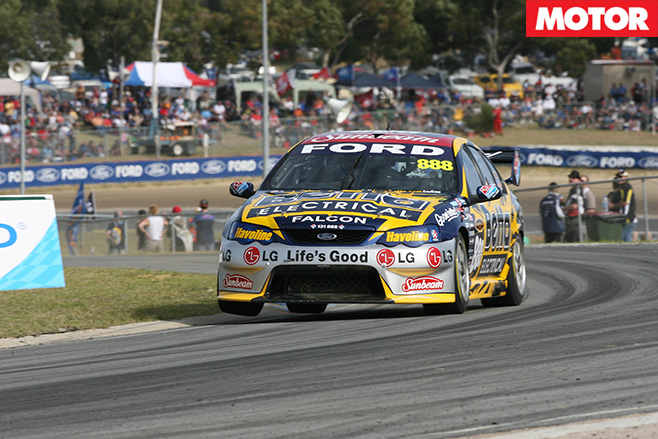
It was in the middle of ’08 that Ford’s commitment to racing started to waver once again. Broadmeadows announced that from 2009, it was restricting financial support to FPR and SBR, dropping Triple Eight and DJR.
The snub prompted Dane to remove Ford badging from T8’s FGs in ’09 – replaced by a feral pig motif in honour of minor team sponsor Hog’s Breath Café – and sent him into the welcoming arms of Holden from 2010.
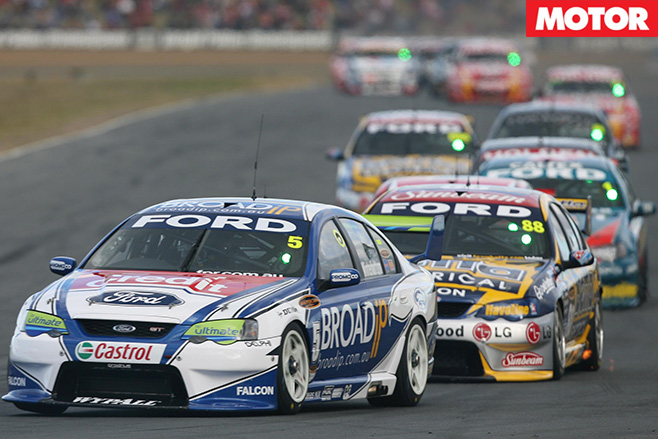
Triple Eight’s Holden hegemony has been interrupted by DJR’s defiant driver’s title win with James Courtney in 2010, without Ford support. Mark Winterbottom’s championship breakthrough in ’15 came with barely any factory backing and FPR was renamed Prodrive Racing Australia in anticipation of Ford’s full withdrawal this year.
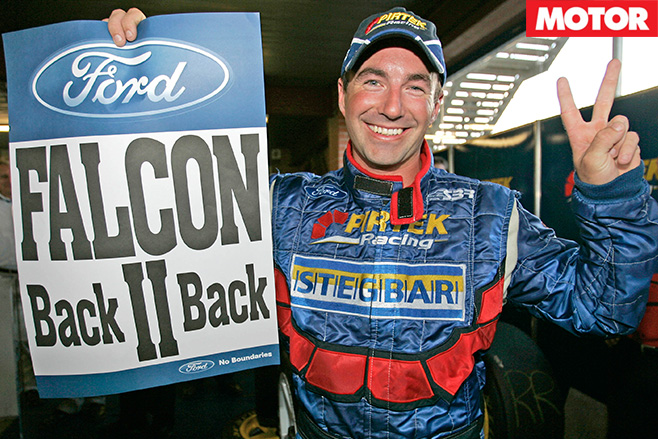
FPR/Prodrive, which finally got its act together early this decade and improved in inverse proportion to Ford’s shrinking contribution, also denied Triple Eight victories at Bathurst in 2013/14 when Winterbottom and Chaz Mostert respectively triumphed in dramatic finishes.
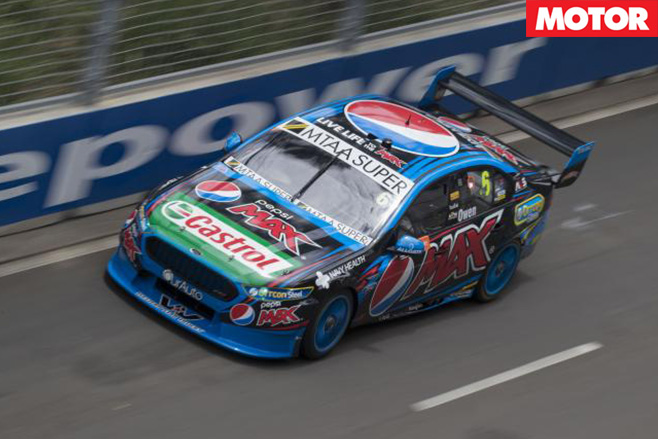
SBR’s funding would have been cut even if the team hadn’t been bought by Betty Klimenko and transformed into Erebus Motorsport and her privately funded Mercedes AMG folly, while FPR’s backing was slashed in 2014 and reduced to nominal support last year.
In yet another irony, Ford Australia’s final substantial contribution financed the development of the FG X aero kit, which tipped the balance in PRA’s favour in the 2015 V8 Supercars driver’s championship.
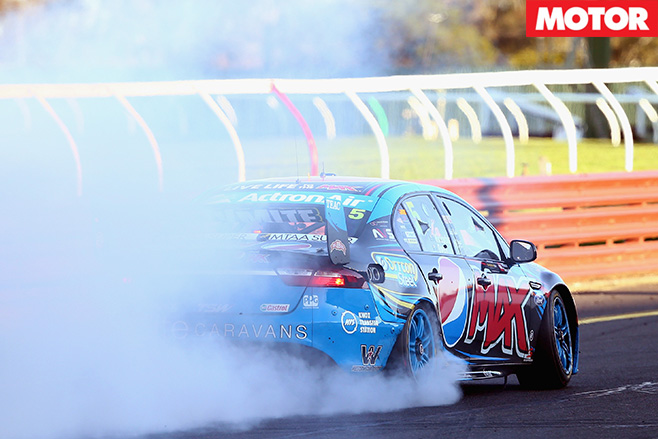
The October 9 Bathurst 1000 won’t be the Falcon’s final fling at Mount Panorama, nor is this year its swansong in Supercars. PRA and DJRTP will continue fielding FG Xs next year at least.
In fact, Falcons could continue in Supercars until well after final stocks are cleared from dealers next year, as the FG X remains eligible until Gen2’s scheduled expiration at the end of 2020.
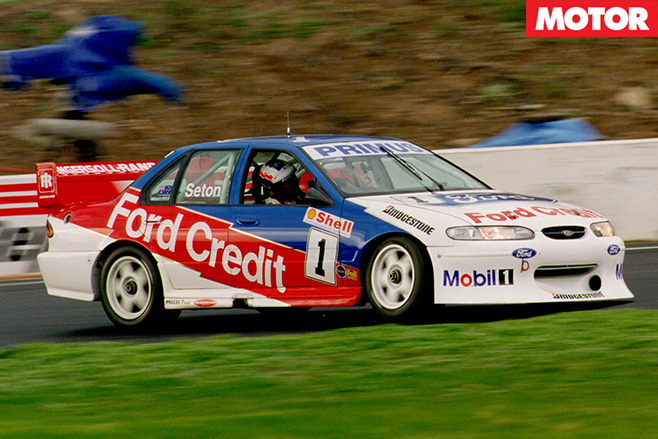
At Bathurst, Falcons have won 14 times since the original XR GT’s success in ’67, compared with 22 Commodore victories since 1980.
Falcons had scored 262 ATCC/Supercars race wins up until the Sydney SuperSprint at the end of August – a far cry from the 459 race successes achieved by Commodores.
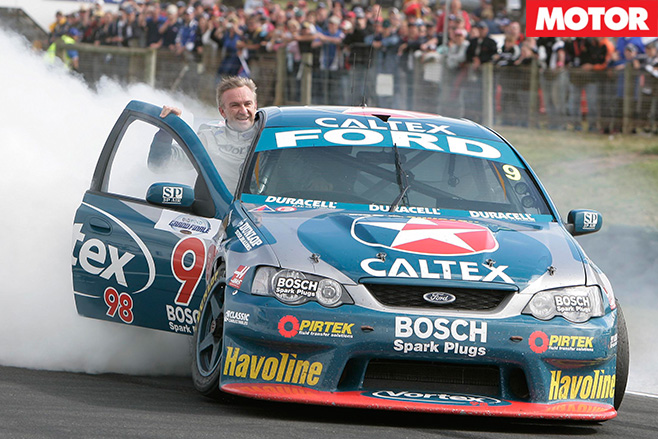
The Falcon legacy will live on in racing for at least another year, a reminder of the glory years when Ford and Holden went head-to-head on the track and in the market place.
Sadly, it will never happen again.
First published in the July 2014 issue of Wheels magazine, Australia’s best car mag since 1953.
More of the same, done slightly better.
Sliding into the broad, accommodating seats of the entry-level Ford FG-X Falcon – which drops the XT badge and is now just plain old ‘Falcon’ – is an exercise in familiarity.
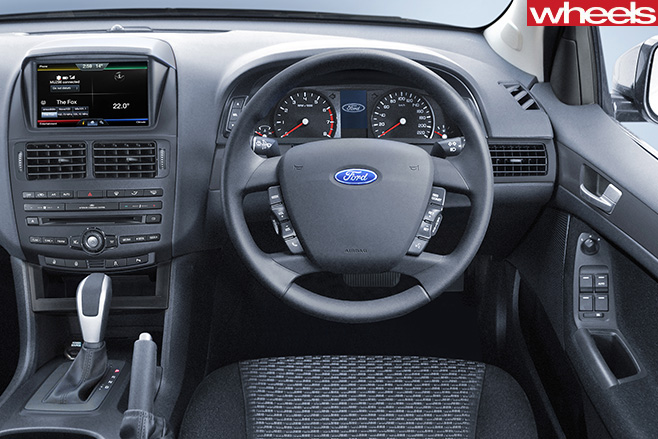
While the outside has been refreshed (new front end, bootlid, lights, bumpers and wheels), the interior is barely tweaked. The expansive dark grey dash is unchanged, as is the plasticky steering wheel that rams home the feeling you’re driving the one aimed at governments and fleets.
That level of drabness flows through the cabin, like the undamped overhead grab handles that date back to the 1998 AU. And, while the FG-X gets a reversing camera, parking sensors at each end and a colour touchscreen, the base Falcon is the only one in the range that doesn’t get sat-nav.
However, Ford’s new SYNC2 infotainment system brings a clearer colour screen and added functionality, and a much-hyped ability for it to directly call emergency services is a win if you have a big crash.
Voice operation is more of a party trick for all but the phone operation (or sat-nav on models that have it), where it proves usefully handy.
On the road, the Ford Falcon is as comfortable as ever. Adopting the G6E suspension for the base FG-X, it is compliant and supple, disposing of country thumps with ease.
Revised anti-roll bars have improved the EcoLPi’s turn-in, though claims of better rear grip were difficult to assess during our rain-sodden drive.
The suspension compresses heavily over big bumps, but body control is good and balance as impressive as ever. The hydraulic steering is too light at lower speeds, but it points faithfully and there’s no kickback.
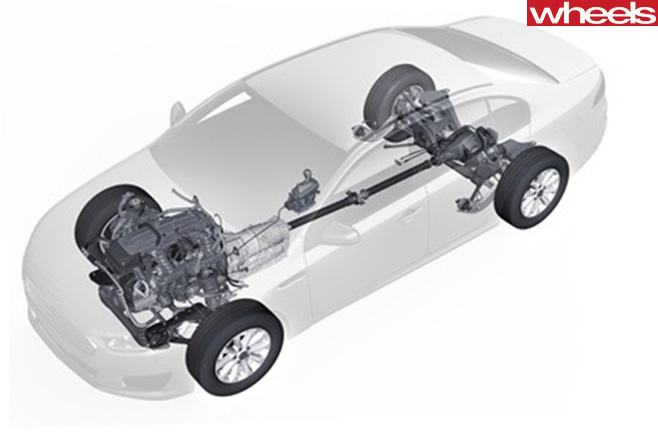
The EcoLPi is refined and works beautifully with the latest ZF six-speed auto. The only indication this is the LPG model is the slight hesitation before cranking over when you turn the key.
However, there’s a good chance the fleets that once flocked to the base Falcon won’t take much notice of the improvements, and private buyers won’t appreciate the drab interior, instead jumping up to the sportier-looking Ford Falcon XR6.
Economy Drive
THE four-cylinder turbo-petrol Falcon EcoBoost is the most fuel efficient large rear-drive volume seller on the market, with consumption down to 8.0L/100km. But the regular six-cylinder petrol Falcon has had the biggest economy improvement, down nine percent to 9.0L/100km.
The new styling reduces the coefficient of drag from 0.31 to 0.29, and other aids include low-friction tyres, an underbody aerodynamic tray (previously on the EcoBoost only), a 10kg-lighter transmission with less internal inertia, and the torque converter from the EcoBoost, which allows lock-up at lower revs.
Remember Tickford? The company that made its name tuning Ford Falcons is set to make a comeback by tuning fast utes, with a new range of Tickford-developed power-ups announced for the Ford Ranger this week.
For $7,995 Tickford will add 15 percent more power and 20 percent more torque, bringing total output for the Ranger’s 3.2-litre turbo diesel inline-five to 169kW and 564Nm.
For $1,285 more Tickford will equip a performance suspension package with Bilstein dampers, while an extra $560 will add a two-inch lift to the springs for extra ground clearance. Fancy some big wheels to go with that suspension? $4,530 will net you a set of 20-inch alloys and tyres.
Big guards, side skirts and interior trim packages are also available, and Tickford is betting big on the success of its Ford Ranger upgrade menu – which will also be supplemented by similar power-ups for the Mustang later this year.
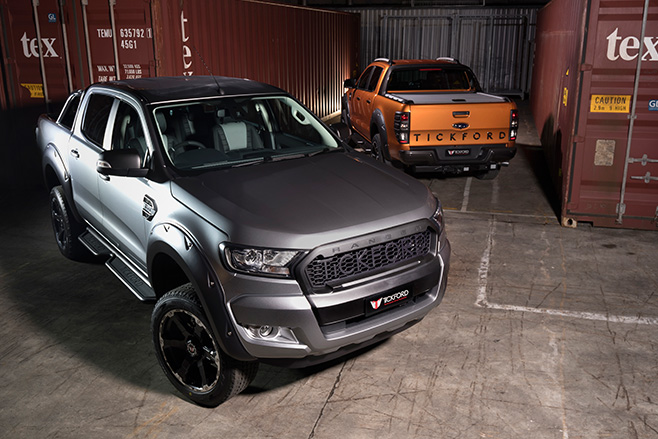
Up until now, few manufacturers have dabbled with performance-oriented 4×4 utes – at least in Australia. Toyota is the primary exception, launching its locally-developed TRD Hilux in 2008 with a supercharged 225kW 4.0-litre petrol V6 engine. It was short-lived in the marketplace, lasting just two years before being quietly dropped.
But with large 4×4 dual-cab utes now selling in massive numbers and traditional car-based performance utes from Ford and Holden on the way out, are high-output 4×4 utilities set to become the next big thing?
Possibly, but don’t expect any V8-powered fire breathers just yet.
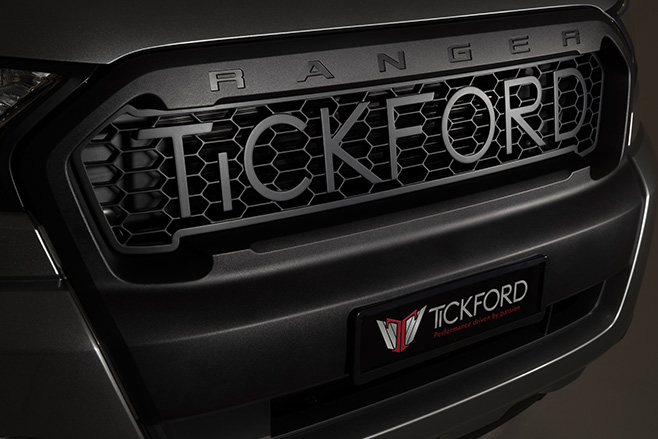
While the pickup-mad US market currently enjoys the 330kW F-150 Raptor, that model and its twin-turbo V6 won’t be straying from American soil anytime soon. Instead, the Blue Oval is expected to roll out the ‘Ranger Raptor’ across the globe – including Australia – in the near future.
Details are scant, but expect more power and even more torque for its 3.2-litre diesel five-pot, plus a muscular bodykit to differentiate the Ranger Raptor from regular models in the range.
Another performance ute may be offered by an unlikely entrant – Mercedes-Benz. The German luxury automaker is set to introduce its first 4×4 utility later this year in the form of the Nissan Navara-based, GLT, and AMG boss Tobias Moers hasn’t ruled out a performance-tuned version – albeit one that won’t be a full-fledged AMG variant.
A turbodiesel V6 would be the most likely powerplant for that model – if it eventuates.
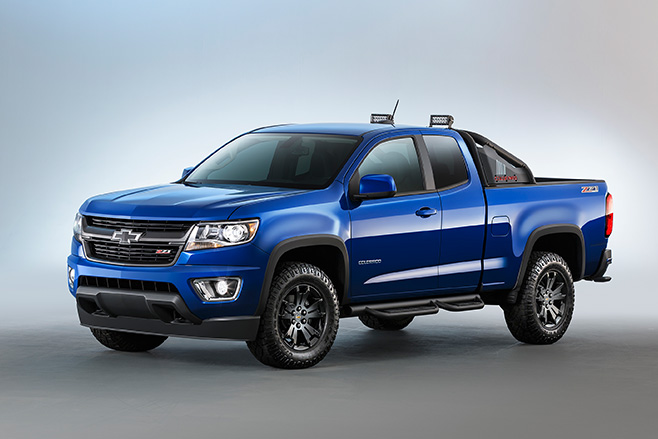
Holden’s Colorado may also get a tune-up. HSV boss Tim Jackson has stated that the Clayton-based company – which normally concentrates on V8-powered Commodore derivatives – is keeping a keen eye on developments in the performance ute segment, but doesn’t have any immediate plans.
Holden may beat them to the punch, however. A 227kW/364Nm petrol V6 is presently available in the US market Chevrolet Colorado, and could be an easy fit for locally-delivered models if Holden wants to take its load-lugger down the performance path.
But while there’s plenty of potential for quicker, sportier utes, nothing has been officially announced. If the appetite is there – and the response to Tickford’s Ranger upgrades will indicate whether there is any – we can bet the world’s ute-makers will follow suit.
This year’s Bathurst 1000 marks the 25th Anniversary of Nissan’s first win at Mount Panorama.
To celebrate, Nissan Australia has painted its lead Altima, the car of Michael Caruso and Dean Fiore, in the iconic red, white and blue paint job of the R32 GT-R that secured victory a quarter of a century ago, driven by Mark Skaife and Jim Richards.
In the video above, Skaife talks Caruso through the mighty Godzilla, pointing out the enormous amount of work required to make the R32 the dominant force it was in Australian touring car racing.
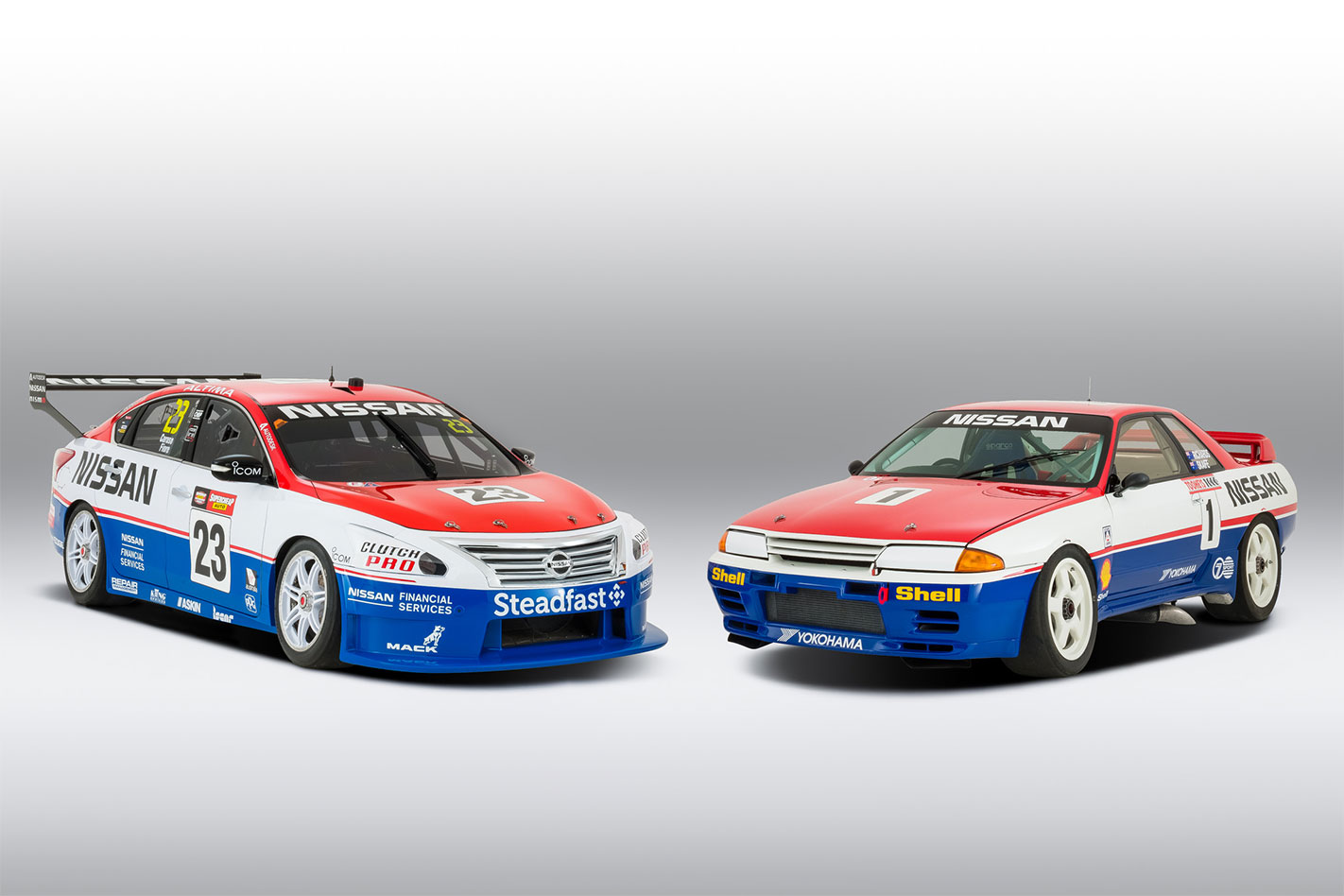
Larger brakes, new wheels, more powerful engines, bespoke gearboxes and adjustable all-wheel drive systems were just some of the modifications that made the Gibson GT-Rs the fastest in the world.
Despite the advantage of all-wheel drive, Skaife explains how the R32’s power and weight made them very challenging to drive at Bathurst, however this footage from the 1991 Top 10 shootout graphically illustrates how much of an animal a GT-R on the limit was.
Skaife beat the second-placed GT-R of Mark Gibbs by more than 1.2sec and was over two seconds clear of Glenn Seton’s Sierra in third.
Skaife and Richards would go on to win the race by a lap, the first of two consecutive Bathurst victories, the second coming in controversial circumstances after it ended up in the wall after a sudden downpour.
FAREWELL to the Falcon! In a special 196-page Ford Falcon special edition we celebrate Australia’s longest running nameplate.
Saluting the iconic hero, we list the 10 most important Falcons; reminisce about its most spectacular motorsport moments and the men who made it fly.
There are 80 pages of content dedicated to covering the beginning and end of Falcon, with insight and features from Wheels’ very best writers and photographers.
We also spoke with the men and women that built our Falcons, and grilled Ford Australia’s CEO on what is next for the company.
To pay tribute, we saw it fitting to take one final road trip in the first and last Falcons, and brought the Falcon family together for a group photo at Ford’s You Yangs proving ground.
Plus, we take Fiat’s Abarth 124 Spider in search of little Italy in the middle of Tokyo, and make our big-time film debut by breaking in a prancing horse California T in the Aussie Outback.
We also have our usual array of the very best news, opinions, and reviews.
To subscribe, go to magshop.com.au/wheels, the iPad via the iTunes Store or on Android devices through Google Play.
THE final Ford Falcon Sedan, Falcon Ute, and Territory which can be registered and driven on the road will be sold at auction.
The last saleable vehicles will go under the hammer in an auction managed by Manheim on behalf of Ford Australia, with the proceeds dedicated to supporting the establishment and expansion of student robotics programs in Broadmeadows and Geelong schools.
The specific vehicles for sale are a blue Falcon XR6 Sedan, silver Territory Titanium diesel, and grey Falcon Ute XR6 Turbo. The Ute has been pre-registered, following the last of the tray-backs rolling off the production line on July 29.
If you want to bid on the cars, registrations are available online from today.
However, these cars won’t be the final locally built Fords to roll down the production line. Ford Australia will hold onto the true final Falcon Sedan, Falcon Ute and Ford Territory, which cannot be registered. The three cars will be fitted with a compliance plate that doesn’t include the Government authority number, precluding them from ever being registered.
The company says the vehicles will be displayed at key enthusiast events, before being loaned to museums in Victoria over the longer term.
You can learn more about the auction at www.fordfinal4.com.au
Ford confirmed the money from the sales would go toward schools in a statement, saying: “Ford engineers will work with a school in Broadmeadows and Geelong to either expand or create hubs for Science, Technology, Engineering, Arts and Maths (STEAM, formerly STEM) programs. These engineers also will continue to mentor and sponsor teams of kids competing around the world in STEAM robotics competitions.”
Ford also will donate the auction proceeds from Falcon XR6 Sprint No. 500 of 500 to charity partner, ‘Give Where You Live’ in Geelong.
Electric vehicles currently come in three basic forms including battery electric vehicle (EV) that runs on battery power alone and hybrid that uses a conventional engine to top up batteries and provide extra grunt when needed.
Then there are plug-in hybrid electric vehicles (PHEV), which allow you to charge the batteries so you can drive for a while without using the petrol engine at all.
So which is right for you?
As well as choosing the kind of car you need it’s crucial to consider the kind of driving you’re most likely to do.
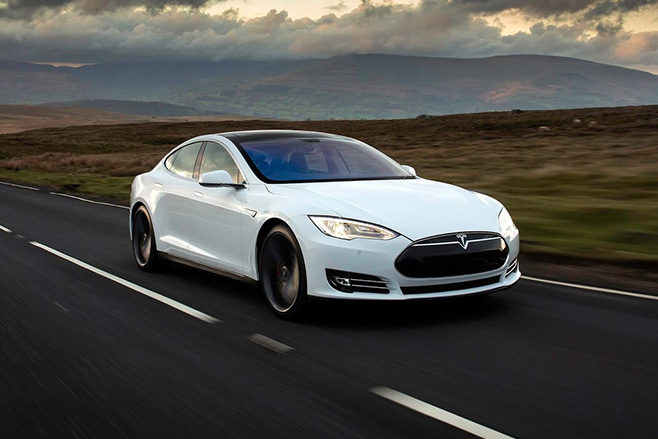
BATTERY ELECTRIC VEHICLE
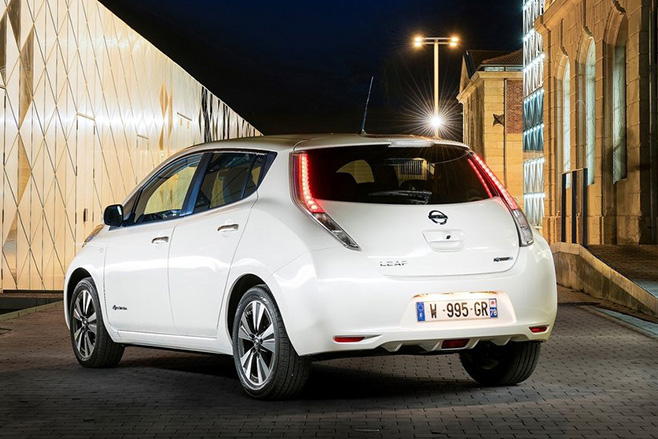
There aren’t that many production EVs available in Australia, with a limited and eclectic range that includes the BMW i3, Nissan Leaf and Tesla Model S. You’re more likely to choose between one of them and a hybrid option, rather than between the three.
Advantages:
- Good performance due to the high torque of the electric motors. The Tesla Model S P100D can beat a Lamborghini Aventador in a 0-100km/h sprint though this is at the pinnacle of current EV technology
- They’re quiet
- They’re cheaper to operate
- You can ‘fill it up’ at home thus avoiding service stations and the temptation to buy three chocolate bars for the price of two.
- No emissions while you drive
- Depending on the price of the car the zero emissions means you save plenty on luxury car tax.
- Limited range compared to petrol, diesel and hybrid-powered cars. Range varies between 134km for the Leaf up to 499kms for the latest (and most expensive) Tesla Model S.
- Charge time takes much longer than filling up with fuel. Even a quick boost that partially charges will take at least 20 minutes. In most cases it will take hours to charge your battery.
- These cars aren’t cheap and there aren’t many choices
- Australia has few incentives or subsidies to justify the extra cost
- Few public charging stations means you may need to purchase an expensive home charger for faster charging
- BMW i3 ($63,900-$65,900)
- Nissan Leaf ($39,990)
- Tesla Model S ($114,100 -$254,159)
HYBRIDS/PLUG-IN HYBRID VEHICLES
While the Toyota Prius is the most known hybrid, many manufacturers have dual-powered versions of popular models in their line ups ranging from small cars to large SUVs. While most are in the luxury bracket, there are a few hybrid options of popular Japanese models.
Advantages
- Longer range than conventional cars
- Excellent fuel economy over conventional cars of comparative size
- Unlike petrol and diesel powered cars, hybrids are more efficient when driving slow or stopping and starting, making them great for city driving.
- More power at low speed than normal petrol driven cars because of electric motor’s high torque
- Batteries can also be charged by regenerative braking, which captures energy produced when stopping.
- Nice quiet ride even with the petrol engine engaged, as it’s usually smaller than engines in petrol only cars
- Reduced fuel dependence while not being limited by having to charge it for long periods of time
- Growing choice of hybrids on the Australian market, many of which are variants of established models
- Depending on the price of the car the zero emissions means you save plenty on luxury car tax.
- Fuel economy not as good over longer distances to the point where the hybrid will drink more than conventional engines, particularly diesel.
- General performance, beyond 50km/h not usually as good and the battery weight and weight distribution can affect handling
- Purchase cost of hybrids is much more than conventional models
- Compared to conventional cars you’re limited to where you can get the car serviced or repaired
Hybrid and PHEV options below $60,000
- Lexus CT-200h ($37,990 – $54,990)
- Lexus NX 300h Luxury ($59,500)
- Mitsubishi Outlander PHEV ($47,490 – $52,490)
- Nissan Pathfinder ST/ST-L Hybrid ($44,490 – $58,490)
- Toyota Camry Hybrid ($30,490 – $40,440)
- Toyota Corolla Hybrid Hatch ($26,990)
- Toyota Prius C ($22,990 – $25,990)
- Toyota Prius Hatch ($34,990 – $42,990)
- Toyota Prius V ($34,490 – $44,490)
- Audi A3 e-tron ($62,490)
- BMW i3 Range Extender ($69,990 to $71,900)
- BMW Active Hybrid 3 ($100,200)
- BMW Hybrid 5 ($121,700)
- BMW 740e ($229,000)
- BMW i8 ($298,000)
- Infiniti Q50 3.5h S ($68,900 – $74,000)
- Infiniti Q70 3.5h ($82,000)
- Lexus IS ($60,000 – $78,955)
- Lexus ES ($60,500 – $69,500)
- Lexus GS ($77,955 – $85,955)
- Lexus LS ($209,826 – $240,326)
- Lexus NX ($59,500 – $75,500)
- Lexus RX ($99,955 – $105,955)
- Mercedes 300e ($75,300 – $77,800)
- Nissan Pathfinder Ti Hybrid ($69,190)
- Porsche Cayenne S E-Hybrid ($143,400)
- Porsche Panamera S E-Hybrid ($285,300)
- Range Rover Sport Autobiography SDV6 Hybrid ($153,979)
- Volvo XC90 ($122,950)
The Mazda3 slightly spoiled the Toyota Corolla’s 50th anniversary celebrations by pipping its rival to the No.1 sales spot for September.
Toyota’s veteran nameplate, which was launched in October 1966, can at least claim leadership in the race to become Australia’s most popular car of 2016. Its runner-up figure of 3423 sales allowed it to leapfrog the stable-mate HiLux ute, which was third with 3209 units.
The 3’s 3491 sales contributed to a record month for Mazda, which also featured the Mazda CX-5 in the top 10 – placing sixth with its own monthly record of 2662 units.
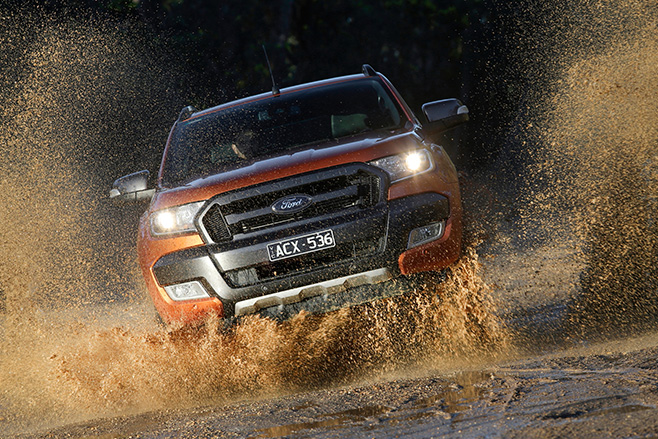
Ford’s Ranger was fourth with 2451 sales, continuing its lone pursuit of the seemingly unstoppable HiLux in the ute segment.
The Hyundai i30 placed fifth despite its 2741 figure dropping by 40 per cent compared with September 2015. The hatchback has lost momentum in recent months since aggressive drive-away deals helped to make it an early pace-setter in the overall sales race.
The Korean brand’s smaller Accent increased sales 127 per cent year on year, however, to take the last rung on the top 10 ladder, while the Tucson mid-sized SUV (9th) continues to perform strongly.
Mitsubishi’s Triton (8th) made it three utes in the top 10, while the sole large car was the Holden Commodore (7th).
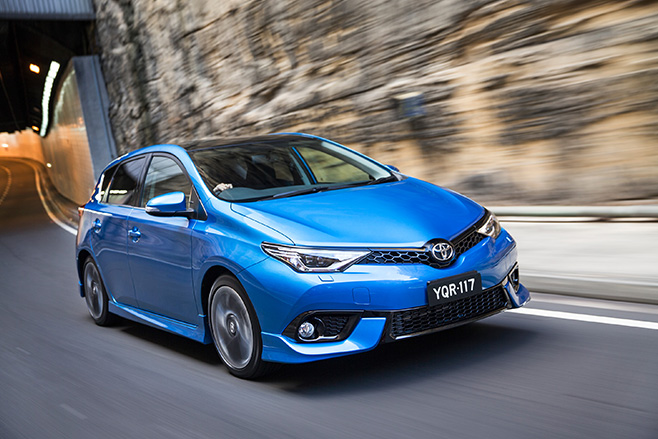
Just 121 sales separate the Corolla and HiLux at the three-quarter stage of 2016, though the i30 is not out of the running entirely – 1270 units shy of top spot.
September sales of 102,696 equated to a 1.3 per cent increase – or 1304 vehicles – over the corresponding month in 2015. SUVs and light-commercial vehicles continue to drive market growth. While passenger sales were down 9 per cent compared with this time last year, SUVs were up 7 per cent and light commercial vehicles up 18 per cent.
Toyota is already describing its overall market lead as “virtually unassailable”, with second-placed Mazda more than 60,000 units behind despite a record month for the Japanese brand in September.
Top 10 selling vehicles in September 2016
| Rank | Model | Sales |
| 1. | Mazda 3 | 3491 |
| 2. | Toyota Corolla | 3423 |
| 3. | Toyota Hiluxu00a0 | 3209 |
| 4. | Ford Ranger | 2903 |
| 5. | Hyundai i30 | 2741 |
| 6. | Mazda CX-5 | 2662 |
| 7. | Holden Commodore | 2366 |
| 8. | Mitsubishi Triton | 2246 |
| 9. | Hyundai Tucson | 2209 |
| 10. | Hyundai Accentu00a0 | 2189 |
Race for 2016’s No.1 Sales Spot (at end of September 2016)
| Rank | Brand | Sales |
| 1. | Toyota Corolla | 30,948 |
| 2. | Toyota HiLux | 30,827 |
| 3. | Hyundai i30 | 29,678 |
| 4. | Mazda 3 | 27,898 |
| 5. | Ford Ranger | 26,940 |
Suzuki Australia this week confirmed the second-generation Ignis would arrive in the first quarter of next year, days after the model was unveiled in European-spec at the 2016 Paris Motor Show.
The new Suzuki Ignis was first previewed by the iM-4 concept at the 2015 Geneva Motor Show, with a production version shown later in the year in Tokyo.
The Ignis’s stumpy yet funky design is slightly longer for markets outside of Japan, with lengthened front and rear bumpers stretching it from 3.6 to 3.7 metres.
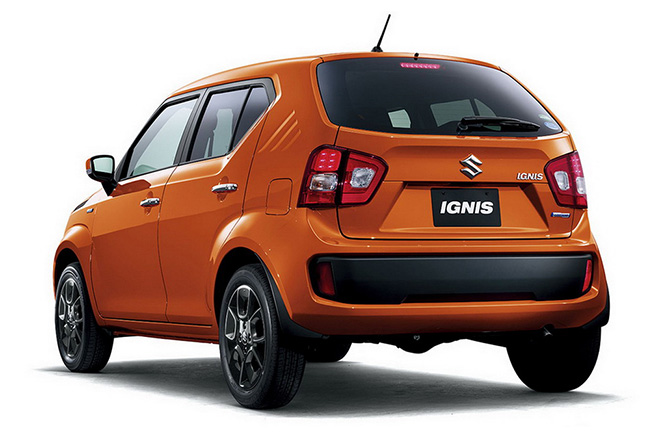
A 1595mm roof height ensures upright proportions related to the model’s predecessor, which was sold locally between 2000 and 2005 (and between 2002 and 2006 as a rebadged Holden Cruze).
Suzuki says design details are borrowed from stable mates such as the Swift as well as as old classics such as the SC100 (notably the rear-pillar ‘vents’ from the latter).
The interior aims to match the urban coolness of the exterior, including the option of orange or titanium trim accents. For functionality, there’s a colour touchscreen multimedia display. For additional practicality, the rear seats split 50:50.
The Ignis is a five-seater as standard, with an optional sliding rear bench restricting rear places to two.
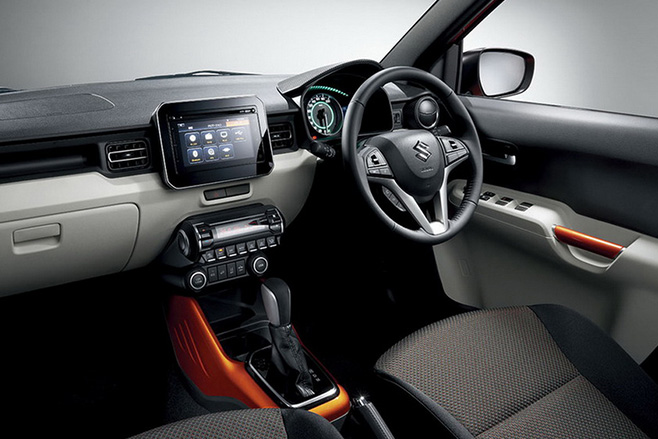
The Ignis will be available with either front-wheel drive or optional all-wheel drive.
The standard engine is a 1.2-litre four-cylinder offering 66kW of power and 120Nm of torque. Alternatively, there’s a mild-hybrid drivetrain linking the petrol engine with an electric motor for extra assistance.
Fuel consumption is unlikely to be high either way with the Ignis weighing between just 810 and 920kg.
From half a Great Southern Land away, you could predict the Sydney Motor Show’s reaction to the new Monaro. What you couldn’t foresee, what nobody outside a select few people could have predicted, was the way the Ford faithful flocked around the T3 T-Series.
This article was originally published in the December 2001 issue of MOTOR.
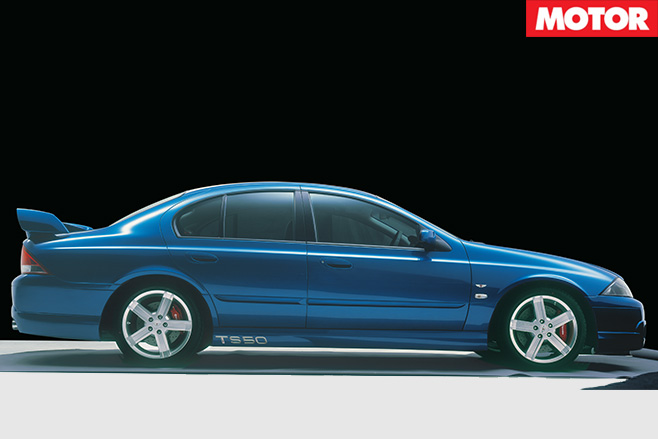
Here was the Ford brand’s saviour. The punters, especially the long-suffering Blue Oval troops whose every performance ambition has been relentlessly crushed by Holden and HSV, treated the stroked, hand-built TS50 like it was their own personal conduit between racetrack and road. Journos clamoured over themselves trying to get to Ford’s hierarchy, eager to be the first in the hotseat of the world’s only factory-built 250kW Falcon.
But, as Tickford supremo David Flint caught my gaze seconds after unveiling his beast, we exchanged the knowing smile of a secret well kept. Righto, it wasn’t up there with the Monao’s surprise appearance three years ago, but it wasn’t bad.
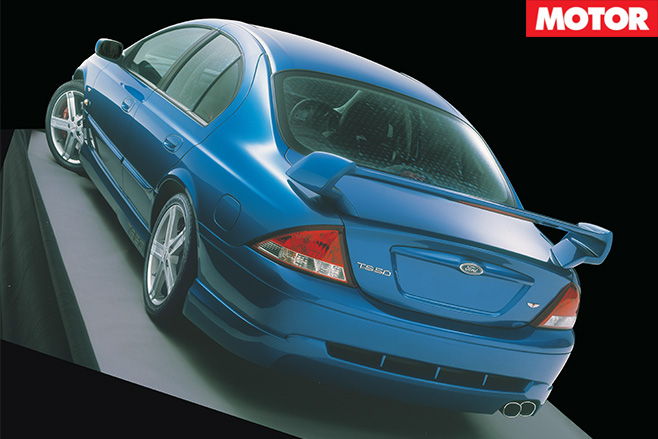
A month or two later, Ford’s big car marketing man Stephen Kruk and The Prez himself, Geoff Polites, were let in on the secret. For the longest time, not even the PR department was on the same page. Sorry guys. What most Ford folk didn’t know, what the assembled journos didn’t know, what you didn’t know until now is that everybody else was too late. Seven months too late. And late twice over.
See, we drove this fire-breathing new Ford a long time ago. So while everyone else was jostling for position in the queue for a ‘first drive’, MOTOR already had a couple of thrashes in what’s shaping to be the hardest-hitting factory Falcon of all time.
Ahhh, but torque? Now that’s another story. What Flint meant, but never publicly said, was that in the bottom two-thirds of the rev range, his team would be bloody happy to step into the ring with anybody. There, he believed, even his 220kW 5.0-litre with its 435Nm was more than a match for what the Blue Believers call The Evil Empire.
But the T3’s 500Nm crushes even the best 5.0-litre Windsors Tickford has turned out. It’s got more torque at 1800rpm than the old T-Series could boast when its hardest punches were being thrown. When we first came a-calling, this fast Falcon’s code name had yet to progress to the T3 it wears today.
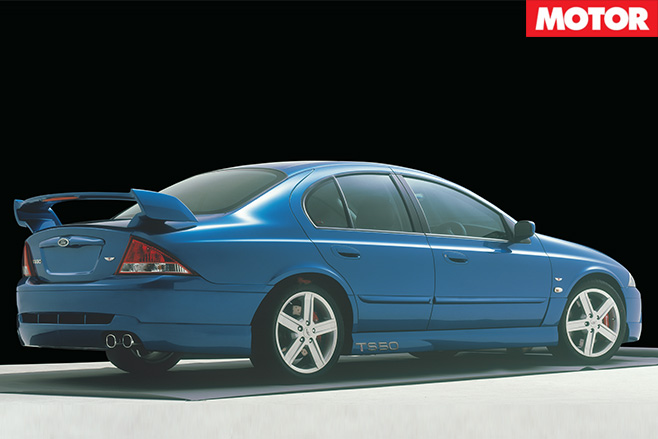
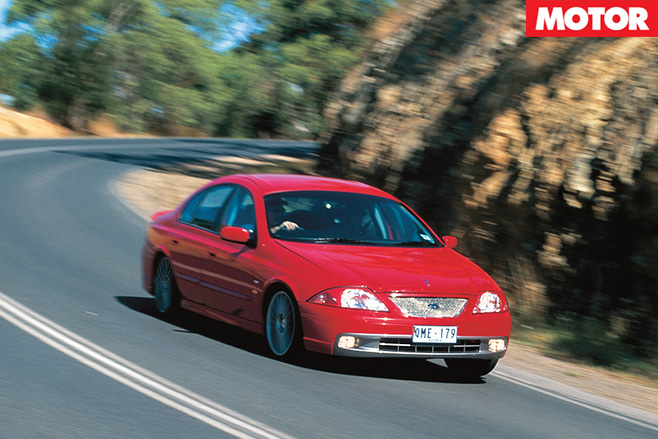
Photographer Helmut Mueller and I were expecting a fearful weapon, something fairly bristling with the sort of latent aggression eventually displayed by the blue TS50 concept car. Instead, we were confronted by a rather plain-looking red TE50. Say what?
The lensman was gutted, a head full of creative ideas blown away in the sweep of a dusty car cover. But that’s the way of development hacks and … wait … there are giveaways. The wheels on this T-Series are different; bulging with an experimental Brembo brake package, all bright red calipers and black tape, but still instantly identifiable as Italian four-pots.
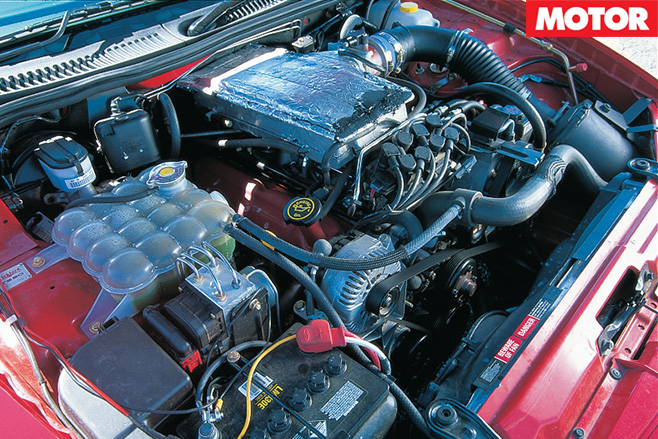
There had been rumours of forced induction – supercharging and turbocharging, even both together – as the preferred power route, but a scan of the engine bay puts that to rest. Nothing to see here, folks, except a plenum chamber that looks like something mum would pull from the oven on Sunday night, an industrial strength airbox and plumbing to match. Hmm, a stroker, then Winnie?
He nods and smiles. There’s bugger-all else to look at under the lid. The rest of this story is buried deep inside that engine. The key I’m handed looks the same as that of an XR, fits in the same hole, turns the same way.
Ah, that’s it. The vibrations are a bit thin on the ground. And the sound. It’s deeper, even without touching the throttle. Richer, too. At this early stage of its development the ‘Stroker’ packs a TE50-spec T5 gearbox. Though rated at 470Nm, it ain’t up to this engine.
Heeding Winfried’s advice not to rush the shifts, I slot it into first and trickle the innocuous looking T-Series across to the Hume’s central traffic island, turning towards Sydney. Clutch feel, gearbox noise and that trace of driveline slap are all familiar.
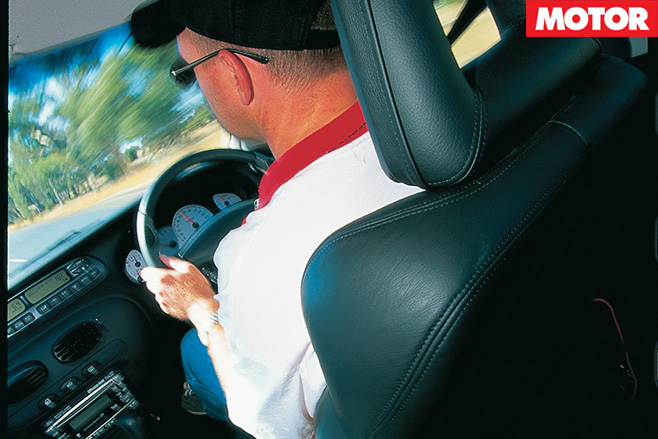
Standing starts in XRs and T-Series are grouse fun. Tougher clutches than the hot Holdens, more step-off torque and a delicious engine note are all part of the play. Speed, at least when compared to HSV, isn’t.
But the old rules are out the door now, even in this plain red mule. The same 1800rpm clutch slip that sees a T-Series dependably off the line bags the Dunlop SP9000s ferociously in the T3 and, oh yes there’s more – plenty more – power there.
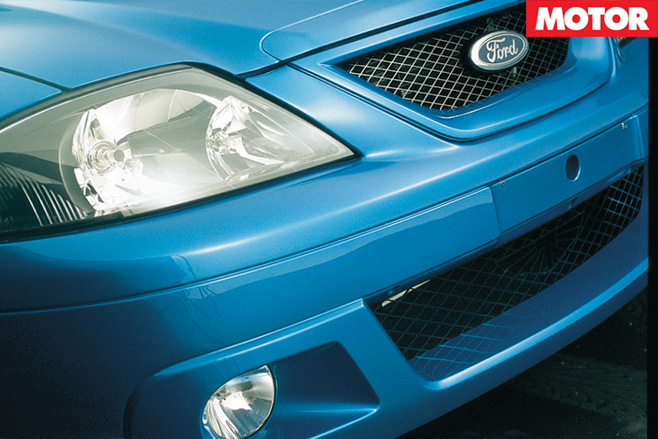
The XR8’s 14.58sec quarter mile time? I was in the car for that and it’s nothing like what this thing’s capable of. It should, all things being equal on a good day at Calder, be capable of matching the Clubsport’s mucho respectable 14.1sec sprint. And, with five useable gears, it’ll run hard in all of them.
The T3 is happy to cruise for a while too, as we find on the way to John Bowe’s favourite piece of test blacktop. En route, I remark that this is the best behaved mule I’ve seen. No bucking, no temper tanties, nothing. And it’s smooth, far smoother at constant throttle openings than Tickford’s handbuilt 220kW mills. As an added bonus, it’s got think-quick acceleration everywhere.
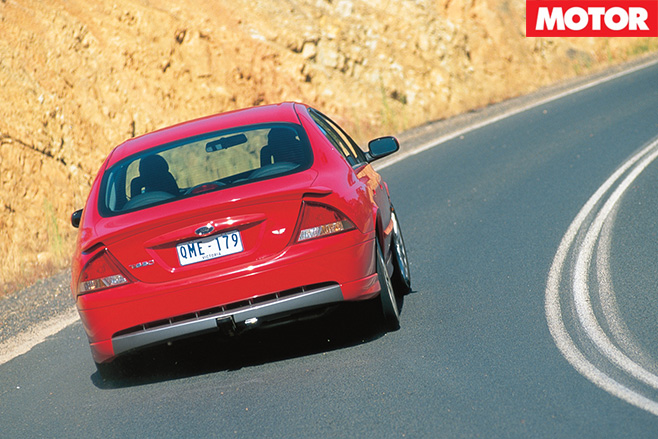
I attack a long, uphill bend on the noise in third gear and the T3 snorts and fires its way out the other side, the rear suspension convincing the rubber to accept more drive than any HSV possibly could.
Work around the slow, old gearbox (the proddy versions will run the Mustang’s Tremec TR3650 instead) and the rest of the package is brilliant. Beilharz explains that the engine’s been taken apart, stroked, loaded with hand-built, individually-balanced and blueprinted components, balanced again when it’s reassambled, then balanced again when it’s in the car. Its no wonder, then, that the lumpy spots across the 220kW Windsor’s rev range have been banished.
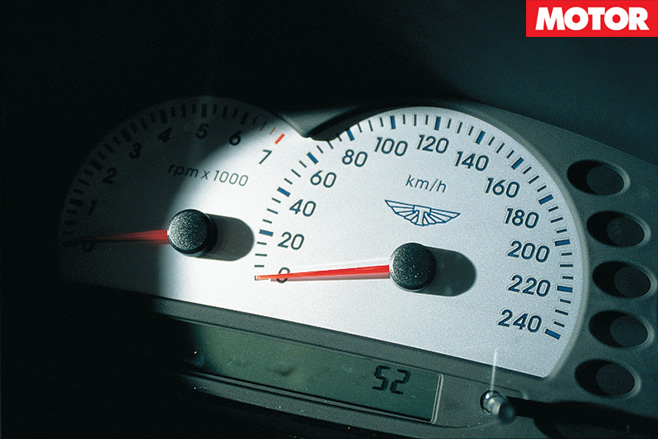
The last 500 revs – up around where the 250kW is actually made – isn’t exactly a no-go zone, but it’s not the stroker’s forte. No matter how precise the build, all that internal mass starts to trip over its own reciprocation above 5000rpm
Tickford admitted it hadn’t quite made 250kW in this early mule, one of the first of the 5.6-litre Windsors, but it had belted the hell out of the 500Nm target by a “very safe” margin. Rather than rev its ring out, it’s better to pick a tall cog and bludge it around on the torque curve, or keep short shifting to drop back into the engine’s meatiest bits. It seems just as fast either way.