
Ford has opened its newly arrived Sync 3 software up to independent app developers with the aim of increasing the software available to drivers.
In a model not dissimilar to Apple’s App store – whereby Apple provides the hardware and encourages external developers to create the software before approving it to make it available – Ford wants external companies to create software for its cars.
“We’ve made the software not only available but there’s AppLink emulation software that we’ve opened up to Australian app developers to allow them to develop apps for Sync 3,” said Ford Australia’s marketing director Lew Echlin.
“We’re not being precious about it. We want to make sure that emulation software is given to anyone who’s developing apps for Sync 3.
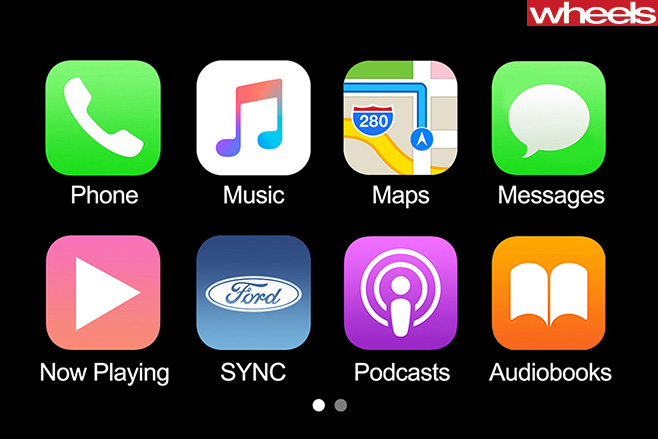
As part of the AppLink emulation software, Ford will allow developers to access a “limited set of data” from within the car, including distance, speed and when a car is refuelled.
The new Sync 3 system is a major revision of Sync 2 currently available on most new Fords.
It drops the quadrant display – which broke the display into four virtual spaces for different functions, such as phone and audio – and introduces a new three-tile setup said to be more intuitive to use.
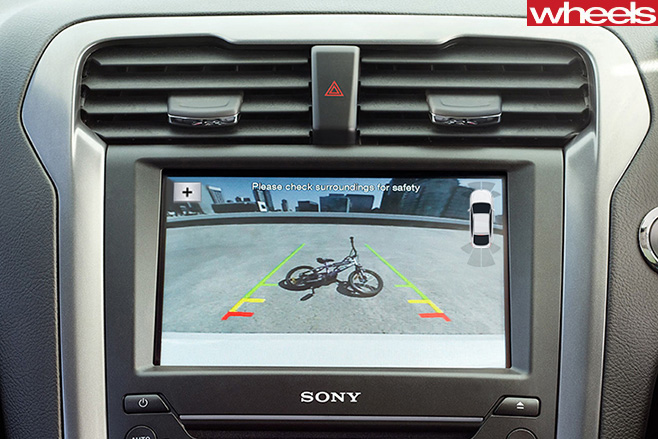
SYNC3 also has conversational voice activation calibrated to understand Aussie accents which requires fewer steps to issue a command via Siri Eyes-Free or with the previous voice control system.
It also better understands how we refer to places, such as businesses and points of interest, by not using exact or official names that we probably don’t even know. For example you can now ask for directions to “Sydney Airport” instead of “Sir Charles Kingsford Smith International Airport.”
Renault’s third-generation Megane RS is dead – but long live the king of front-drivers that after almost exactly six years remains the benchmark for the stuff we love as drivers.
In marketing terms the Megane III RS 250, 265 and 275 will always be remembered for their ability to tame Germany’s famous Nurburgring circuit. Previously in June 2008 the big-bummed Megane II RS R26 set a front-wheel-drive production car record after the plastic-windowed stripped-out hot-hatchback set an 8minute 17second lap.
Fast forward three years and a production Megane III RS 265 complete with glass windows and a rear seat, reduced that time to 8min 8sec – and the limited edition 8:08 was born.
Seat would then snap at that record with its Euro-only Leon ST Cupra 280 at 7min 58.12sec which forced Renault Sport’s hand to create in June 2014 the Megane III RS 275 Trophy-R and snatch a 7min 54.36sec record.
Since then, Honda has busted the Civic Type-R around the ‘ring in 7min 50.63sec followed by Volkswagen with the Golf GTI Clubsport S at 7min 49.21sec – but neither made it to Australia and particularly in the latter case we only get a watered-down 40 Years edition.
Renault Sport, meanwhile, served Australia more examples of the 275 Trophy-R than any other country bar one, a 50-unit haul at $61,990 driveaway. So, really, the others can eat the Frenchie’s RS.
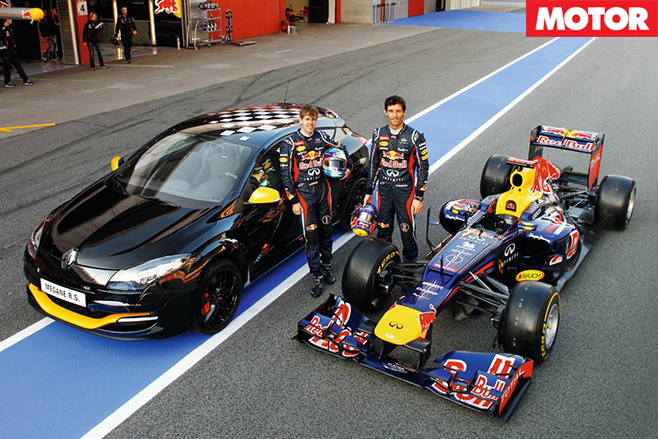
The range started from $41,990 (plus orc) and included a 184kW/340Nm 2.0-litre turbocharged four-cylinder (25 per cent new compared with Megane II) and six-speed manual transmission, with a standard front limited-slip differential all together capable of sprinting the Megane III from standstill to 100km/h in 6.1 seconds.
Even a circa-$50K all-wheel-drive Golf R only had 188kW/330Nm back then, and it would take a good driver of a $60K Focus RS with 224kW/440Nm to keep a Megane III in sight.

Steering, gearshift, brakes – each an extension of limbs in a very Porsche-like way.
It isn’t often in this game that a model that comes out in October 2010 is still setting benchmarks approaching October 2016, but drive the Megane III RS 275 today and those traits are still virtually unmatched in a vehicle that still asks $44,000 (plus orc).
Of course there were – and are – options, the most popular of which being the 19-inch Steev alloy wheels with particularly sticky Bridgestone Potenza RE050 tyres, and Brembo brakes and Recaro sports seats either cloth- or leather-trimmed depending on the grade.
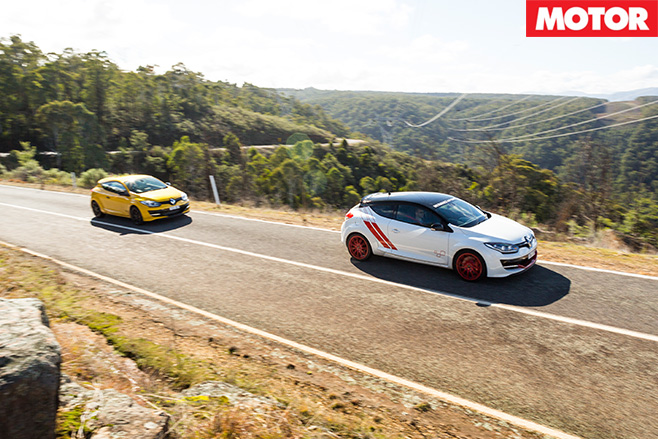
Of course the turbo grunt, front LSD and a clever steering axis that virtually eliminated torque steer, all meant that driving the Megane III hard through its front-end was possible, placing power promptly where other fast, flaky front-drivers would crumble. But the magic of this Renault Sport was also a rear-end that loved to get involved in the action.
That trait was no more evident than with the stripped-out two-seater Megane III RS 275 Trophy-R limited edition. With its burbling Akropovic titanium exhaust, Ohlins multi-tier manually adjustable dampers, lightened kerb weight particularly at the rear, and 19-inch Speedline Turini red wheels, it was the icing on what was already one yummy cake.
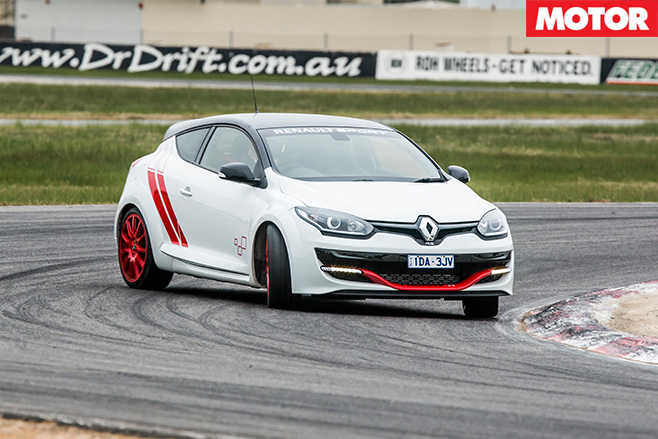
There are myriad hot-hatchbacks in the market these days, but even the likes of a Golf GTI 40 Years or Peugeot 308 GTi 270 struggles to match the Megane III’s raw engagement and feel. Arguably, its smaller brother the Clio IV RS has mis-stepped in these regards, particularly with automatic-only availability (and a dull one at that).
Rumours have long circulated that the forthcoming Megane IV RS will be auto-only but Dieppe-based Renault Sport engineers have soaked in enough Clio IV RS ‘feedback’, media pestering and rival-watching (hello, manual-only Focus RS) to surely not make the same mistake twice.
Within a year or so, we’ll know, but for now it’s farewell to one of the world’s finest hot hatchbacks…
The cancellation of Group B left some of the world’s finest supercars all dressed up but with no place to go.
However, it also left manufacturers with stillborn Group S prototypes, the category that was originally intended to replace Group B in 1987.
To begin with Group S, as with Group B, was to have no power limit, which is why the surviving prototypes all boast between 450-600kW, however the speed with which Group B cars were being developed led the FIA to restrict Group S cars to 225kW and limit turbo engines to 1200cc in capacity.
That might not sound much, but with just 850kg to propel performance would still have been impressive and the prototype nature of Group S would have allowed manufacturers to continue the boundaries in terms of electronics and lightweight materials.
Sadly, the FIA’s cold feet killed Group S before it even began and made Group A the sport’s premier category, so the world’s best rally drivers lined up for the 1987 Monte Carlo Rally with 200kW less than they’d had 12 months earlier.
But you can’t stop progress, and five years later tyre, suspension and transmission development meant these new production-based machines were beating the stage records set by the Group B beasts.
Audi Quattro
The story of Audi’s mid-engined rally machine is a fascinating one, but far too long to recount here. Developed behind The Iron Curtain without the VW-Audi board’s knowledge, it fixed the Quattro’s handling problems instantly, but sadly a photograph leaked out and all mid-engined Quattro componentry was destroyed.
Except for this odd-looking Group S prototype, which survived the cull. It was recently restored and ran in public for the first time ever at the 2016 Eifel Rallye festival, driven by Walter Rohrl.
Lancia Delta ECV
It may look like a Delta S4, but the ECV (Experimental Composite Vehicle) is a very different animal. The chassis was made of a carbon fibre/aluminium honeycomb monocoque, the panels were various lightweight materials including carbon-kevlar and fibreglass and even the wheels were composite.
For a taste of the ECV’s capabilities check out this in-car video of two-time WRC Champion Miki Biasion.
The Delta ECV was powered by a radical “TriFlux” twin-turbo engine, which had one exhaust and one inlet valve on each side of the cylinder head, with each turbocharger having its own exhaust manifold. At low revs all the air could be forced through one turbo, greatly reducing lag, with the second turbo gradually coming on stream at higher rpm. Bugatti uses a very similar system in the new Chiron.
Toyota MR2 ‘222D’
Toyota’s first four-wheel drive rally car was set to be based on its then-new MR2. The MR2 ‘222D’ is unusual as it has many different configurations. Toyota is rumoured to have built as many 11, though only three are thought to survive.
At least one has a longitudinal engine, while another is transverse, while it’s unclear whether the engines are a 503E engine from Toyota’s Le Mans car or a development of the 4T-GTE that powered the Celica Twin-Cam Turbo or a mixture of both.
Two of the 222Ds now reside at Toyota Motorsport’s headquarters in Cologne, one of which is hooning around the facility in the video above.
Pikes Peak
Without the WRC closed off to them, Group B machines found a home at the Pikes Peak International Hillclimb. Audi’s Quattro had won the Unlimited class from 1982-86, but Walter Rohrl’s stunning 1987 victory in a specially built 520kW version of the S1 E2 set a new course record of 10min47.850sec.
Not to be outdone, Peugeot returned in 1988 with the awesome 450kW, 850kg, all-wheel steer 405 T16, Ari Vatanen shaving a mere 0.630 of Rohrl’s record, his effort immortalised for eternity in the incredible film Climb Dance.
Dakar
Having conquered Group B rallying, Jean Todt’s Peugeot Sport operation turned its attentions to the gruelling Paris-Dakar rally and was instantly successful, winning four times in succession from 1987-90.
Ari Vatanen won three of these, and would’ve won all four had his car not been stolen during the 1988 running. It was recovered, but Peugeot withdrew the car following the FIA’s insistence that the car should be excluded.
Rallycross
The true home of Group B machinery was in the arena of rallycross, their brutal acceleration and all-terrain ability making them perfectly suited to the format.
Almost every manufacturer was represented (the unloved Citroen BX 4TC is even present in the video above) and as wince-inducing as it is these days to see cars like this bashing panels, it created spectacular action.
Reckon autonomous emergency braking will make fender-benders a thing of the past? Think again: a US study has discovered not all AEB systems are created equal, and none will keep you away from harm a hundred percent of the time.
Conducted by the American Automobile Association, the study subjected five different AEB systems from unspecified manufacturers to more than 70 individual tests.
The results showed that systems designed to minimise the effects of a crash only reduced speeds by an average of 40 percent. During tests with a starting speed of 48km/h, these systems managed to avoid a collision a third of the time. At 72km/h, those systems were only able to successfully avoid an impact 9 percent of the time.
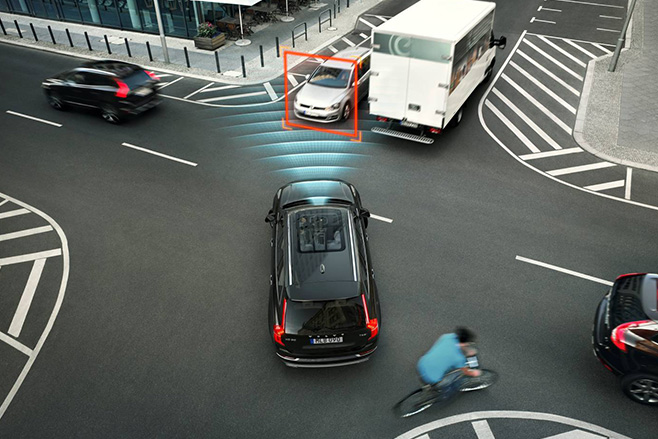
Meanwhile, AEB systems with a higher speed threshold clamped their brakes harder and achieved an average speed reduction of 79 percent during the AAA’s study. For those cars the 48km/h test resulted in a successful crash avoidance rate of 60 percent, though bumping the starting speed up to 72km/h saw that figure drop to just 40 percent.
If the AAA’s test is any indication, then even the most sophisticated and capable AEB systems still won’t yank you away from disaster without fail. Considering 68 percent of people polled by the AAA believe autonomous emergency braking systems are designed to avoid accidents altogether, the test results should be a wake-up call to a great many motorists.
SO WHAT IS AEB ANYWAY?
At least 13 manufacturers sell cars in Australia with some form of autonomous emergency braking, some offering it as standard equipment while others list AEB as a cost option. Be warned, however, for “AEB” is a blanket term: manufacturers each have their own methods of making their cars brake by themselves.
Subaru bundles its AEB system with its EyeSight driver assistance suite, which uses a pair of stereoscopic cameras and some sophisticated software to generate a three-dimensional picture of what’s on the road ahead of the car.
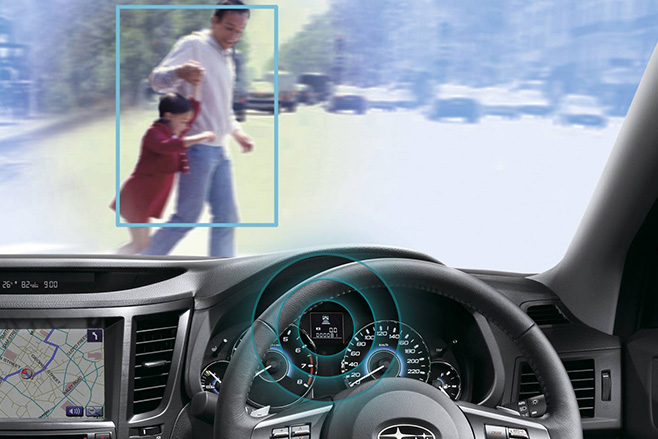
In addition to being able to detect pedestrians, adjust the cruise control to match traffic and noticing when the car is straying from its lane, EyeSight’s AEB feature also functions from 1km/h all the way to 160km/h and is programmed to avoid an impact.
However, being a camera-based system it can be rendered ineffective by harsh weather or light conditions (such as when driving directly into the sun), as well as a dirty windscreen.
Mazda’s AEB system comes in two guises, unhelpfully marketed under two near-identical names. The most widely available is Smart City Brake Support (SCBS), which is standard on all models in the Mazda3, Mazda6, and CX-9 ranges and is active at lower speeds (between 4km/h and 80km/h in the Mazda3). SCBS uses a laser sensor (mounted in the top of the windscreen) to detect obstacles, and aims to avoid collisions rather than mitigate damage.
High-end variants of those models gain Smart Brake Support (SBS), which uses the car’s dedicated front-facing radar unit to enable it to see up to 200m ahead – much further than the laser used by SCBS. Radar is also less susceptible to interference from atmospheric conditions like fog and rain, unlike lasers.
However while Mazda’s AEB systems will supposedly keep your bodywork intact in an emergency stop, other systems don’t explicitly claim a similar capability. For example, Honda’s Civic VTi-LX sedan is equipped with AEB as standard (marketed as Collision Mitigation Braking System), however Honda says it will only “mitigate the severity of an unavoidable accident” rather than avoid an impact outright.
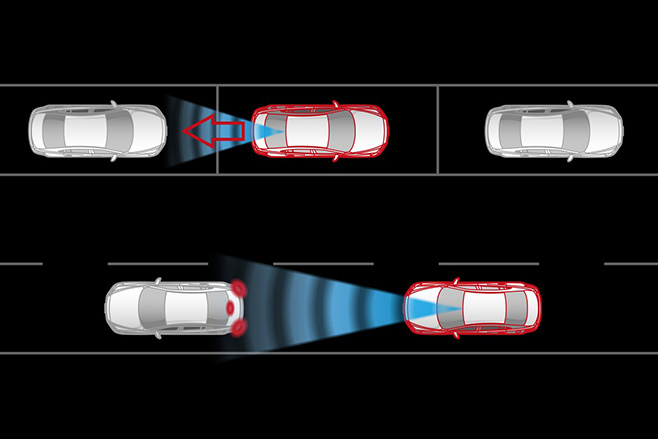
Merely having an AEB-equipped car doesn’t grant you immunity to rear-ending the car in front of you.
At the upper end of the market, Audi uses a camera-based AEB system on its Q7 and A4, and claims it’ll reliably prevent a rear-ender at speeds up to 40km/h while minimising impact severity at speeds up to 85km/h.
BMW, like Mazda, offers two levels of AEB tech. BMW Driving Assistant is the most basic and the most available, being standard across the bulk of its passenger car and SUV range. As a camera-based system its detection range is more limited, and will only slow the car – not stop it – if it detects an obstacle between 10km/h and 60km/h.
Driving Assistant Plus is the more capable version of the system, and uses a radar unit to give it a longer detection range. Able to work from zero to 210km/h, Driving Assistant Plus will also bring the car to a complete halt if necessary. It’s optional on most models, though is standard on 6 Series, 7 Series, and the M and M50d variants of the X5 and X6.
ANCAP and several motoring clubs have called for AEB to be made mandatory equipment on all passenger cars sold in Australia. A noble pursuit and one that would likely have a positive effect on road fatalities, however the motoring public of Australia must be aware that AEB is no substitute for an alert driver.
It wasn’t too long ago that smartphone connectivity in cars just meant a way to have hands-free phone conversations and play your favourite tunes.
The smartphone now controls many in-car infotainment applications including navigation, music streaming, and third-party driver assistance services such as weather and traffic alerts.
This is the basis for Ford’s latest version of its SYNC infotainment system, the SYNC3 that incorporates Apple CarPlay and Android Auto, as well as Ford’s existing AppLink, for greater smartphone integration.
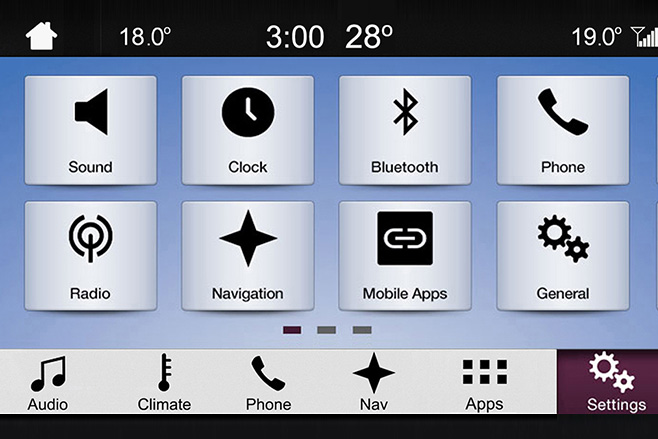
SYNC3 comes with a new smartphone-like touchscreen with easier-to-understand graphical interface and faster performance.
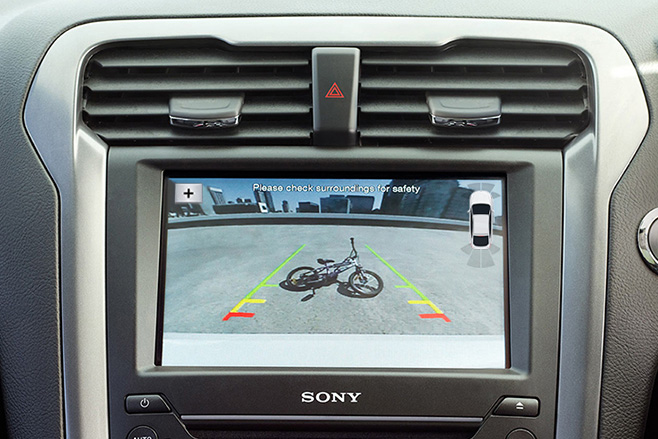
Meanwhile, AppLink now automatically discovers smartphone apps including Spotify, Pandora, Glympse and AccuWeather, and displays their icons for easier selection; though in most cases you’ll be able to access them via voice command.
SYNC3 also has conversational voice activation calibrated to understand Aussie accents which requires fewer steps to issue a command via Siri Eyes-Free or with the previous voice control system.
It also better understands how we refer to places, such as businesses and points of interest, by not using exact or official names that we probably don’t even know. For example you can now ask for directions to “Sydney Airport” instead of “Sir Charles Kingsford Smith International Airport.”
Another interesting feature is how you can program SYNC3 to ensure others who drive the car, particularly less experienced drivers, do so safely. Owners can program a spare key to reduce the maximum speed of the vehicle, give an earlier low-fuel warning, limit the volume of the in-car entertainment or even disable it completely if the seatbelt is not fastened.
SYNC3 still provides subscription-free Emergency Assist. Any phone synced to the system is used to dial 000 in the event of a significant accident, alerting emergency services with the vehicle’s location. The system also relays additional information, including if SRS airbags have been deployed, the type of crash (front, side, rear or rollover) and the number of safety belts detected in use, in order to help emergency call takers dispatch the appropriate resources to the scene.
SYNC3 software can be updated wirelessly and once you establish a connection with your home Wi-Fi it will automatically download updates while sitting in your garage or driveway.
All Ford needs to do now is to educate customers who aren’t as savvy with their smartphones about all the available apps and how to use them. With the auto connectivity and simple voice activation, this shouldn’t be too difficult.
SYNC3 will be rolled out from next month on 2017 Ford Focus, Mondeo, Mustang, Everest and Ranger models.
So it appears Honda is pondering a sub-NSX mid-engined sports car. That should be a good thing, right?
The Honda NSX is too special for its own boots. Priced at $420k in Australia (and that’s only if you stick with non-metallic paint), Honda’s NSX redux squares off against some real exotica when it comes to a pricetag showdown.
Couple that with an ultra-tight supply thanks to limited production capacity at Honda’s NSX production line in Marysville Ohio, and the second-gen NSX is destined for exclusivity (or is that obscurity?).
The NSX’s halo effect won’t be strong unless people see enough NSXs burbling down the street. Its glossy lustre won’t rub off on Honda’s full range of adequate-but-unexciting passenger cars otherwise.
Honda clearly needs a more accessible performance car than the NSX, but is the rumoured ZSX gonna be it? It’s not even confirmed for a production future, but even if it were I’m not so sure it’d be the everyman’s sportscar that Honda needs to solve its image problem.
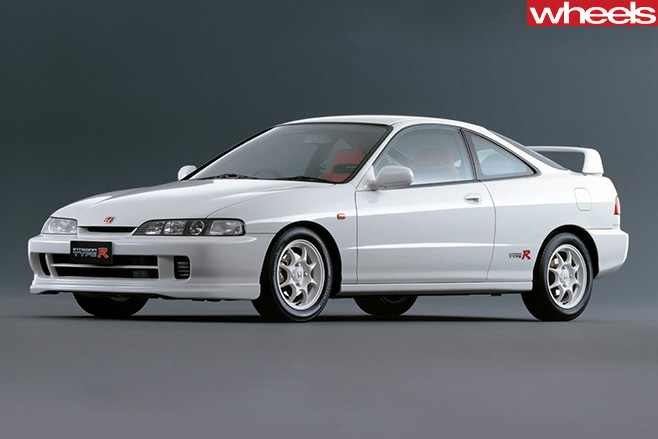
But all of that tech suggests the ZSX – if it does eventuate – will be a bit of a pricey machine. Hybrid hardware doesn’t come cheap, and a six-figure pricetag here in Australia would virtually be guaranteed.
I don’t necessarily baulk at the idea of another six-figure Honda though; after all, if the car is good enough then such a lofty price would be justified, Honda badge or not. But is Honda doing the right thing by chasing fatter wallets with its next breed of performance cars? Has the company that built its reputation on the back of entertaining and accessible twin-cam hatchbacks decided to turn its back on less well-heeled enthusiasts?
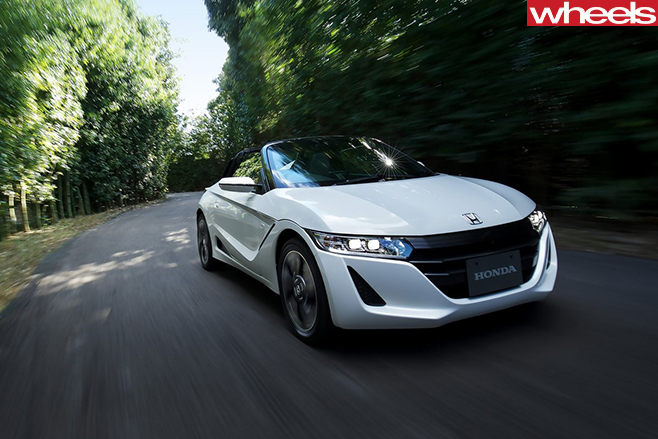
Well, no. Not yet anyway. The Civic Type R is being renewed for another generation and in Japan you can already buy a mid-engined Honda that’s more affordable than the NSX – the pint-sized, 47kW Honda S660 Roadster.
The next-gen Civic Type R is coming here next year, but the S660 is sadly destined to be a Japan-only thing.
A Jazz Type R makes the most sense. Australians love a hot hatch, and a smaller, cheaper companion to the Civic Type R would bring the price of entry to Honda’s sports range in the right direction: down.
It wouldn’t be the first time a bottom-feeder Honda hatch has been fettled for more speed either. Back in the early 1980s Honda juiced up the City hatchback (the precursor to the Jazz) by throwing a turbocharger on its 1.2-litre four-pot. Unimaginatively christened the Honda City Turbo, it wasn’t amazingly quick, but it was a riot to drive – I should know, I used to own one.
What about a Civic Type R sedan? It seems like a natural thing to do, given the new-gen Civic hatch shares its architecture with the Civic sedan. If the performance numbers are right, it could provide the Subaru WRX with some worthy competition.
While we’re at it, why not apply some of that turbo Honda magic to some less obvious candidates? Like, say, the HR-V? Nissan equips its funky Juke micro-SUV with a 140kW/172Nm turbo motor, so why shouldn’t Honda shoehorn the Civic Sedan’s 127kW/220Nm 1.5 litre turbo into its popular HR-V offering?
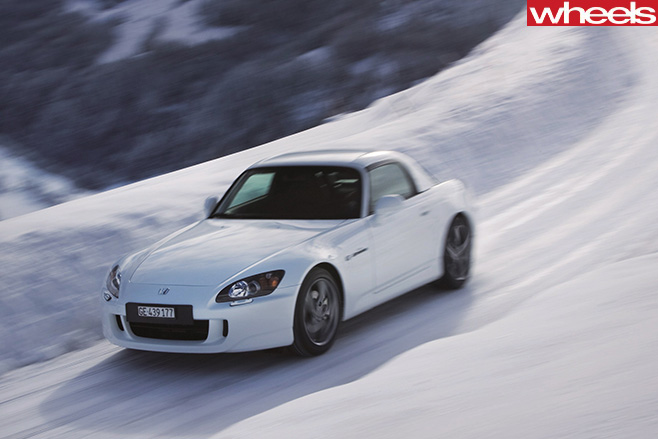
But there are plenty options on the table. Not all of them are sensible, some would probably be ludicrously unprofitable, but to me at least the idea of more sporty Hondas at a more affordable price point appeals more than the idea of the so-called ZSX.
When it comes to performance cars, Honda is at a crossroads. But rather than a mere fork in the road, it’s facing a five-way intersection with many potential (and equally-enticing) performance pathways ahead of it. Let’s hope Honda takes a more adventurous route than the one it’s been trundling down for the past decade.
The next 18 months is set to be a busy time for Peugeot Australia, which expects to release “a significant number of new and revised models” starting with the all-new Peugeot 3008 during the first quarter of 2017.
The second-generation 3008 has been totally reengineered from a compact MPV to an SUV to give it broader appeal, which Peugeot Australia is hoping will resonate here.
Peugeot Australia general manager Kal Bruesewitz says the new SUV will be key to the company’s “significant refocus and refresh of the brand and model line-up in Australia”.
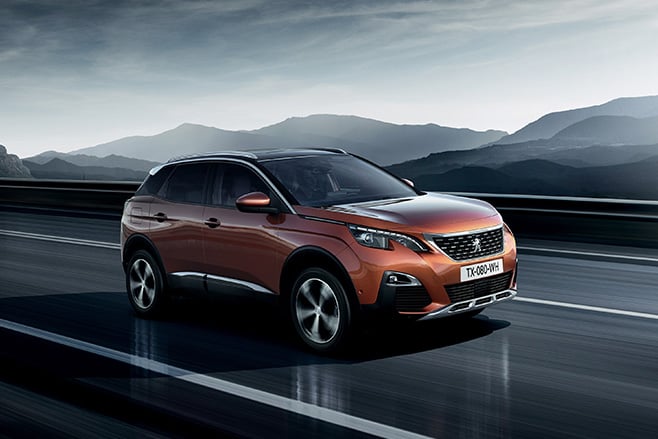
“With its all-new platform and drivetrains, combined with its French design and engineering, we are extremely excited about the all-new 3008 and believe that this is the Peugeot SUV Australians have been waiting for.”
The Australian 3008 line-up will come with two Euro 6 engine options including the turbocharged 1.6-litre, four-cylinder petrol engine and a 2.0-litre turbo-diesel. There will be no manual option, with both engines paired to a six-speed automatic transmission.
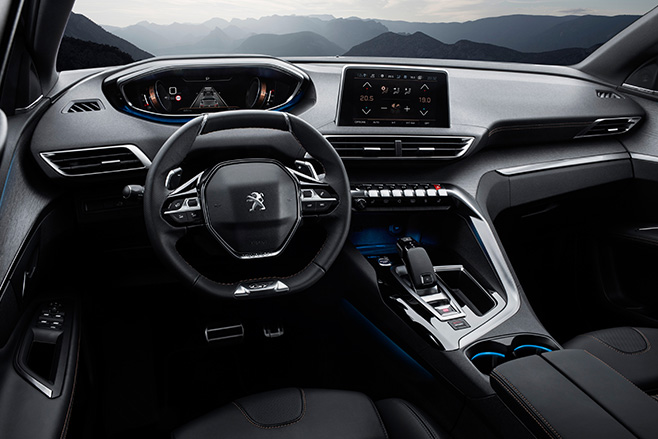
The 3008 has the same EMP2 platform as the Peugeot 308 and Citroen Picasso meaning better car-like handling than its predecessor. It even shares the 308’s smaller, flat-topped and -bottomed steering wheel.
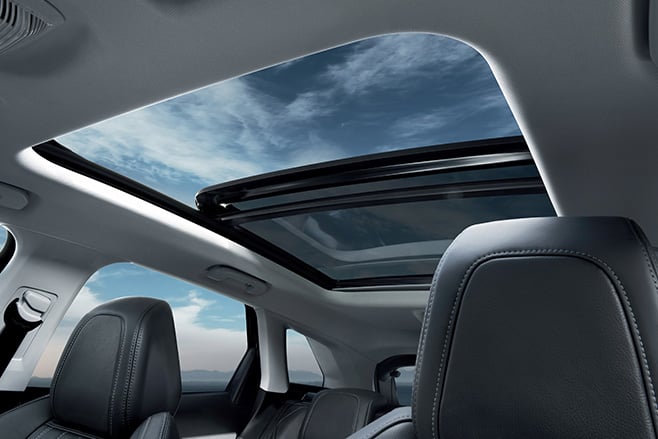
Around the same size as a Mazda CX-5, it’s slightly longer than the previous model but has more leg and elbow room inside and significantly more boot space – up 90-litres, to 520L.
The 3008 also comes with the latest version of Peugeot’s i-Cockpit management system that includes digital gauges and display modes in front of the steering wheel and an 8-inch touchscreen for navigation, climate control and entertainment via radio or smartphone integration tech such as Mirrorlink, Apple Carplay and Android Auto.
Safety tech includes autonomous emergency braking, fatigue alert, road sign recognition, 360-degree vision, blind-spot monitoring, lane departure warning, and semi-automatic parking.
Final pricing, model line-up and on-sale date will be confirmed closer to its 2017 launch.
TELL ME ABOUT THIS CAR
The Prius, once lauded as the pin-up car for environmentalists the world over, has been a part of Toyota’s Australian showrooms for more than a decade. The Japanese carmaker has held firm against introducing diesel engines for small cars, instead opting for petrol-electric hybrid systems. This new five-seat hatchback joins the five-seat Yaris-based Prius C and seven-seat Prius V, making “Prius” a brand within a brand.
STRENGTHS
Fuel economy: The official numbers claim a combined fuel economy of 3.5 litres per 100 kilometres, or about $6 for every 100km travelled at current fuel prices. Real-world figures suggest around 4.6L/100km – higher, but still good in its class. And the engine will use cheaper E10 ethanol-blended fuel that’s supposed to be better for the environment.
Emissions: Yes, diesels can scratch out smaller fuel use figures, but on the flipside they have high, and rather more toxic, emissions compared with petrol-engined cars. The Prius doesn’t, officially spewing out only 80 grams of carbon dioxide per kilometre travelled.
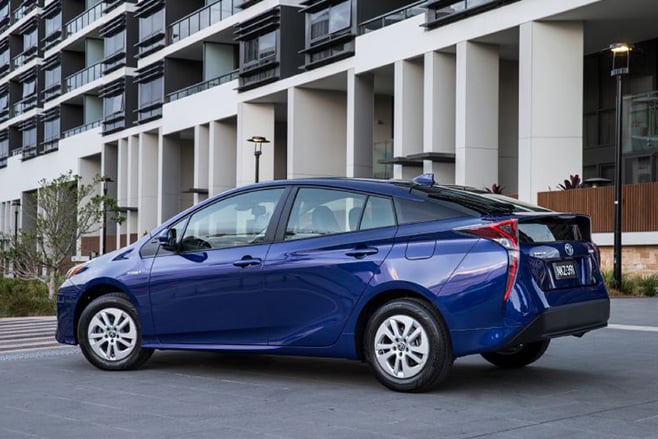
It drives much better: The previous-generation Toyota Prius was Novocaine for the soul, with lifeless steering, a two-stage brake pedal with a poor transition from regenerative to traditional braking, and a soggy suspension. This new one feels more taut and connected with the driver, although the brake pedal still feels a bit strange when the computer kicks in to scavenge stopping power for future use as electrical grunt. The engine, too, has had a big overhaul to give it more pep, although it won’t win every traffic light sprint.
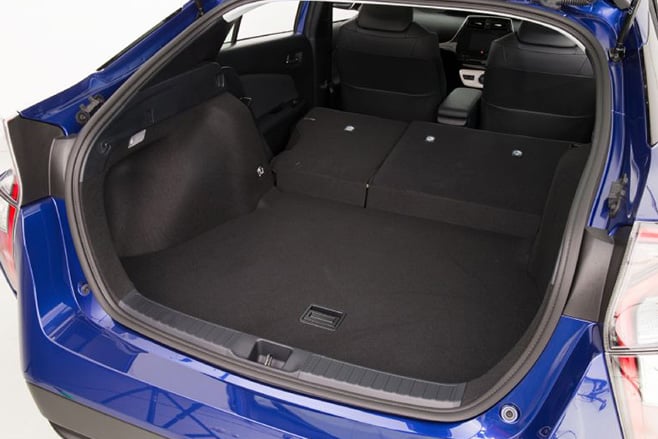
Practicality: The Prius is a big, roomy hatchback. Boot space, at just 502 litres, is compromised a bit by a high boot floor, but the 60/40-split rear seats now flip forward to yield even more load-lugging room. You can comfortably sit four adults, or five if the three across the rear bench are friendly.
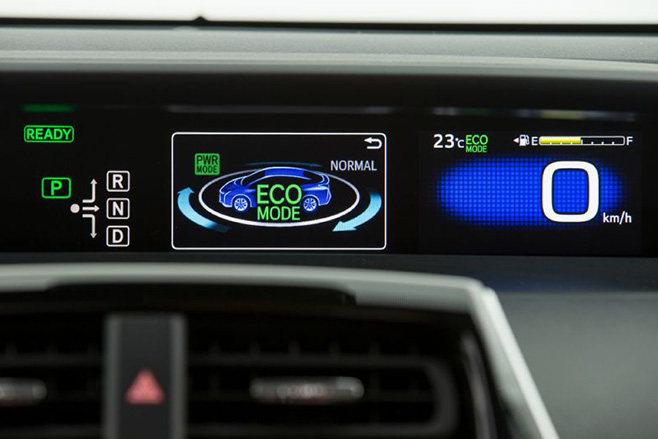
It can run silently on electricity for short bursts: All-electric range on the Prius is only a couple of kays at best, but it’s there. You can also switch between four driving modes – full EV that only works with very light acceleration, an “eco” setting that dulls the throttle pedal’s travel to make it really long, a “normal” setting that feels, well, normal, and a “sport” setting that taps the 90kW petrol engine more and gives extra doses of electric motor assist.
Comfort: Outside noise is well suppressed in this car. It does so well that the annoying noise from a fan mounted behind the driver’s seat used to cool the battery pack stands out as it cuts in and out.
There are good driver aids: If you spend most of your time coursing city streets, the Prius’s suite of driver assist systems is a boon. It includes active cruise control, lane departure and blind spot warning systems.
You can charge a phone wirelessly: It may sound naff, but it is a good feature if your phone is equipped for wireless charging. The floor console-mounted wireless charging system forces you to store your phone there. If you pick it up, it stops charging, providing sufficient incentive to just leave it there and get on with driving.
WEAKNESSES
Rear-seat entry: A sharply swept roofline and relatively small rear doors compared with the long front ones makes jumping in the back a bit tricky for taller people. Duck and drop is the order of the day.
Satellite navigation: The Prius has voice control for what seems like everything but the sat-nav unit. To set a destination, the driver has to stop driving to punch in the address.
White interior features: White is a good colour for the insides of cars as it gives them a real prestige feel. The downside is that marks show up instantly; spill a splash of coffee as you insert a cup into the holder on the glossy white floor console and it stands out like a dog’s proverbials – as does the fine layer of fuzz kicked up from the black floor carpets.
Cheap battery: Toyota had two options for the Prius when it was bringing it here: user a lighter, slightly more expensive battery that improves fuel economy even more, or a cheaper but heavier one that doesn’t. Because we don’t seem to care too much about emissions, we’ve gone down the cheap road.
It beeps a lot: The Prius likes to let the driver know when things aren’t right. It will sound a warning the whole time you’re in reverse gear, when you stray near a white line with the lane departure warning switched on, when you step out to open a gate, and so on.
It’s a bit complicated to turn the car off: Shutting down the Prius is a tricky affair if you’ve never done it before. You need to jump on the brake pedal, push a “P” button and then stomp on the foot-operated parking brake. It shouldn’t be that difficult.
ANY RIVALS I SHOULD CONSIDER?
The Prius’s enemy within is the recently introduced Toyota Corolla Hybrid. At $26,990 the Corolla-based fuel sipper is much cheaper, uses slightly more fuel and produces a bit more carbon dioxide, but not by much. Go cheaper again and the slightly smaller Prius C, at $25,990 for the more up-spec i-Tech version, still leaves a lot of change in your pocket.
If you want a more premium badge, the Lexus CT200h is based on the Corolla hatch and priced from $37,990 for the entry-level Luxury. It isn’t quite as green as the hybrid Corolla, but trumps it for equipment.
No other mainstream carmaker offers a hybrid model at this end of the market. Honda used to, but the Civic Hybrid is now just a memory. If you’re prepared to wait, Hyundai is working on bringing the Prius-sized Ioniq here late this year. It is likely to arrive here as a hybrid, but may also offer plug-in hybrid and all-electric options – if we’re prepared to pay extra for them.
Nico Rosberg wins crash-punctuated Belgian GP
Ricciardo second, Hamilton charges to third from the back of the grid.
Nico Rosberg scored his first Belgian Grand Prix victory on Sunday, but his Mercedes team-mate Lewis Hamilton assuaged some of the pain of a back-of-grid start by taking a fine third in a crazy, chaotic race at Spa.
Pole man Rosberg’s go-to-whoa win means he has now reduced to nine points the margin to drivers’ championship rival Hamilton. The Briton would have been more than satisfied to finish on the podium, after being forced to the rear due to numerous penalties accrued for three power unit changes in practice and qualifying.
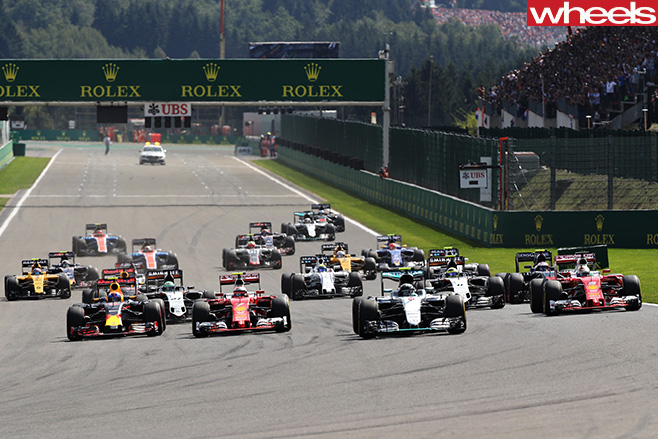
Vettel spun to the back, while Verstappen and Raikkonen were forced to pit due to damage.
Verstappen quickly exonerated himself, blaming the red cars: “They just turned into me.”
It wasn’t to be the first contretemps involving the Dutch teenager.
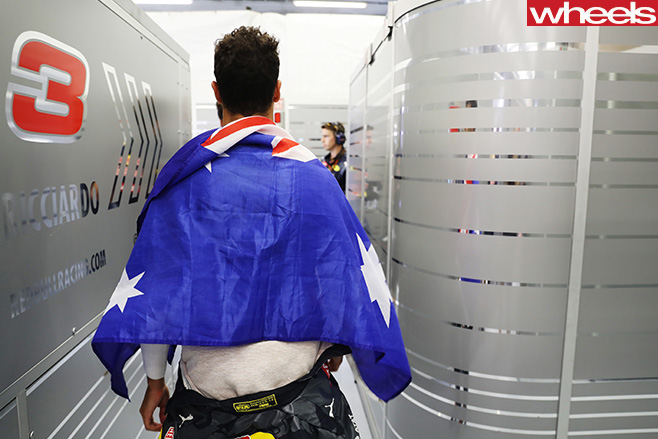
The Force India pair of Nico Hulkenberg and Sergio Perez also enjoyed a fine race to claim fourth and fifth ahead of Vettel and Raikkonen, who recovered from their early tribulations and further run-ins with rivals to manage an unsatisfactory sixth and ninth.
After five laps and some scrappy driving from some, the field was down to 17 cars.
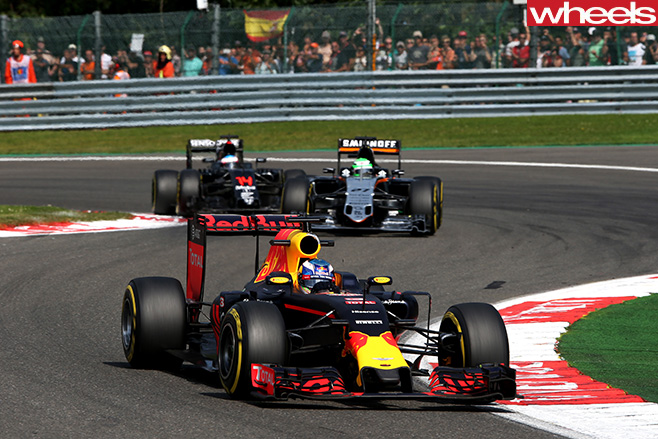
On lap nine the GP was red-flagged for 17 minutes to allow the barriers damaged by the Magnussen crash to be repaired. In this situation Rosberg, Ricciardo and others were handed a “free” pit stop, restarting on fresh rubber.
Further back, Raikkonen and Verstappen banged together as hostilities were resumed. And when Verstappen pointedly jinked late to block Raikkonen down the Kemmel straight, the Finn set the radio alight with some expressive language.
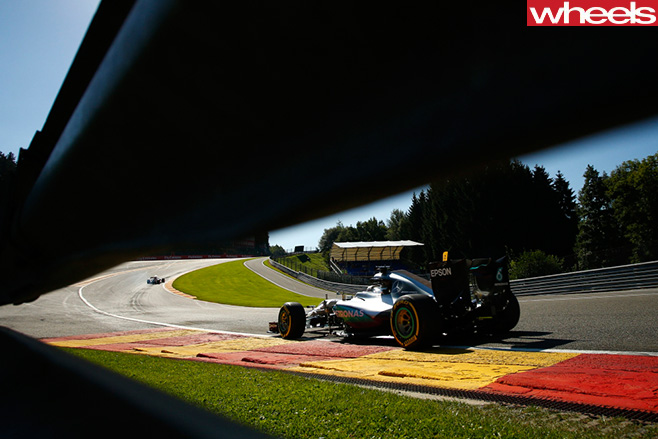
Verstappen’s eventful race didn’t get a whole lot better. In front of a huge – some say record – crowd that turned out in the rare Belgian sunshine to support F1’s latest wunderkind, the son of a Belgian mum and Dutch dad, he could only manage 11th.
His driving attracted criticism from Raikkonen who suggested he’ll have a massive crash unless he changes his behaviour. Mercedes boss Toto Wolff suggested Verstappen is “refreshing but dangerous”. Certainly, he can be very fast, but occasionally impetuous and erratic. We saw it at Monaco, and now Spa.
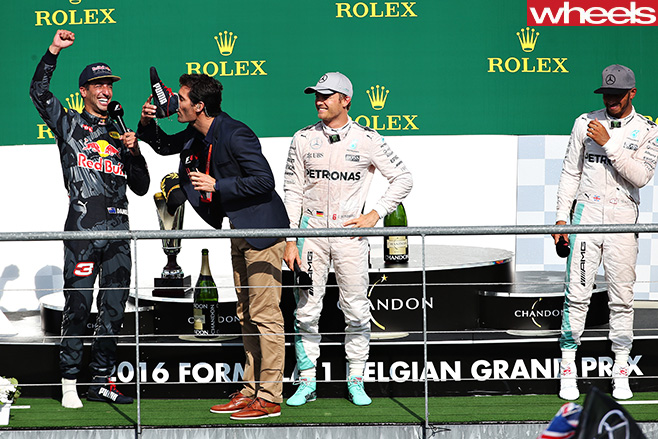
Formula One does expose itself to ridicule occasionally, and so it did on Saturday when Lewis Hamilton incurred a 60-grid spot penalty (in a field of 22 cars) after fitting three new power units and other key components over the weekend.
The reality is that Hamilton started from the back row.
But how silly are these sanctions? Imposing grid penalties for replacing power units was introduced in a bid to cut costs. In seasons of old, teams would be fitting new engines almost daily sometimes. Now the limit is five per season after which the drivers face penalties. There is no carry-over for big penalties like Hamilton’s 60-grid spots, so going to the back of the grid (or pit lane) for one race is as much as can be imposed. The slate is wiped for the next grand prix.
But we ask again; why do the drivers have to wear the penalties for a team’s technical weaknesses? Ludicrous.
Whincup and van Gisbergen share spoils at SMP
Red Bull Racing steamroller dominates with two one-twos…
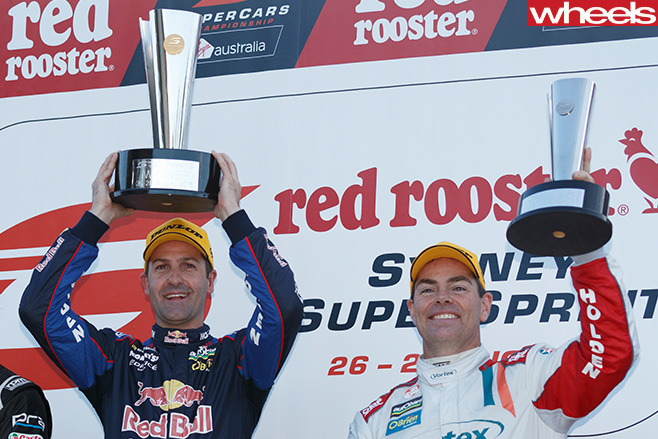
But Jamie Whincup sullied what would have been a dream outcome by denying his Triple Eight team-mate victory in the milestone outing, the veteran having to settle for a fine second place.
It was a weekend of dominance for the Triple Eight trio, Shane van Gisbergen edging Whincup in an epic duel in Saturday’s sprint, before the six-times champ (and his pit-crew) combined brilliantly the following day to land his 100th Supercars victory.
A pair of Triple Eight one-twos in Sydney tells the tale of breathtaking ascendancy in a category where every car is as close to equal as technically possible.
Whincup joins Lowndes (105 wins) as the only drivers to have reached triple figure race successes.
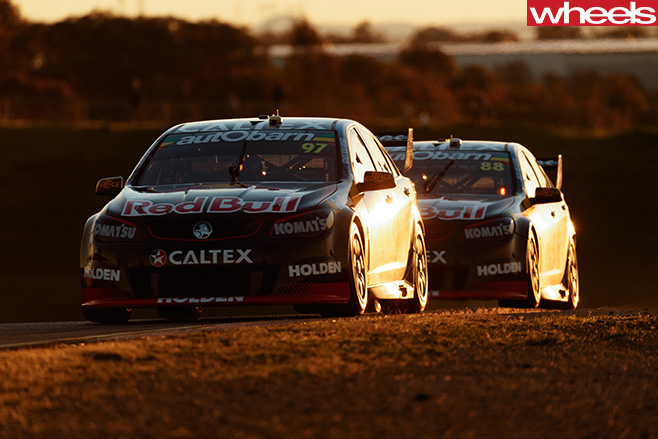
At the second round of compulsory stops, the Whincup and Lowndess entered pitlane bumper to bumper with Lowndes ahead, but the positions were reversed – just – when they exited. And track position means so much when the classy guys are in combat. They rarely make mistakes.
Whincup, who started third, finished 2.58sec ahead of the TeamVortex Commodore. Mostert was third.
“I would be lying if I said there wasn’t a sense of relief having secured my 100th Supercars win,” Whincup said later. “It’s an honour to join the likes of my team-mate Craig Lowndes with this milestone. The feeling of winning never gets old, it definitely drives me. There are a lot of people who represent the 100 wins and I’m grateful to all of them.”
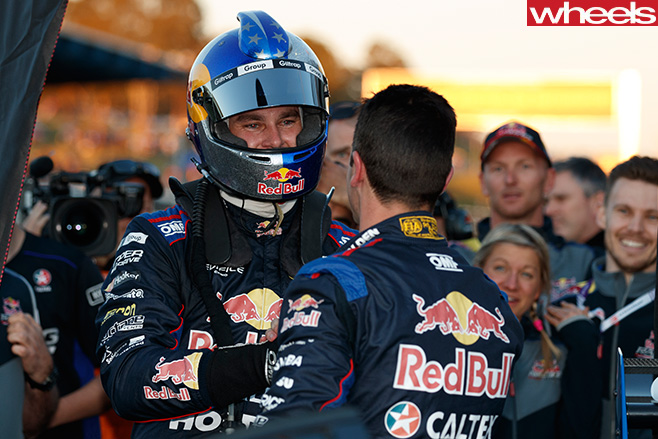
Over the years, the Sydney circuit has had its critics, but it can produce some outstanding racing. Both Supercars events over the weekend were stunners, with some frantic pack racing right through the field.
Saturday’s 120km sprint was one for the memory bank with van Gisbergen and Whincup in Red Bull Racing Commodores duking it out over the concluding stages but never dipping into silliness. Van Gisbergen narrowly prevailed, withstanding unrelenting pressure and probing from the aggressive Whincup.
Holden Racing Team’s James Courtney completed the Saturday podium in a triumphant return to the circuit where he was last year injured in a freak helicopter incident.
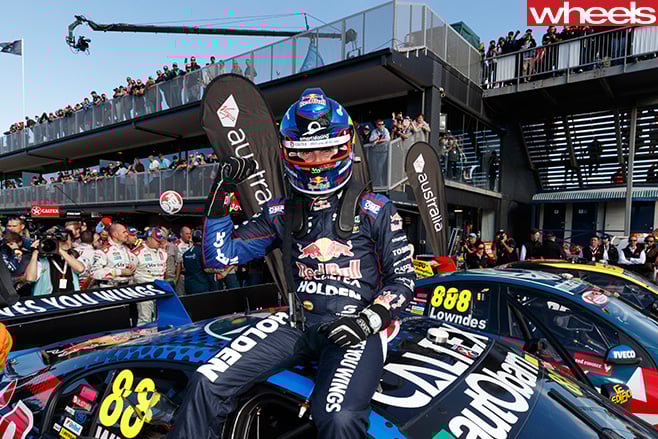
His Prodrive Ford team-mate and defending champion Mark Winterbottom had a forgettable weekend in his home city, placing 11th on Saturday and, after a puncture during Sunday’s race, 14th.
Winterbottom can see his chances of retaining the #1 slipping away, acknowledging that there are currently three drivers right in the title fight – and he’s not one of them.
Those three, lest anyone forget, are all in the T8 camp. “Now we’ll have all of our focus on the start of the endurance season,” declared van Gisbergen, who is right in the title fight, sitting in second and 137 points adrift of Whincup. Coming up are the crucial enduros. “We’ve got testing in a week’s time so it will be great to get my co-driver Alex Premat in the car and up to speed so we can both give it a good crack at Sandown.”
Miedeckes father and son win emotional Sydney Motorsport Park 101
The family that plays together wins together in endurance championship.
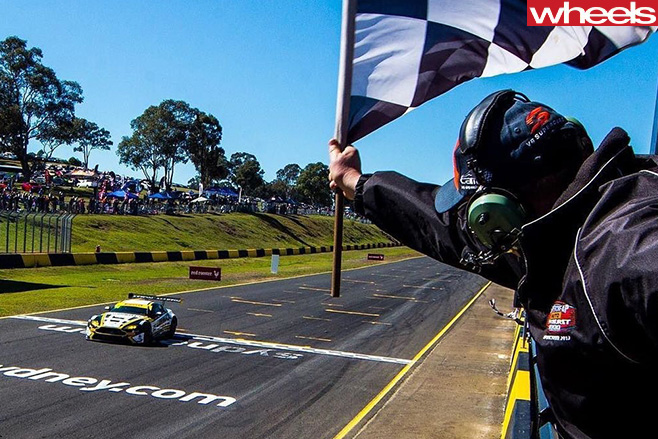
The small family team, which operates with help from Matt Stone Racing, overcame set-up dramas with its Aston Martin Vantage V12 GT3 to clear out from a hot field.
“We’re a family team and we just love it,” said George Miedecke. “We only got the team together six months ago and this is just good!”
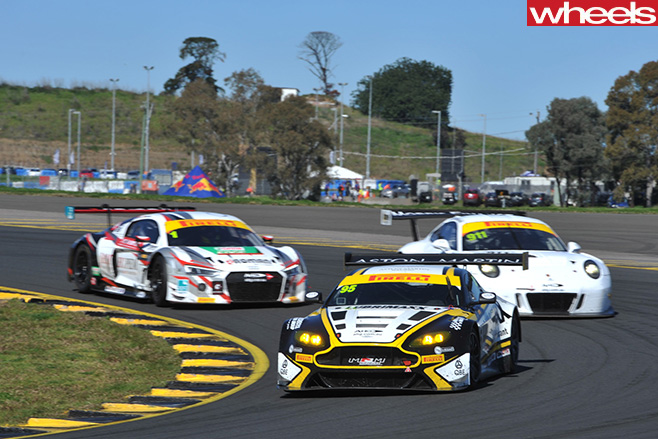
After starting from the second row, George Miedecke moved into second place on the opening lap and shadowed early race leader John Martin until the first round of stops.
It was a perfect start, which left the Miedecke Motor Group entry in the race lead with Andrew Miedecke behind the wheel once the first pit sequence was completed.
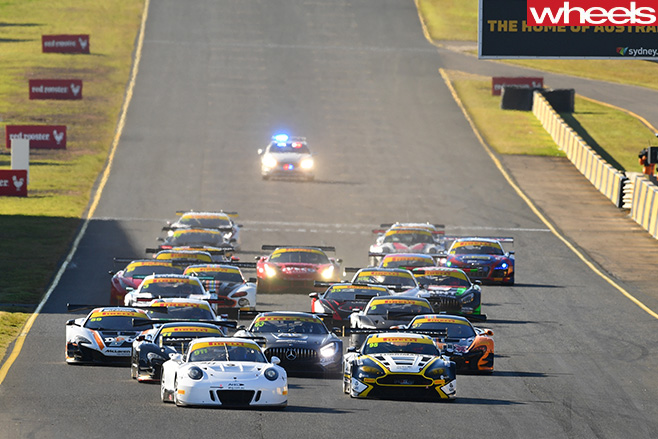
Padayachee had stepped into the Porsche at the first stop, going on to deliver a stunning 46-lap stint to chase down race leader Miedecke.
John Martin, who earlier took pole in the Walkinshaw GT3 car, claimed a great second place with Padayachee.
Third place went to the GT Motorsport Audi R8 LMS of Greg Taylor and Nathan Antunes, the pair working forward during the 101-lap encounter to head championship leaders Grant Denyer and Nathan Morcom in the McLaren Melbourne 650S GT3.
The next event takes place at the newly extended Hampton Downs in New Zealand.
Steve Kinser walks off into the sunset
The king of sprintcars, a 20-times World of Outlaws champion, has retired.
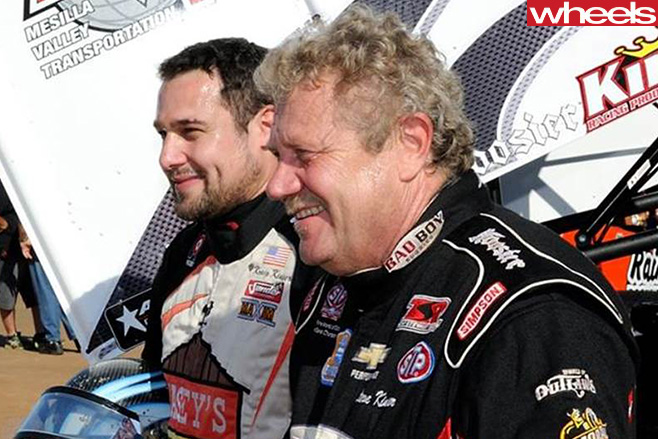
The most successful sprintcar driver of all time is 62, but still caught many by surprise with his retirement announcement at Lebanon Valley Speedway in New York State.
Kinser’s record is remarkable for his accumulation of wins and titles, his astonishing longevity and his consistency.
In the toughest sprintcar competition on the planet, he scored 577 World of Outlaws feature race wins, 20 Outlaws crowns and 12 Knoxville Nationals titles. No-one else got close.
Mike Raymond, the standout Australian speedway promoter and motor sports commentator, remains unsure if we’ve seen the last of Kinser, a bloke who has a lot of trouble walking away.
Raymond brought Steve and his racing family to Australia three summers ago for what was to be his final tour down under. Typically he won the feature in his last appearance at Sydney Speedway at Granville. He then scaled back his schedule at home but was having difficulty quitting. He often stumbled on the R word.
“I hope Tuesday’s announcement is final because it will bring closure to a remarkable career by one of the finest racers ever to strap into a race car.”
The nomadic Kinser has been the superstar of American dirt racing for four decades. His idea of a holiday was to head to Australia and New Zealand in the off season for a barnstorming series of summer appearances.
Though sprintcars were his specialty, he showed his versatility with some NASCAR outings in 1995.
He was also chosen to compete in the International Race of Champions (IROC) Series, winning at Talladega in 1994.
In 1997, Indiana-born Kinser made his only start in the Indianapolis 100%, finishing 14th.
It was 1985 that saw the Group B arms race truly explode.
Money was no object. Audi tested for 14 days straight ahead of the 1985 San Remo rally, flying new parts in by private plane; on rallies service crews would follow the cars in helicopters, ready to tend these highly-strung thoroughbreds.
Speeds rose incredibly quickly and with it the strains on the crews. Unlike today’s sprints, rallies could consist of over 50 stages and run through the night. In a 150kW Ford Escort that’s a tough test, in a 400kW Group B supercar it stretched the crews beyond the limits of human endurance.
Combine this with the category’s immense popularity, resulting in hundreds of thousands of spectators lining the narrow stages, and the whole scenario was a powder keg waiting for a spark. The video below is a graphic illustration of what the drivers faced as they flew through crowds of “soft trees”.
On the 1985 Monte Carlo, Ari Vatanen crashed into the crowd, breaking a spectator’s leg and later that year Lancia driver Attilio Bettega was killed in Corsica in an accident in his 037, but the truly shocking event took place on the 1986 Rally of Portugal.
Local driver Joaquim Santos was forced to swerve around spectators in the road, losing control of his Ford RS200 and ploughing into the crowd, killing three and injuring more than thirty. All the factory teams withdrew from the event and Audi quit completely.
The final straw came two events later, again in Corsica, when Henri Toivonen and his co-driver Sergio Cresta were killed after their Lancia Delta S4 left the road and exploded. The FIA decreed that 1986 would be the final year of the Group B regulations.
Audi Quattro S1 E2 – 2.1-litre 5cyl turbo, 410kW, 1 win
The car that typified the wild excesses of Group B was ironically the least successful of all the ‘monsters’.
Audi threw everything at the S1 E2: the radiators were in the boot to counter the notoriously nose-heavy weight distribution, wings provided huge downforce, the 2.1-litre turbo five was wound up to 410kW, there were water-cooled brakes and even a dual-clutch gearbox towards the end of its life.
It was so fast that Walter Rohrl’s engineer refused to ride in it; with the PDK gearbox Audi recorded a 10.8sec quarter mile time. Despite its incredible firepower, though, it would capture just one win in San Remo in 1985.
Citroen BX 4TC – 2.1-litre 4cyl turbo, 330kW, best of 6th (1986 Sweden)
Citroen was a late arrival to the Group B party, making its debut at the 1986 Monte Carlo Rally. The BX 4TC featured Citroen’s unique hydropneumatic suspension, however it only appeared three times with a best of sixth place in Sweden.
Ford RS200 – 1.8-litre 4cyl turbo, 330kW, best of 3rd (1986 Sweden)
Ford’s RS200 also appeared late, though it tasted early success with third place on the 1986 Swedish rally in just its second outing. Sadly, Group B ended before the lighter, more powerful ‘Evolution’ model had a chance to hit the stages, however the car went on to be a staple of the European rallycross scene for many years.
Lancia Delta S4 – 1.8-litre 4cyl turbo & s/c, 310-380kW, 4 wins
It took Lancia a long time to introduce all-wheel drive, but the Delta S4 was arguably the ultimate expression of the Group B rules. It was made from exotic materials and had a radical twin-charged (turbo and supercharged) engine with enormous power that made a very sinister noise.
It was also notoriously tricky to drive. Lancia’s other drivers, Markku Alen and Miki Biasion, admitted that only Henri Toivonen could extract the car’s full potential, and Toivonen himself expressed the opinion on multiple occasions that the car was almost too much to handle.
MG Metro 6R4 – 3.0-litre V6, 300kW, best of 3rd (1985 Great Britain)
MG Rover bet that its flexible, reliable naturally-aspirated V6 engine would pay dividends when the complicated turbos broke down. It bet wrong, with engine reliability ironically being the Metro 6R4’s weakest link.
However, it made one of the best noises in the history of rallying, that V6 singing to 9000rpm, and would also go on to become a successful rallycross car, while the engine became the basis for the twin-turbo 3.5-litre V6 in the Jaguar XJ220.
Peugeot 205 T16 E2 – 1.8-litre 4cyl turbo, 380-410kW, 10 wins
The challengers from Audi and Lancia might have best embodied the lunacy of Group B, but it was Peugeot that took home all the trophies, the 205 T16 winning 16 of the 29 WRC events held since its introduction and capturing the 1985 and 1986 driver’s championships.
It wasn’t perfect; its strange weight distribution meant it didn’t like jumps and the E2 version introduced water-cooled dampers to keep the overworked suspension alive, but its light weight, reliability and relative driver-friendliness made it the car to have.
Toyota Celica Twin-Cam Turbo – 2.1-litre 4cyl turbo, 245-280kW, 6 wins
Unlike its competition, Toyota stuck with rear-wheel drive to the bitter end. Its Celica Twin-Cam Turbo lacked the outright pace of its high-tech rivals, but by concentrating on the African endurance events Toyota tasted plenty of Group B success.
The Celica first won on the Ivory Coast in 1983, a feat it repeated in 1985 and 1986, and also won three straight Safari rallies from 1984-86. With up to 280kW fed through only the rear wheels, it was also extremely spectacular, cornering in huge drifts.
