
Four wheel disc brakes and a headlight flasher . .. today’s Falcon GT is more than ever a grand tourer.
First published in the January 1974 issue of Wheels magazine, Australia’s best car mag since 1953.
EVEN ON THE VERY LAST mile of a 1200 mile test of the new Falcon XB GT we took great delight in flashing the headlights with the car’s new steering column stalk.
The astonishment that, here at last, was an all-Australian car with such a desirable device had gone, but the pleasure of knowing it was at finger tips distance from the steering wheel remained.
Now Ford Australia has shown the lead hopefully we can expect GMH, Chrysler and Leyland to follow suit.
European and Japanese manufacturers probably think it’s crazy to make such a big deal of what is, in engineering terms, really just a minor change, but for an Australian car it is a major breakthrough and should lead to stalk operation for not only headlight dipping/flashing and horn operation (as on the Falcons) but also for the wipers and washers.
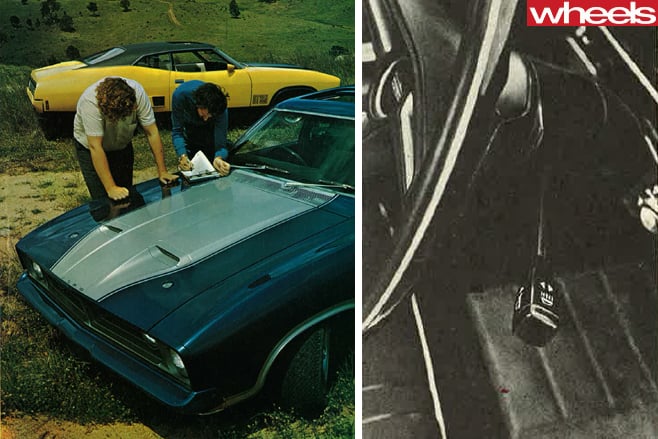
Stated simply these are the best brakes available on any car built in Australia and go close to being the equal of any braking system fitted on any road car on the world. Period.
Yes, we have tried them on the Landau but its soft, mushy suspension prevents the brakes showing up in the best light, although they are still far superior to the old disc/drum compromise.
But the GT with its firm suspension and the right front/rear braking balance is absolutely superb. Time and again we would come up behind a slow moving truck on the Hume Highway and have to haul down from high speed to crawl in a few seconds and never once did we experience anything but fade-free, straight-line stopping with not an inch of rubber left on the road to indicate any wheel lock-up.
Braking is progressive with plenty of feel in the pedal but it is the marvellous, sheer stopping power that has the driver reaching for new superlatives.
The four-wheel discs are standard only on the GT, but they are optional on any 351 2V powered Falcon (or Fairlane) for an extra $85 and it seems certain they will ultimately be offered across the board once production is able to cope with the necessary volume. It might take a few years but it will happen.
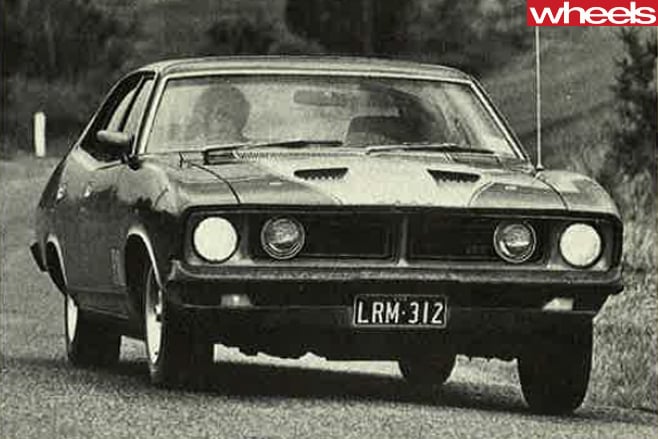
Tooling up for the four-wheel discs, and even the headlight flasher, must have cost Ford plenty but now it has set up the facilities in Australia we can only hope the other manufacturers take advantage of them, even if it means buying components (or paying part of the tooling costs) from the opposition.
.Although it is these two items which really grabbed us about the XB there have been plenty of other changes under the skin, designed to refine and improve the quality and reliability of the cars.
All told Ford claims to have made 2056 engineering changes from Car One, Ford XA Falcon, to Car One, XB.
Of course many of these are minor and involve the changing of a washer or nut but some are important in the way the car behaves on the road and in its long-term performance.
In fact the size of the changes made by Ford caught the rest of the industry unawares. They expected a minor cosmetic face-lift with few other changes, rather as Chrysler achieved with the VJ Valiants.
To find out how the changes affected the new cars the editor of WHEELS and the editor of our sister publication, SPORTS CAR WORLD, arranged to drive two very different Falcon GTs from Melbourne to Sydney. One, a Hardtop, had automatic transmission and power steering while the other, a sedan, was manual with manual steering plus air conditioning.
Set-up as our test car was, the Hardtop was the easier of the two to drive at slow speeds. The direct, variable ratio power steering was light (too light we later discovered for precise high speed driving) which made parking and driving at town speeds simple. By comparison, the sedan with manual steering required plenty of muscle and was unacceptably heavy at low speeds. It was fine over 40 mph but below that had the driver working hard.
Steering loads build up quickly through corners and unless the GT is booted hard through bends with large steering wheel movements it has the driver steadily applying steering lock, inch by inch, to combat the inherent understeer, rather than getting through to the extremes of the understeer in one large bite at the wheel.
Initially you do feel it understeers too much but by booting the car around and getting the power on early in a corner it is a simple matter to reduce it to a level where the driver is hardly aware of its existence. It’s all a matter of technique.
With the power steering and its variable ratio it takes longer to build up confidence in the car and this is compounded with the automatic transmission. Where in the manual car it is possible to go down to second or third gear (very quickly, we should add, with the much improved gear change) to maximise the available power and get the tail squatting down under power through the corner, the auto has less power anyway and doesn’t allow the same fine control over the engine.
Ideally the best compromise set-up would be the power steering but with a much greater built-in resistance at the steering wheel, as on the original one-off Falcon GT Superbird show car. On this GT the steering rim effort had been raised from four pounds to eight and given greatly increased feel and sensitivity, two things which are missing from the standard power system.
When we asked Ford engineers about this we got only non-committal answers. But reading between the lines we gather the marketing people won out in their efforts to retain a super light steering, presumably for all the old ladies who drive GTs! It’s a pity, though, that the other system couldn’t have been offered as an option.
Ford drums the only changes to the suspension involve alterations in the front suspension bushes designed to give a more progressive rate of compression. This, together with the new friction disc collapsible steering column, which replaces the old convoluted tube column, reduces the shocks which were passed up through the steering to the driver on the XA, particularly when it was fitted with radial ply tyres.
Plenty of rough road testing confirmed Ford’s claims that the steering is now virtually vibration free, and that both dust and water sealing had been improved. But the same can’t be said of the ride in poor conditions. The back end, with its old fashioned semi-elliptic leaf springs, still bounced around and although the Falcon’s tendency to thump across potholes has been reduced (particularly the noise part of it) the ride isn’t quiet on coarse or rough bitumen surfaces. Not on the GTs we tested anyway.
However, for high speed cruising there is something very reassuring about the way the manual GT gets across the feeling that with its fat rubber and tight, ride it is securely placed on the road.
This was emphasised on our test cars because the manual was the sedan and the automatic the Hardtop. Inherently, the four-door is a tighter car and it feels that way. There were more rattles and sizzles from the dashboard of the Hardtop, the doors didn’t close with the same solid thunk and the car generally wasn’t as solid in the body.
But the biggest drawback to the Hardtop is its lack of visibility. The windscreen is two inches shallower than the sedan and to provide at least some head room the seats have been lowered.
This means the driver, unless he is a six foot six inch giant, has great difficulty in doing anything but peering across that vast bonnet and not down on to it. And if he is a giant his head will be firmly wedged against the roof if the car has a sunroof. The factory fitted sunroof is a pleasant option and can be used at speeds up to about 60 mph without causing any discomfort, but it takes away about half an inch of valuable headroom.
Inertia reel seat belts, now standard on all Falcons, don’t hold the driver securely in place although they are simple to use. This means the shorter driver frequently finds his head in contact with the roof lining over bumpy stretches of road.
On the sedan it’s not quite as bad. The front buckets are about an inch and a half higher and this makes all the difference to the driver feeling he is not encased in a massive metal structure with small slits for windows.
The Hardtop’s visibility problems aren’t confined to the front, of course. There is still that ridiculous rear pillar and upward sweep of the body which reduces visibility to an alarming degree. This, plus the lack of rear seat headroom, leg room and knee room gives the sedan such a head start over the Hard top we would consider the two-door only if we never carried more than one passenger – and even then the lower driving position would put us off.
Ford’s bucket seats are excellent with plenty of lateral and thigh support and tall, high backs. Only problem is a slight lack of lumbar support in the squab but this seems to worry only a minority of drivers.
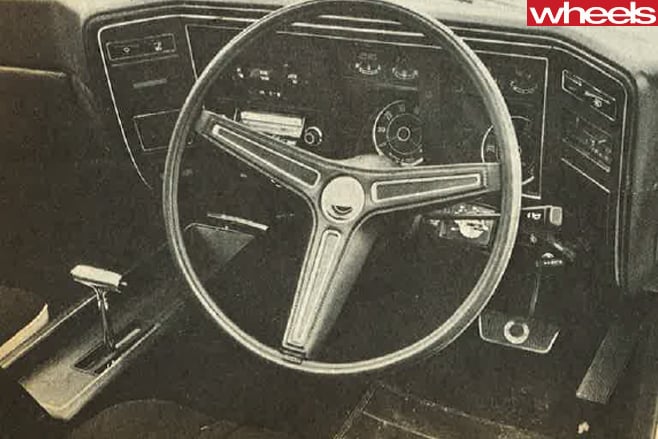
The dashboard remains unchanged apart from the speedo getting metric figures as well as miles per hour but distance is still measured in miles, although both Chrysler and Holden have switched to kilometres.
The general layout is comfortable and the driving position excellent … on the sedan. It is all straight forward and allows the driver to relax over a long distance. Unlike the Landau/LTD which have a foot-operated parking brake in conjunction with the rear discs the GT retains the old, under dash pull-out system, presumably because to use the Landau idea would mean four pedals across the floor on the manual models.
While Ford has been providing a touch of European influence in the braking and switchgear departments with the GT it has also tried to provide greater flexibility with its high performance 351 GT engines, but at the expense of ultimate performance at the top end.
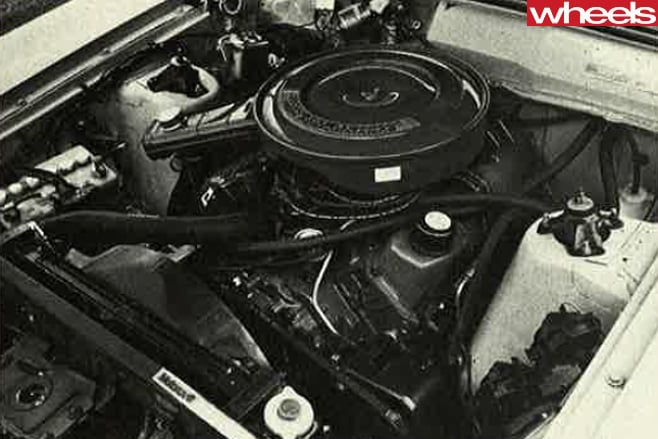
The automatic GTs are using a new Australian built 351 4V engine. Simply stated this is the old GT engine but with the 351 2V engine cylinder heads which have smaller ports. For the time being the manual GTs will continue to use the imported engines although in a couple of months they too will switch.
If you can do without’ the last little ounce of performance it will be a change worth making. Our manual test car was decidedly lumpy when we picked it up and wasn’t at all happy running through Victoria’s country towns at the 35 mph speed limit in top gear. In fact, it was happiest in second at that speed. However, once across the border into NSW, where there is no overall speed limit (Victoria’s limit is 70 mph although we have yet to see any sign on the Hume which says so) and the car could be run hard, the engine
Check out Wheels Archive online now for other great Ford Falcon features and more from decades past!
Simply log in here using your existing MagShop account or create a FREE account and select this article from the homepage.
Don’t have a MagShop account?

Have a MagShop account?

TELL ME ABOUT THIS CAR
The new Infiniti Q30 is arguably the most important car Infiniti will launch this year. It’s an all-new premium hatchback that boasts an eye-catching design, a nicely refined cabin and high-riding suspension designed to deliver a pillowy ride and higher seating position. It is priced from $38,900 and shares much of its underpinnings, drivetrain and interior with the Mercedes-Benz A-Class, GLA and CLA.
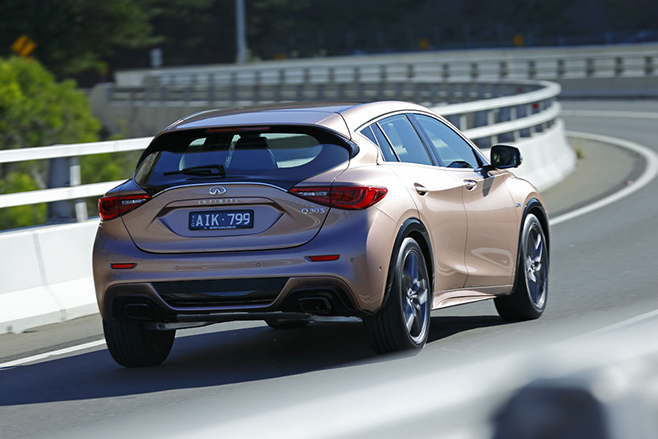
STRENGTHS
- As a late arrival to an already crowded segment the Q30’s most obvious strength is its eye-catching exterior styling. While it mightn’t be to everyone’s taste, the Q30’s swoopy look is edgier and more dynamic than many of its rivals which helps it stand out from the pack.
- It’s impressively quiet too. Inside the Q30 shares much of its basic cabin design, dials and switchgear with the Mercedes-Benz A-Class, which is no bad thing, and Infiniti has worked hard to reduce unwanted road and wind noise.
- Engine wise, the standouts are the two petrol options. Both the 1.6-litre and 2.0-litre turbo four cylinder engines are smooth, quiet and deliver decent economy. If we had to choose, we’d take the more powerful 2.0-litre unit.
- It’s a decent handler. Admittedly, the Q30 is no sports car, but its steering is nicely judged, there’s a good amount of grip and body roll is kept in check during hard cornering.
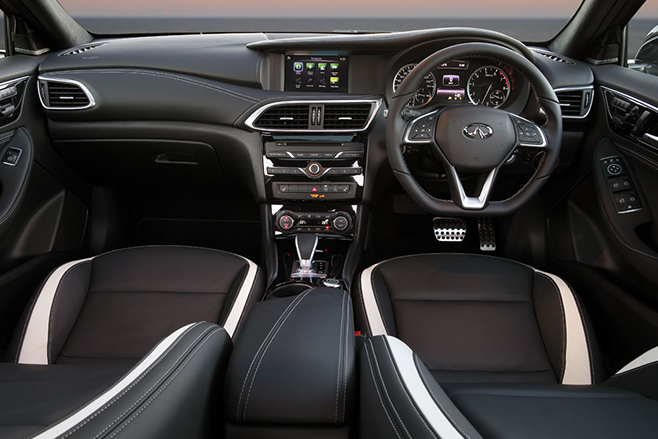
WEAKNESSES
- While the Q30’s elevated suspension is a strength compared to its conventional hatchback rivals thanks to longer suspension travel and greater compliance, it’s let down by its low speed ride. At slow speed, the Q30’s suspension is jittery and doesn’t deliver the suppleness you’d expect.
- There’s no reverse camera available in entry-level or mid-spec variants. Only the most expensive, top-spec Sport Premium variant is fitted with a reverse camera, which is a glaring oversight given the Q30’s narrow glasshouse and poor rear visibility.
- Of the three engines offered on the Q30, the 2.1-litre diesel is the weakest. It’s noisy and lacks urgency which can make for sluggish getaways in city traffic and when overtaking.
Given its shared underpinnings, the Mercedes-Benz GLA is an obvious rival, though it carries a higher price tag. You should also consider the Mini Countryman and the Mazda CX-3, the latter’s strength resting in its broad model range and cheaper price point.
When it comes to performance stats, nothing helps frame a car’s power and traction quite as succinctly as its 0-100km/h time.
Unlike Nurburgring lap times, it’s a metric that nearly every motorist can comprehend. If you’ve driven on a highway you’ll know what 100km/h feels like. If you’ve experienced peak hour in Sydney or Melbourne you’ll know what 0km/h feels like. The difference is stark.
And these five cars help illustrate just how pronounced the differential between zero and 100 kilometres per hour is, with all pouncing to triple-digit speed in well under 3.5 seconds. We may miss out on the truly mind-bending hypercars that are available overseas, but as this list shows there are still plenty of road-legal rockets on the market in Australia.
In the interests of consistency we’ve used the manufacturer’s claimed time for the currently available model, and we’re only dealing with cars you can actually drive in Australia. Don’t worry, we’ll deal with the forbidden fruit further down the page.
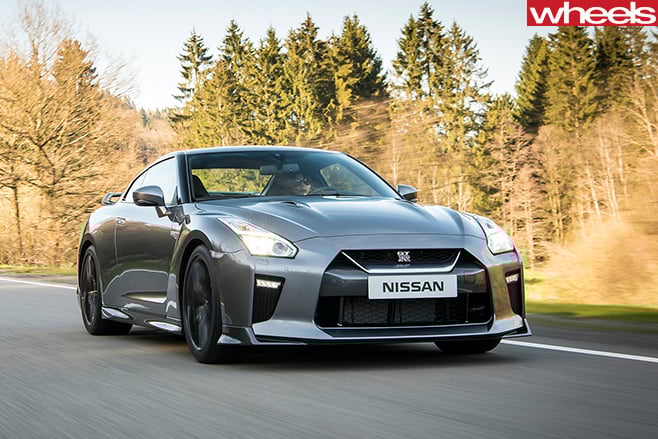
1. Nissan GT-R – 2.7 seconds
Nissan has progressively ratcheted down the GT-R’s 0-100km/h stat since it first launched in 2007 with a 3.2-second sprint time, with the current model taking it down to a hypercar-rivalling 2.7 seconds.
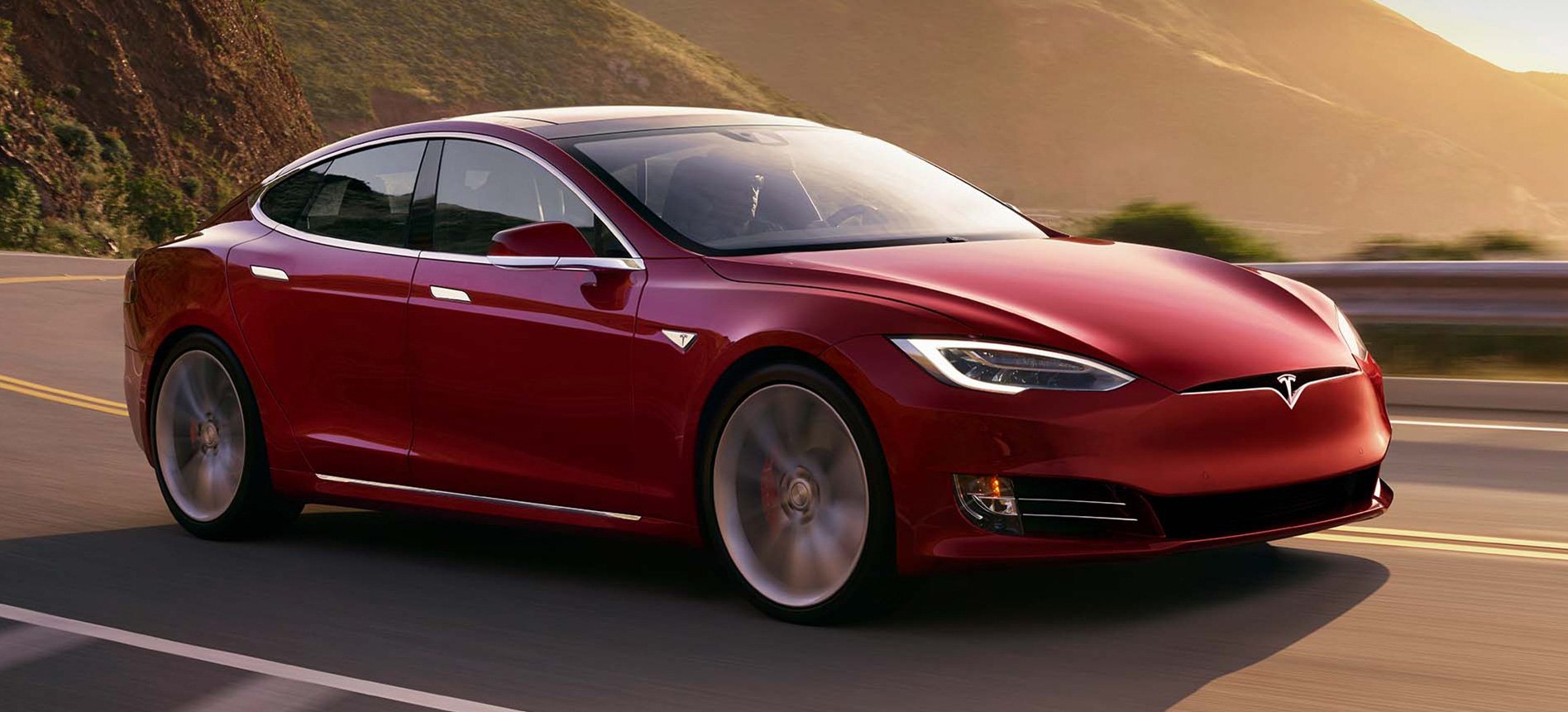
2. Tesla Model S P100D – 2.7 seconds
Tesla’s mega-quick Model S P100D was only announced this week, but the order book for what Tesla describes as “the world’s quickest production car” (Nissan may dispute that) is already open for Australia.
3. Lamborghini Aventador LP750-4 Superveloce – 2.8 seconds
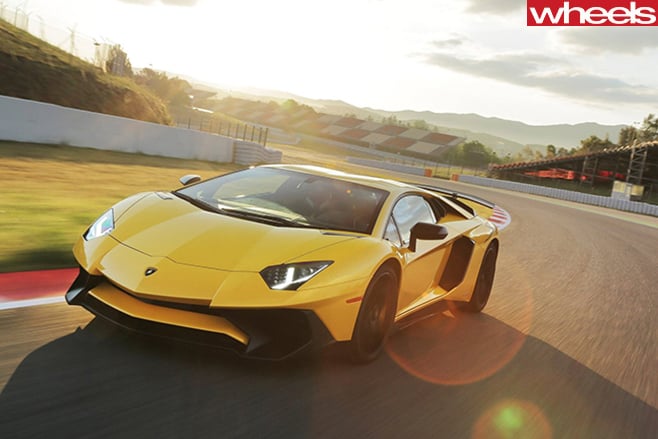
4. Porsche 911 Turbo S – 2.9 seconds
Order your Porsche 911 Turbo S with the optional Sport Chrono package, and sub-three second 0-100km/h runs are yours for the taking.
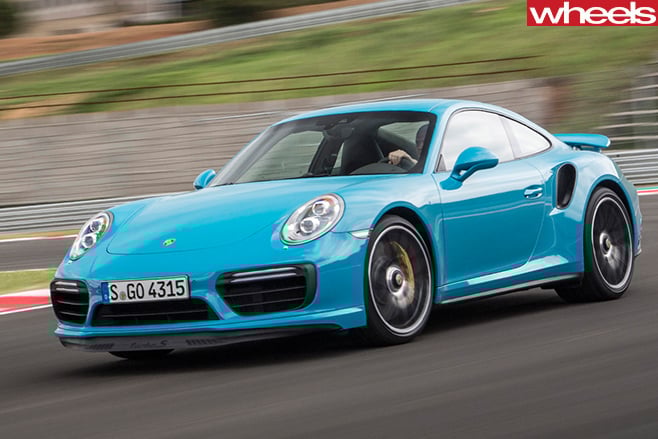
You know what else is cool about the 427kW, 700Nm 911 Turbo S? In the 9.9 seconds it takes a diesel Holden Malibu to hit 100km/h from a standing start, the Turbo S will be travelling at 200km/h. That’s quick.
5. McLaren 650S – 3.0 seconds
Whether in hardtop Coupe or roofless Spider form, McLaren’s 650S supercar will smash its way to 100km/h in three seconds flat.
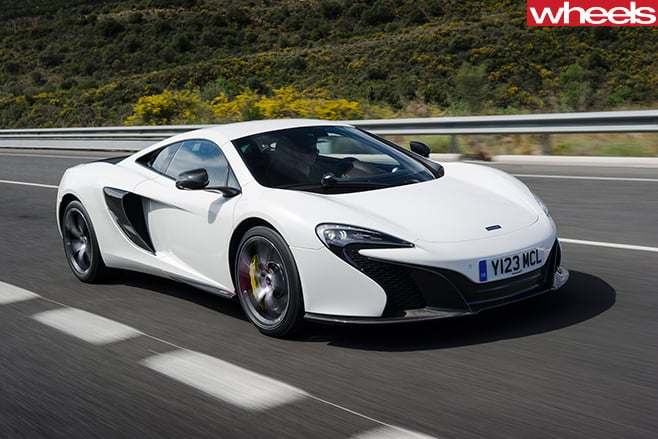
Why isn’t it faster? Unlike every other car in this top five, the McLaren is at a traction disadvantage thanks to its rear-drive configuration.
The rest of the world
Being a right-hand drive backwater with a funny attitude to the idea of cars going fast, Australia tends to miss out on some of the wilder cars available in America and Europe. The likes of the Tesla Model S and the Nissan GT-R may be damn quick, but there’s faster machinery out there…
1. Ariel Atom V8
Once upon a time you could buy a piece of scaffolding powered by a V8 made from two Suzuki Hayabusa engines. How fast? A bonkers 2.3 seconds to 100km/h, and that’s without any funky dual-clutch gearbox or all-wheel drive malarkey.
And yes, you could put numberplates on it.
2. Bugatti Chiron
Bugatti has only just whipped the covers off the Bugatti Chiron hypercar, but the numbers revealed for the boutique automaker’s latest uber-luxe, uber-fast two-door has us rubbing our eyes with bewilderment.
A quad-turbo W16 making 1103kW of power and 1600Nm of torque flings the Chiron to 100km/h in roughly 2.4 seconds, a tremendous achievement considering it’s just a tenth of a second behind the featherweight Atom V8 yet can accommodate two people in peerless luxury.
3. Porsche 918 Spyder
The 918 Spyder proves that hybrids don’t have to be dull commuter appliances; melding a 4.6 litre V8 with two electric motors to create a 652kW supercar capable of hitting 100km/h from rest in just 2.6 seconds.
Bloody quick, but being left-hook only means it’s verboten for Australian roads.
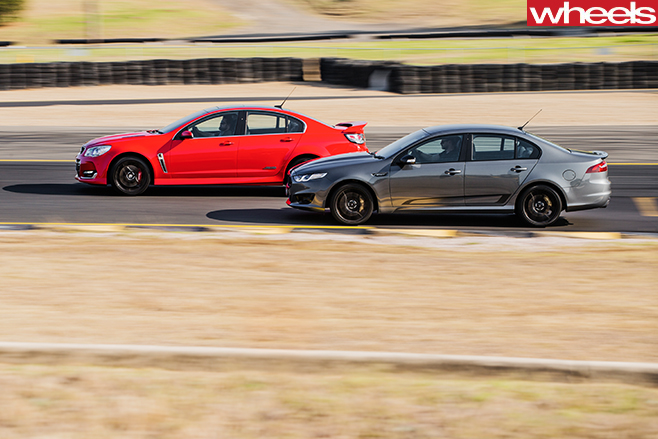
Two V8 Supercar legends bury the hatchet and face off in the final Holden vs Ford battle. But which is faster at full noise around Sydney Motorsport Park? The Commodore SS-V Redline with Skaife at the wheel, or Ingall in the XR8 Sprint? Place your bets.
THE final round of the 2003 V8 Supercar Championship is one of the most notorious events in Australian motorsport history. While it should be remembered for Marcos Ambrose winning his first title in a commanding fashion, the Eastern Creek (now Sydney Motorsport Park) round is best known for when Russell Ingall and Mark Skaife came to blows in incredible fashion. The on-track meltdown, notoriously dubbed as the ‘Shriek at the Creek’, is one of the most spectacular displays of a driver rivalry exploding beyond repair. It was so intense that Skaife and Ingall refused to speak for over a decade.
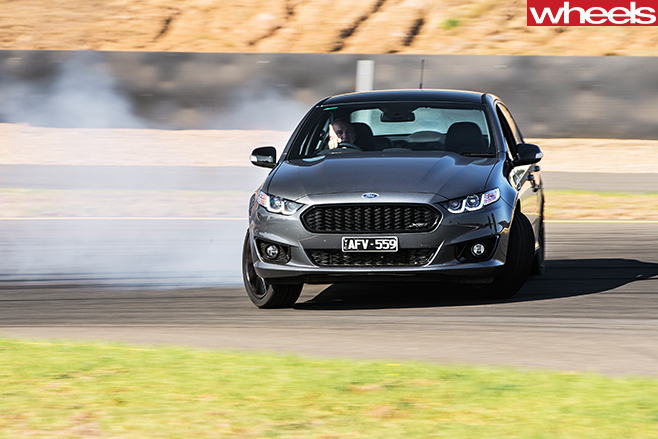
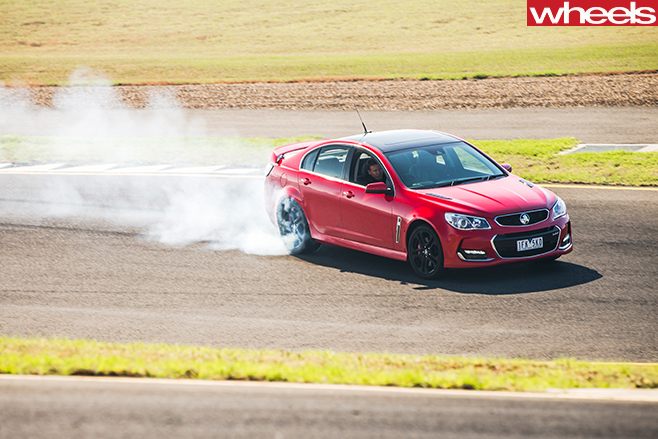
The idea is simple: Stick Skaife in the Commodore, Ingall in the Falcon, let them loose and see who records the fastest time. With the timed laps complete, an expression session followed where both drivers put their drifting skills to the test.
THE Abarth 124 Spider roadster may only be a month away from its Australian launch, but there’s already excitement about it being joined by a rumoured coupe version.
British motoring magazine Autocar reckons a turbocharged Fiat 124 Coupe is believed to be under development and could be revealed as early as next year.
The Fiat 124 Spider is heavily based on the Mazda MX-5. While Mazda’s version of the bang-for-bucks two-seater is getting a hard top version with a retractable targa roof, the word on the street is that the Fiat will have a bespoke solid roofline.
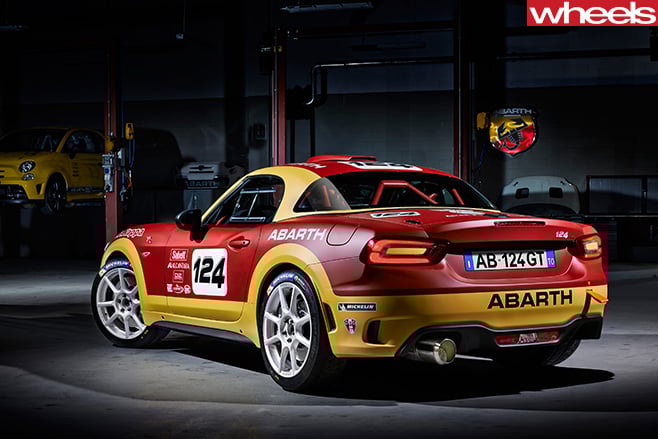
On one hand, a decision to separate the Fiat 124 from the Mazda MX-5 would create greater space between the two models in the minds of potential buyers, and allow Fiat to further push its own performance credentials.
However, a coupe conversion presents a significant engineering undertaking, and there are doubts that Fiat would make such an investment to go it alone without Mazda’s involvement.
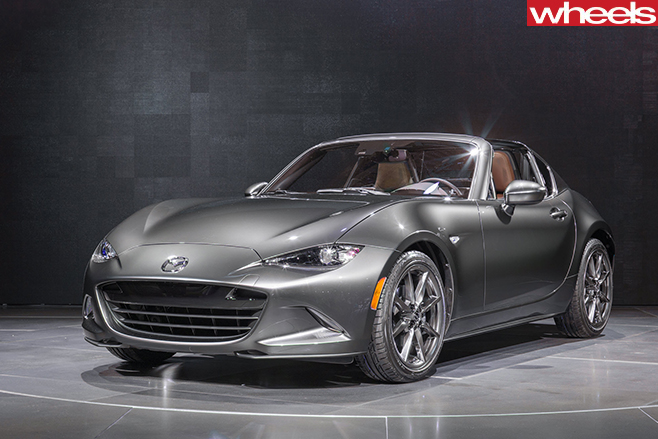
For its part, FCA Australia says it knows nothing about plans to make a coupe.
“We have heard nothing about this car and right now, we’re focusing on launching the Abarth 124 Spider here in Australia next month”, FCA spokeperson Lucy McLellan told Wheels.
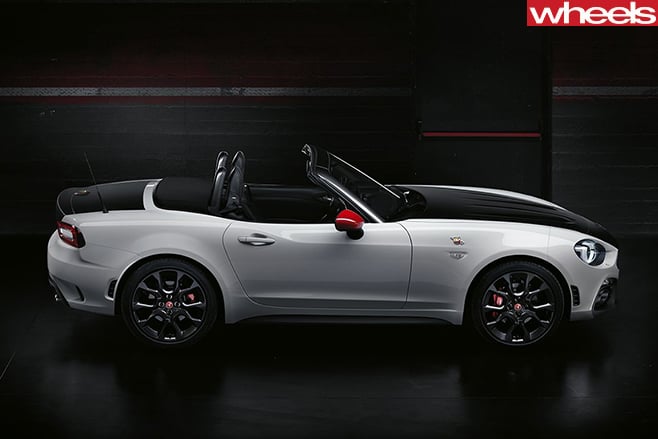
“Whenever anything becomes available for the Australian market, we look very carefully at it, but in this instance we haven’t heard anything so I can’t comment,” says McLellan.
UP UNTIL now, dash cams have been useful for two things – collecting evidence in the event your car is involved in an accident, or, if you’re in Russia, as a shortcut to YouTube fame.
But that looks set to change, with several new feature-rich dash cam models sporting advanced safety features that still aren’t standard equipment on many new cars.
Navman is one brand that’s dipping its toes into the up-spec dash cam space, with higher-end models in its Mivue dash cam range using high-resolution wide-angle cameras and more powerful software to not only film the road, sense when the car – and its occupants – might be in danger..
This means any car with a cigarette lighter socket can gain some great active safety features that have your back if you lose concentration. These include:
1. LANE DEPARTURE WARNING
The dash cam tracks the road lines ahead of you and senses when you start moving too close or going over them, which activates a warning tone in case you’ve nodded off.
2. FRONT COLLISION ALERT
The camera senses when a vehicle or object in front of you is on a collision course and issues an audible alert to prompt you to stop or slow down. While it doesn’t stop the car itself, the extra warning it can give may make the difference between a bit of tyre squeal or a serious prang.
3. DRIVER FATIGUE ALERT
Like the Lane Departure warning this senses when your vehicle starts wandering left and right in an erratic fashion and alerts you in case this is a result of being drowsy behind the wheel.
4. FRONT DEPARTURE WARNING
Not so much a collision avoidance system but it could help prevent road rage by politely telling you that the car in front has driven off in front of you when you’re sitting at an intersection – helping you avoid the wrath of the driver behind you.
Those features are in addition to the usual dash cam capabilities, with shock sensors automatically saving footage and recording the location and time of an impact. Models like the Navman can also record more GPS-derived information such as direction of travel and speed.
You can also activate manual recording by pressing an emergency button which records to an SD card until you press the button again.
You can get advanced dash cam systems with the above features for around $300 which, even without the cameras and recording technology, is a small spend considering the level of safety tech it can add an older car.
Navman isn’t the only manufacturer to offer such systems either, with Finevu, Xiaomi and Kapture offering their own safety-enhanced dash cams as well.
While it won’t be the most exotic reveal on October 1 at the Paris Motor Show, the launch of the all-new Kia Rio has already sparked plenty of interest.
As is the norm before high-profile launches, Kia has teased the motoring world with a couple of sketches of its new hatch in the lead up to the launch.
The fourth generation of Kia’s popular light car will have straighter lines, a longer wheelbase and longer front overhang than its predecessor.
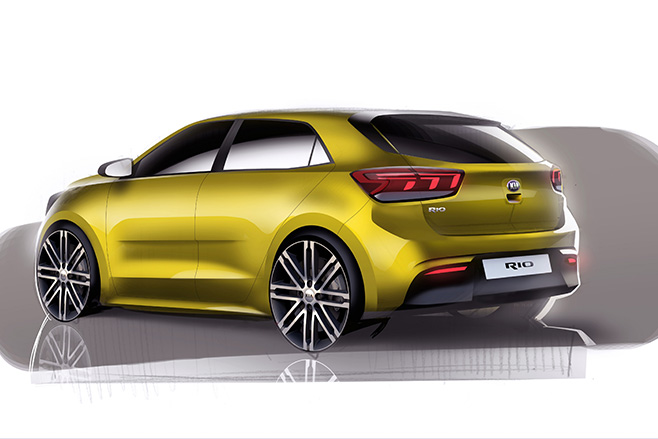
The distinctive “tiger grill” has been reshaped, giving it a smiley appearance, while the larger main grille looks a little meaner with outward pointing sides.
The renderings also suggest a more stocky appearance, a bit like its Kia Sportage SUV stablemate which makes us wonder if it will be the base for Kia’s expected assault on the compact-SUV segment next year.
The interior sketch is pretty vague and mostly shows the dashboard which looks more stylish and less cluttered with a decently sized touchscreen replacing the ageing red-LED display.
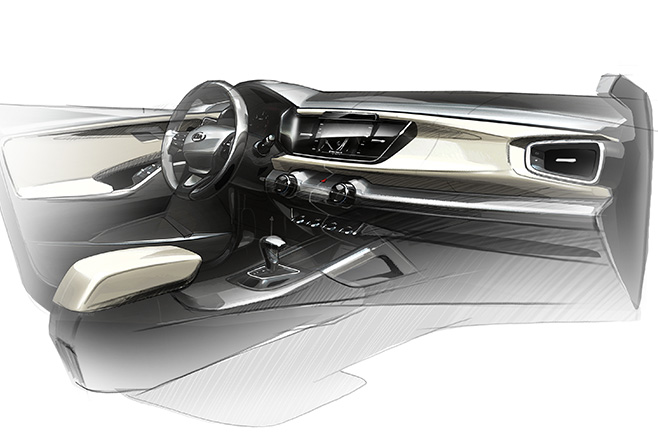
Kia says it will come with the latest connectivity features as well as “class-leading practicality and safety technology … and more assured and engaging ride and handling characteristics.”
The new exterior and interior styling was led by Kia’s design centres in Germany and California, in close collaboration with the company’s main design centre in Namyang, Korea.
The new Rio is being tuned for Australian conditions though there’s no further information about any changes under the bonnet or performance specs.
Globally, the Rio is Kia’s best-selling model, with more than 473,000 sold around the world in 2015. The next generation will enter production towards the end of 2016 and will be launched here in early 2017.
TELL ME ABOUT THIS CAR
Meet Nissan’s small SUV offering, the Qashqai. I know, weird name. Something to do with nomadic tribes from some far flung Iranian provinces. SUVs may have evolved from four-wheel drives, but the Qashqai only comes in front-wheel drive. The entry-level ST model, tested here, costs $28,490. It sports a 2.0-litre petrol engine with Continuously Variable Transmission. In six-speed manual guise it costs just $25,990.
STRENGTHS
- The base ST version is good value for a small SUV, priced at a competitive $28,490.
- It has a generous 430L boot.
- Despite the 1408kg weight, Nissan claims a lowfuel consumption of just 6.9L/100km. The reality, with a 110km mixture of city and highway driving, was closer to a thirsty 9.3L/100km.
- The Nissan Qashqai has well-planted suspension that handlesinner cityspeed bumps and potholes with aplomb.
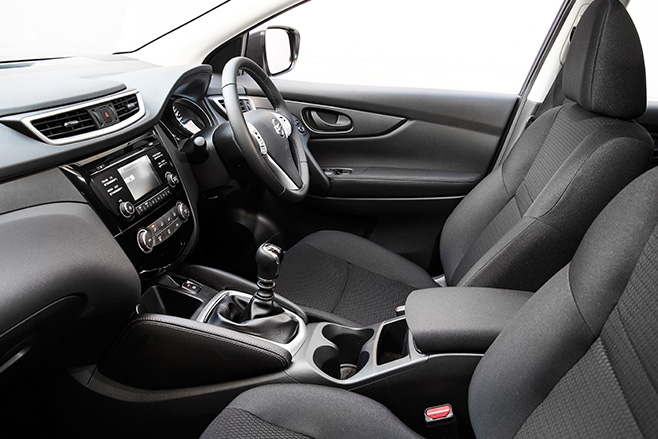
- The cabin is classy, comfortable and uncluttered.
- The ST comes equipped with reversing camera and simple-to-use cruise control.
- Its high-riding position ensures good visibility for all passengers. Plus you don’t have to make that undignified grunting noise when getting out of the car.
WEAKNESSES
- The ST is only offered in front-wheel drive, making it better suited to city driving than bashing the bush.
- The 5-inch display console comes with the basic CD player, MP3 capability, AM/FM Radio, and Aux. The connectivity, however, is confusing. It requires hooking up with NissanConnect which is unnecessarily cumbersome.
- The cloth trim is not ideal for messy kids.
- The base model misses some of the goodies found in the Ti, Ts and TL like panoramic sunroof, rain sensing wipers, automatic on/off headlights, leather trim and seven-inch colour touchscreen with satnav.
- Neither air vents nor adequate storage compartment are offered to rear passengers.
The small SUV market is a tough and competitive one. Mazda is impressing with its good looking Mazda CX-3 which also comes in all-wheel drive. The Mitsubishi ASX with its five year warranty and the roomier Honda HR-V are other pint-sized SUVs to consider.
We had big things in store for the Ford Everest as we navigated across mid-winter Melbourne at 4am one Sunday morning – witching hour.
Limp revellers whose finest hour it wasn’t loitered in gutters out the front of kebab joints and hailed every set of headlights – ours included – with gusto that suggested the night was still young.
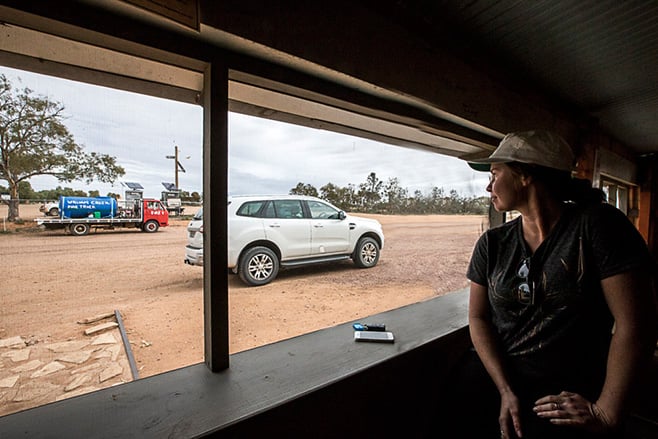
While the Everest tolerated the city streets with its disco dregs, you could almost hear it yearn for the open highway and the desert country beyond.
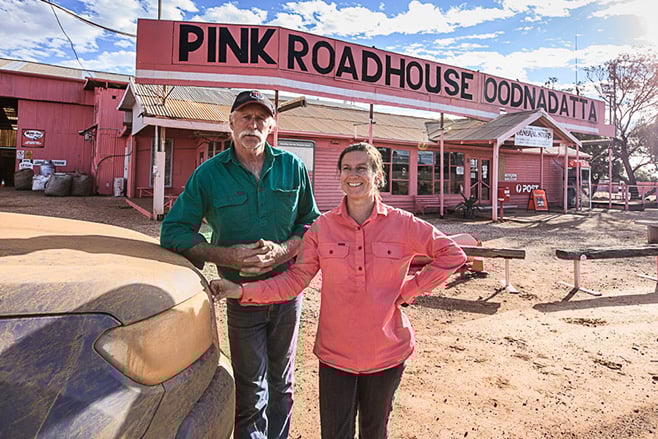
It would soon have plenty of both. Together with my good friend, Which Car photographer Ellen Dewar, we would traverse more than 5000km to the Red Centre and back via the infamous Oodnadatta Track through South Australia’s remote outback. A sort of Thelma and Louise-inspired sabbatical, if you will, for which we would need a versatile vehicle comfortable enough to see us through the many hours on the road. It also needed to be spacious enough for our swags, camping gear and an obscene amount of camera equipment, and capable enough off-road that we’d feel confident in the perilously isolated terrain we’d find ourselves in.

Enter the 2016 Ford Everest. Modelled off the company’s successful yet rough-and-ready Ford Ranger 4X4 ute, the Everest is the more refined wagon variant aimed at the family market and serious off-road adventurers alike.
CITY SLICKER
With true off-road capability and 3000kg towing capacity, the Everest is the gutsier alternative to an SUV, although it doesn’t deliver the same driving comfort on urban streets. There’s a noticeable diesel lag that will irritate gung-ho commuters at traffic lights.
Despite its considerable size, parking is manageable thanks to front and rear sensors and a reverse camera. Visibility is good all round, too – even for a shorty such as me – which instills confidence when handling such a big rig.
The Everest has a shorter wheelbase than the Ranger and also has electric power steering, meaning a better turning circle and easier maneuverability.
Of course, it still brings the challenges of a large car in the city, but it’s far less like driving a truck than its work-ready cousin. With a bit of practice, those unaccustomed to driving larger cars will quickly adjust and find the Everest tolerable around town.
THE OPEN ROAD
Highway driving is a pleasure in the Everest. It lopes along at a relaxed pace and has plenty of power up its sleeve when it comes to overtaking.
It’s assisted by radar cruise control and lane-keep assist, which assesses your position in the lane and your sway rate and will sternly inform you if you wander too close to your neighbour or if you need of a coffee break.
While this is akin to a public shaming if you have passengers, it’s an appreciated safety feature on long hauls such as ours. I won’t tell you who collected more ‘chimes’ on this front, Ellen would kill me.
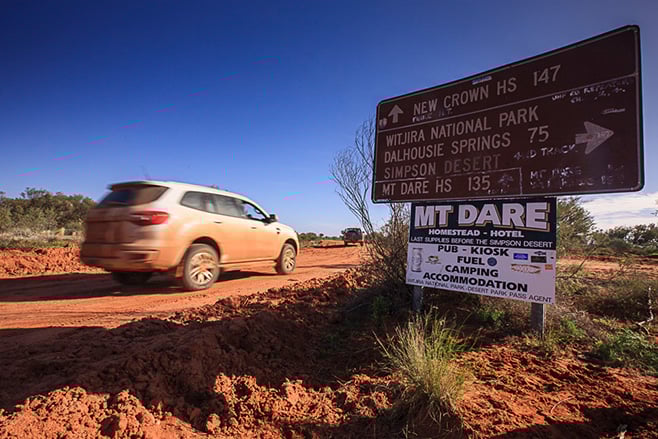
With seven air bags added to the safety features the Everest enjoys a five-star ANCAP rating, an important consideration for the family market.
INTERIOR DESIGN AND TECHNOLOGY
The interior design is efficient and tidy with an attractive dash, and is a step up from the Ranger’s utilitarian approach.
It has an 8-inch centre touch display with plenty of functionality, although this could be more intuitive as it’s a bit fiddly to navigate.
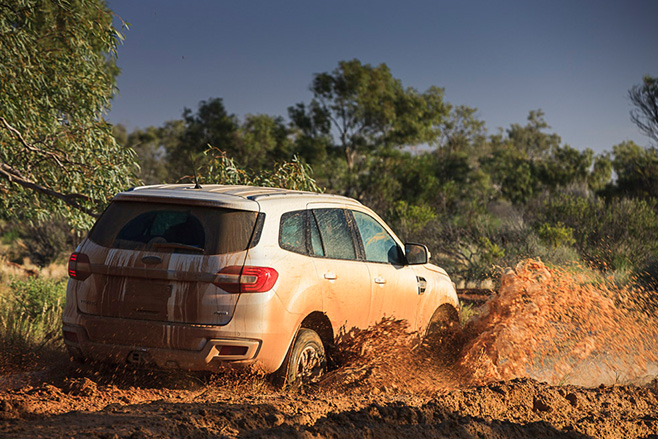
The digital instrumentation is modern and user-friendly, and overall the aesthetic at the helm is modern and sleek.
The Everest is fitted with an interior noise cancellation system which, like premium headphones, emits a counteractive ‘noise’ in the cabin to silence the whir of the road and the thrum of the diesel engine. The result is a wonderfully quiet ride overall; another tick for comfort on the Everest’s score sheet.
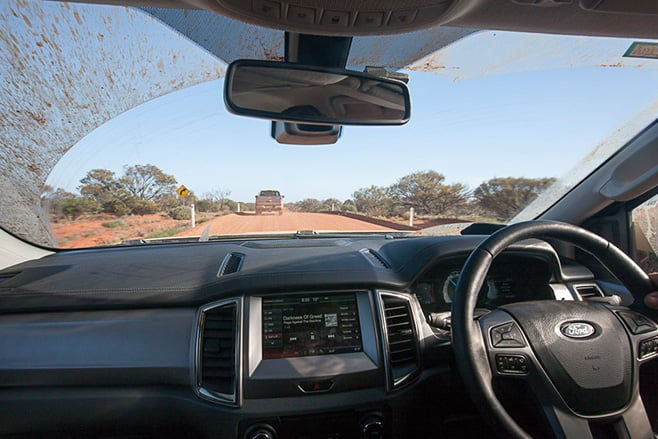
Something that’s far from quiet were the incessant alert chimes, which frankly had me longing for the days of old when cars wouldn’t dream of talking back. It seems there’s a chime for every occasion and like the little boy that cried wolf, I found myself tuning out to the vehicle’s monotonous pleas.
The seating arrangement is comfortable and versatile, catering for seven across three rows. The rear seats are suitable for children or adults for short trips, while all other seats are plush and spacious.
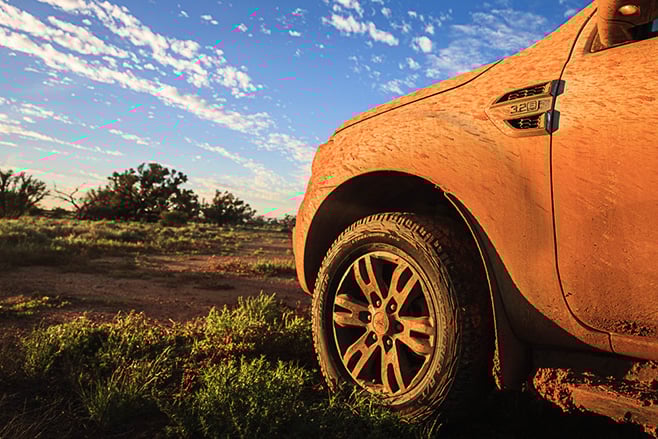
As a child who was dragged around the country in the second row of a dual cab ute I can authoritatively say, the kids will love you for life if you opt for the Everest over the Ranger.
Both the third and second row seats fold flat for a cavernous cargo area and a functional space to put a mattress if you’re so inclined. I did just that in the West Macdonald Ranges outside Alice Springs, where we’d set up camp on a stunning rocky escarpment with the hardest ground I’ve ever had the displeasure of attempting to sleep on. The protests of my various lady curves grew too loud to ignore somewhere around 3am, and I retreated to the rear of the Everest where I had plenty of space to sleep like a baby.
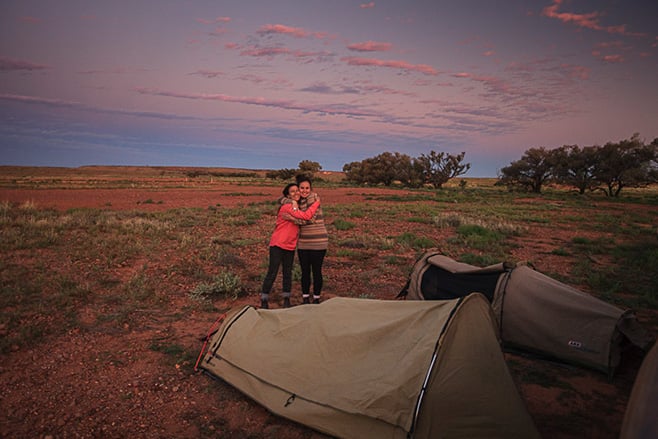
OFF-ROAD PERFORMANCE
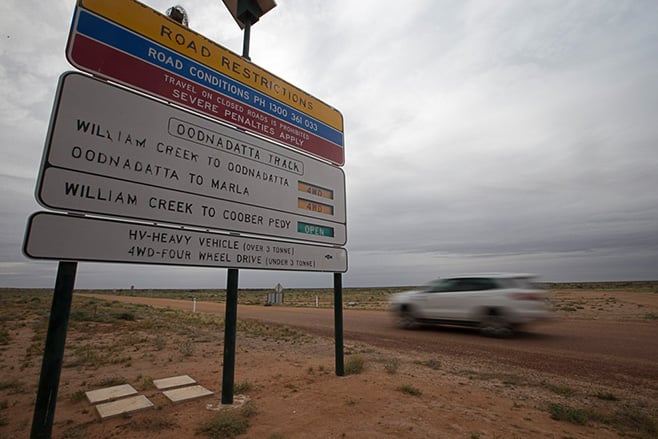
The major off-road component of our trip took place on the Oodnadatta Track, a remote unsealed alternative to the Stuart Highway heading north-south in South Australia.
The track runs alongside the Old Ghan Railway line and takes in some truly breathtaking country including Lake Eyre, sprawling black rock gibber plains and the gently undulating red sand dunes south of the Simpson Desert.
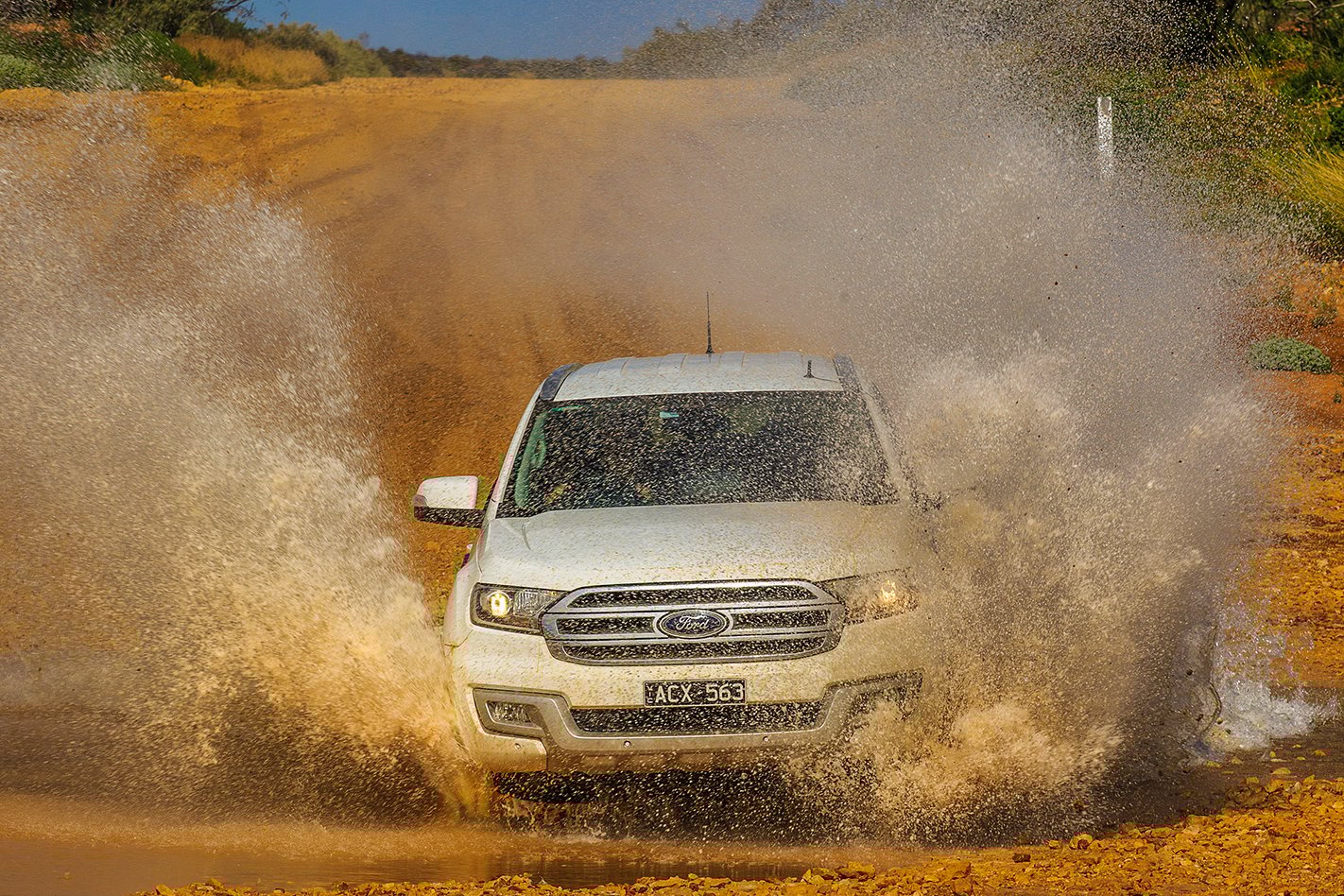
The Oodnadatta is generally a good quality dirt road suitable for factory standard 4X4s and perfect for off-road beginners, but was very wet when we passed through and had only just reopened after a week’s worth of torrential rain. This meant some deep puddles and long stretches of thick, slippery mud at the worst affected areas.
Luckily, the Everest has the off-road attitude to make light work of the mud bath. Its fulltime four-wheel-drive system is aided by the clever Multi Terrain Selector that offers the driver different modes for Normal; Snow, Mud, Grass; Sand; and Rock driving.
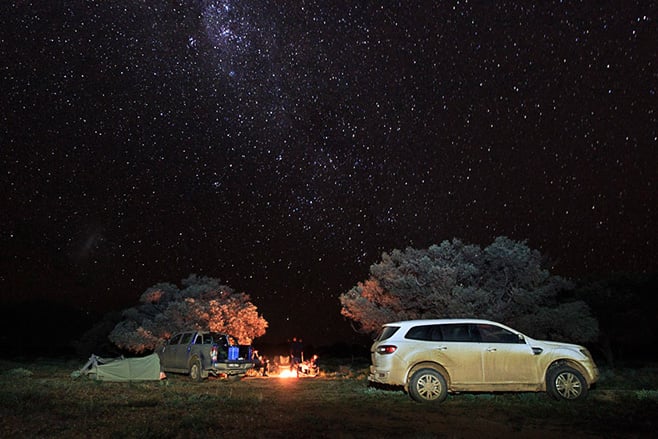
This system makes the Everest perfect for 4X4 beginners and provides the peace of mind in knowing you’re in the safest driving mode for the conditions.
You needn’t complete hours of 4X4 training to get out there and give it a go in the Everest, although experience is of course recommended for challenging off-road conditions.
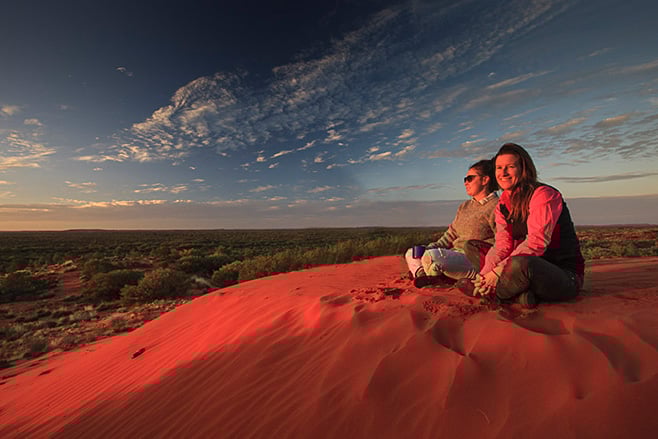
The vehicle sits high with 225mm of clearance and good approach and departure angles for tricky, uneven terrain.
It’s also touted as having the best wading depth in the business, coping with 800mm of water. The Oodnadatta wasn’t quite that wet, so that claim remains unchallenged for now.
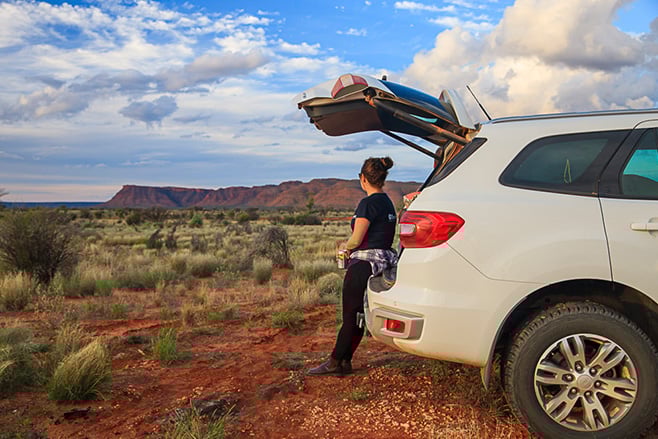
Differing from the Ranger, the Everest employs rear coil suspension as opposed to leaf springs, meaning a more comfortable ride on and off the beaten track.
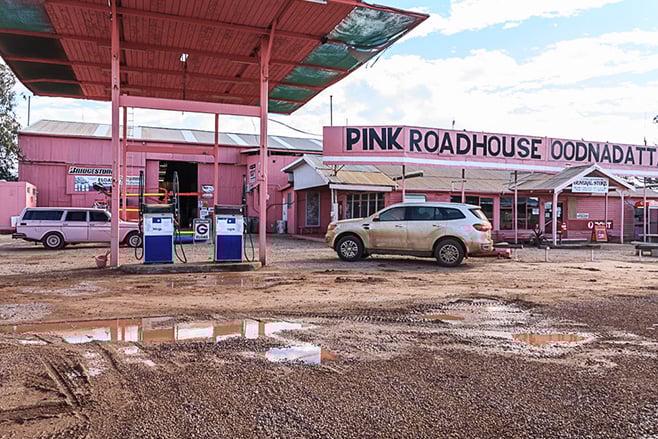
By the time we rolled back into Melbourne we’d clocked up more than 5000km and had ticked a number of items off our bucket list: The Oodnadatta Track, the Pink Roadhouse, Alice Springs, the West Macdonald Ranges, Kings Canyon, Uluru: tick, tick, tick and tick.
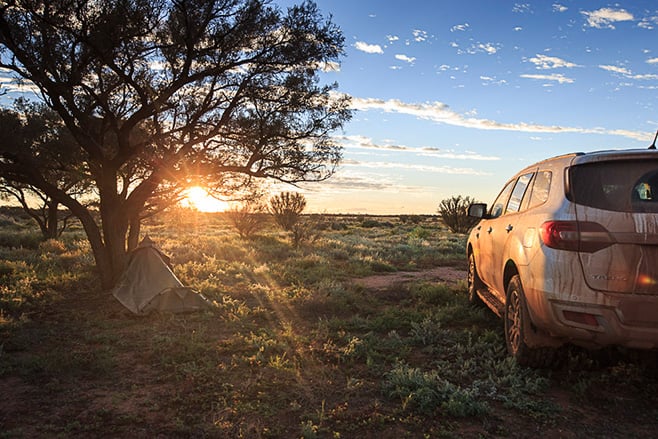
We traversed a vast range of terrains and well and truly put the Everest through its paces as a comfortable long haul highway mover and a reliable off-road steed. On both fronts, the Ford Everest gets an enthusiastic tick of approval.
We don’t usually cover trucks, they’re simply not fast enough, but we’ve made an exception for The Iron Knight, a custom semi built by Volvo to set a new speed record.
Powered by a 13.0-litre turbo-diesel engine, The Iron Knight produces an insane 1790kW/5996Nm, which is certainly enough to get our attention.
Volvo was aiming to reset the records it established in 2012 for the standing 500m and standing kilometre. And it did just that, recording a time of 13.71sec for the half-kilometre and a faintly astonishing 21.29sec for the standing kilometre.
To put that in perspective, the last time MOTOR performed 0-1000m testing a Porsche 997.2 911 GT3 RS completed the same distance in 22.61sec, albeit on a very poor surface, which probably cost it a second. Even so, it still trails Volvo’s monster machine.
What does all this prove? Not sure, but it’s very cool.
