
1. The once boxy Nissan X-Trail received a facelift in 2014 and now sports a more sleek and sophisticated design.
2. The X-Trail comes in twelve variations, including 2WD and 4WD, five or seven seater, petrol or diesel, with manual or Continuously Variable Transmission (CVT).
3. The petrol-powered ST 4WD model is priced at $33,980 – good value for a mid-size crossover. But it only comes with CVT.
4. The X-Trail’s boot benefits from Nissan’s brilliant Divide-N-Hide configurable cargo system. The boot floor lifts up and splits in two to reveal two separate, hidden compartments. This model’s rear storage area is an impressive 550L, rising to 1520L with the second-row seats folded down.
5. The ST 4WD is spacious and comfortably seats five adults with heaps of leg room.
6. Its 2.5-litre petrol engine generates adequate power of 126kW – but torque remains unimpressive at just 226Nm. Those needing to tow might look elsewhere.
7. Fuel consumption is a reported 8.3L/100km. Our test saw a reasonable 9.3L/100km over 100km of mostly urban driving.
8. In keeping with Nissan’s off-road roots, the X-Trail allows the driver – as opposed to an electronic nanny – to select either 2WD (to the front wheels) or 4WD.
9. Phone connectivity requires a system called NissanConnect which can be cumbersome and confusing.
10. The cloth trim, on all base models, absorbs all manner of nasty kiddie stains. Those with small people regularly on board might consider models with leather trim.
Australia will be one of the first markets to say a second farewell to the iconic Beetle.
FOR the second time in its career, the Volkswagen Beetle will be no more. Even though production of the front-drive, Mk6 Golf-based Beetle will continue in VW’s Mexican plant (for the time being) to satisfy the US market, the rest of the world is preparing to bid farewell to a car it never really bonded with. And Australia will be among the first to say goodbye.
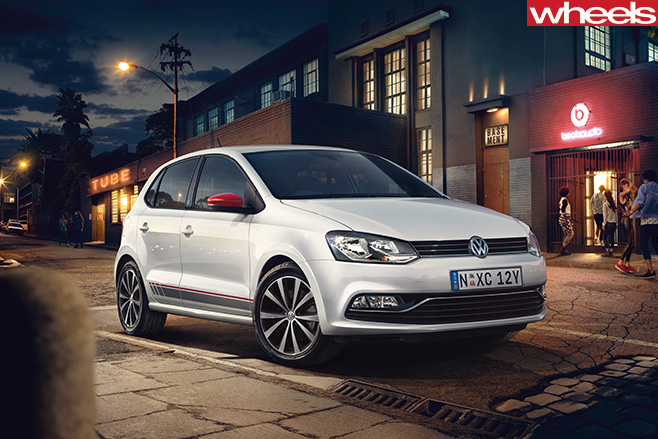
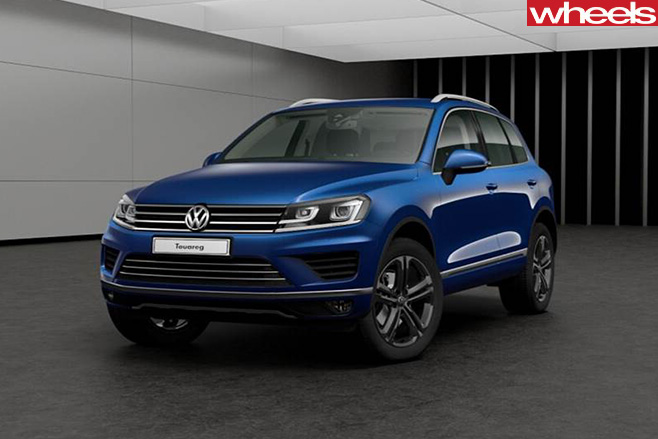
Volkswagen revived the Beetle’s iconic design when the ‘New’ Beetle launched here in January 2000, but even in its best year – the first 12 months – the modern Beetle shifted a modest 1328 units, compared with the original Beetle’s 1960 sales record of 24,388. And it was downhill from there, with the New Beetle breaking the 1000-unit mark just once in the last 15 years (1043 units in 2005, bolstered by the launch of the Cabriolet). There’s been a similar level of disinterest across the globe.
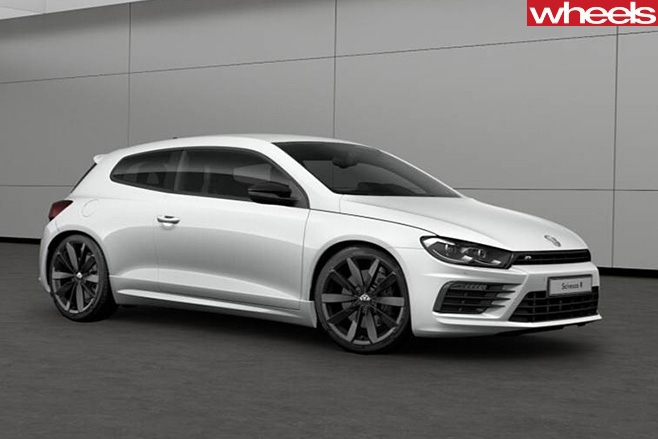
But it’s the Scirocco R Wolfsburg we’re most looking forward to. Another last-of-the-line model for Australia and capped at 150 units, the final Scirocco goes on sale in November in manual ($49,490) and DSG ($51,990) forms. Wearing either Oryx White pearl or Rising Blue paint, each garnished with black 19-inch ‘Lugarno’ alloys and winged-back, race-style bucket seats, the last Scirocco promises to be the best of a model line we’ll miss immensely.
A new flagship variant for Tesla’s all-electric super sedan is reportedly looming large on the horizon, with the Dutch car registration authority issuing type approval for several Tesla models – among them, the “Tesla Model S P100D” – which clears them to be licensed and driven in the European Union.
Confirmation of a European type approval is the first real clue that Tesla is planning to expand the Model S range beyond the existing P90D range-topper. The P90D which currently sits at the top of the Model S pile with a maximum single-charge range of 509km and a 0-100km/h of 3.0 seconds with Tesla’s aptly-named Ludicrous Mode upgrade – or 3.3 seconds without.
The non-performance oriented Tesla 90D trades acceleration for range, with a peak range of 557km and a still-quick 0-100km time of 4.4 seconds.
Performance numbers for a 100D model would be based on pure speculation, but with Tesla’s naming convention linking numerics to battery size we know that such a model would tote a 100kWh battery beneath its floor. The ‘P’ prefix denotes it as a performance model, while the ‘D’ indicates it has two drive motors and all-wheel drive.
With 11 percent more energy on board, the P100D could travel for up to 565km on a single charge. As for its sprint time, figuring out that stat isn’t so simple – the limitation comes down to the interface between the battery packs and the Model S’ drive motors, and how much energy they can transfer without burning up.
Tesla has yet to officially confirm the P100D is coming, but with the P90D accounting for the lion’s share of local Tesla Model S sales it appears there’s more than enough appetite for big-power Teslas in Australia. Should the P100D rumour prove true, a local debut seems like a no-brainer.
Even more curious was the presence of some unfamiliar names on Tesla’s European type approval document, with “60R” and “100X” also certified for sale in Europe. Exactly what models those badges will be applied to remains a secret for now.
FORD has announced it wants to ditch the steering wheel by 2021. And the accelerator pedal. Oh, and the brake pedal, too.
After sitting by and watching other carmakers announce plans to roll out self-driving cars, Ford announced last night that it wants to join the rush.
But before you get nervous, whatever Ford comes up with won’t be for your driveway. Instead, the smartest Ford ever conceived will trawl city streets, serving the needs of the ride-hailing and sharing services that several carmakers are now backing as the next big thing in transport.
It will have a tough challenge ahead, with software and search giant Google, and computing and smartphone maker Apple both believed to be working on similar, and far more advanced, concepts.
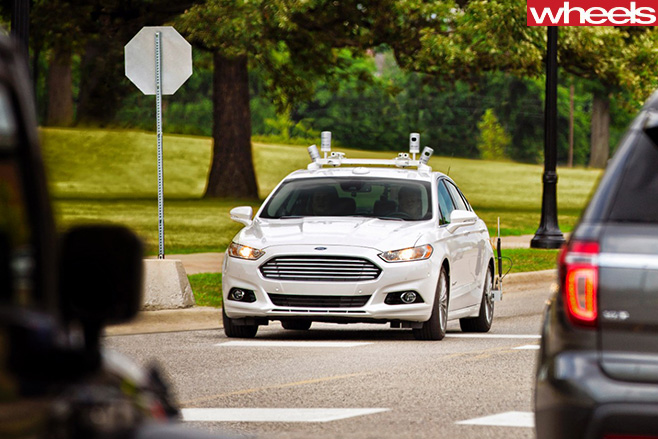
“The next decade will be defined by automation of the automobile, and we see autonomous vehicles as having as significant an impact on society as Ford’s moving assembly line did 100 years ago,” Fields said.
“We’re dedicated to putting on the road an autonomous vehicle that can improve safety and solve social and environmental challenges for millions of people – not just those who can afford luxury vehicles.”
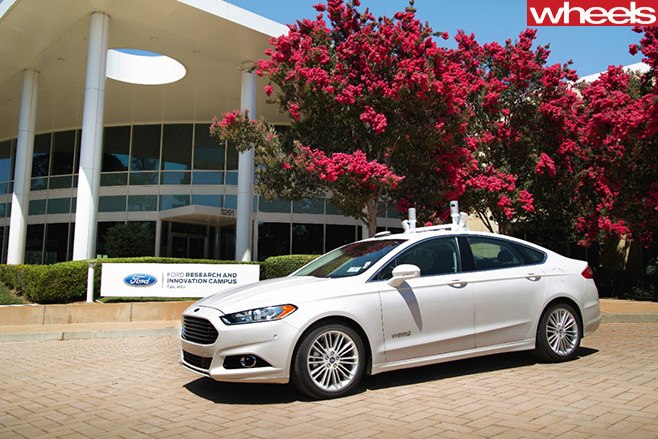
It means the future Ford will be able to handle “all aspects of the dynamic driving task, even if a human driver does not respond appropriately to a request to intervene”. In other words, the car should be able to cope with almost every situation by itself, apart from things such as extreme weather.
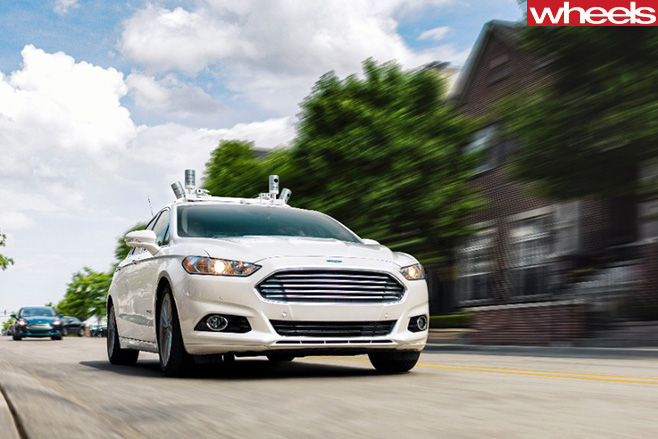
The carmaker will also extend its Silicon Valley-based research and development campus, adding an extra two buildings, dedicated to the autonomy project, to the facility it opened there in 2015.
General Motors will introduce an “industry-first” rear seat reminder to its cars in a bid to stop forgetful drivers leaving children behind.
The feature, which will be introduced to the US via the GMC Acadia mid-size SUV, reminds drivers to check the rear seat at the end of a journey by chiming five times and displaying a “look in the rear seat” message, but only if the rear doors were opened 10 minutes before the car starts driving.
GM global safety strategy engineer Tricia Morrow said the technology aimed to help protect the things “we care about most”.
“Whether it’s your lunch, laptop, pet or most importantly, your child, it’s easier than it seems to forget what’s in the back seat when moving between life’s events,” said Morrow.
“With this new feature, we are leading the charge to address this ongoing problem.”
Children left in cars is a significant problem in the US. So far this year it has resulted in 27 deaths, and more than 380 have died in the last decade.
Closer to home, Ambulance Victoria says 1433 emergency calls were made between September and August 2014 to assist children left in cars, with an average of five calls a day during the hottest months of the year – November to March. Of those, 23 per cent involved children younger than 13.
The temperature inside a car can rise rapidly within the first five minutes of locking up. In contrast to adults, a child’s temperature raises three to five times faster.
GM sells its cars in Australia under the Holden badge. There’s no word yet when, or if, this technology will make its way here, though.
WE’RE more than halfway through 2016 and we’ve already seen plenty of tasty metal hit local showrooms. The BMW M2 has already blown us away with its balance of price and performance, the Porsche 718 Boxster has proved a turbo flat-four belongs in a car wearing the badge, and the Jaguar F-Pace demonstrated that yes, the Brit marque is capable of making a decent SUV.
But the flow of cool, unique, fast and interesting new-car launches isn’t going to dry up anytime soon, with plenty more remaining on the 2016 calendar. Here’s a list of what we in the WhichCar office are salivating over the most.
ABARTH 124
Abarth’s turbocharged drop-top is the Mazda MX-5’s twin-under-the-skin, but you can expect Italy’s take on the Japanese roadster to have its own distinct flavour courtesy of unique sheetmetal and a peppy turbo 1.4-litre four-cylinder engine under the bonnet.
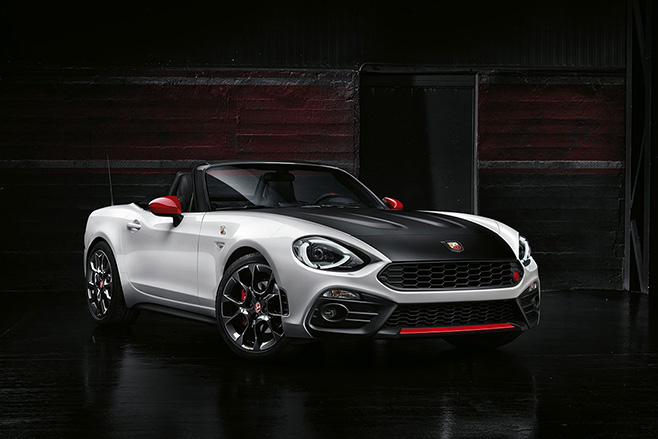
Sure, the interior might be nearly identical to the MX-5, but it’s the Abarth 124’s promise of more acceleration-enhancing torque – a common criticism of the MX-5 – that has the WhichCar staff champing at the bit to drive it.
The Abarth 124 is coming to Australia in October, and WhichCar expects it will be priced in the mid-$40,000 region.
INFINITI Q50
The Infiniti Q50 gains a mid-life facelift before the end of this year, and besides some fresh interior and exterior plastics there’s also an engine upgrade in store for Infiniti’s mid-size sedan family.
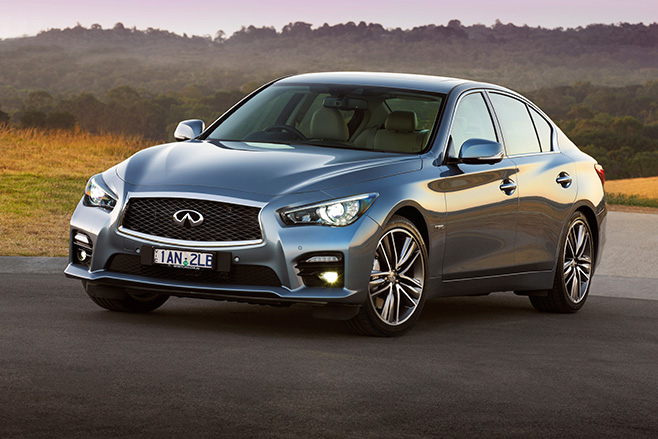
The headline here is the addition of a 3.0-litre twin-turbo petrol V6, which replaces the current model’s 245kW naturally aspirated 3.7-litre V6. The turbo V6 is essentially a downsized version of the 3.8-litre engine found in the mighty Nissan GT-R supercar and comes in either 223kW or 300kW trim.
With such athletic DNA under its bonnet the fresh-look Q50 should be an exciting drive when it arrives in a couple of months – and potentially a solid rival for the $100K Mercedes-AMG C43 that’s also due to arrive before year’s end.
HOLDEN ASTRA
The next-generation Holden Astra is scheduled to go on sale locally late in 2016, where it will take over from the Cruze hatch as Holden’s volume selling five-door small car. Two turbo petrol engines will power the range, and a “Sports Tourer” wagon may also find its way to our shores.
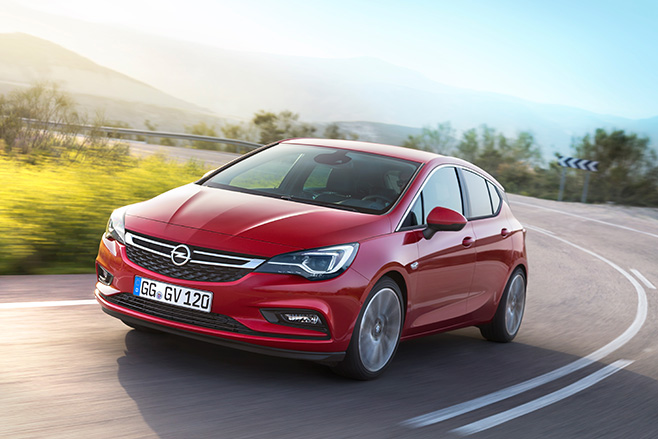
It should be nicer to sit in than the Cruze thanks to modern design features and upmarket materials, with the new Astra set to adopt a slightly more premium position relative to the ho-hum Cruze that it will replace.
Will the Astra’s price tag head upmarket too? We’ll have to wait to find out.
VOLVO S90
It’s not often that a Volvo sedan leaves WhichCar sweaty with anticipation, but Volvo’s S90 is definitely one to watch.
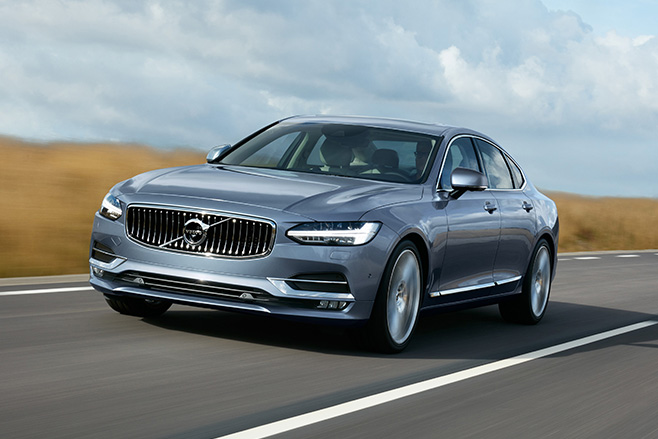
The S90’s big, bluff body boasts more Scandinavian style than an entire IKEA store, and the innovative turbocharged
The S90 is the latest in Volvo’s ongoing campaign to pinch sales from the German luxury brands, and could prove an appealing alternative to buyers seeking something a little different from a BMW 5 Series, Audi A6 or Mercedes-Benz E-Class.
AUDI SQ7
Fun Fact: for a while after it launched, the Audi SQ5 accounted for roughly one in every two Q5s sold in this country. Not a huge surprise considering Australians appear to be in love with performance cars and SUVs – combine the two and a sales hit is seemingly assured.
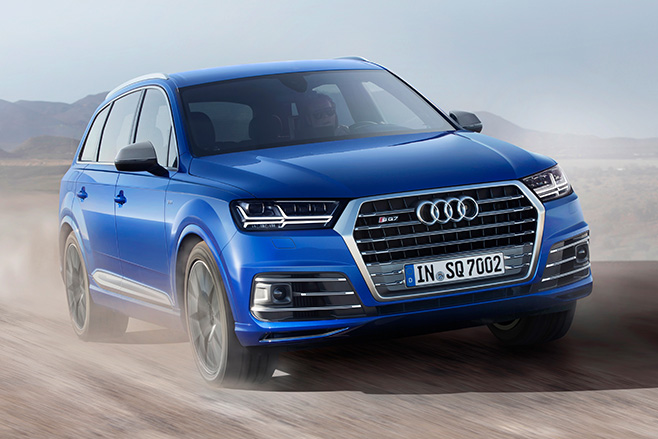
Audi is getting ready to replicate that success with the SQ7, which takes the SQ5 formula and upsizes it for the brand’s biggest SUV model.
With a triple-turbo 4.0-litre diesel V8 under the bonnet there’s a hefty 320kW of power and a monstrous 900Nm of torque. With one of those turbochargers sporting an electric motor to help spool it up early, Audi says the SQ7 has virtually no fun-sapping turbo lag.
Of all the cars we’re denied in Australia, possibly the one that hurts the most is the Shelby GT350 and its hardcore R sibling.
This video is a perfect example of what we’re missing out on, with Texan tuner Hennessey Performance, best known for its crazy 420km/h+ Venom GT, performing a top speed run in a standard GT350R before it starts to tinker.
The GT350R is powered by a 392kW/581Nm 5.2-litre flat-plane crank ‘Voodoo’ V8, which screams all the way to 8250rpm and shifts this super ‘Stang to 100km/h in a tick over four seconds. It’s also available with cool Australian-made carbon fibre wheels as an option.
For those who really want a taste of the GT350 action, Ford Performance is intending to offer a 5.2-litre crate motor, though with a conventional cross-plane crank.
It’s trick diffs at dawn when Miutsubishi’s tenth-gen Evo takes on the Subaru STi in an all-surface shoot out.
First published in the August 2008 issue of Wheels magazine, Australia’s most experienced and most trusted car magazine since 1953.
Imagine Ford versus Holden, remove four cylinders, add a turbo and send drive to all four wheels. Now you’ve got a snapshot of the white-hot rivalry between Evo and STi. For more than a decade, both manufacturers have honed their respective weapons on rally stages, then released them onto the road.
I’ve always imaging the STis and Evos being developed by armies of brilliant Japanese engineers. Those with horn-rimmed glasses and crisply-pressed lab coats, carrying clipboards and nodding sagely at terms such as ‘torque vectoring’.
Their brutal cars are then sent hurtling sideways through forests and across frozen lakes in the hands of some of the bravest men to ever grace motorsport (thank you Makinen, McRae, et al).
With their latest offerings, Subaru and Mitsubishi have attempted to broaden the appeal, polish out the hard edges involved in turning polite commuter cars into turbocharged terrors. The challenge has been to not polish out too much edge.
To see how successful they’ve been, we put the tenth-generation Mitsubishi Evo to the ultimate dynamic test at Winton Raceway, then, along with the Subaru STi, we spent two days takling some of Victoria’s best driving roads and worst urban arterials. Finally, with rally legend Ed Ordynski, we pushed each car to its limits in the daily rally arena. Bring it on…
Winton Raceway, Monday, 1:30pm
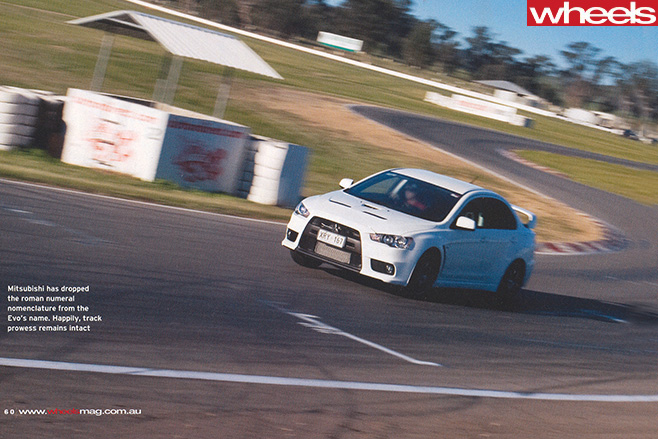
“This is your first lap in the new car?”
“Sure is”
A wry smile plays across his lips, “You’ll enjoy this, mate.”
Green light.
I dip the surprisingly light clutch and first gear engages with a short, oiled snick. Flex the throttle and there’s immediate response from the all-new 2.0-litre turbocharged engine; the tacho sweeps past 2500rpm as the surge of forced induction builds. At 3500rpm the turbo spins at maximum boost, the engine snarls an angry, metallic growl. Stretching deep into the red zone past 7000rpm (cut-out is 7600rpm), the Evo chews tarmac as volumes of intercooled air and 98RON fuel compress and combust.
Hard on the brakes for turn one, the vented Brembos bleed speed with force and stability, then a blip of the throttle and back to second, the engine crackling as boost is dumped. I haul the small, thin steering wheel to the right and am shocked by the almost instantaneous turn-in; my brain scrambles to adjust. At 2.3 turns lock-to-lock, the steering is lightning fast and the shark-nosed sedan switches direction like a scared rabbit.
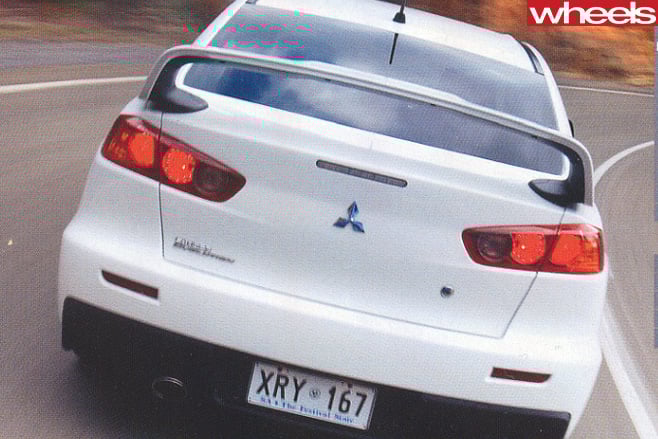
After several laps, I emerge from the Evo impressed (but still sweating) and retire to the track-side tent to make notes and learn more about the new Mitsu.
This Evo debuts the first all-new engine since Evolution launched in Japan in 1992. The iron-block 4G63 has been usurped by the new aluminium-blocked (and 12kg lighter) 4B11, and while both are intercooled turbocharged 2.0-litre dohc units, any resemblance ends there. The new unit’s bore and stroke both measure 86.0mm, making it a ‘square’ design, which reduces vibration and eliminates the need for a balancing shaft.
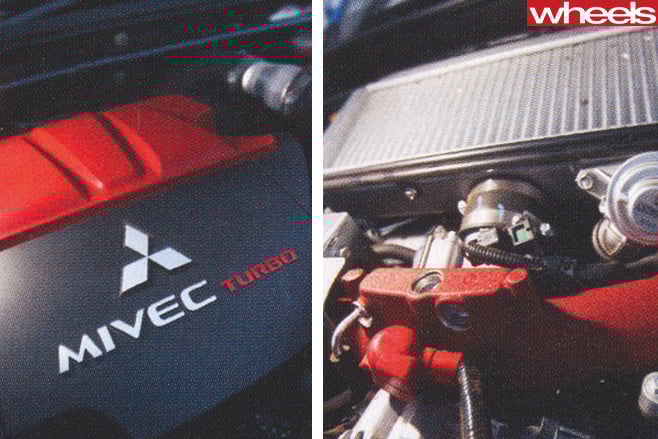
Channelling this grunt is Mitsu’s S-AWC system. Super All-Wheel Control can be set to Tarmac, Gravel or Snow mode and combines the ACD and AYC to govern torque and traction, along with a helical-type limited-slip differential (LSD) up front to bias torque between the front wheels. The last component is an effective ESP system.
The STi offers more cubes and more grunt from its turbocharged and intercooled 2.5-litre flat-four engine (221kW/407Nm), but uses a less techno-geek AWD system. Traditional LSDs reside in the front and rear axles, driven by a viscous-coupling Driver Controlled Centre Differential (DCCD), which can vary torque distribution from the regular 41:59 front-to-rear split.
So, the similarities between our two contenders are many. Both hail from Japan. Both are turbocharged. Both drive all four wheels and both our assembled examples cost under $70,000. But it’s the difference that make this battle so fascinating. Tomorrow is game day.
Oxley, Tuesday, 11:30am
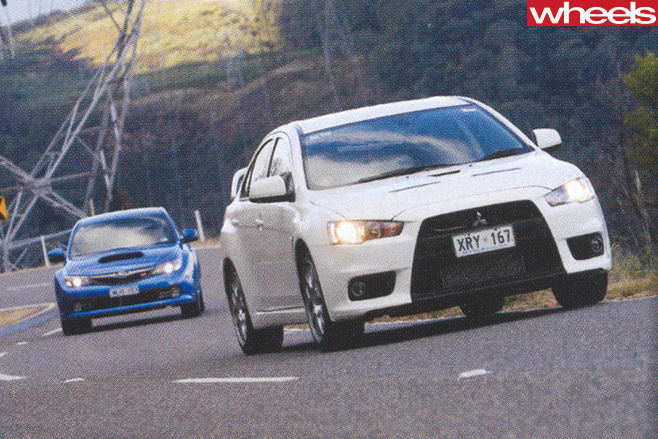
The gleaming white five-speed manual Evo boasts the optional Performance Package ($5,500), comprising two-piece front Brembo brake discs, Bilstein diampers and Eibach springs and split-spoke, forged-alloy 18-inch BBS wheels that are each 1kg lighter than the standard Enkei alloys. The inbound WRX STi spec.R that soon arrives, adds lightweight BBS 18in wheels, plus leather and alcantara Recaro bucket seats over the regular STi.
Jumping into the Subaru for the first time, everything feels heavier, more robust. The clutch requires more muscle, the grittier, longer-throw gear shift requires a more positive action. There’s also more drivetrain snatch and whine; it’s coarser and not as effortless as the Evo, missing that instant sense of litheness. But there’s undeniably a greater sense of connection when the badge on the steering wheel is pink and spells STi.
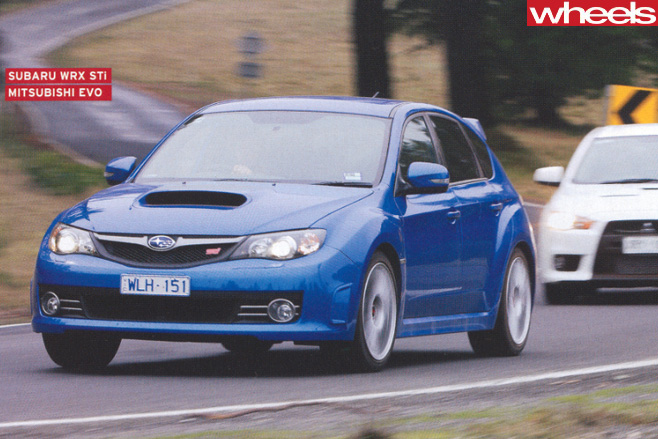
The Subaruy’s firmer, more feelsome brakes allow a deeper dive into the opening right-hander, but the Evo’s almost telepathic steering and turn-in edges it ahead of the Subey. The STi’s slower, looser steering doesn’t key car and driver into the tarmac, although neither car offers genuine steering feel.
With the tyres biting hard into rippled bitumen, and both cars balanced on the throttle, computerised brains are crunching hundreds of calculations every second; tuning torque, flowing power. Crush the accelerator and the electronics go into overdrive. The Mitsu’s sharper engine response and flatter stance see it clip the apex with an extra kilometre or two registering on the speedo. But at 4000rpm the STi’s turbo floodgates burst open and the Subaru inhales the road, closing the gap on the Evo’s winged rump.
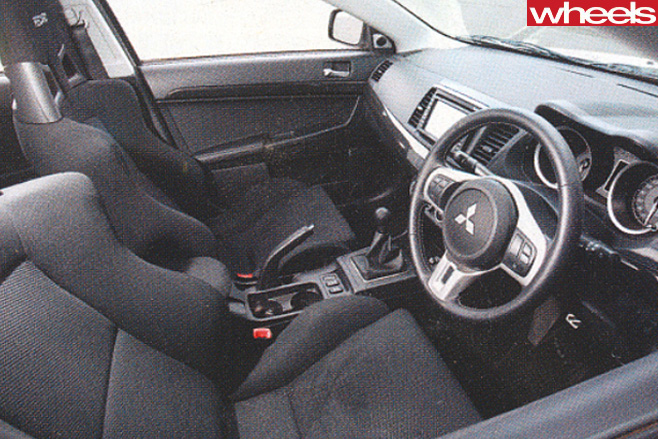
It’s incredible how such seemingly similar cars can possess such starkly different personalities. The tightly-packed gearing and rev-hungry engine makes the Evo manic, almost feral when firing out of tighter bends. The lazier, laggier Subaru doesn’t rev as hard, nor as fast, but when that wallop of boost arrives, you’re pushed deep into the seat. The STi also leans and rolls where the Evo sits flat, which requires familiarisation, but learn to trust the chassis, and the grip offered can be matched by few other cars. Except the Mitsu.
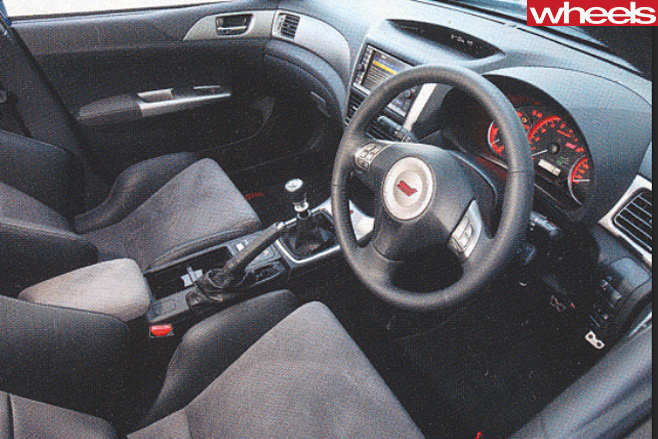
The Impreza doesn’t fare quite so well. There’s nothing wrong with the general interior design, but start laying hands on dials, switches and handles and, well, cut-price is a term that springs to mind. The link to the donor base car is far too obvious, with the pink STi badges and glowing dials failing to impart any real sense of class.
Then, with photos captured and the first blows dealt, we point the cars down a darkening Hume Highway and I settle into the STi’s passenger seat, impressed by its cruising refinement. I wonder if I’ll be as impressed when our contenders face the rally track…
Werribee 4WD park, Wednesday, 8:30am
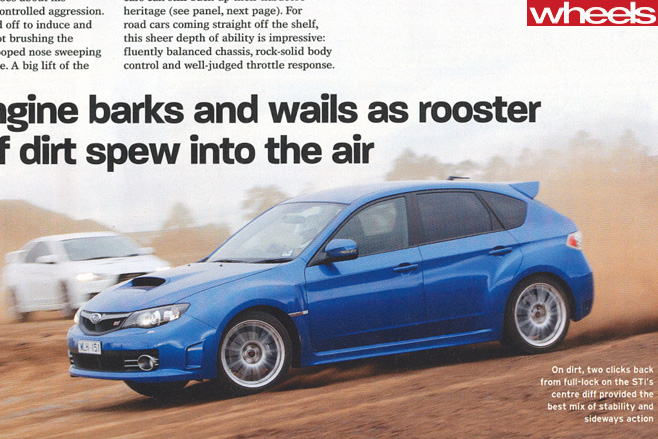
All four wheels scrabble for grip, dirt flies and we plunge into the first sweeping right hander. Ed’s left hand swiftly jabs the handbrake and I’m looking through the driver’s side window, the Subaru pirouetting through 45 degrees. Corrective lock catches the slide, then the throttle is pinned to the firewall. The flat-four engine barks and wails as great rooster tails of dirt and dust spew into the air.
Ordynkski himself goes about his business with calm, controlled aggression. Lock is wound on and off to induce and correct slides, left foot brushing the brake to keep the scooped nose sweeping tight to the inside line. A big lift of the accelerator swings us pendulum-like to the left, the force of the transferring weight arcing the rear-end wide. Once again the throttle is mashed and tricky mechanical diffs shuffle torque and delivery hauling us into a beautifully controlled, four-wheel drift. Taking it easy obviously has a different meaning for this bloke.
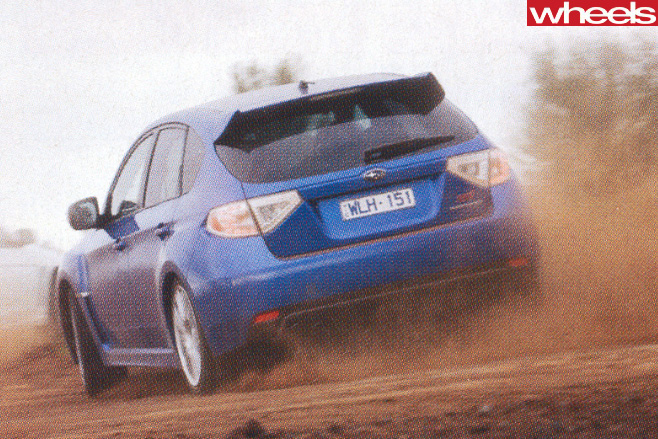
When the last spray of dirt has showered Brunelli, Ed agrees that both cars can still back up their hardcore heritage. For road cars coming straight off the shelf, this sheer depth of ability is impressive: fluently balanced chassis, rock-solid body control and well-judged throttle response.
Melbourne, Wednesday, 7:30pm
From race circuit to snaking mountain pass to rally track, our two contenders punched and counter-punched, matching each other so closely I thought I’d have to do the unthinkable and declare this bout a draw. It was only during the dying hours of this test – crossing the dipping, bucking roads of the Black Spur and then back into urban Melbourne – that a winner emerged.
Both these turbocharged ninjas offer cross-country pace that can suck the air from your lungs. Both can tame a racetrack and conquer dirt. As complete packages, they are outstanding. But it’s in the urban shuffle that one falls by the wayside. And it’s the Evo.
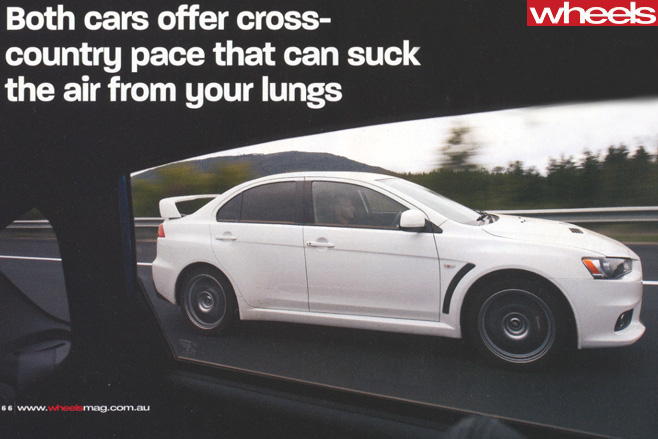
But the final nail in the Evo’s coffin is ride quality. On the sports suspension optioned to our test car, the ride was sharp to the point of harshness. Crumbling urban tarmac stabs through the suspension (particularly at the rear), which is constantly working and always noisy.
In contrast, the STi cruises quietly and has suspension that actually borders on compliant. It could never be called cosseting, but hits and ridges are absorbed without fuss. And the Subaru proved more frugal, recording 11.9L/100km to the Mitsubishi’s 13.7.
It’s a strange day when the Evo versus STi battle is won on the strength of politeness, rather than turbo pace and tarmac-tearing grip, and if I’m being honest the Evo IX offers a more pure chassis than either of our current entrants. But this is a new order, a new breed.
And the winner is the STi.
The world’s car makers are often sheep-like in their adoption of vehicular fashions. However, they – and transmission manufacturers – certainly aren’t aligned on the best way to transmit power.
With the traditional manual on the wane, the jerky robotised manual, potentially unreliable dual-clutch auto, boring CVT and even the humble torque converter auto have all been offered as the transmissions of the future.
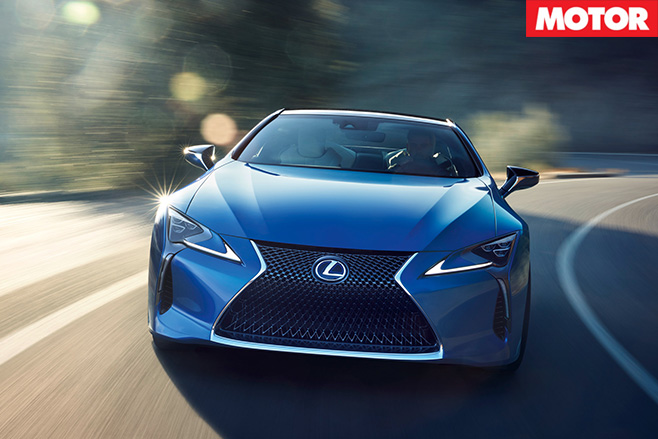
And it’s the latter that Lexus is set to adopt for its forthcoming LC 500, which is due next year. The grand touring coupe, which is based on the LF-LC concept car shown at Detroit in 2012, will feature a 10-speed auto.
It joins the likes of the 2017 Ford F150 Raptor and 2016 Chevrolet Camaro ZL1 in having 10 ratios. The underlying aim of the new gearbox is fuel economy, though the marketing benefits of a 10-speed can’t be overlooked.
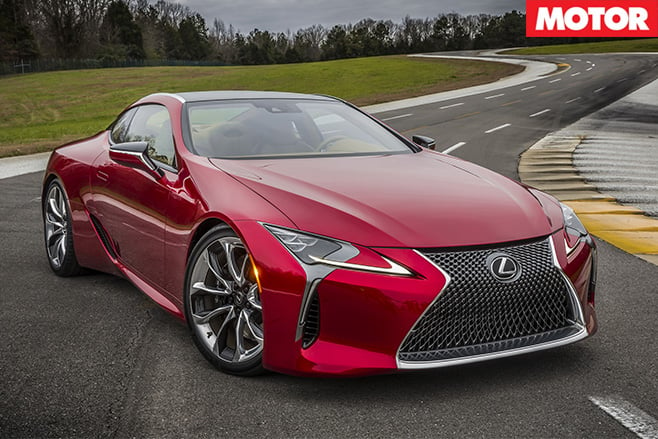
Closely stacked cogs stop the revs from dropping off, which is particularly helpful for highly strung engines that make their power high in the rev range. On the other hand, there’s the time lost doing all those gear changes – the Lexus would do several in the sprint from 0-100km/h.
More importantly, in terms of driver appeal, will the boxset of 10 go down as a motoring ‘best-of’ or pale alongside the classic open-gated manual?
Well, the experience of riding a big whack of torque, using just one of two ratios, is one of the most delicious elements of piloting a big-engined, tall-geared car on a tight and twisty road. Think Commodore SS on a favoured slice of mountain tarmac, blasting from corner exit to entry in second and third…
If the manual is dead and multi-ratio ‘boxes waste time shifting gears, surely the CVT is set to rise? In theory, it could, however the CVT is not naturally a high-torque device, and anyone who has driven one knows why even the biggest CVT proponents are now giving their gearboxes artificial ratio steps to mimic a conventional auto.
While having a continuously variable gear ratio beats, well, pick any number between seven and 10 ratios (in the spec-sheet contest, at least) an elastic throttle and droning power delivery has no home in the hi-po car. Time will tell whether the 10-speed slusher does.
Paradigm shift
How Lexus does 10 cogs
2. DCA not a panacea Inefficiency of a torque converter is cited as why a dual-clutch auto is better; another is slow shift speed. However, modern autos with a high percentage lock-up (no slip during steady driving) have mostly eliminated the issue.
3. No snappy shifter The Aisin 10-speed auto due in the upcoming LC 500 is said to shift in 0.4sec. While quite snappy for an auto, it’s not as quick as a dual-clutch. The best dual-clutches, like the PDK in the 911 GT3 RS, can swap cogs in 0.09sec.
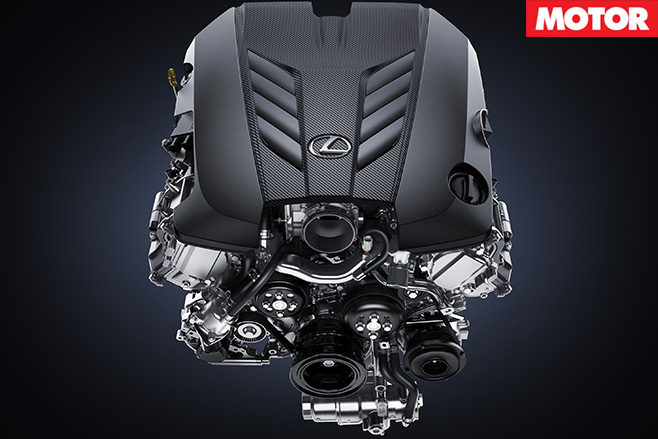
4. Numbers game The LC 500’s 5.0-litre V8, with twin cams per bank, will be quite top-endy. The closely-packed 10-speed will keep it singing. That said, given the bent-eight will make around 350kW and more than 500Nm, it probably wouldn’t be a slug with Three on the Tree, either.
5. Nine not enough With the coming of double-digit ratio counts, other brands have had to defend their position. Mercedes-Benz, for one, has said that it will draw the line at nine. The Aisin 10-Speed is also set to feature in General Motors and Hyundai vehicles, while Ford continues to develop a 10-speed, too.
On the boil
More cogs, less compromise

The advent of six-plus-speed gearboxes made it possible to keep the overdriven top gear (or gears) while still having a pseudo close-ratio ‘box. With a 10-speed, there should be more than enough ratios to have a real close-ratio ‘box and more than one overdrive ratio, giving the best of both worlds.
Motorsport reshuffle won’t affect road car relationship.
Holden has reaffirmed its commitment to the HSV brand – and to continuing its partnership with the Walkinshaw Automotive Group that currently produces a range of V8-powered HSV cars at its Clayton factory in south-east Melbourne.
The comments come following the shock announcement that Holden would sever its 26-year relationship with Walkinshaw to run the Holden Racing Team, with rival team Triple 8 being awarded that honour and becoming the sole Holden factory-backed race team in the premiere Supercars category.
“There’s no impact with HSV; we continue to have a strong partnership and we’ll continue to work very closely with them on road car programs,” said Holden’s director of communications, Sean Poppitt.
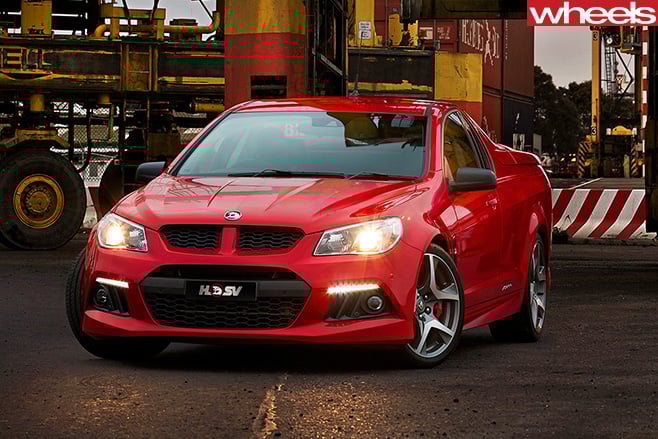
But he said HSV road cars would remain a key focus of the business, which also now converts Ram trucks from left- to right-hand drive.
“While our official motorsport partnership may have ended, our relationship with Holden remains strong and we continue to work closely on future road vehicle initiatives in line with our HSV business,” said Walkinshaw in a statement released this afternoon.
“With change comes opportunity, and we are as committed as ever to deliver on the track. We also look forward to working with our other partners to redefine how we add value to their businesses in the future, as we obviously now have a real opportunity to innovate our commercial programs.”
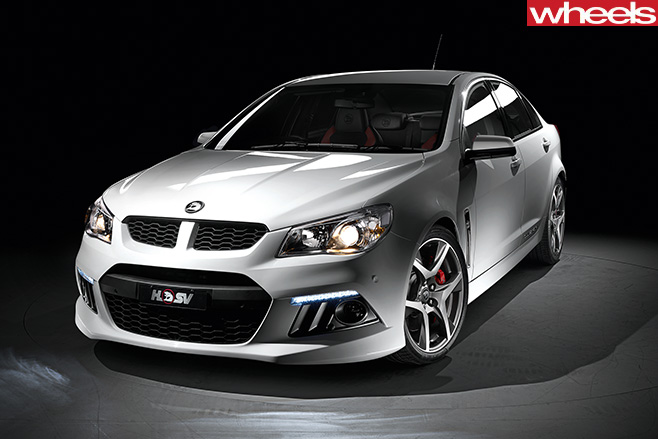
Since its first vehicle in 1988 – the VL Group A SS, better known simply as the Walkinshaw, after company founder, the late Tom Walkinshaw – HSV has relied almost entirely on locally-produced Commodores as the basis for its cars. Most of those cars have had V8 engines.
Rumours surrounding future HSVs include modifying the imported Commodore that arrives in 2018, producing a performance version of the Holden Colorado ute, and even hot-shot versions of the Astra small car, a new version of which arrives in Australia late in 2016.
However, it’s unclear how HSV will make the performance modifications it is known for when the engineering home room and manufacturing facilities are so far away from the Australian headquarters of a brand that has earned an enormous following in less than three decades.
Other options for future HSVs include simply marketing vehicles produced elsewhere in the GM world under the HSV brand.
HSV was formed in 1987 following the breakdown of the relationship between the brand and its then star driver Peter Brock. The end of that relationship also saw Holden sever ties with the HDT cars that had a strong following.
Holden called for submissions of interest in running the HSV business and building it into a performance car brand, a tender that was awarded to Walkinshaw, which later took on the race car operations.
