
ACTIVE SUSPENSION was deemed too high-tech for Formula 1 in the mid-’90s, so what place does it have in a road car? Well, a slightly different one.
While active suspension was intended to maintain a constant, level ride height in F1, to allow the optimal aerodynamics, in road cars it’s designed to deliver reduced body roll and pitch.
Like reducing the weight of a car, keeping the body flat brings more than one benefit – namely, in both occupant comfort and handling. Mega-stiff F1 cars didn’t need much help eliminating pitch and roll, because they didn’t really have any.
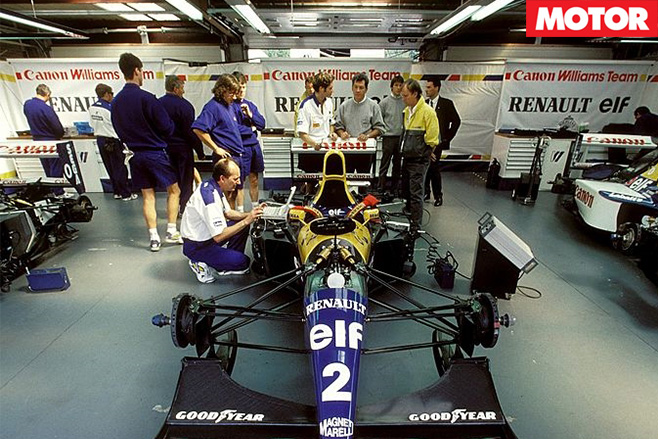
Now, just as Williams discovered with its 1992 Active Suspension FW14B racer, and subsequently sorted in 1993’s FW15, the technology adds weight. Its natural home, then, is a sports-slanted (if you’ll forgive the pun) heavyweight that needs to be comfy, too.
It should come as no surprise that ride comfort pioneer Citroen was among the early makers to develop active suspension, in the form of the hydro-pneumatic, self-levelling system in its ground-breaking ’55 DS. Rolls Royce and Maserati have also had a crack at applying the principle to road cars, but it’s Mercedes-Benz that’s put active underpinnings back in the spotlight.
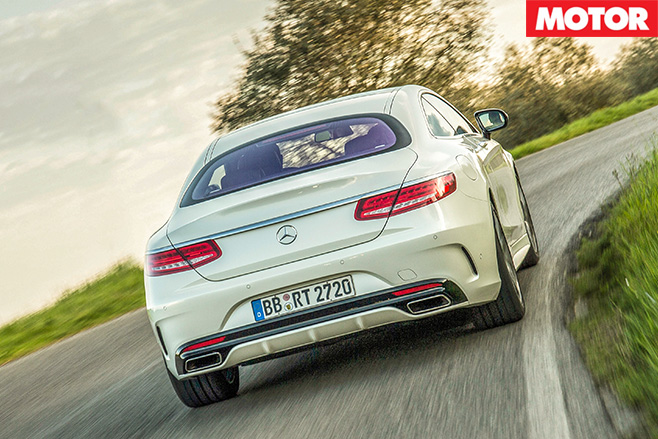
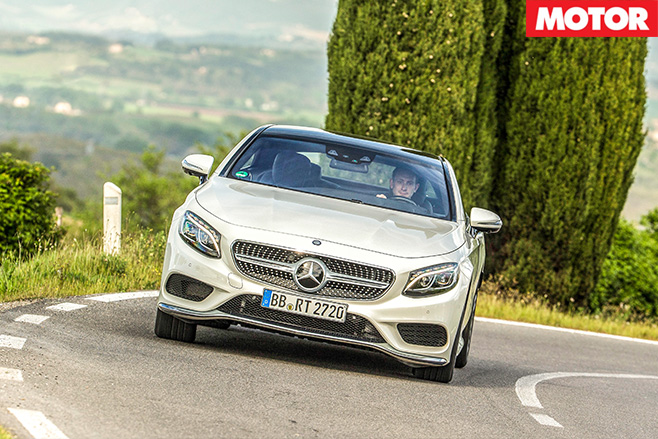
The result is the active hydraulic system in today’s S- and SL-Class, which controls body motion to the point that body pitch and roll are almost eliminated during acceleration, braking and cornering.
Exactly how it does this is explained further below, suffice to say the system uses countless sensors to monitor pitch and roll, with hydraulic servos in line with the normal suspension springs and dampers to dramatically reduce either condition. The system is so effective the usual mechanical means of reducing body roll – with front and rear anti-roll bars – is entirely eliminated.
Features the ABC system has allowed include height-adjustable suspension that, in the case of recent Mercs, can lower the car around 10mm helping not just handling, but high-speed aero and economy. The ABC system also brings self-levelling function that allows the car’s suspension to account for loads, to keep a consistent ride height.
It also introduces a crosswind stabilisation function that does just what it claims to. Mercedes-Benz’s S-Class introduced the current iteration of Magic Body Control, which uses stereo cameras to scan the road 15m ahead at speeds up to 130km/h and predictively adjusts damping.
Recent advances have brought a doubling in processor power and a quick FlexRay bus connection, which is all sounding a bit F1.
The tech in detail
1 HIVE MIND A central processor receives data from myriad sensors. Three accelerometers measure vertical body acceleration, and a pair of acceleration sensors measure longitudinal and transverse body acceleration. A level sensor at each wheel measures ride level, and hydraulic sensors measure pressure at each hydraulic suspension actuator.
2 FUSSY STRUTS A pair of controllers analyse data every 10 milliseconds, sending their commands to strut-mounted hydraulic actuators that change the suspension length, which applies a force to the suspension and damping of the car, at up to five hertz (five cycles per second).
3 PRESSURE ON Four hydraulic servo actuators are fed by a high-pressure radial piston pump. The actuators are mounted in series (ie, in line with, rather than alongside) with conventional struts and steel coil springs at each wheel. These actuators generate counter-forces to body roll, dive and squat almost instantaneously.
4 CROSS CODE If the crosswind stabilisation function sounds tricky, it’s no more so than the system’s ability to predict and account for bumps up ahead. The ride height adjustability function, load-levelling system and Sports mode, meanwhile, don’t need any additional hardware, just simple bits of extra software code.
5 LEANING IN The 2014 S-Class coupe had an update to Magic Body Control which introduced a curve tilting function that let the car lean up to 2.5 degrees into corners, a bit like a motorcycle. The feature aims to counter the effect of centrifugal force on occupants for comfort, but also allows more satisfying cornering, because it makes every bend feel like The Nürburgring’s Caracciola Karussell.
F1 did it first
So effective it was banned
The long-awaited Suzuki Baleno hatch will lob in late this month taking on both the light and small-car segments respectively, with an anticipated sub $18,000 starting price for the base GL.
Powered by a 68kW/130Nm 1.4-litre four-cylinder atmo petrol engine shared with the existing Suzuki Swift, the Baleno’s length and wheelbase are a tiny bit shy of, say, a Mazda 2’s (3995/2520mm versus 4060mm/2570mm respectively), but a much more cab-forward shape and wider body (by up to 45mm) boost interior space to near Mazda 3 levels, making the newcomer one of the roomiest B-segment hatches on the market.
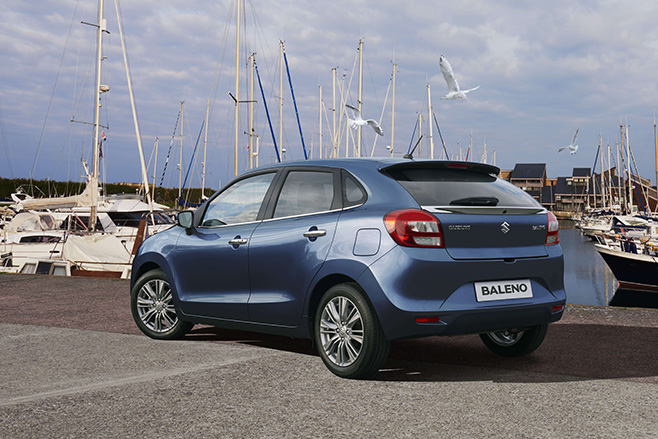
Standard features are yet to be confirmed, but it appears that a reverse camera, satellite navigation, Apple CarPlay phone connectivity, and remote keyless entry will be included in the entry-level variant.
Meanwhile, along with alloy wheels and some fancier trim, the GLX from around $20,000 will score Suzuki’s headline 82kW/170kW 1.0-litre three-cylinder turbo petrol powertrain. Dubbed Boosterjet, we understand it will drive the front wheels via either a six-speed manual or six-speed torque-converter automatic transmission, the latter in lieu of the 1.4 atmo’s rather old-fashioned four-speed auto application found in the GL.
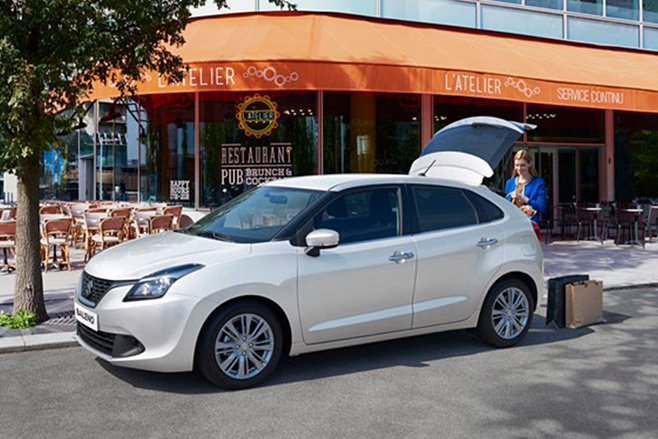
Though the GLX’s 82kW output is significantly below what the Hyundai i30, Toyota Corolla, and Mazda 3 produce, the circa 980kg kerb weight of the Suzuki is at least 200kg under some of the – admittedly larger – competition, promising sparkling performance, exceptional economy, and (hopefully) impressive agility. Overseas figures put the 0-100km/h sprint time at 11.4 seconds, and 4.5 litres per 100km on the combined EU cycle.
The Baleno’s platform is thought to be a development of the next-generation Swift due in 2017, though the two will appeal to very different sets of buyers in the light car segment, with the former aimed at people who prefer the practicality of extra rear-seat legroom and boot space, over style and spirited dynamics.
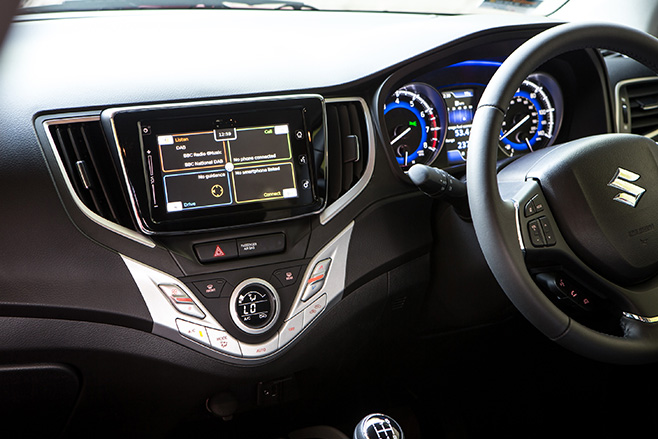
That said, both will offer very conventional chassis engineering, including a MacPherson strut front-end and a torsion beam rear suspension set-up.
The Swift, Baleno, and soon-to-be-facelifted front-drive only S-Cross will together form a three-tiered light and small car assault on the Australian market, ranging from about $18,000 to $30,000.
More Baleno details will be revealed by the end of this month, so stay tuned.
Ford has announced a new partnership with a Melbourne-based ride-sharing start-up; Carhood.
Carhood allows vehicle owners using long-term airport car parking the ability to avoid what many people argue are overly-expensive parking costs by instead renting their cars out to other approved users of the Carhood program, and pocket 25 percent of the rental profits in the process.
The deal offers Ford owners extra incentives to join the growing ridesharing platform. Ford owners will earn 35 percent when their car is rented out, and are also eligible for a 10 percent discount if they themselves rent a Ford through Carhood when they arrive at their destination.
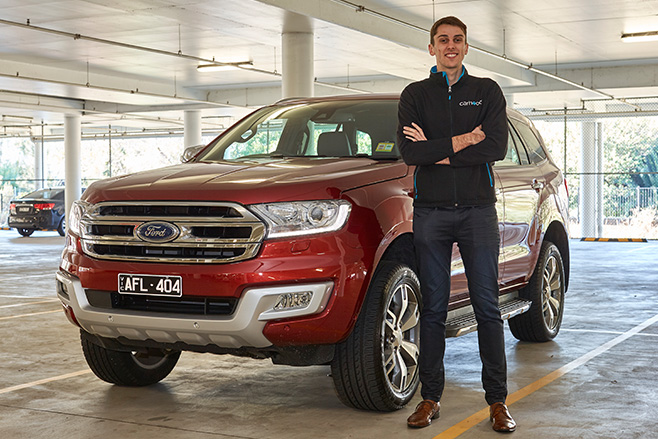
Ford Australia CEO and President, Graeme Whickman, says the partnership is the start of Ford’s push to future-proof its business.
“Ford has one foot in today, delivering our core business; and one foot in tomorrow, anticipating the future needs of customers through our Ford Smart Mobility plan,” he said.
“Our unique partnership with Carhood combines both, allowing people to experience our world-class vehicles while making our customers’ lives better through easier, more affordable airport parking.
“This builds on our leading investment in Australia of $300 million in R&D last year alone and is part of our global plan to use innovation to take the company to the next level in connectivity, mobility, autonomous vehicles, the customer experience and data and analytics.”
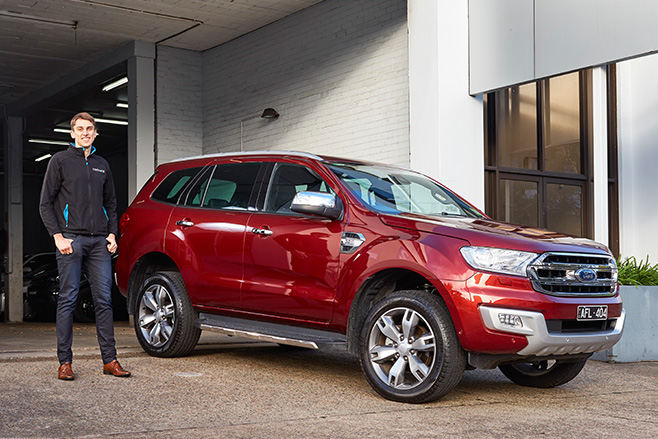
Carhood will receive an expanded fleet of new Ford vehicles to be made available for hire as part of the deal – including the new Ford Mustang.
The additional benefits of using Carhood for Ford customers include a complementary kerb-side chauffer service and car wash.
The ridesharing platform currently operates in three locations adjacent to Australia’s main airports: Tullamarine in Melbourne, Mascot in Sydney, and Eagle Farm in Brisbane.
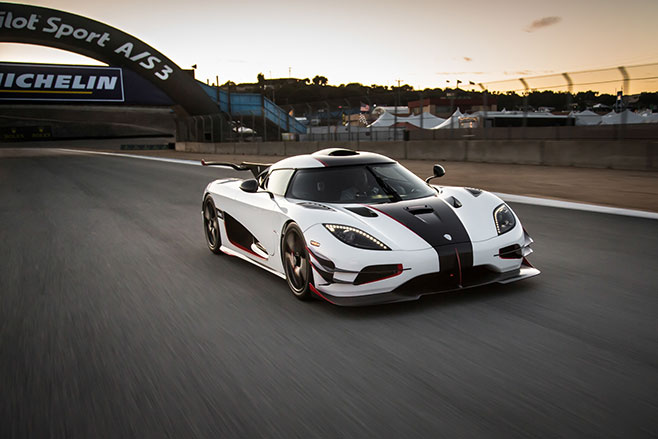
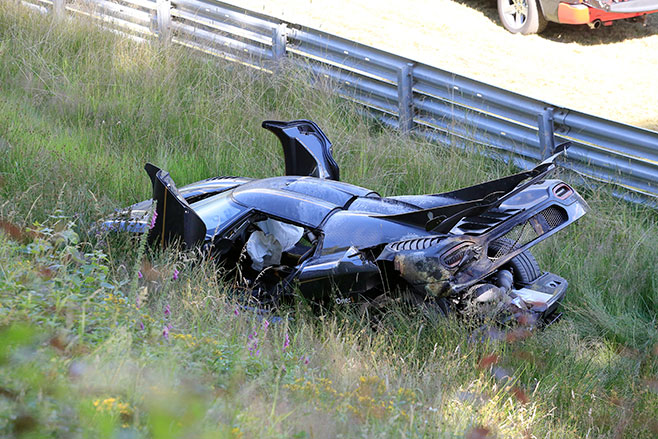
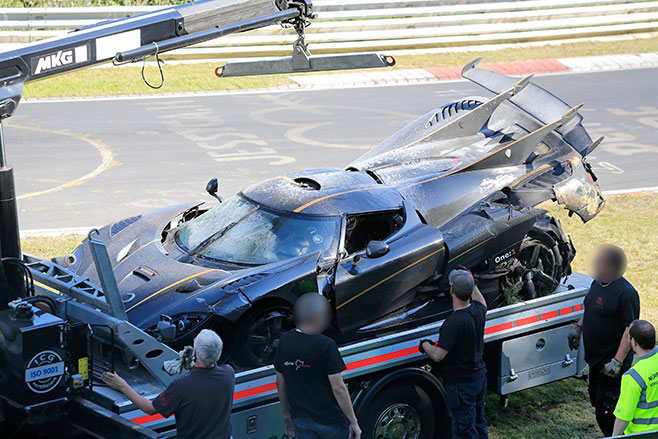
Koenigsegg’s mighty 1000kW/1371Nm One:1 ‘Megacar’ has suffered a huge accident during testing at the Nurburgring.
Having established the 0-300-0km/h record for production cars, the Swedish manufacturer has been testing at the ’Ring over the last two months ahead of an attempt on the production car lap record, currently held by the Porsche 918 Spyder.
In a statement released following the accident, Koenigsegg stated that the driver was taken to hospital but released later the same day and said the accident “is confirmation of just how difficult it is to drive at this level on the world’s ultimate proving ground.”
Record attempts at the Nurburgring were banned in early 2015 following a racing accident where a Nissan GT3 car became airborne, clearing the fence and killing a spectator. The ban was lifted in March 2016 following modifications to the track.
FORD has admitted it could have handled the timing of its factory closure – scheduled to occur on the same day Australian motorsport kicks off its most iconic Ford versus Holden battle – a little bit better.
An editorial published in the June issue of Wheels called out the carmaker for locking in its closure date of October 7, the same day as the Supercars run their qualifying sessions for the Bathurst 1000 at Mount Panorama – one of the hottest and most sacred of rivalries in Australian culture.
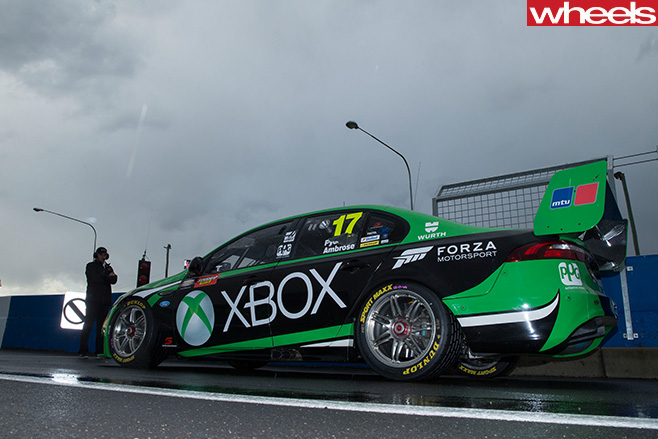
“We will suffer the slings and arrows, we understand that somebody might consider that an affront,” Ford Australia president Graeme Whickman told motoring.com.au.
“There is no ill-feeling behind that decision. It’s not supposed to be inflammatory to Bathurst. What happens if we do it a week later, or two days after? I think there is going to be some energy around that, so it’s a no-win situation,” he said.
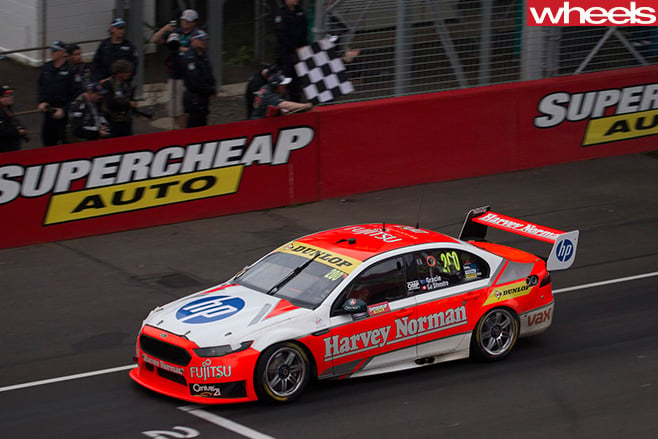
The editorial in the June issue of Wheels took Ford Australia to task over its choice of dates to end its Australian production.
“Ford’s decision to close Broadmeadows on the Bathurst 1000 weekend shows scant respect for generations of Ford fans, or to the country that supported it for 56 years,” Wheels editor Glenn Butler wrote.
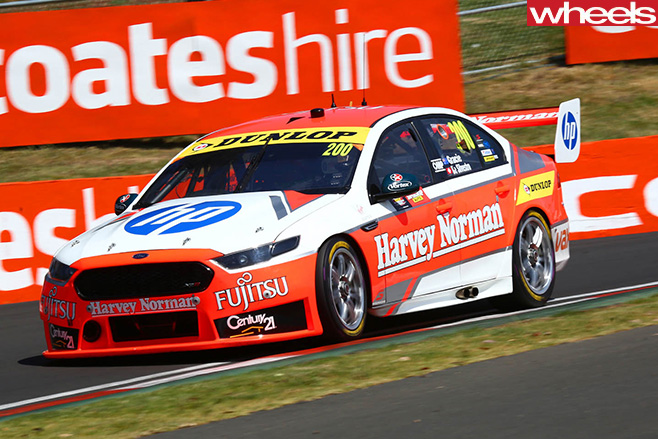
“Or is there some kind of bizarre deference in shuttering six decades of Australian-made pride on the same day automotive gladiators fight for honour and glory on hallowed tarmac where Ford has won 20 times, all bar two in Australian-made Falcons conceived and created at Broadmeadows.”
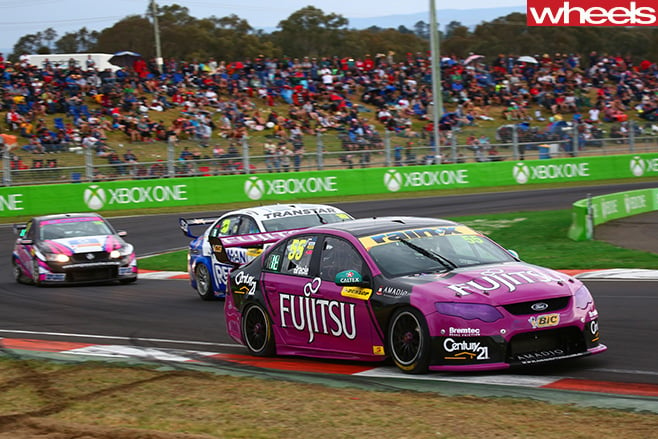
However, it has been confirmed that it won’t be a Ford Territory; the SUV that has done much to build precious scale, and save the Australian carmaking operations by winning the hearts and wallets of a new generation of Ford buyers, and that will live on with the badge in the guise of a fully imported replacement.

THE decision to introduce the Holden Cruze to local production in 2011 was at once perplexing and resolute.
For the local factory it was a ticket to the future, a crazy/brave idea that defied logic: small cars only make small profits, after all. Plus, it was expected to hold back a currency-powered wave of small-car imports while supporting the Commodore as it declined gradually towards its next generation. That’s quite a job spec.
On the other hand, it was a determined vote of confidence in the future of local carmaking. The Cruze could be the saviour by bringing vital volume to Elizabeth, ensuring it could reach economic levels by producing two models. But there were a number of things that the Cruze could not be.
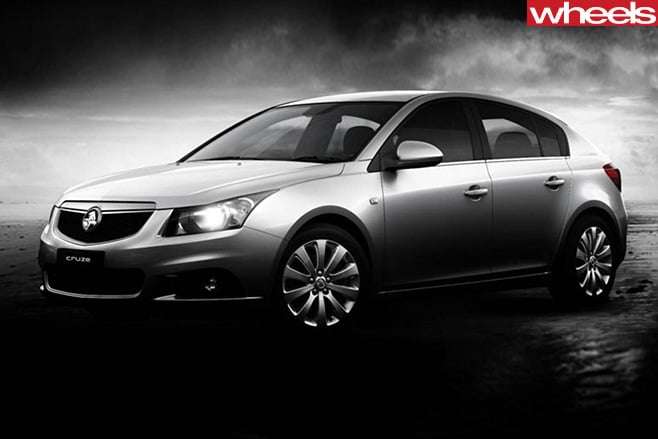
Holden has announced local production of the Cruze hatch and sedan will end on October 7. Was it the right car for Australia?
As things turned out, the Cruze became Holden’s last roll of the manufacturing dice, bringing an end rather than a new start, and that’s where Australia really lost out. If Holden had known the Cruze was going to be its last all-new model, is it possible the company might have done something different?
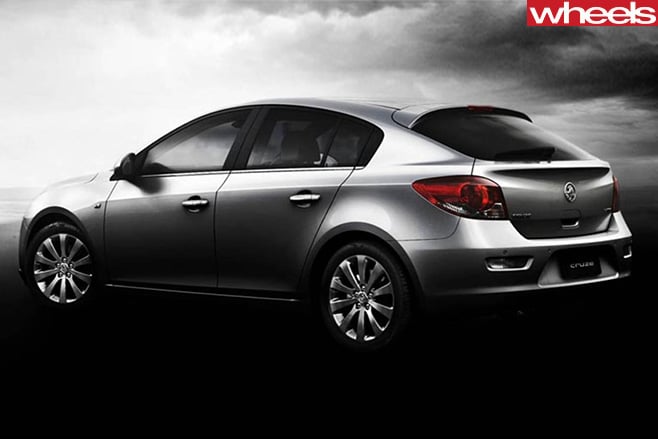
Think the Studebaker Avanti – a sharply styled fibreglass coupe with a supercharged V8 – or the Citroen SM – a Maserati-engined coupe bristling with features, including all of Citroen’s hydraulic trickery – and even Bugatti’s Type 57 Atlantic coupe, now worth more than $40 million if any of the three owners would offer one for sale.
If the sober suits at Fishermens Bend had been thinking along these lines, they might have put Richard Ferlazzo’s Efijy into production, although volume might have been an issue. Regardless, it’s a sure bet no one will be offering $40 million for a Cruze in 60 years.
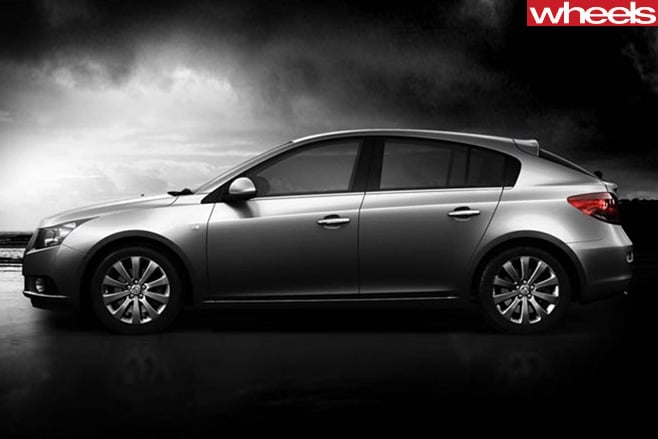
It looked as though the Cruze was ready to take over the leadership in that small field of runners as the Commodore faded, but the Cruze never matched, let along got past, its big brother.
For Holden, the 2011 launch of the locally made Cruze was a frustrating rerun of the Holden VE Commodore launch in 2006, where macroeconomics undermined their best efforts. After years of hard work, the $1 billion 3.6-litre VE had to be released onto a market being roiled by record world oil prices.
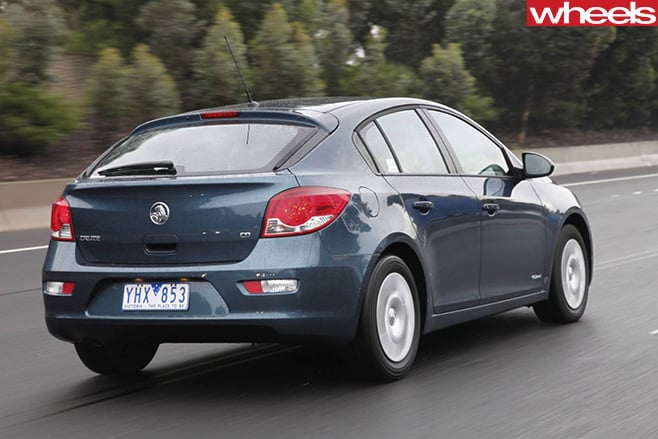
The dollar parity did help with the Cruze’s imported drivetrains, but with the US dollar a massive 33 per cent above the historical average of US75c, importers were able to load up on extra equipment without busting their price points. It was like giving the opposition a free kick in front of goal every time your team touched the ball. The dollar was still above US90c in the second half of 2014.
And you can tell all those critics who repeatedly claim that “they don’t make cars Australians want to buy” to pull their heads in. The Cruze was a gutsy attempt to move with the times, even though it meant moving away from Australia’s speciality: D segment 6s such as the Commodore and Falcon. It wasn’t the first time Holden had tried it.
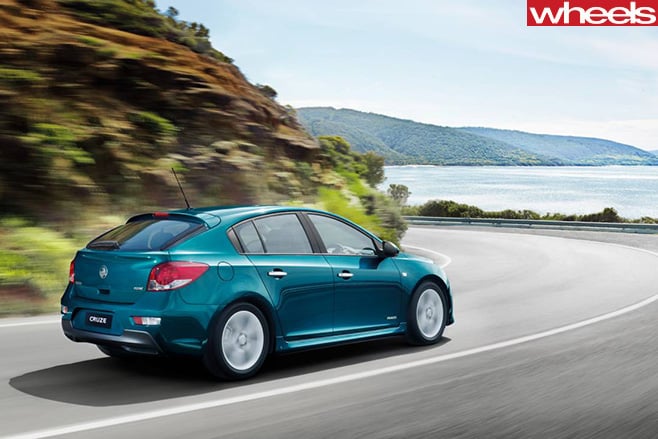
But affluent Australians demanded more and more Commodores, so Holden dropped the Vectra and switched Elizabeth back to 100 per cent big cars in 2000. Come the Global Financial Crisis in 2007 and Australians didn’t think they were so affluent any more, and they started looking at smaller cars and SUVs.
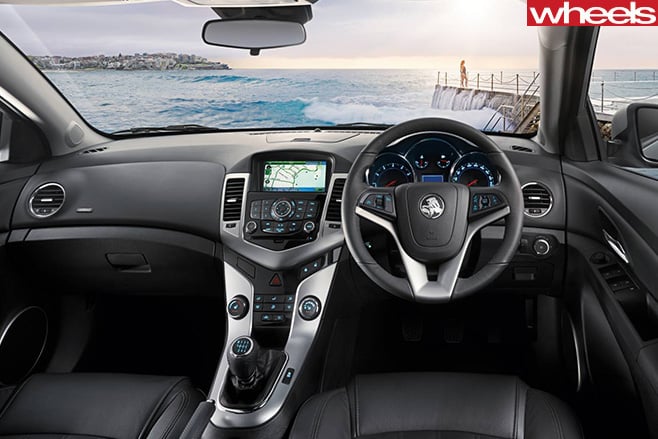
The Cruze was going to be a key plank in Holden’s manufacturing platform until the government of Tony Abbott (“I want the motor industry in this country, every aspect of it, to thrive. I really do.”) decided to bully General Motors into throwing in the towel.
The result is that General Motors will make much bigger profits in Australia than before, fewer Australians will be employed, what’s left of Australian manufacturing will no longer be an early adopter of the latest manufacturing technology and the country’s trade deficit will climb ever higher.
Elizabeth Cruze. RIP.
Ferrari’s slide a concern
Is Ferrari now the third-ranked team behind Red Bull?
Ferrari president Sergio Marchionne was in Maranello last week for deep and meaningful debriefs with key F1 team people in a last ditch effort to rediscover winning ways against an emergent Red Bull.
Ferrari has not won a race this season and the margin over third-placed Red Bull in the constructors’ championship has quickly shrunk to six points in the face of Red Bull’s improved competitiveness in recent races.
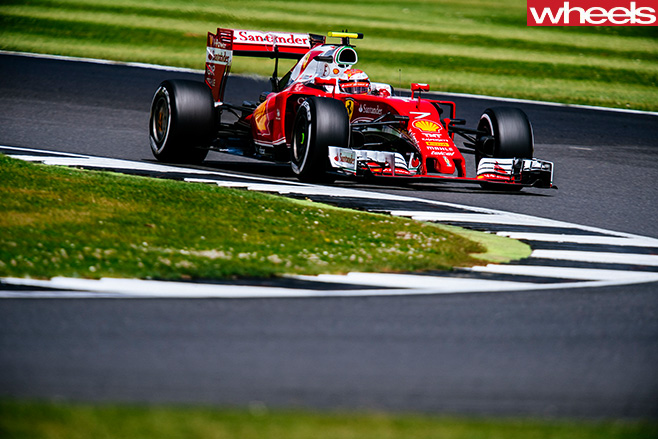
Ferrari was particularly disappointing in the recent British Grand Prix, and Marchionne wants to know why. According to motorsport.com, some tough questions have been asked of key engineers in the chassis and aero departments.
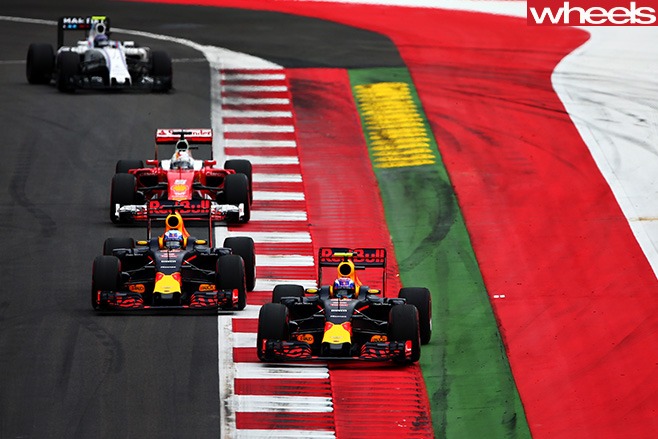
Cheekily, Red Bull’s Christian Horner says his team now has nothing to worry about from Ferrari this year, allowing his squad to focus on catching the runaway Mercs.
Horner believes upcoming grand prix circuits play to some of the strengths of his cars.
The Team Principal also feels Verstappen and Ricciardo can challenge Mercedes on pure pace at next weekend’s Hungarian Grand Prix.
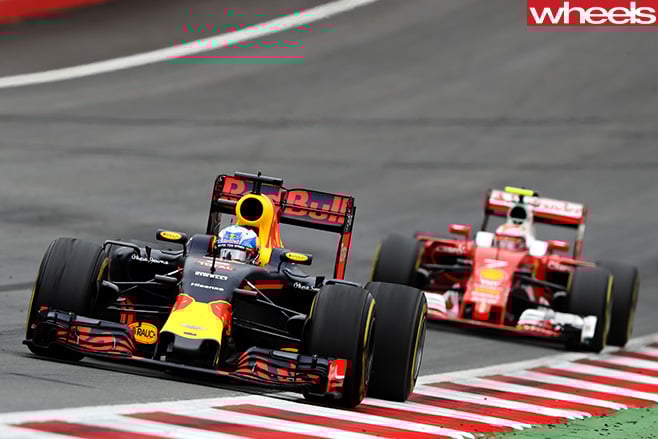
But he has grabbed reverse this year and as a four-times champ and high achiever will not be thrilled to be winless and a long way from being a championship threat.
Did someone suggest it’s a familiar pattern to ex Ferrari star Fernando Alonso?
The Spaniard ultimately lost his enthusiasm and patience with Ferrari and headed elsewhere, to McLaren (okay that hasn’t borne fruit yet…).
The current Ferrari lacks downforce – a pain on fast tracks) and according to Kimi Raikkonen also has a perilously narrow setup window.
Verstappen’s arrival a benefit to both Red Bull drivers
Daniel Ricciardo sees the positives in the Dutchman’s elevation from Toro Rosso
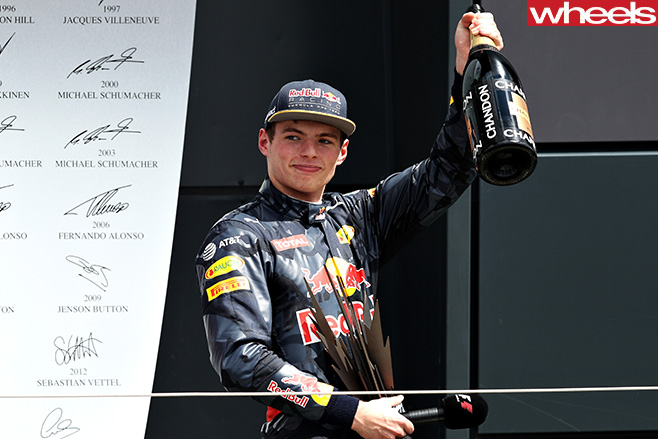
Verstappen is enjoying a purple patch since being promoted to the Red Bull, winning his first grand prix in Spain, and then collecting a pair of second-place finishes in Austria and Britain.
F1 media darling Verstappen has indisputably benefited from the misfortunate of others but he certainly mixes adventurous pace with impressive racecraft.
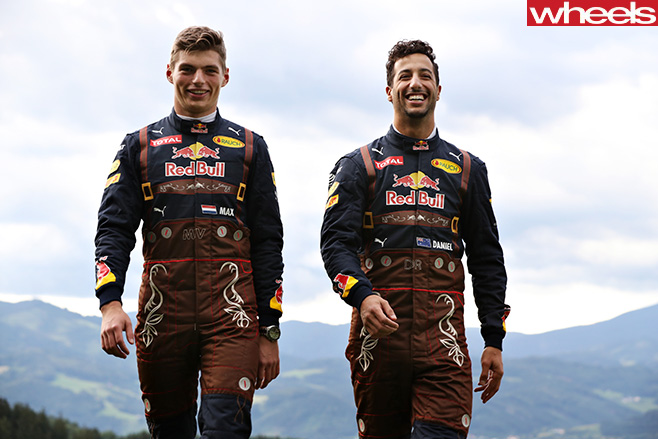
He remains upbeat. “With myself, he’s [Max} pushing, he’s doing really well and I obviously want to try and keep on top of it.
“I’m sure it’s bringing out a bit more in both of us.”
Legendary Flying Finn here for celebrations
Rauno Aaltonen returning to Australia for inaugural Southern Cross Rally Festival
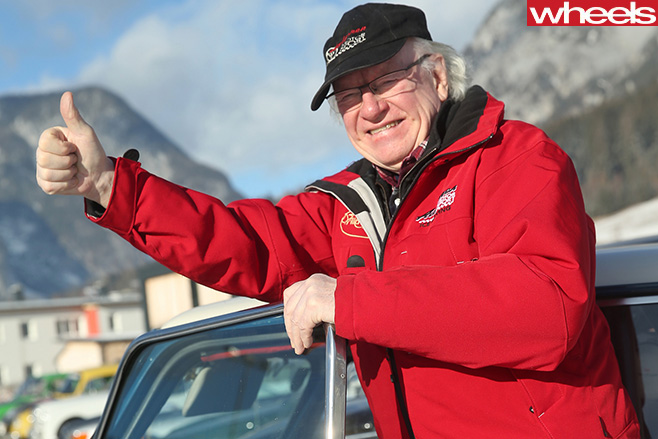
The versatile Aaltonen was a motor sporting household name globally and a hero locally for his exploits with Morris Coopers in rallying and the Bathurst 500 in the 1960s and ‘70s
Best known for his outstanding success around the world in rallying, Aaltonen was equally capable on the race circuit which he demonstrated convincingly during his visit to Australia as a member of the BMC team in 1966 by winning the then Gallaher 500 (miler) at Bathurst (on his first attempt) with local driver Bob Holden in a Mini Cooper S.
Just three days later the first Southern Cross Rally started from Sydney and Aaltonen was well placed among the leaders in the field during the first two nights until mechanical failure forced him to retire from the event.
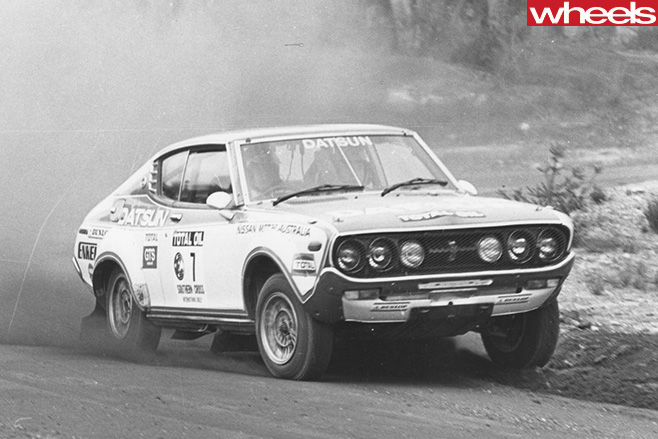
A still animated and energetic Aaltonen, now 78, lives in Turku, Finland, and still participates actively in many motoring-related activities that include vehicle development consultancies and operating his ‘High Performance’ ice driving school along with son Tino.
Aaltonen’s well-documented achievements as a rally driver began when in his early 20s, winning the Finnish Rally Championship title outright in 1961 and again in 1965, along with many of the major events on the European Rally Championship calendars, (forerunner to the current World Rally Championship), and claiming the title of European Rally Champion Driver in 1965.
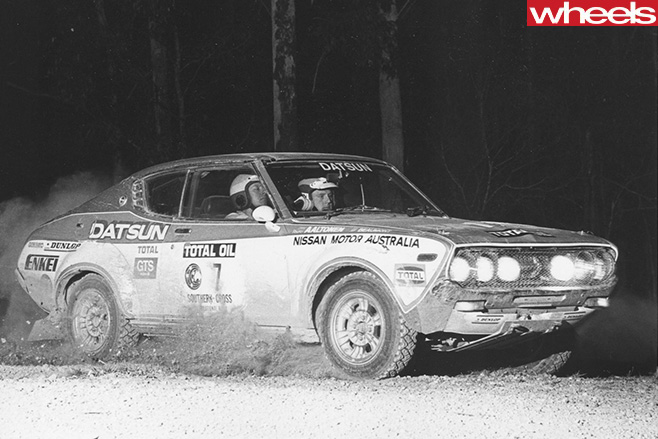
He was part of the successful Holden factory effort in the 1979 Repco Trial when he, the late Shekhar Mehta and the late Barry Lake finished third. And what a shame it is that Barry Lake is no long around to welcome his old driving colleague back to Australia.
The group loosely called the Flying Finns – Aaltonen, Timo Mäkinen and Simo Lampinen – presented the world with a new generation of rally drivers in the 1960s. They were faster than any before them; having been brought up on the snow, ice and loose gravel-covered roads of their native Finland, and inheriting the art of left-foot braking from the likes of Eric Carlsson, they delivered a press-on driving style that delighted spectators.
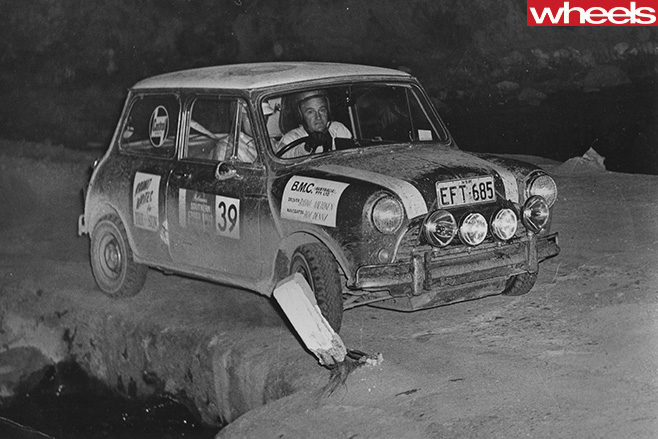
The Southern Cross Rally festivities commence on Friday, October 21 with three days at Melbourne’s Motorclassica exhibition, featuring special guest appearances along with displays of rally memorabilia and historic competition vehicles, before heading to Healesville for the Official Start of the touring road event activities on Monday, October 24.
Following the wrap up of the Southern Cross Rally Festival celebrations, it is anticipated many will head for a day out at the Muscle Car Masters at Sydney’s Motorsport Park on Sunday, October 30, 2016. This meet will feature Rauno Aaltonen teaming with Bob Holden during a special tribute of their convincing win and the parade of Minis that took the first nine places in the Gallaher 500 at Bathurst in October 1966.
Indie MotoGP teams fund boost
Deal finalised which means all Independent teams receive increased financial support from 2017
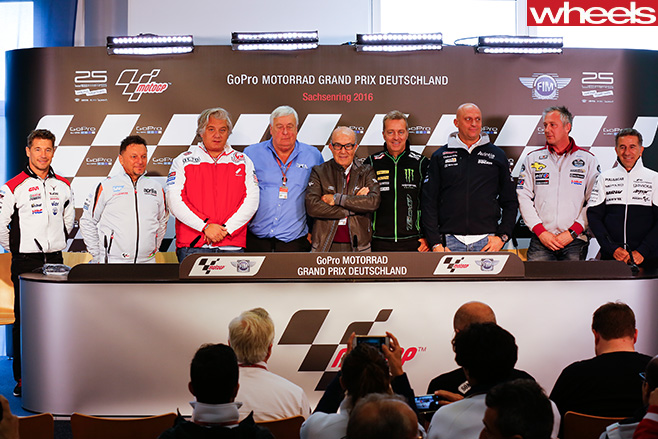
This deal, which will be a welcome boost to the budget of the non-factory outfits including Jack Miller’s Estrella Galicia 0,0 Marc VDS, is part of a new agreement between IRTA and the teams. The cost is set to be capped at a maximum of 2.2 million Euros, giving an independent team two bikes for a single rider. Were another manufacturer to enter or return to the grid, they would run under one of the current independent teams.
This announcement was made at a Friday press conference in Germany attended by Dorna Sports CEO Carmelo Ezpeleta, and IRTA CEO Mike Trimby, along with teams’ bosses Lucio Cecchinello (LCR) Honda, Fausto Gresini (Aprilia Racing Team Gresini), Paolo Campinotti (OCTO Pramac Yakhnich, Hervé Poncharal (Monster Yamaha Tech 3), Raúl Romero (Avintia Racing), Michael Bartholemy (Estrella Galicia 0,0 Marc VDS), and Jorge Martinez “Aspar” (Pull & Bear Aspar Ducati Team).
“Until 2021 this gives the teams the exclusive right to participate as independent teams,” commented Ezpeleta. “Lucio and LCR will have the chance to expand to fill the grid with a second bike for a total of 24 bikes, then all the teams have two slots.”
Ezpeleta went on to insist that “never will there be more than 24 bikes”.
If it wasn’t for the recent banquet of homegrown muscle, you probably would’ve heard more about the Chrysler 300 SRT in these pages.
Particularly since late last year Daimler HQ swapped its tired five-speed auto for a trick ZF eight-speed, and upgraded its former, tad-blunt steering – two changes which have made the SRT a very solid alternative to something like a HSV Clubsport R8 LSA.
This much was revealed in our January 2016 issue, the refreshed 300 SRT losing a fight to the R8 LSA, but it was much closer than we were expecting. So much so, we thought it high time we got to know the 300 SRT a little better, and so this month we welcome AEZ-878 to MOTOR HQ for an extended stay.
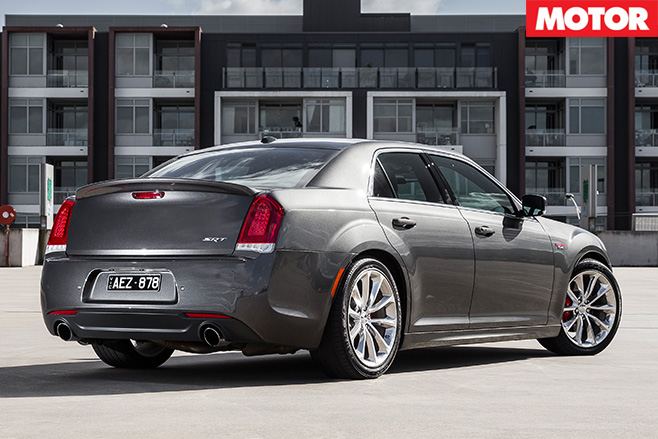
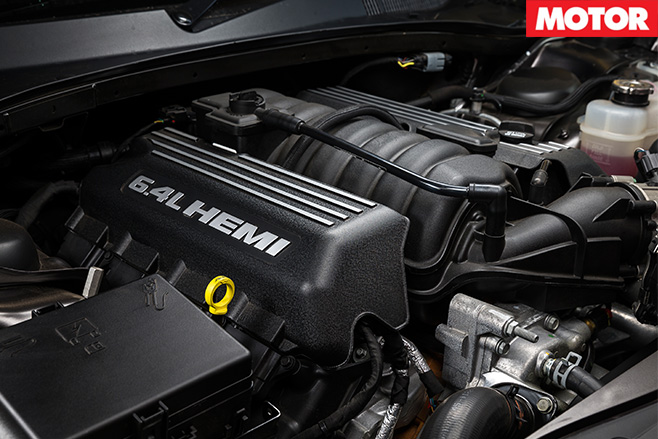
That atmo, pushrod Hemi V8 serves up 350kW and 637Nm and makes the rudest noise in the process (more on that), good for 0-100km/h in a launch control-assisted 4.49sec (our number). On the same day it did a 12.6sec quarter at 180.54km/h, quicker by a blink than its Clubsport combatant.
And it’s loaded to the hilt with goodies: radar cruise control, adaptive dampers, blind spot monitoring, auto-emergency braking, lane-keep assist, 19-speaker stereo, 20-inch forged wheels, rich TFT instrument display… it’s no wonder it weighs 1965kg.
In the metal the 300 SRT looks tougher than the pictures, a great big slab of American attitude. Attention-seekers might initially be thrown off by its subtlety but we’ve been surprised how many heads it turns.
Particularly if the throttle’s wide open. Oh, the sweet, sweet racket it makes. Of all the modern V8s I’ve driven I’ve no hesitation putting this car in my top three for noise. In the upper revs, the 300 SRT has an induction snarl like a junior V8 Supercar. On hard upchanges there’s a crisp exhaust blat, and in the wet your throttle application might be very ambitious indeed just to hear an angry spike of revs as the rear treads struggle for grip. Satisfying? You bet.
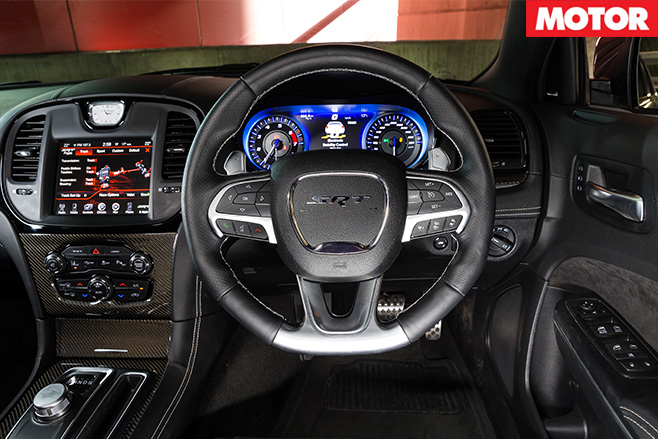
The jury might be a bit out on its handling for now but overall, it’s an easy car to like – the noise, the grunt, the ESP acting like an irresponsible parent letting you play around in the wet even in normal mode. In general the 300 SRT does a lot of things right. Gripes?
The fuel economy is going to send MOTOR broke and the interior is a little low rent in places, but perhaps most tellingly, we do wonder how much we’d want to do with the 300 SRT if it had a twin-turbo V6. But it doesn’t. So for now, join us in welcoming the 300 SRT.
MONTH ONE
LIKED: Not much can beat a rear-drive V8 with a limited slip diff and ‘lenient’ ESP calibration. DISLIKED: Bit of a plus-sized model this one. FAVOURITE MOMENT: Full-noise upshifts with the steering paddles. So crisp, the noise so good.
Fuel This Month: 16.6L/100km Average: 16.6L/100km Distance This Month: 309.3km Total: 9877km
Want to see more of our Chrysler 300 SRT long-termer?
Toby Hagon takes one of the fastest racers in the world – the Mercedes-Benz AMG GT3 for a lap or two around Eastern Creek.
THE ROAR of an atmo V8 is borderline vulgar, especially when it’s belching out of two side exit exhausts just inches from my derriere, itself seemingly millimetres from the smooth Sydney Motorsport Park circuit.
Welcome to life in Mercedes-Benz’s race-ready bruiser, the AMG GT3, one of the most spectacular-looking machines taking part in the GT3 race series that is creating some serious excitement at Mount Panorama for 12 hours each February.
This is no normal Merc. You get that as soon as that engine barks to life. Refinement, too, is nowhere near the levels the luxury brigade would expect from the three-pointed star.
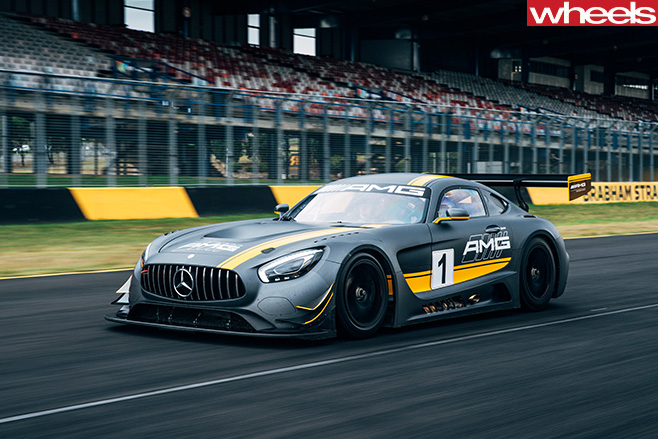
It’s about getting you there quickly; “there” being back around to the start/finish line.
That’s rammed home just trying to get into the thing. Slotting my generous frame into Mercedes-Benz’s purpose built racer is like a mix of yoga and Twister dots. The seat, with its extensive head-protectors blocking half the door way, is fixed, carefully positioned around the roll cage and directly below the rescue hatch that pops out of the roof in the event you go belly up.
That’s one thing I’m hoping not to add to my experiences today. This race-ready version of the GT S is one of the rarest cars in the world; while orders are slowly being filled, for now there are just 16 of them, four in Australia.
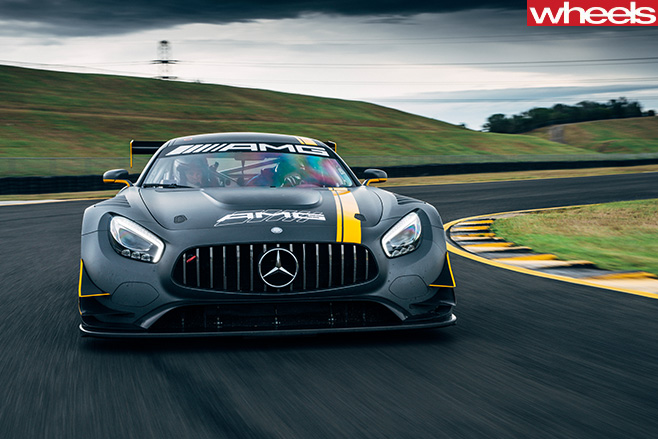
Press the unassuming start/stop button on said steering implement – one of many buttons within its diminutive dimensions – and conversation stops when the V8 fires to life. It’s a serious bellow.
The GT3 doesn’t get the new twin-turbo V8 engine that is part of all road-going GTs, instead making do with the old school 6.2 atmo V8.
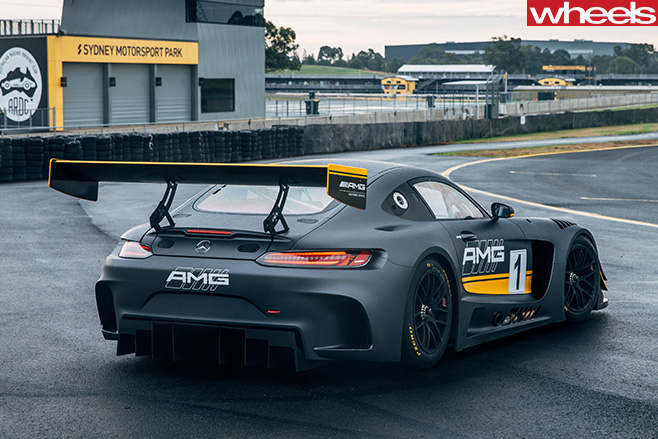
Disengage the 40km/h pitlane limiter and it’s all road noise, gearbox whine and the ping of every rock or marble firing off the wheel arches. Insulation only slows you down, so it’s left on the sidelines.
Prior to taking the hot seat, chief instructor Peter Hackett hits us with some key stats: In qualifying trim – fresh tyres and with everything dialed up – it’ll be flat through Eastern Creek’s turn one, the speedo tickling 245km/h. Having held on to fast road cars at 180km/h through the same bend that’s one heck of a speed.
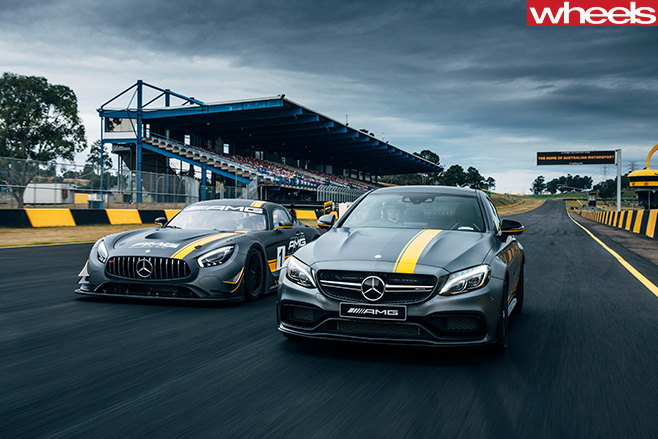
Oh, and the latest race-ready version of a road car – produced to adhere to the global GT3 regulations – has been designed for amateurs.
Yet from my early sighting lap it’s clear this is a car that doesn’t want to be driven gently.
The engine gives you that. It sounds good at 3000rpm, but positively glorious beyond 7000rpm. Acceleration is potent, especially jumping out of Eastern Creek’s slow hairpin. It’s helped by the sticky 18-inch Pirelli slicks.
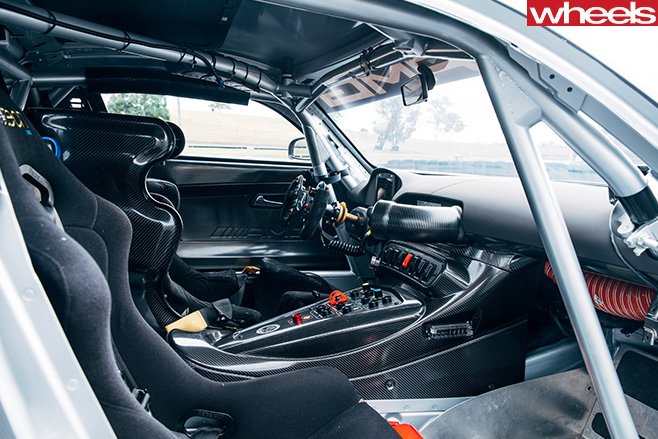
The seven-speed sequential gearbox does dish out some accelerative pain, though. Super-fast, sharp changes ensure every millisecond is used dutifully. The button clutch has no give, sending a forward-thrusting jolt through the car like a sledgehammer has been wielded into the tail.
But it’s corners that quickly show the GT3’s ability – and prove why it’s quicker than so many other racers. The already direct front-end of the AMG GT S has newfound bite in the race version. Steering is super direct and, again, those slicks show little sign of letting up. Push on and you’ll get a sniff of understeer, but the limits are super high.
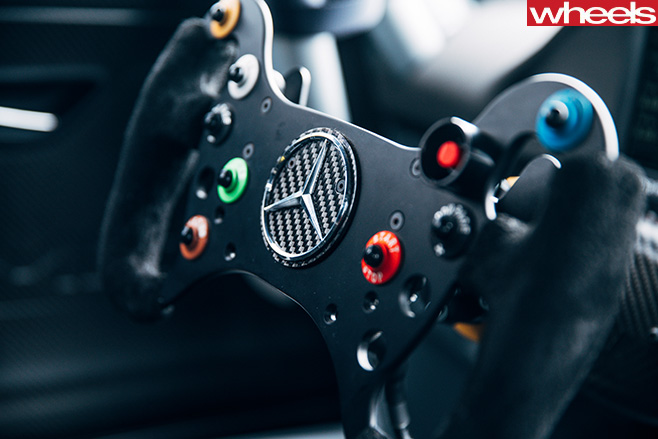
Not that I’m anywhere near testing the limits through the fast turn one. I roll out of the accelerator at 200-and-something half way down the straight. The most obvious sensation through the first left-hand sweeper is how easy it is to re-adjust; minute steering inputs confidently position the car precisely where you direct it, further confirmation that there’s plenty left in this near-million-dollar machine.
It’s over all too quickly, although the car could clearly cop plenty more.
SPECS Model: Mercedes-AMG GT3 Engine: 6208cc V8 Power: N/A Torque: N/A Gearbox: Seven-speed sequential Weight: (Homologated) 1285kg Tyres: 18-inch Pirelli slicks Price: €372,000; but budget for north of A$1 million once you add in LCT, GST some spares and a year of running costs.
WHATEVER sort of day you’re having today, spare a thought for a professional pilot in Germany. His Koenigsegg One:1, one of only eight of the $3.8 million supercars to ever be built, has crashed spectacularly at the Green Hell early this morning while setting up for a pitch at a lap record of the track.
“Koenigsegg Automotive AB can confirm reports online that a Koenigsegg One:1 was involved in a crash during testing as part of Industry Pool at the Nurburgring on Monday, 18 July,” the boutique Swedish carmaker said in a statement released just hours ago confirming the expensive day out at the track.
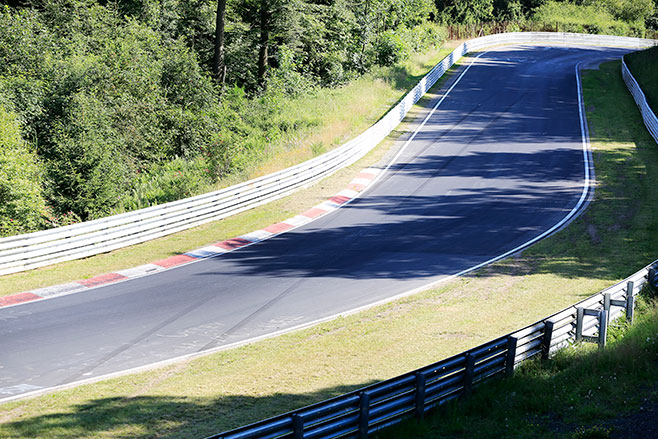
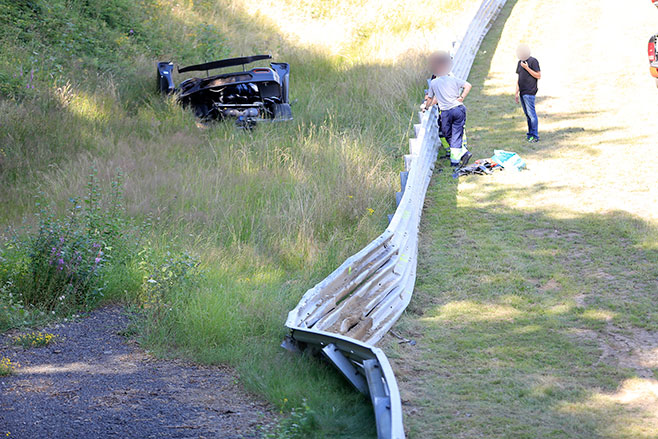
According to witnesses, the One:1 jumped the guardrail, and caught fire briefly before the flames were extinguished.
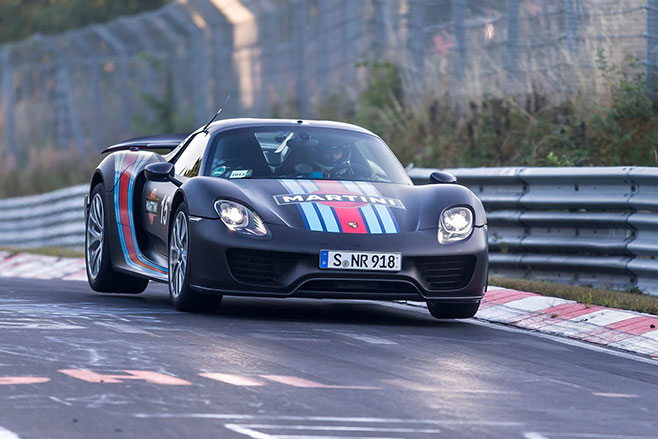
Koenigsegg admitted the mid-engined twin-turbocharged 5.0-litre V8-powered One:1 had been at the track as part of its preparations for an all-out assault on the production car track record, a seemingly untouchable 6:57.00 set by a Porsche 918 Spyder in 2013 (pictured below).
“This is an inherently dangerous undertaking that must be conducted progressively and methodically, working point by point on all areas of our highly adjustable vehicles.
“This incident is confirmation of just how difficult it is to drive at this level on the world’s ultimate proving ground.
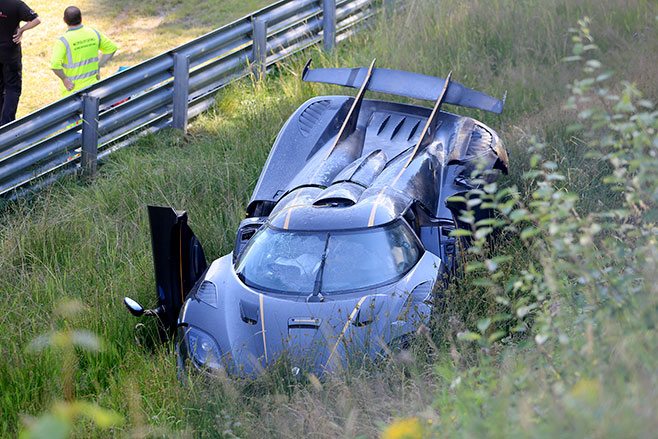
Dismayed is one way of describing the sensation. Images show a full airbag deployment in the crash, although the safety cell built around the cabin remained intact. The dihedral synchro-helix actuation doors, a Koenigsegg signature, were still able to open.
Koenigsegg hasn’t placed a number on how powerful the One:1 is, preferring instead to call it a “megawatt” supercar. Maximum torque is 1371Nm at 6000rpm.
Koenigsegg’s best lap record on the Nurburgring is held by the CCX, set in 2006. It pegged a 7:33.55. Only 49 of the 593kW supercars were built.
