Ferrari has used the Miami F1 GP to reveal itu2019s all-new V12 flagship
Called 12Cilindri, the name translates as the u2018Ferrari 12 Cylindersu2019
Coupe and Spider versions both revealed, set to carry price tags of $800,000+ in Australia
Deliveries to commence in Q4 2024; Aussie cars expected to arrive in second half of 2025
If the seemingly relentless push towards electrification and downsizing has you feeling glum, we suggest you wrap your peepers around this.
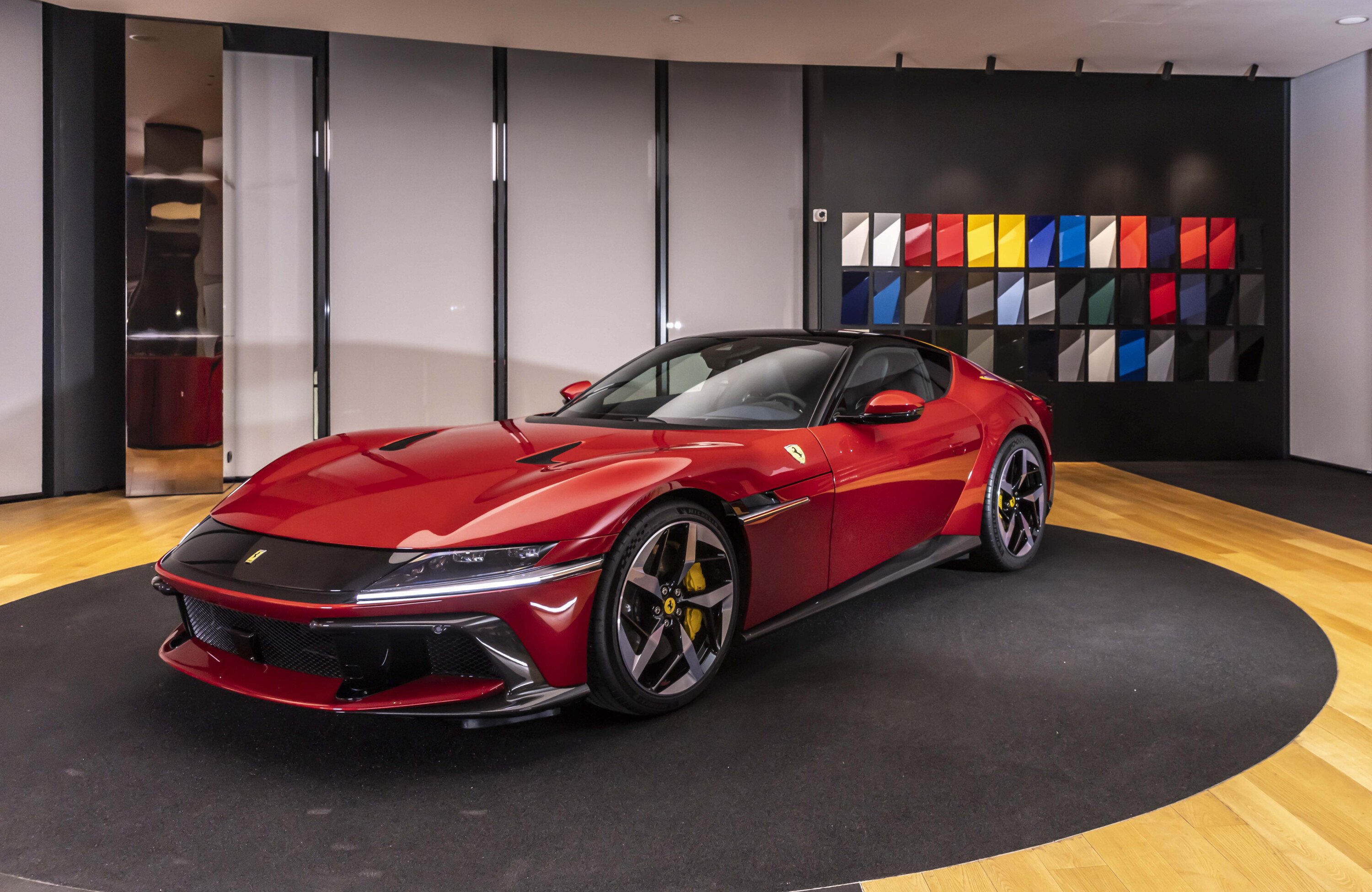
It’s Ferrari’s all-new V12 flagship; a futuristic and surprisingly different-looking replacement to the brilliant 812 Superfast that is so obsessed with its own, even more powerful 12-cylinder engine that it has named itself after it: the Ferrari 12Cilindri.
Italian a little rusty? Translation: the Ferrari 12 Cylinders.
1
Revealed on the eve of the Miami Formula 1 grand prix at a swanky event on Miami Beach, the 12Cilindri is the latest iteration of Maranello’s iconic front-engine V12 lineage and, as you’d expect, it packs some serious performance numbers.
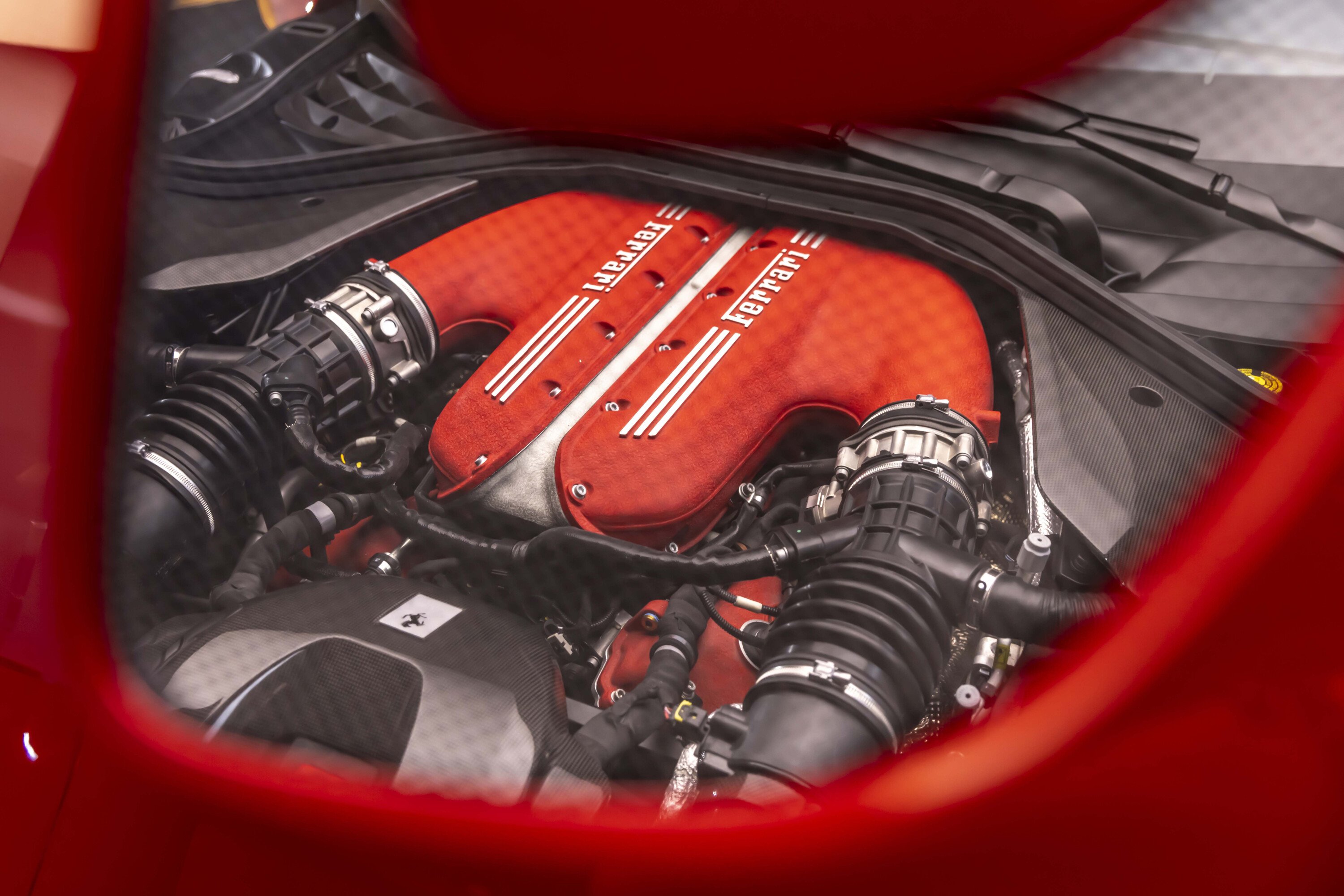
Power comes from Ferrari’s venerable F140 6.5-litre V12, an engine first used in the Enzo and later in the F12, 812 SF and Purosangue, but heavy modifications and fresh internals have lifted power to 610kW at a heady 9500rpm.
That’s a 22kW jump over the already obscenely powerful 812SF but it’s the higher rev limit that promises to truly elevate the driving experience.
1
While the 812 SF made peak power at 8500rpm, the 12Cilindri still has another 1000rpm to go. Only the 812 Competizione can match the 12Cilindri for redline top trumps.
The trade off with a higher rev-limit is slightly less torque (678Nm @ 7250rpm plays 718Nm @ 6750rpm in the 812 SF) but Ferrari’s engineers have worked hard to ensure the 12Cilindri doesn’t only rev more cleanly but that 80 percent of its torque is available from just 2500rpm.
Straight line performance? About on par with a the 812 Superfast. 0-100kmh takes 2.9 seconds, 200km/h is dispatched in 7.9sec and, if you have enough space, top speed is 340km/h.
1
A Spider version was also revealed and naturally it’s a little heavier (60kg to be precise) so it’s not quite as blistering. 0-100kmh takes 2.95 seconds, while 200km/h takes 8.2sec. Happily, the top speed is the same which should do wonders to your hair when the roof is down.
Underneath the 12Cilindri uses an all-new aluminium chassis that Ferrari says is 15 percent stiffer. The wheelbase is 20mm shorter than 812 SF, too, but the car itself is bigger. Overall length has grown by 76mm, width is now 56mm girthier and height is up by 16mm.
2
Despite new aluminium chassis, which also employs a new 100 percent recycled alloy for the gearbox strut towers, weight has crept up slightly to 1560kg dry for the Coupe and 1620kg for the Spider. That’s an increase of around 35kg over the 812 SF.
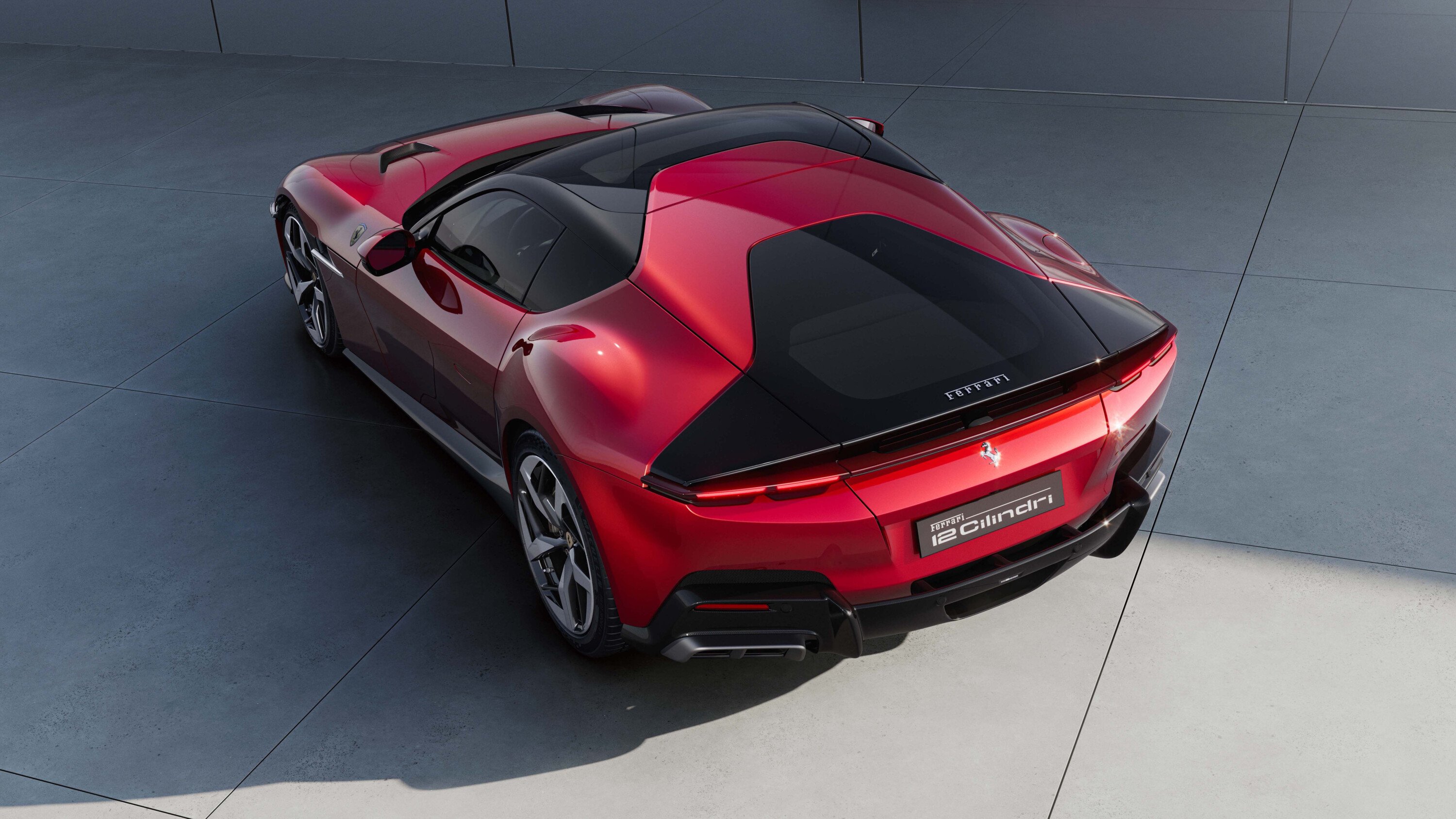
Now, the design. Quite the departure from the sculptural, vent-infused 812 SF isn’t it? Ferrari says it was targeting a cleaner look and the great expanse of the monolithic bonnet (which is now a single piece and front hinged) is interrupted only by two small cooling vents. The wrap-round headlight treatment is another bold change — anyone else picking up strong 365 vibes there? — and coupe versions sport an enormous glass roof.
10
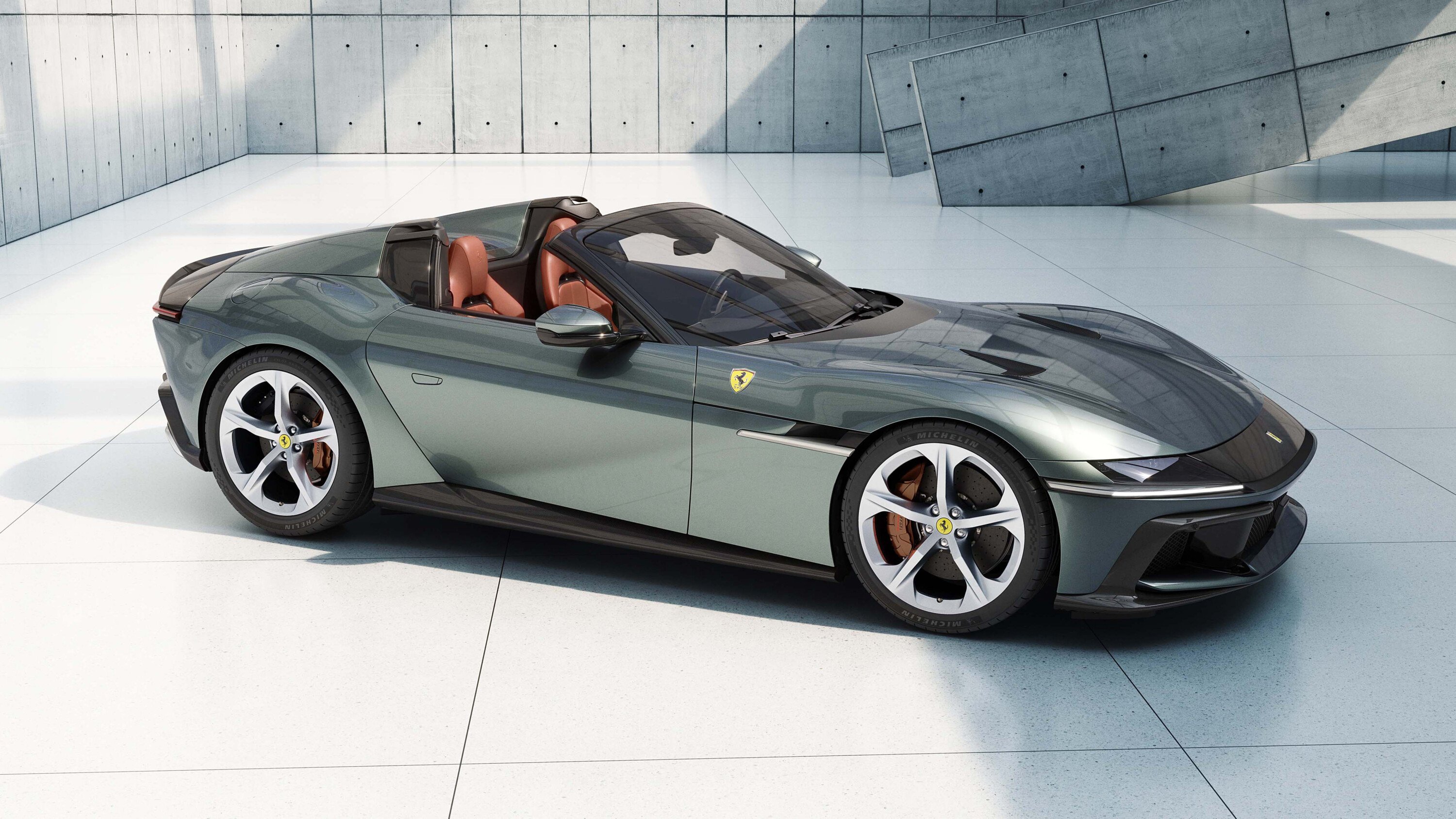
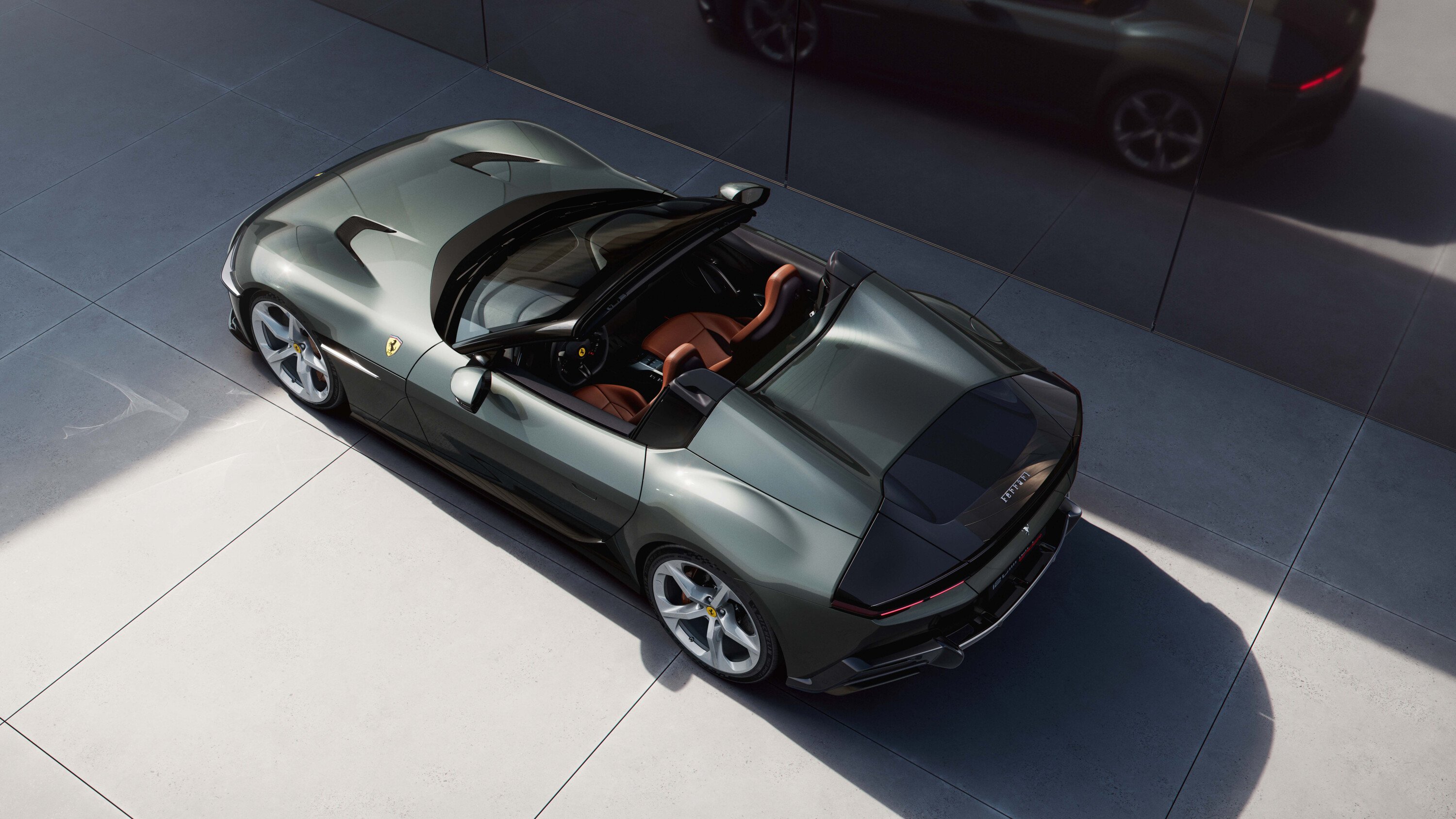
Beauty is subjective but to our eyes the Spider is the prettier of the pair. It loses the giant section of black rear glass and instead features a pair of buttresses just ahead of the shrink-wrapped rear wheel arches. Speaking of, wheel sizes have crept up an inch over the 812SF to 21-inches.
As you’d expect, there’s a lot of aerodynamic wizardry at play, including a twin element active rear wing with two settings: low drag of high downforce. Below 60km/h and above 300km/h the elements stay hidden to reduce drag but between those speeds they rise and vary their height depending on the car’s speed and load.
3
LONG LIVE THE V12!
If, like us, you had a fearful moment that calling this car the ‘12 cylinders’ means it could be a send off to the big 6.5-litre V12, rest easy. Ferrari has previously confirmed it will keep building the V12, without hybrid assistance, for as long as possible.
While it made its debut in the Enzo back in 2002, the F140 V12 has undergone hefty changes since then. The F140 GA used in the 812 SF, for example, was claimed to be 75 percent new and increased capacity from 6.3L to 6.5.
To help the big unit rev even harder in the 12Cilindri, where it’s known as the F140 HD, Ferrari has worked hard to reduce weight and free up the inertia of the internals. Titanium conrods deliver a 40 percent saving in rotational mass compared to ones made from steel and the crankshaft has been rebalanced and made 3 percent lighter. Aluminium alloy is also used for the pistons and the changes result in an engine that Ferrari says delivers “instantaneous pick-up for maximum accelerator response and a feeling of “never-ending power”.
Further underscoring that sense of bottomless performance is the inclusion of Ferrari’s torque staging software, known here as ‘Aspirated torque shaping’, which manipulates the torque curve in third and fourth gears for even more savage feeling acceleration.
A new exhaust system with shorter intake tracts and a ceramic catalytic converter also feature and the big V12’s cooling system has also been completely overhauled.
The 812 SF’s 7-speed dual clutch gearbox has been replaced with a new 8-speed DCT lifted largely from the SF90, although shift times have been improved and are now 30 percent faster compared with previous V12 applications.
As is the Ferrari way, there’s an armada of complex chassis and software control systems to help harness the performance. Four wheel steering, which can manage the movement of each wheel individually, has been lifted from the 812 SF Competizione and the brakes now feature the same brake-by-wire braking ABS Evo set-up found in the 296 GTB and SF90 XX.
Ferrari’s latest 6D sensor is used to manage all of the systems and there’s also the latest evolution of Side Slip Control 8.0 to hep turn mere mortals into power sliding gods.
4
THERE ARE MANY SCREENS
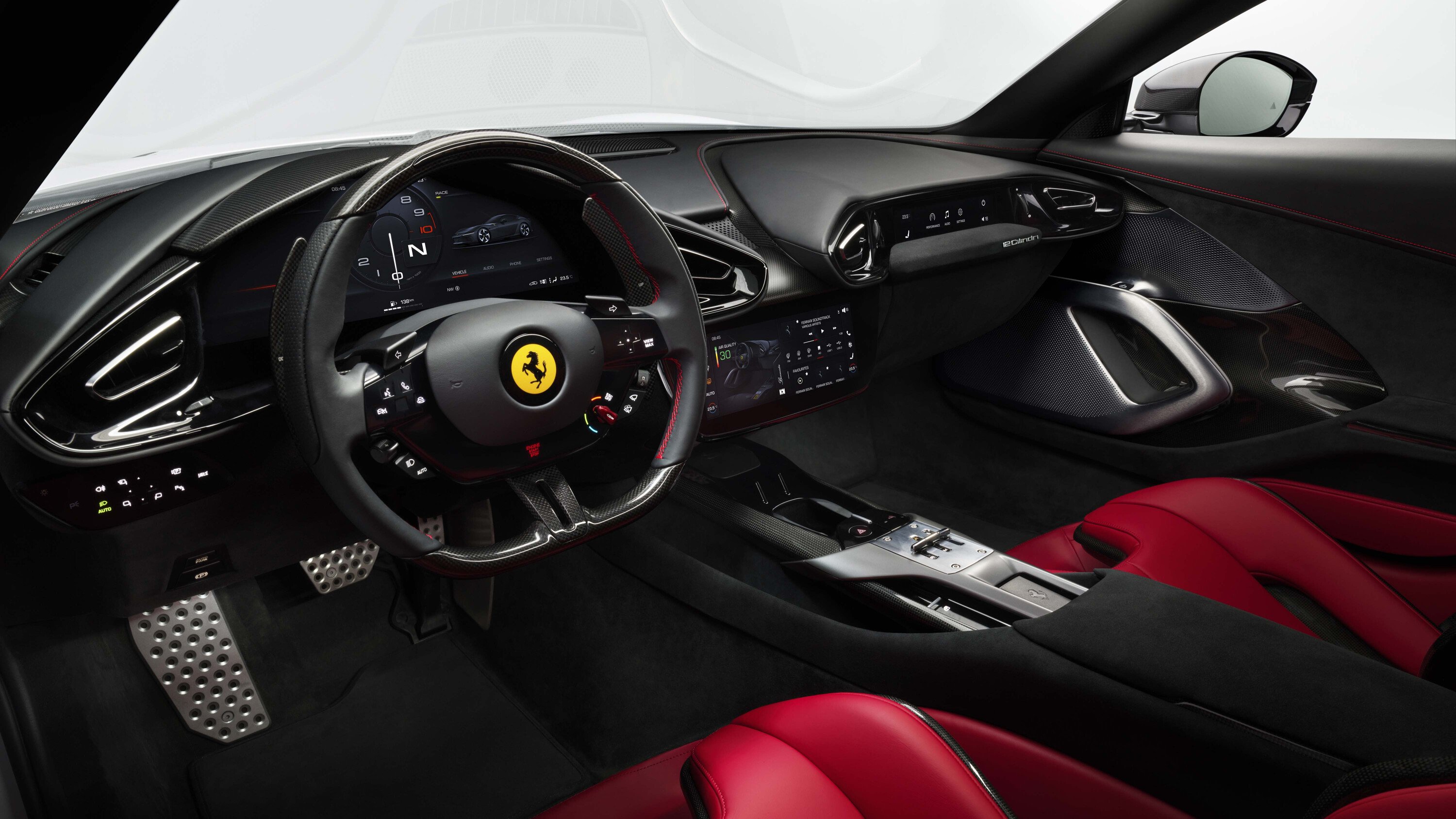
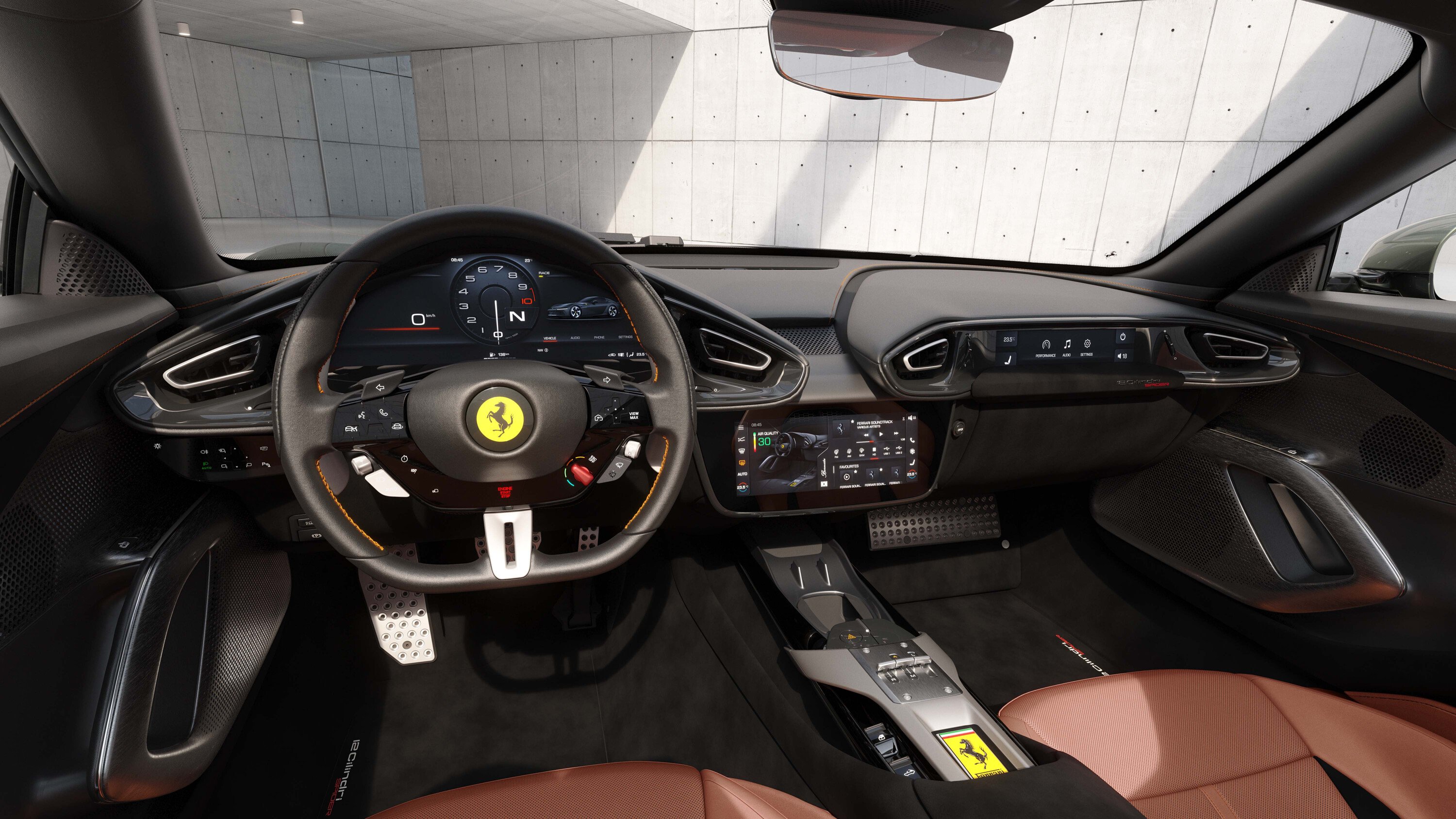
Like the exterior, the cabin design ushers in a fresh look compared with 812 SF. There are now three information displays: a 10.25-inch central touchscreen, a 15.6-inch driver display and an 8.8-inch passenger display. Naturally you score Ferrari’s signature carbon-steering wheel, which incorporates multiple functions for the indicators and wipers into buttons on the wheel itself, and buyers can also option a 15-speaker 1600W Burmester sound system.
WHEN WILL THE FERRARI 12CILINDRI COME TO AUSTRALIA?
European deliveries of left-hand-drive cars will commence in the last quarter of 2024, while right-hand-drive cars should arrive between six-nine months later. That puts Aussie deliveries around the middle of 2025. Open-top versions will come after that, with first delivers kicking off in Europe in the first quarter of 2025 and in Australia later that year or possibly early 2026.
As for pricing, the coupe will have an Italian driveway price of EUR 395,000. The Spider is costlier at EUR435,000. Here in Australia, it’s likely those prices will translate to somewhere in the $800,000 bracket before options.
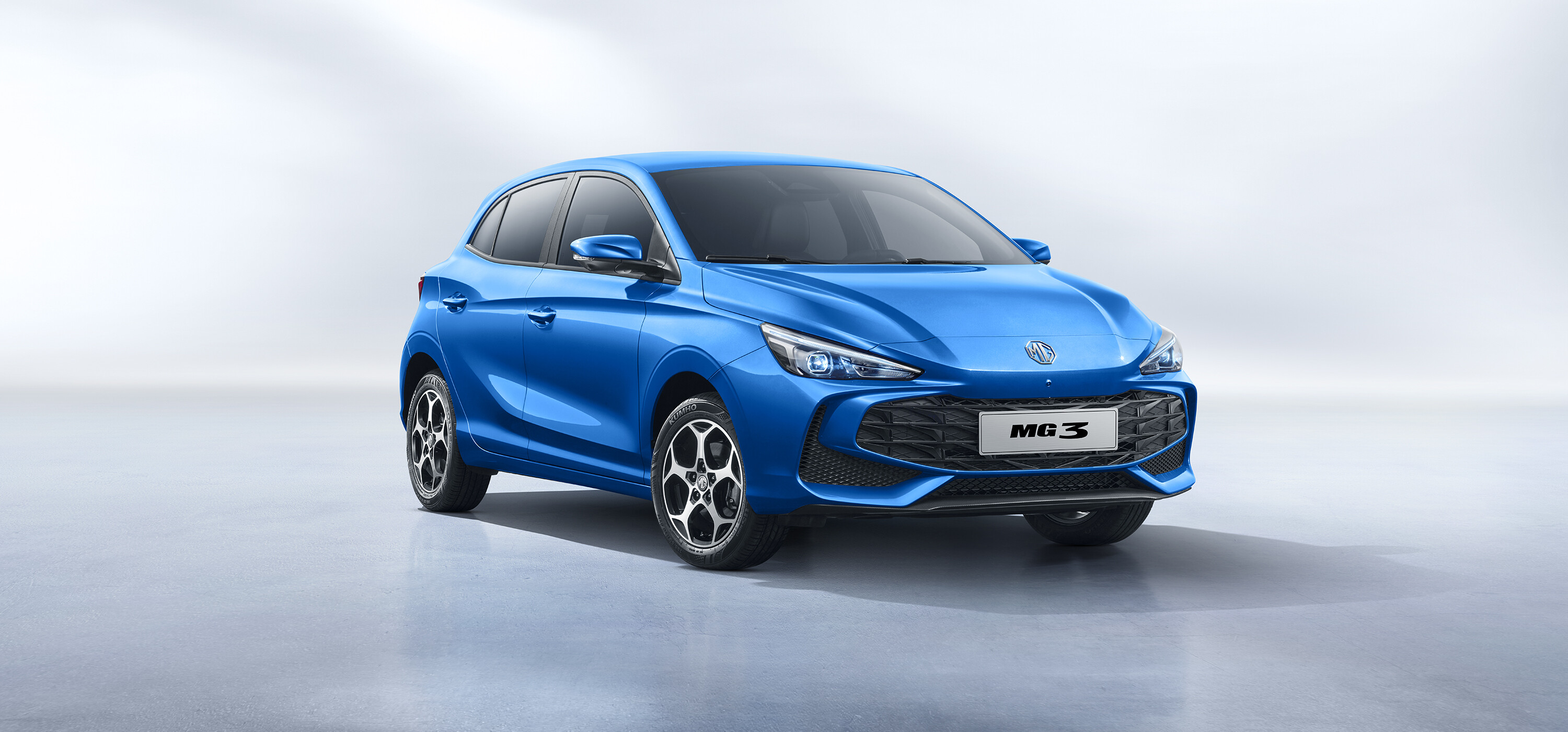
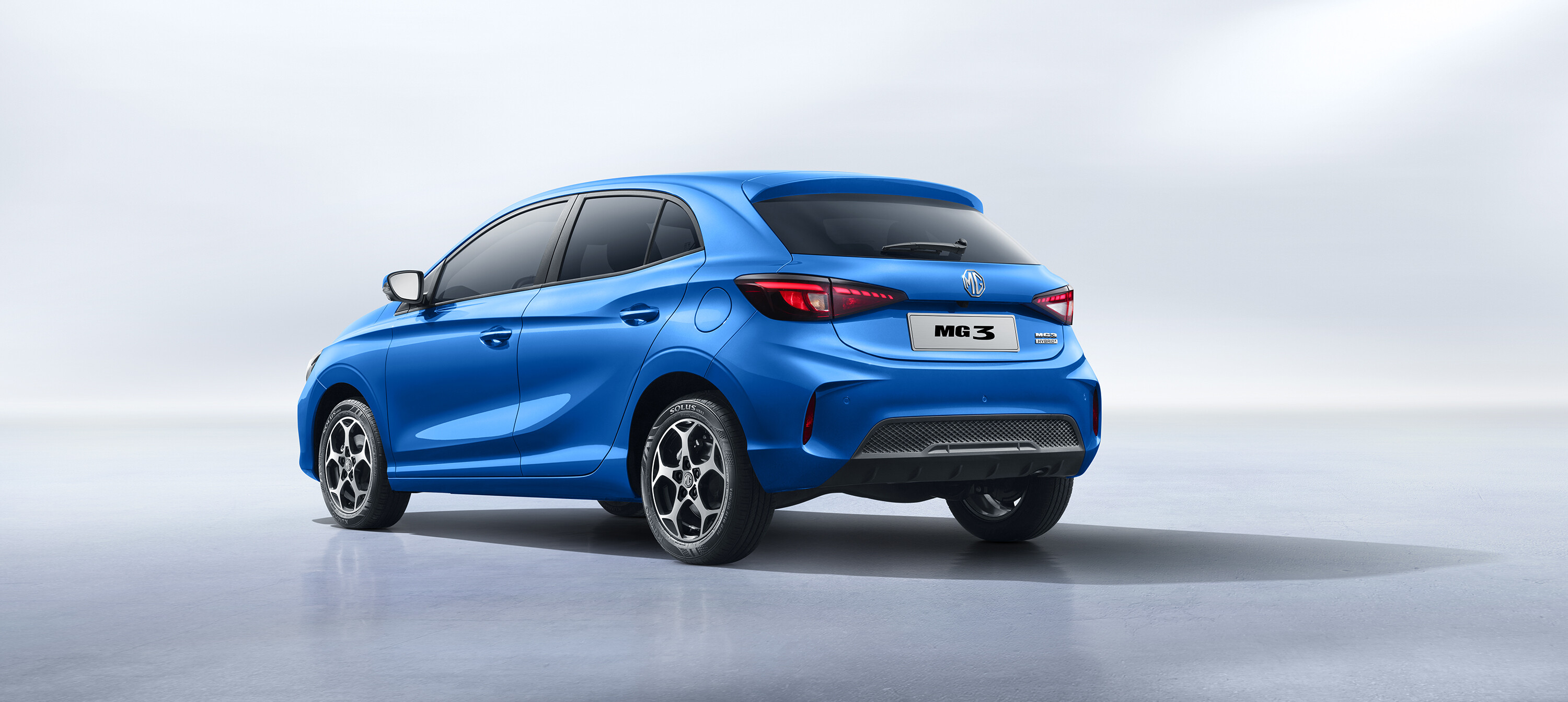
MG is a far more advanced car maker than when the current MG3 was first produced in 2011, and as a result will no longer solely focus on price for the model that is currently Australia’s cheapest new car.
While local specification is yet to be confirmed, the 2024 MG3 brings significantly more driver assistance technology, much of which was almost unthinkable a decade ago.
In Europe, it has been launched with hybrid powertrains alongside entry-level petrol models, with MG Australia yet to reveal if both will arrive down under.
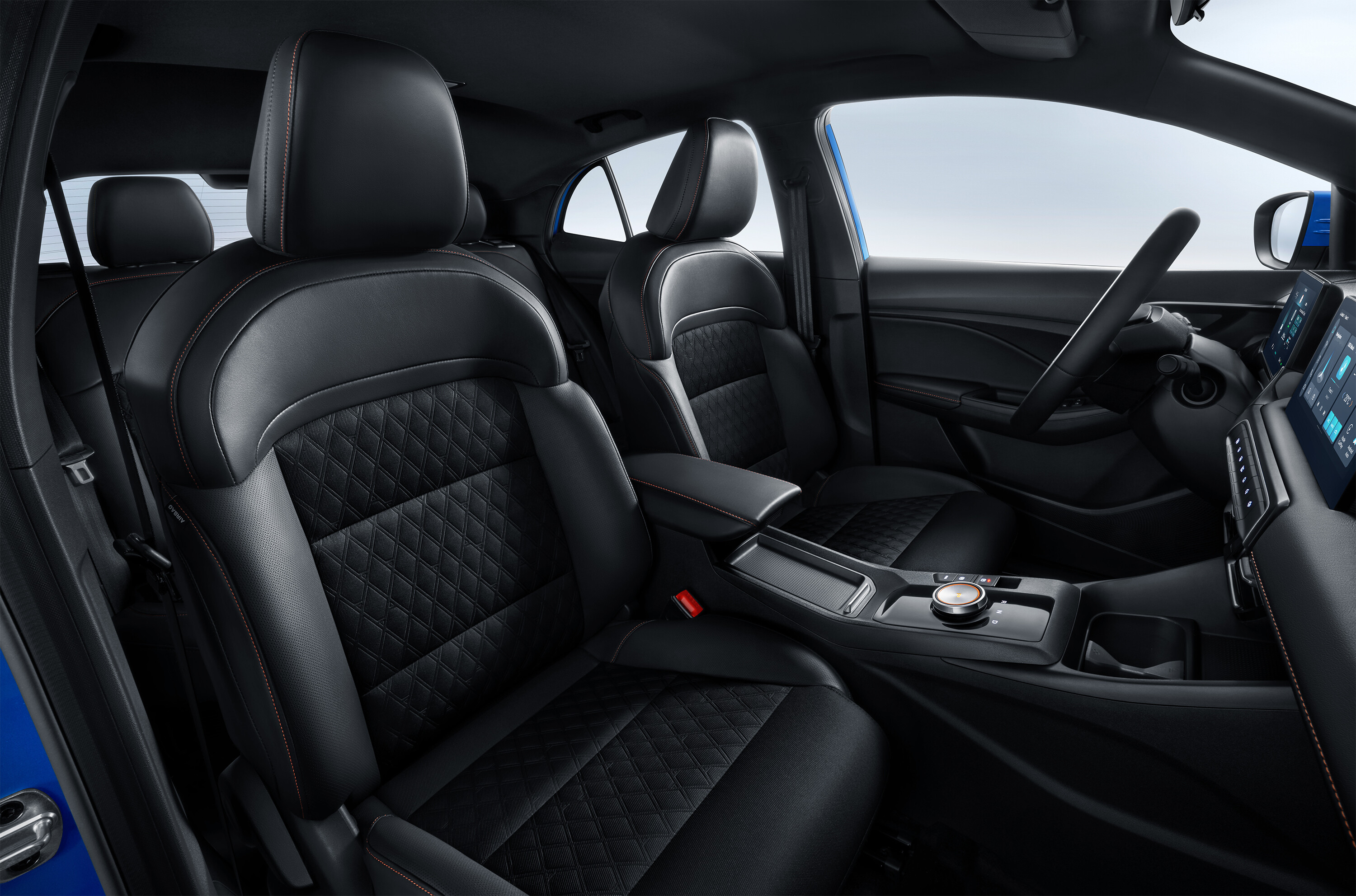
With larger dimensions – albeit a smaller boot – a quantum-leap in cabin design, fit and finish includes a colour touchscreen, digital instruments and higher levels of safety equipment.
1
In Australia in 2023, MG sold 15,430 of the outgoing MG3, making it the brand’s second-best seller behind the MG ZS SUV.
In the UK, MG is targeting 10,000 sales per annum – a match for the Toyota Yaris’s volume and more than double the previous MG3’s 4000 yearly average.
Part of that goal, says the British media, is fuelled by Ford’s decision to drop the Fiesta, ending production last July after 47 years – a car that had topped UK sales charts for 12 consecutive years until 2020.
Released in hybrid guise, with the petrol models to follow, Autocar, Auto Express and What Car? were among the first media in the world to drive the second-generation MG3.
1
Auto Express said the MG3 was ‘among the most fun to drive, comfortable and best equipped cars in its class’, achieved while priced from £18,495 ($35,490) – considerably cheaper than key rivals such as the Renault Clio hybrid.
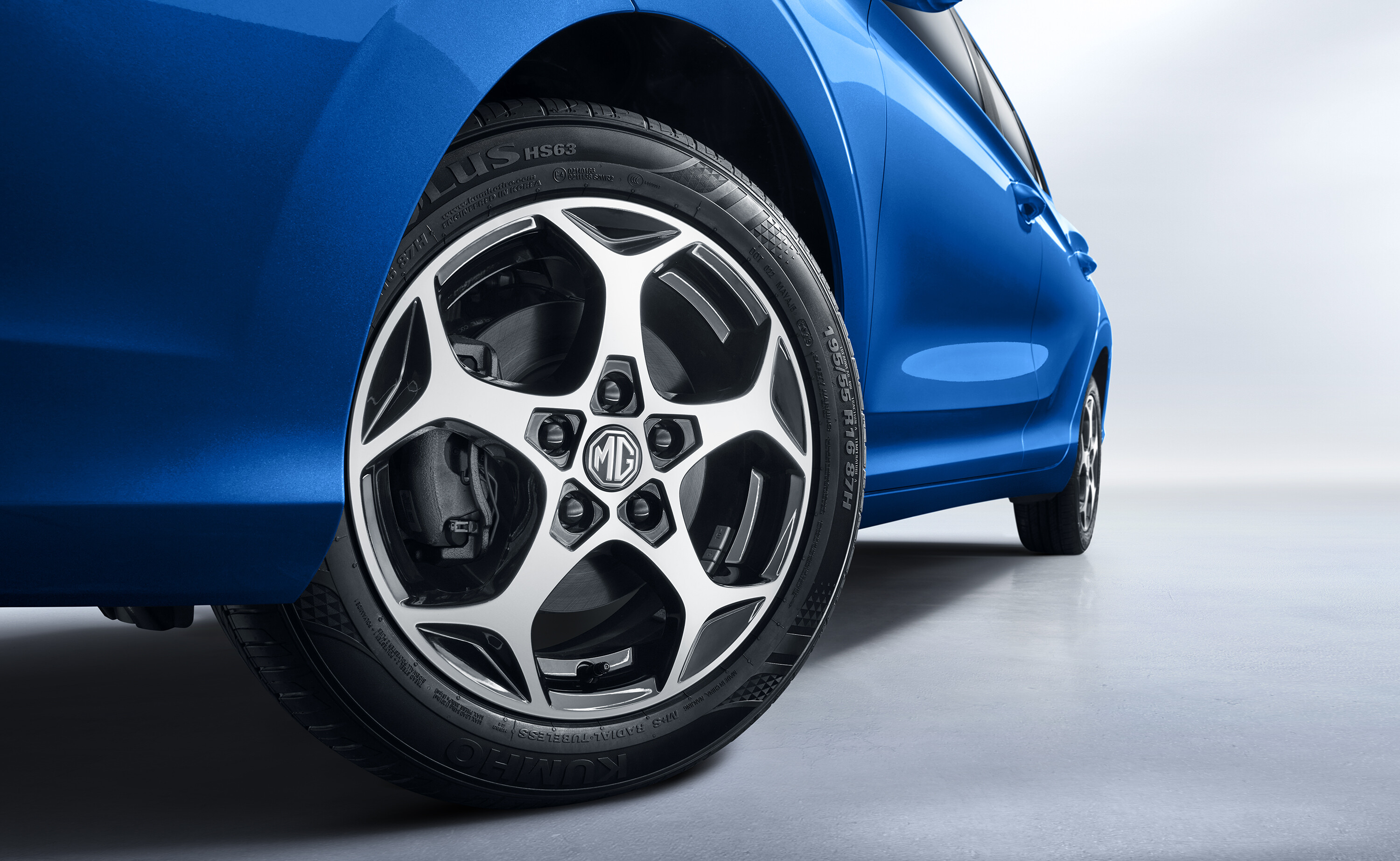
Price and equipment levels were universally praised, with 16-inch alloy wheels, electric windows, adaptive cruise control and rear-parking camera and sensors as standard.
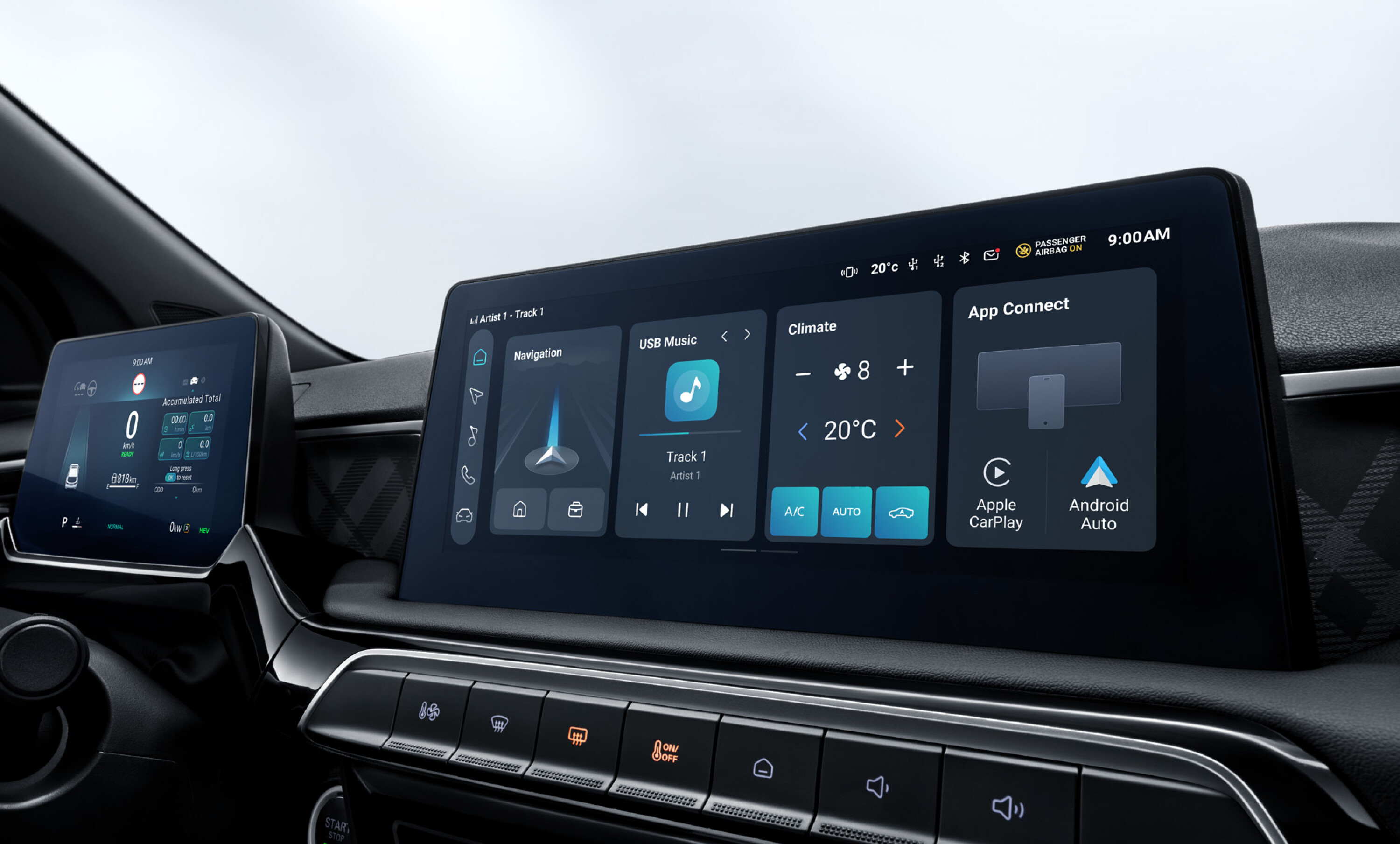
Inside, there’s also a 10.25-inch colour touchscreen with Apple CarPlay/Android Auto, DAB radio, Bluetooth and sat-nav standard across the line-up, with the up-spec ‘Trophy’ costing £2000 ($A3838) more adding leather seat trim among its extra equipment.
1
While the exterior was criticised as appearing fussy and still ‘under wheeled’, the road testers at Autocar reported improvements in leaps and bounds inside the MG3’s ‘mature’ cabin.
The fit, finish and touchscreen were praised – with points deducted for the air-conditioning functions not being accessed by physical buttons – as was the ‘clever’ surround view camera on up-spec models.
The 10.25-inch infotainment was praised by Auto Express, with What Car? saying it had reasonable response with only sporadic touchscreen delays.
A simple ‘fine’ was the response from Auto Express, saying the much-improved interior was effectively in-line with rivals in the cost-conscious supermini segment.
1
What Car? had difficulty in sorting a comfortable driving position with the six-way adjustable driver’s seat, but said it was one of only a few foibles with the second-generation MG3.
While it says a six-foot driver can be easily accommodated, What Car? suggested a Clio is likely more comfortable on longer trips.
It also said the rearward vision from the MG3 was hampered by the wider C-pillars intruding into the rear windscreen.
1
It delivers distinct driving and brake regeneration modes offering noticeable differences in driving character, the latter enabling ‘near’ EV-like one-pedal driving.
Auto Express backed that up by saying the MG ‘behaves more like an EV’ with instant throttle response on the whole with only occasional lag when the combined power from both the petrol engine and electric motor were called upon.
Autocar achieved 44.8mpg (6.3L/100km) in testing – a far cry from the claimed 64.2mpg (4.4L/100km) – although Auto Express reported a ‘roughly 55mpg’ (5.1L/100km) during its time with the car.
1
What Car? said the hybrid powertrain has ‘plenty of oomph’, but the MG3’s steering is ‘quite slow’ and ‘heavy around town’ but provides good feedback.
Autocar noted a similar steering feel, describing it as ‘springy’, with the MG3 having more body roll than key rivals.
Yet while it was “firmly sprung” it was “never uncomfortable” according to What Car? easily dismissing potholes – something Autocar agreed with, praising the hatchback’s ‘comfortable’ ride.
2
What Car? also enjoyed the urban refinement, given the MG3 hybrid’s ability to drive around town using only the electric motor and 1.83kWh battery pack.
The rear seat’s lack of flexibility is an issue for What Car?, with no 60:40 split, and when the one-piece bench seat is folded, a lip means there is no flat floor.
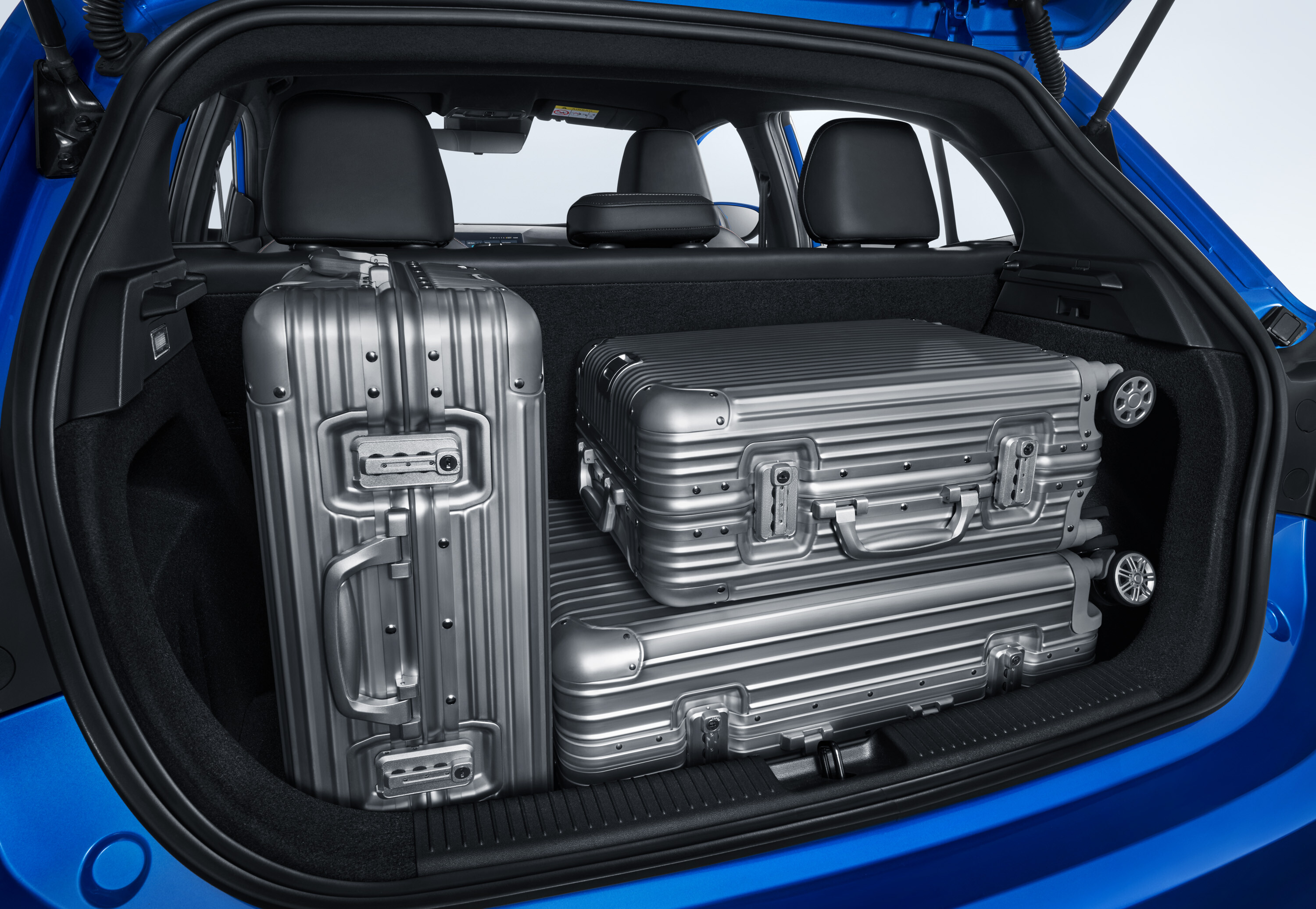
The boot is 293L – some 14L down on the previous model’s – but a competitive match for the Yaris and Clio’s according to Auto Express, but can’t match the Skoda Fabia’s 380L jobbie, making it too small in What Car?’s book.
Scoring was high across the board. What Car? gave the new MG3 four stars, Autocar rated it 4.5 stars, while AutoExpress gave the little MG a maximum five stars.
In Australia, pricing is expected to start above $20,000 – with the outgoing MG3 offered from $18,500 – when it arrives in local showrooms later in 2024.
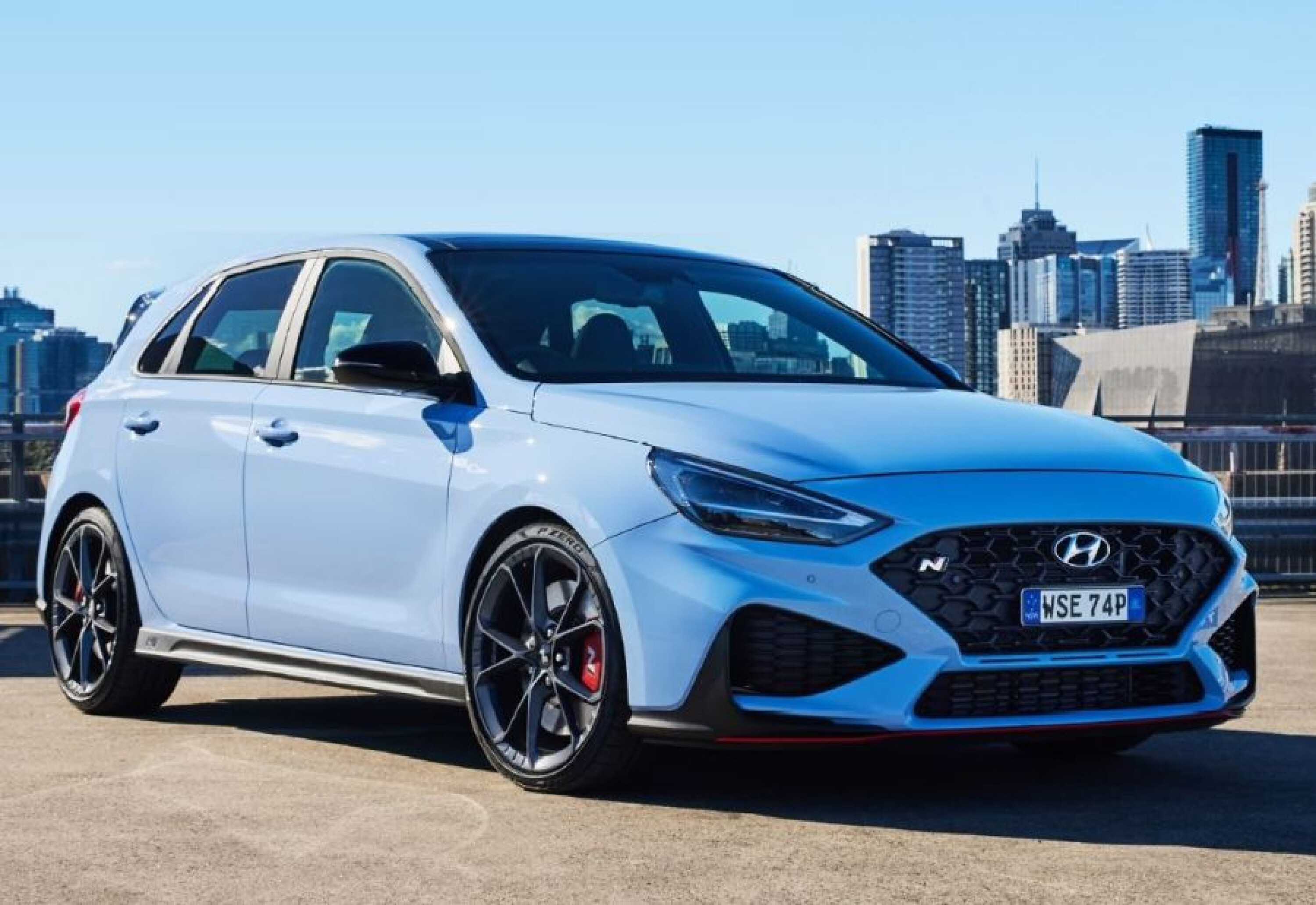
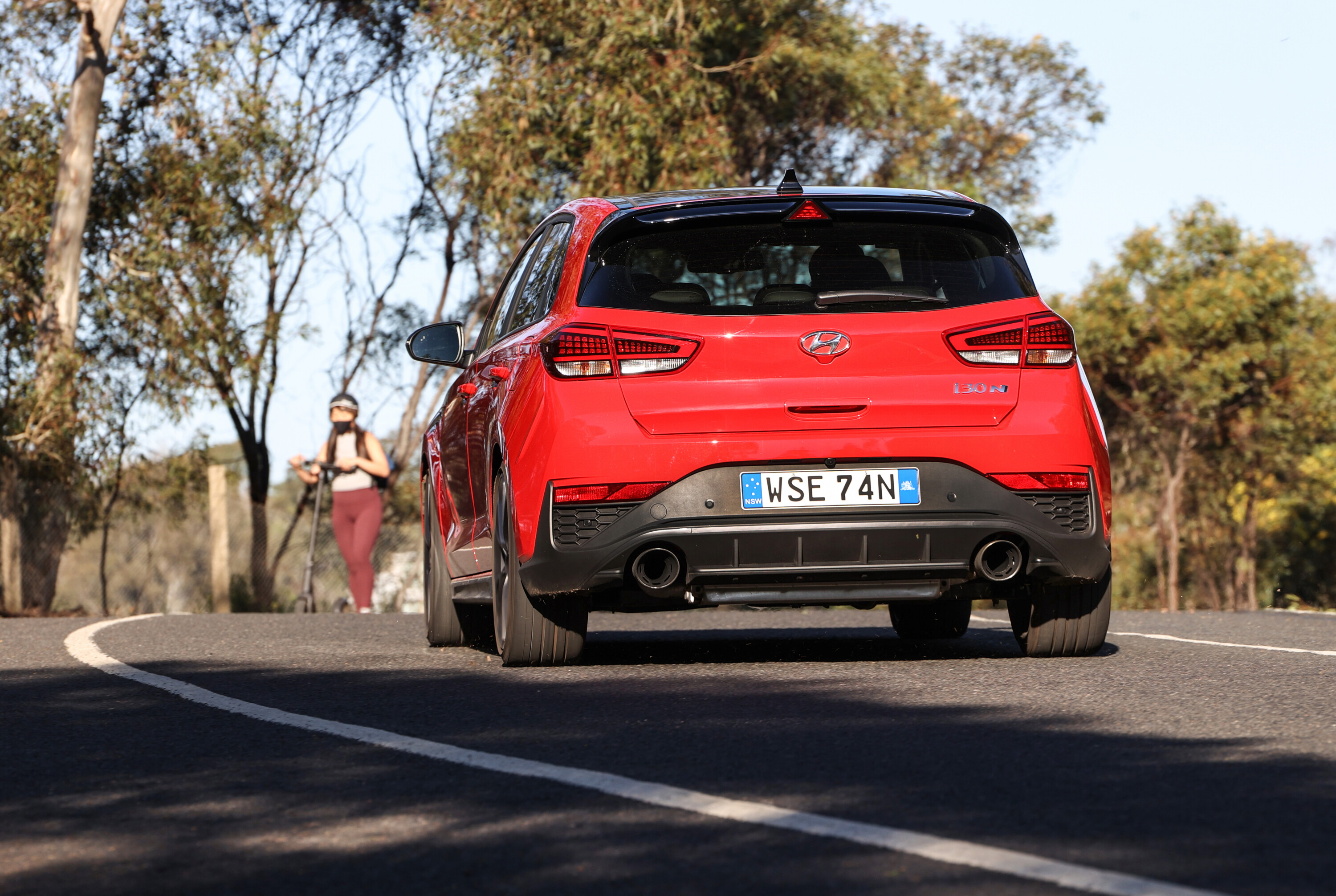
Hyundai i30 N hatchback stocks have landed in Australia after a previous stop-order
New Comfort Pack on DCT hatches adds new seats to Premium model for no extra cost
A final shipment is on the water before a facelift is expected in Australia in late 2024
Hyundai Australia has confirmed new stock of the i30 N hatchback this week, after local customers faced delays of up to nine months during 2023.
A total of 387 are now in Australia and available for delivery to buyers, after ordering of the i30 N hatch was paused in July 2023 after considerable stock shortages lead to customer wait times of between six and nine months.
Hyundai re-opened order books in October last year, and has sold 280 in the first quarter of 2024, with the latest shipment giving healthy stock levels for the next quarter.
1
The Korean carmaker says there are another 352 i30 N hatchbacks currently on the water heading to Australia from the Czech manufacturing plant in Europe.
Of the nearly 400 MY24 i30 N hatches already on the ground, a number equipped with the dual-clutch transmission also come with the new factory-fitted Comfort Pack.
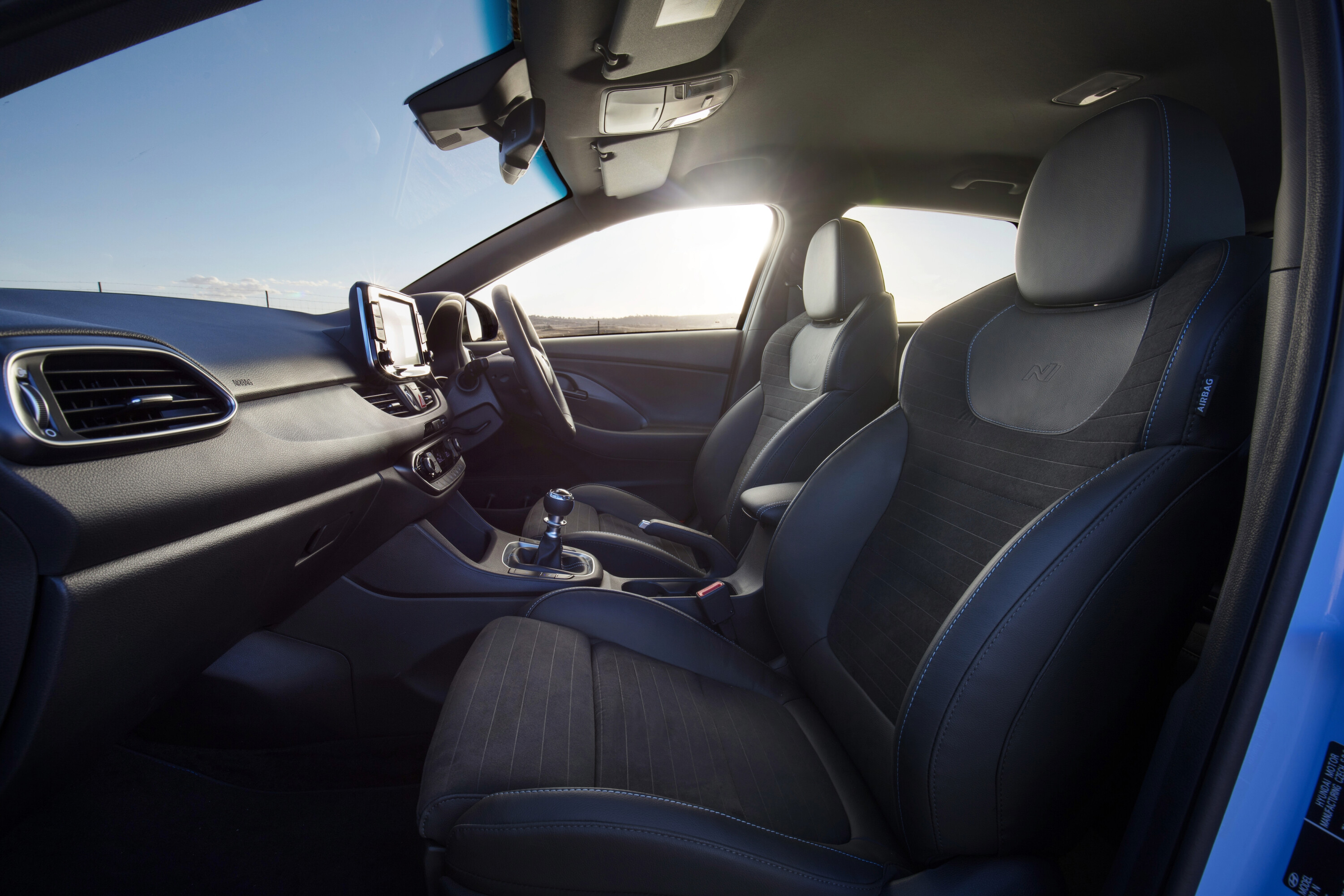
A no-cost-option over the existing i30N with Premium Sunroof – priced at $51,900 before on-road costs – the Comfort Pack sees the standard Alcantara and leather lightweight front seats replaced by suede and leather N sports seats.
The optional seats bring with eight-way power adjustment, four-way lumbar support as well as cushion extensions on both seats, while the driver’s seat has a memory setting.
1
The Comfort Pack also includes the Panoramic Sunroof in what may be the last shipment of the current model i30 N hatch.
A facelift of the i30 hatch was revealed in Europe in March 2024 is expected in local showrooms late this year as Hyundai Australia switches from South Korean production to Czech supply.
South Korean production of the current ‘PD’ series i30 hatch ended in December 2023, where the i30 sedan still comes from.
There is still a wait of up to six months for Australian customers ordering the i20 N hatch, which is also sourced from the Czech Republic.
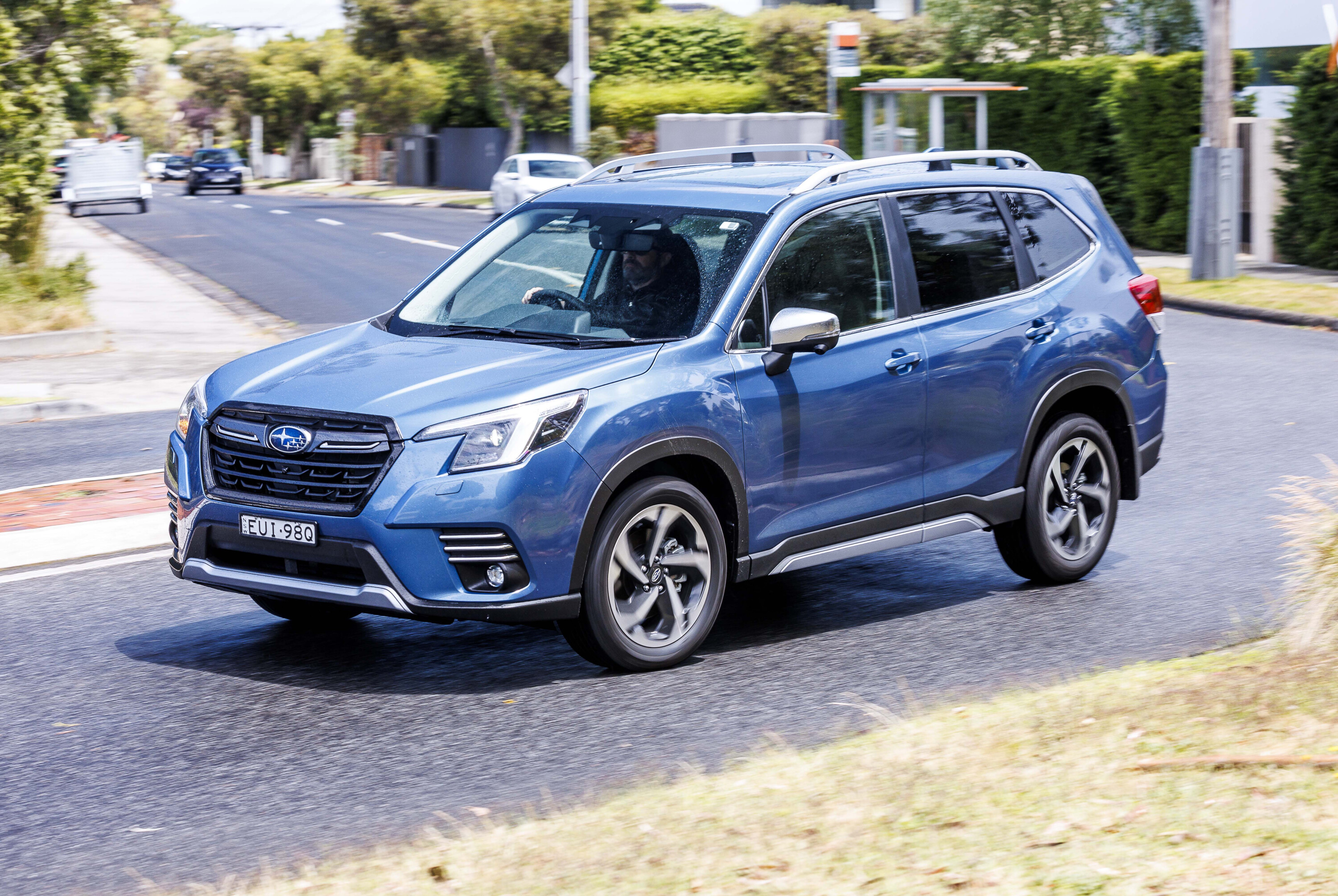
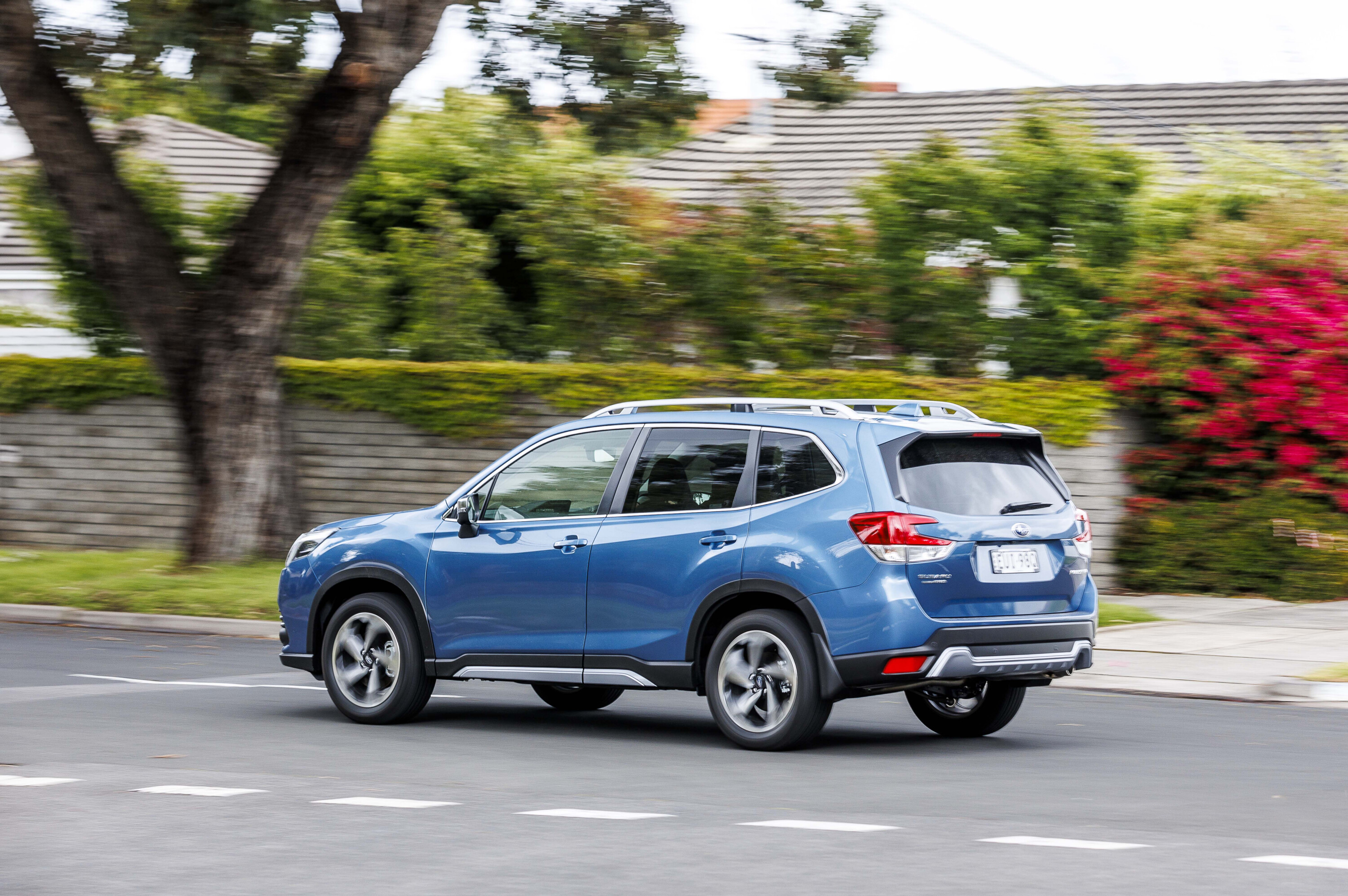
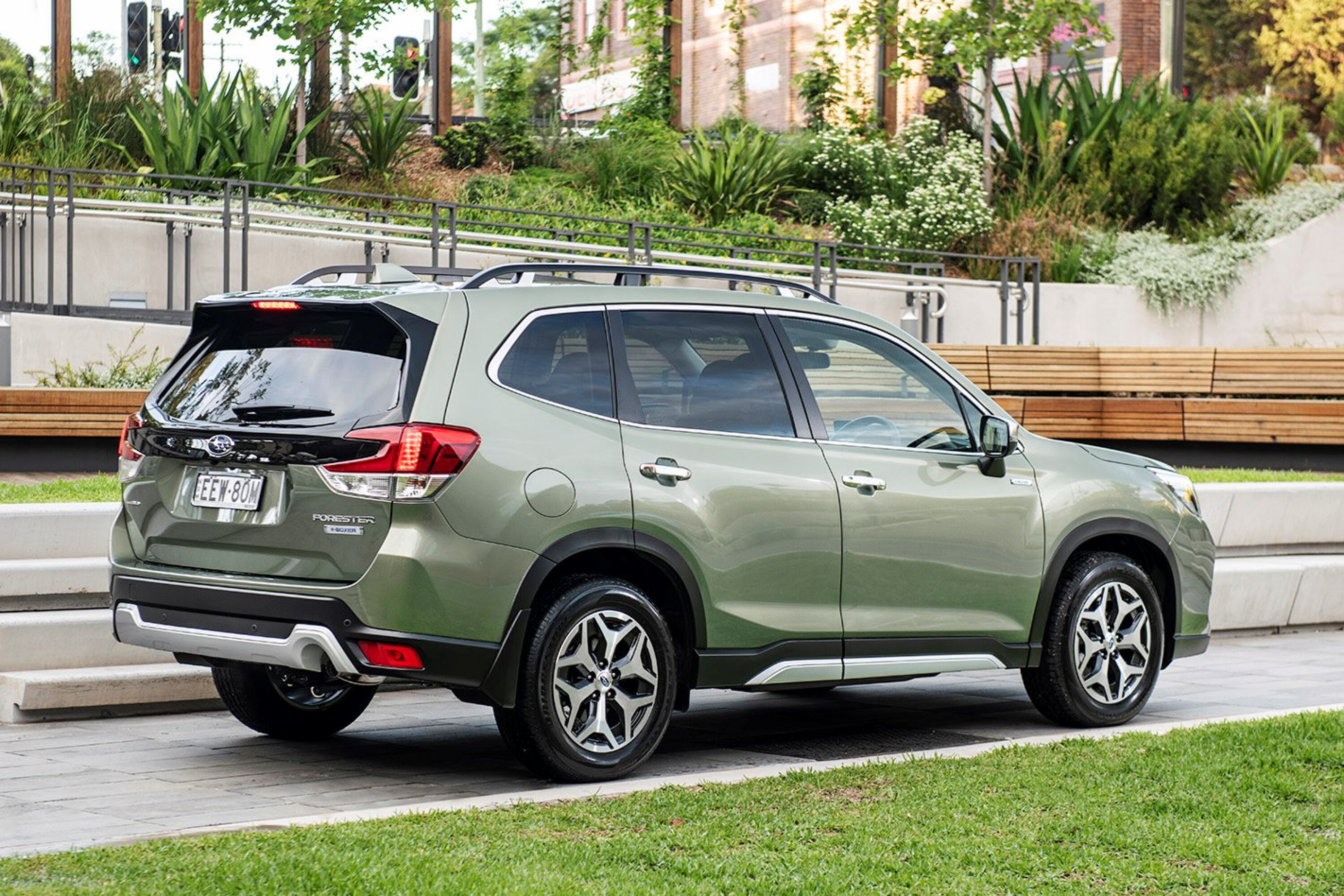
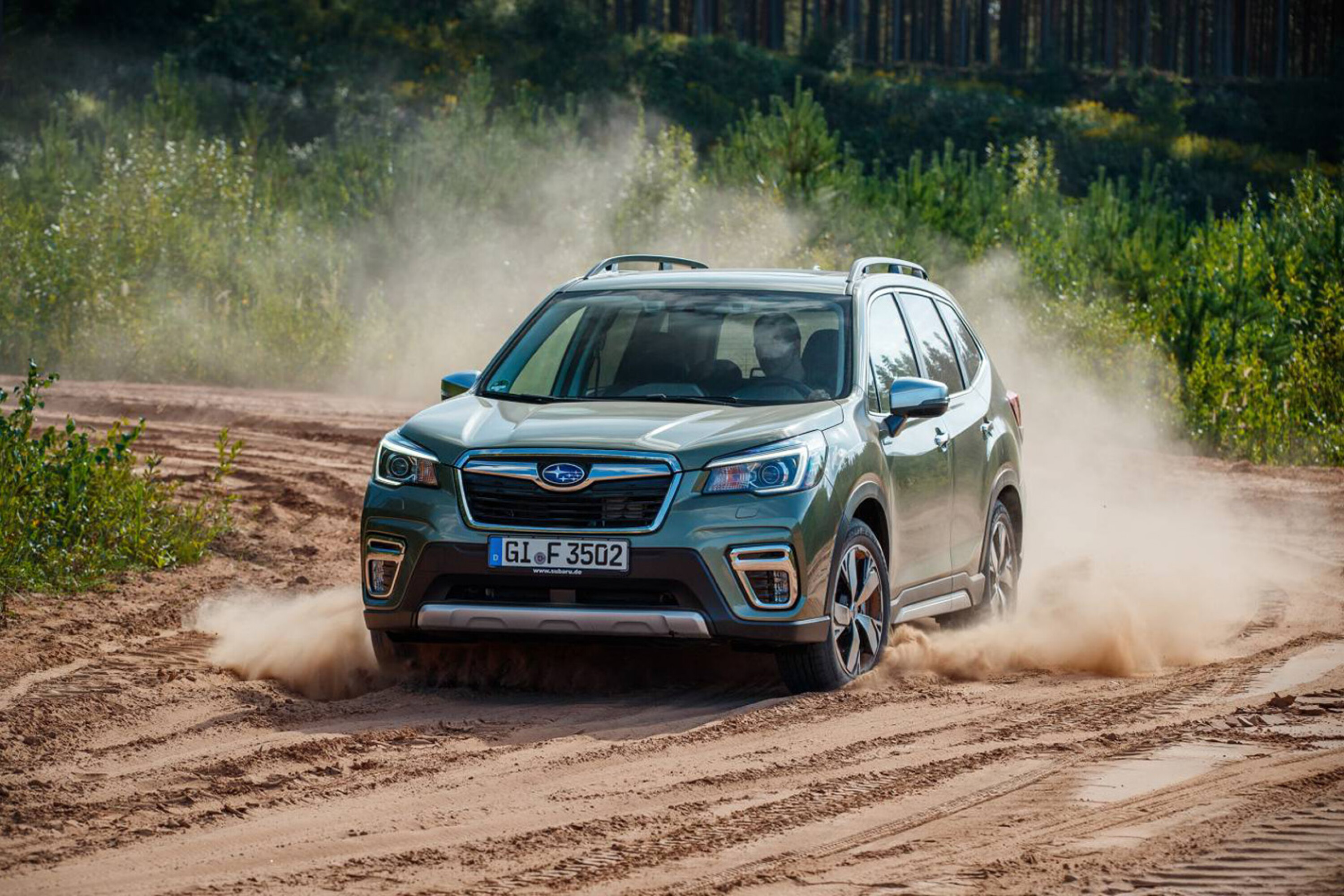
For nearly three decades, the Subaru Forester has been a top choice for Australian families, renowned for its dependability and versatility.
The Subaru Forester 2.5i Sport AWD combines everyday comfort with rugged utility, making it ideal for both routine tasks and more adventurous pursuits.
It resembles a compact SUV in size but provides the roominess and driving experience of a larger wagon.
1
Pricing & Features
The 2.5i Sport sits in the middle of the Forester line-up, costing $45,640 before on-road costs.
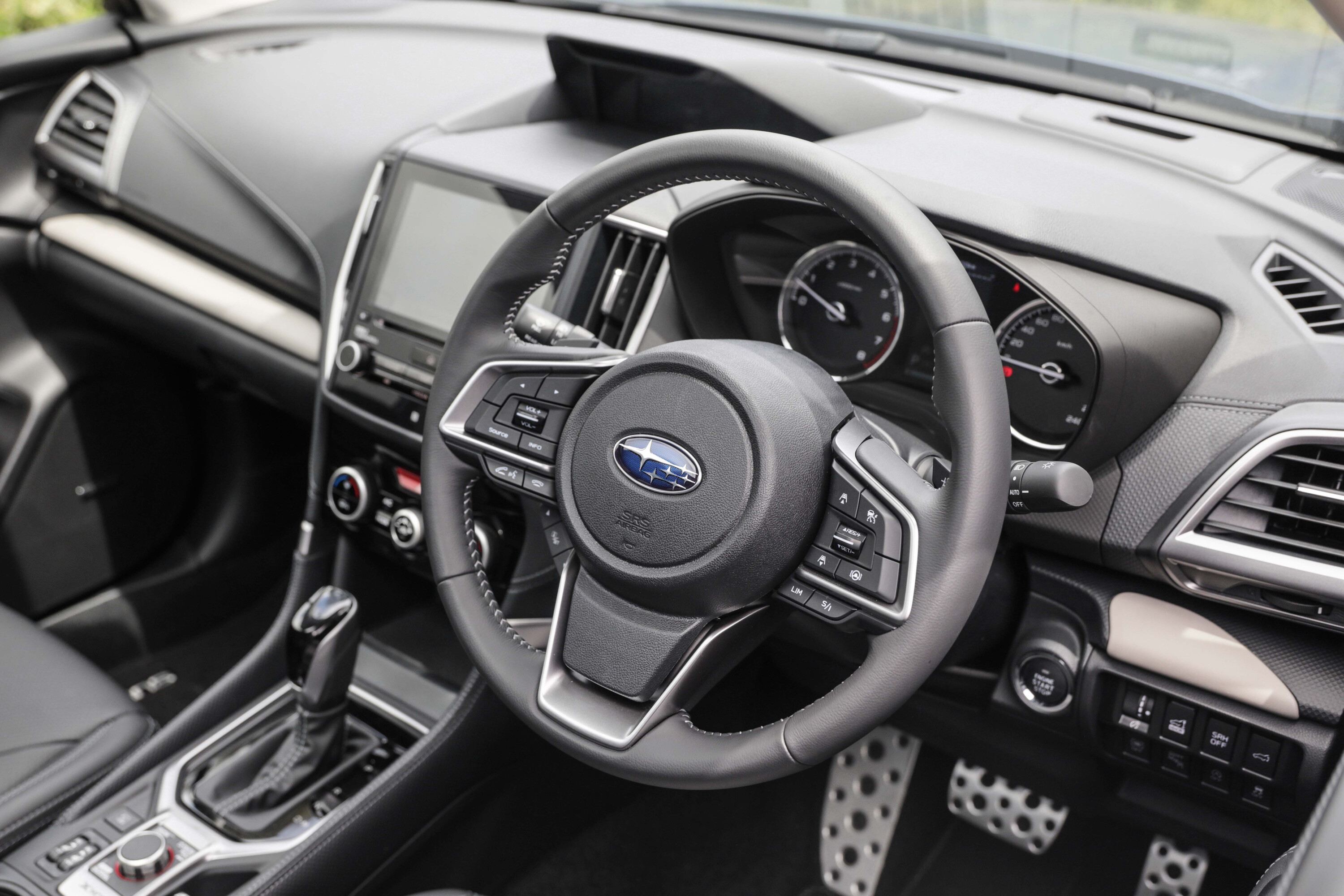
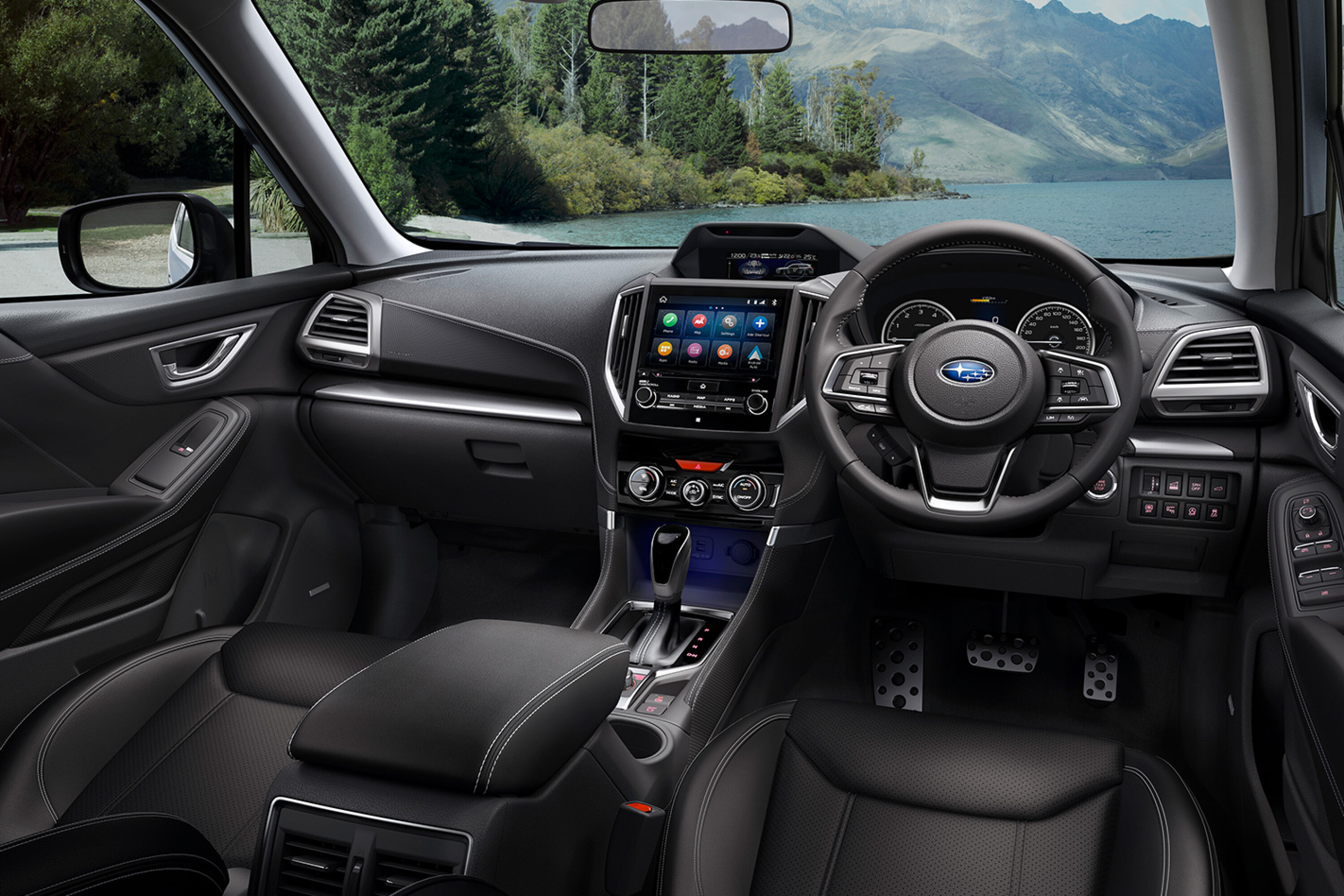
The model comes standard with 18-inch alloy wheels with a dark metallic finish, an 8-inch touchscreen with wireless Apple CarPlay and wired Android Auto, leather steering wheel and gear shift and cloth trim seats.
There are orange highlights both on the inside and outside of the vehicle as well an an electric sunroof, power tailgate, heated front seats and satellite navigation.
1
There are also plenty of practical additions like rain-sensing wipers, LED headlights, black roof rails and a tyre pressure monitoring system.
Powering the family SUV is a 2.5-litre e-Boxer four-cylinder engine, producing 136kW and 239Nm of torque, paired with a CVT and Subaru’s signature all-wheel drive.
Safety
The 2024 Subaru Forester upholds its five-star ANCAP safety rating, bolstered by the comprehensive EyeSight Driver Assist technology.
The Forester achieves impressive safety scores, with a 94% rating for adult occupant protection and 86% for child occupant safety.
It is fully outfitted with essential safety features such as autonomous emergency braking, blind-spot monitoring, rear cross-traffic alert, driver attention monitoring, lane departure warning, and lane-keeping assist, ensuring a secure and protective driving environment.
Furthermore the Sport trim also has Subaru’s Vision Assist system which adds adaptive high beams, front and side view monitors and reverse auto braking capability.
1
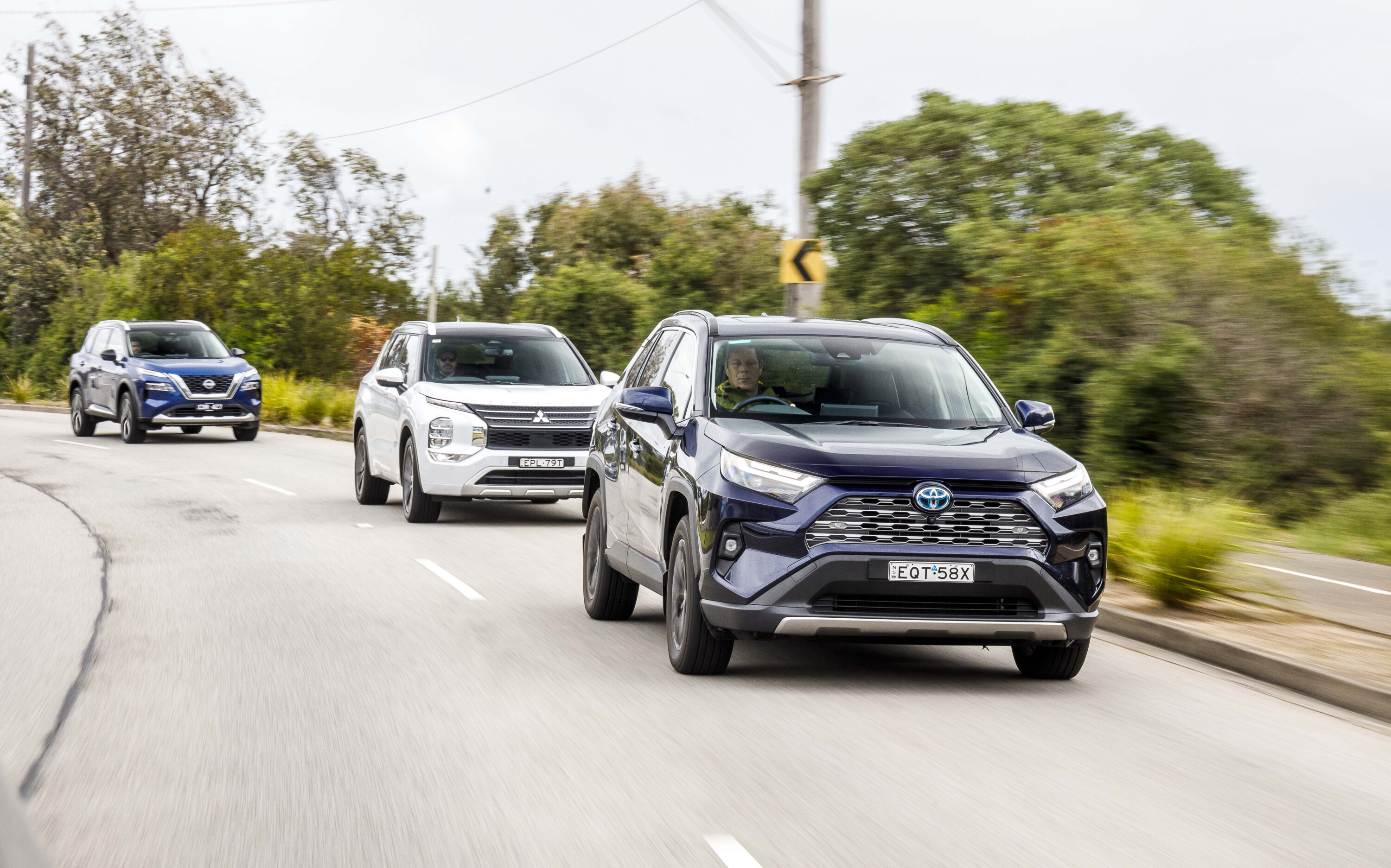
Key Rivals
The Subaru Forester faces competition from medium SUVs such as:
If you value a midsize SUV that offers safety, efficiency, and capability for both urban and off-road adventures, the Subaru Forester a smart choice for a wide range of drivers.
The Forester’s all-wheel drive and high safety ratings make it an excellent choice for both urban commuting and more challenging terrains. With competitive pricing and a strong set of features, it stands out in a crowded market, presenting itself as a smart investment for practical buyers looking for a durable and capable SUV.
With last year’s initial allocation quickly exhausted, all-comers are now invited to jump in.
When the flagship 2024 Nissan Z Nismo made its local sales debut in August last year, it was a short story: all 100 cars allocated to Australia were snapped up within just 53 minutes, according to Nissan.
Today the brand has confirmed expanded availability, with the Nismo-tuned Z now available to order through Nissan dealers – this time with no limit on build slots.
The requisite marketing vid:
Nissan says deliveries will begin “almost immediately”, suggesting there’s now local stock available.
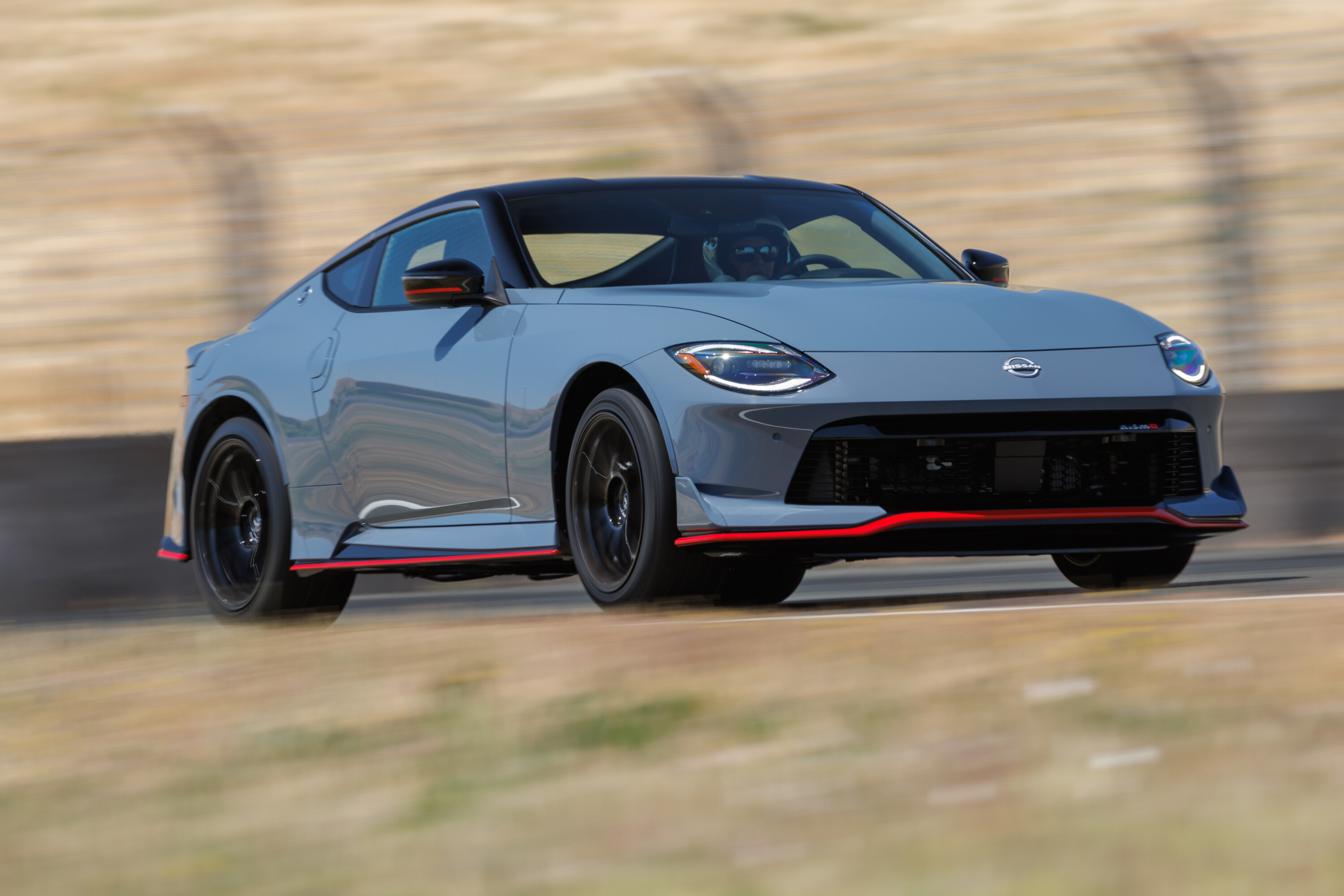
Buyers not deterred by the Nismo Z’s unchanged $94K price tag (before on-road costs) are treated to a hero coupe that goes further in its enhancements than the car that preceded it, thanks to the new-gen Z’s turbocharged V6 petrol engine that more easily enables a power bump.
In Nismo spec, that means 309kW and 520Nm – 11kW and 45Nm more oomph than the regular Z, which is priced from $75,800.
Power aside, the Nismo-badged price leap is rationalised easily enough with the following additional performance tweaks.
2024 Nissan Z Nismo enhancements
Power increased to 309kW (+11kW) and 520Nm (+45Nm)
NISMO chassis, tyre and wheel enhancements
NISMO-tuned 9 speed automatic with paddle shifters
For those not already in the queue, Nissan will open orders at 11am August 10 on its Australian website and a $1000 deposit will put you in the running.
In Australia, the 309kW/520Nm Nismo Z will be offered in one of four colour combos, all of which are variations of black or white:
Black Diamond Metallic w/ Super Black roof
Brilliant Silver Metallic w/ Super Black roof
Everest White w/ Super Black roof
Stealth Grey w/ Black roof
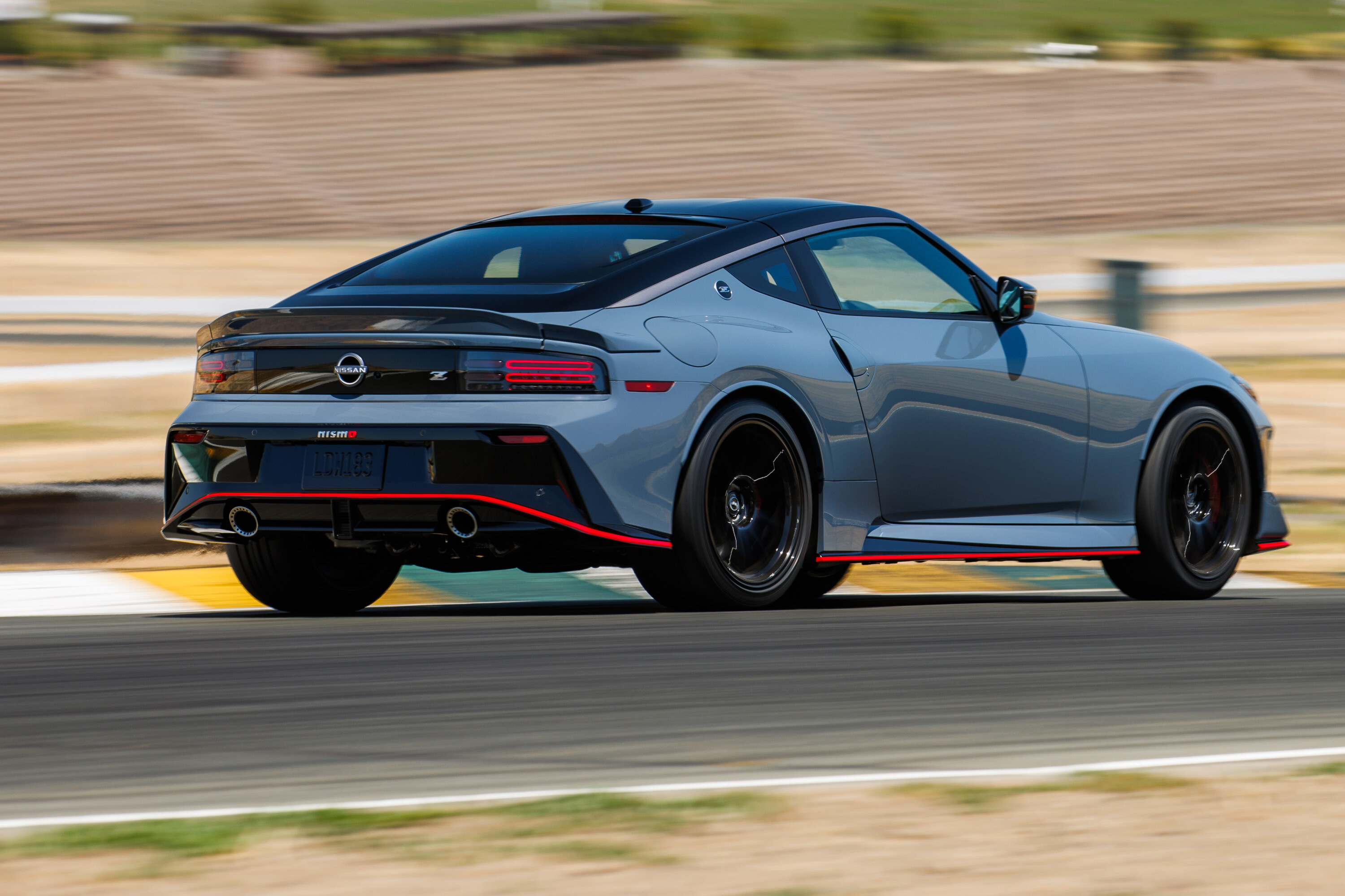
Other changes compared to the standard Z include Recaro bucket seats, more focused suspension tune, stiffer body shell, reworked nine-speed automatic gearbox and more aerodynamic body work.
1
“The Z NISMO is a true sports car flagship, with Nissan’s engineers leaving no stone unturned in their pursuit of performance,” said Nissan Australia Managing Director, Adam Paterson.
“We wanted to extend our thanks to those already awaiting their Z by offering them a chance to secure a Z NISMO, while still ensuring this special vehicle is made available to Z fans across the country”, added Mr Paterson.
The regular Z continues with the Z Proto edition discontinued. A standard Z costs $75,800 before on-road costs, a $2500 lift over the price at the Z’s May 2022 introduction. There’s a fresh paint colour, New Site Orange, and the option of blue cabin upholstery.
August 2: Nismo Z confirmed for Ozzie sale! New hero detailed
Snapshot
Nismo Z confirmed for Australian release
Outputs lifted to 309kW and 520Nm
Timing and pricing yet to be announced
Nine-speed auto the only transmission
The only catch for enthusiasts? the Nismo Z comes exclusively with a nine-speed torque converter automatic transmission.
Nissan promises Nismo has re-tuned the gearbox with 50 per cent quicker downshifts, reprogrammed launch control and more aggressive Sport+ mode – we’ll be the judges of that when it hits local shores next year.
To pump outputs by 11kW and 45Nm from the VR30DDTT 3.0-litre twin-turbo V6, Nismo implemented revised wastegate control to increase boost pressure and turbine speed.
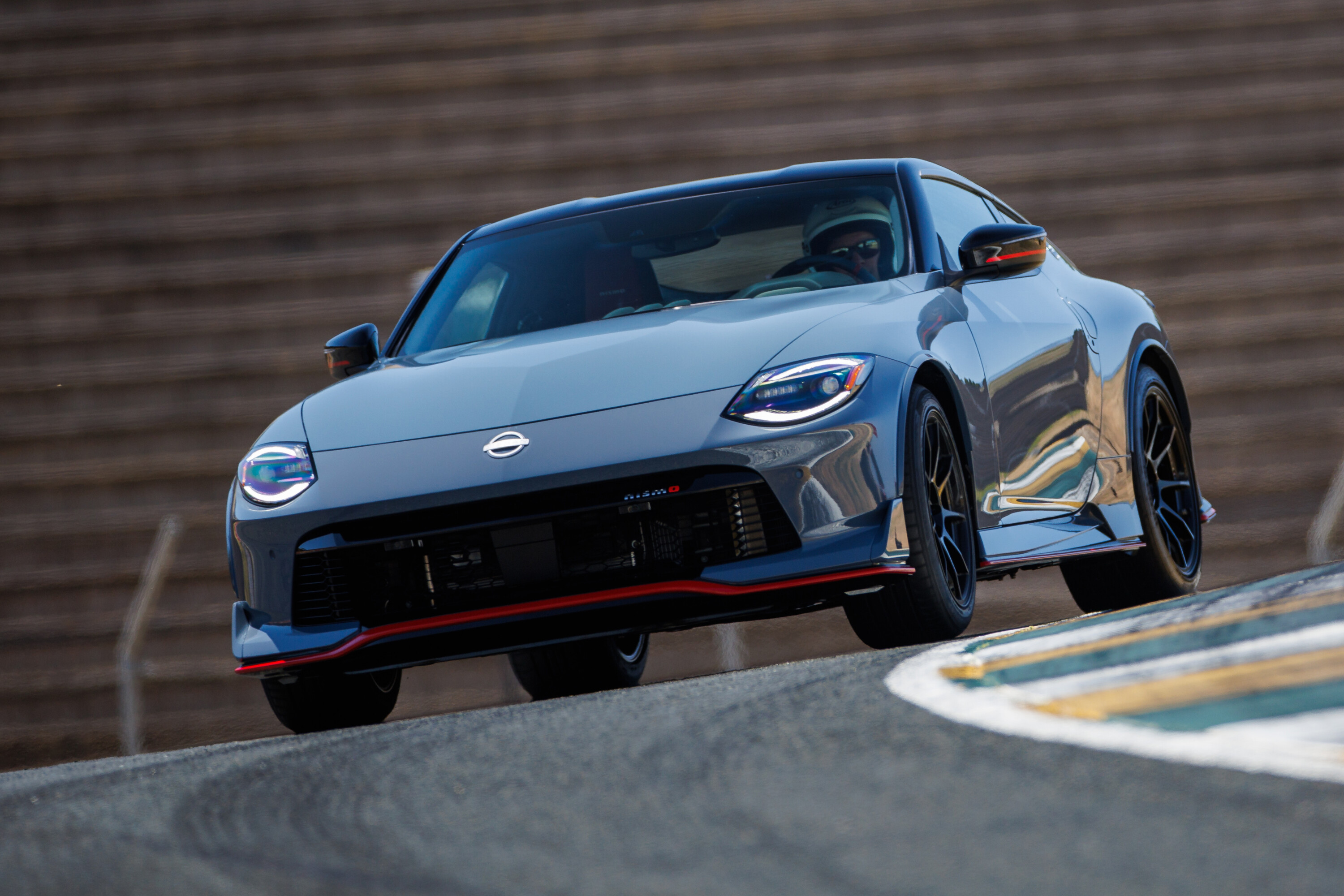
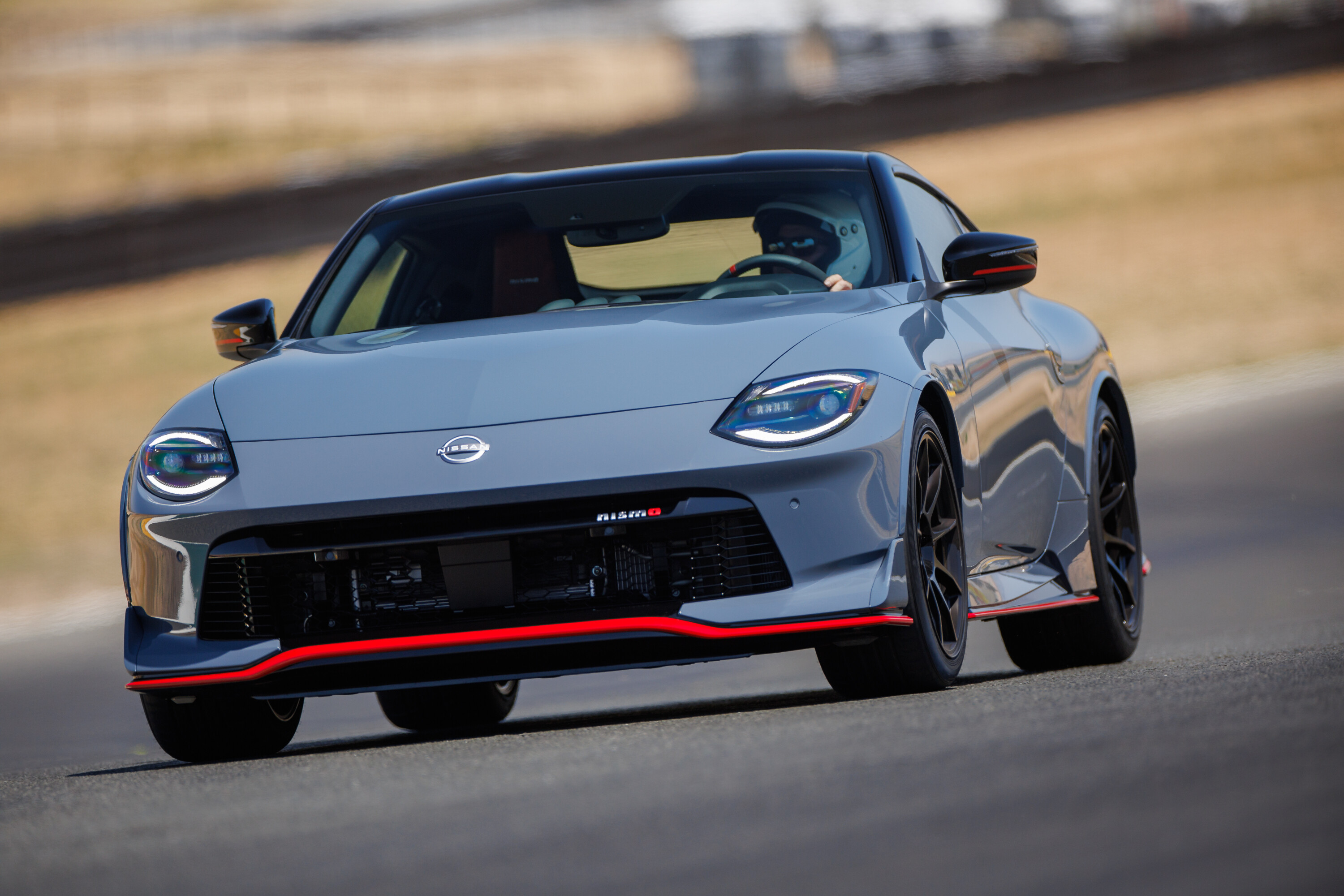
Supporting the additional grunt is a Nismo engine oil cooler for stable temperatures on the racetrack. A new front bumper (with the thinnest honeycomb mesh ever on a Nissan production vehicle) has larger cooling ducts, as well as aerodynamic improvements.
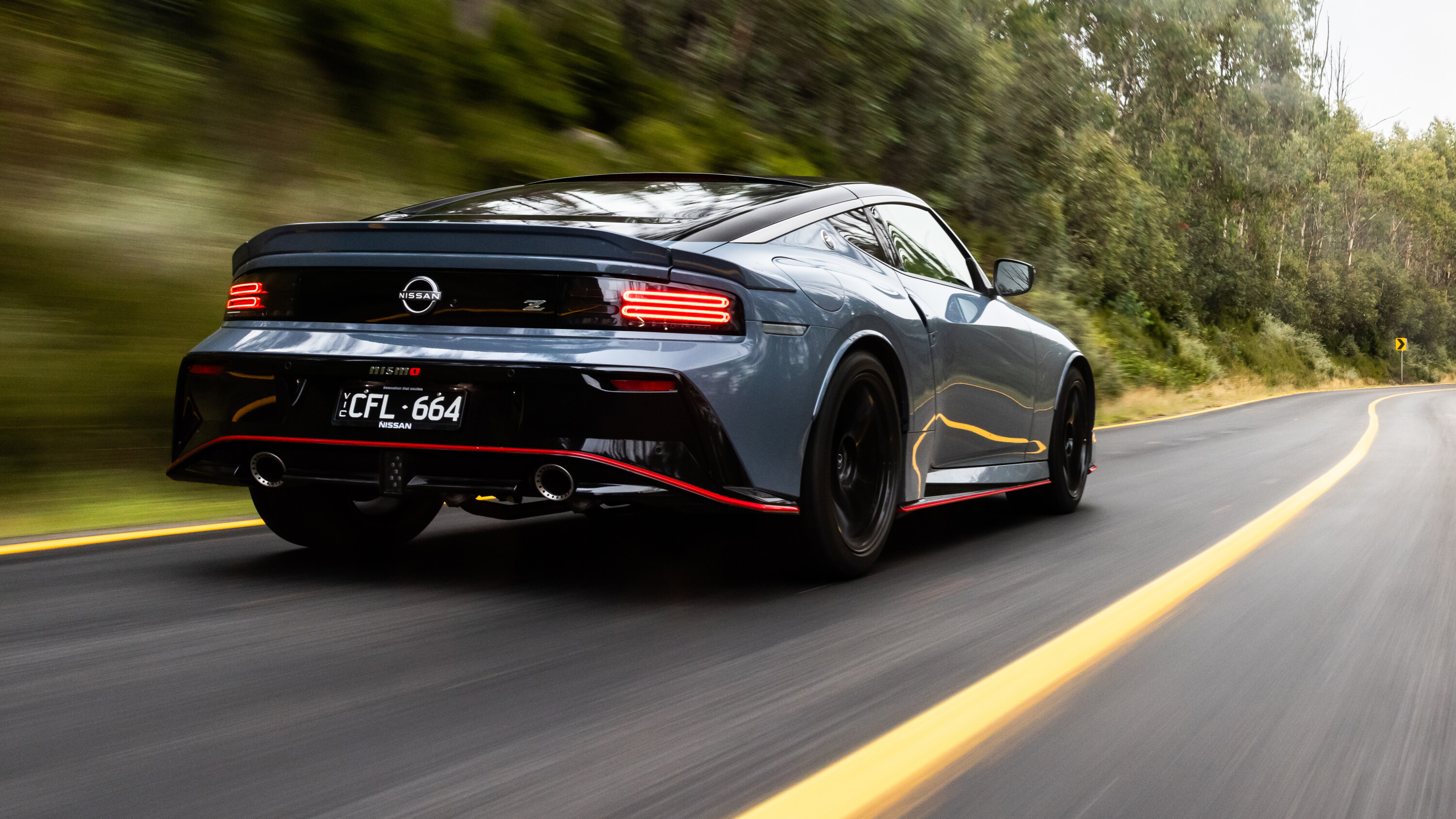
The Nismo Z produces positive downforce – rather than just negative lift – thanks to a combination of front canards, the ‘Grand Nose’ or ‘G-Nose’ front bumper and a three-piece rear spoiler. A reshaped rear bumper and new side skirts make for smoother airflow with less drag, too.
Underneath, the Z has had a fairly serious treatment with new anti-roll bars, higher spring rates, and larger-diameter dampers re-tuned to suit racetrack use.
The Nismo Z has been stiffened by 2.5 per cent thanks to additional front, rear and underfloor bracing. There are firmer bushings in the suspension and supporting the steering rack to improve feedback.
Nismo describes the feeling it’s tried to achieve with the Nismo Z as ‘one-shot’ steering – we expect this means more consistent and natural responses than the regular Z.
A half-inch wider set of lightweight Rays 19-inch alloys are shod in Dunlop SP Sport Maxx GT600 tyres – at least in the United States – with an extra 10mm of chub at the back (285mm vs 275mm).
2
The braking hardware is unchanged with four-piston front calipers, though they now clamp 380mm front rotors (+25mm) and feature a performance-oriented pad compound.
All the changes amount to a weight increase of 45kg, bringing the Nismo Z’s listed weight to 1608kg.
Aside from the aerodynamic visual updates, the Nismo Z gets red piping around the front splitter and red Nismo badging, as well as a contrast black roof and dark grey metallic ‘Katana‘ styling detail.
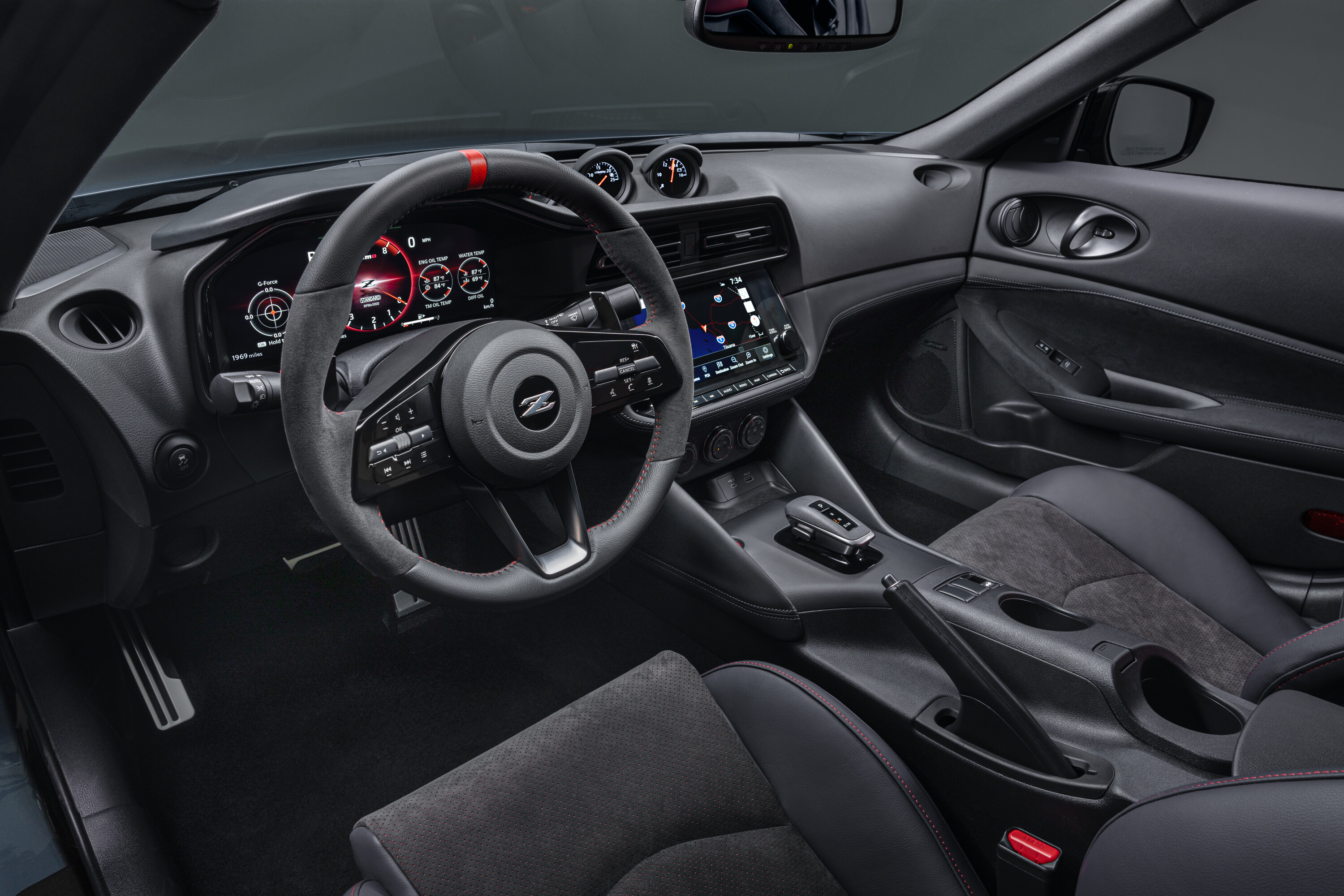
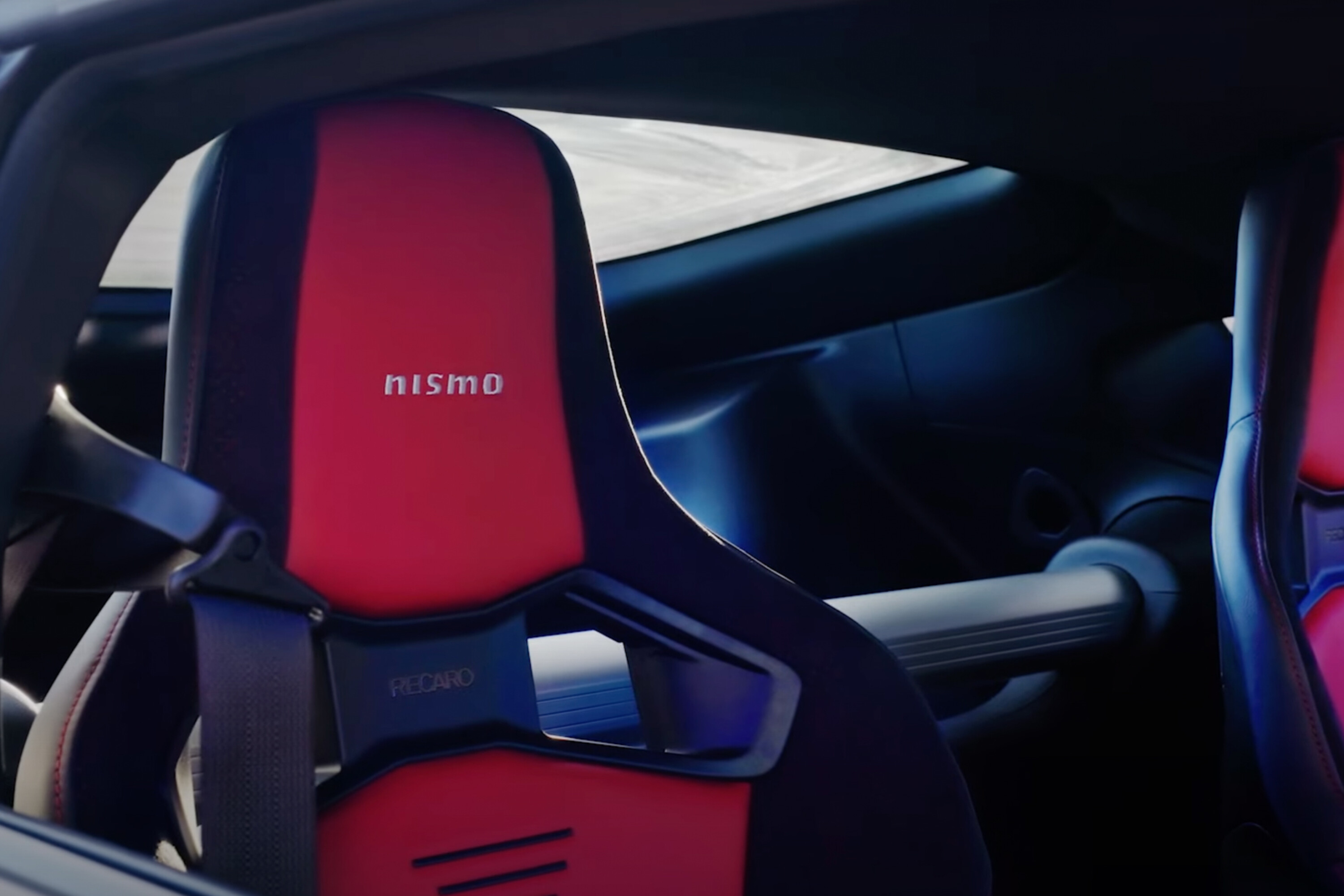
Inside is perhaps one of the most important changes we spotted in the original teaser video: Recaro seats. Rather than the manual-electric combination in the standard car, the high-quality buckets in the Nismo are manual only.
5
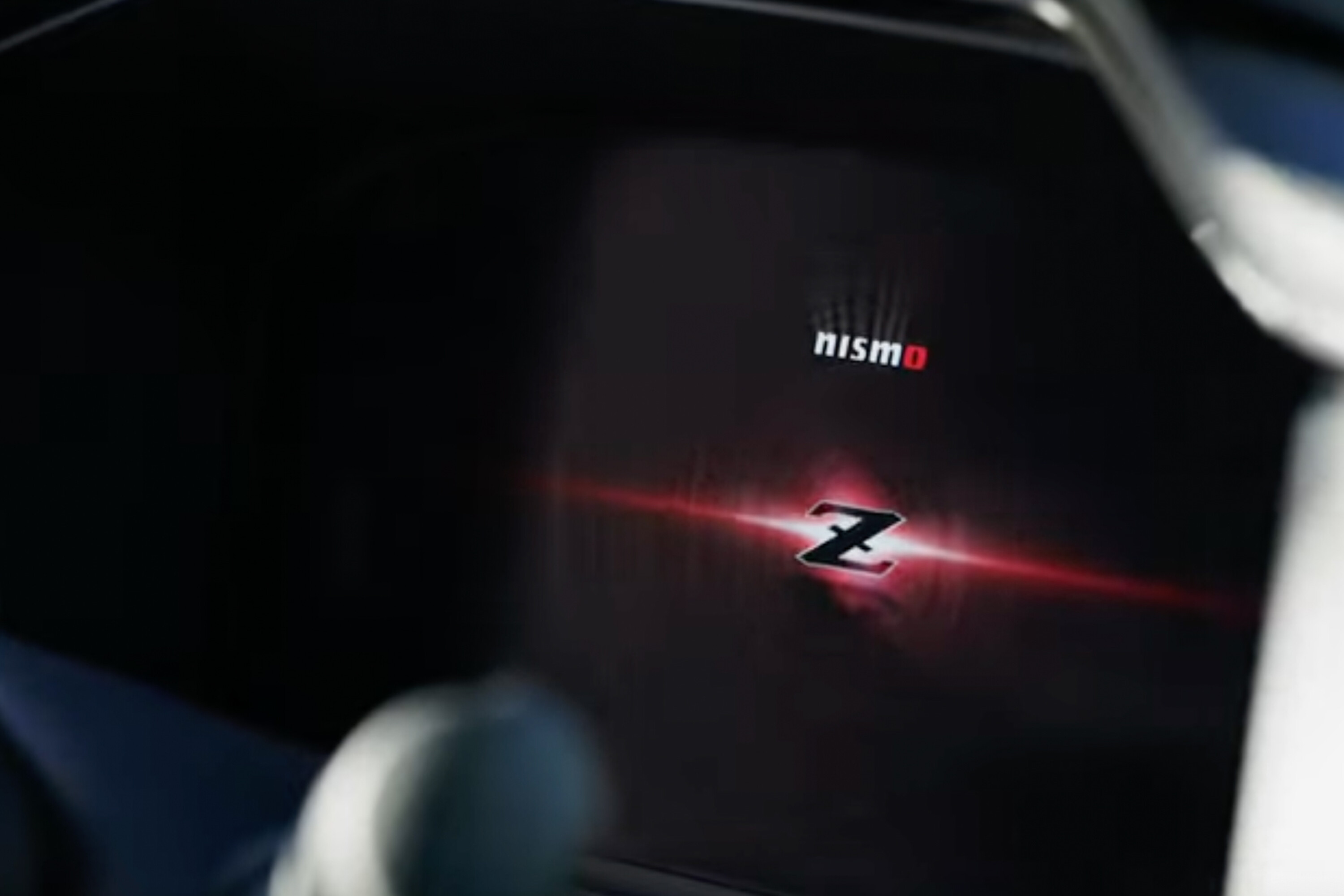
Cabin treatments continue with anodised red engine-start and drive mode buttons, new digital driver’s display graphics, and a leather and Alcantara/wrapped steering wheel with a red 12 o’clock marker.
The Nismo Z will go on sale in the United States in our Spring, and although Nissan has not confirmed Australian arrival details an early 2024 release is likely. Whether it will be a limited-run edition or a permanent variant is also not confirmed for our market.
Expect the Nismo Z to command a healthy markup over the regular Z, with a price tag pushing into the $85-95K region where the 285kW Toyota Supra and new Mustang Dark Horse hunt.
June 2023: Nismo Z revealed!
Nissan has shown off a hardcore Nismo Z for the first time – and it gets very sideways.
Snapshot
Nismo Z shown off!
Expect more grunt and grip
Release date and local details unconfirmed
The Nissan Nismo Z has been anticipated since the coupe’s launch way back in August 2021 and, although details are sparse, the video foreshadows some of Nismo’s modifications.
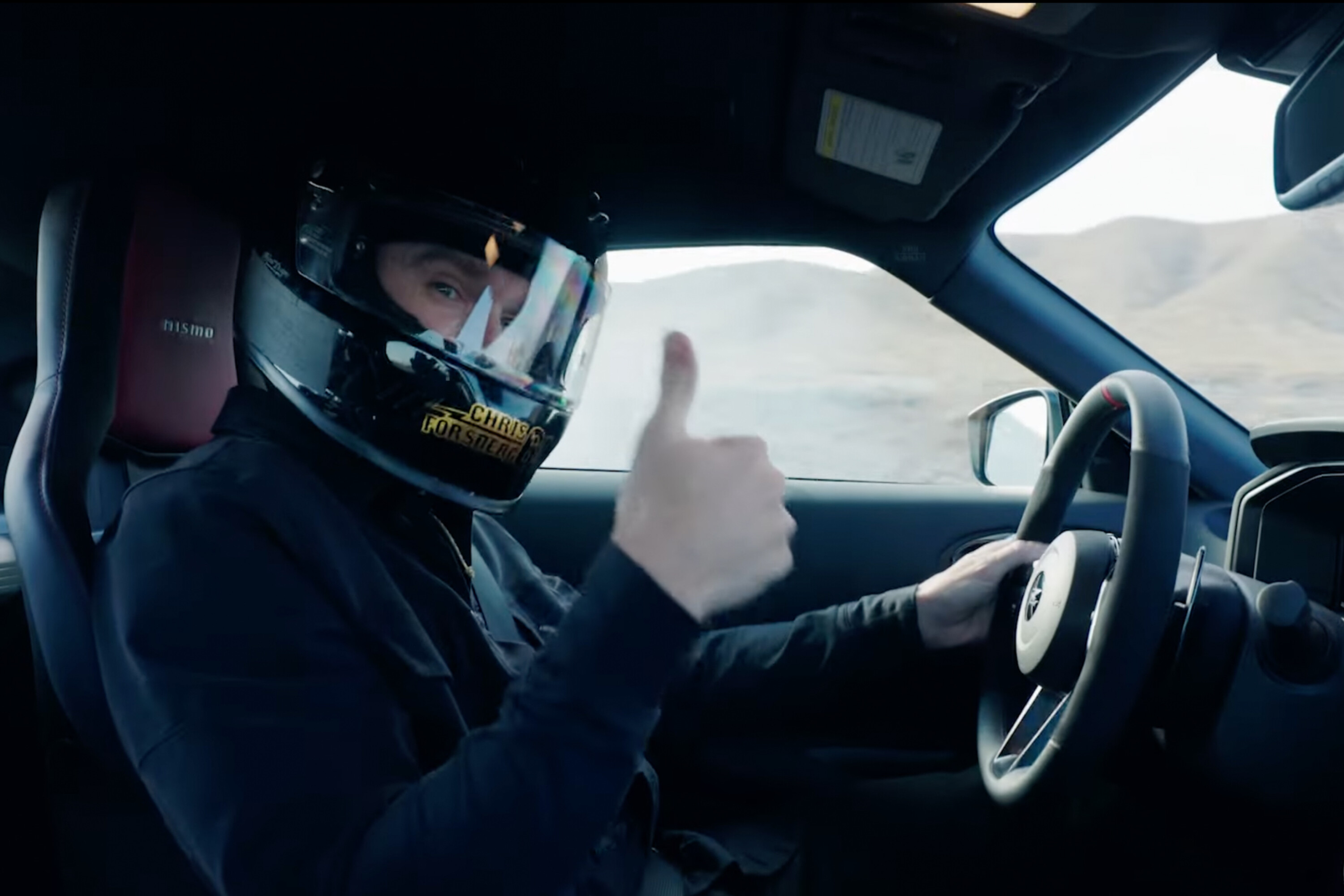
Three-time Formula Drift champion Chris Forsberg briefly peers under the Nismo Z’s bonnet where the familiar ‘VR30DDTT’ 3.0-litre V6 sits visually unchanged.
The standard car’s 298kW475Nmpunch is already brutish, but what’s the harm in a few extra kilowatts? A freer-flowing exhaust and intake (as heard in the video) would undoubtedly liberate a few extra horses from the Z.
The Nismo’s wider black multi-spoke alloy wheels are fitted with Dunlop SP Sport Maxx branded rubber, though their broad and blocky shoulders with few sipes hint at more trackday-focused tyres than regular Dunlops.
Sitting lower than the standard Z, the fender-lipped Nismo looks muscular. Red accents that run around the lower part of the new side skirts and more aggressive front valance complement the red brake calipers with a generous lip spoiler add to the effect.
Inside the cabin is one of the most important changes: Recaros. The red and black buckets feature Nismo insignia at the top and the tell-tale Recaro badging beneath – these ought to be an improvement on the standard car’s slightly-too-high pews.
The digital dash is largely unchanged save for the added Nismo graphic on start-up. On the screen, we can see the Nismo Z also has an unchanged 7000rpm rev limit.
Nismo has added a Sport+ setting to the Z’s drive mode suite, bringing the count to three with Normal and Sport of the regular car. Whether the Nismo’s selector will be hooked up to adaptive dampers is yet to be confirmed.
2
The pictured Z is a nine-speed auto – you can tell from the wide brake pedal and wheel-mounted paddles. An odd choice for the performance car perhaps, but maybe it’s faster shifting than the manual. Who knows if we’ll see both transmissions available.
No matter for Forsberg, of course, as he slithers about, at 28 seconds making eye contact and throwing thumbs up to the camera. Presumably, that means Nismo has tweaked the Z’s chassis to make it more controllable at the limit. We can’t wait to find out in a rematch with the Toyota Supra.
1
Nissan hasn’t given dates for the Nismo’s launch; we’d wager it’ll debut later this year or in early 2024. Pricing is also yet to be determined, though expect a $10-20K premium if the Nismo Z does come to Australian shores.
For nearly thirty years, the Subaru Forester has been a crowd favourite in the constantly developing midsize SUV segment.
And now, with the electrification push happening in Australia, Subaru has introduced a hybrid version of this much loved classic– the Subaru Forester Hybrid L AWD.
It’s popped up on Aussie shores to compete against the best-selling RAV4 hybrid, and give consumers another reason to re-consider the Japanese brand amongst a growing set of competitors.
Pricing & Features
There are two trim levels available in the hybrid Forester range– the Hybrid L and Hybrid S – with the more affordable L starting at $44,090 before on-road costs.
Standard features across the range include Subaru’s symmetrical all-wheel drive system, an electronic parking brake, one touch lane change indicator, tyre pressure monitoring system, rear mud guards and roof rails. Essentially, all your off-roading ideals.
The Hybrid L itself comes with 17-inch alloy wheels, heated front seats, premium cloth seats, privacy glass, a 6.3- infotainment screen and rain-sensing front windscreen wipers.
1
Stepping up to the Hybrid S adds 8 premium audio speakers, a power tailgate, larger 18-inch alloy wheels, leather accented seats, power front seats, an electric sunroof and more.
The hybrid variants of the Forester are equipped with a 2.0-litre e-Boxer 4-cylinder petrol engine, paired with a permanent magnet AC synchronous motor and a lithium-ion battery, delivering a combined output of 110kW of power and 198Nm of torque. While these figures are modest, they contribute to a notable improvement in fuel efficiency, reducing consumption to 6.7L/100km on a combined cycle, down from 7.4L for the standard petrol models of the Forester range.
1
Safety
The 2024 Subaru Forester maintains its five-star ANCAP safety rating, enhanced by the extensive EyeSight Driver Assist technology suite.
The vehicle scores highly in safety tests, achieving a 94% adult occupant protection rating and 86% for child occupant safety.
It comes equipped with a range of vital safety features including autonomous emergency braking, blind-spot monitoring, and lane-keeping assist, ensuring a well-protected driving experience.
1
Key Rivals
With many rivals introducing hybrid offerings in the midsize SUV segment, the Subaru Forester Hybrid competes against:
If you value a midsize SUV that offers safety, efficiency, consider adding the 2024 Subaru Forester Hybrid L to your shortlist. It offers a robust array of safety features, substantial all-wheel-drive capabilities, and a comfortable interior, making it ideal for both everyday commuting and outdoor adventures.
Its pricing is pretty competitive and the cars strong safety ratings enhance its appeal, positioning it as a smart choice for families and outdoor enthusiasts alike.
Honda Australia has announced an eight-year / unlimited-kilometre warranty for select vehicles until June 30, as an end-of-financial-year offer.
All ZR-V SUVs, 2023-build CR-V petrols and 2024-build CR-V hybrids purchased between May 1, 2024, and June 30, 2024 are covered by the promotional warranty – up from the brand’s standard five-year / unlimited-kilometre offer.
The Japanese brand also offers eight years of complimentary roadside assistance for these vehicles, up from five years.
Other Honda vehicles – the HR-V, Civic and Accord – are not included in the promotion, while CR-V petrols built in 2024 and CR-V hybrids built in 2023 also retain Honda’s standard five-year warranty and roadside assistance.
All CR-V and ZR-V vehicles delivered in Australia between April 1 and April 30 retained Honda’s standard five-year/unlimited-kilometre warranty and roadside assistance offer.
While other manufacturers have experimented with temporary warranty extensions before shifting to a permanent arrangement, Honda says it has no plans to change its standard five-year warranty arrangement, first introduced in mid-2017.
“Our standard 5-year warranty, 5-year [roadside assist] and 5 low-price services will continue as a great value add as part of our standard offer,” said a Honda Australia spokesperson in January.
As detailed here, Honda Australia also recently slashed prices across the HR-V, ZR-V and CR-V line-ups, while the price of the Civic Type R hot hatch has increased.
Honda’s temporary eight-year / unlimited-kilometre warranty is one of the longest in the automotive industry, behind Mitsubishi’s 10-year / 200,000-kilometre warranty, which relies on the vehicle being serviced within the Mitsubishi dealer network.
Mitsubishi vehicles serviced by independent workshops automatically fall to an industry-standard five-year coverage, with a 100,000-kilometre cap.
Chery, GWM-Haval, Kia, MG, Skoda and Ssangyong offer permanent seven-year / unlimited-kilometre coverage, while LDV has a seven-year/200,000-kilometre warranty for its non-EV models.
The latest promotions offered by Honda follow the brand’s sharp sales decline since 2018. It posted its lowest sales on record in 2023 following a shift to a controversial fixed-price ‘agency’ sales model in July 2021.
In 2023, Honda sold 13,734 vehicles in Australia, down from 14,215 in 2022, 17,562 in 2021, and 29,040 in 2020.
“That was a strategic move, for us to be here for the next 50 years… And I hope it demonstrates to you that we’re not going anywhere. We’re here to stay,” said Honda Australia director Carolyn McMahon in May 2023.
McMahon added that Honda is “happy” with how the agency sales model has been rolled out and blamed poor supply – not a lack of demand for Honda product – as the key reason behind the low sales figures.
April 2024: New petrol BMW X2 and electric iX2 driven in Australia
You can read our first local reviews of BWW’s second-generation X2 and first ever iX2 – the coupe-style spin-offs of the X1 and iX1, respectively.
Or scroll down for all the pricing and specification details for these petrol and electric compact luxury SUVs.
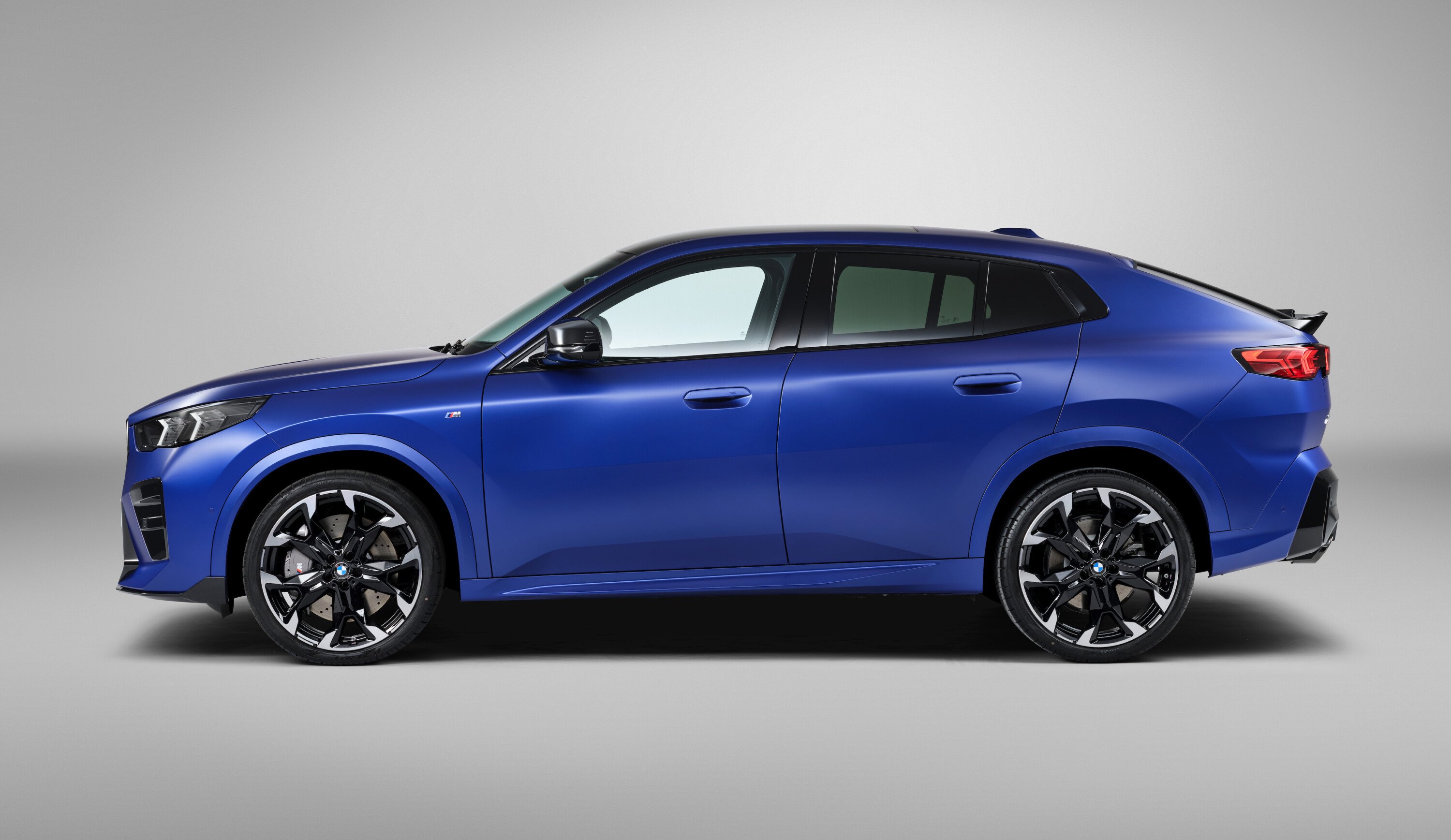
February 2024: New BMW X2 and iX2 EV driven
REVIEW: BMW’s X2 returns with an electric stablemate and a level of tech & interior space to worry cars from the class above
October 2023: 2024 BMW X2 and iX2 pricing revealed
The second-gen BMW X2 will go on sale in the first quarter of 2024 with significantly bigger dimensions, more technology, and a new all-electric iX2 variant.
BMW’s latest X2 has been unveiled more than a year after its donor model, the X1.
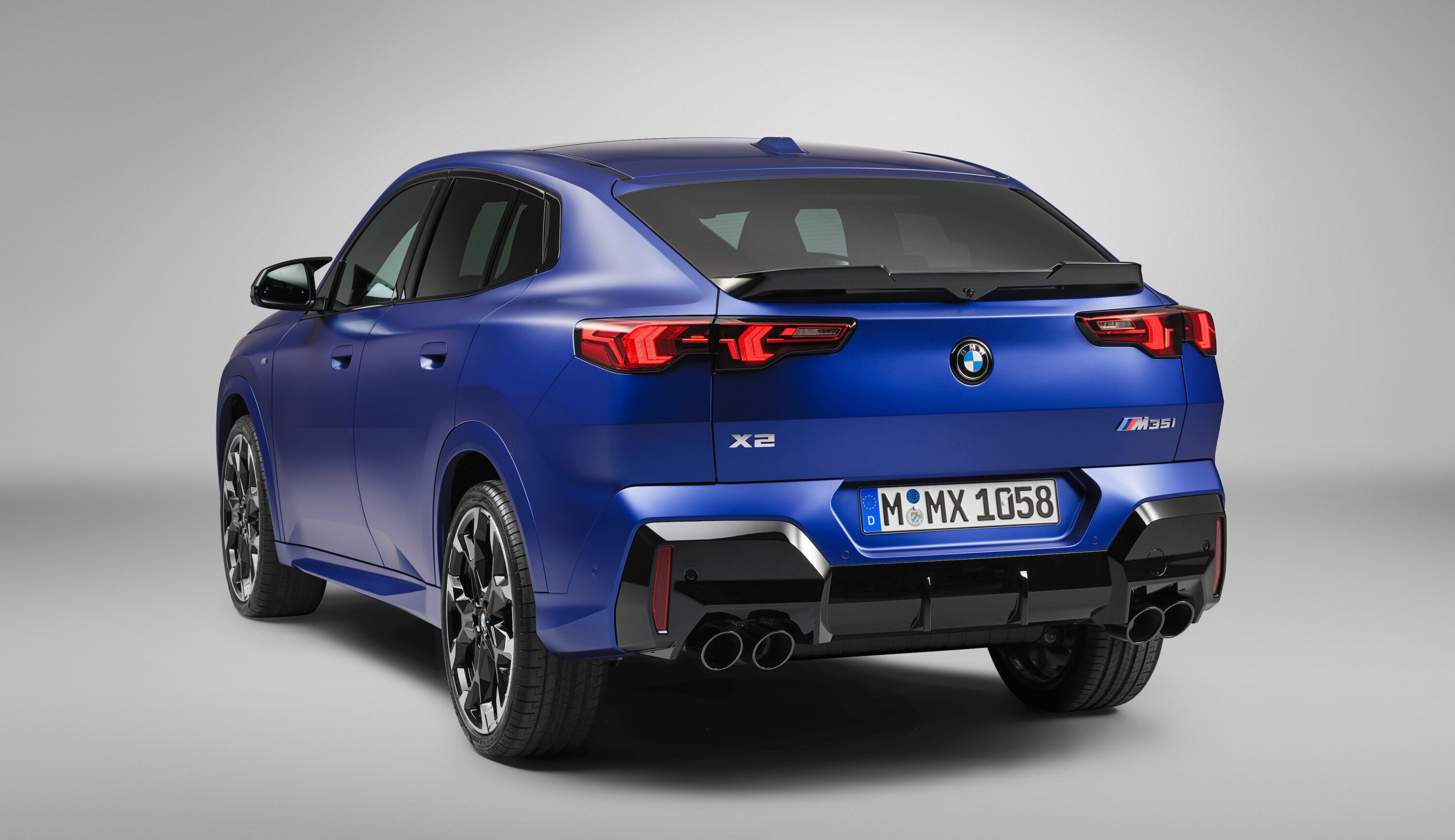
The coupe SUV arrives at a much higher price than before ($10,100, in fact) with the entry-level xDrive20i commanding $75,900 before on-road costs.
Snapshot
‘Coupe’ version of X1 SUV adds nearly 20cm to length
iX2 joins range to expand BMW’s all-electric offerings
As expected, the X2 and iX2 interior designs are virtually identical to those of the X1 and iX1.
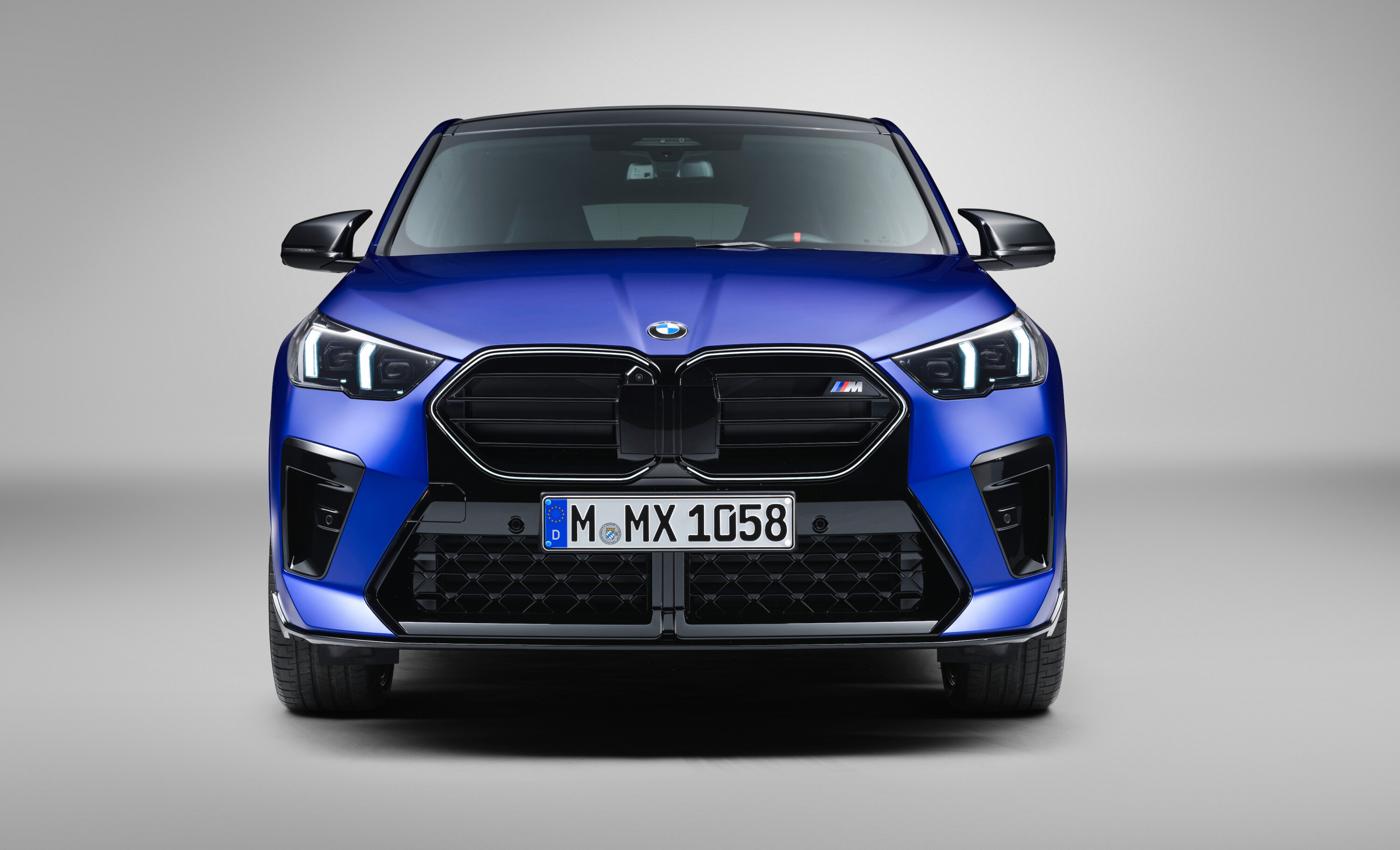
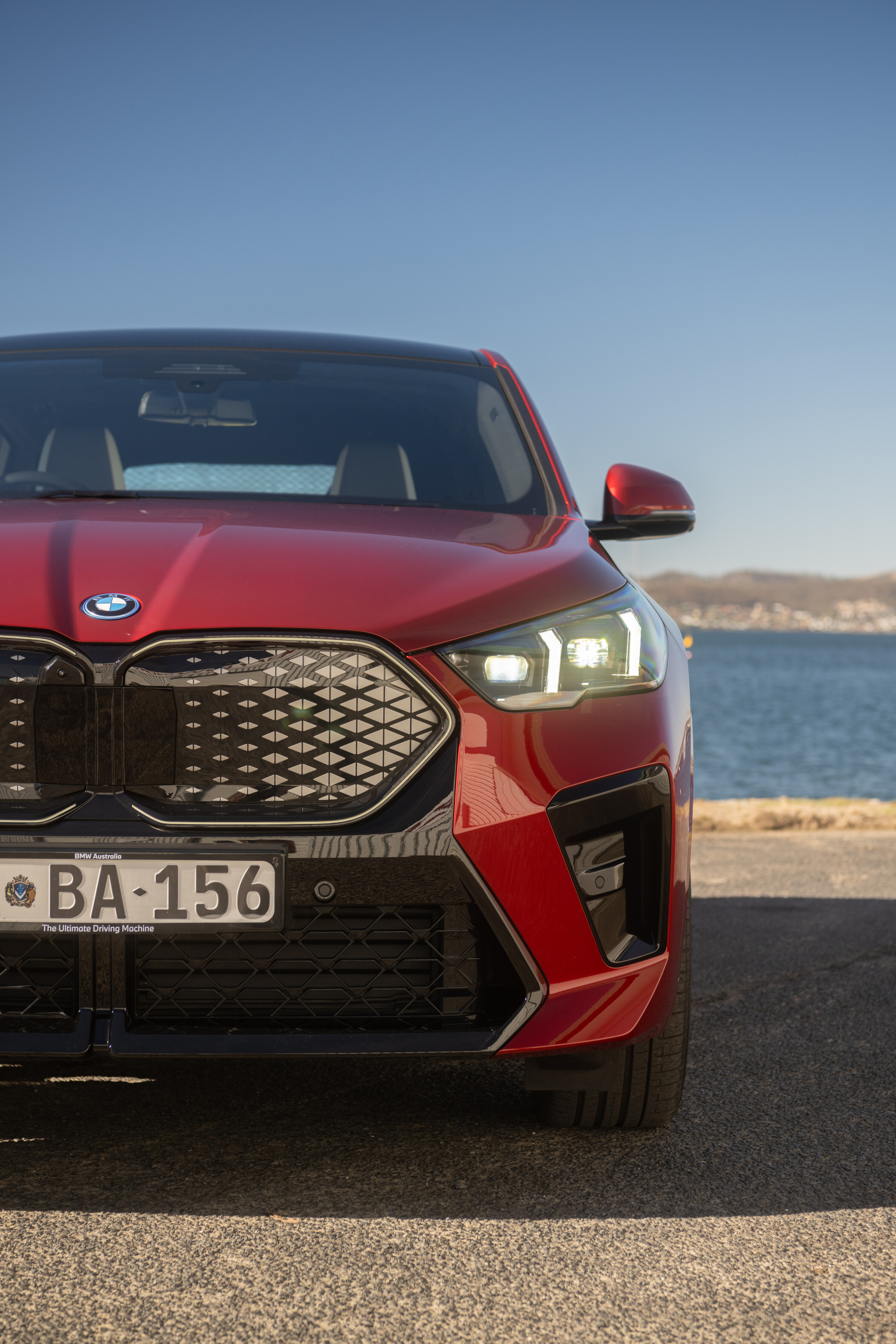
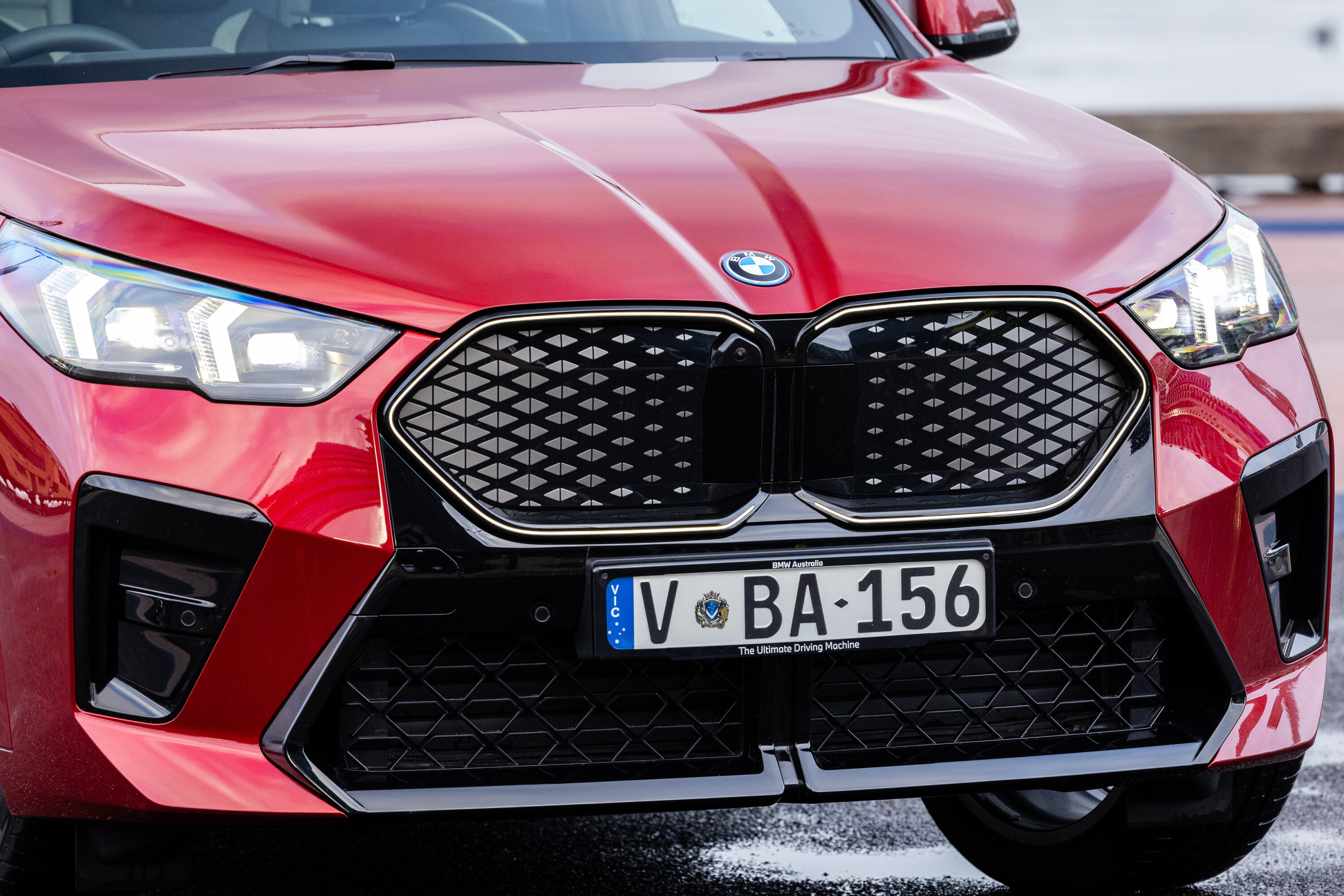
One interesting design development for the X2’s bigger kidney grilles is an optional LED daytime-running light ring, which BMW dubs ‘Iconic Glow contour lighting’.
BMW X2 xDrive20i features
19-inch alloy wheels
Adaptive LED headlights
Keyless entry
M Sport styling package
10.7-inch touchscreen
10.25-inch digital driver’s display
Wireless Apple CarPlay and Android Auto
Wireless charging pad
Dual-zone climate control
BMW Operating System 9 with personal assistant
Electric seats with memory
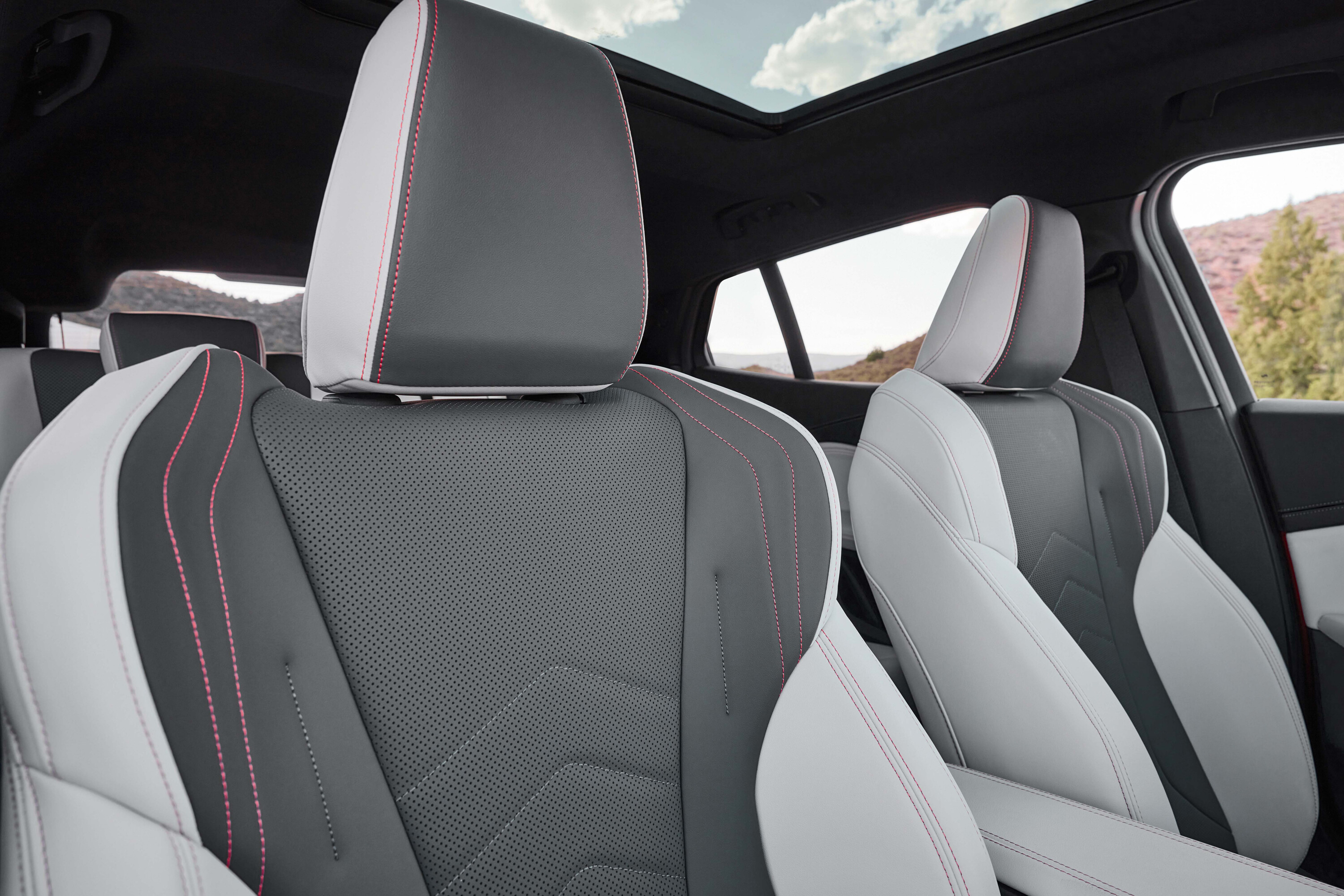
Veganza artificial leather upholstery
Adaptive dampers
Auto-dimming mirrors
Power tailgate
Head-up display
iX2 xDrive30 adds an illuminated grille, a 12-month Chargefox subscription, and two charge cables.
2024 BMW X2 options
Enhancement Pack
M Sport pack pro
$4900
Shadowline headlights
20-inch alloy wheels Style 873
M seatbelts
M Sports seats
M Sport brakes with red calipers
Vernasca leather
$2800
1
The more powerful M35i is the current flagship, with BMW Australia yet to finalise local iX1 specs.
X2 M35i features
20-inch alloy wheels
12-speaker Harman/Kardon sound system
Vernasca leather upholstery (Oyster)
Panoramic glass roof
M sport brakes (blue)
M styling pack (kidney grilles, mirrors, aero elements)
The X2 will launch with a flagship M35i xDrive that is again powered by a ‘B48’ 2.0-litre turbocharged petrol four-cylinder. Shared with the X1 M35i, the engine produces the same 233kW and 400Nm.
It matches performance, too, with a 5.4-second 0-100km/h sprint, though the size and weight gain means the new fastest X2 is half a second slower than the model it replaces.
Below that will be an all-paw 150kW/300Nm xDrive20i variant that sits above the X1’s sDrive18i and sDrive20i grades.
1
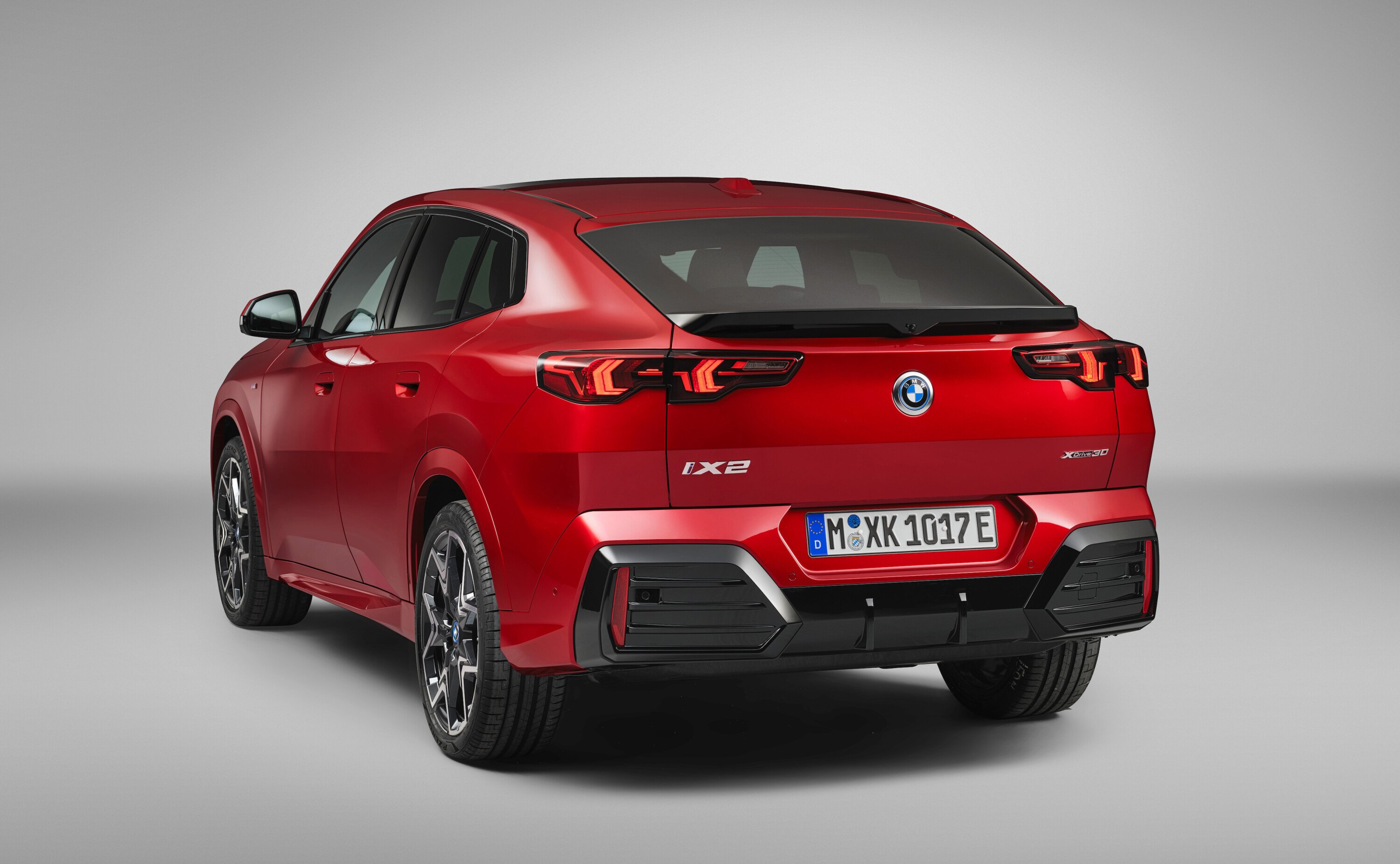
The BMW iX2 eDrive20, like the iX1, has a 65kWh battery and a 150kW/247Nm front electric motor for a 477-kilometre range.
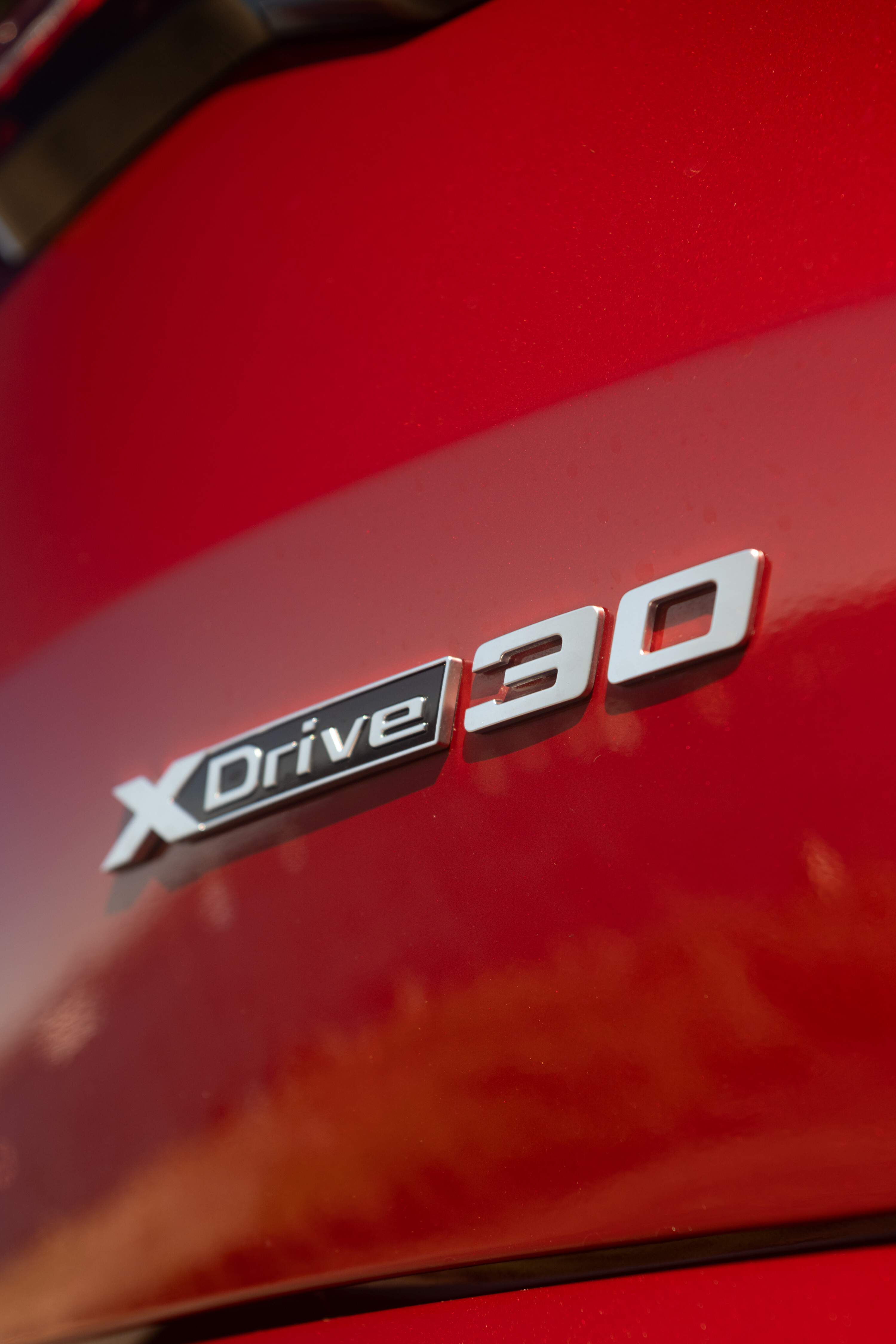
The BMW iX2 xDrive30 also has the 65kWh battery pack, and features the same electric motors front and rear as the iX1 for outputs of 230kW and 494Nm.
Claimed performance is identical at 5.6 seconds for the 0-100km/h benchmark sprint.
BMW quoting a WLTP range of 449km for the iX2 xDrive30. The iX1’s WLTP range is a maximum 440km.
Safety
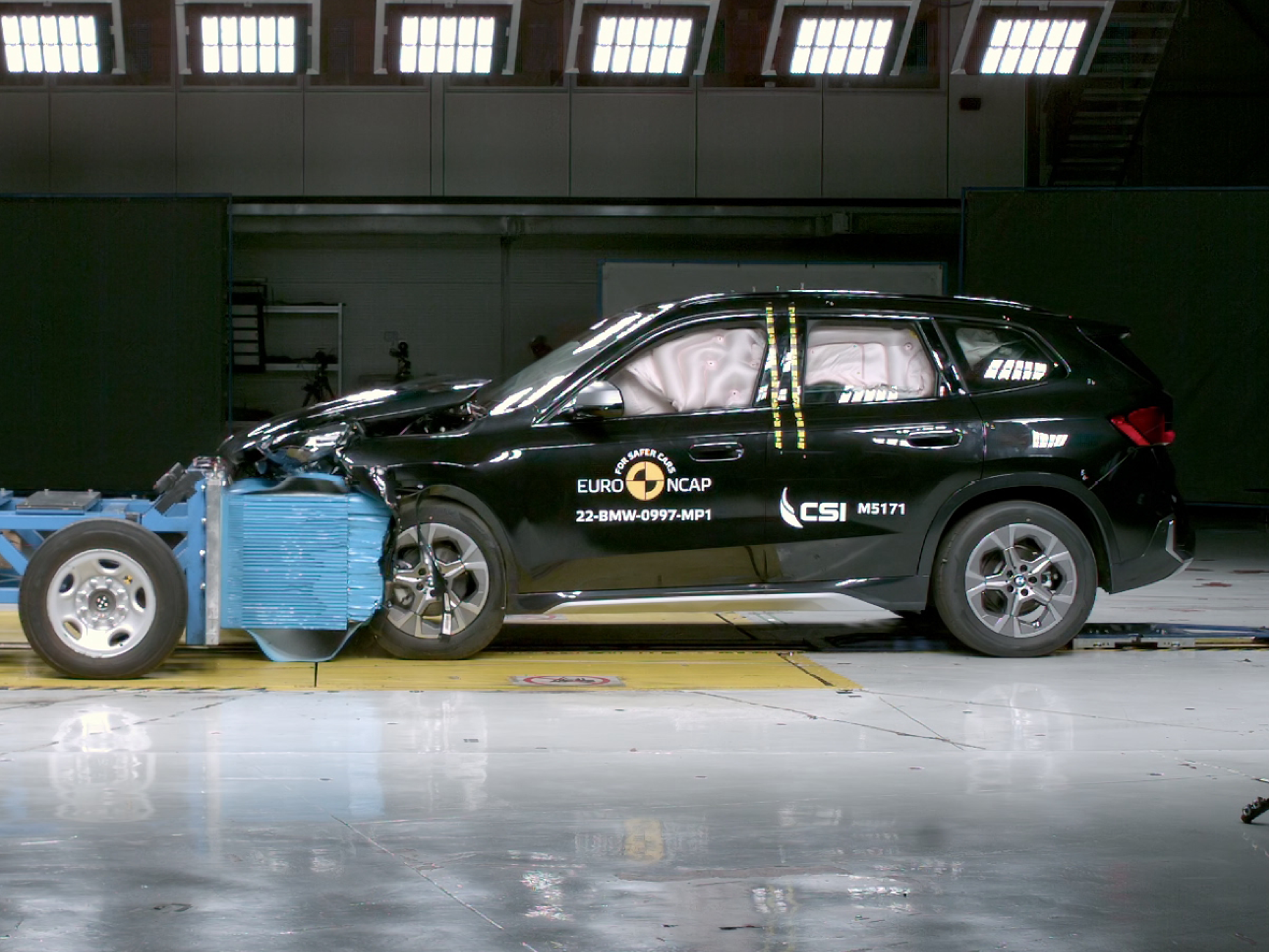
The BMW X2 is yet to be evaluated by Euro NCAP or ANCAP.
However, like the previous gen, it’s likely to share its Euro NCAP five-star with the X1. It features the below active safety aids.
Adaptive cruise control with stop-and-go function
Cornering brake control
Front, side and head airbags
Dynamic traction control
Blind-spot monitoring
High-beam assist
Lane departure warning
Adaptive LED headllights
Lane change warning
Anti-dazzle rear view mirror
Front collision warning with brake intervention
Park distance control
Rear cross-traffic alert
Parking assistant
Rear collision prevention
Panorama view, 3D view and surround-view cameras
Dynamic stability control
Drive recorder
Anti-lock braking system
Intelligent emergency call
Braking assistant
Availability
The BMW X2 will arrive in Australia in the first quarter of 2024, with iX2 eDrive20 to follow mid-year.
REVIEW: BMW’s X2 returns with an electric stablemate and a level of tech & interior space to worry cars from the class above
Spanish brand Cupra will add a new Ateca variant later this year to become its most affordable SUV.
The Ateca V, planned for the third quarter of 2024, will sit below the $63,490 VZx performance version (main image) that has hitherto been the only spec offered for the small SUV.
There’s potential for the Ateca V to be priced below $50,000 considering Cupra’s cheapest SUV is currently the $51,990 Formentor V.
The V would be expected to boost Ateca sales, which are the smallest of the four Cupra models currently offered in Australia.
Cupra Australia has chosen the most powerful option of two new engines that were added to Europe’s Ateca line-up in the second half of 2023.
The 2.0-litre turbo petrol engine for the V produces 140kW compared with the VZx’s 221kW and is teamed with a seven-speed DSG auto and all-wheel drive.
A 110kW 1.5-litre petrol front-wheel-drive variant has been left on the table.
Cupra Australia says the Ateca V will be well equipped despite its entry-level status.
The most affordable Cupra continues to be the Leon hatchback, which costs from $45,190.
The Ateca is expected to be phased out in the second half of this decade, essentially replaced by the Terramar SUV that is set to be the last combustion-engined Cupra before the brand goes all-electric by 2030.
The BMW i3 was the first electric vehicle I ever drove. Its design was divisive, yet undeniably cool. With its almost alien-like styling, it felt as if a moon rover had been given a cabin and placed in a showroom.
Today, BMW’s electric cars closely resemble their petrol-powered counterparts.
By the end of this year, BMW plans to offer 16 battery electric variants across eight models, significantly easing the shift to electric vehicles.
Working in this field has profoundly changed my perspective on the feasibility of switching to electric cars for many people, particularly when compared to their petrol counterparts.
1
This is especially evident with the iX2, which, when driven consecutively with the X2 petrol models, strongly reinforces the case for electric vehicles.
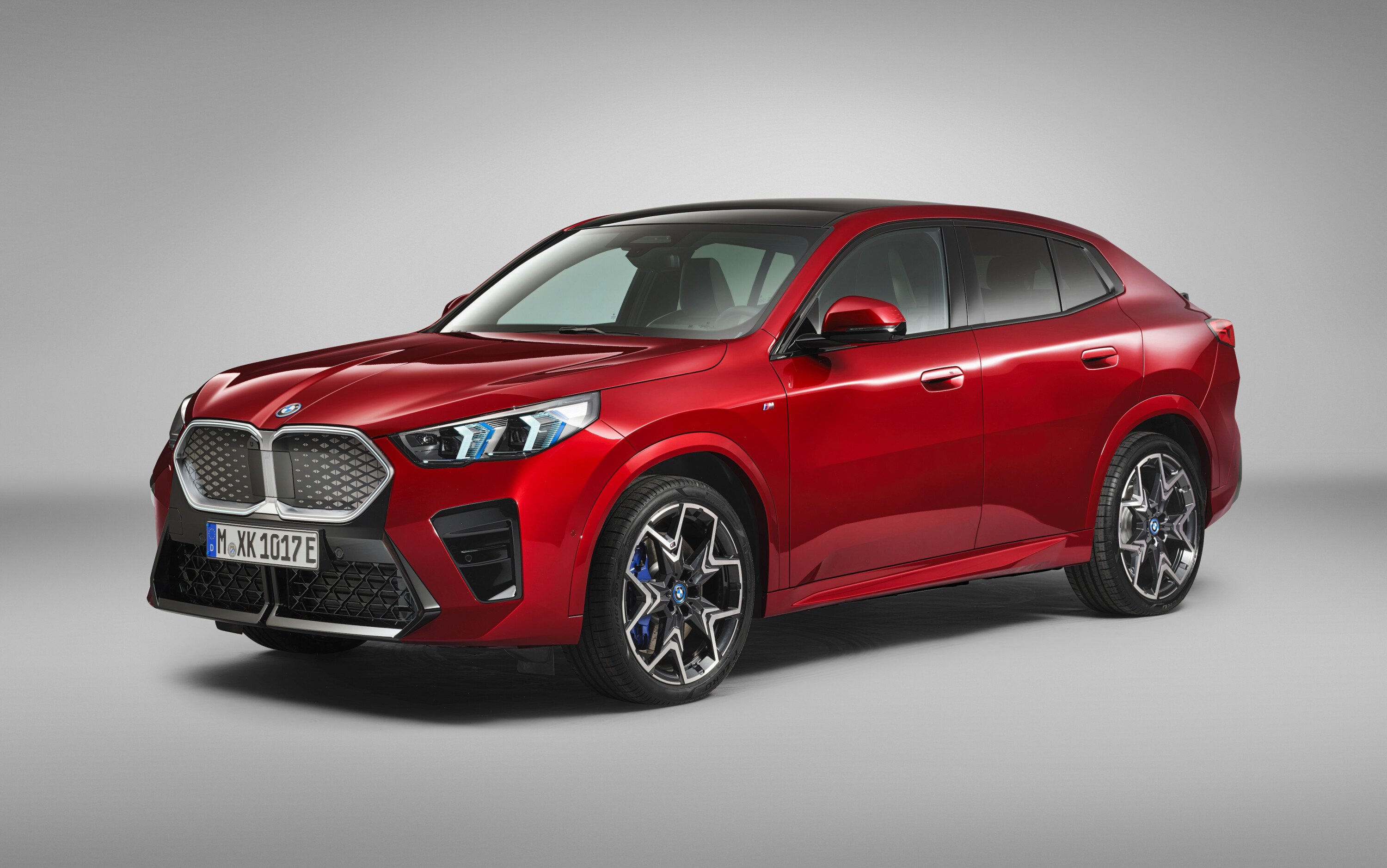
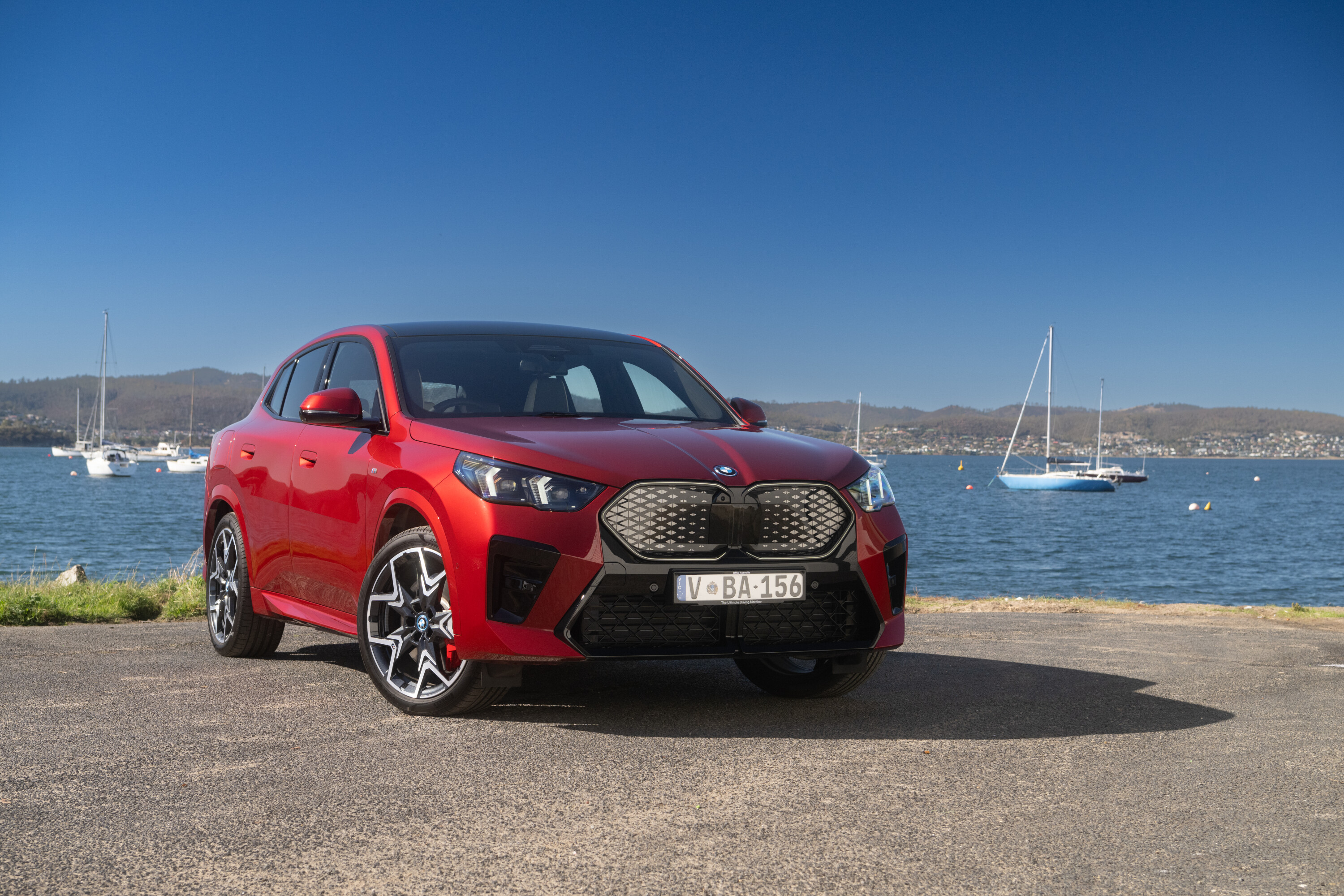
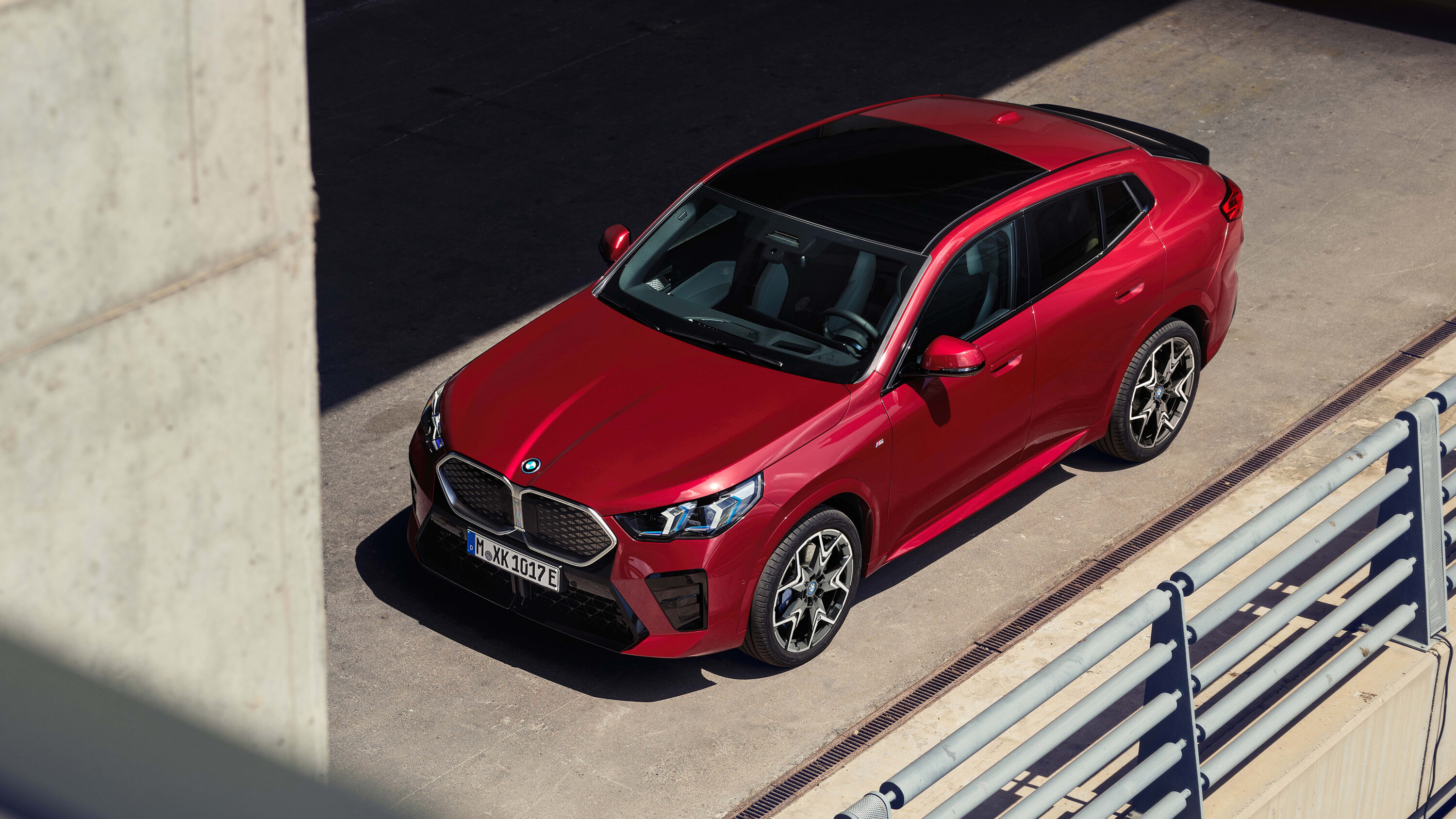
For it’s second generation update the X2 adds the iX2 to the line-up for the first time, a battery electric version of its sporty five seater small SUV. Or as BMW likes to call it, their Sports Activity Coupe.
We had the opportunity to drive this new iteration down across the south of Tasmania to see if the car was capable of handling the windy terrain of where surprisingly quite a few BMWs already live.
The iX2 lineup in Australia will feature two models.
The entry-level iX2 eDrive20 variant is set to arrive in Australia by July this year, following a similar launch approach as last year’s iX1, which also made buyers wait several months for the more economical version.
The incoming iX2 xDrive20 is listed at $82,900 before on-road costs, carrying a $7,000 premium over the entry-level petrol X2 variant, and is front-wheel drive as opposed to the all-wheel drive system on the X2.
2024 BMW iX2 Pricing
X2 xDrive20
$82,900*
iX2 xDrive30
$85,700*
* before on-road costs
BMW has intentionally priced its electric vehicles below the luxury car tax threshold to make them more affordable for consumers.
Nick Raman, BMW’s Product and Business Communications Manager, noted that this pricing strategy was carefully considered. For context, an ix2 XDrive30 in Europe is priced over 60,000 euros, which translates to around 106,000 Australian dollars.
That means there are now six variants that sit below this threshold with the iX1 is entry point to electric at $78,900 plus on road costs.
1
The BMW iX2 eDrive20 features a 65kWh battery and a front electric motor, which produces 150kW and 250Nm and achieves a claimed range of 455 kilometres which will be confirmed when it arrives down under as well as consumption figures.
In comparison, the iX2 xDrive30 uses the same 65kWh battery but includes dual electric motors, one at the front and one at the rear, providing 230kW and 494Nm, for an identical 0-100km/h time with the iX1 xDrive30 of 5.6 seconds. This is when the boost mode is activated.
The iX2 xDrive30 offers a WLTP-certified range of up to 395km.
As BMW planned, the iX2 line-up imitates that of the iX1- with the XDrive20 offering an almost identical set of features. Key feature differentiators on the iX2 are larger wheels, acoustic glazing and lack of roof rails.
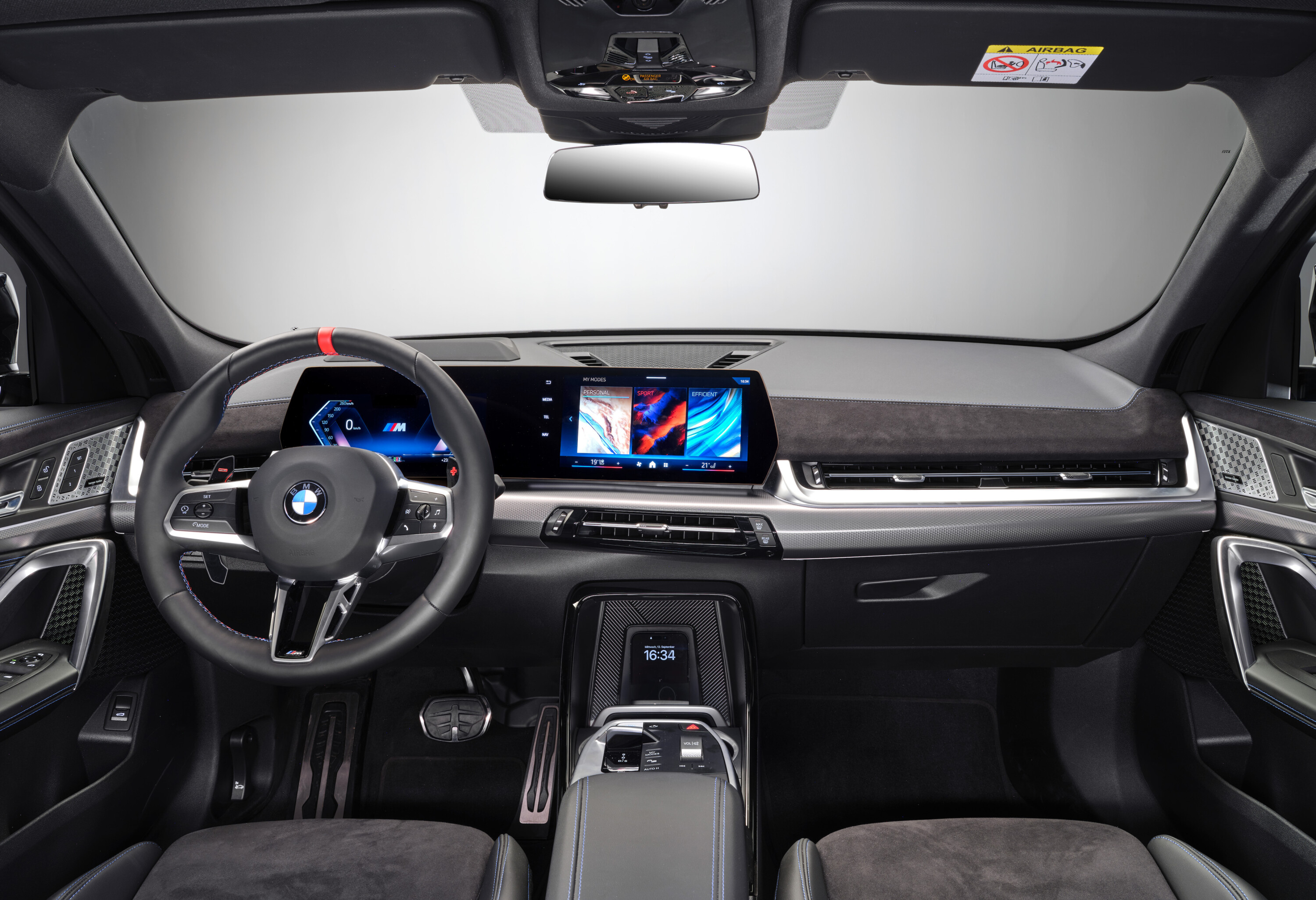
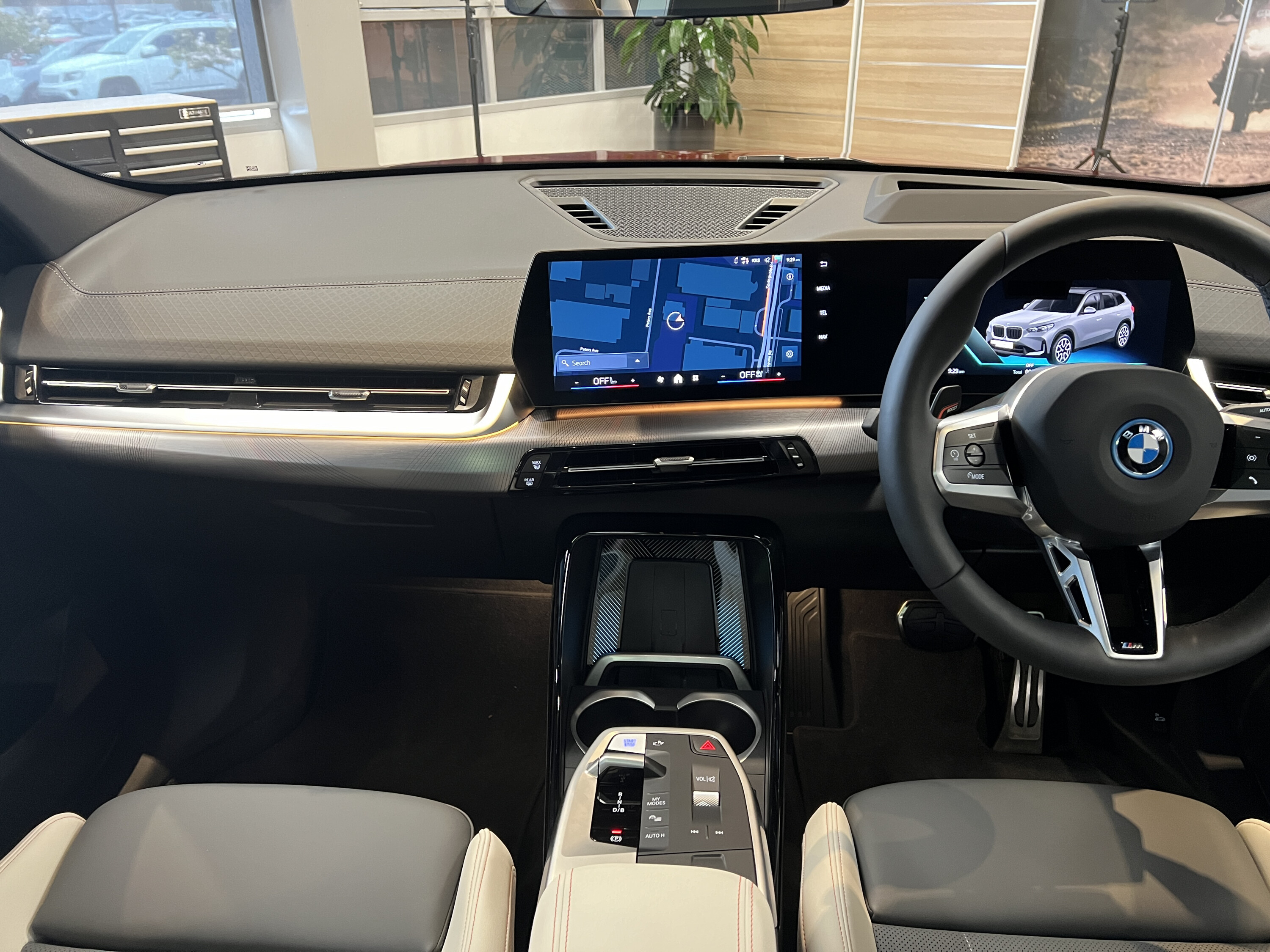
As a driver you’re equipped with a modern cabin that is directed towards you featuring a curved display built by a 10.7-inch infotainment screen and a 10.3-inch digital dashboard, creating a cockpit that is both driver-centric and highly functional.
Every control is strategically placed for optimal accessibility, and the infotainment system, compatible with wireless Apple CarPlay and Android Auto, connects swiftly. This system is powered by BMW’s iDrive 9, which is based on Android’s open-source platform.
1
2024 BMW iX2 xDrive30 features
10.3-inch driver display screen
Digital key
10.7-inch curved touchscreen
Head Up Display
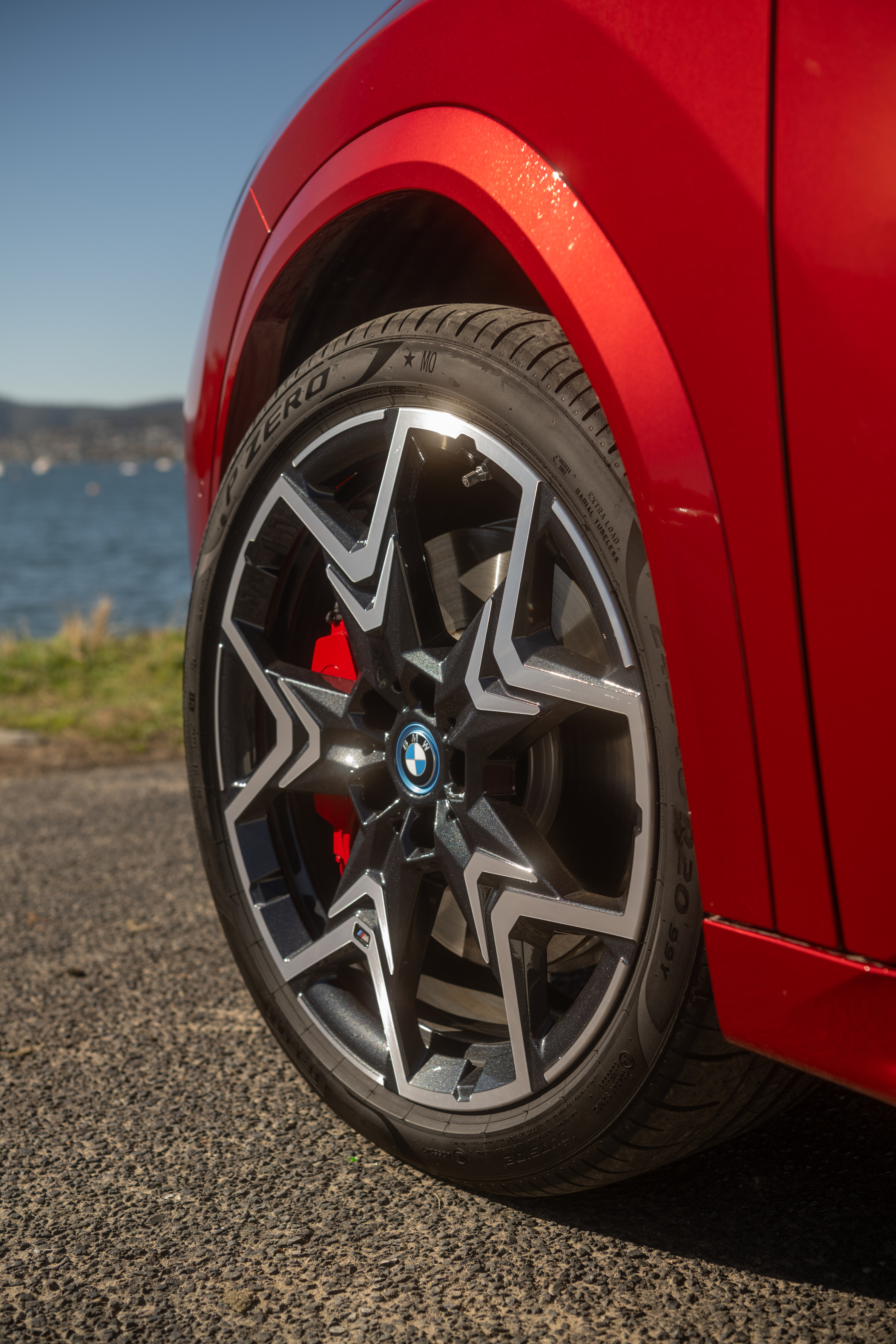
19-inch ‘M Sport’ alloy wheels
Kidney grille illumination
2-zone auto climate control
Veganza’ synthetic leather upholstery
360 degree reverse camera
Lights package, interior
Acoustic pedestrian warning
M Sport leather steering wheel
Adaptive LED Headlights
M Sport Package, incl M adaptive suspension & M steering
Automatic tailgate
Tyre pressure monitoring system
Blind spot monitors
Wireless charging
DAB Digital radio
12-month Chargefox subscription
The front seats are power-adjustable, with the driver’s seat featuring a memory function for up to three drivers. The $3600 Enhancement Package adds luxury with a panoramic glass sunroof, a heated steering wheel, a 12-speaker Harman/Kardon audio system, and a massage function for the front seats.
Complimentary with every sale is a 12 months subscription to Chargefox public chargers – Australia’s largest charging network.
The interior of the iX2Drive30 we evaluated is meticulously crafted, with a focus on soft touch surfaces that enhance its luxurious ambiance.
The seats are upholstered in BMW’s exclusive ‘Veganza’ vegan leather, providing exceptional comfort and a convincingly authentic leather feel.
In response to feedback about the difficulty of swiftly navigating the menu, the new operating system now includes a feature for quick access to links by a simple swipe down. However, users should be aware that these links can be overly sensitive and may activate unintentionally.
BMW has introduced the ‘Digital Premium’ subscription, priced at $9.99 per month or $109 annually. This service adds capabilities such as installing apps to enhance drive modes, provide live maps, and control lighting features, and includes a 90-day trial for customers to explore its benefits.
1
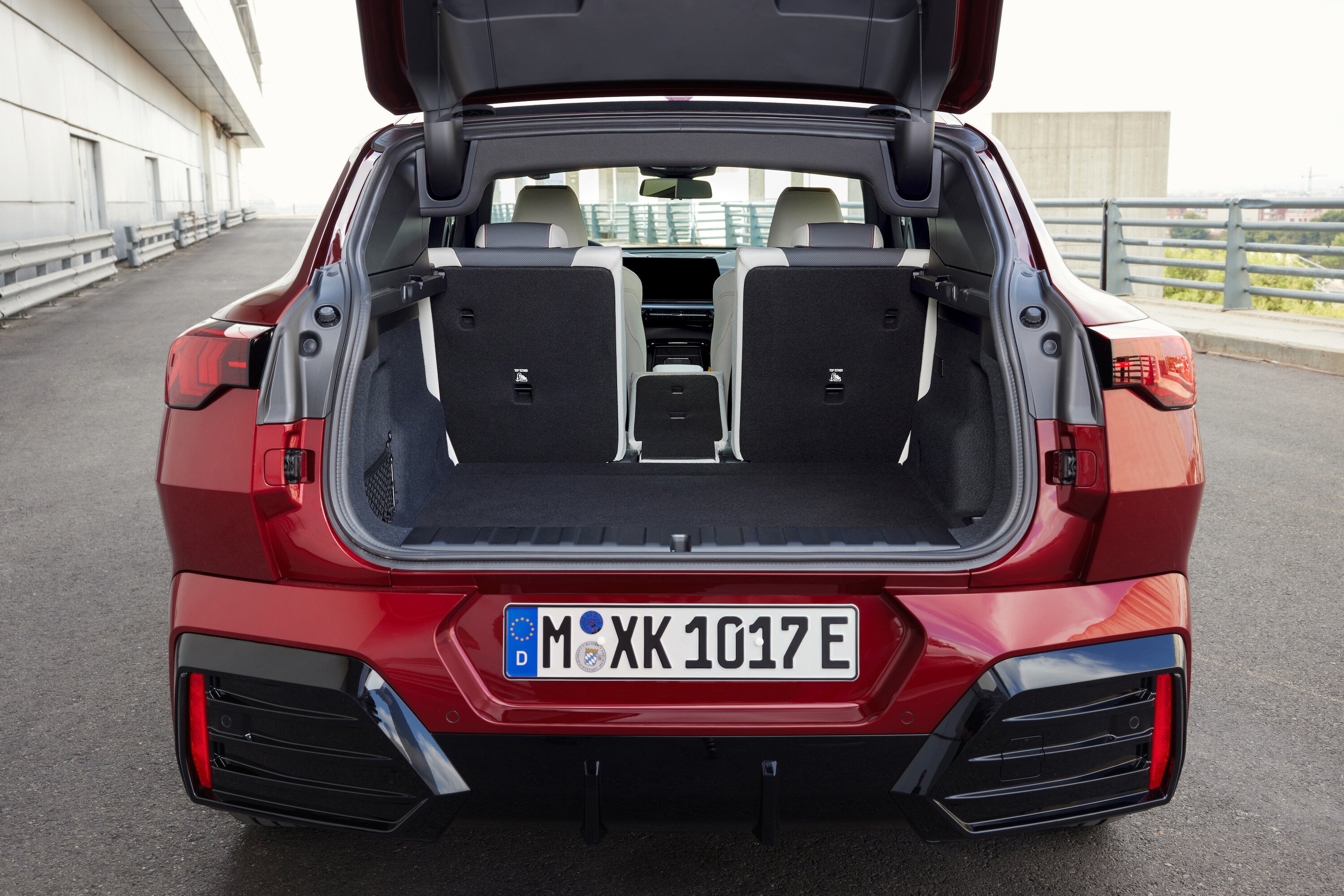
Storage solutions in the iX2 are cleverly integrated, though somewhat limited.
The centre console is compact, perfectly sized for small essentials like a card wallet, lipstick, or a tub of gum. Larger items can be stored in the open area below, and there is a specially designed upright wireless phone charger at the front of the car.
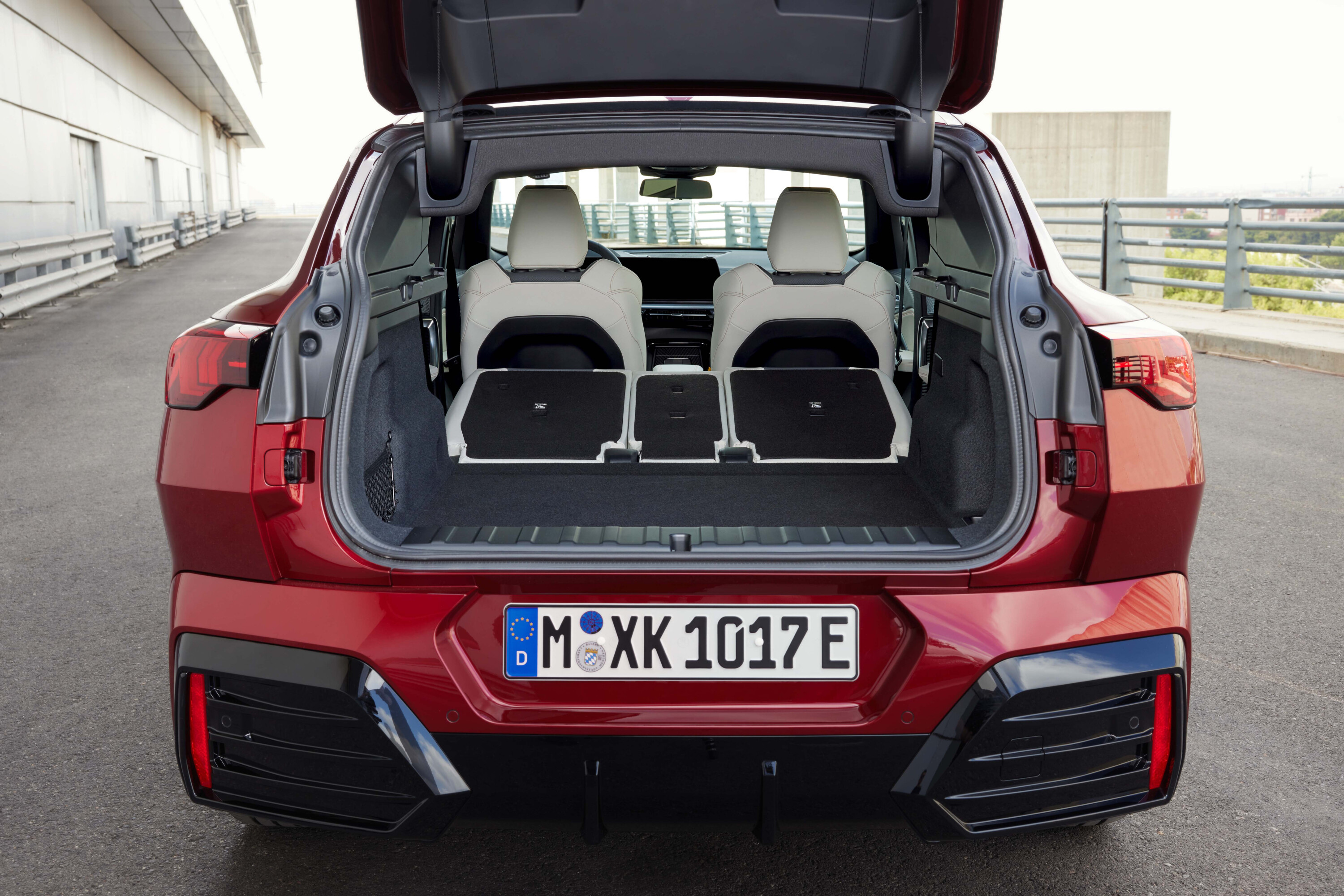
Rear headroom is naturally compromised because of the sloping roof but if your passengers aren’t too tall it shouldn’t prove a headache. Similarly, two adults can fit okay, but I wouldn’t be pushing for a third in the centre.
Nine exterior paint colours are available, with Alpine White as the only standard option. Inside, there are five trim options, all available at no additional cost on the top-spec xDrive30.
Dimensionally similar, the EQA is slightly taller with the recently added EQA 250+ priced from $84,900 before on-road costs also slips below the LCT threshold. It can drive up to 426km on an WLTP cycle.
Available in two grades, the UX300e pricing sits at $80,720- $88,190 for Luxury and Sports Luxury models before on-roads. Both have a humble output of 150kW and 300Nm, and a range of 440km on WLTP testing.
With the iX2 xDrive20 hitting our shores later by July of this year, our test vehicle in Hobart was the higher-specced xDrive30.
The powertrain of the iX2 accelerates quickly and smoothy. The boost mode on the steering column takes this even further but doesn’t produce any huge amount of jerk which is a great thing. When at speed there was some noticeable wind and road noise, which could be easily drowned out with some music.
Electric torque is consistently a highlight, delivered smoothly and responsively in the iX2. A boost mode activated by the shift paddle adds an element of fun, though it’s not overly dramatic.
1
The electric iX2 offers a smoother driving experience compared to its petrol counterpart, especially with the switch between electric power and regenerative braking which happened quite seamlessly.
However, while performing on Tasmania’s roads the SUV felt a bit aggressively into road imperfections, especially when equipped with 20-inch alloy wheels on our test car, leading to bumps being distinctly felt through the steering wheel. While it’s not uncomfortable, it lacks the polished ride quality of other more premium cars in the BMW garage.
As a daily driver on smoother, inner-city roads you wouldn’t have too much trouble. It’s the trickier potholes where the car finds challenge, but nothing that can’t be sorted with a strong-worded email to your local council.
Power consumption is rated at 18.5kWh with a range of up to 395km. Unfortunately on test we weren’t able to assess the stop for a charge-up but BMW asserts a 10-80% charge takes just 29 minutes.
So the great news is although the range does sit lower than some competitors, the DC charging rate reaches 130kW with max AC charging at 22kW. You’ll be back up and charged in what will feel like no time.
The iX2 has arrived on our shores in its top-spec iteration, offering half of the pie of what to expect from the full lineup.
What stands out is how this model serves as an excellent example for those considering a switch to electric vehicles, made even more appealing by its attractive price point for prospective X2 buyers, particularly if you’re drawn to its distinctive sloping roofline.
However, while the iX2 impresses, it faces stiff competition. There are several other small electric SUVs on the market that offer softer rides, longer driving ranges, and greater practicality and visibility. Despite these challenges, the iX2 remains a compelling option. Its stylish design, competitive pricing, and advanced features make it a vehicle worth considering for those exploring the expanding universe of electric SUVs.