
It was somewhere around 4000rpm in second gear when the old VN SS suddenly suffered an attack of the vapours.
Not a miss exactly, more of a flat spot that saw the tacho needle hovering briefly when it should have been heading for ‘5’ on the – let’s face it – Mickey Mouse dashboard on this 1990 model olden Holden.
I did a quick check of the fuel gauge. Nothing wrong there. The temp gauge was in a happy place and there were no warning lights to suggest an issue. Tried it again, maybe it was my imagination. Nope, there it was.
Now, I know my way around a suspension bush these days, and changing a set of brake pads holds no fears. But clearly this was something to do with either the fuel injection or the ignition, and in a VN SS both are electronically controlled. I was starting to break out in a sweat, so I did the smart thing and rang my brother.
“Is it hard to start?” he asked knowingly. “And when it does start, does it pop and fart on six or seven cylinders?” The answer to both those was “yes”. “Then you’ve got a dud injector,” he said.
“How can I tell which one it is?” “You don’t. You replace them all. You probably have two that are stuffed and six that are three-quarters stuffed.”
Ah. So I wandered down to the local emporium de parts and ordered a batch of five-litre injectors, a new fuel filter (no point putting grubby juice through brand new ’jectors) and some rubber grease (it stops the injector O-rings tearing when you fit them – apparently).
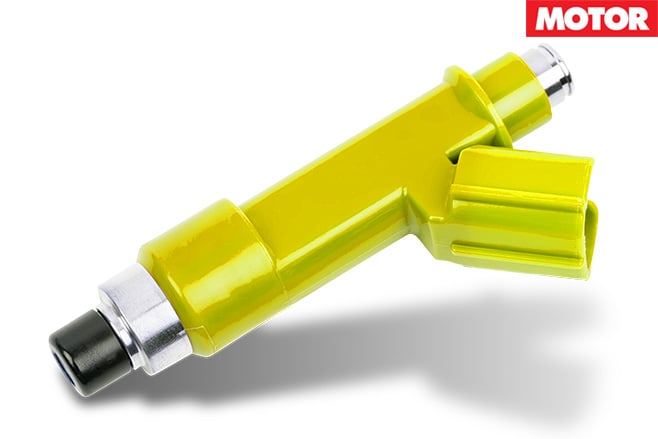
I grabbed my trusty workshop manual, opened up at the section on the fuel system and did some not-so-light reading. Turns out you need to depressurise the fuel rail first (I probably wouldn’t have thought of that on my own) before tearing into her, so as not to spray high-pressure PULP all over the shop.
With that done (by removing the fuel-pump relay and running the engine ’til it carks it) I could undo half-a-dozen bits and pieces, disconnect the fuel regulator and rip the injectors and fuel rail off, still in one piece. So I did.
After yanking out the old squirters and fitting the new ones, reassembly was – as the good book put it – the reverse of the disassembly process. Again, bang on. Now for the moment of truth.
With the pump relay back in and the battery reconnected, I hit the key and heard the pump whirring a few litres of high-octane into the fuel rail. Under the bonnet with a torch to check for petrol spraying all over the place. But no, she was fuel-tight. So I hit the starter and that old bent-eight fired straight up and settled into a nice, clean idle. No smoke, no staggers, nothing.
Now, this is why I’ll always have an oldie in the shed. Because in my driveway this instant is a new AMG C63. It is lovely, wonderful and inspiring. But with direct injection and more plumbing than a retirement home for deviants, I couldn’t hope to change a set of injectors myself. Hell, I haven’t even mastered the HVAC.
Back in my shed, I celebrated with the mechanic’s victory dance and then the phone rang again. It was my brother checking up on me. He gets antsy when I wrench on cars. Much as I do when he drives them.
Ford’s mega new facility will move more than 30,000 employees from 70 different locations into two new buildings with a combined floor space of more than 350,000 square metres.

“Bringing our teams together in an open, collaborative environment will make our employees’ lives better, speed decision-making and deliver results for both our core and emerging businesses,” said Ford CEO Mark Fields in a statement.
Ford’s planned high-tech estate features walking paths, bikeways, an amphitheatre, autonomous shuttle cars, and huge outdoor spaces that cover even more area than the office space does.
Green areas also feature green tech like solar panels, rainwater capturing and a renewable system for air conditioning that uses the ground underneath the buildings to heat and cool them.
We could go on about the softball and soccer fields, the new cafeteria and the ultra-fast wireless internet everywhere, but you don’t have to take our word for it; check out the video to see just how huge this project really is.
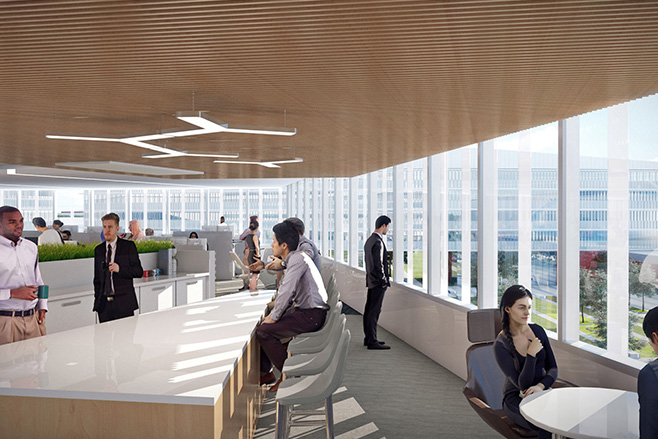
Renovations start this month and are expected to wrap up in 10 years, with the bulk of work finished by 2023.
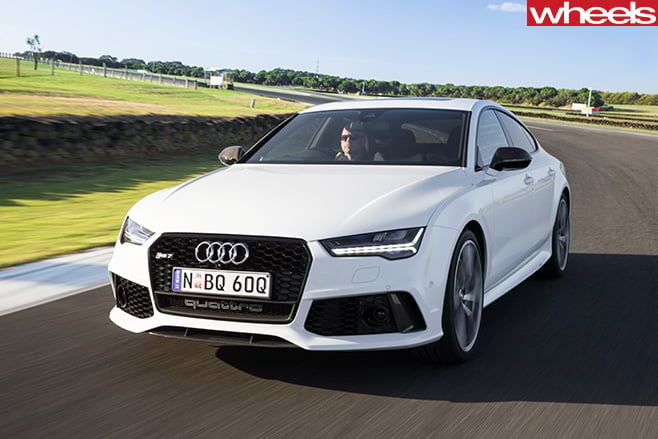
AUDI turns up the dial on its hero five-door performance hatch to nudge the magic 600hp number.
WHAT IS IT? Audi’s flagship performance five-door, the king of four rings this side of the Audi R8 supercar.
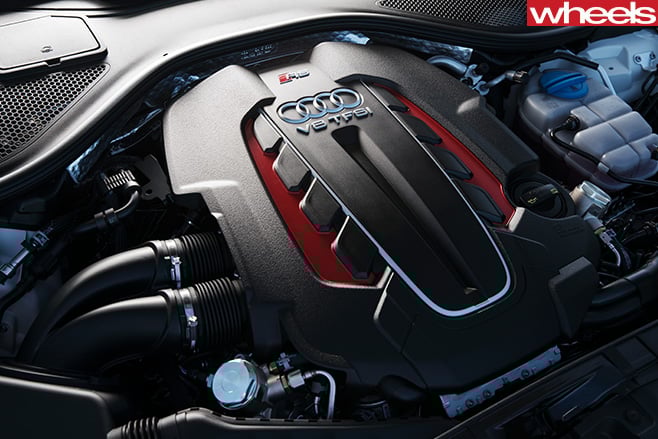
WHY WE’RE DRIVING IT Audi has produced a performance version with more power for its 4.0-litre twin-turbo V8, thanks to more boost and greater revs, as well as a few cosmetic touches to let the inner circle know you’re in an even faster Audi RS7.
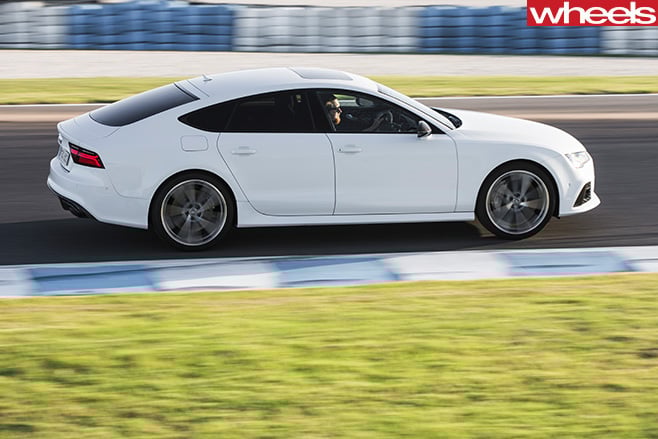
That torque is seemingly enough to pull an aircraft carrier and makes the RS7 feel utterly unstoppable. Even at slow speeds, that ostinato rumble constantly reminds you that you’re in something out of the ordinary. From the low, comfortable driving position in those excellently bolstered leather seats, changes in the road surface are sent through your feet via those pedals and your hands via the solid, well-shaped perforated leather steering wheel.
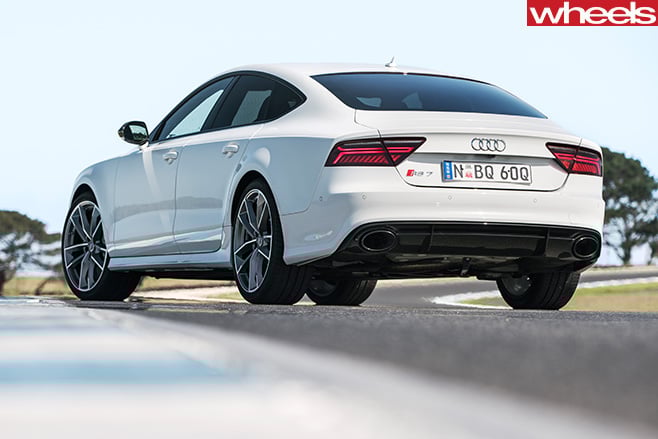
On the straight and narrow, where the passing capability of the RS7 is utterly addictive, the Dynamic Package Plus is capable enough scare corners straight. A $26K option, it brings dynamic steering, RS sports suspension and Dynamic Ride Control (air suspension), with 20-inch ceramic brakes inside no-cost option 21-inch alloys. It adds up to a surprisingly supple ride for such a hard-nosed performance car, easily softening hard edges and potholes in Comfort mode.
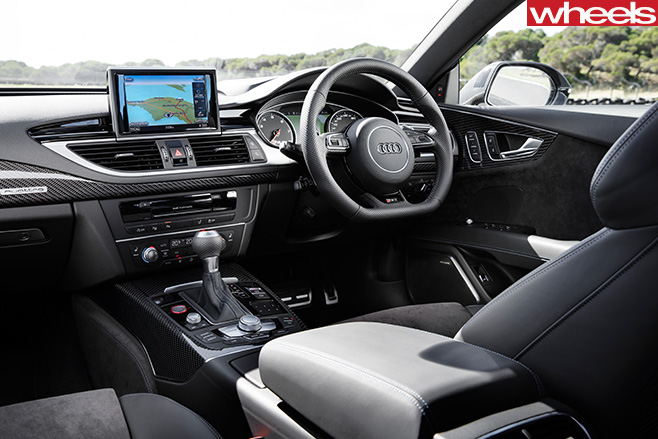
All of this from a car has a space shuttle-like build quality and design nous in and out to belie its dated origins. Sadly, it comes with a $17k price rise, but the RS7 Performance can wear a tuxedo and mind its Ps and Qs, yet can rock out in the performance mosh pit like its 1999. It’s a niche within a niche, a car that not only has a stunning set of numbers, but both feels – and makes its driver feel – that little bit special.
Want to know if your neighbour has the new Performance version of the RS7? In addition to the usual RS visuals, including chunkier bumpers, silver mirror caps and honeycomb grille, the Performance RS7 has a matt-titanium detailing for the grille, air inlets and window strips, as well as the rear diffuser and those monster exhaust outlets. You can also have an RS6 Performance, with the same cosmetic and mechanical upgrades as the RS7, for $245,400 and matching performance numbers.
SPECS Model: Audi RS7 Sportback Performance Engine: 3993cc V8, dohc, 32v, twin-turbo Power: 445kW@6800rpm Torque: 750Nm@1750-6000rpm Transmission: 8-speed automatic Weight: 1923kg 0-100km/h: 3.7sec (claimed) Fuel economy: 9.6L/100km Price: $258,000 On sale: Now
The Volkswagen Tiguan gets a new lease on life with the arrival of its second generation eight years after the mid-size SUV first launched.
WHAT IS IT? This is Volkswagen’s all-new mid-size SUV, and the first VW to launch post-Dieselgate. It will arrive in Australia in September with a range of petrol and diesel engines. It is also the first of five SUVs to be launched by VW in the near future.
WHY WE’RE TESTING IT The 2017 Tiguan is the first SUV built by VW on its MQB platform, and there are more to follow. It’s a completely overhauled car that is bigger and more practical, and a very important model for VW worldwide.
MAIN RIVALS Mazda CX-5, Hyundai Tucson, Ford Kuga, Kia Sportage, Toyota RAV4, Subaru Forester.
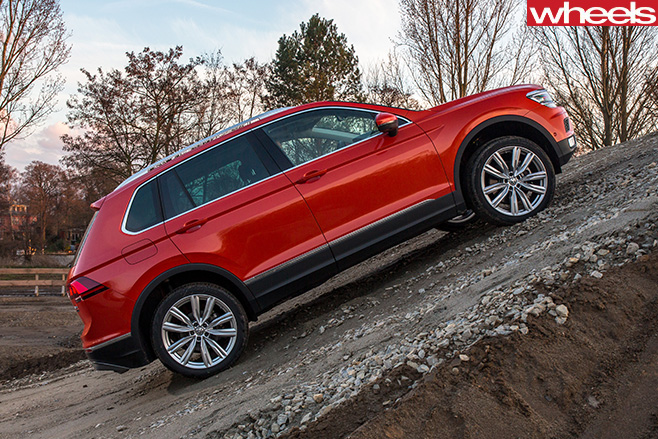
PLUS: Refinement and technology, premium fit and finish, practicality, off-road ability MINUS: Dynamic ability still unknown, price increases
THE WHEELS REVIEW FORGET everything you know about the Volkswagen Tiguan. The Golf-on-stilts going by that name is dead after eight years on the market – only the badge carries over to the second generation, a car that is the first all-new VW to launch since Dieselgate broke.
Tiguan version 2.0 is due here in September with a choice of three petrol engines, including a top-spec 162kW/350Nm turbo four lifted directly from the Golf GTI. The two diesel engines are versions of the new EA288 2.0-litre turbo, introduced with emissions-reducing AdBlue in the wake of the diesel scandal.
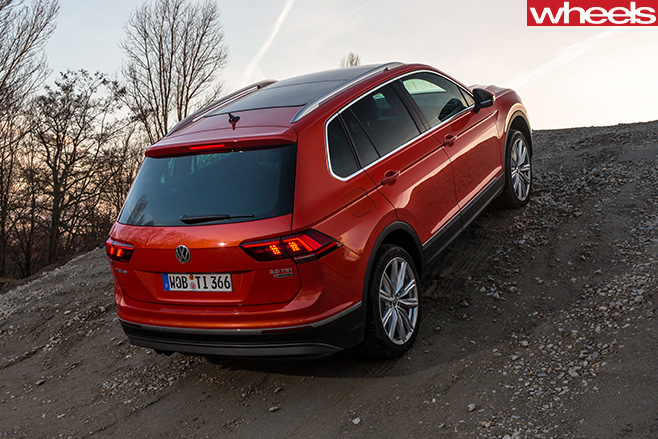
SUVs sometimes handle like they’ve eaten a big bowl of pasta for dinner, but the Tiguan doesn’t. Instead, it feels, unsurprisingly, like a Golf – it shares VW’s clever MQB platform with the hatch as well as the larger Passat, and all three drive in a familiar manner.
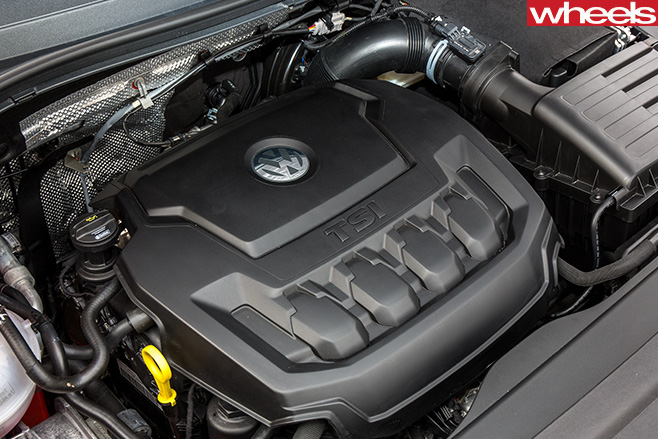
We sought out a 132TSI at Tiguan’s international launch in Berlin. Powered by a 2.0-litre turbo petrol engine, it is the likely sweet spot of the local Tiguan range. The engine delivers strong, lag-free mid-range drive. Peak torque occupies a pliable zone between 1750 and 3940rpm making it easy to hustle quickly without spinning to redline.
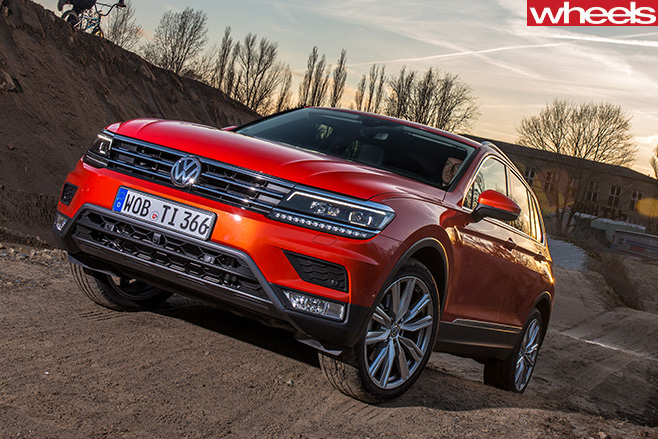
Ride quality on optional adaptive dampers was impressive around town and on the autobahn, even on the optional 20-inch wheel and tyre package worn by our test cars.
Size wise, this new model pushes the Tiguan firmly into mid-size territory. It is 60mm longer, 30mm wider and 33mm lower than before, and rides on a 77mm longer wheelbase. Inside, the extra room is felt immediately, especially in the rear seat which benefits from 29mm more knee room.
The rear seats slide too, varying boot space between 520 and 615 litres, to 1655L folded flat. This is important as the old car was roundly criticised for its narrow, shallow 395L capacity. New Tiguan’s boot is one of its biggest strengths.
Cars tested had head-up displays, radar cruise control, surround-view cameras, and a suite of active safety systems. Most of the top-tier luxuries shown in the overseas models will be available in option packs locally. Expect a high level of standard equipment even in the entry-level model. The range will cost more as a result; a price-leading manual 110TSI may scrape in at $29,990, but expect the range to increase by a few thousand dollars.
Combine all this and new Tiguan is an impressive step forward, and one that could steal buyers of more premium marques. Australia’s bottomless appetite for SUVs reflects a car-buying trend the world over. Tiguan may just be the magic bullet Volkswagen has to deliver.
Click here to read the full range review of current-generation Volkswagen Tiguan.
SPECS Model: Volkswagen Tiguan 132TSI Engine: 1984cc 4cyl, dohc, 16v, turbo Max power: 132kW @ 5100-6200rpm Max torque: 320Nm @ 1500-3940rpm Transmission: 7-speed dual-clutch Weight: TBC 0-100km/h: 7.7sec (claimed) Fuel economy: 7.4L/100km (EU) Price: $39,000 (est) On sale: September
Car manufacturers are not strangers to quirky, interesting advertisements, and when Volvo teamed up with Avicii to release the Feeling Good video to launch the all-new Volvo XC90, we didn’t think it could get any better.
But then Volvo launched the XC90 T8 plug-in hybrid SUV in the US and used this Highway Robbery video to show the world the innovative technology powering this machine.
The video shows the PHEV variant of Volvo’s large SUV using wasted power from passing cars to power the batteries and run the XC90s 2.0-lite turbocharged petrol engine and electric motor.
In Volvo’s video, Innovation Architect, Bob Partington, explains the concept of the hydro-electric charging system. The technology works via some special mats placed over water pipes on a California highway. Each time a car drives over the mats, the water is pushed into a generator that converts the energy into electricity and in turn, charges the XC90’s batteries. Sounds pretty simple, right?
But if the brilliance of the idea isn’t enough, the cheeky messages displayed to cars passing by via a lit-up sign at the end will change your mind. But don’t take our word for it, check it out for yourself.
WITH all but its track-oriented GT series cars now turbocharged, Porsche is looking to the next generation of forced induction systems.
During the launch of the 718 Boxster, Thomas Wasserbaech, Development Director of Boxer Engines, offered a glimpse of Weissach’s view of its future turbo technology.
When asked what project excited him the most at the moment, his answer was unequivocal: “Electric turbocharging. Not just pre-fill like Audi. Fully electric turbochargers.”
Porsche’s plans are believed to differ slightly to that of its sister brand, Audi, which has developed an electrically driven compressor that adds low-level boost to the engine of the upcoming Audi SQ7 SUV, revealed in March. According to Audi, the system can provide up to 13kW of electricity, with the electric compressor using up to 7kW.
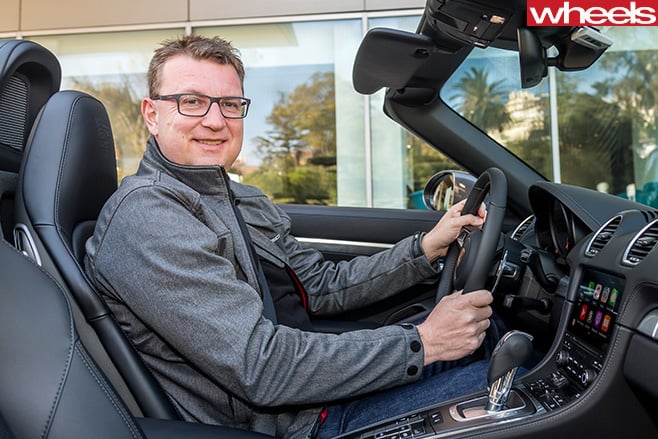
In contrast, Porsche is believed to be working on an always-on fully electric turbocharger that bypasses the traditional exhaust gas-driven system, and instead draws its boost from a 48-volt system that supplements the vehicle’s conventional 12-volt one.
Audi’s 48-volt compressor technology also extends to the chassis, with the system powering active stabilisers designed to minimise body roll and increase steering accuracy – hinting that Porsche could take a close look at improving vehicle dynamics as well.
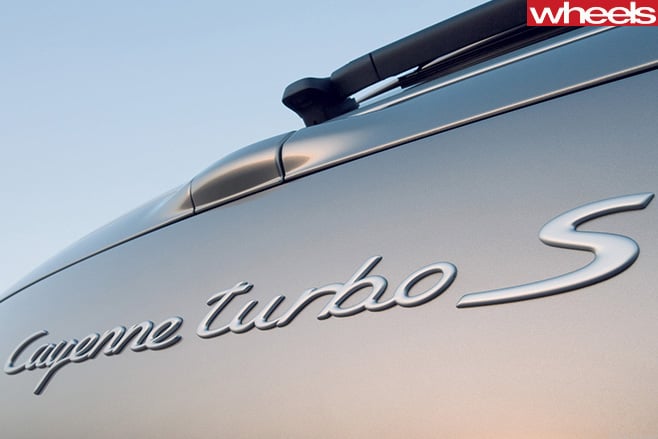
French supplier Valeo has recently demonstrated a full-time electric turbo system, which dispenses with exhaust gases altogether, using 48-volt electricals to ‘idle’ the turbo’s impeller at 10,000rpm, with minimal hesitation or lag in engine response, the motor spooling the impeller to more than 70,000rpm in under a second when the driver presses the accelerator pedal.
Valeo more correctly refers to the technology as an electric supercharger, and the system has drawn widespread industry interest. As well as Porsche and Audi, BMW, Mercedes-Benz, and General Motors have all claimed to be studying the technology.
Let’s examine BMW’s convertible range for a minute, as on the face of it, there are a few strange things happening here.
For example, the recently refreshed 640i convertible packs a 235kW/450Nm 3.0-litre turbocharged straight-six, folding cloth roof and two-plus-two seating for $193,400.
But hang on, that little set of stats also neatly describes BMW’s new M235i convertible, which costs $85,800 and has an extra five kilowatts to boot. Then, sandwiched in the middle with the same drivetrain but space for four adults and a folding metal hardtop, is the 435i convertible at $126,600.
So if the mechanical package is available elsewhere for less, what’s the 6 Series’ USP? Presence, for a start. At 4.9m long and 1.9m wide, the 640i convertible is a big expanse of car and one that cuts an imposing figure on the road.
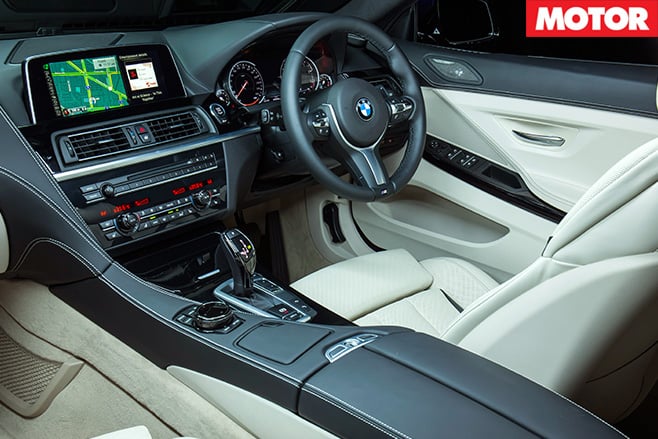
There’s also extra kit in the form of adaptive LED headlights, active safety gear (lane departure warning, active cruise, collision warning, etc) and new digital instruments.
The interior is luxurious and high quality, a pleasant place to be, though it remains a mystery as to how a car the size of the 6 Series can have so little room in the rear, especially when the smaller 4 Series can house adults in the back in comfort.
Of greater issue is the 6 Series’ ride, which falls short of the levels of comfort and refinement you’d expect from a near-$200K grand tourer. Wearing optional 20-inch rims with thin 30-profile rubber, the 640i’s urban ride is sharp and fails to settle at highway speeds, though it is at least very quiet.
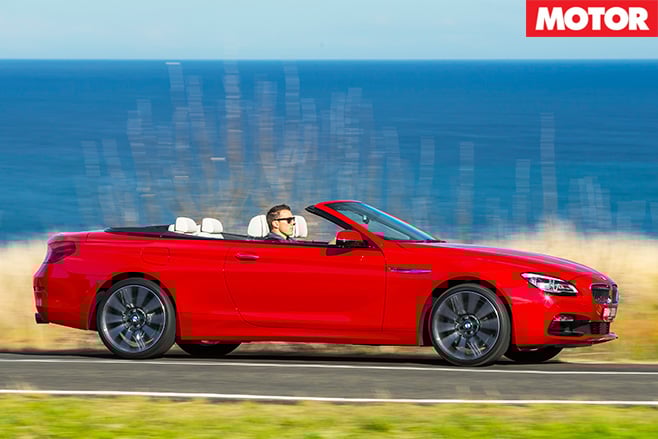
The combination of BMW’s 3.0-litre turbo six and eight-speed ZF auto is as slick as ever, but shifting this much weight does begin to struggle a bit, particularly towards the 7000rpm redline. You could fairly argue a car like this isn’t meant for enthusiastic driving, but it’s not relaxed enough to be a wafting grand tourer, either.
For our money, the 435i is faster, more spacious, more efficient and better to drive for a lot less money. Then there’s the fact that keen drivers could drive away in an M4 Convertible for the price of a 640i and still have change. If it’s a 6 Series you’re after, we’d stretch to the jet-like thrust of the twin-turbo V8 650i.
3 out of 5 stars
Specs Engine: 2979cc inline-6, DOHC, 24v, turbo Power: 235kW @ 5800-6000rpm Torque: 450Nm @ 1300rpm Weight: 1820kg 0-100km/h: 5.5sec (claimed) Price: $193,400
What stands out?
The Tiguan is a small-medium SUV from Volkswagen that drives beautifully and offers a choice of three great engines – among them a high-performance turbocharged petrol. Most versions drive all four wheels, and a driver-fatigue warning system is standard. This review covers Tiguans on sale prior to September 2016.
What might bug me?
Stop-start driving with the auto transmission: the Tiguan’s DSG auto gearbox is great once you’re moving, but many drivers do not find it as smooth and easy in town as a conventional or CVT auto.Driving after a puncture. The Tiguan has a space-saver spare wheel, which limits the recommended top speed to 80km/h.Paying more for fuel: all three petrol engines require premium unleaded, which costs more than regular.
What body styles are there?
Five-door wagon only.The least costly Tiguan drives its front wheels only; the remainder drive all four wheels.The Tiguan is officially classified as a small SUV, lower priced, but it is nearly as big as many mid-sized SUVs. This review treats it as a mid-sized SUV.
What features do all versions have?
Cruise control, Bluetooth phone connectivity, a leather-wrapped steering wheel, and a 6.5-inch touchscreen that controls phone and audio functions.A USB interface for Apple CarPlay and Android Auto, and MirrorLink. These work with Apple and Android phones. If you plug your phone in through the USB socket, many of its apps – including mapping and music – are mirrored on the touchscreen display and can be controlled from there.A reversing camera, and rear parking sensors.Aluminium alloy wheels, which are lighter and more stylish than steel wheels. A space-saver spare wheel (with a recommended top speed of 80km/h).Daytime running lights, which make your car more visible to others.A fatigue detection system, which monitors your steering inputs and warns you if there are signs you are falling asleep.Lumbar adjustment for both front seats, which allows you to tailor support for the centre of your back and makes it easier to get comfortable (it’s particularly handy for people with chronic back pain). Most similar cars have this only on more expensive variants.Six airbags: Two at the front for a frontal impact; one on each side to protect the bodies of front-seat occupants from a side impact; and a curtain airbag down each side to protect the heads of front and outer rear passengers from a side impact.Electronic stability control, which can help control a skid or slide. All new cars must have this feature.The Tiguan is covered by a three-year warranty, with no limit to the kilometres travelled.
Which engine uses least fuel, and why wouldn’t I choose it?
Until October 2015, the 2.0-litre turbo-diesel was the most fuel-efficient of four engines available in the Tiguan, consuming 6.2 litres/100km in the official test (urban and country combined).However, about that time diesel Tiguans were withdrawn from sale, having been identified as among Volkswagen Group cars that could cheat on emissions tests. (Volkswagen has since outlined a recall program for owners, specifying only a change to the engine software.)The diesel was available only in the 130TDI model, a four-wheel drive automatic which cost about 40 per cent more than the cheapest Tiguan.The diesel also has a particulates filter, which is not suited to predominantly urban driving. You need to drive at highway speeds for a 30-minute stretch every couple of weeks, so that the filter can self-clean.Of the three petrol alternatives, the engine in the least costly Tiguan, the front-wheel drive 118TSI, uses the least fuel. Its 1.4-litre supercharged and turbocharged four-cylinder uses 6.9 litres/100km with a manual gearbox and 7.3 litres/100km with an auto, in official tests.The 132TSI and 155TSI Tiguans, both four-wheel drive automatics, use 2.0-litre turbocharged petrol engines. Both consume 8.8 litres/100lkm in official tests.All three petrol engines require premium unleaded fuel.The 118TSI comes with a six-speed manual or six-speed DSG (direct shift gearbox) auto. The 130TDI, 132TSI and 155TSI models come only with a seven-speed DSG auto.
What key features do I get if I spend more?
The least costly Tiguan, the 118TSI, drives only the front wheels and has a manual gearbox, with the auto gearbox an extra-cost option.Spend more for the 132TSI and you get four-wheel drive and an automatic gearbox standard, and a bigger and more powerful 2.0-litre petrol engine.The 132TSI also has dual-zone air-conditioning, which allows separate temperatures to be set on each side of the cabin. Headlights come on automatically in low light, and wipers operate automatically when water is on the windscreen. Front seats are trimmed partially in Alcantara (fake suede) and have more side bolstering, which helps hold you in place through corners. Wheels are an inch bigger, at 17 inches, and the tyres are wider and lower in profile, enhancing grip and steering response. A tyre pressure monitor warns you if a tyre is going flat.The 130TDI is the diesel-engined Tiguan. Again it is a 4WD auto, and for features it matches the 132TSI.The most expensive Tiguan, the 155TSI, has a more powerful version of the 2.0 litre petrol engine. It too is a 4WD auto. In addition it has Adaptive Chassis Control, which allows you to soften the suspension (for more comfort) or stiffen it (for sharper steering and handling) while driving. Wheels are bigger again at 18 inches, and the tyre profile is lower.Seats on the 155TSI are trimmed in leather, with heating for the front seats and power adjustment for the driver’s seat. There is an upgraded infotainment system with satellite navigation, and a 30GB hard drive on which you can store music. The 155TSI also gets an R-Line pack (R for racing) that includes a rear wing and side skirts, to make it look sportier. Among myriad smaller touches are metal plates with an R-Line logo on the door sills.The number in each Tiguan model name reflects the engine’s maximum power output in kilowatts – so that the 155TSI produces 155kW. TSI signifies a petrol engine, and TDI the diesel.
Does any upgrade have a down side?
If you want more luxurious features – such as leather trim or dual-zone air-conditioning – you also get lumped with the four-wheel drive system and a bigger, more powerful engine, which you may not want or need. That can make the trim upgrade quite expensive.The lower profile tyres on the more expensive variants ride more roughly – because there is less air between the wheel and the road – and could cost more to replace.White is the only standard colour; the other five cost extra.
How comfortable is it?
There’s good head and leg room up front. While the Tiguan doesn’t ride as high as some SUVs, the driving position is higher than a regular hatchback’s, which combines with good vision all around to deliver a decent view of traffic. Seats in all models are supple and comfortable, with the sports seats in all but the 118TSI providing a more cossetting feel.The Tiguan is also ergonomically friendly, with controls falling easily to hand, from the power window switches high on the driver’s door to the touchscreen mounted high on the dash. Well-placed storage binnacles provide handy cubbyholes for odds and ends.The suspension is taut, delivering good control for the driver, but the ride is not uncomfortable.All engines are turbocharged and have plenty of punch in most situations. The petrol engines are quieter than the diesel, which rumbles lightly at low speeds.The DSG auto transmissions help save fuel and feel smooth and slick on the run.However when starting from rest, the DSG autos are less fluid and forgiving than conventional or CVT autos. They rely on computer-controlled manual-type clutches, and may feel snatchy when starting on uphill slopes, or jerky in stop-start traffic.
What about safety?
The Tiguan gets good airbag coverage, and seatbelt warning lights for the front seats but not the rear.Daytime running lights and a fatigue detection system help you avoid a crash.Auto headlights – which respond more reliably than the driver to poor visibility – and auto windscreen wipers are on all but the cheapest Tiguan.Automatic emergency braking is not available.(To see a full list of the safety features on any model, select the car and look under the features tab. Safety-related features are listed in red.)The Tiguan’s safety has been rated at five stars by the Australasian New Car Assessment Program (ANCAP).
I like driving – will I enjoy this car?
When it arrived in 2008 the Tiguan raised the bar for SUV driving manners, and it’s still one of the more competent mid-sizers in corners. Grip levels are quite high, so you can relish the challenge of a winding road. The Tiguan provides good feedback from the steering, which is accurate and well weighted (light enough for ease of use, but not so light that you feel no connection with the tyres).The steering is also direct and very responsive. A feature called Extended Differential Lock sends more power to the more heavily loaded, outside wheels when cornering, reducing wheelspin and improving acceleration.Over bumps and undulations, the Tiguan stays impressively flat.The 155TSI brings you a choice of three settings that adjust both the ride and the steering feel – Comfort, Normal and Sport. In Sport the ride can feel quite bumpy but the accompanying heavier steering is reassuring through flowing corners.The 1.4-litre engine in the 118TSI is surprisingly punchy and enjoyable to drive. The 2.0-litre turbo diesel climbs hills more easily. The 2.0-litre petrol in the 132TSI accelerates faster than the diesel if you work it hard, but the diesel still cruises up hills with less fuss.The 155TSI is the performance hero and feels quite brisk. It’s helped by slick shifting from the DSG auto transmission, which is very good at picking the right gear.Four-wheel drive versions of the Tiguan are light-duty off-roaders, effective on gravel or snow covered roads and easy tracks.
How is life in the rear seats?
The Tiguan’s rear seats can be slid 16cm back and forth, and provide great leg room in the rearmost position. Head room is adult friendly, too, and you can adjust the angle of the seatbacks.All but the 118TSI get a fold-up tray table on the back of each front seat.
How is it for carrying stuff?
The Tiguan’s boot is short from the tailgate to the backs of the seats, so a decent sized pram or suitcase can quickly fill it up. The sliding rear seats can increase space slightly, but it’s still not as commodious as some mid-sized SUVs.There is a 60/40 split-fold rear seat, and in addition a small opening (or ski port) in the middle that allows a long item to protrude into the passenger compartment while the outer seats are occupied.The 118TSI is rated to tow 1800kg, the 132TSI 2000kg and the 130TDI and 155TSI up to 2200kg.
Where is it made?
All Tiguans are made in Germany.
What might I miss that similar cars have?
Automatic emergency braking, which is available on some Mazda CX-5s, Subaru Foresters, Hyundai Tucsons, and Kia Sportages, for example.Lane departure warning (which alerts you when the car wanders out of its lane), and blind spot warning (which alerts you if you indicate to change lanes and a car is alongside). Both are available on the CX-5, the Tucson, the Sportage and some Nissan X-Trails, for example.Among other cars you might consider are the Nissan Qashqai, Subaru XV, and Ford Kuga.
I like this car, but I can’t choose which version. Can you help?
The 118TSI version of the Tiguan is solid buying, with a frugal but responsive petrol engine and a tempting price tag.
When did Volkswagen update this Tiguan?
An all-new, second-generation Tiguan went on sale about September 2016. It was significantly bigger, offered five diesel and petrol engines, and supplied automatic emergency braking as standard, among many other changes.
1. In the early nineties, the Boxster concept was first formed, Porsche consulting with Toyota to develop a way of sharing vehicle development costs across different models
2. One of the unsung heroes of the car design world, Grant Larson is the man responsible for the Boxster prototype. He’s since led the design teams for the Carrera GT show car, the 911 Turbo, the 911 Speedster and Sport Classic and the Boxster Spyder
3. The current 718 Boxster S (with PDK gearbox) is faster than any model in the Porsche range twenty years ago, when the Boxster first launched
4. The 150-litre front boot and 125-litre rear luggage compartment combine to offer more room for shopping than you’d get in a Nissan Juke SUV, which will swallow 251 litres
5 .Porsche has become quite good at the parts sharing thing. The latest 718 Boxster has a greater commonality of parts with its big brother , the 911, than any other Boxster generation
6. The 718 Spyder that the current car is named after was a huge success on the race track, scoring victories at Nurburgring, the Targa Florio, Le Mans and Sebring
7. Until December of that year, 1997’s best-selling driving game was SCEE’s Porsche Challenge, where drivers got to choose one car – a Boxster – and race it on three tracks. Then Gran Turismo arrived
8. A large percentage of early Boxsters weren’t actually built by Porsche in Germany. Instead they hailed from the Valmet plant in Finland. The Uusikaupunki Plant has produced more than 1 million cars with the millionth being a 2005 Boxster
9. Prefer your Boxster even more retro looking? Porsche customizer Tony Miller of Translog in York, Pennsylvania widens and customises the bodies of ’72 Karmann Ghia coupes to fit on the 2001 Boxster S
10. Porsche’s current Boxster S is as fast around the Nurburgring as the scary ‘Widowmaker’ 996 GT2. It’ll take just 7 minutes and 46 seconds if you’re a bit handy behind the wheel
Read our review on the Porsche Boxster 718 here.
Boxster first arrived twenty years ago and has got better with each successive generation. The latest car – now badged the 718 Porsche Boxster to celebrate the 1957 Porsche 718 roadster – could be the most compelling offer yet.
PLUS
Styling: The last Boxster was a handsome thing but the 718 moves the game on, Porsche’s designers making the car look wider, lower and curvier. Only a couple of exterior parts are carried over, and you’ll love the slick 3D Porsche lettering at the back and the slick new headlights up front.
Ease of driving: The 718 ditches the old six-cylinder engines for downsized turbocharged four-cylinder units. Doing this makes the Boxster a whole lot more tractable and easier to drive, especially if you specify it with the slick PDK auto gearbox that over 90 percent of customers will choose.
Practicality: You don’t always expect a two-seater roadster to have a practical side, but you can get a surprising amount of gear in the front and rear boots of the Boxster. An updated entertainment system is fitted that can be optioned to work with Apple CarPlay and here in Australia we get goodies like sat nav, digital radio and front and rear park assist as standard.
Economy: The switch to turbocharged engines means the 718 Boxster is a whole lot more economical than what went before. Choose the base car with a PDK gearbox and it’ll return 7.0L/100km, which is better than a Volkswagen Scirocco. Opt for the more powerful 718 Boxster S with PDK and that figure eases out to 7.3L/100km.
MINUS
Sound effects: If you liked the way that old Porsche engines sound, this one takes a bit of getting used to. It doesn’t yowl when you really extend the engine, instead opting for a deeper growl. It’s not unpleasant – just different.
Options pricing: Luckily Porsche Australia has been able to offer the cars with a fairly decent equipment level. That hasn’t always been the case in the past, but the 718 Boxster can get expensive if you start ticking options boxes. You want a garage door opener? That’ll set you back $720. Different coloured dials? $1150. The optional Burmester stereo? $8790. Ouch.
RIVALS TO CONSIDER
Ritzy roadsters aren’t thin on the ground. The Boxster has long been the benchmark, but if you’re in the market, also consider the Mercedes-Benz SLK, the BMW Z4, the Audi TT Roadster and the Jaguar F-Type. The 718 Boxster is still probably the best all-rounder, but choose the Jag for the rorty soundtrack, the Audi for the slickest interior, the Mercedes for a calm sense of serenity and the BMW if you root for a punchy underdog.
