
To close the door of the Mercedes-Benz S-Class is to experience a satisfaction almost unlike any other in the world of cars. Yes, there’s the reassuring ‘thunk’ of the door as it catches the latch, but it’s immediately followed by a hush, as if the very act of closing that solid, dependable and heavy door has sucked all the sound out of the cabin.
Outside, the world howls with wind and snarls with traffic as people scurry streets and footpaths on their way to work on this chilly spring day in Stuttgart, Germany.
Inside, a quiet hush, as if someone has slipped the world’s best noise-cancelling headphones over your ears without you noticing. It’s the sound of unashamed prestige, of a vehicle that was, in its heyday, dubbed ‘the best car in the world’.
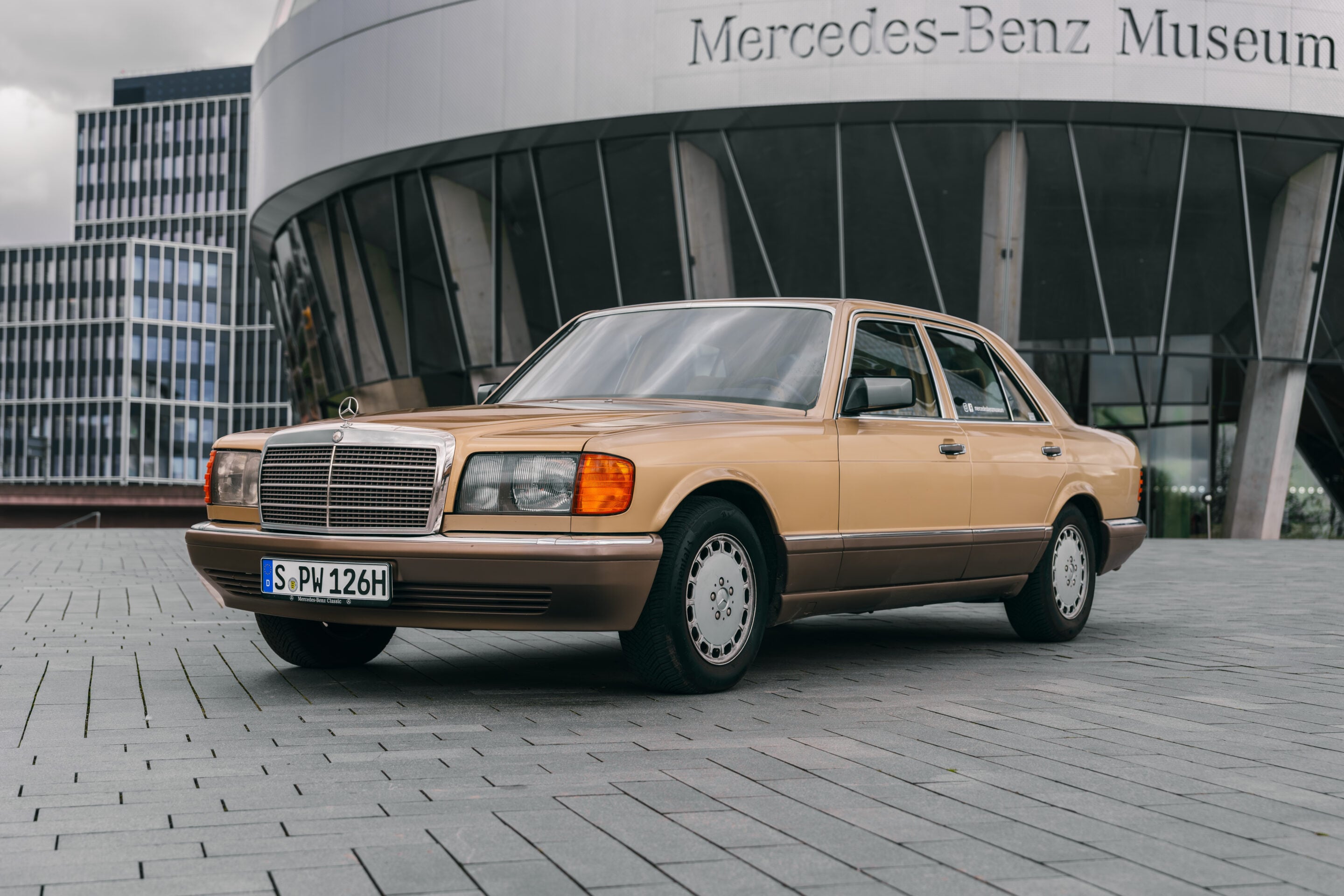
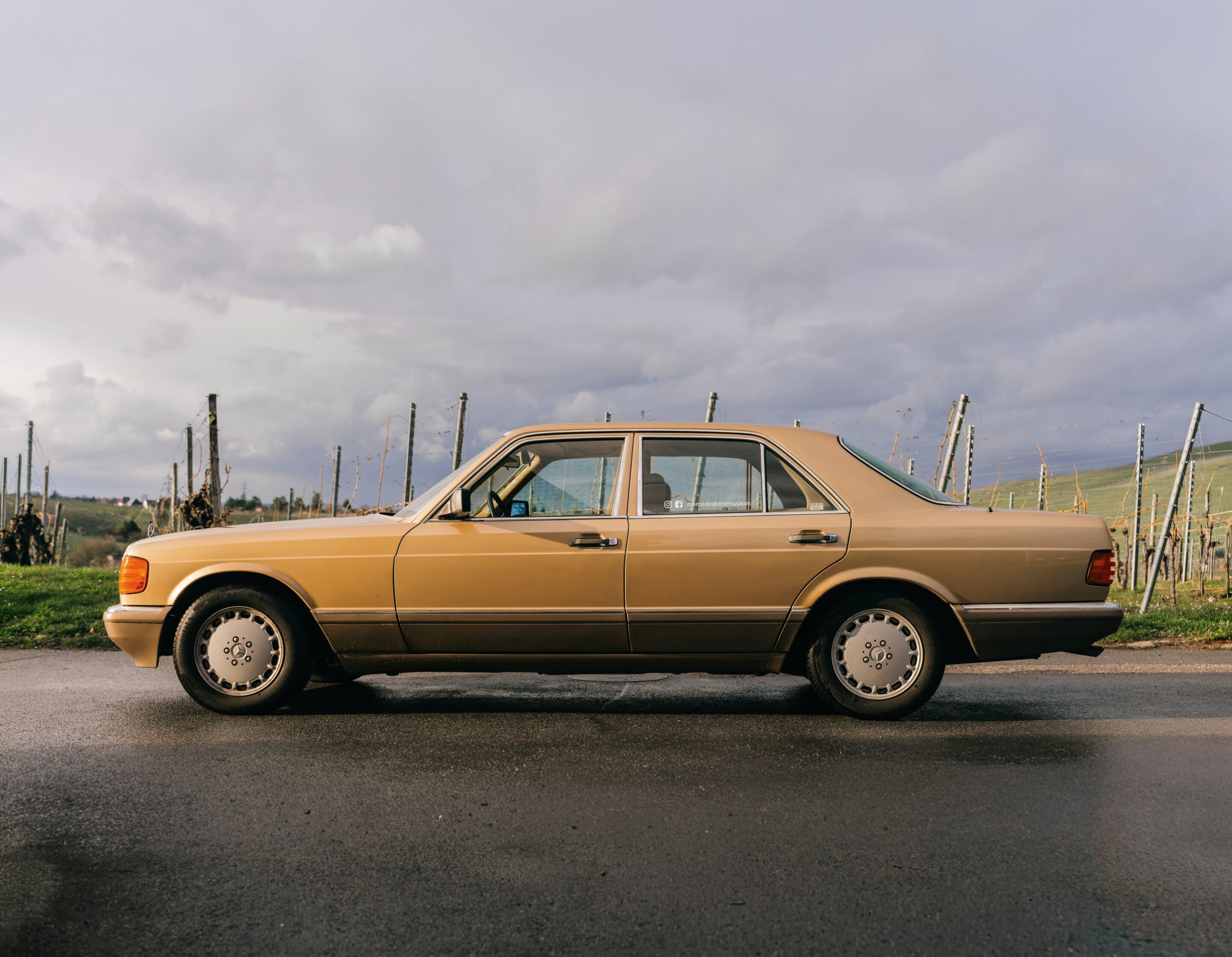
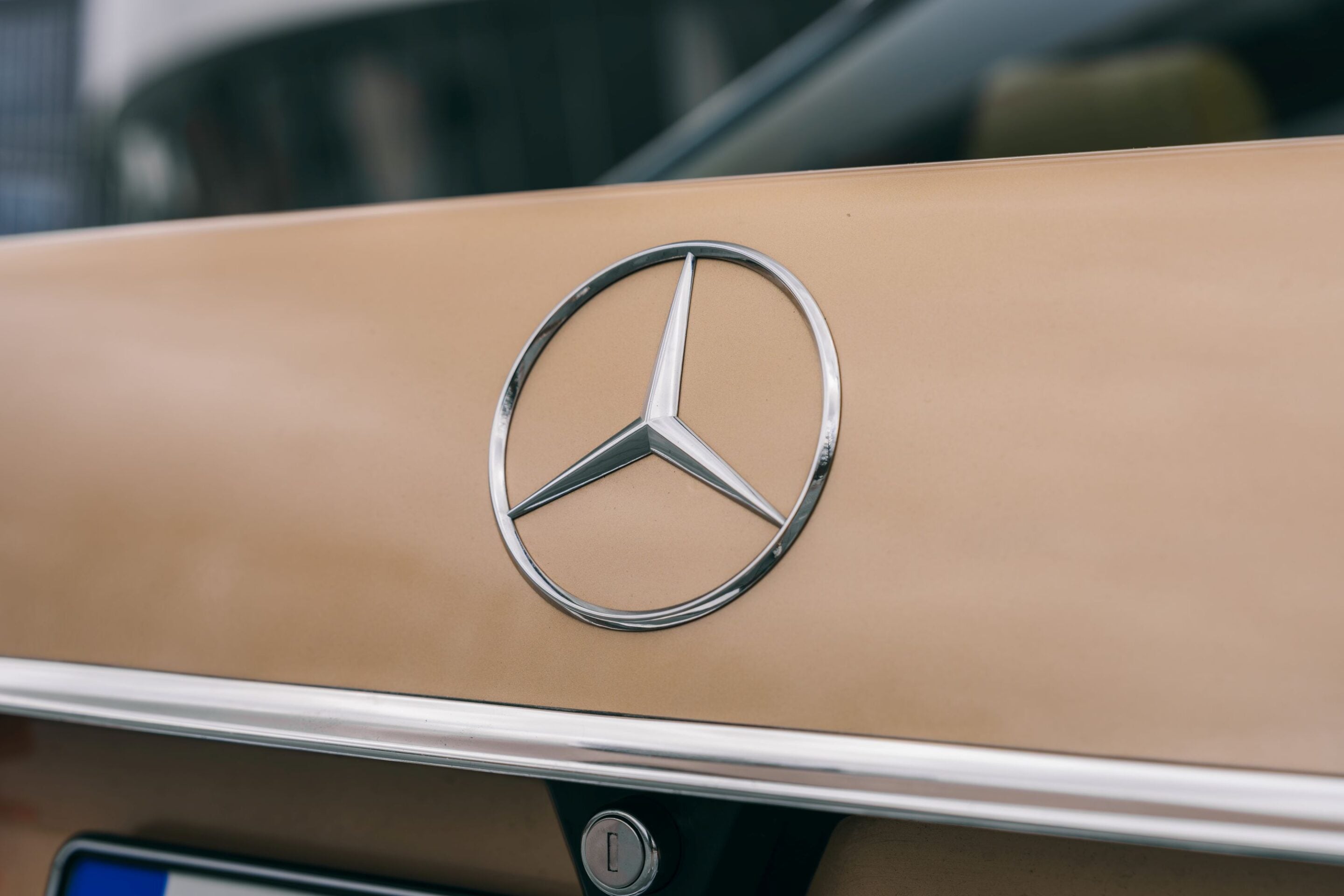
It’s hard to believe the W126 series Mercedes-Benz S-Class is turning 47 this year, such are the graceful lines of Bruno Sacco’s enduring and timeless design. Yet here we are in 2026, and the car in front of me still looks as fresh as the day it rolled off Merc’s Sindelfingen production line.
The W126 is the quintessential Mercedes-Benz, the most Sonderklasse of all S-Classes, its imposing, yet elegant command of the road defining not just the badge, but the brand itself, for an entire generation.
Only the second model from the German brand to officially wear the Sonderklasse (Special Class, or S-Class) designation, the W126 arrived at a time when the world was changing, and changing fast.
Amidst a world of political upheaval and instability, OPEC’s crippling oil embargoes of 1973 and 1979 had forced car makers to re-evaluate their model line-ups, shifting engineering focus to improving fuel economy.
It’s worth looking back to move forward. The W116 S-Class served as the glitzy flagship for the German brand from 1972-1980, bringing Mercedes-Benz into the modern age with its long profile and acres of chrome that gave the first car to wear the S-Class name a daunting presence on the road. Here was a car that spoke to the success of its owner, a glittering and powerful behemoth that dwarfed all-comers in a way that only a flagship luxury sedan can.
This was no demure shrinking violet of a car. Instead, its presence spoke volumes, an in-your-face statement of power and prestige, of both the long sedan itself and those lucky enough to be counted amongst its owners.
But big cars need big engines and in the case of the W116, the powertrain catalogue ran the full gamut of what was then considered prestige motoring. From cast-iron inline sixes to an ever-increasing range of V8s including the grand-daddy of them all, the 6834cc M100 V8 powering the undisputed flagship of the S-Class range, the 450SEL 6.9.
But the 1973 oil crisis had other ideas and as the world descended into fuel rationing (West Germany mandated ‘No-Drive’ Sundays, with punitive fines for those who dared to hit the road on the Sabbath), a different future was needed.
Work for what would become the W116’s successor got underway in the early ’70s with two clear aims. One, it had to be ‘the best car in the world’, and two, it needed to be more efficient and lighter than the W116 it was to replace.
The core principles of what would become the W126 were set down by Werner Breitschwerdt, Mercedes’ then director of passenger cars. Efficiency and lightness were paramount but crucially, not at the expense of Mercedes-Benz’s core values of luxury, comfort and safety. The new S-Class needed to meet the challenges of a world in change without diluting the essence of what it means to be a Mercedes-Benz.
Bruno Sacco, not yet head of design at Mercedes (that position would come later, in 1975) led the W126 design team, the first time the Italian-German had enjoyed full control over a Mercedes production car. Sacco needs little introduction today, the legendary designer who spent almost his entire working life with Mercedes responsible for some of the greatest cars to ever roll out of Stuttgart-Untertürkheim.
Sacco adhered to a simple philosophy when designing his cars: “The development cycle of a new vehicle is typically three to five years, which is then followed by a production life of about eight years,” Sacco said. “The last car off the assembly line of that model will have an average life expectancy of 20 years. That adds up to a product lifecycle of approximately 30 years.”
Certainly, when looking at the W126 today, Sacco’s ethos is clearly visible, the big Benz still a masterclass in restrained elegance, and yet undeniably potent. The word ‘iconic’ is bandied about a little too freely today, but in the case of Sacco’s W126 S-Class, it rings true. It’s almost as if the word itself was coined just for the W126.
Meeting Breitschwerdt’s strict parameters for the W126 was no easy task, but with engineers (not accountants) running the show, no corners were cut in the search for excellence. To help improve fuel consumption, Mercedes-Benz focussed on using lightweight materials and improvements to aerodynamic efficiency.
High-strength low-alloy (HSLA) steel was used extensively for body panels and reinforcements while lightweight alloy-block engines replaced the old cast iron units that, while serving its W116 predecessor so well, weren’t exactly the last word in fuel efficiency.
A focus on aerodynamic efficiency also paid dividends, resulting in a 14 per cent improvement to the W126’s drag coefficient compared to the older W116 S-Class.
Simple yet effective measures like hiding the windscreen wipers under the gently-raised trailing edge of W126’s imposing bonnet helped here. So too integrating lightweight polyurethane deformable bumpers into the bodywork, replacing the W116’s heavy and glitzy chrome steel bumpers.
Mercedes-Benz’s pioneering work in the field of occupant safety took giant strides too in the W126, the first production car in the world to be fitted with a driver’s side airbag. Front passenger airbags would follow with model updates, as would the addition of seatbelt tensioners, which utilised a small explosive charge to tighten the front seatbelts – holding the occupants firmly in place – in the event of a collision.
Under the skin, improved crumple zones further enhanced the W126’s ground-breaking safety credentials while a Bosch-developed electronic anti-lock braking system (ABS), first seen on the W116 S-Class, carried over to the new model.
A focus on crash protection set the tone for decades, with the W126 setting new standards in occupant safety, most notably in the field of frontal offset impact where the passenger safety cell could withstand crashes at speeds of up to 55km/h. The W126 was, according to Mercedes-Benz, the “first production vehicle worldwide to meet the criterion of the asymmetric frontal crash”, decades before the frontal-offset impact testing became mandatory.
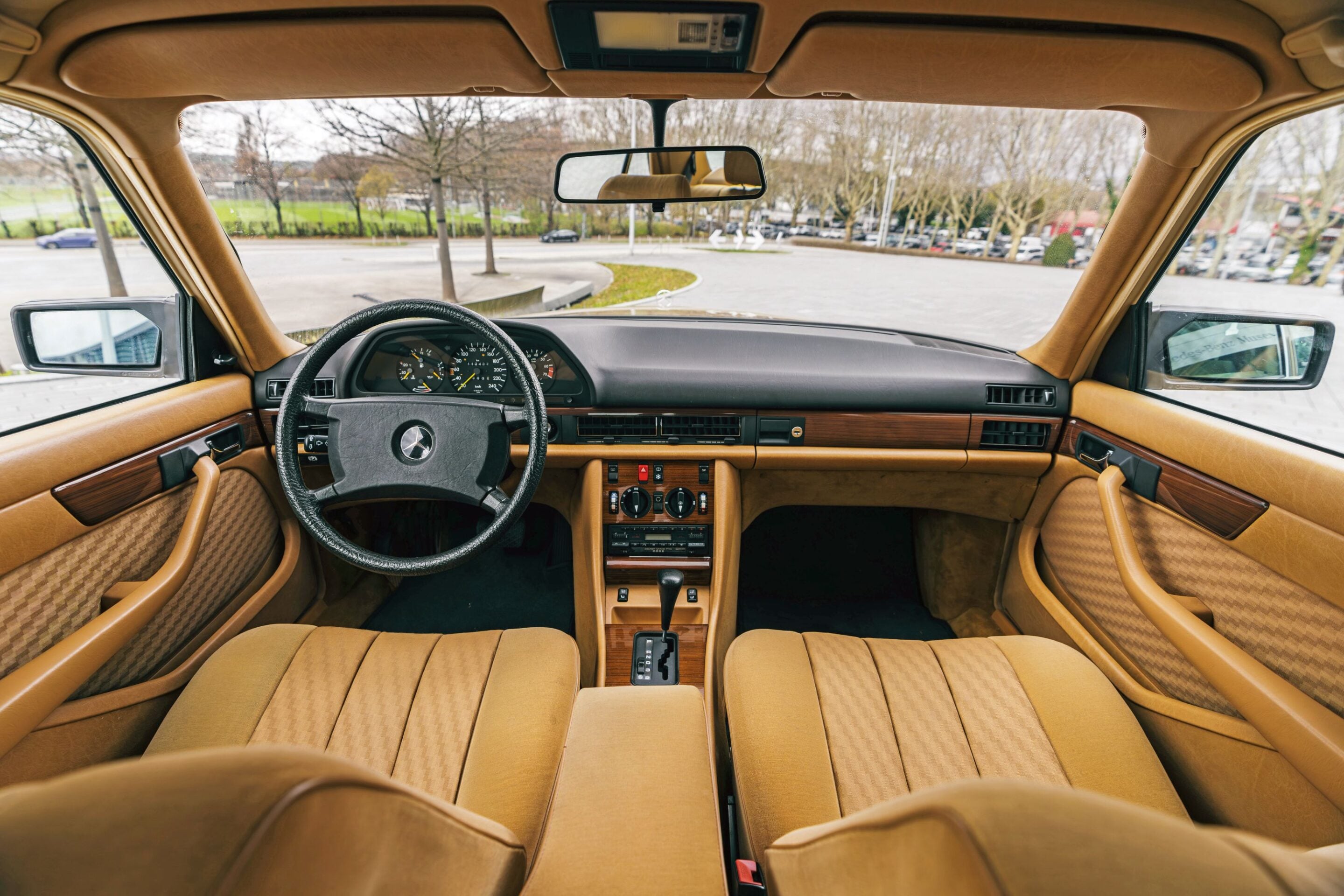
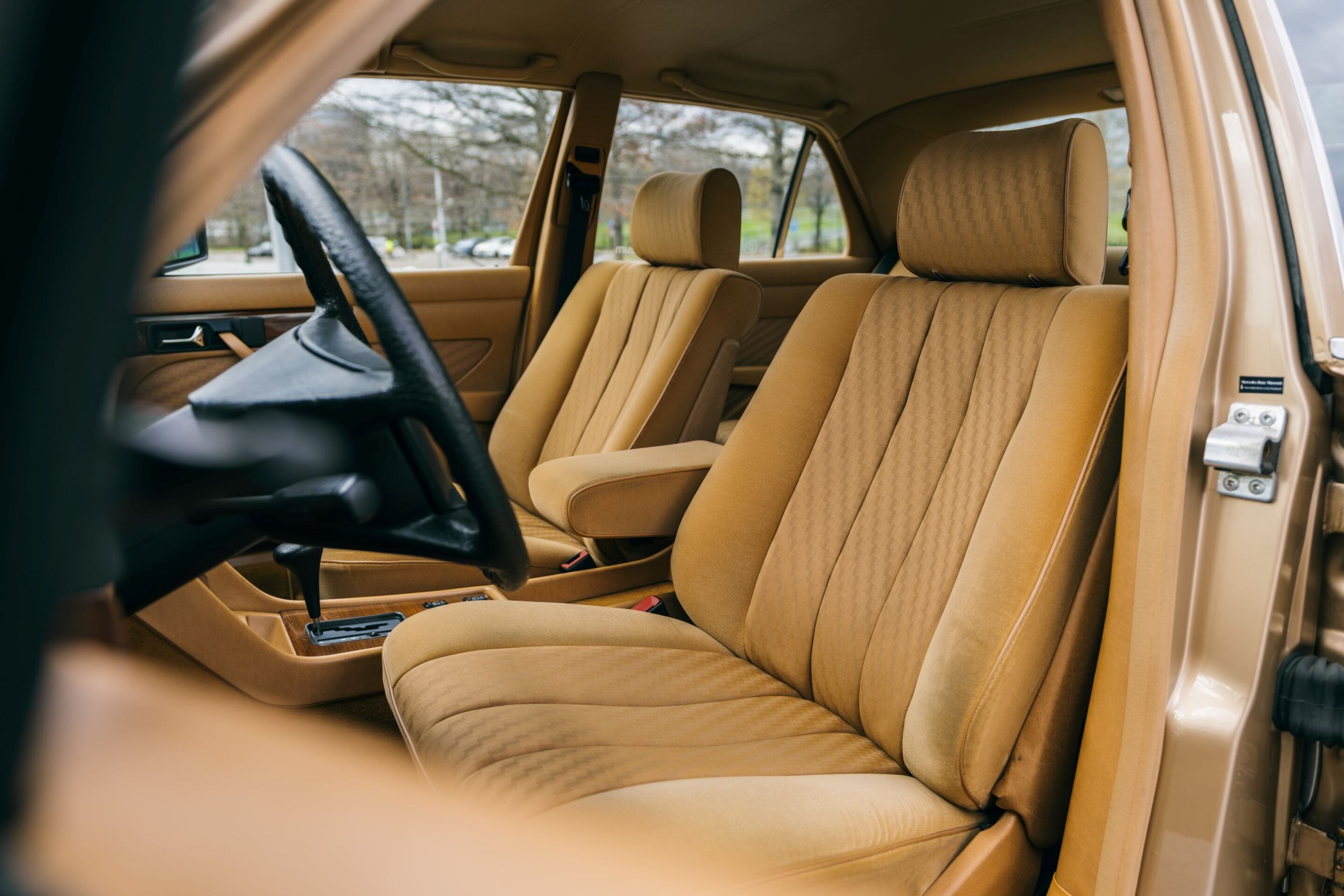
Inside, the W126 retained the understated luxury philosophy so evident on the outside with a functional, yet elegant interior.
Sacco believed in function over form, evidenced by the simple layout of the dashboard and overall ergonomics that prioritised driver comfort over everything else.
Yes, there were some premium flourishes, like the genuine wood veneer trim that adorned the dash, centre console and door cards, but the overall design – and its solid bank vault qualities – showed conservative restraint which, while not as flashy as some of its contemporaries, have stood up well with the passage of time.
Adding to the feeling of luxury inside, the inclusion of power windows, central locking, and automatic climate controls, and even two-stage seat heating, might seem commonplace today in even the most affordable of new cars, but in 1979 it was heady stuff.
The focus on fuel economy bore fruit with a line-up of three basic engines – the M100 2.8-litre inline-six (carried over from the W116) in both carburetted and injected form, a new lightweight 3.8-litre V8 and a newish 5.0-litre V8 that, while designed for the W126 S-Class, had been let out a year earlier in the R109 450SLC.
The new V8s, with their lightweight alloy blocks, brought significant weight savings, allowing Merc’s engineers to ‘detune’ them for the fuel-chastened times without impacting the performance of its newest flagship.
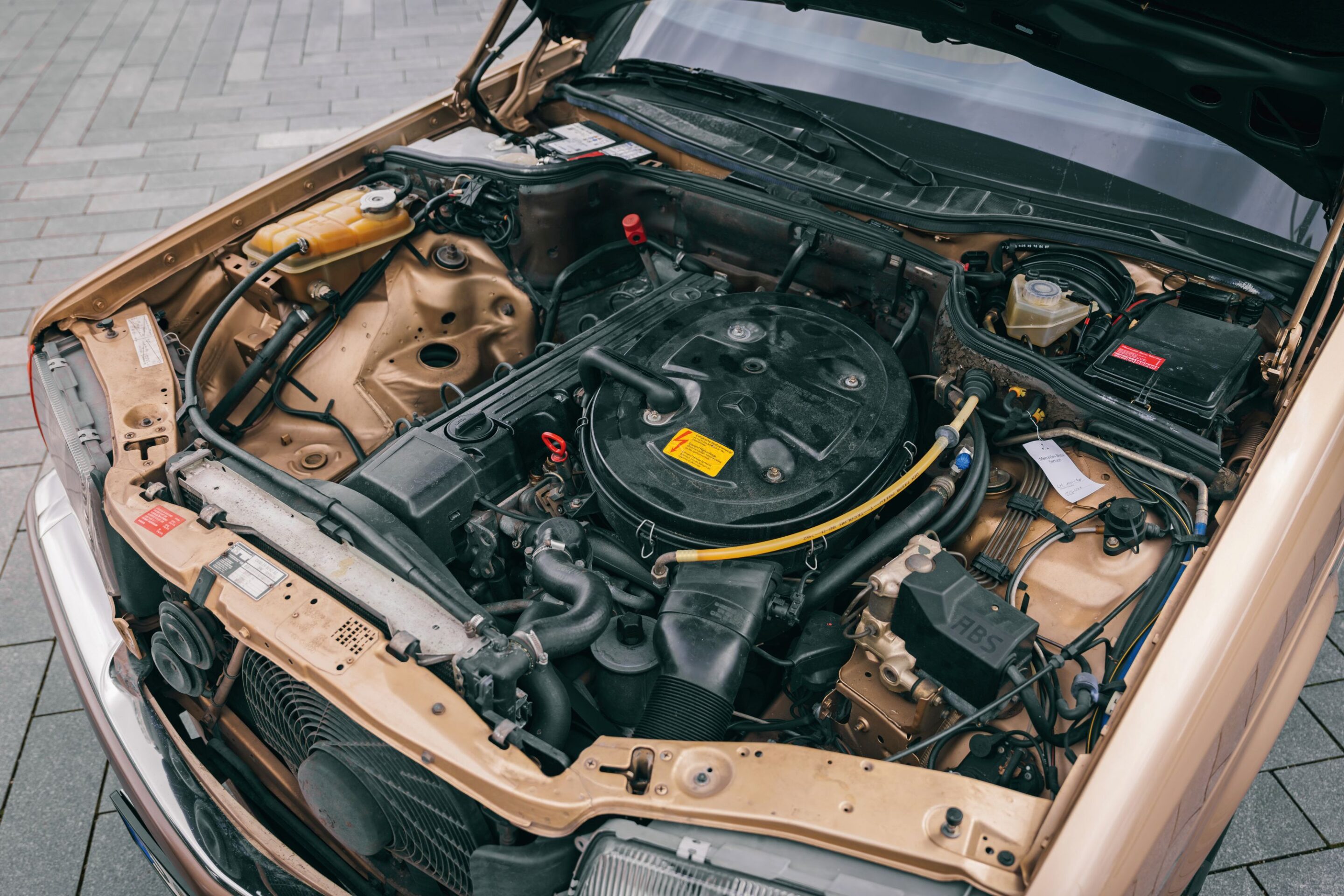
The new 160kW/305Nm 3.8-litre V8 lost a bit in overall outputs when compared with the older W116’s 4.5-litre, but made up for it with a kerb weight of 1595kg, significantly down on its predecessor’s 1740kg. Similarly, the new range-topping 5.0-litre alloy bent-eight and its 177kW and 420Nm couldn’t hold a candle – on paper, at least – to the 210kW/550Nm of the monster 6.9-litre of the flagship W116 S-Class.
But tipping the scales at 1620kg, the new car was lighter by a considerable 365kg allowing it to – almost – match the older car’s performance, 7.7s for the 0-100km/h sprint against the 6.9-litre’s 7.4s. Splitting hairs, really.
The end result of all this modern-day finagling and tinkering by Merc’s designers and boffins was an overall reduction in fuel consumption by 10 per cent without compromising on the S-Class’s performance.
Mercedes unveiled the new W126 to the public at the 1979 Frankfurt motor show to critical acclaim, with tags like ‘World Champion!’ and ‘the best car in the world’, including by us here at Wheels who awarded the W126 with the 1981 Car of the Year honours, praising its “depth of engineering brilliance” in awarding the W126 our COTY trophy.
“There is never any doubting the car’s ability on the road,” we wrote in our February 1982 issue.
“It is a supremely confident car whether turning hard into a corner, cruising at 160km/h or clearing its way through rain soaked gravel roads, the windows clean, the driver content in the knowledge that no other car would cope so magnificently.
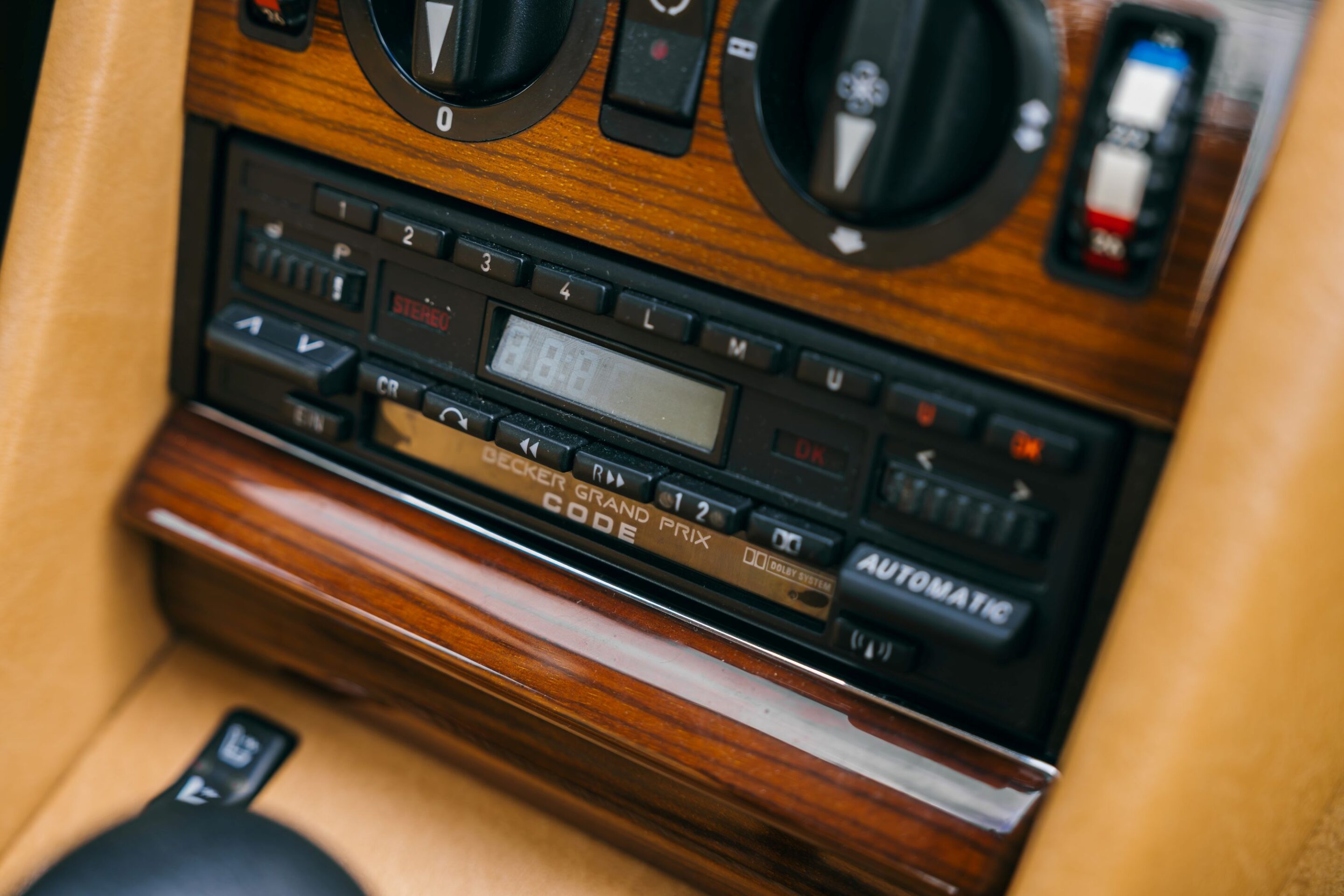
“Inside, all is quiet and comfortable, the interior air temperature kept at a consistent level by the automatic air conditioning unit, the brilliant Becker AM/FM radio/cassette entertaining the passengers while the driver enjoys the magic of the car. In a year which has seen many new cars, the S-Class stands alone, the automobile industry’s state of the art.”
Far from just an award winner, the second-generation S-Class was also a hit with buyers. A starting price in 1979 of around 40,000DM (about €55,000 in today’s money, adjusted for inflation) placed the new S-Class in the upper echelons of the new car market. For context, a brand new Opel Rekord E1 (the car which spawned our very own Holden Commodore) could be had for around 15,000DM (around €20,600 adjusted for inflation).
In Australia, Merc’s new flagship started at $41,700 in 1979 dollars while again, for context, the cheapest VB Commodore (manual, 2.8-litre six-cylinder) asked for $7192.
Over the course of its 12-year life-span from 1979-1991, Mercedes-Benz shifted over 900,000 of the W126 generation Sonderklasse, across regular and long-wheelbase versions as well as a stunning range of two-door coupes introduced for the 1982 model year. It remains the most successful S-Class ever.
Viewed through today’s modern car lens, the W126 continues to stand up. Sacco’s ageless design remains true to his overarching ethos that a car needs to live beyond its five-year gestation and eight-year shelf life.
Even today, the sight of a well-sorted W126 on the road brings a sense of comfort. It was, and remains, the archetypal Mercedes-Benz and perhaps the greatest embodiment of Sacco’s guiding philosophy that “a Mercedes-Benz must look like a Mercedes-Benz”.
Mission accomplished.
This story first appeared in the May 2026 issue of Wheels magazine, now on sale. Subscribe here and gain access to 12 issues for $109 plus online access to every Wheels issue since 1953.
The Toyota GR Yaris was already one of the most uncompromising performance cars on sale, but the Aero Performance package – available in Australia since December 2025 – pushes the rally-inspired hatch even further toward track-day territory.
Developed through Toyota Gazoo Racing’s motorsport program, the upgraded GR Yaris gains a series of aerodynamic and cooling revisions designed to improve high-speed stability and thermal management, while reinforcing its close ties to Toyota’s World Rally Championship program.
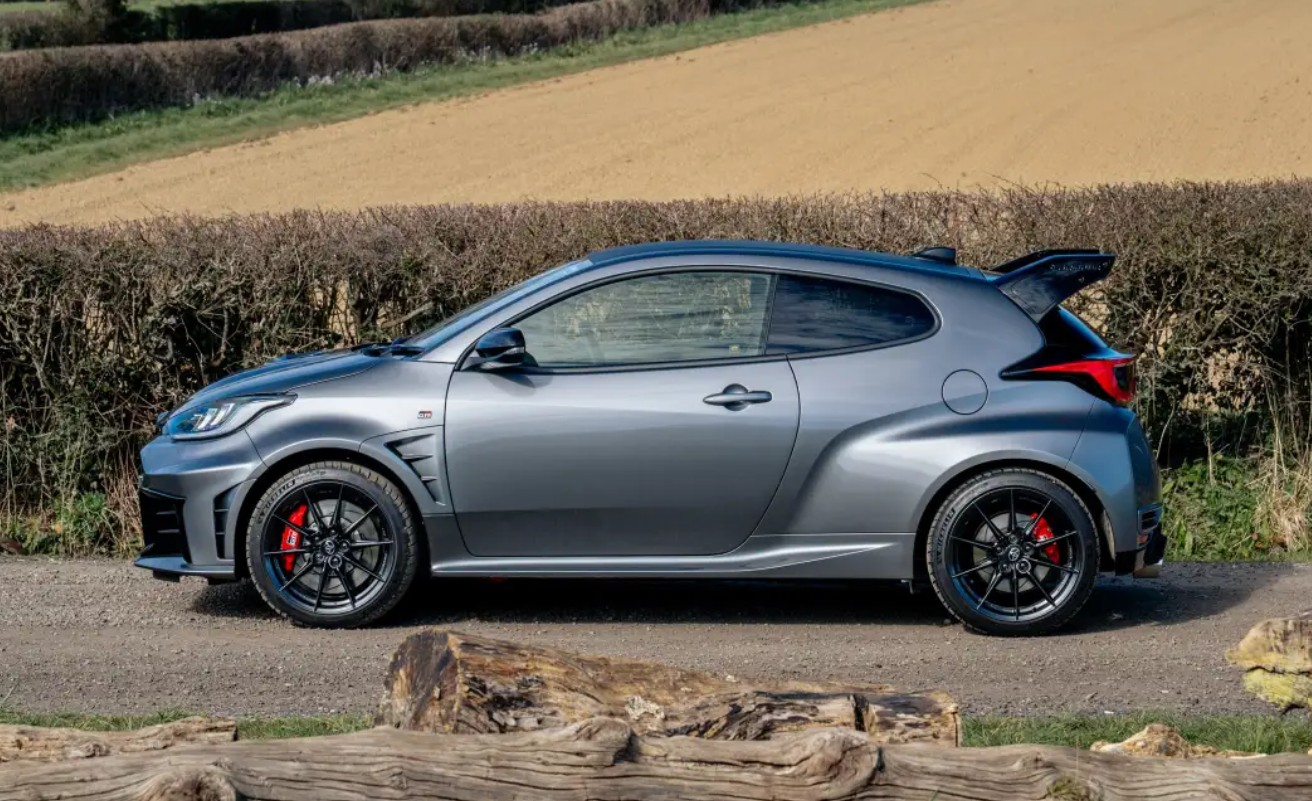
Visually, the changes are immediately noticeable. The most prominent addition is a large manually adjustable rear wing mounted high on the tailgate, joined by a revised front lip spoiler, new rear bumper ducts and an underbody panel aimed at smoothing airflow beneath the car. Functional cooling upgrades include bonnet vents to extract heat from the engine bay, while additional ducts behind the front wheels help manage brake temperatures during sustained hard driving.
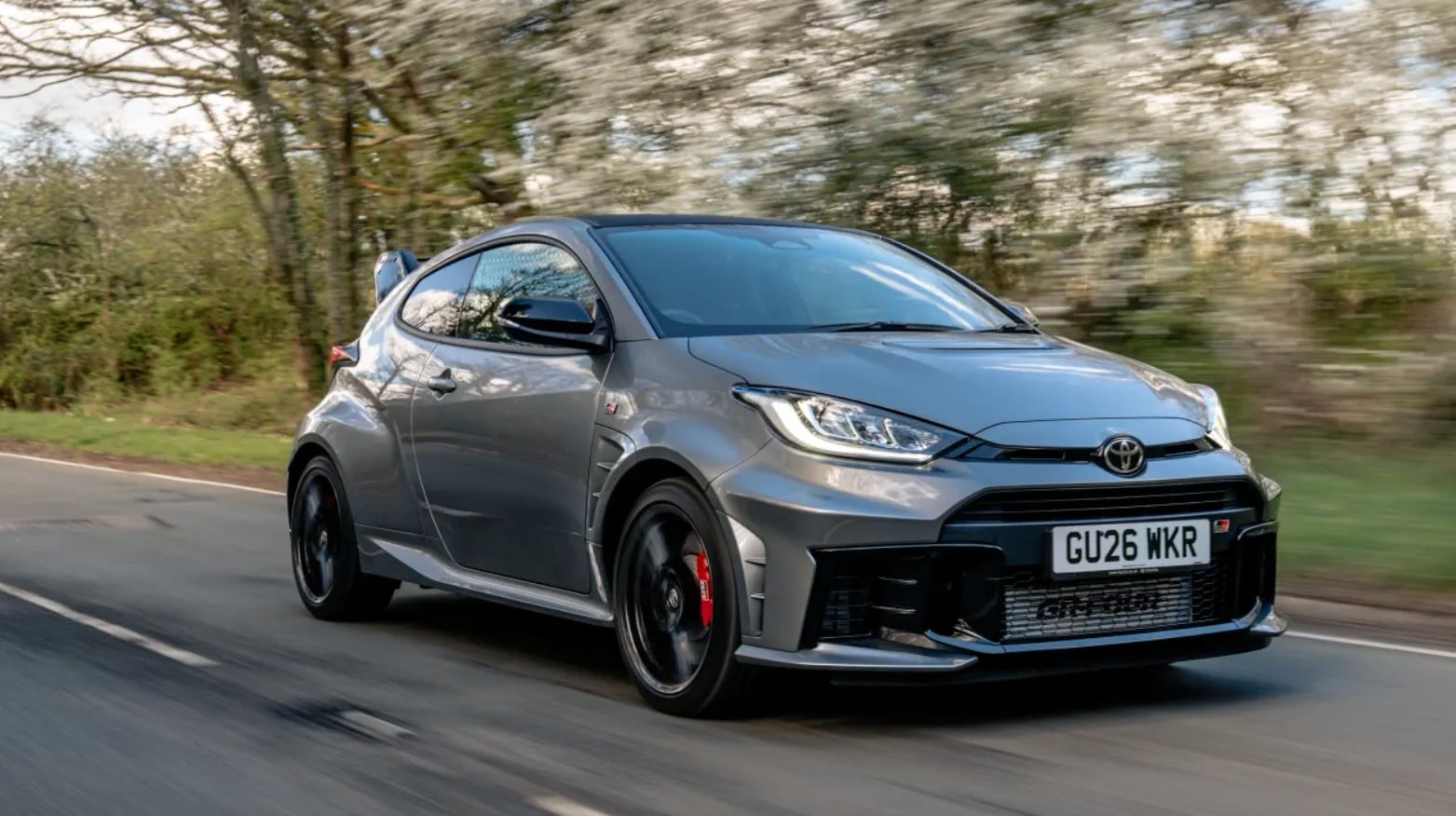
While many of the aerodynamic enhancements are likely to deliver their biggest benefits on circuit, the core appeal of the GR Yaris remains unchanged. It still feels like a rare throwback to the homologation-era rally specials of the 1990s and early 2000s – compact, aggressive and engineered with driving enjoyment as the clear priority.
Under the bonnet sits Toyota’s turbocharged 1.6-litre three-cylinder petrol engine producing 206kW and 390Nm, paired with a six-speed manual transmission and GR-FOUR all-wheel drive system. The combination delivers explosive acceleration and remarkable grip, particularly on tight, twisting Australian back roads where the car’s compact dimensions and sharp steering responses feel perfectly suited.
Toyota claims a 0-100km/h sprint in around 5.2 seconds, while the short-throw manual gearbox and mechanical feel encourage enthusiastic driving. Drivers can also enable automatic rev-matching on downshifts for smoother shifts, though the traditional three-pedal setup still rewards those wanting to perfect heel-and-toe technique themselves.
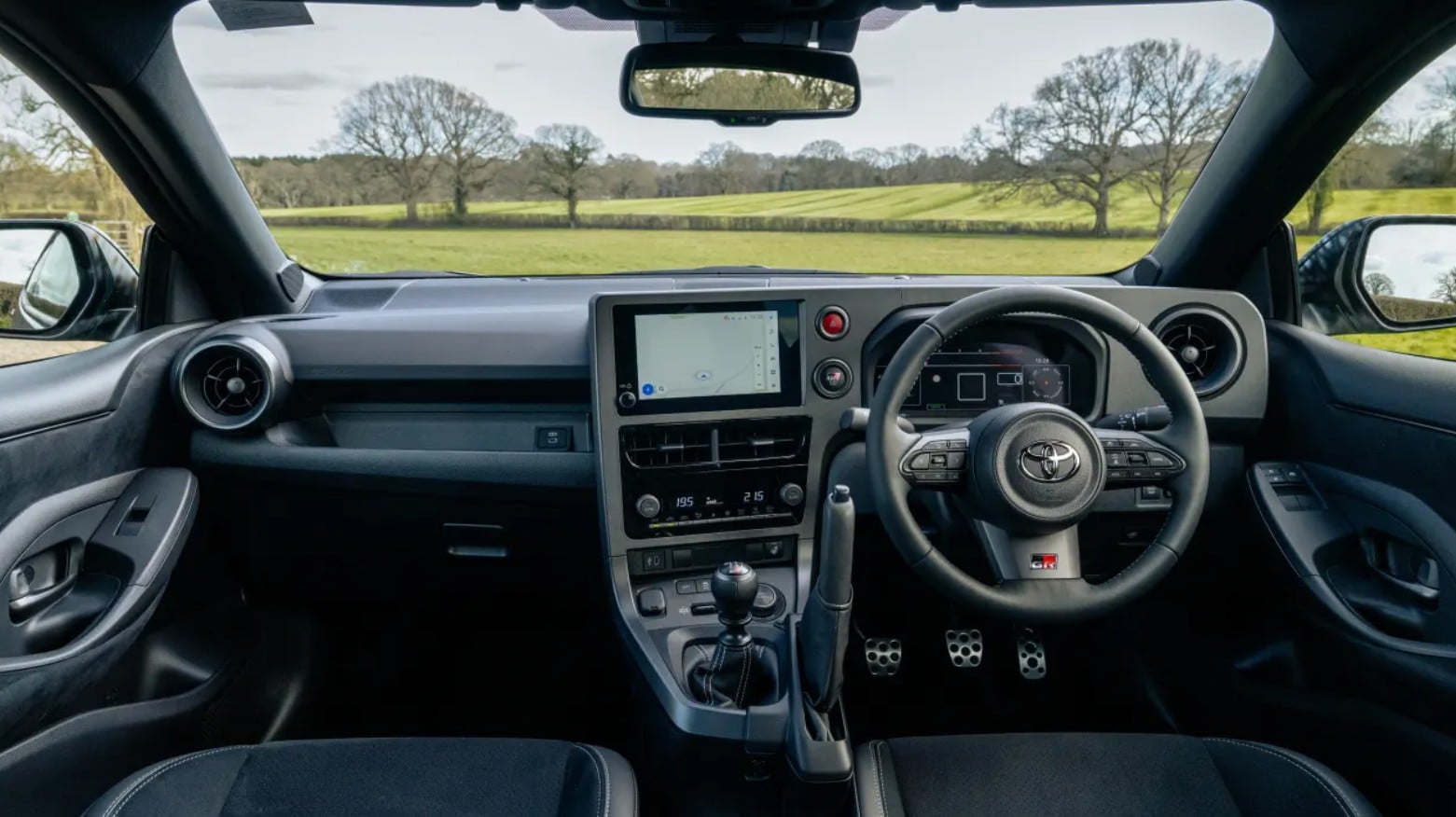
The GR Yaris continues to offer selectable drive modes that alter torque distribution between the front and rear axles depending on conditions, with settings tailored for normal road driving, gravel surfaces and track use. Michelin Pilot Sport tyres and a firm suspension setup further reinforce the car’s focused nature.
One of the more unusual updates is the repositioned handbrake lever, now mounted vertically beside the gear shifter in a nod to modern rally cars. The layout makes sense in competition environments where rapid handbrake turns are required, but in everyday driving it slightly compromises cabin usability by obstructing access to some controls and narrowing the space around the gear lever.
Practicality also remains secondary to performance. Rear seat space is limited and boot capacity measures just 174 litres due to the all-wheel drive packaging, making the GR Yaris better suited to spirited weekend drives than family duties.
Still, few cars on sale today deliver the same level of engagement and personality. The Aero Performance package may not radically alter the GR Yaris experience on public roads, but it strengthens the car’s already unique identity as one of the closest things to a road-going rally machine currently available.
When fly-by-wire throttles were first introduced, the purists hated them. Too removed from the driving experience, disconnected – both physically and metaphorically – and too complex, were the criticisms. Those who loved cars and driving were extremely skeptical, to say the least. And yet, here we are decades later where the system is commonplace, and that’s before you get to electric vehicles where the attachment between pedal and motor is completely different.
An announcement this week from famed Italian manufacturer Brembo touted the progression of the company’s Sensify intelligent braking system and it’s readiness to enter production. The suite eliminates traditional braking components and the connection between the pedal and the braking system itself, replacing it with data coding and software.
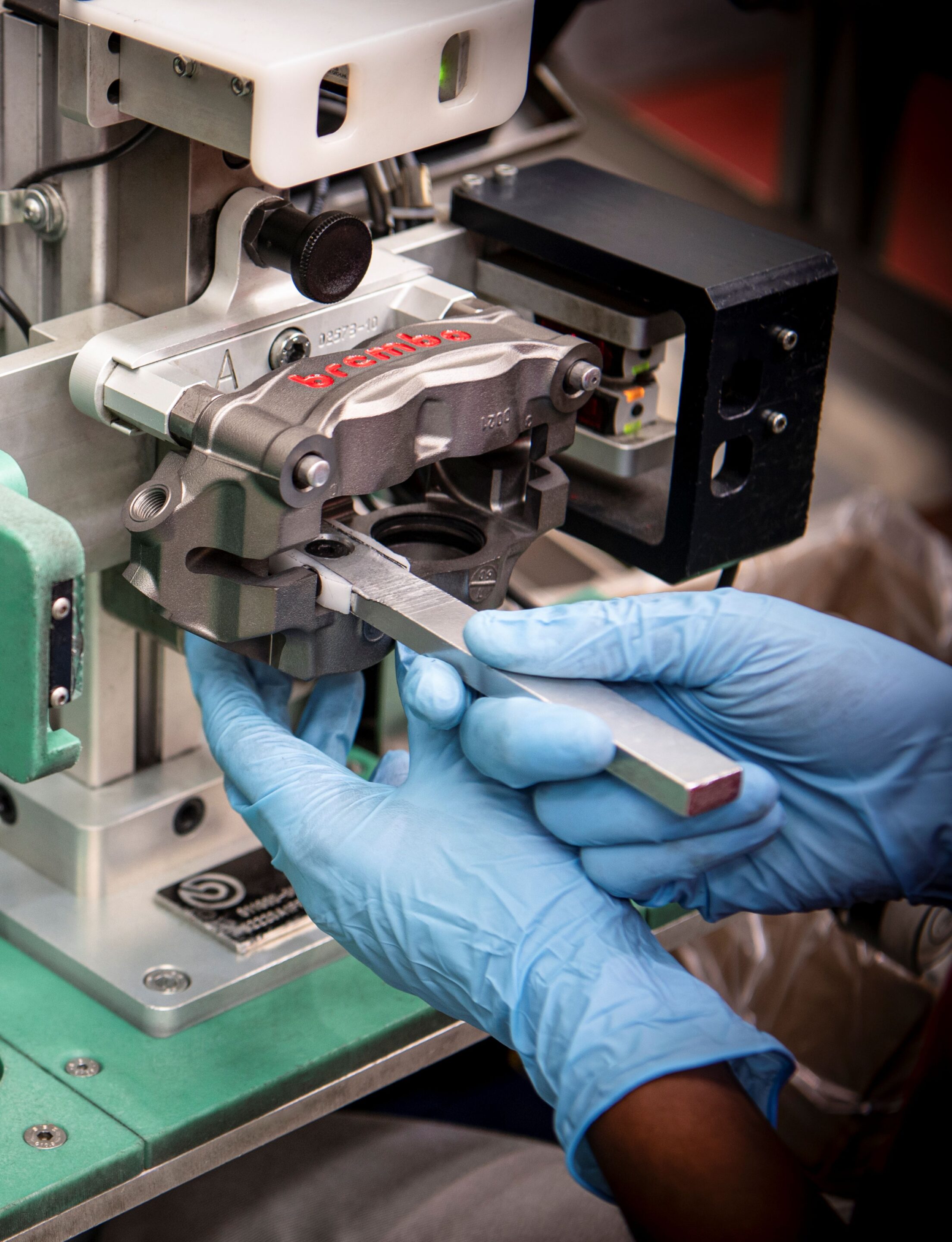
As reported by Road and Track, Brembo won’t say exactly which manufacturer will first adopt the system, but has announced that it will “equip hundreds of thousands of vehicles per year”. Given Brembo’s long and storied history with the very best braking systems around the world, it would be fair to assume more than one manufacturer would jump at the opportunity to fit this new technology to its vehicles.
“Sensify translates our vision of an intelligent, integrated braking platform into industrial reality,” said Daniele Schillaci, CEO of Brembo. “Designed to orchestrate the entire corner ecosystem, it supports safer mobility, while paving the way for the next generation of software-defined vehicles, reflecting our long-term purpose of shaping a zero accident future.”
According to Brembo, the Sensify system will deliver a more precise braking experience, because it removes the hydraulic fluid of traditional systems, as counter-intuitive as that may sound. With sensors at each wheel, the Brembo system can in effect, deliver different braking to each wheel if required. It can, therefore, improve not just braking stability but also issues like understeer or unwanted yaw – which are controlled by the brakes in most modern cars. If you drive on slippery surfaces often, the benefits are even more noticeable.

Like fly-by-wire throttle control did when it was first introduced, this new technology by Brembo could completely redefine the interaction of driver and car, and the interaction between the car and the road beneath it. If Brembo can perfect it’s system as it claims to have done, it won’t be long before we see it move out of the realm of high-end performance and be adapted more broadly to more affordable cars.
Recently, we saw a glimpse into Nissan’s future. The embattled manufacturer showed off a significant portion of its future, from the new Juke small SUV to teasing a new generation of Skyline. Everything looked fresh, modern and ready to help the company’s current life-or-death struggle. But the most important reveal of the event, from the sales perspective, was the next generation of X-Trail medium SUV, a model that has sold over eight million units since its initial release in 2001.
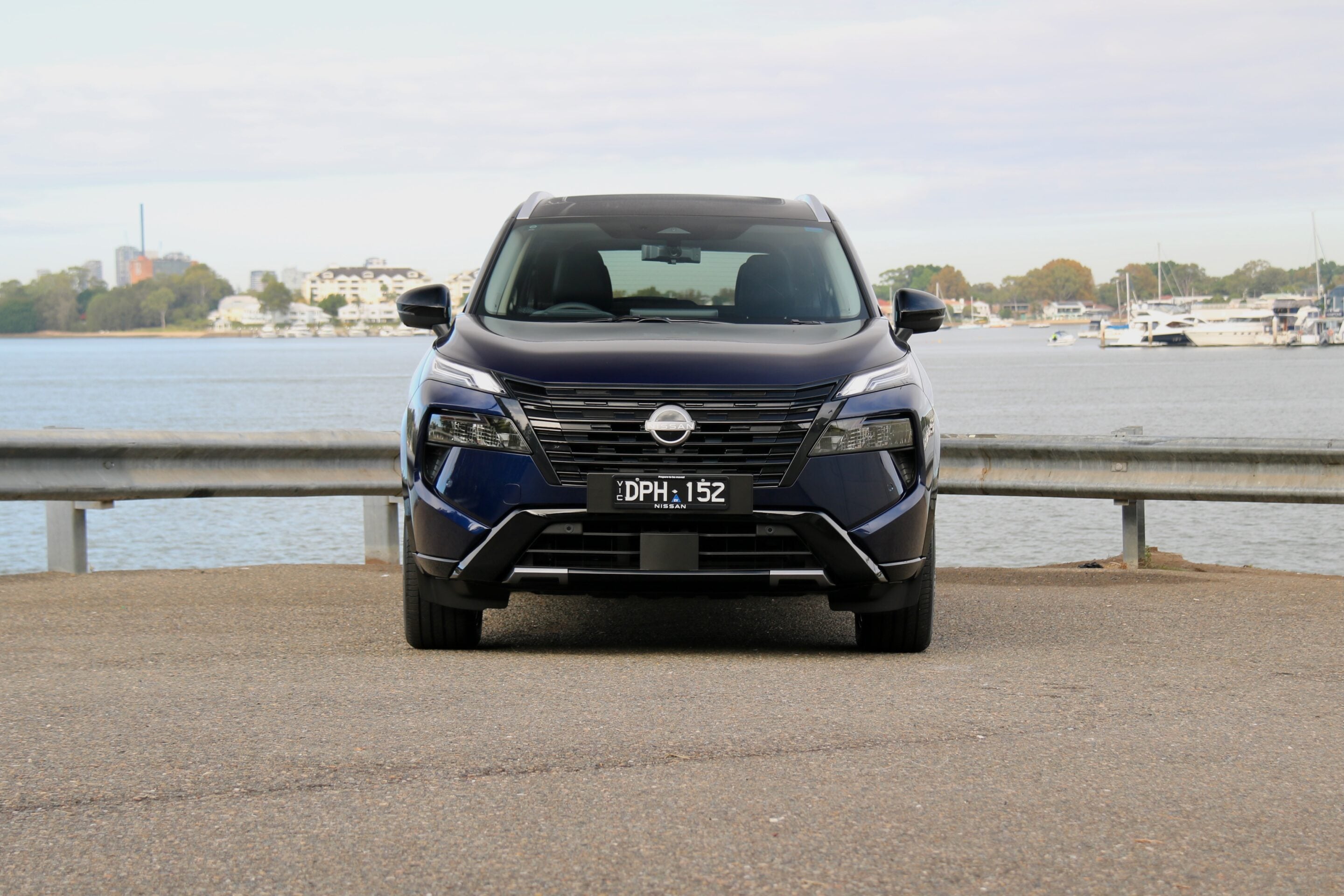
And let us be clear: The current Nissan X-Trail is a great medium SUV, and the best Nissan on the market. Let’s explore it more in top-spec hybrid Ti-L e-Power form.
How much does the X-Trail Ti-L e-Power cost to buy?
The entry-level X-Trail ST variant kicks off the range priced from $38,140 plus on-road costs, with ST-L, Ti and Ti-L models sitting above it. Depending on the model, petrol or hybrid, front- or all-wheel drive and even five- or seven-seat layouts are available, making the X-Trail one of the most versatile medium SUVs on the Australian market.
2026 Nissan X-Trail pricing (excluding on-road costs):
| ST 2WD five-seat | $38,140 |
|---|---|
| ST AWD five-seat | $40,140 |
| ST-L 2WD five-seat | $42,615 |
| ST-L AWD seven-seat | $45,715 |
| ST-L e-Power hybrid AWD five-seat | $48,915 |
| Ti AWD five-seat | $51,415 |
| Ti e-Power hybrid AWD five-seat | $54,415 |
| Ti-L AWD five-seat | $54,415 |
| Ti-L e-Power hybrid AWD five-seat | $58,215 (tested here) |
At the time of writing, Nissan is offering the X-Trail Ti-L e-Power for $59,151 driveaway based on a Sydney postcode. Almost $60,000 is obviously not a small outlay, but for the level of equipment on offer we think that’s solid value for money. The new top-spec petrol Mazda CX-5 Akera, which won’t be offered with a hybrid drivetrain until 2027, is priced above $60,000 driveaway and the X-Trail is better equipped.
How fuel efficient is the X-Trail Ti-L e-Power?
The whole point of buying the hybrid version if given the choice is fuel efficiency, right? Well, the hybrid X-Trail e-Power is definitely more efficient than the 2.5-litre naturally aspirated petrol engine, but it’s also punchier and more refined as well. If you’re considering an X-Trail, we think that the e-Power is the drivetrain to have.
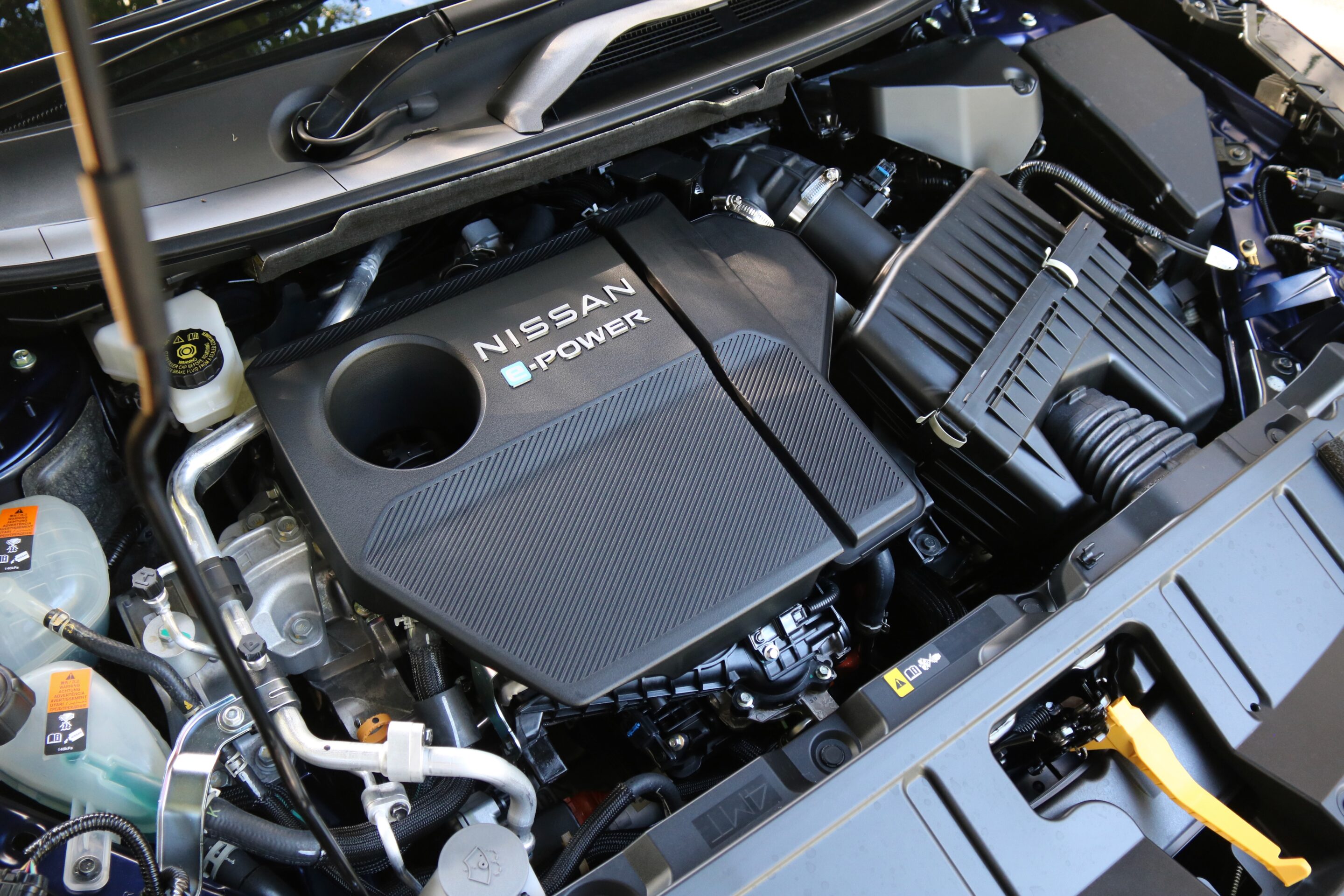
Making 157kW of power, it’s not only 22kW more powerful than the petrol X-Trail, but its 6.1L/100km combined fuel consumption rating is 1.7L/100km better than the petrol Ti-L too. Its 139g/km of CO2 rating is also 44g/km less than the petrol model. Those familiar with medium SUVs will note that the new Toyota RAV4‘s 4.6L/100km rating is 1.5L/100km less than the X-Trail, though the X-Trail is 14kW more powerful. In the real world, we achieved 6.2L/100km in a mixed range of driving.
Is the X-Trail Ti-L e-Power nice to drive?
Starting with the e-Power system, the X-Trail is unique in its segment in that it employs a series-parallel hybrid system. Unlike a Toyota or Honda system where both the petrol engine and/or electric motor can directly power the wheels, the e-Power system employs the petrol engine as a generator and only the electric motors will send power to the wheels.
What that means for drivers is that there’s no noticeable step between electric and ICE power, instead, every part of the propulsion is smooth. Because the electric motors provide propulsion, the X-Trail e-Power is quick off the line thanks to its instant electric torque – the front motor makes a peak 330Nm and the rear 195Nm, so it feels quick. Nissan doesn’t claim an official 0-100km/h time, but a quick search on the internet results in times of around the 7.0-second mark, which is quite respectable.
Apart from the drivetrain, the X-Trail is a generally comfortable and relaxing car to drive. Refinement is quite good, with little in the way of road noise except for when travelling at highway speeds on coarse chip roads, while the linear steering is well weighted and offers reasonable feel. Nissan seems to have massaged the Ti-L e-Power’s ride with the update because it’s noticeably more compliant than the pre-updated model we tested last year.
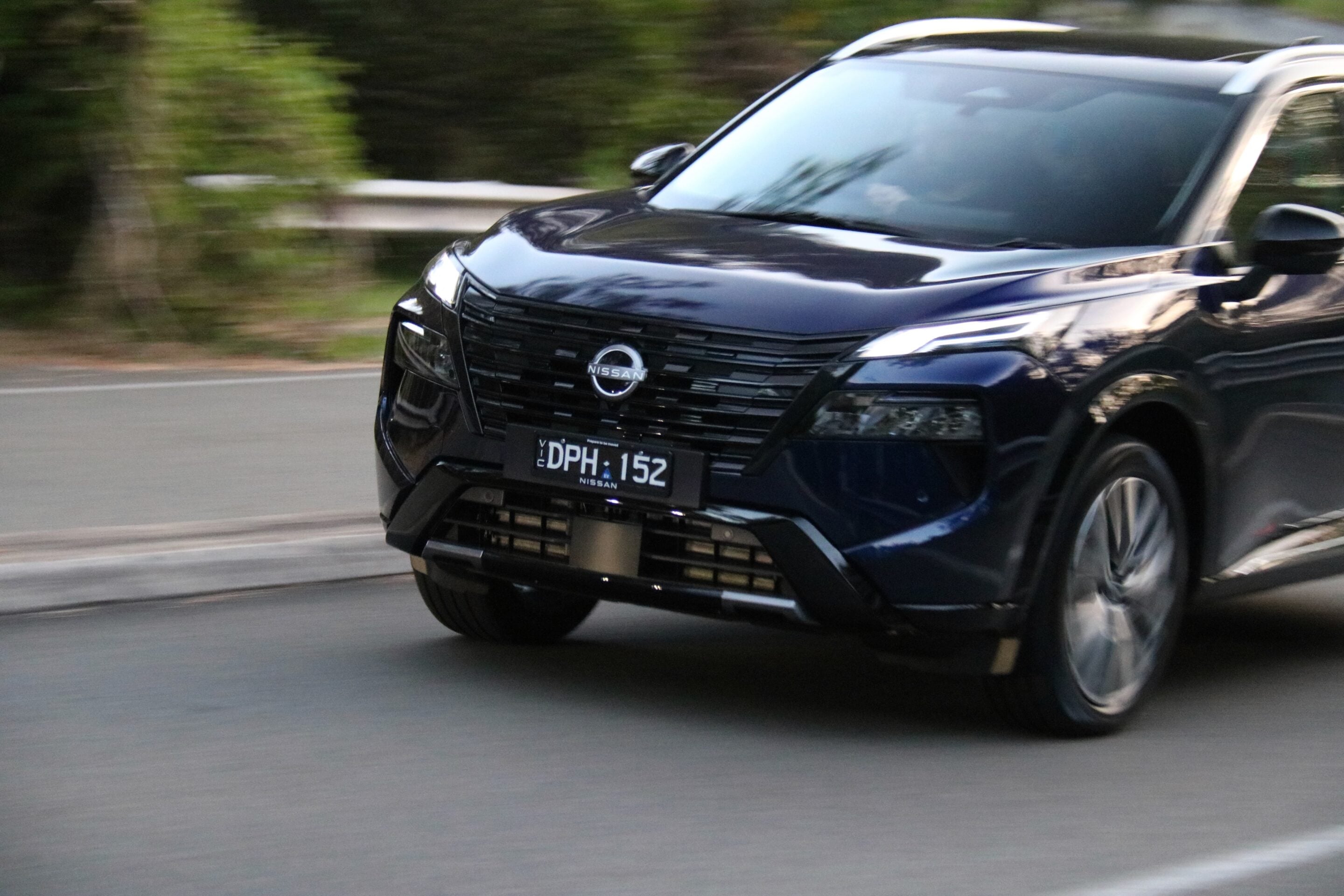
There’s no doubt that sharper bumps can take the edge off the compliance a bit thanks to its huge 20-inch wheels, but it seems to be less fazed by constant smaller bumps like the pre-updated car was and the body control is tighter, too. Overall, we think it strikes a good balance between sportiness and comfort, and even though it’s not a sporty model, its handling is actually quite tidy and it grips well.
How practical is the X-Trail Ti-L e-Power?
The cabin of the current-generation X-Trail has been one of the best all-rounders in the mid-size SUV segment since its 2021 release, thanks to the high quality, impressive practicality and easy-to-use technology. The brand didn’t update much inside the X-Trail’s cabin with the mid-life update and we think that it’s still one of the best options for practicality in the segment.
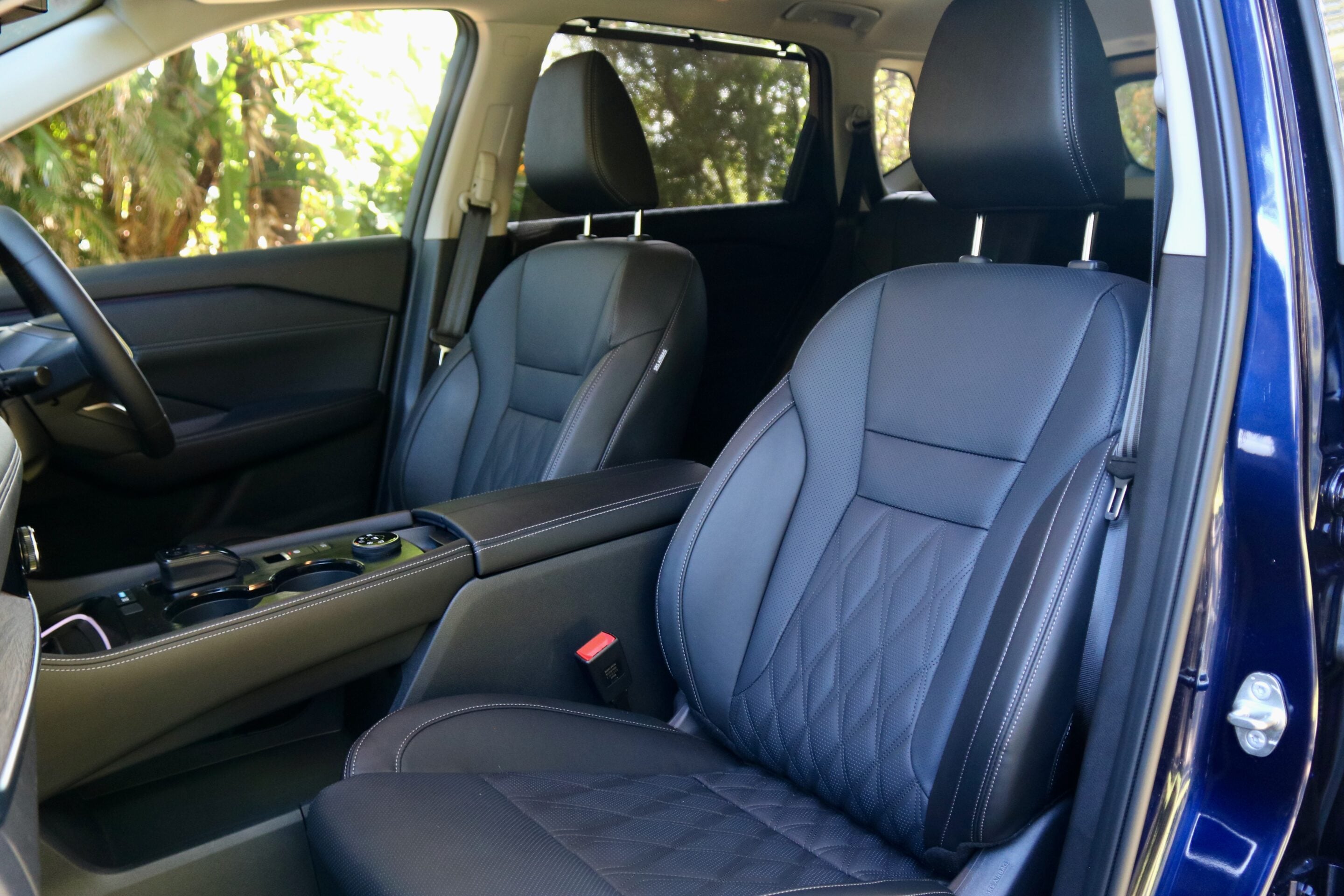
Material quality across the X-Trail range is impressive thanks to soft stitched leather-like trims around the cabin, textured wood-like centre console trim and tight switchgear. The Ti-L takes it a step further with its lovely quilted Nappa leather upholstery, which is available in either black or tan colouring. While the rest of the X-Trail range is impressively plush, the Ti-L actually feels luxurious inside, and its rich 10-speaker Bose sound system adds to the experience.
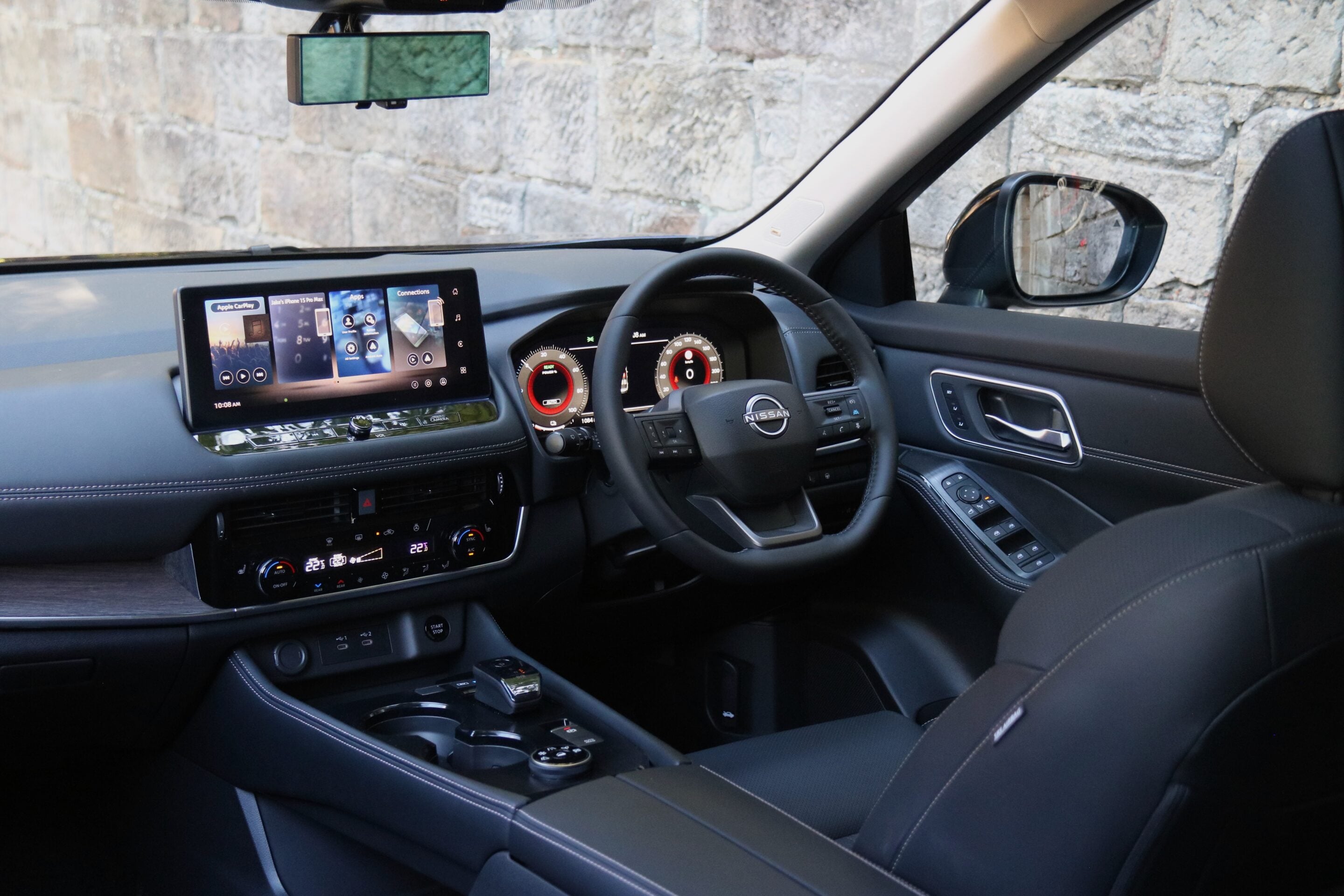
The entire X-Trail range uses a new 12.3-inch touchscreen that’s spreading its way across the Nissan range, which is easy to use and sharp to look at. It could be a bit faster and oddly doesn’t feature inbuilt sat-nav in Australia – in some markets, its features Google integration but not here just yet – but the wireless Apple CarPlay and Android Auto smartphone mirroring is easy to connect. It still features shortcuts on the driver’s side with smartphone mirroring on the screen for added user-friendliness, as well as the row of buttons below the screen and a proper volume knob.
The 12.3-inch digital driver’s display is really easy to use and full of information, though we’d like it to feature a map and some sort of customisation as it really just looks like a digital version of lesser models’ analogue dials. Storage is covered by large door bins, a big central box underneath the centre armrest, a large tray underneath the centre console and an open tray with the wireless smartphone charger.
The rear seat of the X-Trail is quite comfortable as it’s one of the most spacious in the mid-size SUV segment and the seats themselves are inviting as well. The rear doors open to 90 degrees, which is great for getting child seats in and out, and the rear seats slide and recline for more space. Both legroom and headroom is impressive for taller adults. Rear seat passengers will be impressed with the amenities on offer, which include a separate climate zone, air vents, USB charging ports, inbuilt sunshades in the doors, heated outboard seats, map pockets, door pockets and a central armrest.
Behind the rear seats lies a large 575 litres of space and Nissan’s handy ‘Divide-N-Hide’ cargo management system allows for – as the name suggests – both dividing and hiding of items in the boot. Fold the rear seats and space isn’t quite as impressive at 1386 litres, but it’s still a large area and the 40:20:40-split rear seats fold flat. Disappointingly however, there’s no spare wheel on the e-Power variants of the X-Trail, which takes a bit of shine off an otherwise very practical offering.
What warranty covers the X-Trail Ti-L e-Power?
The entire Nissan range is covered by a five-year/unlimited km warranty that can be extended up to 10 years/300,000km with annual servicing at a Nissan dealership. If owners adhere to that condition, Nissan’s warranty is one of the longest on the new car market. Plus, there’s also an eight-year/160,000km warranty for the hybrid battery.
Five years/75,000km of servicing costs $1995 or $399 per service, and with its recent imd-life update, Nissan extended annual service intervals from short 10,000km intervals to the industry average of 15,000km to better match rivals.
Should I buy a Nissan X-Trail Ti-L e-Power?
There’s no doubt that there are more fuel efficient, sportier, roomier and better value medium SUV options available. But we think the X-Trail Ti-L e-Power strikes a great balance between all of them and it’s easy to recommend. Sure, it’s not as fuel efficient as a RAV4 but its interesting e-Power hybrid system is smoother and quicker. It’s not as sporty as a CX-5, but how many medium SUV buyers want sportiness? It still rides well, and it’s a tidy handler too.
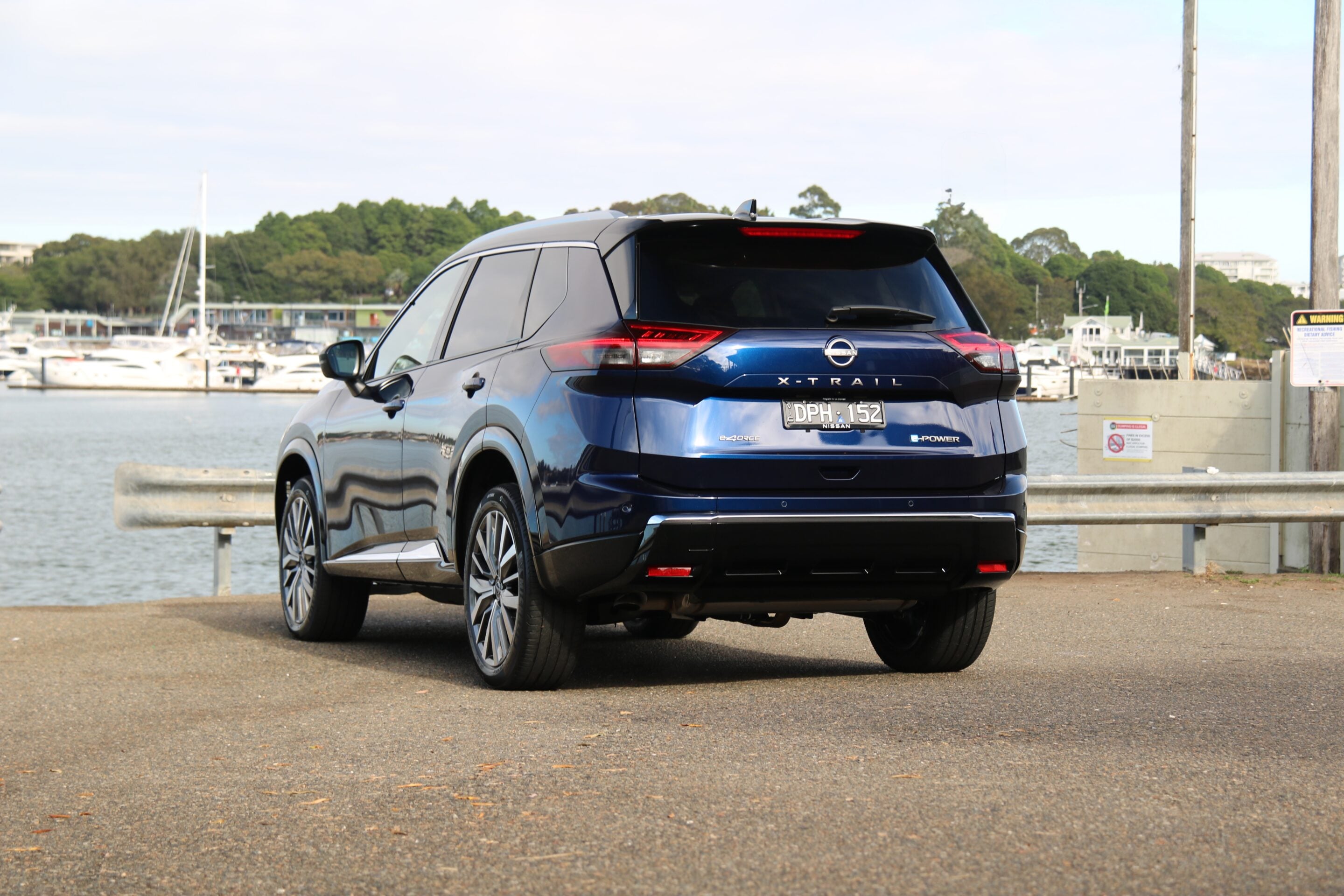
The X-Trail’s cabin is still one of the plushest and most attractive in the segment, it’s quite practical with storage and rear seat space, and the Nappa leather in the Ti-L is great to touch. Sure, $60,000 is a stretch, but this X-Trail justifies it with a very long standard equipment list and a high level of overall ability. Scratch more exciting products like the Z coupe, the X-Trail e-Power is the best product Nissan currently sells locally.
X-Trail Ti-L e-Power specifications:
| Model | Nissan X-Trail Ti-L e-Power |
|---|---|
| Price | $58,415 plus on-road costs |
| Drivetrain | 1497cc turbocharged three-cylinder dual-motor hybrid |
| Engine outputs | 106kW/250Nm |
| Front electric motor outputs | 150kW/330Nm |
| Rear electric motor outputs | 100kW/195Nm |
| Combined peak power | 157kW |
| 0-100km/h | 7.0 seconds (est.) |
| Transmission | Single-speed reduction gear, all-wheel drive |
| Claimed combined fuel consumption | 6.1L/100km |
| Claimed CO2 emissions | 139g/km |
| Fuel required/tank size | 91 RON regular unleaded, 55 litres |
| Dimensions (l/w/h/wb) | 4690/1840/1725/2705mm |
| Boot size | 575 litres (rear seats up) |
| Kerb weight | 1891kg |
| Warranty | Five-year/unlimited km, extendable up to 10-year/300,000km with dealer servicing |
| Five-year/75,000km service cost | $1995 |
| On sale | Now |
X-Trail Ti-L e-Power standard features:
- 20-inch alloy wheels (with a tyre repair kit)
- Dusk- and rain-activated LED exterior lighting
- Rain-sensing automatic wipers
- Keyless entry with push button start and remote start
- Heated and auto-folding mirrors with tilting in reverse gear
- Rear privacy glass
- Roof rails
- Electric tailgate with kick-to-open functionality
- Panoramic sunroof
- Quilted Nappa leather seat upholstery
- 10-way electric front seat adjustment with memory functionality and heating
- Heated leather-wrapped steering wheel
- Heated outboard rear seats
- Tri-zone automatic climate control
- Nissan Connect connected car services
- 12.3-inch digital driver’s display
- 12.3-inch touchscreen
- 10.8-inch head-up display
- Wireless Apple CarPlay and Android Auto
- Bluetooth calling and audio streaming
- 4x USB-C charging ports
- Wireless phone charger
- 10-speaker Bose sound system
- Cabin ambient lighting
- Rear door sunshades
- Auto, eco, sport, snow and off-road driving modes
- Hill descent control
- Auto-dimming rear mirror
- 7x airbags
- Autonomous emergency braking with junction assist and pedestrian and cyclist detection
- Rear automatic braking
- Adaptive cruise control
- Adaptive lane guidance
- Blind-spot monitoring with rear cross-traffic alert
- Lane keeping assistance
- Traffic sign recognition
- Driver attention monitoring
- Adaptive high beam
- Front and rear parking sensors
- 360-degree camera with 3D view
- Tyre pressure monitoring
First published in the July 2000 issue of Wheels magazine, Australia’s best car mag since 1953. Subscribe here and gain access to 12 issues for $109 plus online access to every Wheels issue since 1953.
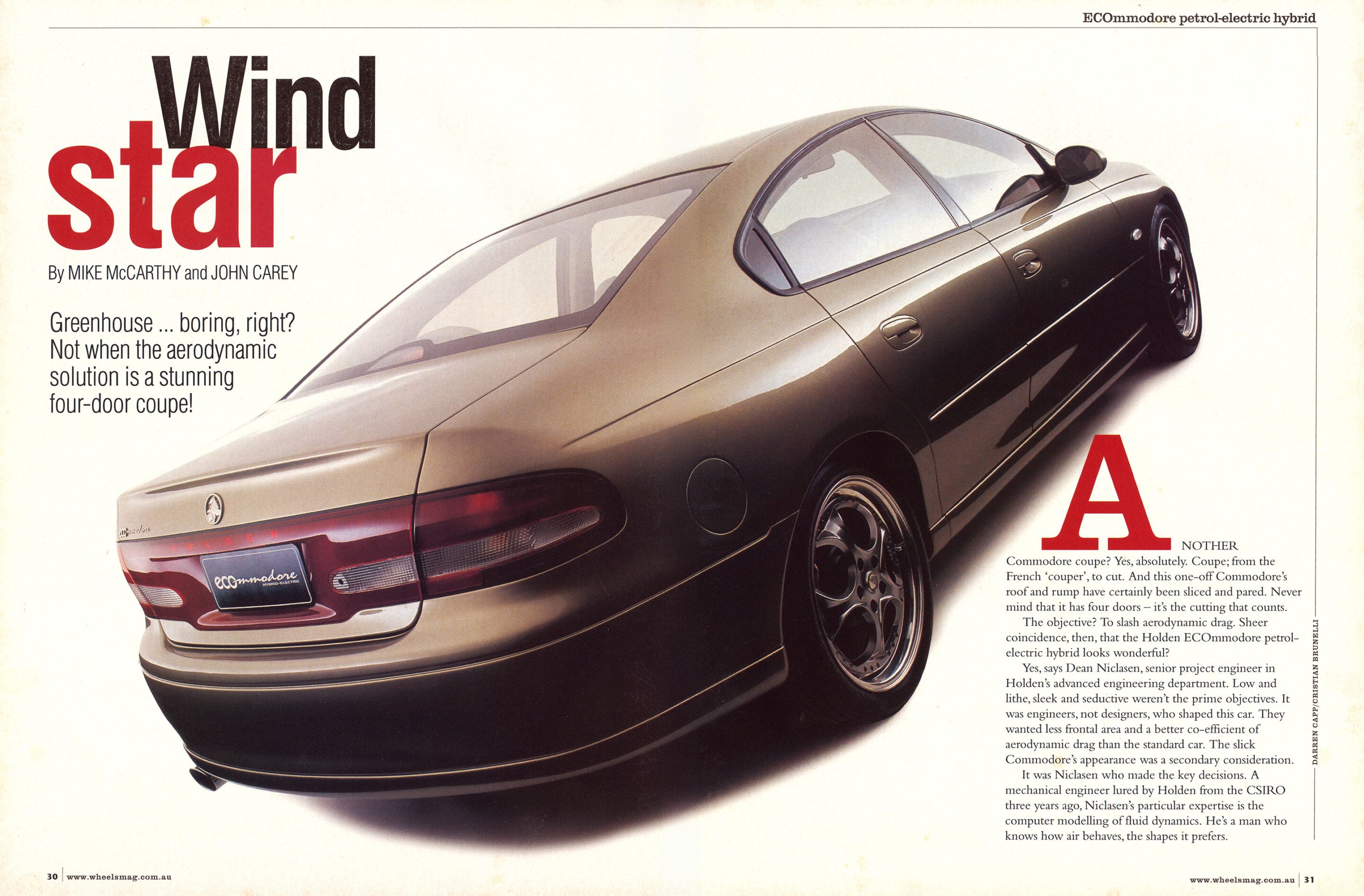
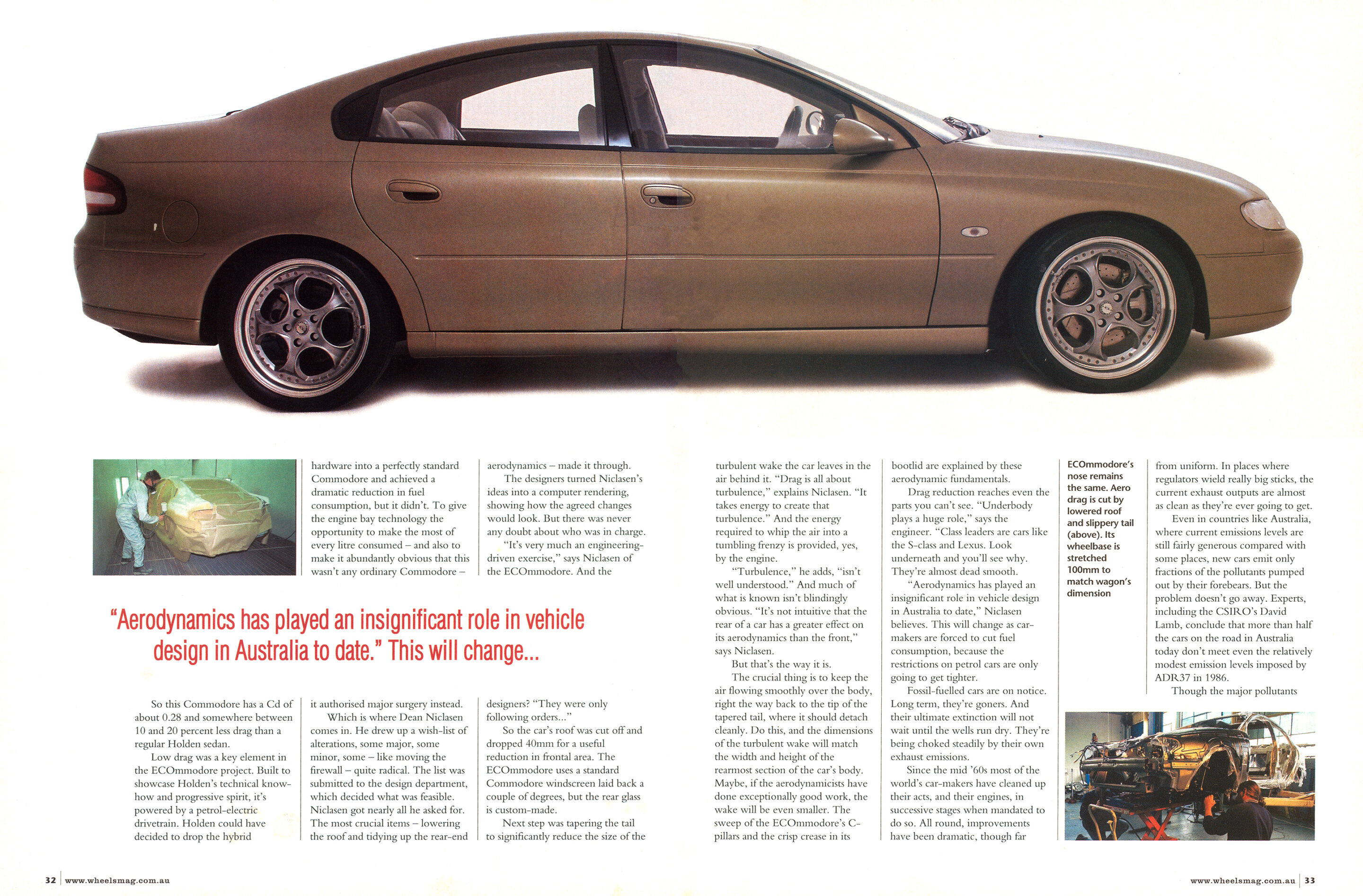
Another Commodore coupe? Yes, absolutely. Coupe; from the French ‘couper’, to cut. And this one-off Commodore’s roof and rump have certainly been sliced and pared. Never mind that it has four doors – it’s the cutting that counts.
The objective? To slash aerodynamic drag. Sheer coincidence, then, that the Holden ECOmmodore petrol-electric hybrid looks wonderful?
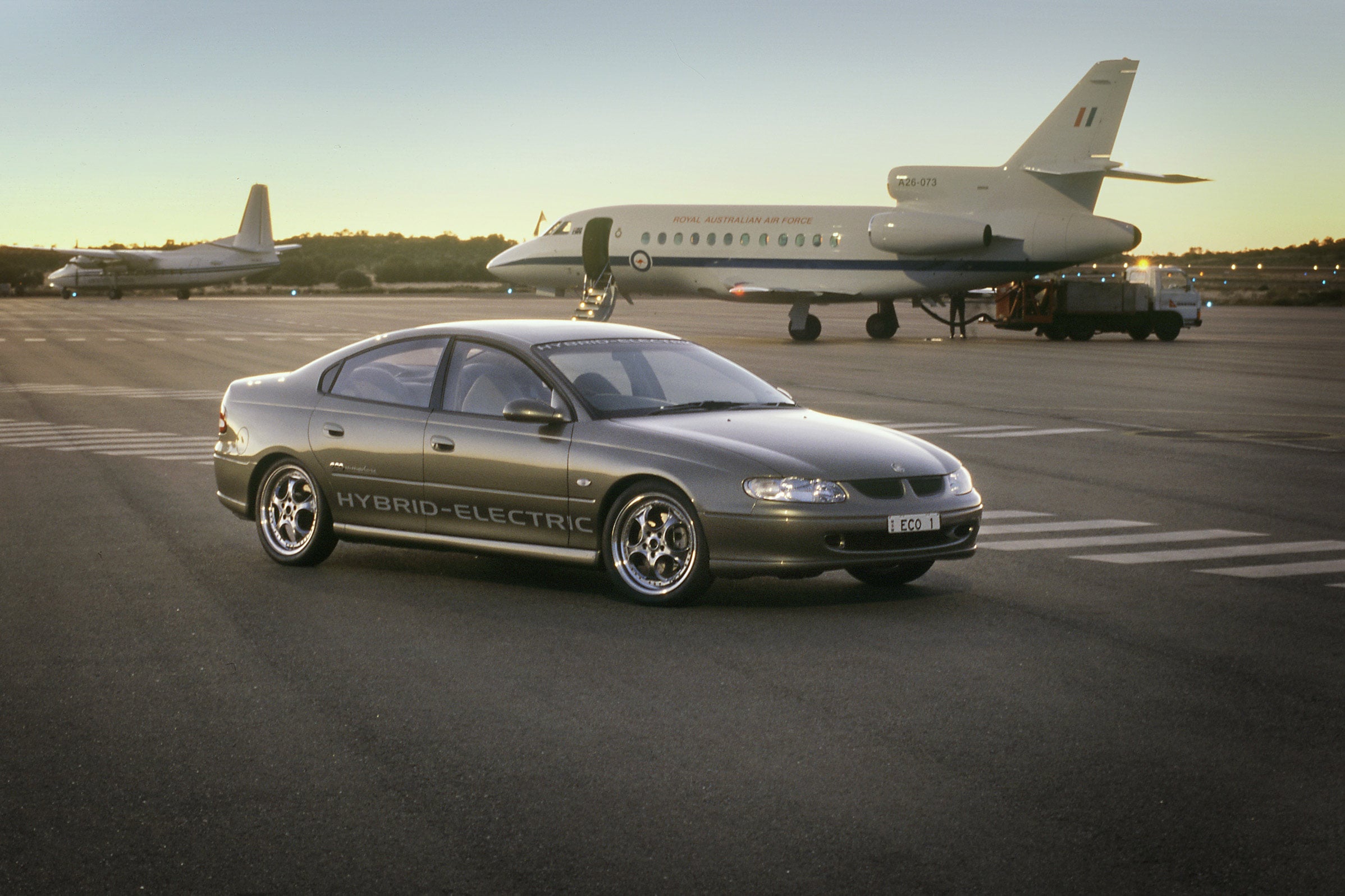
Yes, says Dean Niclasen, senior project engineer in Holden’s advanced engineering department. Low and lithe, sleek and seductive weren’t the prime objectives. It was engineers, not designers, who shaped this car. They wanted less frontal area and a better co-efficient of aerodynamic drag than the standard car. The slick Commodore’s appearance was a secondary consideration.
It was Niclasen who made the key decisions. A mechanical engineer lured by Holden from the CSIRO three years ago, Niclasen’s particular expertise is the computer modelling of fluid dynamics. He’s a man who knows how air behaves, the shapes it prefers.
So this Holden Commodore has a Cd of about 0.28 and somewhere between 10 and 20 per cent less drag than a regular Holden sedan.
Low drag was a key element in the ECOmmodore project. Built to showcase Holden’s technical know-how and progressive spirit, it’s powered by a petrol-electric drivetrain. Holden could have decided to drop the hybrid hardware into a perfectly standard Commodore and achieved a dramatic reduction in fuel consumption, but it didn’t. To give the engine bay technology the opportunity to make the most of every litre consumed – and also to make it abundantly obvious that this wasn’t any ordinary Commodore – it authorised major surgery instead.
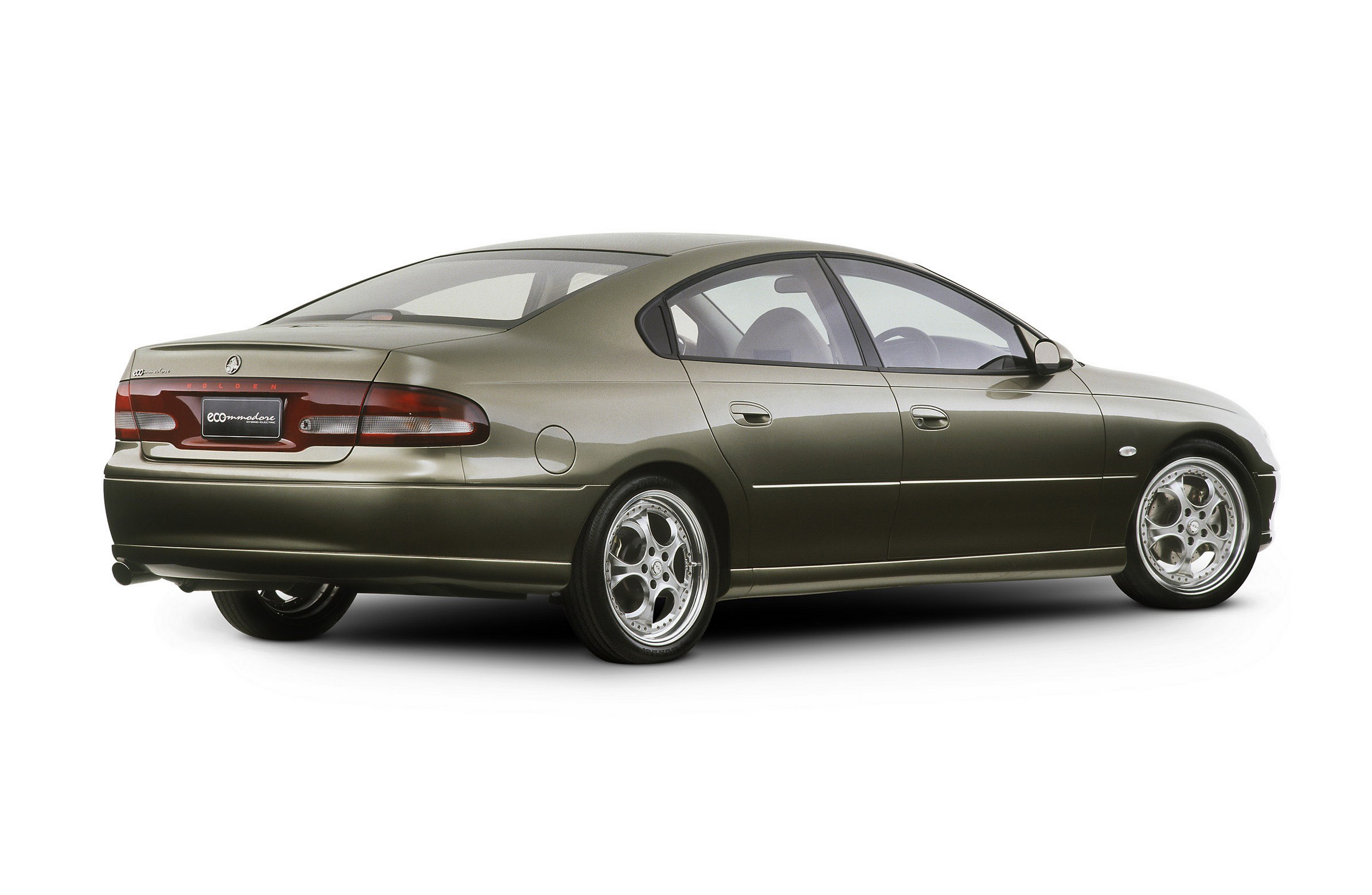
Which is where Dean Niclasen comes in. He drew up a wish-list of alterations, some major, some minor, some – like moving the firewall – quite radical. The list was submitted to the design department, which decided what was feasible. Niclasen got nearly all he asked for. The most crucial items – lowering the roof and tidying up the rear-end aerodynamics – made it through.
The designers turned Niclasen’s ideas into a computer rendering, showing how the agreed changes would look. But there was never any doubt about who was in charge. “It’s very much an engineering-driven exercise,” says Niclasen of the ECOmmodore. And the designers? “They were only following orders…”
So the car’s roof was cut off and dropped 40mm for a useful reduction in frontal area. The ECOmmodore uses a standard Commodore windscreen laid back a couple of degrees, but the rear glass is custom-made. Next step was tapering the tail to significantly reduce the size of the turbulent wake the car leaves in the air behind it.
“Drag is all about turbulence,” explains Niclasen. “It takes energy to create that turbulence.”And the energy required to whip the air into a tumbling frenzy is provided, yes, by the engine. “Turbulence,” he adds, “isn’t well understood.” And much of what is known isn’t blindingly obvious. “It’s not intuitive that the rear of a car has a greater effect on its aerodynamics than the front,” says Niclasen.
But that’s the way it is.
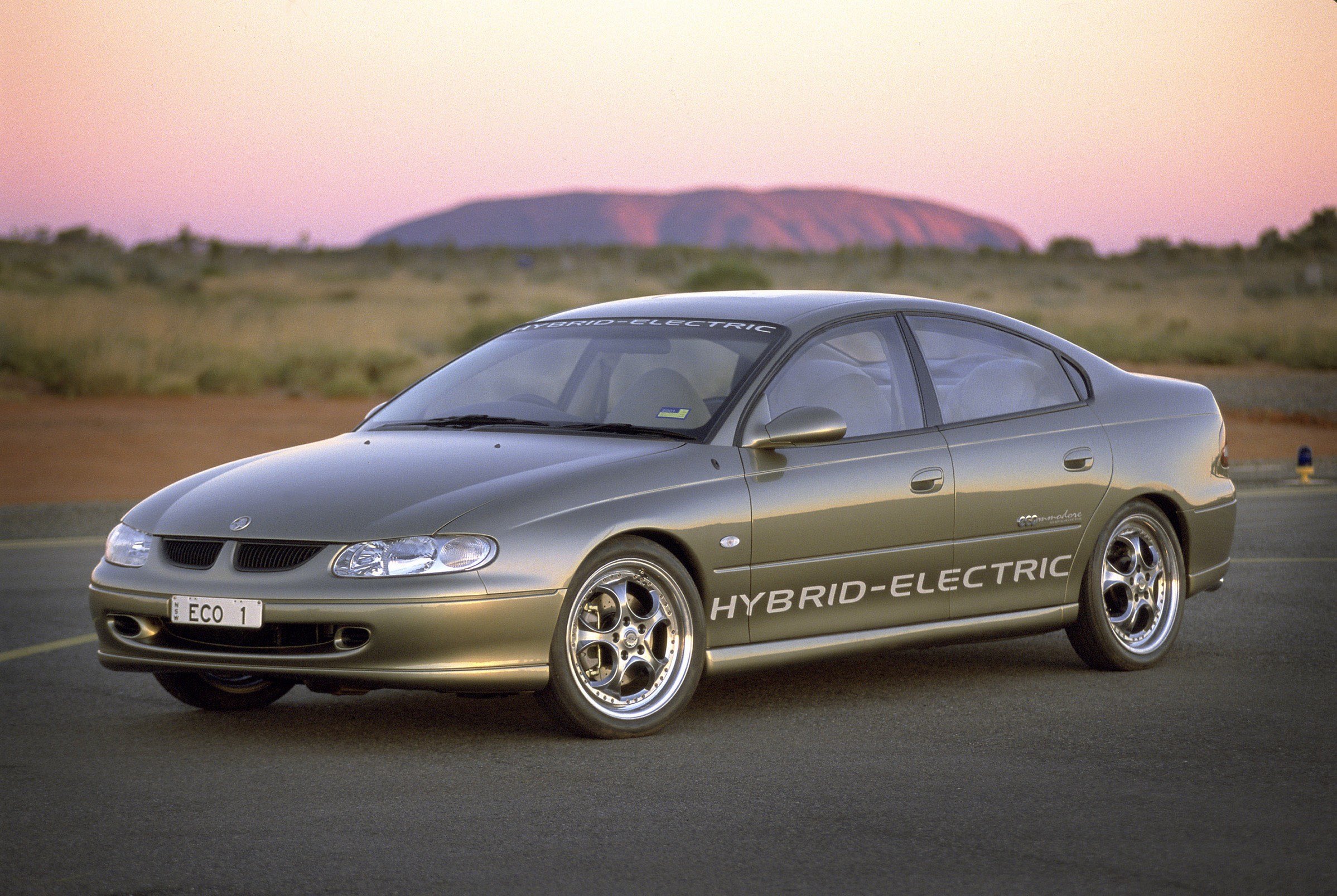
The crucial thing is to keep the air flowing smoothly over the body, right the way back to the tip of the tapered tail, where it should detach cleanly. Do this, and the dimensions of the turbulent wake will match the width and height of the rearmost section of the car’s body.
Maybe, if the aerodynamicists have done exceptionally good work, the wake will be even smaller. The sweep of the ECOmmodore’s C-pillars and the crisp crease in its bootlid are explained by these aerodynamic fundamentals.
Drag reduction reaches even the parts you can’t see. “Underbody plays a huge role,” says the engineer. “Class leaders are cars like the S-class and Lexus. Look underneath and you’ll see why. They’re almost dead smooth.
“Aerodynamics has played an insignificant role in vehicle design in Australia to date,” Niclasen believes. This will change as carmakers are forced to cut fuel consumption, because the restrictions on petrol cars are only going to get tighter.
Fossil-fuelled cars are on notice. Long term, they’re goners. And their ultimate extinction will not wait until the wells run dry. They’re being choked steadily by their own exhaust emissions. Since the mid ’60s most of the world’s car-makers have cleaned up their acts, and their engines, in successive stages when mandated to do so. All round, improvements have been dramatic, though far from uniform. In places where regulators wield really big sticks, the current exhaust outputs are almost as clean as they’re ever going to get.
Even in countries like Australia, where current emissions levels are still fairly generous compared with some places, new cars emit only fractions of the pollutants pumped out by their forebears. But the problem doesn’t go away. Experts, including the CSIRO’s David Lamb, conclude that more than half the cars on the road in Australia today don’t meet even the relatively modest emission levels imposed by ADR37 in 1986.
Though the major pollutants have been decimated, the hoary old carbon dioxide bogey remains. CO2 is one of the main reasons Earth is habitable. But our overproduction of the stuff tilts nature’s balance askew and stimulates the so-called greenhouse effect, with its attendant warming peril. Thing is, there’s a direct and inescapable correlation between CO2 production and fossil fuel consumption. Every litre of petrol burned sends another 2.4kg of CO2 into the system. Scaled up, it’s an annual average of over four tonnes of CO2 from every car. The problem is big. Very big indeed.
Electric cars are the answer. Trouble is, no-one has yet figured how to make a battery-electric competitive for cost, mass, performance, driving range and other things essential for mass marketing.
So, how can hybrids help? After all, it’s reasonably common knowledge that fuel cell cars are coming to save us. We wish. By producing electricity via non-polluting chemical means, best-practice fuel cells seem the ideal answer. Even some second-best solutions, which involve cracking fossil or organic fuels to feed the cells, promise tolerably minimal tailpipe nasties.
There’s talk of automotive fuel cells being on the road in a few years, but it’s a safe bet they won’t be around in even slightly significant numbers for at least a decade, probably closer to two. Or three. This is where hybrids come in; between now and fuel cells.
Nobody’s honestly pretending hybrid electrics are the ultimate answer. Some critics dismiss hybrids as heavily compromised solutions that only wed the disadvantages of combustion engines and battery-electric motivation. There’s some truth in that, but the bigger reality is that hybrid electrics are far more viable and measurably more efficient, with much less obnoxious flatulence, than any alternative now and in the immediate future. Hybrids may need two things (combustion engine and electric motor) to get their act together, but they do work.
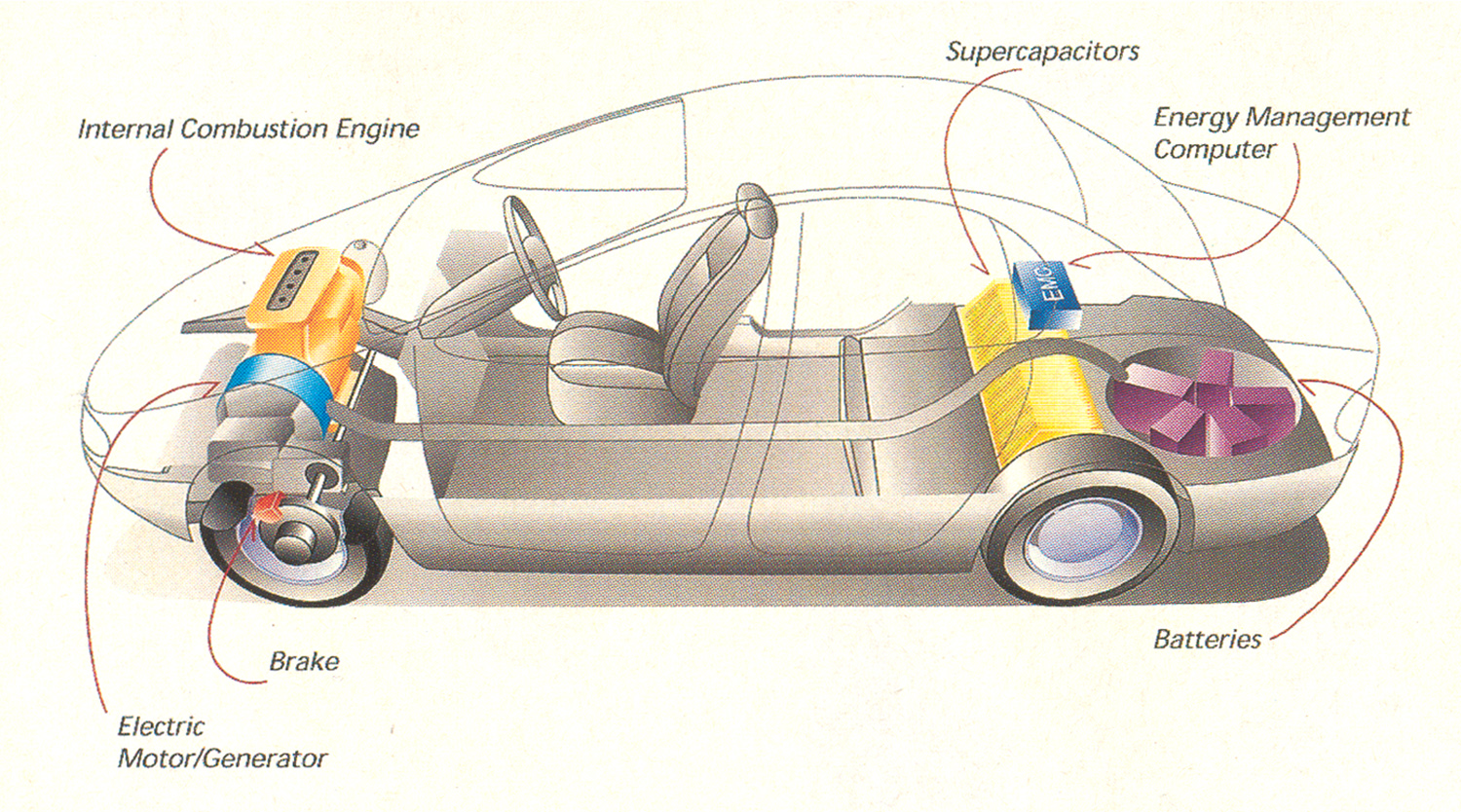
There are two basic types of hybrid electrics. Holden hasn’t enrolled in the ‘series’ hybrid school, where the electric motor does all the driving and the combustion engine runs only as often and much as needed to keep the (big) batteries charged. Instead, Holden has chosen the ‘parallel’ hybrid path, where the driving duties are shared by the engine and/or motor as conditions require.
Now that the idea of a hybrid Holden has begun seeping in, you’re ready for the next shock… a front-wheel drive Commodore! Stay calm. A whatever, whenever Commodore-based production hybrid will almost certainly have rear-wheel drive. But for the purposes of this first exercise, front-drive was most expedient.
Hybrids to date have been physically small or compact, as the first production models (Toyota Prius and Honda Insight) reflect. But Holden decided its project must involve a full (Aussie) size family sedan to have real-world relevance.
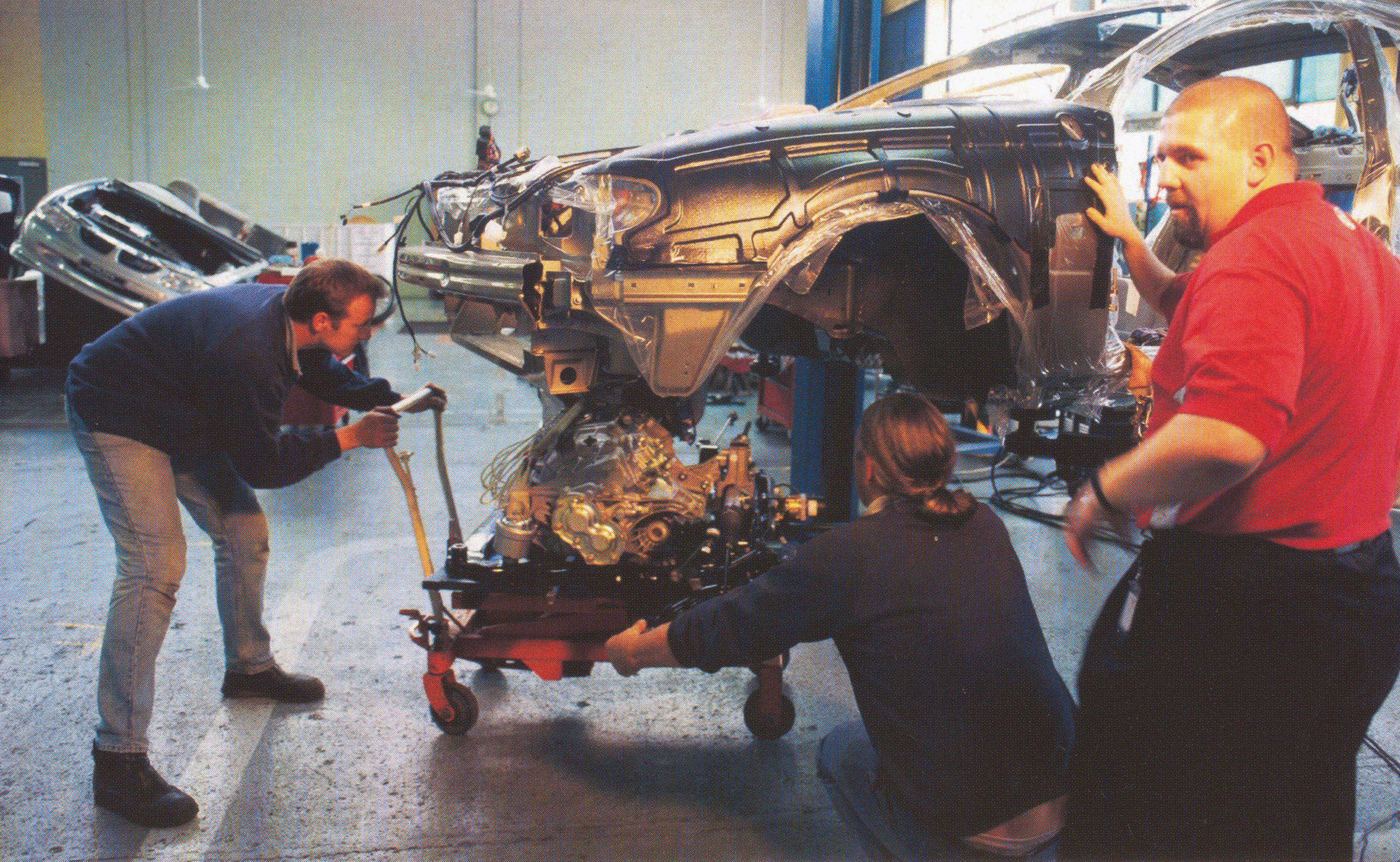
To bring best possible technology to bear, Holden enlisted hybrid-savvy CSIRO experts, along with specialised resources from more than 25 local suppliers.
In the quest for lightness, exterior body panels are carbon fibre or fibreglass, while the door windows and backlight are polycarbonate plastic weighing about two thirds less than the panes they replace. The interior also extols the no-fat diet with lightweight door trim panels and exclusive form-fitting seats.
The combined effect of these and other lipo-suctions almost offset the extra mass of the motor, battery pack, super-capacitors and the electronic power management package, so the completed hybrid’s mass ends up in the same ballpark as a stock Commodore.
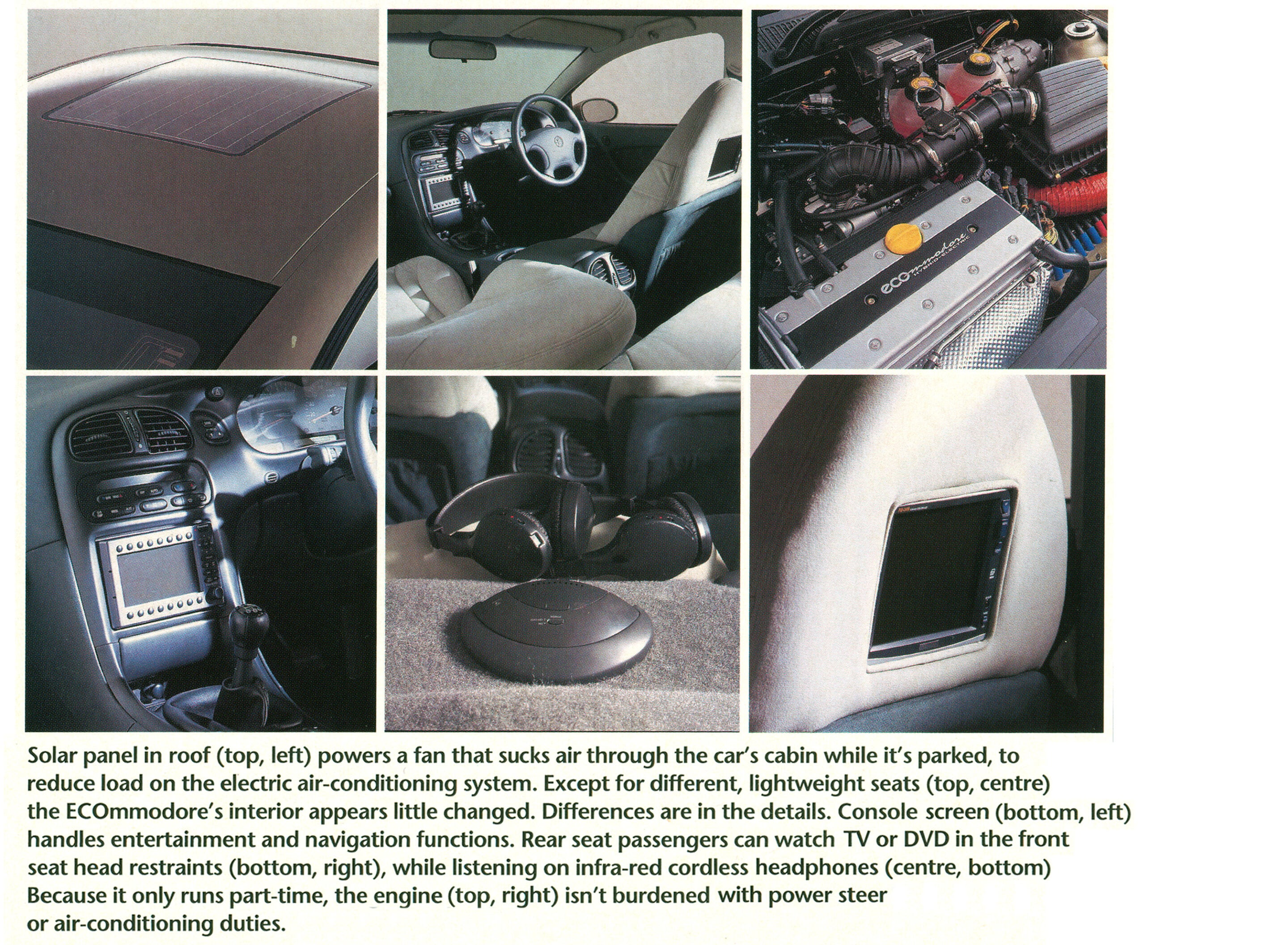
Though Holden’s hybrid clearly stresses the need for (and benefits of) reduced weight and energy efficiency, the interior also reflects the project’s high tech aspects. The unique instrument cluster, for example, adds displays for the prevailing driving mode (petrol, electric or combo and the battery charge level. The front console’s info/entertainment centre complements the familiar CD and AM/FM radio with integrated DVD player, television receiver and Global Positioning System. Rear passengers can watch TV or a DVD on the front seatbacks’ video screens, with audio via cordless infrared headsets, even as GPS is playing on the front screen.
Elsewhere, attention to detail includes a new weight-reduced steering column with innovative electric clamping for the height/reach adjustment. Significant weight savings accrue from new brake calipers and rotors, along with an electric parking brake system.
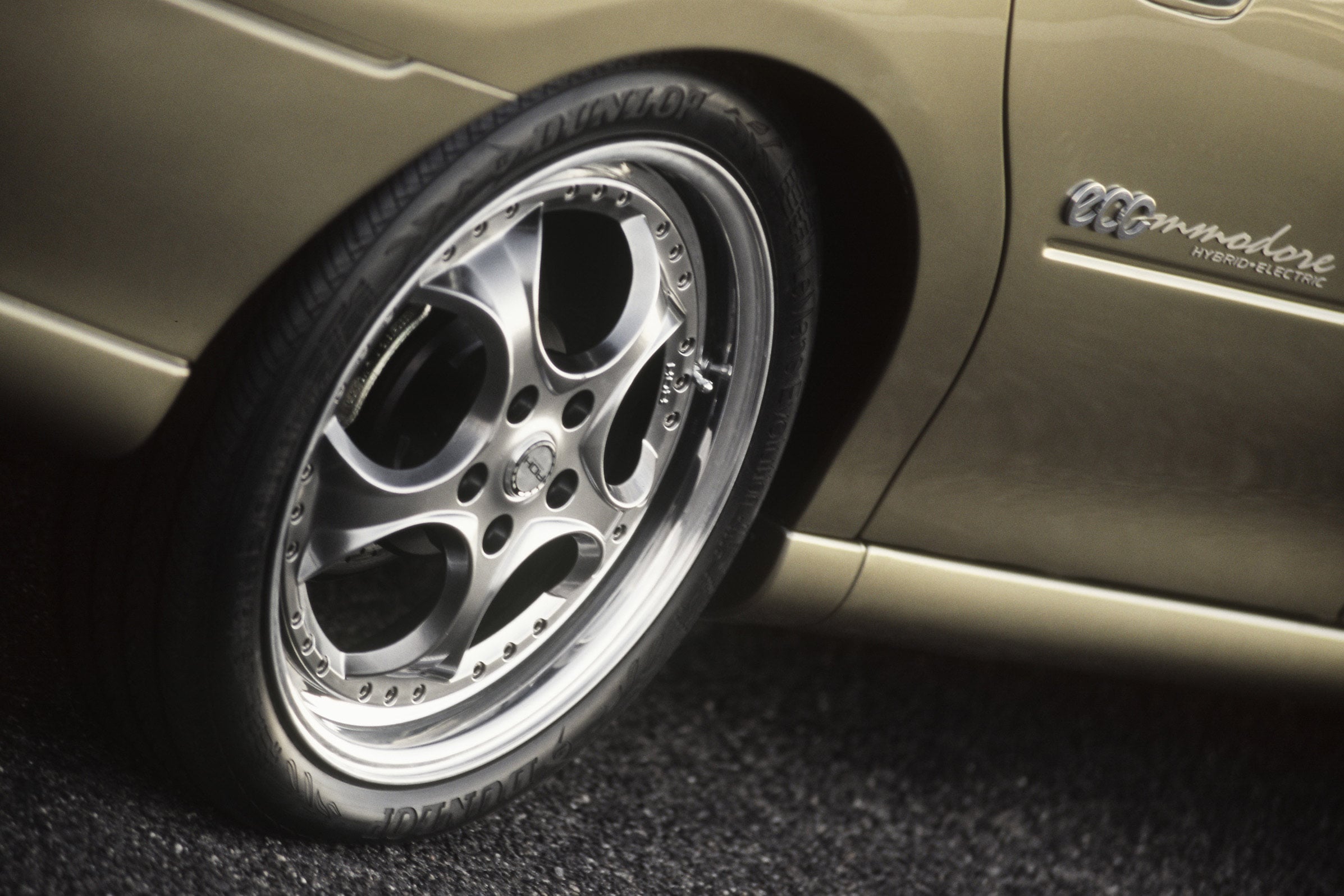
Since reduced rolling resistance is also a target, the hybrid has its own lightweight 18-inch ROH wheels, with special five-inch tyres. Besides rolling more easily than conventional tyres, the comparatively narrow Dunlops help reduce the car’s frontal area and create less turbulence within the ECOmmodore’s wheel wells.
The hybrid’s suspension owes nothing to the Commodore, and ex-Opel trailing arms are relatively easily adapted to the rear underbody. But the Commodore’s front-end structure is extensively revised to accept Vectra struts and arms, as well as the comparatively wide transverse powerplant.
The engine choice was, of course, a pivotal factor at the project’s very outset. Once the hybrid’s objectives were resolved, extensive computer analysis by the CSIRO sifted through a number of engine possibilities, assessing candidates’ power, torque, fuel consumption, mass and other stats. Sort of like Popstars auditions.
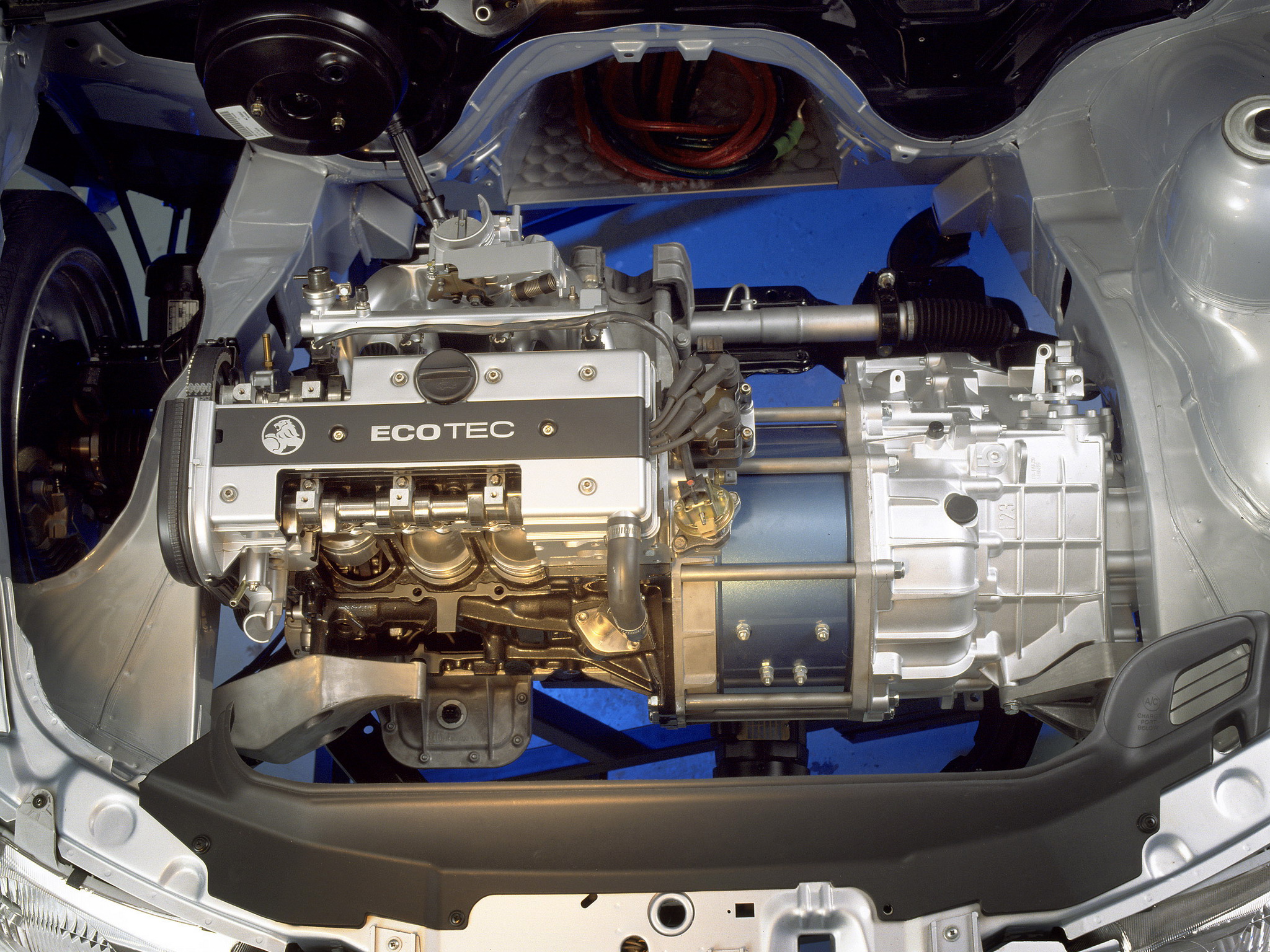
Without a suitable longitudinal rear-drive engine in the GM stable, the selection narrowed to the latest 2.0-litre Vectra engine, one designed specifically for front-drive. However, a special light alloy cylinder block with spun cast iron liners was produced specifically for this installation.
The adaption saw a 50kW CSIRO-sourced electric motor inserted between the 95kW Vectra engine and its manual transmission. Enabling the motor alone to propel the car in some conditions, and in conjunction with the engine at other times, meant a second clutch was needed to marry and divorce the two cohabitants as needed.
Trouble was, the Commodore’s front bay offered only 210mm more width than the standard Vectra engine/gearbox combo. So that was the maximum spread allowable between engine and transaxle. It took some doing, but the engineers ultimately devised a special thin flywheel and clutch assembly for the engine/motor interface. This clutch is electronically actuated and computer controlled.
For smoothest coupling of the engine and motor, the engine speed must be synchronised with the motor’s revs in the moment before connection occurs. To that end, the respective revs are monitored by the management system, which signals the drive-by-wire throttle to zip the engine up to speed.
At the other side of the motor, which in some conditions doubles as a generator to recharge the batteries and super-capacitors, a standard Vectra clutch delivers the drive to the gearbox.
The hybrid’s engine leads a life very different to conventional cars’. Depending on driving conditions, the engine may run for only 20 to 60 seconds, then sleep for some minutes before being awakened for another squirt of whatever duration. Special measures are needed to avoid high engine wear and friction due to the frequency of cold starts, and to circumvent the lack of manifold vacuum for the brake booster. As well, the engine must hit full speed and load whenever the driver calls for maximum power.
Since coolant need not be circulated when the engine is cold, the mechanical water pump is redundant. Overseen by the car’s energy management computer, the replacement electric water pump runs relative to engine temperature.
Adequate lubrication presents a different problem. To ensure the bearings and bores are oiled prior to start-up, a secondary electric pump pressurises the lubrication system a moment before the engine is cranked over. As the engine starts, the standard mechanical oil pump takes effect.
The engine’s part-time operation is also behind the inclusion of an electro-hydraulic pump for the power steering. Because the engine’s inlet vacuum is unsuitably intermittent and inconsistent, an electric vacuum pump meets requirements of the brake booster and air-conditioning.
The air-con itself uses an electric compressor, while the heater is fuel-fired because the engine cooling system cannot be relied upon to furnish adequate heat for the cabin. A solar panel bonded to the roof powers a fan that continually pumps fresh air through the cabin, reducing dependence on the air conditioning.
The hybrid Holden also has a separate secondary cooling system to keep the maximum temperature of the electric motor and hard working power electronics below 60 degrees C, while the engine cooling system copes with operating temperatures to the high side of 100 degrees C.
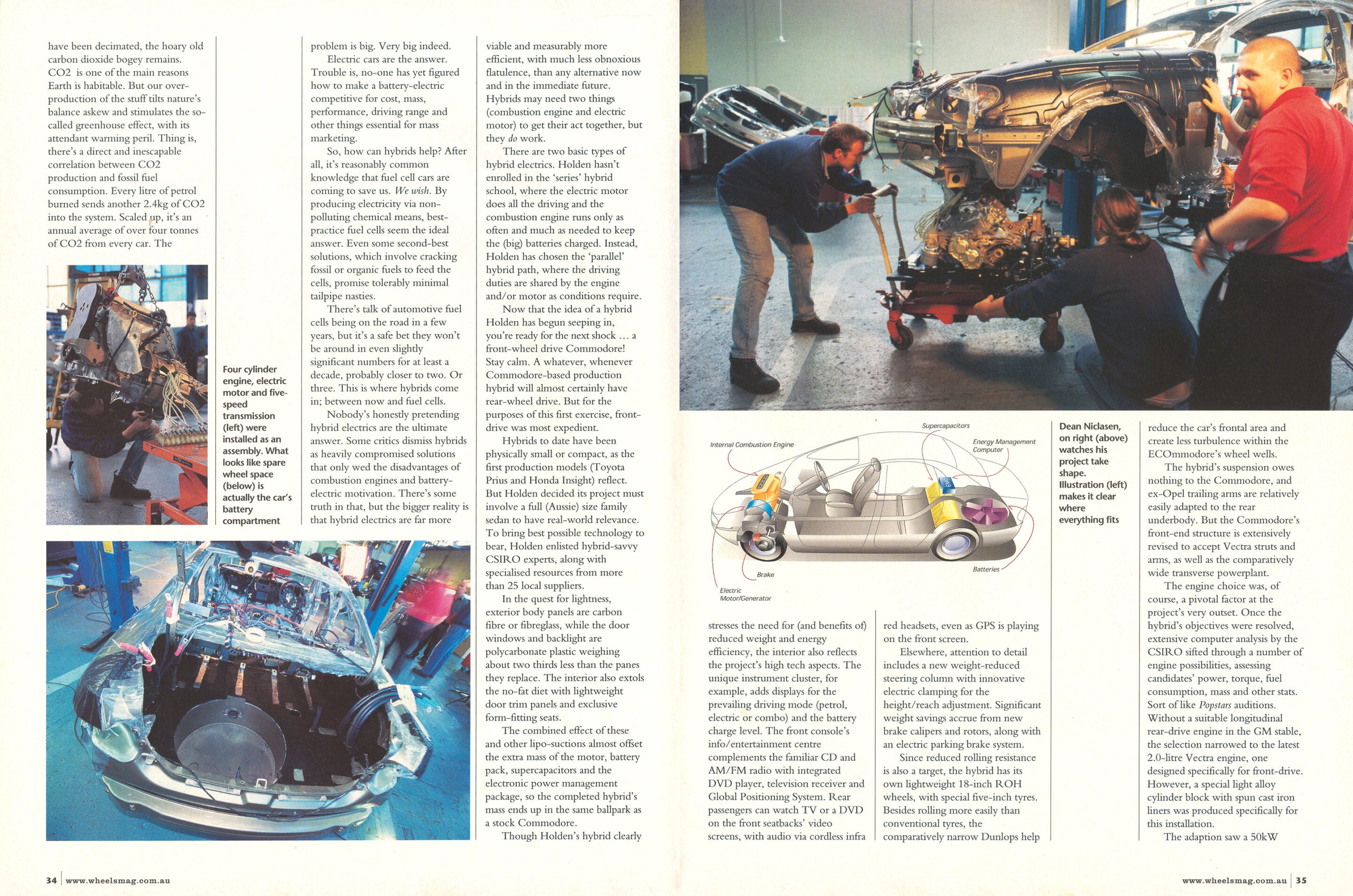
The power electronics are situated in the rear compartment, along with the super-capacitors spanning the width between the wheelarches behind the seat. A cluster of five special CSIRO batteries are arranged spoke-like within the original spare wheel well, where a fan-fed 100mm duct supplies air to cool the batteries and evacuate any hydrogen produced during recharging.
The ECOmmodore has lead-acid batteries, rather than the more upmarket (and expensive) types that offer greater performance potential with lighter mass and longer life expectancy. Though lead-acid batteries are very heavy, they work well, are a known quantity and are the nearest thing to being affordable. Developed by CSIRO specifically for such installations, these special batteries are ‘optimised’ by means of unique construction and what’s described as “creative chemistry”. The charged batteries are the sole energy source when the car’s cruising easily and the engine is resting. When the batteries discharge to a prescribed point, the engine kicks in and, besides propelling the car, drives the motor/generator to recharge the batteries and super-capacitors. The motor also acts as a generator whenever the car is braked or coasted.
For major acceleration, the engine is boosted by the motor, which gets highly juiced by the super-capacitors. They’re physically large yet relatively light electrical devices that can store a useful amount of electricity, and release it in a rush. Though the discharge can be controlled to a degree, once the taps are opened the outflow is spent in perhaps 10 seconds or so. Fortunately, the super-capacitors recharge just as quickly and are then ready for the next burst of acceleration.
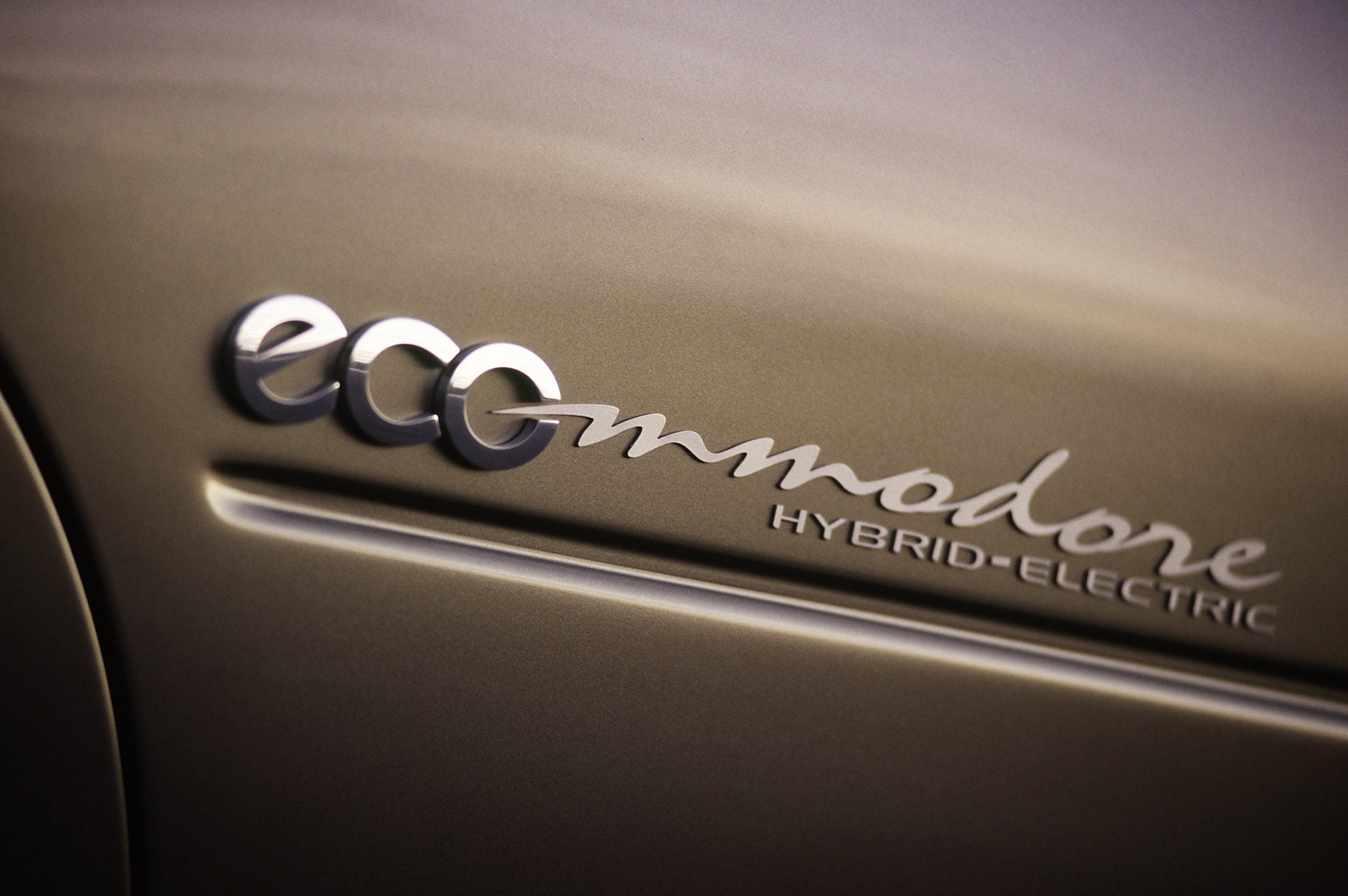
Which brings us back to the project’s bottom line: To prove that an Aussie-size hybrid electric family car can be on the pace for the safety, performance, room and comfort expected by most buyers, while almost halving petrol consumption and slashing noxious exhaust gases. Targets worth chasing.
Although affordable EVs had a slow start in Australia, more and more brands have hit the market with compact electric vehicles that start from under $40,000.
Even the sub $30,000 threshold has been crossed, and a lowest-price battle could be just around the corner.
If you’re one of the thousands of Australians considering an EV, be it as a second car, a compact city car, or a first car, this list highlights Australia’s 10 cheapest new EVs you can buy in 2026.
10. Hyundai Inster
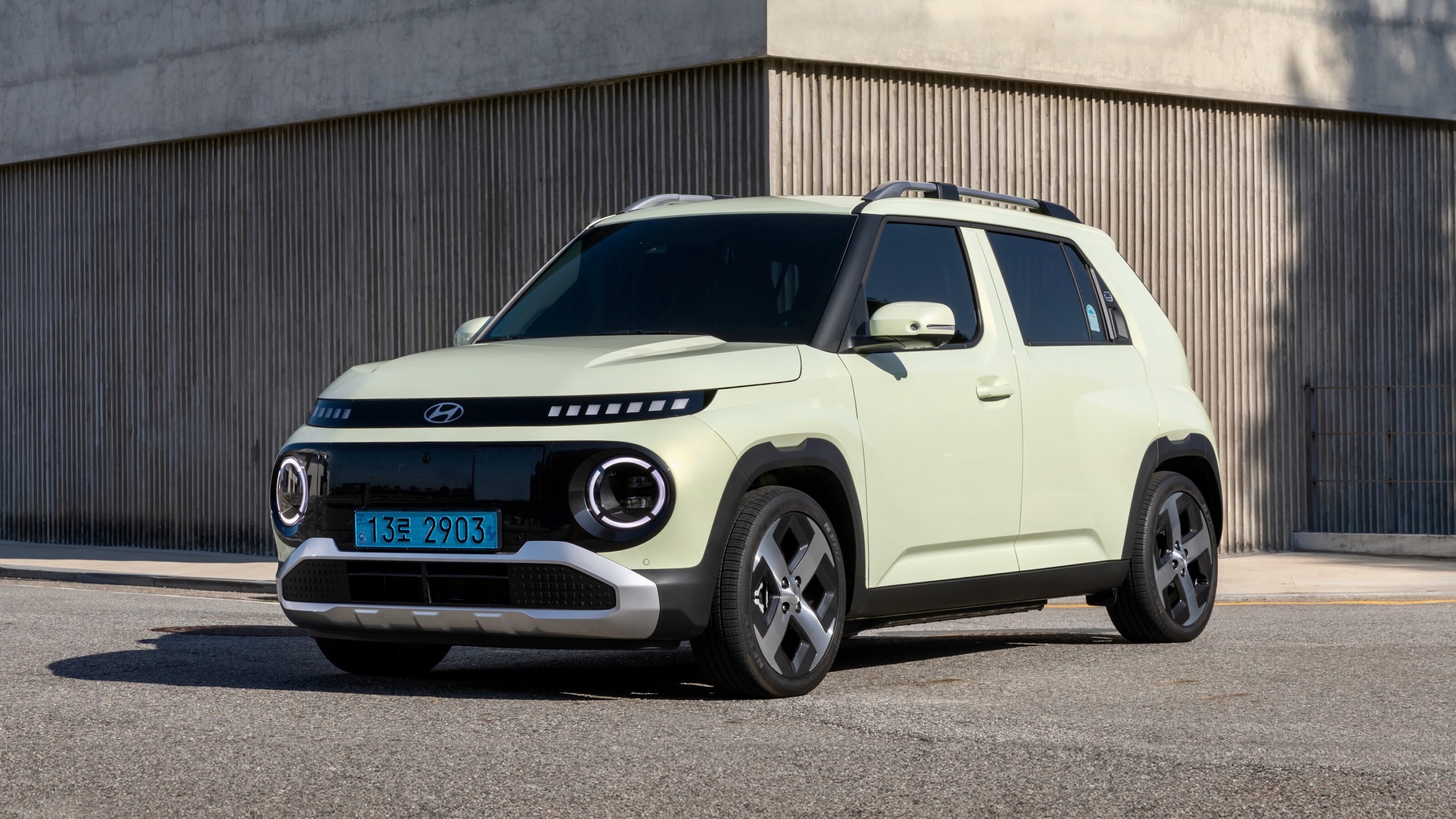
The base model Hyundai Inster offers a quirky design that gives it the chunky styling of a rugged SUV, but the easy-to-manage dimensions of a city hatchback.
The cheapest version of the Inster is priced from $39,000 plus on-road costs, with a 71kW/147Nm motor powering the front wheels. Its 42kWh battery gives it a claimed 327km WLTP driving range, but if you’re looking to go further, a longer range version is also available.
| Price | $39,000 plus on-road costs |
|---|---|
| Battery capacity | 42kWh |
| Driving range | 327km WLTP |
| Power | 71kW |
| Torque | 147Nm |
Click here to learn more about the Hyundai Inster.
9. Chery E5 Ultimate
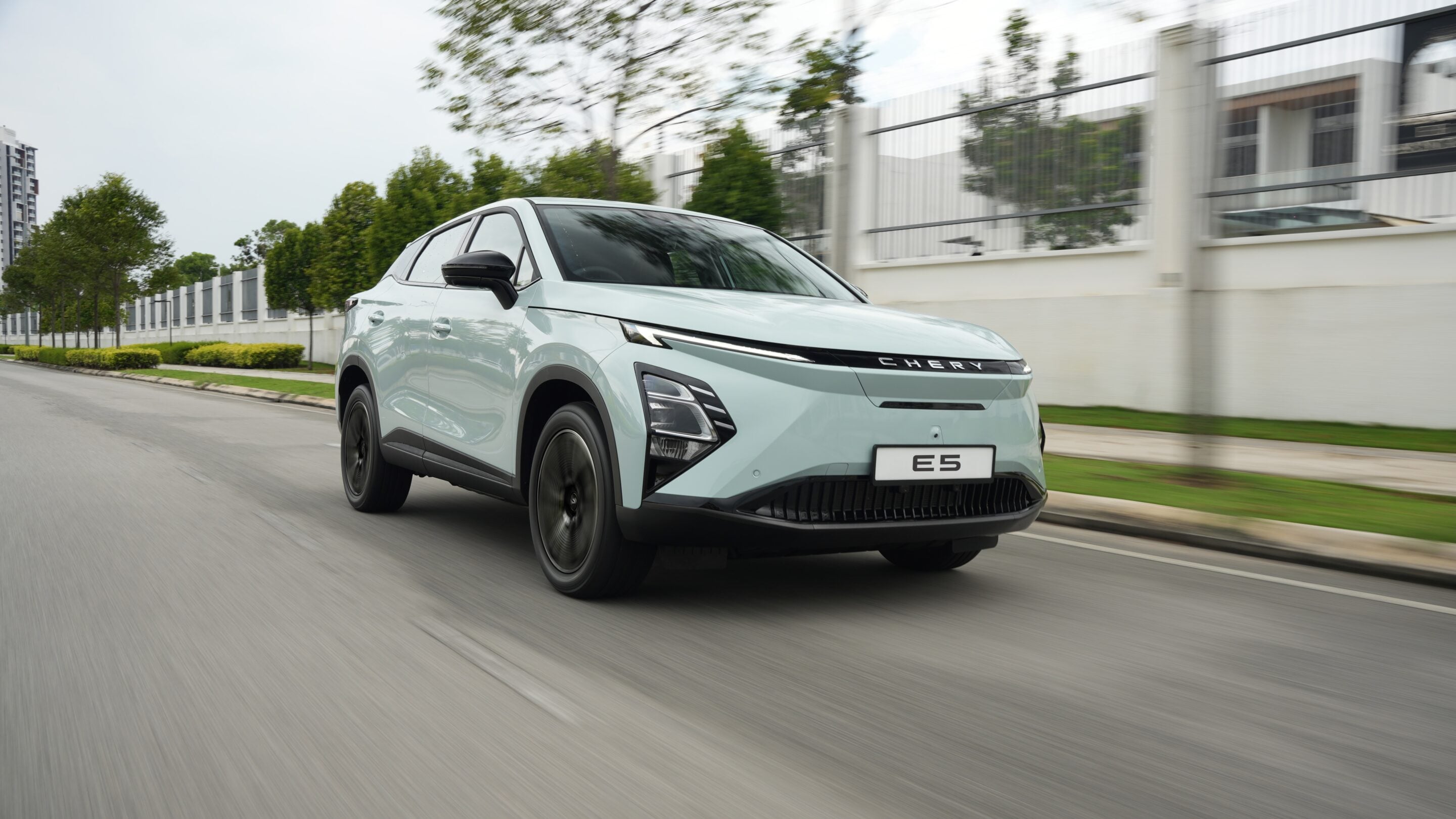
The Chery E5 Ultimate comes in a single specification, but offers a long list of included equipment and an impressive driving range for a low-priced EV.
The starting price is $37,990 driveaway, giving you access to a 58.9kWh battery that is rated to 430km of WLTP driving range. The 155kW motor gives it decent acceleration off the line, and its coupe-like liftback styling breaks away from the traditional SUV mould slightly.
| Price | $37,990 plus on-road costs |
|---|---|
| Battery capacity | 58.9kWh |
| Driving range | 430km WLTP |
| Power | 155kW |
| Torque | 288Nm |
Click here to learn more about the Chery E5.
8. Leapmotor B10 Style
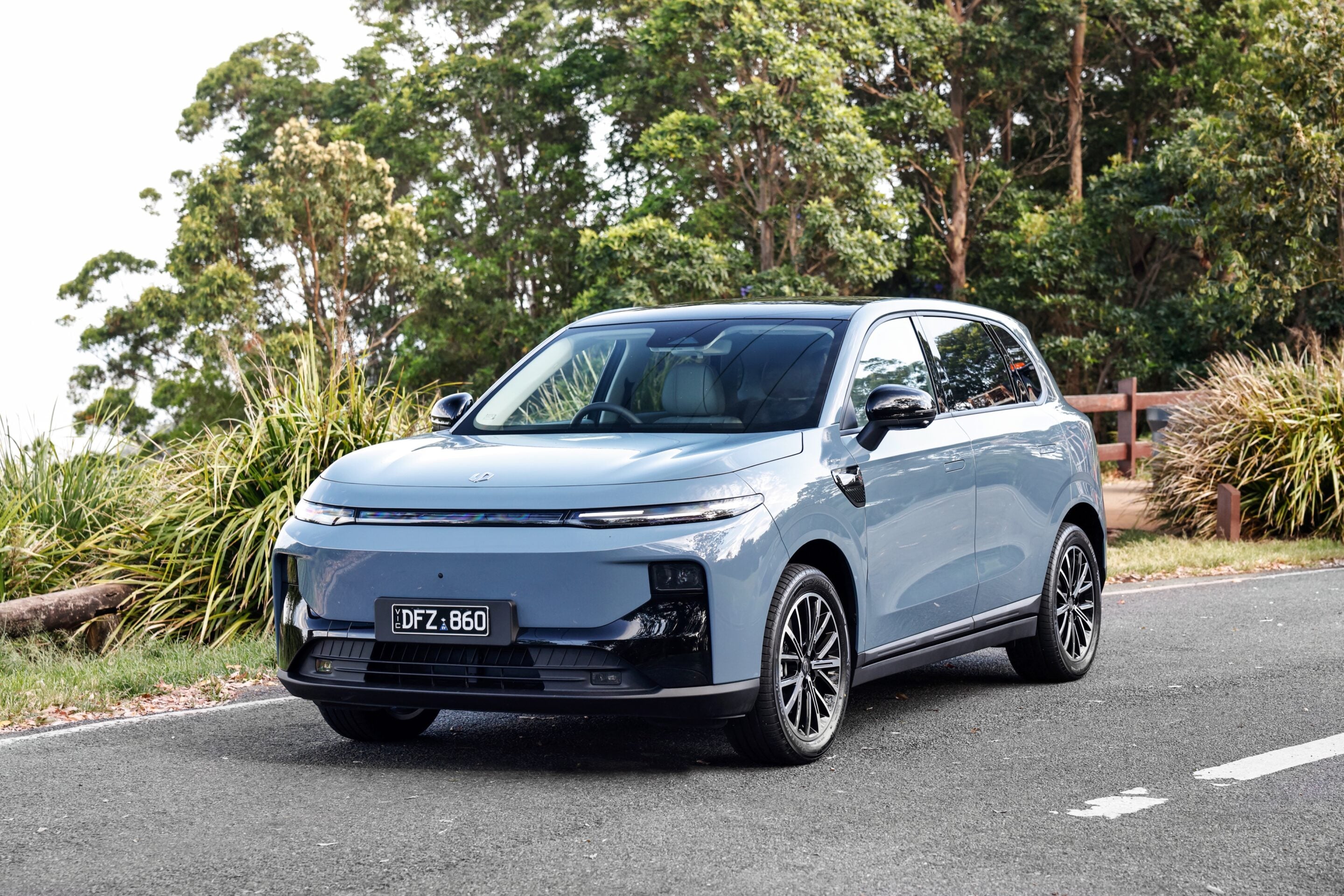
Though it may not be the most widely-known brand, Leapmotor offers one of Australia’s more affordable electric small SUVs from $37,888 plus on-road costs.
The Leapmotor B10 Style differs from many of its rivals with a rear-wheel drive chassis. The 361km of WLTP range from a 56.2kWh battery is competitive, though not the longest, but a longer range version with additional equipment can cover up to 434km for just $2000 extra.
| Price | $37,888 plus on-road costs |
|---|---|
| Battery capacity | 56.2kWh |
| Driving range | 361km WLTP |
| Power | 160kW |
| Torque | 240Nm |
Click here to learn more about the Leapmotor B10.
7. Jaecoo J5 EV Summit
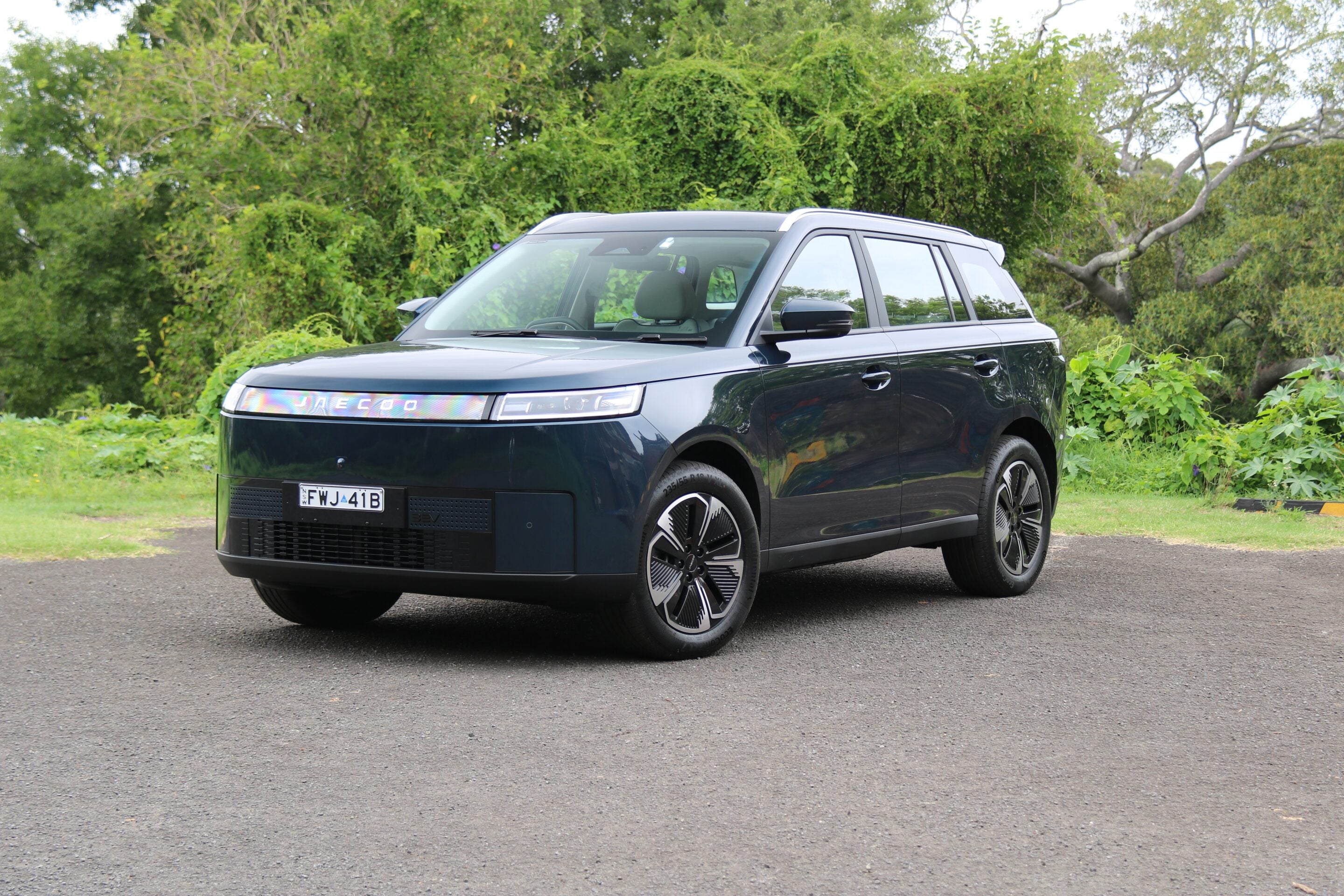
You’ll find the Jaecoo J5 EV in the same showrooms as the Chery E5, with Jaecoo being a part of the wider Chery group. The similarities don’t end there with similar, but not identical specifications.
The J5 EV offers a passing resemblance to Range Rover’s styling, but this dupe comes in much lower, priced from $36,990 drive-away. Like the Chery E5, it has a 155kW motor and a 58.9kWh battery but a slightly shorter 402km WLTP driving range.
| Price | $36,990 driveaway |
|---|---|
| Battery capacity | 58.9kWh |
| Driving range | 402km WLTP |
| Power | 155kW |
| Torque: | 288Nm |
Click here to learn more about the Jaecoo J5 EV.
6. GWM Ora Lux
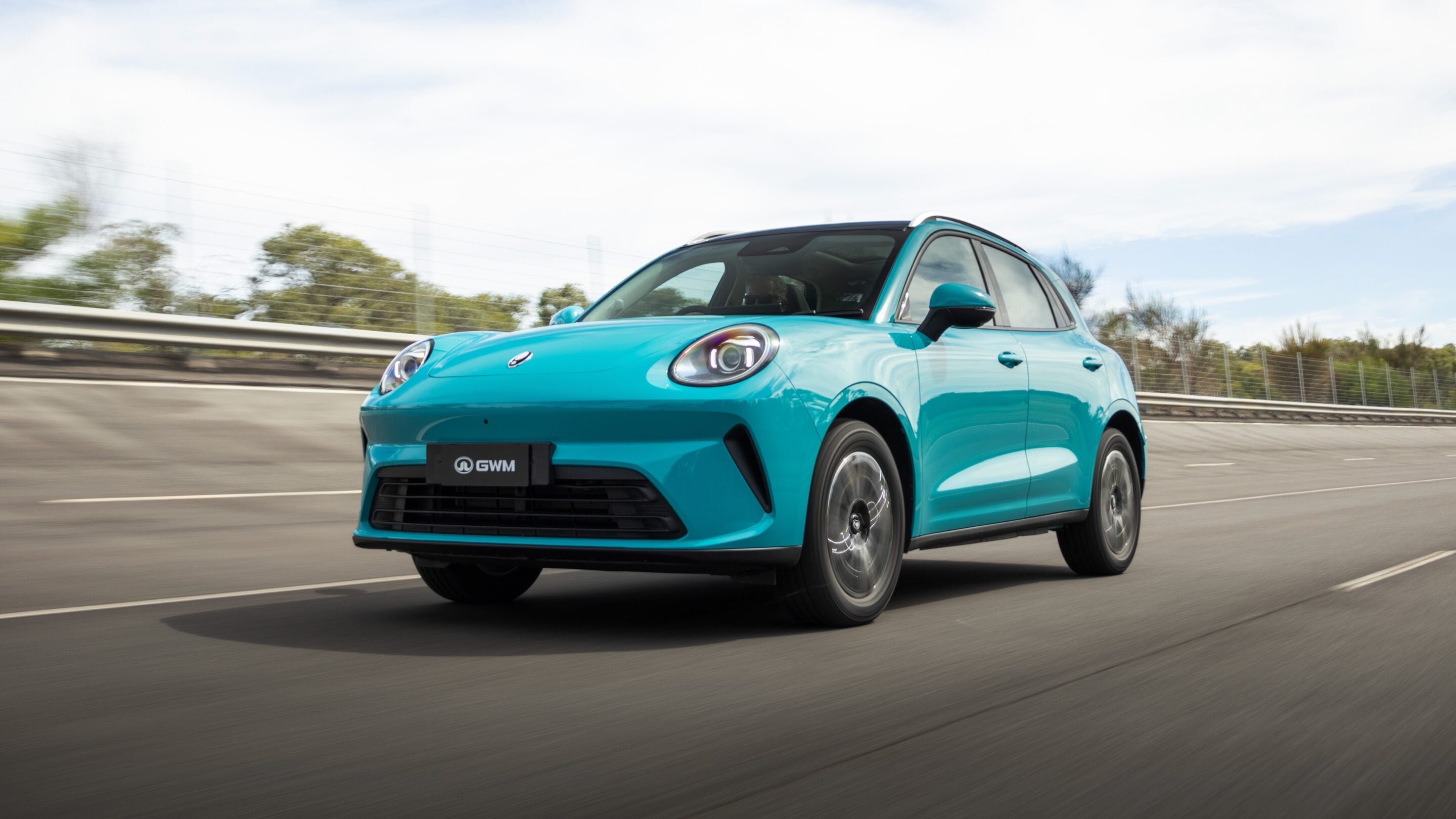
GWM offers a streamlined Ora range, with the highly-equipped entry-level Ora Lux and sporty-styled Ora GT both starting under $40,000. Bright colours and retro-inspired styling help the Ora stand out in a packed EV market.
The price-leading Ora Lux has a starting price of $35,990 driveaway. It shares its 126kW front motor and 57.7kWh battery with the Ora GT, but has a slightly longer 400km WLTP driving range.
| Price | $35,990 driveaway |
|---|---|
| Battery capacity | 57.7kWh |
| Driving range | 400km WLTP |
| Power | 126kW |
| Torque | 250Nm |
Click here to learn more about the GWM Ora.
5. BYD Atto 2 Dynamic

Two versions of the BYD Atto 2 are available in Australia, but the shorter-range Dynamic model leads on price.
The Atto 2 range is powered by a 130kW/290Nm motor with a 51.1kWh battery enabling up to 345km of WLTP driving range. Pricing starts from a sharp $31,990 plus on-road costs, and its compact SUV form factor means it holds the title for Australia’s cheapest electric SUV.
| Price | $31,990 plus on-road costs |
|---|---|
| Battery capacity | 51.1kWh |
| Driving range | 345km WLTP |
| Power | 130kW |
| Torque | 290Nm |
Click here to learn more about the BYD Atto 2.
4. GAC Aion UT Premium
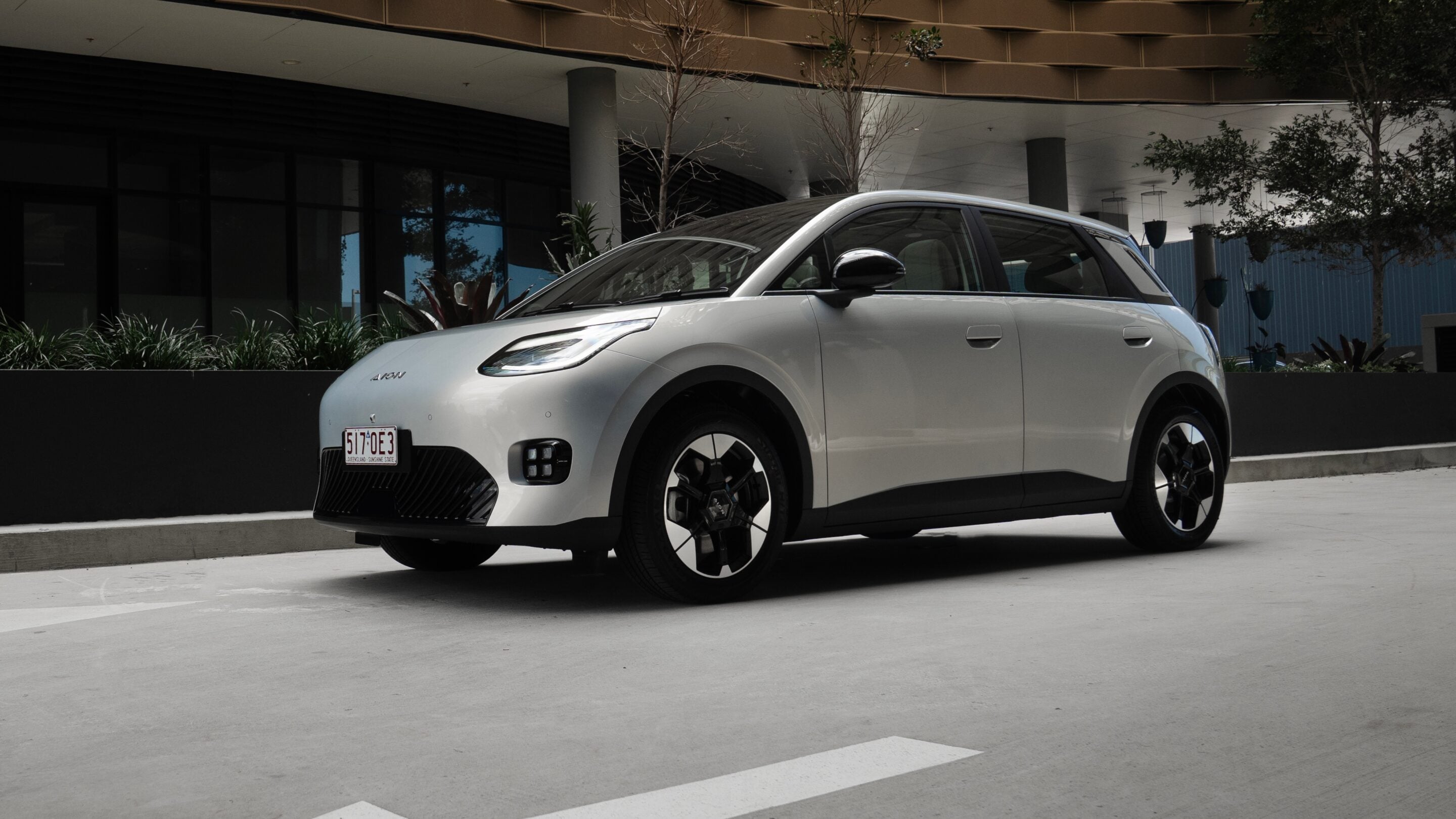
The GAC Aion UT Premium hatchback ties with the Atto 2 on price, but offers a compact hatchback profile, a slightly bigger battery capacity, and a longer driving range.
The 150kW/210Nm front electric motor promises perky performance, and the large 60kWh battery enables up to 430km of claimed WLTP driving range. The Aion UT and Chery E5 tie for the longest claimed range on this list.
The Aion UT is the second EV from newcomer GAC, which launched in Australia in late 2025.
| Price | $31,990 plus on-road costs |
|---|---|
| Battery capacity | 60kWh |
| Driving range | 430km WLTP |
| Power | 150kW |
| Torque | 210Nm |
Click here to learn more about the GAC Aion UT.
3. MG 4 Urban Essence 43
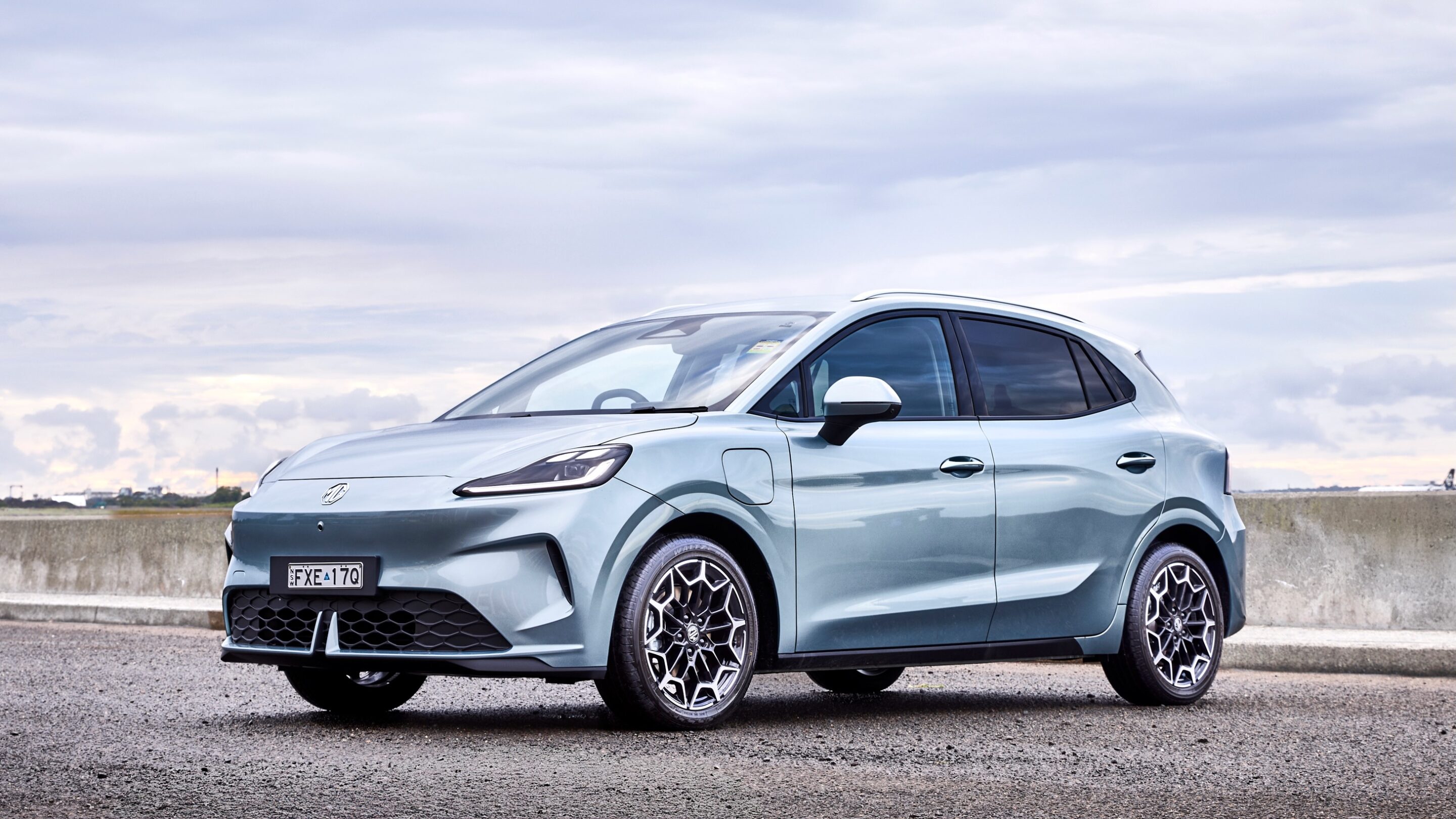
MG has overhauled its MG 4 line-up, with an all-new MG 4 Urban model positioned as the price leader. Despite sharing its MG 4 name, the Urban is a completely different car to the MG 4 that’s been available in Australia since 2023.
The MG 4 Urban switches to a front-drive platform and comes with a 43kWh battery rated to 316km of WLTP driving range, driven by a 110kW motor. Buyers looking to go further can opt for the longer-range MG 4 Urban Essence 54 with a 54kWh battery and 405km range claim.
The $31,990 driveaway price means the MG 4 Urban undercuts the other two ‘$31,990’ cars on this list, which do not include on-road costs in their advertised pricing.
| Price | $31,990 driveaway |
|---|---|
| Battery capacity | 43kWh |
| Driving range | 316km WLTP |
| Power | 110kW |
| Torque | 250Nm |
Click here to learn more about the MG 4 Urban.
2. BYD Dolphin Essential
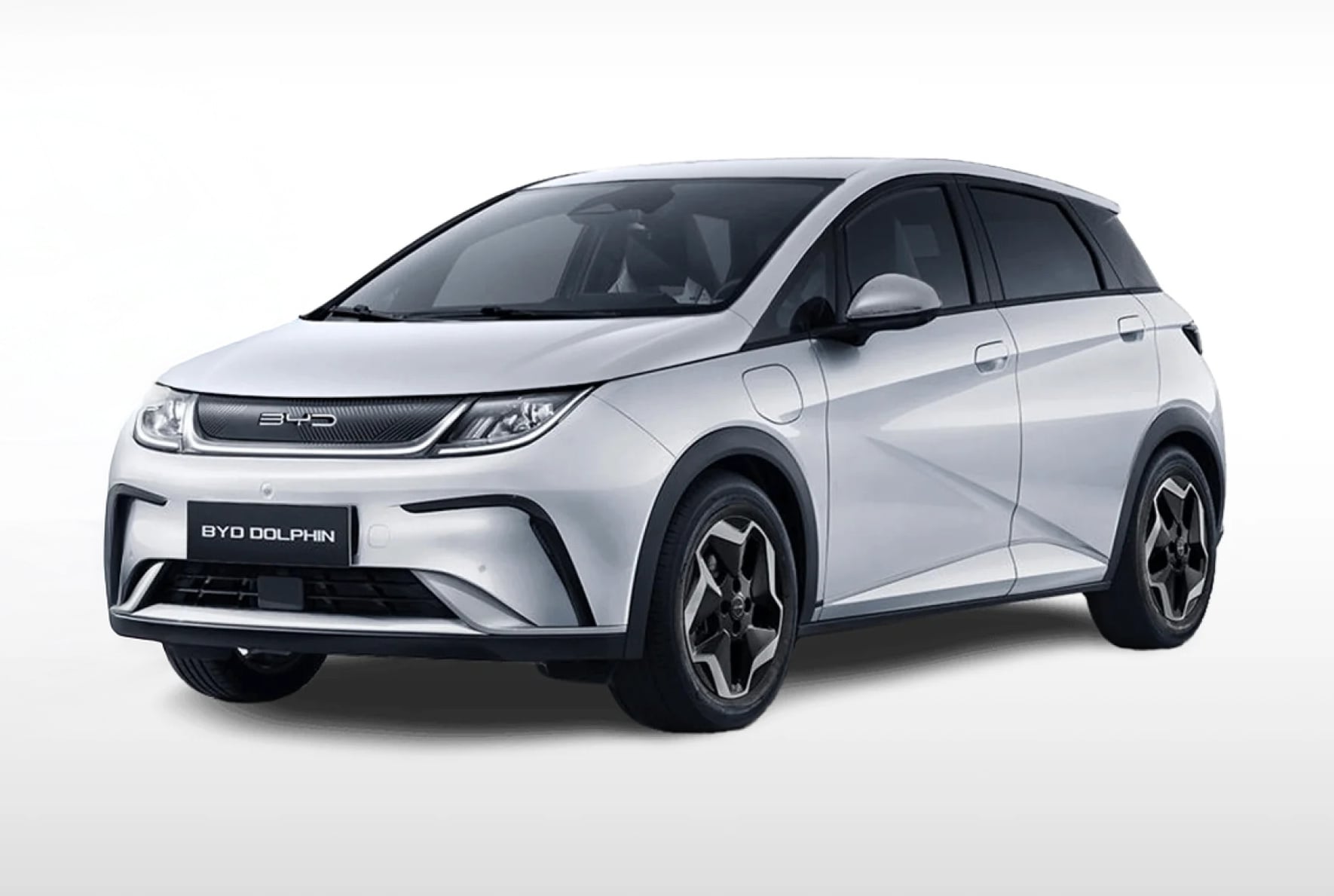
The first of two EVs available for under $30,000 is the BYD Dolphin. The entry-level Dolphin Essential is priced from $29,990 before on-road costs.
The Essential offers a decent WLTP driving range of 340km, but can’t match the performance of some of its more expensive competitors, with a 70kW motor. Performance may not be the Dolphin’s strong suit, but infotainment tech and safety equipment haven’t been compromised to keep the price down.
| Price | $29,990 plus on-road costs |
|---|---|
| Battery capacity | 44.9kWh |
| Driving range | 340km WLTP |
| Power | 70kW |
| Torque | 180Nm |
Click here to learn more about the BYD Dolphin
1. BYD Atto 1 Essential
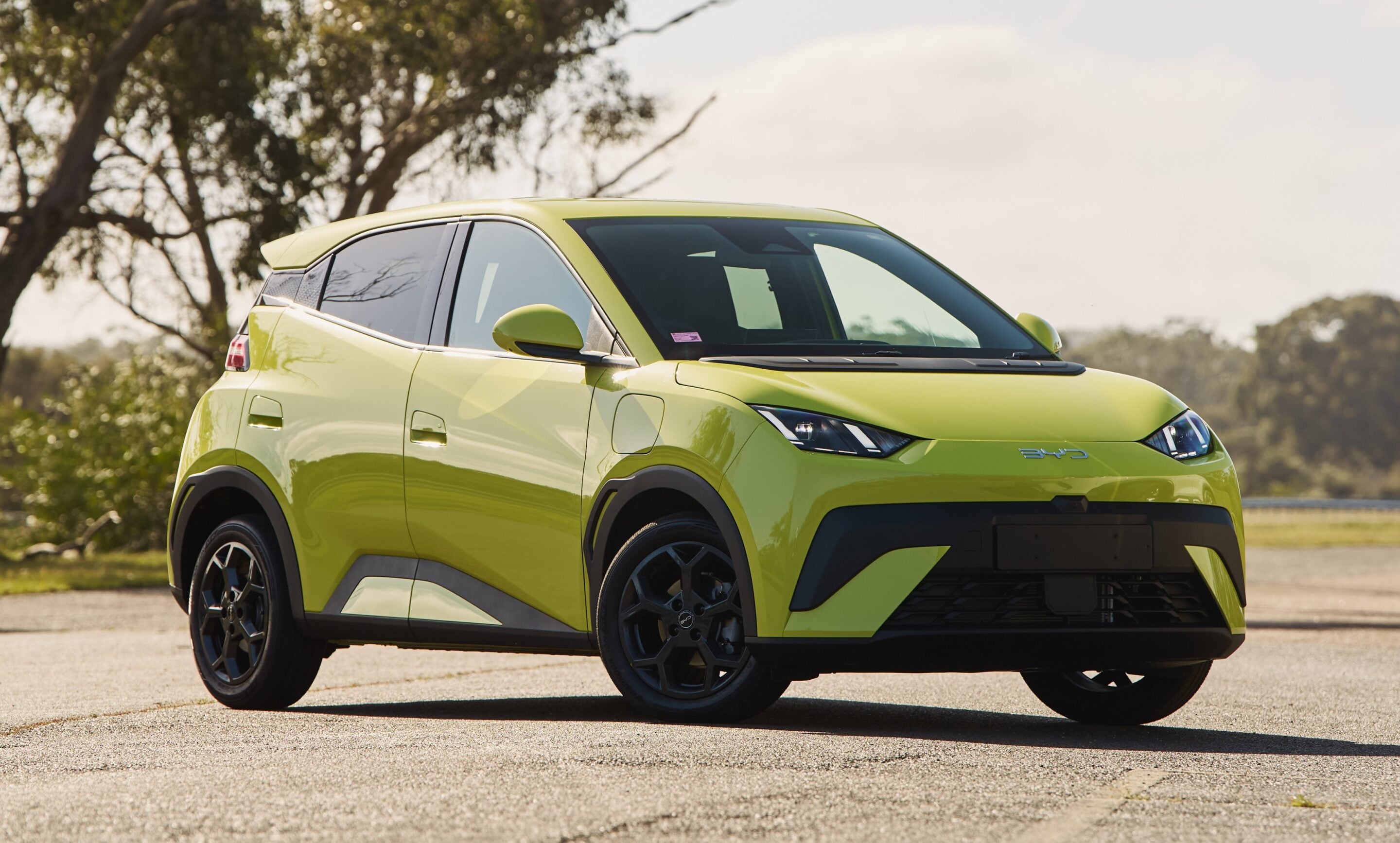
The title of Australia’s cheapest EV goes to the BYD Atto 1. Not only the cheapest electric car, but also among Australia’s top-five cheapest models of any powertrain.
Priced from $23,990, the BYD Atto 1 Essential has modest specifications, with a claimed 220km driving range and a 65kW motor. While it may not be an ideal interstate cruiser, it can handle urban use easily, and its 30kWh battery is small enough that a regular household power socket is all you need to keep it topped up from an overnight charge.
A longer-range Atto 1 Premium is available, though it pushes the price up by $4000, but allows 310km of driving range and includes additional standard features.
| Price | $23,990 plus on-road costs |
|---|---|
| Battery capacity | 30kWh |
| Driving range | 340km WLTP |
| Power | 70kW |
| Torque | 175Nm |
Click here to learn more about the BYD Atto 1.
Are there any discounts available on EVs in Australia?
Special offers and pricing changes can occur throughout the year, and as brands jostle to outmaneuver each other on price, changes may be made to pricing in the form of factory bonuses, discounts, or driveaway pricing offers.
Prices listed in this article may differ where offers apply, and the published prices detailed here are based on manufacturers’ recommended retail prices. In instances where a price excludes on-road costs, or if options are added, your final price may be different.
A new trademark filing by Tesla suggests that the EV brand may be about to finally reveal its flagship Tesla Roadster.
First shown as a concept version in 2017, the Tesla Roadster has missed multiple claimed reveal dates since it was first announced as going on sale by 2020. The latest trademark filings offer a hint that the US company may be getting close to finally launching the second-generation Roadster.
Like the Cybertruck, which carries its own distinct wordmark, but unlike the Model 3 and Model Y, the Tesla Roadster looks set to adopt a distinctly styled logo, judging by the latest filing.

The Roadster logo features an irregular hexagon, framing Roadster script at the top, and four vertical lines in the negative space at the bottom, with proportions not dissimilar to those of Tesla’s ‘T’ logo.
This latest filing follows an earlier trademark registration in February 2026 that featured a stylised vehicle silhouette and Roadster text in the same custom typeface.
Despite these latest filings, registered for use on electric vehicles, clothing, and batteries, the physical Radster remains elusive. The latest in a long line of missed appearances came in late April, with Tesla CEO Elon Musk announcing in March that a proposed April 1st unveiling would take place “probably in late April” via social media platform, X.
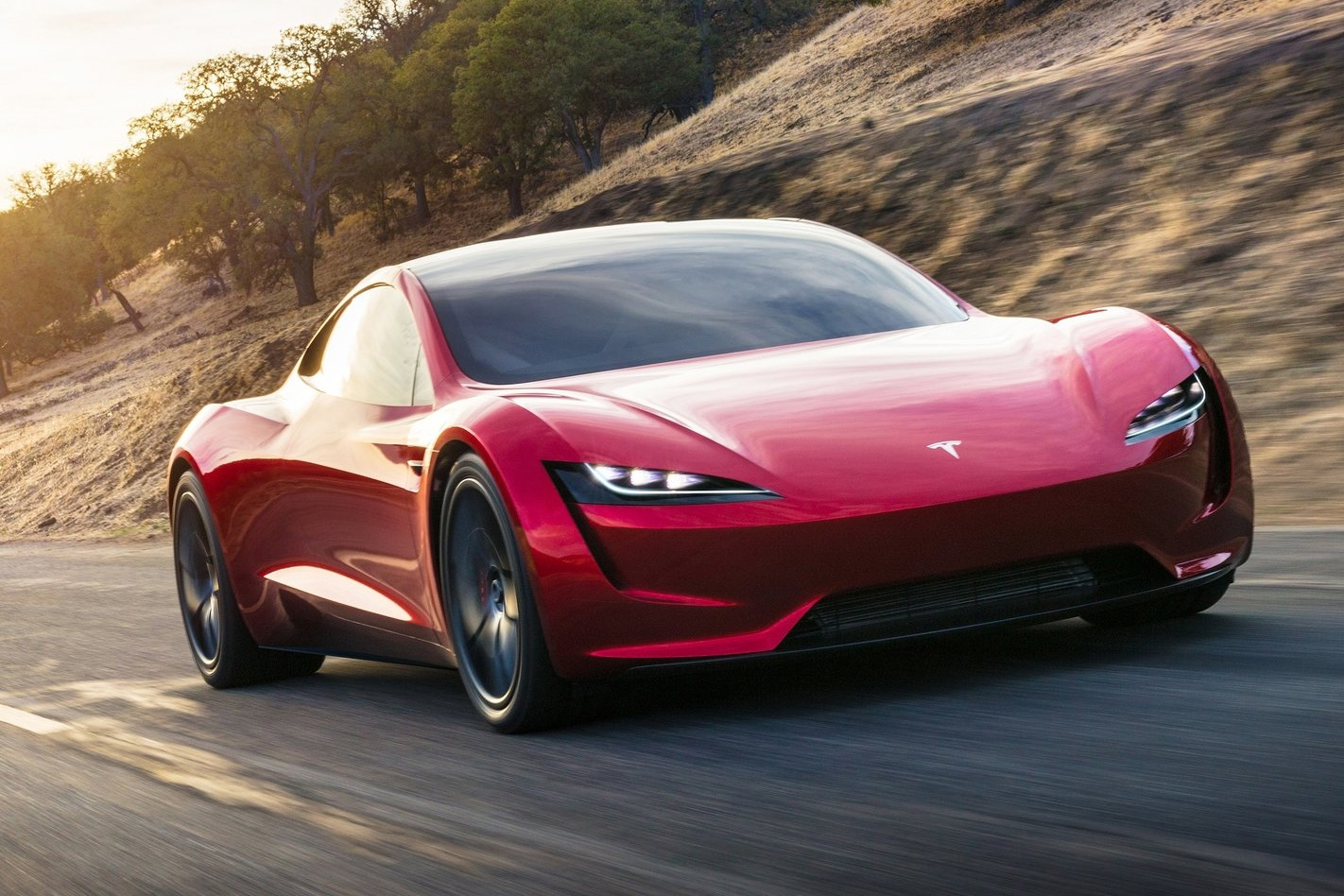
During its initial 2017 reveal, the Roadster concept was claimed to target 0-97km/h (0-60mph) acceleration in 1.9 seconds. Musk has since promised that base model versions would be able to cover the sprint in 2.1 seconds, with flagship versions capable of a 1.1-second 0-97km/h run, through the use of cold-gas thrusters.
Tesla’s official website still hosts a Roadster page, which details a 2.1-second 0-100km/h time, a top speed in excess of 400km/h, and a driving range of 1000km, with reservations able to be made for $7000 up front, and a remaining $59,000 balance due within 10 days.
Ford has filed a patent with the US Patent Office, that could spell the end of car park mishaps.
The patent filing describes a system capable of monitoring the area around a parked vehicle and detecting potential impacts from moving objects. Anything determined to be on a collision course with the vehicle could result in the car moving itself out of harm’s way.
As is the case with most patent filings, the system described may not be just around the corner for a production debut, but highlights an intellectual property Ford feels strongly enough about to protect.
The description text describes the system as suitable for vehicles, robots, and drones, suggesting Ford has applications beyond traditional cars in mind. With a nearby moving object detected, the sensor system can determine the speed, direction of travel, and likelihood of an impact.
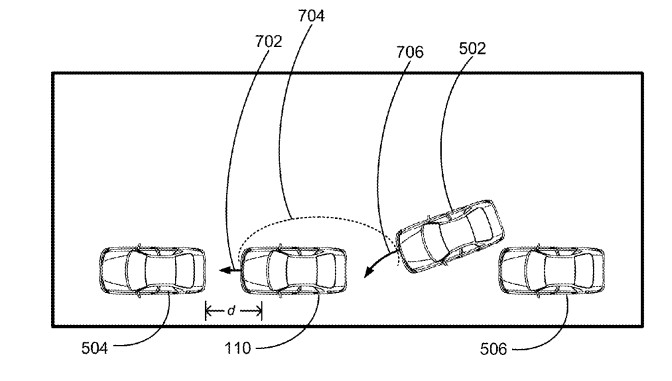
If things aren’t looking good for your parked-up pride and joy, a warning via indicators, horn, or an external speaker will attempt to signal that an impact is about to occur. Obviously, this isn’t going to work in every situation.
If no change in velocity or direction is detected, the vehicle can then take it upon itself to move out of the way if it can. Using its surrounding sensor array, the operation would see the car monitor for other external hazards and position itself in such a way that it avoids impact.
If no escape route is possible, a recording of the impact can be used to back up your insurance claim. All the while, a companion app can alert you to what’s going on.
The 19-page filing was first lodged with the US Patent and Trademark Office in late 2023, but has only been published as of May 2026.
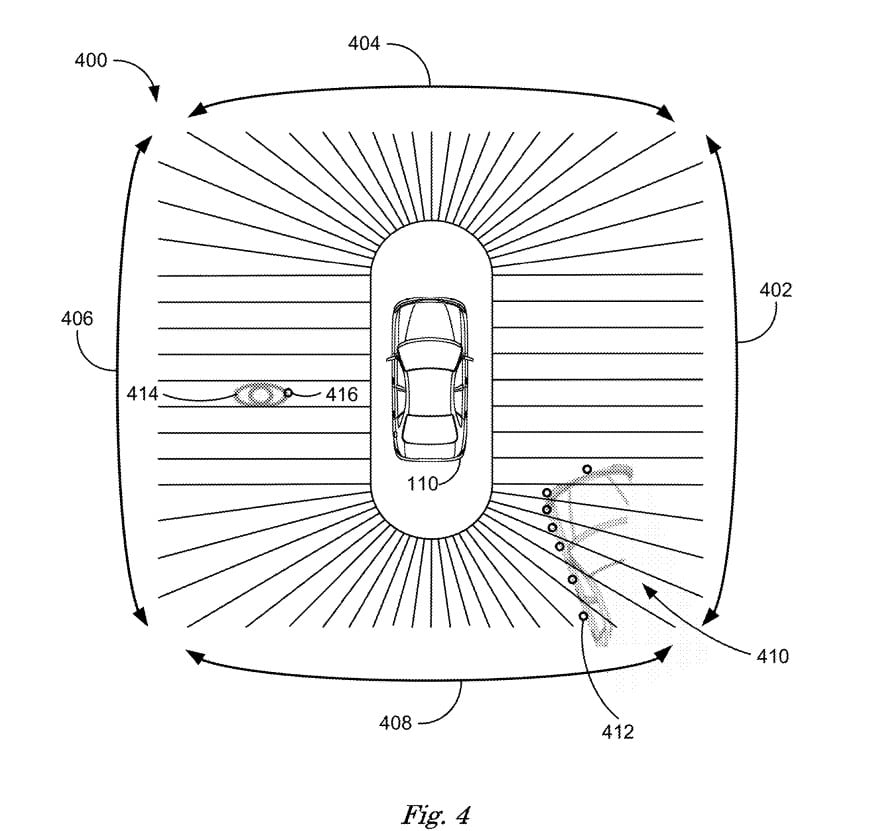
As with other emerging autonomous technologies, the implementation of a system that can move a vehicle without user input opens a can of worms regarding regulations and liability, the legal framework for which may only be put in place after systems are implemented.
For now, the patent only hints at a potential upcoming technology, not an assured one. A future free from trolley scrapes and low-speed parking dings certainly sounds like something worth developing.
In an effort to quickly expand Australia’s publicly-accessible EV charger network, the Australian Government has proposed a change to how EV chargers are owned and operated.
The proposal would allow pole-mounted chargers to be installed at sites where existing electrical infrastructure already exists, adding a charge port that electric vehicles and plug-in hybrids would be able to utilise.
Australia’s electricity network providers would identify suitable sites and install the hardware required to allow the fitment of an EV charger. From there, private charging operators would be given the opportunity to install their charging system, or pass on the location.
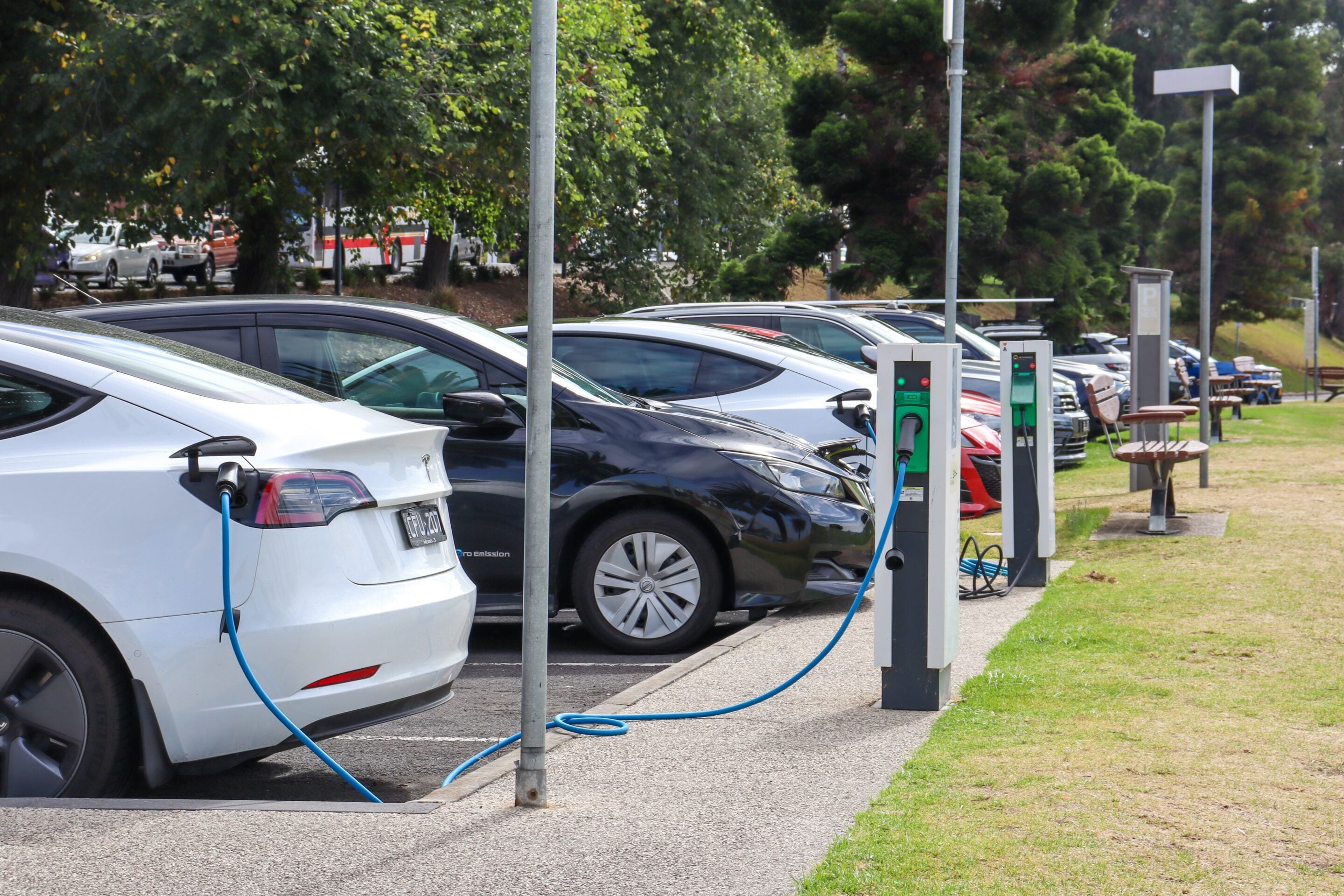
In situations where charge providers decline a site, the network providers, companies like CitiPower, Powercor, or United Energy would then be able to own and operate a charger.
The proposal is currently in its consultation phase. Australia’s peak industry body for electrical contractors, the National Electrical and Communications Association (NECA) has come out in opposition to the proposal.
According to the NECA, the proposal to allow electricity providers access to installing and maintaining charger hardware could see all Australians foot the bill.
In contrast, Energy Networks Australia (ENA), the body that represents Australia’s electricity distribution networks, estimates that the most that Australian households will pay is $2.10 per year.
The ENA, which submitted the rule change request that would allow electricity networks to operate charging sites, argues that delays in expanding Australia’s charging network have left Australian households “more exposed to fuel price shocks and unable to access the lower running costs EVs can offer.”
“This isn’t about networks selling electricity to EV drivers,” ENA Chief External Affairs Officer, Emma Shanks said, in a statement.
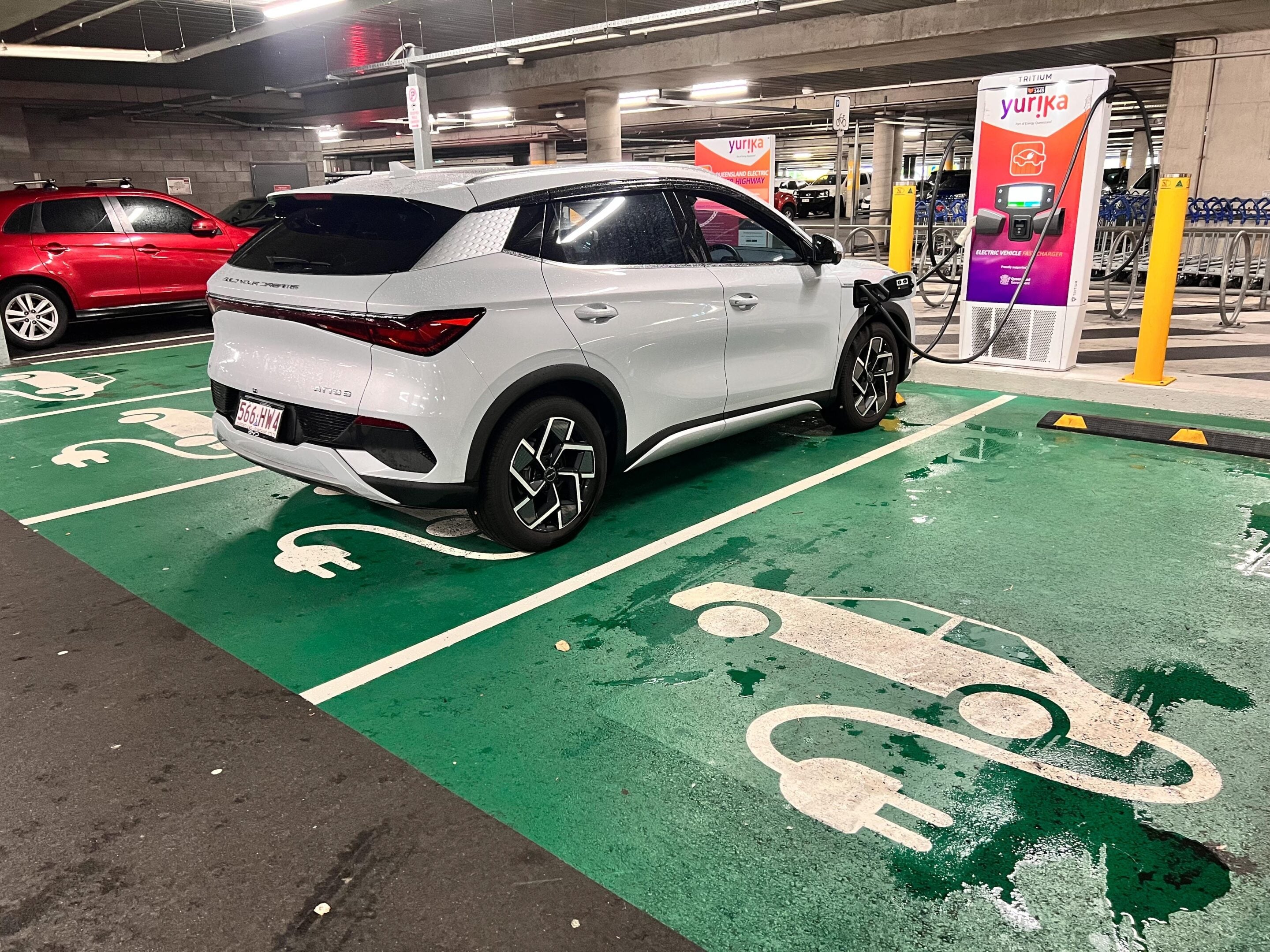
“Scaling up kerbside charging would improve use of the electricity grid, lower system costs and help ensure the benefits of electrification are shared more evenly across Australian communities.”
The move would see the cost of installations included as part of Australia’s regulated asset base, which covers the costs associated with existing electricity infrastructure, along with gas, water, rail, and other services that serve the country.
Like those costs, which are contributed to by users and non-users, the expansion of EV charging under the proposed rollout, chargers would not be levied directly at users of the public charging network, but would be added to existing access chargers to the electricity network.
The extra cost would be tied to the infrastructure changes only, with the cost of power used at the charging points to be charged directly to vehicle owners who connect to the charging network.
Overview
Hyundai had already rewritten the electric vehicle rule book when it waved its N magic wand over the IONIQ 5 back in 2024. Here was an EV that not only went fast in a straight line, but also proved its performance chops with a dynamic package that thumbed its nose at the prevailing wisdom that cars powered by electricity were deathly dull.
Now it’s the turn of Hyundai’s IONIQ 6, the Korean brand’s Apple mouse-shaped device masquerading as a sedan. But don’t think that Hyundai has taken the easy way out by plonking a sedan body on top of the IONIQ 5 N’s dynamic platform (although it does share its general underpinnings) and calling it a day.
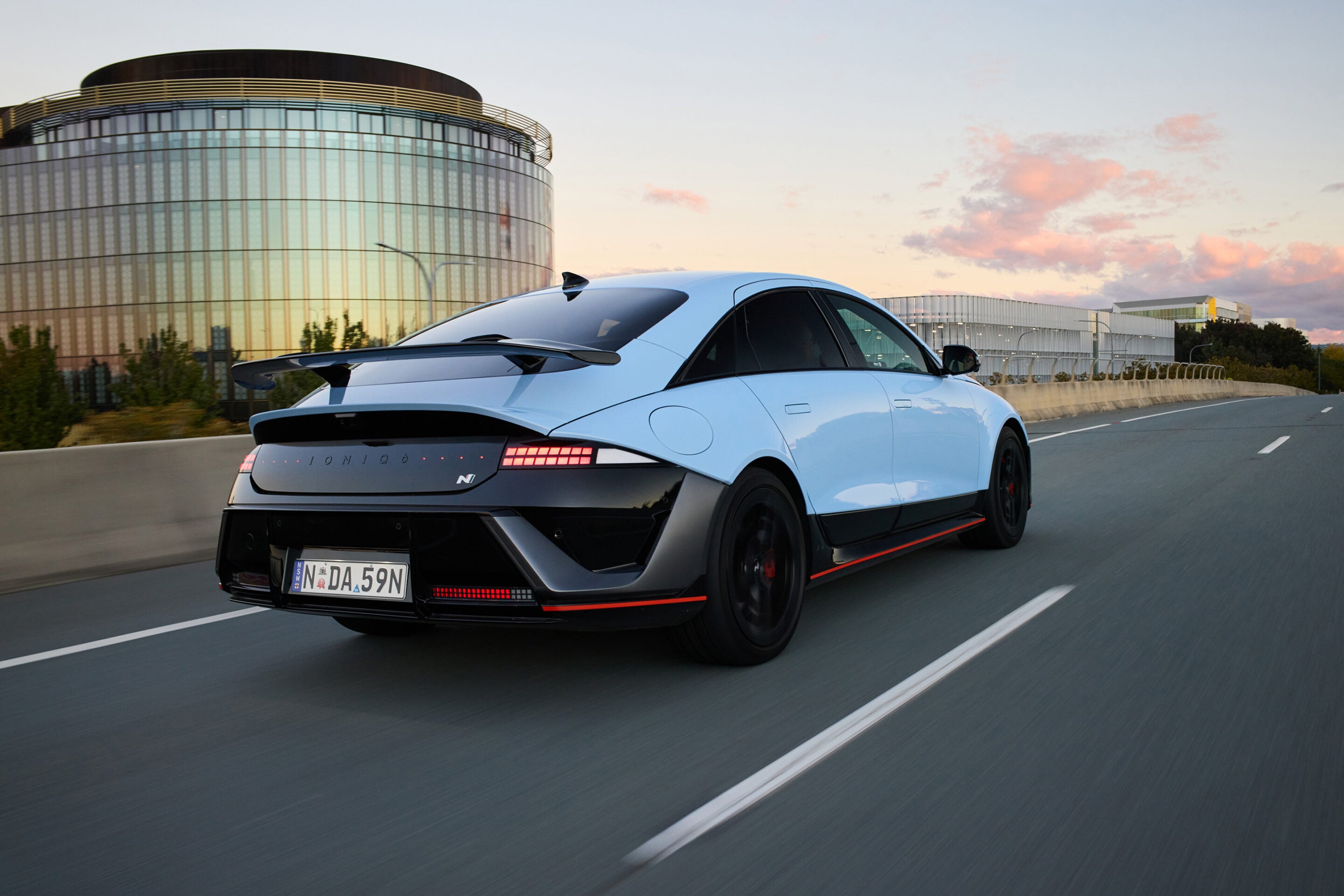
Instead, Hyundai’s engineering magicians have thoroughly reworked its attention-grabbing performance EV platform to better suit the banana wedge that is the IONIQ 6 N. The end result? A hella fun and dynamically capable EV equally at home on the track as it is out on the open road that takes the rulebook already rewritten by the 5 N and adds another chapter. And some appendices.
How much is the IONIQ 6 N
There’s no messing about here, the Hyundai IONIQ 6 N available in a single variant priced from $115,000 plus on-road costs. Premium paint attracts a $750 impost while opting for a matte colour will set you back $1000.
That represents a fairly hefty premium over the range-topper of the regular non-N IONIQ 6 range, the $86,500 (plus on-road costs) Epiq AWD, but we’d venture that the extra $30k or so is money well spent.
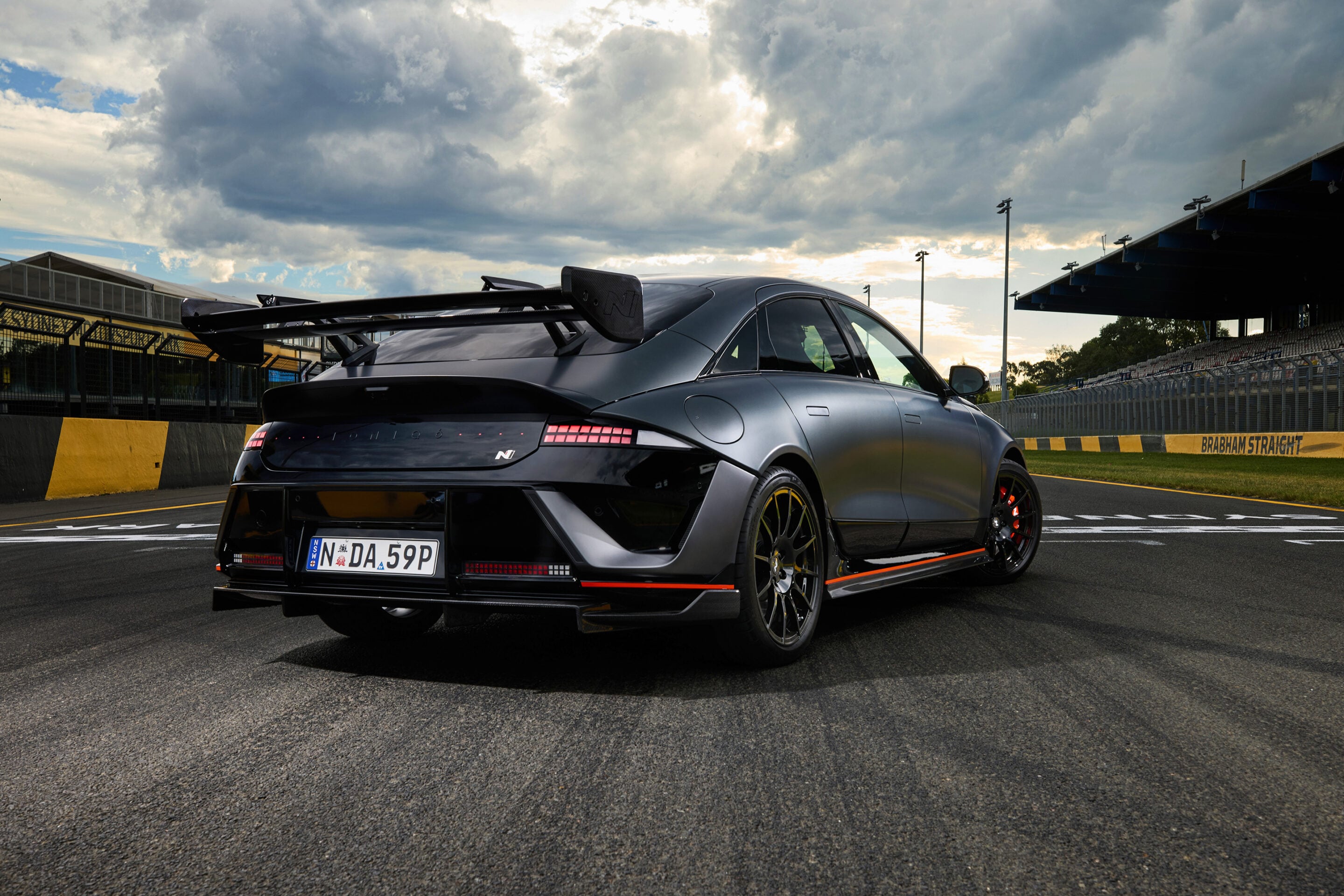
Buyers after the full race-track bred hypercar experience can option the Performance Pack which brings a host of carbon-fibre add-ons including a huge rear wing, front splitter, side skirts, rear diffuser, door sills, and even wheel caps to fit on the Pack’s 20-inch lightweight forged alloy wheels. It’s not cheap, however, commanding a near-$25k premium. If the budget doesn’t quite stretch that far, all the carbon-fibre bits and bobs can be optioned individually to add some spruce to your IONIQ 6 N.
What are the IONIQ 6 N’s key stats?
The IONIQ 6 N’s headline numbers are impressive: two electric motors, combining for 448kW and 740Nm and 0-100km/h in 3.4 seconds in regular non-boost mode, or 3.2 seconds with launch control.
But, one of the IONIQ 6 N’s party tricks (as it is in its 5 N sibling) is the N Grin Boost button on the steering wheel. Tap that, and the electric motors spool up to 478kW and 770Nm, the catch here is that those exalted numbers are only available for a 10-second burst. After that, you have to wait for another 10 seconds before hitting the N Grin factor again.
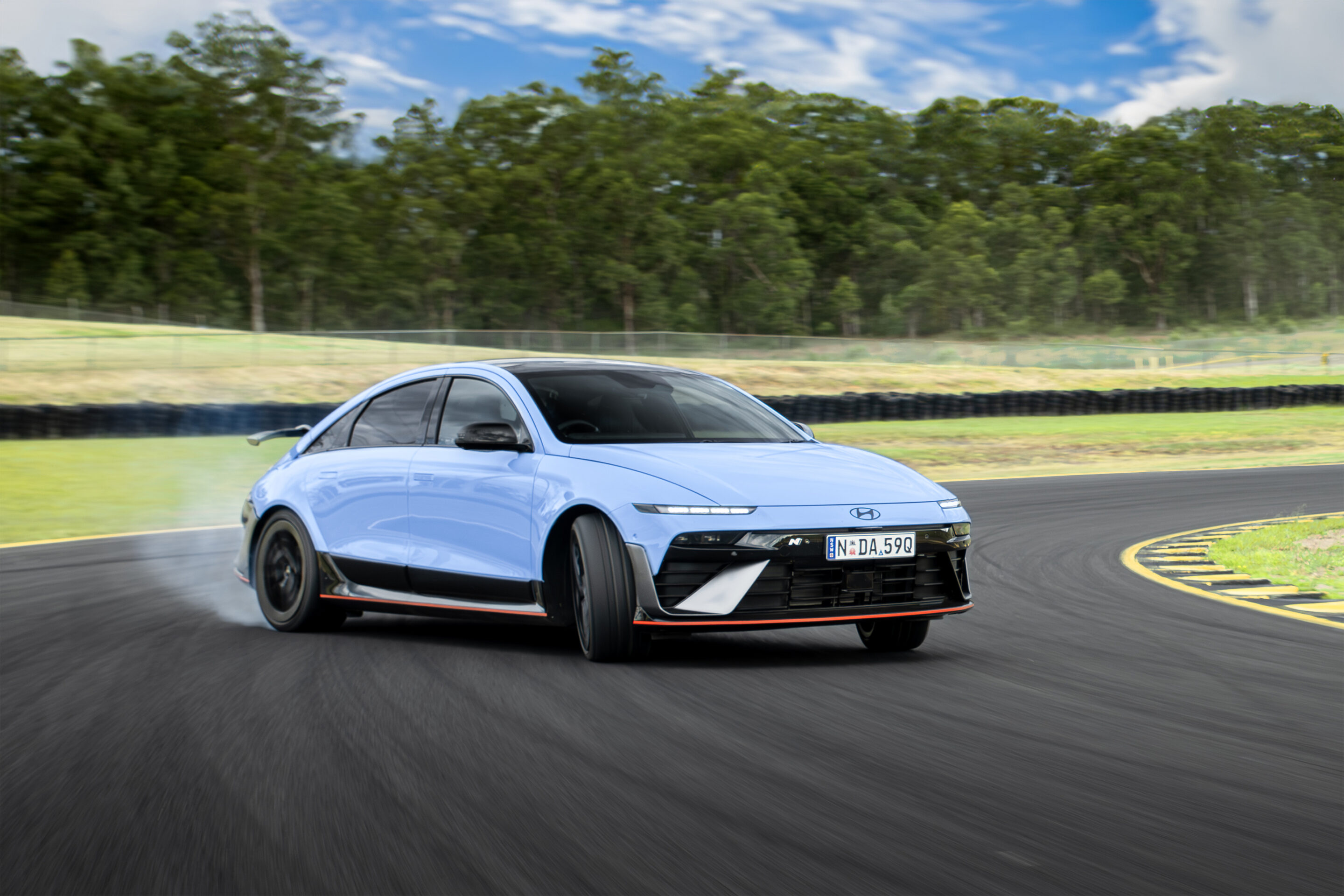
It’s an impressive feature, and one that you can really feel in the deepest part of your body as your organs wobble and dance around while playing catch-up with the laws of physics.
An 84kWh lithium-ion battery brings a claimed driving range of 487km, based on WLTP laboratory testing, while consuming a claimed 18.7kWh/100km.
DC fast charging is capped at 263kW with Hyundai claiming a top-up from 10 to 80 per cent will take just 18 minutes. Using a more commonly available 50kW charger blows that out to 81 minutes while a 7.4kW AC home-installed plug will replenish the battery from 10 to 100 per cent in 11h24m.
What makes the IONIQ 6 N an ‘N’ car?
Lotsa things. Hyundai has dared to be different with its twin N electric cars, engineering plenty of track-focussed fun into the package, should you opt to spend a day at your local racetrack to find out if an EV can actually be fun to drive. Let’s break it down.
Firstly, the 84kWh battery itself features several track modes – drag, sprint or endurance – with optimised thermal management ensuring the battery stays cool even during sustained high performance driving.
N Launch Control is pretty standard stuff – switch to Sport mode, hard on the brakes, full throttle, release brakes and feel your innards slosh around as the 6 N completes the dash from zero to 100km/h in a smidge over three seconds.
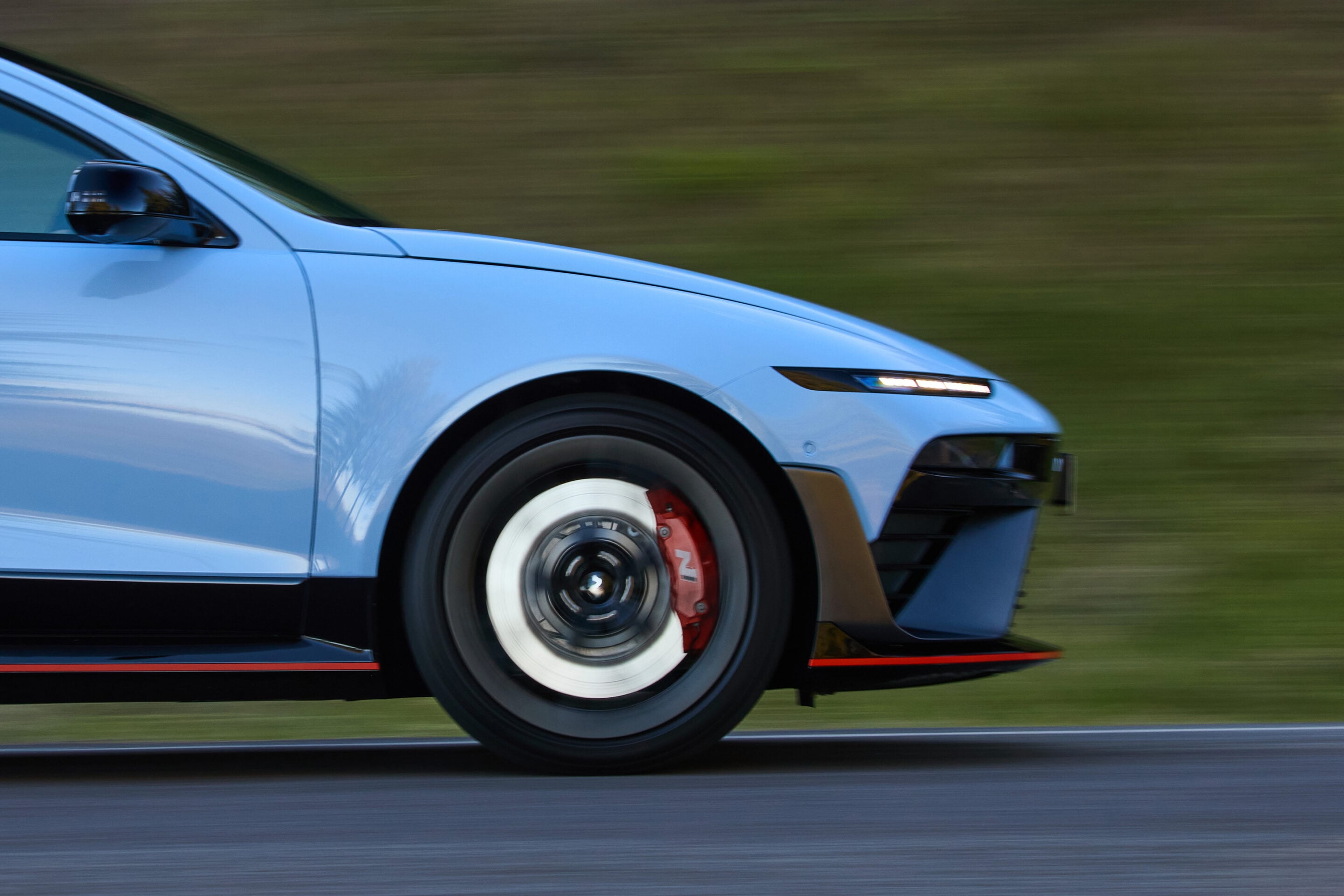
The N Active Sound+ features several soundtracks that can be piped into the cabin including a couple of synthesised and distinctively EV sounds that are best left alone. The star of the concert is the ersatz sound of a thumping V8, complete with a timpani of pops and bangs on over-run and downshifts that sounds remarkably realistic.
Downshifts? In an EV? Yep. The next cab off the N rank is Hyundai’s excellent N e-Shift function that brings authentic sounding and feeling gear changes via the 6 N’s paddle-shifters to the EV party. Yes, your head tells you it’s all artifice, but once you’re out on the race track (as I indeed was) and the sound of a thumping V8 thunders through the cabin, complete with the requisite bangs on up-shifts and crackles and burbles when down-shifting, you quickly forget that this is an EV. There’s even an artificial rev-limiter that literally jolts you into paddle-shifting action, just as a regular combustion-engined car would. If it all sounds a bit chintzy, then park your preconceptions, because what Hyundai has done with its e-Shift is bring driver engagement and aural tactility to a high-performance driving experience where previously there was none. Remarkable stuff.
N Grin Boost, as already touched on, acts like a push-to-pass button, upping total power and torque for 10-second bursts, especially helpful on Sydney Motor Sport Park’s long main straight where the 6 N’s speedo nudged around 217km/h without it, and just shy of 230km/h with.
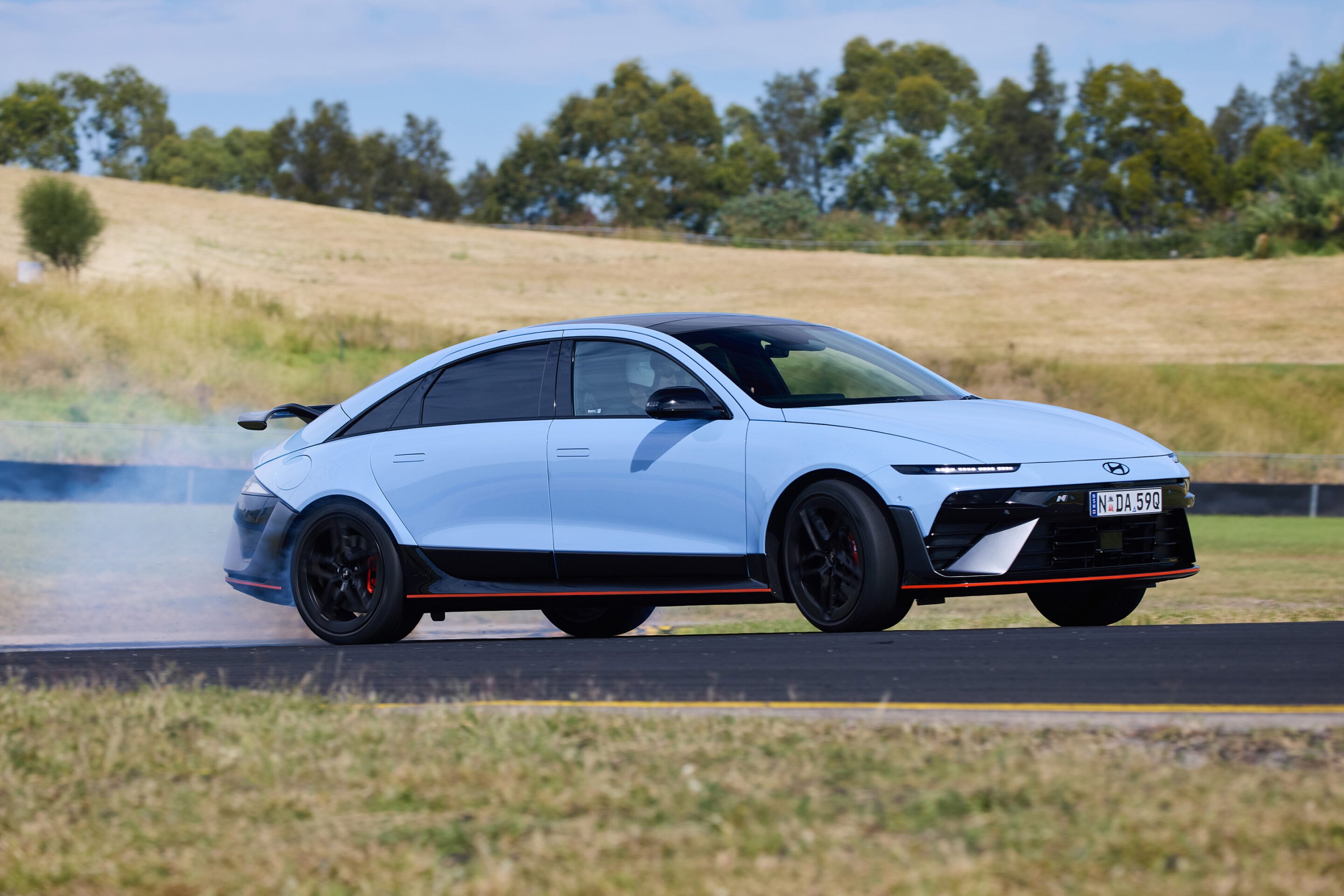
And then there’s N’s Drift Optimiser which can distribute torque 100 per cent to the front or rear and then nudge you along into the perfect sustained drift. We weren’t allowed to use it, so can’t comment on its efficacy. But it’s there for those who want to shred some tyres.
That’s a lot of different settings to play around with to set-up the Hyundai IONIQ 6 N to your liking. For mine, Sport mode was king, with Active Sound set to the thunderous symphony of combustion, aka Ignition, with N e-Shift playing the role of conductor.
Is there anything interesting about the IONIQ 6 N’s design?
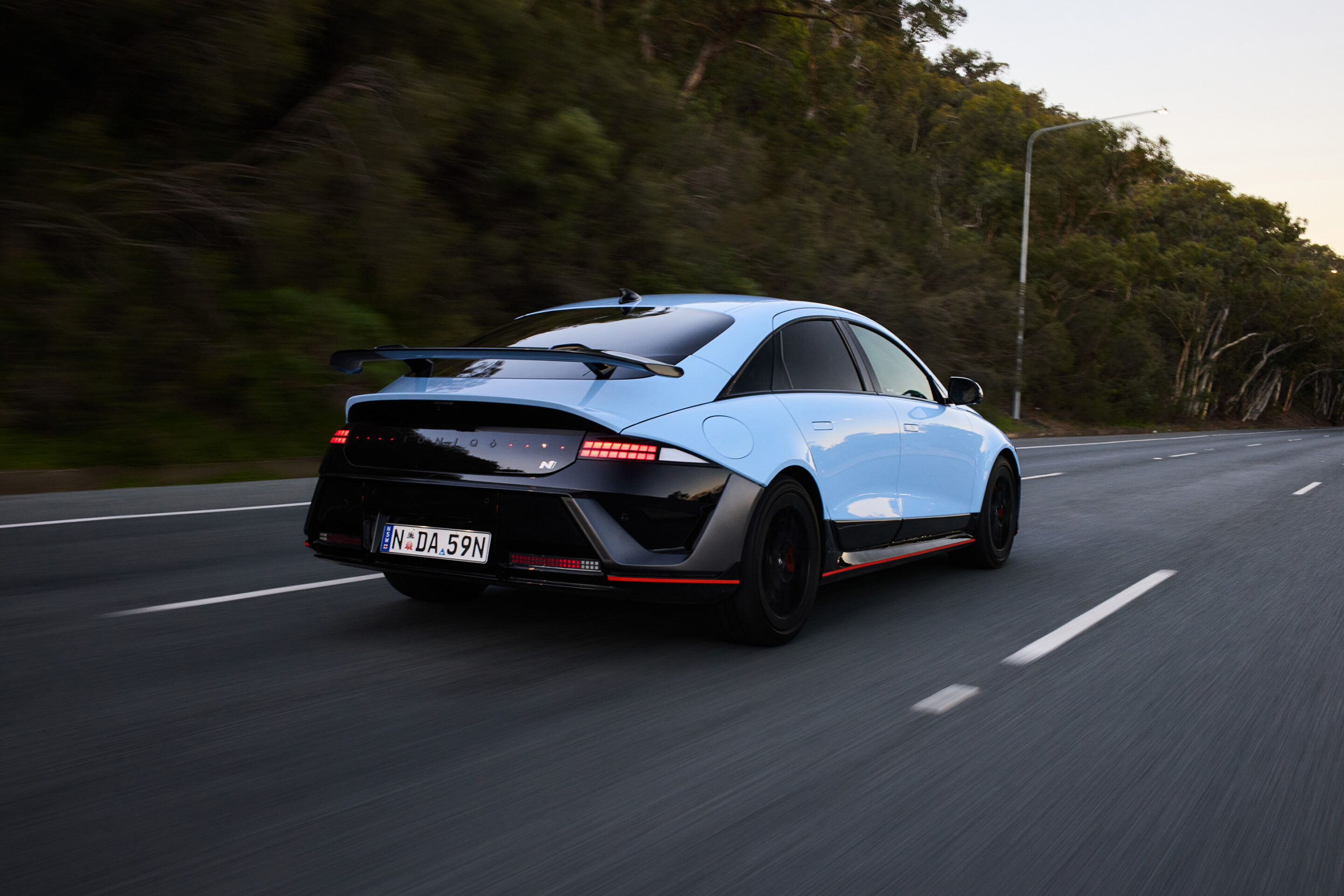
Look, it’s not the prettiest thing on the road, its bulbous profile looking more like an appliance than a passenger car. But that same profile reveals a drag coefficient of just 0.274 Cd improving aero efficiency helping to eke out maximum driving range.
New headlights up front look much sleeker than the old units found on regular IONIQ 6, helping to create a more unified face. There are plenty of N exclusive design elements too – from the front bumper and splitter, deflectors, air curtains, gloss black side sills, a rear wing, bespoke N rear bumper and 20-inch alloy wheels, to the luminous orange strip running the full length of the car – all the hallmarks of Hyundai’s N performance brand are firmly in place.
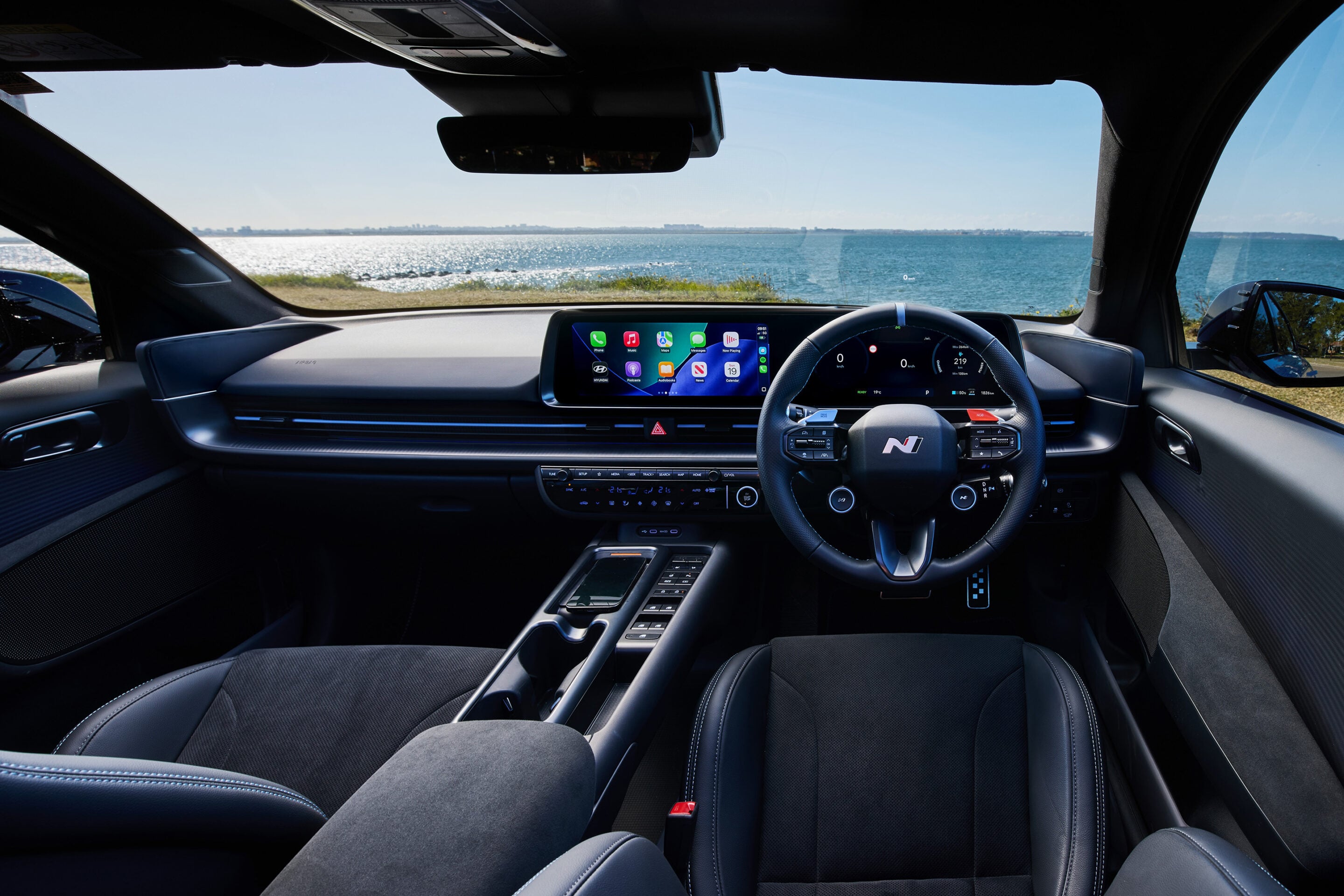
Inside, where more N-exclusive elements distinguish the IONIQ 6 N from lesser mortals in the range – highlights include metal pedals and foot rest, Alcantara and leather trimmed sports seats with N Performance blue stitching, a Pasubio leather wrapped steering wheel with a blue (N blue, of course) centre marking, and a liberal dose of N badges.
It’s a thoughtfully-designed and unashamedly driver-focussed cabin. From the quality of the materials to the solid fit and finish, everything about the 6 N feels properly premium in the cabin, as you’d hope for a car asking for $115k plus on-road costs.
Second row comfort is a mixed bag, especially for anyone taller riding in row two. That sloping roofline impacts available head room, compounded by the standard fit sunroof. It can be deleted for no cost, freeing up valuable millimetres of head room.
Need to carry some luggage? There’s 371 litres available in the boot, not ground-breaking by any stretch, but enough for a couple of larger suitcases and/or overnight bags.
What technology comes with the IONIQ 6 N?
We’ve already covered all the go-fast tech that makes the IONIQ 6 N an N. But modern buyers also expect the latest in connectivity. The 6 N brings a 12.3-inch touchscreen with wireless – and wired – Apple carPlay and Android Auto. Satellite navigation is standard, as is the full gamut of radio bandwidths – AM/FM/DAB+.
Hyundai’s operating system is straightforward enough, until that is, you delve into the myriad N Performance screens which can be a little overwhelming at first. There’s a lot to navigate, a lot to take-in and make sense of but, with time and extended use comes familiarity.
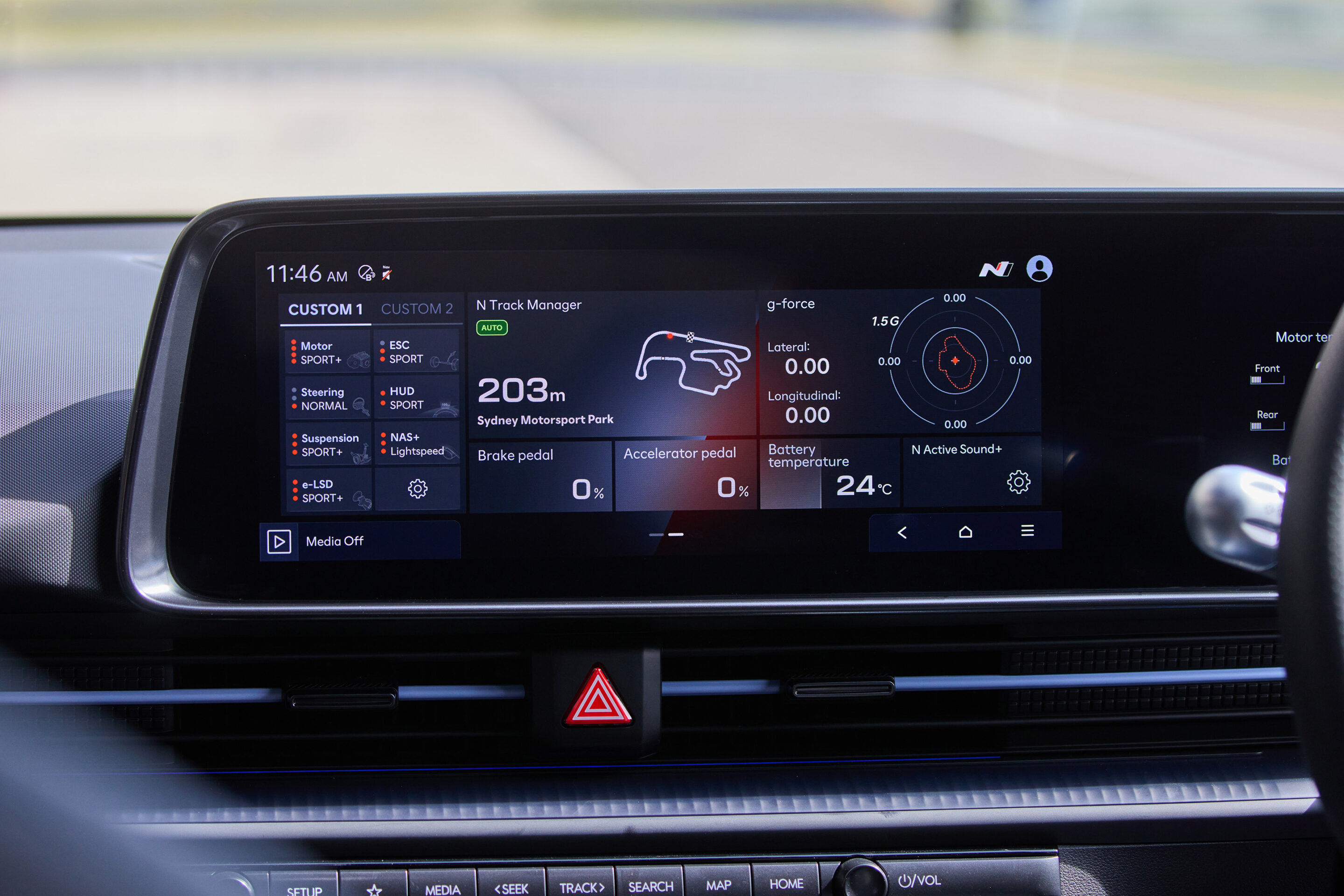
Making things just a little easier, favourite N setting combinations can be stored and accessed via either the N1 or N2 buttons on the steering wheel.
The N-specific digital instrument cluster offers a wealth of driving data while the 6 N’s head-up display can be set up for regular driving or with track-focussed elements in mind, including Hyundai’s e-Shift shift lights.
What’s the IONIQ 6 N like to drive?
Hyundai is so confident in the IONIQ 6 N’s dynamic abilities that it chose to launch its new performance model in Australia at Sydney Motorsport Park. And boy, it did not disappoint.
Forget everything you know about EVs – they’re fast in a straight line but that’s it; they’re heavy; a bit soul-less; and totally uninspiring as a driver’s car.
Because this is a brilliant car, one that can be hustled in anger and at a speed that defies EV logic. And it’s not about straight-line speed – that’s a given – because the IONIQ 6 N can corner with the best of them, a dynamically capable track-day warrior that will leave you sweaty of palm and giddy with excitement for days.
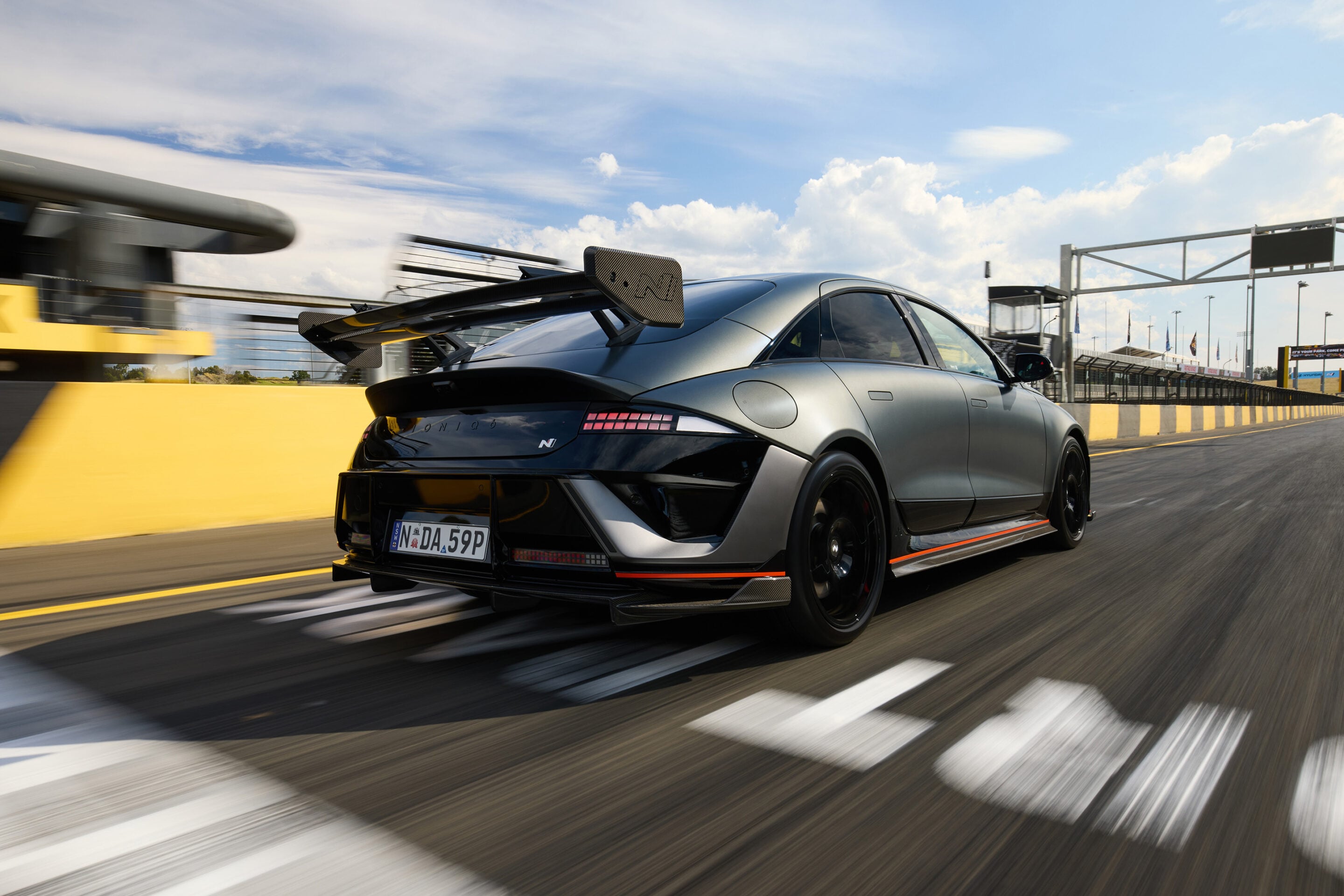
Hyundai’s engineers have gone to town on the IONIQ 6 N’s chassis to ensure that this is no regular straight-line attention grabber, tinkering with the suspension geometry, as well as body rigidity, to arrive at a lower roll centre, improving grip and high-speed cornering performance.
New dual-layer bushings enhance handling while also filtering out vibrations resulting in improved road comfort. An electronic limited-slip diff at the rear manages torque distribution left-to-right to improve traction and stability into and out of high-speed corners.
That all sounds good on paper, but how does it feel out in the real world? In a word… brilliant.
Hyundai’s engineers have done a remarkable job imbuing the IONIQ 6 N with the kind of electro-mechanical talent that challenger brands can only dream of. It’s fast, yes, but it’s also a thoroughly exciting car to drive at ten-tenths. It feels lively on the track, but never too lively. After a couple of tentative exploratory laps, it soon becomes apparent that the 6 N can be driven hard, secure in the knowledge that it will do exactly what’s asked of it.
Entering SMP’s turn one at 160km/h does little to ruffle its Performance Blue Pearl feathers, the 6 N staying true to its line before sling-shotting out of the high-speed turn and onwards to turn two and beyond.
The N Active Sound+ and e-Shift technology is hilariously brilliant, a tactile and aural guide to driving a track day car fast. Yes, it’s fake, but that thought is quickly banished as the rev-limiter jolts the car and spurs you into paddle-shifting action. Just for fun, I tried a lap without those two enhancements switched on and while the 6 N’s performance wasn’t diminished one little bit, my enjoyment levels waned.
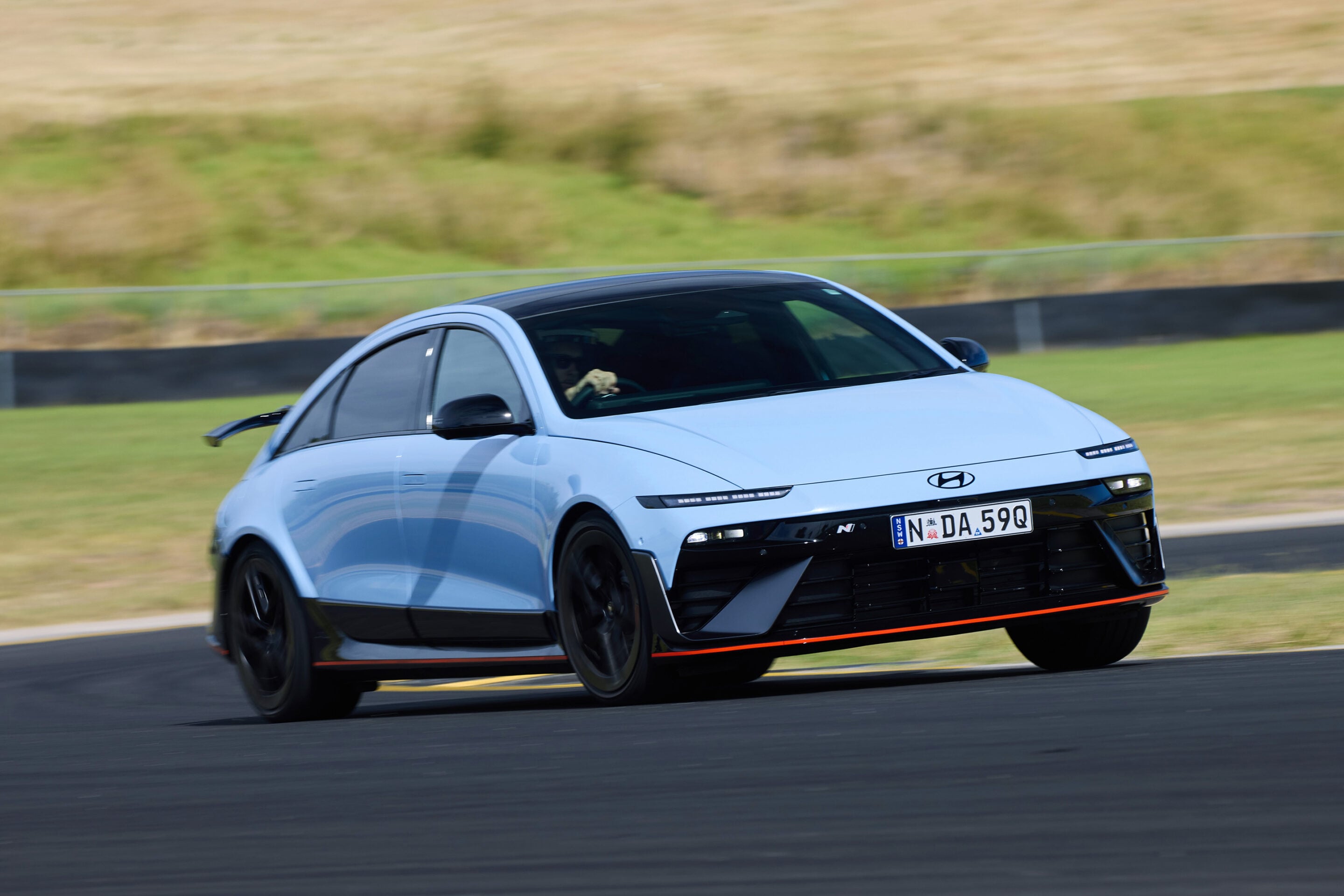
On the downside, the steering, as accurate as it is, lacked a little feel to the road while the brakes which did a brilliant job of slowing the 2.2-tonne sedan, lacked feel and finesse, making mid-corner modulation a little tricky.
And yet, despite its focussed performance nature, take the IONIQ 6 N out on the open road – as we did the following day – and you’re met by a surprisingly comfortable and serene daily driver.
A 250km round trip taking in suburban traffic, a long motorway stretch and some rural back roads, proved as calm as it was effortless. Here, the 6 N behaved exactly as an EV should – quiet, rapid, comfortable.
That beefed-up suspension had no difficulties in ironing out patchwork road surfaces, while steering remained direct and responsive.
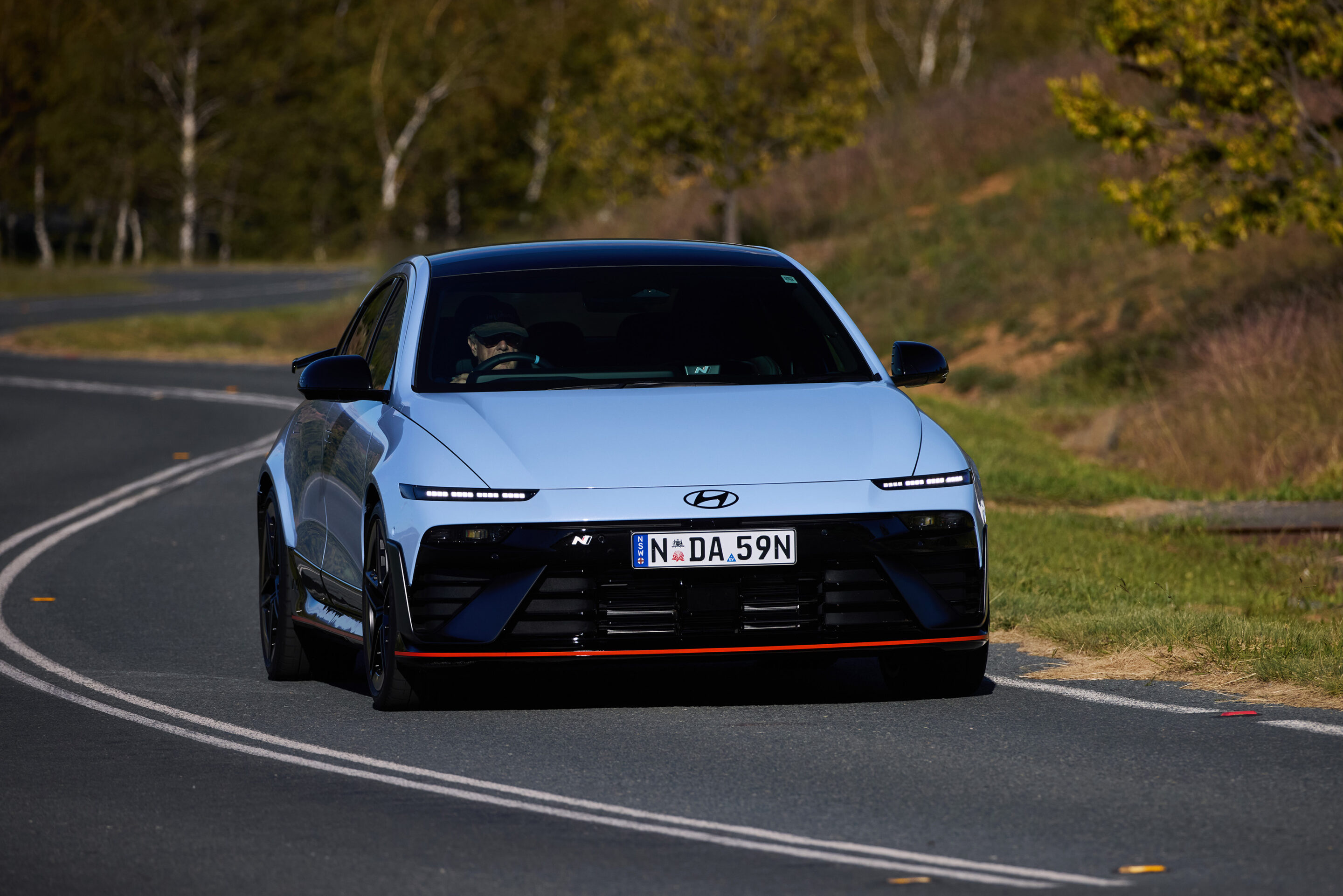
Inside, the quietude of electric motoring makes for a serene cabin, as relaxing a drive as you could want but with the knowledge that should you choose, the 6 N will spring into dynamic action at the simple press of an N button on the steering wheel.
Its road-going manners are in stark contrast to its track-day abilities. Usually, cars engineered with at least one eye on extracting maximum performance on the race track can feel compromised out on the road in regular everyday driving. That’s simply not the case with the IONIQ 6 N which switches from ferociously capable track weapon to relaxing daily at the press of a button. It’s a testament to Hyundai’s engineers.
How much energy did the IONIQ 6 N use?
Forget on-track consumption. Driving the 6 N at warp speed means you can watch available range numbers tumble on the dashboard in real time at the rate of around 1km per second. That’s an exaggeration, but you get my point.
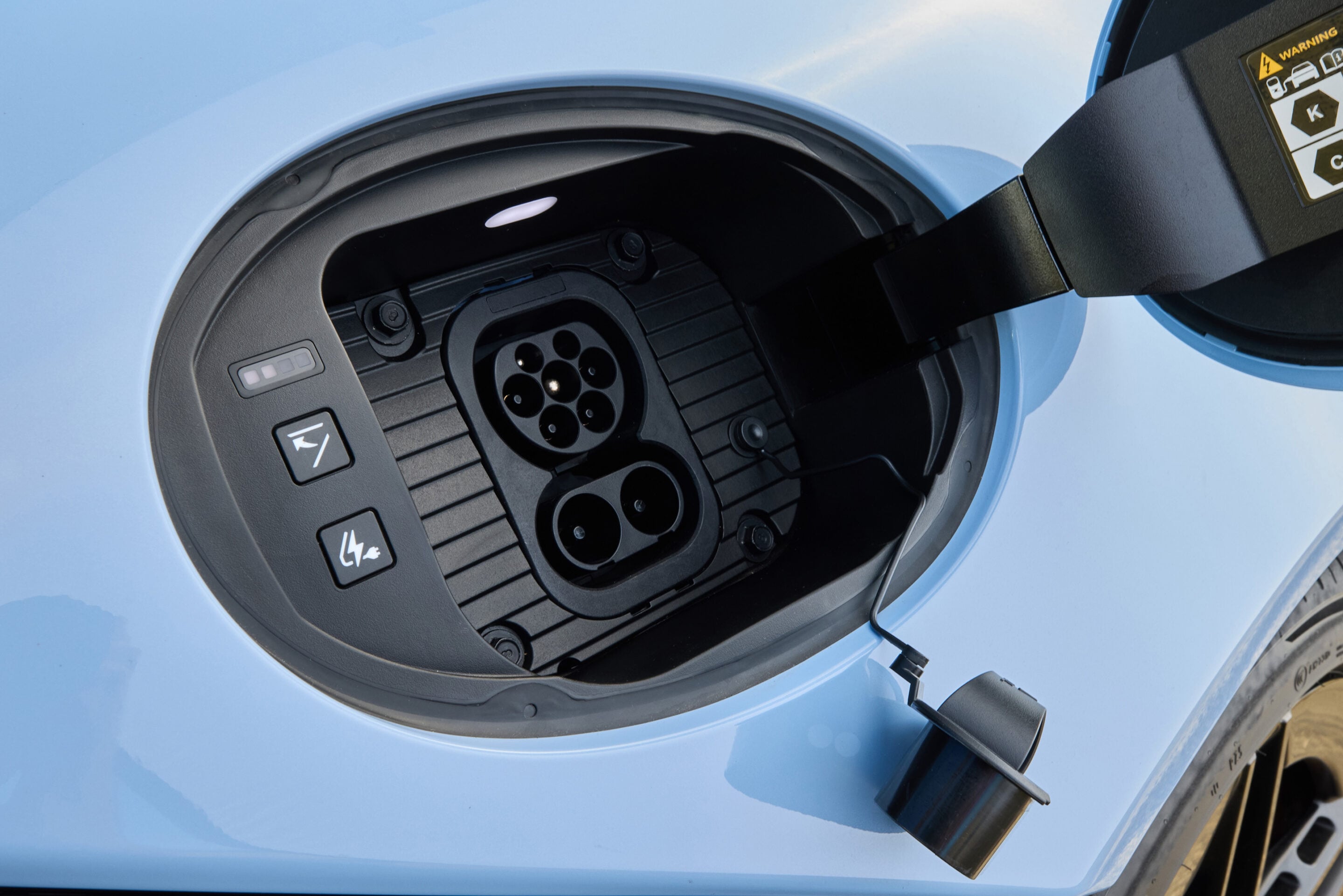
But take it off the track, and Hyundai’s claim of 18.7kWh doesn’t quite stack up either. Having sated my need for speed the previous day, I treated the 6 N to a relaxed drive through the countryside, never exploiting its dynamic abilities on public roads. And the best consumption number I could muster was 22.3kWh after 256km. That’s well short of Hyundai’s 18.7kWh claim and translates to a real-world range of around 390-400km, also well short of the WLTP-tested 487km claim. To be fair, this is normal in the world of EVs where lab-tested numbers have little bearing out in the open real world
So, what’s the verdict on the IONIQ 6 N?
I’ve already written it twice, but the Hyundai IONIQ 6 N is brilliant. It’s brilliant at thumbing its nose at EV convention, and it’s brilliant at taking on a segment not known for dynamism and resetting the boundaries of what is possible.
Sure, it’s not perfect, and yes, Hyundai’s digital interpretations of analogue go-fast technology will rankle some diehards.
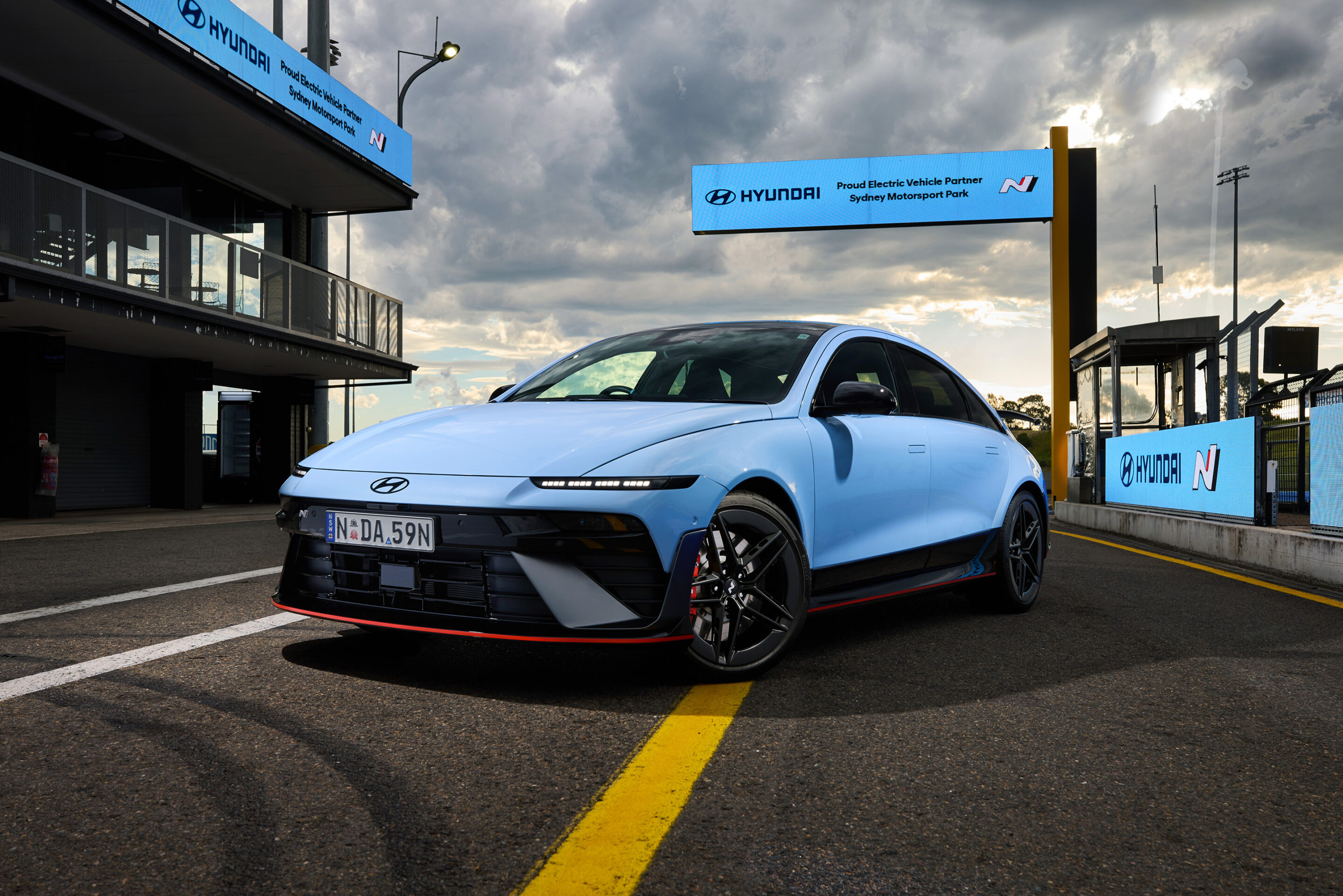
But that does little to detract from a car, an EV no less, that is hilariously fun to drive.
Hyundai’s engineers need to be applauded for their out-of-the-box thinking, for daring to try something different and imbue the IONIQ 6 N with the performance and abilities that should make even the most ardent combustion bros sit up and take notice.
Hyundai IONIQ 6 N specs
| Price | $115,000 plus on-road costs |
|---|---|
| Powertrain | Dual-motor electric (AWD) |
| Battery | 84kWh lithium-ion |
| Power | 448kW (478kW with N-Grin Boost) |
| Torque | 740Nm (770Nm with N-Grin Boost) |
| Transmission | Single-speed automatic |
| Drive type | All-wheel drive |
| 0-100km/h (claimed) | 3.4 seconds (3.2 with launch control) |
| Top speed | 257km/h |
| Range (claimed) | 487km (WLTP) |
| Max DC charging rate | Up to 263kW (approx. 10-80% in 18 minutes) |
| Max AC charging rate | 11kW |
| Weight | 2201kg |
| Dimensions (l/w/h/wb) | 4935mm / 1940mm / 1495mm / 2965mm |
| On sale | Now |
