
In November 2013, the news of Paul Walker’s death shocked the world as details emerged that the Hollywood heartthrob and Fast and Furious star was killed when his friend, Roger Rodas, lost control of a Porsche Carrera GT, hitting several trees before it burst into flames in Santa Clarita.
Following the accident, lawsuits were filed against the carmaker – one Rodas’ widow Kristine, and others by Walker’s father and daughter.
This week, US District Judge Philip Gutierrez, has told the court that evidence does not support Rodas’ claims that Porsche was responsible for the car accident.
Rodas alleged the Carrera GT’s suspension failed before the accident, and the lack of crash cage and fuel cell contributed to the injuries and death of the passengers.
Instead, the Los Angeles Country Sheriff’s Department and California Highway Patrol stated the vehicle was travelling at speeds of around 150km/h when it crashed.
While the carmaker has denied the allegations against the Carrera GT’s design and manufacturing, and has escape the Rodas lawsuit, it’s still facing two other cases filed by family of Walker.
AUSTRALIA’S new car market saw sales slipped half a percent below the same period last year in March, official figures released yesterday show.
However, March 2016 still recorded 104,512 sales as holidays including the long Easter break ate into the number of selling days, leaving sales for the first three months of the year at more than 250,000, and still 2.8 percent ahead of the first quarter 2015.
Despite Australians buying more cars in 2016 than ever before, market leader Toyota’s sales have declined 5.1 percent so far this year – while its 46,493 is down on this time last year (48,986), the Japanese carmaker is still easily ahead of the field. Next-best is Mazda, which has posted 7.7 percent growth to record a solid 30,449 sales for the month. Hyundai is third, with its 24,402 sales keeping Holden (22,519) off the podium.
In the race to be number one, the Hyundai i30 shot to the top of the charts as the best-selling passenger car for the first time since September last year, with 4198 of them rolling out of showrooms, ahead of the Toyota Corolla (3612) and Mazda 3 (3145). That result is despite the i30 being both older than its class rivals, and one of the oldest models in Hyundai’s comparatively young line-up.
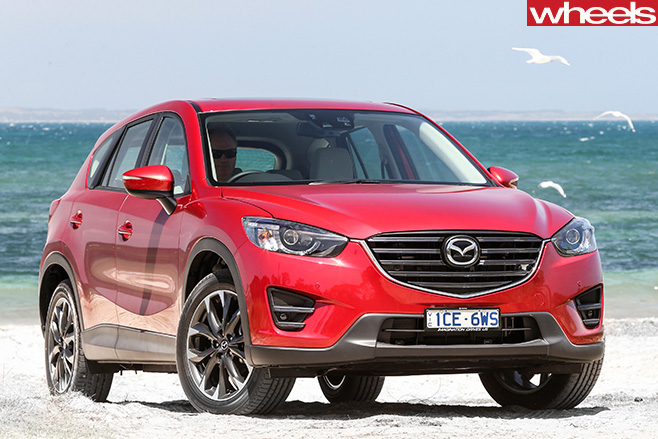
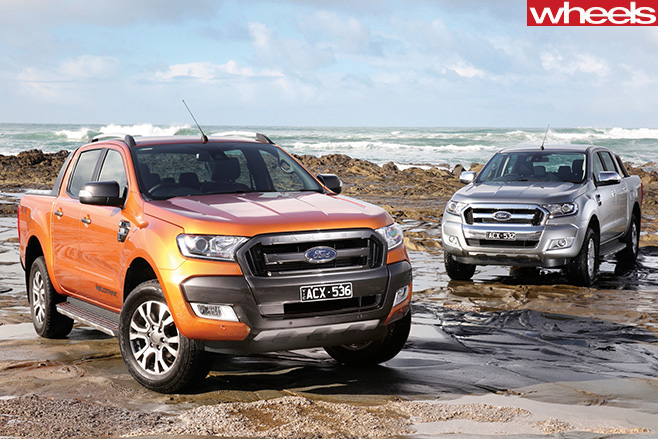
The Toyota Hilux continues its time at the top of the trade ute tree, with 3897 sales, enough to make it the second most popular of all vehicle types and Toyota’s number one seller. It easily outsold the Ford Ranger (2960), while the Mitsubishi Triton claimed the final podium spot with 2740 sales.
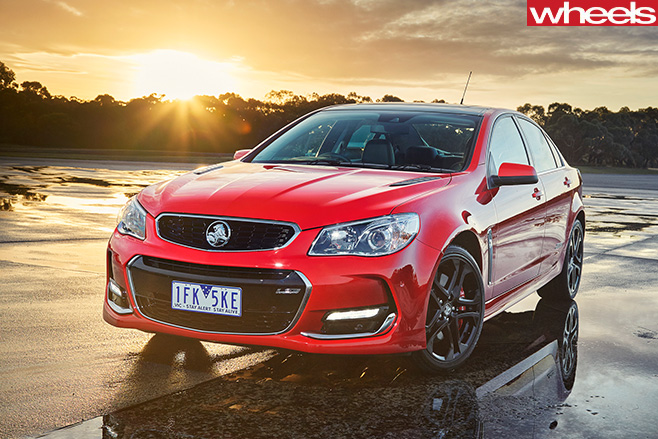
The Holden Commodore recorded an impressive fourth, with 2559 sales to show consistency for the large Aussie. The Toyota Camry was the next-best locally produced model, with 1939 sales good enough for eighth.
Land Rover has overtaken Jeep overall, with a strong 1541 sales for the month far ahead of Jeep’s 1141, helping the English brand post 4093 sales year-to-date, ahead of the once-strident Jeep’s 3787. This time last year, Jeep had posted 7583 sales – just over double its 2016 result.
Jaguar has sold 680 cars so far in 2016, streets ahead of its 249 this time last year. Those numbers have been driven by the new Jaguar XE, which accounted for 190 of the brand’s 273 March sales to be the its best seller by significant margin. Year-to-date, the XE makes up 72 percent of all Jaguar purchases in Australia.
Jaguar sales are good news, but are a long way short of the triumvriate of German brands, with Mercedes-Benz (10,063 and 14.1 percent up year-to-date), BMW (7478, 27.7 percent growth) and Audi (6160, 12.4 percent increase) all outperforming the market. Mercedes sneaked into the top 10 of overall brands, too.
Speaking of Aussie-made, it was a rare good month for the industry. Falcon sales fell slightly to 411 with ute and Territory lifting the local flag higher compared with February, Commodore’s 228-unit rise made up for the Cruze’s 95-unit fall to 873 sales, and the Toyota Aurion’s 226 (up 81) and the Camry’s 1913 (up 482) closed on positives.
With Barry Park
Top 10 passenger cars in March
| Rank | Model | Sales |
| 1. | Hyundai i30 | 4198 |
| 2. | Toyota Corolla | 3612 |
| 3. | Mazda 3 | 3145 |
| 4. | Holden Commodore | 2559 |
| 5. | Mazda CX-5 | 2252 |
| 6. | Hyundai Accent | 2034 |
| 7. | Nissan X-Trail | 1991 |
| 8. | Toyota Camry | 1939 |
| 9. | Volkswagen Golf | 1782 |
| 10. | Mazda CX-3 | 1755 |
Top 10 brands in March
| Rank | Brand | Sales |
| 1. | Toyota | 17,849 |
| 2. | Mazda | 10,228 |
| 3. | Hyundai | 9700 |
| 4. | Holden | 8355 |
| 5. | Mitsubishi | 6519u00a0 |
| 6. | Ford | 6481 |
| 7. | Nissan | 5811 |
| 8. | Volkswagen | 5316 |
| 9. | Subaru | 4825 |
| 10. | Honda | 3728 |
So, they tell me Formula E is the future of motorsport. Well, if that is the case, please excuse me while I eat my race suit.
Formula E is the FIA electric open-wheel racing series that is just one year old. The design of the cars is fantastic, they look fast and stylish and the races are held at some of the most beautiful cities in the world including London, Moscow, Buenos Aires and Monaco.
It’s a guilt-free form of motorsport, with no fossil fuels burnt on race day. So what’s not to like? Well, I hate to be a party pooper, but I happen to think good motorsport is about noise, speed and action. The problem with Formula E is that it sounds rubbish and the cars are painfully slow. These are quite fundamental issues if you ask me.
As much as it might pain eco warriors, the sound of fossil fuels being exposed to oxygen and fire is a wonderful thing. Combustion is a form of explosion and, in terms of dramatic action, explosions are right at the top of the list. Electric motor whine is not.
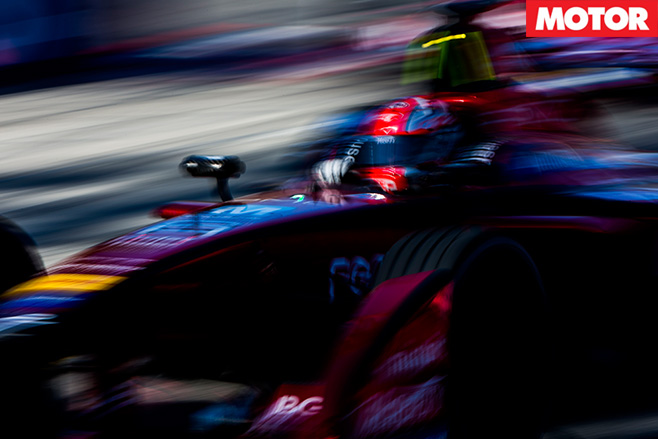
If you haven’t heard a Formula E, it’s kind of like the whine of a straight-cut racing gearbox, but with a slightly higher pitch. They are very quiet and you can hear tyre chirping under brakes such is the lack of noise.
Anyone who has removed a muffler baffle on a car or bike knows that more noise increases the impression of speed. If you don’t think sound matters, go see a Monster Jam show. Yes, I know it doesn’t count as motorsport, and I should never admit I went, but dagnabbit, those giant V8 engines really build the excitement (along with all the wanton destruction).
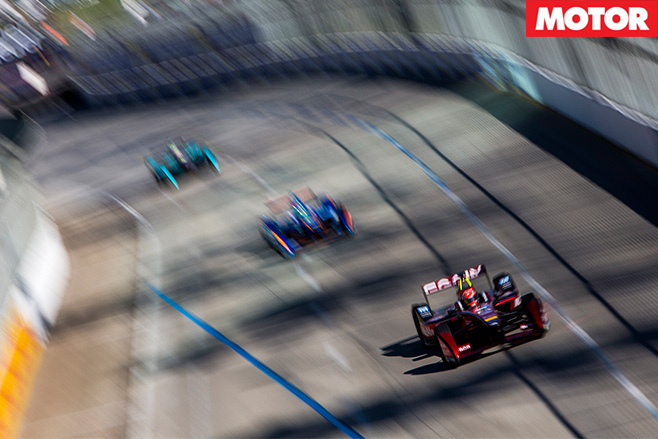
Also, while electric motors provide huge torque off the line, the performance out of corners in Formula E is ordinary and you find yourself willing the cars to go faster. The claimed top speed, if you get a straight long enough, is 225km/h. I don’t mean to brag, but I’ve done that in a four-cylinder diesel Audi A4. Don’t shoot, it was on an Autobahn.
When the Formula E cars raced on part of the Monaco track it was painfully obvious how slow they were in comparison to Formula One cars. Perhaps that’s why they race on otherwise unique city tracks (which are bumpy and narrow and generally wretched). Electric motor and battery technology is surely going to get better in time, so the speeds should pick up, but when? And how much?.
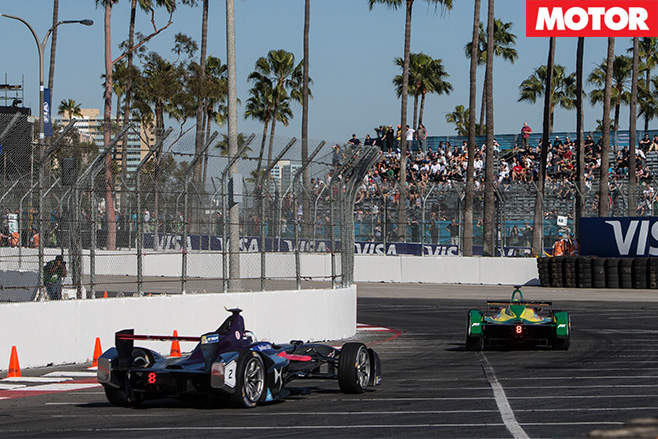
The performance of the cars is close because it is a control class, which is a problem because it will never have the advancement of engineering that is fundamental to Formula One due to manufacturers duking it out for glory.
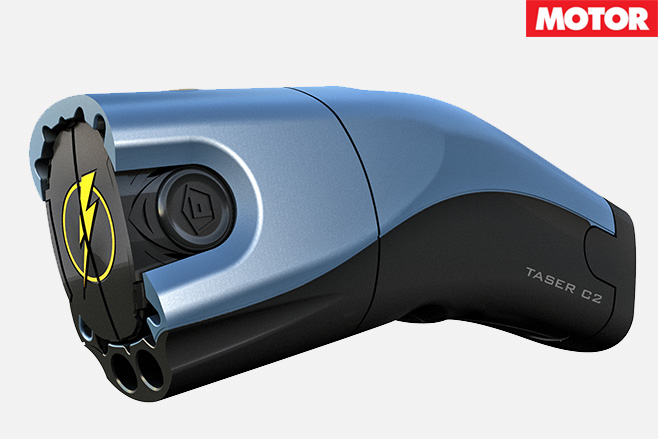
That said, maybe they are onto something. Perhaps they should have some kind of Taser in the cars and whichever driver the fans like the least could get a bit of a zap at some stage during the race. It would liven things up a bit, but probably wouldn’t be enough to save Formula E, which just isn’t very good.
Holden is set to replace the Colorado 7 nameplate with the Trailblazer moniker worn by the ute-based seven-seat SUV in America.
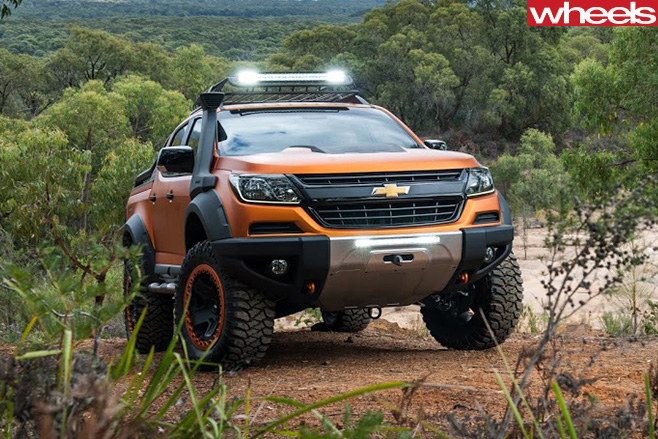
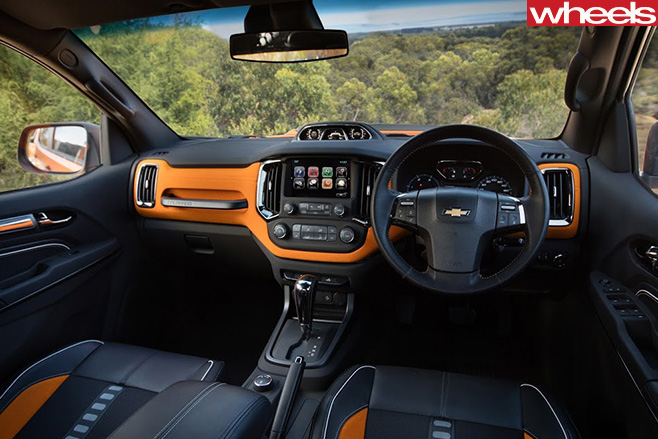
Strong clues of the updated model were shown in the Colorado Xtreme (utility) and Trailblazer Premier (SUV) revealed at last month’s Bangkok motor show.
The one-off concepts were prepared at Fishermans Bend in Melbourne by GM Australia Design at Holden, using the upcoming production Series II of both vehicles as bases.
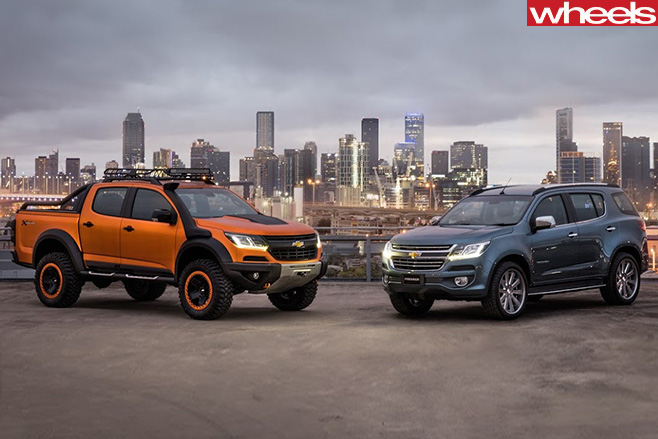
Part of the shift from Colorado 7 to Trailblazer is to separate the SUV from a marketing perspective from the ute it’s based on. That’s even more important in an era when competition on the off-road-focused seven-seat SUV market has ramped up with the recent arrival of the Ford Everest (based on the Ranger ute), Toyota Fortuner (based on the Hilux ute) and Mitsubishi Pajero Sport (based on the Triton ute).
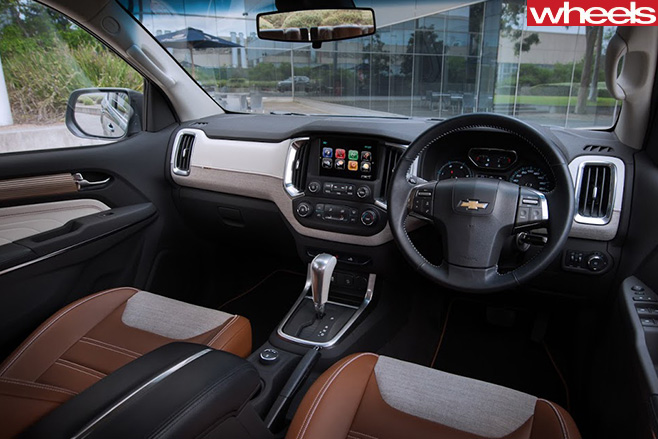
While the facelifts for both models were designed at the RG-series Colorado’s global homeroom in Brazil, the show vehicles’ detailing – along with their presentation – was carried out by Holden.
What mechanical changes are coming later in the year, beyond an update of the current models’ 2.8-litre four-cylinder turbo-diesel engine, isn’t known, though there will be significant improvements to on-road dynamics and overall refinement.
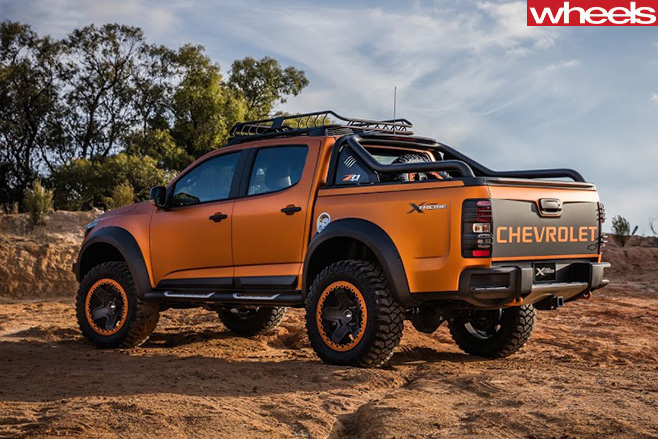
Meanwhile, Holden has also created accessories that will soon appear on the Colorado and Trailblazer options list, as the company attempts to carve a larger slice of the ever-growing personalisation market.
These include a newly integrated bull bar, a Safari bar, snorkel, sports bar, roof basket with an LED light bar, side steps, rear-step tow bar, and wheel arch flares.
“We want to expand the genuine accessories market, that’s marketed and sold by Holden. We’ve been missing out in the past.”
Holden has designed or built a number of high-profile concept vehicles over the past few years, among them the Buick Avenir from the 2015 Detroit auto show and this year’s Opel GT from Geneva.
There’s never been a better time to review the dual-cab 4×4 class of 2016 than right now. Wheels pitches eight of the biggest sellers in the segment for the title of King of the Heap. Here’s number six, the Mitsubishi Triton.
SIMPLY being the best drive in class doesn’t automatically make a car a best-seller, but brilliant value for money is a sure-fire way to make an impression on buyers. And that’s Mitsubishi’s approach with the Triton.
The launch of the fifth-gen model in May 2015 helped Triton’s buck-beating credentials while attempting to bring its on-road and off-road abilities closer to those of its rivals. Trouble was, changes in the ute market reduced the impact of Mitsubishi’s re-engineering and re-bodying, particularly in comparison with all-new rivals such as the eighth-gen Toyota Hilux.
Triton’s appeal extends beyond price and equipment to a roomy cabin with a neatly presented dash with clear silver-rimmed instruments, and an appealing 6.1-inch central touchscreen as part of the new model’s updated audio system (which features digital radio).
Triton’s update included measures to better suppress combustion noise and a revised injection system on the 2.4-litre turbo-diesel, and it shows, though don’t expect car-like refinement levels.
The leather steering wheel is nice to hold and twirls through a typical 3.8 turns lock-to-lock, but it’s connected to light, limp steering that is at odds with the ute’s image and abilities. Big turning circles rule in this realm, though the Triton’s is relatively tight at 11.8m.
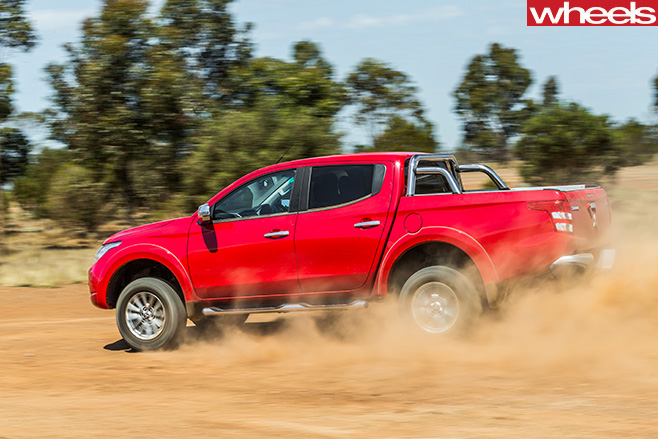
Clocking 11.5sec from 0-100km/h, it sees off Hilux, Amarok and the Isuzu D-Max, but not Ranger or Navara. In that context, an official consumption figure of 7.6L/100km is quite respectable.
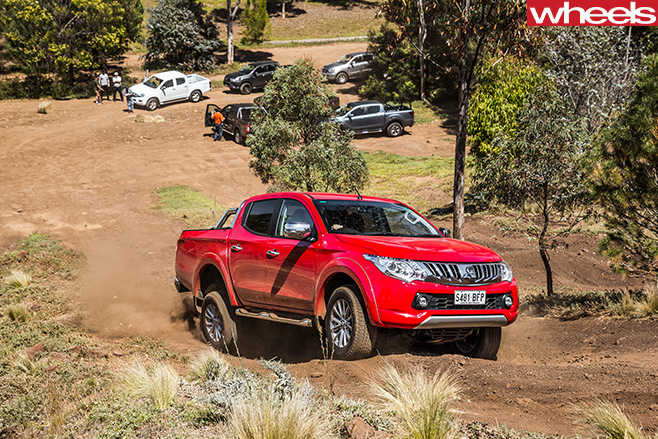
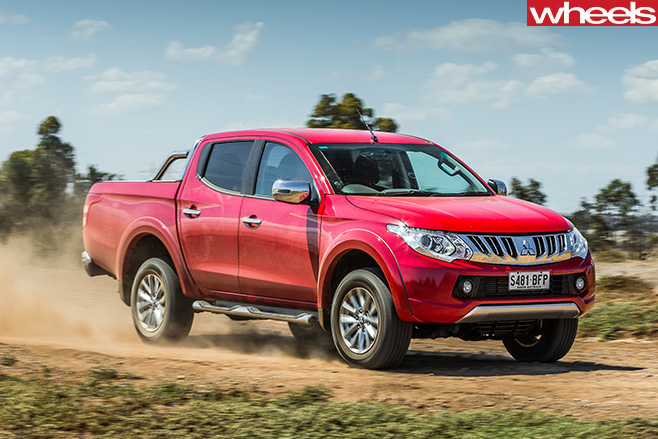
Mitsubishi’s five-year warranty could certainly swing punters in Triton’s favour, even if its styling does the opposite.
Off-road performance
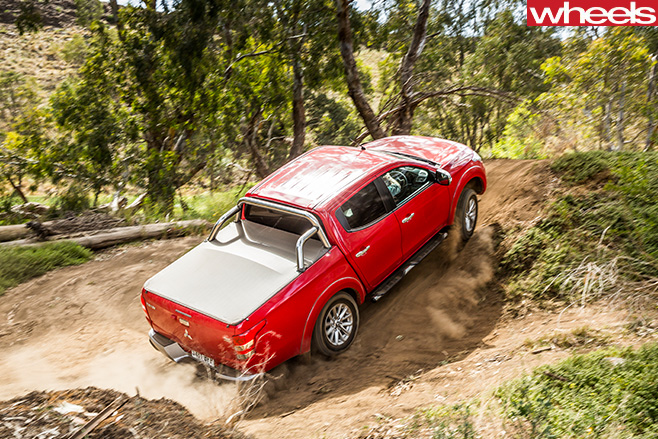
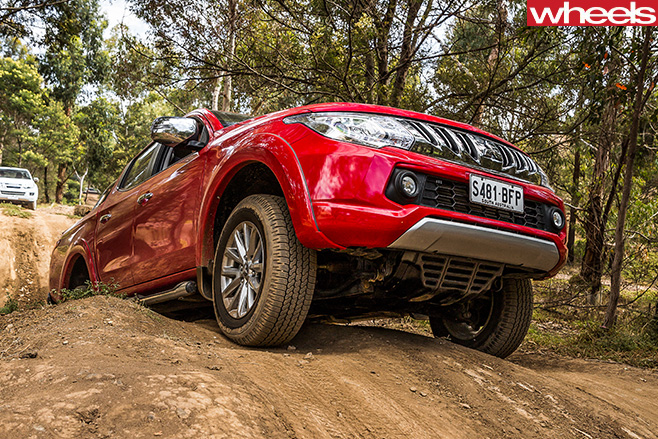
The Triton is at an initial disadvantage because it lacks a rear locker (it’s standard only in the top-level Exceed). Combine this with limited rear wheel travel and an unpolished traction-control system and the Triton does it tough on the gnarliest climbs. On the flipside, the full-time Super Select II 4WD system (in GLS and Exceed versions) means no switching between 2WD and 4WD when you go from tarmac to beaten track and back (you can engage 4×4 mode without locking the centre diff), which is handy. Compact dimensions aid manoeuvrability while the engine now picks up air from the guard rather than beneath the bonnet lip.
Stay tuned as we rank each contender in the Dual-Cab 4×4 ute mega test in the May 2016 issue of Wheels – on sale April 21.
 SPECS
SPECS
Model: Mitsubishi Triton GLS Double Cab
Price as tested: $43,490
Engine: 2442cc 4cyl, dohc, 16v, TD
Power: 133kW @ 3500rpm
Torque: 430Nm @ 2500rpm
Transmission: 5-speed automatic
Dimensions (L/W/H/W-B): 5280/1815/1780/3000mm
Weight: 1950kg
Tray capacity: 950kg
Braked towing capacity: 3100kg
Unbraked towing capacity: 750kg
Ground clearance: 205mm
Tyres: Toyo A28 Open Country 245/65R17
ADR81 fuel consumption: 7.6L/100km
0-100km/h: 11.5sec
0-400m: 18.3sec @ 125.8km/h
80-120km/h: 7.9sec
3yr resale: 61%
Plus: Punchier and roomier than before; long warranty; value
Minus: Electronic diff not standard; limp steering; busy ride
Verdict: 6.0/10
If you don’t hear the fastest production Bentley ever coming, then you won’t miss seeing the Continental GT Speed Black Edition hurtle past.
Not to be confused with the Continental GT Black Speed limited edition created only for the Australian market, the global unveiling of the Continental GT Speed Black Edition highlights its fastest-Bentley-ever status with wild colour schemes.
The 6.0-litre twin-turbocharged W12 engine has been massaged to 472kW and 840Nm, up 5kW/20Nm over the regular GT Speed. Claimed 0-100km/h drops by a tenth to 4.1 seconds, onwards to a 331km/h top speed, a winged-B PB.
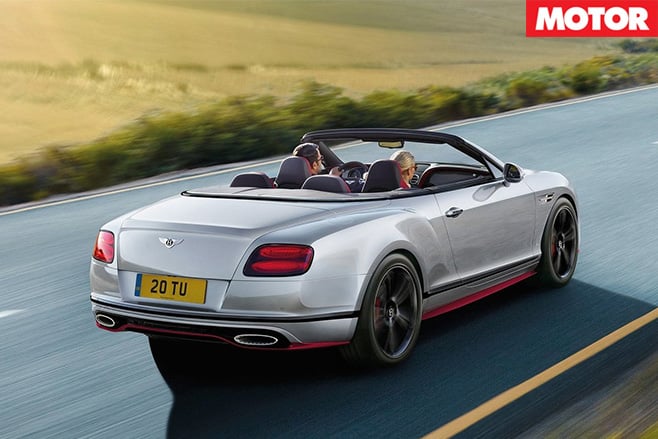
The Black Edition remains an eight-speed automatic-only proposition, but will be available in both coupe and convertible bodystyles.
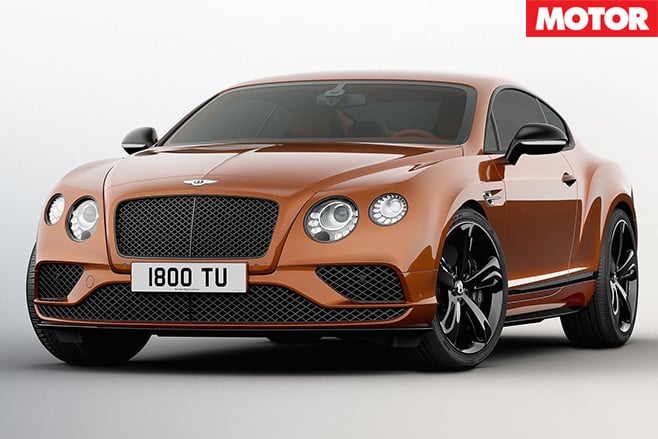
Brake calipers can be finished in red or black, while the front splitter, side skirts, door mirrors and rear diffuser are available in four “contrast” colours – metallic grey, gloss black, bright red and, erm, cyber yellow.
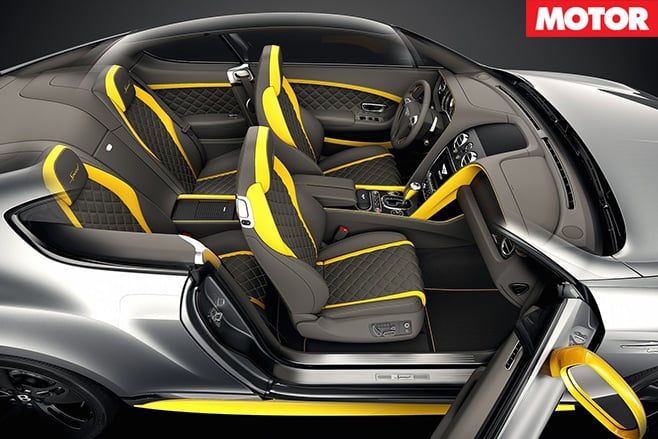
Bentley’s plant in Crewe, Cheshire, takes 110 hours to make each Continental GT, with the W12 monster requiring 12.5 hours and 30 staffers to assemble.
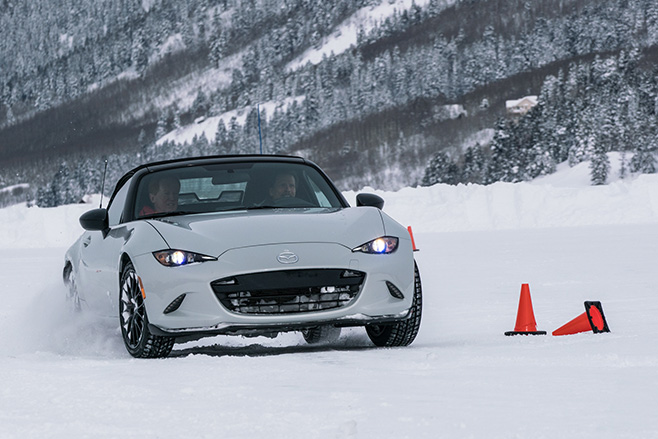
IT’S never much fun getting bogged. Even less so when you’re in a blizzard with a sports car far better suited to sunny top-down drives or twisting mountain passes.
But that’s one of the early challenges we’re facing on the inaugural Mazda Ice Academy driving the Wheels Car of the Year, the Mazda MX-5. As the name suggests, it’s all about cold weather and Mazdas – and the former is now bountiful in one of those enormous US snowstorms that shuts down airports.
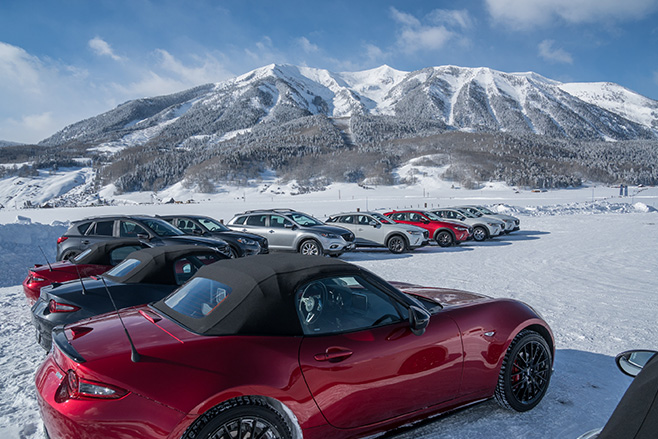
Despite days of sub-zero temps, I’m initially struggling to find any ice; it’s buried under the metre-odd of snow that has blanketed Crested Butte, Colorado, in the last couple of days.
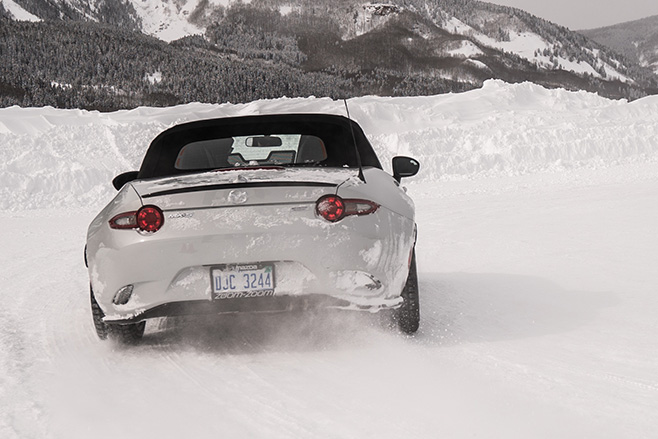
It’s not only traction that’s an issue on the freshly laid powder; the MX-5’s low-slung belly is brushing the tops of snow peaks getting increasingly bigger as the white stuff keeps tumbling.
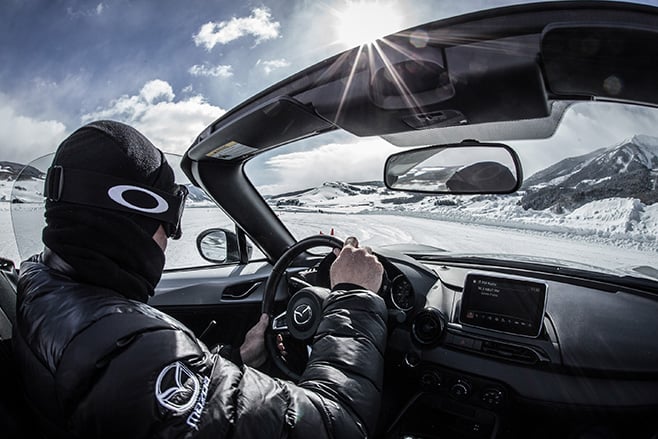
After a few external helping hands and some to-ing and fro-ing to free ourselves from the snow, we’re finally moving on a makeshift course mapped out by witches hats slowly getting buried under a blanket of white. It’s second gear everywhere, the modest 2.0-litre engine easily overcoming any semblance of traction. It’s also enormous fun.
But sliding the MX-5 is merely a sideshow to the main event. Mazda feels its all-wheel-drive system – dubbed i-Activ and fitted to the CX-3, CX-5 and upcoming CX-9 – isn’t getting the recognition it deserves, so there’s a fleet of SUVs on hand to convince us that the on-demand system is a step above much of the competition. Mazda has even brought along two prime CX-5 competitors in the form of the Subaru Forester and Honda CR-V.
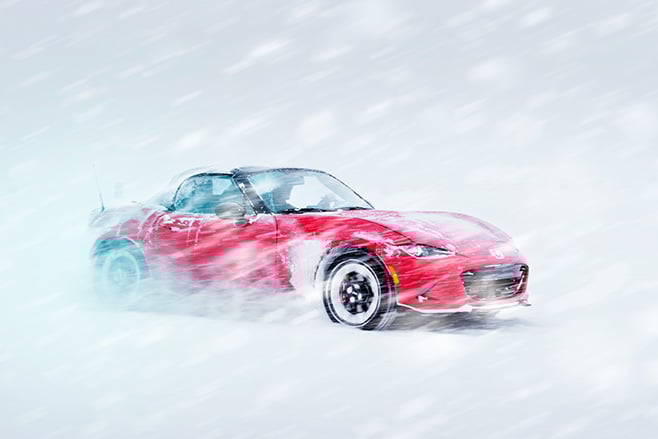
Mazda says it uses 27 sensors or systems – monitoring everything from windscreen wipers and external temperature to road speed, steering angle, g-forces and braking force – to predict when to bring all four wheels into play.
Instead of the reactive systems in many modern soft-roaders that wait for wheelspin and then react to temper it, the CX-5 is designed to anticipate – and almost instantaneously engage – when the rear wheels should assist the fronts. If it’s below-zero outside, for example, and the wipers are on, the car figures it’s probably snowing. Or if there’s a sudden change in steering load it could surmise there’s a slippery patch of water or oil on the road. With calculations and adjustments 200 times per second, the car will send drive to the rear wheels before they even get to the troublesome puddle, snow or ice.
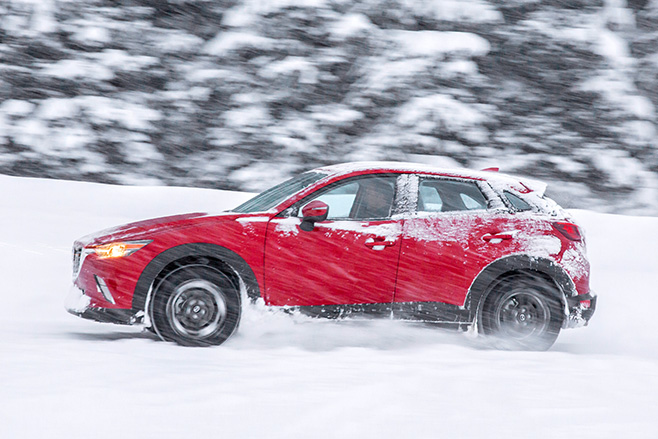
Driving the Mazda CX-5 in snow can even be a little playful, sliding its rump to help the pivot, although the stability control is ever-present to reign in too much fun.
Mazda Australia is keen to replicate the America-only Mazda Ice Academy – or parts of it – down under. So the company’s sales director, Vinesh Bhindi, is on hand to evaluate its effectiveness, not only in demonstrating some of the technologies being employed by Mazda but also how well such a course can engage with the company’s customers.
“It’s something we’re looking at embracing [for Australia],” he says, “to show the SkyActiv technology … and in particular for the SUV range in how the all-wheel-drive systems work and how they compete against what’s out there. There’s same-same but different.”
Clearly Subaru is a prime target. The Japanese rival has done a stellar job with its ‘All 4 The Driver’ campaign, to the point where its all-wheel-drive system is seen by many as one of the best available in terms of how it functions.
Mazda vehicle development engineer Dave Coleman admits they have ground to make up. “With all-wheel drive you’ll sail through on reputation – Subaru’s a great example of that,” says the 43-year-old Californian. “We lose a lot of sales to people wanting better four-wheel-drive systems and they’ll go to the Subaru, but really they’re walking away from a better system to go to one that they just think is better.”
Bhindi says Mazda needs to better educate car shoppers in what is an increasingly important segment of the market, with SUVs now accounting for more than one-third of sales.
“It’s more to educate consumers that Mazda has got a very advanced, sophisticated all-wheel-drive system,” he says. “Mazda is probably not known for that. We want to make sure that we educate people as much as we can.”
TYRING STUFF
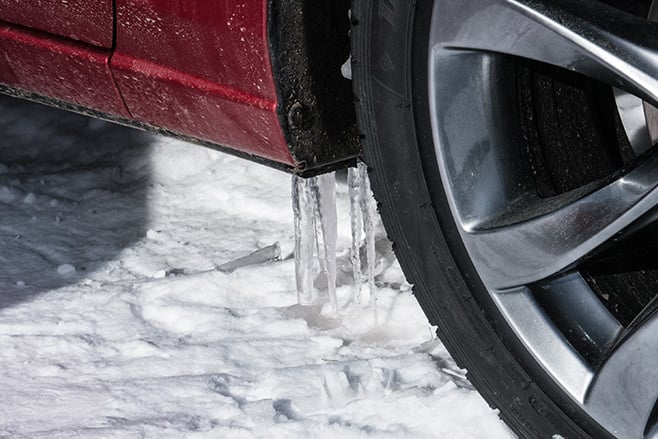
Specialised winter tyres are almost unheard of in Oz, but the Ice Academy showed how effective they are, especially under braking. Smashing the pedal from 40km/h saw the CX-3 with regular all-season tyres sailing on, the working ABS furiously. With chunkier winter tyres the stopping distance almost halved.
Bridgestone engineers say there are many factors at play, including a tread pattern designed to hold snow within the grooves rather than disperse it (as happens with water). Snow on snow apparently gives better grip than rubber on snow.
The rubber compound is super-soft (so unsuitable for regular driving because the tyres will wear out quickly) and includes a fine grit to help better ‘grab’ ice, rather than slide across it, while the tread blocks are quite angular and sharp on the edges, to bite into the snow.
Now read about the Audi Driving Experience on ice and the AMG Evolution driving experience at Phillip Island.
This article was originally published in Wheels April 2016.
What stands out?
Ford’s Territory is a big SUV with up to seven seats that is versatile inside, rides very comfortably and steers very well. Engines are strong too – a turbo-diesel V6 and a petrol straight six – and they drive through a great auto gearbox. The Falcon-derived Territory was a Ford Australia masterstroke in 2004, and after a decade of refinement it remains a winner.
What might bug me?
Getting used to the diesel: it takes a few moments to develop good power after you press the accelerator, especially from low speeds.Filling up petrol versions. Large SUVs – especially those with big engines – use a lot of fuel, and a petrol-powered Territory is among the most thirsty.
What body styles are there?
Five-door wagon only.The Ford Territory drives either its rear wheels or all four wheels, depending on the version. The Territory is classed as a large SUV, lower priced.
What features do all Ford Territories have?
Climate control air-conditioning (which maintains a set temperature). Cruise control, operated from buttons on the steering wheel. A reversing camera, and front and rear parking sensors. A power-adjustable driver’s seat. Projector headlamps, which are more effective than ordinary halogen beams.All Ford Territories also have an Interior Command Centre with an 8.0-inch colour touchscreen, voice control, iPod integration, 3.5mm and USB auxiliary input ports, Wi-Fi capability and Bluetooth phone integration.Wheels made from an aluminium alloy, which are usually more attractive than steel wheels. A full-size 17-inch steel spare wheel.Seven airbags: two directly in front of the driver and front passenger; one alongside each front occupant to protect the upper body; a curtain airbag on each side protecting the heads of front and middle-seat passengers; and a knee protection airbag for the driver.Electronic stability control, which can help the driver to control a skidding car. All new cars must have this feature.Every Ford Territory carries a three-year, 100,000km warranty.
Which engine uses least fuel, and why wouldn’t I choose it?
The 2.7-litre turbo-diesel V6 is the more economical of the two engines available in a Territory, using 8.2 litres/100km in official tests of rear-wheel-drive versions. The figure rises to 9 litres/100km in all-wheel-drive versions.The diesel uses about 25 percent less fuel than the alternative engine, a 4.0-litre in-line six-cylinder petrol.Turbo-diesel Territories are slower to respond to the accelerator than petrol versions, particularly from low speeds. They also cost about $3000 more. Nevertheless, the diesel makes most sense if you drive a lot of highway kilometres.All Territories drive through a six-speed automatic gearbox.
What key features do I get if I spend more?
Step past the least costly Territory, the TX, to a Territory TS and in addition to the standard kit you get front foglights, and windows tinted to reduce sun penetration. A TFT screen with crisper graphics enhances the 8.0-inch multimedia interface.There is a leather wrapped steering wheel and gear shifter, and the seats have leather trimmed bolsters on either side of the base and backrest. Dual-zone air-conditioning allows you to set different temperatures for each side of the cabin. The sound system is better. Wheel diameter increases an inch to 18 inches, and tyres of a slightly lower profile are fitted. The larger wheels lift the exterior appearance, and the smaller tyre sidewalls slightly sharpen the steering and handling.The TS also comes with a third row of seats, for a total of seven. (Deleting the third row is a no-cost option. Conversely, this third seating row is available on the TX at extra cost).The most expensive Territory, the Titanium, has satellite navigation, full leather seat trim, and a driver’s seat that remembers your settings. Wipers operate automatically when a sensor detects rain on the windscreen. LED daytime running lights make you more visible. Rear passengers can watch DVDs on a 10.2in screen. Aluminium front and rear scuff plates are among the cosmetic enhancements.
Does any upgrade have a down side?
Choosing all-wheel drive denies you the option of a petrol engine: all AWD Territories are turbo-diesel powered.The only standard colour is flat white. The remaining six are prestige colours available as extra-cost options.
How comfortable is the Territory?
The Ford Territory is a very comfortable family wagon, with an excellent cabin and a relaxing ride.The blend of ride and handling is more like that of a good passenger car than like most SUVs, perhaps because the Territory is derived from the Ford Falcon sedan.The Territory has a longer suspension stroke and taller tyre sidewalls compared with the Falcon, both of which contribute to superb isolation from poor road surfaces, whether corrugated gravel or potholed urban tar.It’s easy for front occupants to find a pleasant seating position, helped in the driver’s case by the standard power-adjustable seat (with manual backrest adjustment) and tilt and reach adjustable steering column. The seats are broad, and cushioned just right for long-haul comfort.Buttons and dials for the multimedia, air-conditioning and other minor systems fall within easy reach and are simple to operate.
What about safety in a Ford Territory?
The inclusion on every Territory of seven airbags, a reversing camera, front and rear parking sensors and voice control of the multimedia system constitute a solid standard safety package, contributing to a rating of Excellent for all models.The side-curtain airbags extend only past the first and second-row seats, however. That leaves passengers in the third row without head protection from side impacts.The Territory hides its age well in most areas, but it shows in the absence of active safety features such as automatic emergency braking.The Australasian New Car Assessment Program (ANCAP) awarded the Ford Territory its maximum five-star rating.
I like driving – will I enjoy this car?
You will enjoy driving a Ford Territory. It steers and handles much more responsively than most large SUVs at this price point.The electromechanical power steering doesn’t provide a lot of feedback from the front tyres but it is well weighted and reassuringly accurate.The chassis gives you a sense of cohesion and balance between the front wheels and the rears – the front tyres turn into corners enthusiastically, and all four tyres have a secure grip on the road. (By comparison, in off-road-biased 4WDs, such as the Toyota Prado, the front commonly has to be coaxed into corners, and the car can be unsettled by mid-corner bumps.)Rear-wheel-drive Territories are just as capable as AWD versions on dry, sealed roads, and even respond more eagerly when turned into corners. All-wheel-drive, however, is welcome on slippery or loose surfaces.The AWD Territories are also very capable of light off-road duty such as driving on uneven dirt tracks, helped by useful ground clearance (175mm) and good approach and departure angles. However, with neither a locking centre differential nor low-range gearing, they won’t go nearly as far as big 4WD wagons based on truck-type chassis, such as the Ford Everest.
How is life in the rear seats?
The Territory’s rear seat is comfortable and the rear compartment is spacious. The seat cushion is well bolstered and offers good under-thigh support, and the backrest is angled agreeably. There are air-conditioning outlets dedicated to the rear passengers. The DVD system in the Titanium version is a real plus for children (and their parents) on long trips.The third-row seats in TS and Titanium versions are equally roomy for children – and those are the occupants they were designed for.
How is it for carrying stuff?
Carrying stuff is the Territory’s forte. It has a total of 30 interior storage compartments, including a lockable security drawer under the driver’s seat, multiple cup and bottle holders, and (in five-seaters) wet storage bins and a reversible floor in the cargo bay.The window in the Territory’s tailgate opens separately, which is very useful for quickly and easily loading and unloading small luggage items.The second and, where fitted, third seating rows fold flat to liberate van-like cargo room. Even with all three rows upright, there is a useful 441 litres available. Whether the third row is absent or folded flat, the volume behind the second row of seats is 1153 litres.
Where is the Ford Territory made?
The Ford Territory is manufactured in Australia.
What might I miss that similar cars have?
A less thirsty diesel. The Hyundai Santa Fe and Kia Sorento, for example, each have a smaller turbo-diesel engine that offers similar power while using less fuel.An automatic emergency braking system, such as that found on the most expensive versions of the Hyundai Santa Fe and Toyota Kluger. These systems use sensors to detect obstacles in front of the car – typically another car that has slowed suddenly – and a computer sounds a warning and then applies the brakes if it concludes that a collision is imminent.The Hyundai Santa Fe offers a five-year warranty, and the Kia Sorento is warrantied for seven years.There are several seven-seat SUVs that are much more rugged and effective off-road than the Territory, while driving less well on hard surfaces. Among them are the Ford Everest, and the Toyota Landcruiser 200, Prado, and Fortuner.
Are there plans to update the Territory soon?
The Ford Territory went on sale in 2004 and has been updated several times since. This facelifted SZII version arrived early in 2015 and was the last Australian-built Territory, with production ceasing in October 2016. Ford said it would retire the Territory name, and did not immediately announce a replacement large SUV.
I like this car, but I can’t choose which version. Can you help?
The best value Territory is the least expensive, the TX. Our reviewers like the petrol rear-wheel drive version, given the responsive power of the big six-cylinder engine and the likelihood it would do most of its driving on sealed roads (as most SUVs do).
People who drive manuals are more in touch with their cars than those who drive auto-only. Driving a manual car forces you to engage with the car in ways an auto doesn’t. Slipping the clutch just enough, the snick of changing gears properly, always thinking in the back of your mind which cog is needed next. And perpetually engaged by the challenge of driving a manual smoothly.
Participation is significantly more optional while driving auto. Put the car in gear, accelerate, brake. The mind is free to wander. And here lies a problem.
Unless you’re a skydiving instructor, high-rise window cleaner or parking fine issuer, the most dangerous thing you’ll do on a daily basis is operate a car. You’re in control of a near two-tonne projectile of metal, glass and rubber, negotiating a hive of other road users just like you – and in turn, error-prone. A distracted mind behind the wheel is a deadly one.
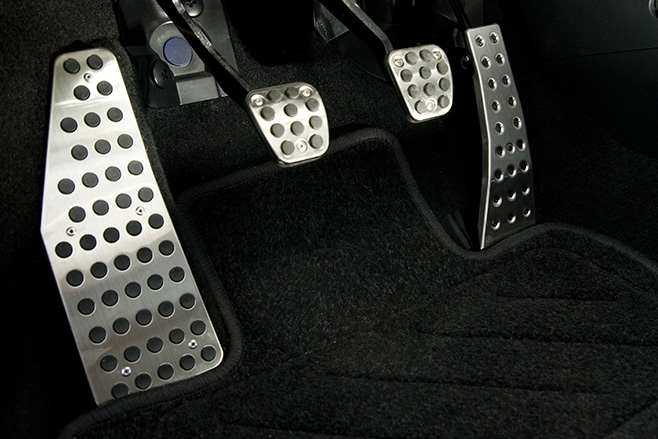
Teach your learner to drive a manual and you’ll be drilling into them a higher base level of concentration. And perhaps even an appreciation for the joy of operating a car itself. With enjoyment comes a willingness to engage.
And if your learner decides to drive an auto afterwards, the focus they may’ve put into changing gears could redirect to the road ahead. In theory. But they generally should pay more attention.
Now, as the editor of Australia’s leading performance car magazine and a voice for car enthusiasts across the nation, I might be a biased champion of the manual, but I’m certainly not just saying this to toe some cultural line. I’ve plenty of experience on the frontlines of learner drivers and I know this’d help.
But I do know this advice isn’t entirely practical. The minority of us would have access to a manual car for a learner. (An alarming number of learners have access to neither manual nor auto.)
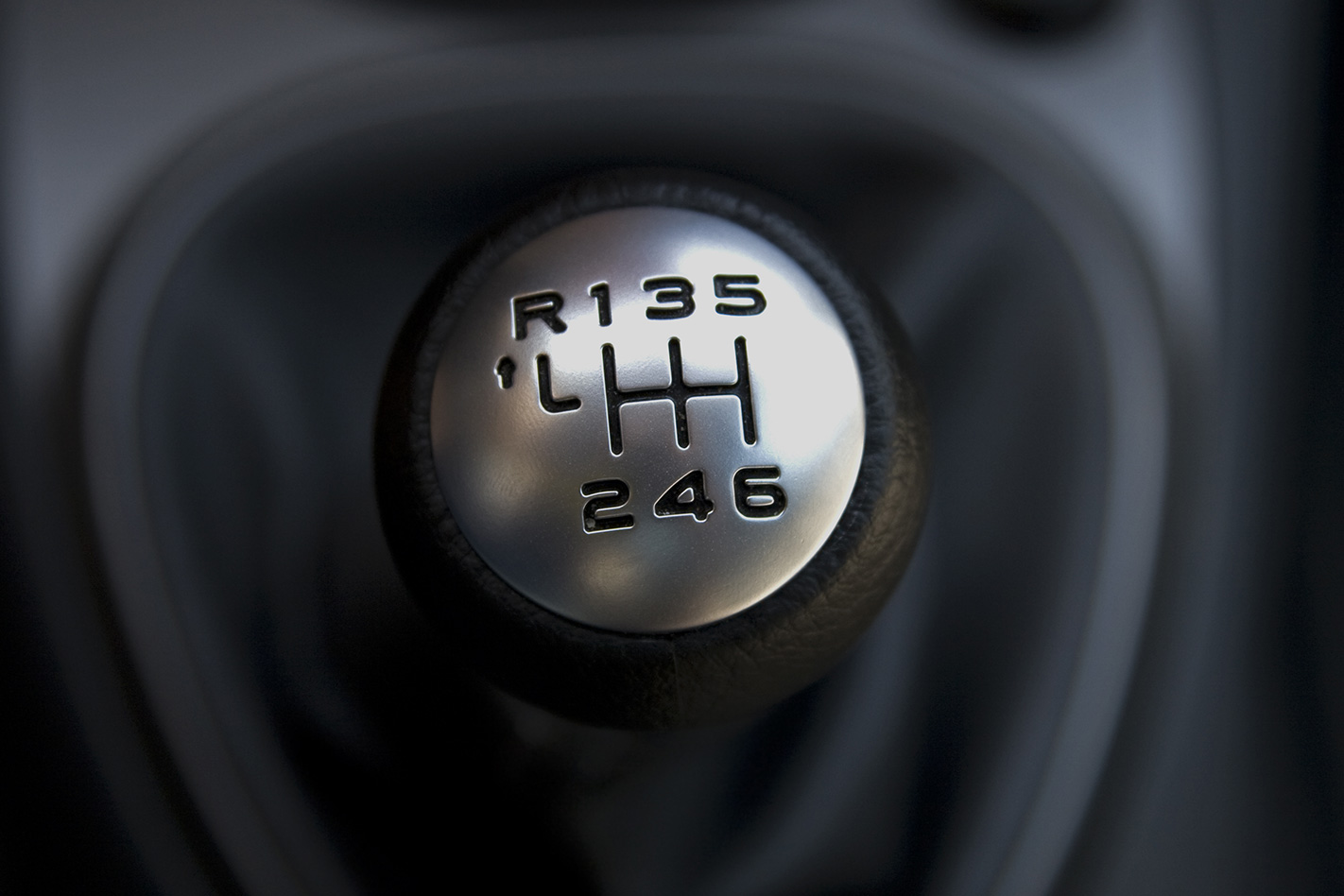
Even less practical, or likely, but should you have access to both, it’s a blessing. And the advice we’d give is, start your learner on the auto until about 40 hours’ experience and then, if you’re both reasonably ready, make the transition to manual.
Experience suggests there’s also such a thing as waiting too long to make the transition, learners becoming too comfortable with automatic and the switch to manual becomes a gulf too big to bridge.
And if it’s manual only from the beginning, there might be tears and tantrums as countless hours (and clutches) are spent in car parks and industrial estates, but if your learner is dedicated enough they’ll emerge with a manual licence – and be a better driver from the get-go, engaged with and attending to the dangerous business of operating a car.
When much of one’s time on the roads is simply avoiding obstacles and preparing for the unexpected, alertness is a commodity in increasingly short supply.
Looking to find the right car for a new driver? We have you covered with the most popular cars for teens and the safest cars for teens.
Dylan Campbell is the editor of MOTOR Magazine.
This month, Australians will see the new Abarth 595 enter the Fiat Chrysler Automobiles Australia fleet.
Priced from just $27,500 plus on-road costs, the Abarth 595 is set to be the cheapest Abarth ever to be sold in Australia.
The 595, produces 104kW from its 1.4 litre T-Jet turbo-petrol engine and will be available with five-speed manual or single-clutch automatic transmissions.
The mini sports car will fill the gap between the Fiat 500 Lounge ($21,000) and the Abarth 595 Turismo ($34,000), giving consumers an attractively priced sporty option.
Available as a hatch or convertible, the standard features of the Abarth 595 include 16-inch alloy wheels, air-conditioning, 7.0-inch TFT touch screen infotainment system and reversing sensors.
FCA has also hinted of a 180hp version arriving in Australia at some stage, but it’s no secret the manufacturer intends to continue to add to the already extensive range.
