
The Ford Mustang’s move to Australia this year has been successful, to say the least. In fact, the famed muscle car sold out locally before anyone even got the chance to drive it on Oz shores.
A massive 6000 orders for the mighty pony car have been taken, topping Ford’s projection by 25 per cent, making the Mustang Australia’s best-selling sports car this year. Ford has announced they will be bringing extra units to Australia to help ease the larger-than-expected waiting list that stretches out all the way to late 2017.
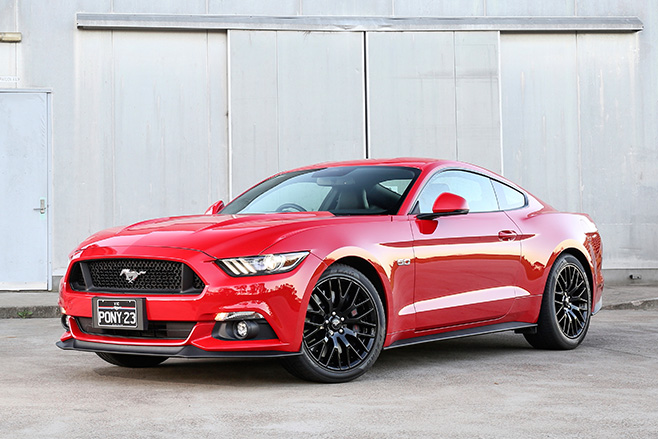
“The 2000 extra Mustangs heading for Australian shores demonstrates the excitement around the vehicle, and it validates Ford Australia’s commitment to invest in expanding our performance vehicle line-up to five models this year,” said Graeme Whickman, President and CEO, Ford of Australia.
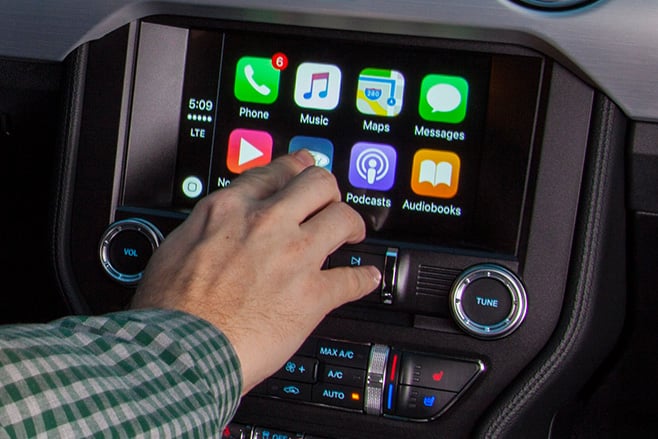
Unfortunately for 2016 Mustang customers, the new units will not be available until 2017 and will boast updated features such as new paint options, a spare wheel and a new infotainment system, Sync 3, which is much more than a simple software update. As a result, owners of the current Mustang will not be able to upgrade their system.
The Sync 3 system is a complete overhaul of the technology it replaces and is said to be much faster and easier to use. The Sync 3 aims to be better for driving with ‘smartphone-like’ controls using Apple CarPlay and Android Auto. In response to complaints, users of the new system will experience more intuitive voice control features and more advanced speech recognition capabilities.
The arrival of the new units will also provide new car colour options including Lightning Blue, White Platinum Tri-Coat and Grabber Blue. With the introduction of these new colours, existing options such as Deep Impact Blue, Competition Orange and Guard will be retired.
The four-cylinder EcoBoost variants will get a 19-inch steel spare wheel. However, the V8-powered Mustang GT misses out on this new feature due to its big Brembo brakes.
Despite the upgrades to the new units, Ford Australia is not altering Mustang pricing.
“Mustang has a bigger role as a flagship for innovations such as EcoBoost engine technology that we offer on other vehicles such as Focus and the Ford Kuga SUV to give customers a great blend of fuel economy and efficiency,” explained Graeme Whickman.
You may have never driven the iconic Laguna Seca circuit on California’s central coast, but you surely know it.
You know the daunting, spiralling drop they call the Corkscrew as vividly as you do Bathurst’s Dipper. You have watched cars (and bikes) get loose over the blind crest on the approach to the Andretti Hairpin. Your mind has strafed the apexes of the ultra-fast double left-hander leading up to the Rahal Straight.
It’s not a long track, but it is an epic one, lazily flung over a lumpy dry lakebed back in the mid-’50s. And it’s a circuit that’s now rightly seared into the memory banks of any true petrol head.
Yet here’s a fact you may not have seen coming: the new BMW M2 feels as though it knows Laguna Seca, too. Far from wilting under the punishment this place dishes out, the M Division’s new junior entrant laps it up, feeling reassuringly composed under max attack, as well as wonderfully edgy and entertaining.
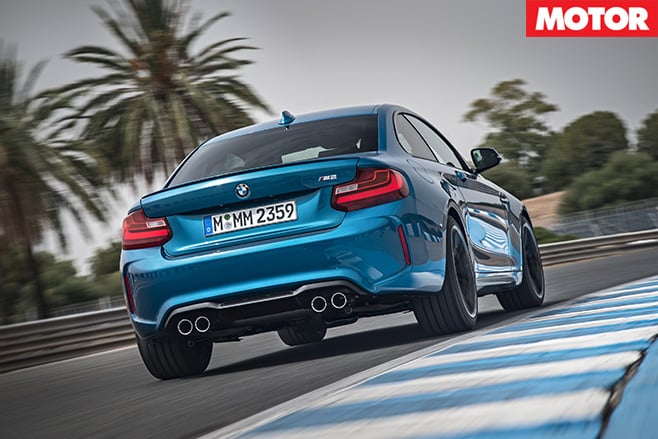
Priced from just $89,000 (manual-only Pure), the M2 undercuts big-bro M4 by around $50,000. It is set to compete in the zone occupied by Audi’s RS3 ($78,900) and Merc’s AMG A45 ($75,800), and it justifies the price premium over the $77,500 M235i by incorporating a number of key M4 hardware elements. It’s also far more mature and refined than its predecessor: the edgy, angry little 1 Series M Coupe from 2011.
Consider the focus: while the M235i can be had as a convertible, or even in all-wheel-drive form in overseas markets, the M2 is offered only as a rear-drive coupe.
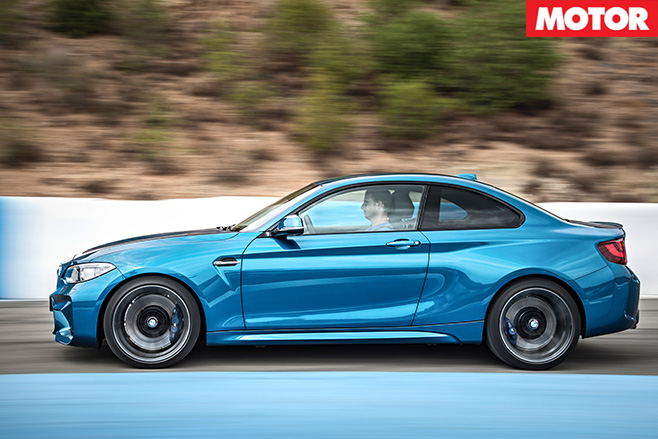
Visually and conceptually, the M2 picks up the theme pioneered by the 2002 Turbo and carried on by the 1 Series M Coupe. Being crafted around the evolutionary 2 Series body is a fine start. The black 19-inch wheels with polished double spokes, the lipped bootlid framed by LED tail-lights, and the M4 overtones, including the trademark M fins in both front guards, all make the visual message clear.
Those guards also incorporate vents to reduce drag resistance and increase downforce, while the mean-looking sculpted front bumper runs three hungry air intakes. Neatly crafted side skirts and a bespoke rear apron housing the four chromed tailpipes complete the exterior changes. It’s predictably M, but it’s cohesive and convincing.
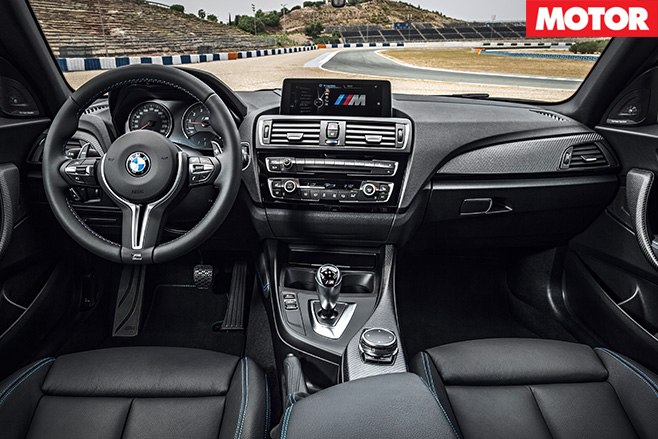
Our test car is equipped with the manual transmission and weighs in at a claimed 1495kg. As we head out for a road drive, I search the back of my mind for recollections of the 1M Coupe and the current M4. Like the 1 Series M Coupe and the M4, the M2 relies on a turbocharged 3.0-litre in-line six, here rated at 272kW/465Nm; the M4 motor is good for 317kW/550Nm.
So it should cop a belting from its big brother, right? Not quite. On track the M4 lead car fought a neck-and-neck race with our M2 without once managing to open up a noteworthy gap. Through second- and third-gear turns, the lighter and more chuckable M2 neutralised the power and torque advantage of its bigger stablemate.
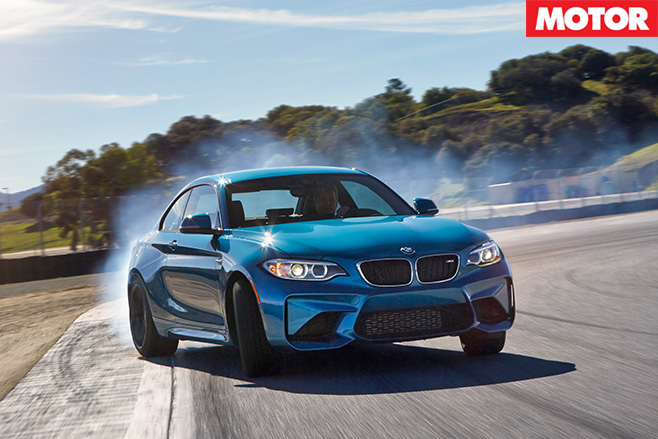
The narrow performance gap shrinks further to a token one tenth when you compare the fourth-gear acceleration times from 80-120km/h – a claimed 3.5sec against 3.6sec. As far as the top speeds are concerned, both the M2 and M4 are limited to 250km/h. Opt for the M Driver’s Package and the reprogrammed limiter will permit 270km/h and 280km/h respectively, although it’s a marginal difference and of little relevance to Aussie buyers.
More curious is the spec strategy. Unlike most of its rivals, the M2 takes a one-spec-fits-all approach. To keep cost and complexity to a minimum, nice-to-have options including the adaptive M suspension, M carbon-ceramic brakes, M Competition Pack and adjustable damper settings are conspicuous by their absence.
Instead, the junior M car relies on non-adjustable springs and dampers, a run-of-the-mill driving experience selector (mode switch), and the useful M Dynamic Program (MDM), which fuses a quicker steering action with a more liberal stability control and a diff that delivers mild power oversteer.
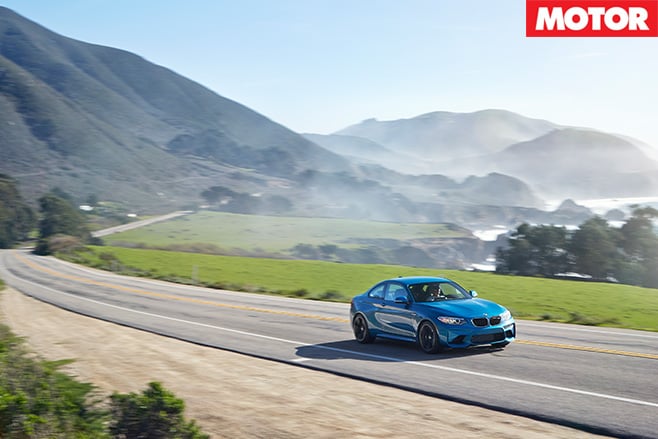
Despite this dynamic focus, there’s enough compliance built into the chassis and the Michelin Pilot Sport tyres to absorb midsize potholes, yawning cracks in the tarmac, camber variations and washboard surfaces. Compliance is a big step towards control, and control is a prerequisite for confidence.
Compliance smooths the flight path of the M2 by filtering out any nervousness or uncouth behaviour on imperfect blacktop, banishing vertical disturbances and clearing the communication path from road to car to driver.

The front end has clearly been tuned to soak up serious topographic vagaries before they upset the car’s composure or feed negative messages through the steering wheel. The rear end, fat and squat, has a slightly narrower tolerance zone, which can easily be squashed to zero by loading up the rear wheels with torque on slippery or pock-marked terrain; rather than just unleashing the upper end of the power curve.
It’s a contrast to the more brittle, firmer and quite aggressive set-up of the M4, a car known to activate DSC intervention even at 240km/h on a bumpy autobahn. The 1 Series M Coupe was even rougher and cruder, and it was so unsettled and twitchy at very high speeds that M Division elected to offer a retrofit stabilising aero kit on request.

Lift off in the middle of a 160km/h bend taken at nine-tenths? No problem. A quick lane change combined with crosswinds? Drama-free. Jamming on the brakes at autobahn speed, ready for an emergency swerve onto the hard shoulder? No sweat. The absolute deceleration is sufficiently urgent, and that hair-raising rear-to-front weight transfer which threatened to kick the 1M Coupe off line has all but disappeared.
On track the MDM keeps the car on a short leash. But with DSC off, the M2 is keen to leave its black rubber signature on the bitumen and deliver an almost cinematic throttle-steer experience. The wider front track not only sharpens the turn-in, it also adds an extra dash of stability to the cornering bite.

The creamy and predictable handling remains intact through the slower twisties, in and out of hairpins, cutting uphill curves, or when carving down winding descents with screeching enthusiasm.
Unlike the M coupe, which needed to be wrestled hard from apex to apex, and unlike the M4 which is blunter and less patient, the M2 wants to please and entertain. It has fewer rough edges than the other two M cars, its limits have a reassuringly wide boundary, and its fractionally less emphatic reactions to inputs make it more linear and less tricky.
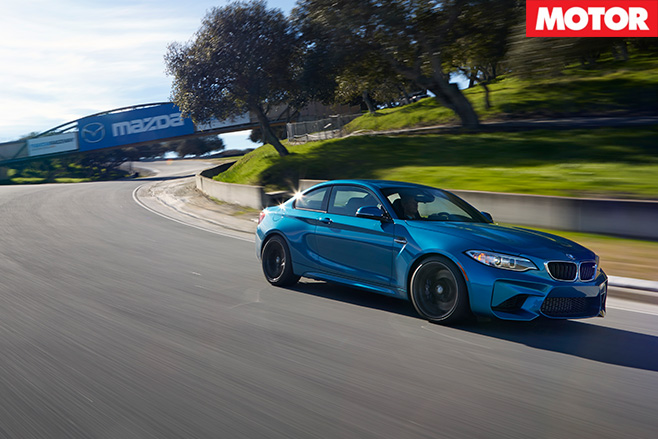
The M2’s rack, thankfully, doesn’t illicit those feelings. In Sport, the speed-sensitive support is unobtrusive, but never gluggy or dulled. Even the critical transition from the unassisted straight-ahead position to any degree of lock is imperceptibly smooth. While the helm firms up ever so slightly to help maintain a chosen angle, it refrains from enhancing or diminishing the overall steering weight. And I’ll say this: memory may be a fickle thing, but I’d argue that the M2 steering could be a match for the E46 M3 in terms of haptic clarity and fluent action.
The M2 comes standard with the so-called M compound brakes borrowed from the M4, which are lighter and more powerful than the stoppers on the M235i. The bigger drilled and inner-ventilated cast-iron discs – 380mm in the front; 370mm in the rear – and the fatter blue calipers bite at the first stab and arrest as much energy as the driver’s right hoof can summon.

The days of the normally aspirated BMW six-cylinder petrol engine are long gone. Having said that, not every straight-six turbo out of Munich is genetically related. The M2 engine uses the same pistons as the M4 unit, but it’s not a bespoke M division powerplant; rather, it’s an upgraded AG engine. Despite the TwinPower nomenclature, boost pressure is provided by a single twin-scroll turbo. The power curve peaks at 6500rpm where 272kW is on tap.
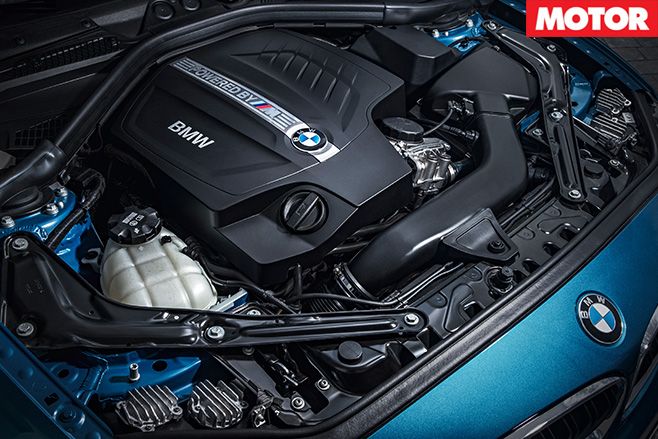
But it does like a drink. BMW quotes a combined fuel consumption of 8.5L/100km, which is realistic wherever speed limits are strictly enforced. In a more liberal environment, however, it took us less than 300km to empty the 52-litre tank (two hours later the second fill was also half-drained).
Redlined at 7000rpm, the M2 engine attempts to combine the best of both worlds: a distinct willingness to rev and enough grunt to spin the rear wheels in second gear, in the dry. The M4 is the more vocal car, but its little brother still sports a voice which ranges from velvety to irate. The mechanical noises are dense, loud and sonorous. As the engine speed picks up, the hum becomes a throb, then a roar, to barely street-legal thunder.
But which transmission to choose? The six-speed manual is commendably quick and slick, and in Sport or Sport Plus the software will automatically blip the throttle as you downshift.

Confession time: I don’t find the competent but cold M4 truly desirable. For me, the M4 feels a bit like a slimmer and more compact M6, while the M2 feels to be a different animal; closer in both ability and emotional connection to the coveted E46 M3. But I need to know for sure.
So before it gets dark, we find an empty country road within striking distance of Laguna Seca – nearly 30km of winding, diving, rush-out bliss. There’s enough time left for a brisk recon to check out the tricky sections and to scan the lay-bys and side roads for cops in hiding.

In many ways, this entry-level M car encapsulates qualities we thought the revered M Division had left behind about two generations ago. How brilliant to see them back.
4.5 out of 5 stars
Specs Body: 2-door, 2+2-seat coupe Drive: rear-wheel Engine: 2979cc straight-6, DOHC, 24v, turbo Bore/stroke: 84.0 x 89.6mm Compression: 10.2:1 Power: 272kW @ 6500rpm Torque: 465Nm @ 1400-5560rpm Power/weight: 182kW/tonne Transmission: 6-speed manual Weight: 1495kg Suspension (F): struts, A-arms, dampers, anti-roll bar Suspension(R): multi-links, coil springs, dampers, anti-roll bar L/W/H: 4468/1854/1410mm Wheelbase: 2693mm Tracks: 1579/1601mm Steering: electrically-assisted rack-and-pinion Brakes (F): 380mm ventilated discs; 4-piston calipers Brakes (R): 370mm ventilated discs; 2-piston calipers Wheels: 19.0 x 9.0-inch (f); 19 x 10.0-inch (r) Tyre sizes: 245/35 ZR19 93Y (f); 265/35 ZR19 98Y (r) Tyres: Michelin Pilot Super Sport (f/r) Pros: Return to form for M division; handling; pace; involvement Cons: Could handle more grunt; small fuel tank Price: $89,900 (Pure)
The Hyundai i30 has threatened to enter the battle to be Australia’s favourite car of 2016 after topping the sales charts in March.
Hyundai’s hatchback recorded 4198 units last month, according to the latest official industry figures, to move it up to fourth place overall with 8511 sales after the first quarter of 2016.
Mazda 3 sales slipped nearly eight per cent year on year, though 3145 units in March ensures the small car’s 10,221 total stays ahead of the Toyota Corolla (9825) and Toyota HiLux (9499).
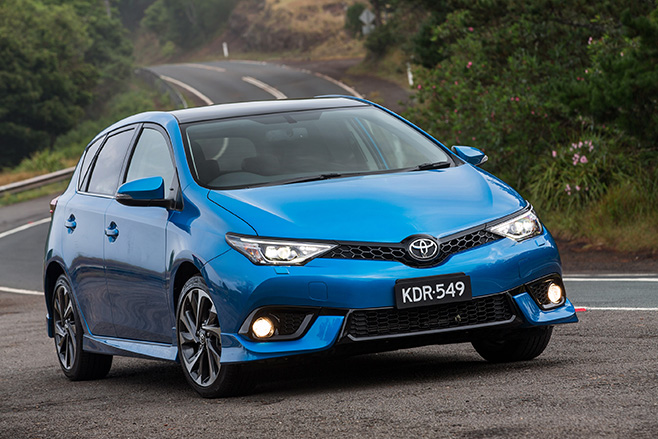
Passenger car sales continue to decline despite the popularity of the i30, 3 and Corolla (pictured above), with Australians continuing to flock to SUVs.
SUVs have increased their share of the total vehicle market from 34.3 to 38 per cent compared to this time last year. In the same period, passenger cars account for 41.5 per cent – down 4.9 per cent.
In terms of sales numbers, the gap between passenger cars and SUVs is just 10,055 units after the first quarter. That figure was 33,538 at the end of March 2015.
No individual SUV looks set to contest the race for best-seller status despite the incredible overall popularity of the high-riding-wagon body style.
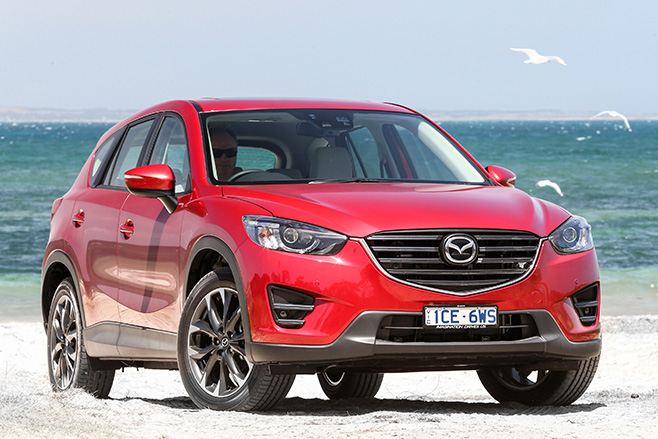
Australia’s best-selling SUV, the Mazda CX-5, has sold 6158 to date in 2016.
It’s outsold so far by two utes – the Toyota HiLux (9499) and Ford Ranger (8033).
March year on year sales for the Australian market are down 0.5 per cent, though year to date sales have increased 2.8 per cent.
Top 10 Most Popular Vehicles – March 2016
| Rank | Model | Sales |
| 1. | Hyundai i30 | 4198 |
| 2. | Toyota HiLux | 3897 |
| 3. | Toyota Corolla | 3612 |
| 4. | Mazda 3 | 3145 |
| 5. | Ford Ranger | 2960 |
| 6. | Mitsubishi Triton | 2740 |
| 7. | Holden Commodore | 2559 |
| 8. | Mazda CX-5 | 2252 |
| 9. | Hyundai Accent | 2034 |
| 10. | Nissan X-Trail | 1991 |
Battle for the 2016 No.1 Sales Spot – to March
| Rank | Brand | Sales |
| 1. | Mazda 3 | 10,221 |
| 2. | Toyota Corolla | 9825 |
| 3. | Toyota HiLux | 9499 |
| 4. | Hyundai i30 | 8511 |
| 5. | Ford Ranger | 8033 |
As the speedo climbs through 220km/h, the instructor’s calm monologue continues. “You’re too conservative, braking too early going into Turn Two. This time I’ll tell you exactly when to brake; trust me. And when I do, hit them hard. Full pressure from the moment I tell you. Trust me…”
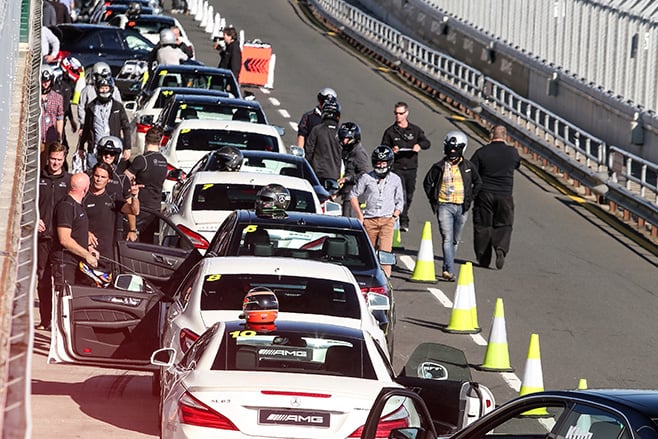
I’m in the Mercedes-AMG C63 S, the latest one with the same 375kW twin-turbo V8 as the AMG GT S supercoupe. The speedo is beyond 230km/h and still climbing. Phillip Island’s start-finish line flashes past under our wheels, and Gardner Straight plummets down towards Bass Strait into Doohan Corner, named possibly because five-time motorcycle world champion Mick Doohan crashed there spectacularly while leading in 1998.
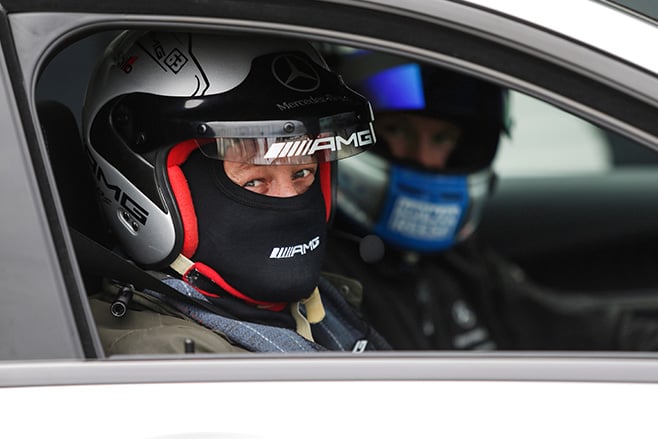
Today I’m one of 30 people being put through one of the fastest and most challenging driver experiences Mercedes-Benz Australia has to offer. It’s the AMG Evolution advanced driving course, and you have to be invited to participate. Invitations are only extended to those who have completed Benz’s four other courses and who the instructors deemed competent enough to attack the fearsome high-speed curves of this famed circuit at full noise.
For most of the attendees, accepting the invitation lightens their bank account by $3000, plus the cost of getting to the track. But they’ve already invested at least double that completing the four previous courses. And they all own AMGs – that’s a prerequisite – so it’s safe to assume they’ve made six-figure contributions to the brand.
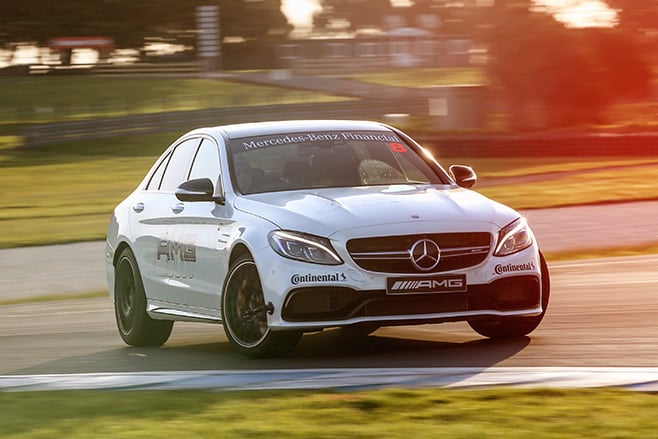
For these owners it’s all about speed. The art of going fast around a circuit. It’s about laying down a hot lap, the hottest lap you can do. And to make sure it really is the best you can do, there’s a bona-fide race driver in the car with you, whose job is not to drive you around the track, or show you the tricks. They are just a voice, guiding, exhorting, cajoling and at times good-naturedly berating you in the collaborative search for another tenth of a second off your lap time.
Sometimes they’re also a hand on the wheel, tugging you harder into the apex, helping you find the fast line. Initially it’s disconcerting, and not a little scary, because I thought I was already on the edge of adhesion, and this hand yanks the wheel even harder. Inevitably the C63 responds, carving even more sharply into the bend. Understeer, it turns out, is a valid way to wash off speed into the apex.
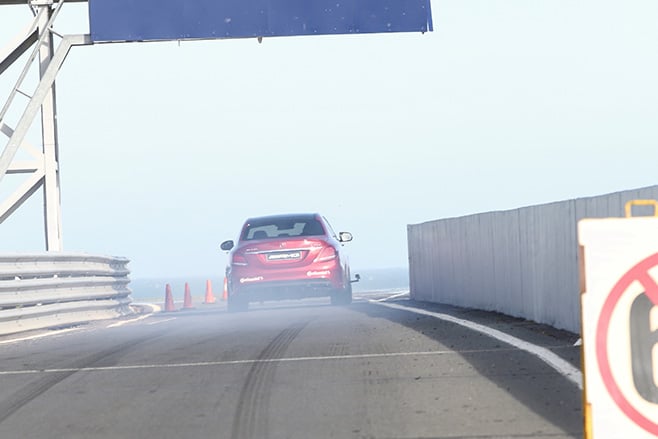
For Mercedes-AMG it’s not about lap times. It’s about demonstrating the sporting prowess of their fastest cars. It’s about giving owners the opportunity to see what these cars are really capable of – in their own hands, not those of a pro. A hot lap with a gun race driver is exciting – as many participants on the day can testify after being shown Phillip Island from the passenger seat of an AMG GT S – but nothing makes for a bigger grin than actually being the nut behind the wheel, reeling off ever-faster lap times, braking a little later, punching out a little harder, hitting a higher top speed.
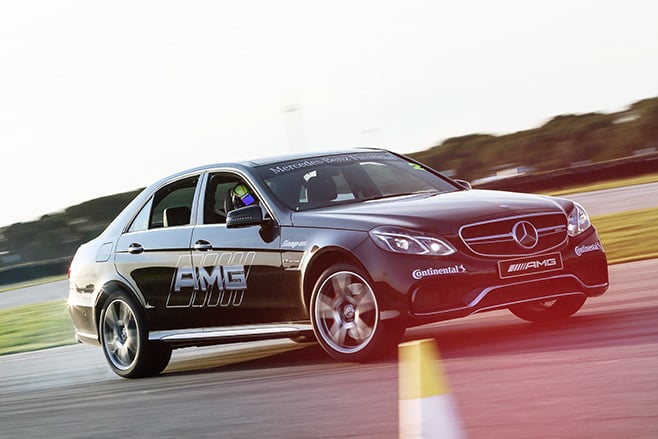
“For the Evolution AMG driving course it’s about precision, finesse and consistency,” says chief instructor Peter Hackett, “but also to take you a little out of your comfort zone. We want to show you what the cars are capable of. We want you to experience that from the driver’s seat. We’ve got the best instructors. And the backdrop of Phillip Island is just icing on the cake.”
It’s an intoxicating mix for sure; picturesque track, high-performance cars and one-on-one tutelage from pro racers.
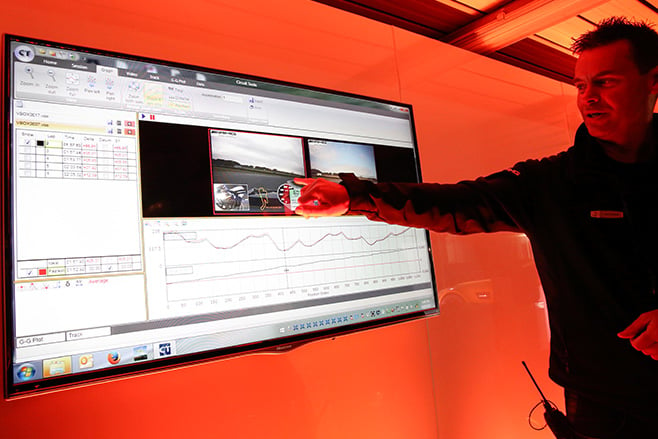
Mercedes-Benz throws a lot of money and resources at programs like this in Australia, and around the world. It’s partly about showcasing the machinery, and about giving owners a memorable experience.
It’s also good business because attendees at one of the 15 AMG drive days held each year in Australia are more likely to become repeat buyers.
This article was originally published in Wheels April 2016.
One only has to crawl around the convoluted roads of Sydney for the perfect insight of a city that has flown from colonial to industrial without the right infrastructure to handle demand. When a city expands rapidly without forethought to its roads, you end up with one heck of a congestion problem, roads constantly in a state of repair or build, and expensive traffic band-aids such as tunnels and tollways.
Sydney has taken about 200 years to outgrow its transport infrastructure so imagine what happens when farmland turns into a full-on industrial mecca within just 25 years. This is precisely what has happened in Gurgaon, India.
Nicknamed the “new New Delhi” by many travellers and located just 30km outside of its elder namesake, Gurgaon sprung up as an industrial power so rapidly that its roads have never been able to handle the population, which is reaching past two million. Adding to the chaos is the co-habitation of said roads by cows, which are reverently steered around as per Indian religious tradition, despite some of these roads being up to eight lanes wide. The city may be one of the top hubs for industrial efficiency and emerging tech, but its roads are quite the opposite.
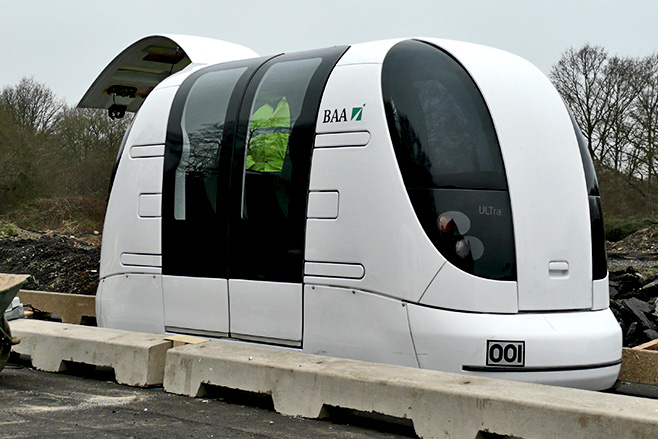
Instead of taking years to rebuild, tunnel under, pass over or revolutionise the path for the modern motor car, the Indian National Highways Authority is looking to driverless pod taxis.
Using Gurgaon as the guinea pig, the Indian government hopes to test out the feasibility of the system, called a personal rapid transit (PRT) network, on a 13km commuter stretch. The tender will go out in the next fortnight with requirements that the network consists of 1100 pods capable of moving up to five people across 16 stops. With a speed of around 60km/h, it could shift 30,000 people in an hour.
While it may look like a mini monorail, the system is not hemmed in to an overhead rail and singular timetable. This is what makes it more like a taxi – closer to car than cable-car. The pods do not have to stop at every station or remain in a conga line; pods can have a destination pre-selected and shoot off to any of the 16 stations directly; a single person or a group of people wanting just the one stop can ‘hire’ the pod to take them straight to the station of their choice.
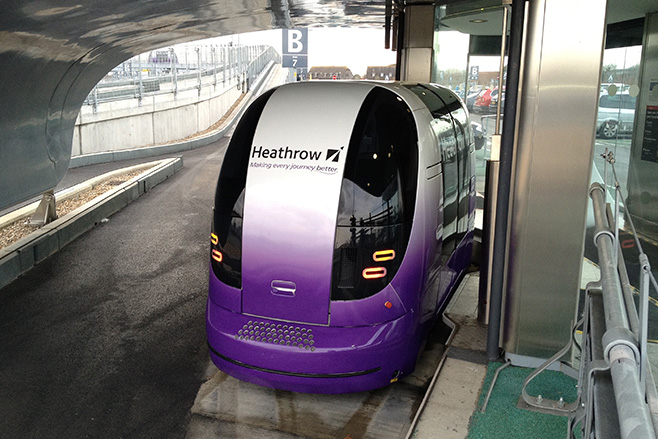
While it’s no car replacement, it does not require the infrastructure and lengthy test processes we are currently seeing in the driverless road car arena. This system could be up and running in a year, providing the right builder and $128 million is found for the project.
In contrast, a kilometre of metro rail versus the pod rail is almost four times more expensive, while a monorail would be almost three times the cost. Building roads and tunnels for cars are of a similar expense, with negligible results considering the population rise in Gurgaon.
A similar system has been employed with success in the United Arab Emirates, and London is set to launch its driverless pod system in July; a track-based system currently utilised in Heathrow airport and expanding to a network around Greenwich.
Why is this important to drivers and not to public transport users? The driverless pods, while on tracks now, are part of a larger vision to create a network of driverless pods without tracks; another step towards a truly autonomous future.
Volvo’s Polestar models have a new star of the show – a 2.0-litre turbocharged and supercharged four-cylinder engine.
As exclusively revealed by MOTOR earlier this year, the latest Polestar S60 sedan and V60 wagon versions have switched from 3.0-litre turbocharged six-cylinder power to ‘twincharged’ four-cylinder propulsion borrowed from the XC90 large SUV.
Producing 270kW at 6000rpm and 470Nm between 3100rpm and 5100rpm, power is up 13kW and torque down 30Nm compared with the original Polestars that launched locally in 2013.
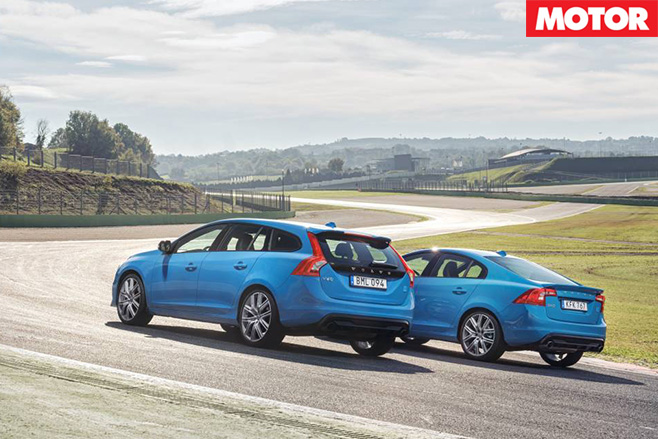
The new engine is 24kg lighter than the six-cylinder it replaces, contributing to a 20kg total weight-loss for the 1751kg S60 and 1796kg V60.
An eight-speed automatic replaces the previous six-speed unit, and a launch control function enters to help make the latest Polestars the fastest road cars Volvo has ever produced.
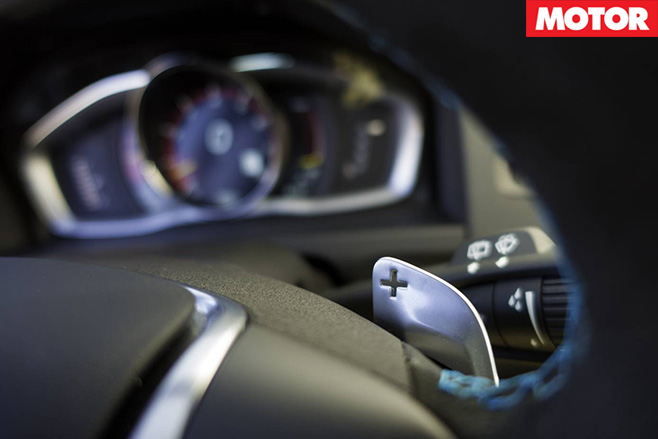
Volvo’s go-fast division has worked on the Borg Warner all-wheel drive system “for more rear torque dynamic distribution” and added a dedicated Sport+ mode with new “Polestar optimised” stability control and steering calibrations.
Manually adjustable Ohlins dampers continue unchanged, with 80 per cent-stiffer springs compared with the S60/V60 T6 R-Design models, as do standard 20-inch alloy wheels wrapped in Michelin Pilot Super Sport rubber.
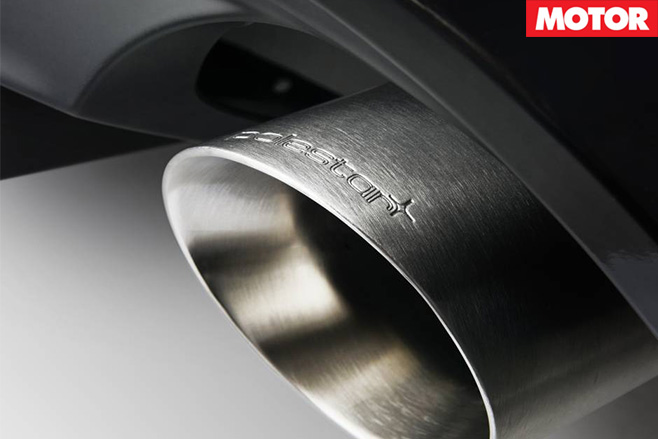
Polestar will use its latest S60 and V60 to coincide with a global market expansion, from 13 to 47 countries where it will be sold, and with Swedish manufacturing doubling to 1500 cars per year.
In terms of global rivalry, however, Polestar has failed to wrestle Mercedes-AMG for the title of most powerful production four-cylinder, falling short of the A45/CLA45/GLA45 trio by just 10kW and 5Nm.
There’s never been a better time to review the dual-cab 4×4 class of 2016 than right now. Wheels pitches eight of the biggest sellers in the segment for the title of King of the Heap. Here’s number seven, the Holden Colorado.
HOLDEN’S entrant may have a face that clearly links it to the family, and a Lion logo the size of a Frisbee, but it was developed by GM in Brazil, has an Italian engine, is built in Thailand, and shares chassis and body hardpoints with the Isuzu D-Max. The tuneable bits (springs, dampers and anti-roll bars) received attention from Holden, with a softer tune to make on-road dynamics more palatable for buyers used to unibody SUV comfort levels.
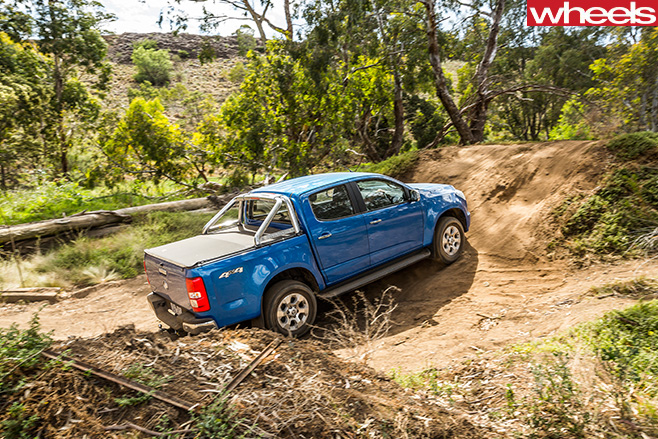
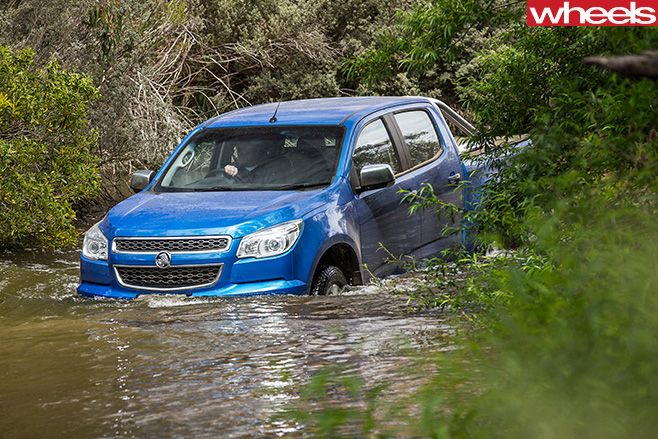
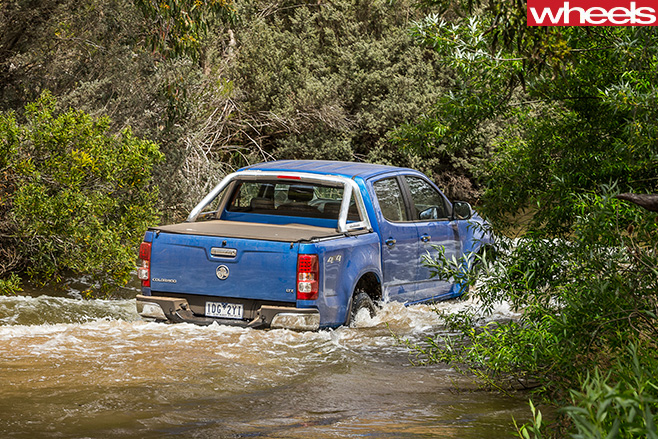
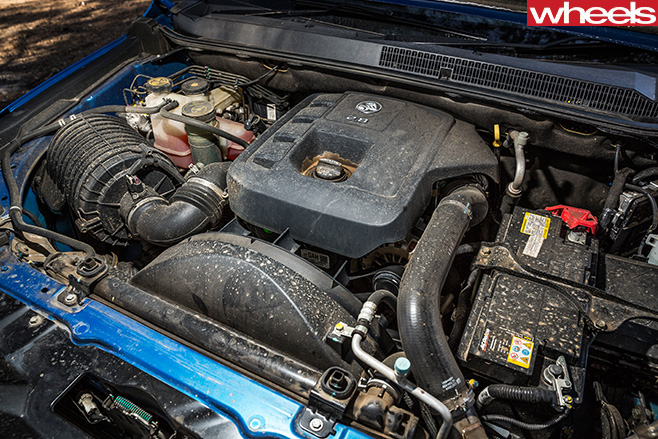
On dirt, the ESC is deftly calibrated to quickly curb spinning wheels and gently restrict slides, but over corrugations the steering kickback reaches eye-widening levels. At least the fast-acting ABS allows you to quickly scrub off speed to something less likely to cause further affront from the steering.
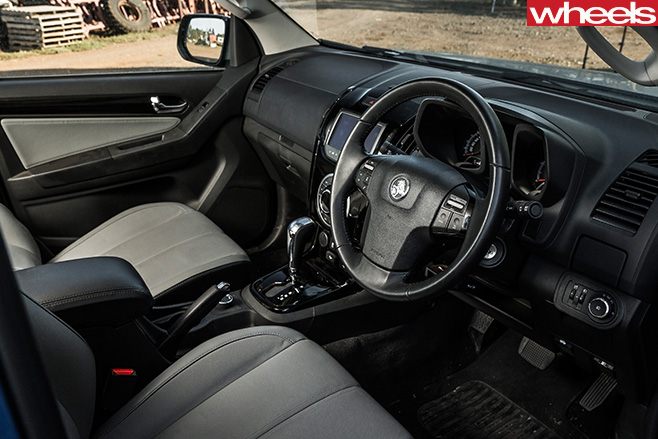
It’s a shame the platform and engine are well short of what’s needed, but Holden is working on another round of upgrades (due later this year) aimed at addressing drivetrain NVH issues, and improving cabin quality and functionality. We’re not expecting miracles, but if you’re wedded to the brand, it could be worth waiting to see what the updated model brings. For everyone else, keep reading.
Off-road performance
Like all the contenders here bar the Amarok, the Colorado offers a low-range four-wheel-drive mode. But the lack of a rear diff lock does put it at a disadvantage when the going gets properly steep and snotty. Granted, most owners would not attempt the almost absurdly steep and deeply rutted trail used by our test team, but it was telling that more than half the field was able to make the climb. The Colorado didn’t – only just – once the rear axle hit max articulation and traction headed south.
Stay tuned as we rank each contender in the Dual-Cab 4×4 ute mega test in the May 2016 issue of Wheels – on sale April 21.
 SPECS
SPECS
Model: Holden Colorado LTZ Crew Cab
Price as tested: $53,190
Engine: 2776cc 4cyl, dohc, 16v, TD
Power: 147kW @ 3600rpm
Torque: 500Nm @ 2000-2200rpm
Transmission: 6-speed automatic
Dimensions (L/W/H/W-B): 5347/1882/1780/3096mm
Weight: 2119kg
Tray capacity: 825kg
Braked towing capacity: 3500kg
Unbraked towing capacity: 750kg
Ground clearance: 210mm
Tyres: Bridgestone Dueler H/T 255/65R17
ADR81 fuel consumption: 9.1L/100km
0-100km/h: 10.2sec
0-400m: 17.4sec @ 130.6km/h
80-120km/h: 7.9sec
3yr resale: 59%
Plus: Largest engine capacity so high torque; comparatively swift
Minus: Gruff engine; wobbly on-road dynamics; chintzy interior
Verdict: 5.0/10

NO DOUBT you have heard predictions that sometime in that hazy destination called The Future, car dealerships will no longer exist.
All cars will be bought online, and delivered to your driveway via a flock of heavy-lifting drones.
Apparently consumers don’t like car dealerships much – and especially not young hip things who really aren’t much into cars in the first place.
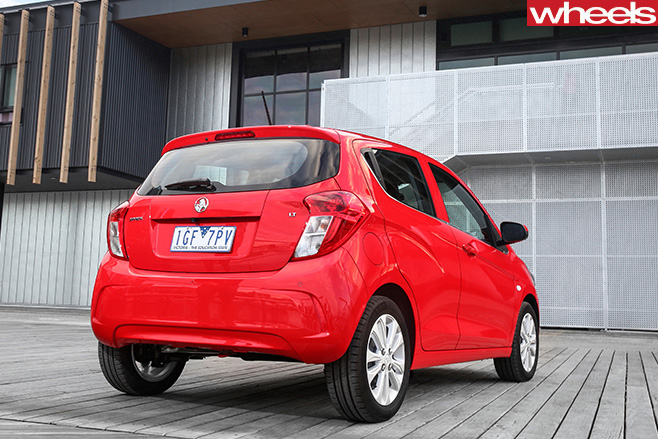
Here’s how it works. Young women out getting their regular dose of retail therapy spot a few brightly coloured and funky looking micro cars in the pop-up shop. The offer of free Messina gelato disables their natural reluctance to approach anything that could be construed in their minds to be A Man Selling A Car.
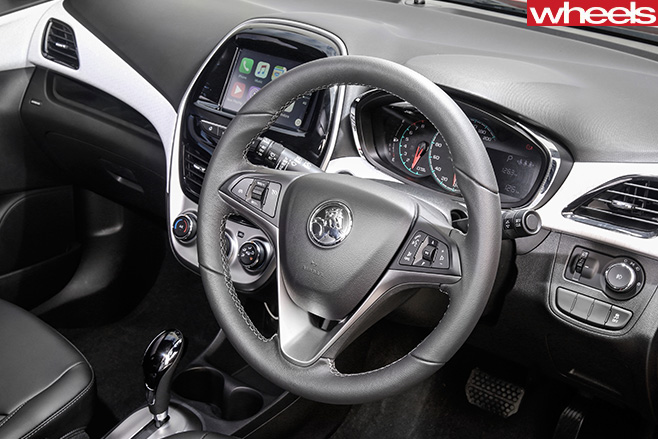
He is there not sell them the car, but to explain all its cool features. Which, to the target audience, will mostly involve connecting their smartphone to the Apple CarPlay system (or Android Auto) and showing them how well the voice-to-text function works, how obedient Siri now is when it comes to giving navigation directions, and how all their favourite apps migrate seamlessly to the seven-inch touch screen.
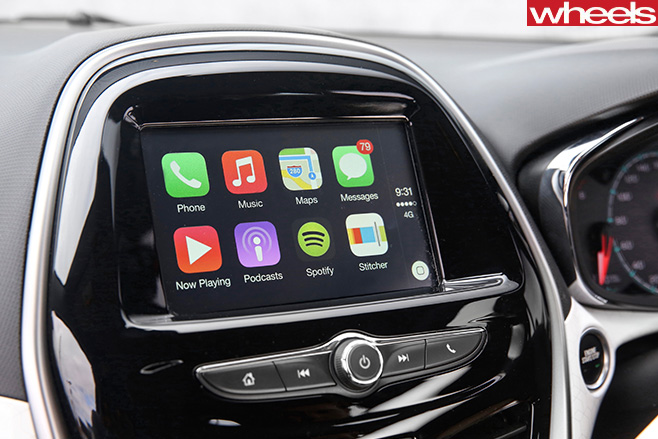
The future may be coming, ladies, but sorry, it’s not quite here yet.
Volkswagen’s latest anniversary edition of its famous hot-hatch is called Clubsport in Europe, though will adopt the 40 Years badge locally to avoid a trademark dispute with HSV – which sells a sporty Commodore of the same name.
The GTI 40 Years follows the Edition 35 that was sold here from 2011, though trumps that model’s 173kW output with 195kW – with 213kW available for 10 seconds as part of a throttle-flattening overboost function.
The GTI 40 will from launch be equipped with a six-speed dual-clutch gearbox and is claimed to clock 5.9 seconds on the standing-start run to 100km/h. That makes it notably quicker than both the regular, 162kW GTI (6.5 seconds) and the $46,490 169kW, Volkswagen Golf GTI Performance (6.4 seconds).
Its temporary power boost even lifts it above the 206kW Golf R, though the GTI remains front-wheel drive and comfortably comfortably adrift in the acceleration stakes against the flagship, all-wheel-drive Golf (5.0 seconds).
The GTI 40th employs the same mechanical limited-slip diff as the GTI Performance to help deploy its power to the road, while visual changes include 18-inch forged alloy wheels, black side stripe, larger tailpipe and darkened tail-lights, while the front bumper, sills, rear diffuser and roof spoiler are all revised.
Inside, exclusive touches include a steering wheel covered in suede-like Alcantara, and a ‘honeycomb’ seat design with GTI logo.
Additional standard equipment includes adaptive cruise control, autonomous emergency braking, and blind spot and rear traffic warning systems.
The VW Golf GTI 40 Years is available to order now.
Can’t get enough? Read our comparison review of hot hatches.
Click here to read the full review on the Volkswagen Golf.
Toyota’s turned to turbo power for its stab at the 2016 World Endurance Championship.
Revealing full details on its all-new TS050 Hybrid racecar, the firm announced its LMP1 contender will be powered by a new 2.4-litre twin-turbo V6.
The new engine, which replaces the TS040’s 3.7-litre V8, is direct injected, split at 90 degrees, and accounts for half of the new car’s 736kW output.
Making up the other half of the car’s power is an upgraded hybrid unit which continues the TS040’s twin-axle setup that sees an electric motor power allocated one axle.
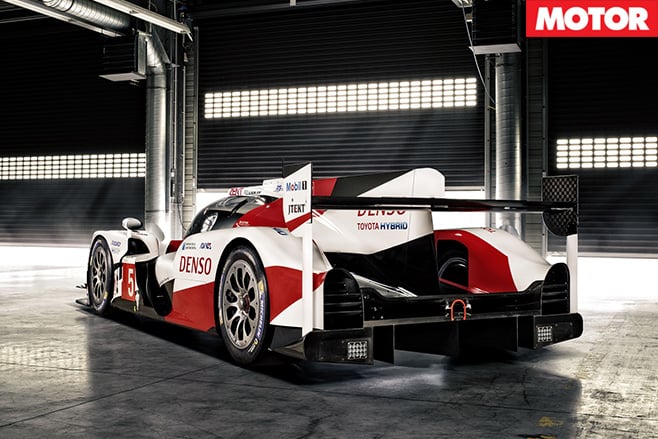
Toyota says the transmission has been updated to handle increased torque but hasn’t revealed how much more twist the car produces.
Over 22,000km testing kilometres were put on the TS050 Hybrid design prior to the WEC season, but it’s yet to be seen whether Toyota will match its competitors who severely outpaced the Japanese firm at last year’s Le Mans 24 Hours.
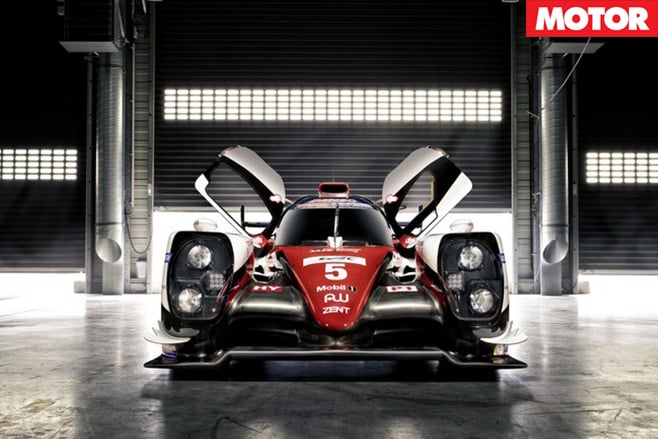
Toyota will kick-off its assault on the full 2016 WEC season with two TS050 Hybrids at Silverstone on April 17. Anthony Davidson, Sébastien Buemi, and Kazuki Nakajima will drive the #5 car, while Stéphane Sarrazin, Mike Conway, and Kamui Kobayashi will pilot #6.
