
Snapshot
- Mercedes-Benz C200 Night Edition offered with limited-time $89,900 drive-away price
- The Night Edition includes features as standard that are optional on the standard C200
- Customers can reserve a C200 Night Edition via online-exclusive pre-order
The limited-run 2024 Mercedes-Benz C200 Night Edition has been announced with more equipment for less cost.
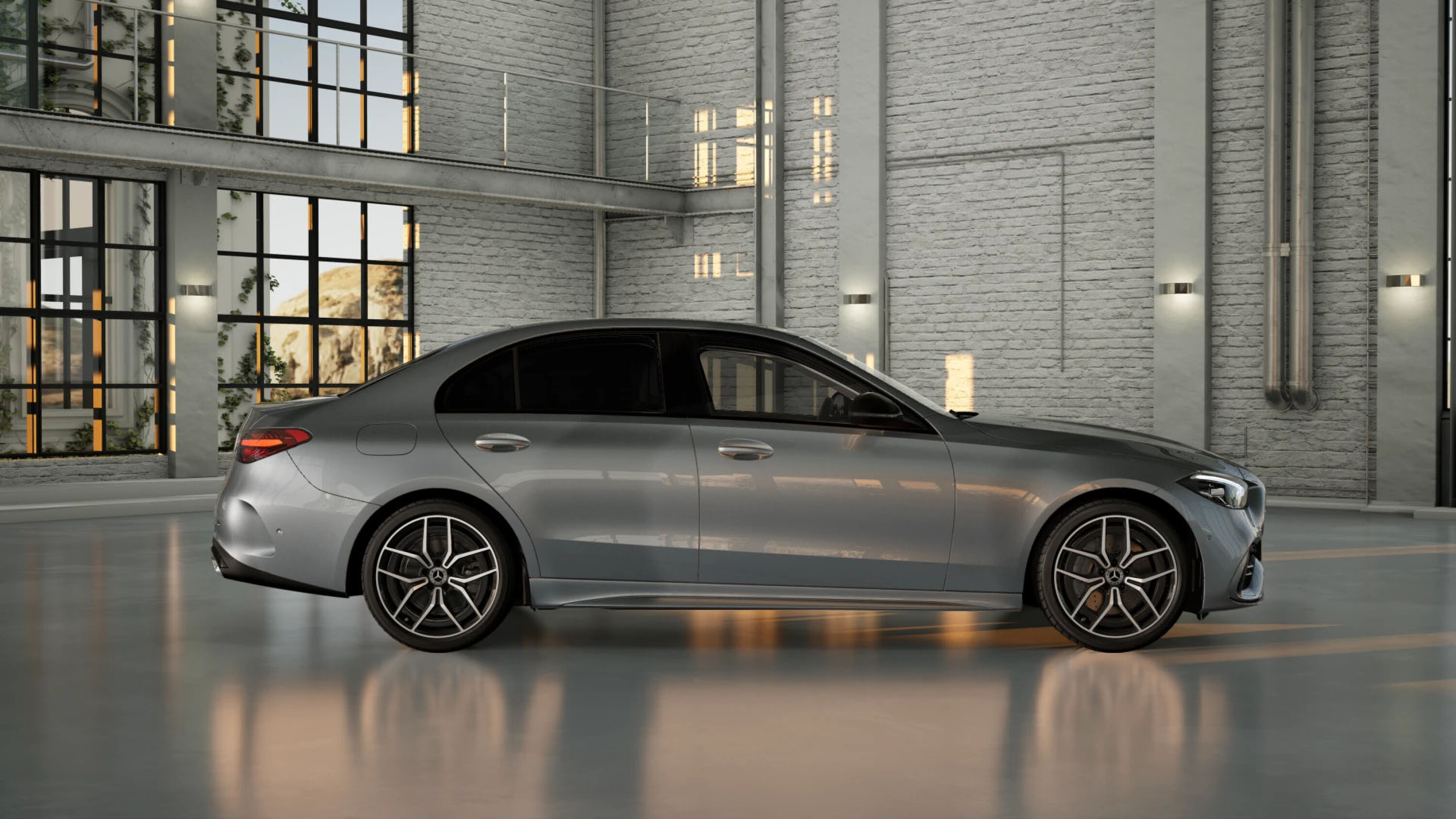
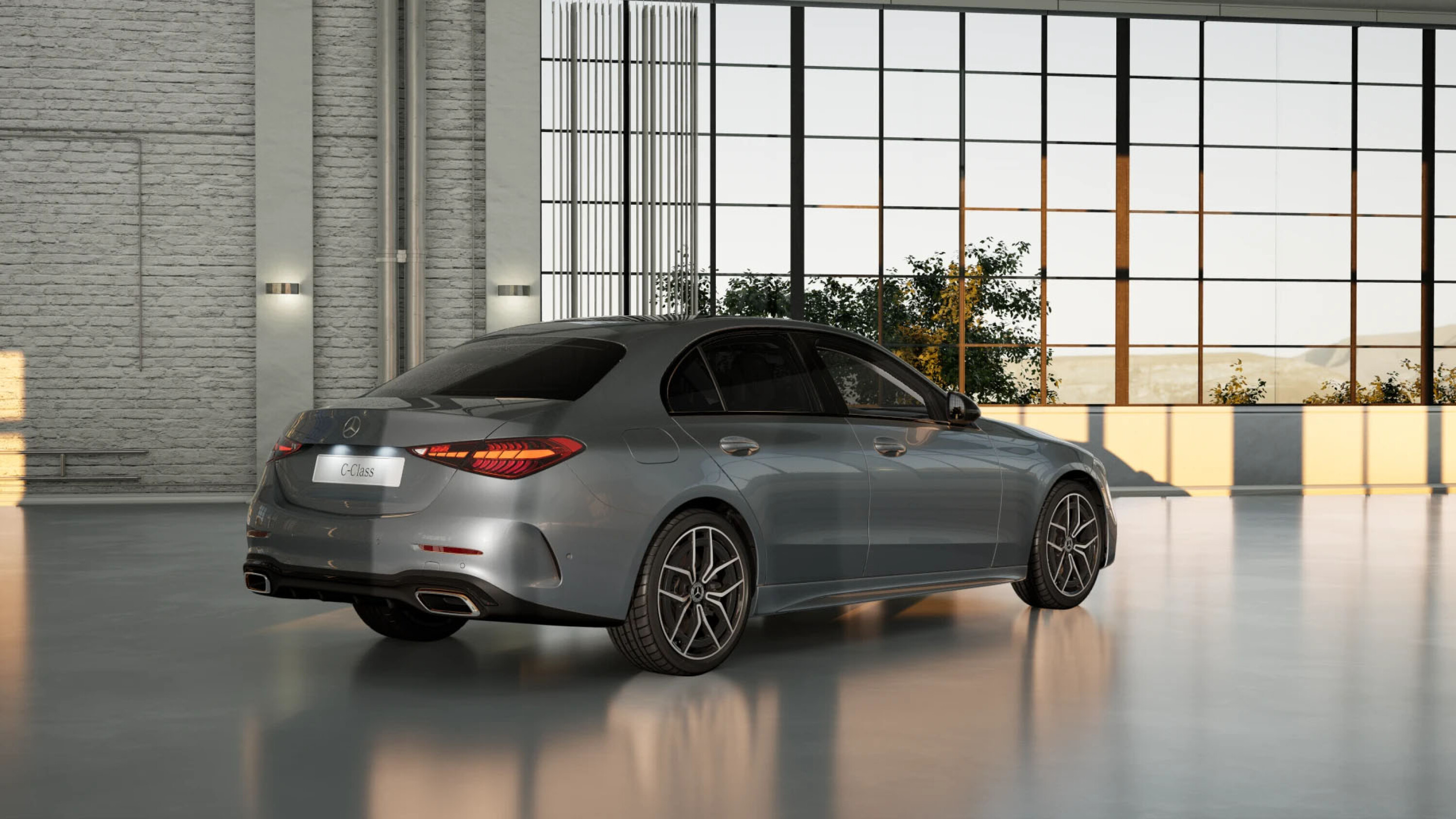
Available for a limited time from April 12, the C-Class Night Edition includes modifications to the exterior, and additional luxury features inside.
Compared to the standard C200, new additions include high-gloss black exterior trim and unique 19-inch five-spoke alloy wheels.
1
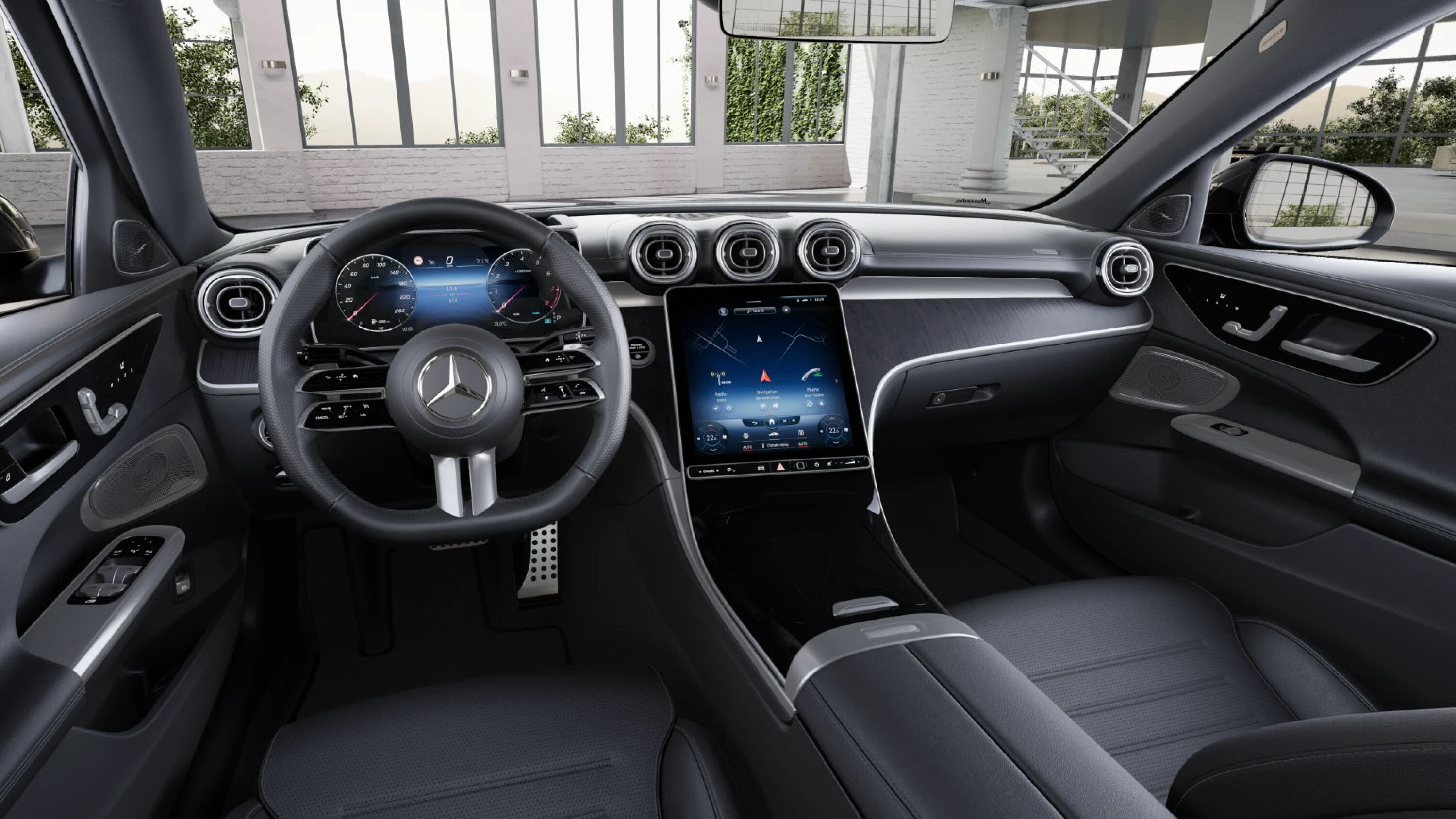
Interior changes lean more towards added luxury than increased sportiness.
The infotainment has been upgraded with a Burmester 3D surround-sound system, while there’s also heat and noise-insulating acoustic glass for the windscreen and front side windows.
Standard equipment shared with the C200 includes an 11.9-inch portrait-orientation infotainment system, wireless Android Auto and Apple CarPlay, black leather-accented upholstery, dual-zone climate control, a wireless phone charger, a panoramic sunroof, and ambient lighting.
1
Other features include a 12.3-inch digital instrument cluster, a head-up display, heated and electrically adjustable front seats with memory function, and Mercedes Me Connect to remotely control key vehicle functions.
Mechanical and safety equipment on the Night Edition is unchanged from the regular Mercedes-Benz C200.
A turbocharged mild-hybrid 1.5-litre four-cylinder engine produces 150kW and 300Nm, with a 48-volt integrated starter generator providing an additional 15kW and 200Nm. It is paired to a nine-speed automatic transmission that exclusively powers the rear wheels.
1
Standard safety and convenience equipment includes adaptive LED headlights, rain-sensing wipers, a tyre pressure loss warning system, a 360-degree camera, keyless entry and start, and a power-closing boot lid.
The 2024 Mercedes-Benz C200 Night Edition retails for $86,900 before on-road costs, compared to $89,900 plus on-roads for the standard C200.
However, an $89,900 drive-away price is available for vehicles ordered between April 12 and June 30, then delivered by July 31. Customers can reserve online-exclusive pre-orders from April 12 until May 16.
JUMP AHEAD
- Is the 2025 Skoda Kodiaq a big deal?
- Time to protest the local dealer?
- Is it exclusively DSG now?
- Is it still absolutely massive?
- Does it feel good inside?
- Is it worth waiting for the 2025 Skoda Kodiaq?
Is the 2025 Skoda Kodiaq a big deal?
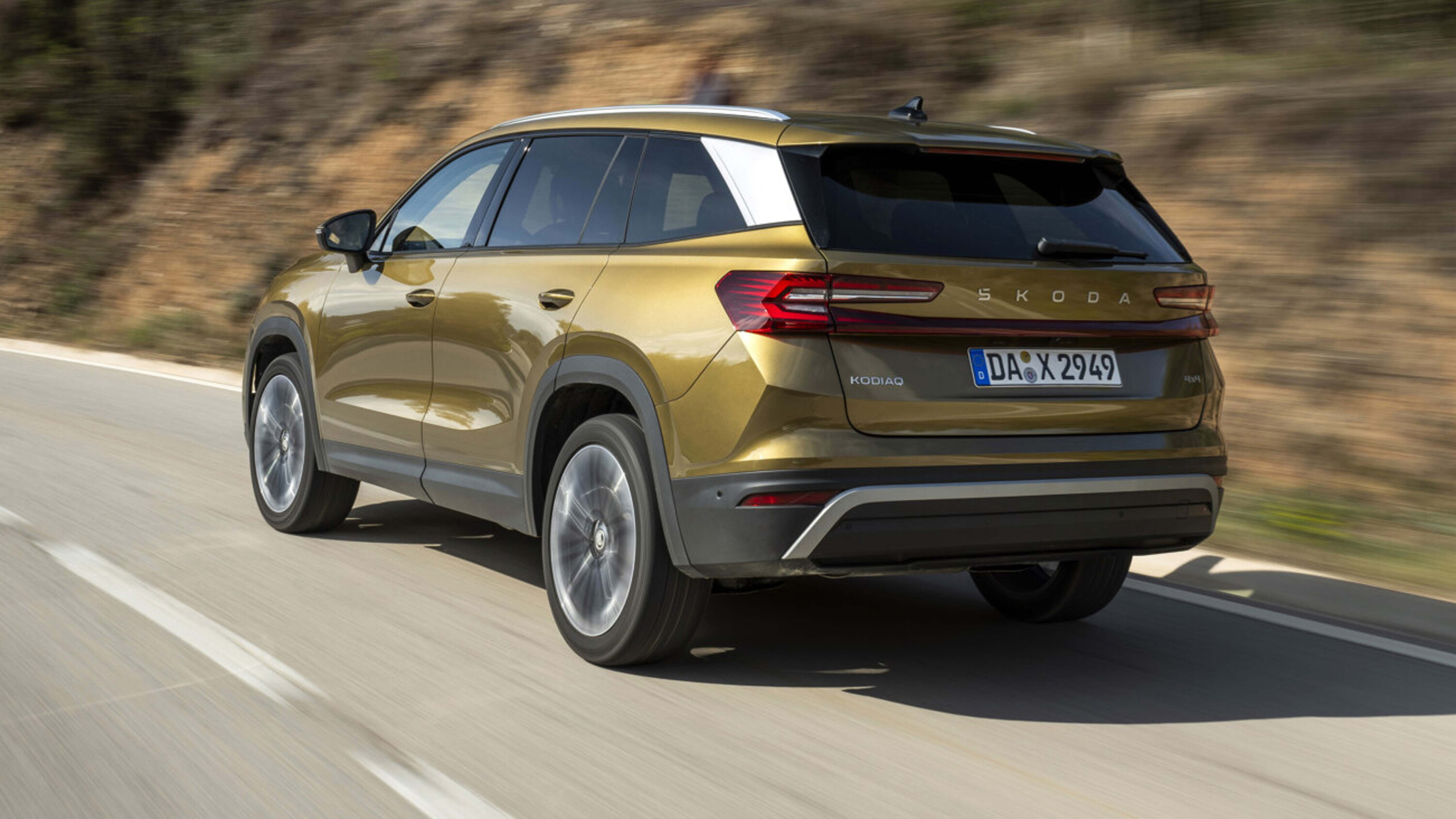
Yup. This is the new Kodiaq, the difficult second album after a blockbuster debut.
Not only has its forebear shifted over 800,000 units globally, but it’s perhaps the clearest example of Skoda’s rise to popularity.
A supremely talented family car that cohesively blends neat dynamics, smart materials and shedloads of space. Not to mention one of a small band of alluring seven-seaters on sale.
1
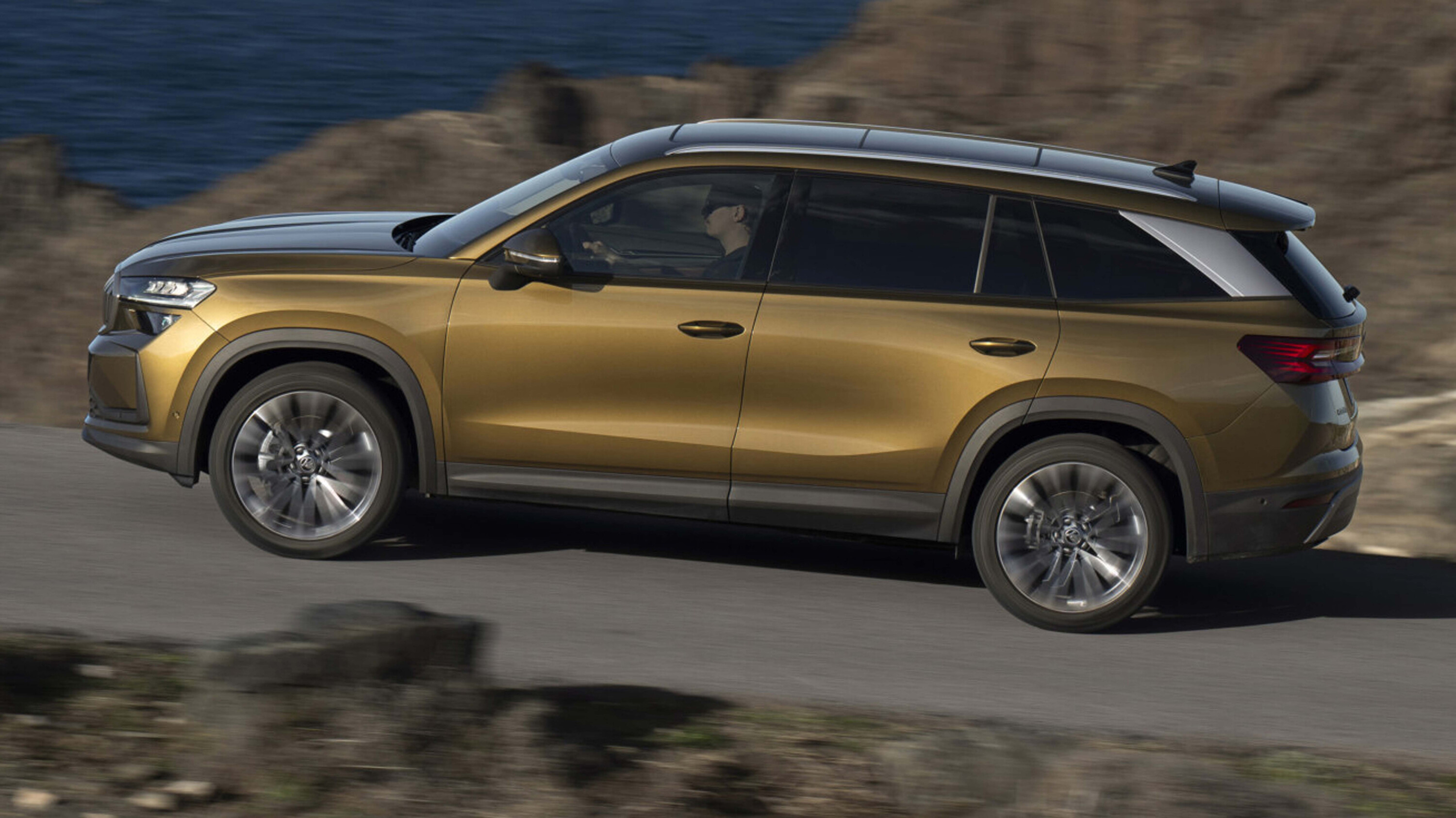
You wouldn’t blame Skoda for deploying a modest facelift and declaring this a new car, afraid to mess up a good thing.
Indeed, for all the talk of a new ‘Modern Solid’ design language, its bold wraparound taillights and a new iteration of the Skoda badge, it keeps the general Kodiaq aesthetic and adorns it with extra tinsel.
There’s a fresh dose of electrification too, most notably the first plug-in hybrid Kodiaq, though pure petrol and even diesel remain on the configurator. Aussie buyers are initially limited to one engine, mind – a 150kW 2.0-litre TSI petrol with all-wheel drive.
1
Time to protest the local dealer?
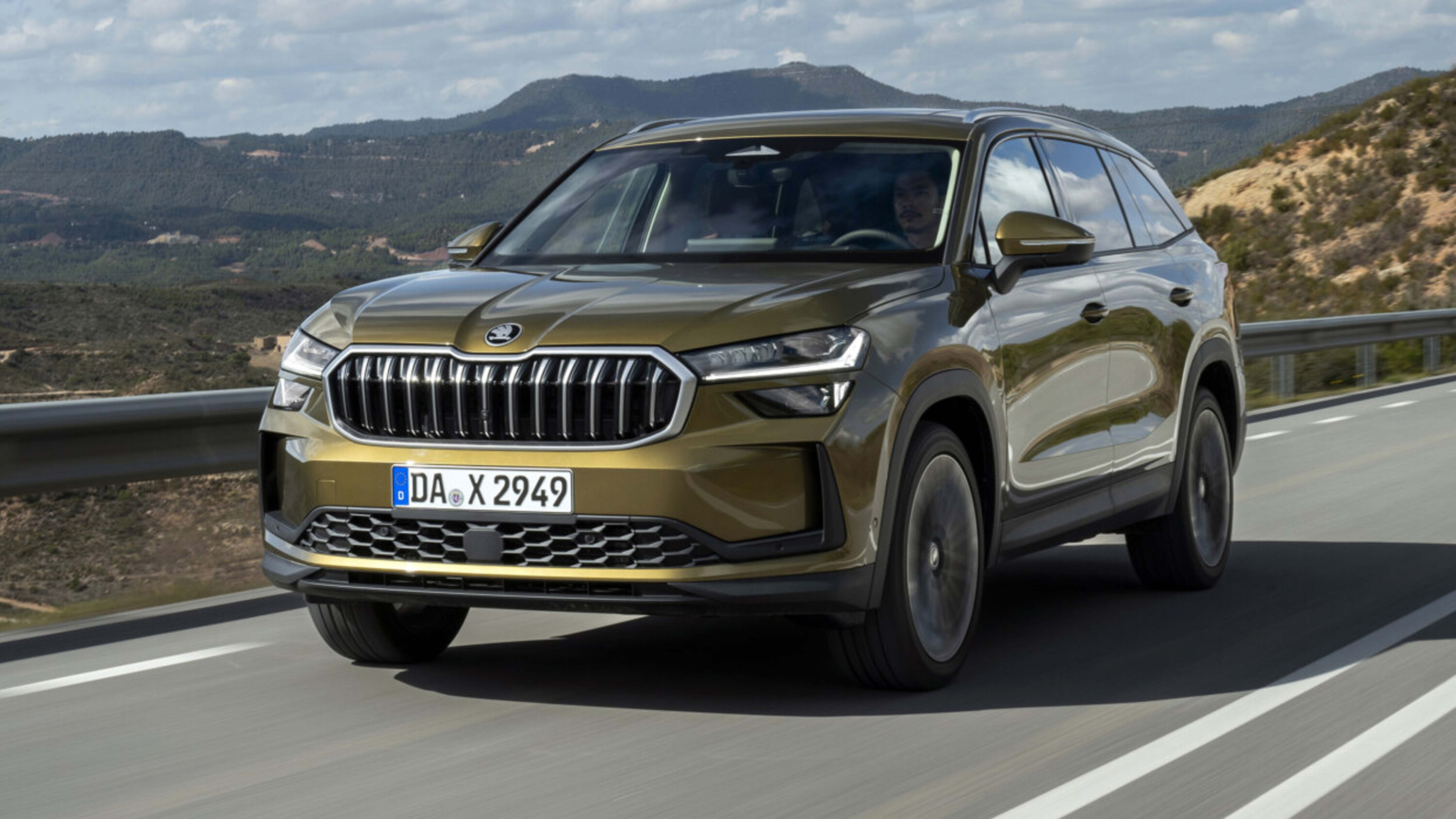
Not yet. This TSI engine feels like the current pick of the range and ought to provide more than enough flexibility to haul the family around without fuss – then go like a modest hot hatch once the kids are dispatched at the school gates.
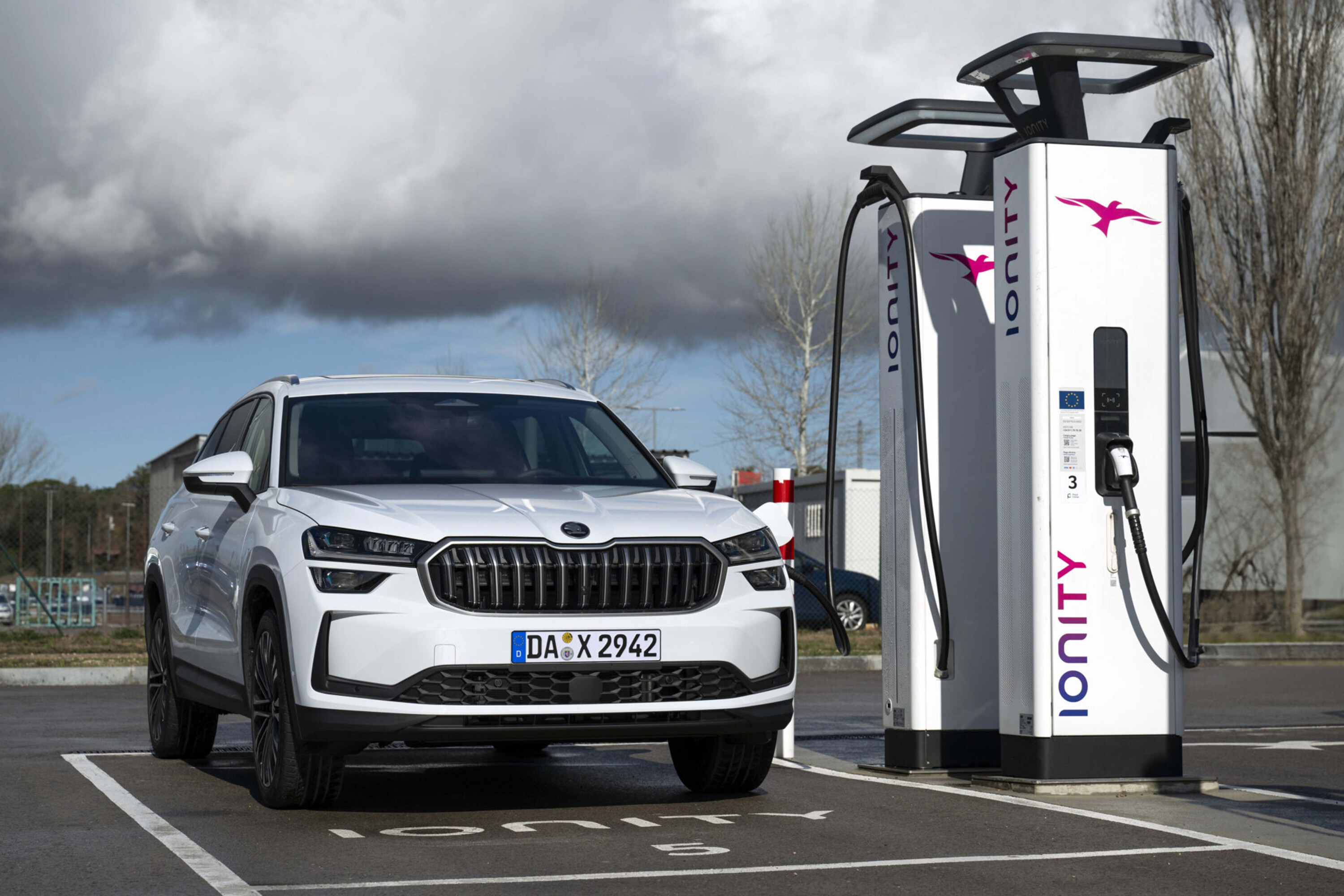
The PHEV also scores well. Its 19.7kWh battery yields around 100km on electric power alone while the e-motor and 1.5-litre TSI work amicably together in most driving situations, the engine’s occasionally gruff nature at higher revs does encourage prudent rather than pushy acceleration.
It’s front-wheel drive only and uses a six- rather than seven-speed DSG, but unless you’re truly going to take it off road, you’ll not care.
1
Handling is smart across all iterations, Skoda allowing the Kodiaq to naturally roll and lean a little in corners to take tension out of the whole chassis (take notes, VW).
This rides as comfortably as an SUV should, in summary, while retaining decent grip and faithful responses. Opt for the PHEV and you’ll notice its extra few hundred kilos, but the car isn’t hamstrung by them.
DCC+ chassis control lies on the options list and Skoda expects around a third of buyers to go for it. It brings 15-stage adaptive damping as well as a mixture of different drive modes for steering weight and engine response.
Don’t spec DCC+ and you can’t adjust anything at all – a cost-saving measure, or Skoda appreciating most people don’t bother – yet the Kodiaq still steers with clarity and rides as well as you’d hope.
1
Is it exclusively DSG now?
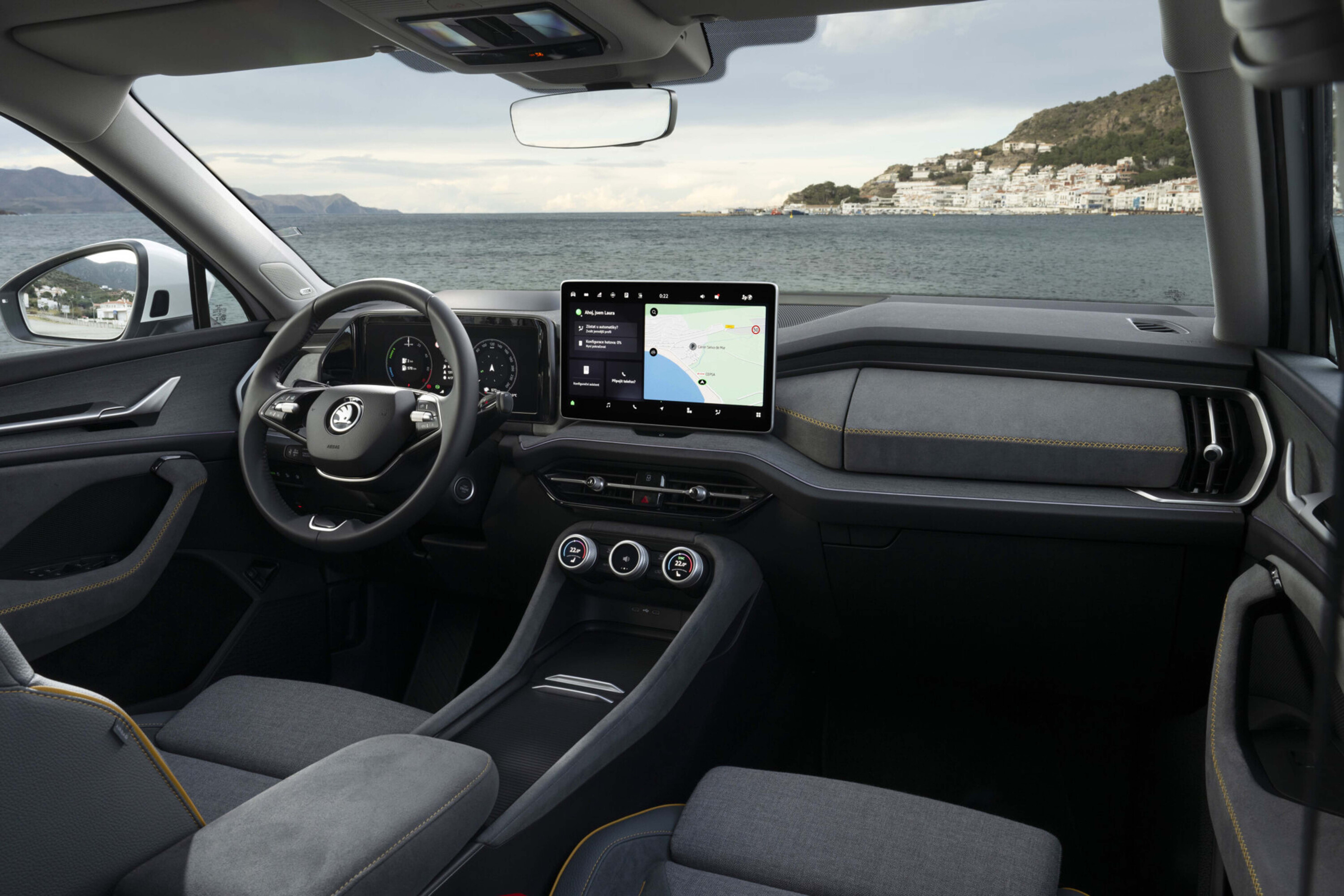
Correct. Like the Tiguan, this is an auto-only zone, with the designers leaping on an opportunity to mildly revolutionise the interior.
The gear selector moves up to the steering column allowing more of Skoda’s trademark cubbyholes to grace the centre console, with a pair of ventilated wireless phone charging pads primed and ready to stop your precious device cooking.
1
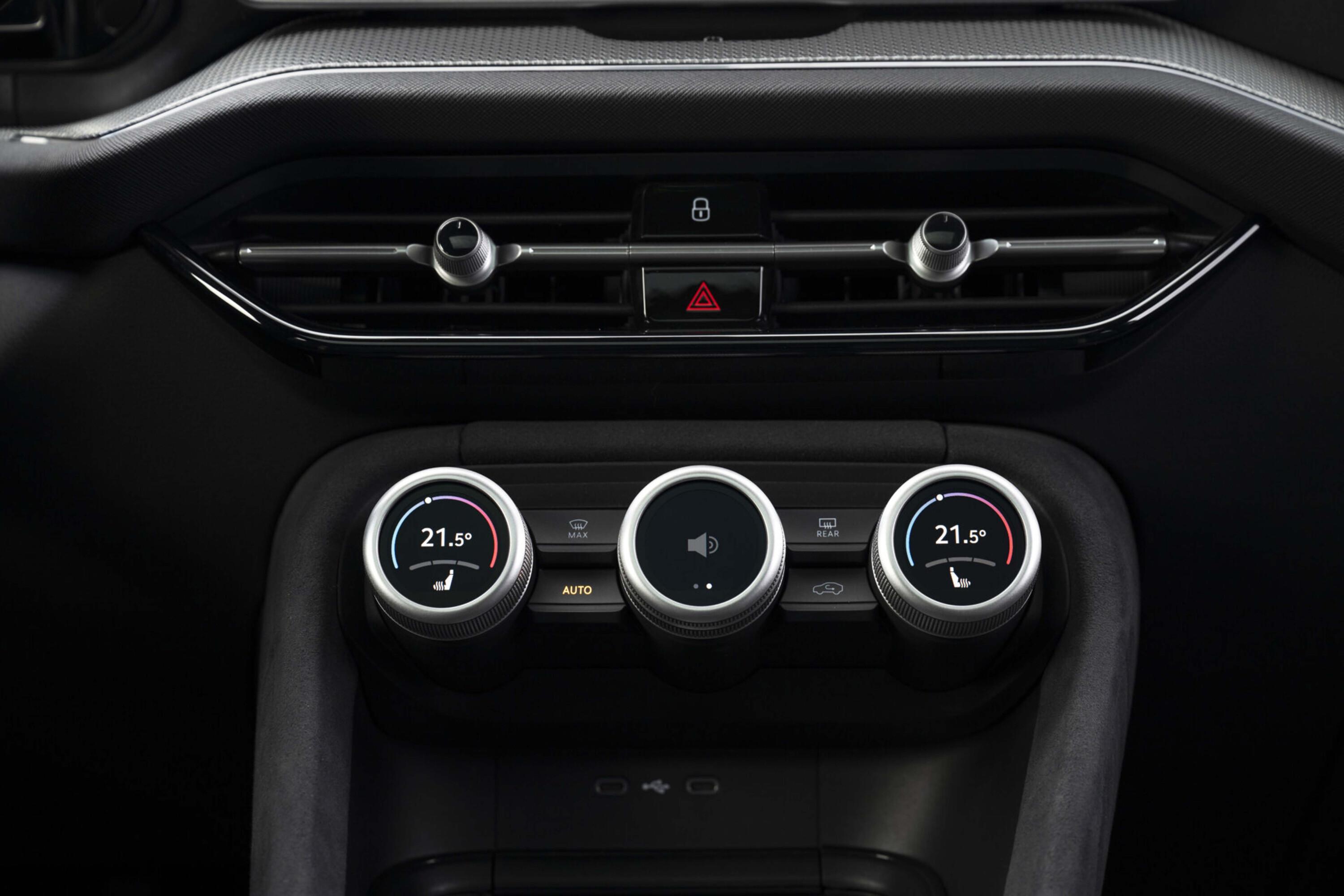
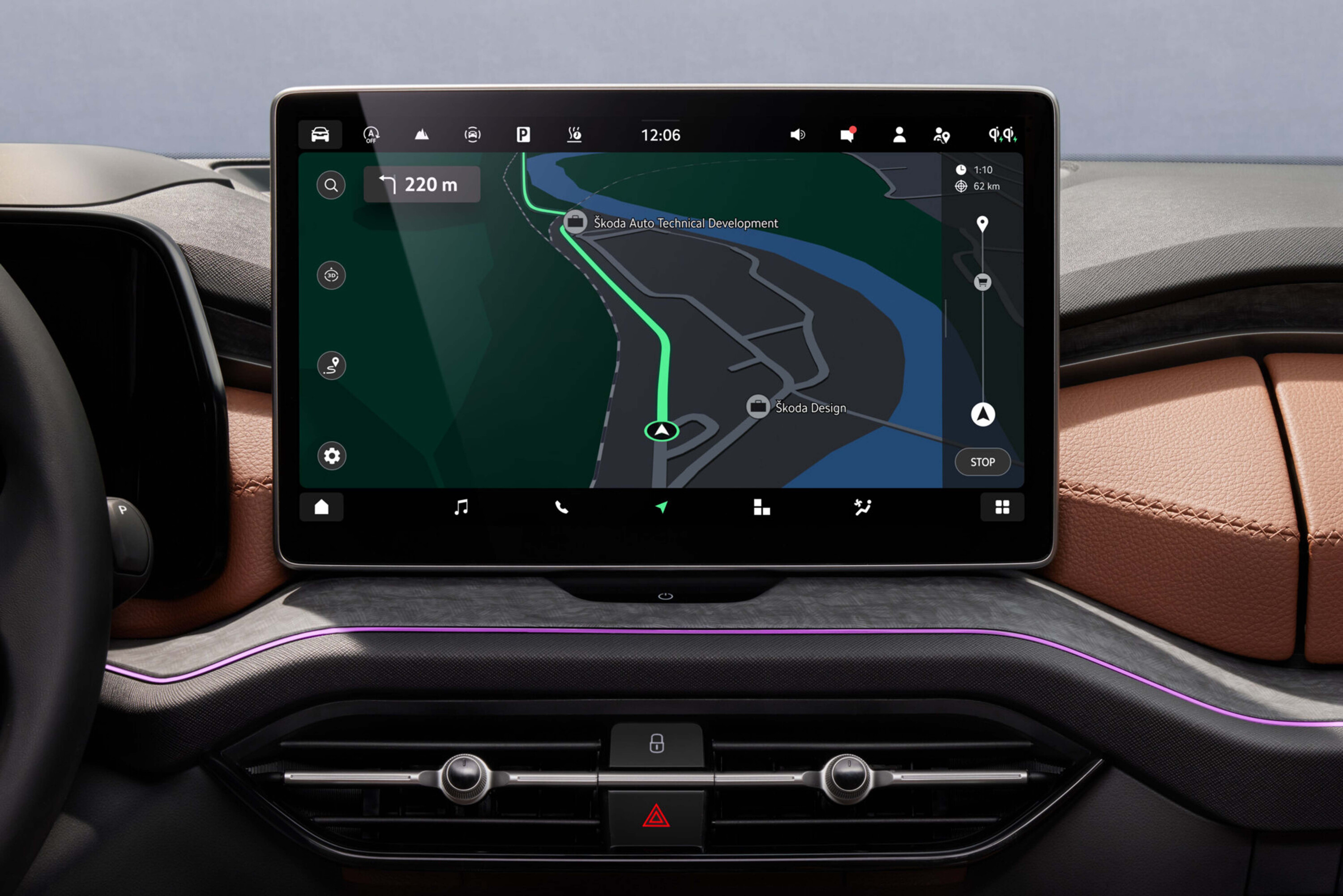
Most exciting is a row of three ‘smart dials’ which blend digital and physical realms to cycle between volume, driving modes or – hurrah! – the climate control.
The interior looks as digitalised as any other new-gen VW Group product, but Skoda’s not forgotten to bake in some good old-fashioned pragmatism.
They operate brilliantly – making zooming in and out of maps especially easy – and really put some distance between this and its Tiguan cousin. Though the Kodiaq really seals the deal as you head towards the other end of the car…
1
Is it still absolutely massive?
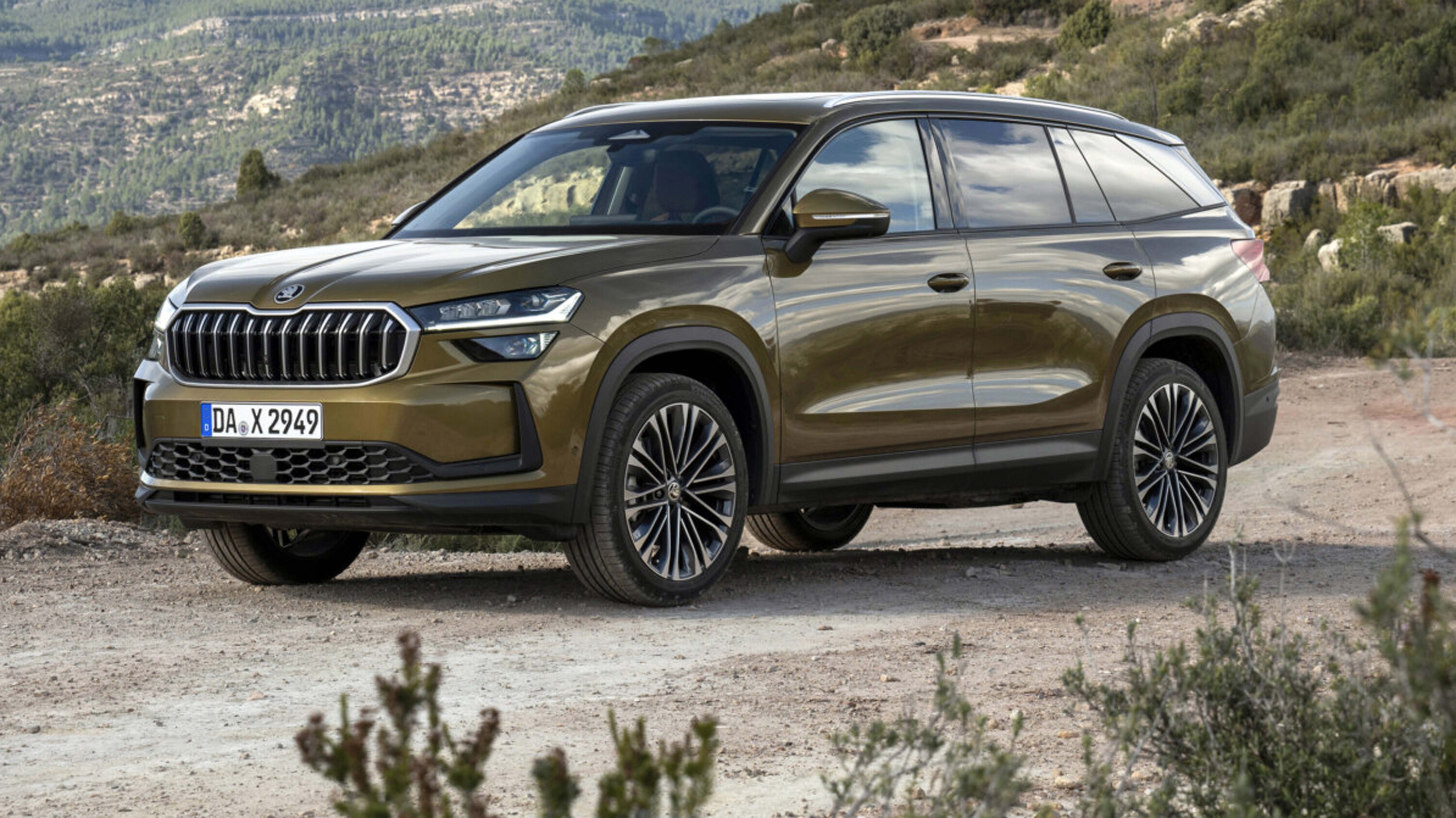
In exterior dimensions alone, Kodiaq gen2 isn’t much bigger than before, while the wheelbase is unchanged.
Yet headroom has been increased across every row of seats, most notably for the rearmost pair which should prove a bit more flexible than before. Another 70 litres of boot space ensures the 340-litre capacity behind row three now rivals a Golf.
In five-seat mode you’ll get around 900 litres and over 2,000 litres with the middle row flipped. Crikey.
1
The PHEV takes a small chunk out of those latter figures and can’t be optioned with seven seats thanks to the location of its battery. For now, that’s of no concern to Aussie buyers.
A 13-inch central touchscreen complements 10-inch digital dials as standard and offers reasonably smart shortcuts to the most pressing features, though it’ll occasionally scold you for not looking hard enough at the road even if you’ve flicked your eyes away only briefly.
While the Tiguan offers up to 15 inches, you really don’t need a screen bigger than Skoda’s. A head-up display is optional for the first time.
1
Does it feel good inside?
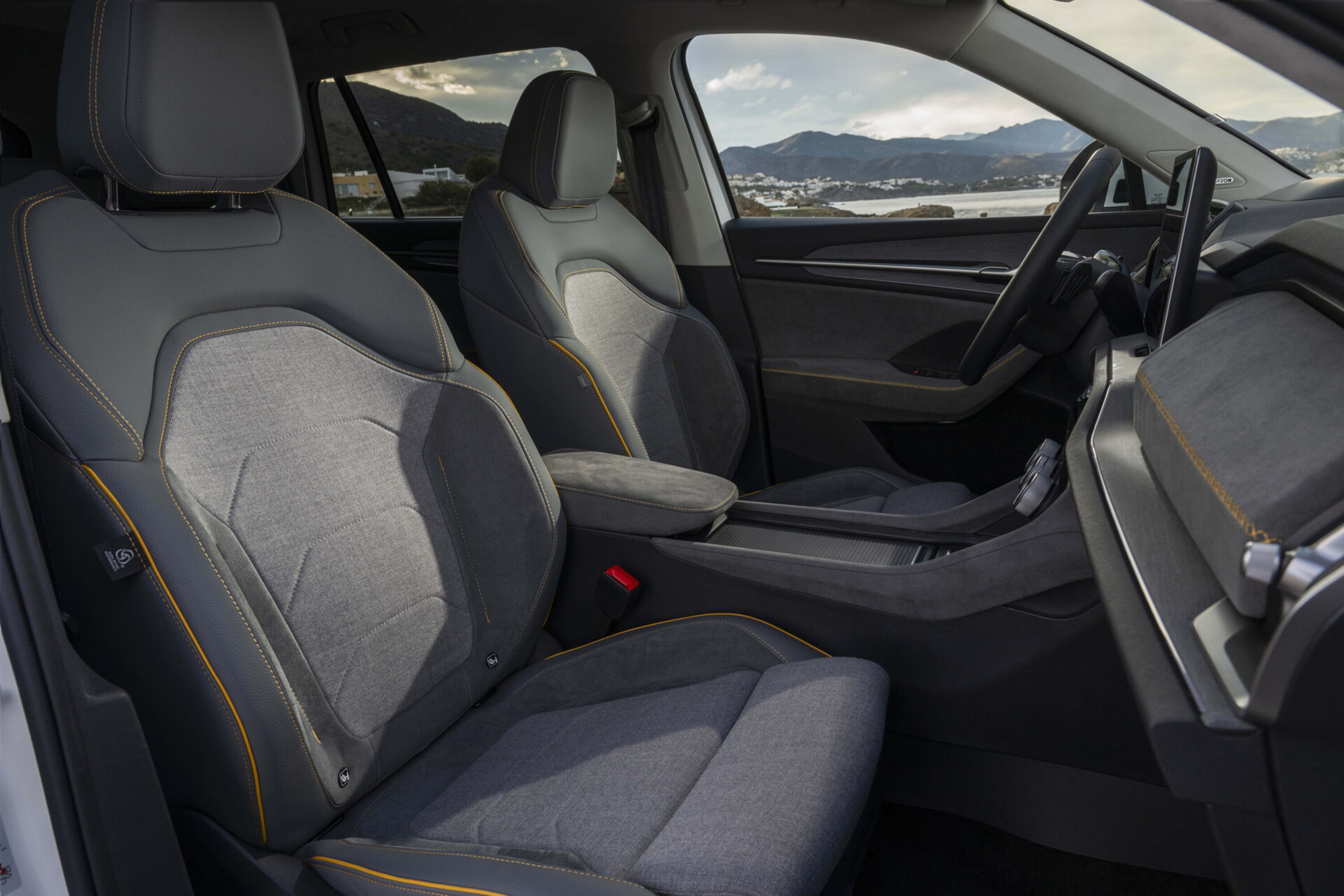
The Czechs have gone big on sustainable materials, with numerous fabrics adorning the seats, doors and dashboard fashioned from recycled plastic bottles.
Opt for leather and its tanning process has been done via coffee bean waste rather than nasty chemicals.
Instead of plunging the interior back into the prosaism of Skodas past, though, it lifts the atmosphere further. These materials look cool, feel intriguing and bring a fresh ambience. Skoda has produced quality interiors for years, but they sometimes fall into the trap of feeling somewhat dark and plasticky.
Tick the right spec boxes and it’s a lot airier in here and optional massaging seats lift the mood even further. A slipperier aero profile also aids refinement; this is a hushed environment at motorway speeds.
1
Is it worth waiting for the 2025 Skoda Kodiaq?
You can’t go far wrong with the outgoing car, and we’d not blame you for leaping on any discounts as it heads towards retirement.
The neatest trick of Kodiaq gen2 is that it moves the game on just enough without messing up the formula. It’s a triumph of evolution over revolution, even if there’s a host of new tech, sustainable materials and a hybrid powertrain on offer.
Perhaps a more interesting question is if it’s worth waiting for the Kodiaq RS; Skoda has confirmed its new performance SUV debuts at the end of 2024, with the punchier powertrains of the Tiguan likely to ally to more assertive styling and black detailing in place of the shiny silver chintz of this base Skodiaq. It’s unlikely to be cheap, but it could prove the ultimate all-round family shuttle.
MORE
Everything Skoda
MORE
Midsize SUVs
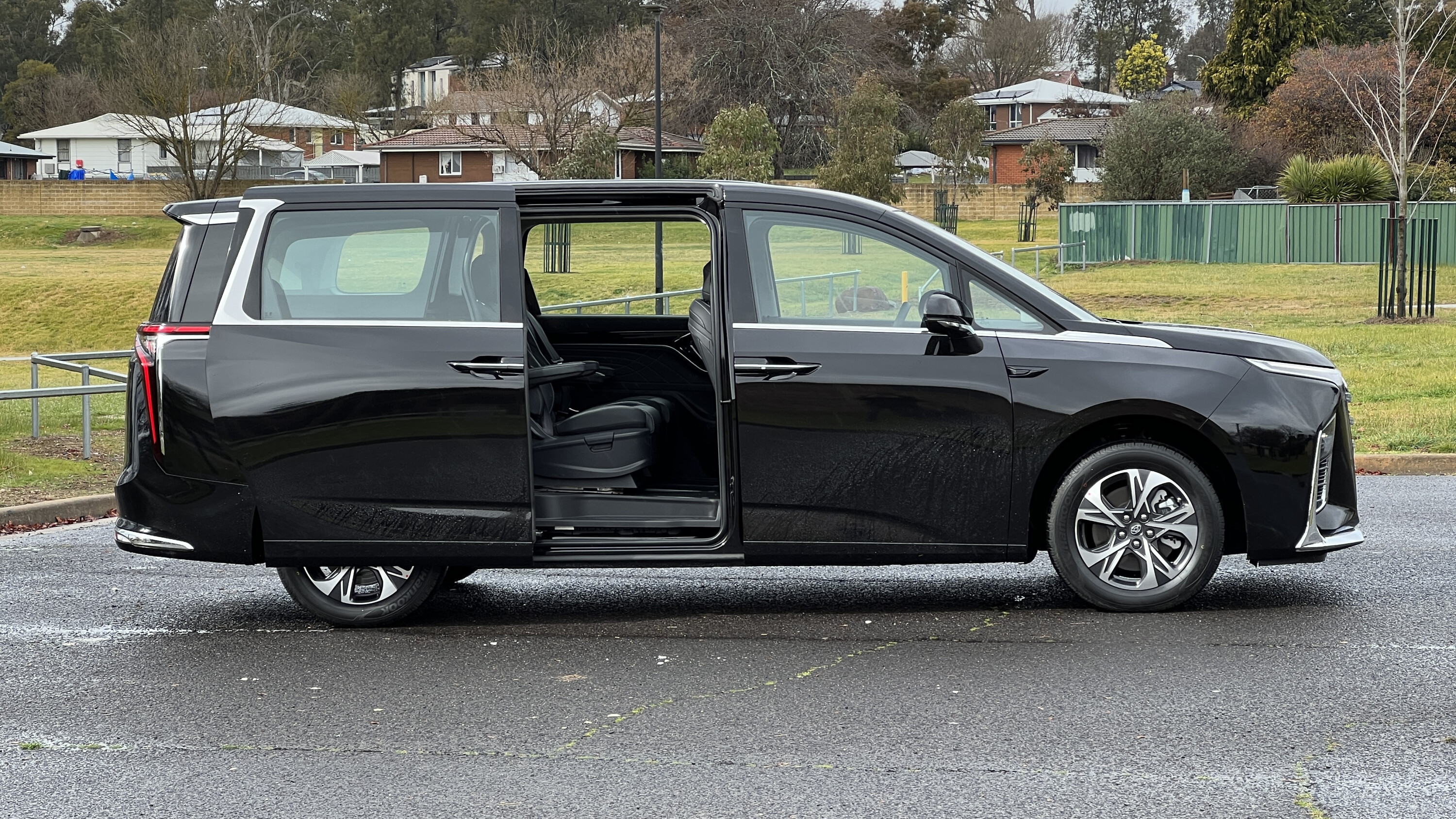
Targeting families in need of ample space, this people-mover from Chinese brand LDV is positioned as a direct competitor to the Kia Carnival and Hyundai Staria.
With three rows of seating, sliding doors the LDV Mifa Mode is able to comfortably carry seven passengers with plenty of space.
While LDV does provide an excessively priced Mifa 9 electric model ($104,000 onwards), this turbo-petrol version presents a more financially sensible choice.
Available in three grades, Mode, Executive and Lux the range is quite simple compared to other key players.
1
Pricing and features
The entry-level Mode variant comes in at $53,990 drive-away.
Standard across the entire range is a 2.0-litre turbo petrol engine produces 160kW/360Nm, paired to a 8-speed automatic transmission.
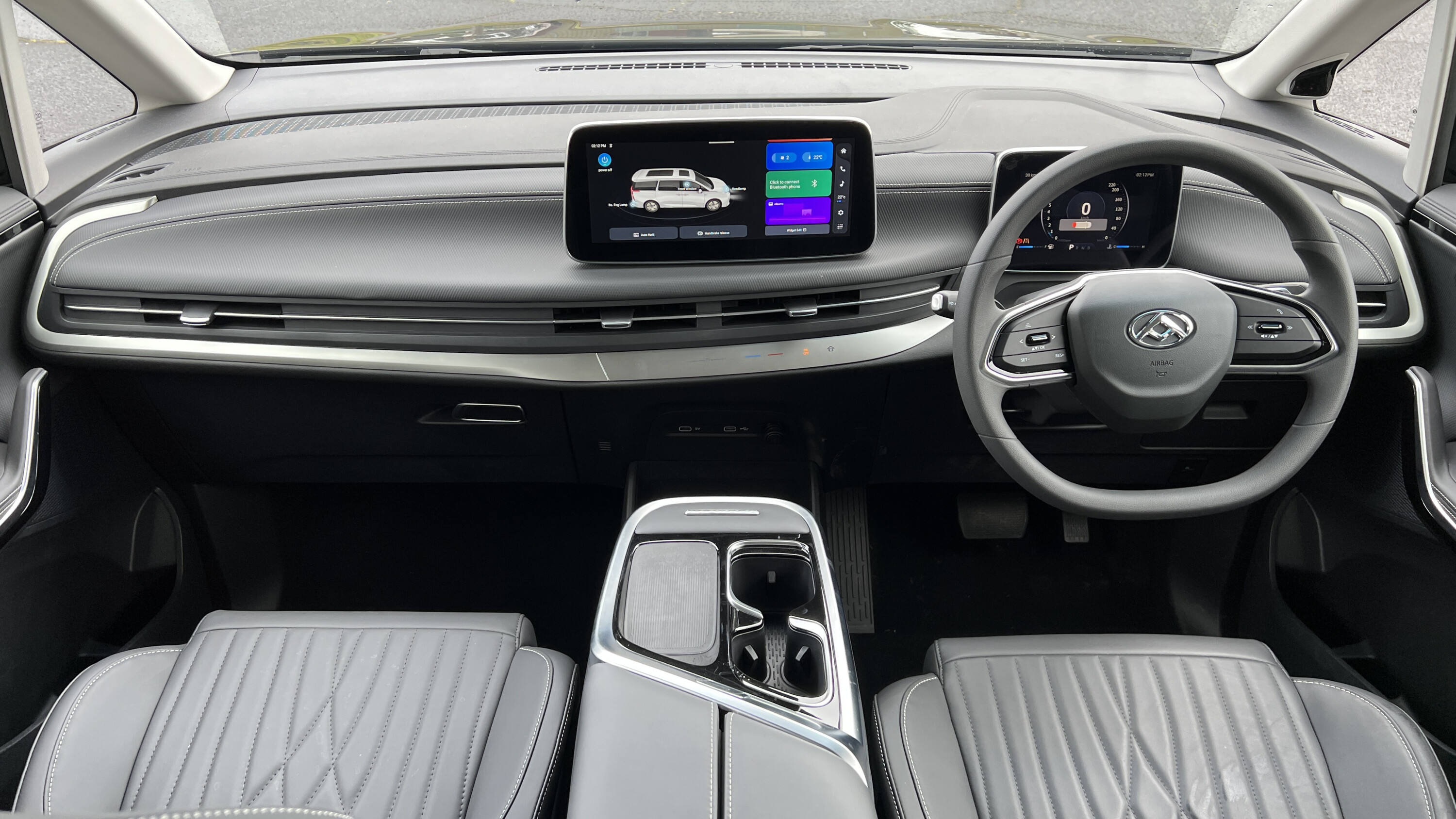
The base model offers a list of impressive standard features including LED lighting, 18-inch alloy wheels, keyless entry and start, a 12.3-inch touchscreen with Apple CarPlay, and simulated leather upholstery. While a plastic steering wheel detracts slightly from the ambiance, the overall cabin exudes a reasonably pleasant atmosphere.
1
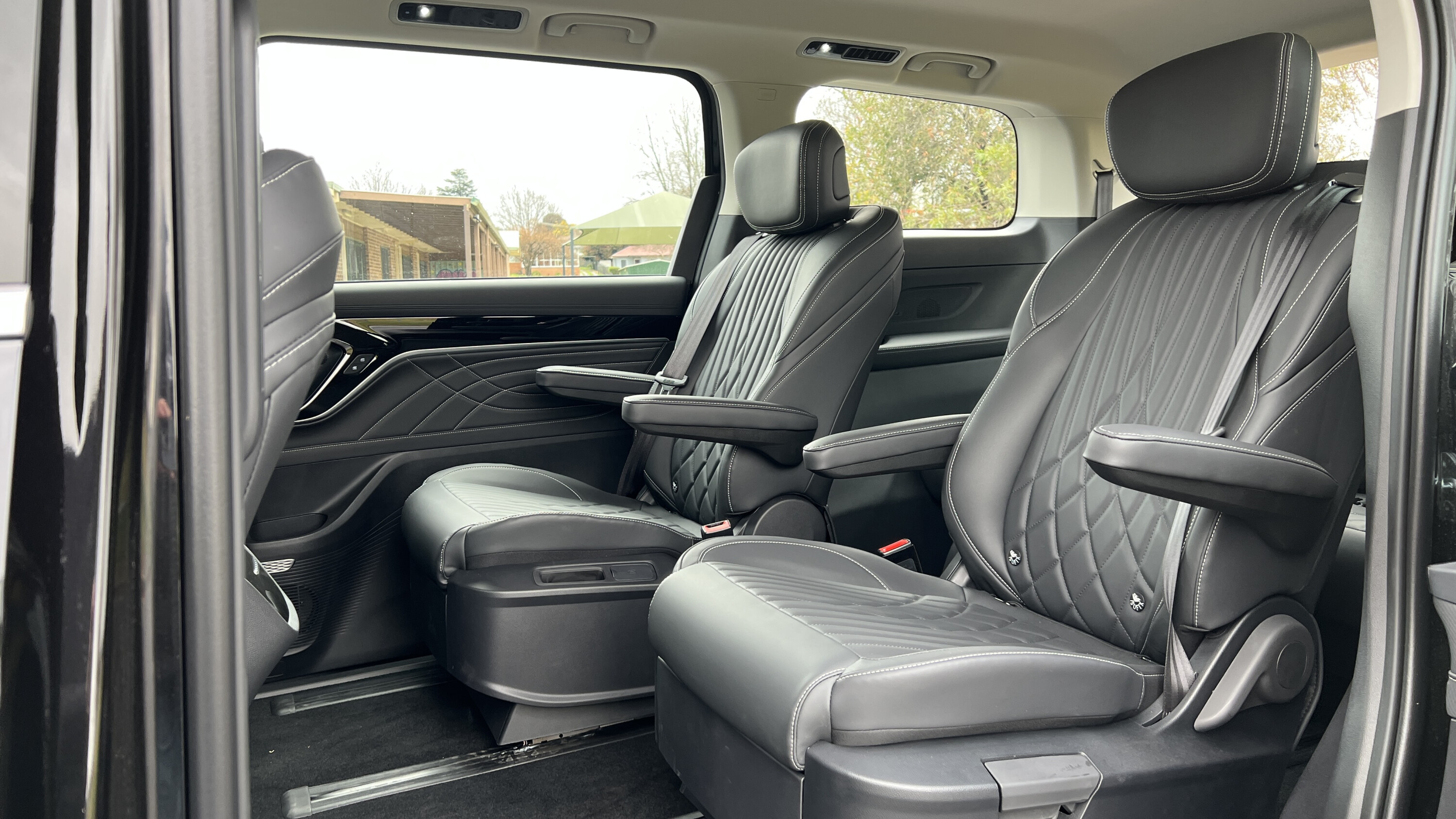
Each trim level features a seven-seat configuration with second-row captain’s chairs. While the base model Mode requires manual adjustment for these seats, opting for the Executive or Luxe grants electric sliding adjustment along with heating and cooling capabilities, a recliner feature, and a massage function.
LDV states that the Mifa has 466 litres of boot space with the seats upright.
It’s important to note that the payload for all trim levels is limited to 550kg, significantly less than competitors, potentially restricting the practicality of this vehicle as a family car.
1
Safety
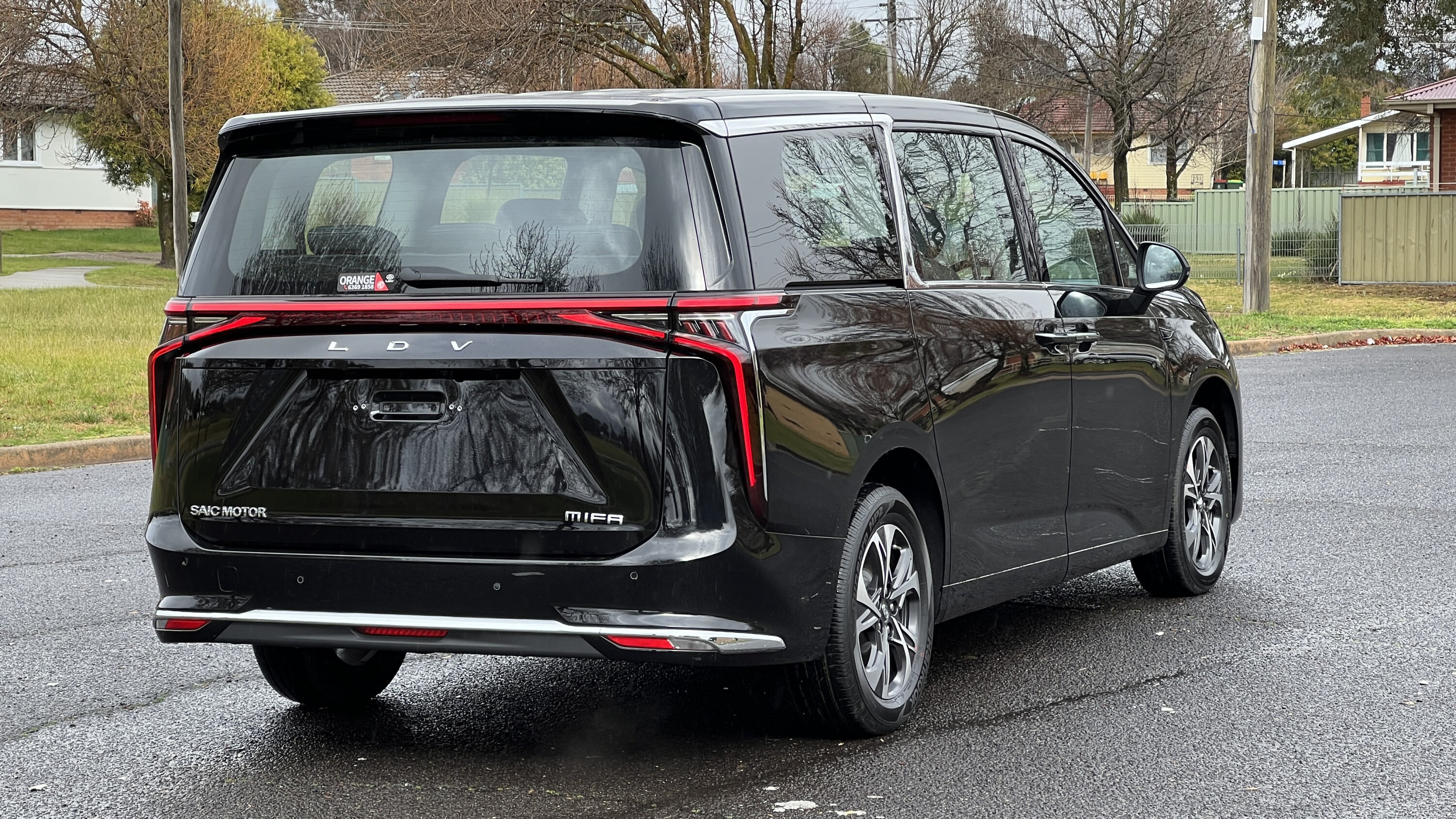
In 2022, the Mifa achieved the highest five-star ANCAP rating.
Standard equipment includes forward autonomous emergency braking (AEB) with pedestrian, cyclist, and junction detection, as well as rear AEB, blind-spot monitoring, rear cross-traffic alert, lane departure warning, lane-keep assist, safe exit warning, and adaptive cruise control.
A total of seven airbags are included, comprising dual front, front-centre, front side, and full-length curtain airbags.
1
While the base model features a reversing camera with rear parking sensors, the Executive and Luxe trims add front parking sensors and a surround-view camera system, features that should ideally be standard for a family-oriented vehicle like this.
Key Rivals
Popular people movers in the segment and obvious key competitors include:
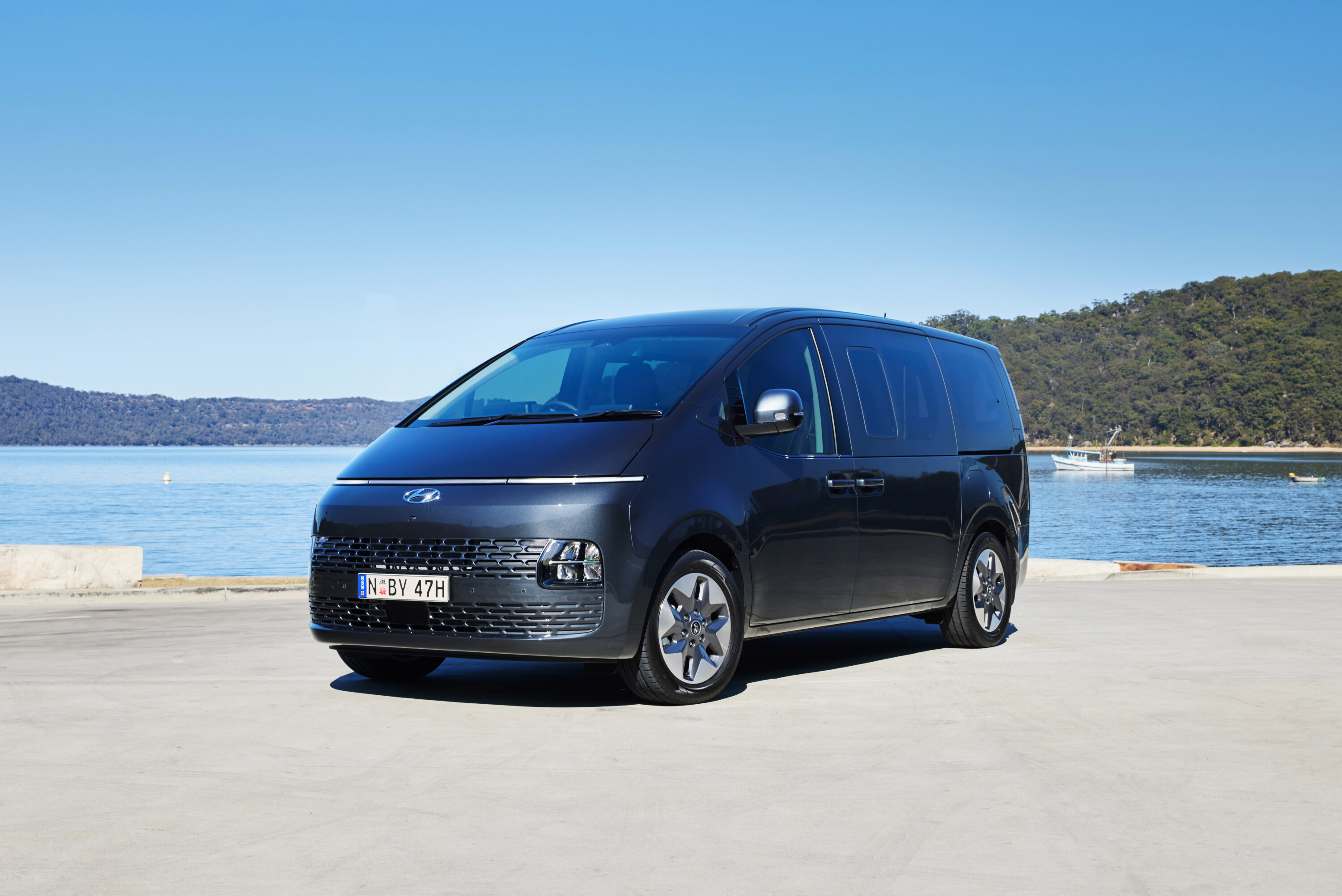
1
Should I put it on my shortlist?
If your priority is passenger space over boot capacity in a people mover, the LDV Mifa emerges as a compelling choice compared to the segment leader, especially when price is factored in.
The vehicle offers plenty of appealing features at a base grade, with the mid-spec Executive trim stands out from the bunch for its overall value proposition, adding key spec that one would appreciate in a vehicle of this size.
MORE
Everything LDV
A new study by Compare the Market has ranked used cars according to their search volumes online.
The survey found that Japanese and American brands are the most popular among used-car buyers in that initial search phase, while interest in used electric cars is well behind other parts of the world.
Snapshot
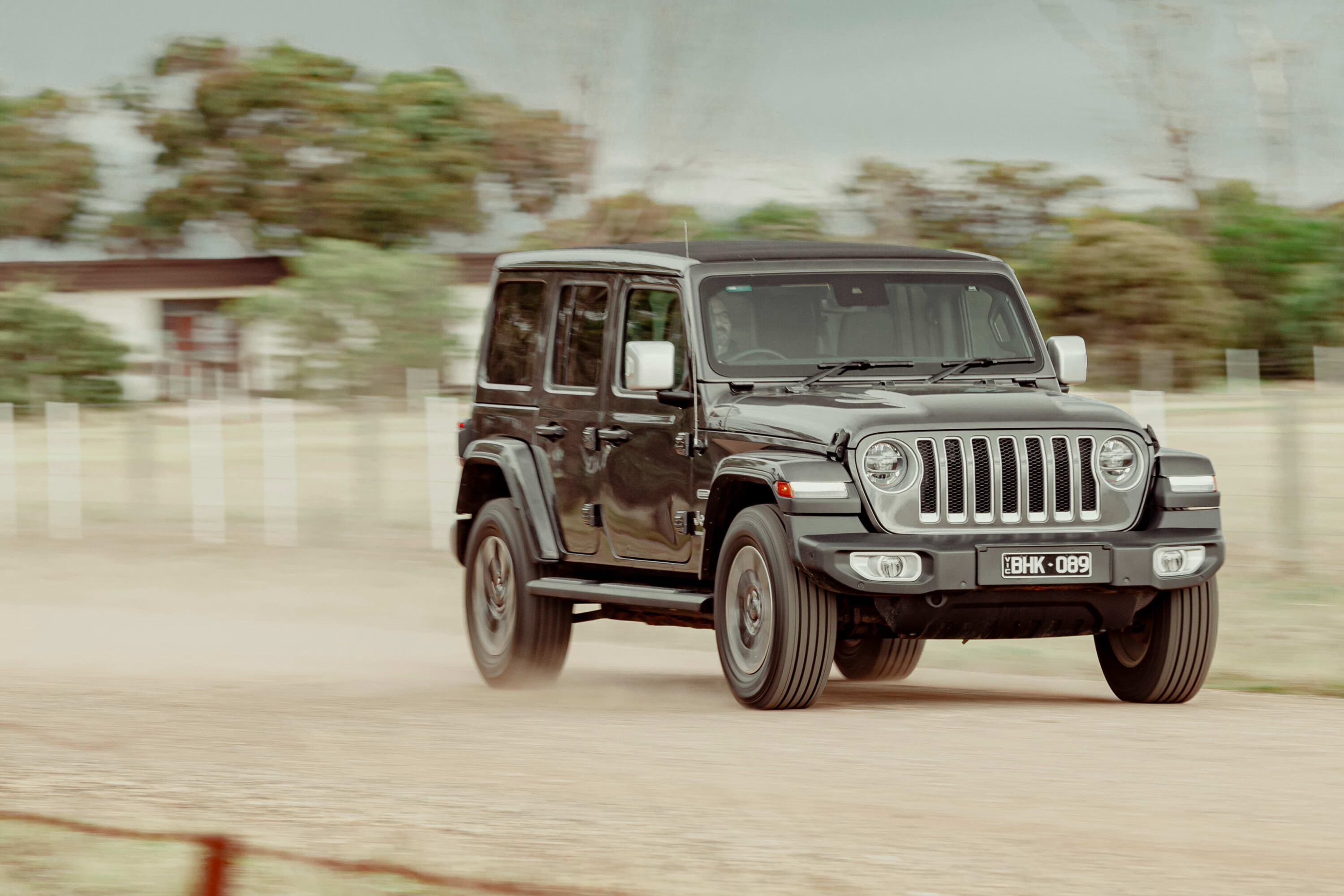
- Yaris the most searched for used car in Oz; Jeep Wrangler topping the list globally.
- Overall, Japanese & American brands dominated searches for used cars in Oz and US
- Australians searched less for used EVs than the global averages
1
Globally, the most searched-for used car was the Jeep Wrangler.
It was followed by the Toyota Tacoma and Honda Civic in second and third positions, respectively.
Top Ten global used-car searches
1
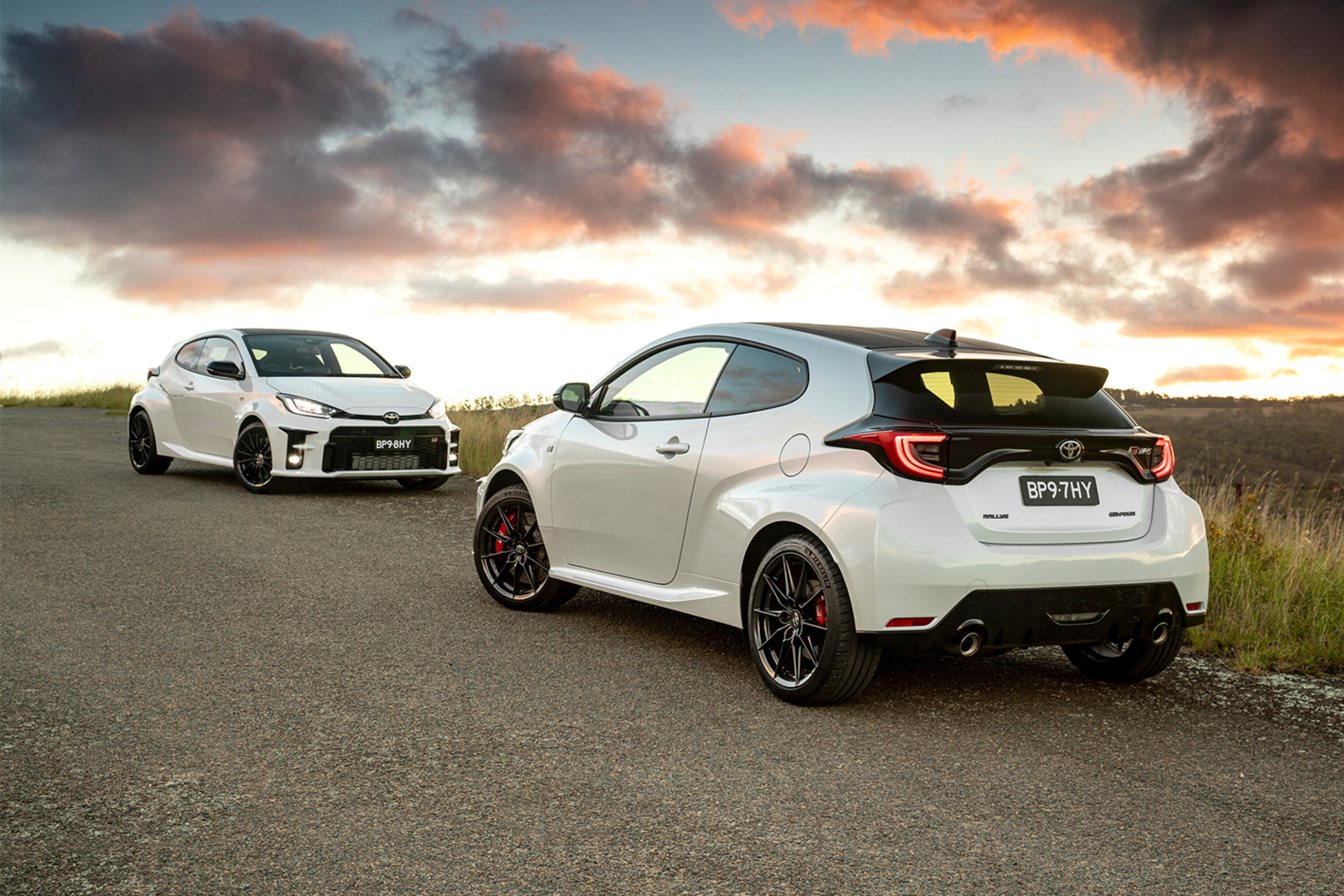
The used car most searched for by Australians is the Toyota Yaris, suggesting budget and brand reputation remain a driving motivator for most buyers.
Toyota made a clean sweep of the top three in Australia, with the HiLux coming second and Prado and RAV4 equal third.
Electric dreams
The table above shows Tesla’s Model 3 ranks 5th globally in used-car searches, while the table below shows Aussies find the popular EV more compelling as a new car, ranked at a distant 24th in used form.
According to former Wheels Media scribe and Compare the Market’s new hype man, Henry Man, this ranking suggests Australian buyers “may still be concerned around battery tech with relatively low interest in the fledgeling used EV market in Australia compared to globally”.
Our guide below offers clear advice on the ins and outs of used EVs.
Top Ten Australian searches
| 1 | Toyota Yaris | 13,260 |
|---|---|---|
| 2 | Toyota HiLux | 12,720 |
| 3 | Toyota Prado, Toyota RAV4 | 11,720 |
| 4 | Hyundai i30 | 11,340 |
| 5 | Toyota Camry | 11,120 |
| 6 | Ford Ranger | 10,240 |
| 7 | Toyota Corolla | 8,960 |
| 8 | Toyota Prius | 8,650 |
| 9 | Honda City, Honda Civic, Mazda CX-3 | 8,440 |
| 10 | Mazda 3 | 8,340 |
| 11 | Mazda CX-5 | 7,600 |
| 12 | Kia Sportage | 5,980 |
| Mitsubishi Outlander | 5,980 | |
| 13 | Suzuki Swift | 4,920 |
| 14 | Kia Carnival, Mazda 2, Mitsubishi ASX | 4,810 |
| 15 | Nissan X-Trail | 4,470 |
| 16 | Isuzu D-Max | 4,410 |
| 17 | Subaru Forester | 4,130 |
| 18 | Nissan Leaf | 3,900 |
| 19 | Kia Rio | 3,800 |
| 20 | Hyundai Kona, Kia Cerato, Nissan Patrol | 3,790 |
| 21 | Kia Sorento | 3,780 |
| 22 | Ford Everest | 3,570 |
| 23 | Toyota Kluger | 3,440 |
| 24 | Tesla Model 3 | 3,410 |
| 25 | Mini Cooper | 3,370 |
| 26 | Nissan Navara | 3,100 |
| 27 | Range Rover | 3,070 |
| 28 | Mitsubishi Triton | 2,990 |
| 29 | Mazda 6 | 2,980 |
| 30 | Subaru Outback | 2,890 |
| 31 | Audi A4 | 2,790 |
| 32 | Jeep Wrangler | 2,770 |
| 33 | Mazda CX-9 | 2,730 |
| 34 | Isuzu MU-X | 2,720 |
| 35 | Suzuki Jimny | 2,700 |
| 36 | Hyundai Tucson | 2,680 |
| 37 | Kia Stinger | 2,560 |
| 38 | Nissan Qashqai | 2,550 |
| 39 | Honda HR-V | 2,480 |
| 40 | Mitsubishi Lancer | 2,420 |
| 41 | Toyota HiAce | 2,310 |
| 42 | Audi A1 | 2,060 |
The full study results are available here [↗].
Looking at the top 20 most searched vehicles in Australia, utes and SUVs (small and medium) have a significant presence.
Ford Ranger (6th), Mazda CX-3 (9th), Mazda CX-5 (11th), Kia Sportage (12th), Mitsubishi Outlander (13th), Mitsubishi ASX (14th), Nissan X-Trail (15th), Isuzu D-Max (16th), Subaru Forester (17th) and Hyundai Kona (20th) all featured. Nissan’s Leaf was the only BEV that made the Australian topo 20, at 18th position.
Utes and SUVs also comprised a significant portion of the top 20 used cars searched globally, however, large models in these categories also made appearances in global searches.
Jeep Wrangler (1st), Toyota Tacoma (2nd), Ford Bronco (9th), Toyota Highlander(11th), Ford Ranger (12th), Jeep Grand Cherokee (=14th), Range Rover (=14th), and Toyota Tundra (19th) all featured, perhaps indicating a bias towards American searches.
Study Methodology
The study undertaken by Compare the Market analysed the online search volume of nearly 500 used vehicle models. Specific search terms were in English only and the nearly 500 models were mainly sold in developed western markets.
The search term researched was in English and in the following format:
used [vehicle make and model]
Keywords Everywhere – the internet search analytical tool used – averages out the search volume in the one-year period. Different tools may give varying results, however the rankings are likely to be similar.
MORE
VFACTS
Toyota’s all-hybrid C-HR model line-up has been subjected to an array of crash tests, including oblique pole, side impact, full width frontal and frontal offset tests, and child restraint testing.
2024 Toyota C-HR ANCAP crash test scores
- Adult Occupant Protection – 85%
- Child Occupant Protection – 88%
- Vulnerable Road User Protection – 86%
- Safety Assist – 82%
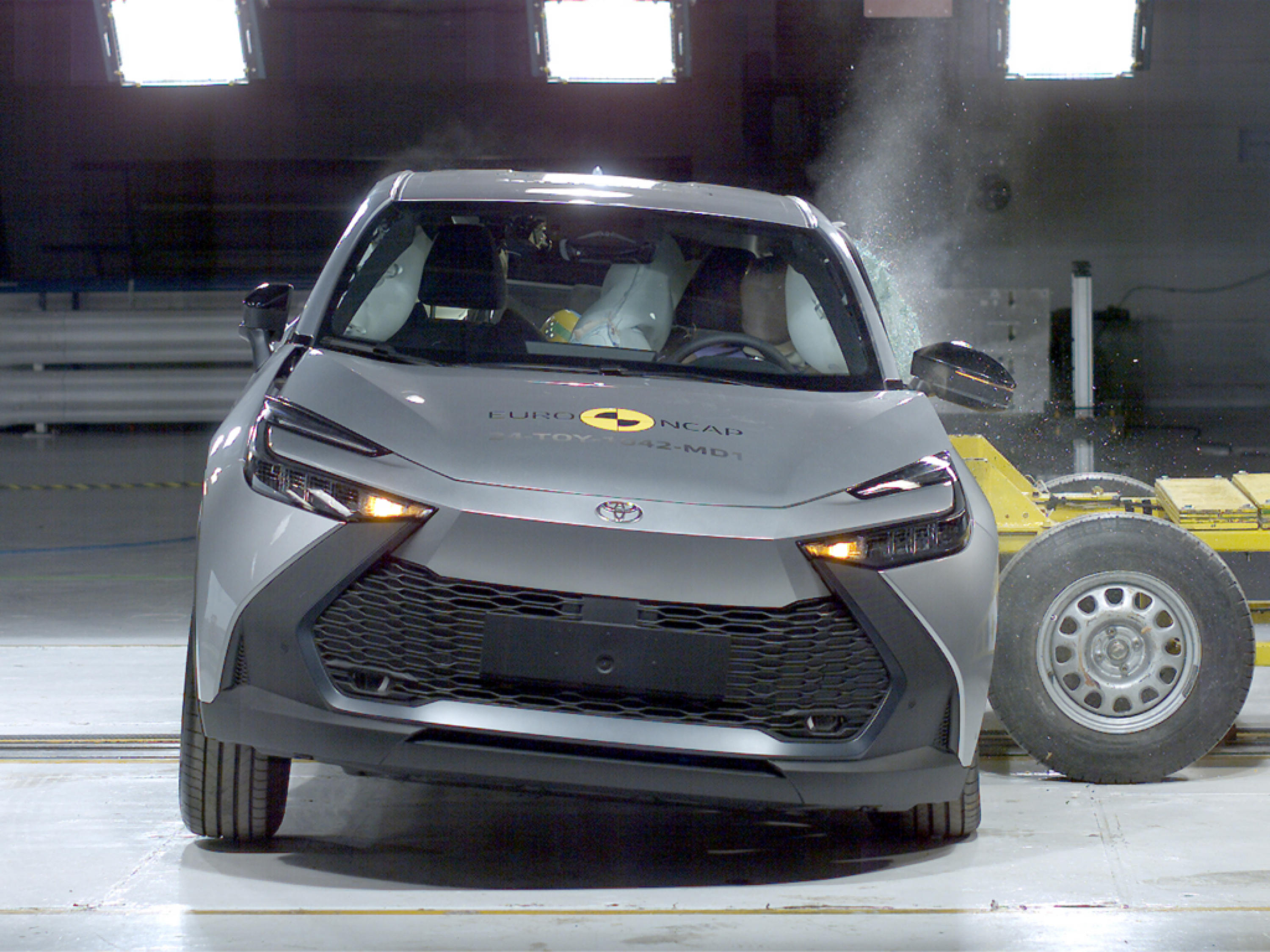
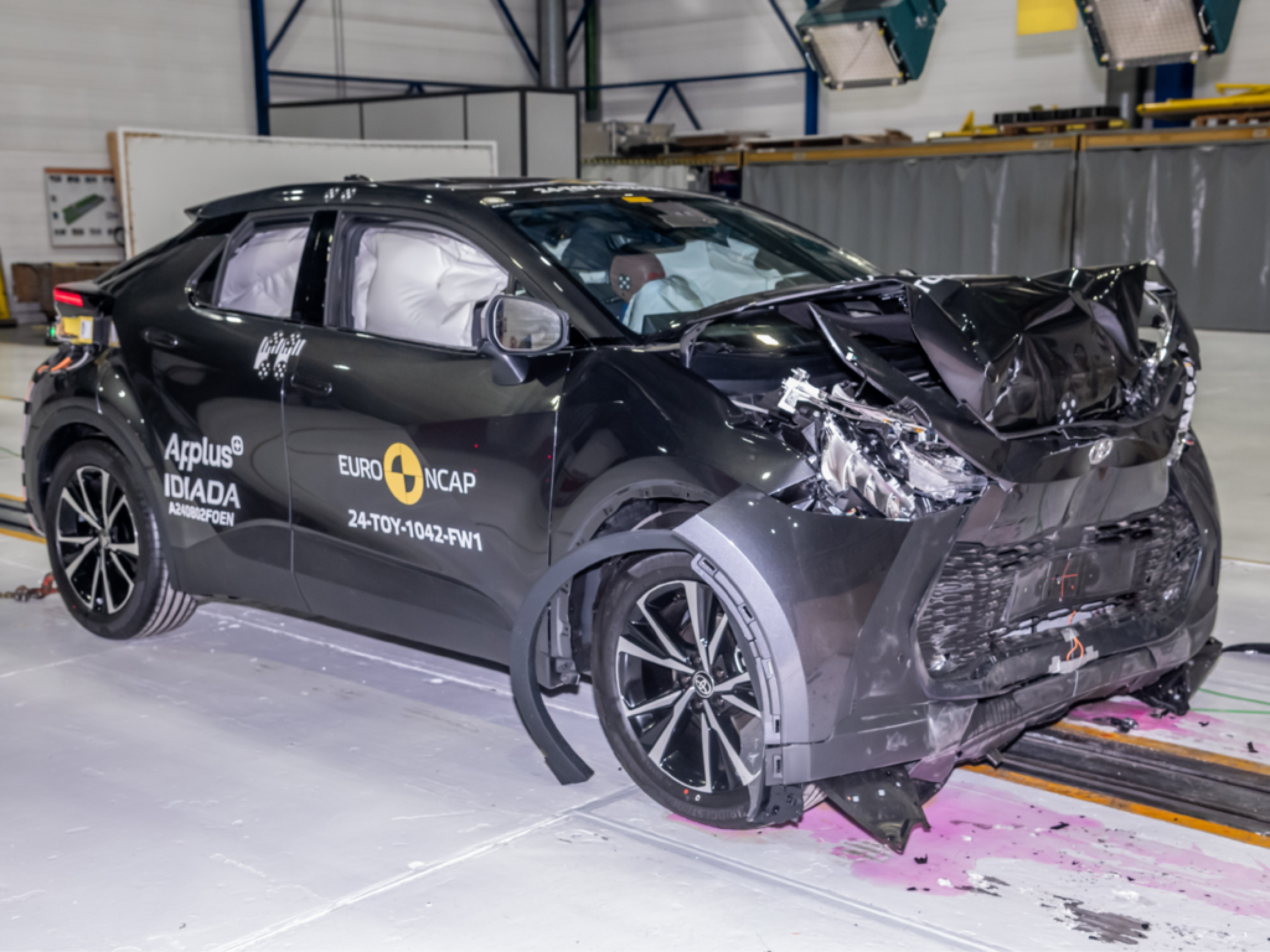
In ANCAP’s testing [↗], the new C-HR achieved maximum points for the driver in the oblique pole and side impact tests.
Mixed results were shown in the frontal offset test, with good performance recorded for driver and passenger head and upper leg protection. Adequate protection was provided for the driver and front passenger’s lower legs, and marginal protection for the driver’s chest.
The test also assesses the “outward” potential risk of the C-HR to occupants in an oncoming vehicle, resulting in a 1.69 score out of a possible 8 points (the lower, the better).
1
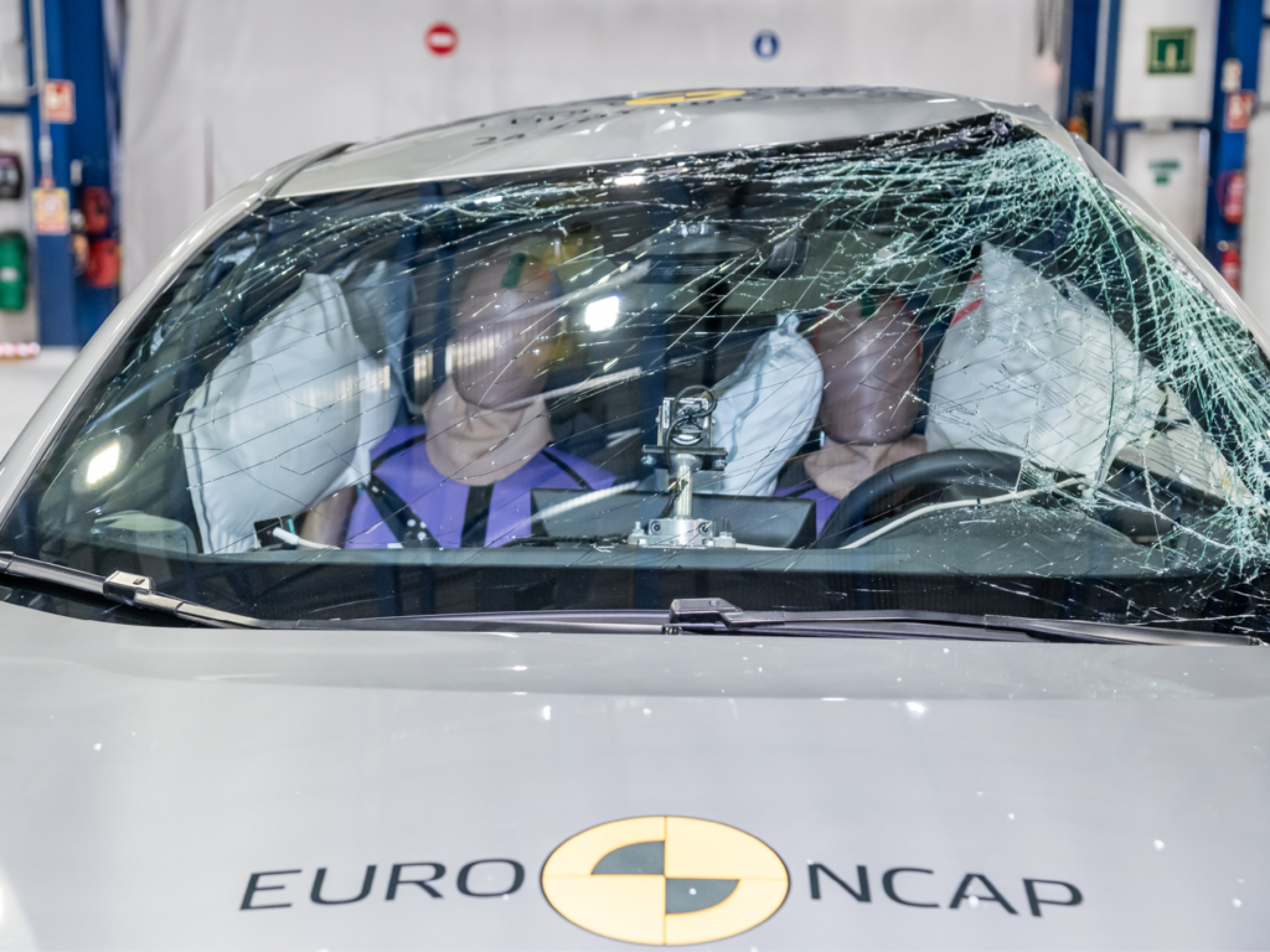
In the full width frontal test, the C-HR achieved full points for driver and rear passenger head and neck protection.
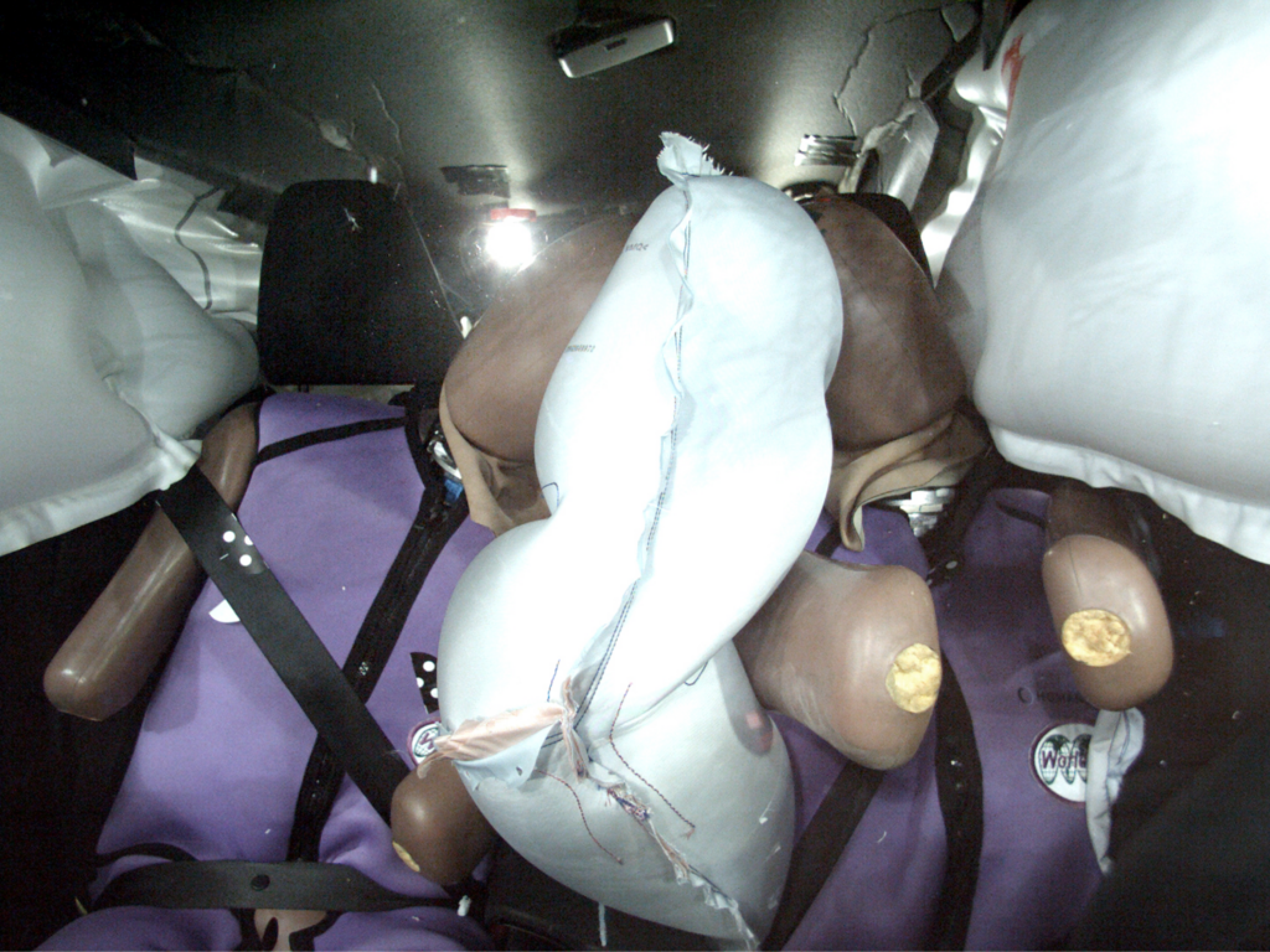
A marginal score was recorded for the chest of the driver and rear passenger. The small female dummy, situated in the rear, slipped beneath the lap section of the seatbelt – a phenomenon known as ‘submarining’.
Maximum points were awarded for Child Occupant Protection, when tested with child crash test dummies. The C-HR can safely accommodate the full complement of baby capsules, child restraints and booster seats in all rear seating positions.
1
Vulnerable road users safer too
The C-HR achieved an 86% score for Vulnerable Road User Protection, due to the pedestrian-friendly front bumper design, and ability to detect and either avoid or mitigate crashes with pedestrians, cyclists, and motorcyclists in a range of on-road emergency braking and lane-keeping scenarios.
ANCAP Chief Executive Officer, Carla Hoorweg said: “The Toyota C-HR offers a balanced level of protection for occupants and those outside the vehicle, as well as through its active collision avoidance capability putting in squarely above the five-star threshold for all four areas of ANCAP assessment.”
11
ANCAP boxes ticked
The C-HR is fitted with Autonomous Emergency Braking and Lane Support System, with Driver Monitoring, Child Presence Detection and Cyclist anti-dooring systems, satisfying the more stringent ANCAP requirements heading into the future.
The C-HR’s electric windows were also operational beyond the two-minute requirement when fully submerged in water, to allow an emergency escape route.
Standard safety
Toyota’s ‘Safety Sense’ active safety kit comes standard with the new C-HR. This includes 10 airbags, forward and reverse AEB, blind-spot monitoring, lane-trace assist, adaptive cruise control, driver-attention monitoring, and rear-seat occupant alert.
11
MORE
Everything Toyota
This is your definitive list of all the new cars expected to arrive in April 2024
Record sales in Australia so far in 2024 has seen more vehicles sold in the first three months of any calendar year for an all-time record.
SUVs remain the most popular vehicles – with electric vehicles now approaching 10 per cent of all new car purchases – so here’s your guide to what’s new for the month of April as car makers fight fiercely for your business.
Our New Cars hub will also help you to find out more about the latest models touching down in Australia in the coming months (and even years!).
JUMP AHEAD
- BMW X2/iX2
- Chevrolet Corvette Stingray (MY24)
- Genesis GV80 Coupe and facelift
- Isuzu D-Max and MU-X facelift
- 2024 Kia Sportage Hybrid
- Nissan X-Trail N-Trek Edition
- Peugeot 408 GT Fastback
- Toyota Yaris
- 2024 Volvo XC60 Black Edition hybrid and Volvo S60 Black Edition hybrid
1
BMW X2/iX2
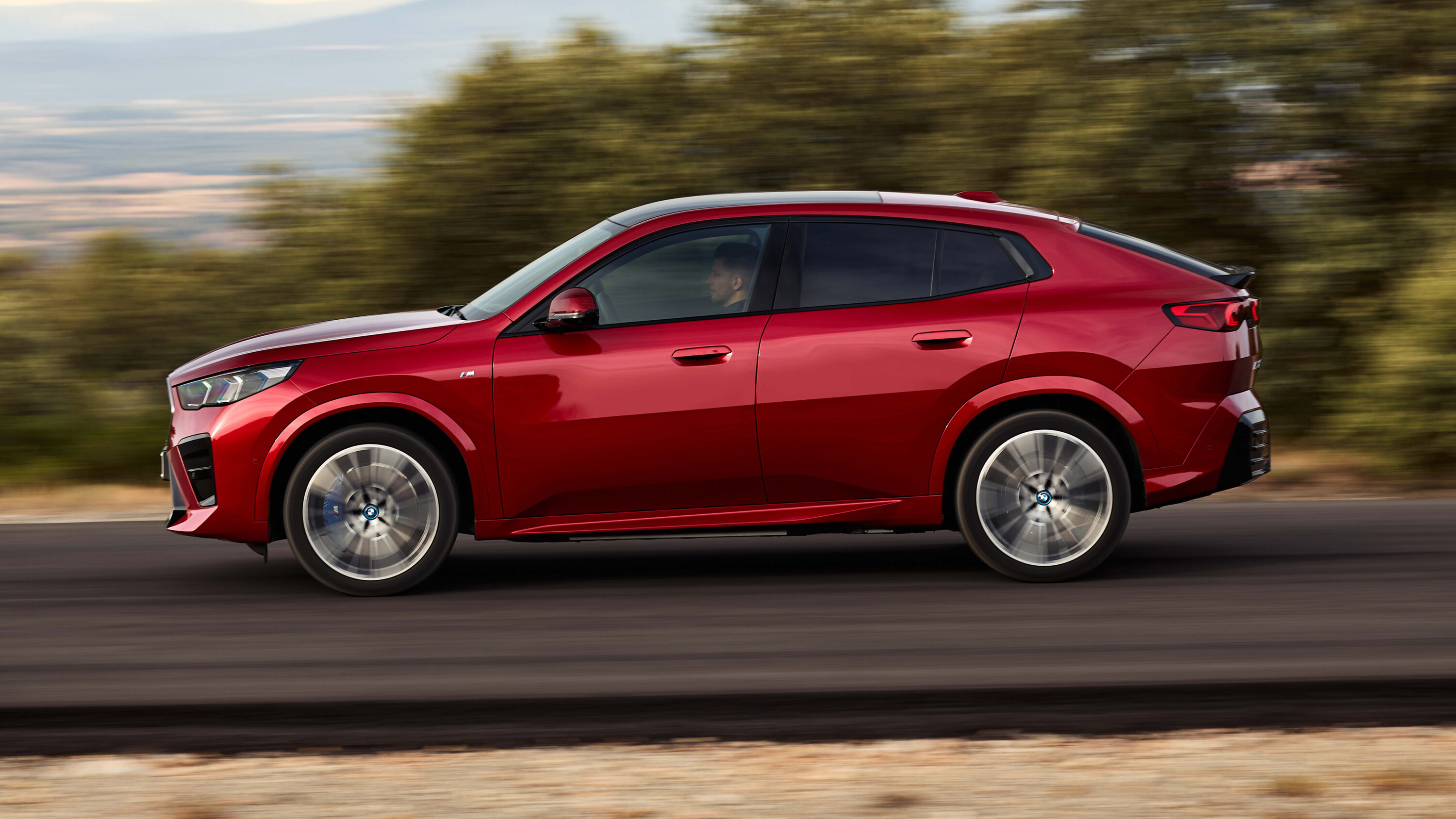
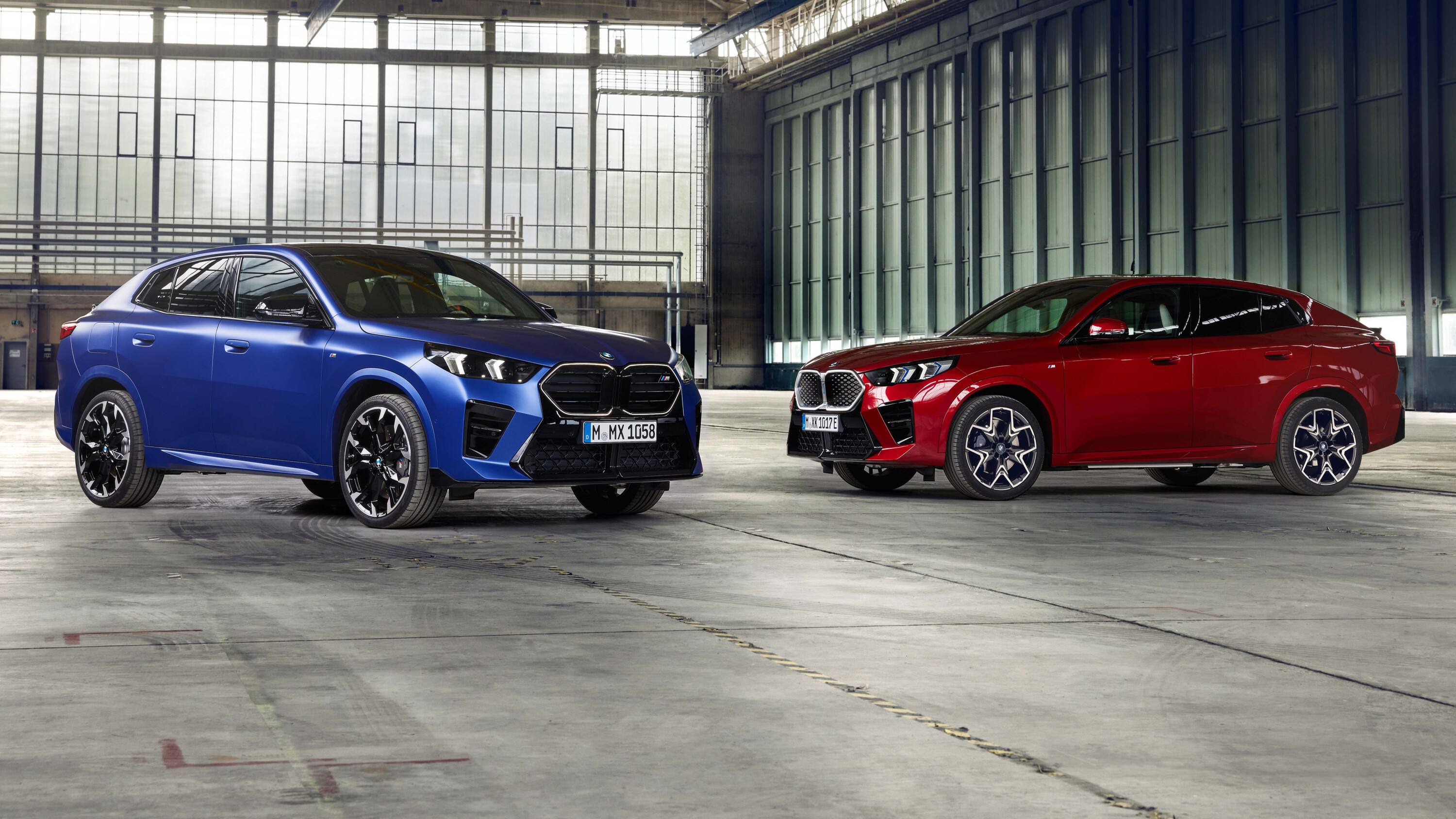
You can read our first overseas drive of the BMW X2 and iX2 – the coupe profiled petrol and electric versions of the already-on-sale X1 and iX1 duo.
The X2/iX2 arrive in Australia this month with two spec choices for each, in a body style 20cm longer than the X1 – and larger than its predecessor – and all-wheel drive across the line-up.
Take petrol route and there’s the 150kW/300Nm X2 xDrive20i at $75,900 – up $10,200 on its predecessor yet still below the Luxury Car Tax threshold – and the 233kW/400Nm X2 xDrive M35i at $92,900.
1
Electric models see the $82,900 iX2 xDrive20 with a 65kWh battery and 150kW/270Nm front electric motor for a 477km WLTP range.
The iX2 xDrive30 has two electric motors for 230kW/494Nm, a 0-100km claim of 5.6 seconds and a 449km range for $92,900 plus on-roads.
MORE
Everything BMW
Chevrolet Corvette Stingray
We love the C8 ‘Vette Stingray and are salivating over a slew of new models planned to arrive in Australia following the $336,000 Z06’s debut Down Under in late 2023.
For the 2024 model year, the Stingray has added safety tech in the form of Autonomous Emergency Braking (AEB) and lane-keep assist, lane departure warning and auto high-beam activation.
There are no changes to the Stingray’s mid-mounted 369kW 6.2L V8, but the safety tech does bring a range-wide $5000 price rise for a starting point of $175,000 before on-road costs for the 2LT Coupe.
If that’s not enough, the Corvette E-Ray is scheduled to arrive in Australia in the third quarter of 2024, with the hero ZR1 still under development likely to go on sale in 2026.
MORE
Everything Chevrolet
Genesis GV80 Coupe and facelift
The new GV80 Coupe body style will be arrive alongside a facelift for the regular GV80 wagon, with visual tweaks accompanied by a new 48-volt electric supercharger-boosted version of the 3.5L turbo-petrol V6 making 305kW/549m.
The Coupe –a direct rival to the BMW X6 and Mercedes-Benz GLE Coupe SUVs – has its own wheel patterns, unique front bumper and LED taillight design, both GV80s bring new headlights and redesigned grille.
Inside is a single 27.0-inch display integrating the instrument cluster and infotainment screen, with the minor revisions of button placement as well as a new wireless smartphone charging pad and larger cup holders.
Pricing for the GV80 Coupe is yet to be announced but is expected to be $120-130k, a premium over the GV80 wagon currently priced between $105-110k.
MORE
Everything Genesis
Isuzu D-Max and MU-X facelift
The perennial top 10 best-selling Isuzu D-Max – the sixth most-popular car in Australia in March – scores a fresh look and more tech, while April brings a second engine choice for its MU-X SUV stablemate.
The mid-life facelift for both cars includes a new grille and lower bumper designs, new wheel designs and LED taillights.
New ventilated front seats, paddle shifters and a 7.0-inch semi-digital instrument cluster are joined by USB-C ports instead of USB-A and updated infotainment software.

1
The D-Max also scores a ‘rough terrain mode’ already seen in the MU-X, which gets a 1.9L four-cylinder turbo-diesel variant starting at $47,400 plus-on road costs.
The new engine makes 110kW/350Nm, has a 3000kg braked tow-rating and is available in 4×2 and 4×4 to give MU-X buyers a more affordable and more fuel-efficient option below the existing 140kW/450Nm 3.0L four.
MORE
Everything Isuzu Ute
2024 Kia Sportage Hybrid
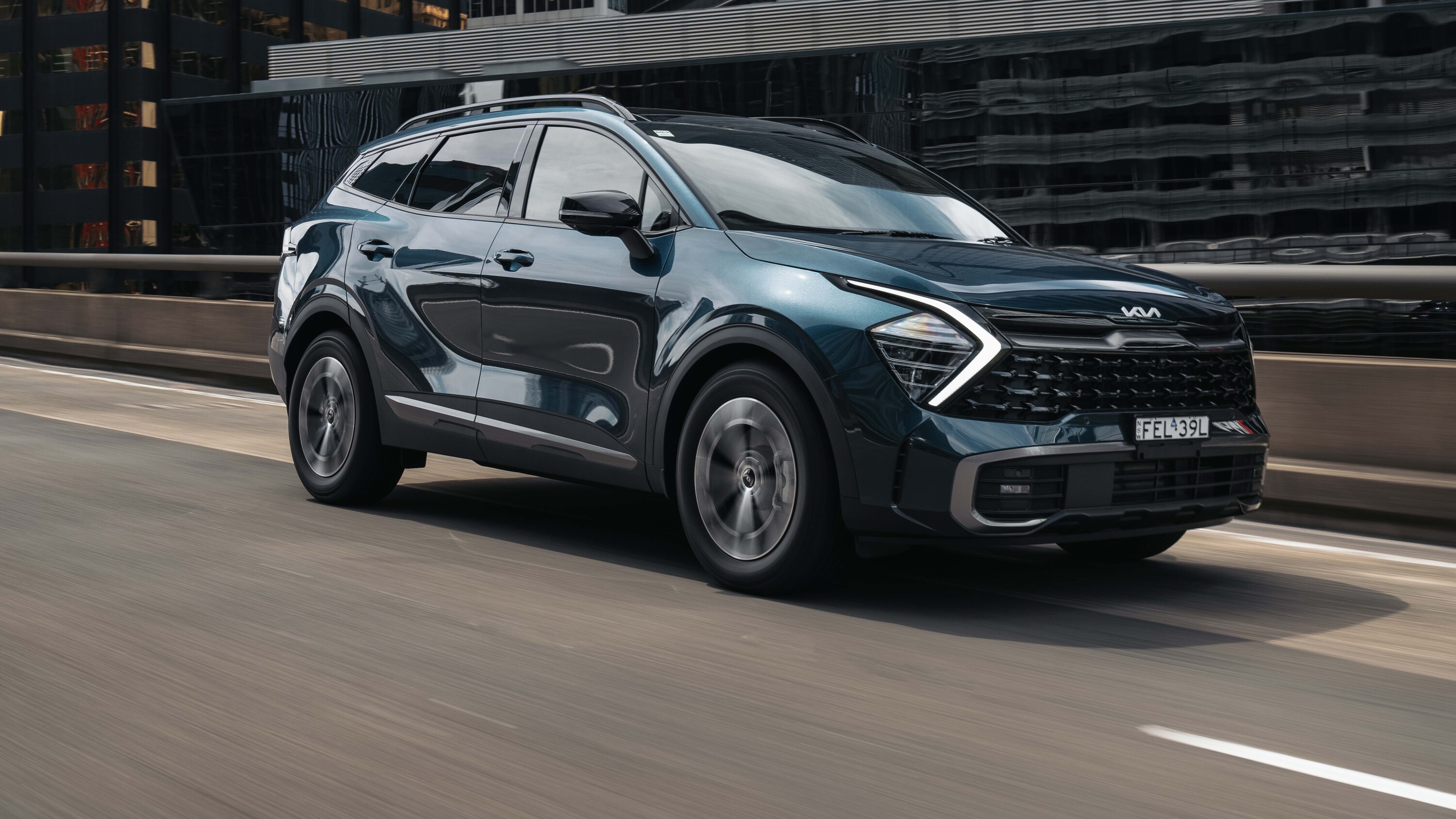
If you’re in the market for a Toyota RAV4, Kia wants you to sample its new Sportage Hybrid – and expects significant take-up for the two hybrid choices being added to the Sportage line-up.
The SX Hybrid FWD (front-wheel drive) is $45,950 before on-road costs – an $8400 premium over the 2.0L petrol SX Sportage – but can match the 1650kg towing capacity of its petrol equivalent.
It uses a 1.6L four-cylinder turbo-petrol engine and a single electric motor – which is charged by the engine and regenerative braking, so does not need to be plugged in – for a total 169kW/350Nm output.
1
Standard kit includes 18-inch wheels, sat-nav and rear-view camera with parking guides.
The GT-Line Hybrid FWD adds a larger, curved instrument display, leather upholstery and panoramic sunroof as part of its $55,420 list price – the highest ask for a Sportage to date.
We’ve driven the new Sportage so stay tuned for a full rundown and review.
MORE
Everything Kia
Nissan X-Trail N-Trek Edition
The new Nissan X-Trail N-Trek edition joins the 2024 line-up and brings an off-road focus to take on the Toyota RAV4 Edge.
The N-Trek sits between the ST-L and the Ti in the X-Trail line-up and uses the 135kW/244Nm 2.5L naturally-aspirated four-cylinder petrol engine and CVT automatic.
It comes in two guises: the $47,290 five-seat front-wheel drive, and the $50,390 seven-seat all-wheel drive N-Trek which manages to undercut the five-seat X-Trail Ti by $100 while offering more equipment.

1
Visually distinguished by a blackened front grille and detailing, unique front bumper and N-Trek specific 18-inch alloys, the off-road X-Trail can also be had with an optional two-tone black roof colour scheme.
The cabin brings water-resistant synthetic seat coverings, the 12.3-inch infotainment screen and colour head-up display, with the same tech as the ST-L – meaning 360-degree camera, keyless entry and push-button start and key active safety equipment.
MORE
Everything Nissan
Peugeot 408 GT Fastback
Peugeot’s plug-in hybrid crossover is due to land in April – after several delays – offered in a single GT Fastback variant priced at $67,990 plus on-road costs.
Well equipped with wild-looking 20-inch alloys, LED Matrix headlights, keyless entry, digital instruments and wireless Apple CarPlay/Android Auto compatibility.
Well equipped with wild-looking 20-inch alloys, LED Matrix headlights and wireless Apple CarPlay/Android Auto compatibility, the 408 is a natural rival to the Cupra Formentor VZe PHEV.
Both offer a similar electric driving range (50km), the 408 using a 1.6L turbo petrol engine and single electric motor powertrain delivering 165kW/360Nm.
The 408’s 12.4kWh lithium-ion battery takes 3.5 hours to fully charge using three-phase power wallbox – or six hours via a conventional domestic power outlet.
MORE
Everything Peugeot
Toyota Yaris
Toyota’s smallest passenger car is now on sale for less than $30k before on-road costs, with the return of Ascent Sport hybrid kicking off the line-up from $28,990.
It sits below the more expensive SX hybrid and ZR hybrid Yaris models – $31,960 and $34,530 respectively – which receive updated tech including a lager 8.0-inch touchscreen with updated software and wireless Apple CarPlay and Android Auto connectivity.
The SX and ZR also score a larger 7.0-inch instrument cluster- previously 4.0-inches – and low-speed emergency braking in forward and reverse, with the ZR offering safe exit assist designed to prevent ‘dooring’ other road users.
The Toyota GR Yaris hatch is set for an update of its own later in 2024.
MORE
Everything Toyota
2024 Volvo XC60 Black Edition hybrid and Volvo S60 Black Edition hybrid
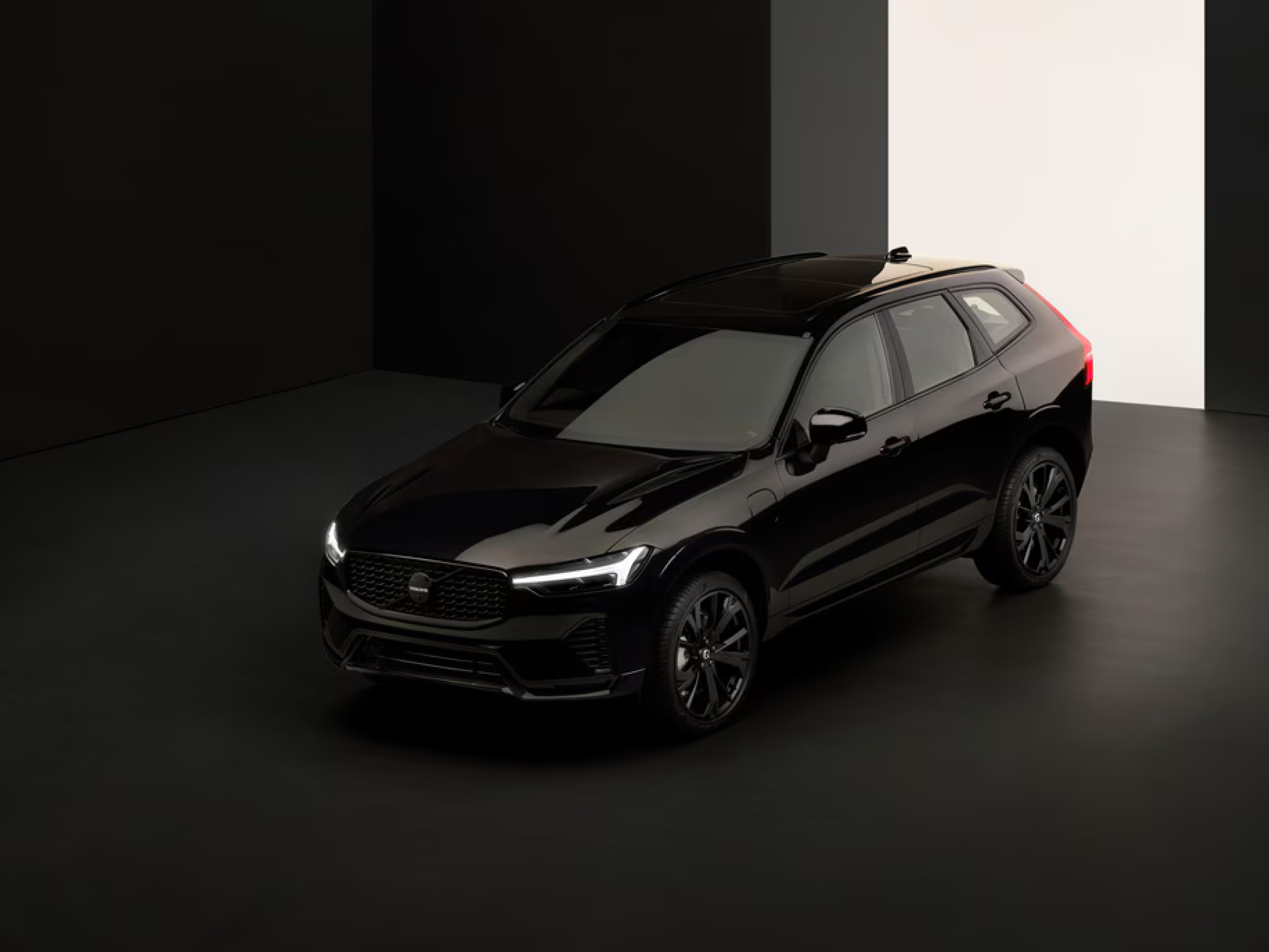
The Volvo XC60 Recharge Black Edition brings a sinister look the Swedish brand’s mid-size SUV – but the big news is the return of the T8 hybrid powertrain to the S60 sedan.
The S60 was reduced to a single mild-hybrid model in 2021, but the Black Edition Recharge marks the comeback of the 335kW/709Nm ‘Ultimate T8’ powertrain to the sedan making it more than a cosmetic treatment.
1
The twin-turbo four cylinder and pair of electric motors give the S60 Black Edition a 4.5-second 0-100km/h claim with up to 90km of electric driving; the same powertrain gives the XC60 Black Edition figures of 4.8 seconds and 76km.
There’s also gloss black wheels, grilled treatment and window surrounds carried into the interior to go with the high-spec levels of the flagship T8 versions on which both Black Editions are based.
Only 150 XC60 Black Editions – at $103,000 each – will land in Australia, with the $84,990 S60 Black Edition limited to 65 cars.
MORE
Everything Volvo
Snapshot
- Sixth-generation Triton awarded maximum 5 star safety
- Becomes the first dual-cab to achieve full marks under tougher rules
- Scored well for adult and child occupant protection
- Active safety score just made the threshold for five stars; is below rivals like Ford Ranger
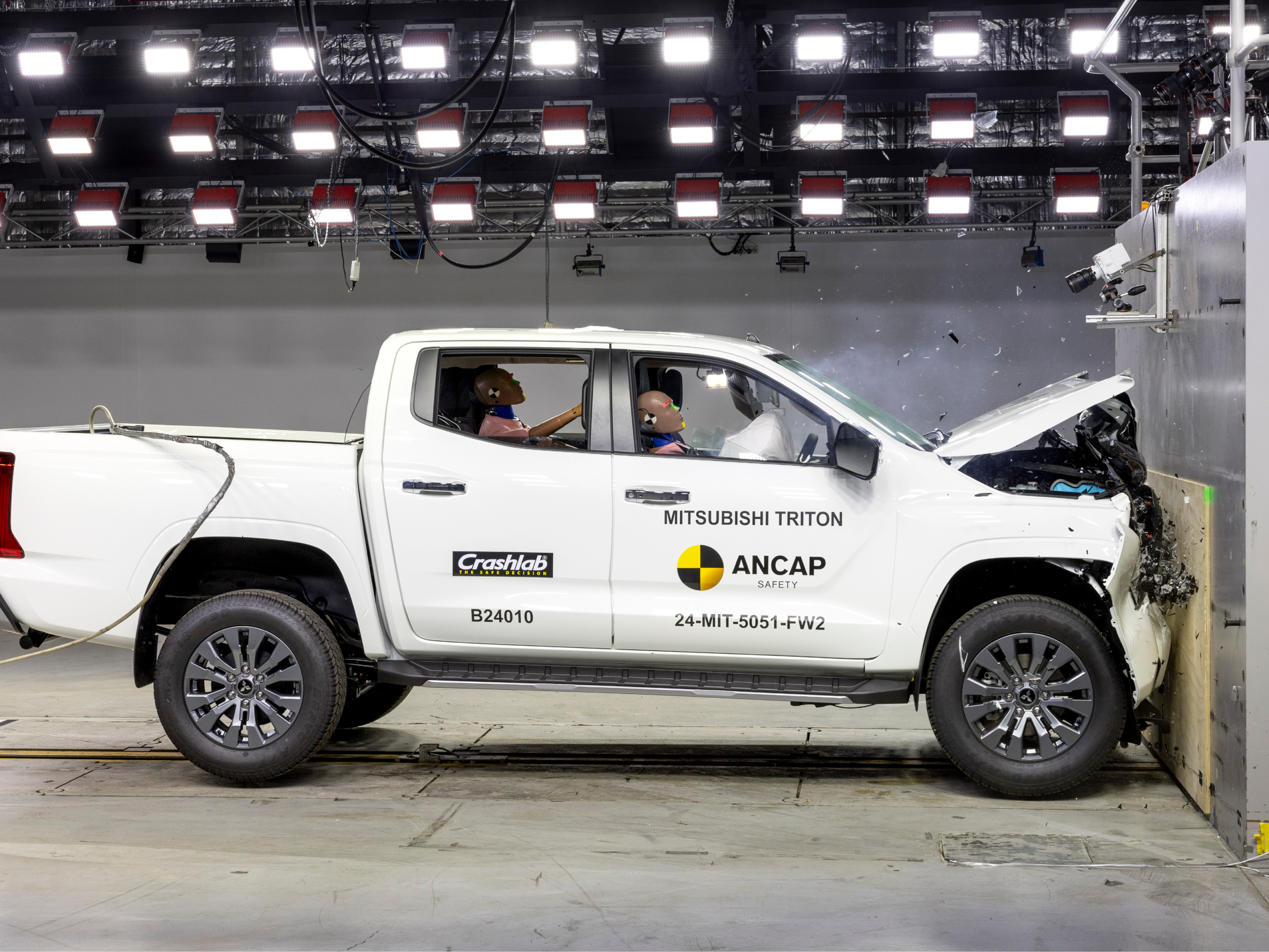
The 2024 Mitsubishi Triton has become the first dual cab ute to achieve a five star ANCAP safety score under fresh, more stringent testing criteria.
The sixth-generation Triton, which we rated as 8/10 in our launch review last month, scored highly in ANCAP’s physical crash tests and recorded strong results for both front passages and child dummies in the second row.
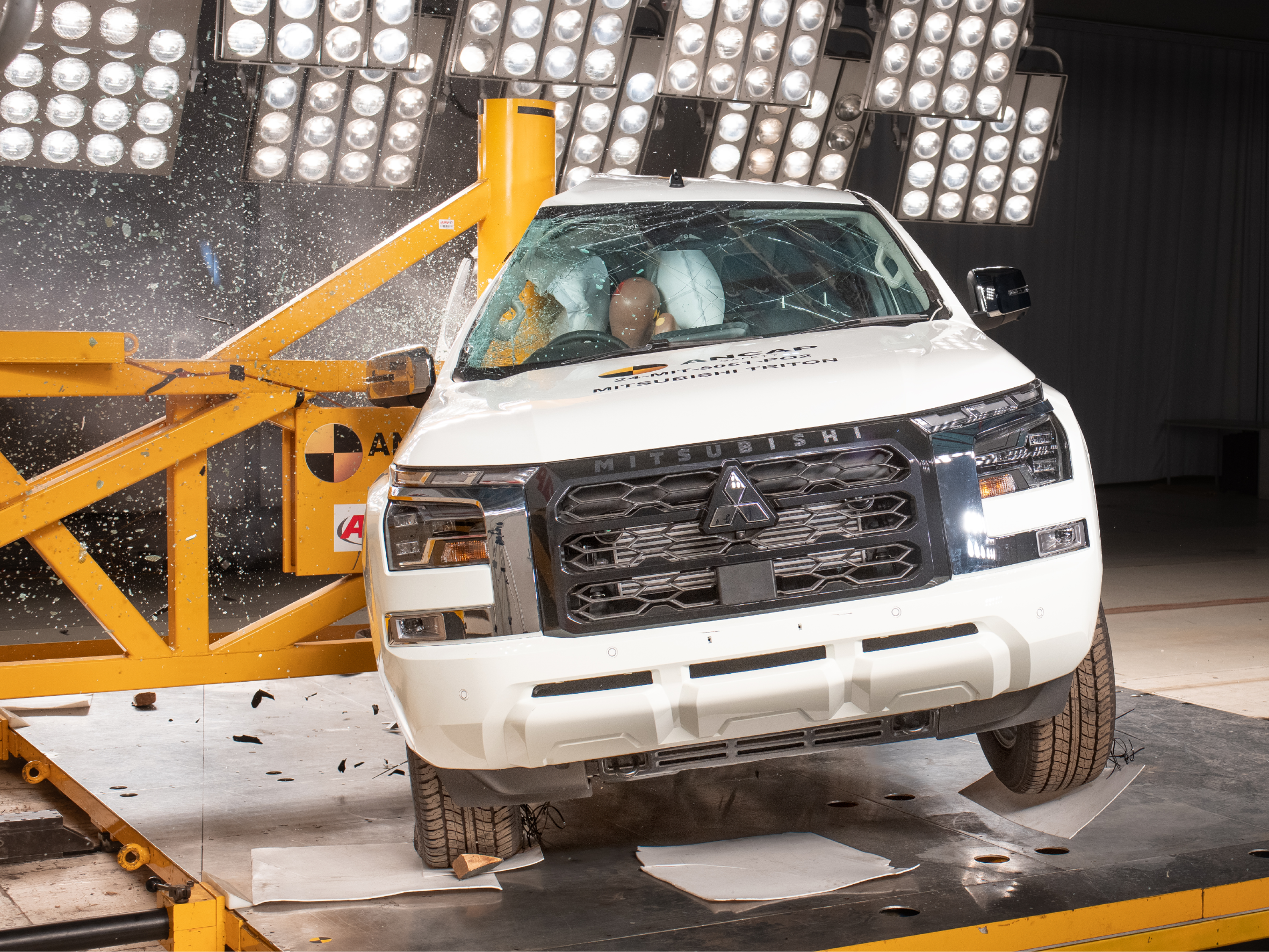
ANCAP gave the Triton an adult occupant protection rating of 86 per cent and noted that maximum scores were given for the passenger in the front offset test and the driver in the full width frontal and oblique side pole tests.
Child occupant protection was rated even higher at 89 per cent and full marks were given for both child dummies in the frontal and side impact tests.
1
ANCAP did deliver a weak chest score for rear passengers however, and noted there was room for improvement in how the Triton protects the chest and upper legs of children sitting in the back.
Like most dual cabs, child seats can also only be anchored to the Triton’s outboard positions as the centre seat doesn’t have a top tether point.
1
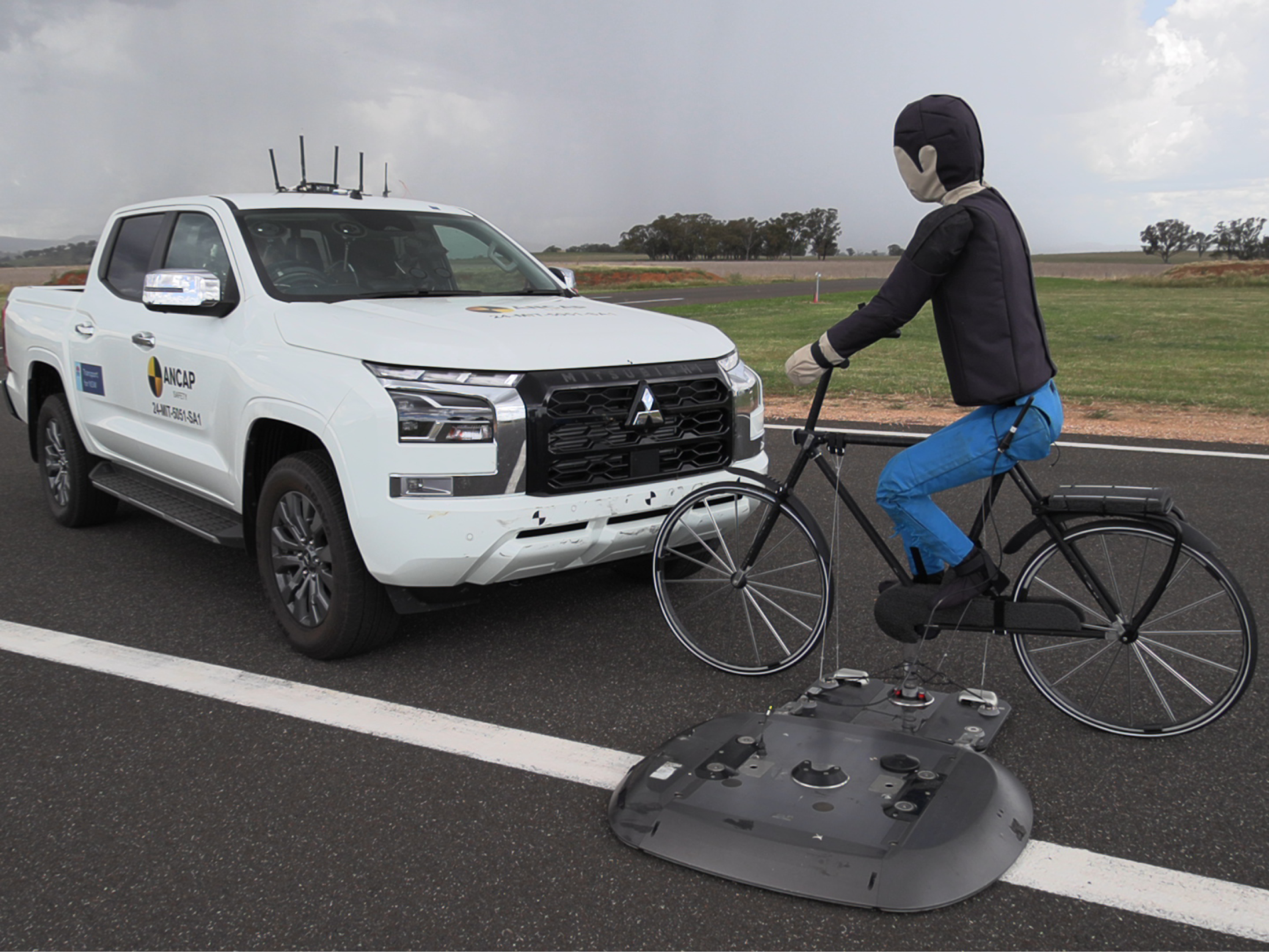
ANCAP’s testing report applauded Mitsubishi’s “considered approach” to the new model’s exterior design which helped it perform well in pedestrian impact tests. The Triton scored 74 per cent for vulnerable road user protection and its grille and front bumper performed well “in assessment of risk to a pedestrian’s leg or pelvis”.
The Mitsubishi Triton has eight airbags including: dual front, side chest, side head, centre and one for the driver’s knee.
1
In terms of active safety, the Triton scored 70 percent for Safety Assist (12.75 points out of a possible 18) which is the threshold for a five star score. By comparison a Ford Ranger carries a score of 83 per cent in this criteria, however that was achieved under the old testing rules in 2022.
ANCAP noted that while the Triton’s Autonomous Emergency Braking (AEB) system can detect and respond to other vehicles, pedestrians, cyclist and motorcyclists, it doesn’t have the capability of more advanced AEB systems to avoid a crash at a T-bone intersection or a head-on collision. “This limited its overall Safety Assist score,” said ANCAP.
The Triton’s five star result applies to all 2WD and AWD double-cab versions on sale in Australia and New Zealand.
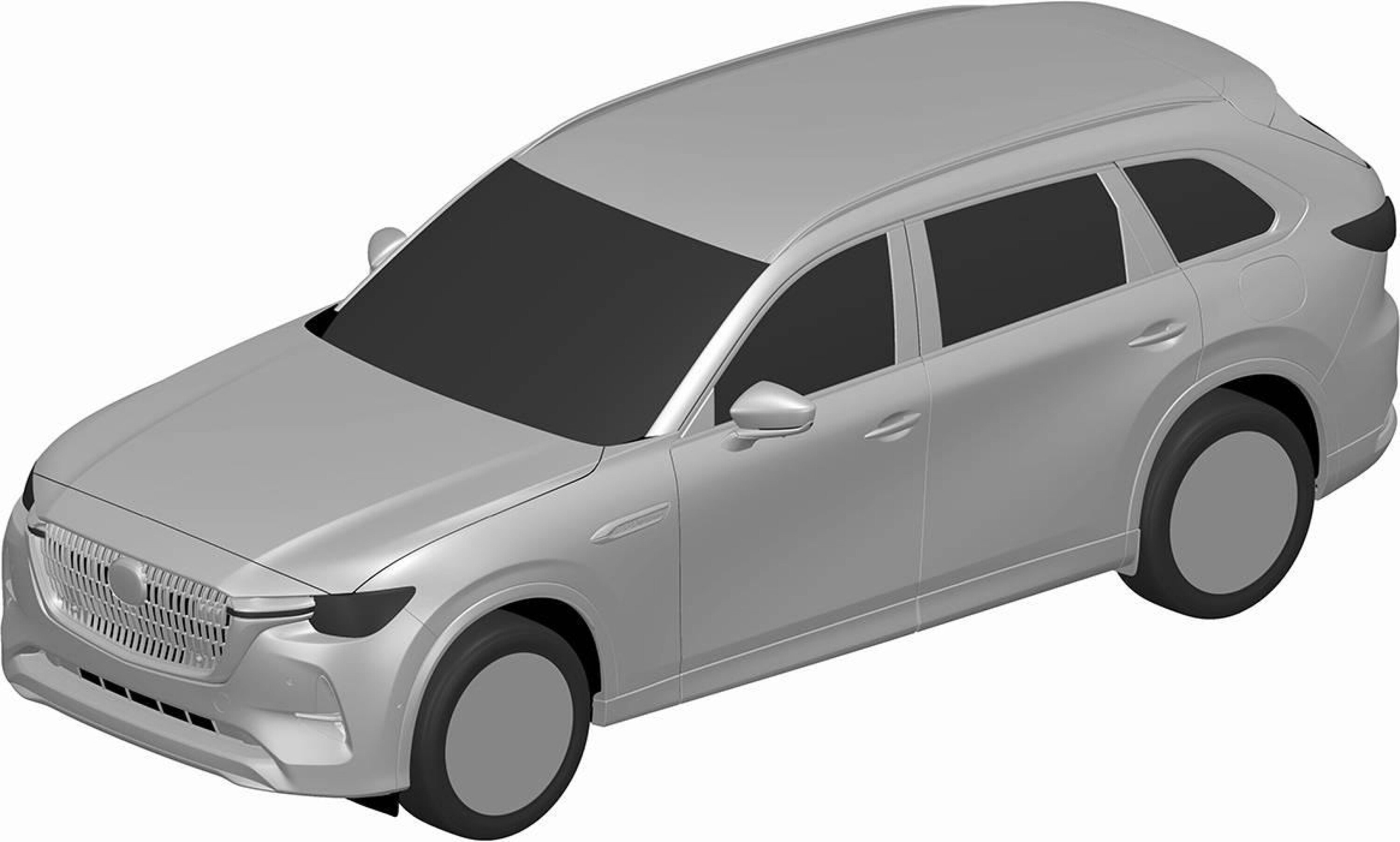
The 2025 Mazda CX-80 three-row SUV has been teased ahead of its full debut next week.
Mazda has confirmed the all-wheel-drive CX-80 will be unveiled on Thursday, April 18 at 8:00pm AEST, ahead of its likely arrival in local showrooms before the end of 2024 to join the closely related CX-60, CX-70 and CX-90.
The CX-80 is a larger version of the CX-60 midsize SUV, much like the relation between the smaller CX-5 and the now-discontinued CX-8.
1
The CX-80 is the replacement for the CX-8 and CX-9 large SUVs, which ended production in 2023. Both vehicles are now in run-out with limited stock available.
In Australia, the CX-80 will be offered with the choice of six seats with second-row captain’s chairs or seven seats with a conventional second-row bench seat, in line with the CX-8, CX-9 and CX-90.
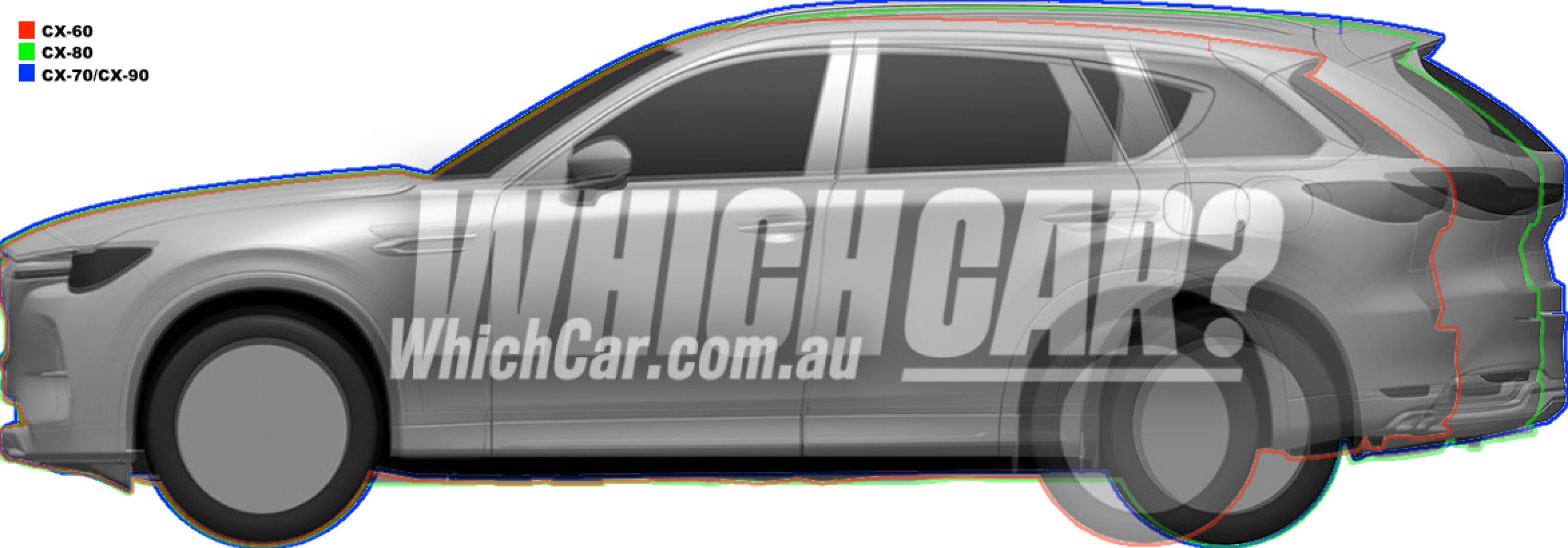
In February, leaked patent images revealed the CX-80’s front end will be identical to the CX-60, while it’ll have longer rear doors, a larger D-pillar, and a different rear bumper.
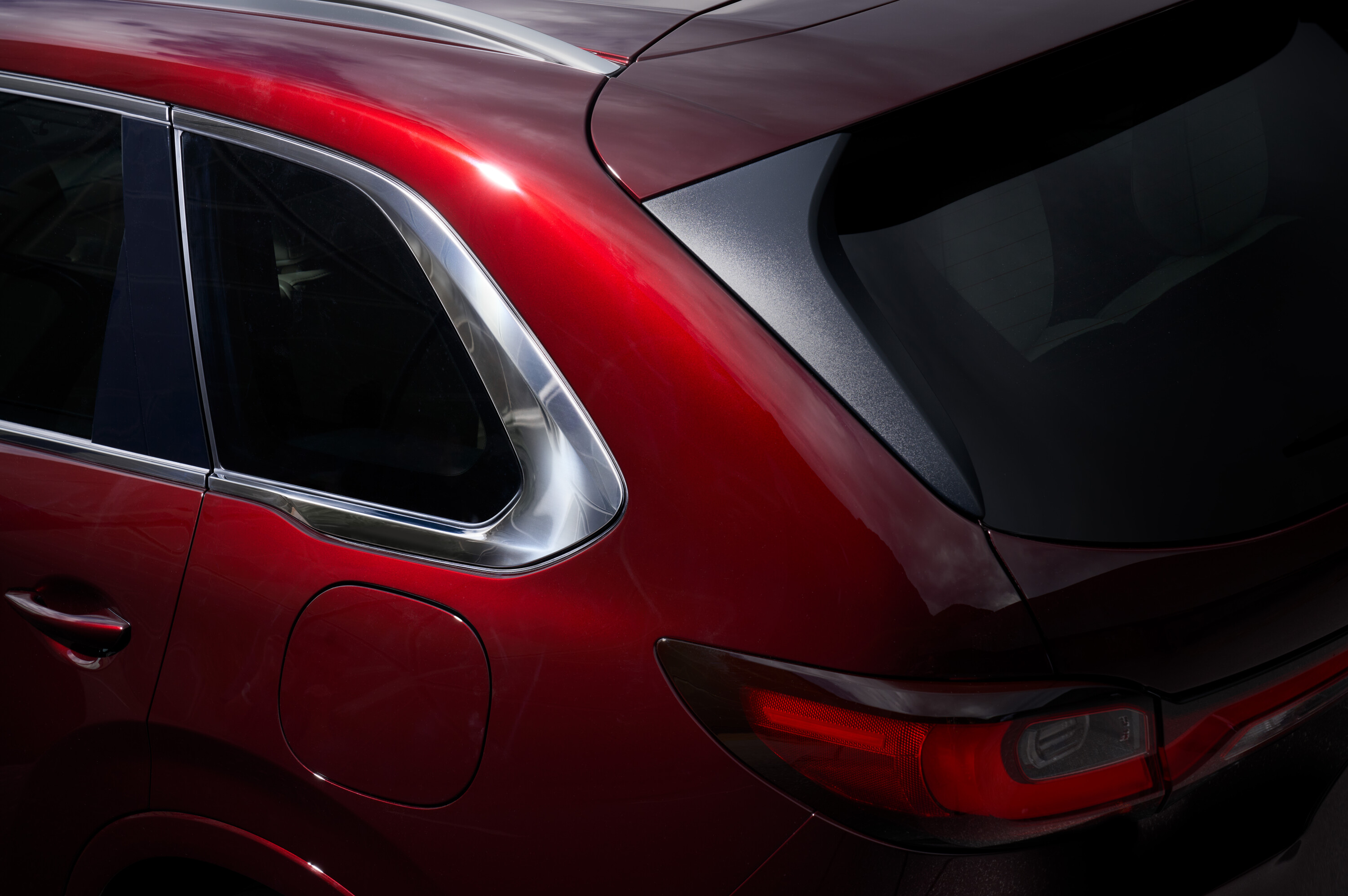
This week’s teaser image confirms the CX-80 will be offered in the brand’s new ‘artisan red’ signature colour, which debuted in the CX-90 and the newest Mazda 6.
Mazda has confirmed the CX-80 will measure “almost five metres long” with a “wheelbase of over three metres”. It is aimed at Europe and Japan, where it’ll become the largest Mazda SUV ever offered in those markets.
The CX-80 should match the 3120mm wheelbase of the CX-70 and CX-90, compared to 2870mm for the CX-60.
Meanwhile, the CX-80 should be identical to the CX-60 in width at 1890mm, compared to 1840mm for the CX-8, 1969mm for the CX-9, and 1994mm for the CX-70 and CX-90.
1
The CX-60 and CX-80 are ‘narrow-body’ vehicles aimed at Europe and Japan, while the two-row CX-70 and three-row CX-90 are ‘wide-body’ vehicles aimed at the United States and Canada.
Mazda Australia plans to offer all four SUVs in local showrooms and has admitted there will be ‘some overlap’.
“[Australia is] privileged enough because I suppose we as a team think we can have an opportunity with all four. And here we are [in the situation] that we will have all four in our portfolio,” said Mazda Australia managing director Vinesh Bhindi at the reveal of the CX-70 in January.
1
“What that means is you might see some overlap, but really when you understand our business strategy – which always has been to give consumers as many opportunities and options and choice as possible and let the customer decide – it makes sense for us to get [all four].”
Mazda’s new SUVs are based on the brand’s ‘Large Platform’ architecture that features a rear-wheel-drive bias and ushers in a family of fresh inline six-cylinder engines.
The CX-80’s powertrain choices should mirror that of the CX-60: a 209kW/450Nm 3.3-litre mild-hybrid six-cylinder turbo-petrol, a 187kW/550Nm 3.3-litre mild-hybrid six-cylinder turbo-diesel, and a 241kW/500Nm plug-in hybrid that features a 100kW electric motor matched to a naturally-aspirated 2.5-litre four-cylinder petrol engine.
The seven-seat CX-80 will carry a more affordable price tag than the CX-90, which starts from $74,500 before on-road costs.
However, it will be pricier than popular entry-level versions of the CX-8 and CX-9 as the brand continues its ‘premium push’ here in Australia.
With the smaller CX-60 starting at around $60,000 and stretching to $85,000 for the flagship PHEV variant, it’s fair to assume pricing for the CX-80 will start from around $65,000 to $70,000 (all before on-road costs).
The 2025 Mazda CX-80 will be unveiled on April 18. It is expected to arrive in Australia later this year.
MORE
Everything Mazda
Iconic Holden fails to sell
It might have sold for $1 million only a few years ago, but today Peter Brock’s HDT Group A didn’t even reach half that amount when bidding closed at auction.
More than 77 bids were placed on the iconic car, which is one of 500 Blue Meanies and carries the extra distinction of once being owned by Holden icon Peter Brock, however when the clock ran out the highest bid sat only at $438,500.
That’s a long way down on the car’s previous auction result of $1,057,509 in May 2021.
Given today’s result, the car passed in and remains unsold.
Things weren’t looking good for a record result earlier today. With two hours left to run in the auction, the highest bid sat at $390,000 after 50 bids. A late flurry of bidding did lift interest to the $430K mark before finally settling on the final figure of $438,500.
Original story continues below
One of the most expensive Holdens ever sold is back on the market, with a rare Holden Commodore owned by racing icon Peter Brock heading to auction less than three years after it was fetched $1 million.
Rare vehicle specialist Collecting Cars is auctioning the historical Holden for a private seller and is expecting a similar result when onlinebidding ends at 16:30 Melbourne time on Thursday 11 April.
The special car is one of 500 Holden Dealer Team VK SS Group A Commodores produced in 1985 as a homologation special to race as local regulations switched from Group C to Group A regulations.
1
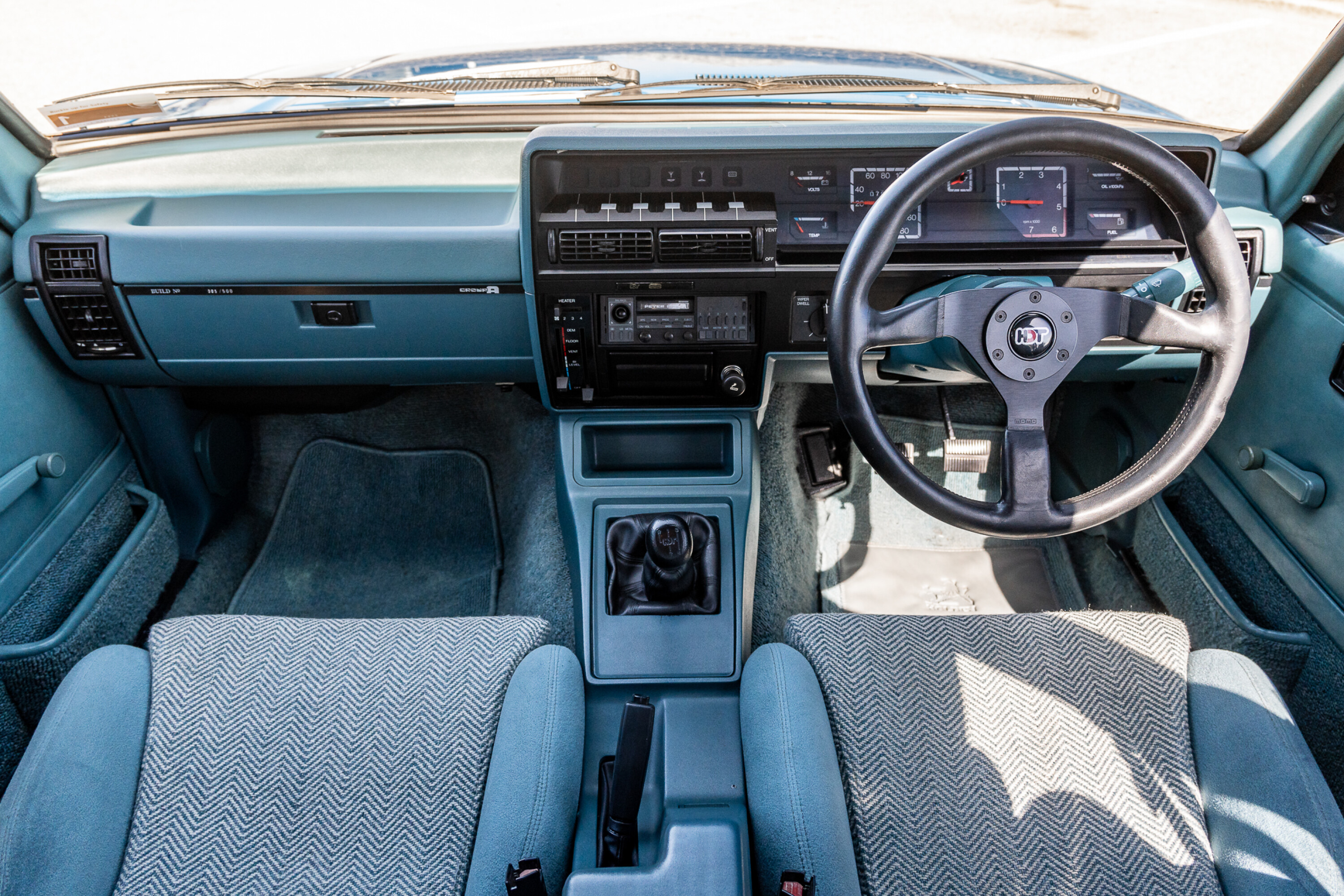
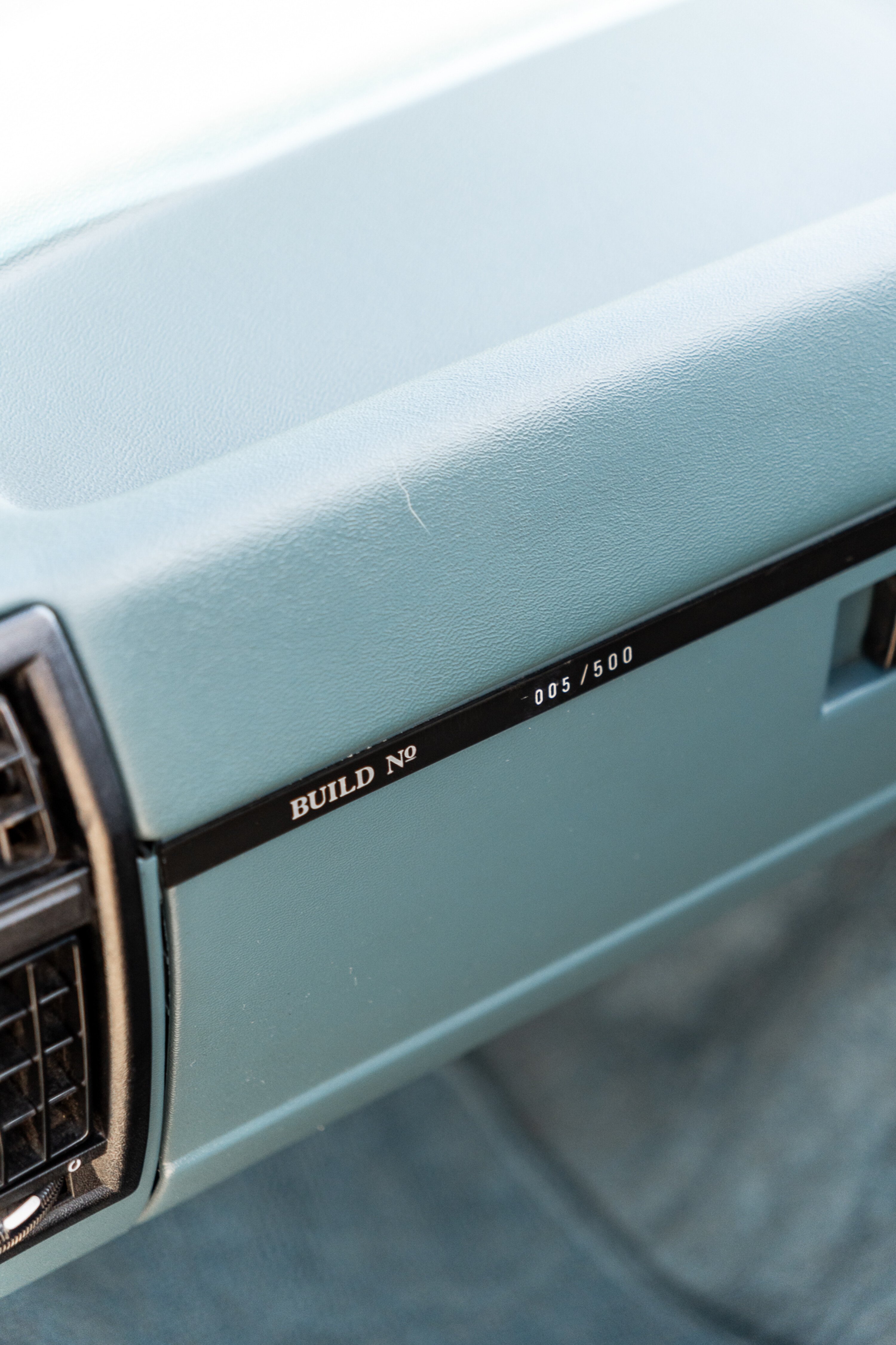
In addition to Brock owning it, the car is number ‘05’ – Brock’s famous racing number – with a letter of authentication from John Harvey.
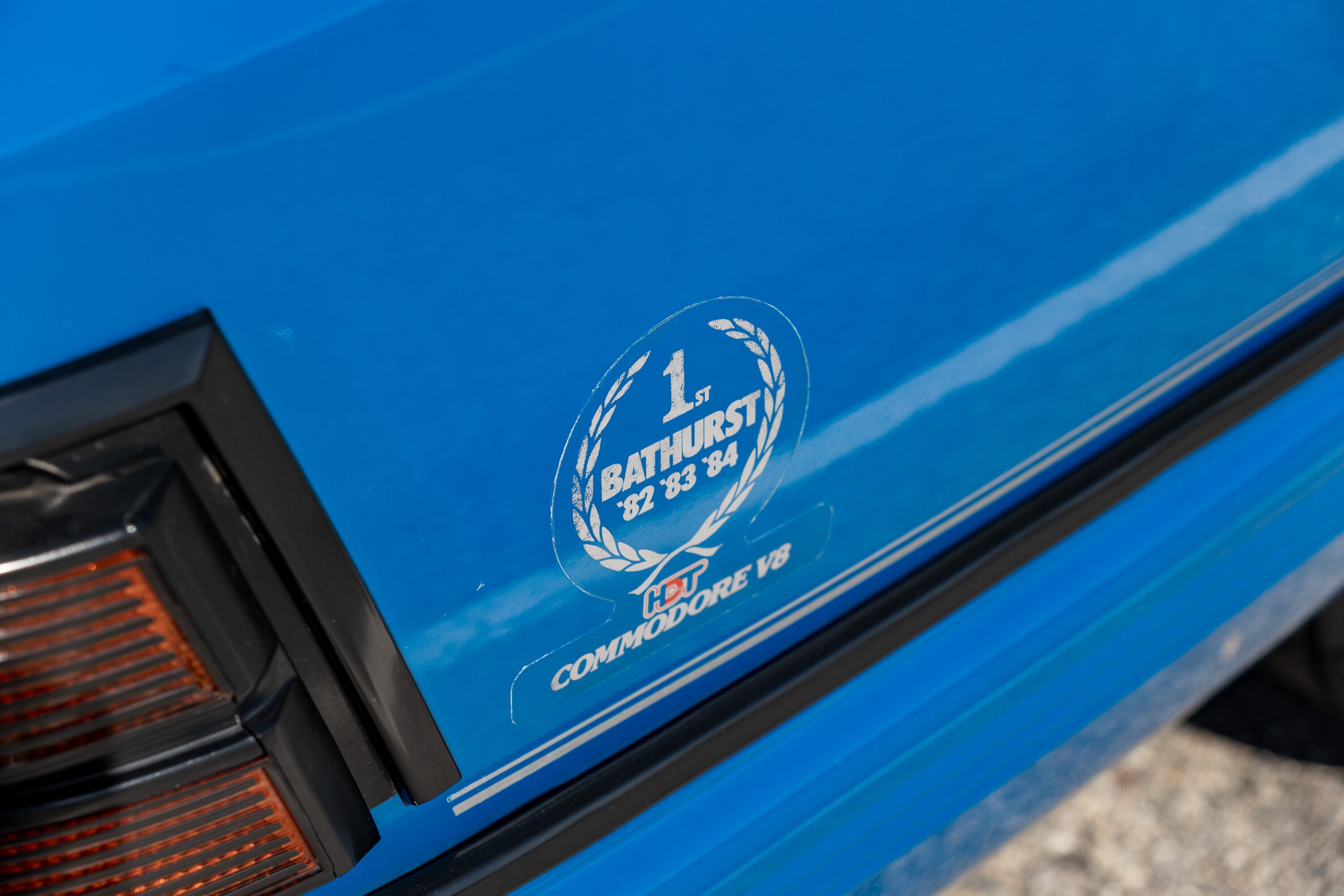
Harvey not only won Bathurst 1983 co-driving with Brock and Larry Perkins but was instrumental in Brock’s Holden Dealer Team Special Vehicles road car business – and later the Tom Walkinshaw-owned Holden Special Vehicles.
The VK is finished in Formula Blue – as all 502 produced were, earning the nickname ‘The Blue Meanie’ – and uses a 4987cc (304 cubic-inch) version of the Holden 5.0-litre V8, de-stroked from 5044cc to meet Group A rules.
1
This example also uses an M21 four-speed manual gearbox – a five-speed manual was an option – and white versions of the standard polished 16-inch HDT ‘Aero’ alloy wheels with centre caps as was Brock’s personal preference.
The interior sees the all-important ‘05’ numbering on the glovebox-lid, as well as Scheel seats, Momo sports steering wheel and a Brock-branded cassette player.
The VK’s square instrument panel shows 79,724km on the odometer.
While the VK SS Group A was listed at around $22,000 before on-road costs from your local Holden dealer in 1985, this particular example sold at auction in May 2021 for a cool $1,057,509 plus auction fees.
1
MORE
Everything Holden
April 2024: More new Cupra showrooms announced
The Volkswagen-owned Cupra brand has announced a number of new locations, growing its Australian presence as it moves closer to adding key new models to its range.
Earlier this month, a third Queensland location opened at Cupra Brisbane, joining existing Indooroopilly and Gold Coast spaces. The Brisbane and Gold Coast locations include both sales and service centres.
A new Victorian ‘pop-up’ location also opens this month at Tullamarine, and late April will bring the opening of the Cupra Macarthur service centre, to be joined by a pop-up sales location later in the year. A permanent Cupra Garage will open there in 2025.
“We’ve seen some of the biggest names in Australian automotive like Alto Group, Eagers Automotive and Zagame Automotive Group really get behind the CUPRA brand with multiple locations,” said CUPRA Australia Director, Ben Wilks.
“We’re looking forward to working with some of the best in the business to drive the CUPRA brand forward in Australia.”
MORE
Everything Cupra
July 26: Cupra announces Hobart showroom
Cupra, Volkswagen’s Spain-born performance marque, will open a new ‘Garage’ in Hobart in the coming weeks.
The new showroom, the brand’s 10th in Australia since launching 12 months ago, will be located on Warwick Street in Hobart. The site was previously operated as a used-car dealership by Jackson Motor Company (JMC), which will manage the new Cupra location.
JMC currently sells new and used cars out of six locations in Tasmania, specialising in models from Volkswagen, Audi, Kia, Isuzu Ute, Suzuki, Mitsubishi, Ford and Subaru.
In announcing the new location, Cupra Australia described JMC as “by far the most significant automotive retail operation in the island state”.
Cupra Australia boss Ben Wilks said: “JMC’s commitment to CUPRA literally gets us on the map in that market, providing coverage that a brand with our ambitions needs.”
March 26: Adelaide Garage opens
Cupra has once again expanded its Australian presence with the opening of a new ‘Garage’ showroom in Adelaide.
Located at 11 Waymouth Street, the Barcelona brand’s new home in the South Australian capital is operated by Solitaire Automotive, a group which has represented European and prestige automotive brands since 1971.
Having operated to this point from temporary premises, CUPRA’s new SA home coincides with the release of the brand’s Born fully-electric hatchback.
“The commitment of Solitaire, a group of such longevity and distinction, and the impressive facility in a busy CBD area combining business interests and high quality dining, is a glowing endorsement of Australia’s newest and most dynamic brand,” said Cupra Australia Director Ben Wilks.The Adelaide site joins the three Garages owned by AP Eagers (Indooroopilly, Gold Coast, Perth), Zagame’s Melbourne pair (Chadstone and Richmond), Sydney’s Alto Prestige (CBD and Artarmon) and Canberra’s Lennock Motors.
Wilks said further Cupra Garage announcements will be made shortly.
Our original story continues below unchanged.
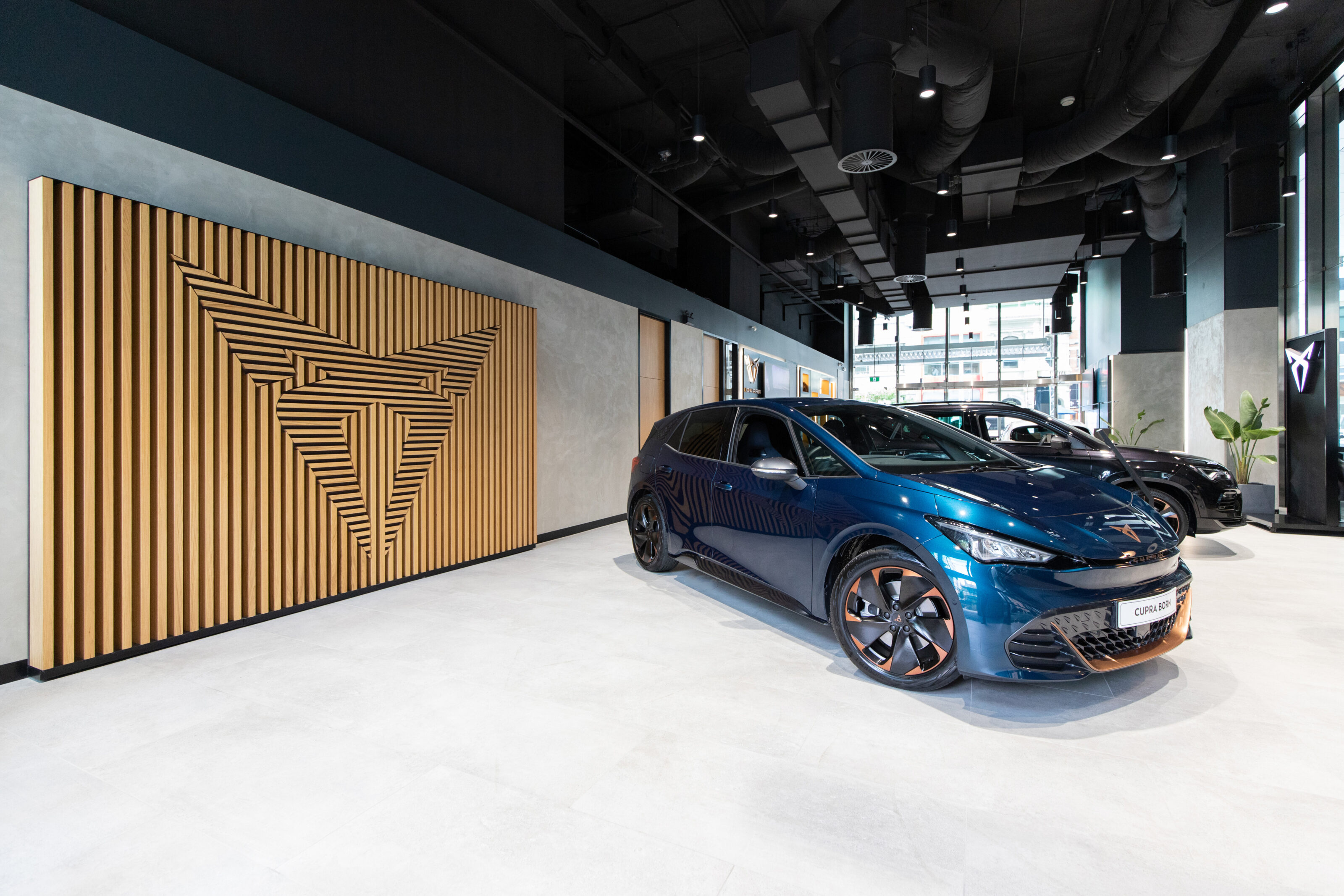
1
December 2022: Cupra’s entry into Australia is strengthening with two large automotive retail groups expanding their dealership network into Brisbane and Melbourne.
Snapshot
- AP Eagers and Zagata Group open Cupra Garages in Brisbane and Melbourne
- Each showroom able to physically show all of Cupra’s offerings to customers
- After sales support offered through nearby service centres
AP Eagers currently operates ‘Cupra Garages’ in Perth and on the Gold Coast, and the giant has now opened its newest venue on the Automall in the Indooroopilly Shopping Centre.
The space boasts 220 square metres, which allows for all four of Cupra’s models to be available for customers to experience – with the all-electric Born EV anticipated to arrive shortly. Servicing is also available at the shopping centre.
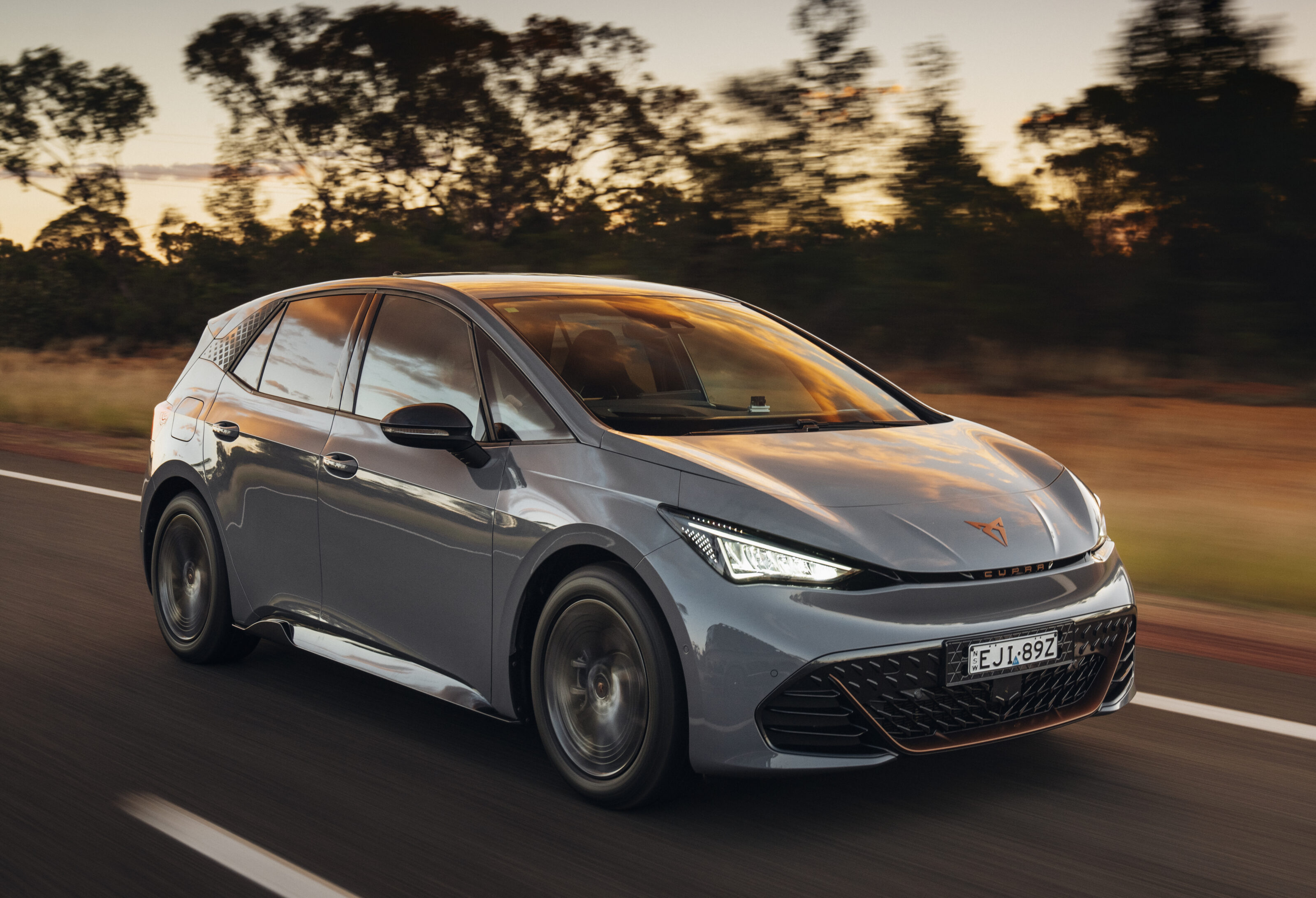
1
Over on the southern side of the continent, Zagame Group will be adding to its existing Chadstone showroom by opening a 576-square-metre garage on Swan Road in Richmond.
This space allows for six vehicles in the showroom for potential customers to inspect. A service centre is located at nearby King Street in West Melbourne.
“These Garages are all about modernising customer interaction, about taking Cupra to where they live,” said Ben Wilks, Director of Cupra Australia,
“Cupra’s Indooroopilly Garage fits neatly into a hugely busy retail destination. Our Richmond Garage sits on one of Melbourne’s iconic old high streets with its array of popular shops and restaurants.”
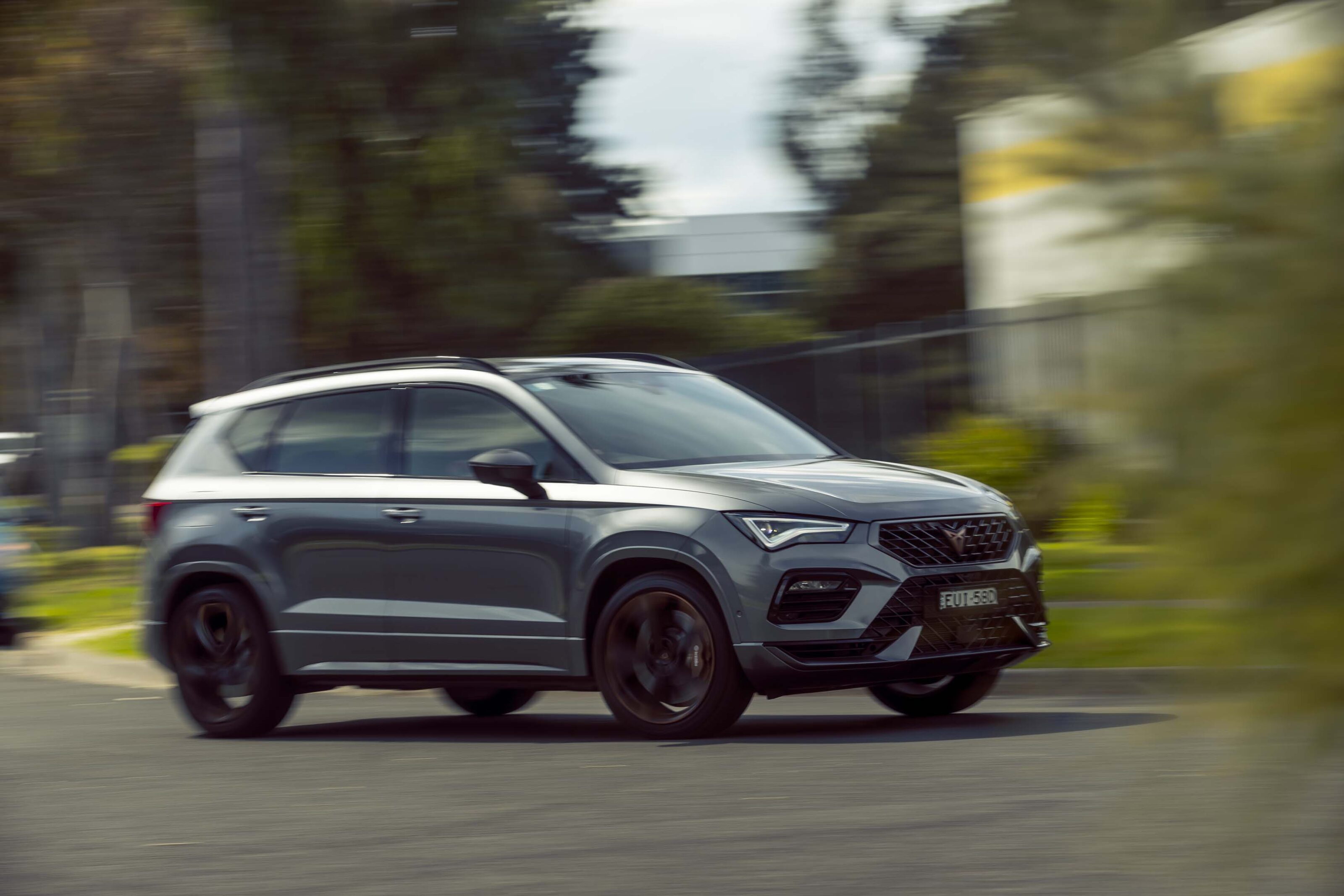
1
While confidence was expressed in the online purchasing process, Wilks did indicate that the showrooms added another layer that would help customers better understand their potential purchase.
“While you can conduct your Cupra purchase online – with the surety of drive-away pricing – we want to give you the opportunity to see, touch and feel our cars in great places run by knowledgeable and friendly Cupra Masters.”
The growing presence of Cupra punctuates the debut year for the brand, with the launches of the Formentor seeing 554 sales to date, with 209 sales for the Ateca, and 151 Cupra Leons finding their way to Australian homes according to the latest report from VFACTs.
