
It’s a tough time to be a driving enthusiast in Australia. There’s a smorgasbord of fast metal available, but all over the country great driving roads are being neutered as speed limits erode, from 100 to 90km/h, then 80, then 60.
For Sydneysiders the most obvious example is probably the Old Pacific Highway; for Victorians, perhaps Black Spur, though no doubt everyone reading this can name similar examples. Of course, to the world at large enthusiastic driving is about as popular as going to the dentist, so any complaints are destined to be met with blank stares.
However, the problem is two-fold. As speed limits decrease, the capabilities of the cars we’re driving are rapidly heading in the other direction. Modern performance cars are so good that driving them fast on the road is no longer a test of skill.
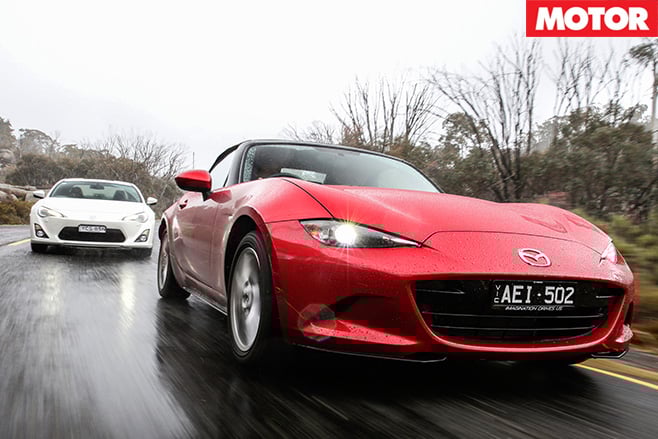
Thankfully, there is an antidote. The new Mazda MX-5 and Toyota 86 have such modest outright grip levels that reaching their limits is a piece of cake, and both have sufficiently modest performance that you can frequently use every centimetre of throttle travel and every single rpm without ever reaching triple figures.
But don’t think their lack of speed makes them boring – quite the opposite. You have to work for every ounce of pace, as there isn’t the grip to save you if you misjudge your entry speed, nor is there a fat wad of turbo torque to pull you out of corners should you select the wrong gear. Lazy drivers need not apply.
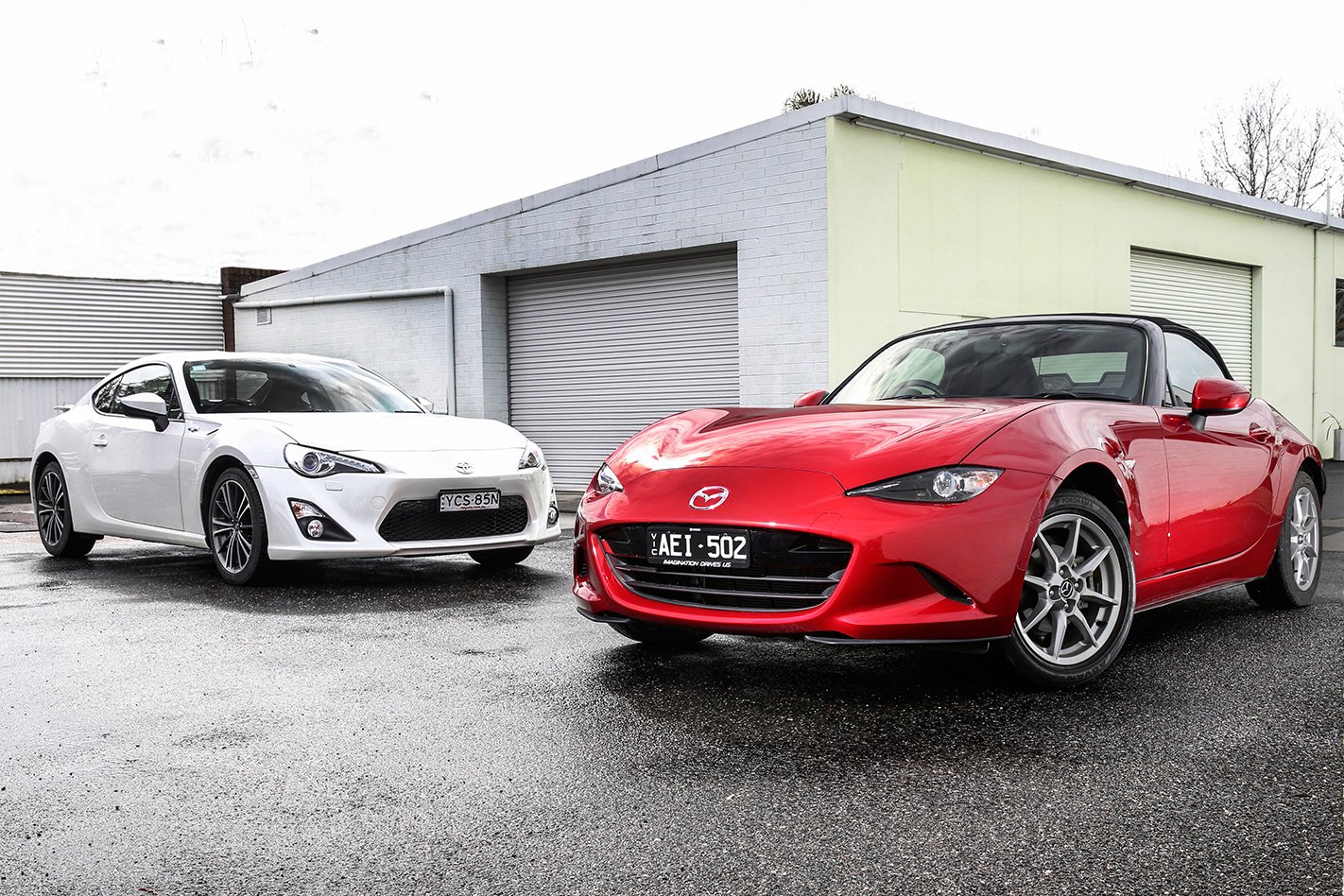
Despite Mazda’s slightly baffling assertion that it doesn’t consider the two competitors, its decision to cut the price of the base 1.5-litre MX-5 – the car we’re using for this test – to just $31,990 is a shot across Toyota’s bows. Even the more powerful 2.0-litre-engined car is only $34,490, which puts it almost directly in line with the $35,990 86 GTS.
With 118kW/200Nm compared to the 1.5’s 96kW/150Nm, the bigger-engined MX-5 is clearly the more suitable on-paper challenger to the 147kW/205Nm 86, so why aren’t we using one?
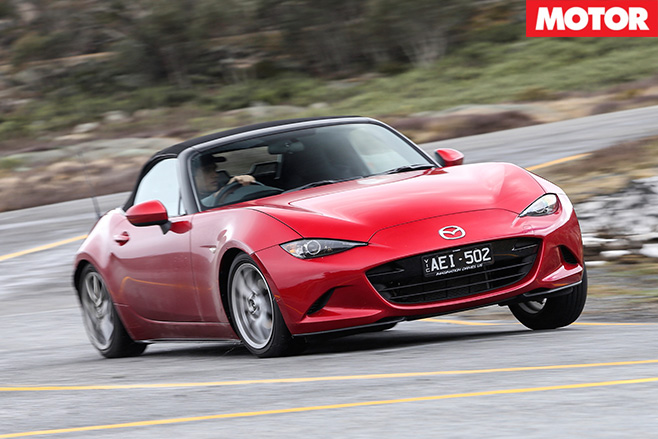
Mazda claims the new MX-5 takes 8.5sec to reach 100km/h, but it clearly needs new test drivers, as dropping the clutch at 5000rpm results in 0-100km/h in 7.6sec. And it could be faster still, but for the need to shift to third at an agonising 99km/h. Performance tails off beyond 100km/h, the quarter mile taking 15.5sec at a terminal speed of just 142.3km/h.
Overtaking also requires planning, its 3.7sec 80-120km/h time in third gear blowing out to 16.9sec (and the entire length of the drag strip) in sixth. Still, it’s an impressive performance from just 1.5 litres.
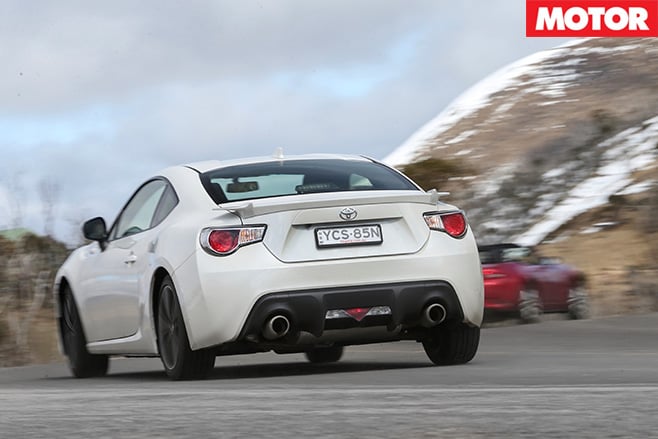
It’s odd how often the 86 is pilloried for being slow, when in reality the numbers tell a different story – Holden VN SS, Mazda FC RX-7, Mitsubishi Galant VR-4, the 86 is as quick as all these past performance heroes.
Part of the problem is that it feels slow; too often you have to rev the ring out of it – basically operate between peak torque at 6400rpm and peak power at 7000rpm – to feel like you’re going anywhere. Attempt to use third and it falls into its non-existent mid-range and you’re left waiting, waiting, waiting for the revs to pick up again.
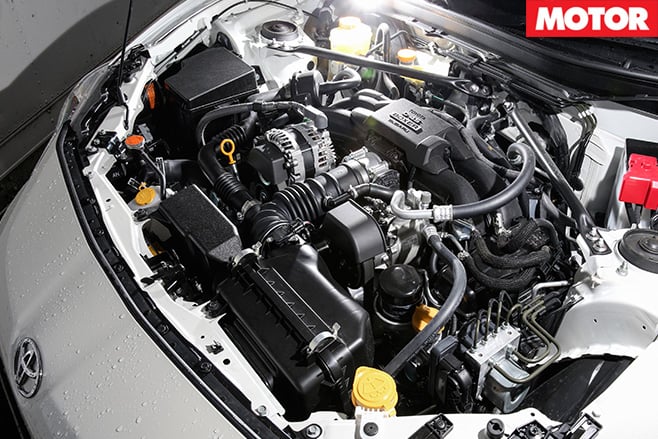
As a result, while it trails on the stopwatch, from behind the wheel the MX-5’s 1.5-litre is actually the more enjoyable engine. Its broader spread of power (peak torque is produced at 4800rpm, peak power at 7000rpm) makes third a possibility even out of tighter corners, yet having 7500rpm to play with often saves you the effort of shifting between corners on a winding road.
Not that shifting gear is a particular chore. The six-speed manual is generally light and accurate, though needs a decent shove across the gates, especially on downshifts. I personally prefer the more mechanical shift on the 86, though its six-speed ’box is notchy and obstinate when cold.
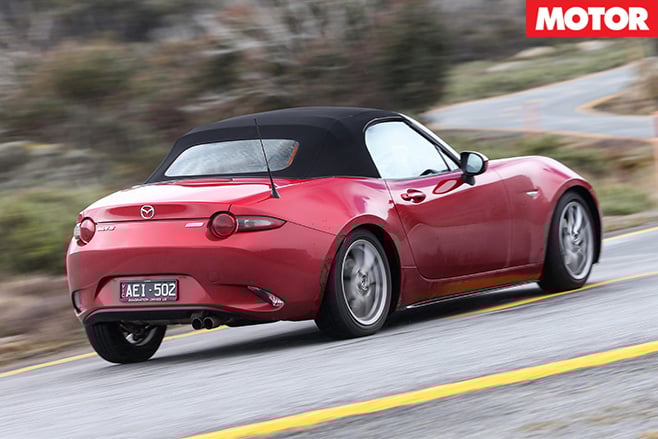
As such it’s not a car you throw around with abandon; the smoother you are with your inputs the greater the reward. It’s at its best on twisty roads, where its softness means its limits are easily telegraphed and the skinny 195/50 R16 Yokohama Advans are soon squealing in protest.
Rather than a signal to back off as it might be in heavier, more powerful cars, howling rubber is merely the start of the fun in an MX-5. It’s at this point that ESP must take a back seat, as while it’s extremely well calibrated, with it off you can lean heavily on the front tyres in the first half of the corner before applying plenty of throttle to move the back around.
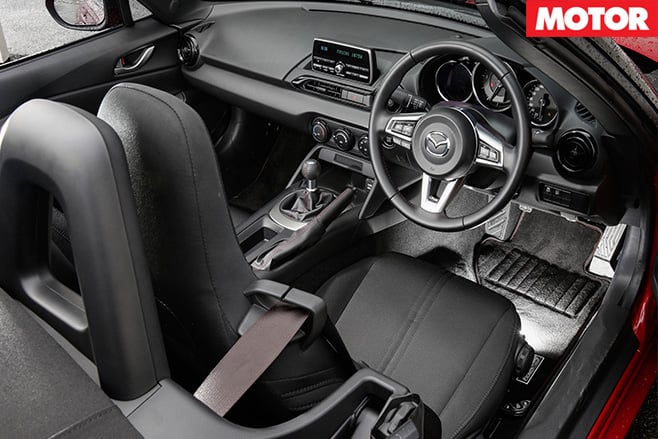
Over the same stretch of road the 86 is also impressive, if not quite as enjoyable as the tiny Mazda. It carries a weight disadvantage of 266kg, yet it doesn’t feel anything like that, partly due to the stiffer set-up keeping the weight better controlled.
Because there’s not as much body movement, however, you drive more to the limits of the tyres, which is a bit of a problem, as they aren’t very good. Toyota fits low rolling resistance 215/45 R17 Michelin Primacys to the 86 to make it easier to slide at low speed, which is fine, but the problem is the tyre’s behaviour at the limit.
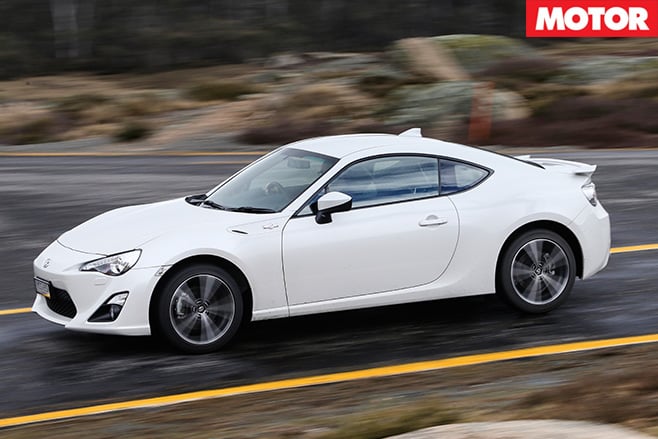
To a certain degree this is nit-picking, however, as the 86 is still one of the best driver’s cars around. It sucks you into the process of driving with its sublime steering, communicative chassis and, of course, the fact it wants to wag its tail at the slightest provocation. But the Mazda shows the way in certain areas, namely ESP calibration (the Toyota’s is clumsy and awkward), ultimate balance and, particularly, brake feel.
It’s not quite that simple, though, as it turns out the Mazda shines brightest in quite a select set of circumstances. As the road opens out and speeds increase, the MX-5 begins to feel a little uncomfortable.
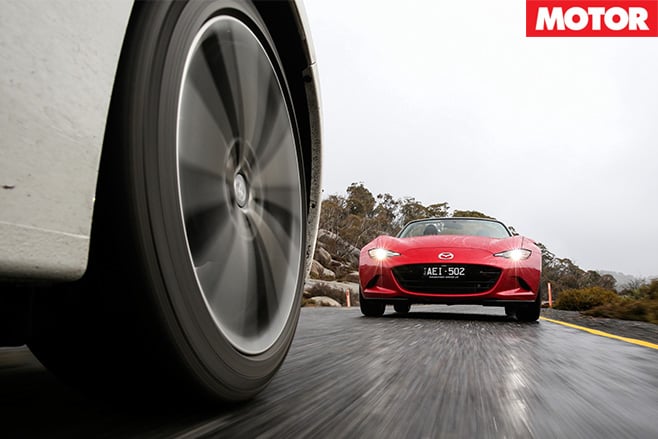
The ride is also reactive to poor surfaces, there’s enough road noise to need raised voices to have a conversation (and so little sound deadening you can hear the wipers working) and just as at the drag strip, at higher speeds the little 1.5 starts to struggle, longer inclines requiring a shuffle back to fifth or fourth merely to maintain speed.
Some of these criticisms, particularly those relating to ride and refinement, equally apply to the 86, but it’s also clear that the Toyota offers greater driving thrills on a wider variety of roads, even if it can’t match the Mazda’s dizzying peaks when it’s ‘in the zone’.
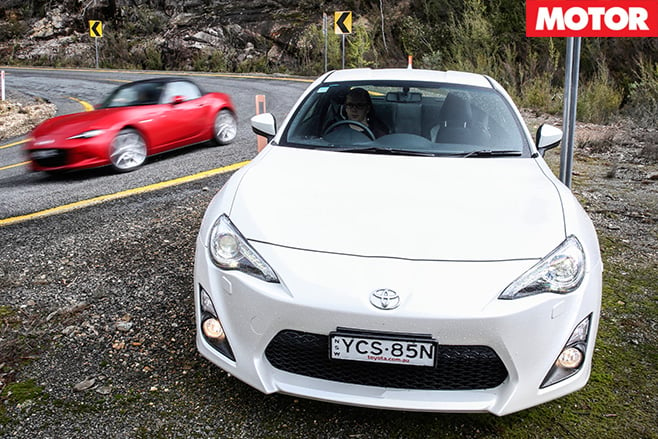
Whether or not the gruntier MX-5 2.0 can turn the tables remains to be seen, but for the time being, the 86 remains the best cure for the nanny state.
| u00a0 | MAZDA MX-5 (ND) | TOYOTA 86 GTS |
| Body | 2-door, 2-seat roadster | 2-door, 2-seat coupe |
| Drive | rear-wheel | rear-wheel |
| Engine | 1496cc inline-4, DOHC, 16v | 1998cc flat-4, DOHC, 16v |
| Bore/Stroke | 74.5 x 85.8mm | 86.0 x 86.0mm |
| Compression | 13.0:1 | 12.5:1 |
| Power | 96kW @ 7000rpm | 147kW @ 7000rpm |
| Torque | 150Nm @ 4800rpm | 205Nm @ 6400rpm |
| Power/Weight | 133kW/tonne | 134kW/tonne |
| Transmission | 6-speed manual | 6-speed manual |
| Weight | 1009kg | 1275kg |
| Suspension(F) | double A-arms, coil springs, anti-roll bar | struts, A-arms, anti-roll bar |
| Suspension(R) | multi-links, coil springs, anti-roll bar | A-arms, coil springs, anti-roll bar |
| L/W/H | 3915/1735/1225mm | 4240/1775/1320mm |
| Wheelbase | 2310mm | 2570mm |
| Tracks | 1495/1505mm (f/r) | 1520/1540mm (f/r) |
| Steering | electrically-assisted rack-and-pinion | electrically-assisted rack-and-pinion |
| Brakes(F) | 258mm ventilated discs, single-piston calipers | 294mm ventilated discs, 2-piston calipers |
| Brakes(R) | 255mm solid discs, single-piston calipers | 290mm ventilated discs, single-piston calipers |
| Wheels | 16.0 x 6.5-inch (f/r) | 17.0 x 7.0-inch (f/r) |
| Tyres Sizes | 195/50 R16 84V (f/r) | 215/45 R17 91W (f/r) |
| Tyre | Yokohama Advan Sports V105 | Michelin Primacy HP |
| Price as tested | $31,990 | $35,990 |
| Positives | Willing engine; adjustable chassis; value | Superb steering; playful handling |
| Negatives | Road noise; lacks torque | Engine feels flat; fidgety ride |
| Star Rating | 4/5 | 4/5 |
Affalterbach’s M4 fighter has landed, with the Mercedes-AMG C63 S coupe attracting a $7890 premium over its sedan stablemate.
Minor specification adjustments and mechanical alterations accompany the shift from $154,510 (plus on-road costs) four-door C63 S to $162,400 (plus orc) two-door C63 S, including the addition of 285mm-wide 20-inch alloy wheels on the rear. Up front, 19s remain, but the tyres are now 10mm wider at 255mm.
The wider rears slip on the outer of a 50mm-wider track and a redesigned axle with new geometry and uniball joints replacing rubber bushes, aimed at improving traction and response.
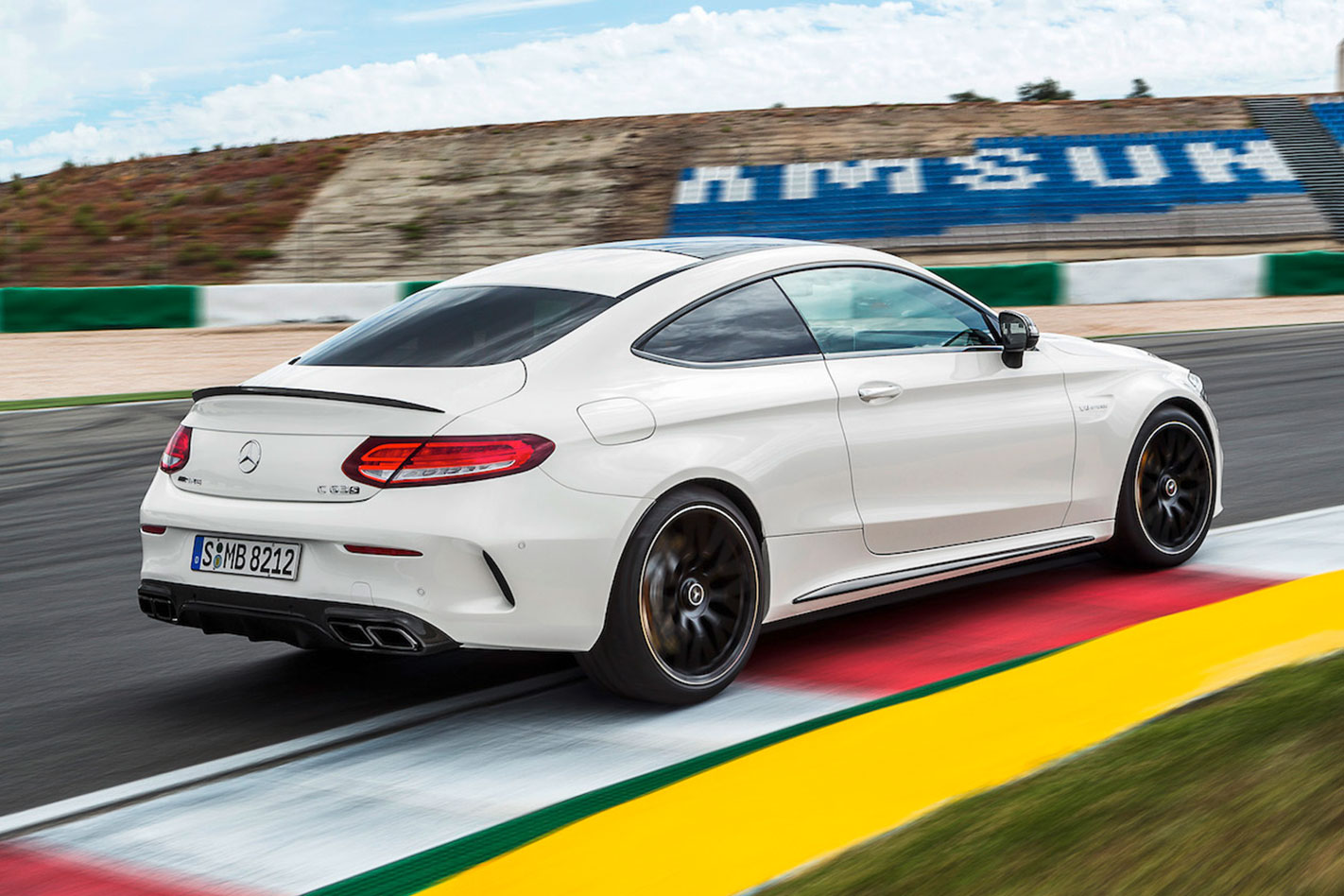
Our first overseas drive indicated it would take a back-to-back drive of the coupe with the sedan to notice the difference.
Standard ‘S’ fare in our country includes AMG engine mounts, performance exhaust and electronic locking rear differential, as well as performance seats with Nappa leather, panoramic sunroof, head-up display and digital television inside.
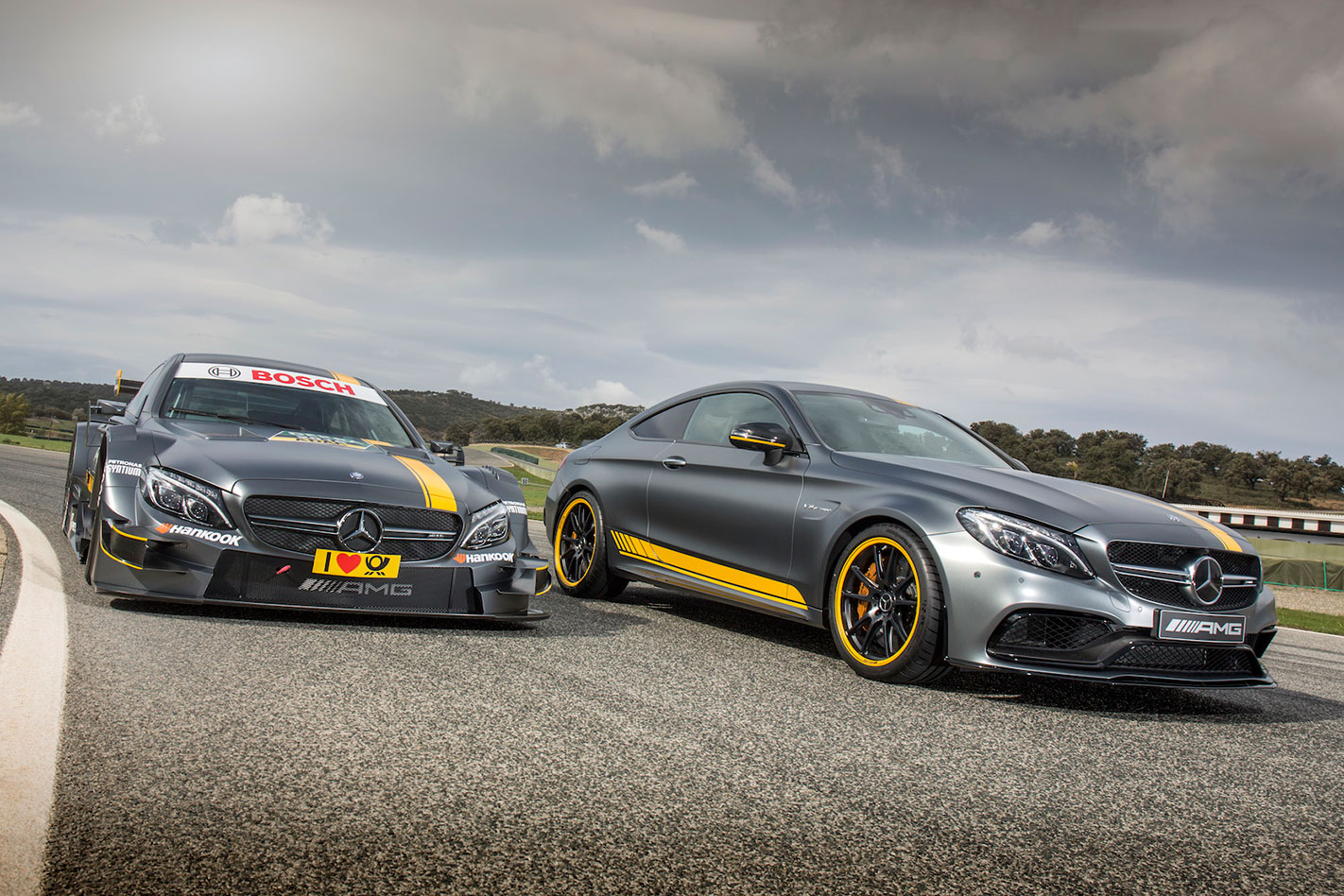
As is customary with AMG variants these days, an Edition 1 Package will be available on the C63 S coupe from launch. The $10,900 premium over the standard car buys Selenite Grey magno paint with yellow, an aerodynamics package, carbon ceramic brakes and black/yellow wire-mesh 19/20-inch alloy wheels.
Helping justify its $14,500 premium over the C250 sedan on which it’s based, the C300 coupe adds 25kW, a sports exhaust, AMG body styling kit, memory seats, 360-degree camera and Burmester premium audio.
The C-Class coupe range starts with the C200 from $65,900 (135kW/300Nm, 7.3sec 0-100km/h) and C250d from $74,900 (150kW/500Nm diesel, 6.7sec 0-100km/h), both commanding a premium of between $4000 and $5000 over the sedan.
Formula One cars aren’t like your average fast cars. The single-seat cars have no roof, and have the engine behind the Formula One driver. The cars are used only for F1 racing events and must adhere to strict regulations, including the racing team constructing the vehicles themselves – kind of like the old days of go-kart street racing – with some outsourced help for design and manufacturing.
Read about the top nine F1 cars ever made here.
For enthusiasts, the build of the car is part of the fun. But for the rest of us, we just want to know who drives what colour car.
HERE IS YOUR GUIDE ON WHO IS DRIVING WHAT AT THIS WEEKEND’S RACE
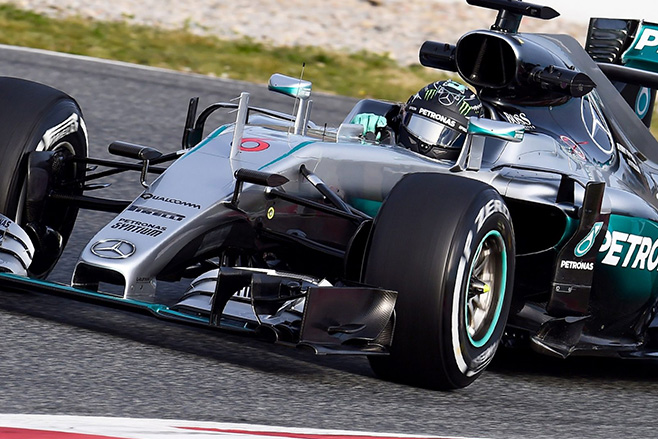
Mercedes AMG Petronas Formula One
Car colour: grey and green Lewis Hamilton #44 (our pick for podium finish) Nico Rosberg #6 (our pick for podium finish)
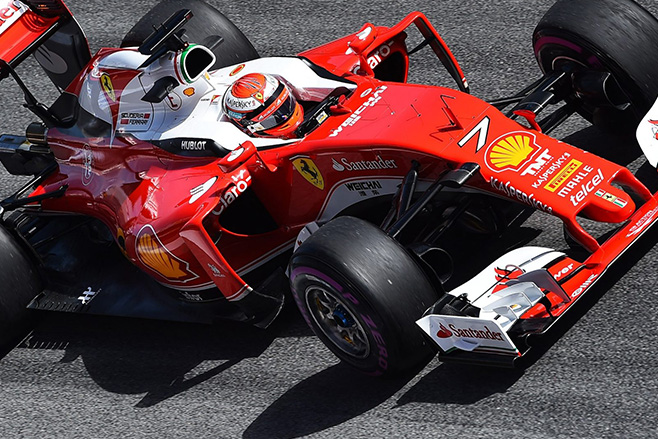
Scuderia Ferrari
Car colour: red and white Sebastian Vettel #5 (our pick for podium finish) Kimi Raikkonen #7
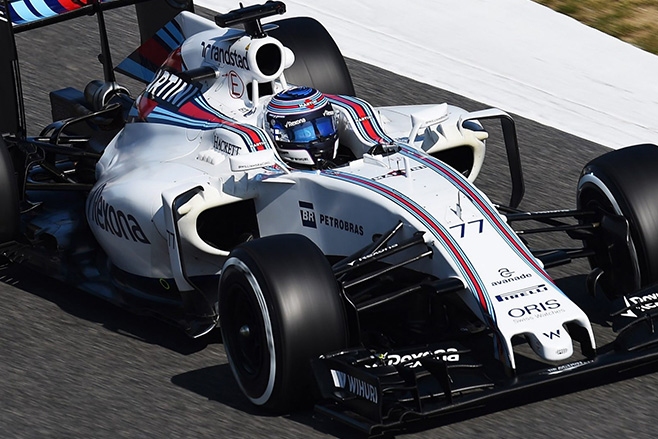
Williams Martini Racing
Car colour: White, red and blue Felipe Massa #19 Valtteri Bottas #77
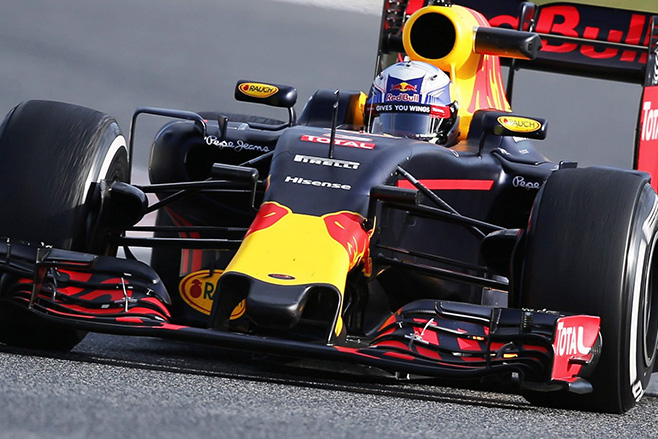
Red Bull Racing
Car colour: Dark blue, yellow and red Daniel Ricciardo #3 Daniil Kvyat #26
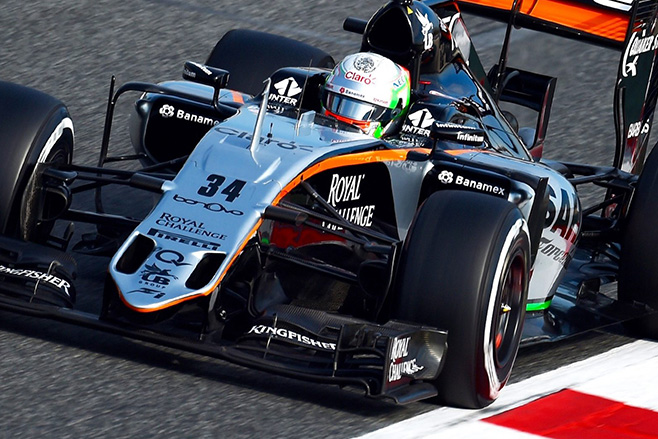
Sahara Force India F1 Team
Car colour: White, black and orange Sergio Perez #11 Nico Hülkenberg #27
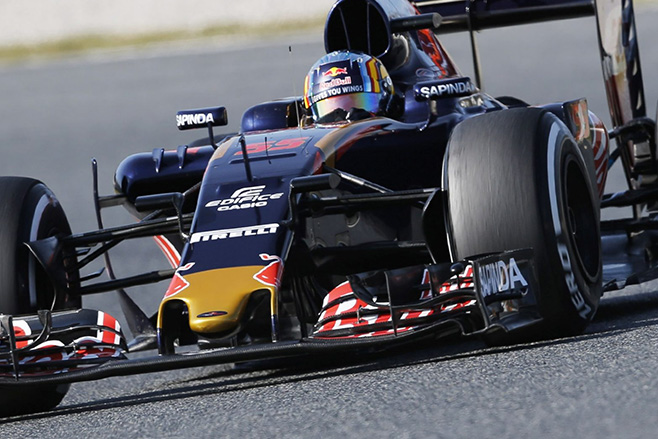
Scuderia Toro Rosso
Car colour: Royal blue and red Max Verstappen #33 Carlos Sainz #55
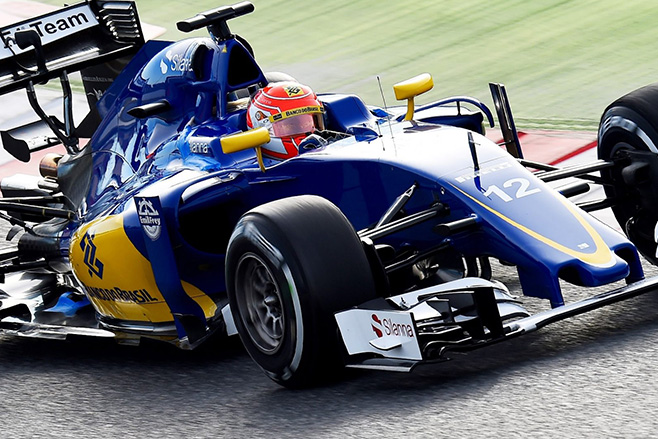
Sauber F1 Team
Car colours: blue and yellow Marcus Ericsson #9 Felipe Nasr #12
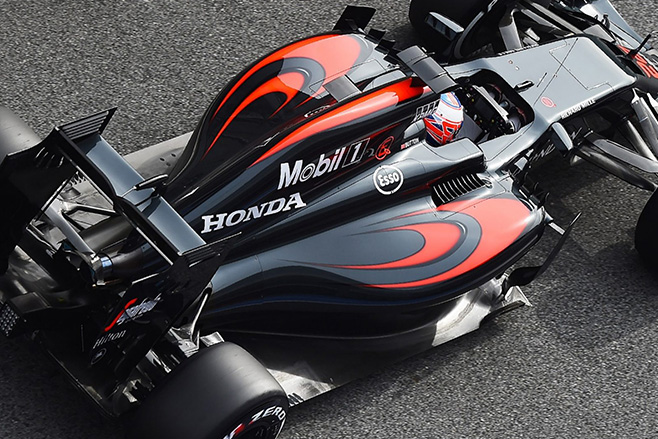
McLaren Honda
Car colour: red and black Fernando Alonso #14 Jenson Button #22
Haas F1 Team
Car colours: Silver, black and red Romain Grosjean #8 Esteban Gutierrez #21
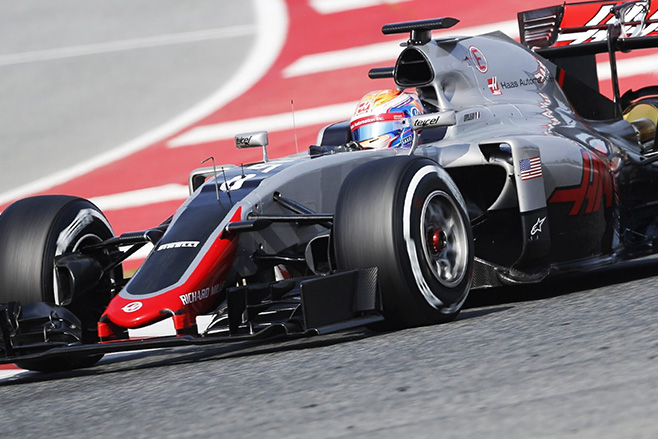
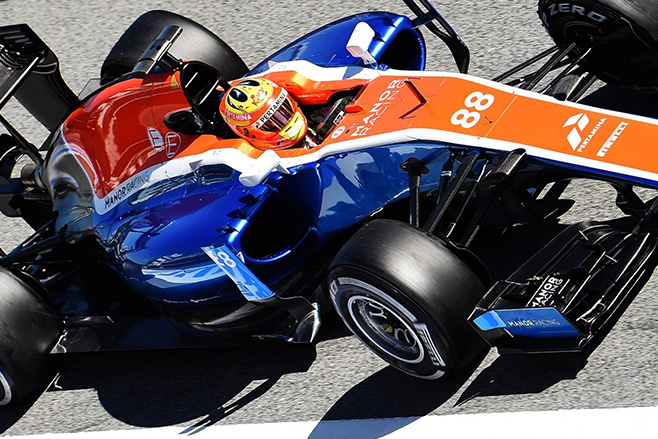
Manor Racing
Car colour: Blue, orange and white Pascal Wehrlein #94 Rio Haryanto #88
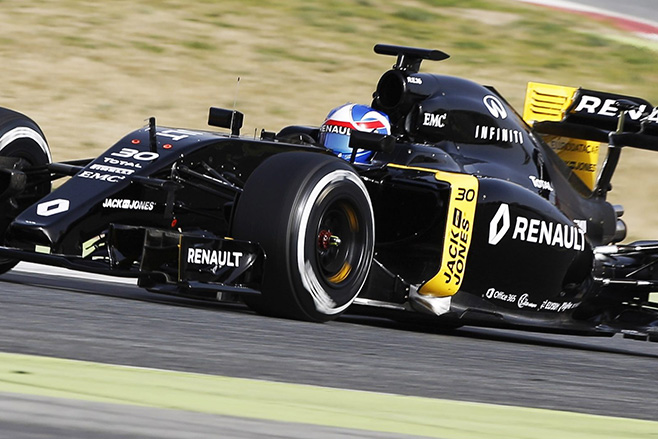
Renault Sport Formula 1 Team
Car colour: Black and yellow Kevin Magnussen #20 Jolyon Palmer #30
Can’t get enough motorsport? We’ve got you covered with nine famous female racing drivers.
Red Bull Racing Australia has released a video of six-time Aussie V8 Supercar champion, Jamie Whincup, meeting Australian Formula One driver, and three-time Grand Prix winner, Daniel Ricciardo at one of Australia’s most famous racing tracks, Sandown.
When Whincup asks about Ricciardo’s favourite car, DRicci confesses his love for Holden Torana and the “shaggin wagon” Sandman.
“If anyone had a Torana, they were cool, you know?” said Ricciardo.
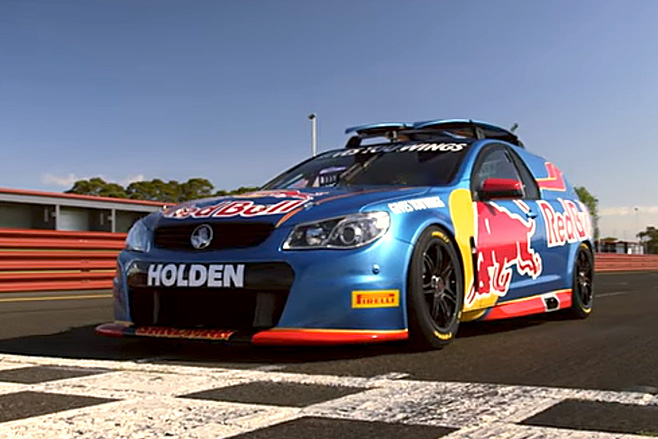
Coincidently (we’re sure), the V8 champion was prepared with a Sandman locked away in the garage. So naturally, our main man Dan gave it a bit of a run on the Sandown racetrack.
According to Motor Magazine, “the Sandman in question just happens to be essentially a V8 Supercar wagon, built on the Car of the Future platform, only fitted with a more powerful 525kW 5.7-litre V8 and paddle-shift gearbox.”
Phrases like “big grunt” “over cooked” and “hanging it up in the straights like its wet” get thrown around in the video. For those of us who are non-motorsport aficionados, like myself, we can only assume all of these things are good.
Regardless, we can take two things out of this video: driving a V8 Sandman around a racetrack looks like it’d be a hell of a lot of fun, and, in the words of Jamie Whincup, “never give up on a flyer”.
The entry level $116,900 (plus on-road costs) Mercedes-Benz GLS 350d is powered by a 190kW/620Nm 3.0-litre V6 diesel engine coupled with a nine-speed automatic. Key features include COMAND Online navigation, Apple CarPlay, LED lighting, Dynamic Select with five driving modes, and 20-inch, 10-spoke wheels.
The $135,900 (plus on-road costs) 350d Sport gains AMG Line Exterior, Active Curve System with active roll stabilisation, tyre pressure monitoring, metallic paint, Nappa Leather, an AMG Line Interior and 21in AMG wheels.
The $161,900 (plus on-road costs) GLS 500 has a 335kW/700Nm 4.7-litre V8, a nine-speed automatic and all-wheel drive. Features include panoramic glass sunroof, heated/vented front seats, heated second-row seats and digital TV.
The $217,900 (plus on-road costs) GLS 63 AMG is powered by a 430kW/760Nm 5.5-litre V8 and has 40:60 rear bias all-wheel drive, Dynamic Select with Sport+ mode, 22in wheels, sports suspension, high performance brakes and power closing doors. Top speed is 270km/h and 0-100km/h is achieved in 4.6sec.
This article was originally published in 4x4Australia March 2016.
Bentley’s $423,600 Bentayga is now available to Australians. The five seater, ultra-luxury SUV is labelled the most expensive SUV in the world.
Bentley knows this softroader will only be purchased by a select group of people, expecting to sell just 50 in its first year of sale.
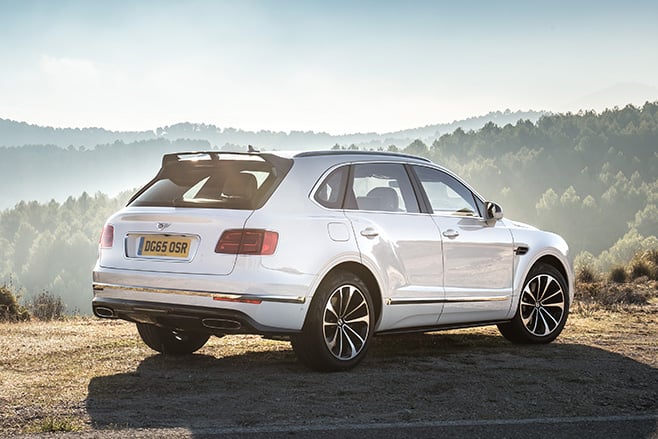
The Bentley Bentayga may be filled with a bunch of technologies and accessories, but it’s close to half a million dollar price tag is basically buying you a label and reputation. Think of it like buying a Chanel handbag.
The Bentayga comes stocked with jewellery and tech. All lights are LEDs, it’s got acoustic windscreens, double glazed side windows, adaptive cruise control, 360 degree camera systems, self-parking technology and air suspension. Plus it has the option of a bunch of customisations like rear seat entertainment, custom made picnic sets, luggage barriers and even a Breitling Mulliner Tourbillon clock worth a whopping $250,000.
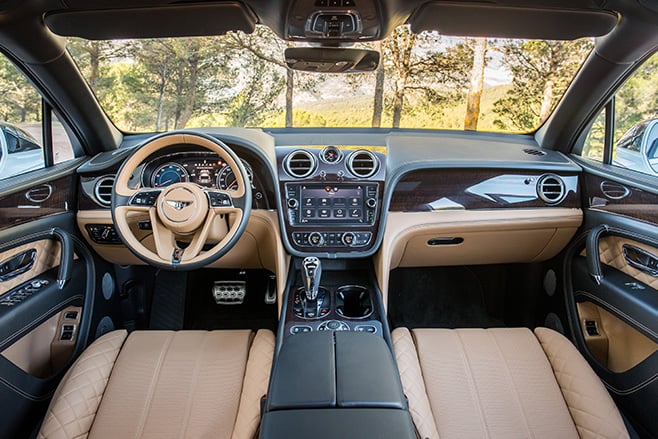
But aside from the $250,000 clock that very few will option, Bentley also claim the Bentayga is off-road capable. We’re yet to drive the lux-SUV, so that may very well be the case, but we’re not sure how comfortable we’d feel about driving a $400,000 SUV over rocks, through mud and past scraping bushes.
Still, if you can afford the Chanel handbags of cars, and stereotypes are anything to go by, we doubt muddy camping getaways are your thing anyway.
Curious about what else Bentley has in store for the Bentayga? Read about their driverless car concept here.
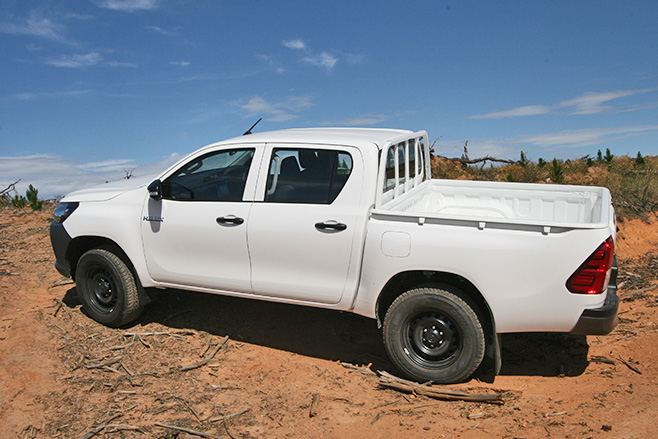
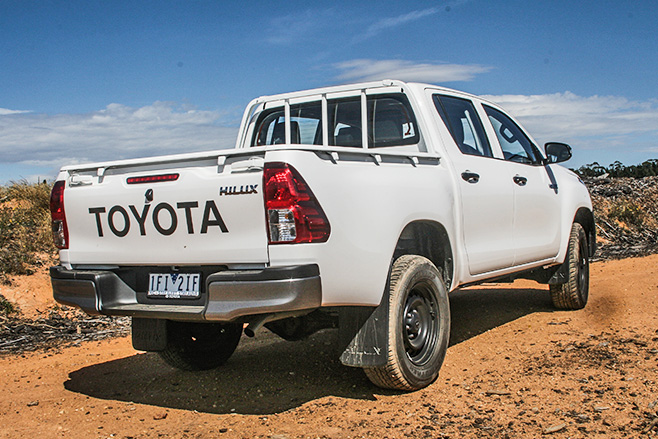
Opt for a base-spec Workmate in the new HiLux 4×4 range and you get a 2.4-litre diesel and not the 2.8-litre diesel that comes in SR and SR5 models. This is the first time that there’s been two diesel engines on offer in a HiLux, not that you have any choice with the Workmate. It’s 2.4 or nothing.
Workmate 4x4s come in single, extra and double cabs, but only the double-cab comes with a ute tub, as the others are only offered as cab-chassis models. The 2.4 is available with either a six-speed manual or automatic and here we are driving the auto.
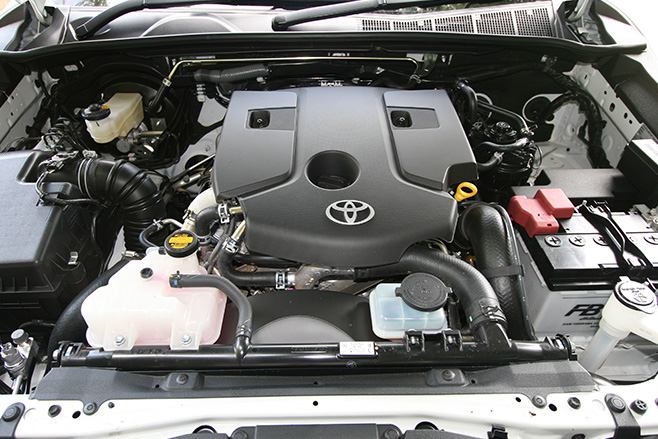
The 2.4 is a short-stroke version of the 2.8. In fact, in shortening the stroke from the 2.8’s 103.6mm to the 2.4’s 90mm, the engine has gone from undersquare to oversquare, given it has a 92mm bore. Retaining the same bore also means the cylinder-head architecture can be similar, if not the same, and a commonality of parts.
The 2.4 also shares the 2.8’s design philosophy, which includes a low compression ratio of 15.6:1, a relatively small, low-inertia turbo, but much improved thermal efficiency compared to the 3.0-litre diesel in the previous-generation Toyota HiLux.
Despite being 20 per cent smaller than the old 3.0 litre and down 16kW in maximum power (110kW), the 2.4 puts out 40Nm more torque (400Nm) and can tow up to 700kg (500kg as an auto) more than the 3.0-litre.
On the road this engine is noticeably smooth and quiet and gives away little or nothing to the 2.8 in general give-and-take driving, thanks in part to the slightly shorter final drive; 4.1:1 compared with the 2.8’s 3.090:1 (with the automatic gearbox). And given that both fifth and sixth are overdrive gears in the six-speed auto, and sixth is particularly tall, the shorter final-drive gearing never makes the engine feel busy at highway speeds.
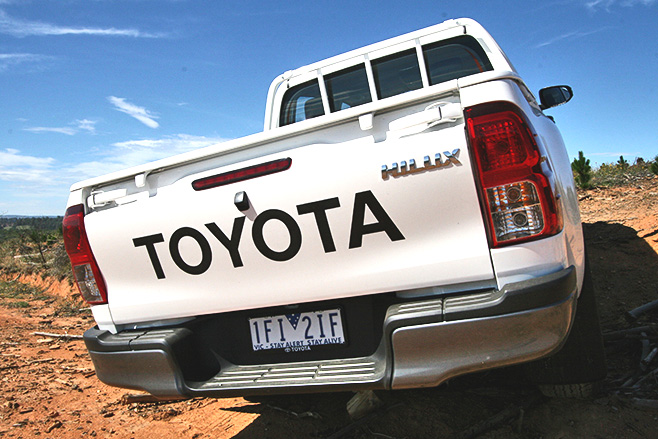
On the downside the 2.4 lacks the overtaking response of the 2.8, which isn’t anything special anyway, and it obviously won’t have the same grunt for hauling or towing heavy loads.
As with other 4×4 models in the new HiLux range, the ride is jittery at low speeds when unladen but smooths out at speed, while its general road manners are much improved on the last-generation HiLux.
This new HiLux is also excellent off-road thanks to improved ground clearance, better approach and departure angles, massive wheel travel at the rear (more than half a metre) and a highly effective traction control system.
The Workmate doesn’t come with the rear diff lock of the SR and Toyota HiLux SR5 models, but this doesn’t really hinder its off road ability, as engaging the rear locker cancels the ETC on both axles, not just the rear, which largely negates its benefit.
The new HiLux’s cabin isn’t any bigger than the out-going model, but it is more passenger-car-like and comfortable with tilt-and-reach steering wheel adjustment. The Workmate even gets the tablet-style touchscreen of the up-spec models, somewhat of a surprise in this base-spec level. While this works okay in itself, the touchscreen audio-system volume control is a very poor substitute for an old-fashion volume knob, even if there is also volume adjustment on the steering wheel.
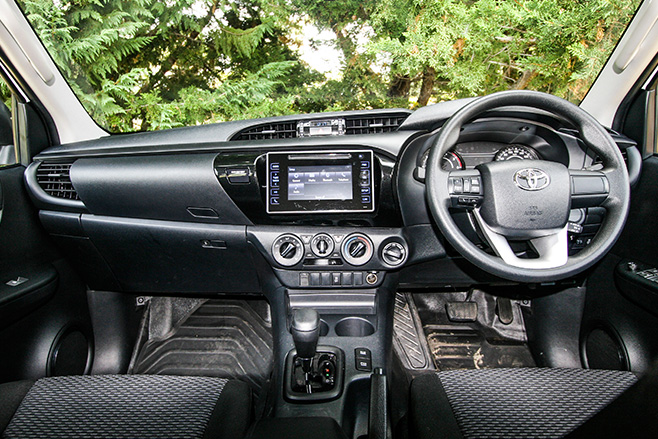
The Workmate also misses out on some equipment of the up-spec models; most noticeably there are no side steps to help entry into the high-riding cabin and no height adjustment for the driver’s seat, neither of which will please shorter drivers. On the other hand, the basic fabric seat trim and vinyl floor coverings both offer day-to-day functionality.
All in all the 2.4 is somewhat of a surprise packet as it performs well above what you’d expect of a 2.4-litre engine, even if it’s no star in terms of pedal-to-the-metal grunt. You just need to be more patient…
Click here to read the full review on the Toyota HiLux range.
This article was originally published in 4×4 Australia March 2016.
ASTON Martin will build its first ‘hypercar’ due to arrive in showrooms in 2018.
Announced at ahead of this weekend’s Australian Formula One Grand Prix in Melbourne, ‘Project AM-RB 001’ will be built, designed and engineered in collaboration with the Red Bull Racing Formula One team and legendary engineer, Adrian Newey.
It also means that Aston’s wings will adorn the race cars of Aussie Daniel Ricciardo and teammate Daniil Kvyat at this weekend’s season opener. It’s the first time Aston Martin has been involved in F1 since 1960.
“The rub off of Red Bull will be very good for our brand,” said Aston chief executive Andy Palmer (pictured below, right, with Red Bull Racing boss Cristian Horner). “It solves a big question for us … it gives us the solution of what the top of our range looks like. We needed an iconic supercar or hypercar.
“We needed something very special which encapsulated the values of Aston, which are power, beauty and soul, but also with absolutely no excuses, particularly on the power side.”
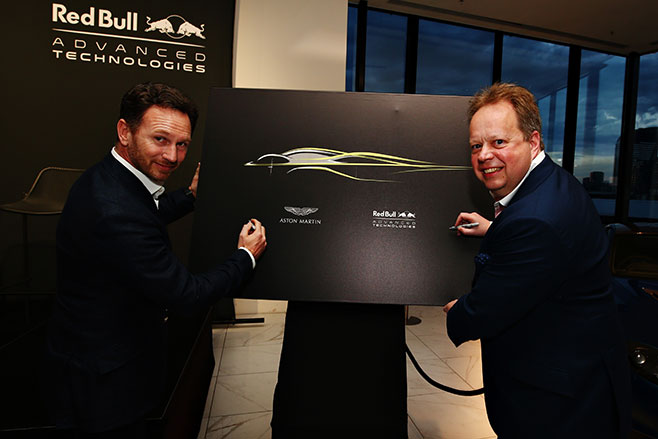
Only 100 cars will be built in what will be the first mid-engined Aston Martin. A sketch released last night shows little of what Aston’s halo model will look like. The price is yet to be determined, although it’s rumoured to be as much as $3.8 million, and we don’t know what will be under the bonnet, most likely a KERS-powered V12.
“What we conceived is a car that is as fast, if not faster than an F1 car around a track,” Palmer said. “When you image that, you start to think about who you’d like to design this wonderful piece of history, and you go to the best – and the best is Adrian [Newey].”
Red Bull Racing’s legendary aerodynamicist, Adrian Newey, is part of what both Palmer and Red Bull racing Boss Cristian Horner call a ‘natural fit’.
The tie-up with Aston also offers Red Bull, and Newey, opportunities to expand their knowledge base. “We’re responsible for the package of the car; the overall layout; the dynamics of the car,” said Newey. “And then really it’s working with Marek [Reichman, Aston designer] and his team on the upper surface styling, the interior obviously, and then all the bits and pieces we don’t really have experience of – door shuts and windscreen wipers and all those sorts of things.”
For Newey (right), it’s the culmination of a childhood dream. “It’s been a long time coming,” he said. “It’s been something I’ve wanted to do for very many years – [aged] six [it] was more the racing, but certainly from the teenage years being involved in designing a sports car, road car… I’ve been doodling various sketches over the years, and this is the confirmation of it.”
It’s ‘very different’ to the challenges Newey faced – and repeatedly exceeded – in the heat of Formula One competition. “Road car regulations are a hell of a lot more open than Formula One regulations, so there’s far more opportunity to do different things than there is in Formula One now,” he admits.
“Yes, Formula One’s still great, but I promised myself that I would not spend my whole career solely in motor racing,” Newey said when asked if he is still motivated by motor racing. The Brit also insisted that he is not quitting F1, and that the hypercar is a ‘dual role’ that allows him in both road and race realms.
Red Bull Racing boss Cristian Horner (below), who was joined by Red Bull supremo Helmut Marko as well as his star drivers at the event, joked that the team had had ‘worse company cars’ than its new Astons. “It’s two iconic brands,” he said. “Red Bull and Aston Martin are two of the most iconic brands in the world, and I think that Red Bull Racing as a Formula One Team in its own right has achieved some remarkable things over the last 10 years … this is the natural evolution for Red Bull as a technology company.

It’s s serious shot in the arm for Aston, which has seen an increase in backing from its investors as Palmer, who joined as chief executive in 2014, cemented a five-pillar strategy which he calls ‘Second Century’ for the 103-year-old company.
That includes a crossover, as well as Daimler increasing its stake, suring up its V8 engine supply and technical hardware for Aston. The British company also announced a 5.2-litre twin-turbo V12 to power its new generation of sports cars, spearheaded by the DB11 revealed earlier this month at the Geneva motor show.
“Who knows where this is going to lead to,” said Horner. “It’s going to start with this project and we will see how the relationship develops from there. “
Toyota has revealed the 2017 facelift for its 86 sports car ahead of its debut at next week’s New York Motor Show.
Anyone expecting wholesale change will be disappointed, however Toyota has made a number of tweaks to both the styling and mechanical package.
Heading the mechanical upgrades is an extra 4kW/9Nm from the 2.0-litre boxer four, bringing totals to 151kW/214Nm. Hopefully, these slight increases are indicative of efforts having been made to smooth the 86’s notoriously lumpy power curve.
Toyota claims “additional performance comes from a gear ratio change” which we can only assume means there is a shorter final drive ratio to give the torque-lite atmo engine some added pep.
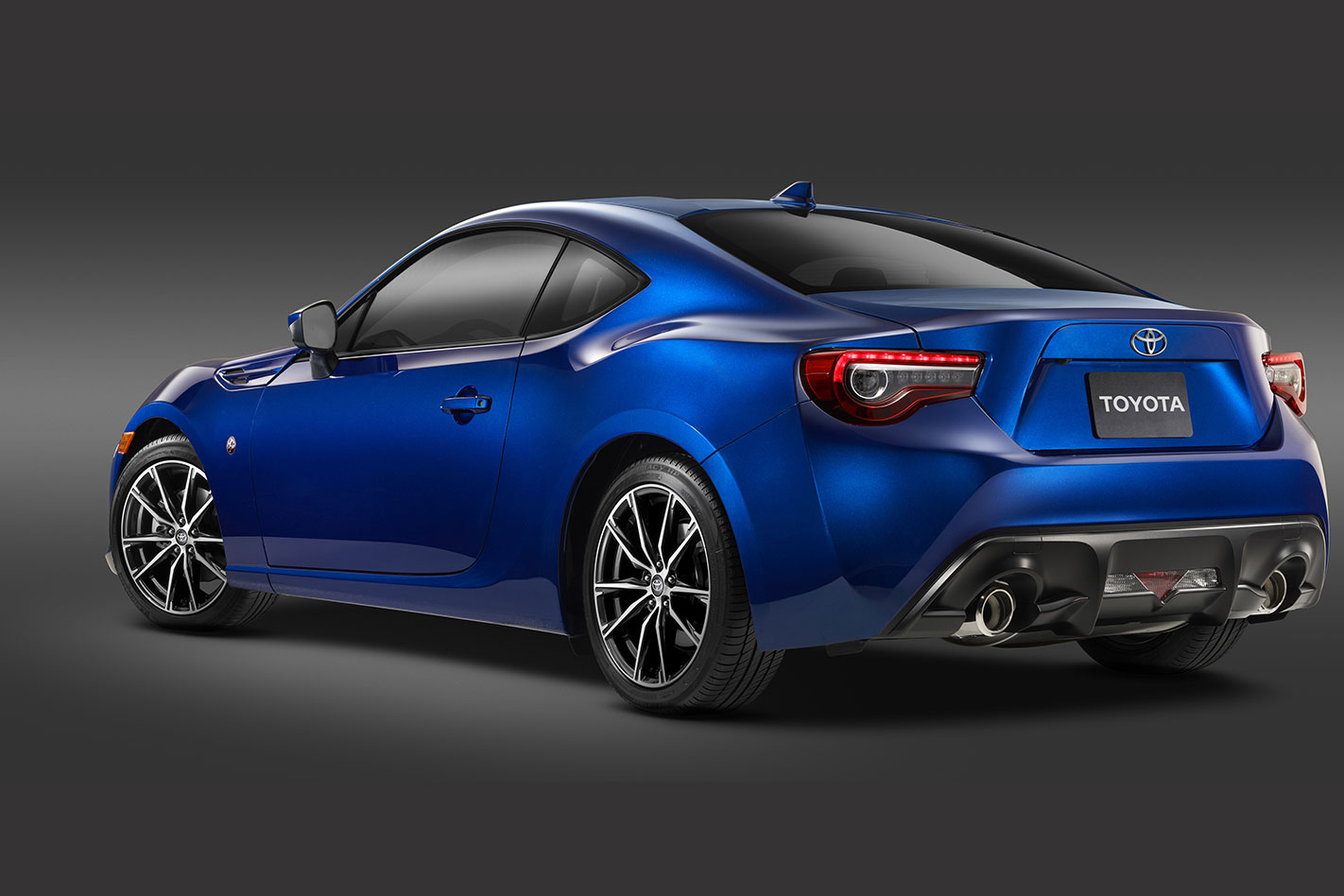
The 2017 styling package is busier and more aggressive, with a larger grille, revised LED headlights and bumper and redesigned fog lamp bezels. The 86 badge has moved further down the front wings and there’s also a new rear bumper.
There’s a new alloy wheel design, while inside, a new soft-touch material covers the instrument panel and door trims and the steering now incorporates audio controls.
The 2017 Toyota 86 is scheduled to go on sale in Australia in the fourth quarter of 2016.
Bentley built its name on racing. It’s also now built its name on an SUV.
WHAT IS IT? Bentley’s first SUV, fully-loaded with a revitalised twin-turbo W12 under the bonnet.
WHY WE’RE DRIVING IT It’s our first chance to drive the big Bentley on Aussie soil, even if it is limited to the smooth Sandown International Raceway. There’s no chance to test its all-terrain modes unless we slide off into the sandtrap…
MAIN RIVALS Range Rover Autobiography; Porsche Cayenne Turbo S; Mercedes-AMG GLS 63
THE WHEELS VERDICT The Bentley Bentayga is remarkably agile, super swift yet genuinely opulent inside. Even if next-to-nobody takes it off-road, its capabilities are impressive. It’s one mighty expensive SUV, though…PLUS: Sets an SUV benchmark in terms of luxury; strong dynamic capabilities; best W12 yet MINUS: Makes a Range Rover Sport look like a rational purchase
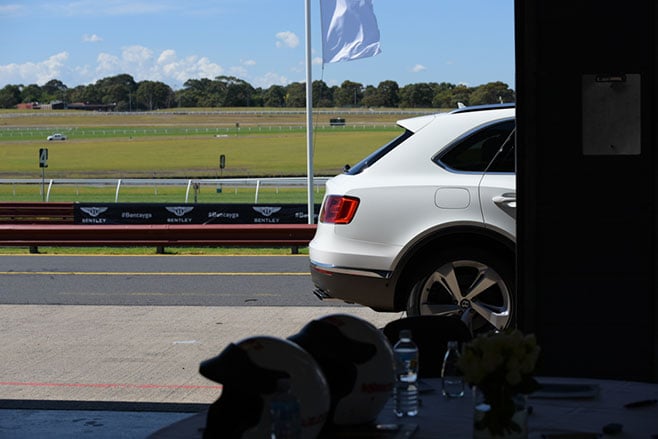
THE WHEELS REVIEW BENTLEY made its name racing, so it seems completely at odds that it would build an SUV. More so that it would unleash it on a racetrack. Yet Sandown International Raceway, steeped in Australian motorsport history but far from Bentley boys’ heartland, is the venue of the first local drive.
The track is also where you’re less likely to care about the acres of hand-stitched leather, trunks of woodgrain and things such as rear-tray tables – unless you want to throw up your breakfast. From editor Butler’s first drive, you already know about that sumptuous interior, those aluminium-intensive, hot-formed body panels and the single tailgate with its optional ‘event seat’.
The sole purpose of this sample is to prove the sceptics wrong: firstly, that this is a proper Bentley, and second, that despite its 2422kg it can storm the 3.9km raceway’s lengthy straights, pull up, and handle its tighter corners like a luxury sophisticate should. Bentley says that it did 400 laps of the Nurburgring in developing this monster, so Sandown should be a walk in the park.
Under the nose, the 447kW W12 isn’t the freshest, fastest engine, but it was so extensively reworked that Bentley says it’s ‘new’. That it has invested so heavily in the Dubbya is a surprise, somewhat, as the V8 introduced for the Continental in 2012 has easily eclipsed W12 Conti sales.
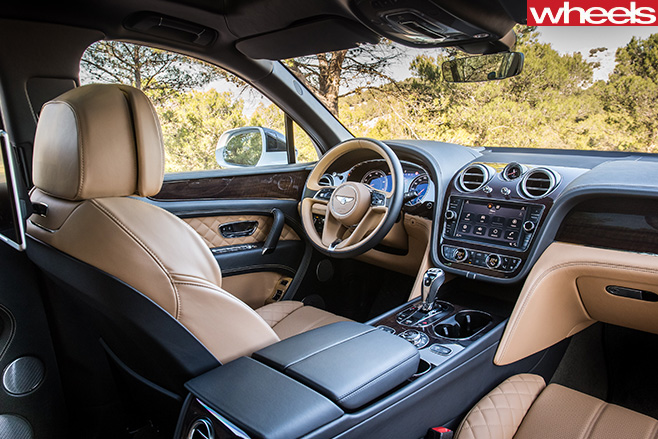
We don’t care about that right now: it’s the stonking 900Nm from a mere 1250rpm that we’re tapping – and this SUV absolutely flies. The 4.1sec 0-100km/h claim seems almost conservative. Flatten that pedal and the all-wheel traction is abominable: there’s no squat, as the Bentayga sits flat and firm on its standard 48-volt ‘Electronic Active Roll Control’ and ‘Bentley Dynamic Ride System’ air suspension, which also produces a remarkable, seemingly unshakable attitude into Sandown’s tighter corners. Nibble a ripple strip, and there’s barely a disruption to the smooth ride – albeit on a near-perfect road surface – and once the crisp turn-in has been exploited to pinpoint apex accuracy, the purchase from the 22-inch Pirelli tyres is immense.
Saying that, there’s a genuine luxuriousness to this Bentley: while its progress is faster than Donald Trump’s body guards at a rally, its refinement and plushness remains. There’s a great tone, but no belching roar bellowing from the ovoid tailpipes either; more an enriched purr.
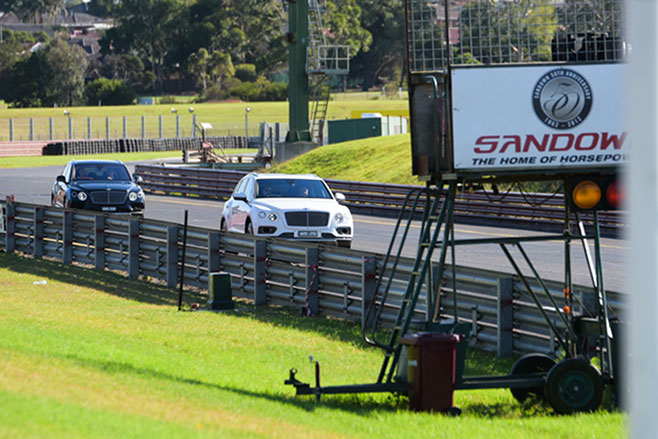
In the cabin it’s even quieter, even if you switch to Sport mode. One of the four drive settings (Comfort, Sport, Custom and Bentley), it alters the usual suspension, throttle, steering and shift-points. It’ll still seamlessly grab the next of eight forward gears at 5500rpm, or head over to manual mode for a place like Sandown to use all of the range up to the 6100rpm redline.
At no time does the Bentayga degenerate into a raucous racer made for on-track debauchery: like its sophisticated, comfortable interior, it’s never over-exuberant but always poised. The brakes, after a few laps, proved a weak point, but our ever so brief track time left us impressed.
Everyone’s making SUVs these days, all claiming to be that little bit special. And, on track at least, the Bentayga proves it’s not merely a show pony but offers genuine substance.
SPECS Model: Bentley Bentayga Engine: 5950cc W12, dohc, 48v, twin-turbo Max power: 447kW@5250rpm Max torque: 900Nm@1250-4500rpm Transmission: 8-speed automatic Weight: 2422kg 0-100km/h: 4.1sec Fuel economy: 12.8L/100km (combined) Price: $420,000 On sale: April
