
Throw down your hard-earned for a Ford Mustang today and you won’t be riding your new Pony away until the middle of 2016.
Ford Australia has already taken over 2000 deposits for its Yank muscle car six months ahead of its December arrival, and ‘Stang buyers who haven’t got in early will now be stung with a wait.
Early adopters are shunning the four-cylinder Mustang Ecoboost, too, with the cheapest $44,990 manual coupe recording the smallest slice of the Pony pie at just 2.9 per cent. Even the flagship $63,990 V8 Convertible is snaring 12.8 per cent of orders.
The $57,490 V8 Coupe automatic is galloping to a 42.3 per cent range lead, slightly ahead of the $2500-cheaper manual version at 33 per cent that itself is 10 times ahead of the Ecoboost Convertible auto (3.3 per cent). The most popular Ecoboost is the coupe auto, snaring 5.8 per cent of the initial allocation.
Despite the four-banger-buyer no-show, Ford Australia brand communications manager Neil McDonald says the share is expected and that the Ecoboost will improve.
“Initial orders go for the high-series mix (which mimics what happens with the rest of the Ford range) but we expect the EcoBoost to perform well once the initial take up of V8s from enthusiasts and early adopters [slows],” McDonald says.
As far as future allocation for our market goes, the brand communications manager says the local arm has secured “a healthy number for 2015 but … [those] who didn’t get in early face a wait because of the enormous demand for the car in the various global markets.”
“If a customer orders one today, they would expect a mid-2016 arrival,” he adds.
That means Henry expects to deliver over 2000 four-cylinder and V8 Mustang models to owners before the first half of the year when the next allocation arrives.
At an average of about 333 per month, the US-made Mustang would be dangerously close to toppling the slow-selling locally-built Falcon that notched up only 381 sales in January (but has since been boosted by extra XR8 production).
Get your free weekly report from the world of fast cars – subscribe to the MOTOR newsletter!
The brilliant thing about the used performance car market is its diversity.
Thanks to the vagaries of depreciation (or in very rare cases, appreciation), cars that cost very different amounts of money when new suddenly find themselves occupying the same price region.
For example, if you’ve got $180K burning a hole in your pocket, you could splash out on a new Porsche Cayman GTS or BMW M4. Or, you could buy something a bit rarer or more exotic on the second hand market.
If mid-engined European sports cars are your thing, how about this 2004 Lamborghini Gallardo?
It’s a very desirable 6-speed manual, with 40,542km on the clock it’s had a reasonable amount of use (always a good sign) and comes with a full Lamborghini service history.
Our other offering couldn’t be more different, a hulking V8-powered rear-drive sedan from the good folks at HSV.
This W427 actually the more powerful of the two cars (375kW vs 368kW) but can’t match the Lambo’s outright pace nor its supercar appeal.
However, unlike the Lambo, which has lost over 50 per cent of its original value, the HSV’s ask is actually $35,000 more than its new price.
For that you can thank its rarity; initially 427 of these 7.0-litre Commodores were due to be produced, but the Global Financial Crisis soon put the brakes on that and only 137 were built.
For more information you can find the ad for the Lamborghini here and the HSV W427 here.
Get your free weekly report from the world of fast cars – subscribe to the MOTOR newsletter!
The Jaguar F-Type coupe and convertible range blooms with the arrival of new all-wheel drive models, a manual gearbox for aficionados, and an extra helping of power for the fastest model, the ballistic F-Type R. Now all that’s missing is a bona fide GT rival for the Porsche 911 GT3 road racer.
WHAT IS IT The Jaguar F-Type is equal parts 21st century rival for the Porsche 911 and a reinterpretation of Jaguar’s iconic E-Type coupe of the 1960s and 70s. Both coupe and convertible models are available with rear-drive and all-wheel drive, with three petrol engines to choose from, delivering outputs from 250kW up to 405kW, and 0-100km/h performance of just 3.9 seconds. Prices start around $120,000 for the F-Type manual, and stretch to $260K for the F-Type R all-wheel drive convertible.
WHY WE’RE TESTING IT This 2015 update introduces an enthusiast-focused, rear-biased, all-wheel-drive system in some models, and a new six-speed manual transmission in others. Power for the range-topping supercharged V8 F-Type R also jumps considerably. Can an F-Type with all-wheel drive deliver the same enthralling experience of its rear-drive sibling?
MAIN RIVALS The mainstream premium brands – Audi, BMW and Mercedes-Benz – do not field direct rivals for the $120K-$260K F-Type sports coupe and convertible, leaving this battlefield to Germany’s benchmark sports car, the Porsche 911.
THE WHEELS VERDICT The additions of all-wheel drive and a six-speed manual transmission bring real value to enthusiasts; the former in punch out of corners without diluting rear-drive handling bias; the latter with more involvement, although the performance gains of DIY gear-changing are debatable.
PLUS: Drop-dead gorgeous, effusive and vocal engines, steering feel, rear-drive bias and seamless AWD transition MINUS: Would the supercharged V8’s screaming soundtrack get tiring over time? I’d love to find out
THE WHEELS REVIEW The Jaguar F-Type is not your shy, unassuming sports coupe. It looks great from all angles, and has one of the sweetest coupe profiles in the automotive kingdom. It’s also got a range of V6 and V8 engines – including the Jaguar F-Type V6 S AWD Coupe – that deliver a performance factor – and soundtrack – guaranteed to get you noticed. Importantly, the original F-Type launched in 2013 dynamically backed up its extroverted style and sound. Both the coupe and convertible deliver everything an enthusiast expects of a rear-drive sports car.
Will the 2015 arrival of a new all-wheel drive system spoil the party by diluting the F-Type’s acclaimed handling characteristics, all for just a few tenths off the 0-100km/h time? For the record, that 0-100km/h time is now a seriously quick 4.1 seconds in the case of the 405kW F-Type R AWD Coupe. But will it handicap the F-Type’s sweet rear-drive balance in the bends? Before we get to the answer, a quick overview of what this ‘2015 update’ brings.
First off, it’s not really an update for existing models, of which there were six. There are no new cabin toys, the styling has not been freshened and the engines themselves don’t suddenly have 10 percent more power.
In essence, Jaguar has added all-wheel drive to some models, and – joy of joys – a three-pedal manual for those who like the involvement. Finally, the lesser of two V8 engine tunes, which was only available in the convertible, has been dropped.
Accordingly, the range has gone from six models to 14. The 250kW supercharged V6 ‘base’ coupe and convertible are only available with rear-wheel drive, though now with a choice of six-speed manual or eight-speed automatic transmissions.
Step up to the 280kW supercharged V6 and it’s auto only, but you now get to choose rear-drive or all-wheel drive under a coupe or convertible. The all-wheel drive system, which delivers 100 per cent of the engine’s goodness to the rears until slip is detected, adds 80kg to the car’s weight, which in turn knocks two-tenths off the 0-100km/h time (5.1sec compared to 4.9sec for the rear-drive). Seems strange given the extra traction off the mark.
It’s only when you get to supercharged V8 in the F-Type R that power and torque overcome the weight handicap. Now, the F-Type R coupe and convertible hit 100km/h in 4.1 seconds. That’s only a tenth faster than the rear-drive version, but around a tight track like the Monticello billionaire’s playground west of New York, where Jaguar held the launch, the all-wheel drive system’s advantage out of tighter corners is surely worth a lot more than a solitary tenth per lap.
Importantly, the torque on demand all-wheel drive system does not dilute the F-Type’s dynamic prowess. This cat drifts. That probably sounds hoonish; my point is there’s a rear-drive bias that can be exploited and thoroughly enjoyed. And the inevitable apportioning of drive to the front axle happens so smoothly and surreptitiously that the driver’s only indication that all four tyres are now pulling hard is the speed at which the corner recedes in the rear-view mirror.
No complaints about the automatic transmission software update, either, which cuts shift times in half in Sport mode. Gearchanges feel almost instantaneous, and the mapping picks the right gear at the right times. In normal mode on the road, it adopts a more relaxed – and seamless – map but is still ready and willing to drop cogs.
This burgeoning and still brilliant F-Type range is another sign that Jaguar – once moments from oblivion before Tata came to the rescue – is going from strength to strength. Hands up who’d like to see a 911 GT3 rival next?
SPECS Model: Jaguar F-Type R AWD Coupe Engine: 5000cc supercharged V8, dohc, 32v Max power: 405kW @ 6500rpm Max torque: 680Nm @ 3500rpm Transmission: 8-speed automatic Weight: 1730kg 0-100km/h: 3.9sec (claimed) Economy: 11.3L/100km (combined) Price: $242,670 On sale: Now
It’s the Goldilocks effect: some cars don’t initially blow you away with a particular attribute, but slowly wriggle their way into your affections with an inherent rightness.
Volkswagen’s Golf GTI has traditionally been one such car. Rarely the fastest, sharpest or cheapest in its class, you approach it with a little scepticism.
But then you roar up an empty alpine road, on the (long) way back from the shops, pull over, andexperience a breathless epiphany. You wonder, genuinely, if you actually need anything more from a car.
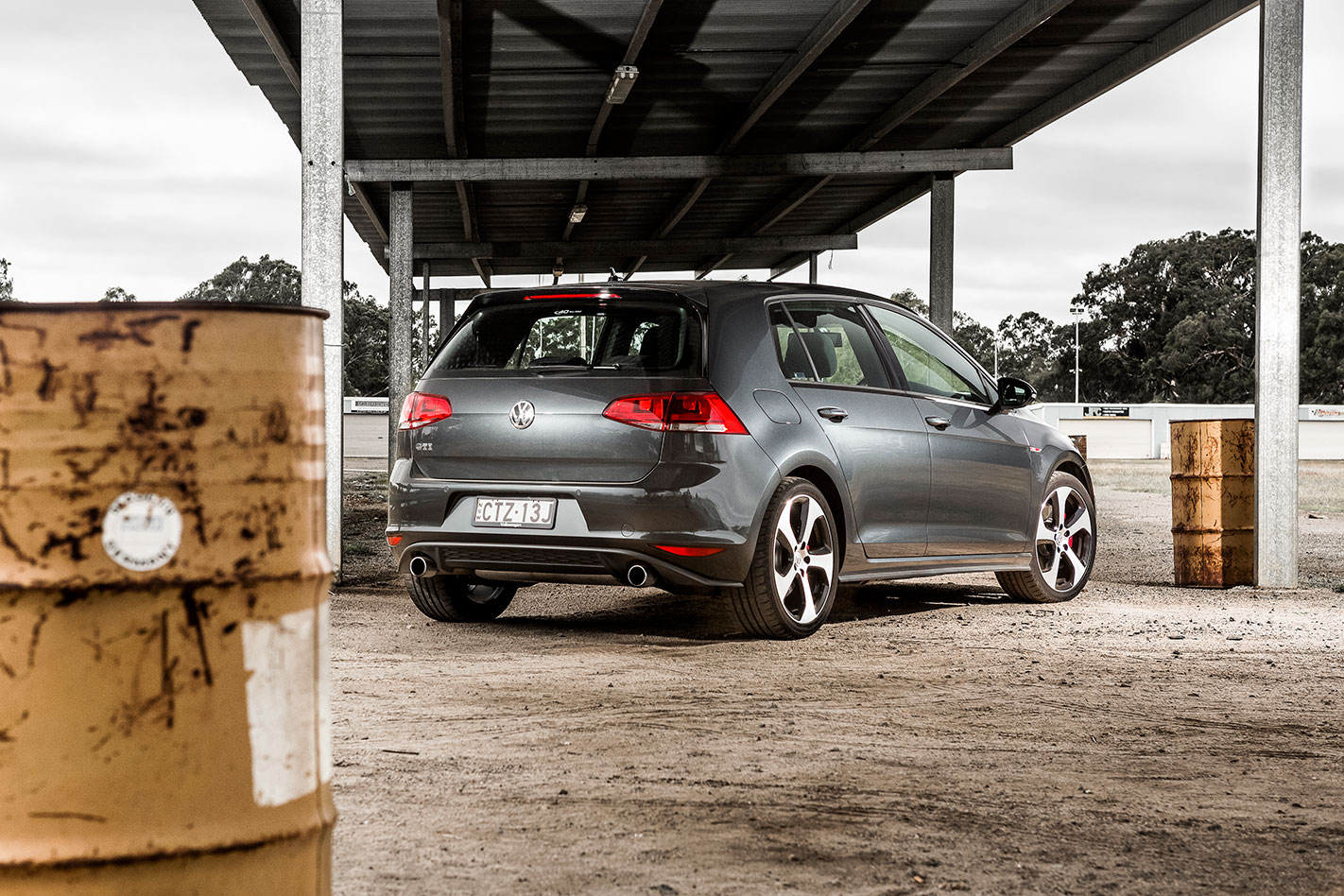
Chief among those is the adoption of VW’s new MQB modular platform, which helps the new GTI weigh in at a relatively svelte 1313kg, 47kg less than the previous model. Combine this with an extra seven kilowatts (now 162kW) and the new car’s power-to weight jumps to 123kW/tonne from the old 114kW/tonne.
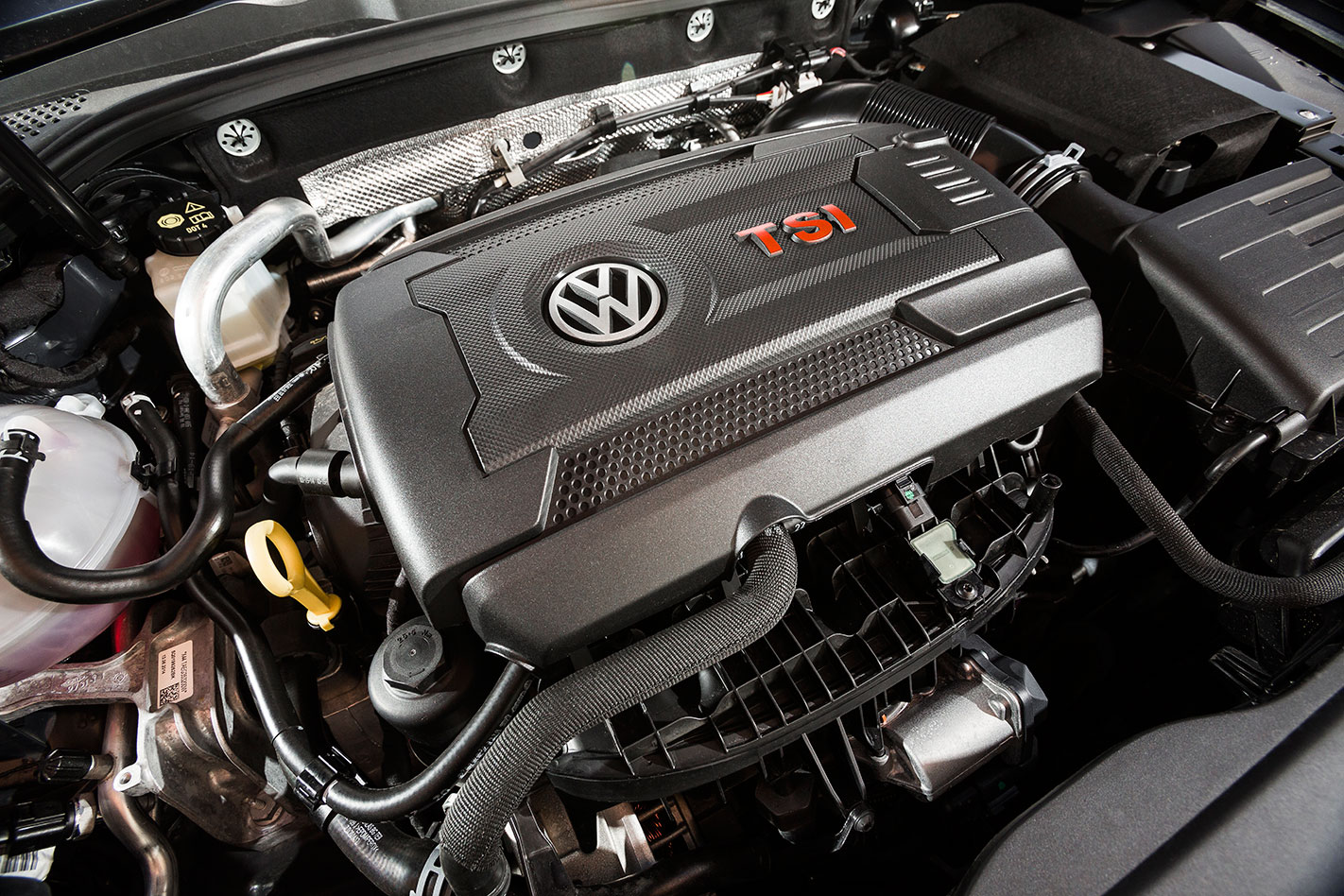
Even more important, though, is the impressive 70Nm hike in torque – now 350Nm from just 1500rpm – thanks to variable exhaust valve timing, an electronic turbo wastegate and better electronics. The GTI pulls strongly from next-to-no revs with an almost boxer-like rumble before growling its way past the 6000rpm redline. The sheer power won’t knock anybody’s socks off, but it’s quick and the throttle response is sharp.
It’ll depend on your priorities; the DSG allows you to go faster for less effort, but there are still some Neanderthal types (myself included) that like to move a gearstick around. If fuel consumption matters, the manual claims 6.2L/100km versus 6.6 for the DSG. However, fuel consumption is the last thing on our mind when faced with the torturous Targa Tasmania stages east of Launceston.
Bumpy, often blind and with thousands of corners soaked from by the previous day’s storms, these roads offer a stern test for the new GTI’s chassis. As is now de rigueur, the Mk VII allows drivers to tweak various components using the ‘Driving profile selection’ screen.
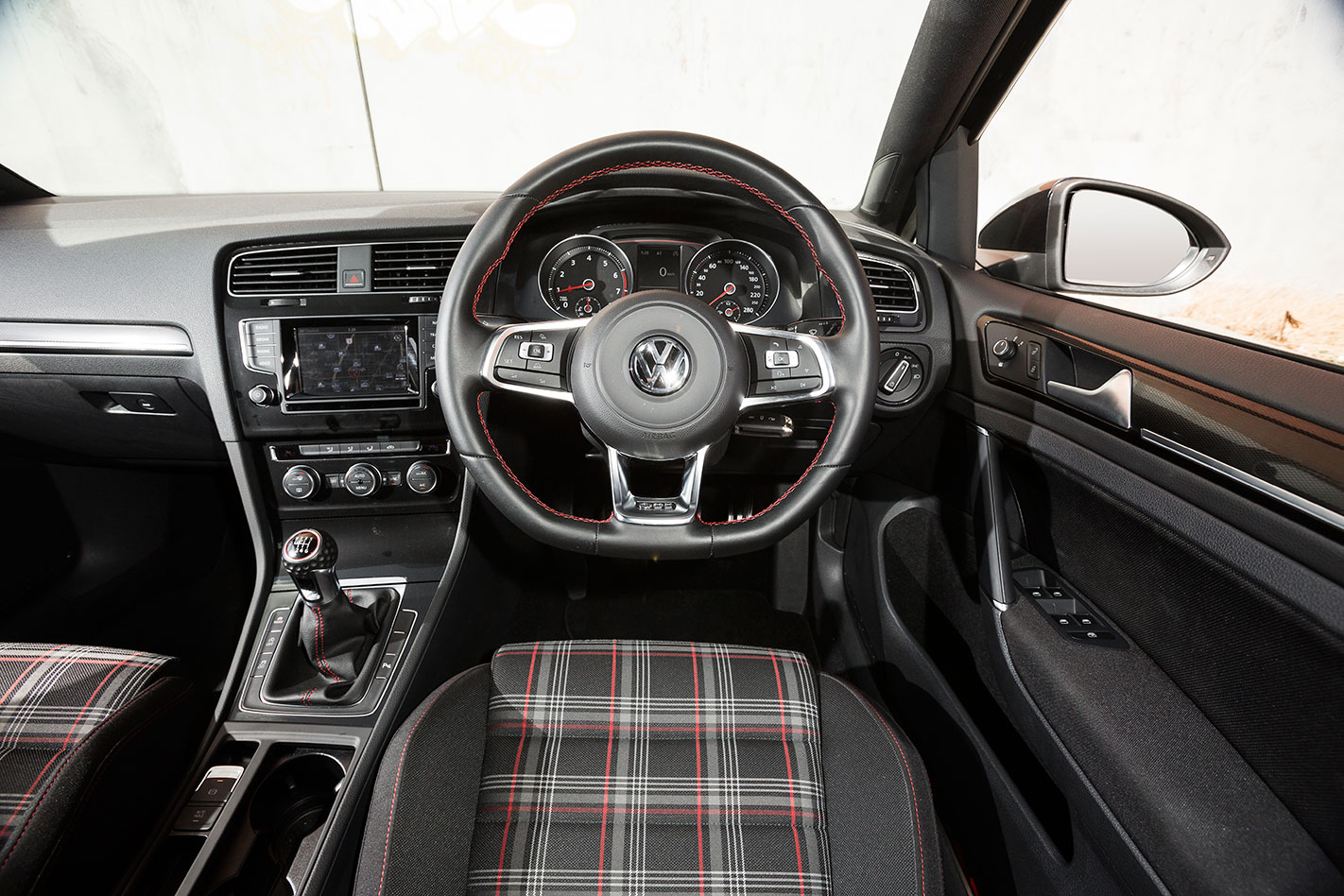
Dive deeper into the menu and you’ll find even more options for customisation, including a ‘Sport’ option for cruise control. We’re not even sure VW knows what that does.
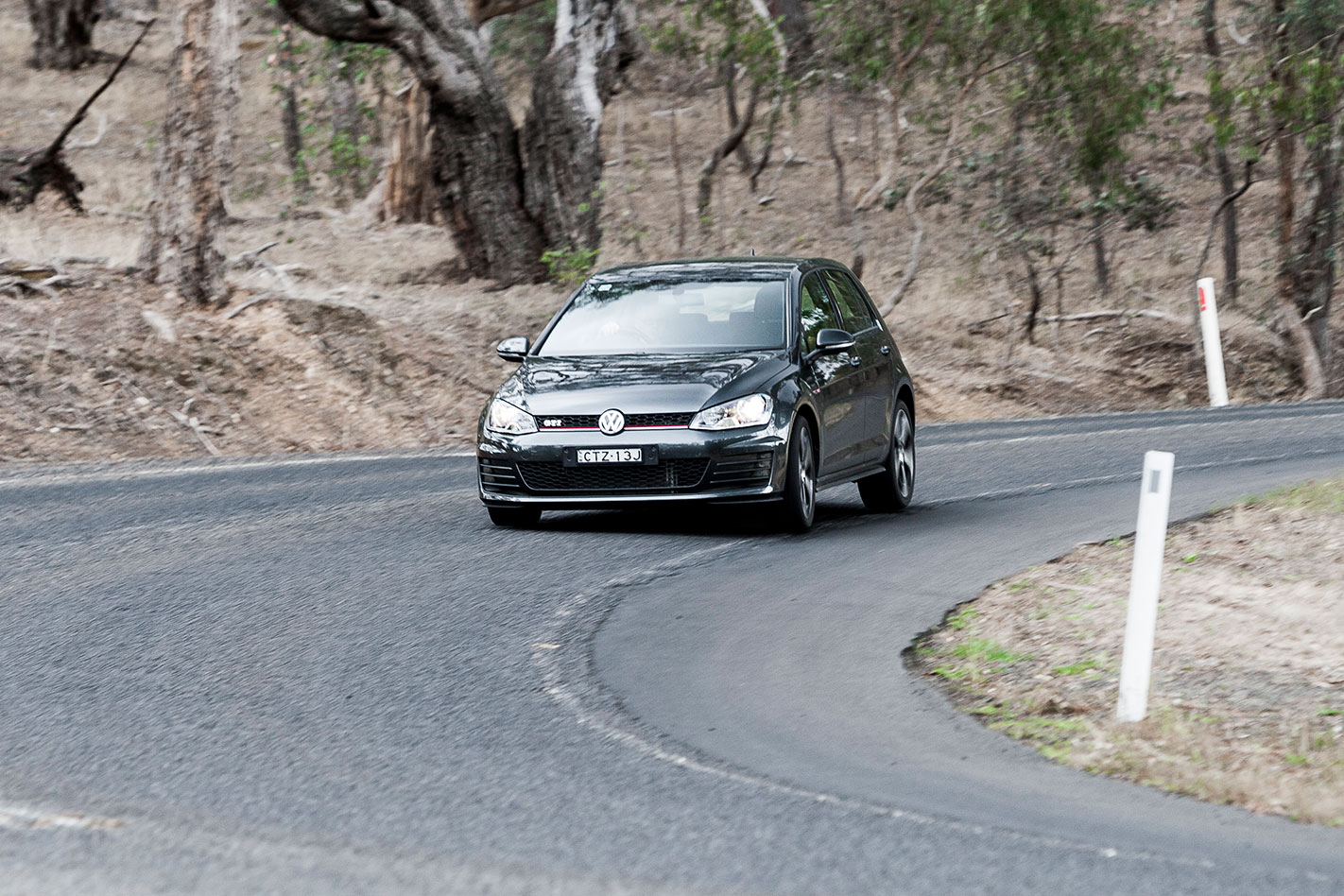
Driven hard, it’s immediately clear the Mk VII is more capable than its predecessor. The new progressive-rate steering system is immediately intuitive, quickening the rack as you wind the steering wheel, resulting in just two turns lock-to-lock.
Traction is one area the new car does occasionally struggle. The XDL electronic diff has been further refined but careful throttle application is needed out of second-gear bends (or third gear, if the road is damp) to prevent scrappy wheelspin.
In summary, the Mk VII GTI manages to be a better drive than ever, while delivering space for five, a slick interior and lots more standard kit (though the price has crept up $1000). It mightn’t undercut the Ford Focus ST, and it doesn’t thrill us like, say, a Renault Megane Sport. But that doesn’t mean it’s gone all soft. It’s just right.
4.5/5
Specifications Engine: 1984cc inline-4, DOHC, 16v, turbo Power: 162kW @ 4500-6200rpm Torque: 350Nm @ 1500-4400rpm Transmission: 6-speed manual/6-speed DSG Weight: 1324kg (manual) 0-100km/h: 6.3sec (tested) Top speed: 246km/h (claimed) Fuel consumption: 6.2L/100km Price: from $41,990
Click here to read the full range review of the Volkswagen Golf.
Lamborghini Gallardo LP550-2 – Stephen Corby
WHEN we asked everyone on the Wheels team to pick the one car they’d actually buy, money no object, we were worried we might just get 12 Audi RS6s, or a dozen Porsches, but the results have been a big surprise, as you’ll see over the following pages.
The only proviso was that you’d have to actually live with the car, so if you have no garage, as I don’t, you have to take into account whether you’d park your fantasy high-dollar car on the street.
This led me to think I should go for my obvious favourite, a 997 Porsche 911 GTS (I’m about to drive its replacement, but I refuse to believe its steering will be as good).
But then I thought about that more wondrous allowance we had made for this list: “money no object”.
Some colleagues claimed they wouldn’t go for a supercar because they wouldn’t be able to afford the tyres, fuel or servicing, but I figure that either our limitless budget should extend to that, or I’d just sell some of my more useable organs as required.
So I’m going for my favourite car ever: the Lamborghini Gallardo LP550-2 Balboni. All the face-ripping joy of the howling V10 monster, but none of that silly safe feeling you get from the all-wheel-drive versions.
Plus racing stripes.
Sure, parking it on the street will make me feel guilty, and nervous, but I’m going to offer all of my neighbours joyrides, so that it becomes an object of communal affection, and protection, unlike the Aventador that once got egged outside my house.
And when, inevitably, it gets too expensive to put fuel in the big, thirsty bastard, I’ll just sit and stare at it. That will be enough.
Pros: It’s a Lamborghini, it’s beautiful and makes people smile, including Corby.
Cons: The doors won’t open against high gutters so he might have to live in it.
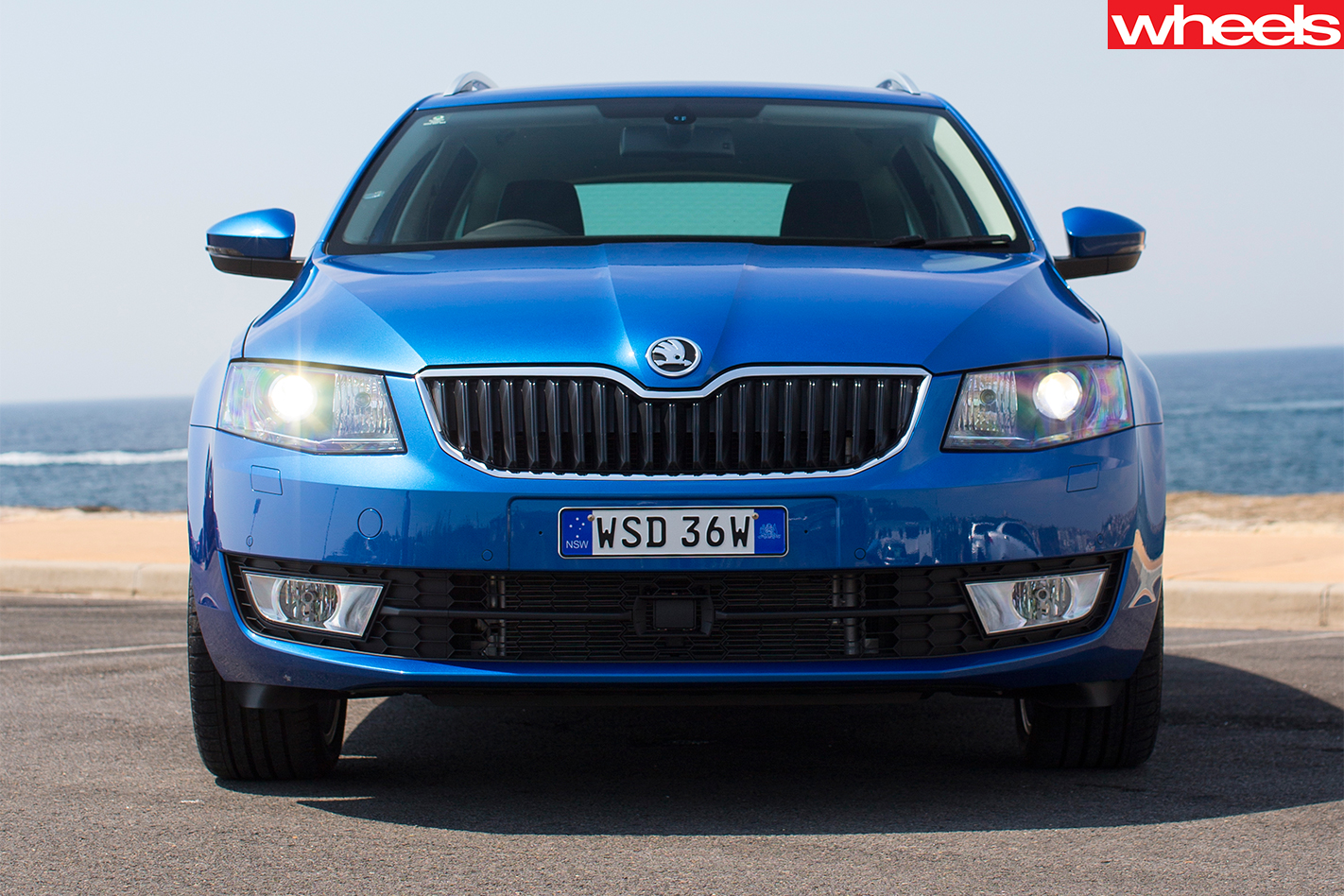
Skoda Octavia Elegance – Peter Robinson
I’VE just been through exactly this exercise for real, not just in theory. The only difference was budget: under $40K, though I don’t think that would make any difference to my choice. I’m loath to provide Canberra with additional money in the form of the Luxury Car Tax.
My car: Skoda Octavia Elegance 1.8 TFSI sedan, in Race Blue.
Why? I need a practical and roomy five-seat (tall grandchildren) hatchback with a huge boot and reasonable exterior dimensions, and I want a car that’s good to drive. The Octavia fits that checklist to perfection.
The 1.8-litre engine brings the VW MQB platform’s multi-link rear suspension for ride refinement (helped by ordering the 17-inch wheels rather than the standard 18s). Performance is spirited, economy frugal, it has a brilliant safety package, elegant styling, quick steering, balanced handling and an ideal driving position.
I’ve no concerns regarding the DSG gearbox, or resale value. I intend to keep the Skoda for as long as I can drive.
Besides, the Octavia embodies all the qualities of the great Czech distance runner Emil Zatopek (Google him to understand why he’s a hero) and that’s an entirely valid reason to buy this car.
Pros: Practical, roomy, nice ride, lots of cargo space and great value for money.
Cons: We were all hoping Robbo would go for a Ferrari. We should have known better.
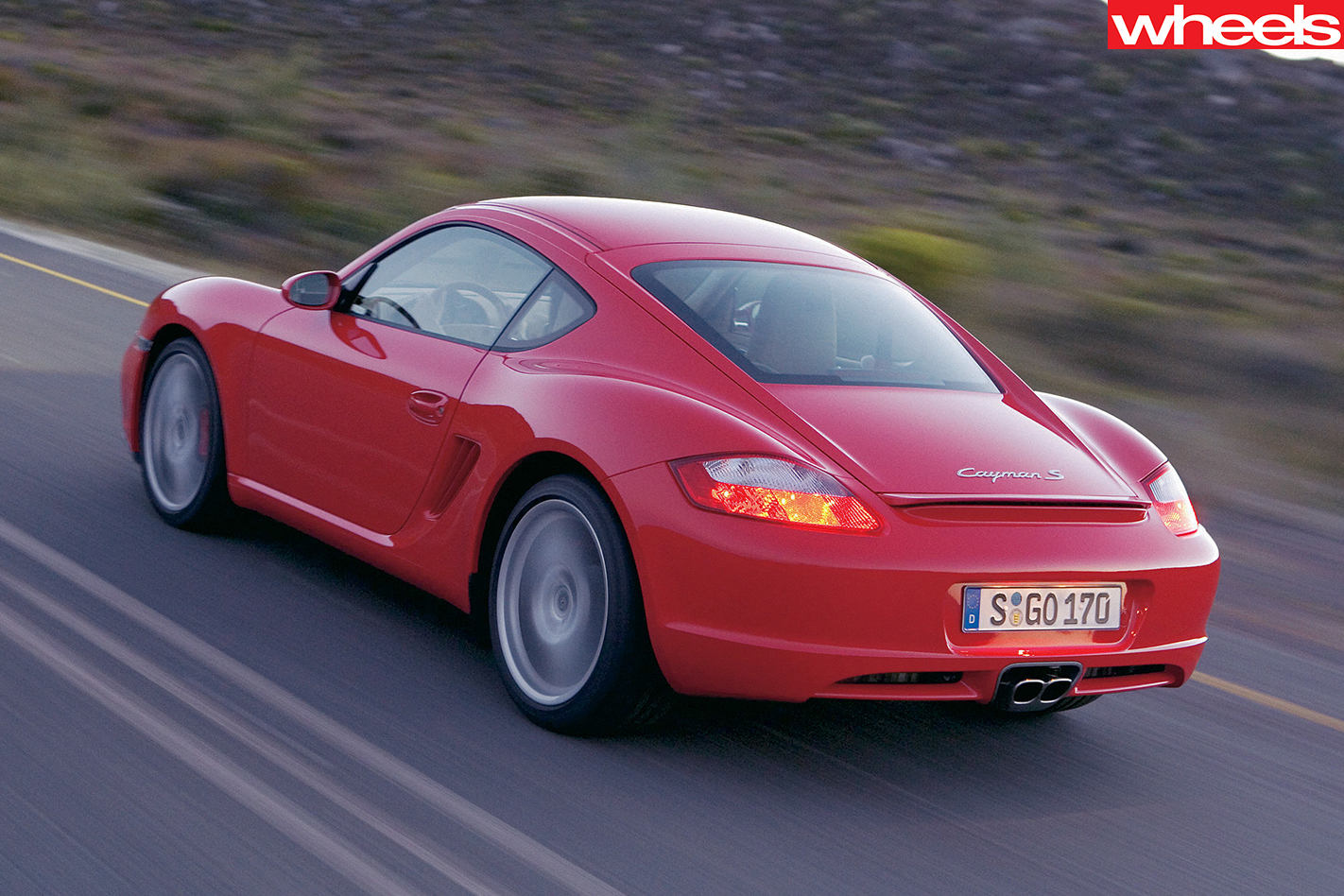
Porsche Cayman – Byron Mathioudakis
INITIALLY, my mind went straight to a pre-’86 facelift Aston Martin Lagonda (for chic sheiks!).
But then I thought about a Ford S-Max people-mover with seats removed, to satiate my everlasting desire for a futuristic van that rides and handles (whoa – a Renault Avantime just entered from waaaaay past stage left).
Then the Tesla Model S bumped that away, but as I haven’t driven one I can’t commit to such a thing (an automotive arranged marriage could end worse than a human one, I think). That then led me to a Honda Super Blackbird 1100 I used to ride (but have discounted for not actually being a car), before almost settling on a Renault Twizy, until I remembered how unrefined the drivetrain is for an EV (and that it’s also a quadricycle).
Then my thoroughly enjoyable four months with a Nissan Leaf got me thinking. I love its silent, effortless under-the-radar skulking qualities, but I couldn’t live with steering as mushy as my Prelude 4WS. So I’m wondering whether the BMW i3 might be the answer (but, again, I haven’t had a steer, though surely it’s better than the Nissan’s).
So, after all that, I shall have to nominate a base manual Cayman in Guards Red – even an early 987 five-speeder, just as long as it has small wheels for a comfortable ride – and revel in its orgasmic balance and tactility. Failing that, give me a Citroen Traction Avant and I’ll pretend I’m a princess in exile. Or a Lancia Appia… Or an Opel GT…
Okay, a Cayman!
PS: Renault Zoe? No, Cayman.
Pros: Byron has managed to settle on one car. Kind of. For a car hoarder, this is no mean feat.
Cons: He’d never find time to drive the Cayman. And he should have gone for the S.
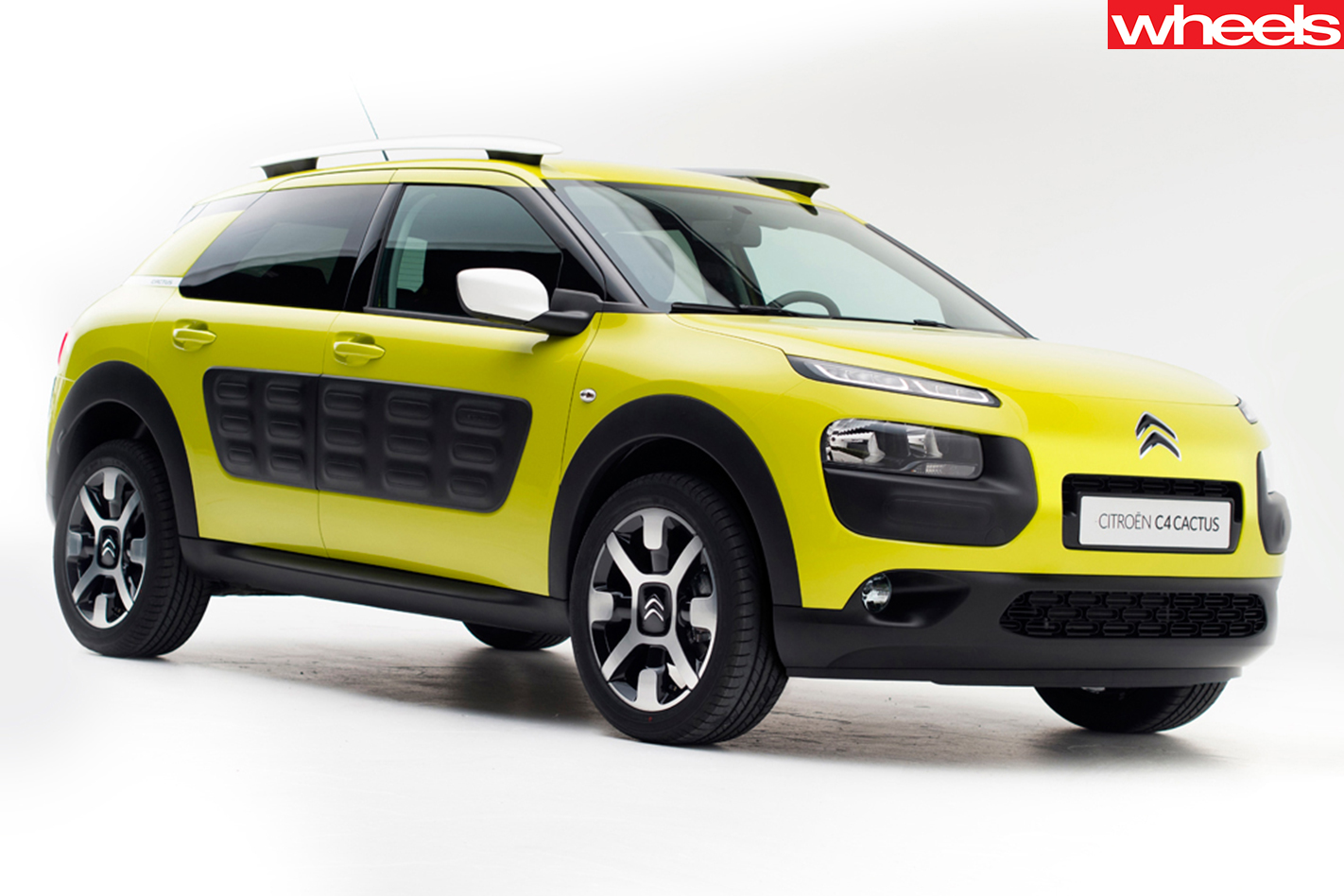
Citroën C4 Cactus – Nathan Ponchard
PONCH is an inner-city, urban kind of guy, and also one who’s almost incapable of making up his mind. He has too much love for too many cars, so out of the 500 or so he said he wanted, we’ve chosen the C4 Cactus for him because it’s the one he mentioned first, and because we love the name.
“Personally, new-car-wise, I’d want small, quirky, fun-to-drive, affordable, cool and a little bit sophisticated all rolled into one. With a manual transmission.
“Given that premise, I’d most want a Citroen C4 Cactus, but seeing it isn’t on sale in Australia yet, and I haven’t driven it, perhaps something else.
“The logical part of me thinks 81TSI Polo six-speed manual with a bit of bling (Sports pack, 17s, etc), or no bling at all and remove the hubcaps for some rally-spec cool. But that would make me a boring git and I’d probably be over it in three months.
“Umm… eeny, meeny, miney, moe… a Volkswagen Up five-door with cruise control, if there are any still left in dealers, or, second choice given VW’s timidity, a facelifted base Alfa Giulietta (like my much-loved former long-termer) in a colour that isn’t grey or white.
“But, ultimately, I just keep coming back to the C4 Cactus. It’s so frigging cool, it hurts. It even has front seats in a split-bench style like all those massive 60s Yank coupes I also love, and yet it’s a lightweight 4.2m-long French hatchback defined by its utility. Throw in PSA’s delightful new 1.2-litre turbo-petrol triple and romance would blossom.”
Pros: You can tell people “my car’s Cactus” and it won’t mean it’s broken or dead.
Cons: When it goes on sale in 2015, they might only sell one, to you know who.
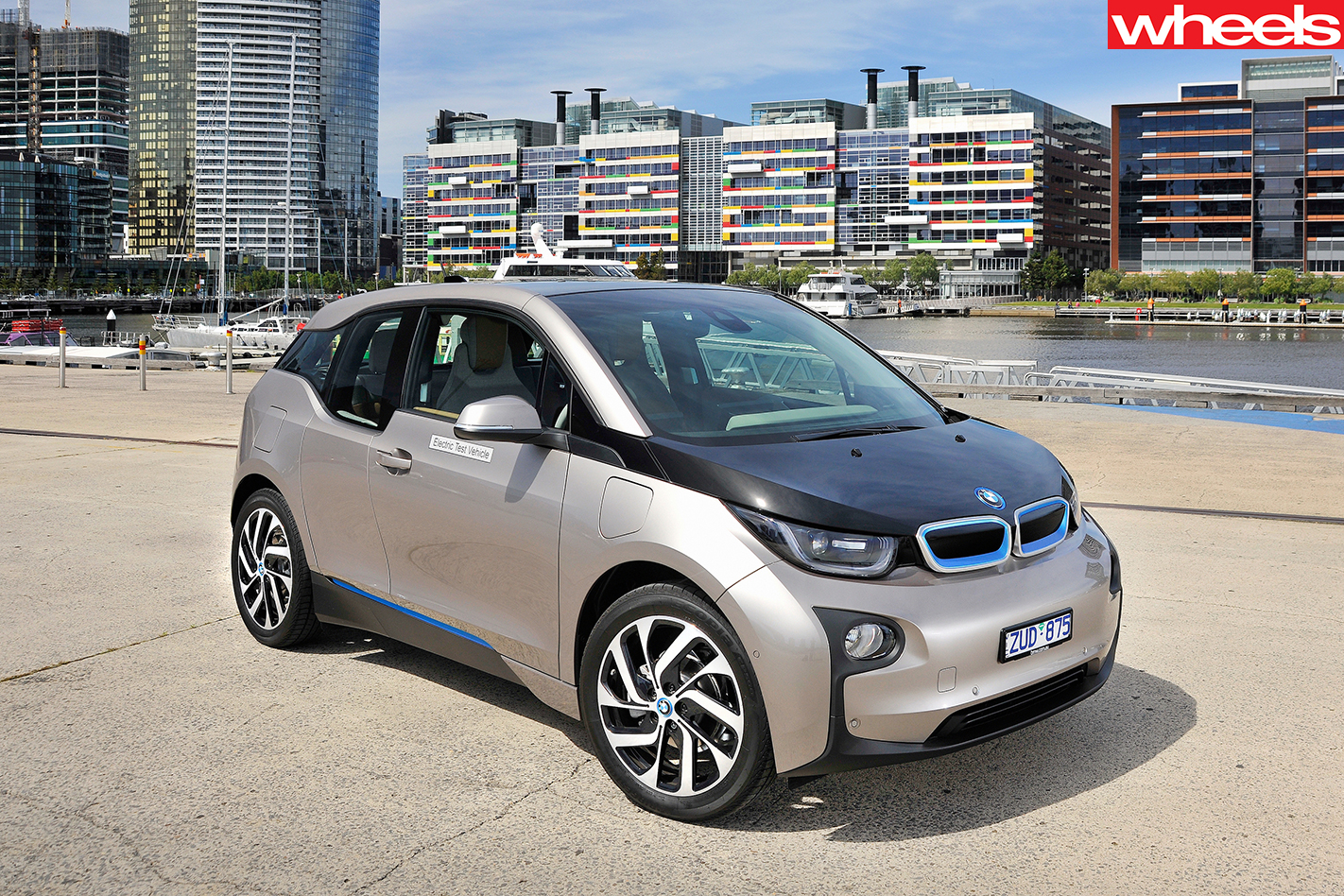
BMW i3 – John Carey
BECAUSE I’m way more interested in the future than the past, I’d choose a BMW i3. With the optional scooter-engined range extender, just in case. As well as providing a taste of tomorrow’s tech, it’s a hoot to drive.
The motor, made by BMW, is really strong from standstill and its response is instant. And because it’s between the rear wheels it drives, launch traction is excellent. It’s also one of the better-steering things BMW has produced in recent years, and it has a brilliant turning circle.
Also, it’s not big, which means it will actually fit in my tiny Italian underground garage (with genuine Roman ruins in the corner) and won’t be a pain in the narrow streets outside.
Four seats? Not a problem. Only need two most of the time. All I’d need to fit the i3 into my driving life is to organise the installation of a wall-charger in the garage. Which, knowing Italy, could be kinda complicated…
The two other cars that make my shortlist are the Volkswagen Up (white two-door with manual and steel wheels, all the car I really need, very nicely engineered and easy on fuel) and the Skoda Octavia wagon (with the 77kW 1.2 TSI that’s available in Italy). Drove it at the launch, and it’s enough engine to do the job, trust me. In basic Active spec, the Octavia is a ruthlessly useful device, well-engineered, good-looking (in my opinion), roomy and fun to drive.
Pros: It’s the future. Clever tech; sharp steering; perfectly sized for Euro living.
Cons: Asking Italian tradesmen to install that pesky wall charger; it’s not an M4.
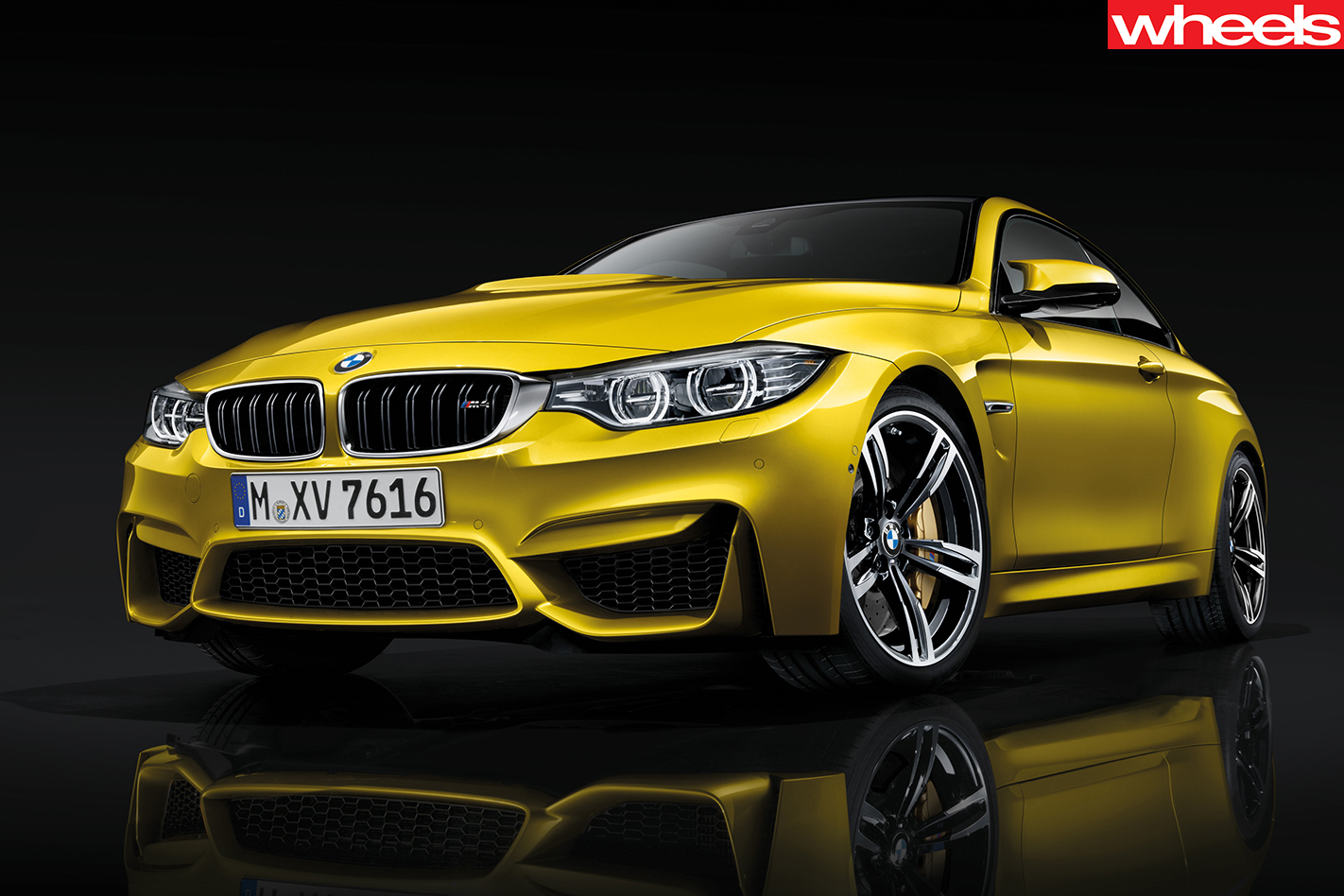
BMW M4 – Glenn Butler
WHO chose this topic? It’d be easier to solve poverty or bring peace to the Middle East.
Money no object, you say. Just have to live with it. A Ferrari is tempting, but I’m assuming the “live with it” clause means I need to pay its upkeep?
Hard to stomach shelling out the shekels a 458 would require, even if I was rich enough to buy islands. Or does the money-no-object part extend to running costs? A Ferrari would be fun for a short time, but a pain the rest of the time. Not least because you’re driving in a fishbowl.
Maybe a less ostentatious sports coupe. A Nissan 370Z perhaps. That’s good and all, but the extra grunt will never outweigh the fact that it’s not as sweet as the Subaru BRZ.
Maybe I should get that – it’s not as common as the 86, and I prefer Subaru’s suspension tune to Toyota’s tail-happy one. I’d probably even track-day it, which would lead to a hankering for turbos ’n’ tyres, and then brakes, and then race seats, and then and then and then…
I do like the idea of a ute. I ran an SS-V long-termer a while back. It spent many happy days parked outside hardware stores as I dreamed of new ways to fill its tray. HSV’s new GTS Maloo would do nicely. So it’d be that.
No. Wait. What about the BMW M4? Been driving one this week, and I think I’m in love, even though that double-clutch takes ages to go from reverse to drive. Everything else is just sublime. I doubted any turbo M would displace the E46 M3 CSL as my dream car of choice. The M4 isn’t as hard-wired into the driver as that 110 percent special was, but it has so much more of everything else.
Bugger the Maloo, I’m taking an M4. With an extra set of boots.
Pros: Fabulous steering, screaming sound, and pretty damn fine to look at.
Cons: The old atmo V8 sounds even better. No ute tray for hardware shopping.
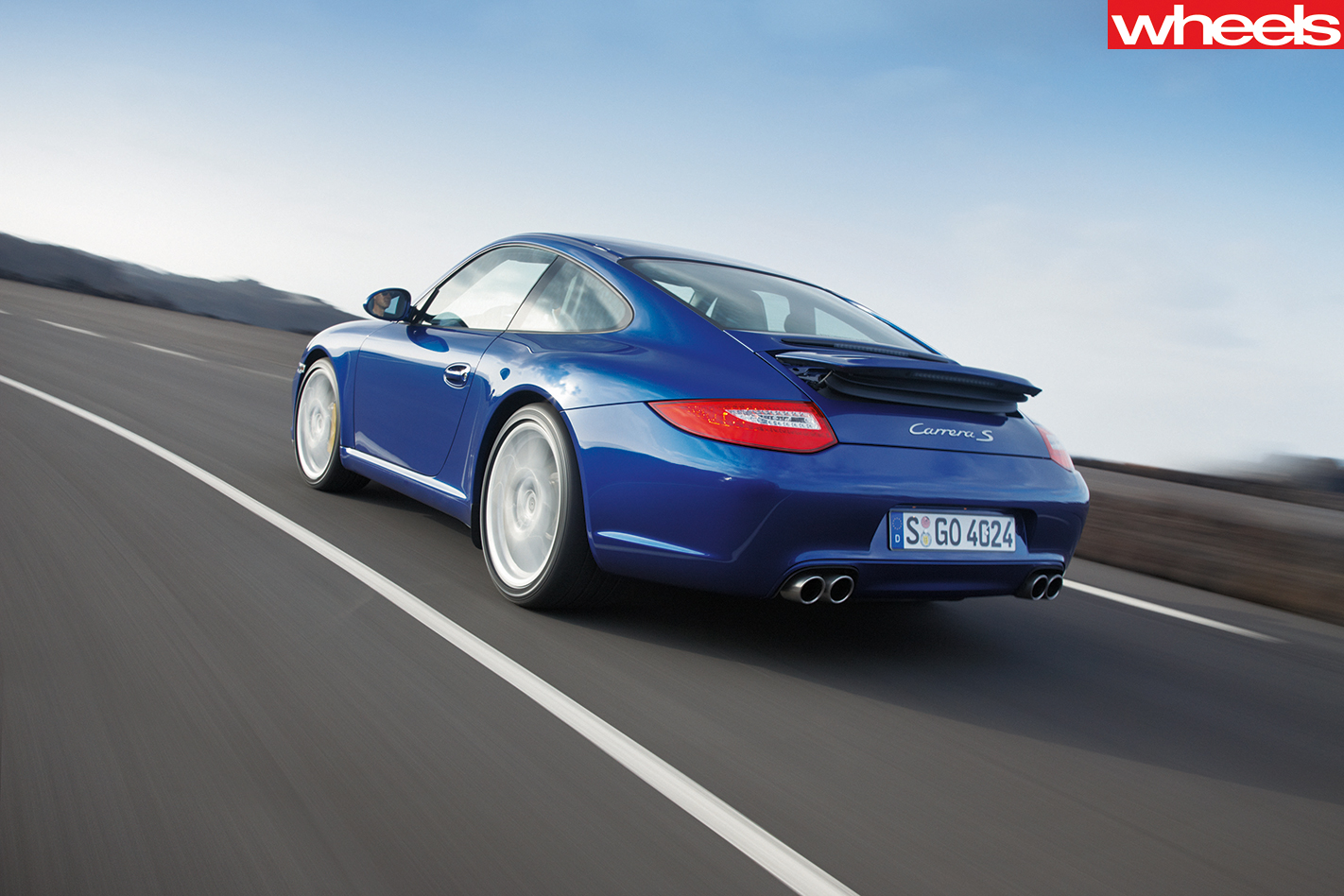
Porsche 911 Carrera S – Michael Stahl
HATE to be predictable, but I’d have a 911. We have a family wagon, so a 911 has as much practicality as I need and the distinctiveness I want. But I’d seriously have a hard time choosing between a 993 Carrera S and a 997 (series 2) Carrera S.
The 993 would give me all the retro-cool that makes me love my old 3.2, but with power steering, a six-speed transmission and a few more mod-cons that would make it a bit more liveable in the city. Servicing costs are pretty reasonable, too.
The 997 would be more expensive to service, but would need less of it, and would reward with better everyday comfort, convenience and, of course, performance. In the driving, the 997 still has just enough of the lurking bastard in it, where the new 991 doesn’t.
What do I really want? A 997 GT3 RS, ideally a 4.0. But it only has two seats, and I do like taking my kids with me. Sometimes.
Strange, given the “money no object” qualification, that I’m not even thinking La Ferrari or 918 or other current supercars that, God knows, I’d love to drive. But in my situation, this would be my only car. I think 911s are kinda simple and understated, whereas parking a supercar in the cheap stack at the airport, or at Woolworth’s, or at the urologist’s, or at a funeral, I reckon you just look like a knob.
Pros: It’s a 911; he owns an old one already so knows he’ll love it; back seats, kind of.
Cons: Nothing, really.
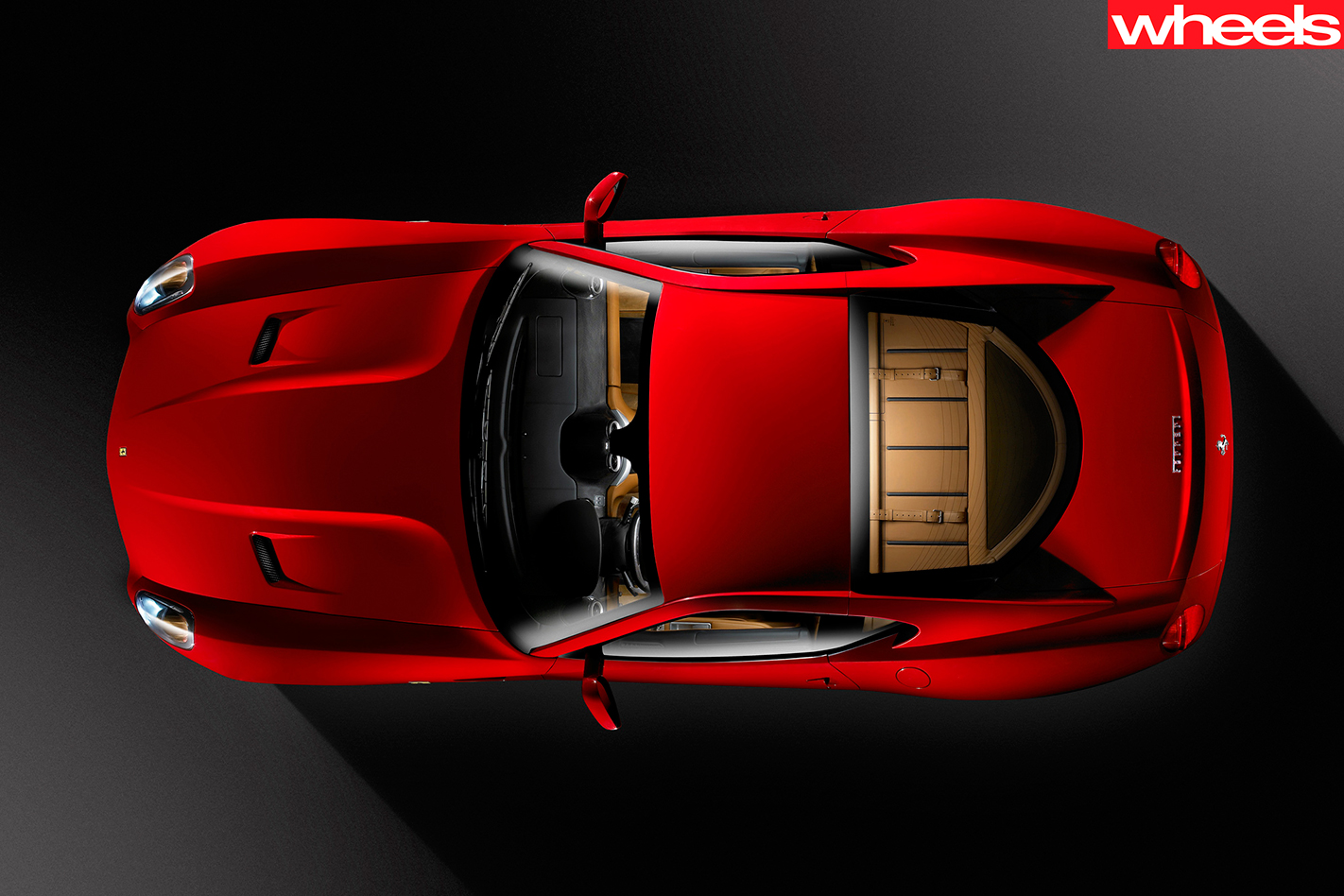
Ferrari 599 GTB – David Hassall
HAVING a strong motorsport background, and regretting not having done more racing when I was young and brave, I’ve always thought about buying a car that I could use as a club racer on the weekend and still drive on the road. I hate the idea of trailers and can’t afford a crew.
My life-long lust for a 1969 Mustang like Moff’s will have to wait because such a car modified for racing wouldn’t do double-duty. So the logical choice would be a 1970s Porsche 911, which would be quick enough to get the adrenalin flowing, I could run it in all sorts of historic track and road events, it would be reliable, it would qualify for club rego, parts are plentiful, there’s a good club to join, and regular road use wouldn’t be a problem.
However, if cost was no option, why would I settle for a $50K retro car? Besides, a 911 is too predictable. As is an M3, even though for a couple of decades it’s been my stock answer to the inevitable question “what car would you buy” whenever people learn that you’re a motoring writer.
Limiting myself to cars I’ve actually driven, my choice would have to be a Ferrari 599 GTB, which I fell in love with driving around the hills near Maranello.
The 599 looks really sexy (an essential for a dream car), makes an awesome noise, goes like stink, handles superbly and, vitally, still rides well. It’s comfortable enough to live with and I’ll take a leap of faith that it’s not going to disintegrate in front of my very eyes.
Of course, it must be red.
If I had one of these, I wouldn’t be worried about racing.
Pros: It’s a Ferrari, and will make Hass more virile and attractive while he owns it.
Cons: It’s a Ferrari, and will thus leave him a broken, bitter man as the bills roll in.
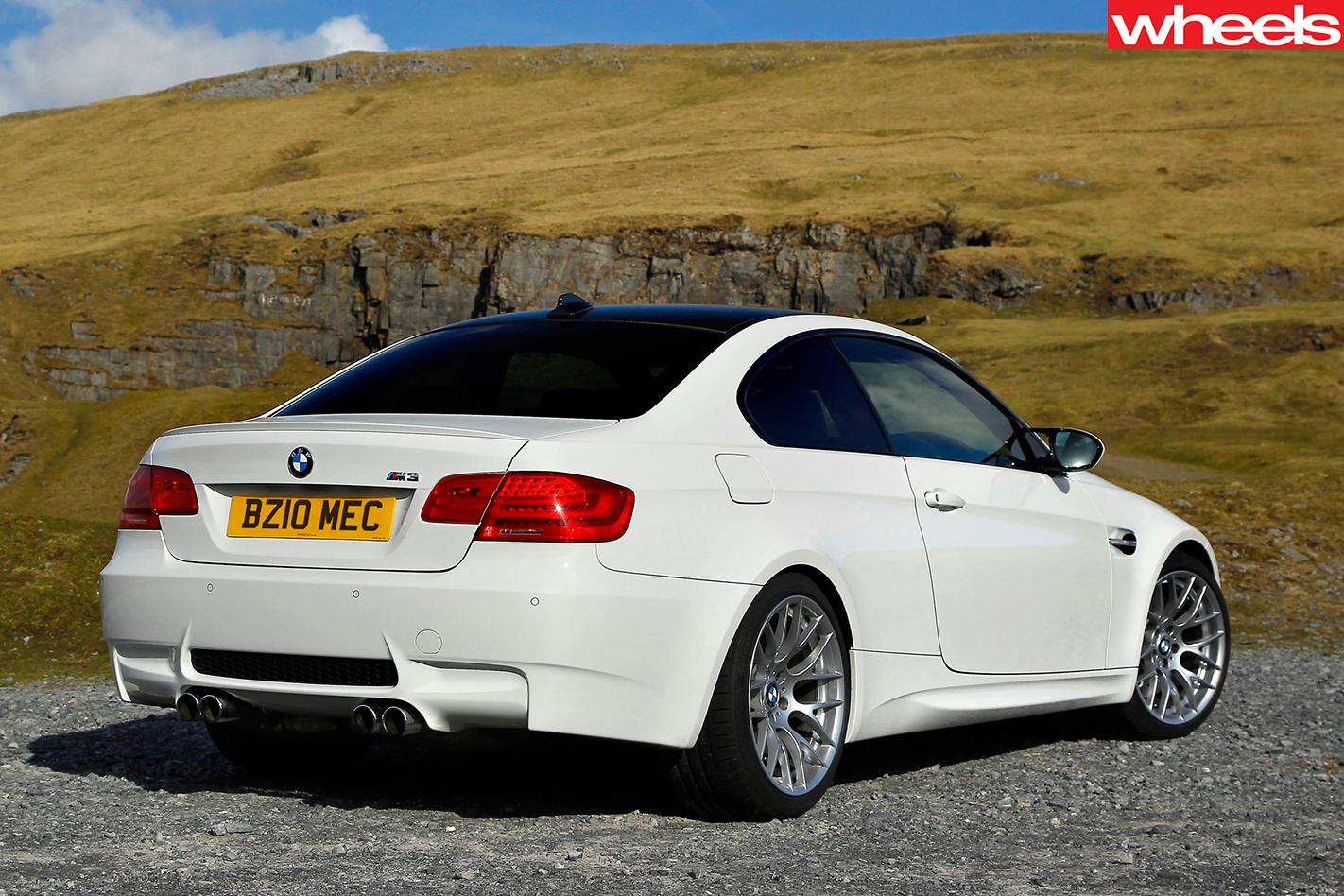
BMW E92 M3 – Damion Smy
MY PICK has to be the superseded BMW M3 Coupe. That means a 309kW 4.0-litre V8 that sounds like sin instead of the downsized, effective, yet horrid-sounding turbo six in the new M4. None of this downsizing, faux-eco rubbish, thanks – I’ll leave that for Butler.
Of the E92 litter, I’d pick a later, post-2010 updated version with the Competiton Pack.
I might have chosen a C63 AMG Coupe, only I don’t like Mercedes bling so much and I want a manual gearbox.
Back to BMW, the M235i offers a six-speed manual and is the perfect size, but the M3 is faster, sounds tougher and looks better (though bring on the M2). It’s for grown-ups, something I enjoy pretending to be.
In fact, speed is a moot point: the M3 isn’t the quickest car around, but it’s the total emotional experience the thirsty coupe gives me that I want to have again and again.
I still remember my first time with the E92: a dark blue manual. Six days, six tanks of petrol and a completely irrational emotional attachment. That hasn’t happened in cars it ought to.
So the M3 gives me warm fuzzies inside when I look at it, tickles my lobes when I hit start and has proper cred from a motorsport department that has built some of the world’s finest machines. It’ll make me feel like a king on Macquarie Pass, but it also has room for weekends away and the rest of real life.
It’s also not such a head turner these days, and I don’t have a garage, so I won’t have to fret about it too much, unlike the Ferrari F12 I may have chosen.
Pros: Room for adults in the back, yet more performance than you could ever hope for.
Cons: Inevitable fuel thirst. And it’s not the Ferrari F12 he clearly really wanted.
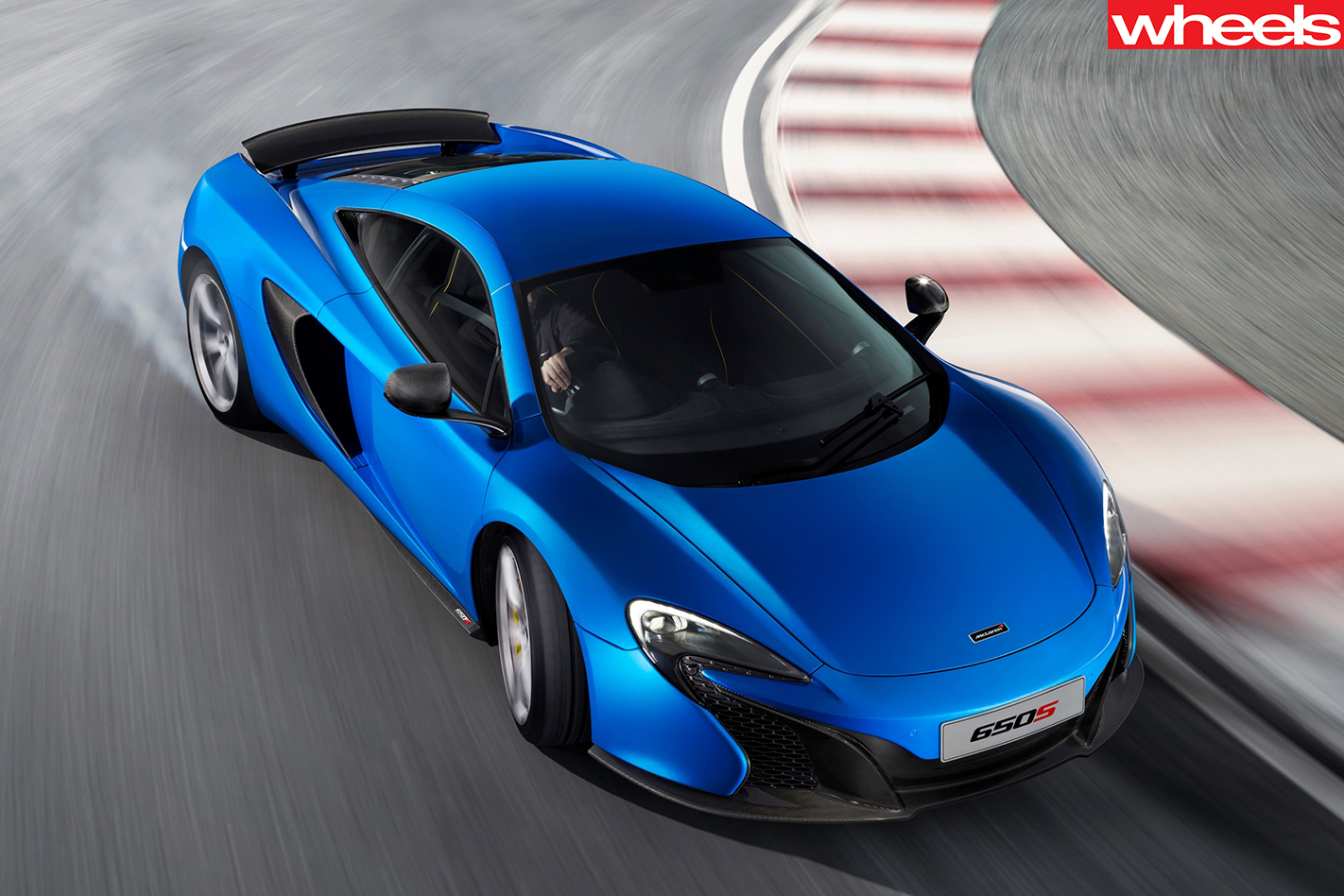
McLaren 650S – Alex Inwood
YES, I’ve done the stereotypical thing and gone for a supercar. But, hey, why not? I have no kids and already own a Mk5 Golf GTI as a daily, so if money is no object, I want a car that makes me feel like a rock star every time I drive it.
My first thought was a Porsche Cayman GTS manual. Porsches hold a special place in my heart and one of my greatest driving memories is guiding a Cayman S up Lake Mountain and Reefton Spur in Victoria. It was a drive of constant feedback, manual gearbox purity and sublime balance, all tied together by the howl of that flat six. I imagine the GTS could only be better.
But is a Cayman special enough? I considered opting for a 996 GT2 (I still remember reading Robbo’s first drive in April 2001 as a 14-year-old), but I haven’t driven one.
I have driven a McLaren 12C, though. Butler was kind enough to flick me the keys after this year’s Wheels supercar comparo and it ticked every box. I loved the way its brutal turbo V8 sucked and screamed in Melbourne’s icy air, and the fact its steering wheel is moulded on Lewis Hamilton’s grip.
Is the 650S as beautiful as a Ferrari? No, but it’s rarer and it has ‘scissor’ doors that open vertically, which enhance its rock-star cred. I also have a garage, so I wouldn’t lie awake all night fretting about it. And one of my neighbours owns a 12C, so we could talk about all things McLaren while wearing hideous branded T-shirts. And I’d know my 650S is better.
Pros: One of the most accomplished, astonishing supercars ever built.
Cons: Insurance. And he’d be taunted with “nice car, did your dad let you borrow it?”.
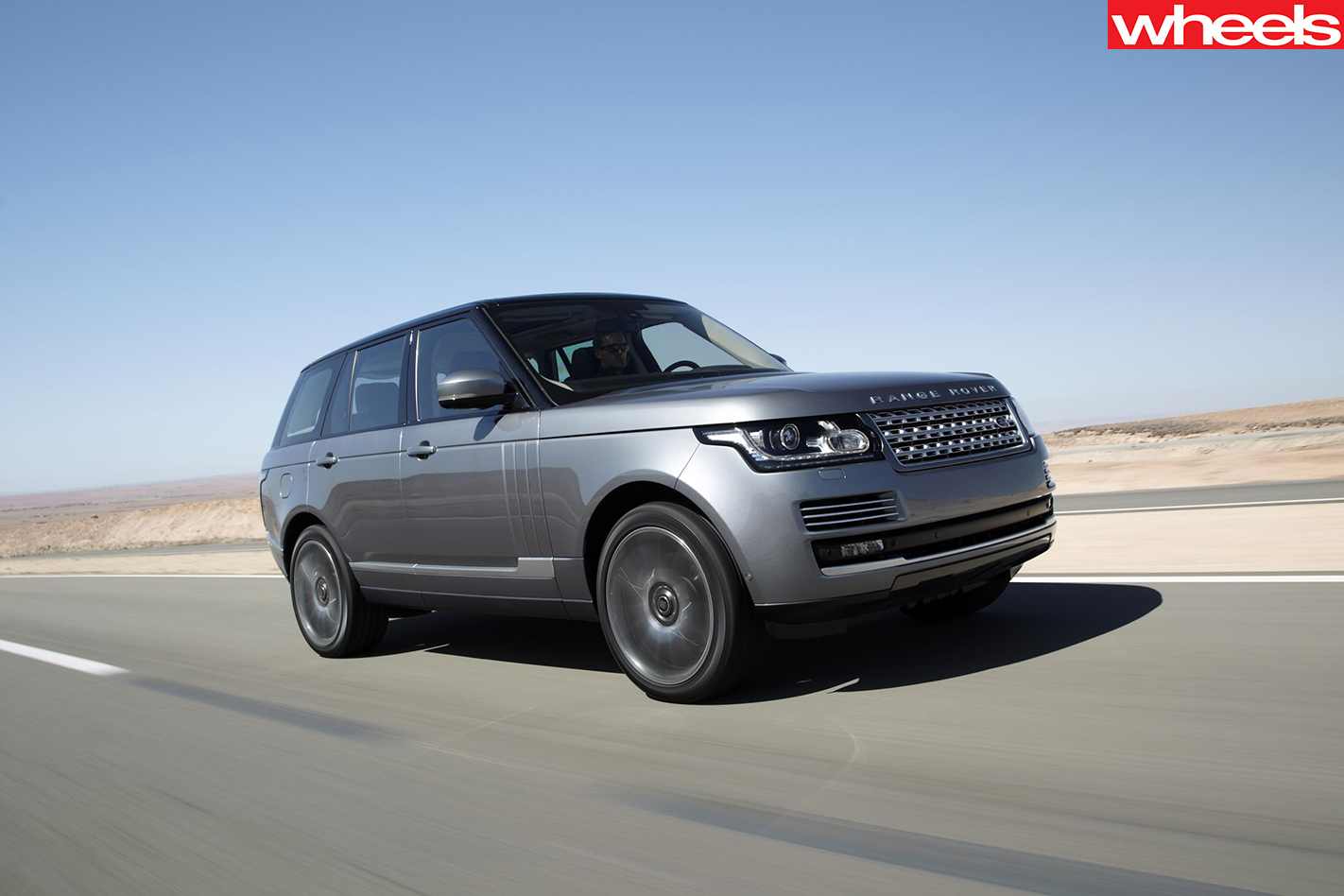
Range Rover Vogue SDV8 – Barry Park
I HAVE growing children, I need to tow trailers of up to a couple of tonnes, and I live in the shadow of a 4WD playground, so my needs are very different. Therefore, I demand a Range Rover Vogue SDV8 Autobiography optioned to the hilt.
This is one instance where the vehicle changes how I feel about myself. Things like the super-high driving position with acres of glasshouse, the opulence and comfort of the cabin, the overt statement it makes to everyone else; these gives me a comfy, smug feeling that no other vehicle can replicate.
Even little touches like the ‘Range Rover’ script in the puddle lamps mean that every time I exit my gentrified tractor at night, I walk away with a bit of a buzz.
The rear-seat space is also important. The big bench and flat floor in the rear means the kids can easily slide across for the school drop-off.
I’ve gone for the diesel; it will need to be a long-distance commuter, and stretching out visits to the bowser is important when weighing it up against the supercharged petrol V8.
Okay, so there’s some brain-fart ergonomics, such as a 12-volt plug that rises vertically from underneath the centre armrest, meaning you can’t close it while using the plug, and the fact that, despite being the on-road equivalent of the QEII, the driver’s footwell still feels cramped. It also has crap smartphone integration and sat-nav graphics that look 16-bit games-console standard, but I’m prepared to overlook all that.
I’d also drop from the standard 22-inch hoops to 20s, to cut down on excessive road roar at highways speeds and help with off-road comfort as well as towing, where a big load on a low-profile tyre could cause long-term problems.
Pros: Makes you feel like Lord of the Manor, while looking like a mansion on wheels.
Cons: It’s called ‘Autobiography’ for crissake. Seriously, Barry, how could you?
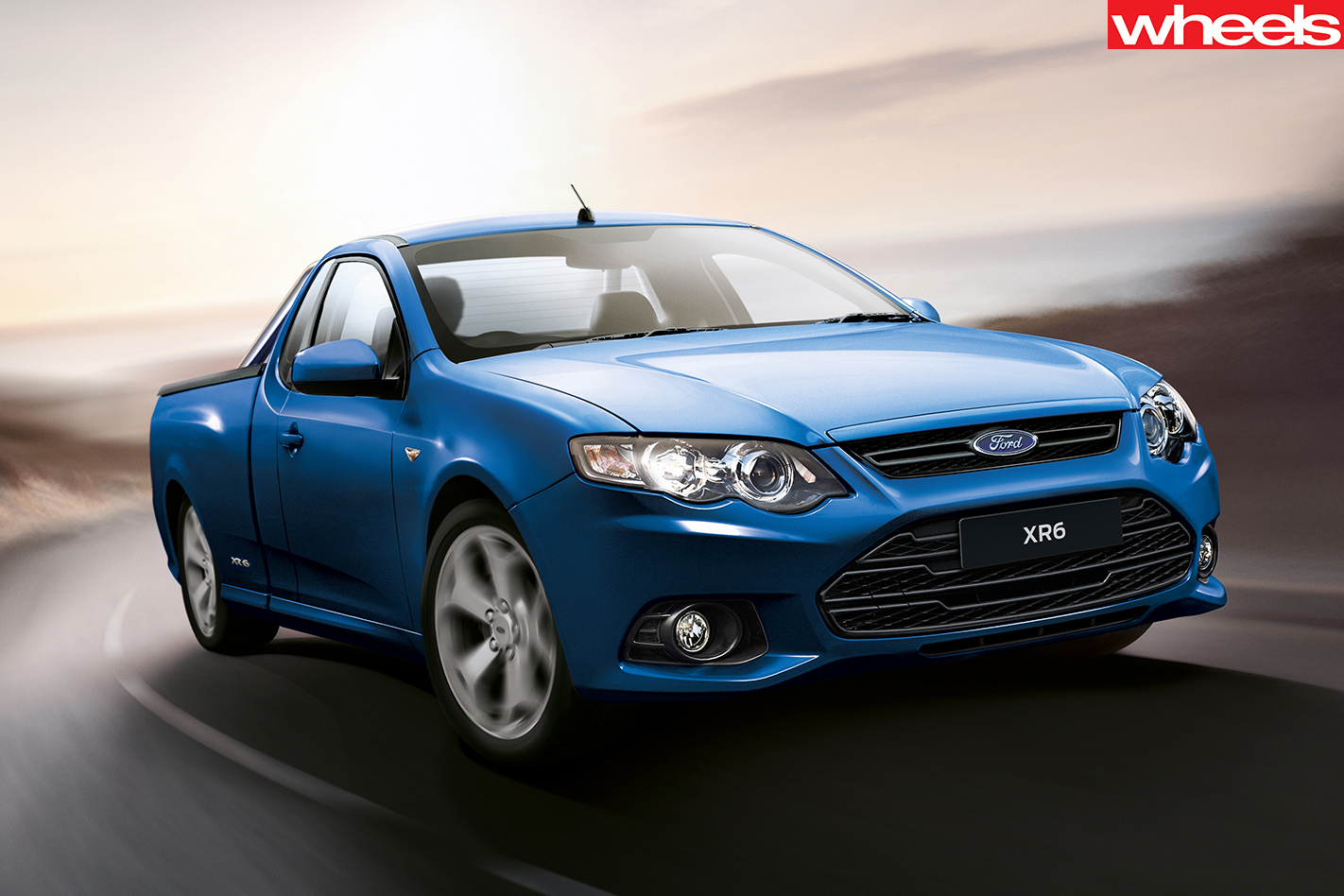
FG Falcon XR6 Ute – James Stanford
CLEARLY Stanford didn’t really understand the question, as he’s gone for a car he already owns – how tight is that?
“Banjos at the ready – it has to be a ute for me. My FG XR6 Falcon ute provides all I want from a road car. It drives almost as well as a sedan (unless there is a bump in the middle of a corner), has a lazy engine with loads of torque, a quality automatic, awesome air-conditioning and heating, and just loves road trips.
“I can chuck whatever I want in the back: mountain bikes, motorbikes, hay bales, gravel, mushie compost, building supplies, and the tray is long enough for the odd jousting stick.
“I really just cruise on public roads (honestly, officer), so I don’t need the FPV or the turbo six. While it isn’t the most nimble, it is well-balanced and is hellishly fun on a winding dirt road (just a little sideways).
“Also, it’s the most Australian car you can buy (locally developed engine, etc), which allows you to sneeringly accuse everyone else of being un-Australian. On a side note, I noticed an official Palmer United Party nominee in some state election a while back had a Chinese Great Wall dual-cab ute covered in a PUP wrap. What does that say about the party?
“Anyway, the Falcon ute is still the car I’d want, even if money was no issue. However, my view is tinted by the fact that I use it to tow my 1998 STI rally car, which provides me all of the automotive jollies I require (it shoots flames on gearchanges). Without a jolly car, I would have to think again (or just keep the ute and get jollies from dirt bikes instead).”
Pros: Stanford will have more of his lottery winnings in the bank than the rest of us.
Cons: He still needs a Southern Cross tattoo; scores zero out of 10 for imagination.
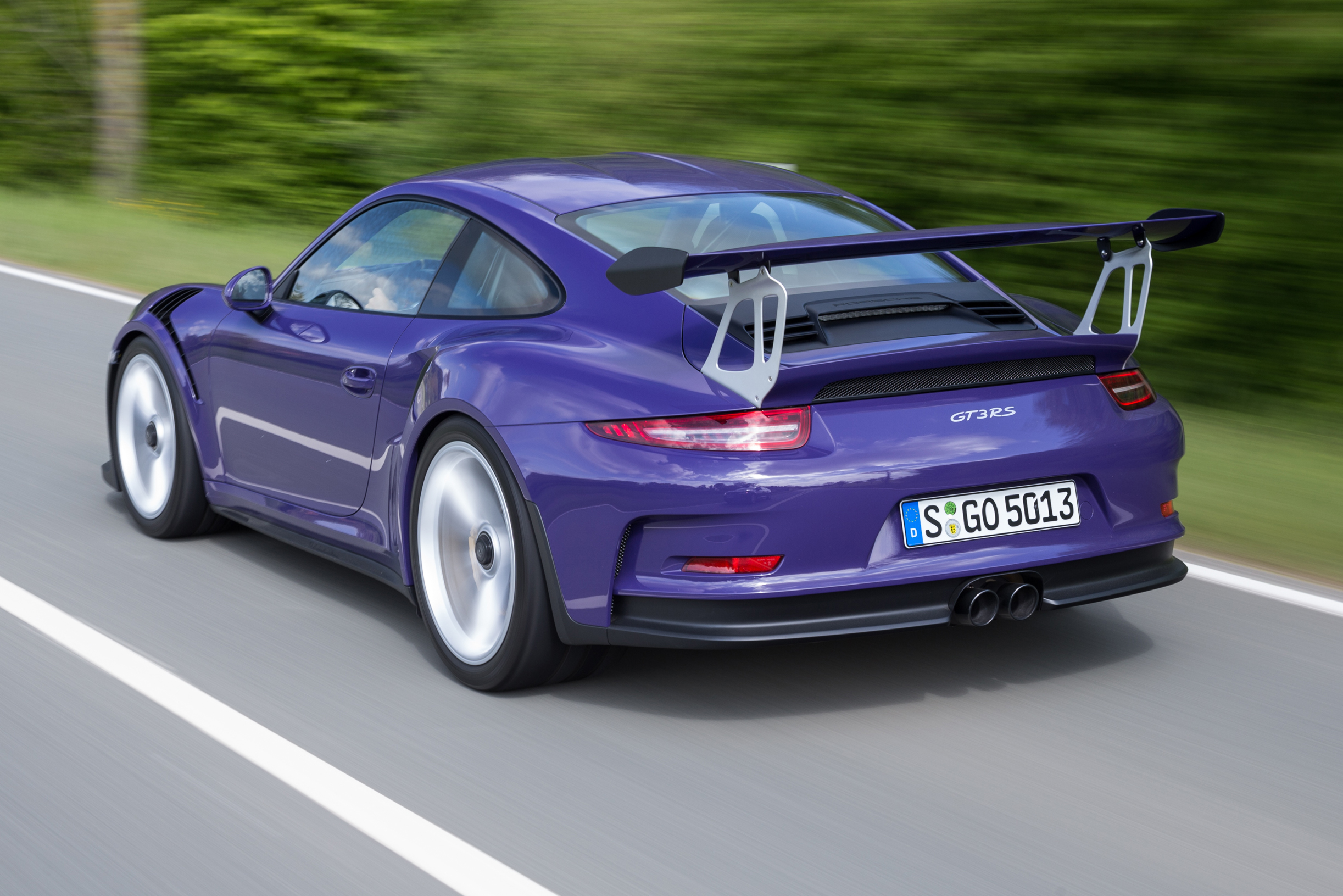
The Porsche 911 GT3 RS takes the rear-engined legend from Zuffenhausen to new heights … and widths.
WHAT IS IT? An even more extreme 911 GT3; more engine, more rubber, more downforce and less weight. This purposeful Porsche has a new 368kW 4.0-litre atmo flat six, huge wheels and tyres, an outrageous (and effective) rear wing and bodywork that’s a smorgasbord of lightweight materials. It’s the ultimate track-ready road-going 911.
WHY WE’RE TESTING IT It will be August before the 911 GT3 RS arrives in Australia, so we leaped at the offer from Porsche to attend the recent international launch of the car in Germany.
MAIN RIVALS Although priced much higher than the $387,700 911 GT3 RS, the Ferrari 458 Speciale is the most natural match-up for this sharp and polished Porsche. Both these rear-drivers are more track-focused than the all-wheel-drive Lamborghini Huracan LP 610-4 and its almost-ready Audi R8 V10 sister, or the front-engined Mercedes-AMG GT S. The scrawny little Caterham Seven 485 might be considered a rival for track-day prowess, but not day-to-day driving.
THE WHEELS VERDICT Porsche, you’ve done it again! The 911 GT3 RS is simply brilliant. Not just for its grip and power, but also for the supernatural precision of its steering and throttle, and the stunning speed of its seven-speed double-clutch transmission. These make it something special on a racetrack, but the 911 GT3 RS is also surprisingly civilised on the road as well. This is a car with a truly awesome breadth of talent.
PLUS: Engine; transmission; steering; brakes; handling; looks; engineering MINUS: It’s $50,000 more than the previous 997 Gen II 911 GT3 RS
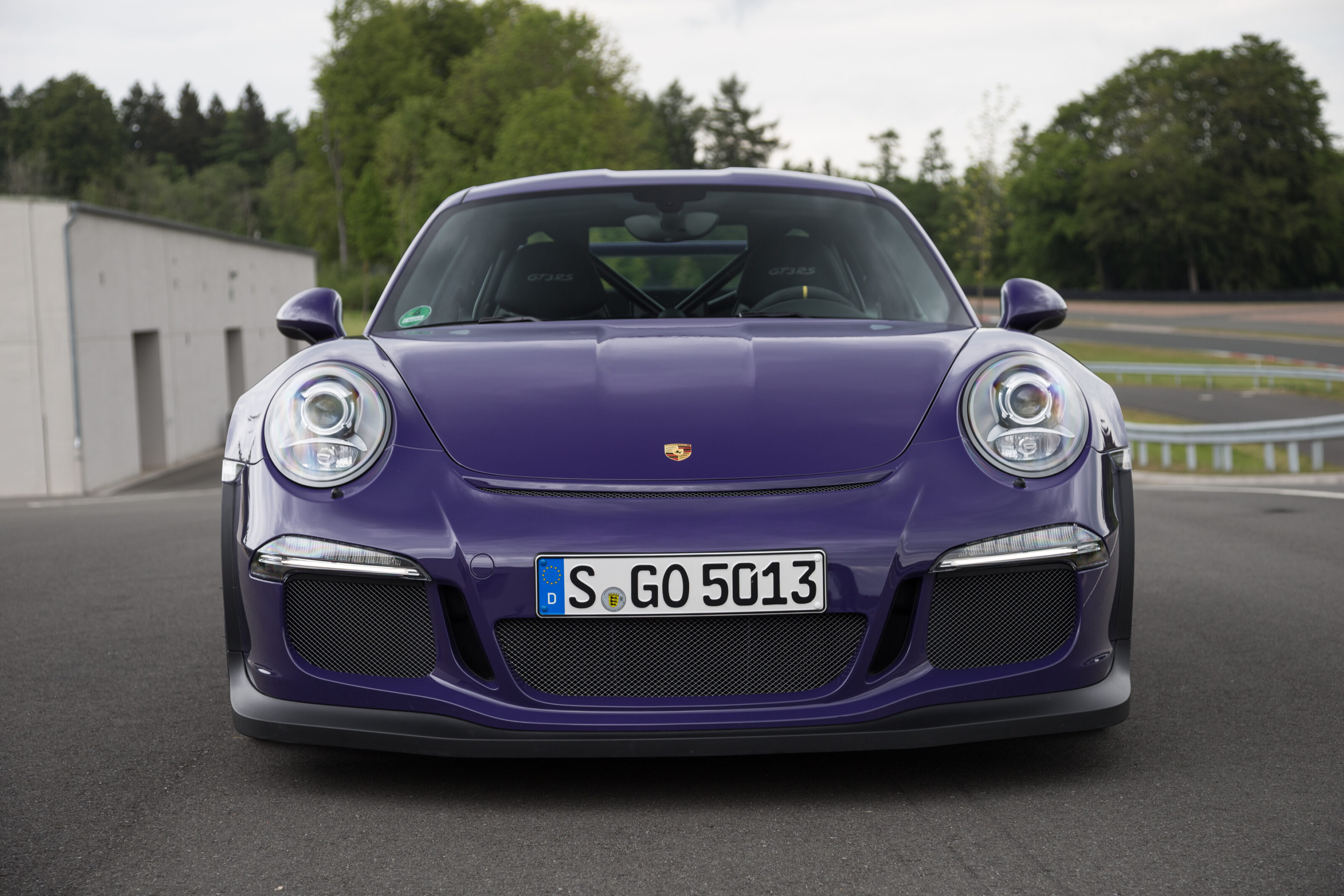
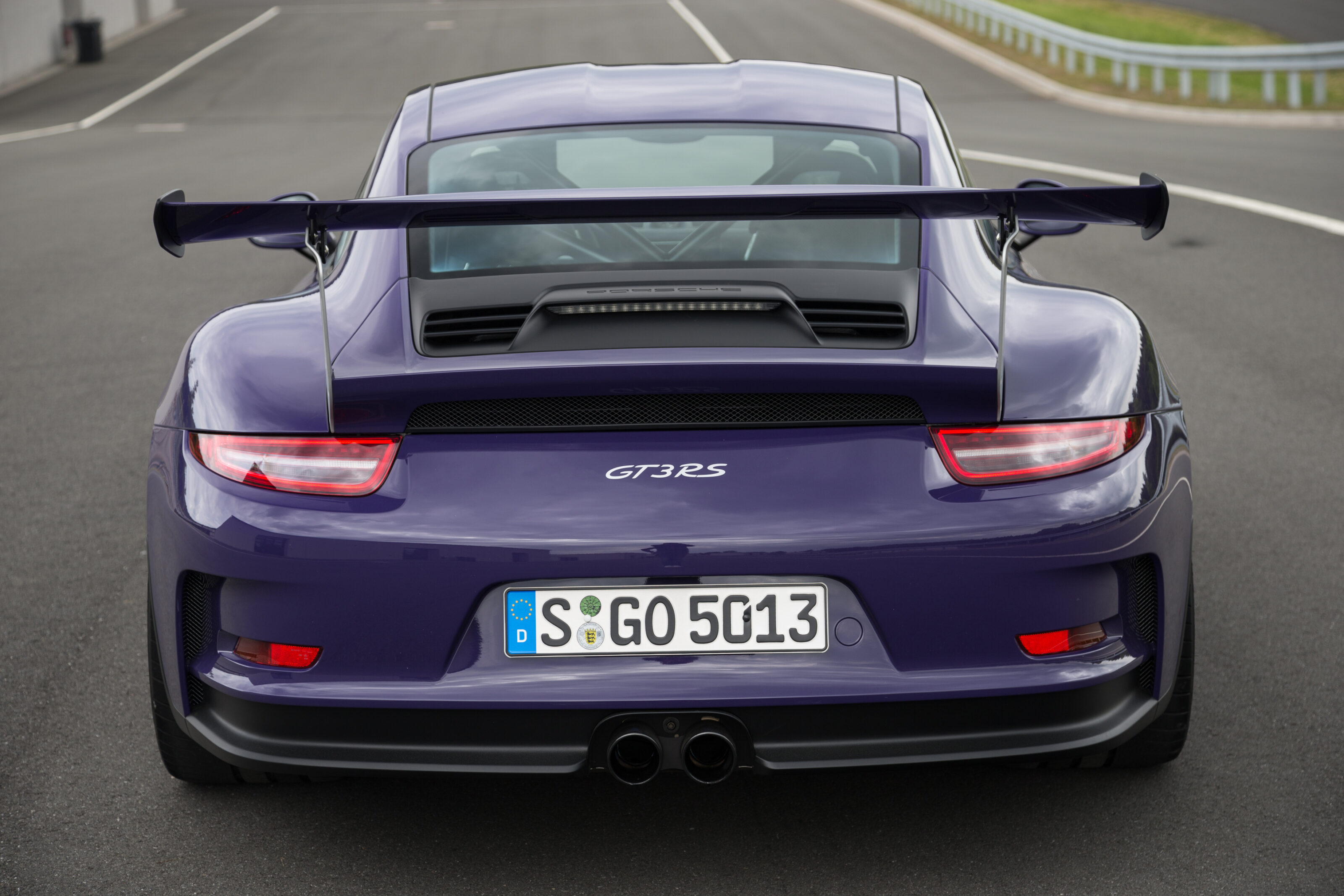
THE WHEELS REVIEW THE PORSCHE 911 GT3 RS is a car with a behind of eye-popping prominence. Massive rear tyres fill almost to bursting the broad curves of its 911 Turbo-derived haunches. Remove that impossible to ignore wing, and you’re looking at the automotive equivalent of Kim Kardashian in skin-tight jeans. But this is a cruel and unkind metaphor. The Porsche, of course, has talent.
We’ve come to Bilster Berg, a private racetrack in the north of Germany, to find out what it can do. This circuit packs a lot of rise and fall into its 4.2km length. There are slithery curves over crests, grippy compression dips, off-camber exits, visually deceptive entries, little chance to relax and greenery all around. It’s like a condensed version of the Nürburgring.
The 911 GT3 RS has already clocked a 7m20s lap of the Nordschleife. This is better than any of its predecessors, and nine seconds quicker than the Carrera GT, with its mid-mounted 5.7-litre V10, managed back in 2003. Andreas Preuninger, Porsche’s director of high-performance cars and motorsport, confidently predicts that the new GT3 RS will shave a few more seconds off its current Ring record when more favourable summer weather arrives in Germany.
It doesn’t take many laps of Bilster Berg to understand why the GT3 RS is a lord of the Ring. This Porsche combines outlandish grip, superb steering, muscular brakes and precision delivery of pungent power in choir-like harmony. With the sense of connection through the car’s Alcantara-bound steering wheel and carbonfibre shelled seat, you simply have to sing along.
Preuninger says he really, really wanted the same-size wheels and tyres as the Porsche 918 Hybrid for the 911 GT3 RS; 265/35ZR20 on 9.5-inch rims at the front and 325/30ZR21 on 12.5-inch rims at the rear. These bring 20 and 18 percent respective increases in contact patch area compared to the GT3, which has narrower 20-inch wheels front and rear.
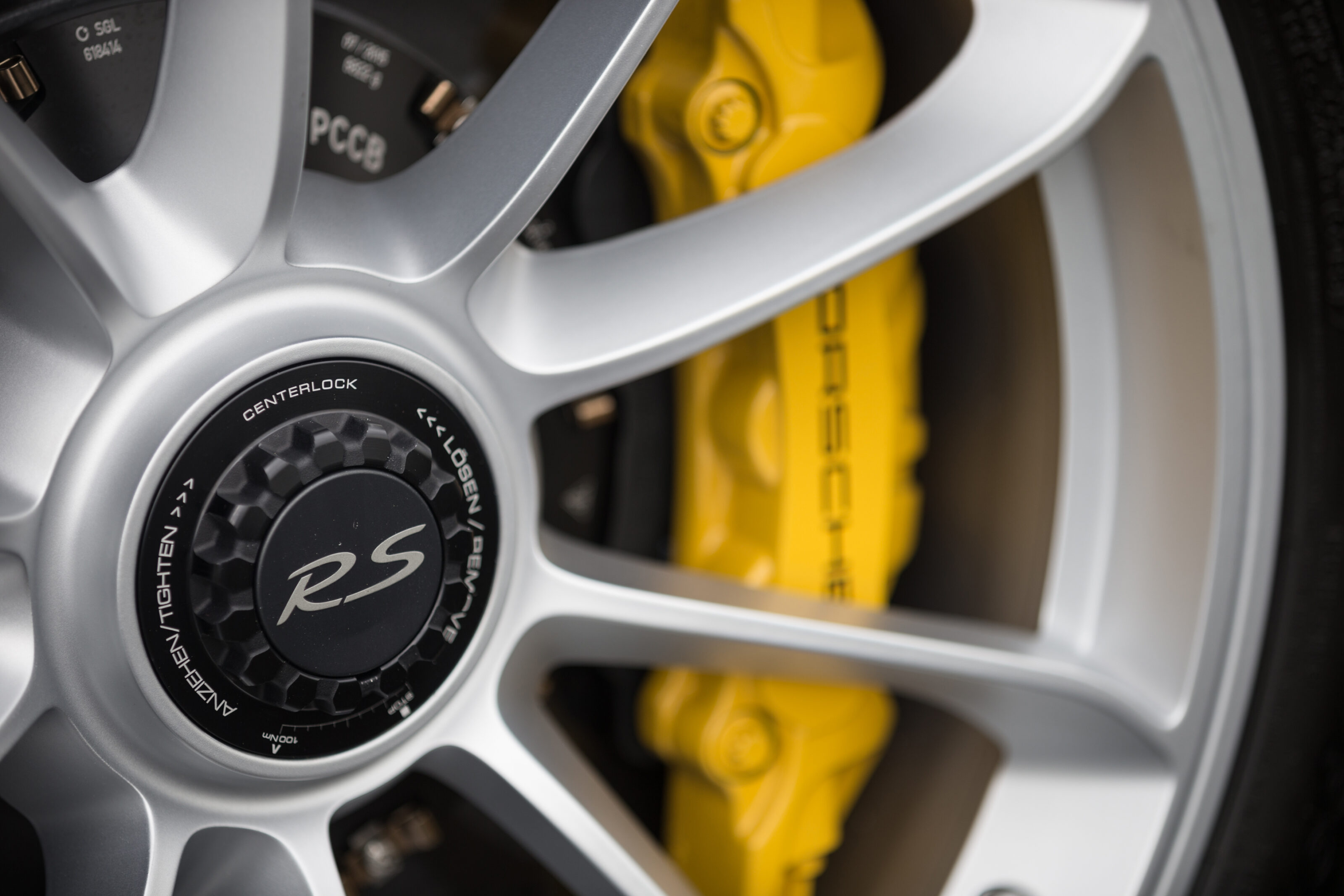
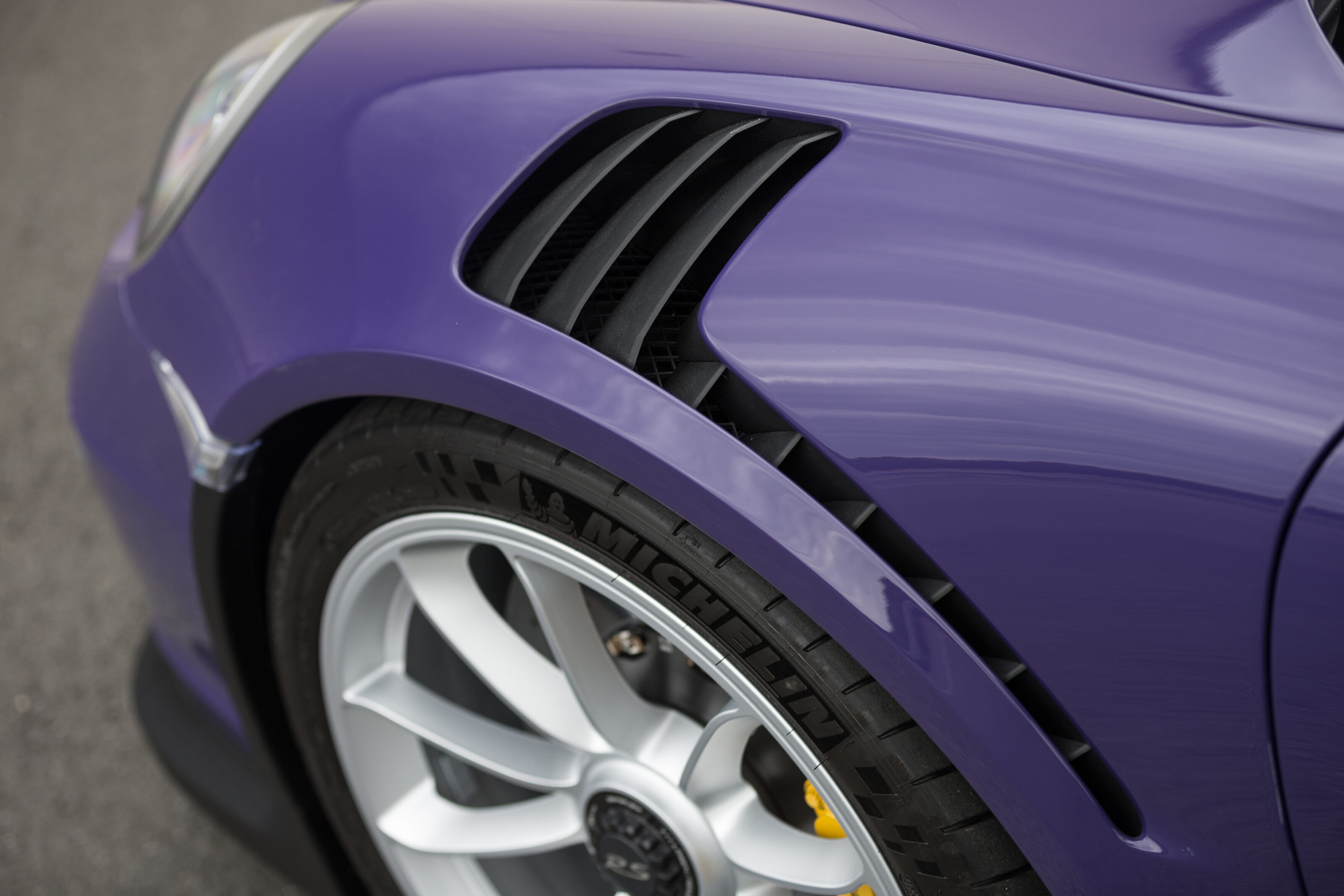
The grippy rubber – both Michelin and Dunlop supply tyres – is just the beginning of the story. To extract more mechanical grip from them, both front and rear axle tracks are increased. The RS has front guards 50mm wider than the GT3, and 911 Turbo guards at the rear make the RS almost 30mm broader in the beam.
The need for new front guards apparently presented an irresistible opportunity for aerodynamic improvement. Adding wheel housing air outlets to the carbonfibre guards increases front axle downforce by around 30 per cent. Also made from carbonfibre, the rear wing is positioned and shaped for strong downforce with minimal drag. The result? High-speed downforce can total 345kg, mainly from the rear, with a reasonable 0.34 coefficient of drag.
So they say. Bilster Berg offers no Le Mans-like opportunity to assess aero effectiveness at the 310km/h top speed of the GT3 RS. But you can sense the results of the weight-shaving program the car was subjected to. Despite the weight increases imposed by the Turbo body panels and larger wheels and tyres, the RS is 10kg lighter than the GT3 thanks to the widespread use of lightweight materials.
The GT3 RS’s 368kW 4.0-litre engine must surely be the world’s greatest naturally aspirated road car six. This effectively new engine isn’t related in any way to the same-capacity and same-power ‘Mezger’ engine used in the 997 Series II 911 GT3 RS, of which 600 were produced between 2011 and 2012. It is a glorious thing.
Amazingly tractable at low revs, it also has a sweet mid-range. But the frenzied intensity available from 5000rpm all the way to its 8800rpm cut-out is special. The surgical precision of its throttle response makes it a perfect partner for an equally precise chassis.
This GT3 RS is the first with Porsche’s double-clutch transmission. For the very simple reason that it delivers better lap times. It’s adept as an auto, especially in ‘PDK Sport’ mode on a track, and manual paddle shifts are practically instant.
Perhaps it shouldn’t be a surprise that the rear-biased visuals of the 911 GT3 RS are reflected in the way it drives. Grip is surer at the rear end, where an electronically controlled diff lock, torque vectoring system and electric steer system all labour to keep things tidy. While understeer can perhaps be found a little earlier and more often than expected, messages from the evenly weighted electric-assist steering are loud and clear.
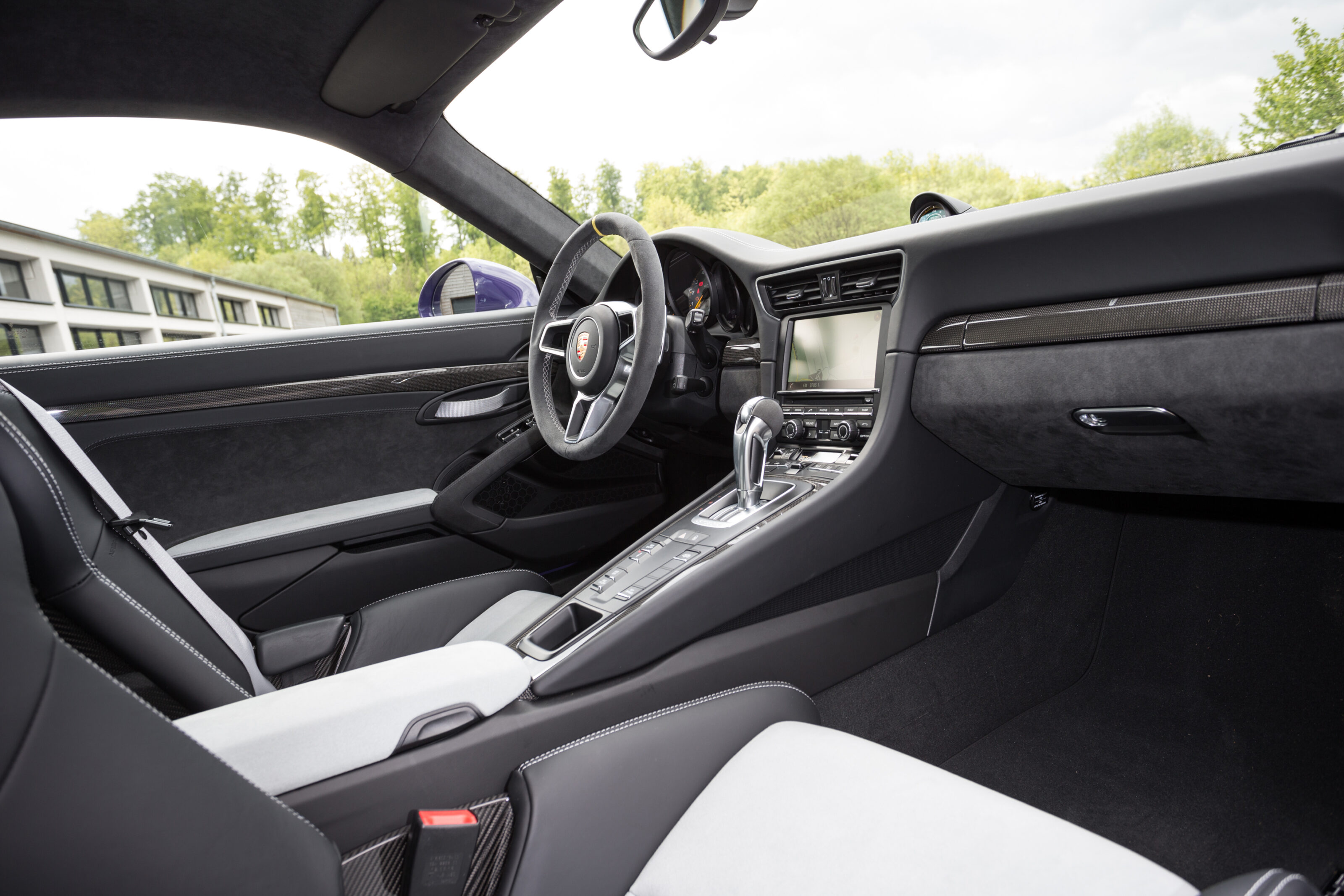
No surprise that a 911 GT3 RS works brilliantly on a circuit, but this latest startles with the way it drives on the road. On German country blacktop outside Bilster Berg, ride comfort is much better than not bad. Noise levels are acceptable if you avoid high revs and the induction system’s drone zones. It truly feels like a car you could live with day after day, savouring its specialness each and every time. In fact, it could probably teach Kim Kardashian a thing or two about how to create a lasting relationship.
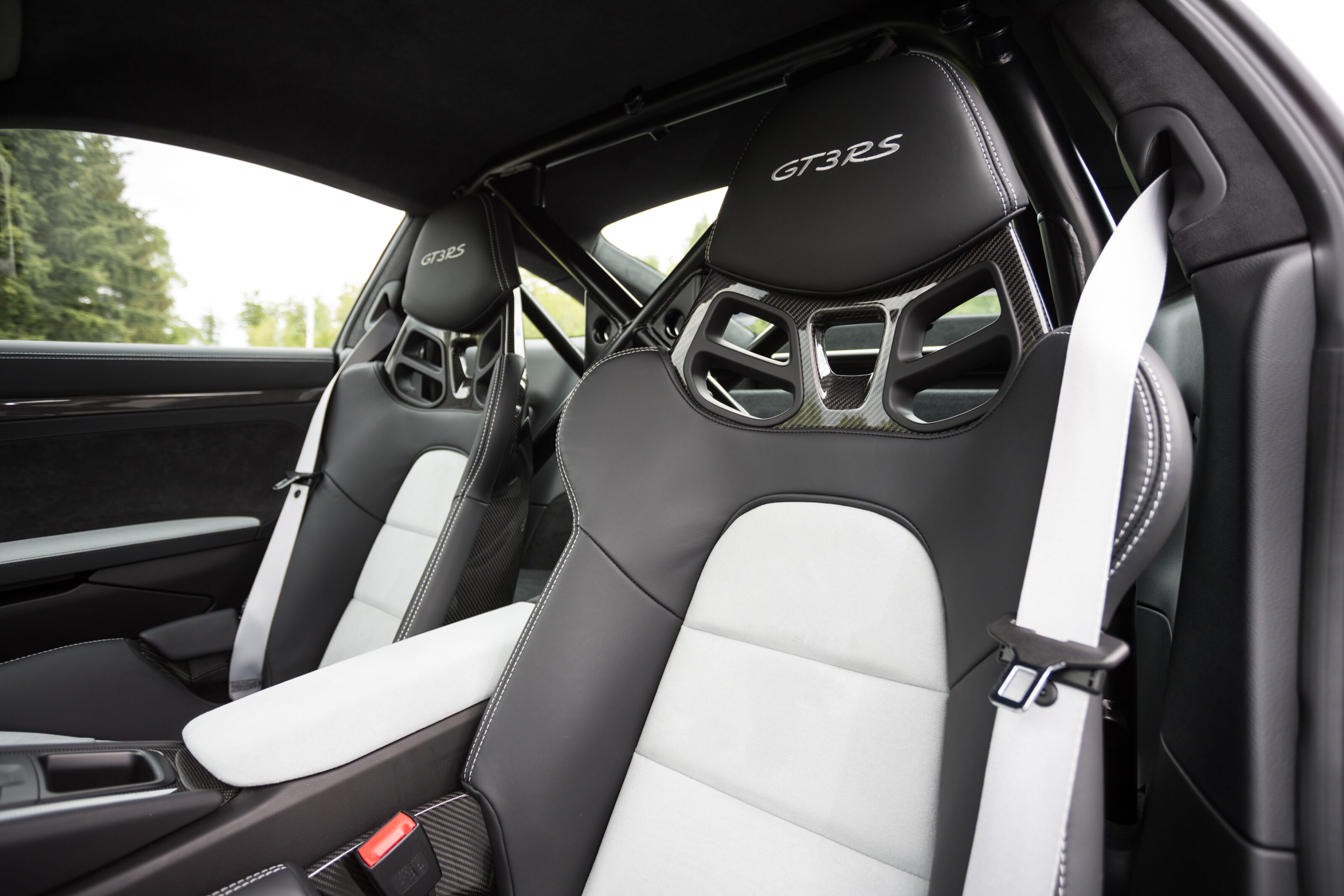
SPECS Model: Porsche 911 GT3 RS Engine: 3996cc horizontally opposed 6-cyl, dohc, 24v Max power: 368kW at 8250rpm Max torque: 460Nm at 6250rpm Transmission: 7-speed double clutch automatic Weight: 1495kg 0-100km/h: 3.3sec (claimed) Economy: 12.7L/100km Price: $387,700 On sale: August
Confirmed for a Frankfurt debut in September, the Renault Megane Mk4 will be one of the most important new models heading to Australia next year
RENAULT has confirmed that an all-new Megane five-door hatch will have its public unveiling at the IAA Frankfurt Motor Show in September, ahead of an Australian launch sometime in the second half of 2016.
Speaking to media at the debut of the emerging-market Renault Kwid compact SUV in India, Renault’s Senior Vice President of Design, Laurens Van Den Acker, revealed timing details about the firm’s vital Volkswagen Golf rival.
“The new Megane will be launched in the Frankfurt motor show. It’s a segment which is hugely competitive because you’re competing against the VW Golf, Peugeot 308 etc,” he said, adding that the design will make a complete departure from the current model’s aching conservatism by being “…a very sexy, very sensual, very attractive, sporty looking vehicle.”
Clearly continuing the bold and high-hipped flowing styling themes set by the smaller Clio and its Captur crossover offshoot, the Mk4 Megane is the fourth all-new vehicle under Van Den Acker’s stewardship, and the third Renault to be based on the fresh CMF1 (Common Module Family) scalable architecture. As a result, overall length, width and wheelbase dimensions increase dramatically.
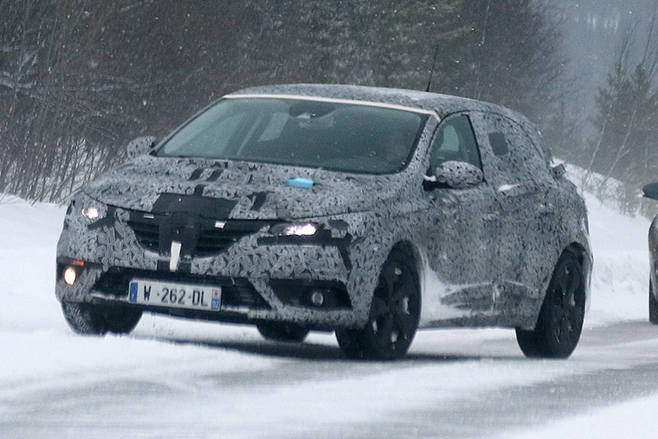
Up to 10 more models will follow using the same CMF1 componentry set, including the next Megane Coupe (siring the replacement for the popular Renaultsport hot-hatch series), Scenic wagon (expected to be wheeled out in the middle of next year, but probably not for Australia), and Koleos, which moves up to D-segment medium SUV status now that the Nissan Qashqai-based Kadjar has surfaced.
The Qashqai connection suggests that some Mk4 Megane models such as the RS could gain a multi-link rear suspension set-up like the VW Golf GTI, VW Golf R and Ford Focus ST, instead of the simpler torsion beam arrangement, though Renault’s desire for the lightest possible solution may yet see the latter triumph to help eke as much fuel efficiency. It would also help as part of a sustained weight-watching exercise that could result in reductions of 100kg or more, as keeping carbon dioxide emissions down is the overarching concern of every Euro manufacturer nowadays thanks to ever tightening emissions legislation.
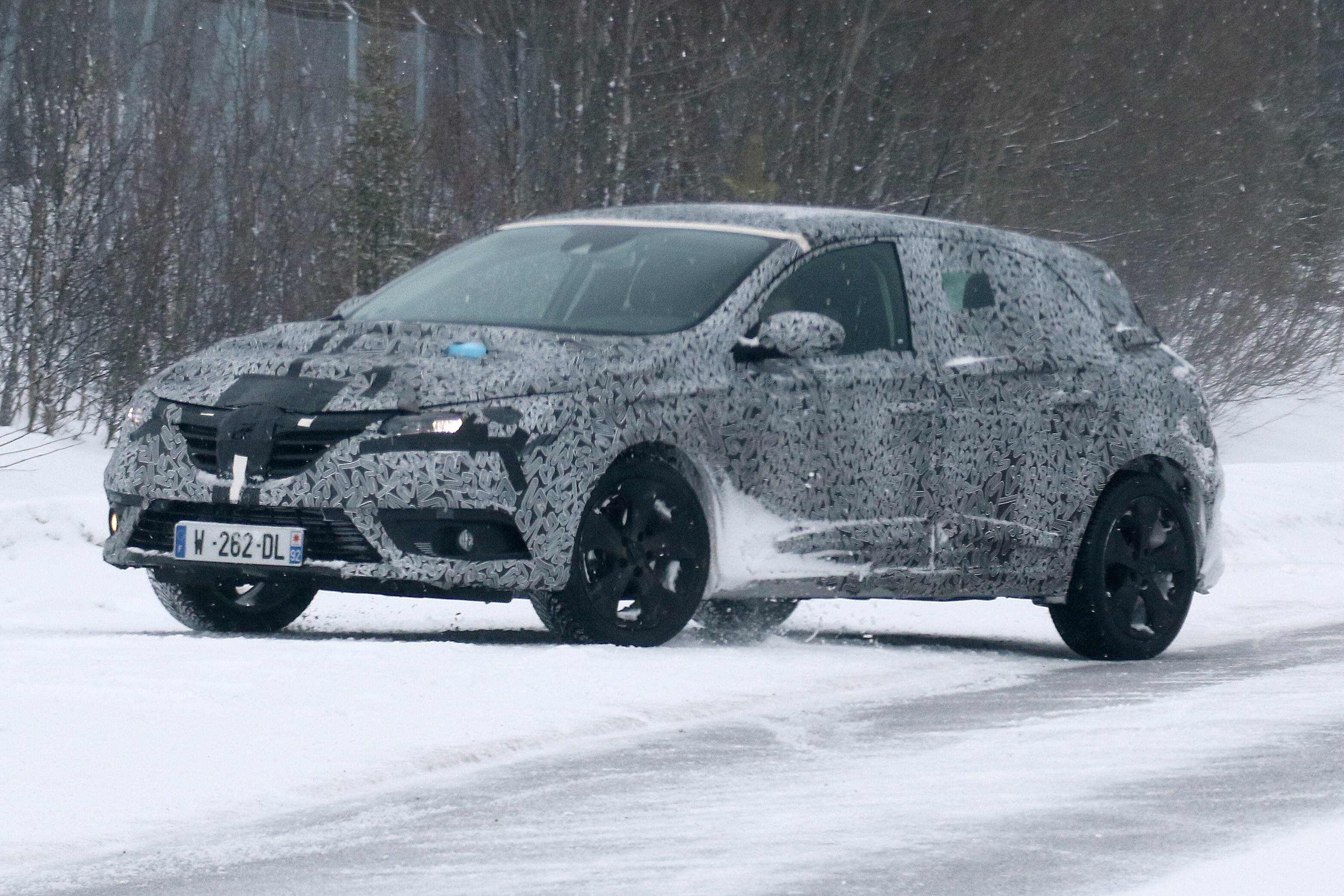
Speaking of pollution, variations of Renault’s lauded turbocharged 0.9-litre three-cylinder and 1.2-litre four-cylinder petrol engines are a certainty in the lower-end Meganes, along with 1.5-litre dCi turbo-diesel units. Whether the RS will join the Clio version in downsizing from 2.0 litres is not yet known.
Renault’s R-Link central touchscreen, along with higher quality materials and the option of multi-personalisation trim, should mark out a larger and more effectively packaged cabin, addressing one of the seven-year old Megane’s biggest drawbacks. Refinement and noise issues will also be addressed.
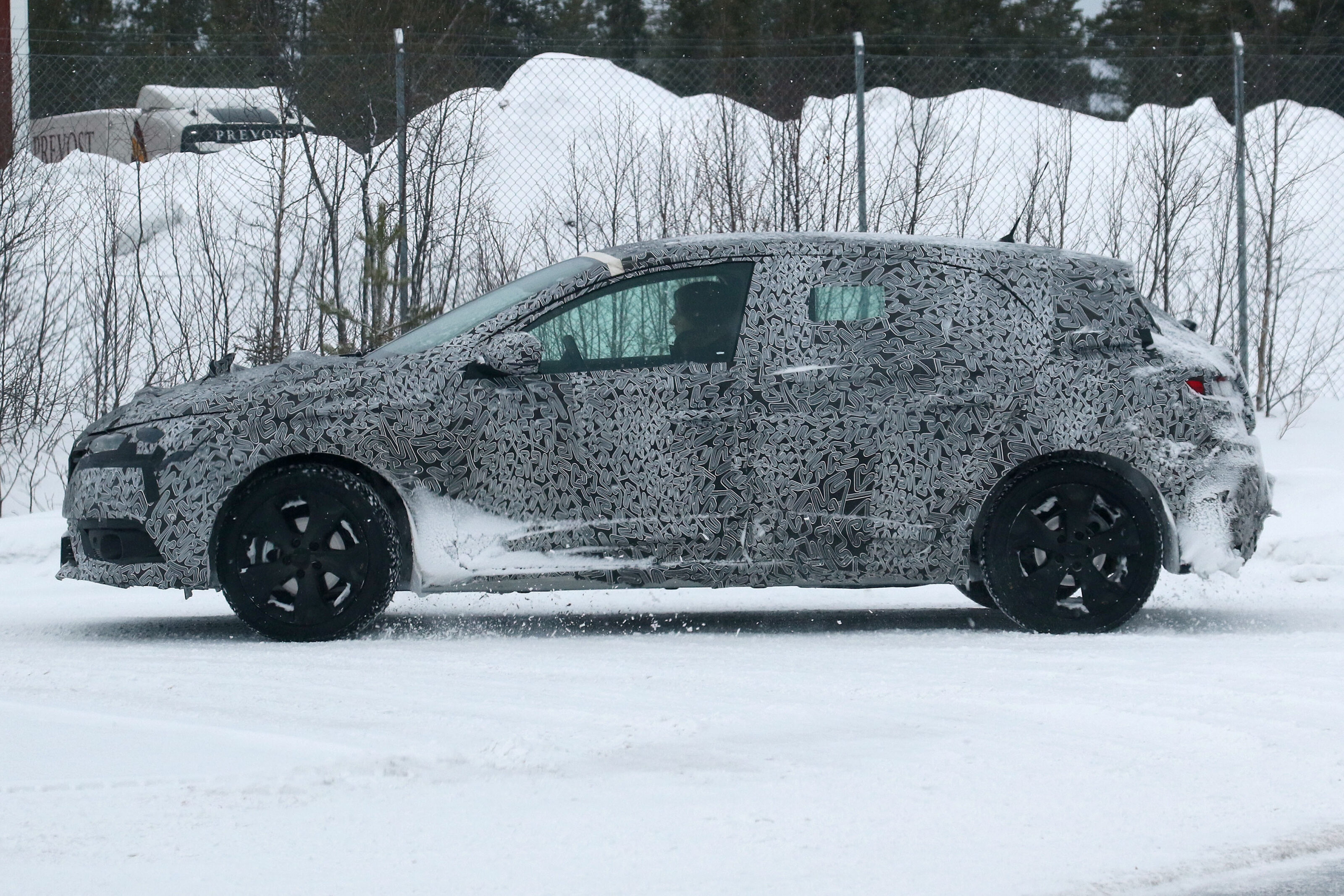
With both the Clio IV and Captur currently outstripping sales expectations internationally, Renault is enjoying a product-led renaissance, and hopes the next Megane will be on similar terms with the high-flying Golf when sales on the Continent commence next January.
Renault realises that a low-$20,000 starting price is essential in breaking the Toyota Corolla/Mazda3/VW Golf nexus in Australia.
“The new Megane is vitally important for us,” according to company spokesperson Emily Fadeyev.
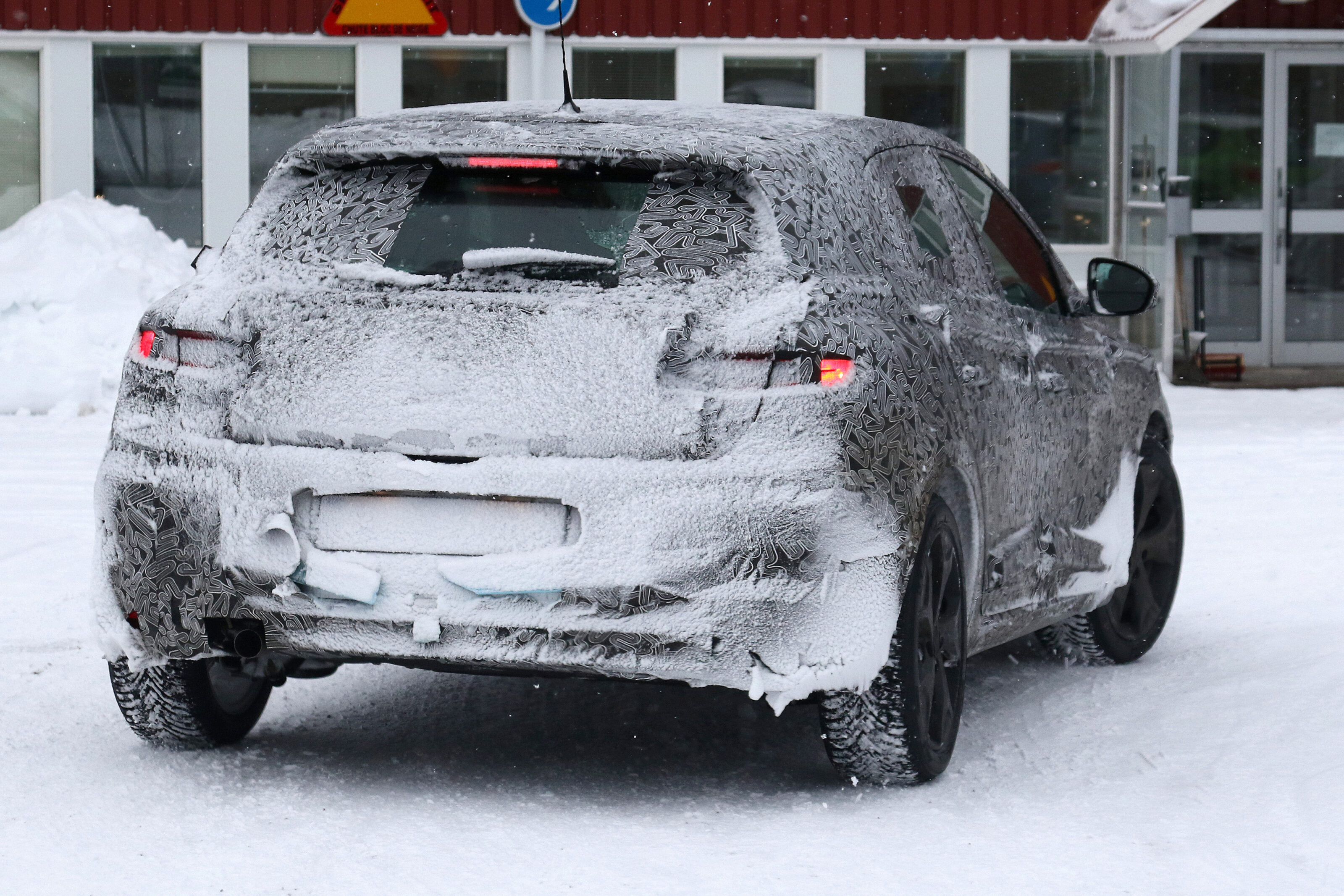
Have spy pics of your own? We’d love to see them. Email them to [email protected]
What car would you need to silence the ultimate two-wheeled foe if a Bugatti Veyron isn’t fast enough? Nissan’s R35 GT-R in a heavily modified tune, apparently.
As part of Super Street magazine’s hyperbike versus supercars feature, Kawasaki’s recently released H2R was given the chance to prove its speed over a 600m roll-on drag race against a fast car (McLaren 12C), really fast car (889kW Bugatti Veyron), and the fastest car there (1006kW Nissan GT-R) in California.
Thoroughly built for speed, the odds were skewed in the bike’s favour. And the H2R’s frightening power to weight ratio of 1048kW-per-tonne saw it obliterate the McLaren before proceeding to spank the Bugatti.
When it came to the Nissan GT-R modified by SP Engineering, though, the Kawasaki had met its match.
Stuffed with a colossal 1006kW, the parachute-endowed Nissan had to bow out from its first two runs thanks to “clutch pressure issues” according to Super Street. However on its third run, it was given the chance to prove its potential against the world’s fastest production bike and why the GT-R is better known as Godzilla…
Get your free weekly report from the world of fast cars – subscribe to the MOTOR newsletter!
It may hint at design throwbacks, but the BMW 3.0 CSL Hommage Concept previews future M division technology under its bright retro clothes.
There are lovely details referencing the 3.0 CSL homologation special of May 1972 in this fresh concept unveiled on the sunny shores of Lake Como, Italy, at the annual Concorso d’Eleganza Villa d’Este.
As notable nods to the original, spot the very upright twin-kidney grille and the aero louvres above the wheelarches leading onto the black sticker underscoring the window line. Of course a big ‘batmobile’ spoiler has to feature, as does the blue-and-white roundel badge on the C-pillar.
It’s the cabin’s sweeping, wrap-around arch of woodgrain that is the coolest and closest appropriation of that in the 1970s racer. The Matrix LED headlights that can illuminate an ‘X’ on the beam to mimic the tape racers used over their forward lights run a close, cool second.
BMW has said racejacket-wearing M division types won’t collaborate with its green-cloaked ‘i’ division, yet the 3.0 CSL Hommage Concept seems to blend the best of both – though this is no production car preview.
The 3.0 CSL debuted then-exotic materials such as an aluminium boot, bonnet and doors, and even perspex windows to help put the ‘L’ in Coupe Sport Lightweight.
Its 1276kg kerb weight fell 200kg over regular models, and at its peak it developed 151kW and 286Nm – good enough for a 7.3 second 0-60mph (0-97km/h) sprint.
For this Hommage, BMW pinches the carbonfibre-reinforced plastic (CFRP) from the i3 and i8, there are Aero Curtain and Air Breather aero vents in the bodywork to flow around the 21-inch wheels and cool the brakes, and the six-cylinder engine scores an ‘eBooster’ function.
While the Bavarians won’t say what size engine is under the carbonfibre bonnet, a high-revving 3.0-litre with the instant torque boost of an electric motor seems like a strong mix to us.
And although the 3.0 CSL Hommage Concept is just a tribute, the brand admits it is toying with next-generation M-car tech here – so prepare for a carbonfibre-clad and e-boosted future.
Get your free weekly report from the world of fast cars – subscribe to the MOTOR newsletter!
F1: Merc mistake hands Monaco to Rosberg
Lewis Hamilton had the 2015 Monaco Grand Prix on ice … until lap 64, when rookie Max Verstappen crashed heavily whilst trying a rash overtake on Romain Grosjean.
The shunt brought out the first virtual safety car whereupon Mercedes called Hamilton to the pits for super-soft tyres, allowing second-placed Nico Rosberg and third-placed Sebastian Vettel to move ahead.
Rosberg and Vettel didn’t follow and at the subsequent restart, Hamilton could not better his position. “We’ve lost this, haven’t we?” said Hamilton over team radio, as he realised he’d rejoined behind his two closest title rivals.
It was Rosberg’s second win of the season and he made history at this circuit, becoming only the fourth driver to win three consecutive races in Monaco, following the illustrious trio of Graham Hill, Alain Prost and Ayrton Senna.
It was a victory of pleasure and pain for Mercedes, the team owning up to an appalling mistake in pitting Hamilton under the safety car, ultimately costing him the win.
Hamilton took off from pole and left the rest, led by championship rival Nico Rosberg, in his wake, opening a 21 second gap at the time of the safety car intervention.
“I can’t express the way I feel at the moment,” said a clearly shattered Hamilton. “I saw the team out in the pit-lane on one of the screens and thought Nico was pitting. I came in with full confidence that the others had done the same. This is a race that’s been close to my heart for years and it’s special to me, so I really wanted to win.”
Hamilton is a polarising figure in F1. Not everyone likes his crazy coif, flashy diamond earrings, body graffiti, and his hip-hop swagger. But the manner in which he took the adversity at Monaco and refused to blame his team shows a commendable depth of character. “The team have been brilliant all year, so I don’t blame them,” he said. “I always say to my team and my fans, we win and we lose together. You live to fight another day.”
Rosberg also understood he was fortunate. “That was my luckiest experience in racing so far. What a crazy race. I was surprised when I saw no one else behind the safety car other than me. I didn’t know what was happening in that moment. But I concentrated on getting temperature into the tyres as they felt like ice. Until the safety car Lewis has done a perfect job; he was better than me over the weekend, so he definitely deserved the win. I know how horrible he must feel now.
Toto Wolff, the head of Mercedes-Benz Motorsport, delivered a very public mea culpa. “I don’t think there has ever been a more bittersweet feeling than this one. We have won the Monaco Grand Prix and we have lost the Monaco Grand Prix all at the same time. First of all, we must apologise to Lewis. We win and we lose together and what I am proud of in this team is that we take collective responsibility. But this is a day when we simply have to say sorry to our driver, because our mistake cost him the victory here.”
What happened? “In simple terms, we got our numbers wrong,” conceded Wolff. “We thought we had the gap for Lewis to take fresh tyres and come back out in the lead behind the Safety Car, ahead of Nico and covering off any risk of another competitor taking fresh tyres. But the calculation was incorrect and he came out in third place. It was our decision to call him in and our mistake, pure and simple. Lewis had driven flawlessly until then and really delivered a perfect weekend, with a stunning pole lap and a masterful race. There’s nothing more to say other than to highlight the grace with which he handled the situation; he was a leader and a true sportsman this afternoon.”
Until lap 64, the 2015 Monaco Grand Prix was a race of stunning boredom, despite the unrealistically positive commentary.
It took the Mercedes team stuff-up to ignite our interest.
The restart and burst to the flag was notable for Vettel’s fine defensive job of keeping Hamilton behind, and a great charge from Daniel Ricciardo’s in the Red Bull. Ricciardo dropped back at the start and didn’t look that speedy until the end when he aggressively shouldered past an unhappy Kimi Raikkonen
Red Bull then asked Daniil Kvyat to allow the faster Ricciardo through to take a shot at Hamilton. When he closed on but failed to pass the world champion, Ricciardo slowed to let his teammate retake fourth.
“I had some fun in the last few laps trying to get close to Hamilton and Vettel to fight for a podium position,” reported Ricciardo.” I knew we were in a position to attack in the end which made it exciting I think. The team worked well, Dany let me past to have a crack at the podium and I gave back the place on the last lap when I couldn’t get past Hamilton. I had a little incident with Kimi and it’s hard to get a clean move without a little contact in Monaco.”
Qualifying was again owned by the Mercedes pair, with Hamilton (his new contract worth $600,000 per week) edging Rosberg for pole.
Ricciardo was disadvantaged by a miscommunication with his team in the moments before he took his final qualifying shot, starting with his engine in a less than optimal mode. Realising he was down on power, he changed to the correct mode but his lap time had already suffered.
The F1 circus now moves to Canada (June 8) with Hamilton 10 points up on Rosberg, with Vettel a further 18 points behind.
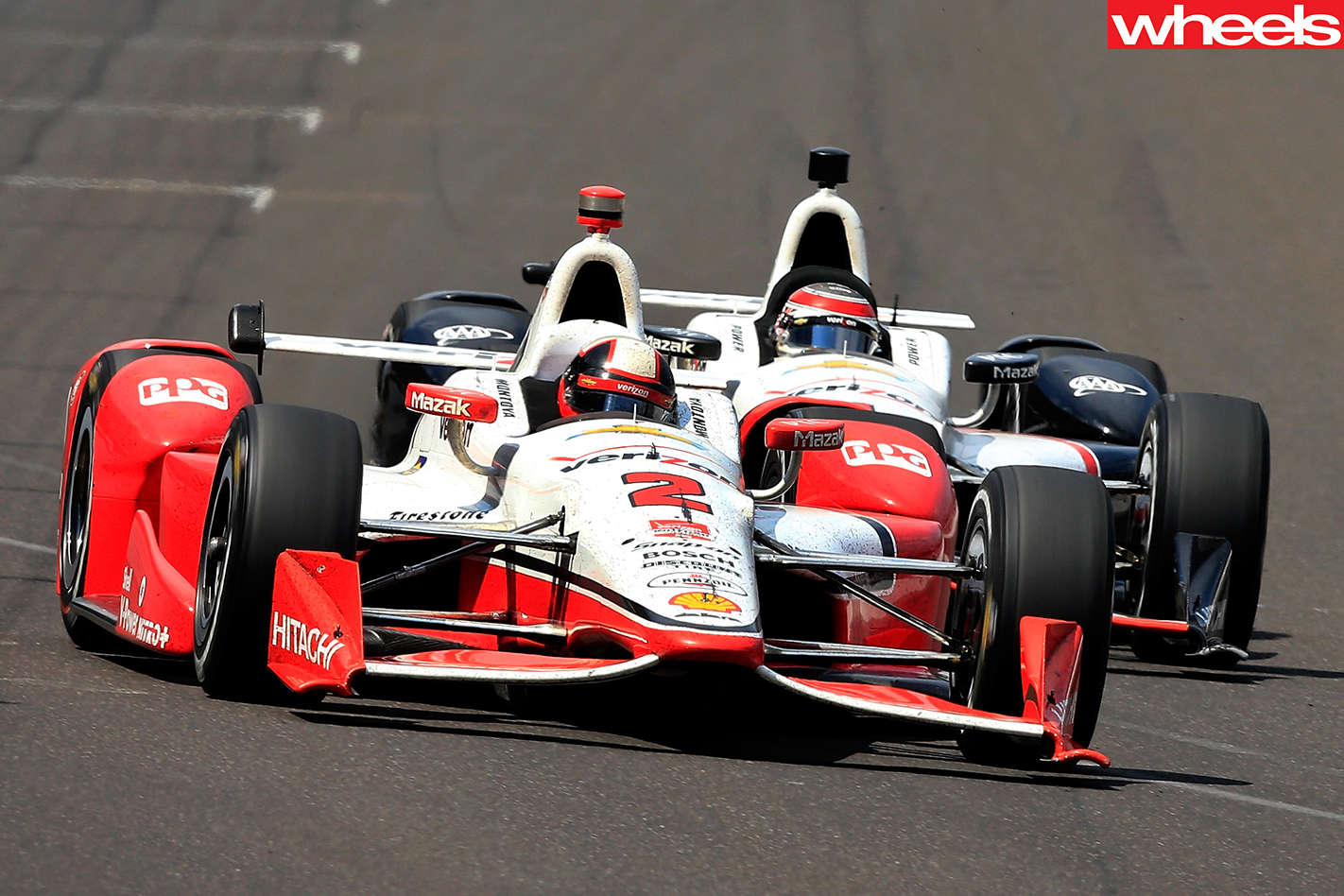
Indianapolis 500: Montoya pips Power in a nail biter
Fifteen years after his first Indianapolis 500 victory, Juan Pablo Montoya repeated the triumph in the 99th running of the classic, edging his Penske teammate Will Power in a gloves-off thriller.
There was more overtaking in the closing laps than in a season of Formula One.
Montoya fought back brilliantly after an early setback which sent him to pit lane for a new rear wing, dropping him as low as 30th.
With 30 laps remaining, a debris caution sent most of the field scurrying in for their final stop. Power led everyone off pit row after some radical wing changes intended to give him a little more straightline speed.
It came down to a tense 15- lap sprint with Power, Montoya, and Ganassi’s Scott Dixon trading places up front, with Charlie Kimball then joining the lead trio.
With three laps to the chequered flag, Montoya got back to the lead and made it stick, leading Power to the line with Ganassi’s Kimball grabbing third from Dixon.
But Montoya had a slender edge on Power when it counted.
“That was some serious racing there,” said Toowoomba’s Power, disappointed to be pipped for the win but accepting the consolation of a swag of championship points. “It sucks finishing second.”
The Greatest Spectacle in Racing quickly unfolded into a fight between the two giant teams, Ganassi – with Dixon and Tony Kanaan going for it – and Penske – Simon Pagenaud, Power, Helio Castroneves and the tenacious, rebounding Montoya.
Pole winner Dixon, Pagenaud and Kanaan looked to have the early pace over the rest.
After leading 30 laps, Kanaan crashed out all by himself on lap 153. Then Pagenaud mangled his front wing and lost car balance.
There were the usual huge shunts.
A turn-one crash on the opening lap, caused when Takuma Sato tried a silly three wide pass, eliminated young gun Sage Karam’s machine. The incident also very nearly took out Aussie Ryan Briscoe, who was clipped and spun. Then during the yellow caution, Simona de Silvestro hit Montoya’s car, forcing the Colombian to pit for repairs.
Sydney’s Briscoe turned a late call up from Schmidt Peterson Motorsports into a good result, coming from grid 32 to 12th.
He got the drive a few days ago after James Hinchcliffe was seriously hurt in a massive practice crash.
It was Briscoe’s first experience of an IndyCar with the aero kits introduced to the IndyCar Series this season, and he went into the race with just a one-hour familiarisation session in the No. 5 Honda. Briscoe did not have an IndyCar ride this year and has been driving in IMSA Sports Car racing.
Melbourne’s James Davison made good progress from his rearward start until a bungled pit release which brought him into heavy contact with another car, an incident in which a crewman was also injured.
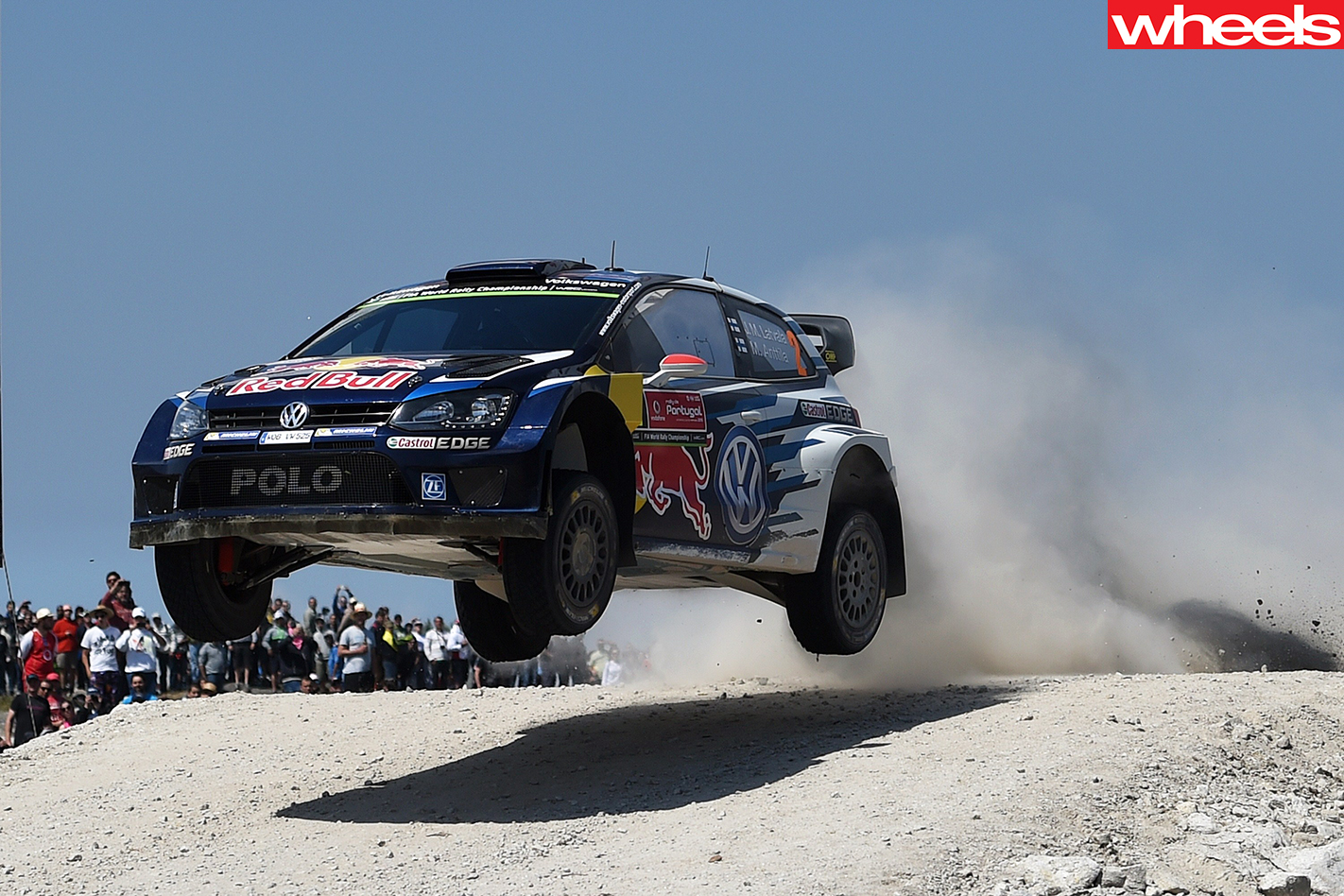
WRC: Volkswagen trio in fight to the flag in Portugal
It went right to the wire, but Rally Portugal – the fifth WRC event of the season – went to Jari-Matti Latvala after a massive fight in tough conditions.
It was the hot-and-cold driver’s first win of 2015, the Finn taking the event by 8.2secs from Volkswagen team-mate Sébastien Ogier while Andreas Mikkelsen made it a total VW domination, claiming third, 16.4secs further back.
For the first time since 2001, Rally Portugal was located in the country’s north where all four manufacturers – Volkswagen, Citroën, Hyundai and M-Sport-Ford – fought for the lead. A four-way battle for the podium kept masses of enthusiastic fans on tenterhooks right to the final stage.
After three pointless events, this win sees Latvala climb to fifth in the standings, with VW team mates Ogier and Mikkelsen occupying the top two places and Citroen’s Mads Ostberg in third. June 11th is the next date on the calendar when the championship kicks up the dust at Rally Italy in Sardinia.
