
“That idea [of a six-cylinder PHEV] is something that makes me excited”
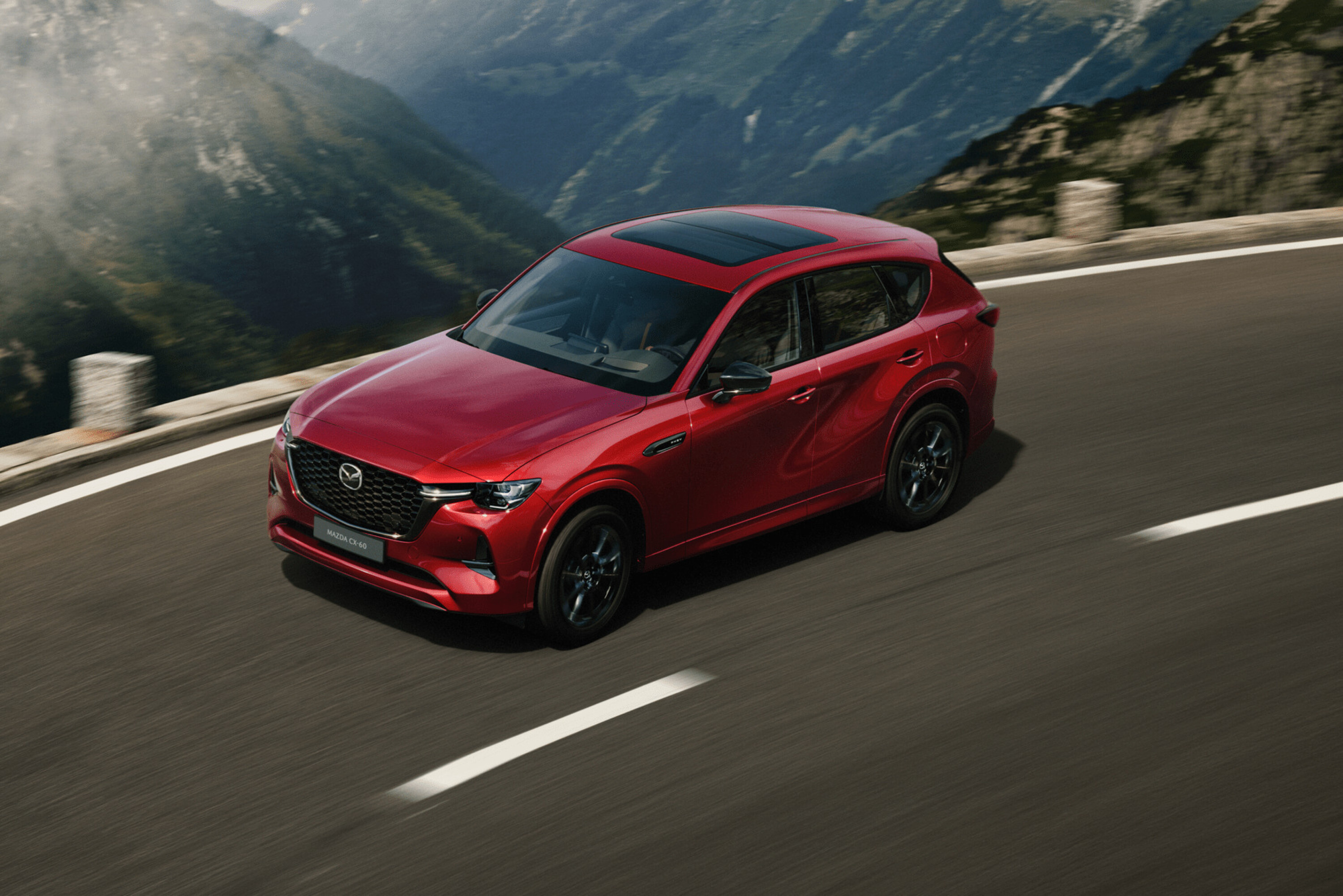
It might not be immediately apparent, but Mazda’s new CX-60 has the innards of an athlete.
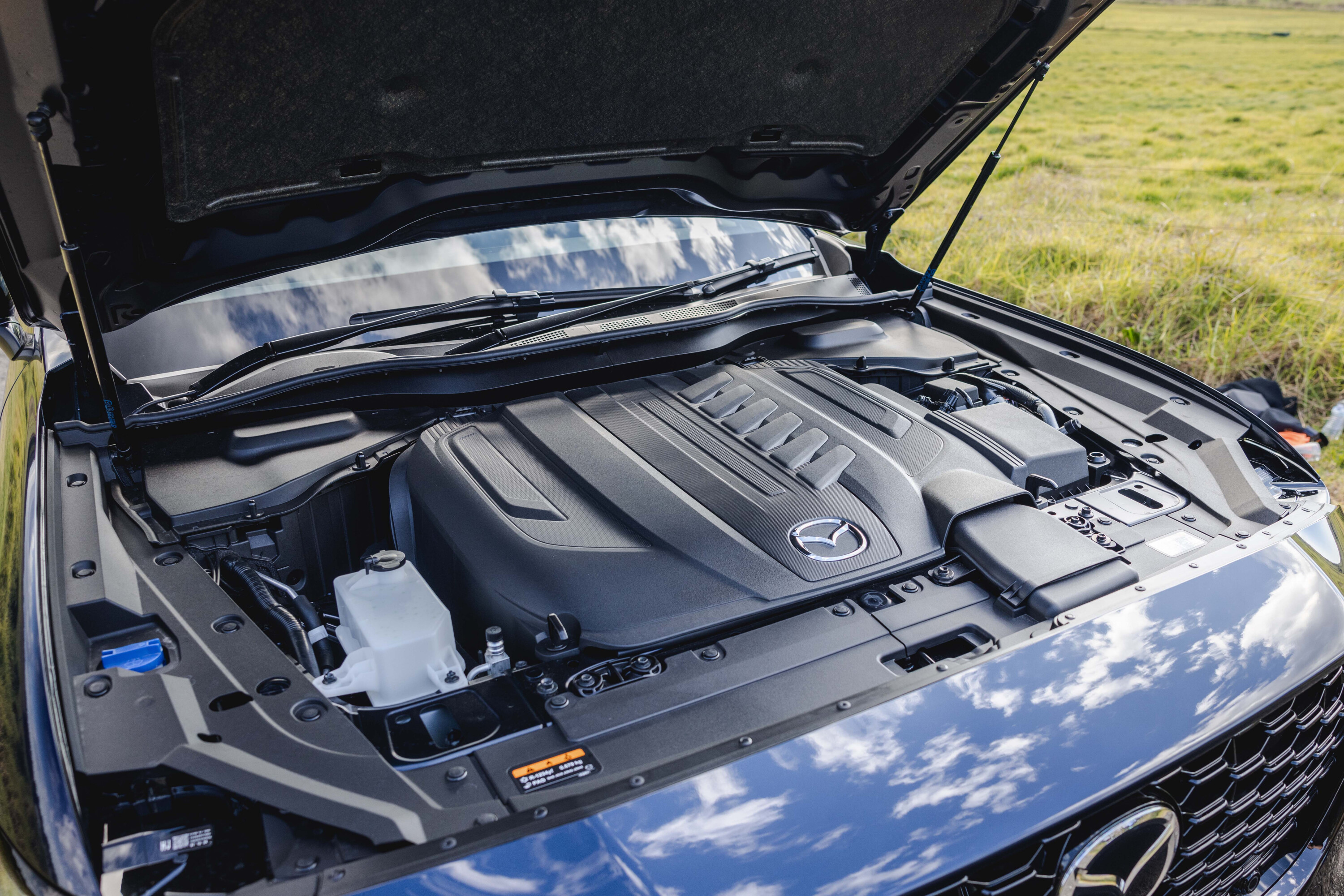
Underpinning it is a longitudinally-engined platform (Mazda’s first in yonks), while a double A-arm front suspension, rear-biased AWD system, and turbo inline six are other very sporty-sounding credentials on the CX-60’s resume.
You know what else has those ingredients? Nissan’s long retired R34 Skyline GT-R.
It might be pitched as a slightly upmarket family SUV, but the CX-60 is a gym rat wearing Tom Ford. Our first drive on local roads backs that sentiment up. It’s got a few wrinkles in its around-town manners, but the harder you drive it, the better the CX-60 becomes.
But while its 3.3 litre ‘G40e’ turbo petrol six serves up 209kW and 450Nm, it’s the naturally-aspirated 2.5-litre inline four and electric motor combo of the ‘P50e’ PHEV powertrain that has the strongest punch, with a combined 241kW and 500Nm max output.
Considering the electric bits contribute 100kW and 239Nm, why didn’t Mazda simply graft that to the six-cylinder petrol as well to make a true performance hero worthy of Mazda’s long-dormant MPS label?
“The plug-in hybrid we prepared is a system that we want to sell to as many customers as possible,” explained Kohei Shibata to Wheels. As the program manager for the CX-60, Shibata has a deep knowledge of what’s capable with the CX-60’s hardware.
“That system, combined with a four-cylinder 2.5 litre, is the best match.”
1
But we’re not alone in feeling the CX-60 has the right ingredients for a solid performance SUV: Shibata says Mazda’s own engineers are on the same wavelength.
The problem isn’t engineering, however. It’s marketing.
“We engineers also thought about combining that system with the six-cylinder engine, but of course that would increase the cost.”
“That idea [of a six-cylinder PHEV] is something that makes me excited,” Shibata continued, “but combining that PHEV system with the four cylinder is the best solution. Specification-wise, it [a high-performance CX-60] would have to be a very high specification. If we want to, we can make it – but it’s not something many customers can purchase in terms of the price.”
1
The idea of a CX-60 with a 300kW-plus output sounds like it’d make shoppers think twice about dropping $126K on a BMW X3 M40i
But is that correct? Assuming Mazda’s 3.3-litre turbo petrol six can achieve similar power and torque gains though PHEV-ification as its 2.5-litre brother, the idea of a CX-60 with a 300kW-plus output sounds like it’d make shoppers think twice about dropping $126K on a BMW X3 M40i, which generates 285kW/500Nm from its 3.0-litre inline six-pot.
Furthermore, if Mazda elects to use the gruntier 254kW/500Nm ‘G50e’ petrol inline six from the CX-90 in its notional CX-60 MPS before slapping the PHEV bits into it, it’d create a machine capable of hanging with the 375kW/650Nm BMW X3 M Competition – a car that retails for $178k.
1
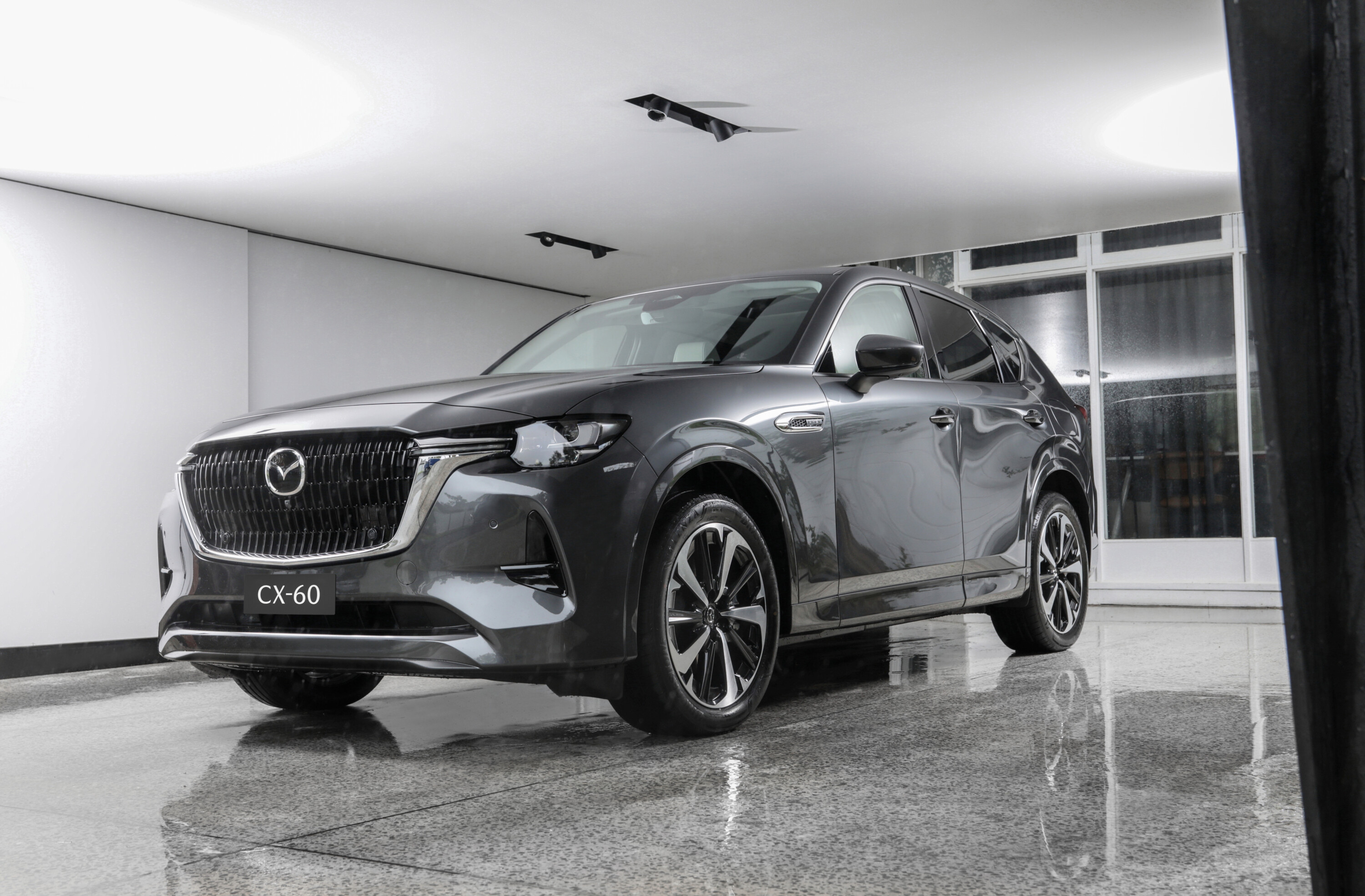
For reference, the new CX-60 range currently tops out at $85,500 for an Azami-spec P50e PHEV.
Shibata wouldn’t be drawn on how much more expensive a PHEV implementation of the six-cylinder engine would be, but even if it crept into six-figure territory it would still present good value against Euro rivals.
Considering both the M40i and X3 M account for almost a tenth of total X3 sales in this country, and Audi and Mercedes-Benz also see considerable patronage of their performance SUVs, there appears to be a respectable appetite for vehicles of that nature.
With Mazda now taking its first steps onto their turf with the regular CX-60 range, it only makes sense for it to serve up a genuinely sporty option as well – damn the cost.
MORE
Everything Mazda
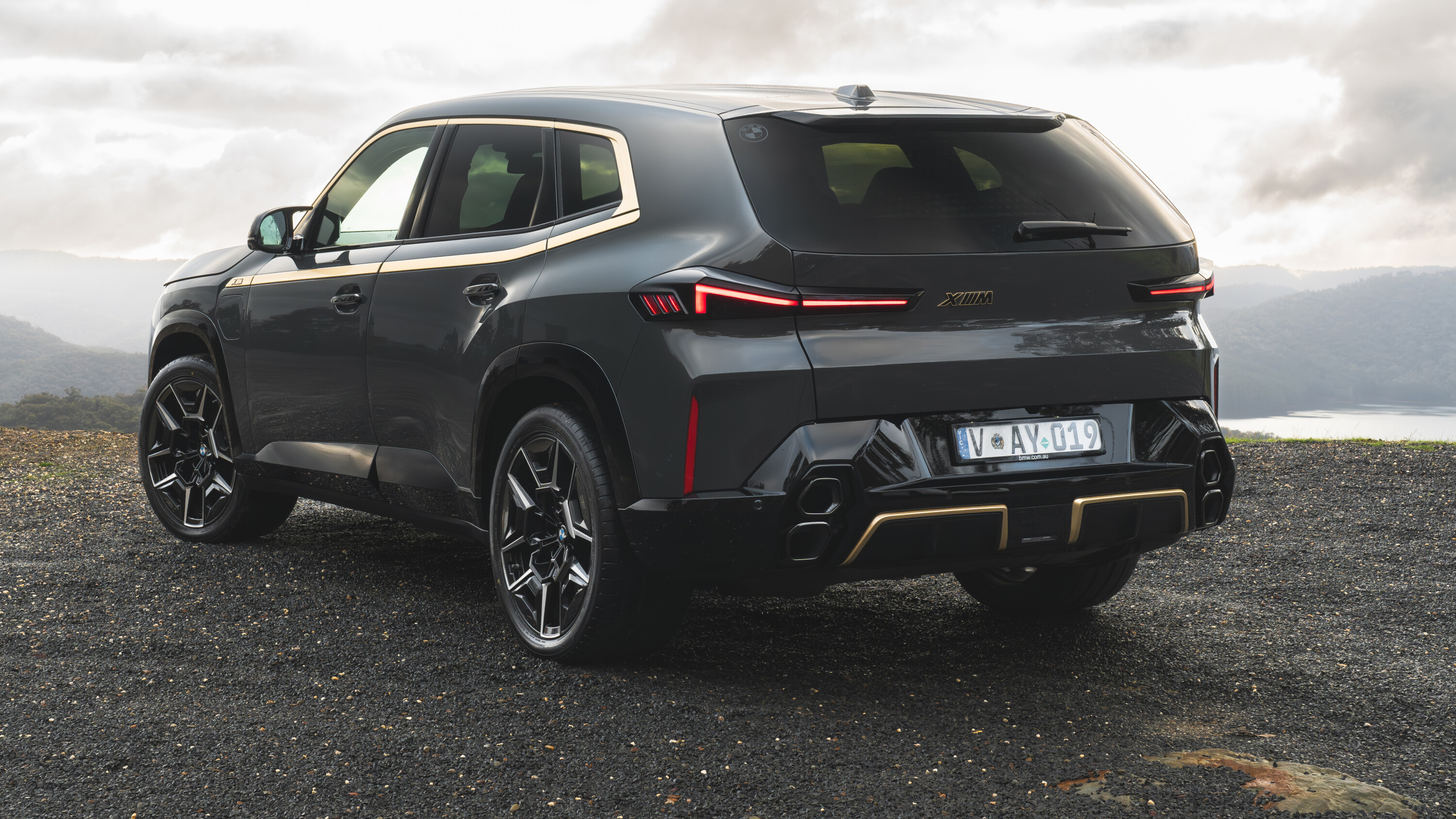
Should we be surprised that the long-awaited successor to the elegant and iconic BMW M1 supercar of the 1970s is a gigantic and obscenely powerful SUV? Not really.
Love them or hate them, SUVs are what people are buying in 2023, so who can blame BMW for wanting a bigger slice of the ‘super SUV’ pie?
It’s clearly a lucrative segment and one bursting with other eye-catching rivals like the Lamborghini Urus, Aston Martin DBX, Porsche Cayenne, Mercedes-Benz G-Class and the Bentley Bentayga.
No, what’s surprising about the BMW XM is that it’s not terribly convincing…
1
BMW M is on a roll at the moment. The new M2 is brilliant, the M5 CS is a future classic, and the M3 and M5 Tourings are quickly shouldering Audi out of the way to become the best all-weather, everyday performance cars on sale.
But the XM? It’s a rare swing and a miss from BMW’s lauded motorsport division which, given it’s only the second ever dedicated M model, is a real shock.
So where does it fall short? And are those weaknesses enough to stop us recommending the XM over its hoard of high-performance rivals? Read on…
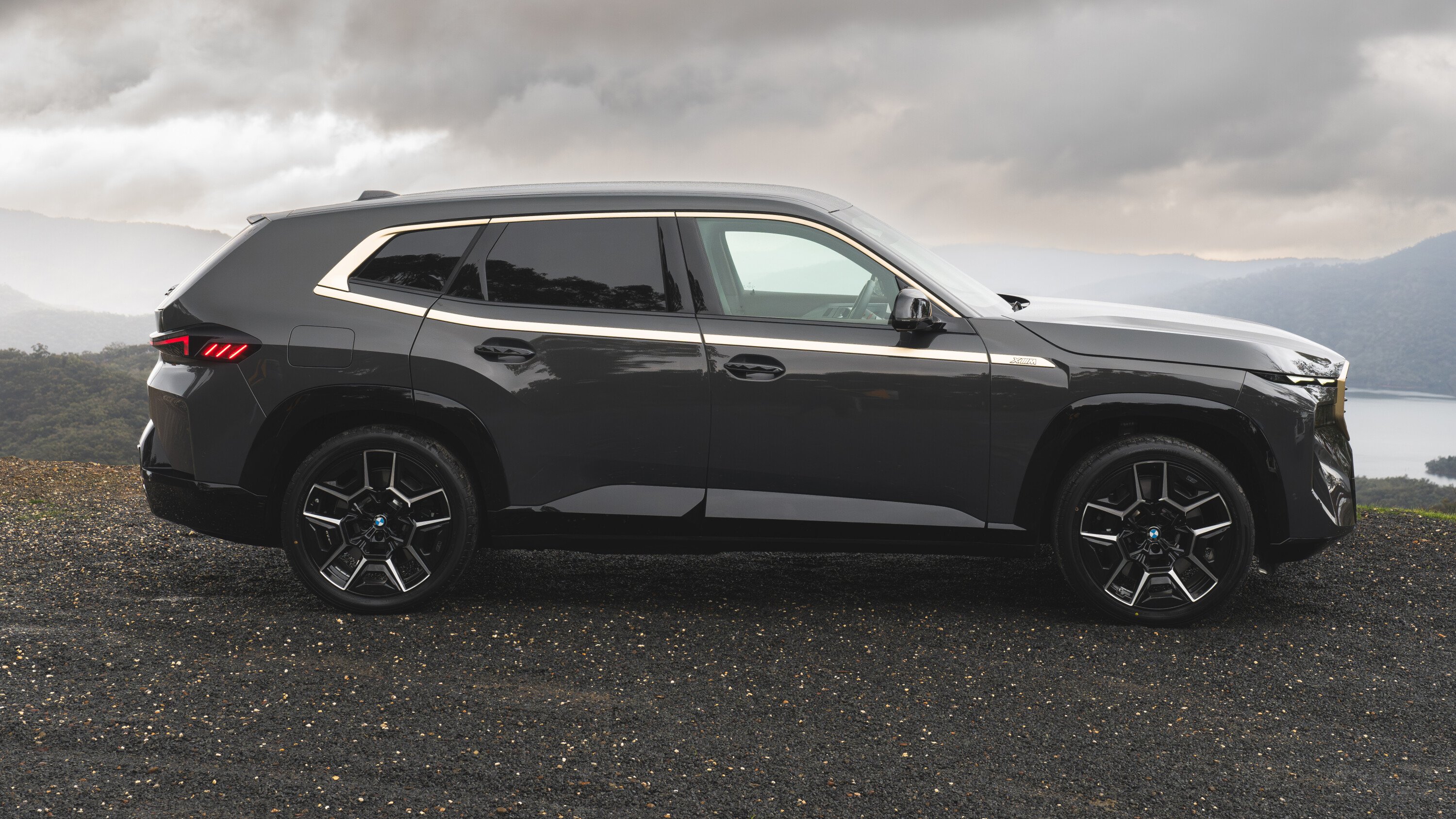
1
JUMP AHEAD
- How much is it and what do you get?
- How do rivals compare on value?
- What’s it like to drive?
- Interior comfort, space and storage
- How much fuel does the BMW XM use?
- How safe is the BMW XM?
- VERDICT
- Specifications
How much is it and what do you get?
The 2023 BMW XM is the most expensive BMW you can buy. It costs $302,200 before on-roads, making it $74,300 and $68,300 more expensive than BMW’s existing super SUVs, the X5M and X6M Competitions.
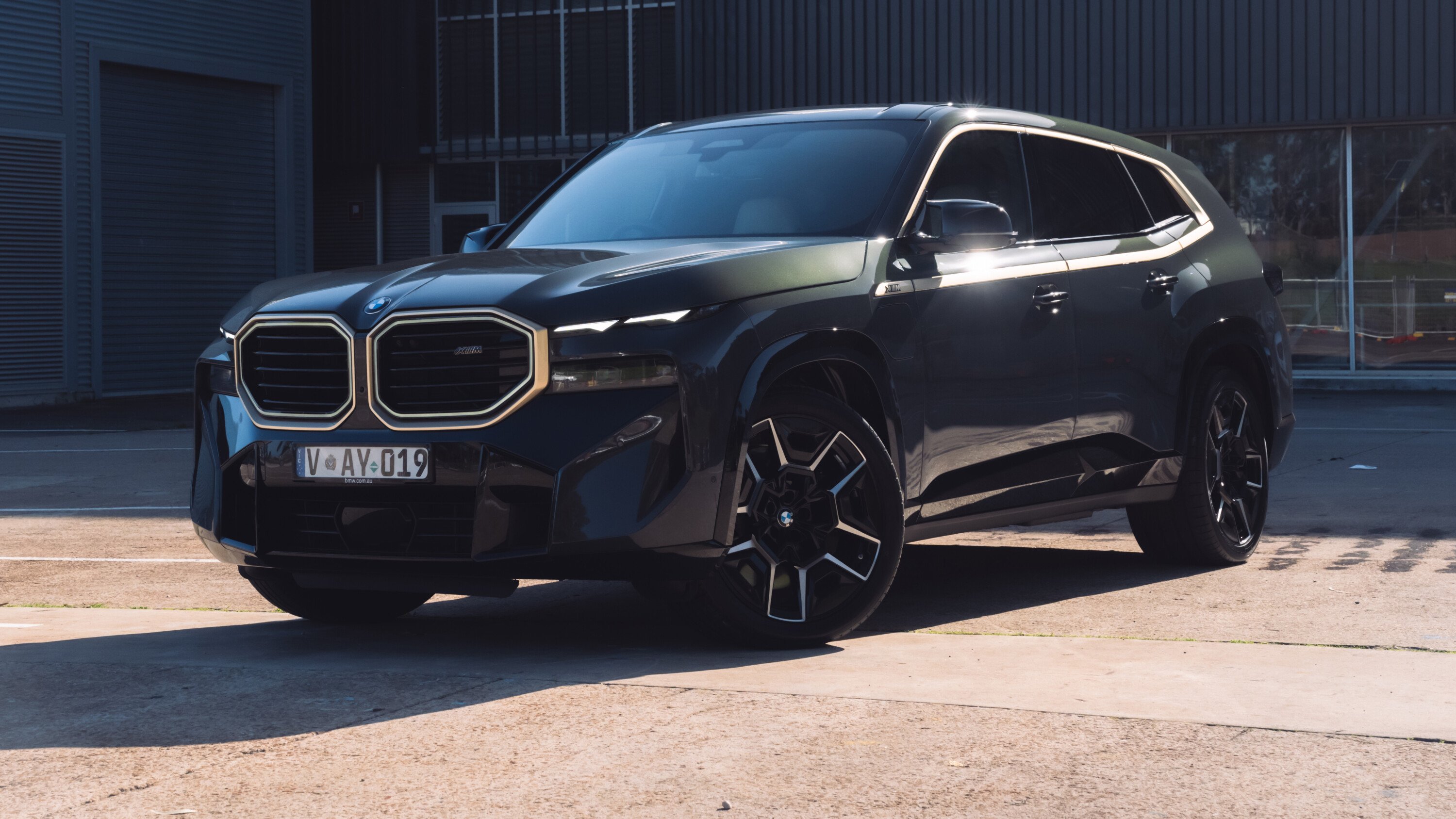
The good news is that the XM’s price is all inclusive. Want to upgrade the standard, and already enormous, 22-inch alloys to gold-accented 23s? No problem, sir.
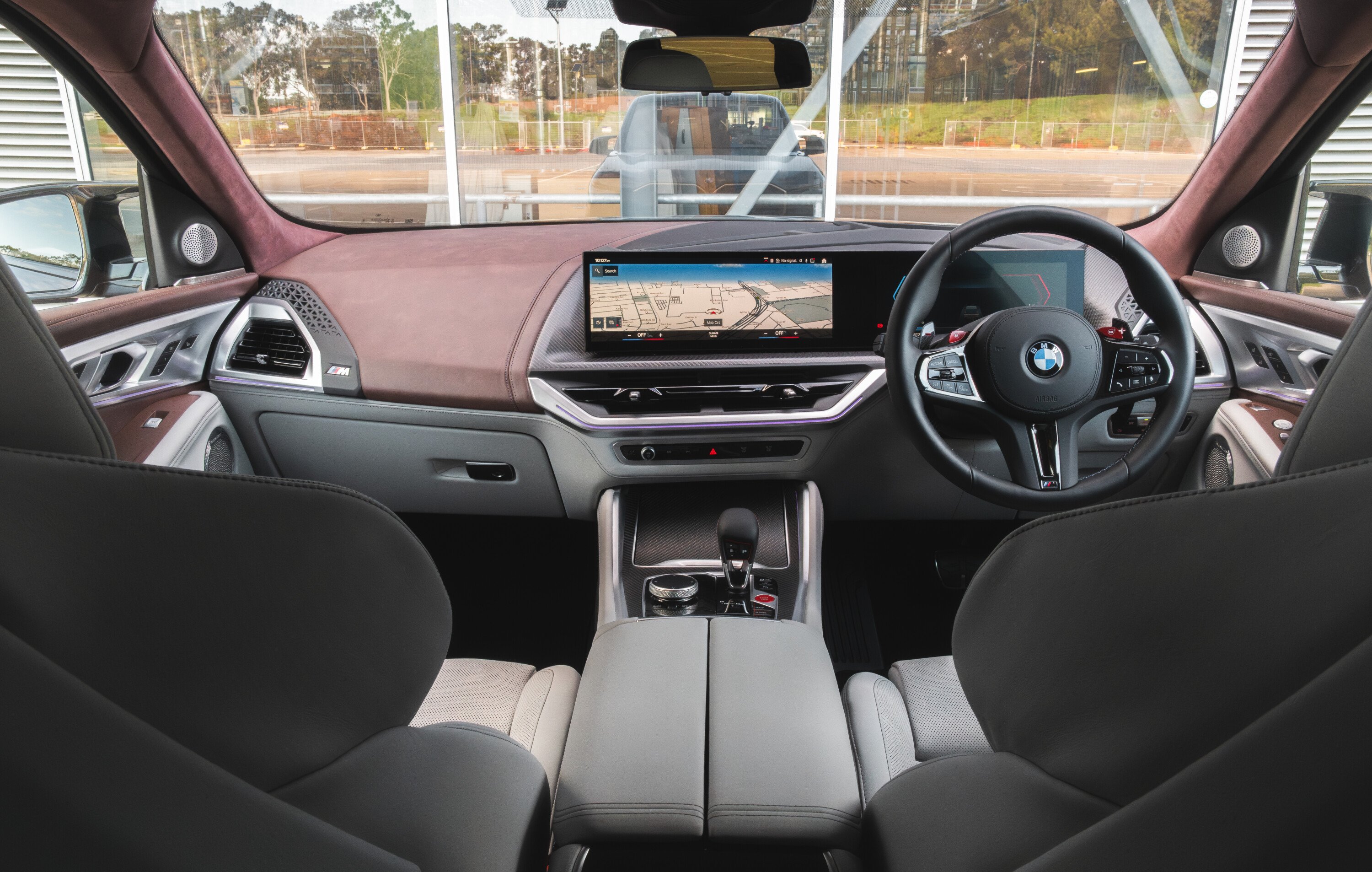
Keen to decorate the interior in slathers of soft ‘BMW Individual leather’, or perhaps you’d like to paint the huge brake callipers red? No additional charges required. Five years of free servicing is also included.
1
Aussie cars also score the ‘night gold’ exterior trim and ‘vintage brown’ leather option for the dash and doors as standard fare, meaning our XMs are some of the most highly specified in the world.
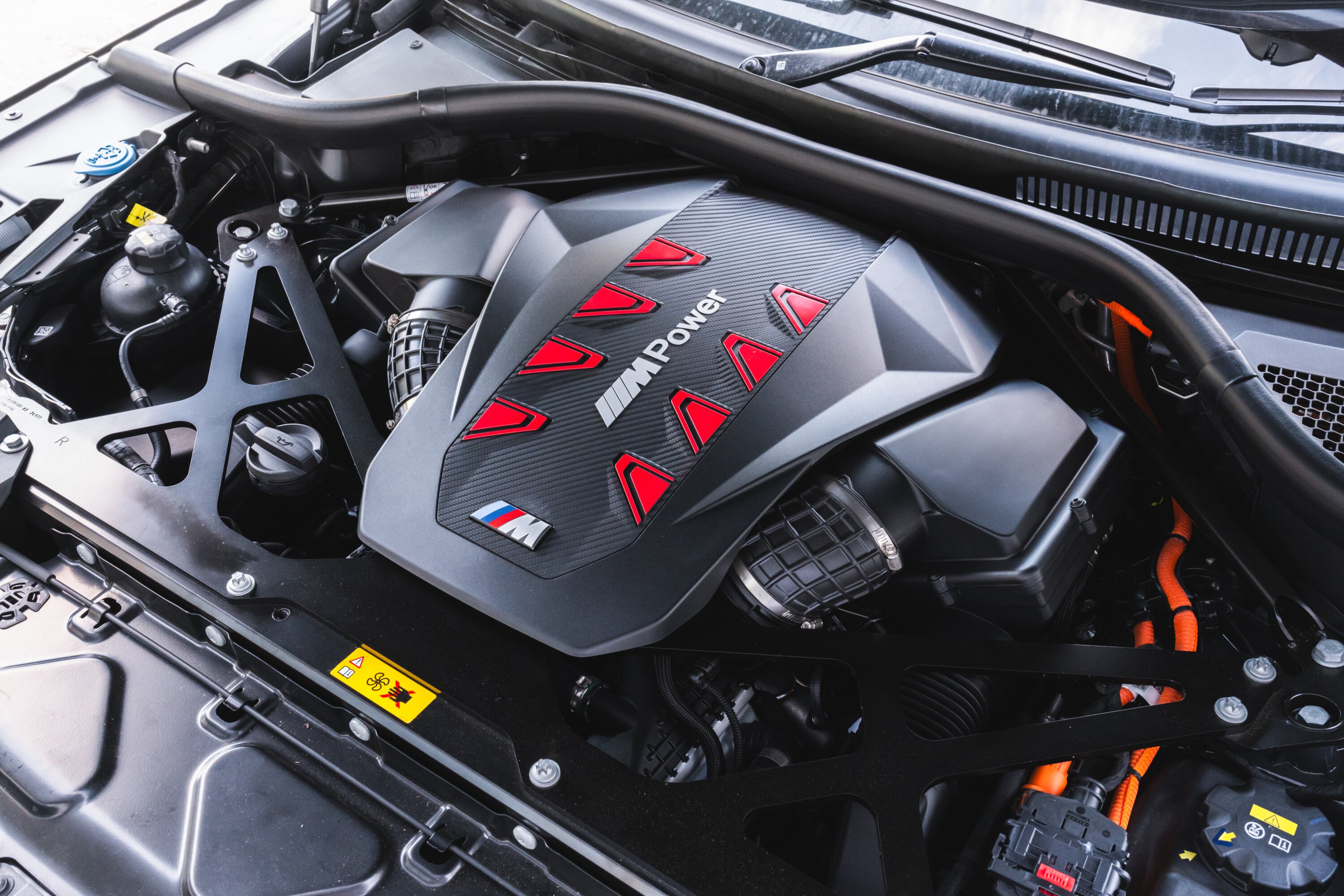
And as you’d hope for such a hefty outlay, the XM is suitably powerful. Nestled behind that huge, gold-lined nose is BMW’s fresh S68 4.4-litre ‘hot vee’ twin-turbo V8, producing an unstressed 360kW and 650Nm.
Those figures are boosted by BMW M’s first ever plug-in hybrid system which combines an e-motor inside the ZF eight-speed auto with a 25.7kWh battery to take total outputs to 480kW/800Nm. Meaty.
1
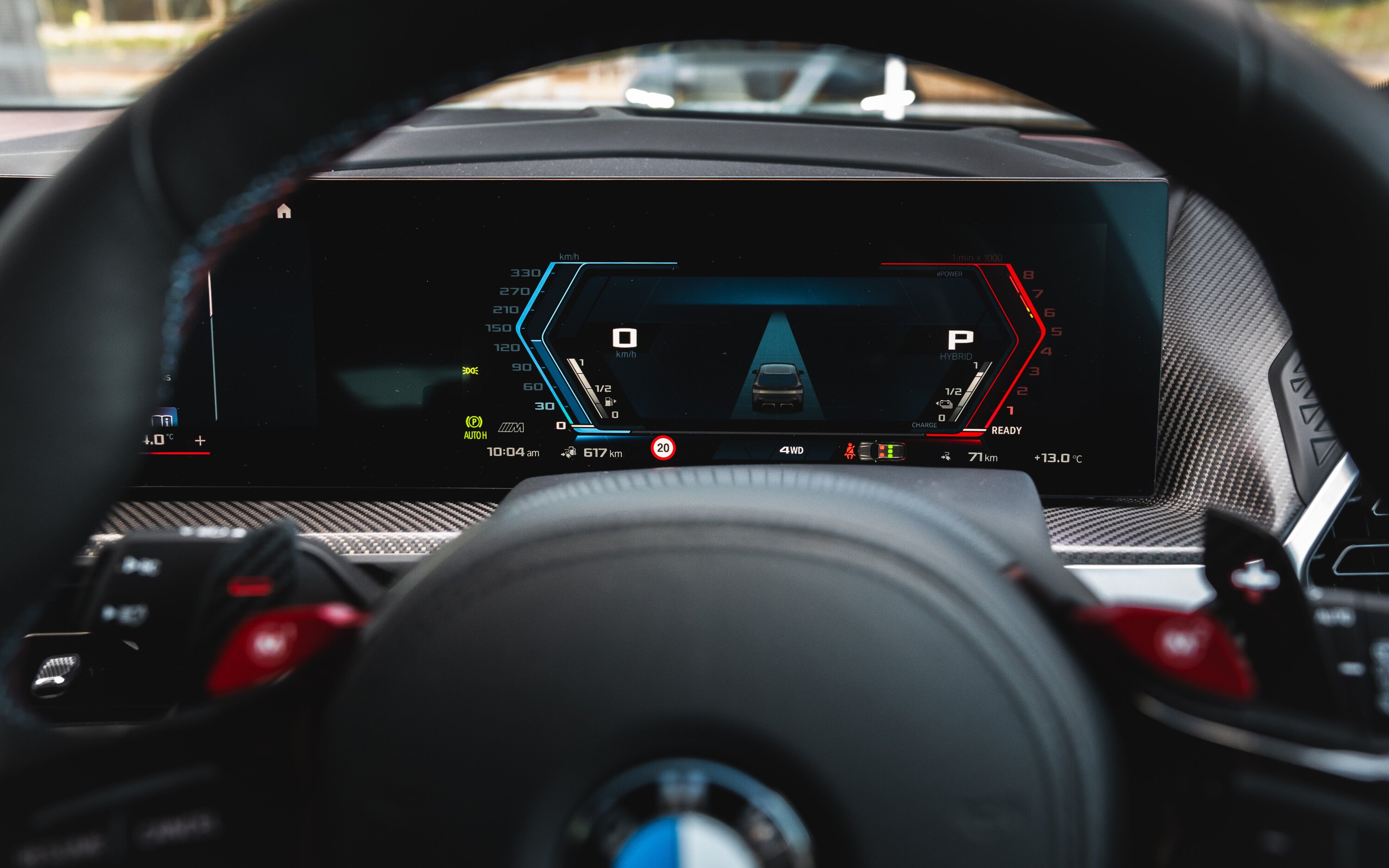
Acceleration from 0-100km/h is brisk at 4.3 seconds– no mean feat given the XM weighs a mighty 2710kg – and as the XM is a plug-in hybrid, it’s also capable of coasting along in total silence for a WLTP rated 88km.
Top speed is 270km/h and the official combined economy figure, providing you keep the XM’s battery topped up, is an impressive 2.7L/100km. The battery can only accept an AC charge rate of 7.4kWh, however, topping up the battery isn’t a quick process at 4.5 hours.
Want your XM to be even more powerful? BMW will soon offer a ‘Label Red’ version of the XM that, for an additional $46,000, produces 550kW/800Nm and cuts the 0-100 sprint to 3.8 seconds. Australia has scored 30 examples of the limited-run ‘Label Red Edition’, each carrying a sticker price of $349,900
1
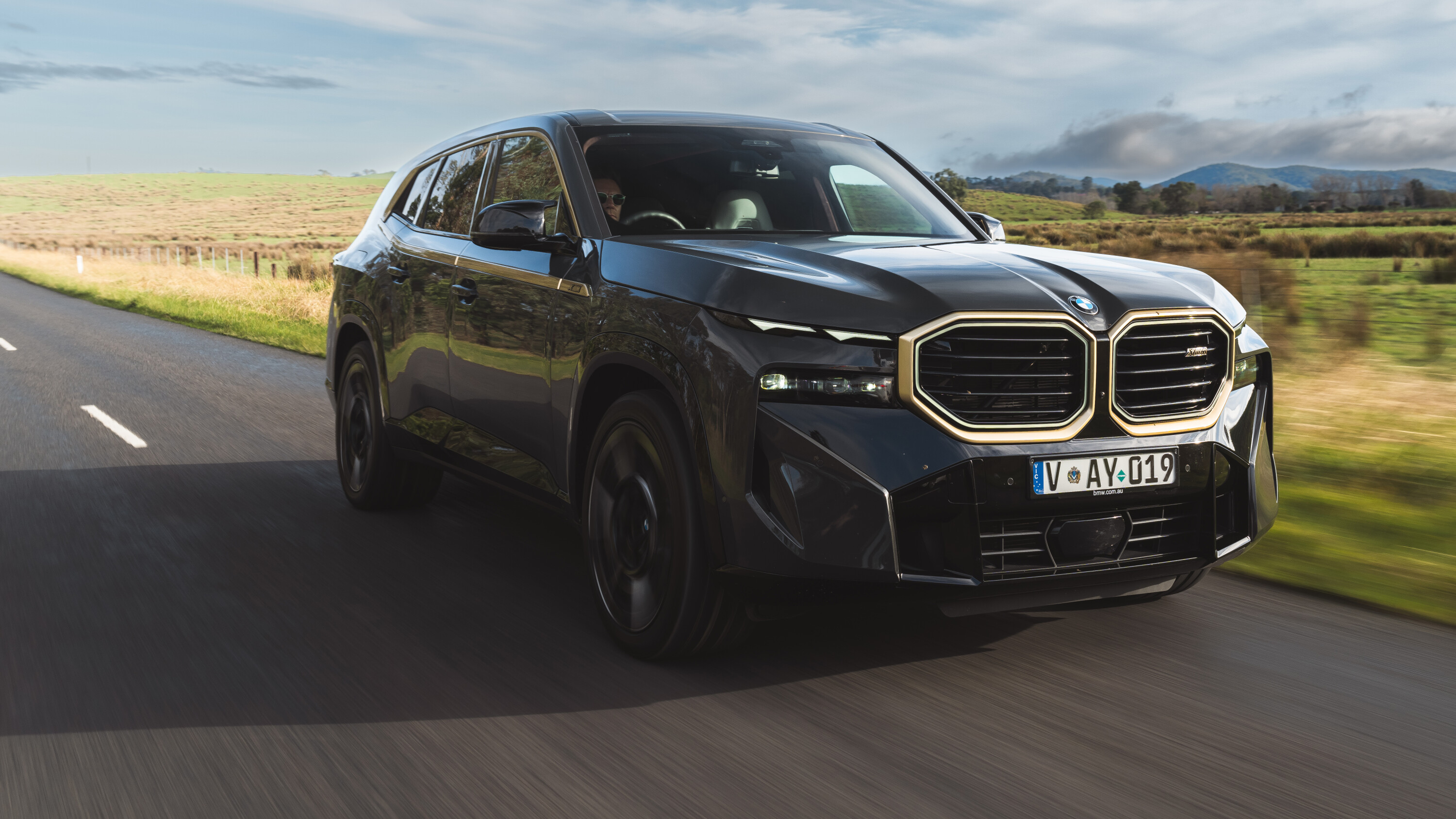
What you’re really buying with the XM, of course, is a statement piece. Its design is deliberately incendiary – “The intent,” says BMW M’s boss, Frank van Meel, “was to make the whole car quite eye catching.
We wanted to have a provocative car… something that stands out from all the others” – and while driving dynamics were clearly a priority, it’s obvious that wowing customers with the XM’s lounge-like rear seat, bolshy exterior detailing and architectural, prism-like roof lining were top objectives.
One thing you don’t get with your XM is active aero dynamics. Or carbon ceramic brakes, even on the hardcore Label Red version.
1
Or a dedicated platform… The XM is built on a Frankensteined version of BMW’s existing CLAR architecture and uses the X5M’s rear differential and suspension. The high voltage battery is also nicked from the X5 plug-in hybrid.
All of the exterior body panels are new, however, (only the mirror caps are carried over from X5) and the floor pan is heavily modified to accomodate the stretched 3105mm wheelbase. At 5.1 metres long and more than two metres wide, this is a vast SUV.
1
How do rivals compare on value?
Depending on your perspective, the XM is either great value or ferociously overpriced. M’s boss, Frank van Meel, says the XM is pitched as a rival for the Lamborghini Urus, Bentley Bentayga and Mercedes-Ben G-Class and against those rivals, the XM measures up a well.
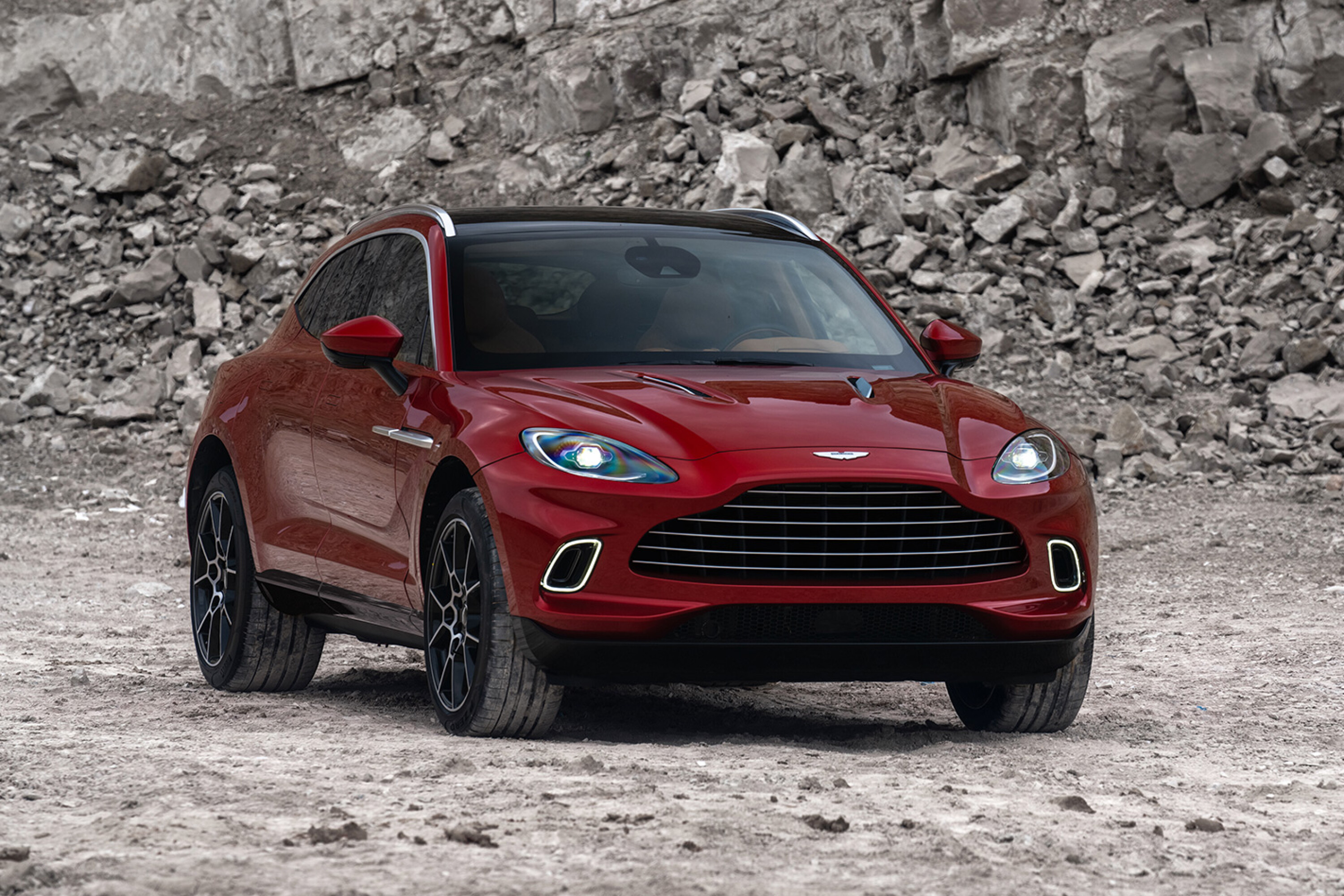
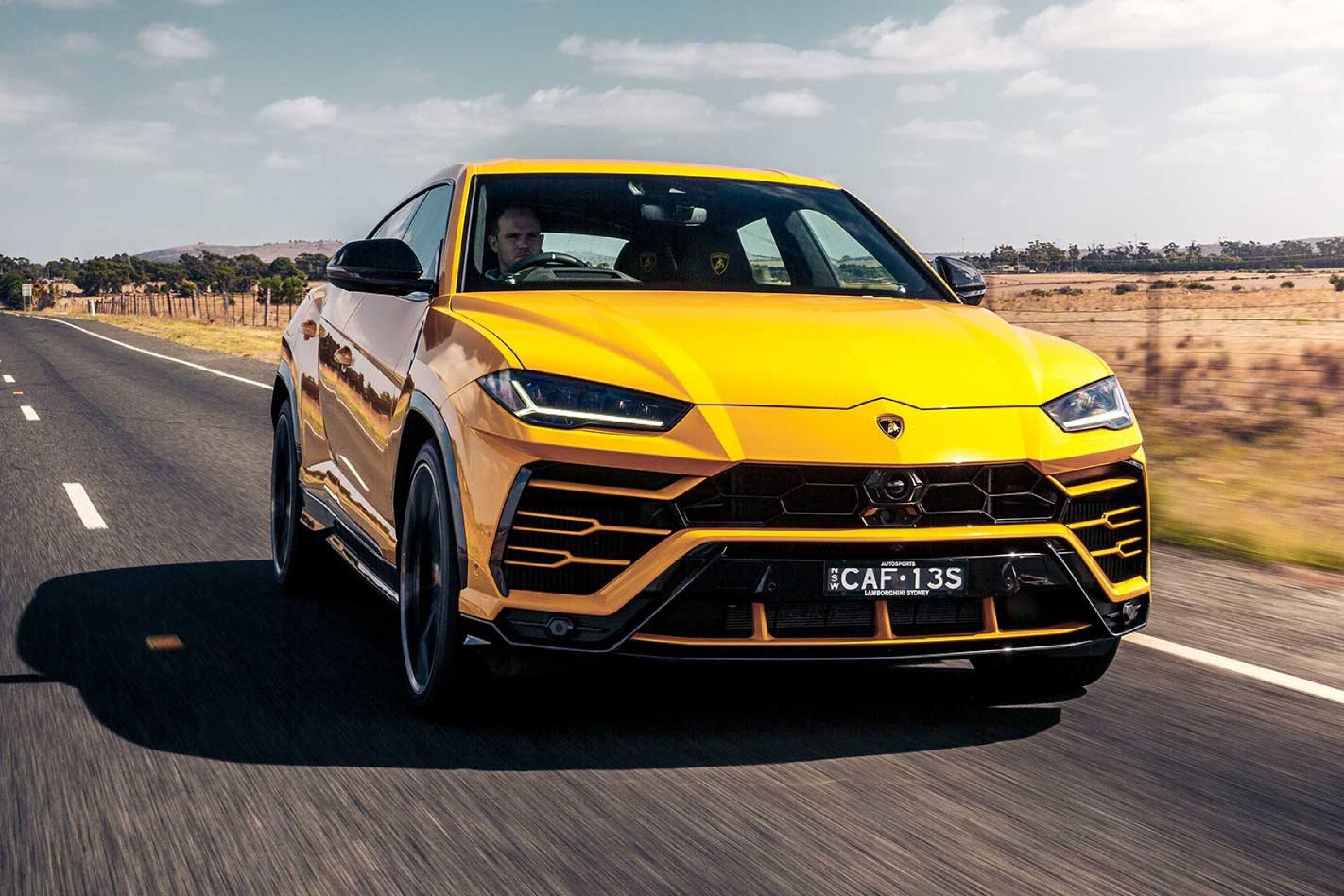
An Urus, for example, is more than $100K costlier at $409,744 and the Bentley is similarly rich thanks to an asking price of $378,600. The Aston Martin DBX is another obvious rival and again, the BMW is cheaper, with the Aston costing $365,512 for the ‘regular’ version and $428,400 for the hardcore 707 variant.
BMW also rightly points out that the XM is the only competitor in the Super SUV segment to offer a plug-in hybrid powertrain.
1
Compare the XM against other established performance SUVs, however, and its value equation changes dramatically.
We’ve already mentioned the price disparity to the X5M and X6M Competitions, which are $74K and $68K, less expensive, but there’s also the Audi RS Q8 (80K cheaper) and the Mercedes-AMG GLE 63 S which is $60K better off.
And don’t think this group of more affordable rivals are in anyway less potent. Just like the XM, all are similarly armed with high-tech chassis systems like adaptive dampers and electronic sway bars, and all of these rivals boast sub 4.0sec 0-100km/h times.
So they aren’t only cheaper and equally adept at going around corners, but they’re quicker than the XM, too…
MORE
Best Large SUVs
1
What’s it like to drive?
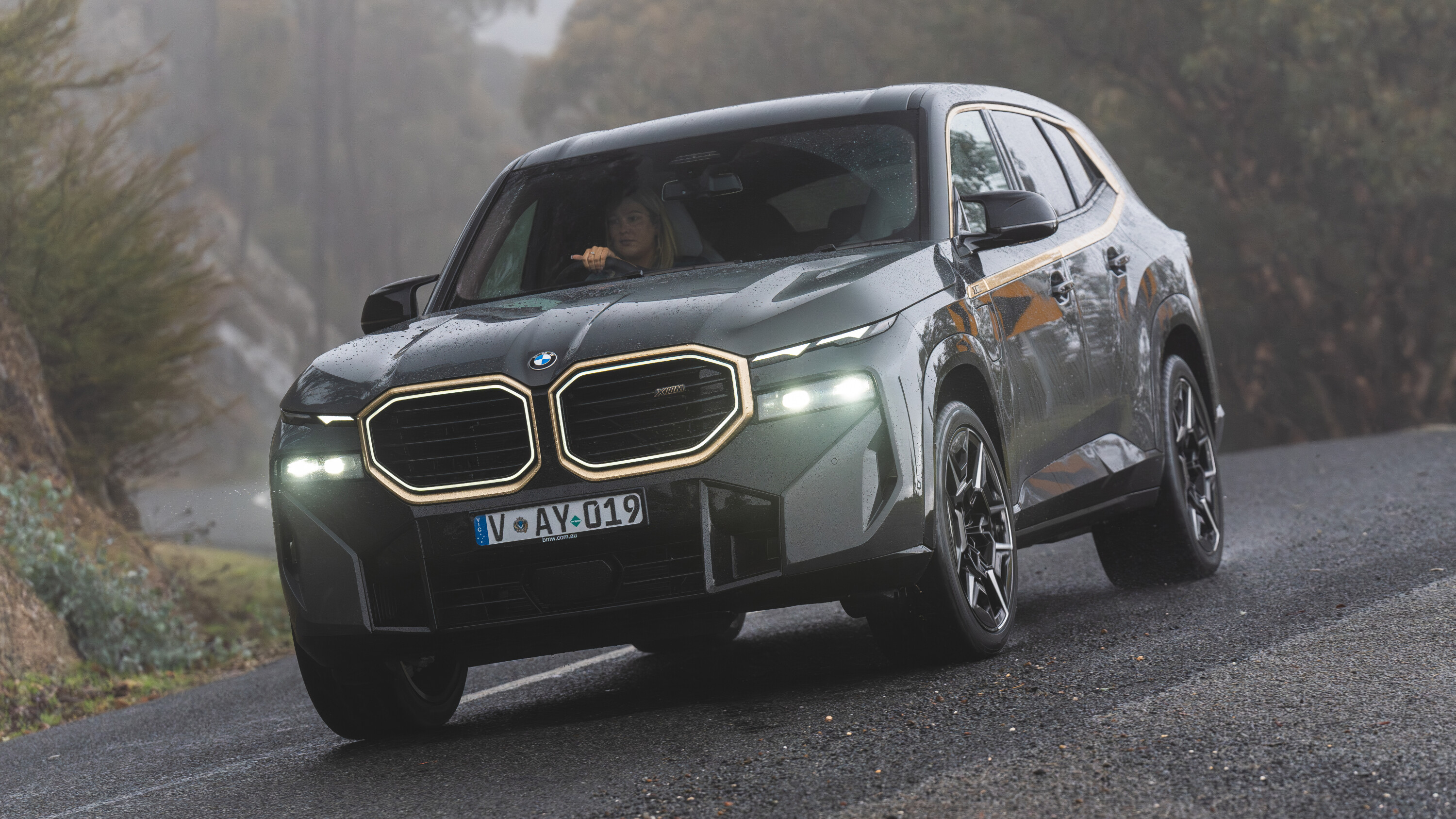
Grab the patterned door handle (each has a raised geometric pattern), nestle into the deeply cushioned driver’s seat and the first impression the XM provides is one of sheer size.
The long bonnet stretches out before you and because the seating position is impressively low – much lower than an X5M’s – you feel heavily ensconced inside the XM’s massive proportions.
Things are less intimidating when you push the starter button. Fire the XM into life and there’s no snarling V8 soundtrack to match the monstrous exterior. Instead, you sneak forward in utter silence, the e-motor propelling you silkily and stealthily.
It’s a cool party trick – there are three settings for the hybrid system: Hybrid, Electric or eControl – and the handover between petrol and electric power was smooth during our short stint behind the wheel.
1
The brake pedal also sidesteps the corruption or ‘fuzzy’ feeling at the top of the travel that you can sometimes plague hybrids. Nice.
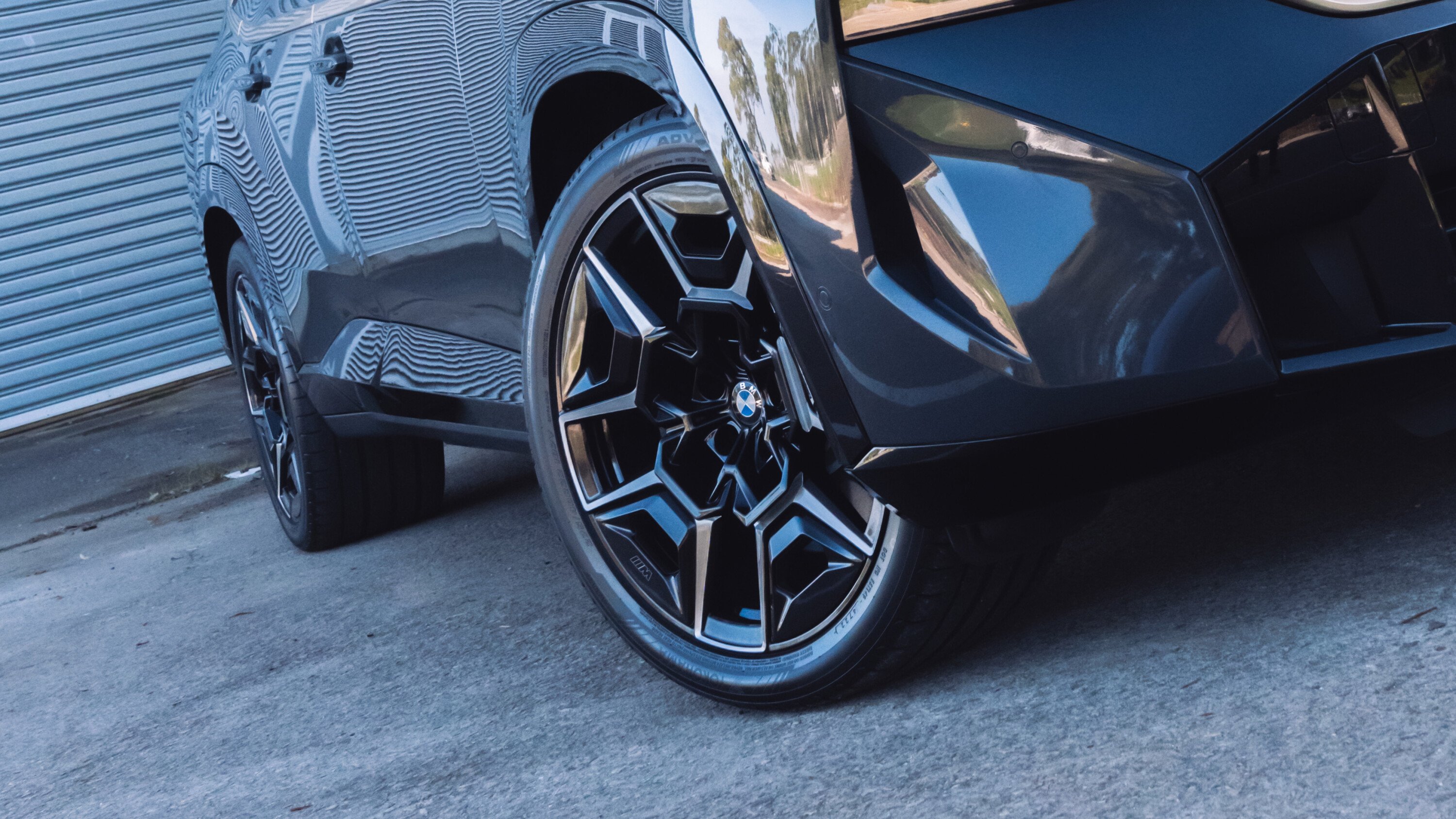
The next thing you notice is the ride. And initial impressions aren’t positive… Our test car was rolling on the standard 22-inch ‘light alloys’ and at low speed they thump and shudder, with the impacts over potholes and expansions joints harsh enough to make you wince.
It’s certainly not the kind of pillowy, wafty ride you might expect from a luxury SUV, even with the adaptive dampers set to their softest Comfort setting. Things improve a little as you get more speed under the tyres but even then the ride on steel springs is fidgety, the big alloys niggling over small bumps and the huge tyres sniffing out and chasing the camber of the road.
1
Tyre noise is another annoying companion, with the constant background roar of rubber on road further eroding the sense of luxury.
The XM’s size is even more apparent at speed, too, and it takes a while before you feel confident to position it accurately on a windy road.
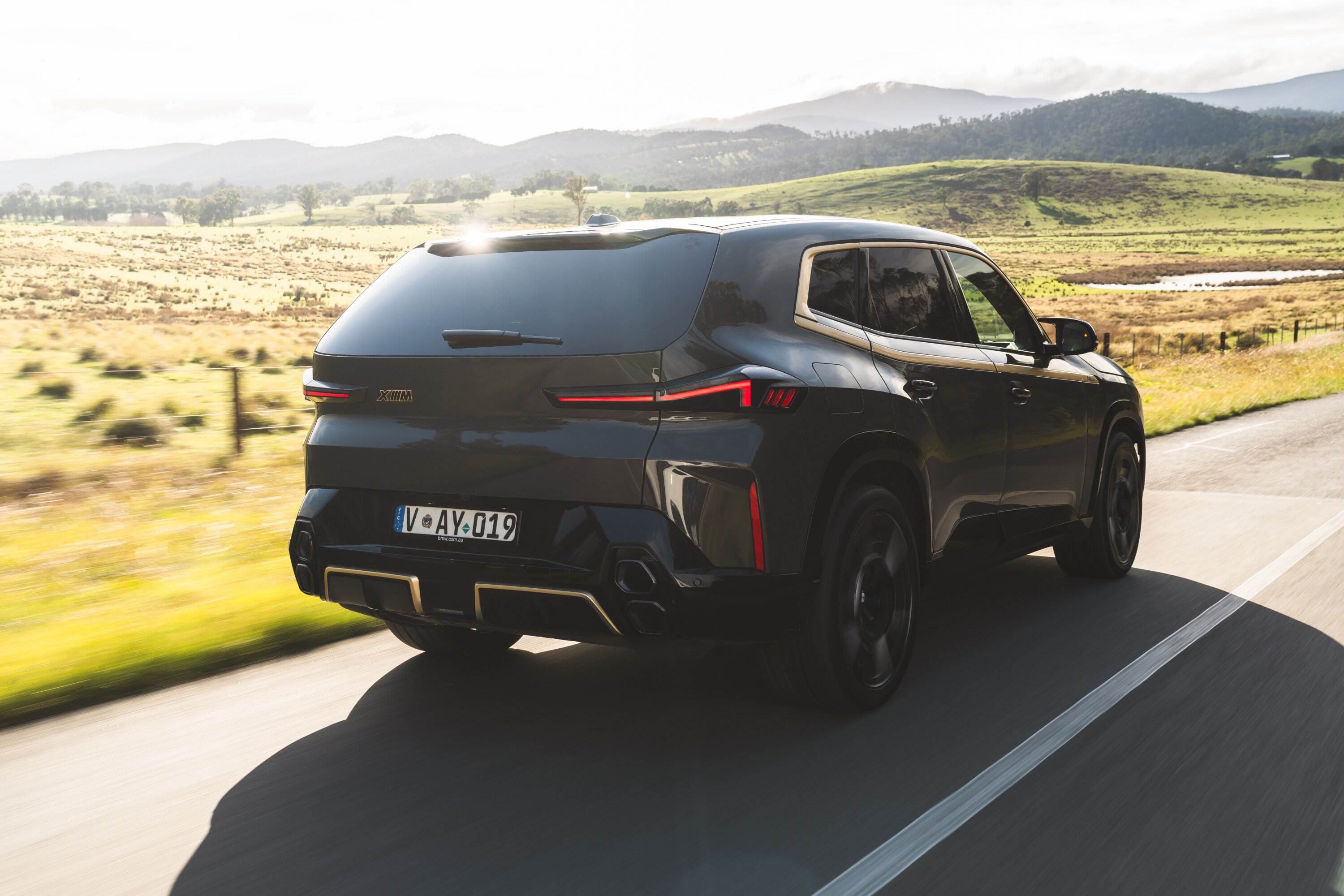
Okay, time to try the V8. It’s a big deal this 4.4L V8/hybrid combo. It’s almost guaranteed to power the next M5 and it will soon find its way into a host of other M models, like the next X5M and X6M. And as you’d expect, it’s a ferocious power plant.
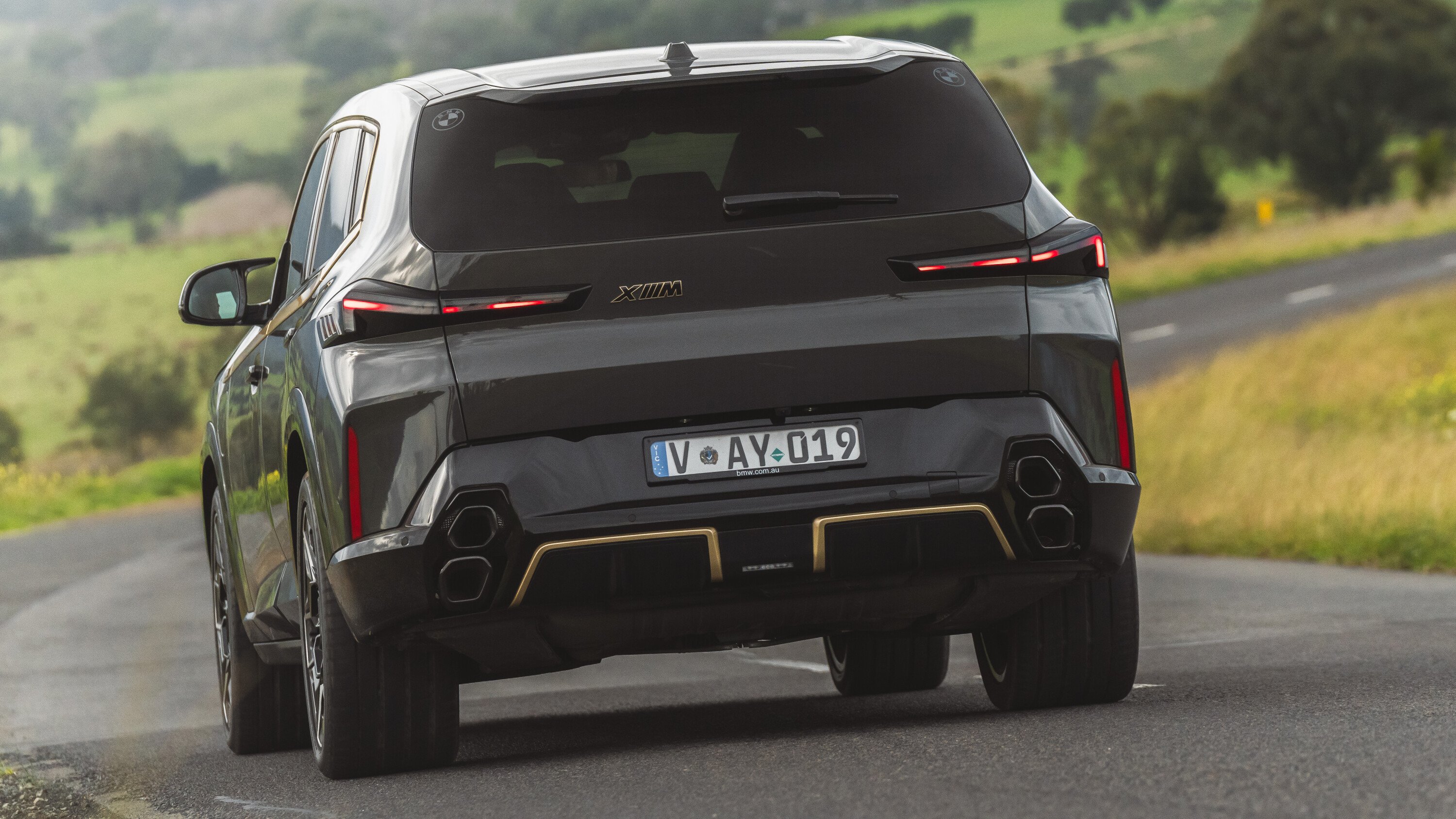
Smooth and muscular, the big V8 doesn’t only sound fantastic (the XM’s quad exhausts are stacked on top of each other, in another M first), but the way it uses the instant response of the hybrid system to fill any torque gaps and deliver unrelenting acceleration is deeply additive.
1
There’s talent to the chassis, as well. Dial the XM into its most aggressive setting (there are modes for the gearbox, dampers, steering, regen, brake pedal feel, hybrid system and the exhaust), and it’s obvious this is an astonishingly fast SUV.
Grip is the overarching trait. Pitch it into a corner and it’s incredible how aggressively it turns and how much adhesion you have at your disposal. Only distant tyre squealing gives you an idea of the forces you’re subjecting the car to.
You can even play with the balance a little once the XM is set into a corner and traction and drive is blistering as you rocket out of bends. The stopping power and fade resistance of the enormous steel brakes (front discs are 420mm clamped by six-piston callipers) is impressive too.
1
But it’s a driving experience that’s more impressive than it is properly engaging…
That’s partly down to the sheer number of chassis systems and electronics BMW has thrown at the XM to make it corner. Four-wheel steering, adaptive damping and active roll stabilisation are all present, and while the systems do result in a super SUV that can corner at terrifying speeds (an Audi RSQ8 performs the same trick) they also add a layer of remoteness that doesn’t feel very ‘M’.
Plus, most ‘super SUVs’ tend to shrink around you as speed and confidence build. The XM doesn’t. It always feels enormous.
So M’s first halo car in 45 years is a bit of a mixed bag to drive. While it’s fast and grippy, it’s too unyielding and brittle to feel like a proper luxury SUV. And it’s not engaging or playful enough to be an enjoyable driver’s SUV either. Hm, wasn’t expecting that.
1
- What is a Powertrain or Drivetrain?
- Power vs torque
- Car suspension explained
- Automatic transmissions (‘gearboxes’) explained
- Chassis control systems explained
- Car vs Ute vs SUV: How the vehicle you buy should guide the way you drive
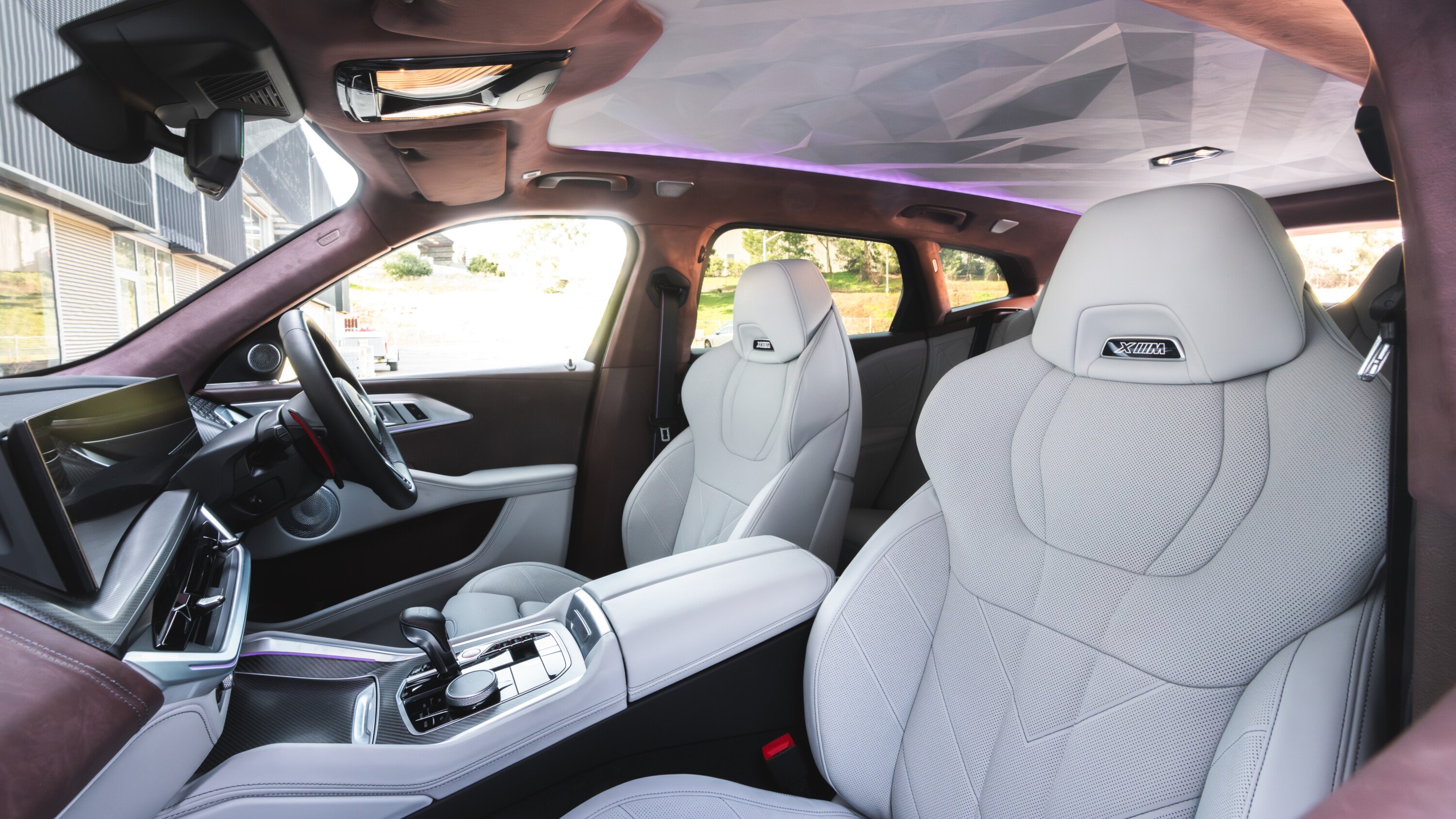
Slow things down a touch and the XM is more convincing. The cabin really is lovely.
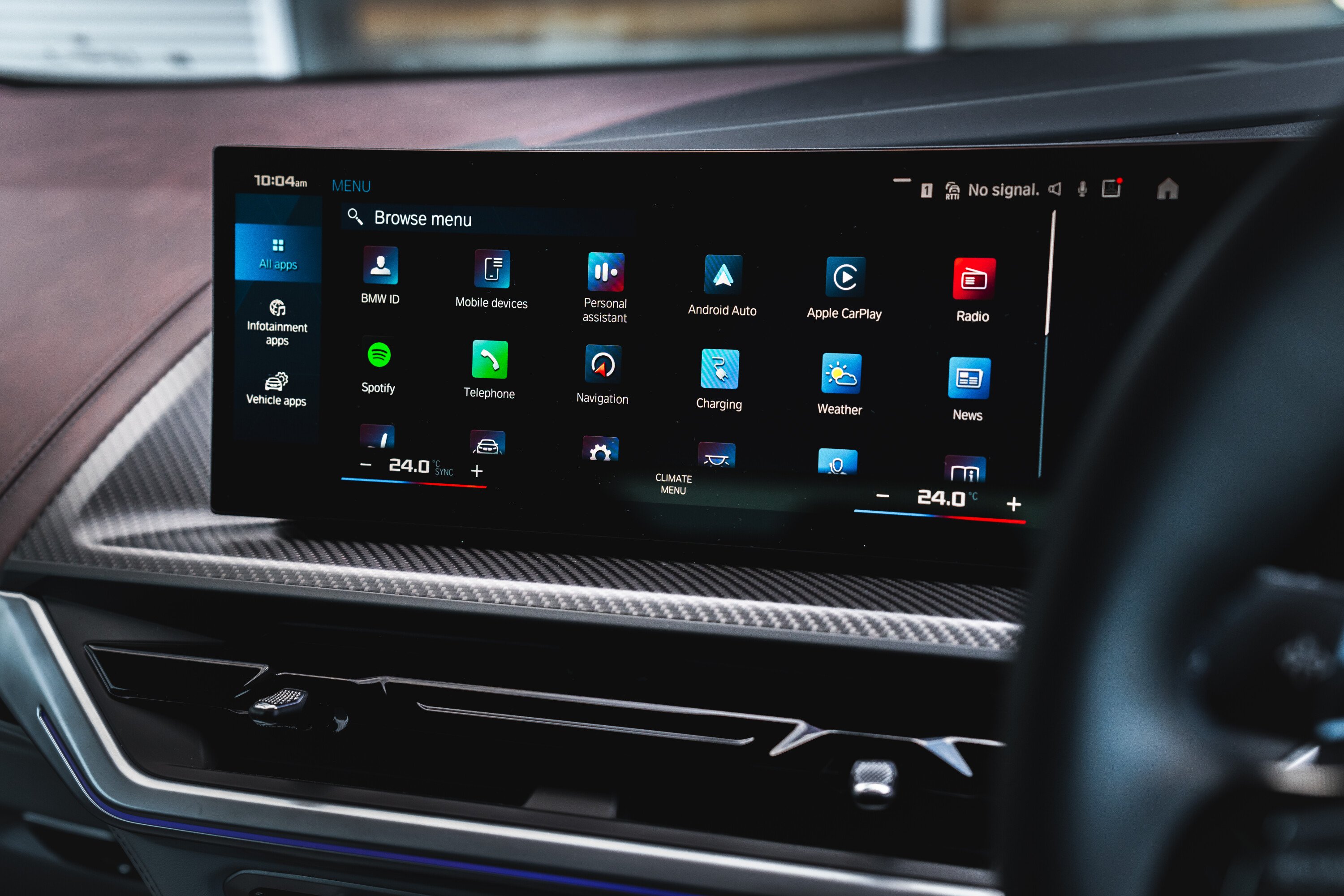
The windscreen displays and functionality of the infotainment is identical to other M cars, meaning the sheer depth of the menu structure can take some getting used to, but after a familiarity period, the iDrive system is excellent. Fast and with clear graphics, the twin curved displays are also hard to fault. As is the mix of materials in the XM.
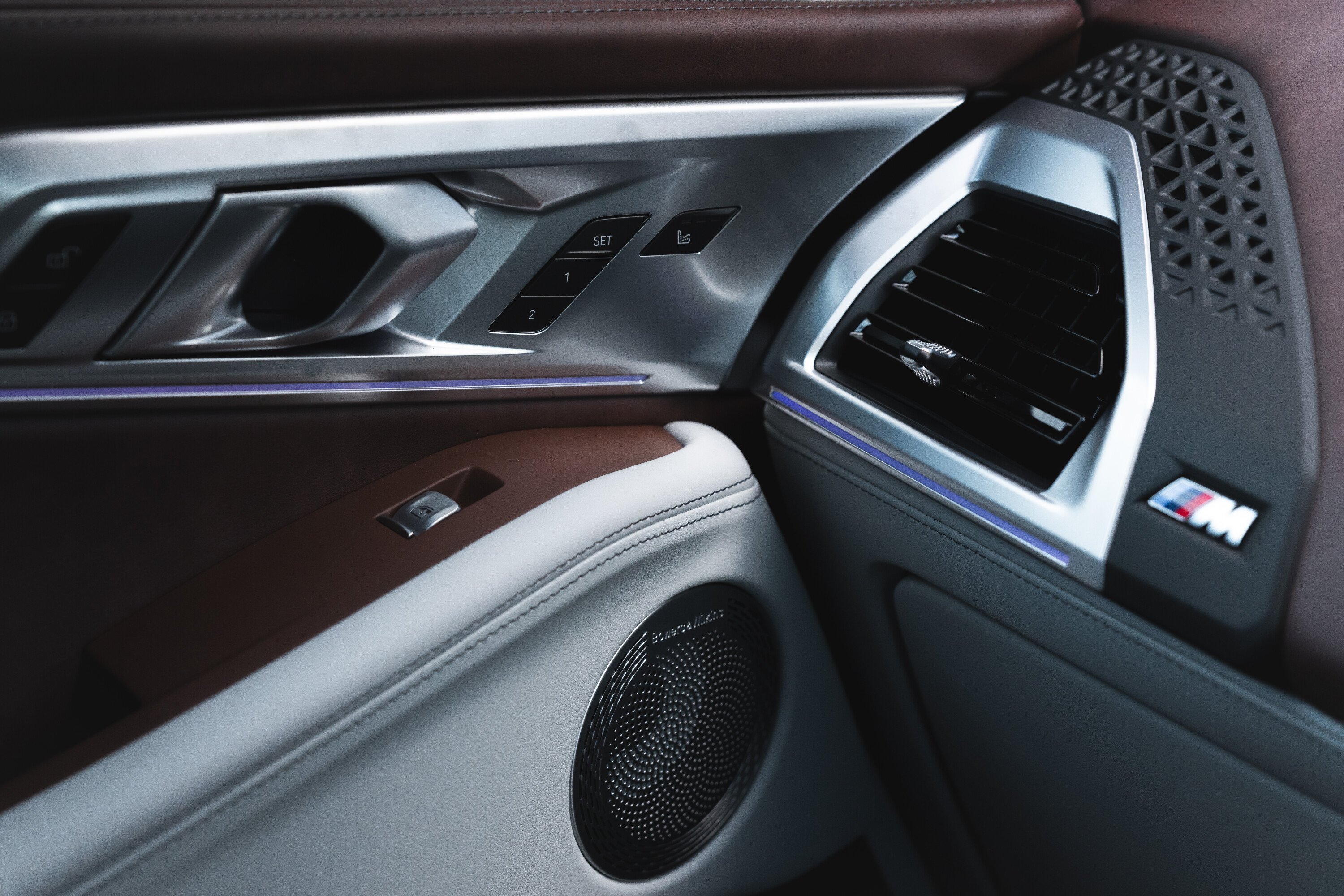
The seats are soft, supple and superbly comfortable (they’re cooled/heated and offer an excellent massage function) and all of the plastics and leather uses in the cabin are high quality. The ‘worn’ brown leather on the dash and doors works well, too, and adds an additional layer of texture to what would otherwise be big expanses of brown.
1
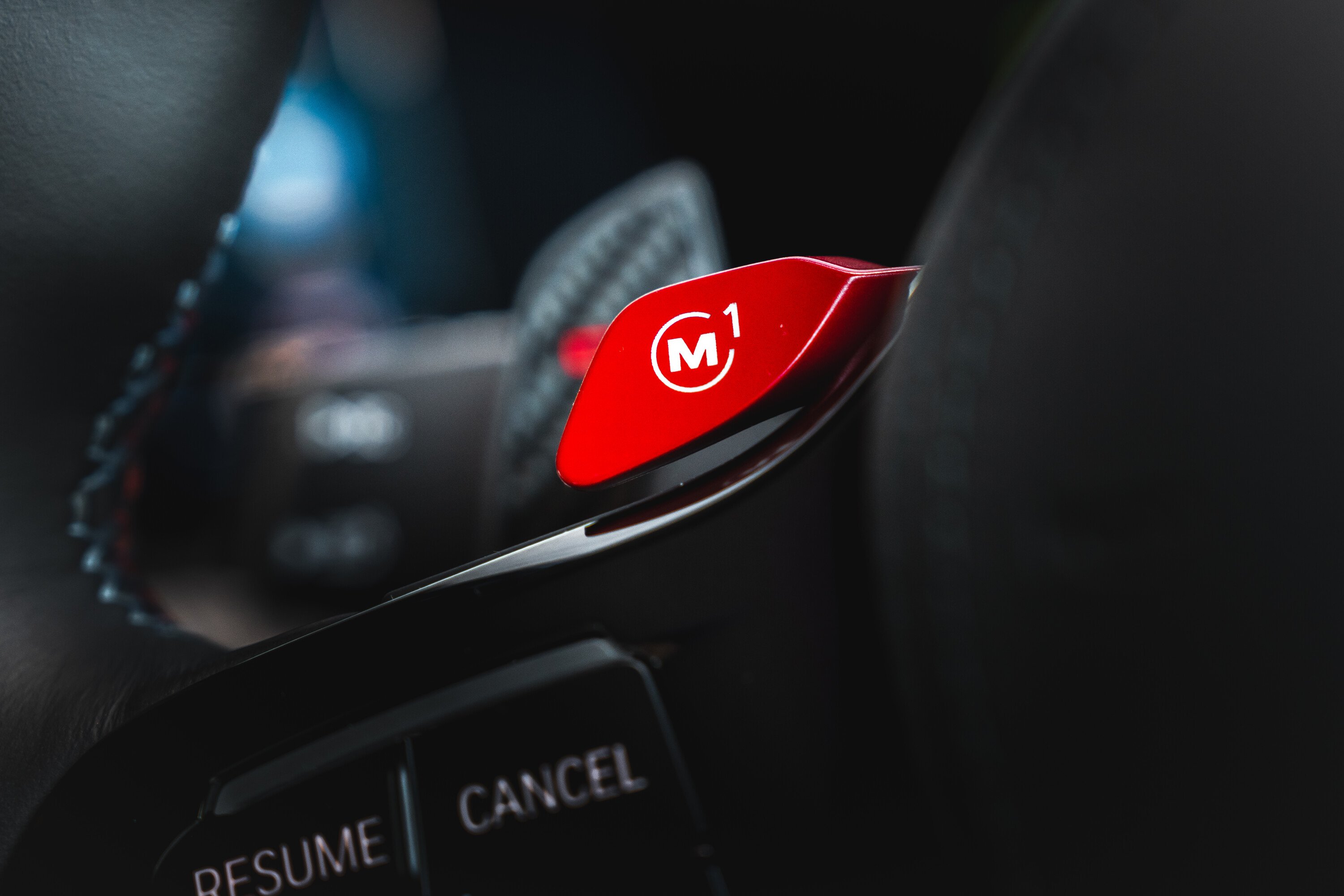
The Bowers & Wilkins sound system is also mighty impressive and we loved the tactility of the carbon shift paddles.
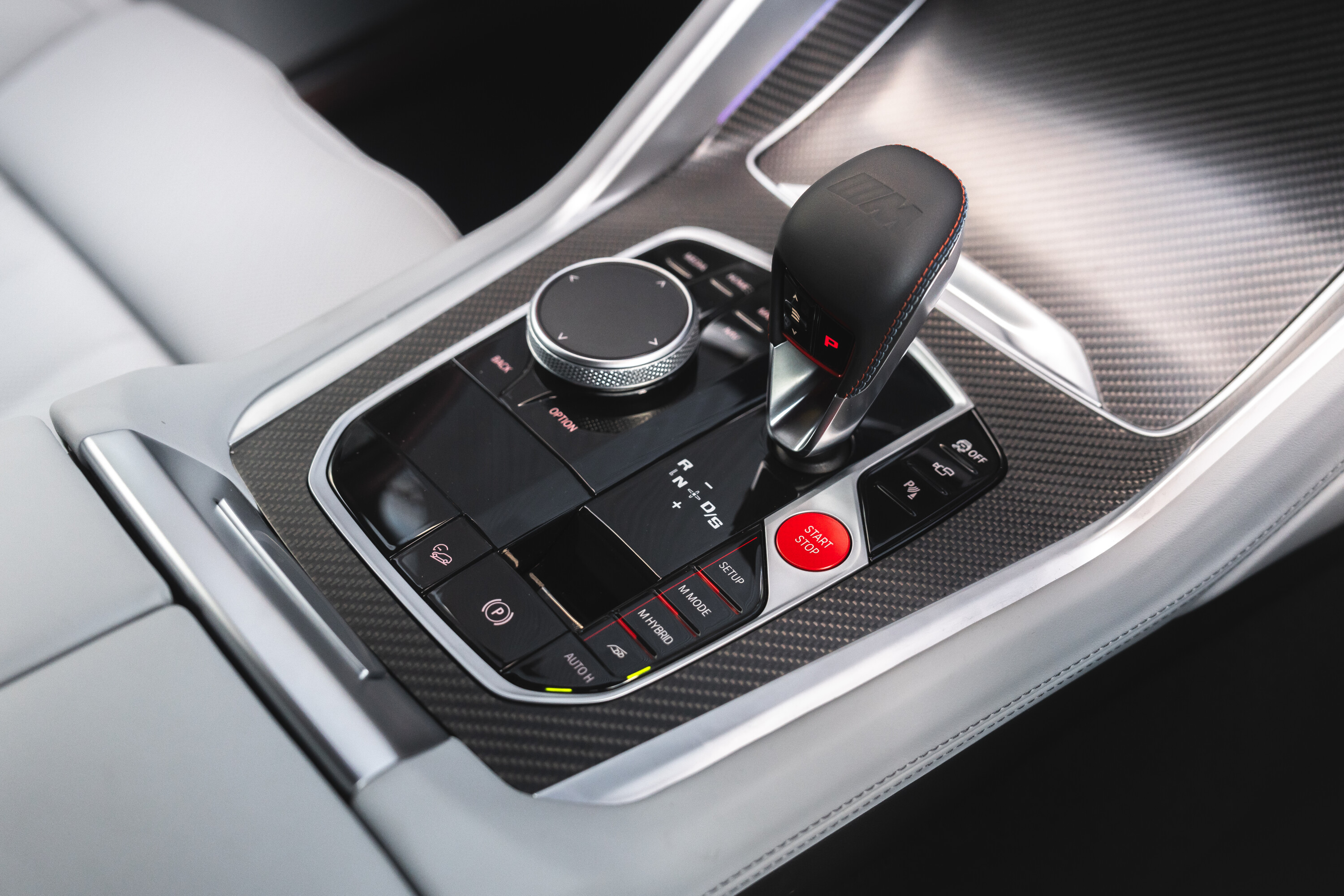
Storage is another highlight. The door pockets are massive, there’s a big lidded cubby ahead of the leather-clad shifter, the twin central cupholders are heated/cooled, and the centre storage bin between the two fronts seats is also on the large side.
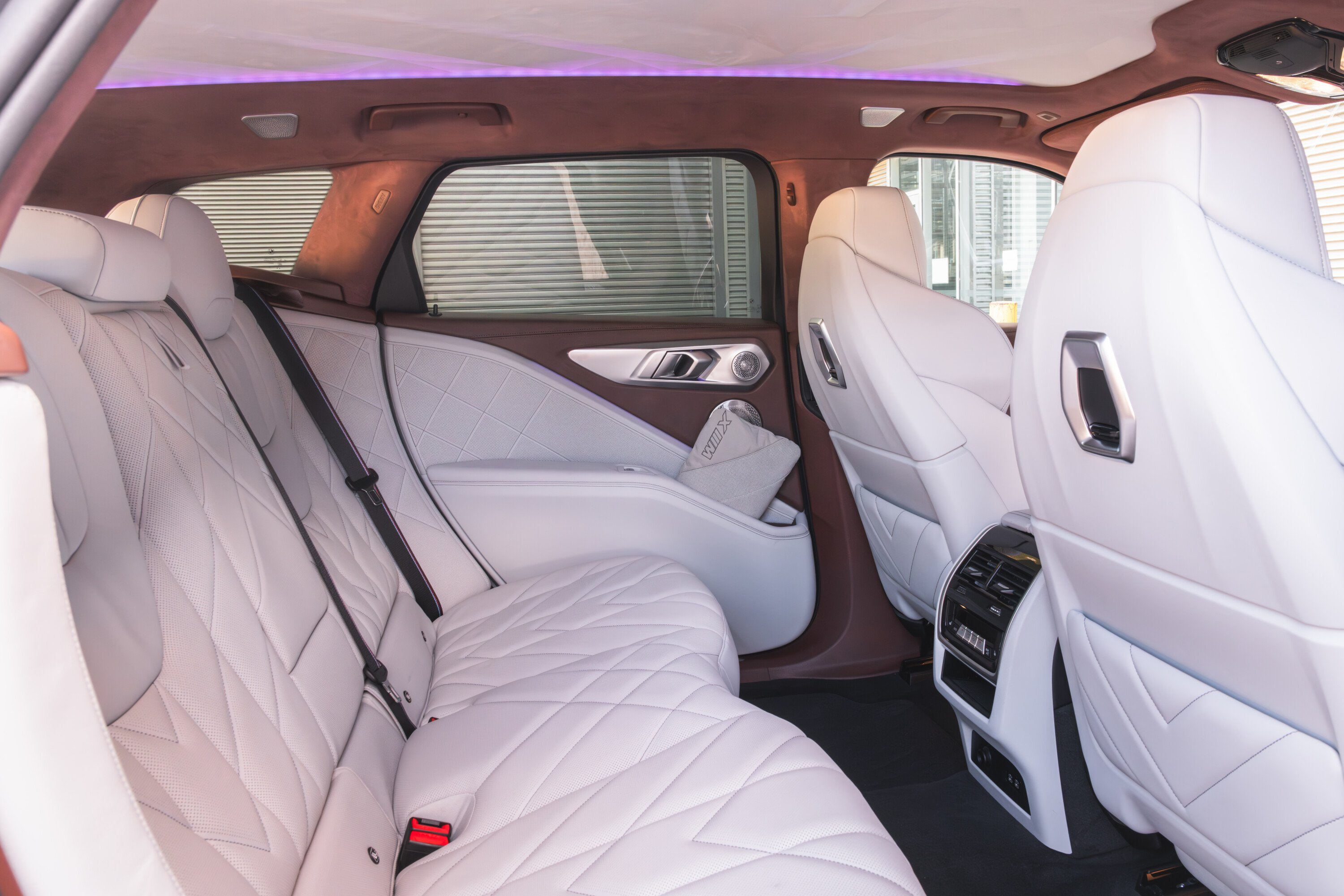
The back seat is equally premium and practical. Tall passengers have ample room (knee room is especially generous), the outboard seats are comfortable and cosseting and there’s additional padding on the side of the door cards (similar to what you get in a BMW iX) which gives the rear seat a comfy ‘wrap around’ feeling.
There are even XM branded pillows that can be stored in the wide door pockets. Rear passengers aren’t short of USB-C charging outlets either.
1
There are two on the back of the centre console (which also houses individual temp control for the four-zone climate) and two others in the rear of each front seat designed to hold tablets.
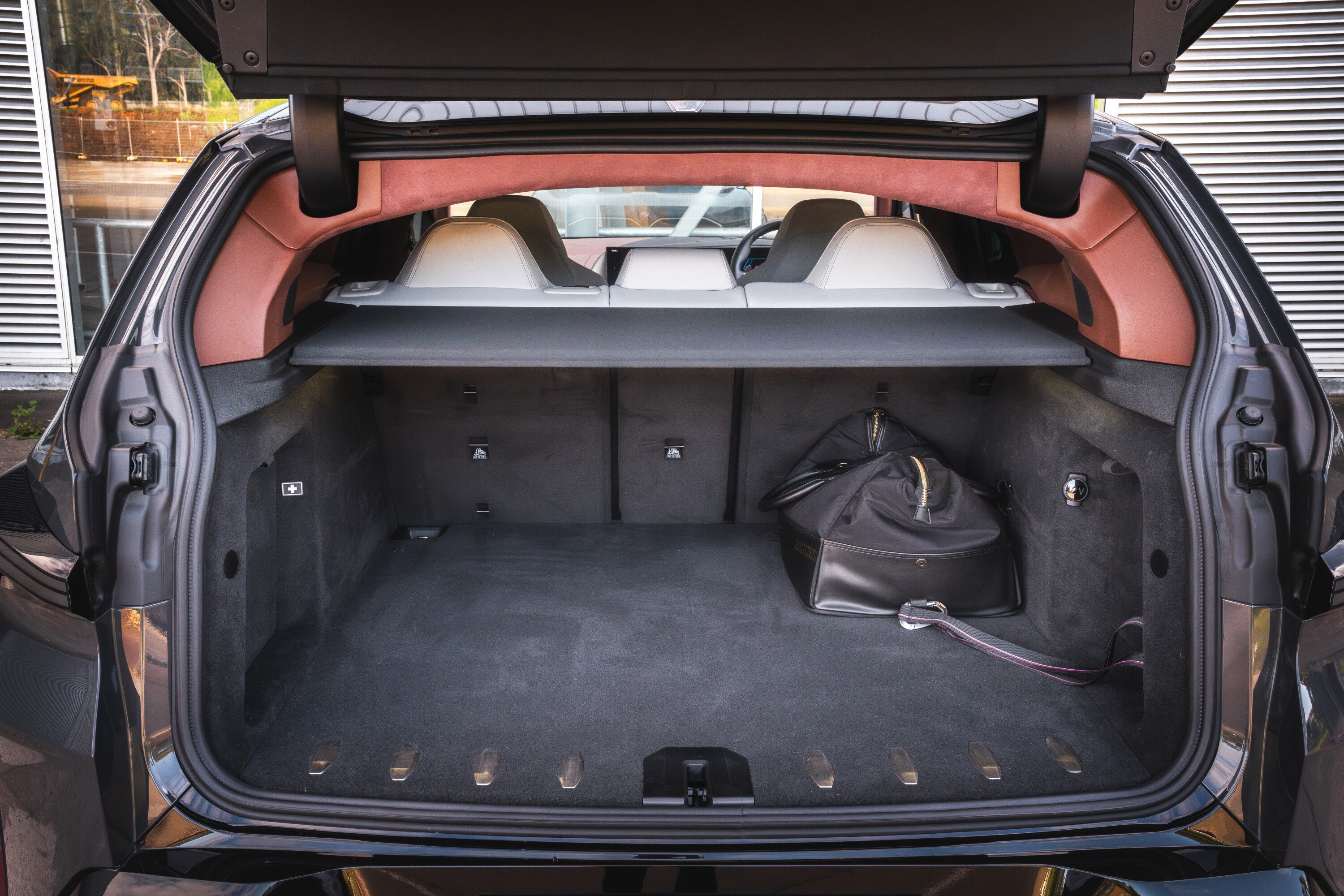
The boot is roomy at 527 litres, or 1820L with the rear seats folded, and an electric tailgate is standard. But there are no bag hooks and the boot floor is fixed so there’s no space for a spare tyre or anywhere to put the chunky AC charging cord. BMW’s solution for the latter is to stuff it inside a high quality duffle bag but that takes up boot space.
One thing that might divide opinion is the geometric roof lining. While it’s indisputably a talking point and a sure way to impress passengers, we couldn’t help but wondering if a glass panoramic roof would feel just as special and lend the cabin an airier feel.
2
How much fuel does the BMW XM use?
Officially, the BMW XM uses 2.7L/100km on the combined cycle.
How close you get to that number will depend entirely on how you drive the XM and, more importantly, how often you plug it in.
We drove the XM on a mix of urban and country roads with a battery than was almost flat and saw an average fuel figure of 9.5L/100km. We’d wager that in everyday driving around 7.0L is achievable. The XM is fitted with a 69L fuel tank and accepts 91 RON.
1
How safe is the BMW XM?
Unsurprisingly for such an expensive and low volume model, the XM hasn’t been crash tested.
But while it doesn’t carry an official five star crash rating, it is bursting with BMW’s usual mix of active safety systems.
They include: active cruise control with stop & go, front and rear cross traffic alert, lane keep assist, side collision warning, six airbags, a tyre pressure monitor system and a 360 surround view camera.
1
VERDICT
You have to admire the ambition of the BMW XM. It’s not only BMW’s most powerful and most expensive model ever, but it’s also M’s first plug-in hybrid and it thrusts Munich’s performance division into a new and lucrative segment.
The scope of its brave exterior design also deserves acknowledgement, even if it mightn’t be to your particular taste. And if judge the XM solely on its ability to make a statement, to provoke and to get tongues waggling, then it can be nothing but a roaring success.
But it’s execution where the XM falls short. In trying to be so many things – a statement piece, a luxury SUV and the flagship ultimate driving machine – it fails to nail any of them.
1
A BMW X5M Competition isn’t only cheaper, it’s better to drive. As are the Audi RS Q8 and Porsche Cayenne Turbo S e-Hybrid.
And because BMW has made the XM so stiff, there are a hoard of other luxury SUVs that are considerably more comfortable to travel in.
Does that make the XM a failure? No. On lots of levels it’s an admirable achievement – the hybrid powertrain is a highlight, as is the comfort and quality of the cabin – but we doubt the XM will go down as one of BMW’s great hits. At least if your measure of greatness is driving thrills.
| 2023 BMW XM specifications | |
|---|---|
| Engine | 4395cc V8, DOHC, 32v, twin-turbo + e-motor |
| Battery | 25.7kWh lithium-ion |
| Power @rpm | 480kW (combined) |
| Torque @rpm | 800Nm (combined) |
| Transmission | 8-speed automatic |
| 0-100km/h | 4.3sec (claimed) |
| Body | Five-door, five-seat SUV |
| L/W/H | 5110/2005/1755mm |
| Wheelbase | 3105mm |
| Boot space | 527L/1820L |
| Weight | 2710kg |
| Fuel / tank | 91RON/69L |
| Fuel use L/100km | 9.4L (combined) |
| Suspension | Double A-arms, coil springs, adaptive dampers, anti-roll bar (front) multi-links, coil springs, adaptive dampers, anti-roll bar (rear) |
| Steering | Electric rack-and-pinion |
| Brakes | 420mm ventilated steel discs with six-piston callipers (f); 398mm steel discs with single-piston calliper (r) |
| Wheels | 89.5J x 21 (f); 10.5 J x 21 (r) |
| Tyres | 275/45 R21 (f); 315/40 R21 (r) |
| Price | $302,200 before on-roads |
MORE
Everything BMW
A study by EV battery research firm Recurrent [↗] has found using the air-conditioning to cool an electric car’s interior can reduce driving range by up to 31 per cent – but it’s still less intensive than heating.
Snapshot
- Using air-con in summer more efficient than winter for EVs
- Range can be reduced by up to 31 per cent in hot climates
- Tesla EVs more stable, outgoing Kona EV better than claim
The research coincides with the ongoing heat wave in Western North America, where temperatures have been recorded at up to 54º Celsius in some areas.
Recurrent revealed that EVs running their cabin cooling systems in 37.7º Celsius climates can impact range by up to 31 per cent – although the company concedes this is “based on extremely limited data”.
1
In 32.2º Celsius weather, range loss was tested at just five per cent, while 26.7º temperatures only saw range reduced by 2.8 per cent.
The research firm concluded that the difference in the ideal car cabin temperature for occupants and the outside temperature is usually smaller in the summer than winter.
For example, in the summer, occupants may want to change the cabin temperature by 20 to 25º compared to the outside – but in the winter, the difference may be more than 50º.
1
Recurrent collected data from 17,000 vehicles across 65 pure electric and plug-in hybrid models
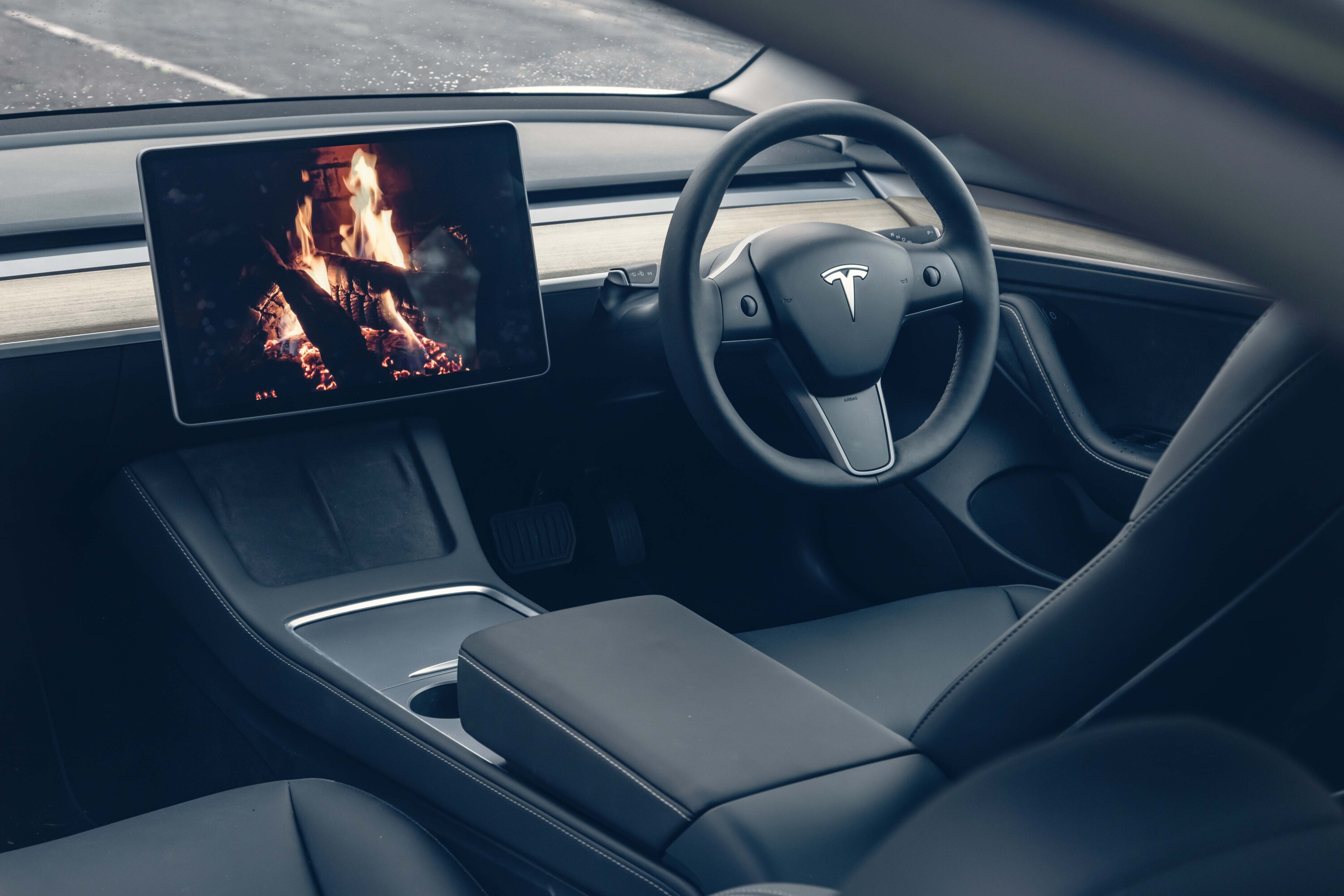
To limit the energy drain of heating cabins in the winter, some models adopt heat pumps – such as the BYD Atto 3, Tesla Model 3, and top-spec Hyundai Ioniq 5 – to harvest waste heat generated from the electric drive unit to warm up the interior.
Recurrent collected data from 17,000 vehicles across 65 pure electric and plug-in hybrid models, including the Tesla Model Y, Chevrolet Bolt EV, Hyundai Kona Electric, Nissan Leaf, and Ford Mustang Mach-E.
Interestingly, the Mustang Mach-E electric SUV had a wider variation in range when operating the climate control in 15.6º compared to 37.7º outside temperatures than other EVs on test, whereas the Nissan Leaf hatchback had less range in summer than in winter.
The Tesla Model 3, Y, S and X maintained fairly stable and consistent driving range despite changing outside temperatures.
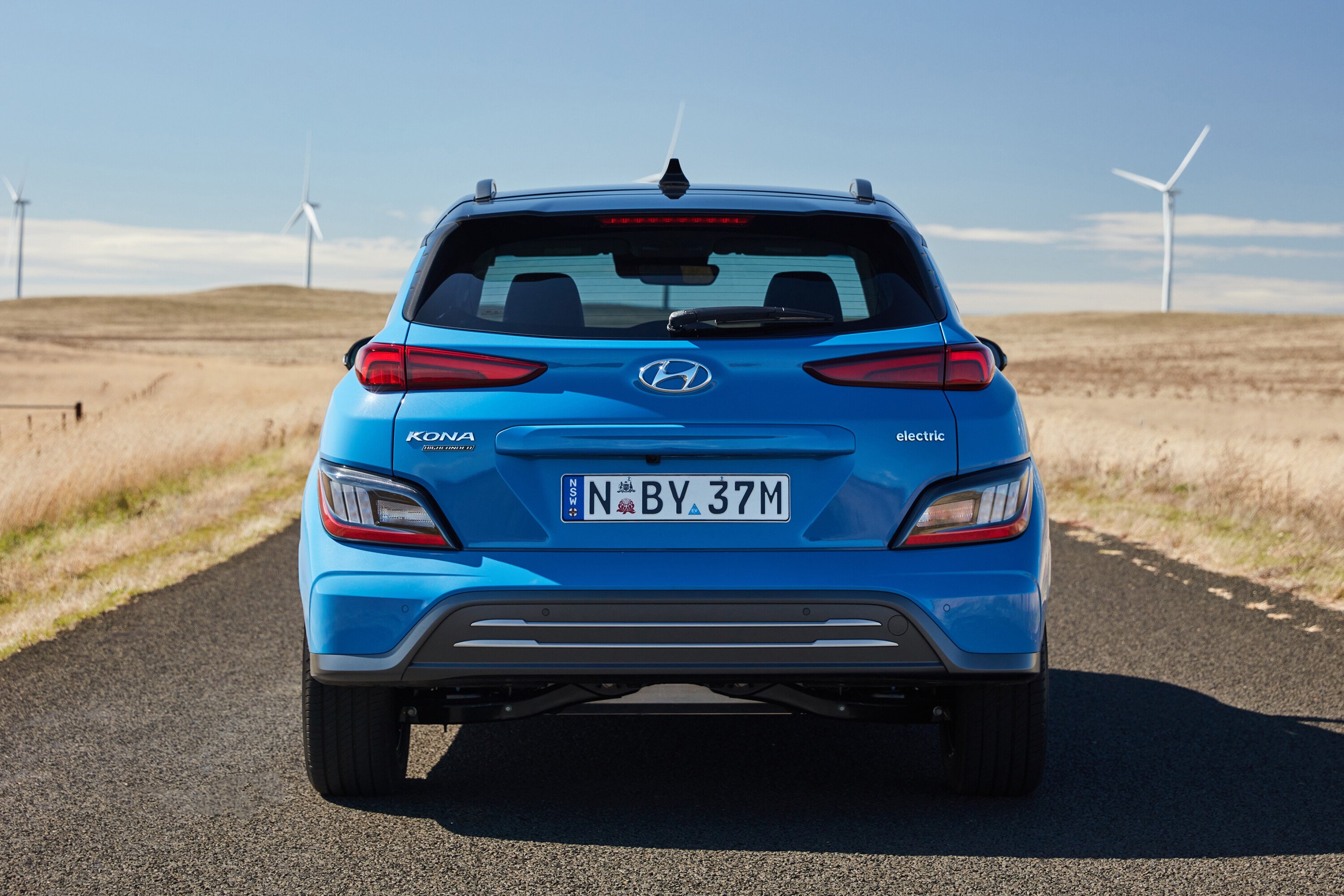
Meanwhile, the outgoing Hyundai Kona Electric impressively achieved better real-world range than the claimed strict EPA testing cycle, regardless of the weather conditions.
Therefore, this demonstrates that the impact on EV range varies depending on the efficiency of each model’s climate control system – but cooling cabins in the summer is generally less battery-draining than heating cabins in the winter.
More EV stories to help you choose the best car for your needs
- ? EV news, reviews, advice & guides
- ❓ Short & sweet: Your EV questions answered
- ⚡ New EVs: Everything coming to Australia
- ? Australia’s EVs with the longest driving range
- ⚖️ Best-value EVs by driving range
- ? How much do EVs cost in Australia?
- ? How much more expensive are EVs?
- ⚖️ Number crunching: Is it time to switch to an EV?
- ♻ Should you buy a used EV?
- ?️ Are EVs more expensive to insure?
- ? Costs compared: Charging an EV vs fueling a car
- ? EV charging guide
- ? Are there enough EV chargers in Oz?
- ?? EV servicing explained
- ? EV battery types explained
- ? When do EV batteries need replacing?
- ? Hydrogen v EVs: What’s best for Oz?
- ? How sustainable are EVs, really?
MORE advice stories to help you with buying and owning a car
New recall notices have been issued, affecting Ford, Lexus, Mercedes-Benz and Porsche vehicles.
The details of each recall, as published, are posted below.
1
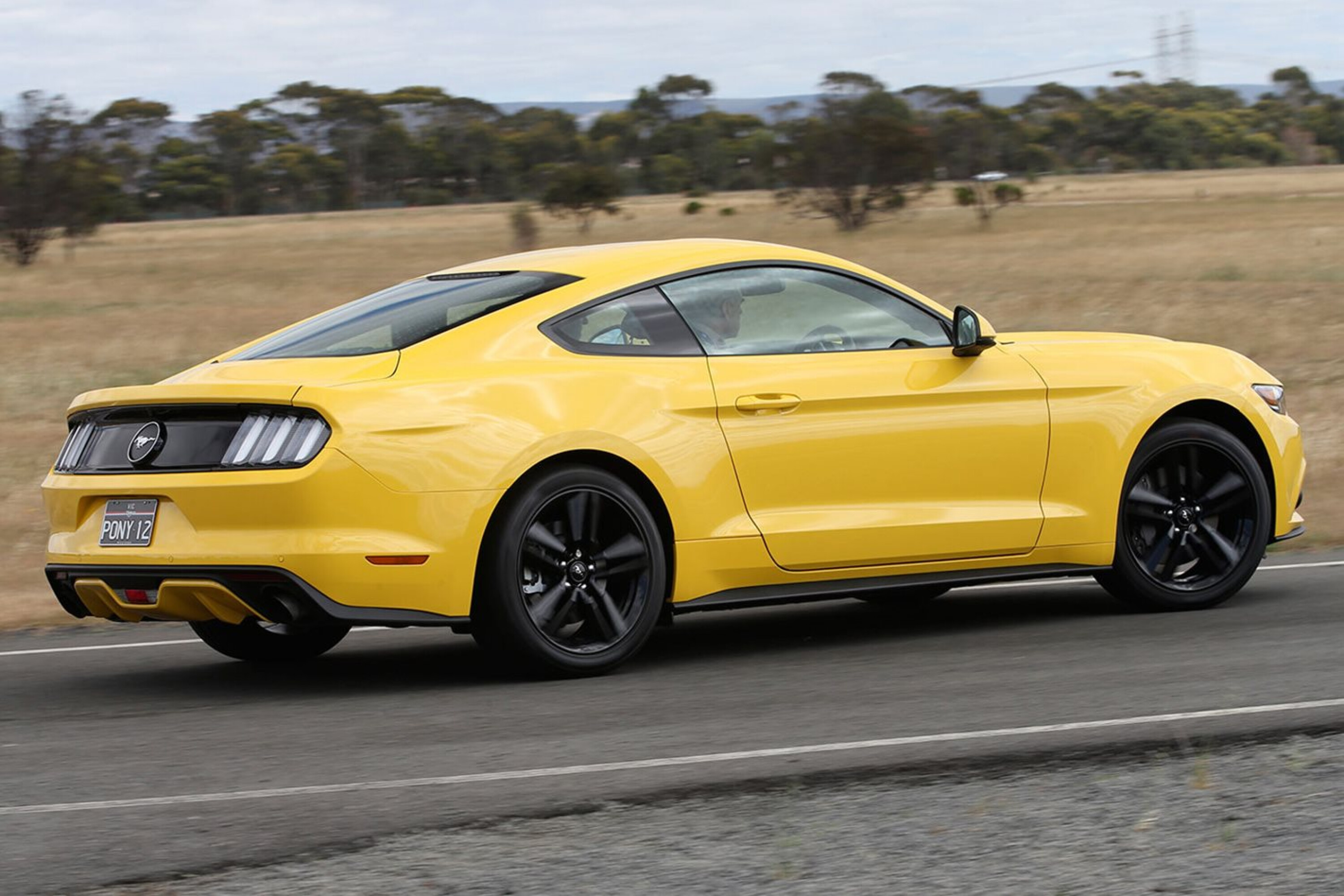
Recall: 2014-17 Ford Mustang
- Recall number: REC-005725
- Campaign number: 22S06
- Original published date: 17 July 2023
- Year range: 2014 – 2017
- Affected units: 18,840
- List of affected VINs (.csv file) [↗]
What are the defects?
A manufacturing defect in the wiring harness of the rear boot lid may cause intermittent operation of the rear-view camera, loss of satellite radio reception, inoperative luggage compartment lamp and/or inoperable luggage compartment release.
What are the hazards?
If the rear-view camera display does not continually display the rear-view image whilst reversing the vehicle, it could increase the risk of an accident, causing serious injury or death to any persons located behind the vehicle.
What should consumers do?
Ford will contact affected owners in writing requesting they make an appointment at their preferred Ford Authorised Dealership for inspection and repair of the luggage compartment lid wiring harness, free of charge.
For further information, contact any Authorised Ford Dealer or Ford’s Customer Relationship Centre on 13FORD (133 673).
Supplier details
FORD MOTOR COMPANY OF AUSTRALIA PTY LTD
Who should owners/operators contact for more information?
Ford Customer Relationship Centre
- Contact phone: 13 36 73
\n
1
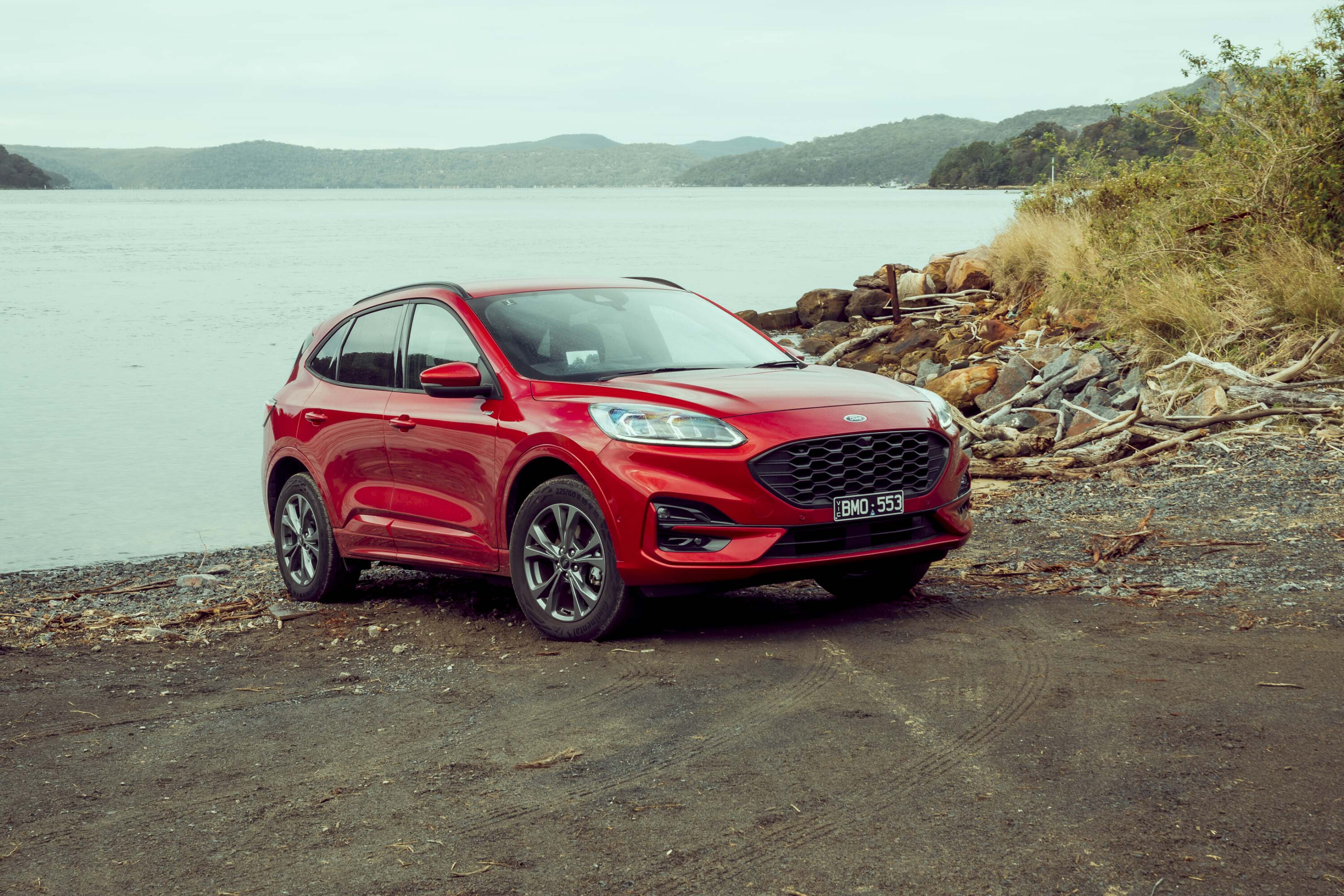
Recall: 2019-23 Ford Escape PHEV
- Recall number: REC-005721
- Campaign number: 23S27
- Original published date: 12 July 2023
- Year range: 2019 – 2023
- Affected units: 206
- List of affected VINs (.csv file) [↗]
- Variants: ST-Line PHEV
What are the defects?
Due to a manufacturing issue, the engine may fail prematurely. If this occurs, engine oil and/or fuel vapor could be released into the engine bay and accumulate in the presence of ignition source resulting in a vehicle fire.
What are the hazards?
A vehicle fire could increase the risk of injury or death to vehicle occupants, other road users and bystanders, and/or damage to property.
What should consumers do?
Note: If the vehicle’s engine exhibits an unusual noise, experiences a reduction in available engine power, generates smoke from engine compartment and/or oil smoke odour is identified when driving, drivers should stop the vehicle where is safe to do so, turn off the ignition, evacuate the vehicle as soon as possible.
When parts become available, Ford will contact affected owners in writing requesting they make an appointment at their preferred Ford Authorised Dealership for the repair, free of charge.
If you have concerns about continuing to drive your vehicle prior to parts becoming available, please contact your Ford dealer for assistance.
Supplier details
FORD MOTOR COMPANY OF AUSTRALIA PTY LTD
Who should owners/operators contact for more information?
Ford Customer Relationship Centre
- Contact phone: 13 36 73
\n
1
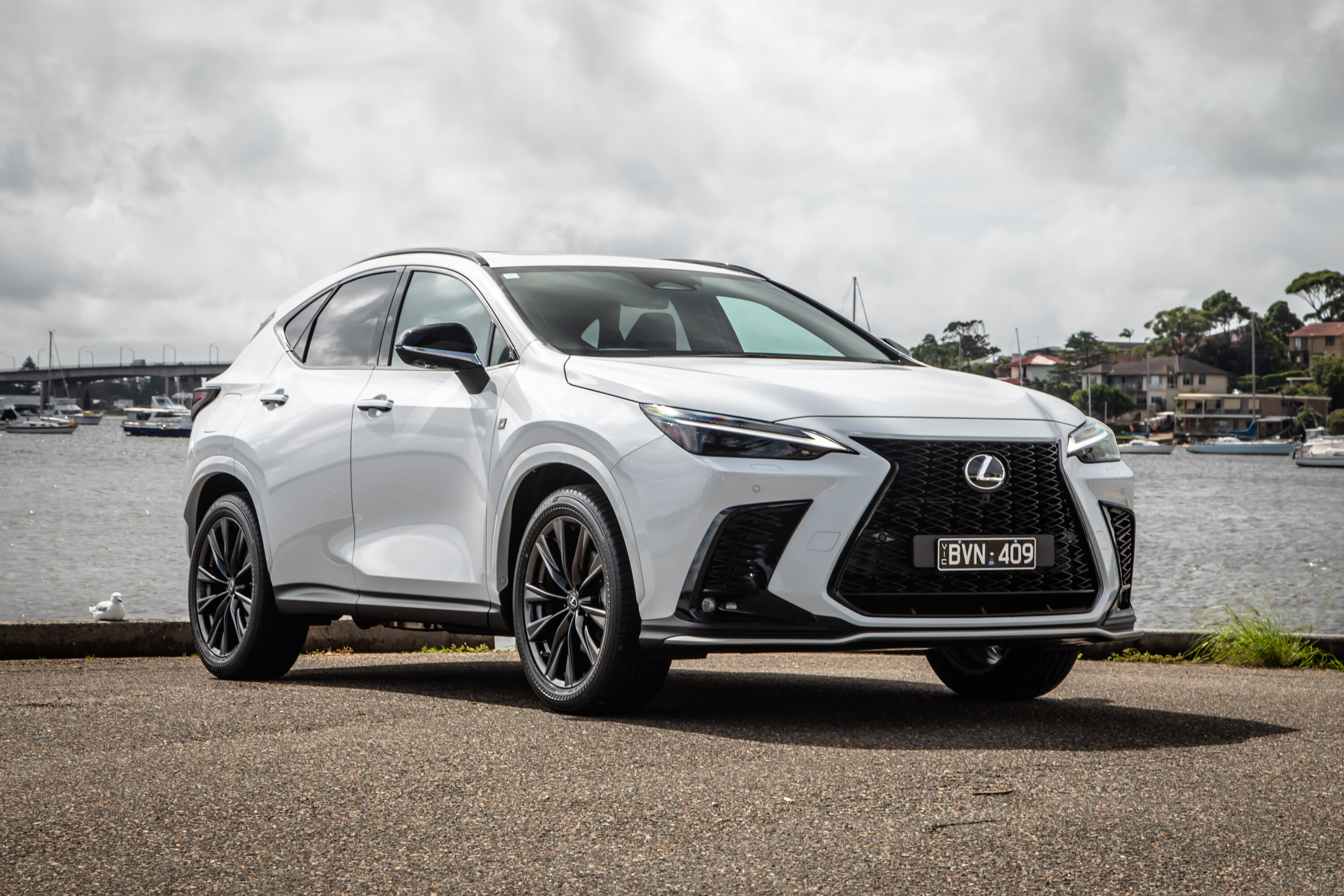
Recall: 2021-22 Lexus NX450h+
- Recall number: REC-005731
- Campaign number: YGG27
- Original published date: 20 July 2023
- Year range: 2021 – 2022
- Affected units: 154
- List of affected VINs (.csv file) [↗]
- Variants: NX450h+ F Sport 2.5L PHEV Auto CVT
What are the defects?
Due to a manufacturing defect, the DC-DC converter that supports charging the 12V battery may short circuit and overheat resulting in a vehicle fire.
What are the hazards?
A vehicle fire increases the risk of causing serious injuries or death to the vehicle occupants, other road users and bystanders and/or damage to property.
What should consumers do?
Lexus will contact affected owners in writing, requesting they make an appointment at their preferred Lexus dealer who will replace the DC-DC converter, free of charge.
To find a local dealer, visit https://www.lexus.com.au/contact/find-a-dealer [↗]
For further information, consumers can contact their preferred Lexus dealer or contact the Lexus Customer Assistance Centre on 1800 023 009 (Monday to Friday, 8am-6pm AEST).
Supplier details
TOYOTA MOTOR CORPORATION AUSTRALIA LIMITED
Who should owners/operators contact for more information?
Lexus Customer Assistance Centre
- Contact phone: 1800 023 009
- Contact email: [email protected] [↗]
- Contact website: https://www.lexus.com.au/ [↗]
\n
1
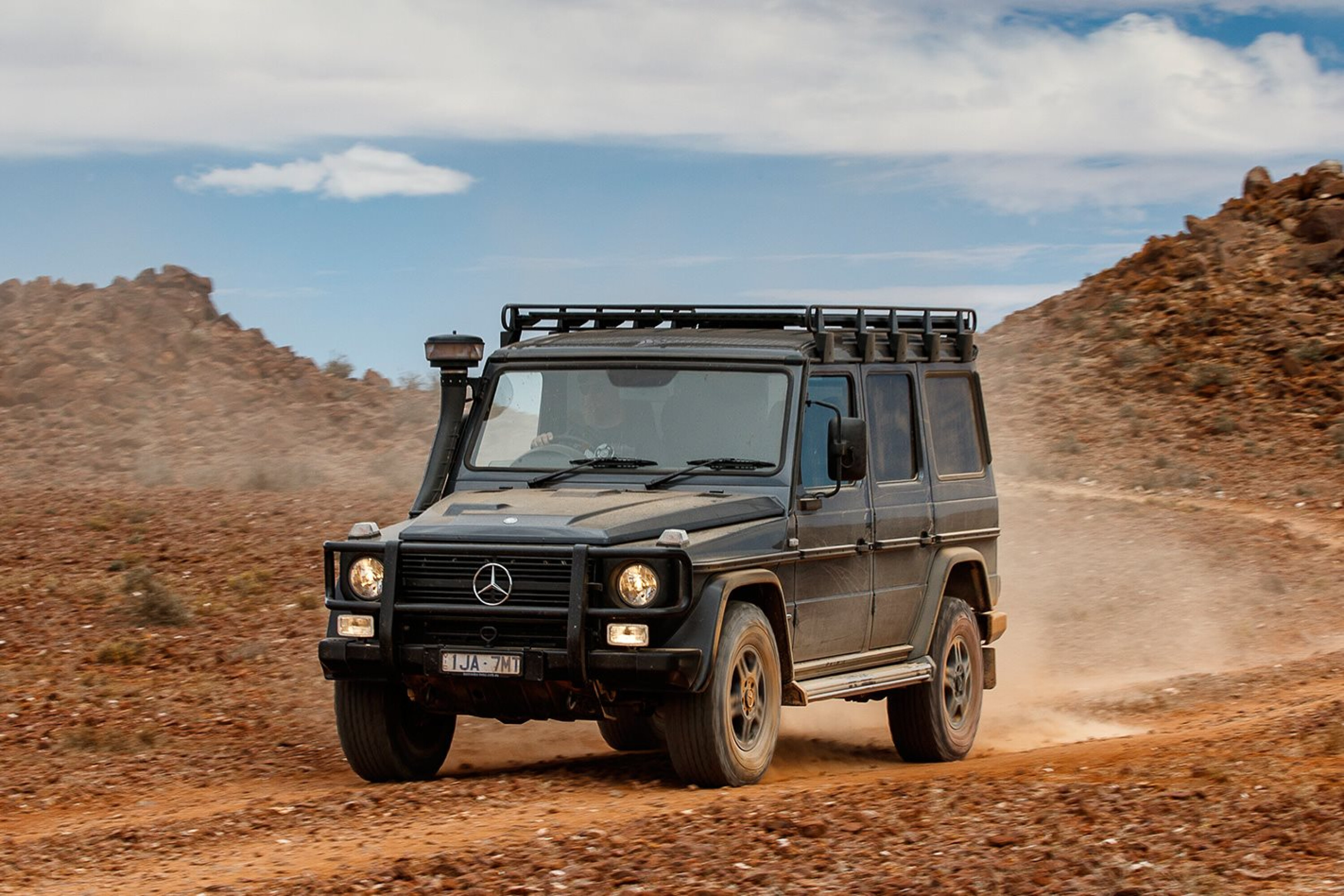
Recall: 2013-18 Mercedes-Benz G300
- Recall number: REC-005726
- Campaign number: RC3157
- Original published date: 17 July 2023
- Year range: 2013 – 2018
- Affected units: 117
- List of affected VINs (.csv file) [↗]
What are the defects?
Due to a manufacturing defect, the oil supply to the rear axle drive shaft bearing may not meet specification. As a result, the bearing may overheat and seize causing a loss of motive power whilst driving and/or an oil leak from the rear axle.
What are the hazards?
A loss of motive power and/or an oil leak onto the road could increase the risk of an accident causing injury or death to vehicle occupants and other road users.
What should consumers do?
Owners of affected vehicles can contact their most convenient Mercedes-Benz dealership to have the vehicle repaired, free of charge.
A full list of authorised dealerships can be found at www.mercedes-benz.com.au [↗]
Alternatively, please use the Mercedes-Benz online booking service.
www.mercedes-benz.com.au/servicebooking [↗]
Supplier details
MERCEDES-BENZ AUSTRALIA/PACIFIC PTY LTD
Who should owners/operators contact for more information?
Customer Assistance Centre
- Contact phone: 1300 300 896
- Contact email: [email protected] [↗]
- Contact website: https://www.mercedes-benz.com.au/ [↗]
\n
1
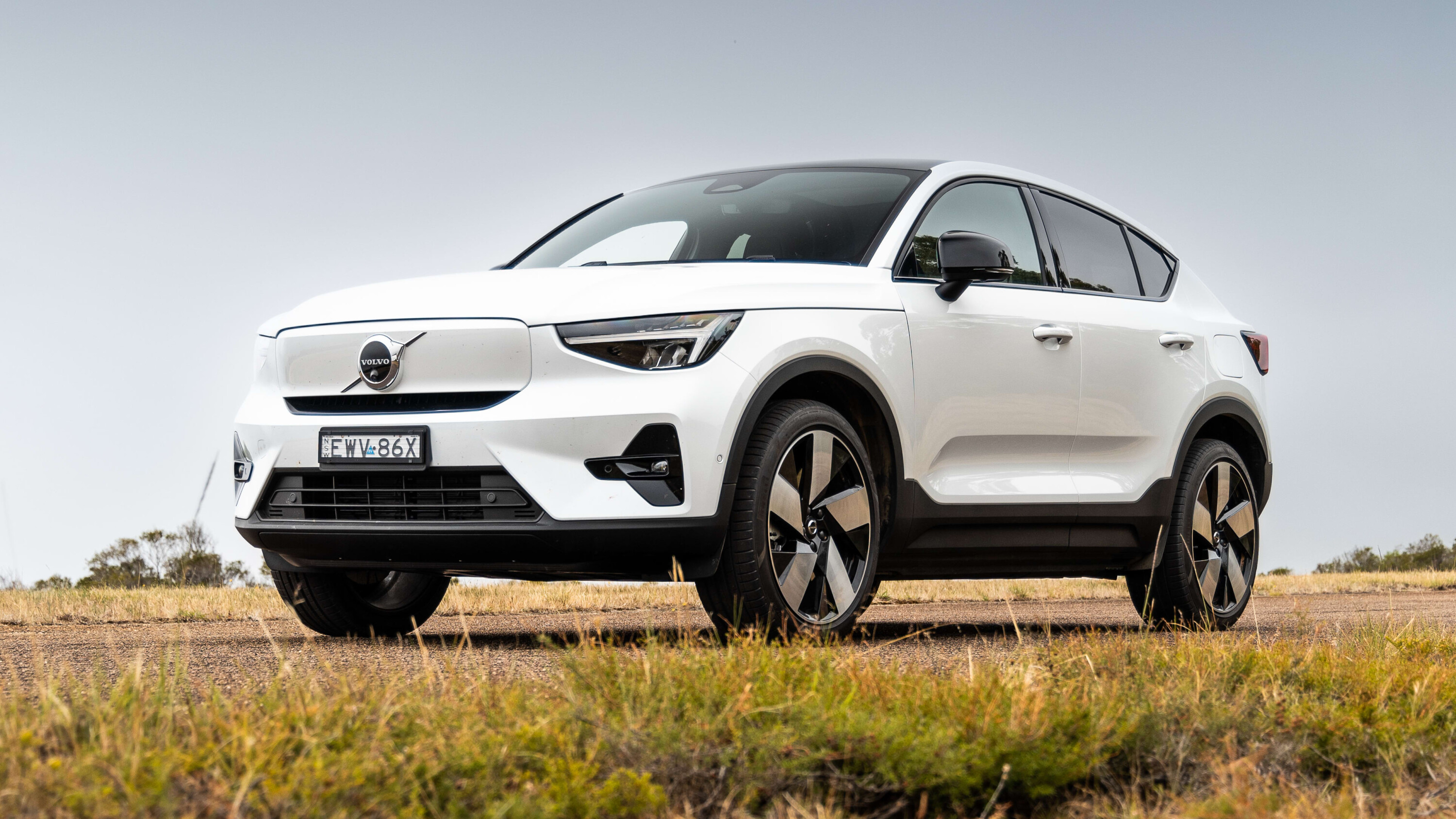
Recall: 2022-23 Volvo XC40, C40 Recharge
- Recall number: REC-005727
- Campaign number: R10244
- Original published date: 20 July 2023
- Year range: 2022 – 2023
- Affected units: 52
- Document 1: List of affected VINs (.csv file) [↗]
- Document 2: List of affected VINs (.csv file) [↗]
- Variants: All variants within this model
What are the defects?
Due to a manufacturing defect, the left front suspension ball joint may have been incorrectly attached. This may result in a loss of vehicle control.
What are the hazards?
A loss of vehicle control increases the risk of an accident causing serious injuries or death to the vehicle occupants and/or other road users.
What should consumers do?
Owners of affected vehicles can contact their nearest authorised Volvo dealer to have the vehicle inspected as soon as possible and have the work carried out free of charge.
Supplier details
Volvo Car Corporation
Who should owners/operators contact for more information?
Volvo Car Australia Customer Care Centre
- Contact phone: 1300 787 802
- Contact email: [email protected] [↗]
- Contact website: https://www.volvocars.com.au/ [↗]
\n
1
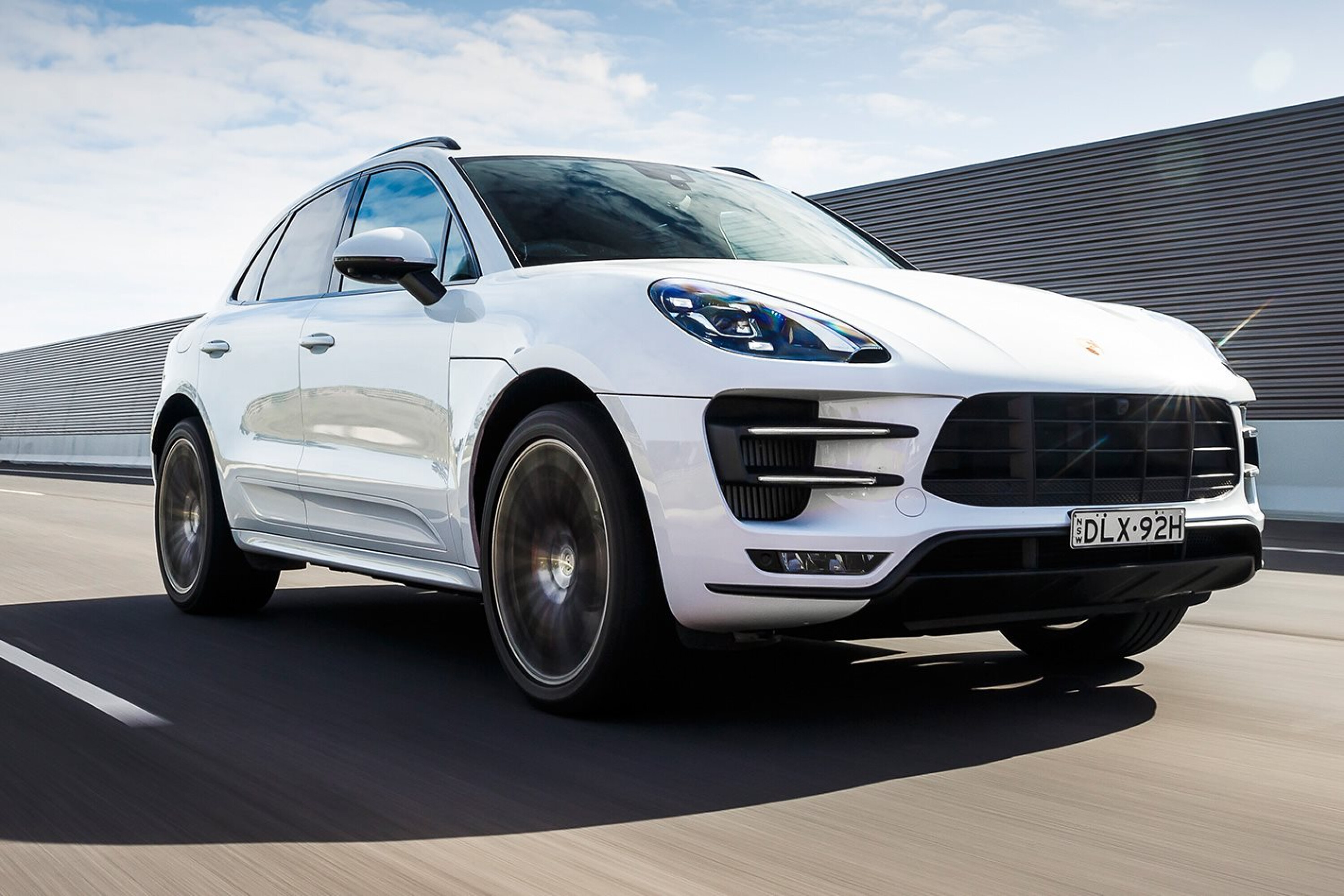
Recall: 2014-23 Porsche Macan and Panamera
- Recall number: REC-005728
- Campaign number: APA9
- Original published date: 19 July 2023
- Year range: 2014 – 2023
- Affected units: 4
- List of affected VINs (.csv file) [↗]
- Variants: Macan (95B), Panamera (971)
What are the defects?
Due to a manufacturing issue, the screw connection to the rear seat belts may not have been tightened sufficiently. As a result, the seat belts may not operate as intended.
What are the hazards?
In the event of an accident, a seat belt not operating as intended could increase the risk of injury or death to vehicle occupants.
What should consumers do?
Owners of affected vehicles can contact their preferred Official Porsche Centre to arrange an inspection and repair of their vehicle, free of charge.
Owners can find their nearest Porsche dealer at https://www.porsche.com/australia/dealersearch/ [↗].
Supplier details
PORSCHE CARS AUSTRALIA PTY. LTD.
Who should owners/operators contact for more information?
PORSCHE CARS AUSTRALIA PTY. LTD.
- Contact phone: 1800 659 911
- Contact website: https://www.porsche.com/australia/ [↗]
\n
More links to help you with your car recall
- What is a recall?
- What to do if your car is recalled
- Why a car recall isn’t all bad news
- What is a vehicle identification number (VIN)?
- All ANCAP & vehicle safety stories
Travelling to China to find out what’s coming down the pipe for the MG brand, Dylan Campbell spoke with MG styling chief Oleg Son about modern and retro design, the next MG 3 hatch, and how much he hates on-screen air-con controls.
Here are some the key quotes from that trip.
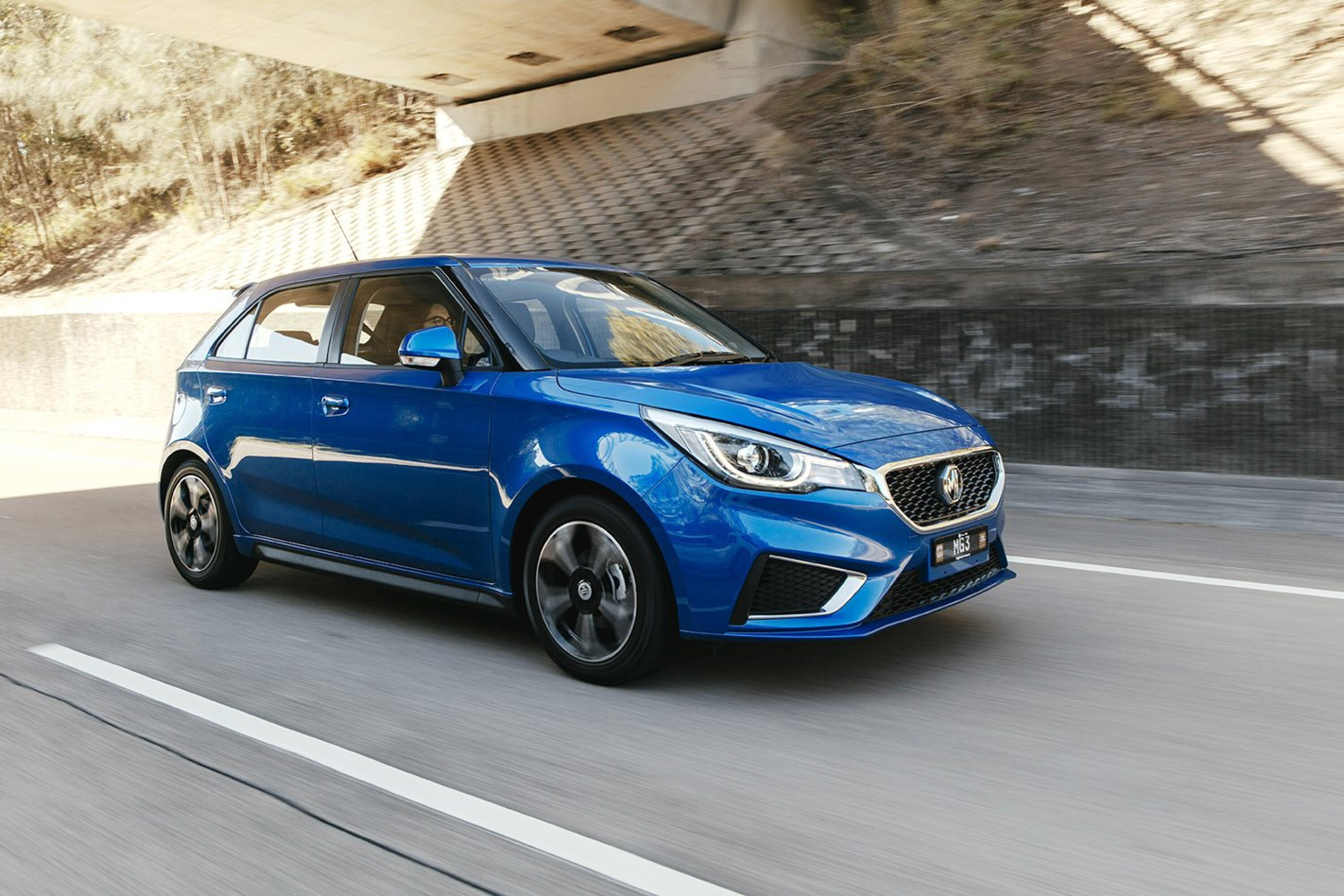
On the new MG 4 EV, described as the brand’s first “global car” since it came under Chinese ownership in 2005.
Oleg Son: It [MG 4] was the first, as far as I know, car designed from the beginning as a car dedicated for overseas. [Journalist requests clarification.]
Yes, global car, but especially dedicated to the European market because of the roots of the MG brand. There is a big slice of the market potential in the UK and of course other parts of Europe. So, this is something they had in mind from the very beginning.
1
On a new generation of the MG 3, which launched overseas in 2011 before reaching Australia in 2016. A replacement is well past due, by most standards.
Oleg Son: This car [new MG 3], as far as I know, will be launched next year. I came to this company in 2020, and this car was already well on its way.
It’s a different platform [to MG 4], but we have a scalable platform, so we choose the platform depending on the cost. Not every platform is suitable for every car.
Although not yet confirmed officially, the new MG 3 is expected to come to Australia in 2024, remaining as the brand’s most affordable model.
On designing for the future while being mindful of MG’s rich history – with a little dig on the side at today’s many retro-obsessed brands.
If you do that, you’re going nowhere.
Oleg Son: I think it doesn’t happen that way [take design influence from old MGs to new MG 4]. It’s always what people think, but it doesn’t happen that way. It’s a fresh car and it’s an EV. It’s a totally new-generation EV with a dedicated high-tech platform, style is completely different. So, they launched something that would stand out for people to know this is the new MG EV era.
1
We needed something to tell the world that we are back – and we are reconnecting with our past, with our roots, with our DNA.
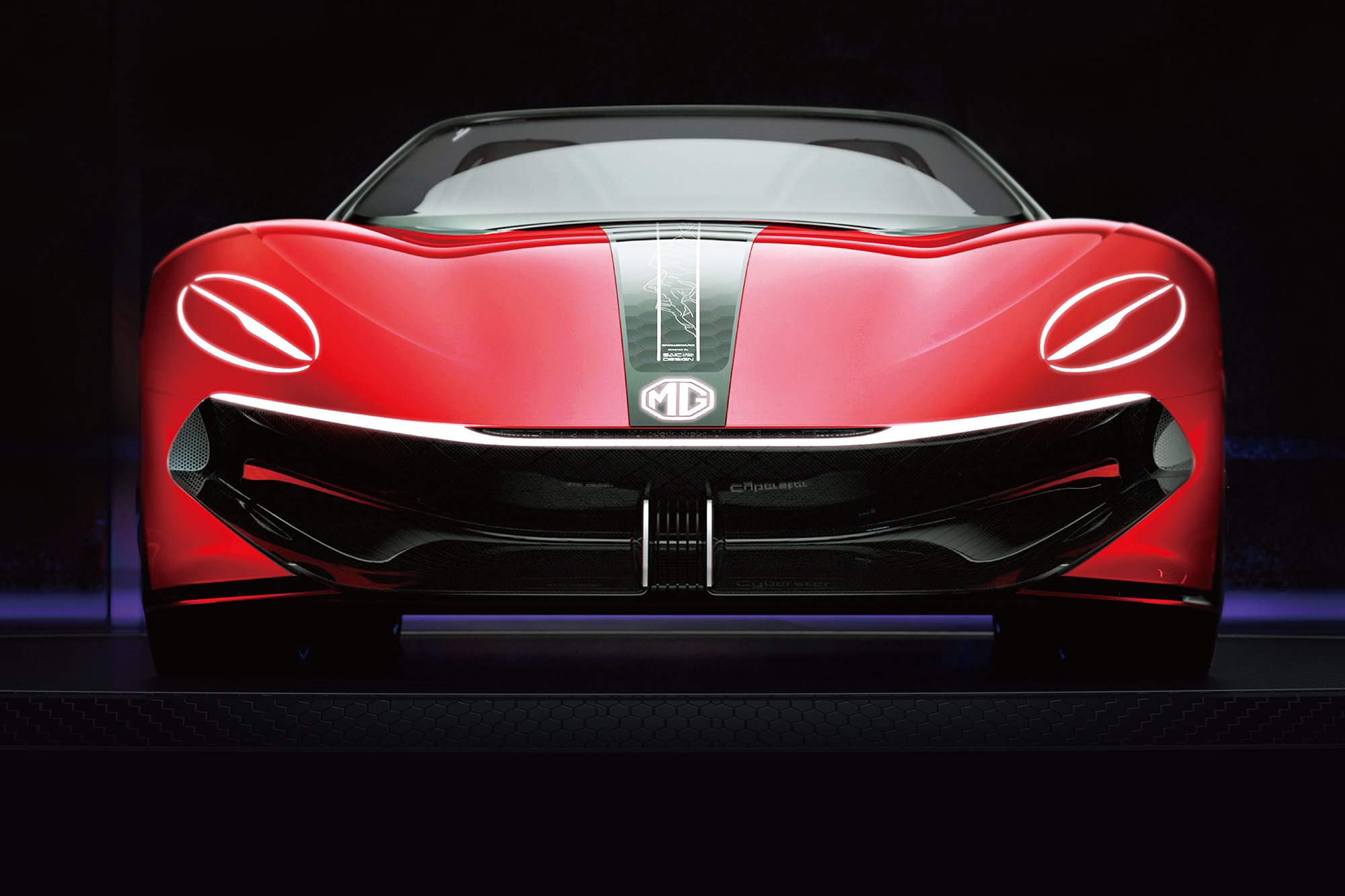
The Cyberster production car illustrates what we, myself, the team and the company wants to do… But, we needed something to tell the world that we are back – and we are reconnecting with our past, with our roots, with our DNA.
But, again, it doesn’t always happen like this. Yes, of course we look at the past, but it’s not like “this car had this kind of lamp, so we can be inspired by that” If you do that, you’re going nowhere.
People so many years ago, before the war for example, weren’t thinking so much about what their critics were thinking [about clean-sheet new designs]. Otherwise, we end up doing retro cars – which is not what we want to do. I want to be as modern as possible.
On reinventing the MG brand for the future, under Chinese ownership, with a huge Chinese market to consider, and a global market to be conquested.
We want MG cars to be glamorous again – and for people to say ‘this is so amazing’
Oleg Son: I think MG is the most international brand by definition, because it’s sold outside China. And because of that, it makes sense to reconnect the brand with the past, because the past is important. (Despite above comments about retro design…)
And also because now, and next year, we’re going to celebrate the 100-year anniversary of the brand. So, all of this connects together… The Cyberster was greenlighted and became a production car. It was the best way for us to tell the world we are back and we want to be strong. We are confident and we want MG cars to be glamorous again – and for people to say ‘this is so amazing’.
China is a huge market… you see the competition in China, it’s crazy. It’s a war. And, you have so many brands, the competition is so strong and fierce. It’s a dangerous place. So, how do you survive? You have to come up with the right pricing, you have to come up with the right product. But, at the end of the day, what makes the difference between [carmakers] is branding and storytelling – that is something very important.
You have so many brands [in China], the competition is so strong and fierce. It’s a dangerous place.
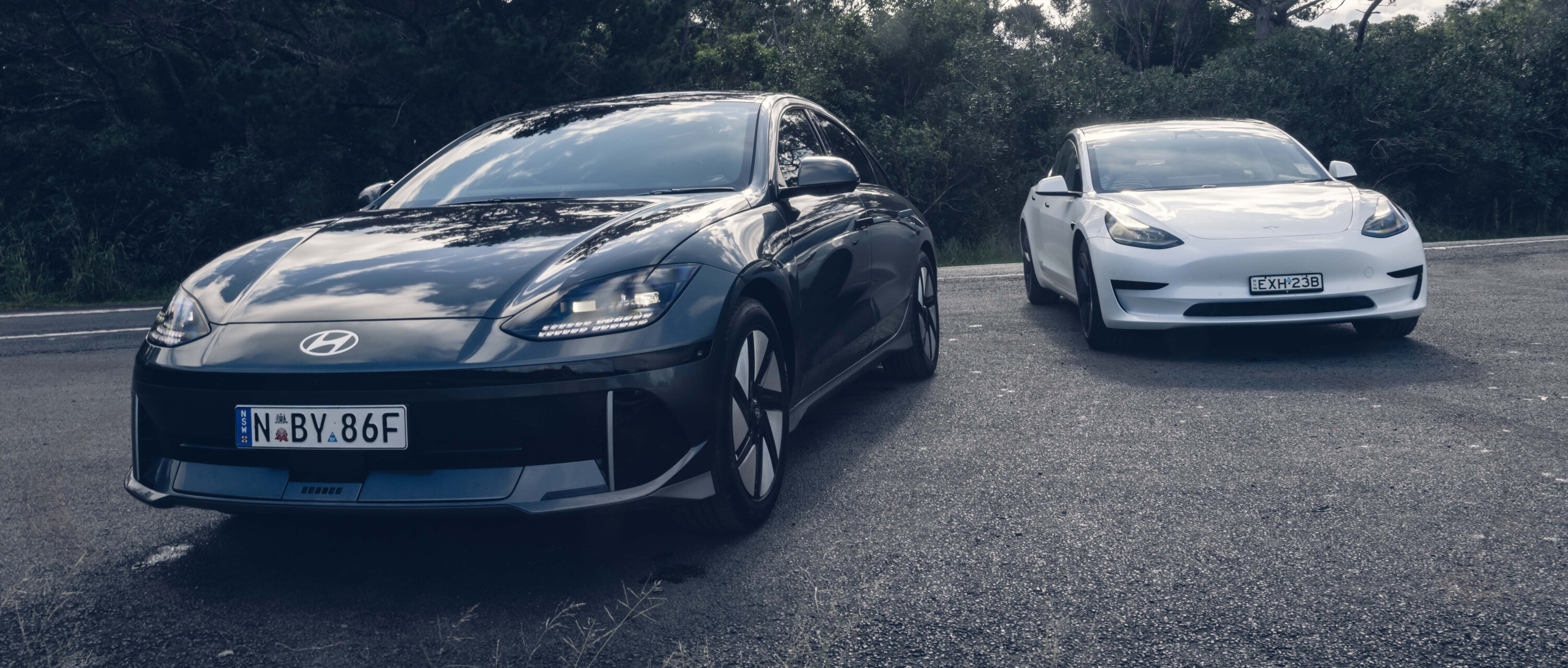
This is why, for example, Tesla is dominating the market because they have a story. Although it’s quite a young company, somehow it has a story… But, we have heritage, we have a DNA, we have a history. So, I think that, going back to MG, we should build on that, we should benefit from that, we should be aware of who we are – and we should also redefine who we are according to where we come from.
MG is the brand we want to push outside of China… We try to do our best in projects to design globally. That’s for sure.
1
[Unlike Tesla] we have heritage, we have a DNA, we have a history.
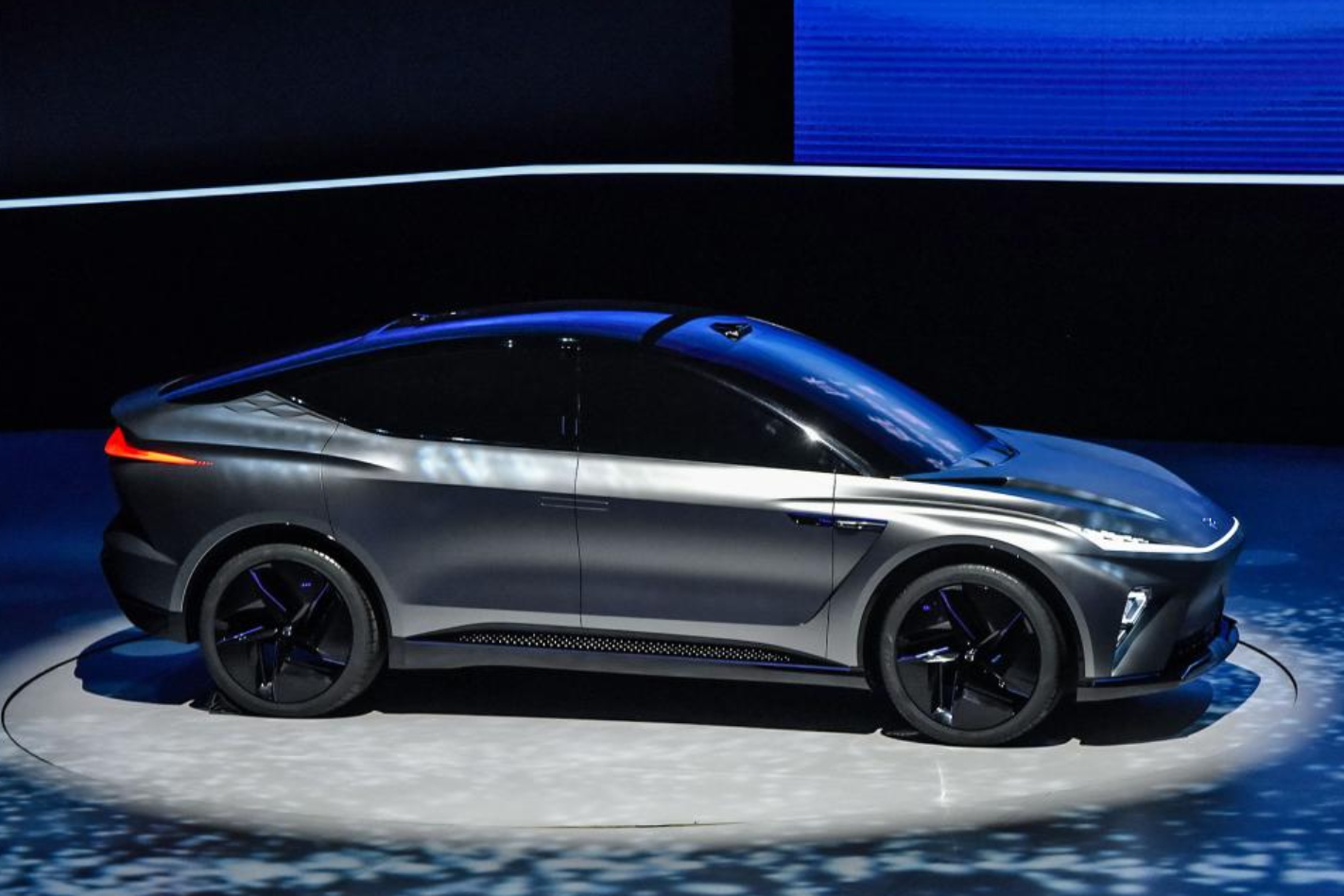
What I would like to achieve, and this may be beyond my power… but I would like the brand awareness to come back. For example, in China when you talk to customers… some Chinese people don’t even know MG.
Some people think MG is a Chinese brand, they don’t know anything about the story. Some people know it was acquired and bought by the SAIC group. Some people know a little about the origins from Britain and the UK; some don’t.
So, it is very blurred for China. When you go outside of China for example, you have a lot of people who are older, who love MG, they know about MG. But, they love ICE petrol cars and cannot except MG to go through the EV era. We have to go beyond that.
1
On going from design to engineering and production in just two years.
It’s about the ability and condition for people to make decisions… you have to decide [with no hesitations].
Oleg Son: On the global market for OEMs, it used to be five years, then it became four years. Now, it’s three years, and at SAIC it’s two years… more or less depending on the complexity [from nothing to production car].
Kia now is three years, but it took a lot of time for them to achieve that because when I was at Kia, I was pushing for that to happen, and the Korean engineer was like “uh, the reliability, the quality, we cannot achieve that”. They’ve now cut it by one year, but that’s still too long. Sometimes when it’s short, it’s better… It’s about the ability and condition for people to make decisions… you have to decide [with no hesitations].
1
On the curse, the scourge of heating and air-conditioning controls migrating to on-screen controls.
I don’t like that.
Oleg Son: The situation is very clear now: when we are doing a car, generally that kind of function will be incorporated into the screen – when it’s for China. Because, Chinese younger people are used to that and they can accept it quite easily.
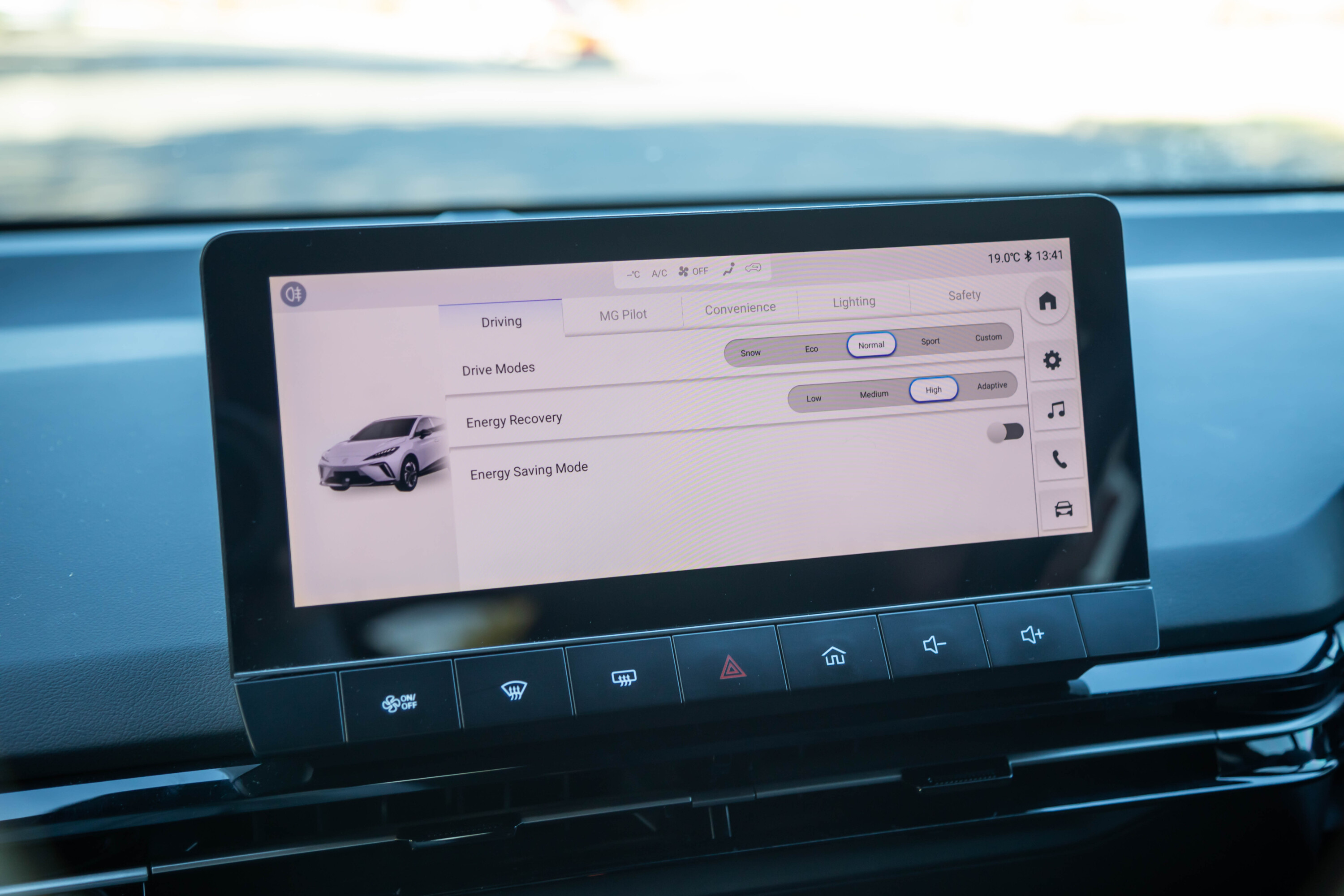
But, when we do the same car for overseas markets, we take physical shortcut buttons… below the screen, in order for us European-Western people to have the right physical shortcut accessible any time. So, that’s the differences we have to kind of consider.
And, if you are a sports brand focusing on efficiency, speed… you cannot spend too much time on the screen to find out where the heating control is. You just have to know, even without looking. So, we are doing that.
‘Physical buttons’
Oleg’s comments above may sound encouraging, but if the MG 4 is anything to go by, they’re also a little misleading.
While the MG 4 does have physical buttons, they’re merely shortcuts beneath the screen. The actual controls for heating and air-conditioning are all on the screen, as with so many cars today.
MORE
Everything MG
UPDATE: BMW X1 M35i priced from $90,900 before on-road costs.
BMW’s X1 performance flagship will hit Australian showrooms in the fourth quarter (October-December inclusive) of this year from nearly $100K once on-road costs are paid.
For context, the X1 M35i’s direct rival from Mercedes-AMG, the GLA 35, starts at $97,800 before on-road costs.
The sole X1 performance variant sits above the sDrive18i, xDrive20i and iX1 electric variant. The M35i features 15mm lower springs, a sportier body kit, racier interior colour choices, all-wheel drive, and a 233kW 2.0-litre turbo-petrol four-cylinder.
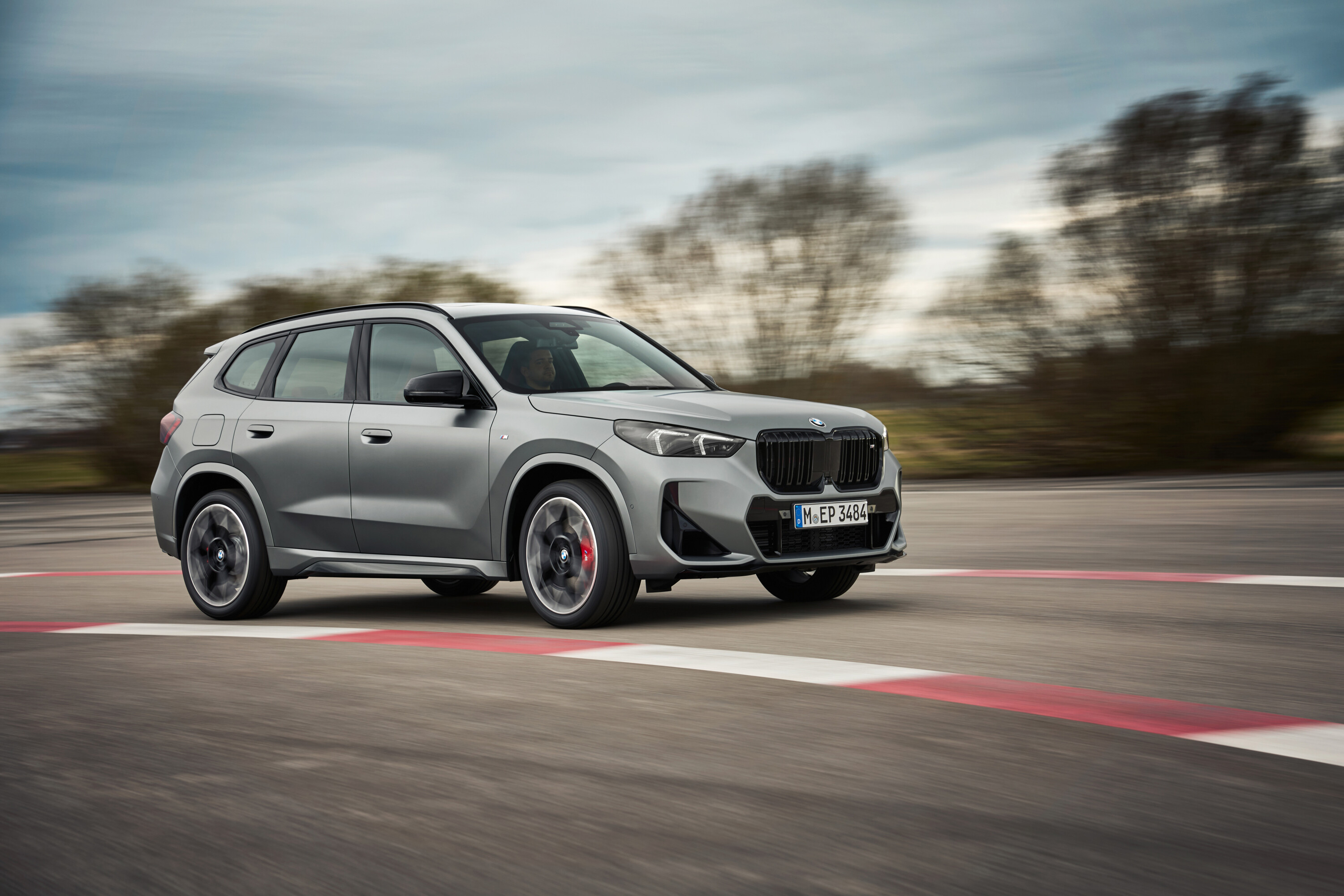
1
Our original story, below, continues unchanged
June: BMW X1 M35i revealed as sporty compact SUV flagship
The 2024 BMW X1 M35i has been unveiled as the latest and sportiest addition to the German car maker’s compact luxury SUV range.
Snapshot
- Fastest X1 model
- Extensive M Sport treatment inside and out
- Direct rival to Merc’s GLA35 – expected to cost more than $82,990 iX1
Munich’s direct rival for the Mercedes-AMG GLA35 borrows its 2.0-litre four-cylinder turbo engine from other compact BMWs, including the 2 Series coupe, to become the fastest X1 currently offered.
The X1 M35i produces 233kW and 400Nm, propelling the sporty SUV to 100km/h from a standstill in a quoted 5.4 seconds and to a top speed of 250km/h.

1
The performance pips BMW’s electric X1 variant, the iX1, by two-tenths, though it places the M35i behind the 5.1-second claim of its most direct rival, the Mercedes-AMG GLA35, which costs $97,800 before on-road costs.
There are also cheaper and faster contenders in the form of the Cupra Formentor VZx and Volkswagen T-Roc R.
Power is sent to all four wheels via a seven-speed torque converter auto, and the M35i includes a mechanical limited-slip front differential plus a Boost function that puts the engine and suspension into their sportiest modes when the left-hand paddle lever is held for one second.
1
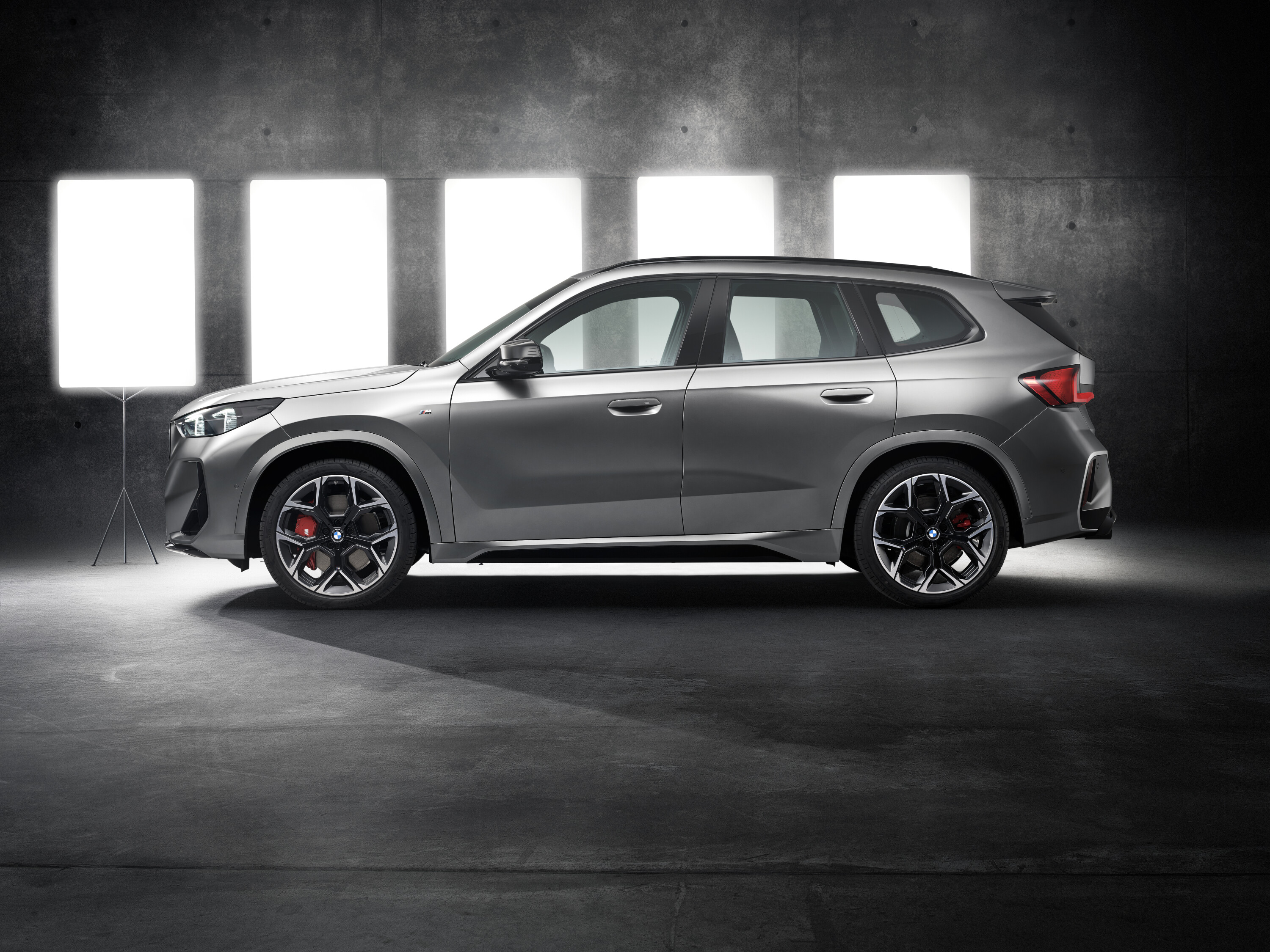
Adaptive dampers are standard and the M35i rides 15mm lower than other X1 models. For Australia, 20-inch wheels are standard instead of the 19s in Europe, with optional M Compound brakes.
An M Sport body kit comprising elements such as a roof spoiler, front splitter, M kidney grille with vertical bars, and two sets of dual exhaust pipes ensure the M35i is easily distinguished from the X1 sDrive18i and xDrive20i models.
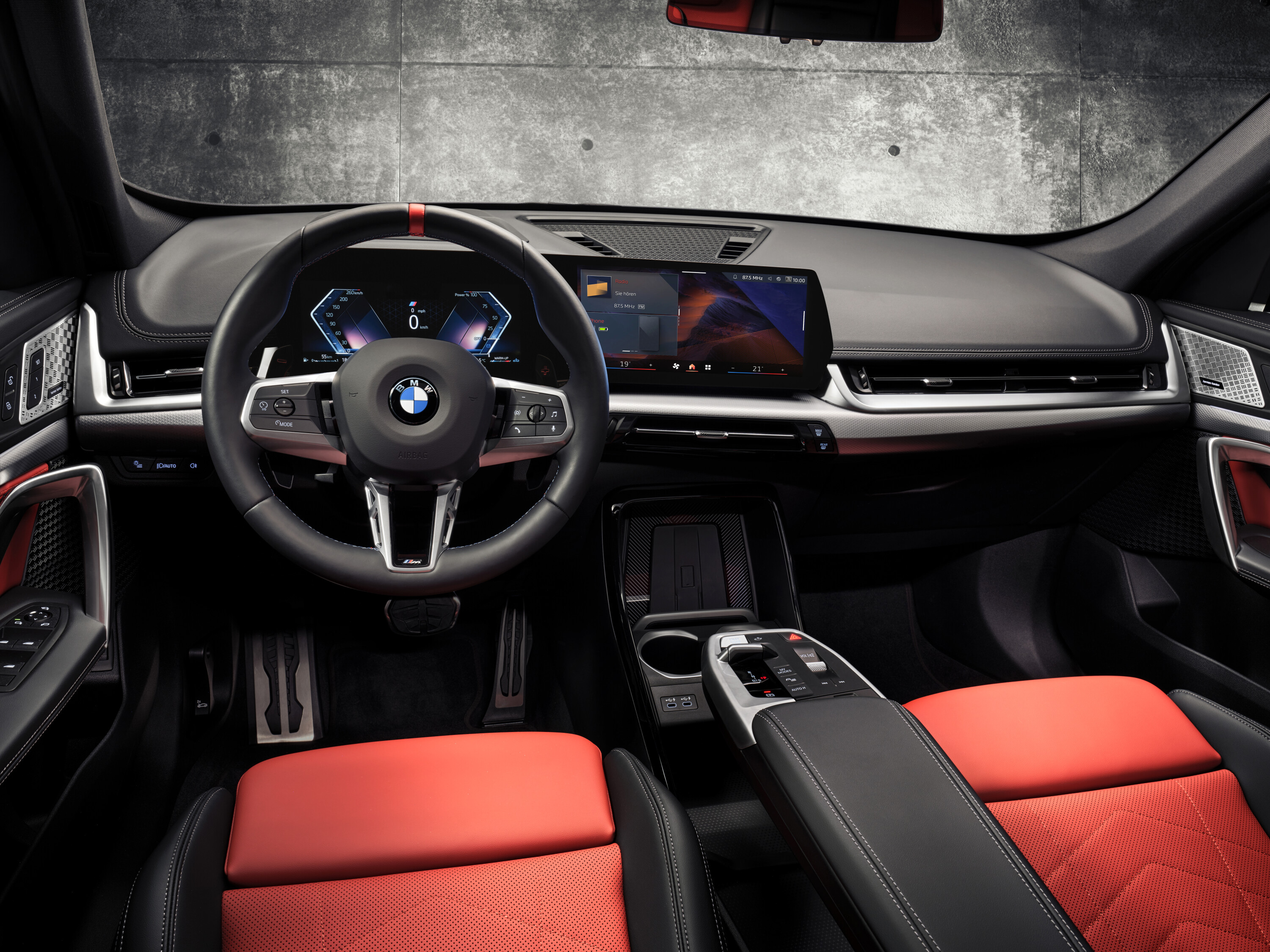
The M35i’s interior also benefits from the M Sport treatment, with an M leather steering wheel featuring a red 12 o’clock positional stripe, M-specific paddles with red up/down markers, red stitching throughout, and heavily bolstered leather sports seats.
1
A 12-speaker Harman Kardon audio system is part of the standard equipment.
Striking, red/black M Sport seats are another option.
The 2024 BMW X1 M35i will sit above the $60,400 sDrive18i and $70,400 xDrive20i, and is also expected to cost more than the $82,990 iX1 to become the X1 flagship.
BMW Australia says it will confirm pricing close to the X1 M35i’s Q4 launch.
MORE
Everything BMW
July: BMW X1 M35i priced from $90,900 before on-road costs
The most powerful X1 variant is also the dearest, at nearly $100K once on the road. See the pricing at the link below, or continue reading for X1 range pricing and features.
| Variant | Pricing (before on-road costs) |
|---|---|
| sDrive18i | $53,900 |
| xDrive20i | $65,900 |
| iX1 xDrive 30 | $82,900 |
| M35i xDrive | $90,900 |
June: BMW X1 M35i revealed, Australia confirmed
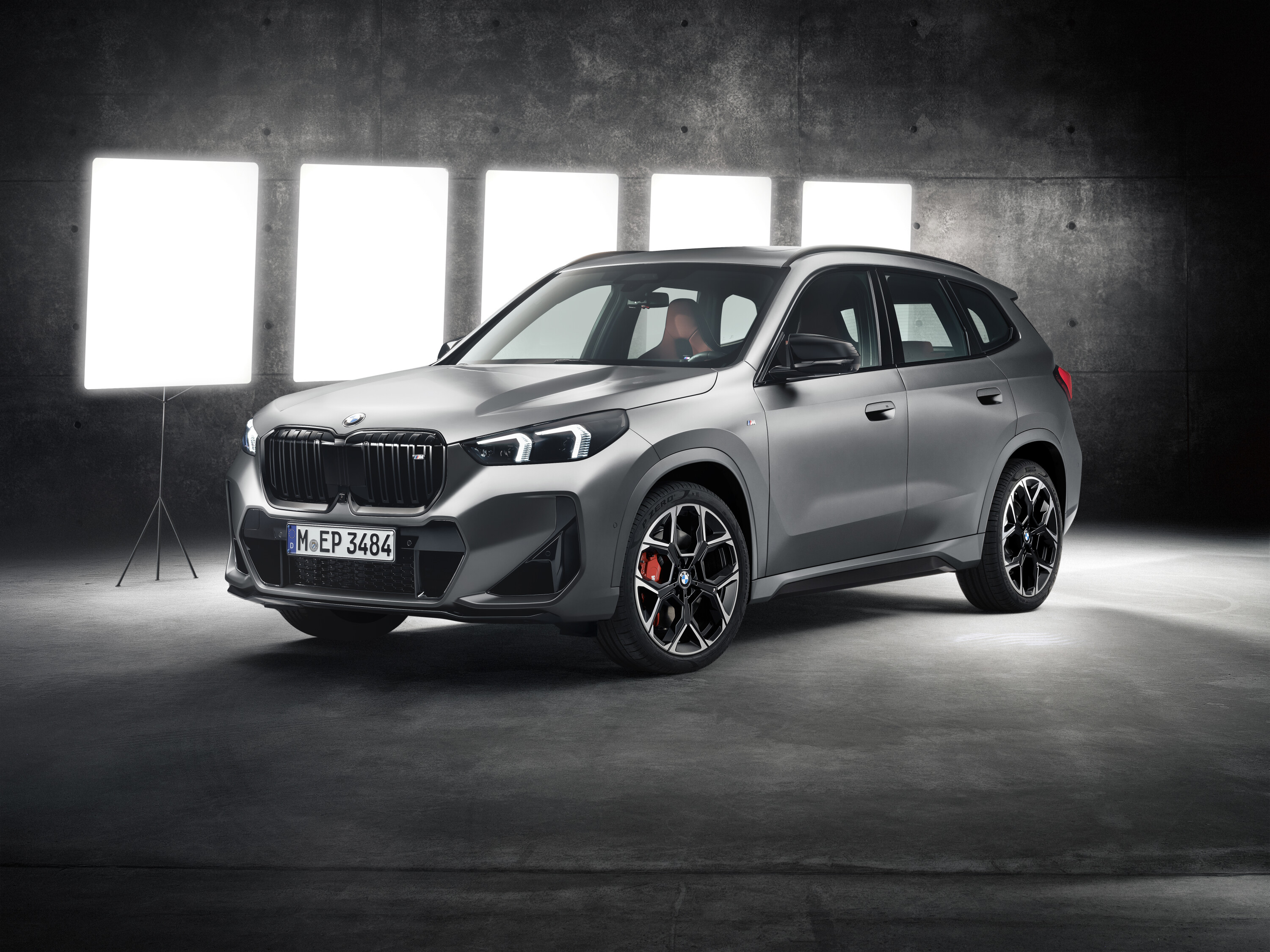
BMW has unveiled a new flagship in its compact X1 range, expected to be priced above the $82,990 iX1 electric SUV.
Learn all about the performance-focused X1 M35i at the link below, and continue reading here for wider 2023 X1 range pricing and features.
1
March: New BMW X1 models driven
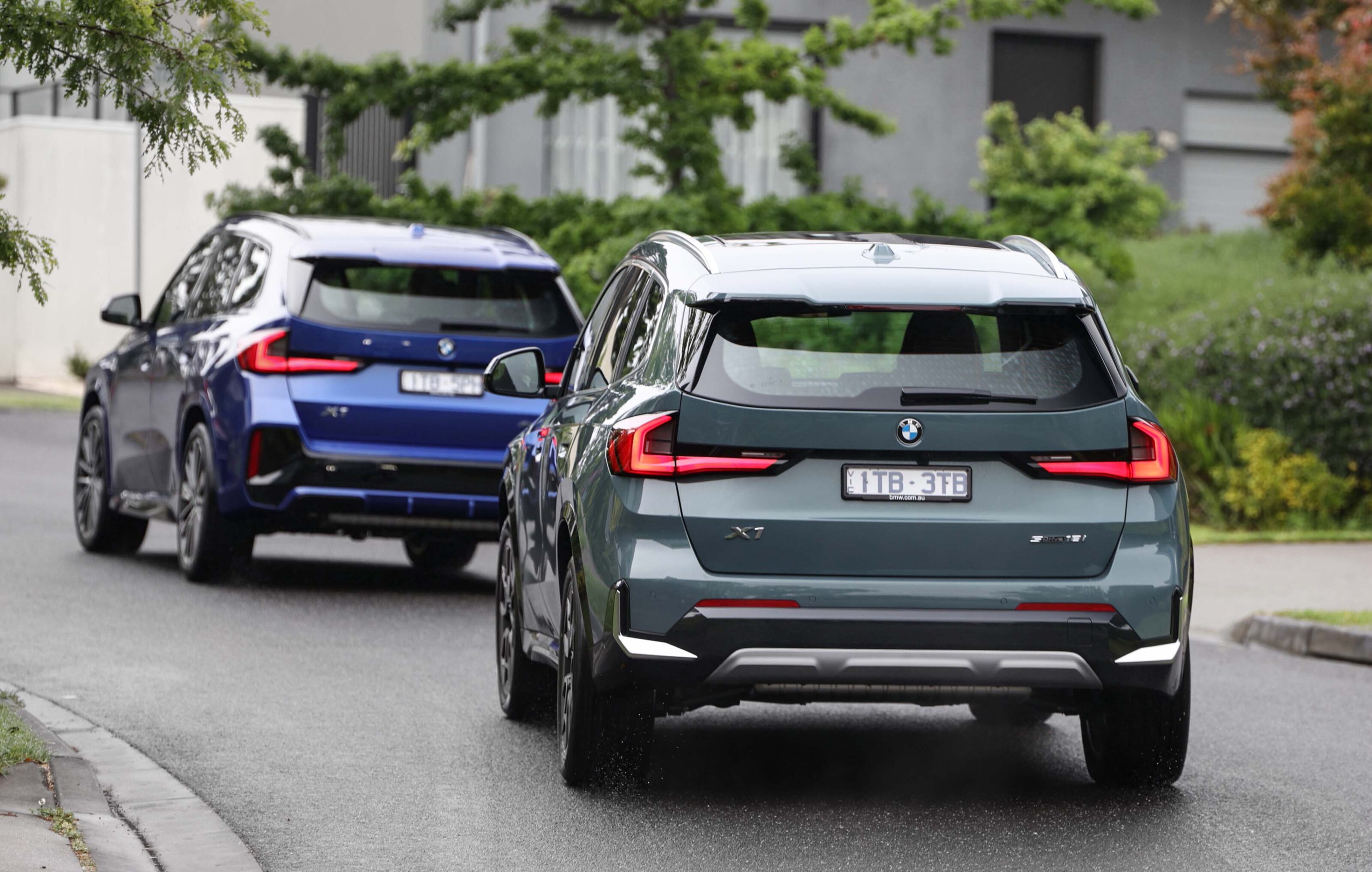
The new 2023 BMW X1 is now on sale in Australia, and we’ve driven it. We’ve also driven its electric sibling, the iX1, in Europe. Links to both stories are below.
2
July: 2023 BMW X1 pricing and features
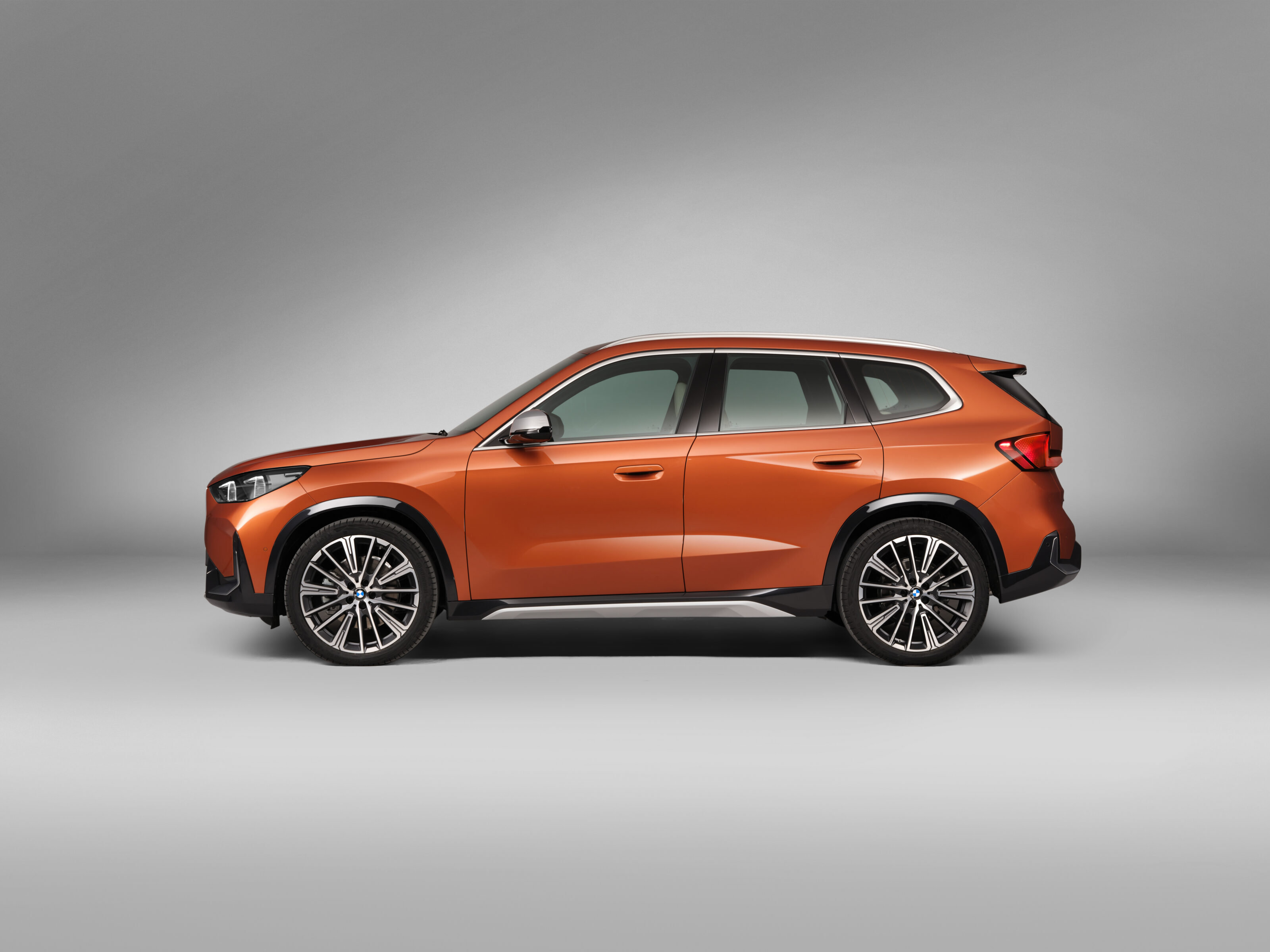
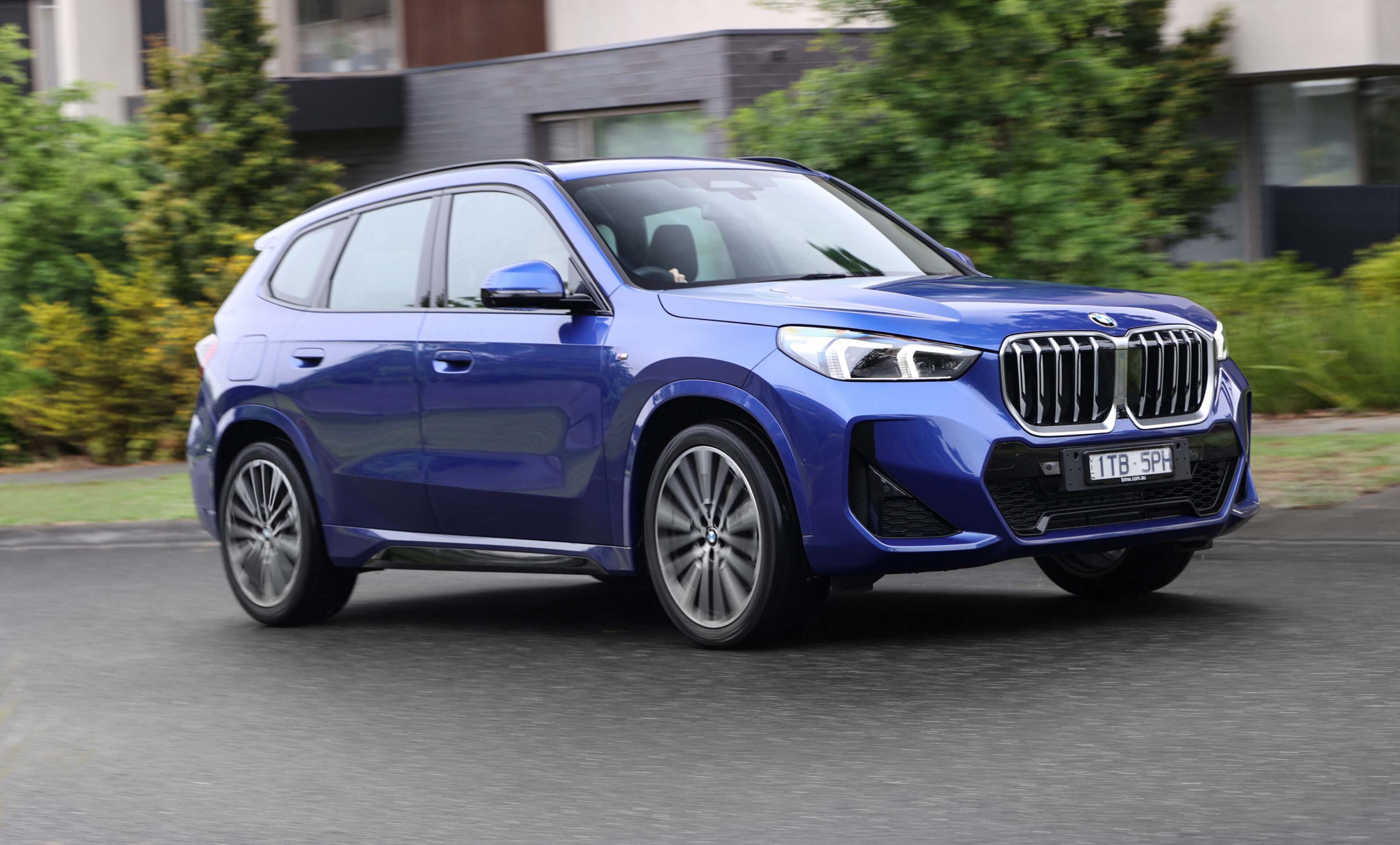
Pricing and features for the 2023 BMW X1 have been revealed, with an Australian launch set for the fourth quarter of this year, priced from $53,900.
Snapshot
- New BMW X1 and iX1 officially revealed
- Third-gen X1 to launch in Australia in fourth quarter of 2022
- iX1 to debut in first quarter of 2023
Its electric sibling, the iX1, is set to follow in the first quarter of next year, with full pricing and specification for the EV still yet to be detailed.
Initially, the X1 was expected in the third quarter of 2022, with the model’s local arrival set back.
At launch this year, BMW will offer the X1 sDrive18i and xDrive20i, both powered by BMW TwinPower Turbo engines with seven-speed Steptronic transmission and dual clutch as standard.
1
2023 BMW X1 Australian pricing
All pricing is before on-road costs.
| Variant | Pricing |
|---|---|
| sDrive18i | $53,900 |
| xDrive20i | $65,900 |
2
Features
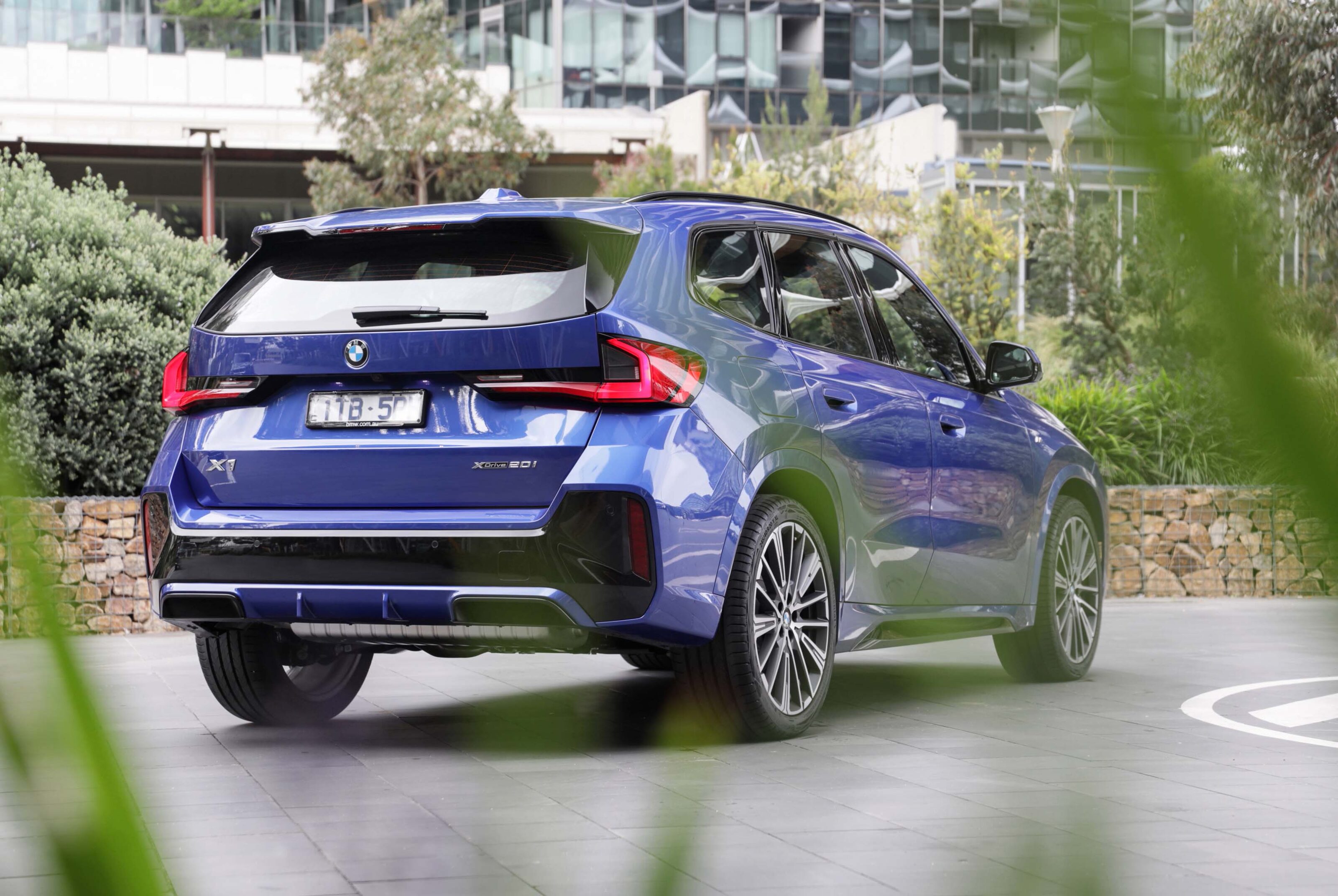
The third-generation X1 now includes BMW’s Operating System 8 and curved display, and a new wireless phone charging cradle features portrait mounting for added convenience.
BMW X1 sDrive18i
| New-generation Sensatec upholstery | Comfort Access (new) |
| 18-inch alloy wheels | Connected Package Professional (new) |
| DAB Digital Radio | BMW head-up display (new) |
| Reversing camera | Instrument panel in Sensatec (new) |
| Sport leather steering wheel | M headliner in anthracite (new) |
| Wireless Apple CarPlay | Mirror package inc. anti-dazzle function (new) |
| Wireless phone charging | Remote software updates (new) |
| xLine styling inc. roof rails | Driving assistant plus with active cruise control inc. stop and go and blind-spot monitor (new) |
| Two-zone automatic climate control (new) | Parking assistant plus with surround-view camera, reversing assistant and drive recorder (new) |
| Adaptive LED headlights (new) | Sports seats (new) |
| Automatic tailgate (new) | Wireless Android Auto (new) |
| BMW Intelligent Personal Assistant (new) | Navigation system with augmented reality technology (new) |
| BMW Live Cockpit Professional (new) |
X1 xDrive20i adds
| BMW xDrive intelligent all-wheel-drive system |
| 19-inch alloy wheels |
| Driving assistant professional inc. steering and lane control system |
| Heated seats for driver and front passenger |
| Electric seat adjustment, front row |
2
| Enhancement package: $6000 for sDrive18i, $4000 for xDrive20i |
|---|
| Metallic paint |
| Panorama sunroof |
| harmon/kardon Hi-Fi |
| Sliding rear seats |
| Driving assistant professional (sDrive18i only) |
| Electric seat adjustment, front row (sDrive18i only) |
| M Sport package: $3000 for xDrive20i only |
|---|
| 19-inch M Sport alloy wheels |
| Adaptive M suspension |
| M aluminium hexacube dark interior trim |
| M leather steering wheel |
| M high gloss shadow line |
| M high gloss roof rails |
Additionally, there are nine paint choices for the X1 range, non-metallic Alpine white free as standard, seven non-metallic colours costing $1800 or free with the Enhancement package, and Individual storm bay costs $2500 or $700 with the aforementioned package added.
The ‘Features on Demand’ service also makes its debut on the new BMW X1, which means some features are now offered via a subscription.
BMW has defended the move to charge by saying the concept aims to offer customers more comfort and flexibility, with features available to be activated at any stage of the ownership cycle.
The first features to be offered via subscription are heated seats for the driver and front passenger in the sDrive18i (standard on the X1 xDrive20i) and a heated steering wheel for both grades.
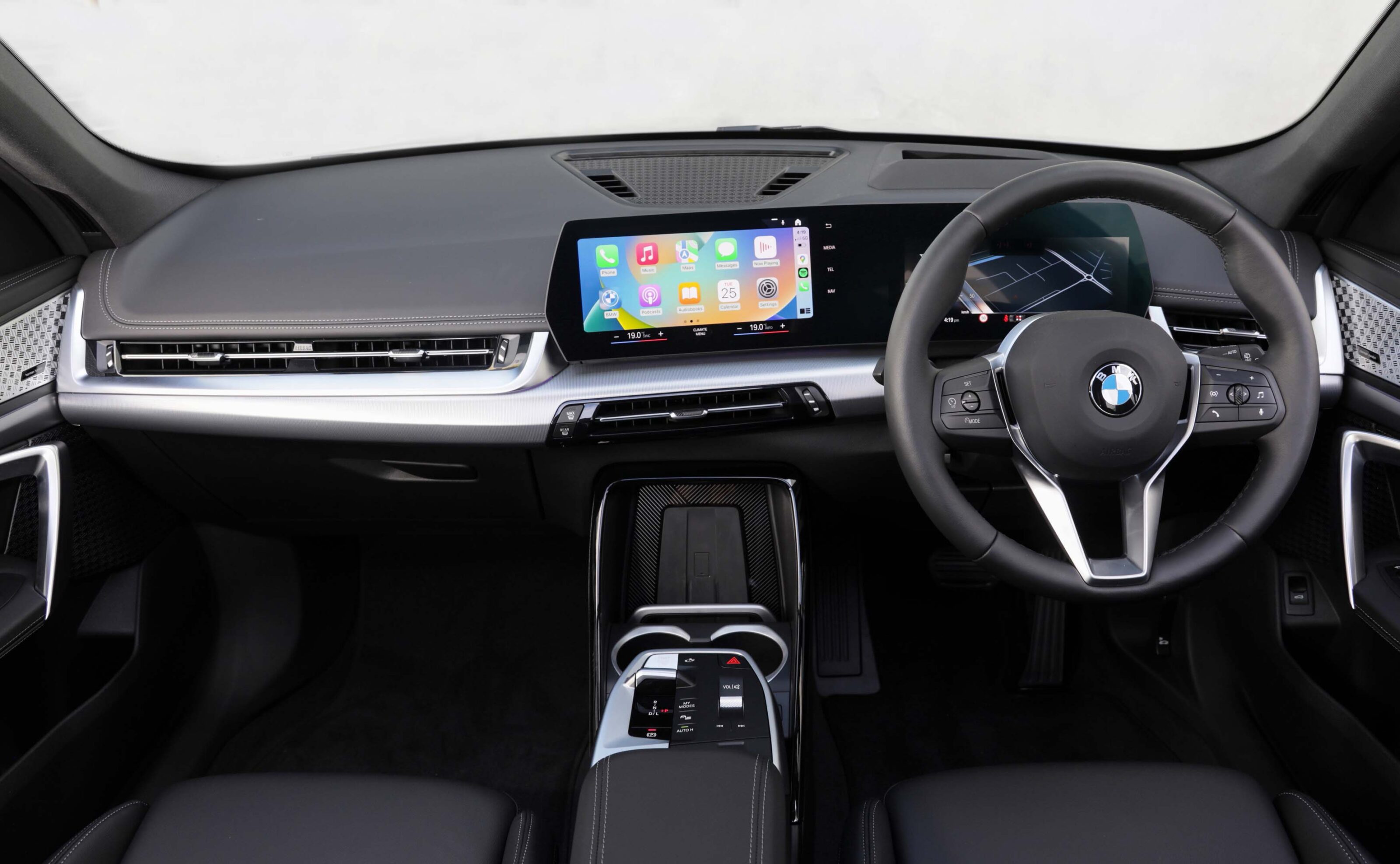
1
Drivetrain, transmission and fuel economy
The 2023 BMW X1 will launch in Australia with two petrol variants
The BMW X1 sDrive18i features a 1.5-litre three-cylinder TwinPower turbo engine producing 115kW and 230Nm, with fuel consumption claimed at 6.5L/100km on the combined cycle.
The engine is mated to a seven-speed Steptronic transmission and double clutch set-up, with power sent exclusively to the front wheels.
The BMW X1 xDrive20i, meanwhile, is powered by a 2.0-litre four-cylinder TwinPower turbo unit that offers 150kW and 300Nm. Fuel consumption is rated at 7.4L/100km.
The X1 xDrive20i also integrates a Steptronic transmission with a dual clutch, while power is deployed to all four wheels via BMW’s intelligent all-wheel-drive xDrive system.
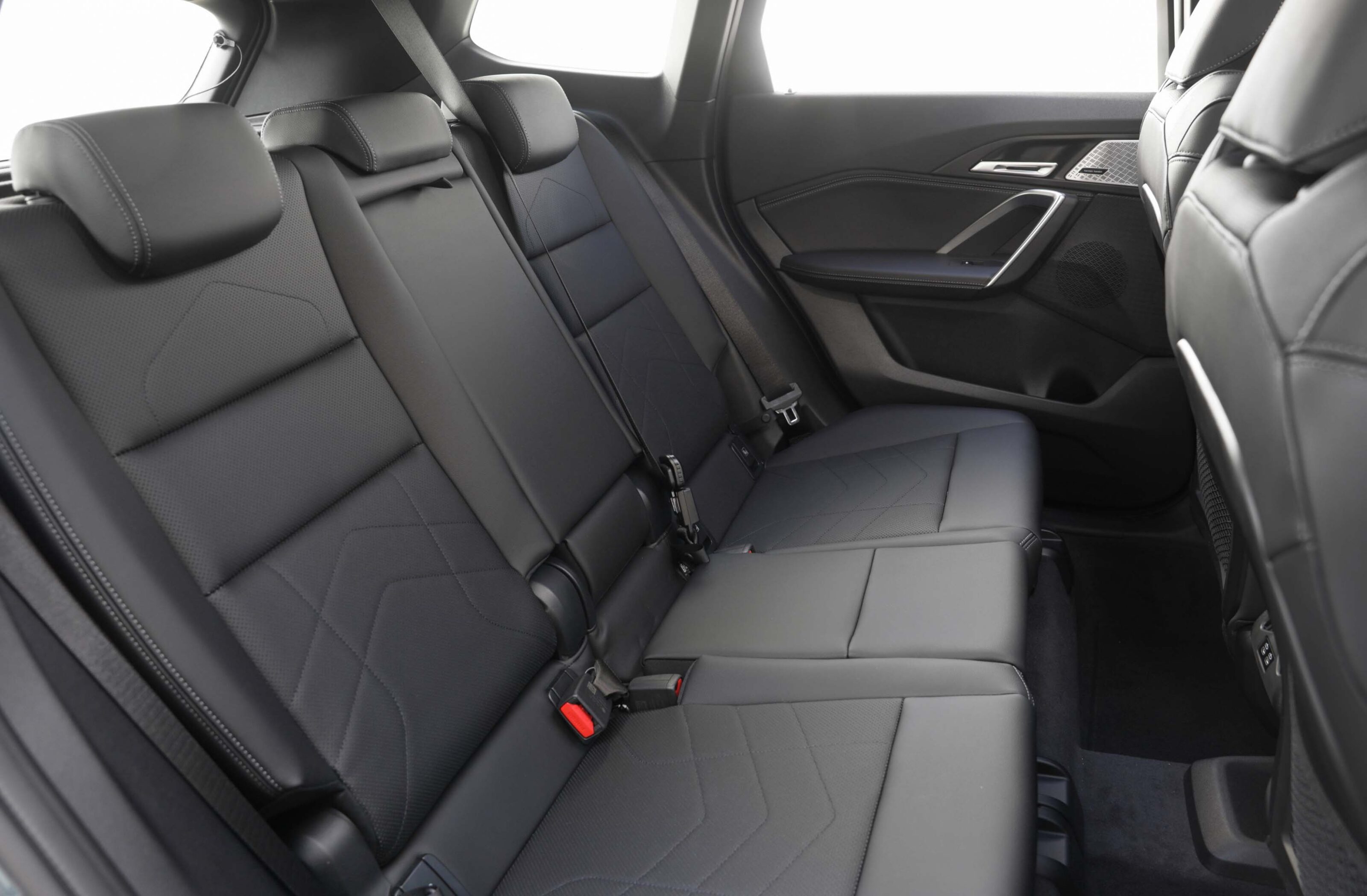
1
Dimensions
The new X1, at 4500 millimetres in length, is 53mm longer than its predecessor, and its width of 1845mm has increased by 24mm, its height of 1642mm grown by 44mm, and its wheelbase at 2692mm expanded by 22mm.
Boot space
Room in the very rear has grown from the 505 litres of its predecessor, to 540 litres in the new model – and from 1550 litres to 1600 litres with the second row folded down.
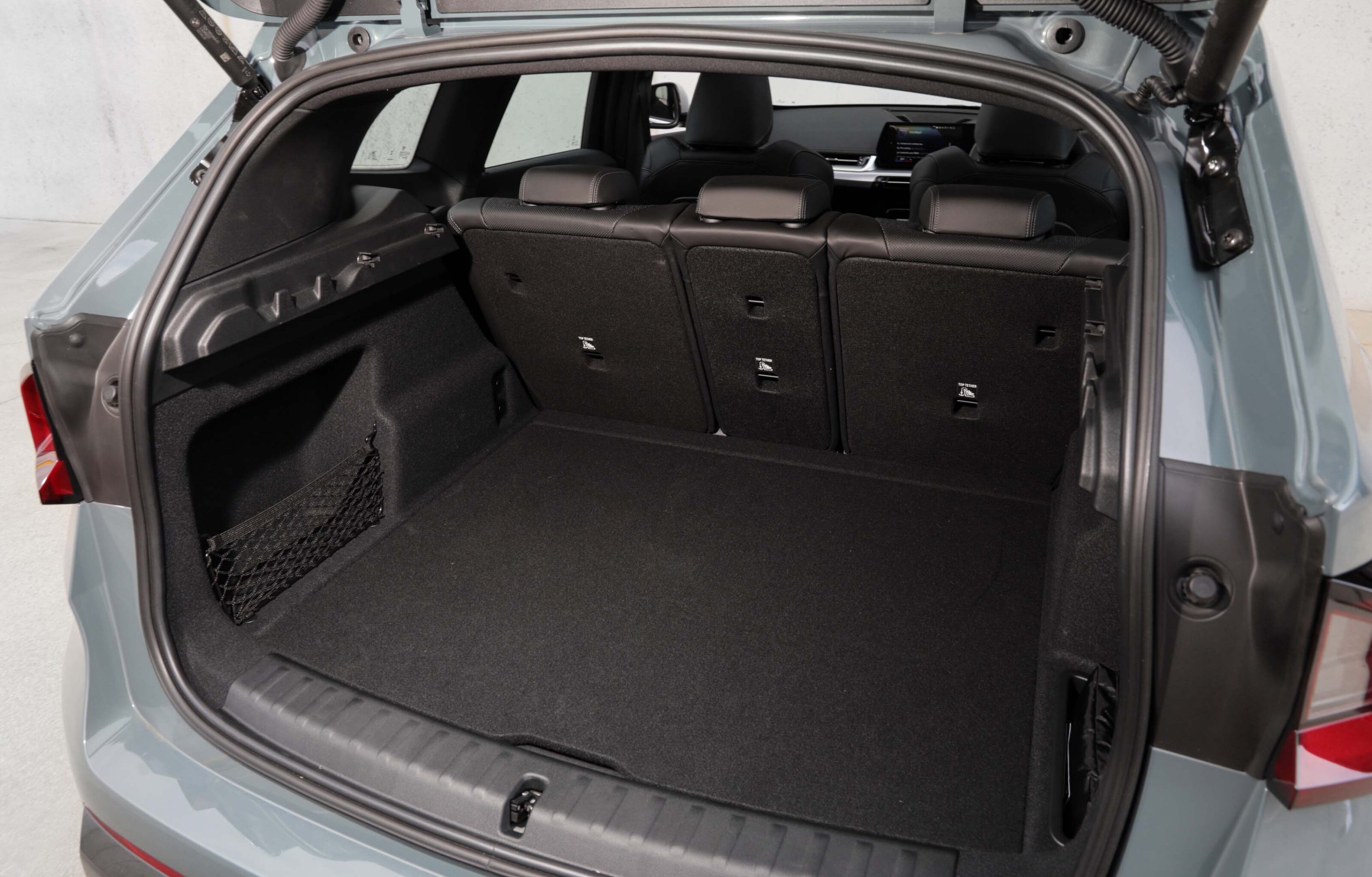
1
Safety
The BMW X1 range is currently unrated by ANCAP, but comes with the following safety tech:
| Parking assistant, inc. |
| Parking assistant plus with surround view cameras |
| Remote 3D view |
| Reversing assistant |
| Drive recorder |
| Mirror package with anti-dazzle function and auto-dipping function Reversing camera |
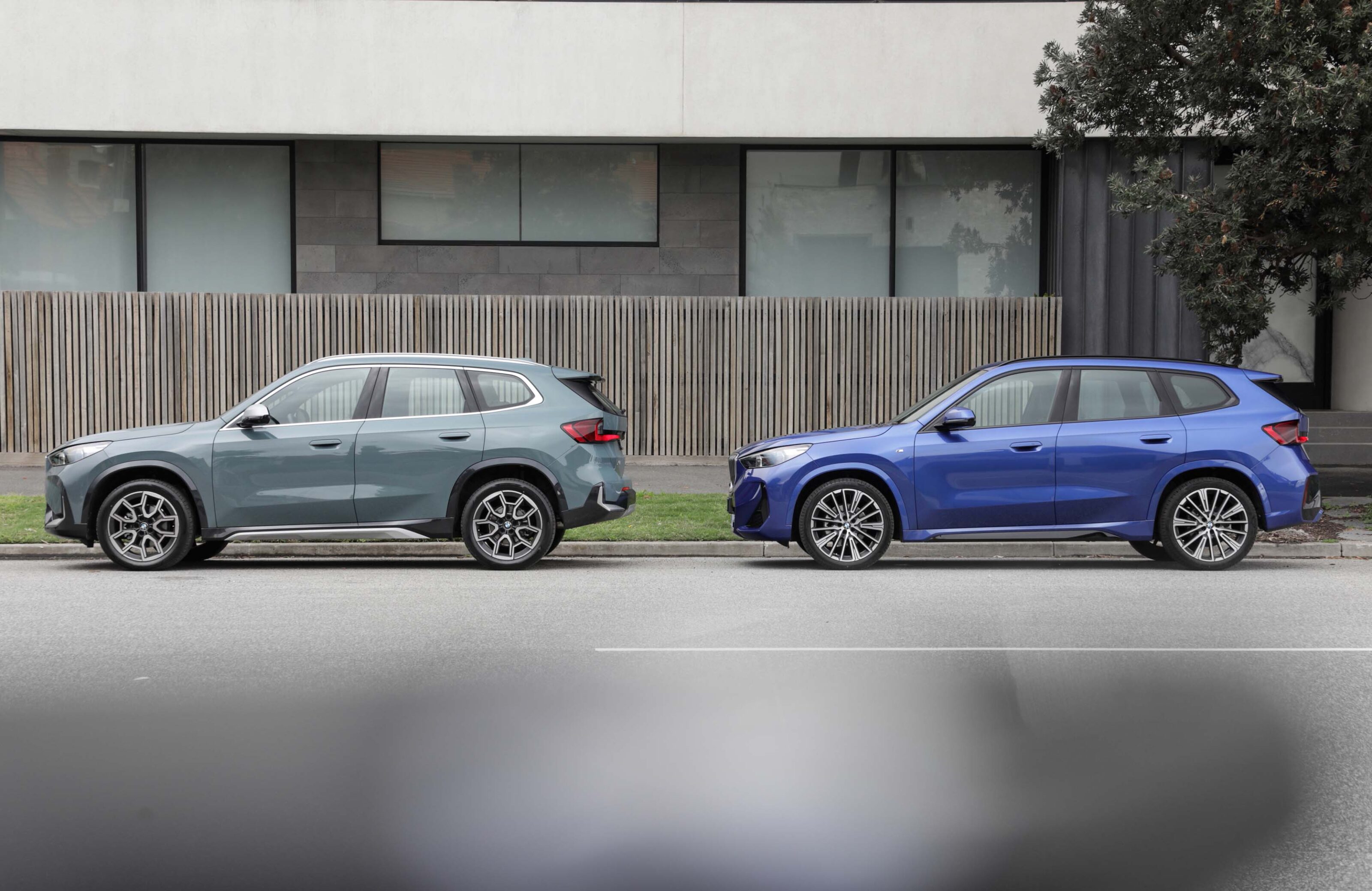
2
The story to here
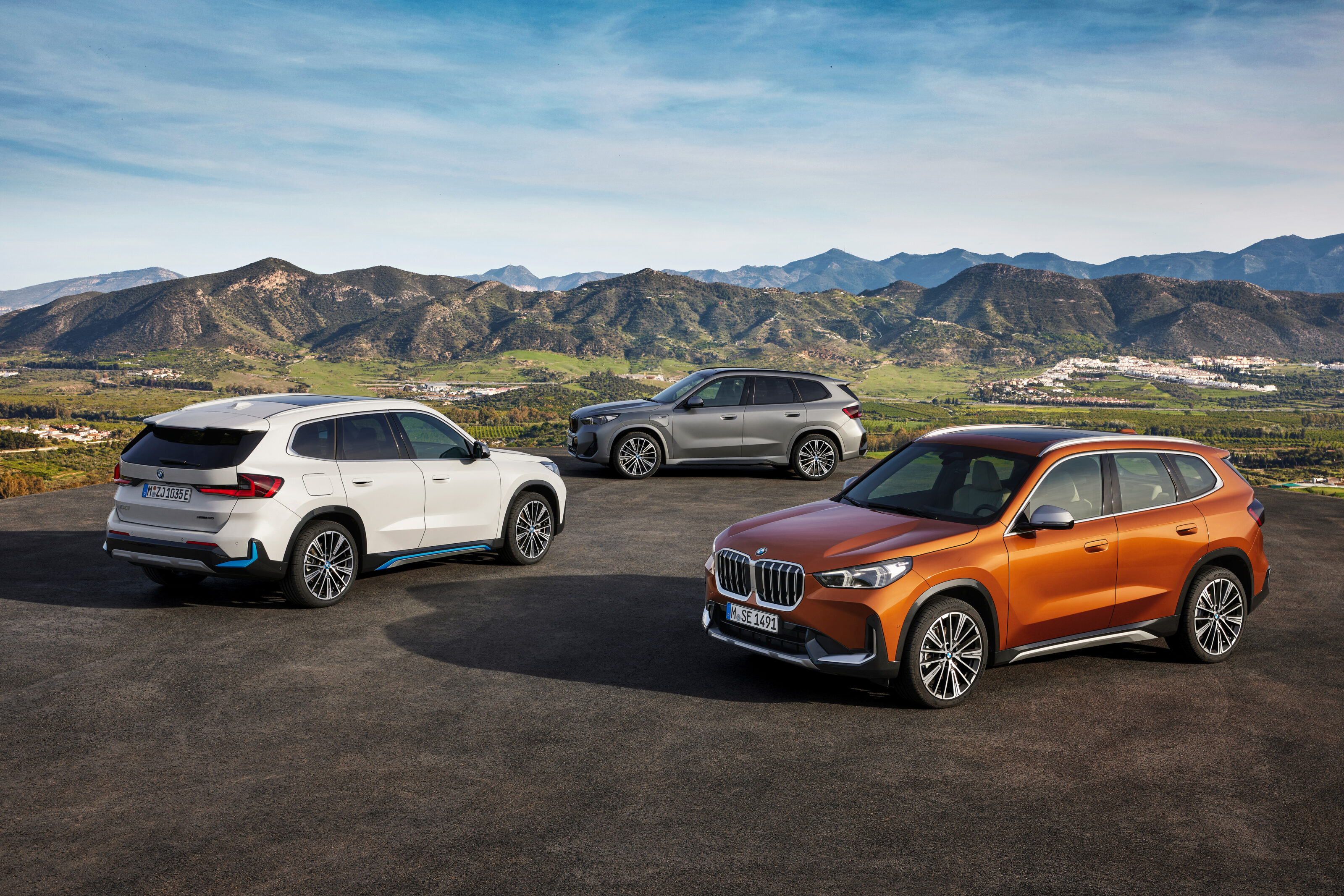
June 1: 2023 BMW X1 and fully-electric iX1 revealed
BMW has officially taken the covers off its third-gen X1 and new iX1 small SUVs, a day after the models were leaked online.
Following on from yesterday’s premature leak of information (further below), the new BMW X1 ‘U11’ has been unveiled alongside its all-electric sibling, the iX1 – making its debut as BMW’s small electric SUV.
BMW Australia has confirmed the 1.5-litre, three-cylinder turbo petrol sDrive18i and the 2.0-litre, 48-volt mild-hybrid four-cylinder turbo petrol xDrive23i will join the local line-up from the fourth quarter of 2022.
3
The announcement of local specification confirms the 2.0-litre, four-cylinder turbo diesel sDrive18d will no longer be a part of the Australian range, with only the two petrol variants on offer for buyers.
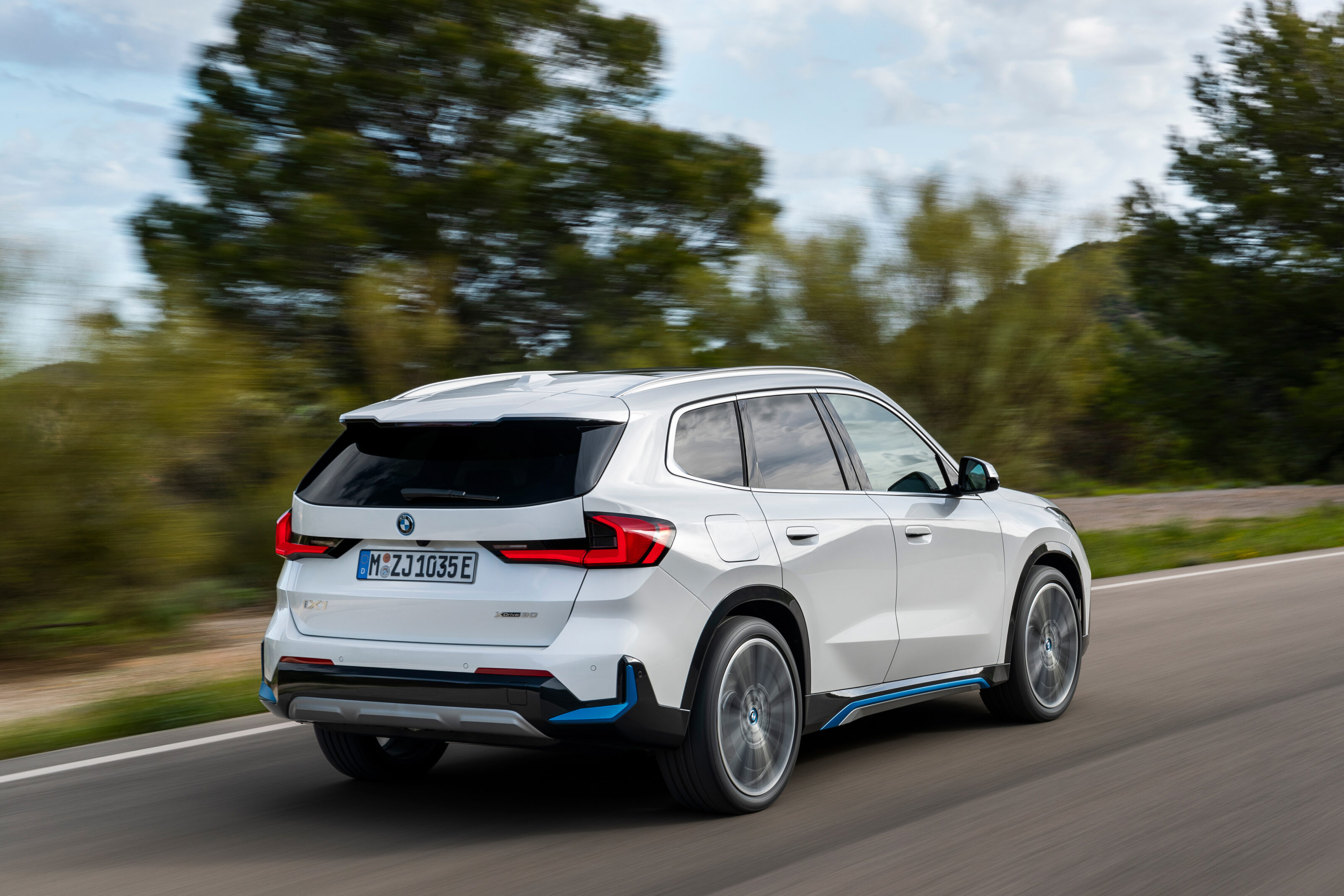
After the X1 launches, Australia will score the electric iX1 xDrive30 in the first quarter of 2023, expanding BMW’s local electrified options to 12 models.
7
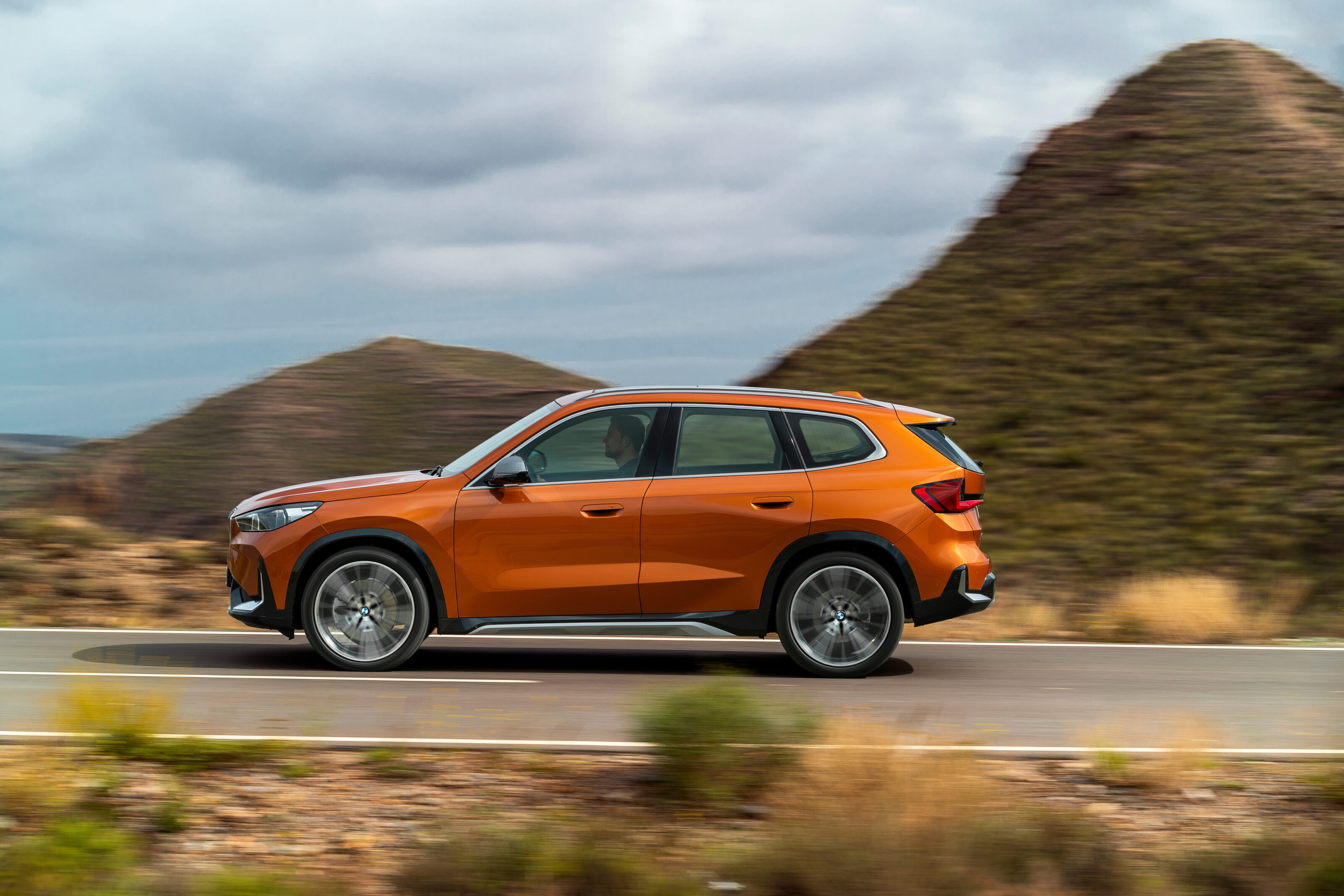
In addition to yesterday’s leaked information, the new model range has been confirmed with equipment such as a sport leather steering wheel, intelligent two-zone automatic climate control, a rain sensor with automatic headlight activation, four USB-C ports and two 12V power sockets fitted as standard.
Optional equipment has been expanded to include BMW’s lights package, ambient lighting, panoramic glass sunroof and a Harman Kardon sound system.
6
Safety systems fitted to the X1 and iX1 include; cruise control with brake function, front-collision warning system and parking assistant (including reversing assist camera and reversing assistant) – while steering and lane control assistant, active cruise control (with stop and go function), active navigation, exit warning function, a head-up display, surround view, remote 3D view and drive recorder are also available.
BMW will announce local pricing and features for both models closer to launch later this year.
May 31: 2023 BMW X1 and iX1 leaked
1
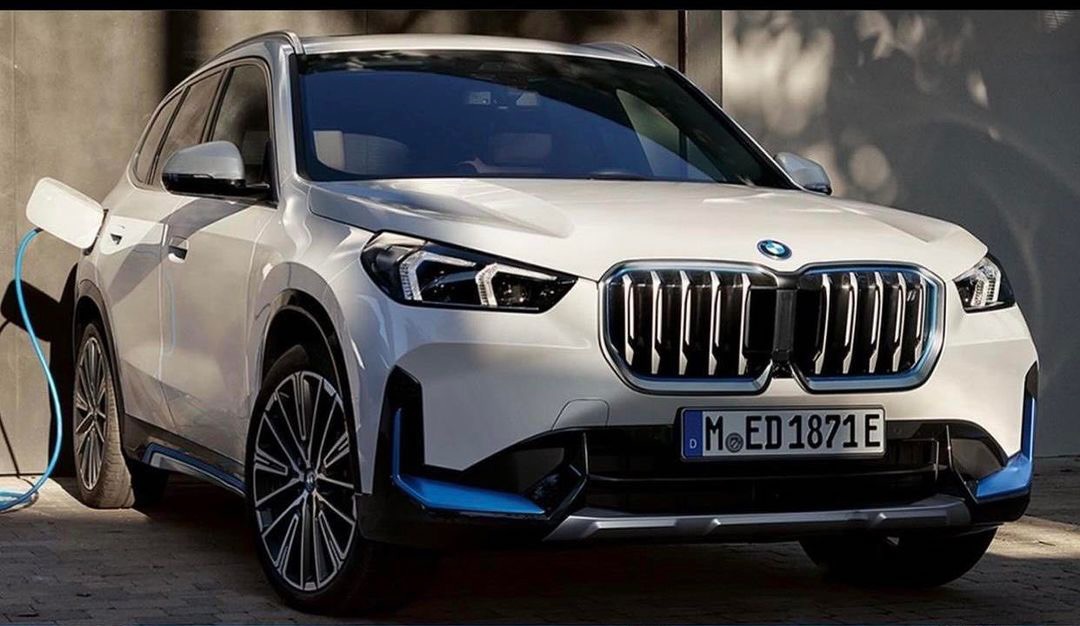
The 2023 BMW X1 and iX1 small SUVs have been leaked online ahead of the third-generation model’s official reveal.
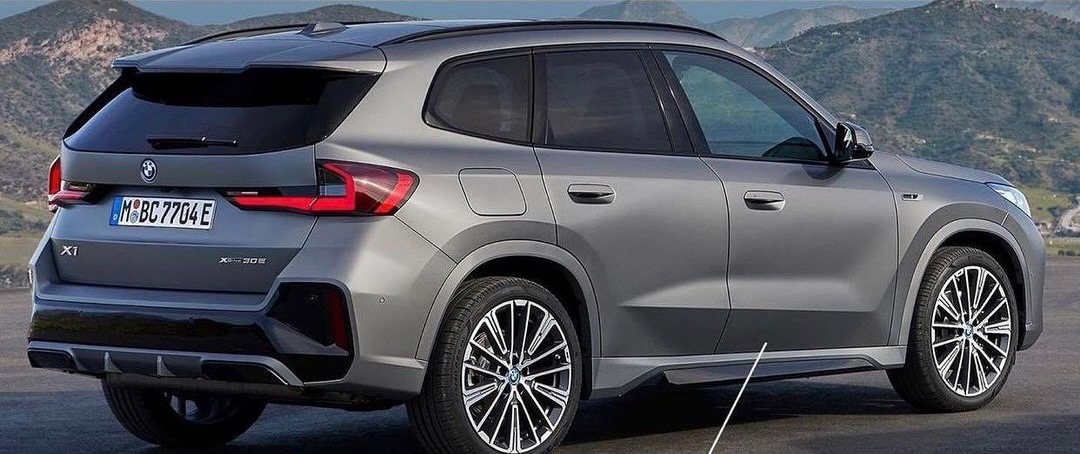
Shared on Instagram by leaktveak, images of the new X1 show it will follow BMW’s SUV design language – with an updated grille, front and rear lights to mirror those of its larger siblings.
Just like the facelifted 3 Series, which debuted in the last fortnight, the headlights incorporate a new inverted-L shaped daytime running light design, while the tail-lights can be optioned as full-LED units.
3
Although no details are available yet as to what will power the X1, its all-electric iX1 counterpart’s drivetain details were included in the leak.
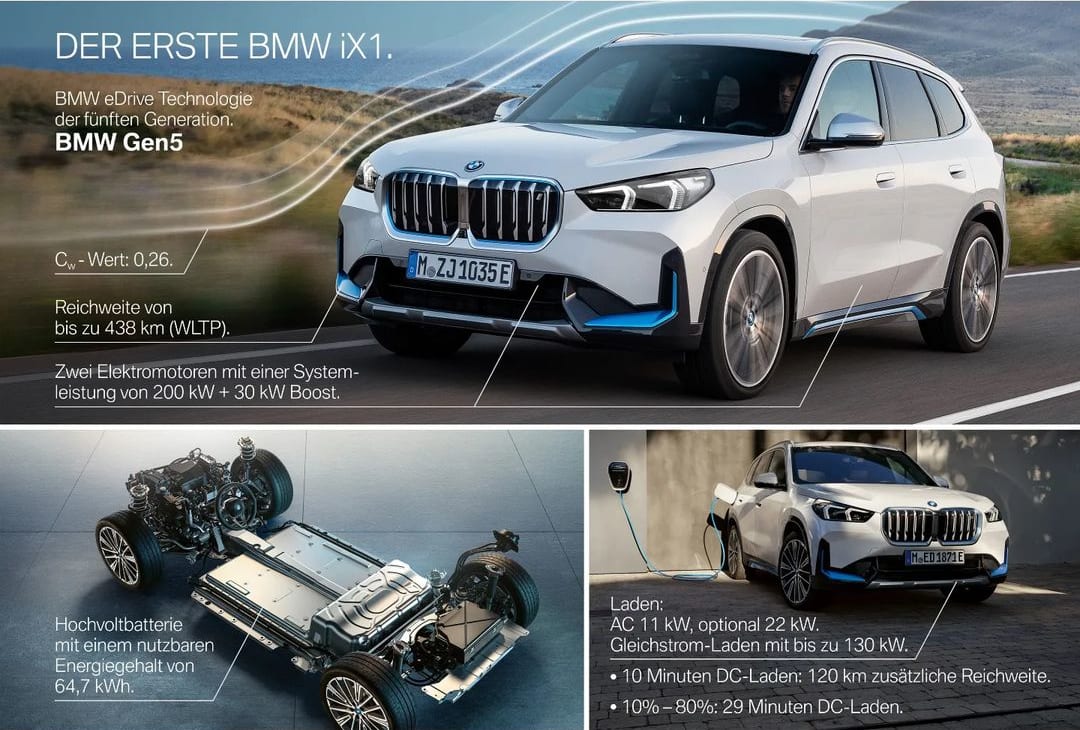
The latest electric vehicle in BMW’s line-up, the iX1 boasts a dual-motor setup which can produce 200kW with 30kW of overboost, sourcing its power from a 64.7kWh battery pack, enabling a driving range of just under 440 kilometres.
An on-board AC charger allows the iX1 to be topped up at 11kW with an optional 22kW package available. For fast charging, its DC rate of 130kW allows the battery to be given an extra 120km of driving range in just 10 minutes, with a 10 to 80 per cent time of 29 minutes.
2
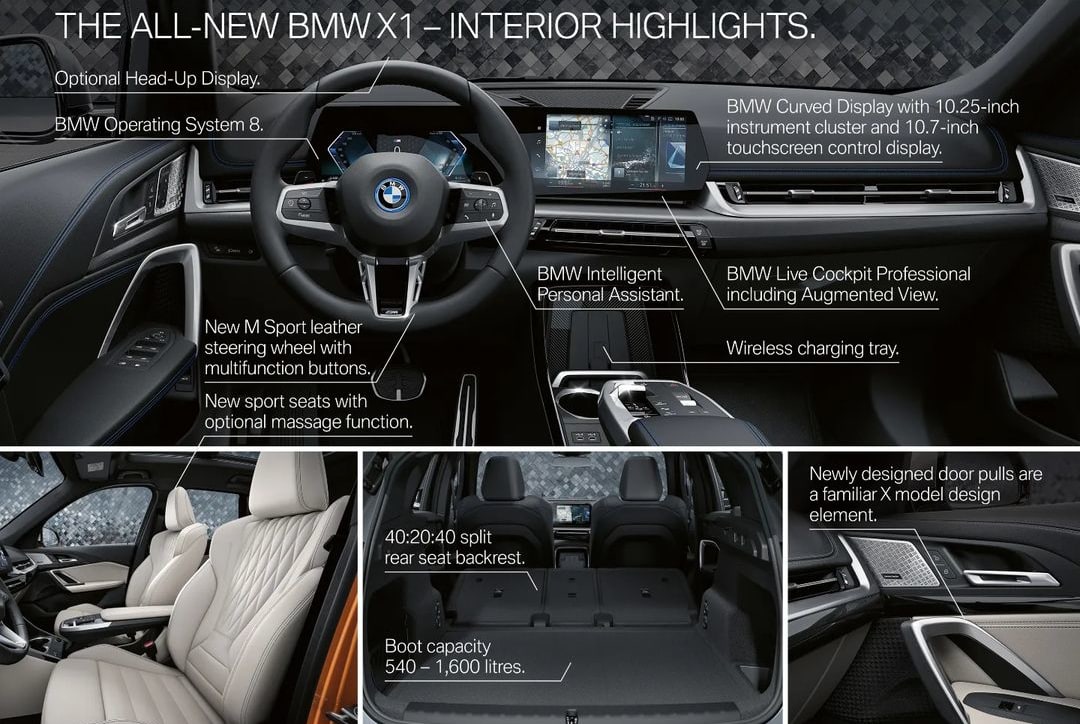
Inside the cabin of both models, BMW’s 10.25-inch digital instrument cluster is paired with a 10.7-inch infotainment touchscreen, incorporating the latest iDrive 8 operating system.
A wireless charging tray for smartphones is standard, as is BMW’s live Cockpit professional, including augmented view and BMW intelligent personal assistant.
Optional equipment, such as a massage function in the sport seats and a head-up display, will be available from launch – although it’s not known if the latter will be impacted by the ongoing chip shortage faced by the German carmaker.
1
Boot capacity is up by 35 litres over its predecessor to 540 litres, while the 40/20/40 split rear seat can fold down to allow up to 1600 litres of space – 50 more than the current X1.
BMW is set to officially reveal the new X1 and iX1 in the coming weeks, so be sure to keep your eyes on Wheels for the latest updates.
November 2022: New BMW X1 now in Australia
MORE
X1 news & reviews
MORE
All BMW
Bugatti has announced the departure of its design director, Achim Anscheidt, following a 19-year tenure at the 114-year-old ultra-luxury carmaker from Alsace.
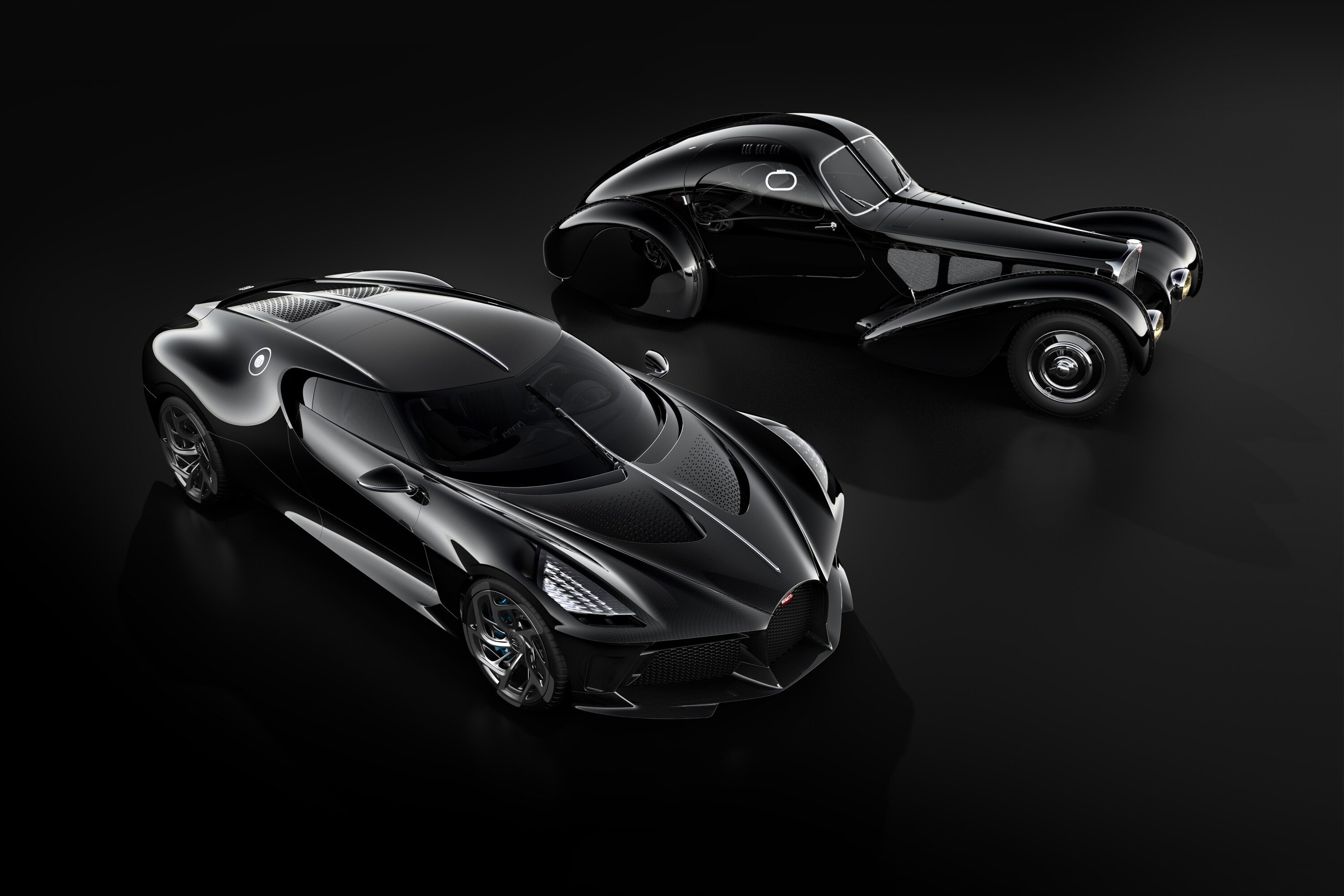
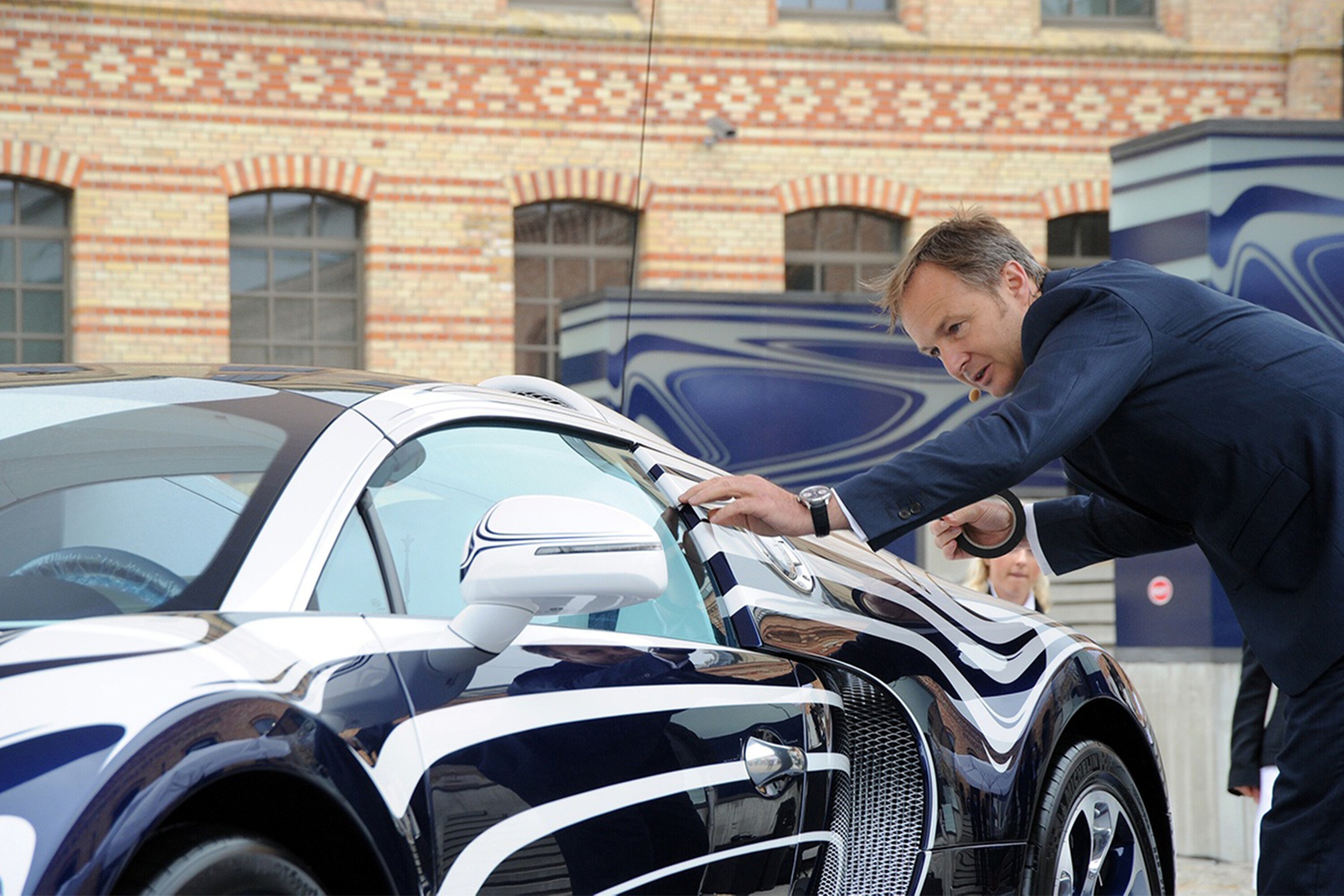
Appointed in 2004 – just ahead of Veyron’s 2005 launch – Anscheidt’s first project as director was the Veyron Grand Sport; he went on to lead Chiron and its many ‘coach-built’ offshoots such as Bolide, Mistral and one-off La Voiture Noire.
As Anscheidt steps down, he’s confirmed that the Chiron’s successor – again, penned under his lead – is due for reveal next year and launch in 2026. It will feature a hybridised turbo-petrol V8 powertrain after the iconic 1177kW quad-turbo W16 bowed out with the Mistral.
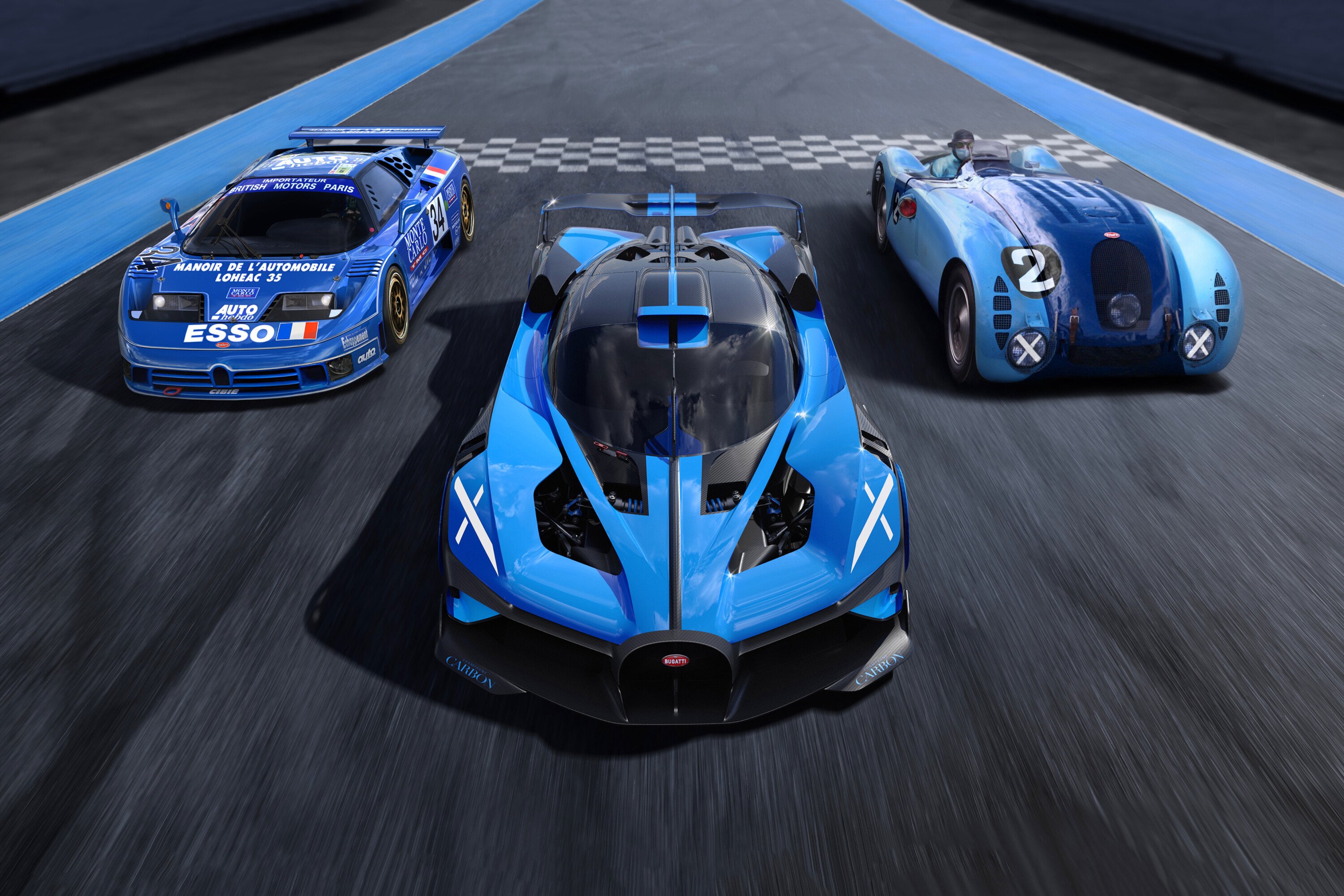
The Veyron, the Chiron and the successor to the Chiron all share one thing: They are not racecars for the road
1
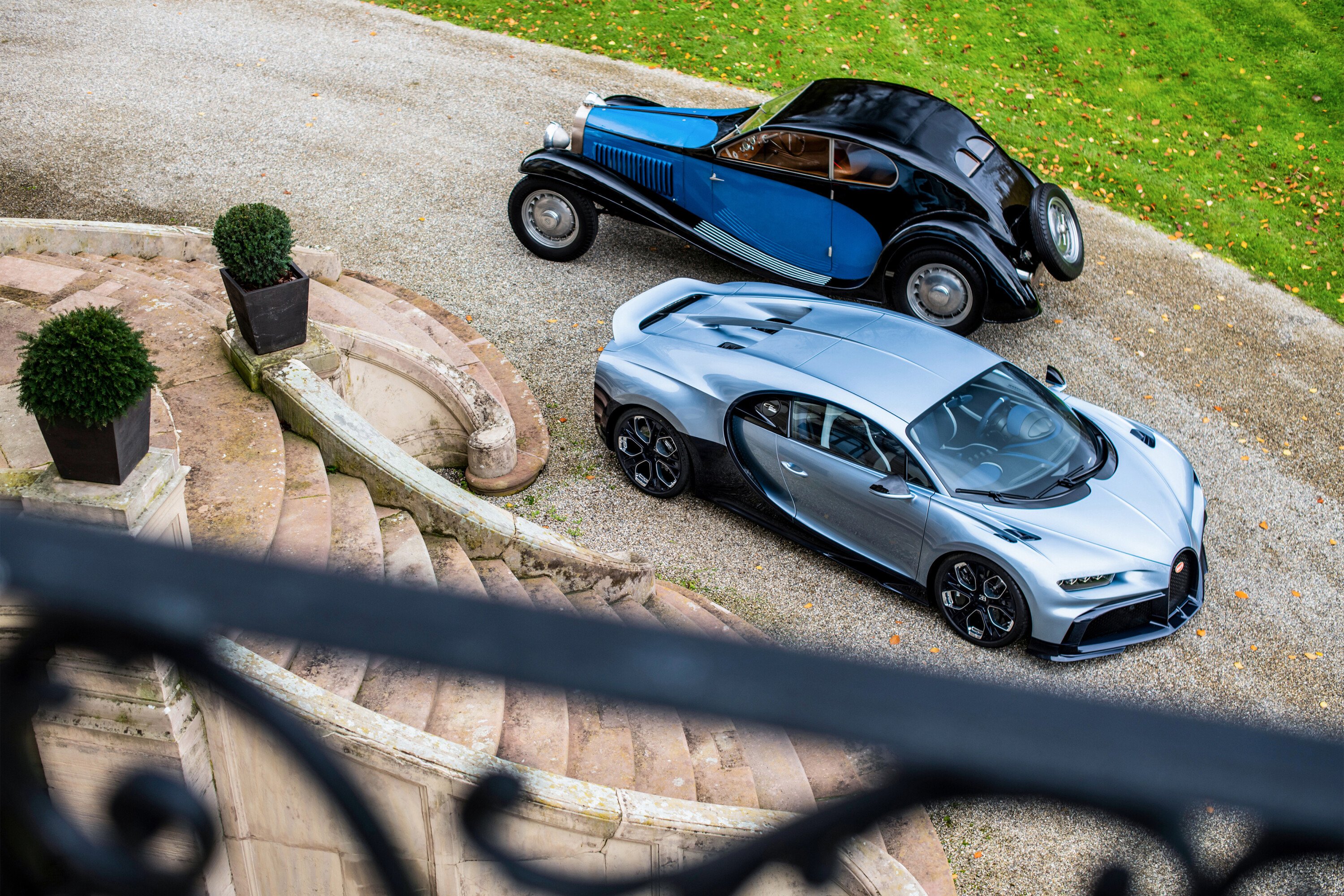
“The Veyron, the Chiron and the successor to the Chiron all share one thing”, says Anscheidt, “they are not racecars for the road, they are the pinnacle of Grand Tourisme development, they are an intriguing mixture of a nimble type 35, the luxury of the Type 41 Royale, and the peerless elegance of the Type 57 Atlantic.
“I will be forever grateful for having been a part of this developing Bugatti incredible journey, the best is still to come, and I’m truly thankful for all who supported the brand and our design department to help us evolve the brand to a place I know where Ettore and Jean would be proud”, added Achim Anscheidt.
Frank Heyl, who also oversaw the design of Chiron’s successor, will take the torch from Achim. Working closely with part-owner Mate Rimac, the pair’s vision for Bugatti’s future is laid out until 2030.
Expect more of the same from the Chiron’s successor – that being a two-door grand tourer capable of ridiculous speeds. It’s safe to expect the new electrified V8 will propel the next instalment of Bugatti GT beyond 420km/h flat out.
1
The turbo-petrol V8 with hybrid boost will need to move power on from the 1103kW Chiron, though with Rimac’s Nevera outputting 1428kW from electric motors alone that shouldn’t be too hard a task.
Don’t expect stagnation, as the Chiron’s successor will need to push Bugatti into a new era, without sacrificing hallmarks such as the prominent belt line – known as the ‘Bugatti Line’ – and iconic inverted horseshoe grille.
1
Expected to cost in excess of €5 million (A$8.2 million), the new car will be more compact and lighter than the Chiron, with its gearbox snuggled between the seats to better balance batteries.
The new car will ride on a brand-spanking platform, though it’s understood the cabin design will remain faithful to the Chiron, Mistral and Veyron, reflecting interior designer Aldo Maria Sica’s obsession over beautiful details over screen-heavy minimalism.
Bugatti’s press release mentions the 2009 Bugatti Galibier, a four-seater concept that explored what a family-friendly Buatti could look like. With the hype around Koenigsegg’s four-door Gemera, Bugatti could introduce a production Galibier-type vehicle in the future.
1
“Since engaging in my role at Bugatti a couple of years ago, it was obvious that Achim was a crucial component in establishing the next generation of Bugatti hyper sports cars, so I sincerely encouraged him in 2021 to remain with Bugatti for a further three years before retiring”, said Mate Rimac, Bugatti Rimac CEO, of Anscheidt.
“His attention to detail and dedication to perfection extends to almost every part of Bugatti today; the visual quality perception, the consequent material philosophy, our communications with our customers and everything else in between.
“He has ensured that every interaction an individual has with our brand is incomparable by design”, Rimac added.
Moving forward, Frank Van Heyl will take point on the Bugatti design team working in close collaboration with Rimac’s design facilities in Berlin and Zagreb.
MORE
Everything Bugatti
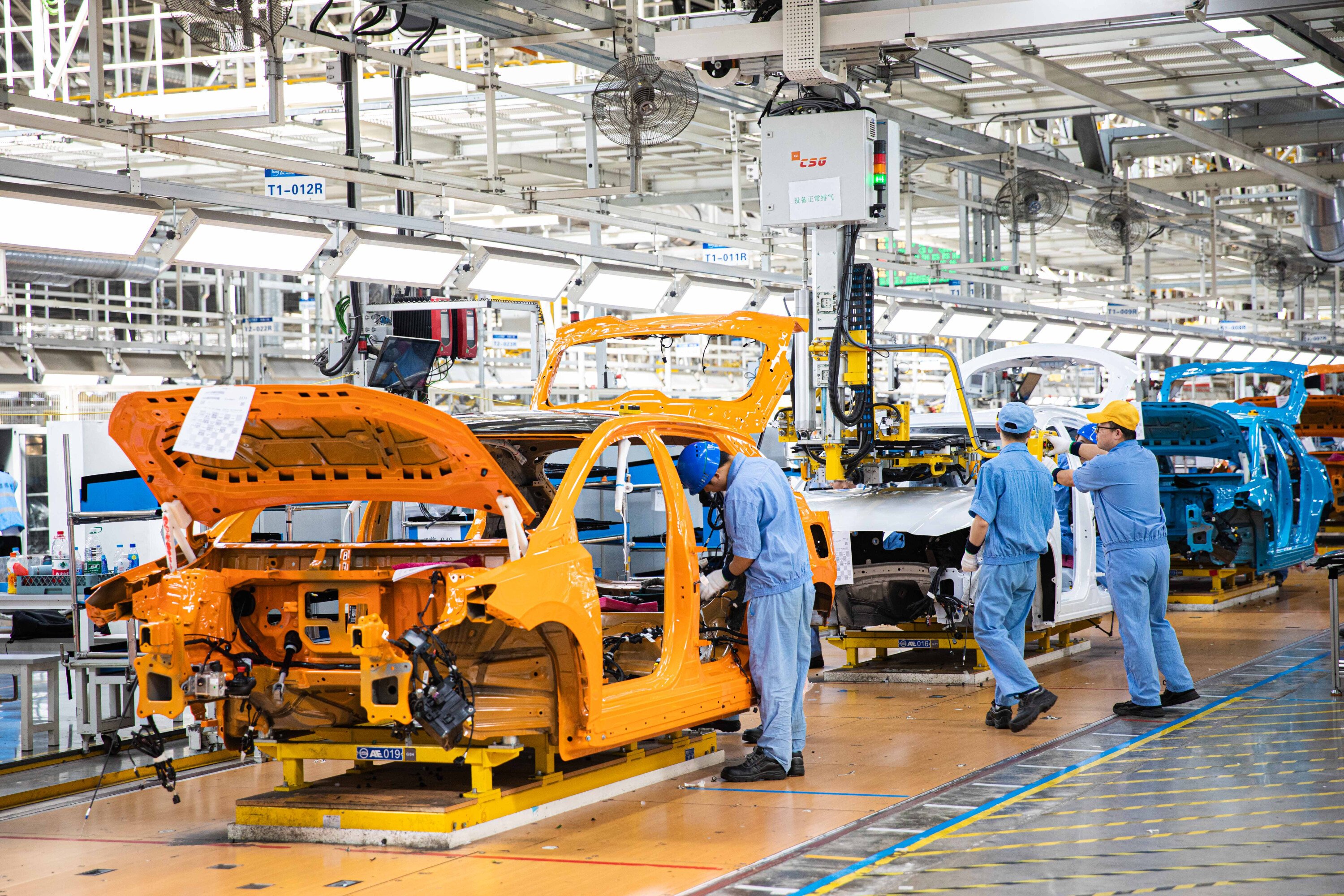
The little orange hatchback edges down the production line, sitting atop a metal jig. Yet to receive its headlights, wheels, engine, doors, or even interior, it’s but a naked body-in-white.
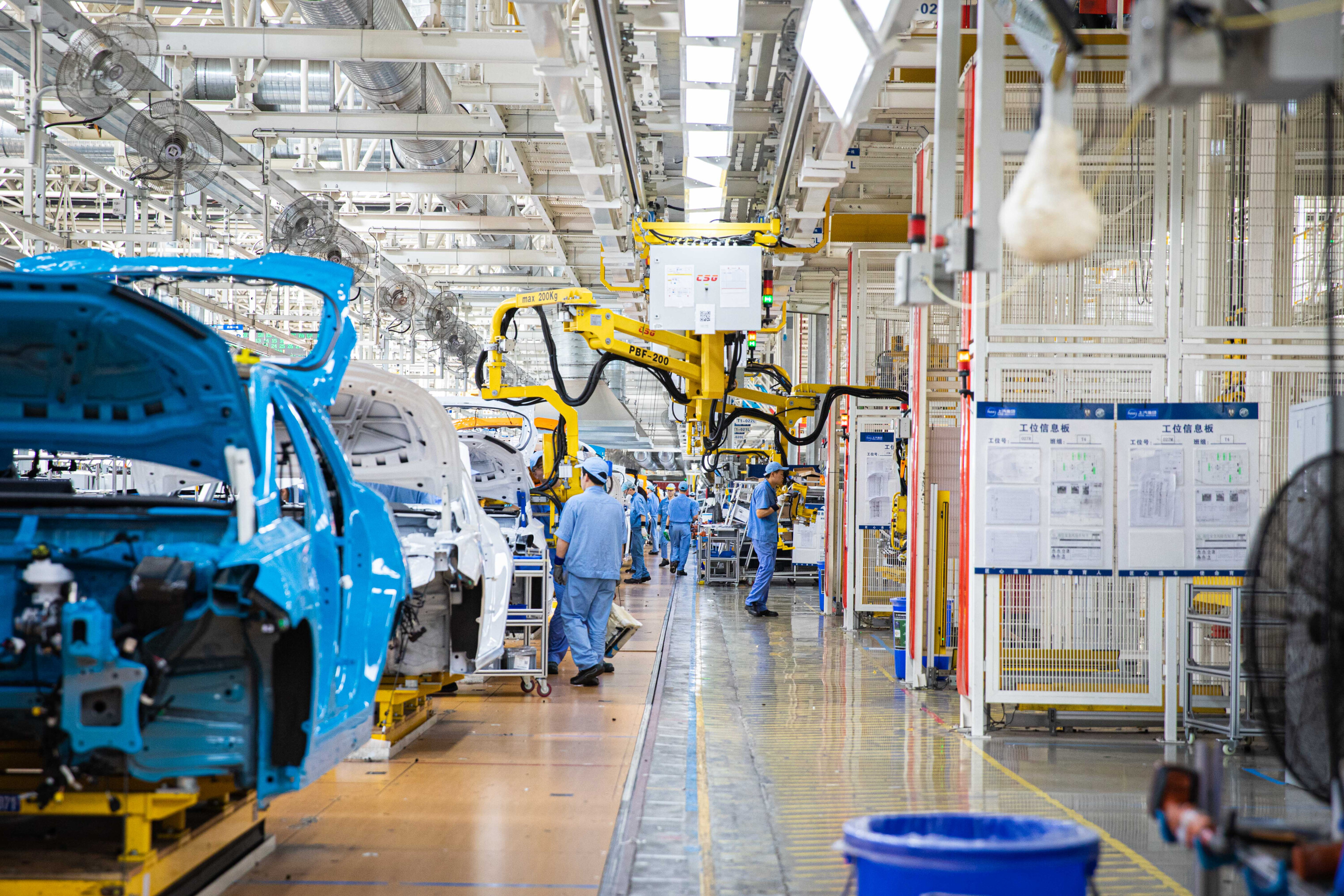
Looking down the production line, which inches forward slowly but unceasingly, there’s a queue of vehicles in a similar state – whites, oranges, blacks, blues and silvers. There’s the din of distant machines, the clack of far-off hammers, and giant ceiling fans the size of helicopter rotors circulate the hot air with a gentle artificial breeze.
Men, and the occasional woman, dressed in the same standard-issue blue overalls, move about the bare vehicles calmly and wordlessly, like they’ve done it a thousand times before.
2
Regardless of the location, there’s something endlessly positive about a new vehicle production line.
Cars being born, in their thousands, destined for excited new owners to serve faithfully – and to better their lives. Today, we’re at a ‘mega factory’, the largest new vehicle production facility in all of Asia – SAIC’s “brand new” Ningde plant in China.
While car factories in and of themselves are nothing special – hundreds exist all around the world – this one, opened in 2019, stands out as a sign of things to come. We’ve been granted rare access to witness China, the world’s factory floor, as it prepares to take on the global car market at its own game: making cars.

1
Until now, China’s local auto industry has been kept busy simply competing within its own domestic market.
With a population of 1.4 billion, think of it as if Holden were selling to 56 Australias, not just one. However, a post-COVID economic slowdown is pushing China’s automakers to export. Seemingly, producing fewer cars is not an option.
This isn’t necessarily a cause for concern. After all, China already manufactures half the items in your home; and if you purchase a new electric vehicle in 2023, even if it’s assembled somewhere like Japan, a significant portion will be made in China – possibly using a substantial amount of Australian raw materials.
Cars from China – setting aside the exceptionally fraught, often delinquent politics of the Chinese Communist Party – will be much more advanced, exciting and worthy of anticipation than you might imagine. After a six-hour train ride (at speeds up to 304km/h) we arrive in Ningde, Fujian Province, in the country’s sort-of-mid-south.

1
Travelling in China, whether along railways or motorways, they all feel as though they were built in the last decade. Astonishingly, China’s use of concrete every two years surpasses what the US used in the entirety of the 20th century. A true fact, believe it or not.
It’s with an odd sense of trepidation that we arrive at the factory itself on an oppressively hot day.
Travelling as a “journalist” in China, it felt as if I was reluctantly granted a visa, and the Chinese Consulate in Melbourne certainly gave me a sceptical grilling about my intentions.
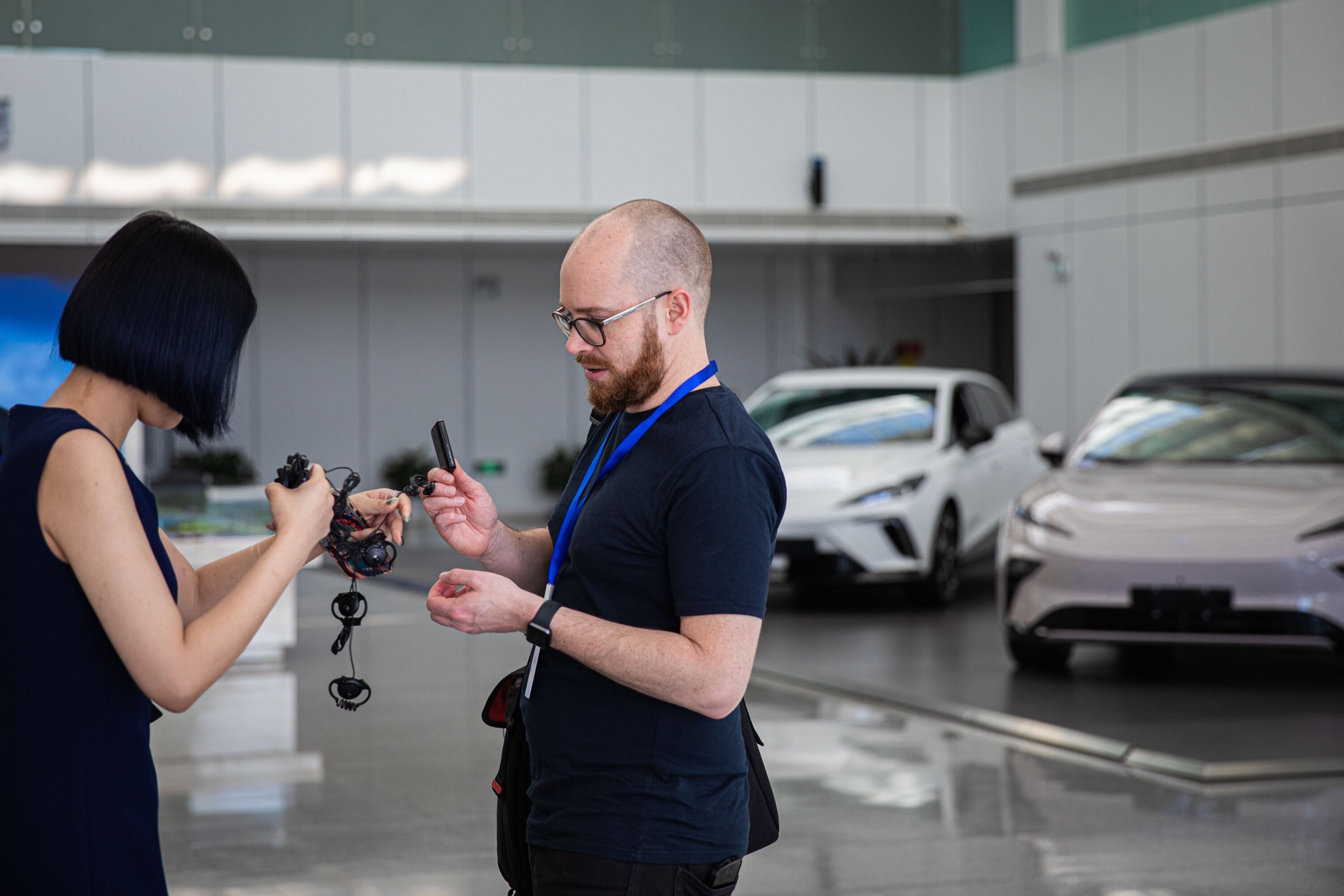
Nevertheless, there I was, stepping into a state-owned, cutting-edge manufacturing facility as a camera-wielding Western journalist. “No foreign journalists have ever been in here,” says one of our hosts.
1
Before this enormous, 140,000 square-metre factory opened in September 2019, it was a “tidal flat” – a swamp. In just 17 months, it transformed from this into a state-of-the-art facility, churning out 63 vehicles an hour (see below).
This factory is owned by SAIC Motor, China’s largest car maker – the Toyota of China, to use a flawed analogy. SAIC, in turn, is owned by the Chinese state. Founded in 1955, the Shanghai Automotive Industry Corporation produces 5.37 million cars every year. A fair few of them end up in Australia, badged as MGs.
And yes, this is the same MG, theoretically, that started in England in 1930, producing open-top sports cars cherished by multiple generations of bearded men. Imagine the look on founder Cecil Kimber’s face if he were told that in 2023, an MG would be more likely to be a small electric hatchback made in Ningde, China.

1
Two young Chinese women greet us, dressed in tight blue dresses like they had just walked off a motor show stand. They are our tour guides.
We are handed earpieces for translating to English, and shown an excessively nationalistic video about the factory itself (thankfully, we are spared the eye-clamps).
From a crisp, white, office-like foyer, two large grey doors open and we enter the factory floor. A strong smell of new plastics assaults our nostrils, and immediately there’s the low hum of an enormous factory at work – it’s as if we’ve stepped inside some gigantic organism.
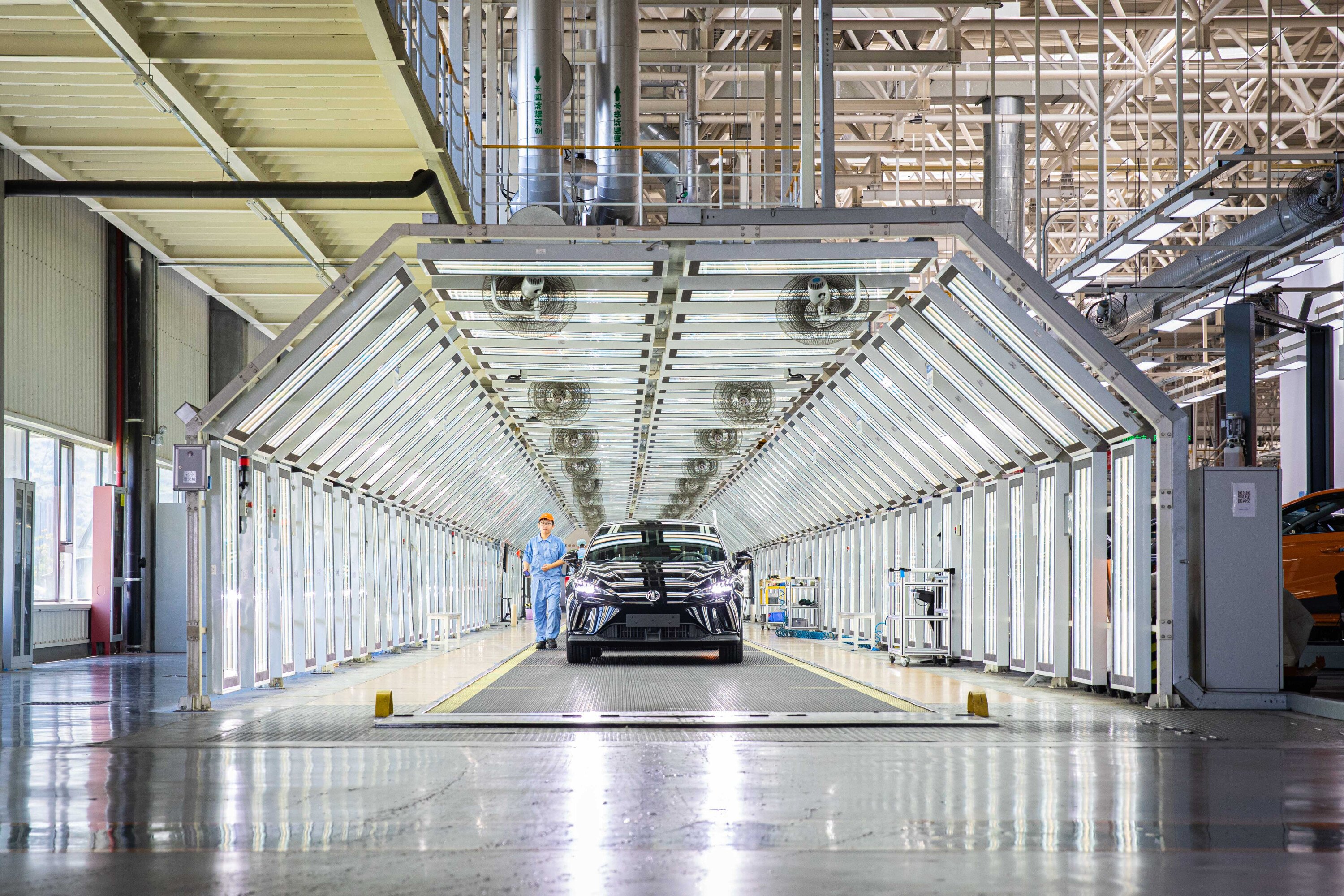
The building itself is massive, and we are ushered straight to the most important part – the production line, which runs through the entire facility like a digestive tract.
1
While it’s nothing more than a giant, slow-moving conveyor belt, any car factory is something of a sacred place where metal, rubber, carpet and other raw materials go in, and out rolls cars – objects of affection that transcends nationalities, languages and politics. That’s exceptionally cool.
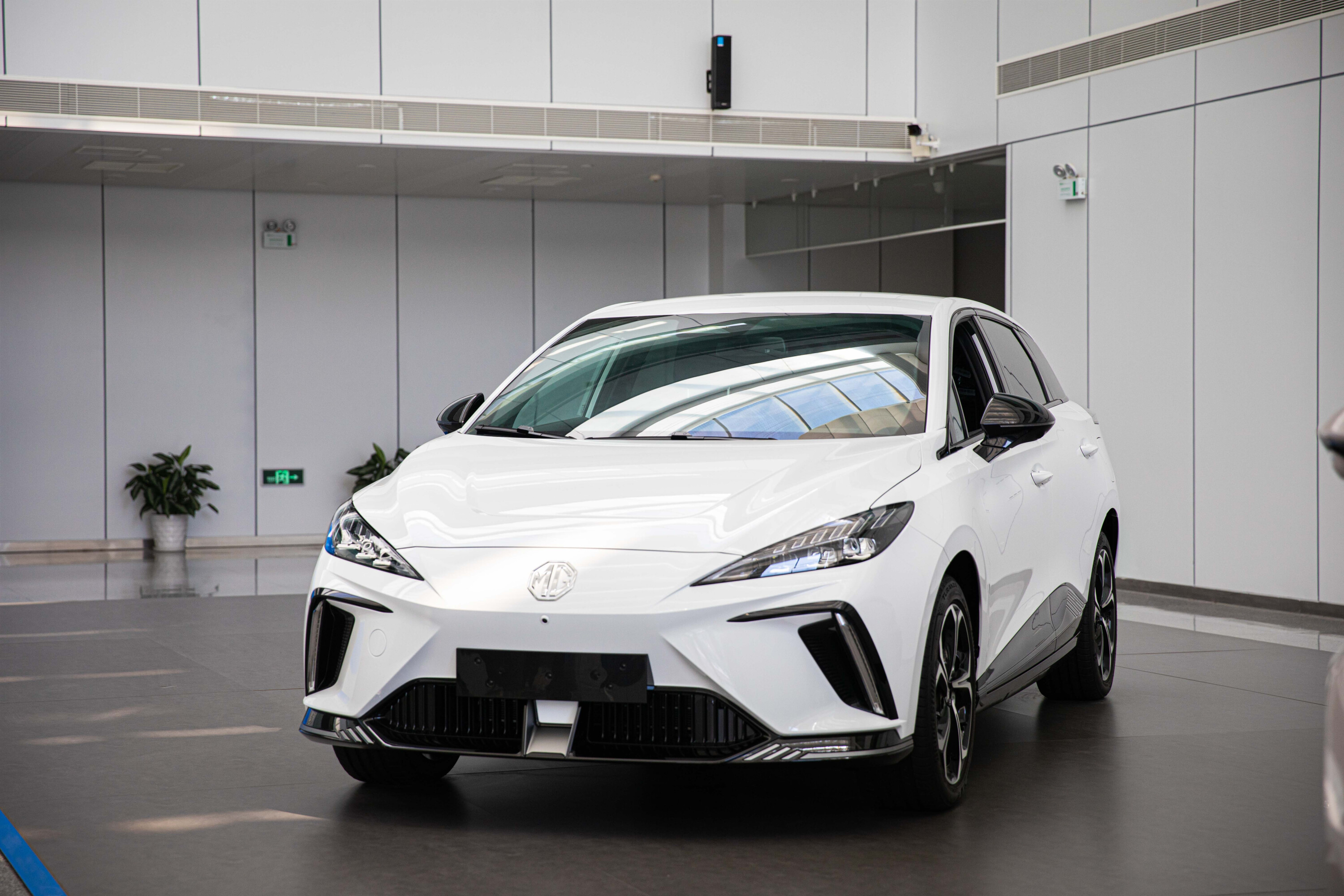
All sorts are on this production line, too. The one we are most interested in is the MG4 X-Power, the brand’s new all-electric, dual-motor hot hatch able to silently scurry from zero to 100km/h in a claimed, RS3-tormenting 3.8 seconds.
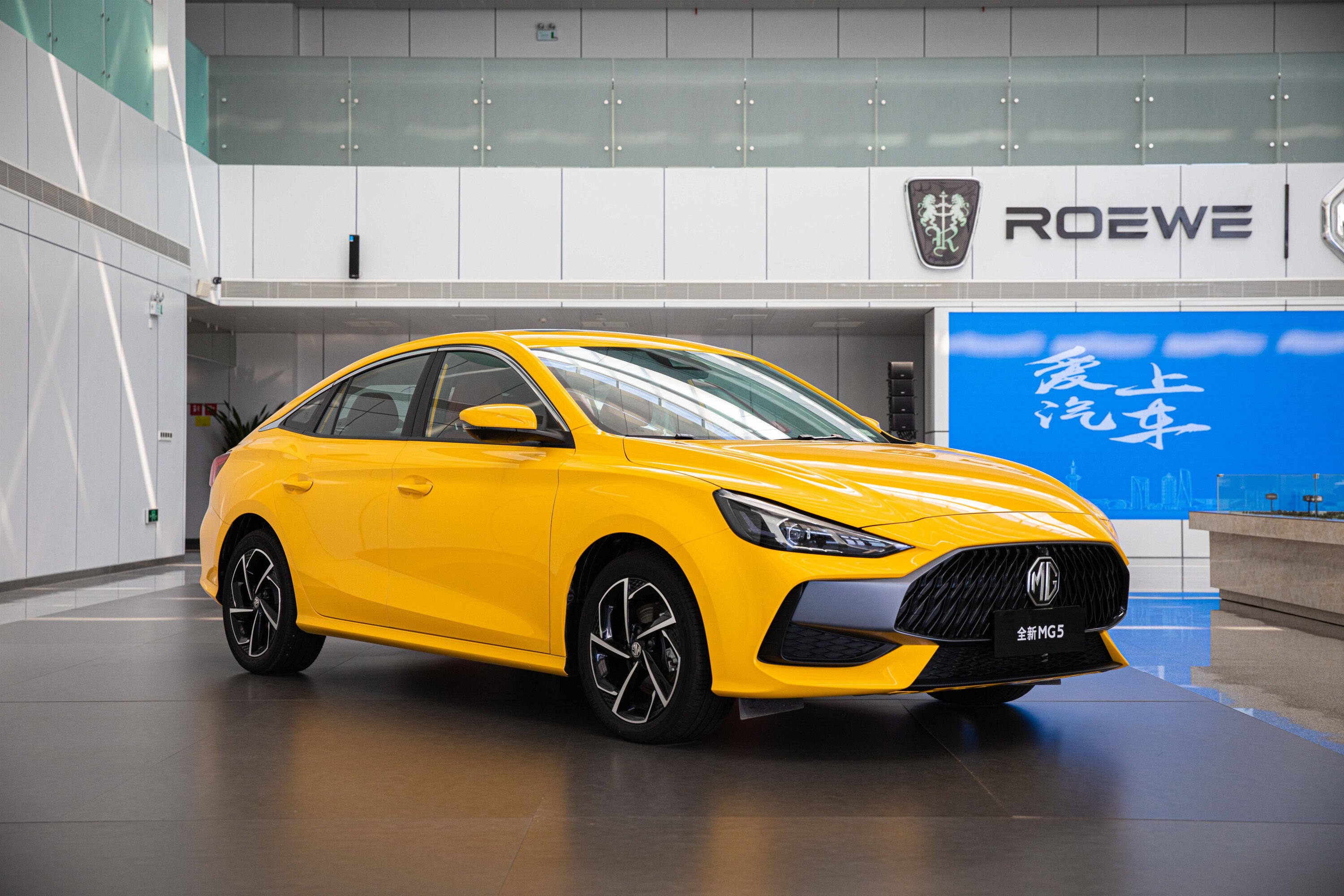
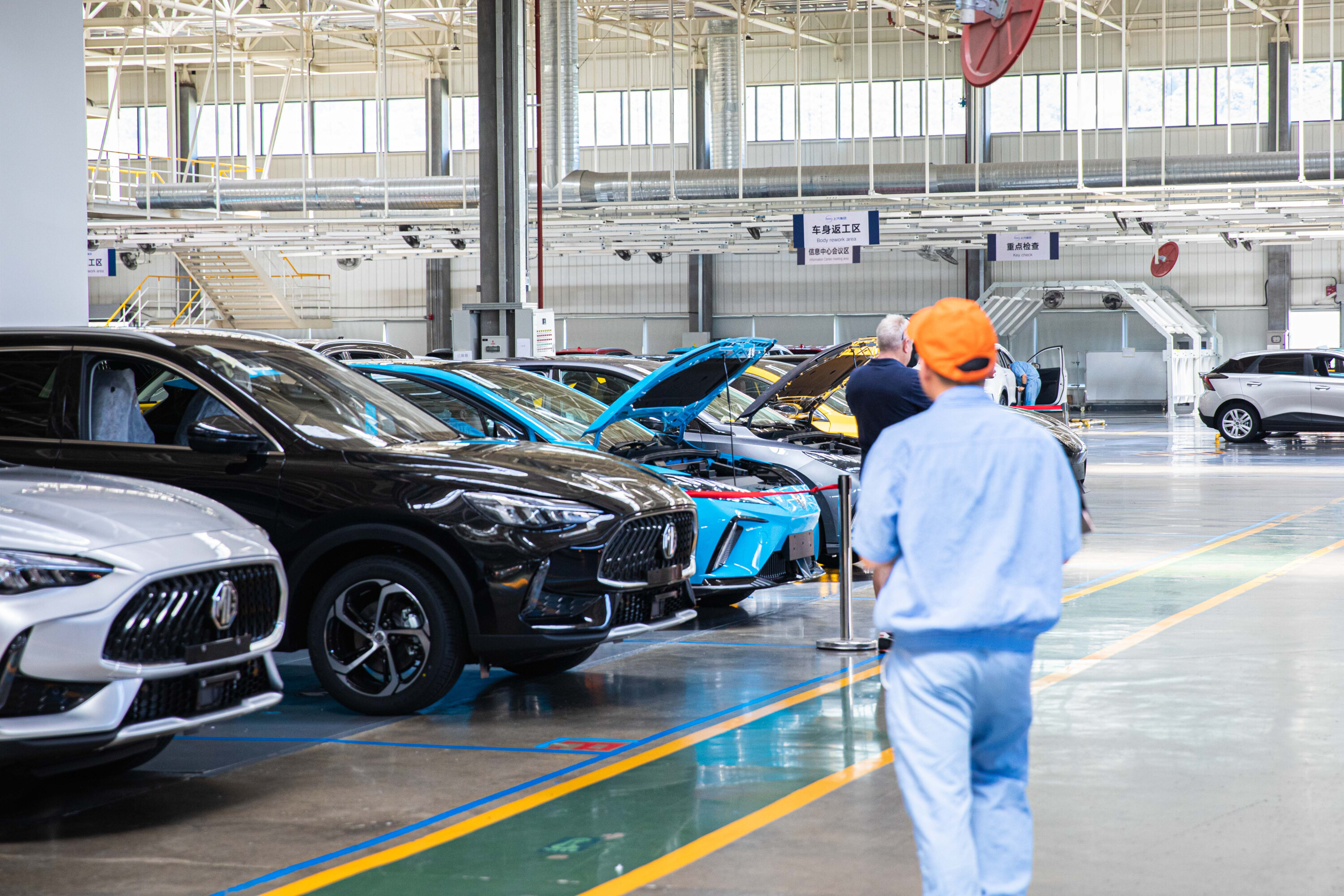
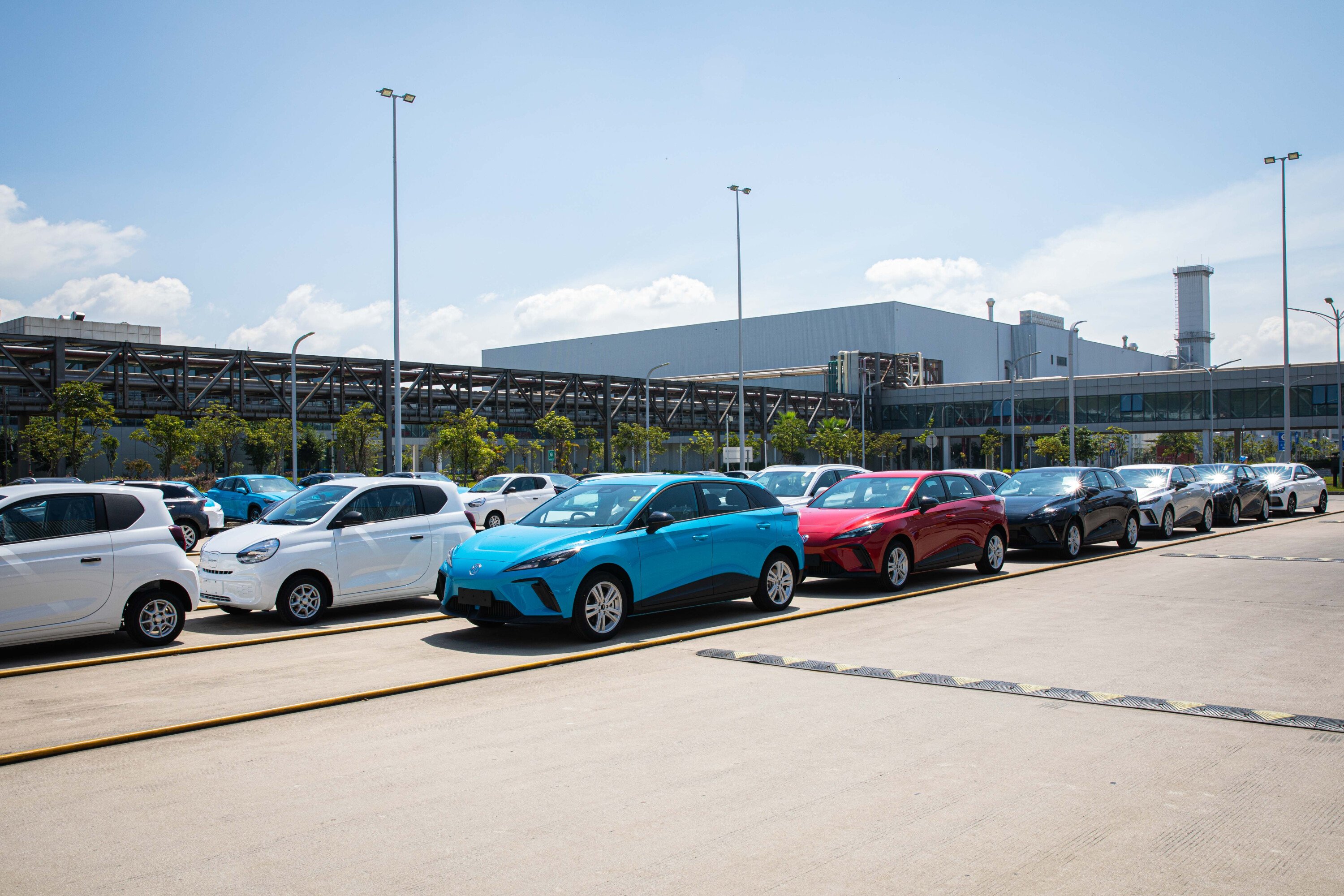
On this production line the MG4 cuts a somewhat more modern shape among MG5 sedans and HS SUVs, which both somehow look 10 years old, even though they’re brand new. There’s also the Clever – a tiny three-door microcar that’s not sold in Australia – and other cars under the domestic brand Roewe.
1
Those made for export are headed for the UK, Australia, New Zealand, Mexico and the Middle East.
More than 1500 people work here in two shifts – day and night – and save for a couple of breaks to scoff some sustenance, the production line never stops.
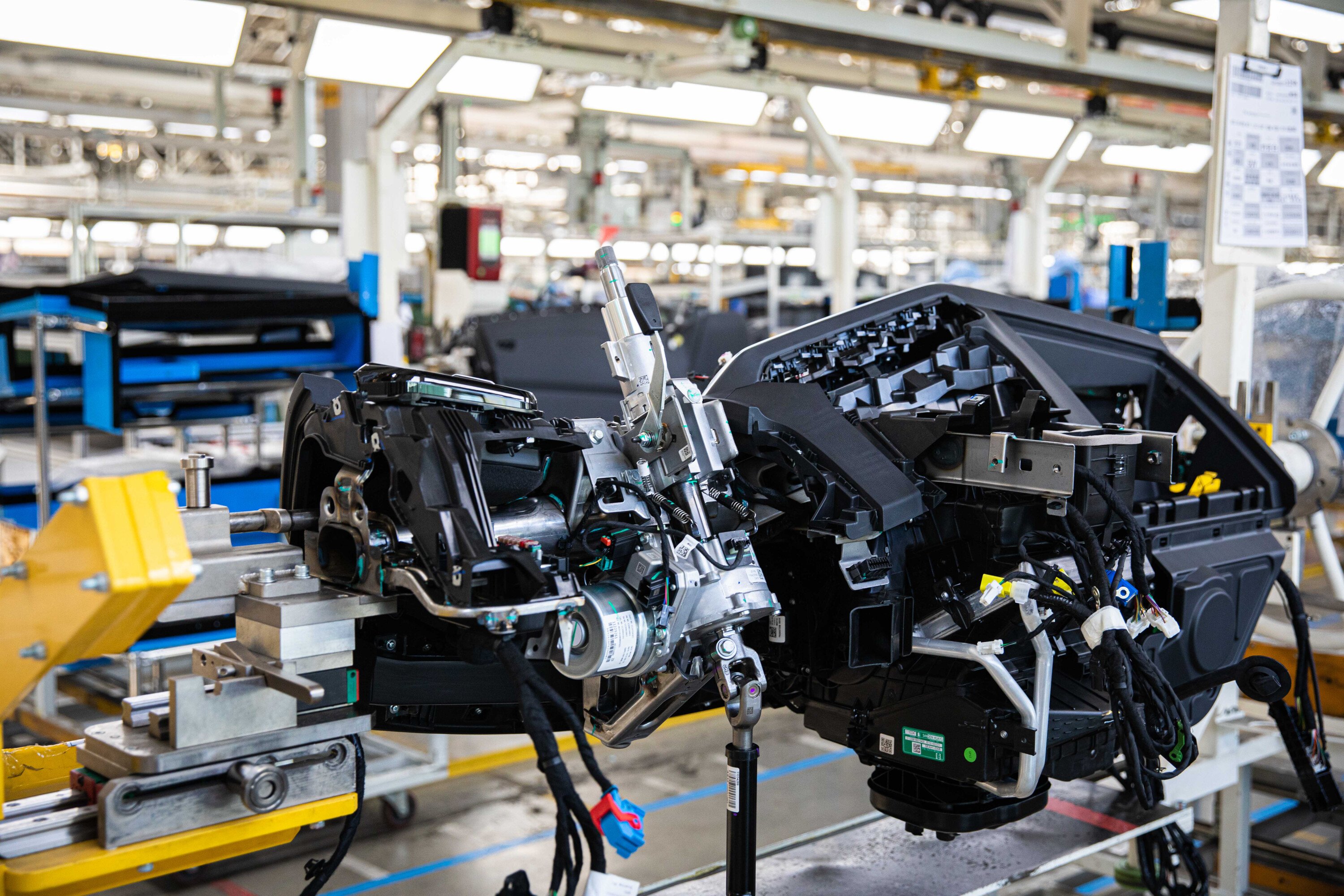
Curiously, it’s not a very loud place. All the time, there’s an odd, staccato, flute-like music echoing from speakers throughout the factory, like they’ve put a heavily sedated Willy Wonka in a corner somewhere with a keyboard. The music, however, is meant to communicate to the workers different stages of the day and production process – and they all know exactly what each tune means. But it lends the factory an almost ethereal feel.
1
We head into the more dimly lit “body shop” and the watchful eyes of those on the assembly line are replaced by encaged, highly choreographed machines.
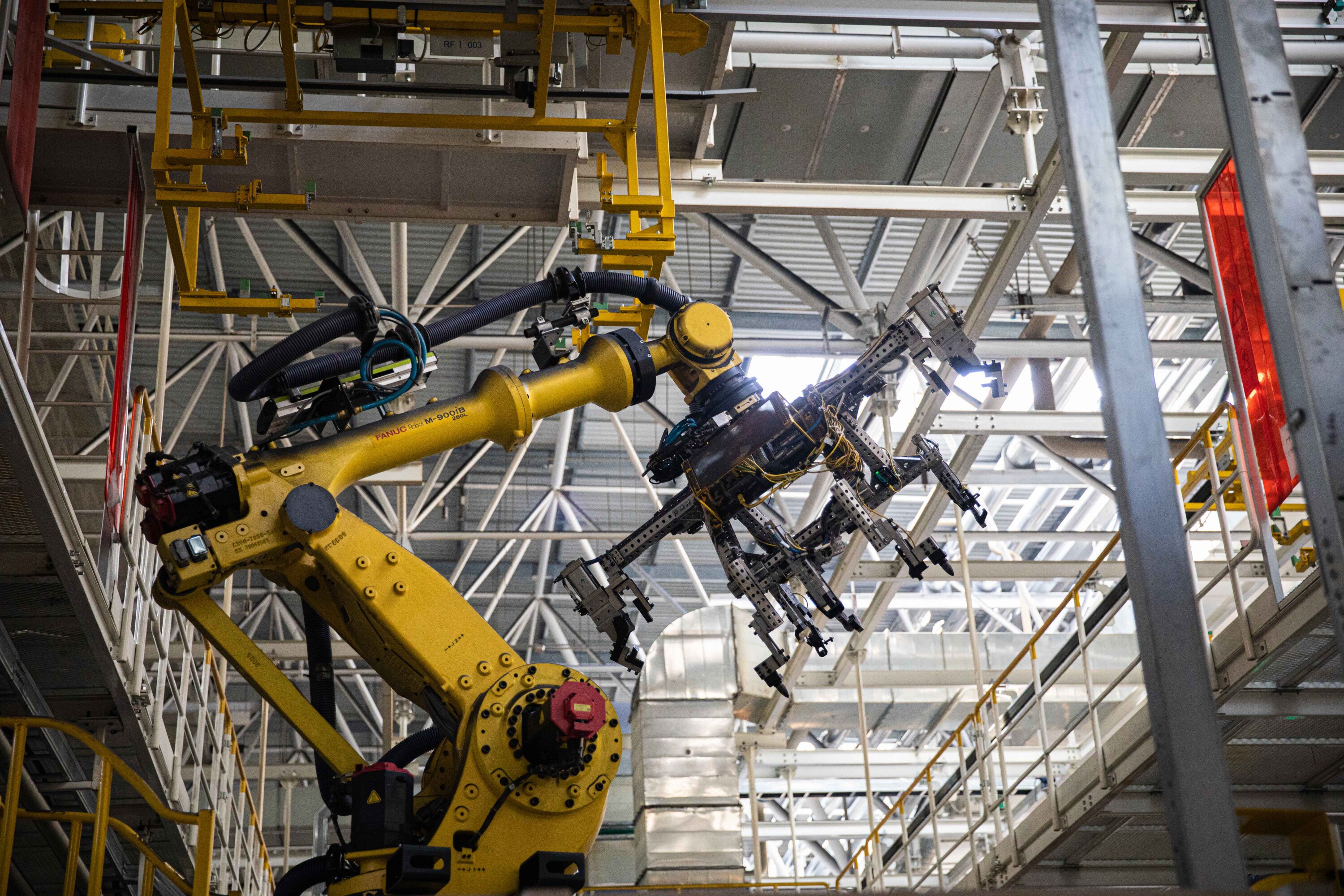
There’s the smell of burning metal as teams of yellow-armed robots surgically bring together bare, pressed chassis bits.
Jets of sparks fly wildly as the familiar shape of a car comes together before our eyes. And unlike the humans, the 630 eyeless robots neither think nor feel, need breaks, or even realise we are in their midst. This makes the “body shop” a busy place, yet one in which you can easily feel a bit alone.
1
Even the robots eventually need breaks, however – every three months the production line is halted for a couple of days to recalibrate these highly accurate machines.
At one point, one of our hosts runs off in distress and attempts to block a bare chassis, located in an open area of the factory, from our camera-enabled phones, which are pointing and recording everything as if we’re spies.
The bare chassis cuts an unmistakeable, convertible, two-door sports car silhouette, a mix of Porsche and BMW Z4. “This is secret,” she says. “Do not take a photo”. With its sleek outline and creased haunches, this is the MG Cyberster – the Porsche-pursuing, all-electric sports car that will do 0-100km/h in 2.6 seconds.
1
Destined to nestle in among the MG sedans and SUVs on the Ningde production line, it will be rear-drive and all-wheel-drive, and many will board a boat for Australia.
There’s the faint smell of cigarettes as we move between tepidly cooled buildings in the stale heat. There’s a sense that the buildings had a fast birth.
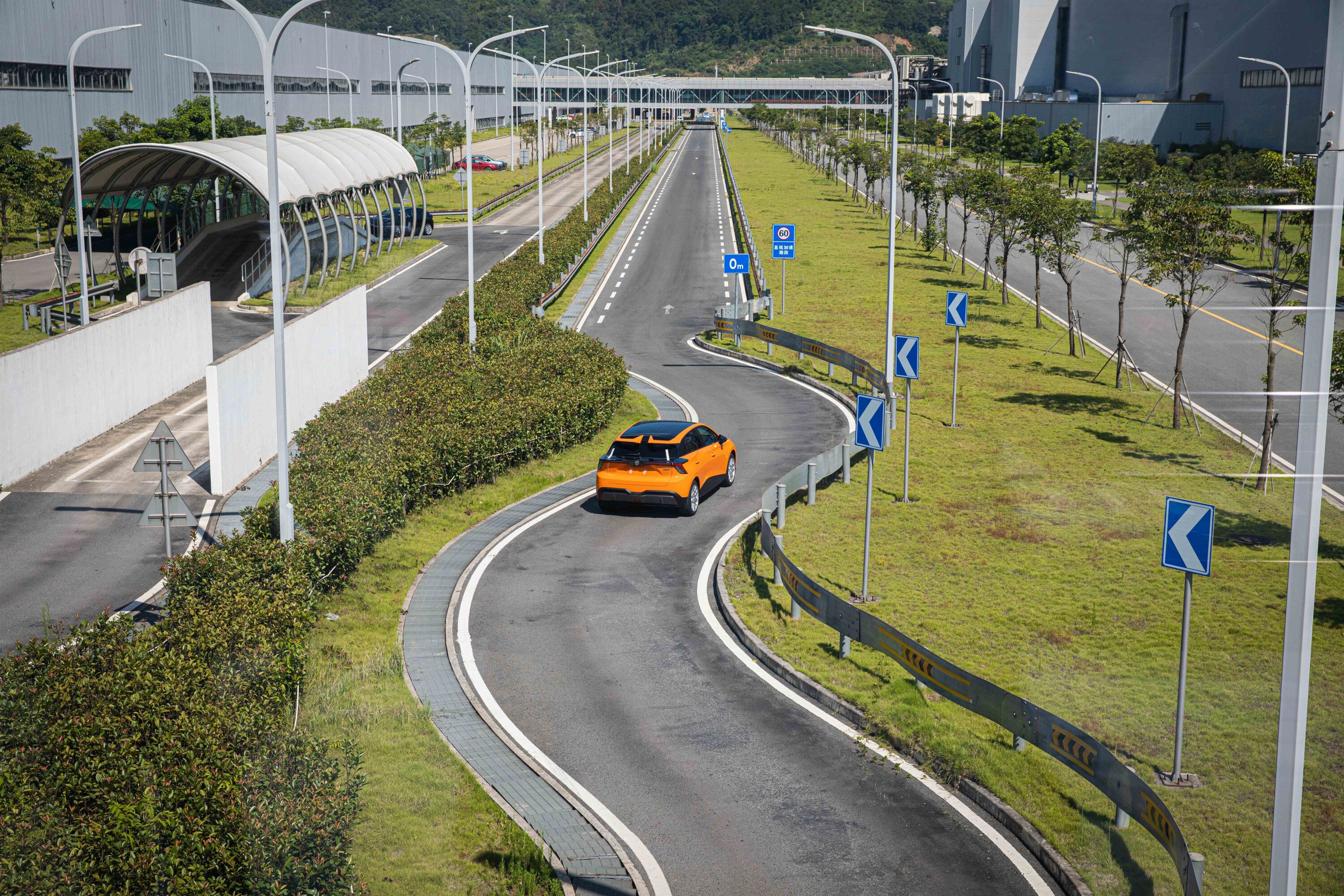
Out a window we spot an orange MG4 X-Power motoring slowly around what looks like a mini racetrack. Every single car, we’re told, is driven on this 900-metre test track, up to 140km/h, to make sure everything works – straight off the production line, like a newborn foal needing to run mere moments after its first breaths.
2
After that, they are either loaded directly onto a train – that comes straight into the factory precinct – or a boat, thanks to a nearby roll-on, roll-off berth capable of exporting 300,000 cars each year.
As our tour ends, I’m left with the impression I’ve just seen a factory as modern as anything overseas – and to be sure, the Chinese have been making all sorts of things for a long time now. It will be fascinating to see how cars made in China change the automotive landscape in Australia.
It was guessed that the rise of brands like Hyundai and its Excel would usher in a new era of cheap, disposable cars.
Today, however, Hyundai produces cars that are durable. While our consumption-driven society is only too happy to dump a broken flatscreen TV on the kerb for council collection, it’s hard to see the same happening for cars.
1
We’re too used to wanting to pay more for a car that lasts – a broken TV won’t potentially leave you stranded in the middle of nowhere – and cars made in China are only going to increase in quality, and cost.
Every car company, it seems, needs to have, and then grow from, its own kind of Excel. The Chinese, whose cars I wouldn’t say are poorly made (depending on the brand), will likely be no different. This is my guess anyway.
Much like the Excel, there’ll certainly soon be plenty of Chinese-made cars on Australian roads – pumped out from factories exactly like this.
2
5 of the worldu2019s biggest car factories
Ulsan, Hyundai, South Korea
Technically five plants combined, it can produce a whopping 1.5 million vehicles per year.
Manesar, Maruti Suzuki, India.
Pumps out up to 880,000 vehicles per year such as the Swift, Alto and Baleno.
Volkswagen Wolfsburg Plant, Germany.
Opened in 1938 by yes, those people… now produces up to 780,000 VWs per year.
Kentucky, Ford, USA.
Assembles around 750,000 vehicles per year, a most of them pick-up trucks like the F-150.
Tesla Gigafactory, Shanghai.
Around 710,000 Teslas come out of this factory annually, all of them electric. Impressive.
How China can turn a swamp into a functional car factory in 17 months
On April 27, 2018, the tiny aquatic creatures inhabiting an expansive tidal flat in Ningde, China, were blissfully unawares of the Fern Gully treatment they were about to receive.
The next day, a small battalion of bulldozers, excavators and tractors rolled in, reclaimed the sodden earth and began work on Asia’s largest new vehicle assembly line. Working day and night, what was normally a three-year process was condensed to just 17 months and on September 28, 2019, brand new MGs started rolling out the door in their thousands.
2
“Golden babies accelerate leapfrog development” is how SAIC’s somewhat propagandist promotional video describes the construction work.
There’s no denying, though, that China has something of a firehose it can point at construction problems, making them go away very, very quickly – as the Ningde factory demonstrates.
MORE
Everything MG
More EV stories to help you choose the best car for your needs
- ? EV news, reviews, advice & guides
- ❓ Short & sweet: Your EV questions answered
- ⚡ New EVs: Everything coming to Australia
- ? Australia’s EVs with the longest driving range
- ⚖️ Best-value EVs by driving range
- ? How much do EVs cost in Australia?
- ? How much more expensive are EVs?
- ⚖️ Number crunching: Is it time to switch to an EV?
- ♻ Should you buy a used EV?
- ?️ Are EVs more expensive to insure?
- ? Costs compared: Charging an EV vs fueling a car
- ? EV charging guide
- ? Are there enough EV chargers in Oz?
- ?? EV servicing explained
- ? EV battery types explained
- ? When do EV batteries need replacing?
- ? Hydrogen v EVs: What’s best for Oz?
- ? How sustainable are EVs, really?
MORE advice stories to help you with buying and owning a car
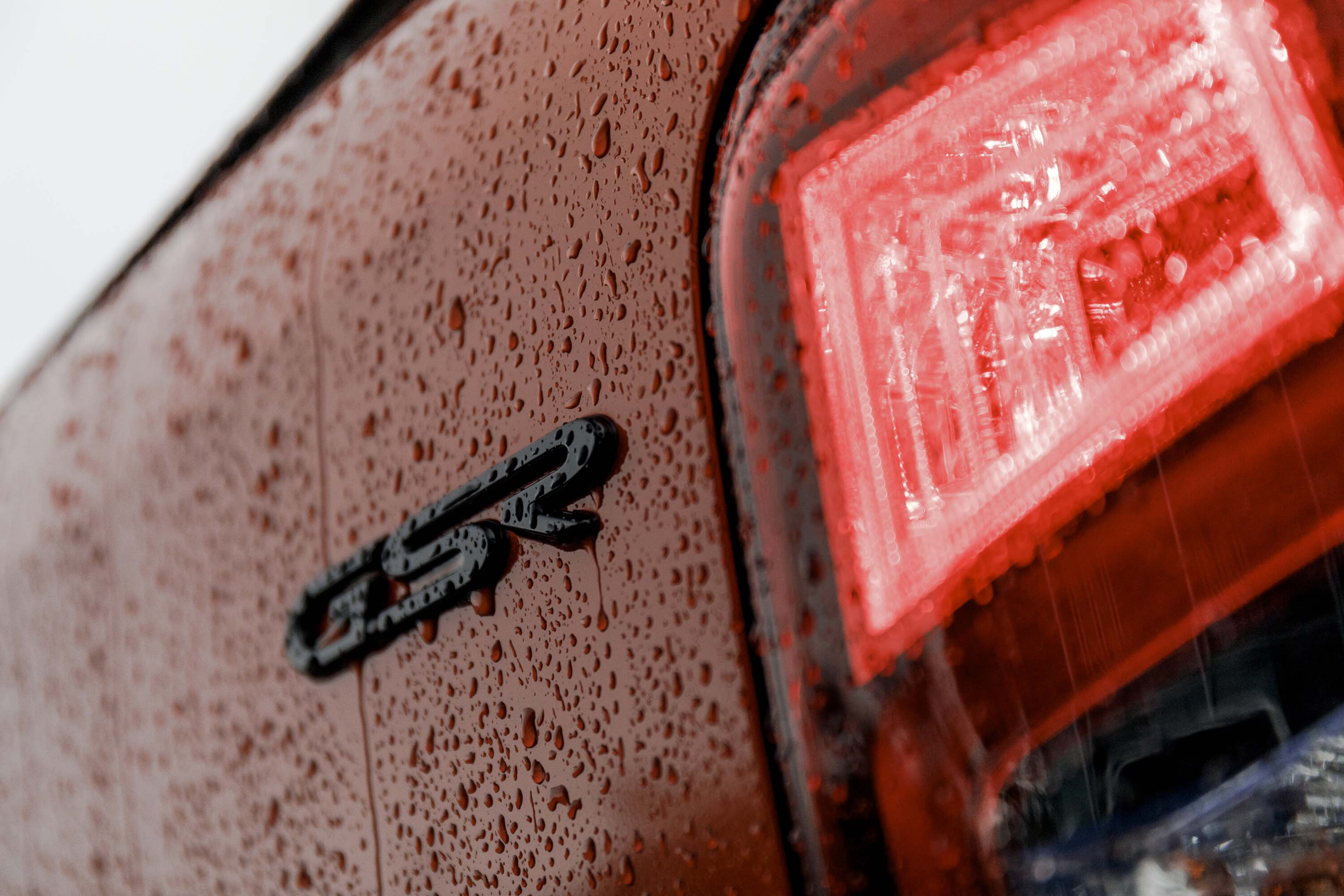
Information from the Department of Infrastructure’s publicly available list of approved vehicles reveals that Mitsubishi has applied for, and been granted permission to use, the GSR badge on its Outlander PHEV SUV.
The update appeared on the Road Vehicle Regulator database on 20 July, adding GSR to the existing ES, Aspire and Exceed variants that were approved in July 2021.
No specific changes have been listed in the database that contains information about suspension, wheel/tyre, and sizing compliance, so potential GSR features discussed here are speculative.
1
And while a Mitsubishi Motors Australia spokesperson noted that “it’s standard practice to register, apply and withdraw brand identifiers”, and that this “doesn’t always translate to a new product”, it does make sense for Mitsubishi’s most powerful vehicle to get a sporty variant.
After all, the third-gen Outlander PHEV was sold in GSR trim. That added Bilstein monotube front dampers with ball-bearing top mounts and increased spring rates all around, as well as bringing a sporty suede-cloth interior treatment with red stitching and black exterior badging.
1
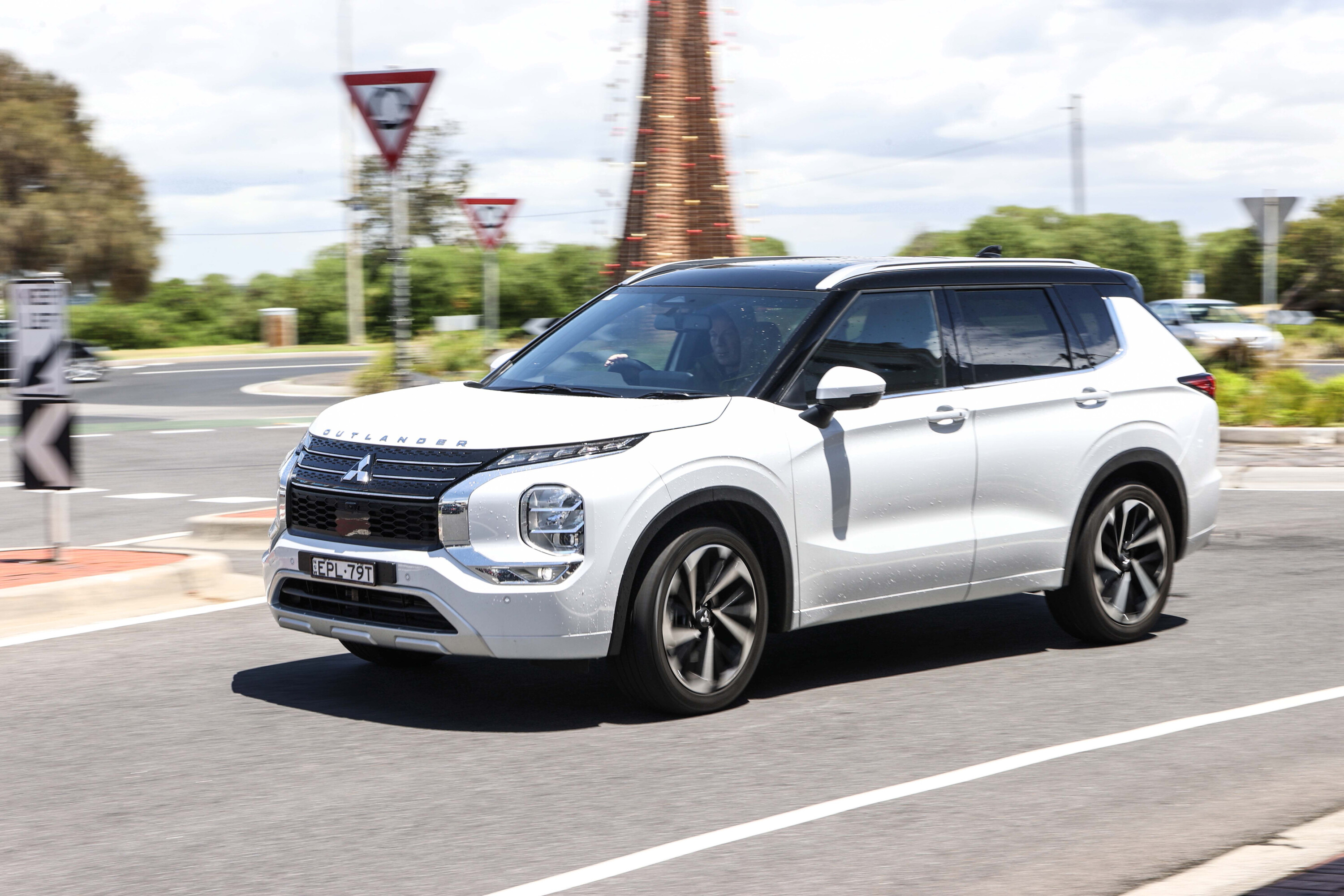
Physically larger in fourth-gen guise, the Outlander PHEV develops 185kW and 450Nm, enough for an 8.2 second 0-100km/h sprint and mid-range punch that justifies some more body control that Bilstein dampers would bring.
We also know Mitsubishi is planning a performance comeback. Though we understand vehicles wearing Ralliart badging will be fairly well worked over – with engineers discussing a potential tri-motor Outlander Ralliart with over 285kW, torque-vectoring AWD and sophisticated suspension changes – this could be known as the GSR in Oz.
The third option is a simple trim level as GSR means for the Triton ute and Pajero Sport SUV. The Outlander GSR could be a blacked-out version of Exceed with a gloss grille, 18-inch alloy wheels, and sporty cabin treatment. Our best guess is the first option, though, with Bilstein dampers and a light performance work-over.
The Japanese-built Mitsubishi Outlander PHEV is a hybrid medium SUV priced between $55,490-$69,990 before on-road costs. A rival for the Toyota RAV4, Nissan X-Trail, Haval H6, the Outlander is popular in Australia notching up 11,324 deliveries this year for an 11.4 per cent slice of the medium SUV segment.
