July 2023: 3D-printed Aventador reaches 150th video update
Aventadorable father-son project still going strong
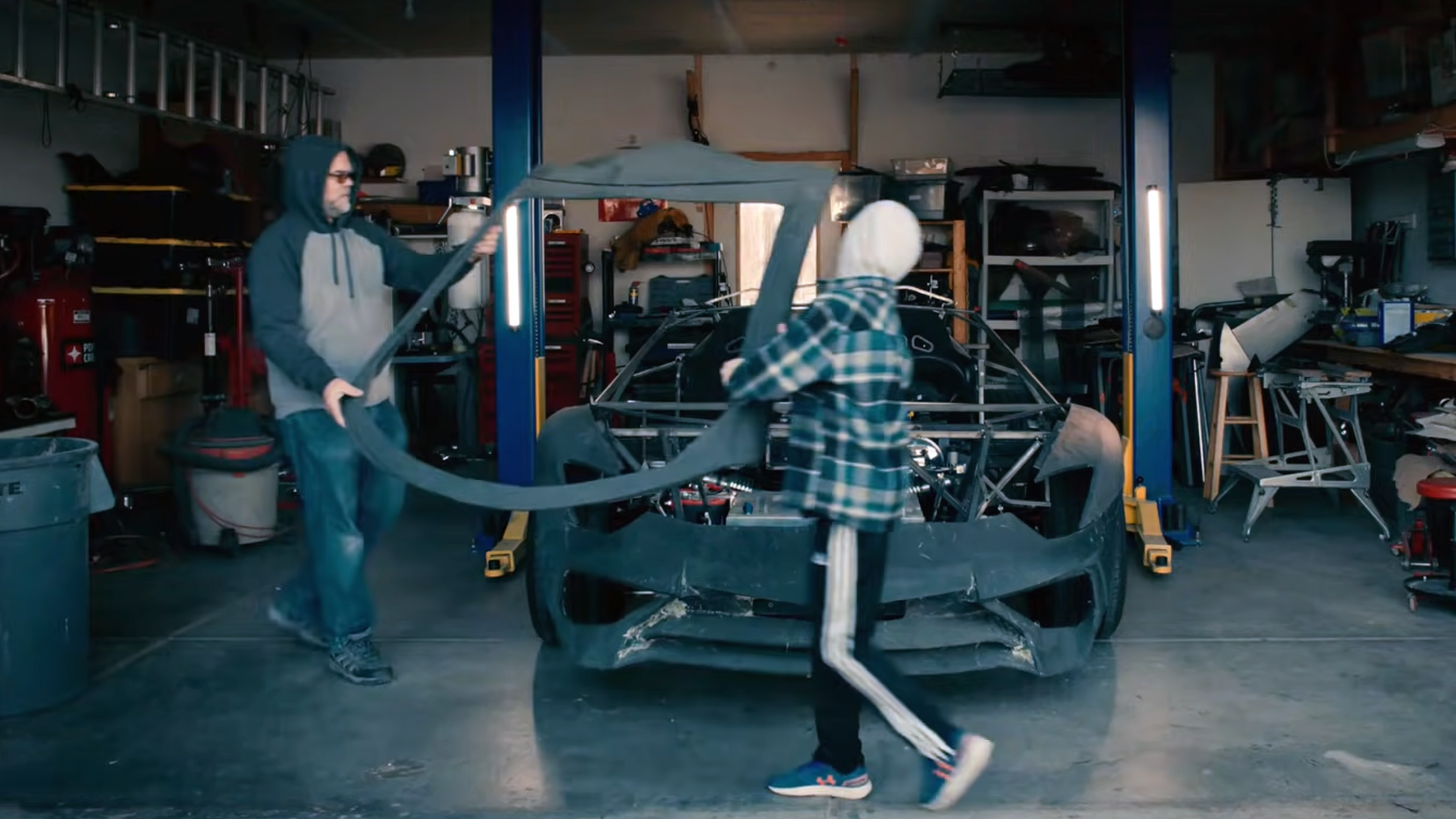
Some five years since we first wrote about it, and nearly two years since he took his audience for a brief drive out of the garage and a tour of niggling issues [↗], this laser physicist and war veteran’s 3D-printed Aventador has come a long way.
? Just five hours ago, ‘Laser’ Sterling Backus posted his 150th clip.
In true reserved Sterling form, the video wastes no time on celebratory antics. Instead, we’re treated to just another update – this time, the priming of the homemade Aventador’s rear end panel.
In fact, how does this channel only have 32,000 subscribers?!
In early 2020 – update 39! – Sterling posted a video of the Aventador growling its way down the driveway with his son Xander (below), but the state of the car showed there was still a lot of work to do.
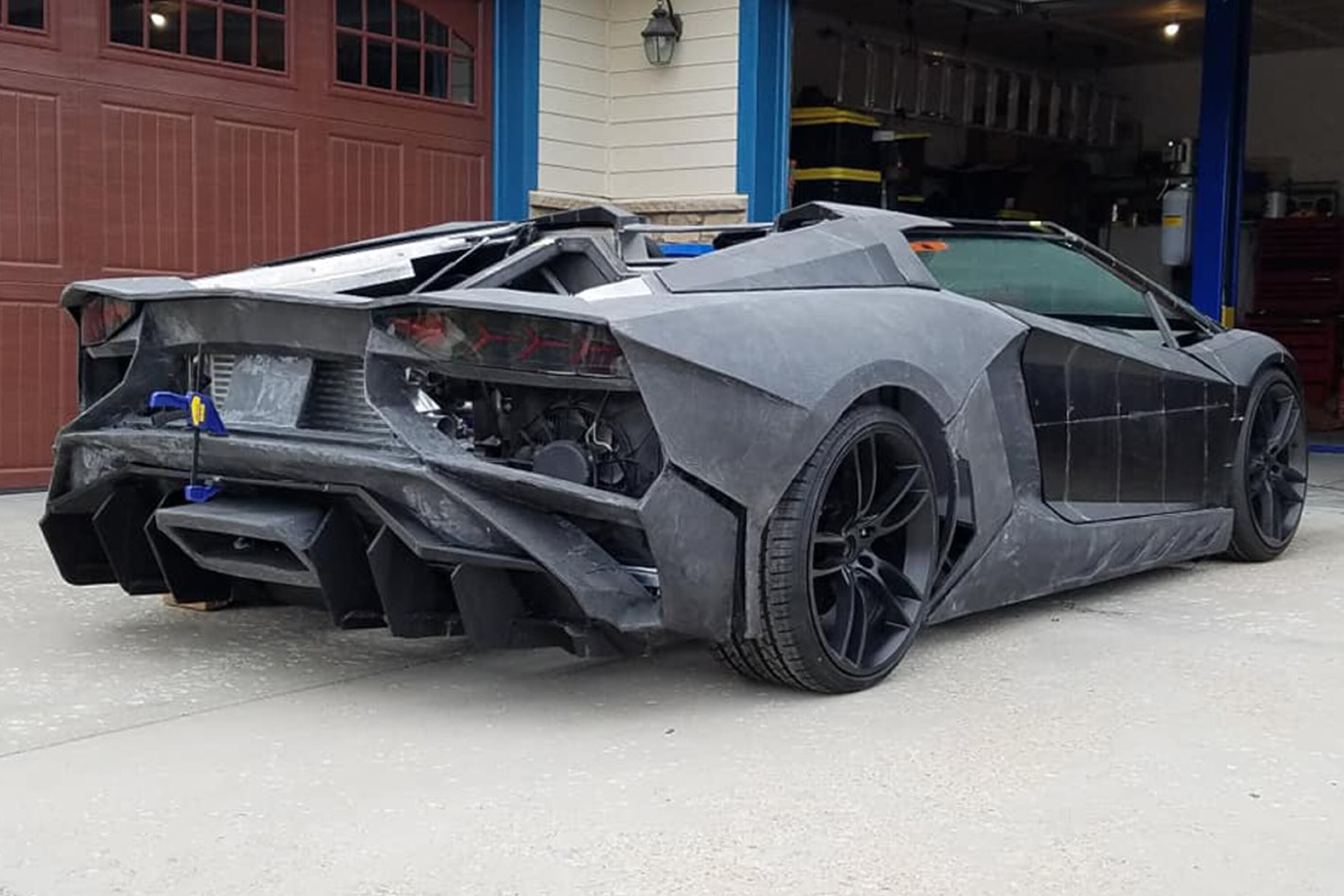
Then, just one year ago, Sterling posted a video of his 3D-printed Aventador all painted up and out driving down the road – although, in true DIY youtuber fashion, a big chunk of the video is the ‘cameraman’ standing in the driveway waiting for dad to return.
He’s not much for editing, this fella!
As noted further down in this story, the LS1 V8 powering this Aventador – dubbed ‘Interceptor’ – was sourced from a wrecked 2005 Corvette.
Earlier this year, Sterling starred in a great video on YouTube channel 3D Printing Nerd [↗], taking the channel through the work he’s done so far.
Go to the other end, however, and Sterling is the lucky recipient of some Lambo-donated, genuine Aventador headlights – normally AU$7000 each as a replacement part from Lamborghini.
The steering wheel is the real deal, too, gifted to Backus when Lamborghini visited.
There are a few other genuine parts in the car, sourced from owners and online sources like eBay, which Sterling details in the video above.
1
Despite the international attention his project has attracted – including the endorsement of and a visit from Lamborghini – it hasn’t fazed the father of three, who is a research scientist and holds an appointment in the Colorado State University.
“I’ve met new people who are very interested in the project that I’m doing, but besides that, things haven’t changed a whole lot of me, which is good.”
December 2019: Lamborghini sneaks a real Aventador into the garage for a surprise loan
How good is this? That’s the kind of Christmas spirit we love to see from supercar brands. Details linked below.
October 2019: It drives!
It might just be the ultimate backyard project – and now the 3D-printed Lamborghini Aventador lives with a very aggro, if not unusual soundtrack.
In terms of dad of the year, physicist Sterling Backus has the runs on the board after his son dreamed of building one while playing Forza Horizon 3 on an Xbox.
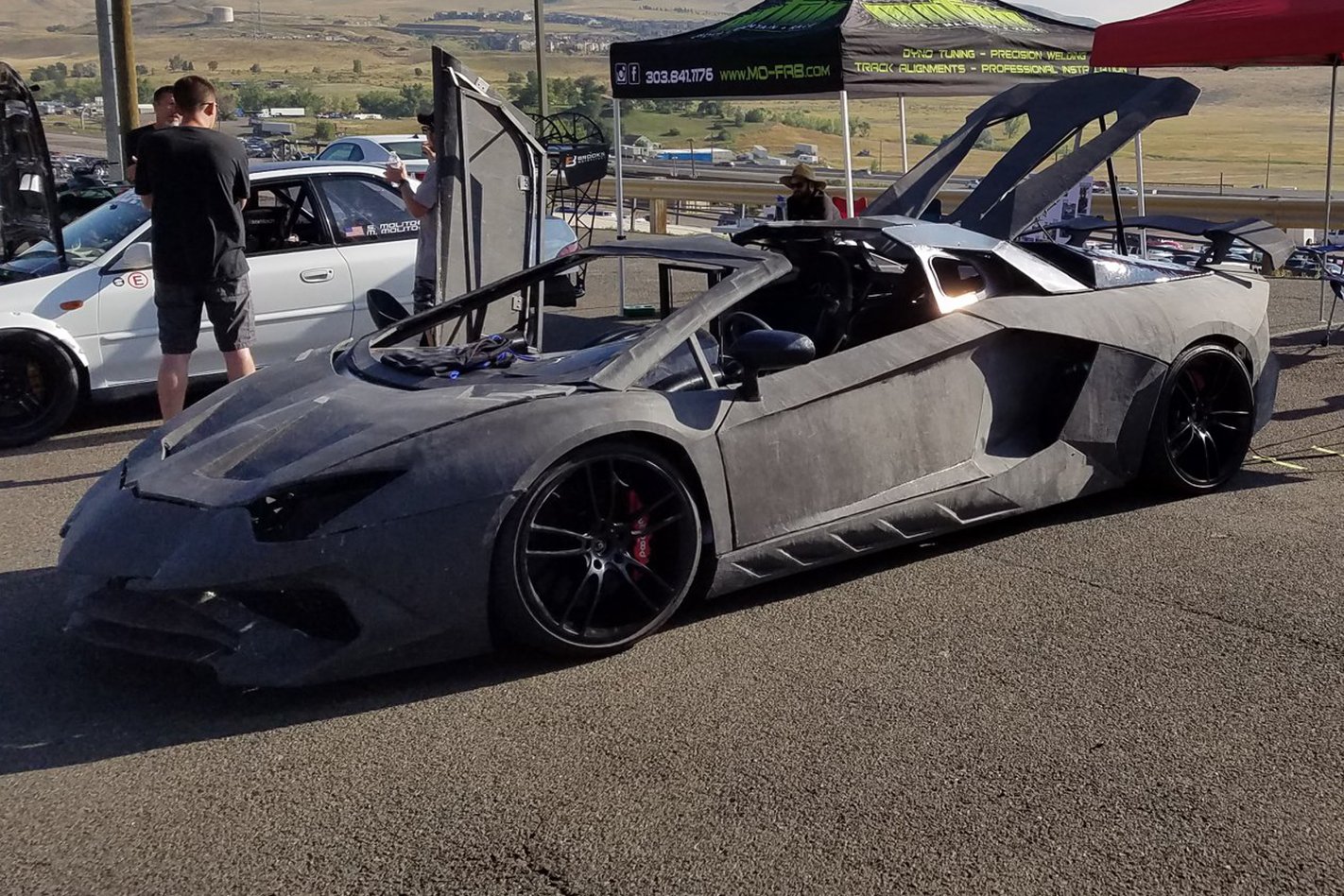
Fast-forward the process and not only has Backus built the frame and 3D-printed the carbonfibre-wrapped panels, but it’s now driveable. And it sounds tough.
Yes, it’s a Lamborghini Aventador, but not as we know it. The V12 has made way for a 5.7-litre bent-eight out of a 2003 Chevrolet Corvette.
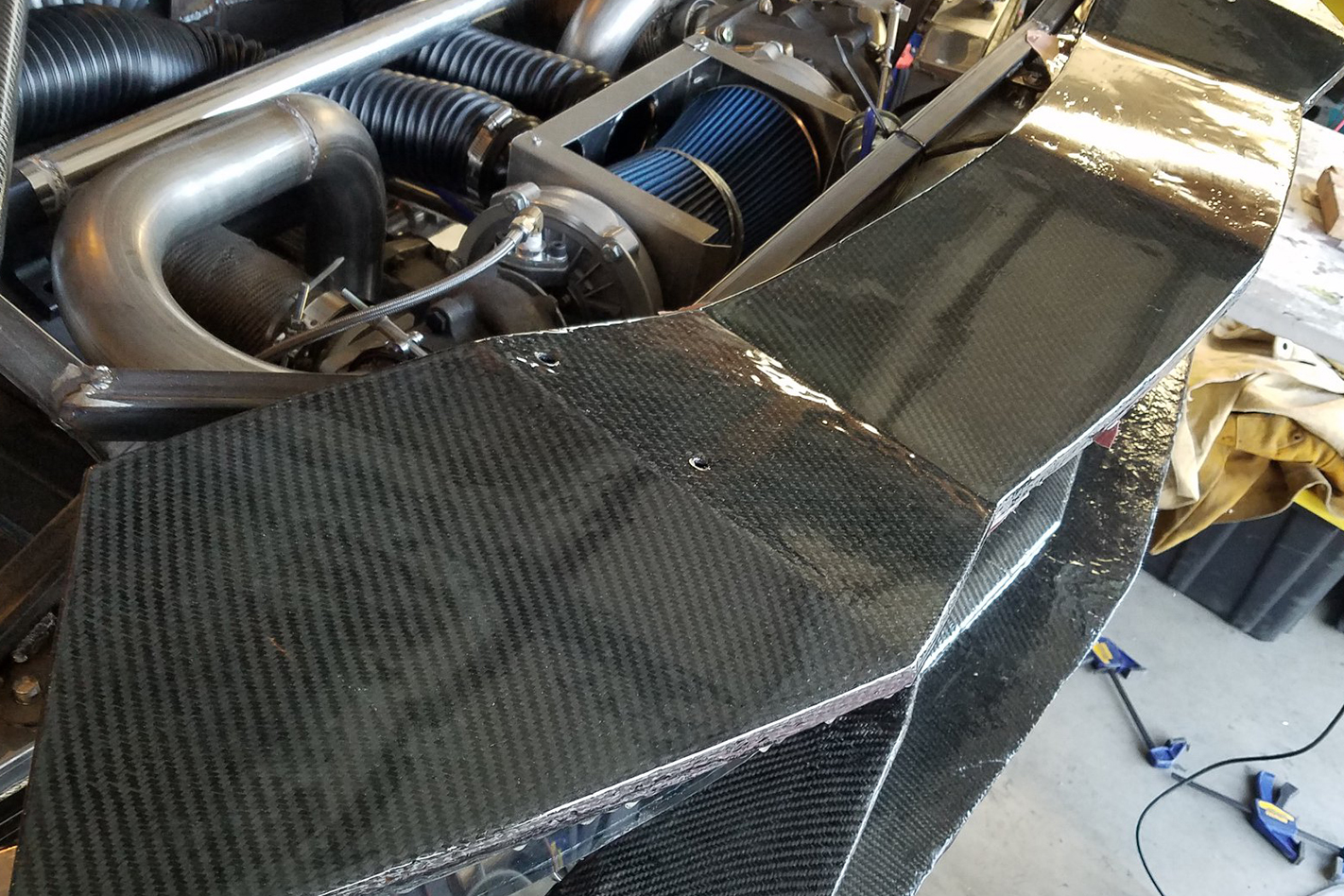
However, if you’ve seen this project already, you’d know that it had little chance of remaining standard, with the V8 gaining twin turbos.
You can even see the rear-mounted intercooler’s placement (and bespoke suspension set-up) when the kit-car is driven down the driveway of the family’s home. https://www.youtube.com/watch?v=RMlx6rrdSz4
The howling V12 soundtrack makes way for grumbling booted LS1 overtones. It’s loud, very loud. And it sounds tough, too – if the power figures match the aural menace, then it should be very potent.
Interestingly, the reason for the carbon wrap on the panels is because the 3D-printed plastic melts in the sun if it isn’t protected. That even goes for the scissor doors found on the real Aventador.
1
Considering the learnings for this project came from trial and error as well as watching YouTube videos, it’s pretty impressive. It’s even on the way to being made roadworthy.
The desire for the end product, apart from enjoying it within the Backus household, is for it to be an educational tool for students.
If you want to follow the build, head to Backus’ YouTube channel. What do you think? Are you tempted to create your own 3D-printed supercar?
Previously…
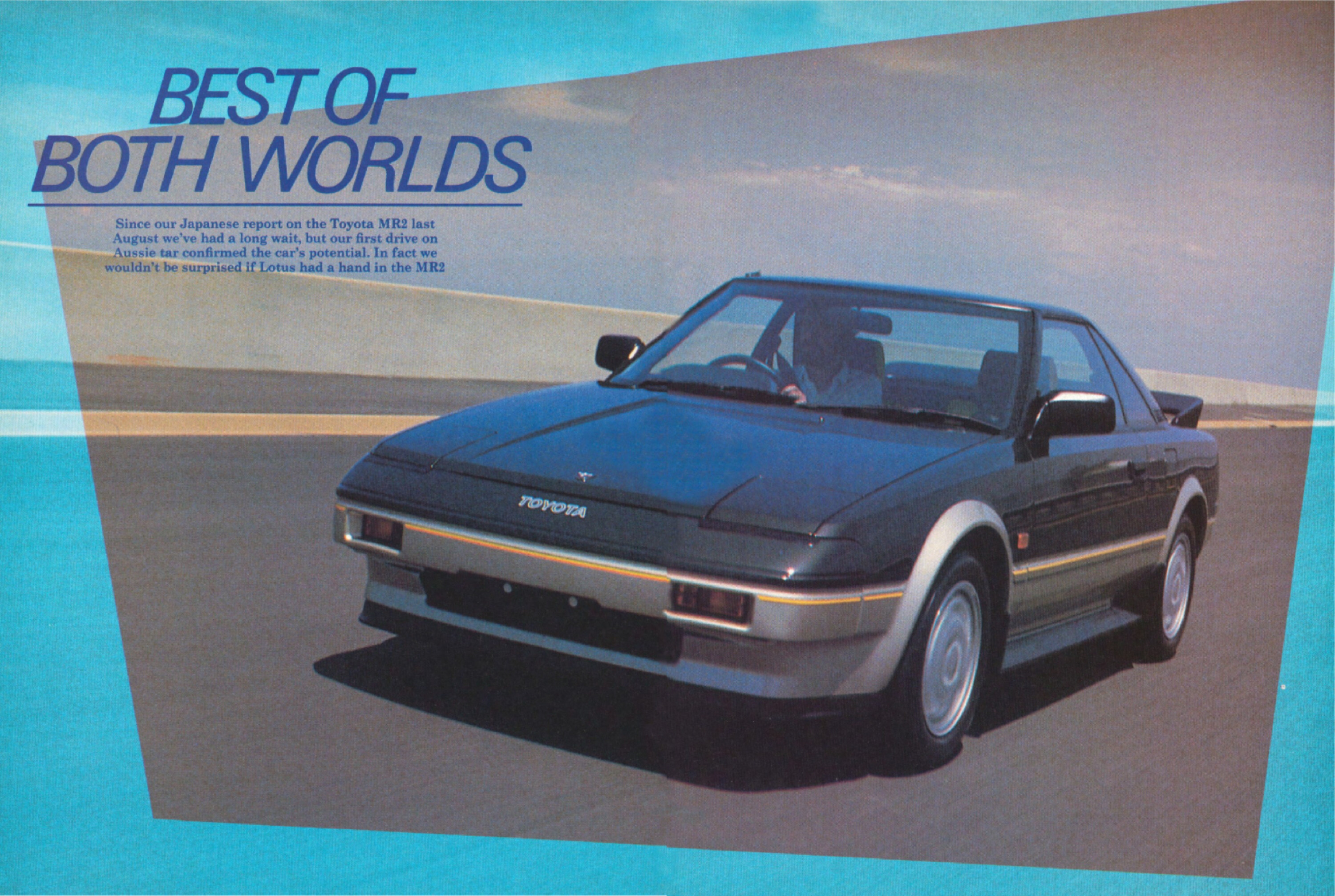
Remember the MR2 coupes and the MR-S? Introducing… the MR-E.
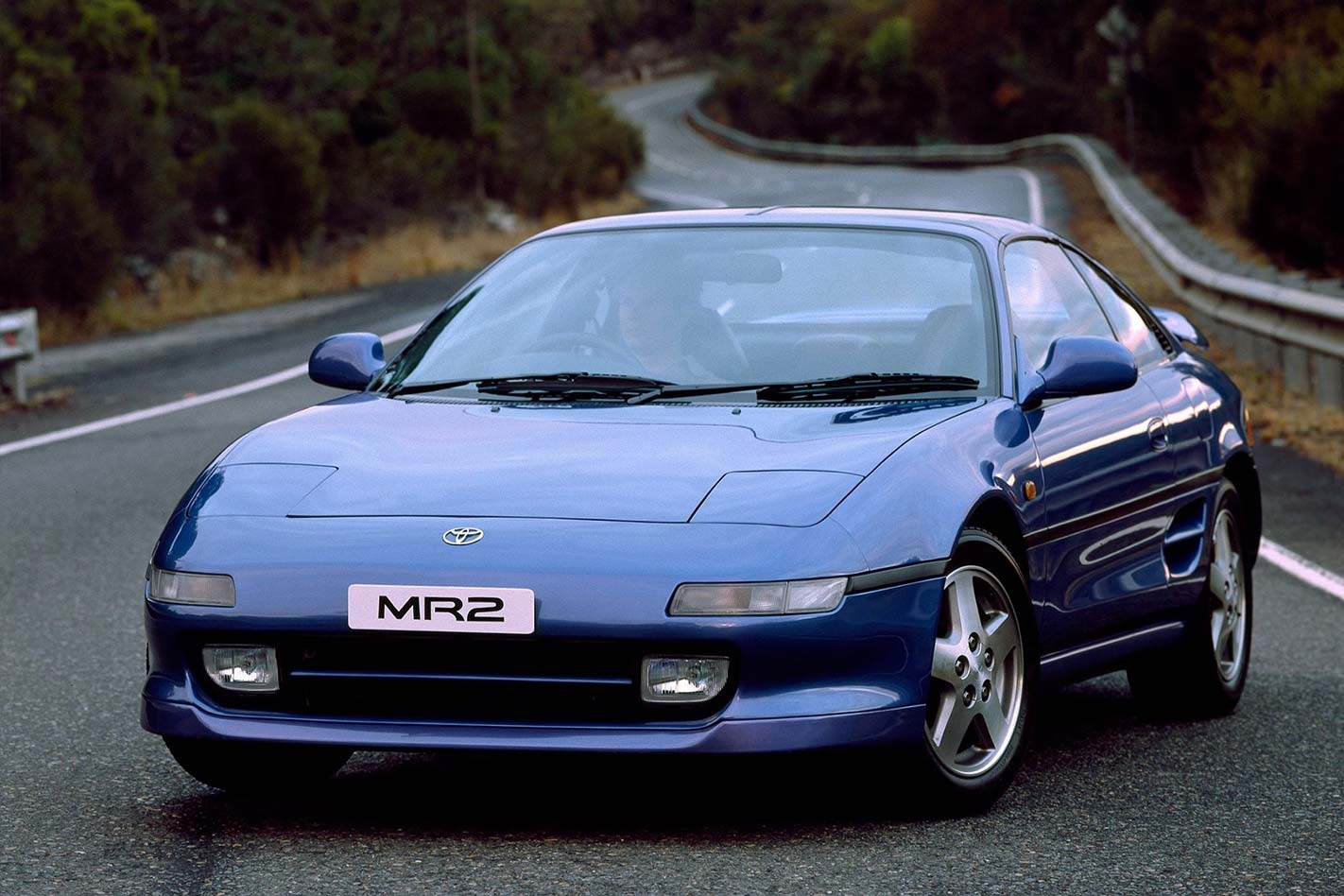
The AW11 and SW20 MR2 coupes are icons, arriving as Mid-engined, RWD sports cars in 1984 and 1989 respectively – an era of passionate performance motoring for the Toyota brand.
The third generation, known in Japan as the MR-S (for ‘spyder’), strayed a little from the formula, but not in the ways that mattered most: the ‘MR’ in the name.
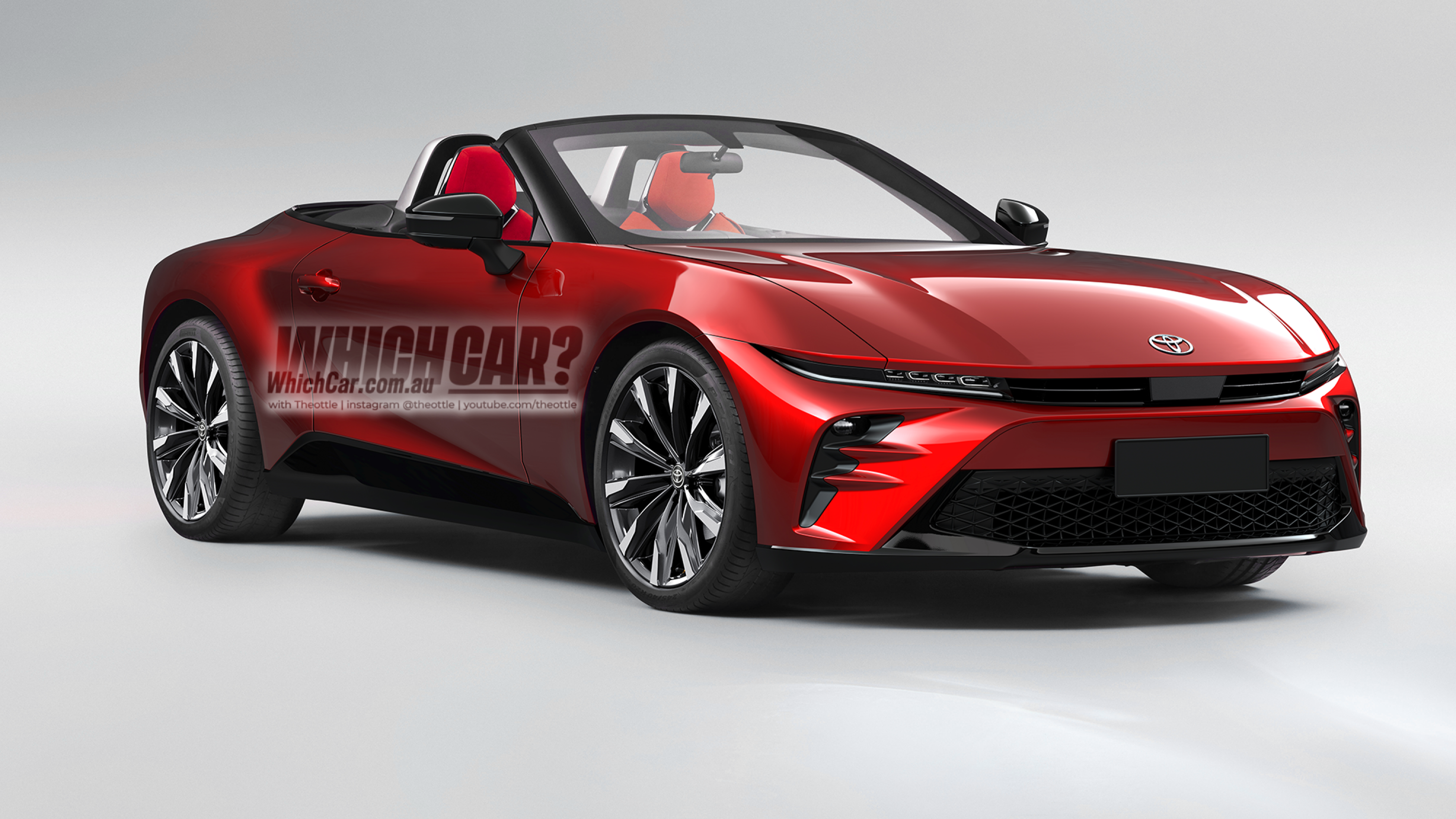
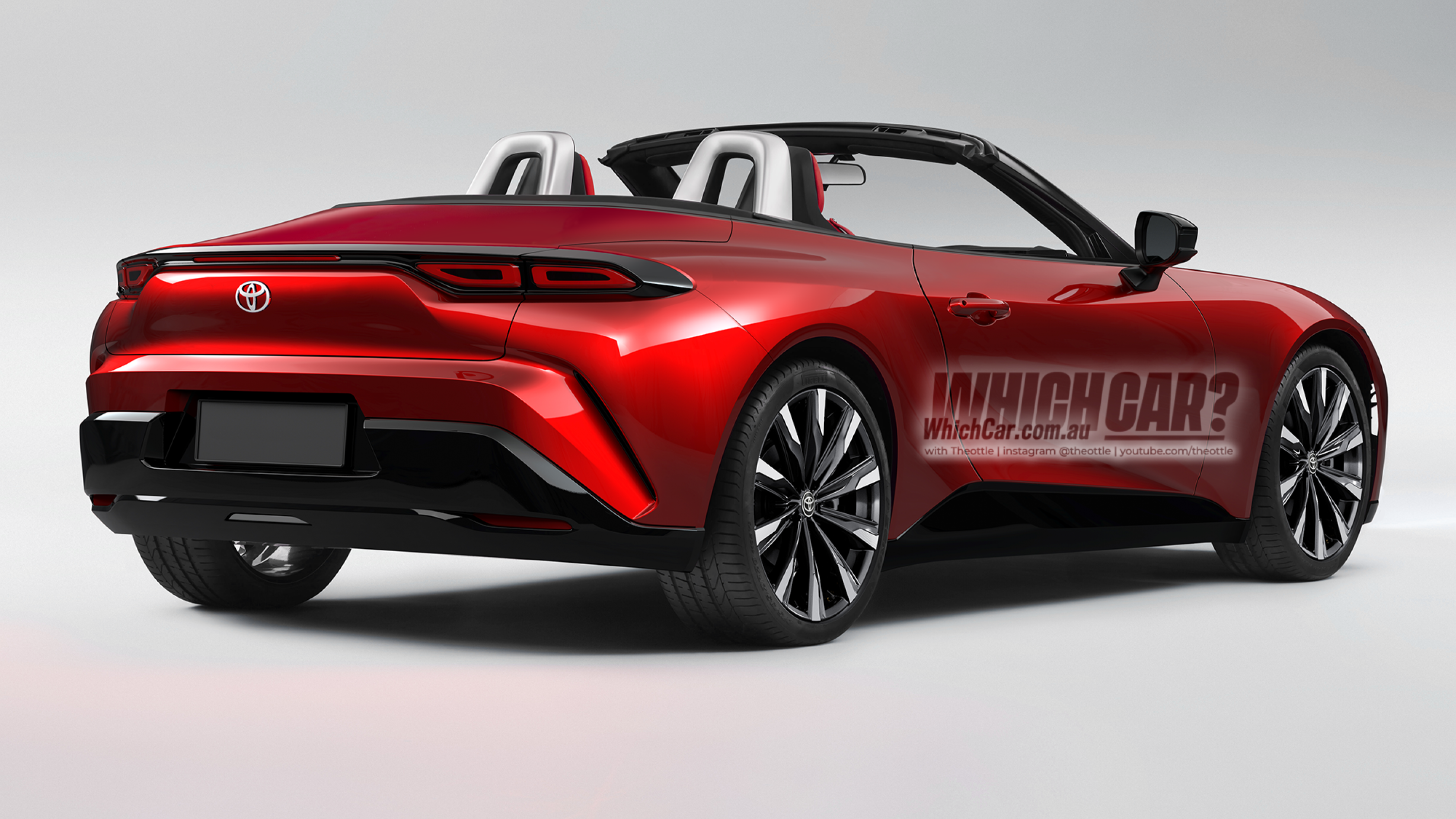
What we’ve got here, then, is an imagined fourth-generation Toyota MR – this time driven by electric power. Rendered by our mate Theottle [↗], this generation would be named ‘MR-E’.
1
How did he arrive at that name? Theo jokes that the ‘M’ would this time stand for ‘Maybe’.
In fact, Toyota could apply some sort of ‘Midship’ treatment here. Perhaps the position of the battery pack, if not the motor/s, although it would be odd to not simply run the cells along the floor of the car for weight distribution and a low centre of gravity.
As for the R(ear-wheel-drive) in the original MR2 name, Toyota could absolutely make this new two-door a spritely RWD offering – but we think it more likely the range would include, if not be entirely centered around, a dual-motor all-wheel-drive configuration for ultimate power and traction.
Perhaps, then, the R merely stands for ‘roadster’.
1
The final letter, E, speaks for itself: Electric.
And, if you were inclined to call the MR2 ‘Mister 2’, you’ll have as much fun with ‘Mister E’ or ‘Mister Electric’.
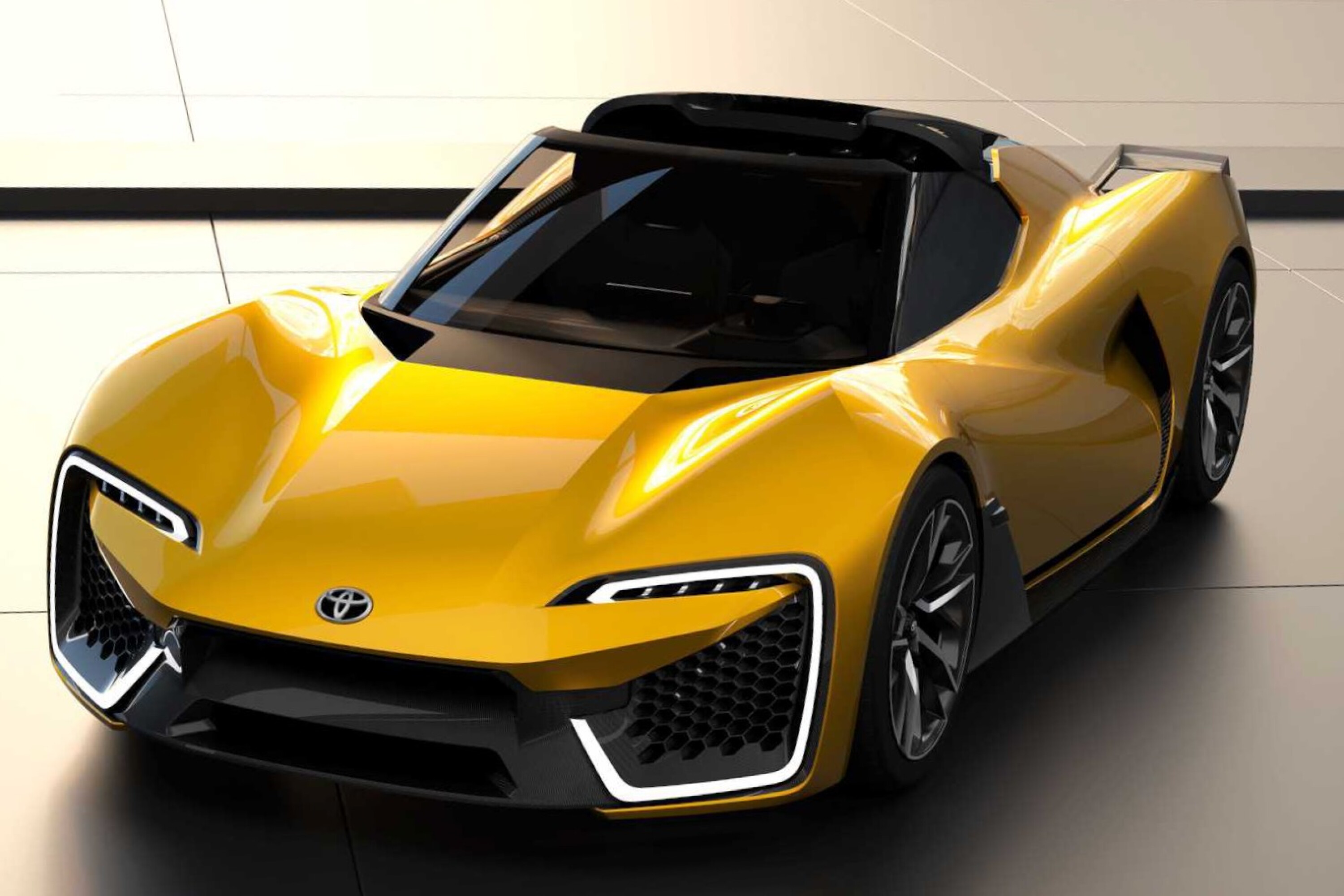
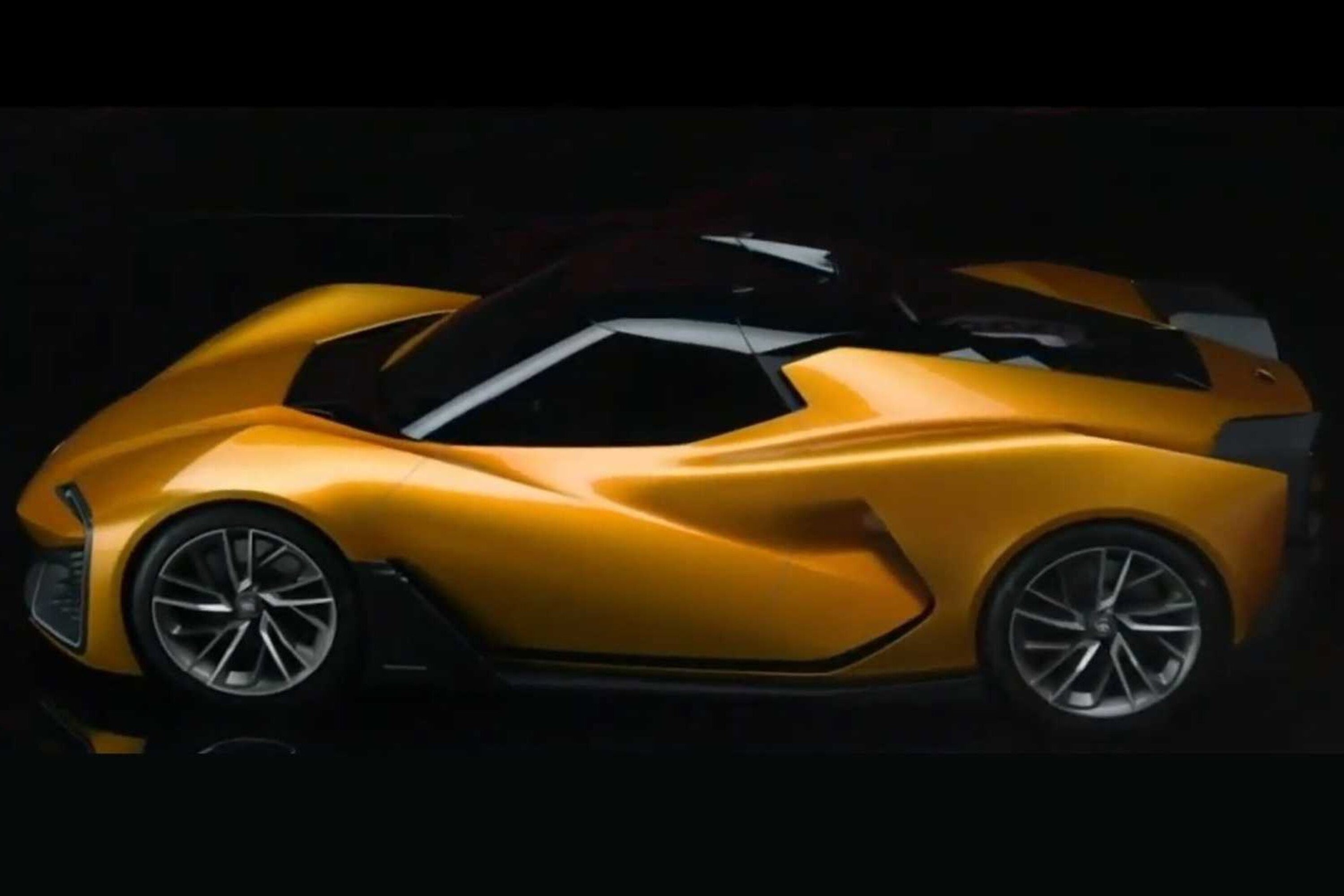
Details on that are still to come, but an event in December 2021 saw Toyota reveal a number of electric concepts, including the not-so imaginatively named Toyota GR Sports Concept (below).
1
Japan’s Best Car said at the time that the GR Sports Concept is being viewed as a successor to the MR2, to be developed in partnership with its own Daihatsu arm and compatriot brand Suzuki.
Both brands are, of course, very experienced with developing compact and ‘kei-class’ cars, including coupes and roadsters.
Since then, Toyota chairman Akio Toyoda has told the UK’s Autocar that the GR division is working on a ‘fun to drive’ high-performance electric GR – but he did not go so far as to confirm it for production.
For now, Toyota’s electric sports car remains shrouded in Mystery… (see what we did there? Blame John Law.)
Frankly, I’m more drawn to Theo’s renders, inspired by Toyota’s latest styling language (due in Australia with the new C-HR), but I certainly wouldn’t kick the GR Sports out of my garage.
Watch the MG Cyberster transform into the Toyota ‘MR-E’
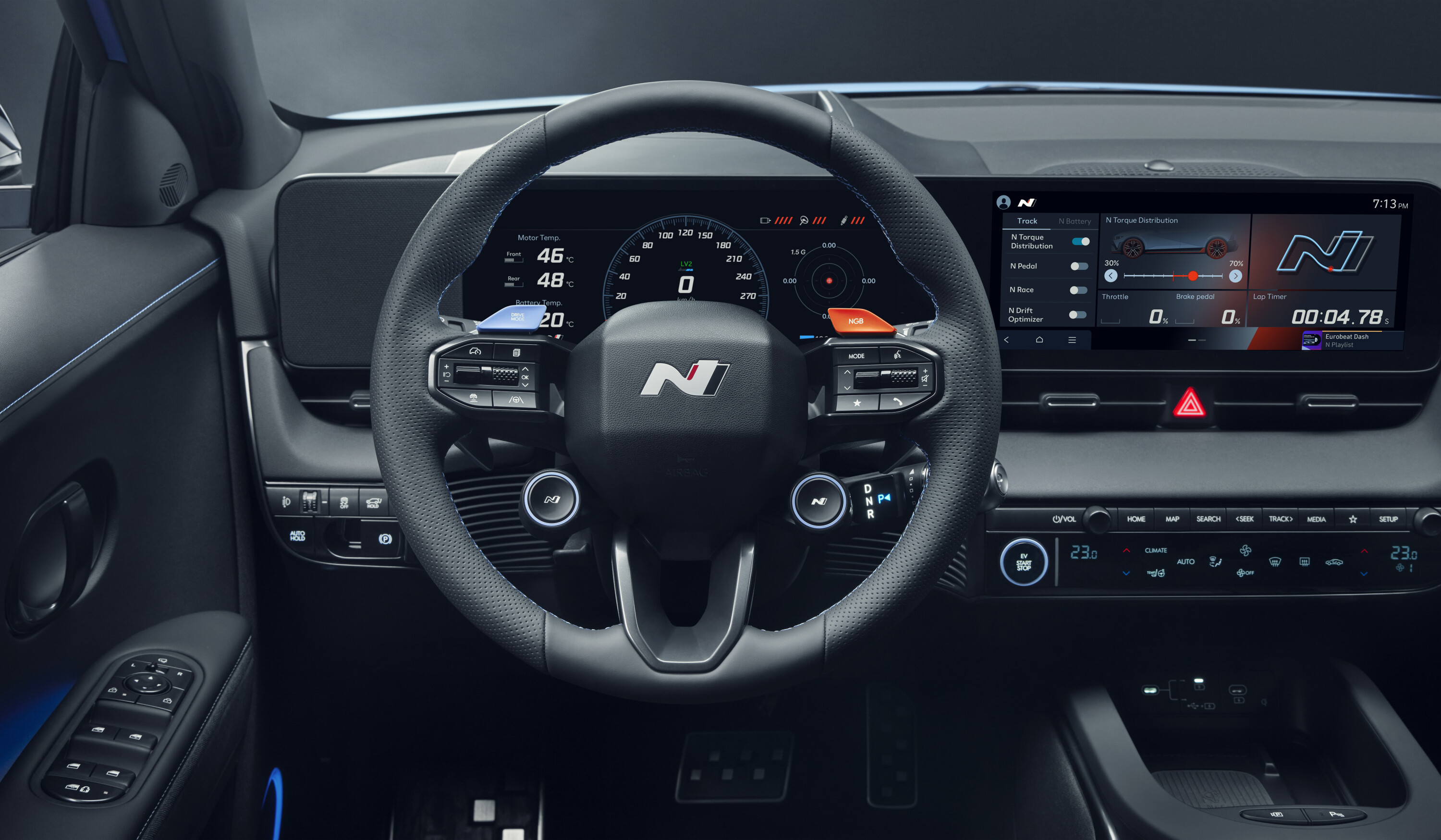
Compared to a standard IONIQ 5, the N goes further than just more power – 478kW and 0-100km/h in 3.4 seconds – with a larger battery, a stiffer body in white, bespoke suspension, retuned steering with a strengthened column, and other software enhancements.
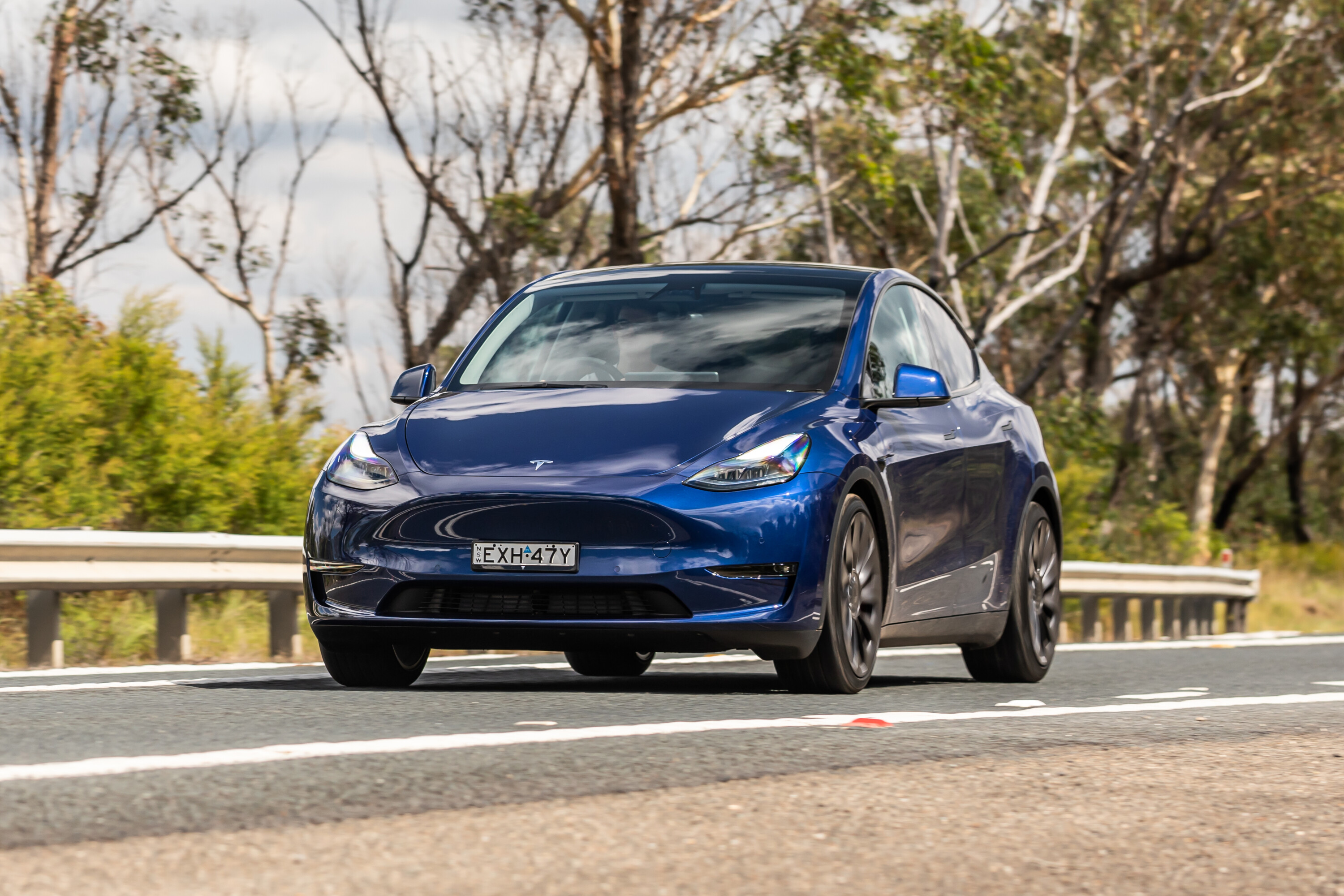
We’ve broken down the numbers to see how the IONIQ 5 N compares to its rivals, from the related Kia EV6 GT, to the Tesla Model Y Performance, dearer performance EVs, and even internal-combustion vehicles.
More subjective factors such as handling, ride quality and driver feedback are, of course, not addressed here – this is a numbers game – so stay tuned for real-world comparisons soon.
With a projected $120,000 price tag, the IONIQ 5 is likely to be dearer than both vehicles, which retail between $90,000 and $100,000 as of July 2023.
The Model Y lacks the drift mode functions and adaptive dampers offered in the Hyundai and Kia and is the ‘slowest’ of the bunch with a 3.7-second 0-100km/h sprint time – compared to as low as 3.4s for the IONIQ 5 N.
While the IONIQ 5 N is expected to adopt a global suspension tune for Australia, the EV6 GT has Australian-tuned suspension.
You don’t need to be an EV zealot to admit you simply can’t get a new, ICE car that’s as fast in a straight line for similar money – as the table below proves.
Of course, this is an on-paper comparison not taking into account the touch, feel, emotional response and overall driving experience that premium manufacturers take great care in crafting.
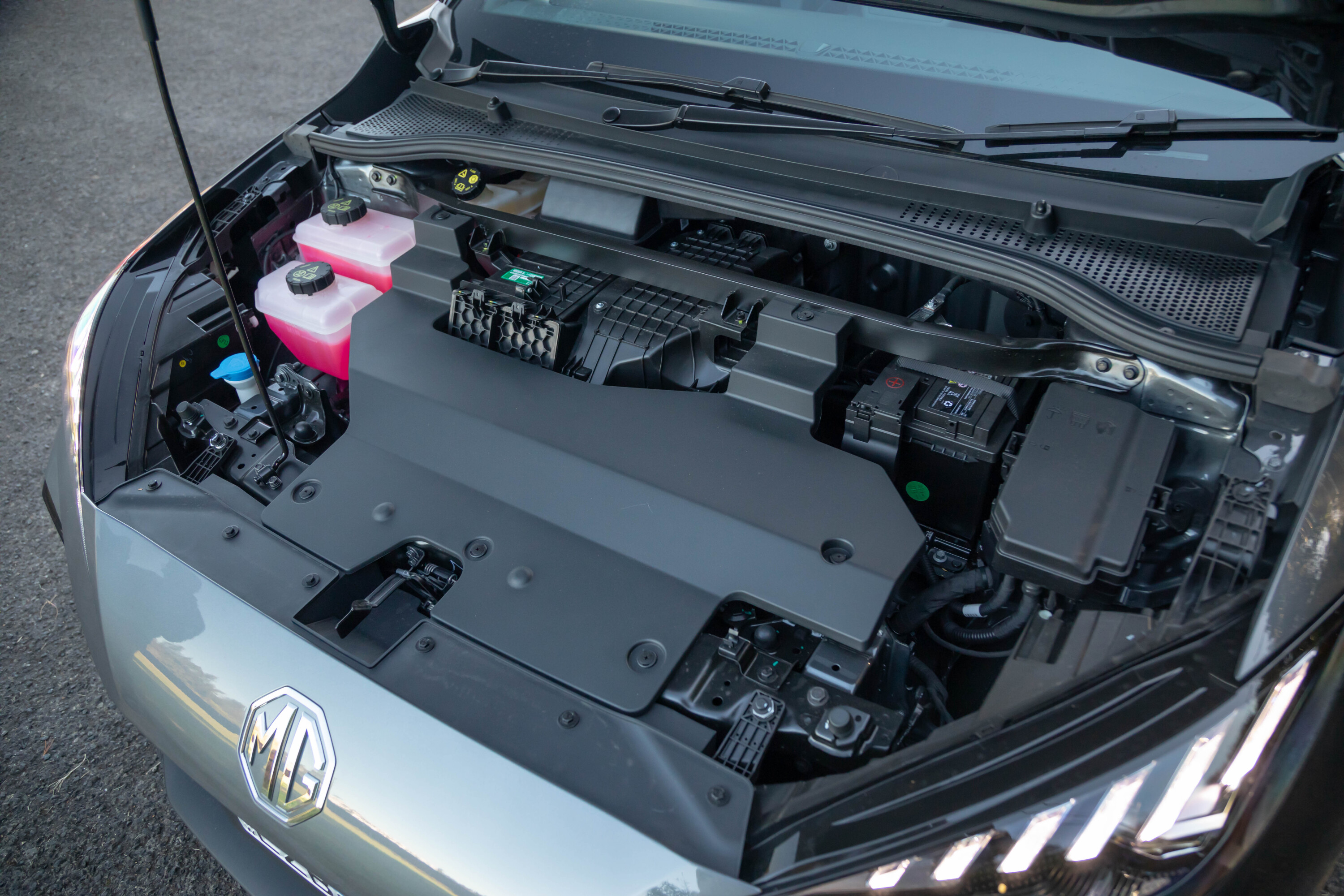
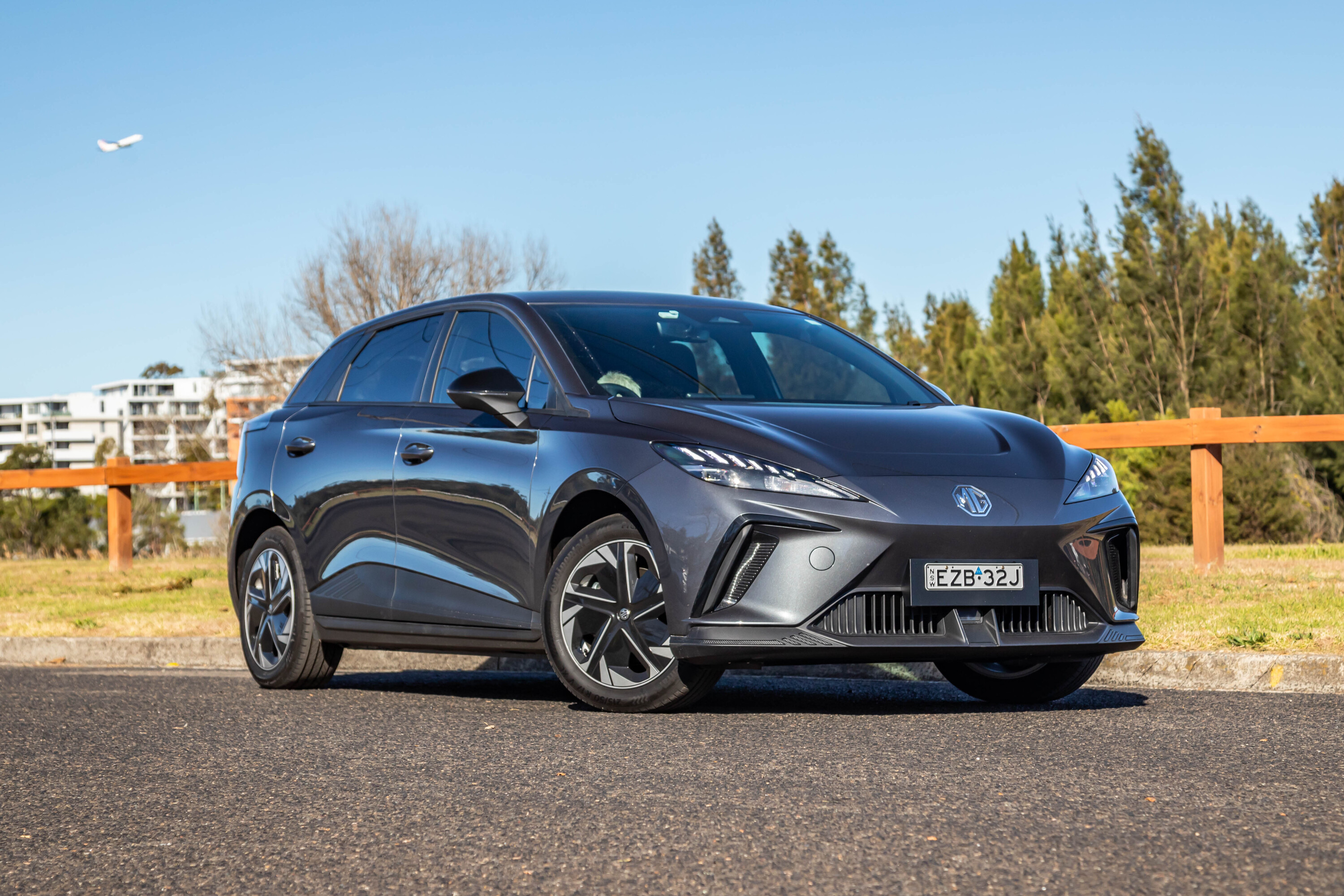
The MG4 isn’t the British-turned-Chinese brand’s first electric car but it promises to be the first to be regarded as something more than cheap and cheerful motoring.
It is the first model to sit on MG’s new Modular Scaleable Platform – an architecture that will underpin a stack of future vehicles from hatches to SUVs and even sports cars.
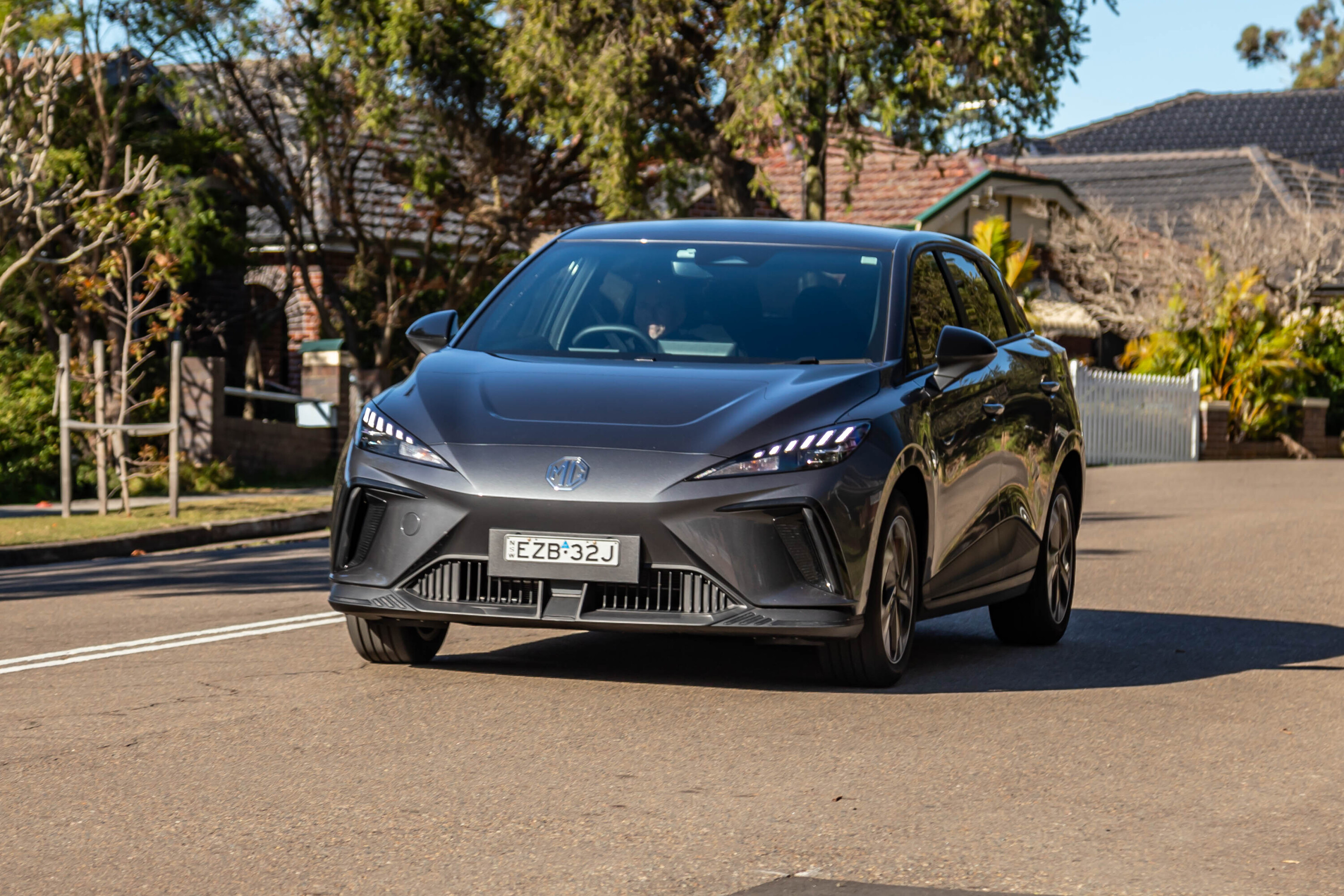
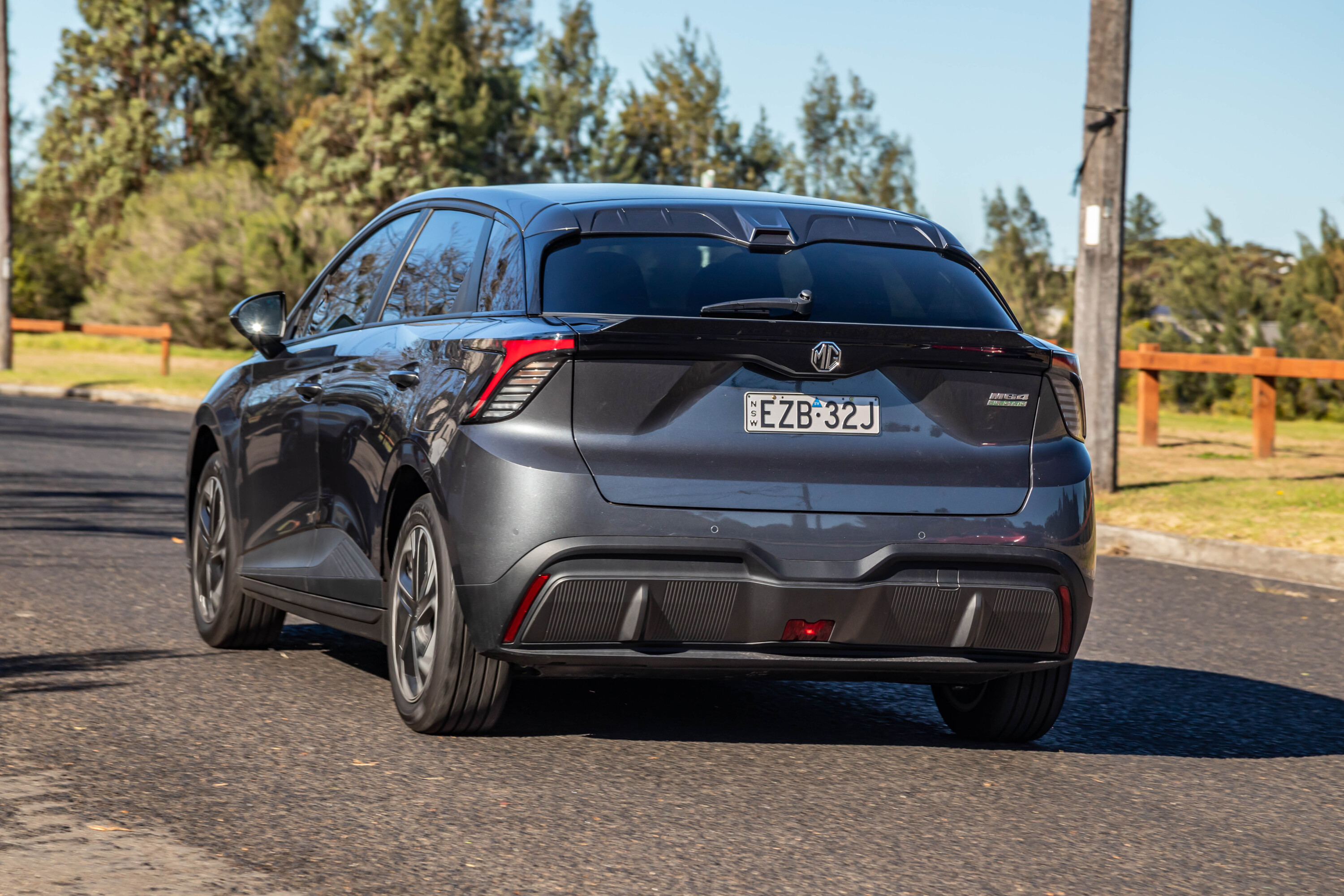
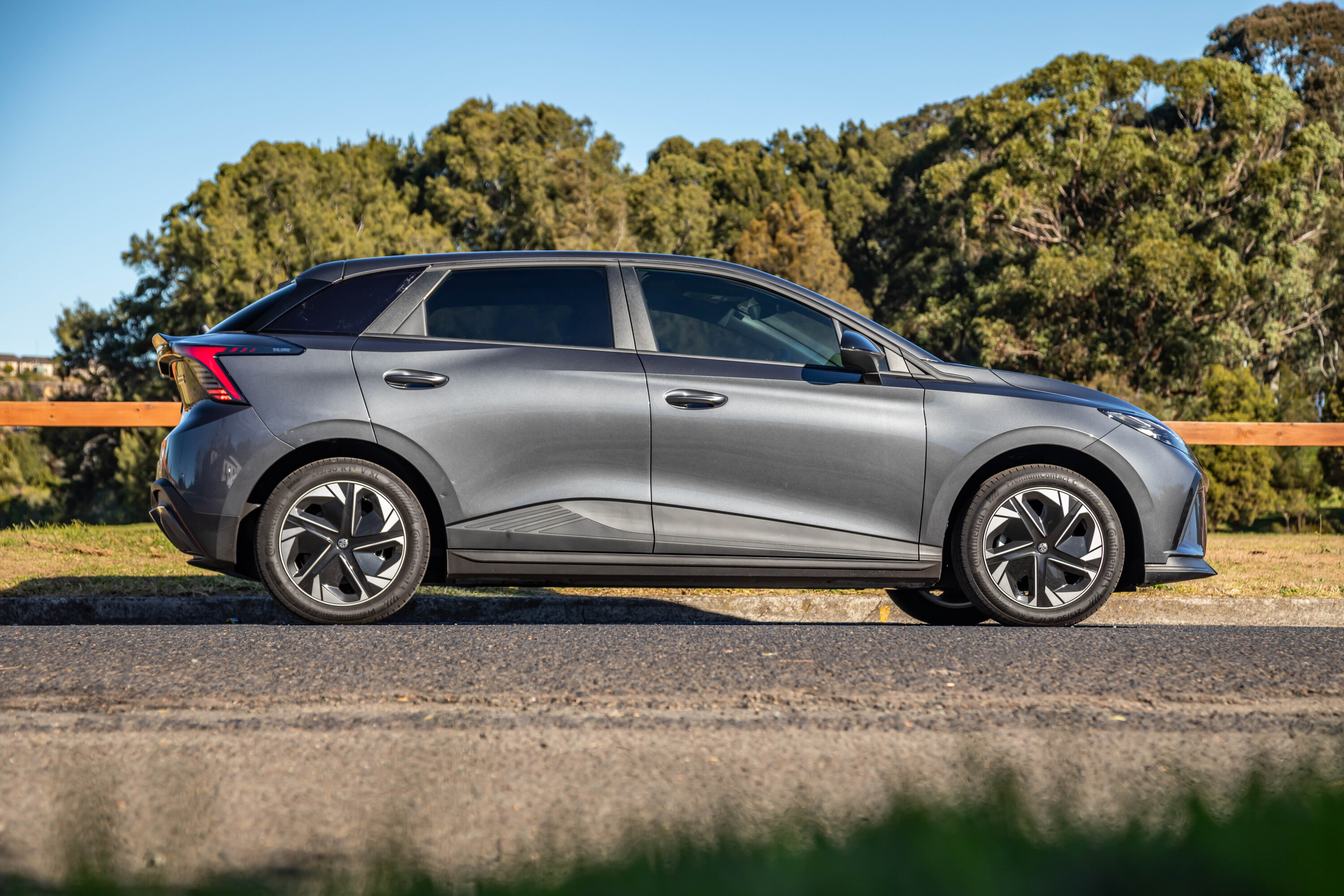
The MG4 adopts the hatchback body style, complementing the MG ZS EVcompact SUV. It’s a distinctive design, yet what catches the eye more is a starting price of $38,990 (before on-road costs) that undercuts its showroom cousin by $6000.
It’s just $100 shy of Australia’s cheapest electric car, the BYD Dolphin due around September, though this could switch around any time if an EV price war develops.
How confident is MG Australia about the MG4’s success? Well, let’s just say it couldn’t wait to launch the MG4 officially in August, so has provided Wheels with a pre-production, UK-spec model to sample beforehand.
So, it’s cheap for an EV, but what do you get for the money?
The MG4 Excite that kicks off a four-model launch range has fewer features than you would get with a similarly priced petrol hatch, though the specification is reasonable for a budget EV.
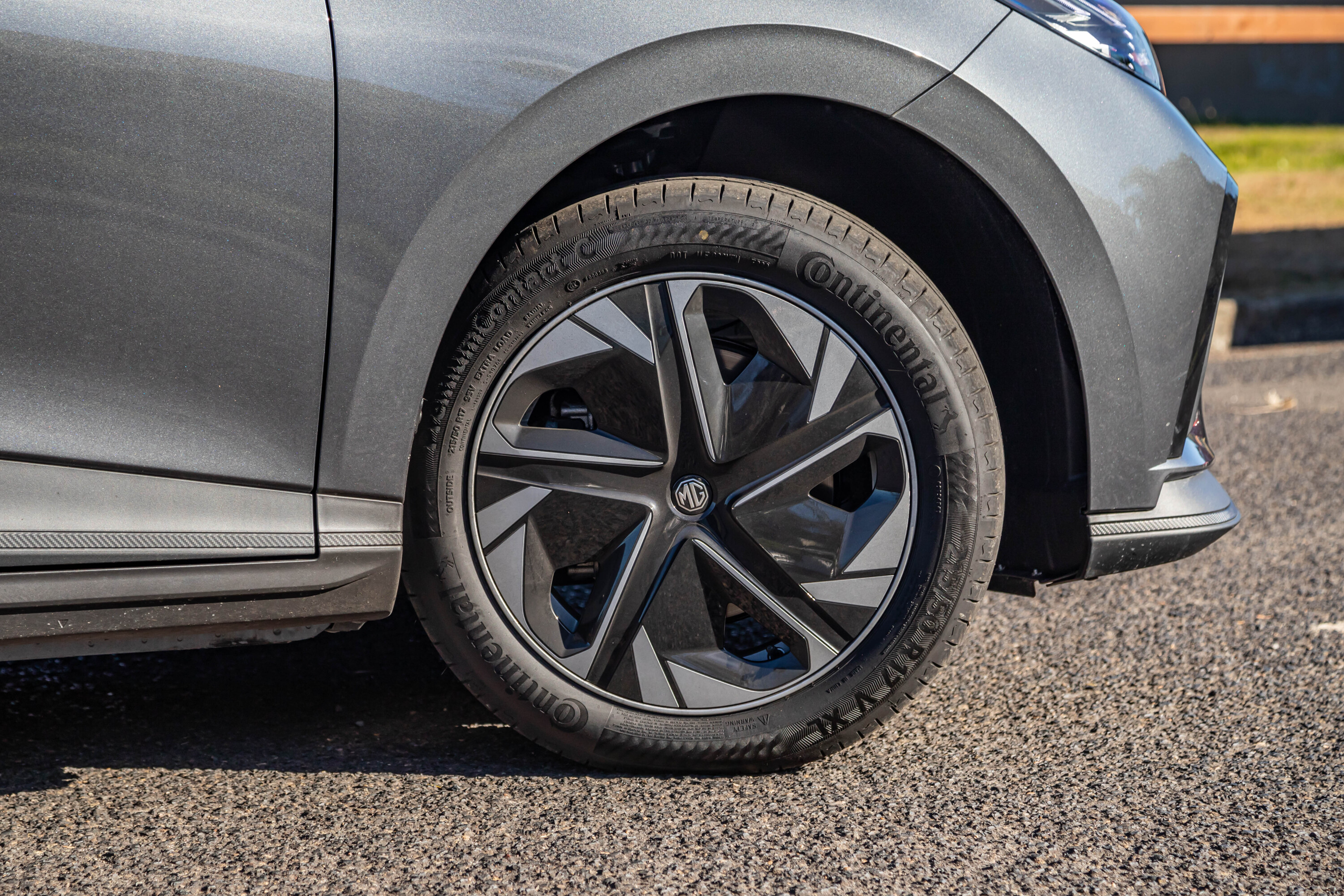
It sits on 17-inch alloy wheels, there’s keyless entry and start, and LED lights shine front and rear. Inside, the cabin features dual digital displays, the steering wheel is wrapped in leather, and safety tech comprises adaptive cruise control, lane-keep systems, forward collision warning with auto emergency braking (AEB), auto high beam, driver attention monitoring, and speed-sign recognition.
The basics
2023 MG 4 Excite key features
17-inch alloy wheels
7-inch digital instrument cluster
10.25-inch infotainment system
Rotary gear selector
Wired Apple CarPlay and Android Auto
Cloth upholstery
Four-speaker audio system
u2018iSmartu2019 connected-car service
For those with more to spend, the Excite is available with a bigger battery for more range, or, for more features as well as range, there’s the Essence. A flagship, performance X-Power variant arrives in late 2023.
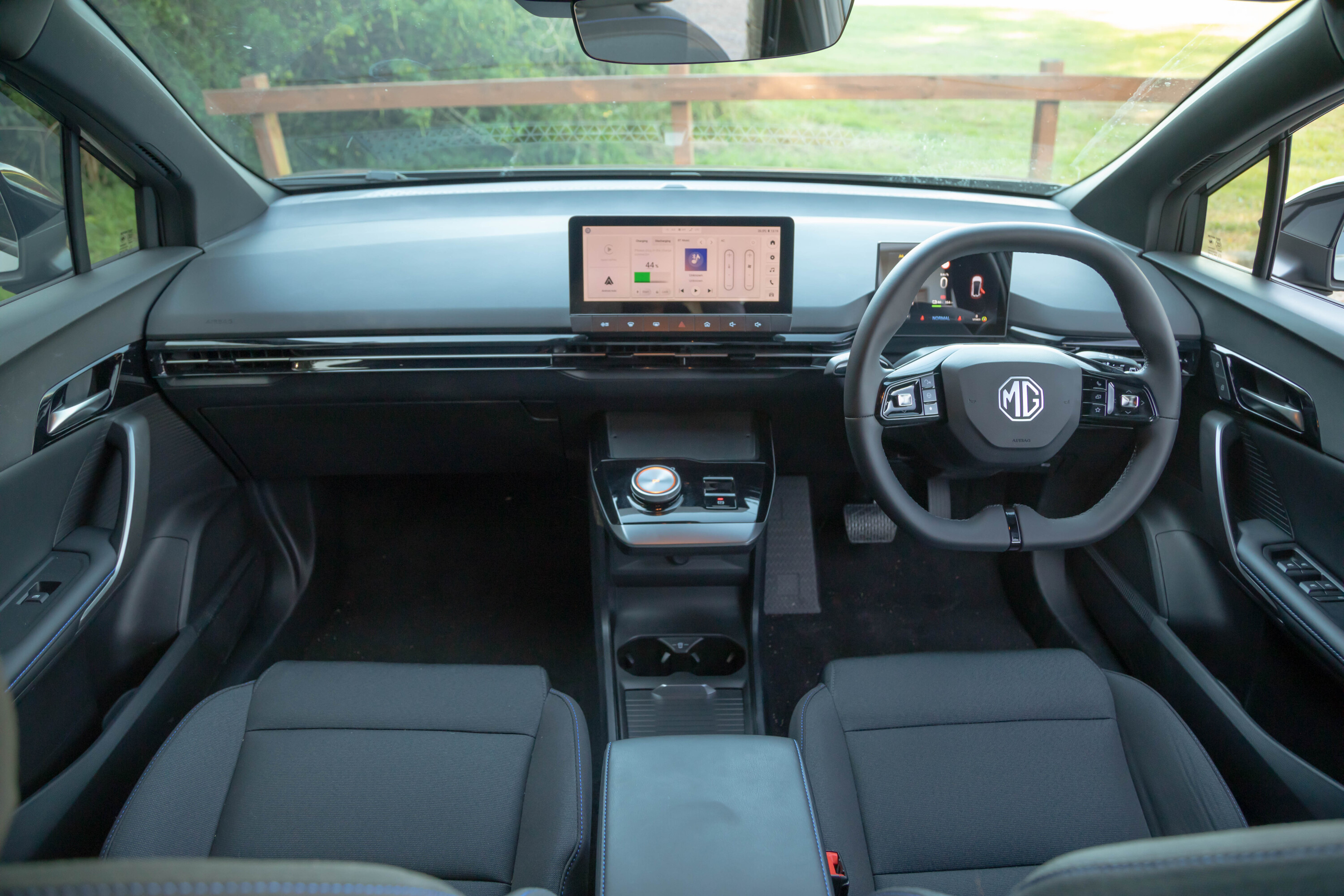
The MG4’s cockpit has a simple design that is uncluttered but not uninteresting.
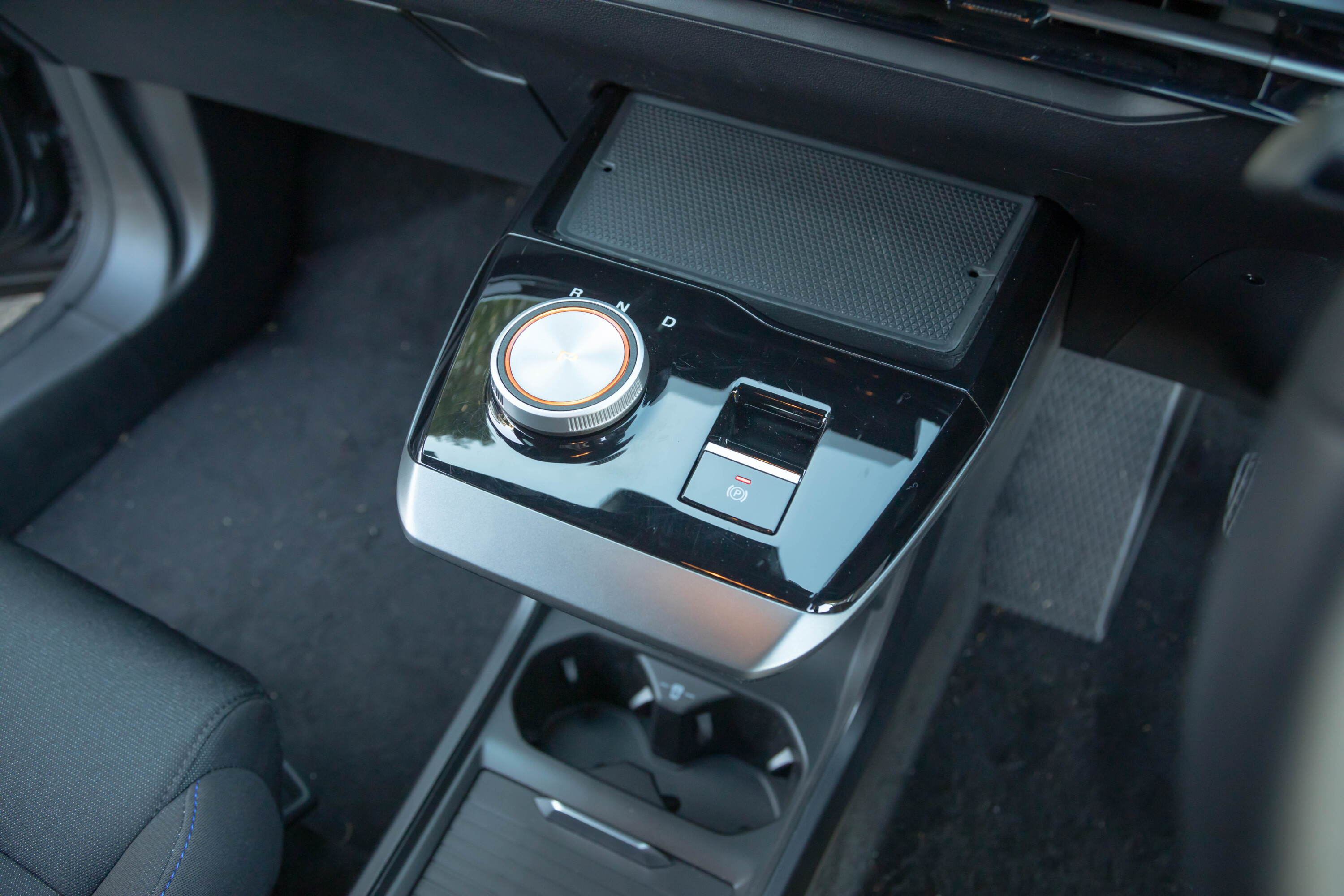
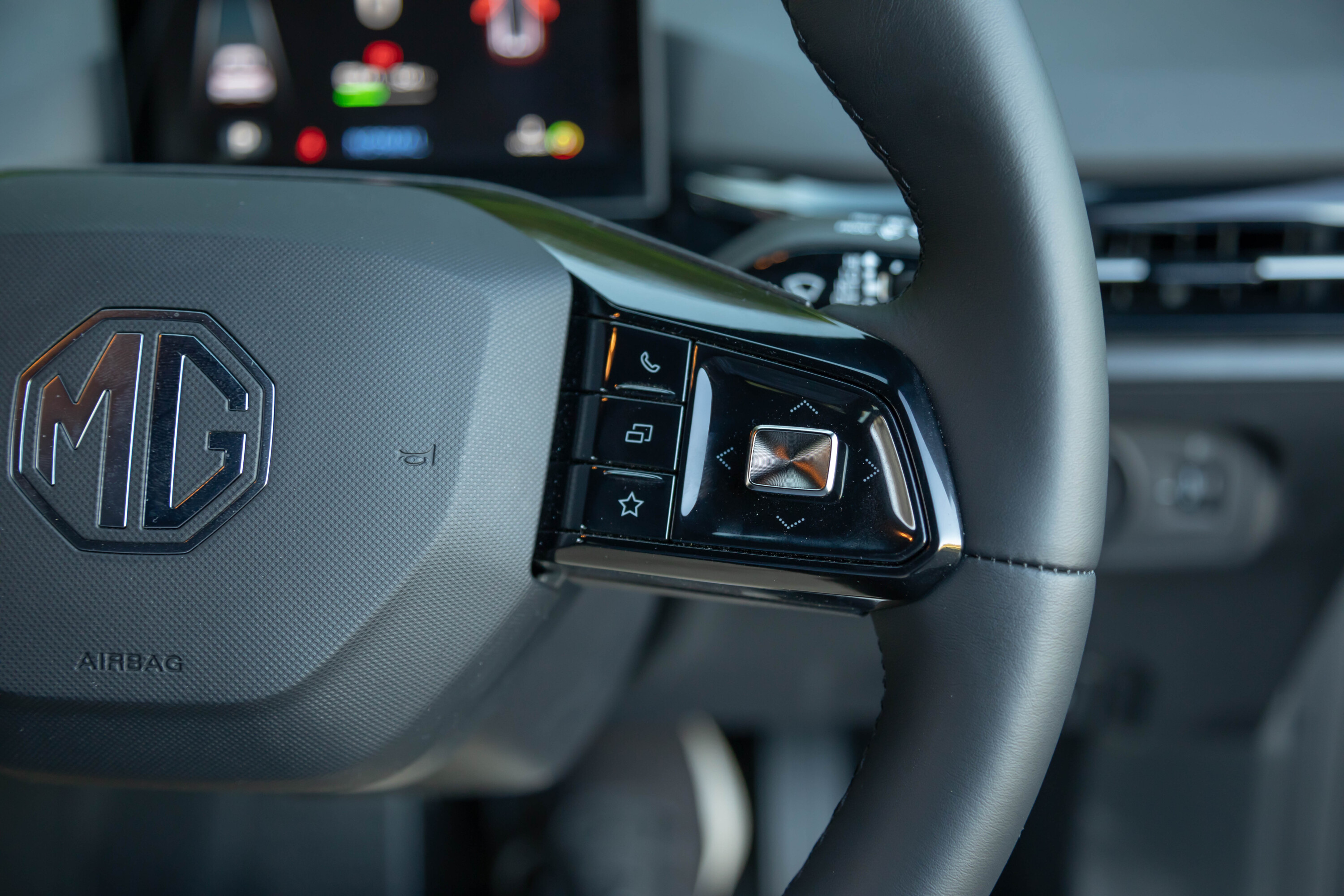
Its steering wheel shape seems to be impersonating the octagonal MG logo, though the biggest flourish is a transmission deck that protrudes from the central mid-section of the dash.
This deck houses a rotary selector dial for Reverse and Drive, incorporating push-button for Park, as well as the electronic parking brake. Behind these is a large pad that is conspicuous in the Excite for its lack of wireless phone charging capability (a feature that’s standard in the more expensive Essence).
1
Present and correct are the almost requisite digital displays for infotainment and driver info, the former a mini-tablet design.
The horizontal infotainment screen is reasonably responsive and well presented, though physical controls for the climate control system would be beneficial.
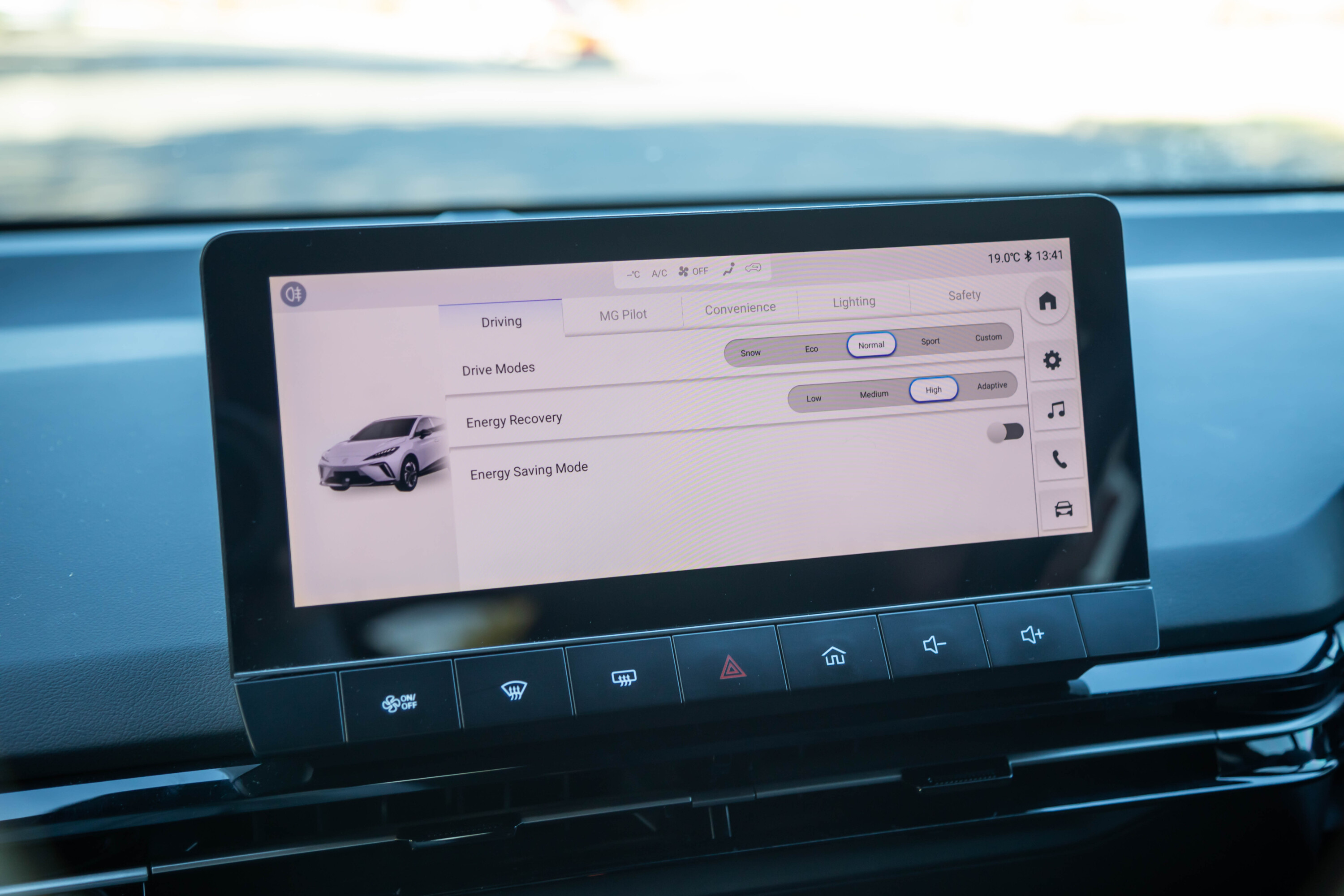
You can use the display to configure the steering wheel controls to adjust the HVAC setting, change the level of regenerative braking or select driving modes.
While we’re told this is a pre-production car, it’s not obvious. The cabin’s construction is solid, and the inevitable presence of hard plastics is easy to justify at this price point – especially when leatherette covers areas where arms will rest, the upper dash is soft, and a damped console-bin lid adds to the sense of agreeable quality.
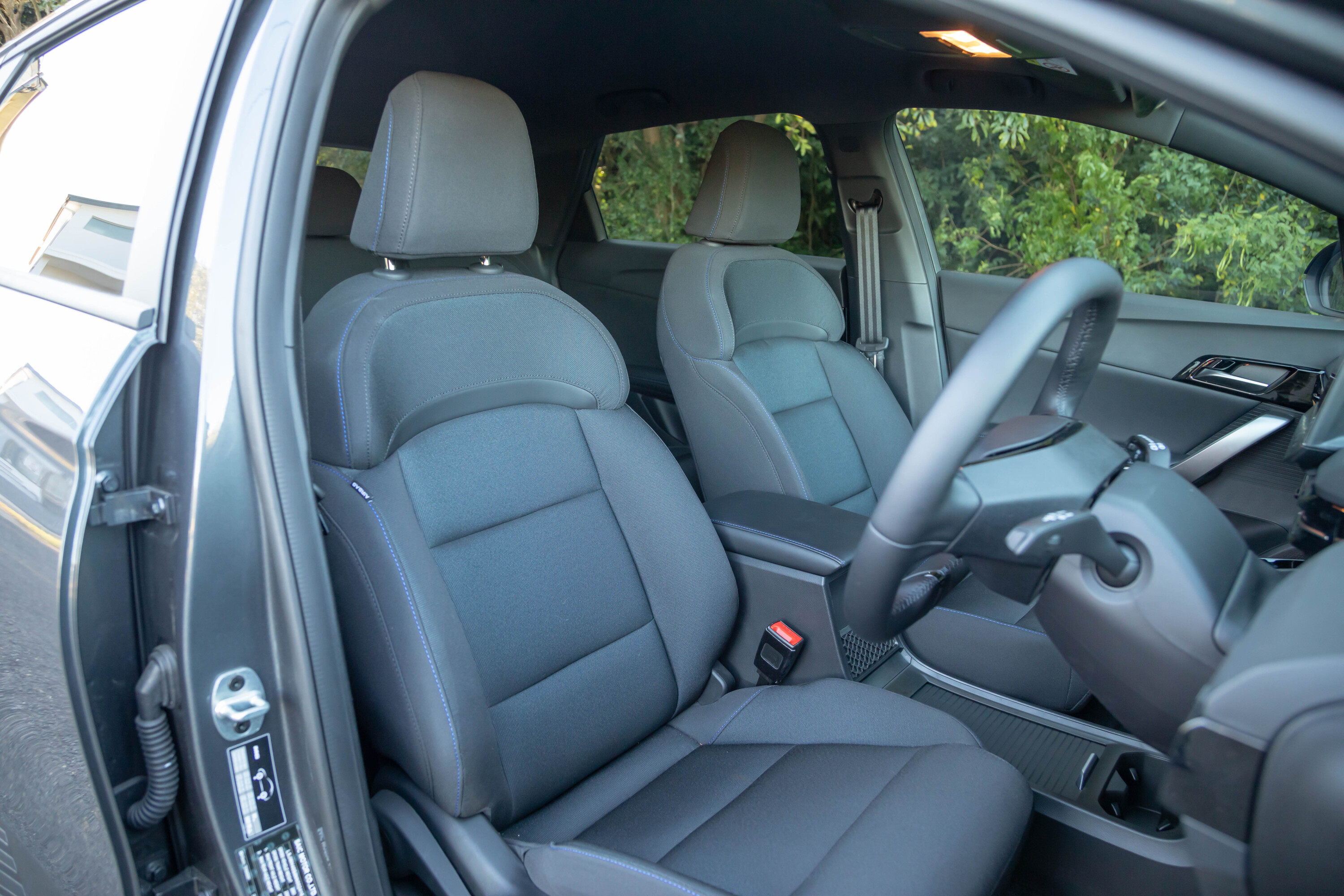
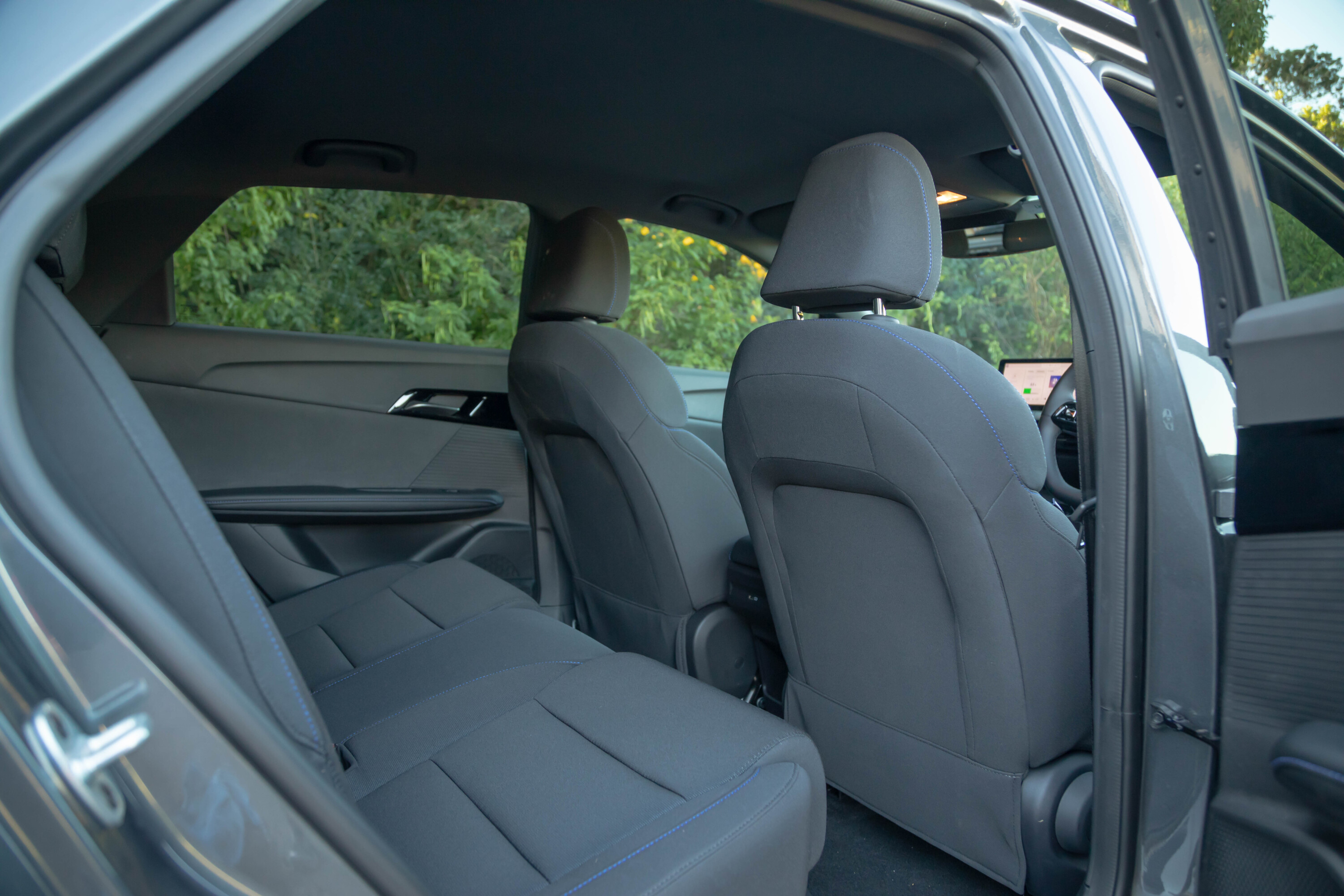
The seats look basic yet are well-bolstered and cushioned.
1
Heads are given the most air, and the rear bench is not lacking for comfort.
Practicality is a tale of two cabin halves. In addition to the console bin, front occupants are treated to good-size door cubbies, sliding-lid centre console storage, a small net, and cup holders (featuring a coffee-cup logo in case you weren’t sure what they were for).
In the back seat, however, there’s nothing except bottle holders in the doors and a small tray at the rear of the centre console.
Knee space is decent but there could be better clearance for feet under the seats. Heads are given the most air, and the rear bench is not lacking for comfort.
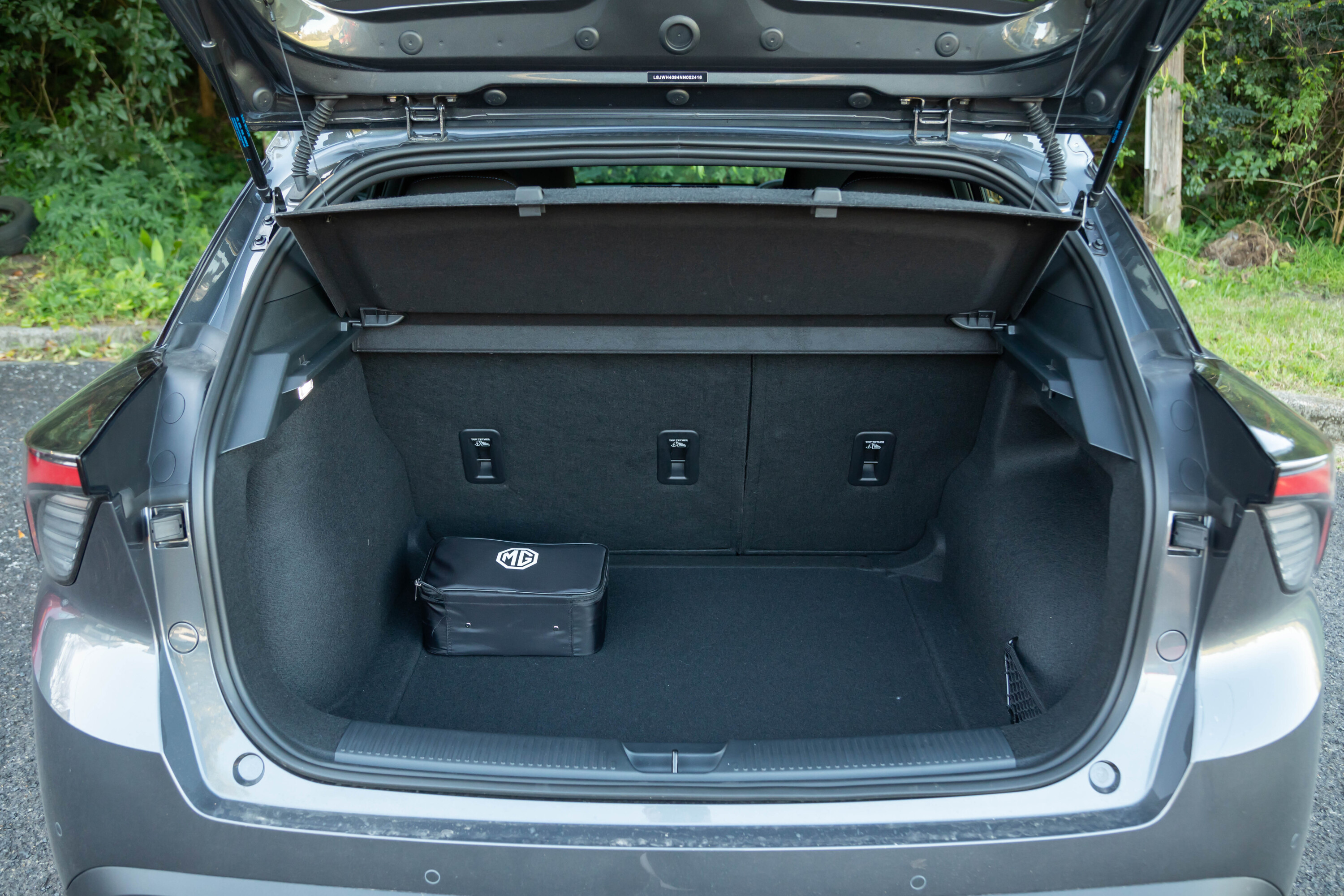
Boot space isn’t huge – just 363 litres in the Excite and 13 litres fewer in the Essence owing to a two-level floor. The rear seats split-fold 60:40, though they leave a step when folded in the base model.
Getting underway is as simple as it is in a Tesla or Polestar 2 – no engine start button, just rotate the transmission dial to D and press the accelerator pedal.
When the drive has finished, press the top of the transmission dial for P(ark), jump out, and lock the car.
The ease of the MG 4 driving experience doesn’t stop there. There’s good vision out of the windscreen (and the rear window if you remove the centre rear headrest), while the hatch’s compact dimensions, effortless steering and tight turning circle are all a boon for the navigation of urban streets.
1
Not that the MG4 should be pigeonholed as purely a city car.
MG’s electric hatch is comfortable at high speed on freeways and, on country roads, it’s impressively quiet … and fun. Fun in a way that we haven’t described an MG since the ZT V8 sedan – a very different kind of car to the MG4 but also rear-wheel drive.
Squeeze the accelerator firmly mid-bend and you can enjoy the sensation of being pushed through the corner, the driven wheels also ensuring there’s no torque steer to corrupt the MG’s light and smooth steering.
There’s some firmness to the ride, which aids handling but can cause some fidgeting on poorly surfaced roads, though generally, the MG4 provides comfortable conveyance.
1
The regenerative braking can be adjusted either via the central touchscreen or steering wheel buttons if so configured.
Levels are Low, Medium, High and Adaptive; we found High our preference when lifting off the throttle. It’s not overly aggressive and easy to judge when slowing, though the MG4 doesn’t offer proper one-pedal driving as the brake pedal is required to bring the car to a complete stop.
The MG4’s instantaneous and linear power delivery is hugely satisfying; we’re also confident most buyers will find the performance of the base model more than sufficient for their needs.
MG quotes 7.7 seconds for the 0-100km/h sprint, which is half a second adrift of the 7.2 seconds achieved by variants with a bigger, 64kWh battery and more powerful electric motor (150kW v 125kW).
1
The quickest MG4 at launch will be the 77kWh Essence that can sprint to three figures in 6.5 seconds, though this will be exceeded significantly by the 320kW, all-wheel-drive X-Power model due in late 2023 and good for 3.8 seconds.
How far the MG4 will go on a full charge also depends on the trim level and battery combination.
The Excite 51 variant we’re testing here is quoted with a 350km maximum range. That jumps by a substantial 100km with the 64kWh Excite 64, the Essence 64 offers a potential 435km, and the Essence Long Range provides up to 530km.
If you can find a 50kW rapid charger, MG says the Excite’s 51kWh battery can be replenished from 10 to 80 per cent in just 40 minutes. Or 60 minutes for the variants with bigger batteries.
The MG4 is yet to be credited with a local crash-rating score by Australasian NCAP but was awarded the maximum five stars by the affiliated Euro NCAP in 2022.
It scored 83 per cent for adult occupant protection, 80 per cent for child occupant protection, 75 per cent for vulnerable road user protection, and 78 per cent for safety assistance.
Six airbags (dual front, side and curtain) are fitted as standard.
Hitherto, a positive review of a modern-day MG would carry caveats – the main one being that it’s not that great to drive.
Our test car may have been a UK-spec pre-production model, but – missing rear-view camera aside – it is fully indicative of the base MG4 that will launch locally in August.
And first impressions are that this is an MG that offers much more than a sharp price tag.
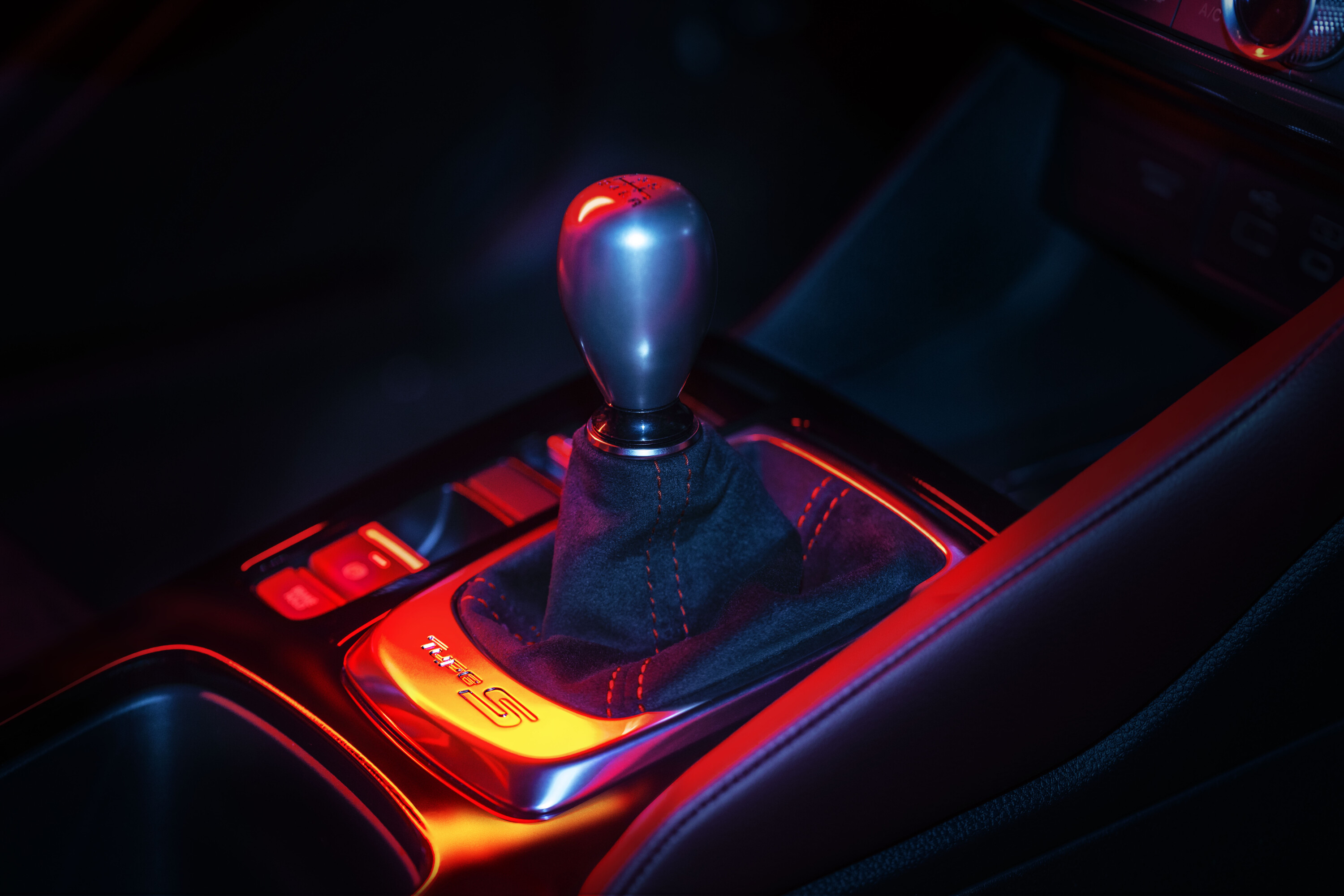
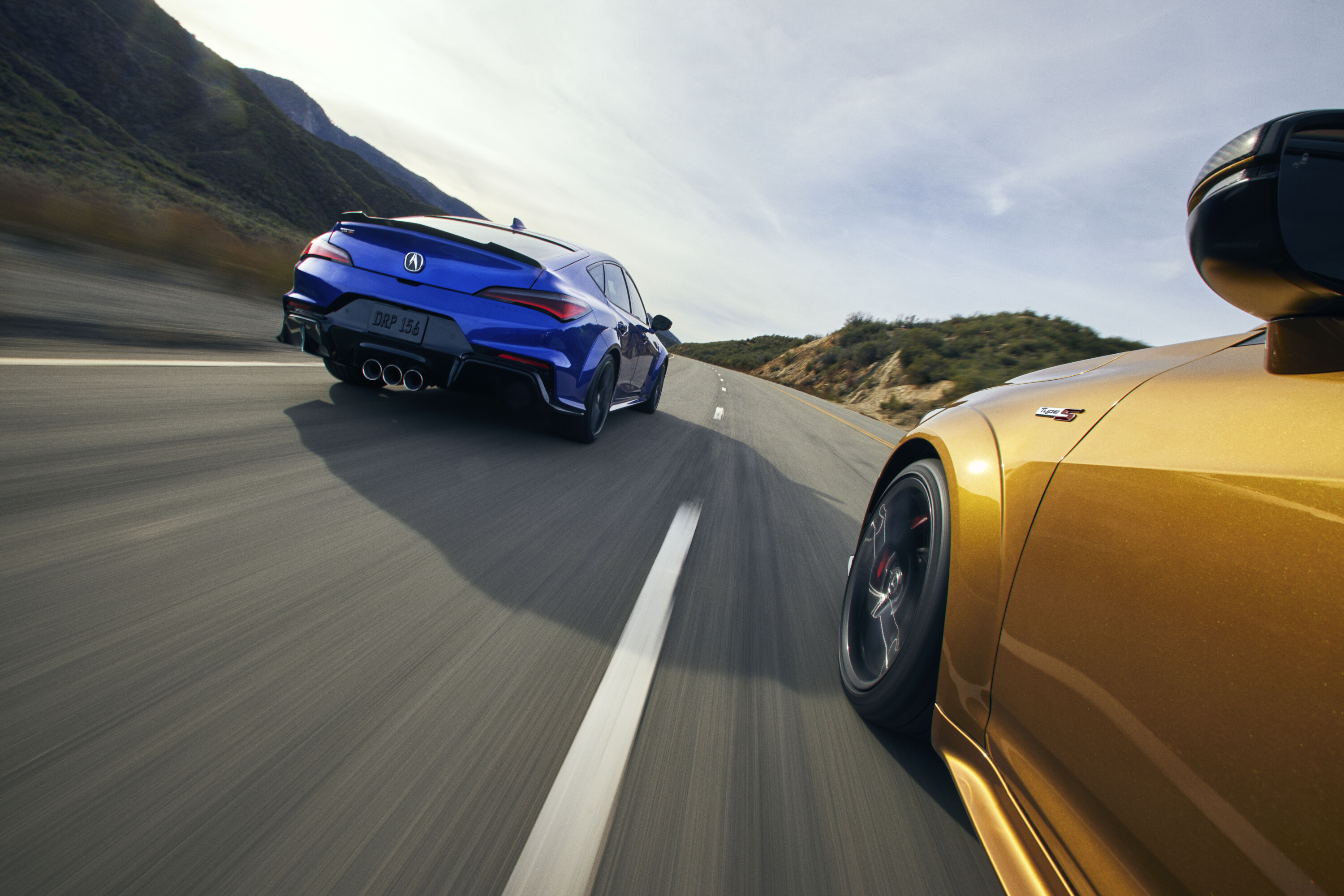
Based on the Civic platform, the North American market Integra is Honda/Acura’s most aspirational vehicle. The four-door Civic hatch is a fantastic car (and the Type R is life-changing for FWD doubters), but there’s something about the Integra’s sleek coupe lines that gets an enthusiast excited.
Speaking to Wheels at the Honda ZR-V’s Australian media launch, senior product planner, Arjun Nidigallu, said he and the team put their hands up for the Integra, knowing in all likelihood it wouldn’t make it here.
Working 10 years in advance (as product planners do), there’s a fair bit of dreaming and hope going on, but low-volume sporty specials rarely pass the sniff test.
The Integra, for example, was something that Australia was interested in, but that didn’t pass initial feasibility studies.
“Our challenge is right-hand drive, and what we have available in the right-hand drive market. We’re constantly talking about that, and what opportunities there are for right-hand drive markets like ours,” said managing director, Carolyn McMahon.
Made domestically for the left-hand drive North American market, we’re almost certain not to see either the 149kW Acura Integra or 238kW Integra Type S in their current iterations.
Being a small market, Australia is largely at the behest of what countries around it want. Perhaps if Thailand or Japan were keener on an Integra reboot, the sleek four-door would have been greenlit.
However, the future (and we’re talking post-2028, here) could see Honda deliver a broader range of body types in right- and left-hand drive markets, especially with the added freedom of electric vehicle platforms.
“There’s nothing in the pipeline, but now is a period of transition. As we get into EV technology, maybe the platforms allow more flexibility around right-hand and left-hand drive conversions… We’ll be watching closely to see what might come available for us”, added McMahon.
An all-electric right-hand drive Integra Type R? Or perhaps a mid-engined EV sports car to carry the NSX torch? We can dream, but nothing official is in the works right now.
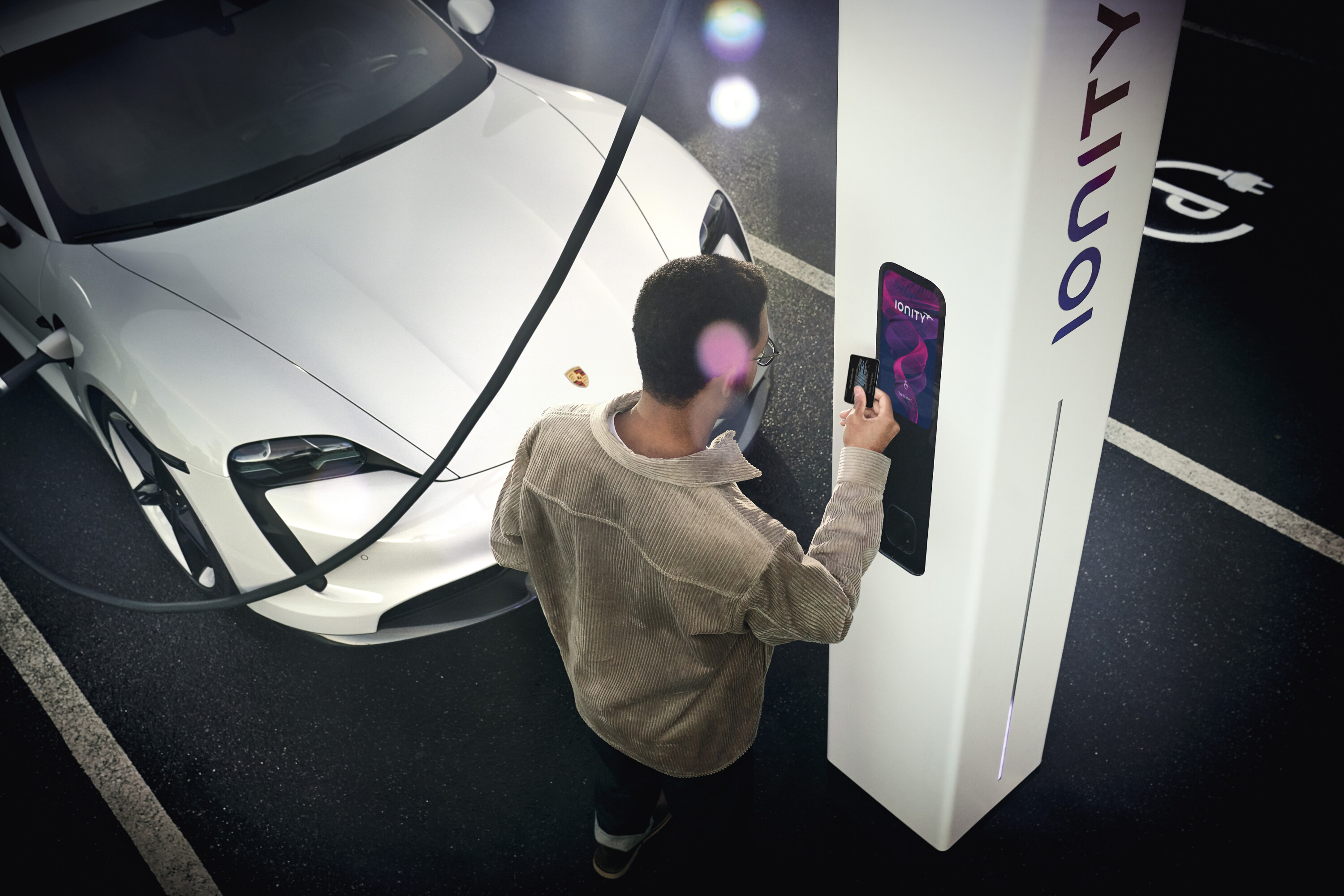
The European Parliament has approved new rules that mandate minimum electric vehicle charging availability and accessibility standards.
Snapshot
EU approves new rules to ensure public EV charging availability
Station every 60km along EUu2019s core network corridors
Payment, universal database also covered
As part of the European Union’s target to reduce greenhouse gas emissions by 55 per cent by 2030 compared to 1990 levels, it plans to mandate that an EV charging station must be installed every 60 kilometres along core EU 27 country-connecting corridors (dubbed the ‘TEN-T network’).
Each site should have at least 400kW total output capacity (distributed across multiple stations) by 2026, with output to increase to 600kW by 2028.
1
ud83dudcf1 Other EV charging accessibility requirements
Users must be able to pay easily via a regular credit or debit card, without the need to have a subscription
Charging price rate must be displayed
Will set up a universal EU database by 2027 to provide owners with information on the availability, waiting times, or price at different stations
The new rules aim to lift public EV charging infrastructure availability and ease-of-use to traditional fuel stations in Europe.
With battery-electric and hydrogen powered trucks and buses also growing, the EU will also mandate the need to have charging facilities every 120 kilometres on half of main EU roads by 2028 with 1400kW to 2800kW power output depending on the road.
EU countries also need to ensure that hydrogen refuelling stations along the core TEN-T network will be deployed at least every 200 kilometres by 2031.
1
Meanwhile, in the United Kingdom, a similar policy has been in development since 2021 – but aims to mandate a minimum of 99 per cent reliability for public charging infrastructure, alongside a 24/7 helpline, payment standards.
It also investigates whether government intervention is needed for ensuring accessibility for people with a disability, weatherproofing, lighting, and signage.
In Australia, the federal government has partnered with the NRMA in a $100 million region-linking project to have at least two EV charging stations every 150 kilometres across regional and remote areas.
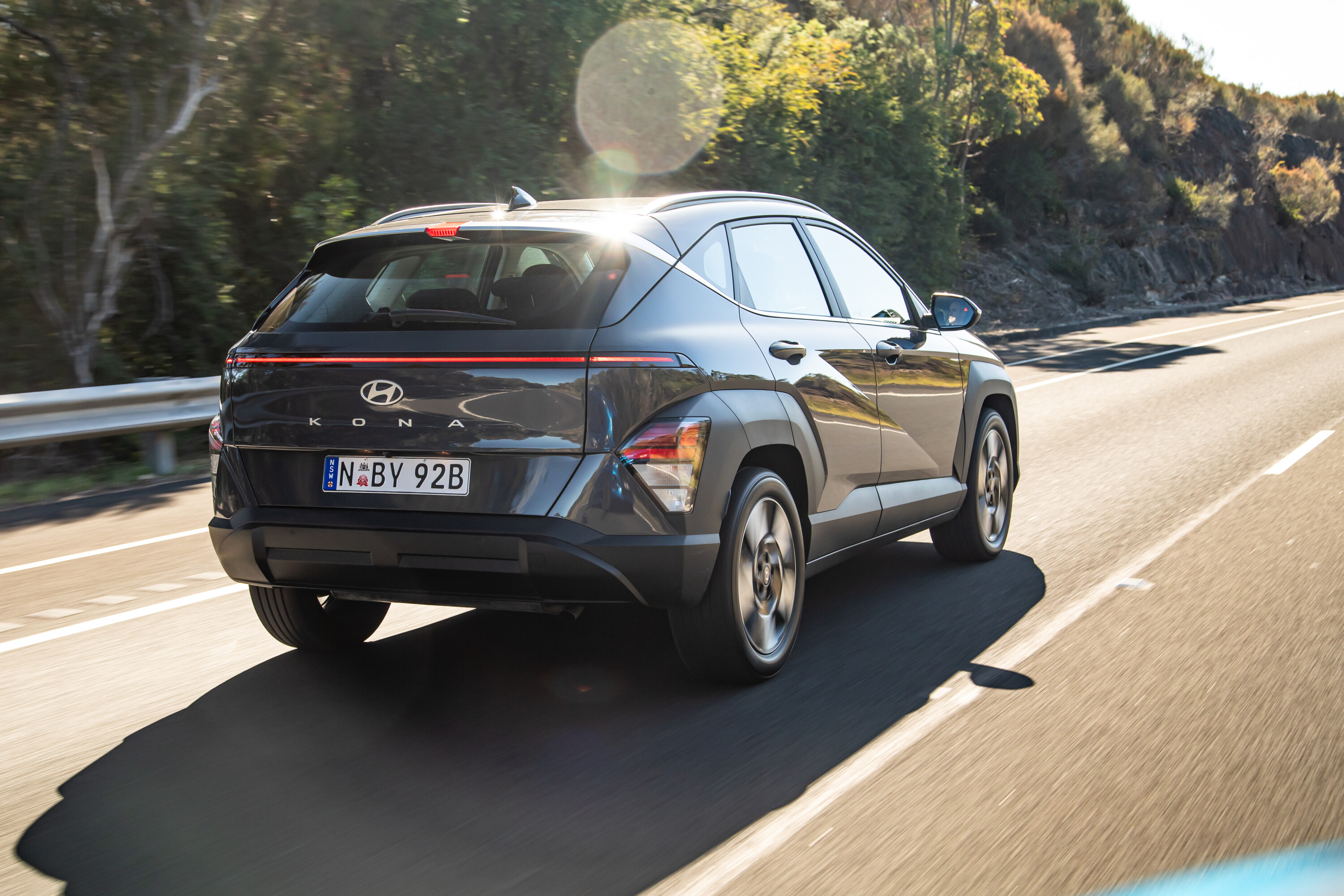
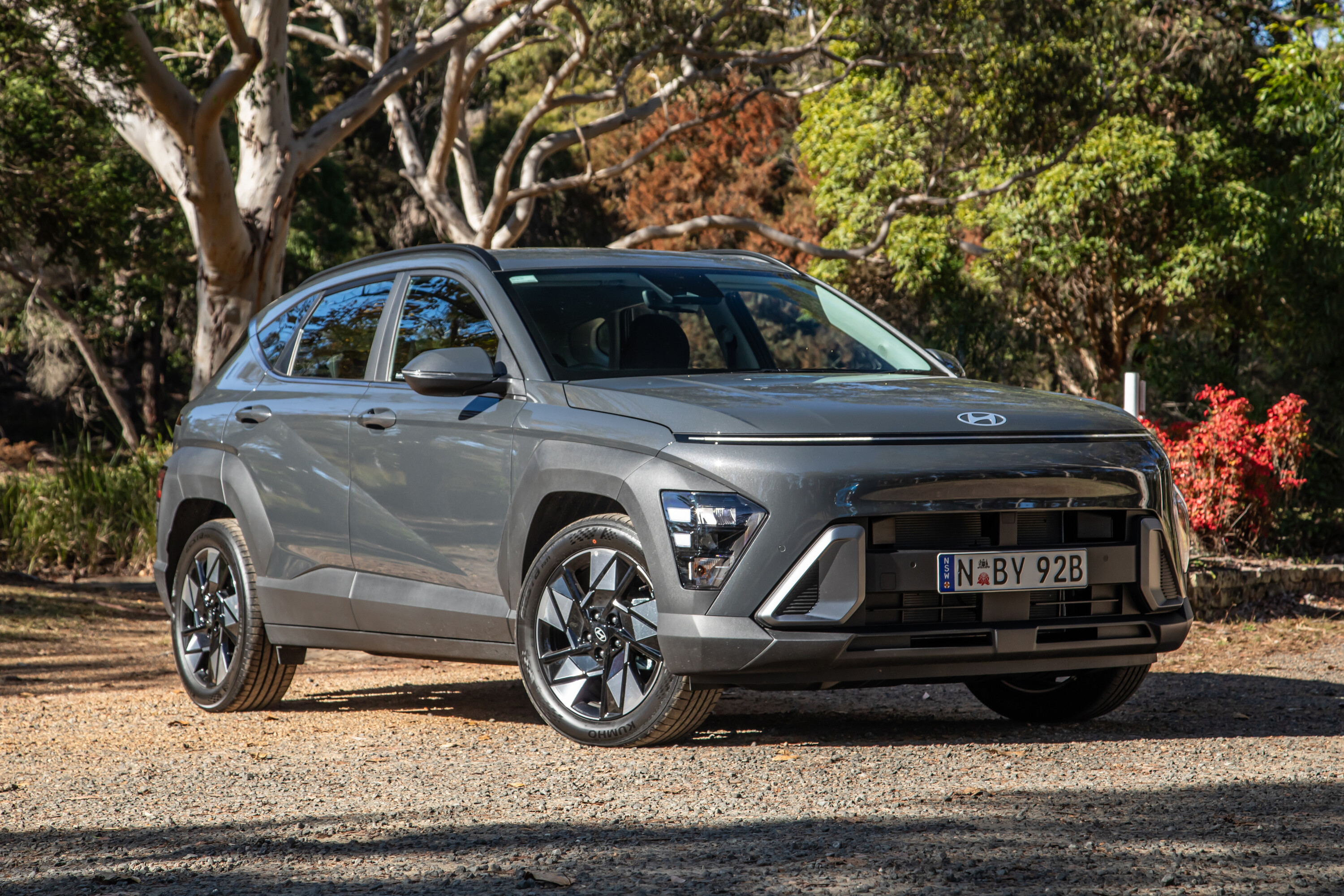
Before now, Hyundai’s smash-hit Kona was like so many small SUVs before and after it – ‘we need to get something out, because dealers are screaming for them’.
Things are obviously never that simple, but the Korean giant took the well-worn path of grabbing a hatchback platform, jacking it up and pitching it into battle with more guesswork than usual because the segment was new. Hyundai also did something unusual with the method, slapping on a Citroen Cactus-inspired front end that made the car unforgettable.
So much has changed since this car first arrived and the success of the first one must have weighed heavily on the team. But they’re a confident bunch at Hyundai and armed with a ton more data from their own customers – and from their competitors’ customers – the second-generation Kona was born.
The new entry-level Kona – I hesitate to use the word base model – now starts at a rather more hefty $32,000 before on-road costs.
A lot more standard equipment comes in this car than the previous Kona Active – not to mention the fact it’s physically a lot more car.
2024 Hyundai Kona standard features
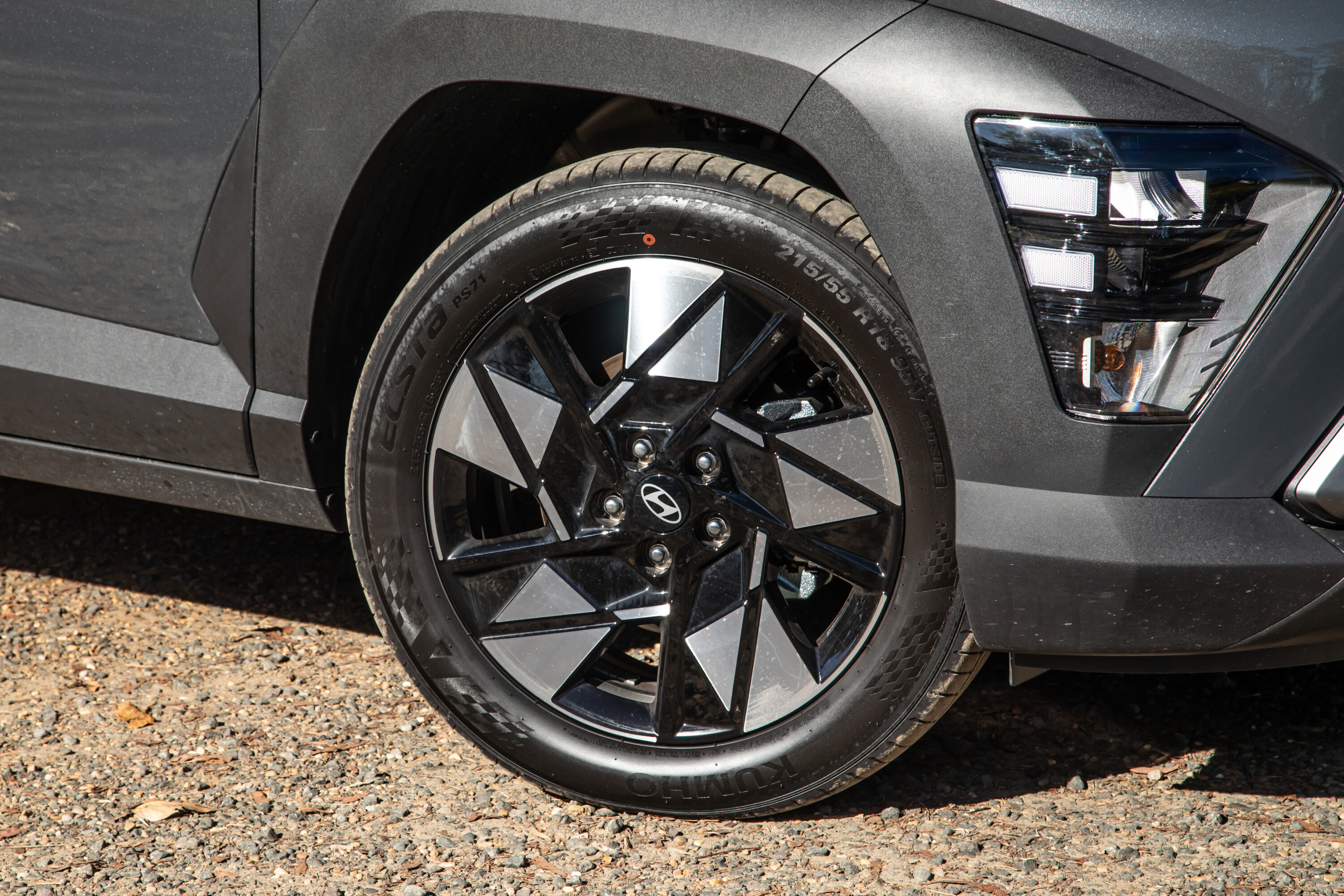
18-inch alloy wheels
Keyless entry and start
12.3-inch touchscreen
LED headlights, tail-lights and DRLs
Wireless Apple CarPlay and Android Auto
LED cabin lighting
Hyundai Bluelink connected-car service
Dual-zone climate control with rear vents
Over-the-air remote software updates
Rear-centre fold-down armrest
DAB+ digital radio
Remote start
Six-speaker audio system
Heated, auto-folding side mirrors
4.2-inch semi-digital instrument cluster
Front and rear parking sensors
USB-C charge ports (3x front, 2x rear)
Manual height-adjustable driveru2019s seat with two-position power lumbar support
15-watt wireless phone charger
Manual height-adjustable passenger seat
Black cloth upholstery
Tyre pressure monitoring
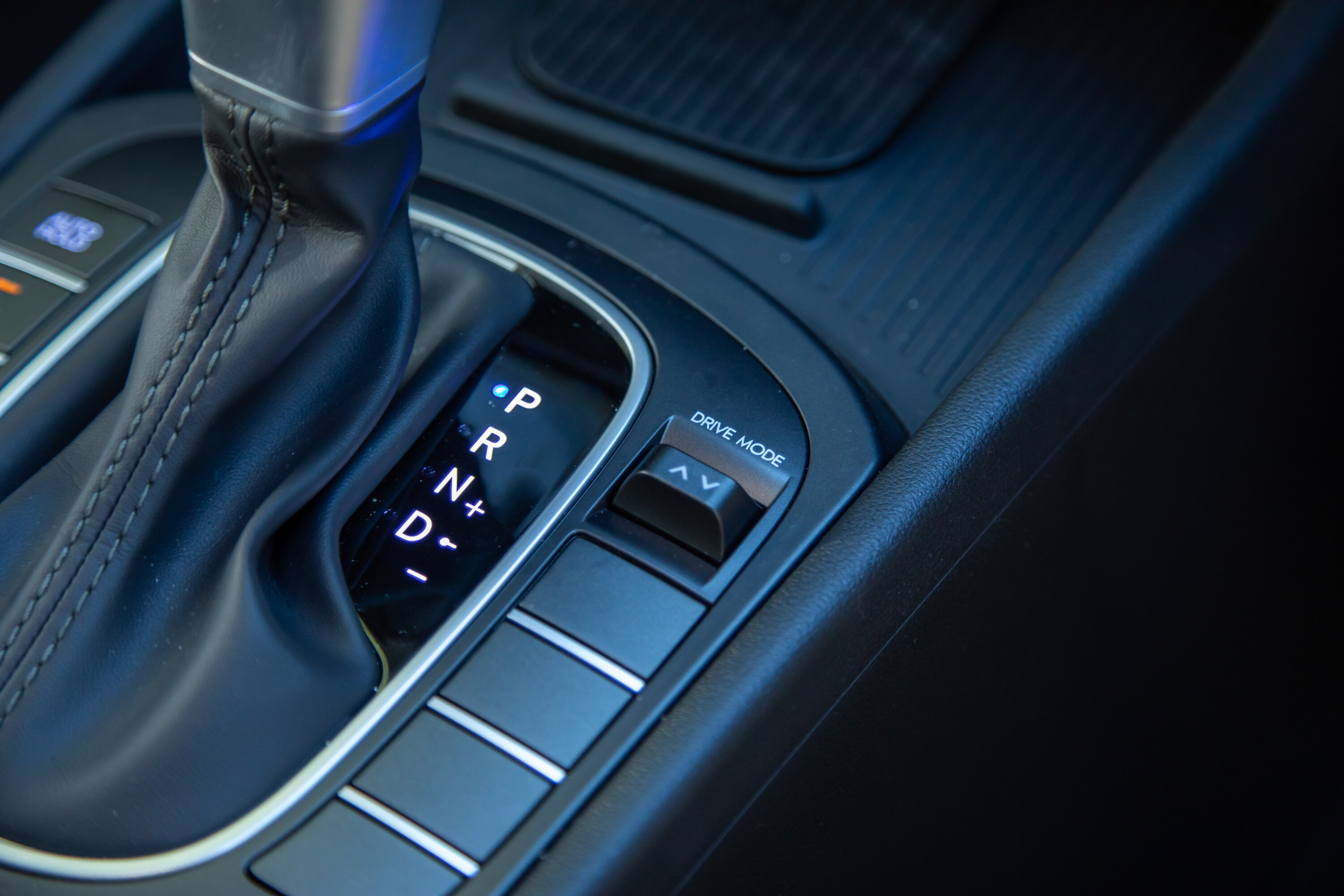
Leather-wrapped steering wheel and gear shifter
Roof rails.
There’s a lot more gear in this car than the previous iteration, which partly explains the hefty price rise.
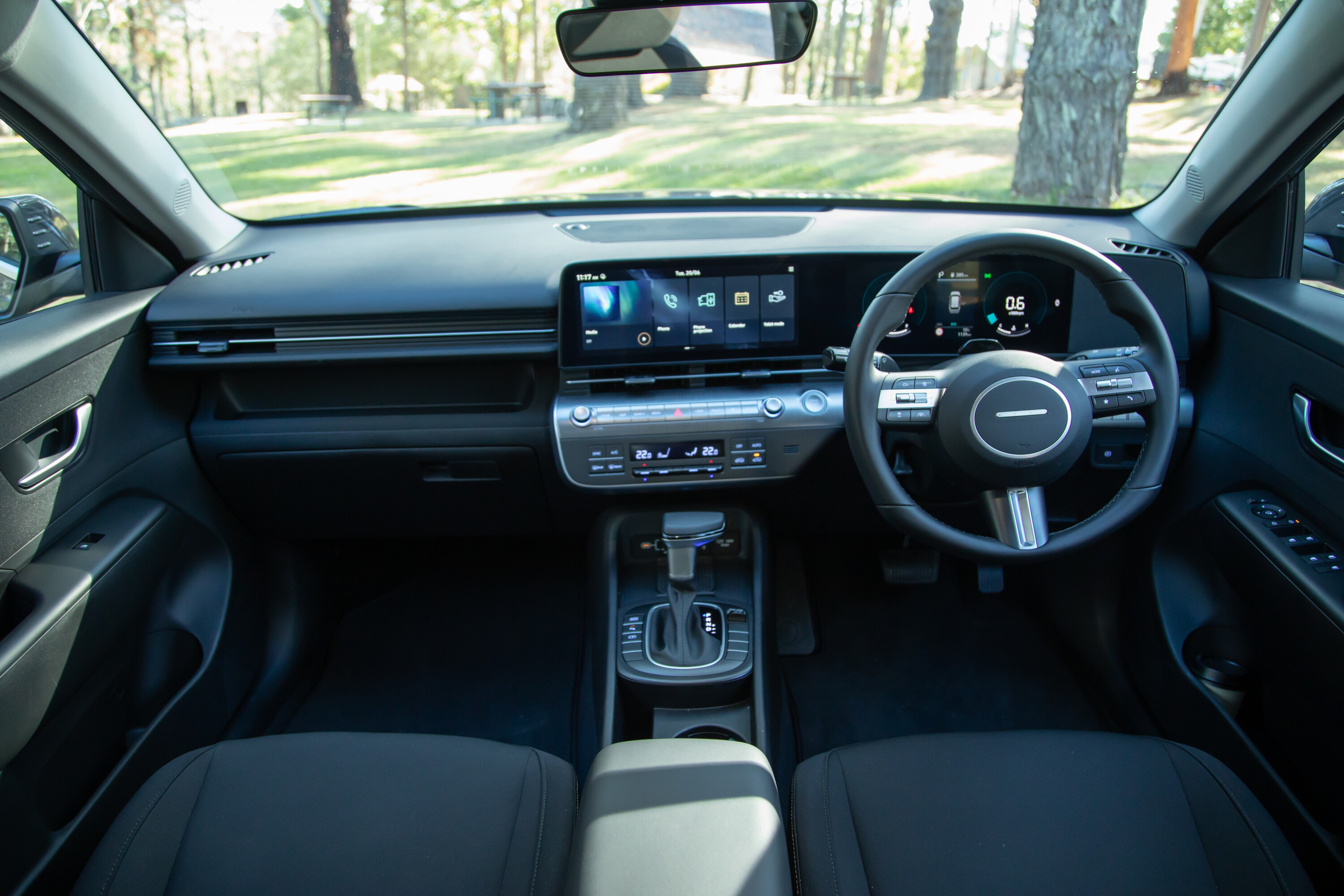
Its new 12.3-inch screen is terrific and, as before, the lower-end car has wireless Apple CarPlay and Android Auto in line with other Hyundais that don’t have in-built sat-nav.
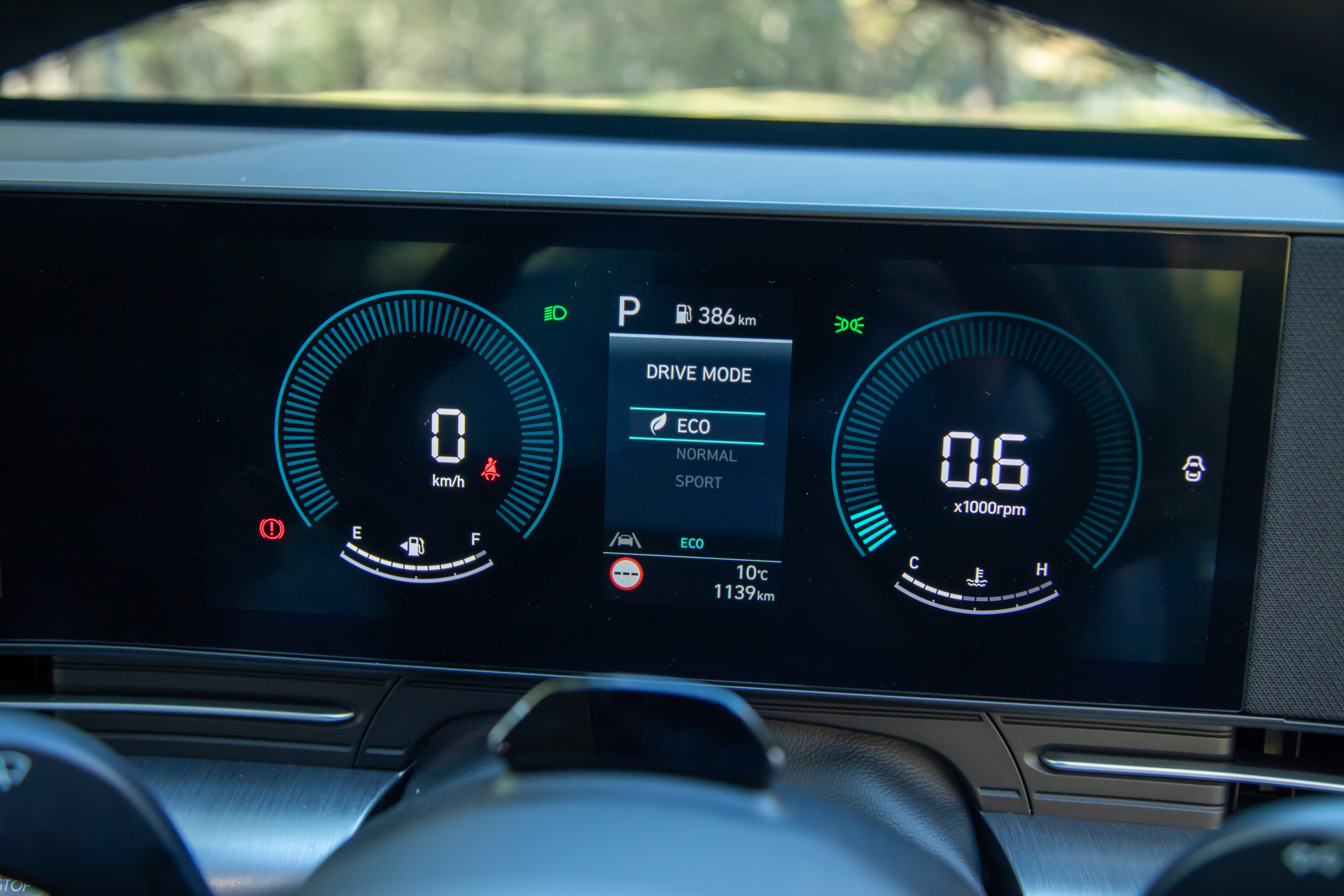
LED headlights are another notable addition and while the dashboard is listed as semi-digital, it does a convincing impression of a fully digital display.
The new Kona’s arrival changes things – before you could argue cars like the C-HR were more appropriate rivals. Not anymore.
Starting with the Toyota theme, the Corolla Cross is one of the Kona’s stronger rivals. The problem with that car is that you almost certainly wouldn’t bother with a non-hybrid because they’re quite slow. But then a hybrid is more expensive, not as well equipped and has a curiously dreary interior compared to the new Kona.
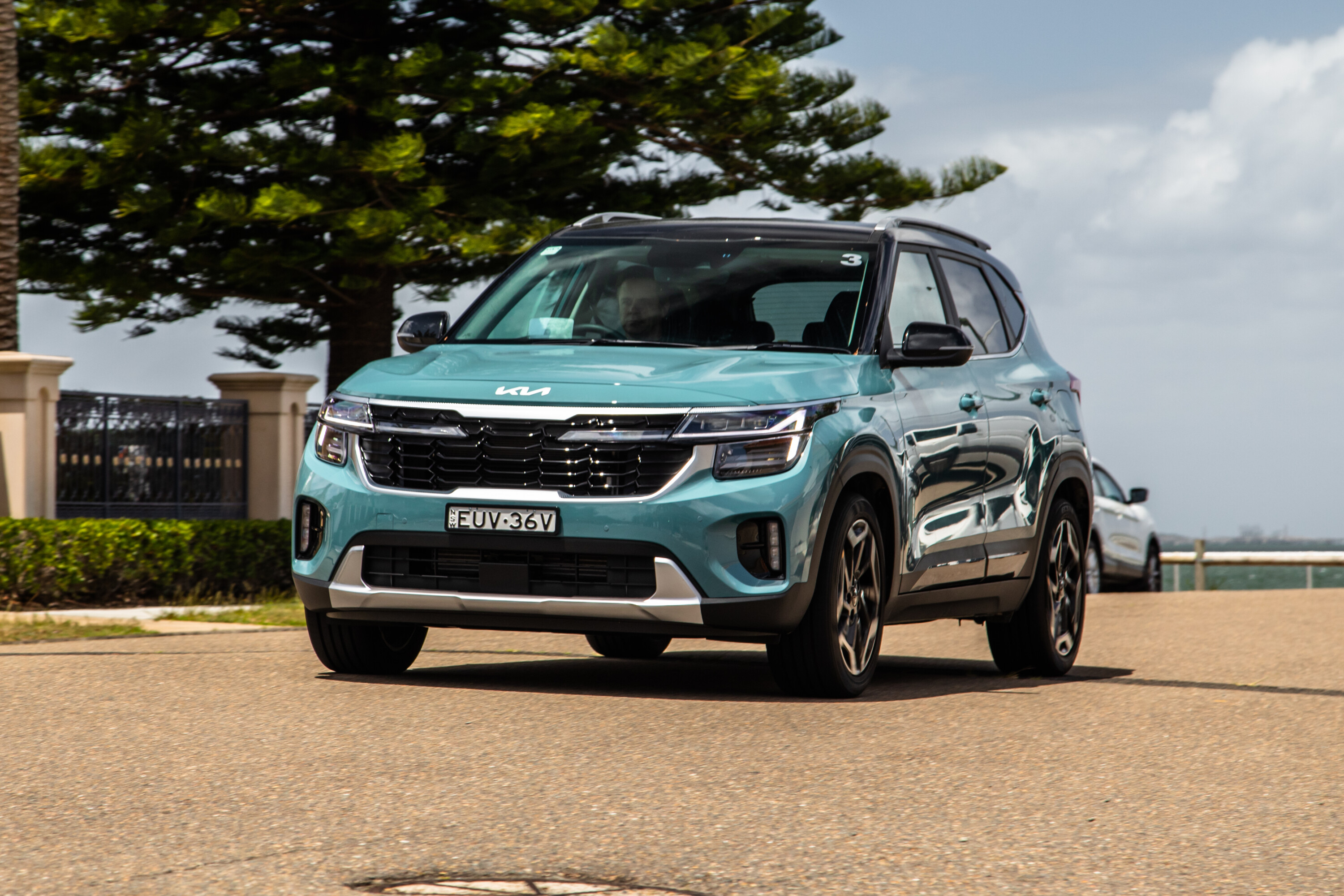
The big battle will be with stablemate Kia’s Seltos. That car rinsed the Kona on arrival with its sharp pricing, more interior space courtesy of the larger platform they now share and competitive entry and mid-level offerings. Pricing of the new Kona starts in the middle of the Seltos range and the two trade plenty of punches.
1
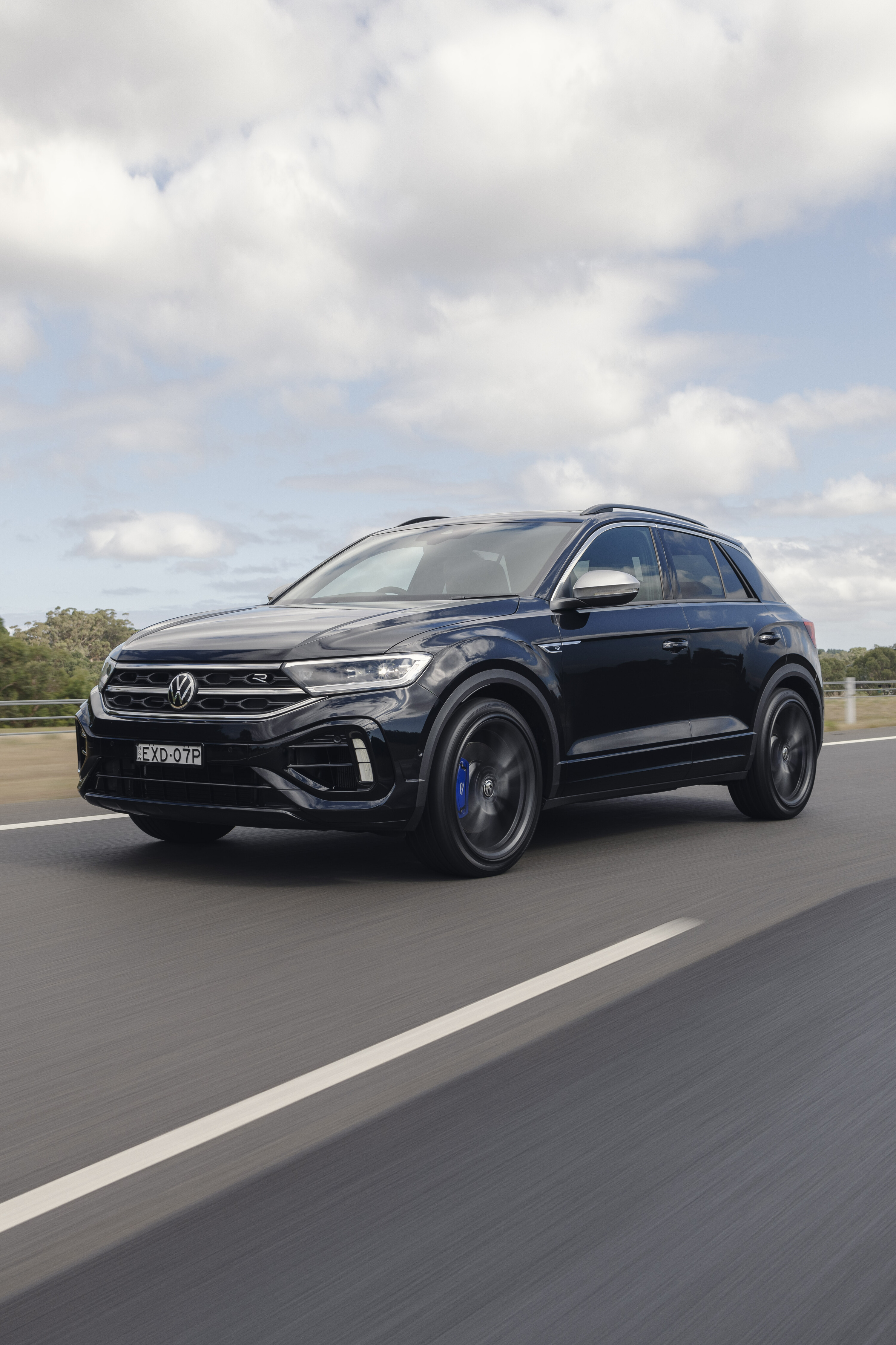
The new car also tips Hyundai into more direct competition with the VW T-Roc, a very accomplished if pricier small SUV.
On the bargain side of the ledger, you could consider an MG ZS but the Kona is better in every way apart from warranty length. The Haval Jolion is slightly bigger and has a lot more equipment but is a long way from the Kona’s more polished demeanour.
The criminally underrated Ford Puma ST-Line is also well in contention against the Kona. While its interior is getting on a little and isn’t as big for passengers, it’s still a very practical and engaging small SUV.
This new Kona now has the space of key rivals, including its cousin, the Kia Seltos.
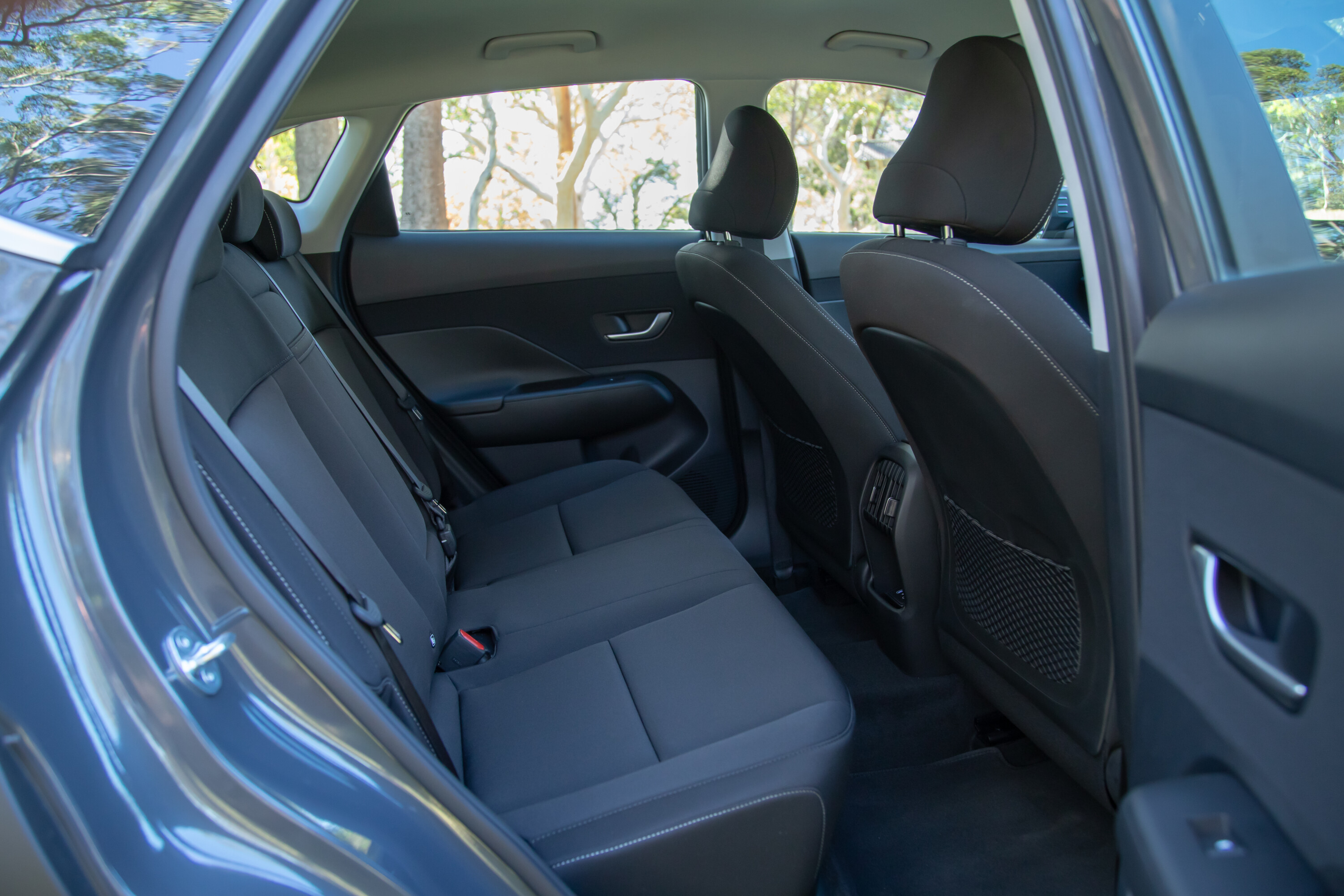
Now built on the longer wheelbase sedan platform of the i30 rather than the shorter hatch, there is a heck of a lot more room in the Kona. An increase in legroom of 77mm doesn’t sound like much, but it’s a lot – the old car was a bit of a squeeze. The longer wheelbase of the K platform delivers the gains with its 60mm stretch.
I can now fit quite happily behind my driving position (I’m 180cm tall) and still have plenty of knee, leg and foot room. The back seat is slightly more comfortable and there are now standard rear air vents and – wonder of wonders – a centre rear armrest with cup holders.
1
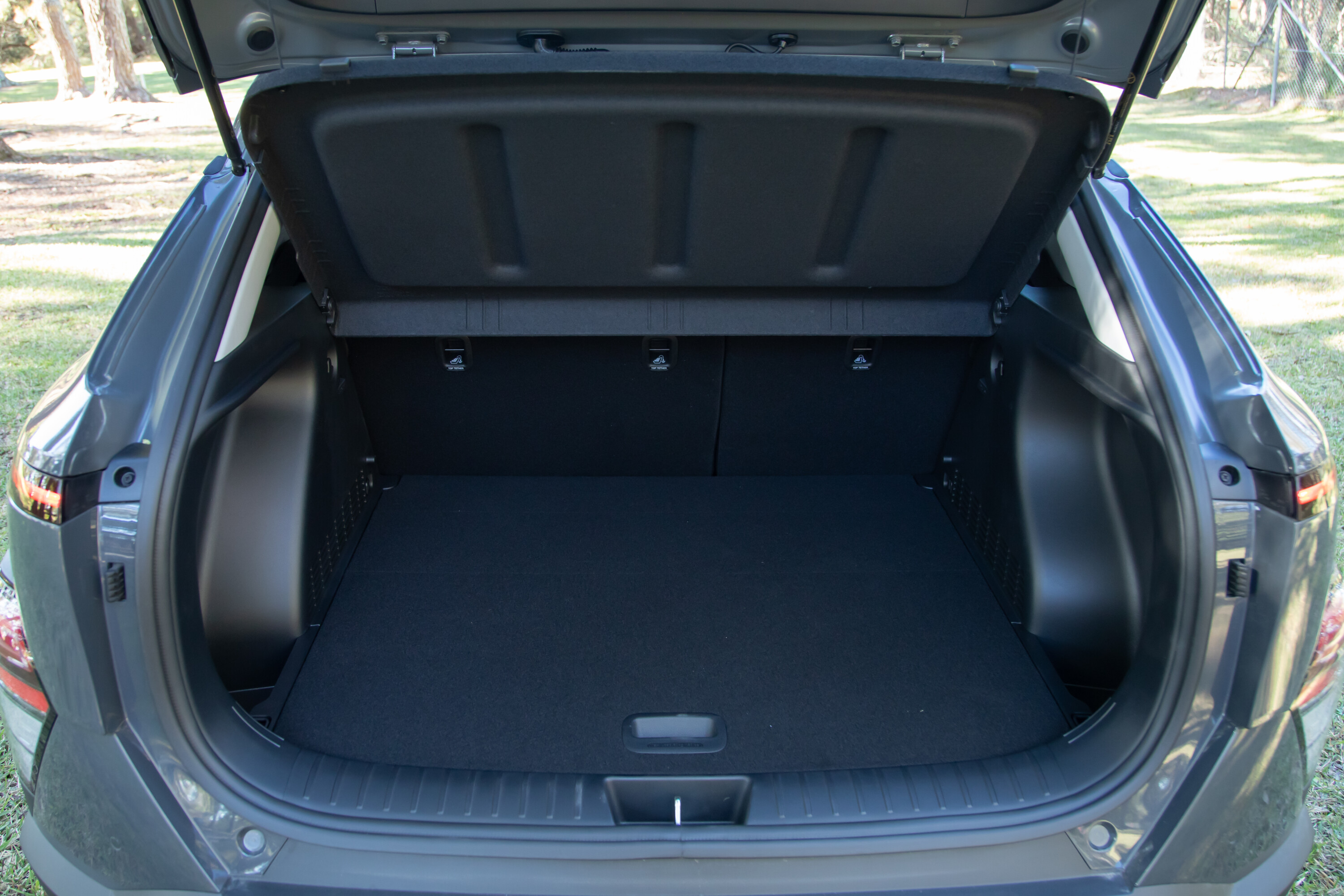
Behind you is a useful increase to 407 litres of cargo space, which is closer to most competitors except the Ssangyong Korando which blows everyone out of the water with 550 litres.
Stepping out of an old Kona and into the new is quite an experience. The dual-screen effect makes the car feel a lot more expensive and tech-heavy, with a 12.3-inch media screen and that deceptively part-digital dashboard. The Citroen influence hasn’t stopped with the second-generation Kona, which features a not-quite-round steering wheel.
Curiously there isn’t a single Hyundai logo to be found in the cabin, or at least not one I could find.
You’ll find a handy little Kluger-style slot carved out of the passenger-side dash, which is a handy spot for phones or odds and ends. The doors also have pretty sizeable pockets and bottle-holding abilities.
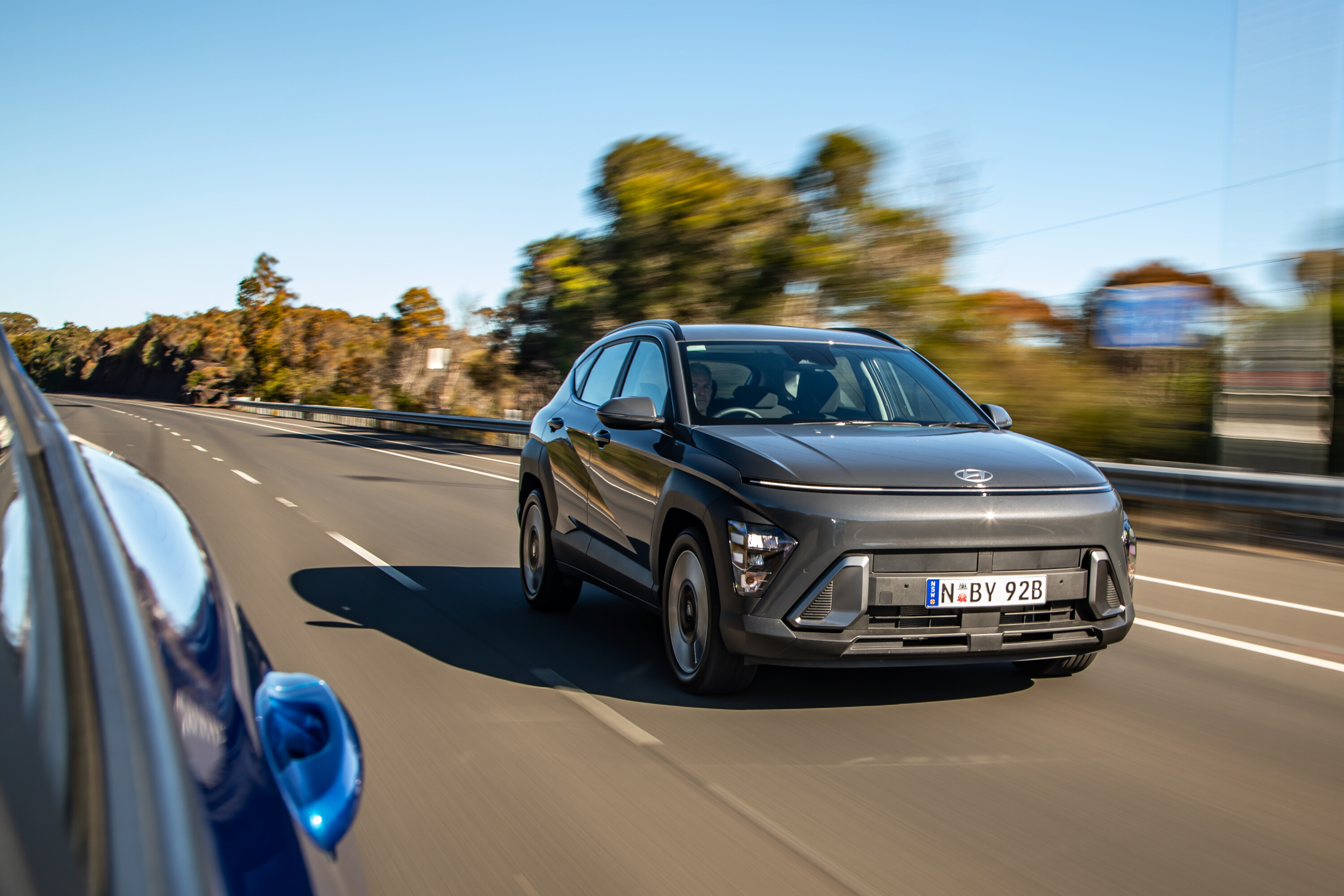
On a quick introductory drive around southern Sydney that took in a variety of road surfaces, types and bendiness, the new Kona feels like a much more polished drive.
It’s probably a little less interesting to drive than the previous car, which enjoyed a firmer set-up on a shorter wheelbase. The new car is more interested in ride comfort but despite the price increase, the turbo-engined cars’ multi-link rear end still hasn’t found its way down to the 2.0-litre cars.
For most of the time, torsion beams at the rear play ball pretty well. Not French well (where did the Citroen influence disappear to?) but pretty good. Once the surface turns into a typical Sydney suburban road, you start to feel it getting a bit busy – especially if you’re in the back.
1
The steering is very light at lower speeds but weights up nicely.
As always, this doesn’t mean much other than a distraction for those passengers but if you’re really pressing on down a country road, it will mean the odd skip or unruly moment. Unruly moments are swiftly dealt with by the array of safety systems so, again, it’s not a drama, just something that needs more work.
The steering is very light at lower speeds but weights up nicely. The overwhelming impression is that the Kona is now quieter, more comfortable and more like the rest of the cars in the segment.
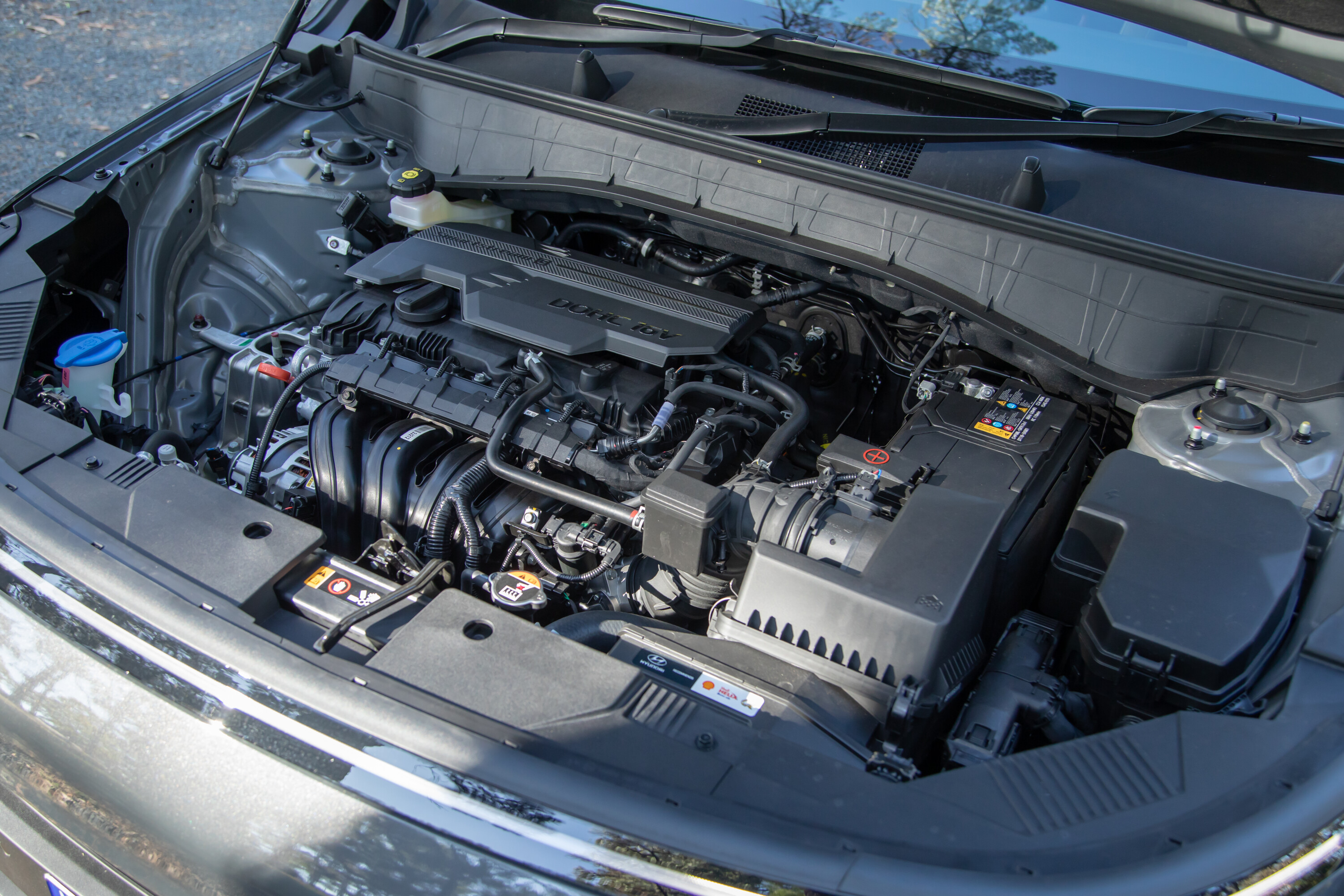
2024 Hyundai Kona drivetrain
Drive
front-wheel
Engine
2.0-litre naturally-aspirated four-cylinder petrol
Transmission
continuously variable
Power
110kW @ 6200rpm
Torque
180Nm @ 4500rpm
1
The 2.0-litre engine remains fairly pedestrian with some tweaks to include a fuel-saving Atkinson cycle and variable valve timing on both inlet and exhaust cams.
In concert with an aero trick or two including active flaps instead of a grille (making the car look like its forthcoming EV version), that extra engine tech is said to reduce consumption and improve refinement.
The automatic continuously variable transmission (CVT) seems a little more refined and engaged with the job at hand and even has eight fake ratios programmed in. I had little use for those, though, letting the gearbox instead get on with the job. Again, it’s like the rest of the non-electrified cars in the small SUV market, but quieter than most and very smooth.
Despite an increase in weight and not much in the way of fuel-saving technologies (still no idle-stop), the new Kona’s fuel average is down by 0.4L/100km to 6.6L/100km.
As this was a fairly frantic day with the Kona, a real-world fuel consumption figure will have to wait for a lengthier test.
The 2024 Kona doesn’t yet have an ANCAP safety rating (July 2023)
2024 Hyundai Kona safety features
Seven airbags (including driveru2019s knee)
Rear occupant alert
Autonomous emergency braking (vehicle, pedestrian, cyclist, motorcycle, junction-turning, direct oncoming)
Traffic sign recognition
Lane-keep assist
Intelligent speed limit assist
Lane following assist
Driver attention monitoring
Blind-spot alert
Driver monitoring camera
Rear cross-traffic alert
Leading vehicle departure alert
High beam assist
Safe exit warning
Adaptive cruise control
1
One of the seven airbags is a centre-front airbag which should ensure a five-star rating, all things being equal.
I always wonder why car-makers skip reverse auto emergency braking (AEB) when the rear cross-traffic alert is there – as is the disappointing case with this Kona.
If you want more safety gear, the Premium adds reverse AEB, 360-degree cameras, blind-spot cameras and side parking sensors (on top of a whole lot of other stuff to try and justify the $7000-plus price difference).
Hyundai offers a five-year/unlimited-kilometre warranty.
Services come around every 12 months/15,000km (10,000km for the 1.6L turbo) and, as always, the company offers a five-year capped price servicing regime as well as a lifetime projection of service costs.
The first five services cost $399 whether you go turbo or stick with the 2.0-litre in the base model, but the turbo’s services are due every 10,000km. It’s not especially cheap but lines up with just about everything apart from the Corolla Cross.
The new Kona is a big jump forward. More space, more tech and more safety – if you pay a bit more.
As a base model, the Kona tested here is very well-equipped and feels well worth the money, even if it’s missing a couple of things I might consider mandatory.
The second-generation Kona has vaulted itself back to the big time – literally.
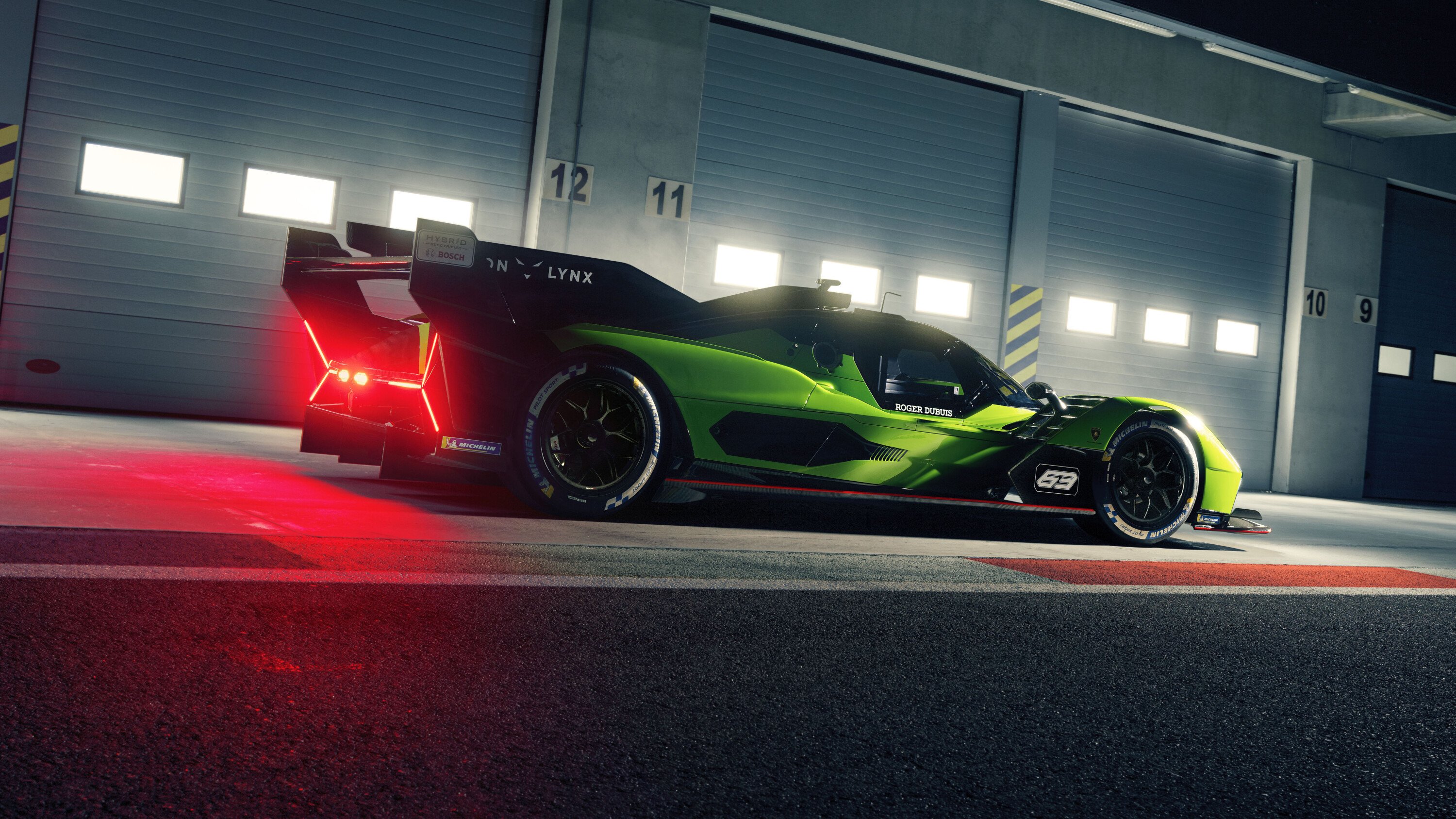
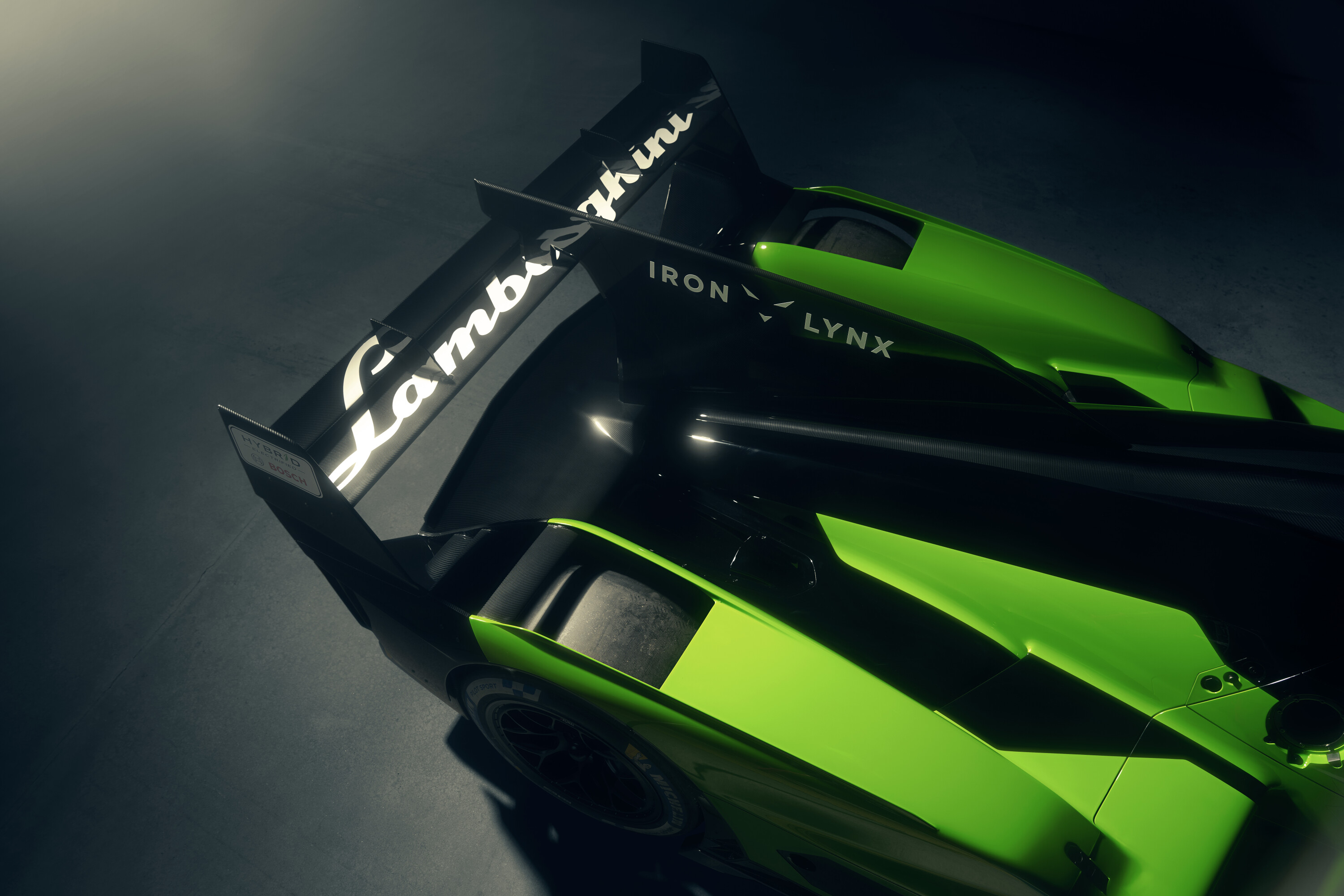
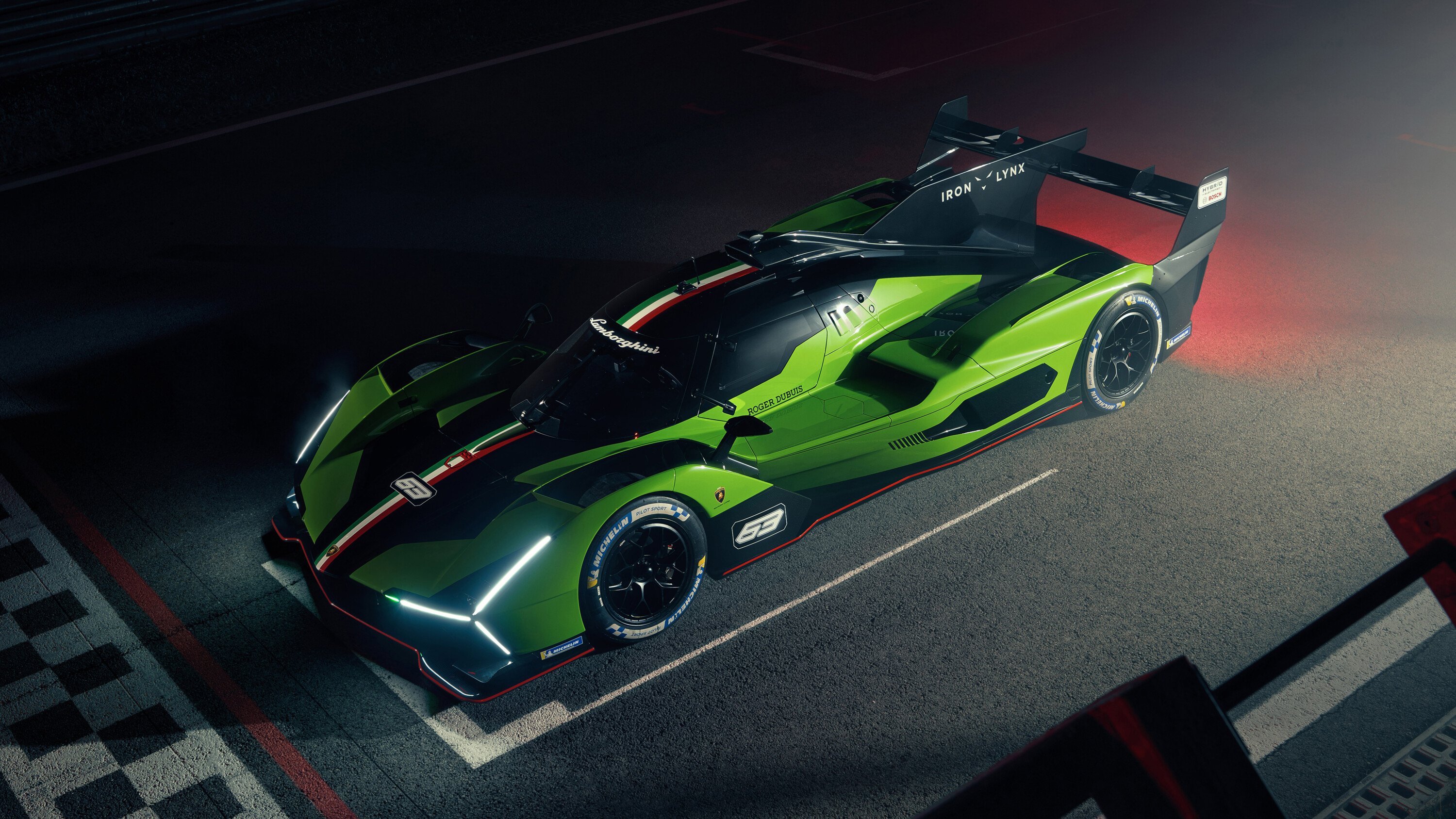
The Italian marque has used the Goodwood Festival of Speed to whip the covers off the SC63, which comes under the control of its Squadra Corsa motorsport division.
“The SC63 is the most advanced racing car ever produced by Lamborghini and it follows our roadmap ‘Direzione Cor Tauri’ laid out by the brand for the electrification of our product range,” said Stephan Winkelmann, Lamborghini’s Chairman and CEO.
“The SC63 LMDh is the step into the highest echelons and into the future of motorsports for our Squadra Corse.”
1
The car will race in two series in 2024 – a single entry in both the World Endurance Series and the American-based IMSA Championship – and both cars will race at the 2024 Le Mans enduro.
It’s expected to make its competitive debut at the second round of the WEC series in Qatar in early March 2024.
As hard as it is to believe, Lamborghini has never competed for outright honours at Le Sarthe. The wildly successful 2023 event featured hypercars from Cadillac, Vanwall, Porsche, Toyota, Ferrari, Peugeot and Glickenhaus, and the addition of Lamborghini in 2024 will bolster the already packed field.
1
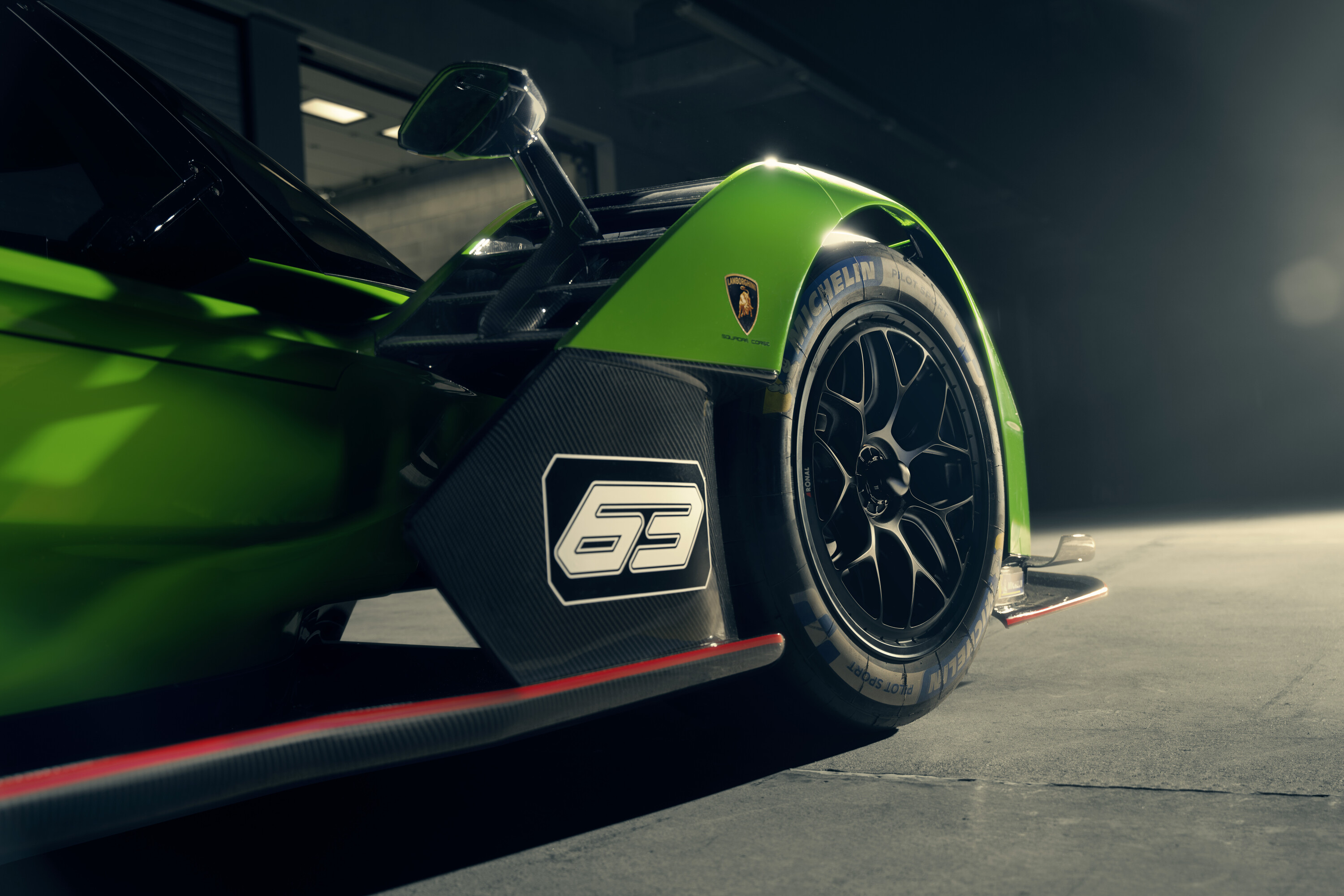
Feeding air to the engine are NACA ducts on the rear three-quarters that, according to Lambo designers, pay homage to the mighty Countach.
Hypercar regulations currently restrict output to 500kW, and Lamborghini has taken the unconventional step of adopting a brand-new twin-turbocharged 3.8-litre V8 for the rear-wheel-drive SC63, which, according to them, was developed exclusively for the SC63. Could this be a hint towards a potential future powertrain choice?
The petrol motor, which combines with a small category-spec electric motor within the gearbox, runs its turbochargers on the outside of the block, rather than in the hot vee which has become the norm in recent years.
Feeding air to the engine are NACA ducts on the rear three-quarters that, according to Lambo designers, pay homage to the mighty Countach.
1
The SC63 will sport a Verde Mantis green exterior with a black Nero Noctis stripe over the cabin, front bonnet, carbon diffuser, rear fin and wing.The cars will also feature green, white and red Italian Tricolore colours.
The SC63 will be run by Italian team Iron Lynx, which currently fields Huracan GT3s in European competition. It’s been developed with the help of French motorsport chassis maker Ligier, one of the four companies that teams are required to work with to build the chassis of their respective hypercar.
“Being involved in such an ambitious project is a once in a lifetime experience,” said Iron Lynx Team Principal and CEO, Andrea Piccini. “We are honoured and extremely excited to be part of it and to start a new chapter for Iron Lynx with Lamborghini.”
1
While the car on display at Goodwood this week is only a show car, testing for the 2024 season starts in earnest in a couple of weeks, according to Lamborghini.
While driver line-ups are yet to be finalised, former F1 drivers Romain Grosjean and Daniil Kvyat have been involved in the program since its announcement in 2022.
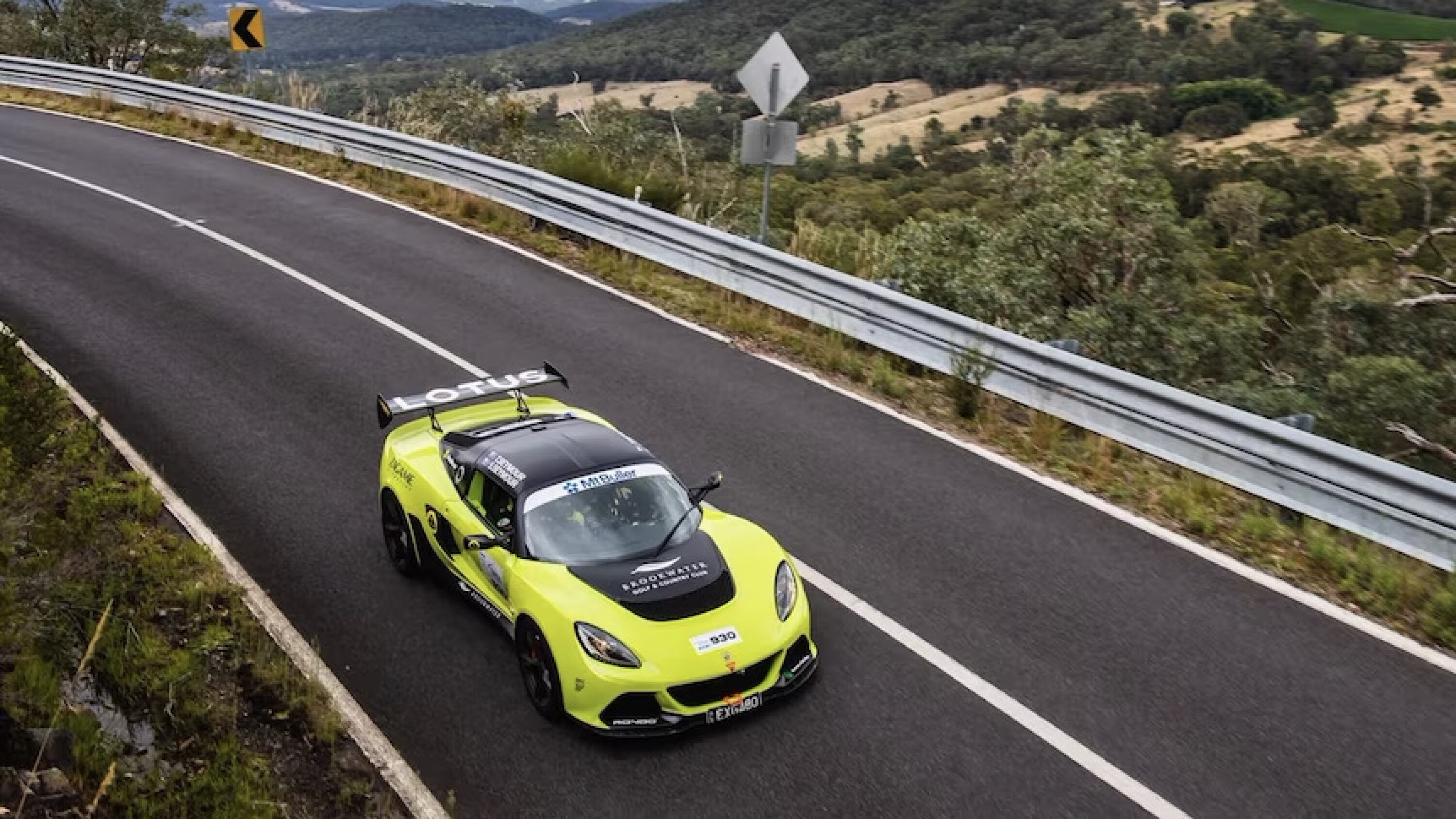
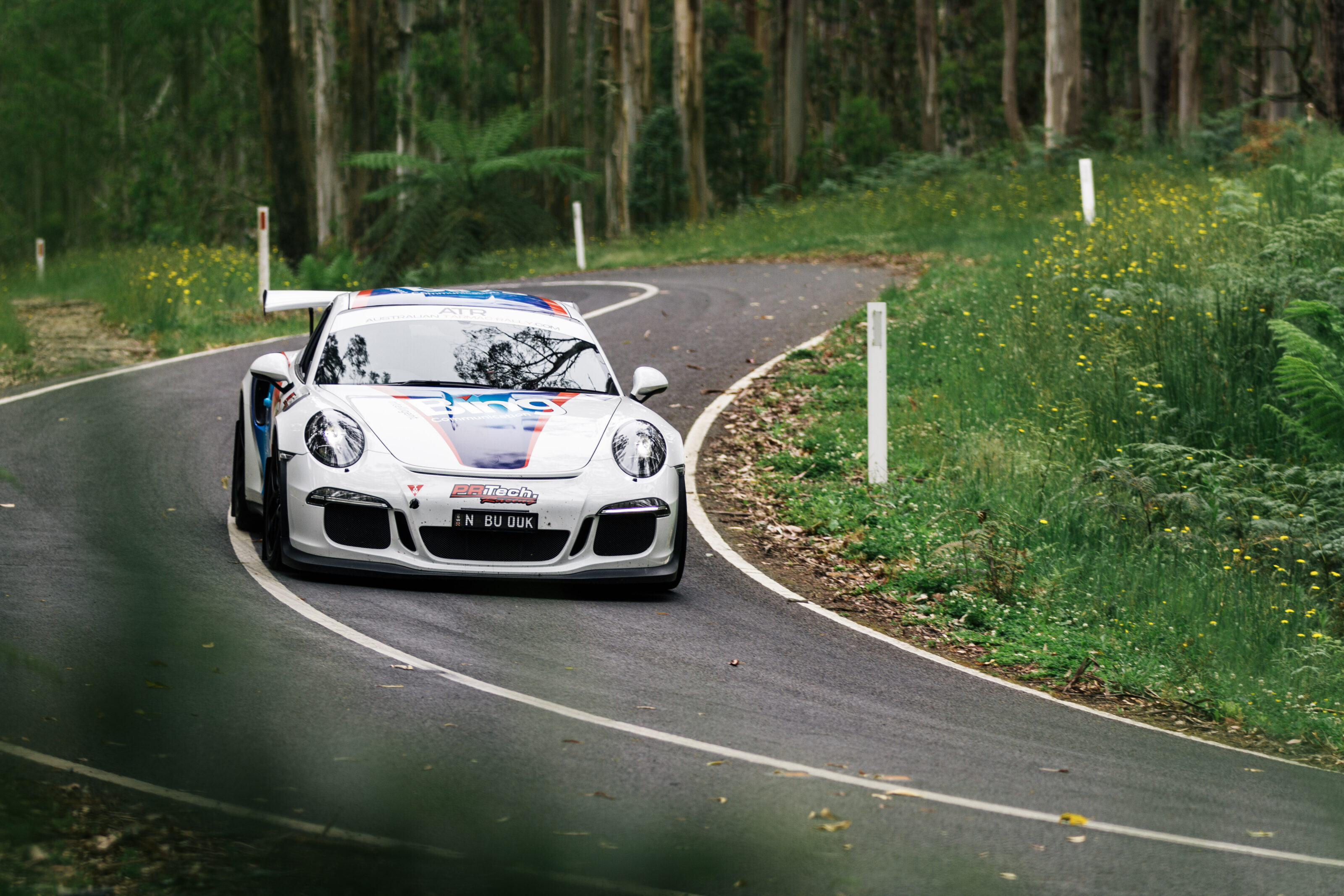
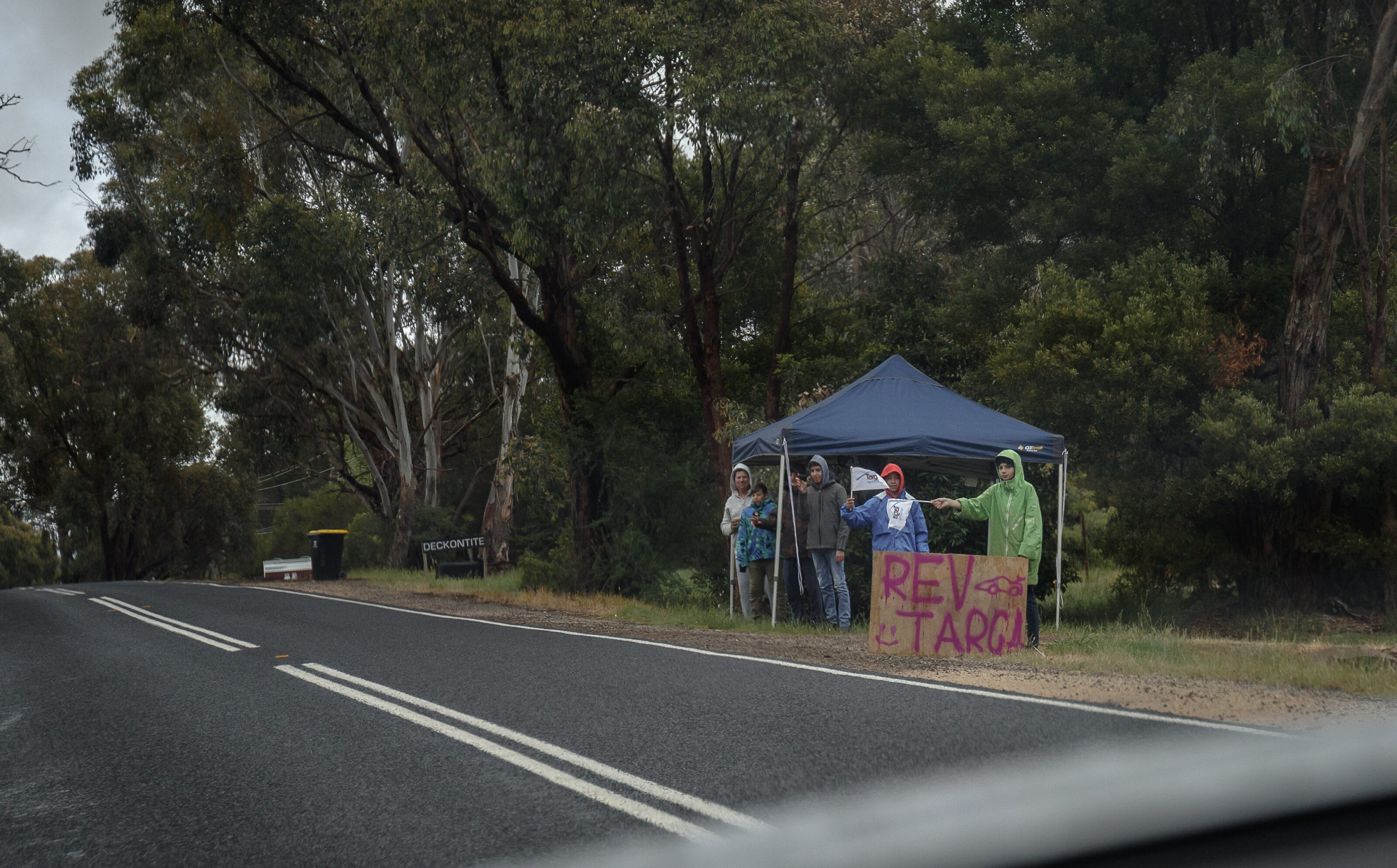
UPDATE: Targa Australia has suspended all events this year following 15 months of safety reviews.
Immediately, this means that the 2023 editions of both Targa Tasmania and Targa Great Barrier Reef have been canceled. The event provider is optimistic that the 2024 edition of Targa Tasmania will run, but without the cooperation of Motorsport Australia.
The safety reviews were prompted by four deaths occurring in two years of Targa Tasmania’s running, with the event initially postponed in February this year, before Targa Australia took this stronger stance today.
Targa, the event manager, noted an 80 per cent drop in sign-ups for its ‘Targa Tour’ (open to the public for a fee) following a speed limit drop from 130km/h to 110km/h imposed under Motorsport Australia’s recommendation. Its Tour category is what makes the events commercially viable, according to the operator.
1
Targa hasn’t thrown in the towel for good but has said it can’t align with the governing body Motorsport Australia, and therefore won’t seek contract renewal with them for future events.
“Our events can only be run with the support of our loyal participants, and on the whole, they are understandably disenchanted with the current landscape, and we completely understand why”, Targa CEO, Mark Perry, said.
Running the events without Motorsport Australia won’t be a first, with Targa and previous prior governing body CAMS disagreeing between 2007-2011, before a new contract was signed.
“We have waited and been incredibly patient with the process put in place, however this process has now taken a year longer than similar reviews in the past”, said Perry.
“Competitors have little certainty with what the future looks like for them and are rightly holding off on entering our events. In turn, we have had to make the difficult but necessary decision to cancel our 2023 events and undertake our own review and assessment on the future viability of our iconic rallies.
“While it is another sad day for everyone involved in TARGA, we must now explore every conceivable option available to us to ensure the survival of TARGA and the return of the ultimate tarmac rally, TARGA Tasmania in April 2024”, Perry finished.
Our original story, below, continues unchanged
February 2022: Targa Tasmania postponed until late October
Snapshot
2023 Targa Tasmania postponed until late October
Awaiting findings from 2022 driver fatality and recommendations
Four competitors have died in the past two years
The 2023 Targa Tasmania road rally has been delayed until October, as it awaits safety findings from last year’s competitor death.
Previously set for April, the annual closed-road flagship event has been postponed until October 23 to 28.
Following the fatality of a 59-year-old driver in the 2022 Targa Tasmania, the not-for-profit Motorsport Australia body appointed a review panel to investigate the conduct of tarmac rallies.
1
But, Targa Australia CEO Mark Perry said since the report hasn’t been finalised yet and it will take time to implement recommendations, it has no choice but to postpone the iconic event.
“It [Targa Tasmania] has a wonderful history and now our challenge comes to ensure its future,” Perry said.
“Once we have received and reviewed the report thoroughly, we will make further announcements.
1
“We will also take the time to assess the full impact on the event and our business before making the required short, medium, and long term decisions in the best interests of all our loyal competitors, officials, sponsors and suppliers.”
It’s not the first time the road rallying competition has come under the spotlight.
Three competitors were killed in 2021, with a Motorsport Australia tribunal putting forward 23 recommendations to improve the safety of the vehicles, participants, and course.
This year’s Targa Tasmania will now follow Targa Great Barrier Reef, which runs from September 1 to 3.
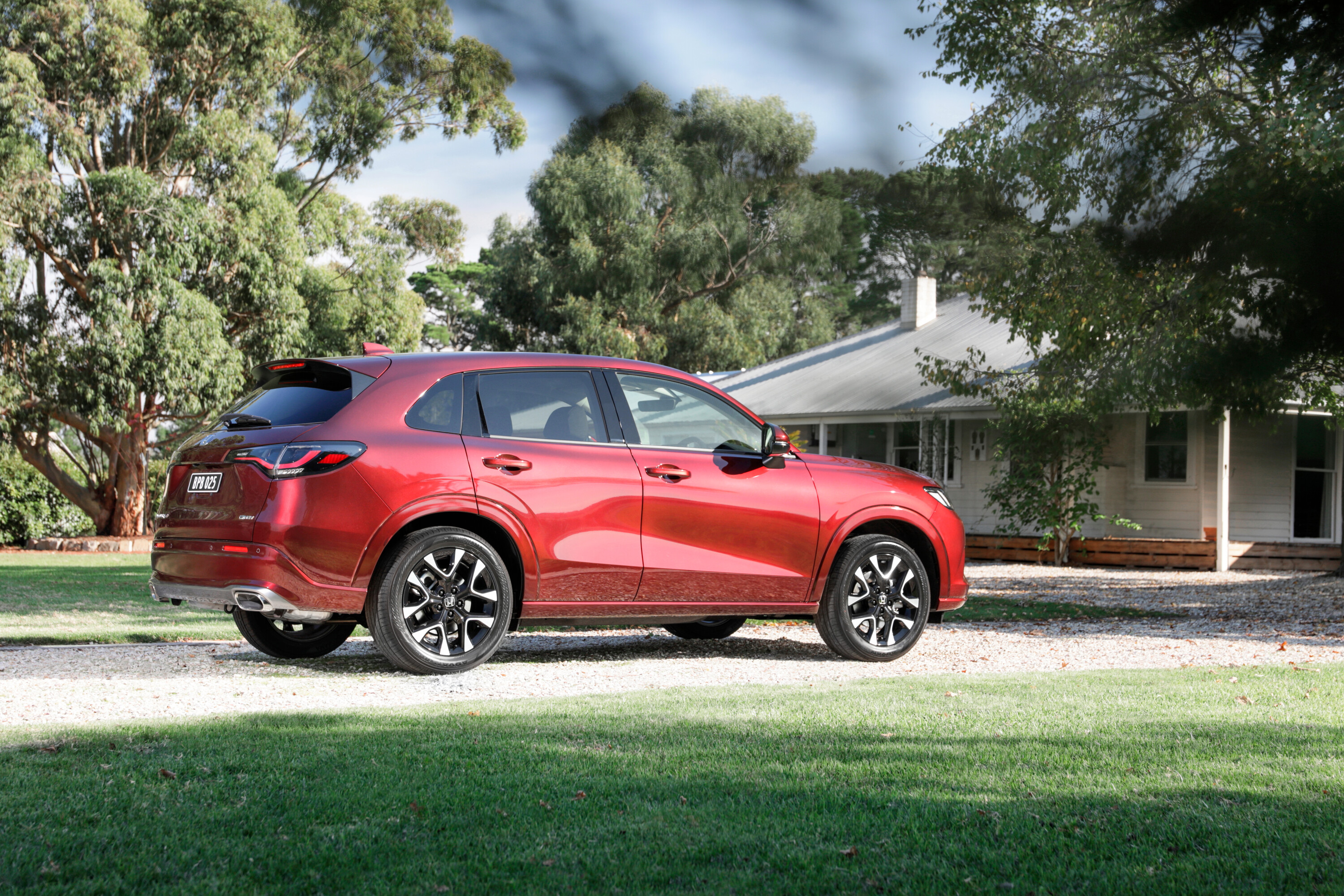
We’ve had our first local taste of Honda’s new medium SUV in both hybrid and petrol guise – head over to the link below for the full review.
Our original story, below, continues unchanged
July 15: Honda ZR-V to drive local sales boost
At the media launch of Honda’s new ZR-V, there was palpable excitement from the management team – and rightly so. The well-known brand finally has an all-new model to fight in Australia’s most popular medium SUV segment – it even packs a hybrid powertrain.
And the best bit? The price is right. That’s a crucial detail if a fixed-price agency model is to work.
As excellent as the Civic small car is (having outgunned larger rivals in a Wheels comparison test), evidently sales have suffered; Honda delivered just 38 hatches in June. With a range-topping ZR-V hybrid coming in $100 cheaper than the petrol-electric Civic and about $1500 less than a front-drive Toyota RAV4 Cruiser (drive-away), the ZR-V has a leg-up from the off.
Although Honda managing director Carolyn McMahon denied the Civic small car’s pricing was too high to be competitive, her confidence in the ZR-V is well-placed.
“We’ve already taken over 1000 orders, and now have back orders for the hybrid until December. We’re trying really hard to get more supply – I was just in Thailand a few days ago, and we’ve been able to secure more volume toward the end of this year.”
Honda’s aspirations? A gradual return to form. It won’t be the circa-30K annual numbers of last decade, instead a solid 20,000 cars each year. That said, Honda still faces an uphill battle with only 6758 deliveries this year. The vast majority of sales are run-out CR-Vs, (5022) and over the same period Honda has only shifted 567 Civics.
“We’ve got to catch up, we have a lot of back orders to fulfil. And then – once that regular supply is in place – we’ll be at 20,000 sales annually, that’s where we aim to be in the next one-to-two years”, McMahon told Whichcar.
1
Conspicuously absent from Honda’s local plans (and global, for that matter) are EVs and plug-in hybrids, with nothing in the ‘medium term’ hitting showrooms with any sort of claimed WLTP driving range. Honda’s answer is that it isn’t the brand for those looking to buy an EV right now.
“When we look at our customer base and what our customers – both in metro and rural areas – want, we think the hybrid-electric vehicles that we have at the moment are the right thing for our customers”, said McMahon.
It’s all well and good claiming hybrids are the best solution today, but even rival brands that have been slow on EV uptake – Toyota, for example – are realising it’s time to get a wiggle on.
Rapid in its European transition yet slow locally is a good way to describe Volkswagen’s EV strategy, though even VW is predicting 5000 sales next year from four electric models – two medium SUVs (ID.4 and ID.5) due mid-year, with a van and small EV later on.
Fast-mover Tesla has cornered the early adopters who are voting with their wallets – the American EV specialist delivered 5560 Model Ys in June; more medium SUVs than Honda’s managed to shift thus far in 2023.
The ZR-V will be a welcome boost for Honda’s bottom line, as will the CR-V due later this year. We’ll have a local ZR-V review live next week to confirm if it performs well enough to challenge our class benchmark, the Nissan X-Trail.