
MG Motor Australia has used the 2026 Melbourne Motor Show to preview a number of new models due in the Australian market over the next 12 months, including the U9 EV electric ute and MGS6 EV electric mid-size SUV.
The display is a showcase of MG Motor’s “continued focus on expanding its electric vehicle portfolio whilst delivering cars suited to the varying wants and needs of Australian drivers”, according to the brand. So what’s on display from MG?
MGU9 EV and MGU9 Black Edition
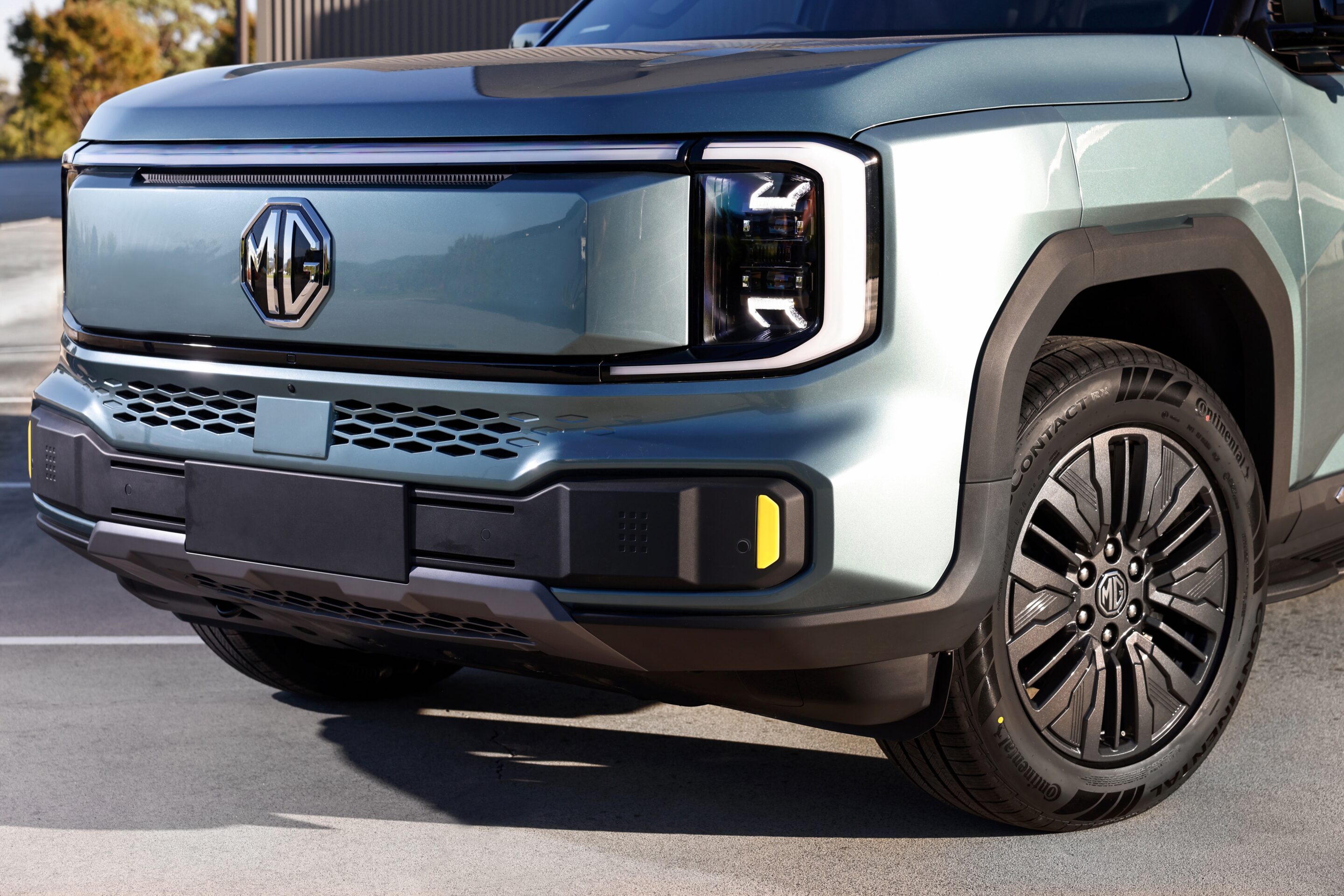
The U9 ute made its Australian debut at the 2025 Melbourne Motor Show and this year, the brand is launching the electric U9 EV and the special U9 Black Edition at the show. The U9 EV combines a 325kW dual-motor drivetrain with a large 103kWh battery for a WLTP range of around 430km. It won’t be the first electric ute to launch locally, but its performance and range stats are quite healthy against its main competition like the Toyota HiLux BEV.
The Black Edition adds to the U9 with a number of black styling features, including the exterior badging, grille colouring and alloy wheels. MG will reveal pricing and specifications for both the U9 EV and U9 Black Edition at a later date.
MGS6 EV
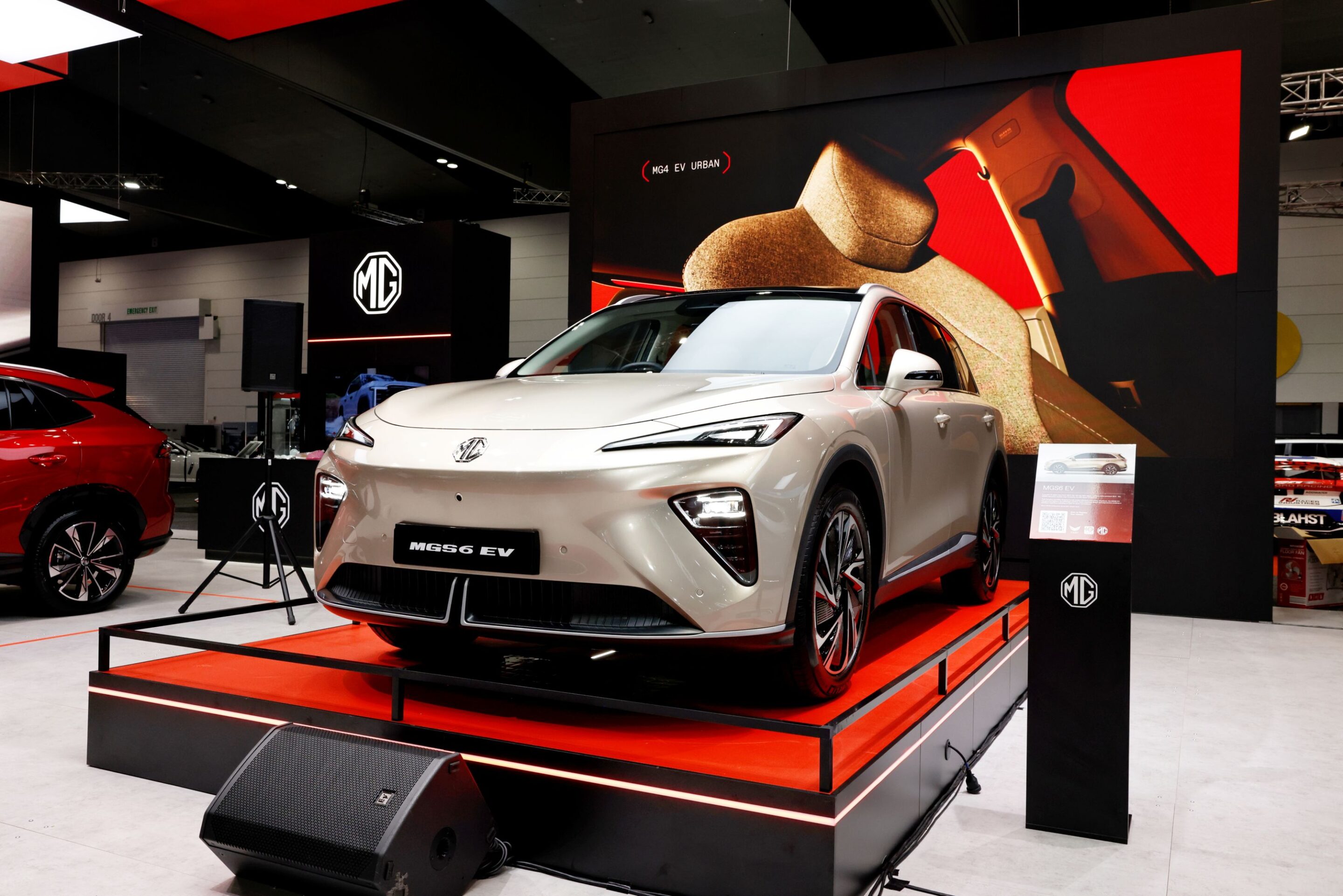
Also making its debut at the Melbourne show is the MGS6 EV, which was revealed globally in November 2025. While Australian availability timing is yet to be revealed, the MGS6 EV fills an important gap in MG’s lineup: The electric mid-size SUV, and it will battle big-selling cars like the Tesla Model Y, BYD Sealion 7 and Kia EV5.
MG has confirmed that both rear- and all-wheel drive models will be available locally when the MGS6 EV launches, and its battery will reportedly give a driving range of up to 530km on the WLTP cycle. The MGS6 EV takes cues from its smaller MGS5 EV brother, including its styling and interior quality, and adds them to a larger and more practical offering.
IM LS9
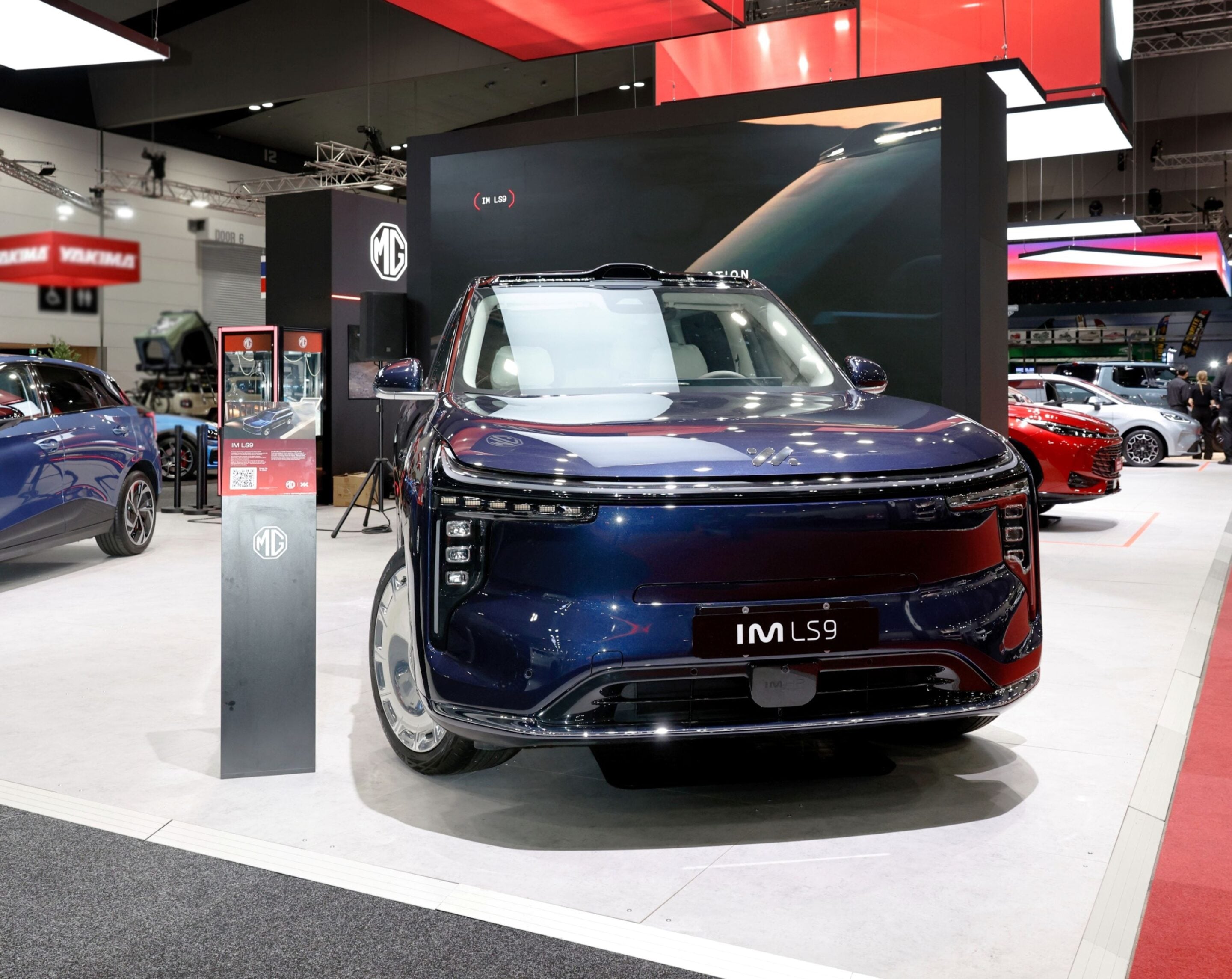
A surprise debut for MG at the Melbourne Motor Show is the LS9, which is the next model from MG’s premium IM arm. Sitting above the existing IM 5 and IM 6, the LS9 is a large range-extender hybrid SUV using an 800-volt architecture that can cover 1500km of driving on a full charge and tank of fuel (based on Chinese testing numbers).
Its drivetrain makes up to 390kW of power and 670Nm of torque, and includes the digital chassis from other IM models. Inside, the LS9 shows a very digital cabin experience, with large integrated displays, advanced connectivity and luxurious seating configurations reportedly designed to position the LS9 as a flagship technology showcase within the broader MG ecosystem.
MG4 facelift
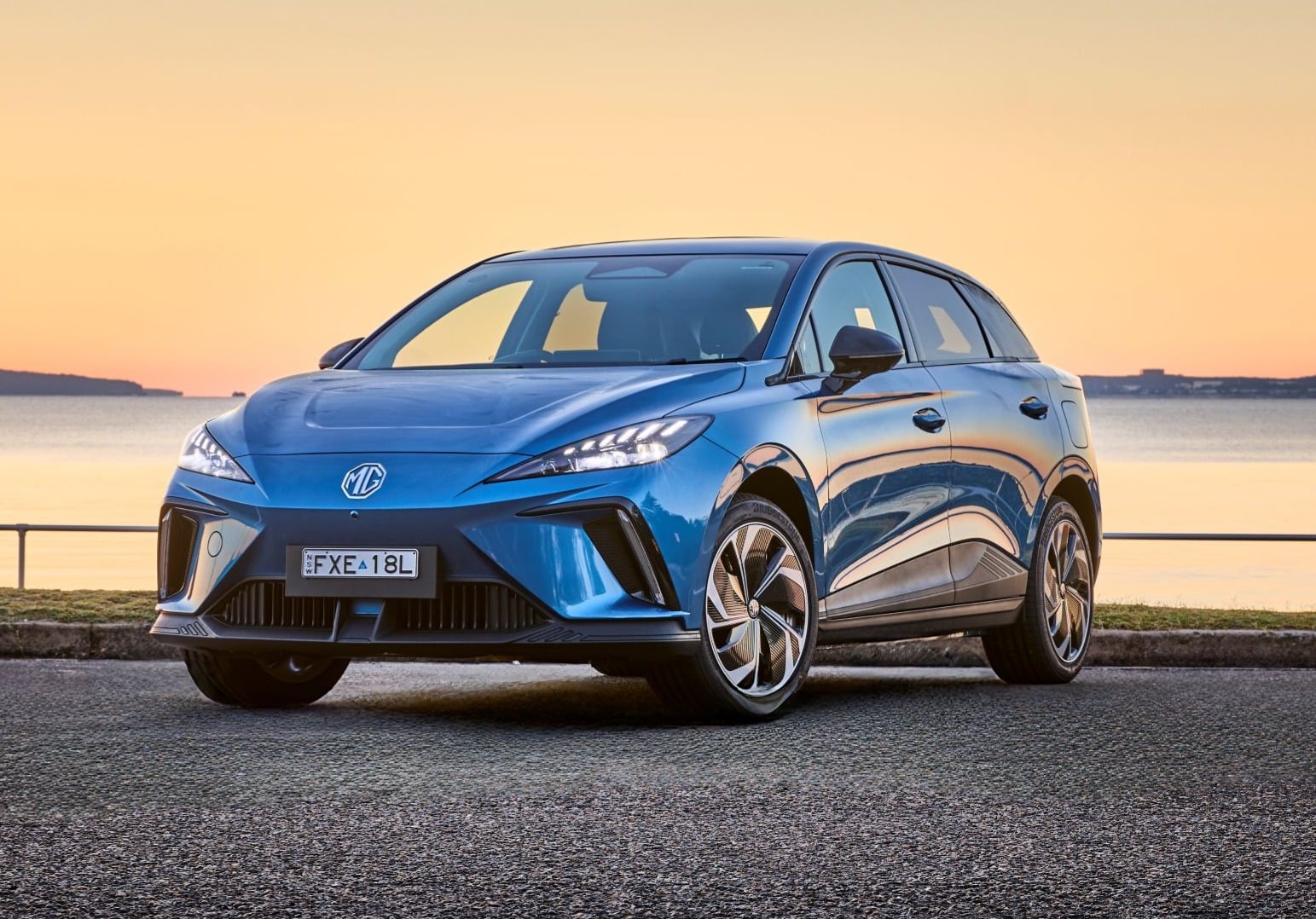
The facelifted MG4 will make its Australian debut at the Melbourne show, with updated exterior styling, a new interior layout and a revised model line-up consisting of just an entry-level Essence 64 with 452km of range and an upper-spec XPower, which is now even more potent than before at 320kW/600Nm for a claimed 0-100km/h sprint time of just 3.8 seconds.
The cabin has been upgraded with a new dashboard layout with higher quality materials and more tech, including a new 12.8-inch touchscreen with features like Spotify and YouTube access. Pricing for the updated MG4 lineup starts at $39,990 driveaway for the Essence 64 model, with the XPower hot hatch priced at $47,990 driveaway.
MG4 EV Urban
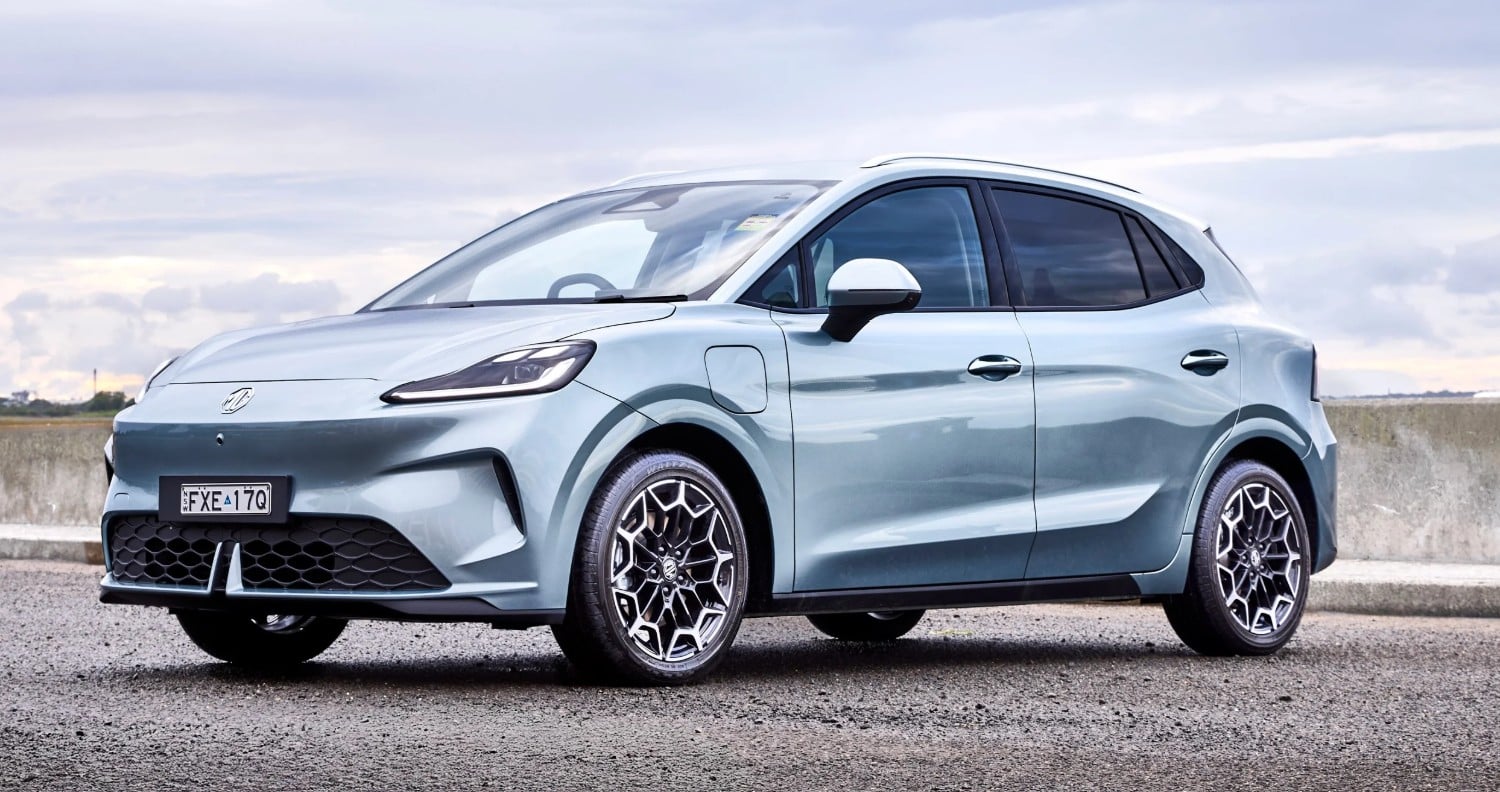
It’s just gone on sale in Australia as one of the cheapest electric vehicles you can buy, and Melbourne Motor Show attendees will have an opportunity to see the MG4 EV Urban in the flesh. Designed for urban – hence the name – duties, the MG4 EV Urban is more practical and comfort-oriented than the sportier MG4 that we’re familiar with.
Two battery sized are available in the MG4 EV Urban range with up to 405km of WLTP range, and pricing starts at just $31,990 driveaway.
MG HS Hybrid+
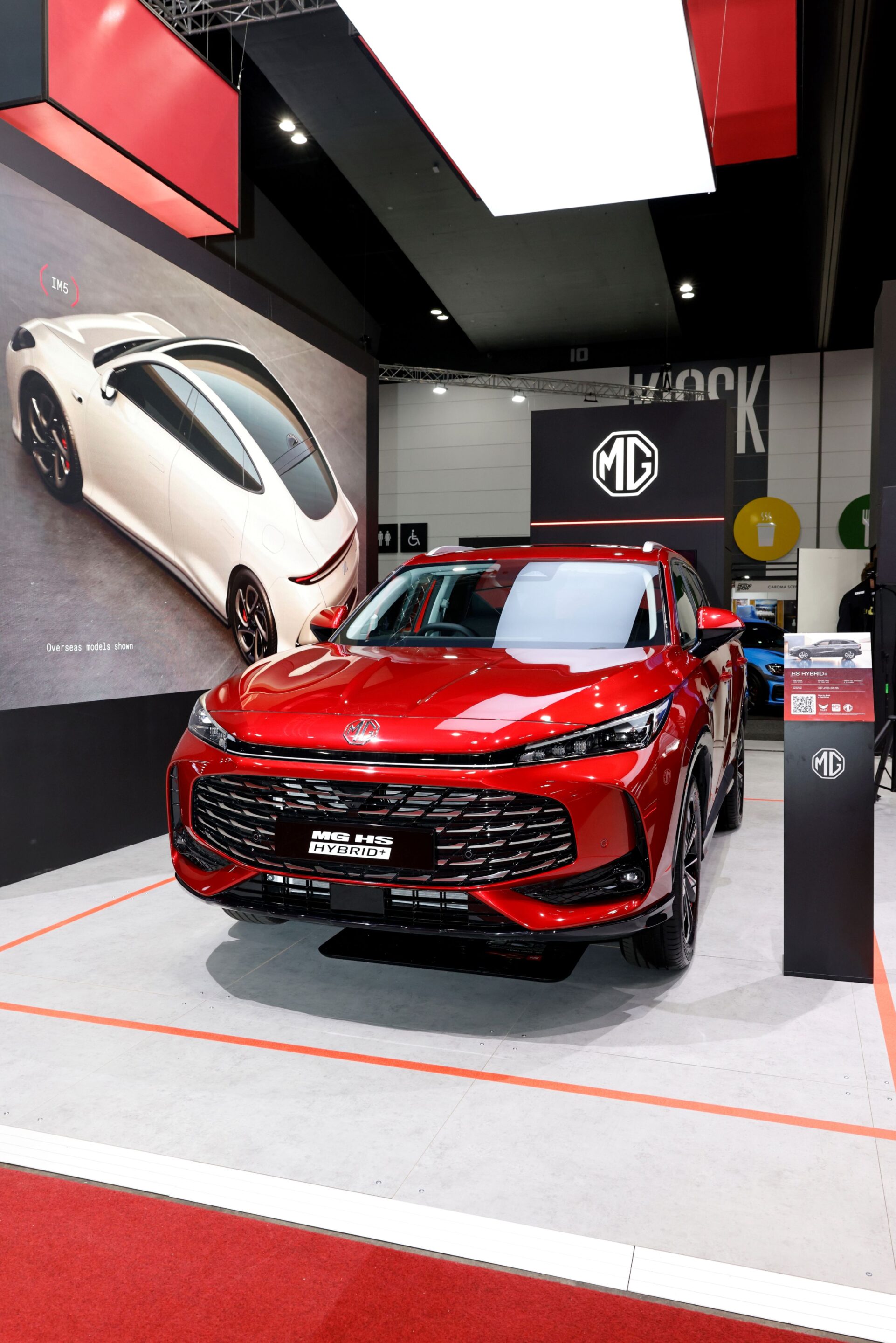
Finally, acknowledging that hybrids are also big sellers in Australia, MG’s Melbourne Motor Show lineup will also showcase the HS Hybrid+, which was the runner up in 2025-26 Wheels Car of the Year. Pricing starts from under $40,000 driveaway and its 1.5-litre turbo-hybrid drivetrain is not only powerful making 165kW but also quite fuel efficient, rated at 5.2L/100km.
“MG is proud to return to the Melbourne Motor Show with a line-up that reflects both where the brand is today and where we’re heading,” says Dimitri Andreatidis, Marketing Director at MG Motor Australia. “From new electric models to future-focused technology, our goal is to make modern mobility more accessible than ever, while continuing to innovate across our vehicle range.”
MG Motor Australia will announce local timing for the models previewed in due course. The Melbourne Motor Show will run from today April 10 to Sunday April 12.
MG has updated its MG4 EV hatchback for 2026, introducing a range of changes aimed at improving usability, cabin quality and driving range, while keeping pricing competitive in Australia.
The revised line-up will open with the rear-wheel-drive MG4 Essence 64, priced from $39,990 drive-away, alongside the dual-motor MG4 XPOWER from $47,990. The updates focus on incremental improvements rather than a full redesign, building on the model’s reputation as an affordable and engaging electric hatchback.
A key change is an upgraded interior, which adopts a new design direction with improved materials and a more refined finish. Physical buttons have been reintroduced for key functions, addressing feedback around usability, while features such as heated seats, a heated steering wheel and a six-speaker audio system aim to improve everyday comfort.
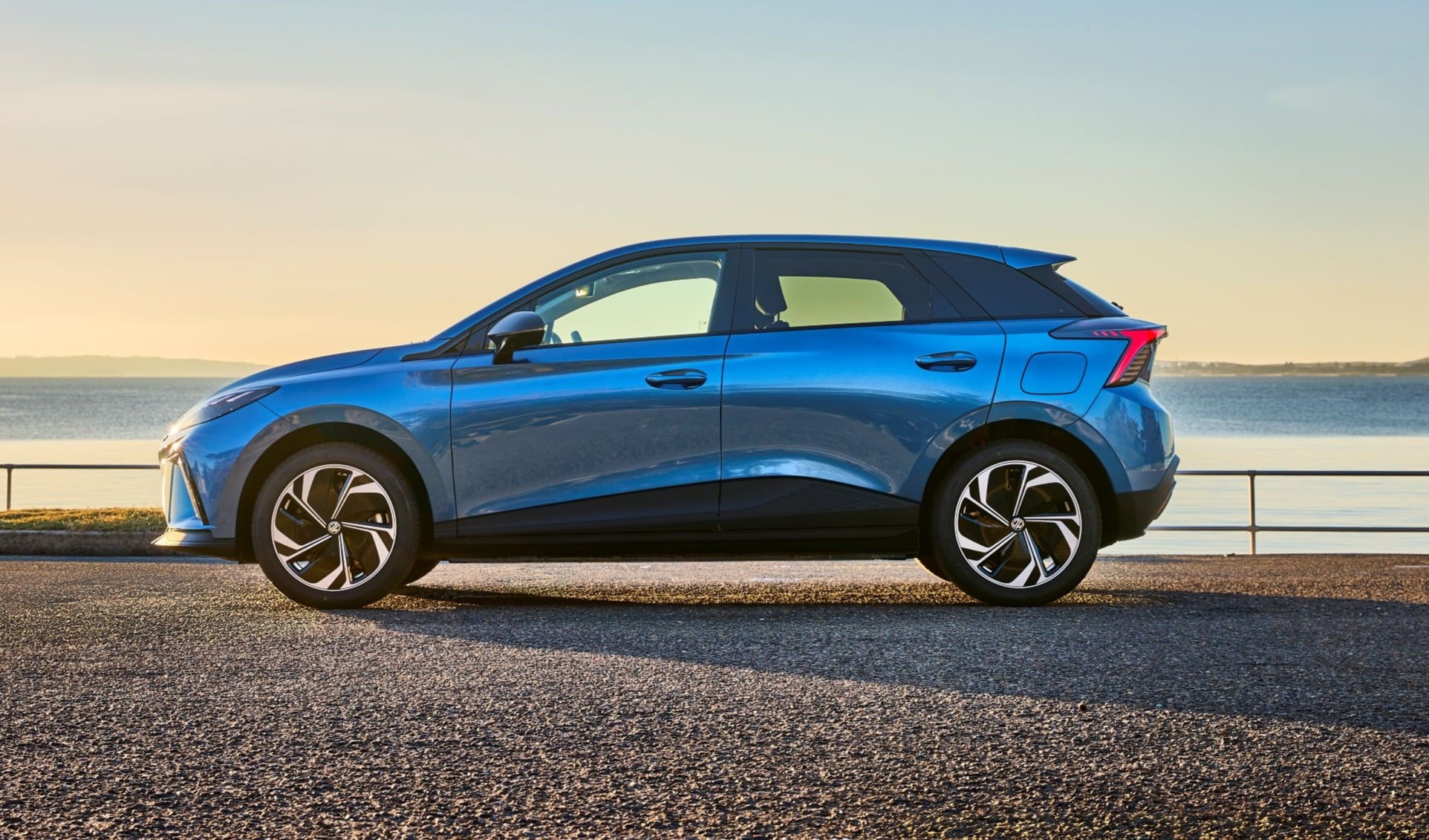
Technology has also been revised. A new 10.25-inch digital instrument display and a larger 12.8-inch central touchscreen headline the updates, with wireless Apple CarPlay and Android Auto now standard across the range. A 360-degree camera system is also included to assist with parking in tight urban environments.
In terms of performance, the Essence 64 uses a 64kWh battery paired with a 140kW/350Nm electric motor, delivering a claimed driving range of up to 452km (WLTP). Fast charging from 10 to 80 per cent is expected to take around 25 minutes under ideal conditions.
The flagship XPOWER variant retains its all-wheel-drive layout, combining front and rear electric motors for a total output of up to 320kW. MG claims a 0–100km/h time of 3.8 seconds, with a driving range of up to 405km.
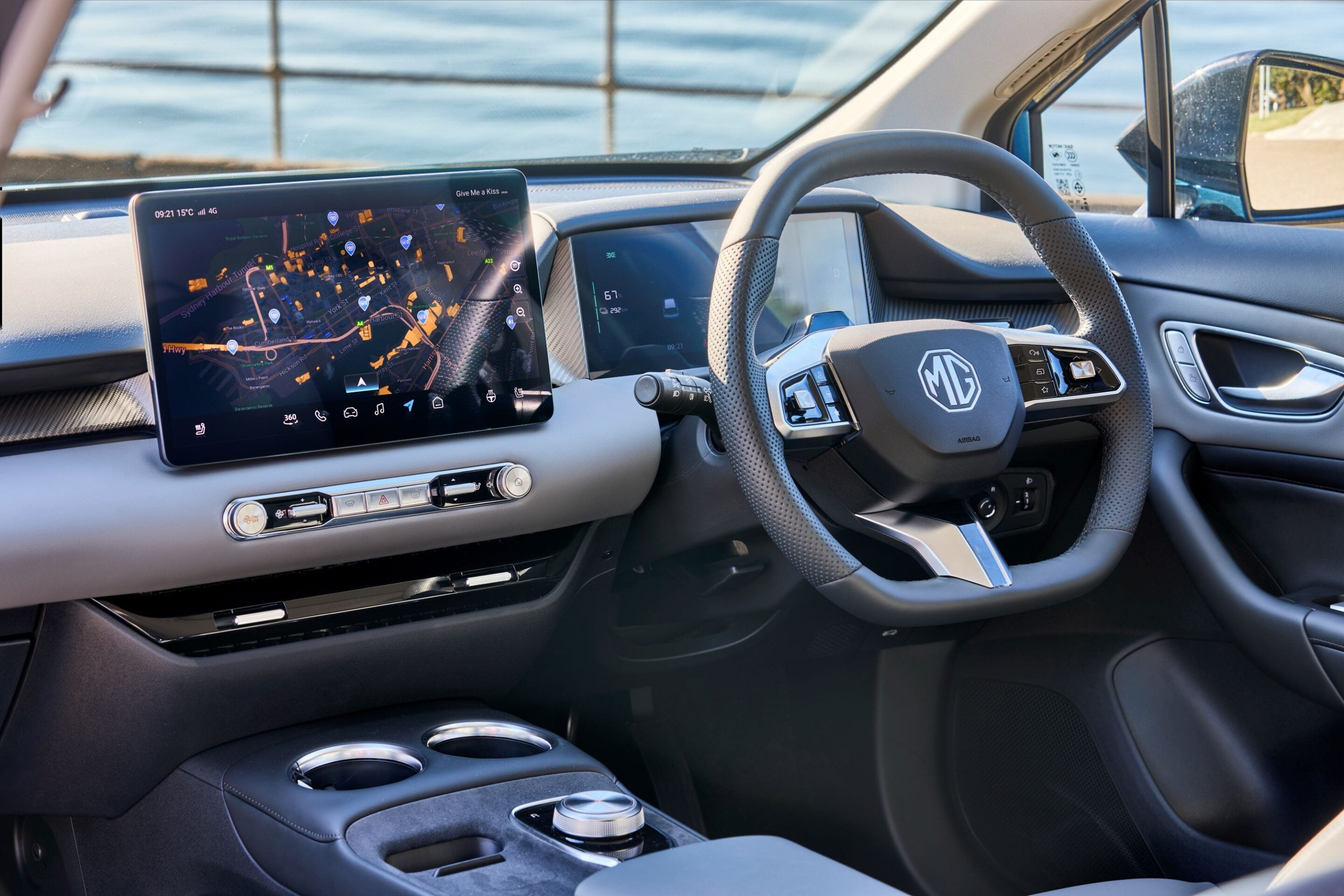
Chassis characteristics remain a focus, with the MG4 continuing to use a rear-wheel-drive platform and balanced weight distribution to support handling. MG says the updates also improve ride comfort and overall driving refinement.
Externally, changes are subtle, including new alloy wheel designs, a revised rear spoiler and additional colour options. Practicality remains unchanged, with 388 litres of boot space expanding to 1,164 litres with the rear seats folded.
Safety systems are carried over and enhanced through updated driver assistance features, including adaptive cruise control, lane-keeping assistance and blind-spot monitoring, bundled under MG’s MG Pilot system.
The updated MG4 EV arrives alongside the recently introduced MG4 Urban, a lower-cost variant aimed at broadening access to electric vehicles in Australia. Together, the expanded range reflects MG’s continued push to grow its presence as Australians look with renewed focus at EV options for city driving.
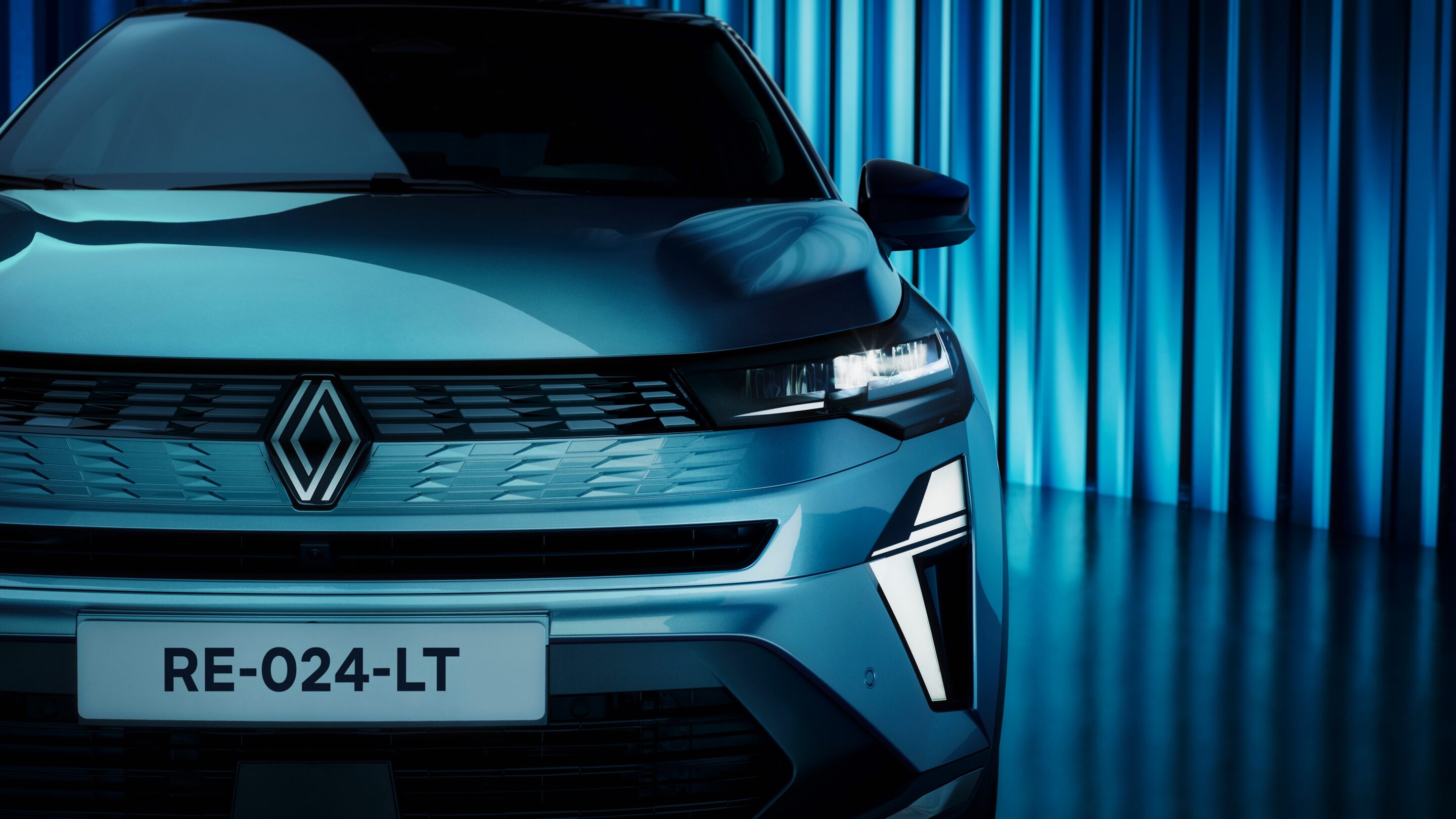
Renault Australia has announced that the Renault Symbioz small SUV will be launched locally in the second half of 2026 after its local debut at this week’s Melbourne Motor Show. Sold in Europe as a larger and more practical sister to the familiar Captur, the Symbioz will be the first full hybrid product to be offered locally by Renault. It features a new 1.8-litre hybrid system designed to use its electric motor as much as possible to save fuel, including when accelerating from a start, while a mild-hybridised 1.3-litre turbo-petrol variant will also be offered locally.
The Renault Symbioz will be one of the largest small SUVs when it launches in Australia. Measuring 4412mm long, 1797mm wide, 1567mm tall and riding on a 2639mm long wheelbase, the Symbioz is only 13mm shorter than a Nissan Qashqai. In the UK, its boot measures a healthy 492 litres with the rear seats slid rearward, 624 litres with them slid forward and 1582 litres with them folded.
The Renault Symbioz will offer two hybridised drivetrain choices when it launches here: a 104kW/245Nm 1.3-litre mild-hybrid teamed with a seven-speed dual-clutch transmission, or an 80kW/107Nm 1.8-litre petrol engine combined with a 36kW/205Nm electric motor and 1.4kWh battery with a claimed total system power output of 116kW.
European WLTP fuel consumption is rated at just 4.4L/100km for the full hybrid, and 5.9L/100km for the mild-hybrid, with Australian figures yet to be confirmed.
According to Renault, the hybrid system has been engineered to use the electric motor, rather than the petrol engine, during its initial acceleration phase up to 60km/h. That reduces fuel consumption by 40 per cent, according to Renault, though fuel consumption figures are yet to be announced.
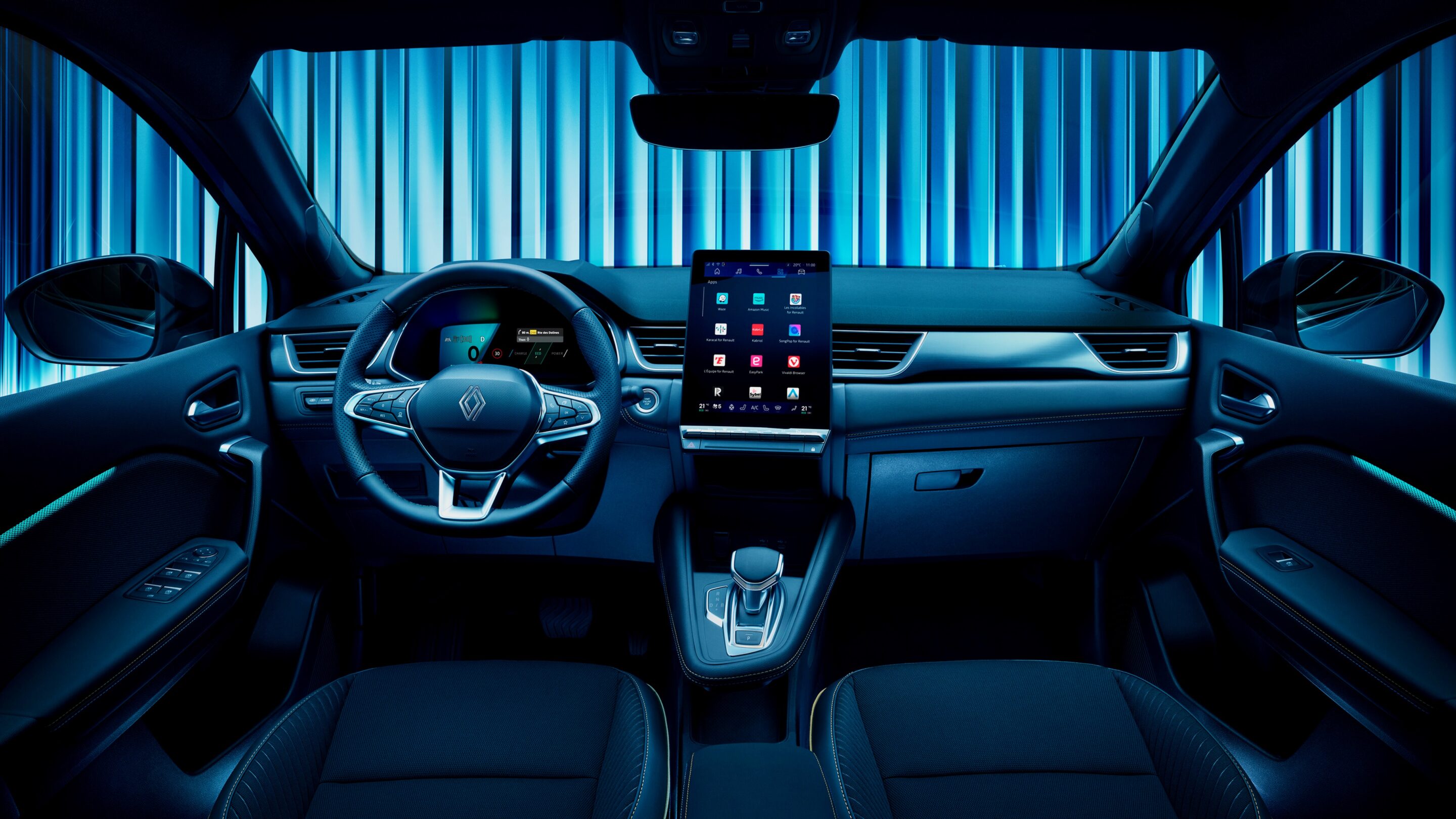
Standard features and the local line-up are also yet to be confirmed, but the brand gave an initial available features list ahead of its debut with “easy-to-use” cabin controls, a panoramic sunroof called ‘Solarbay’ that can be dimmed on demand, Harman Kardon audio, Google Built-In connected services, a 10.4-inch touchscreen with a 10.25-inch digital driver’s display, 18- or 19-inch alloy wheels and a sliding rear seat all available on the Australian Symbioz.
In the UK, entry-level Techno and upper-spec Esprit Alpine models are available like the Australian-spec Scenic E-Tech that recently launched.
“The new Renault Symbioz is well positioned to offer Australian motorists a choice of hybrid options in one of the most hotly contested segments of the new-car market,” said Glen Sealey, General Manager of Renault Australia. “We have worked very hard with the factory to ensure the new Renault Symbioz is well equipped, delivers excellent real-world fuel economy, and will be available at an attainable price point.”
The Renault Symbioz will debut at the Melbourne Motor Show and go on sale in Australia in the second half of 2026.
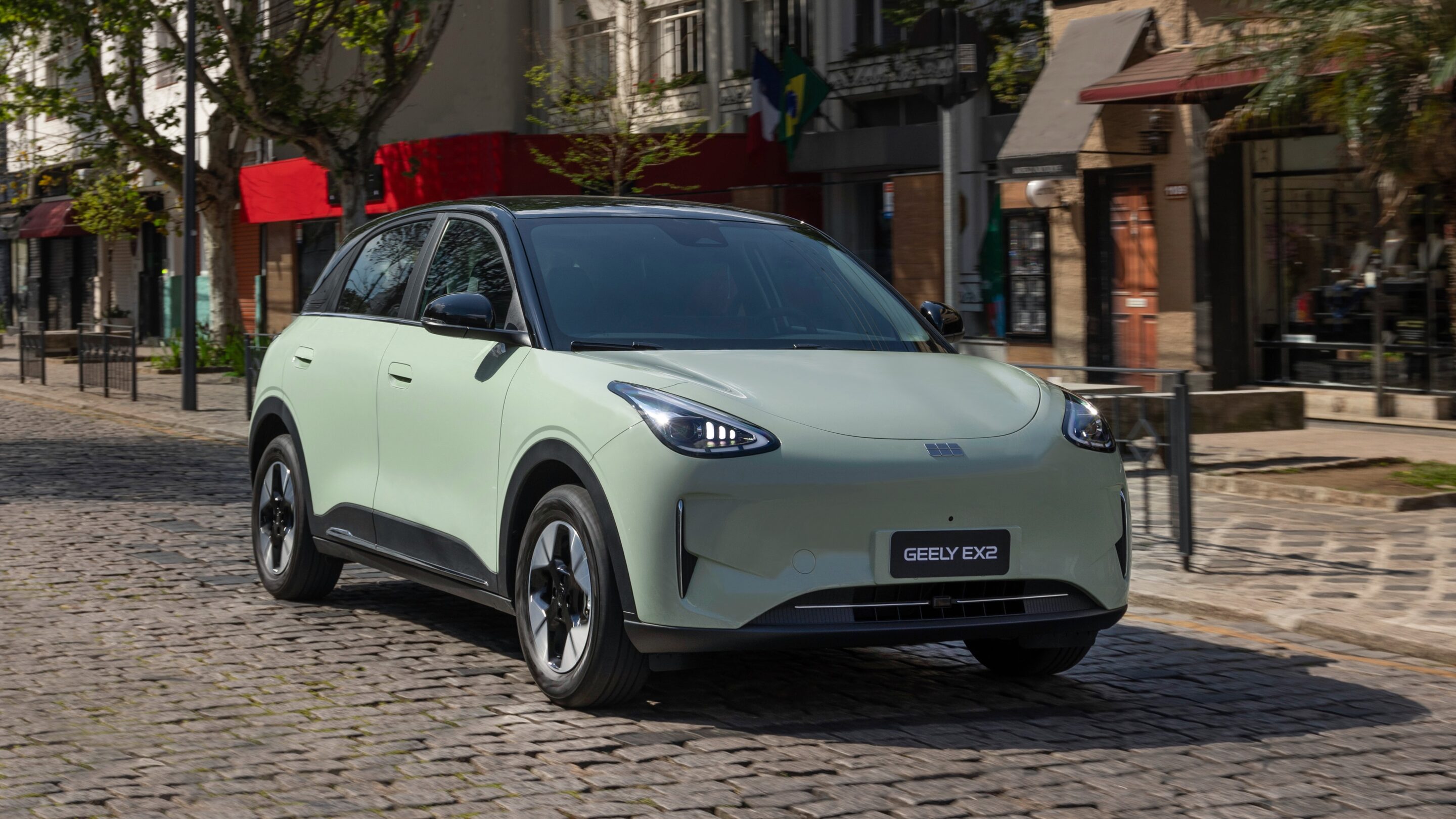
Geely has confirmed that it will display three new models at the 2026 Melbourne Motor Show, including two that are yet to be confirmed for Australia. The first is the EX2 electric hatchback that’s due to launch soon, with the Emgrand plug-in hybrid medium sedan and M9 plug-in hybrid large SUV also making their Australian debuts at the show.
With 465,775 sales in China in 2025, the EX2 was the country’s best-selling car. Using the brand’s ‘GEA’ platform that also underpins the EX5 electric mid-size SUV, the EX2 measures just over four metres in length. It features a 30.12kWh battery for a claimed 310km of range and a 58kW/130Nm motor, but upper-spec models upgrade that to a larger 40kWh battery and an 85kW/150Nm motor.
Geely has announced a special pre-order deal for the EX2, with a free EV charger and premium paint included with a pre-order from April 10 to 12 and delivered before September 30.
Alongside the EX2 will be two new Geely models to Australian shores: The Emgrand EM-i medium sedan –called the Starshine 6 overseas – and the M9, which is the Galaxy M9 in China. Both the Emgrand and M9 use plug-in hybrid drivetrains centred around a 1.5-litre petrol engine, with the Emgrand EM-i making around 175kW of total power in its home market, and the M9 uses an uprated version of the same drivetrain making 650kW.
If they’re launched in Australia, both the Emgrand and M9 will be some of the longest-range plug-in hybrids available.
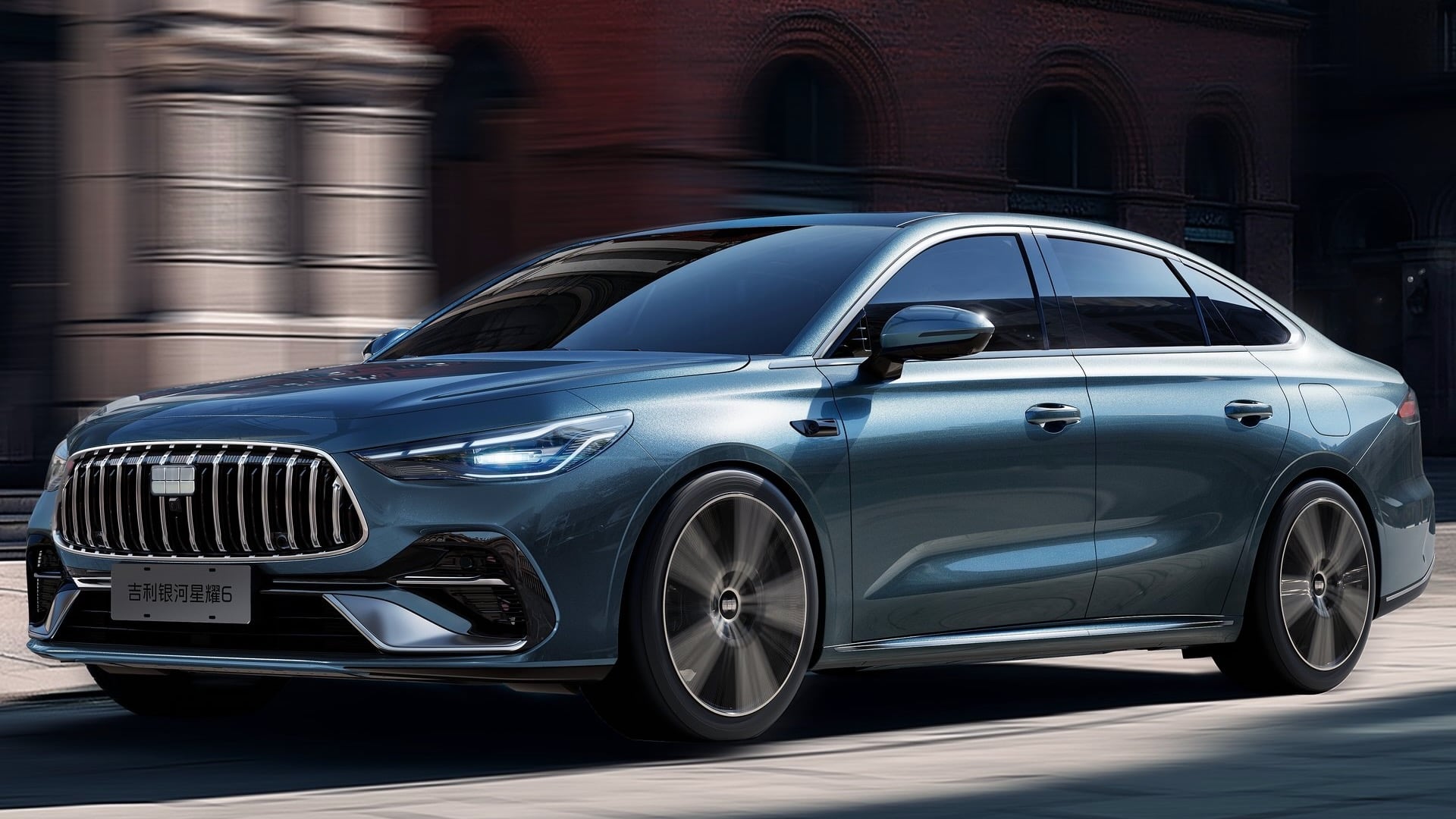
Competing against the Toyota Camry, the Geely Emgrand EM-i is a handsome medium-sized sedan. Thanks to its plug-in hybrid drivetrain, it’s reportedly capable of an all-electric range of up to 170km (CLTC) and combined with the hybrid system, can travel up to 2100km on a full charge and tank of fuel (CLTC) thanks to low combined fuel consumption of just 2.8L/100km.
Inside, the Emgrand EM-i is fitted with a large 14.6-inch touchscreen running the brand’s ‘Flyme’ operating system, as well as a 10.2-inch digital driver’s display, a 50W wireless phone charger and lashings of synthetic leather trim all over the cabin.
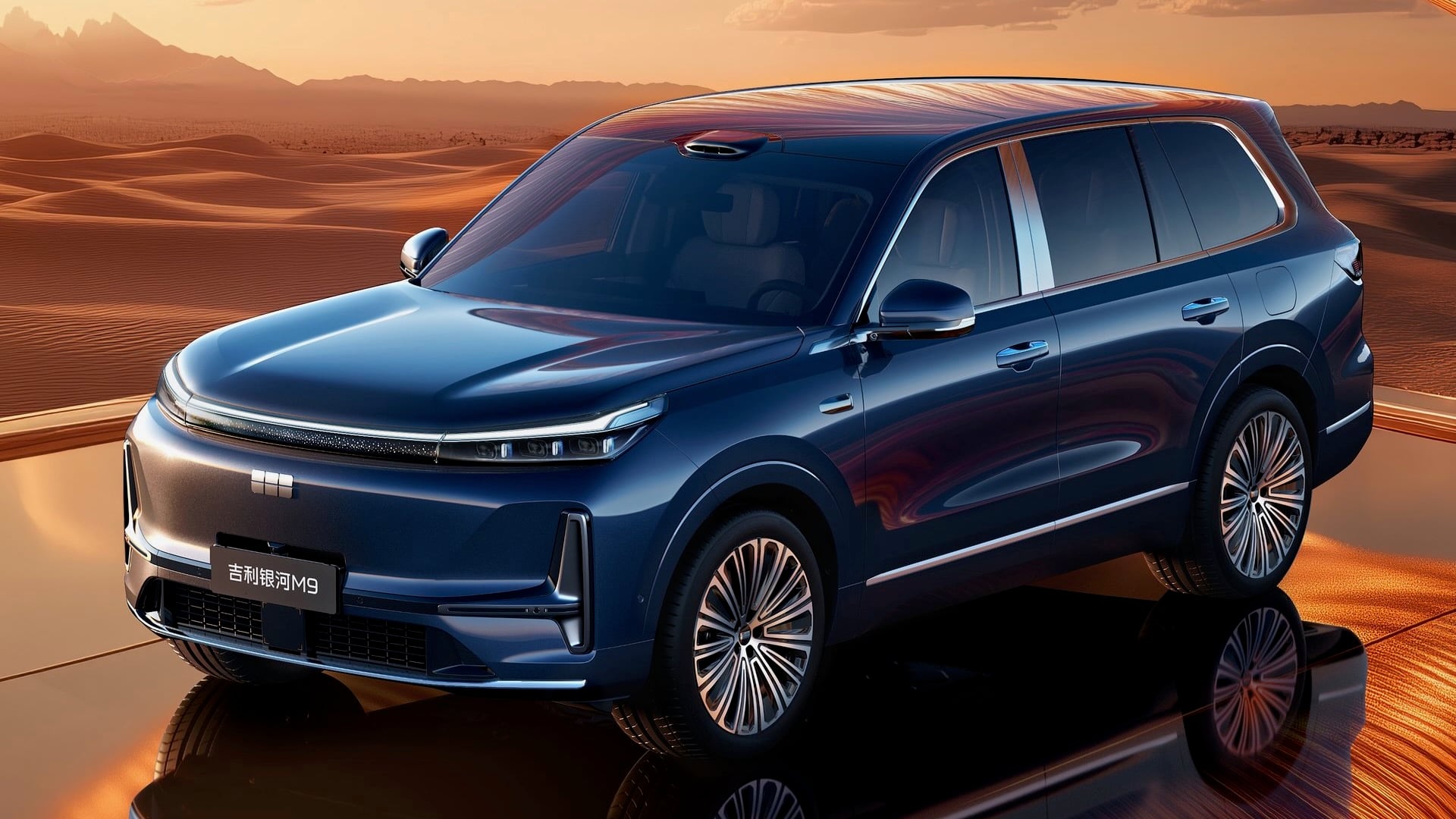
The six-seater M9 takes the Emgrand’s cabin and adds even more synthetic leather trim, a massive 30-inch front cabin display running a fast Qualcomm 8295P chip, a 9.1 litre refrigerator under the centre armrest and even a huge folding rear entertainment display to keep rear passengers happy.
The M9’s plug-in hybrid system can be had with either front- or all-wheel drive with up to 650kW of power, which is good enough for a claimed 0-100km/h time of just 4.5 seconds. It features a large battery for a claimed all-electric range of up to 230km (CLTC) and a total range of over 1500km with a full tank of fuel and fully charged battery.
The Geely EX2, Emgrand EM-i and M9 will all be on display at the 2026 Melbourne Motor Show.
Lexus Australia has announced pricing and specifications for its updated RZ electric mid-size SUV range, which is due in local showrooms in May 2026. With an enhanced driving range and more performance, the updated Lexus RZ is now more competitive in the market and that’s before you get to the price. It now starts at $84,500 plus on-road costs, which is a massive $36,559 reduction on the pre-updated car and the upper-spec RZ500e Sports Luxury has had an even larger cut from its price.
Headlining the changes to the 2026 RZ500 range is a larger 74.7kWh battery (+3kWh), which has increased its WLTP range by 16 per cent to 460km. Its AC charge rate has doubled to 22kW as well, for faster charging away from higher-output DC units, of which it can charge at up to 150kW. RZ500e models have also been given a power boost by 50kW to 280kW for a claimed 4.6-second 0-100km/h sprint time, while torque is unchanged at 537Nm.
Retuned dampers and springs, plus a reduction in noise, vibration and harshness (NVH) levels have reportedly made the RZ better to drive than before as well.
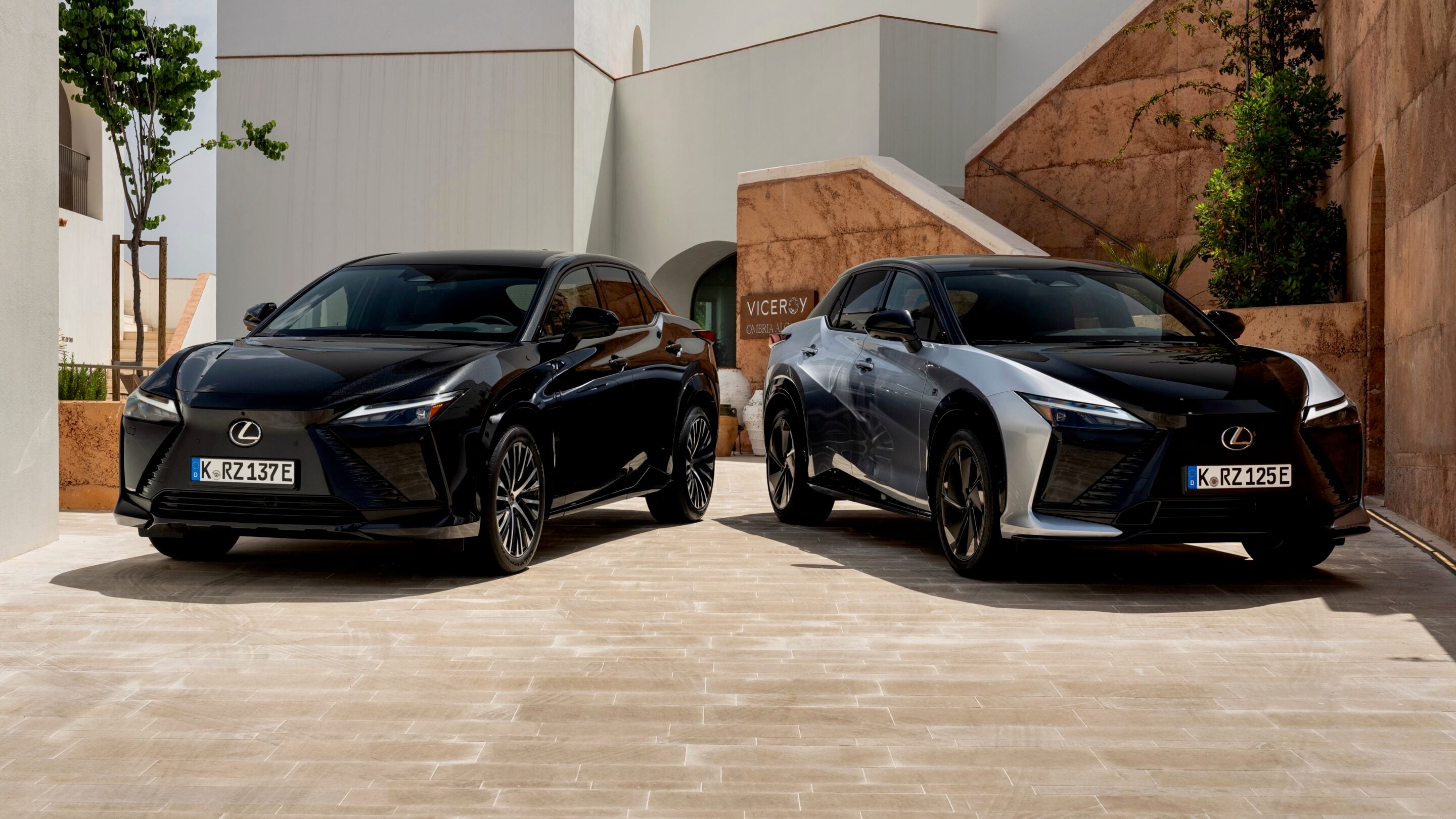
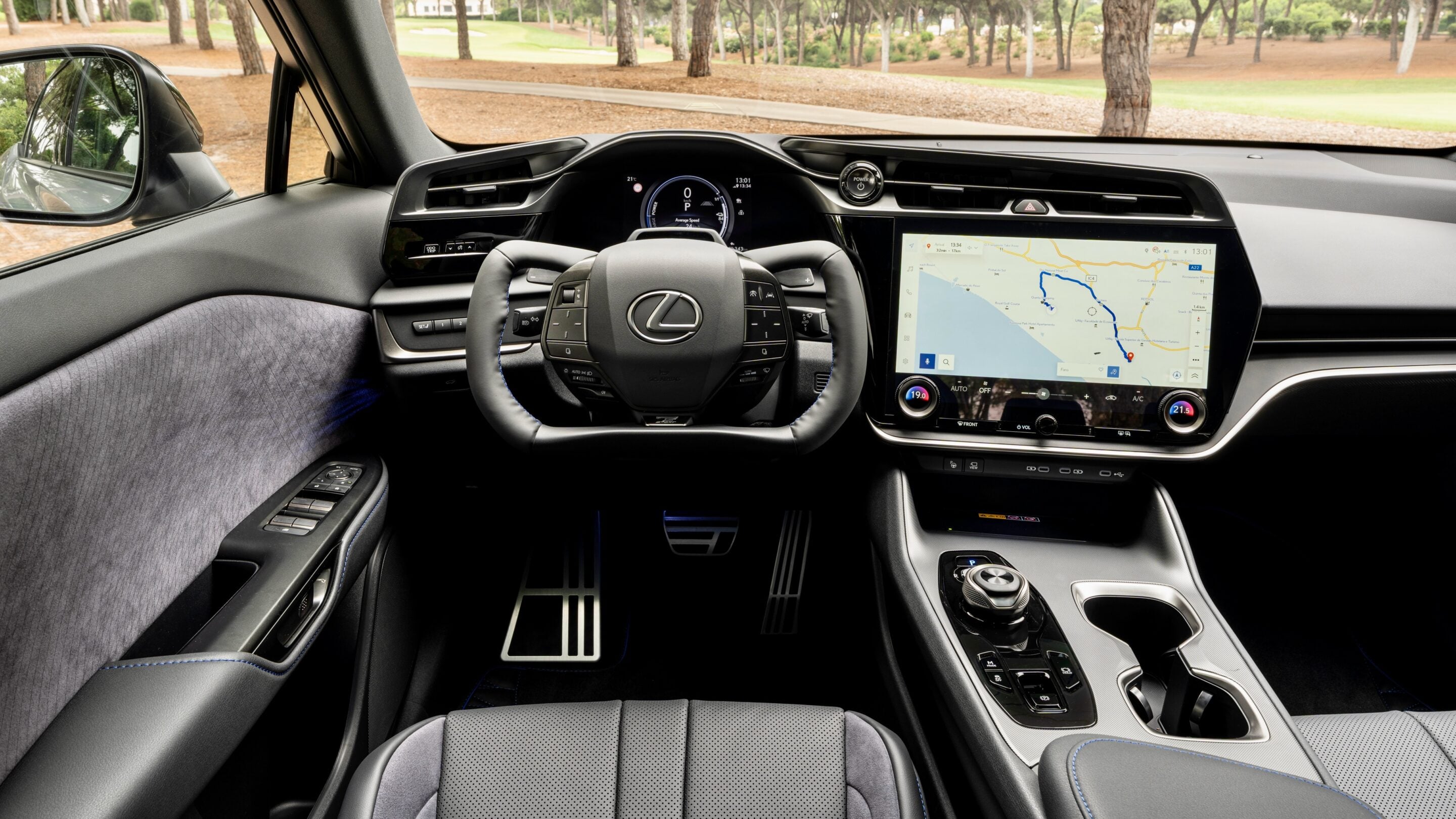
New to the range is the RZ550e F Sport, which uses a larger 77kWh battery and a 300kW drivetrain for a slightly quicker 4.4-second 0-100km/h time, though its WLTP range has been reduced to 437km thanks to the extra performance and weight. The F Sport model also introduces sportier styling and – in an Australian first – a steering yoke instead of a steering wheel.
The Lexus RZ550e F Sport also features ‘Interactive Manual Drive’, which is a manual-like driving mode with paddle shifters, artificial sounds and a virtual tachometer to give the impression that a petrol engine lies under the bonnet. Like the Hyundai Ioniq 5 N that features a similar system, Interactive Manual Drive has been designed to engage the driver more.
Lexus Australia has also announced that a higher-performance RZ600e F Sport Performance will be made available in limited numbers later in 2026. Pricing is yet to be announced, but it will feature a 313kW drivetrain, carbon fibre roof, larger six-piston blue brake callipers, a 20mm-lower ride height, 21-inch Enkei wheels, pumped wheel arches, a vented bonnet, dual rear spoilers and unique interior trims.
The updated Lexus RZ range will enter local Lexus dealerships from May 2026.
2026 Lexus RZ pricing (excluding on-road costs):
| RZ500e Luxury | $84,500 (-$36,559) |
|---|---|
| RZ500e Sports Luxury | $91,000 (-$42,059) |
| RZ550e F Sport | $105,000 (new) |
| RZ600e F Sport Performance | TBA (new) |
Lexus RZ500e Luxury standard features:
- 20-inch alloy wheels
- Dusk-sensing automatic LED exterior lighting
- Electric tailgate
- ‘NuLux’ synthetic leather upholstery
- 8-way electric front seats with heating
- Power steering wheel adjustment
- Dual-zone automatic climate control
- 7.0-inch digital driver’s display
- 14.0-inch touchscreen
- Satellite navigation
- Wireless Apple CarPlay and Android Auto
- Wireless phone charger
- 10-speaker Panasonic sound system
RZ Sports Luxury model adds:
- Two-tone alloy wheels
- Semi-autonomous parking functionality
- Upgraded LED headlights with adaptive high beam
- Dimming panoramic glass roof
- Suede upholstery
- Ventilated front seats
- Heated outboard rear seats
- Heated steering wheel
- Head-up display
- 13-speaker Mark Levinson audio
- Digital rear mirror
RZ F Sport model adds:
- Black alloy wheels
- Sportier exterior styling, including a rear spoiler
- Yoke steering wheel
- Manual drive mode
- Front sports seats
- Aluminium pedals
GWM Australia has revealed local pricing and specifications for its new Ora 5 electric small SUV, which will arrive in Australia in June 2026. Priced from $33,990 driveaway for the entry-level Lux, the Ora 5 is the latest product in GWM’s new energy vehicle line-up and will make its debut at the 2026 Melbourne Motor Show.
While a hybrid drivetrain is available in overseas markets, the Ora 5 will launch in Australia and New Zealand exclusively as an EV. Using a 58.2kWh LFP battery, the Ora 5 is rated at 430km for range on the WLTC cycle. It can be DC fast charged at up to 120kW for a claimed 30 to 80 per cent charge time of approximately 20 minutes, while vehicle-to-load functionality up to 6kW is standard. A 150kW/260Nm front-mounted motor drives the Ora 5.
Measuring 4471mm long, 1833mm wide, 1641mm tall and riding on a 2720mm long wheelbase, the Ora 5 is 238mm longer, 8mm wider, 38mm taller and 70mm longer between the wheels than the Ora hatchback already on sale. Its 362-litre boot is 134 litres larger than the Ora as well.
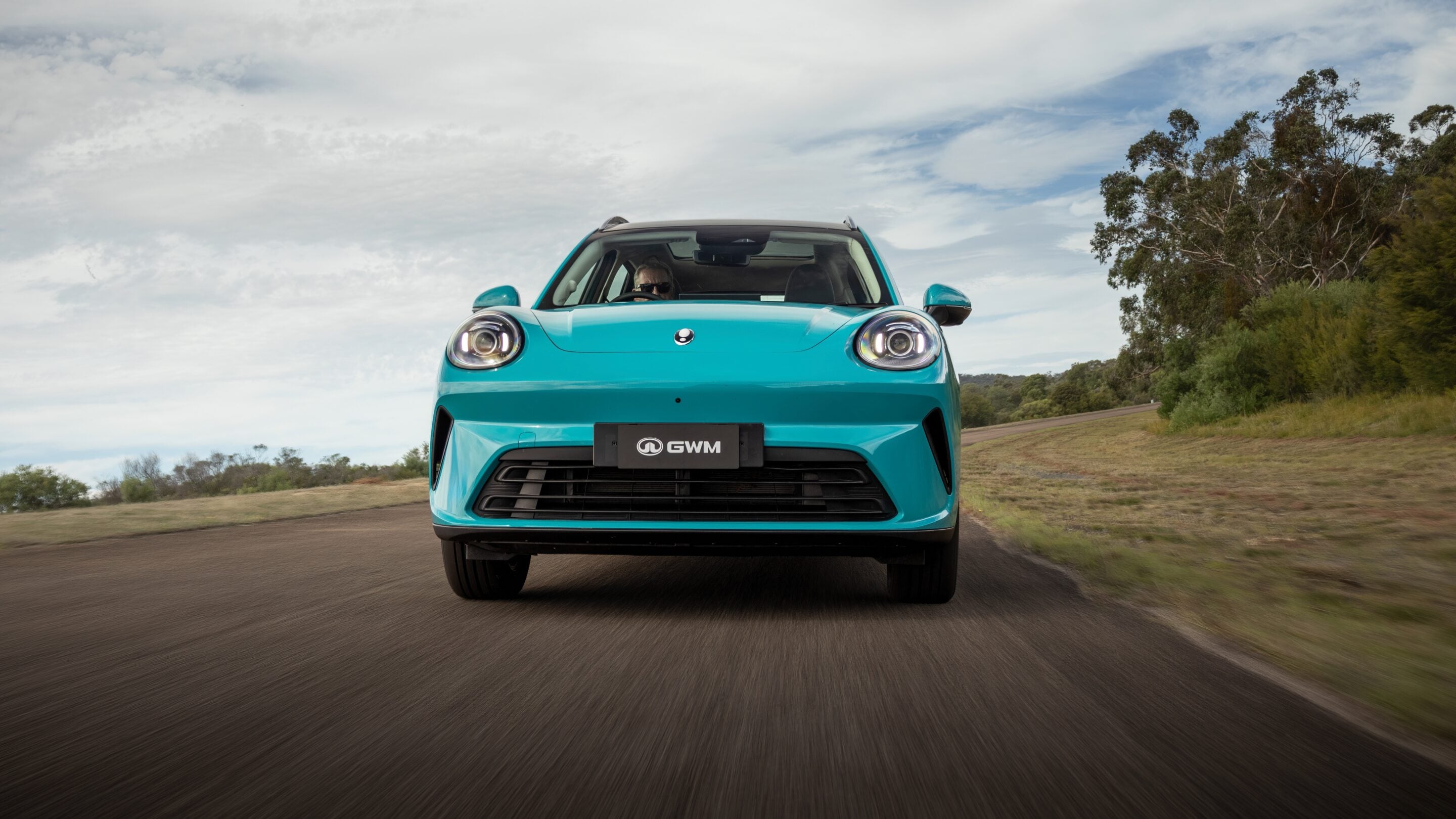
Two models will be available in the Ora 5 range: the entry-level Lux and upper-spec Ultra, and both models are well equipped with features like synthetic leather upholstery, LED lighting, a 14.6-inch touchscreen with live services and a full suite of active safety features. The Ultra then adds a panoramic glass roof, heated and ventilated front seats, a wireless phone charger and extra speakers.
2026 GWM Ora 5 pricing (driveaway):
| Lux | $33,990 |
|---|---|
| Ultra | $36,990 |
Lux standard features:
- 18-inch alloy wheels with a space saver spare tyre
- Automatic LED headlights
- Automatic wipers
- Roof rails
- Smart keyless access
- Rear privacy glass
- Synthetic leather steering wheel
- Synthetic leather upholstery
- Six-way electric driver’s seat
- Single-zone climate control with rear vents
- 10.25-inch driver’s display
- 14.6-inch touchscreen with live services
- Wireless Apple CarPlay and Android Auto
- DAB+ digital radio
- Six-speaker audio system
- Standard, eco, city, sport and auto driving modes
- 7x airbags
- Autonomous emergency braking with cyclist, pedestrian and junction assist
- Lane keeping assistance
- Adaptive cruise control with traffic jam assist
- Blind-spot monitoring
- Driver attention monitoring
- Traffic sign recognition
- Rear collision warning
- Rear cross-traffic alert with braking
- 360-degree camera
Ultra models adds to Lux:
- Electric tailgate
- Panoramic glass roof with sunshade
- Heated mirrors with auto-folding functionality
- Dual-zone automatic climate control
- Heated steering wheel
- Heated and ventilated front seats
- Memory for the driver’s seat
- Four-way electric front passenger seat
- Wireless phone charger
- 64-colour ambient lighting
- Nine-speaker audio system
The GWM Ora 5 will be arrive in Australia in June 2026.
Renault Australia has announced that the next-generation Master van will be launched locally in June 2026. The first ground-up redesign of the Master in more than a decade has more power, more torque, more safety equipment, and more load-carrying capacity than the model it replaces. It was designed in a wind tunnel for optimum aerodynamic efficiency and comes with a range of new technology – plus, a ‘Platinum’ safety rating from Euro NCAP.
Both turbo-diesel and fully electric versions of the new Master will be offered when it launches locally, with an upgraded 125kW/380Nm 2.0-litre turbo-diesel and nine-speed automatic transmission featuring. Full details are yet to be given about the electric Master, but in Europe, it uses a 105kW electric drivetrain mated to an 87kWh battery for a WLTP range of over 400km. The electric Master can charge at up to 130kW.
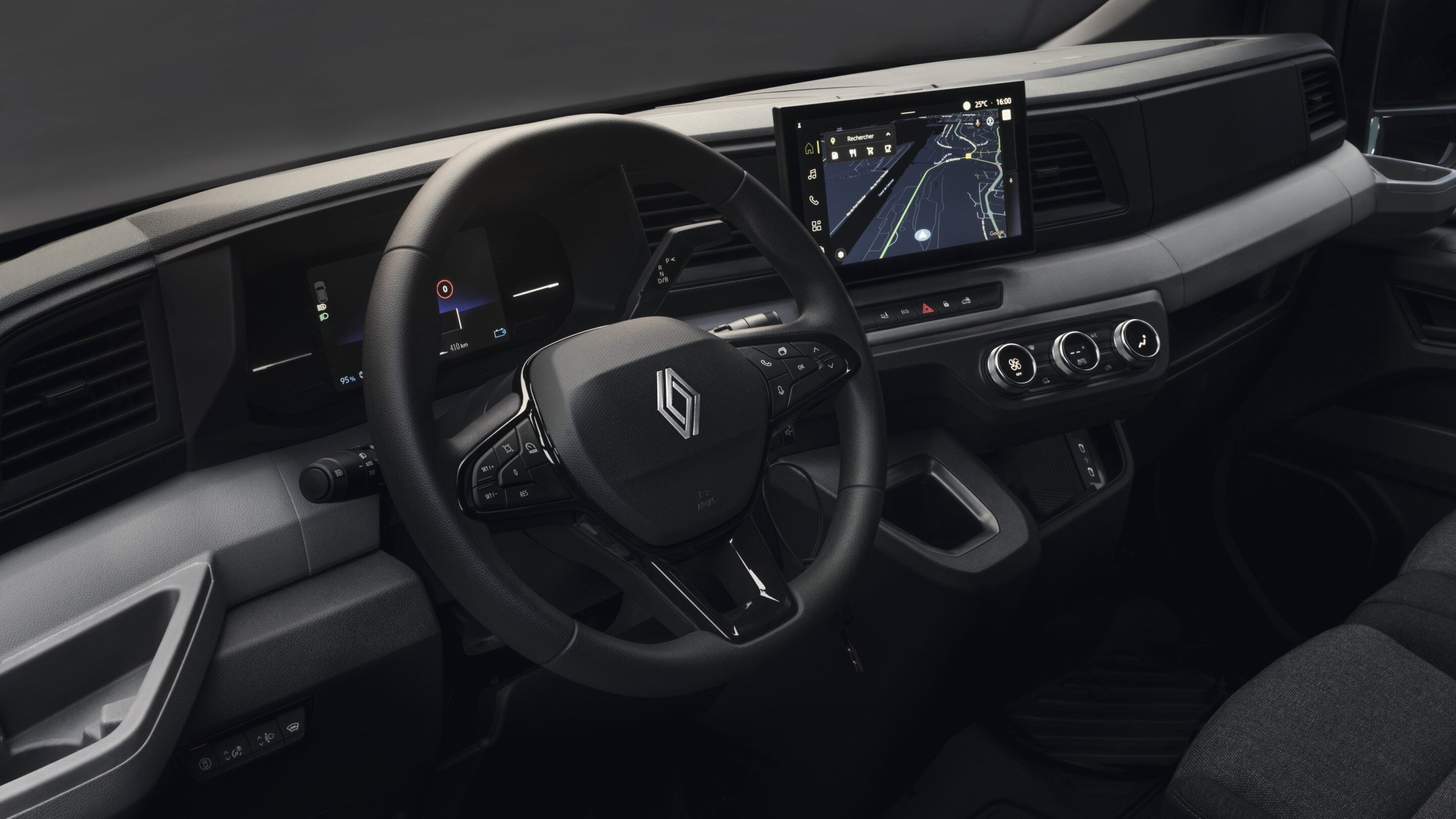
Inside, occupants will find a new dashboard layout with a larger infotainment screen but familiar, user-friendly buttons and dials to reduce driver distraction. The middle of the three seats is available with an optional work station which, when folded down, provides a flat workspace for filling out paperwork, used as a laptop desk, or as a lunch table.
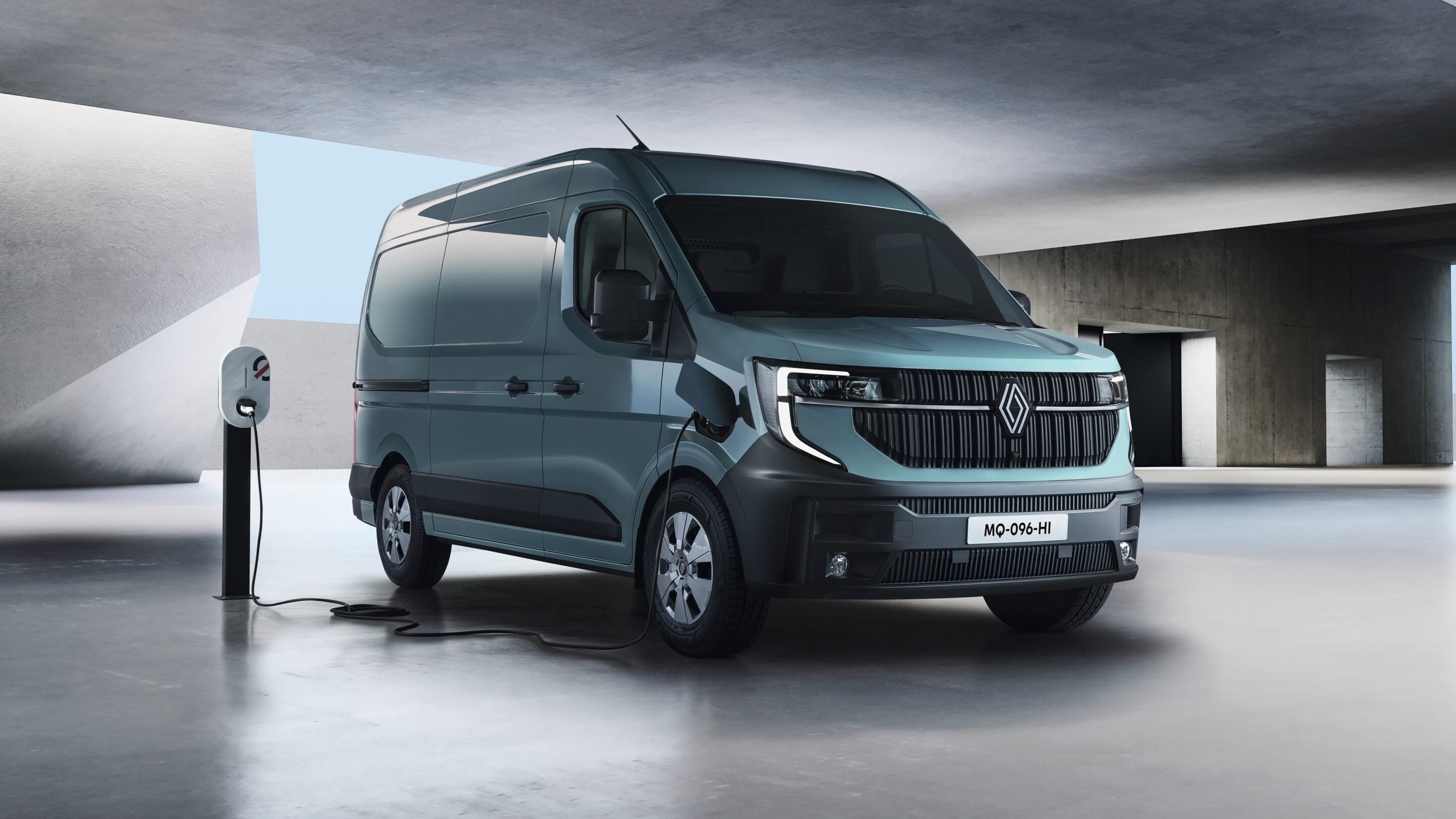
In addition to the powertrains, the new-generation Australian Renault Master line-up will be available with a choice of mid-wheelbase and long-wheelbase configurations, as well as mid roof and high roof body styles. According to the brand, the side door is large enough to fit a forklift pallet and there is a flat bulkhead behind the front seats to maximise load space.
Depending on the model variant, diesel versions of the new Renault Master have a payload up to 1973kg and a Gross Vehicle Mass (GVM) up to 4000kg, and electric versions of the new Renault Master have a payload up to 1164kg and a Gross Vehicle Mass (GVM) up to 3500kg.
“The new-generation Renault Master is a game-changer with its added safety, capability, and improved efficiency,” said Glen Sealey, the General Manager of Renault Australia. “Renault has been in the large van market since 1980 – when the original Master was introduced 46 years ago – so it has a lot of experience in this space, and all of that historical knowhow delivers significant improvements with each new model.”
After its debut at the 2026 Melbourne Motor Show, local prices, specifications and the model lineup for the new-generation Renault Master will be announced closer to showroom arrivals in June 2026.
Ahead of its imminent local arrival, Honda Australia has revealed pricing for the new Prelude coupe. Priced from $65,000 driveaway, the new Prelude is available only with a 2.0-litre four-cylinder hybrid drivetrain, though Honda has given it features from the Civic Type R hot hatch such as its dual-axis front suspension and Brembo brakes.
Released in other markets like Japan and Europe from late 2025, the new Prelude is the sixth-generation model and arrives a full 23 years after the fifth-generation stopped production. Now based on the same platform as the 2025-26 Wheels Car of the Year-winning Civic, the new model “fuses legendary design heritage with sustainable performance”, according to its maker.
The Prelude uses the same 2.0-litre four-cylinder hybrid drivetrain that’s also used in the Civic, Accord, CR-V and ZR-V, making 135kW of power and 315Nm of torque. It’s mated to an automatic transmission that features Honda’s ‘S+ Shift’ mode that gives eight simulated gear shifts to mimic a real transmission for extra driving feel. It’s rated at just 4.3L/100km for combined fuel consumption, and 98g/km for CO2.
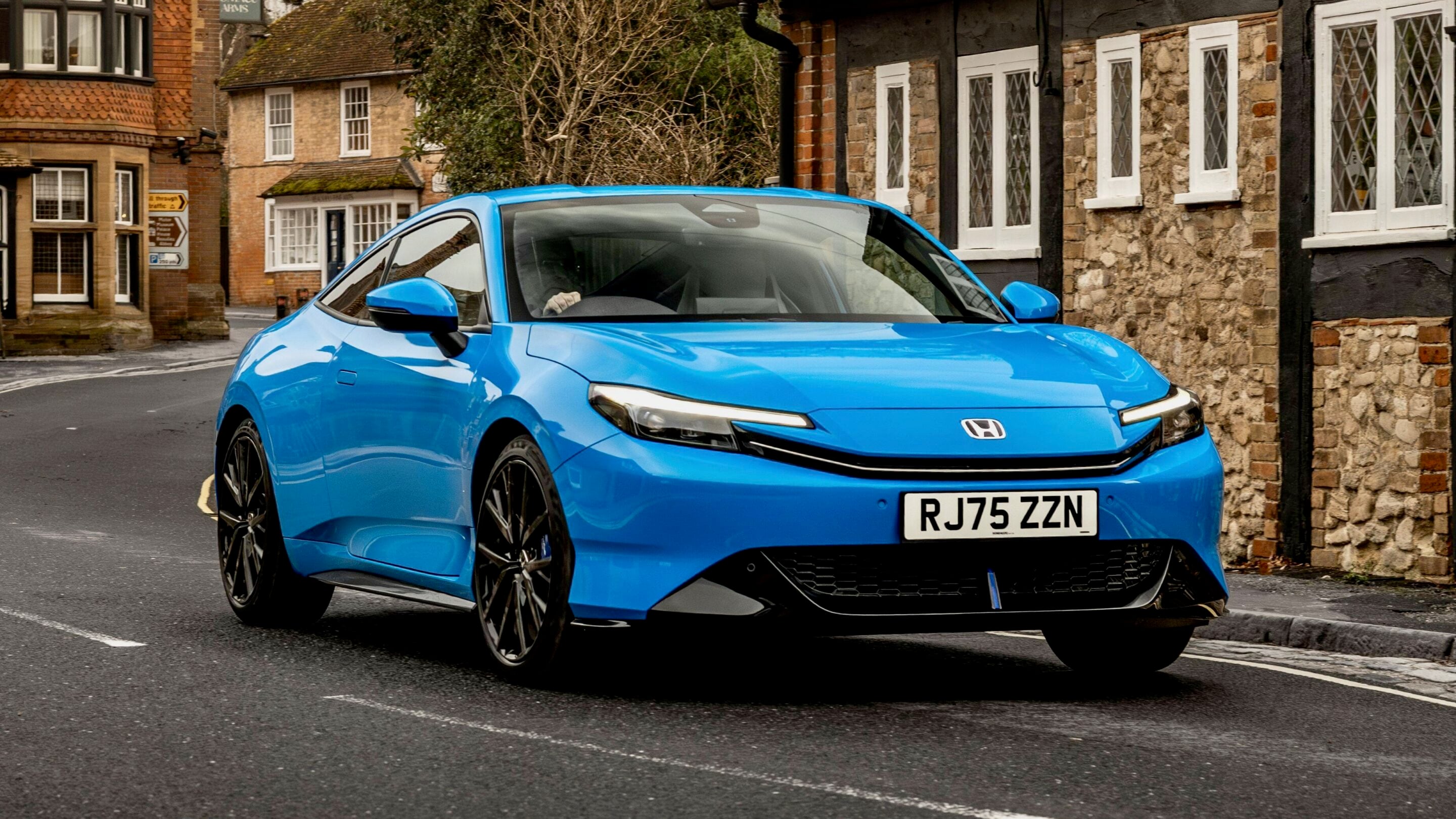
Standard features for the Aus-spec Prelude include 19-inch alloy wheels, adaptive dampers, comfort/GT/sport/individual driving modes, part-leather upholstery, a 9.0-inch touchscreen with Google Built-In, Google Maps integration and over-the-air updates, a 10.2-inch digital driver’s display, an eight-speaker Bose sound system, a wireless phone charger, 10 airbags and the Honda Sensing suite of active safety features like adaptive cruise control, auto high beam and a reversing camera.
Robert Thorp, Honda Australia Director – Automotive, said that the all-new Prelude brings fun into electrified era for sport coupes. “The 2026 Prelude is a bold reinterpretation of an iconic driver’s car for the hybrid era, developed from the same dreams with the same spirit and ambition as the first Prelude back in 1978,” he said.
2026 Honda Prelude pricing (driveaway):
| e:HEV | $65,000 |
|---|
The Honda Prelude is now available to order in Australia, with local deliveries due to commence soon.
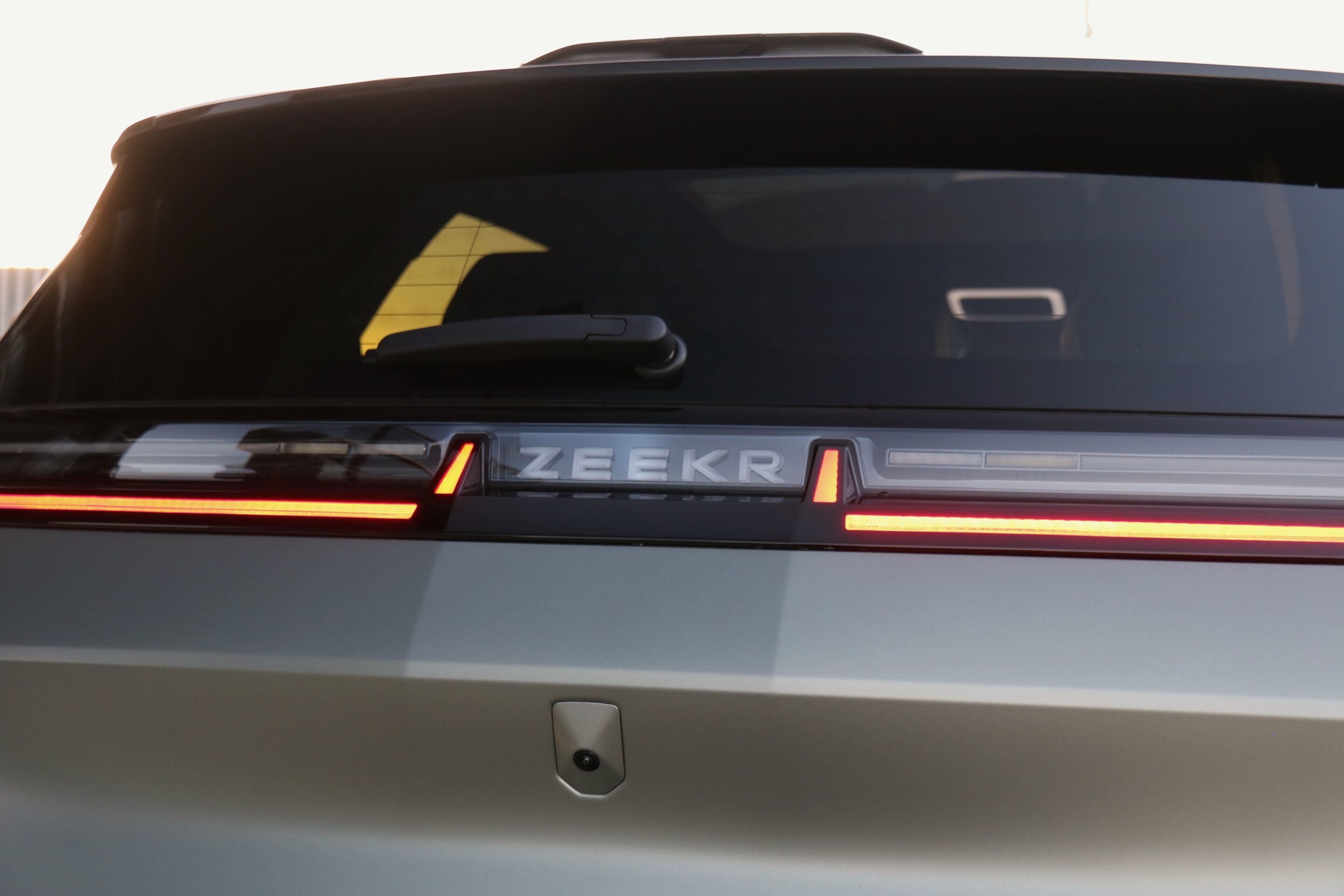
While many of you might be reading about Zeekr for the first time, and despite it being relatively new to the Australian market, this Chinese challenger brand is yet another that looks to be backed in a way to ensure long-term success. Certainly on face value. With parent company Geely overseeing Lynk and Co, Polestar, Smart, Volvo, Lotus and others, it’s fair to assume that Zeekr has a strong chance of success, not just in its home market, but globally.
The new X is closely related to the Smart #1 and #3, Polestar 4 and Volvo EX30, but it’s the latter most people who spoke to me over the course of my time with it wanted to know about. Does it stack up? Can it offer an alternative to the Volvo offering?
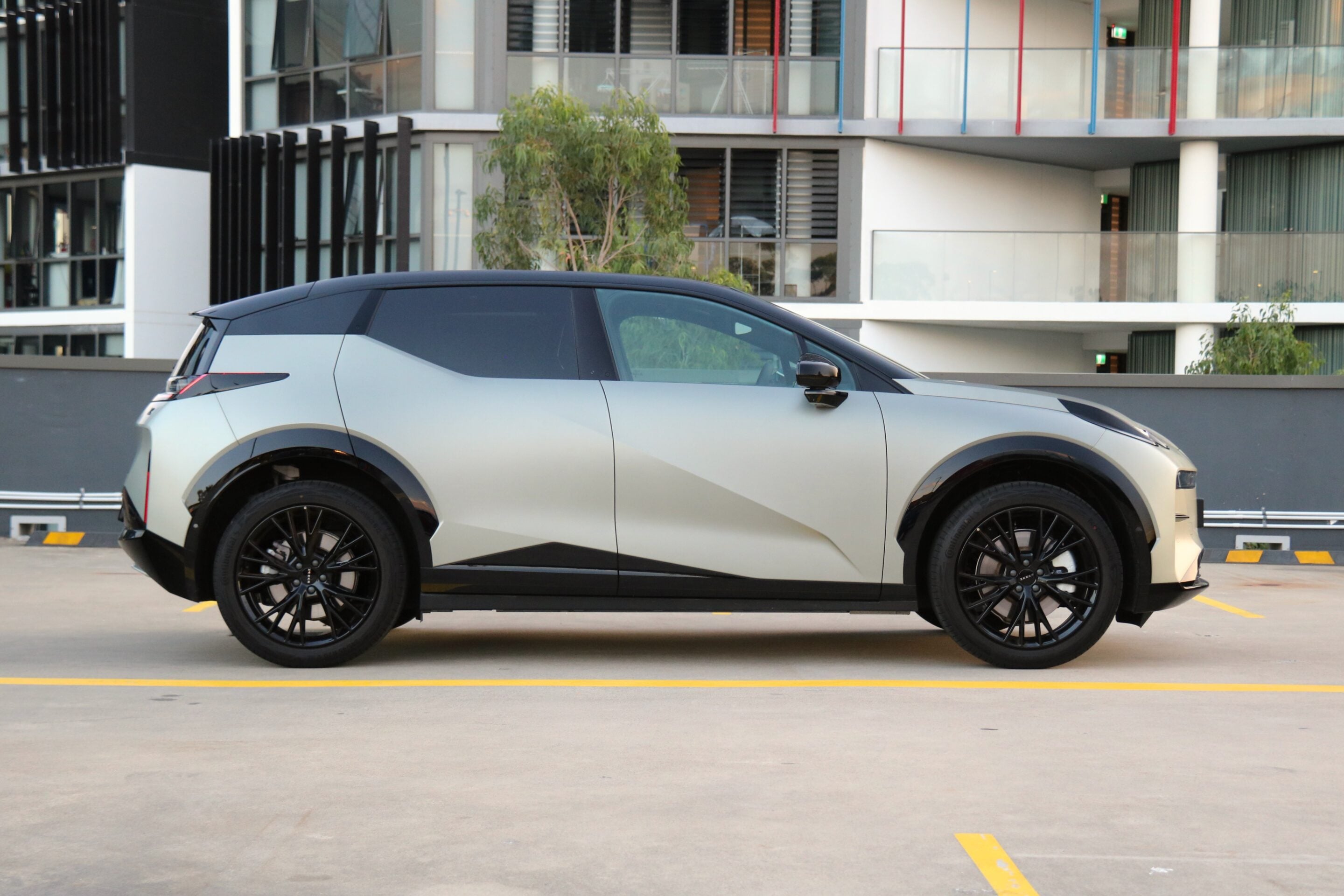
How much does the Zeekr X cost to buy?
As tested, in AWD guise, the Zeekr X costs $57,900 drive away, while the RWD model costs $48,900 drive sway. Zeekr X comes in those two powertrain options, the AWD we’re testing here with dual electric motors, or the RWD, with it’s single electric motor. The AWD gets a 66kWh LFP battery, (61kWH for the RWD), with a claimed range of 415km against the RWD’s 405km. Interestingly, the 2WD can accept faster DC charging, 230kW against 150kW for the AWD.
How far can the Zeekr X AWD travel on a charge?
Zeekr claims a WLTP-tested range of 415km for the AWD and 405km for the RWD model. In regular city traffic, we saw live energy consumption averages between 16kWh and 17kWh/100km, while that climbed up to 19kWh/100km on a 110km/h freeway run. In stop/start traffic then, you will get close to the claim as we see with most electric vehicles that are clever enough to harvest back as much energy as they can.
The RWD model can accept 11kW AC charging, and DC fast charging up to 230kW, which means 10 to 80 per cent in as little as 18 minutes. The AWD, conversely, can accept 22kW AC charging, but only up to 150kW DC fast charging, getting from 10 to 80 per cent in approximately 30 minutes.
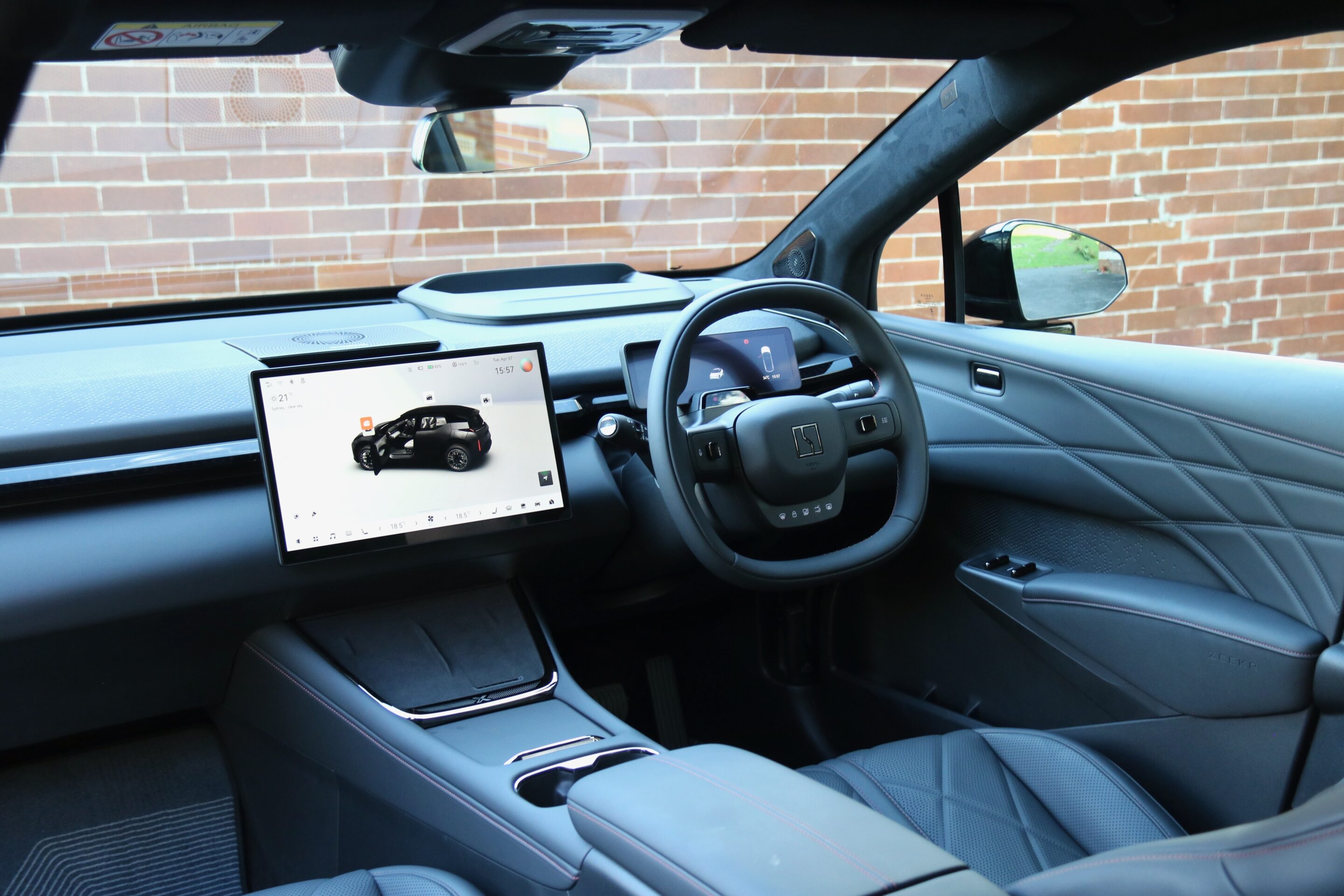
What is the Zeekr X AWD like to drive?
The revised 2026 Zeekr X, in AWD guise as tested here by Wheels, is fast. Very fast. With dual electric motors and 365kW on offer, the small electric SUV fires its way to 100km/h in just 3.7 seconds. And it feels every bit as fast as it is behind the wheel as it does on paper. Does the luxury EV buyer, willing to take a punt on a challenger brand, need that much pace? Probably not, but then there’s always a more sedate 2WD (5.6 seconds to 100km/h) variant for those not interested in bragging rights.
Interestingly, this new Zeekr X feels like it is better-equipped to deal with the mountainous power it generates, while not detracting from the sense of calm inside the cabin. Inevitable comparisons with the Volvo EX30 with which it shares a platform will come, but there’s an element of polish that Volvo has imprinted on its variation that Zeekr has gotten closer to now, but not quite matched.
Performance, then, is taken care of. Opt for ‘Normal’ or ‘Comfort’ mode though, and you get a much more relaxed driving experience. Riding on 20-inch rubber, the X is firm on poor surfaces but what’s interesting is how well it deals with sharp-edged speed bumps and raised platforms, with only repeated smaller ruts registering inside the cabin. While you might think that a softer ride would appeal, there’s a point to be made that the firmer ride is more Euro-adjacent, which is arguably the feel Zeekr is aiming for.
We liked the steering, the general balance and the way the chassis is controlled into and out of corners, even with some pace on hand. You can adjust the steering sensitivity, via the touchscreen, and while it’s no sports car in its responses and feedback, it is sharp enough to ensure you can have some fun on a twisty road if you really want to.
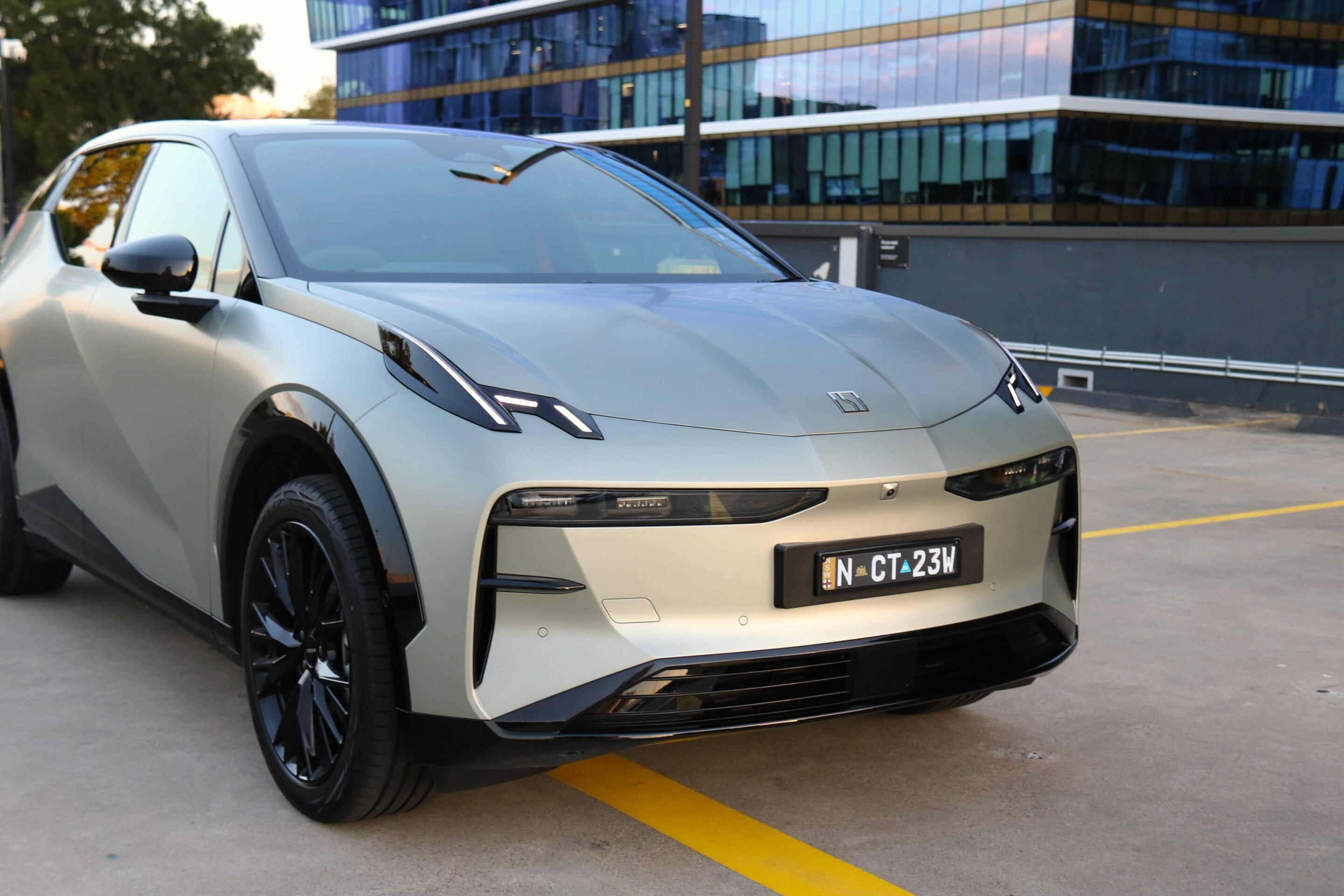
How practical is the Zeekr X AWD?
Even on the freeway, when you hit coarse chip sections, the cabin insulation and lack of tyre noise is impressive. In short, we didn’t expect the Zeekr X to be as refined inside the cabin as it is, especially at highway speed with 20-inch tyres rolling beneath you. Some significantly more expensive EVs could learn a thing or two about refinement from the Zeekr X.
That’s why the safety systems noted in the pros and cons section get a mention. An updated suite of sensors and technology hasn’t completely removed the annoyances of the overspeed warning, or the driver attention monitor, which wanted to continually remind me that I wasn’t paying attention to the road ahead – I was. One example we encountered more than once, was the system taking issue with us exceeding 40km/h in a school zone. The only catch was that it kept happening outside of school hours.
Add that into the way the safety warnings cut into the podcast or music you’re listening too, and the lack of the final few degrees of polish in the tuning of other systems like lane-keep assist, and there’s some finishing work to be done by Zeekr to really lift the driving experience to another level. The good news is, they aren’t major issues by any means.
The cabin is comfortable though, with a premium feel, and requisite attention to detail that you’d expect at this price point. We’d leave the optional door poppers on the options list, but the cabin, the tech, and the way the X feels once you’re seated are all excellent.
Zeekr’s tweaks for this update have aped Tesla even more than before, but that’s not a bad thing, with the centre console especially, tidied up and much more useful. There’s a wireless charging pad with ventilation and space for a second phone, useful storage, and decent door pockets. We found the seats, and their various heating, cooling, and massaging functionality all added to the sense of luxury inside the cabin, and the controls used all feel to be high quality.
The lack of a proper sun blind under the panoramic glass roof irks on a hot day, where heat is radiated into the cabin as fast as the AC system can work to cool it down. There’s enough space in the second row for adults to be comfortable, but more than one USB-C port might be needed for the kids on road trips. While storage space in the boot has risen from the old model – 404L from 342L – most of that is under the floor and it’s not as capacious as some of the competition.
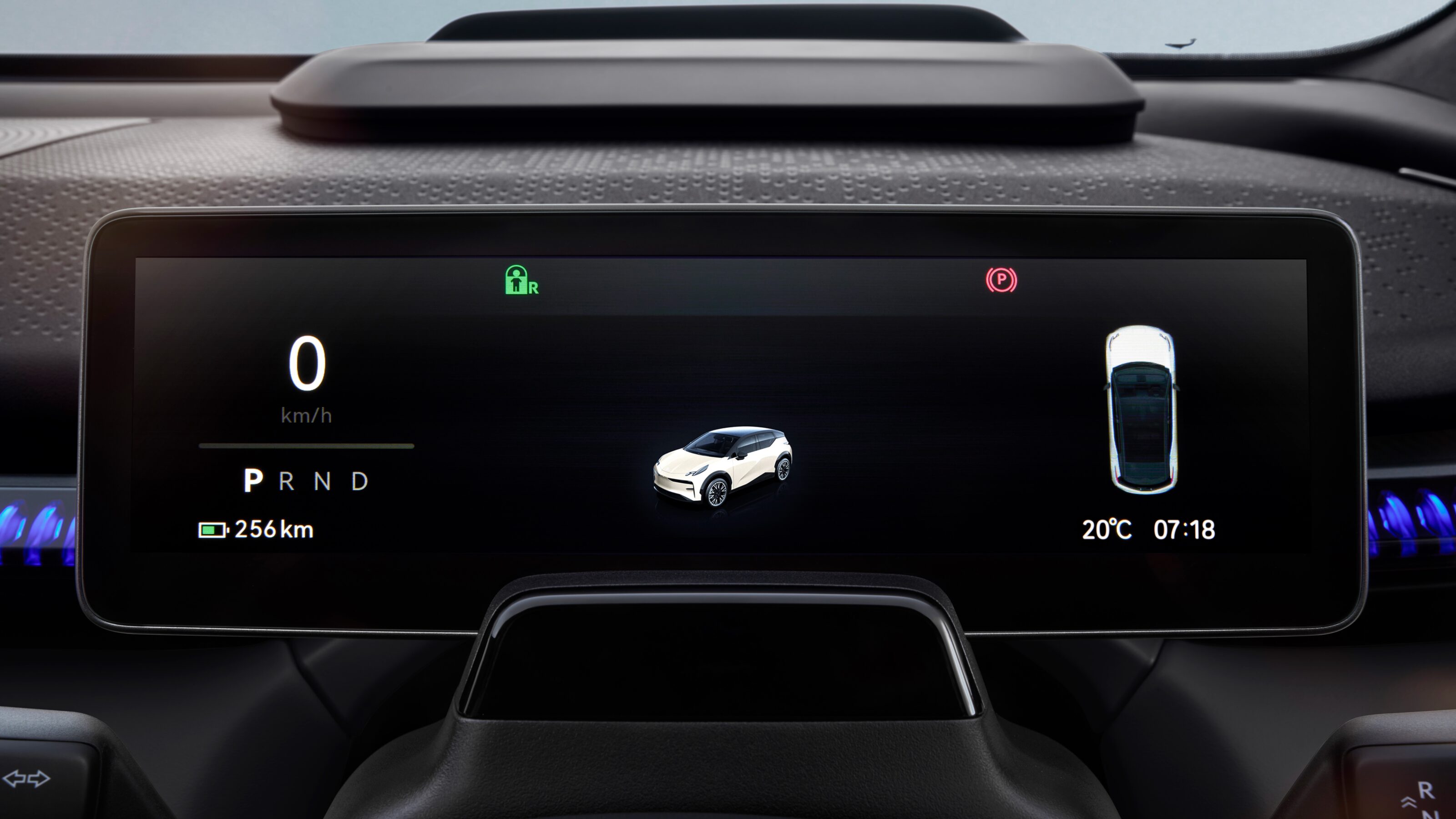
Zeekr X AWD standard specifications
- 66kWh battery
- 20-inch forged alloy wheels
- Rear privacy glass
- Two-tone black roof
- Heated and ventilated from seats
- Front massaging seats
- Temperature controlled console fridge
- Heated second row outer seats
- 500W wireless fast charging
- 13-speaker Yamaha surround sound system
- Ambient interior lighting
- Five high definition cameras
- Five millimetre wave radars
- 12 ultrasonic sensors
- Remota paking assist
- Seven airbags
What warranty covers the Zeekr X AWD?
The vehicle itself is covered by Zeekr’s five-year/unlimited kilometre warranty, with a eight-year/160,000 kilometre warranty for the battery specifically. Across the first five years of servicing, the Zeekr X will cost $2662.
Should I buy the Zeekr X AWD?
Our launch drive is brief, and comparison testing awaits, but Zeekr is clearly onto something with its new and updated X. It sits in the segment so many Australians want to consider, especially so for an electric car. While the Volvo EX30 offers more polish, and the fine touches that a legacy brand can add, the X is a noteworthy entrant into the segment, and one that aims to appeal with sharp styling, a deep list of standard equipment, and a sense of luxury inside the cabin.
Specs
| Model | Zeekr X AWD |
|---|---|
| Price | $57,900 drive away (RWD $48,900 drive away) |
| Drivetrain | Dual-motor, all-wheel drive |
| Peak power | 365kW |
| Peak torque | 573Nm |
| 0-100km/h (claimed) | 3.7 seconds |
| Battery | 66kWh nickel-manganese-cobalt lithium ion |
| Claimed range | 415km (WLTP) |
| Peak DC fast charge speed | 150kW |
| 10% to 80% charge | 30 minutes |
| Dimensions (L/W/H/WB) | 4432/1836/1572/2750mm |
| Boot size | 404 litres (rear seats up), 1247 litres (rear seats folded) |
| Kerb weight | 1960kg |
| Warranty | 5-year/unlimited km (car), 7-year/160,000km (battery) |
| On sale | Now |
Xiaomi has been spotted testing a new high-performance electric SUV at Germany’s Nürburgring, signalling its intent to take on established European performance brands. The model, expected to be called the YU7 GT, will sit above the brand’s already headline-grabbing SU7 Ultra and could deliver extreme outputs in a more practical SUV format.
Early indications suggest the YU7 GT will produce in the region of 1100kW, placing it firmly in supercar territory. That level of performance would position it as a genuine rival to high-end offerings from Porsche, Mercedes-AMG and even Ferrari – though potentially at a far lower price point.
The YU7 GT builds on Xiaomi’s existing YU7, a mid-size electric SUV that has already proven popular in China. This new GT variant is set to combine that family-friendly format with the kind of performance seen in the SU7 Ultra sedan.
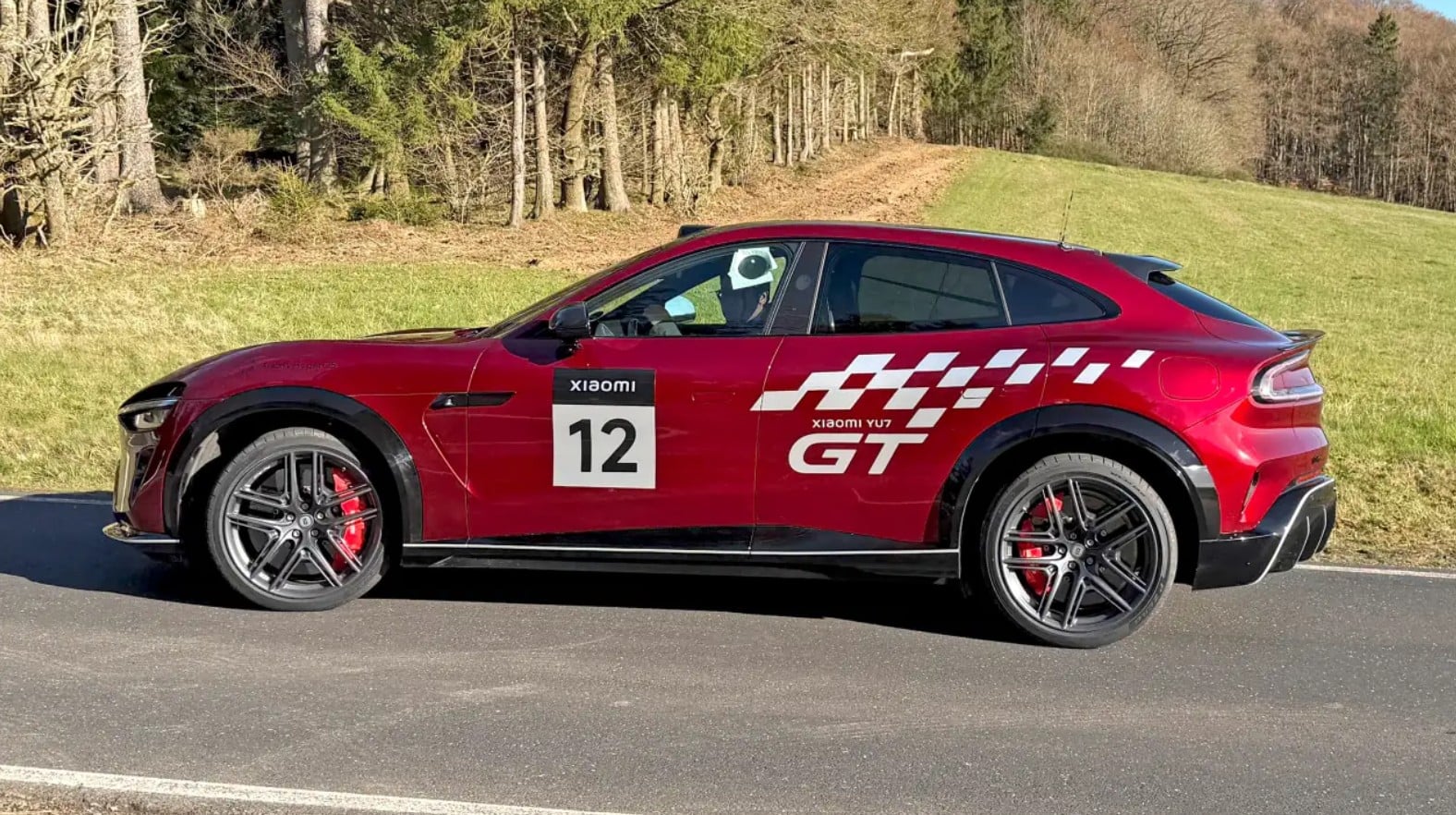
At the heart of the package is expected to be a tri-motor electric powertrain, delivering massive output and advanced all-wheel-drive capability. While full technical details are yet to be confirmed, the GT is likely to use a battery similar in size to the SU7, potentially around 93kWh.
Beyond outright power, Xiaomi appears to be focusing heavily on chassis development. Expect features such as adaptive air suspension, advanced stability systems and torque vectoring to help manage the immense performance on offer. These systems will be crucial in ensuring the car remains usable and stable, rather than simply fast in a straight line.
Visually, the YU7 GT takes a more assertive approach than the standard model, with test images showing wider wheelarches, large alloy wheels and a more open front-end design to improve cooling.
The braking system appears equally serious, with large carbon-ceramic discs and high-performance calipers working alongside regenerative braking from the electric motors. This combination is designed to handle both high-speed stops and repeated heavy use.
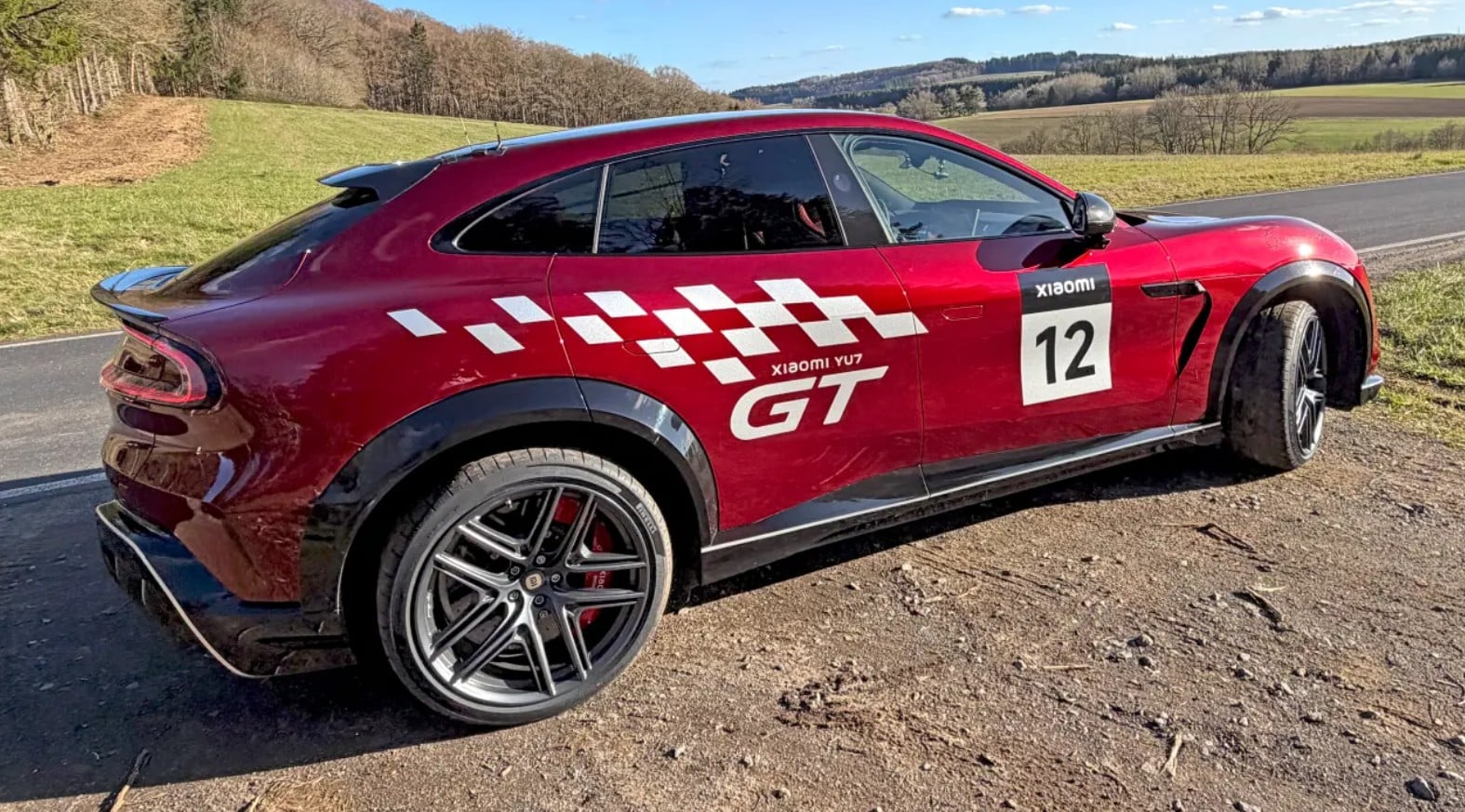
Aerodynamics also play a key role. The GT features an extended front splitter, deeper side skirts and a prominent rear diffuser, along with a lip spoiler and upper rear wing. Together, these elements are intended to improve stability at higher speeds while reinforcing the car’s performance-focused identity.
Inside, the focus is expected to shift toward a more driver-oriented environment, with sports seats and performance-inspired detailing to match the car’s capabilities.
Originally known for consumer electronics, Xiaomi has quickly established itself as a serious EV manufacturer, with strong demand in its domestic market. The YU7 GT represents the next step in that expansion. By combining extreme performance with a more attainable price point, it has the potential to attract buyers who might otherwise gravitate toward traditional premium brands.
