
NOTE: Australian right-hand-drive photos will arrive in the coming weeks.
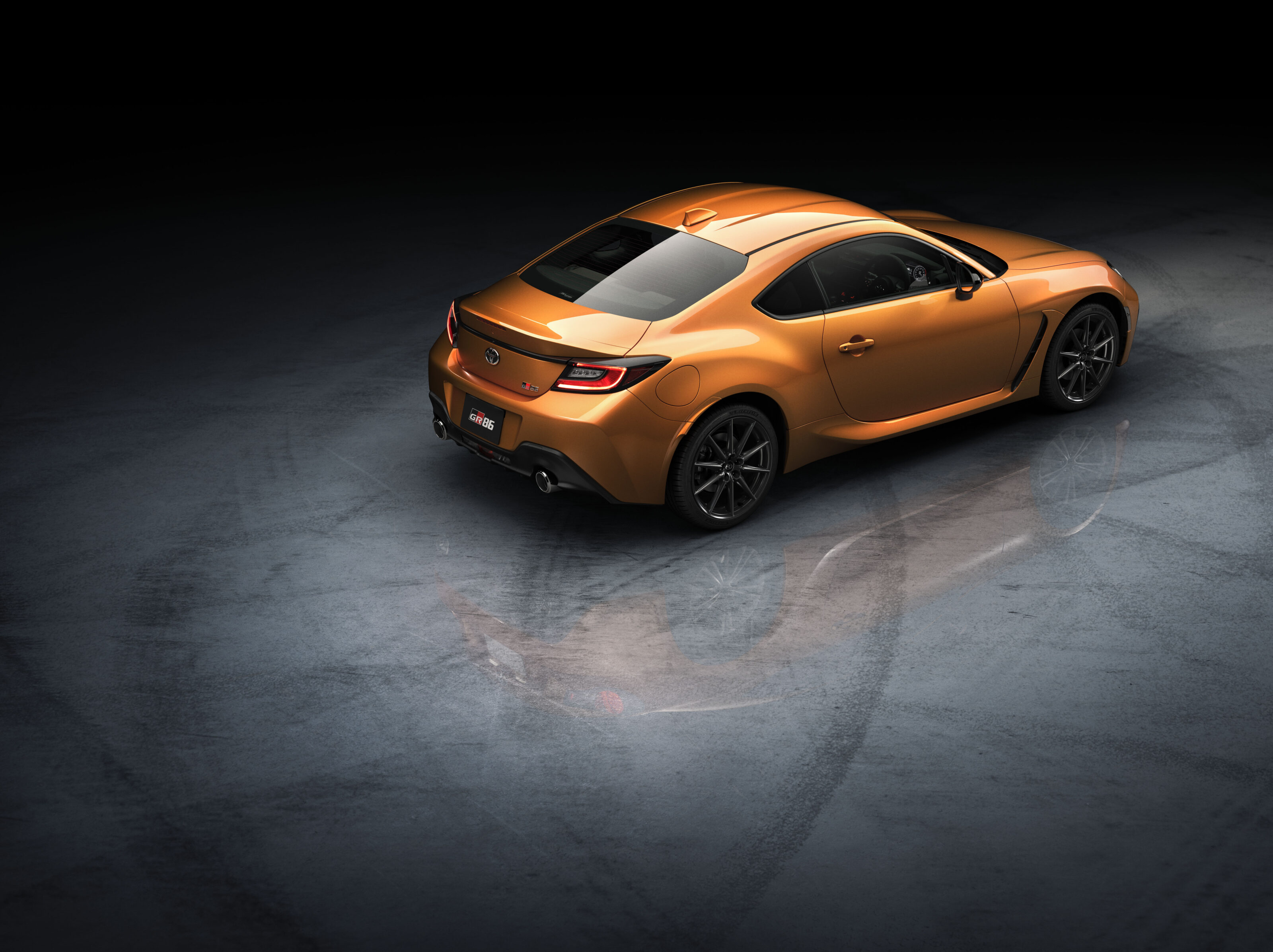
Toyota Australia is celebrating ten years of the 86 sports car with the release of the 2023 Toyota GR86 10th Anniversary Edition, priced at $46,700 (before on-roads) with your choice of either a six-speed manual or automatic transmission.
Limited to just 86 examples locally, the special is based on the existing top-spec 86 GTS ($45,390) and features all of the same standard inclusions – with a number of added bespoke touches.
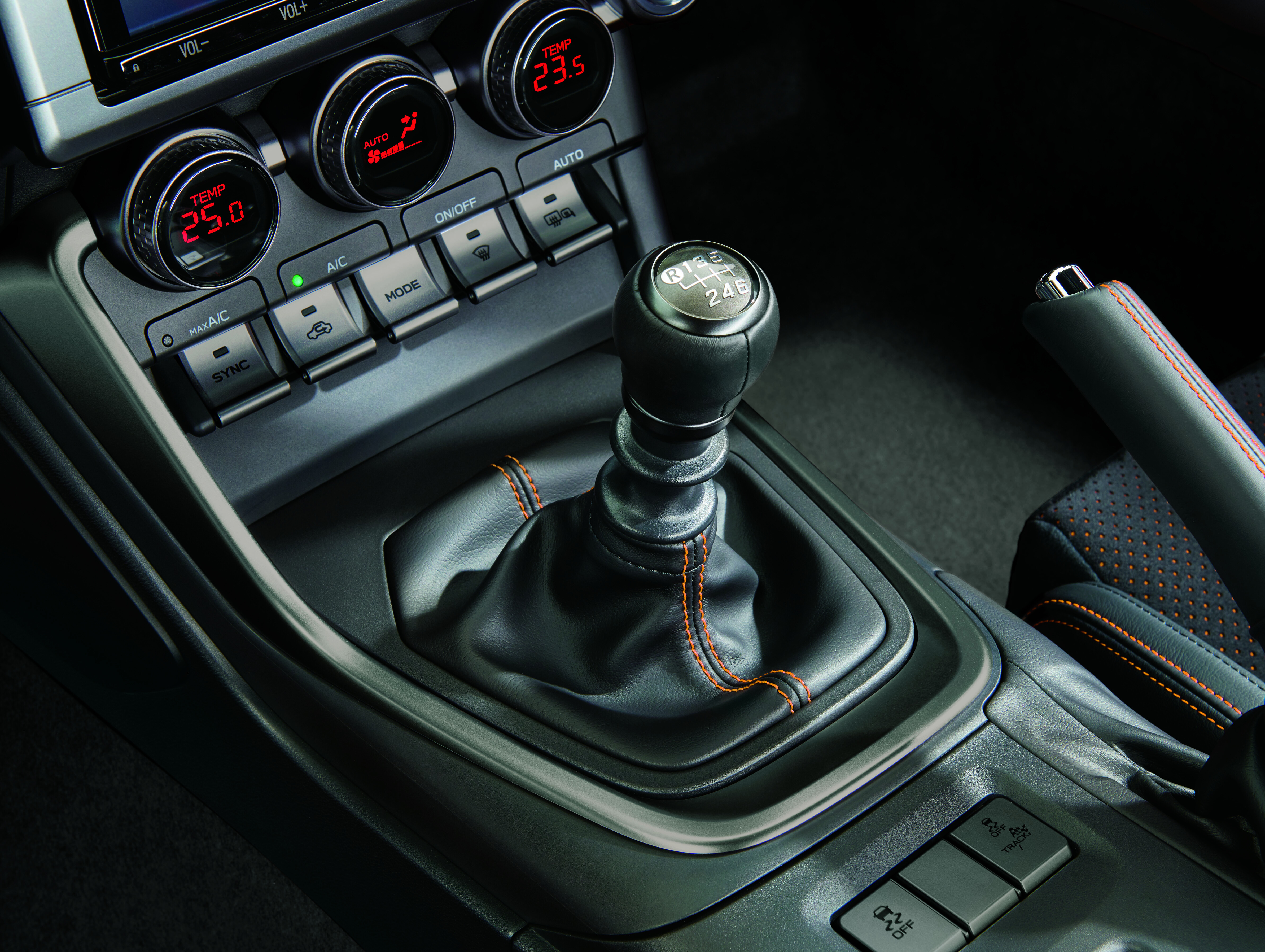
The 10th Anniversary Edition GR86s are powered by the same 2.4-litre naturally aspirated flat-four engine producing 174kW at 7000rpm and 250Nm at 3700rpm. Buyers can have their choice of either a six-speed manual or a six-speed torque-converter automatic gearbox, driving the rear wheels through a Torsen limited-slip differential.
1
Features and equipment
The 2023 Toyota GR86 10th Anniversary Edition is based on the existing Toyota GR86 GTS, and lists the same standard featureset, including:
- LED intelligent adaptive headlights
- LED daytime running lights and rear fog lights
- Automatic high beam (automatic only)
- 18-inch alloy wheels with 215/45R18 tyres
- Tyre repair kit
- Dual exhaust tips
- Electric fuel lid and boot release
- Power fold and heated exterior mirrors
- GR badging front and rear
- Premium door scuff plate
- Aluminium foot rest and pedals
- Ultrasuede/leather accented front seats
- Front seat heaters
- Leather-wrapped steering wheel with multicontrol
- Manual tilt and telescopic steering wheel
- Dual-zone climate control
- Smarty (keyless) entry and start
- Power windows
- Illuminated entry system
- 8.0-inch infotainment touchscreen
- 6-speaker audio system
- AM/FM/DAB+ radio
- Bluetooth
- Wired Apple CarPlay/Android Auto
1
Beyond the standard GR86 GTS’ standard inclusions, the 2023 Toyota GR86 10th Anniversary Edition is further distinguished by:
- Unique Solar Orange exterior paint
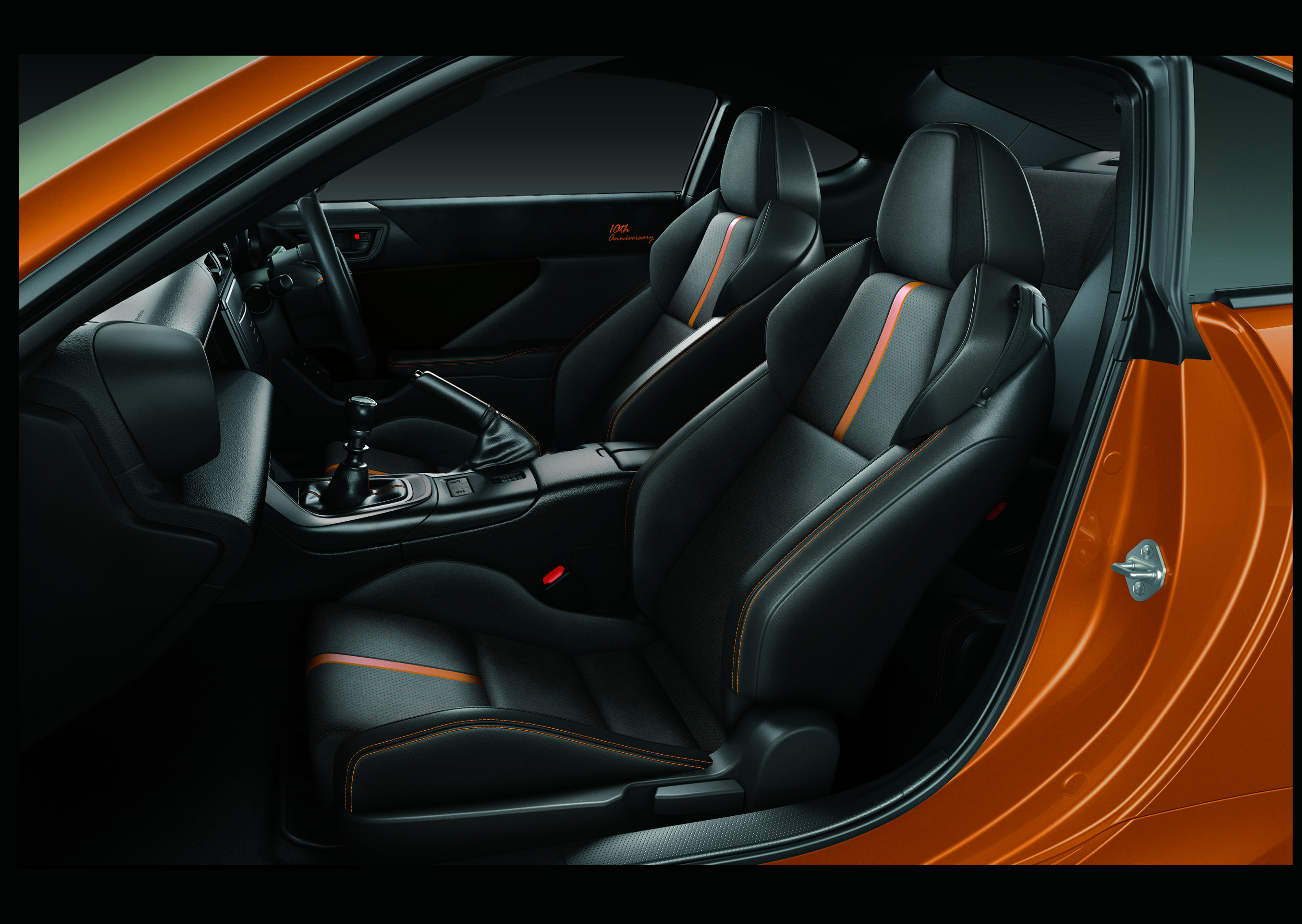
- Contrast orange interior stitching
- Orange accents on Ultrasuede/leather accented seats
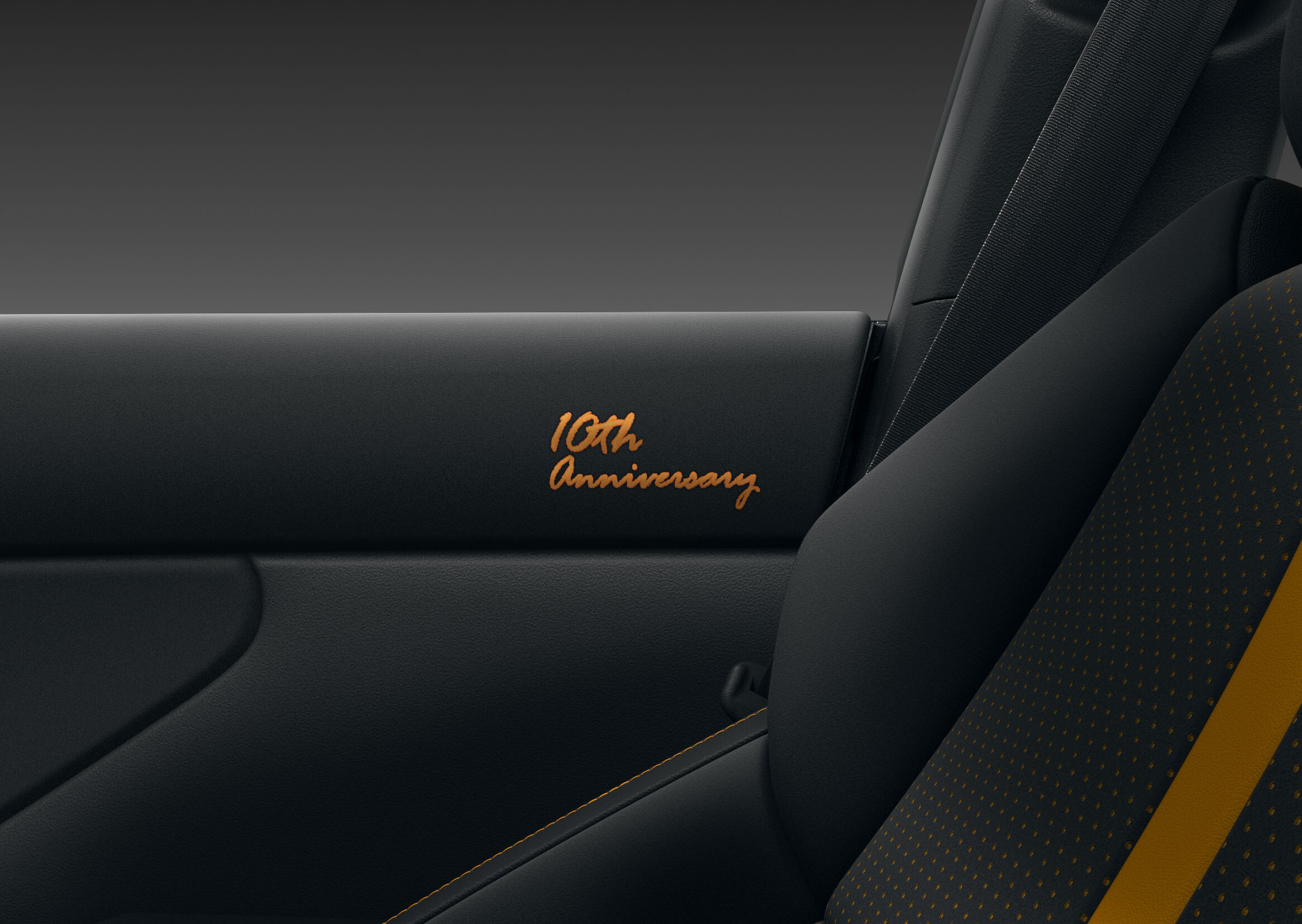
- 10th Anniversary embroidery on door trims
- Black interior instrument panel
1
Safety
The GR86 10th Anniversary is equipped with the same safety suite included in the standard Toyota GR86 GTS variants.
The safety suite includes:
- Autonomous emergency braking (automatic only)
- Parking support brake with rear parking sensors (automatic only)
- Active cruise conrol – All speed (automatic only)
- Lane departure alert and lead vehicle alert (automatic only)
- Seven SRS airbags
- ABS brakes
- Reversing camera
- Emergency brake signal system
- Vehicle stability control
- Hill start assist
- Front and second-row occupant detection
- Immobiliser anti-theft system
- Tyre pressure warning
- Alarm system
1
Members of the Australian Gazoo Racing Club were offered first opportunities to access expressions of interest for the limited GR86 10th Anniversary Edition.
Any available examples can be purchased from today, March 23.
MORE
Everything Toyota
Hey Toyota, how about an AE86 40-year edition..?

1

1
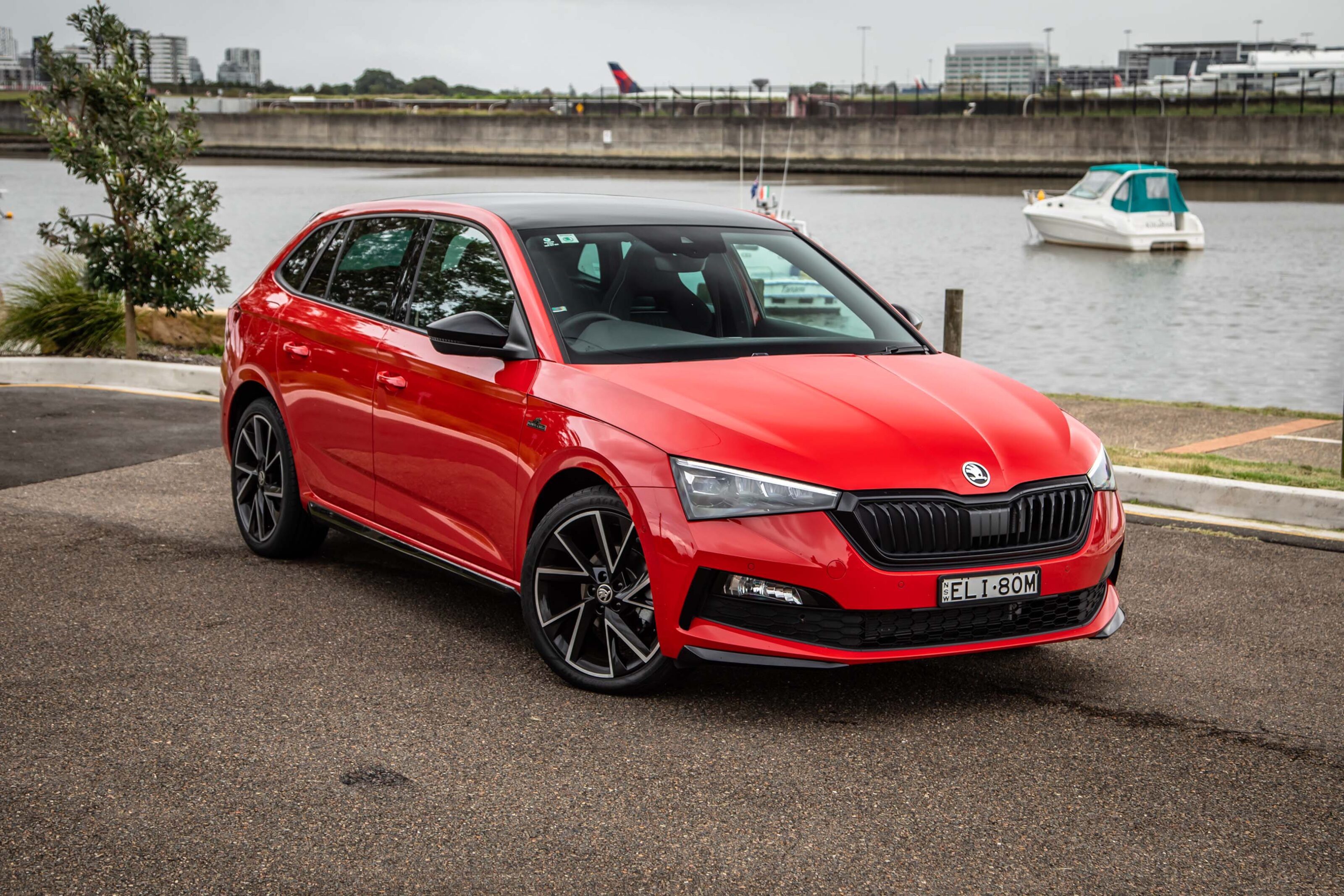
Volkswagen and Skoda have warned sub-$45,000 Polo, Fabia, Scala and Kamiqs will be discontinued if looming strict Euro 7 emissions are mandated without revisions.
Snapshot
- Polo, Fabia, Scala, Kamiq facing uncertain future
- Looming strict Euro 7 make it u2018impossibleu2019 for entry-level petrol engine models
- Currently negotiating on emissions mandate leniency
Volkswagen CEO Thomas Schäfer told Autocar that smaller petrol-engined vehicles, such as the iconic Polo city car, “literally makes it impossible” to keep alive.
Schäfer claims adding hybrid technology to entry-level models just to satisfy emissions standards is “prohibitively expensive” when bans will come into play next decade to force full electric vehicles.
1
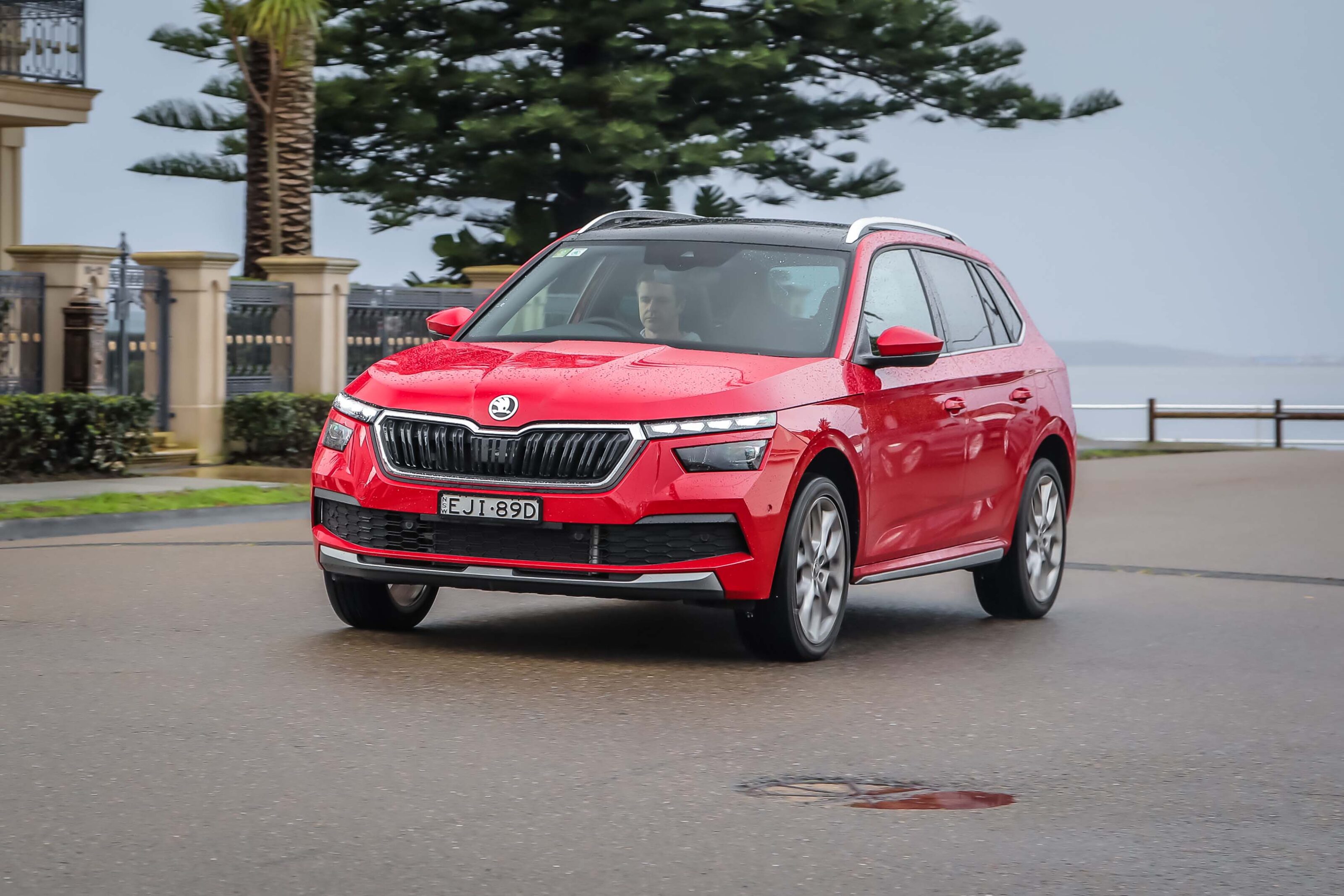
Skoda’s sales and marketing head, Martin Jahn, echoed a similar sentiment in a televised debate (according to Automotive News Europe) that the Volkswagen Group-owned Czech brand would need to axe the Fabia light hatchback, Scala small car and Kamiq small SUV, close the factory, and cut at least 3000 jobs – if Euro 7 is implemented in the current state.
The proposed Euro 7 mandate will be enforced in Europe from July 1, 2025 for all new mass-produced cars, with flow-on effects on the global car industry.
It includes setting stricter exhaust emissions standards – focused on cutting nitrogen dioxide (NOx) by 35 per cent – tyre and brake emission limits, and ongoing assessment of lifetime emissions.
If Euro 7 is implemented as currently designed, Skoda would need to axe the Fabia light hatchback, Scala small car and Kamiq small SUV, close the factory, and cut at least 3000 jobs
1
Carmakers such as the Volkswagen Group and Stellantis (which owns Peugeot and Citroen among others) have labelled Euro 7 as ‘useless’ since the impending 2035 ban on selling new combustion engine vehicles makes it irrelevant – claiming it will force the demise of the traditional powerplant even sooner, from around 2026.
Seemingly in support of this position, transport ministers from the 27-member European Union countries, along with carmakers such as Volkswagen, are currently negotiating to tweak Euro 7.
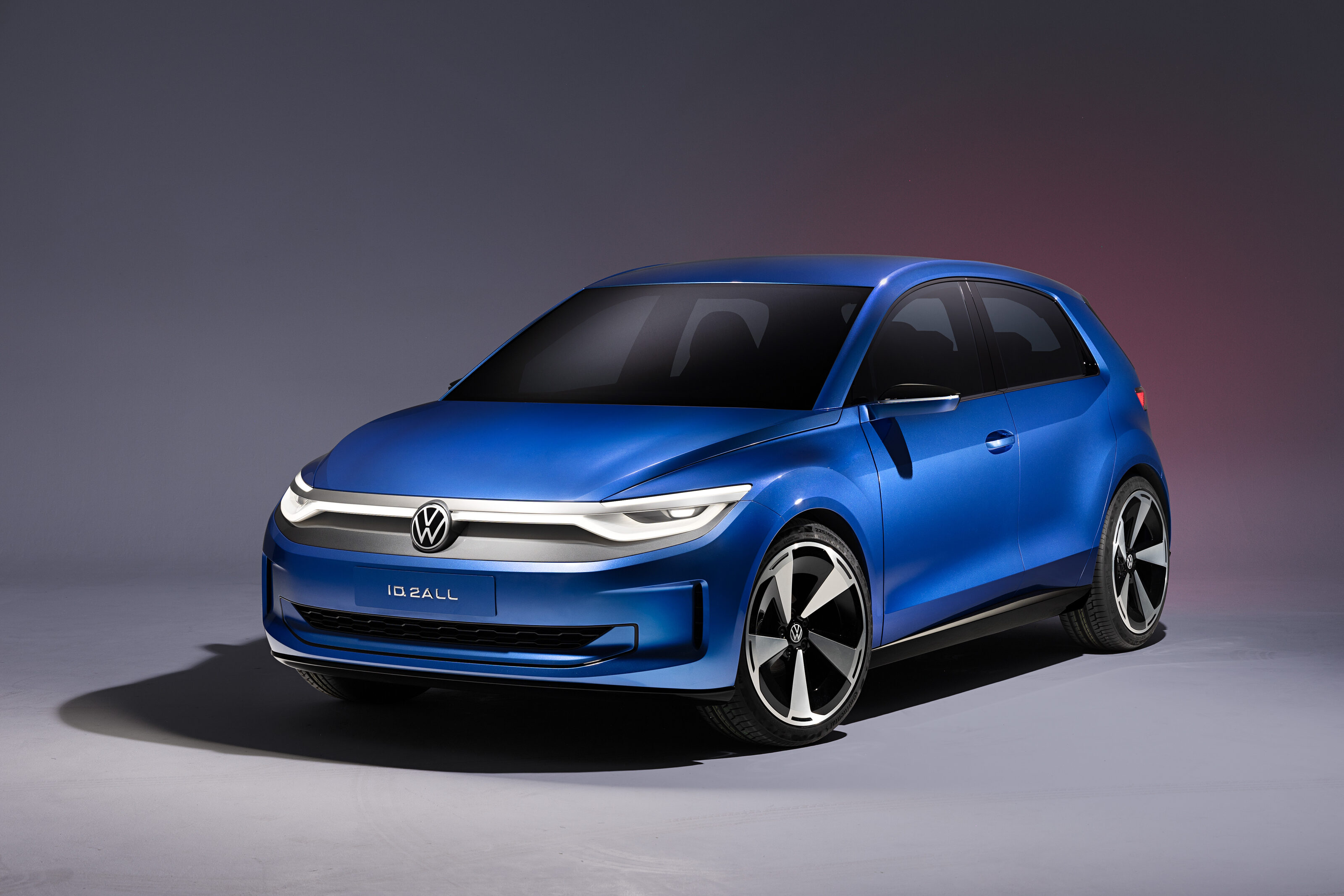
It comes as Volkswagen revealed its ID.2 all electric city car concept, which promises to have an AU$40,000-equivalent starting price tag – matching a top-spec Polo, and rival Chinese brands such as the MG 4.
1
The number of affordable and compact new cars are dwindling
The venerable Ford Fiesta was killed off entirely in 2022 in favour of in-demand SUVs and electric vehicles, the Kia Rio won’t live on soon in Australia, and the Suzuki Baleno, Mitsubishi Mirage and Hyundai Accent are all no longer.
MORE
Everything Skoda
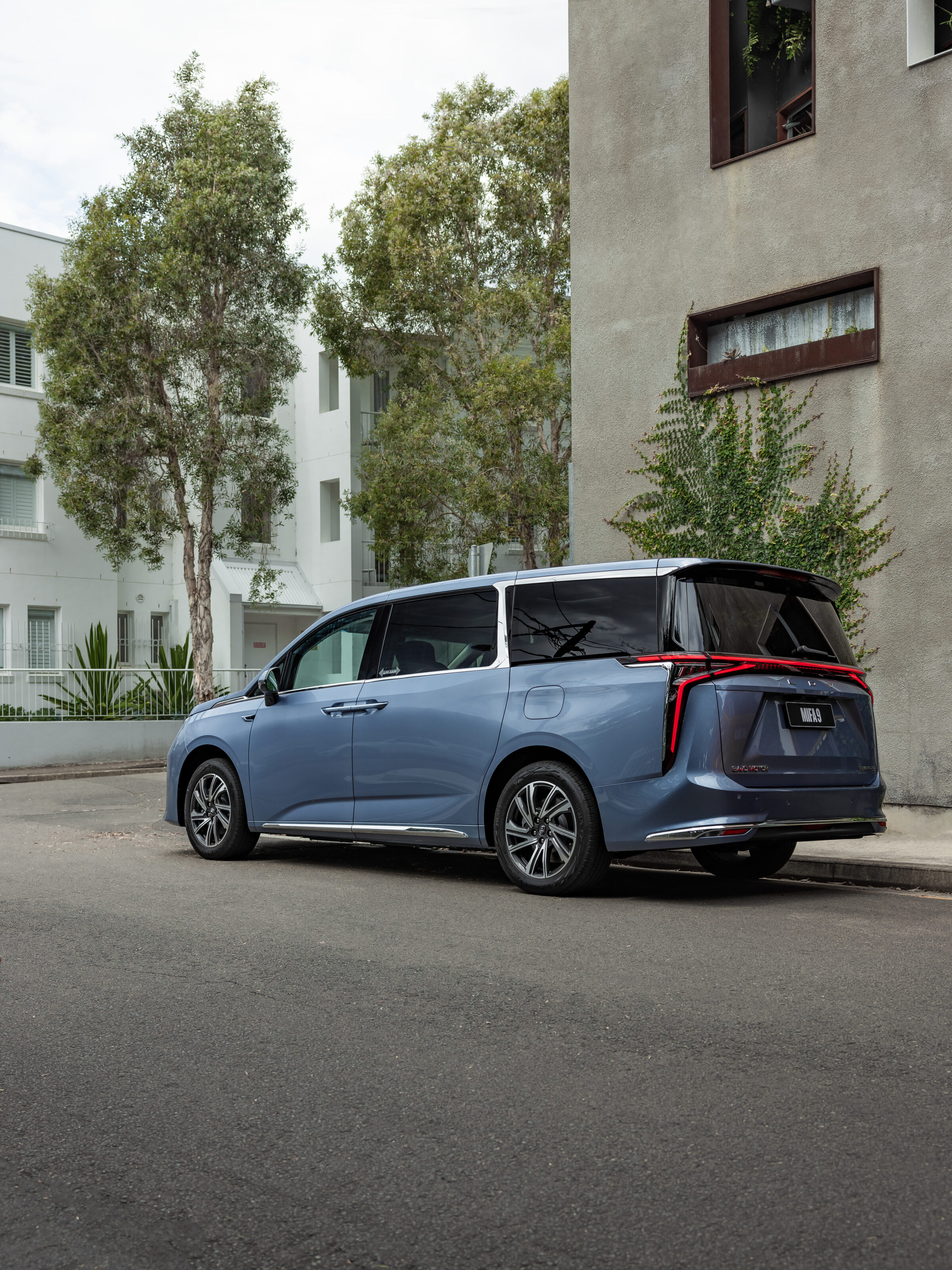
You probably haven’t heard much about the LDV Mifa 9. That’s because when it launched in Australia late last year, most of the spotlight was nicked by its sister vehicle the LDV eT60 – which made national headlines as Australia’s first electric dual-cab ute.
That’s a shame because unlike the eT60, which is overpriced, under-specced and undercooked to drive, the Mifa 9 is far more convincing. For starters, this electric people-mover rides on a fresh platform, and it’s powered by the latest version of LDV’s battery and e-motor tech.
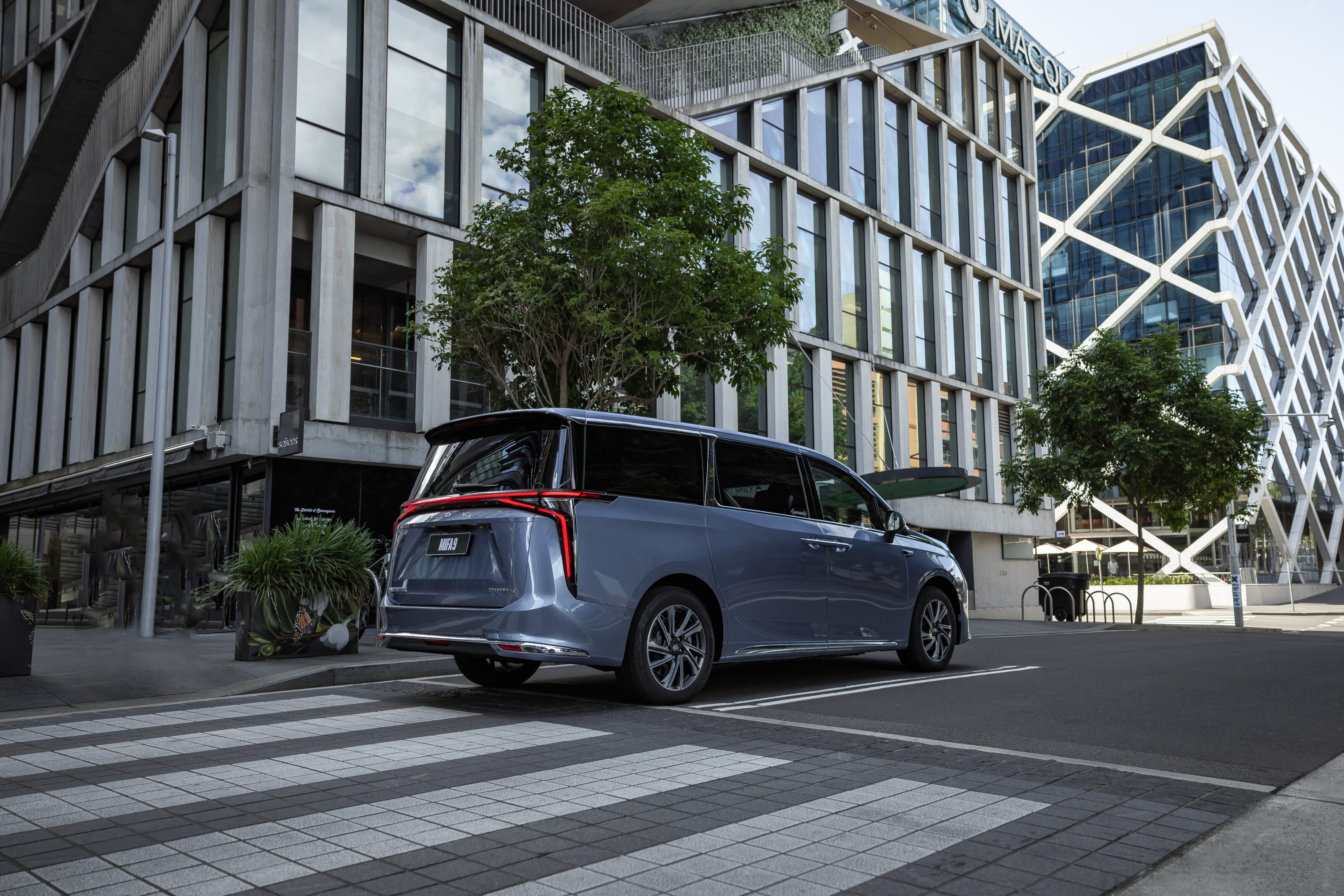
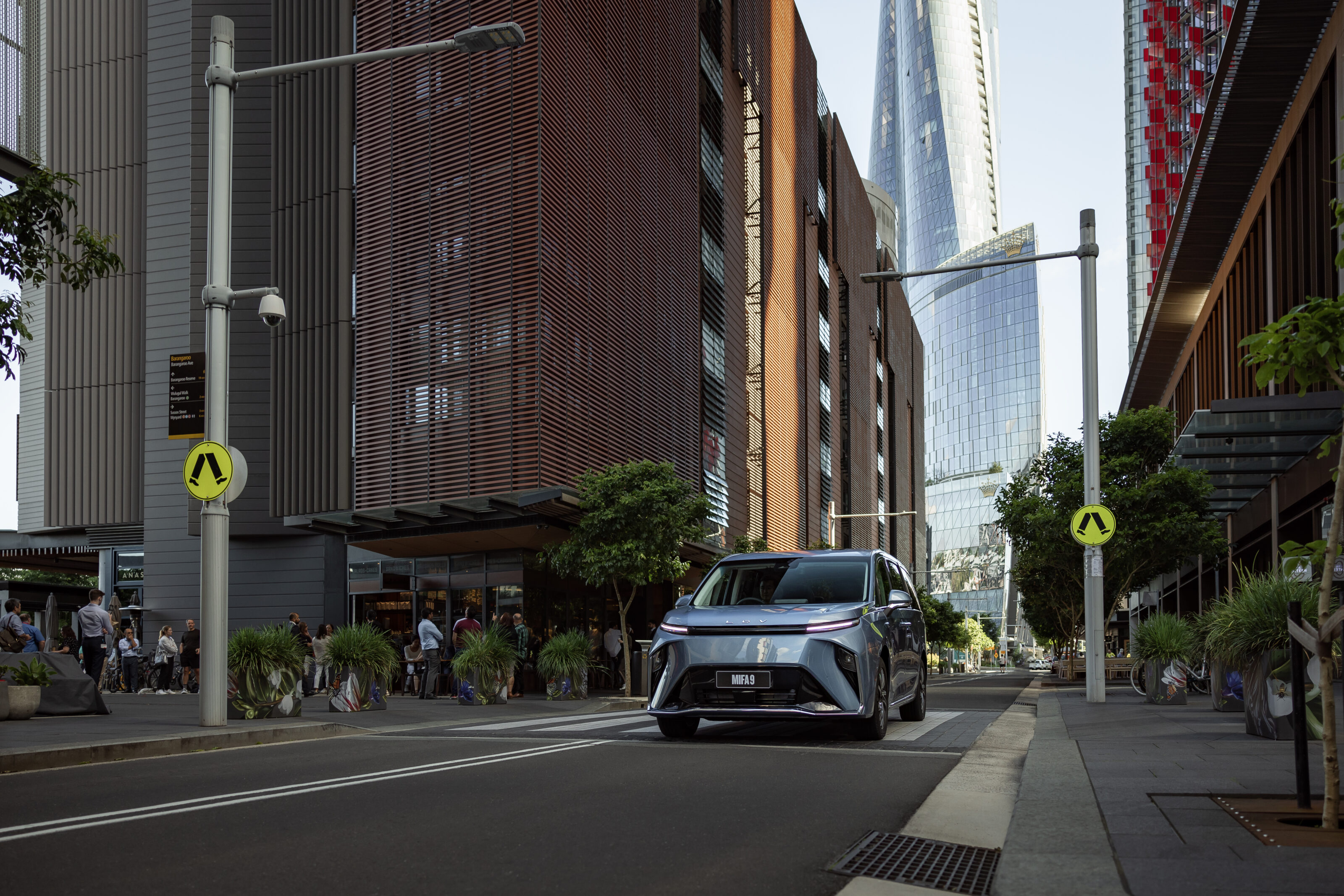
It’s not only interesting to look at (anyone else picking up strong Storm Trooper vibes around the nose?), but it ushers in a new cabin design that’s fresh, minimalist and, in the more expensive versions, feels properly opulent and spacious.
Before you start thinking about trading in your tatty diesel-powered Kia Carnival, however, there’s a catch – the price tag. At $106,000 for the cheapest version and $131,000 for the desirable flagship, the Mifa 9 isn’t only priced outside the realm of most family buyers but it’s actually twice as expensive as a top-spec Carnival.
So is it still worth considering? Or should you only continue reading if you’re the fleet manager for a chauffeur company or a large hotel chain looking to exploit some tax concessions? We snagged a quick drive to find out.
1
JUMP AHEAD
- How much is it, and what do you get?
- How do rivals compare on value?
- Interior comfort, space and storage
- What is it like to drive?
- How efficient is it?
- How safe is it?
- Warranty and running costs
- VERDICT
- Specifications
How much is it, and what do you get?
We’ve already mentioned the Mifa 9’s high price, but let’s pull the Band-Aid off fully, shall we?
Three trim levels are offered: the Mode ($106,000), Executive ($117,000) and the flagship Luxe ($131,000) with those prices being before on-road costs. Need some context? LDV also sells petrol-powered versions of the Mifa people mover and spec-for-spec, the EV is more than $50,000 dearer. Ouch.
| 2023 Mifa 9 Executive: The basics | |
|---|---|
| Body | 5-door, 7-seat people mover |
| Drive | front-wheel |
| Battery/motor | 90kWh lithium-ion/ 1 x front axle |
| Transmission | single-speed reduction gear |
| Power | 180kW |
| Torque | 350Nm |
| Fuel consumption (combined) | 21.5kW/100km |
| Range | 430km (WLTP) |
| Charging speed | 120kWh max |
| Charging time | 36 minutes for 30-80% (DC fast charging) / 8.5 hours for 5-100% (11kW AC charging) |
| Boot space (3rd row/2nd row/all flat) | 466/1703/2017L |
| Price | $117,000 + on-road costs |
The silver lining to the high pricing is that you do score a lot of space and a lot of equipment for your cash.
Size-wise, the Mifa 9 measures in at almost 5.3 metres long (making it bigger than a Mercedes-Maybach GLS) and the list of standard equipment is equally enormous.
Every Mifa 9 arrives armed with 18-inch alloy wheels, smart key entry, LED headlights, wired Apple CarPlay, a large 12.3-inch infotainment system, a 7.0-inch digital instrument cluster, adaptive cruise control, blind-spot monitoring and lane departure/warning systems.
Also standard across the range is the same electric powertrain with all three trim levels utilising a 90kWh battery pack that feeds a single e-motor on the front axle. Outputs are healthy at 180kW/350Nm and the range and recharging times are pretty impressive.
1
On a full charge, LDV says the Mode trim level can travel 440km while the Executive and Luxe have slightly shorter ranges (430 and 420km respectively) due to their richer spec levels and greater weight.
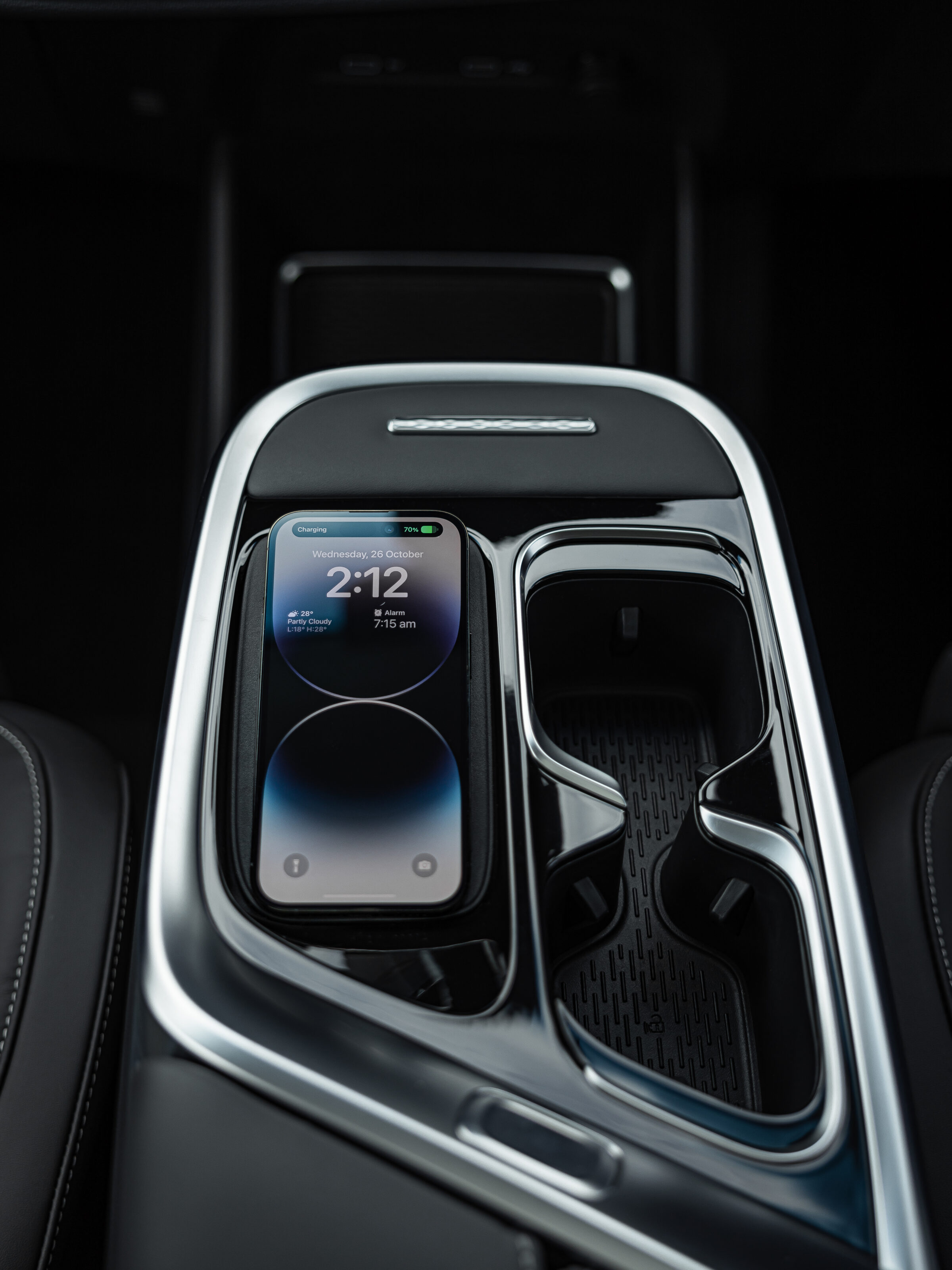
To our minds, the mid-spec Executive is the grade to buy. For $117,000 before on-road costs it adds a number of additional goodies over the Mode including larger 19-inch alloys, an eight-speaker audio system, adaptive LED headlights, front parking sensors, 360 surround-view cameras, an electric tailgate, front and rear glass sunroof, automatic windows, additional charging sockets, a wireless charging pad and rear privacy glass.
It also replaces the Mode’s plastic steering wheel with a leather-trimmed one and adds electrically adjustable seats in the first two rows.
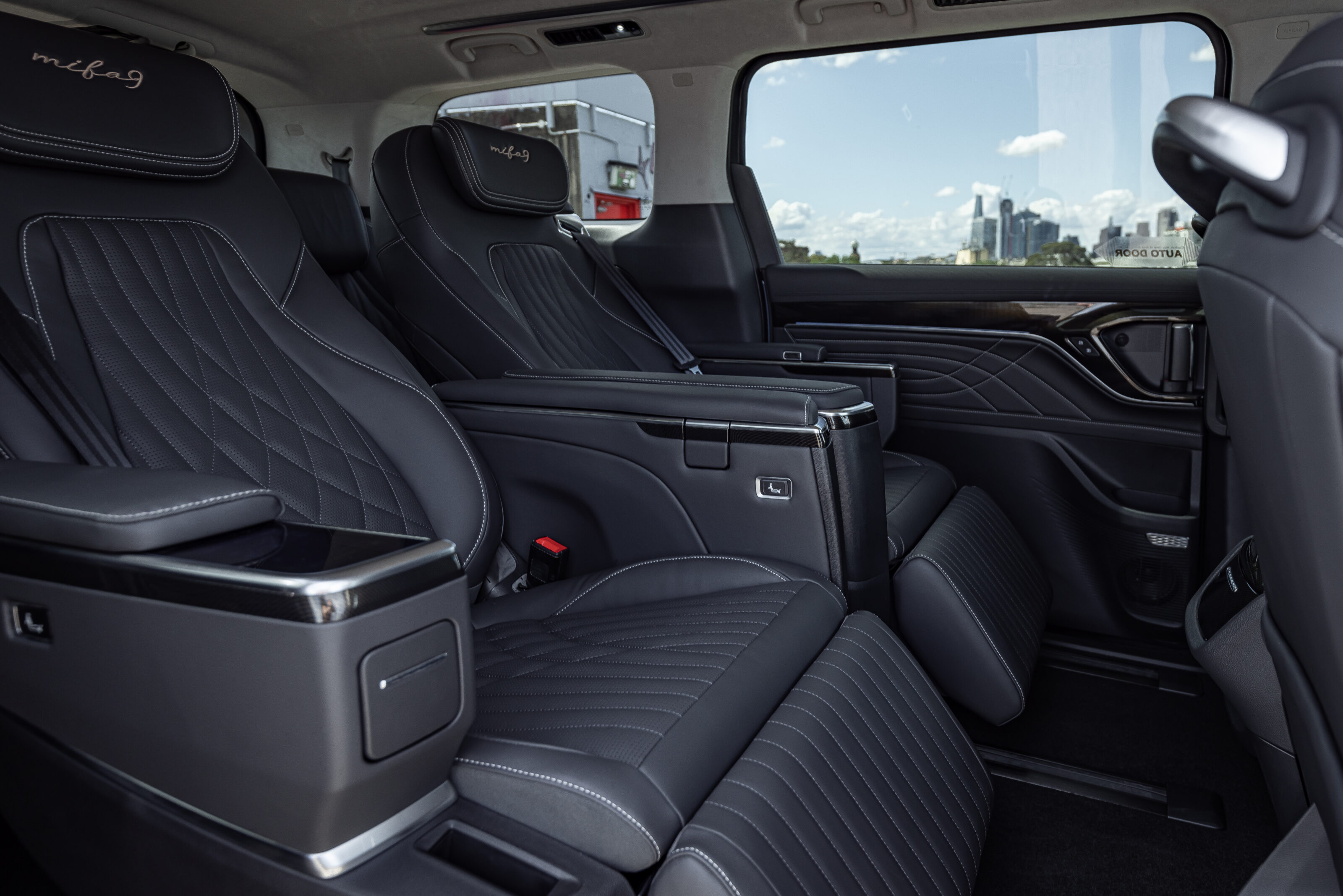
The flagship Luxe commands a further $14,000 premium over the Executive and adds a 12-speaker sound system, a heated steering wheel and full leather seats that are heated, ventilated, and offer a massage function in the front two rows.
1
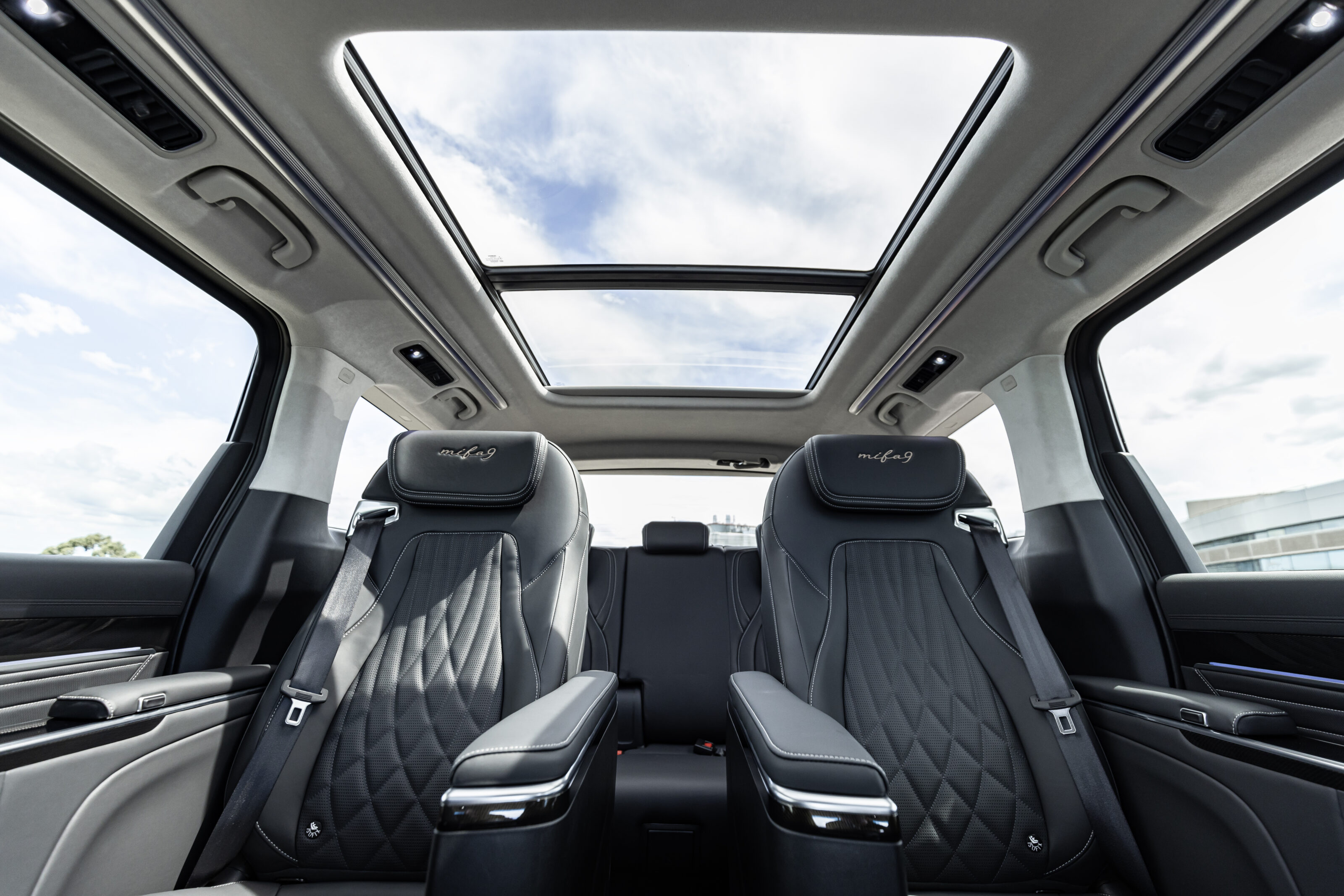
Its piece de resistance, however, is the addition of two reclining ‘captains chairs’ in the second row that look and feel like business class seats stolen from an Airbus A380. As well as being able to heat, cool and massage you, the Captain’s chairs feature an extendable footrest, fold-out tray tables and individual touchscreen control panels in the armrest of each seat.
Six colours are available across the range including Blanc White, Pearl White, Mica Blue and Metal Black but the most arresting hues are a pair of two-tone finishes for Executive and Luxe models that combine ‘Snow Cyan’ or ‘Concrete Grey’ with a black roof. Word of warning, though: these ‘premium paint’ finishes carry an additional $2000 charge.
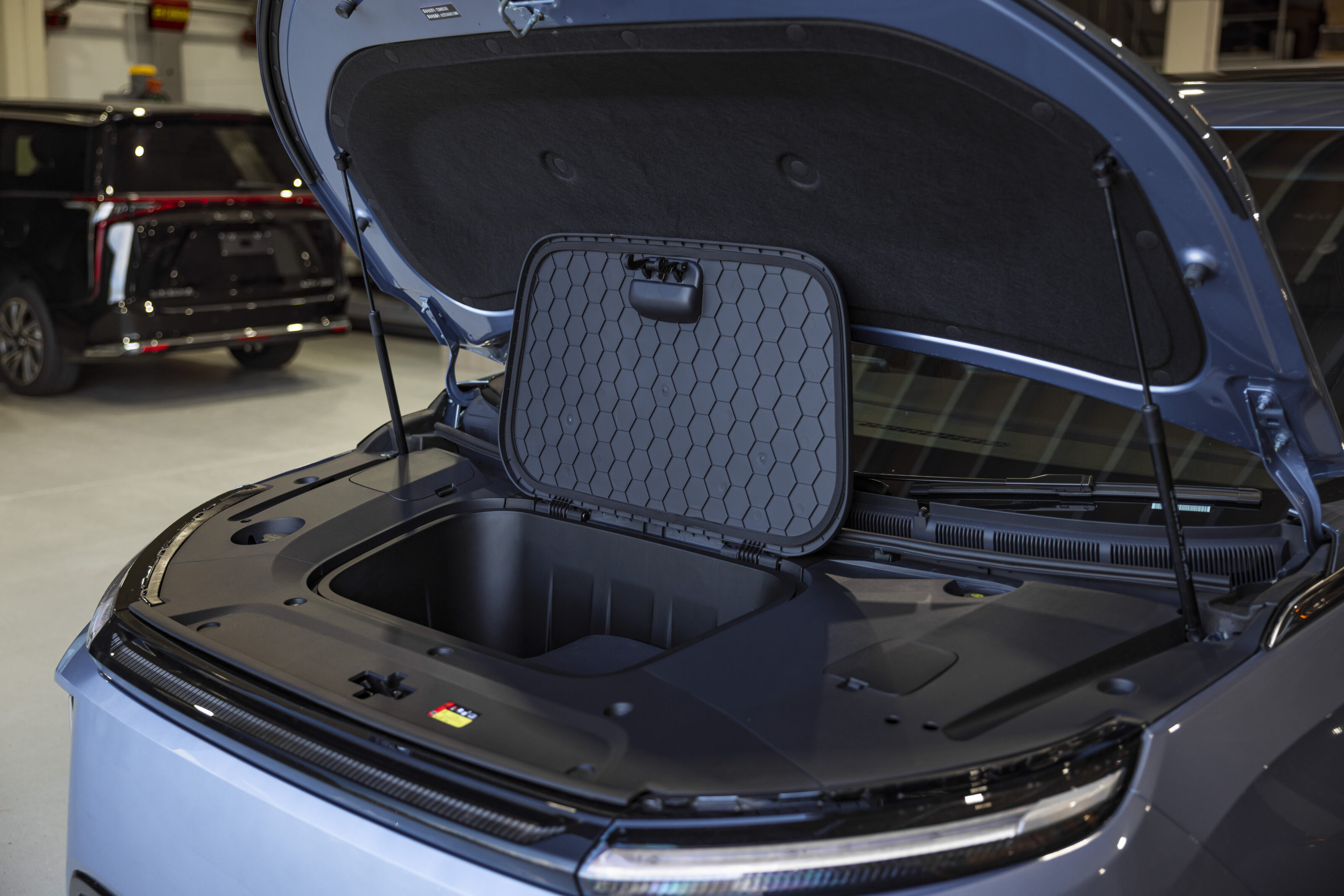
As for what’s missing? Well there’s no head-up display, no Android Auto and no native sat-nav system. You also miss out on a spare tyre due to batteries occupying the space beneath the boot floor.
1
How do rivals compare on value?
It’s slim pickings in the world of electric people movers right now.
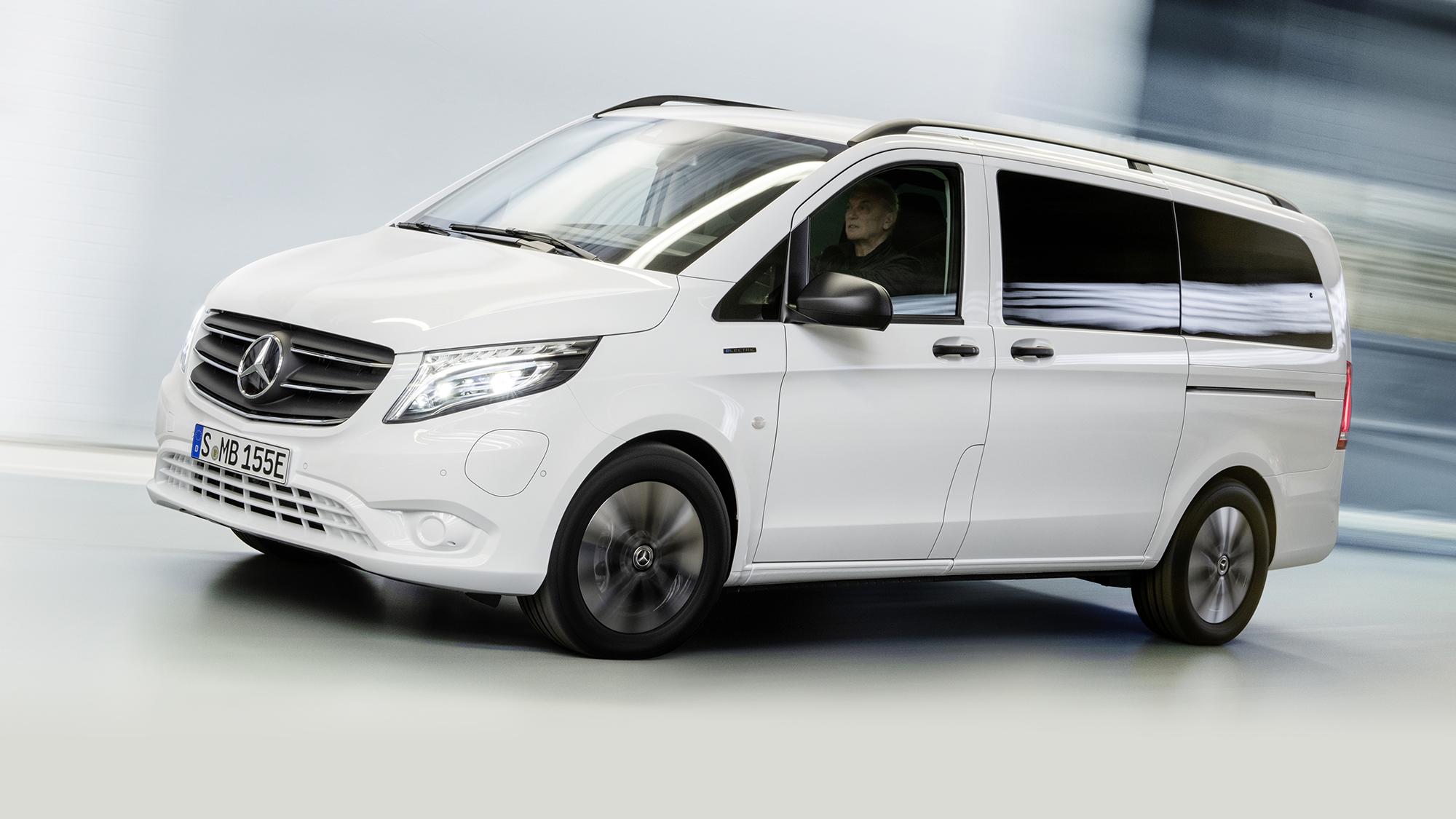
The only other company to offer something similar to the LDV Mifa 9 is Mercedes-Benz which has two options to choose from: the eVito Tourer which is priced at $116,115 before on-road costs and is essentially a commercial van with seats and carpet, or the closely related EQV which has a stronger passenger-car focus.
The EQV is based on the diesel V-Class van and is available as a single variant, the EQV 300, which retails for $155,338 before on-road costs; $24,338 more expensive than the flagship Mifa 9 Luxe. Like the LDV, the Mercedes is powered by a 90kWh battery pack but it offers less performance due to outputs of 150kW/365Nm which is 30kW down on the Mifa 9.
Battery range in the EQV is also shorter (363km versus 440km in the LDV) and the Merc’s suite of active safety systems isn’t quite as extensive due to a lack of rear-cross traffic alert and traffic sign recognition.
1
Charge times are similar between the pair, although the EQV 300 does hold a slight advantage and can achieve a 10-80 per cent top-up in 45 minutes on a DC fast charger. LDV claims the Mifa 9 can go from 30-80 per cent in 36 minutes, so it’s not exactly apples with apples.
Where the Mercedes should gazump the LDV, however, is ride comfort thanks to its standard inclusion of air suspension with adaptive dampers. Resale is also likely to be stronger with the Mercedes.
As for other electrified vehicles that can ferry about seven people, the Mercedes EQB is another option worth considering. It starts at $87,800 before on-road costs for the front-drive EQB 250 but it can’t match the Mifa 9 for passenger room or luggage space.
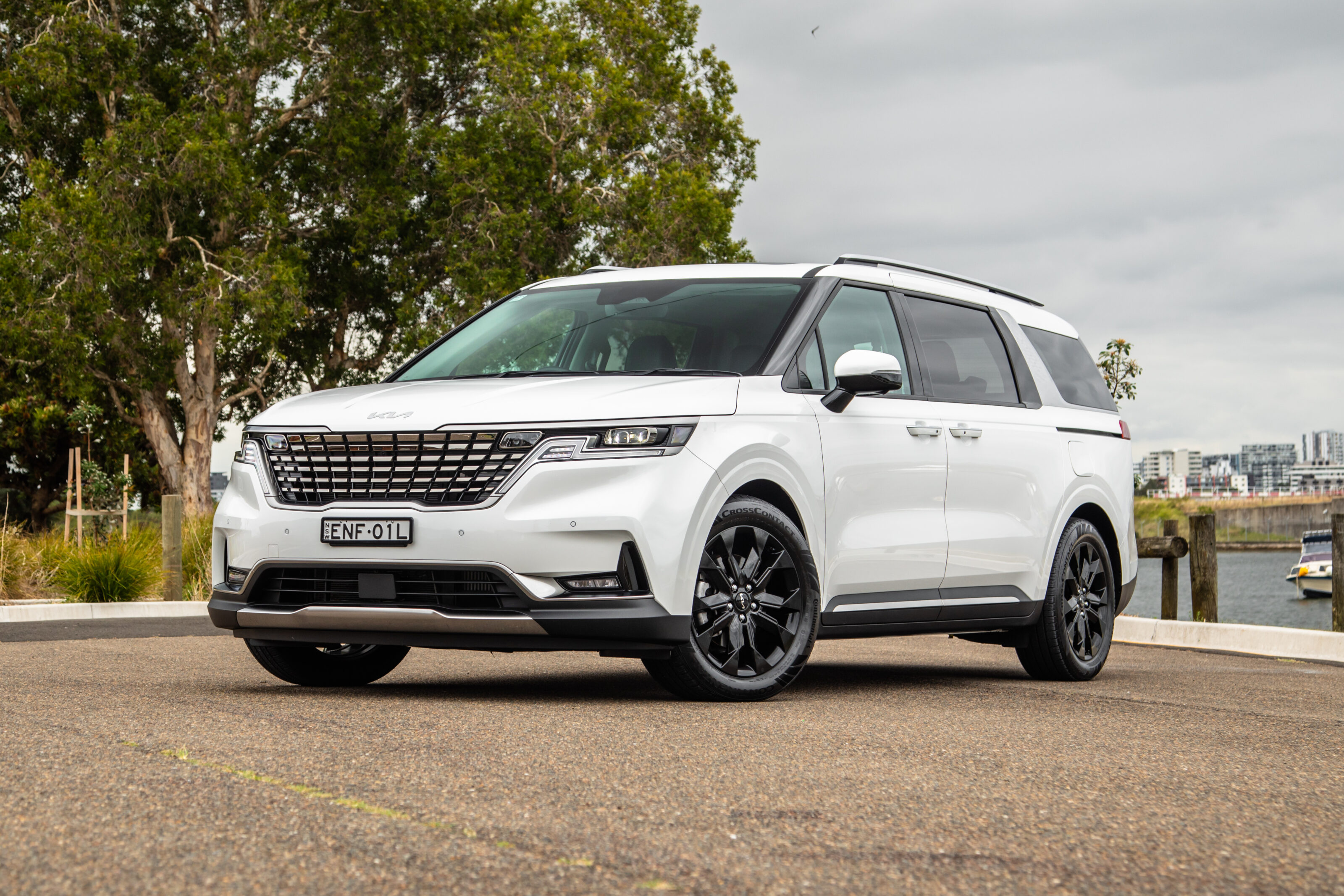
If an electric powertrain isn’t a ‘must have’, then there’s a host of established mainstream people movers worth test driving, too. The Kia Carnival is our pick of the bunch (a flagship Platinum is $65,580 before on-road costs) but there’s also the Hyundai Staria and Volkswagen Caddy to consider.
1
Interior comfort, space and storage
As you’d expect given its size and family focus, cabin space is a clear strength for the Mifa 9.
What might come as a surprise, however, is just how premium it feels in here. LDV only had a mid-spec Executive model for us to test, so we can’t comment on the ambience of the entry-level Mode but we were pleasantly surprised by our Mifa 9’s cabin.
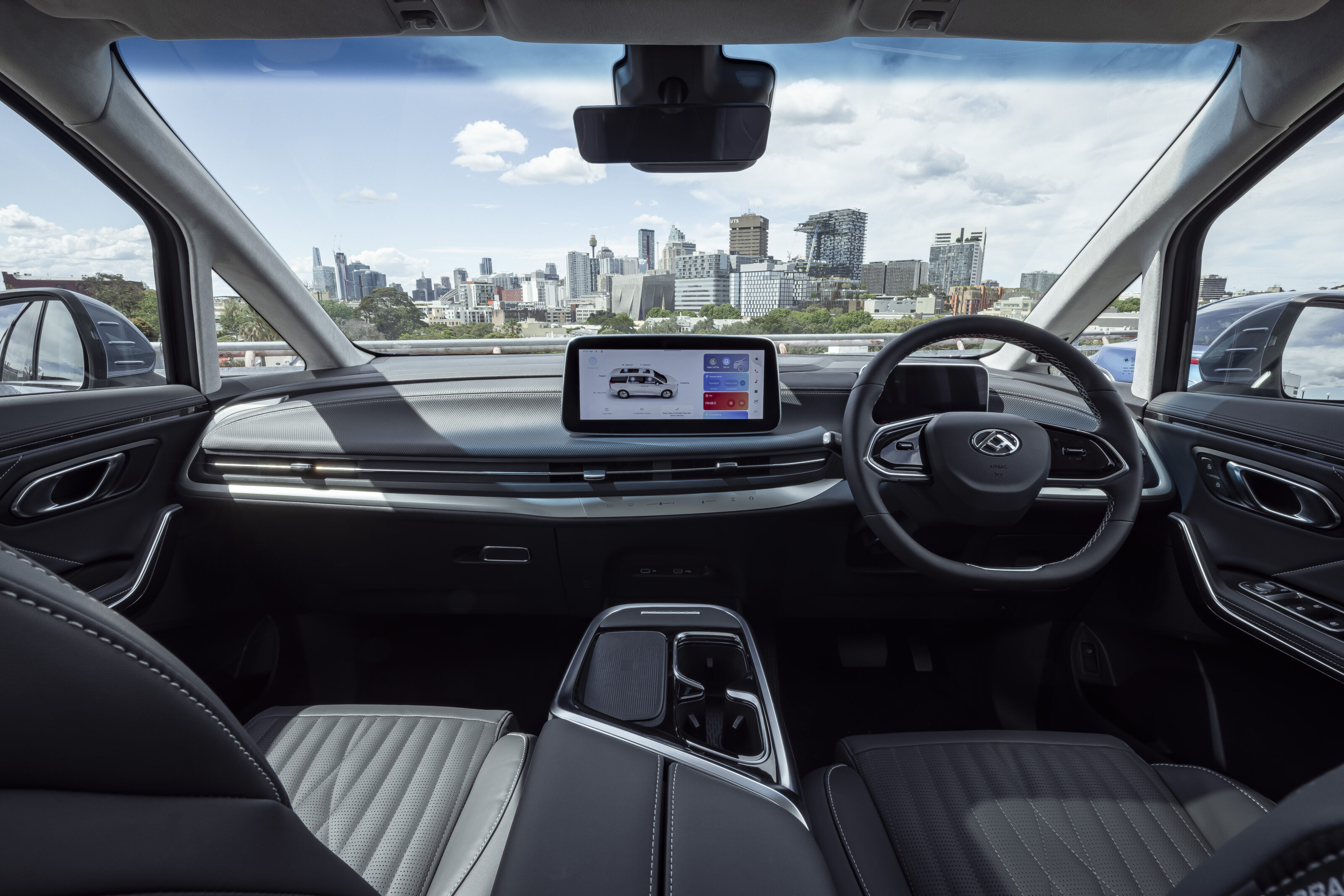
The design is modern and minimal, the leatherette-trimmed seats are comfortable and supportive and there’s ample reach and rake adjustment from the steering wheel so the driving position is pretty much bang on. Cabin storage is as generous as you’d hope, too, thanks to twin cup holders, roomy door pockets and a cavernous cubby lurking below the floating centre console.
Measuring 7.0-inches, the digital dial cluster offers clear graphics but it’s the centre screen on the dashboard through which you control most of the car’s functions.
1
Buttons are few and far between in the Mifa 9, meaning you’ll have to dive into the centre screen for most things. This isn’t exactly user-friendly but one cool feature is using the screen to open and close individual windows. At least the screen has a high resolution and the menu structure is easy to navigate.
Plus, LDV has kept some of the key controls for the air-con out of the screen and placed them on a silver horizontal strip below, which you operate via touch-sensitive sliders. It’s a bit fiddly to use and annoyingly the silver piece of trim was crooked on our test car. Still, the general mix of materials and fit and finish was of a high quality.
An eight-seat layout will join the model range soon but for now, every Mifa 9 features a 2-2-3 seating configuration that makes getting into the third row a breeze thanks to a decent gap between the second-row seats. Of all the seats in the Mifa 9, it’s the second row that’s arguably the most desirable.
1
The seats themselves are deeply cushioned and comfortable, there’s ample knee room and the ambience feels light and airy thanks to the large sunroof and low window sills. The third row is less spacious but the backrest reclines and the seat itself is on rails which allows you to vary passenger room with luggage space.
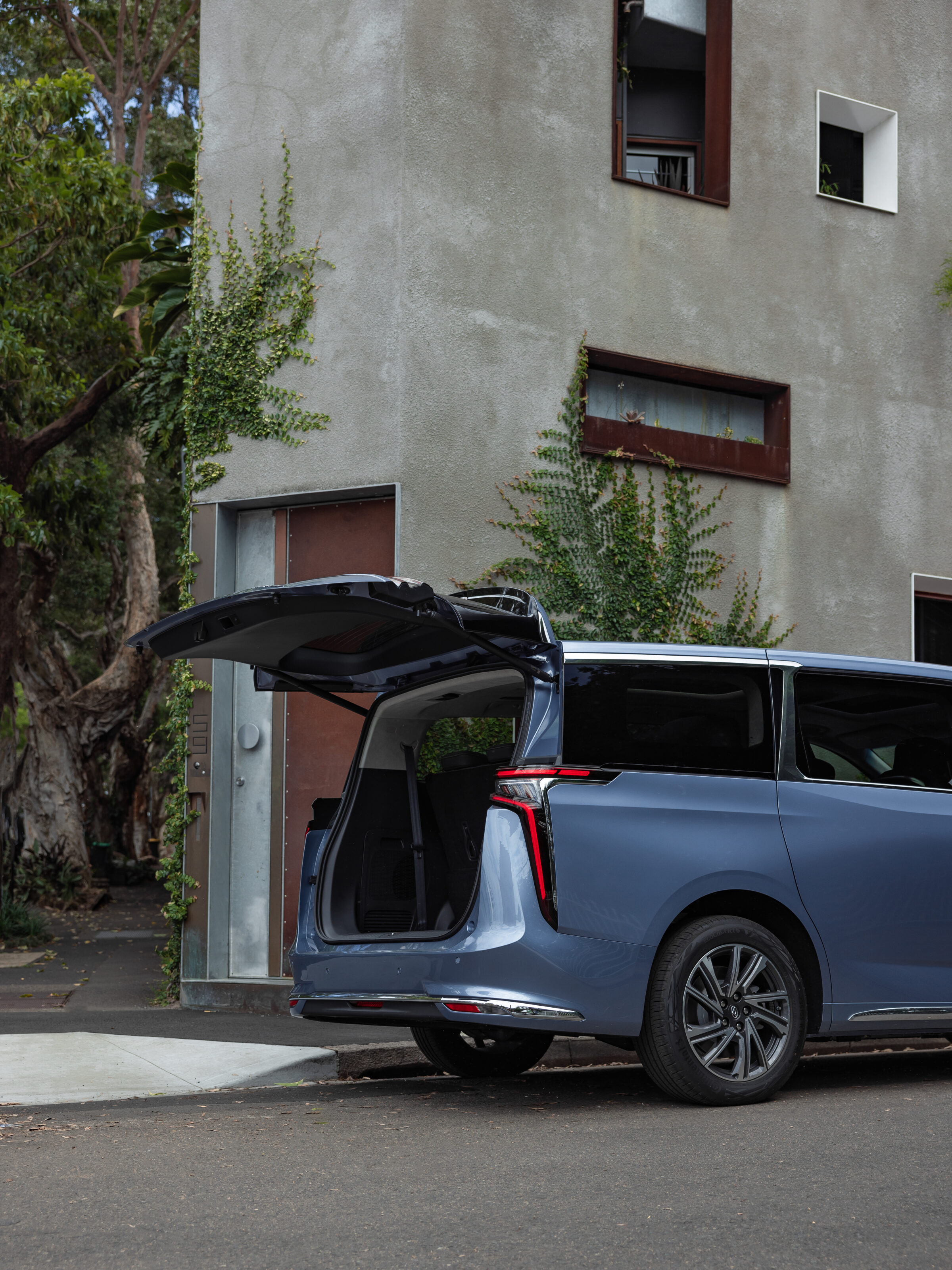
Speaking of, there’s oodles of room for bags. With all three rows in use, there’s 466L of luggage space but if you drop the third row that number grows to 1703L. With both back rows tucked away, the Mifa 9 offers a colossal 2017L of luggage room.
If you plan to lug about lots of people and their bags on a regular basis however and let’s face it most owners probably will, it’s important to be mindful of the Mifa 9’s reduced payload. Adding a heavy battery pack into the floor has boosted the Mifa 9’s kerb weight to a chunky 2535kg in the top-spec Luxe variant. That extra heft has reduced the payload to 525kg meaning that if you plan to fill every seat, you have a load limit of 75kg per passenger. Inclusive of luggage.
1
What’s it like to drive?
Our time behind the wheel of the Mifa 9 was brief, but we were fairly impressed with the road manners of LDV’s people mover.
Slip inside and you’ll discover there’s no starter button. Instead, just like a Tesla or a Polestar, the Mifa 9 recognises when the key is in the car and is ready to roll once you select Drive.
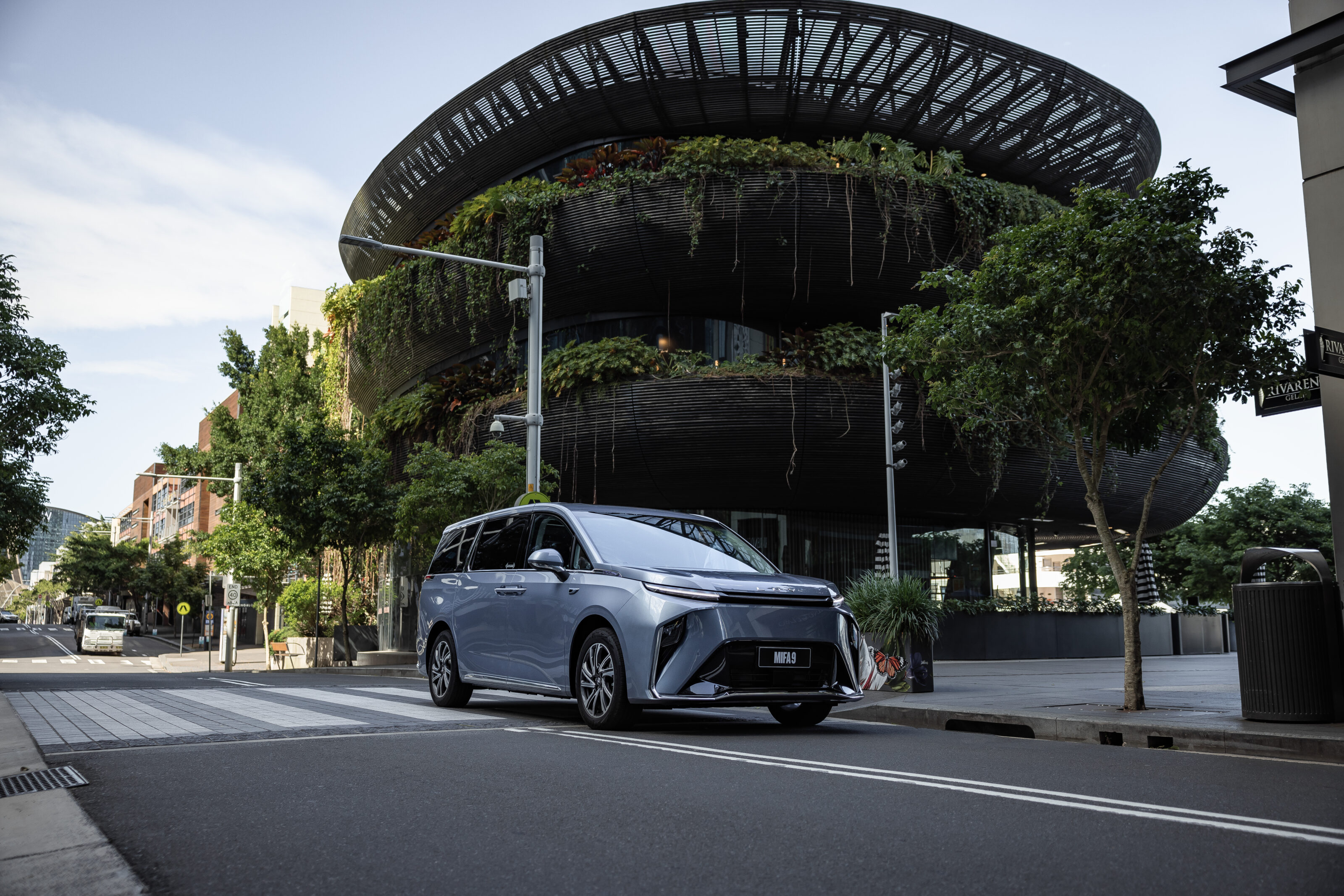
Acceleration is swift and effortless, despite the hefty kerb weight – at circa-2500kg the Mifa 9 is around 300kg heavier than a petrol-powered Mifa – and the cabin is impressively quiet and refined. Ride comfort is also decent thanks to a chassis set-up that clearly favours comfort and compliance over control.
Small bumps and surface imperfections are mostly ironed out by the 19-inch alloys and, through quicker corners, there’s a welcome degree of grip and composure, something no doubt helped by high-quality Continental Eco Contact 6 tyres.
1
Things do get scrappy if you push the Mifa 9 beyond seven-tenths or so where you’ll encounter occasional torque steer, heavy-handed stability and traction control systems and a body that struggles to contain its mass during quicker changes of direction. But given most Mifa 9s will be used to ferry people about in cities and on the freeway, the dynamics are nicely judged.
Its steering is light, vision out is excellent and the benefits of the Mifa 9’s younger platform and fresh powertrain tech are obvious. This is easily the best LDV product we’ve driven.
Where the eT60 ute and eDeliver 9 feel quite utilitarian, the Mifa 9 has a degree of dynamic cohesion and polish that’s largely been missing from LDV’s wider portfolio. The downside is you have to pay handsomely to get it.
1
How efficient is it?
LDV says the Mifa 9 will chew through electrons at a rate between 21.3kWh and 21.8kWh depending on which variant you choose.
The lighter Mode trim grade offers the best consumption claim, while the heavier Executive and Luxe models are slightly hungrier.
Those consumption figures are based on the stricter WLTP test cycle so you can hope to get relatively close to them in the real world. However, we doubt you’ll achieve anything close to those numbers if you load up your Mifa 9 with seven people and their luggage.
Still, in ideal conditions, LDV says the Mifa 9 has a maximum claimed driving range of 440km.
As for charging, the Mifa 9 accepts up to 120kW DC fast charging and if you can find a charger fast enough it can achieve a 30-80 per cent charge in around 36 minutes.
On an 11kW AC charger, like the type found in most public car parks or via a three-phase outlet at home, a 5-100 per cent charge will take about 8.5 hours.
1
How safe is it?
The Mifa 9 was awarded a maximum five-star safety rating by ANCAP in late 2022. It received a 93 per cent rating for adult occupant protection, 88 per cent for child occupants, and 73 per cent for vulnerable road users.
Eight airbags are fitted as standard across the range and every variant includes the following safety equipment:
| Auto emergency braking (vehicle, pedestrian, cyclist, reverse) | Lane-keep assist |
| Adaptive cruise control | Rear collision warning |
| Blind-spot alert | Rear cross-traffic alert |
| Door opening warning | Rear occupant alert |
| Lane departure warning | Traffic sign recognition |
Warranty and running costs
Just like its high price, the Mifa 9’s warranty is a little disappointing.
Unlike petrol-powered versions of the Mifa which carry a seven-year/200,000km warranty, the electric Mifa 9 is only covered for a five-year/200,000km period.
The battery itself is covered for eight years or 200,000km, however, and LDV guarantees the Mifa 9 will retain at least 70 per cent of its 90kWh battery capacity within that time.
Service intervals are impressively long at every two years or 30,000km and each visit to the dealer will cost around $220-$520.
Five years of free roadside assistance is also included.
VERDICT
So, should you buy a Mifa 9? On many levels, it’s a pretty convincing people mover.
It offers plenty of space and luxury, its electric powertrain is swift and silent and the fresh cabin design and opulent mix of materials are impressively premium.
Even better news is that it’s also decent to drive, providing you stay within the scope of its use case as a people mover. An engaging vehicle for a backroad blast this is not.
As for which trim level is the most attractive, we’d suggest going for the mid-spec Executive or flagship Luxe. The base car’s manual seats, plastic steering wheel and manual tailgate fall short of the kind of experience and ease of use you’d expect from a six-figure people mover.
But there’s no escaping the fact that its high price puts the Mifa 9 out of reach of all but the most well-heeled private buyers. Is the Mifa 9 worth twice as much as a flagship Kia Carnival Platinum? Absolutely not.
LDV admits the target market for the Mifa 9 is mostly commercial enterprises like hotels or chauffeur services that are keen to meet emissions targets and take advantage of tax incentives. And for those entities, it makes more sense.
While it might be a tough sell for most of us, the real positive with the Mifa 9 is it gives us a glimpse at what LDV has in the pipeline. It’s our first taste of the Chinese brand’s next-gen electric powertrains and platform, and it offers an impressive step forward.
MORE
Everything LDV
| 2023 LDV Mifa 9 Executive specifications | |
|---|---|
| Body | 5-door, 7-seat people mover |
| Drive | front-wheel |
| Battery | 90kWh lithium-ion |
| Motor | 1 x front axle |
| Power | 180kW |
| Torque | 350Nm |
| Transmission | single-speed reduction gear |
| Weight | 2535kg |
| Fuel consumption | 21.5kW/100km |
| Range | 430km (WLTP) |
| Front suspension | double A-arms, coil springs, anti-roll bar |
| Rear suspension | multi-links, coil springs, anti-roll bar |
| L/W/H | 5270/2000/1840mm |
| Wheelbase | 3200mm |
| Boot space (behind 3rd row/2nd row/all seats flat) | 466/1703/2017L |
| Wheels | 19-inch alloy |
| Price | $117,000 + on-road costs |
It’s hard to think of someone who could embody what Toyota Australia represents more than Sean Hanley.
Now Vice President for Sales and Marketing, he has dedicated his working life to serving what has become the country’s automotive market leader and it looks like he’ll be there ’til the day it’s time to hand back the keys and take the gold watch.
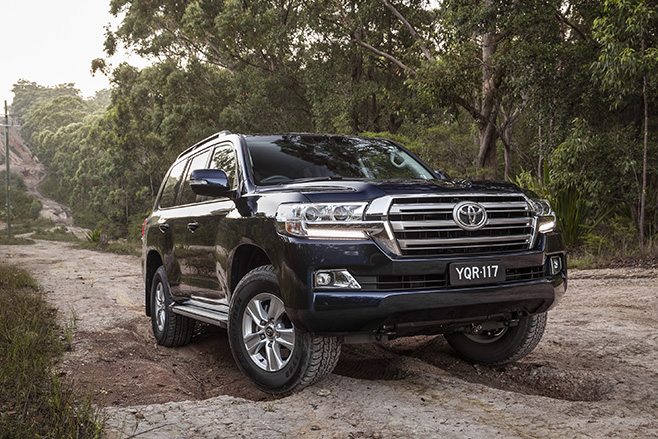
His favourite car was his 1980s Corolla 1.6-litre Twin Cam, though he’s also enjoyed many years behind the wheel of some other Aussie favourites – such as the LandCruiser 200 and LC Prado.
Brisbane born and bred, where he still lives today with his wife and two sons – commuting to Toyota’s HQ in Melbourne, Hanley started his career at the very bottom of the ladder after leaving school at year 10 to work for another auto giant – Ford.
1
“I started out at a Ford dealer as a store person in parts,” he tells Wheels. “I’ve been in the industry since I was 17 and I’ve recently turned 60, so I’ve got some years clocked up!
“After that I was a delivery driver and just worked my way up from there until the then owner expanded his interests and, through acquisitions, purchased a Toyota dealership. I moved over to Toyota as a parts manager within the same group.
“I really knew little about Toyota back then, and remember that in the day Ford had a very high market share. I daresay it was market-leader at some stage through that journey. I can’t remember exactly who was holding the title at the time, but Ford and Holden were fighting it out surely for number one and two, and Toyota was near the lower end of the top five.
1
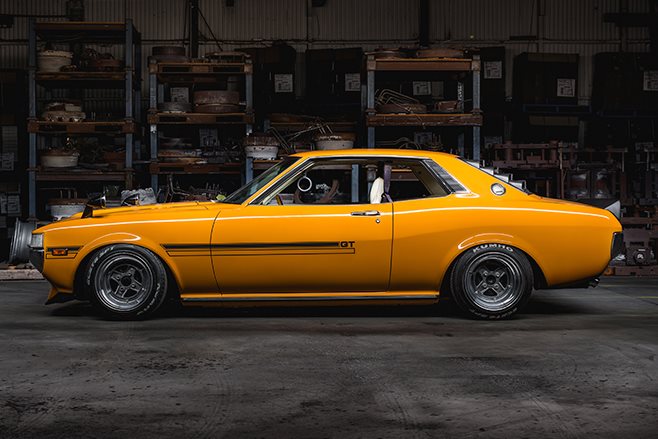
“Really it was my mother who convinced me, I always remember my mother had a Toyota Celica and she loved Toyota, she always bought them. I saw it as a great opportunity. I joined this new brand, but it’s like most things in my career, it’s funny, as you get older, you reflect – but I’ve never set out a career plan in my life. Never sat down and said: ‘this is what I aspire to be’, or ‘this is what I aspire to do’. I’ve just kind of lived my life and taken the opportunities as they presented themselves.”
After working his way up to parts manager, Hanley then moved to another dealership in Brisbane which was the major distributor for Toyota passenger and commercial vehicles in Queensland. Eventually the parent company bought out this dealer, now owning all of the distributors in Australia with the exception of Western Australia, allowing Hanley to rise through the ranks to become a senior executive at Toyota’s home in Melbourne. And he has been there ever since apart from a short stint at Lexus as its Corporate Manager for National Sales and later CEO between 2012 and 2015.
“I’ve never said no to anything, whether it be running logistics and parts warehouses or launching a new hybrid car back in October 2001,” he reflects.

1
“We tend to learn from Lexus a lot at Toyota. It was a wonderful opportunity because I got to go to another brand. Of course. I went from mainstream, mass market, to the more defined luxury market – which was a whole new way of learning for myself.
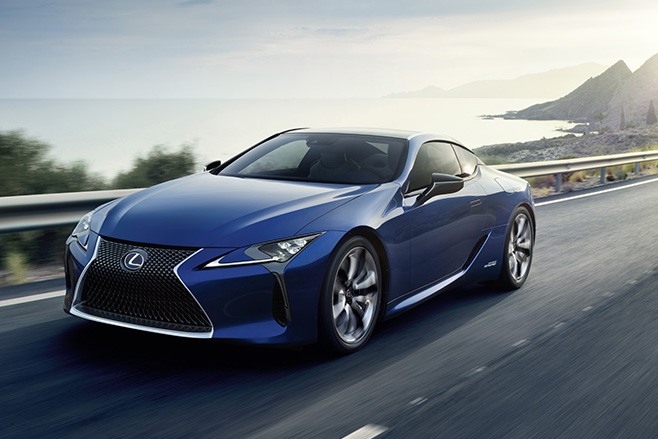
“I remember getting the opportunity to go to Lexus and I was just so excited. I was fast tracked to learn about luxury and the different experiences and models. I have absolutely no regrets about my time at Lexus, only fond memories. The thing that I took out of Lexus, that I’ve been able to bring to some extent to Toyota, was that Lexus is a very personal brand.
“And I believe that the car industry will always be a people business, it will always have to have a human connection. It’s one of the great learnings out of COVID-19 right? People talk about having Teams capabilities, Zoom, work from home, there’s wonderful flexibility around us – but it always intrigues me because at the end of the day, we can stay home and work all week, but by the weekend what we want to do is see someone.
1
“By nature we are social beings. And I think that will play out in the future no matter what happens with technology, people will always remain integral to business and how we connect.
“So we’re going from car company to mobility company. Everybody uses this word ‘mobility’. Everyone’s got it in their advertising now. So what does that mean? Well, mobility for Toyota’s well beyond the car. When you start to think that through you suddenly realise that there’s a far bigger market of mobility out there that we need to be involved with and explore and help. And apart from the environment, that will be the single biggest contribution that Toyota will make to the world.”
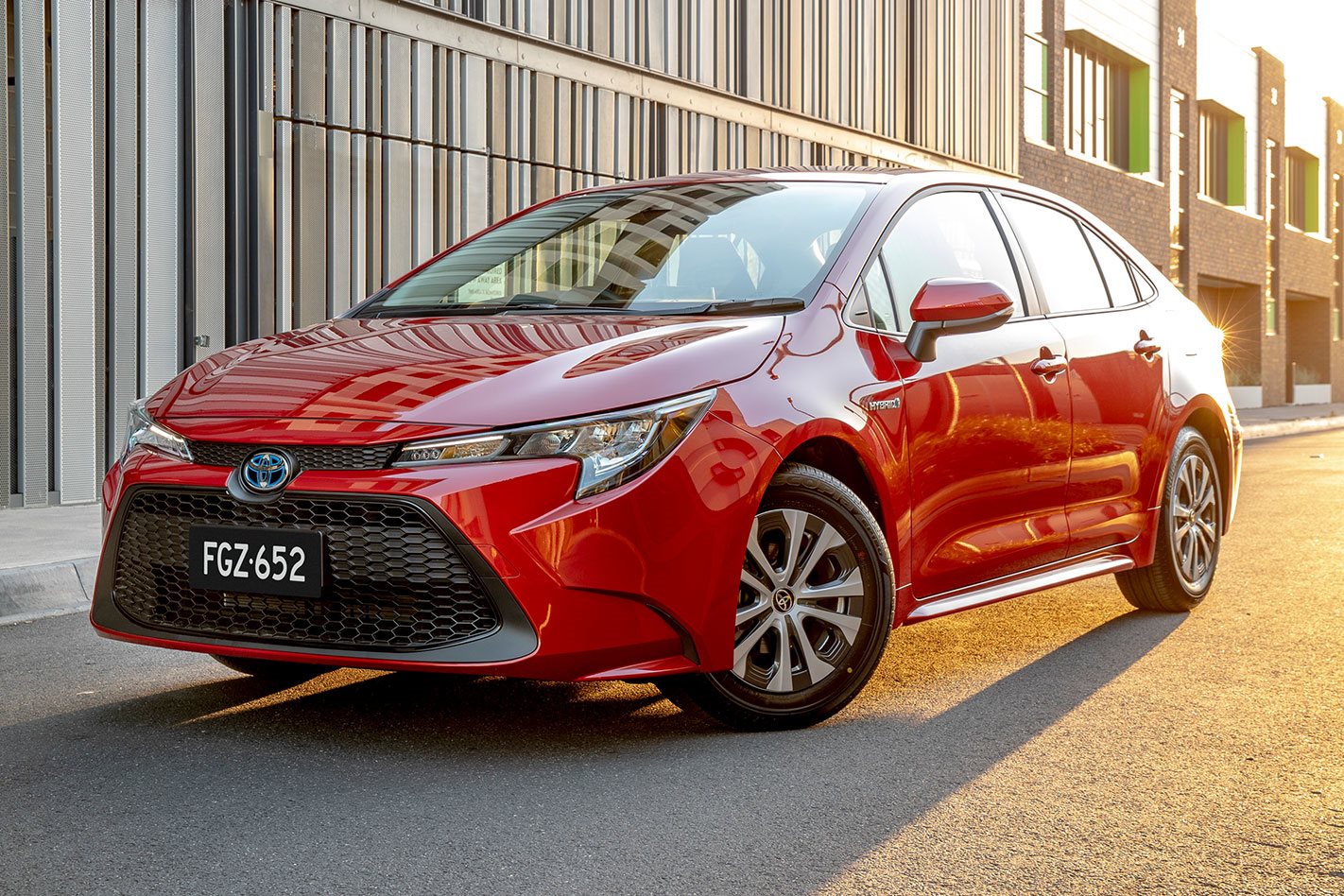
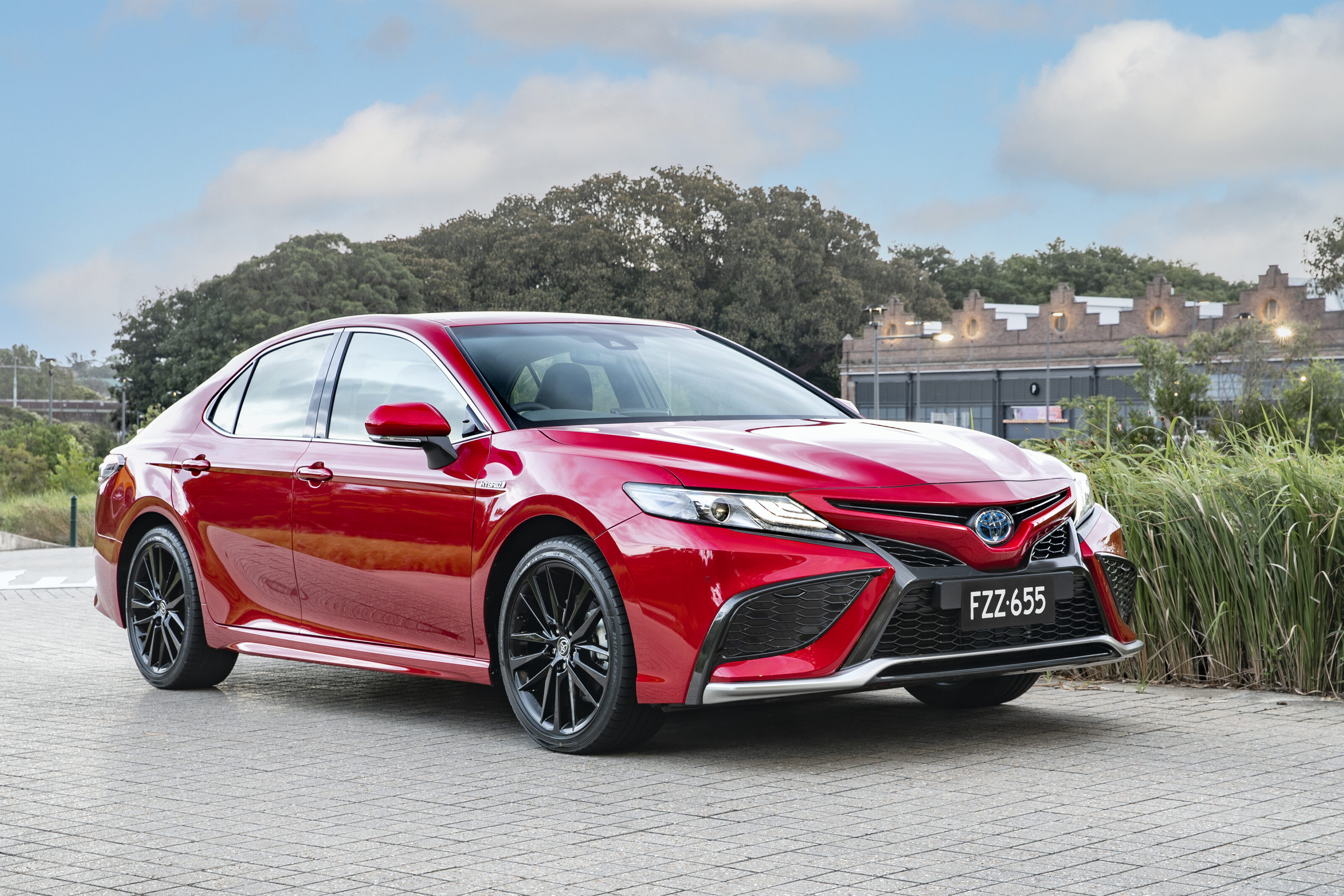
As one of Japan’s biggest companies, and indeed Australia’s top-selling car brand for 20 years much has been said about Toyota’s contribution towards reducing global emissions and its preference for varied technologies – led by hybrids rather than purely battery-electric – to hit ever tightening targets.
1
In fact there has been no end of coverage of Toyota Australia’s views, specifically voiced by Hanley as the most regular company spokesman, on the topic. But in recent weeks it has emerged the auto giant is facing investigation by Australia’s consumer watchdog over ‘greenwashing’ allegations by Greenpeace – denouncing its claims on the environmental performance of its vehicles and net-zero ambitions.
On this specific issue, Hanley couldn’t be led, but sticks by his guns on why Toyota’s EV approach is the right one.
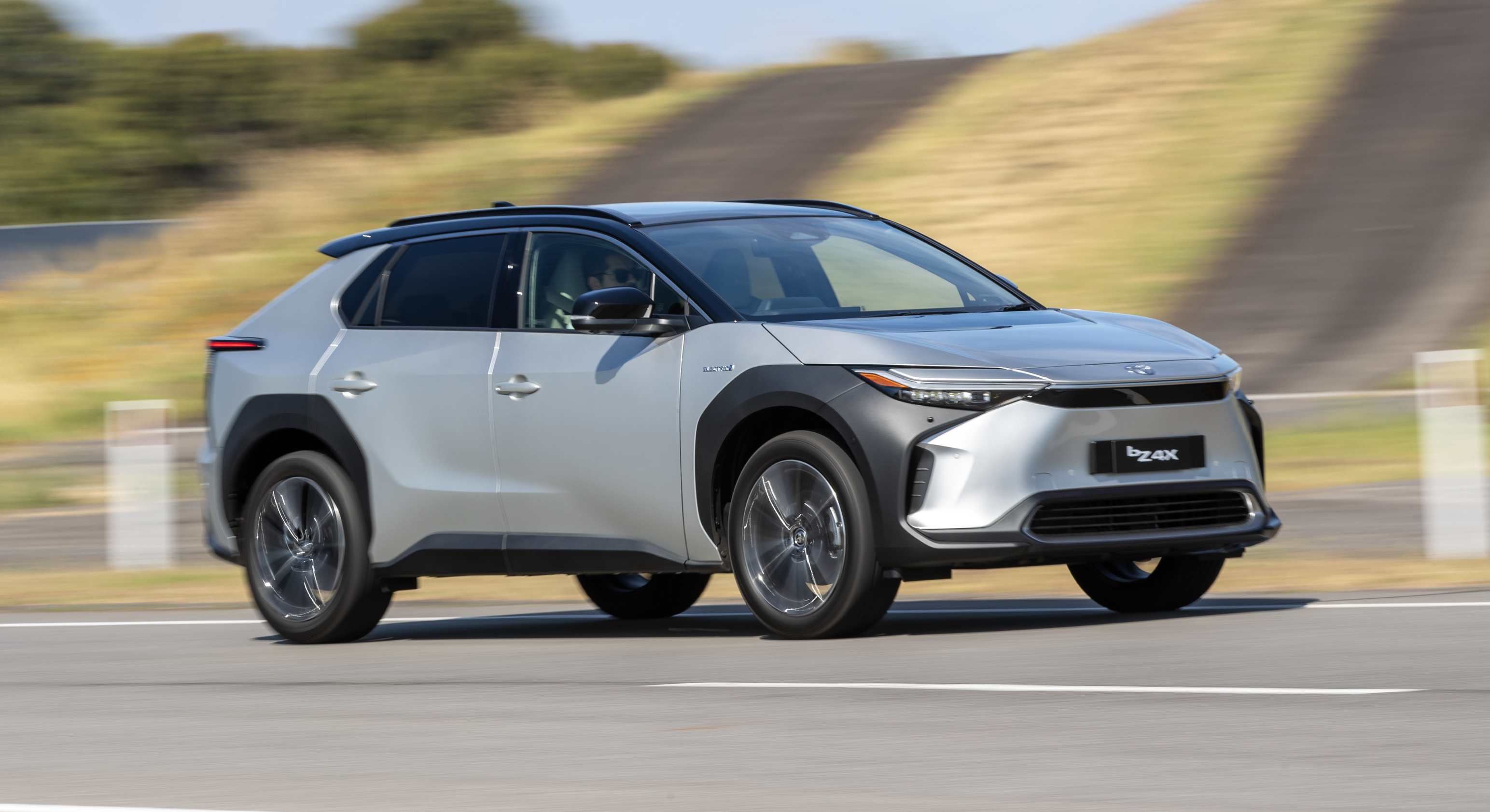
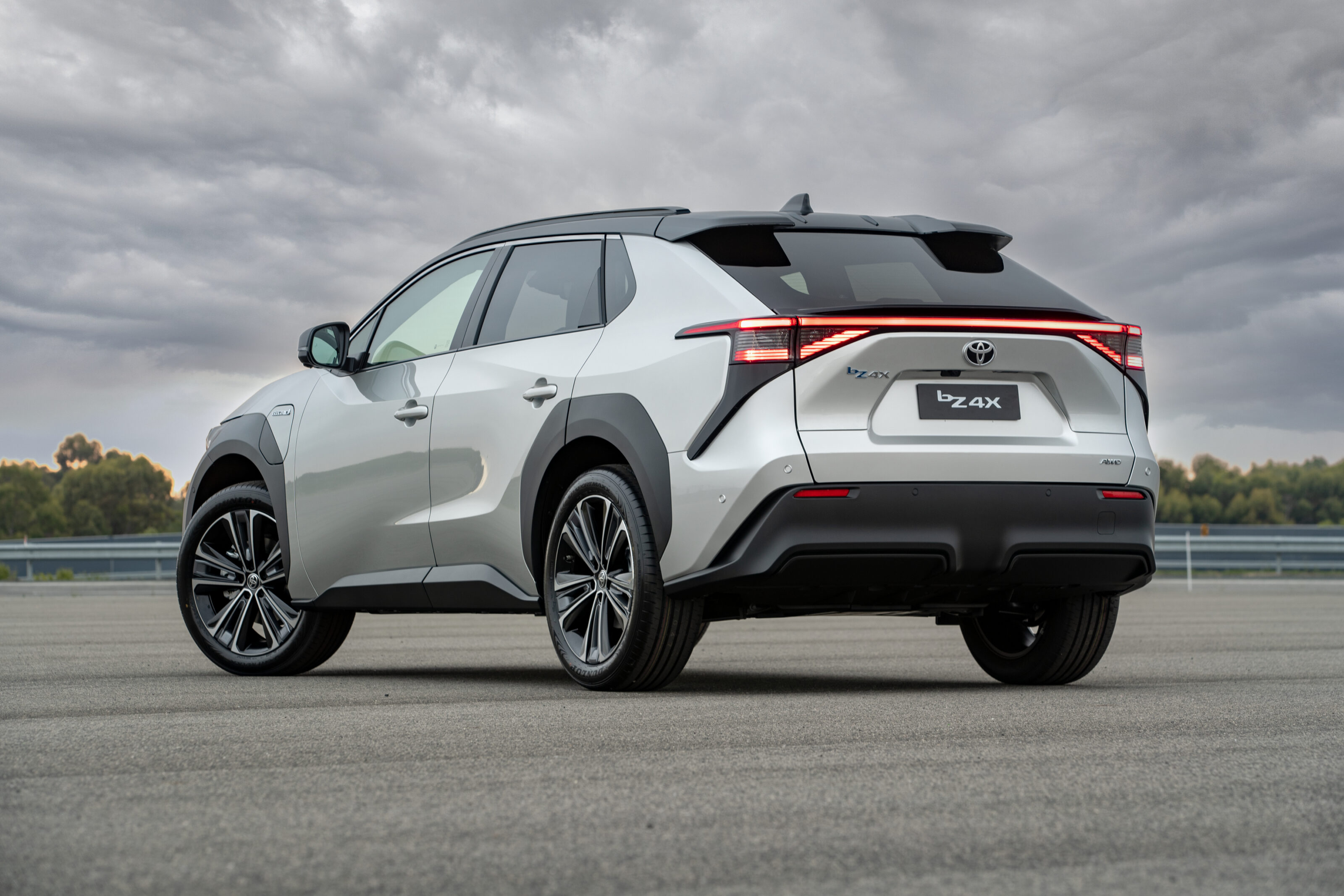
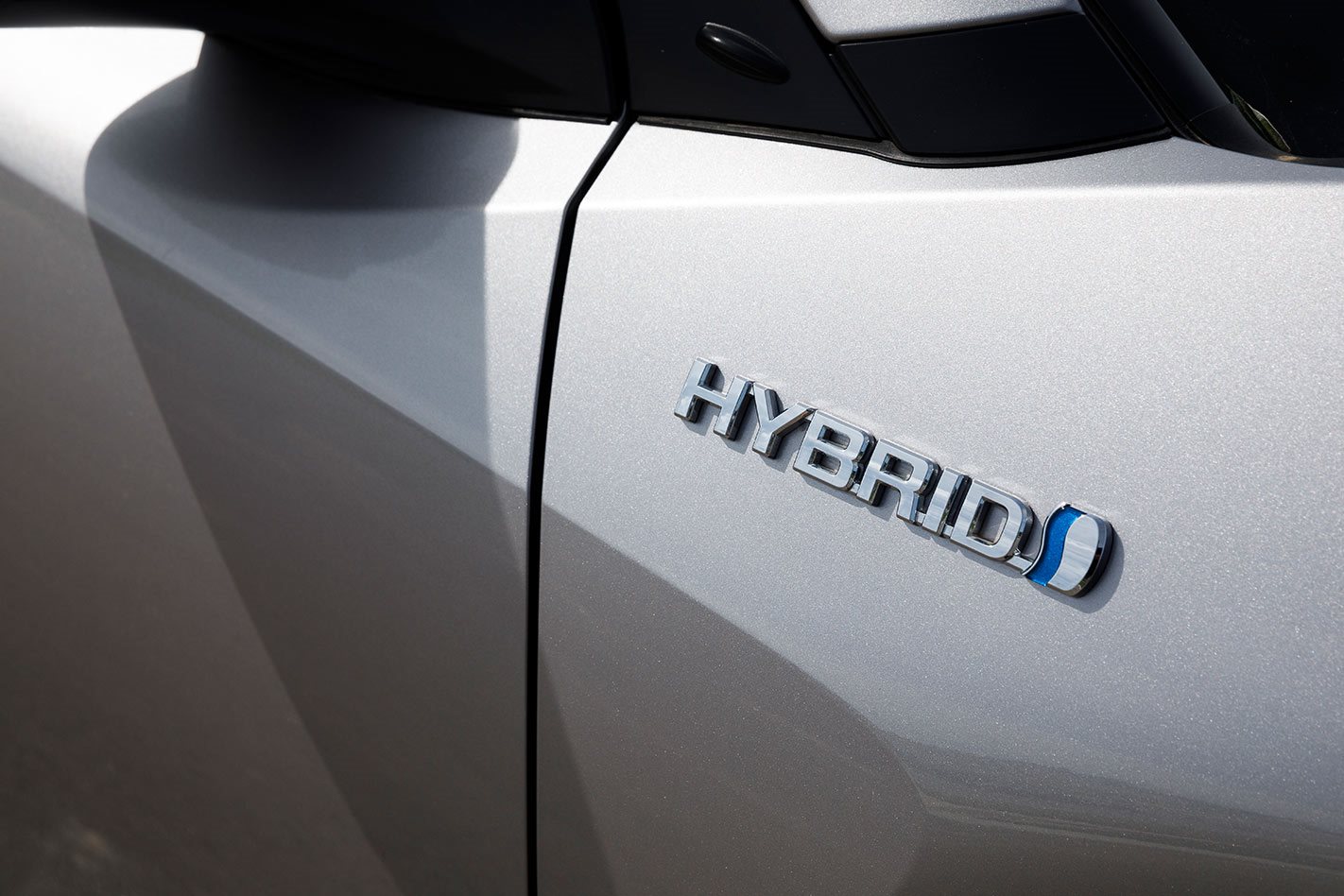
Of Toyota’s local lineup, more than 60 per cent offer a hybrid version, with the recently announced second-gen C-HR promising to only be available with such a drivetrain when it comes in 2024. This, combined with the upcoming launch of the fully-electric BZ4x and healthy order banks for hybrid models, will, he says, help the carmaker to reach 50 per cent electrified sales by 2025.
1
“We’ve been somewhat criticised by some quarters about being slow and not first to market [with fully-electric cars]. And given our hybrid background, there’s a lot of commentary around ‘you should have been first’,” he says.
“Well being first is, actually in this space, not the most important thing. Bringing a quality, safe and practical vehicle to market is more important to Toyota. I hear all those outside noises ‘we’re late’ etc. But to be quite honest, I’d rather be late and right, than early and not so right.
“There is no doubt that battery-electric vehicles will play a role in this aspiration to become a reduced-carbon world – and Toyota will be part of that. We’re not there now. In fact, we are a long way away from there. The reality is that issues still remain with the quality, the durability and the [driving] range and a whole lot of other factors – including the quality of the battery. And these are still very expensive cars today.”

1
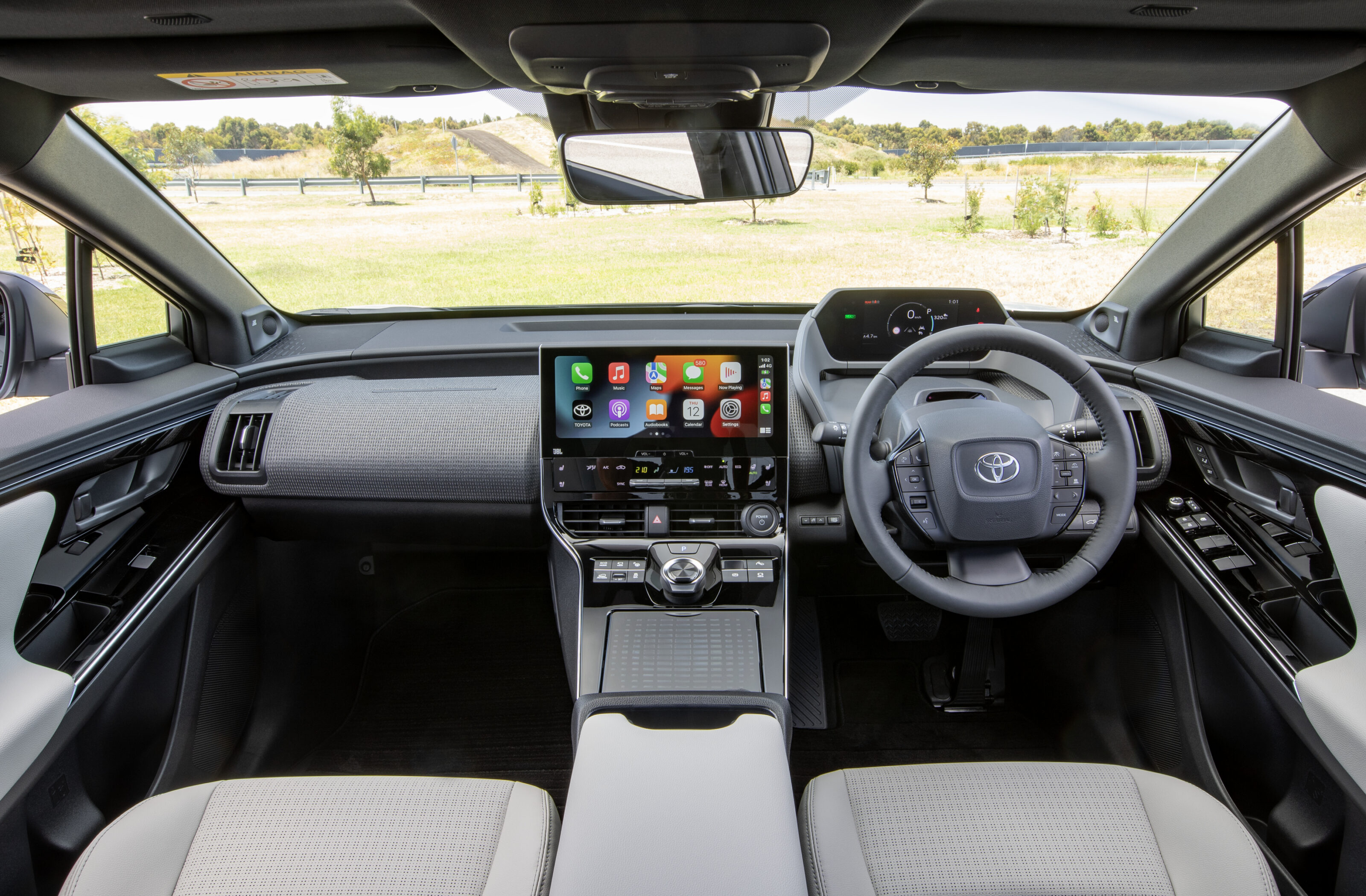
The price of Toyota’s first battery-electric car Down Under is still yet to be revealed, though Hanley has previously gone on record saying it will be “expensive” as well as emphasised that delays in bringing the model to market are to ensure good supply rather than bring it here in dribs and drabs.
“The BZ4x is not going to be as cheap as a hybrid Corolla – or a hybrid RAV4. In fact, it’s going to be a lot more expensive. And that’s the reality of the situation right now for what it will present to the market. Over time as scale goes up, prices will come down, battery technologies will evolve, [driving] range will get better, infrastructure will be much improved.
“Of course all that’ll happen. All we are simply saying at Toyota is it’s not the only way to get to carbon-neutral. There’s more than one way to do it and we don’t want to put all of our investments only in that area.
1
“You’ve got to be realistic about what you can achieve now and what you can achieve in the future. Some people say they want no internal-combustion engines by 2035. Well what’s the cost of that? Has anyone sat down and worked out can we do it? Is it achievable? Because if it’s not, then why go out in the media and talk about it?”
Hanley firmly believes that rushing into bringing purely electric cars to market would betray Toyota’s reputation for building vehicles that can stand the test of time. We’ve all seen the TV ads, with a number of its models clocking up hundreds of thousands of kilometres and still trundling on – and the sales exec says EVs should be no different.
“What’s important to Toyota is that we bring out a battery-electric car that maintains our basic principle of what we call QDR: quality, durability, reliability,” he tells us.
1
“The second point about pricing is that right now, in the whole, when you look at battery-electric vehicles, they don’t appeal to the mass market – they appeal to the few that can afford them at this juncture. I’m not suggesting that’s the future.
“But we’ve been very upfront right from day one when talking about BZ4x, in saying it won’t be the cheapest Toyota on the market. But, on the other hand, it’s also got to appeal to our customer base. There are ways and means we can bring that to market to make it affordable and achievable for our customers in the long run.
“I just don’t want people to be misled by this EV phenomenon that what we’re seeing is real. I don’t want them to be misled to think that these are cheap cars to make. And then after that the batteries aren’t actually that cheap to replace.
1
“So our position is very clear – we don’t want people to be having a discussion about having to replace the battery. That’s not in the Toyota DNA. We want them to be totally confident, totally comfortable. This car can do what I want it to do and it’s got Toyota stamp of quality all over it.”
This idea of a variety of technologies may, or indeed may not, be about to be tipped on its head with the changing of the guard at the top of Toyota globally. As of April 1, current CEO Akio Toyota, who has occupied the role for 14 years, will go on to become chairman of the board – with 53-year-old Lexus chief branding officer and president Koji Sato set to take his place.
Last month the incoming boss announced plans to shake up Toyota’s electric strategy, with more of a focus on battery-electric models – though still remaining committed to Toyoda’s diverse powertrain plan.
1
“I’m deeply grateful for what our outgoing president’s achieved and the legacy that he’s left for us,” Hanley says. “I can tell you he has invested a lot of our financial resources, our know-how and capability, in developing battery-electric technology. And I think people tend to forget sometimes conveniently that Toyota’s been doing this quite a long time, it’s actually not new to us. And that was largely driven by our current president and those before him.
“He’s left our company and the incoming president a wonderful opportunity now to expand on that direction and accelerate the things that we need to accelerate. Toyoda-san has just told, in my humble opinion, the market the reality.
He’s said what he believes, and what I truly believe is the truth about getting to carbon neutrality. He’s never said: ‘I don’t want to be carbon-neutral’. But he’s also never said there’s not ways and means we can get there.
1
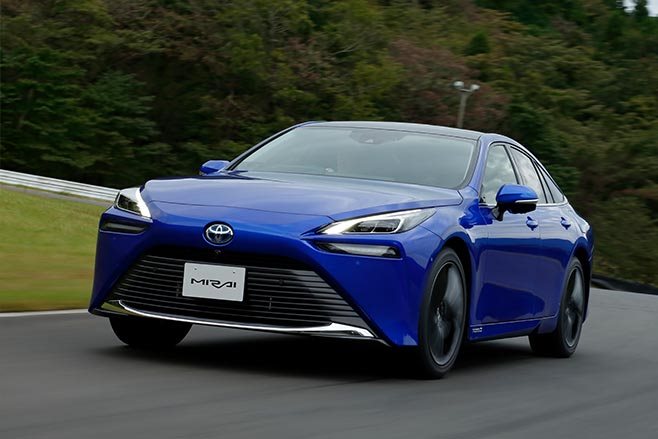
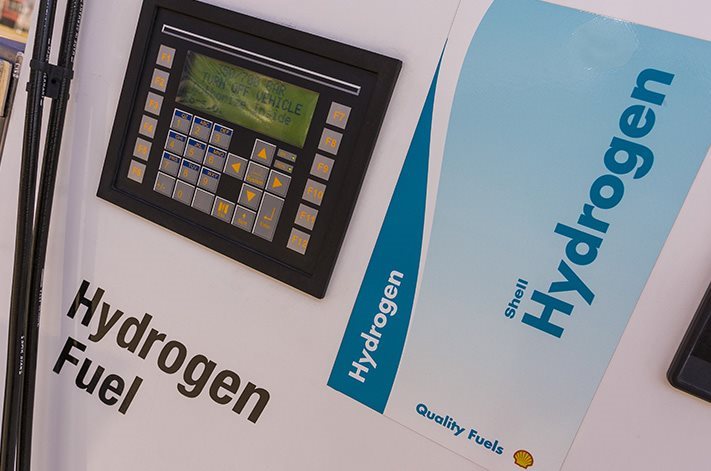
“One way that I think is still very much in our future is hydrogen (fuel-cell electric vehicles). We still believe that hydrogen has a future, particularly for heavy vehicles, commercial vehicles. And although a lot of people can’t see it, because obviously there’s an infrastructure required to get there, I do see a horizon of around 2035 for that.
“When you look at the LandCruiser, and even HiLux, then hydrogen (fuelling internal combustion engines) is a very good solution. Plentiful supply, as long as it’s made by renewables, it’s clean. It’s not zero-emissions, but it’s carbon-neutral. It can’t be zero-emissions, because you’ve still got oils and fluids and brake fluids etc that are going to give some sort of emission.
“But again, why not? I mean, you can bring that down to a carbon-neutral car, and you’ve got an infrastructure right now to support it, why shouldn’t it be looked at?”
1
Looking to the future, Hanley is optimistic about what is to come – his only regret being he won’t be around to be a part of what Toyota can achieve.
“The only thing I’ll regret in my life is that I’m 60 years-old, so realistically I won’t be here in 10 years’ time. And the future of Toyota and the products, the services, the connected services, the customer experience, the car sharing, you know, the electrification, the hydrogen future.
“All of those exciting things are going to happen over the next 10 years. So your generation is in for the ride of your life.”
MORE
Everything Toyota
MORE
Electric Cars
“New Government legislation around emissions will come to this country in the next six to 12 months – no doubt.”
Timeline of transport emissions policy so far
- New Federal Government instated May 21, 2022
- Target to reduce overall emissions by 43 per cent by 2030 set in June
- Consultation on Federal transport emissions policy begins August u201922
- Hanley estimates news of emissions target will drop before 2024
“By the end of the year, if not sooner, we’ll have a very clear direction on what an emissions policy will look like in Australia,” Sean Hanley, Toyota Australia vice president sales, marketing, and franchising, told Wheels.
Among other manufacturers, Toyota has had its input into the legislation after the Federal Government opened the bill for consultation in September last year.
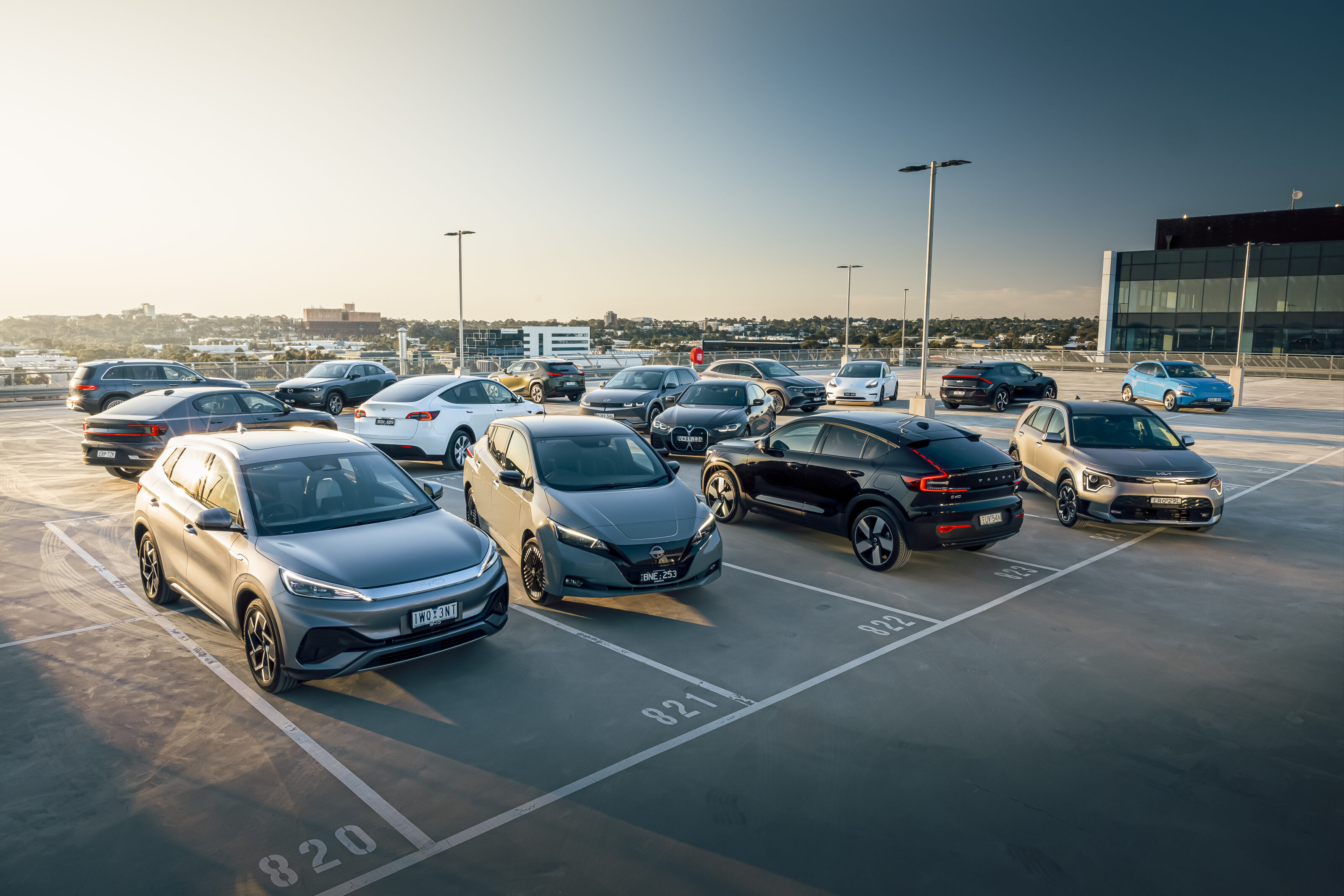
Catch up on Australia’s emissions policy
1
Hanley didn’t identify what Toyota – by far Australia’s biggest-selling car brand – had asked for, but recent controversy (including being accused of greenwashing by Greenpeace) points to a more conservative outlook. Hanley was frank in his assessment of Toyota’s current situation.
“We want to accelerate, but at the same time, we don’t want to mislead people. We are not carbon-neutral. We’ve still got a long way to go, and that’s why we’re setting out a plan that’s realistic, and credible to get to a carbon-neutral position.
“We’ve never professed to say we’re carbon-neutral [right now]. In fact, we’re one of the few car companies that actually goes out very publicly and says: ‘You’ve got to have a diversified range of technologies’,” added a typically-animated Hanley.
1
Does Toyota know what’s coming?
“I think the Government’s approach is exactly right. I mean, it has done a lot of consulting and got a lot of feedback… I think it’s a big job now for the Government to sort through all that.
“I don’t know what the outcome of that [policy] will be. Despite people thinking that Toyota might know, we don’t know, but we’ve certainly had our input,” said Hanley.
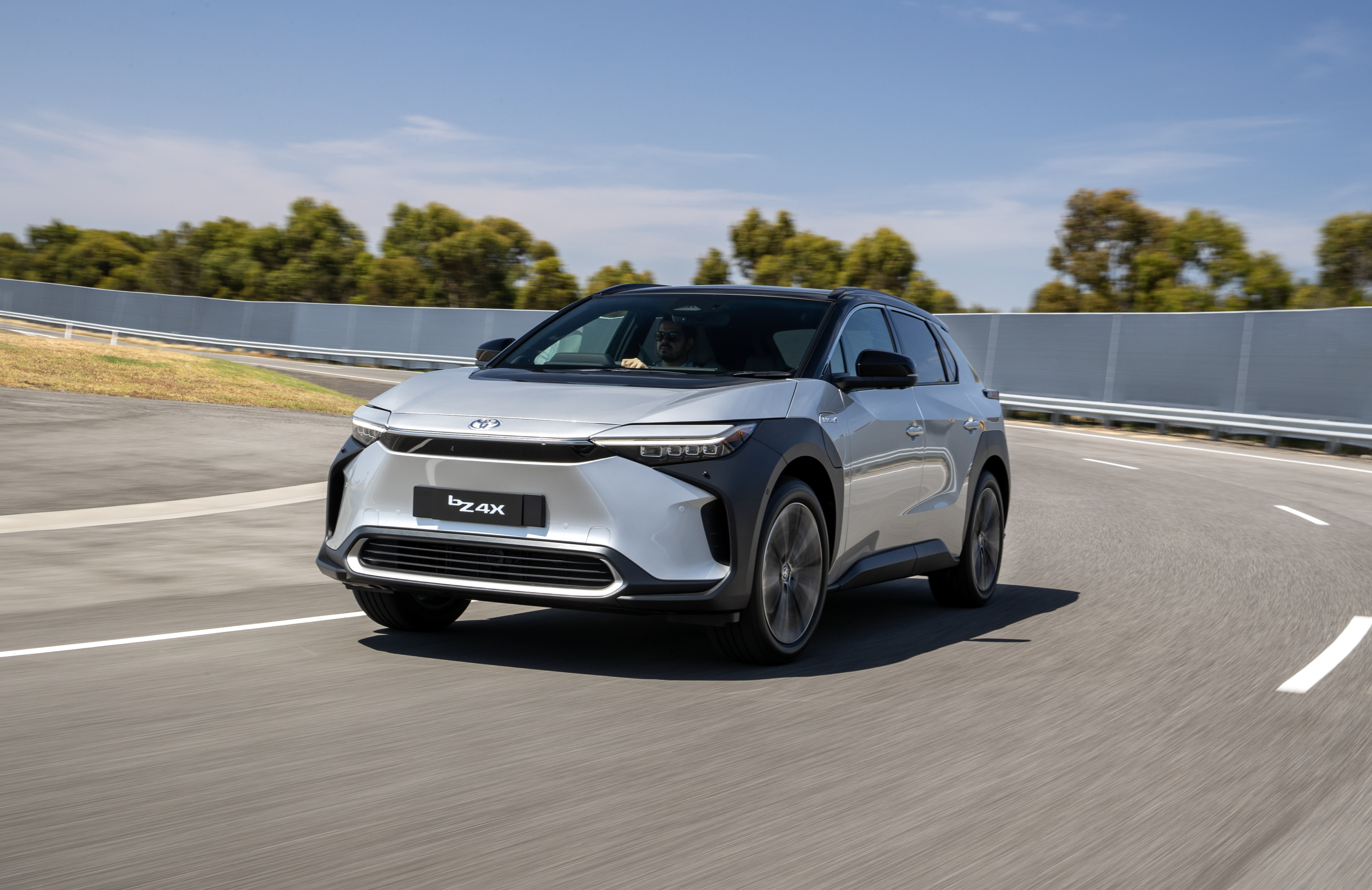
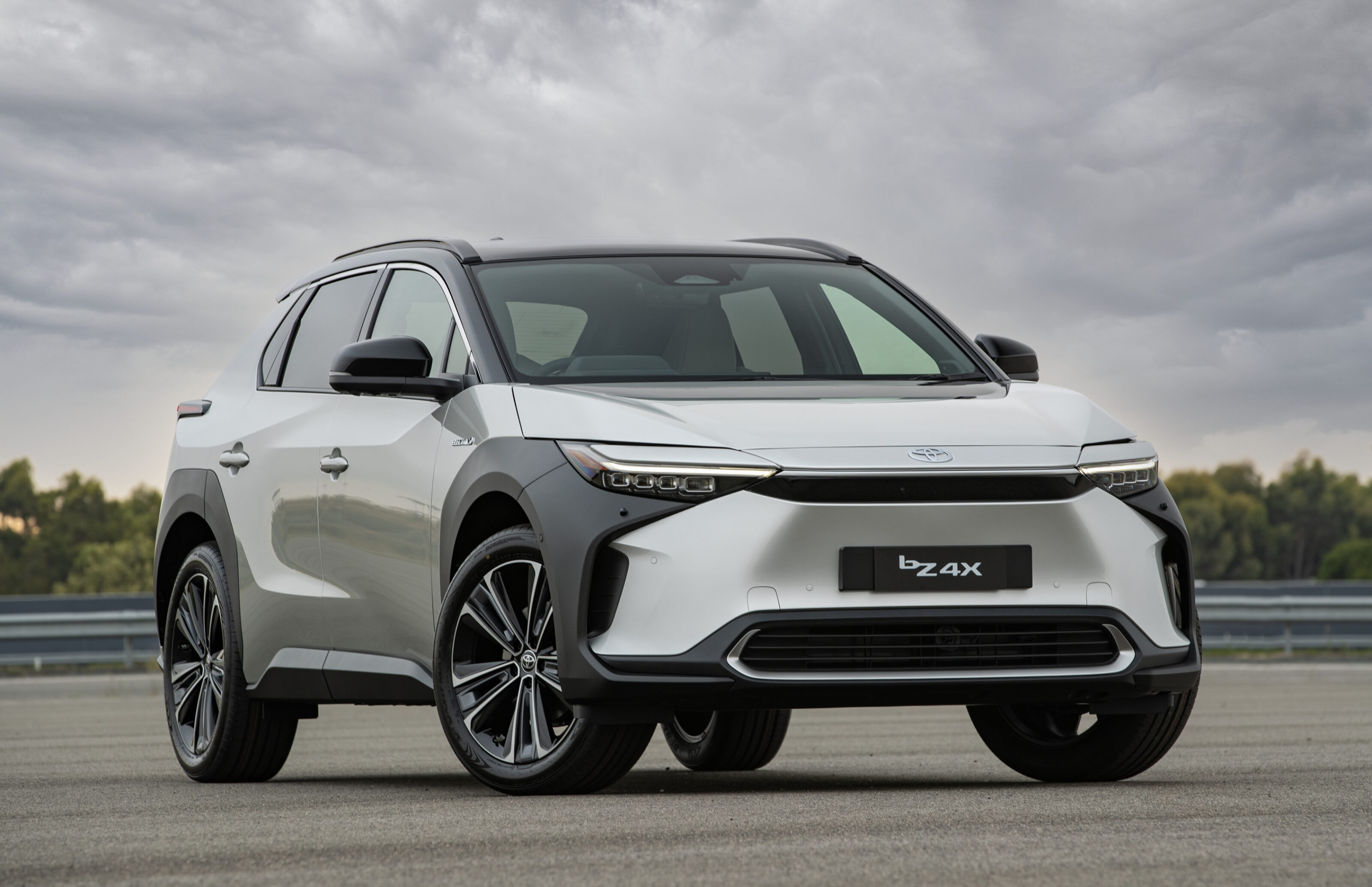
Toyota’s first electric vehicle, the BZ4x, is just around the corner. Although the brand has been selling hybrids in Australia since launching the Prius in 2001, more will likely need to be done for the brand to hit emissions targets.
1
A hybrid version of the Toyota Tundra is set for Australian release, but a focus on electrified versions of HiLux – Australia’s best-selling vehicle – and Hiace van will be crucial to cutting emissions.
“We’ll be able to work within the framework, and we’ll be able to set up a sustainable and secure future, but above all contribute positively to the community we operate in. And at the end of the day, that’s what constitutes a good company,” Hanley said.
MORE
Everything Toyota
September: ID.GTI concept revealed
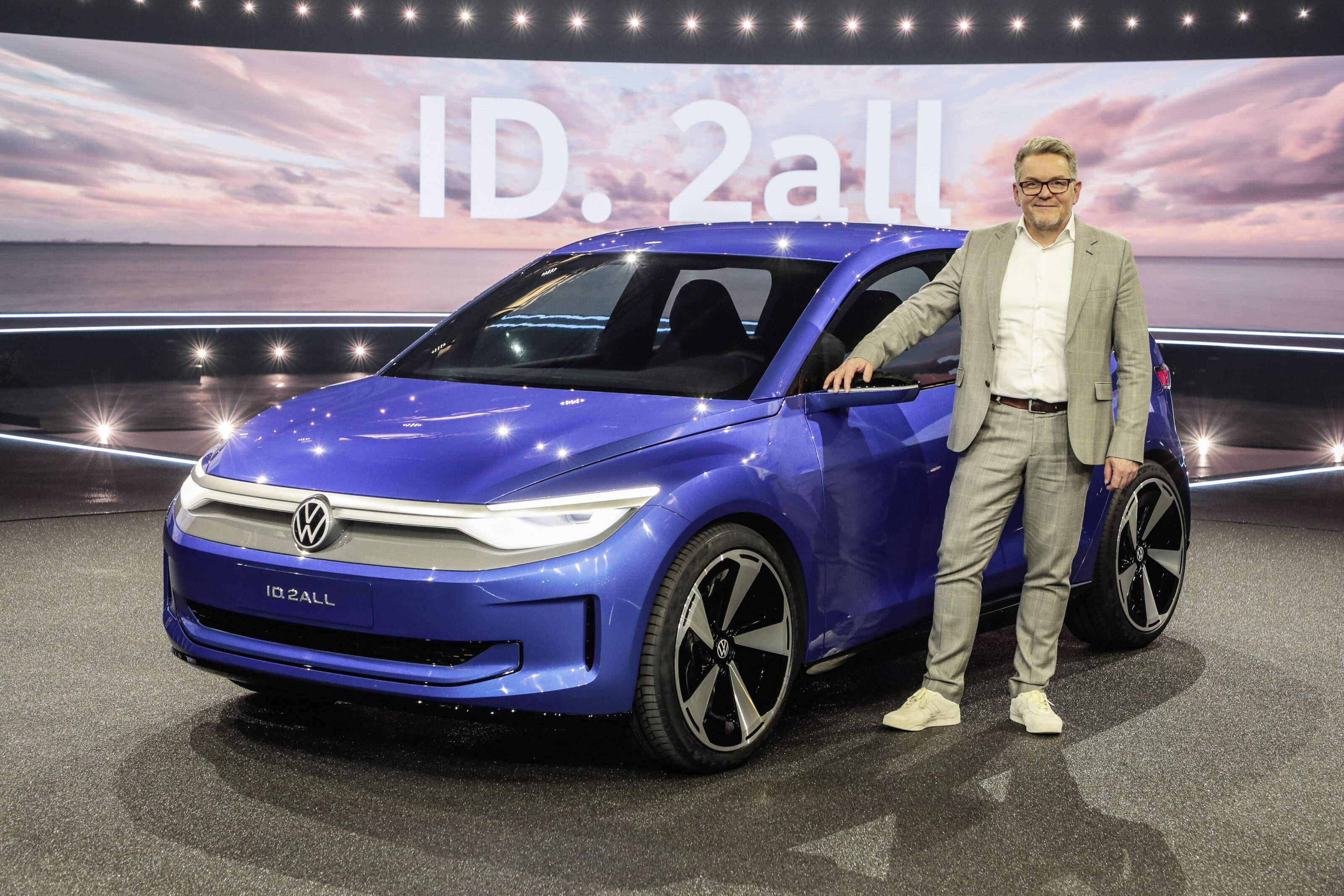
The new ID.2all-based ID.GTI concept has made its debut in Munich at the IAA Mobility 2023 motor show.
The concept arrives as a move the German brand describes as “marking the next chapter in the iconic GTI legacy”. Details at the link below!
Story continues…
Volkswagen’s all-new electric hatchback, the Polo-sized ID.2, will launch in 2025.
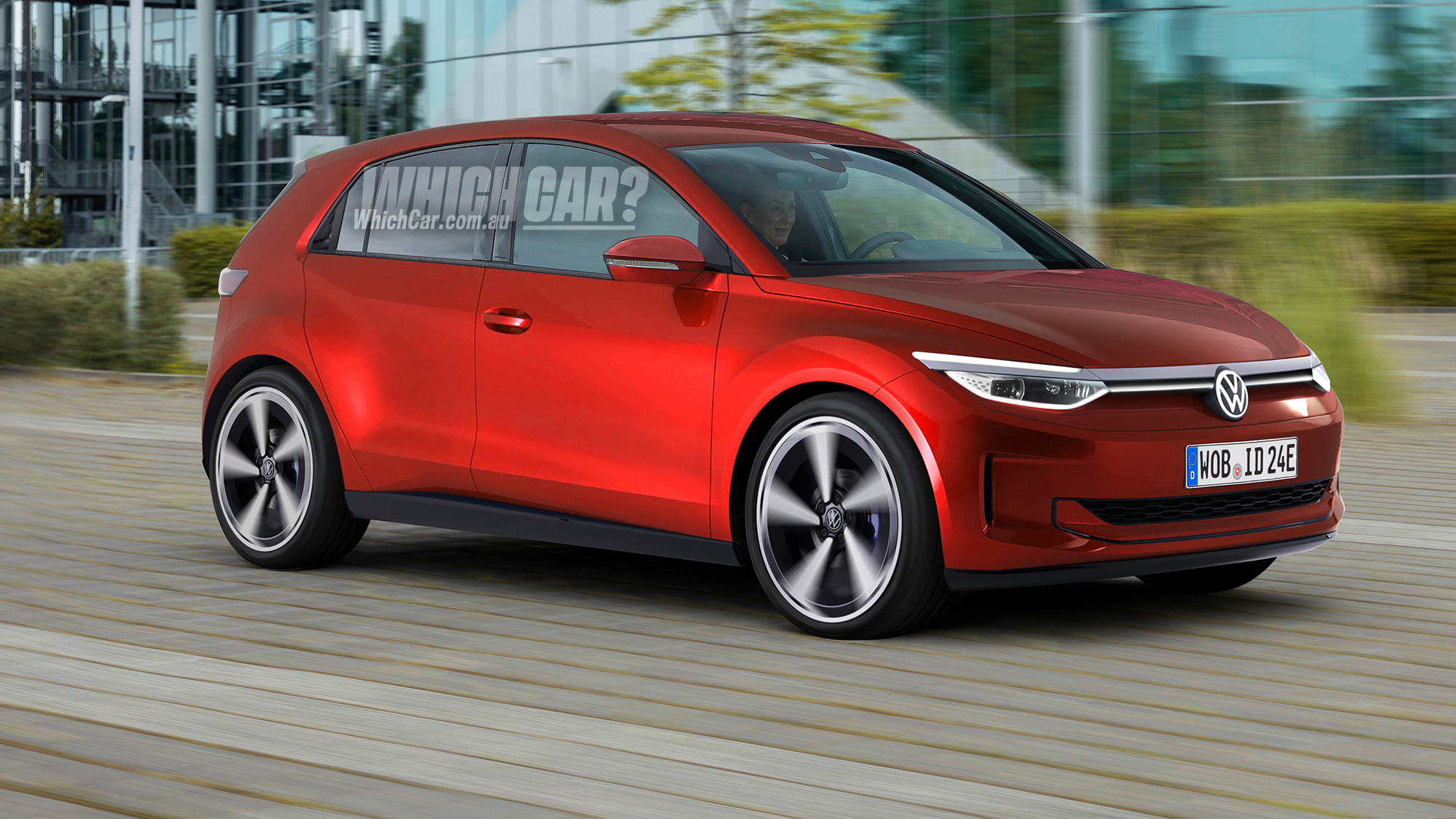
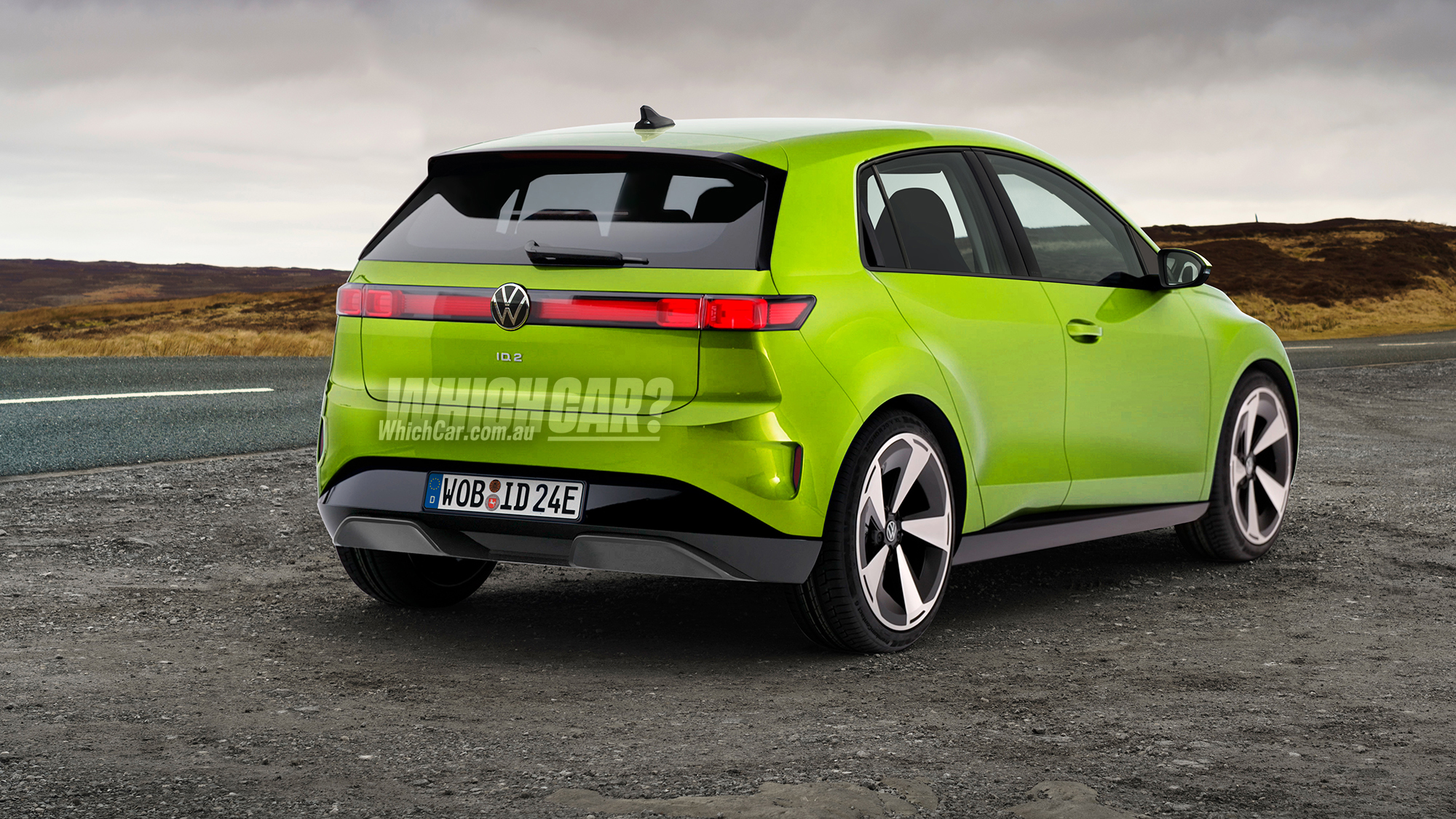
While the final production vehicle remains under wraps, it is expected to be a toned-down version of the ID.2all concept revealed last week.
As depicted in our imaginative renderings above and below, this should include conventional side mirrors and lighting units; however, the overall design of the ID.2all is tipped to remain unchanged – including the hidden rear door handles.
1
It will be underpinned by the front-drive MEB Entry platform, with a starting price below €25,000 (AU$40,000) and a driving range of up to 450 kilometres.
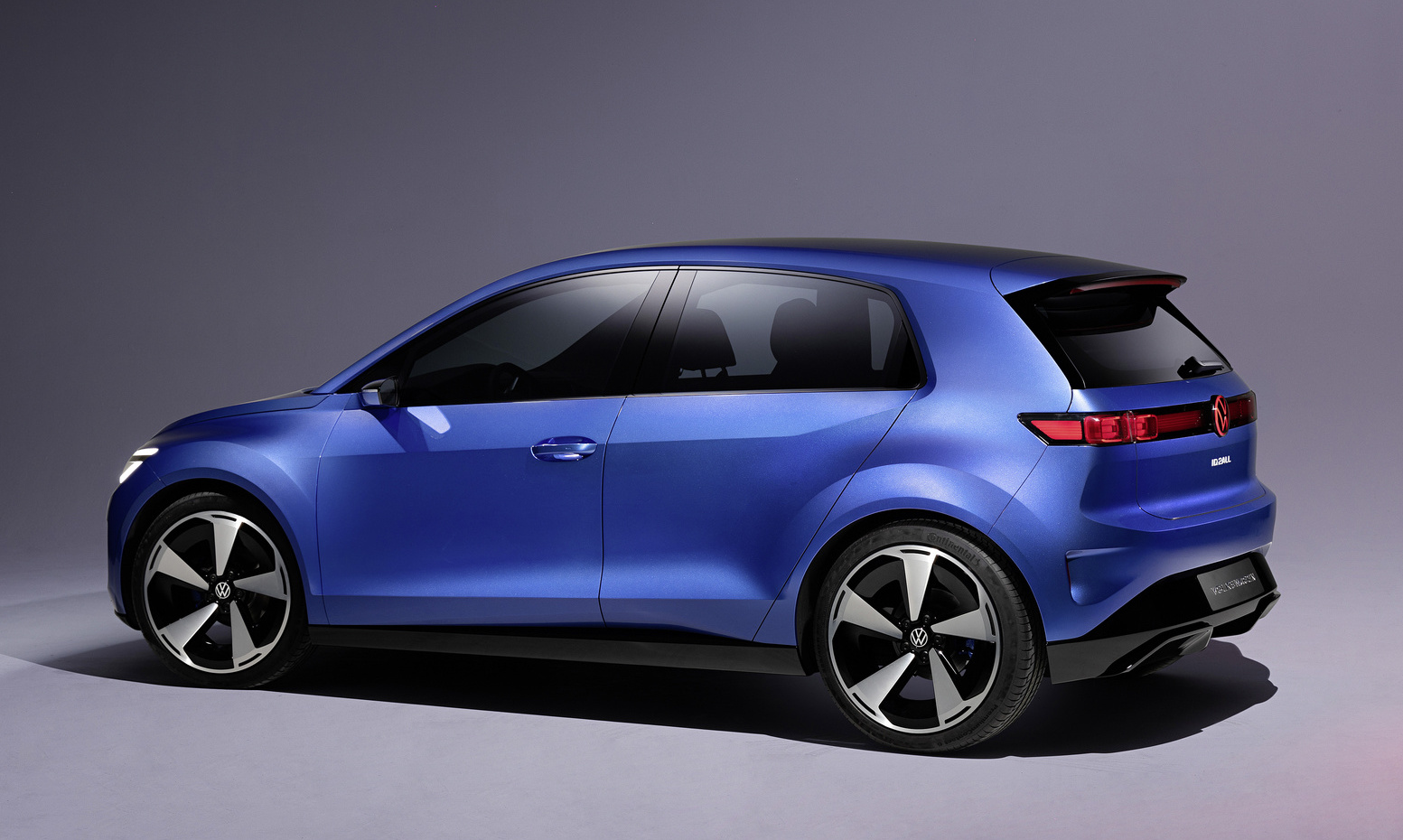
Inside, Volkswagen claims the ID.2all has similar cabin space to the current Golf Mk8, thanks to its flat floor configuration and long wheelbase, despite measuring just 4050 millimetres in length, almost identical to the Polo light car.
At the reveal of the ID.2all concept, Kai Grünitz, a Volkswagen board member for technical development, told Top Gear the ID.2 would serve as the basis for an all-electric GTI or GTX hot hatch.
“We’re working on a sporty version,” he said. “It will only be front-wheel drive. No all-wheel drive.
“Whether it will be a GTI or GTX or whatever, we will see.”
1
The board member added that he has “a number in mind for the power figure”, which he promised to reveal sometime in the future.
In concept form, the ID.2all is powered by a 166kW single electric motor – more than a current Polo GTI and similar to the pre-update Mk7 Golf GTI from a decade ago.
Any hot hatch-related powertrain would likely be shared with its Cupra UrbanRebel stablemate – and potentially Skoda’s version, too.
1
At the same event, Top Gear spoke to ex-Bentley design chief Andreas Mindt, who is now in the same role at Volkswagen.
Despite its compact size, Mindt said designing the car has not been an effortless task, and that designing a Bentley is “easy” due to the wide and low proportions.
“When I worked at Bentley, it was an easy job,” said Mindt. “I did the Batur based on the Continental GT and that was amazing – it’s so easy to do because it’s low, wide and has a long bonnet.
1
“It’s like taking a penalty in football without a goalkeeper. It’s easy to do. A lot of people think hypercar designers are geniuses, but it’s so easy to do.
“To make a small car like the ID.2all, you have to work hard, and people don’t understand that. It’s harder to design.
“When you look at things like the Fiat Panda – those are the genius designers in my eyes, not the ones who do hypercars. I don’t want to hurt anyone, but I know both sides of it.”
Indeed, developing a mainstream vehicle requires a lot of consideration, from cost-focused pressure to save every dollar, to the latest technological, safety and emissions requirements – all while attempting to create an appealing design for the masses.
1
With his two-decade career at the Volkswagen Group, Mindt has worked on the first-generation Volkswagen Tiguan and the Golf 7.
He also played a leading role in designing the Audi A1, Q3, Q8 E-Tron, E-Tron GT, and the 1999 Bentley Hunaudières concept.
Mindt joined the Volkswagen brand as design chief in February, and claims the design process for the ID.2all concept was completed in just six weeks.
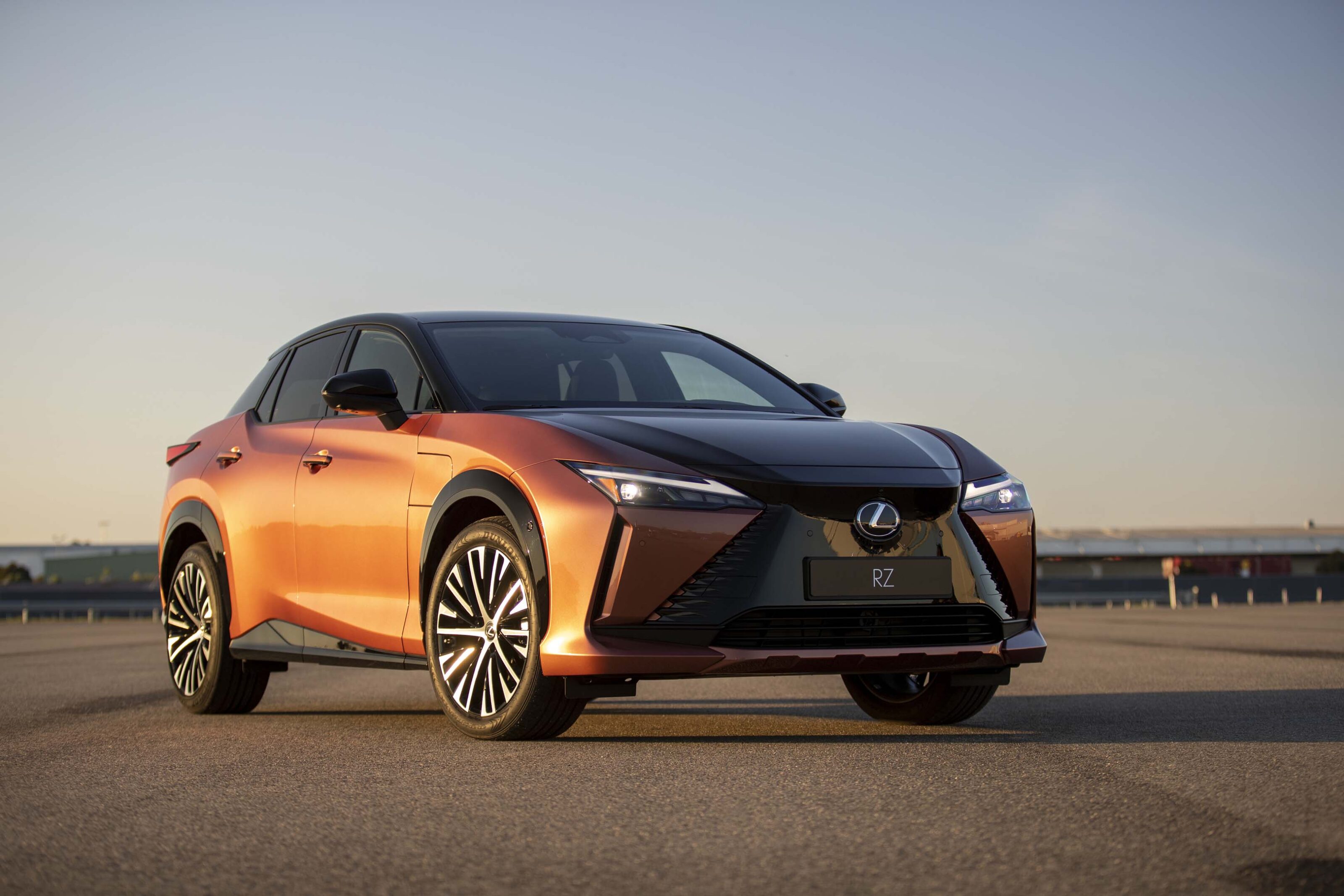
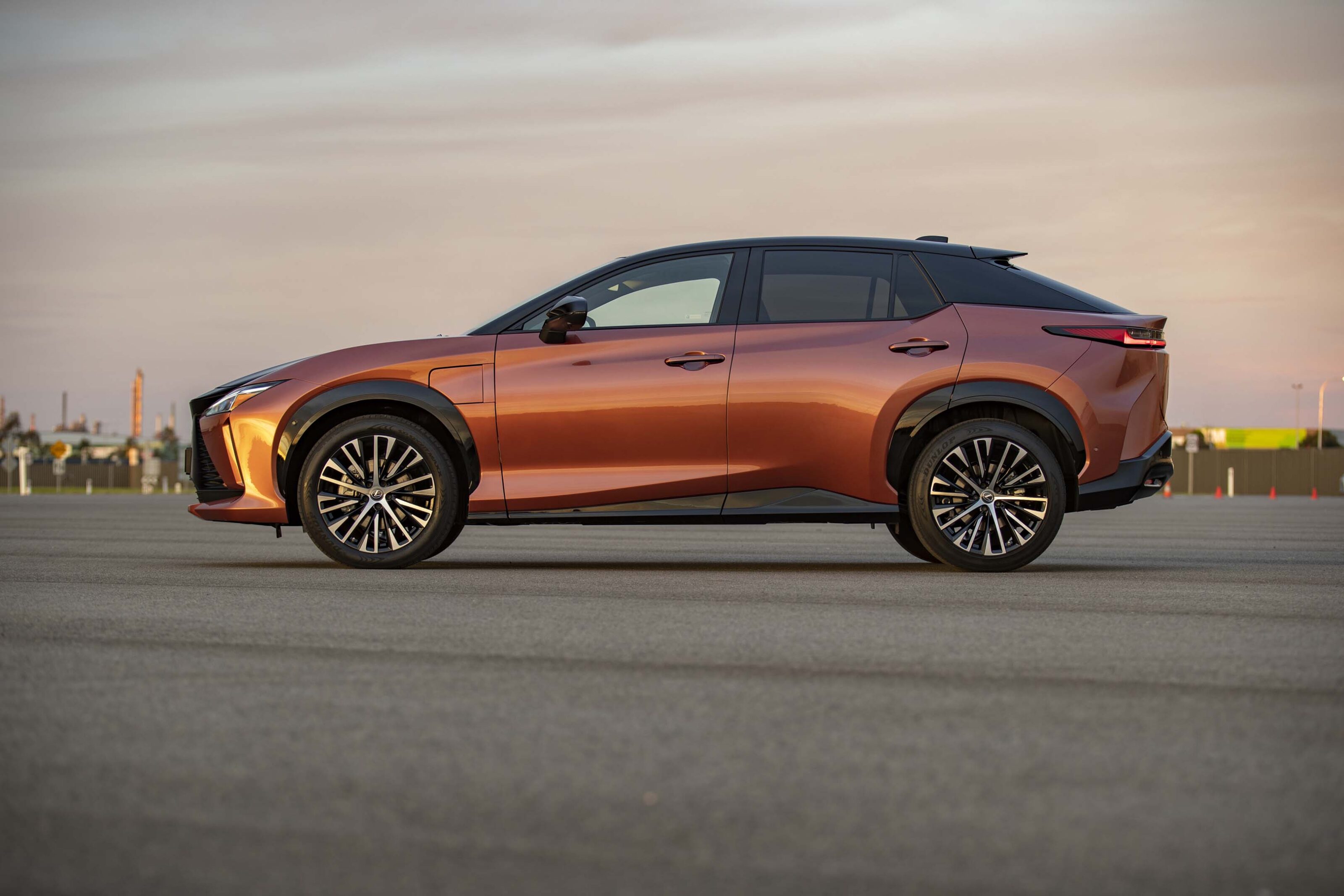
Australian pricing for the new 2023 Lexus RZ electric SUV has been announced today ahead of its May launch, arriving in the form of the high-grade RZ 450e.
The mid-size SUV is the first Lexus to be built on a dedicated all-electric platform, following the petrol/electric UX small SUV.
The RZ’s arrival also makes it an in-house alternative to the petrol- and petrol-electric hybrid RX range.
Lexus RZ EV v Lexus RX size comparison
| Lexus RZ | Lexus RX | |
|---|---|---|
| Wheelbase | 2850mm | 2790mm |
| Length | 4805mm | 4890mm |
| Width | 1895mm | 1895mm |
| Height | 1635mm | 1690mm |
1
2023 Lexus RZ pricing, power and driving range
The RZ 450e will come to Australia in two grades: Luxury and Sports Luxury, priced from $123,000 and $135,000, respectively.
These prices exclude on-road costs, and neither variant is eligible for federal- or state-based purchase incentives.
Both models are powered by a 71.4 kWh lithium-ion battery unit that produces 230 kW of power and delivers a claimed driving range of 470 kilometres.
1
The vehicle can be charged via a three-phase power supply, taking approximately 6.5 hours, or a DC fast-charging system that can charge to 80 per cent in about 30 minutes. An 11kW on-board charger is also provided.
The RZ 450e is the first Lexus built on the e-TNGA platform, developed specifically for EVs. As with all dedicated electric car architectures, the platform is intended to provide the RZ with strong body rigidity, a low centre of gravity, and a long wheelbase – now something of a trademark for EVs.
The RZ 450e also employs an electric ‘e-axle’ for both the front and rear wheels, designed to distribute optimum power and grip to each wheel as required.
The basics
| 2023 Lexus RZ450e specs | |
|---|---|
| Battery size | 71.4kWh |
| Drive | dual-motor AWD |
| Power | 230kW |
| Torque | Around 450Nm |
| Driving range | Up to 450km |
| 0-100km/h | About 5.5 seconds |
| Charging speed | up to 150kW DC |
| Charging time | 0-80% 30min DC |
1
Features and equipment
The ‘entry-level’ Luxury grade’s standard features include LED headlights, rear spoiler, and heated side mirrors, while the Sports Luxury model adds 20-inch alloy wheels, dynamic auto-levelling headlights, and a dimming panoramic roof.
RZ 450e Luxury
- LED headlights with static auto-levelling and headlight washers
- LED daytime running lights
- Rear spoiler
- Rear privacy glass
- Heated side mirrors and auto-dimming (driver’s side) with auto power folding function
- 18-inch alloy wheels
- NuLuxe leather trim
- 8-way driver and front passenger power adjustable heated seats (driver’s with two-way lumbar power adjustment)
- 14-inch multimedia display
- 10-speaker Panasonic audio with DAB
- Wireless Apple CarPlay and Android Auto
- Five USB-C ports and Qi wireless phone charger
- Suite of Lexus Connected Services
- 10 airbags
- Lexus Safety Sense

1
RZ 450e Sports Luxury (in addition to the Luxury grade)
- 20-inch alloy wheels
- Acoustic glass
- Dynamic auto-levelling headlights with cornering function
- Two-tone exterior paint option
- Ultrasuede interior trim
- Heated outer rear seats
- Ventilated driver and front passenger seats
- Heated steering wheel
- Radiant heating for front seat occupants
- Three-position driver seat memory
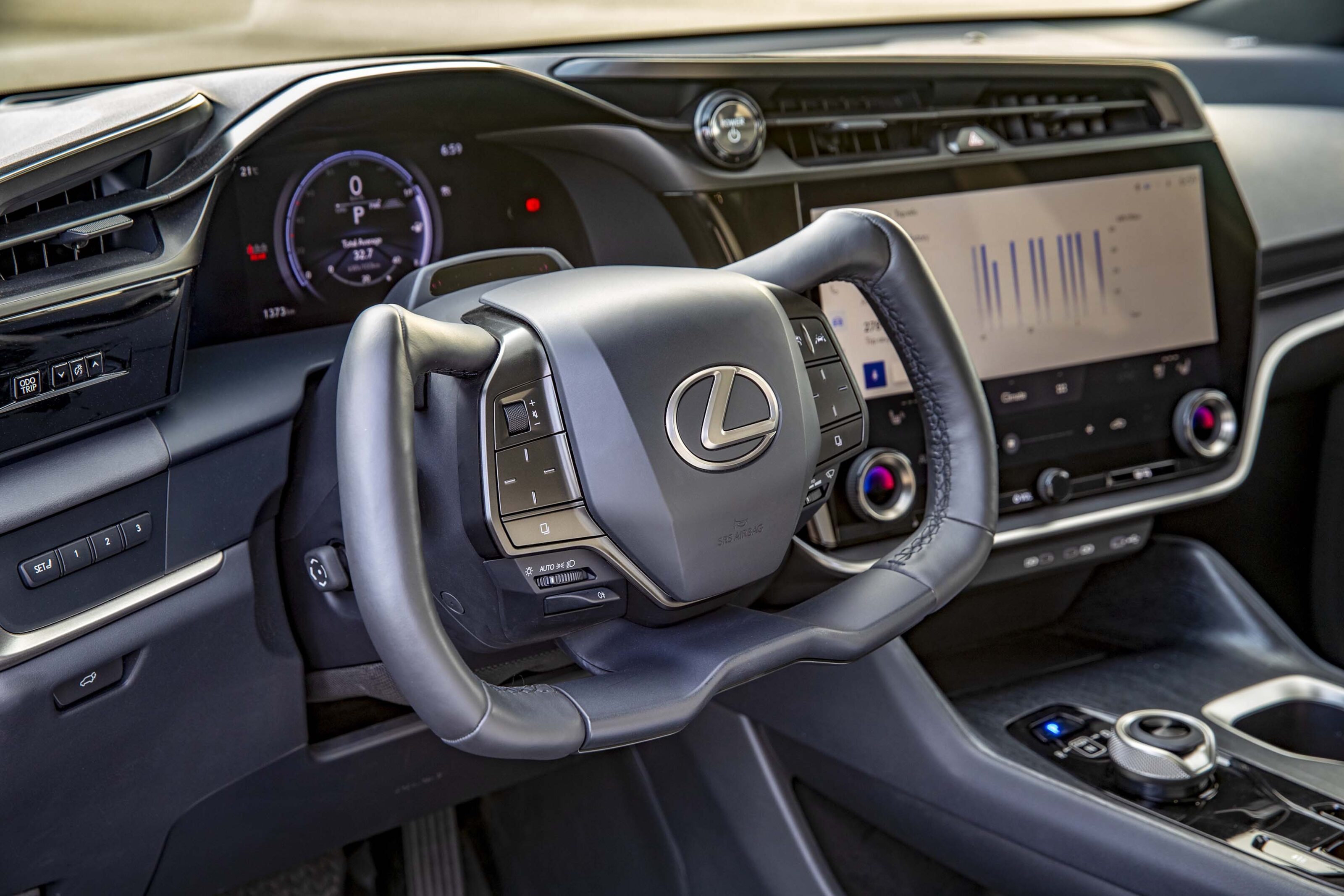
- Touch-sensitive steering wheel controls
- Head-up display
- Adaptive high beam system
- Intelligent park assist
- Dimming panoramic roof
- Smart key card
- 13-speaker Mark Levinson Premium Audio
Both grades come with complimentary home charging for all RZ 450e owners through Lexus Encore Electrified Platinum benefits, which also includes Lexus On Demand and complimentary Valet Parking.
The RZ 450e represents a key milestone for Lexus as it moves towards offering only hybrid, plug-in hybrid, and battery electric vehicles in Australia by 2030.
1
MORE
Everything Lexus
Snapshot
- IPCC warns greenhouse gas emissions still rising
- u2018High confidenceu2019 in EVs to reduce land-based transport carbon footprint
- u2018Medium confidenceu2019 in low-emissions hydrogen, biofuels in commercial transport
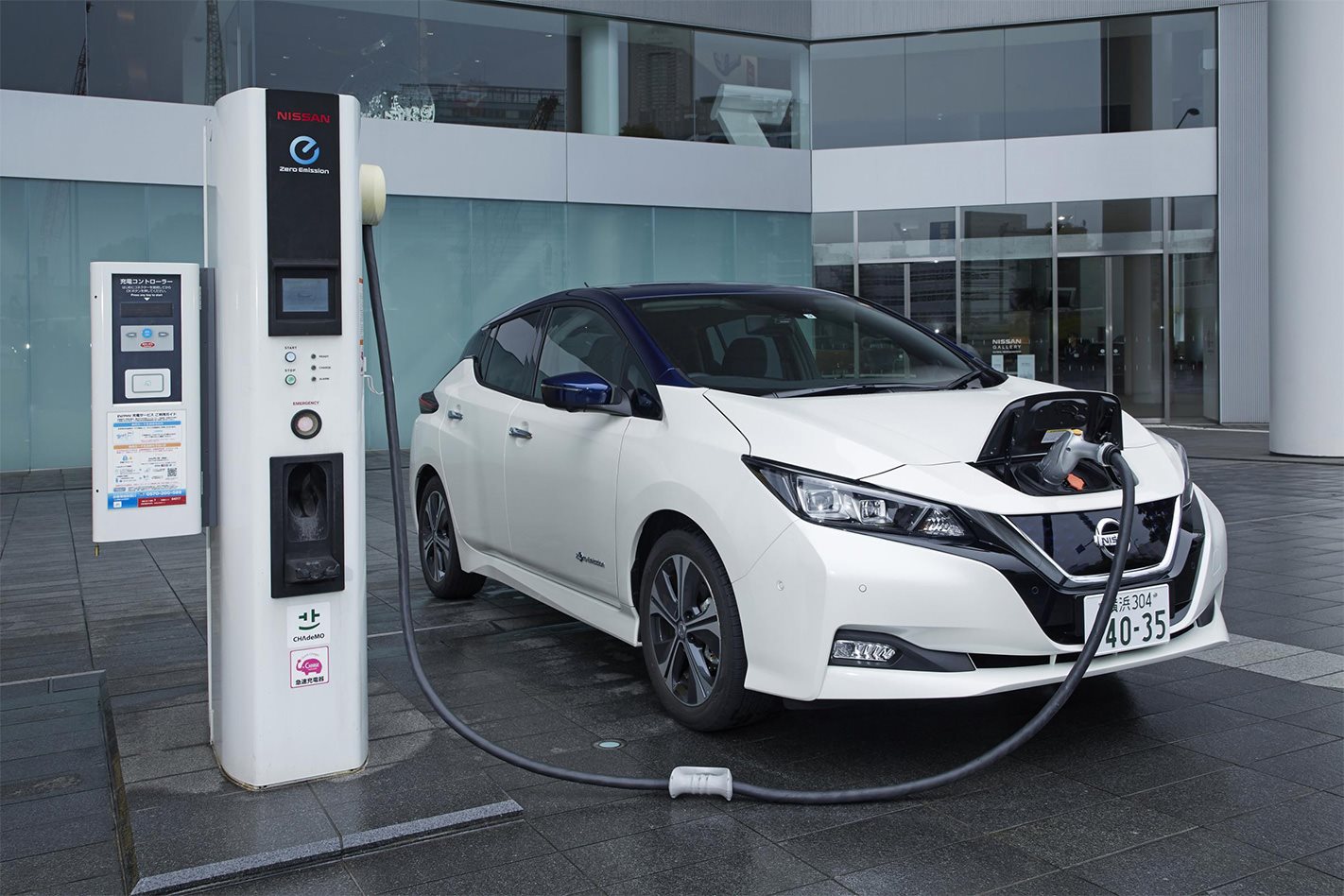
The latest 2023 report from the Intergovernmental Panel on Climate Change (IPCC) highlights that there are “multiple, feasible and effective options” available now for climate action, including electrifying transport.
The IPCC, which is made up of thousands of scientists and academics globally, reinforced the urgent need to reduce greenhouse gas emissions as it continues to rise and cause intense heat waves, heavier rainfall, and natural disasters – five years after it called for the need to keep global warming to 1.5-degrees celsius above pre-industrial levels.
Measures include; access to renewable energy, low-carbon vehicle electrification, public transport, cycling and walking to improve air quality, claiming: “The economic benefits for people’s health from air quality improvements alone would be roughly the same, or possibly even larger than the costs of reducing or avoiding emissions.”
1
The United Nations body also assessed ‘high confidence’ in electric vehicles powered by low greenhouse gas emissions energy sources to reduce the land-based transport carbon footprint lifecycle, improving production processes, and a circular material economy.
However, ‘medium confidence’ was labelled on sustainable biofuels, low-emissions hydrogen, and derivatives such as synthetic e-fuels to mitigate emissions in shipping, aviation, and heavy-duty land transport industries – but all require “production process improvements and cost reductions”.
“The greatest gains in wellbeing could come from prioritising climate risk reduction for low-income and marginalised communities, including people living in informal settlements,” the IPCC report’s co-authors, Christopher Trisos, said.

1
In 2021, the IPCC warned of a ‘code red’ for humanity – projecting global warming of two-degrees celsius will be exceeded during the 21st century and the 1.5-degree target will be met or over-shot in the next 20 years.
But, to keep on track for the latter, current emissions should be almost halved by 2030.
A recent report commissioned by electric vehicle companies Polestar and Rivian revealed that the automotive industry is set to pass the 1.5-degree threshold by at least 75 per cent by 2050.
Both brands warn simply switching into an EV is not enough to curb the climate crisis; a three-prong approach is needed, including owners recharging EVs from renewable energy sources and carmakers ensuring a sustainable supply chain.
⚡ More EV stories to help you choose the best car for your needs
Snapshot
- EU court rules Mercedes must compensate owners for alleged diesel u2018defeat deviceu2019
- Eligible only if there are damages from failed emissions-reduction software
- But, each EU country needs to determine if its unlawful
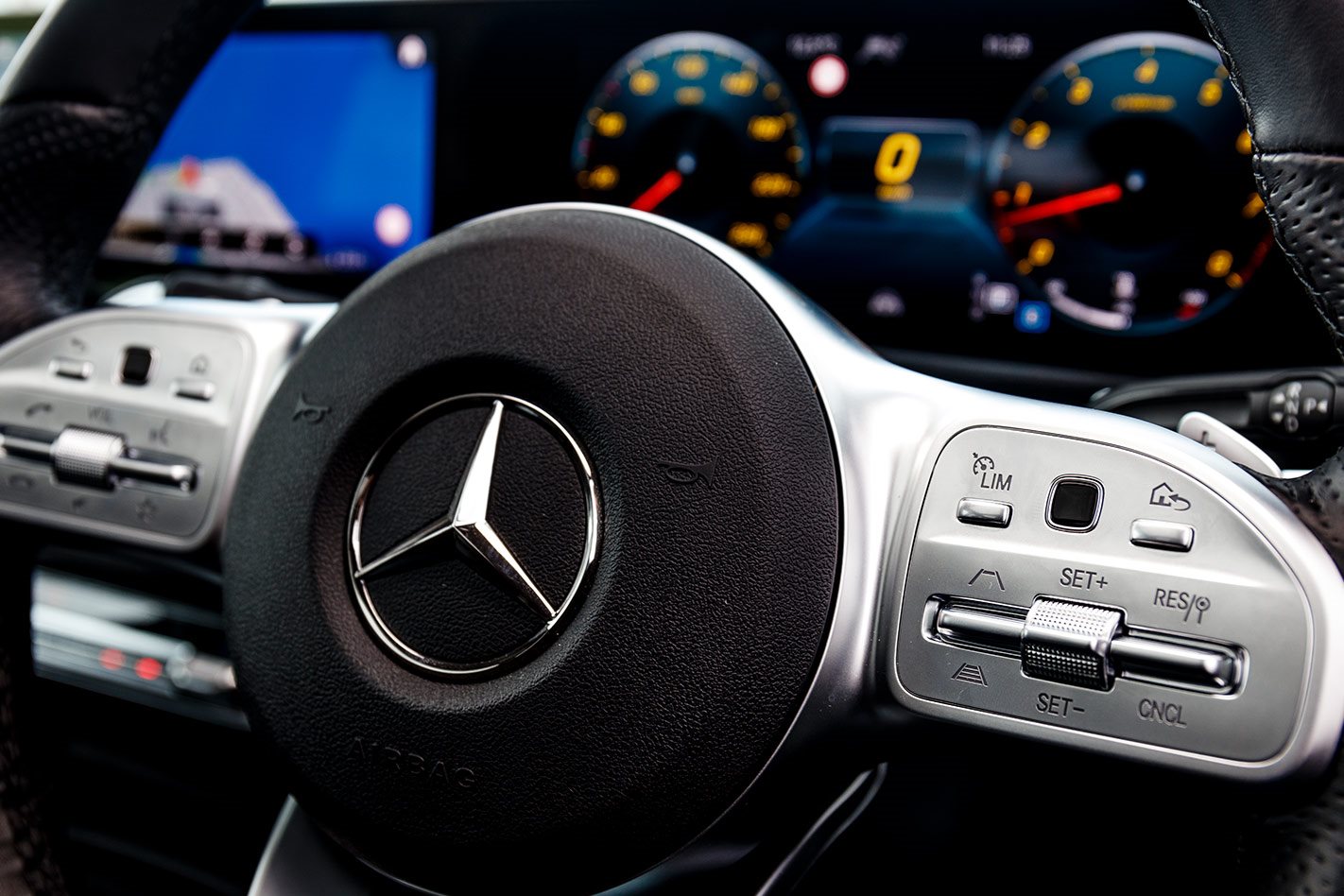
The European Court of Justice (ECJ) has ruled Mercedes-Benz must pay owners compensation if there are damages from vehicles fitted with a diesel ‘defeat device’.
However, it is now up to German courts to decide whether the software is unlawful.
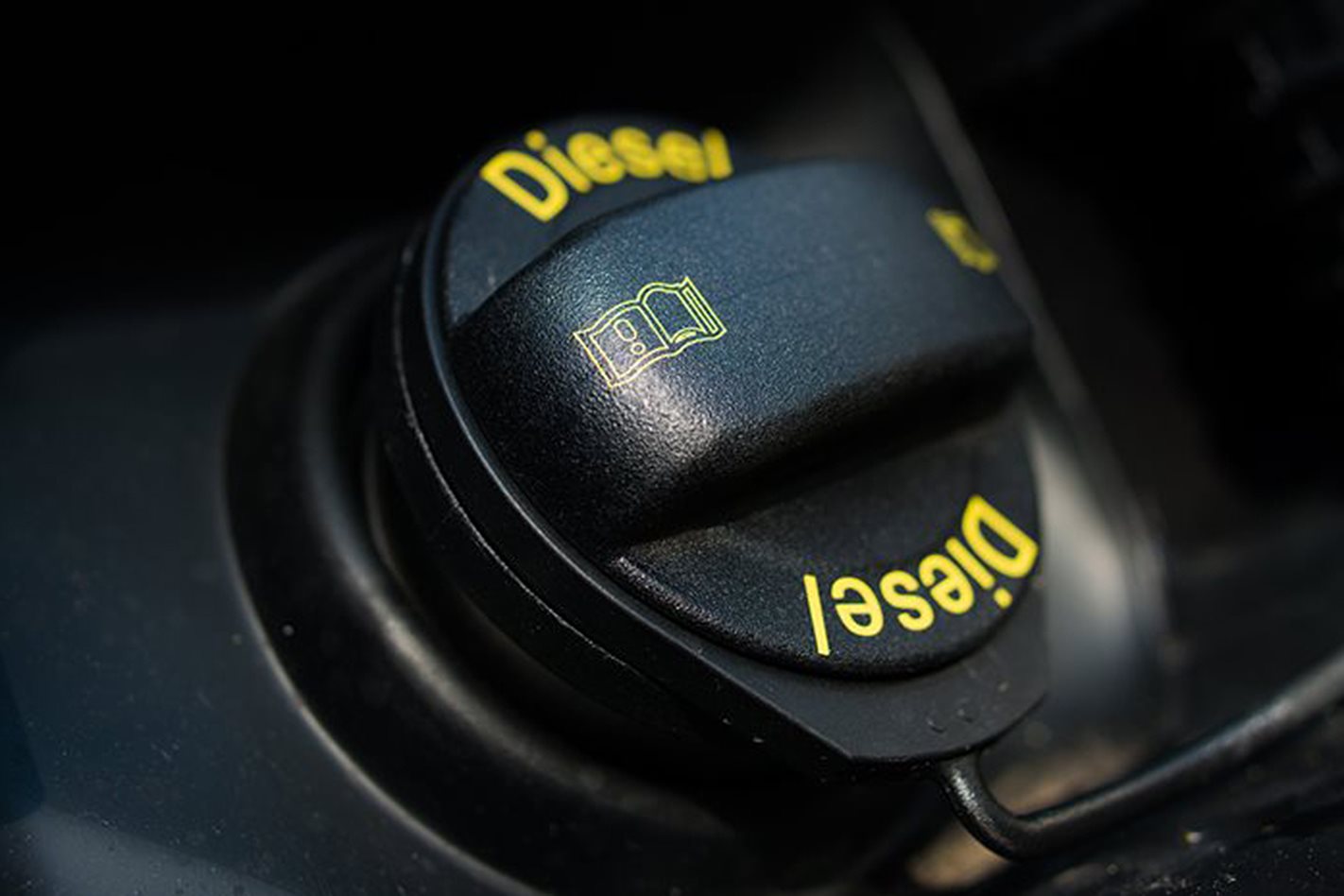
It comes after the case was brought by a used Mercedes car owner in Ravensburg due to the vehicle allegedly reducing its exhaust gas recirculation feature at lower temperatures – resulting in increased harmful nitrogen oxide (NOx) emissions.
1
Mercedes denied to Reuters that it used any defeat devices to change the vehicle’s emissions levels depending on the environment to hide the true level of exhaust pollutants and cheat official emissions tests.
A spokesperson for the automaker told Automotive News Europe that vehicles already recalled with a software update can still be used “without restriction”.
In the United Kingdom, Mercedes was hit with more than 300,000 owner claims last month at London’s High Court – alleging its diesel-engined vehicles are equipped with defeat devices that only lower NOx outputs at a particular temperature range.
It follows the Volkswagen Group’s infamous ‘Dieselgate’ emissions scandal in 2015.
1
US environmental authorities discovered that it intentionally programmed its turbocharged direct injection (TDI) diesel engines to only activate emissions controls during laboratory testing – but vehicles emitted up to 40 times more NOx in real-world driving.
Subsequently, lawsuits and hefty fines hit the German automaker globally, including a $125 million charge from the Australian Federal Court for breaching Australian Consumer Law.
However, unlike Volkswagen, Mercedes’s software allegedly doesn’t detect when it’s being tested for emissions – it only limits its NOx reduction system outside a temperature range.
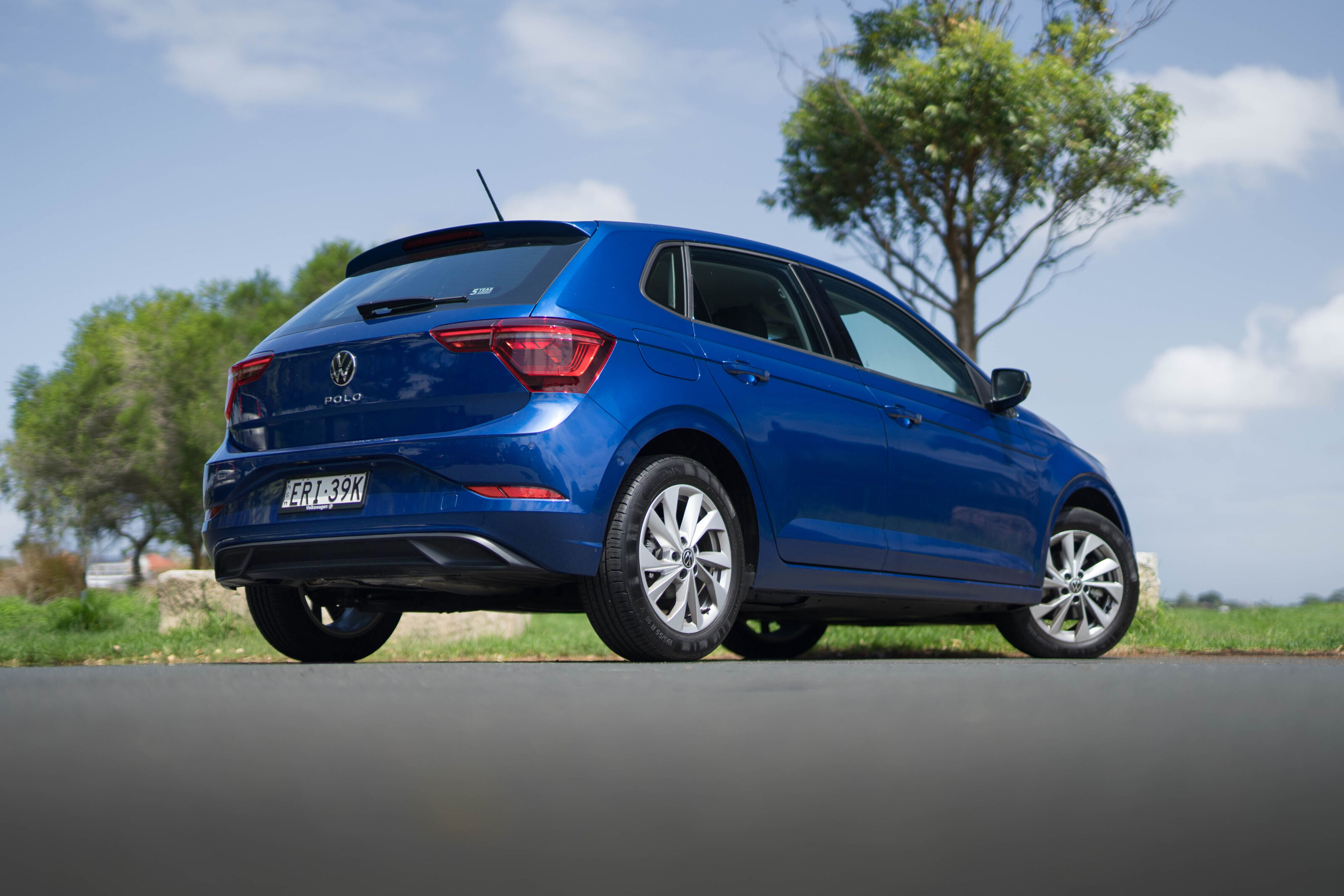
Volkswagen’s Polo used to be everywhere. Partly because it was amazingly cheap for such a well-engineered car but partly because it wasn’t especially pricey compared to its rivals.
Times change and they have done so rapidly, with light cars falling from grace at a rate that has made my head spin. Not everyone is a fan of these things, dismissing them as city cars or shopping trolleys.
In 2023, there aren’t many left and the ones that are, with one or two notable exceptions, high quality, well-engineered and five-star-safe cars. They’re also swimming in the same pricing waters (again with a couple of exceptions) but hoo-boy, when a light car price starts with a three, you know it’s a niche rather than a mainstream proposition.
Thing is, sometimes you don’t want an SUV. You just want to be different. You want a hatchback. These things are now so rare that a carmaker recently outlined the advantages of a hatch to a room full of people who grew up driving them.
1
JUMP AHEAD
- How much is it, and what do you get?
- How do rivals compare on value?
- Interior comfort, space and storage
- What is it like to drive?
- How much fuel does it use?
- How safe is it?
- Warranty and running costs
- VERDICT
- Specifications
How much is it, and what do you get?
My mum’s VW Polo cost $14,990 a few years ago. This one is $31,200 before on-road costs. It’s got a lot more equipment and is way nicer to drive, which is saying something because the parental Polo is still a pretty good car.
You can buy the Life with a five-speed manual (and get less power as a result) or a seven-speed DSG but I’m here to tell you – don’t. Stepping up to the Style is worth the extra money, especially if you consider that Life trim doesn’t include reverse cross-traffic alert.
1
| 2023 Volkswagen Polo Style standard features | |
|---|---|
| 16-inch alloy wheels | 10.25-inch digital instrument panel |
| 6-speaker stereo | Front and rear parking sensors |
| Matrix LED headlights | Lane centring |
| Cloth seats | Auto parking |
| Reversing camera | Space-saver spare |
| Auto headlights | Dual-zone climate control |
| Auto wipers | Ambient interior lighting |
| Adaptive cruise control | Wired Apple CarPlay |
| DAB+ digital radio | Wired Android Auto |
| 8.0-inch touchscreen | Wireless charging pad |
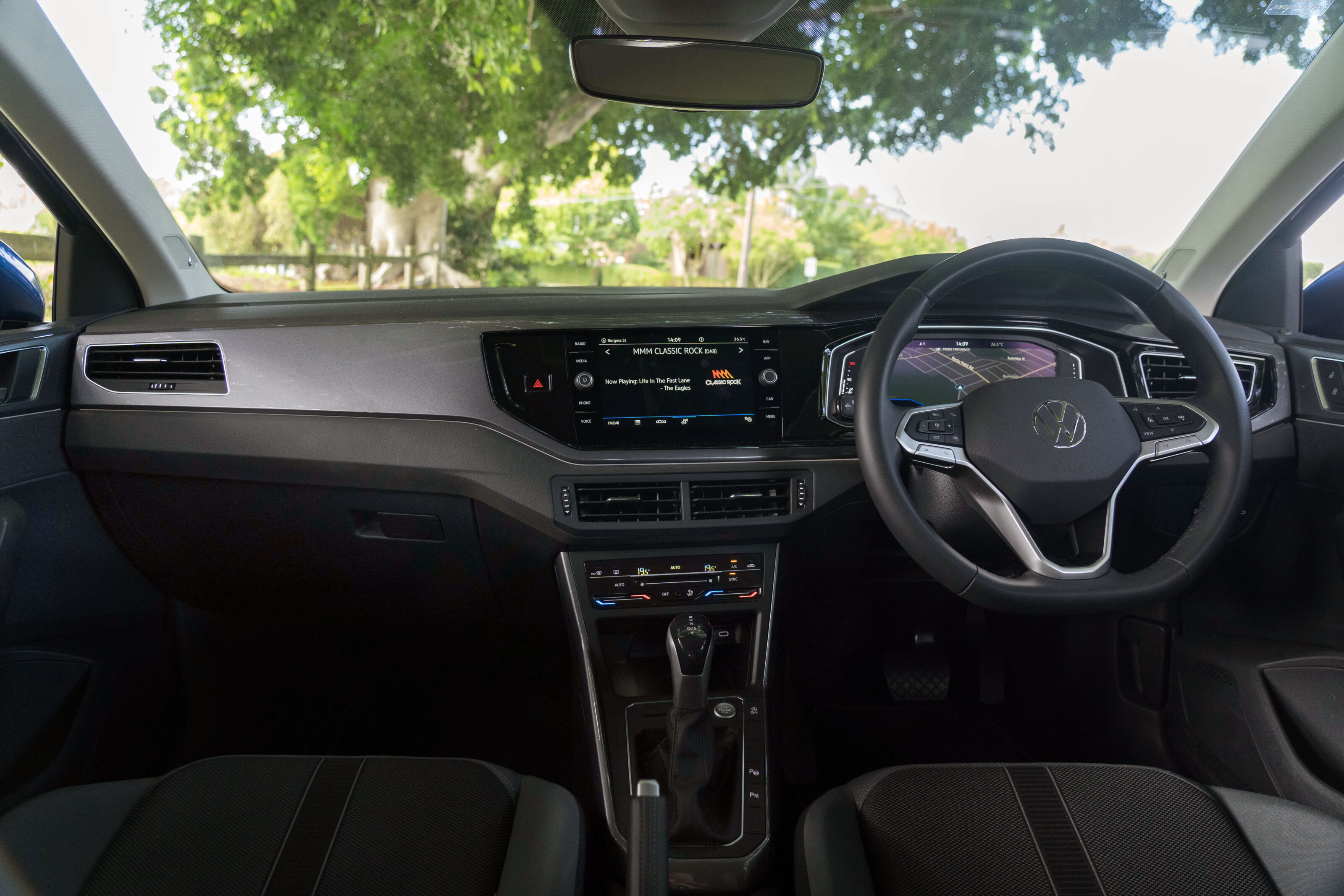
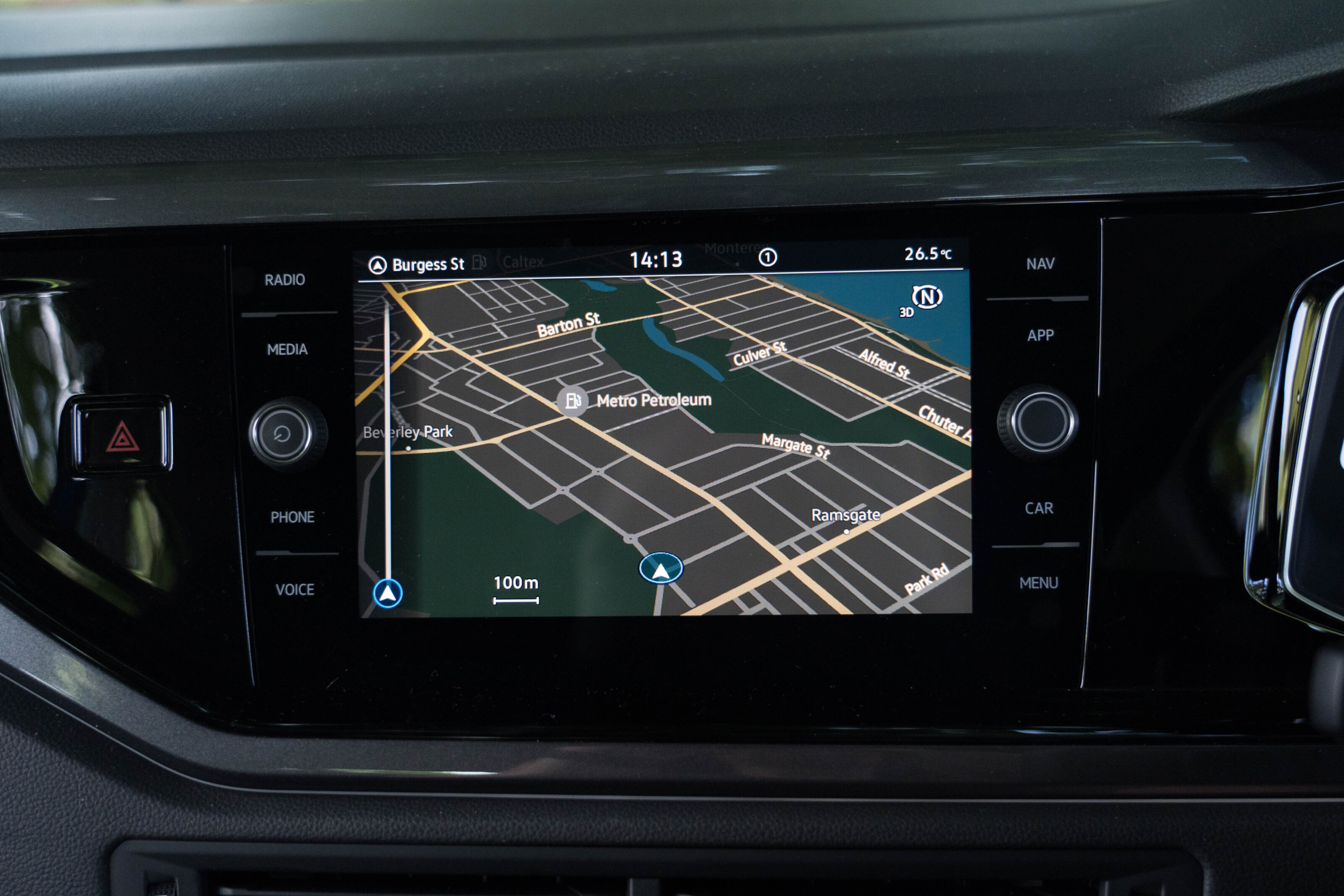
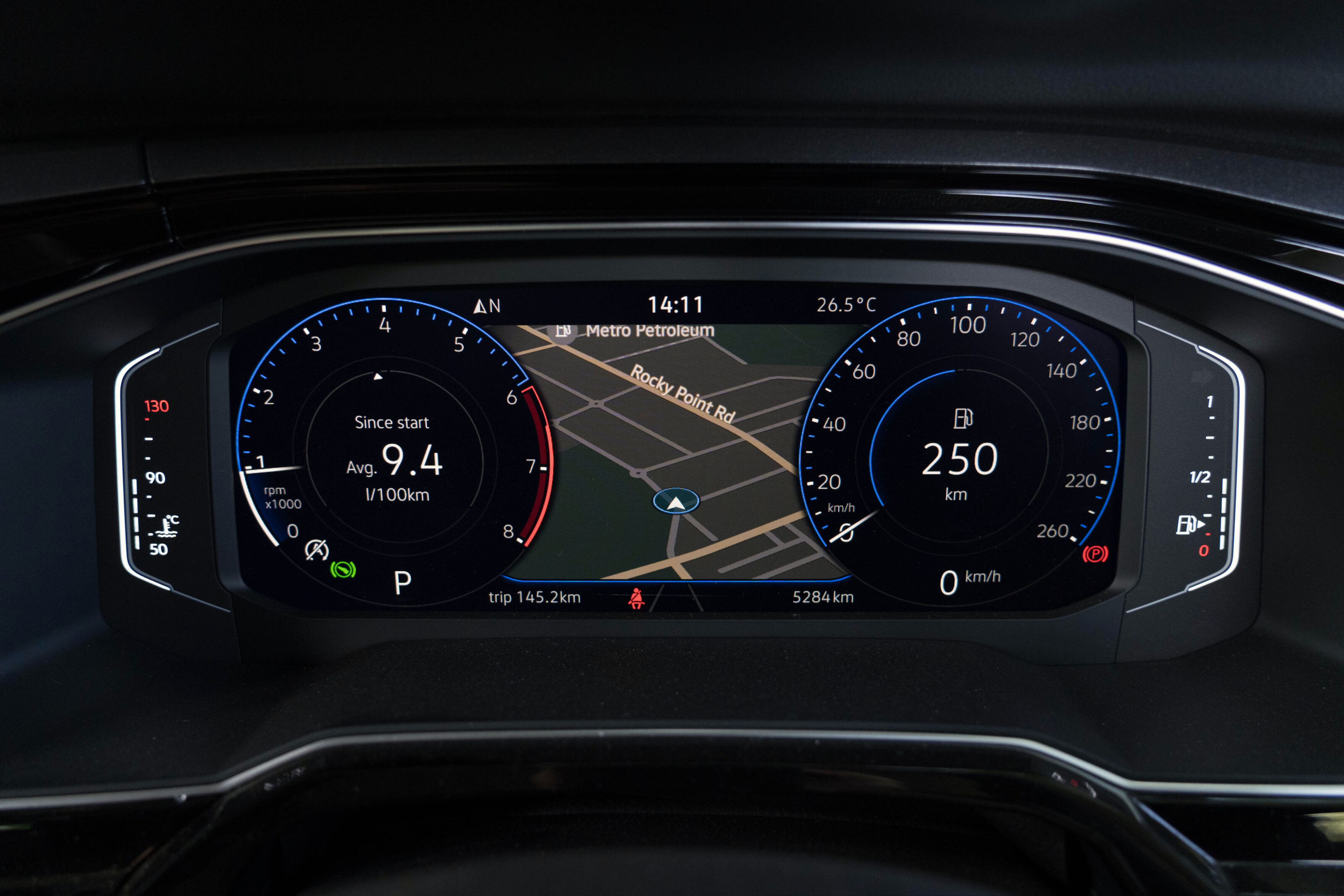
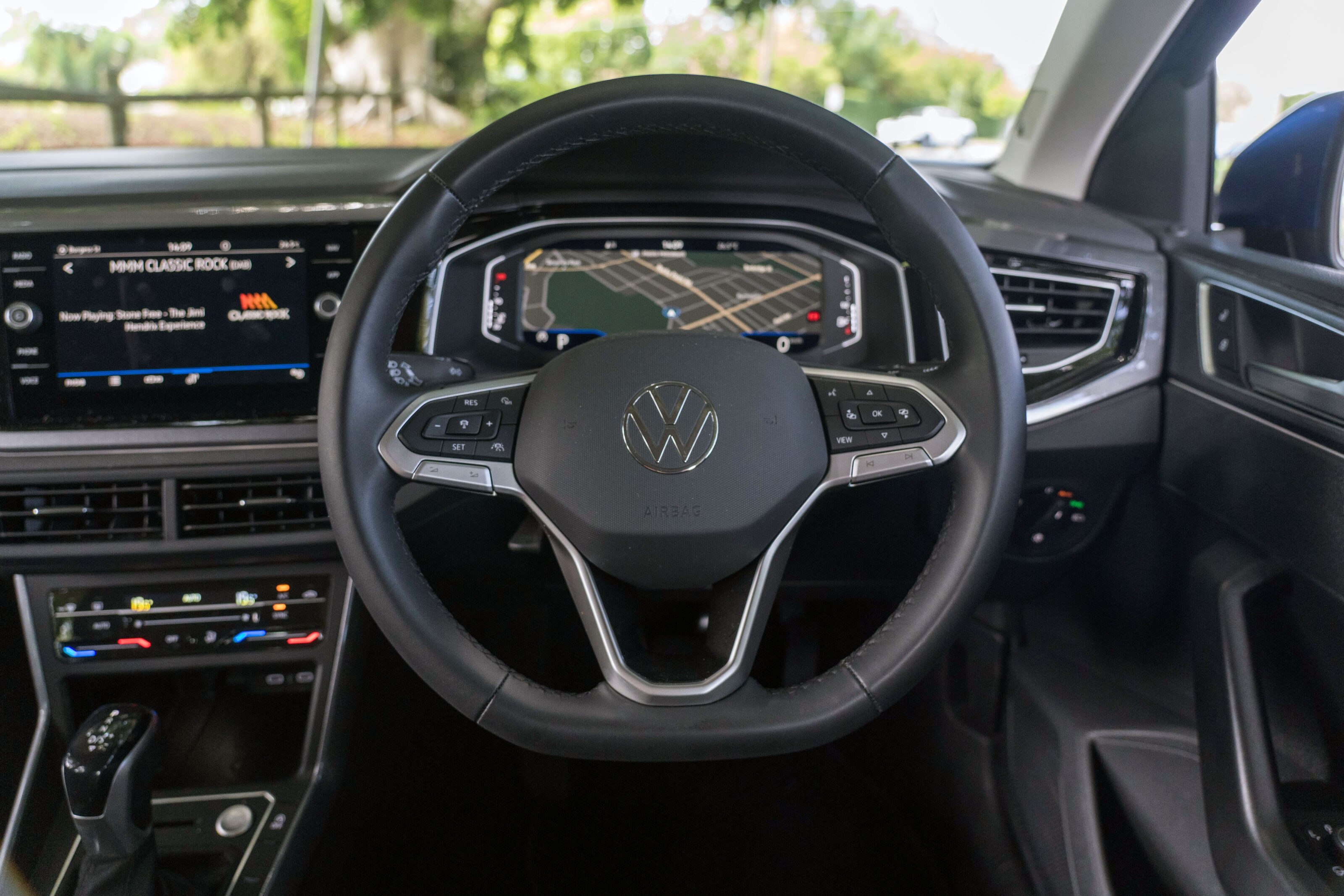
It’s a pretty decent spec list, which is kind of expected at this price level. The much-maligned but really-not-that-bad VW entertainment system is housed in an 8.0-inch touchscreen, while the Style picks up the larger 10.25-inch digital dash. It also has – staggeringly – Matrix LED headlights, which are very expensive options on other VW Group cars.
1
Yes, if you have wireless Apple CarPlay it’s flaky and annoying but worse things happen at sea.
The $1900 Sound and Tech Package adds satellite navigation, voice control, removes the need for wires when running Apple CarPlay and Android Auto, adds keyless entry and start, and Beats-branded speakers (still six of them).
You can specify a sunroof for $1500 to the detriment of rear headroom.
Reef Blue, Reflex Silver, Smokey Grey, Deep Black Pearl and Vibrant Violet are $600 options. I kind of dig the purple following an amusing argument with colleague John Law but the Reef Blue of this test car was quite nice.
1
How do rivals compare on value?
Right between the pricing eyes is the Toyota Yaris, a car we considered massively over-priced at its launch but now pretty much where all the cool kids are. For $31,100 before on-road costs, you can have the ZR Auto, which is an unimpressive thing to drive with its 1.5-litre engine and continuously variable transmission. It rides well and the servicing is cheaper, though.
At $33,100 (also before on-road costs) you can have the more sensibly motivated hybrid and save money on fuel but you won’t have as much fun driving it. Or, probably, looking at it, but that might just be me.
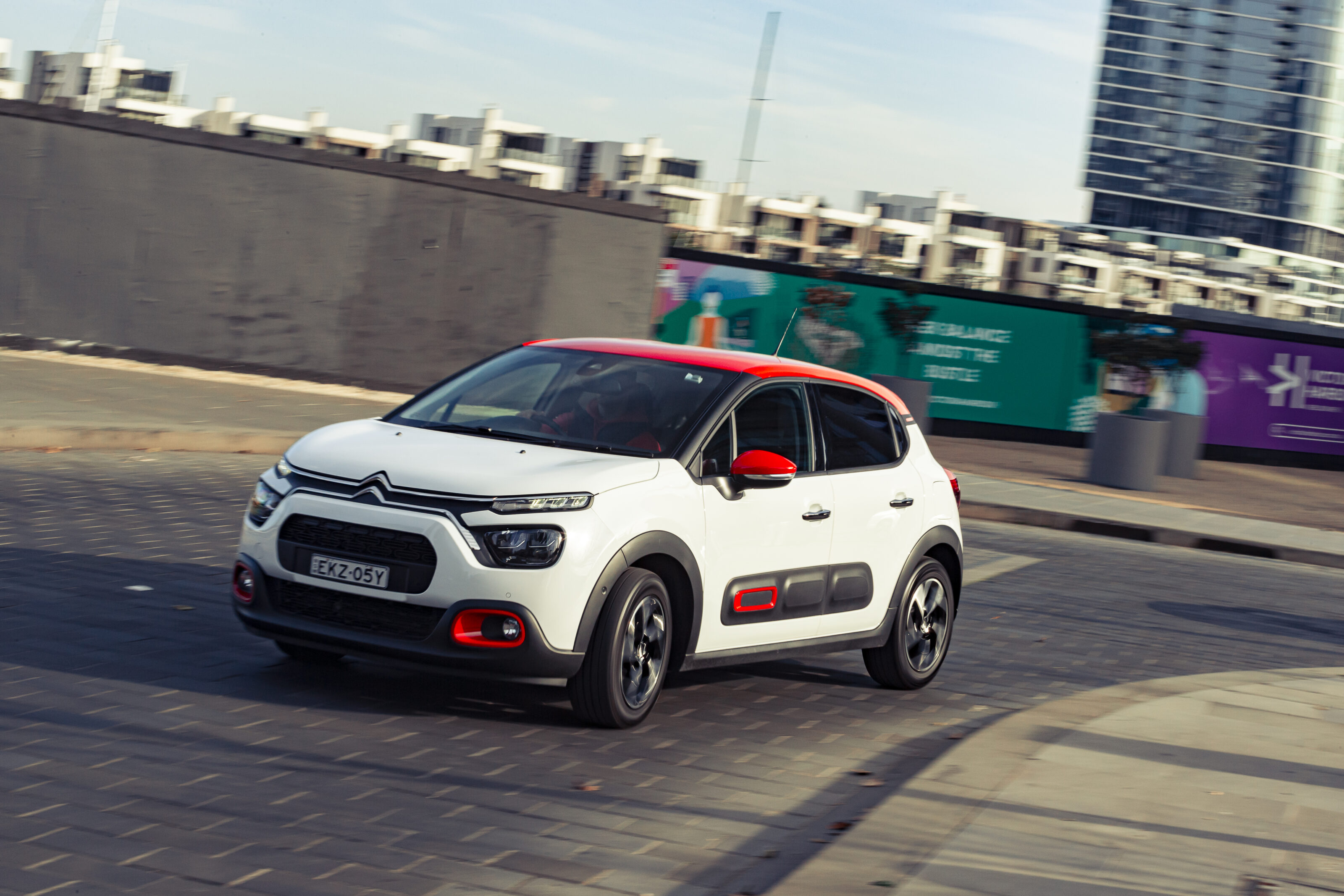
Citroen still offers the quite lovely C3. It has a beautiful ride, fantastically comfortable front seats and all the quirk you could want for $32,367 (before on-road costs). One imagines you’ll be waiting a while for one but for some, it will be worth the wait. For others, it might all be a bit much, but it’s worth investigating.
1
Mazda’s 2 is also still in the ballpark, with the top-of-the-line G15 GT jumping in the pool at a slightly unexpected $30,465 drive-away. It matches the Polo for warranty, if not for interior space and more modern architecture, but it’s still a charming little car that continues to have a part of my heart.
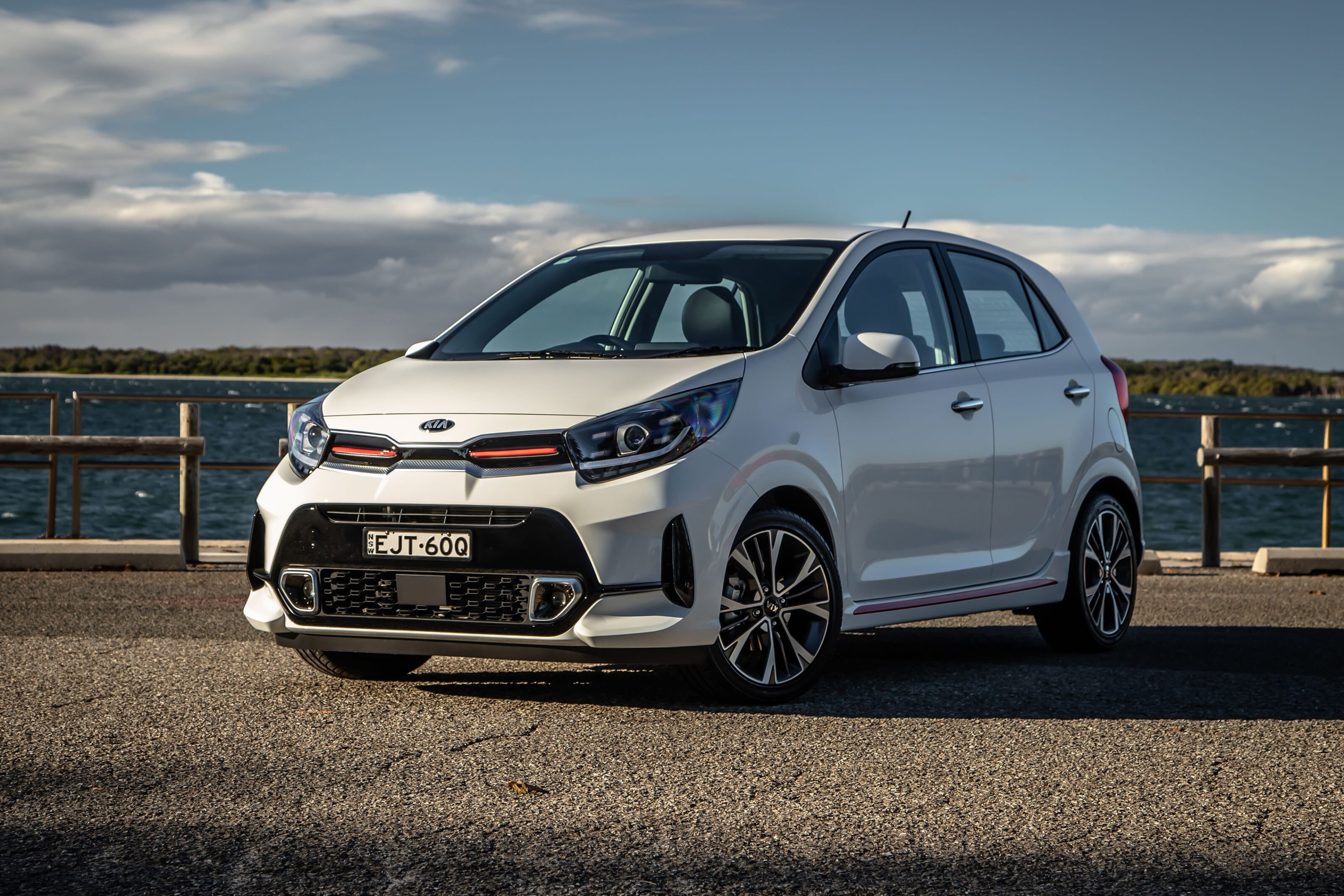
And finally the one-time king of the segment, the ancient but dependable Kia Picanto. The base model is available with a slightly gasping 1.2-litre paired with a five-speed manual for a four-speed auto. The turbocharged GT is great fun but manual only.
The Kia’s two main advantages are both money-related – it’s quite a bit cheaper and it has a longer warranty. It can’t match the Polo for interior quality, though, but you can hardly blame it given the yawning price gap.
I guess you could look at an MG 3, but you wouldn’t be reading this review if you were interested in that. I’m not sure anyone reads reviews of MG 3s because they’re all done by influencers or a journalist who has snagged a trusting owner’s car for a few days. All I can say is that it’s very cheap and popular.
1
Interior comfort, space and storage
For such a small car, the Polo has a lot of space inside. While not quite matching the heroics of the new and related Skoda Fabia, it’s very close.
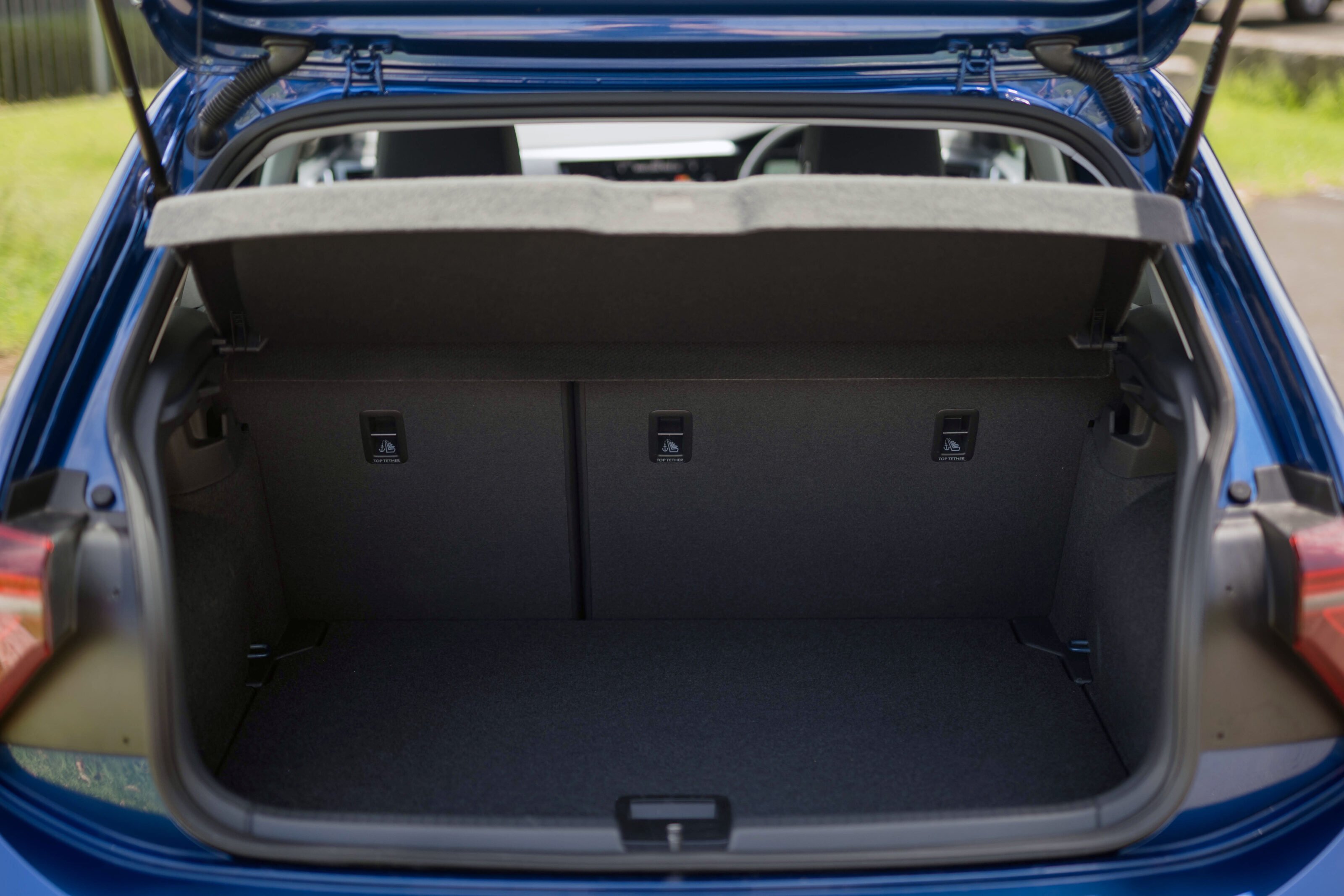
Starting with the improbably large boot. It’s got a whopping 351 litres, eclipsing most compact SUVs and some mid-size ones. When you fold down the 60:40 split-fold rear seats, you have 1125 litres to play with and the two-position boot floor can get you closer to a flat loading area in the upper position.
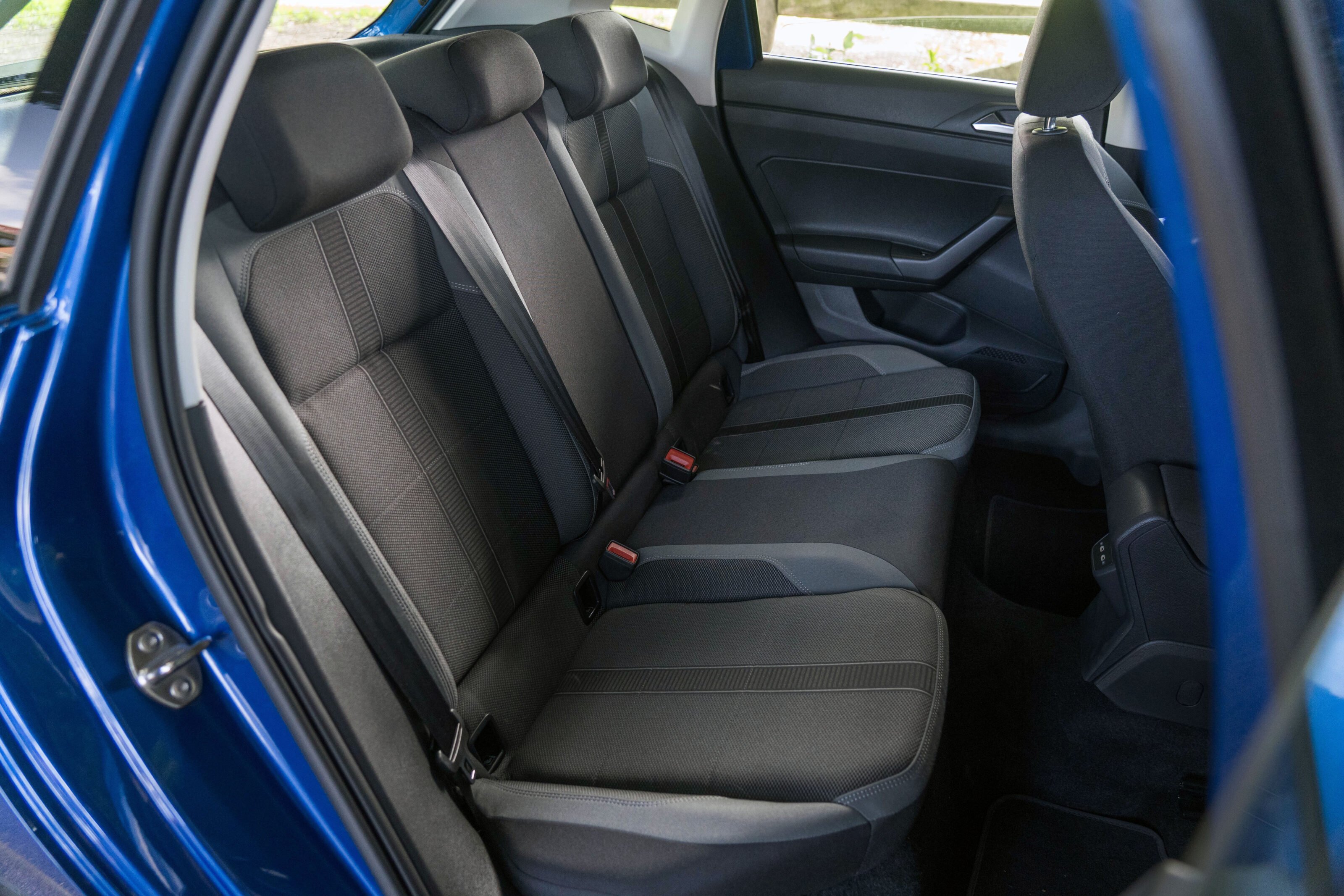
I guess the bigger surprise is the rear seat space. While the climb-in isn’t always graceful, once installed my 180cm frame and medium build are quite happy. I’ve got enough leg and knee room to clear the front seat set for my driving position and good under-thigh support.
1
That’s about as far as support goes, however, as the rear seat lacks an armrest and therefore proper cup holders. You also don’t get air vents but more industrious types will point to the dual USB-C chargers and the wide availability of USB-powered fans. I’d probably use them to charge a phone or two, but you do you.
Headroom is impressive, though the windows aren’t huge so taller folks might feel their heads close to the header rail.
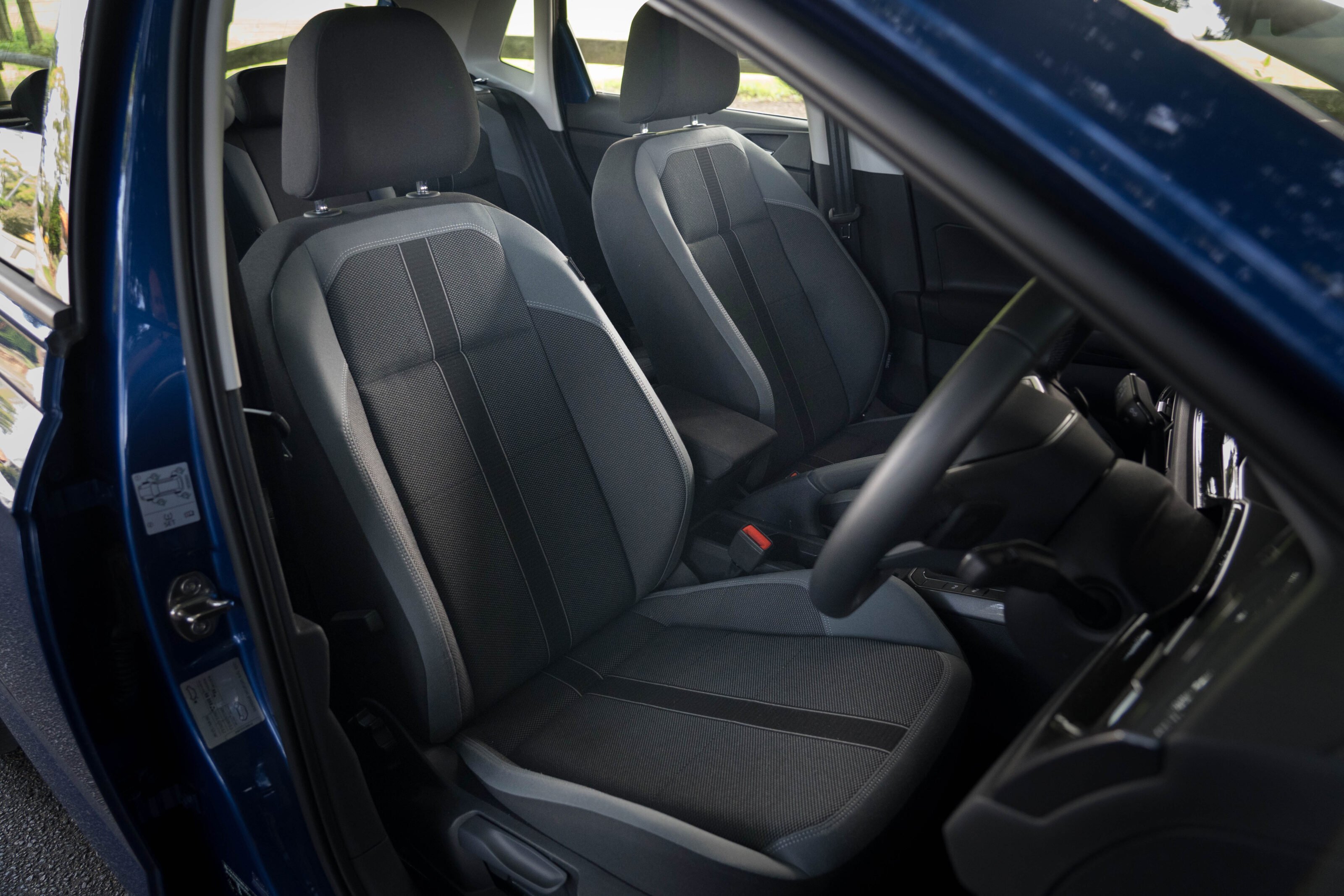
One of the main differentiators in the Style, when compared to the Life, are the more sporty-looking seats that are covered in a different fabric. I am a huge fan of fabric seats so I’m not going to whine about the lack of leather, which at this level would likely be a bit yuck anyway.
1
The seats have more bolstering, too, and are properly comfortable for longer journeys. I think they’re worth the step up from the Life.
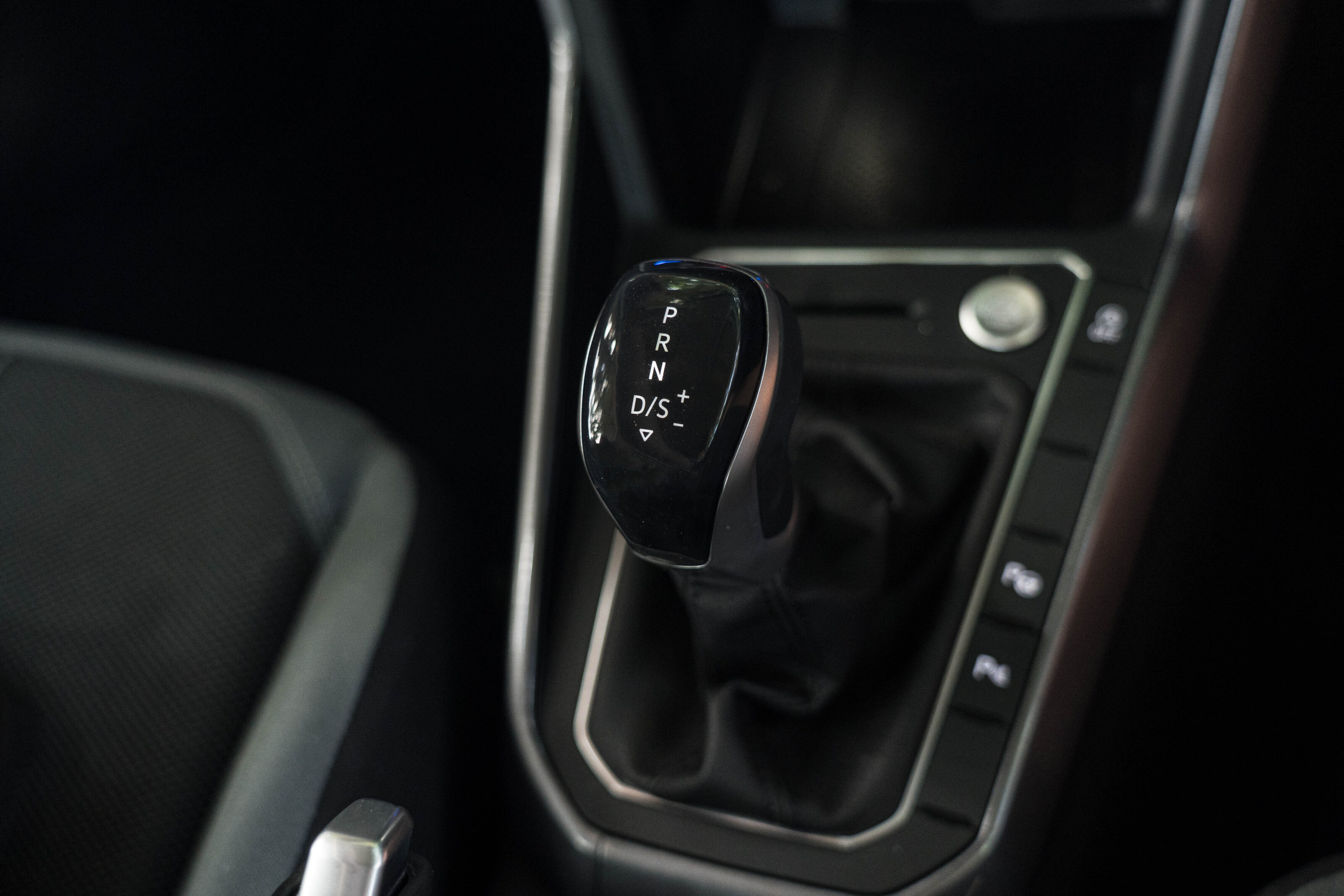
Between the front seats are VW’s whacky hexagonal cup holders and a handbrake. I also like proper handbrakes for reasons that I’ll not trouble you with. Under the centre console is a wireless charging pad and your bottles can go in the big pockets in the doors.
I’d like a more uniform approach to plastics and less of the scratchier stuff, but the bits you touch are nice and the leather steering wheel and gear selector are a welcome touch. I think it’s a nicer place to be than its price competitor from Toyota, the Yaris (wild, I know) and it’s certainly roomier.
1
What is it like to drive?
For most people, it seems scarcely possible that a 1.0-litre engine could be in the same region as a sentence describing a car that’s fun to drive. I was always a fan of the old Renault Clio with its 1.0-litre base model, but that thing ran on mountain bike tyres, had a manual gearbox and was the slowest fun you could have.
| 2023 Volkswagen Polo Style drivetrain | |
|---|---|
| Engine | 1.0-litre 3-cylinder turbo-petrol |
| Drive | front-wheel |
| Transmission | 7-speed dual-clutch |
| Power | 85kW @ 5000-5500rpm |
| Torque | 200Nm @ 2000-3500rpm |
| 0-100km/h | 9.5 sec (estimate) |
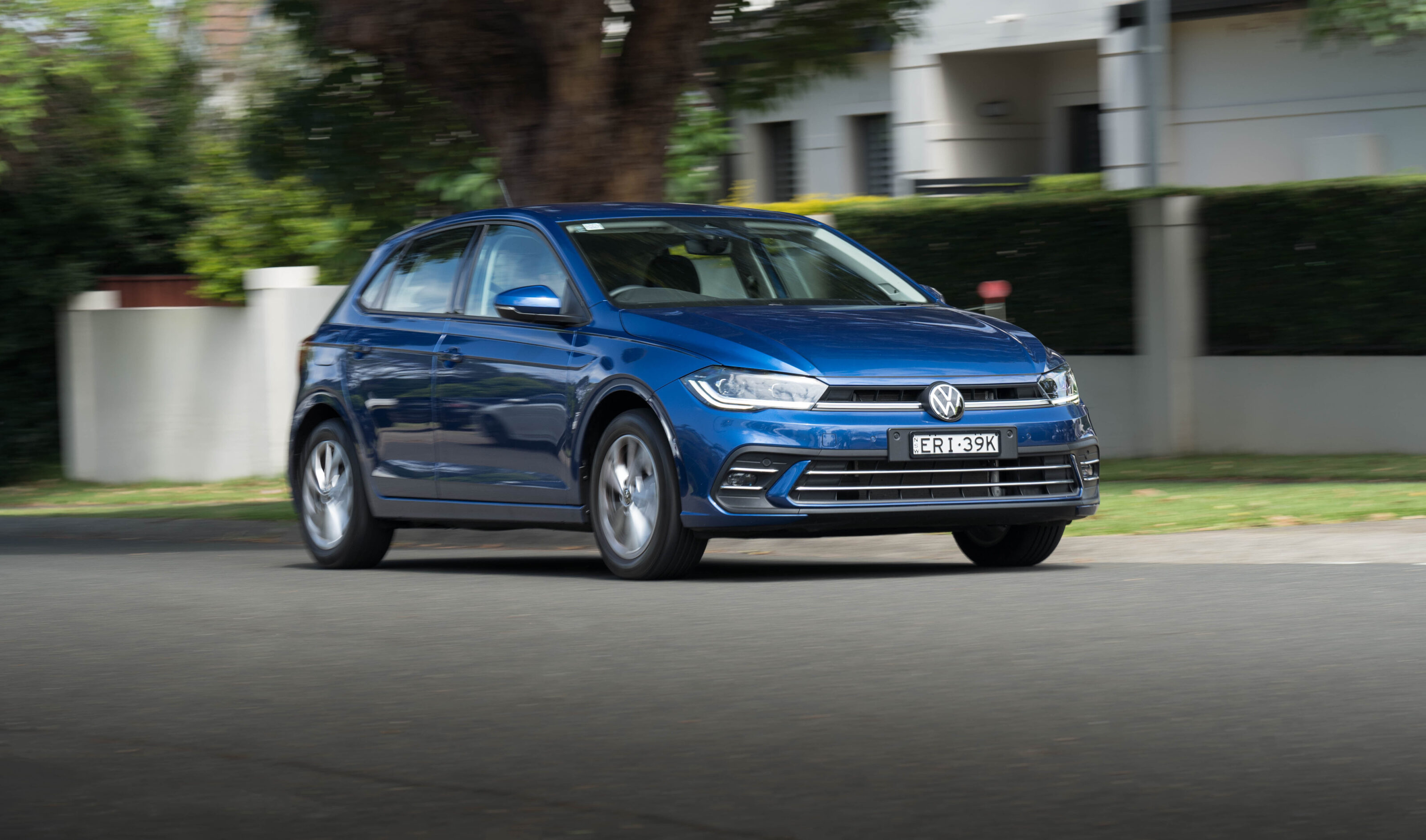
1
But this is a turbocharged VW 1.0-litre three-cylinder, which rather ups the game for engines of this size. With 85kW and 200Nm wrangled by a seven-speed dual-clutch automatic, this isn’t a wait-wait-wait car but more of a wait-go-go-go car.
In years past, a car with this size of engine would be for those never in any kind of hurry whatsoever but the Polo’s sprightly performance is close to effortless. The seven-speed transmission responds well to your right foot and I don’t think I ever pulled a paddle to get the gear I wanted when out on the motorway. It needed occasional encouragement in traffic but was much happier when put in Sport mode.
Most of all, you get the feel of a much bigger car with a correspondingly larger engine. Other cars in this class still feel their size in the way they drive, which isn’t necessarily a bad thing, but it’s heartening to know that VW still over-engineers its small cars.
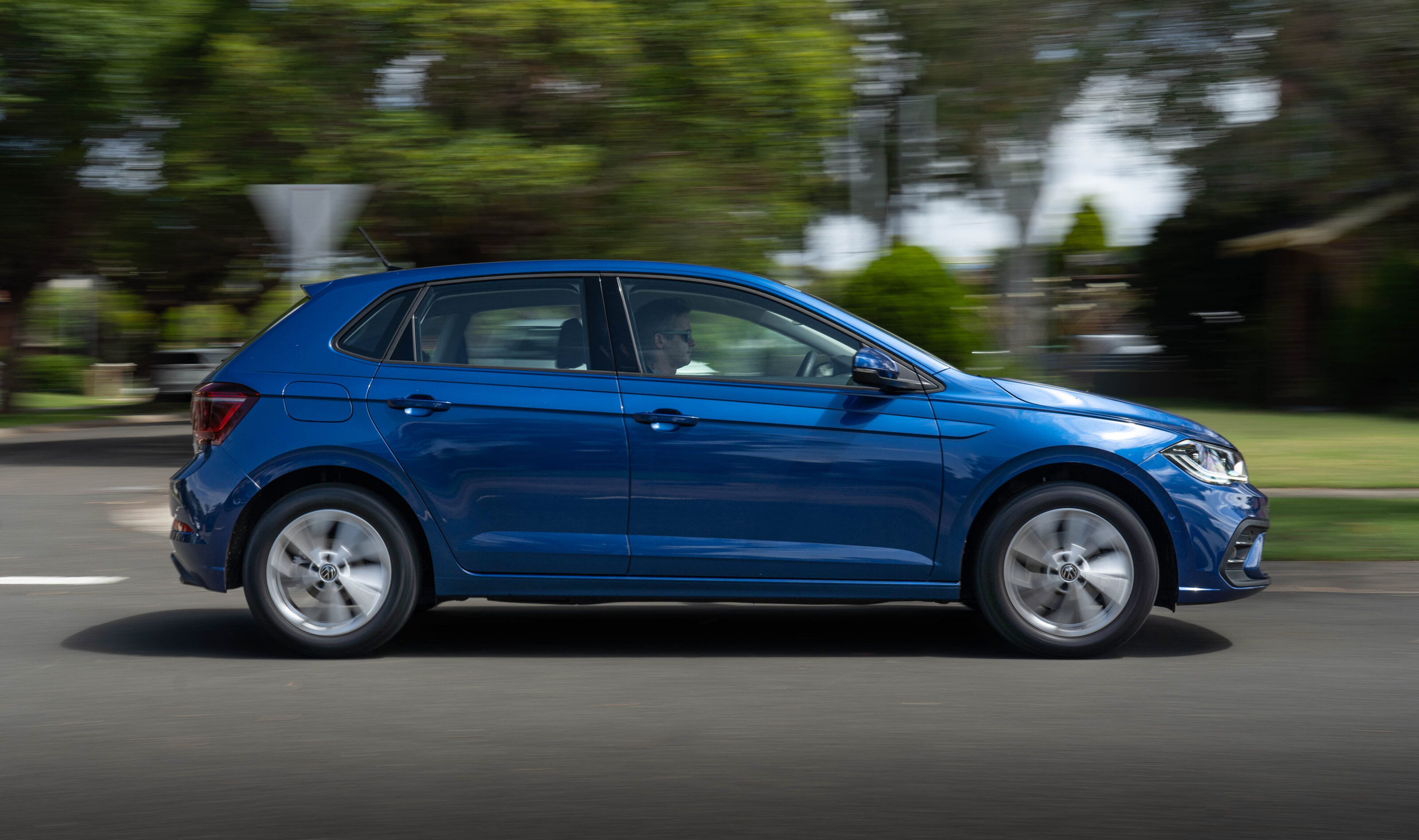
1
The most impressive thing about the car is the chassis, though. While the engine keeps things moving at a fair clip – and I sometimes wondered if there is any other “standard” hatch like it for pace – the ride and handling balance is there to take advantage.
As I’ve already said, it feels like a bigger car, riding the bumps and lumps of the suburbs and our appalling motorway surfaces while cheerfully cornering on fun B-roads without dissolving into messy understeer.
It rides almost as well as the Citroen C3, which I consider the class benchmark (feel free to fight me in the comments) while cleaning up on the handling side with much better steering and a more composed front end.
1
How is it on fuel?
Volkswagen’s ADR testing yielded a 5.4L/100km figure on the combined cycle. The real world saw an indicated figure of 7.2L/100km in a mix of suburban running and a drive up to the Blue Mountains west of Sydney.
| 2023 Volkswagen Polo Style fuel economy | |
|---|---|
| Fuel economy (ADR combined) | 5.4L/100km (combined) |
| Fuel economy (trip computer) | 7.2L/100km |
| Fuel type | 95 RON premium unleaded |
| Fuel tank capacity | 40 litres |
It’s a reasonably solid miss but I was punting it around a bit, so you might do better.
1
How safe is it?
The Polo scored a five-star ANCAP safety rating in 2022 owing to the centre-front airbag installed as part of a wider tech upgrade for the car.
| 2023 Volkswagen Polo Style safety features | |
|---|---|
| 7 airbags | Reverse cross-traffic alert |
| ABS | Blind-spot monitoring |
| Stability and traction controls | Lane centring |
| Forward AEB (up to 80km/h) | Adaptive cruise control |
| Distance warning | Fatigue detection |
The forward AEB works at up to 80km/h and includes both pedestrian and cyclist detection.
For child seats, there are two ISOFIX points and three top-tether anchors.
1
MORE
ANCAP
Warranty and running costs
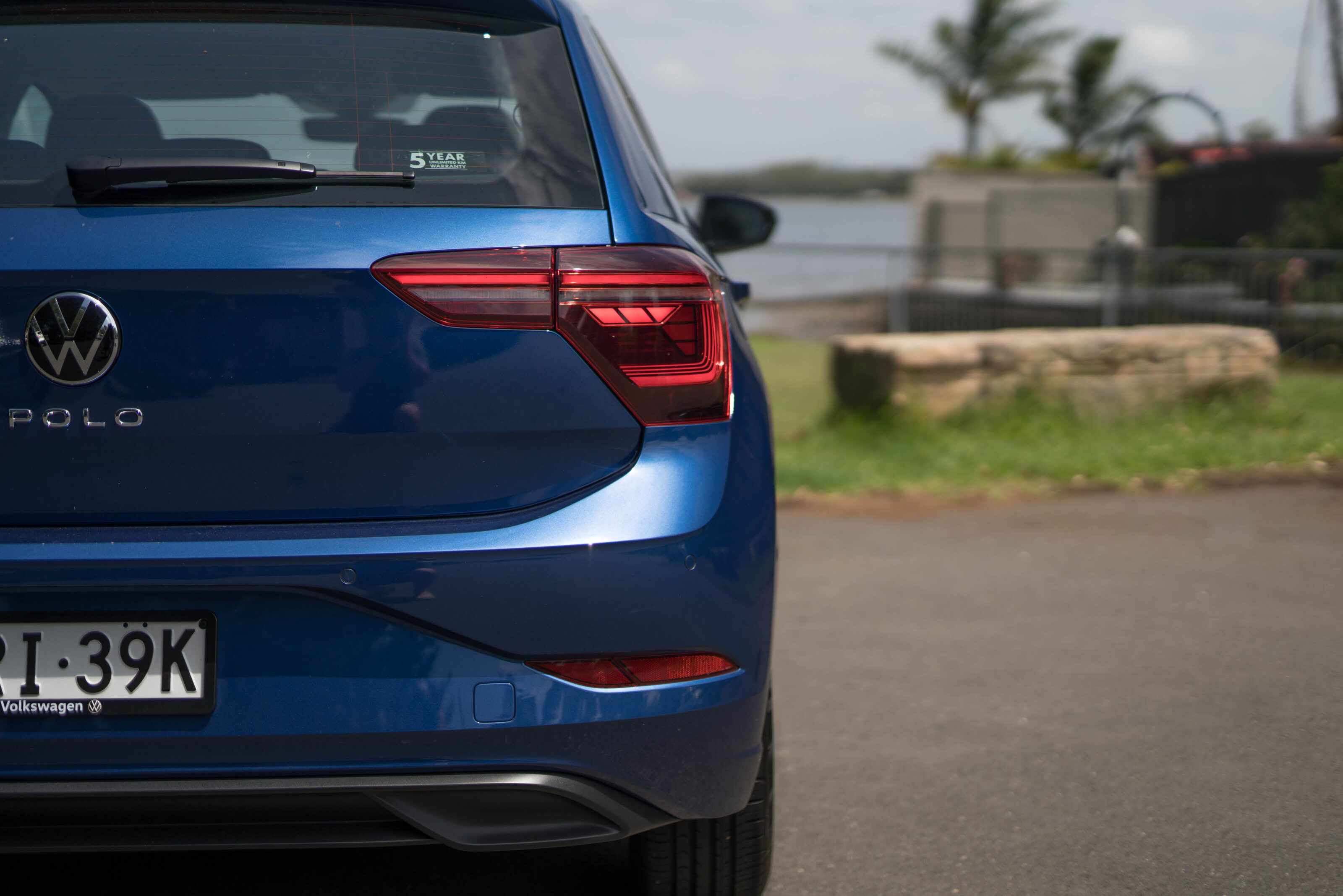
Volkswagen offers a five-year, unlimited-kilometre warranty which very nicely matches up with just about everybody else in the segment, except for Kia soldiering on with its seven-year warranty.
A five-year pre-paid service plan for the Polo comes out at $2300 (up slightly since the updated model’s launch) and it’s not especially cheap at $460 per year. It does save nearly $800 off pay-as-you capped-price servicing, however, and that’s worth it I suppose. A three-year plan weighs in at $1350, saving nearly $300 at an average of $450 per year.
1
VERDICT
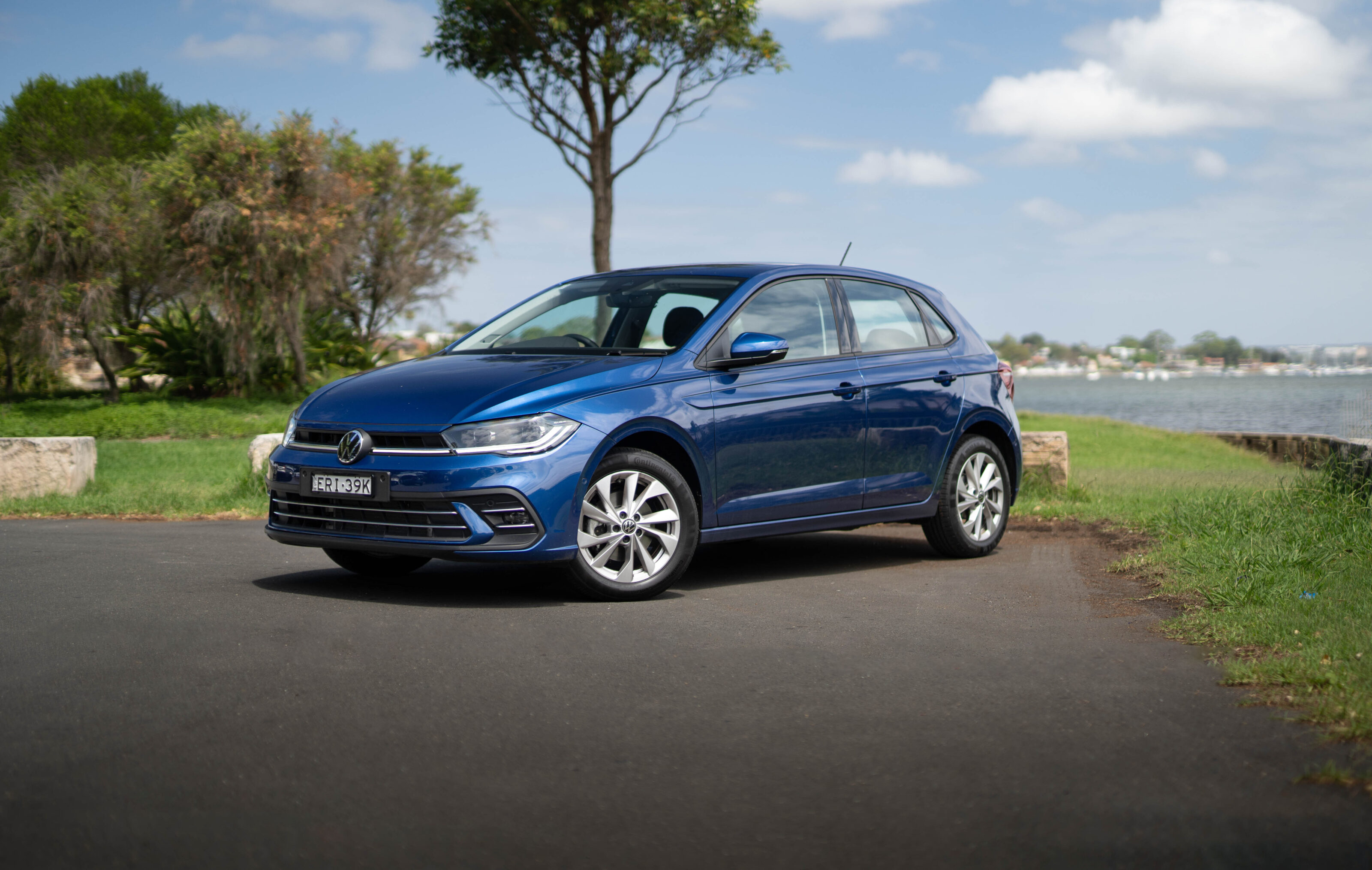
I still think the Polo is a great car and in a straight battle with the Yaris, I would declare it the winner and enter into a deathmatch with my colleagues to defend it.
Although it’s hard to believe it costs this much money in isolation, the rest of the market has really caught up. The Fabia is a $40K proposition now, so all hope of affordably-priced Euro cars is gone. But, as I will always say, like the Yaris and Fabia and C3, you have to find the customer’s level. People aren’t buying these cars often and when they do, they’re doing it because they offer big car safety tech and refinement.
The Polo delivers all of that and is fun to drive while it’s at it. The only thing that comes close is its more expensive Audi A1 sibling.
1
| 2023 Volkswagen Polo Style specifications | |
|---|---|
| Body | 5-door, 5-seat light hatchback |
| Drive | front-wheel |
| Engine | 1.0-litre 3-cylinder turbo-petrol |
| Transmission | 7-speed dual-clutch |
| Power | 85kW @ 5000-5500rpm |
| Torque | 200Nm @ 2000-3500rpm |
| Bore stroke (mm) | 71 x 75.6 |
| Compression ratio | 10.5 : 1.0 |
| 0-100km/h | 9.5 sec (estimate) |
| Fuel consumption | 5.4L/100km (combined) |
| Weight | 1165kg |
| Suspension | MacPherson struts front/torsion beam rear |
| L/W/H | 4080mm/1751mm/1450mm |
| Wheelbase | 2564mm |
| Brakes | ventilated discs front / solid disc rear |
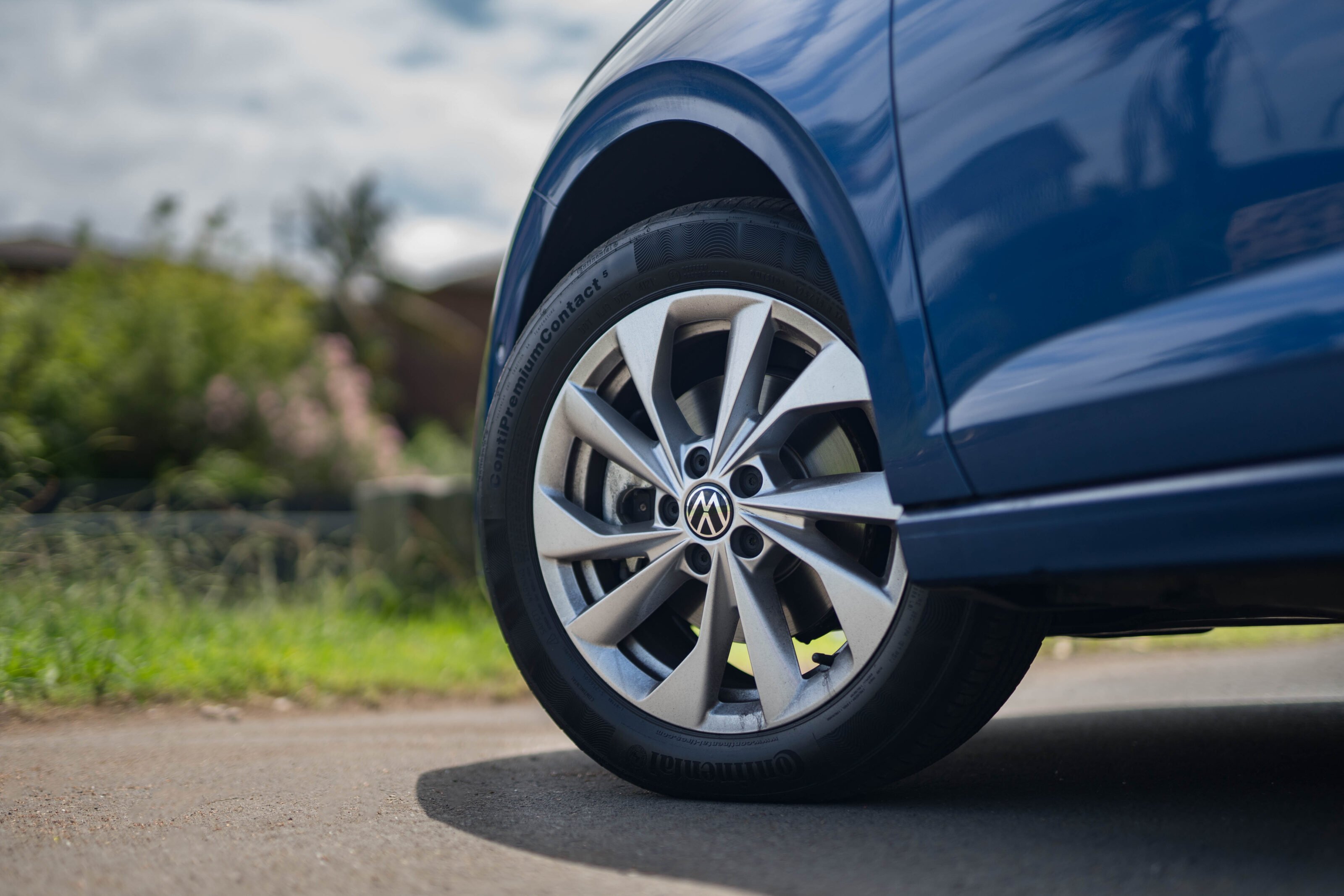
| Tyres | 195/55 R16 Continental Premium Contact |
| Wheels | 16-inch alloy (15-inch steel spare) |
| Price | $31,250 + on-road costs |
