
Well I’ll be a son of a gun. That’s actually kind of true because one of my father’s many honorifics is ‘Canon’. But my exclamation is more about the fact that there is a big, bluff ute with a name that really hammers home the impression that this is a unit – the GWM Cannon.
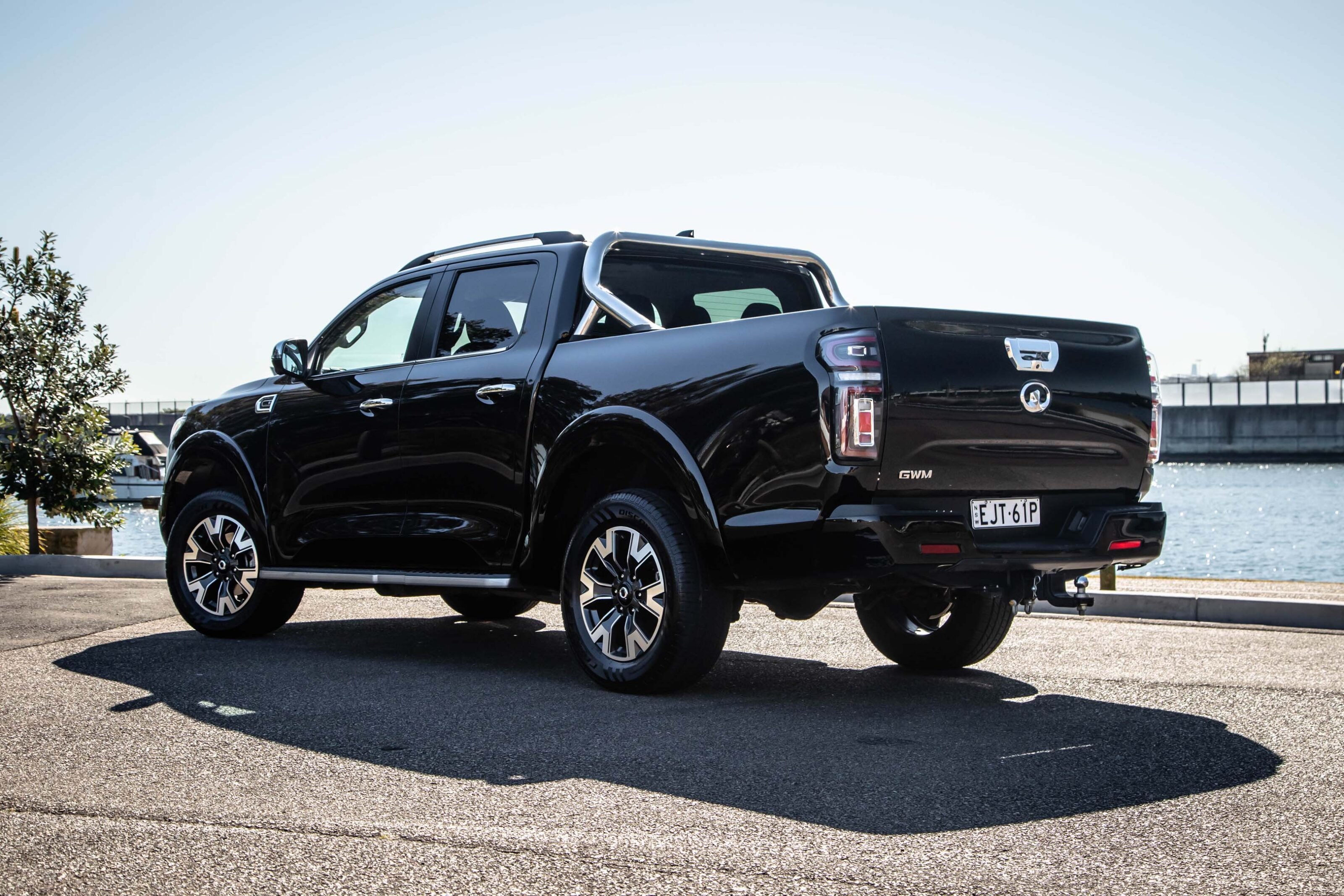
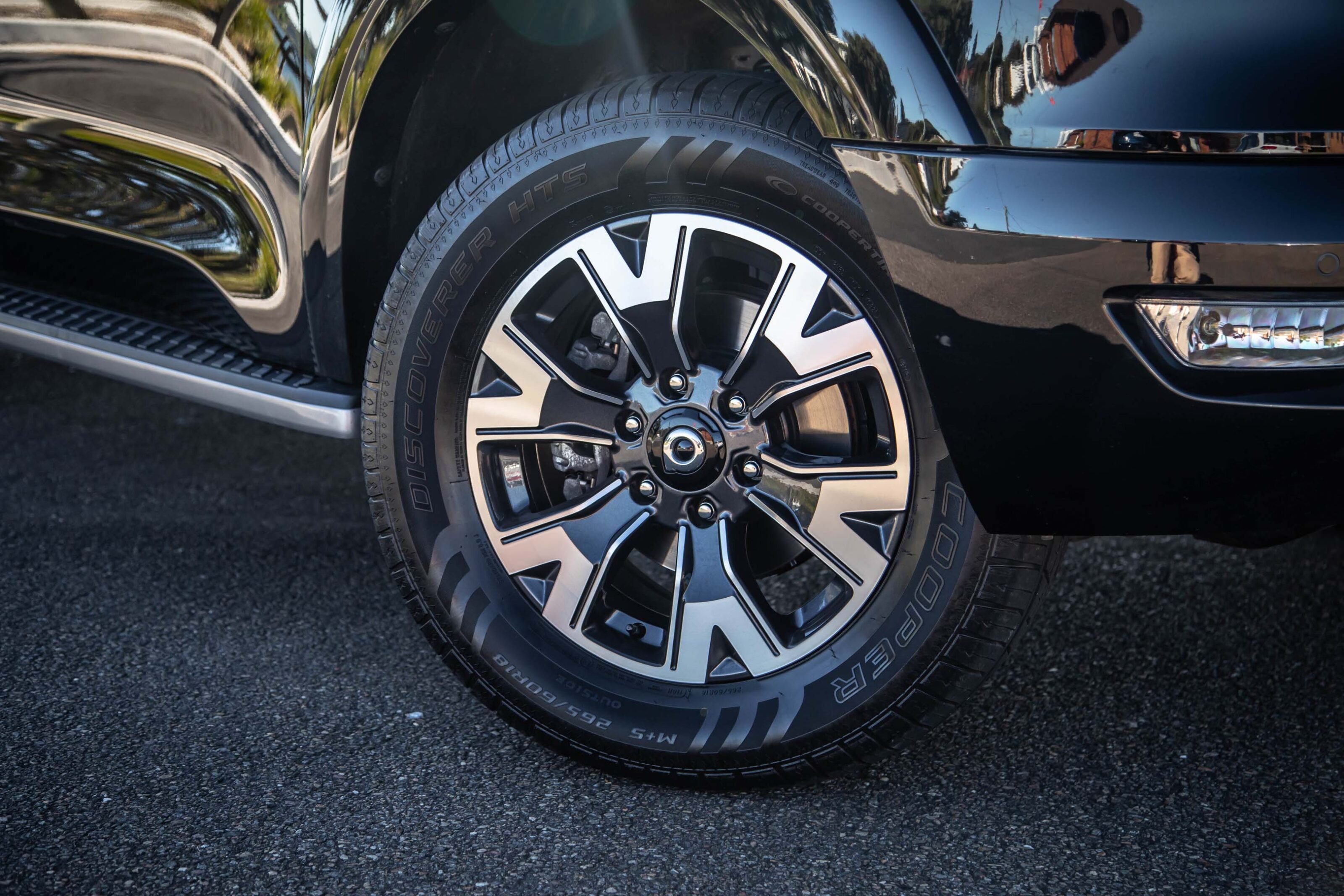
Sitting atop this range is the 2022 GWM Cannon-X, a luxed-up dual-cab ute with a leathery interior, lots of chrome bling and big alloys that would probably not appreciate being dumped into a rut, at least for keeping the polished surface the way its makers intended.
GWM’s offering is an unashamed assault on our usual choices of ute in this country, making no secret that it is going after Ford, Toyota, Isuzu and Mitsubishi’s lunch.
Pricing and features
The Cannon-X tops the GWM ute range at $45,490 drive-away, which is a snip compared to its main rivals. The cheapest four-wheel drive Triton GLX dual-cab is $1500 more once on-road costs are taken into account and is nowhere near as well-equipped.
A Cannon-X ships with 18-inch alloy wheels, a six-speaker stereo, climate control, a tray liner, 360-degree cameras, keyless entry and start, front and rear parking sensors, adaptive cruise control, digital dashboard, powered front seats, LED headlights and taillights, auto headlights and wipers, power windows and mirrors, wireless charging and a full-size spare.
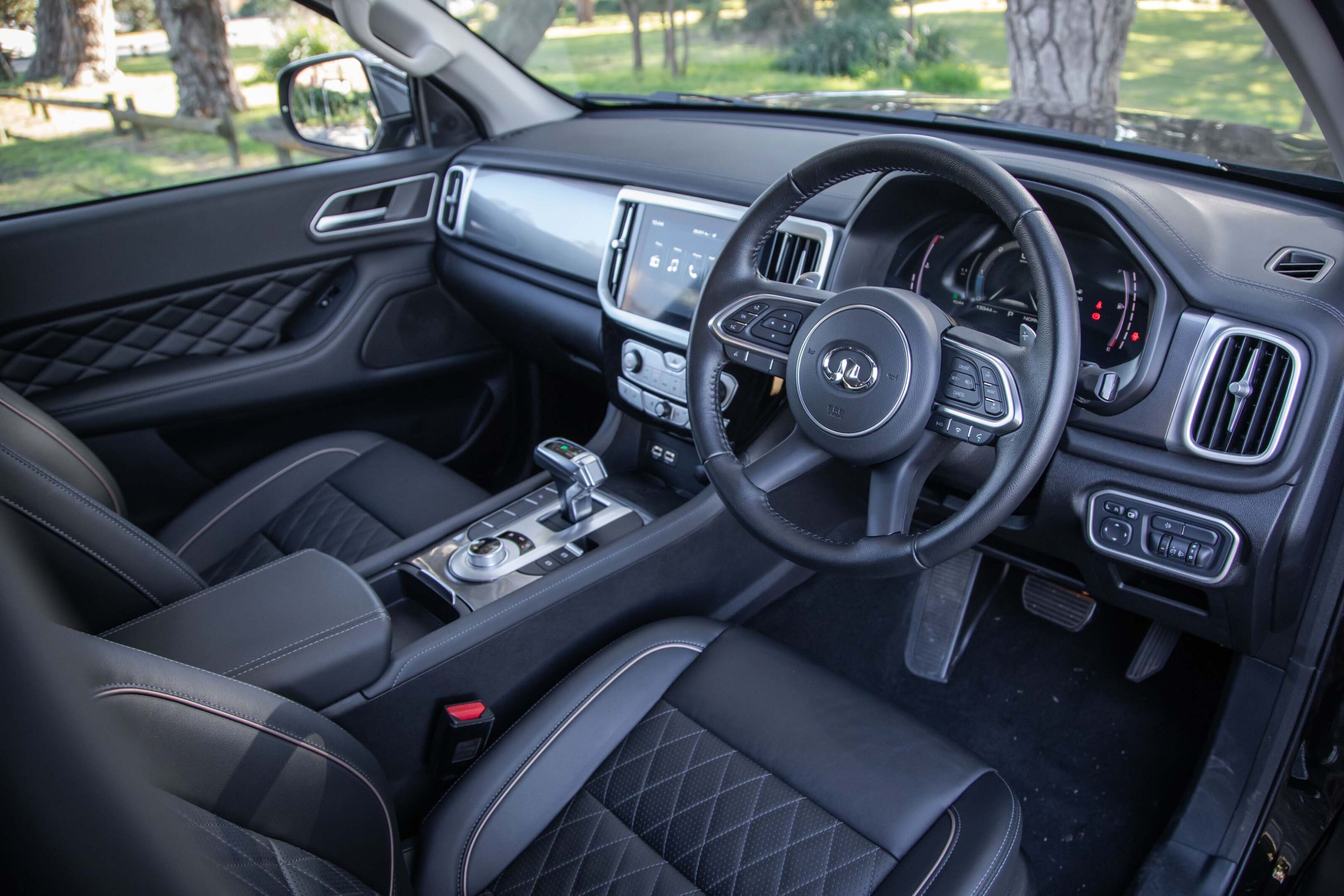
The 9.0-inch touchscreen runs an in-house software system that has bits from GWM’s sister brand Haval, which means it’s a bit hit and miss. While there are separate physical controls for the climate settings, the heated seats are controlled via the screen, which is bizarre.
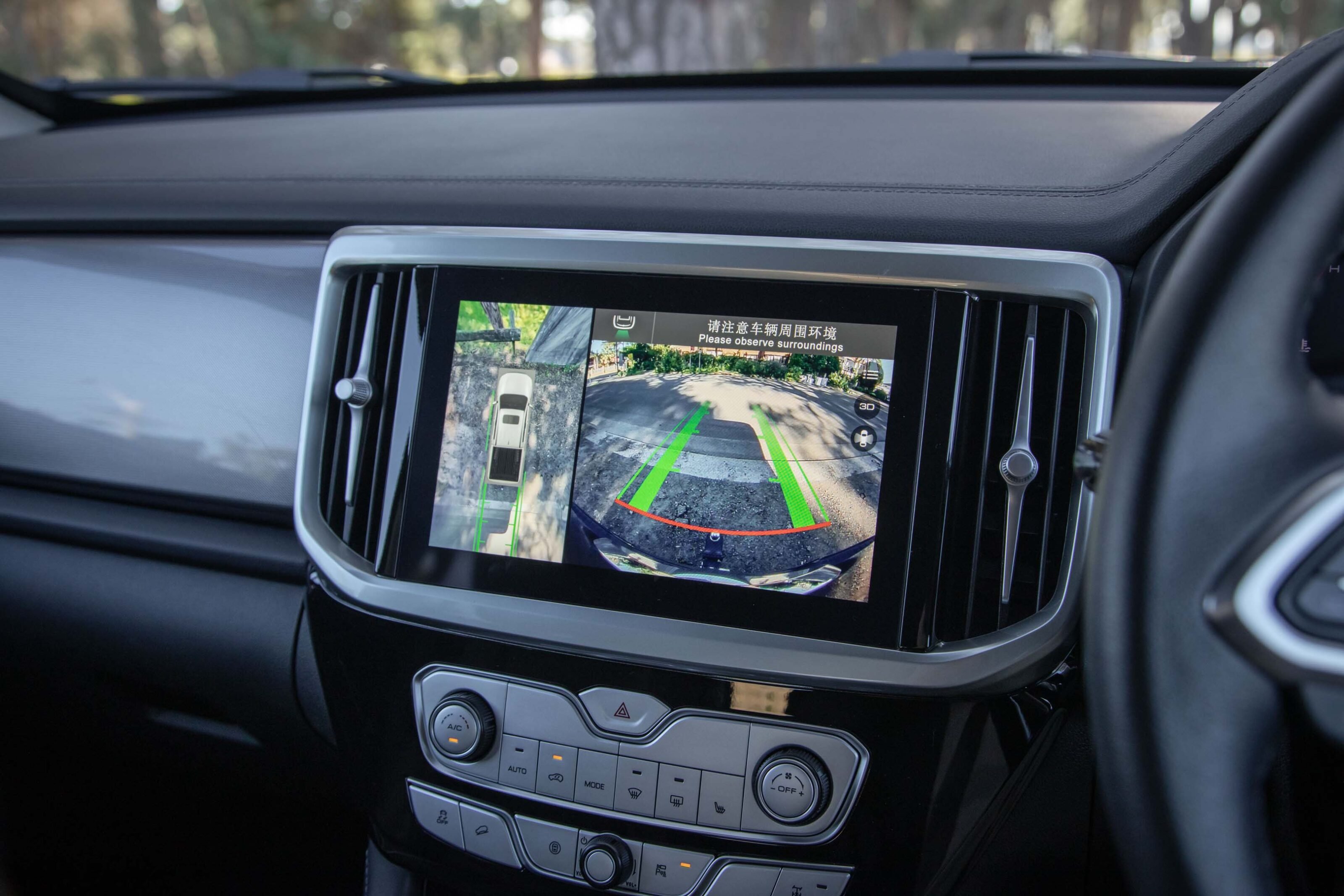
Most annoyingly, whenever the cameras are active, it renders the system inoperable and by that I mean you can’t turn down the volume, even with the volume control on the steering wheel.
The cameras themselves are terrific – when you indicate left or right an image pops up to show you what’s down the inside of the vehicle and should help in close quarters maneuvring, which is made all the more difficult by the Cannon-X’s long wheelbase and lazy turning circle.
One black mark is the lack of native sat-nav. If you’re reading this via an NBN satellite connection, you will be acutely aware why that is quite annoying in a vehicle of this type. It also nullifies the inclusion of the digital dashboard because it doesn’t do anything a conventional dashboard can’t except look pretty.
Five-star ANCAP safety comes from 2021 after the brand’s second attempt. To its enduring credit, GWM modified the Cannon to make the five-star rating and cars delivered between late 2020 and mid-2021 have a parts package to bring them up to scratch.
The Cannon comes with seven airbags (including a front-centre airbag), the usual braking and stability controls, lane departure warning, lane-keep assist, reverse cross-traffic alert, traffic sign recognition and speed warning and hill descent control.
For those wishing to install child seats, the rear features two top-tether anchors and two lots of ISOFIX attachments.
Comfort and space
The Cannon is a big unit. Visually it even looks like it could be a size up because it rides so high and the tub’s sides are even higher, the whole shebang being more than three centimetres taller than a Ranger, which doesn’t sound like much but it is for reasons you will discover in the next section.
Starting with the tub, a durable plastic liner protects the tray from the bashing and crashing you might expect for a ute to bear, except this one probably won’t be subject to too much of that kind of indignity. The tray also has various eyes for lashing things to and a big bar to look tough and attach even more things to.
Unusually, the tailgate is damped so smaller kids won’t cop a concussion if you’re not paying attention or their siblings are looking for some kind of revenge. I would say that unique to the class is the retractable step poking out of the tailgate that, while in the down position, enables you to climb more easily into the tray if need be. Incredibly clever.
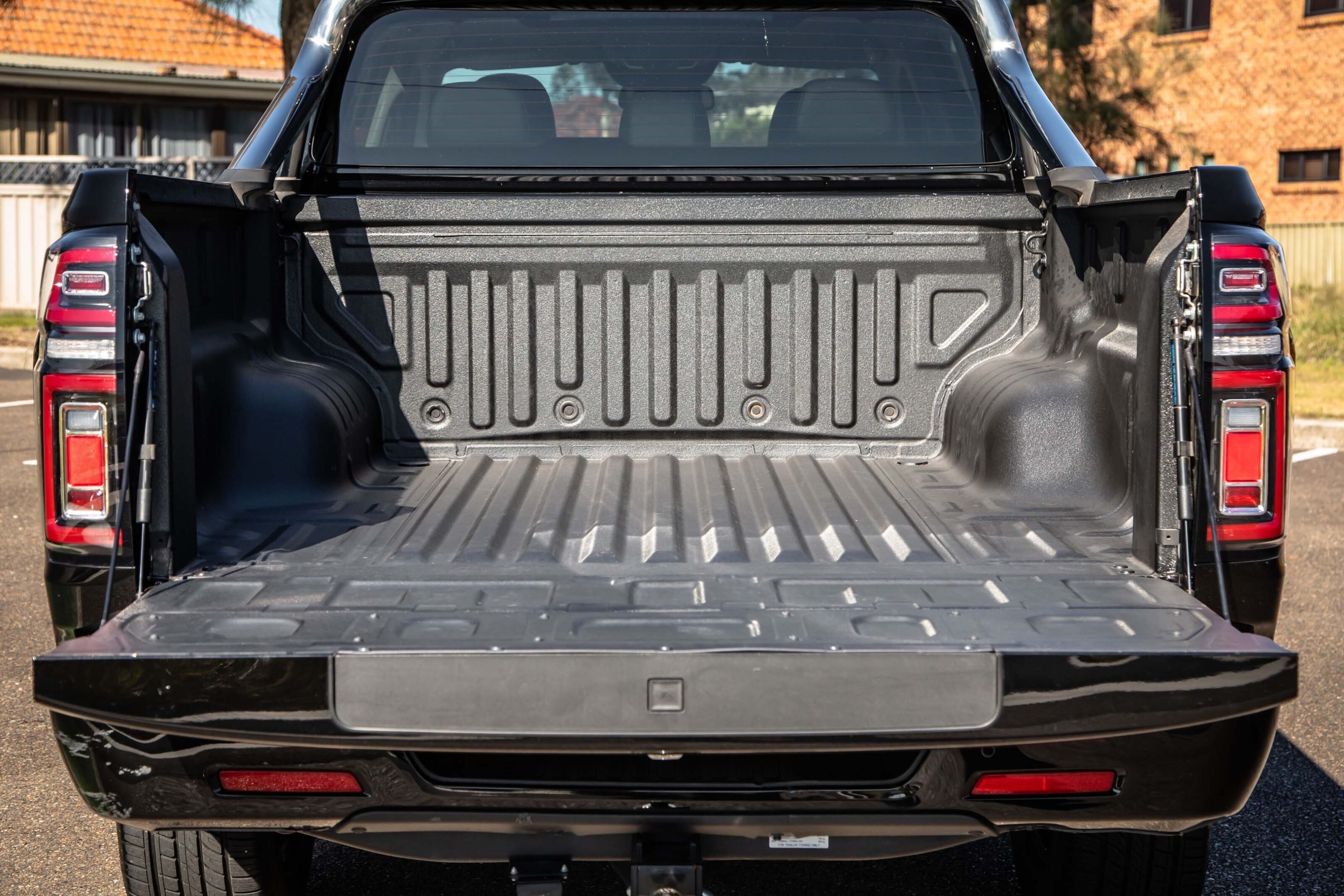
The tub itself is comparable in size to most utes in the class and you can load up for a maximum 1050kg and you can tow up 3000kg braked, about 500kg down on the segment leaders. I don’t think that’s a serious problem for all but the most committed towers of large objects, so it shouldn’t be a dealbreaker for many buyers.
Stepping into the rear of the cab, the door is a bit on the narrow side but perfectly normal for this kind of vehicle. The seats are actually quite comfortable – some in cars like this are on the more upright end of the scale – and as with the front seats are covered in what I think is fake leather, which got a bit hot in the rare moments of sun we had.
It probably didn’t help that the car we had was black. You do get USB ports, a 220V/120W plug and your own air vents, which is pretty good going. I’m sure there are good reasons for a 60:40 split-fold backrest to access the scarce space behind the rear seats, but I can’t think of any apart from maybe protecting the upholstery.
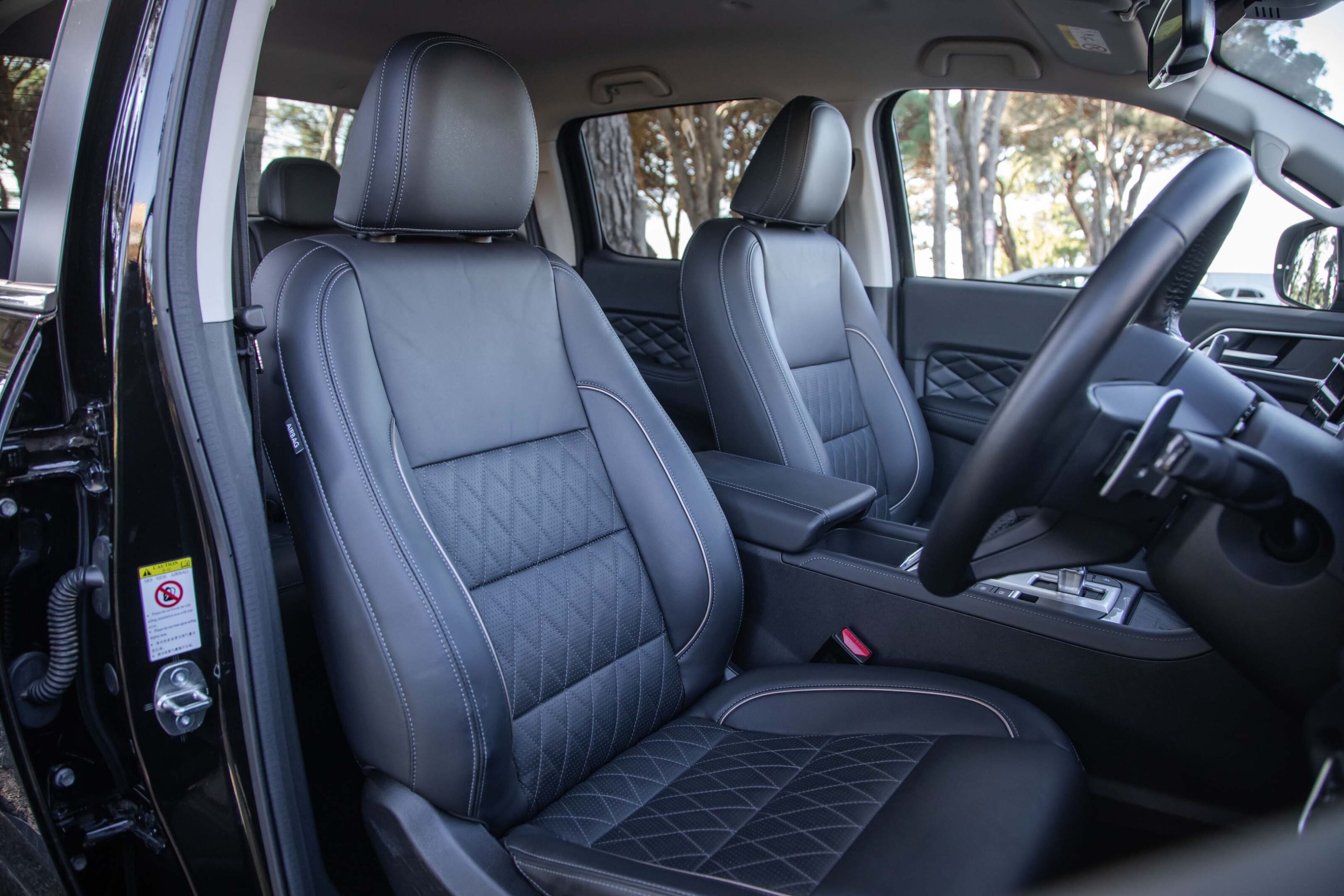
The middle seat won’t win any awards for leg and knee room, however, and it does sit appreciably higher than the outboard seats. The bench will be fine for pre-teens and pretty much anyone up to 180cm for a reasonable journey. There’s a nice quilting effect on the seatbacks and in the door cards, which has a very upmarket vibe.
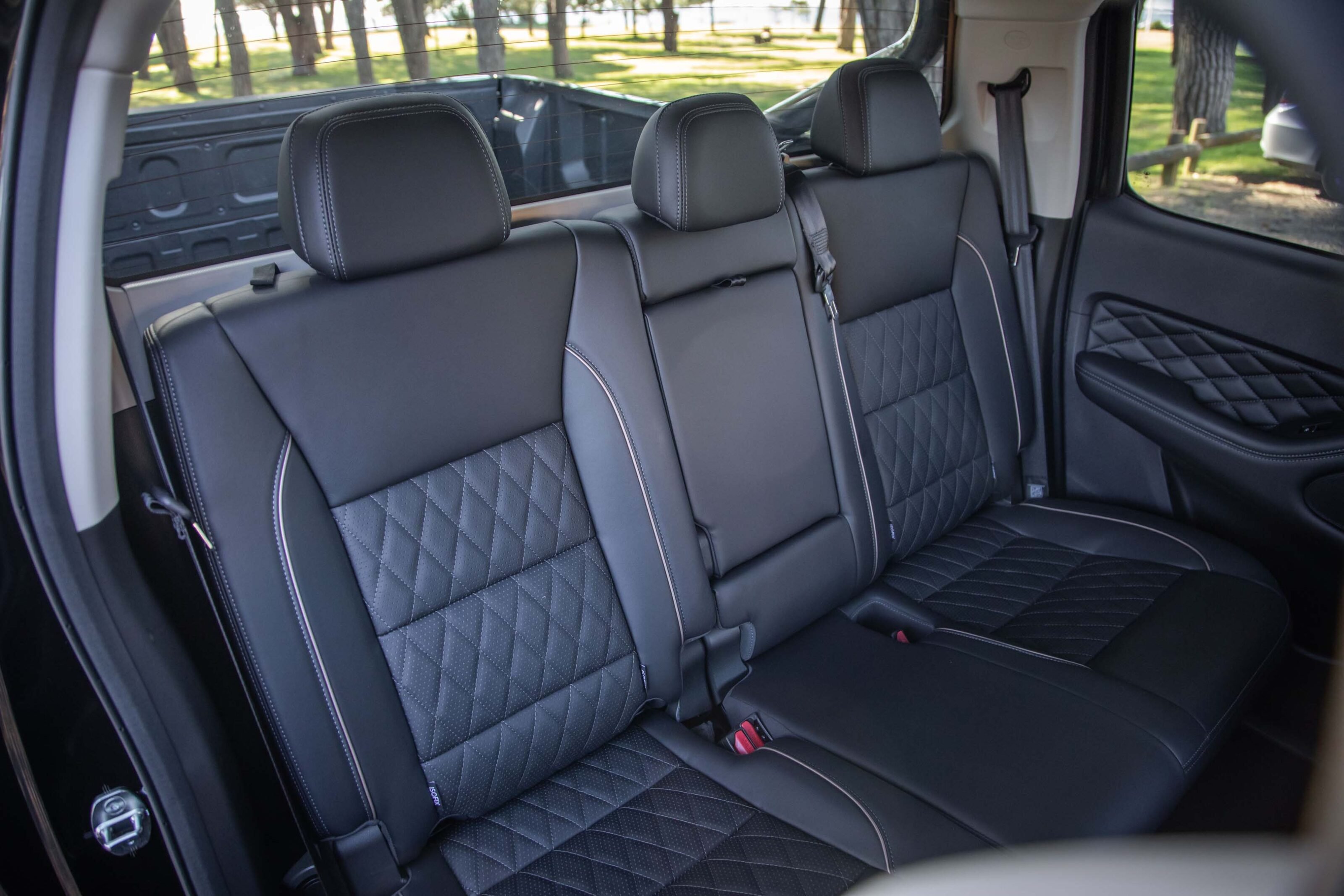
Up front, you get some very comfortable seats, nicely kittled-out in quilted leather and some fancy cream-coloured piping. You’ve got plenty of storage under the armrest, big door pockets with bottle holders, a pair of cup holders in the console, a rubberised charging mat at the base of the centre stack and a glovebox.
In with the charging mat are two USB-A ports with handy lighting so you can find them at night and a 12-volt port. There is also a sunglasses holder where the grab handle goes in left-hand drive versions, which is a clever use of the space and I appreciate its soft-close damping mechanism.
The dash design is mostly conventional but some blingy detailing around the switchgear and a slab of fake carbonfibre on both the console and in front of the passenger look a bit cheap. The touchscreen is bookended by two vertically arranged air vents.
On the road
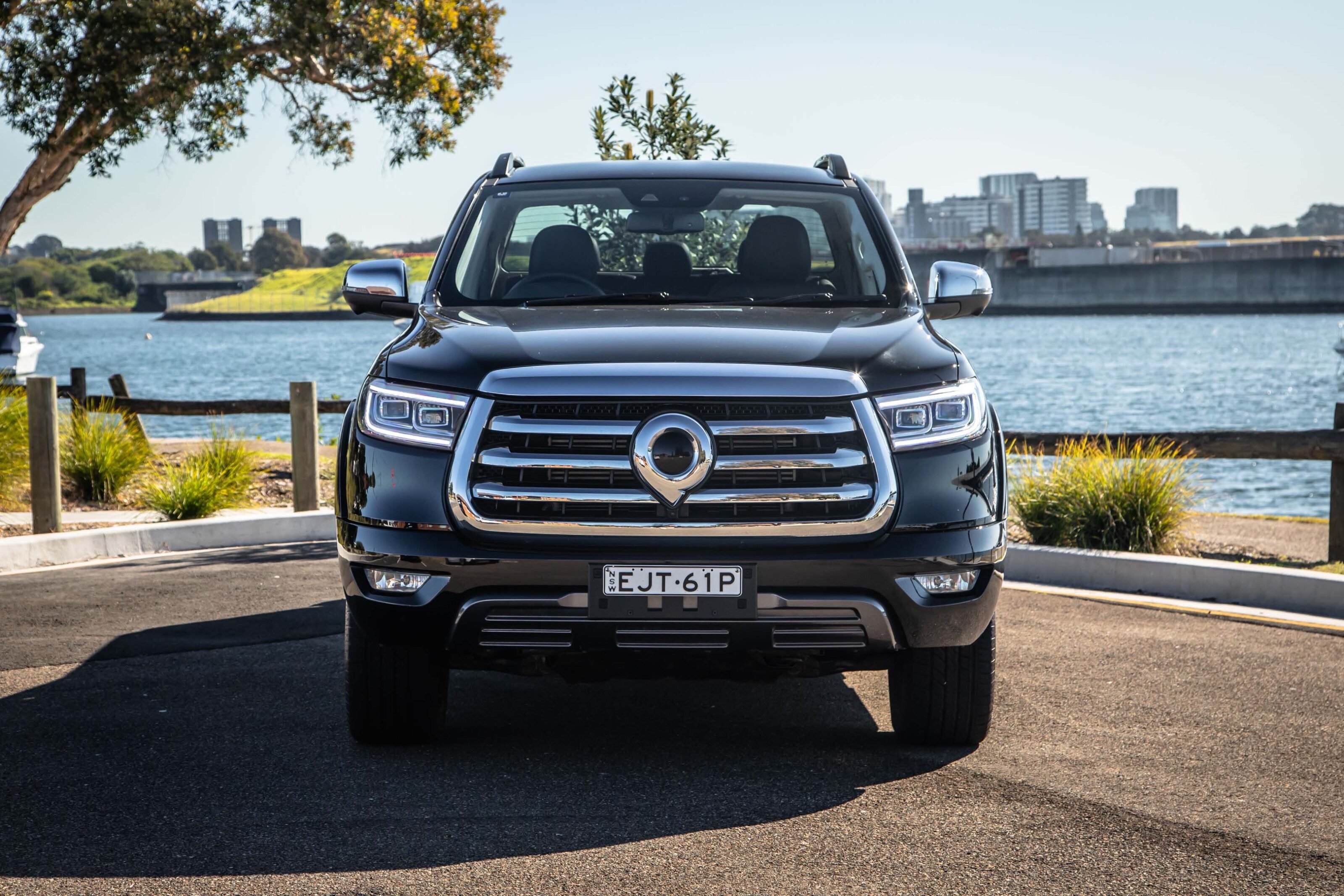
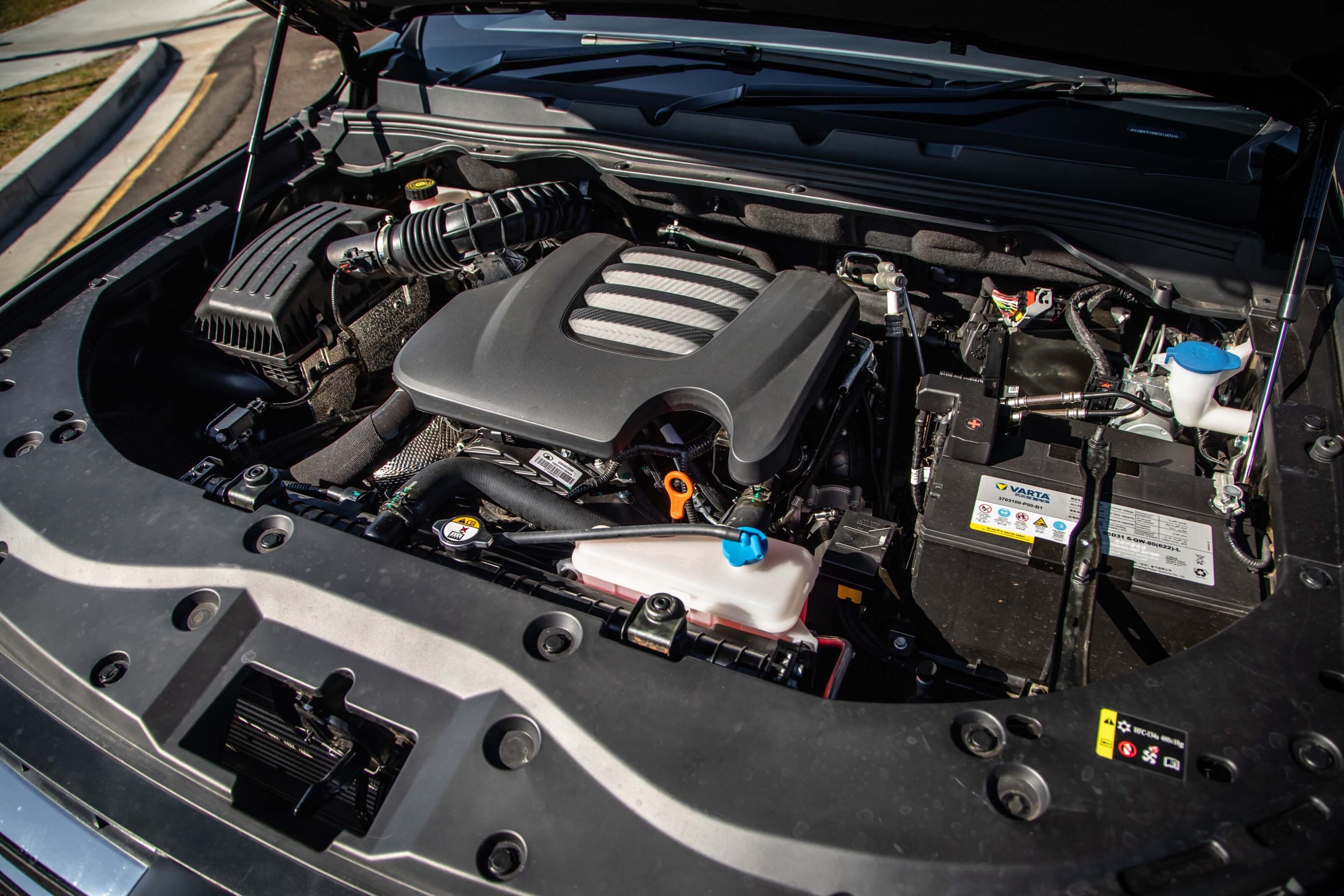
Behind the huge grille and suspiciously familiar headlight shape is a 2.0-litre turbo-diesel engine with 120kW and 400Nm. Both of those figures are a little off the pace compared to most rivals except for the entry-level 1.9-litre unit in the D-Max/BT50 pair.
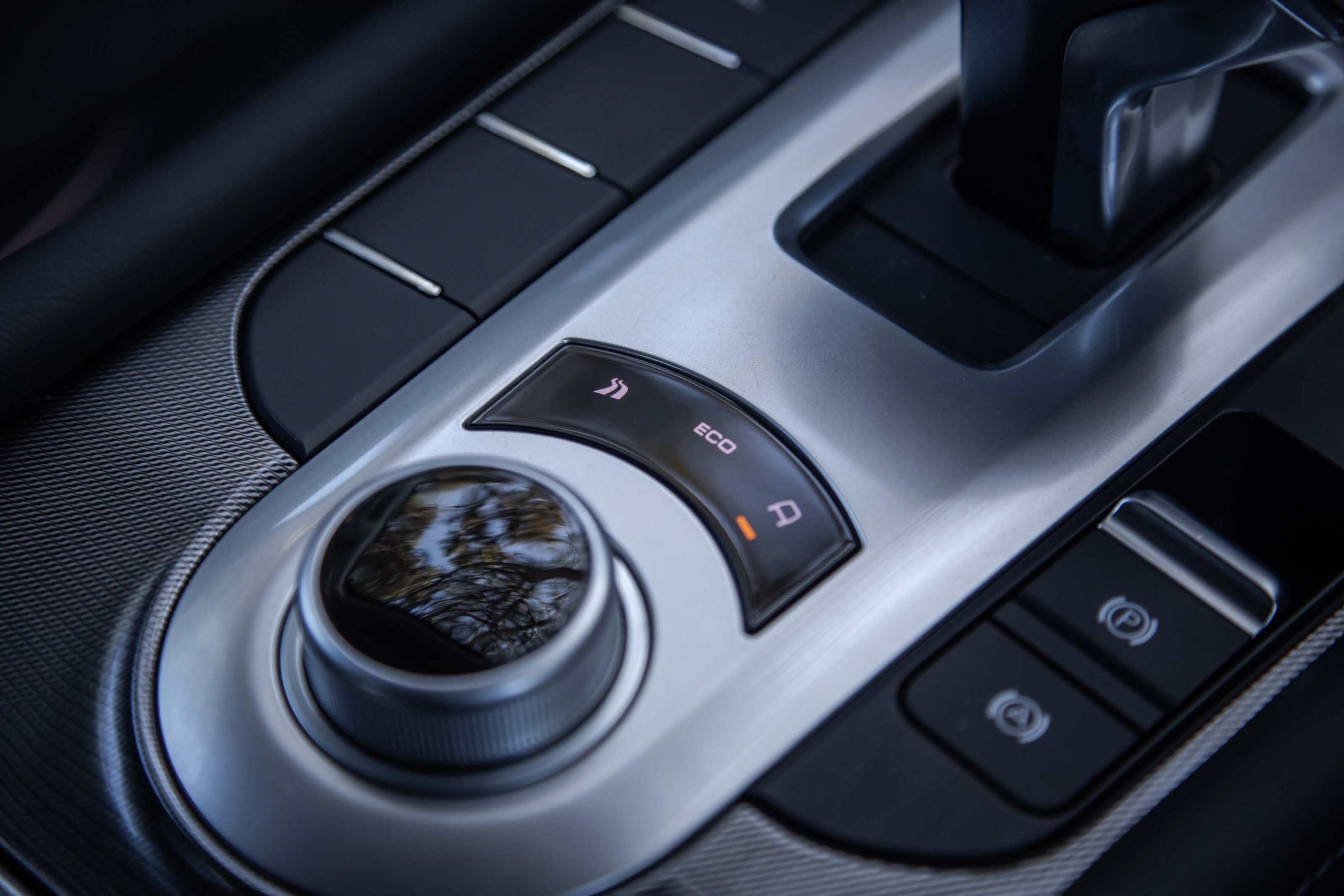
GWM has opted for a four-wheel-drive system that runs mostly in rear-wheel drive until the rears start slipping. In Eco mode, the power won’t shift at all to save fuel, but in Normal and Sport you get the “torque-on-demand” effect. An eight-speed automatic from ZF handles the shifting for you.
It’s a pretty loud and grumbly engine, but probably no worse than, again the D-Max/BT50 pair. For some reason – and I’m guessing it’s because the engine doesn’t pre-glow when you unlock – there’s a long wait for the engine to fire when you hit the start button.
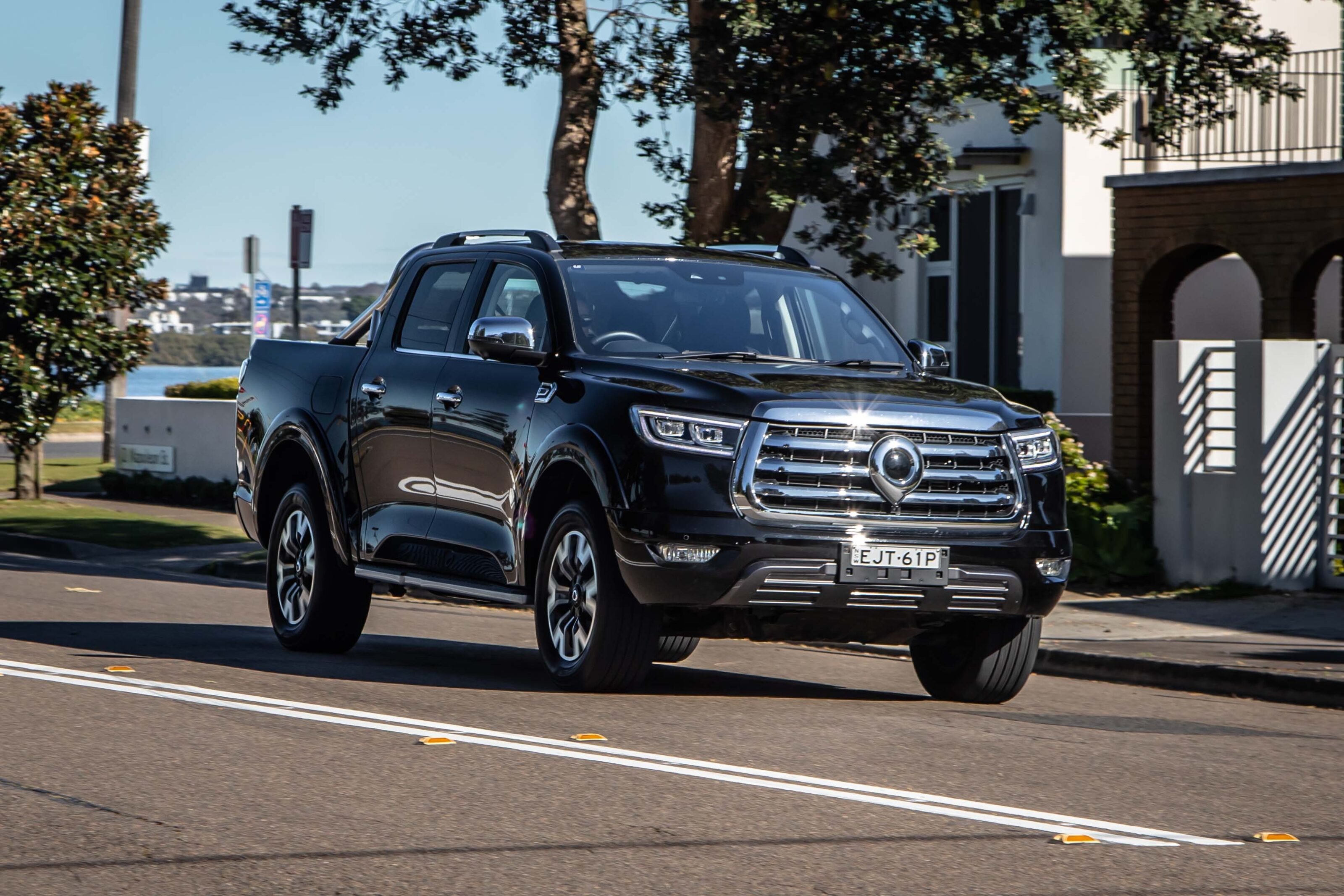
Unladen it’s unlikely to be much slower off the mark than the other machines in the class with comparable specs, so there’s no need to worry. The ZF eight-speed is, as ever, excellent – smooth and quick-shifting, although it’s a bit reluctant to kick down on a floored throttle.
I mentioned earlier that the Cannon-X’s height briefly became a concern. Entering the car park at our local shopping centre, a big familiar sign says “clearance 2.2m”.
Now, that’s plenty of room for even the biggest ute. I carried on without a thought, for about a millisecond because hidden by the big official sign was a handwritten sign saying, “Temprary [sic] clearance 1.8m”. If it had been that low, whatever it was that was hanging down would have peeled the roof off the cab or the bonnet would be its new temprary [sic] home.
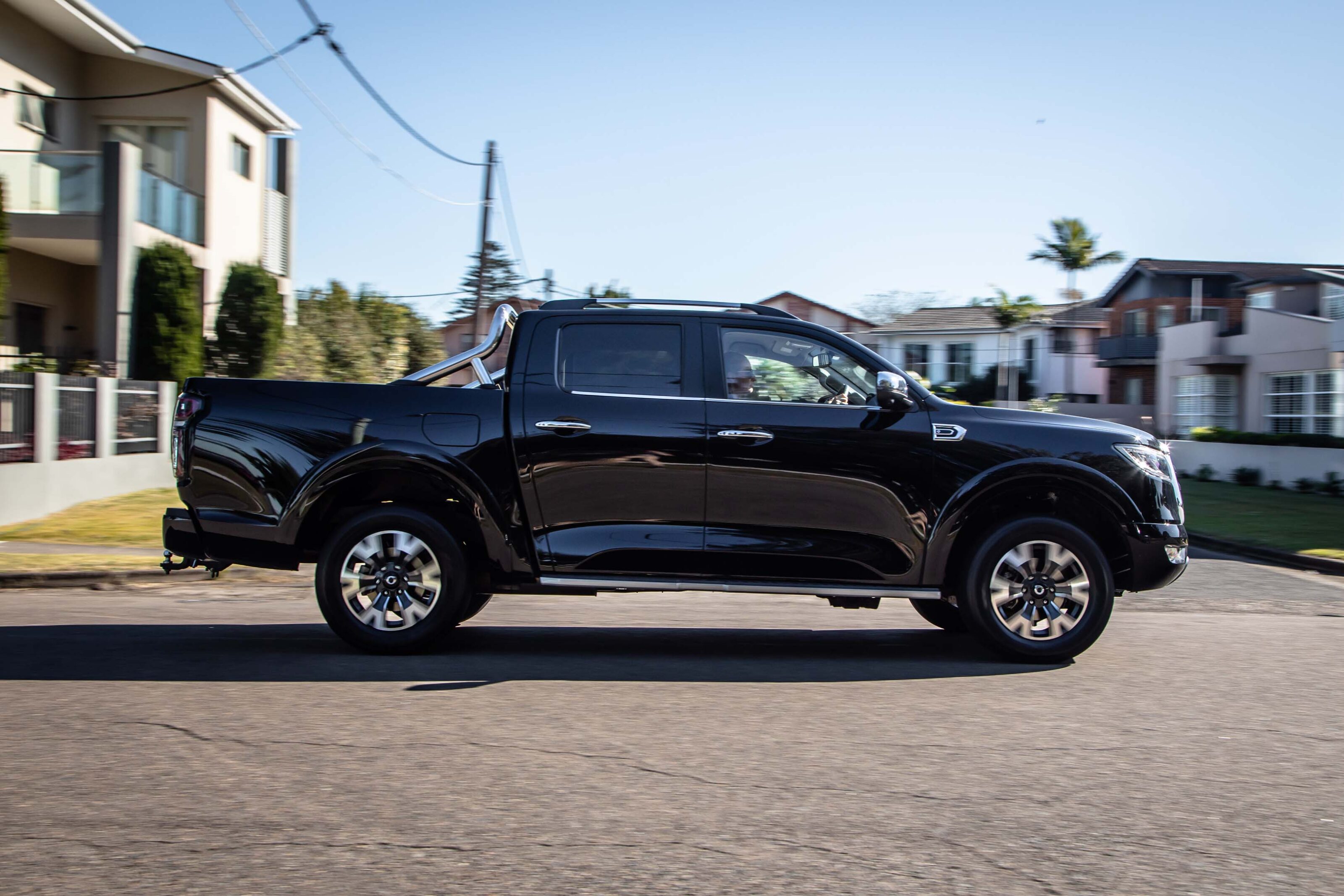
Its height isn’t even the tallest of off-the-peg utes. Anyway, point is, the cityscape isn’t as friendly to these things and you do need your wits about you.
The mean streets of the city are also not kind to the Cannon-X. Like many a ute before it, the rear end is held off the ground by leaf springs and you’ll really feel it. Without anything weighing down the rear to stop the rebound, the Cannon-X’s ride is a bit on the rugged side around town, which chips away at its lifestyle vibe.
It’s just vaguely unpleasant rather than outright nasty and this is probably the first time I thought, “Ah, I can see why you might buy something else over this.”
The first time I drove a HiLux – and that wasn’t all that long ago – I thought it was going to launch me into orbit it bounced around so much. Over the years the ride has calmed, as it has in the Ranger, Triton and D-Max, so the Cannon is a bit of a throwback. A tooled-up tradie with a full tray won’t notice, but a family being trucked around in a Cannon-X will.
Its lane-keep assist is a little more persistent than I would like, constantly applying torque to the steering wheel where it isn’t really required, as well as being a little frantic on occasions. Worth its weight in wiring, however, is the reverse cross-traffic alert because rearward vision is tricky, as is the over-the-shoulder view.
The switchable steering weight is a cute feature, but near useless in a ute, especially with such big balloony tyres. Artificially adding weight did nothing for steering feel which, again, is not something dual-cab buyers worry too much about.
Ownership
GWM’s seven-year, unlimited-kilometre warranty is excellent going for a ute. You also get five years of roadside assist.
The ute is subject to a capped-price service regime covering the first five services. The first one is due at six months or 5000km and costs $260. From then on you’ll pay $360 for a service every 12 months or 10,000km, which is a bit awkward if you’re a high-miler.
It’s also worth knowing that you’ll need to do a timing belt change at 75,000km.
VERDICT
Australians have gotten past the suspicion that just because a car is cheaper than the other ones it must be rubbish and I think GWM has recognised that by going all-in on the Cannon-X.
Its plush-for-a-ute interior is immediately impressive, as is the equipment level. There aren’t any confusing levers and buttons for off-roading so it presents as a very straightforward proposition to someone deciding they want a ute instead of an SUV.
It seems very well-built, is reasonably good to drive – if a bit on the bumpy side – and does pretty much what it says on the tin. Despite the sharp price, it is going into battle with quality and quantity on its side rather than just one or the other.
There’s still a little way to go in some areas but, as the GWM sub-brand Haval is showing, the company is catching up fast.
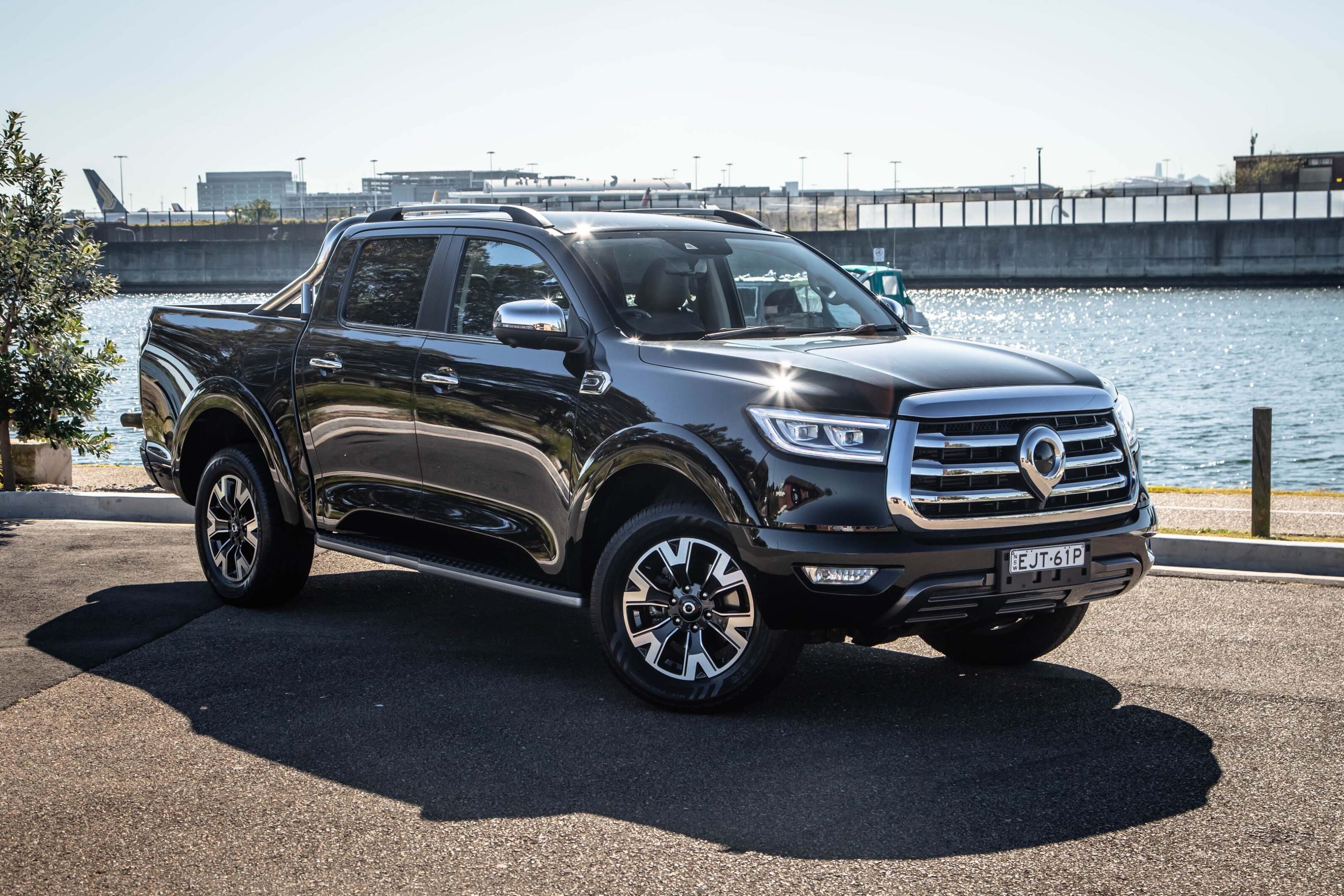
2022 GWM Ute Cannon-X specifications
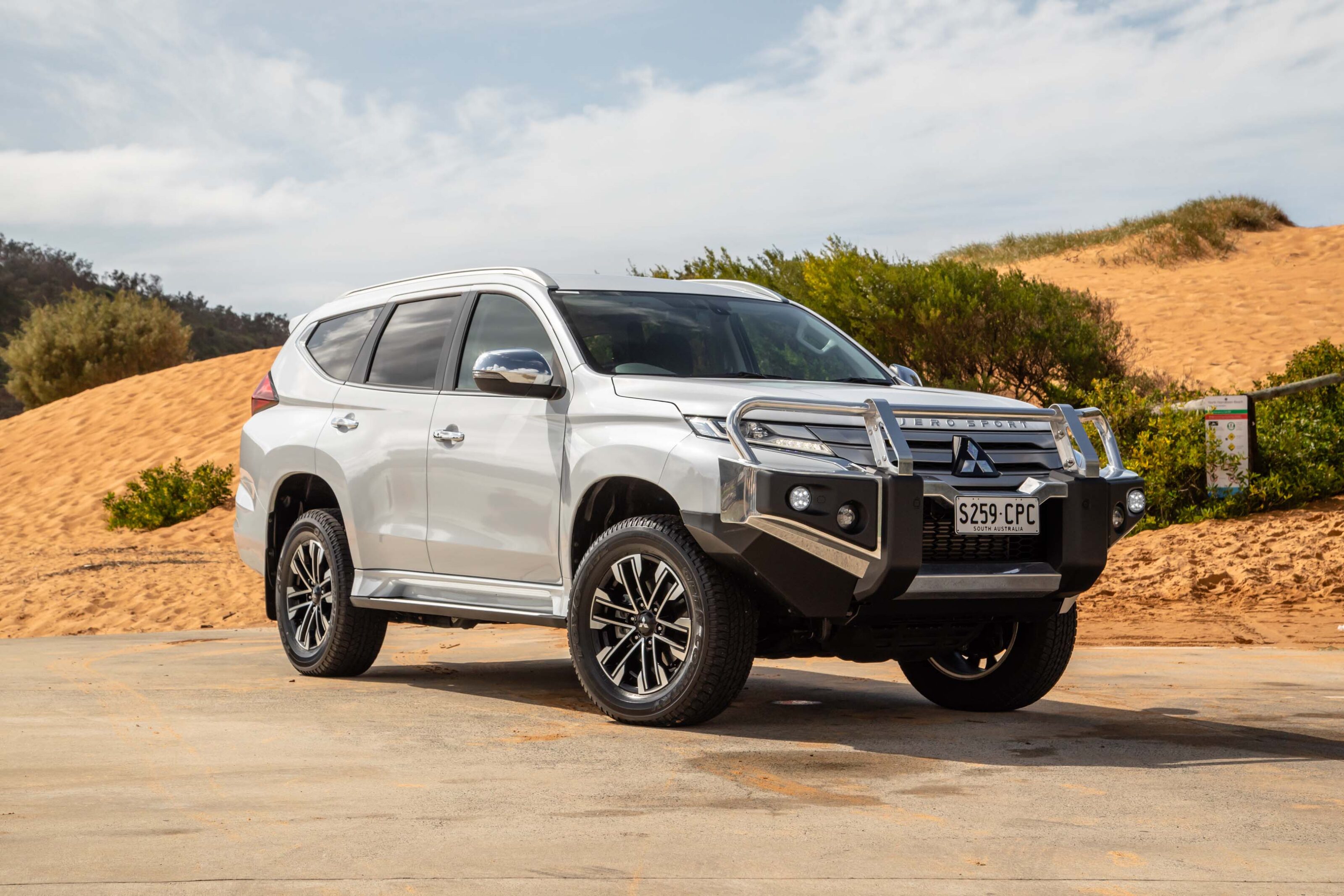
Can a ‘4×4’ SUV present a compelling case for ownership when only two of its four wheels are actually driven? That’s the question posed by the Mitsubishi Pajero Sport, along with other rivals in this segment like the Isuzu MU-X and Ford Everest. All offer cheaper versions of their rugged, off-road-capable, separate-chassis SUVs that ditch often complex four-wheel drive systems in favour of simpler, cheaper rear-drive layouts.
And it seems ample buyers are responding with an emphatic ‘yes’.
But it does raise a bunch of questions and demand that you properly consider your real-world usage before making what is, at the guts of it, a budget-led decision on a likely long-term purchase.
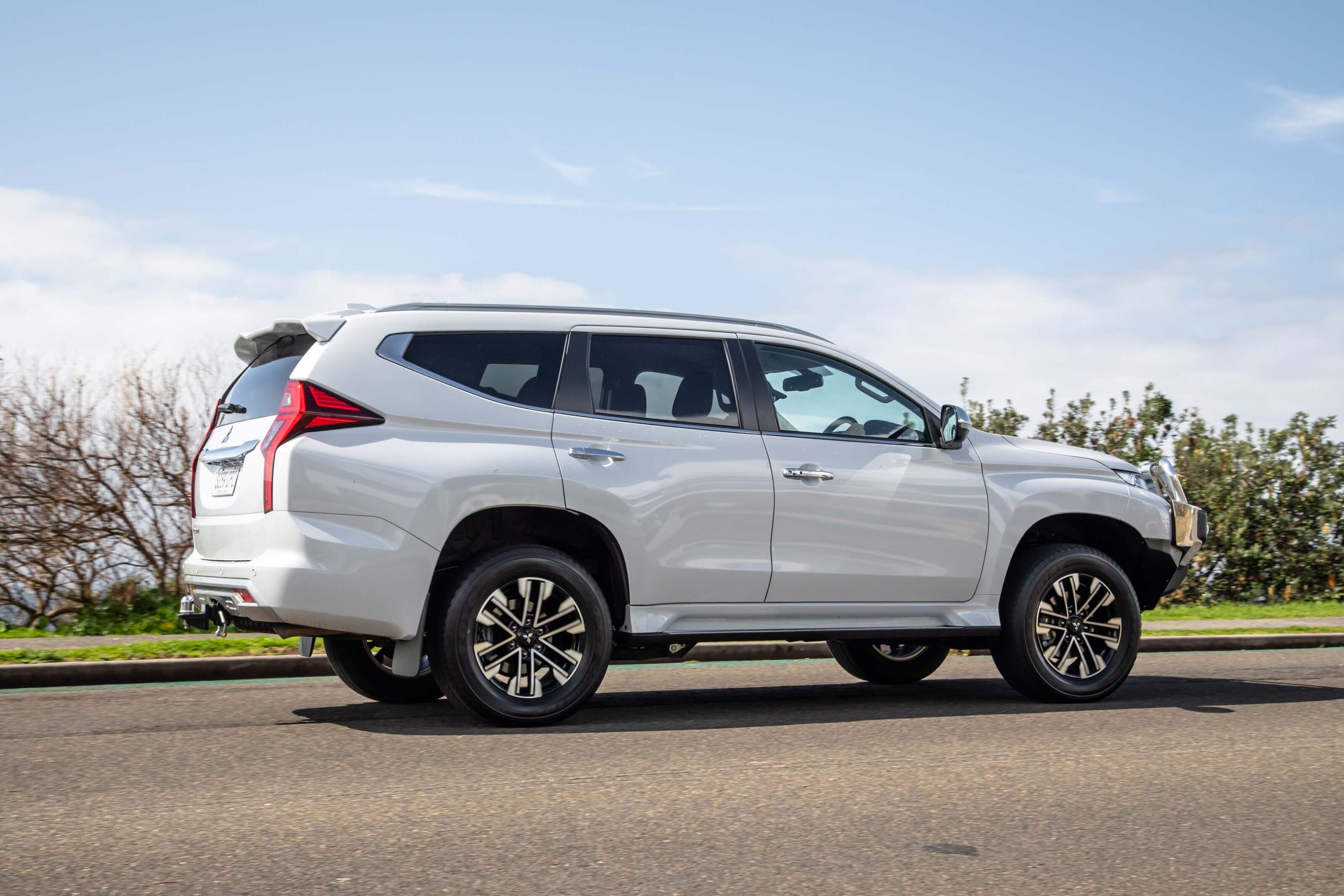
After all, the Pajero Sport, which shares its engine, transmission and much of its platform with the Triton ute, has been engineered from the outset to be capable off-road. Its ground clearance, approach and departure angles and tyre choice are all intended to enable it to tackle terrain too gnarly for most ‘unibody’ SUVs. Obviously, this compromises on-road performance.
But what if your driving ambitions don’t involve dirty weekends deep in the scrub or conquering inland Australia’s toughest tracks?
This third-gen Pajero Sport was first launched in 2015, and while it’s been updated, most recently in 2020, we want to know if it still stacks up when driving the rear rubber only. Or does losing the four-wheel drive system simply miss the point?
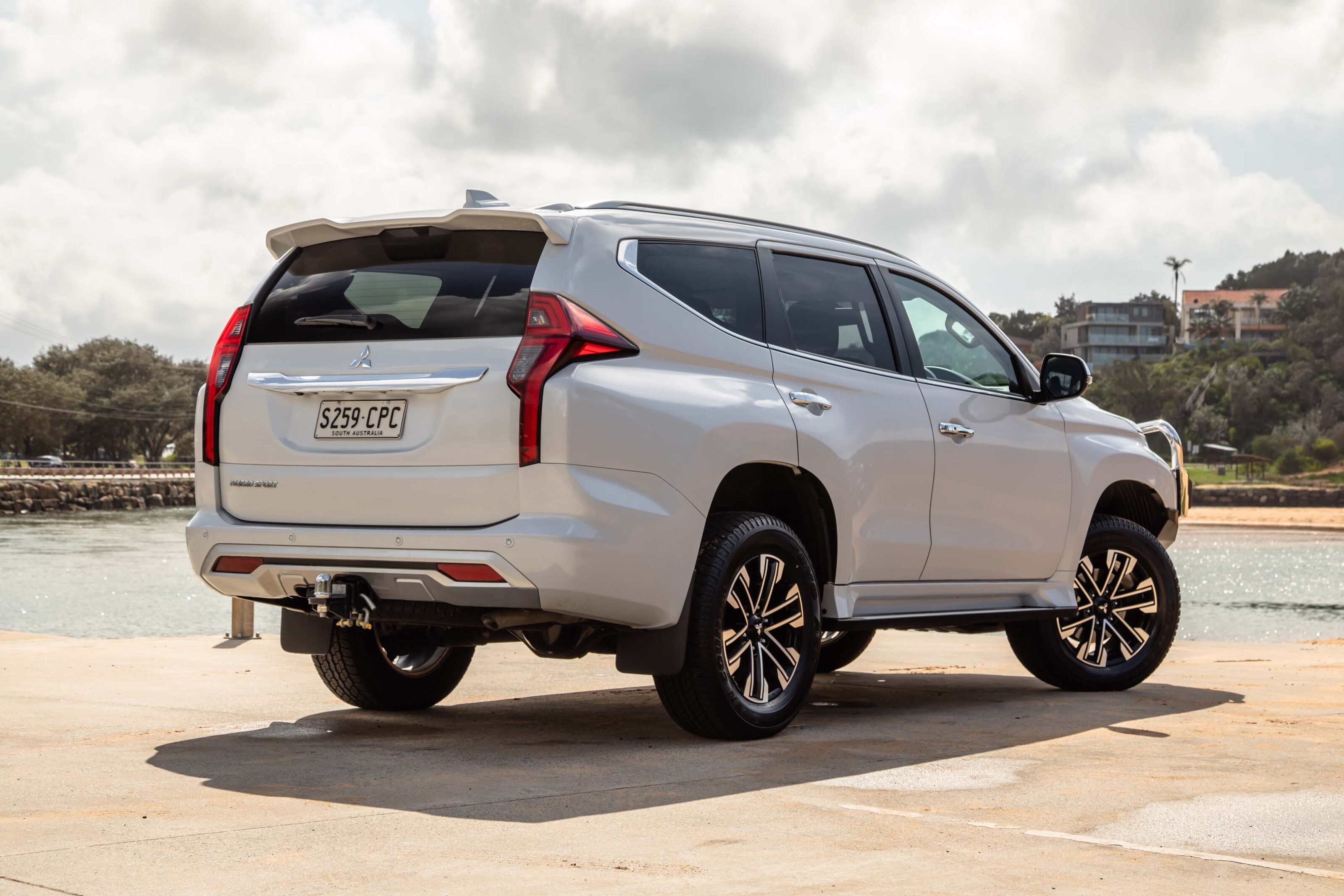
Pricing and features
Our seven-seater Pajero Sport GLS 4×2 on test here retails for $48,690 before on-road costs, which represents a saving of $5000 over the four-wheel drive equivalent, the GLS 4×4.
Competitors in this segment also offering rear-drive include the just-released Ford Everest Ambiente at $52,990 and the Isuzu MU-X LS-M, priced at $48,900 (both before on-road costs).
A Toyota Fortuner in GX spec is priced into this mix at $49,715 plus on-road costs, although it’s four-wheel drive.
The SsangYong Rexton (also four-wheel-drive only) trumps all of these for standard equipment and is keenly priced from $48K drive-away. That’s life as a challenger brand for you.
In GLS spec as tested here, the Pajero Sport includes automatic wipers, dual-zone climate control, integrated satellite navigation, DAB+ digital radio, a power tailgate, leather steering wheel, electric parking brake, rear privacy glass, auto-dimming rearview mirror, keyless entry with push-button start, auto-folding mirrors, 18-inch wheels, a 220V power outlet in the middle row and LED front foglights.
For more premium upholstery, a digital instrument display, electrically adjustable heated front seats and a more comprehensive safety suite (which we’ll get to) among other gear, you need to step up to the Pajero Sport Exceed at $59,190 before on-road costs, but it’s not offered as a rear-driver.
White is the only no-cost colour; all other colours add $740 with the exception of White Diamond, which is a $940 option.
Our test vehicle also included a Mitsubishi genuine accessory bull bar, priced at a hefty $3879.
Equipment list
| Wired Apple CarPlay and Android Auto |
| DAB+ digital radio |
| Six-speaker sound system |
| Adaptive cruise control |
| Keyless entry and start |
| Leather-wrapped steering wheel and gear selector |
| LED headlights, fog lights and daytime running lights |
| Dual-zone climate control |
| Power-folding exterior mirrors |
| Four-speaker sound system |
| Automatic headlights |
| Rain-sensing wipers |
| Rear privacy glass |
| Power tailgate |
| Electronic parking brake |
| Seven seats |
Comfort and space
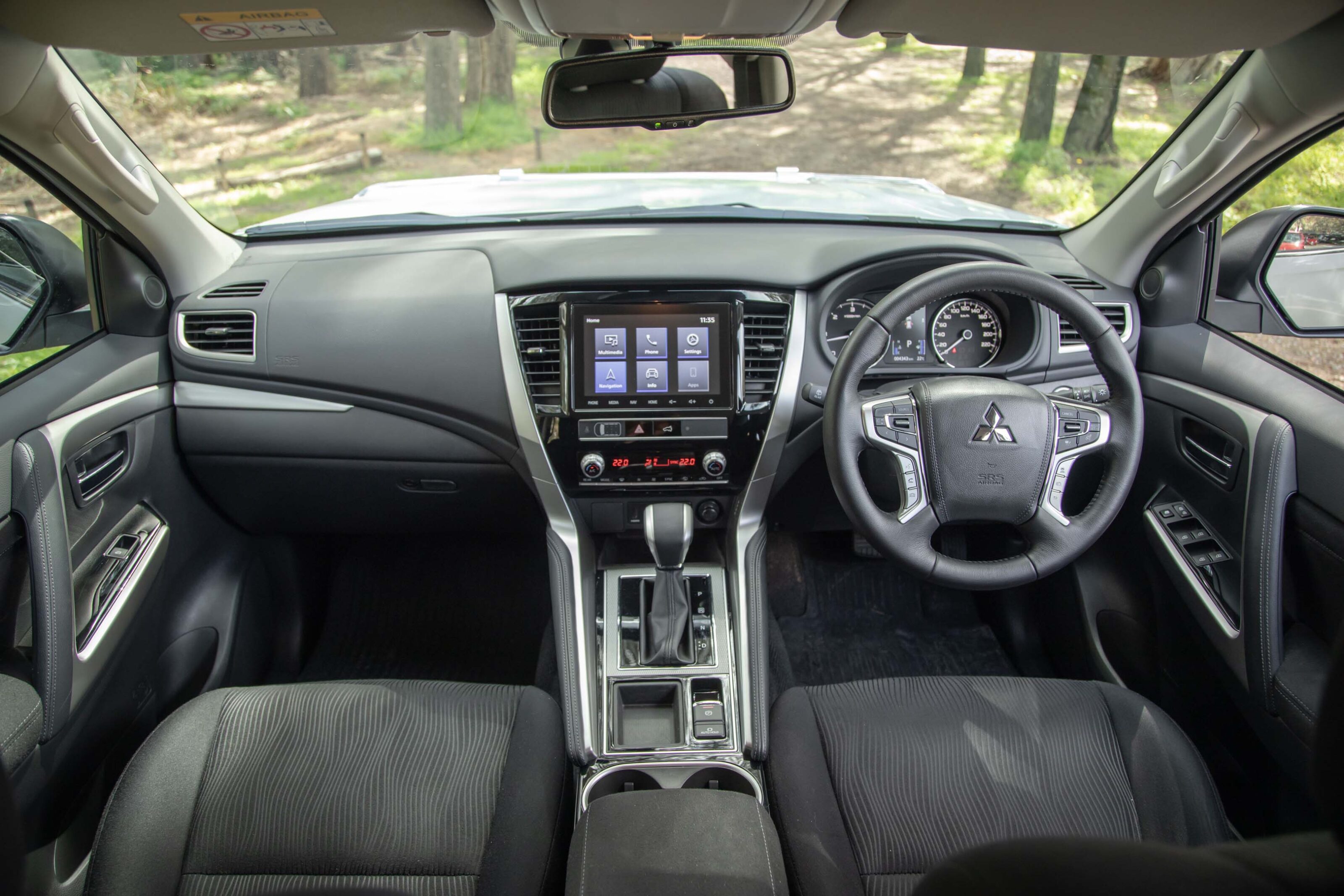
If you feel that the interiors of current cars have become too ‘screen heavy’ and bafflingly complex, where an algebraic equation is easier than adjusting the air vents, chances are you’ll find the cabin of the Pajero Sport a welcome, uncomplicated respite.
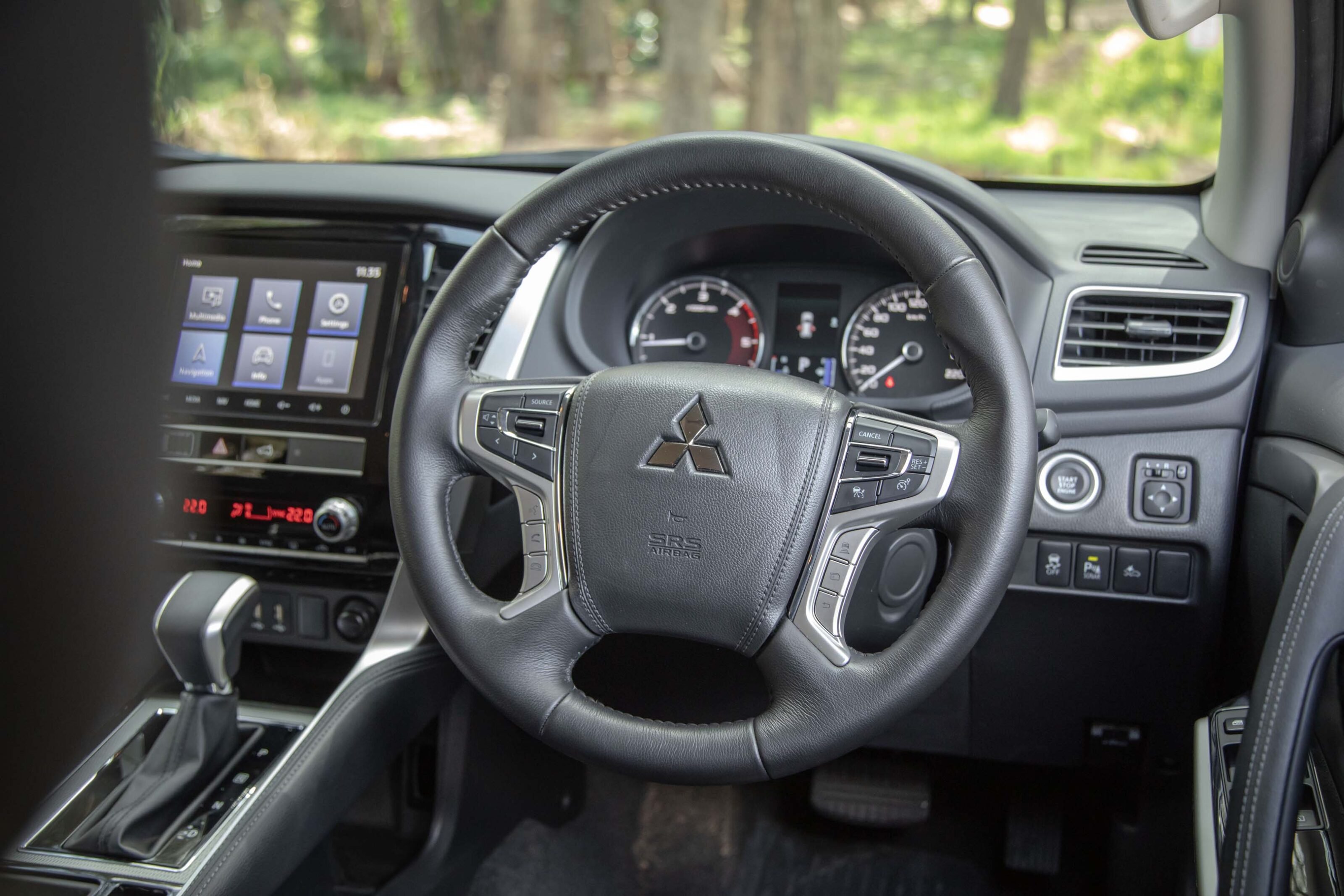
There will be no requirement for a 15-year-old to walk you through the operation of anything in here. The centre console presents a clean, uncluttered layout with simple ventilation controls and an 8.0-inch multimedia screen controlled by straightforward icons in a logical menu structure.
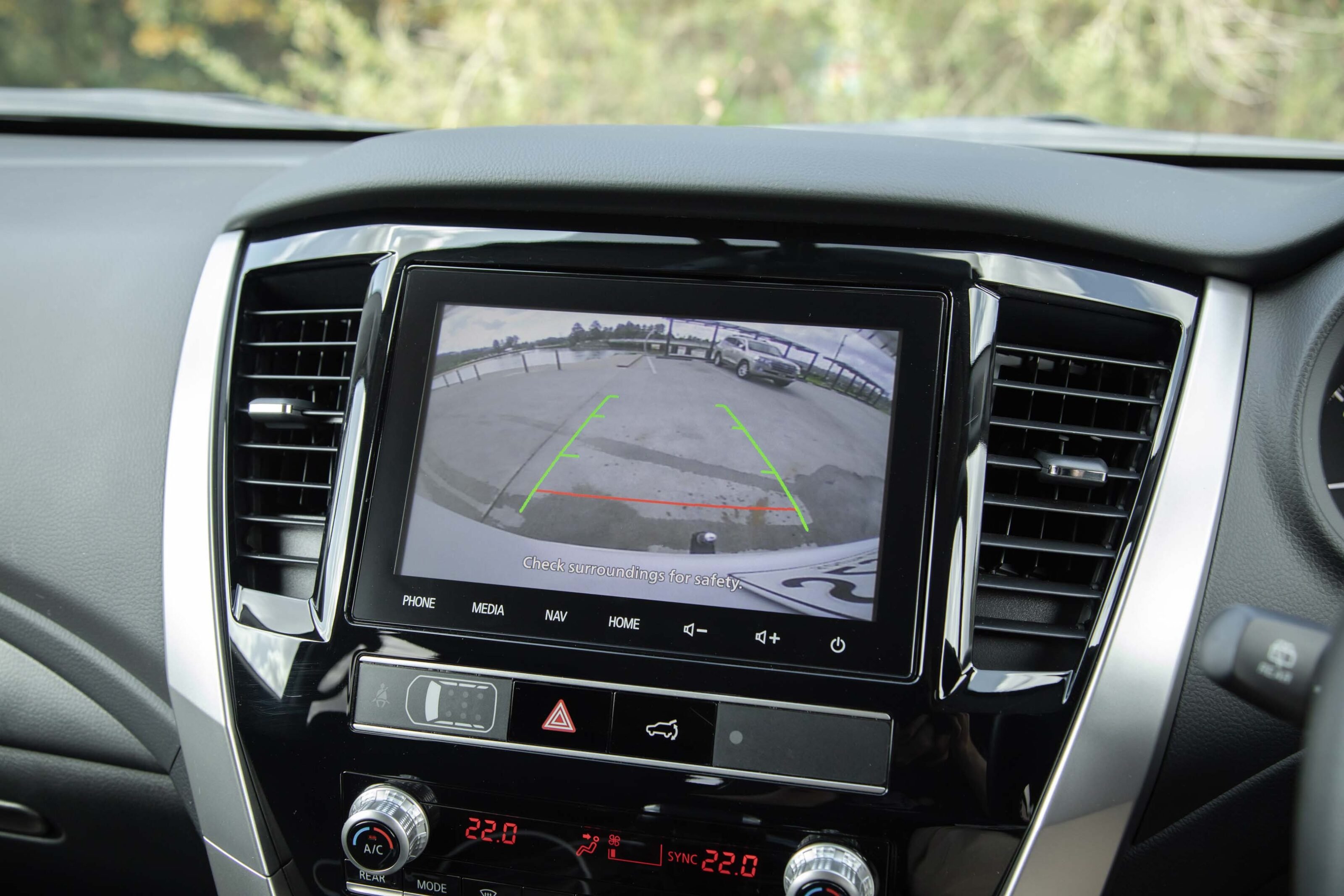
It’s not especially bright or high resolution, nor is it as swift to respond to the touch as some rivals, and the graphics look dated. But at least it doesn’t bury commonly used functions under multiple submenus. There’s inbuilt navigation as well as Apple CarPlay and Android Auto via cable connection.
Our main gripe is the lack of a volume knob for the average but acceptable six-speaker audio. There are knobs provided below for the climate control so it’s clear the interior design team wasn’t totally allergic to anything that’s not a touch panel. So why relegate the most commonly used function to the most fiddly control possible?
Granted, the driver has the convenience of a volume rocker switch on the steering wheel so it’s more likely to be an inconvenience to the passenger, but it’s a case of dumb design where elsewhere there seems to be an emphasis on logic and simplicity.
We also found the lack of a mute control either on the wheel or the fascia an annoyance, while the voice command button on the steering wheel has zero understanding of anything it’s asked.
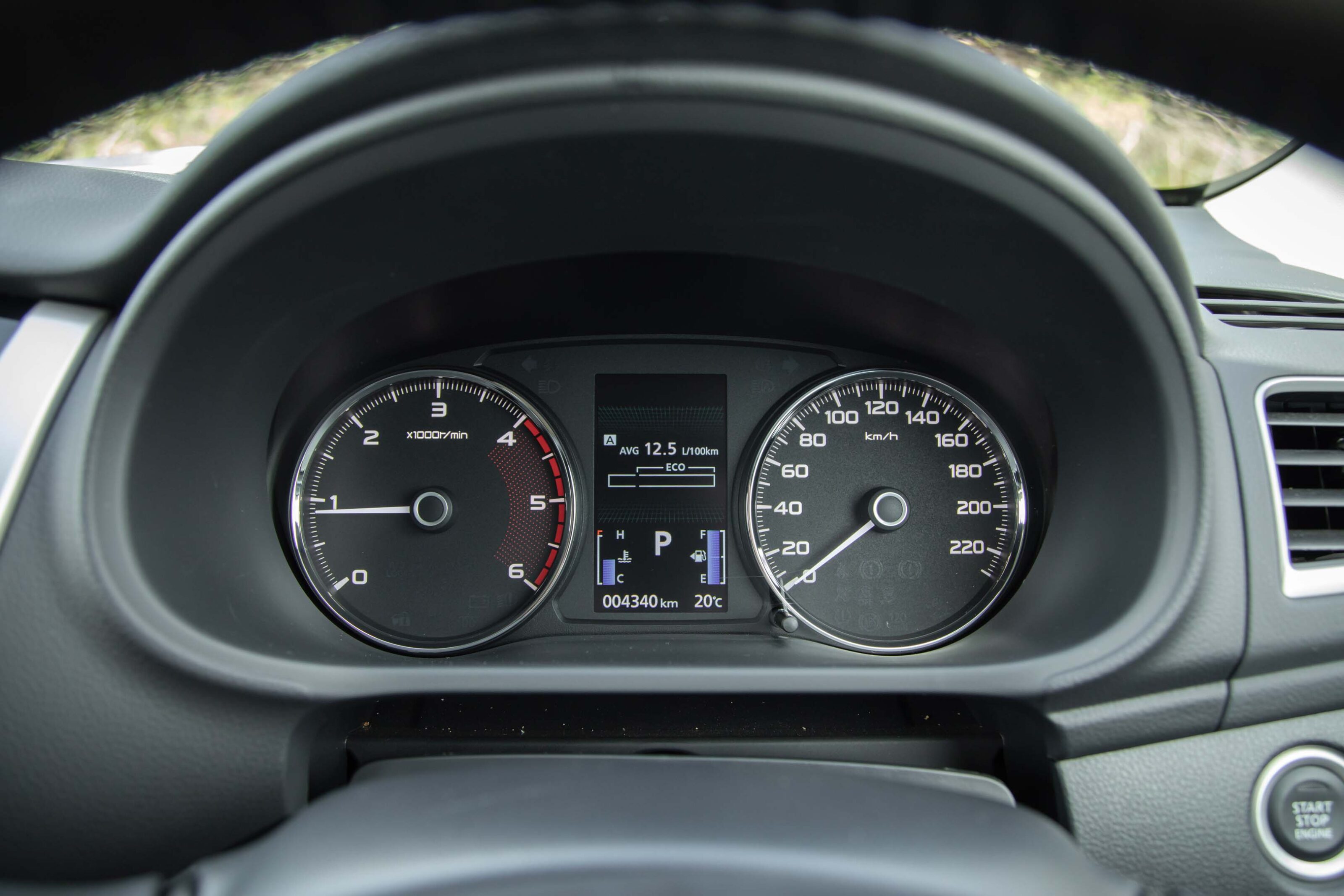
Lack of a digital speedo is also a demerit, although thankfully the analogue dials are crisply legible and sensibly graduated.
Hard plastics are used throughout the cabin, though the use of faux leather trim on areas like the centre console does up perceived material quality slightly.
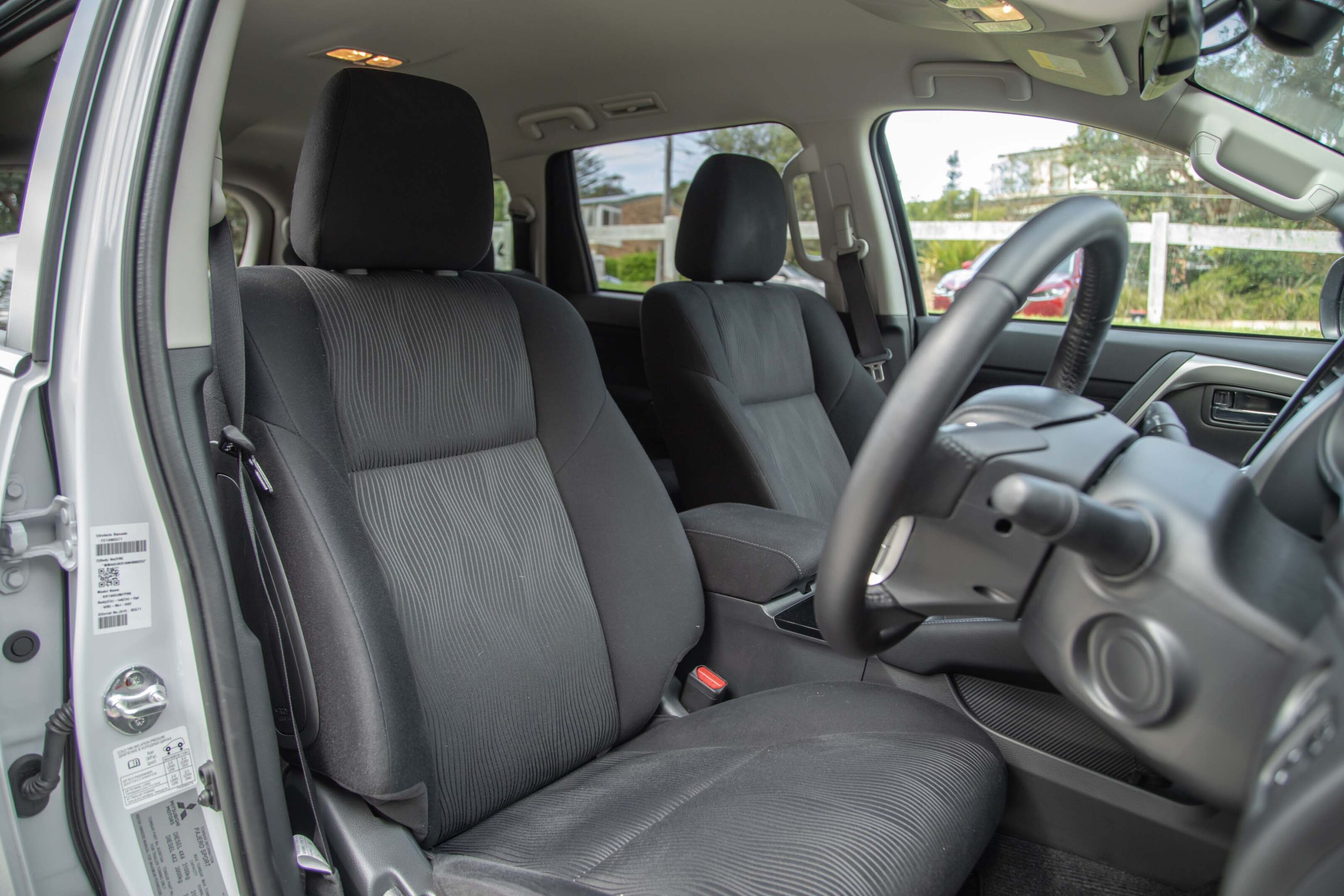
Both front seats are manually adjusted, with the driver’s providing only adjustment for the base angle (not overall seat height). The driver also gets electric lumbar support. Overall bolstering is okay, the seat doesn’t attempt to grip you too tightly because there’s probably no real need to.
The only shortcoming from my point of view in accommodating my 182cm frame is that the seat base is a bit short to provide optimum under-thigh support. The pedal box, too, is a little more snug than some competitors so longer-limbed drivers may find their legs splayed out to the centre console and door trim.
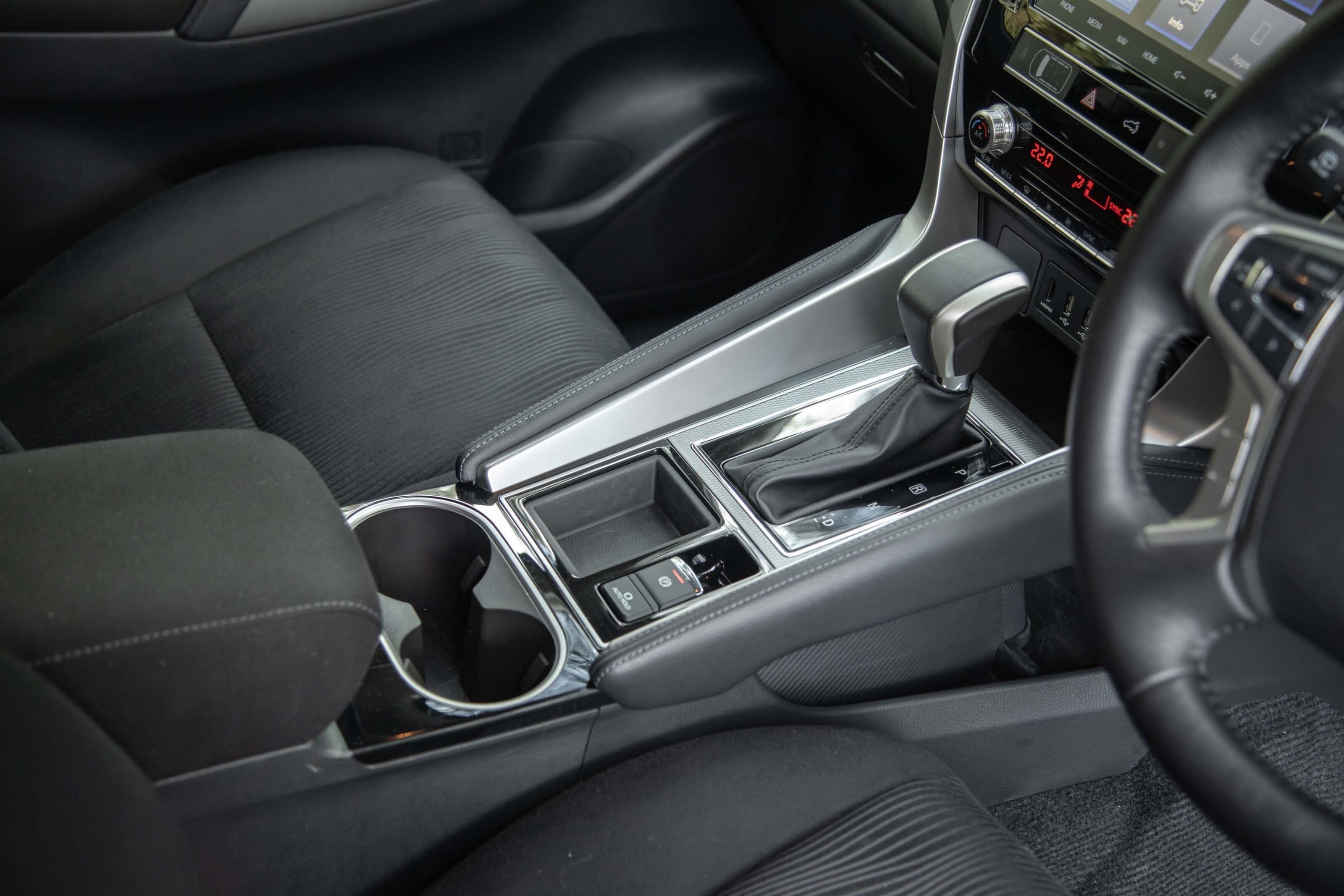
The steering wheel is adjustable for reach and height, but that reach adjustment is limited to 50mm. I would’ve preferred to have been able to pull the wheel a little closer, but no dealbreaker. Less great are the bulky A-pillars, which can obscure important stuff like pedestrians, but the Mitsu is hardly on its own here.
Interior storage space for an SUV in this segment ranks only as adequate. The centre console bin is modestly sized and access into it is blocked by a removable top tray. There is, however, storage on a shelf tucked underneath the centre console.
Door bins are a useful size and accommodate one-litre drink bottles. There’s also a sunglasses compartment in the ceiling but overall, no real surprise nor delight in terms of thoughtful touches or thinking outside of a very conservative box.
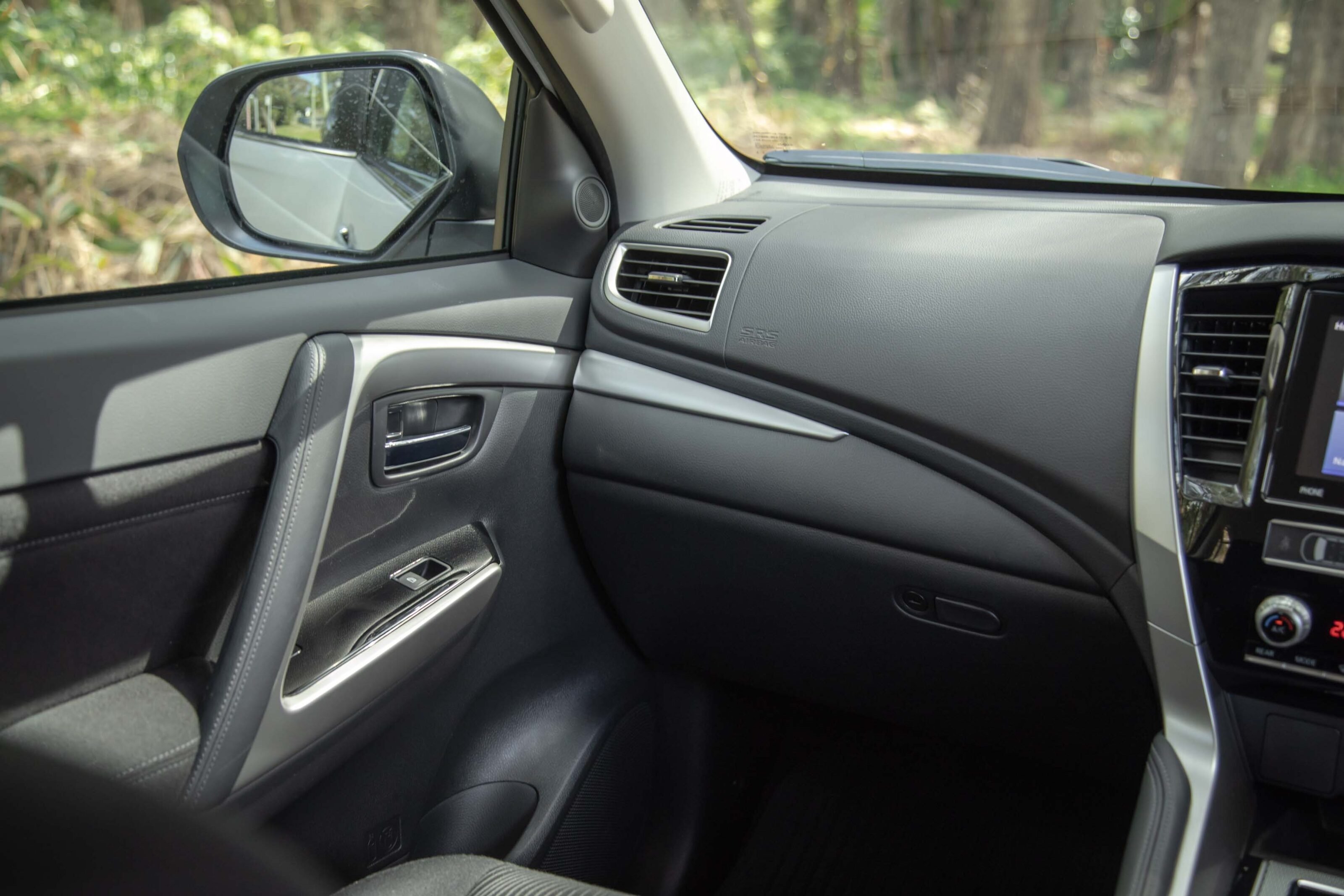
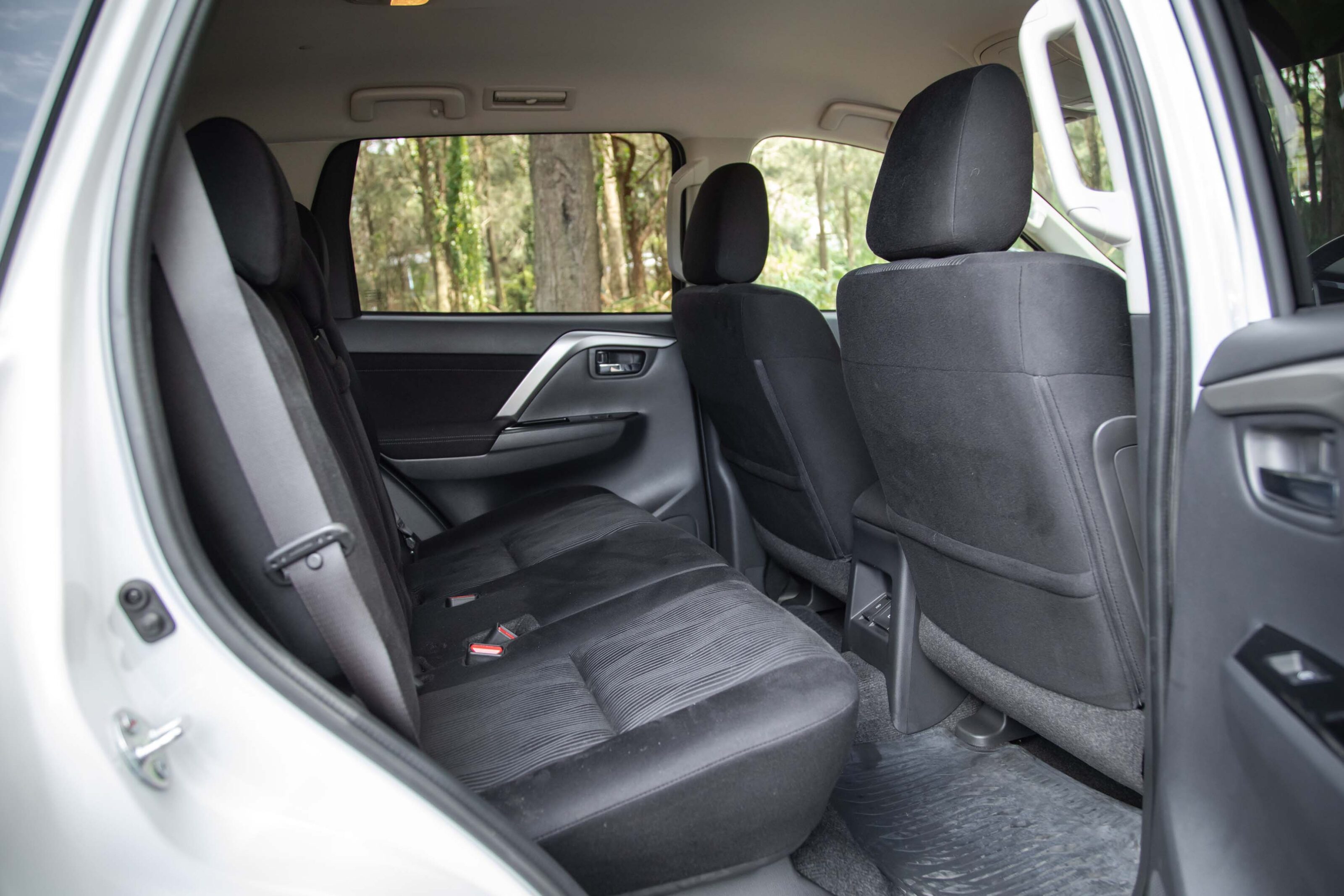
Life in the second row is fine for kids, but tall adults may find the seat base is set a little low, requiring more bending of the legs than most people would prefer. There are two USB sockets, a 220-volt outlet and air vents.
The rear door bins accommodate a standard drink bottle and there are pop-out cup holders when the centre armrest is folded down. No problems with headroom as you’d expect in an SUV with a conventional roofline like this.
Access into the third row is reasonable on both sides of the car thanks to the folding and flipping mechanism of the 60:40 split rear seat. But accommodation of the seats themselves is, no surprises, a small kids zone, or short adults for whom you have no great affection.
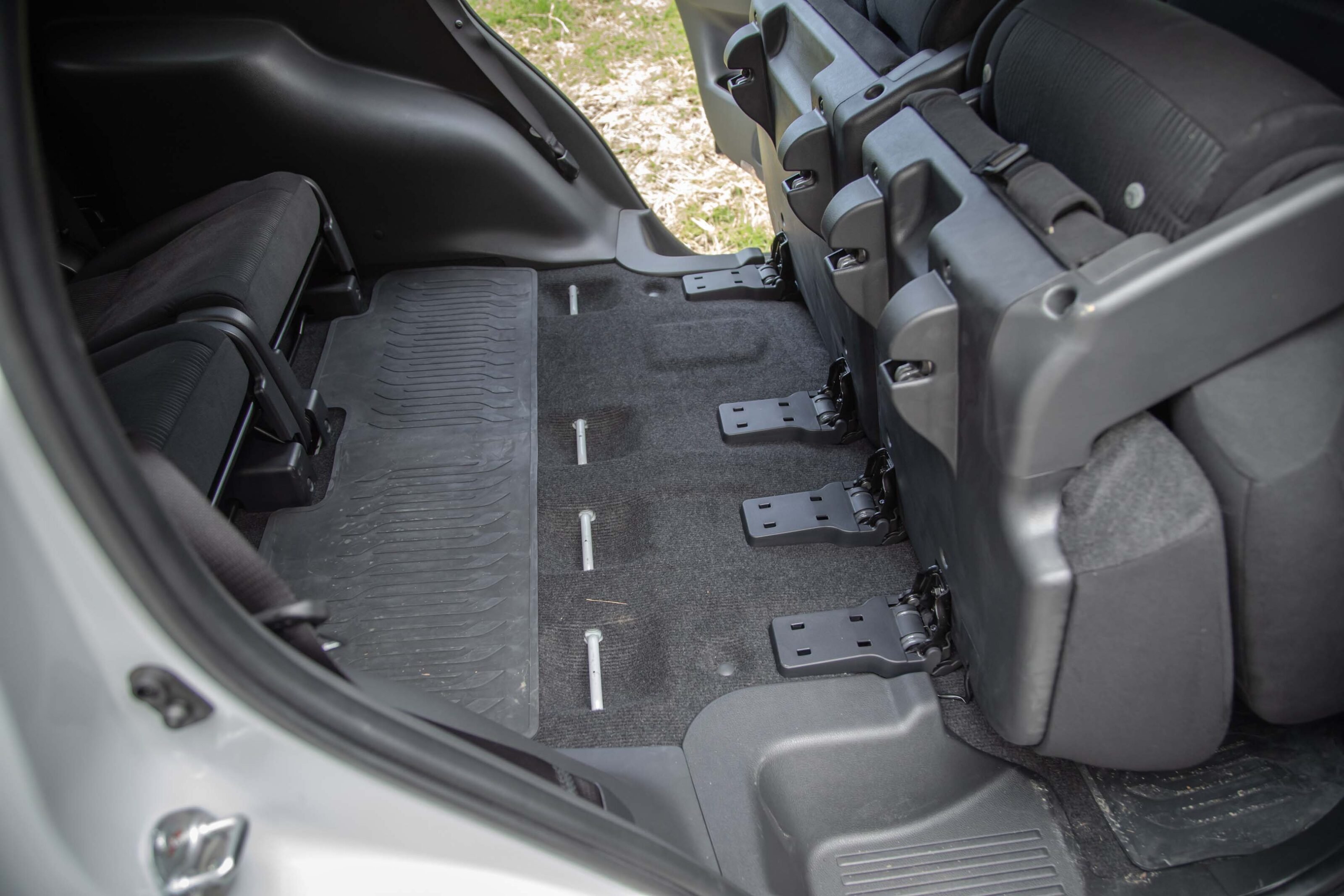
But what about the all-important folding of the third row when you want to use that space for cargo? Pulling on straps unlatches the sprung third-row bases, while another pair of straps allow the backrests to fold flat. The re-erecting process, however, is not quite as seamless.
Popping the backrests upright is no problem but you then need to lean over them to reach the folded seat bases, which requires a bit of muscle and is a reasonable stretch, potentially a challenge for shorter owners.
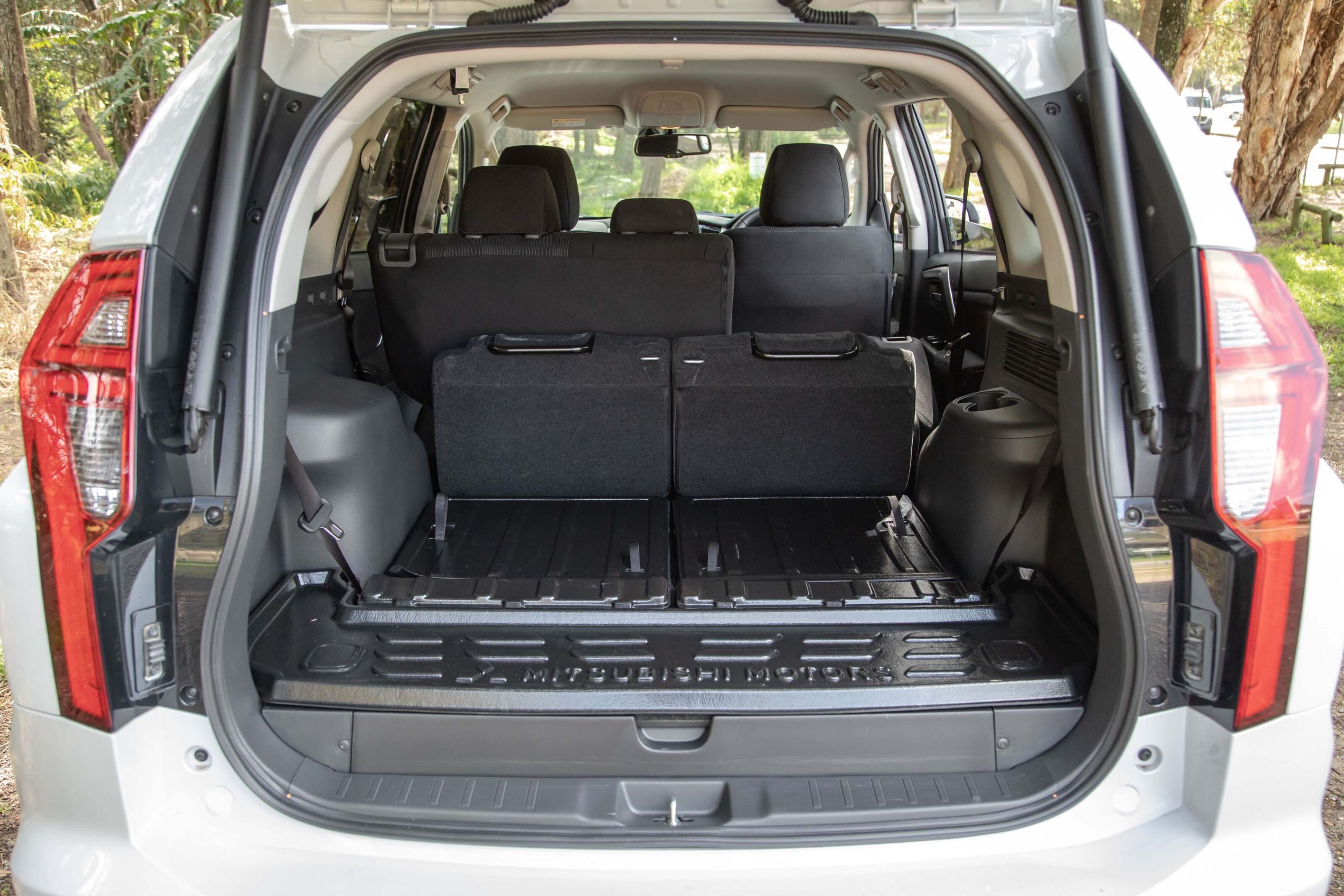
With all seats in use, cargo space is just 131 litres; small for the segment. Fine for groceries or school bags, less great for an airport run. With the third row folded, this bumps up to 502L, while folding the second row liberates 1488L.
Safety
The Pajero Sport has a five-star ANCAP rating from 2015, and yes, it gets the basics right, but there are some omissions that you will find on competitors in this price bracket.
What is included are seven airbags, autonomous emergency braking (AEB), adaptive cruise control, a reversing camera, and rear parking sensors.
But no front parking sensors, which seems mean in the extreme, no blind-spot monitoring, no lane-departure warning, lane-keep assist, or rear cross-traffic alert.
For these, you need to step up to the Exceed grade.
On the Road
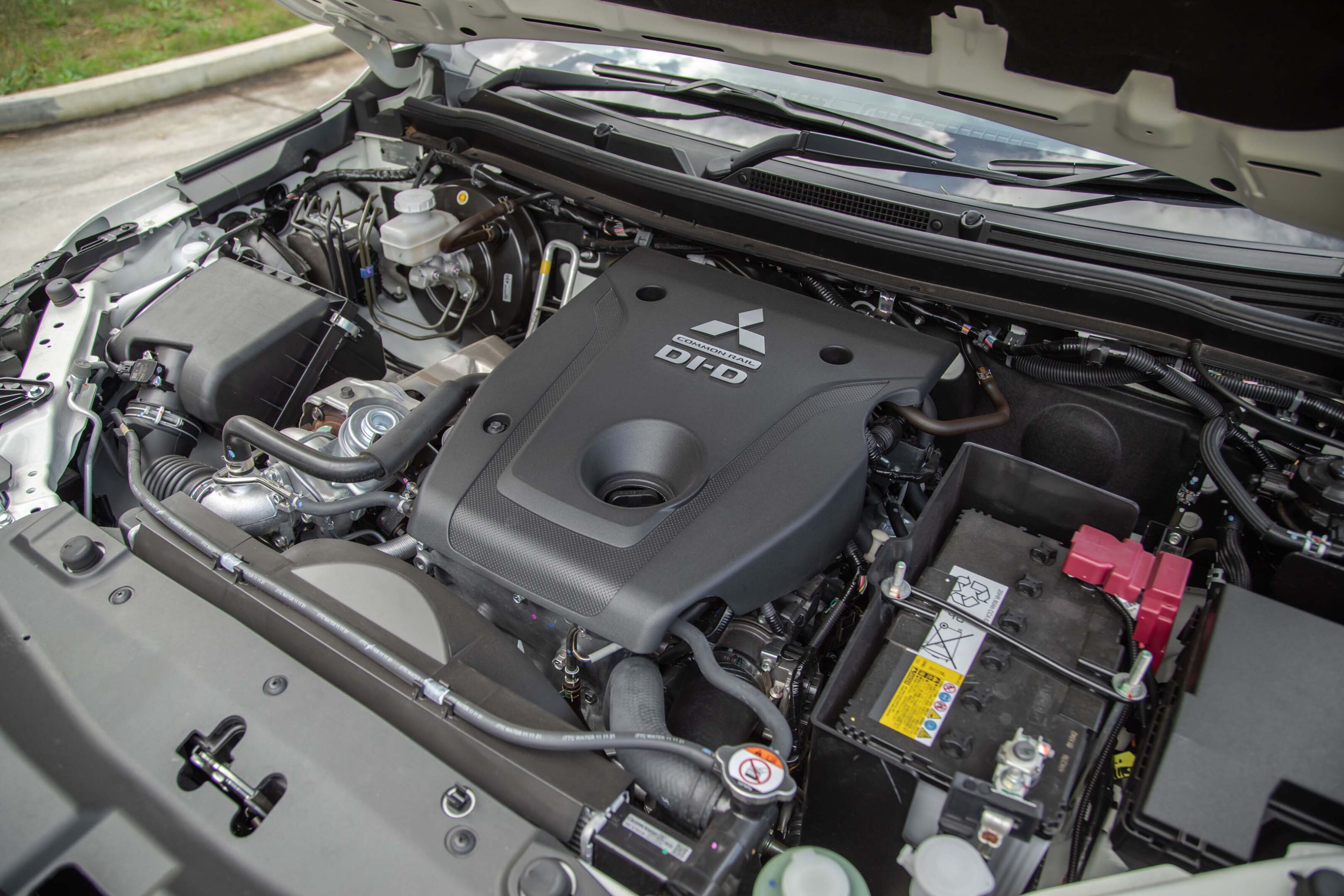
First inescapable fact of life behind the wheel of Pajero Sport: the 2.4-litre diesel engine insists on being a vocal contributor to the driving soundtrack. This is not a quiet unit. Nor is it especially smooth, imparting a light layer of vibration through the steering wheel at idle, as it does in the Triton.
It is sufficiently responsive to the throttle in the step-off phase, helped in part by sensibly short first and second ratios of the eight-speed automatic transmission, which shuffles up the gears quickly and smoothly.
Urban performance then is perfectly adequate even if acceleration numbers show the Pajero Sport is around a second slower to 100km/h from a standing start than a couple of its swifter segment competitors.
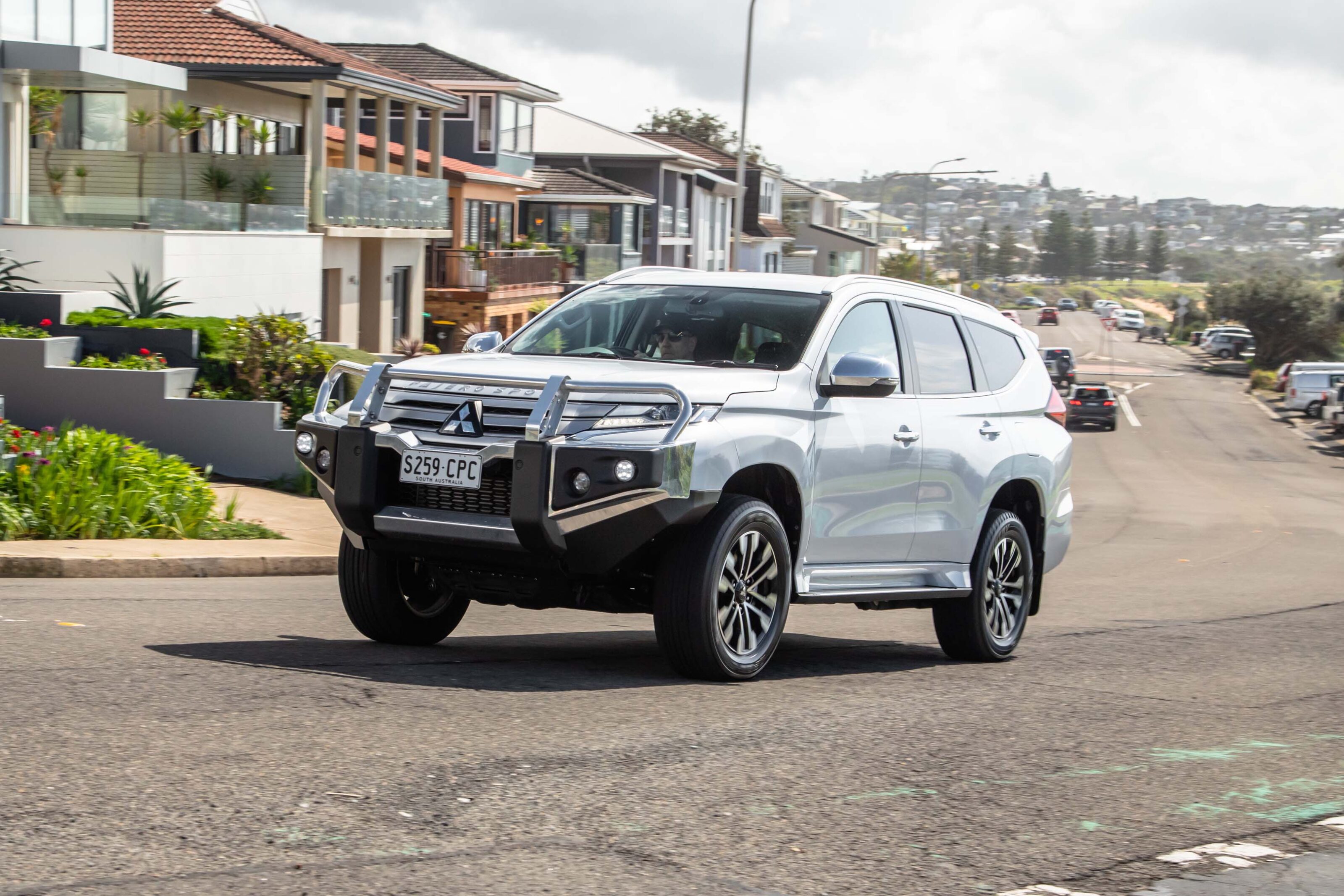
Yes, this is of questionable relevance to the target audience but it is indicative of the fact that the 133kW engine does need to be worked harder with a full complement of passengers on board in hilly terrain on the open road.
There are no paddleshifters to allow the driver to take manual control of the transmission, and granted most won’t miss this omission. If you really insist on overriding the eight-speed auto you can move the selector over into the manual gate, though its shift pattern is the reverse of what is largely accepted as the preferred layout.
It will hold a selected ratio against the engine’s limiter, although quite why you’d want to is another question altogether. Above 4000rpm, the engine is making a very vocal protestation that it’s not thrilled to be working in that zone. Like most diesels, it’s happiest in the band from just off idle to around 3500rpm, with peak torque (430Nm) produced at 2500rpm.
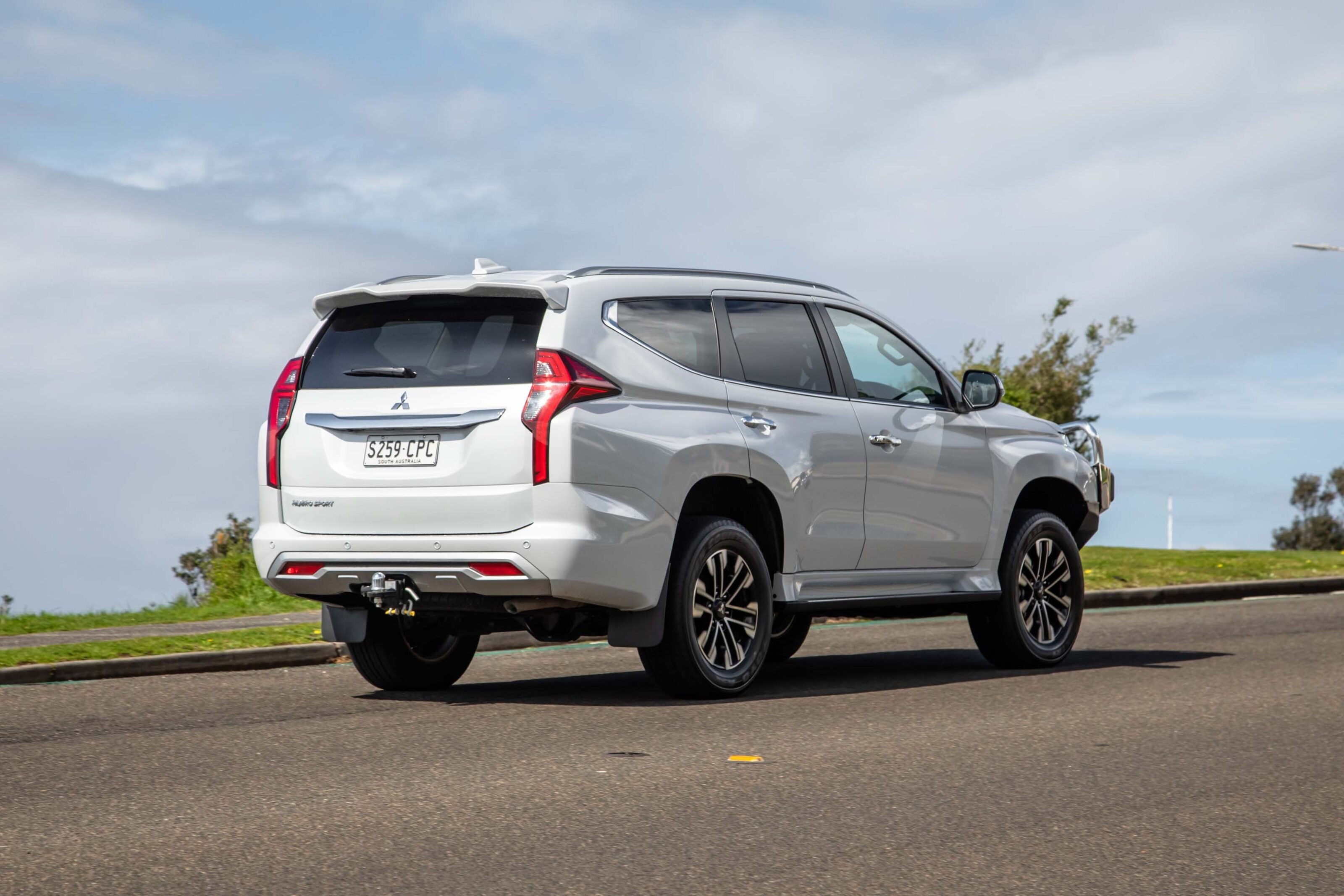
As for motorway cruising? At 110km/h in eighth gear, the engine is turning over at 1900rpm so still audible, but with the addition of light wind and tyre noise, it’s no longer the dominant soundtrack.
The steering is slightly lifeless just either side of centre, which is not ideal in around-town driving but does make the Pajero Sport feel less nervous and more planted at touring speeds. It’s not light, but the weighting remains consistent across the full span of 3.6 turns lock to lock.
So not a fast rack by SUV standards, but at least it does have a reassuring self-centring action as you straighten up out of roundabouts or intersections, avoiding that leaden, manual unwinding of the wheel required by some competitors in the segment.
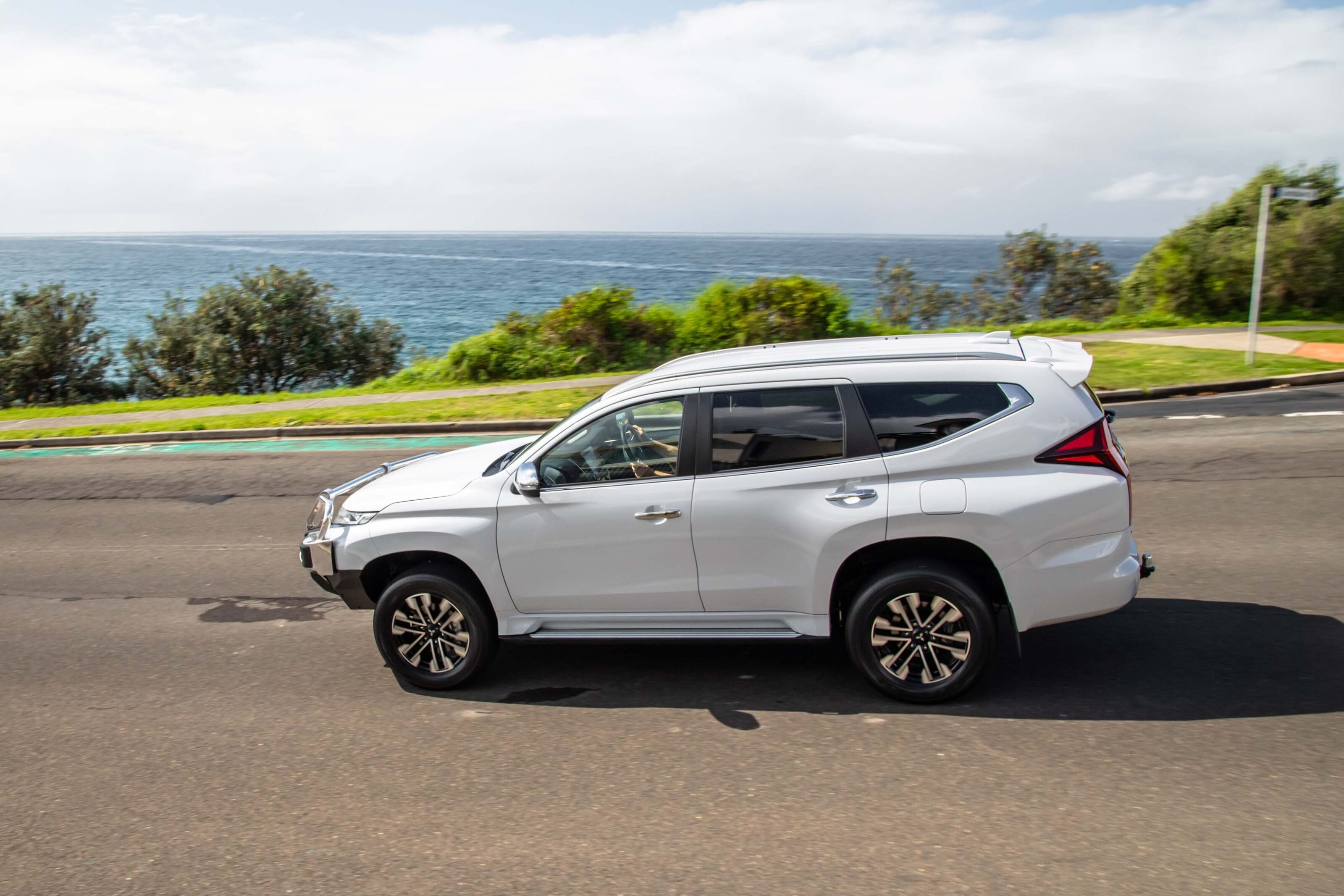
Under the Pajero Sport’s back end, the live axle is located by a three-link system with coil springs and a Panhard rod in lieu of the leaf springs under the Triton on which it’s based.
This does benefit ride comfort, but again, it’s important to make the distinction between the ride comfort of a 4×4 (sorry, 4×2) on a separate chassis and not be lulled into comparisons with unibody SUVs that have neither the ground clearance nor the towing capability of the Pajero Sport.
Fact is, a slightly lively, reactive ride is an almost inescapable reality of this vehicle design. The Pajero Sport does telegraph constant information about what’s happening at road level, however, it’s rarely intrusive or properly uncomfortable. More a jiggle you learn to live with.
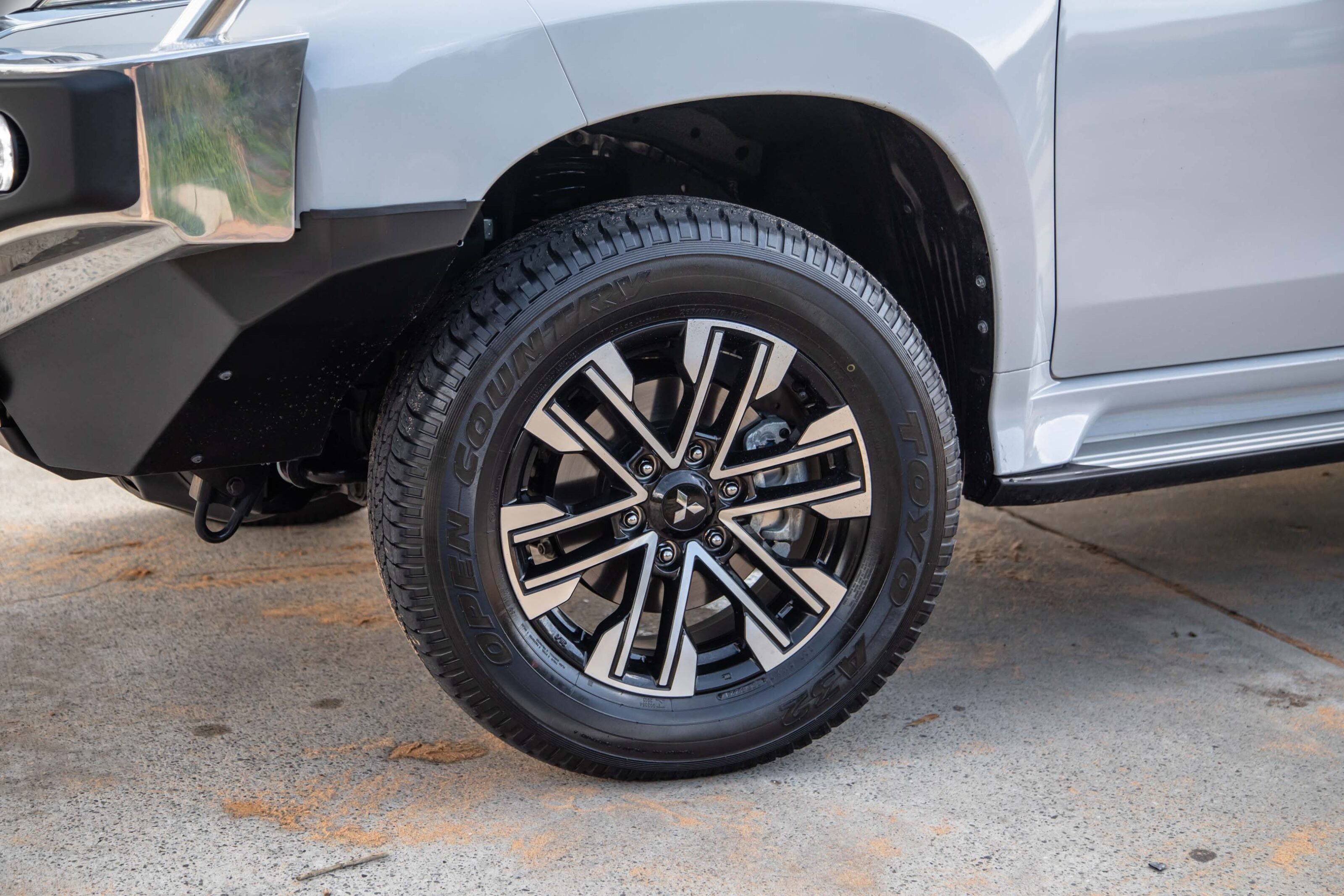
But you’d never call it quiet. The Toyo Cross Country tyres are designed to hold their own both on the bitumen and unsealed surfaces so the chunky tread pattern tends to slap audibly over expansion gaps and thrum on coarse-chip bitumen.
Backroad undulations taken at 100km/h cause a bit of heave as the chassis tries to contain the mass.
On wet roads during our testing, judicious throttle applications in tight conditions did trigger some benign wheelspin, quickly snuffed out by the traction control. Not a big deal, but no question that the ‘4H’ setting in the four-wheel drive version of the GLS does give a useful traction advantage on wet or greasy roads.
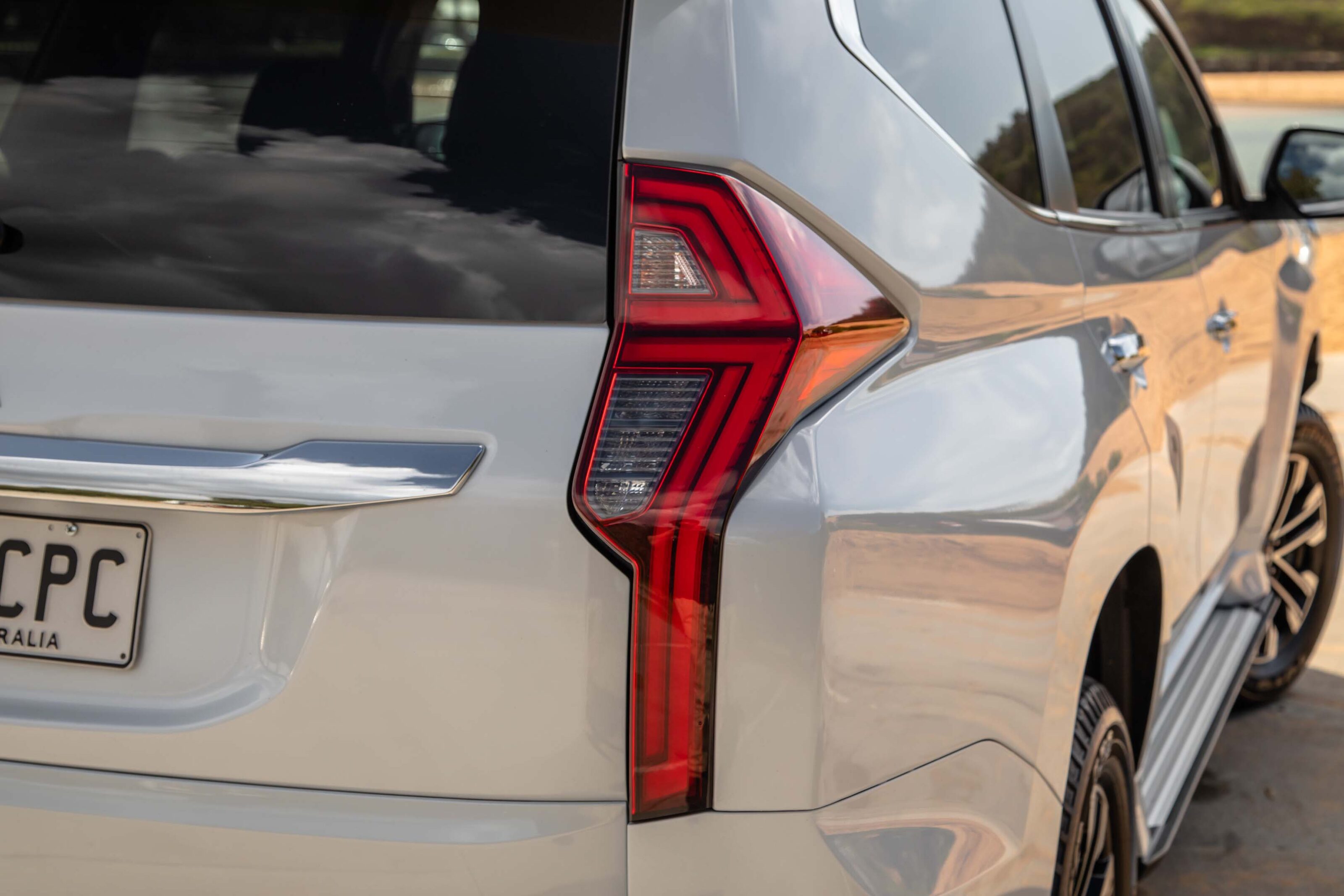
As for ability away from the bitumen? We didn’t have an opportunity for a proper off-road test, but past experience suggests that relying on drive to only the rear wheels means the real limitations come in sand, or when the terrain turns steep and/or muddy.
If you can avoid slimy 10 per cent gradients and deep soft sand, you may actually find that the Pajero Sport copes pretty admirably without four-wheel drive.
Ground clearance of 218 millimetres combined with decent approach and departure angles mean that it’s quite capable in deep ruts and washaways that would have drivers of most SUVs grounding out and potentially looking for a friendly 4×4 rescuer with a snatch strap.
Towing
If you plan on using the GLS 4×2 as a load hauler, its listed maximum tow ball load is 300kg (10kg less than the 4×4 version) and its towing capacity is 750kg (unbraked) or 3000kg braked, which is 100kg less than the 4×4 version of the Pajero Sport.
So the Pajero Sport’s max towing capacity is excellent, but not class-leading. That title is claimed by the Isuzu MU-X 4×2, which boasts a 3500kg braked towing capability.
However, it’s crucial to calculate gross vehicle mass when towing a trailer that is at the limit of any vehicle’s braked towing capacity. In the case of the MU-X, it would be limited to a remaining vehicle payload (passengers, luggage, etc) of 315kg when towing a 3500kg trailer.
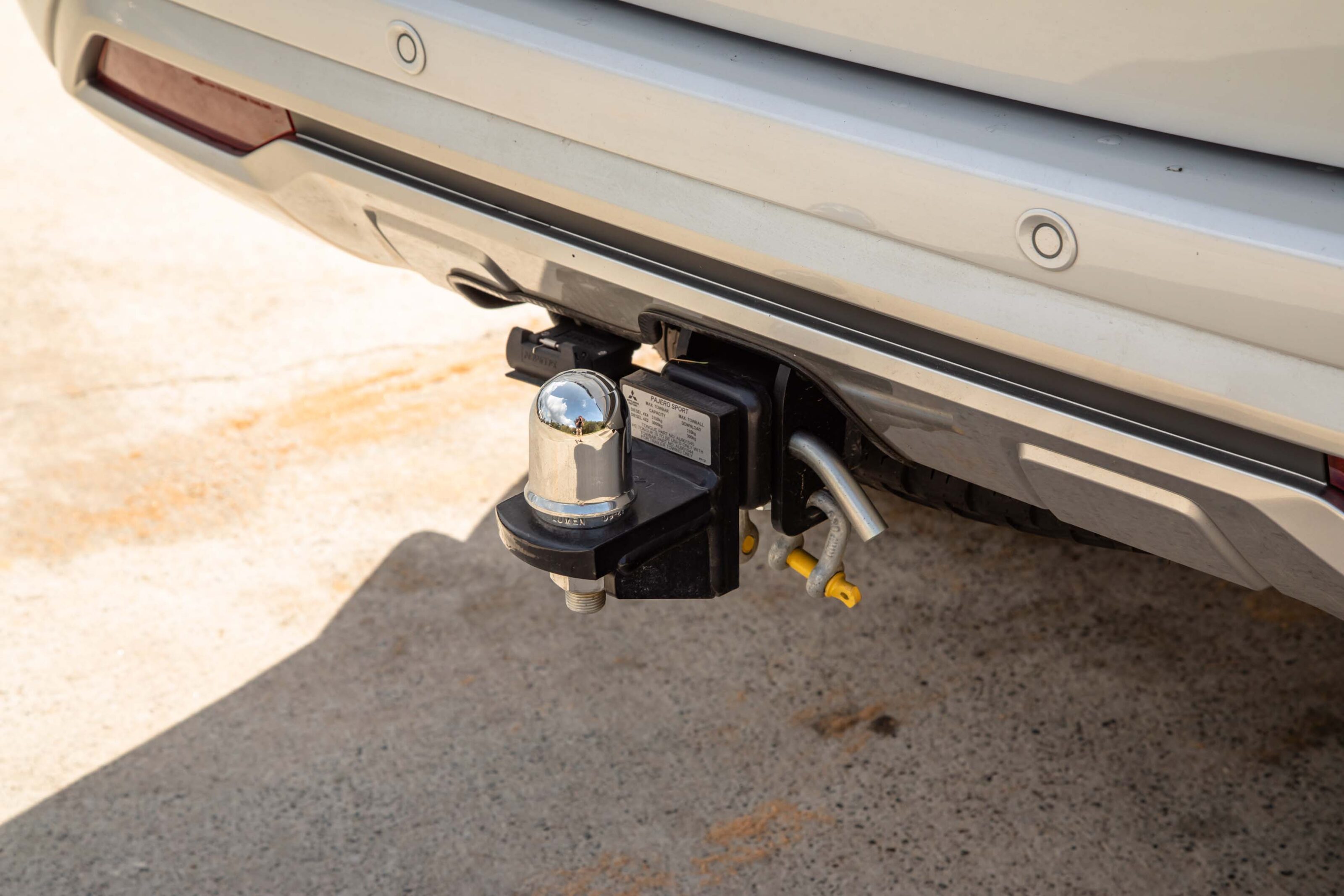
For the Pajero Sport towing its max 3000kg, vehicle payload is over 100kg greater at 420kg.
Regardless, it’s clear why Pajero Sport remains a popular choice for heavy hauling when comparing it to a unibody SUV. For example, Mitsubishi’s Outlander SUV is rated safe to haul a little more than half that of Pajero Sport – 1600kg (braked) – while a Hyundai Santa Fe is rated at 2500kg braked.
Our tip: seek out specific professional advice before hitching anything approaching these weights to any of these vehicles.
Ownership
This is an area in which Pajero Sport strengthens its case. Mitsubishi’s 10-year/200,000km warranty is the industry’s best – although it is contingent on the vehicle being serviced at a Mitsu dealer, otherwise, the warranty becomes five years/100,000km.
Service intervals are every 12 months or 15,000km, whichever comes first. The first five years of servicing totals $2495, which is slightly more than you’ll pay for the Isuzu MU-X ($2315) but usefully cheaper than the Toyota Fortuner, which has shorter intervals of six months or 10,000km and costs $3558 to service over five years.
The Pajero Sport doesn’t mind a drink, however. On our urban loop, including plenty of typical stop-start traffic, it consumed diesel at a rate of 12.6L/100km, a fair bit up on the official urban claim of 9.8L/100km. Our second, longer, loop with more suburban and open-road driving, dropped this to 9.1L/100km, closer to the official combined claim of 8.0L/100km.
VERDICT
There’s no question that the age of Pajero Sport’s mechanicals and underpinnings put it at a disadvantage compared to more modern rivals, especially in the area of noise and vibration. Likewise, its cabin feels a generation behind.
But for anyone who puts a greater emphasis on utility, simplicity and a long warranty, there’s still appeal here. The more specific issue is whether the lack of four-wheel drive in a vehicle so clearly engineered for off-road capability makes complete sense.
As we said from the outset, that’s something that can only be addressed on an individual user basis. If you need a robust seven-seater with generous ground clearance and hefty braked towing ability, put it on the shortlist that includes the Everest and MU-X, and, for value and equipment, a SsangYong Rexton.
But if your off-road requirements are for light-duty trails only and your towing life is more box trailer rather than trailer park, you’re likely better off looking at Mitsubishi’s Outlander, or seven-seaters from Hyundai or Kia; all of which deliver quieter, smoother, less compromised on-road performance.
2023 Mitsubishi Pajero Sport GLS 4×2 specifications
Industry figures are concerned about the surge in Aussies seeking to import second-hand electric vehicles from overseas, claiming they could pose problems with battery disposal and future emissions targets.
Interest in importing new or used EVs has spiked in recent months, according to several sources, due to fuel prices going up at the bowser – with more rises expected when the temporary cut to the excise ends later this month.
But while many say a growing tide of ‘grey imports’ of electric vehicles is a good thing because it offers more choice in our market that currently aren’t available – mostly due to lagging fuel-efficiency standards – and at a lower price point, some groups claim they should “not become part of the mainstream”.
According to the Federal Chamber of Automotive Industries (FCAI), grey imports (models that make their way to Australia outside of the normal volume import process carried out by carmakers) should be limited to classic or specialist cars – such as disability vehicles not offered locally.“In our view, grey imports should be restricted to specialist and enthusiast people, they should be extremely rare and limited in their volume because they should not be part of the mainstream market,” said FCAI Chief Executive Tony Weber.

“When they do become part of the mainstream there are complications about owning them. Specialists and enthusiasts understand those complications and are happy to live with them. And quite often they [the vehicles] are not used as daily transport.
“My concern is that when they become part of the mainstream, and especially when they’re sold second-hand, there are consumers who buy them who do not understand that they are grey imports and they get hit. The best example of that is the inability of the Commonwealth to take off the road grey imports that have Takata airbags.”
Earlier this year, Wheels exclusively revealed thousands of overseas vehicles flooding into Australia under new import laws could pose a safety risk due to flaws in the way they are recalled.
The responsibility for recalling (and therefore fixing) grey import cars when things go wrong doesn’t lie with the original manufacturer – as it does with new vehicles – meaning buyers could be exposed to spiralling financial costs and legal issues.
Wheels understands that the first time the scale of the problem was truly discovered was as part of the global mandatory Takata airbag recall, which began in 2013.
While OEMs were legally required to contact owners of any cars they had sold in Australia which had been fitted with the faulty airbags, they were not responsible for grey imports.
In that case, carmakers approached the Government and asked for lists of their vehicles and fixed them as a gesture of good-will – as well as to manage any resulting reputational damage.
The FCAI’s view is somewhat supported by the dealer network, which is also urging caution when it comes to importing EVs from overseas.
“With the limits removed on the number of vehicles allowed to be brought in under the Government’s Specialist and Enthusiast Vehicle Scheme, we are seeing a growing number of used cars being imported into Australia and added to the fleet,” said James Voortman, CEO of the Australia Automotive Dealers Association (AADA).
“As the Government considers a vehicle emissions standard it will need to decide how grey imports will be dealt with, because globally standards have generally applied to new cars only.
“To lower Australia’s emissions, it is important that the Government considers all of the vehicles – new and used – being imported and added to the nation’s vehicle fleet.
“Used vehicles are now being imported under the new scheme, so it’s important we get some transparency to understand what kind of cars are being added and how they will affect the Government’s plans for lowering vehicle emissions.
“I believe there are questions we should be asking. How old are these cars? Is Australia getting stuck with the responsibility of disposing of batteries reaching the end of their life? Will advances in battery technology render these older batteries yesterday’s technology? Are they subject to any recalls?”
Despite the reservations of some, there is much support for the idea of bringing more electric vehicles to our shores by other means that waiting for car manufacturers to offer them to us directly.
A report released by think tank Climateworks last month found that in the context of high demand but low EV supply and high up-front prices, boosting second-hand EV imports can help bring more low-cost options to Australia.
Currently, all second-hand vehicles, including EVs, face import restrictions. This includes a requirement that any vehicle model being considered has not been available for sale in Australia recently, as well as a series of technical compliance checks.
Making this access easier for EVs was highlighted in the report, and has been recommended to Government repeatedly on previous occasions, such as by the Productivity Commission and the Australian Competition and Consumer Commission (ACCC) in 2014, and the Harper Review in 2015.
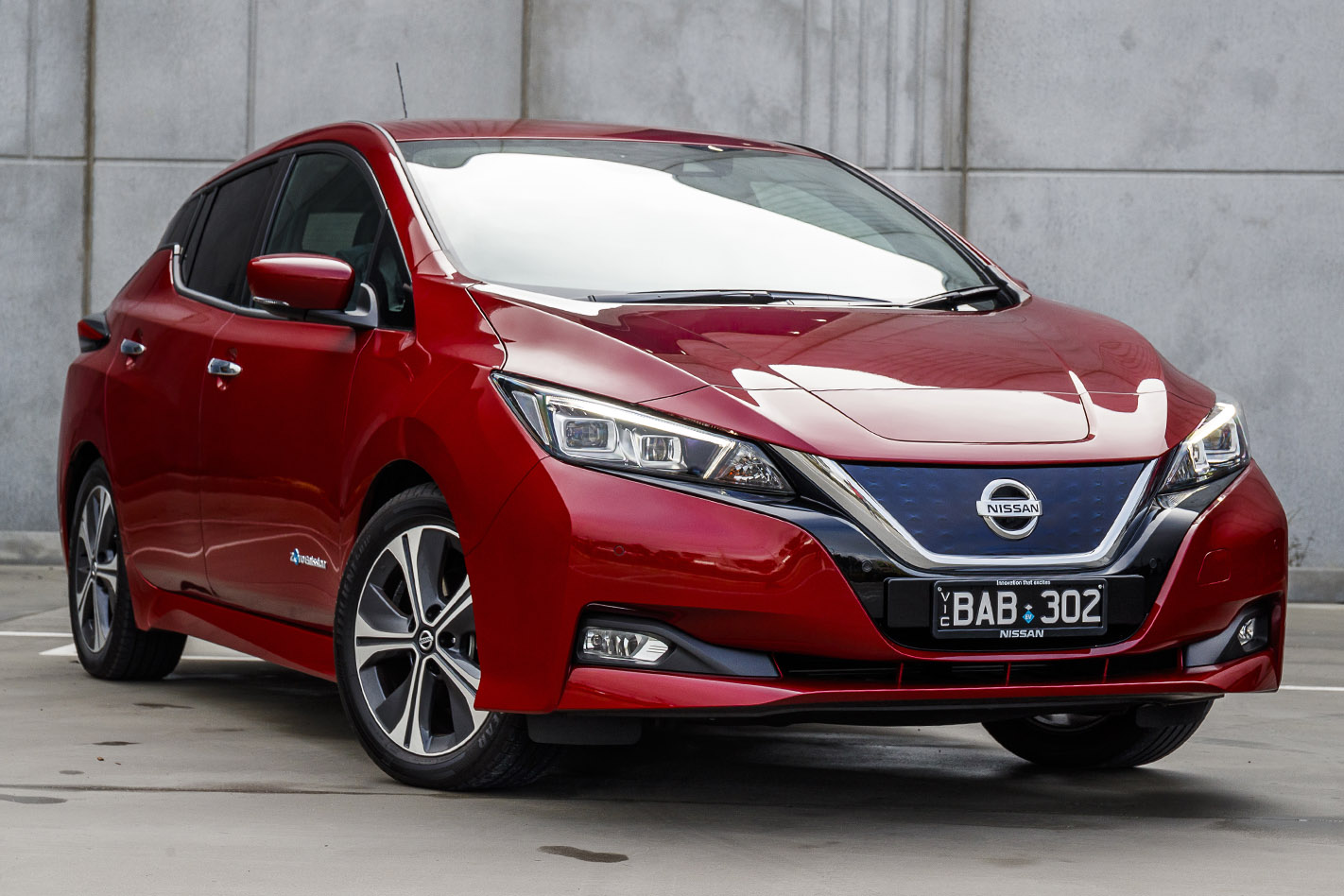
One of Australia’s major importers, Iron Chef Imports, has been bringing electric vehicles – such as the Nissan Leaf – here for years, and says it is actually not all that different to what it is for petrol or diesel cars.
“The process is generally no different to importing any other vehicle, aside from checking the battery’s state of health prior to purchase. Our customers approach us with their budget, and we source and import the best possible vehicle they can get for their money,” said Director Kristian Appelt.
“It’s mainly just making sure the battery is in good condition. For Nissan Leafs, for example, our auction agents have a program they use to check a battery’s state of health (SoH expressed as a percentage) and a range of other interesting data. For our clients, we avoid buying vehicles where the SoH has dropped below 85 per cent, as it can be an indicator that some individual cells are on the way out. Thankfully, there are also a number of new companies in Australia now providing battery refurbishment services (as opposed to replacement of the entire battery) that are far cheaper than was the case before.”
According to Appelt, in recent months the firm has seen more potential customers enquiring about importing an EV than ever before and believes it could be a good thing for Aussies.
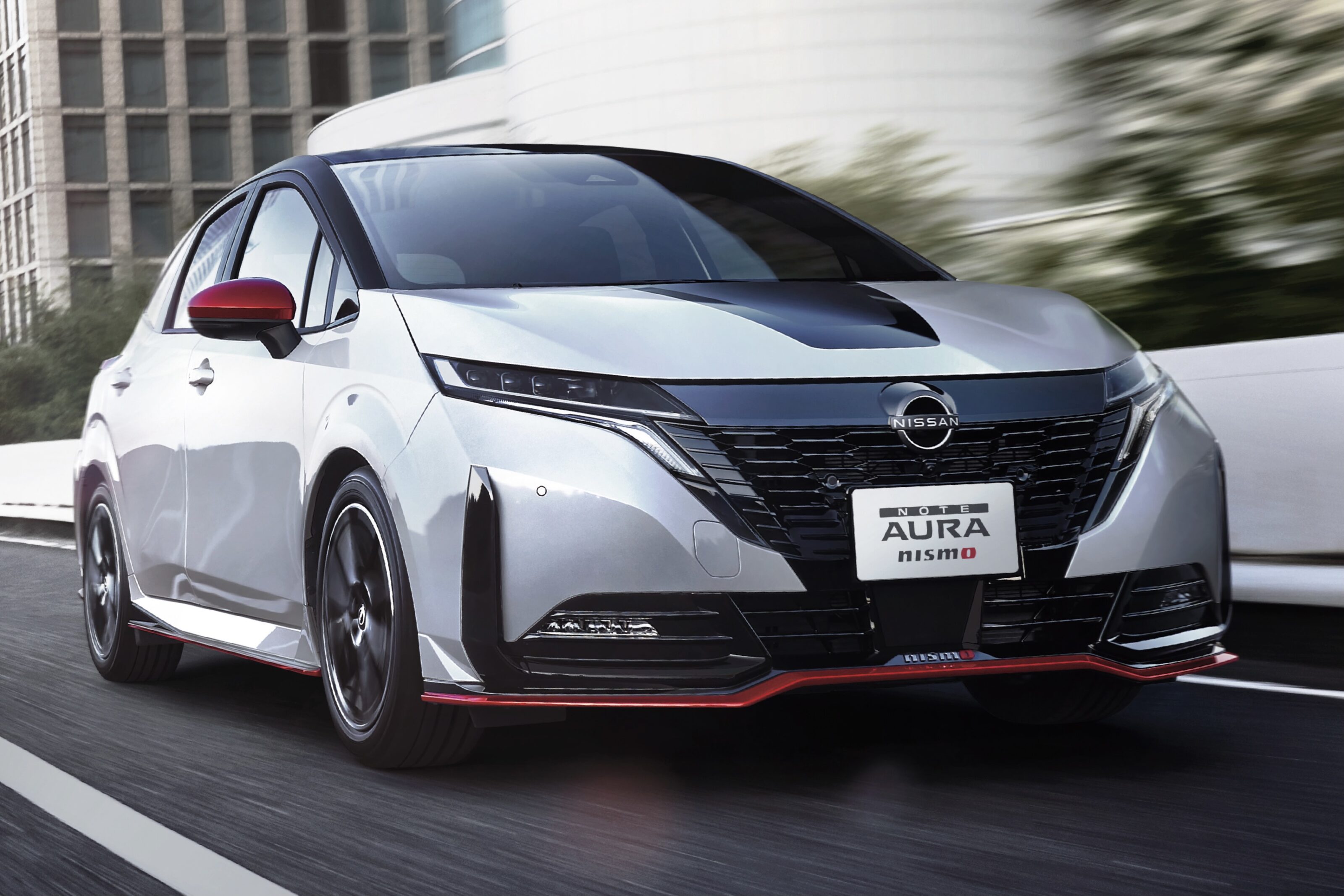
“In terms of pure EVs we import around 30-40 a year. But interest has definitely increased since petrol prices spiked. The Nissan Leaf is the most common one, but we’re also seeing a lot more interest in hybrids, particularly series hybrids like the Nissan Note e-Power – which offer the EV driving experience, but without the range anxiety. These are a good stepping stone for buyers hesitant about making the leap straight to an EV.
“In terms of vehicles that are new or near-new, the biggest benefit is being able to purchase models that the manufacturers, for whatever reason, have chosen not to supply to Australia. For slightly older vehicles, it’s about enabling EV enthusiasts to access environmental vehicles (so hybrids and EVs) at more affordable prices, and often with more features than the options available new.
“The main drawback is an unwillingness by local dealers to provide support for imported vehicles, whether it be for parts and servicing, or for vehicle recalls. This is despite having the processes in place to do so, and already providing such support in other countries such as New Zealand. With demand for used imported EVs growing, we’re now seeing aftermarket businesses spring up to support owners, in areas such as battery-cell replacement, sourcing of factory parts online, or converting of Japanese infotainment screens to Australian specs.”
Indeed in many ways what’s going on over the ditch is seen as being much more progressive than what we have here. While there are a handful of importers bringing EVs to our shores, in New Zealand it is already a thriving industry – bolstered by the recent introduction of the country’s Clean Car Policy, with rebates offered on used as well as new electric vehicles. In Australia currently only Tasmania does the same thing.
Sally Roberts, Director of high-end firm European Car Imports in NZ, told Wheels the changes there could have the potential to shake up the import market as manufacturers are able to start bringing more models available overseas.
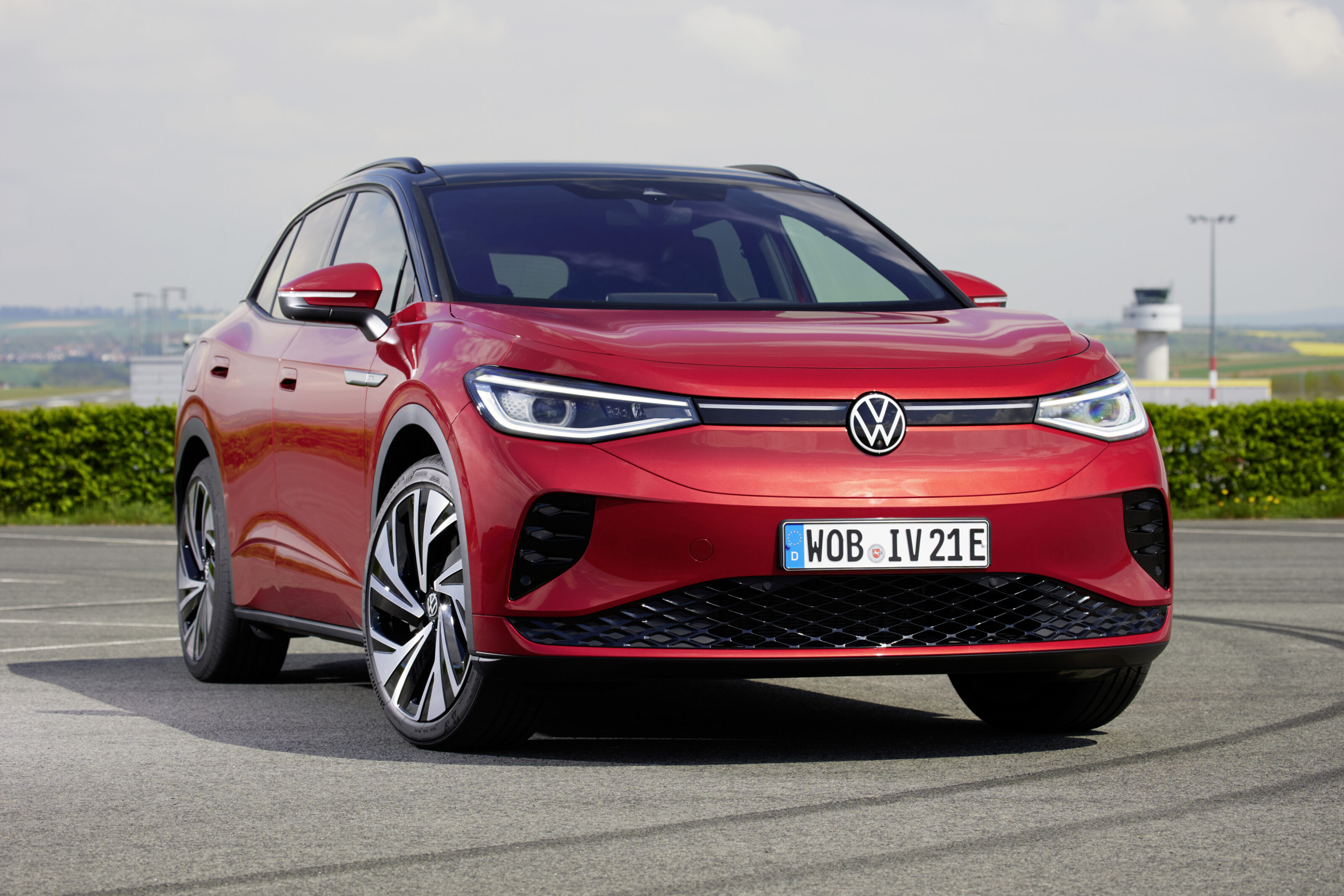
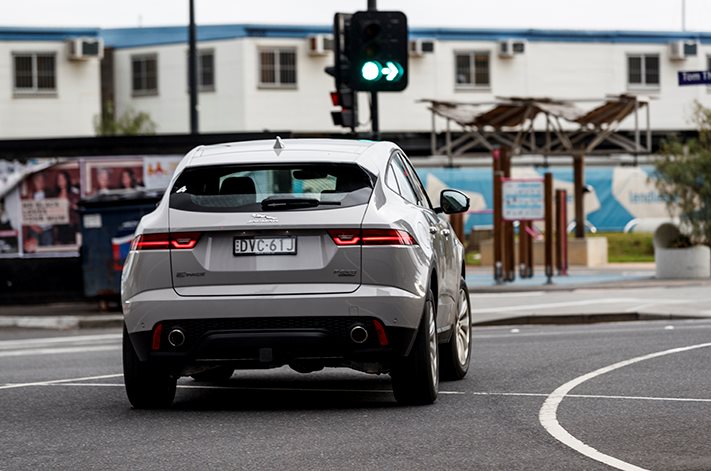
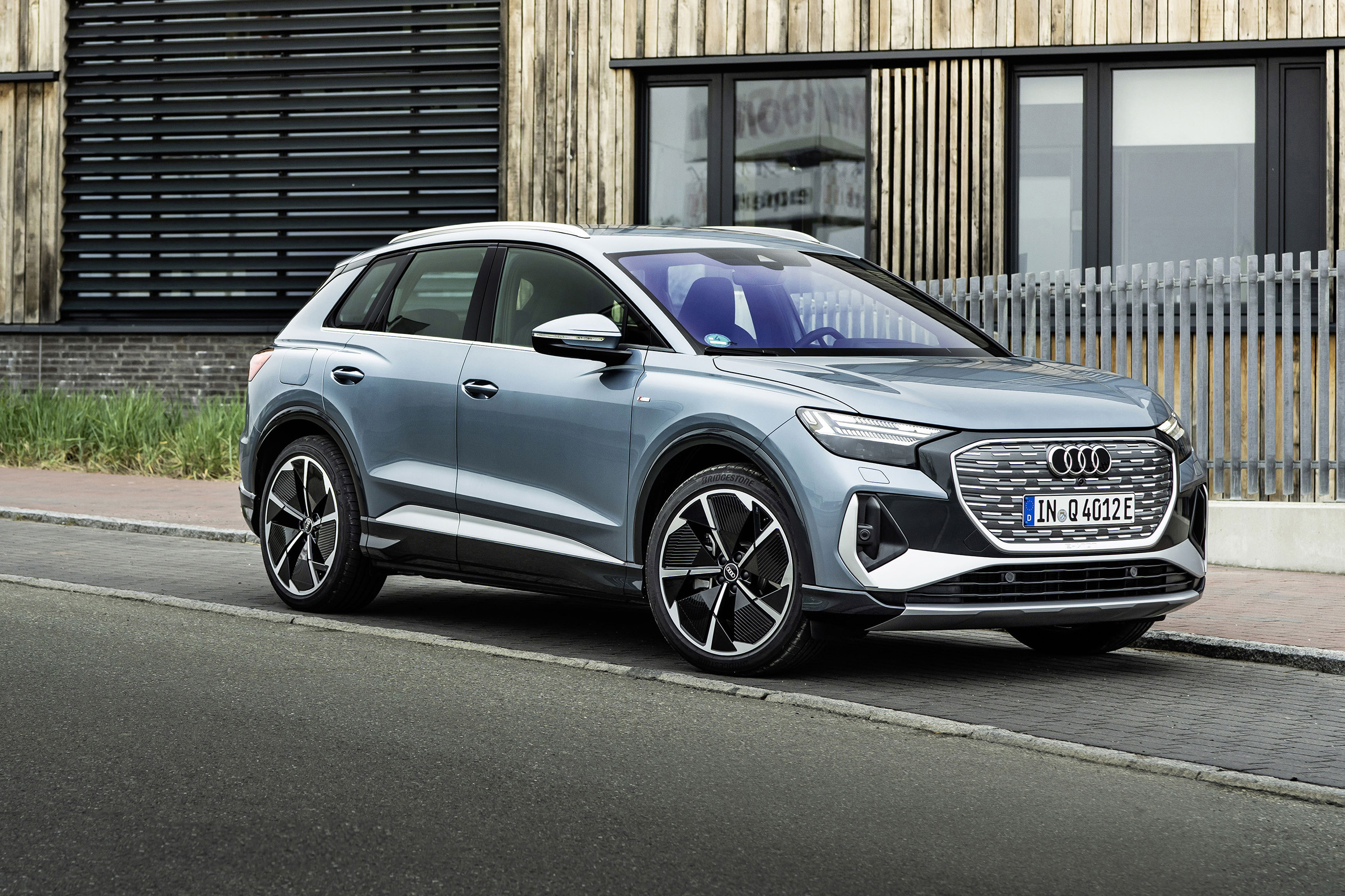
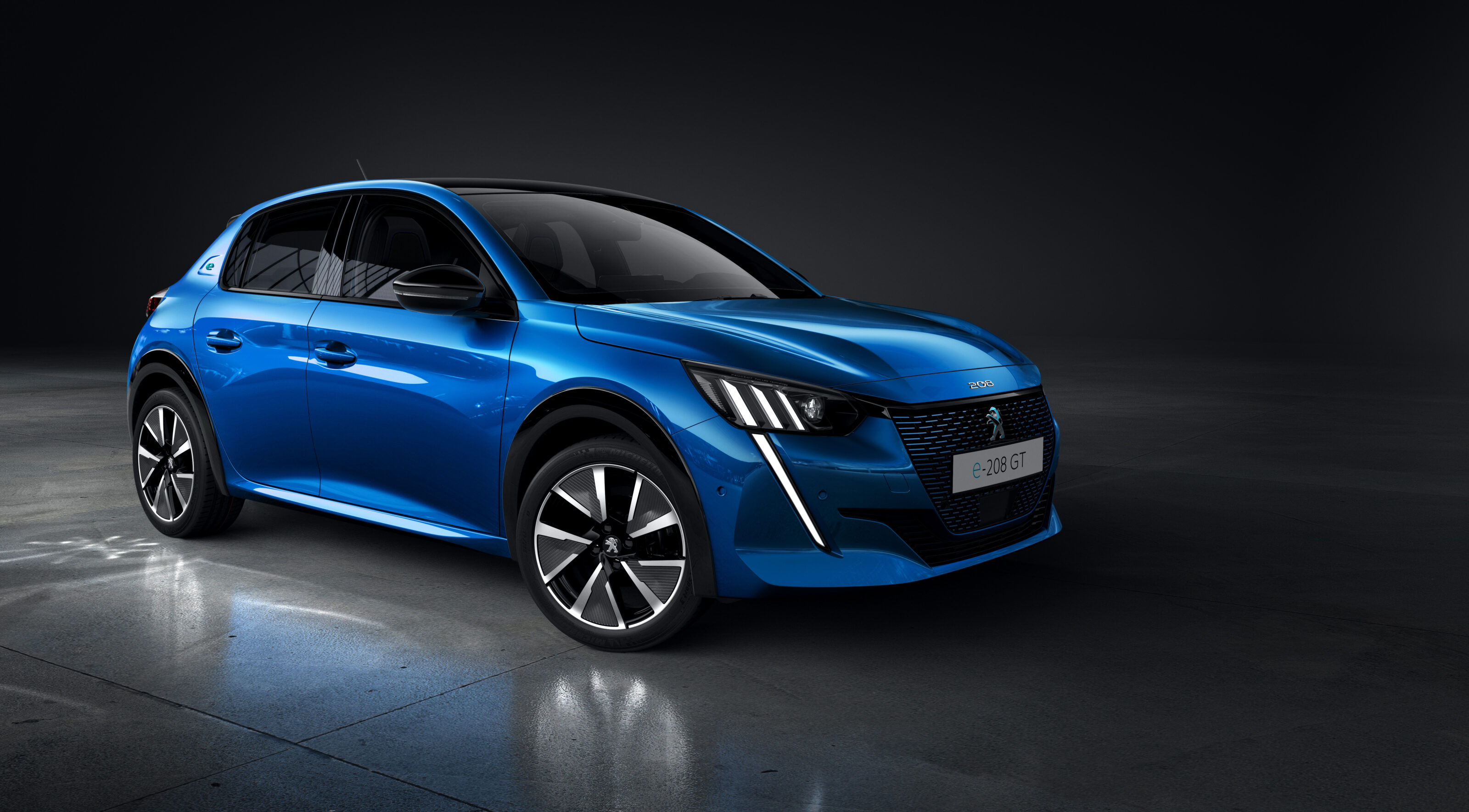
The company has brought a number of vehicles to the NZ market for the first time, and typically imports cars such as the Volkswagen ID.3 and ID.4, Audi Q4 E-Tron, Peugeot e-208 and Jaguar E-Pace.
“The benefit of importing is that it means there are more options available or you can get cars 1-3 years before they might come here otherwise, or it is a model than comes here but not in a a certain specification – such as one with a bigger battery etc,” she said.
“People are talking about the Clean Car Policy a lot, but it hasn’t really had an impact on our end of the market, possibly it might on the more standard end. It could mean in the long term there is an impact on importers, because if more manufacturers are bringing more makes and models here then there wouldn’t be the need to import unless there was a substantial price difference. Even then though, there will always be cars that don’t come here because Australia and NZ are quite small markets. It will be interesting to watch how things go.”
Anthony Broese van Groenou, Co-founder and Director of Australian EV importer the Good Car Company, said EV imports are entirely necessary if this country is going to reach our emissions reductions targets.
“We do all we can to make EVs affordable and accessible,” he told us. “Imported EVs offer greater choice compared to the limited variety of models available domestically.
“We de-risk the process of purchasing second-hand EVs by providing battery diagnostics, mechanical and aesthetics checks. We carry a warranty for both battery and body, a return policy, national servicing and roadside assist and ongoing support. We also offer battery upgrades and replacements. We’re setting the benchmark for the import industry by creating the safest place to buy a second-hand electric vehicle.”
Snapshot
- New GV60 will be the first dedicated electric Genesis model
- E-GMP architecture shared with Hyundai and Kia EVs
- Available as 234kW/605Nm Sport or 325kW/605Nm Sport Plus
September 8, 2022: Australian pricing and features detailed
In the week of its Australian market launch, full pricing and features for the new Genesis GV60 electric SUV have been confirmed.
The line-up will be offered in only two specifications, largely identical in mechanical configuration but for particular performance and equipment differences.
Both variants are all-wheel drive, with energy supplied by a 77.4kWh battery pack.
Pricing starts from $103,700 and tops out at $110,700. What do you get for the money? Get the full story at the link below.
May 27, 2022: Local specification confirmed
Wheels has had a sneak peak at a prototype of the GV60 all-electric SUV on local soil, with Genesis also confirming some specification details for the Australian market.
The model will be available locally with two powertrain options: the mid-spec 234kW/605Nm motor or top-grade 320kW/605Nm unit (360kW/700Nm), both with all-wheel drive.
All grades use the same 77.4kWh lithium ion battery pack, with the 234kW version offering a claimed 470 kilometres of driving range and the 320kW 466km. The mid-range vehicle gets 20-inch rims, while the top-spec gets 21s.
So far, confirmed specification for Australian examples of the GV60 includes:
2022 Genesis GV60 Australian features
| 2 x 12.3-inch screens |
| Augmented reality satellite navigation |
| Head-up display |
| 18-way electrically adjustable driver’s seat, with ergomotion massage function |
| Crystal sphere gear shifter |
| Bang and Olufsen sound system |
| Active noise control |
| 10 exterior paint colours u2013 three of which are matte |
| Fingerprint recognition |
| Remote smart parking |
| Full safety suite, including blind-view monitors and intelligent front adaptive headlights |
| Digital side mirrors |
| Road Preview electric suspension and electromechanical LSD |
| Exterior vehicle-to-load adaptor and interior three-pin plug for charging. |
Speaking to Wheels, a Genesis spokesperson said features such as the digital mirrors could be offered with a “delete option”, with the carmaker prepared to look at feedback on their popularity “to see if it’s something we can offer quickly”.
“Through our own experience at Genesis, not only at the launch of models but also throughout their lifespan, is that most customers are opting into our luxury packages and top of the range models to the tune of around 80 per cent,” he told us.
“Given we’ve had reasonably limited stock coming, as well as restrictions in the first two years of this model’s life, we’ve targeted what stock we do have to meet that which is most popular with the customers.
“In the broader market, what we’re seeing with EV customers is that once we’ve ticked the [driving] range box they’re asking for as much specification and power as we can give them – so we’re aligning what we’re offering with that [by only bringing the top-spec variant first].
May 24, 2022: GV60 international first drive
Georg Kacher takes the all-electric Genesis GV60 for a spin in Frankfurt to test how it stacks up against its Hyundai Ioniq 5 and Kia EV6 cousins.
Click the link below to find out what he made of the new model, and for its full overseas specification.
Local details are expected to be announced in the near future.
August 28, 2021: Video shows off nifty Crystal Sphere shifter
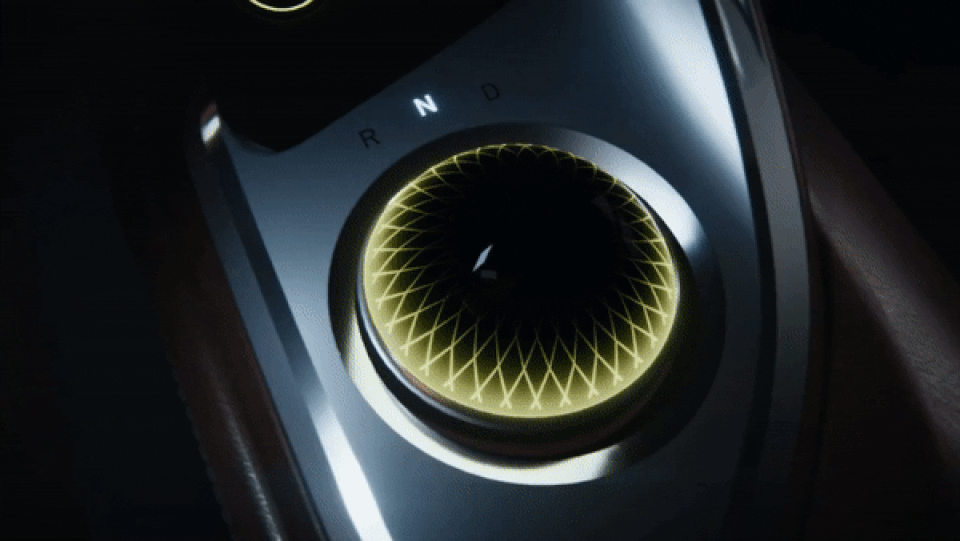
We came across this animation of the all-electric GV60’s “Crystal Sphere” shifter on Carscoops and had to share it.
The idea here is that when the GV60 is sitting parked, the sphere is upside-down (so to speak) with a stylish illuminated starburst design on display. Step inside and power up the GV60, and the sphere flips over to reveal the gear selector.
Neat trick. (Psst, let us know in the comments below if the image isn’t animating.)
August 19, 2021: Genesis GV60 crossover revealed
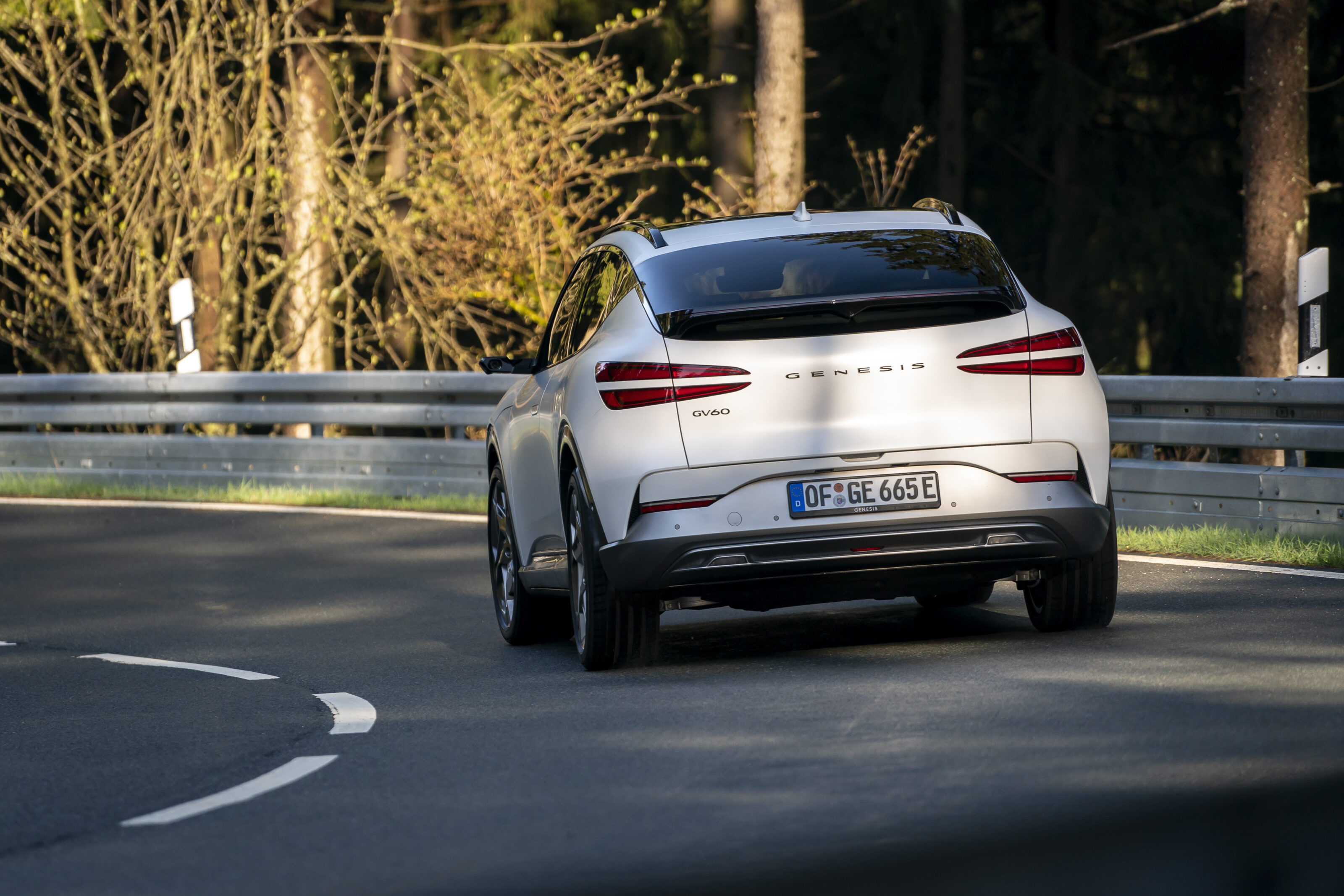
Hyundai’s luxury brand Genesis has officially unveiled the all-new GV60 crossover, its first dedicated electric model.
Heavily influenced by the 2019 Mint concept, the GV60 will share the same E-GMP architecture as the Hyundai Ioniq 5 and Kia EV6, offering anywhere between 125kW/350Nm to 225kW/605Nm and up to 480 kilometres of driving range.
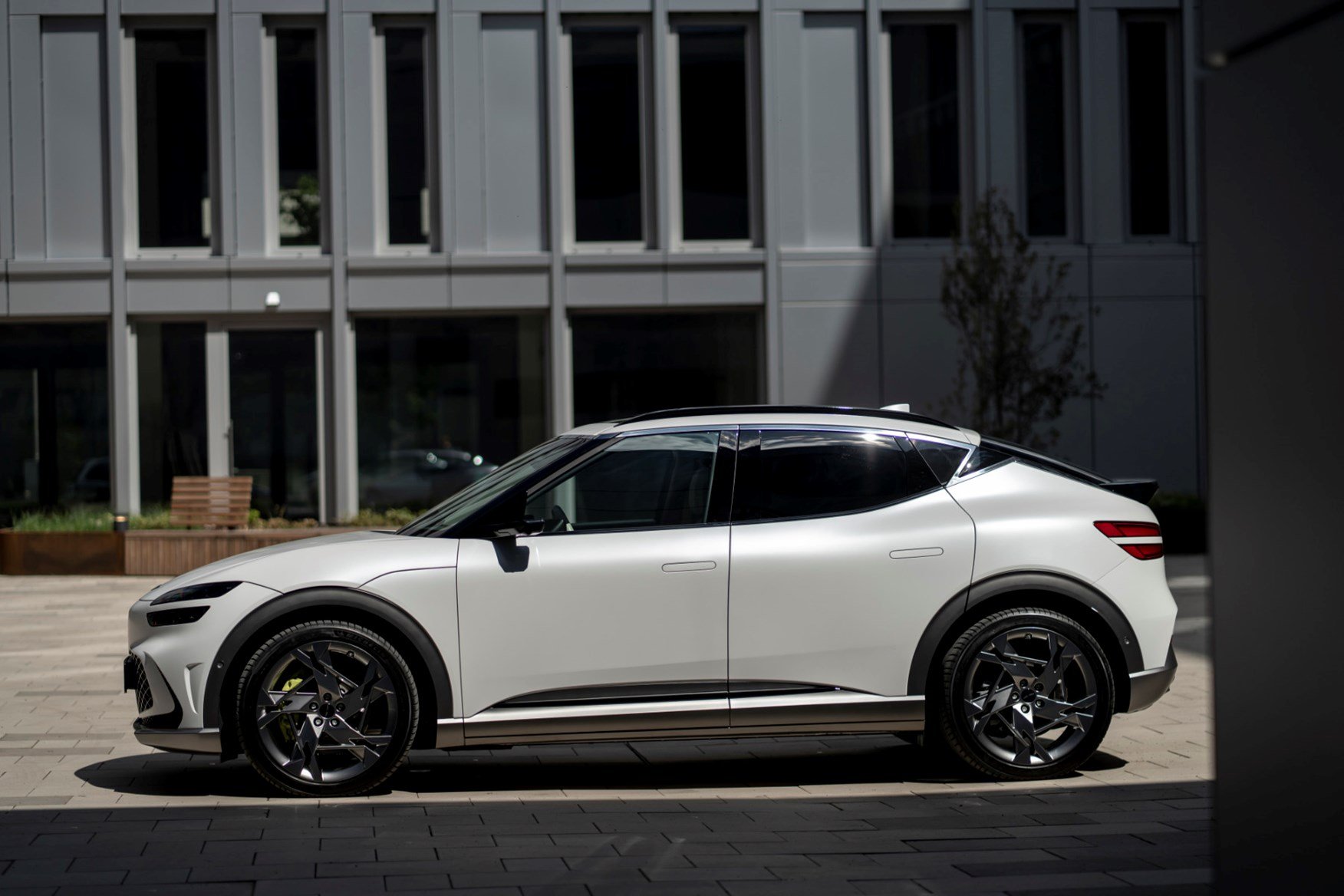
The exterior shape of the GV60 is reminiscent of the Ioniq 5, but adopts more features from the Genesis book of design language, including the split front and rear lights which were added to the most recent update of the firm’s vehicles.
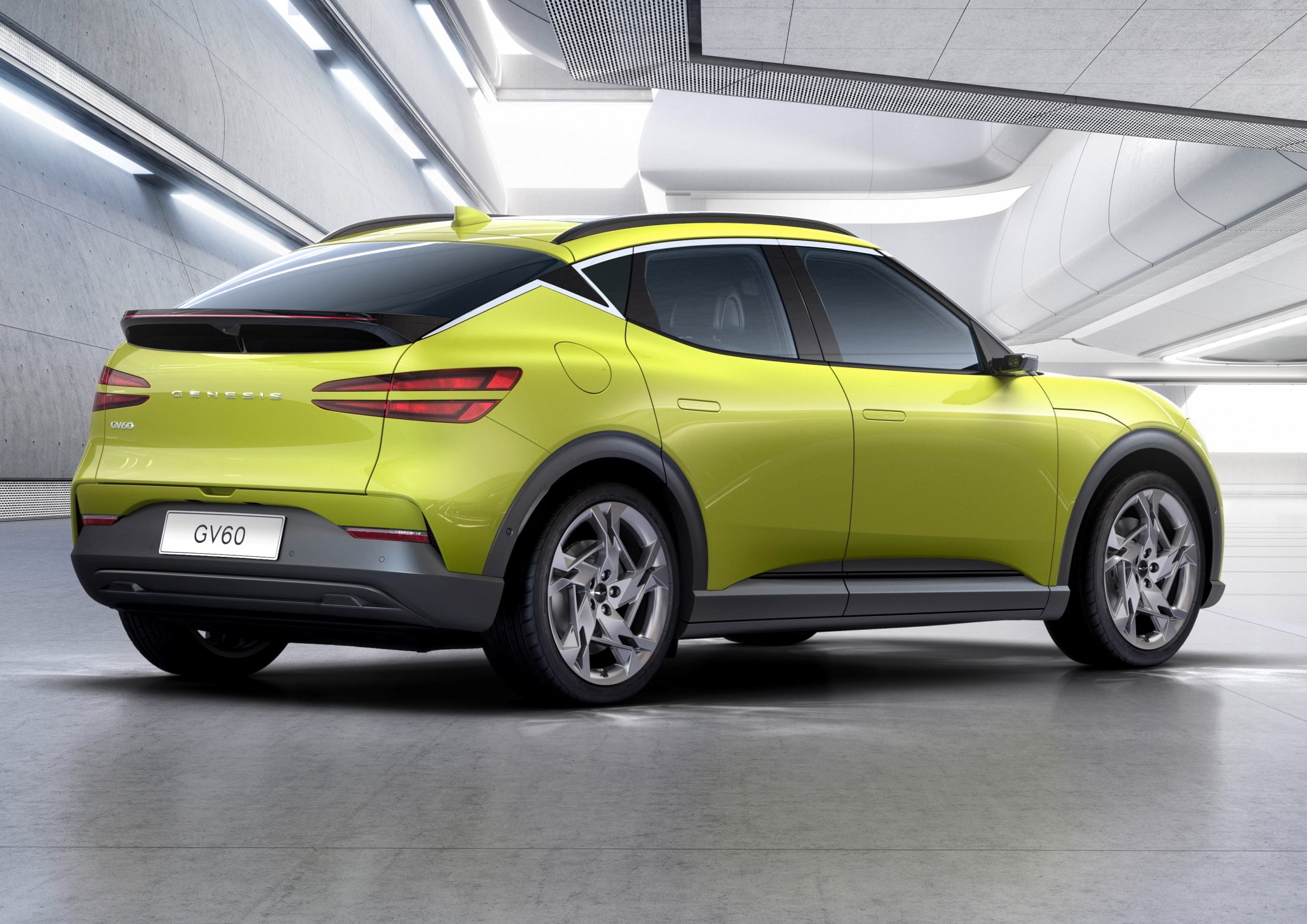
As opposed to the boxy lines of the Ioniq 5 and the sharp creases on the body of the EV6, the GV60’s curves are smoother and more rounded, with digital side mirrors blending into the design – while the C-pillar design emulates a lightning strike to hint at its electric powertrain.
At the back, its sloping rear window leads to a low-level spoiler, which houses the central brake light and reversing camera, with the aforementioned twin-line brake lights adding the distinct touch of Genesis to the rear design.
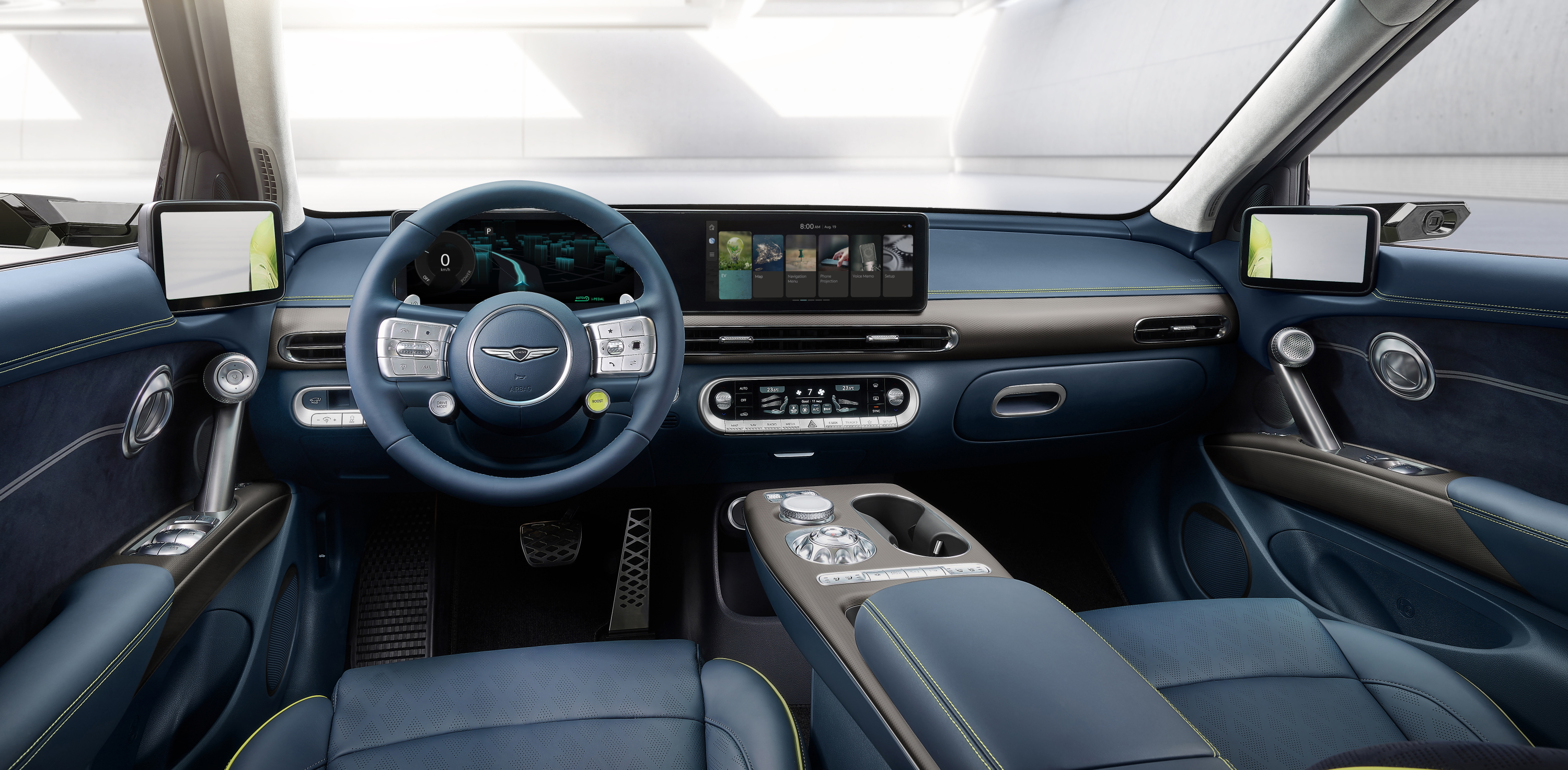
Inside the cabin, the ‘gearbox’ is controlled by Genesis’s crystal sphere shift-by-wire in the centre console, changing to a mood lighting system when the car is turned off.
The floating centre console creates an atmosphere of space, while the new wing-like spoke steering wheel offers a change from the norm – featuring a small central hub but with a vast array of buttons sprouting from it, seemingly giving the driver control over nearly every system from the wheel.
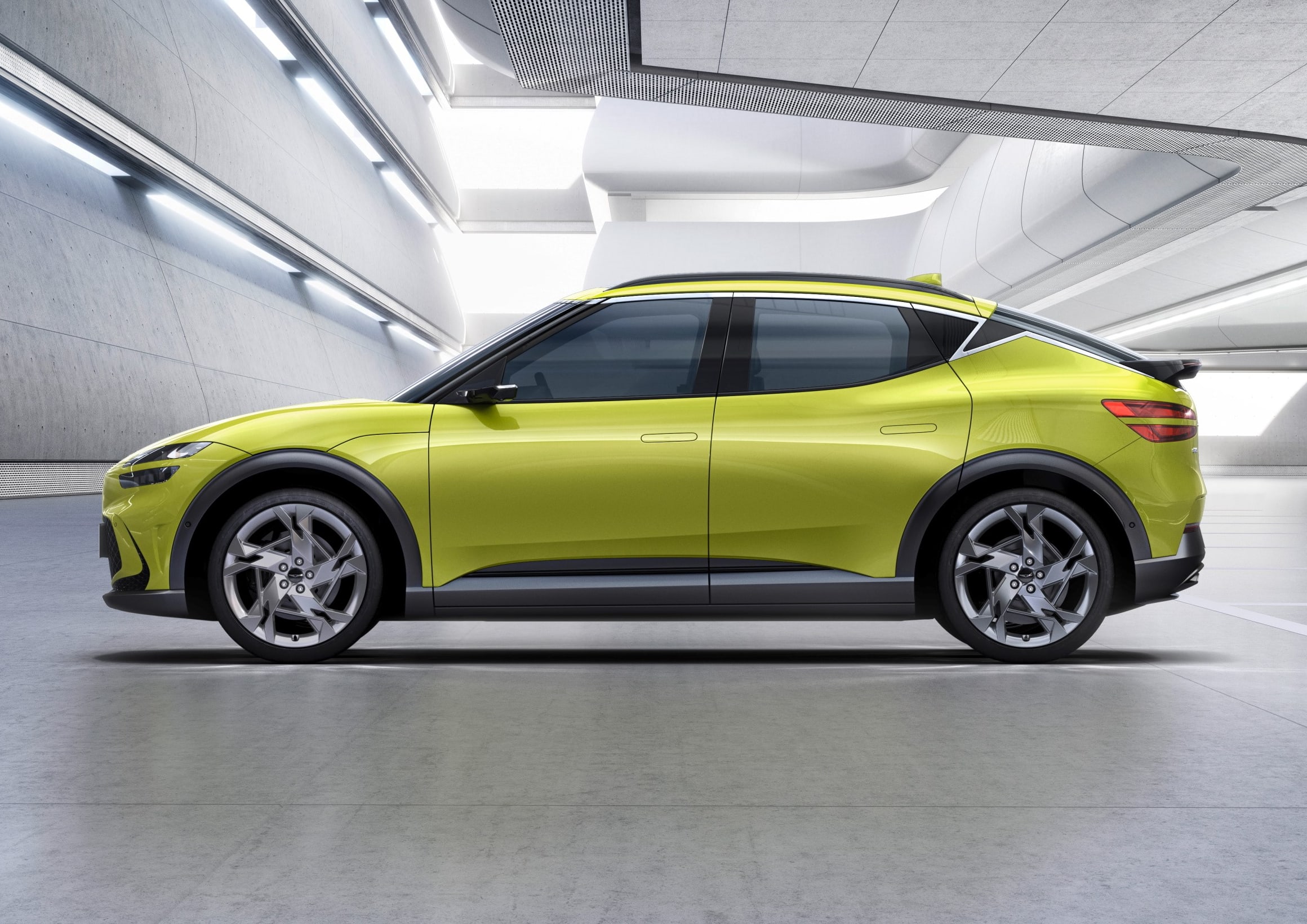
Genesis is yet to confirm when the GV60 will be officially launched and when it will arrive in Australia, although its G80 electric limo is slated to land first in early 2022.
Pricing revealed for Hyundai‘s 2023 range shows various increases affecting numerous models, from the pint-sized i20 hatchback to the supersized Palisade SUV.
Models affected include N-Line and N variants of the i20, i30 hatch, i30 Sedan and Sonata N-Line, along with the Venue, Kona, Santa Fe and Palisade SUVs. Price hikes range from $500 to $4900 depending on the chosen variant.
Some price adjustments are joined by model facelifts and extra kit while, elsewhere, Hyundai Australia cites rises in raw material costs, and significant inflationary pressures across the supply chain for the rise in costs.
Read on for a full breakdown on affected models.
All prices shown exclude on-road costs
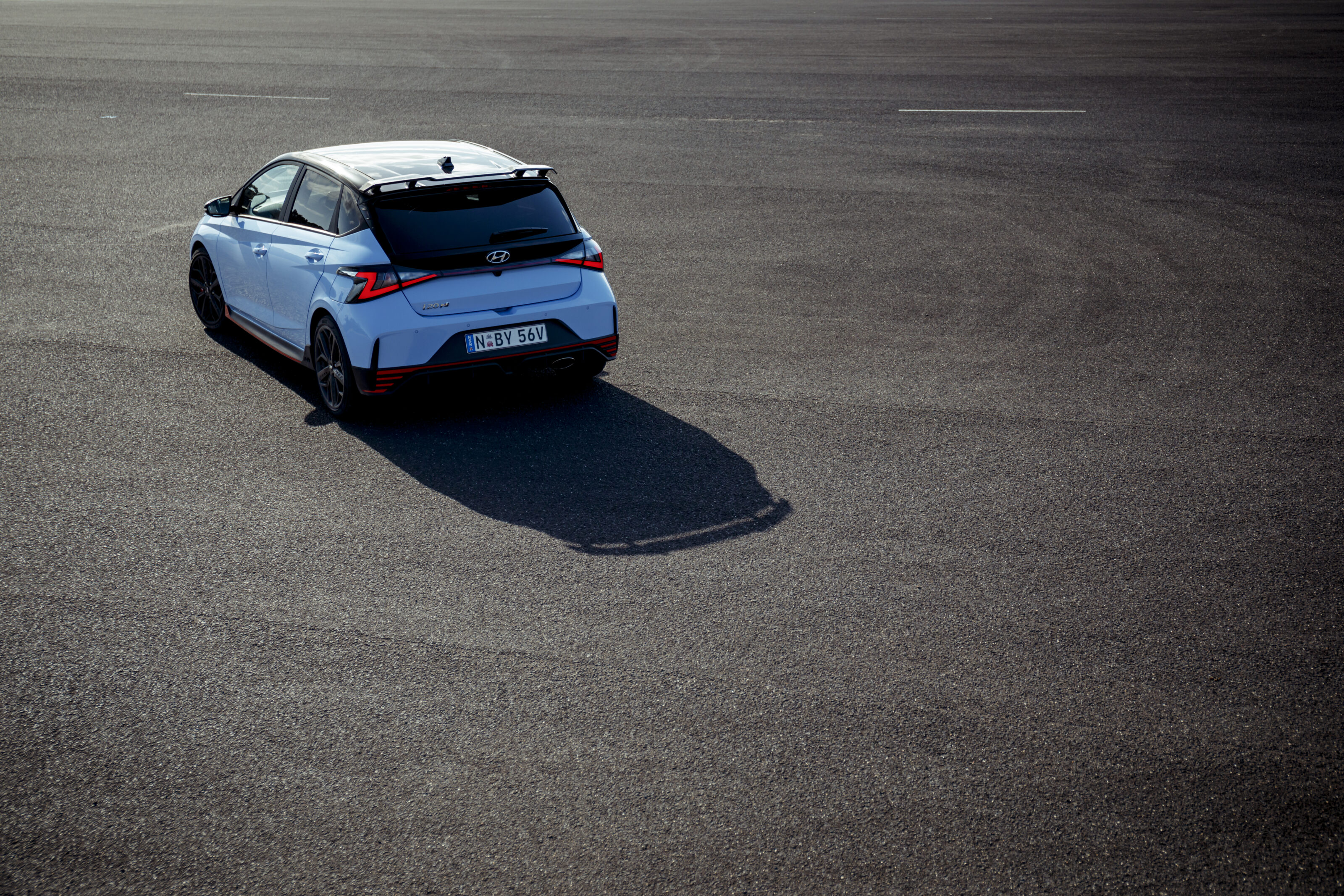
Hyundai i20
The charming manual-only i20 N has undergone a price increase of $2500.
| Hyundai i20 1.6 N | $34990 | Up $2500 |
|---|
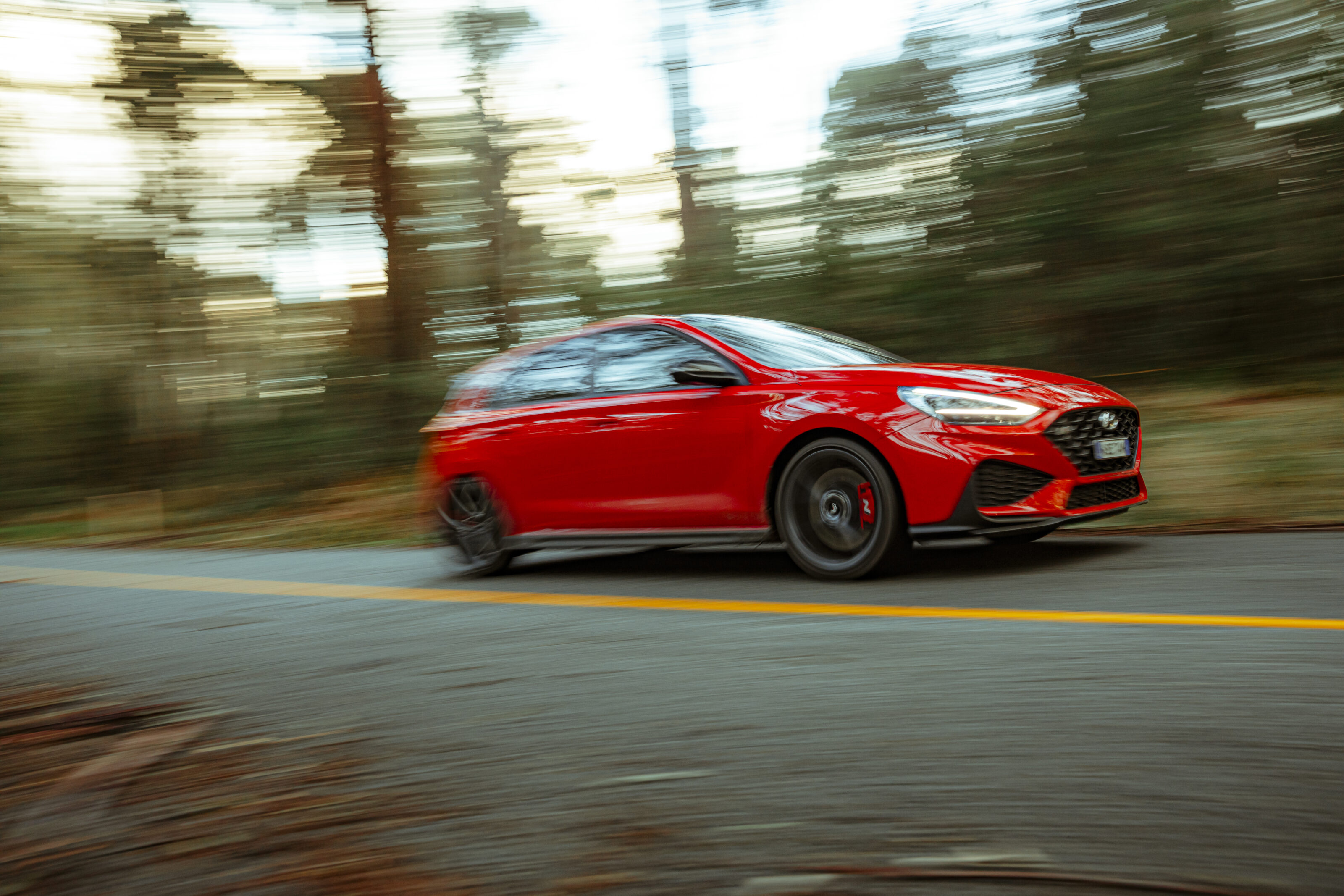
Hyundai i30
Manual N-Line and manual N variants of the popular i30 Hatchback have all received modest increases, with the N-Line variants rising by $800, and flagship i30 Ns going up in lockstep by $1700.
Costs of their DCT-equipped counterparts remain unchanged.
| Hyundai i30 1.6 N-Line (Manual) | $30220 | Up $800 |
|---|---|---|
| Hyundai i30 1.6 N-Line Premium (Manual) | $35020 | Up $800 |
| Hyundai i30 2.0 N (Manual) | $46200 | Up $1700 |
| Hyundai i30 2.0 N Premium (Manual) | $49200 | Up $1700 |
| Hyundai i30 2.0 N Premium s/roof (Manual) | $50700 | Up $1700 |
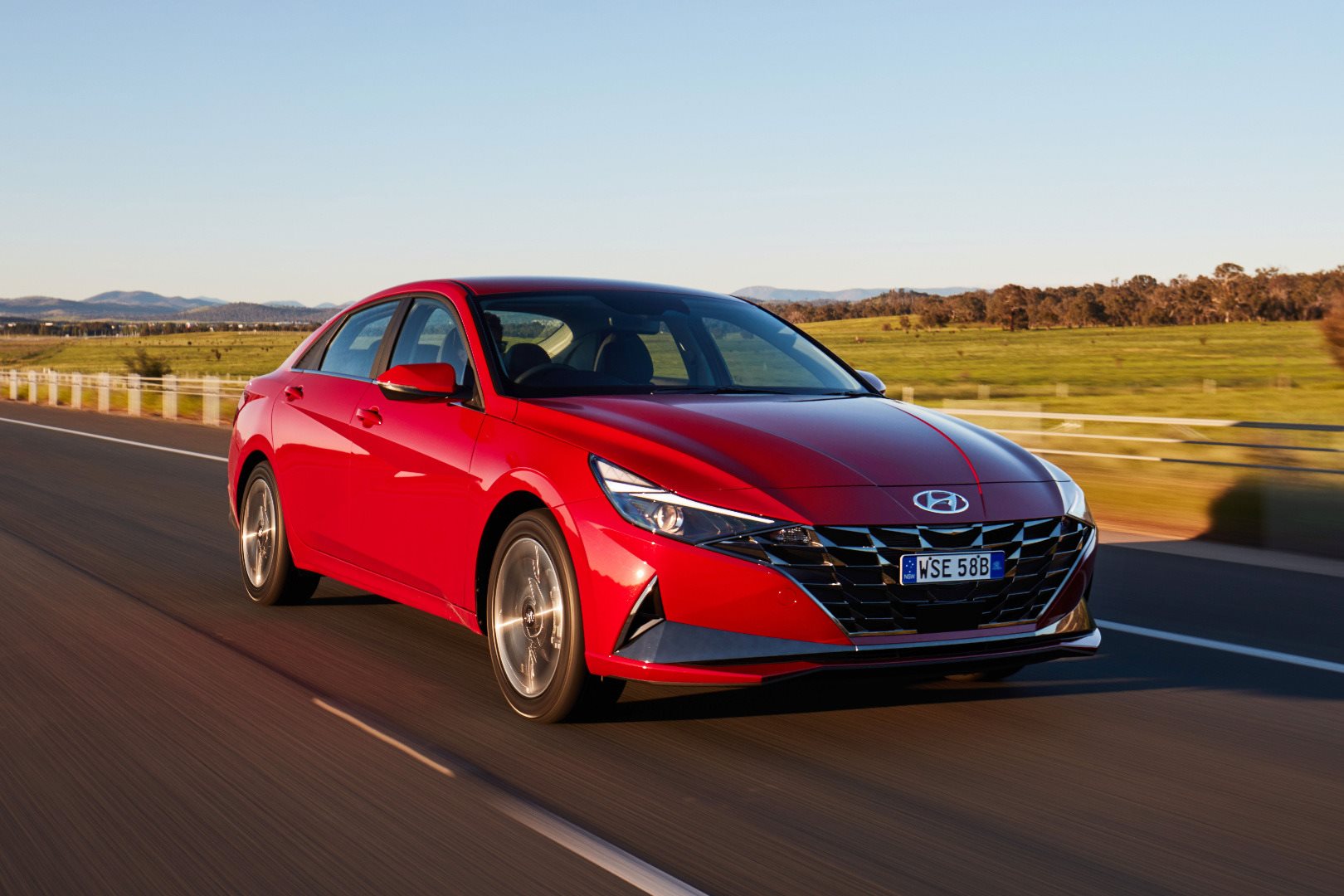
Hyundai i30 Sedan
Pricing for the i30 Sedan N-Line has increased by $1400, whether you opt for the manual or the seven-speed dual-clutch transmission.
As for the flagship N, it’s the DCT-equipped variant that’s bumped up by $1200, creating a logical step in the range from the manual vehicle – which was priced identically upon initial launch.
| Hyundai i30 Sedan 1.6 N-Line (Manual) | $31690 | Up $1400 |
|---|---|---|
| Hyundai i30 Sedan 1.6 N-Line Premium (DCT) | $38690 | Up $1400 |
| Hyundai i30 Sedan 2.0 N (DCT) | $50200 | Up $1200 |
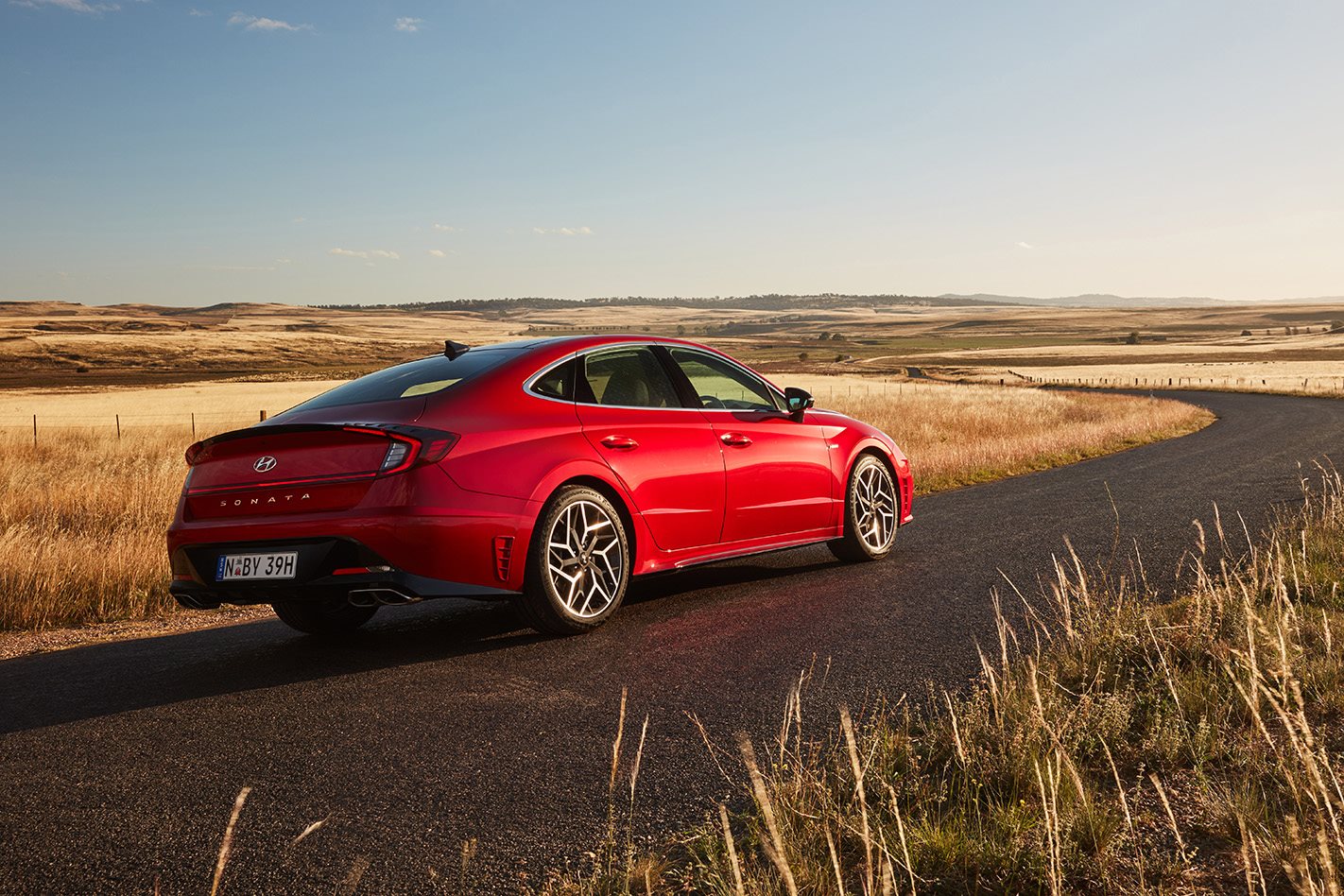
Hyundai Sonata
Australia’s single-spec Sonata N-Line rises by $1075.
| Hyundai Sonata 2.5 N-Line (DCT) | $52065 | Up $1075 |
|---|
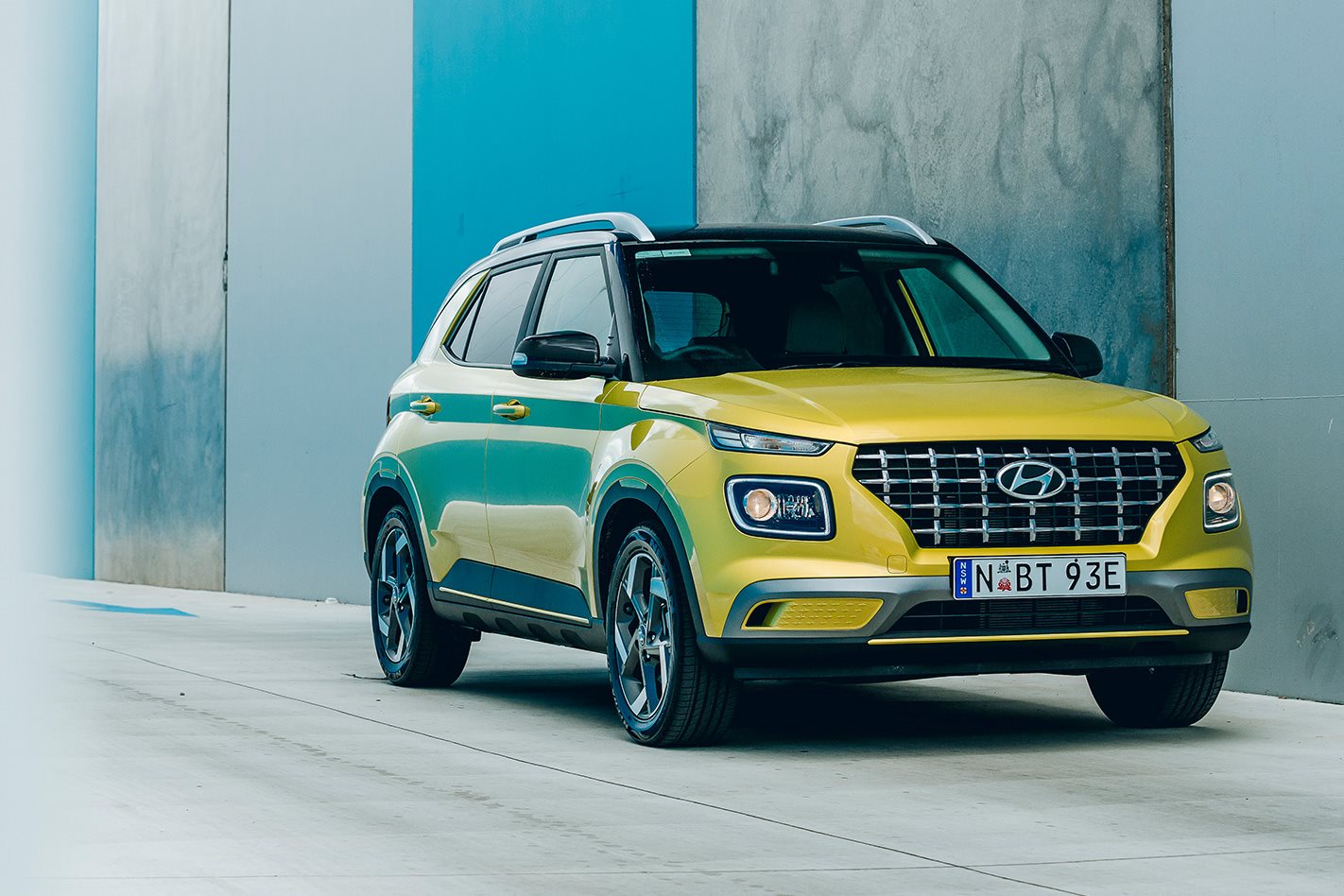
Hyundai Venue
A modest price increase of $500 afflicts three of the five local Hyundai Venue variants, including the manual base, the manual mid-spec Active, and flagship Elite automatic.
| Hyundai Venue 1.6 (Manual) | $21740 | Up $500 |
|---|---|---|
| Hyundai Venue 1.6 Active (Manual) | $23670 | Up $500 |
| Hyundai Venue Elite (Auto) | $27540 | Up $500 |
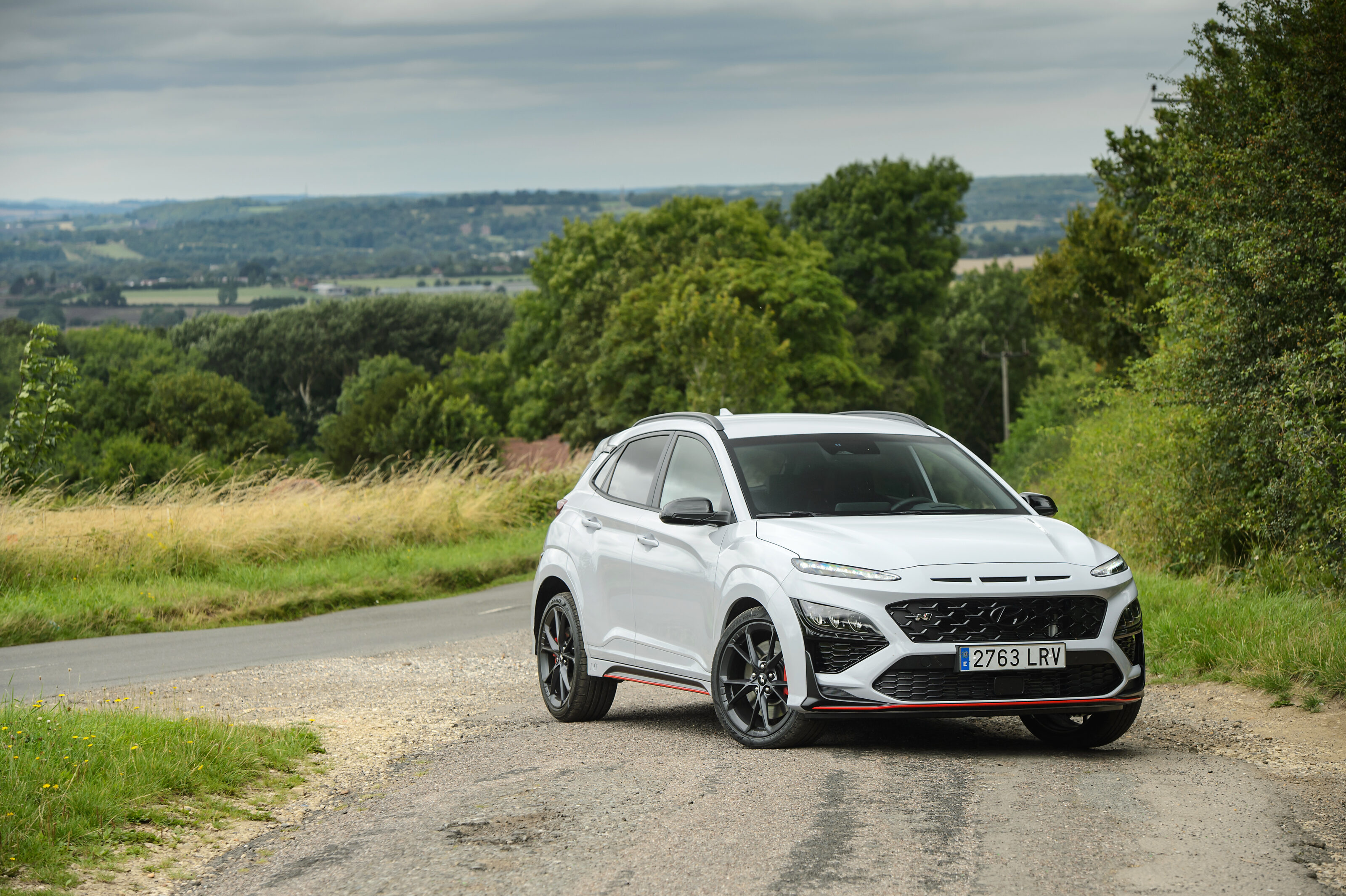
Hyundai Kona
N-Line and N variants of the stylish Hyundai Kona have also received adjustments, with both the non-Premium and Premium Kona N-Line going up by $800.
The Hyundai Kona N and fully-loaded Kona N Premium both receive larger $1700 hikes.
| Hyundai Kona 1.6 N-Line (DCT) | $37100 | Up $800 |
|---|---|---|
| Hyundai Kona 1.6 N-Line Premium (DCT) | $43200 | Up $800 |
| Hyundai Kona 2.0 N (DCT) | $49200 | Up $1700 |
| Hyundai Kona 2.0 N Premium (DCT) | $52200 | Up $1700 |
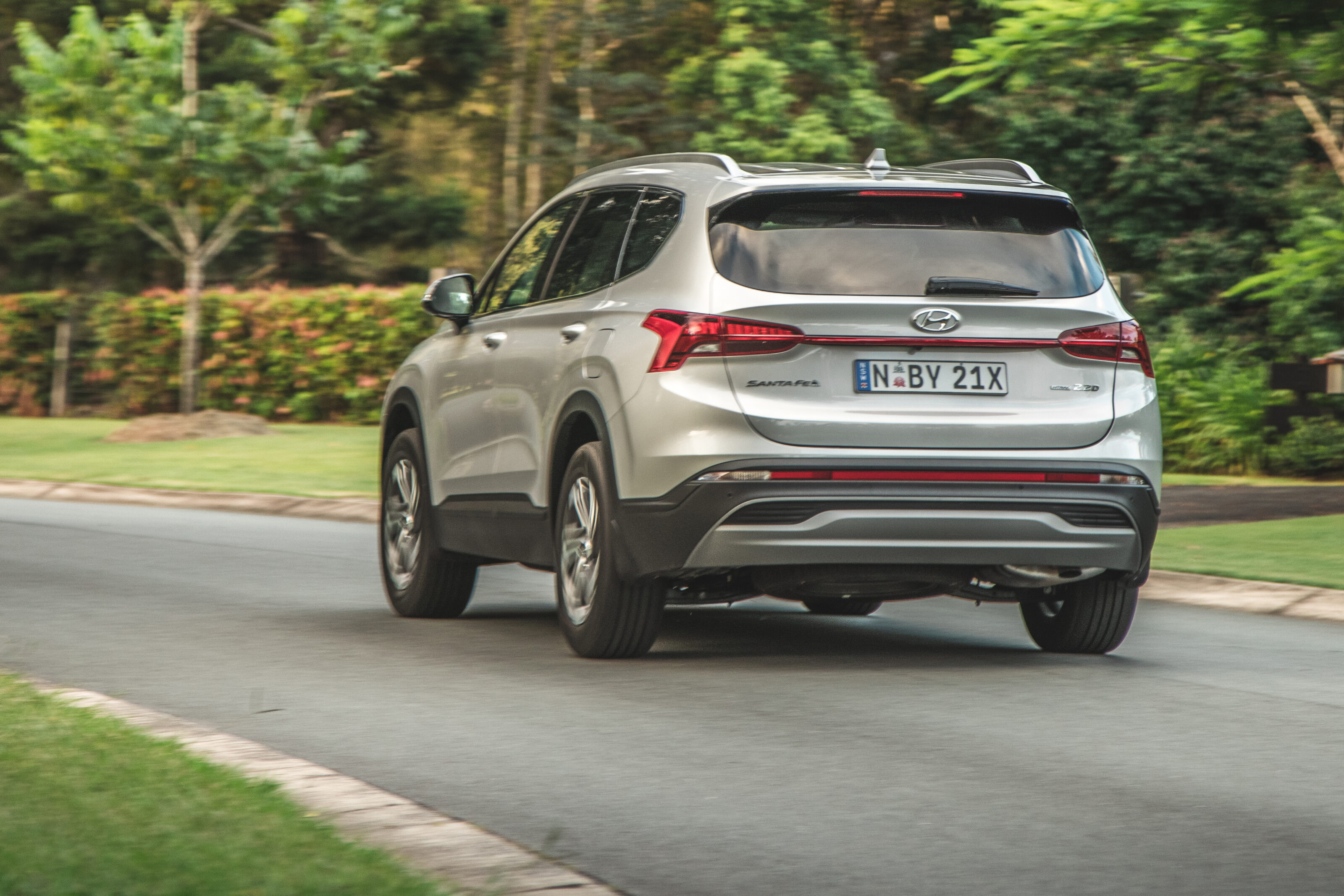
Hyundai Santa Fe
All Hyundai Santa Fe variants have received a modest price rise of $500. This affects both the front-wheel drive 3.5-litre petrol variants, as well as the all-wheel drive 2.2-litre turbo-diesel variants.
| Hyundai Santa Fe FWD 3.5 V6 (Auto) | $46050 | Up $500 |
|---|---|---|
| Hyundai Santa Fe FWD 3.5 V6 Active (Auto) | $50250 | Up $500 |
| Hyundai Santa Fe FWD 3.5 V6 Elite (Auto) | $56500 | Up $500 |
| Hyundai Santa Fe FWD 3.5 V6 Highlander (Auto) | $63050 | Up $500 |
| Hyundai Santa Fe AWD 2.2 CRDi Diesel (Auto) | $49550 | Up $500 |
|---|---|---|
| Hyundai Santa Fe AWD 2.2 Active (Auto) | $53750 | Up $500 |
| Hyundai Santa Fe AWD 2.2 Elite (Auto) | $60000 | Up $500 |
| Hyundai Santa Fe AWD 2.2 Highlander (Auto) | $66550 | Up $500 |
Hyundai Palisade
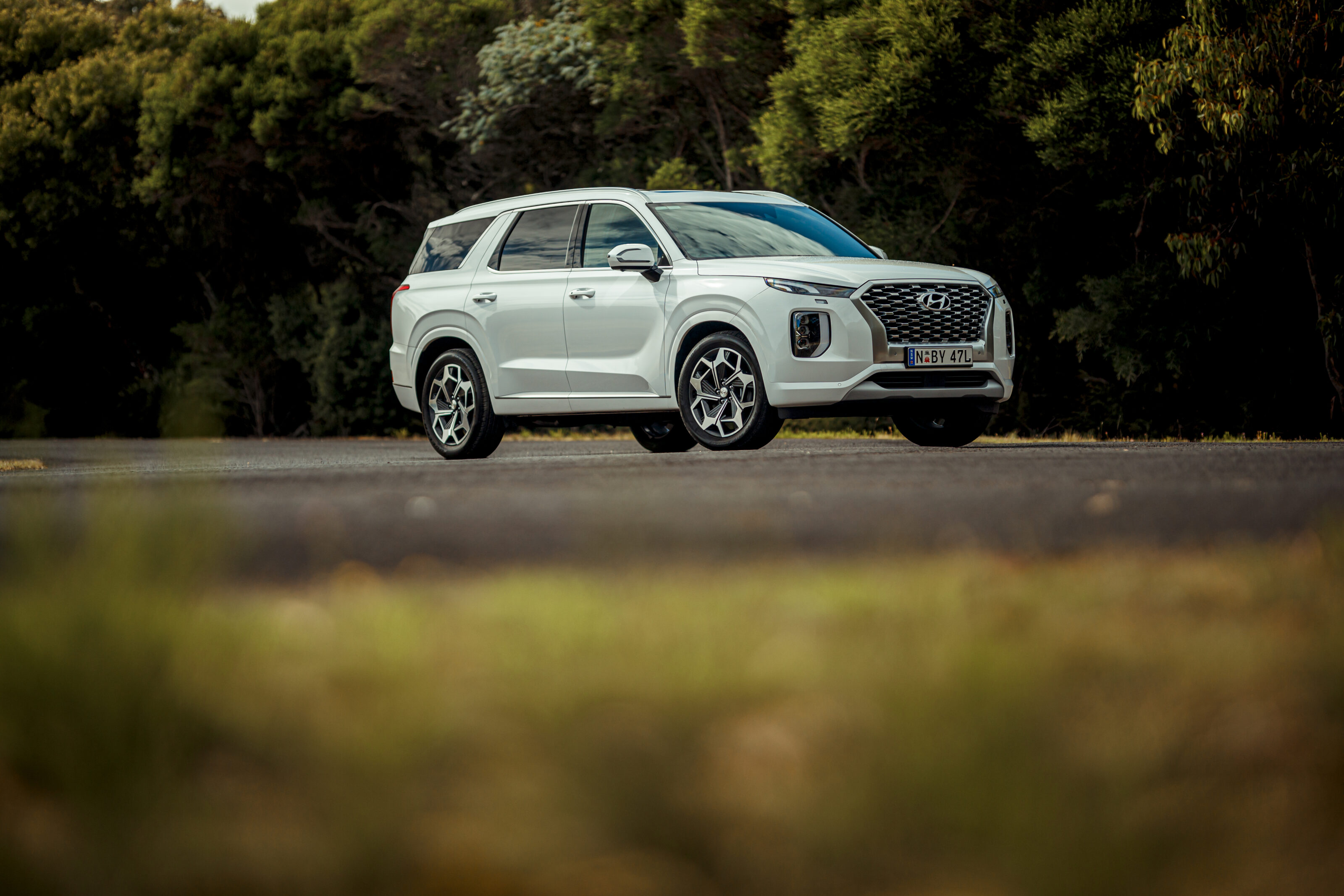
Hyundai’s Palisade large SUV has been facelifted for 2023, with both front-wheel drive petrol and all-wheel drive diesel variants of the mid-spec Elite rising by $4400. The top-spec Highlander, in both powertrain configurations, has risen by $4900.
Buyers will now enjoy a restyled front end, larger 12.3-inch infotainment screen and instrument cluster, 15-watt phone charger, a new steering wheel, new safety features and more.
| Hyundai Palisade 2WD 3.8 Elite (Auto) | $65900 | Up $4400 |
|---|---|---|
| Hyundai Palisade 2WD 3.8 Highlander (Auto) | $75900 | Up $4900 |
| Hyundai Palisade AWD 2.2 Elite Diesel (Auto) | $69900 | Up $4400 |
|---|---|---|
| Hyundai Palisade AWD 2.2 Highlander (Auto) | $79900 | Up $4900 |
The new-generation 2023 Ford Everest SUV and its ute sibling, the 2023 Ford Ranger – the top performer in the safety section of our recent 2022 dual-cab ute comparison – have both been awarded five-star safety ratings by the Australasian New Car Assessment Program (ANCAP).
The five-star ANCAP safety rating applies to all variants of the Everest, and all XL, XLS, XLT, Sport and Wildtrak variants of the Ranger in single-cab, extended-cab (RAP Cab) and dual-cab body styles (including utility and cab-chassis).
UPDATE: There’s a small catch to this five-star rating, and that is that all Ranger and Everest models manufactured before August 20, 2022, will require a “minor” Lane-Keeping System (LKS) software configuration update, which will be completed by dealers at the first scheduled complimentary service.
2023 Ford Ranger crash safety rating

2023 Ford Everest crash safety rating
All Ranger and Everest models are equipped with dual frontal, side chest-protecting and side head-protecting curtain airbags, along with a driver and passenger knee airbag. A front centre airbag is also standard, protecting front seat occupants in side impact crashes.
Both also feature a suite of active collision alert and avoidance systems to prevent or minimise the severity of a crash. Among them are the following:
| 2023 Ford Ranger, Everest active safety technology | |
|---|---|
| Electronic parking brake | Lane keep assist |
| Electronic brake booster | Lane departure warning |
| ABS, EBD, roll stability control, hill start assist | Driver alert |
| Nine airbags, including driver and passenger knee bag | Front and rear parking sensors |
| Collision mitigation | Blind-spot information system (BLIS) with rear cross-traffic alert |
| Autonomous emergency braking | Digital reverse camera |
| Reverse brake assist | Automatic headlamps and high-beam |
| Post impact braking | |
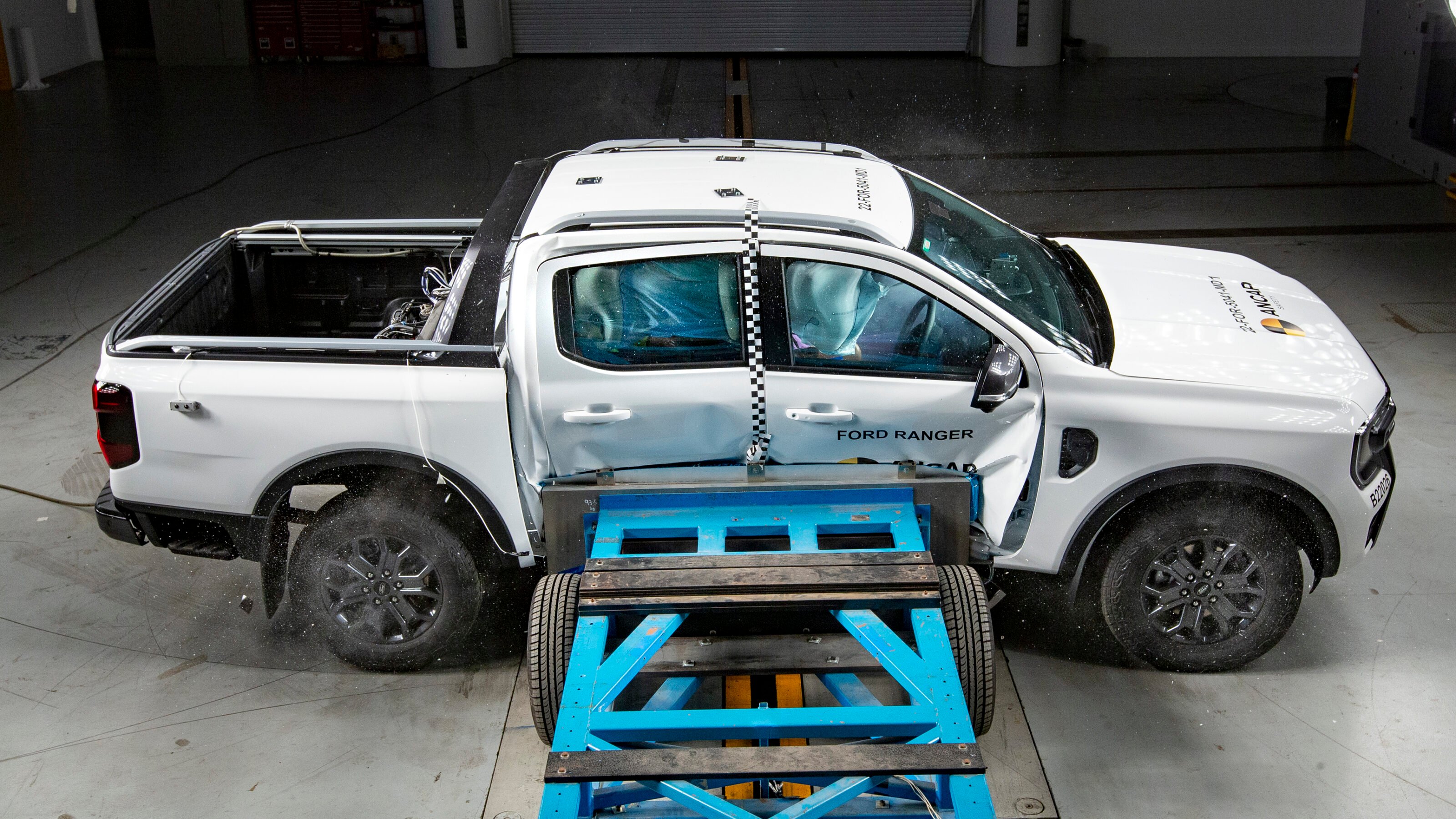
In crash testing, both the Ranger and Everest scored well for protection of adult occupants in frontal offset, side impact and far-side impact tests, although a result of ‘marginal’ was assigned for protection in the full width frontal crash test and for the chest of the driver in the oblique pole test.
Likewise, maximum scores were awarded recognising the Good levels of protection offered to child occupants in the frontal offset and side impact crashes.
ANCAP stresses in its report that buyers should be aware of the following, regarding child restraints:
“Most child restraints are legally only able to be used in seating positions where a top tether anchorage point is fitted, and in the case of the Ranger, a top tether anchorage is not fitted in the centre seating position of the second row in double cab variants. The installation of child restraints in single and extended cab (RAP Cab) variants of the Ford Ranger is also not recommended as there are no top tether anchorages fitted.”
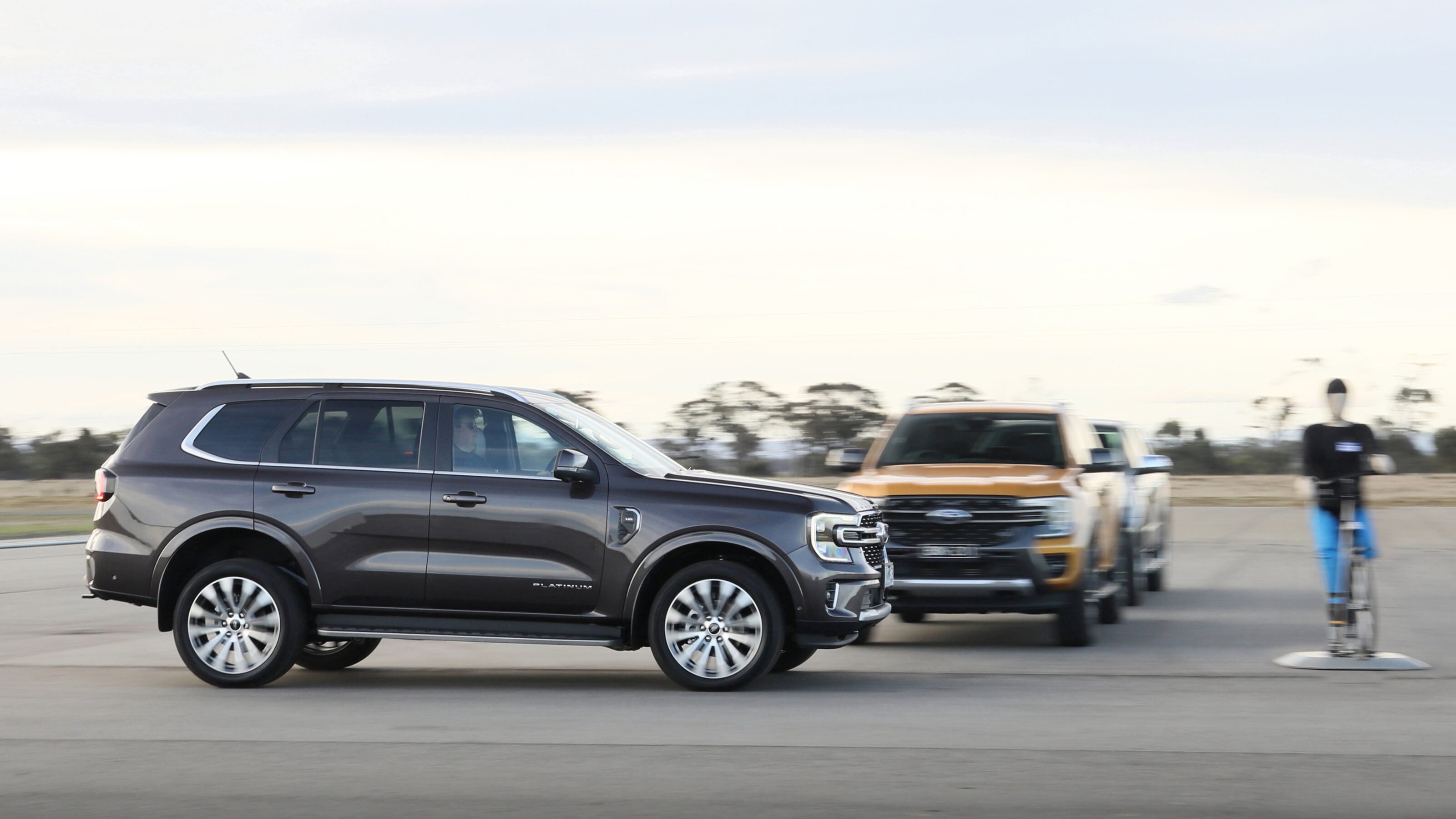
See Wheels Media’s 2022 dual-cab ute comparison for our assessment of the new Ranger’s family-friendliness.
Both the Ranger and Everest were penalised in ‘compatibility’ with oncoming vehicles, as most high and heavy vehicles present an increased risk in this regard.
Raptor variants of the Ford Ranger are unrated, and – as Alex Inwood notes in our review of the new Raptor, the hero model’s low-volume production schedule means, Ford isn’t planning to crash-test the Raptor. It will remain officially ‘unrated’ by Australia’s independent safety body.
Ford maintains it’s just as safe as a regular Ranger, however. The Raptor carries exactly the same high level of passive and active safety systems as a Ranger Wildtrak.
For two years in a row, the Mercedes-Benz GLC has been the brand’s best-seller. Its replacement is fully hybridised and prices are to increase by 15 per cent.
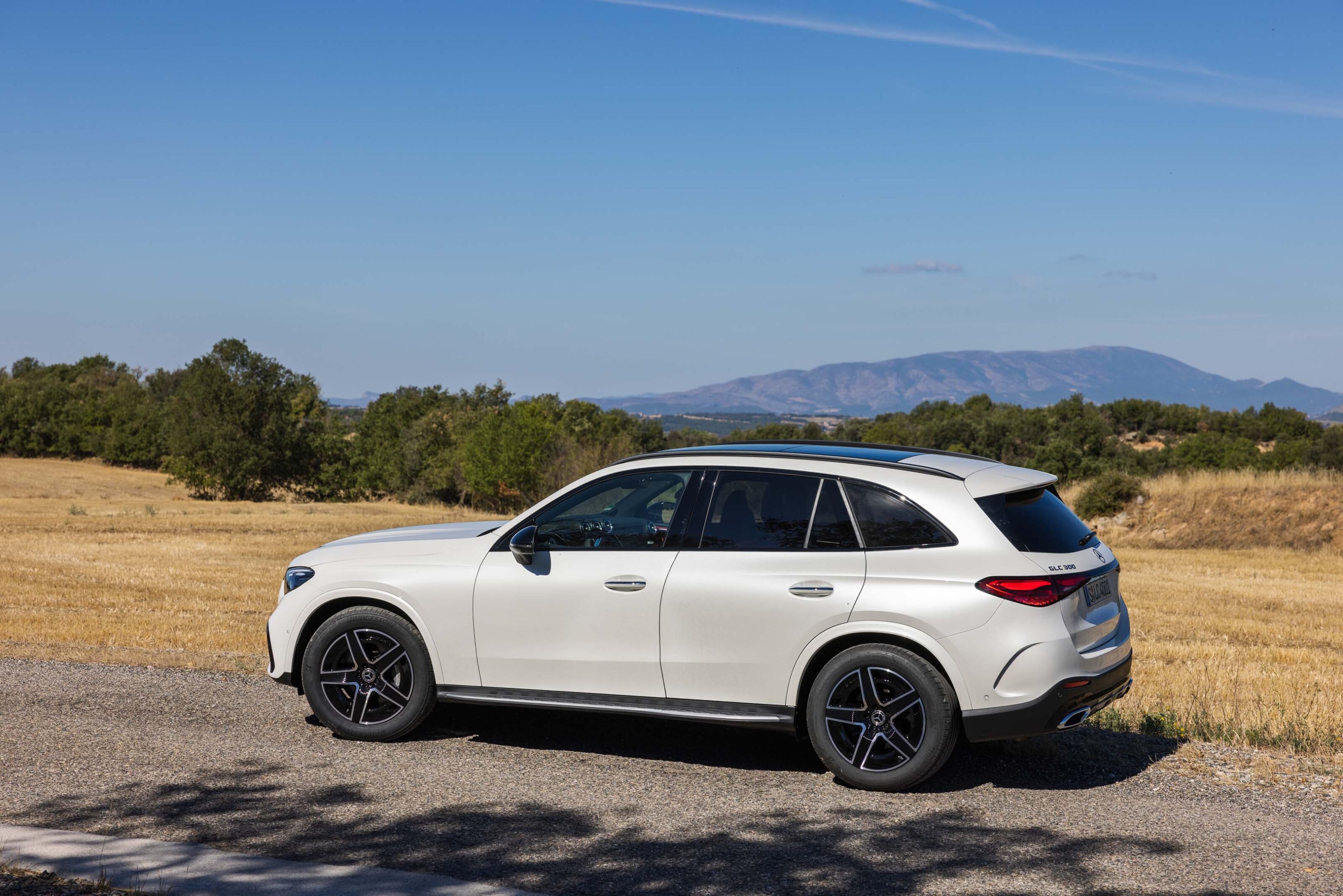
For decades, the global Mercedes hit list was dominated first by the E-class and then by the C-class. But not anymore. In the era of the SUV, the GLC is now the most popular starship by a healthy margin, and in its wake demand for the GLA, GLE and GLB is also rising.
When a car manufacturer is on to a winner, the last thing management will do is dramatically change the profitable formula of success. That ́s why the GLC MkII is not only visually a low-risk project – it also stays true to the long-running MRA platform which excludes a pure zero-emission derivative.
But what about the the EQC, launched in 2019 – which already is, in effect, an electric GLC?
The EQC (due to be phased out when the EQE SUV arrives next spring) uses a one-off mix-and-match transformation architecture hampered by high weight, ho-hum efficiency and average range. It stands little chance against the 2023 Audi Q6 e-Tron and 2024 BMW iX3.
While the EQE SUVs and their replacements are future-oriented hardcore clean-air SUVs, the GLC is an up-specced but down-engined crowd-pleaser designated to guide undecided users through the paradigm shift that is fast gaining momentum in many parts of the world.

The more sophisticated engineering content features such mod cons as air suspension, rear-wheel steering, an S-class-style infotainment system and a batch of plug-in versions good for up to 80 miles of clean-air range.
Engine-wise, this model can only count to four, but that ́s enough to produce up to 284kW even before the AMG power doctors apply their scalpels.
Aerodynamicists have lacquered the GLC’s drag coefficient to a commendably low 0.29. A little longer and lower than the previous effort, the evolutionary package creates more rear legroom and a ginormous 620-litre boot, up 70 litres compared to last year’s vintage.
Inside, this is a proper Mercedes that blends trad luxury with the latest digital trickeries. The large upright main monitor is now easier to use thanks to the Zero Layer approach, which prioritises access to the user’s favourite icons. Killing the nerdy warning lights, chimes and vibrations is now an easy two-stab affair, no longer a lengthy sub-menu diving course.
Inside, this is a proper Mercedes that blends trad luxury with the latest digital trickeries.

The pricey full-electronic monty includes a large instrument panel with a choice of different graphics from dull to brash, a crowded head-up display and the driver’s live view relayed to the in-dash screen complete with road sign projections and directional sat-nav arrows – welcome to overkill software wonderland.
Are we going to miss the rev-hungry straight-six and the ballsy V8? You bet. But this is 2022, climate change must be stopped, and there is no time to be wasted. So your next GLC43 AMG and 63 AMG will be powered by a humble 2.0-litre four in combination with a beefy electric helper motor.
The most popular model and the subject of our assessment here, the GLC300, has a less highly tuned four-cylinder and will be at Australian dealers in early 2023.

Delivering an unchanged 192kW along with 400Nm of torque, it propels the heavier (by up to 135kg, depending on specification) new GLC from 0-100km/h in 6.2 seconds. Where legal, the top speed is a perfectly relaxed 240km/h.
Thanks to the standard mild-hybrid system that throws in an on-demand 17kW and 200Nm kick in the butt good for about fifteen seconds, average fuel consumption improves from 8.0L/100km to 7.4L/100km.
For a truly dramatic cut in on-paper thirst, you must wait for the plug-ins that promise a token 0.5L/100km, but will deliver only while the battery charge lasts.
We drove the low-bling, high-efficiency MB crossover north out of Barcelona to the Pyrenees, where the tiny principality of Andorra is wedged in a corner between France and Spain.
Surrounded by tall peaks and concealed behind unreal rock formations is a small designated off-road paradise where the GLC showed its eye-opening ‘when doomsday meets armageddon’ talents.

Although it lacks a low-range transfer case, a mechanical diff lock and rough-terrain tyres, the coat-and-tie Benz quickly donned its adventure outfit and wasted no time scaring the wits out of its unassuming driver.
True, the test car was fitted with the extra-cost off-road pack for more ground clearance, extended axle articulation, hill descent control, ride height adjustment and an underbody camera relaying that transparent bonnet effect pioneered by Land Rover.
But who would have thought that this born poseur could master a challenging sickbag parcours without getting stuck a single time? In PHEV form, you can even do the whole stunt without firing up the combustion engine.

Back on proper roads, the GLC300 rarely put a hoof wrong either. Its two major strengths are the perfectly compliant ride and the exceptional noise suppression.
Even when shod with 20-inch wheels, the air suspension acts as an adaptive eiderdown dispensing service that plugs every pothole, shaves every transverse ridge, and beefs up every crumbling camber.
The cosseting low-noise environment very nearly matches the E- and S-class for creature comfort and can be further enhanced by specifying tempered sandwich glass and the awesome multi-functional massage seats, which are pure bliss for sore backs.
Dynamically, the new GLC moves up a notch, too. The steering is now more precise and direct, while the optional rear-wheel steering cuts the turning circle by 0.9 metres. It is a real asset off the beaten track and further consolidates the directional stability.
The brakes could however do with more initial bite, and their modularity and stamina are not worth writing home about either.

Back on proper roads, the GLC300 rarely put a hoof wrong either. Its two major strengths are the perfectly compliant ride and the exceptional noise suppression.
The same goes for the throttle, which takes its time to respond, coordinates engine and transmission in a rather casual fashion, and displays an odd stop-sign restart lag.
Give her stick, and la donna nobile will waltz emphatically from apex to apex, rolling a bit more than expected and making a curtsy under hard deceleration.
Dialling in Sport mode firms up the dampers a touch and speeds up the shifter by a similar measure but there is still not even a whiff of AMG-ness to be felt at the wheel, which is okay since the real things are yet to come.

More annoying is the patronising predicative sat-nav software, which lifts off way too early on the approach to your favourite roundabout – which you could easily take 30km/h faster – advises against overtaking for no obvious reason and will only coast when the algorithm deems it fit to do so. Like it or not, this spy in the cab is always on the alert.
When required, it automatically finds an emergency lane, diverts to the hard shoulder and switches on the hazards, steers and brakes autonomously (within reason), retraces the car’s steps in reverse and selects the best route for pulling a trailer. Priceless assistance or eerie bullying?
Difficult to judge, but the autonomous future may not be quite as rosy as the industry would have us believe.
The new-generation GLC300 will reach Australian showrooms in the first half of 2023, and buyers have reason to hope for the first quarter rather than the second. This new GLC will be one worth consideration.
Engineers at the University of New South Wales have built a new high-speed motor that could improve both the performance and driving range of electric vehicles.
The motor can achieve speeds of 100,000 revolutions per minute – with the maximum power and speed doubling the existing high-speed record to make it the fastest in the world of its kind ever built.Most importantly, the motor is able to produce a very high power density, which helps to reduce the overall weight of an EV and therefore increases the driving range.
“One of the trends for electric vehicles is for them to have motors which rotate at higher speeds,” said Dr Guoyu Chu from the UNSW School of Electrical Engineering and Telecommunications, who is leading the team together with Associate Professor Rukmi Dutta.
“Every EV manufacturer is trying to develop high-speed motors and the reason is that the nature of the law of physics then allows you to shrink the size of that machine. And with a smaller machine, it weighs less and consumes less energy and therefore that gives the vehicle a longer driving range.”
The new technology is said to be an improvement on the design of existing Interior Permanent Magnet Synchronous Motors (IPMSMs), which are the type most commonly used in electric vehicles at present.IPMSMs have magnets embedded within their rotors to create strong torque for an extended speed range, but on the flip side suffer from low mechanical strength, which limits their maximum speed.But the UNSW team has patented a new, more robust, rotor structure – which also uses fewer rare-earth materials, such as neodymium.The new design is based on the engineering properties of the Gyopo rail bridge, a double-tied arch structure in South Korea.“With this research project we have tried to achieve the absolute maximum speed, and we have recorded over 100,000 revolutions per minute and the peak power density is around 7kW per kilogram,” added Dr Chu.
“For an electric vehicle motor we would actually reduce the speed somewhat, but that also increases its power. We can scale and optimise to provide power and speed in a given range – for example, a 200kW motor with a maximum speed of around 18,000 rpm that perfectly suits EV applications.”
According to UNSW, if electric car manufacturers wanted to use its new motor in their vehicles, it would only take around six to 12 months to modify to their own specifications.
“Our rotors have very good mechanical robustness, which reduces the manufacturing cost. And we only use around 30 per cent of rare earth materials, which includes a big reduction in the material cost – thus making our high-performance motors more environmentally friendly and affordable,” said Dr Chu.Apart from in EVs, the motor could also be used in large heating, ventilation, and air conditioning (HVAC) systems which require high-speed compressors to use a new form of refrigerant which significantly reduces the impact on global warming. It could also be utilised in high-precision CNC machines in demand by the aviation and robot industries.
JUMP AHEAD
- Update 1: Welcome
- Update 2: Scratching the surface
- Update 3: Battle clan
- Update 4: Power war
- Update 5: The long goodbye
NEW, October 2022: Outlander PHEV long-termer arrives!
Inwood has transitioned out of the petrol Outlander and into a new Outlander PHEV. Get that long-term diary here, or continue reading our petrol Outlander long-termer coverage below.
Long-term test: Welcome
The basics
| Body | 5-door, 7-seat SUV |
|---|---|
| Power | 135kW @ 6000rpm |
| Torque | 245Nm @ 3600rpm |
| Transmission | 8-speed CVT |
| Fuel consumption | 8.1L/100km |
| Drive | All-wheel drive |
| Price | $49,990 |
If you were to list the factors that drove people to buy the old, third-gen Mitsubishi Outlander we doubt ‘desirability’ would feature near the top. Value and a fuss-free ownership experience, plus the security of a long warranty, would likely be the primary (and very worthwhile) attractions.
So why am I so captivated by how this all-new fourth-gen model looks? I find myself turning back for a quick glance every time I park it and, honestly, if I was the kind of person to let out a low whistle of appreciation, I’d have done just that when it arrived in the Wheels garage. I know design is subjective, but to my eyes, the new Outlander is a seriously stylish family SUV.
The spec of ‘our’ long-term Outlander is especially handsome. Finished in Cosmic Blue (a $740 option), it’s the second-from-top Exceed AWD and sports a price tag of $47,990 before on-road costs.

If that sounds a little pricey, you can slide your bum into a brand-new, front-drive Outlander ES for as little as $34,490 (plus on-road costs). The two share the same powertrain so examining whether the Exceed is worth the additional $13,500 is one of the priorities with this longer loan. Initial impressions suggest yes, but more on that soon.
We have bigger plans for the Outlander, too. Currently, the only engine/gearbox combo available across the range is the rather uninspiring 2.5-litre atmo petrol paired with a CVT. We singled this powertrain out as a weakness in a recent group test against the Kia Sportage and Subaru Forester, in which the Outlander finished in last place.
But while the atmo petrol engine is a little underwhelming, a flagship plug-in hybrid version of the Outlander is due soon. It will boast a 98kW/195Nm 2.4-litre four-cylinder petrol assisted, rather promisingly, by twin electric motors and a larger 20kWh battery pack capable of 87km of electric-only driving.

Mitsubishi isn’t sharing total system outputs just yet, but the two motors produce 85kW/255Nm and 100kW/195Nm respectively, so performance and efficiency should both see appreciable gains. As soon as the PHEV arrives Down Under, we’ll swap this Exceed for one to see if it can deliver on that promise.
So it’s a positive start for the new Outlander, and just like the exterior, the interior has been treated to a revolutionary overhaul. This is easily the nicest Mitsubishi cabin I’ve ever sat in. The design is simple and elegant, the materials feel a step up for Mitsubishi and equipment levels are high.
Every Outlander scores wireless Apple CarPlay and Android Auto but mid-spec variants and above gain heated leather seats, a head-up display, surround-view camera and a 12.3-inch digital instrument cluster. The digital dials are paired with a large 9.0-inch central touchscreen and while they mightn’t be the slickest systems on sale, they’re intuitive to use and feature clear graphics.

The Exceed trim adds a panoramic sunroof, rear passenger window blinds, front-seat position memory, an excellent 10-speaker Bose sound system and tri-zone climate control.
This new Outlander shares a platform with the equally fresh and soon-to-arrive Nissan X-Trail. It’s longer and wider than before and its wheelbase has been stretched, with the result being an increased sense of cabin space.
The second row slides and folds 40:20:40, plus there’s the extra flexibility of a third row that folds neatly into the boot floor. The additional two seats are a boon, although it’s more of a 5+2 than a genuine seven-seater. In fact for family duties, overall space is adequate rather than commodious.

We’re a young family so my wife sits in the second row to keep Baby Inwood company and behind my seating position (I’m 6ft2) her knee room is a little tight.
The boot doesn’t swallow the pram as easily as I expected, either. With the third row folded the capacity is 478 litres, so around 100L less than you get in a Toyota RAV4, and I have to fold the pram’s footrest up and angle it at 45 degrees to fit. Not a dealbreaker, but it’s starting to become a little annoying.
A minor quality concern has also appeared. The leather lining of the centre console has untucked itself where it joins with the piano black near the gear shifter.
These are small gripes, though, and so far the Outlander experience has been overwhelmingly positive. It’s certainly shifting my opinion of the nameplate. I used to consider it an SUV you bought with your head more than your heart, but this stylish new model is winning me over.
Update 2: Scratching the surface
Welcomes to the Wheels garage don’t get much warmer than the one I gave this Mitsubishi Outlander last update.
Perhaps it was the lingering memory of the underwhelming old model that saw this fourth-gen version make such a positive impression but in virtually every metric it exceeded my expectations. Eye-catching looks, a high-quality interior, comfortable seats, loads of equipment, refined road manners… I’ll admit I was suitably impressed.
But there’s an elephant in the room that needs addressing. When we compared this new Outlander with the Kia Sportage and ageing Subaru Forester in a recent issue, the Mitsu came stone cold last.
It wasn’t a browbeating by any means – the Outlander scored high marks – but it was more a case of this new model gaining kudos as the segment’s ‘most improved’ contender rather than swooping from obscurity to be the new benchmark.

And now, eight weeks into our long-term loan, some of those shortcomings are floating to the surface. Mostly they’re little things, the kind of niggles that only begin to grate after extended use, but that’s exactly why we run these longer loans of course.
The most persistent irritation concerns Apple CarPlay. The Outlander offers a wireless connection and when it works it’s brilliant. The centre screen is large, fast to respond and has a resolution other medium-SUV rivals can only dream of (we’re looking at you Toyota) but the downside is CarPlay only connects automatically about 50 percent of the time.
The rest of the time it either requires you to work through a few sub-menus in the ‘connections’ tab to fire it up or, most often, it just disappears altogether. The simple solution is to just use the wired connection, of course, but I hate the clutter of cables and much prefer to keep my phone in my pocket while driving.
There have been some other tech gremlins, too. The infotainment system has shut down mysteriously before completing a system reboot, the reverse camera has frozen on a black screen halfway through a parking manoeuvre and the inductive charging pad is flaky. It’ll start charging but then mysteriously stop randomly of its own accord.

Of more concern, however, given the current price of fuel, is how thirsty the atmo 2.5-litre petrol engine is proving to be. After 1000km of city and country driving, the combined fuel reading is 9.9L/100km.
That’s a hefty increase over the official claim of 8.1L/100km, which is already higher than most rivals, and a significant jump over the RAV4 hybrid I was also testing last week. After an extended stint on our test loop, the Toyota drank 5.5L. Impressive and, in this current climate, genuinely desirable.
Then there’s the issue of how the Outlander rides. Most of the time it strikes a nice balance between comfort and control and, as we pointed out in the Outlander’s comparison loss, the damping is nicely judged.
But over poor surfaces and sharp imperfections the ride can feel sudden and fidgety. This upper-spec Exceed rolls on 20-inch wheels which could make the 18s on cheaper versions the pick if you value ride compliance in your family SUV.

So has the shine worn off the Outlander’s bullish entrance to our long-term fleet? Not really, no. While some niggles have emerged, all of the things that impressed initially continue to do so.
And some new positives came to the fore this month, too, after a few extended drives into rural Victoria.
It’s surprisingly refined on the freeway, for example, and on twisty country roads the handling is superior to most of the Outlander’s rivals. The steering is well weighted and accurate, and even in wet conditions the chassis inspires confidence thanks to strong road holding.

If only the powertrain was more inspiring. In the city, the combo of a four-cylinder atmo engine and CVT actually works quite well. Step-off is sharp and the Outlander moves effortlessly with the flow of traffic on medium throttle inputs.
On the open road, however, things can get vocal on hilly terrain and the roll-on acceleration lacks punch, especially when overtaking. At least the CVT doesn’t drone and it mostly avoids the usual pitfall of delivering that weird sensation where revs and road speed don’t quite align.
A few stumbles, then, but nothing that has me second guessing that positive first impression. Here’s hoping it continues because next month the Outlander will face its sternest test yet: a family of six. Time to give those rear seats a workout.

Update 3: Battle clan
Family torture test asks some tough questions
- Price as tested: $48,629
- Km this month: 1136km @ 8.6L/100km
- Overall: 2207km @ 9.2L/100km
They stood, shoulder to shoulder, like an ancient tribe prepped for battle, waiting for me to park the Outlander so they could clamber aboard. There were five in total and one wielded a pram, its driver slowly pushing it forward and back in a movement that somehow seemed malevolent.
The Outlander seemed unperturbed but I was worried on its behalf. We’ve loaded it to the gunwales before with bags but we’ve never had more than four people aboard. This was our first chance to deploy the third row of seats, which is one of the Outlander’s key advantages when compared with popular rivals like the Toyota RAV4 and Kia Sportage that can only seat five.

My concern wasn’t without cause. Having sat behind my own driving positioning previously, I knew the Outlander’s second row was surprisingly tight on knee room.
And having eyeballed the gap behind the second row once it was folded and slid forward, it seemed slipping into the very back seats would be a struggle for anyone who was over 6ft or lacking in flexibility and agility.
Still, things started positively. The third row seats fold flat into the boot floor and are easy to manually flip up, although you do need to remove the enormous headrests from a cubby and install them yourself.

We directed the clan’s most youthful member towards the back pews and she hopped in gracefully but then we hit a snag. We had hoped to keep one of the back seats folded and to slip the pram into the remaining boot space but that was proving tricky.
Things were also worryingly squishy in the second row. The sliding seat had to be inched forward to give the youth behind some semblance of leg room but this in turn compromised knee room for those in the middle row. “Can the front seats be moved forward a bit?” quickly came the request.
With some juggling we soon have everyone aboard but no-one felt they had an ideal amount of space. It was quickly agreed it’d be fine for short journeys but that our two hour jaunt into the Victorian countryside might be a stretch…

At least those in the middle seat felt looked after. They had their own air vents, temperature control, a USB-A and USB-C port, and window blinds. The seat itself is set fairly high and offers are deep cushion so under thigh support is ample, and headroom is decent, too, thanks to a scalloped section behind the panoramic sunroof.
Things are significantly more grim in the third row. I tried to hop in to see what it’s like but a lack of headroom and zero space for my legs mean it’s strictly a kid-only zone.
And given there are no child seat mounts, or curtain airbags, it’s a kid-only zone for kids of a certain age and size. There are no air vents or USB charing ports, either, meaning the Outlander really is more of a 5+2 than a genuine seven seater.

So the Outlander has hit its first real stumbling block. While the Inwood clan generously agreed the overall experience was deserving of a pass mark, I couldn’t shake the feeling that the Mitsu sits in something of a no-man’s land when it comes to packaging.
Its third row isn’t as roomy as bigger rivals and its second row also lacks for knee room, even when it’s slid all the way back. And even with the third row folded away, the 478L boot can’t compete for load lugging ability when compared with a RAV4 (542L) or even the upcoming Nissan X-Trail (560L), with which it shares a platform.
It’s an unfortunate misstep that turns what should be a competitive advantage for the Mitsu into something of a weakness. There is one silver lining worth pointing out, though. Even with six of its seven seats filled, the Outlander’s fuel economy dropped from 10L/100km to 8.6L. Thank extended stints on quiet country roads.
Update 4: Power war
- Price as tested: $48,629
- Km this month: 1140km @ 8.6L/100km
- Overall: 3347km @ 9.2L/100km
Do you really need a great wallop of torque or an effervescent top-end in a vehicle whose primary function is to drop off kids, pick up the shopping and occasionally get its tyres dusty as you trundle out of town to visit Aunt Sharon? Surely fuel economy, refinement and drivability are more important measures of success?
It’s a pertinent question to ponder when it comes to the Outlander. Currently the only powertrain on offer in this fourth-generation model is a 2.5-litre naturally aspirated four pot and there’s no sugar-coating it – this engine is often singled out as a weakness. “Great SUV, shame about the powertrain…” is the general consensus among my colleagues. And at first blush it’s easy to see why.

In the great hall of powertrain parts, pairing a naturally aspirated four-cylinder engine with a continually variable transmission is about as uninspiring as you can get. Couple that with decidedly average outputs of 135kW @ 6000rpm and 245Nm @ 3600rpm and you can see why it’s easy to write off the Outlander’s powertrain as a bit of a dud. But are we being a touch harsh? I’d suggest we are.
Mitsubishi has developed a reputation of late for delivering cars with old platforms and dreary engines and it’s easy to let this recent run of form colour your opinion. But there’s genuine newness at play under the Outlander’s bonnet. And a decent degree of engineering nous, too.
This generation of Outlander is one of the first ‘all new’ Mitsubishis to be launched in years and it’s also a product of the Nissan/Mitsubishi alliance. That means it shares a lot of commonality with the soon-to-arrive Nissan X-Trail and the 2.5-litre engine isn’t actually an ageing Mitsu donk.

It’s Nissan’s relatively fresh PR25DD unit which was first introduced in 2019 for the Altima in America. Despite its fairly ordinary outputs, the engine is quite high-tech and features variable valve timing, an integrated exhaust manifold, cooled exhaust gas recirculation to help reduce emissions, and a mirror coating that lines the inside of the bores to reduce friction.
There’s also a resin intake port system, which Nissan claims is a world first, that helps to keep intake temps low and increase performance and efficiency.
Sounds complicated but in practice the petrol unit feels incredibly ordinary and unobtrusive. The engine is smooth, relatively quiet on a light throttle and in everyday driving it’s impressively responsive and eager, too. The calibration of the CVT also deserves praise.

It has eight stepped ratios and most of the time it actually feels more like a conventional torque converter auto rather than a dreaded rubber band. It shifts through the ‘cogs’ with confidence and rarely delivers that unnatural CVT sensation where your throttle position and engine/road speeds feel out of sync.
So far, so good, but it’s when you venture past half throttle that things are less convincing. Flatten the gas to complete an overtake or nip into traffic and instead of delivering the expected surge in power and propulsion, the Outlander’s powertrain mostly just makes more noise.
There’s certainly not much benefit to revving it out and it’s possible to let this lack of top-end poke define the engine’s effectiveness. But again, consider how we use family SUVs. I’ve really only explored the engine’s upper reaches on a few occasions and most of the time I hardly think about the powertrain at all, which is arguably the highest praise you can give a piece of technology.

Of more concern, however, is how much fuel the engine is drinking. Officially Mitsu says it should be returning 8.1L/100km and while my real-world usage has been steadily dropping from around 10L to 9.2, that’s still around double what you’ll get from a RAV4 Hybrid.
Happily Mitsubishi is adding it own plug-in hybrid version of the Outlander in the coming weeks, which we’ll be slipping into soon.
So is the Outlander’s engine a weakness? Judge it in the context of its use case and against its horde of competitors, most of which use atmo 4cyl donks with similar outputs, and I’d venture that no, it isn’t. Just don’t expect it to be more than it needs to be.
The long goodbye
- Price as tested: $48,629
- Km this month: 2899km @ 8.1L/100km
- Overall: 6246km @ 8.7L/100km
Ahead of us lies a full day of driving; an interstate road trip that usually takes 10 hours but this time our ETA is a complete unknown. It’s our first long drive with The Baby and there’s every chance it could be hell. An entire day locked in a car with a screaming infant? No thanks.
The Outlander has been part of the <Wheels> Garage for six months now but today will undoubtedly be its sternest challenge. Family road trips are a torture test for vehicle and passengers alike, with everything from boot space to fuel economy and cabin refinement copping a degree of scrutiny that simply doesn’t happen in day-to-day driving.

A seat that’s slightly short of legroom or lacking in lumbar support? No biggie when you’re ducking to the shops but a potential day destroyer after many hours in the saddle.
Things had started well. My comment, which had unwisely earned The Wife’s ire, had been about the Outlander’s cabin refinement. With a baby to keep asleep my attention had drifted to potential sources of noise; namely tyre roar and general NVH suppression. Finding both to be kept nicely in check, even on large 20-inch wheels at 110km/h on the freeway, I thought I’d share the good news. My mistake.
Mercifully things pass smoothly until we break for lunch. The Wife and I have been alternating between driving and sitting in the backseat to entertain the youngster and both rows of seats have measured up nicely.

The second row slides, which has allowed me to liberate a few inches of much-needed knee room for my 6ft2 frame and you can adjust the backrest angle, too, which is handy for when you want to catch a few minutes sleep.
There are also some clever storage solutions. The door bins are decent but the backside of the front seat also includes some neat pockets which are quickly filled with rusk sticks and toys.
And there’s just enough luggage space for a young family of three (plus one dog). I’ve said previously that choosing to fit a third row of seats in the boot floor has compromised the Outlander’s packaging and I stand by that. Its second row isn’t as roomy as some others in this class and the 478L boot is about 100L less than you get in a Toyota RAV4.

With some careful packaging, though, the Mitsu had swallowed all of our gear and any overspill was easily wedged onto the front seat or into the footwell below the baby seat. With a travel cot, pram, two suitcases and multiple soft bags, we aren’t travelling light.
The biggest revelation comes at our second fuel stop. In the cut and thrust of city traffic, the Outlander has erred on the thirsty side. Its official combined cycle claim is 8.1L/100km but I’d been getting closer to 10L per tank in the city. On the freeway, though, the Outlander hits its efficiency sweet spot. Our first refill, which still includes some urban running, delivers a consumption figure of 8.5L but the second tank returns 7.3L. Not bad.
By mid afternoon we leave The Hume behind and tackle the twistier backroads on our way to Mudgee. It’s a road we’ve driven countless times in everything from a Mazda 2 to a long wheelbase Range Rover and once again the Outlander impresses.

Body control is kept nicely in check – hard-earned experienced says softer SUVs can cause rear passengers to feel a touch queasy – and through the twistier sections I appreciate the nicely weighted and accurate steering, which allows me to place the car confidently for smooth progress.
We hit a small speed bump with an hour to go when The Baby decides she’s had enough and starts to scream like a possessed demon but aside from some frayed nerves and sore ears the day has been a success. The Outlander managed the journey faultlessly.
It was quiet, comfortable and niggle free. Only the return journey stands between it and its departure from the long-term fleet. Next month we’ll welcome the plug-in hybrid version of the Outlander which promises to drink less fuel and offer a more premium driving experience. Let’s see if that transpires.
NEW, October 2022: Outlander PHEV long-termer arrives!
Inwood has transitioned out of the petrol Outlander and into a new Outlander PHEV. Get that long-term diary here.
2022 Mitsubishi Outlander Exceed specifications
| Body | 5-door, 7-seat SUV |
|---|---|
| Drive | All-wheel drive |
| Engine | 2488cc 4cyl DOHC 16v |
| Compression | |
| Bore/stroke | 89 x 100mm |
| Power | 135kW @ 6000rpm |
| Torque | 245Nm @ 3600rpm |
| 0-100km/h | 10.6sec (claimed) |
| Transmission | 8-speed CVT |
| Weight | 1760kg |
| Fuel consumption | 8.1L/100km |
| Front suspension | MacPherson strut |
| Rear suspension | Multi-links |
| L/W/H | 4710/1862/1745 |
| Wheelbase | 2706mm |
| Brakes | 350mm discs (f); 330mm discs (r) |
| Tyres | 255/45 R20 |
| Wheels | 20 X 8J |
| Price | $49,990 |
The new Apple iPhone 14, and new Apple Watches, will ship with a feature called Crash Detection – claiming to do just what it says on the label: detect when you’ve experienced a car crash.
In a glossy video demonstrating the technology, Apple describes the new feature as one they “hope you’ll never need”.
Revealed as part of Apple’s big annual September hardware event, the new feature follows the Fall Detection feature that debuted with the Apple Watch Series 4 in 2018, which added the ability to recognise a potentially harmful fall and automatically call emergency services if the wearer doesn’t tap an on-screen “I’m OK” button.

The new Crash Detection feature works in a similar fashion, using onboard sensors in either the iPhone 14 or Apple Watch, such as gyroscopes, accelerometers, microphones, barometers and real-world data – the latter quickly sorted by algorithms to match against the newly detected incident – to determine whether it should alert emergency services.
As with Fall Detection, the feature will give you a moment to decide whether help is needed.
As you might expect, the sensors described above can detect sudden changes in speed and direction, and even the specific sounds and changes in cabin air pressure caused by the explosive deployment of airbags. Of course, the familiar external sounds of crashes are also detected and assessed against existing data.
According to Apple, that real-world assessment ability is built on one million hours of driving and crash data.
A number of modern vehicles, particularly in North America but increasingly so in Australia, offer integrated systems that use the vehicle’s own sensors to detect situations that call for emergency services – but, uniquely, Apple’s Crash Detection extends the concept to the many owners of vehicles not so equipped.
Note: if the below video does not begin at the correct moment, you can skip ahead to 2:46 for the segment on Crash Detection.
