
UPDATE, January 27, 2022: British marque Morgan has confirmed the unveiling date for the latest generation of its 3 Wheeler.
Having already been teased as a prototype with a Ford in-line three-cylinder engine (more on this below), Morgan has announced covers will come off the modern iteration of its classic model on February 24.
According to the low-volume manufacturer, the new 3 Wheeler is set to be the most customisable to date, featuring a design language and ethos which hasn’t yet been seen across its model range.
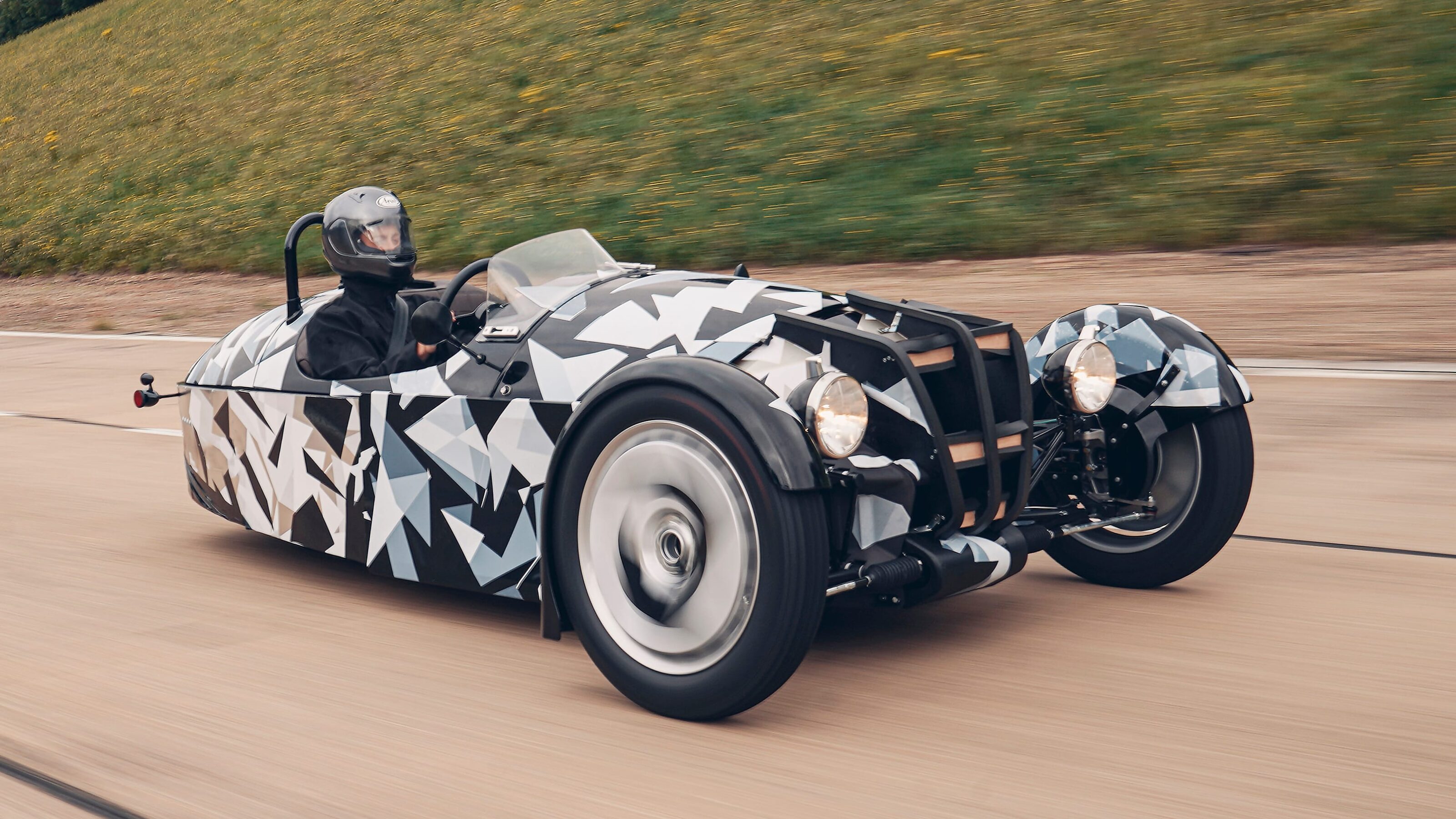
Morgan’s Head of Design, Jonathan Wells, believes his team’s efforts at reviving the 113-year-old model will shine through and set the new 3 Wheeler apart from its predecessors.
“The energy and imagination that the design and engineering teams have invested into creating the all-new three-wheeled model is incredible, said Wells.
“I am confident that this will be apparent through the sheer quantity of options, quality, performance and attention to detail.”
The story to here
September 3, 2021: The iconic Morgan 3 Wheeler will return for another generation, as the British manufacturer has confirmed a Ford engine will be used in the next-gen vehicle.
Having only been withdrawn from sale in the UK earlier this year after being reintroduced in 2011, the next 3 Wheeler will ditch its traditional V-Twin engine for an in-line three cylinder from the Blue Oval – likely one of its Fiesta powerplants.
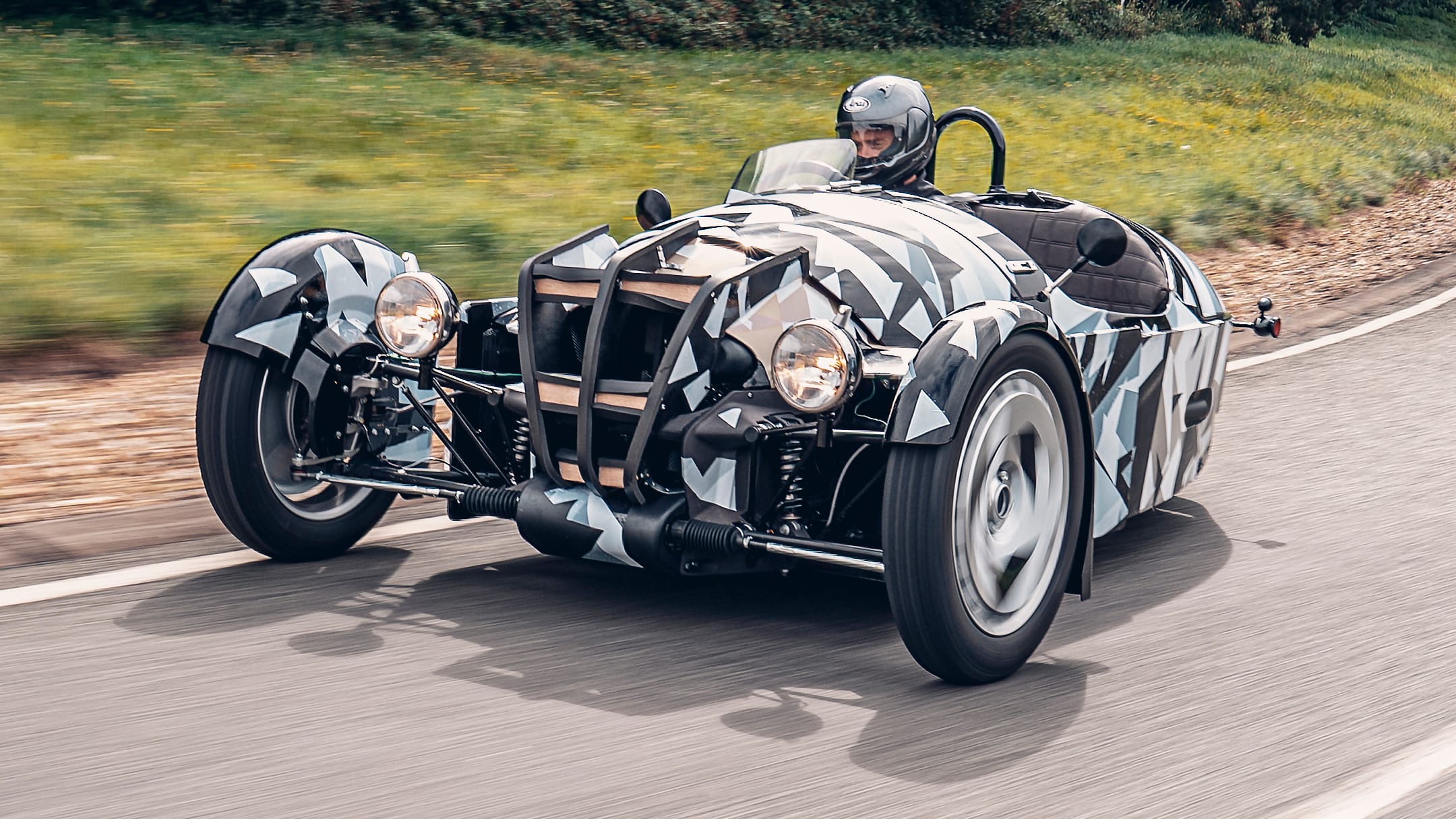
No timeline has been set for the 3 Wheeler’s return to the market, but it could be as soon as next year given Morgan is already testing its latest prototype as shown.
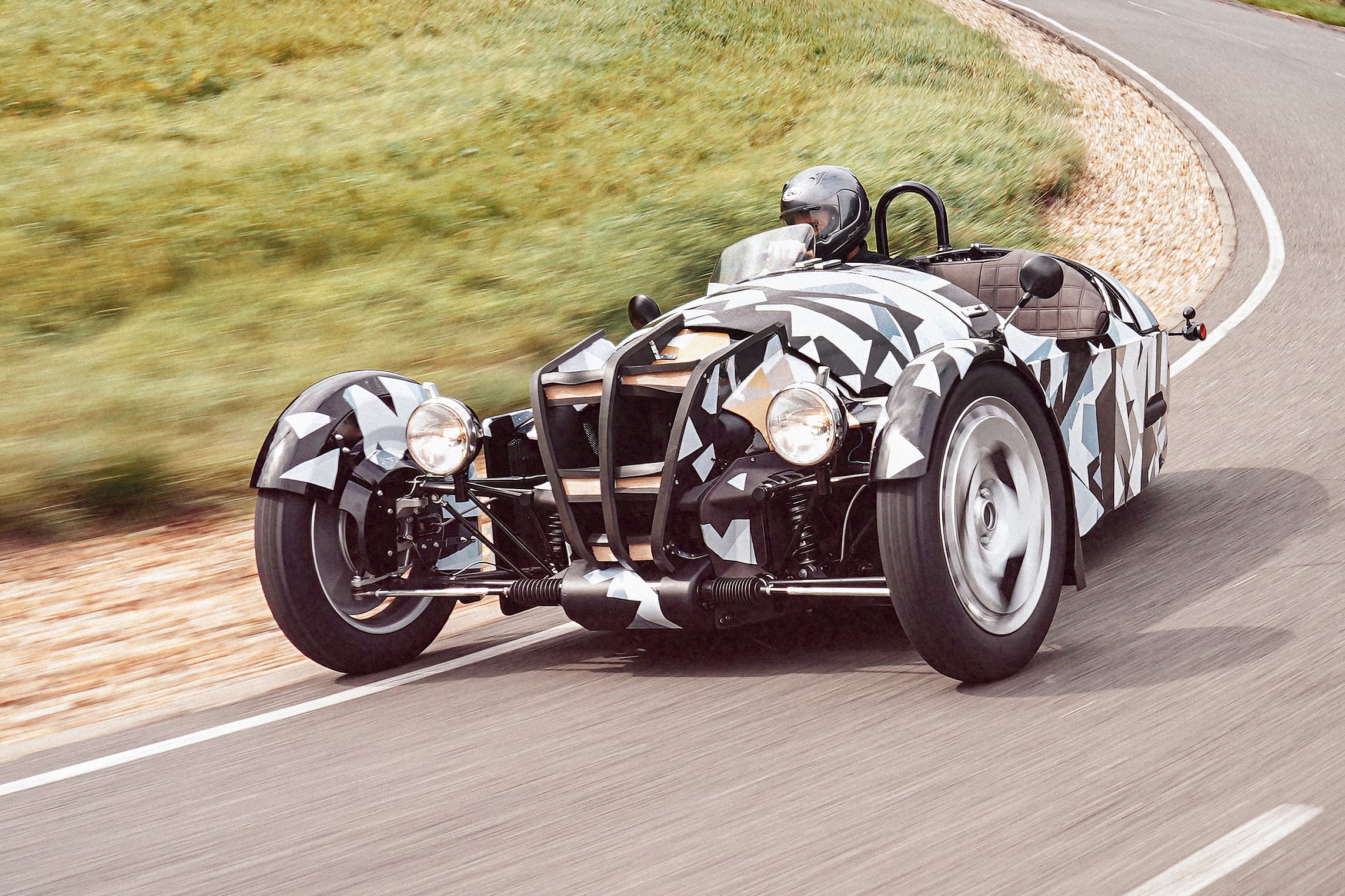
Chairman and CEO of Morgan Motor Company, Steve Morris, said the new Morgan 3 Wheeler will be influenced by feedback from current owners – yet still retain its roots, which stretch back over 110 years.
“We are thrilled to confirm plans for an all-new three-wheeled Morgan, a model which continues an incredible story dating back to 1909,” said Morris.
“The outgoing 3 Wheeler was adored by customers and enthusiasts alike, and will inspire this next generation. The upcoming [car] is an all-new ground-up design, and the first whole vehicle programme to be completed under the stewardship of Investindustrial.
“Morgan’s team of engineers and designers have considered everything the company has learnt from the decade of building and selling the previous model. We look forward to sharing more about this exciting new vehicle in due course.”
Morgan previously toyed with the idea of an electric 3 Wheeler, but scrapped those plans – although it’s understood the prototype pictured was designed to use an electric motor rather than the Ford ICE.
If survival is on the line, acts of triumph, heroism and brilliance are often born out of necessity. This was the task facing some 150 British and colonial troops in January 1879 as a horde of 4000 Zulu warriors went on the attack. Defending the diminutive station of Rorke’s Drift in South Africa, it took two days to stave off the offensive. When your back is against the wall, the only option is to fight.
The British won because while they were outnumbered nearly 27 to one, their commanders were experienced in defensive tactics. As the Zulus wielded their assegai short spears and cowhide shields, they were cut down by accurate, modern Martini-Henry service rifles, firing through loopholes drilled into the external walls of the buildings. As a tale of using available resources to eke victory in the face of seemingly overwhelming odds, there’s a lot to take from it.
This brings us to Porsche, which in the late ’80s and early ’90s was far from the powerhouse manufacturer we know today. It was dodging bullets from all corners; with sales trickling to just 15,000 per year, the expensive 944 struggling to take off and a reputation lacquered with the stigma of being ‘the 911 company’. With the 928 coming to the end of its lifecycle and the axing of the four-door 989 program, a global recession was the icing on the proverbial melting ice-cream cake.
A rethink of how Porsche went about its business was needed. Enter Horst Marchart, Research and Development boss at the time, and Grant Larson, the man who designed the iconic concept car for the 1993 Detroit Motor Show (see breakout). While being overseen by Harm Lagaay, the proposal for the first new Porsche platform in 19 years was approved on the proviso its mid-engine layout shared parts with the upcoming 996. The 986 Boxster, its name a portmanteau of Boxer and Roadster, was to use a detuned and downsized version of the 3.4-litre 996 911 engine while sharing body and interior parts with it, too.
The outcome was something even Porsche probably didn’t expect. So impressive was the uptake of the Boxster that it became the sales hero of the brand, and was only latterly usurped by the Cayenne. From 1996 to 2003 the little drop-top that could was the saving grace Stuttgart had hoped for – and then some.
The mid-mounted 2.5-litre six-cylinder offered 150kW and the fabric roof could be folded to listen to the howling soundtrack. What’s more, it didn’t just share the 996’s face, the Boxster had enough dynamic verve when driven well to rival its sibling, of which it shared 50 per cent of its parts.
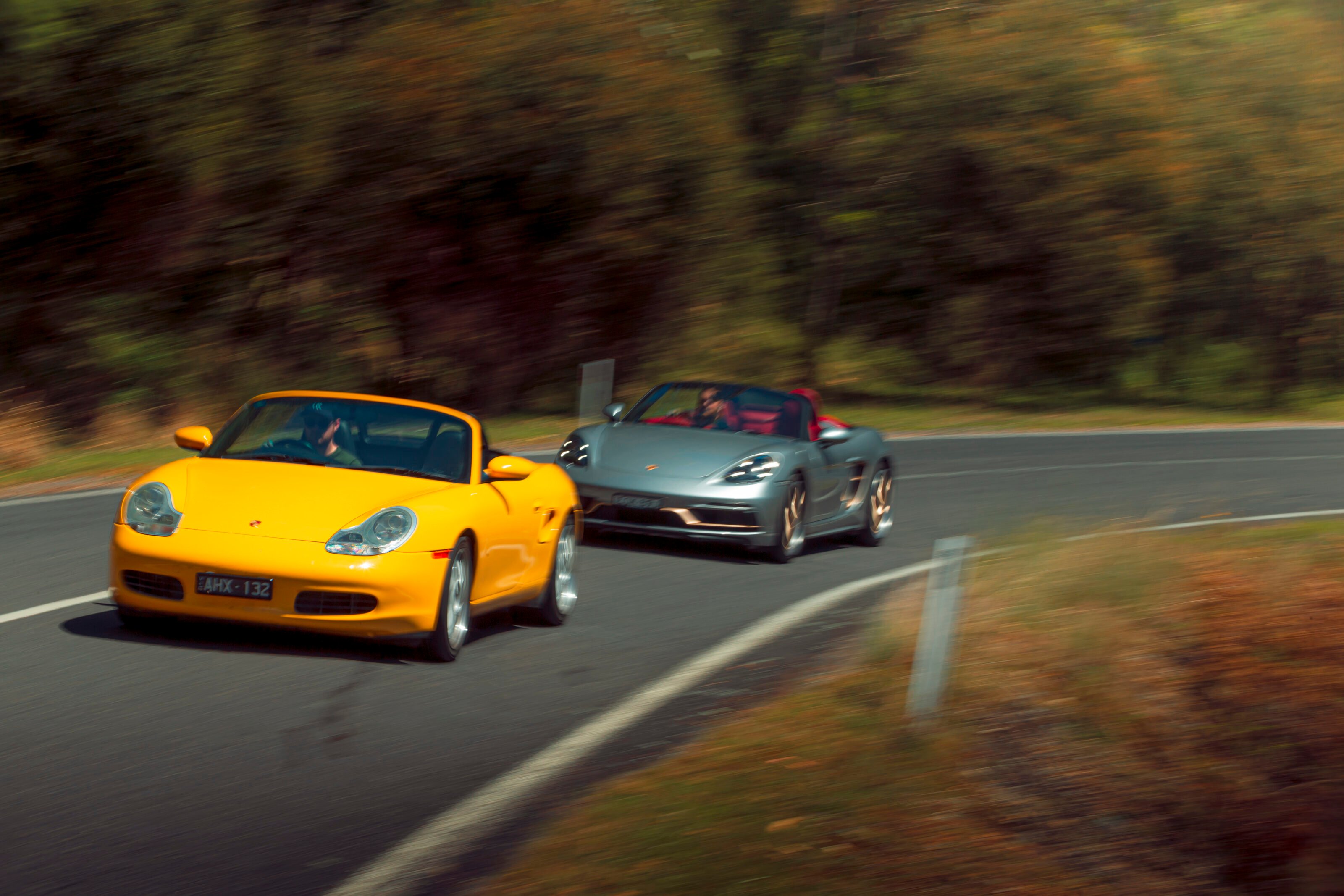
By 1999, the Boxster gained a 2.7-litre six with 162kW and 260Nm as well as some styling tweaks to the controversial fried-egg headlights. Which brings us to James, who bought this immaculate Speed Yellow example off a mate in pre-Covid times when prices weren’t too crazy. It was serendipitous, as the seller was in the bittersweet situation of having too many cars and not enough time to drive them. The deal was done for a song and the five-speed manual drop-top was sold with the promise of less garage time.
That’s the car I’m driving up the Hume Highway to meet at the top of Falls Creek for a celebratory rendezvous. Its contemporary, the GTS-based Boxster 25 Years, of which just 1250 will be built, is doing a great job of crushing kays in comfort. With the roof up, tyre roar is far lower than expected.
However, the 4.0-litre six does have some odd acoustics depending on where you are in the rev range and an unappealing resonance comes through the cabin at about 3000-4000rpm. And for a car with a price tag so close to $200k, it’s inexcusable that it doesn’t have radar cruise control as standard. Nope, that’s an option.
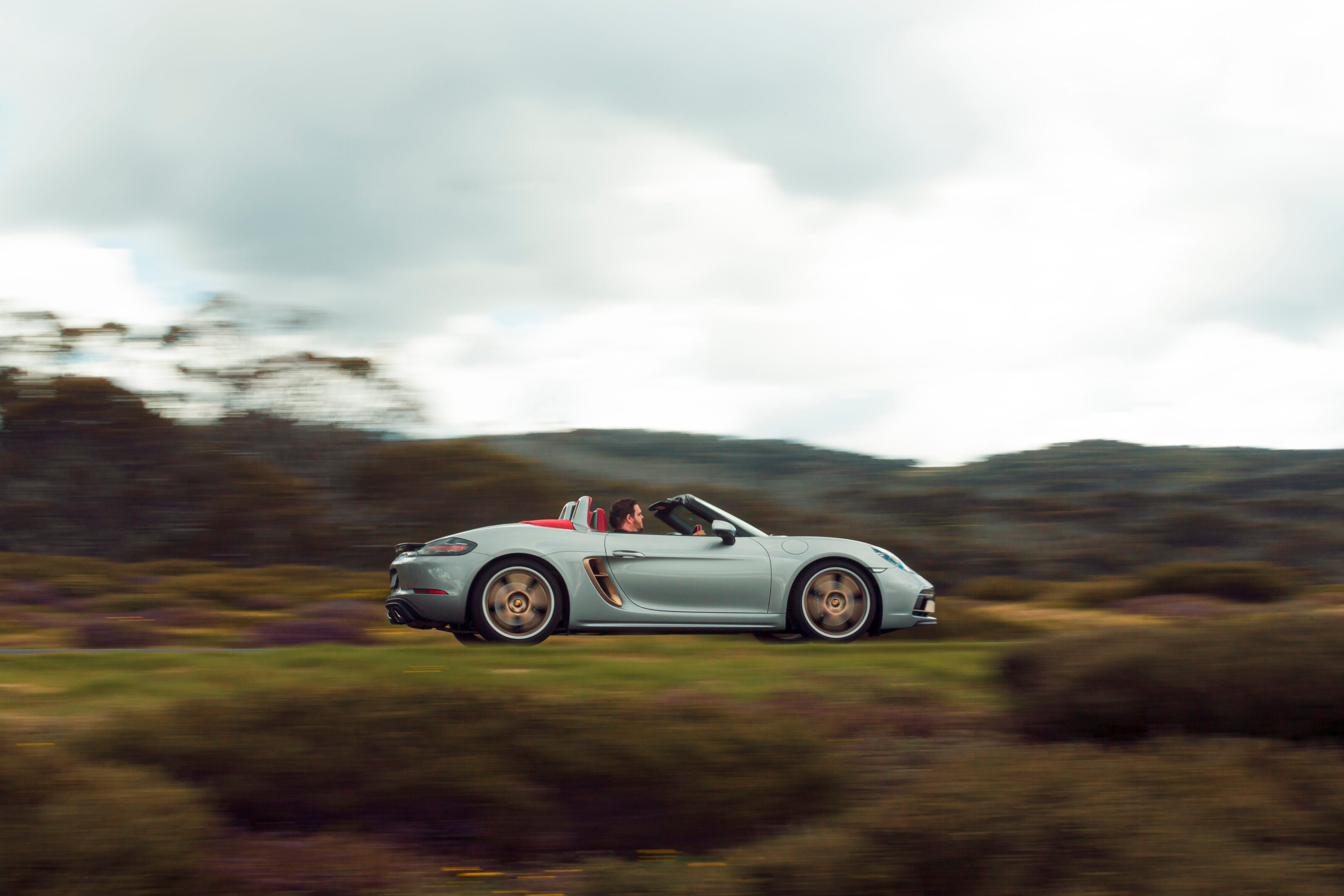
Thankfully it’s time to turn off the Hume and head towards Mount Beauty via Bright and the Tawonga Gap road. Avid readers might know this ribbon of tarmac, as it has featured as part of the PCOTY road loop in the past. We’ve done so for a reason. With a mix of gradients, tight hairpins and corners with varying cambers, it’s a real test. Switching out of Normal mode, past Sport and into Sport Plus amplifies the Boxster’s dynamic parameters to their raciest setting.
The 718 Boxster responds with the 4.0-litre flat six and its inherently excellent traction, all 294kW and 430Nm rarely troubling the traction control. Much like the 986, this is a 911-derived unit. Despite being endowed with intoxicating acoustics, the 3995cc unit isn’t a product of the GT line. Instead it’s an enlarged version of the Carrera 3.0-litre with the turbos removed. Still, its long pull through the rev range means that it rarely feels like a claimed 4.0-second-flat car in a straight line.
Through a twisty section of road reaching for the 7800rpm redline, however, it feels all that and more. Rapid doesn’t quite cover it. Then there’s the tune coming from the dual exhausts matched with an intoxicating induction roar. Echoing off embankments like an orchestral automotive delight, it’s a hedonistic privilege to listen to with the roof down, while roof up delivers those trademark delicate, breathy Porsche treble notes. Honestly, you can’t lose.
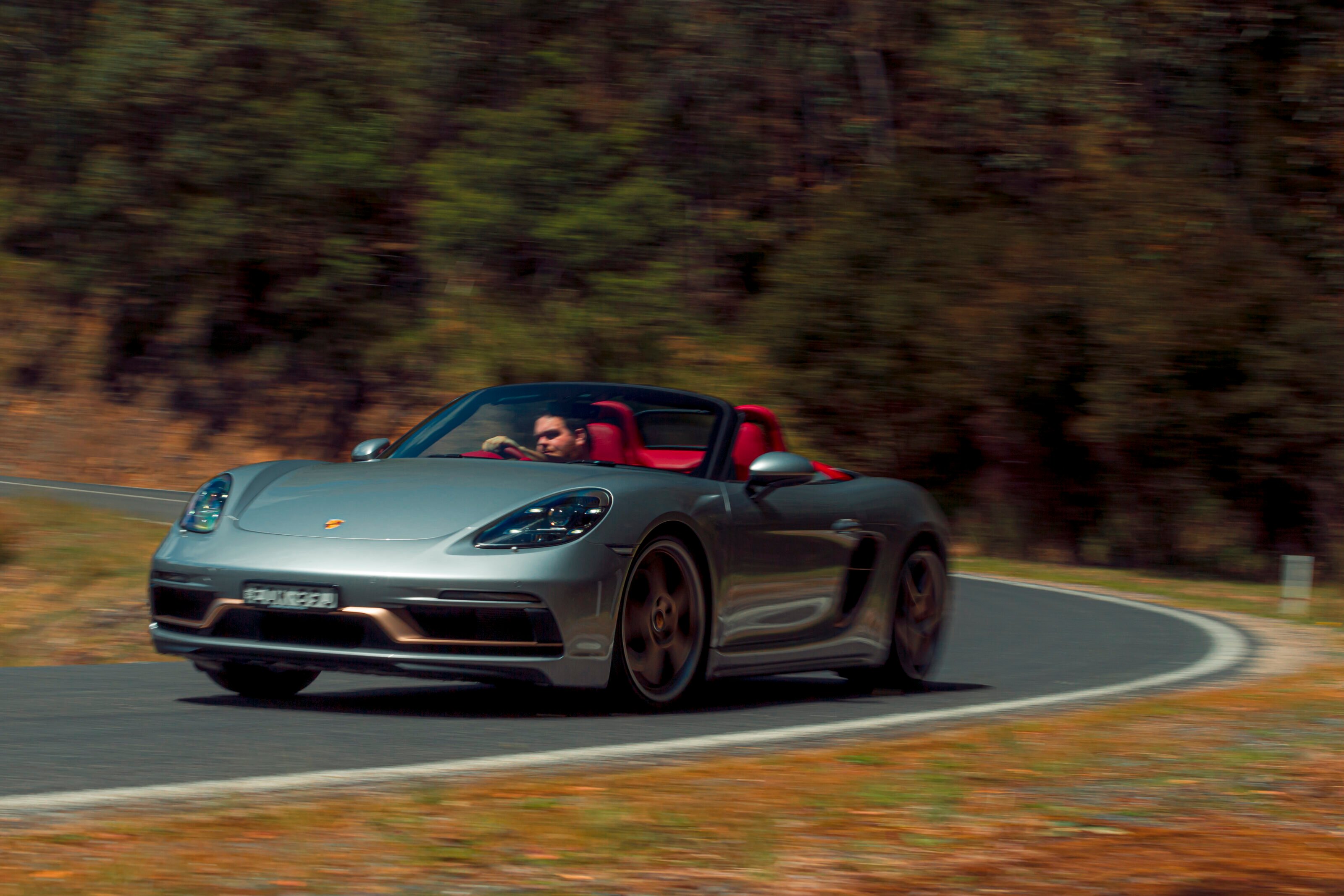
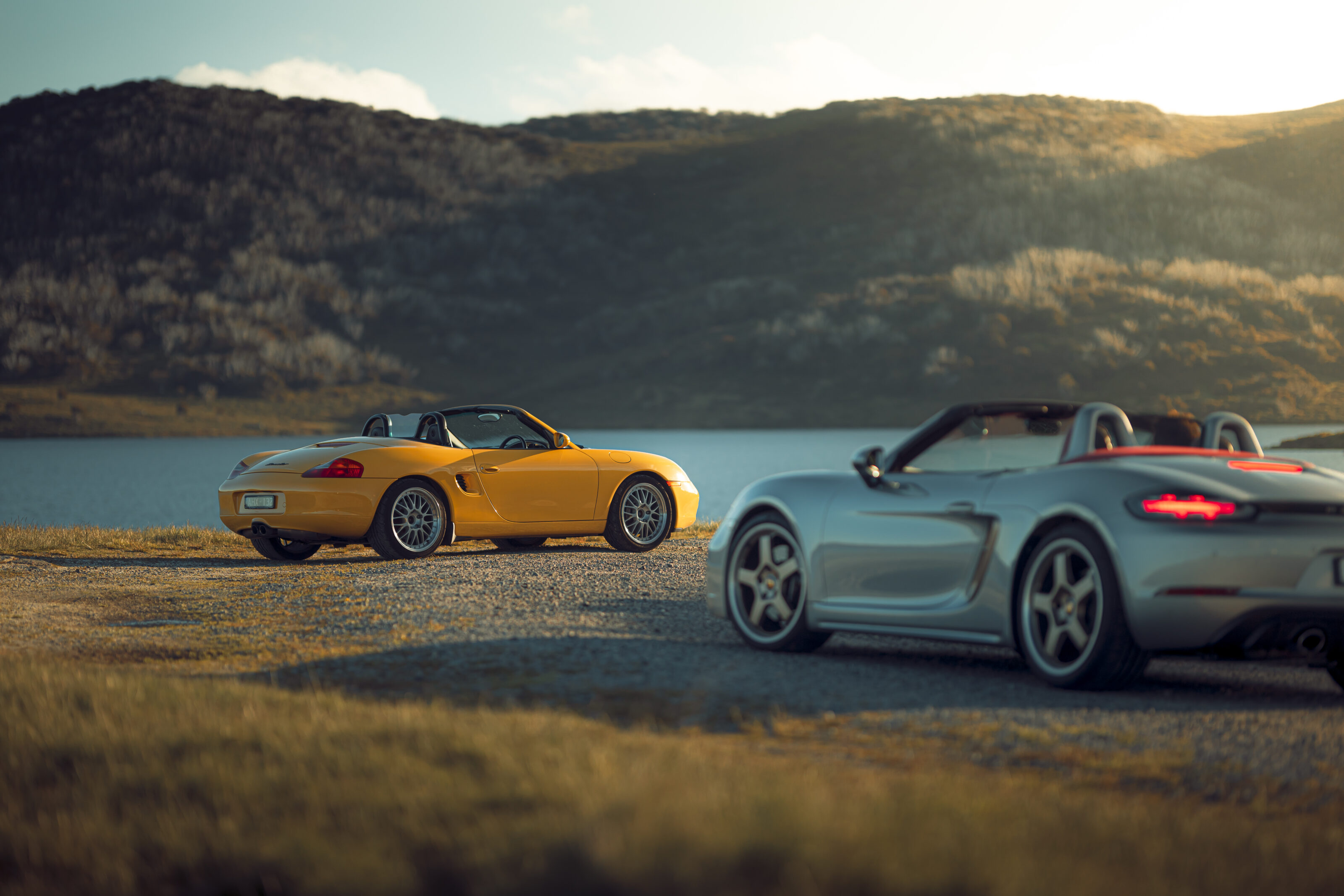
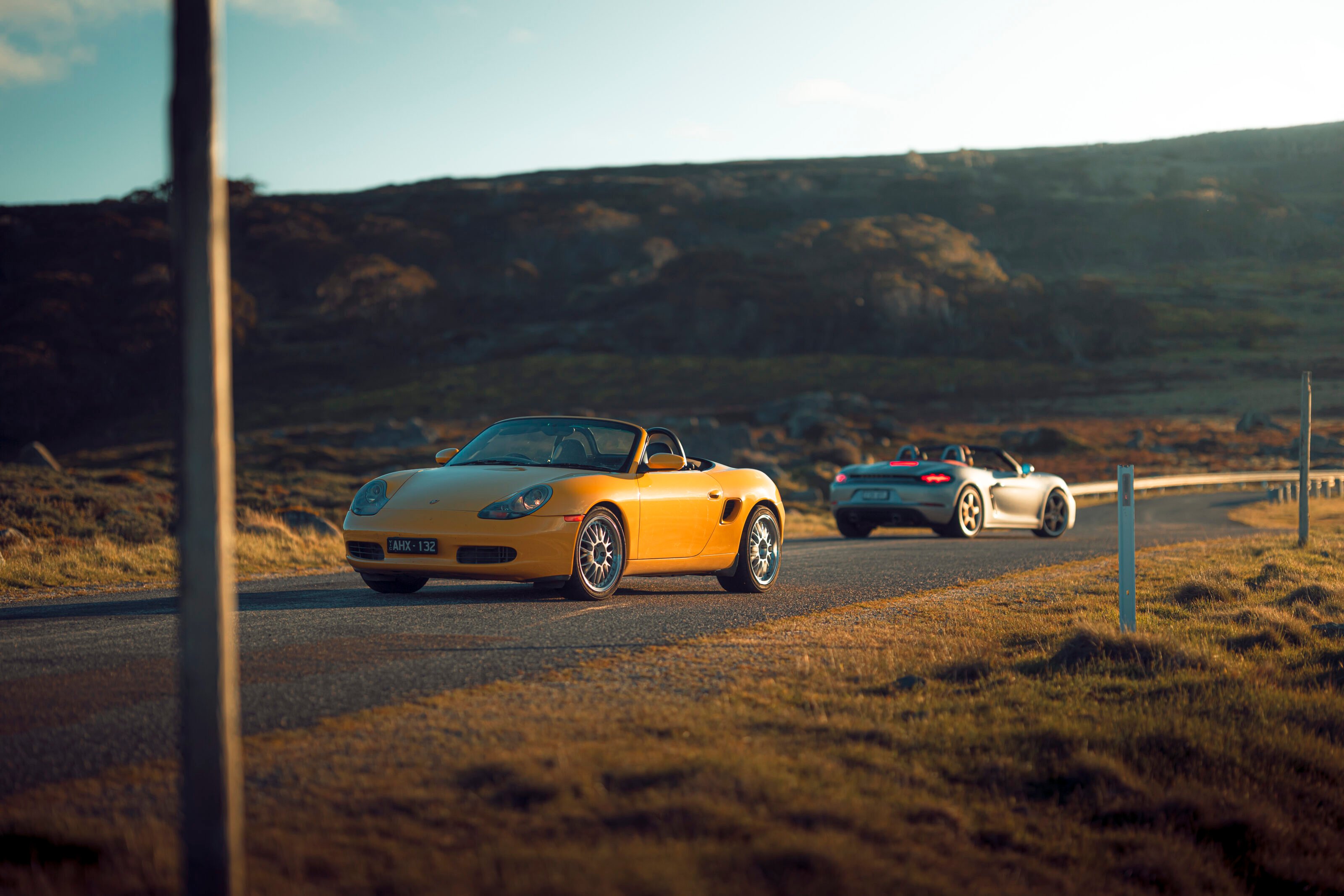
Arriving in Falls Creek, the light is soft and fading fast. Golden hour is approaching. Photographer Brook snaps some shots of the 25 Years solo and it’s a good chance to take in some of the details. Painted in GT Silver with Bordeaux red leather interior, the long wheelbase and cab-forward design is best viewed topless. The Neodyme 20-inch wheels look the business and the copper accents signify it as a special edition – as does the 25 Years motif of the roof and the boot. The incoming yellow 986 breaks the reverie, yet to the tuned ear it’s truly glorious.
Not merely one to wait for the upper reaches of the rev range, the M96 2.7-litre produces a more organic tone no matter where the tacho lies. Later I find out that the central ‘peashooter’ exhaust so entwined in the original’s makeup has been swapped out for an aftermarket item, but it doesn’t dull the gravity of the soulful acoustics.
At 1600m, Rocky Valley Lake is the highest significant body of water in Australia. It provides the meeting point. Old unties with new. Paired next to the 25 Years it’s hard not to see the lineage. Both are gorgeous with their electrically folding roofs down, delicate yet purposeful with wide hips featuring active cooling ducts.
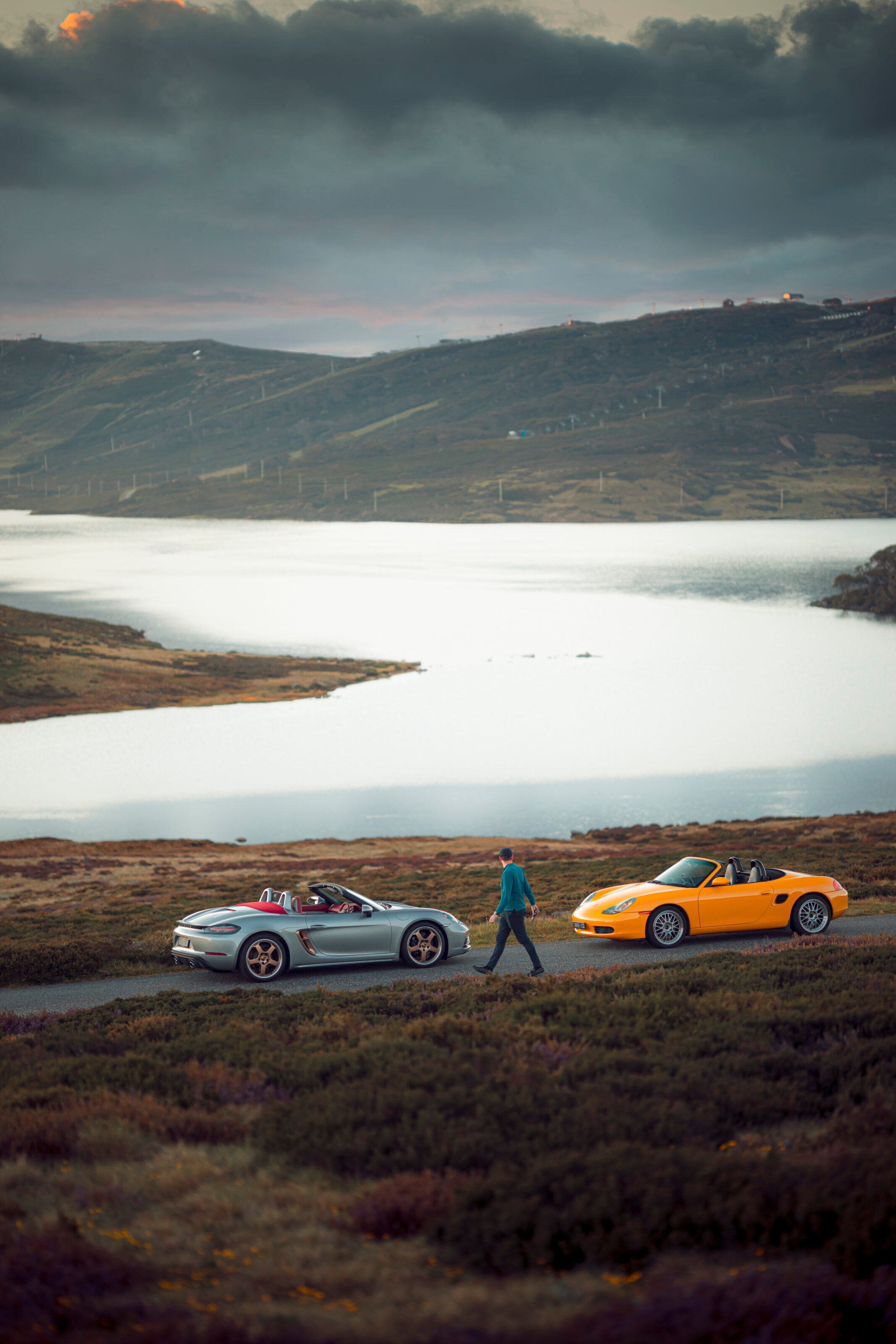
And despite expanding waistlines, the 718 is only 100kg heavier whileoffering a heavily extended complement of safety kit. Length and width have increased by 76 and 21mm respectively, but overall height has actually dropped 17mm. The Boxster remains resolutely compact, but with a frunk (or should that be a froot?) and a boot, it’s more practical than most roadster rivals.
The sun sets, coating both Boxsters in creamy natural light. While it might be early summer, nightfall sees the outside temperature reading plummet. I’ve made a grave error. My jacket is with my luggage at the accommodation in Mount Beauty. The cabin, which juxtaposes the exterior dimensions by being surprisingly spacious for tall occupants, becomes my respite and a cocoon of warmth. Seat heaters, on. Heated steering wheel, on. Blowers set to FNQ ambient.
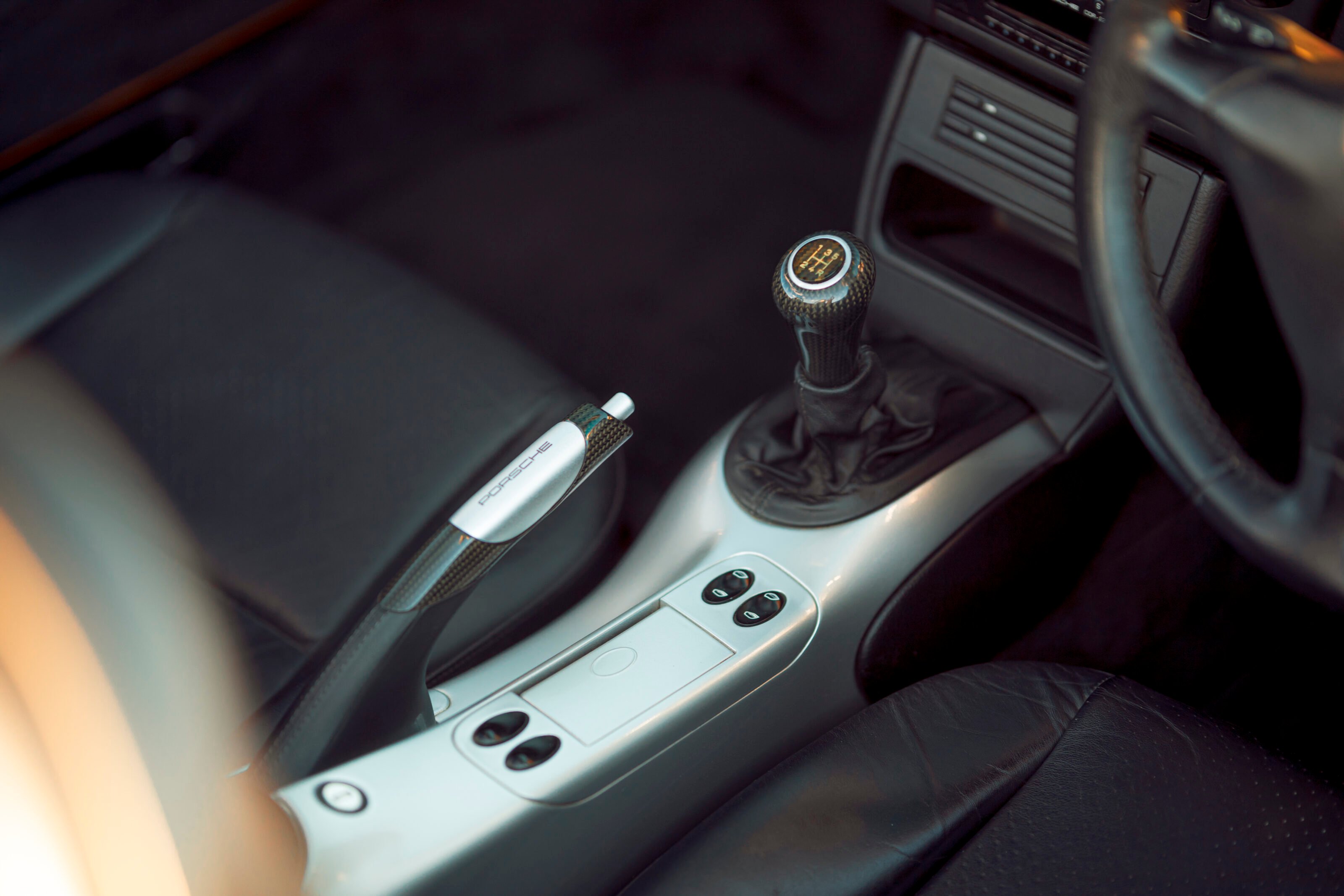
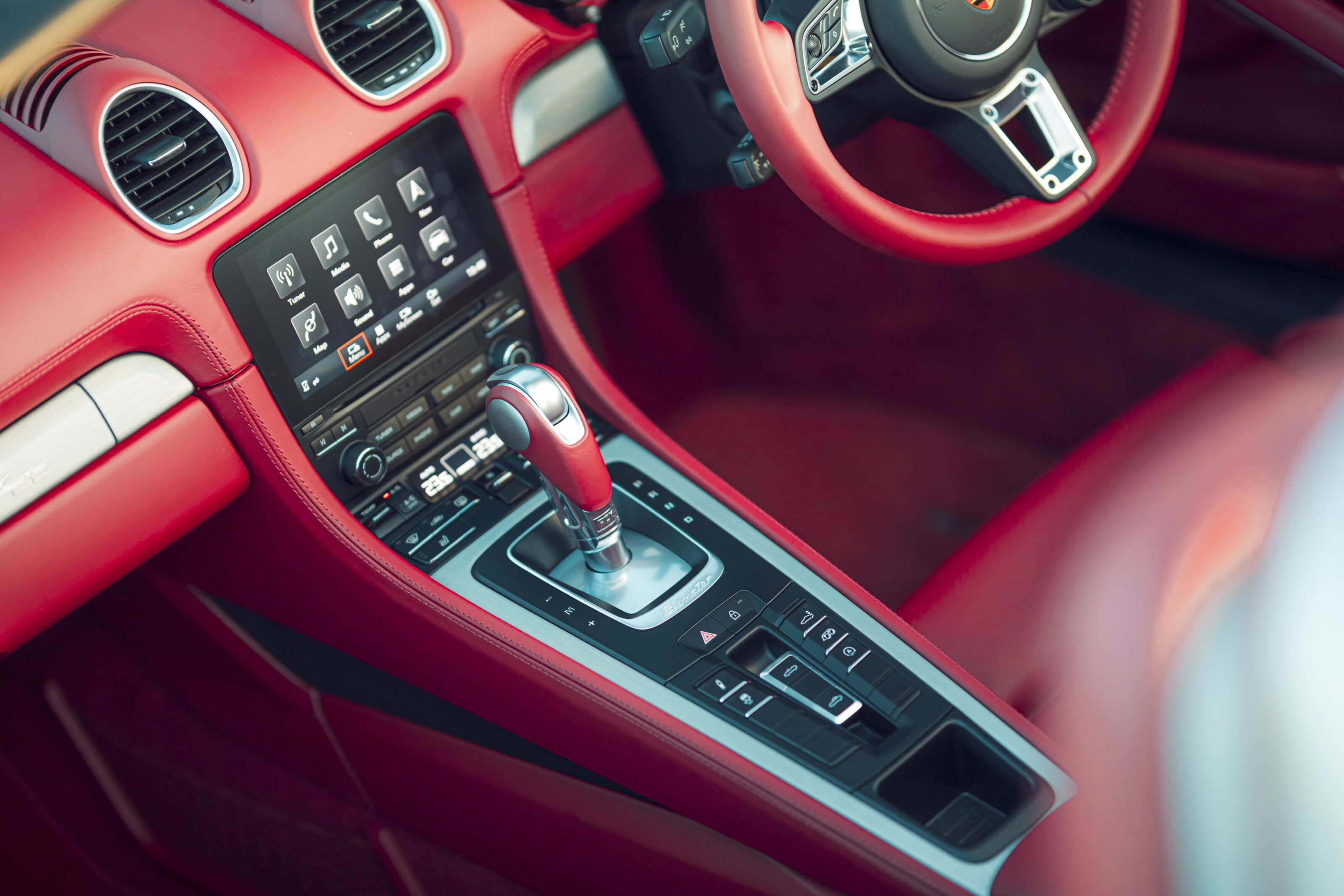
Despite appearing antiquated against the likes of the 992 911 and the screen-fest Taycan, the 718 is an ergonomic win. All the controls are where you expect them to be with a physical button. This is where new feels closest to old with the three-dial instrument cluster remaining a quarter of a century later. While the driver-orientated 986 lacks modern tech accoutrements – you could, however, option sat-nav – it takes ease of use to another level. Stefan Stark, the interior designer for the 986, wanted body-coloured accents within the cabin. The original owner of this car was blessed with both taste and restraint, having chosen silver for the cabin.
Driving down the mountain is decidedly nerve-wracking. As the air temperature rises, so do wildlife sightings. With Brook heading the group in an MX-5, we convoy down and our three sets of eyes spot deer, wombats and rabbits. Closing in on Mount Beauty it’s a fresh 16.5 degrees, so I drop the top, which you can do on the run. Despite some close calls, no wildlife was harmed as the powerful LED headlights cut through the darkness.
Parking up at the deserted motel, the 25 Years emits a rather gruff idle sound. It’s almost like an orchestra of crickets have found their way into the engine compartment. It couldn’t be further from the aural delights of hitting the 7800rpm crescendo. Keying off requires the twist of an in-dash fob, mimicking the classic 986 procedure.
Grabbing morning sustenance causes quite the stir. Oddly, it’s isn’t either Boxster that’s gaining attention in the Alpine town. Instead, upon seeing the trio, the chirpy lady behind the cafe counter taking our order of bacon and egg rolls asks about the camera car, the Soul Red MX-5, and whether or not it’ll drift. It seems the high-end Germans fail to excite the locals. Nonetheless, I’ve just grabbed the keys to the yellow Boxster and it’s time to rewind the clock.
Sliding behind the wheel of the 986 is a very different experience. The seats are flatter and covered in firmer cow hide. The steering wheel is without button clutter, but it is noticeably larger in diameter if not rim thickness. Returning to Tawonga Gap Road, I can’t help but think I’ve chosen a precarious point to experience the 986. Driving other people’s cars in any sort of spirited fashion is a pet peeve of mine. Start with the basics. “Don’t stall it” I tell myself.
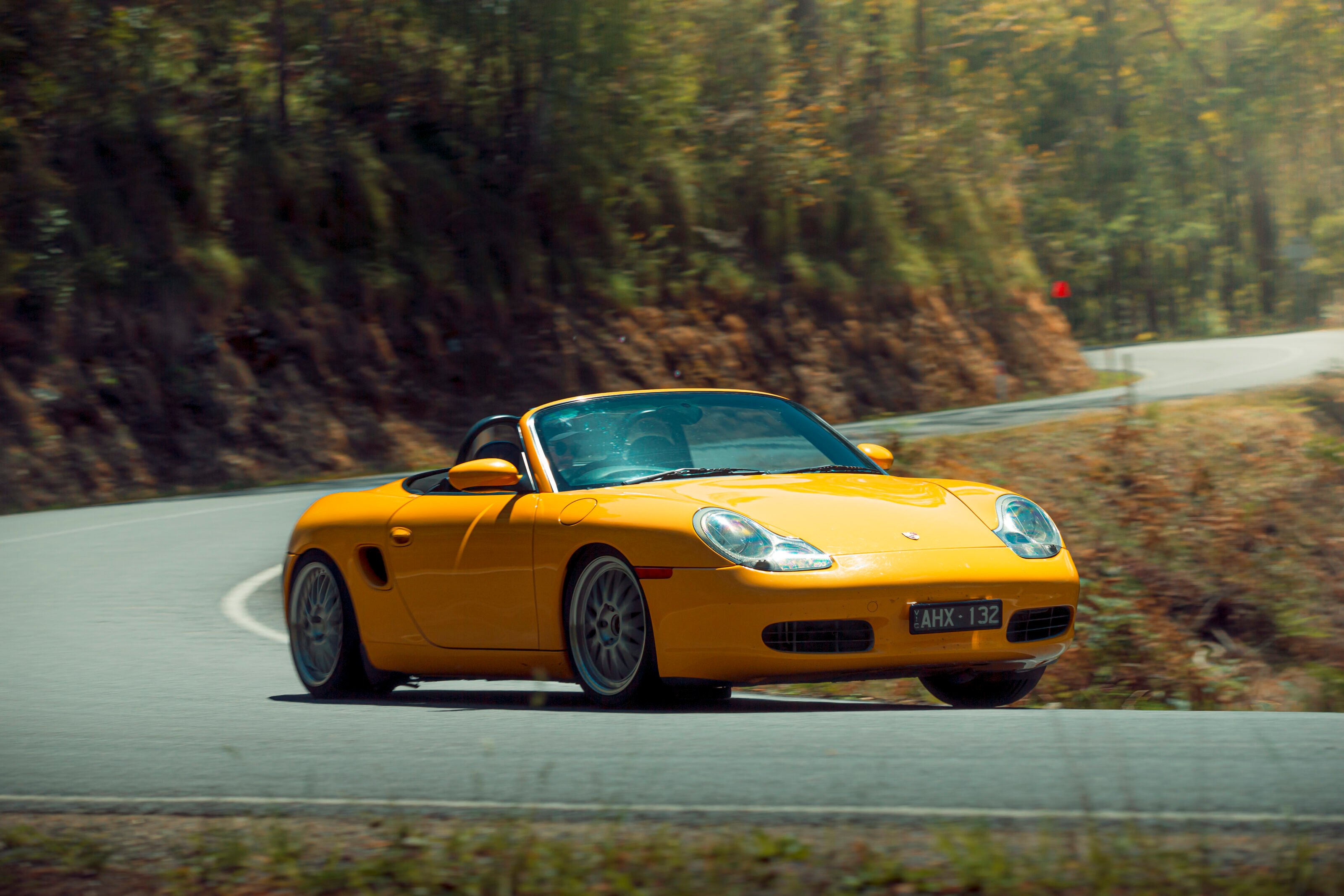
By sheer luck I don’t, but with the bite point being at the top of the travel, I ride the clutch more than intended. And immediately apologise. Although I’m not alone in thinking the left pedal is a bit sticky, with Peter Robinson making a similar remark for sister publication Wheels at the 986’s launch. From there the five-speed manual has a rather long throw, but like a modern Porsche, the controls feel positive. The driving position isn’t as ‘correct’ as the low-slung, legs forward 25 Years, but it’s still good. Turning left to ascend the mountain road I resist the urge to slot down to first gear. Old or new, it seems tall ratios are part and parcel of the Boxster deal.
It doesn’t take long until I’m goaded into upping the tempo. Like the 718, the 986 wears 235/35 and 265/35 boots front to rear, just in a smaller 18-inch size (an inch larger than standard). It isn’t grip deficient. Refreshingly, the family lineage is present from the get-go in the dynamics. The front axle arrows for the apex crisply , the hydraulic steering full of genuine, not coded, feedback. Okay, there’s more flex in the body with slight scuttle shake and rack rattle is evident, but for the age, it’s as engaging as it is capable. It’s now seemingly the car egging me on as if to ask, ‘is that all you’ve got?’
The biggest difference surrounds the electronic aids. There’s a stark lack of acronyms attached to the 986. ABS covers it. And it makes its presence felt by being a rather rudimentary system that intervenes early, pulsing through the middle pedal. Power-down traction never needs to be electronically culled anyway. The specs quote a 0-100 time of 6.6 seconds but straight-line prowess isn’t the 2687cc flat-six’s forte.
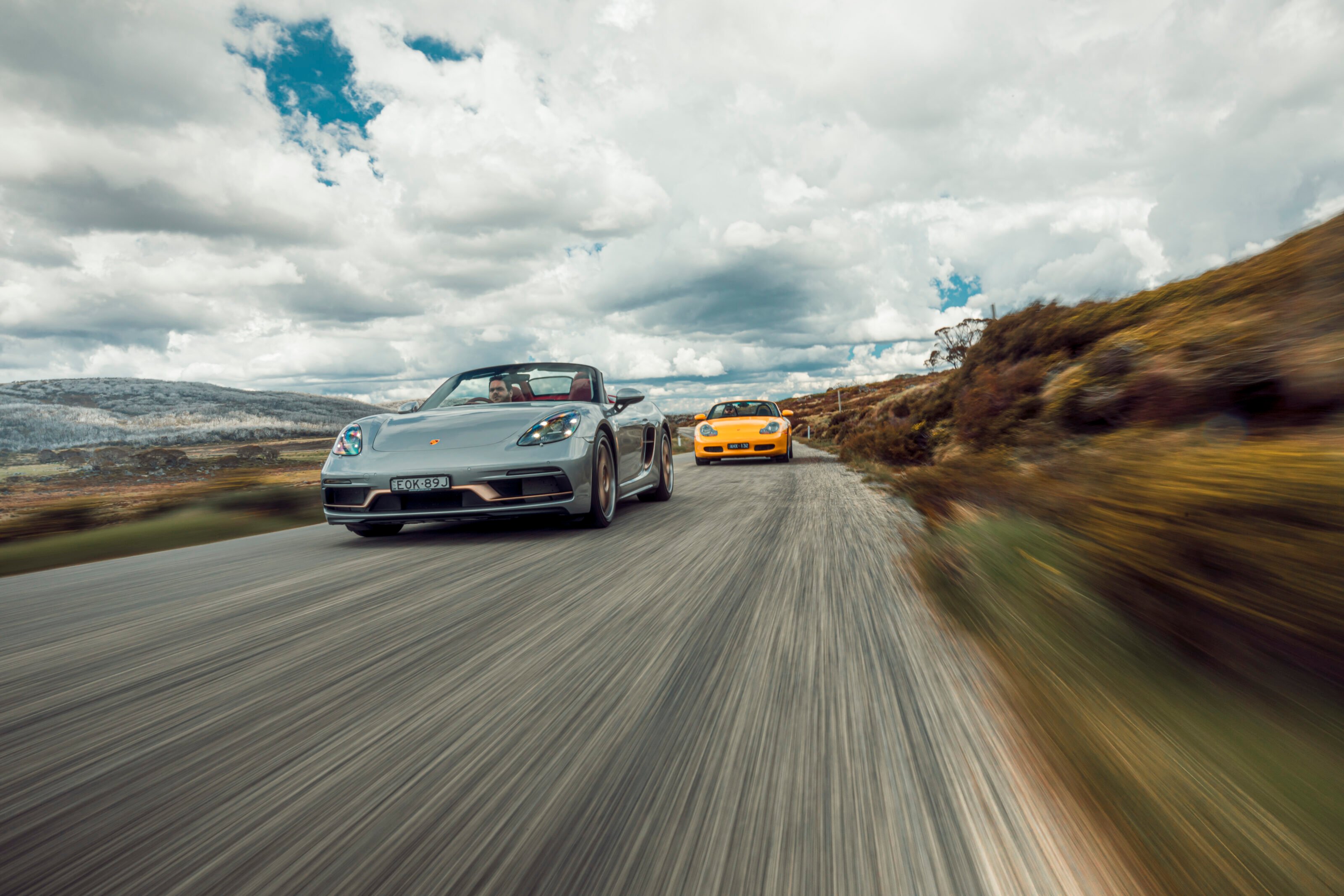
However, it’s not without meat, and there’s just enough torque to counteract the tall gearing. It’s very much a ‘put it in second gear and leave it’ proposition. You can hustle the 986 at a fair lick; it’s talented no doubt. But personally I find the joy in driving it semi-spiritedly, listening to the revs build with the mechanical stereo right behind my ears.
Those tables turn getting back into the 18-way adjustable adaptive sports seats of the 25 Years. Consider this a fey convertible at your own peril. Like the original, the front end is strong and unless you get on the throttle too early and elevate the nosepast the apex, refuses to unstick. The steering is light, but remains reasonably tactile for a modern system, while ride quality beggars belief given the rolling stock. Troubling the rear Pirelli P Zeros for traction isn’t an issue. Even on a left-hander with a steeply ascending exist, the electronically controlled differential resists some wanton provocation to break purchase.
This is, in part, also due to the tall gearing. Given the manual Cayman GTS 4.0-litre placed a lowly sixth at PCOTY because of this issue, there was hope that the seven-speed PDK ($5390) would solve this problem. And it does, but only to a point. You’ll still be breaking the national speed limit in second gear. Thankfully, the PDK ’box accepts first gear readily where you might have used second, firing out of tight hairpins with real verve. The shifts are ridiculously quick and left to its own devices, is supremely intuitive. In this regard, the game can’t move much further forward compared to the 986.
Travelling from Tawonga Gap road to the final stretch before Falls Creek the tarmac becomes a veritable slalom course. Left right, left right. There’s no sign that the open-air chassis is flexing as the 25 Years rotates into each corner in turn, digging in and remaining supremely tied down. There’s little hint of body roll and no unwanted flex in the chassis. Ultimately, the 25 Years is a car that flatters you to seven-tenths, insofar as its natural balance and dynamic capability will make most drivers look heroic. Breaching that barrier requires more from you, and it’s at the outer limits where this 718 truly shines.
The image the Boxster projects can be one that doesn’t sit well with all driving enthusiasts. It’s as if the fact that there’s no fixed roof overhead means that its performance credentials are somehow adulterated. This is a fallacy, one that the 25 Years gleefully demolishes.
Yes, we all understand the physics, but the difference between the conceptual and the practical seems to evade some. I can’t see the disadvantage in the Boxster format over the Cayman when it offers so much more in lifestyle benefits. You’d have to drive them hard back-to-back to notice any difference in dynamics, and even then it’d be negligible.
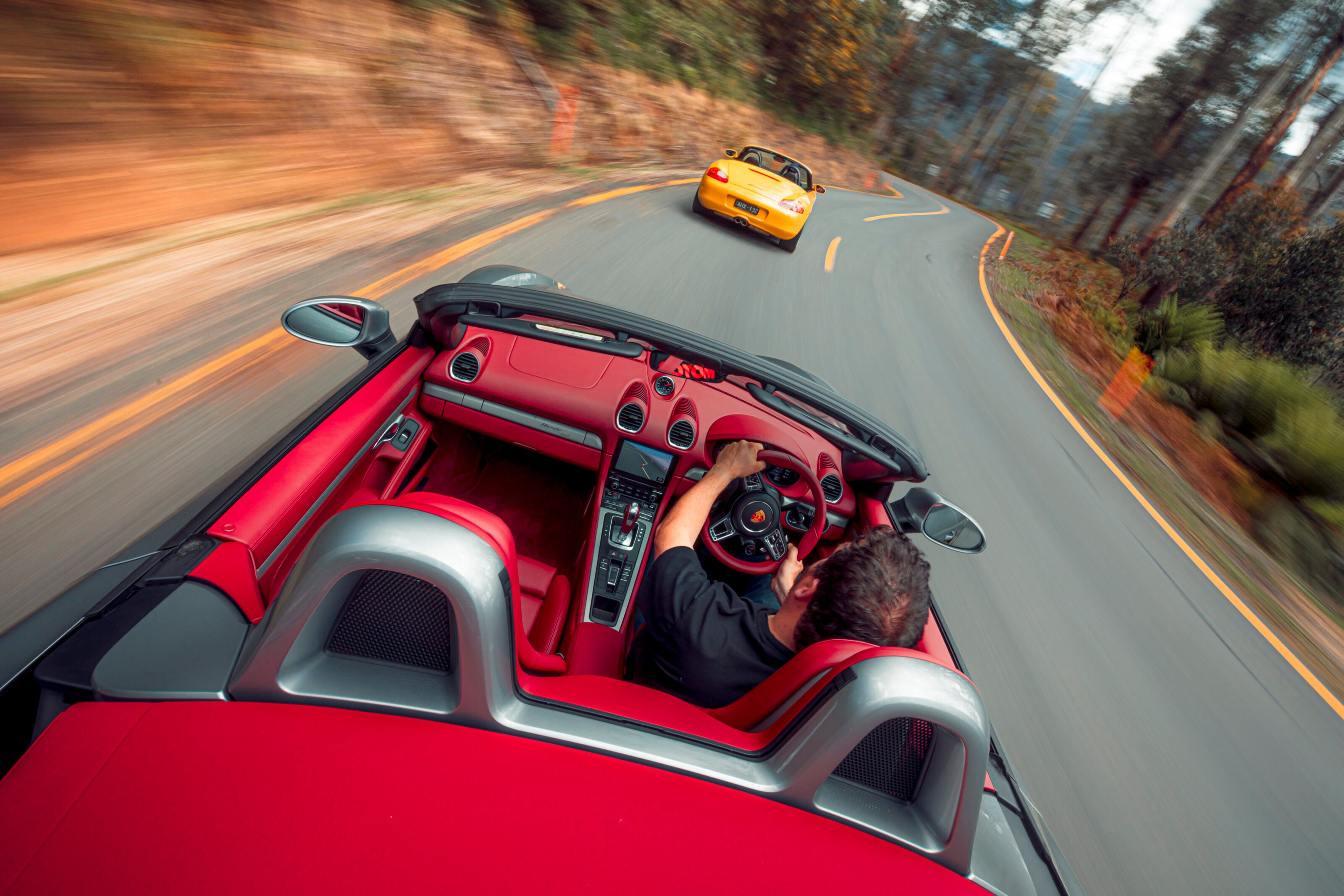
If this is part of the final curtain call for internal-combustion Boxsters, with the next-gen rumoured to be electric, it deserves a standing ovation. Hearts should weigh heavy given the 25 Years feels more like the build up to a farewell rather than a true celebration of the original. It’s a somewhat cruel twist of fate that the car deemed a saviour is now largely relegated to standing stage left in the Porsche portfolio; the bit part player.
In a world where SUVs reign, with the Macan and Cayenne now being Porsche’s heavy sales artillery, it’s heartening to know that a purist roadster saved one of the truly great motoring marques. As a proof of concept, the 986 sold 164,874 units before being replaced by the 987 in 2005.
It’s telling that, back in the design and development phase, the team creating Boxster went above and beyond, working long overtime hours in the pursuit of the shared fight. They knew failure wasn’t an option. Porsche’s desperate rearguard action created something that continues to ignore the odds.
The original concept car that started it all
There’s more than just a hint of connection between the concept car that stole the 1993 Detroit Motor Show spotlight and the 25 Years. Both were designed by Grant Larson, who now heads up Porsche’s Special Projects department. The interest by the motoring media and the public alike for the Boxster was so strong that it was given the green light. The 25 Years gains Neodyme accents on the grille, air intakes and wheels as well as a Bordeaux red roof and cabin to resemble the concept. However, there’s no central exhaust.
718 Porsche Boxster 25 Years specifications
| BODY | 2-door, 2-seat convertible, rear-wheel drive |
|---|---|
| ENGINE | 3995cc flat-6, DOHC, 24v |
| BORE X STROKE | 102.0 x 81.5mm |
| COMPRESSION | 13.0:1 |
| POWER | 294kW @ 7000rpm |
| TORQUE | 430Nm @ 5500rpm |
| POWER/WEIGHT | 204kW/tonne |
| TRANSMISSION | 7-speed dual-clutch |
| WEIGHT | 1435kg |
| SUSPENSION | struts, coil springs, adaptive dampers, anti-roll bar (f); multi-links, coil springs, adaptive dampers, anti-roll bar (r) |
| L/W/H | 4391/1801/1273mm |
| WHEELBASE | 2475mm |
| TRACKS | 1527/1535mm |
| STEERING | electrically assisted rack-and-pinion |
| BRAKES | 350mm ventilated discs, 6-piston calipers (f); 330mm ventilated discs, 4-piston calipers (r) |
| WHEELS | 20.0 x 8.5-inch (f); 20.0 x 10.5-inch (r) |
| TYRES | 235/35 ZR20 (f); 265/35 ZR20 (r) Pirelli P Zero |
| PRICE | $187,200 ($199,930 as tested) |
| PROS | Engaging handling; soundtrack near redline; rapid-fire PDK |
| CONS | Gearing is still long; price over GTS; limited production run |
| STAR RATING | 4.5/5 |
986 Porsche Boxster specifications
| BODY | 2-door, 2-seat convertible, rear-wheel drive |
|---|---|
| ENGINE | 2687cc flat-6, DOHC, 24v |
| BORE X STROKE | 85.5 x 78mm |
| COMPRESSION | 11.0:1 |
| POWER | 162kW @ 6400rpm |
| TORQUE | 260Nm @ 4750rpm |
| POWER/WEIGHT | 121kW/tonne |
| TRANSMISSION | 5-speed manual |
| WEIGHT | 1335kg |
| SUSPENSION | struts, coil springs, anti-roll bar (f); multi-links, coil springs, anti-roll bar (r) |
| L/W/H | 4315/1780/1290mm |
| WHEELBASE | 2415mm |
| TRACKS | 1465/1524mm (f/r) |
| STEERING | hydraulically assisted rack-and-pinion |
| BRAKES | 298mm ventilated discs, 4-piston calipers (f); 292mm ventilated discs, 4-piston calipers (r) |
| WHEELS | 18.0 x 8.5-inch (f); 18.0 x 10.0-inch (r) |
| TYRES | 235/35 ZR18 (f); 265/35 ZR18 (r) Yokohama Advan AD08R |
| PRICE | $35,000 (used price) |
| PROS | Chassis balance; sonorous soundtrack; top-down driving |
| CONS | Sticky clutch action; straight-line performance; rising values |
| STAR RATING | 4/5 |
The new 2022 Ford Maverick seems to have fallen victim to its own popularity, as the Blue Oval moves to suspend orders of the pick-up in the United States.
Launched in June last year and receiving in excess of 100,000 expressions of interest, the smallest pick-up in Ford’s fleet has seen overwhelming demand, with more than 13,000 units sold to the end of 2021 – outselling the Mustang in the final quarter of the year.
However, success has come at a price, with Ford’s assembly plants running at full capacity to ensure production of the Maverick can come close to meeting demand, ultimately leading to the manufacturer halting customer orders from January 27 until the American summer.
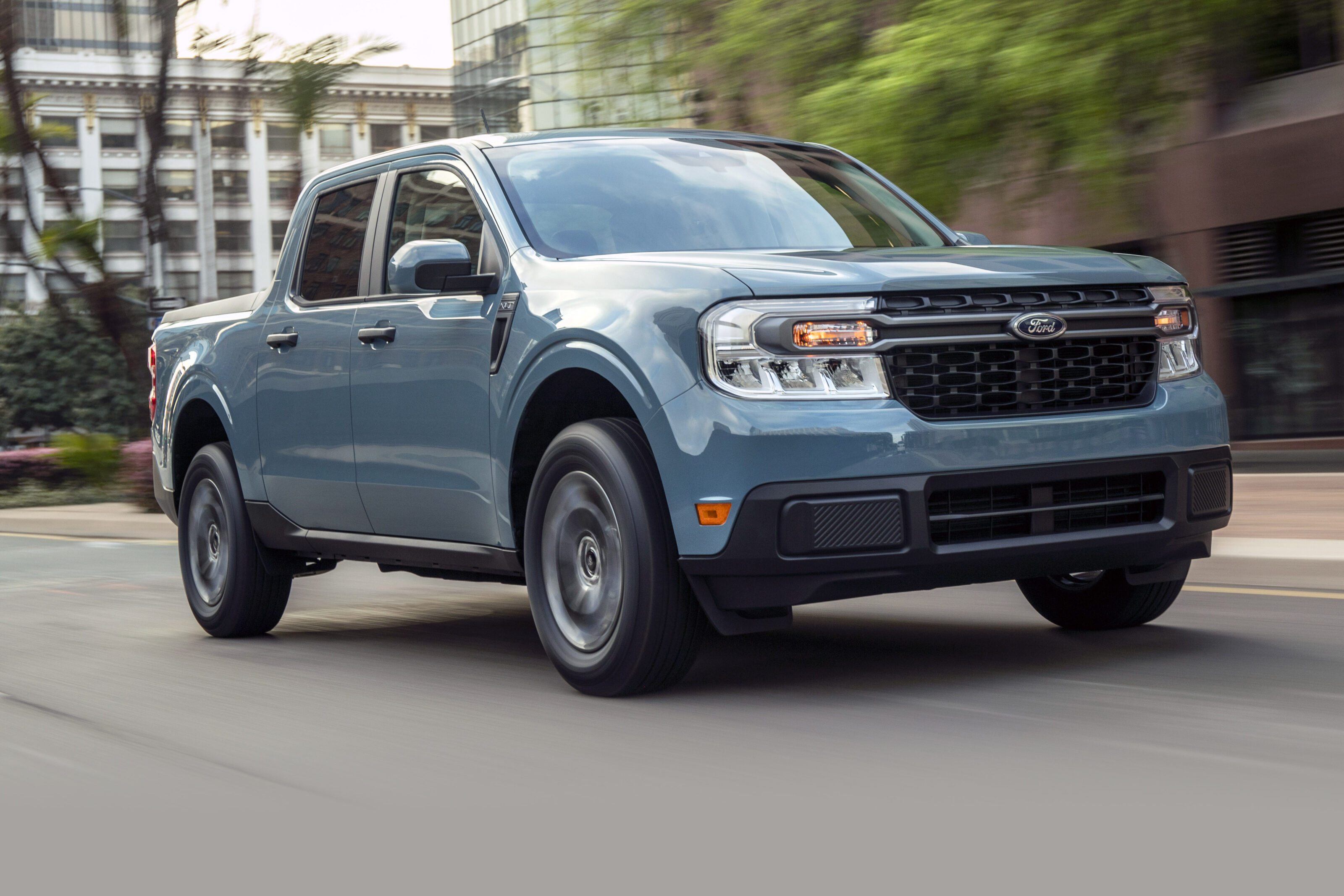
As reported by The Verge, customers in the United States have been told they can still buy a Maverick from dealers, but won’t be able to make their own orders until the second quarter of the year.
“There’s been overwhelming demand for Maverick – both hybrid and EcoBoost,” a Ford spokesperson said in a statement.
“We’re making the decision to stop taking new retail orders on the 2022 Ford Maverick starting after January 27 to focus on existing orders.
“Customers may still be able to purchase a Maverick on the lot at their local Ford dealer. We’ll kick off ordering for the 2023 Maverick starting in the summer.”
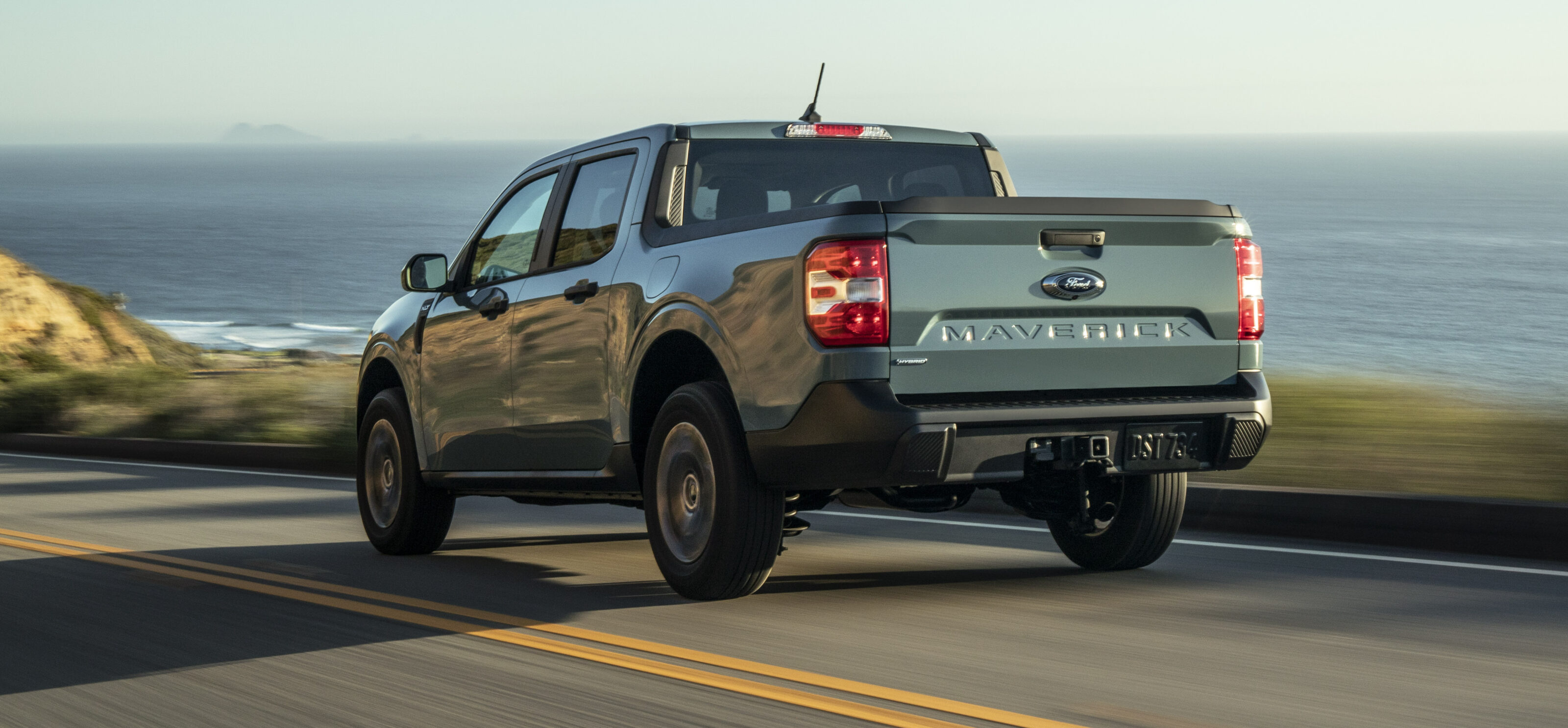
Starting out at just US$19,995, the Maverick is undoubtedly the cheapest truck in Ford’s range, sitting below the Ranger – which outsold it by just 1000 units in December – and the all-conquering F-150, the top-selling vehicle in the US for decades.
Unfortunately, we’re still no closer to receiving the Maverick in Australia, although with the success of the Ranger last year and the next-generation model inbound this year, Ford might not want to undercut its most popular Australian model.
Porsche has revealed a substantial upgrade to Porsche Communication Management (PCM) 6.0, bringing a new look, new wireless connectivity, and improved streaming services to the central infotainment system.
Included in the update is new colour icons on the screen, crisper graphics and, for the first time, wireless Android Auto. The new Porsche PCM 6.0 sat-nav also includes a revised route monitor, in which relevant events can be individually displayed or hidden during the trip.
While cable-free Android Auto joins wireless Apple CarPlay, a useful new feature to some users is Spotify ‘standalone’ – which allows access to songs, playlists and podcasts without needing a phone connected, although it can still be accessed via both platforms.
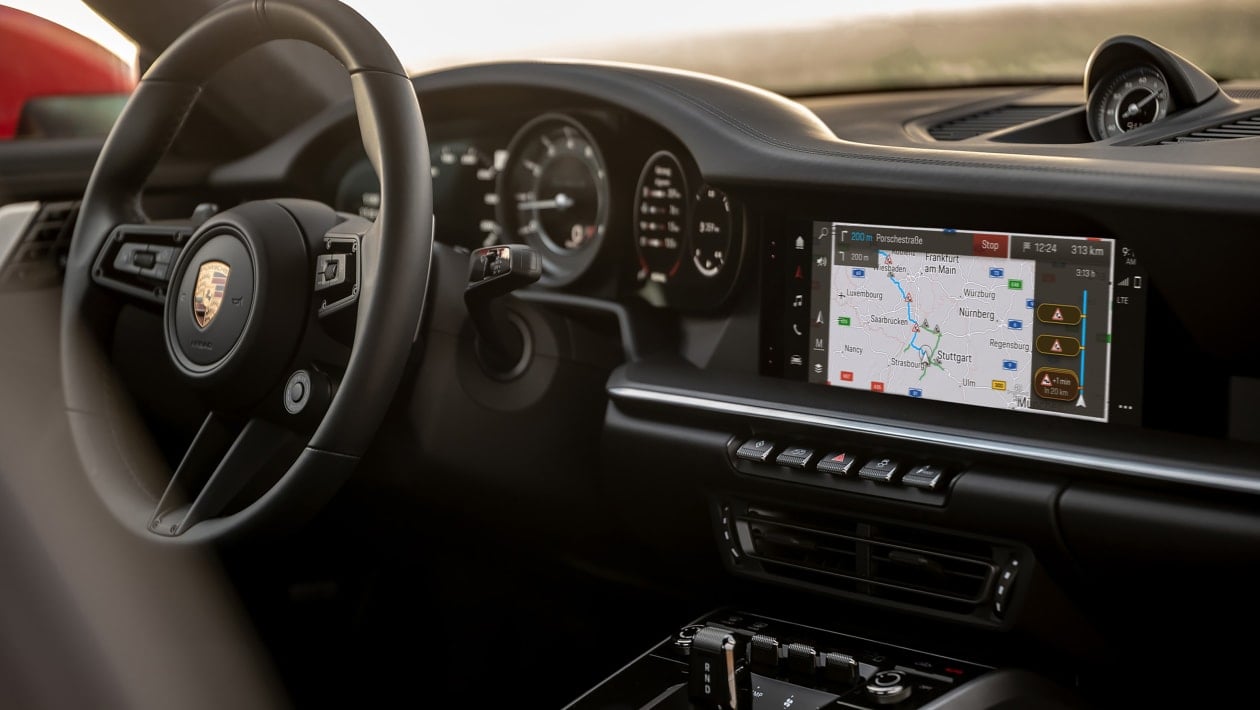
As with many German makers improving voice recognition, Porsche has updated voice-assistant so it now enables voice control of the PCM’s News app, music streaming, and even the operating manual.
The new functions are standard on every newly configured Porsche 911, Cayenne, Panamera and Taycan, although some can be spec-dependent.
Further improvement in the software for Porsche’s electric models is a new charging-planner system so that drivers can navigate their way around a city or along a journey without missing an EV charger. Not just flagging any charging stations, the system prioritises those that offer faster charging so that the drive is as efficient as possible.
We don’t like reminding ourselves that living in one of the world’s most locked-down cities – ahem, Melbourne – during a once-in-a-century health crisis denies you a few things.
First, it was the 2020 Australian F1 Grand Prix. Then an AFL final. Soon, it quickly dawned on us a while would pass before we’d see big competition in the flesh again. So, you can imagine the collective groan heard around the Wheels office when we had to cancel the first mid-size SUV mega-test organised in a while.
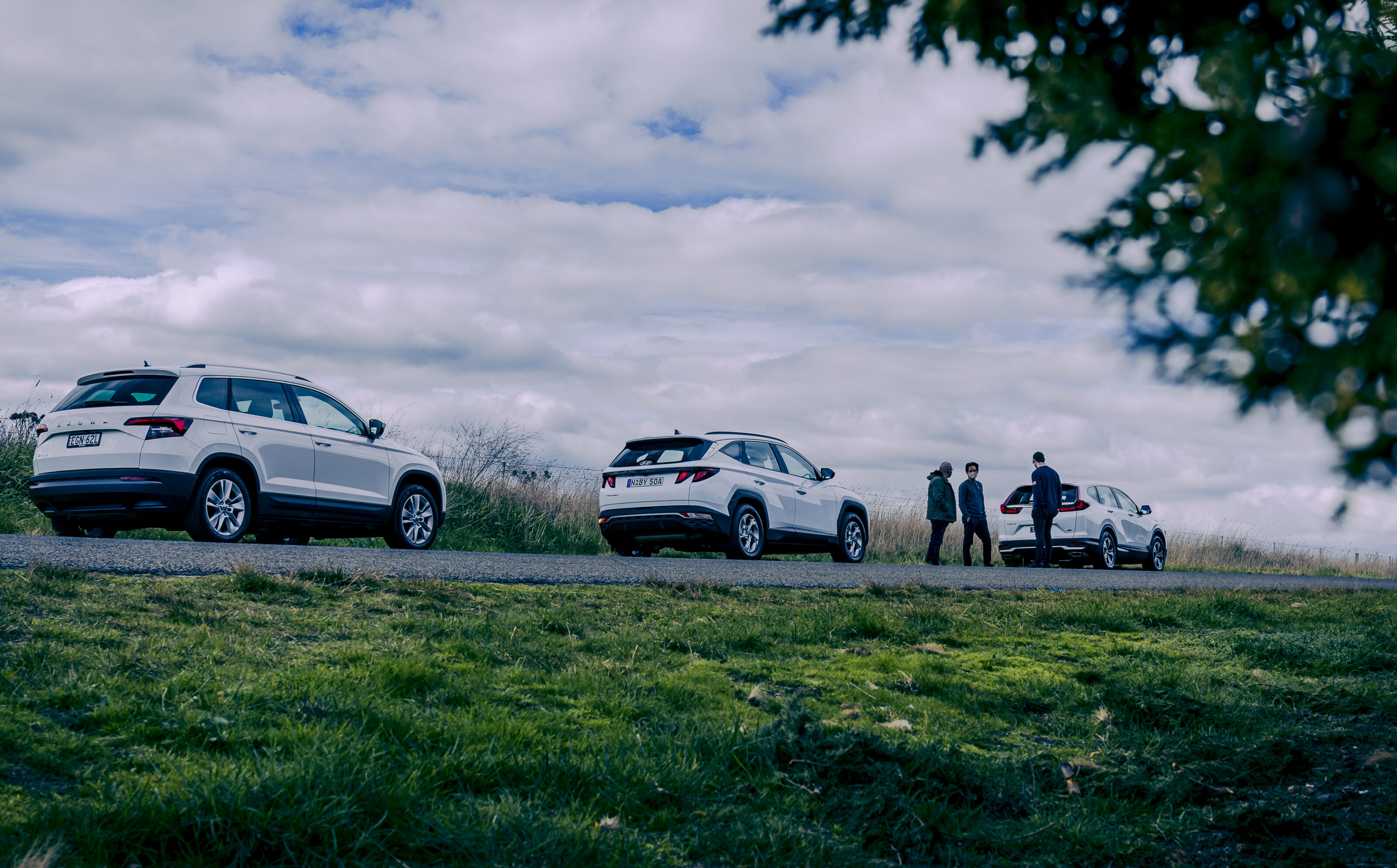
With the Hyundai Tucson landing fresh from a generational makeover in April, we finally had a showdown sorted until our entries from Toyota, Subaru and Mazda were forced to pull out. Thankfully, we didn’t have to send home the plucky new Hyundai Tucson. We’ve been meaning to throw the Honda CR-V and Skoda Karoq that did show up into a scrap since they underwent light refreshes in 2020. Taking on a category favourite would also offer them a chance to re-establish their talents.
UPDATE, May 26 2022: The Karoq has had a styling update for 2022, which you can read about at the linke below. The rest of this story remains unchanged, but our latest reviews are also linked below.
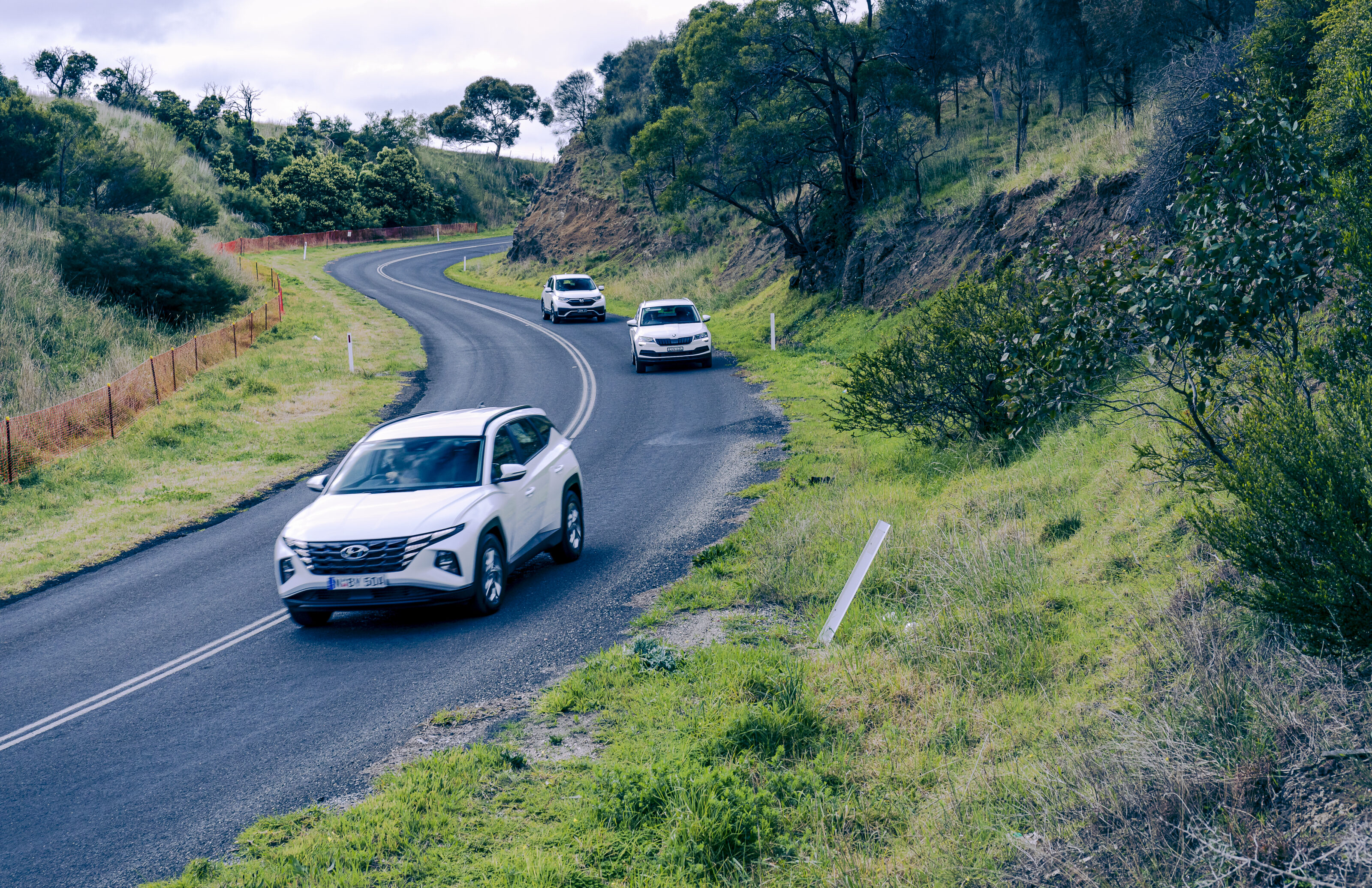
Of course, it helps that our three share more than just white paint jobs and the same market segment. They come to us sans options and either as the base variant in their respective model ranges or one rung above, ensuring that – on RRP – they’re priced within hundreds of dollars to each other in the under-$35K bracket. On top of this, and because of their range positioning, the trio is also closely aligned on powertrain layout. Each variant houses a petrol inline four-cylinder engine placed latitudinally, supplying drive to the front wheels through an automatic transmission.
But it’s also interesting where our $35K front-drive contenders diverge. The Hyundai Tucson, for instance, is the newest of the three after launching internationally in late 2020 as an all-new fourth generation. After five months on sale to the end of September, it’s already made an impact on buyers, taking the medium-SUV category’s fifth spot with an 8.5 percent share of sales.
Our tester shares its atmo 2.0-litre, six-speed automatic powertrain with the Elite featured in Wheels’ long-termer Garage but strips the equipment list to its most basic form. Simply named ‘Tucson’ as a variant, it kicks off entry into the model range at $34,500, which raises the base price by almost $5K above the previous generation.
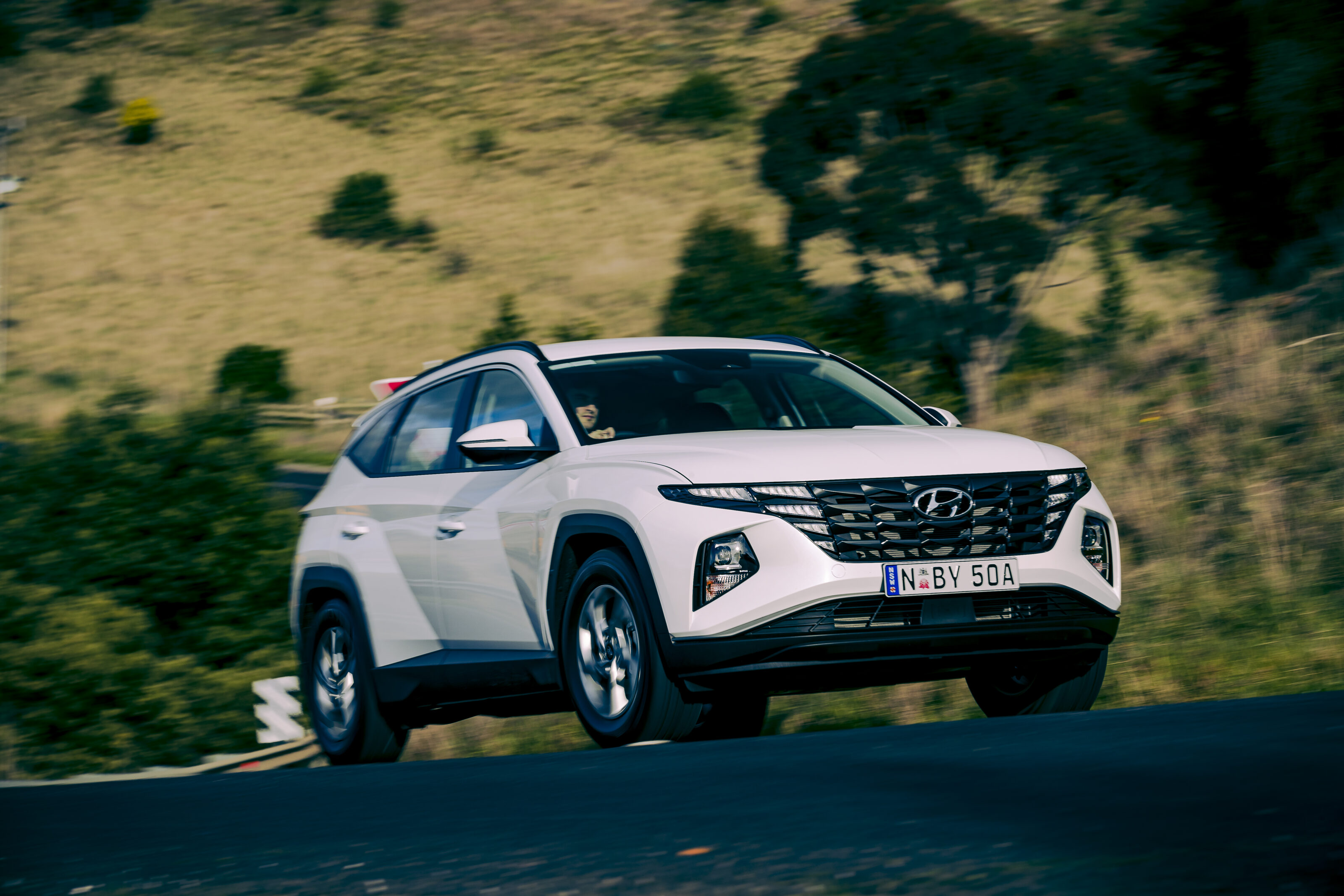
That money buys our Tucson Hyundai’s SmartSense active-safety suite with blind-spot collision avoidance, lane-keeping and following assist, active cruise control, broad-scenario AEB and a rear-view camera with guidelines. It also scores wireless smartphone mirroring, an 8.0-inch touchscreen, wireless phone charging, a pair of USB ports front and rear, six-speaker audio, leather gear lever and steering wheel and power folding mirrors.
Our second contender, the Honda CR-V, is a generation older than the Tucson. But age hasn’t been kind to sales for the Thai-built SUV. Available as both a five- or seven-seater since its arrival in 2017, the CR-V has lost grip on top-five market share, accounting this year for only 4.3 percent of category sales until the end of September. That’s not for a lack of choice. The base Vi grade is the first of seven and would have suited this match-up nicely if Honda could have supplied a Vi for the test. Instead, our CR-V comes one grade higher in VTi trim and with five seats.
That still suits, however, with the VTi falling almost line ball with the Tucson on price, if you ignore Honda’s recent move away from RRP to a nationwide driveaway pricing structure, officially setting the VTi at $38,300 driveaway. It was set at $34,200 RRP until August – or only $300 shy of the Tucson. Either way, a VTi ups the ante on a Vi by replacing its 2.0-litre atmo engine with a 1.5-litre turbocharged unit, still mated with a continuously variable transmission. And after a range refresh in late 2020, it also welcomed upgraded equipment.
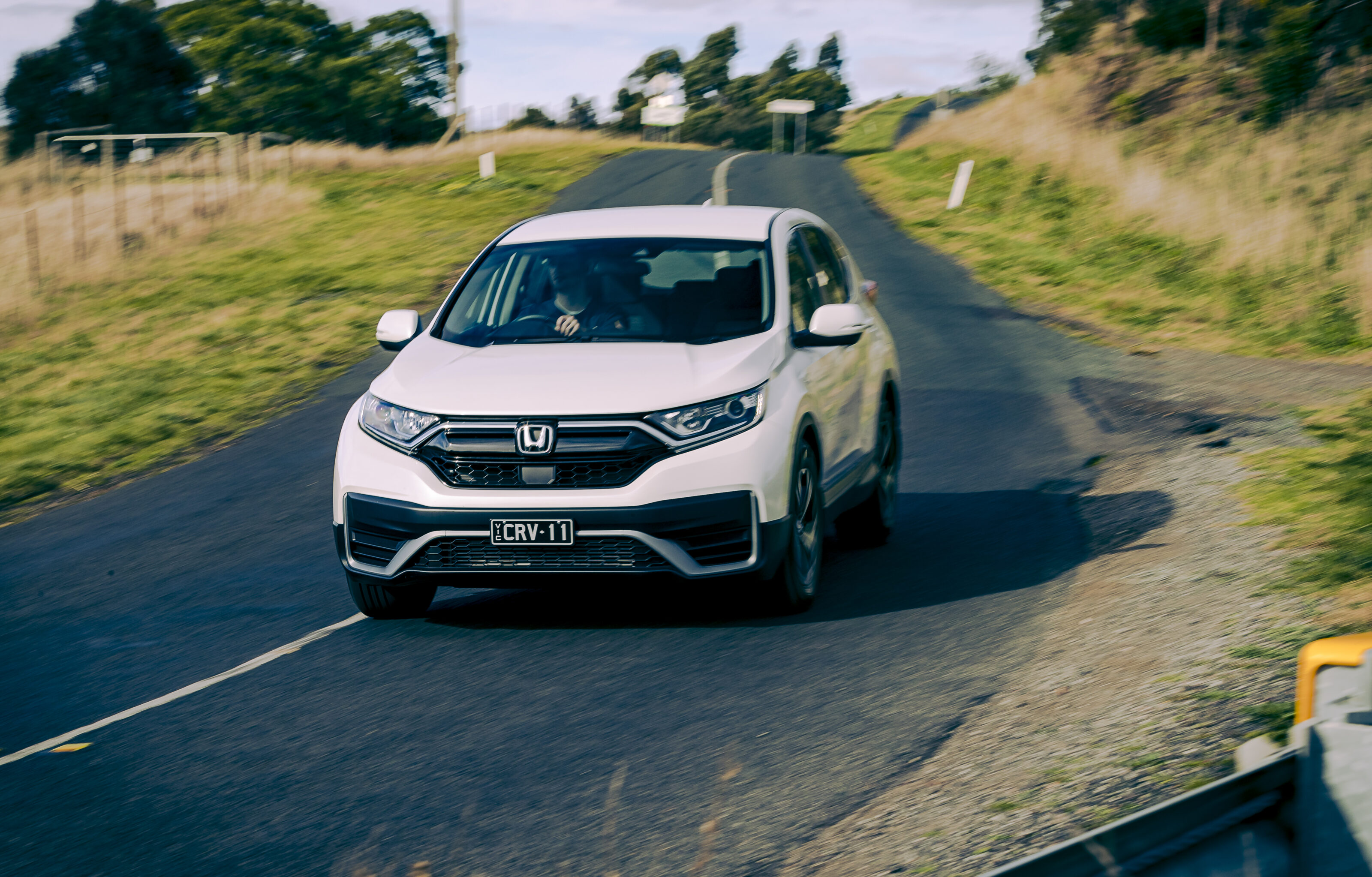
Part of that includes a 7.0-inch central touchscreen, smartphone mirroring, adaptive cruise control, as well as AEB and lane-keep assist that were missing before. The VTi also has two pairs of USB ports, keyless start, rear vents, digital instrument cluster, rear camera with guidelines and power folding mirrors. And while it boasts dual-zone climate control and eight-speaker audio over the Tucson, stuff like a leather wheel, wireless phone charger and blind-spot warning or rear cross-traffic collision avoidance are absent.
Our next variant garnishes our comparison with a European flavour, of the goulash kind. The Czechia-built Skoda Karoq replaced the Yeti in Australia halfway through 2018. Since then, it’s humbly grown its presence in the category to claim 1.1 percent of sales so far in 2021. Welcoming a range-topping Sportline 4×4 variant helped broaden the range’s appeal, but Skoda’s decision to completely replace the powertrain in the automatic 110TSI Style was more pragmatic.
Halfway through 2020, when the Sportline arrived, Skoda swapped in a 1.4-litre petrol turbo with an Aisin-built eight-speed automatic to reserve the 1.5-litre, seven-speed DSG model for markets under stricter emission laws.
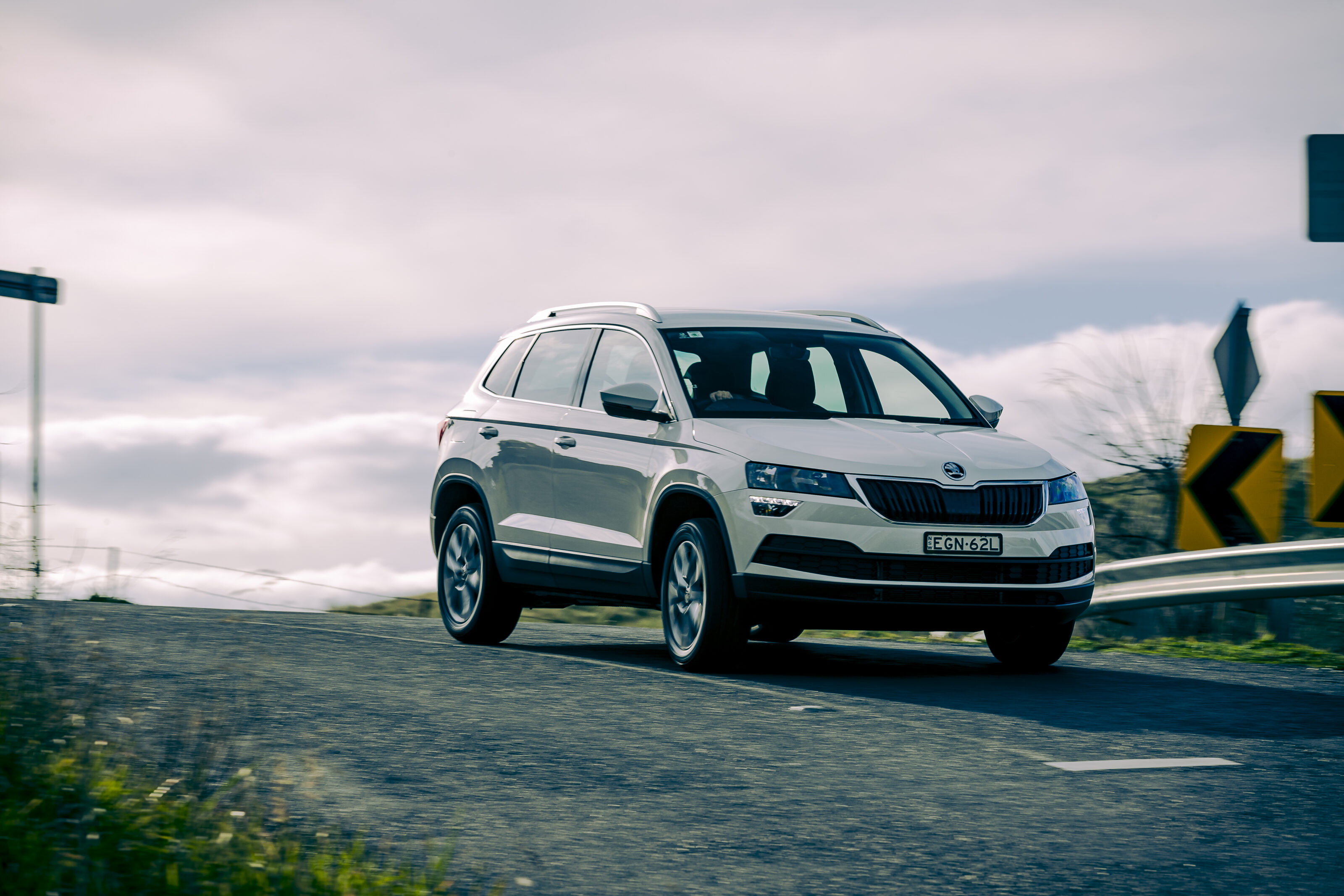
Since then, the automatic 110TSI Style’s price has also climbed from $32,990 before on-roads to $34,590. That represents a $1600 increase and prices the Style within $90 of the Tucson for this test.
The Style is light on safety technology, with rear-cross traffic alert, blind-spot warning and lane-keeping assist missing from its standard equipment list. But it still features adaptive cruise control, AEB and a rear-view camera. The Karoq also scores wireless smartphone mirroring, an 8.0-inch touchscreen, eight-speaker audio, dual-zone climate control, auto wipers, leather steering, keyless start and a gorgeous digital instrument cluster. But it misses out on power-folding mirrors that the Tucson and CR-V have and only offers one USB port upfront.
Standing back to drink in our comparison’s trio from the kerbside reveals they’re decent-looking chunks of metal, with their own quirks. The Hyundai, for instance, is the most provoking, channelling the character of an urban assault vehicle. Aggressive character lines chisel out pumped haunches. The LED daytime running lights integrated into the front grille frame also emphasise its width.
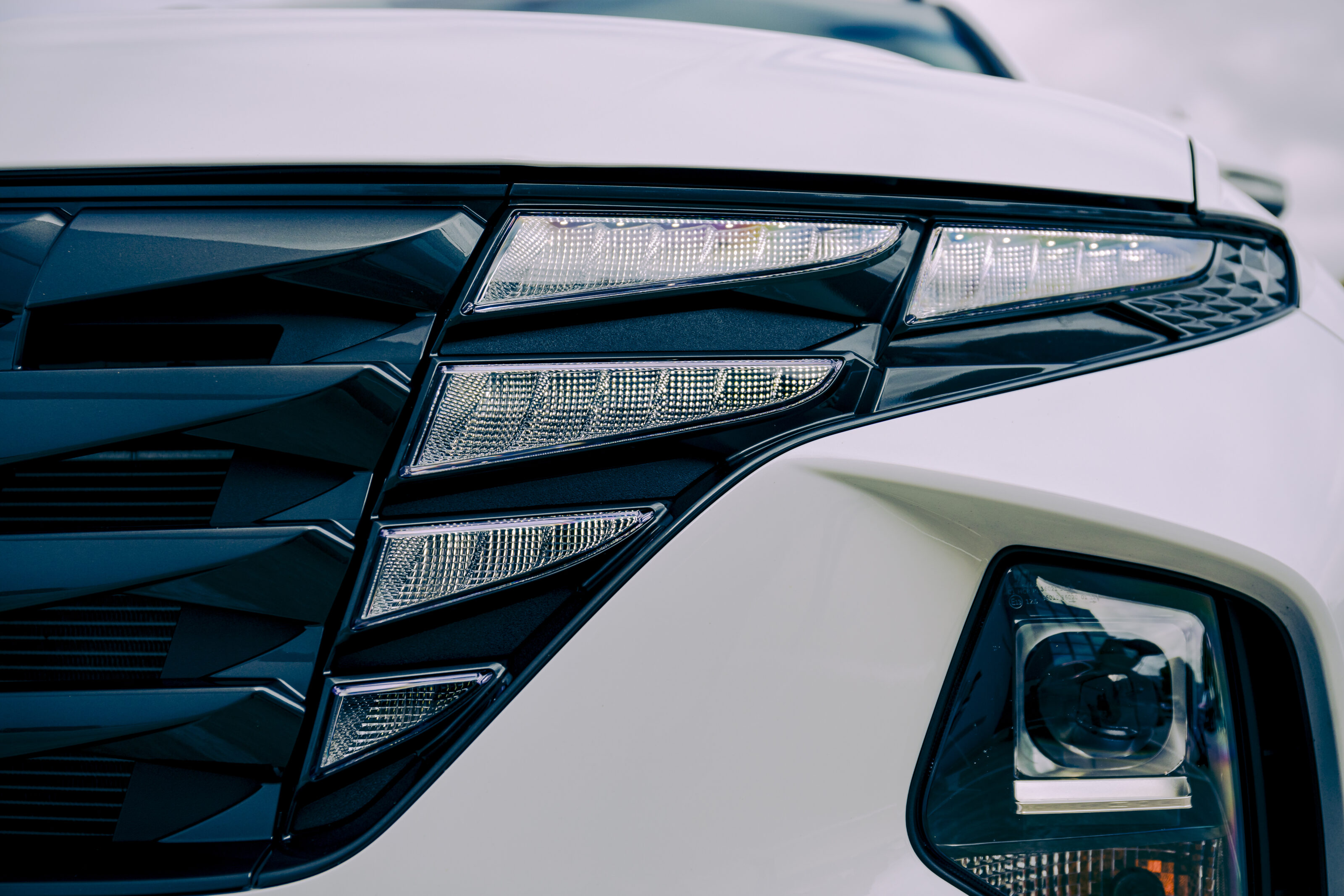
And because we treasure snag-laden barbies at Bunnings so dearly in this country, the Tucson comes to Australia in the larger, long-wheelbase format, stretching the new model’s striking design over a 2755mm gap between its axles (up from the short-wheelbase car’s 2680mm). At 4630mm long, 1865mm wide and 1665mm tall, the Tucson looks like it takes up more of the road than the other three.
However, the Honda CR-V is similarly sized to the Tucson and even pips it on length, respectively measuring 4635mm long and 1855mm wide. Because it’s built to seat seven, the extra headroom up back also means it’s taller than the Tucson (at 1679mm), lending it a more sprog-friendly look. Styling tweaks added in 2020 also frame the CR-V’s front bumper with a new chrome insert, enlarge the front radiator grille’s black element and add LED daytime running lights. Out back, the CR-V also scored a redesigned bumper insert with trapezoidal exhaust tips that looks more harmonious with the rest of the rear-end.
Curiously, the Karoq has eluded a design refresh despite internationally debuting in 2017 like the CR-V. But we’d believe Skoda if it said it didn’t need one. Its smaller front grille and discreet LED daytime running lights are complemented by pronounced silver roof rails that are adventurous yet restrained.
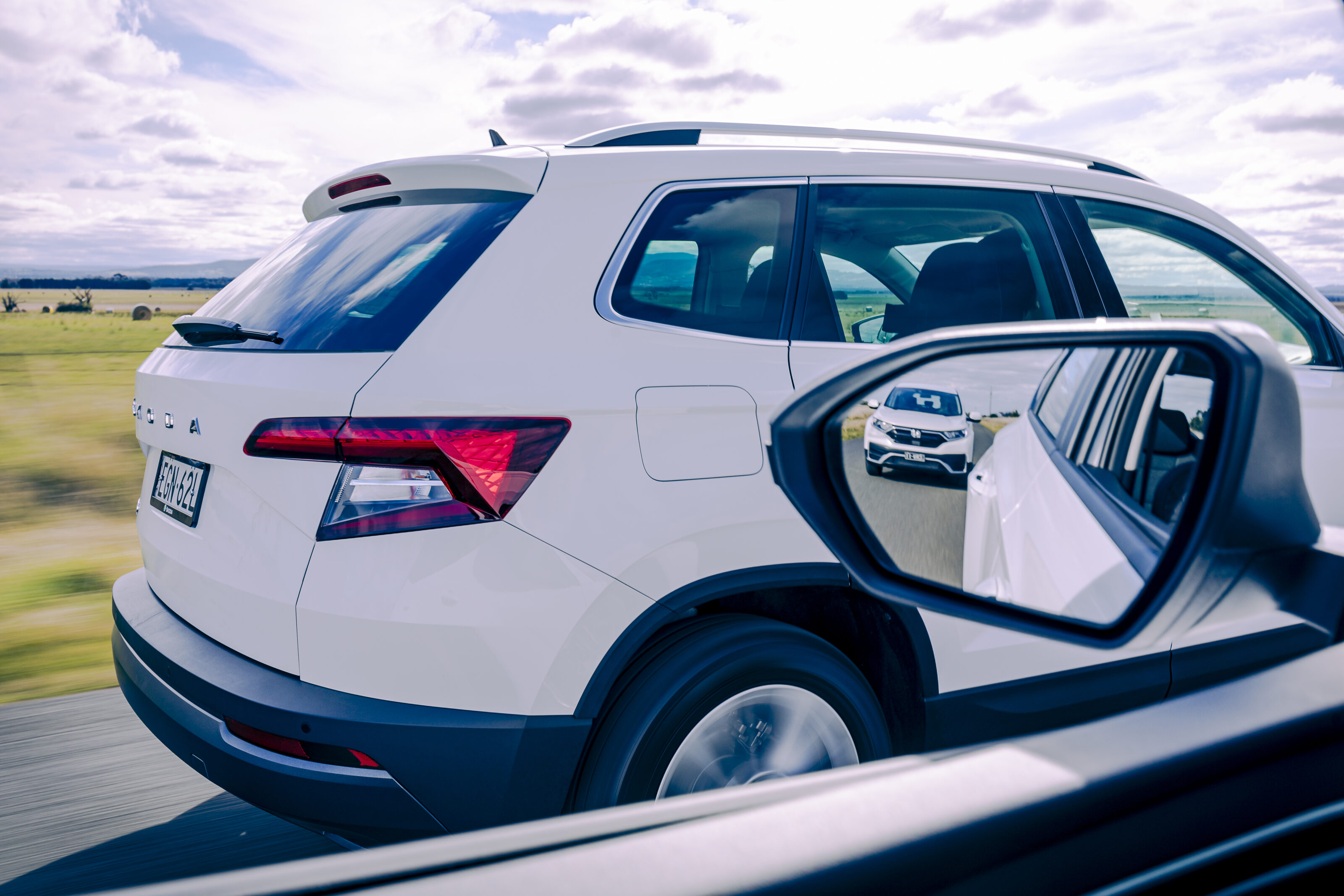
The Skoda Karoq leans on the resolved looks of its larger stablemate, the seven-seat Kodiaq, to disguise its small size. Built on Volkswagen’s MQB platform, the Karoq’s body measures 4382mm long (253mm shorter than the CR-V), 1841mm wide (-15mm) and 1603mm tall (-76mm). Meanwhile, its 2638mm wheelbase is also 22mm shorter than the CR-V’s.
When it comes to stuffing their bodyshells with cargo, Hyundai did well with the new Tucson. The rear hatch opens to a floor level with the rear seats when they’re flat, increasing cargo space from 539L to 1860L. While the rear seats are upright, they can also recline for passengers, who are treated to ample room in the Tucson second row.
Naturally, as this comparison’s runt, space is compromised in the Karoq. That’s why the rear seats recline 13 degrees and slide forward 150mm as part of their Varioflex design, boosting cargo volume from 479L and 588L – you decide on how much luggage you’re allowed. But it’s versatile.
Although the Karoq lacks pull levers to drop the rear seats, the second row can split in a 40/20/40 ratio, versus the Tucson’s and CR-V’s 60/40. Once the seats are flattened, you can stuff 1650L worth of cargo into the Karoq’s boot. If you need even more space, you can stand the rear seats upright or even remove each seat completely, which can boost storage capacity to 1810L.

The sunken boot floor makes load access trickier, but luggage nets and hooks on either side, as well as three compartments for smaller items, make securing a range of loose items easy. Unsurprisingly, legroom in the Karoq’s second row is cramped, but you score the same amount of door storage as the CR-V, as well as a full-size armrest with cupholders like the Tucson.
Outright boot capacity in the CR-V is slightly worse off, offering 522L with the rear seats up and 1717L (113L less than the Tucson) when down. Rear access, however, is commendable, with its floor levelling with the tailgate’s lip and folded rear seats. Life in the CR-V’s second row lacks the Tucson’s legroom, but headroom is cavernous, and passengers enjoy more door storage.
But what about life up front of the cabin? Hyundai presents a smart-looking workstation that’s intuitively laid out. Thankfully, a T-shaped gear lever sits in place of the gear-selector pad saved for higher trim Elite versions, which is much tricker to operate. Meanwhile, classy looking buttons in the steering wheel and knurled column stalks lift the ambience. And while the dash sits strangely high on its left side, overall forward vision benefits from narrow front pillars. The seats have cosseting wide backrests but lack under-thigh support when set low.

When switching to the CR-V, firm seat cushions and synthetic steering wheel material underscore a slightly blander cabin ambience. But it excels on fundamentals. Outward vision is above average, benefitting from a low-set bonnet that reveals more of the road immediately in front. Ergonomics, too, are excellent. Placing the gearstick on the console, for example, means it avoids stored drink bottles altogether. The temperature and volume dials are also close to the steering wheel.
Climbing aboard the Karoq, however, feels like an upgrade to Gold Class. The cabin’s soft-touch dash plastics and perforated leather steering wheel are luxurious, and the cockpit’s layout – with HVAC dials, infotainment and driving controls contained to separate areas – is neatly structured. The Karoq’s dash sits quite high, but outward vision is adequate. The nicely bolstered front seats are comfy, even if slightly small.
But enough poking around, how do they drive? The Tucson is hamstrung with the widest turning circle of this lot (11.3m plays the CR-V’s 11m and Skoda’s 10.9m), but its light kerb weight and sharp front-end make it enjoyable to hustle, whether it be through traffic or corners. The Tucson also delivers meaningful feedback through its creamily weighted steering.

Performance-wise, you need to wring the 2.0-litre’s neck to get the best out of it. Hyundai claims the Tucson’s multi-point Smartstream G engine is new, but it shares the previous generation’s 2.0-litre bore/stroke dimensions and produces less power and torque. Still, its pep arrives up high, with 192Nm available at 4500rpm and 115kW at 6200rpm (down 7kW/13Nm). Compounding this issue is an auto that constantly upshifts on part throttle to suppress thirst – even in Sport mode.
Refinement levels are good at highway speeds but pinning the Tucson’s throttle unleashes a thrashy din that only increases in volume as it nears the 6500rpm redline. Additionally, the Tucson’s damping is firm, and the ride struggles to settle over choppy surfaces.
First impressions of the Honda CR-V behind the wheel, meanwhile, can be misleading. The steering initially can feel heavy just off-centre. But the longer you drive the CR-V, you’ll learn it steers sweetly with good accuracy and, despite weighing the most, is incredibly manoeuvrable – even if the ride lacks long-stroke absorbency.
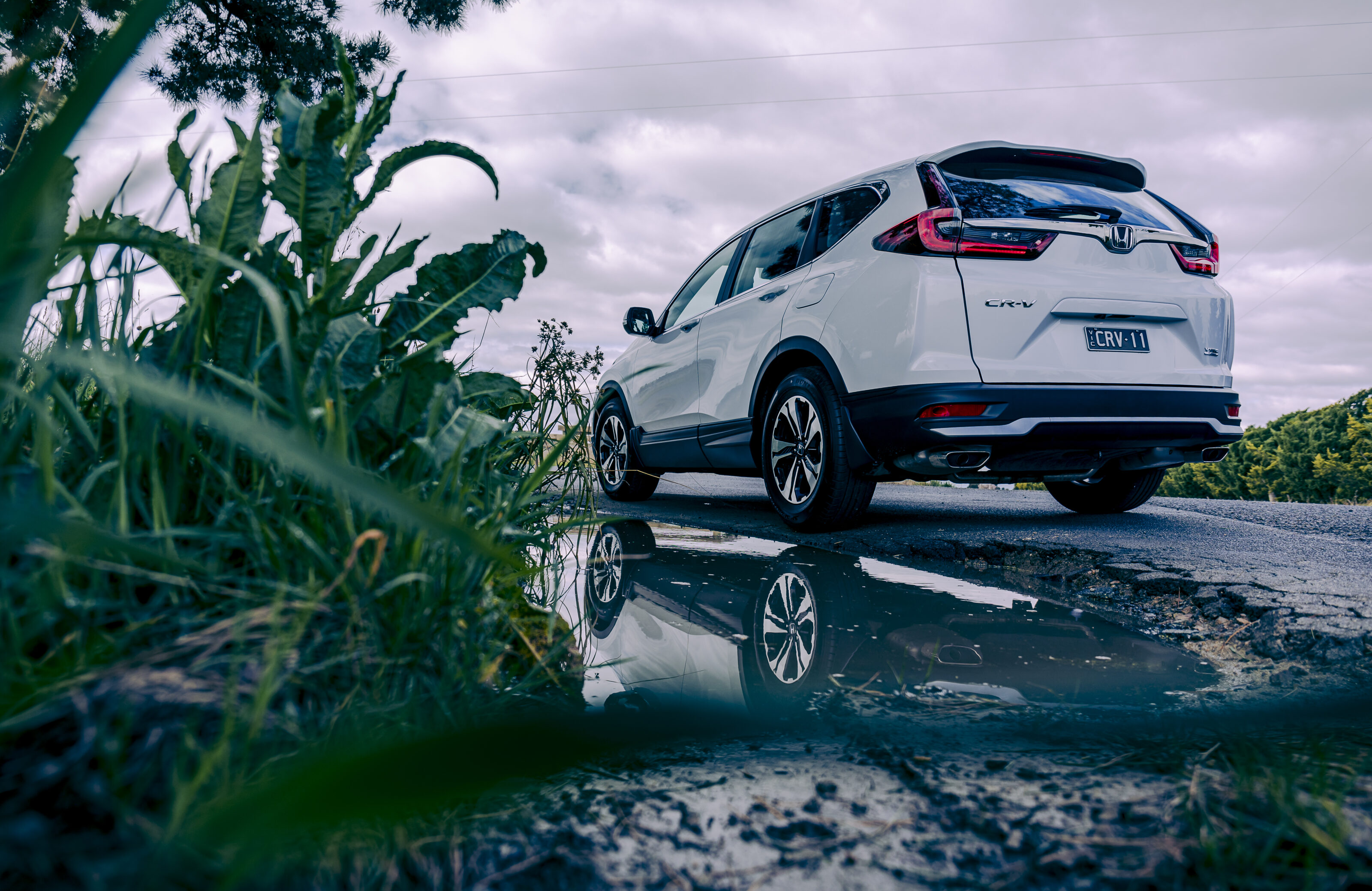
Driven hard, there are times the CR-V’s 1.5-litre turbocharged four, with 140kW and its grunty midrange delivering 240Nm from as low as 2000rpm, can surprise the front-drive layout, breaking traction at the front wheels. But this also equals quick progress while moving and part-throttle responsiveness in traffic.
Like the Tucson, the CR-V’s engine doesn’t sound great at high revs, and the CVT has a way of prolonging a slight drone under acceleration when simulating long gear ratios. The throttle can also be touchy. But otherwise, the drive experience is pleasant enough.
Refinement, though, is very much the Karoq’s domain. Its soft, long-stroke suspension deliver a cushioned ride on front struts that pair with a torsion-beam rear. But this also equals more bodyroll than its peers during hard cornering, a situation exaggerated by grippier Michelin Primacy 3 tyres.
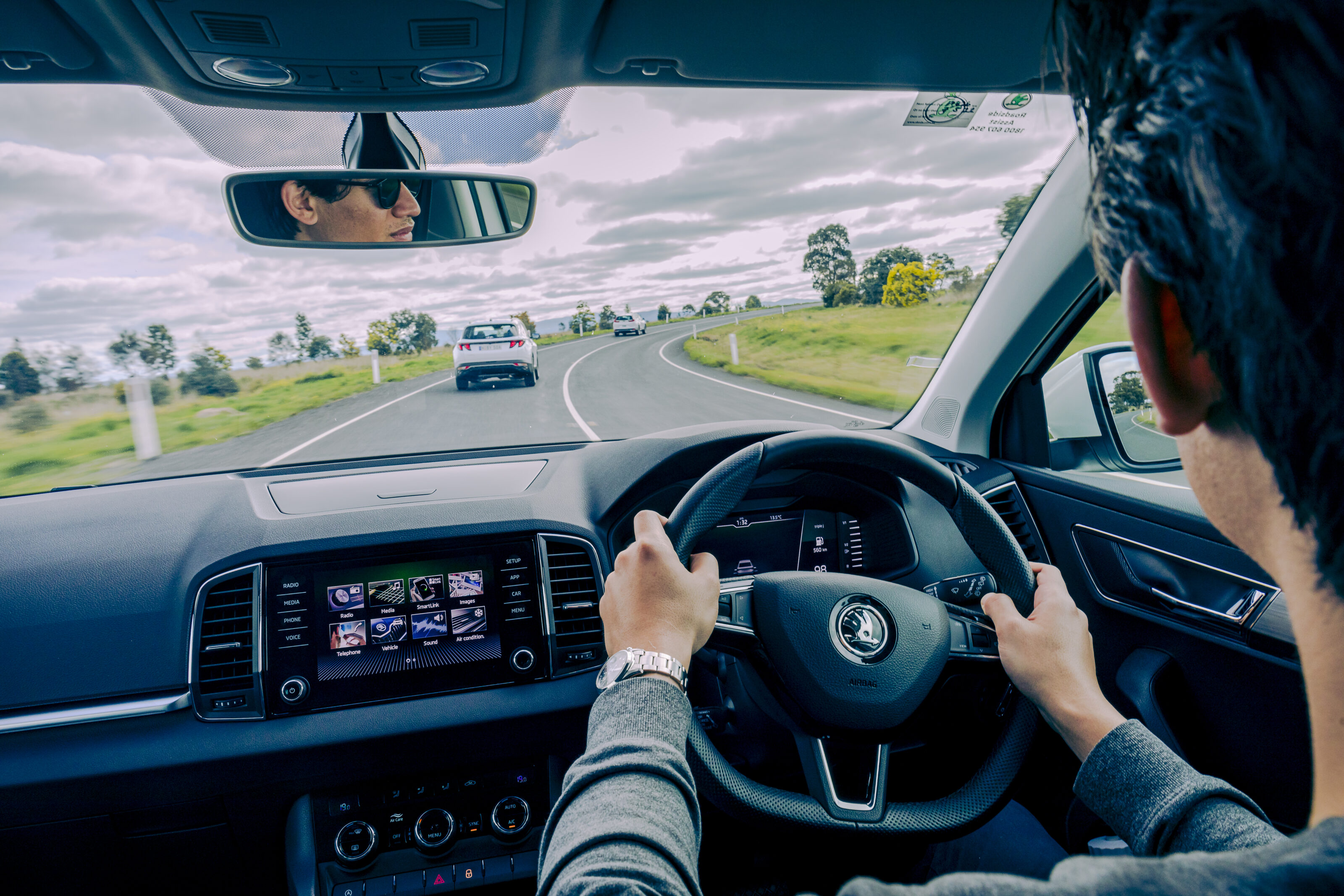
However, because of the grip, the Karoq’s road-holding ability is unshakable, while its steering is accurate and light just off-centre, making it an inspiring car to hustle. It isolates road and tyre noise especially well – a fact helped by the Karoq’s tyres being the narrowest and lowest in profile. But it takes a while to adjust to the throttle pedal’s springiness.
As for overtaking response, even though the Karoq’s new powertrain might be handicapped by a greater number of gears, the eight-speed transmission pairs well with the amply endowed 1.4-litre turbo four, handling its 110kW/250Nm outputs (carried over from the 1.5) with smooth, obedient shifts.
The Karoq does a good job keeping its engine on the boil, which delivers its peak torque not far above idle speed, from 1500rpm to 4000rpm. Smooth take-offs and positive throttle tip-in at low engine speed also bolster the Karoq’s day-to-day liveability.
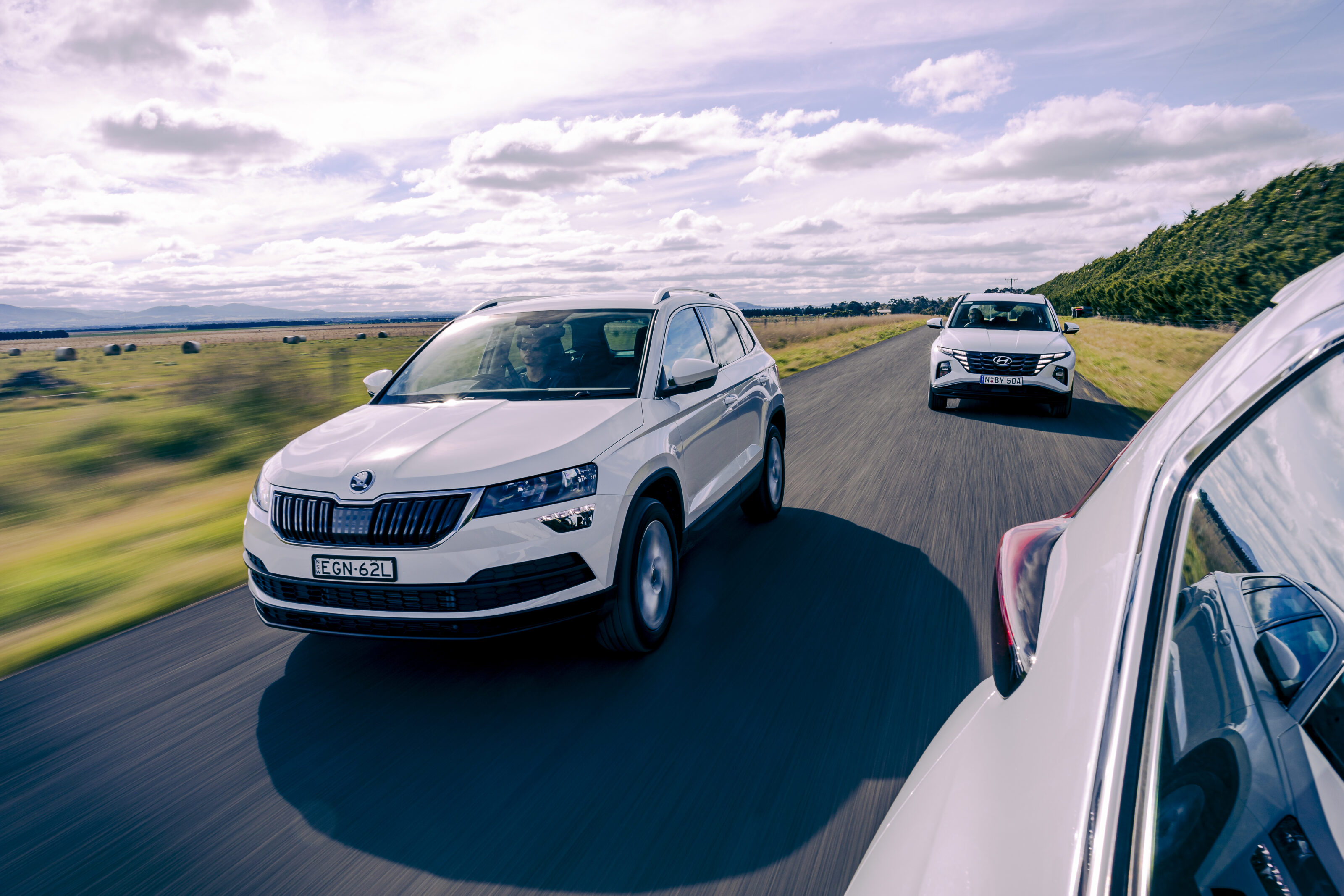
Ranking our trio is not an easy task. Each medium SUV fights hard for your $35K. And unless you’re picky about cabin appearance and everyday luxury, the Karoq doesn’t get a look into the equation until driving becomes a topic.
Its softly sprung chassis and eager powertrain deliver the most well-rounded driving experience, exposing the sharp-handling Tucson as terse riding and the powerful CR-V as slightly inert. There’s a lot to like about the Skoda when you also consider its handsome design. But, ultimately, in a family-friendly category, it’s hard to overlook its light active safety equipment list and undersized packaging.
So, while the CR-V seems like a no brainer given its strong focus on day-to-day practicality, the Tucson pips it for overall cabin comfort and space – thanks to its longer wheelbase and more accommodating seats.

Of course, the CR-V feels stronger underfoot, with its gutsy powertrain making a strong case for downsized turbocharging, as well as CVTs – it trumps the Tucson’s six-speed powertrain for urban driveability. But the Tucson fights back with longer duration between services and a more resolved cabin.
Ultimately, yes, the Tucson cannot match the CR-V’s superior ergonomics or outward vision, but it’s the clear pick when you want as much active safety as possible protecting your family. And in the end, it steals the gong by the smallest of margins in a hard-fought contest.
But there’s no obvious loser here, each contestant offers something meaningful to their respective buyer. Let’s just hope next time we can broaden the scope of competition to give us Melburnians something really to get excited over.
SCORING
Hyundai Tucson: 7.5/10
Skoda Karoq: 7/10
Honda CR-V: 7/10
Specifications
| u00a0 | Hyundai Tucson | Skoda Karoq 110TSI Style | Honda CR-V VTi |
|---|---|---|---|
| u00a0 | $34,500/ Tested $34,500 | $34,590/Tested $34,590 | $38,300 (DA, as tested) |
| u00a0 | Drivetrain | u00a0 | u00a0 |
| Engine | 4cyl, dohc, 16v | 4cyl, dohc, 16v, turbo | 4cyl, dohc, 16v, turbo |
| Layout | front engine (east-west) FWD | front engine (east-west) FWD | front engine (east-west) FWD |
| Capacity | 1999cc | 1395cc | 1498cc |
| u00a0Power | 115kW @ 6200rpm | 110kW @ 5000-6000rpm | 140kW @ 5600rpm |
| Torque | 192Nm @ 4500rpm | 250Nm @ 1500-4000rpm | 243Nm @ 2000-5000rpm |
| Gearbox | 6-speed automatic | 8-speed automatic | CVT |
| u00a0 | Chassis | u00a0 | u00a0 |
| Body u00a0 | steel, 5 doors, 5 seats | steel, 5 doors, 5 seats | steel, 5 doors, 5 seats |
| L/W/H/Wu2013B | 4630/1865/1665/2755mm | 4382/1841/1603/2638mm | 4635/1855/1679/2660mm |
| Track (F/R) | 1620/1627mm | 1576/1541mm | 1601/1617mm |
| Weight | 1428kg | 1425kg | 1596kg |
| Boot | 539L | 488L | 522L |
| Fuel/tank | petrol/54 litres | petrol/50 litres | petrol/57 litres |
| Economy | 8.4L/100km (as tested) | 8.6L/100km (as tested) | 8.2L/100km (as tested) |
| Suspension u00a0 u00a0 | Front: struts, A-arms, anti-roll bar. Rear: multi-links, coil springs, anti-roll bar | Front: struts, A-arms, anti-roll bar. Rear: torsion beam, coil springs, anti-roll bar | Front: struts, A-arms, anti-roll bar. Rear: multi-links, coil springs, anti-roll bar |
| Steering u00a0 | electric rack-and-pinion | electric rack-and-pinion | electric rack-and-pinion |
| Front brakes u00a0 | 305mm ventilated discs | 312mm ventilated discs | 315mm ventilated discs |
| Rear brakes | 300mm solid discs | 272mm solid discs | 310mm solid discs |
| Tyres u00a0 | Nexen Roadian GTX | Michelin Primacy 3 | Dunlop SP Sport Maxx 050 |
| Tyre size | 235/65 R17 | 215/55 R17 | 235/65 R17 |
| u00a0 | Safety | u00a0 | u00a0 |
| ANCAP rating | 5 stars (2021) | 5 stars (2017) | 5 stars (2017) |
| u00a0 | Warranty: 5yr/unlimited km Service interval: 12 months/15,000km Glassu2019s 3-year resale: NA AAMI insurance: $816 | Warranty: 5yr/unlimited km Service interval: 12 months/15,000km Glassu2019s 3-year resale: NA AAMI insurance: $930 | Warranty: 5yr/unlimited km Service interval: 12 months/10,000km Glassu2019s 3-year resale: NA AAMI insurance: $1172 |
Snapshot
- Renault 5 turning 50 in 2022
- Further details on reborn 5 EV to be announced in March
- Celebrations include NFTs, exhibitions and racing events
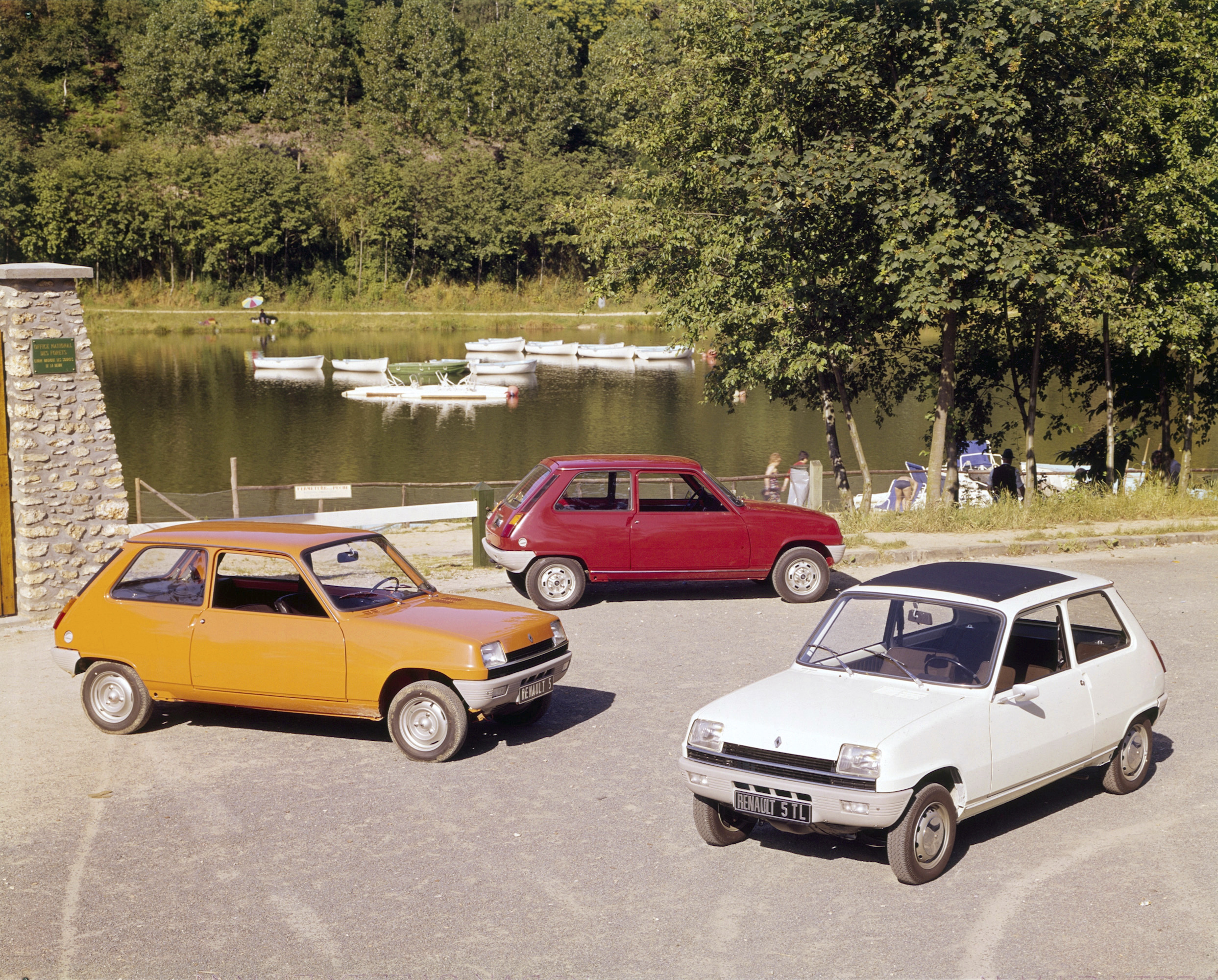
Renault is celebrating 50 years since the launch of the Renault 5 hatchback.
First launched onto the European market on January 28, 1972, more than five million units of the supermini were sold throughout its 24-year life.
The second-generation R5 was effectively replaced by the Clio and Twingo in 1996, with attention now turning towards the reborn 2024 Renault 5 EV.
To mark the occasion, the French marque has scheduled a number of events set to take place in 2022.
Later this month, attendees of the Rallye Monte-Carlo Historique will see a Renault 5 Alpine Group II joined by the Turbo variant, with the latter to be driven along the track by former French racing driver Alain Serpaggi.
In March, the annual Rétromobile classic car show will host a booth dedicated to the Renault 5, with the recent electric prototype also making an appearance.
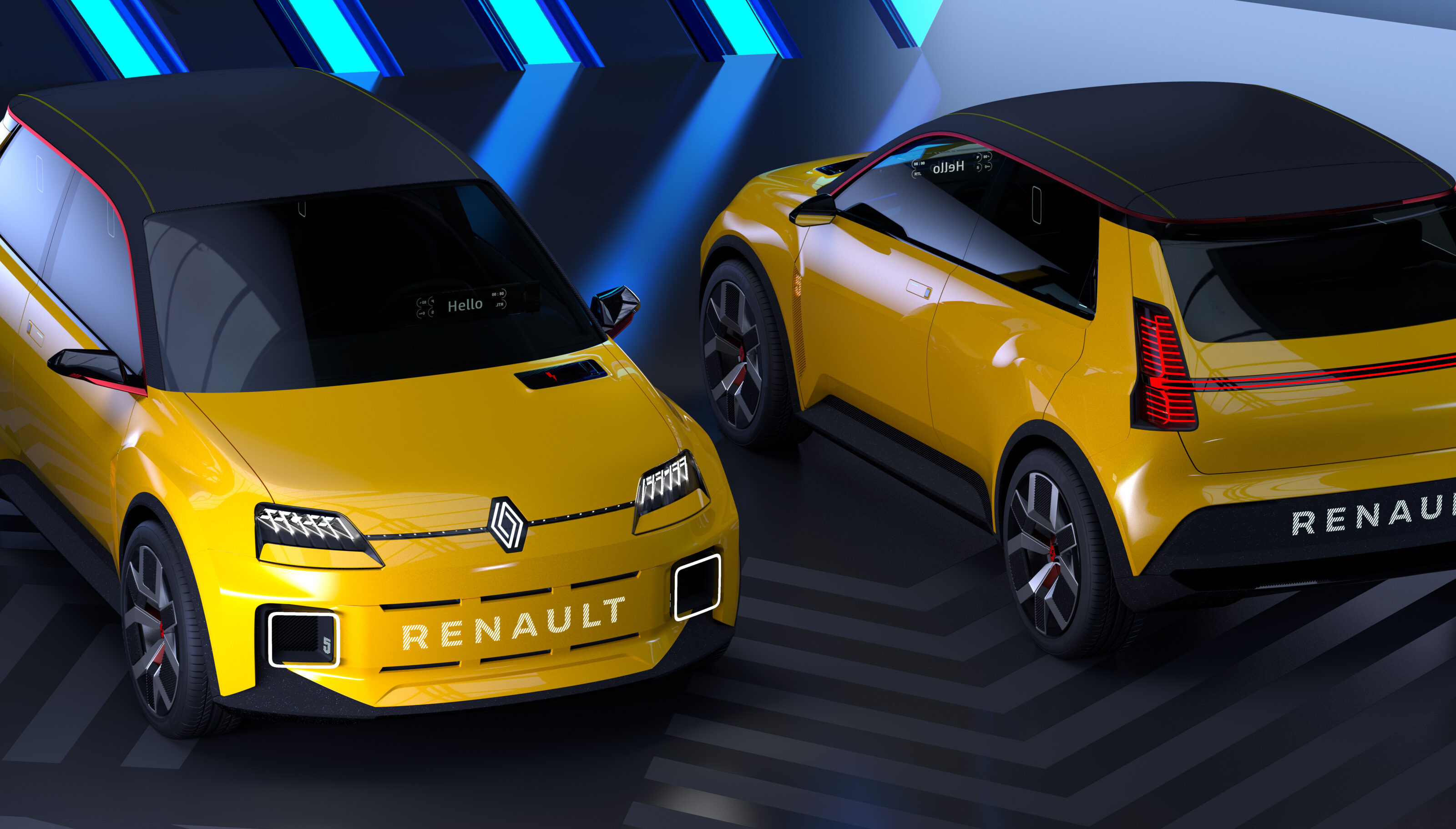
Renault has confirmed it will announce additional information surrounding the modern Renault 5 at the event – which runs from 16-20 March – ahead of its 2024 launch as a fully-electric small car.
In addition, the brand will begin rolling out non-fungible tokens (NFTs) of the Renault 5 during March, which will allow fans to acquire unique artworks based on the car.
A series of specialised exhibitions and 1970s’ themed displays will round out the events taking place throughout the remainder of the year.

The retro-modern Renault 5 EV will follow in the footsteps of the all-electric Honda e and Fiat 500e by rejuvenating and electrifying historic models within each respective line-up.
At the unveiling of the concept version in January 2021, Renault design director Gilles Vidal said, “the design of the Renault 5 Prototype is based on the R5, a cult model of our heritage”.
The front-wheel-drive Renault 5 EV is expected to feature a single motor producing approximately 100kW of power, with up to 400 kilometres of WLTP-rated driving range.
BMW is designing an all-new steering wheel and related steering system that’s unlike anything used in a car yet.
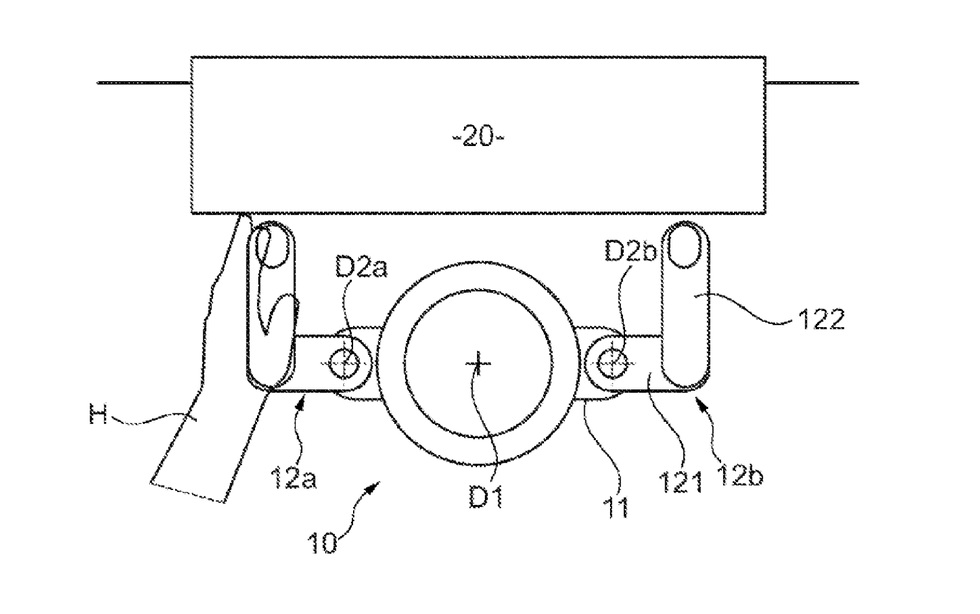
The design has been submitted for patent in China and Germany and gives an insight to how it works. The concept is something like the yoke-style steering wheel in the Tesla Model S Plaid, however, the handles completely fold away and the wheel seems to have limited movement.
The swivel handles are designed to fold away during autonomous driving when the car is driving itself and the human driver (at this point now a passenger) is not required to have hands on the wheel at all (nor be in a position to quickly take action, it seems).
Due to current government regulation on driverless vehicles, it seems the wheel won’t be used in any cars launching soon.
The patent drawings shown do not give much idea on exactly what it will look like, but it shows the central hub is the same as a traditional steering wheel with two spokes attached to opposite sides and grips at each end for the driver to hold. The spokes have joints that allow the grips to swivel as the wheel is moved and remain upright the whole time.
It seems like the steering wheel in the patent drawings is more of a ‘part-time’ wheel given there is restricted rotation in the steering column, which doesn’t give a large amount of lock when turning the wheels.
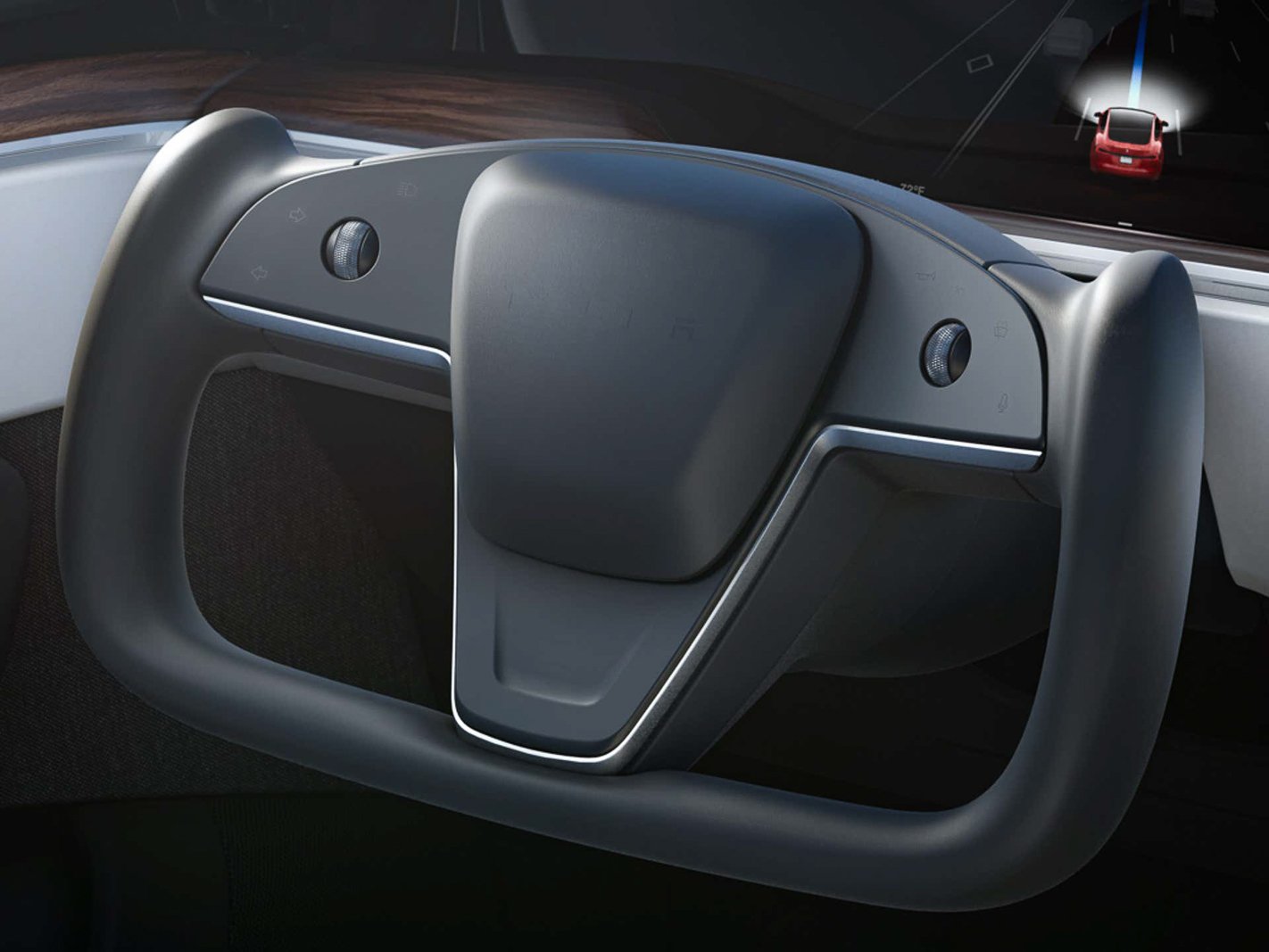
In fact, the patent shows a normal steering wheel, however, there may be an electrically-assisted motor that has an on-the-fly variable ratio to increase and decrease the steering angle at the wheels – depending on circumstances such as parking compared to driving along a fast twisting road.
The steering wheel would also feel much different than a regular round or even squared-off steering wheel, given there is no grip to slip through the hand while turning. However, concept cars, and even Tesla’s Model S Plaid, show that there should be no limit on car design including the steering wheel – just as long as it doesn’t sacrifice function over form when required and, of course, is safe.
Snapshot
- Countach LPI 800-4 makes its first on-road appearance
- Third-gen supercar joined by the first LP 400 and final 25th Anniversary Countach
- New Countach will be limited to 112 units
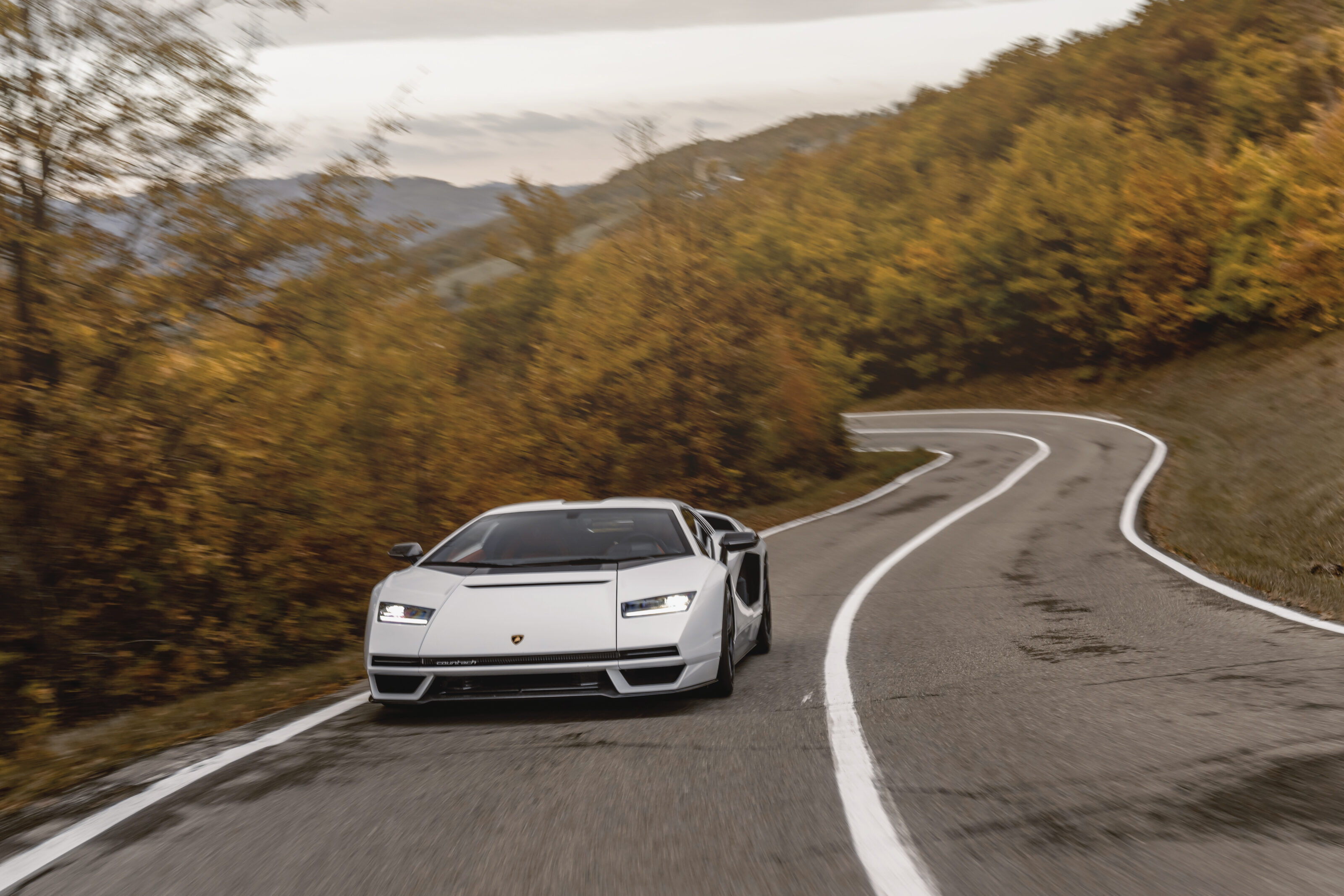
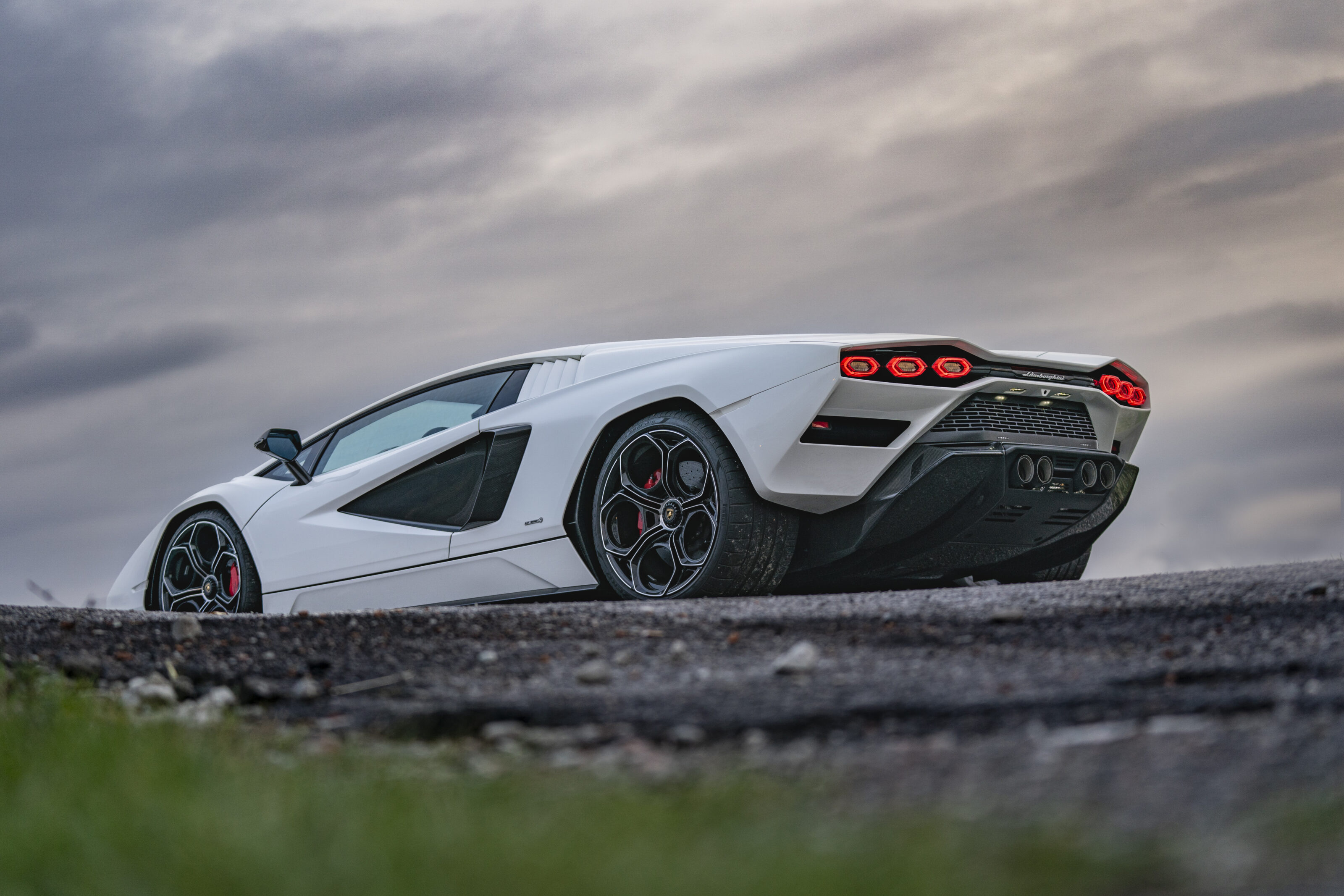
The new Lamborghini Countach has been shown off running on the road for the first time, and with special company.
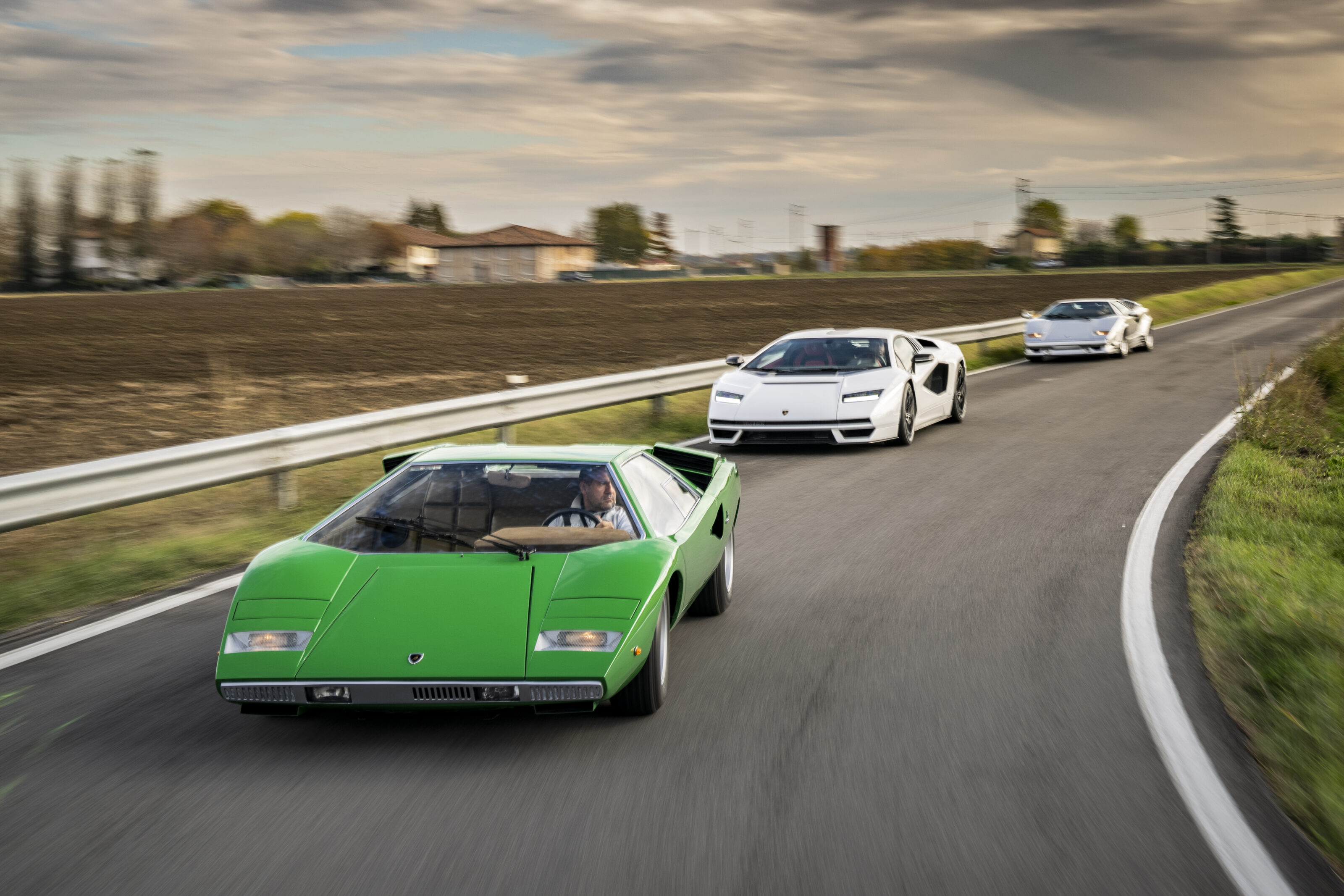
To celebrate the third generation of the Raging Bull’s most iconic supercar coming on sale, Lamborghini made sure the LPI 800-4’s first outing was done in style – bringing out two significant Countach models for the ride.
Flanked by the very first Countach LP 400, as well as the final Countach 25th Anniversary, the latest iteration wasn’t able to stretch it legs completely – but rather gave its 6.5-litre V12 a warm-up, making sure some of the 574kW could be used.
Making sure the newest iteration is future-proofed, the new Countach features a 48-volt electric motor, mounted on its seven-speed dual-clutch gearbox to give another 25kW, with its power coming from a supercapacitor rather than a traditional lithium-ion battery.
Considering the Countach turned 50 last year, even the original represents a timeless look, as Marcello Gandini’s design inspired generations to come and could be held responsible for at least half of all Blu-Tac sales for posters in the 1980s.
However, Gandini has criticised the new Countach, hitting out at the Italian marque last year for going ahead with its recreation without his blessing – a reaction which ended up as MOTOR’s Biggest Controversy of 2021.
However, Lamborghini likely won’t mind, as at an estimated cost of $3.5 million each and with production capped at 112 units (referencing the project’s internal name of LP 112), it’s unlikely to be a loss-leader.
The first official teaser image of Aston Martin‘s upcoming ‘DBX S’ has been revealed, showing some of the changes to be expected when the new model is unveiled in full.
Interestingly, for a new-looking version, the diamond-cut alloys look the same as the current wheels underneath the DBX’s blistered arches, although it is likely there will be new ones available on the high-performance variant.
The shadowy shot of the “world’s most powerful luxury SUV” suggests that the design of the new DBX will be much more aggressive than the standard model, matching the expected performance it will bring.
On the nose, Aston Martin’s familiar grille will be larger than ever, with a deeply sculpted front bumper and extended splitter improving airflow.
Spy pictures of a prototype version of the car show a larger grille at the front, which ditches the vertical-slatted design for a honeycomb mesh. At the rear is a deeper diffuser that comes out from the bumper and a quad-tip exhaust for the expected V8 engine.
An earlier teaser video with sound of the exhaust suggests that the model will be powered by the Mercedes-AMG sourced 4.0-litre twin-turbocharged V8, which produces over 500kW in the Mercedes-AMG GT Black Series – and a prerequisite amount of power if it is indeed the world’s most powerful SUV compared to the likes of the Porsche Cayenne Turbo S E-Hybrid.
It will also need to battle against the likes of the Jeep Grand Cherokee Trackhawk; albeit it an older model, it packs a huge amount of tyre-shredding power.
However, modifications will go further than just the engine of course. The upcoming DBX will need a performance-tuned chassis, including adaptive air suspension setup, to provide stiffer composure and sharper handling via changes to driving mode settings and steering response.
After avoiding the global semiconductor chip shortage for more than a year, Hyundai may be about to face disruptions.
An “urgent notice” posted on Hyundai’s intranet in South Korea and leaked to local publication ET News suggests the company may face production delays starting from tomorrow.
It’s understood defective semiconductors used in satellite navigation systems are to blame, with the carmaker expecting new-car output to be impacted from January 26.
However, a translated statement issued to the Korean newspaper from Hyundai dismissed any production delay.
“Although the supply and demand for semiconductors is a serious situation, production is not being delayed due to a single semiconductor supply problem for a specific part. Overall, supply and demand for semiconductors and production are very tight.”
A spokesperson for Hyundai Australia told Wheels the local arm was unaware of any delays relating to vehicles with navigation.

The leaked internal notice blames “mass defects” related to semiconductors used in the microcontroller unit for audio, video, and navigation.
French-Italian company ST Microelectronics is named as being responsible for supplying the faulty chips, but refused to confirm the allegations.
Despite almost every other major car manufacturer dealing with headaches related to the global semiconductor shortage, Hyundai has weathered the storm, being one of the few that continued to order the computer chips, despite industry-wide issues from the pandemic.
“Like other automakers, Hyundai also planned to cut production at the beginning of the year because of COVID-19,” one insider with ties to Hyundai’s purchasing told Reuters in February 2021.
“But procurement read the trend of the semiconductor industry cutting auto chips production and said, ‘if we don’t buy them as well, we’ll be in trouble later on.’”

According to the latest report, Hyundai currently has 34,000 Tucson SUVs on order – with no delivery schedule able to be confirmed – along with 44,000 units ordered of the all-electric Ioniq 5, with delivery times of up to 12 months being quoted.
Both chip makers and car companies are warning the semiconductor shortage will continue into 2023, even with billions being invested in new production facilities across the globe.
