
Toyota has released a deliberately vague teaser image of an upcoming model, offering little more than the phrase “something new is on the horizon.” Despite the lack of detail, the single image has already sparked speculation, largely because it appears to depict a sizeable SUV – and potentially a significant new step in Toyota’s electric ambitions.
The image shows the rear of the vehicle, heavily shadowed but clearly upright and blocky in proportion. Pronounced rear guards give it a wide stance, while a noticeable step between the beltline and the glasshouse suggests a more angular design than Toyota’s current mid-size SUVs. The only clearly visible elements are the taillights: a clean, full-width light bar made up of two thin LED strips housed within a rectangular frame.
Based on Toyota’s current SUV range, the list of candidates narrows quickly. The RAV4, 4Runner and Land Cruiser have all been recently renewed, while the Corolla Cross and Crown Signia are either fresh or recently updated. The Sequoia, last redesigned in 2023, remains a possibility, but it seems unlikely Toyota would describe a facelifted version as “something new”.
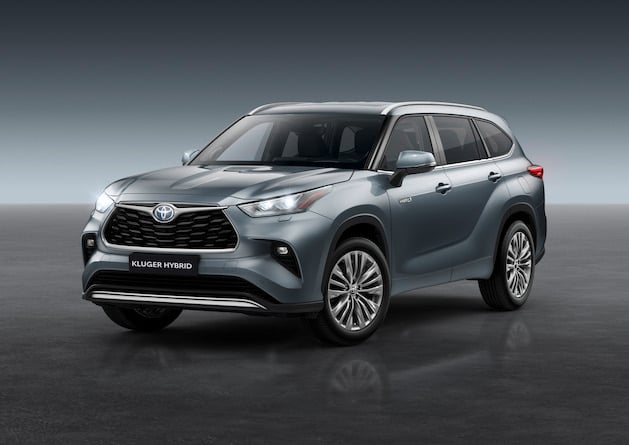
That leaves the Highlander – sold in Australia as the Toyota Kluger – and its larger sibling, the Grand Highlander. The latter is still early in its lifecycle and performing strongly in global markets, making it an unlikely candidate. The standard Highlander, however, has been on sale since 2020 with only minor updates and has increasingly been overshadowed by the Grand Highlander. A clean-sheet replacement would make sense – particularly one that resets the model’s position.
There is also growing evidence this new SUV could be fully electric. Toyota currently lacks a direct competitor to large three-row electric SUVs such as the Kia EV9 and Hyundai Ioniq 9. The company previewed a potential answer back in 2021 with its bZ Large SUV concept, and more recently with the Land Cruiser Se concept revealed in 2023. That vehicle, a seven-seat electric SUV measuring just over 5.15 metres long, sits squarely in the same size bracket as a Highlander or Grand Highlander.
Whether the teased model carries the Highlander name or introduces an entirely new badge remains unclear. Toyota has not confirmed a reveal date, but given the controlled nature of the teaser, further details are likely imminent. What does seem certain is that Toyota is preparing to fill a noticeable gap in its SUV line-up – and do so with electricity.
Mercedes-AMG appears to be done hedging its bets on downsized performance. Fresh teaser images suggest the brand’s next ultra-limited Mythos model will lean heavily into the formula that made AMG’s reputation: a V8 engine wrapped in an uncompromising, track-focused body.
The car, shown in winter testing camouflage, is based loosely on the CLE coupe, but the similarities seem mostly conceptual. While AMG already offers the CLE 53 Coupe with six-cylinder power, this new Mythos project looks far more extreme, borrowing visual and philosophical cues from past Black Series standouts such as the CLK 63 and later C 63 variants.
The prototype wears what appears to be a bespoke body, with significantly widened front and rear guards that push well beyond the standard CLE proportions. The front end is almost entirely open, prioritising airflow over subtlety, with a motorsport-style nose designed to feed large radiators and intercoolers. It’s a functional look that recalls AMG’s more aggressive road cars of the late 2000s and early 2010s.
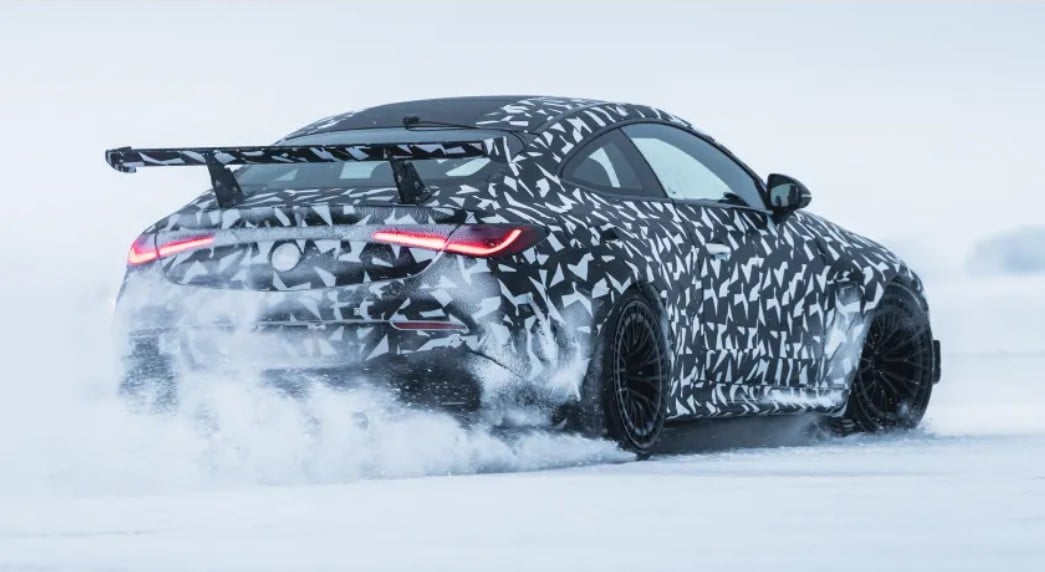
Aerodynamics are clearly central to the design. A large, fixed rear wing sits high on the bootlid, while quad trapezoidal exhaust outlets – a familiar AMG V8 calling card – hint strongly at what’s powering the car. Mercedes-AMG hasn’t released any technical details yet, but has acknowledged that while the car may resemble a CLE at first glance, it pushes the idea much further.
Inside, expectations are for a stripped-back, driver-focused cabin. Think fixed-back bucket seats, extensive use of Alcantara and carbon fibre, and bespoke trim details unique to the Mythos program. Comfort is unlikely to be the priority, nor will affordability.
The Mythos line sits above AMG’s regular production cars and even its limited Black Series models. Only one Mythos vehicle has been revealed so far: the SL-based PureSpeed unveiled in 2024. Limited to 250 units, it famously deleted its windscreen in favour of an F1-inspired halo system. That car reportedly cost around £700,000 (approx. A$1.35 million).
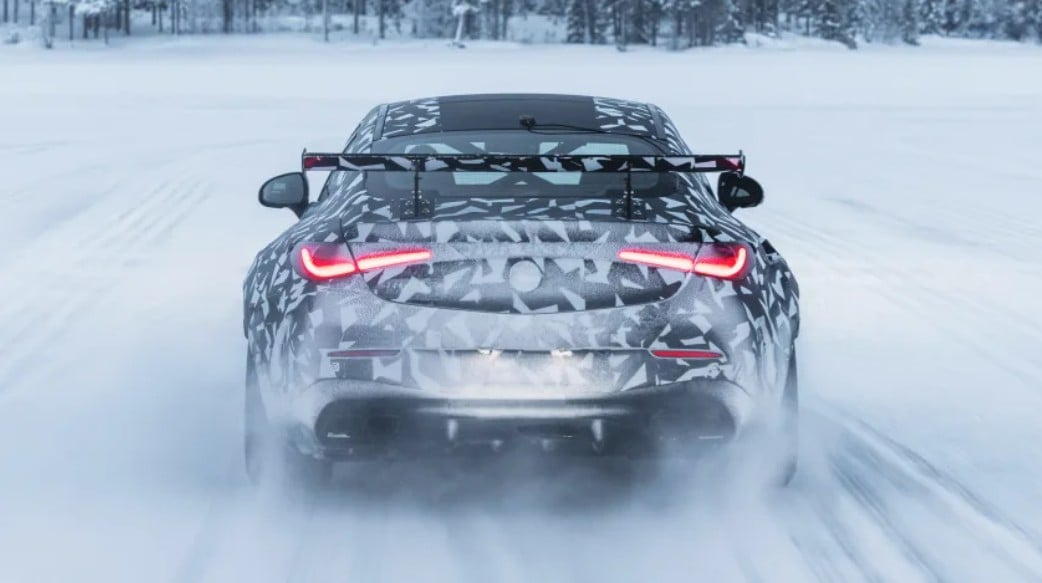
If this CLE-based Mythos follows the same path, expect similarly low production numbers, extensive customisation options, and a price tag well beyond any series-production AMG. For buyers chasing modern AMG with a heavy dose of nostalgia and excess, that may be exactly the point.
Italian styling house Bertone has unveiled its radical new sports car, the Bertone Runabout.
Based on one of Marcello Gandini’s most daring concepts – 1969’s Autobianchi A112 Runabout – Bertone’s distinctive wedge-shaped modern interpretation is set to go into limited production with 25 cars, each with a price tag starting from an eye-watering €390,000 (AUD$670,000) before tax and options.
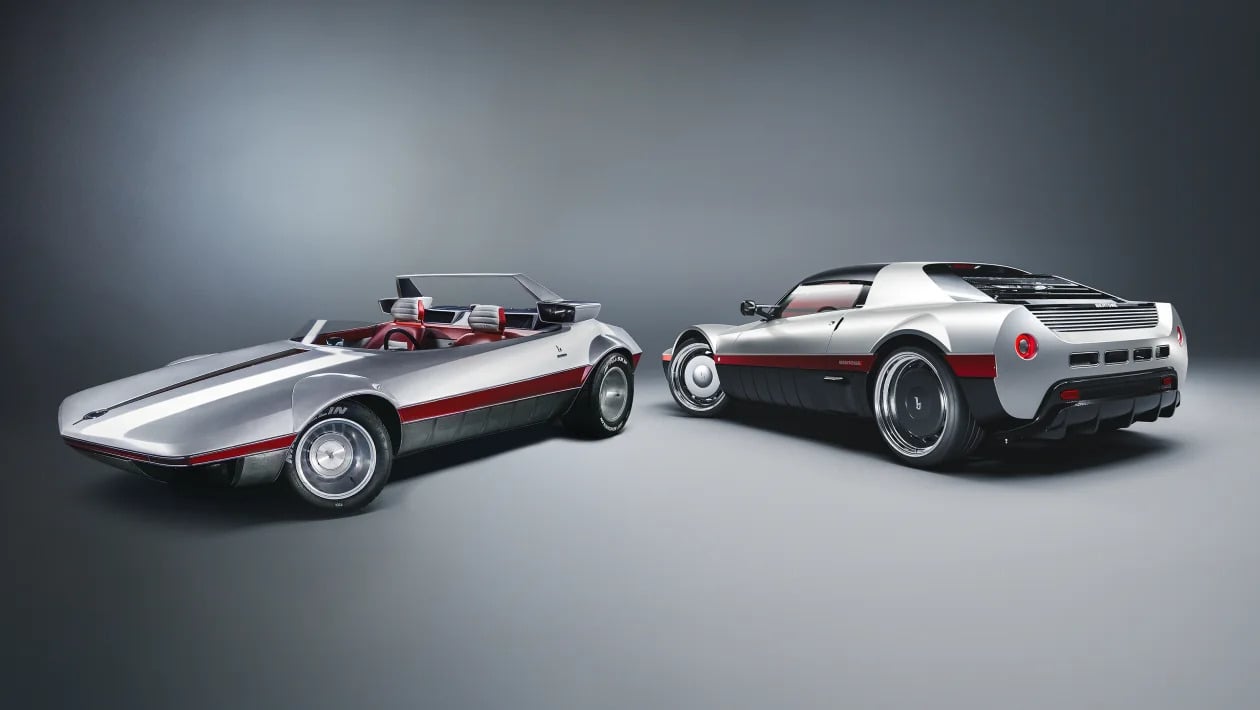
The Autobianchi A112 was presented at the Turin motor show in 1969, and while never intended for production, did influence the design of several production cars, most notably the Fiat X1/9 and Lancia Stratos. It was fitted with a mid-mounted 1.1-litre Fiat-sourced inline four-cylinder engine sending drive to the rear wheels via a four-speed manual gearbox.
Bertone’s modern take on Gandini’s 1969 original design features a carbon-fibre body draped over a lightweight bonded-aluminium chassis. Power comes from a mid-mounted Toyota-sourced 3.5-litre supercharged V6 – the same engine found in the Lotus Emira – making 350kW and 470Nm. A six-speed manual sends those outputs to the rear wheels and, thanks to its 1057kg kerb weight, the 0-100km/h benchmark sprint is dispatched in just 4.1 seconds.
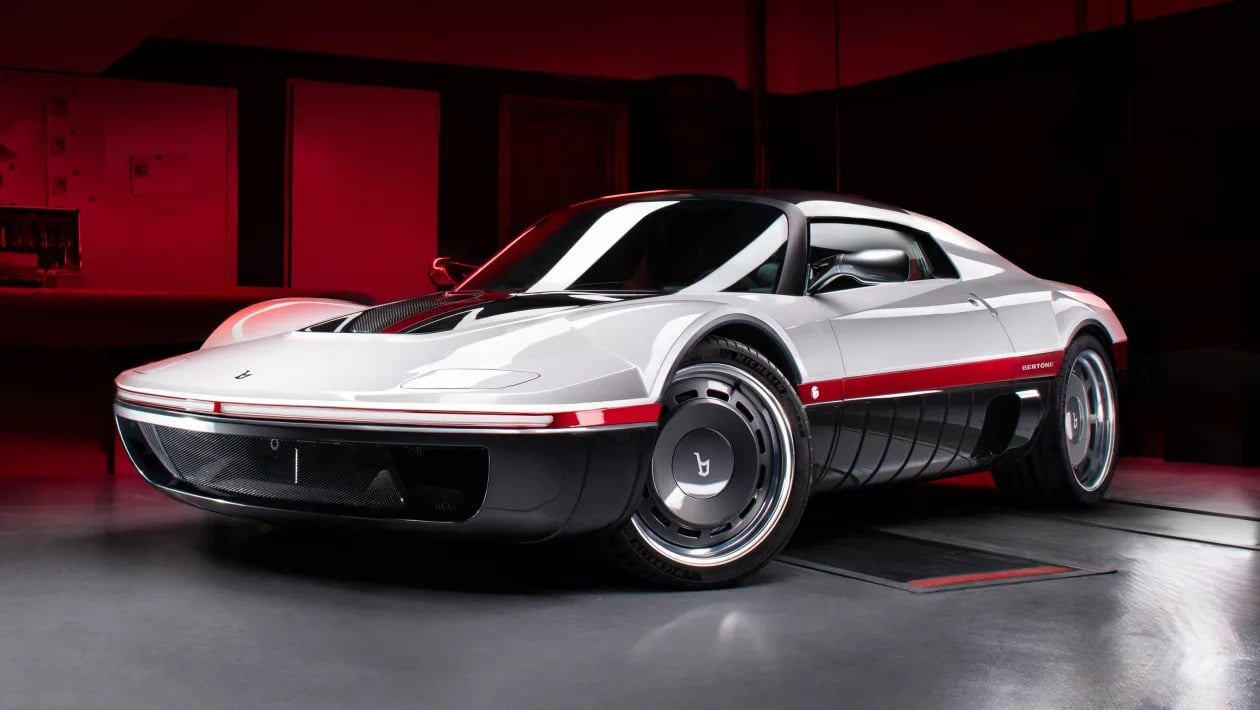
Two versions will be available to order – a Targa, that features removable roof panels or the Barchetta, a roofless speedster that remains true to the design of the original concept.
Notable features include pop-up headlights, sculpted into a sharply-raked bonnet and forged aluminium wheels – 18-inch up front and 19s at the rear – that pay more than a passing nod to the wheels found on Gandini’s 1969 concept.
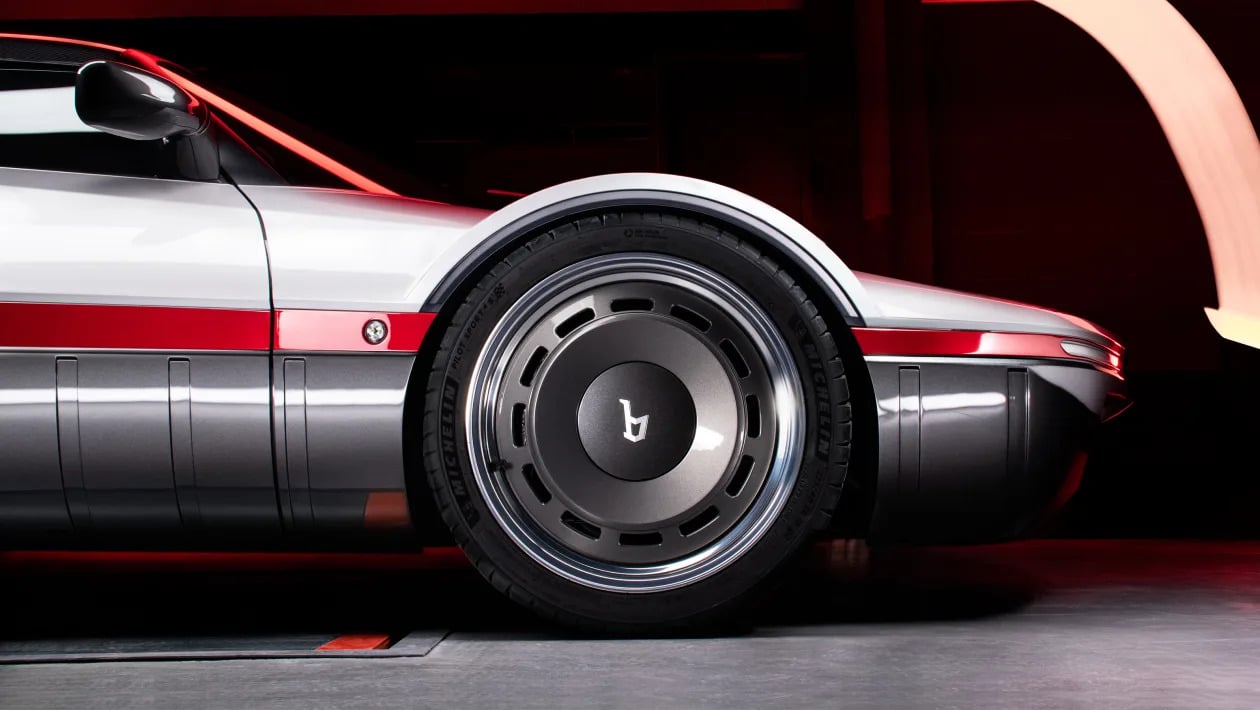
“Our intention from the beginning was to translate the essence of the 1969 Runabout into a car that feels entirely relevant today,” said Bertone’s design lead for the project, Andrea Mocellin. “The process didn’t start from styling but from spirit: the nautical inspiration, the playfulness, and the purity of purpose that defined the original.”
The interior features plenty of handcrafted leather draped over the dash and carbon-fibre seat shells, while machined aluminium components, including the manual shifter and exposed gear linkages, play to the Runabout’s analog philosophy, as does the two-spoked steering wheel devoid of any switchgear. A dash-mounted marine compass pays homage to the original concept.
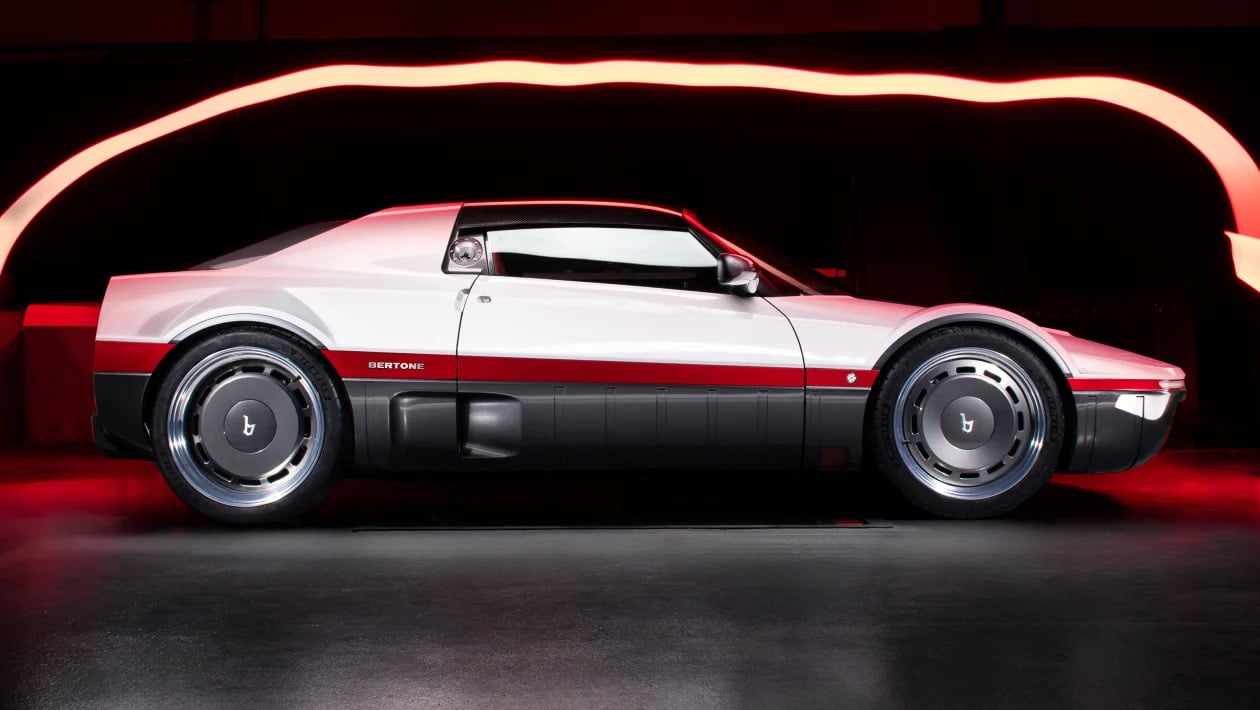
“We approached history not as a set of shapes to copy, but as a set of values to reinterpret,” said Mocellin. “The 1969 Runabout was audacious, experimental, and refreshingly simple – those qualities became our north star.”
The Bertone Runabout will be shown to the public for the first time at this week’s Salon Rétromobile in Paris, France.
Since its introduction in 1963, the TAG Heuer Carrera has been closely tied to motorsport and the practical demands of timing at speed. Conceived by Jack Heuer and named after the legendary Carrera Panamericana road race, the original watch was designed with clarity above all else. Wide dials, clean layouts and balanced proportions defined a chronograph meant to be read instantly, even in the most pressurised conditions. Those principles have remained central to the Carrera line ever since.
Over the decades, the Carrera has shifted with changing tastes while retaining its functional core. It became a familiar sight not only in the paddock, but also beyond racing, worn by collectors and enthusiasts who valued its restraint and purpose.
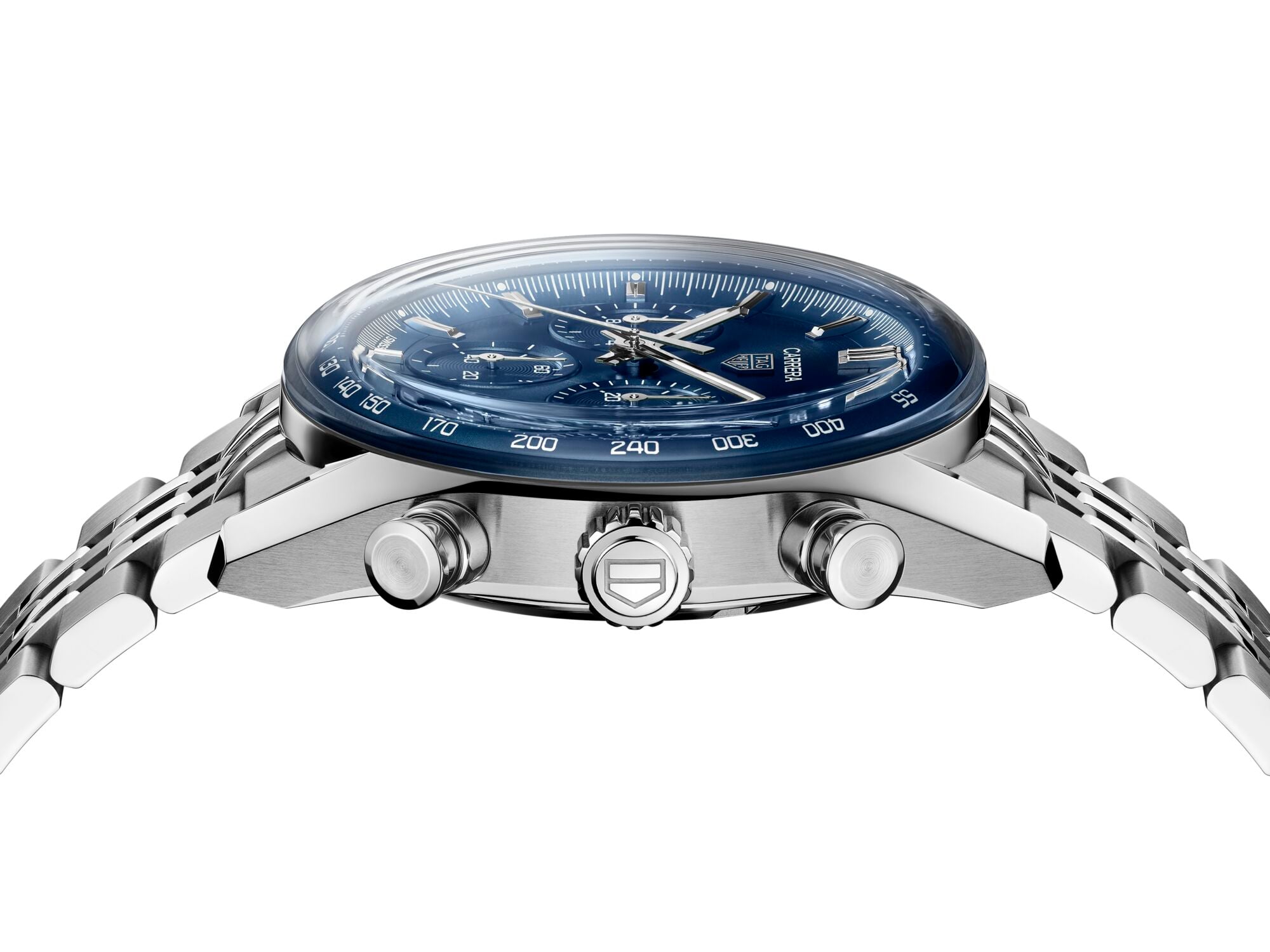
In 2023, TAG Heuer revisited one of the model’s most distinctive historical features: the so-called ‘glassbox’ crystal. Introduced for the Carrera’s 60th anniversary, this curved sapphire crystal flowed directly into the dial flange, creating a sense of depth while improving legibility.
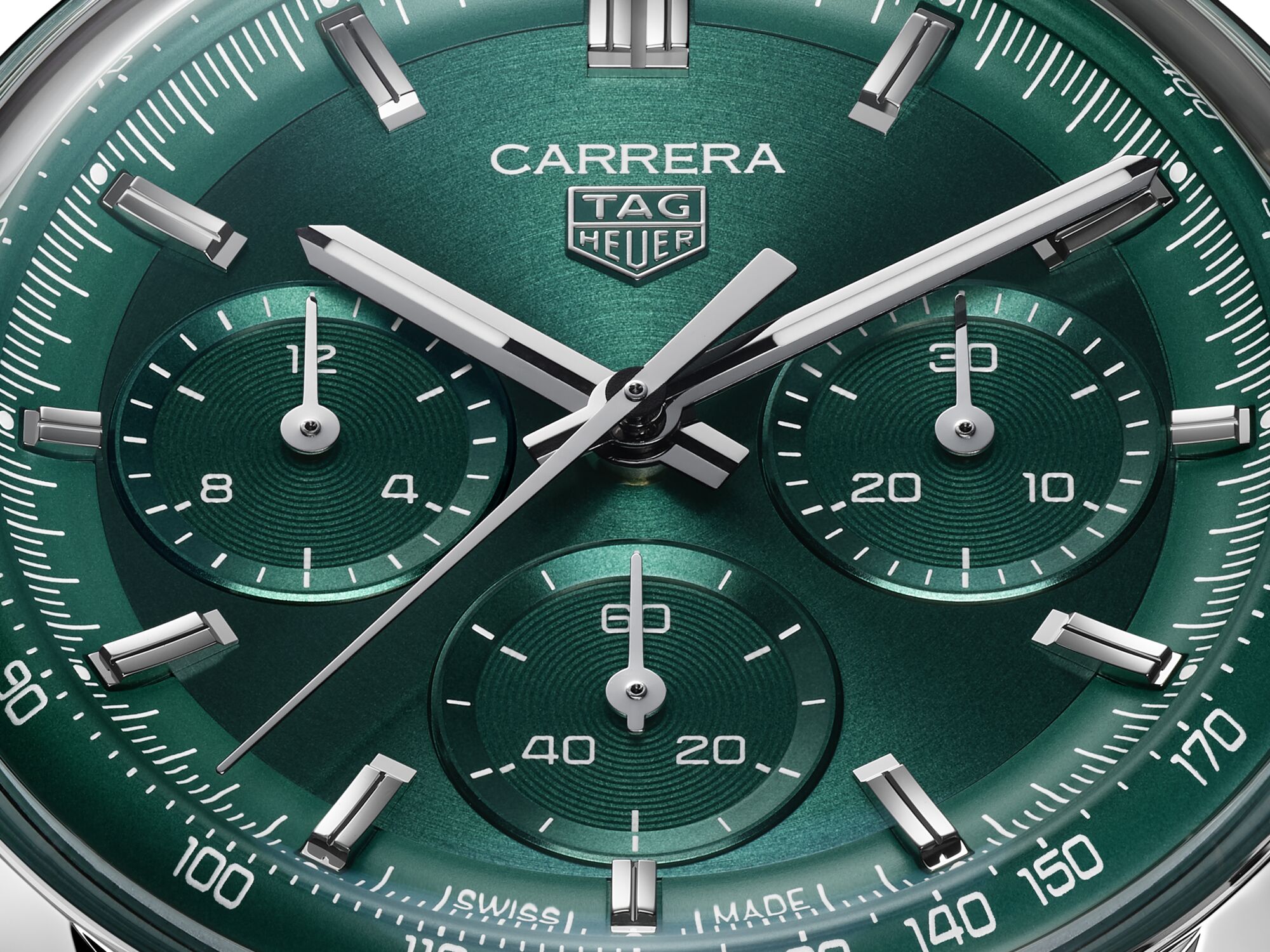
That redesign laid the groundwork for the latest addition to the collection, the TAG Heuer Carrera Chronograph in 41mm. Positioned alongside the more compact, heritage-leaning 39mm version, the new model offers a broader stance and a more contemporary feel. Rather than replacing existing references, it expands the range, giving the glassbox concept more presence on the wrist.
The defining feature remains the crystal. Its pronounced curvature extends smoothly over the dial, catching light from multiple angles and drawing attention to the layered construction beneath. The dial itself is stripped back, with no date window to interrupt the layout. Monochromatic sub-dials sit cleanly against the main surface, emphasising the chronograph’s timing function and reinforcing the Carrera’s long-standing focus on readability.
TAG Heuer launches the 41mm Carrera Chronograph in three variations, each with a distinct character. The blue dial is the most restrained of the trio, finished with a circular brush that gives the surface a muted sheen rather than a high-gloss shine. Sub-dials are rendered in matching tones, while rhodium-plated hands and indexes filled with white Super-LumiNova ensure the watch remains easy to read in low light.
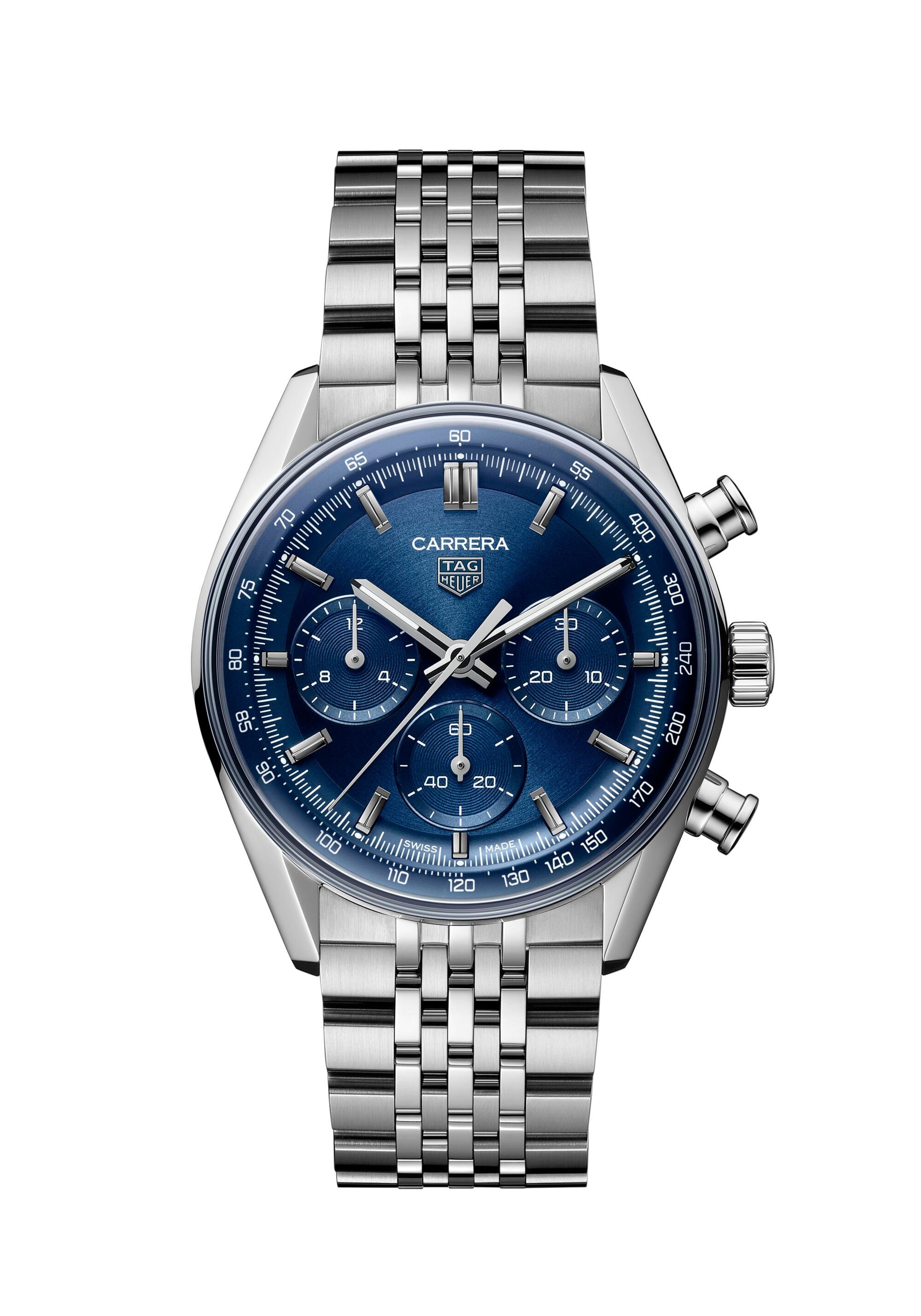
The green version introduces a bolder colour that has increasingly become part of TAG Heuer’s modern identity. The tone-on-tone approach keeps the design cohesive, with subtle shifts in shade providing contrast rather than sharp breaks. As light moves across the curved crystal and dial, the colour changes character, giving the watch a sense of motion even at rest.
For those drawn more directly to the brand’s racing roots, the black dial offers a sportier alternative. Red accents on the chronograph hands and outer scale provide clear visual cues, recalling traditional motorsport colour coding without overwhelming the design. The effect is deliberate and functional rather than decorative.
All three models are fitted with a seven-row stainless steel bracelet, a modern reinterpretation of the classic beads-of-rice style. The design balances flexibility and structure, contributing to comfort while complementing the Carrera’s refined case.

Inside, the Carrera Chronograph is powered by TAG Heuer’s in-house TH20-01 movement. With an 80-hour power reserve, column wheel and vertical clutch, it is engineered for consistent chronograph performance. A sapphire caseback reveals the movement’s architecture, underscoring the technical emphasis behind the clean exterior.
Subtle details link the watch back to the collection’s heritage. A small Victory Wreath engraving on the lug nods to achievement and endurance, themes that have followed the Carrera since its beginnings. With this reworked chronograph, TAG Heuer continues to refine a design that has always prioritised clarity and purpose, proving that evolution, when handled carefully, can strengthen an icon rather than dilute it.
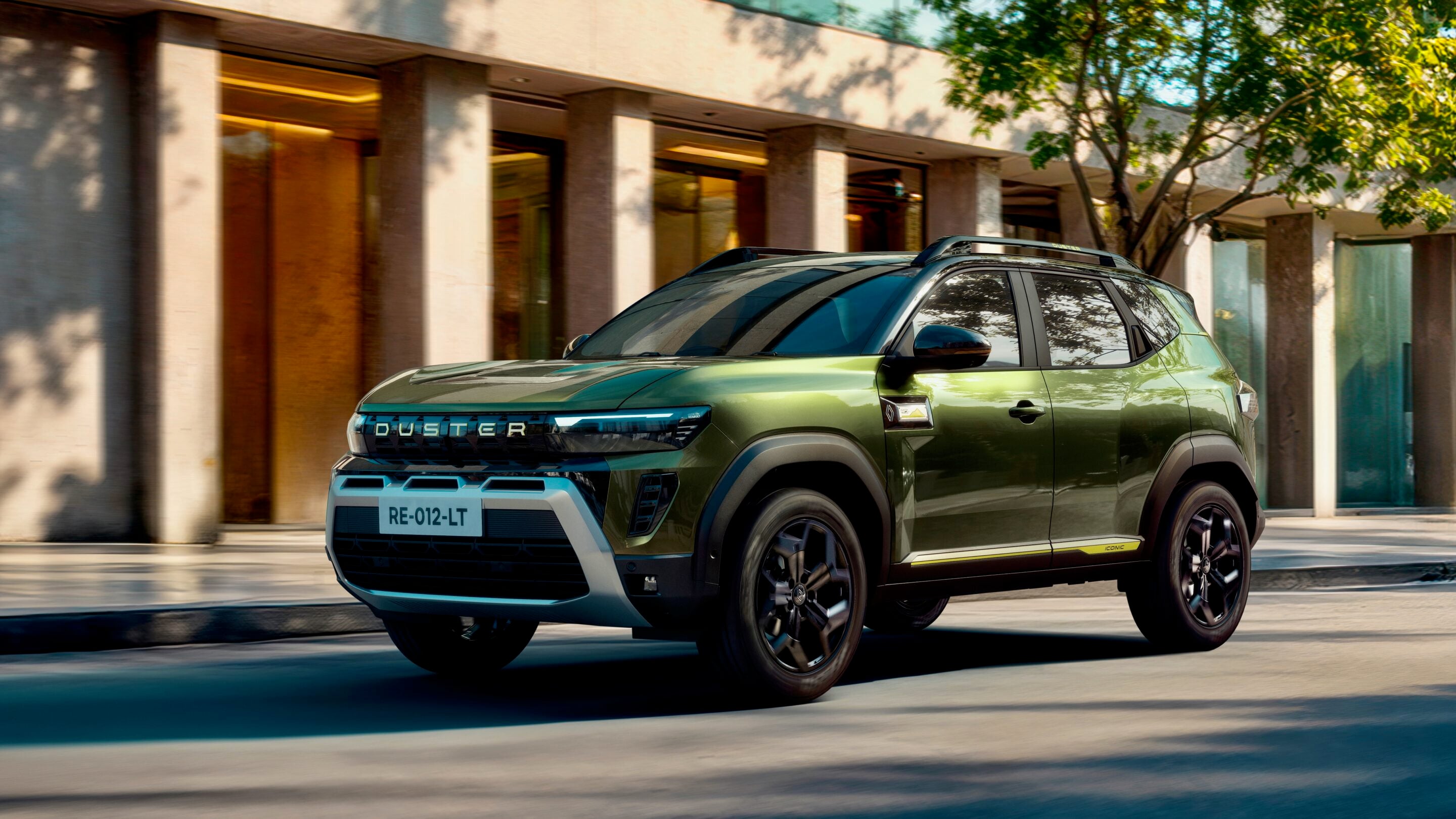
The Renault Duster small SUV has been on sale in Australia for almost 12 months, but a slightly different version has just been revealed for the Indian market. Due to go on sale there later this year, the previous-generation Duster was a strong seller for Renault India with over 200,000 units sold.
The next-gen Duster for the subcontinent has received new styling, a new interior and more features compared with the European model to appeal to Indian buyers.
The Indian Duster’s makeover starts with revised exterior styling with new front and rear lighting units (including a new full-width light bar), new bumpers, different colour options and side badge and graphic on the front doors. It’s the same size as the European model, though measures 40mm taller for greater headroom.
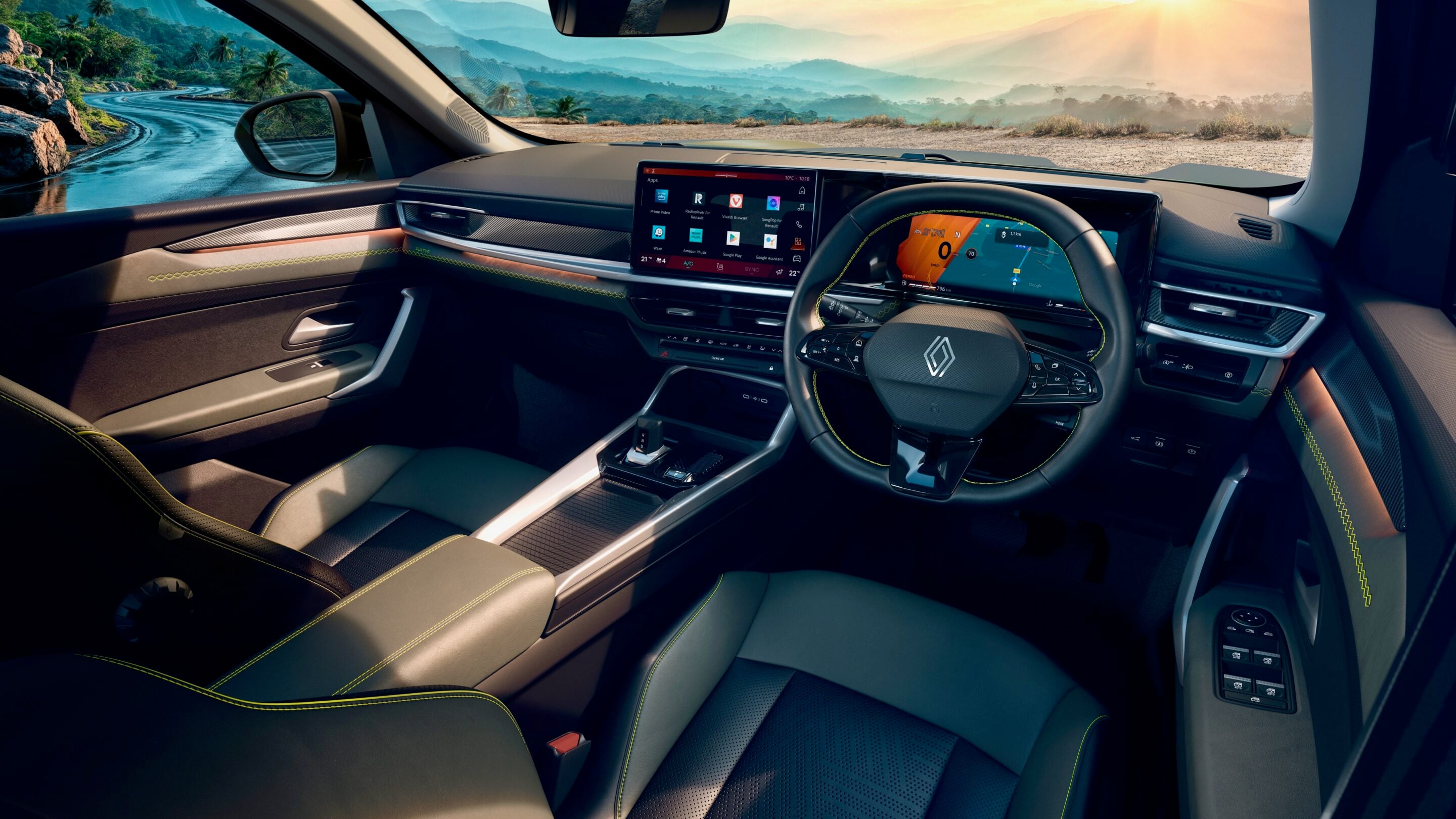
Inside, the Indian Renault Duster receives a new dashboard with new twin 10-inch screens, Google software with Gemini AI and higher-quality finishes throughout like soft touch points on the dashboard. Synthetic leather upholstery is seen on the high-spec car in the press photos, while an electric tailgate, ventilated front seats and panoramic roof – all features not available in the European model – are also available. Renault says the Indian Duster features 17 active safety features as well.
In India, the Renault Duster will be offered with three drivetrains: 74kW 1.0-litre turbocharged three-cylinder and 118kW 1.3-litre four-cylinder turbocharged petrol engines, as well as a 118kW 1.8-litre four-cylinder hybrid. All engines send power to the front wheels only, with no all-wheel drive option yet available, unlike the European Duster.
The Indian Duster comes from Renault’s new assault on markets outside of Europe. In 2025, it sold 1.6 million cars in Europe – but only 616,800 cars outside of it, a number that it wants to grow substantially. India is one large potential area of growth for the company, as is North Africa and South America.
In Australia, Renault’s sales slid 17.8 per cent to 4569 cars in 2025 compared with 2024, though new products like the Duster and Scenic E-Tech electric mid-size SUV will likely boost numbers in 2026.
Renault Australia is yet to say if the Indian Duster will be sold locally, though it will replace the European Duster in some markets such as South Africa, so it could be possible eventually.
Ford’s long-anticipated competitive debut at the Meguiar’s Bathurst 12 Hour will extend beyond the racetrack, with Mustang owners set to play a visible role across the event weekend.
The Blue Oval will field a Mustang GT3 in Australia’s international endurance race for the first time, entered by HRT Ford Racing. Supercars star Broc Feeney will share driving duties with experienced GT racers Christopher Mies and Dennis Olsen, both former winners at Mount Panorama.
Away from the racing action, Ford has confirmed the introduction of its first Mustang Corral at the Bathurst 12 Hour. Located at The Chase, the dedicated area will be open to Mustang owners across the three-day event, marking the first time the concept has appeared in Australia. Similar corrals have been a fixture at major Ford and Mustang events in Europe and the United States.
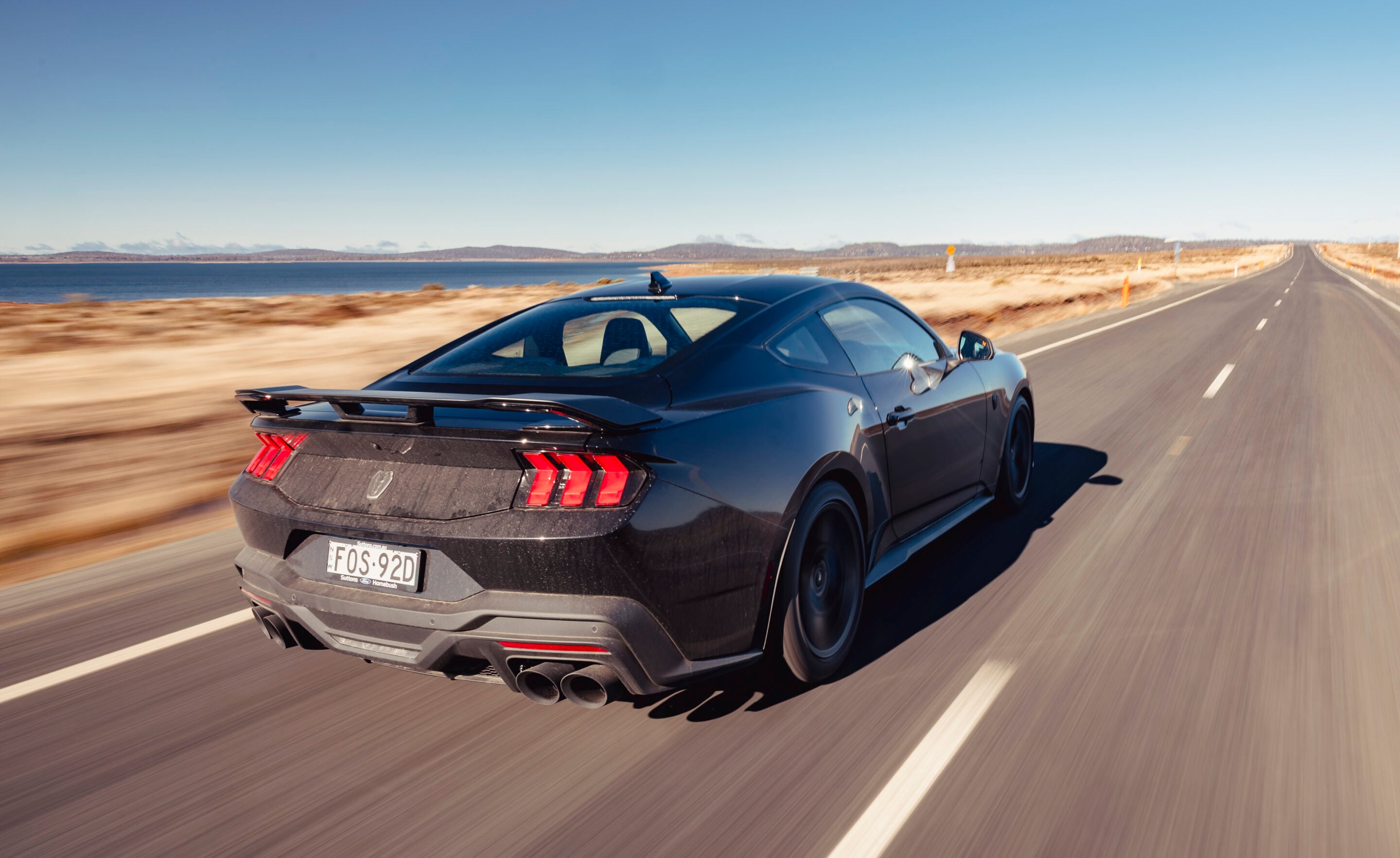
Event Director Shane Rudzis said the addition reflected the strong local interest surrounding the Mustang’s Bathurst appearance.
“There’s a lot of excitement around the Mustang’s debut in the Bathurst 12 Hour, and this gives owners a chance to be part of that moment,” Rudzis said. “The Chase will effectively become a Mustang hub across the weekend.”
The Mustang Corral will operate as a designated gathering point for owners, positioned at one of the fastest sections of the Mount Panorama circuit. From there, attendees will be able to watch the Mustang GT3 compete against a full field of international GT3 entries.
Owners will also have access to a Ford Racing Mustang Owner’s Lounge, available exclusively to Mustang drivers and their guests. The space will offer refreshments and a shaded area during the race.
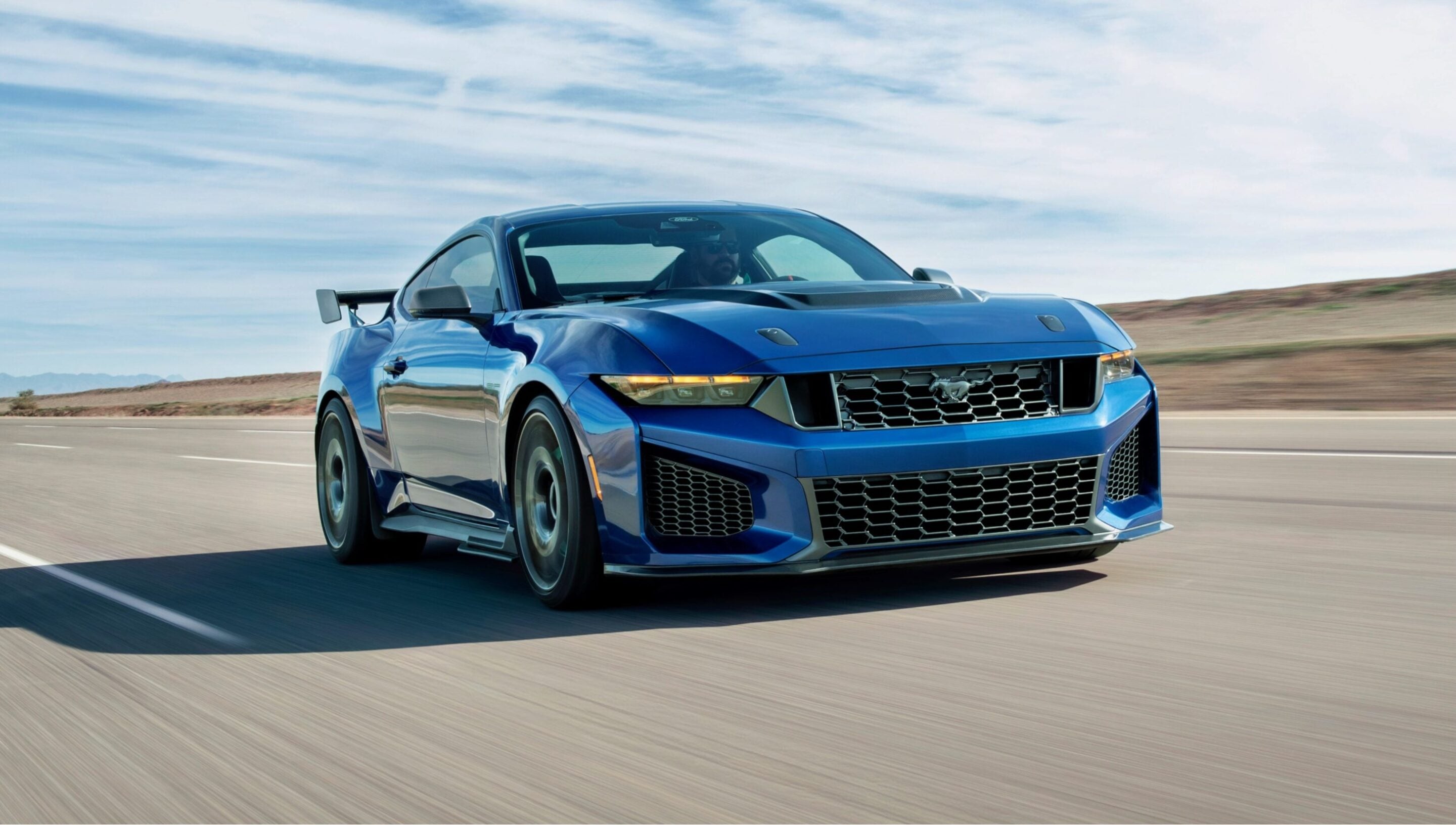
A limited number of Mustang owners will be able to park and display their vehicles in a premium corral area next to the lounge. These vehicles will be granted tunnel access to reach the infield location.
Additional Ford Racing vehicles are also expected to be displayed, highlighting the brand’s ongoing involvement in Australian motorsport.
The 2026 Meguiar’s Bathurst 12 Hour will be held from 13–15 February. Mustang owners can pre-register for updates and early access to the Mustang Corral via the event website.
In the days when Holden was making great cars, the key engineering team included a relative
youngster called Rob Trubiani.
He lived and a worked through some excellent times and landmark cars under the red lion brand, and even set a lap record at the Nürburgring in a Commodore SS ute.
Now he has a new challenge. So, before you ask – because we did – he doesn’t see himself as a turncoat for abandoning Holden and everything that made it Australia’s heartland brand.
Trubiani reckons he’s now doing an even-more-important job for Aussie motorists by helping to create a new generation of worthy Chinese challengers. He has joined GWM as it embarks on an ambitious mission to become a top-five brand inside the next few years, burying its local roots as Great Wall Motors under a stream of new badges and models for Australia.
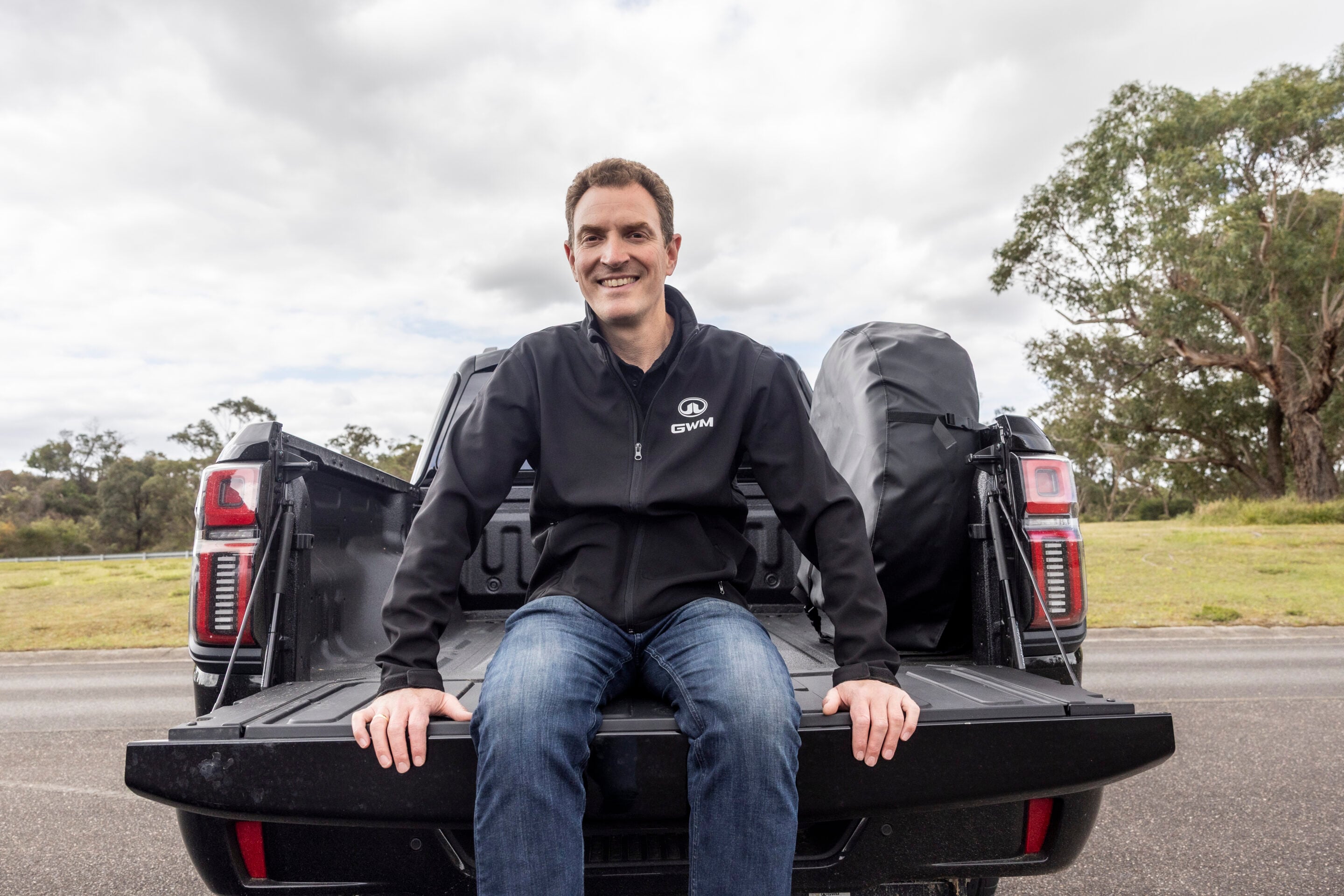
“Of course I’m not a turncoat. How could you say that?” Trubiani fires back indignantly when his loyalty is gently probed by Wheels. “Part of the reason why I got on board with GWM was to make our cars better. The same as I did at Holden.”
The first example of his new work is GWM’s Tank 300, a mid-sized four-wheel drive, which has just had the Trubiani treatment in what is described as the AT1 – Australian Tune #1 – suspension package. Wheels has briefly driven the updated Tank and it’s good, not just for the Tank but for the prospects at GWM in Australia.
So Trubiani has changed branding and his company car, but his life still revolves around the Lang Lang proving ground that was Holden’s spiritual home and now hosts GWM.
“What I’ve been doing for 30 years is tuning cars for Australian and New Zealand customers, and I’m continuing to do that,” Trubiani says. “I’m always thinking about the person who will buy the car. It’s not just about tuning cars that I would like to drive, but having a good understanding of what’s needed for Australia. We’re taking that knowledge and continuing to put it into the ANZ market, just with a different brand.”
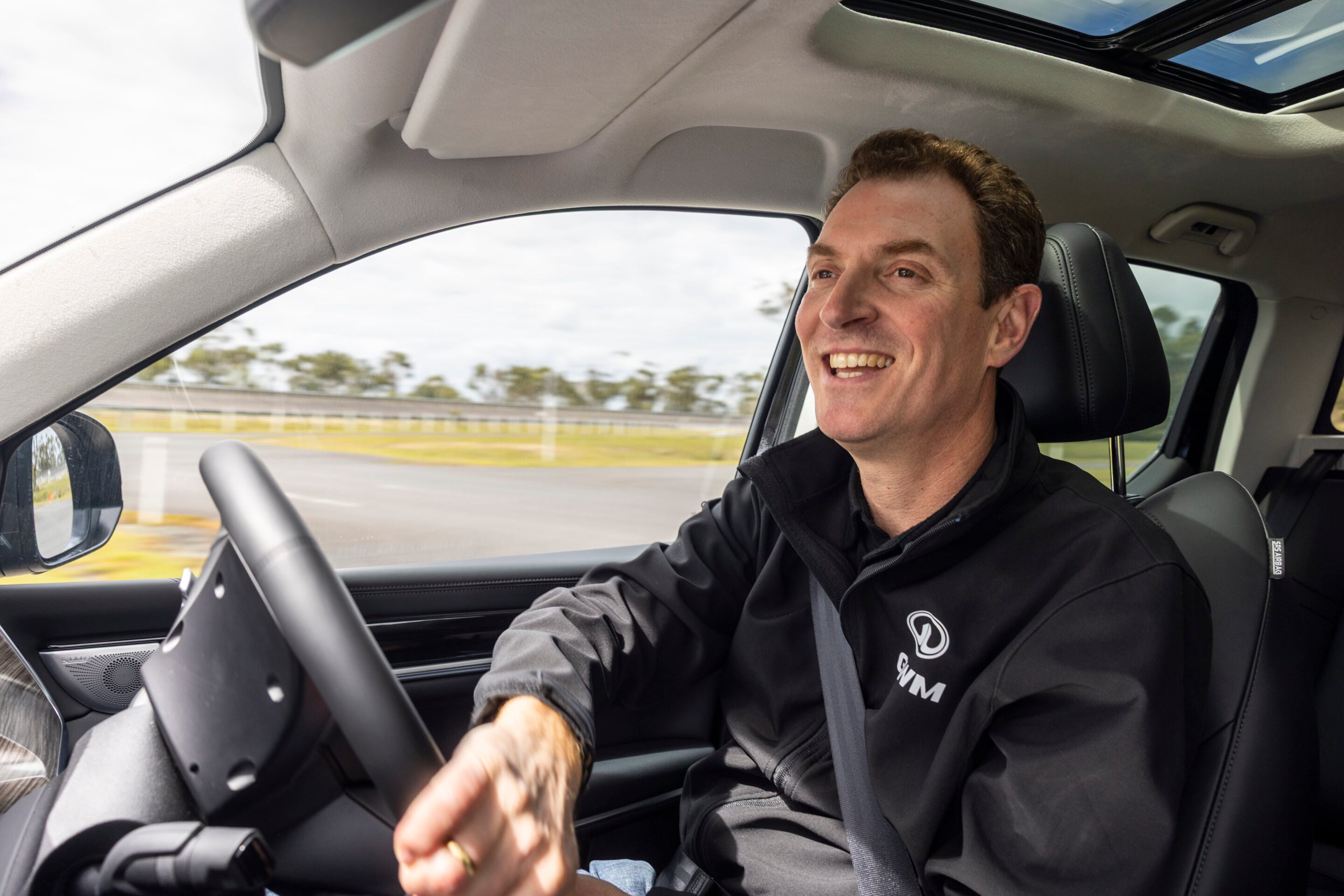
For Trubiani, a 50-year-old born-and-bred Melburnian who is married with a single son, improving
cars is a family tradition.
“My dad worked at Holden for more than 40 years,” Trubiani recalls. “He worked with the chassis team. One day he brought home a chassis development Commodore. In the car was the logbook of all the changes the engineers had been making.
“I was excited to be in the car. Then I started to read the book, cover-to-cover, and I asked my dad
‘You mean you get paid to do this?’
“I decided that’s what I wanted to do for a job. I was nine. I set my sights on doing vehicle dynamics for Holden … and that’s what steered me right through schooling. I knew the end game.”
His ambition took him through mechanical engineering studies at RMIT before a successful
application to Holden. “I worked bloody hard. Did I get super-crazy results? Probably not. But I was driven and had a passion.
“I first came to Lang Lang when I was still at uni. At the end of second year, which was early 1990s, I did three months with Holden as a student. Then I came back at the end of third year for three months. After fourth year I started with Holden.
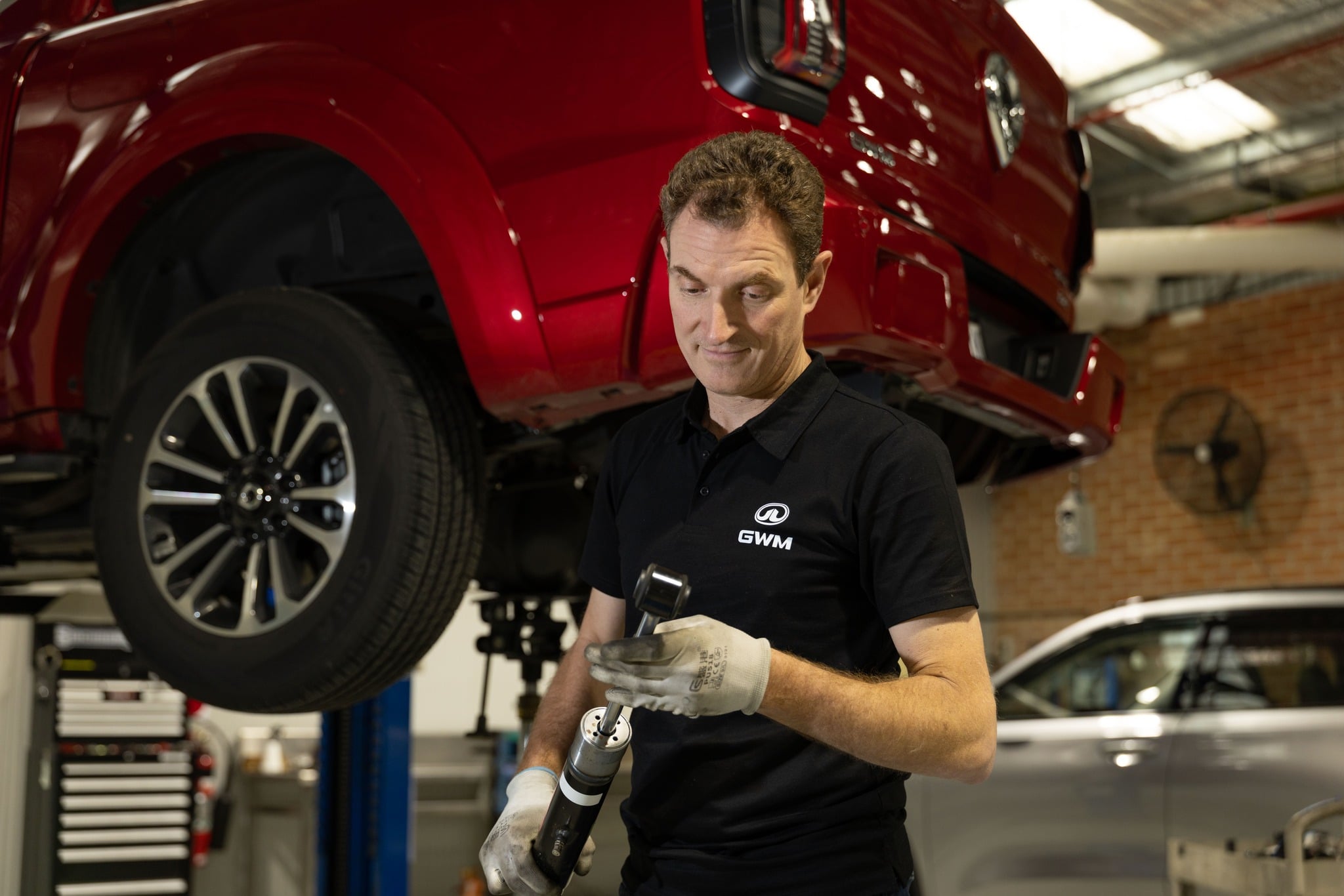
“They were guiding me. The got me involved with the testing.”
Away from classrooms and computers, Trubiani had a rare superpower that eventually turned him into a Holden hero. He had a sublime driving ability. A lot like Peter Brock. He could coax speed from a car without abusing it, allowing him to do analysis and assessment from a relaxed and objective perspective.
“There are those who are just naturally talented drivers, who you can then train in the art of vehicle dynamics,” he observes, “and then there are people who will never get it. No matter how you show them, they will never get the fundamentals. Luckily, I fall in the first group.
“I’m just fortunate that the job brings with it lots of enjoyment. Driving is my passion. While there is lots of seriousness around what we do, and a whole lot of safety around that, it’s what you love doing.”
With plenty of natural talent, was there a chance for Trubiani to go racing?
“I floated the idea when I was at uni but I never did it. I got a job straight out of uni at Holden and every day was testing cars and doing cool stuff.
“Racing is fun, but it’s only 20 minutes. Short stuff. But in development work, not only are you driving cars fast, you are also satisfying the engineer side of yourself. You want to get the best out of the car.”
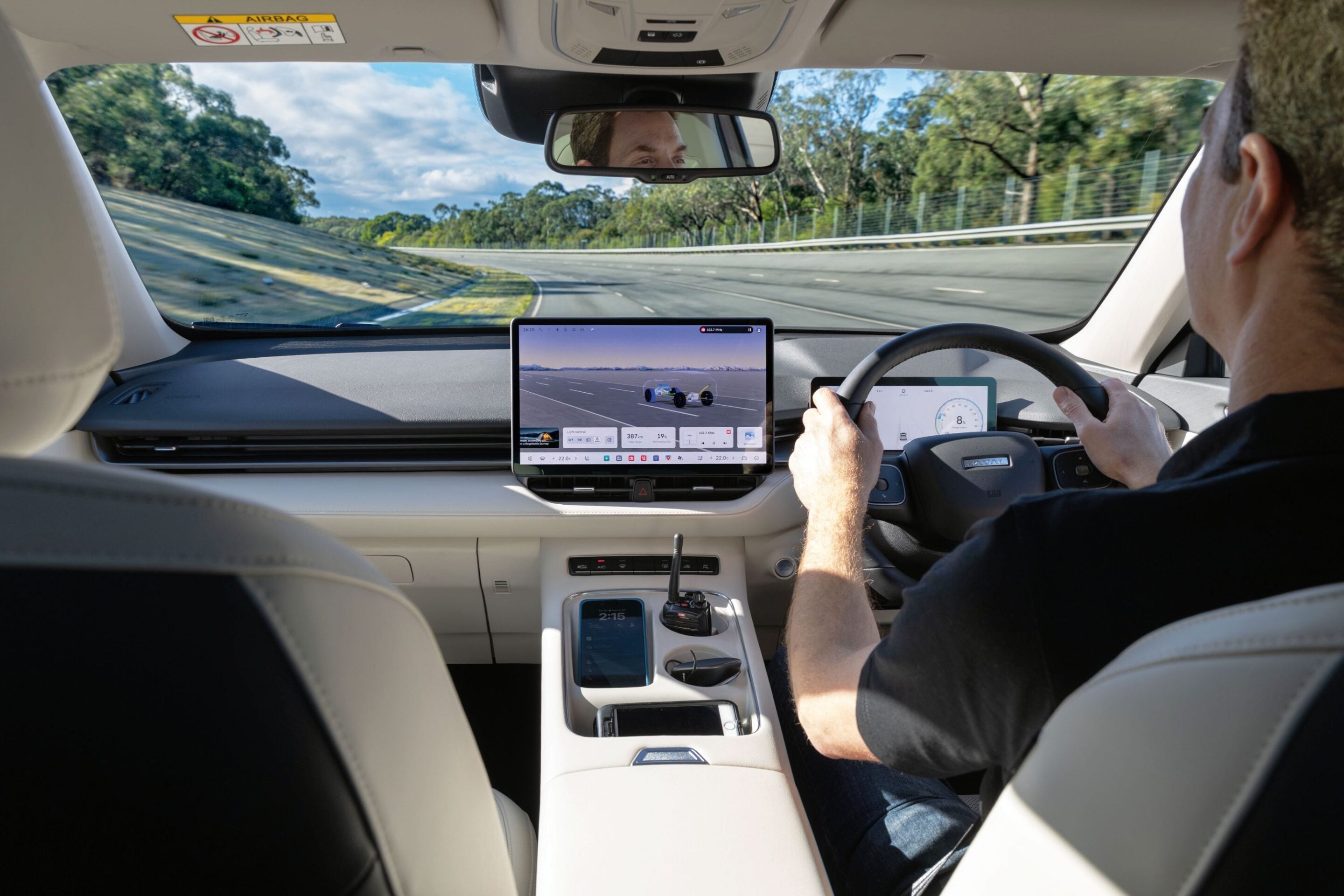
How does he explain what chassis development is actually about?
“People think when they drive their car on public roads, and do a little slide, they are on the limit. But usually the car’s limit is away above that,” he says. “I’m pushing the car all the way up to the limit. That’s my job. You’re got to be completely comfortable in what is happening. You have to be assessing, not holding on.”
But it’s not just about speed, or a fast time around the ride-and-handling circuit at Lang Lang. It’s about making a car which is relaxing and rewarding to drive, as well as giving it a certain ‘flavour’ to match the brand’s ambitions. It was easy and obvious during the Holden days, but what about GWM?
“One of my visions is to have a very clear direction and to drive all our cars towards that family feel.
“Ultimately, and without being very specific, it’s just giving the car a really secure and solid feel. We want to reassure all drivers and reward the confident drivers.
“GWM has given me awesome freedom. They believe in what I’m doing. They are very, very good in giving me the freedom to deliver what I need to deliver.”
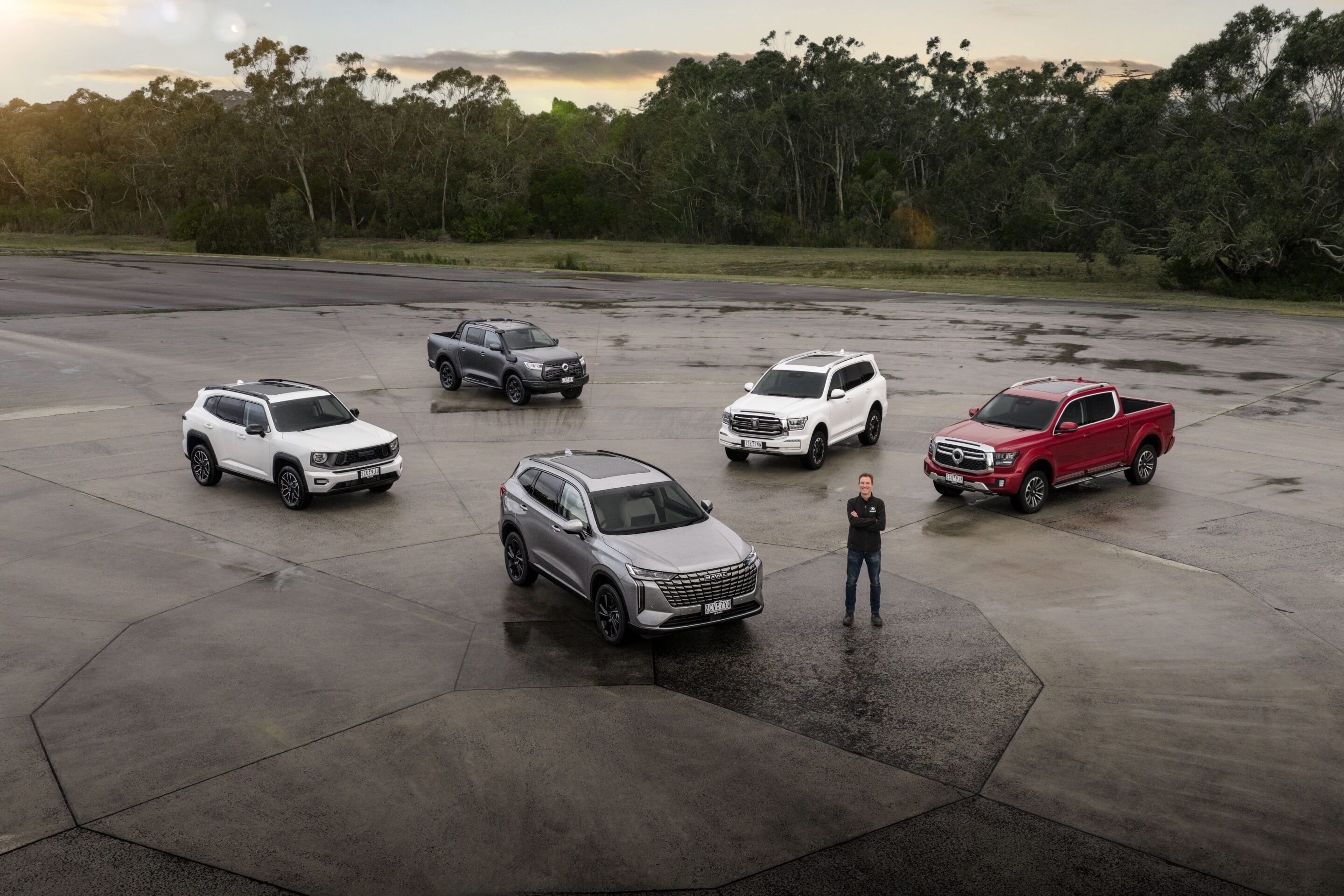
The alphabet soup of GWM is translated into various brands and different target buyers. It’s a very full dance card, but Trubiani says he always focusses on the target owner.
“There is the ute series with Cannon and Cannon Alpha, Haval as the family SUVs with Jolion, and then the Tank series for the serious off-roaders. And then there is Ora, which is electric stuff, and Wey is premium luxury.
“Ultimately, it still comes back to how the driver feels behind the wheel and how comfortable the
passengers are in the car. If you can make your car shine, and I’m hoping we will, then you will be seen to be better in the customer’s eyes.”
So, as an engineer tuning for buyers, does he have tips for a shopper on a showroom test drive?
“They need to assess how accurately they can place the car on the road because, to me, that’s part of giving you the confidence in the car. The minute you’re chasing the car – if its wandering – you lose confidence. Beyond that, it’s just how comfortable you’re feeling in the car. Ride comfort is important. Then things like noise are important.”
A good car, he says, can shine from the outset: “I’ve had … instances where I’ve driven probably 20 metres out of the workshop and known a car feels good.”
And the other extreme?
“I did get to drive a car that was very underwhelming. It was a Japanese brand. I don’t want to say the name, because I don’t want to bag a competitor.”
Through his time at Holden he did countless laps at Lang Lang and a couple of cars were stand-outs.
“I have vivid memories of driving a black manual VS SS. It was a hoot. Just before I finished, I was lead development engineer for the C8 Corvette. Fun. We also had a CTS-V Cadillac, which was frighteningly quick.”
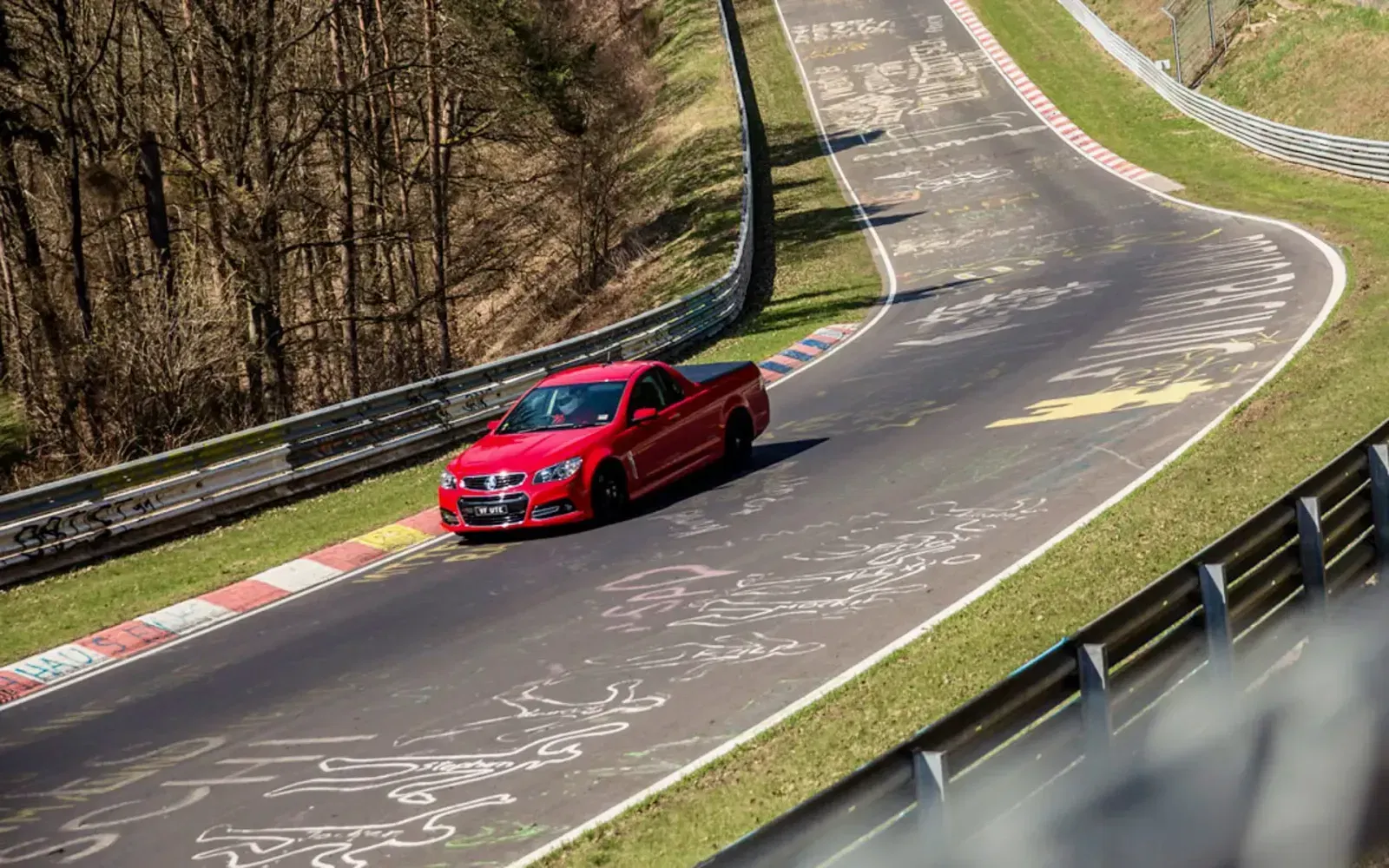
His most famous laps, though, were at the Nürburgring as he set a lap record for a commercial vehicle – which still stands – in a Commodore SS ute (above). He already had his special ‘Nürburgring License’ from GM after testing the Chevrolet Camaro and Pontiac G8 in the USA, then running the CTS-V at the ’ring.
“It was a VF SS-V Redline ute. It was the car I used for the suspension and steering development work. It was good fun. It was a production car. It was completely stock. The only thing we did was remove the speed limiter.”
Trubiani left Holden in April 2020, and did engineering work before being recruited to GWM. Despite the huge changes in the 2020s, he is still committed to the future of cars.
“Cars are very reliable these days. You don’t see many broken down or overheating beside the road. Cars have progressed and we’re using better materials, and they are safer than they’ve ever been.”
So, is his job any different or any less important, particularly with the move towards autonomous cars and advanced driver assistance?
“I think it is no less important than it was. I try and get the car fundamentally stable without the safety systems in place. I like to try and tune the car not to rely on the safety systems. I want fundamental stability first-up, and then ADAS is the safety net.”
It’s early days with GWM but there is already talk that Trubiani’s work could be adopted beyond the ANZ region, as Kia has done with the tuning work by Grame Gambold, previously profiled in Wheels.
“Part of being in a global company is that it gives us that flexibility. As GWM are expanding globally I think that will definitely be considered,” Trubiani says. “It would be nice to have some cars that really get people excited.”
So the branding has changed, from Holden to GWM, but the mission statement is much the same one. One other thing has definitely not changed for Trubiani.
“Every day at Lang Lang is good day,” he says.
This article first appeared in the January 2026 issue of Wheels. Subscribe here and gain access to 12 issues for $109 plus online access to every Wheels issue since 1953.
Station wagons, once the domain of proudly suburban mums and dads everywhere, have been reinvented for these SUV infested times. Once considered frumpy and utile, the only reason anyone would have needed a station wagon was to lug around a growing family and still have space left in the back for all their stuff.
It’s the template today’s armada of SUVs adheres to with the added benefit of high-riding seating positions and the idea – if not entirely the reality – that SUVs can go where mere cars and wagons can’t.
But despite the ever-growing demand for SUVs, station wagons – or estates, tourers, sportwagons, call them what you will – remain a part of the automotive diaspora.
The modern station wagon is just as likely to blend supercar-like performance in a family-sized package as it is to imbue us with nostalgia for a different time, a time when wagons filled driveways all over the world.
Looking back through history brings to light just how vital the station wagon was to the world’s carmakers. From technological innovation to gargantuan dimensions and yes, sometimes even shock-and-awe supercar numbers, the humble wagon continues to defy convention in the face of the prevailing consumer sentiment.
This then, is how we arrived at this point in station wagon history with 10 of the most iconic, influential and revered estates – in no particular order – to ever don a long roof.
Audi RS6
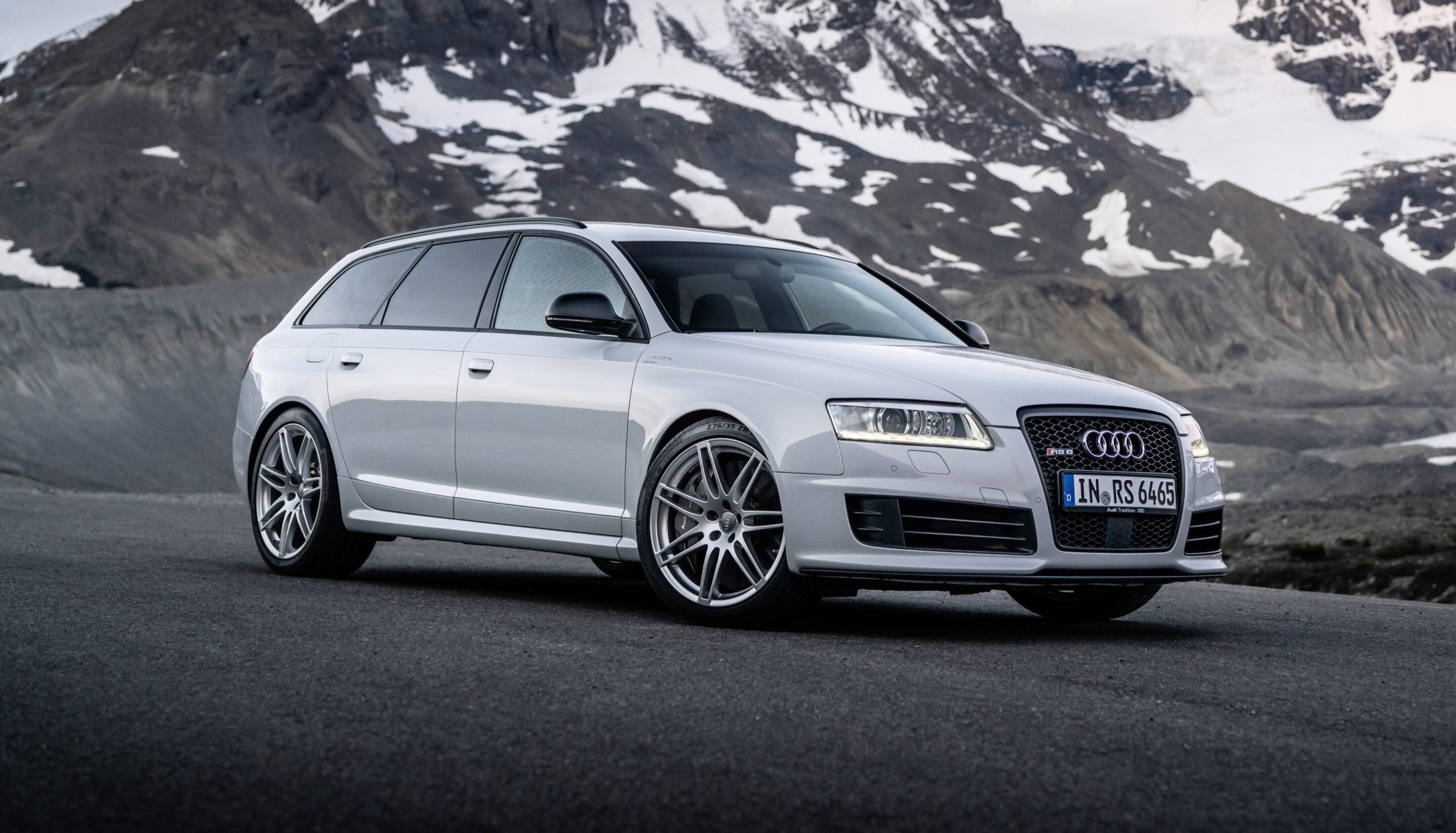
It’s testament to the allure of the Audi RS6 that by the time the third-generation model rolled around in 2012, the sedan version had been consigned to the RS back catalogue, leaving what is arguably the Apex predator of station wagons everywhere – the RS6 Avant.
There’s no mistaking today’s RS6 Avant for anything else, not even its tamer A6 Avant donor car – not that there is left much for the regular A6 wagon to donate, the only common parts being the front doors, roof and tailgate, the rest all bespoke to the RS6.
Behind its low, wide and menacing profile lies the beating heart of a thunderous twin-turbo V8, the same V8 serving multiple masters across the Volkswagen Audi Group multiverse.
And yes, today’s C8 generation RS6 Avant might be the quickest and most powerful of all, that came
before, with a 0-100km/h sprint claim of 3.6 seconds accompanied by a symphony of combustion that makes a mockery of the EV zeitgeist, it’s 2008’s C6 generation that’s truly in the Pantheon of Audi RS6 greatness.
The early Noughties was the age of the V10. Formula One raced with them, while carmakers built them. Every month, it seemed, yet another manufacturer would proudly show off its bent-10 creation. Lexus had one, so too Porsche, Lamborghini and BMW. In the US, Dodge couldn’t ignore the V10’s Siren’s call.
Audi too had its fingers in the V10 pie, put to work in S6, S8 and R8 models before seeking out new horizons in the RS6 Avant. It transformed what was already a bit of a sleeper car into the ultimate ‘Q’ car. The twin-turbo (yes, really) 5.0-litre V10 was good for 427kW and 650Nm, propelling the humble wagon from 0-100km/h in 4.6 seconds. And it was a humble station wagon, with not much in the way of exterior embellishments to distinguish it from lesser A6s. The very definition of Q car.
The RS6 Avant was, at that time, the most powerful Audi production car ever and while the generations that followed have become ever more powerful and faster still, none have the madness and the presence of the C6 gen RS6 Avant, which sits, arguably, at the apogee of the hot rod wagon world.
Mercedes-Benz S123 Estate
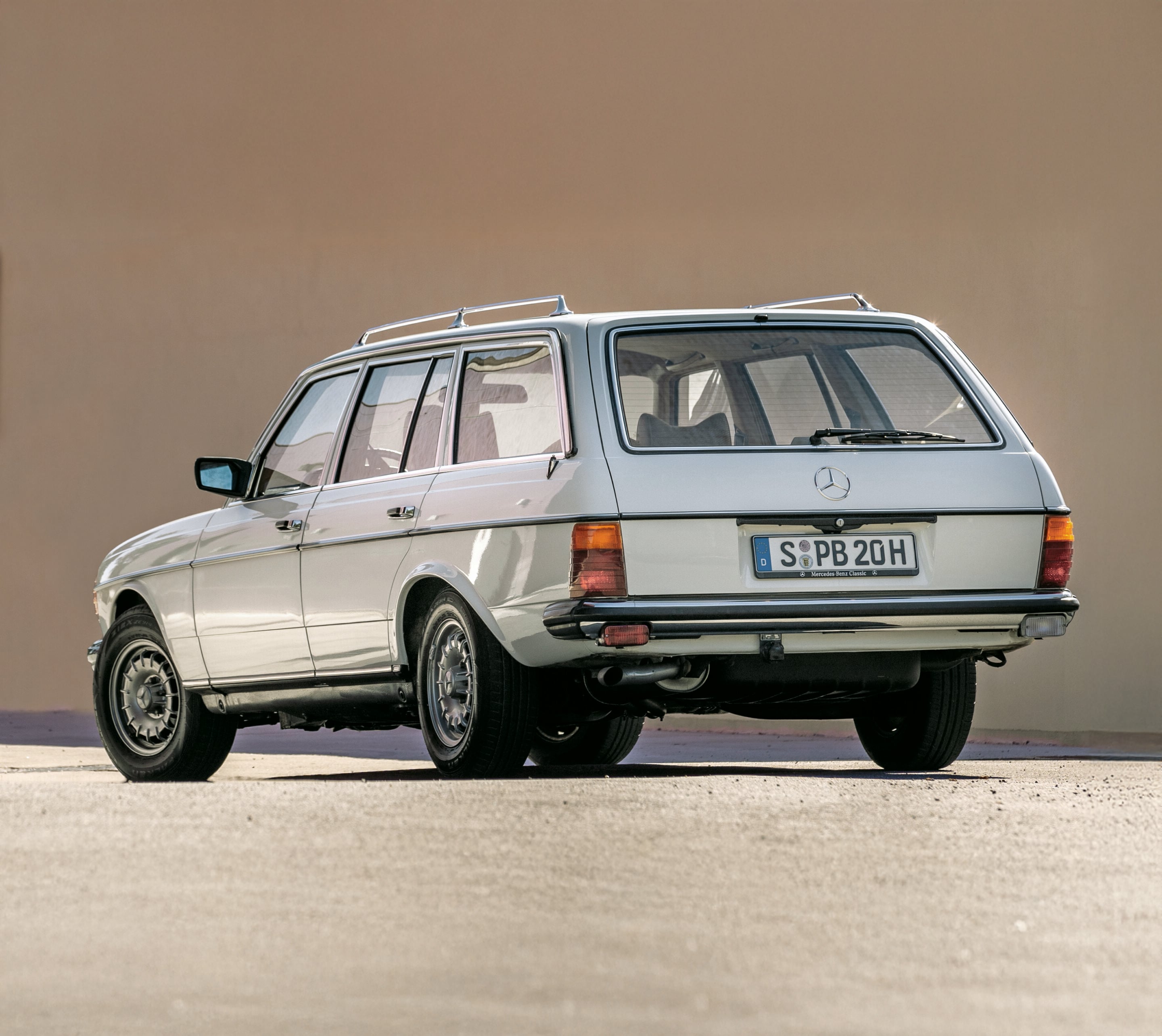
Words like ‘timeless’, ‘icon’, and ‘classic’ are bandied about all too easily in the automotive world, but in the case of the Mercedes-Benz W123, those words ring true.
Launched in 1975, the W123 – the progenitor to today’s E-Class – quickly established a reputation for durability and reliability combined with comfort and unparalleled build quality.
The sedan got the W123 train rolling in 1975 before Mercedes-Benz got adventurous and added a station wagon to the ever-expanding range that also counted coupes and long-wheelbase limos in its line-up.
The Mercedes-Benz 280TE (internal code S123) was an instant hit when it launched in 1978, bringing with it all the luxury hallmarks of the Mercedes brand in a spacious, practical and comfortable package. Oh, and in 2.8-litre petrol trim, it was the fastest and most expensive station wagon in the world in its day.
Mercedes-Benz hadn’t built an estate before the TE came along, Incidentally, the ‘T’ in ‘TE’ stands for Tourismus und Transport (Touring and Transport), but its immediate desirability (demand for the TE far outstripped supply) ensured that station wagons bearing the three-pointed star became an integral part of the German manufacturer’s future.
Various engine choices were made available – from miserly diesels to powerful petrol – but it’s the 280TE and its legendary and bulletproof M110 2.8-litre straight-six petrol that was the hero of the TE range. With 130kW and 234Nm on hand, the family hauler could hit top speeds in excess of 200km/h, perfect for touring on the Autobahn.
Available with five seats as standard, ticking the optional seven-seater box netted owners a pair of rearward facing seats in the cargo area which, when not in use, stowed away into the floor to free up load lugging space, rated between 523-2000L.
Little wonder then that former Beatle John Lennon owned one (a diesel-powered 300TD) which he used as a daily driver in New York, transporting his musical instruments in comfort and Bruno Sacco-designed style. It was the last car he ever owned.
Volvo P220
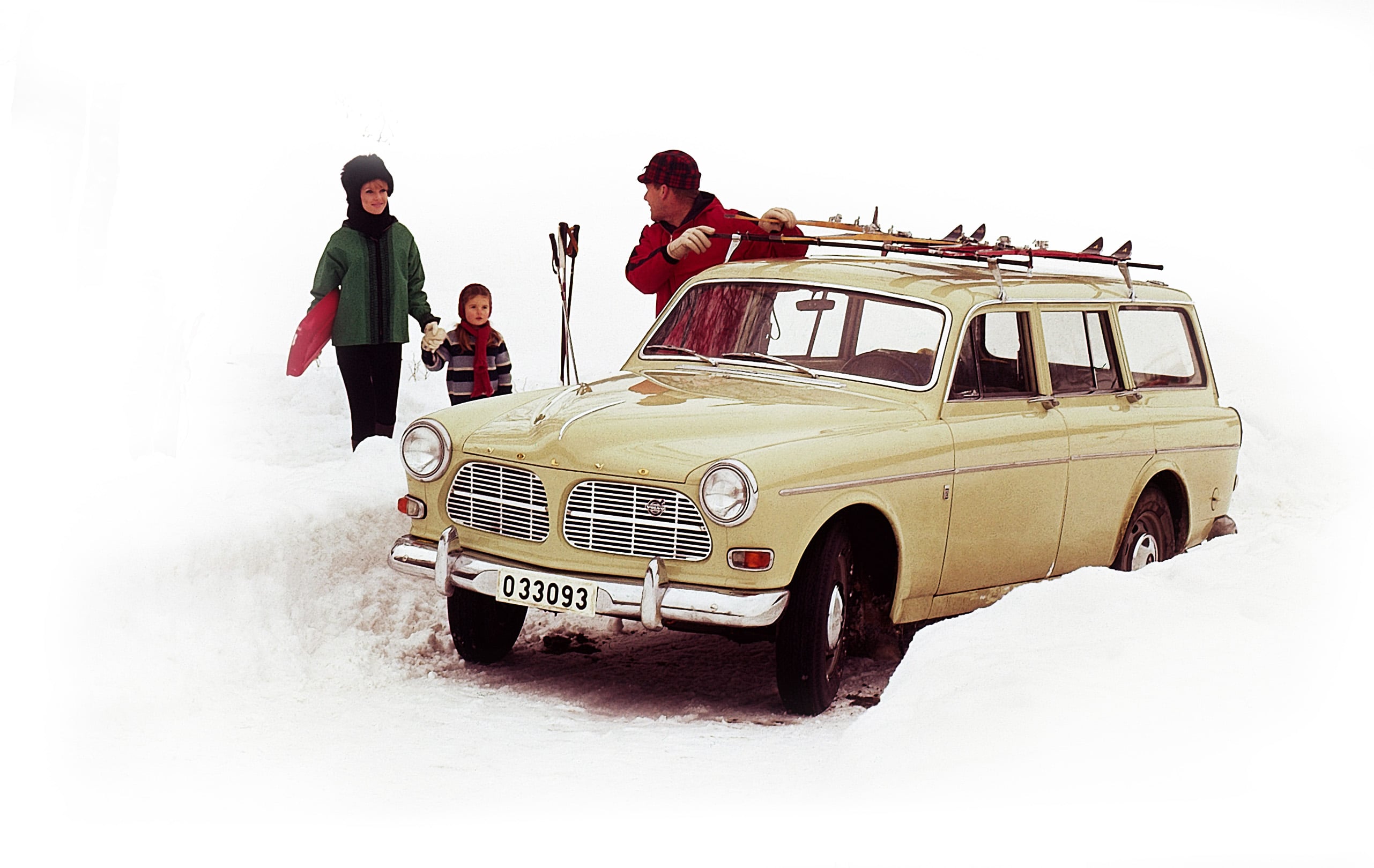
Volvo had built a station wagon before the P220 Amazon came along in 1962. But that early effort, namely the Volvo Duett series of panel vans and wagons which were built on ladder-frame chassis and only featured two doors, really were light commercial vehicles.
But the P220 Amazon marked a shift for the brand, the first station wagon adapted from a Volvo passenger car, sharing its platform and unibody construction with the 121 and 122S sedan.
Adopting the styling of its sedan stablemate, the P220 blended the 121’s softened lines and distinctive split grille with a long roof – reinforced for added body rigidity – and a two-piece tailgate, inspired by the design of American station wagons.
Power initially came from the B18 1.8-litre inline four-cylinder making 55kW. By the end of its life
cycle in 1969, displacement had grown to two litres while peak power increased to 67kW.
A four-speed manual or three-speed automatic transmission sent drive to the rear wheels. Disc brakes replaced drums up front in 1964 and in 1968, the addition of a collapsible steering wheel underscored Volvo’s pioneering safety efforts.
The Volvo P220 Amazon established the Swedish brand internationally, reflected in sales figures. Some 73,000 of the estate were produced over its 1962-69 lifespan, and according to Volvo, “the P220 became more frequent outside the Nordic markets”.
One notable international customer was the UK’s Hampshire Constabulary, which added five P220s to its traffic division fleet.
The P220 was replaced in 1970 by the new-generation Volvo 145 Estate, the first in a long line of increasingly boxy station wagons from the Swedish brand, which had, thanks to the P220 established itself as a leading manufacturer of family wagons.
Sadly, Volvo has not been immune from the SUV onslaught, ending production of the V90 estate in September 2025, leaving only the small V60. However, with the model’s lifecycle ending in 2026, its likely to follow its V90 sibling into the history books.
Ferrari FF
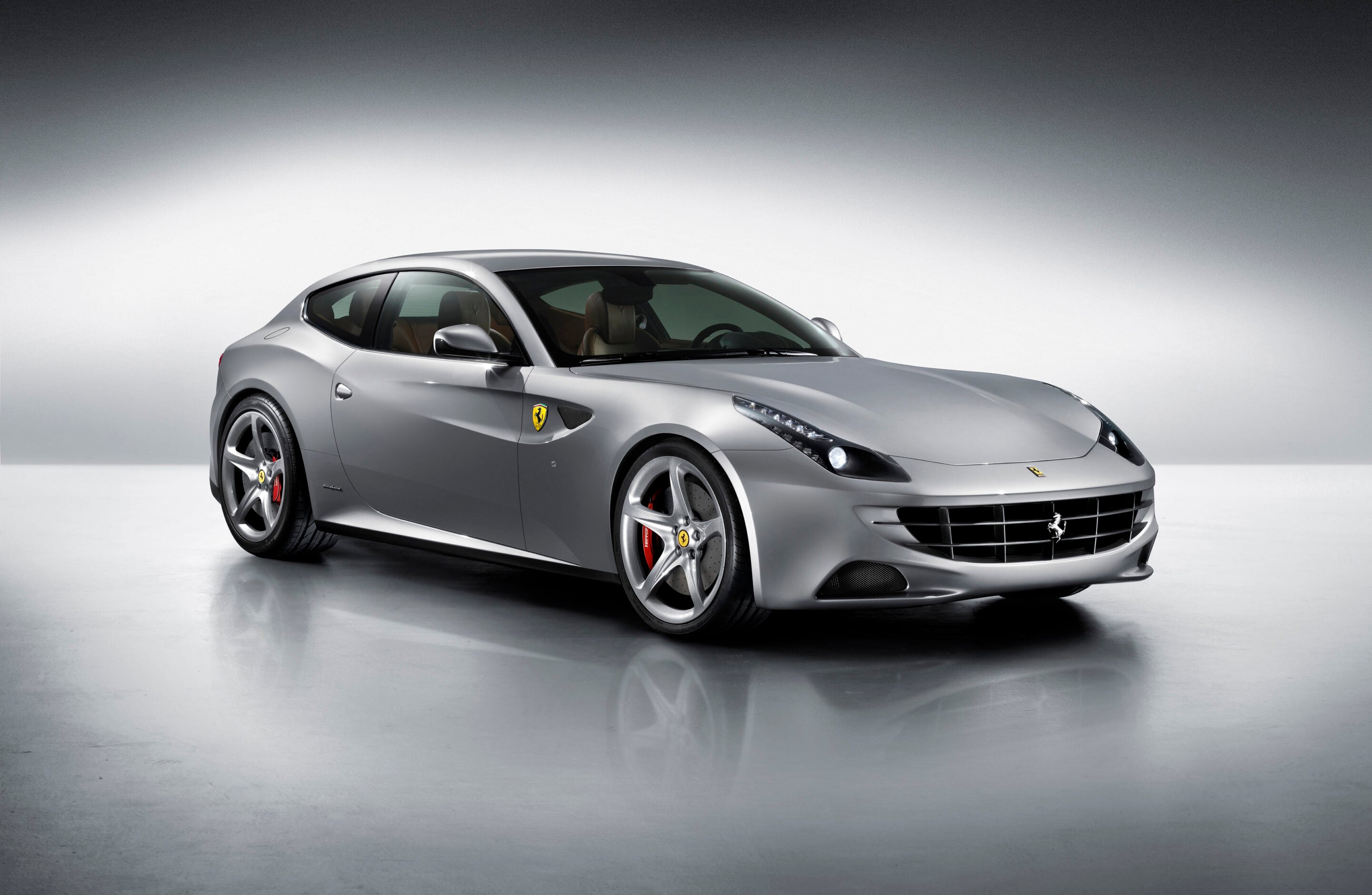
A Ferrari wagon? Not quite, but as a shooting break, the 2011 Ferrari FF brought a dollop of practicality to the world of exotics long before the dreams of luring cashed-up buyers into SUVs began.
Ostensibly a grand tourer, the Ferrari FF enjoyed comfortable seating for four adults, 450 litres of cargo-carrying ability (expanding to 800 litres), a trick all-wheel drive system, dubbed 4RM, and a stonking 6.3-litre naturally-aspirated V12 under that sleek snout up front.
That V12 didn’t just sing for its supper. It positively bellowed, making 485kW at a blood-curdling 8000rpm, which, along with 683Nm of torque, hurtled the family wagon from 0-100km/h in just 3.7 seconds towards a top speed of 335km/h. Little wonder then that the FF entered the record books as ‘the fastest four-seat car in the world’.
Fast, yes, and practical to a point, perhaps the FF’s greatest achievement was in thumbing its nose at Prancing Horse convention. Here was a Ferrari like no other. Yes, it bore all the hallmarks of that storied brand’s grand touring tradition, but it did so in a challenging and unorthodox manner.
Ferrari doubled-down with the FF’s successor, 2016’s GTC4Lusso which brought more power, more torque, even harder acceleration (3.4s) and an evolution of the shooting break body style that looked altogether more resolved and elegant than its predecessor.
Like the FF, the GTC4Lusso remained in production for five years before Maranello pulled the pin on its most audacious era of grand tourer design. There was no successor, except…
In 2023 Ferrari did the unthinkable and succumbed to the zeitgeist with its first-ever crossover SUV, the Purosangue, a car that Maranello had promised it would never, ever, build. But then, this isn’t an ‘SUV’ according to Ferrari, but rather an ‘FUV’, a Ferrari Utility Vehicle. Call it what you want, we’re just a little sad that the short but glorious age of shooting breaks from Maranello has made way for yet another SUV.
Audi RS2 Avant
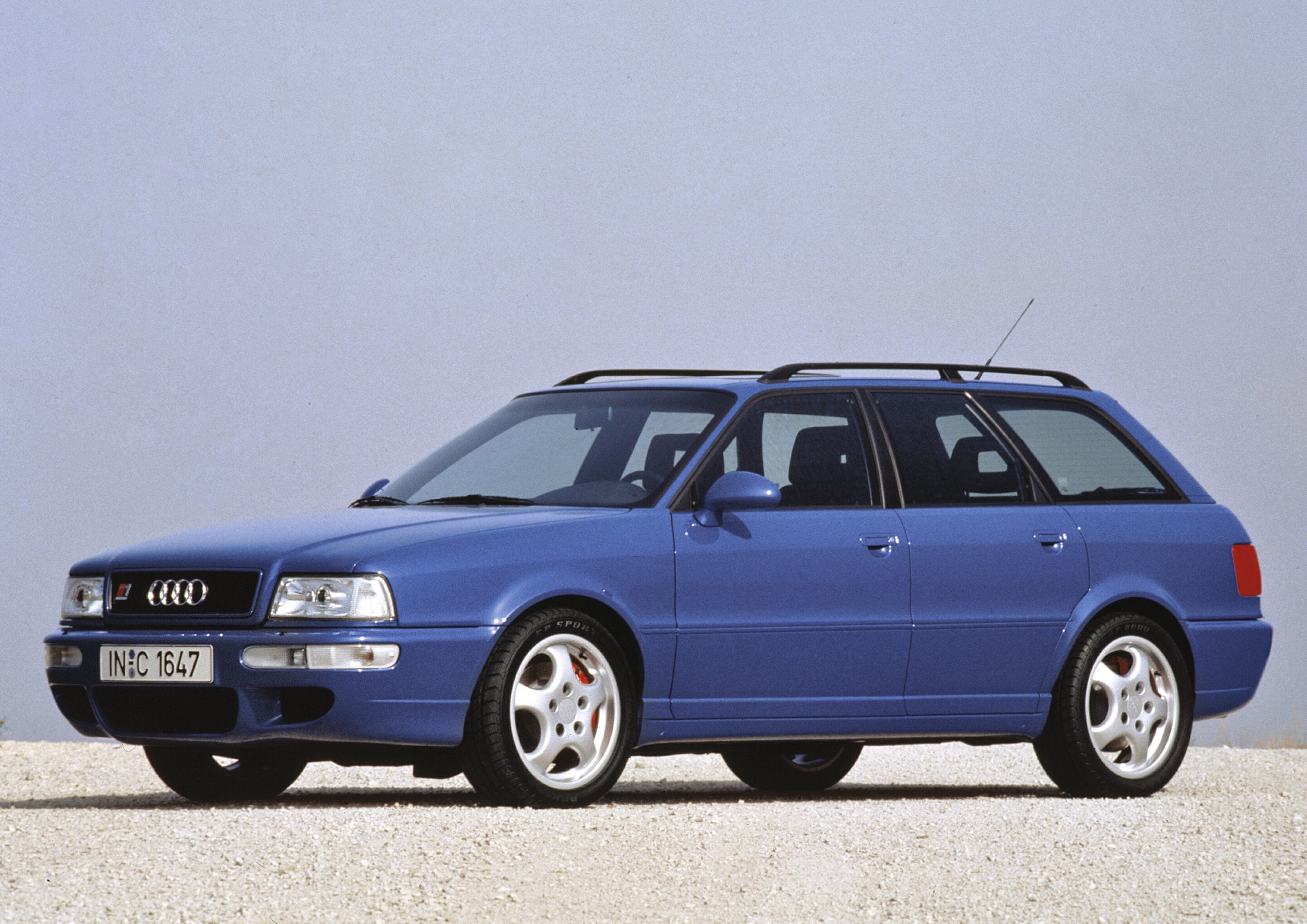
‘Everyone else is doing it, why can’t we?’ someone at Audi must have said at a product planning meeting in the early 1990s. The German brand, despite its motorsport successes in rallying, did not have a performance division. BMW had M and Mercedes-Benz had a collaboration with AMG, both turning out low-volume, high-performing versions of otherwise ordinary cars.
Audi had already dabbled with a high-po wagon, with 1991’s S2 Avant hinting at what lay ahead. Its performance recipe looks familiar in retrospect – a turbocharged 2.2-litre five-pot matched with a five-speed manual sending power to all four wheels via Audi’s fabled quattro AWD system, all cloaked in Audi’s 80 Avant two-box design.
But Ingolstadt had bigger dreams and behind the scenes had enlisted the help of Porsche to help create something truly special. The dreamwork took place at Audi’s Salzgitter plant where Porsche’s engineers got to work on the existing 2.2-litre five-banger from the S2.
A bigger KKK turbocharger with 1.4 bar boost was the headline act but so too a bigger intercooler, higher flow fuel-injectors, revised camshaft, modified induction setup and low-pressure exhaust system. The end result? Try 232kW and 410Nm of five-cylinder magic.
Final assembly took place at Porsche’s Rossle-Bau plant, and in 1994, the Audi RS2 Avant debuted for the public.
Keen observers will have noted the 17-inch alloy wheels which came straight off the 964 generation 911 Turbo. Keener observers still, will have spotted the Porsche badging on the grille, tailgate and brake calipers. And a quick scan of the spec sheet would reveal a 0-100km/h claim of 4.8 seconds, quicker than Porsche 911 Carrera of the day and on par with 911 Turbo. Remarkable.
The RS2 Avant was the first Audi to wear the ‘RS’ badge and helped establish Audi as a genuine player, up there with M and AMG. Its legacy can still be felt today, each successive ‘RS’ model owing its existence to that first little Nogaro Blue station wagon.
Citroen DS Break
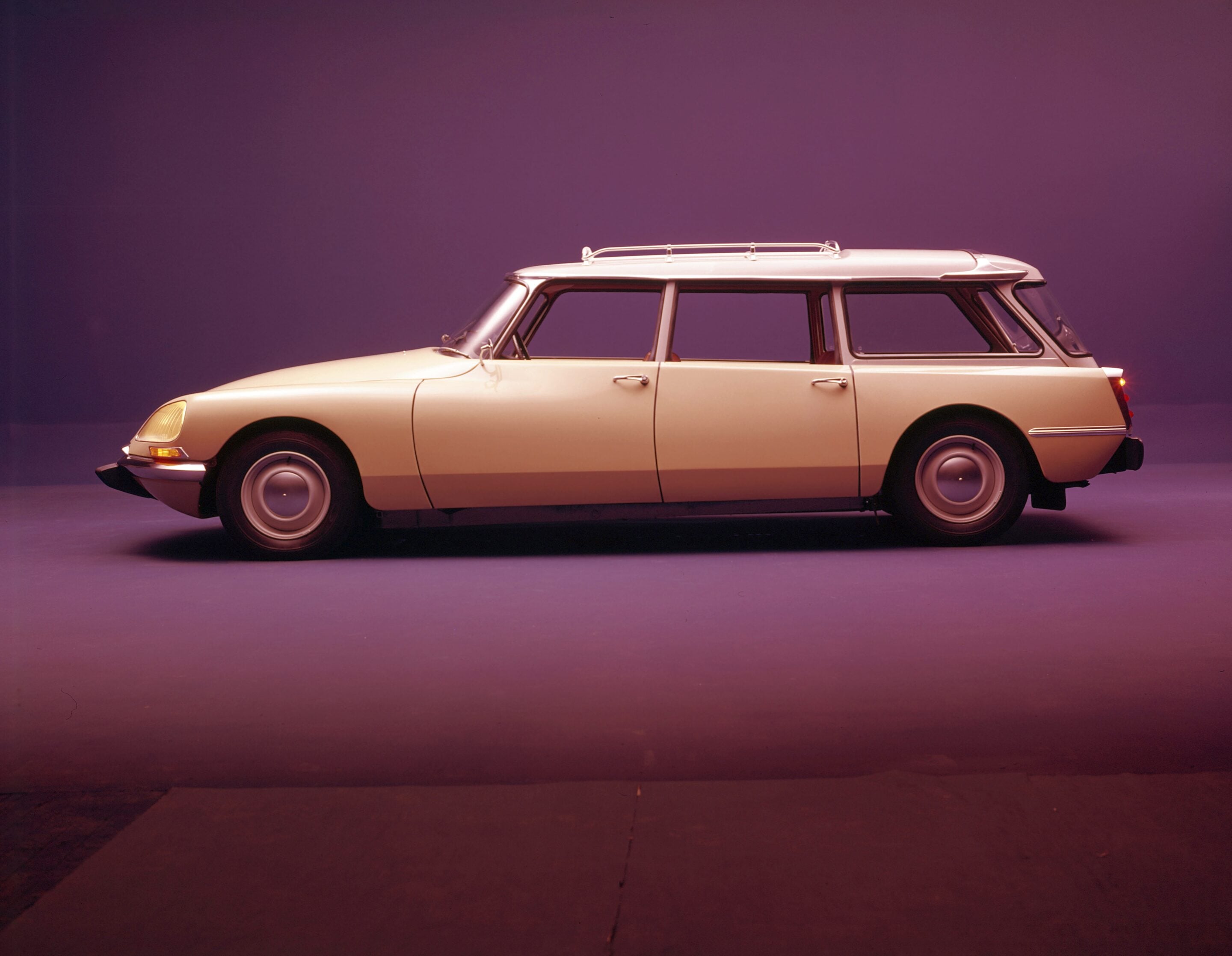
It’s hard to imagine today a time when French carmaker Citroen was one of the most innovative and daring manufacturers of automobiles on the planet.
Nothing underscores this more than the two extremes of engineering Citroen gave to the world. In one corner, the bare-bones 2CV, a utilitarian compact car designed for farm work and not much else.
At the other end, the Citroen DS, the space-age saloon that became a symbol of not just French style, but also innovation.
So successful was the DS when it was launched at the 1955 Paris motor show, by the end of the first day Citroen was holding some 12,000 customer orders. Ten days later, by the end of the show, DS deposits ran to 80,000, a record that stood until 2016 when the Tesla Model 3 attracted 115,000 first-day deposits.
Following on from its motor show hype, it was inevitable that Citroen would expand the range with a station wagon and convertible joining the DS line-up in 1958 and 1960 respectively.
The Break, aka Safari, Wagon, Estate and Station-Wagon, didn’t stray far from the DS technological and design playbook with the French brand’s revolutionary self-levelling hydropneumatic suspension, hydraulic-powered brakes, and futurist styling setting it apart from its contemporaries, which seemed positively antediluvian in comparison.
Inside, the Break modelled the French chic of its Berline (sedan) counterpart, with the DS’s signature single-spoke steering wheel the centrepiece. Practicality ran to seating for five, six, seven or even eight – depending on the model and options – while the completely flat floor in the cargo area could hold a 540kg payload.
Performance was sluggish at best, with even the most powerful iteration of Citroen’s overhead-valve inline four-cylinder only able to muster around 85kW.
But any reluctance in performance was made up for with the sheer volume of space in the cabin and the unparalleled ride comfort afforded by that trick hydraulic suspension. So good was the self-levelling suspension that TV stations, most notably the BBC, pressed the ID Break into service as the perfect camera car for filming while on the move.
Production ended in 1975, the very last car to roll off Citroen’s Paris production line, a DS23 Break.
BMW E34 M5 Touring
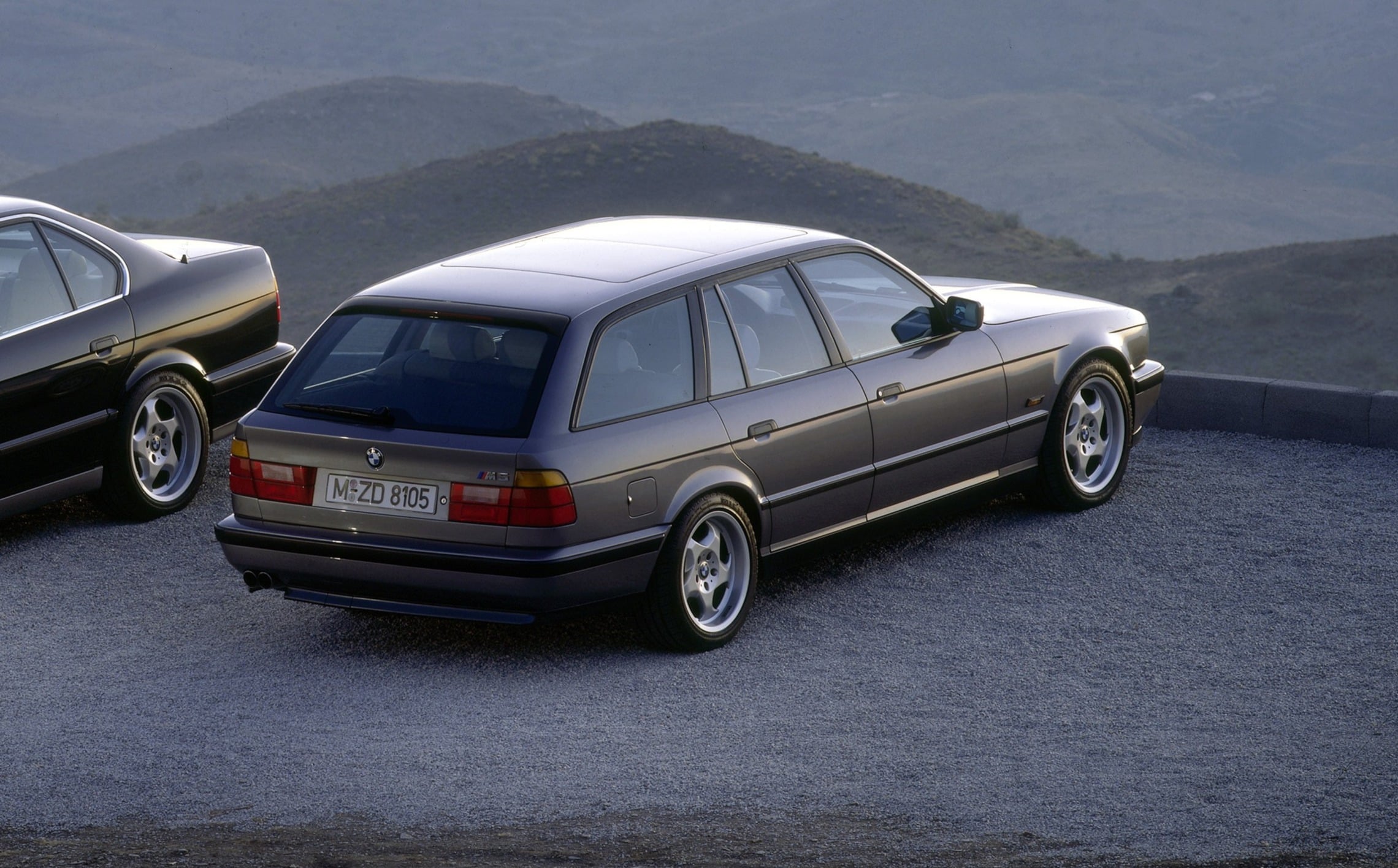
It wasn’t quite the first hot rod station wagon to come from one of Germany’s ‘Big Three’, but the BMW E34 M5 Touring is the first to hail directly from a mainstream manufacturer as against a third-party-albeit-factory-approved tuning house (we’re looking at you pre-Mercedes-Benz owned AMG and your glorious one-off W124-based AMG ‘Hammer’ Estate).
When the E34 M5 Touring rolled out of BMW’s M division Garching skunkworks in 1992, it set a template and benchmark for every hot wagon that followed.
It was a simple recipe then, as it remains now. Take an otherwise staid and practical family
station wagon, and let your finest motorsport engineers sprinkle it liberally with the kind of fairy dust usually reserved for hot sedans and hotter sportscars.
In the case of the OG M5 Touring, the fairy dust sprinklers transplanted BMW’s mighty 3.8-litre inline six from the M5 sedan under the bonnet, an engine that could trace its lineage right back to the original M1. That motor-sport derived six was initially matched with a five-speed manual transmission, updated to a Getrag six-speed manual for the 1994 model year.
With 250kW and 400Nm available from an injudicious use of the right foot, the family lugger could complete the dash from 0-100km/h in 5.9 seconds while top speed was limited to 250km/h, all in a package that boasted 460L/1610L of cargo area.
Just 891 E34 M5 Tourings were produced from 1992-95, all of them left-hand drive. Each car was built by hand in Garching and took two weeks to complete. It was the last M car built by hand.
Volvo 850R
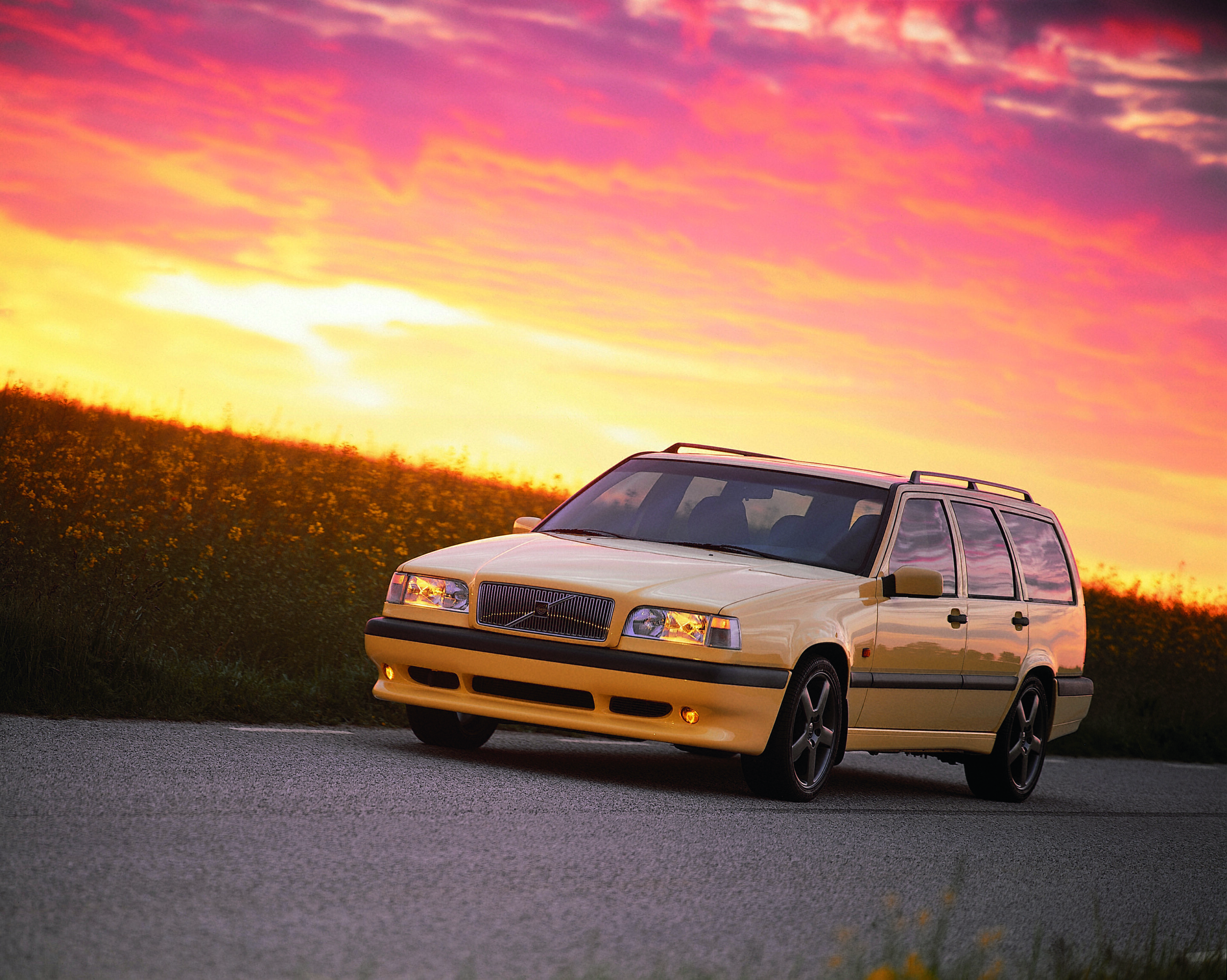
If ever a car brand needed a glow-up in the 1990s, it was Volvo. Decades of conservative design and an unrelenting focus on safety, had dulled Volvo’s image to the point of cardigan-wearing, tissue-box-carrying conservatism. That was reflected in the vehicle offering from the Swedish brand, a succession of cars and wagons that prioritised function over form, earning them the unflattering sobriquet, ‘bricks on wheels’.
But that all changed in the mid-1990s when Volvo, looking to cast off the fuddy-duddy image, released the 850 T-5R, a limited run of sedans and station wagons designed to show the world that Volvos could, in fact, be fun.
It worked too, the T-5R powered by a cracker of a turbocharged inline five-cylinder making a healthy 181kW and 340Nm. Mated to either a five-speed manual or four-speed auto, the T-5R completed the dash from 0-100km/h in 6.7 seconds (auto) or 7.5 seconds (manual) which, while not as quick as some of its hot-tuned contemporaries, did make you sit up and take notice.
Sure, the boxy styling of Volvos past remained, but the T-5R’s makeover included a racy bodykit complete with aggressive splitters, side sills, wings and 17-inch alloys. Volvo lowered the suspension too, its aggressive stance showing the boxy Estate in its best light.
In a stroke of marketing genius, Volvo enlisted the help of Tom Walkinshaw Racing to contest the 1994 British Touring Car Championship with a pair of 850 Estates, and while results were middling at best, the ‘brick on wheels’ racers garnered headlines and featured heavily in media coverage, helping cure Volvo of its conservative malaise.
The limited run of 5000 sedans and wagons quickly sold out and by 1996, buoyed by its success, Volvo extended the 850 T-5R’s shelf life. Now called simply the 850 R, the superwagon was fitted with a reworked version of the 2.3-litre five-cylinder engine, now with a bigger turbocharger, and revised intercooler and turbo manifold. Outputs were boosted too, to 184kW and 350Nm.
It became a short-lived (production ran for just two years, 1997-97) statement of intent, consigning the ‘Brick on wheels’ epithet to the history books.
Buick Roadmaster Estate
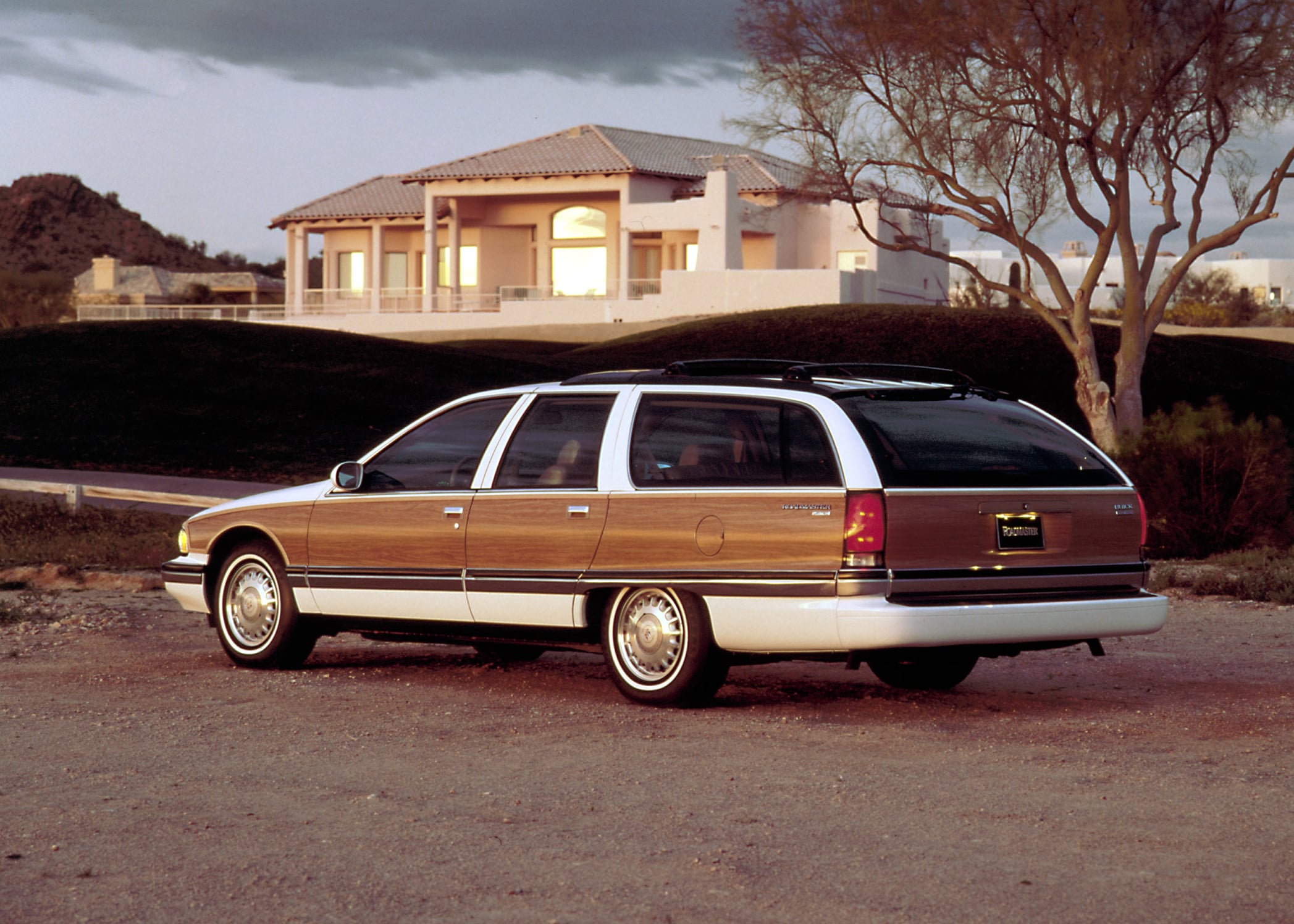
It wasn’t quite the longest station wagon ever made, but dagnabit did the Buick Roadmaster
Estate stretch the limits of what was possible.
Measuring over 5.5 metres long (longer than a current day Ford Ranger dual-cab and dwarfed, in wagon terms, by the 1975 Buick Estate, which at 5887mm holds the distinction as the longest ever station wagon) the Roadmaster graced the US’s highways and prowled American Suburbia in the 1990s in all its standard-fit faux-wood-panelled glory.
Powered by a succession of V8 engines throughout its model life, the apogee came right at the end when General Motors sandwiched the C4 Corvette’s 5.7-litre LT1 V8 under that long, long bonnet for the 1994 model year. Paired with a dual exhaust system, power increased to 194kW (up 60kW over the outgoing 5.0-litre small block V8) while the benchmark 0-100km/h time was dispatched in a touch over seven seconds.
With seating for eight, and the ability to tow 2300kg (with the optional factory-fitted towing package), the Buick Roadmaster Estate offered a glimpse, somewhat ironically as it turned out, into a future where SUVs would take over as the de facto family hauler.
Axed in 1996 to make way on production lines for the ever-increasing demand for SUVs, the Buick Roadmaster Estate signalled the end of America’s love affair with station wagons, going down in history as what should have been the last wagon produced by Americans for Americans.
A reprieve came from 2004-2008 when Dodge gave released the Magnum, a high-powered station wagon based on the Chrysler 300 platform. Cadillac too got in on the act, its supercharged V8-powered CTS-V wagon in production in 2001. But it struggled for sales in a market out of love with wagons and in 2014 GM pulled the pin. The era of American wagons was over.
Holden VE Commodore SS Sportwagon
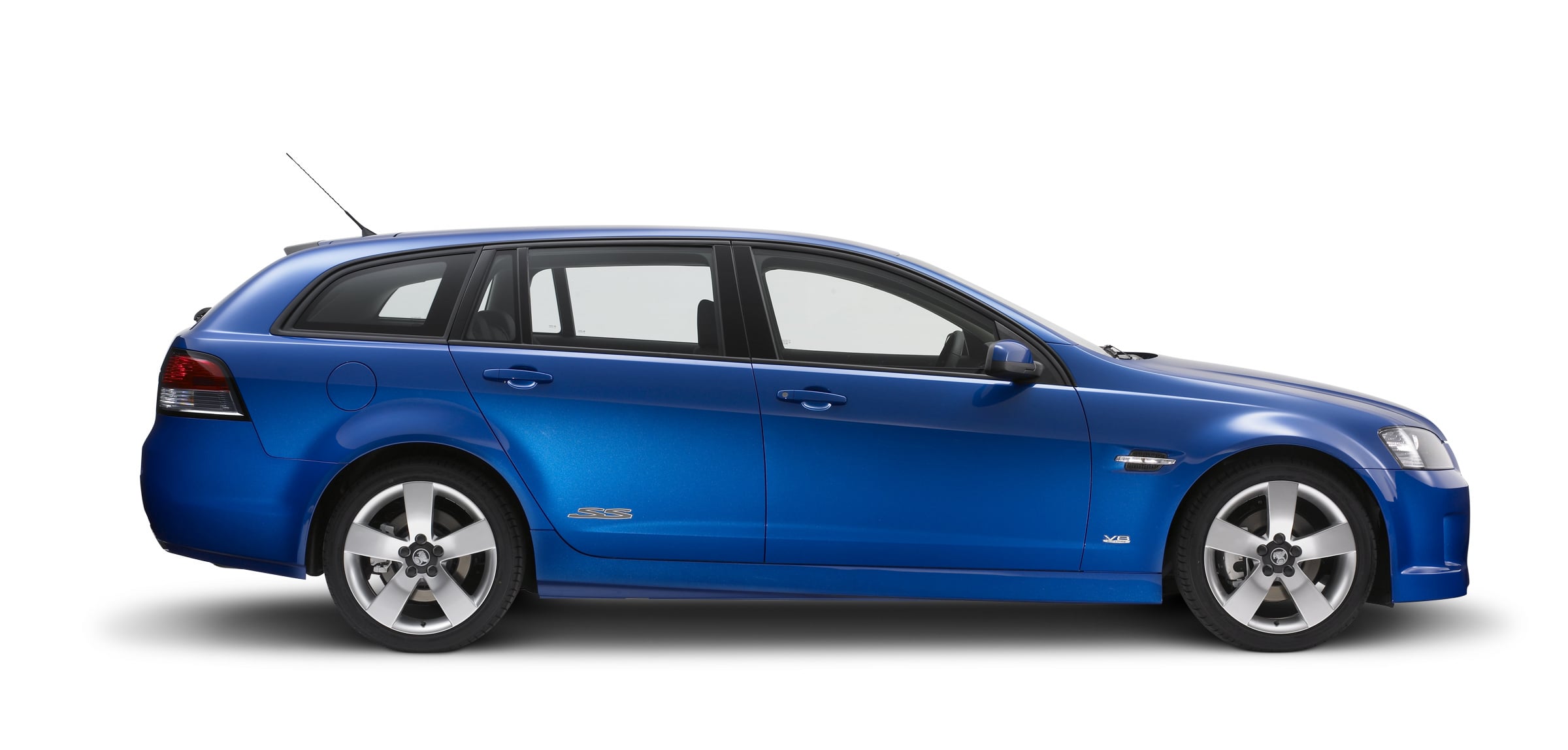
The Holden VE Commodore Sportwagon was a breath of fresh air when it made its grand entrance in 2008 – some two years after its three-box counterpart – eschewing the previously rigid lines and boxy profile of its Commodore long-roof predecessors to embrace tougher, sleeker, and, well, sportier demeanour.
And it needed to. By GM-H’s own admission, around 90 per cent of sales of the Sportwagon’s VZ Commodore predecessor were fleet sales. The ultimate rep mobile, then, a blunt, no-frills design that sparked little passion other than for the accountants tasked with keeping a close eye on company expenditure.
But the Sportwagon was something else again. Here, finally, was a station wagon that owners could look on with pride, a practical family lugger that blended all the best bits of the VE Commodore’s design – such as those pumped up wheel arches – with a sloping roofline leading to a sharply-angled tailgate. The VE Commodore Sportwagon looked nothing like its boxy predecessors.
Emphasing GM-H’s intent, the Sportwagon came with a choice of Aussie GM iron including the boggo 180kW/330Nm V6, the uprated higher output (195kW/340Nm) V6, and the 6.0-litre V8 good for 270kW and 530Nm in SS and SS-V models.
HSV wasn’t immune to the charms of the latest Commodore long-roofer, cramming more powerful LS2 V8s under the bonnet and uprating the chassis and suspension to cope with the extra power.
Sure, the R8 Clubsport Tourer might not have had the finesse of Euro performance estate rivals, but it brought Aussie muscle car swagger to take on the world’s best station wagons.
This article first appeared in the January 2026 issue of Wheels. Subscribe here and gain access to 12 issues for $109 plus online access to every Wheels issue since 1953.
Speculation around a high-performance BYD hot hatch first surfaced nearly two years ago at the 2024 Beijing Motor Show, where the brand revealed the striking Ocean-M concept. Since then, BYD has focused heavily on expanding its range of value-driven family cars and SUVs, and talk of a performance-oriented model largely faded into the background.
That quiet period may be coming to an end. This week, BYD’s UK country manager Bono Ge indicated the company is preparing to share new information about a sporty, powerful car within the next couple of months. While details remain tightly under wraps, Ge suggested the vehicle would deliver strong performance and engaging driving character, hinting that a hot hatch-style EV is once again under serious consideration.
Ge explained that customer expectations in markets like the UK and broader Western Europe have helped shape BYD’s thinking, with sporty design and performance seen as an important part of a car’s appeal. That mindset isn’t limited to Europe, though. In Australia, where interest in affordable performance cars and EVs continues to grow, a well-priced electric hot hatch could find a ready audience.
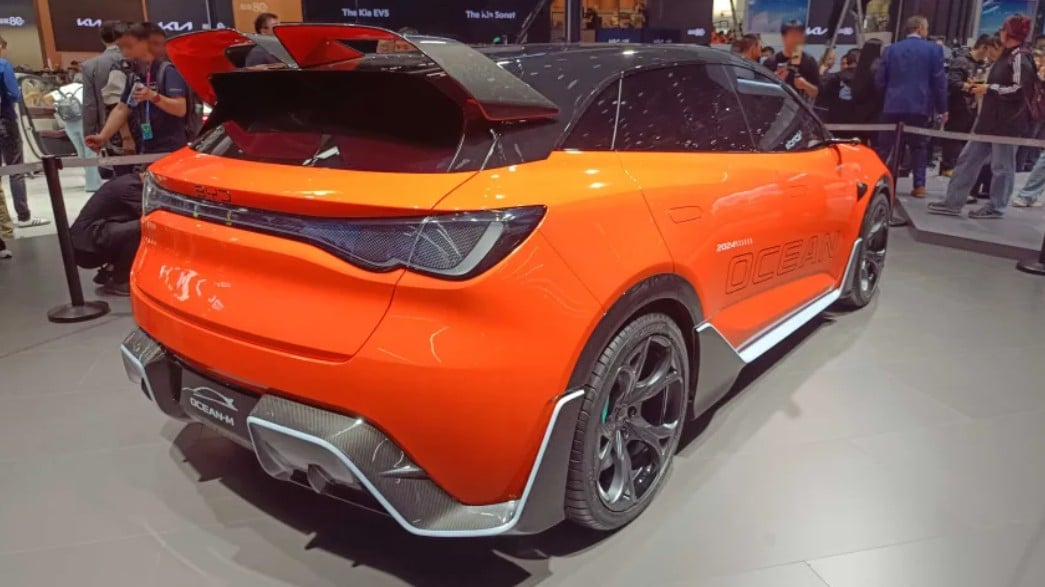
Although BYD hasn’t confirmed what the final production model will look like, industry watchers expect it to draw heavily from the Ocean-M concept. When unveiled in Beijing, that show car featured rear-wheel drive and rode on a new platform developed by BYD, believed to be an evolution of its existing electric architecture. Reports at the time pointed to outputs of around 220–230kW and a 0–100km/h sprint of roughly five seconds.
Visually, the Ocean-M made a strong impression, with a sleek, aggressive stance, rising waistline and sharp body surfacing. Concept details included a prominent rear wing, bold diffuser and aerodynamic side elements – features that could be toned down but still influence a future production model.
Ge reiterated BYD’s customer-focused approach, stressing that the company’s priority is building vehicles people genuinely want to buy. With a formal announcement expected soon, the long-rumoured BYD hot hatch may finally be edging closer to reality.
Of all the cars we’ve shown in this series on WhichCar by Wheels so far, this one is likely the one with the biggest sales potential if it were sold in Australia. It’s the Ford Maverick – and, no, we don’t mean the Nissan Patrol-based Maverick sold here from 1988 to 1994, rather, the Maverick currently sold in North America and select other markets around the world.
The Maverick has sold well in the US since its 2022 release, with over 155,000 units moved in 2025 alone. Ute offerings in Australia are more heavy duty and larger than the Maverick, which is why we think there’s definitely a place for a car-based ute in our market – surely you remember the Ford Falcon and Holden Commodore utes and how popular they were?
Using the same ‘C2’ platform as the Escape SUV and former Focus small car, the Ford Maverick is available with either a 186kW 2.0-litre turbo-petrol engine or a 142kW 2.5-litre hybrid, both in either front- or all-wheel drive forms. The petrol engine uses an eight-speed auto, and the hybrid a CVT. In the US, the Ford Ranger is only available with turbo-petrol engines in 2.3-litre four-, and 2.7-litre and 3.0-litre V6 (Raptor) sizes.
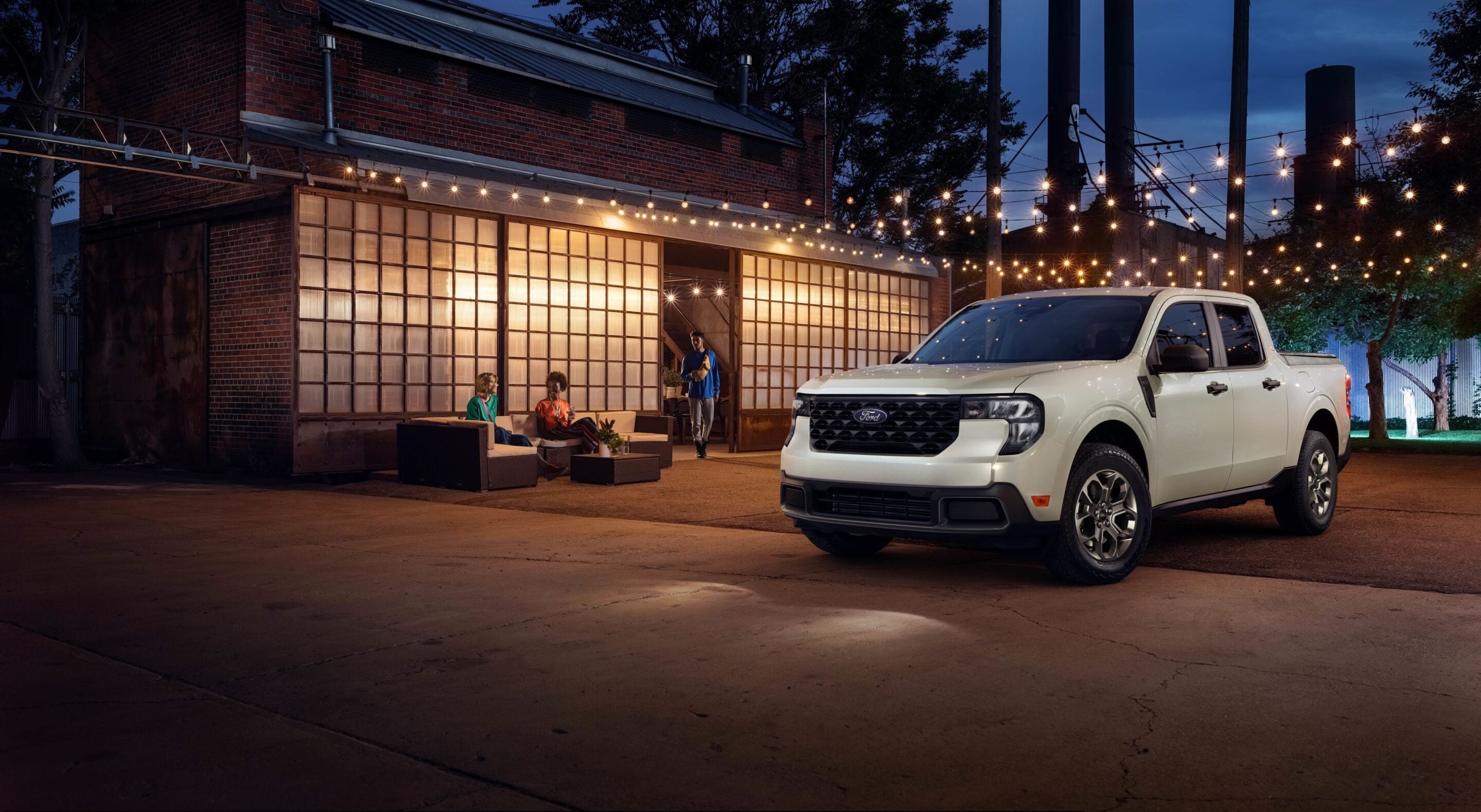
How does the Maverick compare to the larger Ranger in size? At 5072mm long, the Maverick is around 300mm shorter than the Ranger dual cab, while its 1800mm width is 110mm less and its 1765mm height is around 100mm less too. The Maverick’s towing capacity varies due to the drivetrain chosen, but the petrol engine with an optional towing capacity can haul 4000lbs (1800kg), which is just more than half that of the Australian-spec Ranger but still more than enough for towing jet skis and so on.
Maverick pricing starts at US$27,145 (A$40,200 at the time of writing) for the entry-level XL petrol, and reaches around US$44,000 (A$65,300) for a top-spec and off-road themed Tremor. That’s about US$6,000 (A$9000) less than a Ranger in the USA, though like the Maverick, the US-spec Ranger is only sold in dual-cab form with no single cab bodystyle available.
Standard features on the Ford Maverick XL include 17-inch steel wheels, manual mirrors, automatic LED headlights, an 8.0-inch digital driver’s display, a 13.2-inch touchscreen with Ford’s ‘Sync 4’ operating system, cruise control and a smattering of active safety features including autonomous emergency braking, lane keeping assistance, a reversing camera and auto high beam.
Moving up the range adds features like power mirrors, alloy wheels up to 19-inches in size, more advanced LED lighting, dual-zone climate control, synthetic leather upholstery, a Bang & Olufsen sound system, adaptive cruise control with adaptive lane guidance, blind-spot monitoring and a 360-degree camera.
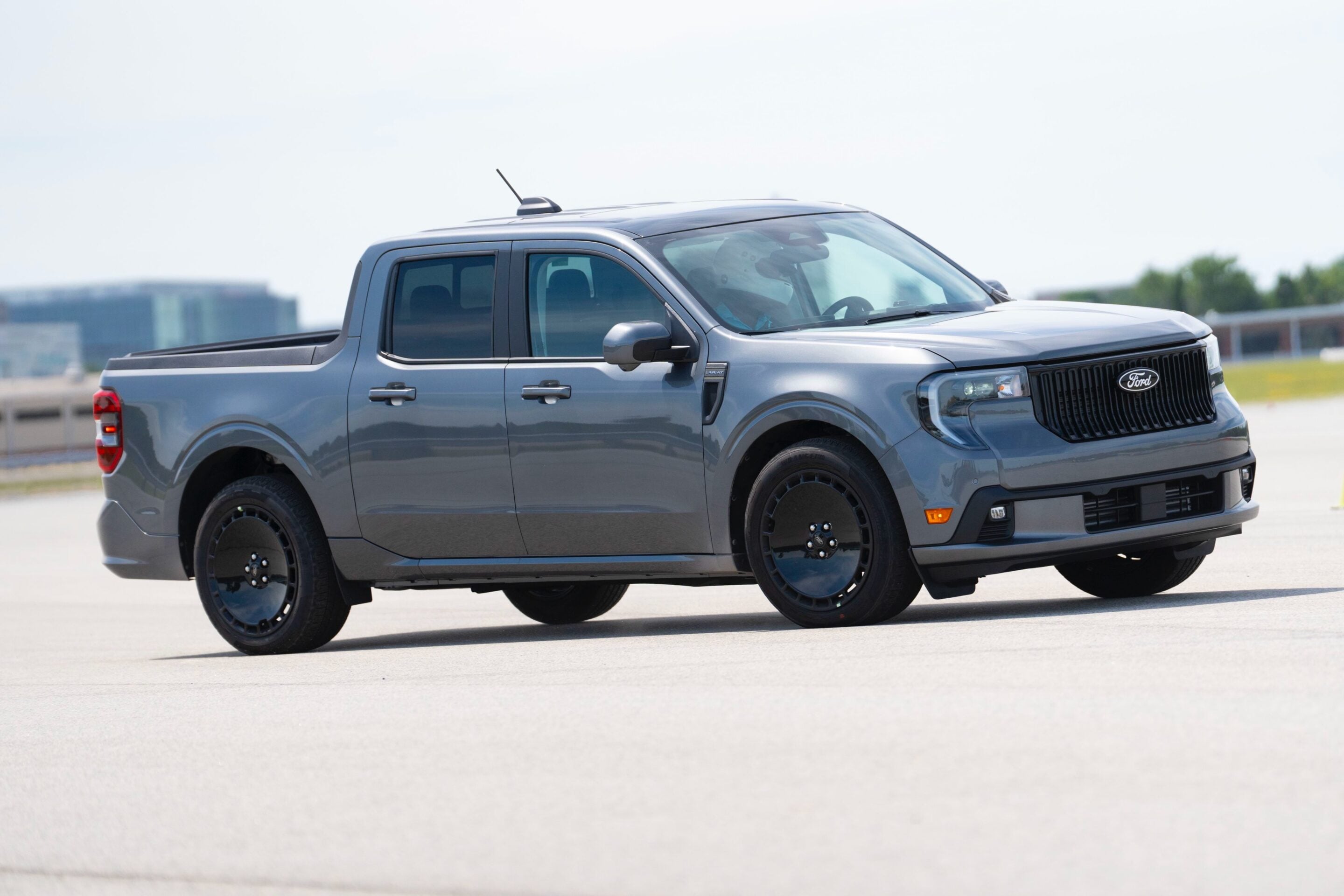
Of note too are the Ford Maverick Lobo and Tremor trims, which cover the sporty and off-road ends of the market respectively. The track-ready Lobo features performance-tuned suspension, steering and brakes, a more advanced all-wheel drive system with rear wheel torque vectoring, an enhanced gearbox with paddle shifters and sportier exterior and interior styling.
Whereas, the Tremor features elevated off-road tuned suspension, a twin-clutch rear drive unit with an electronic-locking rear differential, more off-road modes and orange design highlights.
Currently, no car maker sells a smaller ute in Australia, despite there being a few options like the Maverick and Hyundai Santa Cruz overseas. Toyota is rumoured to be developing a new Corolla-based model, but nothing has yet come to fruition. But considering that both Australia and Ford are the source of the original ute in the 1930s, and given how well they sell here and how expensive modern utes are, it’s likely that if priced correctly beneath the Ranger, the Ford Maverick could do quite well here. Our fingers remain crossed for an Australian car-based ute return.
