
Snapshot
- December 2021 arrival for updated XD3
- Model scores mild-hybrid assistance which is absent on the updated X3
- 261kW/730Nm diesel engine brings 0-100km/h times down to 4.9 secs
The new BMW Alpina XD3 is set to arrive in Australia later this year after under-going an update in line with the BMW X3 it’s based on.
Taking the solid platform of the updated X3, the Alpina XD3’s biggest selling point is the introduction of 48-volt mild-hybrid assistance, providing up to 8kW of power, something which Australian buyers of the BMW model will miss out on.
Hybrid assistance boosts power from the 3.0-litre straight-six bi-turbo diesel up to 261kW, with 730Nm of torque available between 1750-2750rpm – an increase of 66kW and 110Nm over the X3 xDrive30d, though this comes at a cost as fuel economy has risen to 7.8L/100km from 6.0L/100km.
The jump in power means the XD3 can achieve a 0-100km/h time of 4.9 seconds thanks to its eight-speed automatic gearbox and rear-biased all-wheel-drive system, adding a limited slip differential on the rear axle as standard with Alpina’s Performance Control software helping to distribute power and grip.
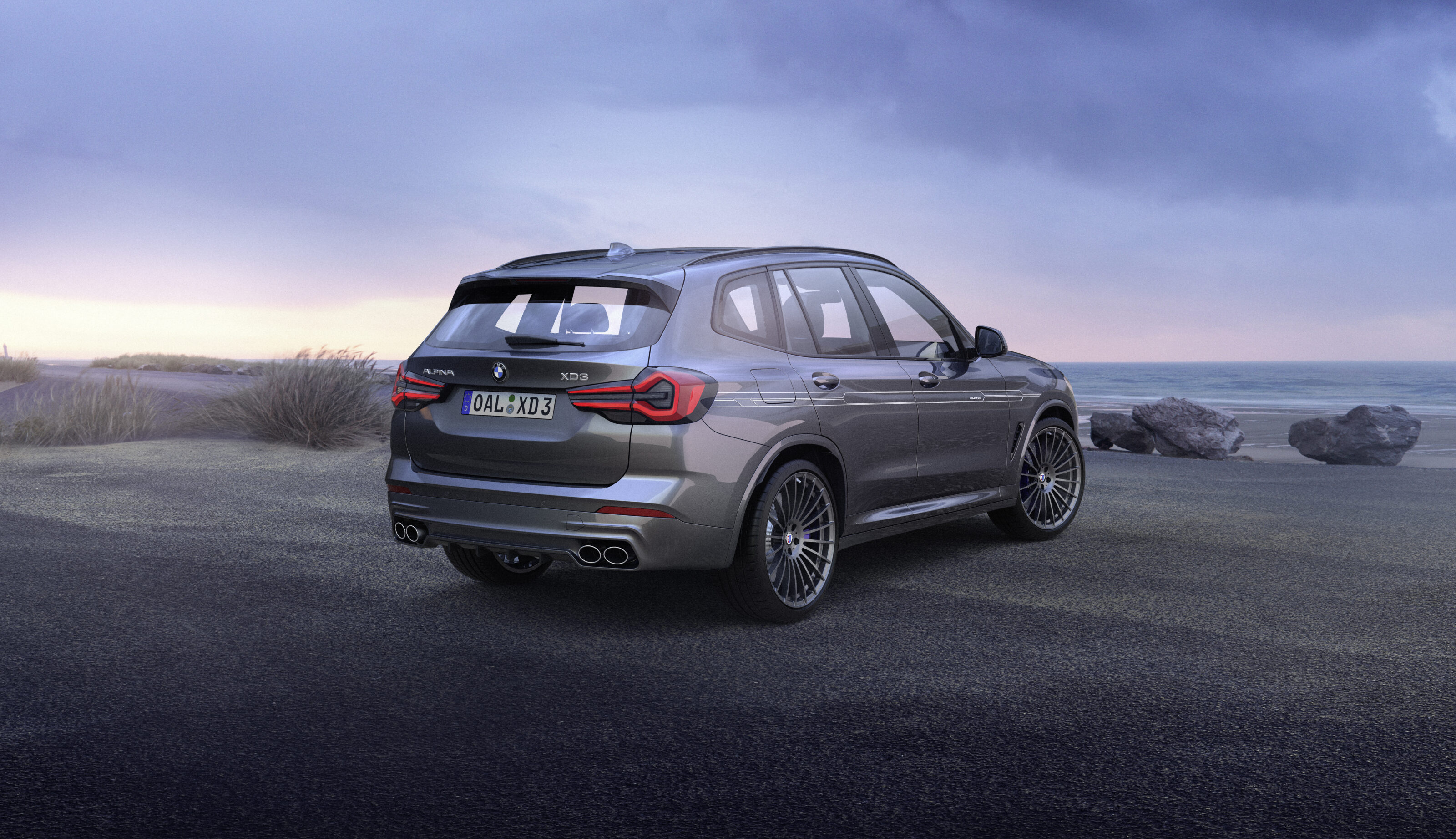
Helping control the 2155kg of SUV is Alpina’s tuned sport suspension, making use of calibrated adaptive dampers and stiffer, shorter springs than the X3 to keep the wheels in contact with the road as much as possible.
The 20-inch Alpina Classic alloys have been wrapped in Pirelli P Zero tyres, designed specifically for the XD3, with 255/45s on the front and 285/40s on the rear. Optional 22-inch forged wheels are available, bumping the tyre sizes to 255/35 and 295/30 respectively.
Brake calipers are retained from the previous XD3 but are now fitted with a newer brake pad, aimed at delivering better performance. Buyers can also option a high-performance brake package which adds 395mm discs at the front and 398mm units at the back, all made of composite materials.
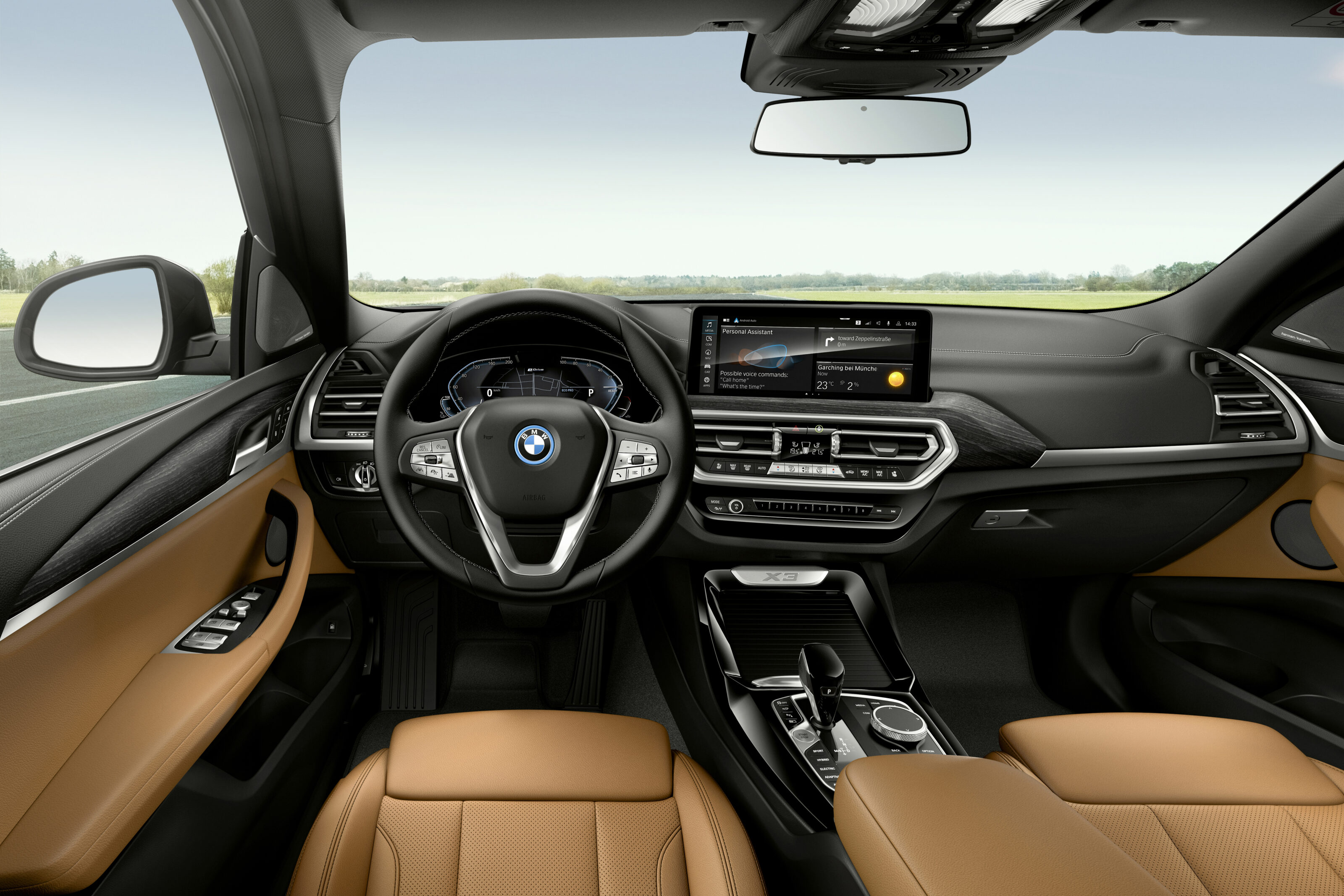
Alpina hasn’t shared images or details of the interior equipment in the XD3 but it’s likely the cabin will be a re-trimmed version of what’s in the X3, scoring a redesigned centre console and giving customers the ability to have the leather trim personalised through choices of piping, stitching, embroidery and embossing.
If the idea of being able to choose whatever combination of trims wasn’t enough, Alpina has also included the option of adding Lavalina leather to the XD3, a material it claims is one of the highest quality leathers available.
Exterior design is more aggressive than the X3, the iconic wheels being paired up with a tweaked front fascia and revised rear bumper which includes a diffuser – available to be fitted with an optional tow hook.
Alpina states the XD3 is currently available for order ahead of its December 2021 arrival but hasn’t released pricing, instead urging prospective buyers to contact their local dealer to access more precise details.
The previous generation XD3 set buyers back $109,000 – a $26,000 premium over the X3 30d.
Snapshot
- Prices start from $25,990 driveaway
- Two engines available u2013u00a0a naturally aspirated 2.0-litre four-cylinder or a turbo 1.6-litre four-cylinder
- On sale now across Australia
The 2022 Kia Cerato mid-size hatchback and sedan has received a raft of visual and technical upgrades, and the Korean automaker has also unveiled the price of its range-topping GT.
Priced from $36,990 drive away, the top-shelf GT will take the competition to rivals in the segment such as the Volkswagen Golf, Toyota Corolla, and Hyundai i30.
The facelifted third-generation Cerato, which has been in production since 2018, also has the task of bearing the Korean marques’ completely new logo.
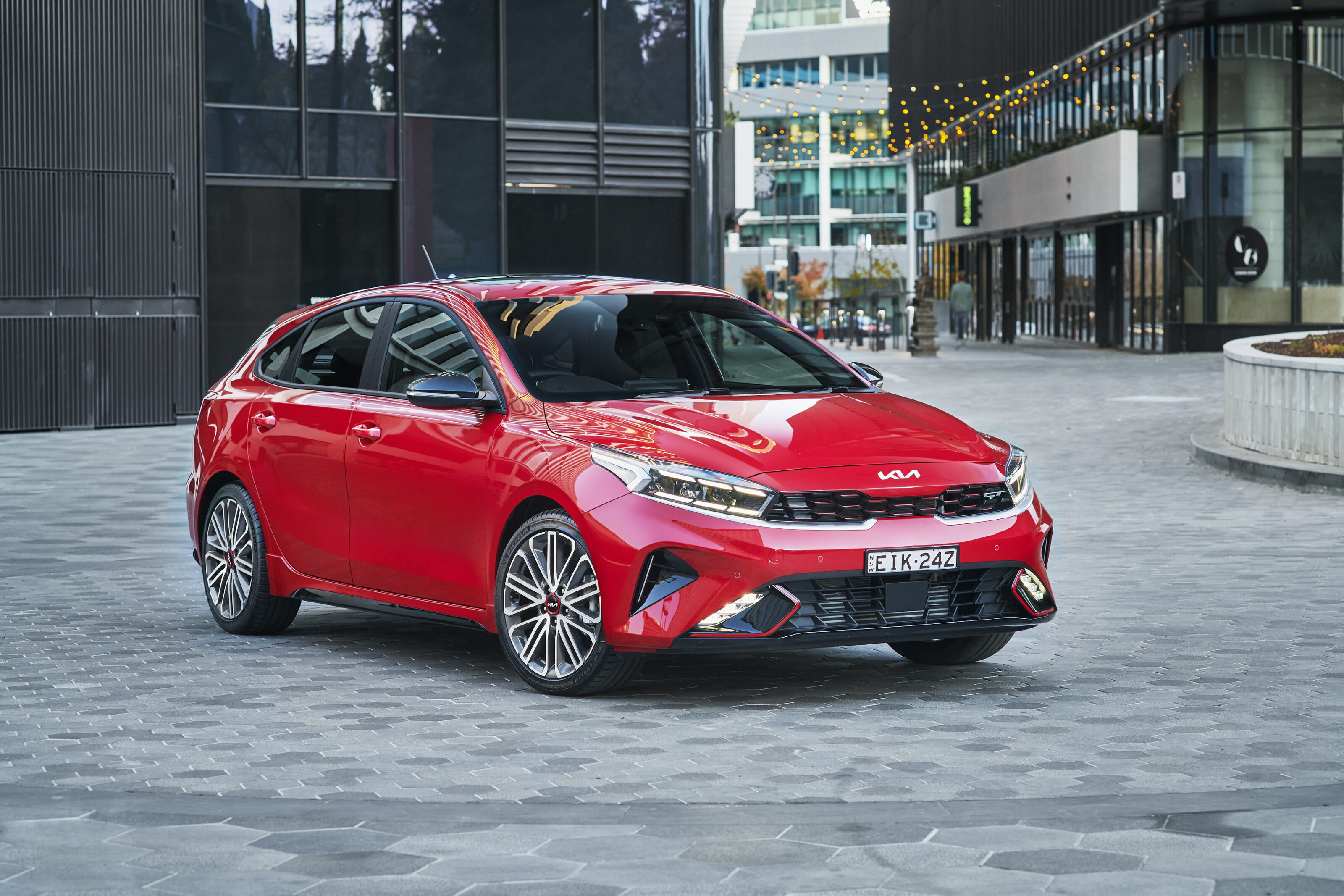
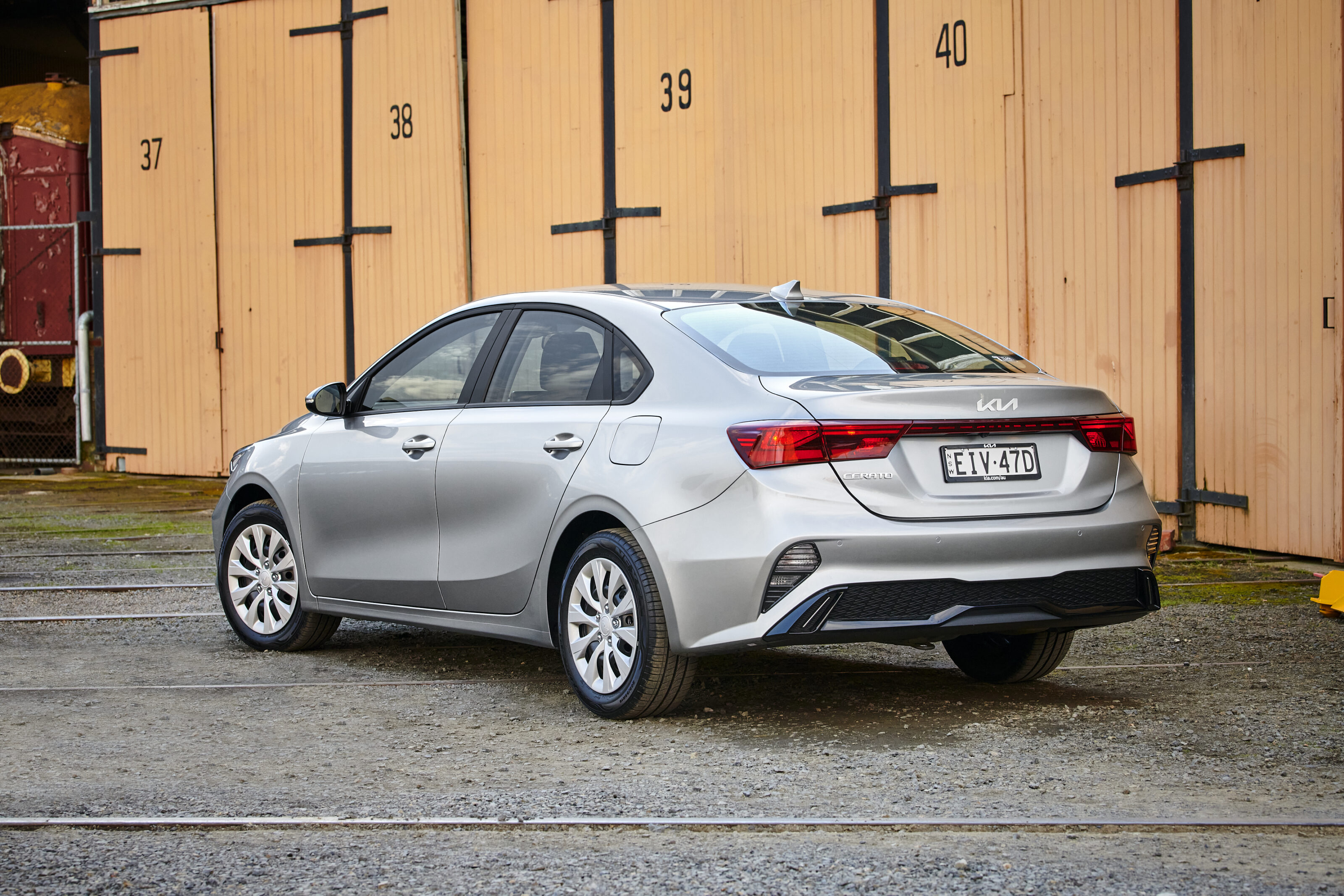
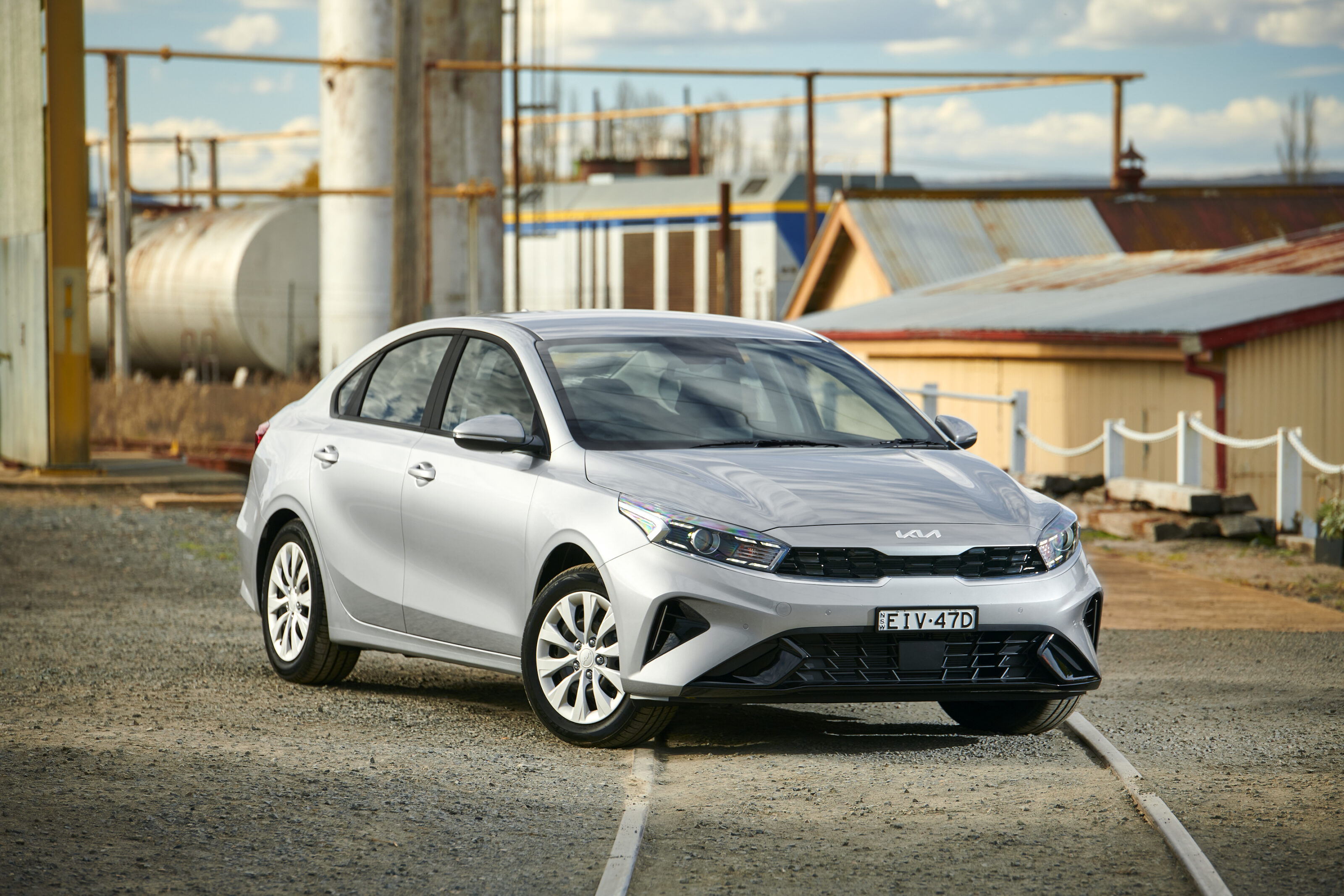
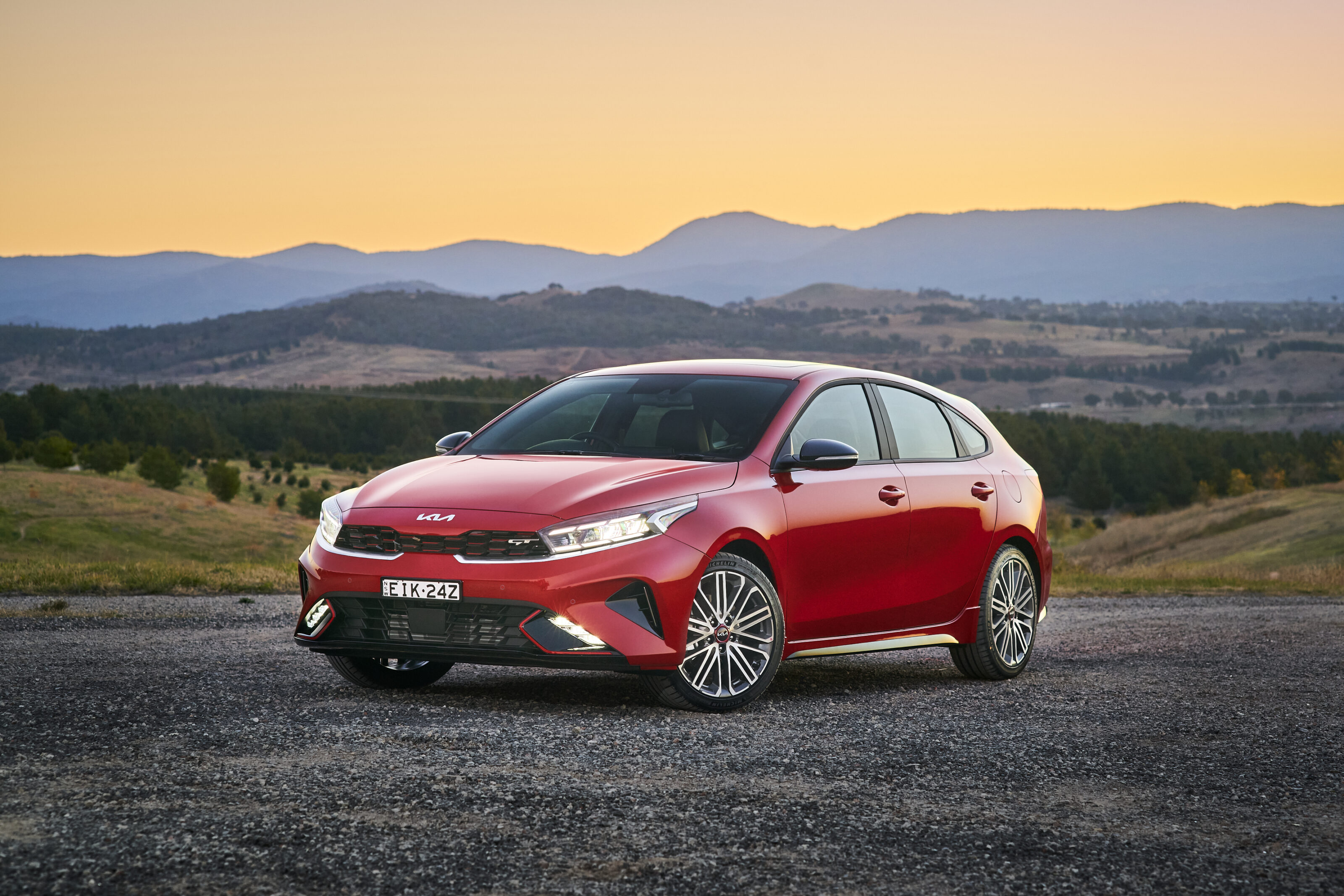
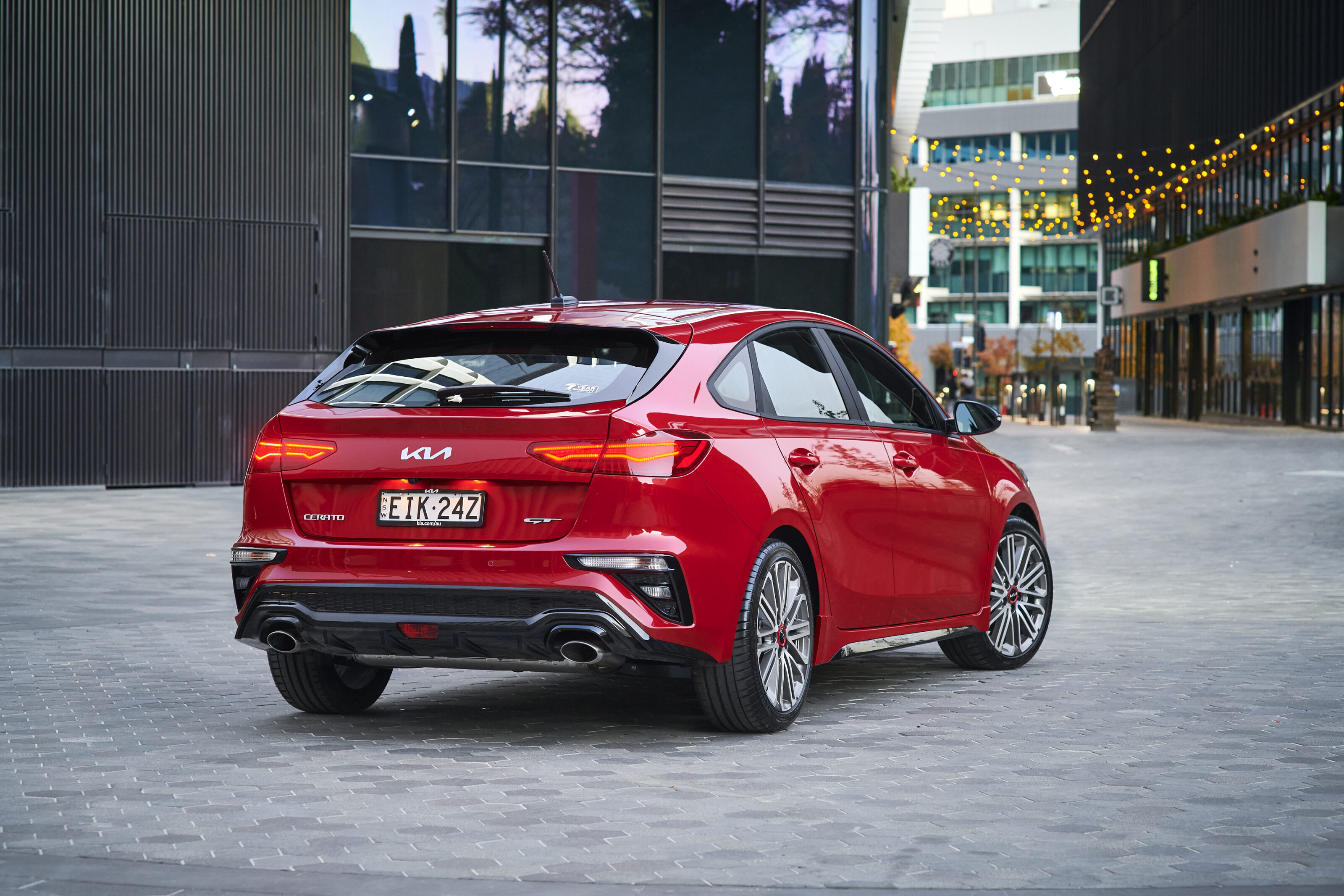
The refresh brings with it revised looks both front and rear for the hatchback. The Cerato’s front fascia receives the biggest makeover, featuring a new headlight design, grille, bumper, and fog light surrounds.
Cerato now represents Kia’s most popular selling car of all time in Australia, surpassing the Rio earlier in 2021. All told, since its initial unveiling in 2003, Kia has sold no less than 155,000 examples of the moniker.
Pricing and model range
Like the car it replaces, the updated Cerato will be available in four model variants – S, Sport, Sport+, and GT.
The S and Sport iterations can also be optioned with a Safety Pack for an additional $1000. Prices listed are for both the sedan and hatchback body styles and are drive-away:
- 2022 Kia Cerato S – $25,990
- 2022 Kia Cerato S Safety – $27,490
- 2022 Kia Cerato Sport – $27,990
- 2022 Kia Cerato Sport Safety – $29,490
- 2022 Kia Cerato Sport + – $31,690
- 2022 Kia Cerato GT – $36,990
Engines, transmissions, and fuel economy
Kia has decided not to change up its engine offerings with the refreshed Cerato. However, the automaker has scrapped the six-speed manual gearbox option from the model’s line-up.
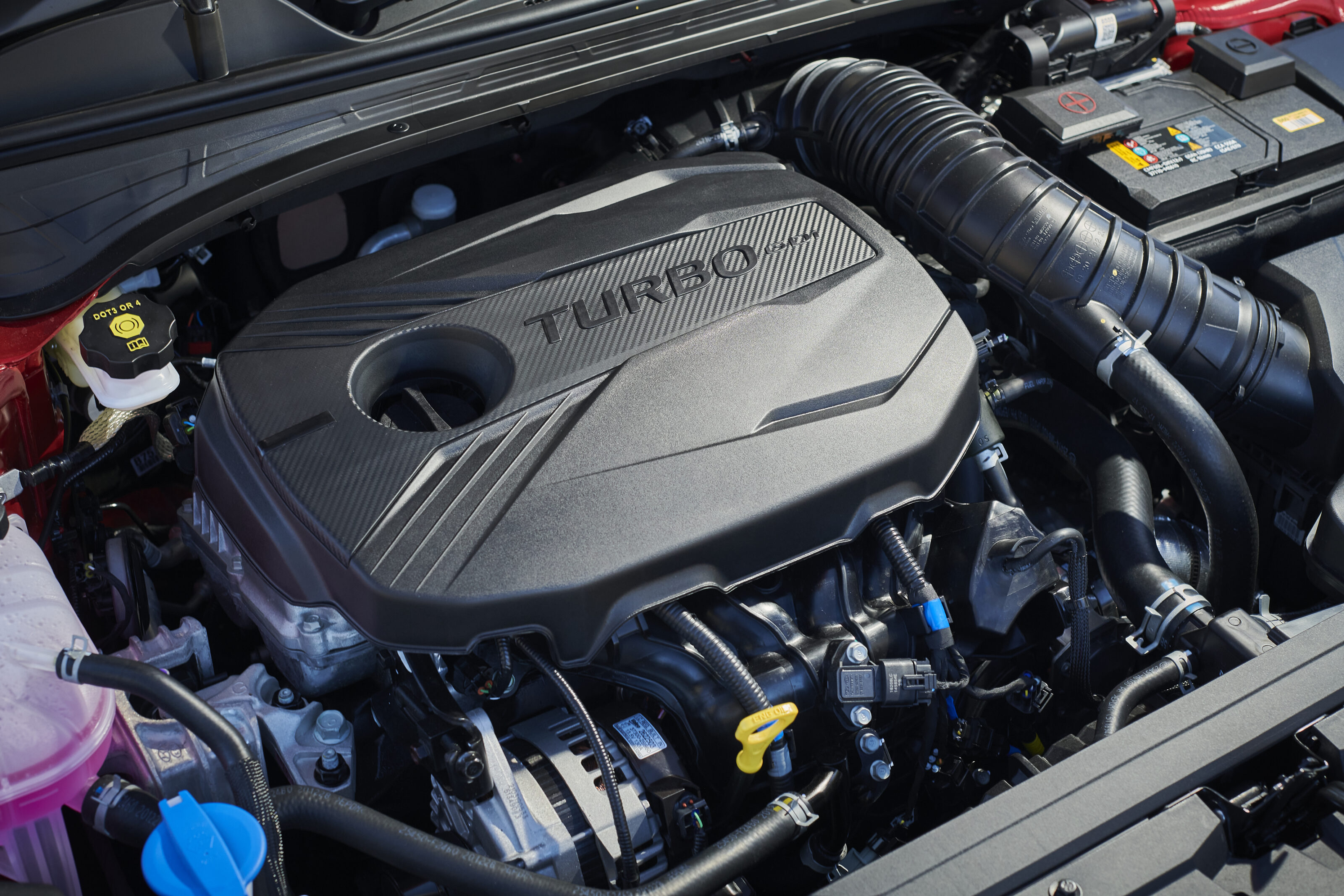
For all variants barring the GT, the new Cerato will feature Kia’s tried and tested naturally-aspirated (N/A) 2.0-litre four-cylinder multi-point injection (MPI) petrol engine.
The N/A four-pot produces 112kW and 192Nm and sends power through a six-speed torque-converter automatic transmission to the front wheels.
On the ADR combined cycle, fuel economy is rated at 7.4L/100km, regardless of body style.
The range-topping GT is powered by Hyundai’s Gamma 1.6T-GDI turbocharged four-cylinder petrol motor.
Power is rated at punchy 150kW and 265Nm, with drive also being sent to the front wheels. However, the GT utilises Hyundai’s own seven-speed dual-clutch transmission rather than the six-speed auto.
Despite the extra oomph, the GT is actually the most economical car in the range, with a combined fuel economy rating of 6.8L/100km for the hatch and 6.9L/100km for the sedan.
All variants are fitted with a 50-litre petrol tank.
Features
The entry-level Cerato S features:
- Dusk sensing auto headlights
- 8-inch infotainment display
- Wired and wireless Android Auto and wireless Apple CarPlay
- 4.2-inch TFT LCD driver’s dash cluster
- Rear air vents
- Rear window defroster
- Three USB ports
- Six-speaker sound system
- Drive mode select (normal/eco/sport/smart)
- Manual climate control
- Keyless entry
- Cloth seats
- Front and rear parking sensors
- Manual speed limiter.
- 17-inch alloy with 225/45 R17 tyres
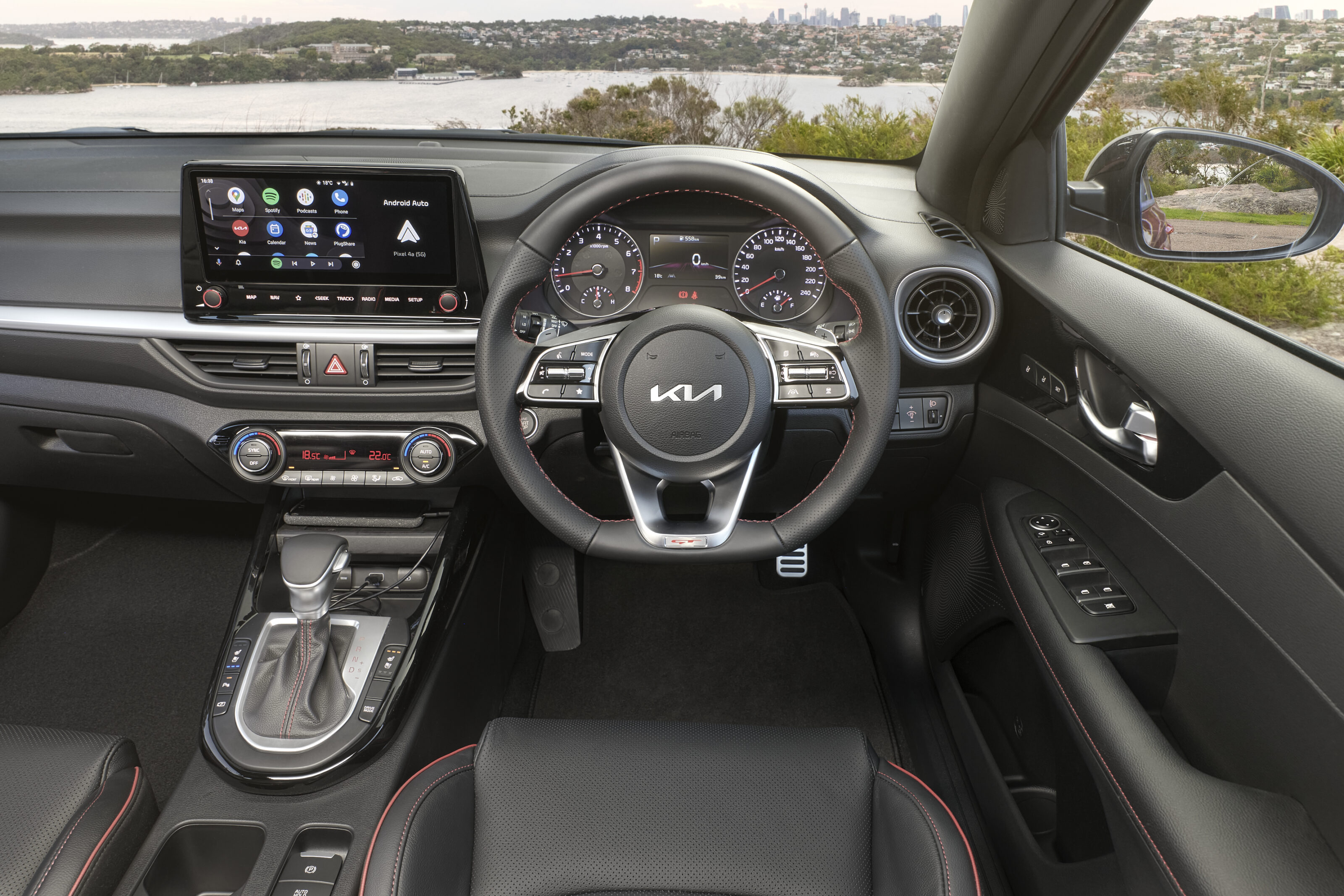
- 10.25-inch infotainment display
- Wired Android Auto and Apple CarPlay
- DAB digital radio
- Sounds of nature
- Satellite navigation
- Sport patterned cloth seats
- Auto-reverse wipers (hatch variant)
- Driver auto up/down window with safety function
- Illuminated vanity mirrors
- Premium steering wheel and gear knob.
The Sport+ adds:
- 284mm solid rear discs
- Electronic parking brake with auto-hold
- Smart key and push-button start
- Dual-zone climate control
- Heated front seats
- Smart boot auto release (sedan variant).
- 305mm ventilated front disc brakes
- Sports tuned suspension
- 18-inch alloy wheels wrapped in 225/40/R18 tyres
- GT body kit
- Dual exhaust
- High gloss black door mirrors
- LED front fog lamps
- Rear LED stoplight
- LED rear fog lamp (sedan variant)
- Sunroof
- Leather interior
- Powered, heated, and cooled front seats
- JBL Premium eight-speaker sound system
- Steering wheel-mounted paddle shifters
- Wireless charging
- Brushed metal sports pedals
- Flat bottom sports steering wheel.
Safety
When the current-generation Kia Cerato was tested by ANCAP back in 2019, it received a five-star safety rating, including a 90 per cent adult occupant protection rating.
Standard safety features across the range include:
- Leading vehicle departure
- Lane follow assist
- Driver attention alert
- Rear occupant alert
- High beam assist
- Six airbags
- Lane keep assist
- Lane departure warning
- AEB with pedestrian detection
- Rearview monitor with dynamic guidelines.
- Blindspot collision avoidance assist
- Rear-cross traffic collision avoidance assist
- Safe exit warning
- Blindspot detection
- Rear cross-traffic alert
- AEB with cyclist detection
- Adaptive cruise control.
Dimensions and towing capacity
The Kia Cerato hatch is 4510mm long, 1800mm wide, 1445mm tall (1440mm GT variant), and has a wheelbase measuring 2700mm.
The Cerato sedan is 4640mm long, 1800mm wide, 1445mm tall (1440mm GT variant), and has a wheelbase also measuring 2700mm.
Braked towing capacity for all variants is rated at 1100 kilograms.
Warranty and servicing
Like all Kia products, the updated Cerato comes with a seven-year/unlimited-kilometre warranty and 12 months of roadside assistance.
All Kia products also enjoy seven years of capped price servicing.
Availability
WhichCar has confirmed with a spokesperson for Kia Australia the 2022 Kia Cerato is on sale right now in dealerships across the country.
Snapshot
- A total of 49 cars across 11 models have been recalled
- Manufacturing fault could cause ABS to fail
- BMW is contacting affected owners
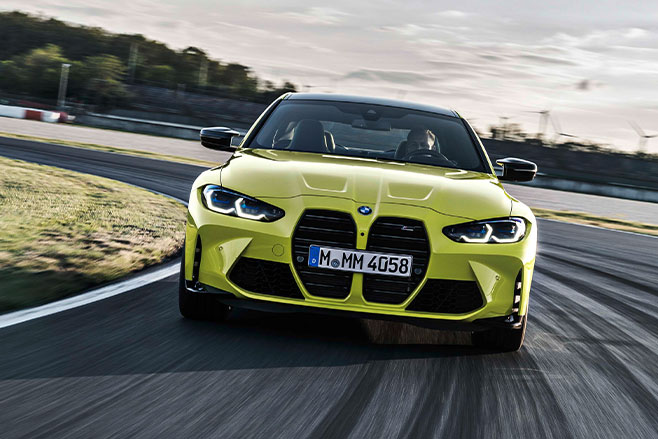
BMW has issued a recall for 11 of its 2019-2020 models over a manufacturing fault in the brake booster unit, leading to possible ABS failure under hard braking.
It says the brake force distribution system will still operate as per usual, but the loss of ABS and brake power assistance could result in an overall loss of braking performance.
Despite several models being affected, only 49 units are on the recall list, with the cars being sold between July 27, 2019, and November 23, 2020.
The models under recall are:
- BMW F92 M8 Coupe
- BMW F93 M8 Sedan
- BMW F95 X5 M Wagon
- BMW G05 X5 Wagon
- BMW G06 X6 Sedan
- BMW G07 X7 Wagon
- BMW G11 7 Series Sedan
- BMW G14 8 Series Convertible
- BMW G15 8 Series Coupe
- BMW G80 M3 Sedan
- BMW G82 M4 Coupe
BMW is currently contacting affected owners and encouraging anyone who believes their vehicle may be affected to contact the BMW Group Customer Interaction Centre on 1800 813 299 or their nearest dealer.
Owners can check to see whether their vehicle is under recall through BMW or on a list on VINs here.
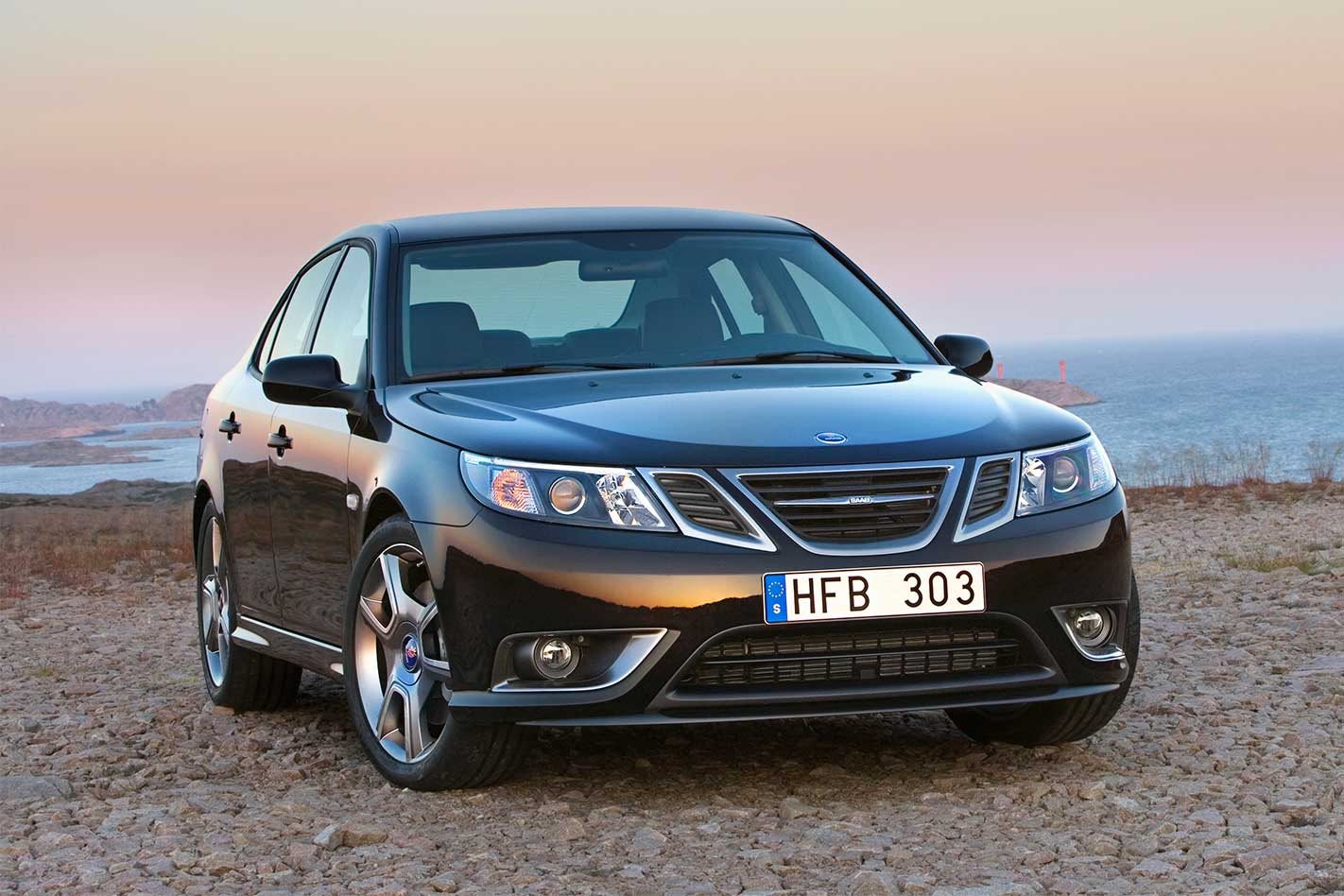
“A Saab 9-3 Aero convertible? What the hell possessed you to buy that?” I asked of my mate’s new-to-him purchase, lining up stories of comedy torque steer, torn firewalls, tart references to ‘women of a certain age’ and tales of its legendarily bluebottle-like body rigidity. It’s all just banter right?
He’d just stepped out of an E36 BMW 3 Series and into the Saab and, to me, this was a massive retrograde step. But when he took the time to explain his reasons, they all made perfect sense. He’s no SVG behind the wheel and just wanted something inexpensive with a bit of zip in a straight line, that was a little bit different and which he could trundle around town in with the roof down. I slowly and rather ashamedly realised that I’d had a bit of an empathy fail. The Saab was very right for him and his particular circumstances.
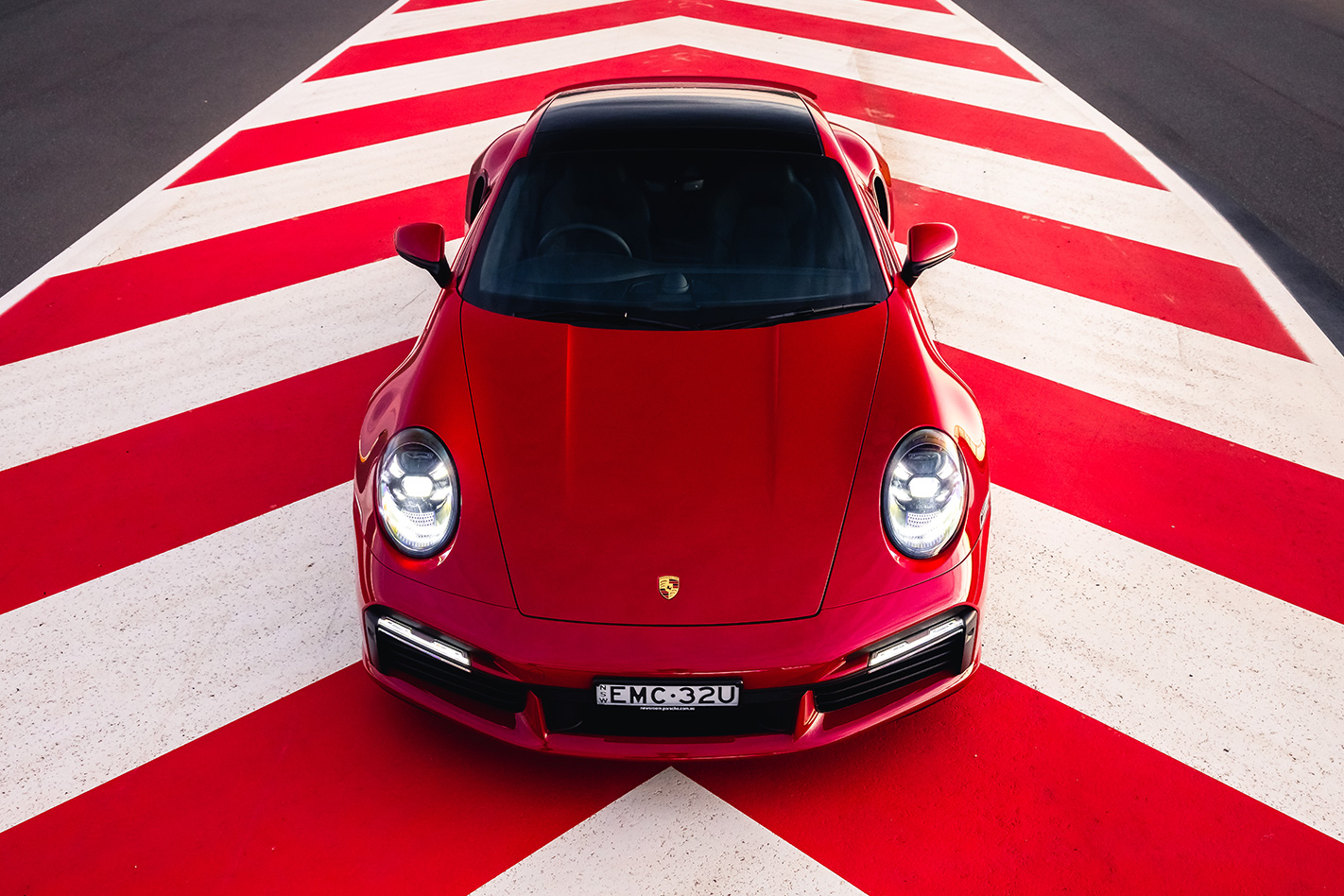
It’s an easy trap to fall into, especially online, where savaging somebody’s car choice without walking as much as an inch in their shoes is depressingly commonplace. Motoring journalists are as guilty of this as anyone and, consequently, they’re often afraid of being on the receiving end. That’s why you could usually throw your hat over most motoring writers’ Teflon car choices. Porsche Boxster/911, Peugeot 205 GTi, VW Up!/Golf GTI, BMW M3, Land Rover Defender, Toyota 86, Suzuki Jimny, Ford Falcon XR6 Turbo, Holden Monaro: rinse and repeat.
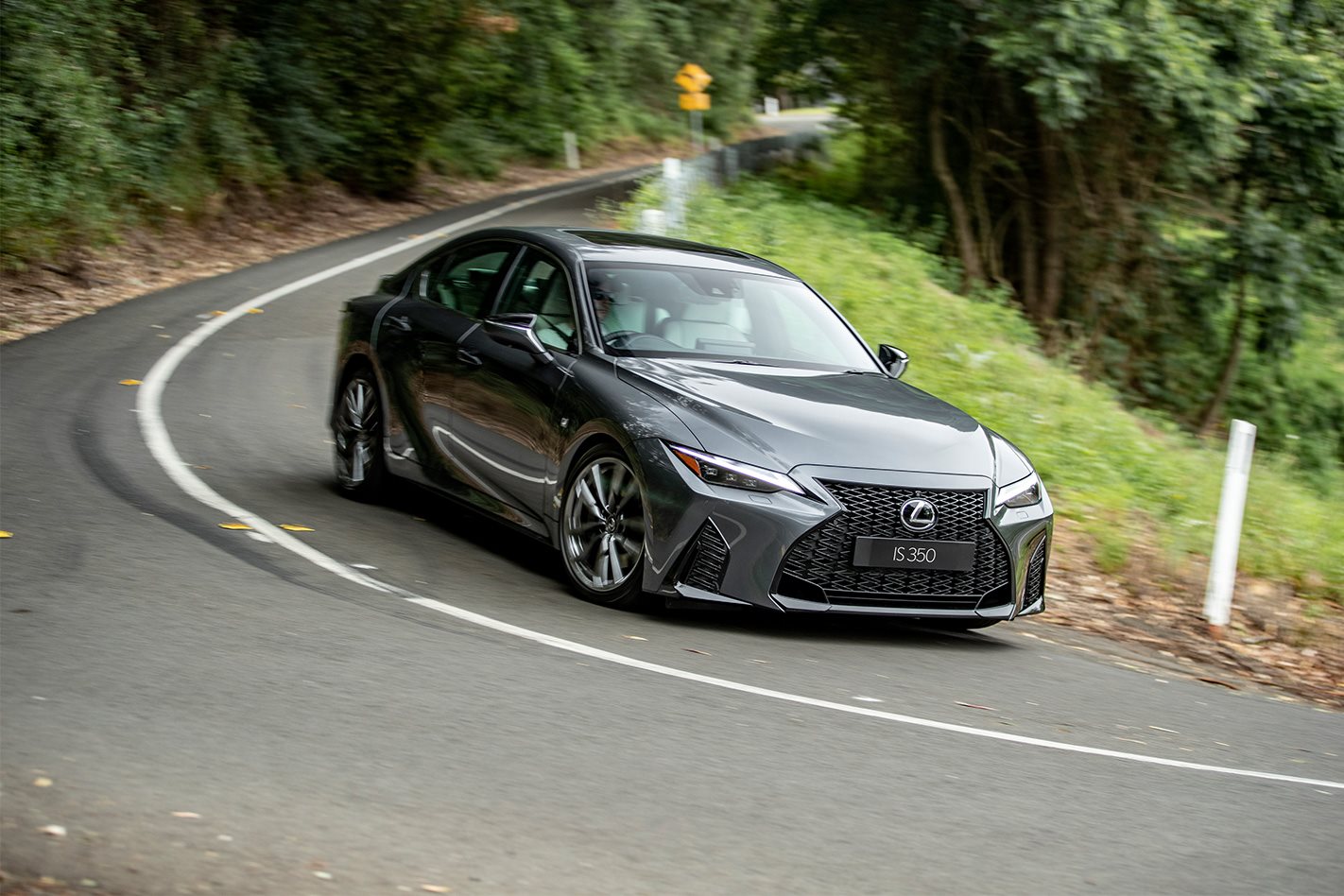
It’s also why many motoring journalists are utterly flummoxed when Australians buy Mitsubishi ASXs or Kia Ceratos, unable to process why they’d overlooked a Mazda CX-30 or a Volkswagen Golf. As people who love driving, we narrow that focus even further. Before living with it, I’d have probably lambasted somebody for choosing a Lexus IS350 F Sport over a BMW 330i.
The BMW is manifestly a superior performance car. But for the driving I do, day in day out, the Lexus is simply a more pleasant thing and by some margin. Read the long term review and I’ll explain why, but usually all it takes is to ask rather than rush to criticise.
It’s too late for me to ask my late father why he replaced a beautiful Lancia Fulvia with the Harvest Gold slug of an Austin Maxi when I was a kid, but then his car buying decisions often went no further than taking advantage of a workmate offloading something cheap. That random vehicle generator yielded gems and horrors but he seemed to avoid boring cars. For that I was eternally thankful.
But left-field car choices are, by their nature, a good indicator of an interesting person; somebody who probably doesn’t comply with vanilla norms and whose particular niche probably comes with something that’ll make your world richer for taking the time to understand. So next time one of your mates tells you they’ve bought a car that makes you want to laugh, just ask ’em a few questions to try to get a handle on why. I guarantee the process will take your blinkers off a bit. Do get in touch and show off some of your weirdburger car choices. Promise I won’t point and laugh.
Almost unbelievably, the Kia Cerato has been on sale in Australia for almost two decades. In that time it has blown past the sales figures of the seemingly more famous Rio, a nameplate that has also been around forever. Kia has sold 155,000 Ceratos, which isn’t mucking about, especially for a challenger brand.
Since the introduction of the fourth-generation Cerato in 2018, Kia has released several new SUVs – Stonic, Seltos and Sorento as well as the uncharacteristically sporty Stinger sedan. So a lot has gone on and yet the Cerato still racks up the sales.
Three years have passed since its introduction and Kia has taken the opportunity to not only freshen up the range but also to slap on the shiny new Kia badge.
Pricing and Features
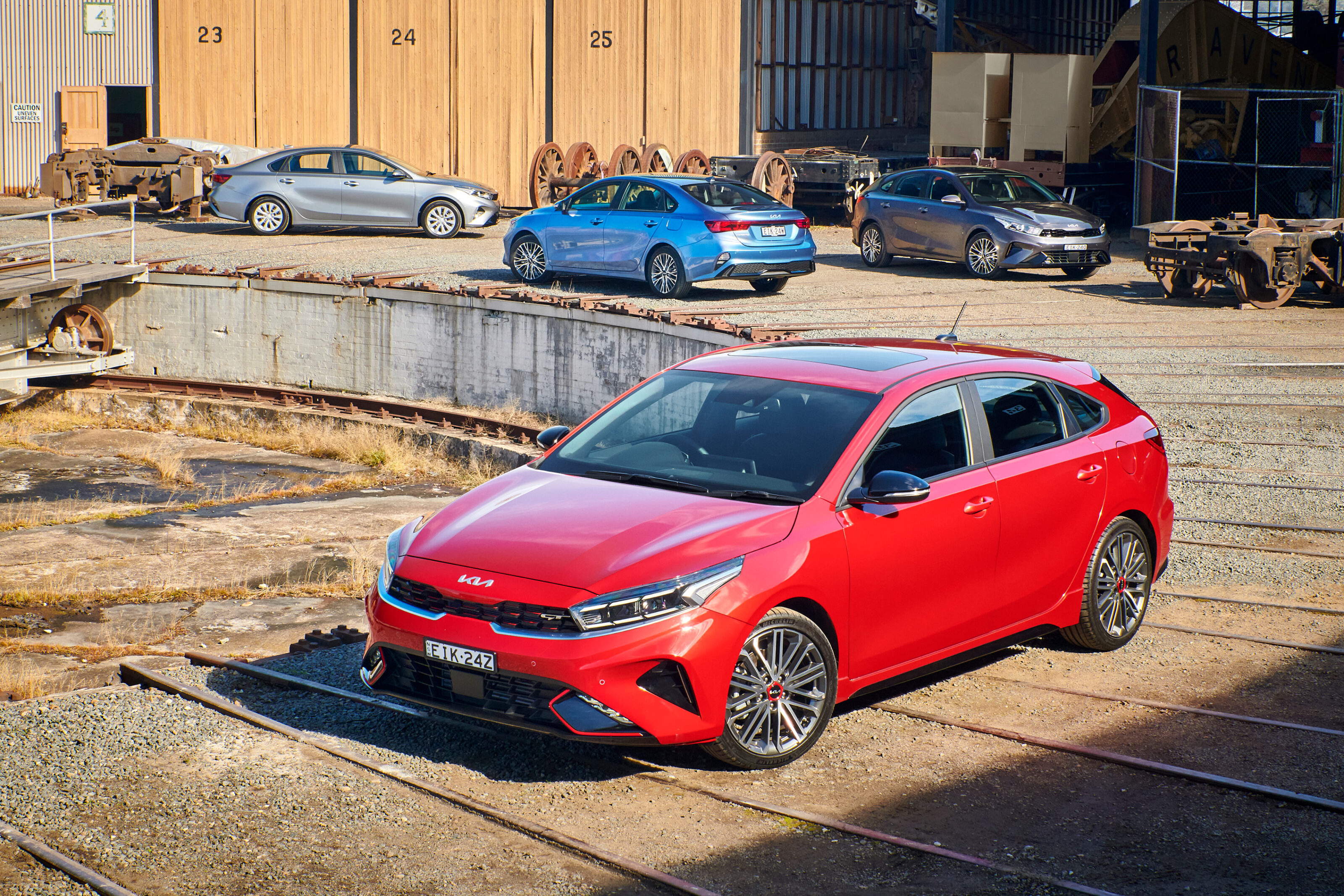
The range is basically the same as it was before, with no changes to the model names and the 2.0-litre naturally aspirated and 1.6-litre turbo four-cylinders continuing on. Sadly – and a moment’s silence please – the six-speed manual is no more, the vanishingly small demand for the three-pedal model bringing on its demise as well as an incompatibility with the upgraded AEB.
Safety features across the range include six airbags, lane-keep assist, lane departure warning, forward AEB (car and pedestrian), lane follow assist, driver attention alert, rear occupant alert, auto high beam and a reversing camera, with a few of these being new additions to the basic spec.
Prices are up across the range, with the 2.0-litre variants adding up to $600 while the GT is up $1100.
The range opens with the S at $25,490 RRP ($25,990 drive-away) with the Safety Pack shipping for $26,490 ($27,490 drive-away). The S has 16-inch steel wheels, auto halogen headlights, air-conditioning (with rear air vents), keyless entry, front and rear parking sensors, cloth trim and cruise control.
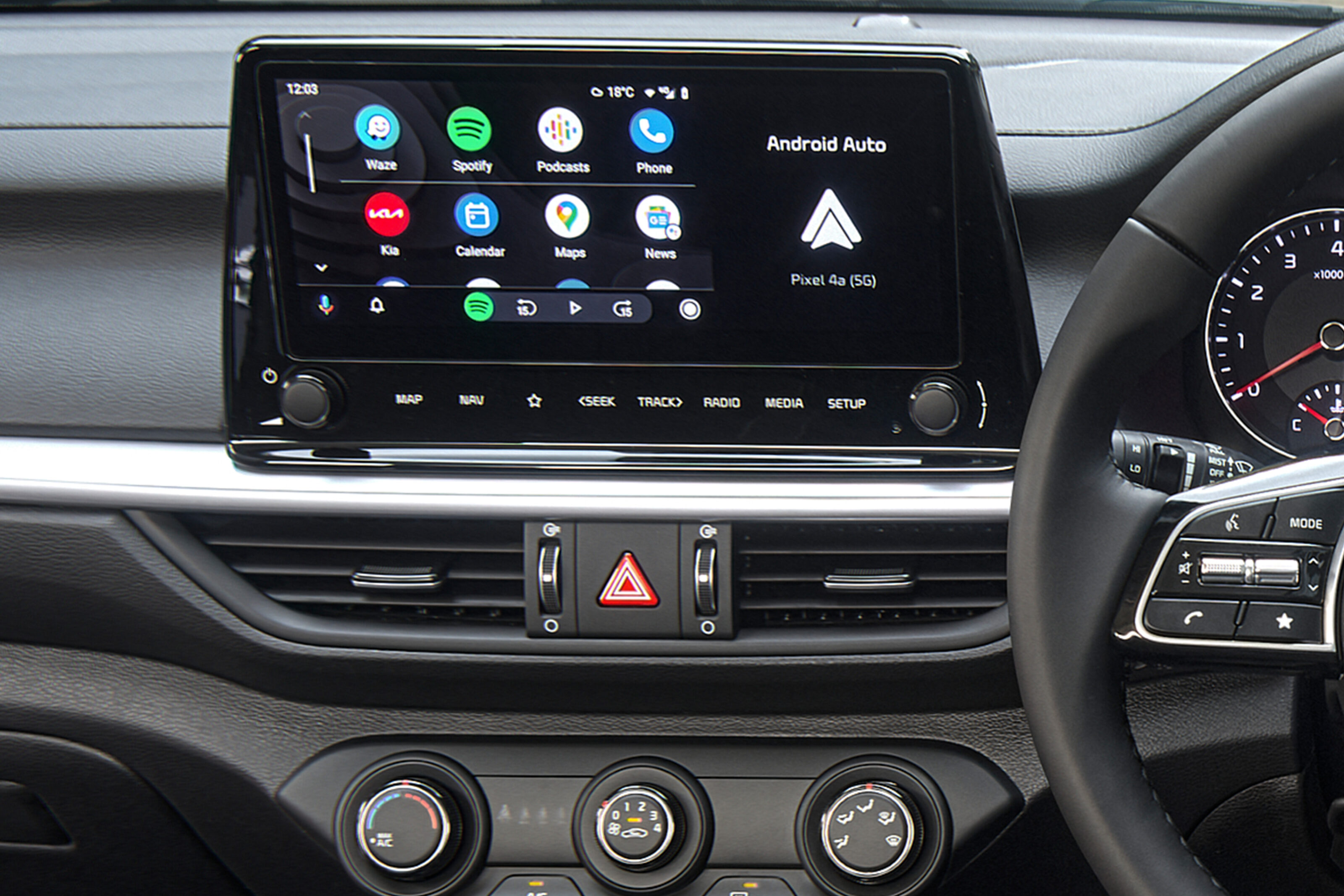
Its six-speaker stereo is powered by an 8.0-inch touchscreen with wireless Apple CarPlay and Android Auto. For some reason, the S is the only car in the range with wireless capability, which Kia hopes will soon change.
Adding the Safety Pack takes the standard safety package and adds reverse cross-traffic alert, blind-spot monitoring, upgraded forward AEB with cyclist detection, forward collision warning and safe exit warning. It’s $1500 well spent but annoying that all this isn’t standard, especially the rear cross-traffic alert.
The Sport retails for $27,590 ($27,990 drive-away) with a spec that builds on the S with 17-inch alloys, sat-nav, sport cloth trim and a “premium” steering wheel and shifter.
It also has the larger 10.25-inch touchscreen that adds a range of features including digital radio but loses the wireless Apple CarPlay while Android Auto works with both a cable and over the air. To keep the batteries juiced up, there are two USB ports – one in the front and one in the back – as well as a 12-volt adapter.
As with the S, you can add the Safety Pack, which takes the Sport to $28,590 ($29,940 drive-away).
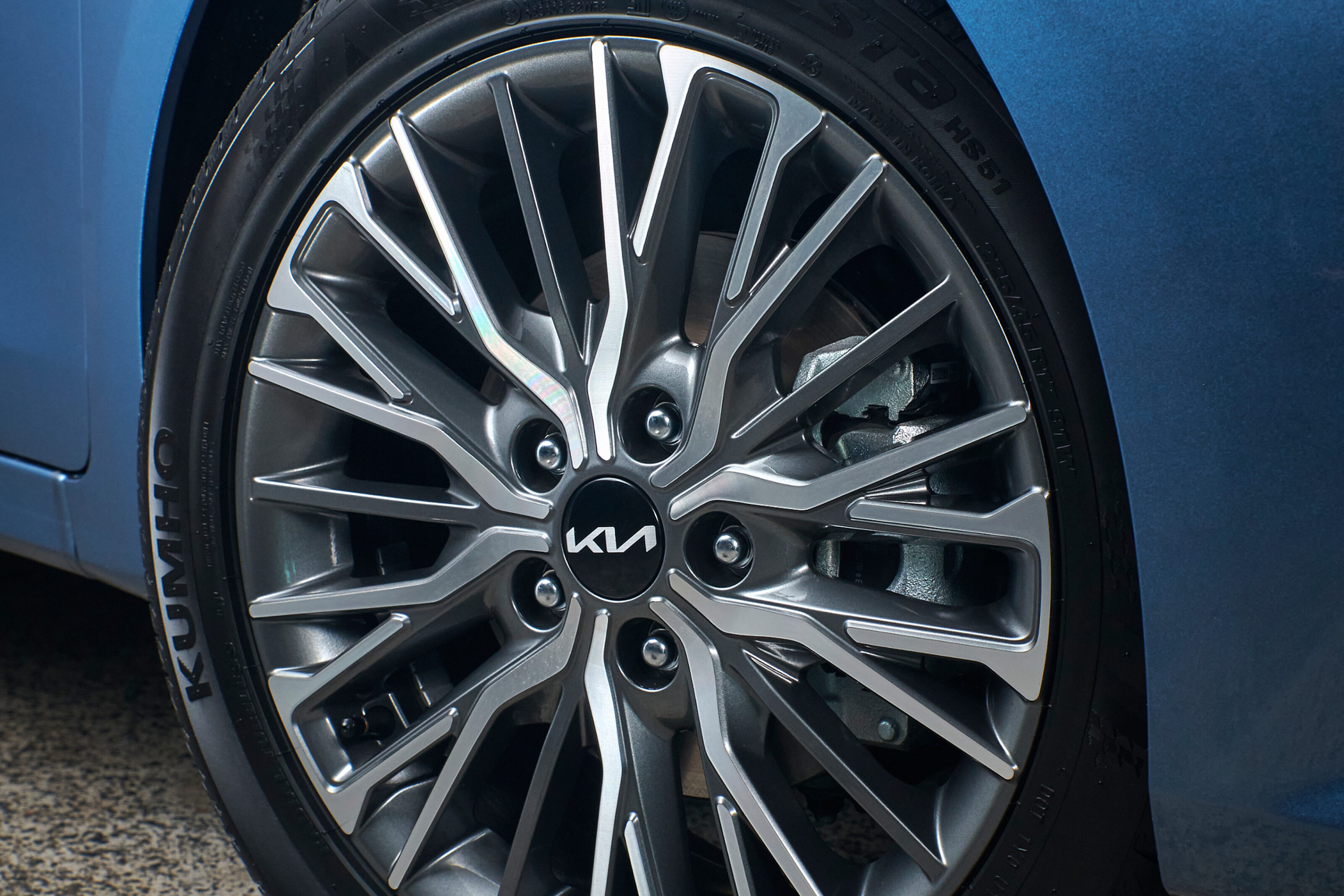
The Sport+ comes in at $30,640 ($31,690 drive-away), has bigger rear brakes, keyless entry and start, heated front seats and dual-zone climate control. The sedan also gains a smart boot release.
New to the Sport+ are adaptive cruise control, blind-spot monitoring with blind-spot collision avoidance assist, reverse cross-traffic alert and rear cross-traffic collision avoidance assist, safe exit warning and upgraded forward AEB with cyclist detection.
A lift in some interior materials includes fake leather seats, which are perfectly fine and will appeal to those looking for a vegan interior.
Sadly – and a moment’s silence please – the six-speed manual is no more
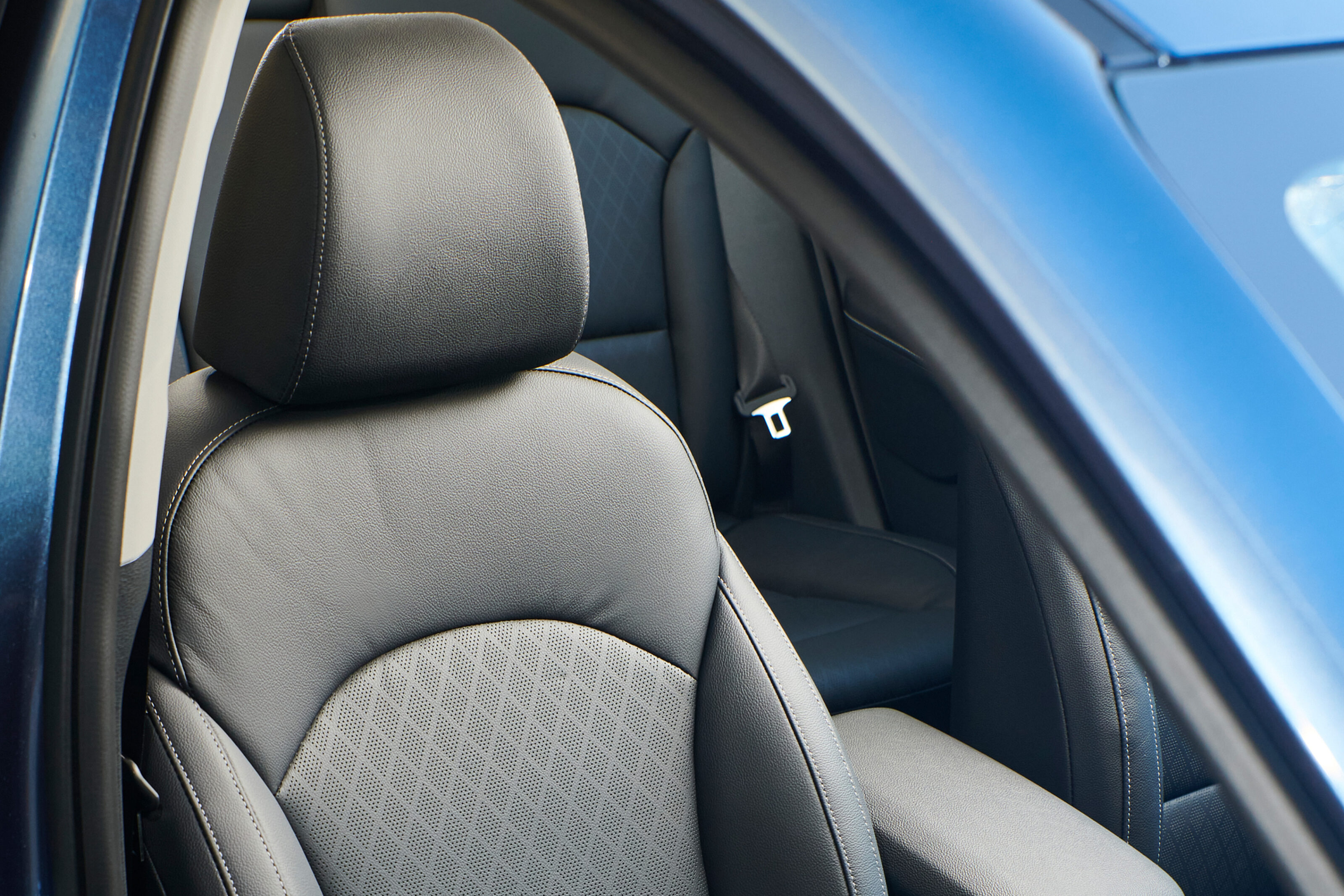
The S, Sport and Sport+ all have the 2.0-litre MPI engine with a six-speed automatic transmission.
Moving on to the GT, the 2.0-litre makes way for the 1.6-litre turbo coupled to a seven-speed dual-clutch transmission. The GT costs $35,290 ($36,990 drive-away), with the majority of the price difference taken up by the turbo engine and multi-link rear suspension. The GT’s sport suspension tune has been tweaked (the old car was a very hard rider) and there are also 18-inch wheels plus bigger brakes than the Sport+.
The stereo is a JBL-branded eight-speaker system, there are sports seats in the front with heating and cooling, a sunroof (due to customer demand, apparently), paddle shifters, wireless charging pad, alloy sports pedals and flat-bottomed steering wheel.
Design
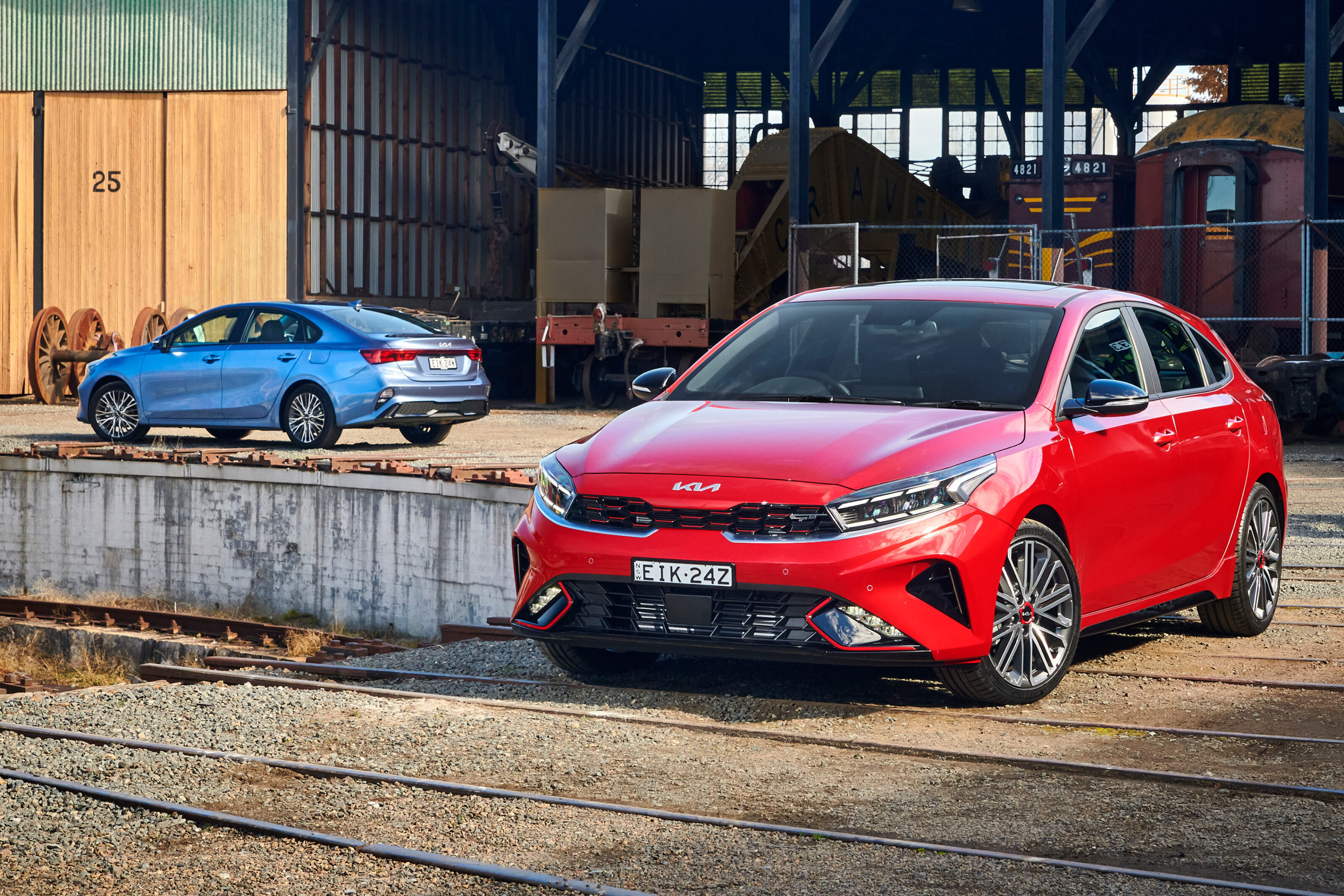
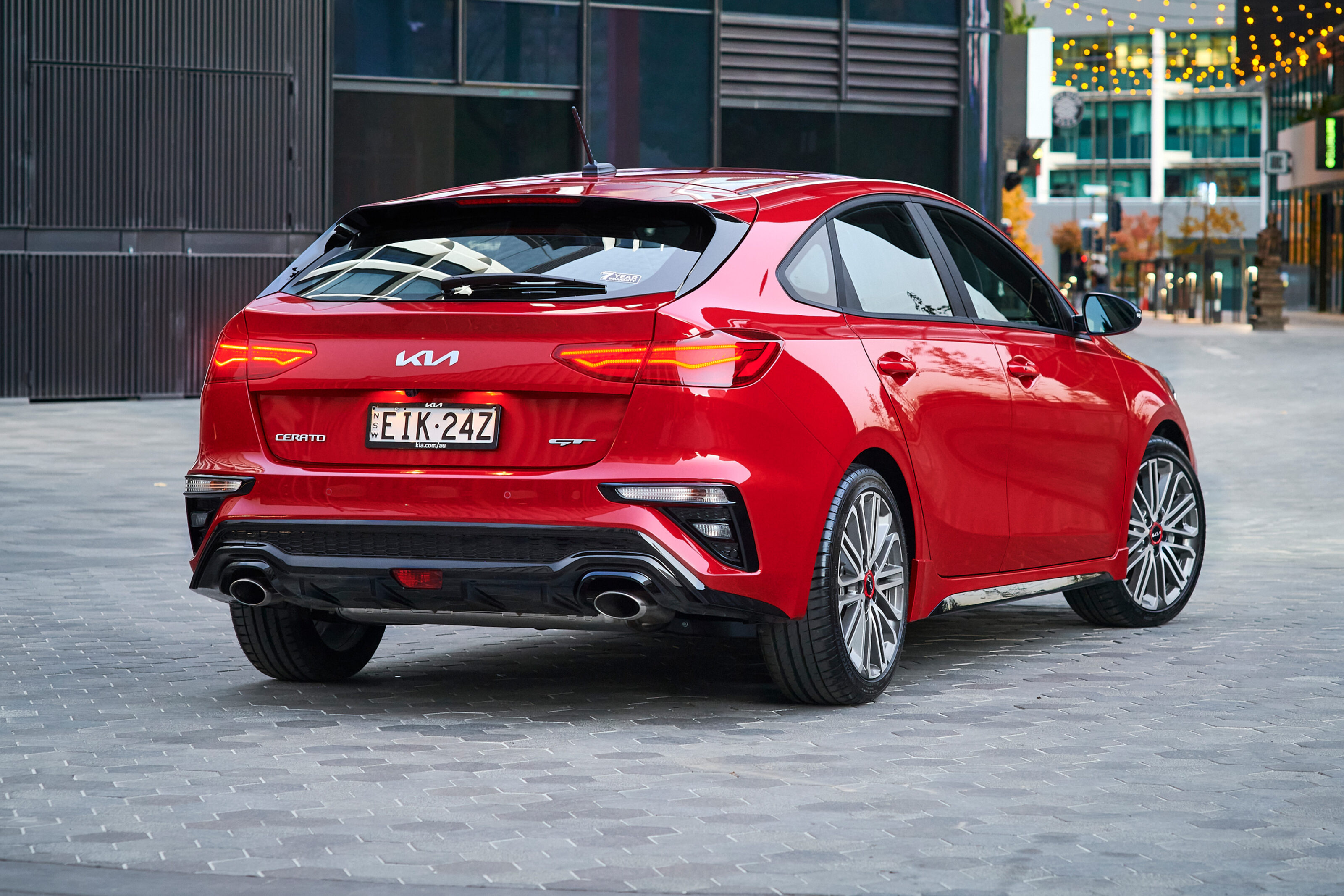
For the MY22 model, the hatch and sedan both have a new face, with even the lowliest S sporting LED daytime running lights and positioning lights. The new face is more aggressive than before, with signature LEDs in the headlights and lower bumper flanking a wider new ‘tiger nose’ grille with the pinch made broader to accommodate the new Kia emblem.
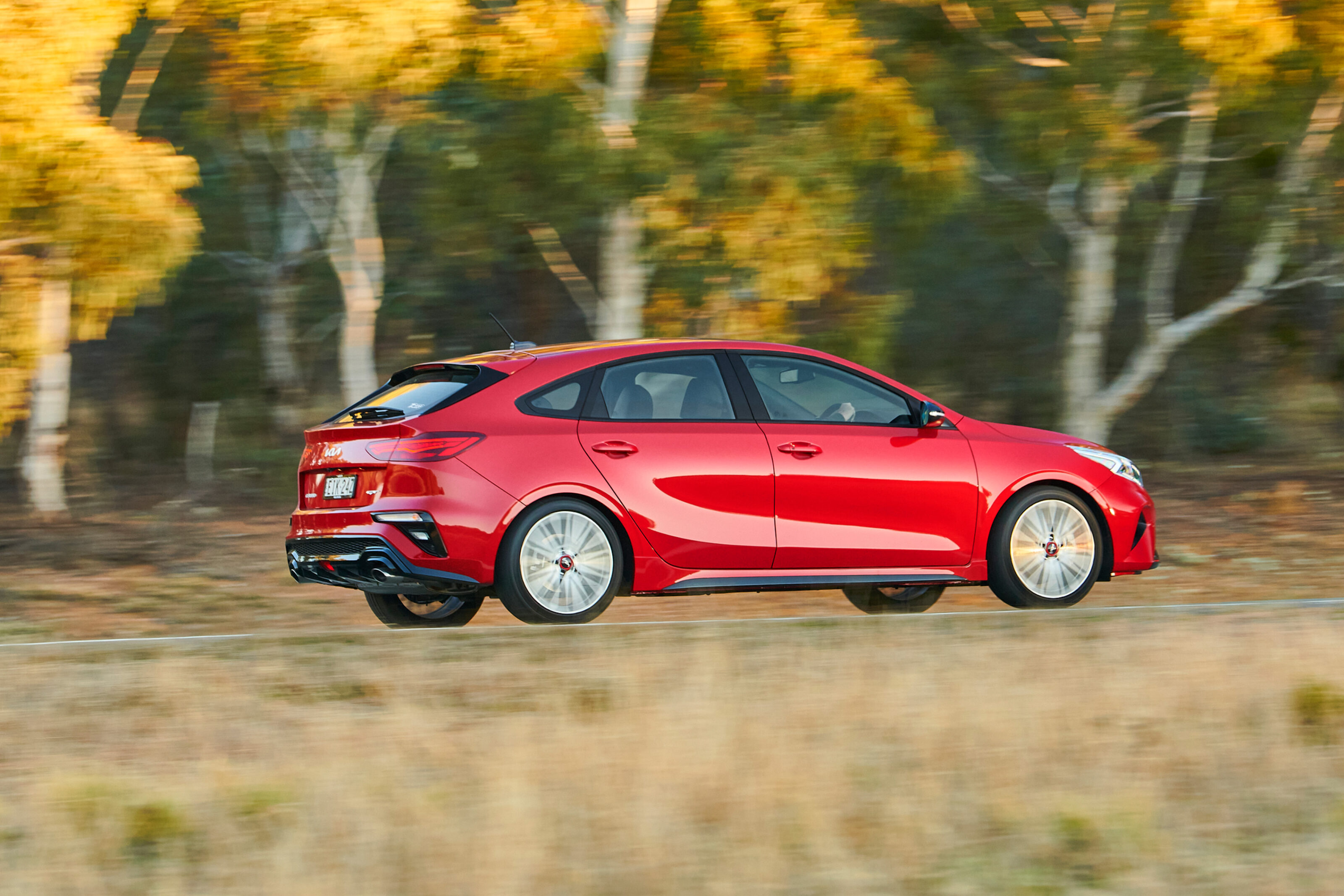
Down the back, the sedan has a reshaped bumper, taillights and boot. The distinctive rear on the hatch stays the same, so if you didn’t like it before, you still won’t. It always reminds me of the BMW X4 rear end, so it’s got styling pedigree.
Comfort and Space
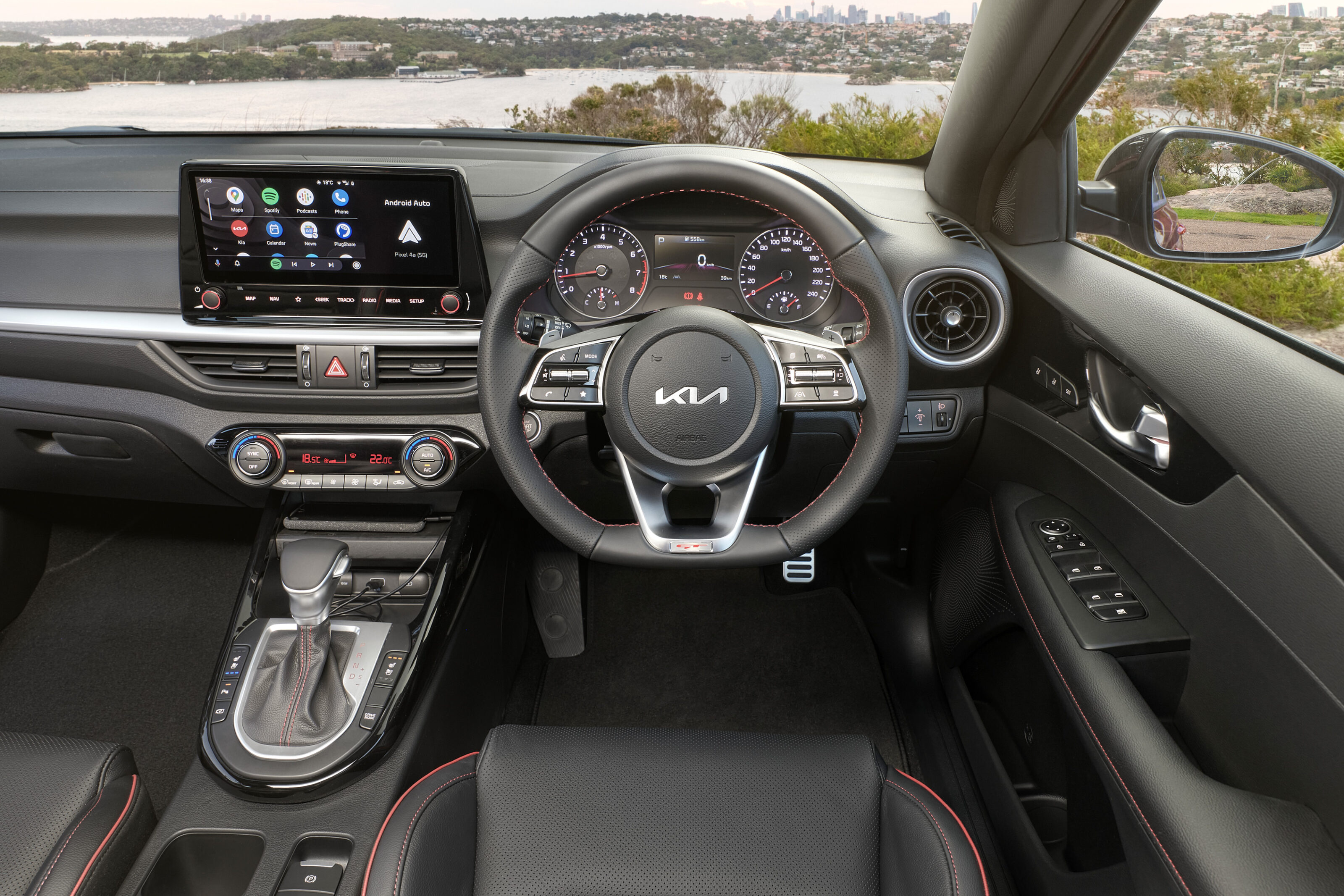
The Cerato is a roomy machine, taking on the bigger hatches in its class like the Focus.
Front-seat passengers have two cupholders, a centre console bin, space for a phone under the centre stack and door pockets with bottle holders.
The sedan has a significantly larger boot at 502 litres against the hatch’s 428. Neither are exactly small, but it’s worth noting if you’re tossing up between bodystyles.
On the Road
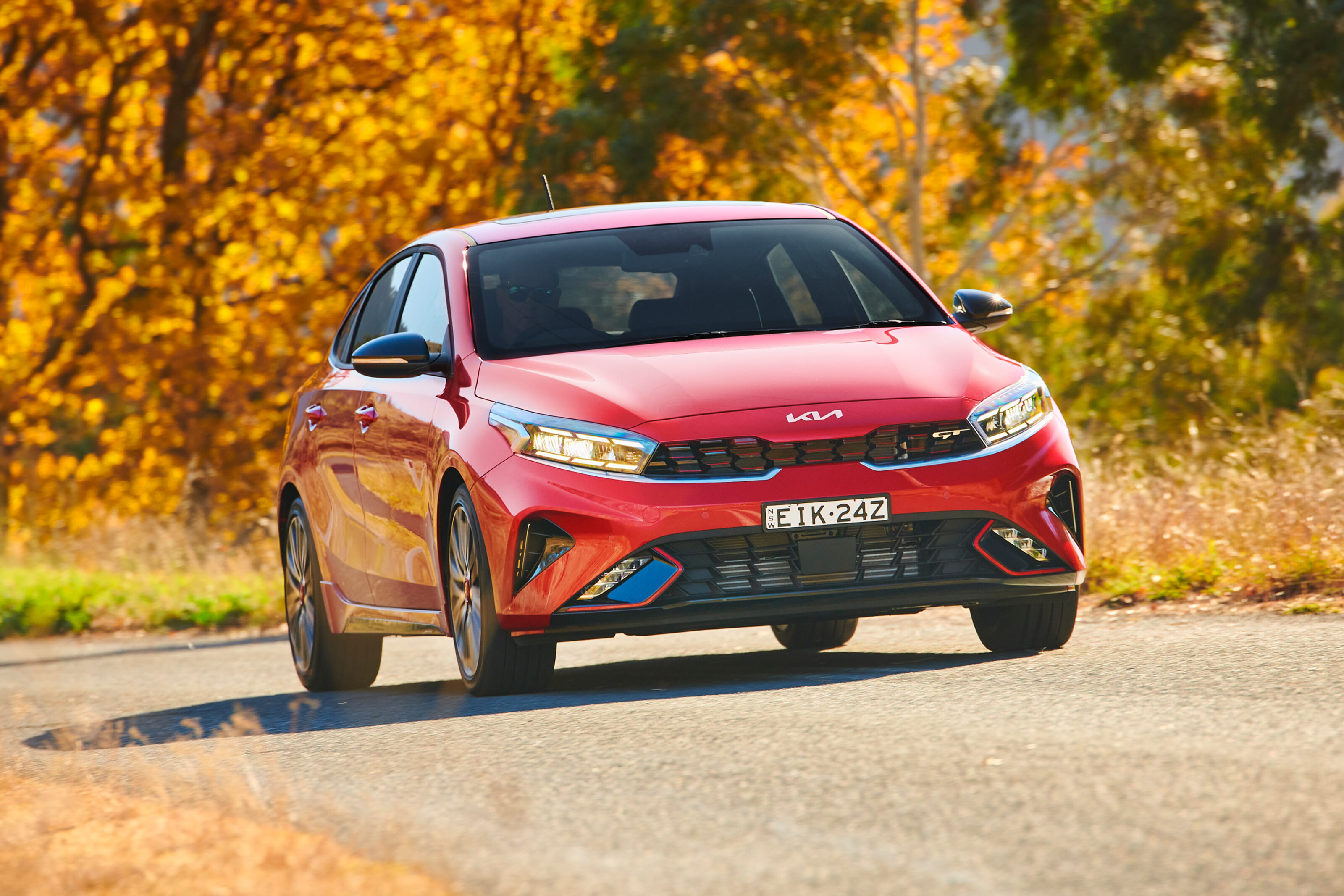
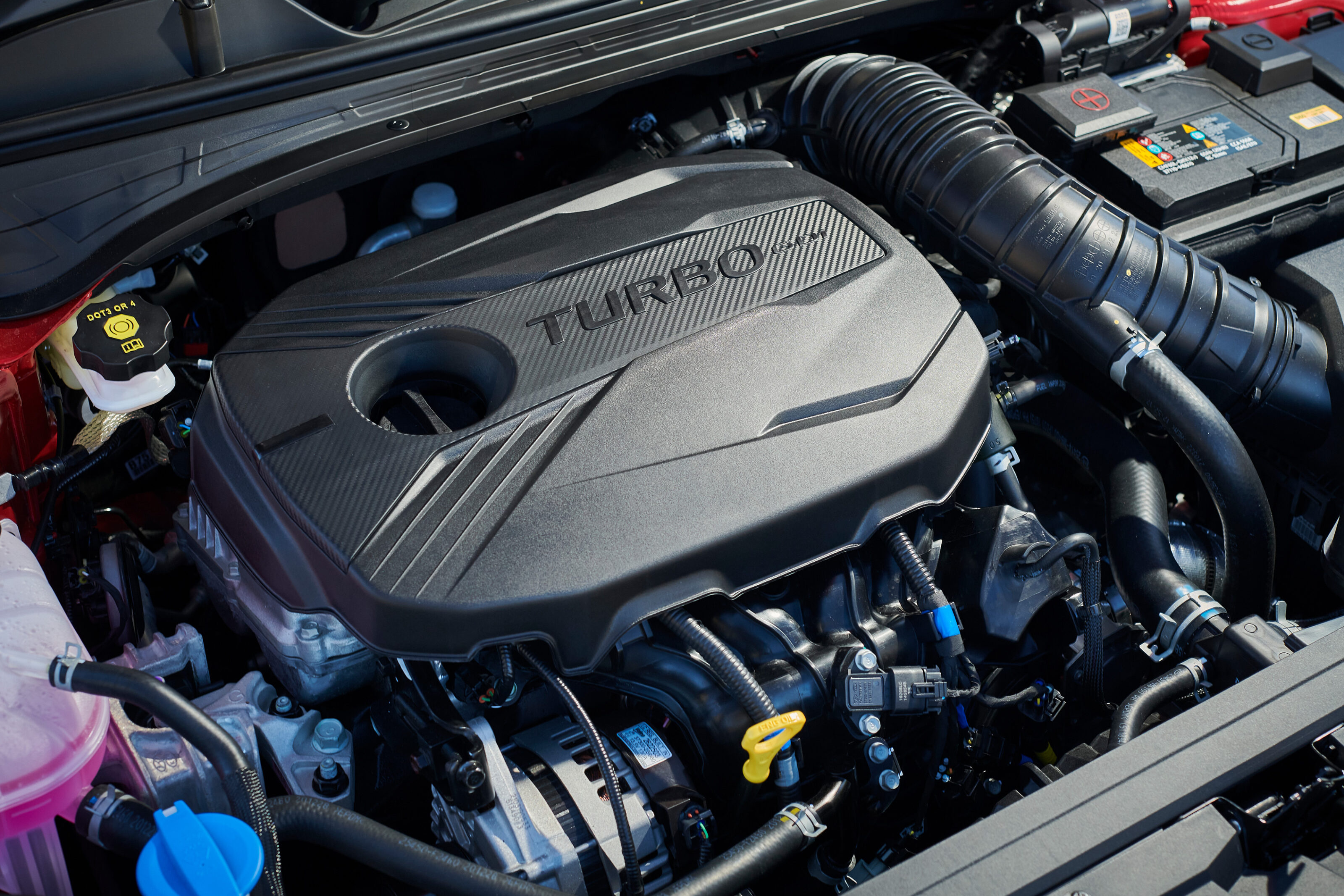
The 2.0-litre MPI engine of the S, Sport and Sport+ develops 112kW at 6200rpm and 192Nm at 4000rpm. Kia says it will manage 7.4L/100km on the combined cycle.
If you throw the extra money at the GT, you’ll get 150kW at 6000rpm and 265Nm between 1500rpm and 4500rpm from the 1.6-litre turbo four. The ADR testing cycle yielded 6.9L/100km on the combined cycle for the sedan and the slipperier hatchback 0.1L less.
Mercifully, both run on standard 91 RON unleaded so it’s a bit cheaper than some rivals that require the good stuff to run.
All but the GT run a completely unchanged suspension setup. The Kia Australia suspension team – running in a slow-motion, COVID mode – made a number of changes that didn’t improve things, so stuck with the old setup. There’s little to complain about the struts at the front, torsion beams at the rear setup if you keep it tidy.
The suspension is far more capable than the 2.0-litre MPI engine, which is somewhat phoning it in. It’s a bit on the slow side and makes a bit of a racket under load but at all other times is serene, quiet and easy to get on with. The six-speed is pretty relaxed, too, and suits the engine really well, without any hunting or dithering.
Promising better dynamics and ride are the GT’s Michelin Pilot Sport 4 tyres on 18s and upgraded rear suspension (multi-link versus the 2.0-litre car’s torsion beams). Sometimes promises are broken – the old car was a bit of a teeth cracker, so the local Kia suspension team got to work to improve ride quality and tweak the already fun chassis.
To address the criticism of the old car, the rear dampers’ rebound and compression have been reworked while compression on the front was also modified. The result is an improvement in the overall ride, but it’s still very firm. It’s less busy on poor surfaces at slower speeds but, as before, improves with the speedo further around the dial. It’s quiet at freeway speeds though, almost as quiet as the 2.0-litre that is near-silent at 110km/h.
A fun fact about the GT’s suspension tune: it’s the same as the Australian-developed Pro’ceed GT setup that ended up on overseas models. We never got that updated tune because Kia pulled the plug on that car before it could hit the road.
The old GT was a bit of a teeth cracker, so the local Kia suspension team got to work to improve the ride quality and tweak the already fun chassis
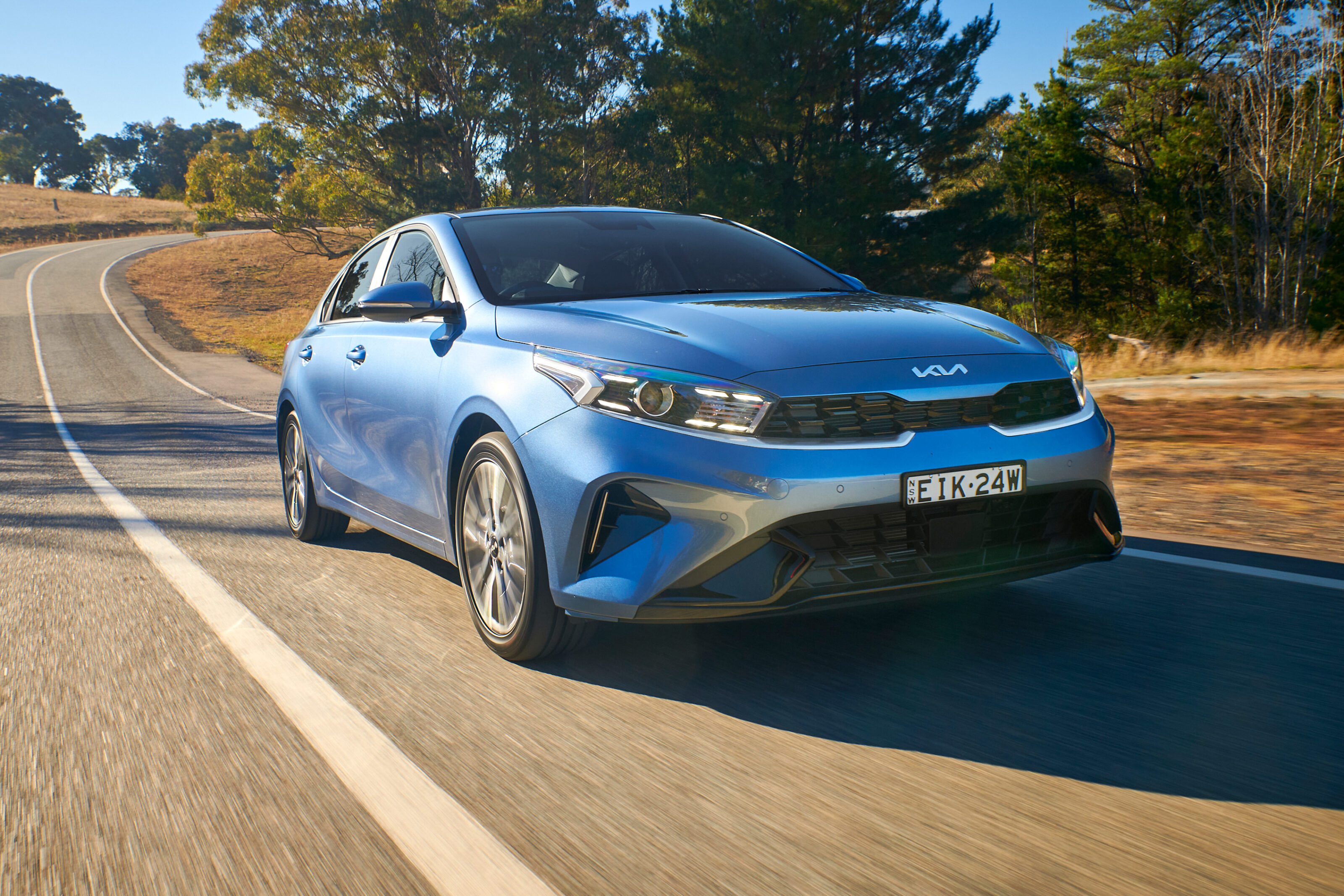
The old Achilles Heel of the GT’s dual-clutch is still along for the ride. It’s fine around town but occasionally needs a firm hand on the paddles to get the gear you want. Added to that, the lag down low is replaced by a fair bit of whoosh once the boost hits the gearbox, which can make things a bit awkward until you’re used to it.
It’s a lot of fun in the twisty stuff though, and as a package, it outguns its i30 cousin with more space and a competitive price – if not dynamically.
Ownership
Kia offers a seven-year warranty with unlimited kilometres, seven years of roadside assistance and seven years of capped-price servicing.
Service pricing is the same between the two engines per service but there’s a trick lurking in there. While the 2.0-litre only requires servicing every 12 months or 15,000km, the turbo engine shrinks the kilometre limit to 10,000km.
The first seven services cost $3295, averaging $470 per service. If you stay under the 10,000km limit, that’s not bad for a year’s servicing but if you’re a high miler, that’s going to catch up to you pretty quickly. Although if you’re buying the GT, it’s unlikely you’re going to be especially fussed.
Verdict
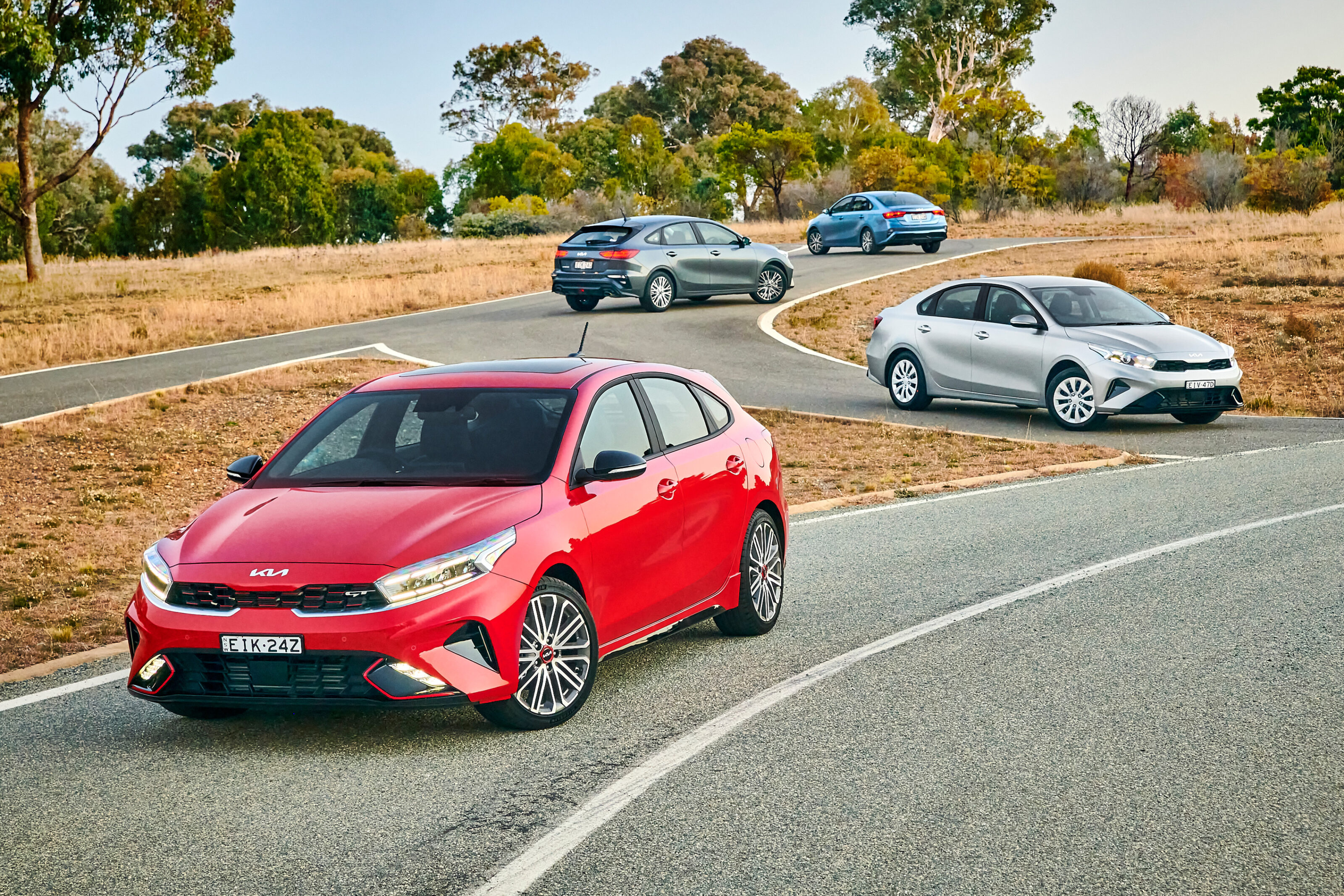
Not a lot has happened in the refresh and I spent quite some time in the thesaurus looking for synonyms for “tweak”. Truth is, the Cerato was in pretty good shape before the refresh, with just the front-end restyle and a few small additions to the specification to set it apart from the MY21 model.
The MY22 has inherited all of the good things that marked out the third-generation Cerato since its 2018 debut. It’s still great value – if at the expense of the lower models’ safety specifications – and has an unbeatable aftersales package. The Sport with the Safety Package is the pick of the range, too, unless you’re after all the fun of the fair in the GT.
It’s probably time for some electrification and an update to the ageing engines but the Cerato sells because it ditches frippery for zero drama, zero nonsense motoring.
Specifications
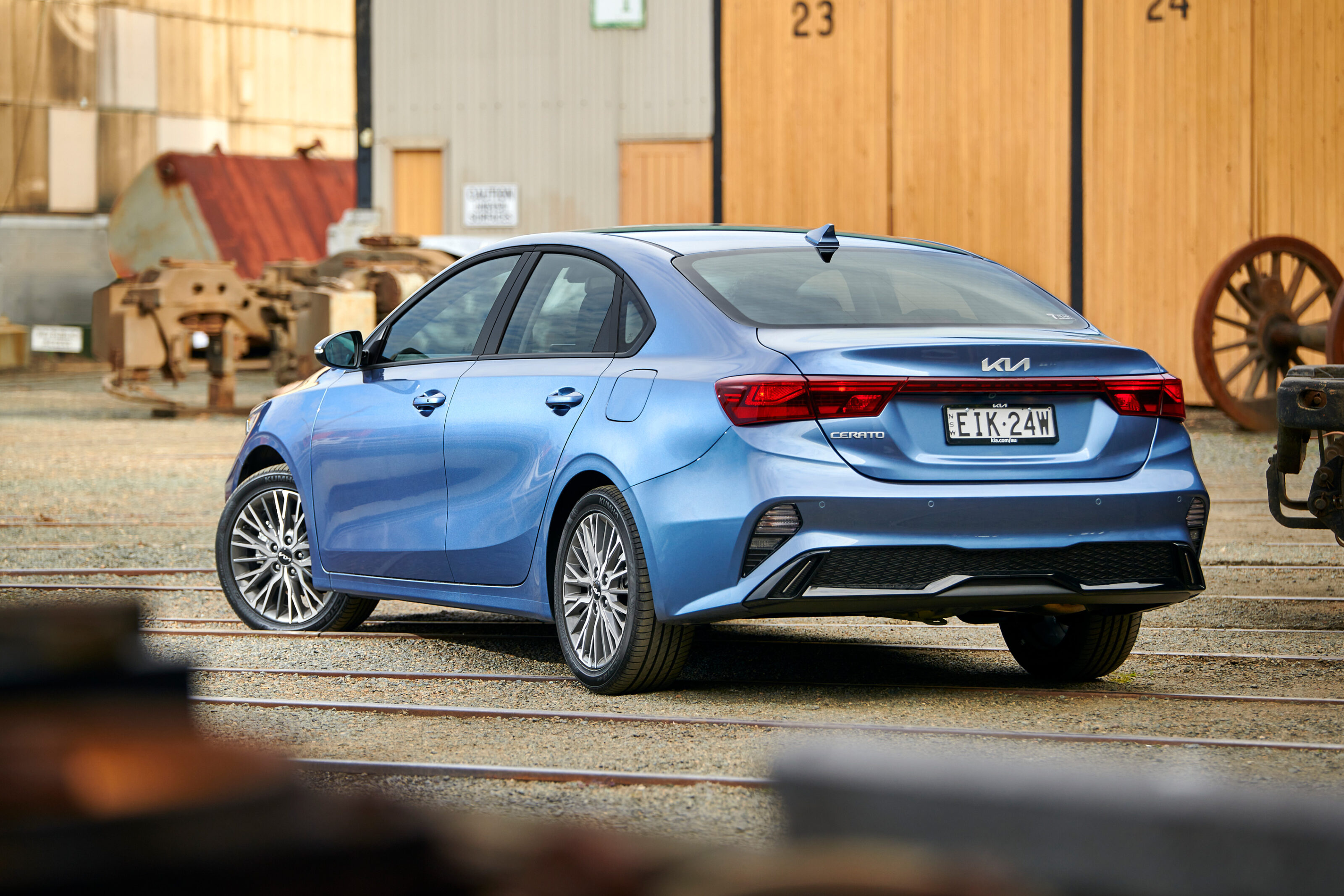
Kia Cerato S, Sport, Sport +
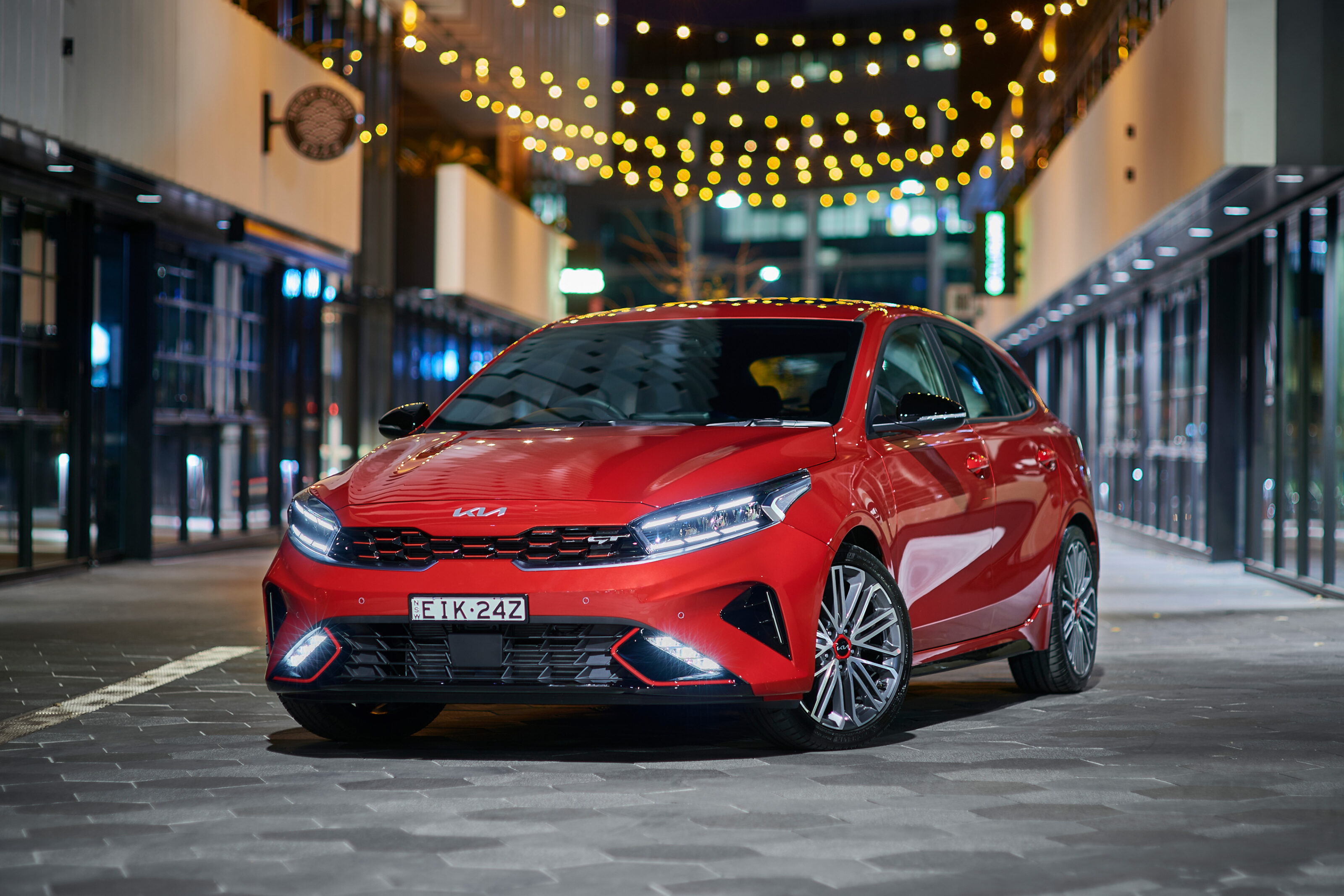
Kia Cerato GT
Snapshot
- Kia launched the new Cerato this week
- The brand was in third place for new car sales in May
- Longer warranty on the cards, but not just yet
Despite the continuing onslaught of SUVs and utes, Kia Australia’s Chief Operating Officer Damien Meredith is bullish about the segment’s ongoing viability.
Speaking this week at the launch of the brand’s best-selling car in Australia, the Cerato, Meredith believes Kia’s extensive range of small cars – Picanto, Rio and Cerato – will continue on for some years.
The Cerato’s sales are still strong, racking up 1500 sales per month, while growing market share due to the segment’s overall decline.
Meredith says that the drop in small cars amounts to 20 per cent year-on-year for 2019 and 2020. For the previous four years that figure was eight per cent, pointing to the obvious acceleration of the decline.
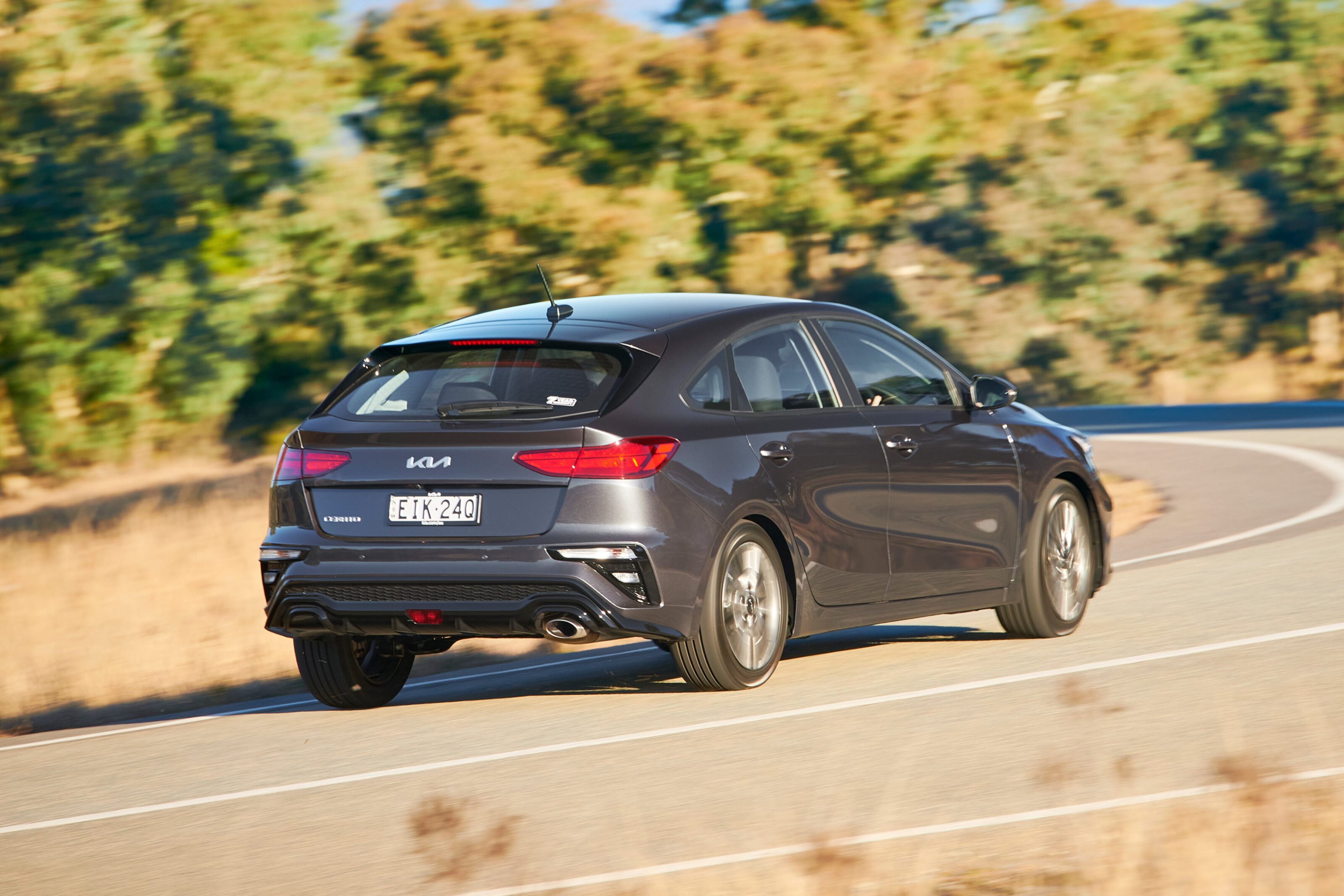
“We’ll keep a very close eye on it. Our market share will continue to grow in the small segment and in light and micro with the Picanto and Rio. We’re basically the only manufacturer offering three passenger cars. We believe it’s been of benefit to us,” the Kia boss said.
“We think there’s still a fair bit of length left in the small car market in Australia. I think we’ve got at least five more years of reasonable volume with the Cerato. The market will hold up to give us that volume.”
When asked if this Cerato would be the last, he was very clear.
“No, definitely not.”
The next Cerato, due sometime in 2024 or 2025 is under development and will include electrified offerings as well as petrol.
Kia’s market-leading seven-year warranty has its seventh-birthday later this year and Meredith believes it is part of a story of consistency which has contributed to the success of Kia and the Cerato in particular.
“The consistency has helped us dramatically,” said Meredith. “It has been incredibly successful for us and it has helped develop our sales and helped grow the brand. We’re very, very happy Korea gave us the go-ahead. It’s been sensational.”
Kia believes in the time the warranty has been part of the Kia package, it has gone from the number one reason a customer would look at a Kia – the “opener” you could say – to now being the third reason and considered the “closer” for dealers.
For the first four years, 40 per cent of customers said it was the most important reason, but now manufacturing and design have moved ahead of the warranty.
The prospect of a longer warranty is something Kia is looking at. With Mitsubishi pushing its caveat-laden ten year warranty, Kia no longer has the pace-setting number to put on its marketing even though its seven year warranty provides unlimited kilometre coverage versus Mitsubishi’s limited-warranty.
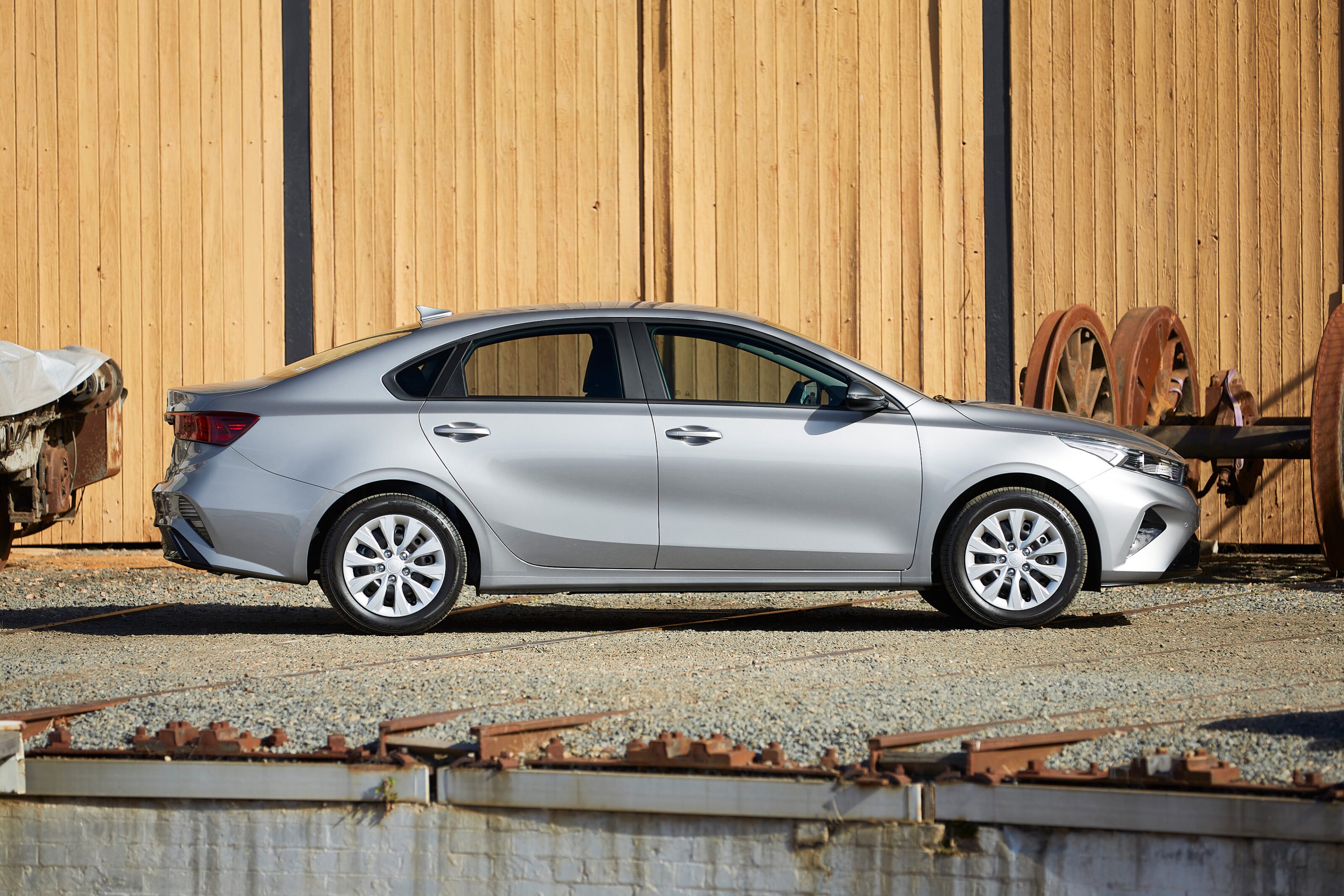
“We’re always looking at it,” said Meredith. “There have been other priorities in regards to what we need to do. We’ve got a new logo, new design cues for our dealerships, that’s where our energies are going at the moment. From a commercial perspective it’s not a good idea to be launching a new logo that’s fresh, young, looks energetic and then lifting that [longer warranty] up. If we did it, it would have to be at a time that’s going to be of benefit to us.”
Meredith suggested a move to a longer warranty would be permanent, rather than past efforts from makers such as Honda and Holden which offered longer warranties for limited periods.
“We’ll continue to look at what’s happening in the marketplace. We always have and will continue to be consistent, whether it’s with warranties or drive-away pricing. That’s also helped us dramatically.”

Kia came third in the sales figures in May, and not for the first time. There’s still a huge gap to catch up to Toyota. Much of Toyota’s lead is made up of the HiLux. Meredith is keen for such a vehicle and believes, while it may not bridge the gap, it will prove a huge boost to Kia’s sales.
“I think if we ever did that type of vehicle, we could probably [sell] 20,000-25,000 per year.”
The facelift to the mid-sized G70 sedan range completes the Genesis brand’s transition to its bold ‘Athletic Elegance’ design language. Debuting last year on the arresting GV80 SUV and arguably at its most resolved across its forthcoming GV70 smaller sibling, the challenge in four-door form is primarily the melding of a bold new look to an older approach to form.
Beauty or brute, the result looks very much what it is: more a new identity than mere facial remodelling, executed with just enough cohesion to not conspicuously appear like the stylistic bridging exercise it is. And one that doesn’t muster up the new-world punch and distinction its clean-sheet stablemates flaunt.
There’s more to the transformation than grafting the brand’s new crest grille and ‘quad lamp’ lighting, though not measurably more. The front guards are new, the bootlid is reshaped, the dash fascia subtly revised to accommodate cabin hardware changes.
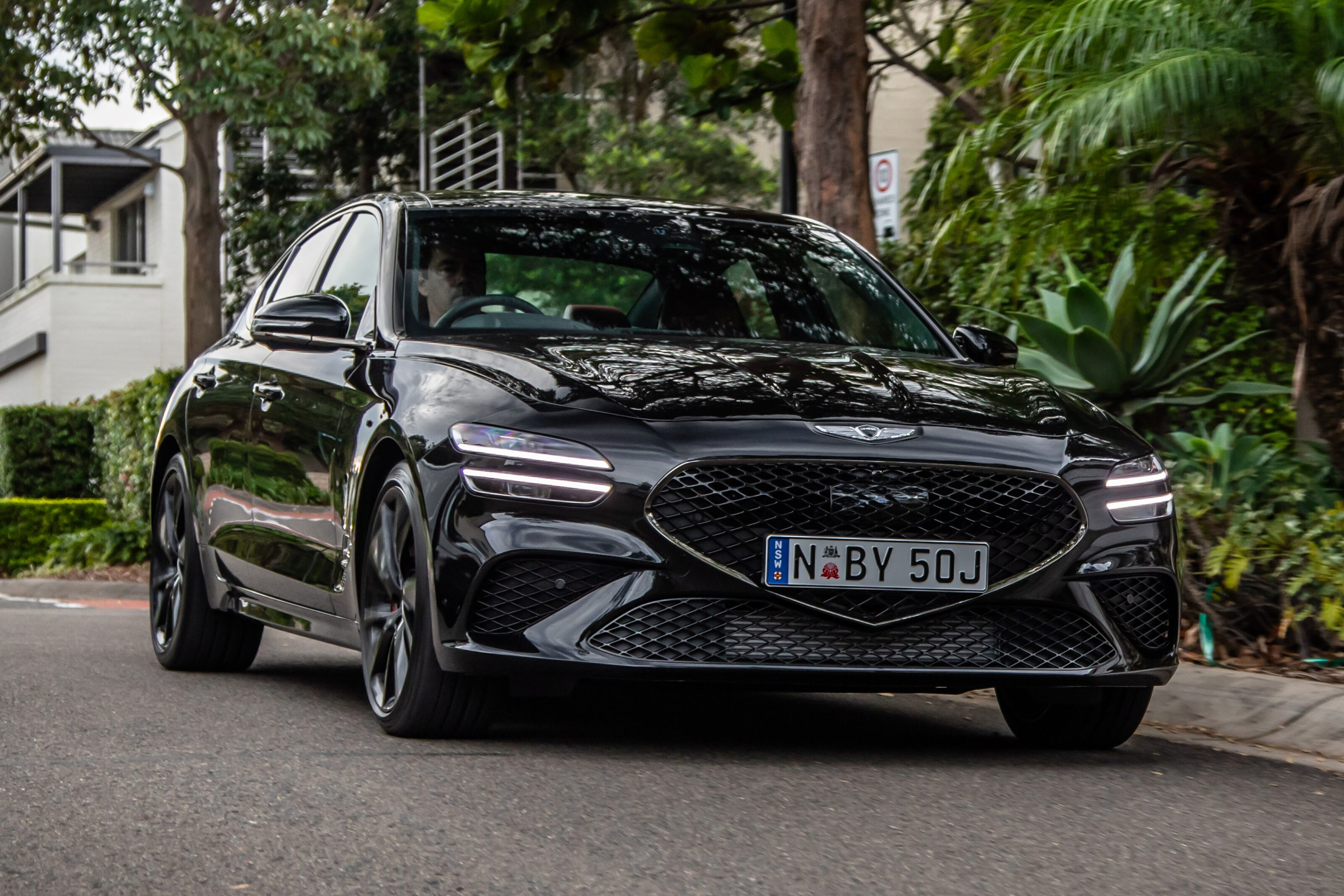
It’s a slam dunk conversion nose-on, distinctly different in chase – where our flagship 3.3T Sport (with Luxury Package) flaunts new dual oval pipes and faux diffuser – if somewhat familiar from most other viewpoints. One exception is the fetching new-look, staggered 19-inch black Sport-spec rolling stock. It’s more contemporary and somewhat fancier, perhaps, though stylistic adventure does have its limitations in a mid-lifecycle update.
The old six-variant range has been trimmed to just two, a choice of turbo-four 2.0T and twin-turbo V6 3.3T Sport, with a Sport trim option for the former and further Luxury Package available atop any configuration, upon which buyers can ‘qualify’ for matte paintwork. This new structure fits the built-to-order cache of exclusivity that Genesis is keen to foster – typically a three-month gestation for delivery – though, in offering package bundles rather than specific detailing, the process isn’t quite the pursuit of bespoke personalisation it might seem.
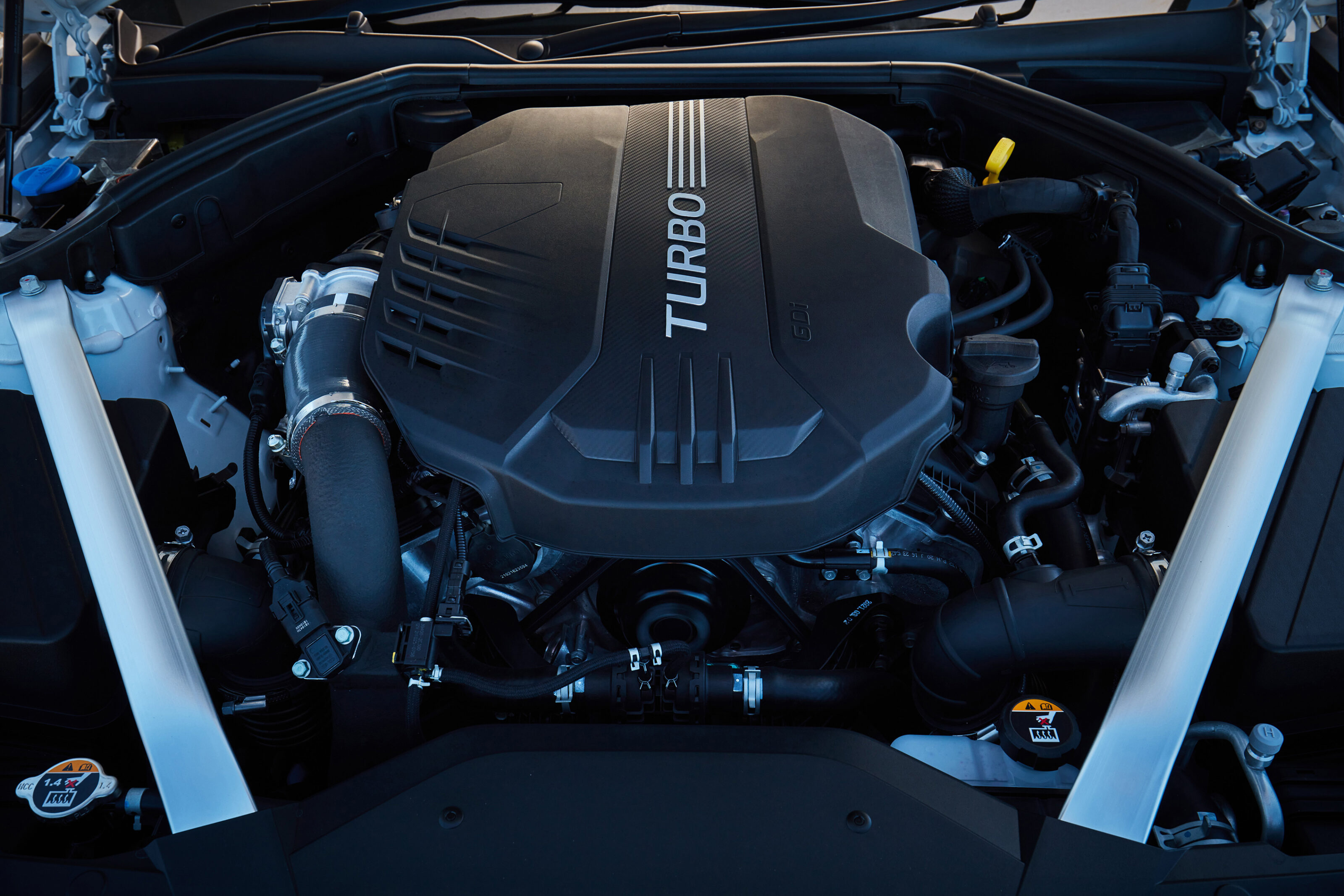
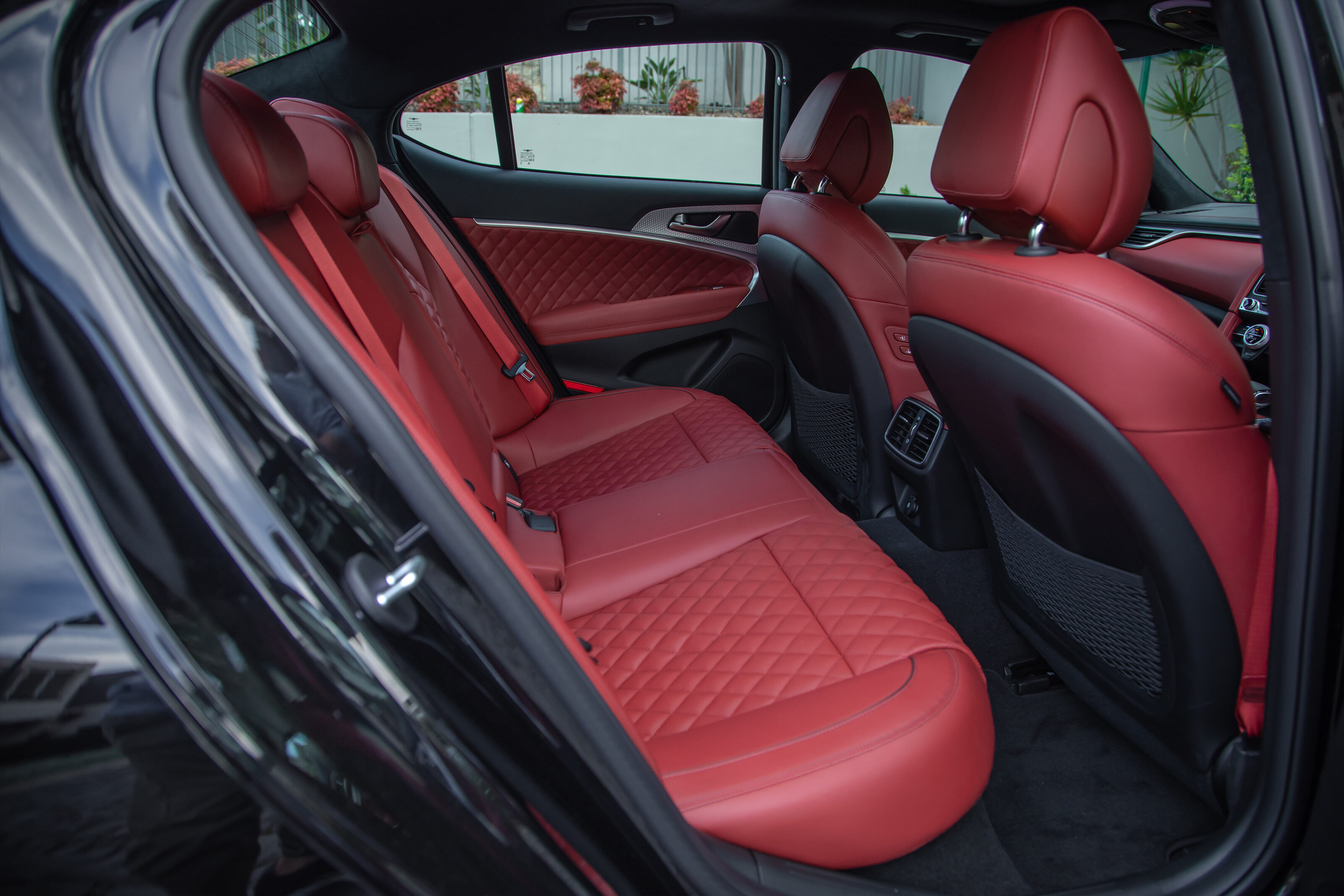
Our tester, then, is the 3.3T Sport ($76,000 before on-roads) in no-cost high-gloss paint with Luxury Package ($10,000), which adds red quilted Nappa leather as its fundamental theme. Thus, its $86k ask marks fairly barren four-door territory between Kia’s all-you-can-eat Stinger V6 GT ($63,760 list) – against which many pundits will cross-shop the G70 flagship – and the Audi S4 ($99,500 list), BMW M340i xDrive Pure ($101,900 list) and Mercedes-AMG C43 ($113,700 list) that Genesis eyes in its competitive cross-hairs.
Broach any German-related topic with Genesis company reps and their first (and often last) lines of defence are superior value for money. Badge cachet and providence will come in time, it hopes, for now throwing everything bar the kitchen sink at specification and equipment is as much the Korean’s measure of prestige as a method of traction to push upmarket.
Beauty or brute, the result looks very much what it is: more a new identity than mere facial remodelling
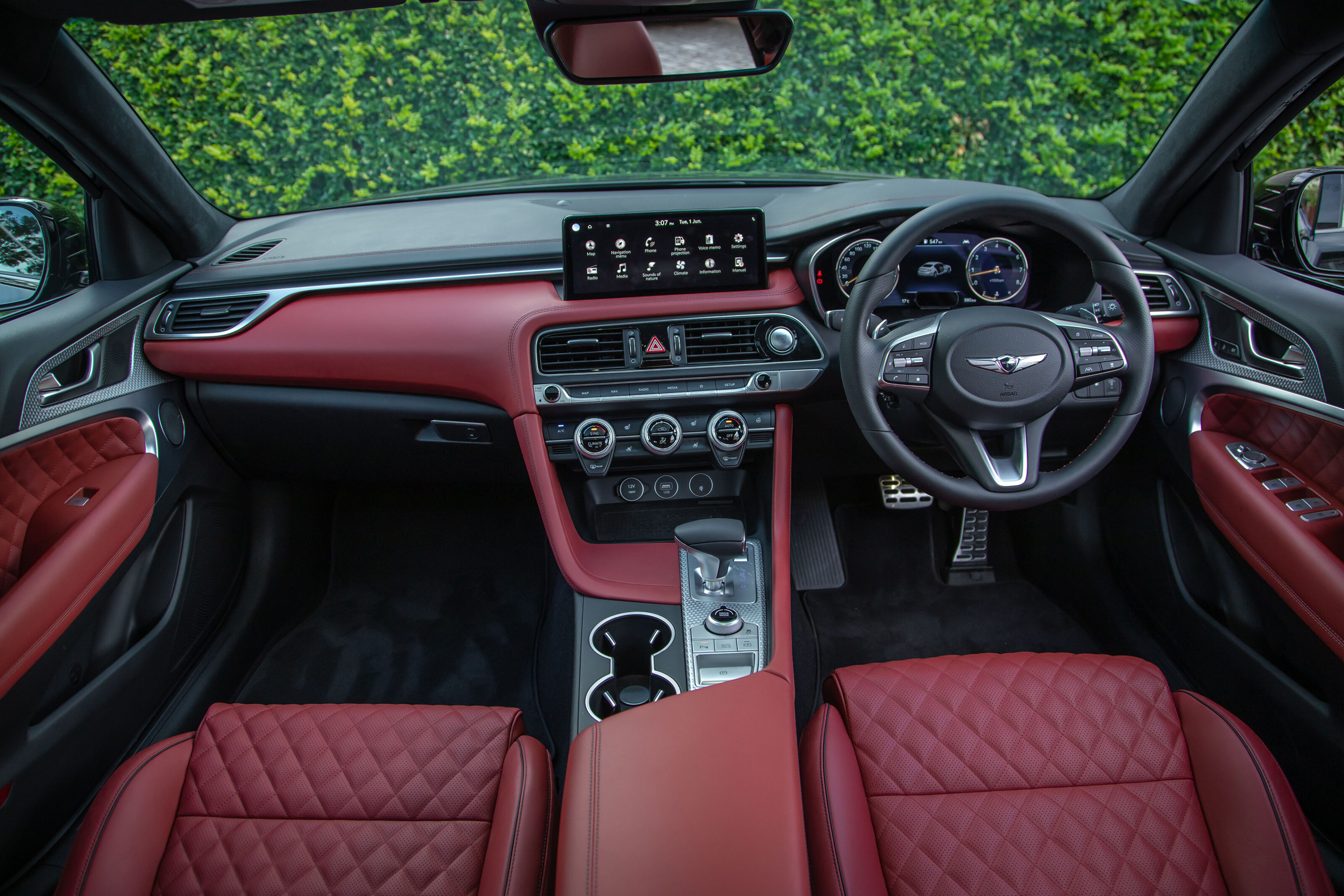
Where the old G70 traded hard on big size, flush kit and a healthy heartbeat, this facelifted version lays on the glitz and opulence thicker to fatten its lure. Its features list is dizzying and too expansive to fully unpack here but the MY21 range-wide update cheat sheet for standard gear includes 8.0-inch digital instrumentation, 10.25-inch infotainment, heated and ventilated seating, a panoramic glass roof, surround-view monitoring, Michelin Pilot Sport 4 rubber, and smarts such camera-based in-dash blind-spot visuals and pedestrian-friendly ‘reverse light guide’ assistance to name a few areas. The V6 versions now get an active variable exhaust system as well.
The ten-grand Luxury bundle adds niceties such as intelligent headlight functionality, acoustic front door glass and powered bootlid but it primarily focuses on pimping the cabin space’s feel-good factor.
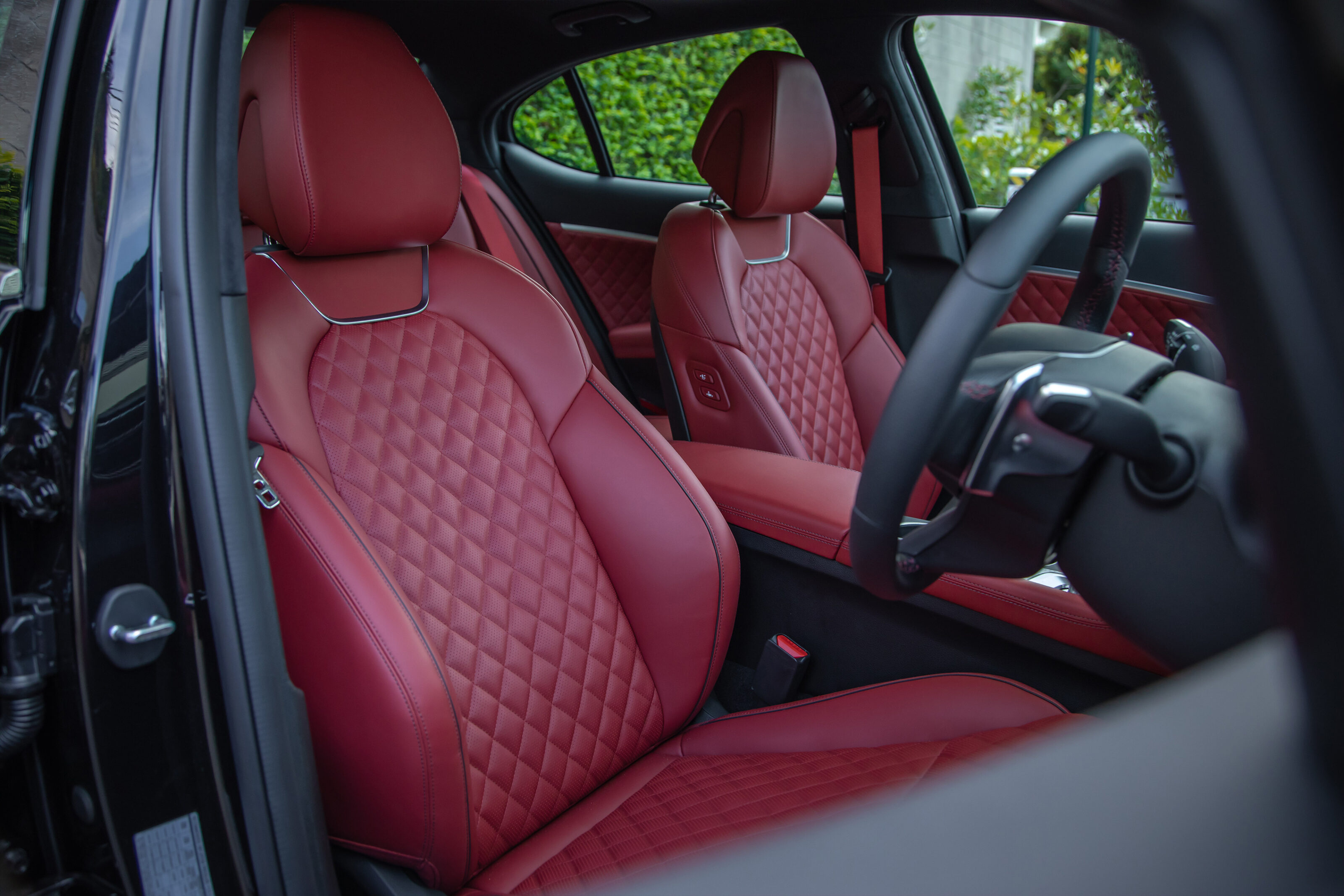
Climb in and it’s an instant assault of red diamond-quilted trim, Nappa leather for seating and convincing similar stuff crept into the door trims, framed with neat piping and double stitching (there are five colour schemes available across the G70 range). The Luxury effect adds turned alloy inlays and suede headlining, blend with a cocktail of matte-effect execution to anchor its somewhat fussy yet convincingly opulent aesthetic in broader appreciation.
The party trick is the large 12.3-inch digital instrumentation, with its subtle if convincing three-dimensional presentation that morphs between different appearances in tandem with drive mode changes (Eco ‘blue’ looks best to these eyes). Equally, the sharp 10.25-inch multimedia system holds up well in context, even if its Genesis-specific content and general usability is much closer to high-spec Hyundai crop than it is anything like Mercedes-Benz’s considerably flashier MBUX jewellery. The brilliant camera system, with forward view, is a highlight.
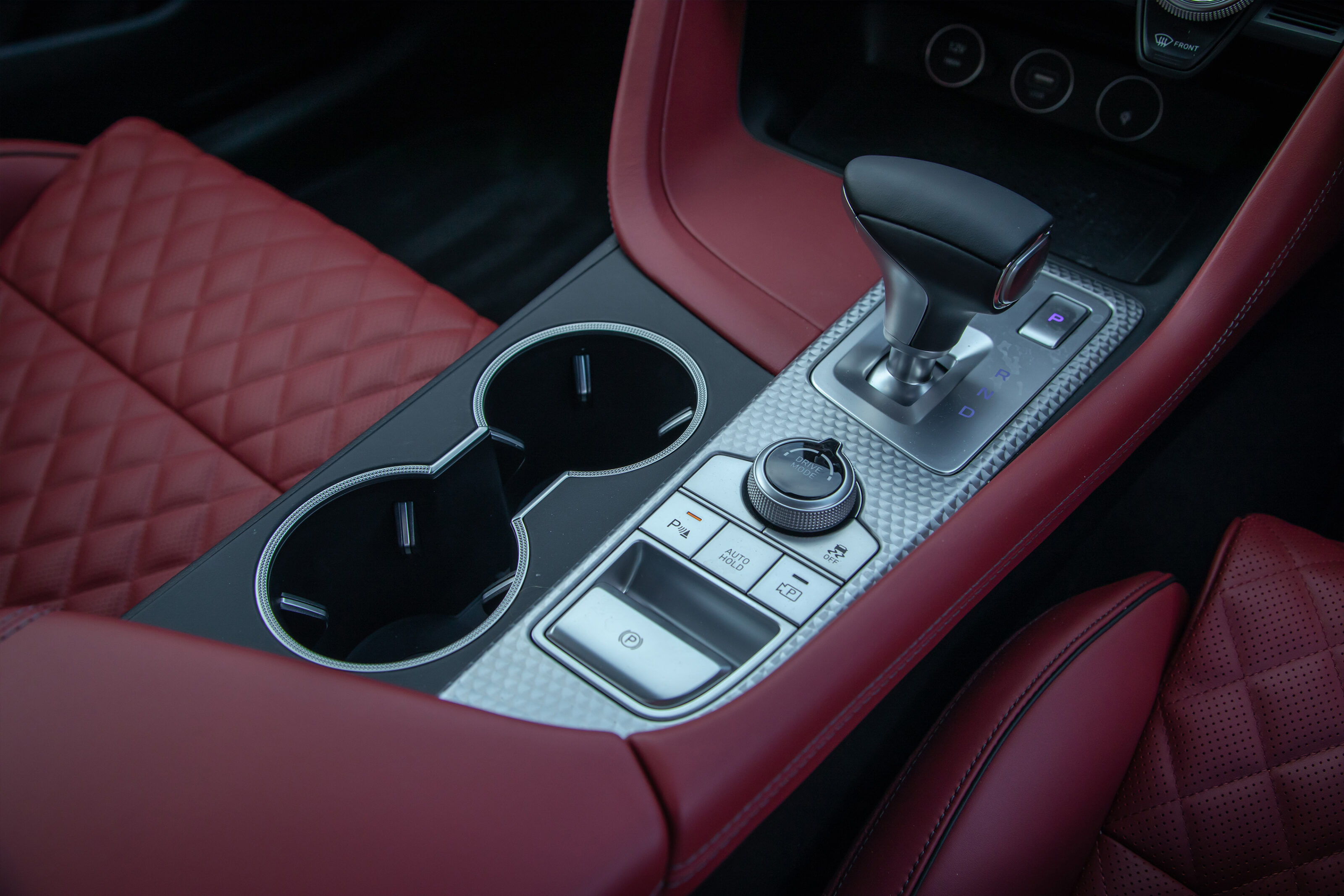
Under close inspection, some cabin details fall short. Almost all satin alloy features feel plastic to touch and some controls – climate and drive mode dials – lack suitably premium tactility. A fancier wheel and some ornate air vents, rather than the plain spec that’s fitted, might’ve knocked the upmarket vibe up a rung or two. Attribute some of this to puttying over old design cues and format, but surely that $10k Luxury splurge could’ve afforded some nicer, less-mainstream detailing.
Regardless, Sport-with-added-Luxury spec bats a high average for sheer accommodation and comfort. The seating is excellent, even if the strong outboard focus in row two hampers five-adult practicality, and there’s both sound ergonomics and an ambience that makes is seem roomier than the segment average even if, at 330 litres, its boot space is surprisingly compact.
It feels larger than its sub-4.7-metre length suggests, particularly on the move. Some of this is surely down to the low-slung cabin seating, some of it perhaps because the G70 in full-fat configuration clocks in at a portly 1765kg.
Around town, the mid-sized four-door is far from ponderous, though the mass and footprint of the thing errs on the slightly ponderous side of behaviour and lacks the crisp, light-on-its-feet nature of some Euro-badged segment dwellers, particularly the high-spec turbo-four stuff that broadly sits in the V6 G70’s price band.
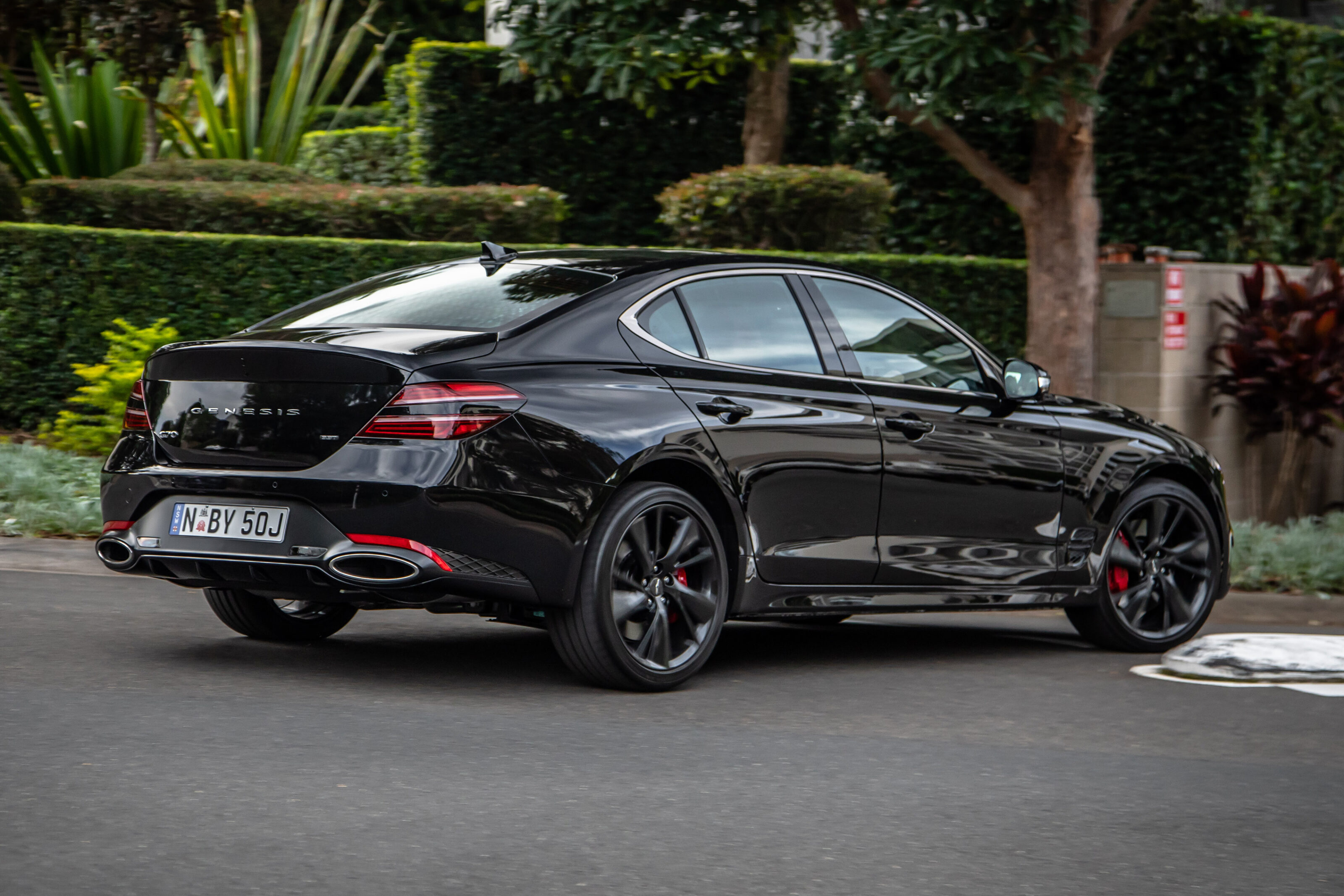
Of course, there are 3.3 litres of twin-turbocharged bent-six thrust to help mask inertia, this version of the otherwise carryover power plant benefiting by an academic two kilowatts, to 274kW, wholly thanks to the new adaptive exhaust hardware prescribed to inject some rock-and-roll into its formerly too-polite soundtrack.
On that, the big six remains innocuous and fizz-free in the Eco or Comfort drive programs. But activate Sport mode and there’s a kick in the low bass frequencies and some conspicuous rasp to the V6 vocals and, for novelty factor, a gentle rib squeeze courtesy of the active front seat bolsters, automatically.
Also new is the harder-core Sport+ mode, “track focused” in Genesis’ own words, that brings newfound sharpness to powertrain calibration, steering response and a surlier damper setting for the adaptive suspension that is, by official accounts, otherwise unchanged in fundamental tune from that of its forebear. It automatically defeats traction control, with separate deactivation of stability control for when whim and situation permit.
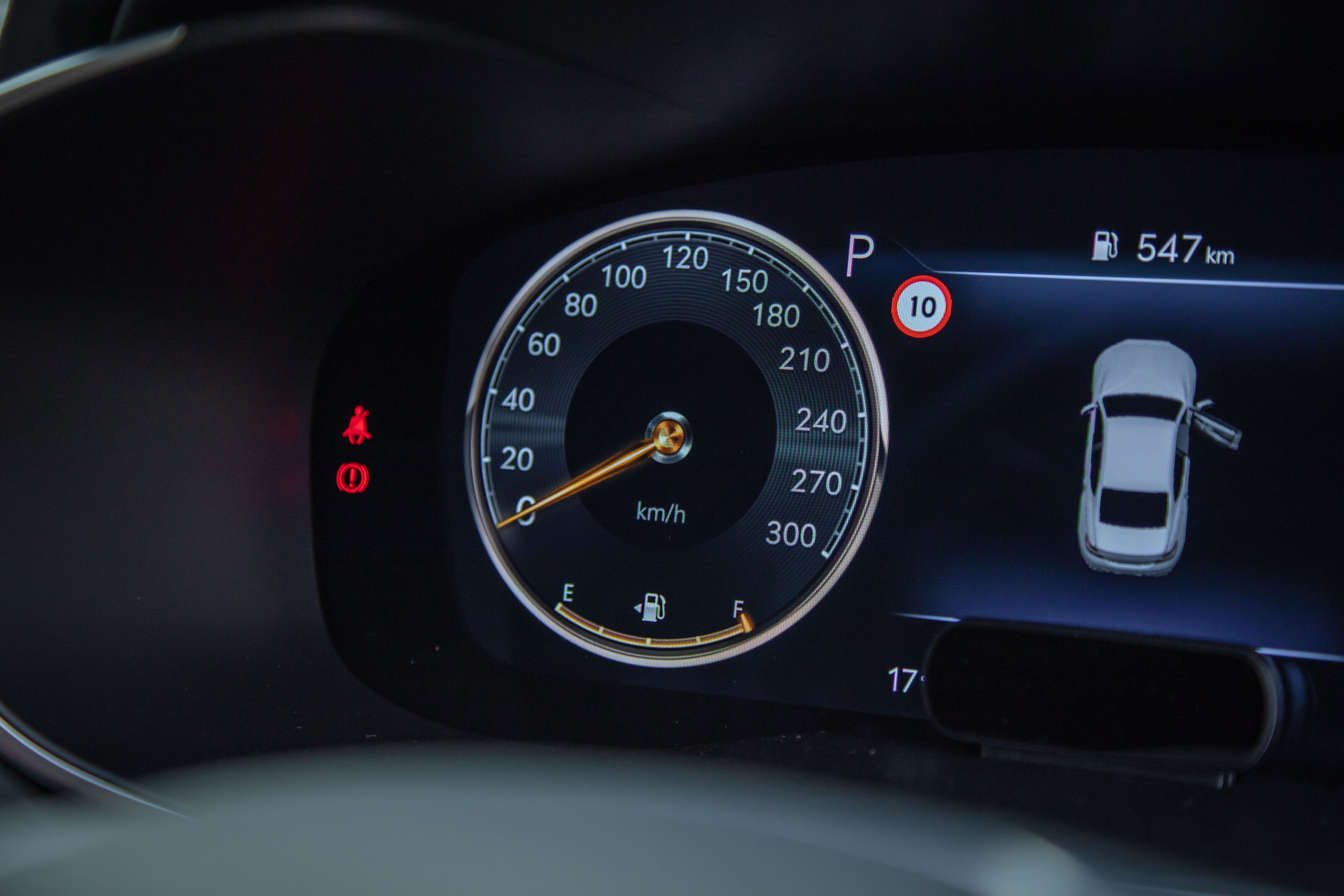
The form guide claims 4.7-second 0-100km/h heroics once the mechanical limited-slip differential leverages the best from those 255mm rear Michelins. In either of G70’s more spirited modes it feels fit to challenge that claim, mostly due to how quickly the force-fed V6 mounts its 510Nm wave – from just 1300rpm – and rides it gloriously towards the sunset.
It’s more clinical and effective than fire and brimstone on the march, though there’s just enough fidgety activity from those traction-teased rears to bring a properly enthusiastic vibe matched suitably with the richer sonics.
More convincingly in character playing the muscle-laden grand tourer, the G70 treats its 6200rpm redline as some last resort, the eight-speed auto nipping cleanly about to maintain the six’s torquey mid-range sweet spot that’s alert without undignified edginess under the right foot. It’s utterly passive at a dawdle, if responsive enough in its lazier drive modes to not demand much of a proper wind-up, the sort of broad-range flexibility that suits its sport-luxury brief impressively well.
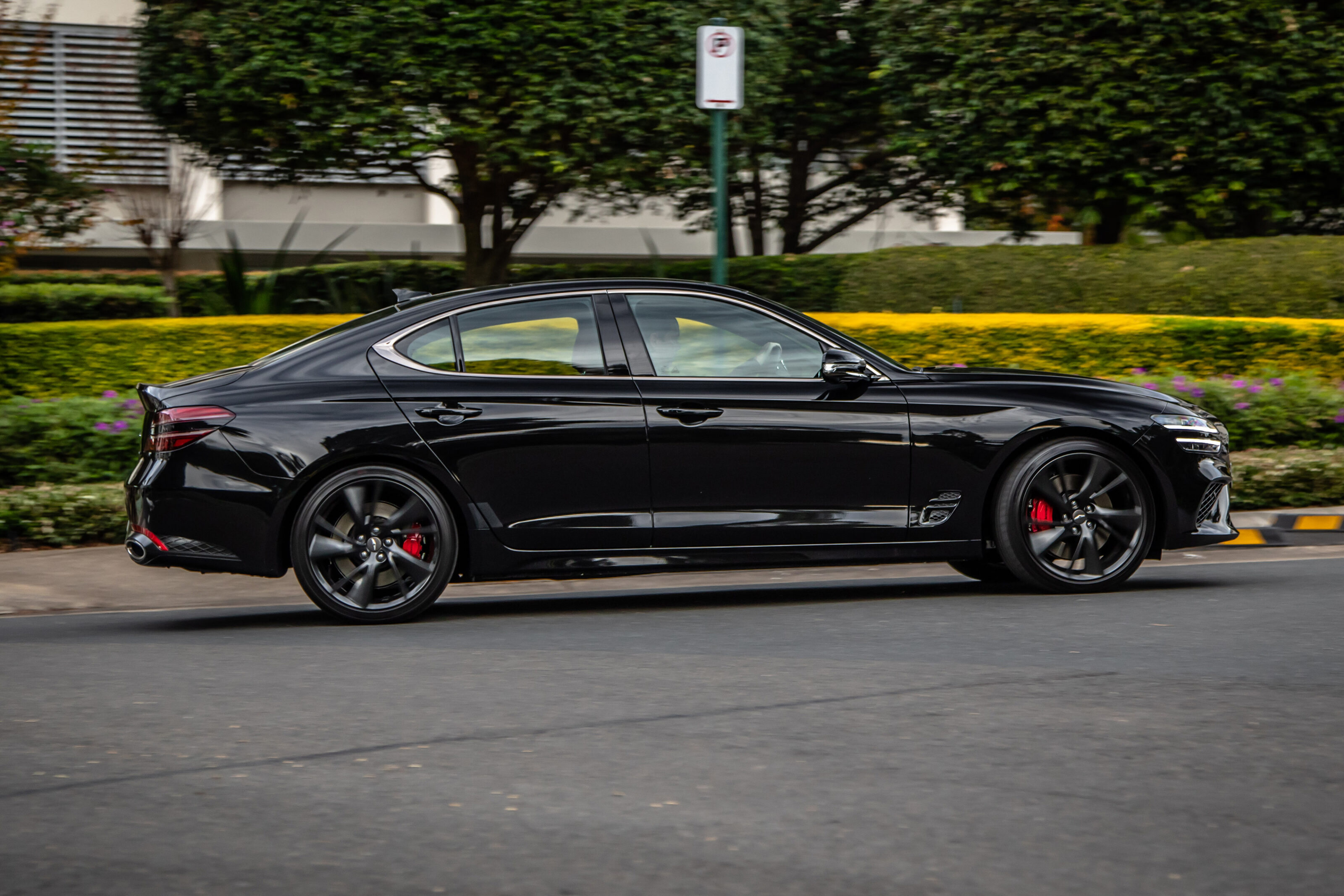
It comes at a (theoretical) cost of a sobering 10.2L/100km advertised combined consumption at a 95 RON minimum. So imagine my surprise when the onboard computer displayed 8.1L/100km after a day of genuinely mixed real-world driving. Go figure.
The G70 balances comfort and purpose quite evenly, never quite nailing its preference to either mast. It’s refined and resolved in its approach to the luxury experience if without properly relaxing and filtering out its slightly taut sporting edge. This is evident in the slightly active primary ride and the generally direct and benevolent steering that can feel under-assisted at times.
At the other end of the talent spread, its sporting purpose seems apologetically reserved until the point where you give it the berries and you grab its scruff, dragging its surprisingly competent dynamic talent out of the sedan’s characteristic closet.
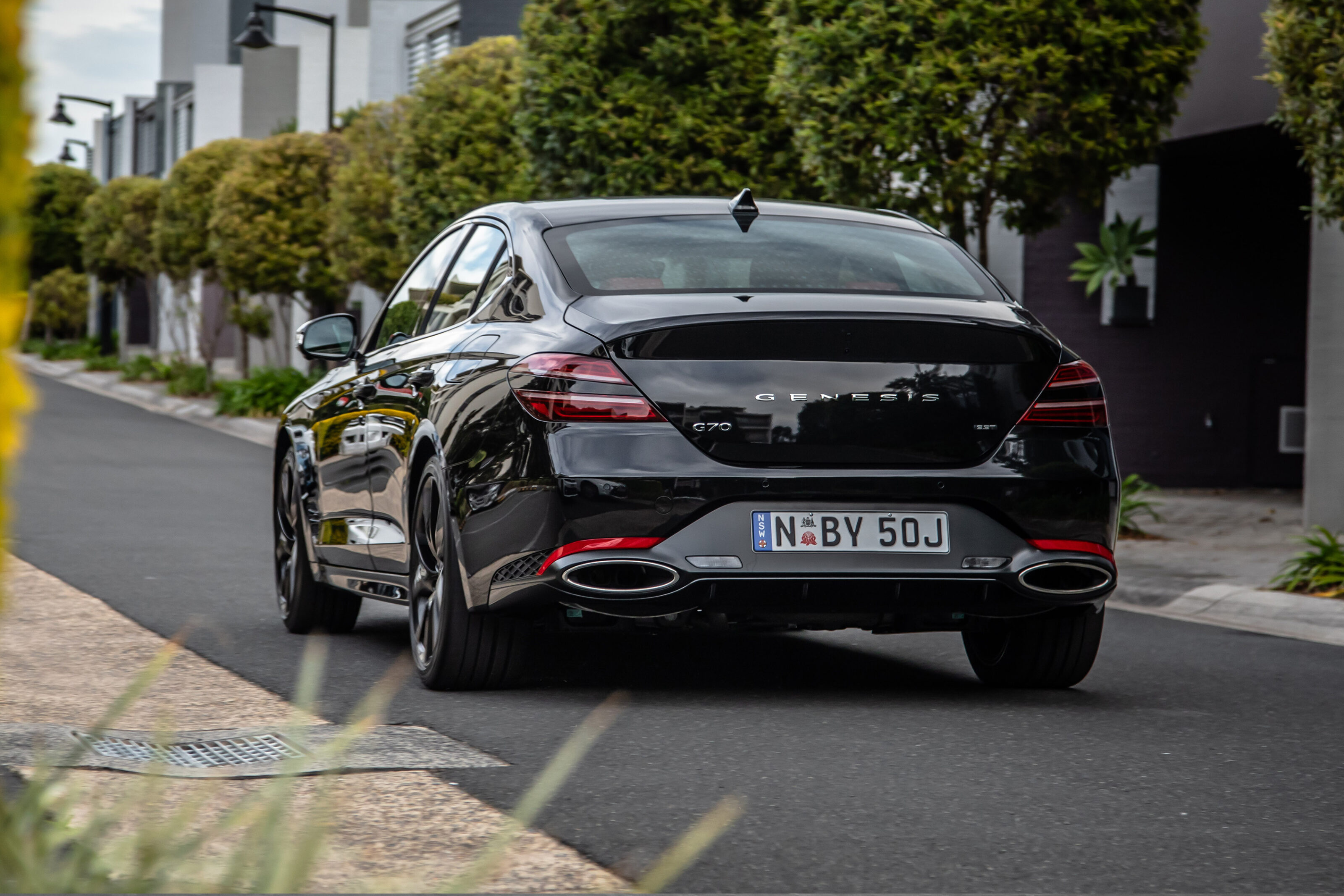
As a ride and handling package, it’s accomplished and well-rounded if safe middling territory that’s short on individual benchmarking merits. And it’s perhaps at its shiny best once you dig unnecessarily deep into sub-menus to tweak powertrain, steering and suspension settings in its assignable Custom drive setting.
There’s variety in its trick bag, but it’s no Jekyll and Hyde, at least so it seems without the opportunity to explore its promised off-street Sport+ heroics at the range’s local Aussie launch.
The G70 balances comfort and purpose quite evenly, never quite nailing its preference to either mast
The G70’s current 2018-stamped five-star ANCAP appraisal predates the facelift’s extra safety inclusions, which includes an expansion to 10 airbags (including a front-centre and rear-side units), multi-collision braking, junction turning assist, active blind-spot steering intervention, safe exit warning, rear cross-traffic avoidance, and the nifty blind spot monitor system that feeds camera footage of either lane into the digital driver’s screen at the touch of the indicator stalk. That’s just the new MY21 stuff…
Ownership is where Genesis pitches in hard, with five years (and 50,000kms) of complimentary scheduled (12-month/10,000km interval) servicing – a fistful of savings in itself – that includes valet pick-up and delivery plus courtesy vehicle access. The warranty is a decent five years of unlimited-kilometre coverage.
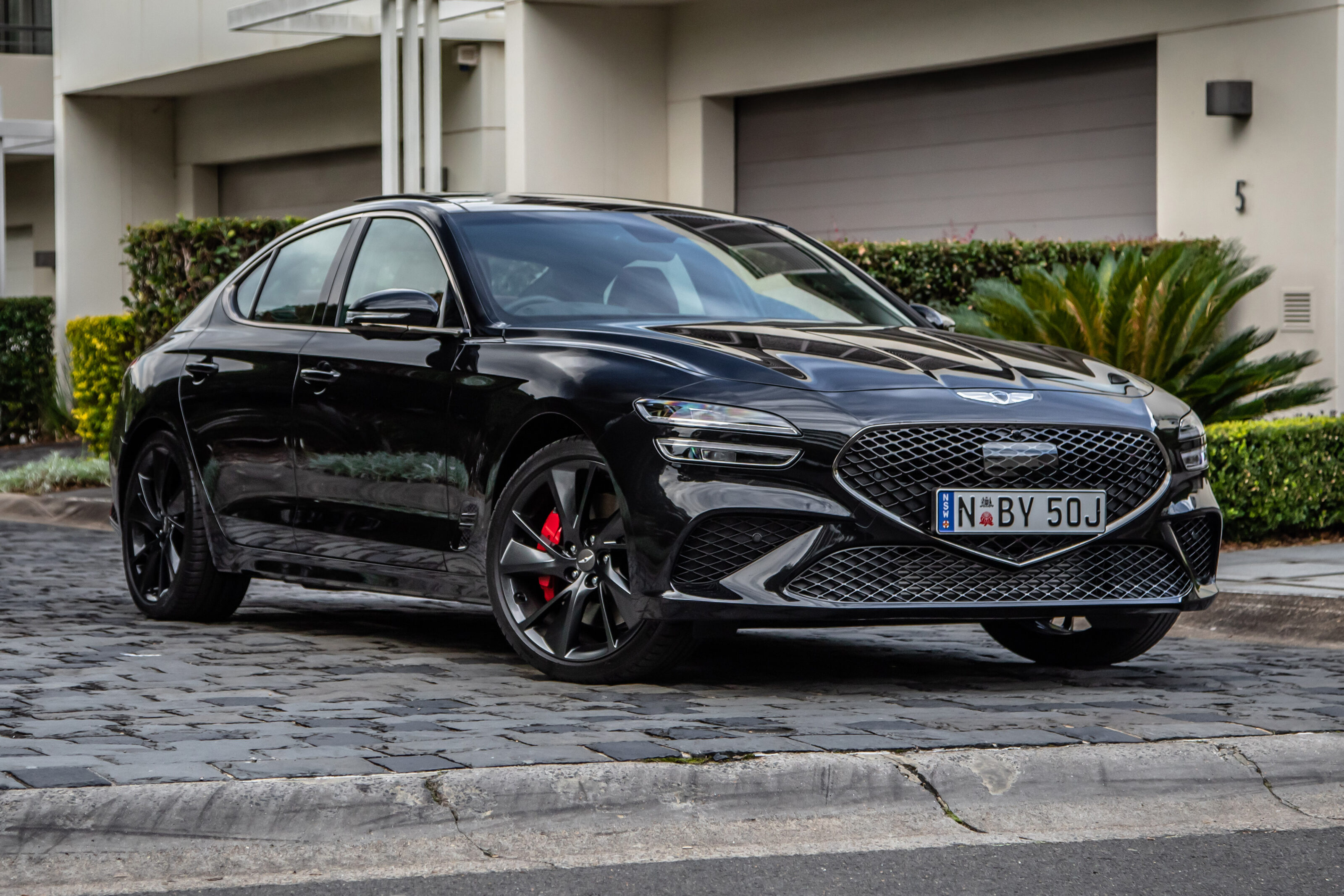
As a complete package the G70 3.3T backs up its sportiness pitch and counters with suitable enough comfort and luxury to fit the desired mould, the combined effect somewhat elevated above the more affordable Kia Stinger and, indeed, Hyundai Sonata N Line alternatives.
Further, it certainly feels a more fulsome package than high-power four-pot Germans flying at the same fiscal altitude and looks bargain-filled against the pricier six-cylinder Euros.
While the G70 just gets away with that New Genesis feeling, it otherwise ticks many of the boxes it needs to right now. Acceptance as a bona-fide prestige figurehead, though, is a longer work in progress.
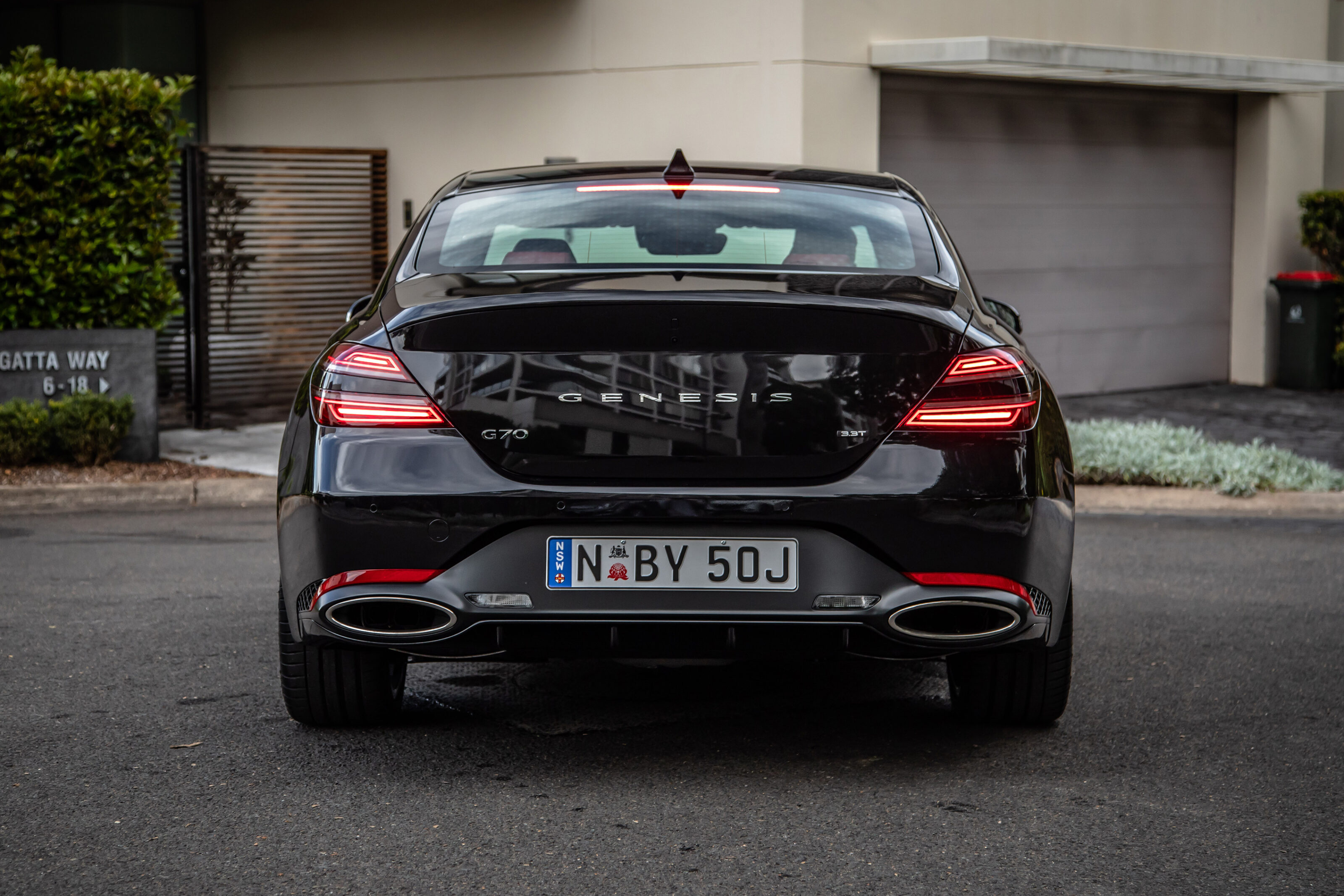
Genesis G70 3.3T Sport specifications
Snapshot
- Top of the range R-Line will again develop 206kW/350Nm
- Entry-level Elegance trim starts at $59,990
- Available early quarter four 2021
- Now there’s a wagon! A WAGON!
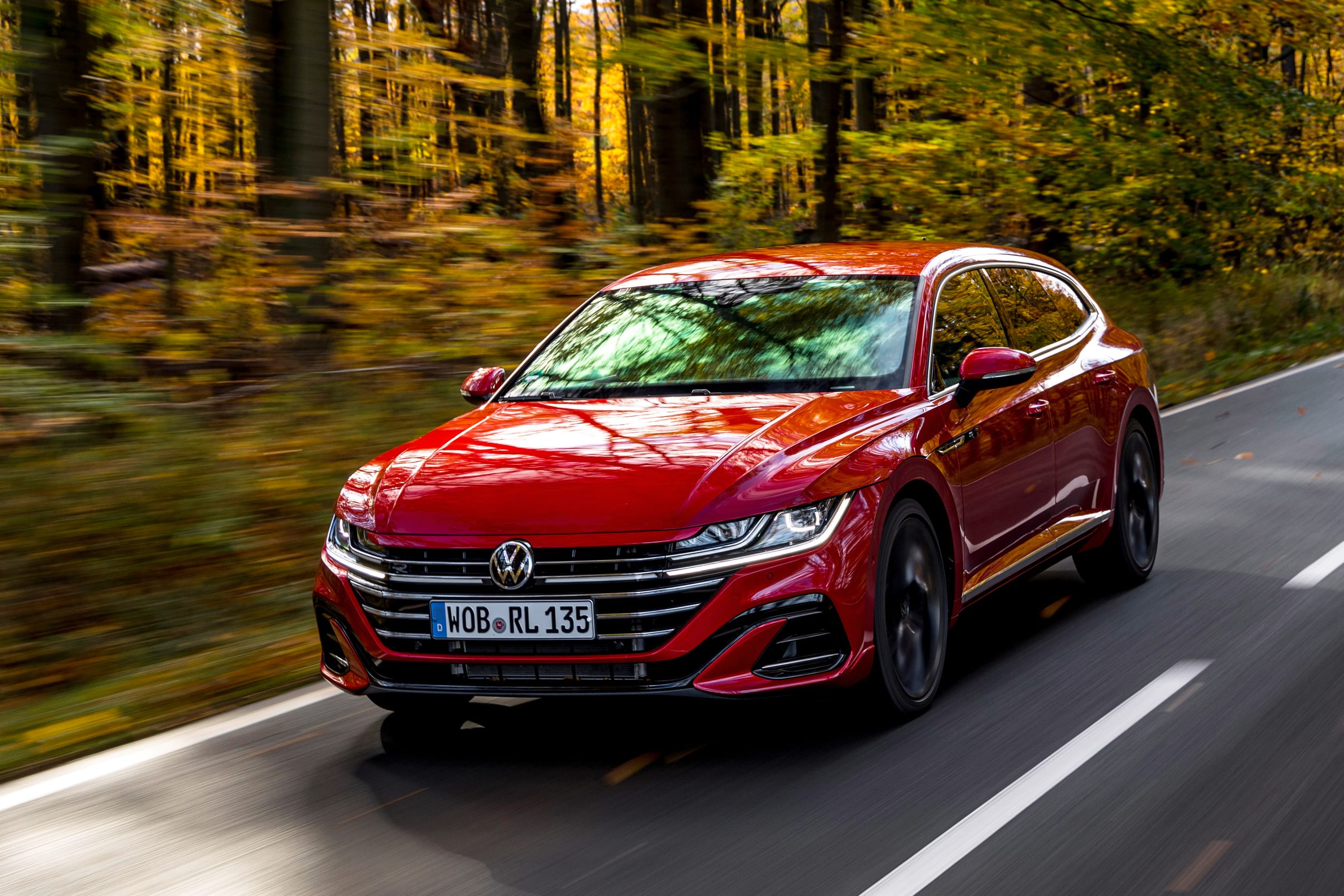
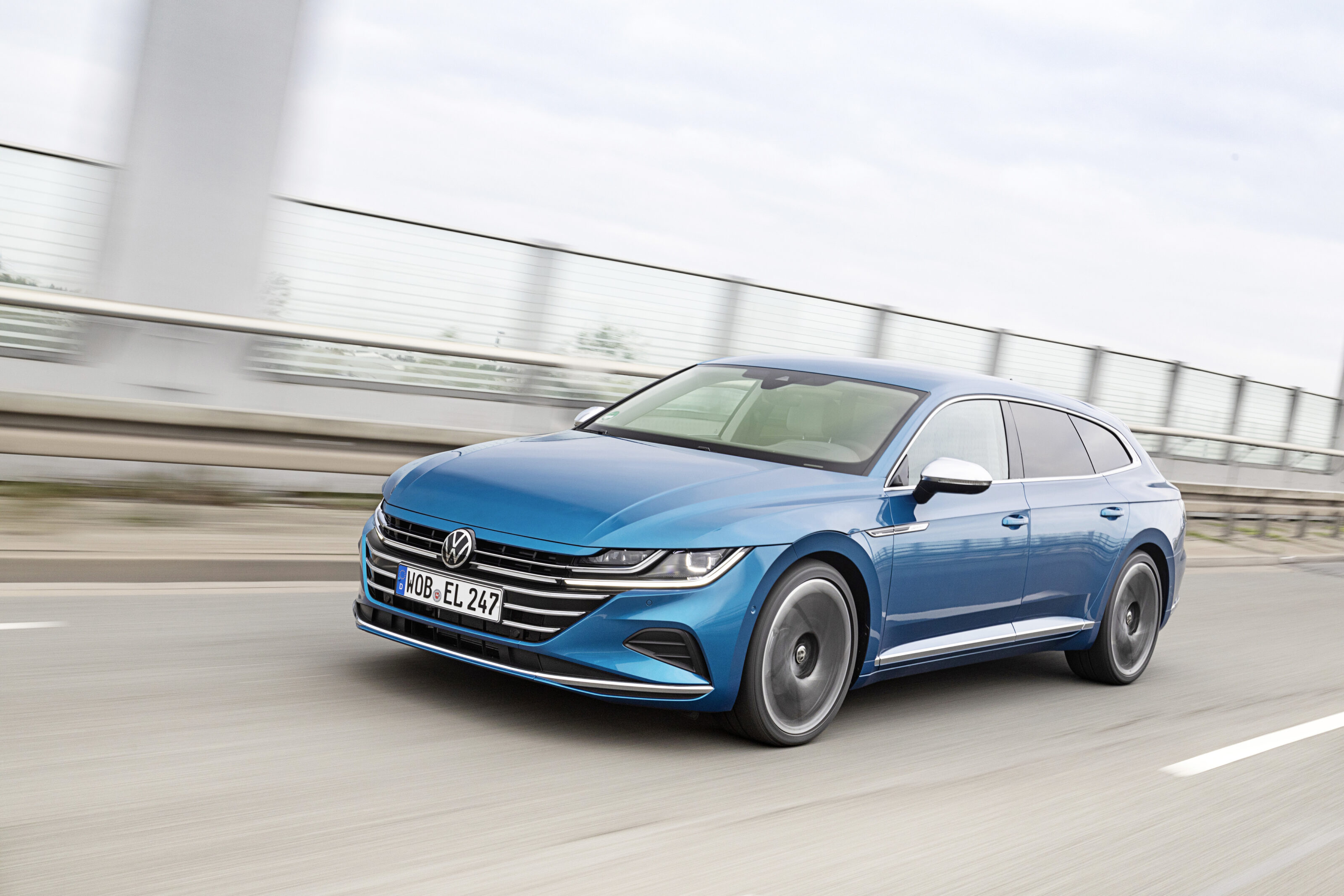
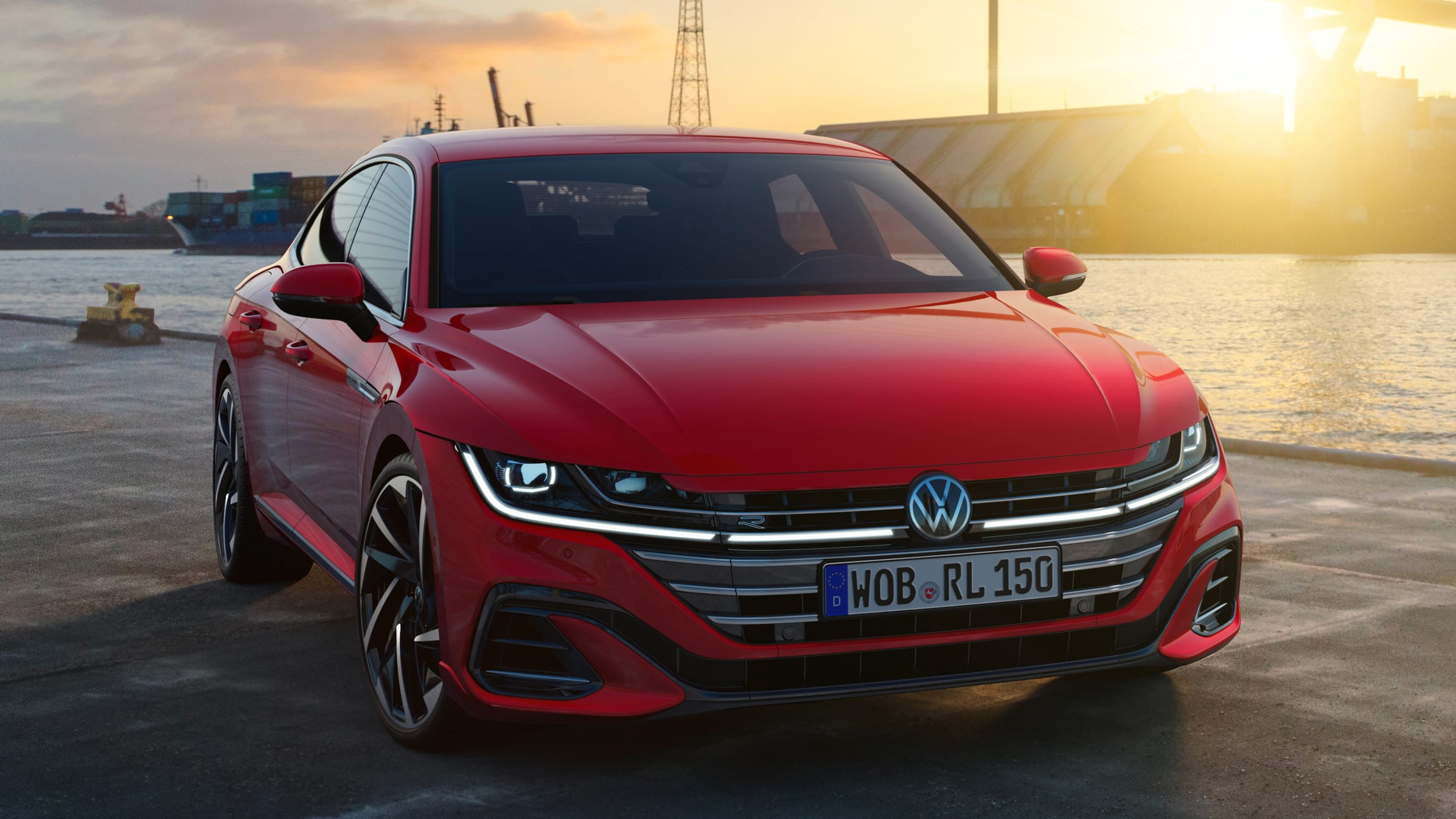
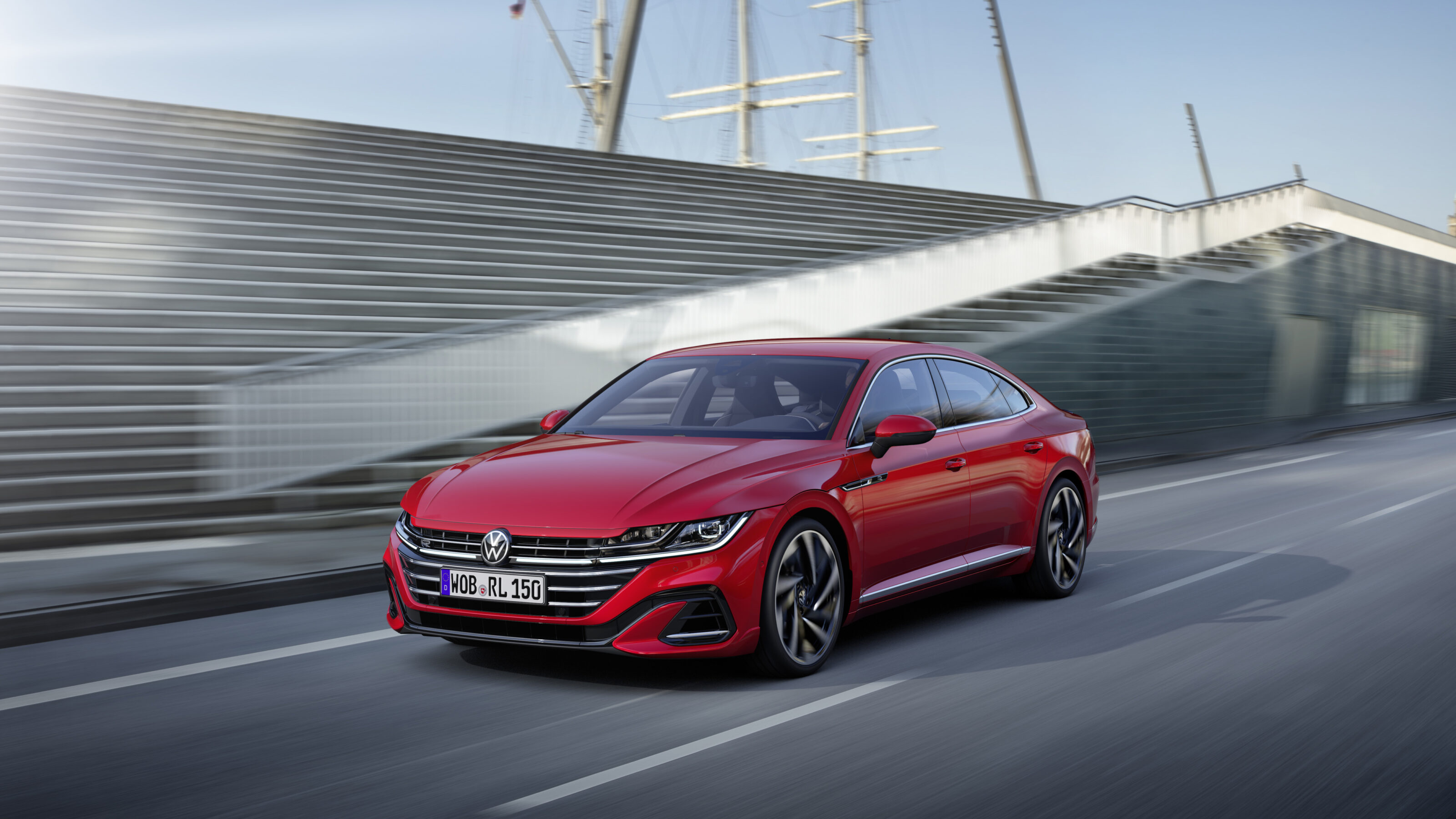
The updated 2021 Volkswagen Arteon is on its way to Australia, with an entry level variant priced at under $60,000 for the first time and a Shooting Brake option on offer.
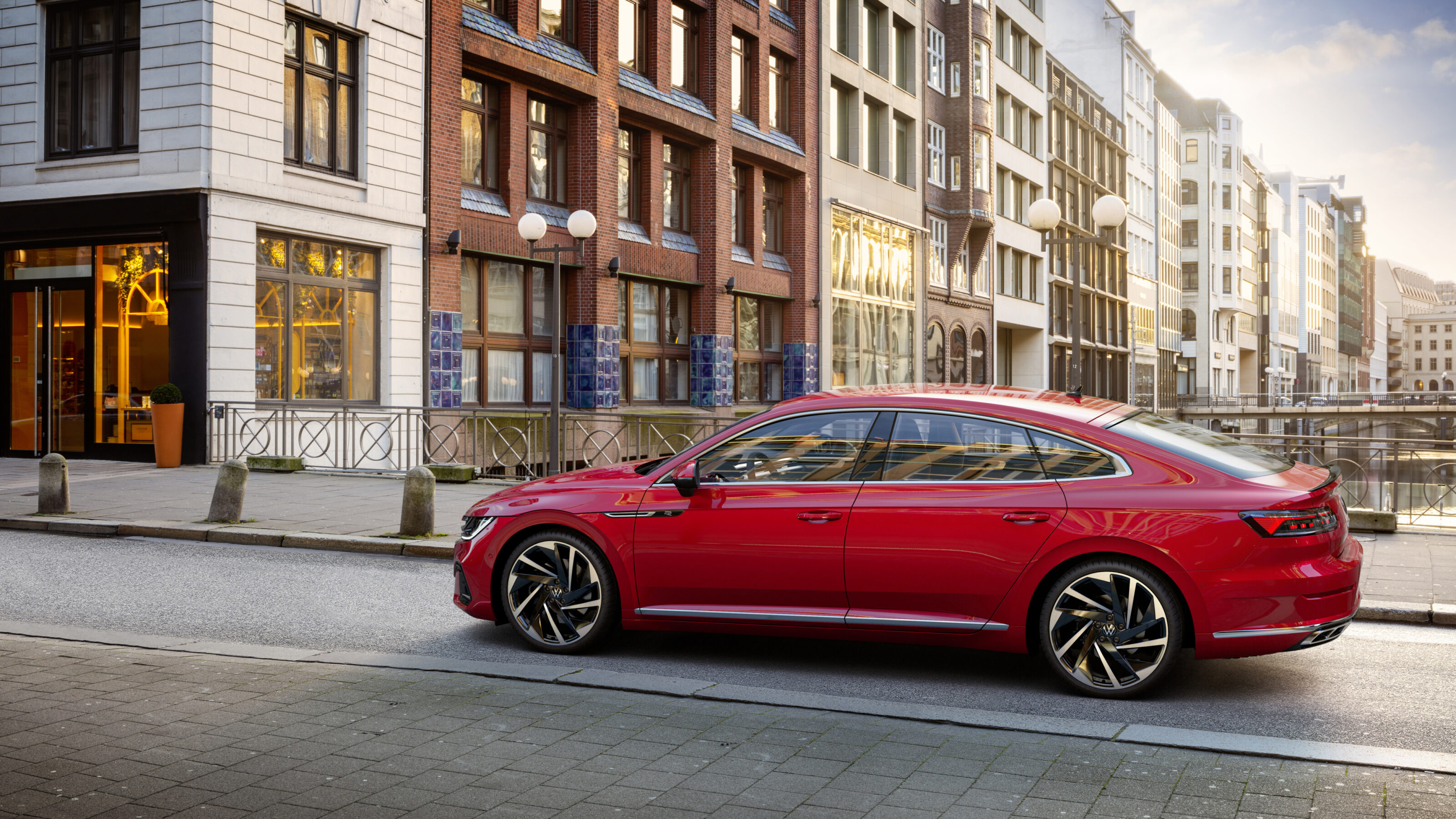
Available as a liftback or, for the first time, a ‘Shooting Brake’ wagon, the Arteon will be offered in 140TSI Elegance and 206TSI R-Line trim, ranging from $59,990 up to $68,990 before on-road costs.
Pricing
To keep thing simple, two trim variants of the Arteon are available across two body styles (all prices are before on-road costs):
| Arteon 140TSI Elegance 7-Speed DSG | $59,990 |
| Arteon Shooting Brake Wagon 140TSI Elegance 7-Speed DSG | $61,990 |
| Arteon 206TSI R-Line 7-Speed DSG | $66,990 |
| Arteon Shooting Brake 206TSI R-Line 7-Speed DSG | $68,990 |
The only options outside of the trim packages are a sunroof, which will set buyers back an extra $2000, and Oryx White Pearlescent paint, costing an extra $800, everything else comes as standard.
Kings Red Metallic, Pyrite Silver Metallic, Manganese Grey Metallic and Deep Black Pearl Effect are all standard colours at no extra cost while Kingfisher Blue Metallic is only available on the Elegance and Lapiz Blue Metallic is an R-Line only colour.
Features
The Elegance acts as the entry-level variant to the model range, but still features a large amount of standard equipment, including:
| IQ.LIGHT matrix LED headlights and premium LED taillights with dynamic indicators |
| 9.2u201d Discover pro navigation system with gesture control and voice control |
| Digital cockpit pro |
| 19u201d ‘Chennai’ alloy wheels with matching full size alloy spare |
| Adaptive chassis control |
| Power folding mirrors with surround lighting and memory |
| App-connect including wired and wireless Apple CarPlay and Android Auto |
| Comfort sport seats with Nappa Leather appointed trim |
| Air care 3-zone climate control with u201ctouchu201d front and rear controls |
| Area view 360u00b0 camera system |
| Easy open and close electric tailgate |
| Ventilated, heated and 12-way electric front seats with driver massage, easy entry and memory |
| Harmon Kardon premium sound system 10+1 speakers, 700W total power output, digital 16-channel amplifier and subwoofer |
| Ambient interior lighting with 30 selectable colours |
| DAB+ digital radio and AM/FM radio bands (fastback), DAB+ and FM radio band, and no AM (Shooting Brake) |
| Head-up display projected on a glass panel. |
In addition to the extensive list of standard features on the Elegance, the R-Line receives:
Engine, drivetrain and fuel economy
Both the 140TSI and 206TSI engines are turbocharged four-cylinder, 2.0-litre units which have been in the Volkswagen Auto Group family for over a decade, being set to two different levels of tune for the Arteon.
The 140TSI develops 140kW and 320Nm of torque, sending power to the front wheels through a seven-speed dual-clutch gearbox.
Fuel economy figures for the 140TSI Arteon haven’t been released yet, but the Passat, which shares the same engine and driveline, achieved 6.4L/100km in official testing.
The 206TSI makes 206kW and 350Nm thanks to a mildly detuned version of the Golf R/Audi S3’s EA888 motor, developing the same power but 30Nm less torque.
Sending power to all four wheels through a seven-speed dual-clutch gearbox, and identical figures to the previous Arteon mean its likely fuel economy will stay at a tested 7.5L/100km.
Dimensions and weight
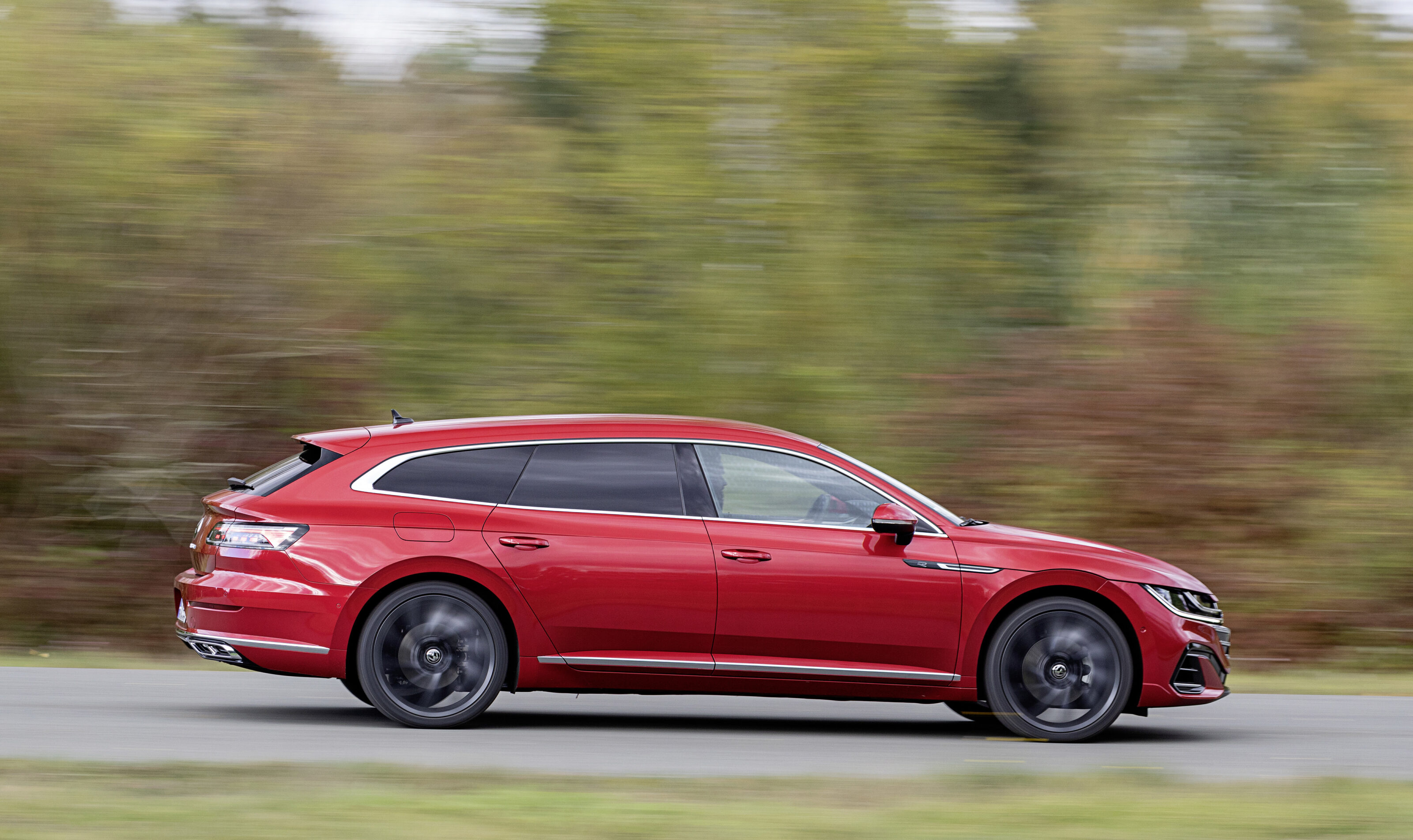
The liftback Arteon’s external dimensions remain largely unchanged, standing at 4866mm in length, 1871mm wide, 1460mm tall and with a wheelbase of 2837mm.
Despite the extension to the roof, the Shooting Brake sits only 2mm taller than the liftback variant.
With the back seats up, the liftback can hold 562 litres which increases to 1557 litres with the seats folded. Space is marginally bigger in the Shooting Brake while the seats are up at 565 litres but when they’re down it increases to 1632 litres.
Thanks to the extra bits of metal to create the longer roof, the Shooting Brake sits on the scales at 1718kg, 15kg more than the liftback.
Safety
Elegance and R-Line variants both come fitted with the same safety technology, featuring Volkswagen’s IQ.DRIVE system which includes:
| Travel assist with adaptive lane guidance |
| Front assist with pedestrian monitoring |
| Lane assist |
| Emergency assist |
| Adaptive cruise control |
| Side assist |
| Rear cross traffic alert |
| Park assist |
| Front and rear parking sensors |
| Driver fatigue detection |
| 360u2070 proactive occupant protection. |
The Arteon has previously scored five stars in ANCAP crash testing, delivering a 96 per cent result for adult occupant protection and 85 per cent for child occupant and pedestrian protection.
Meanwhile it scored 74 per cent in the safety assistance systems rating, getting half marks for speed assistance while a lack of junction assist and backover prevention were noted.
Warranty and servicing
Just like the rest of the Volkswagen range, the Arteon will be covered by a five-year/unlimited-kilometre warranty with capped price servicing every 12 months/15,000km within the warranty period.
Volkswagen’s pre-purchase service packs will also be available for either three or five years.
Availability
The Arteon will arrive early in the fourth quarter of 2021, likely around September or October.
Among Toyota’s myriad multi-seater options, the fourth-generation Kluger installs itself as the singular car-based choice for buyers more focused on crossing suburbs than going cross-country.
And a new, headline-making hybrid drivetrain combines with the imminent axing of the Prius V people-mover to establish this large SUV as the only petrol-electric Toyota with seven or more seats.
Toyota’s hybrid system is well overdue as an alternative to the V6 petrol that has powered the Kluger in Australia since its 2003 debut. A hybrid option has been available in the US, where the model is called Highlander, for a decade and a half.
Not that the omission has cruelled local sales. While Toyota Australia expects the hybrid to become the dominant drivetrain in a sales mix that includes the carry-over V6, the Kluger was last toppled by an external rival in 2013 (the Ford Territory).
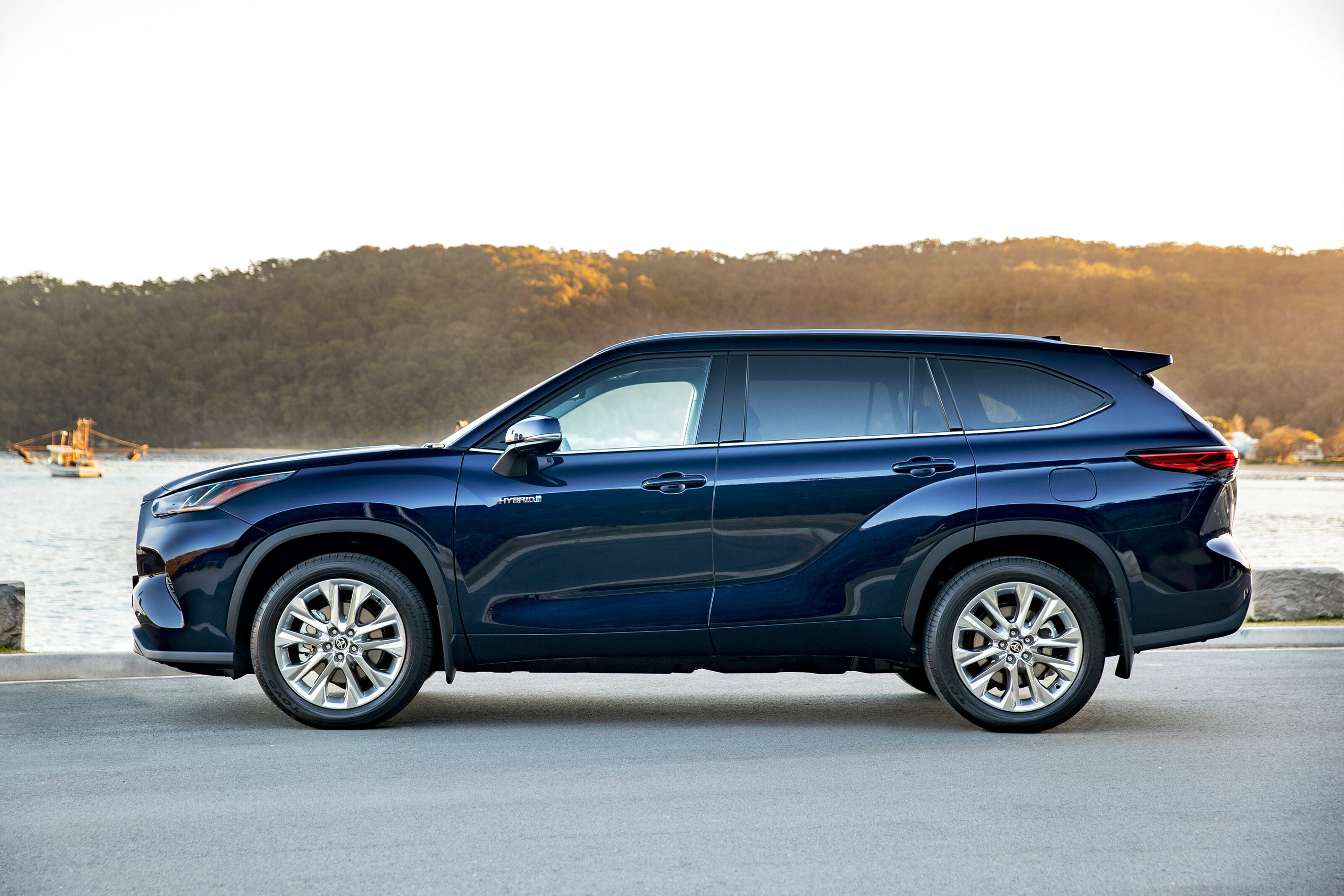
Despite being consistently outsold by its 4×4 Prado stablemate, the Kluger will pass 200,000 local sales with this latest model.
Pricing has gone up, however, across a range that again comprises GX, GXL and Grande trim grades.
For a model that once started below $40,000, the Kluger now starts a bit higher than most of its direct rivals – priced from $47,650 before on-roads – with higher grades taking the nameplate past $70,000 for the first time.
All grades start with a front-wheel-drive V6, with a $4000 premium for all-wheel drive and a further $2500 for the AWD Hybrid.
The most affordable Hybrid is priced from $54,150, more than $17,000 higher than the entry-level petrol-electric RAV4. The range-topping Grande Hybrid will set buyers back more than $80,000 with on-road charges factored in.
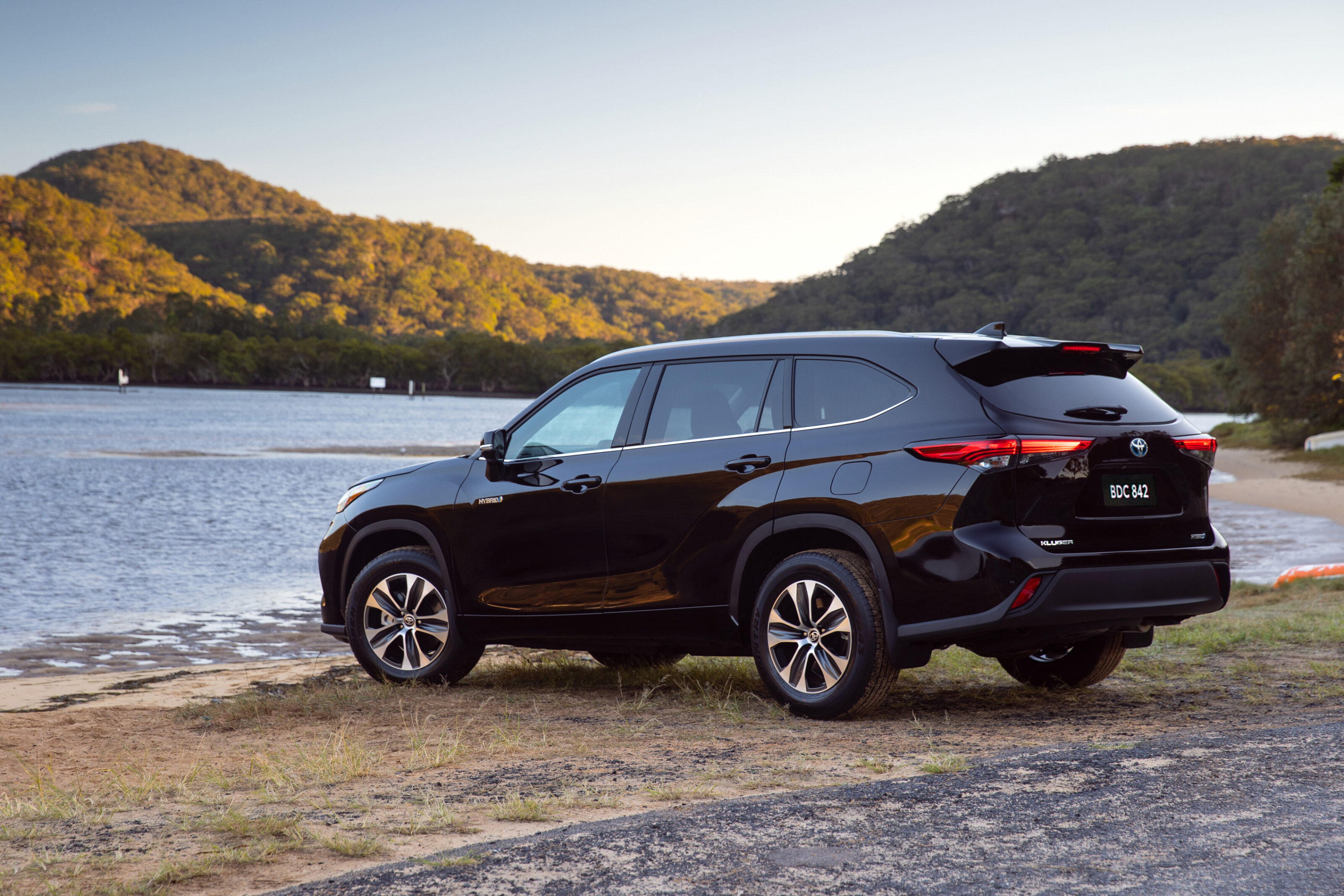
Natural rivals remain the likes of the Kia Sorento, Hyundai Santa Fe and Mazda CX-8, though a 76mm increase in body length also takes the Kluger closer in size to Hyundai’s larger Palisade as well as the Mazda CX-9.
Luggage space behind the third row has increased by 46 litres to 241 litres – ample capacity to accommodate a family’s weekly grocery shop or multiple sports/school bags.
An auto tailgate is standard only on the GXL upwards, with the Grande adding gesture-activated open/close.
Drop the 50:50 rearmost seats, via flap-style levers on the seat shoulders, and boot space moves from above average to a below-average 552L with five seats in use. Even most RAV4s offer up to 580L.
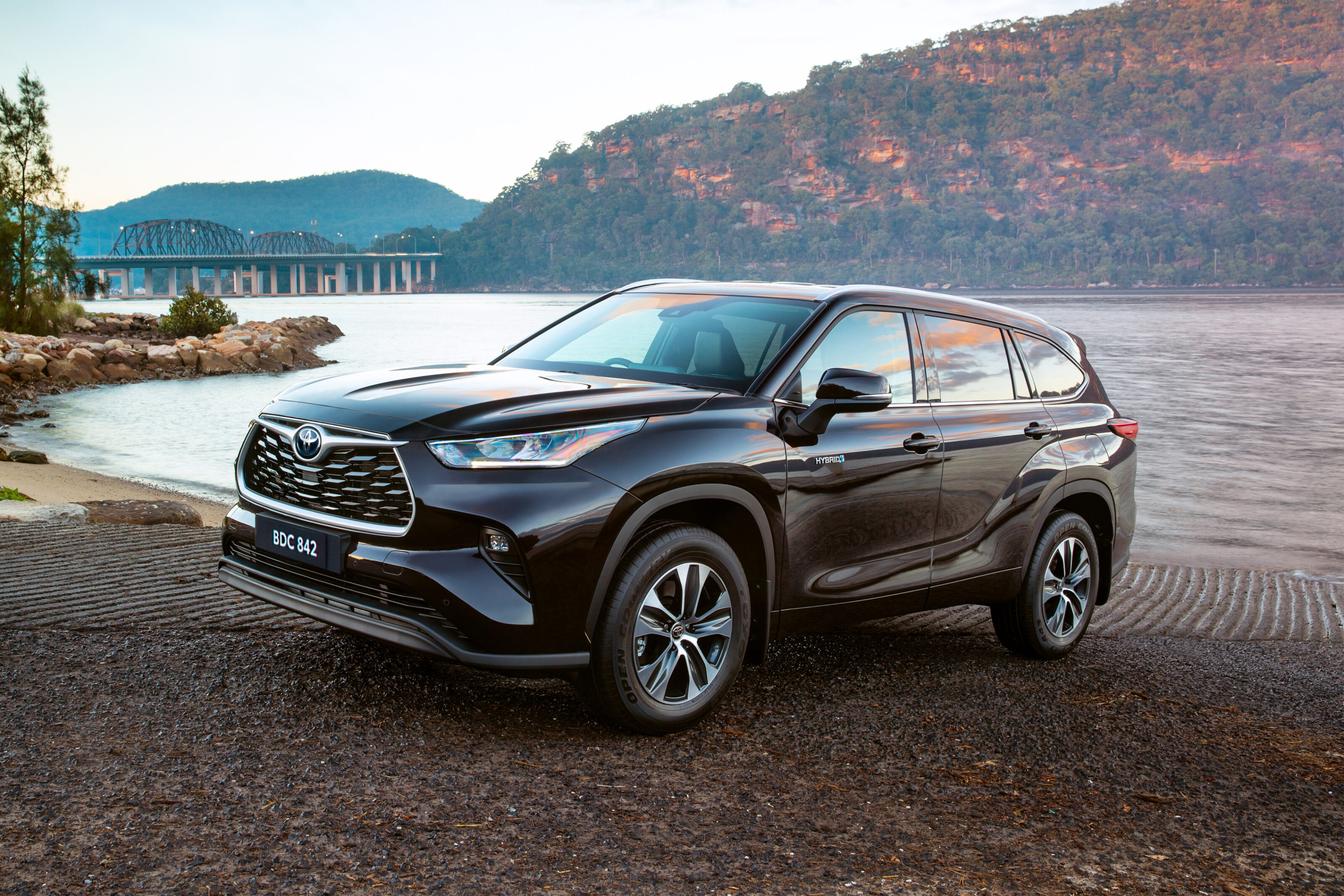
Access to the third row is wider compared with some rivals, making ingress/egress relatively easy. The second-row seats tilt/slide forward in one step via the same style of lever on the back seats, though SUVs such as the Sorento and Palisade provide cleverer one-touch electric tumble operation.
Longer travel for the sliding 60/40 second-row makes it easier to give third-row occupants some semblance of knee space.
There’s more legroom than you’ll find in the Sorento or Santa Fe, and unlike those SUVs the Kluger’s curtain airbags fully cover the third row not just the glass area. Toe space is good, and there are ceiling vents.
It’s still a cosy, knees-up affair even for average-height adults, while the third row’s versatility is limited by the lack of child seat anchor points as provided in some competitor vehicles.
The previous Kluger was roomy, yet the six centimetres added to the wheelbase make the second row feel truly spacious.
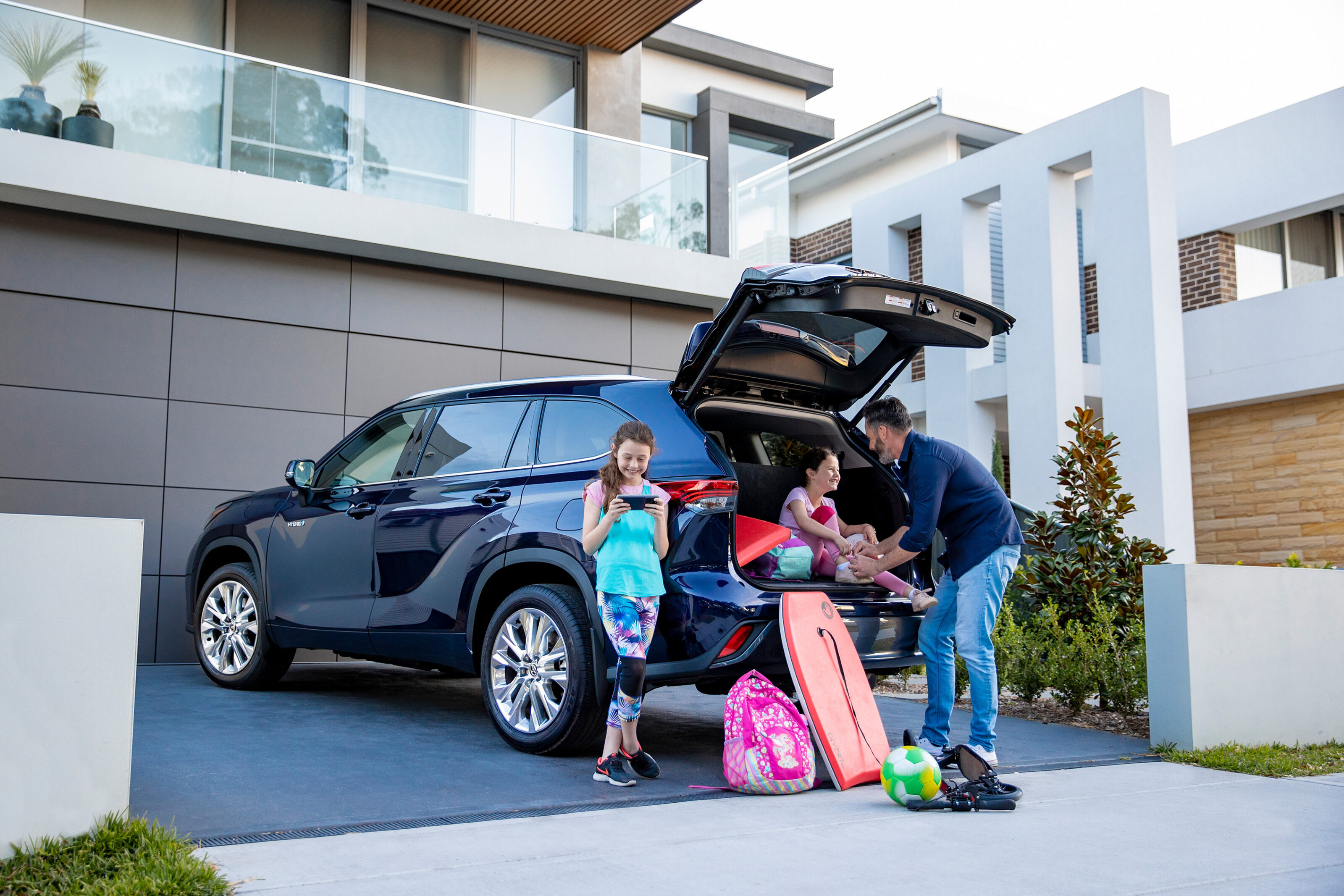
Unlike the Palisade or CX-9 Azami LE, though, captain’s chairs aren’t available as an alternative to the second-row bench.
There’s dedicated air-conditioning with temperature and fan controls on GXL and Grande variants, plus USB ports. Grande models also add manual blinds.
Kluger Grande models feature a panoramic moonroof as standard, with a no-cost tilt-slide sunroof available for buyers keen on the $1500 Blu-Ray player option (we imagine more parents would be happy with iPad holders for the front seatbacks).
Storage options aren’t anything special. While occupants get a centre armrest with dual cupholders, the door bins could be wider and some rival SUVs offer smarter functionality – such as dual rather than single seatback pouches (CX-9 and Sorento) or cupholders that are integrated into the doors (Sorento).
Virtually every competitor offers better cabin technology, too.
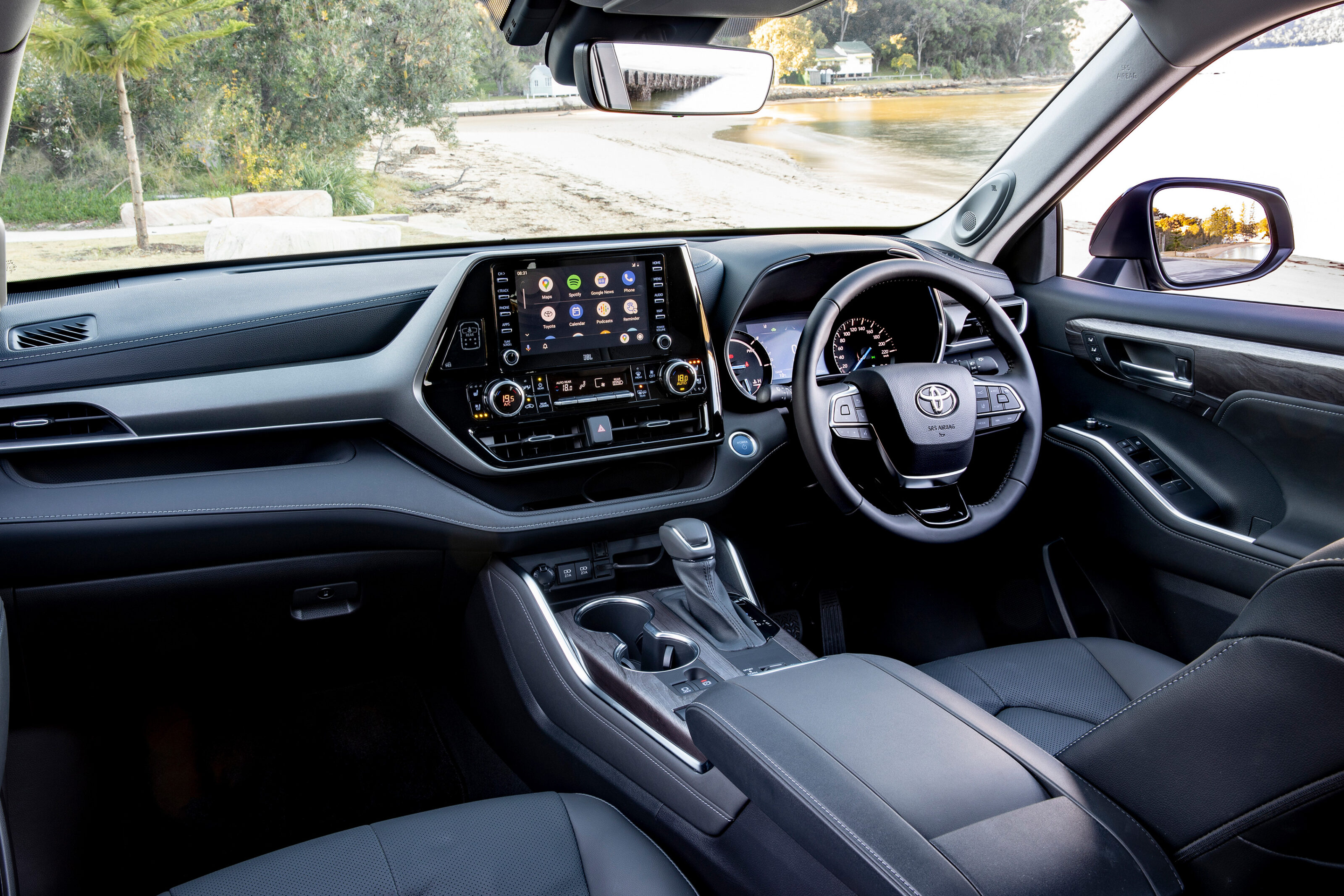
The Kluger’s infotainment system is formed around an 8.0-inch touchscreen that’s at least 20 per cent smaller than most rival displays, compounding this with uninspiring graphics and poor resolution. The latter lowers the image quality of the rear-view camera (and surround-view camera on Grande).
Apple CarPlay and Android Auto are no excuse, especially when, as we discovered, some phones are seemingly incompatible. Wireless charging is also a surprising omission.
The Kluger doesn’t follow the modern trend for fully digital instrument clusters, either, and only the Grande comes with a head-up display.
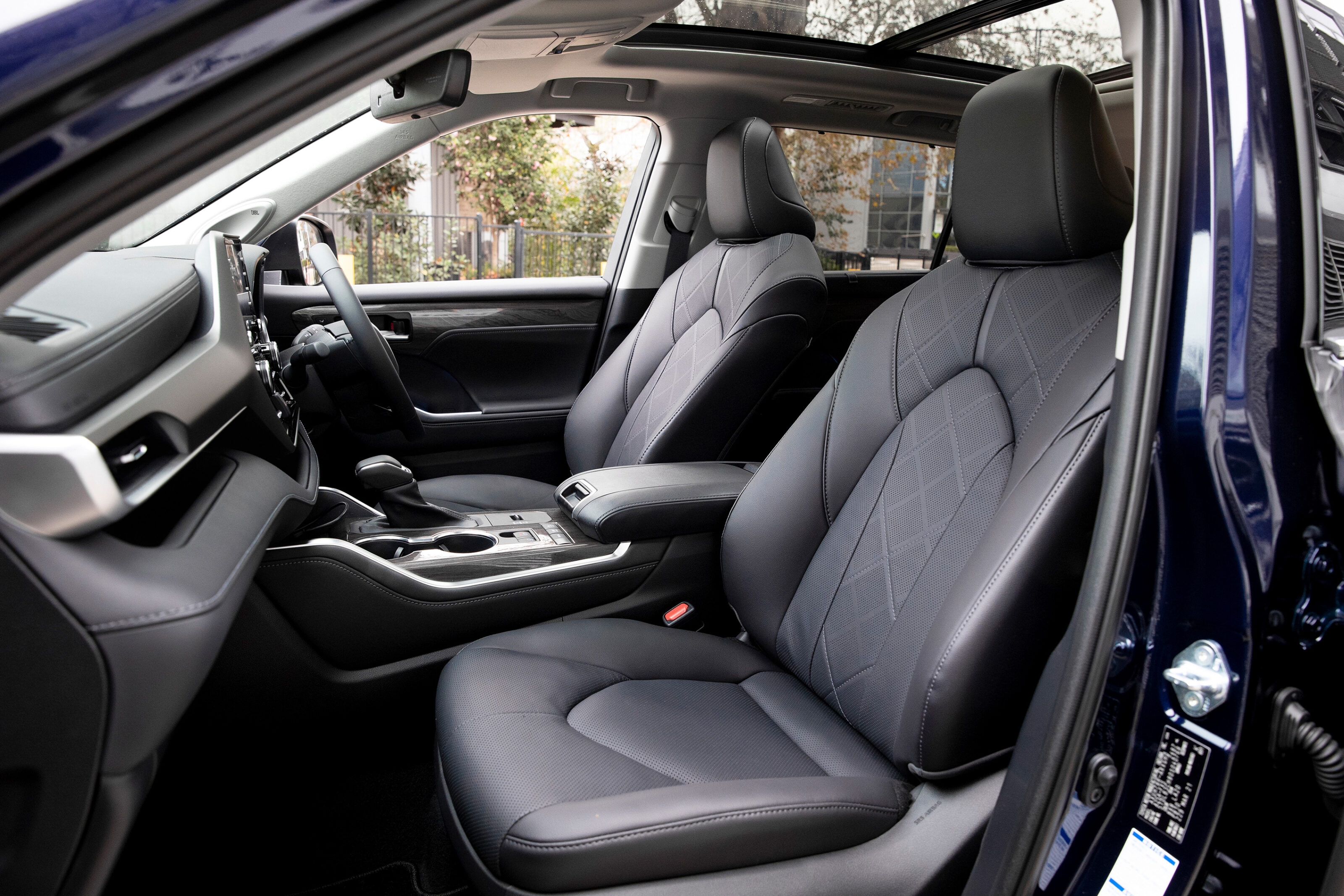
The Grande cabin is given extra lashings of leatherette, which creates a higher perception of quality without allowing the Kluger to match the more luxurious vibe of a CX-9 Azami or even the less expensive Sorento GT-Line or Peugeot 5008 GT.
Fake, plastic wood trim and a lack of LED interior lighting don’t help, while the Grande’s leather-accented seats aren’t the Nappa variety commonly found at this price point. The front seats also lack cushion extenders and, ironically, can’t match the comfort and support of the base GX’s fabric seats.
Not every buyer will be fussed about a contemporary-looking interior, and few again will be bothered that Toyota’s 3.5-litre has been around the block a few times and retains the 218kW/350Nm outputs and eight-speed auto of the previous Kluger.
The Kluger doesn’t follow the modern trend for fully digital instrument clusters and only the Grande comes with a head-up display
The V6 is the pick over the Hybrid for those who prioritise performance.
Toyota says the FWD V6 is the fastest-accelerating Kluger, using its near-100kg-lighter kerb weight to nullify the AWD V6’s traction advantage – 7.5 seconds playing 7.8 in the 0-100km/h run. Or versus 8.4sec for the Hybrid.
There’s some minor torque steer in the front-drive V6 and a sunny day meant we couldn’t assess whether this variant, as with its predecessor, has a propensity to spin its wheels excessively in the wet.
The V6 certainly remains a smooth and pleasant-sounding engine, with a clear rolling acceleration advantage over the Hybrid.
A stop-start system improves the V6’s official fuel consumption, which is now as low as 8.7L/100km.
That’s still well above the Hybrid’s 5.6L/100km – an efficiency advantage likely to be magnified in everyday driving.
We got close to that lab-derived number, too, registering an indicated 5.9L/100km after about 100km of inter-suburban driving, and never climbing higher than 6.4L/100km after further weekend suburban driving with some family members aboard.
A separate country road drive, where the hybrid system is more reliant on the petrol engine, still registered only 6.7L/100km.
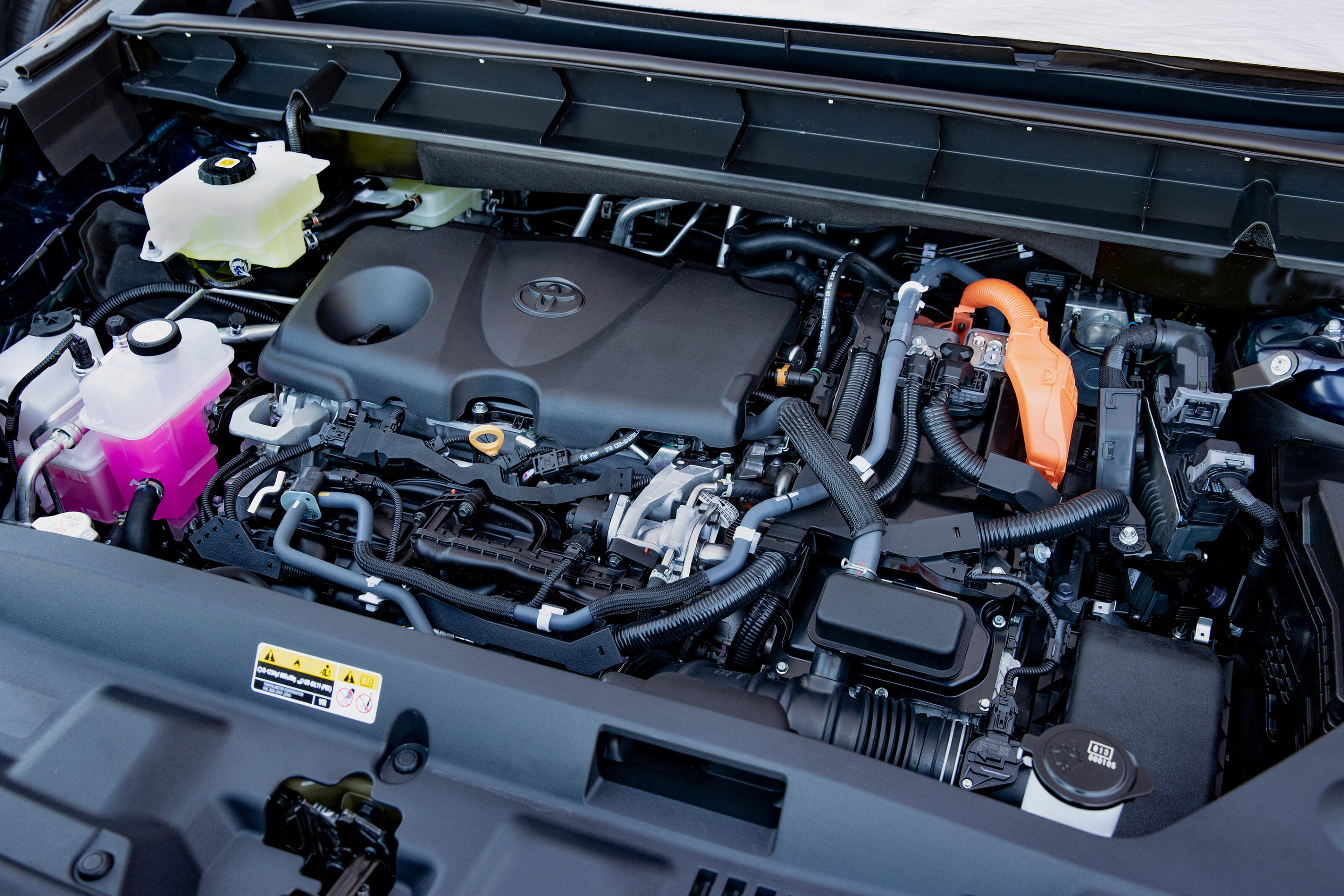
Toyota has equipped the Kluger with essentially the same hybrid set-up as the RAV4 AWD, though with the wick turned up. The larger SUV has combined power of 184kW compared with 163kW.
An important note for those anticipating lower fuel bills, however, is that the tweaks have resulted in the 2.5-litre four-cylinder requiring 95 RON premium unleaded.
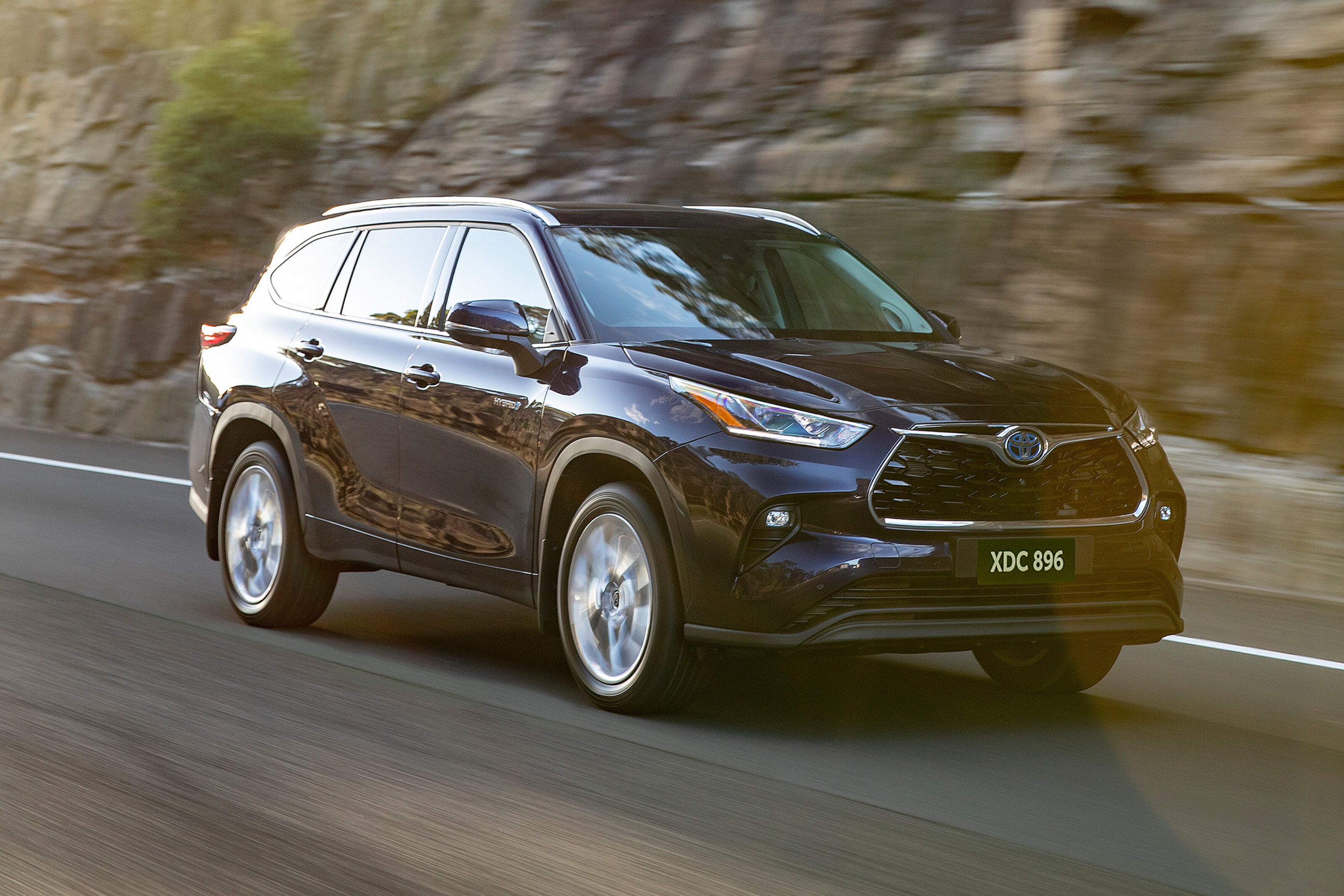
On a light throttle, the hybrid drivetrain with e-CVT transmission feels more initially responsive than the V6 but needs to be stirred more for performance – which comes at the expense of refinement. The petrol four becomes overly conspicuous with its gruff nature.
It’s difficult to prevent the petrol engine from kicking into life even at low speeds, and the EV Mode that prompts the car’s computer to stay with electric power cancels itself at just 30km/h.
The Kluger Hybrid’s ability to self-charge, via both the petrol engine and regenerative braking, is a double-edged sword. Although this simplifies the ownership experience, Kia’s forthcoming Sorento plug-in hybrid promises even better efficiency, much lower emissions and up to 70km of pure electric driving.
The Kluger Hybrid’s ability to self-charge, via both the petrol engine and regenerative braking, is a double-edged sword
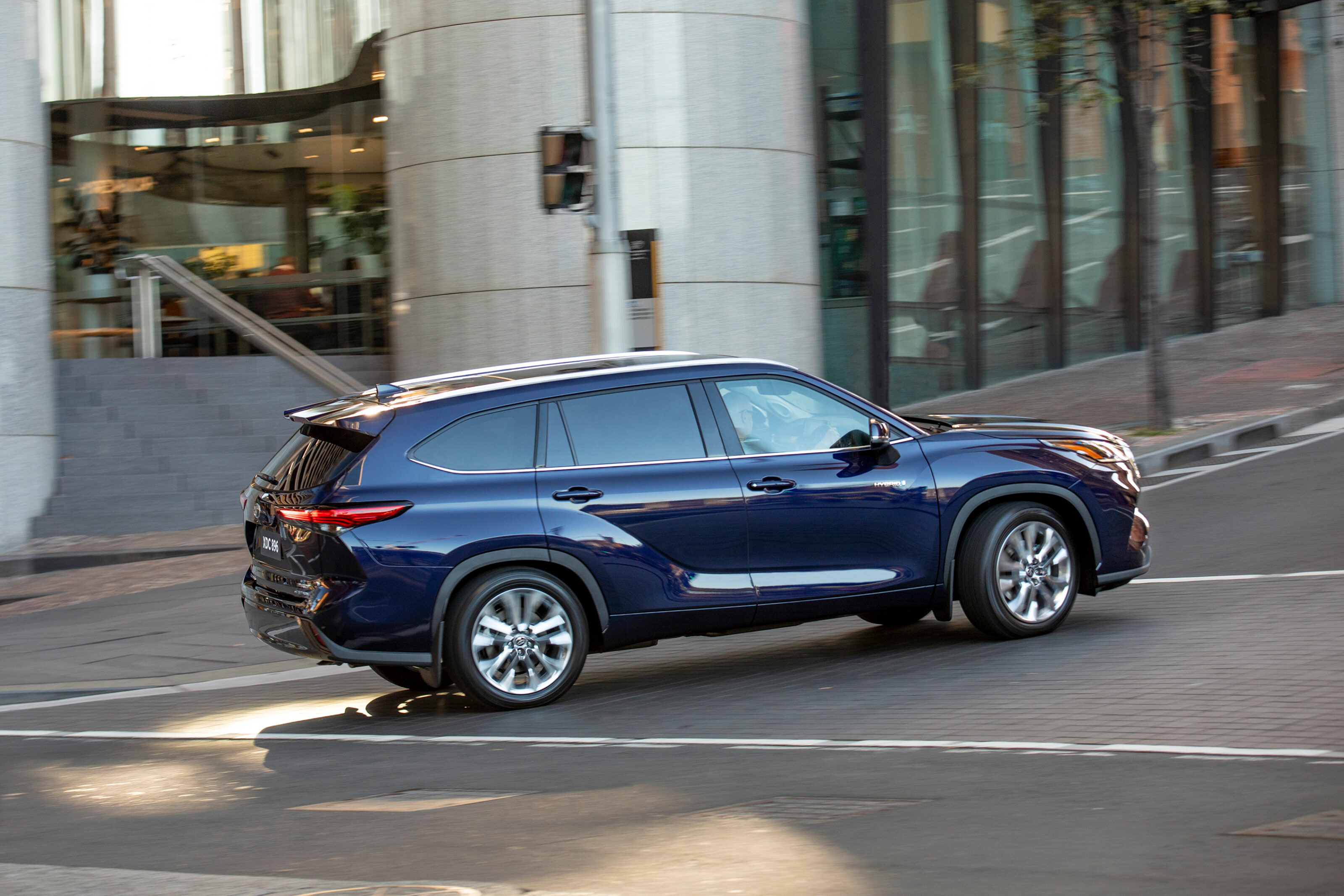
It’s still possible to run at higher speeds using the electric motors but only once the Kluger has momentum and on flattish roads, with Toyota’s hybrid system switching as seamlessly between its dual forms of power as it has done ever since the early days of the Prius.
When the Kluger is coasting or cruising, the drivetrain’s near-silence is complemented by minimal noise from the tyres on coarser surfaces. This includes the Grande’s 20-inch wheels – the biggest available on any Toyota – which also avoid spoiling the wonderfully relaxed suppleness of the Kluger’s suspension.
With smooth, effortless steering and good body control, the Kluger becomes the latest Toyota nameplate to have had its driving manners transformed by the company’s TNGA modular platform – if never feeling as tied down on a country road as Mazda’s CX-9.
All-wheel-drive systems differ between models, with the Hybrid’s axles unconnected and instead using an extra electric motor for the rear wheels. V6 models feature Rock/Dirt and Mud/Sand modes; Hybrids have a Trail mode to aid traction.
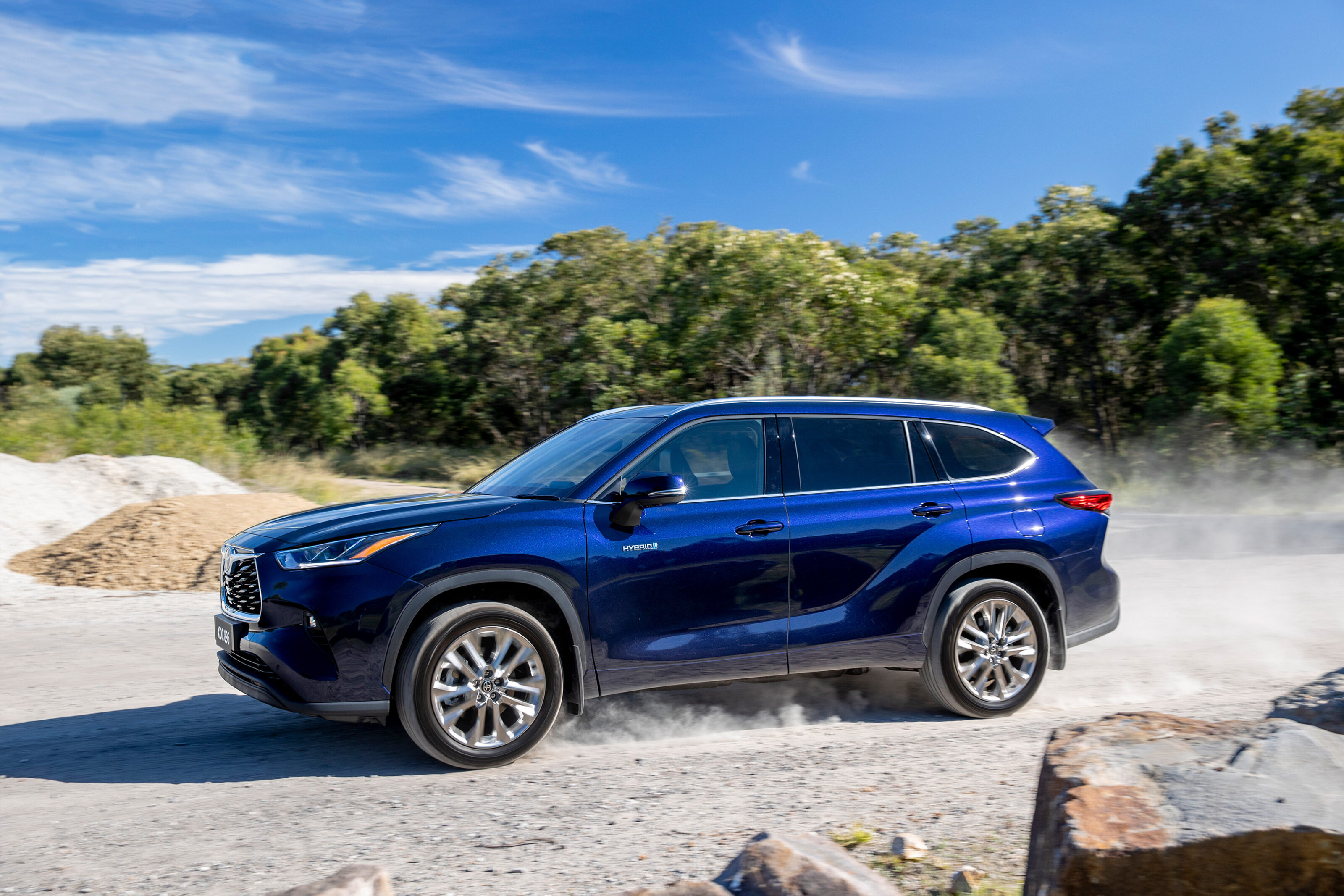
Capped-price servicing costs are low – just $250 per visit that’s either every 12 months or every 15,000km. A five-year warranty extends to seven years for the engine and driveline.
While the patchiness of the new Kluger’s cabin functionality, versatility and technology means it’s far from being the complete seven-seater family SUV, the big Toyota has never been more spacious and never better to drive. And, for many parents, that first-ever hybrid drivetrain will undoubtedly hold huge appeal.
Snapshot
- New centre will be responsible for creating 700 new jobs by 2025
- A university and training facility will also be created in ElectriCity
Renault has revealed it is planning on building the single largest electric vehicle manufacturing facility in Europe.
Called ‘ElectriCity’, the new centre is part of the automaker’s ‘Renaulution’ strategic plan, which aims to push the French firm to the forefront of the EV industry.
Once built, Renault says the manufacturing plant aims to create 400,000 vehicles annually by 2025, which would make it one of the most competitive facilities on the continent.

Renault claims a university and training centre will also be built within ElectriCity, and it’s hoping the new facility will create some 700 new jobs.
The large scale EV endeavour came about as the result of the Renault Group and representatives of the French trade unions – CFDT, CFE-CGC, CFTC, CGT, FO, and SUD – working together to sign an agreement for the future of the Renault sites in the Hauts-de-France region.
The accord will see ElectriCity wholly owned by Renault SAS, which will group together the industrial sites of Douai, Maubeuge and Ruitz, and its nearly 5000 employees.
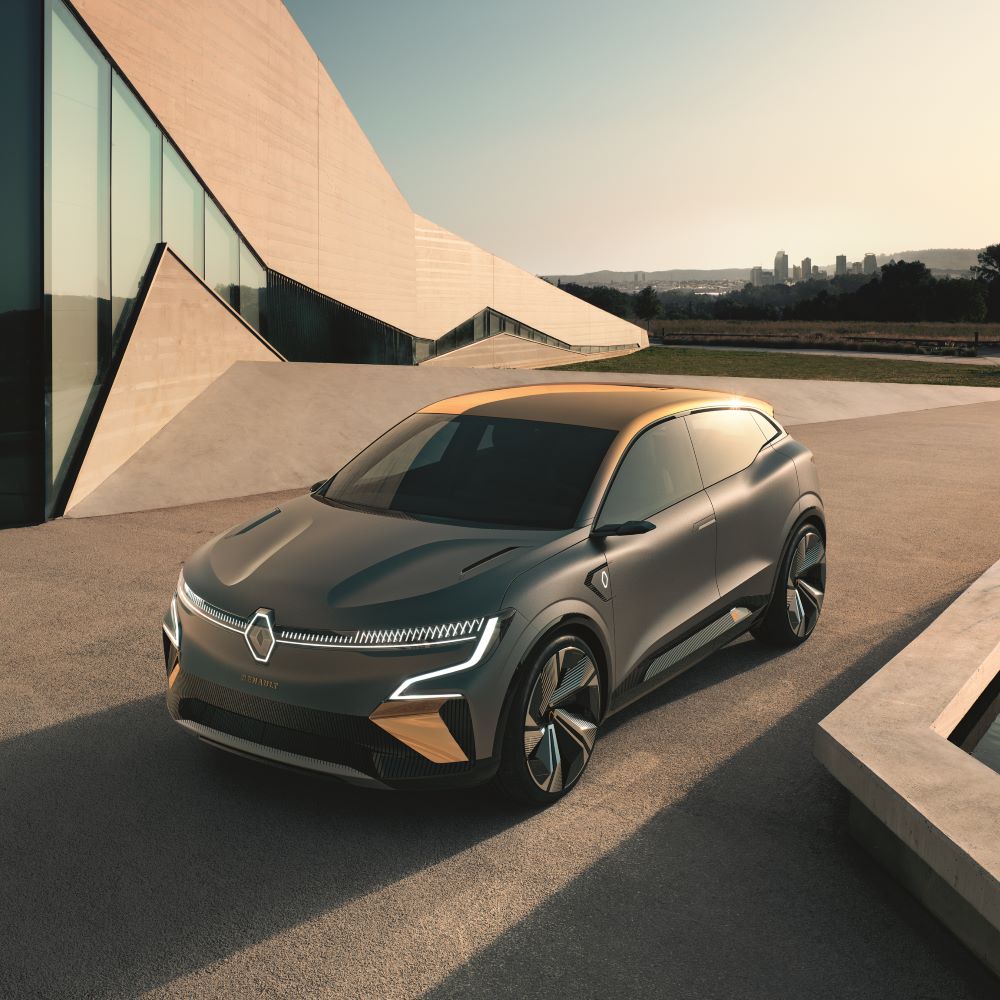
Moving forwards, Douai will be responsible for the production of the Mégane E-Vision, which will be built on Renault-Nissan’s modular CMF-EV platform.
Douai will also be assigned a new C-segment vehicle for production, as well as a new electric platform dedicated to the B-segment vehicles.
Maubeuge will take care of the electric van segment in Europe, producing the New Kangoo and New Kangoo Van for Renault and brand partners Mercedes-Benz and Nissan.
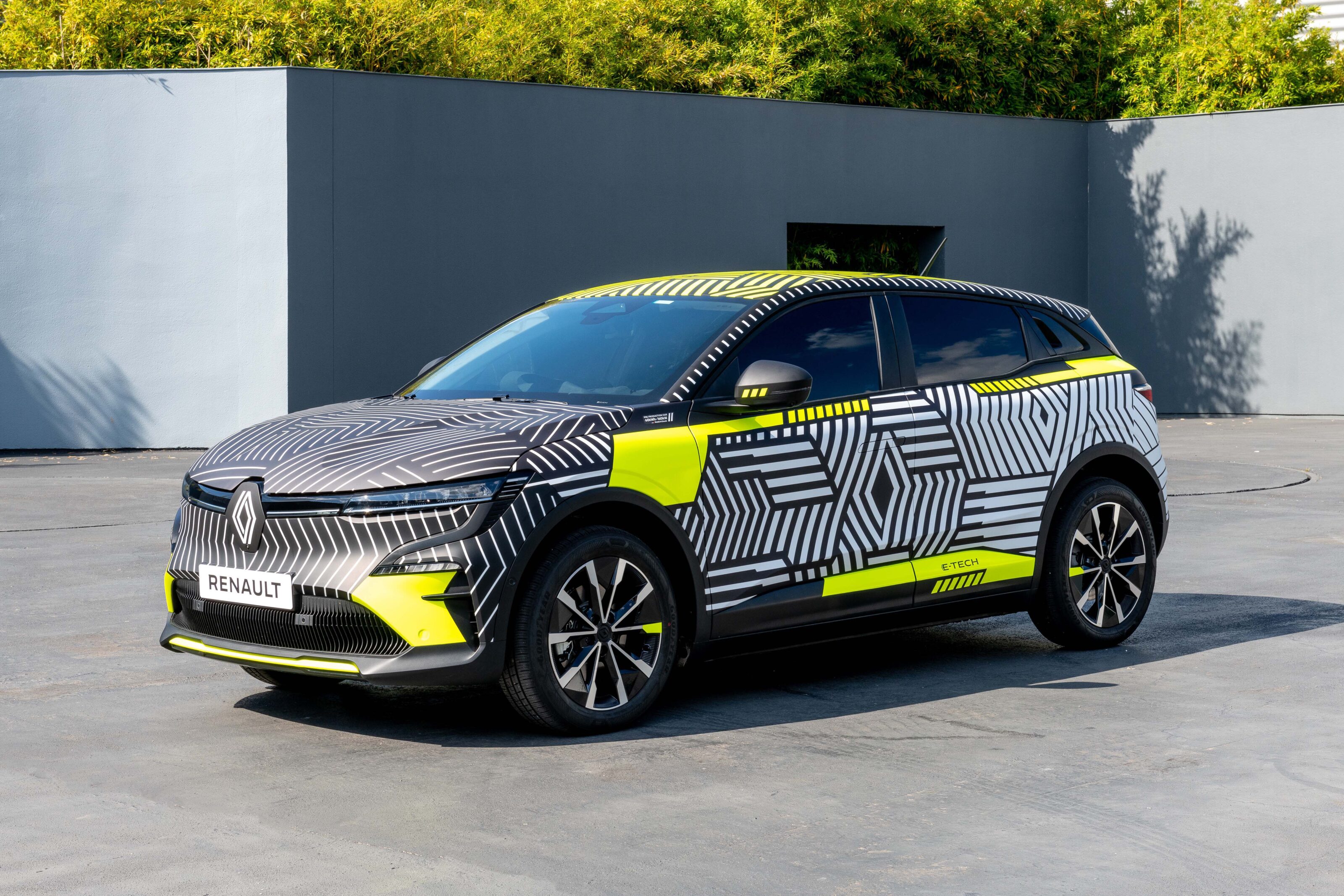
It will also build the Renault Mégane E-Tech Electric, which was recently unveiled in pre-production specification.
Finally, the Ruitz plant will support the other two facilities by producing new electrical components.
“I am very proud to have contributed to the creation of Renault ElectriCity, a symbol of Renault’s know-how and technological innovation, and to participate in the enhancement of the economic and social attractiveness of Hauts-de-France in Europe,” Luciano Biondo, director of Renault ElectriCity, said.
“This agreement, signed with all the trade unions, is proof that the commitment of employees, constructive social dialogue and a strong local presence are key to setting up a robust and attractive industrial model.”
