
Hyundai is kicking goals, scoring tries and adding to its ace count. Whatever sporting analogy you want to use, the South Korean giant is winning.
It often has numerous models within the top 20 of Australia’s VFACTS sales charts, so there’s little room for underperforming fat in the line-up.
And with consistent podium places each month within Hyundai’s own pecking order, the Kona isn’t at risk of becoming unwanted love handles anytime soon.
It’s no surprise, then, to find out that the Kona is a strong seller Down Under. In fact, in a turbulent 2020, Hyundai’s small SUV almost eclipsed the hugely popular Mitsubishi ASX.

However, with a refreshed line-up and an already strong start to 2021, the Kona looks set to challenge the ASX for top spot in the small SUV segment.
A big part of that projected success will be down to significant updates for a model originally released in 2017. It sees styling, mechanical and technology changes throughout the four model grades that make up the Kona range.
? Hello from the future!
There’s a new-generation Kona in Australia now, and you can find our news and reviews at the link below.
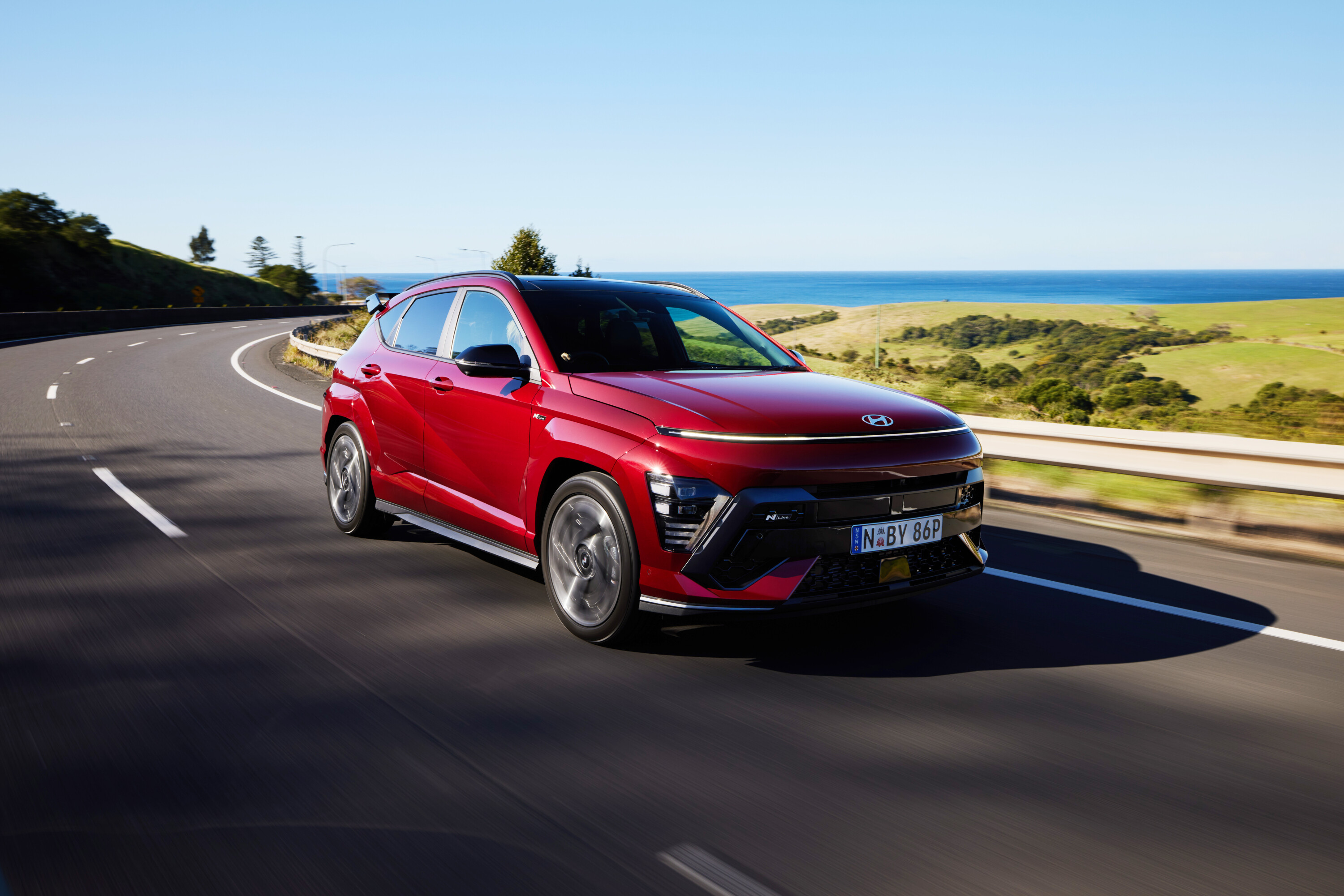
Review continues…
Prices are up across the board, but more features have become standard and the new 2.0-litre four-cylinder petrol engine gains a continuously variable transmission (CVT).
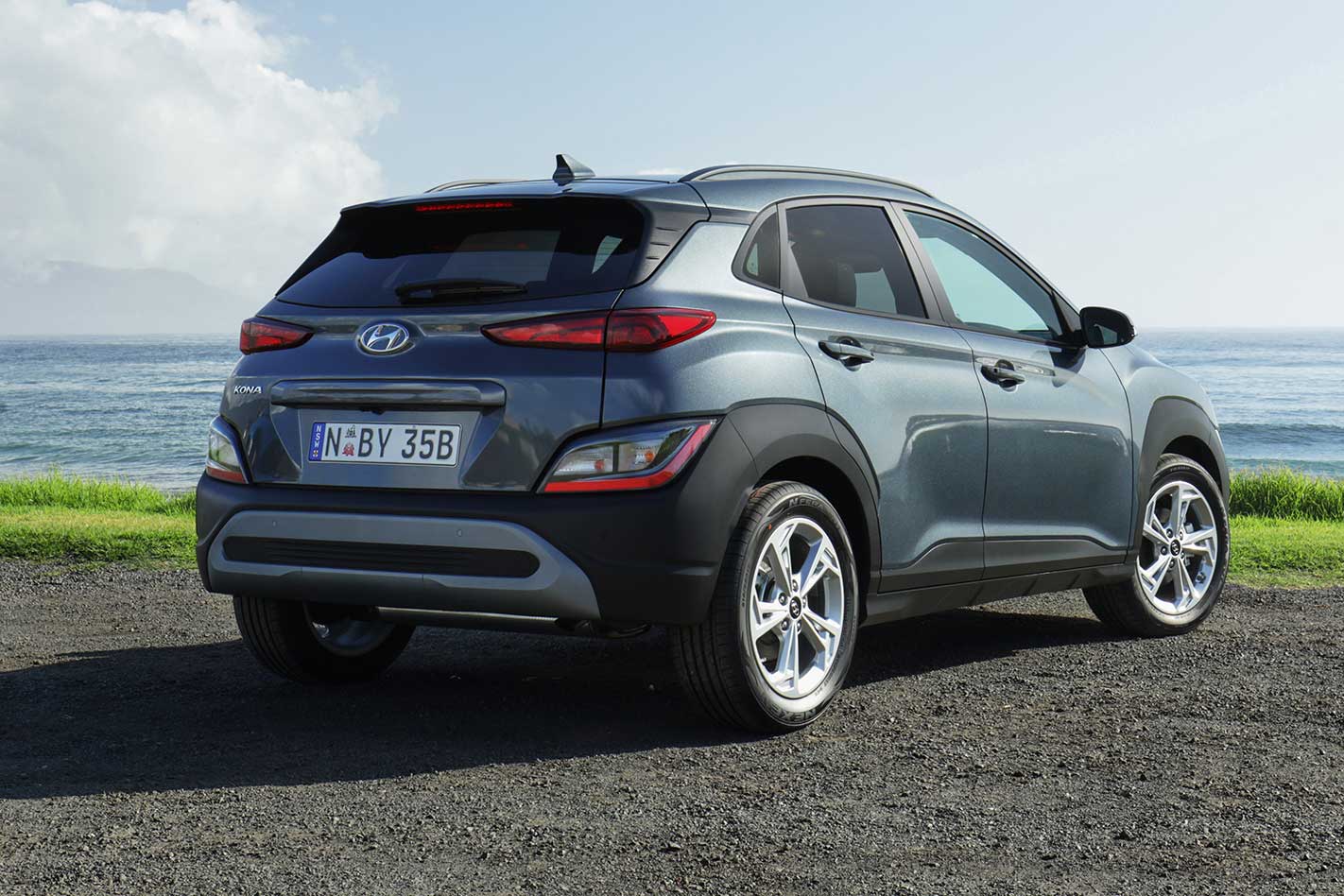
It’s the second-from-the-bottom $28,200 Active variant that we’re focusing on here.
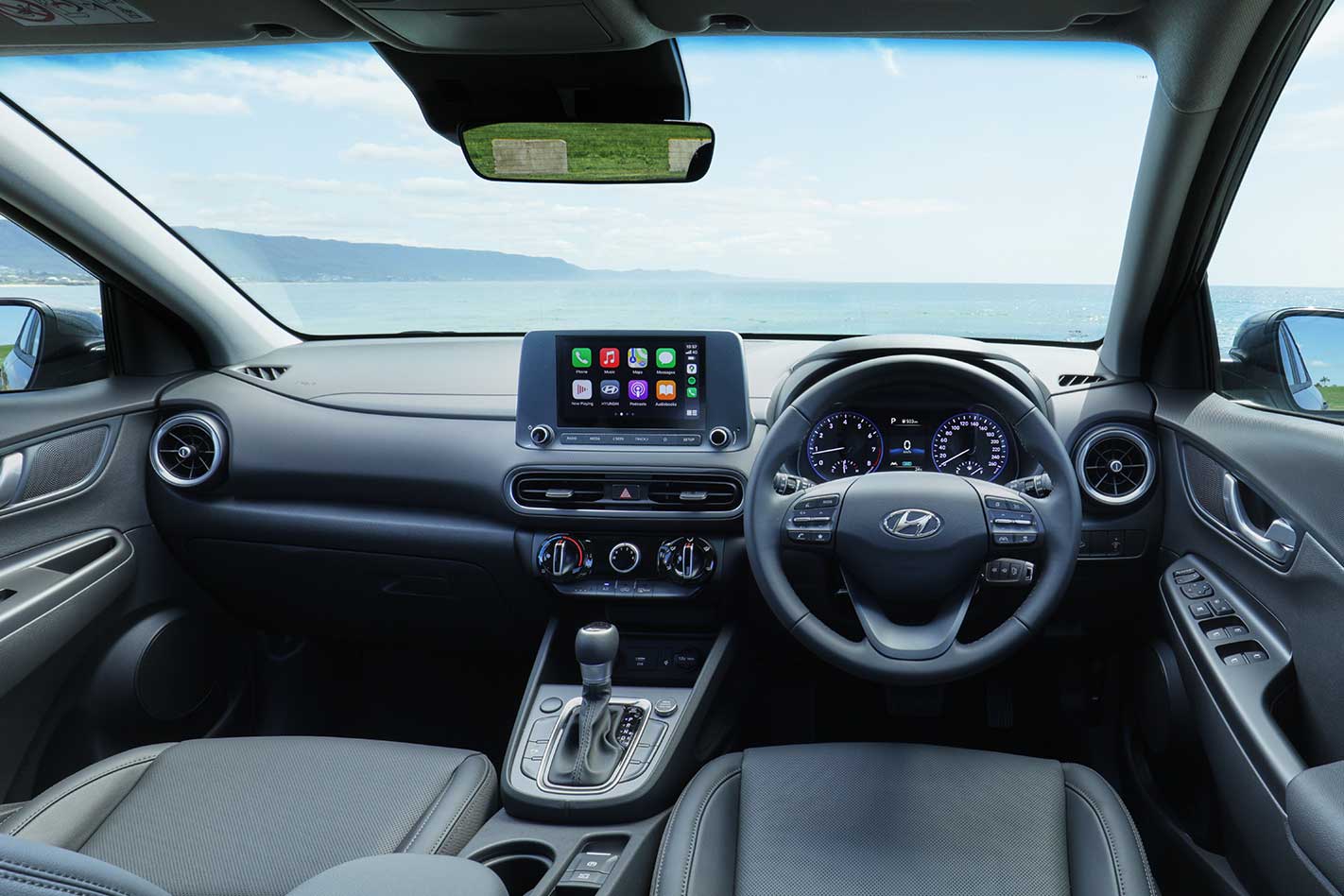
An electronic park brake replaces the conventional hand-operated unit, while wireless phone charging pairs with the smartphone mirroring for a potentially cable-free cabin – perfect for those who rue clutter.
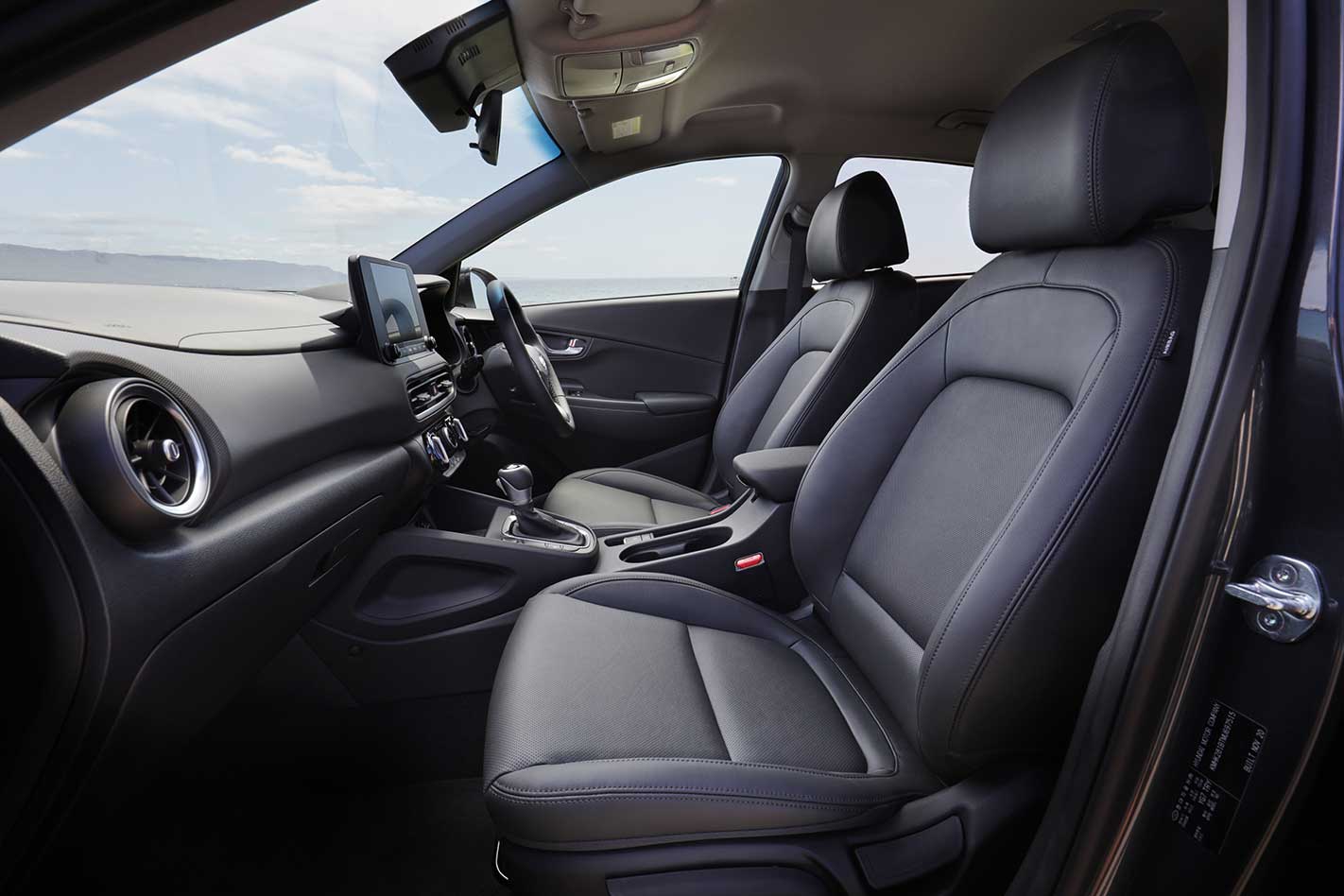
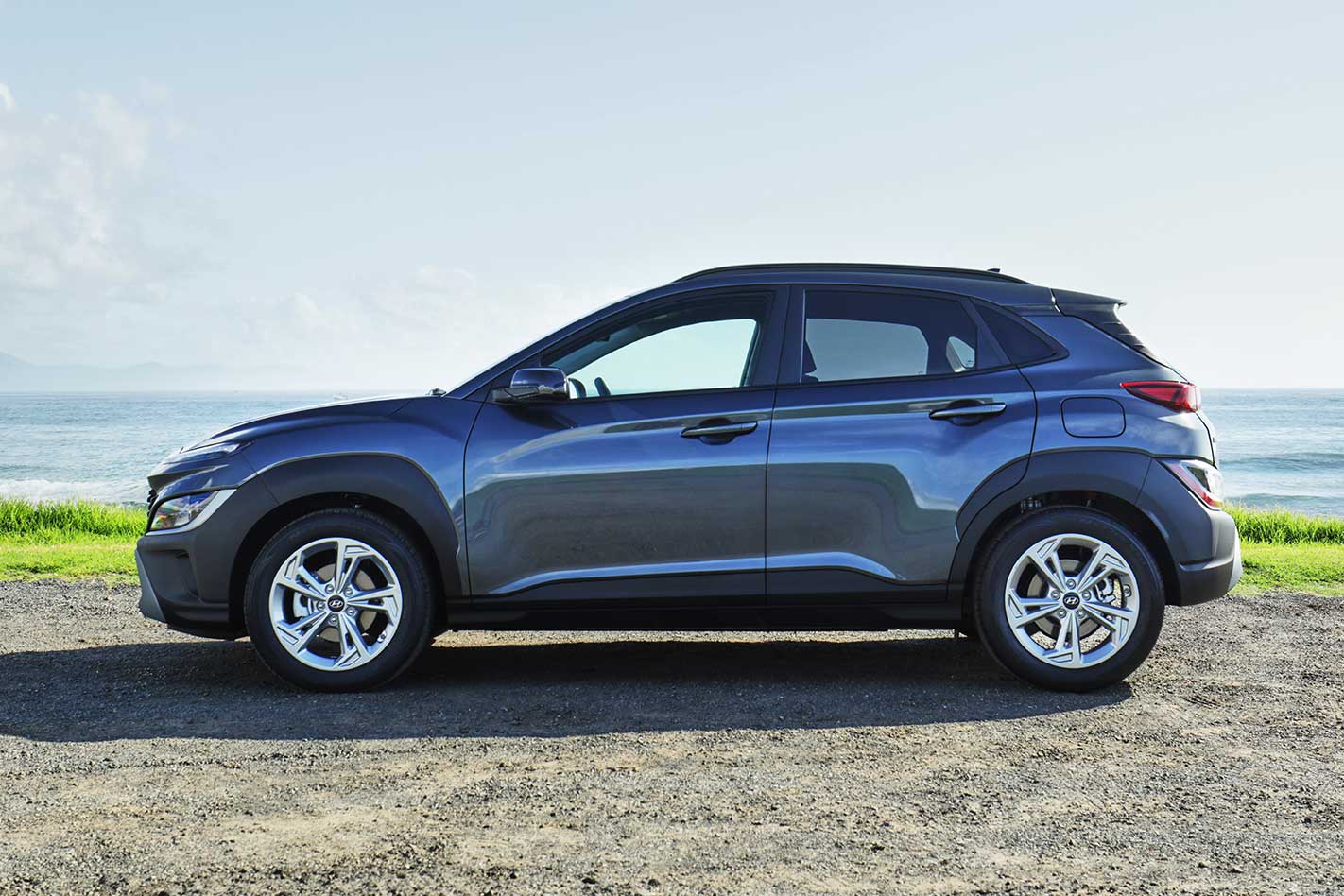
The Active gains leather upholstery – which includes the seats, steering wheel and gear selector – while the alloys are 17-inch items and rear parking assist is standard.
New for this model grade in 2021 are map pockets, rear privacy glass and heated/power-folding mirrors, which are useful on tight streets given the Kona fits the city-dwelling-crossover genre.
Servicing for the Active is every 12 months/15,000km (whichever comes first) and the warranty is five years/unlimited kilometres.
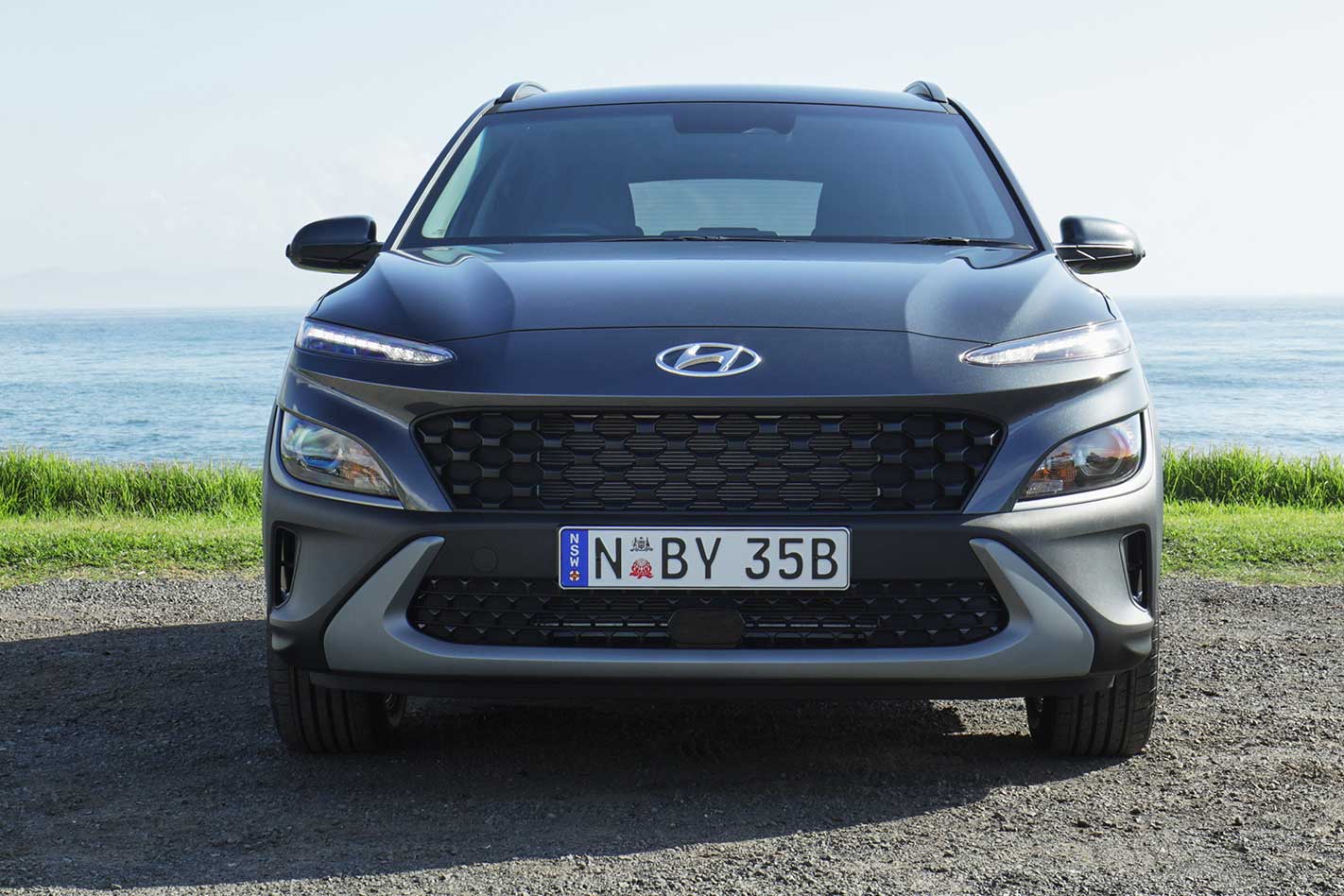
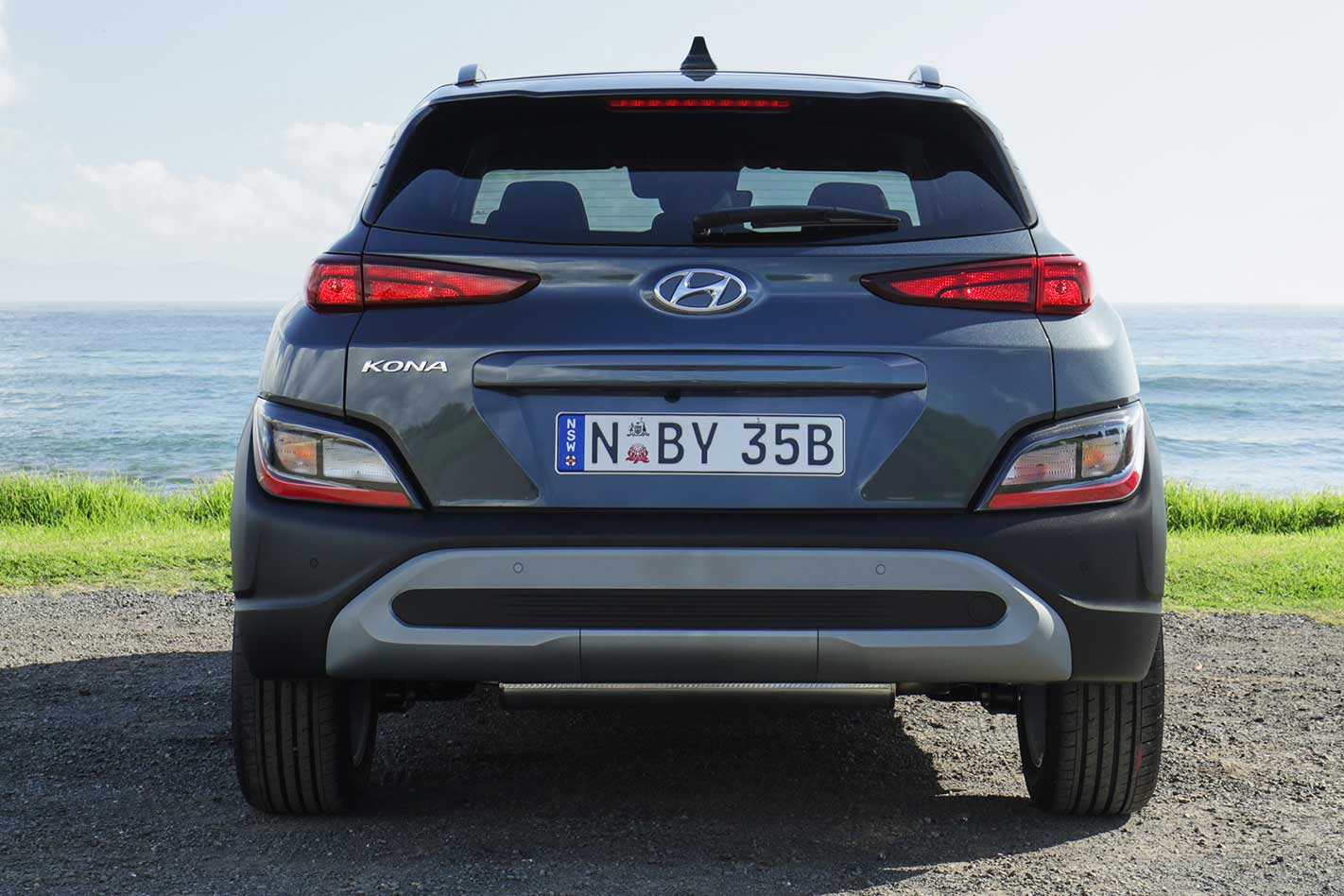
Design wise, the biggest changes are seen outside. The Kona gains a distinctive new face with a big grille and LED daytime running lights placed atop the conventional headlights – a design theme Hyundai has been shifting towards for its SUVs.
Inside the differences are harder to pick, although the Elite, Highlander and N Line variants gain a new 10.25-inch infotainment display and the latter two also score a TFT instrument cluster of the same size.
Ergonomically the layout is sound, with good all-round vision and loads of adjustment to the seating/driving position. The multi-function steering wheel is easy to use and general NVH levels are OK despite the Active missing out on extra sound deadening available in more expensive grades.
Call it a first-world problem, but having to actually use a key to start a car has become and automotive oddity.
You also have to pay more to gain extra safety kit like blind-spot collision-avoidance assist, high-beam assist, rear cross-traffic collision-avoidance assist and safe-exit warning.
Annoyingly, the smartphone mirroring is glitchy – and that’s being rather pleasant about it. While this isn’t an issue specific to just Hyundai with other wireless systems having a tendency to drop out, too, the Kona’s performance with Apple CarPlay was very poor.
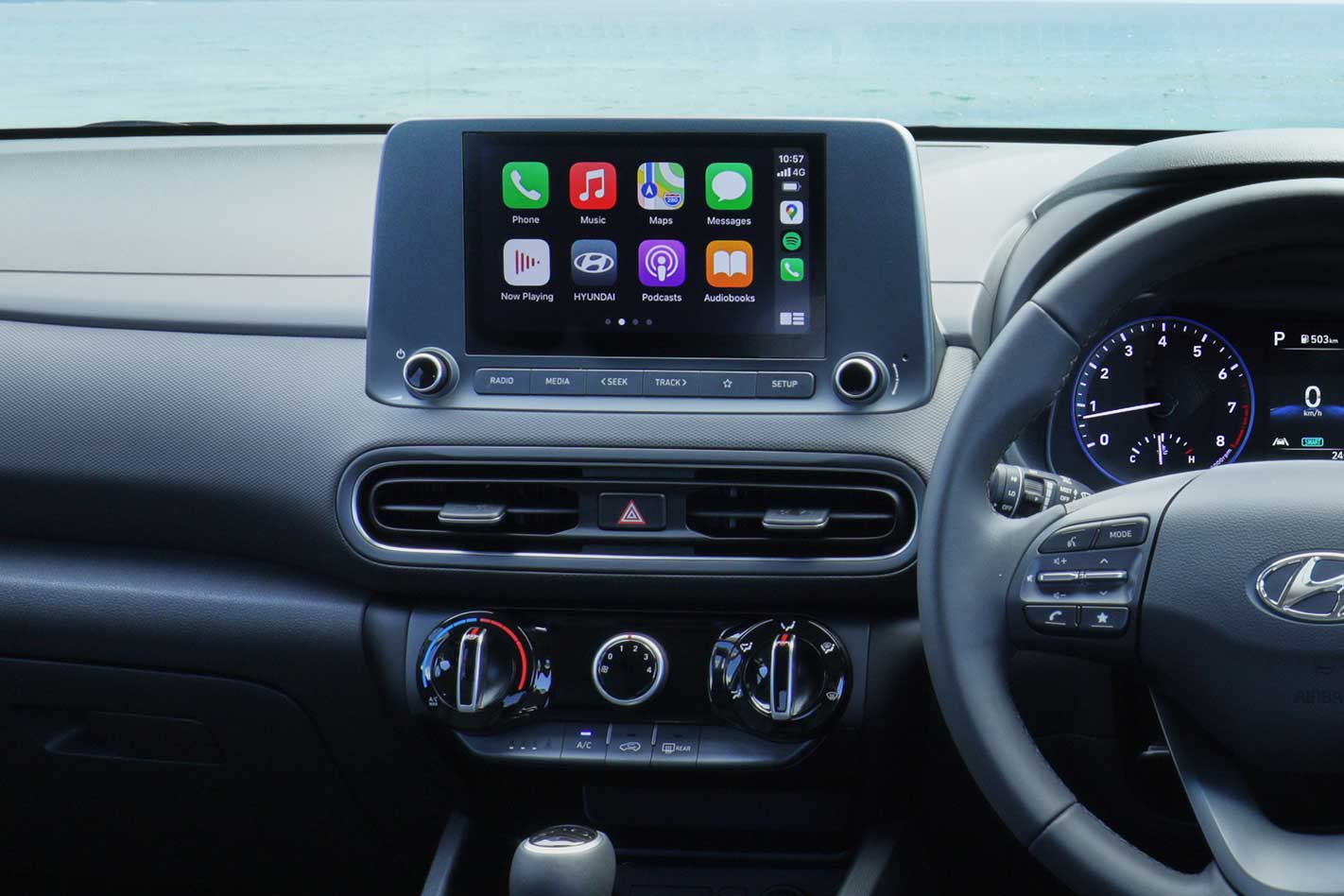
Given the Active also doesn’t have in-built sat-nav, this became an issue on a planned weekend trip. A software update from Hyundai needs to be in the works to rectify this – and quickly.
Practicality proves far stronger than the wireless connection. Room for heads, shoulders knees and toes is at comfortable levels front and rear – with a little bit of compromise required if you’re four-up with adults – while the leather seats offer plush cushioning.
The rear doors offer small stowage areas, while the transmission tunnel isn’t too intrusive if you need to carry a fifth passenger. ISOFIX points are located in the outboard pews.
Cargo capacity is 374 litres and the rear seats fold flat if you need to transport larger items home from the weekend Bunnings or IKEA trip. With a raised boot floor there’s also no lip with the seats stowed, meaning you can slide items straight through.
Mechanical changes are actually quite extensive with both the engine and transmission receiving attention. The SmartStream 2.0-litre (1999cc) four-cylinder engine is a part of the ‘Nu’ family, but it doesn’t really feel ‘new’.
Sans forced induction, and especially when compared with Hyundai’s punchy ‘Gamma’ 1.6-litre turbo four-pot, it can be left wanting for power and torque – especially given both outputs are developed high in the rev range.
With stepped ratios to mimic a conventional torque-converter automatic, the CVT actually works well with the naturally aspirated four-cylinder.
It largely eschews the perching sensation, resisting the urge to hold revs at a constantly high rpm under heavy load, and it even offers a pseudo manual mode (sans steering-wheel-mounted paddles).
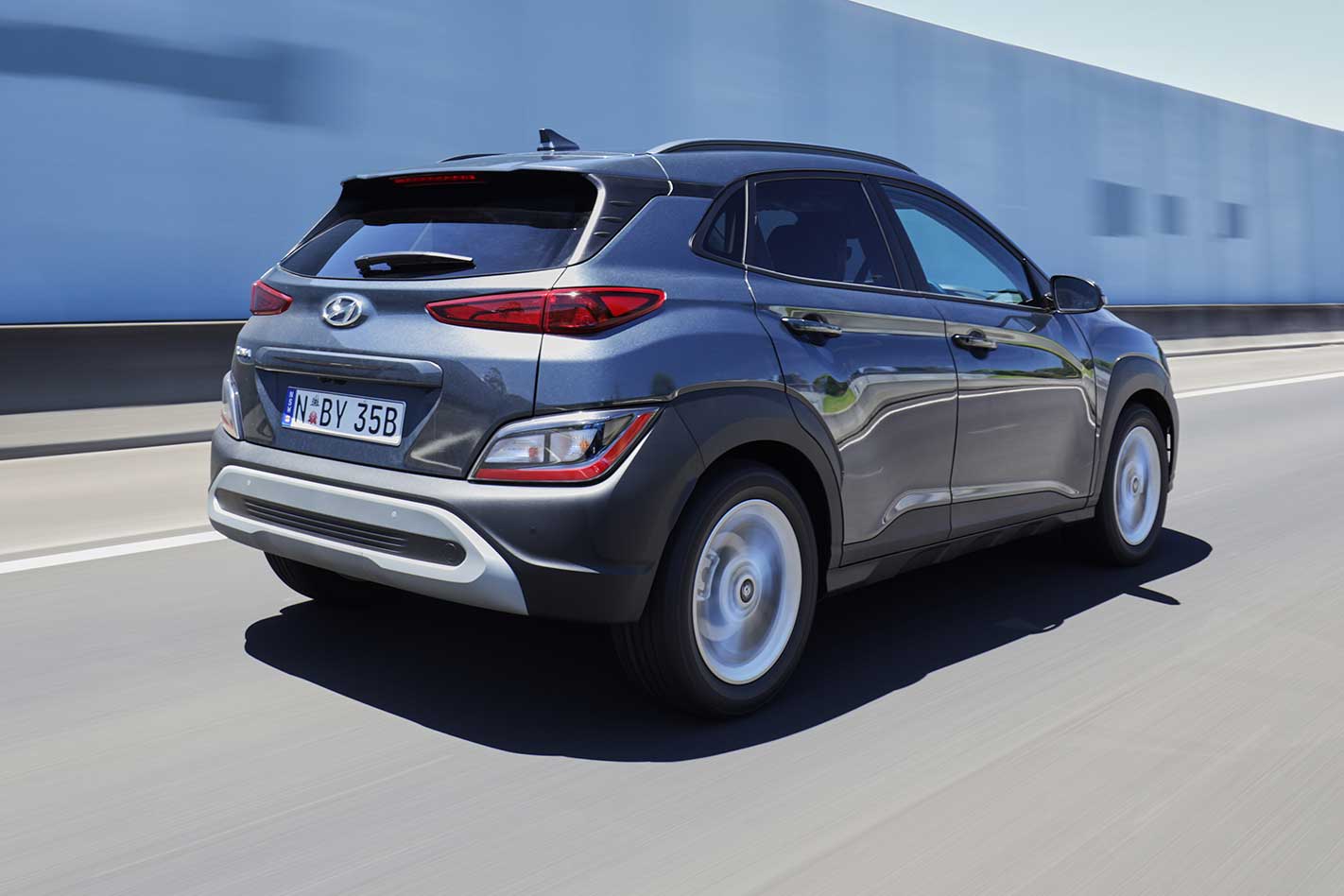
An injection of torque would not only help driveability, but also aid the fuel economy. However, being able to fill up on 91RON fuel is a bonus with constantly fluctuating petrol prices.
While Hyundai hasn’t played with the spring rates or dampers, the 2021 Kona feels a little suppler than before – especially on smaller rims with chubbier 215/55 rubber. There’s a veneer of firmness, which is appreciated on smooth roads with enticing corners, but the ride quality doesn’t cross over to the harsh side.
The Active keeps body roll in check, however, the rebound calibration of the dampers needs work as the Kona is, ahem, active in terms of vertical movements over smooth undulations. Adding weight via extra passengers and luggage only exacerbates the lack of control.
Which is a shame, because without this issue the Kona displays pleasing dynamics, bearing in mind its small-SUV premise. And that’s despite the fact the Active uses the lower-spec torsion beam rear suspension over the N Line’s multi-link setup.
Traction isn’t an issue on-road, while the front-wheel-drive layout has help off-road with dedicated Snow, Mud and Sand traction modes – although there is only 177mm of ground clearance.
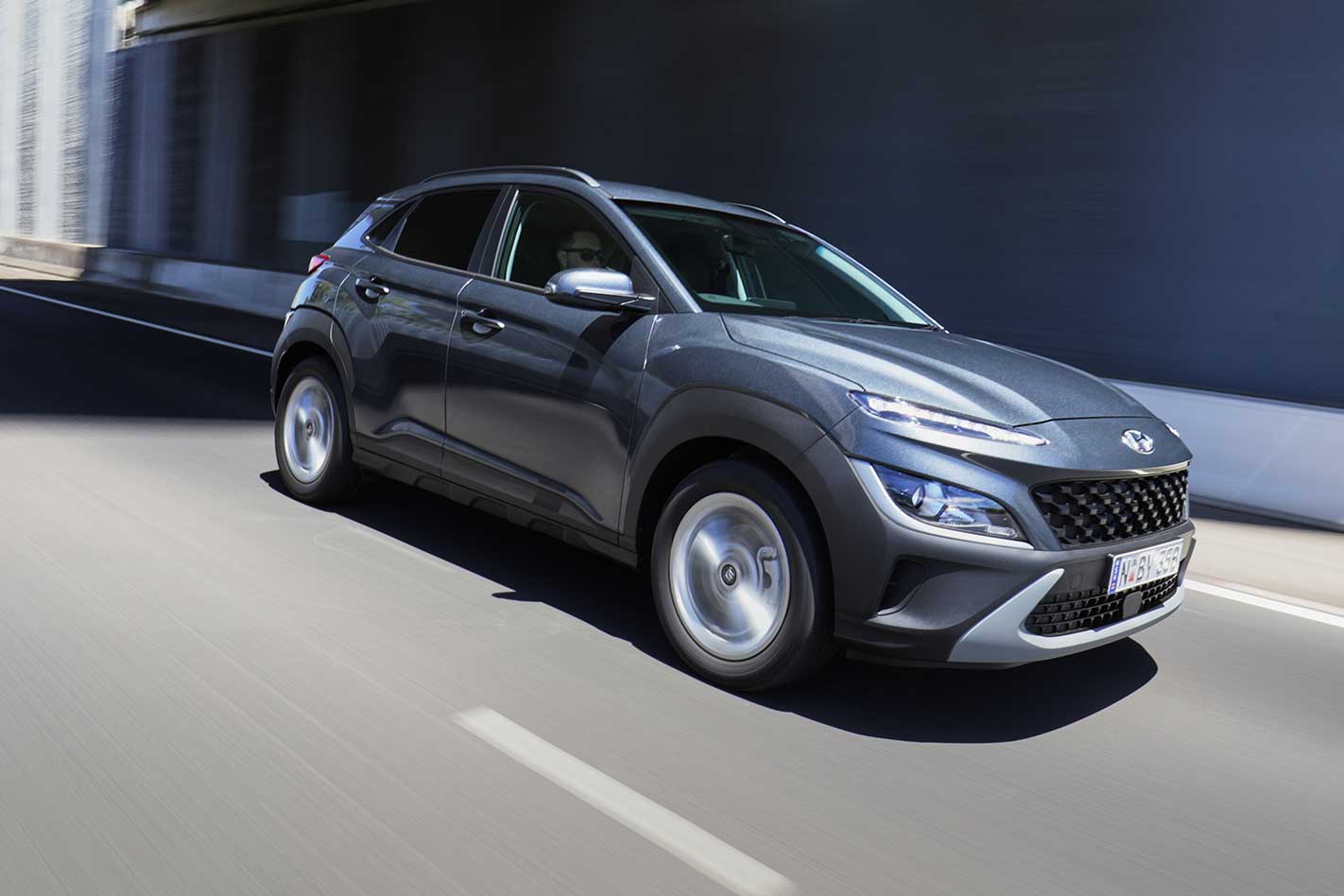
Ultimately, the Active grade makes a curious case for itself. It misses out on some key equipment and the 2.0-litre powertrain is best described as adequate. Nor is it especially frugal.
The N Line offers more grunt and all-wheel drive, while the all-electric EV solves the consumption issues. However, the Active pleases on a monetary front more so than those options, as does its funky persona and juxtaposing pragmatism.
Hyundai’s half-time refresh has given the Kona enough of a second wind to compete in the sales race.
Specifications
- Body: 5-door, 5-seat SUV
- Drive: front-wheel
- Engine: 1999cc inline-4, DOHC, 16v
- Bore/stroke: 81.0 x 97.0mm
- Compression: 12.5:1
- Power: 110kW @ 6200rpm
- Torque: 180Nm @ 4500rpm
- 0-100km/h: 9.4sec (estimated)
- Fuel consumption: 6.2L/100km (combined/claimed)
- Weight: 1280kg
- Power/weight: 86kW/tonne
- Transmission: Continuously Variable Transmission
- Suspension: MacPherson struts, coil springs, anti-roll bars (f); torsion beam, coil springs, anti-roll bars (r)
- L/W/H: 4205/1800/1550mm
- Wheelbase: 2600mm
- Tracks: 1563/1572mm
- Steering: electrically assisted rack-and-pinion
- Brakes: 280mm ventilated discs, single-piston calipers (r); 284mm solid discs, single-piston calipers (r)
- Wheels: 17.0 x 7.0-inch (f/r)
- Tyres: 215/55 R17 94V (f/r) Nexen N’Fera SU1
- Price: $28,200
A shadowy teaser for the upcoming new Audi Q4 E-Tron and Q4 E-Tron Sportback electric SUVs has been released today, following confirmation last month that production has already begun.
The big debut for both mid-sized EVs is set to occur at 3:00AM on April 15 (7:00PM April 14 in Germany).
The electric Q4 models will join the existing E-Tron SUV (which sits between a Q5 and Q7 in size, yet gets no ‘Q’ name of its own) and the recently revealed E-Tron GT electric sedan.
The E-Tron is already on sale in Australia and you can read our coverage here, while the E-Tron GT will make its way to Australia by October. Handily, we’ve already driven it and you can read our review here.
Check in with WhichCar next week for all the details on the new Q4 E-Tron models, including details on Australian launch timing.
The story to here
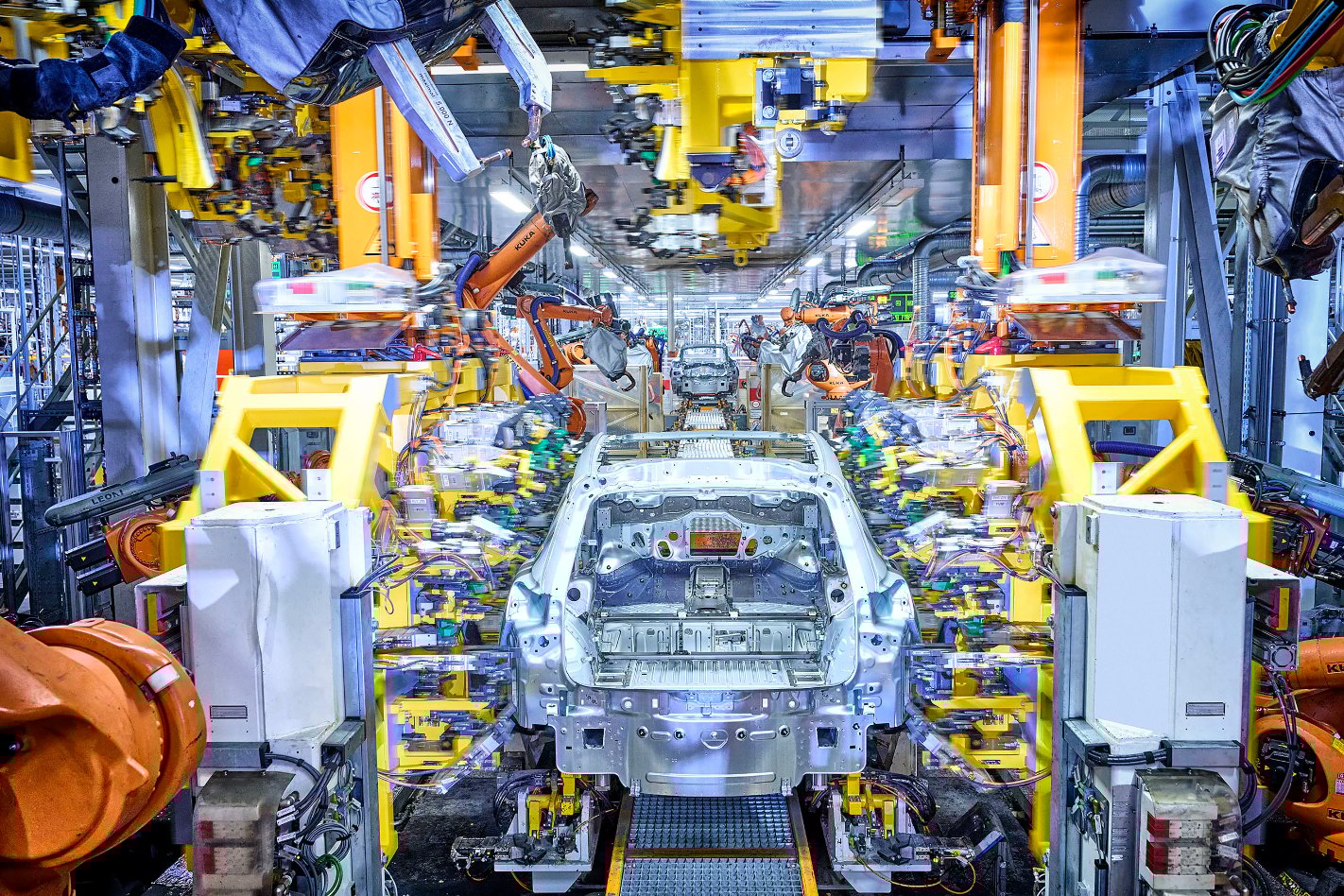
March 23, 2021: Audi has announced its first fully-electric SUV, the Q4 E-Tron, has entered production at Volkswagen Group’s multi-brand production facility in Zwickau.
Based on Volkswagen’s MEB modular electric car platform, which is shared with other brands under the VW umbrella such as Skoda and SEAT, the Q4 E-Tron is an important car for the automaker.
Audi also claims that, thanks to the ground-up development of the MEB platform to support EV-only drivetrains, the interior space of its Q4 E-Tron is comparable to a full-sized SUV.
The electric SUV will be built alongside the VW ID.4 in Zwickau, with 1400 assembly line workers from Volkswagen Saxony and 100 Audi employees responsible for production.
Interestingly, although it’s being built in Zwickau, such is the complexity of the Q4 E-Tron’s design, that the press tools needed to make the intricate body panels had to be brought in from Audi’s own toolmaking shop.
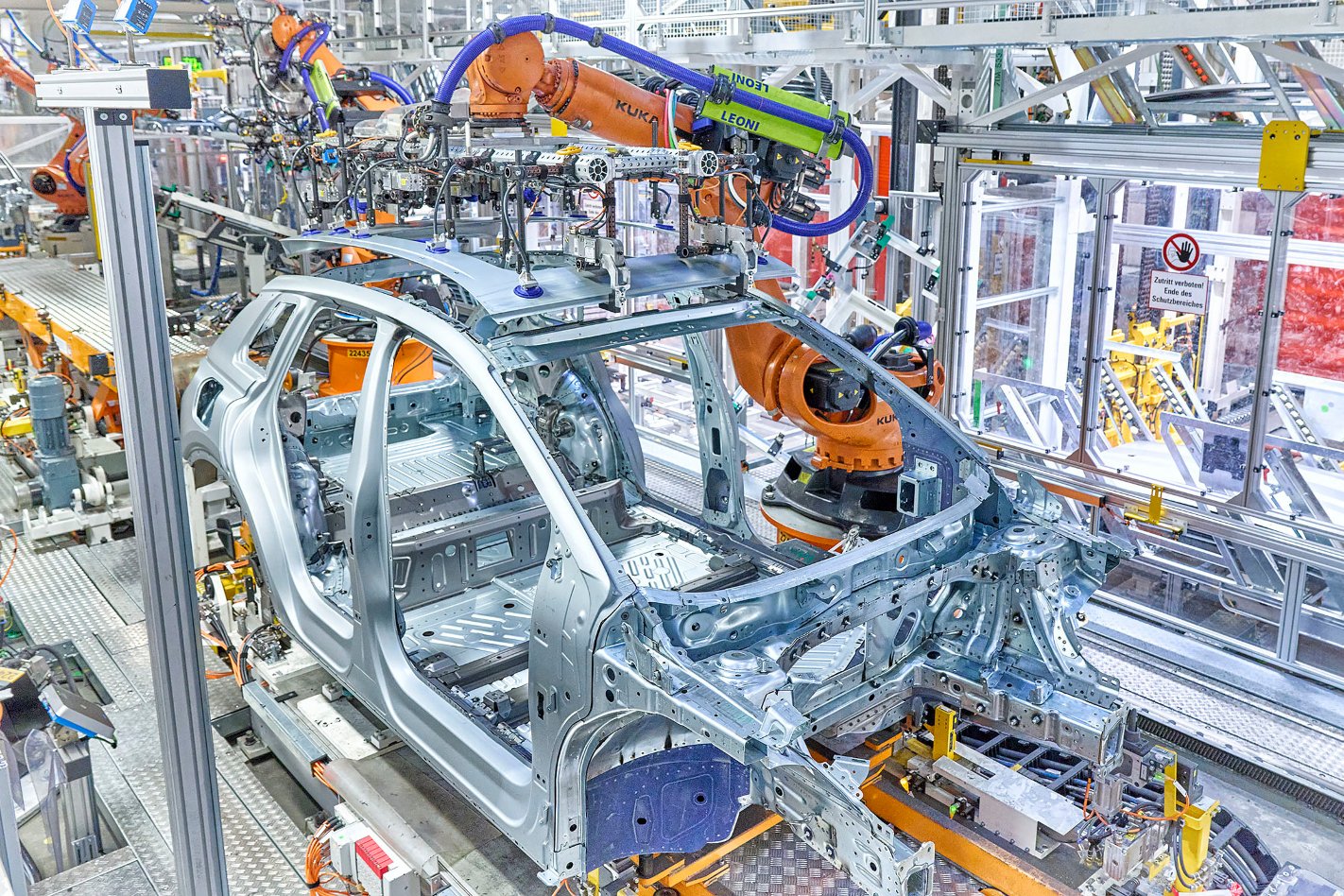
Audi toolmakers from Ingolstadt and Neckarsulm were also involved in the Q4 E-Tron project from the beginning of its development, to iron out any creases that may occur at Zwickau.
“The cross-brand collaboration in Zwickau demonstrates once again the enormous synergy potential that we enjoy with the Volkswagen Group,” Peter Kössler, AUDI AG board member for production and logistics, said.
“The on-schedule start of production of the Audi Q4 E-Tron is testament to the outstanding teamwork – among the Volkswagen and Audi colleagues alike.
“Our compact electric SUV is unmistakably a true Audi that will wow our customers with its outstanding quality and everyday usability.”
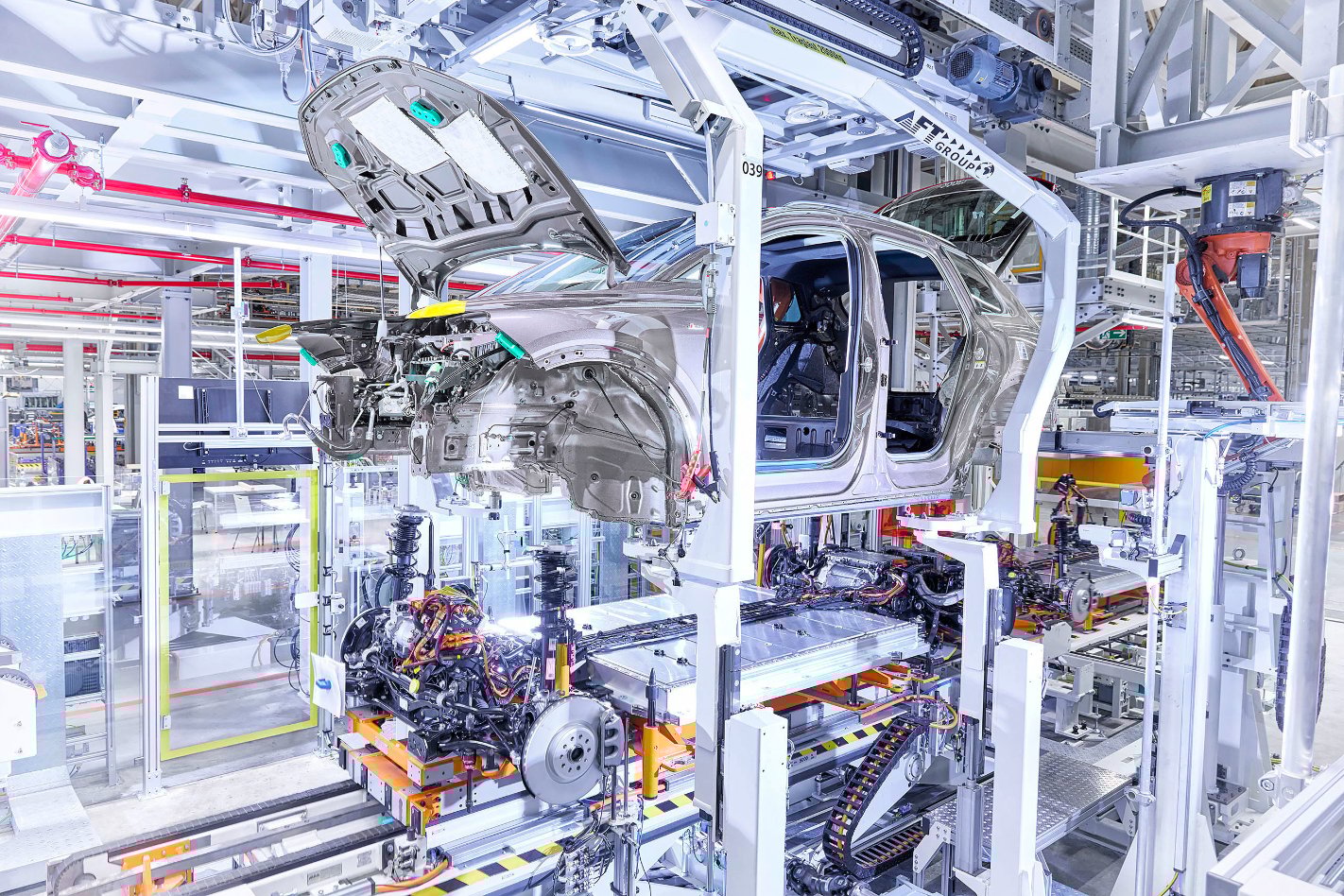
Dr Stefan Loth, Chairman of the executive management of Volkswagen Saxony, echoed Kössler’s sentiments.
“With the start of production of the Audi Q4 E-Tron, the Volkswagen plant in Zwickau is now a multi-brand plant,” Loth said.
“As a result, we are writing yet another chapter in the long history of the automotive industry here in Saxony.
“I’d like to thank all the Audi employees who are currently manufacturing the vehicles to the very highest quality, in the agreed-upon volume, and on schedule.”
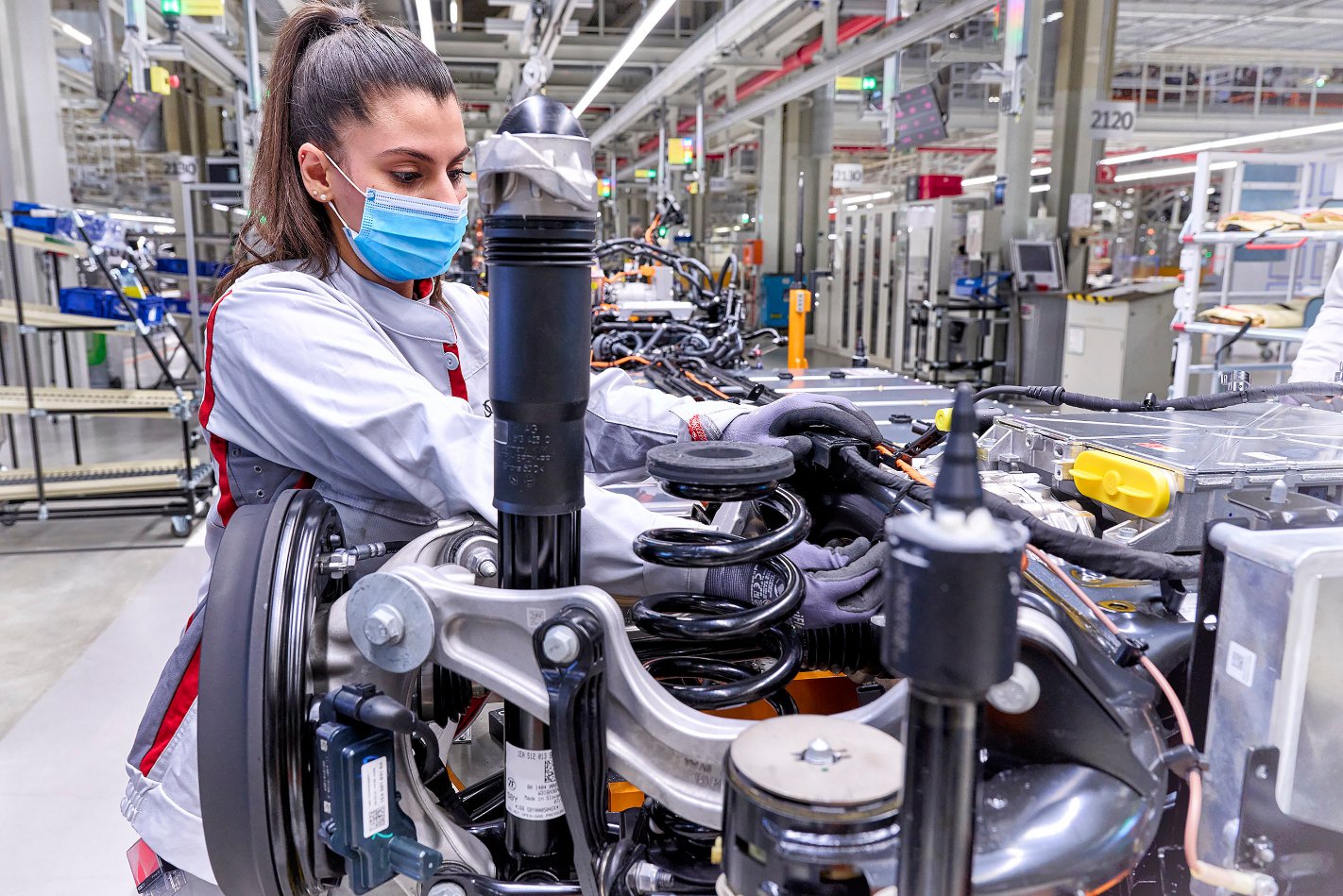
The Audi Q4 E-Tron will be unveiled globally in April and will be launched across Europe in the following months.
The compact SUV is just the tip of the German manufacturer’s EV iceberg, with plans for no less than 20 fully electric models to be launched by 2025.
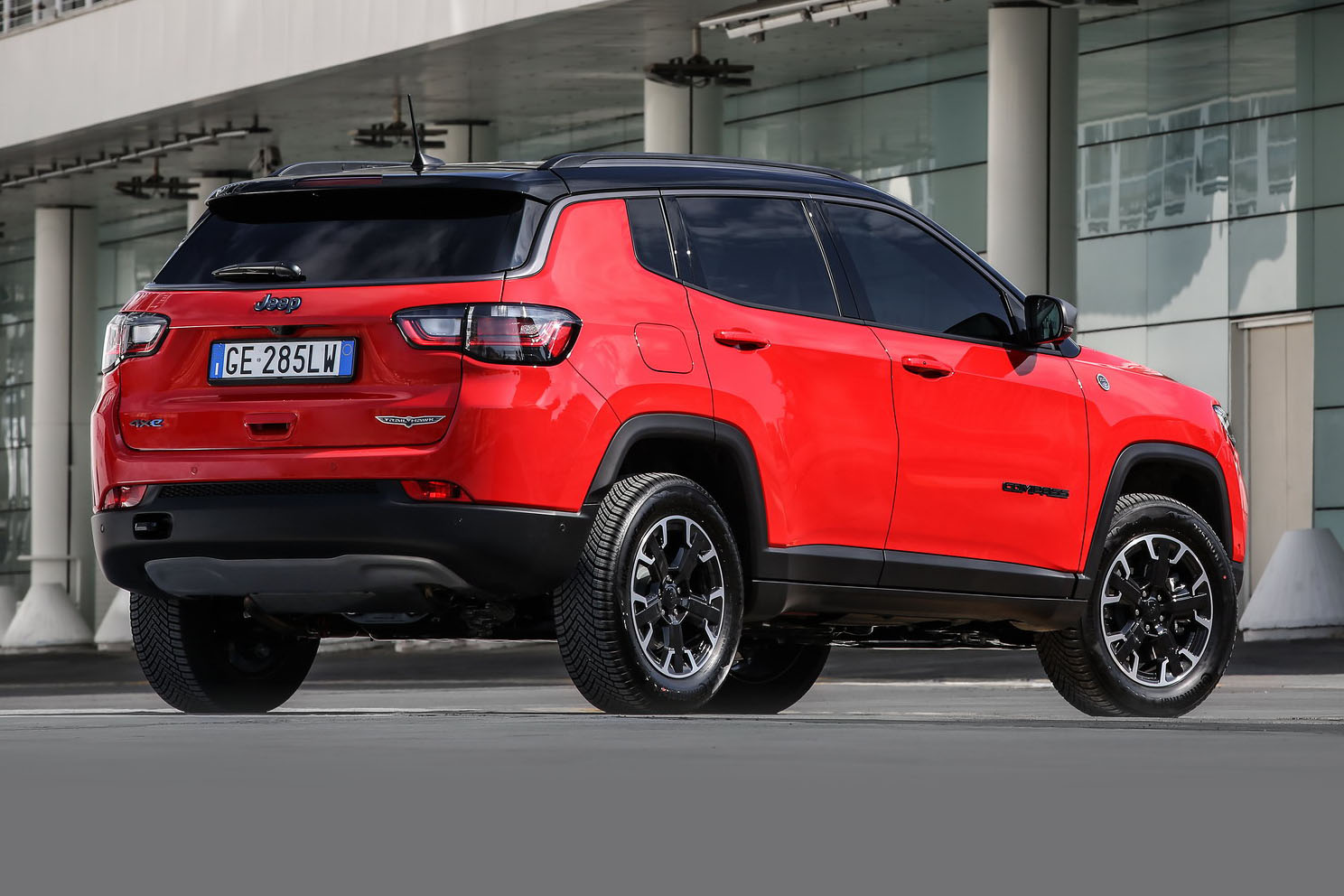
The new-look 2022 Jeep Compass has been revealed in its European trim, ahead of an Australian launch expected to occur sometime in the third quarter of this year.
As revealed at its China-market unveiling last November, the refreshed Compass gets a subtly updated face with new headlights and a redesigned front bumper, while the profile and rear view remain largely unchanged.
Moving into the cabin reveals a comprehensively overhauled space, with a more premium look, upgraded materials and new technologies.
The entire dash and centre stack is revised, with a stitched pad trim, a new steering wheel, new 8.4 or 10.1-inch floating tablet-style infotainment options, a new 10.25-inch digital instrument cluster, new gear lever and switch gear, and new door cards with new handles and touch points.
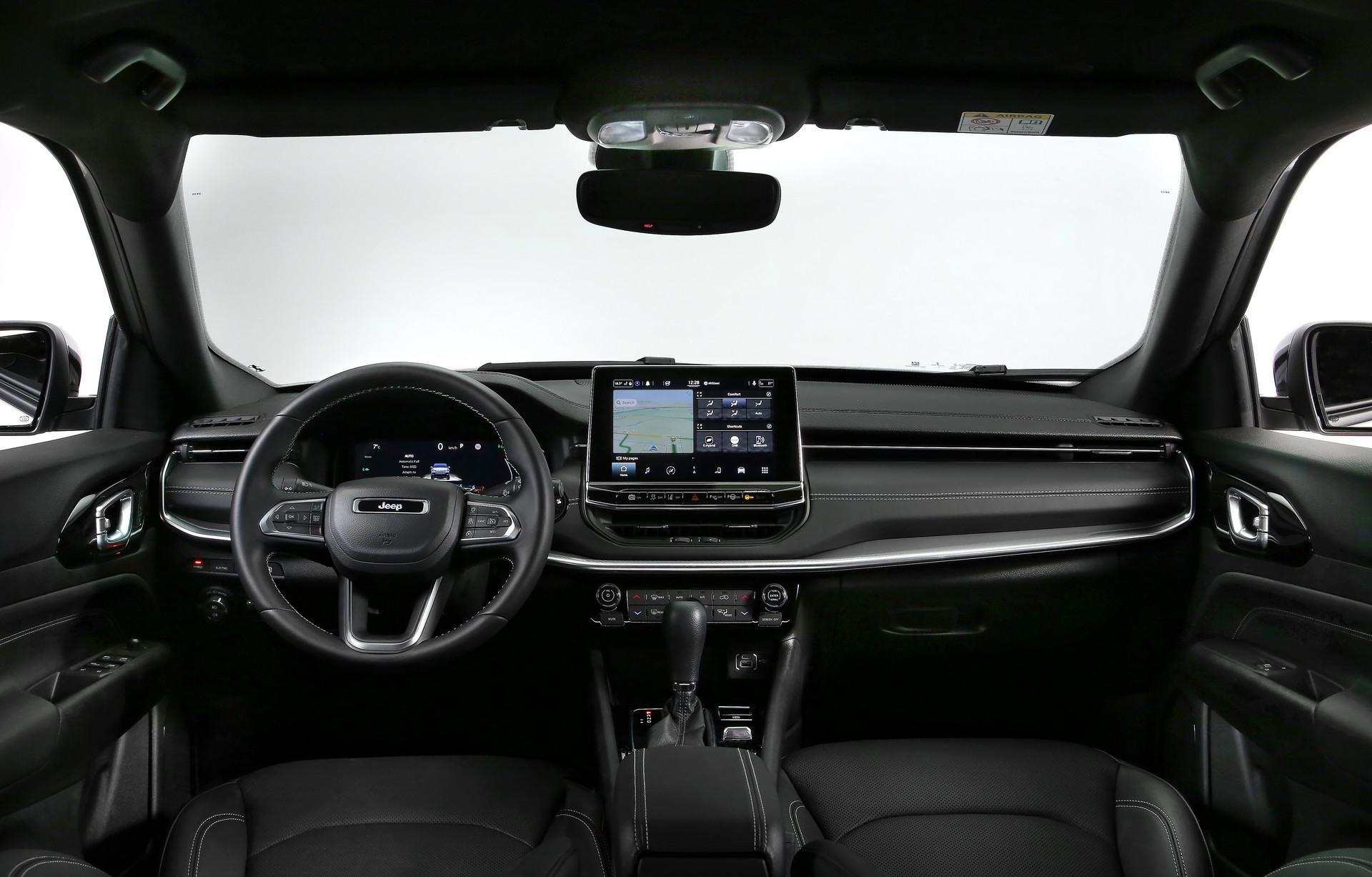
That’s a lot of ‘new’, but it’s fair to say a buyer walked blindfolded from a 2020 model to the cabin of this 2022 Compass would be hard pressed to recognise it as a mere update.
On the technology front, the 2022 Compass picks up driver drowsiness alert, traffic sign recognition, intelligent speed assist, and automatic emergency braking with pedestrian and cyclist detection.
These features make the Compass the first Jeep model in Europe (and likely also in Australia by the time it gets here) with ‘level 2’ semi-autonomous driving.
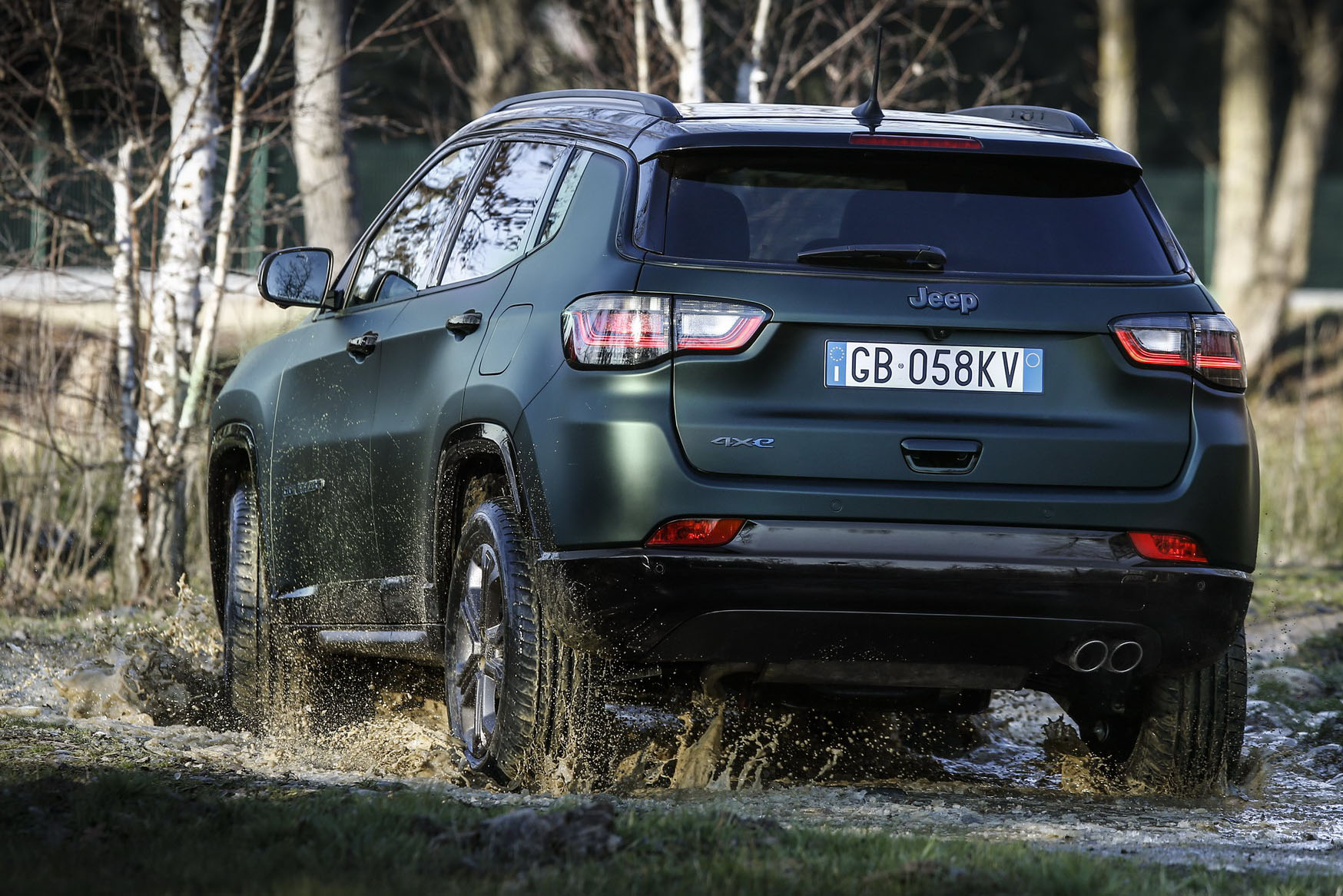
Powertrains include 96kW and 110kW tunes of Jeep’s new 1.3-litre turbo petrol engine, along with a 96kW 1.6-litre diesel. All conventional variants are front-wheel drive.
A pair of 4XE plug-in hybrid EV models are also available, in powerful 140kW and 177kW forms, and both benefit from an eAWD system.
Watch for Australia-specific details to surface in the weeks ahead.
Click into our gallery above for more 2022 Compass photos.
MORE: Jeep’s electrification plans for Australia MORE: All Jeep stories
The story to here
November 24, 2020: Jeep has used the Guangzhou motor show to unmask its new Compass in China this week, revealing its mid-life facelift.
Now in its fourth year since this generation arrived, this facelift includes more running changes to the Compass with upgrades focused more inside the car than outside.
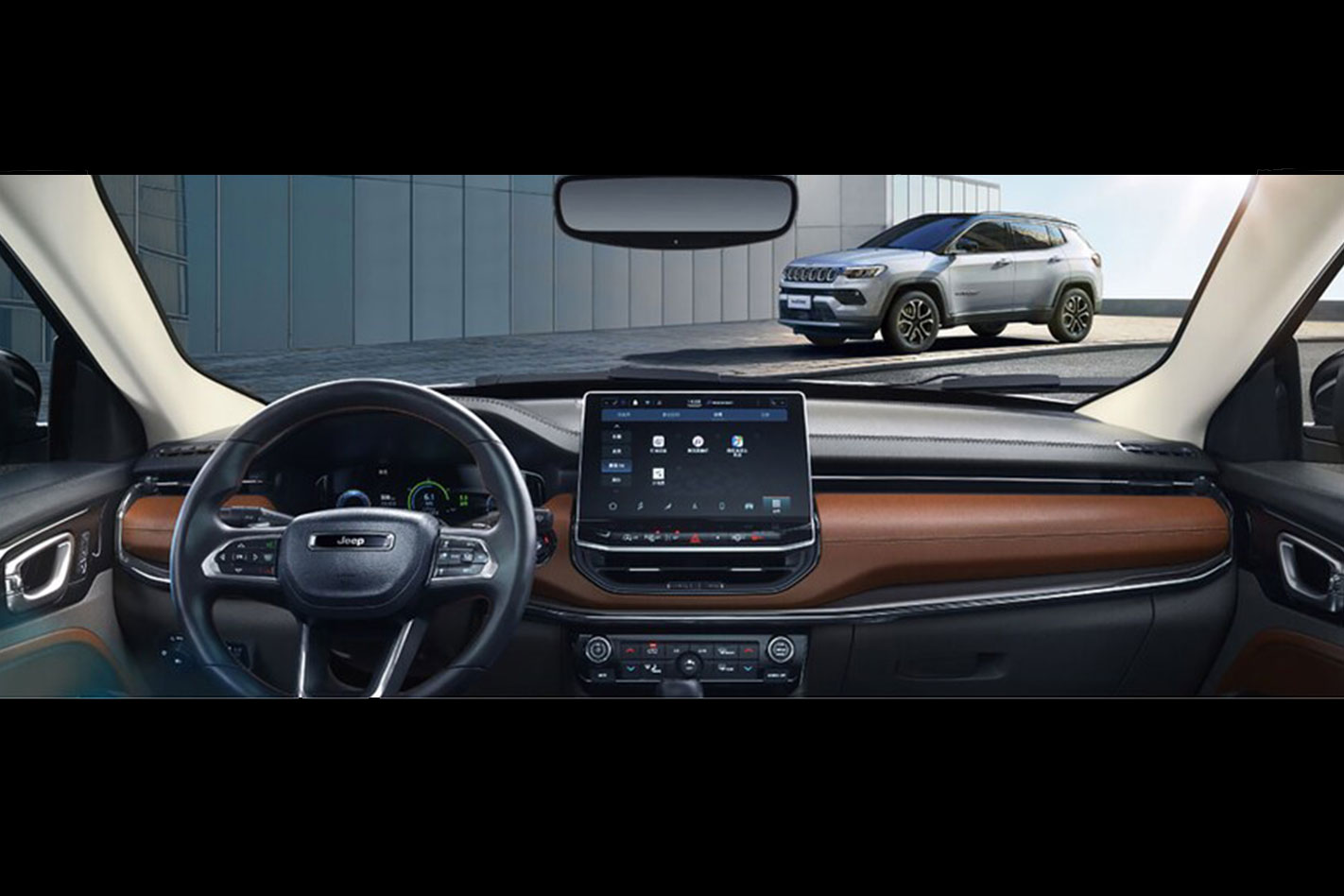
It’s clear from pictures that Jeep’s designers have completely redesigned the dash, steering wheel and centre stack, with a sleeker vent arrangement complementing the 10.1-inch multimedia screen (up from 8.4 inches) and first-ever 10.25-inch digital cluster.
It’s reported the system will carry Jeep’s latest UConnect 5 system, promising high definition displays, dual Bluetooth connections and smartphone mirroring.
From outside, however, the Compass keeps with convention. Up front is a new bumper that redesigns its lower grilles, sitting under thinner headlights that relocate the daytime running lights.
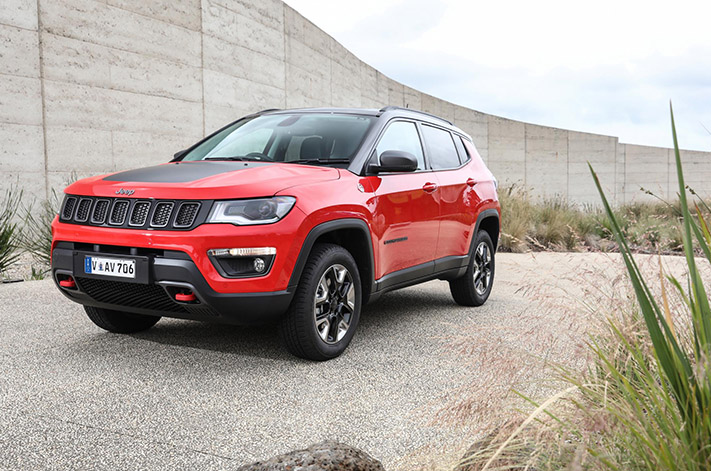
New alloys round out the exterior changes, but a new Trailhawk variant goes further by repositioning the front fog lights and finishing the front seven-slot grille in matte black.
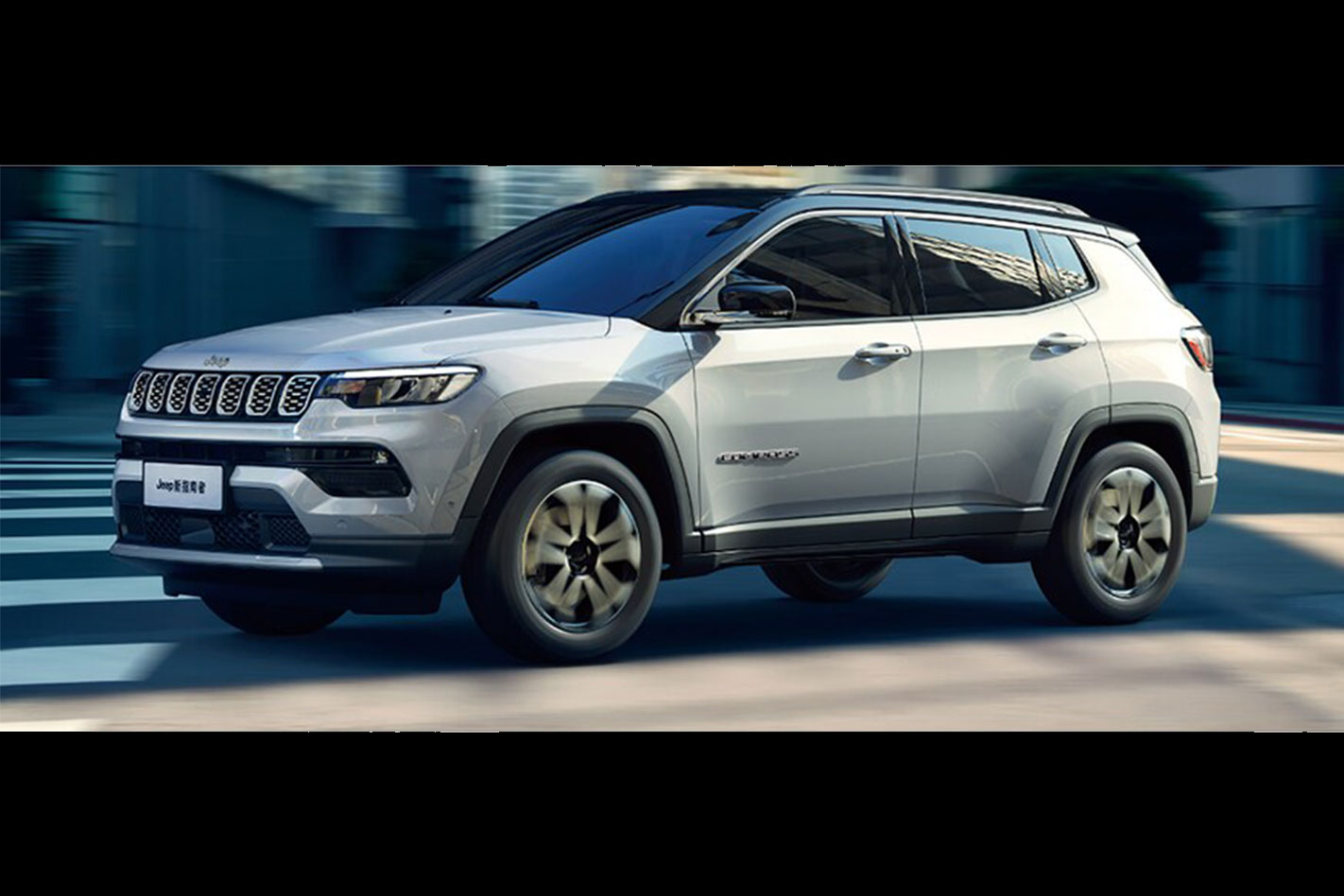
Display models at the show were Chinese market vehicles built in left-hand drive, but Jeep says it “will provide more information on the timing and specifications” closer to the new Nissan Qashqai, Hyundai Kona and Kia Seltos rival’s Australian launch.
For now, the pre-facelift Compass remains on sale, starting at $36,950 for the 2.4-litre automatic Night Eagle before a 2.0-litre turbocharged automatic Trailhawk tops the range at $49,950.
Since the Compass landed in late 2017 it’s been revamped in mid-2020 with the Night Eagle replacing the entry-level Sport. It’s also gained active safety features such as AEB as standard, a larger touchscreen a few other extras.
Driven: 2022 Mitsubishi Outlander SEL 2.5 S-AWC with Touring Package
As one of their top-three selling models, Mitsubishi has to put a lot of stock in getting the Outlander right. Stiff competition with midsize crossover favourites like the Toyota RAV4 and Mazda CX-5 means there’s no laying down on the job.
With those rivals in mind, the 2022 Mitsubishi Outlander is entirely new from the ground up, and the top trim SEL we drove for this review is a fine representative of the lot.
But before we get into it, a caveat. The SEL is a US-spec car, and at the time of this writing, no Australian specs or pricing have yet been released. Everything here is based on the US market, so we’ll update you when those Aussie-specific details become available. But the overall equipment should be available in one way or another across the world, so let’s cover what we know.
MORE: New Outlander revealed, late 2021 launch for Australia
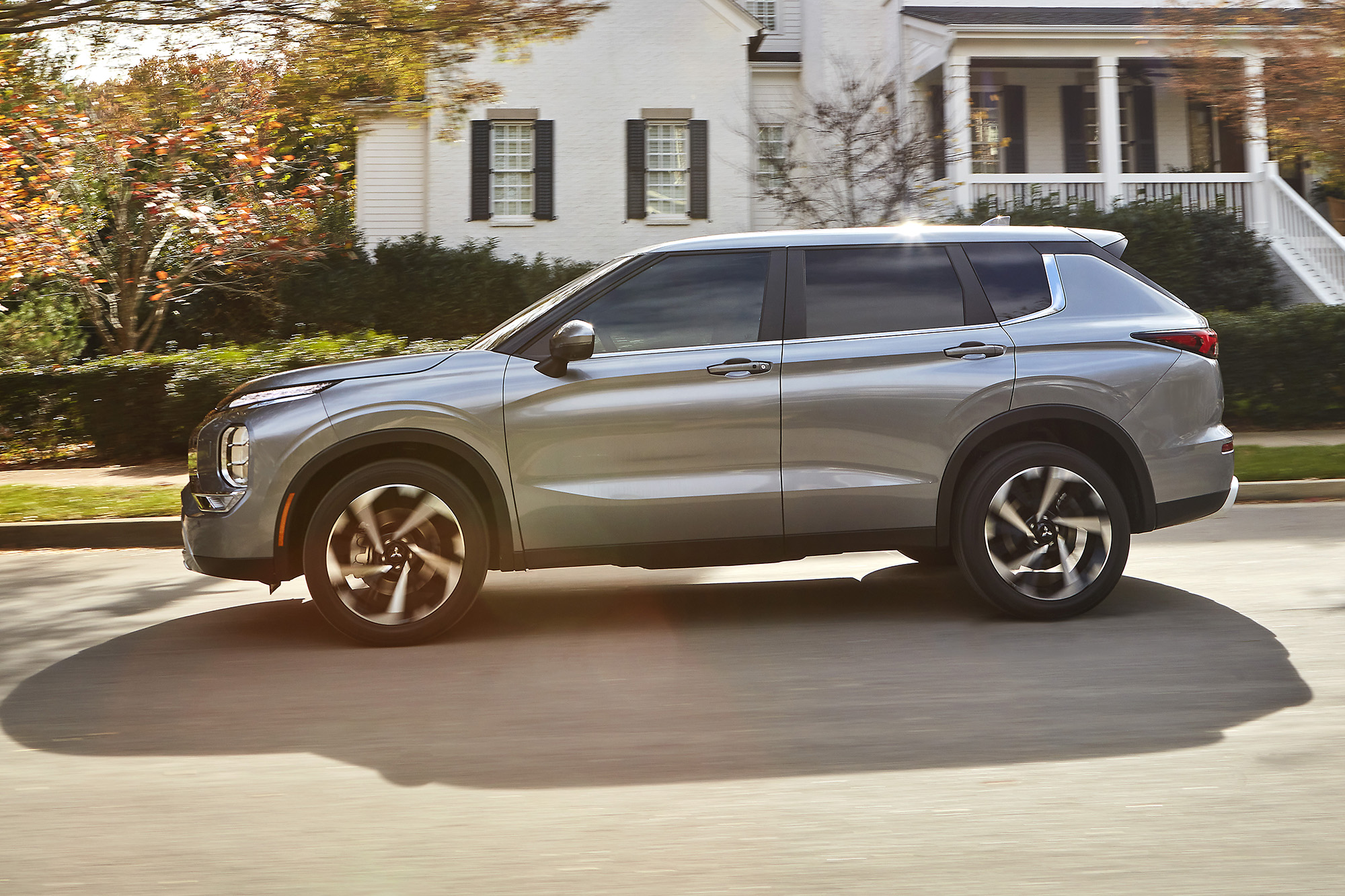
The 2022 Mitsubishi Outlander is built on a new platform, one it shares with the 2022 Nissan X-Trail now that both brands are part of the same big automotive family.
With everything redesigned from the ground up, expect pricing to go up a bit over the outgoing model. There’s plenty of standard equipment for your money though, especially on the midrange and upper trims. More of that will be covered later.
Under the bonnet of my tester is a 2.5-litre four-cylinder petrol engine making 135kW and 245Nm, a modest increase of 11kW and 25Nm over the outgoing model’s 2.4-litre offering.
That new engine is paired with a continuously variable automatic transmission (CVT) with selectable drive modes, and there are paddle shifters for drivers who like to row through the eight (simulated) gear ratios. Mitsubishi says this is the first time it has implemented an electronic automatic.
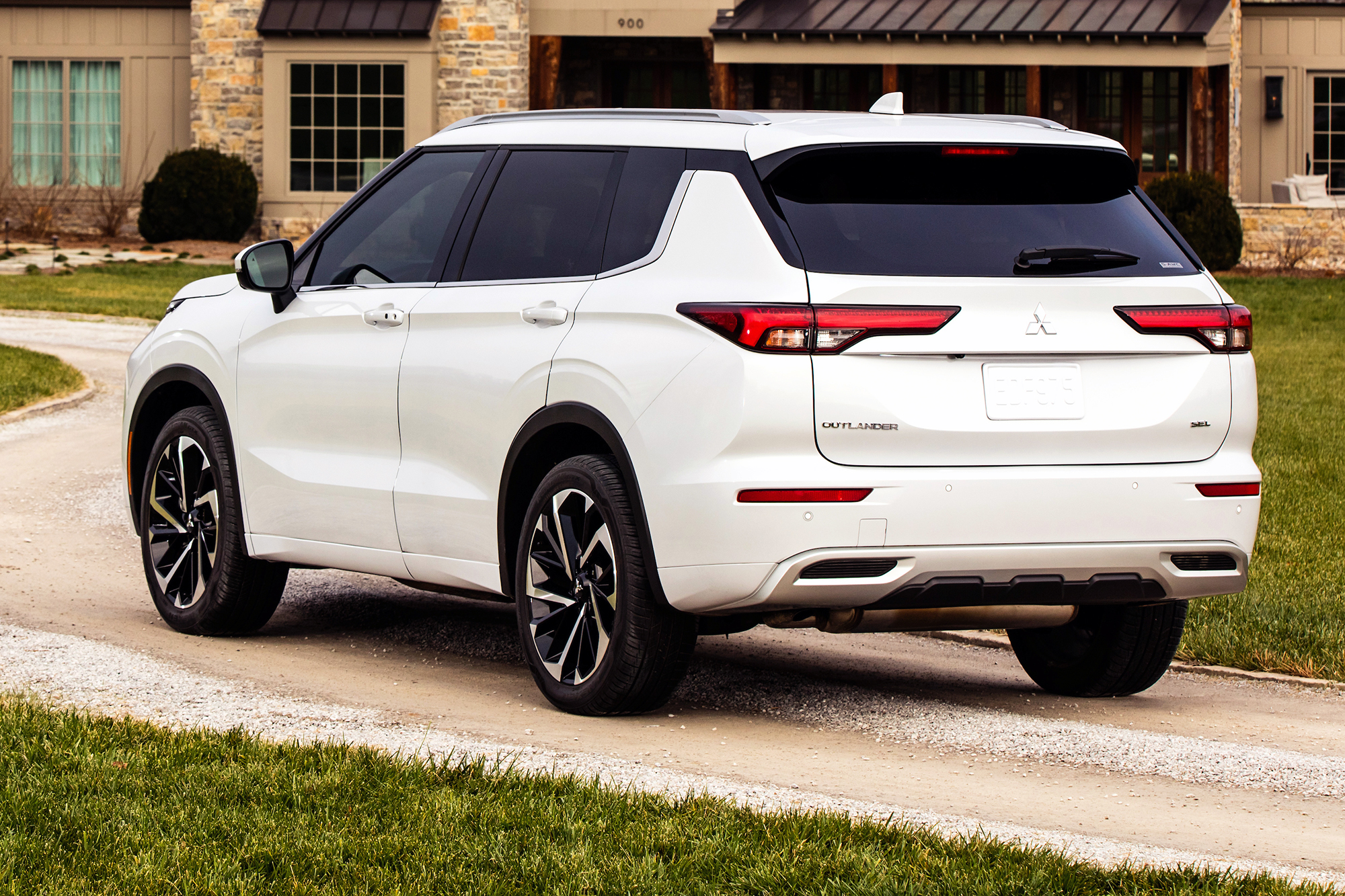
The plug-in hybrid drivetrain soldiers on only in the current platform for now, with no word on when it might arrive in the new one, and it remains to be seen what other engines might be offered over time.
In terms of fuel economy, the all-wheel-drive US-spec Outlander SEL 2.5 I tested has a combined estimate of 26 miles per US gallon (on the US market’s EPA-based test program), which converts to slightly more than 9.0 litres/100km.
That’s not a particularly impressive result, although official WLTP-based Australian figures will surely be coming later this year. (In the current model, the 2.4-litre petrol engine claims an official fuel consumption figure of 7.2L/100km on the combined cycle.)
Standard models are front-wheel drive, with Mitsubishi’s Super All-Wheel Control (S-AWC) optional across the board for extra cost. It looks like this might completely take over from the standard all-wheel-drive setup offered on the current generation.
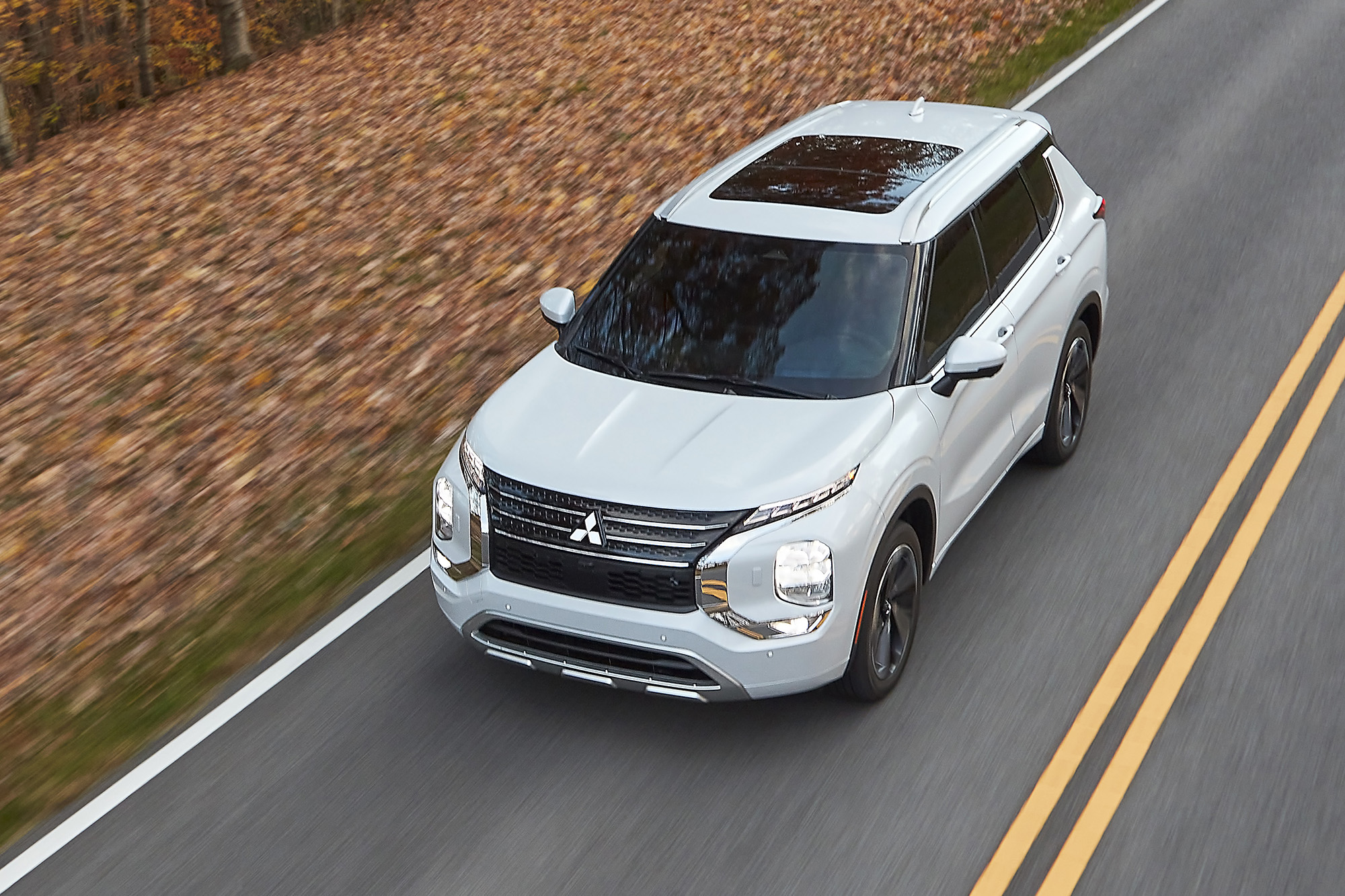
Mitsubishi’s advanced on-demand S-AWC all-wheel-drive system adds active yaw control to the rear wheels and is upgraded for quicker torque vectoring response when extra traction is needed. It can also attempt to mimic a locked differential if you find yourself in a situation with two wheels off the ground.
Front-wheel-drive Outlander variants offer five driving modes, while all-wheel-drive models have six. It’s easy to switch modes using the large dial on the centre console, and the gauge cluster clearly indicates what’s selected.
Normal mode is what you’ll use most on bitumen because the fuel-efficient Eco mode provides frustratingly lacklustre acceleration. Gravel mode is for wet or unsealed roads and Snow is for very slippery roads.
Tarmac is Mitsubishi’s equivalent of sport mode, and it will hold a gear ratio for longer to give you better throttle response. Some engine droning noise is noticeable if you leave it in Tarmac mode while cruising around, though.
The all-wheel-drive variants also have a mud mode for the extra mucky stuff.
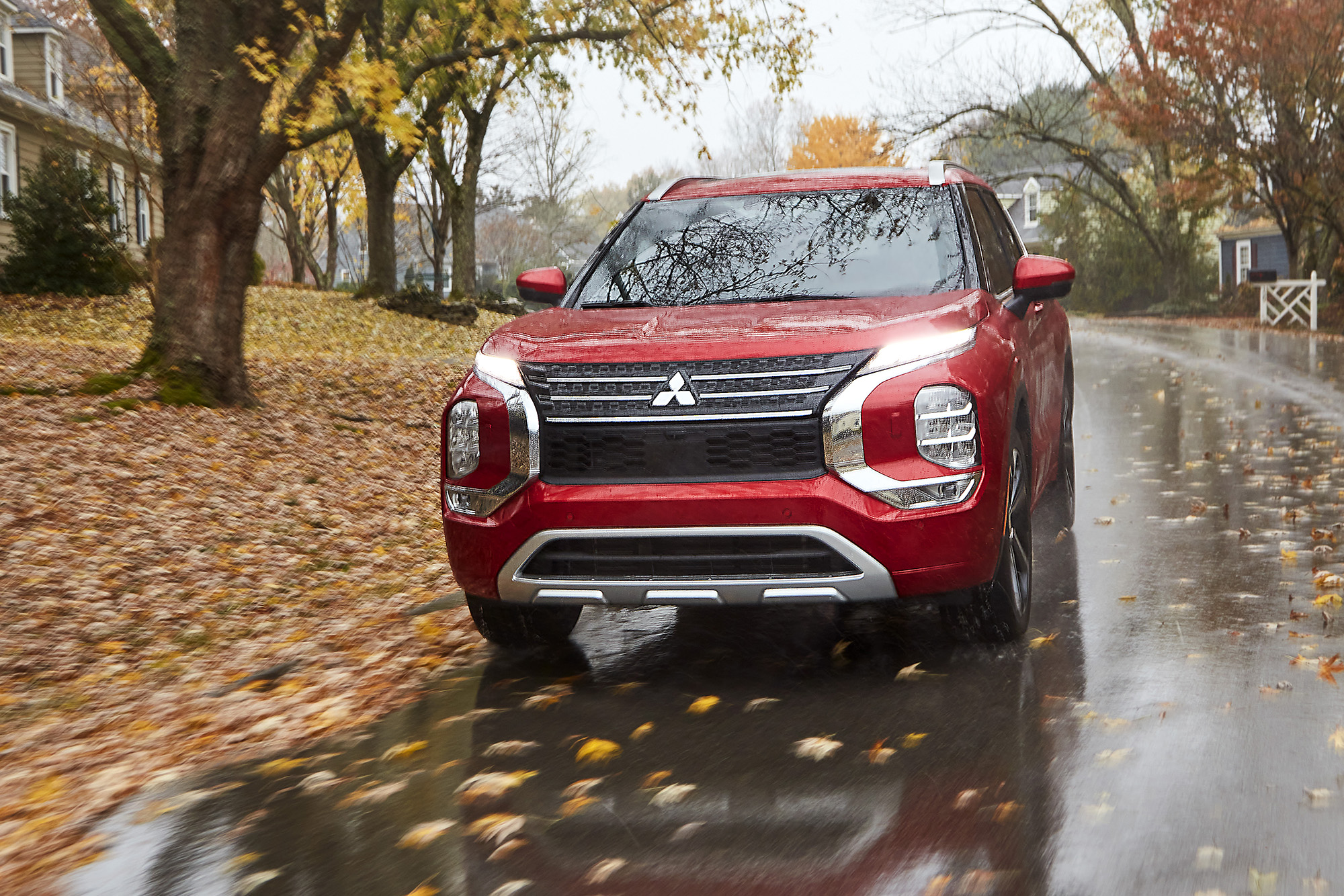
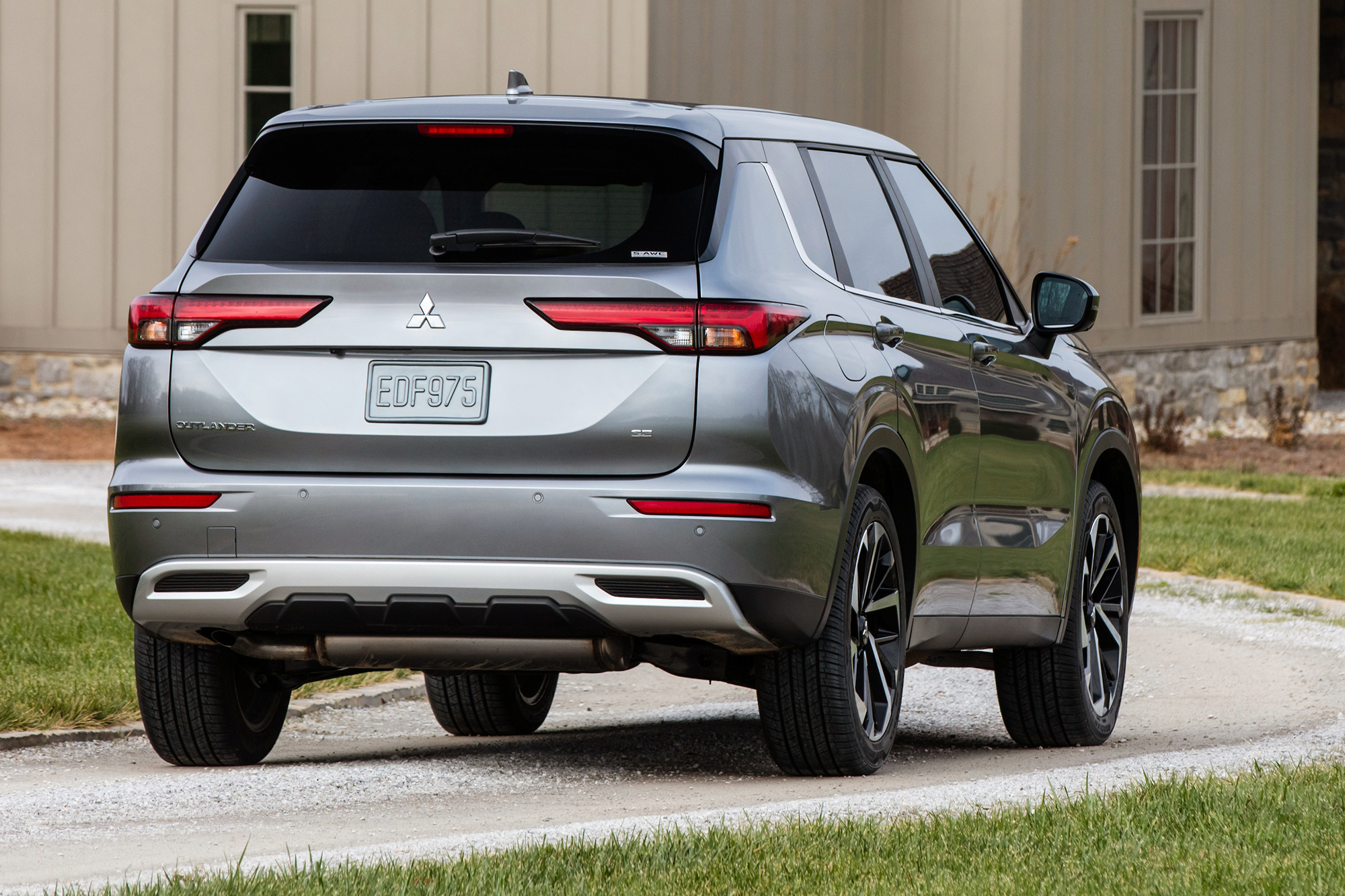
From the outside, the new Outlander has a much bolder look, with more muscular lines and a stronger presence. Stacked headlights are mounted lower than you’d expect on either side of the restyled Dynamic Shield grille. It’s not a unique idea anymore, but it looks modern and works well with the overall design.
The new face quickly grew on me, especially in person. Horizontal tail-lights emphasise the crossover’s additional width, the flat roof emphasises its SUV-ness, and optional 20-inch alloy wheels complement its new larger stature. A more squared-off body shape makes it easier to know where the corners of the Outlander are when parking.
How much bigger is the 2022 Outlander exactly? It’s 15mm longer, 38mm taller, and 51mm wider than the outgoing model. The wheelbase is also pushed out an extra 36mm. It makes for a roomy enough interior, where legroom should be plenty for all but the tallest folks.
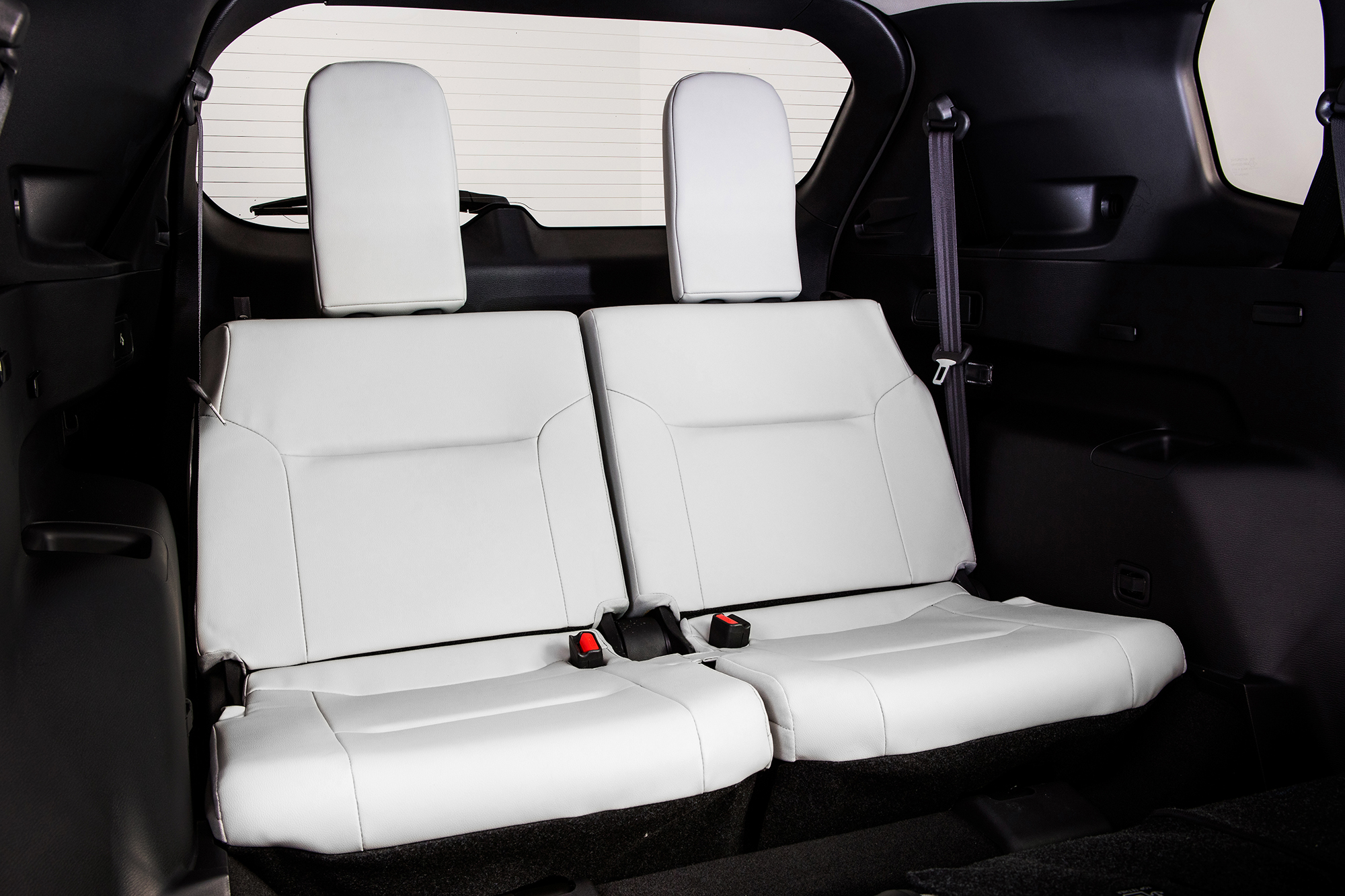
There’s still third-row seating if you need to fit seven, but don’t go thinking the larger Outlander will fit regular-size humans in the way-back, though. The 50/50-split third row is still only a useable realm for those small, flexible humans otherwise known as kids.
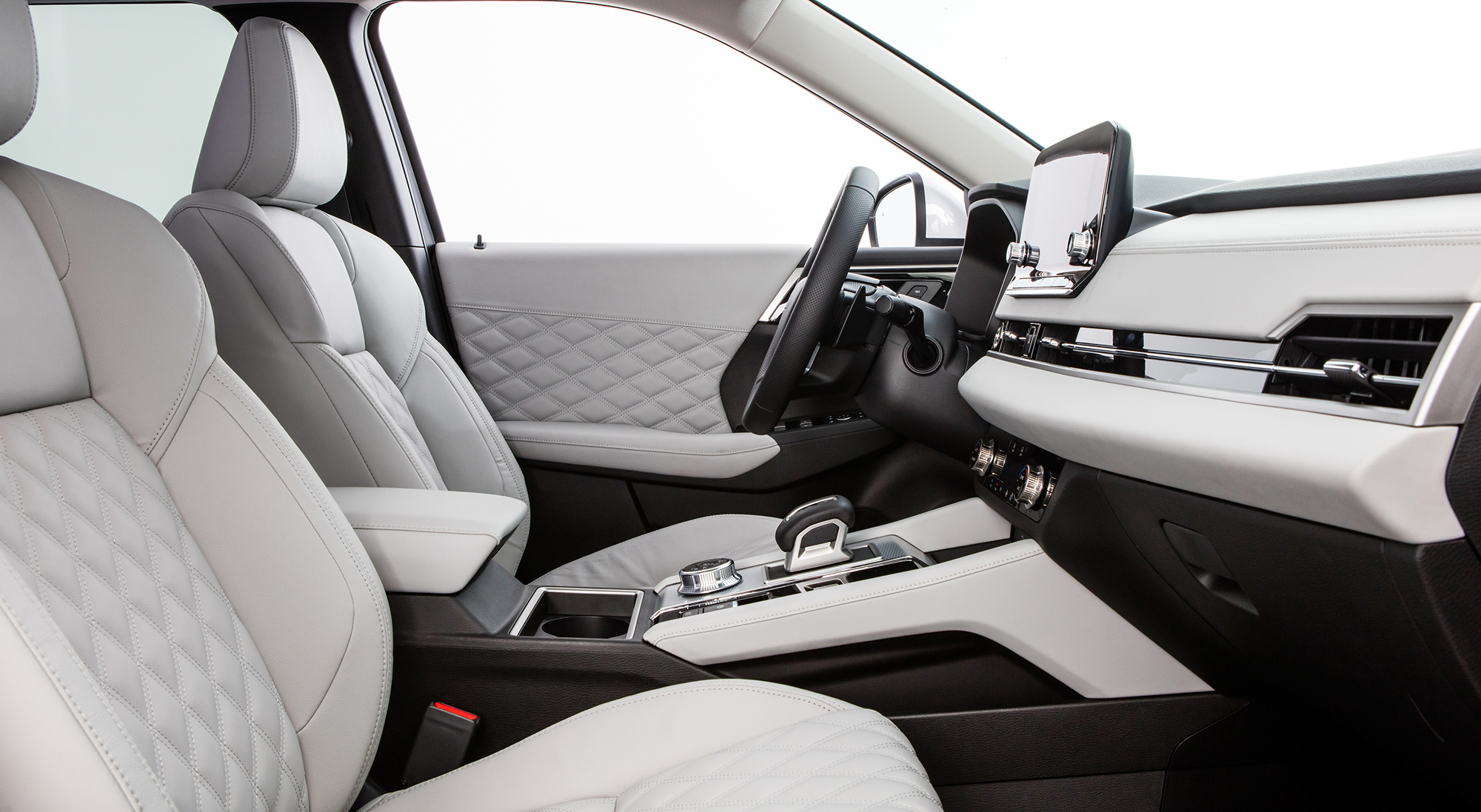
The front seats are supportive and include power lumbar support for the driver throughout the Outlander line-up. All but the base trim feature an eight-way power driver’s seat, with a new four-way power passenger seat offered on higher trims. They’re heated on most models, and rear passengers can also get their buns warmed in SEL range-toppers that are likely to again be badged Exceed in Australia.
The driver gets a tilting and telescoping steering wheel with a thick leather-wrapped rim and heating option at the top of the line-up. The SEL has driver’s seat memory and new tri-zone climate control as well, while the lower trims still have a dual-zone setup.
One thoughtful new feature is a pair of device pockets sewn into the back of each front seat, similar to some Skoda and Subaru models.
The kids can easily tuck their tablets and phones away there instead of leaving them flopping around on the seat or in the door pockets. That is, if they ever put them down in the first place. There are USB-A and USB-C charging ports front and back, of course.
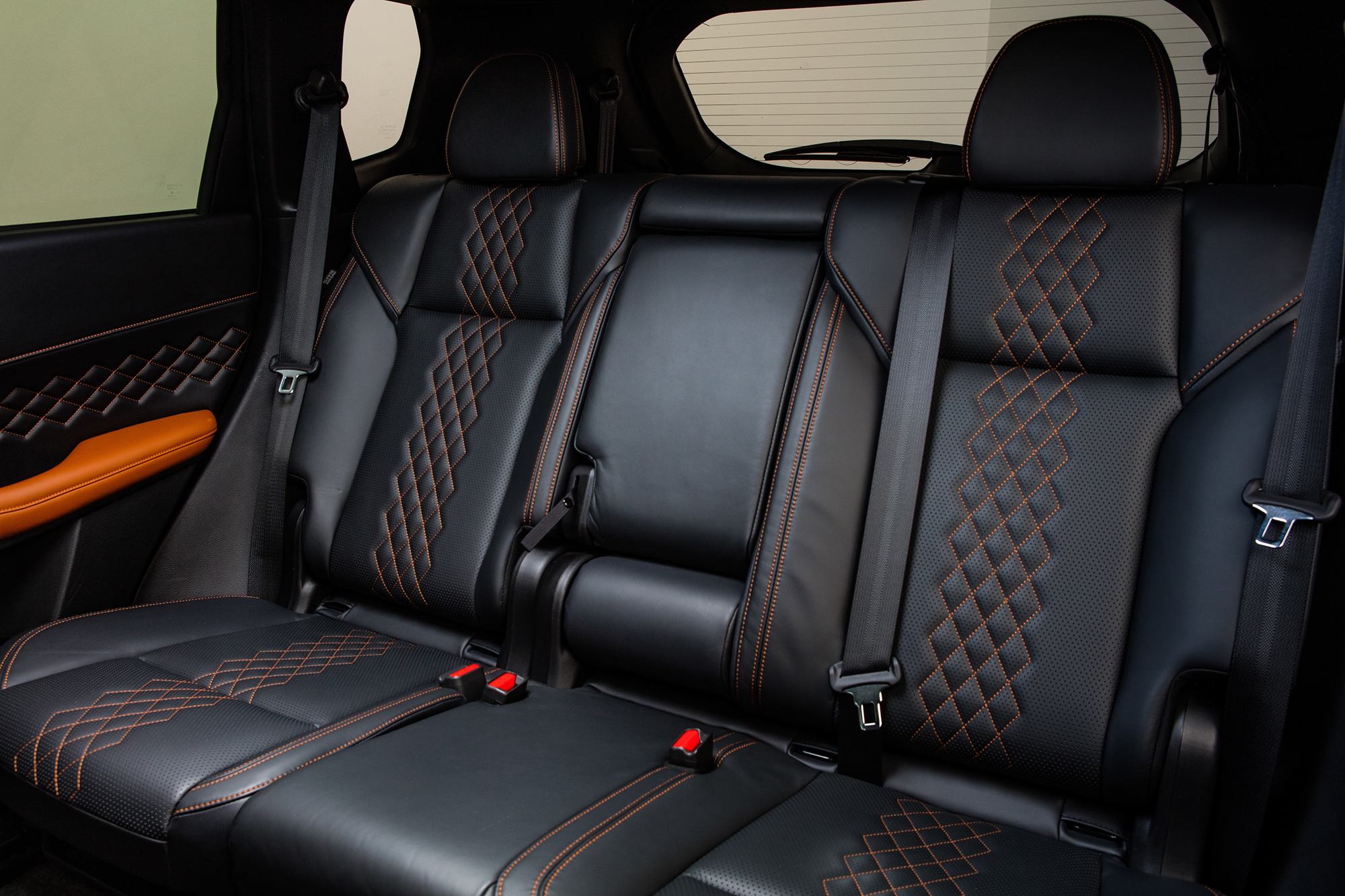
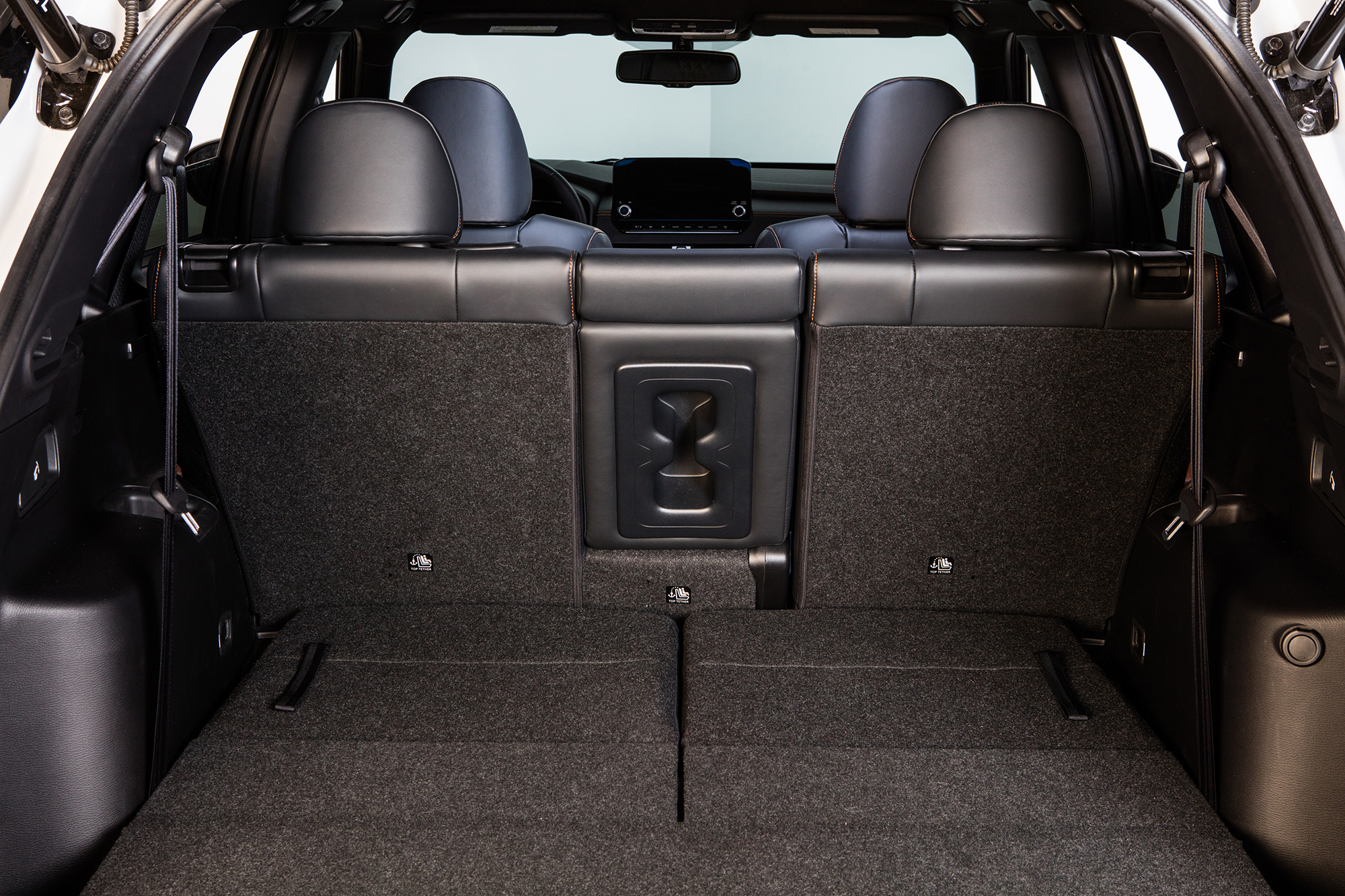
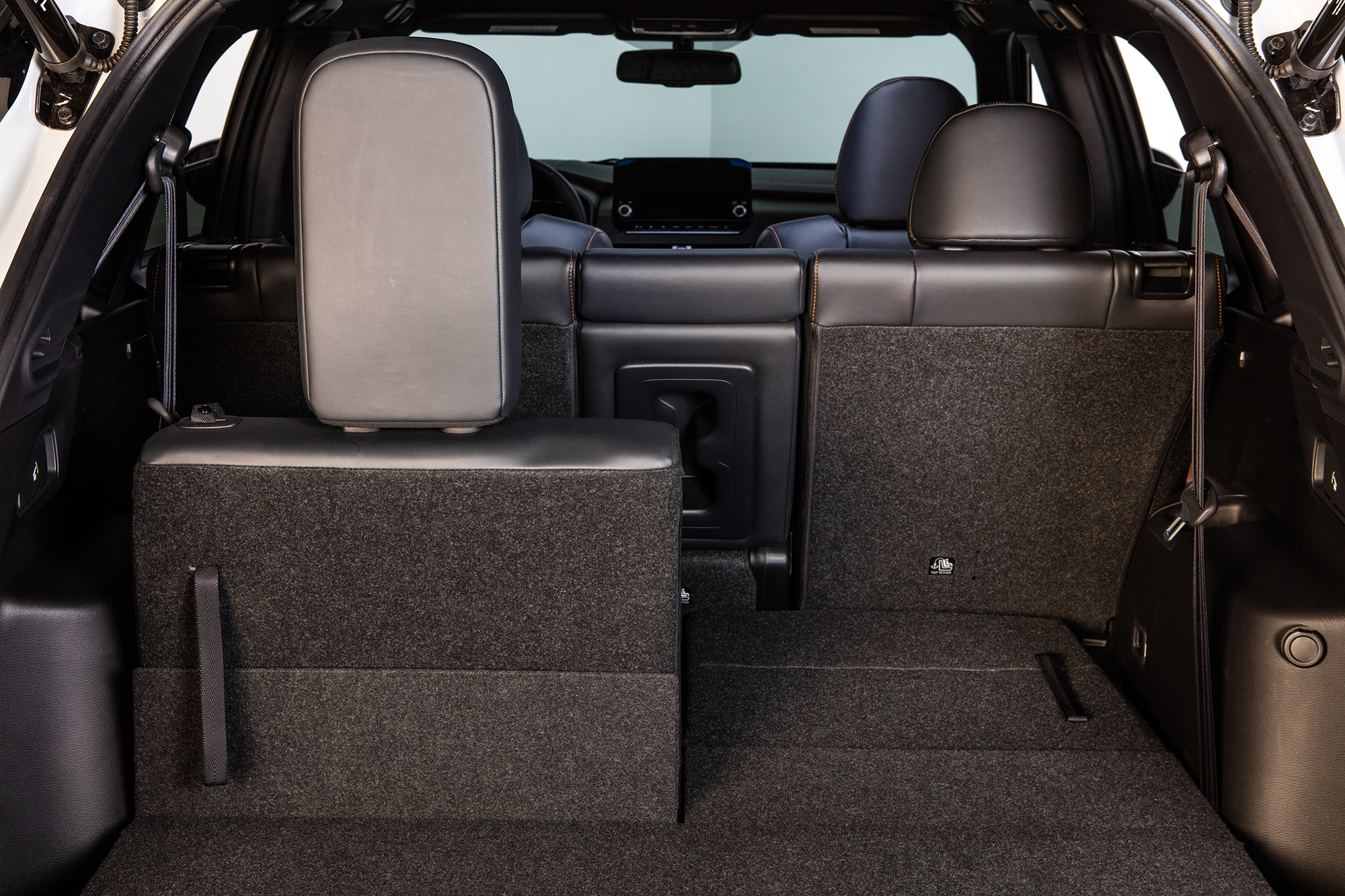
Second-row seats have a 40/20/40 split, which allows for some extra flexibility if you’re hauling long cargo. The 2022 Outlander’s larger dimensions mean cargo space with all the rear seats folded has increased pretty significantly – to 2217 litres, compared with the current 1608.
A new foot-activated electric tailgate opener lets you swing your foot under the bumper to open the hatch, which takes about half the time to raise as it did before.
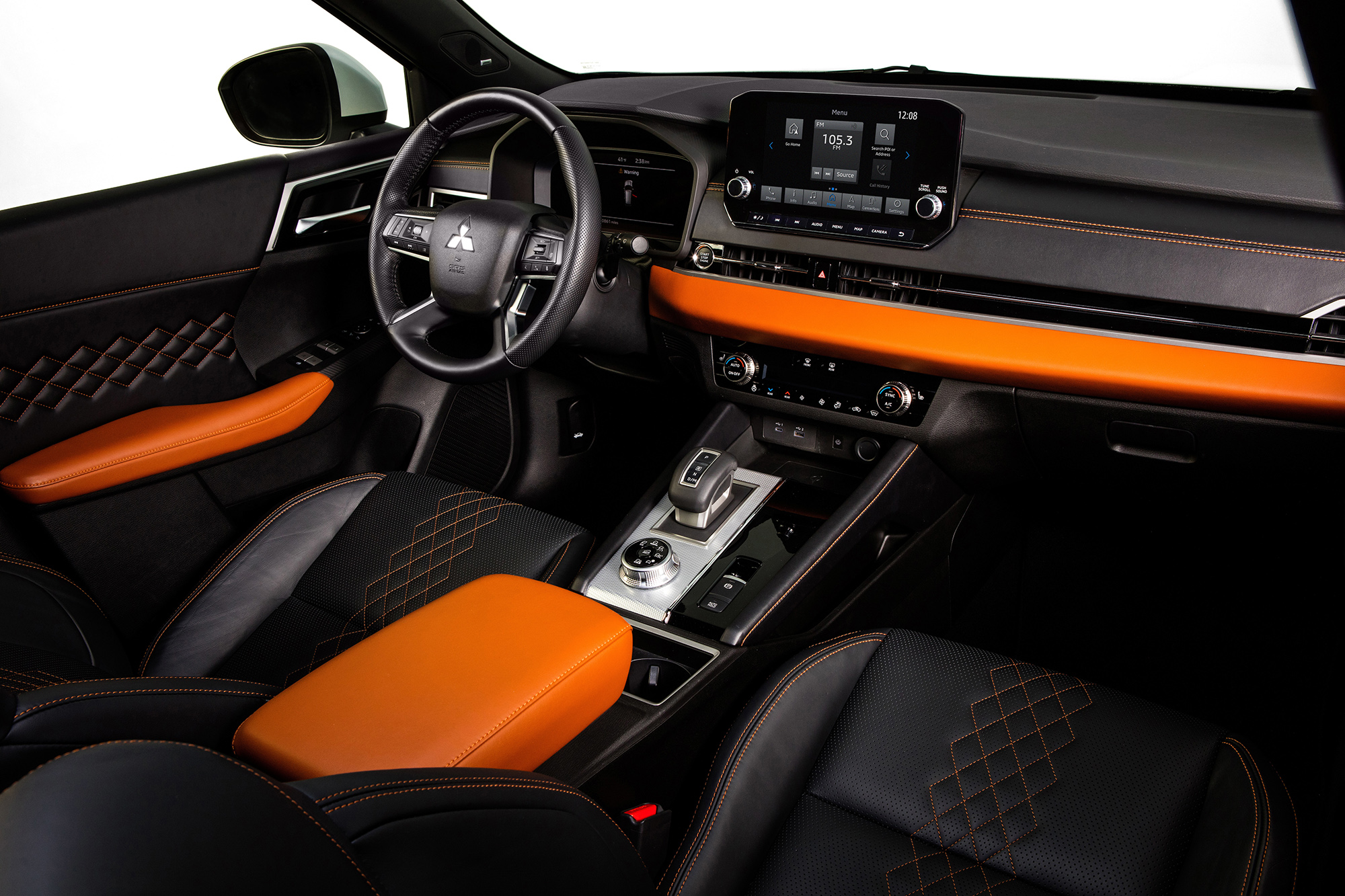
The major interior story is how upscale the totally redesigned cabin feels. There are soft-touch materials in all the right places, like door pulls, the electronic shifter, and even the dash. Glossy piano black trim is contrasted by real aluminium bits and saddle brown accents in my SEL test car with the Touring Package.
The seat surfaces are covered in diamond-stitched semi-aniline leather and the pillars and headliner are black. Those are premium touches you typically find in German luxury brands, not reasonably priced Japanese crossovers.
Another prime new feature is the optional power panoramic sunroof. It’s in the Touring Package on my test car, and should also be available in other trim packages as well.
A massive power shade can cover a portion or all of the glass, and the front section opens like a traditional sunroof. With the shade fully open, it really brightens up the atmosphere in the black interior of this SEL tester. It’s nice in the winter when the sun isn’t set to broil.
Driving dynamics in the new Outlander are much improved over the current generation, and surprisingly good. It does a nice job absorbing bumps and road imperfections around town. The ride is composed, the cabin is quiet, and the crossover is not so big that it feels like a chore to manoeuvre through the city.
The new platform uses ultra-high tensile-strength steel in key areas for a claimed 33 per cent more torsional rigidity than the old model. That extra stiffness combined with revised suspension tuning made hustling the crossover through the rural twisty bits on my drive route easy and even enjoyable.
Most buyers won’t catch slower traffic ahead like I do, so the typical buyer should be plenty happy with its steering and handling.
The 2022 Outlander is not a powerful crossover with 135kW on offer, especially compared with turbo-petrol variants of the Mazda CX-5 for example, but its acceleration is sufficient.
The noise the engine makes when you do put your foot down, however, isn’t the most pleasant. It has some of that constant drone CVTs are notorious for, and sounds a bit coarse. The rest of the time it’s mostly unnoticeable. As I mentioned earlier, information about potential other engine options isn’t available just yet.
As with most all-new cars, there’s no lack of tech features here. All Outlanders have the easy-to-use Smartphone Link Display Audio with new and very welcome dedicated volume and tuning knobs, Android Auto and wireless Apple CarPlay.
Everything but the base trim comes with wireless phone charging, a larger nine-inch touchscreen display and navigation. Connecting my phone was super simple and quick. The screen is also closer to the driver, putting it within easier reach than before.
Options include Bose premium audio, a 12.3-inch fully digital instrument panel, a 10.3-inch head-up display, and an auto-dimming rearview mirror.
On the driver assistance and safety side, expect all new Outlanders to come with forward and rear emergency braking, rear cross-traffic alert, blind spot warning with lane change assist, lane departure warning and a driver attention alert. Hill descent control, trailer sway assist, and automatic high beam headlights are also standard throughout the lineup.
Adaptive cruise control, a surround-view monitor, and a new lane departure prevention system are available, likely only on mid-range and higher trims or as an option. When I crept onto the lines at the edges of a winding road, my fully-loaded tester vibrated the steering wheel in my hands to let me know I was potentially leaving the lane.
This new Outlander is still too fresh to have received any crash safety ratings, but the outlook for a good score is positive. For reference, the previous model received a five-star ANCAP rating.
A newly added, front-seat-mounted centre airbag helps keep front passengers from crashing into each other in a side impact, as required for a five-star rating under ANCAP’s latest testing criteria. The increased chassis stiffness and other construction improvements should also help it achieve a high rating in theory, but we’ll have to wait and see.
Overall, Mitsubishi addressed a lot of quibbles with the previous generation Outlander and seems to have done it quite well.
The new and vastly improved 2022 Outlander is much better equipped to go up against its biggest competition with its head held high.
Enthusiasts seeking the right family hauler may be turned off by this particular engine and CVT combination, but it can serve nicely for the typical buyer.
2022 Mitsubishi Outlander details
Body: 5-door, 7-seat SUV Drive: FWD or AWD Engine: 2.5-litre 4-cyl direct injection Power: 135kW @ 6000rpm Torque: 245Nm @ 3600rpm Fuel consumption: 9.0L/100km (US-market estimate, combined) Weight: 1725kg Power/weight: 78.3W/kg Transmission: 8-speed CVT Suspension: MacPherson strut/Multi-link L/W/H: 4709mm/2144mm/2002mm Wheelbase: 2705mm Tracks: 1593/1603mm Brakes: Front ventilated discs/Rear ventilated discs Tyres: 255/45 R20 Wheels: 8Jx20 Price: TBD (current model starts at $32,490 for 2.4-litre model)
MORE: Outlander news and reviews MORE: All Mitsubishi stories
Polestar CEO Thomas Ingenlath has posted two photos on his Instagram page hinting that a faster Polestar 2 performance model is under development.
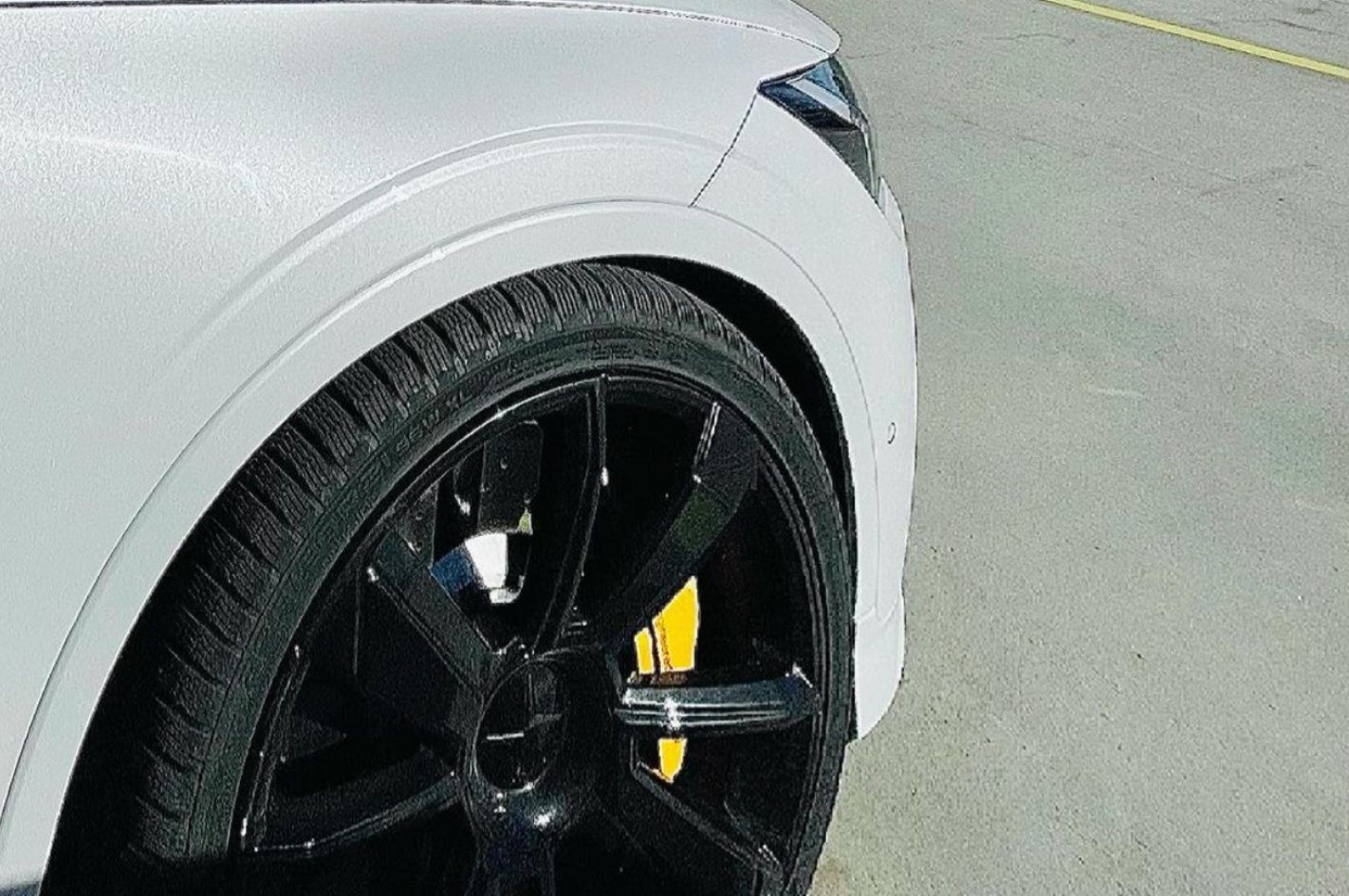
The images show a white Polestar 2 sitting lower than usual, sporting gold brake calipers, blackened 20-inch alloy wheels first seen on the Polestar 1 coupe, and body-coloured panels that give the front facia a more aggressive profile.
Ingenlath has also thrown in some hashtags below the images that give further clues as to what other performance goodies may be adorning the car.
“#polestar2, #akebono, #ohlins, #prototype, #tuning” were featured in one of the images, while “#polestar2, #tuning, #oehlins, #brembo, #electriccar” were written below the other.
Polestar, formerly Volvo’s in-house performance arm, has a long-running relationship with Swedish suspension manufacturer Öhlins.
It also offers the regular Polestar 2 with an optional performance pack that equips it with Öhlins dual-flow valve 22-way manually adjustable dampers.
So it’s plausible that Polestar could be working with the suspension manufacturer again on a more hardcore suspension set-up for the faster prototype.
The same optional performance pack also gives the standard Polestar 2 bigger Brembo front brake calipers, meaning this new prototype could be fitted with a more aggressive caliper and pad set-up for performance driving.
However, the inclusion of the Akebono hashtag is curious, as although Polestar has always had a penchant for the Japanese performance brake manufacturer, the standard five-door fastback isn’t fitted with anything made by it.
Could it be that Polestar is again going to Akebono for a more extreme brake set-up than the Brembo system used in the standard performance pack, like the one found in the Polestar 1?
Unfortunately, we may never get to find out, as Roadshow first reported – this prototype will likely remain just that.
And that’s a shame, considering a faster, more-honed model would definitely set it apart from its rivals, especially when the EV brand debuts in Australia before the end of the year.
GMC has unveiled its new all-electric Hummer SUV – just six months after we first glimpsed its sibling, the open-air Hummer EV pick-up.
The new SUV stylistically looks similar to its tub-backed sibling, retaining the same radically avant-garde styling that has catapulted the Hummer name back into the limelight.
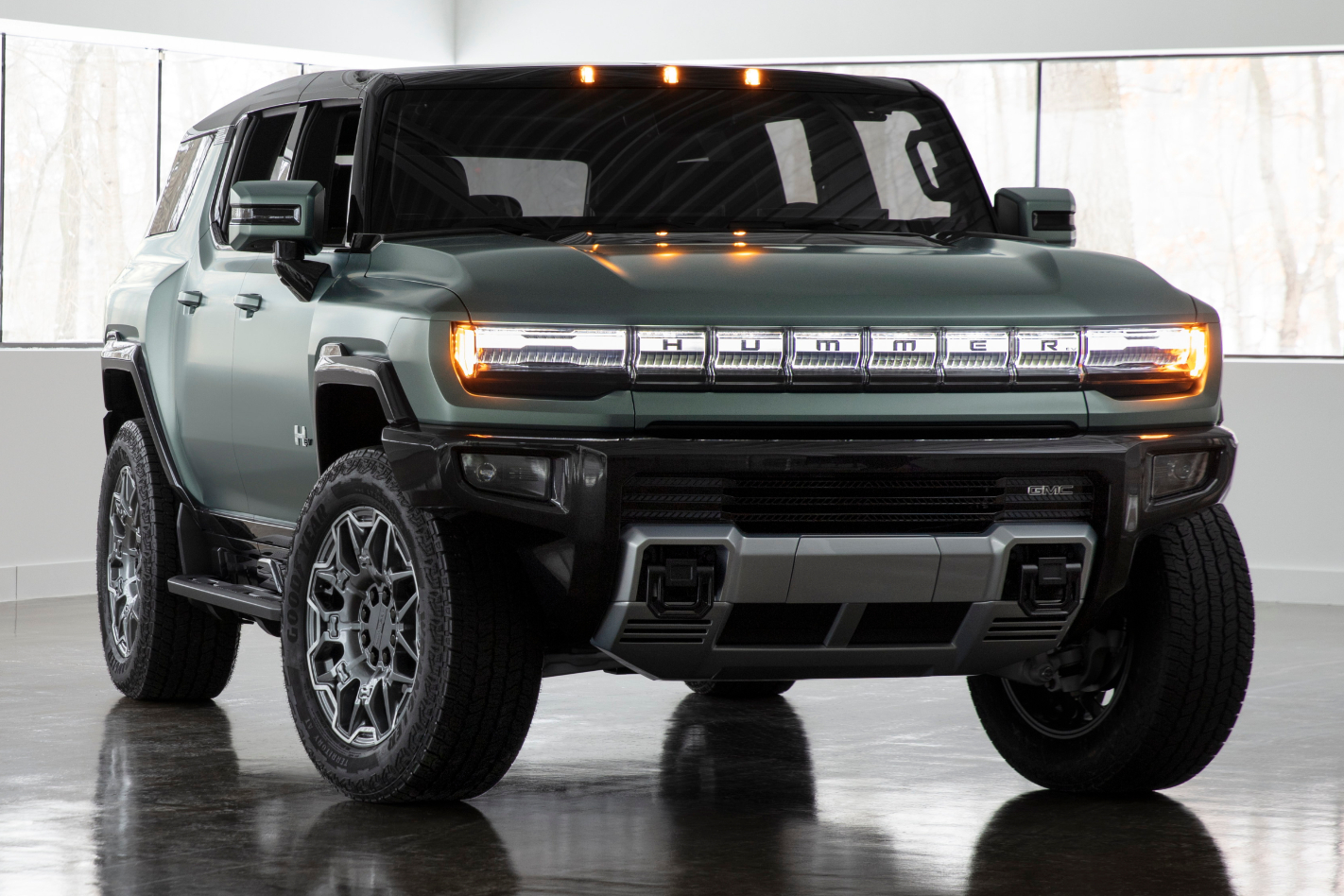
Up front, the ‘H’ LED headlights (that also act as a battery charge indicator and incorporate the ‘Hummer’ lettering) sit high on the car’s bonnet line, while the rest of the front fascia is made up of fog lights, bash plates and two large tow hooks.
The EV’s side profile features large box-flared wheel arches, protruding matt black kick plates and a sizable amount of clearance between the tyres and body of the SUV.
It’s the rear of the car, rather obviously, where the biggest change has been made, as the pick-up’s functional tub is ditched in favour of a side-hinged tailgate with a full-sized spare wheel attached.
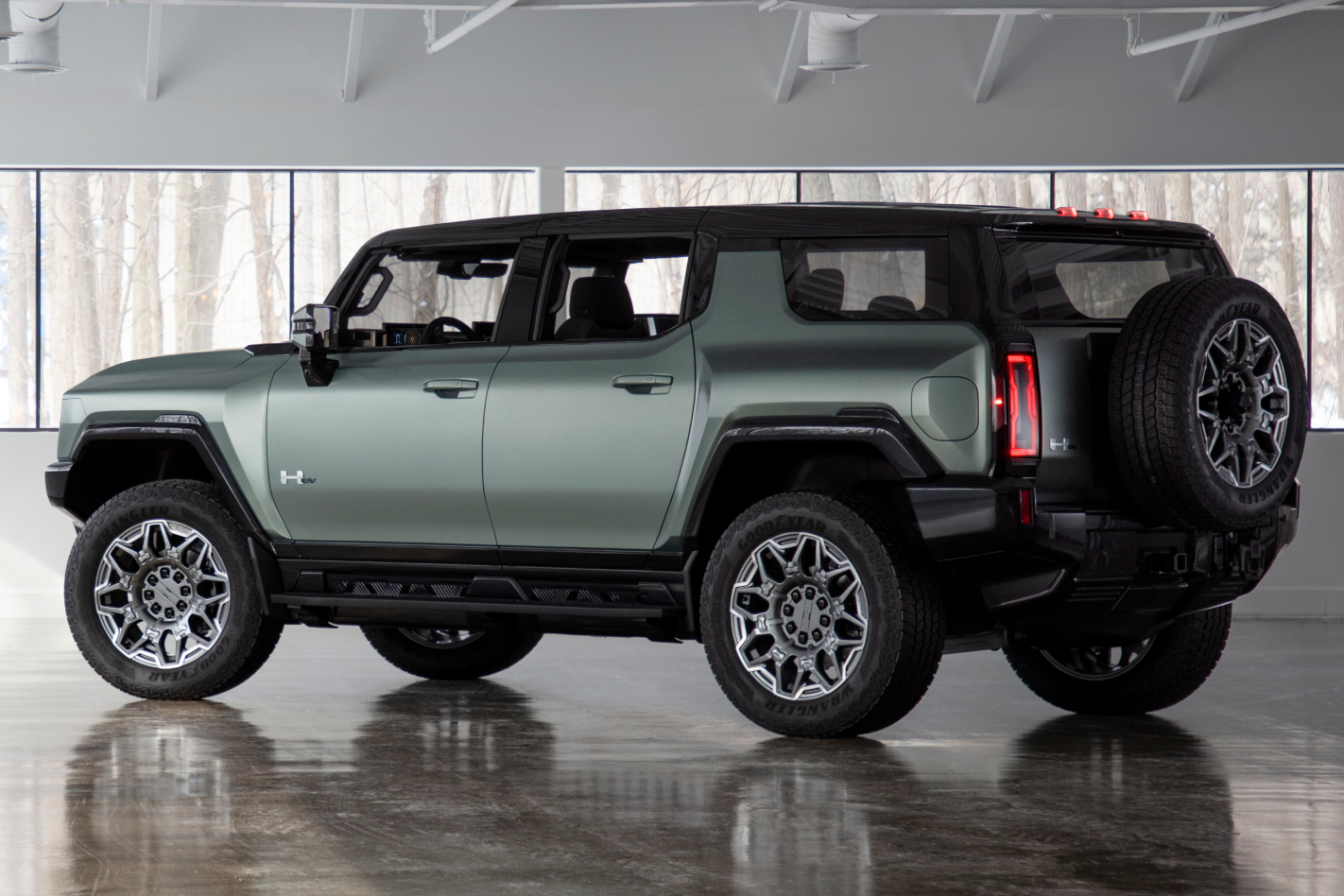
Another prominent aesthetic feature making a return is the removable ‘Infinity Roof’, however, the rear portion of the roofline has been fitted with a fixed roof section and not additional glass panelling.
The range-topping ‘Edition 1’ variant of the Hummer SUV is said to offer unbelievable performance, namely 619kW and 15,592Nm (at the wheels; a marketing boast. Expect motor torque to be closer to 1350rpm), thanks to a 20-module, double-stacked battery pack.
The monumental shove will be sent to GMC’s three-motor e4WD drive system via an electronically controlled limited-slip differential, and despite the EV’s heft, which is rumoured to be nudging three tonnes, the Hummer will accelerate from 0-60mph (97km/h) in a supercar-trouncing 3.5 seconds.
A dual-motor, less powerful version of the SUV, coined the ‘EX3X’, will also be available from launch, which will produce 466kW and 10,033Nm (again, an at-the-wheels number).
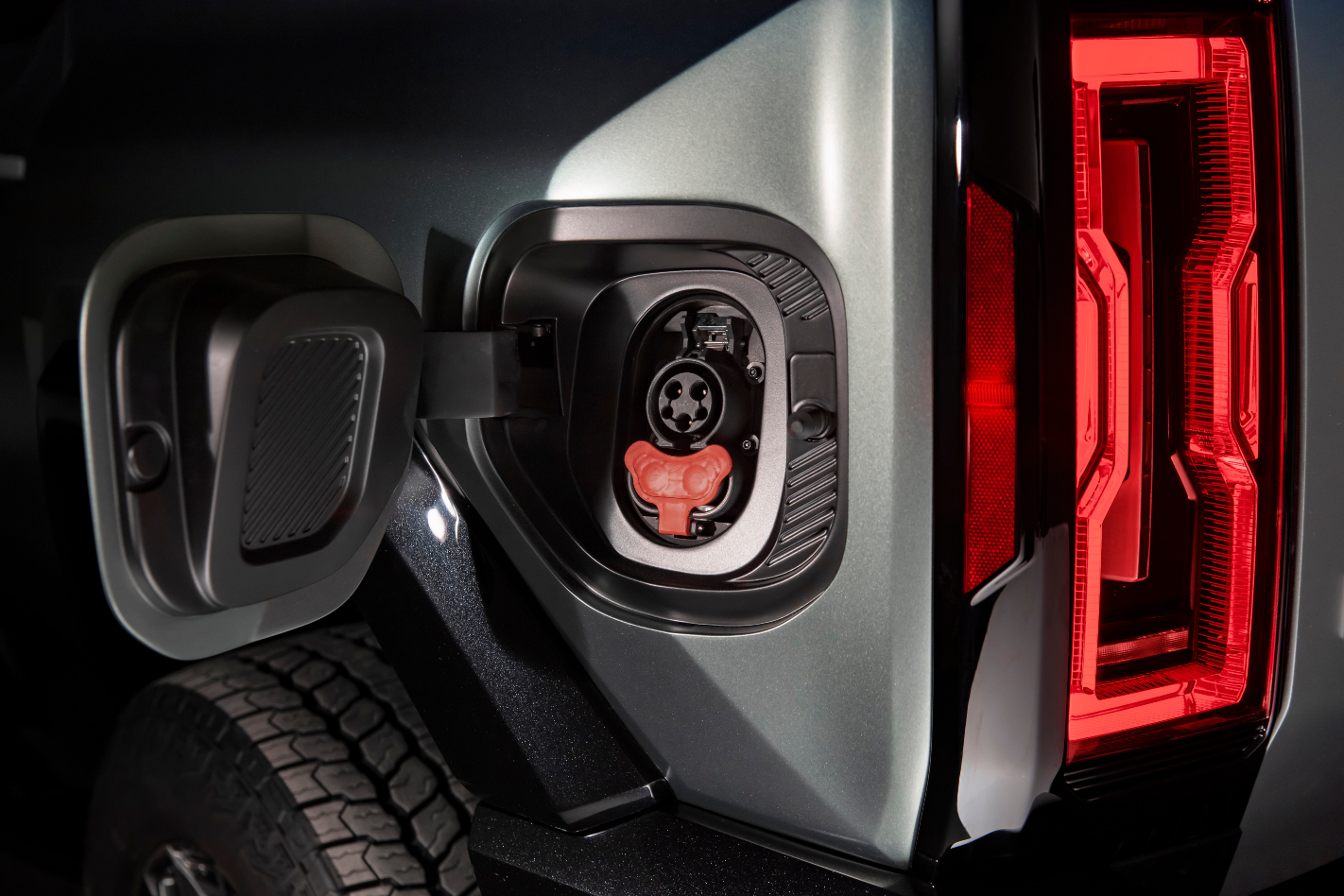
Depending on which model and options are chosen, driving range has been rated at between 400 and 500 kilometres, and all models are equipped with a DC 800-volt fast-charging capability of up to 300kW.
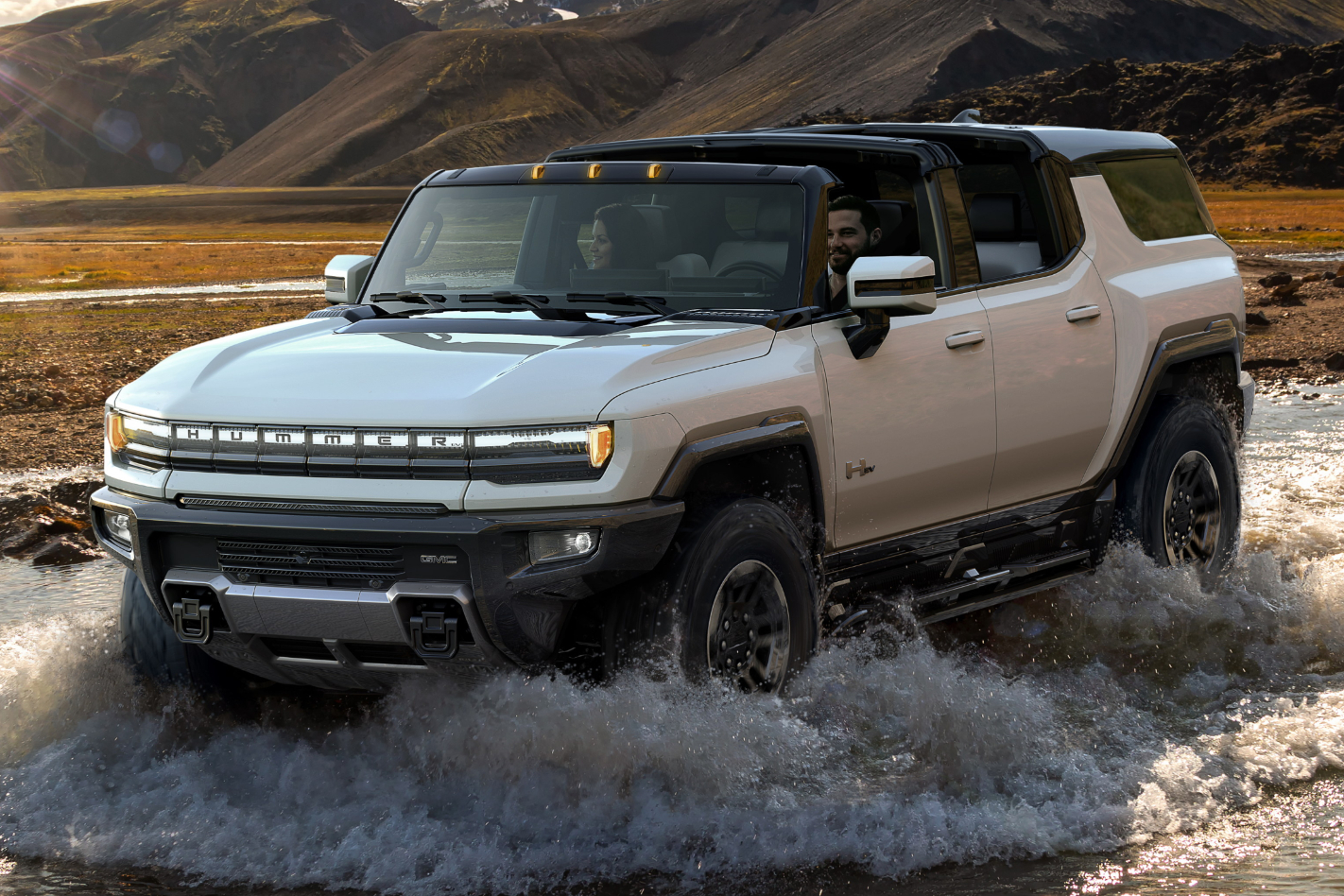
The new Hummer sits on GMC’s Ultium Platform, and according to the manufacturer, this EV architecture, combined with a wheelbase that is 229mm shorter (now measuring 3218mm) than the pick-up variant, gives the SUV “expected best-in-class off-road proportions, with greater departure and breakover angles and a tighter turning circle of only 35.4 feet (10.8 meters)”.
The mass-defying tight turning circle has also been greatly aided by a four-wheel steering system, which even enables a ‘CrabWalk’ function, pointing all four wheels in the same direction so the car can be driven diagonally.
As standard, the SUV will ride on 22-inch wheels, but from launch, both the Edition 1 and the EX3X can also be optioned with an ‘Extreme Off-Road Package’, which replaces the 22s with a bespoke set of 18-inch alloy wheels wrapped in 35-inch-OD Goodyear Wrangler Territory MT tyres.
The off-roader package also offers underbody armour and rock sliders, ‘UltraVision’ with underbody cameras, front eLocker and rear virtual lockers, and heavy-duty ball-spline half shafts.
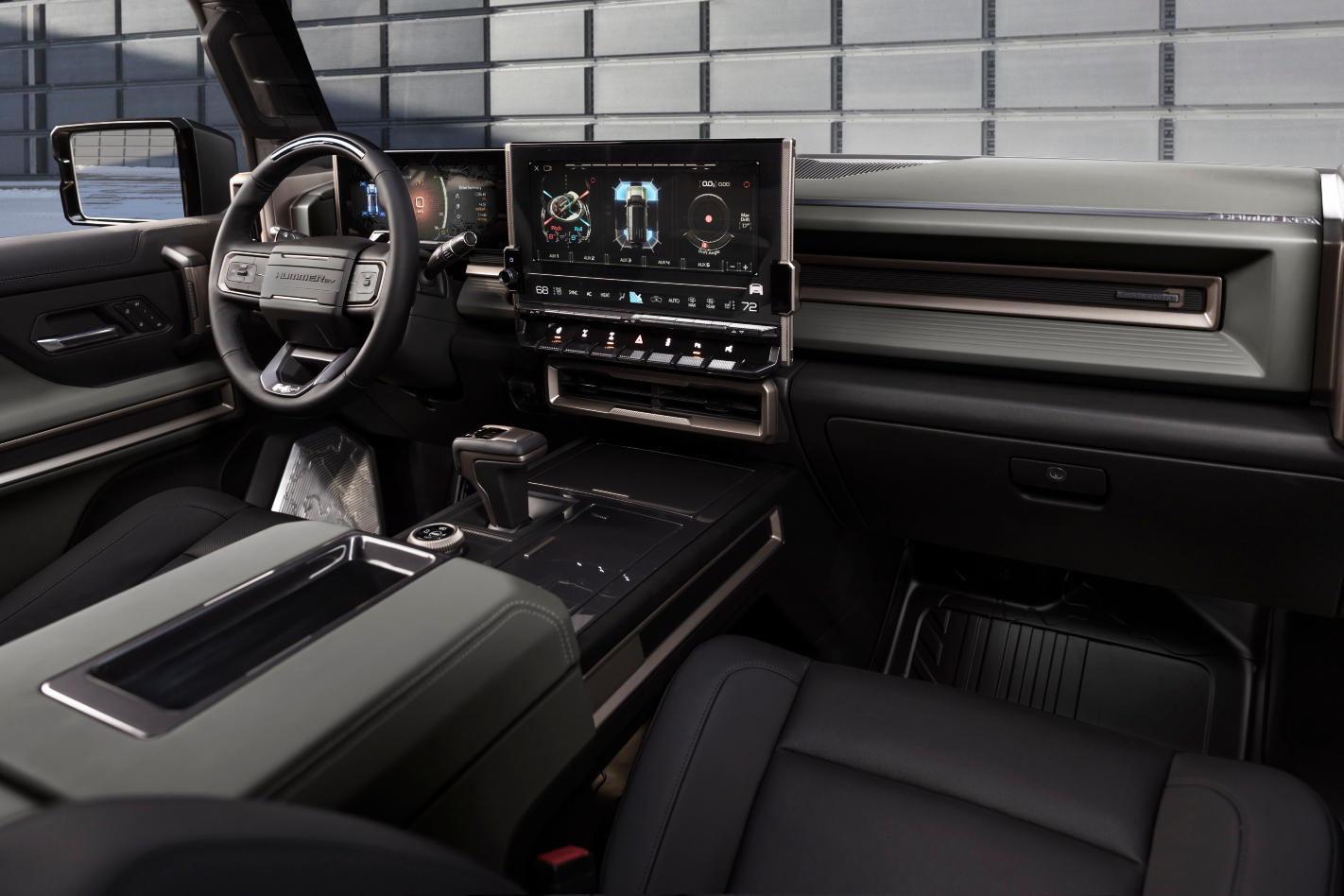
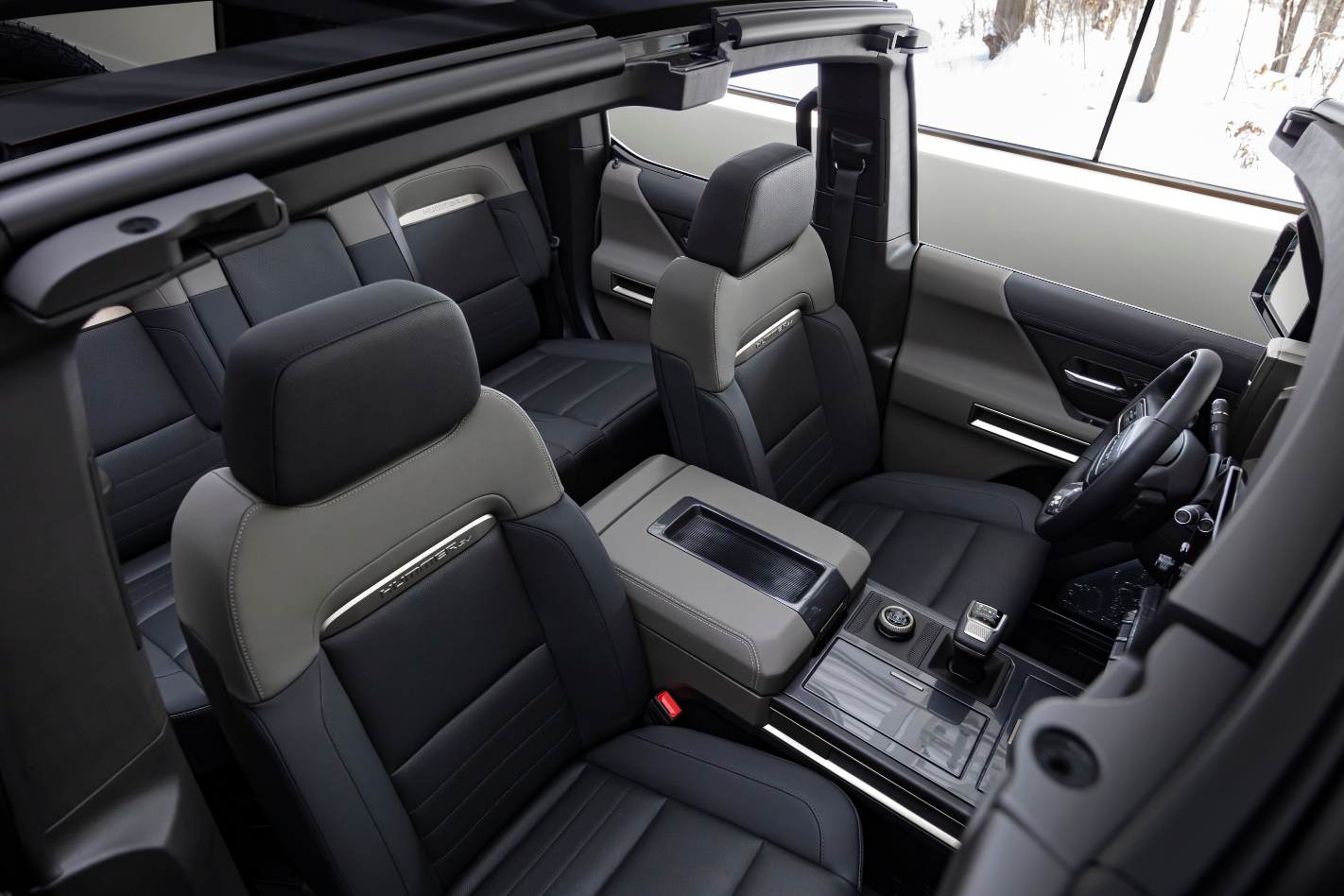
Inside, the new Hummer scores a host of tech features such as a 12.3-inch digital dash, 13.4-inch touchscreen infotainment display, hard-wearing interior and trim pieces, and a retro-inspired steering wheel with button controls.
GMC also says all new Hummer SUVs will come equipped with a suite of semi-autonomous driver safety functions, including ‘Super Cruise’ – a driver-assistance technology offering hands-free driving for more than 322,000 kilometres of enabled roads in North America.
With deliveries expected to begin in Spring of 2023 in the US, the first models to be delivered to customers will be the Edition 1, which will be priced from US$105,595 (A$138,100) and the EX3X, priced from US$99,995 (A$130,700).
Other models, including the dual-motor EX2X, priced from US$89,995 (A$117,800), will follow later in the year.
A dual-motor EV2 model will act as the entry-point for the new Hummer SUV and will be priced at US$79,995 (A$104,900), but deliveries of this model won’t start until the second quarter of 2024.
It’s not yet confirmed whether Australia will be receiving the new EV Hummer – that decision will lie with GM executives and GM’s Specialty Vehicles team, which is based in Australia and New Zealand.
WhichCar will bring you more details about the all-new electric Hummer SUV as they become available.
Maserati Australia and New Zealand has announced Grant Barling is taking over as the company’s new General Manager.
Mr Barling, formerly the carmaker’s National Sales Manager, will step into the newly-created role as Chief Operations Officer Glen Sealey changes to another brand within the Ateco Group, which imports the Italian brand locally.
“I’m delighted to accept this new role and lead Maserati as it embarks on a new era,” said Mr Barling.
“With the recent release of the Trofeo Collection, alongside the upcoming Ghibli Hybrid, and a raft of future models coming through, it’s a truly exciting time for the brand.”
With over 30 years of experience in the automotive industry, Mr Barling joined the Ateco Group in 2019, following senior roles with luxury brands including Audi and Lexus. He was also managing director of Lexus’s retail operations in Sydney. He began his career with Toyota.
Ateco Group Managing Director Roger Zagorski added: “Maserati is now well-placed to build on sound fundamentals here in Australia, and we look forward to supporting Grant in his new role.”
Year-to-date (excluding March figures, due this week), Maserati has found 80 buyers in the Australian market, compared to 86 for the same period in 2020.
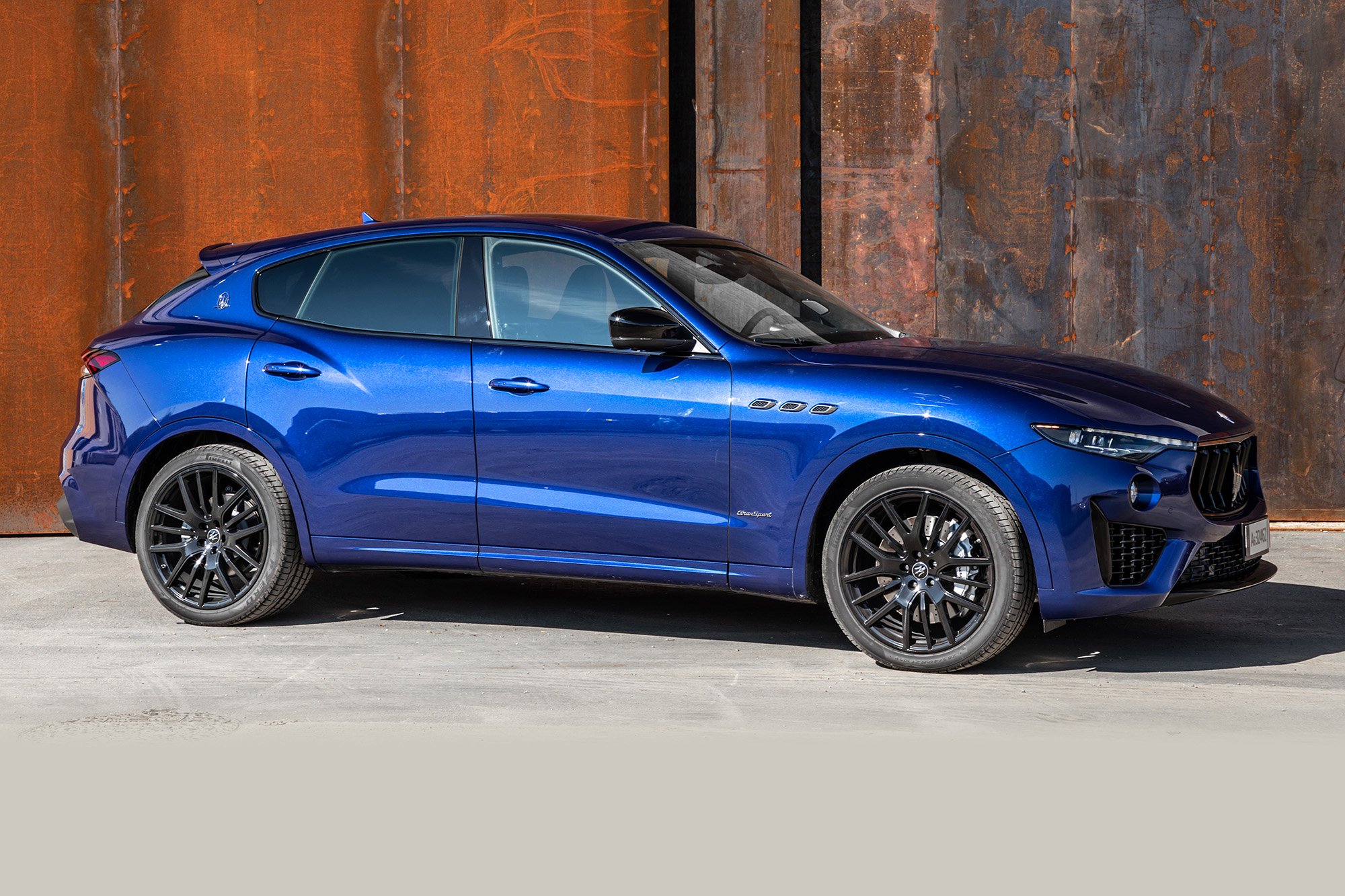
The Levante SUV remains Maserati’s most popular offering in Australia, making up 50 of the brand’s sales up to the end of February.
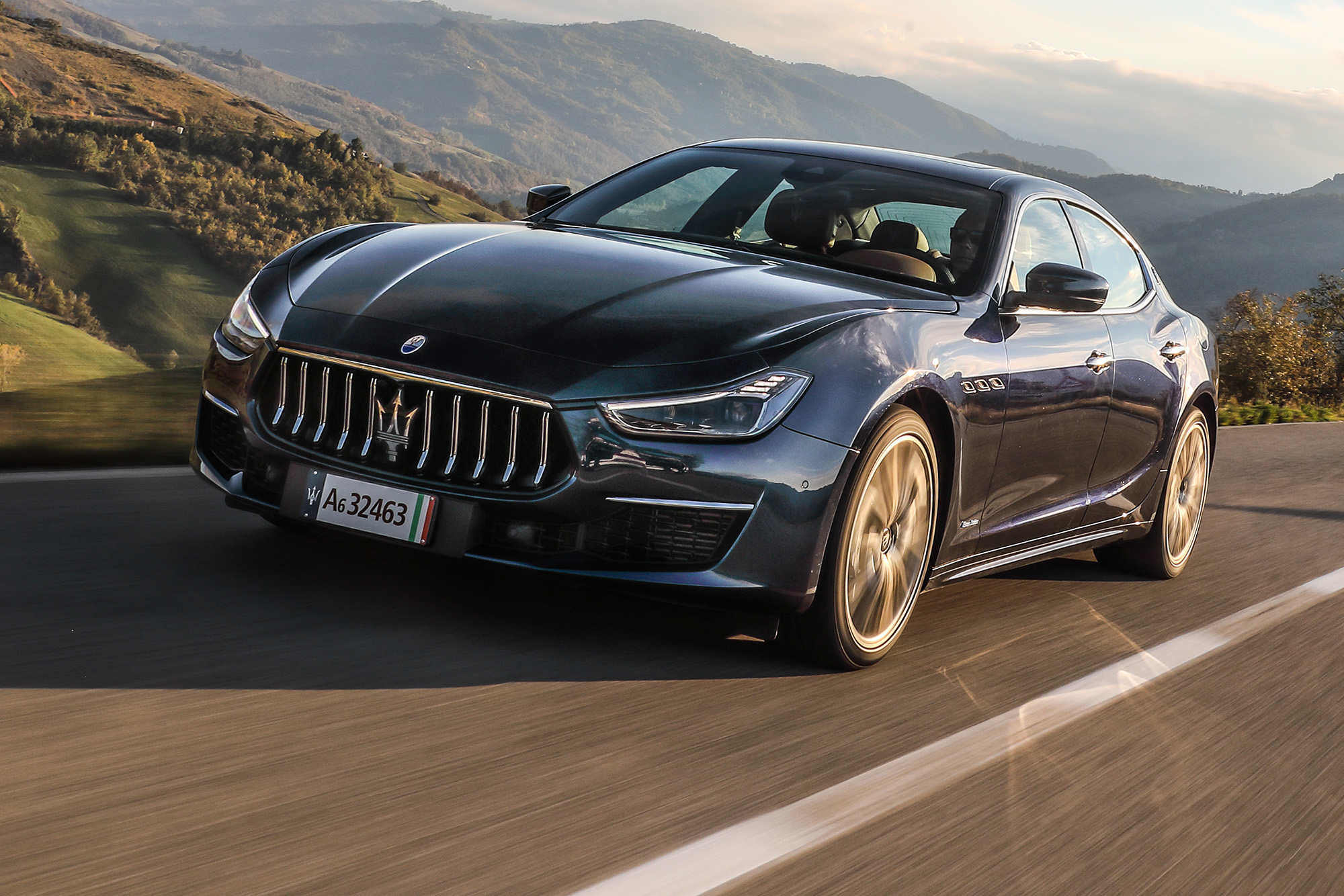
The Ghibli sedan took most of the remaining pie with 27 sales. The Quattroporte found two homes, and one buyer snapped up what might be the last local example of the now retired GranTurismo – officially put to pasture in 2018.
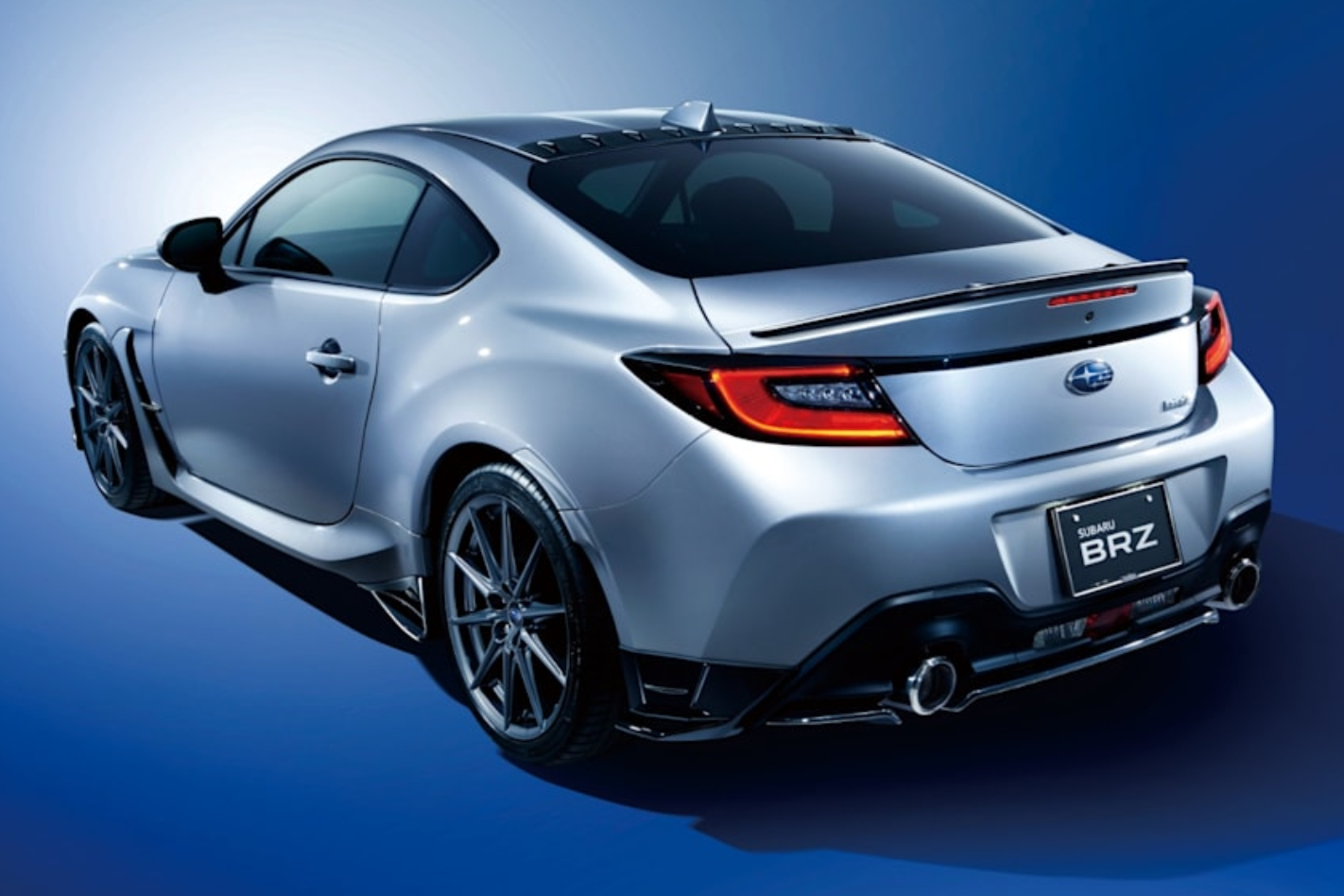
Subaru has unveiled its 2021 BRZ alongside Toyota’s new GR 86 at a local launch in Japan.
It’s the first time we’ve seen the BRZ in a right-hand drive format, as the sporty coupe has previously only been previewed in left-hand drive, when it was revealed for the US market back in December 2020.
Both the Subaru and the Toyota will be powered by the same horizontally-opposed 2.4-litre boxer engine, which produces 173kW and 250Nm.
Likewise, both cars will tip the scale at 1270 kilograms, and feature a chassis with a claimed 50 per cent more torsional rigidity than the previous BRZ and 86.
While both cars seem to be nigh-on identical, Subaru has made the BRZ stand out from its twin sibling by also launching the coupe with several factory and dealer fitted performance parts, some of which are STI branded, for the Japanese domestic market.
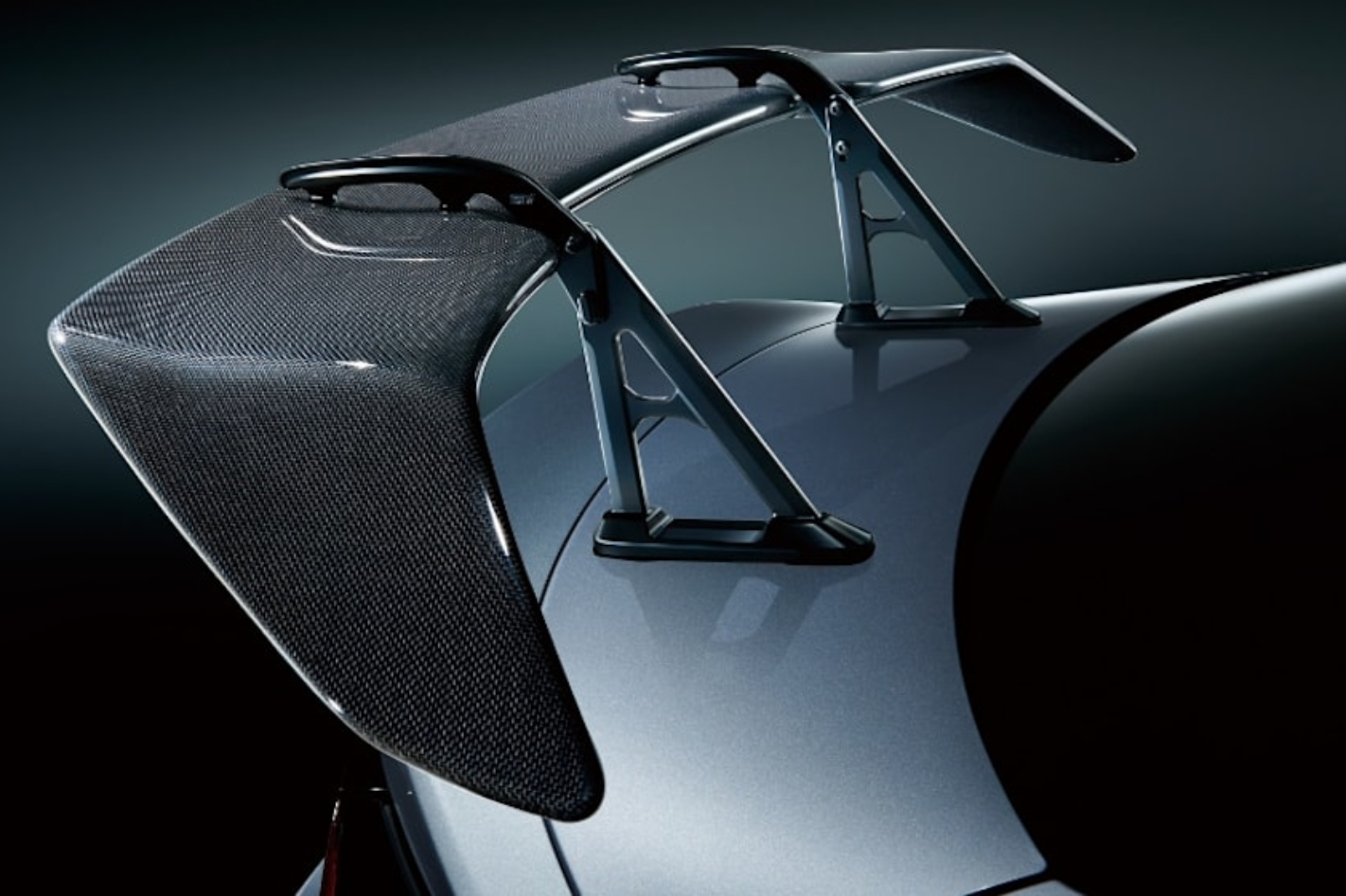
These include; a host of aero-focussed performance parts such as a more aggressive front splitter, extended side sills, a sharp-looking rear diffuser, roof-mounted aero strip, a smaller lip spoiler, a set of front and rear wheel arch canards and a large swan-neck spoiler hewn from carbon fibre.
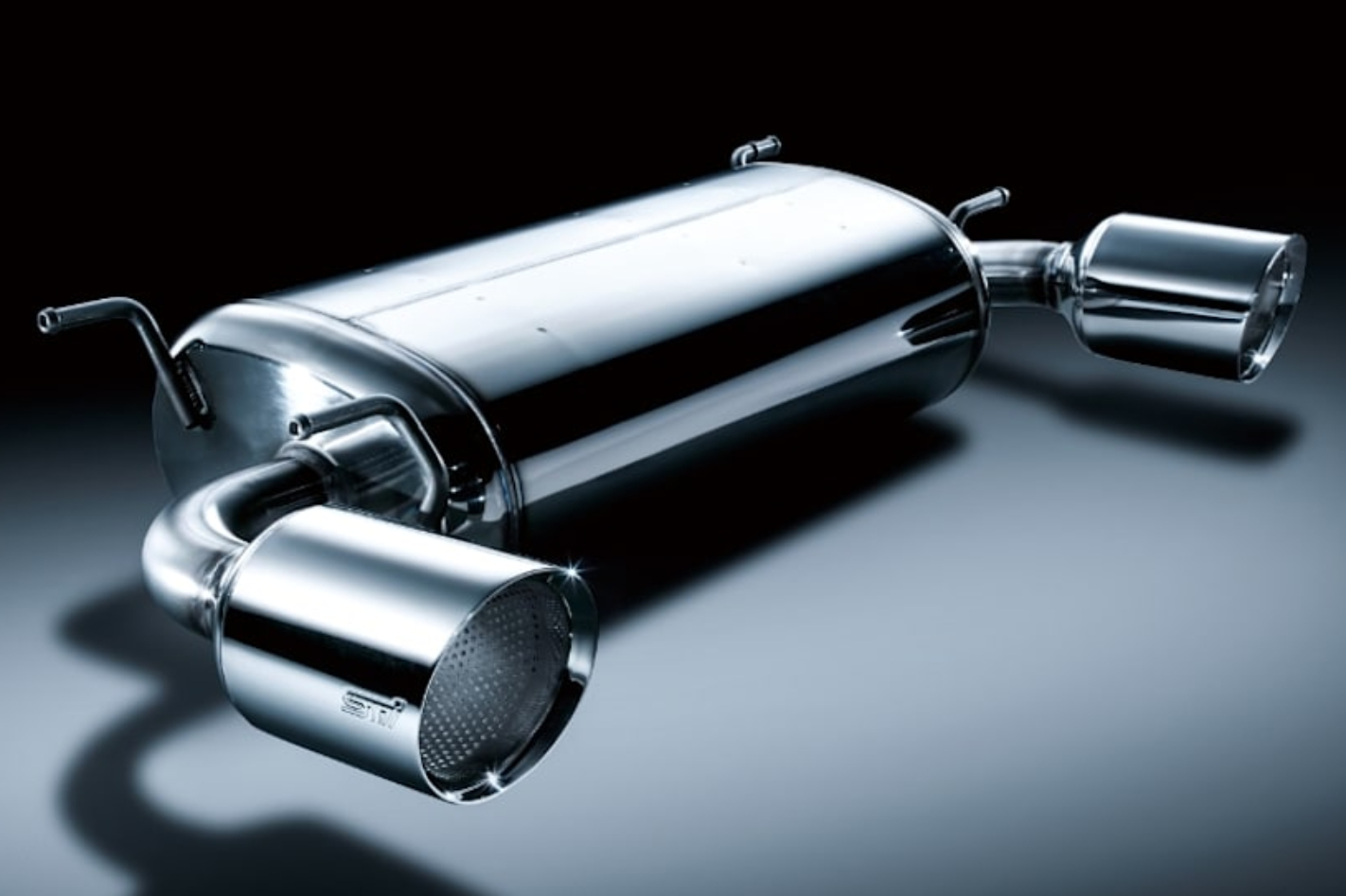
Other sportier options available for the BRZ are a second set of LED running lights attached to the front bar’s air ducts, a performance rear muffler with redesigned exhaust tips, 18-inch BBS forged alloy wheels, and an STI-branded front strut brace for the car’s engine bay.
Subaru Australia hasn’t yet confirmed whether or not these performance parts will be made available for the local market when the new BRZ is launched at the end of this year.
However, given the popularity of the factory and dealer fitted options available for the moniker’s outgoing generation, we’d hazard a guess these new parts will be added to Subaru’s Aussie catalogue in the future.
MORE: BRZ stories MORE: All Subaru stories
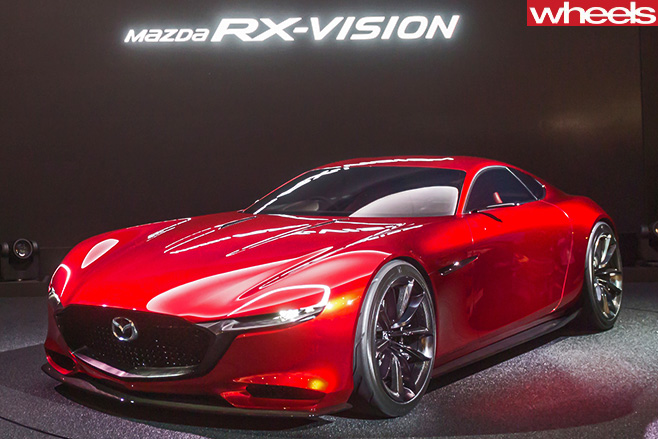
Mazda is weighing up the possibilities for its freshly resurrected rotary engine and considering a diverse range of alternative applications, including vehicles and equipment beyond the automotive sphere.
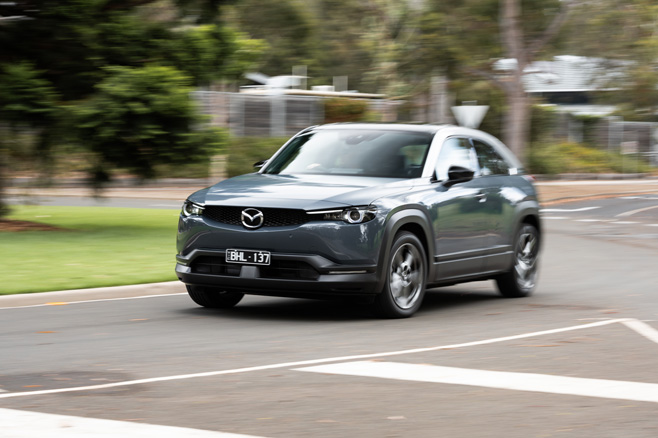
The Japanese car maker has confirmed that, after an eight-year hiatus, the iconic and much-loved rotary will be reborn into the new MX-30 coupe SUV as an electric vehicle (EV) range extender, but given the astronomical cost of developing a new engine from scratch, it makes sense to explore multiple auto applications.
However, the MX-30’s team leader has revealed that not only is the company lining up more cars to receive rotary power, but it’s also thinking outside the car-shaped box to find other uses.
Speaking to Wheels, MX-30 program manager Tomiko Takeuchi said creating the company’s first range-extended EV had highlighted the advantages of Mazda’s newest engine.
“Developing EVs using the rotary engine as the power generator and also offering a plug-in electric vehicle (PEV) like the MX-30 this time, we can think of different ways of applying the rotary engine and we are going to study what we can do in the future,” she said.
While more Mazda cars and SUVs running on rotary power may not be the most surprising progression for the engine, Takeuchi revealed more evolutionary applications were on the table including those not necessarily representative of ‘land transport’.
“I think there are many things that can be done … not just limited to land transportation. But as an automotive company we are looking at the products using that technology [while] at the same time we would like to offer some other values than just the transportation functional values.”
Quite what those tantalising uses might be will remain a mystery for now, but may materialise in a wide range of vehicles or machinery in the years to come. According to Takeuchi, mobile generators are a prime example of what other applications Mazda is considering.
“That kind of direction is definitely something we would like to look into,” she said.
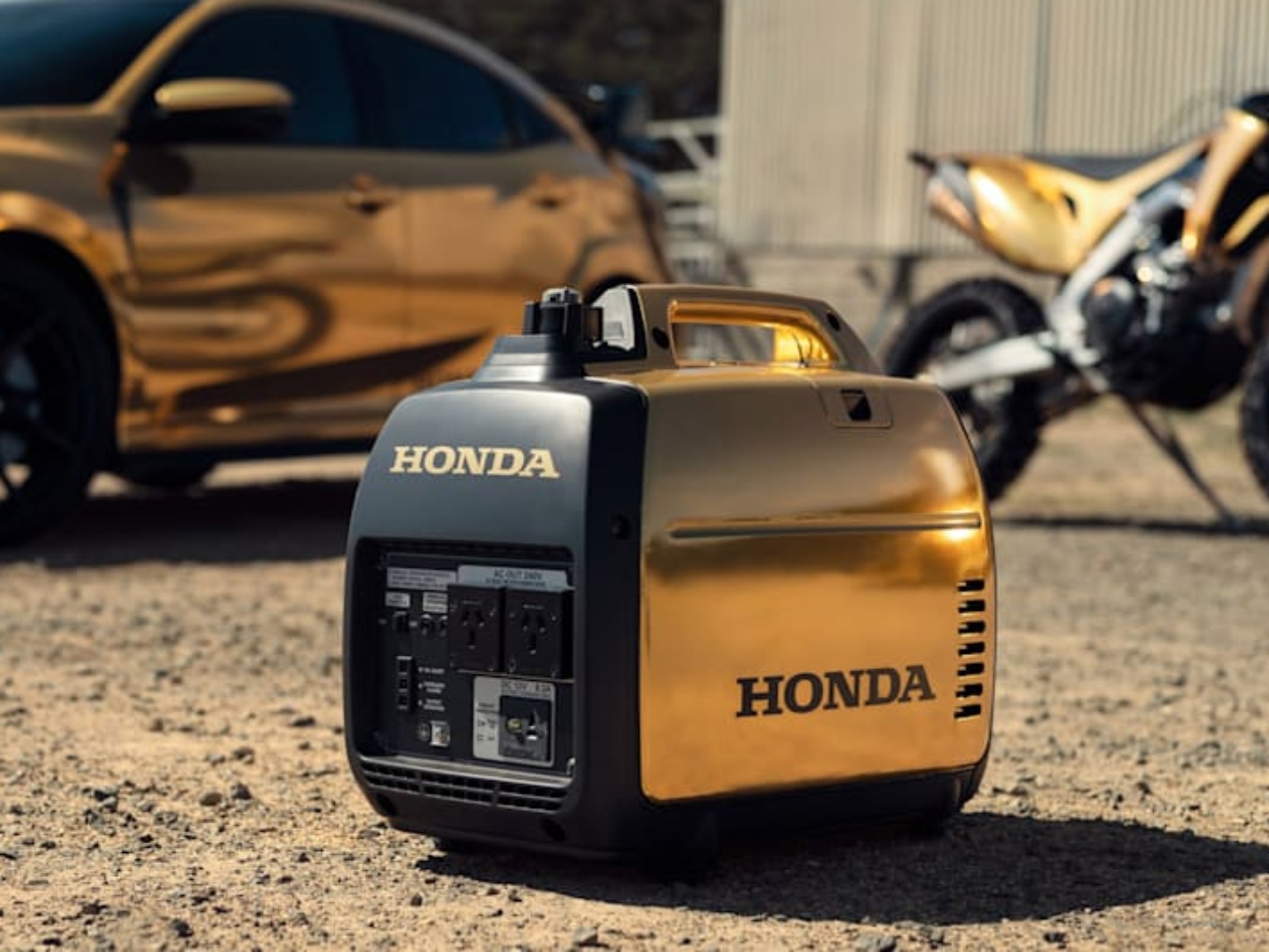
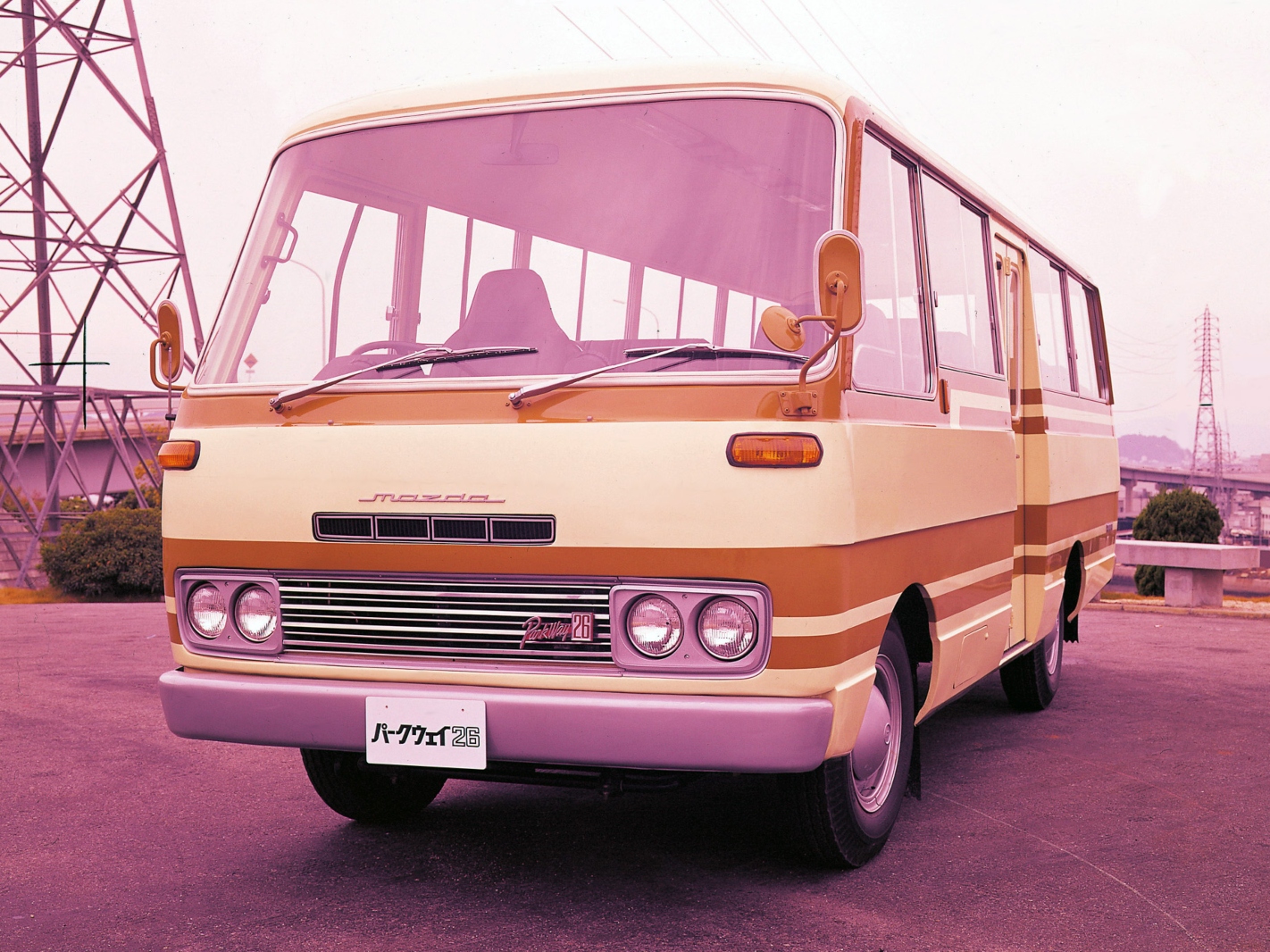
Uses and applications that transcend the road transport realm are numerous. In its past, Mazda has produced motorcycles, tractors and even a rotary powered bus – so given Takeuchi’s lifelong love of aeroplanes, could the company be contemplating taking to the skies?
Rival Japanese brand Honda has already made the leap to aviation with its Hondajet, and the iconic 13B Mazda rotary engine has previously been used in both small volume helicopter and fixed-wing models. An airborne version of the new rotary therefore might not be pie in the sky.
Importantly, the new rotary engine will be scalable and offer a broad tuning scope. That means the engines that follow the more conservative MX-30 range extender needn’t bear much similarity. For example, the rotary designed to drive a generator in the MX-30 is effectively a ‘stationary’ engine – one designed to run at one engine speed for maximum efficiency.
Other models and variants however, could be directly connected into the transmission and tuned to deliver power more like a conventional engine. More power and performance is also highly likely.
Technical details of the new unit are still very much under wraps, along with a first look at the revenant rotary, but its advantages are already being paraded by its maker and Takeuchi pointed to the previous production application for clues.
“You can tell if you look at the rotary engine in RX-8, its biggest advantage is its compactness,” she said.
“We’ve been continuously developing the rotary engine so we can enhance its advantages like its compactness, quiet sound and little vibration while trying to deliver the performance required for the environmental regulations at the same time.”
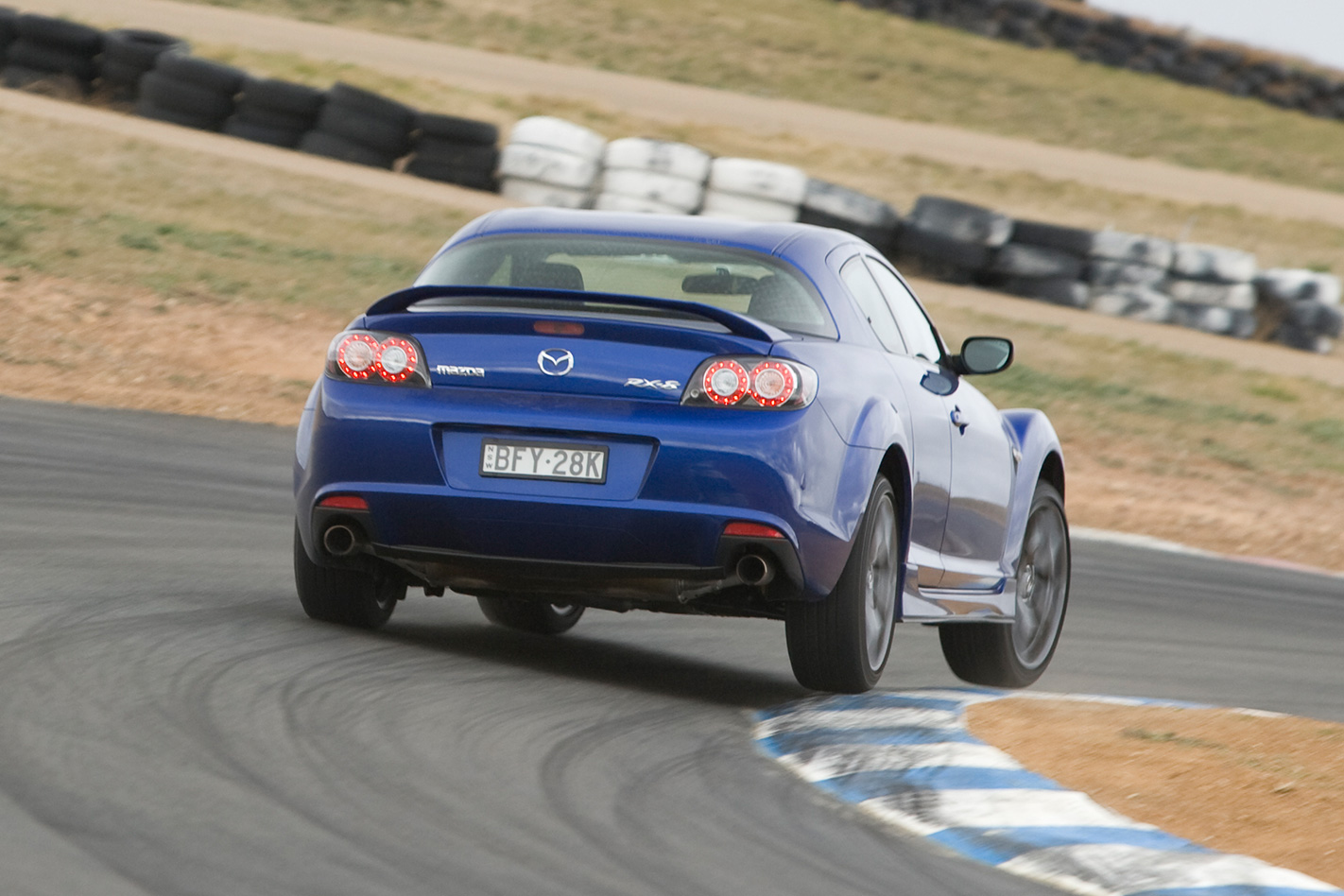
While compact, powerful and charismatic, the RX-8’s 13B-MSP engine suffered well-known emissions and durability problems, which ultimately led to its discontinuation. However, rotary engine legend Nobuhiro Yamamoto has previously confirmed that the company was busy solving the engineering challenges.
Yamamoto oversaw the development of the rotary powered FC and FD model RX-7s as well as the historic Mazda 787B engine and, as the Mazda MX-5 program manager, assisted Takeuchi at the start of the MX-30 project.
When it finally breaks cover, Mazda’s returned rotary will be opening new doors for the company and a whole world of possibilities for its unique engine.
With its 770km driving range, the ultra-aerodynamic Mercedes-Benz EQS 450 Plus will be a true Tesla beater, able to travel over 100km more on a charge than anything the American company currently sells.
And it’s only one of the company’s family of purpose-designed EVs.
The official presentation of the EQS, the first model to use the carmaker’s new purpose-designed EVA electric vehicle architecture, won’t happen until later this month. Sales in Europe begin in June, and the car will reach Australia very late 2021 or early 2022.
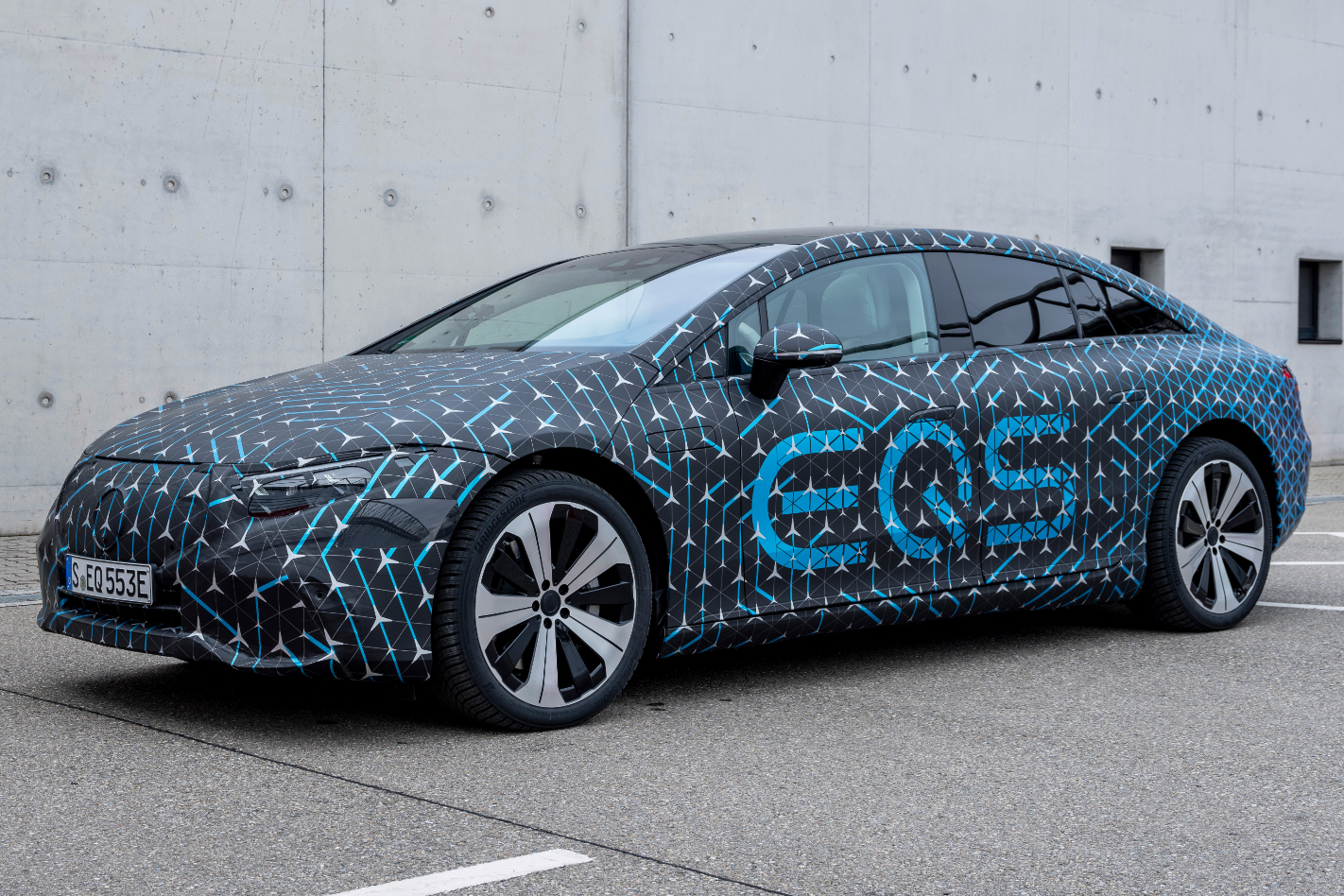
In the lead-up to the big online April introduction, Mercedes-Benz has been staging special events to explain in advance key aspects of EQS tech.
One of them was a virtual co-drive. With a senior engineer at the wheel, an EQS 450 Plus was driven on roads around Stuttgart while we watched, listened and asked questions via laptop.
The EQS 450 Plus is one of two versions of the long and large five-seat hatchback that will be available from launch, said EQS vehicle testing head Frank Wundrak. It has a single 245kW/550Nm motor driving the rear wheels and a 108kWh underfloor battery pack.
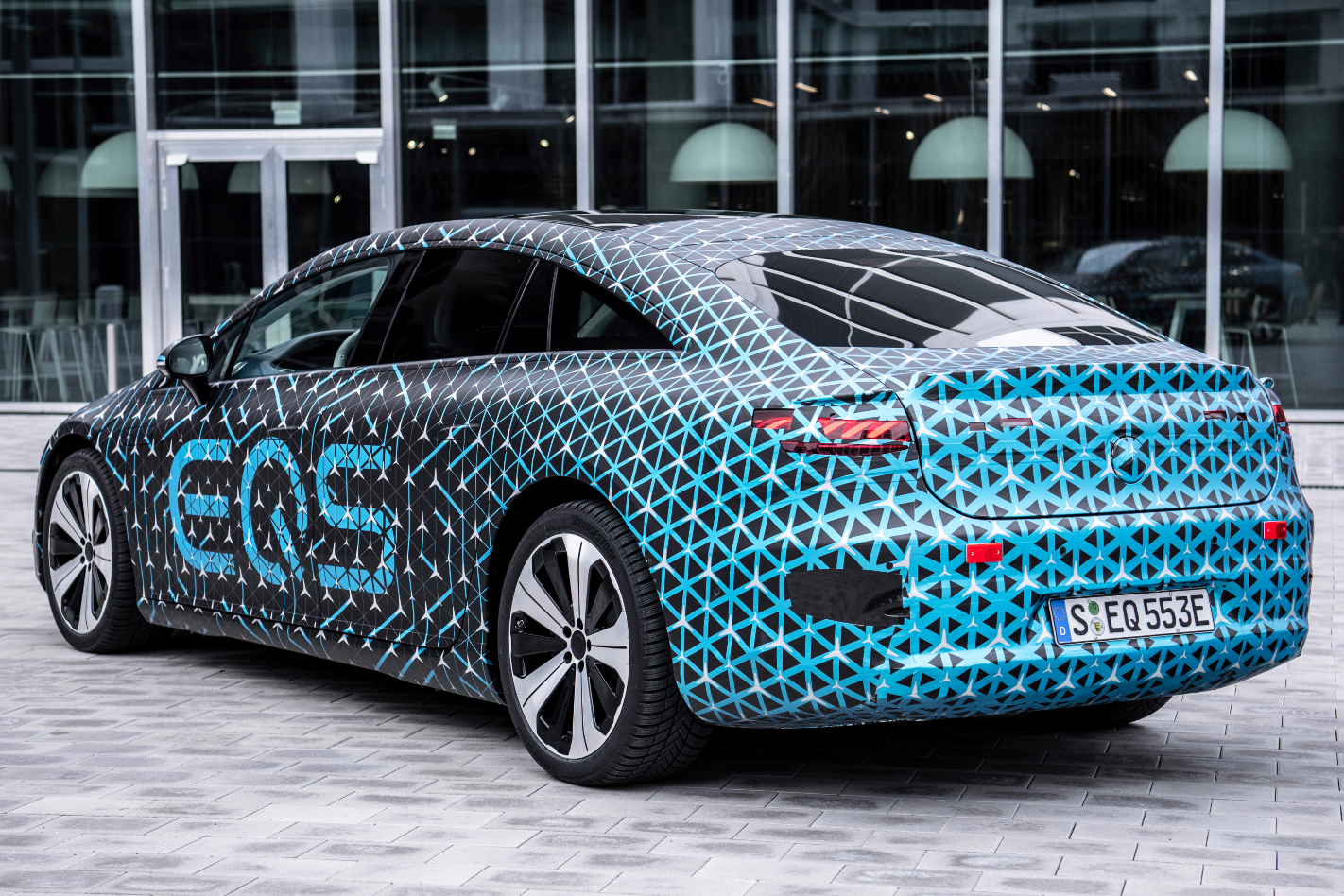
“I’m sure your family will need a toilet stop before the EQS needs a recharging stop,” he joked. Those stops will not take too long, so long as the Mercedes-Benz is plugged into a powerful charger.
“We can charge up to 200kW when you’re on a DC charger,” he said, which means adding 300km of range takes only 15 minutes. “Even if you need a charging stop, you are quite fast back on the road.”
Drag-reduction features, including a special wheel design, mean the EQS 450 Plus sets a new production car record for aerodynamics. Its coefficient of drag is a neat 0.20, Mercedes-Benz proudly claims.
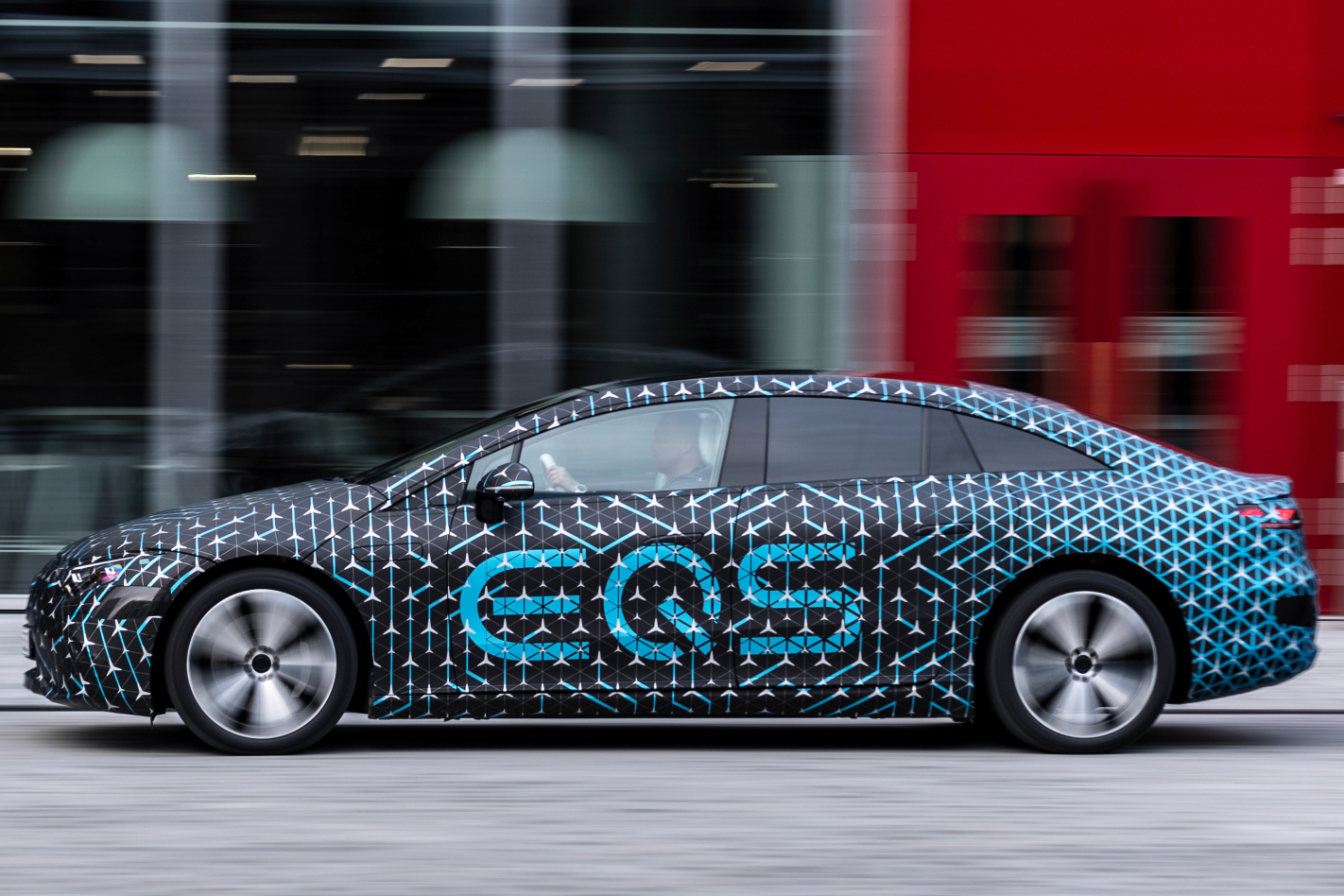
The other launch model will have the same big battery pack, but two motors instead of one, making it all-wheel drive. Combined maximum power and torque numbers for the EQS 580 are 385kW and “more than 800Nm”.
The driving range of the EQS 580, according to the WLTP test standard also used for the EQS 450 Plus, will be less than 700km, but more than 600km.
And there will be more EQS variants. “We will have another battery, with 90kWh, which will come later,” said Wundrak.
He said the EQS, unlike its conventional equivalent, the S-Class, will be produced with only one wheelbase. “But we of course have more models based on this electric vehicle architecture.”
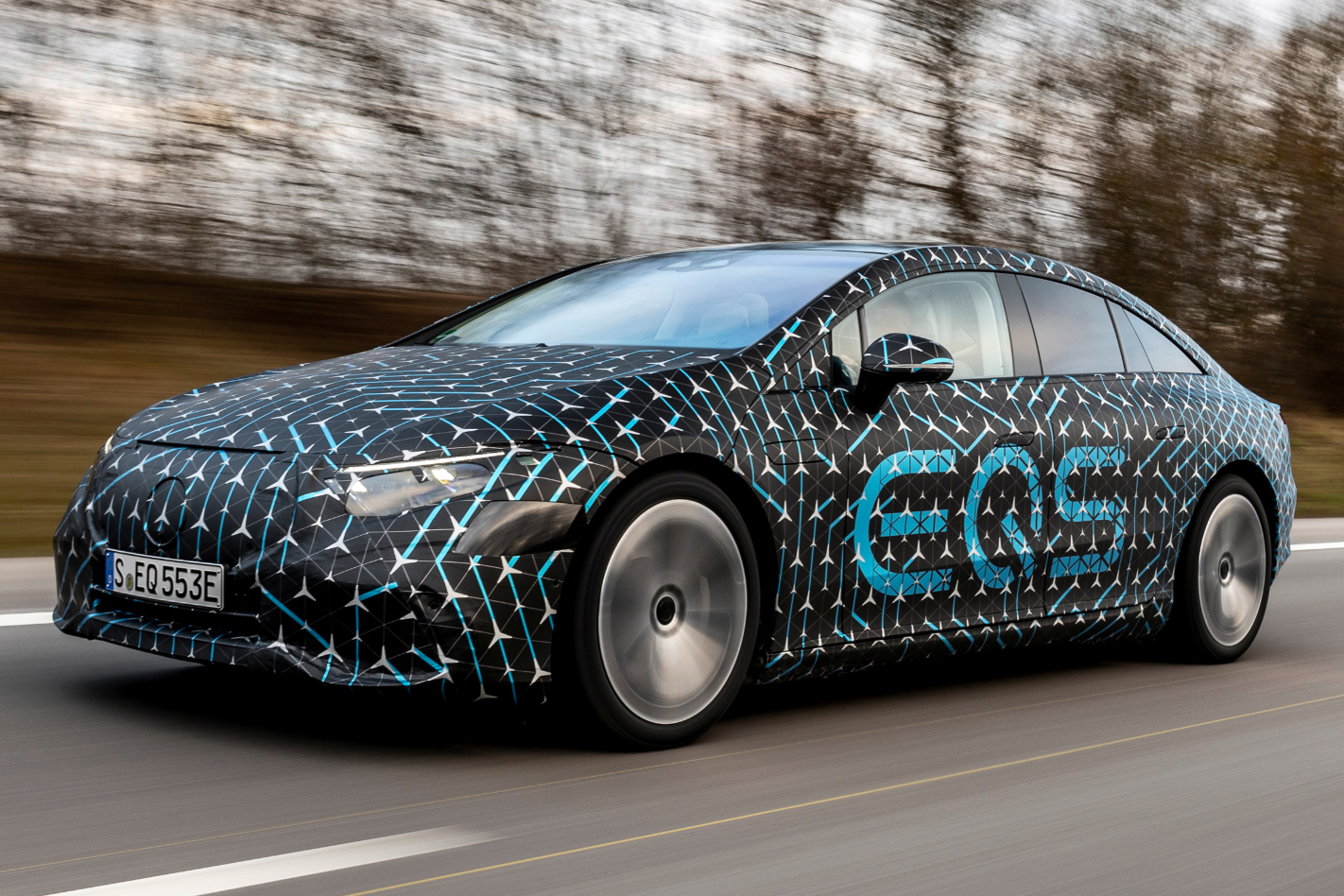
He ticked off the smaller sedan and two SUVs that will also be based on the EVA architecture and confirmed for production; “EQE, EQS SUV and EQE SUV”.
“And of course there could be more…”
