Mercedes-Benz has officially released images and details for the interior of its all-electric S-Class sibling, the EQS.
The highlight of the reveal is the huge, optional 55.5-inch “Hyperscreen” infotainment display – an OLED screen that spans nearly the entire dash from pillar to pillar.
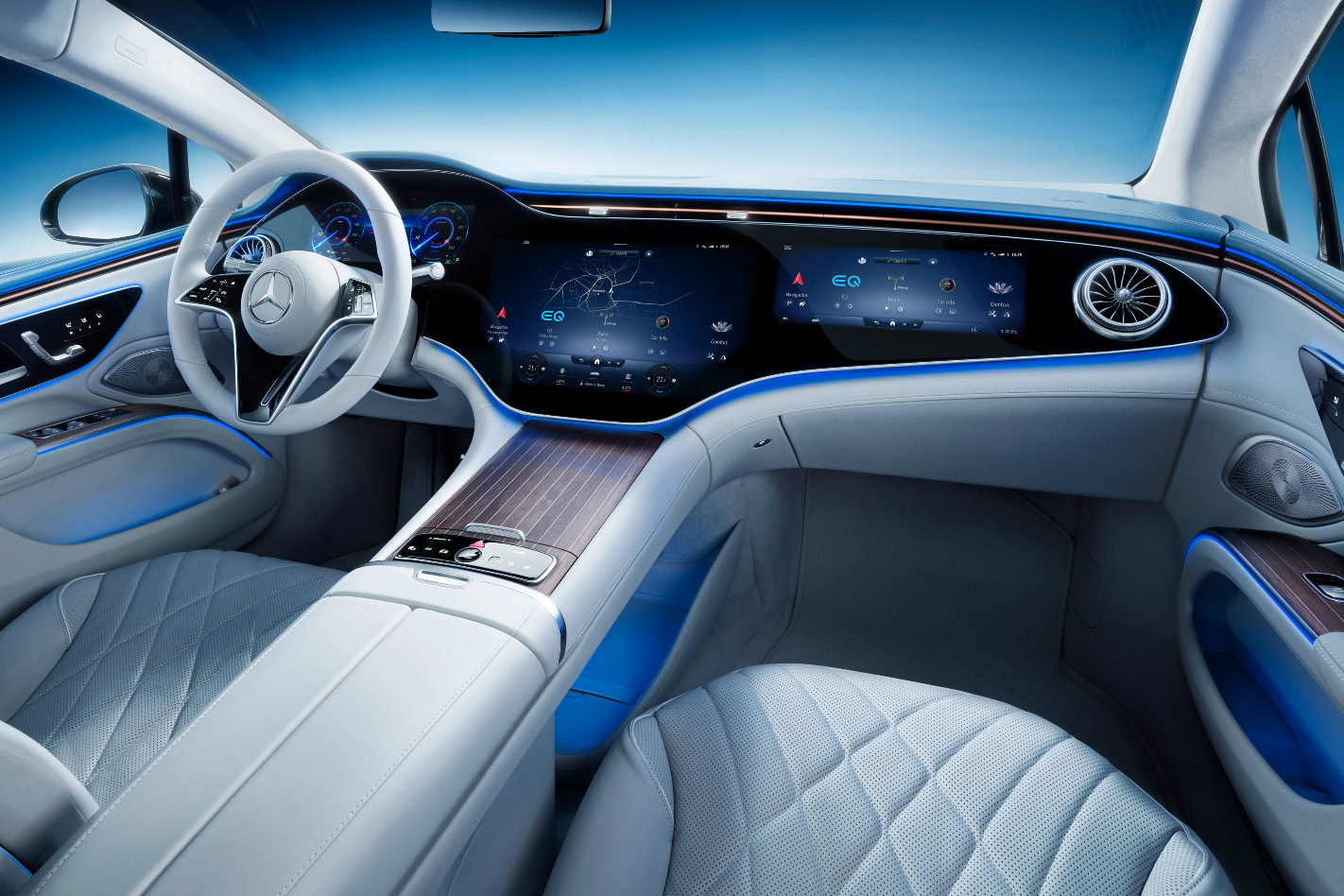
Mercedes is claiming the display as the first of its kind in a production car, running the very latest in Mercedes’s MBUX infotainment software.
Curved and moulded to the contour of the EQS’s dash, the screen is split into three separate displays for the driver and occupants.
The driver’s display measures 12.3 inches and will provide an array of information that can be personalised to the driver’s needs.
The central screen measures 17.7-inches and the front passenger screen comes in at 12.3 inches. These two displays appear as one continuous visual unit.
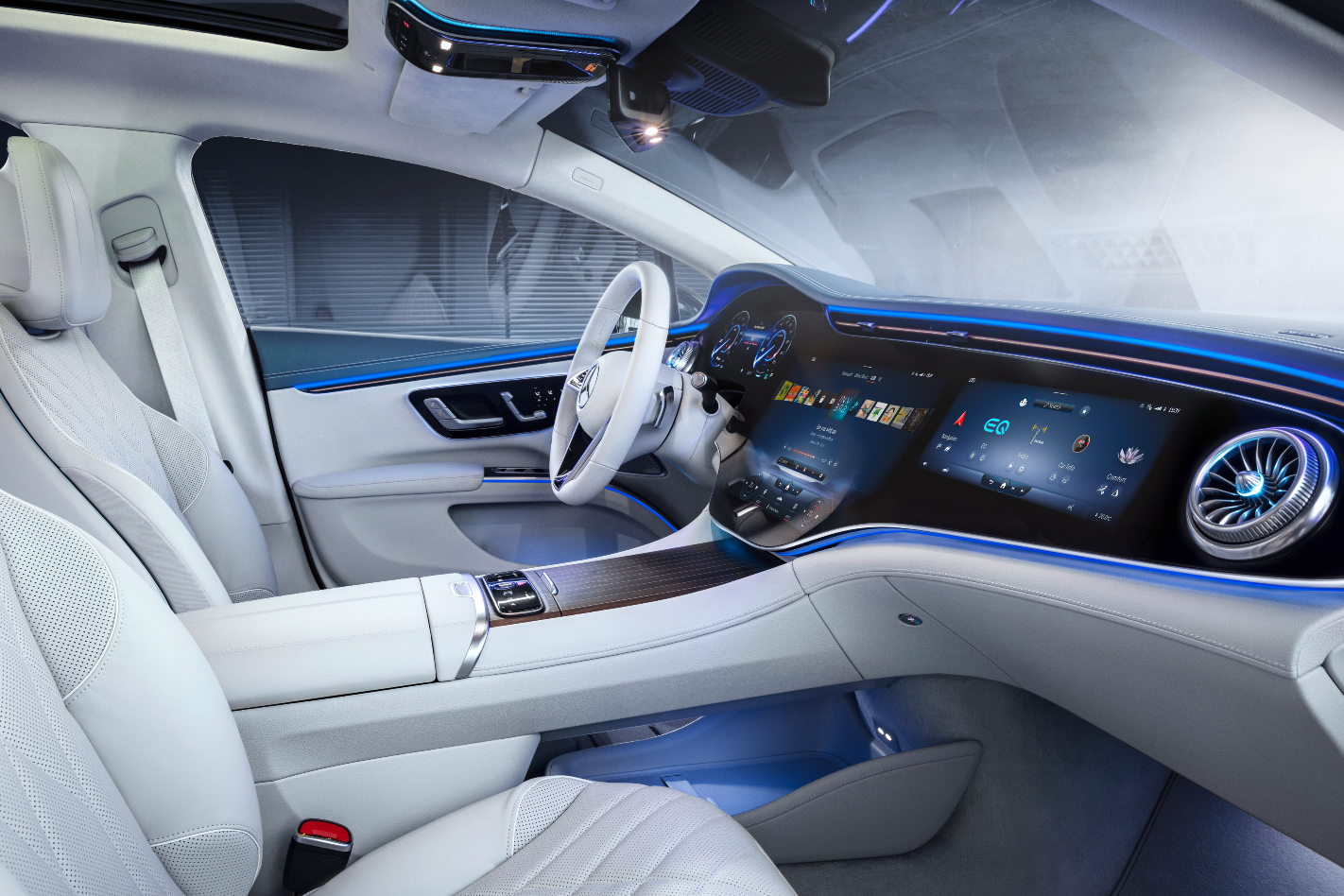
The highly innovative infotainment system is class-leading and has been fitted with 12 actuators under its surface to provide superior haptic and force feedback when interacting with it.
The display will also work in conjunction with up to 350 sensors found around the vehicle, which can detect anything from the EQS’s speed, distance, acceleration, precipitation, lighting conditions, seat occupancy, different languages being spoken in the cabin, and even the driver’s eyelids.
All this equates to a host of driver aids that are currently unparalleled in the automotive world, and to make sure all of it works, the MBUX infotainment unit is powered by eight CPU cores, 24 GB RAM and 46.4 GB per second of RAM memory bandwidth (just a bit more performance than the average laptop/desktop).
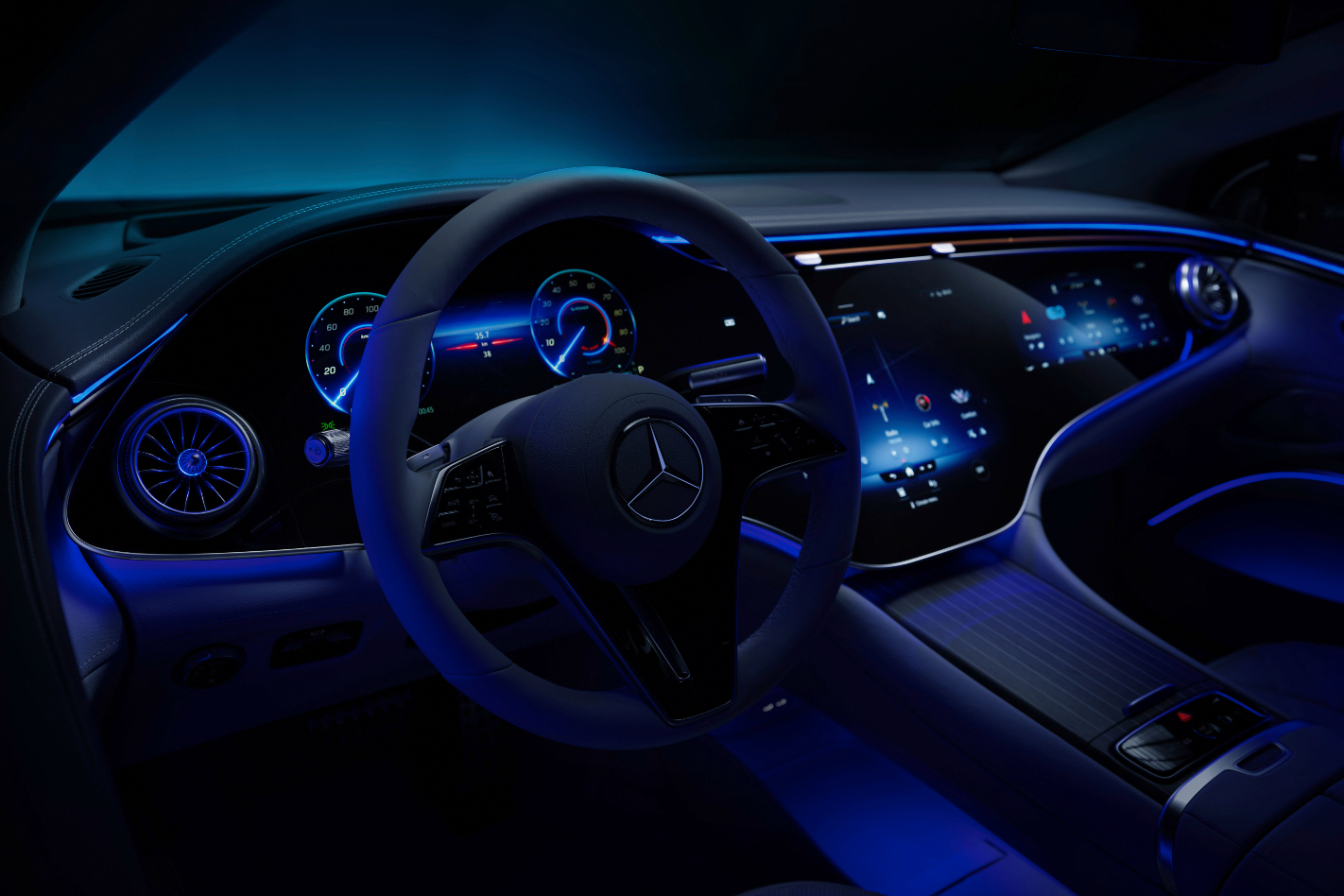
Owners needn’t worry about damaging the tremendous screen either, as it’s constructed from a special type of scratch-resistant aluminium silicate glass that’s also been coated in a way that, apparently, is easier to clean.
Of course, the Hyperscreen is an optional extra, so if customers aren’t keen on having an entire TV as a dash, they don’t have to.
As standard the EQS will come with a more conventional set of displays very similar to the ones found in the new S-Class, comprising a 12.3-inch floating screen for the digital dash and a 12.8-inch tablet display for the infotainment system that’s blended seamlessly into the car’s centre console.
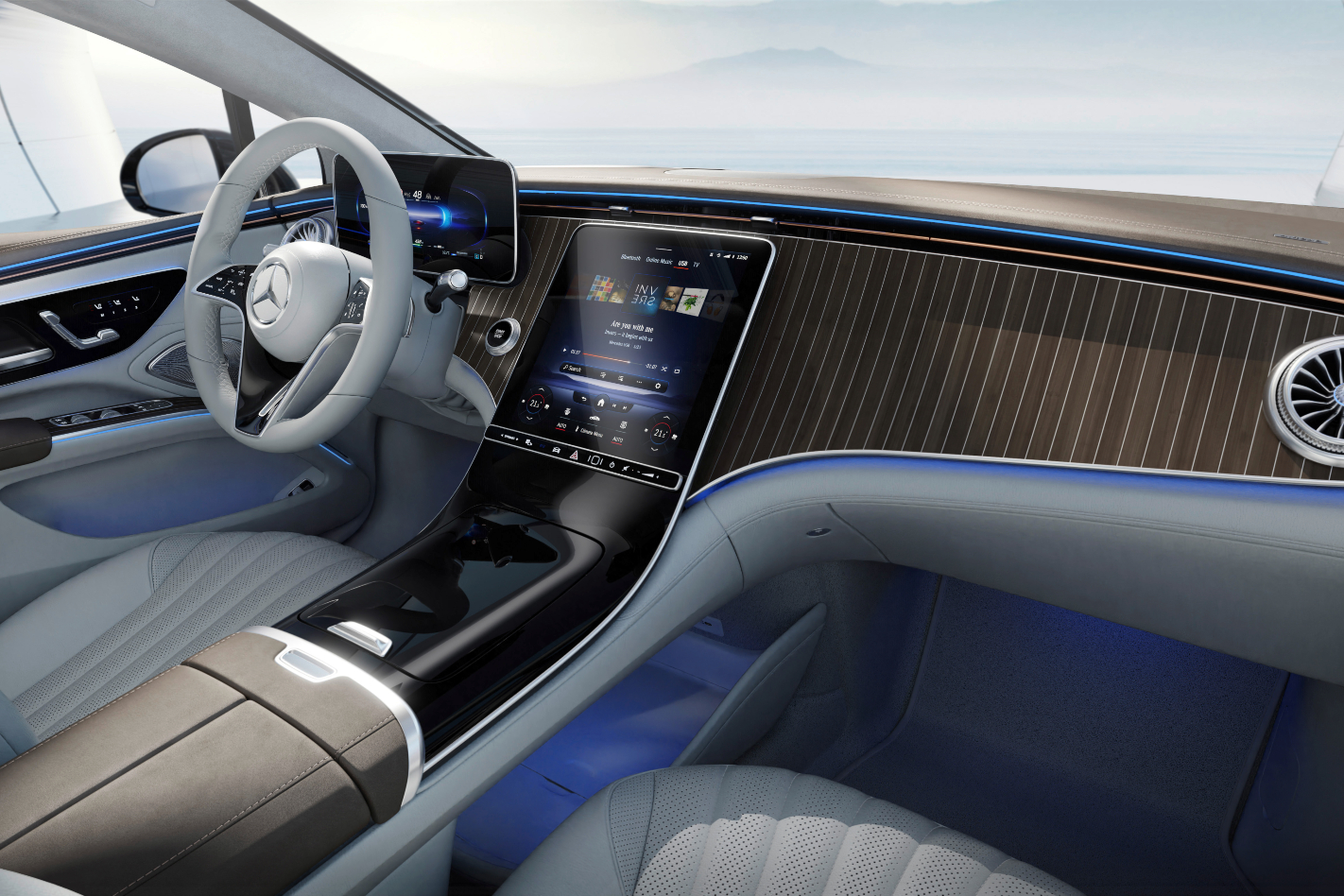
Other features of the cabin include a Burmester surround-sound audio system with 15 speakers and a total output of 710 watts and ambient lighting that can change according to the driver’s mood.
Another optional extra we can imagine more than a few buyers will want to tick is called the “Energising Air Control Plus” pack, which equips the EQS with a HEPA filter that ensures over 99.65 per cent of airborne particles are eliminated before they reach the cabin.
The seats in the new EQS are opulent, featuring 10 different types of massage functions and climate control.
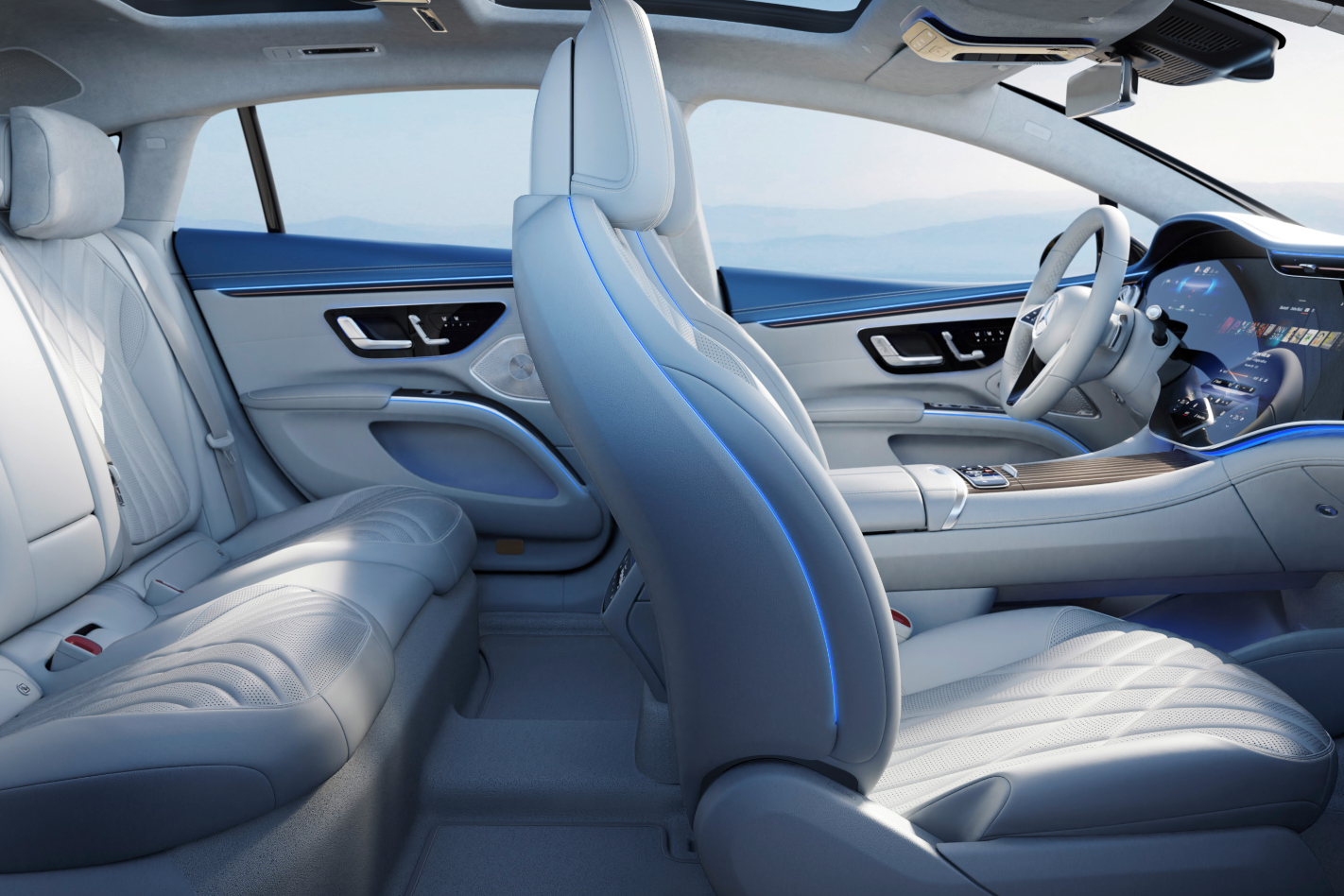
The interior can also be optioned in a material Mercedes calls “Neotex”, which is said to look like a combination of Nubuck leather and high-tech neoprene.
Thanks to the EQS being based on Mercedes’s EVA architecture, which is specifically designed for electric vehicles, the cabin is said to be roomier than many of its more traditional competitors.
Mercedes has also revealed the EQS has achieved a world record as the first production car ever with a drag coefficient starting from 0.201.
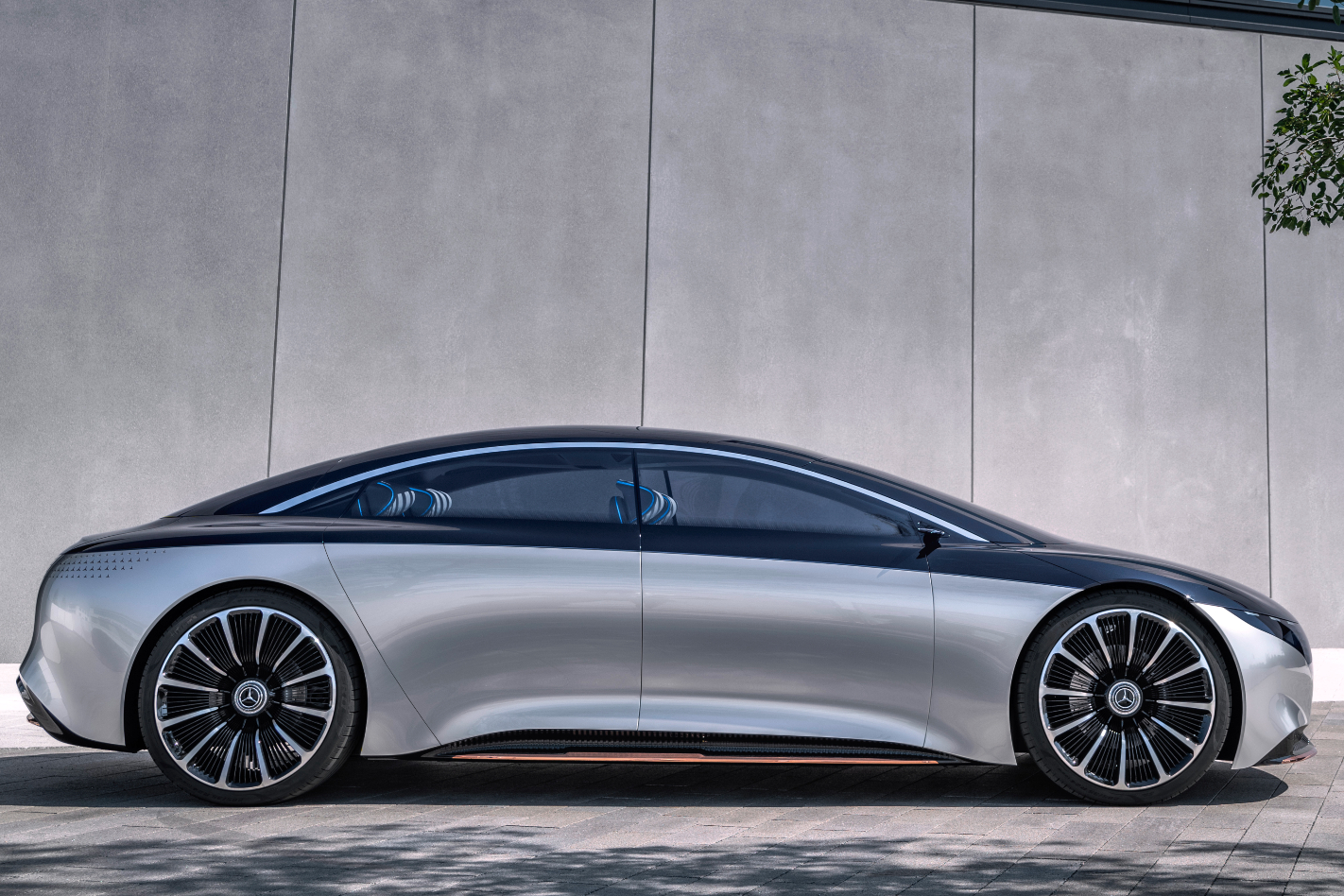
The Mercedes-Benz VISION EQS from 2019.
This extra-slippery body should help the EQS achieve another of its claims – a 700 kilometre (WLTP) driving range from just one battery cycle.
There remains a lot of unknowns about the electric EQS, but with the global reveal just around the corner on April 15, we won’t have to wait long for our questions to be answered.
WHAT’S THE POINT of a high performance car if you only ever drive it slowly?
I’m gazing down at the mode dial of this Bentley Continental GT V8, feeling a pang of guilt that for 90 per cent of this drive it’s been switched into its tamest Comfort setting.
It’s not that I’m particularly intimidated by the 404kW and 770Nm generated by the twin-turbo V8 up front, more that flinging a 2143kg extension of the Garrick Club at a corner seems faintly unseemly.
At this juncture, it’s worth mentioning that the eight-pot Conti has been around for a little while, arriving here in 2020. It’s always been a little overshadowed by its senior W12-engined sibling, and given that Bentley’s one of only five manufacturers who’ll sell a 12-cylinder engine in Australia – along with Aston Martin, Ferrari, Lamborghini and Rolls-Royce – there’s a certain cachet in joining that exclusive Anglo-Italian club.
But should you? This brings us back to our initial question. There’s no doubt that if the asking price is a peripheral concern and you prefer to waft along on a pillowy wave of torque, you ought to buy the W12. It’s truly magnificent.
Ask more of the Continental GT in terms of dynamics and the V8 version, with 50kg less heft sitting on its front axle, ought to be the preferable option.
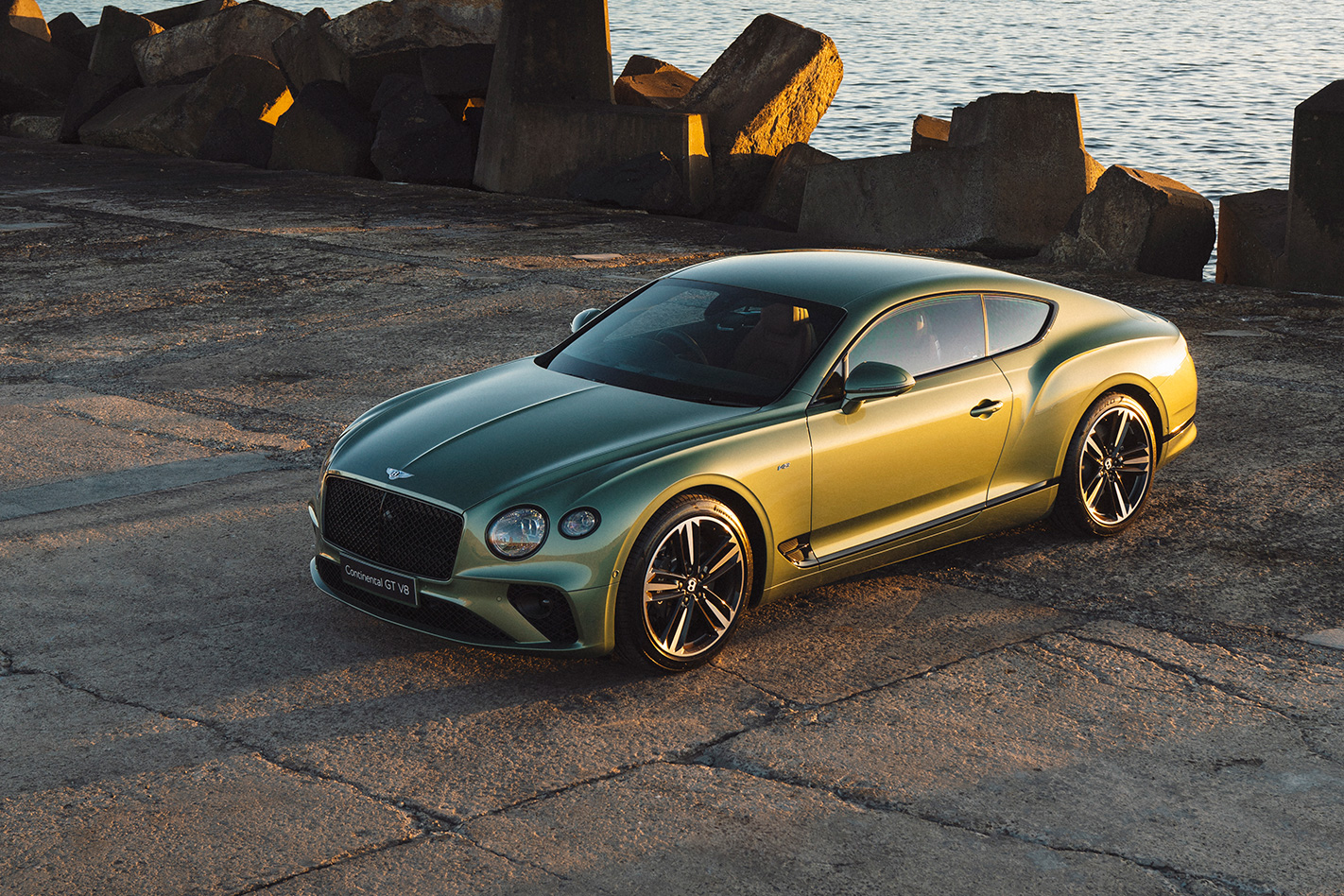
That’s why I’m sitting at the bottom of Reefton Spur, one of Victoria’s fiercest ribbons of tarmac, clicking the Drive Dynamics selector into Sport mode. The spec sheet promises 0-100km/h in 4.0 seconds and ‘unrivalled ride and handling’ which seems quite a lofty aspiration. I’m fairly sure it’ll be rivalled, but I’m just wondering what by.
The Sport mode wicks up the Dynamic Ride system, in effect a 48v active anti-roll bar system that improves body control. It also adds some attitude to the exhaust note, sharpens the steering and throttle maps, tweaks the front/rear torque split of the all-wheel drive system (from 62 per cent rear biased to 83 per cent) and bolsters the three-channel air springs in the Continuous Damping Control for reduced heave and pitch. But there’s still the little matter of 2165kg to consider. Yes, this is a 2+2 coupe that weighs much the same as a vast Audi Q8 SUV.
Drives like one too. There’s that same feeling of masses being controlled by opaque forces that you get when you drive a really good sports SUV. You’re able to barrel into a corner, punish the brakes, and pick up the throttle early, knowing that the car isn’t going to lurch into roll oversteer and that there will be drive going to whichever axle can best deploy it.
Yes, it’s pretty good fun, even responding to a throttle lift by tucking in neatly, but you’re always aware of the cost of consumables, the big optional 21-inch P-Zeroes and huge brakes copping a bit of a flogging. On the subject of brakes, the initial servo assistance of the 420mm 10-piston front rotors isn’t the fiercest and there’s no carbon ceramic option offered.
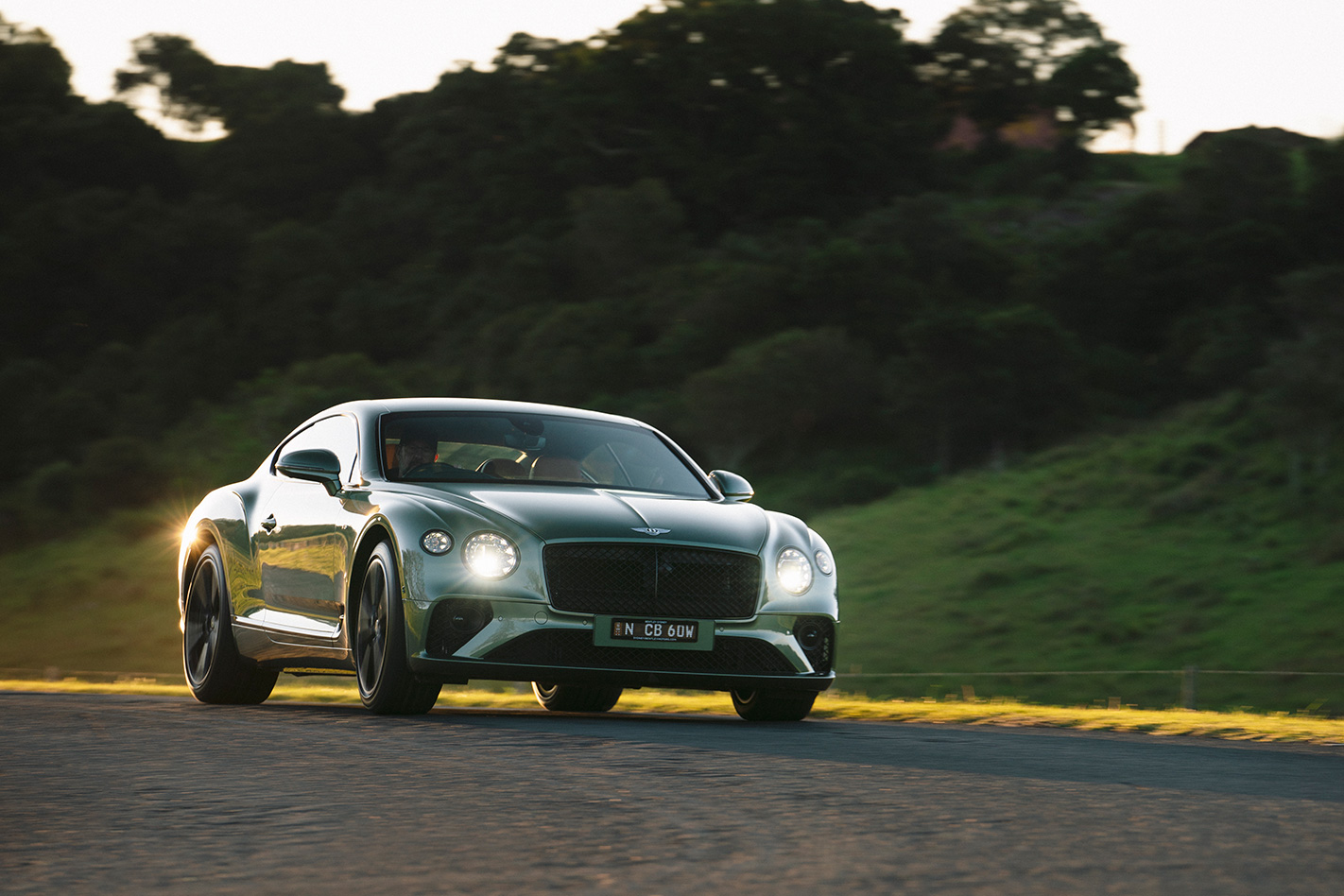
But, let’s face it, this isn’t how a Bentley Continental GT V8 is going to spend its life. The brakes offer a gentle bite for smoothness and that’s probably a smart decision. As a gran turismo coupe, the Conti has always been a class act but if you’re interested in luxuriating in the Bentley’s feel-good factor rather than chasing its 6800rpm redline, it’s tempting to think the V8 delivers a slam dunk against the W12. After all, if you’re not extending the powertrain, what difference does a 63kW power deficit make? In truth, quite a bit, but you need to drive the cars back-to-back to figure out why.
It all comes down to torque. That 12-cylinder engine makes more torque at 1250rpm near-idle than the V8 does at wide open throttle and it changes the way the car pulls away from a standstill, which is key in a luxury car. Accept that you don’t quite get that imperceptibly slurred step-off in the V8 and there’s little to dislike.
Minus points? Despite double-glazed windows and noise-cancelling tech, there’s a little more tyre roar at highway speeds than you’d probably want, but the GT V8 does get an excellent 10-speaker 650w stereo as standard, with the option of a 1500w Bang and Olufsen upgrade or the ultimate 2200w 18-speaker Naim setup. You’ll also search in vain for Android Auto mirroring, the Conti only offering Apple CarPlay.
Also missing from the standard specification are some fairly fundamental features like adaptive cruise, a head-up display, lane-keep assist, night vision and AEB. It seems a bit rich to charge extra for features you’d find on a Kia, but you’ll need to spec the Touring pack at $12,936 for this.
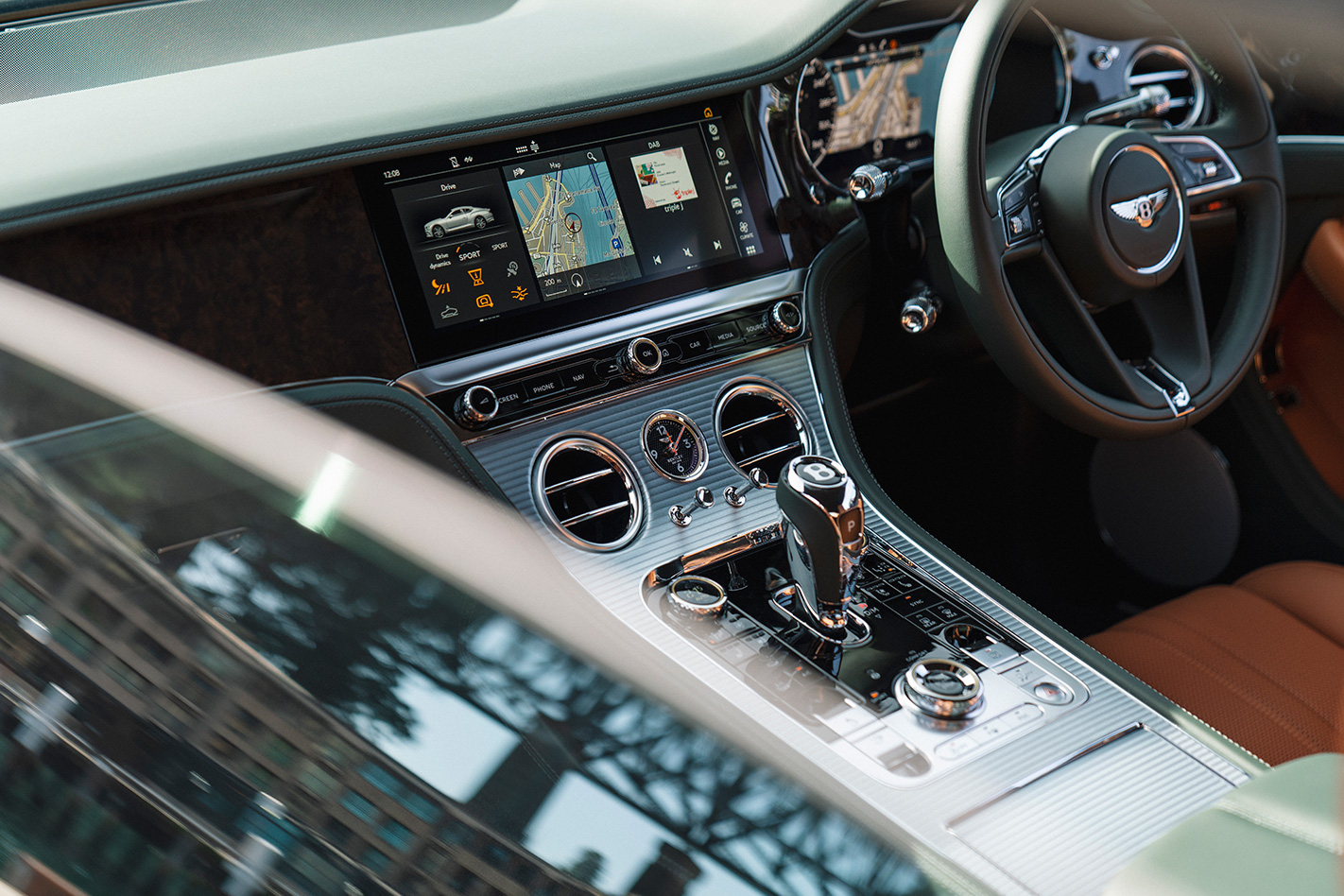
The eight-speed twin-clutch gearbox is an odd inclusion in a high-torque luxury car. A proper torque-converter automatic would probably make more sense, and there are occasions where, at low speeds, the ’box can shunt the drivetrain a little. The adaptive cruise control system is generally good, but even in its gentlest setting it can feel a little snatchy when bringing the car to a halt in traffic. The heated steering wheel is also a little weaksauce, going slowly from zero to tepid, which feels like the ultimate first-world problem, but buyers in this category expect excellence.
For the most part, they get it with the Bentley Continental GT. Whereas the more commoditised Conti originally felt a good way removed from ‘proper’ Bentleys like the Mulsanne, the latest generation bridges that gulf. There are no longer so many obviously shared switches and dials from Audis in the cabin, with the beautiful diamond-knurled dials and switchgear mirroring the jewel-like headlamps.
Classic organ-stop vent controls, soft leather hides and perfect contrast stitching reinforce that impression of quality, although I’d counsel against the optional extended piano black interior which picks up fingerprints and creates busy reflections. The optional $3K mood lighting with a colour-configurable LED strip that runs across the dash and around the door trims is also a little chintzy at this price point.
Bentley has nailed ride quality in Comfort mode which is absolutely vital for a gran turismo. A smart ‘Bentley mode’ detects when you’re pushing on a bit and when you’re just noodling along and adjusts the settings accordingly, but I’d rather the car just defaulted to Comfort on start-up for that gloriously molten ride quality. Pair that with a decently sized 90-litre fuel tank, a presentable 358 litres of boot space and the ability to extend range by shutting down one bank of cylinders on a cruise and you have the ingredients for a first-class long distance luxury express.
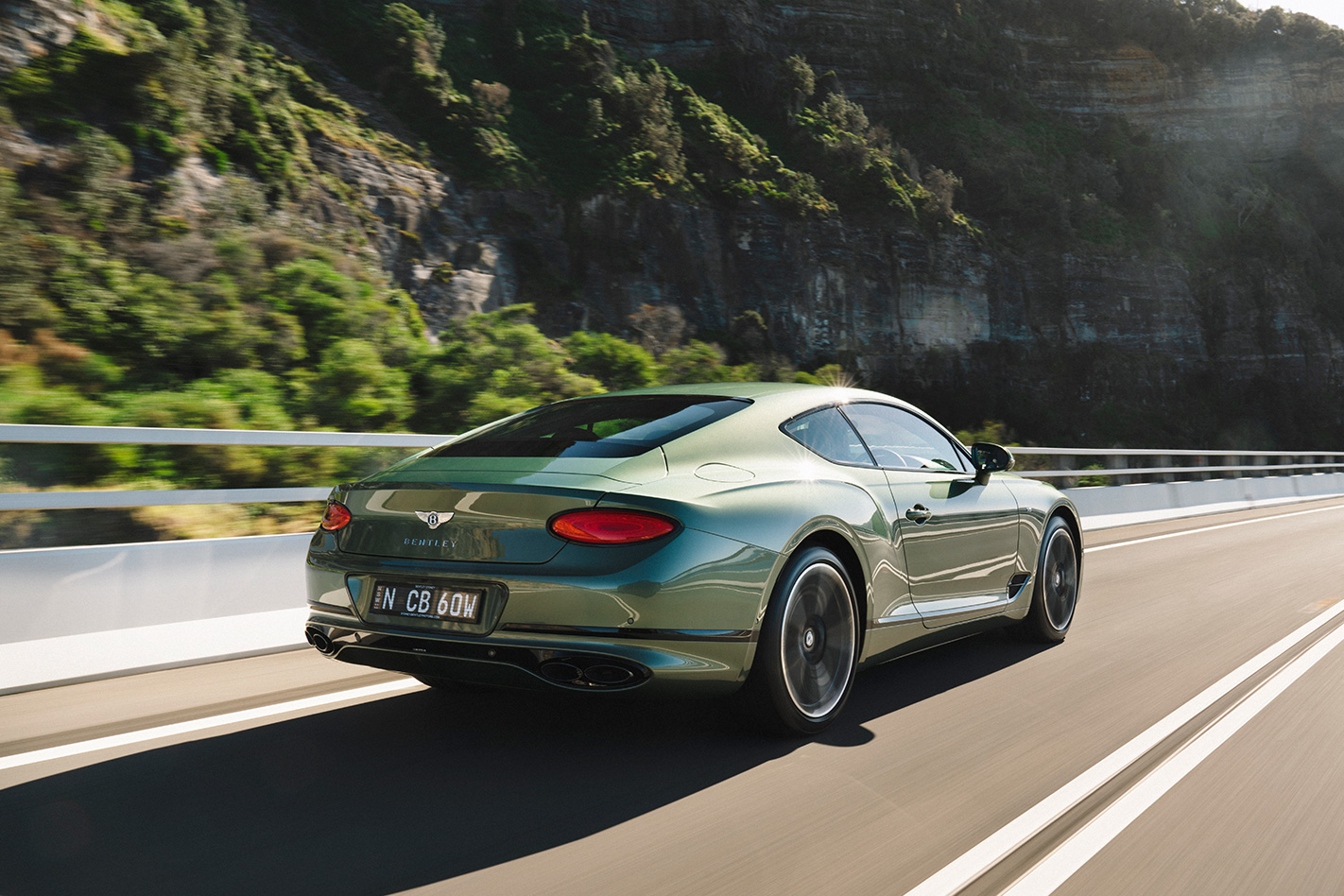
It’s also a car with very few credible rivals, for the time being at least. Nothing at this price point offers the same combination of GT credentials, impression of hand-crafted exclusivity and depth of engineering. There’s a clear development pathway for it to become an even better vehicle too. A plug-in hybrid system along with the fitment of an automatic gearbox would improve the Conti significantly, delivering silent and smooth step-off while retaining range and utility.
The incremental weight of a battery pack? Who cares? This thing already weighs as much as a tectonic plate.
That future vision is encouraging. Whereas many manufacturers will turn themselves inside out to accommodate an electrified future, Bentley will only benefit from it, in the medium term at least. The Porsche-developed hardware already exists. For now, the company is squeezing the pips from the final chapter of solus internal combustion.
The Conti GT V8 works as a model that’s 90 per cent wafter and 10 per cent bruiser. A car that always makes you feel a million dollars for $400k? Put like that, you could certainly consider it a bargain.
2021 Bentley Continental GT V8 Specs
Engine: 3996cc V8, DOHC, 32v twin-turbo Power 404kW @ 6000rpm Torque 770Nm @ 2000-4500rpm 0-100km/h: 4.0 sec Weight: 2165kg Price: $403,257
Ford Australia has recalled 31 examples of its 2021 Ford Transit Van due to an issue with the rear driveshaft.
According to Ford, a fault in the manufacturing process means that affected vehicles may have been installed with a rear driveshaft bearing support bracket that might be holding the driveshaft at an incorrect angle.
The automaker added that “if the driveshaft suffers excessive wear, for example in vehicles with high mileage, it could detach and hit the road or dig into the road surface. This could cause the vehicle to be lifted or tipped over, increasing the risk of an accident.”
Although complied for the 2021 model-year, affected vehicles were built between in 2020, between August 18 and August 26.
Ford will be contacting the owners of the affected Transits and asking them to arrange a time to have their vehicles inspected at an authorised Ford Dealership.
If a problem with the rear driveshaft bearing support bracket is identified, it will be repaired by Ford free of charge.
Anyone seeking more information about the issue can contact Ford’s Customer Relationship Centre on 1800 503 672.
Ford has also compiled a list of the affected vehicles’ VIN numbers, which can be viewed here.
MORE: Transit stories MORE: All Ford stories
Subaru Australia has issued a recall for 256 examples of its 2021 Outback SUV, due to an issue with the electronic brake booster.
According to Subaru, the new model’s brake booster may not have been set up correctly, which may render cruise control inoperable.
The Japanese automaker said the issue also has the potential to cause other problems such as flattening the car’s battery, the brake light remaining on even when the brakes are not being applied, the brakes requiring more pressure in order to stop the vehicle, and an increase in the vehicle’s stopping distance.
Subaru will be contacting the owners of affected Outbacks and asking them to arrange a time to take their vehicles to an authorised Subaru dealership for an inspection.
If a fault with the brake booster is identified, it will be repaired by Subaru free of charge.
Anyone seeking more information about the issue can contact Subaru Australia’s Customer Relations Team on 1800 22 66 43.
Subaru has also compiled a list of the affected vehicles’ VIN numbers, which can be viewed here.
MORE: Outback stories MORE: All Subaru stories
Korean luxury marque Genesis has posted a 30-second video teasing the unveiling of what could be the long-awaited next step for its head-turning Essentia concept.
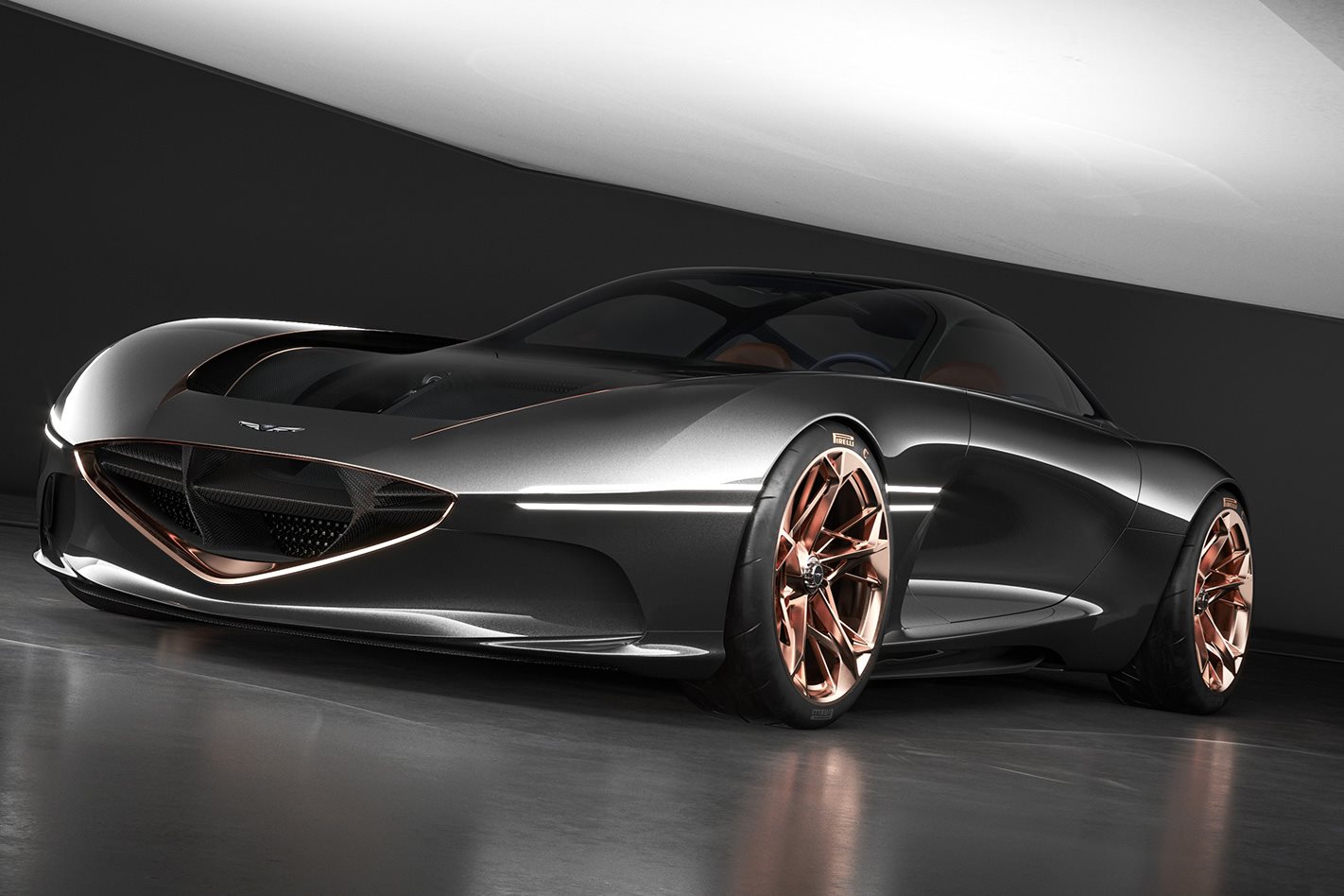
The original Genesis Essentia concept of 2018.
First shown at the New York Motor Show in 2018, the striking all-electric coupe concept was one of the highlights of the event, revealed as a preview of Genesis’s design language for future models.
Since its initial reveal, however, Hyundai’s luxury arm has remained tight-lipped about the futuristic coupe, and it has been years since we’ve heard anything more about the concept – despite it being confirmed for production in 2019 by Genesis’s former boss, Manfred Fitzgerald.
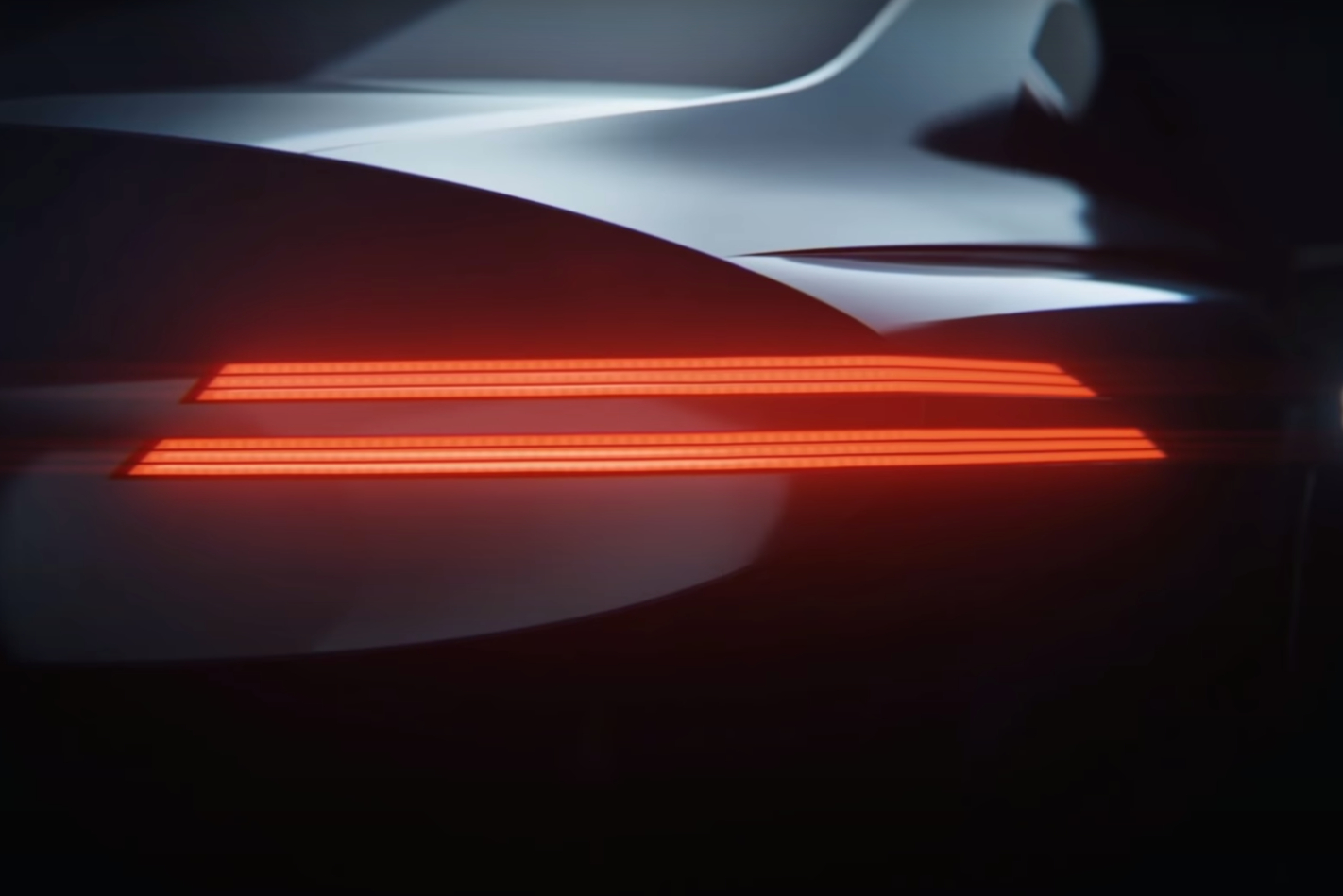
And while it isn’t definitive, the glances of the car shown in this short film bear a strong resemblance to the Essentia, sporting the same double-streaked, super-slim headlight and tail-light configuration as the 2018 concept.
The video also shows a car with a concave rear end, long muscular bonnet, large chrome mesh grille, and a streamlined profile with tough-looking flared rear arches – all of which are characteristics true to the original Essentia concept.
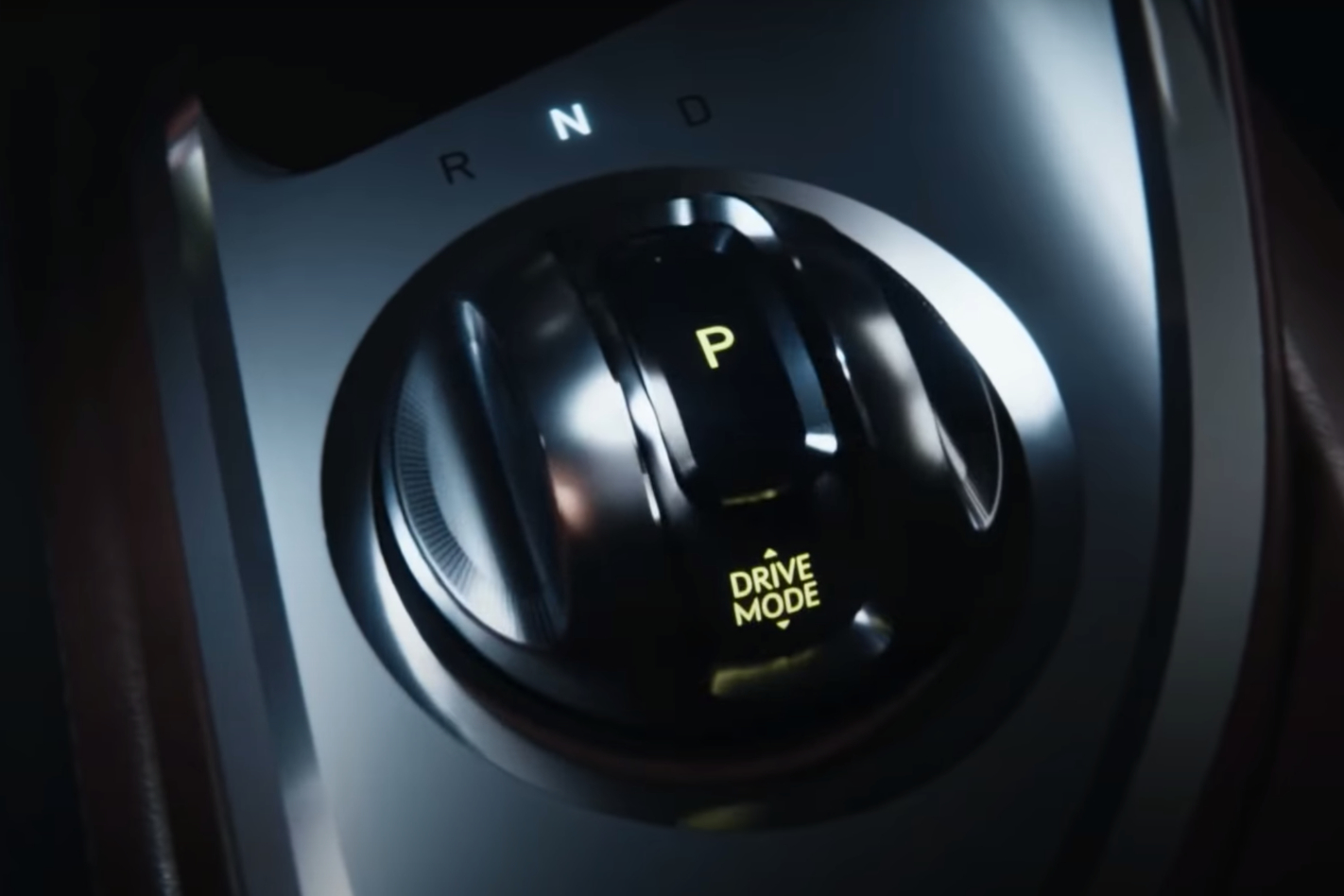
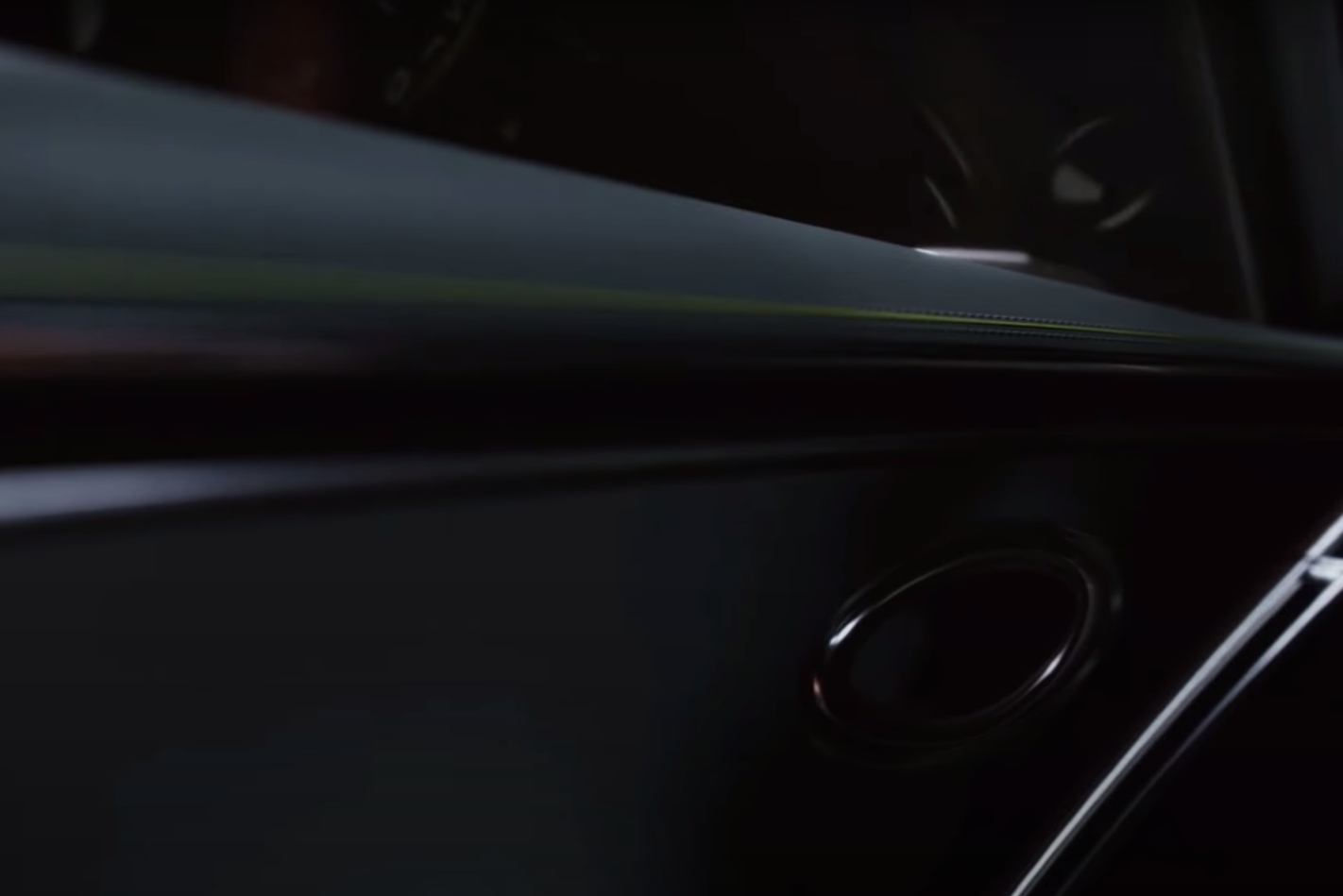
Splashes of lime green – seen on the brake callipers, trackball-style gear selector and door card stitching – also hint at the svelte coupe’s EV powertrain, rumoured to be powerful enough to propel the Essentia from zero to 100km/h in less than three seconds.
Little else is known about the tech specs of the coupe, but given its dynamic looks and rumoured performance, chassis development could be taken care of by Hyundai’s formidable N Division.
The Essentia project, which will act as a flagship model for the new luxury carmaker, is the brainchild of ex-Bentley, Lamborghini, Audi and Skoda design director, Luc Donckerwolke.
Donckerwolke, who now acts as the chief design officer for the Hyundai Motor Group, has been crucial in defining the look of all Genesis models we’ve seen so far, and the Essentia could prove to be the designer’s most radical concept yet.
WhichCar has reached out to Genesis Australia for more information, but a representative for the brand said we’ll have to wait for the global reveal of the concept, which is taking place this Wednesday, March 31 at 11 am. Watch this space.
JUST RARELY, a car is launched that is so revered that it creates a huge headache for its manufacturer. We examine 10 instances where car makers asked “how the hell do we replace this?”
Peugeot 206 GTi | 1999-2006
Peugeot’s captivating case study in how to fail at follow-ups
It’s still the definitive hot hatch. No matter how recently you were born, you should know the Peugeot 205 GTi.
It didn’t invent the notion of the hot hatch, but in honing it to an ultra-keen edge it redefined what the hot hatch should be.
Power wasn’t a key criterion. The initial run of 205 GTi 1.6 models, introduced in June ’83 ahead of a 1984 on-sale date packed a modest 77kW. The Euro market was already packed with rivals such as the Volkswagen Golf GTi, the Ford Escort XR3i and the Fiat Uno Turbo to name but three.
Contrary to received wisdom, the 205 GTi wasn’t an instant hit with critics. LJK Setright proclaimed an early pre-production version to have “an absolutely appalling ride from what must be the worst suspension I have encountered in a decade.” Fortunately, Peugeot listened and acted swiftly, finessing the damping to take the angst out of the GTi’s secondary ride.
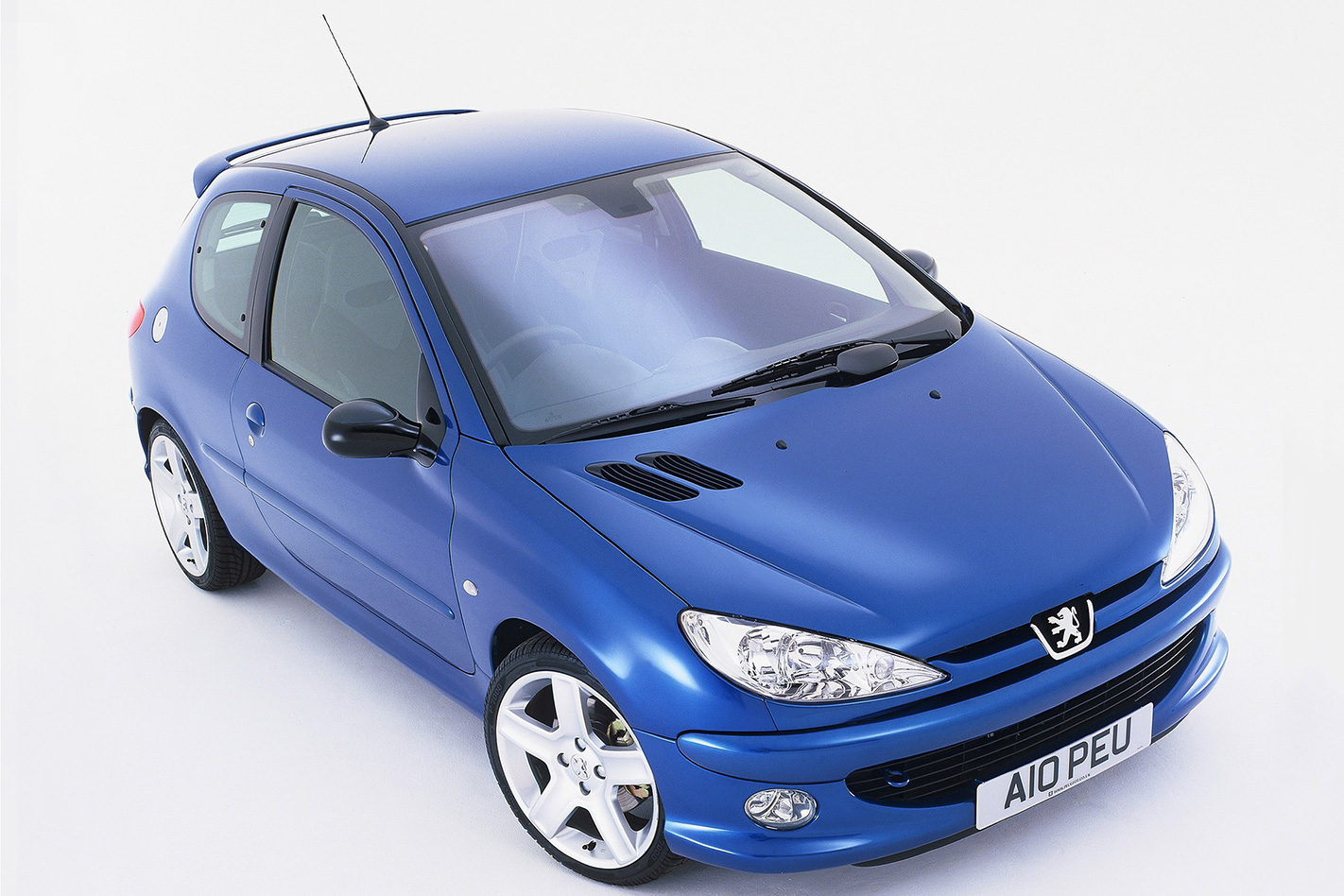
Australia had to wait another three years for the 205 GTi to make landfall. We got the 1.9-litre car, arriving in October 1987 and wearing a $29,500 price tag. Its successor, the 206 GTi, aced the old stager in the sales charts.
Suggest to a Peugeot executive that the 206 GTi was an inadequate replacement and they’ll probably shrug and extend the word “beeuuuuurrghhhh” contemplatively until they can load an Excel spreadsheet that proves quite the opposite. But, as we know, ‘popular’ and ‘good’ can often be a Venn diagram with only the merest soupçon of intersection.
There was little good about the 206 GTi. It had two things going for it as a hot hatch. Firstly, it was pretty and, secondly, it had lovely front seats. That was about it.
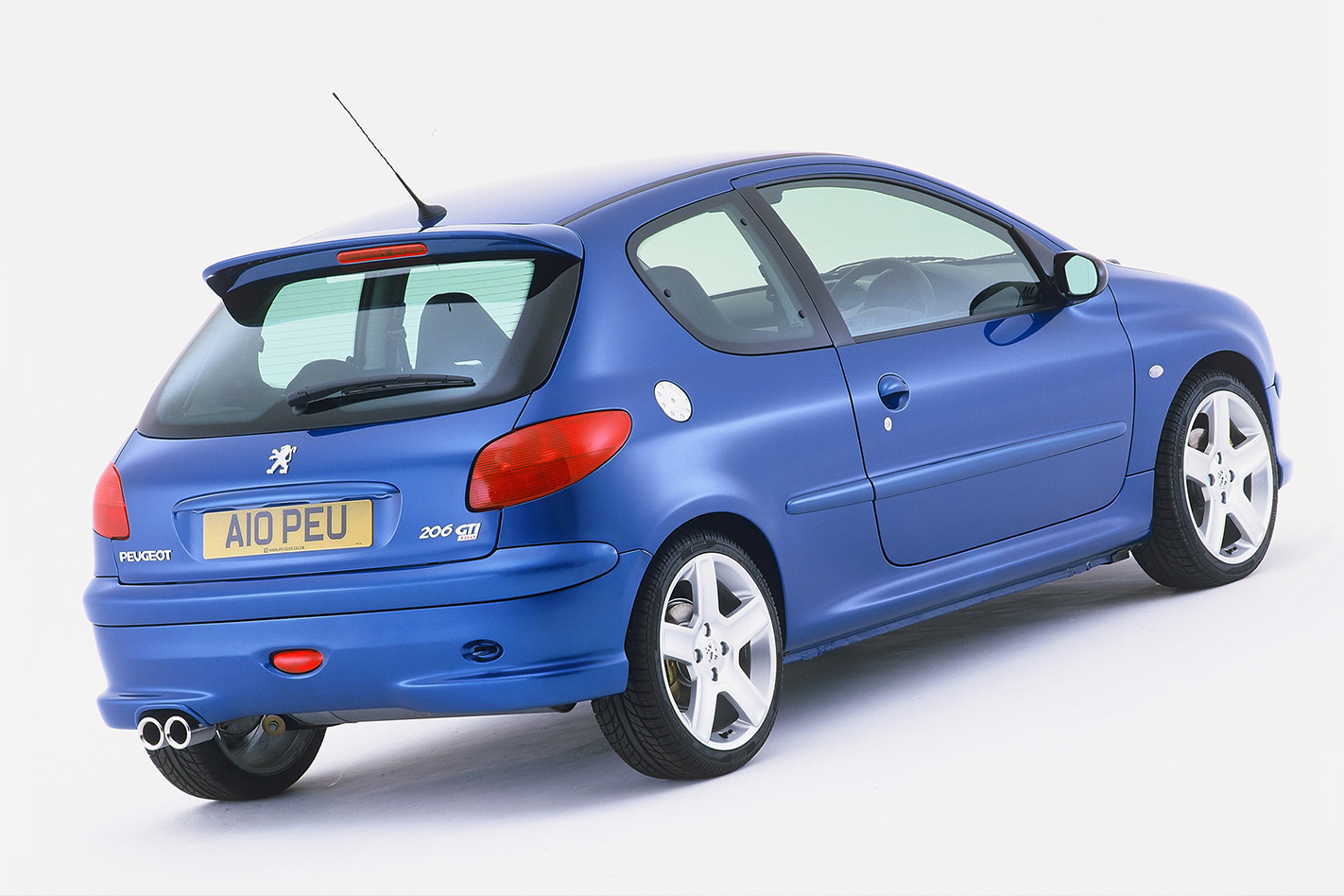
Virtually all of the 205’s driver focus was squandered with weight stepping up a massive 28 per cent from the 205 GTi’s 860 kegs to a chunky 1100kg for the 206 GTi 180. That car, Peugeot’s answer to the Renault Clio 172, was introduced in 2003 and was a mess.
It not only rode terribly but wasn’t great in corners, had a terrible driving position, huge A-pillar blind spots in common with other 206s and its development was, to say the least, troubled.
The cable-activated gearshift was flabby and, unlike the standard 206 GTi, was mated to a ’box with just five ratios, with a taller first gear than the six-speed transmission so it even feels slower off the mark.
The brakes were spongy, not helped by the fact that the master cylinder was in the position for left-hook cars and connected across the vehicle by a crude lever that, in certain circumstances, was operable by the front passenger, prompting a production change in 2005.
This car so blighted Peugeot’s reputation as a hot hatch manufacturer of note that it wasn’t until the 208 GTi appeared in 2012 that some measure of rehabilitation could be realised. The 206 GTi remains a salutary warning that short term gain can spawn long term pain.
The Icon: 1984
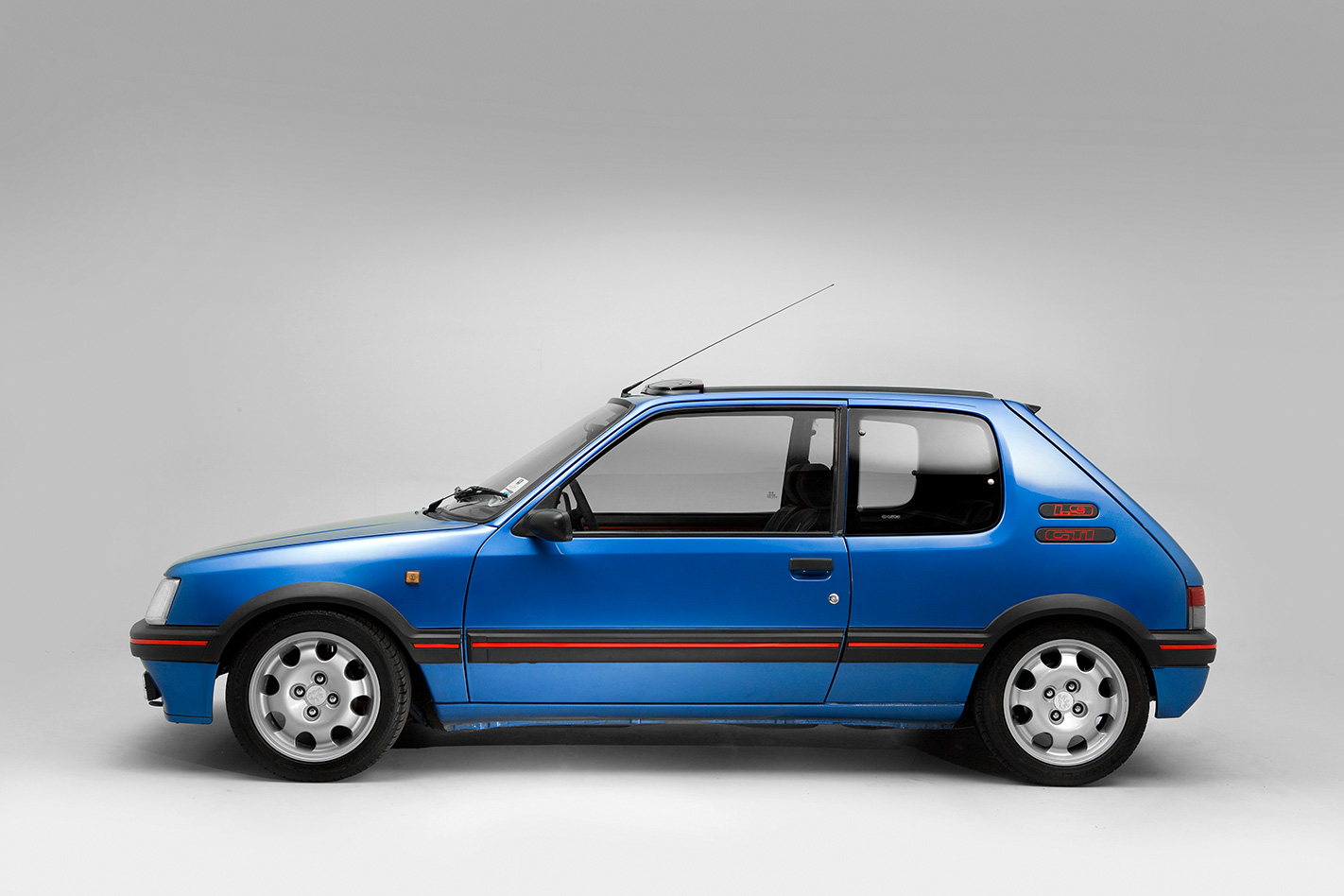
Here’s one we made earlier
Enthusiasts are split over whether they prefer the sweet 205 GTi 1.6 or the gutsier 1.9. We didn’t get that choice in Australia, and should you want to track it down, one 1.6-litre car was imported for evaluation purposes.
Three reasons the 205 GTi is revered
1. The 205GTi made its rivals seem staid. Only the Renault 5 GT Turbo had similar joie de vivre 2. Throttle adjustability: the 205 GTi has it in spades, as some found to their cost 3. Aussie 1.9 GTis arrived in 1987, priced at $29,500. That’s $74,334 in today’s money
Mazda has unveiled a new top-of-the-range variant of its impressive new BT-50 dual-cab ute – and it’s called Thunder.
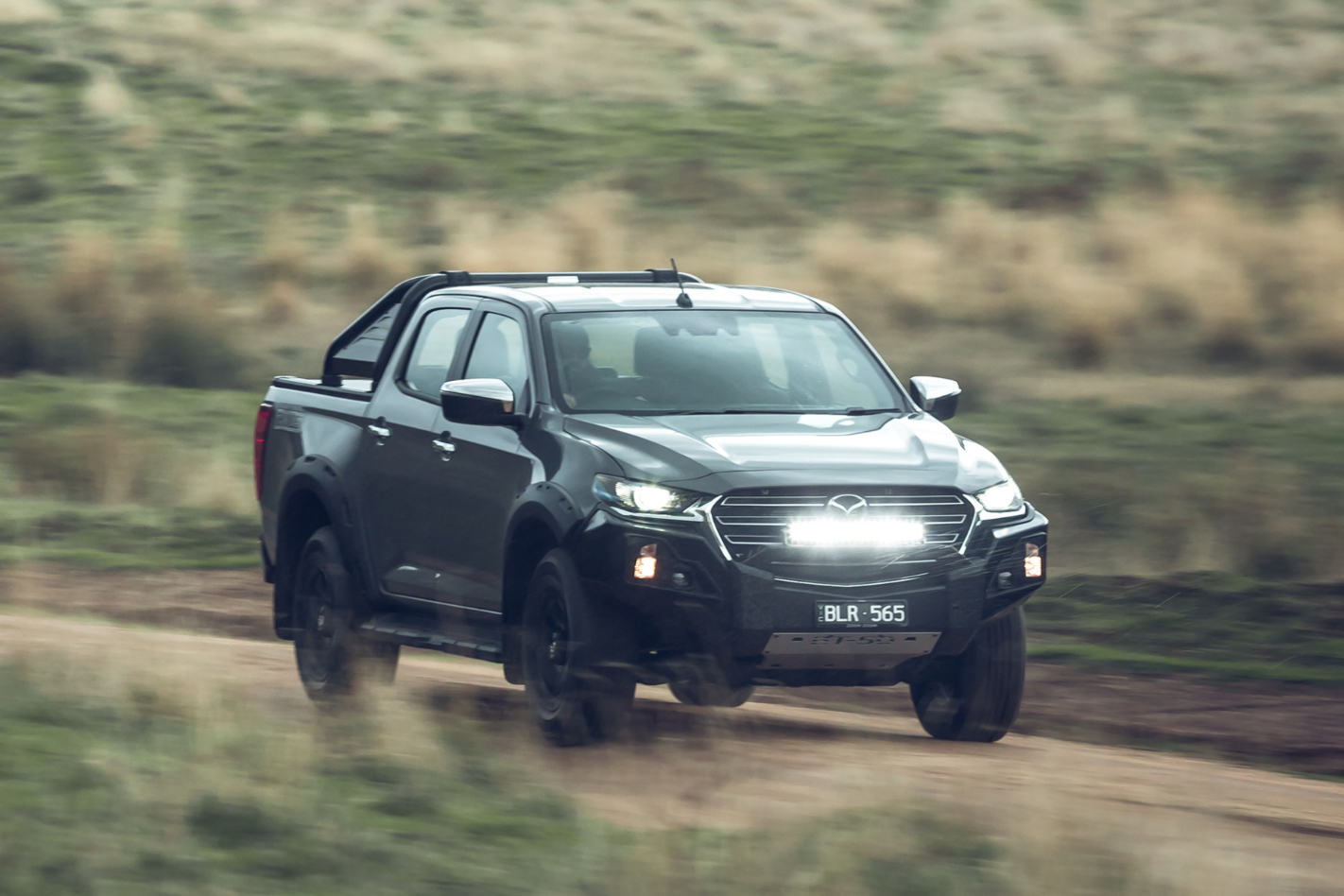
The tough-looking workhorse is based on the automaker’s regular range-topping GT model and has been specifically designed for the Australian market, delivering a package similar to Toyota’s Hilux Rugged X and Nissan Navara N-Trek Warrior.
Mazda’s team of local in-house engineers have added new equipment, designed to cater to BT-50 owners keen on exploiting the dual-cab’s off-road capabilities.
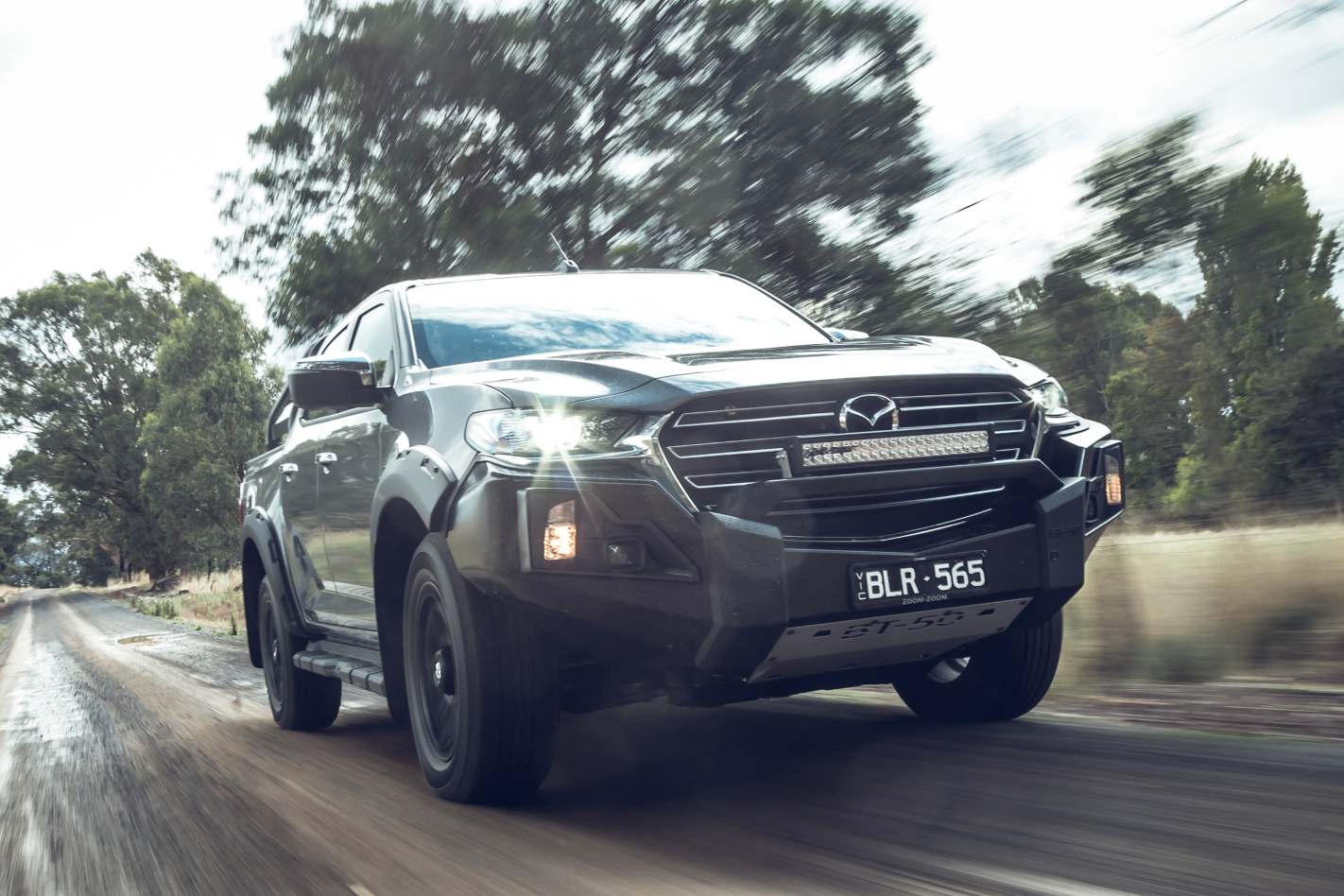
The front of the ute scores a low-set new steel bullbar with single hoop and an integrated underbody bash plate that should better protect the car when the going gets rough.
Also integrated into the bullbar is a custom Lightforce dual-row LED light bar, which will be handy on regional trips and weekend getaways.
Flanking either side of the Thunder is a set of matte black fender flares and complimenting side steps, and the ute also sits on new 18-inch black alloy wheels.
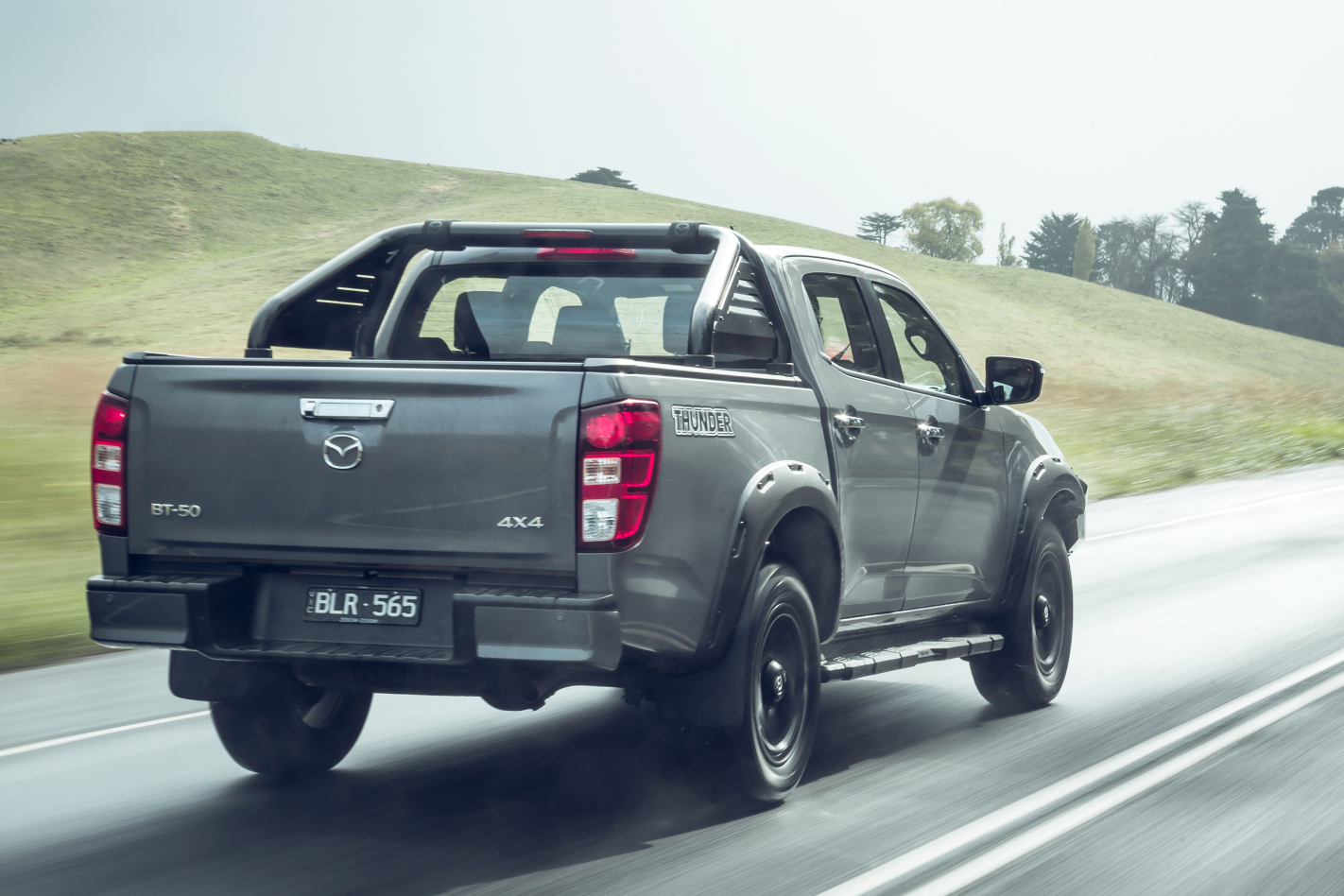
At the rear of the dual-cab, a new matte black rear bar has been fitted, as well as an electric roller tonneau cover, tub liner, and new “Thunder” decals.
Powering the new BT-50 flagship is the same 3.0-litre turbocharged four-cylinder diesel engine found in the rest of the model range.
The torquey donk dolls out 140kW and 450Nm, sending power to all four wheels via either a six-speed manual or six-speed automatic transmission.
The Thunder comes equipped with a switchable locking differential as standard, ensuring its off-road cred.
Fuel economy is rated at 7.7L/100km when fitted with the six-speed manual, and 8.0L/100km when optioned with the six-speed automatic transmission.
Mazda Australia has priced the new Thunder with an introductory offer of $65,990 drive-away for the Dual Cab 4×4 manual and $68,990 driveaway for the Dual Cab 4×4 automatic.
After that, the sticker price will remain the same, but buyers will need to fork out for on-road costs.
Mazda has confirmed the rugged Thunder will be rolling into showrooms from April.
Aside from the custom kit, the Thunder comes equipped with all the goodies of the BT-50 GT model, which includes:
MORE: BT-50 news and reviews MORE: All Mazda stories
JUST RARELY, a car is launched that is so revered that it creates a huge headache for its manufacturer. We examine 10 instances where car makers asked “how the hell do we replace this?”
Renault Megane RS280 | 2017-2021
It’s a wry truth. When you’re on top, the only way is down
EXCELLENCE IS a fiendishly tricky thing to maintain. Empires rise and fall, sporting franchises suffer cyclical slumps and the less said about The Godfather Part III the better. The same can be said for successive generations of vehicles and, to illustrate that fact, here we have Exhibit A: the Megane Renault Sport.
Were the latest version judged in isolation, it would stand up reasonably well. It’s undeniably quick, fairly good looking and handles crisply. Package that with sensible pricing and those look to be a pretty fair approximation of the constituent elements for hot hatch success.
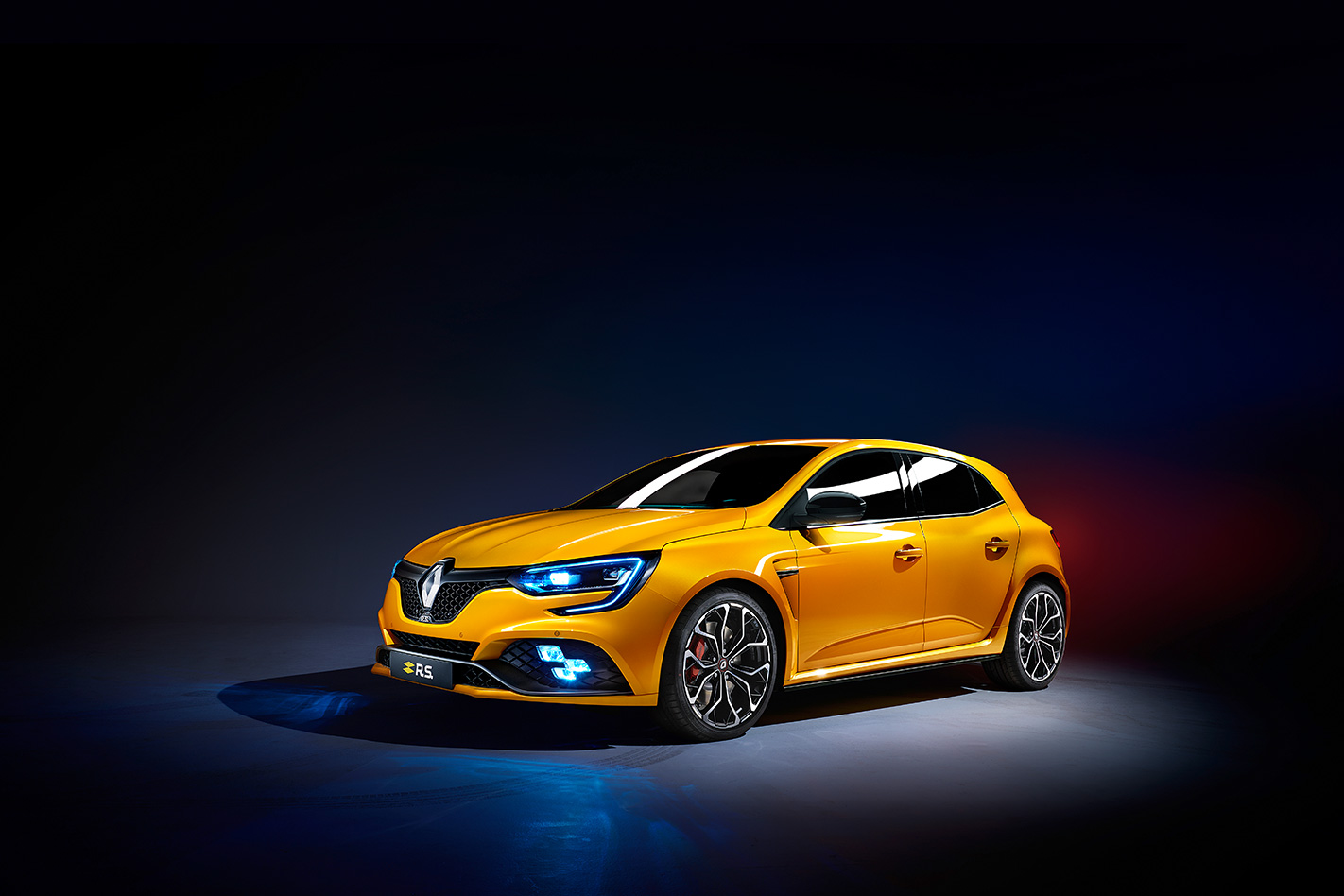
The trouble is, if you’re spending $45k-odd of your hard-earned on a focused performance hatch, you tend not to trifle with superficialities. You’re in this because you know better. And if you know better, you know that you can buy better.
At this point, we should probably note a point of order. The first-gen Megane RS was based on the second-gen Megane, so when we refer to the current RS as the third-gen, know that it’s built on a fourth-gen Megane body. Easy primer? The first-gen Megane RS (2004-2009) had he bubble butt, the second-gen (2010-2016) was the pretty three-door coupe and the third-gen (2017-now) reverted back to five doors but has a rear end of which Sir Mix-a-Lot may not approve.
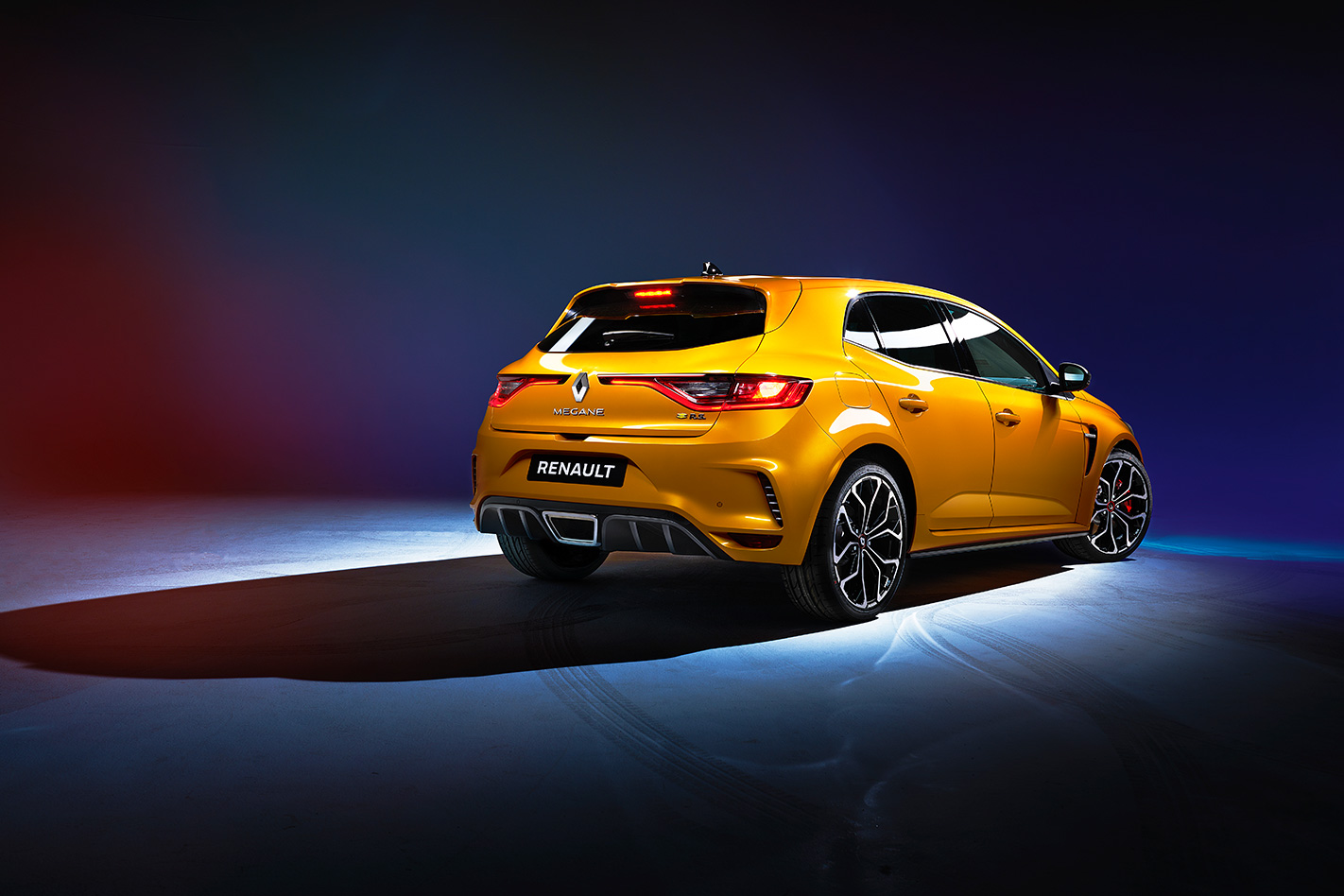
The second generation RS models delivered some true gems, and even the more extreme versions like the Trophy-R with its silly air-con and stereo factory deletions and fixation on Nurburgring lap times still worked reasonably well on-road. There was real talent whether you opted for Cup or Trophy chassis.
With the third-gen car, the best option is the softer Sport chassis, with the 10 per cent stiffer Cup setup too jarring. The 1.8-litre engine is a step back from the better-sounding 2.0-litre in the second-gen RS and the four-wheel steering system is such a pointless addition that the hugely expensive Trophy-R did away with it altogether. The new Torsen limited slip diff isn’t as exciting in its feel as the previous GKN mechanical item either. And in this sector, engagement is key.
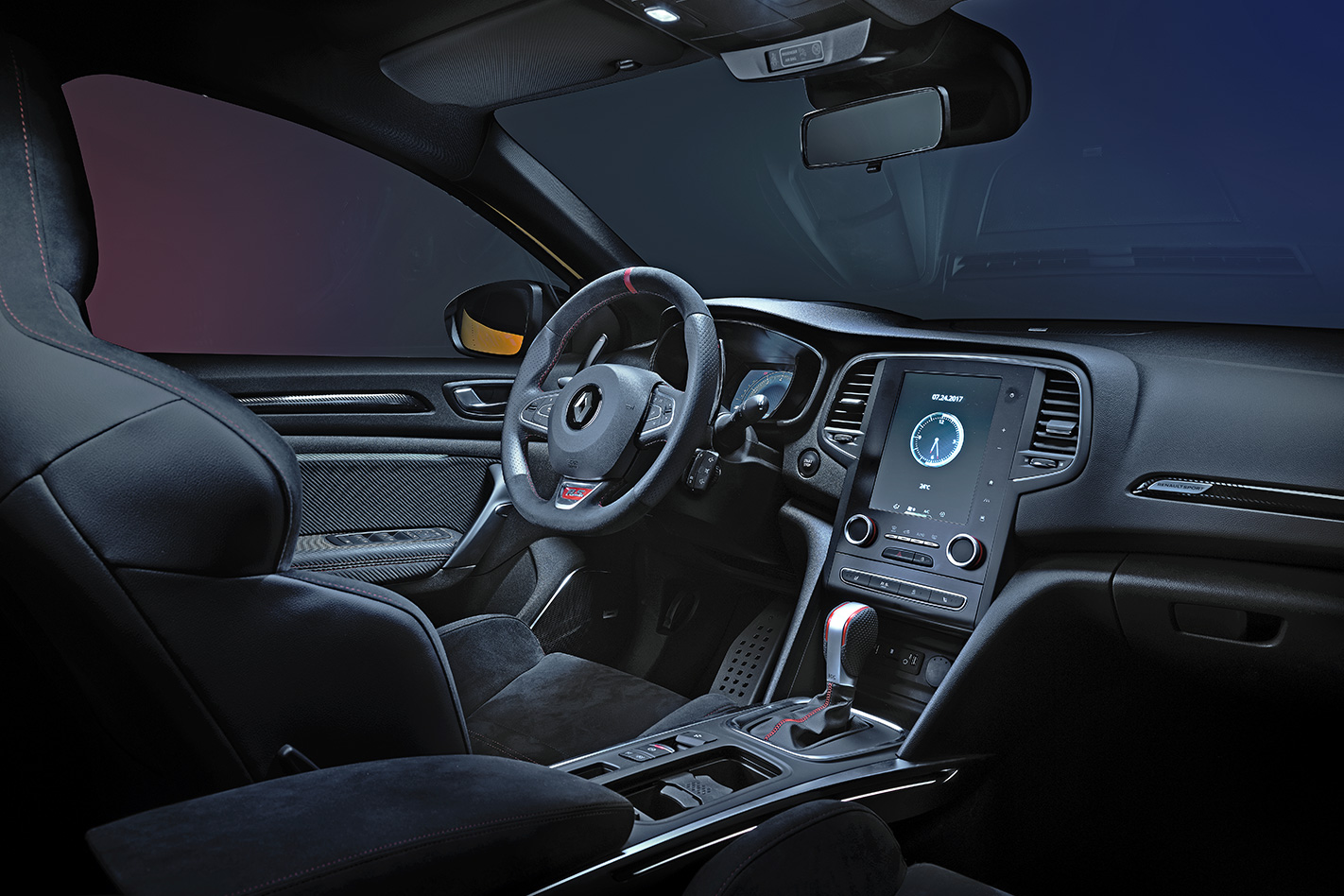
This latest version of the Megane also had the misfortune to butt into a new golden age of hot hatches. Cars like the FK8 Honda Civic Type R, the Hyundai i30 N and the Ford Focus RS weren’t around prior to 2017 and, between them, they’ve raised the bar in the class.
There’s little doubt that the third-gen Megane RS is a quicker car than its predecessor, but a better one? If we were spending our own money, we’d take a third-gen car RS 265 Cup car every time. Maybe Renault lost sight of what ‘better’ meant in the real world. It’s hard to say. The next generation Megane RS is likely to be something radically different. Renault needs to prove it can adapt quicker than the rest and that looks set to be an even greater challenge.
The Icon: 2010
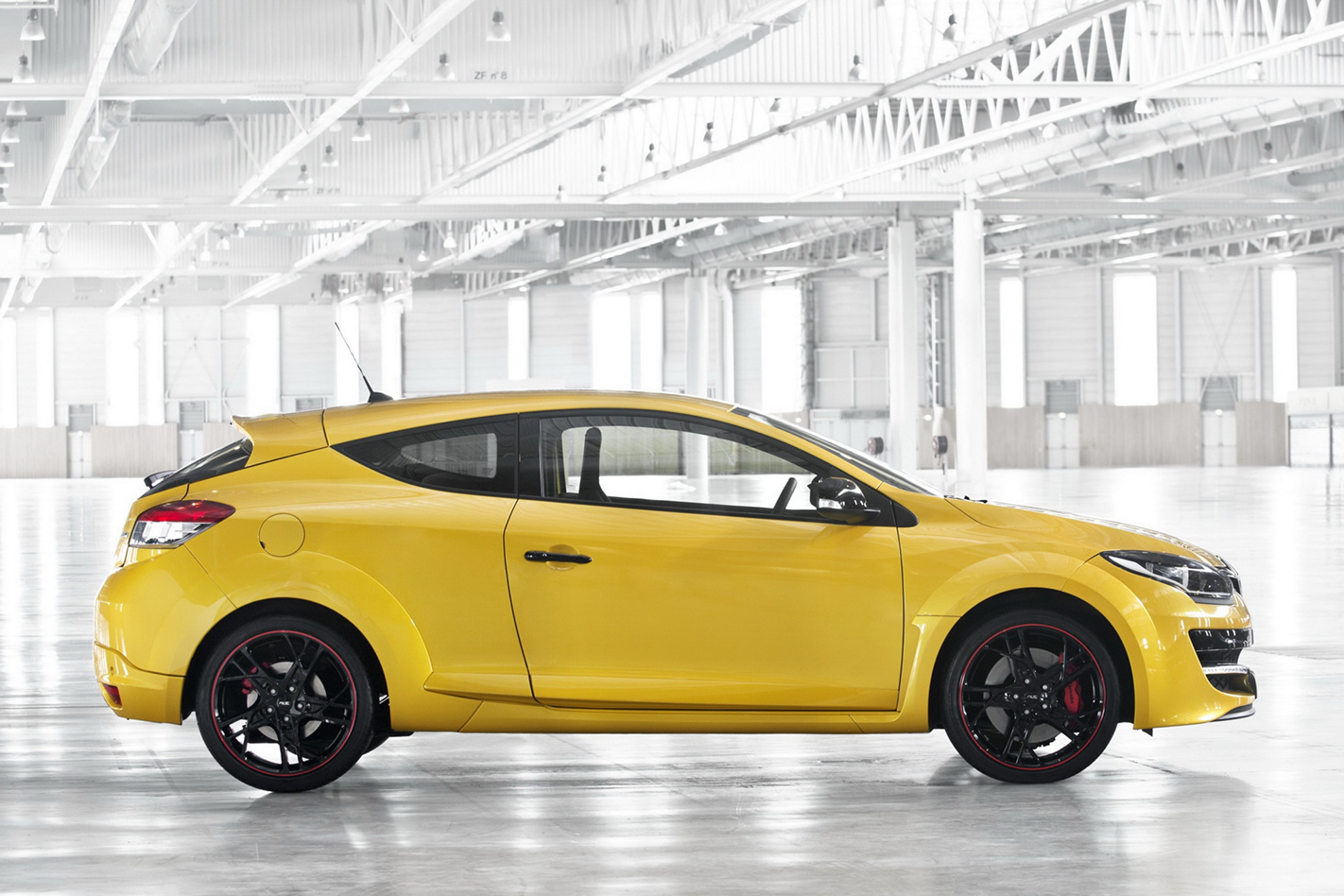
THREE DOORS GOOD
The svelte coupe profile of the three-door Gen 2 RS was ditched for the more upright and practical five-door-only Laurens van den Acker-designed Gen 3.
Three things we loved about the RS Gen2
1. The fact that talent spread throughout the line up means there’s not really a particularly weak link. 2. Australia got some great special editions. Yes, they were just tinsel, but who wouldn’t want an RS 8.08? 3. There’s a thriving aftermarket offering opportunities to make your RS unassailable
I got up at 5:30am the other day. With apologies to the many hard-working folk for whom this is a regular occurrence, those who know me know it’s a miracle akin to the resurrection of Jesus. It was even a Sunday.
Of course, it was supposed to be 4:30am, but my failure to set an alarm meant an easy start to the day with a good breakfast, long shower and massive cup of tea was replaced with panic and pandemonium.
Only two things can easily extract me from the warm embraces of my bed at such an hour: a long flight to somewhere with a perfect temperature, pristine beaches and a swim-up bar, or motorsport.
Motorsport needs you. Australia is lucky to have a reasonably healthy grassroots scene, with events happening virtually every weekend, but they don’t happen by themselves.
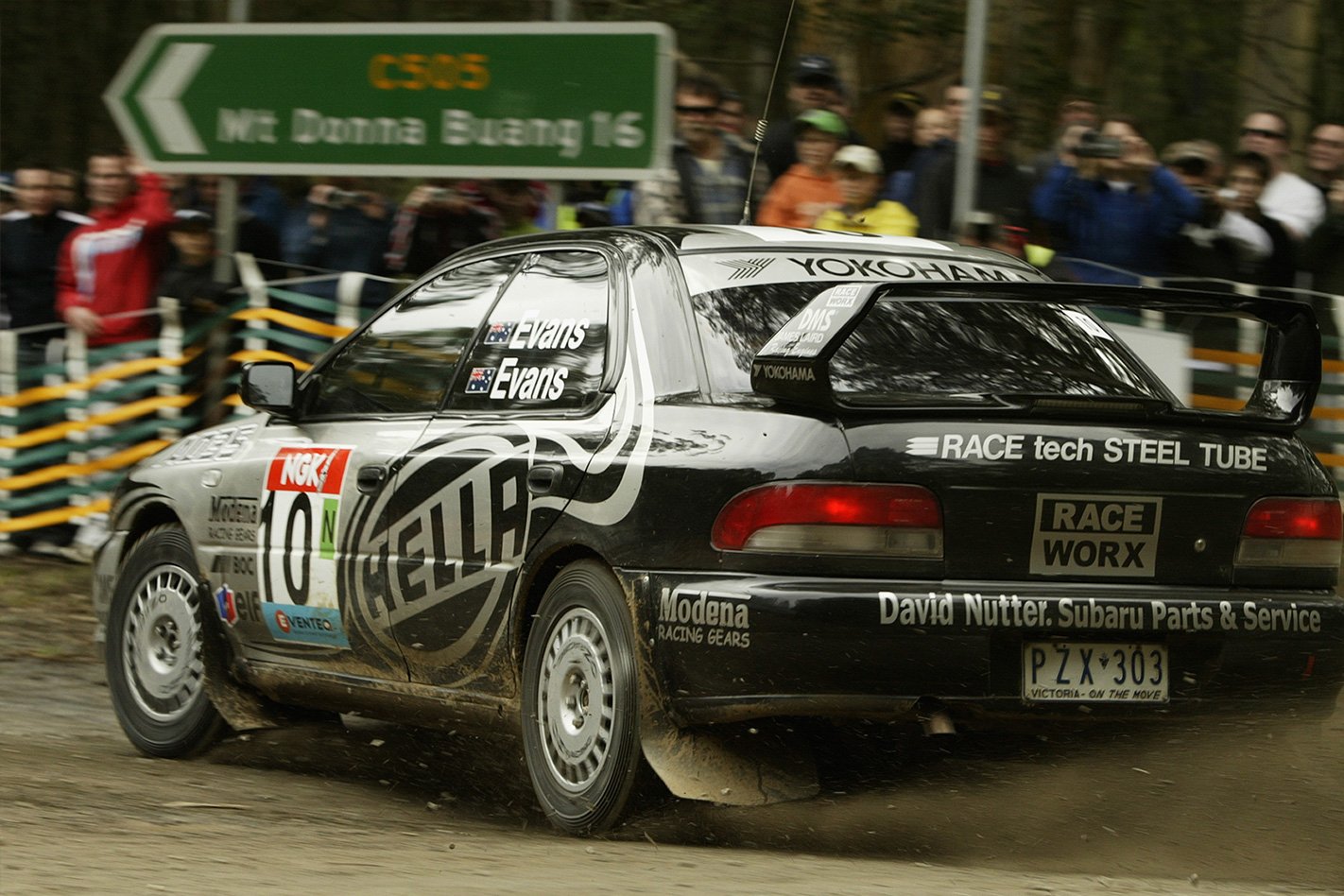
Behind the scenes there are people working long hours, almost exclusively on a volunteer basis, purely so others can have fun going racing.
The easiest way to help out is to sign up as an official, which is exactly what I did for the final round of the Victorian Rally Championship, the Western Victorian Crane Trucks Valley Stages, held in the forests surrounding Yarra Glen about an hour east of Melbourne.
The VRC has a clever system which requires each driver to officiate throughout the year. This means (theoretically) that there should always be a decent pool of people to help out and no one is disadvantaged in the chase for the championship.
Signing up is a simple. I filled out a form online and then received a phone call and follow-up email stating where I’d need to be and when. There are heaps of roles available: at a circuit meet you could do sign in, scrutineering or be a flag marshal, while on a rally there are time controls, service controls, spectator points and, given this is 2020, COVIDSafe marshals. My responsibility was a road closure.
Rallies run on closed public roads, so any side roads leading on to the stage need to be monitored. It’s the easiest job in the world. You sit in a forest all day, watch rally cars and eat snacks.
If nothing else, in a year when so much time has been spent cooped up inside, it was nice to spend a day in nature with no distractions, not even phone reception.
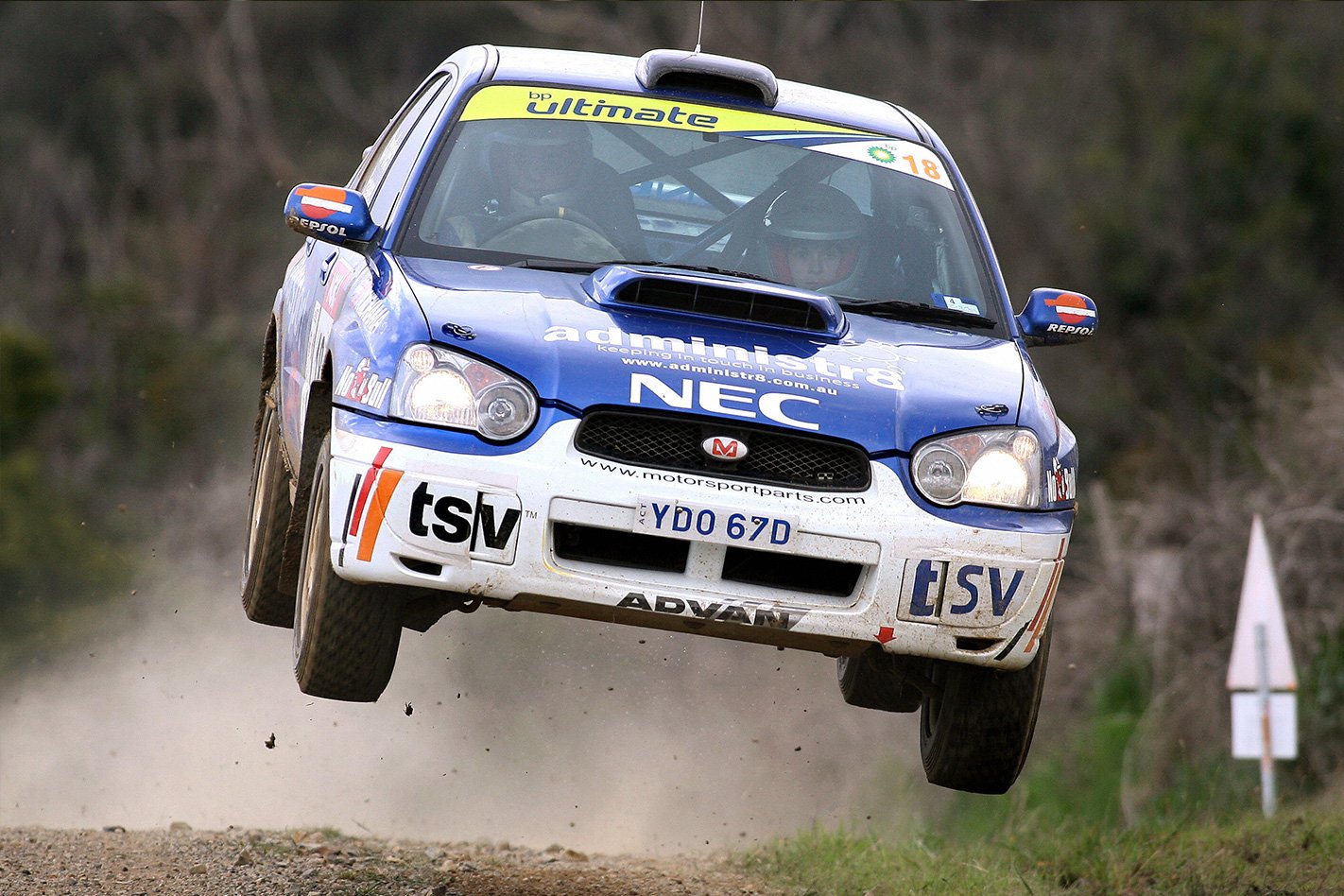
The other benefit was to reconnect with the fun of watching live motorsport. YouTube highlight reels can provide the visuals but can’t complete the sensory picture. One of the best parts about rallying is how close you can get to the action, provided you’re not in harm’s way, of course.
You hear the cars long before you see them, the echoing sounds providing clues as to what’s coming next and how hard it’s being driven. The ricochet of anti-lag is almost certainly a Subaru Impreza WRX or Mitsubishi Lancer Evo, which continue to dominate state-level competition.
Highly tuned four-cylinders are harder to place. It could be an old Ford (Fiesta) or a new Ford (Fiesta); an old Datsun (1600, 200B) or newer Nissan (Pulsar GTI); a Peugeot (309 GTI, 405 Mi16) or even a Hyundai (Excels are a popular entry-level choice).
The V8s are the best, though, the screams bouncing off the trees like an approaching predator. The diversity of cars is brilliant, but the diversity of driving abilities is even better.
The front runners are on it, using every bit of the road. Then there’s the guys who are having fun in quick cars, neat and tidy. However, the best of all are those with lower budgets but higher skill levels, wringing every last tenth out of relatively humble machinery.
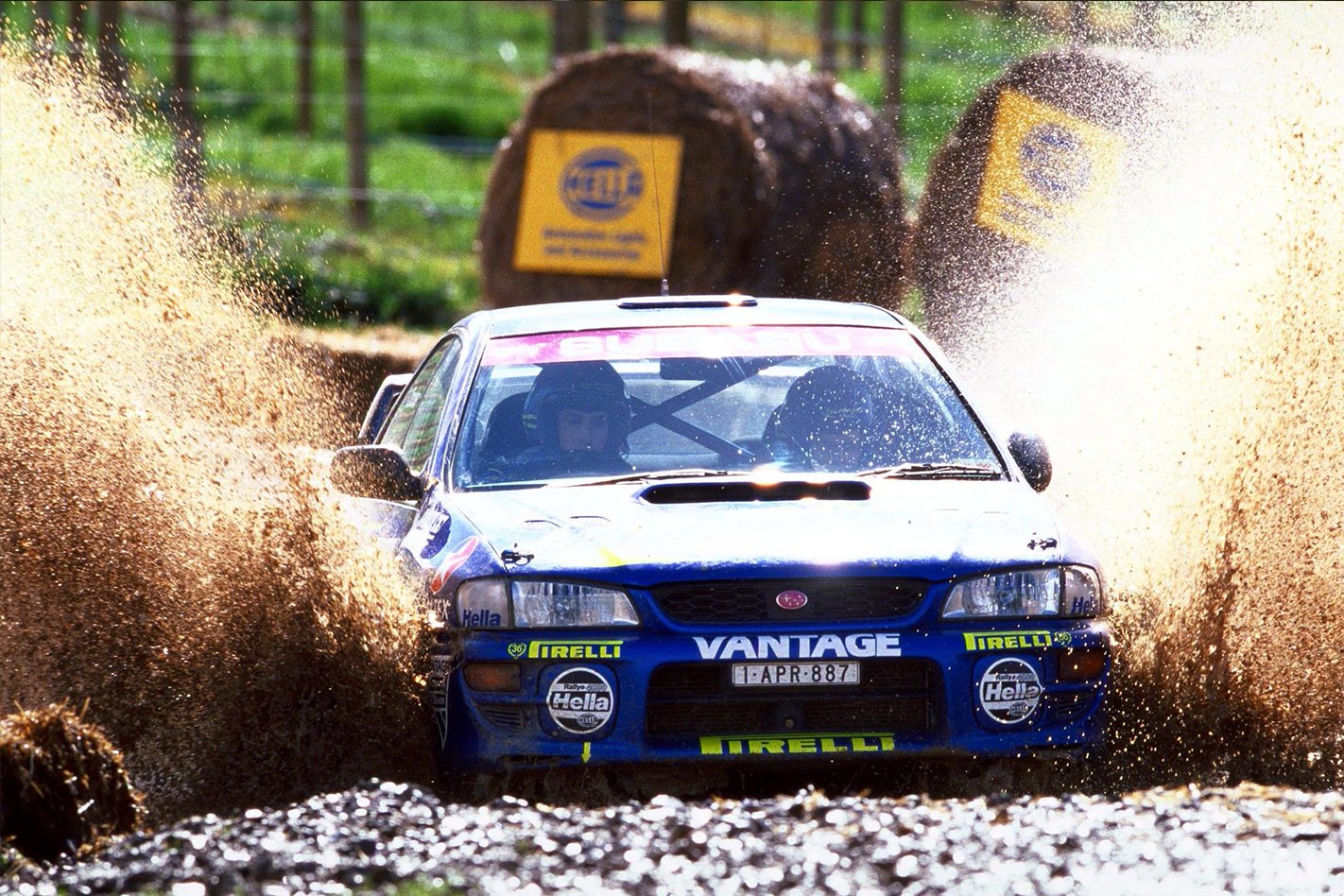
What a video can never capture, though, is the smell. The sickly sweet scent of ultra high-octane race fuel, the acrid aroma of cooked brake pads and the pungent pong of hot mud.
The only negative to my officiating is that it made me realise how badly I want to go rallying again, but that’s a project for another time.
Until then, go and help at an event, it’s worth the early start.
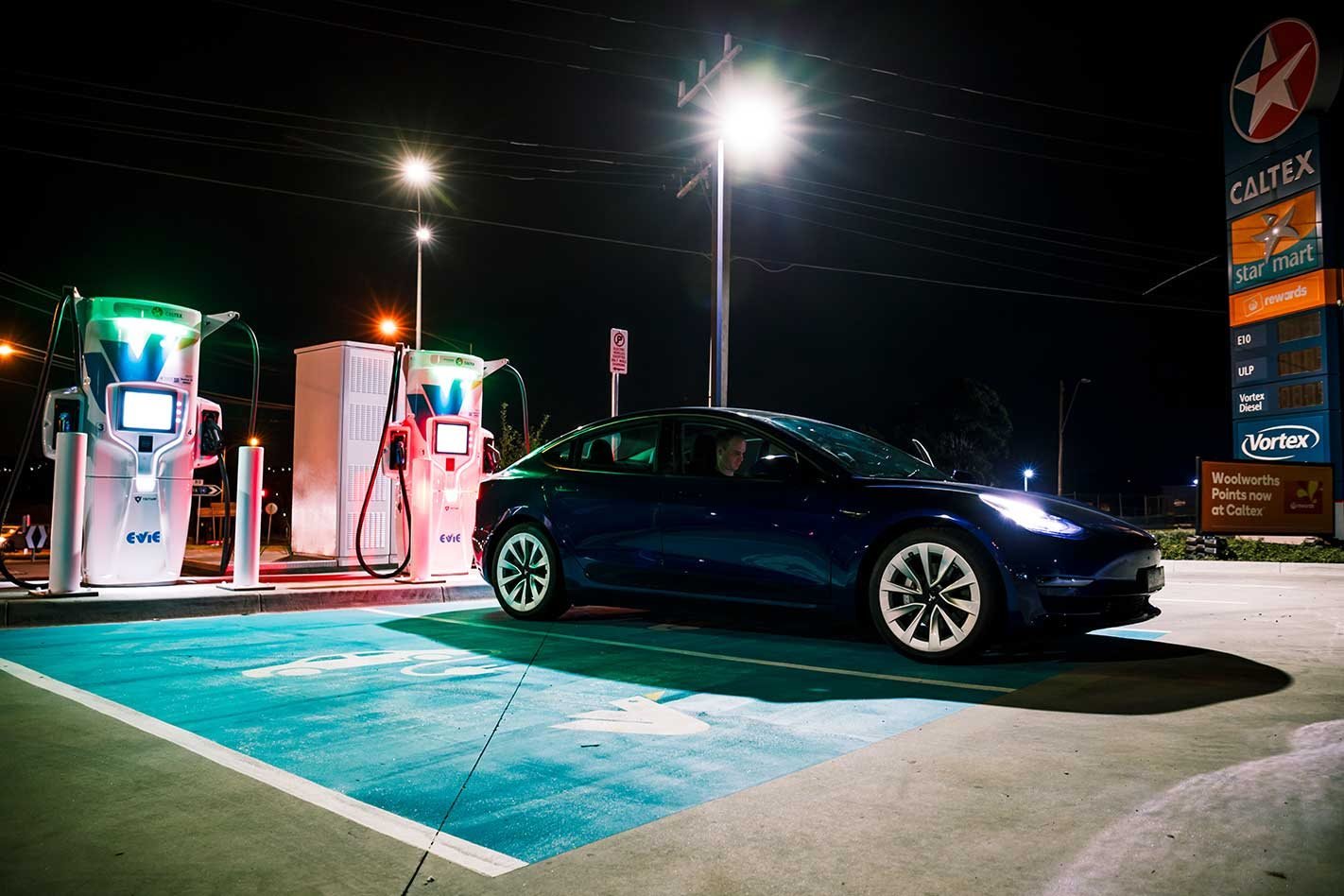
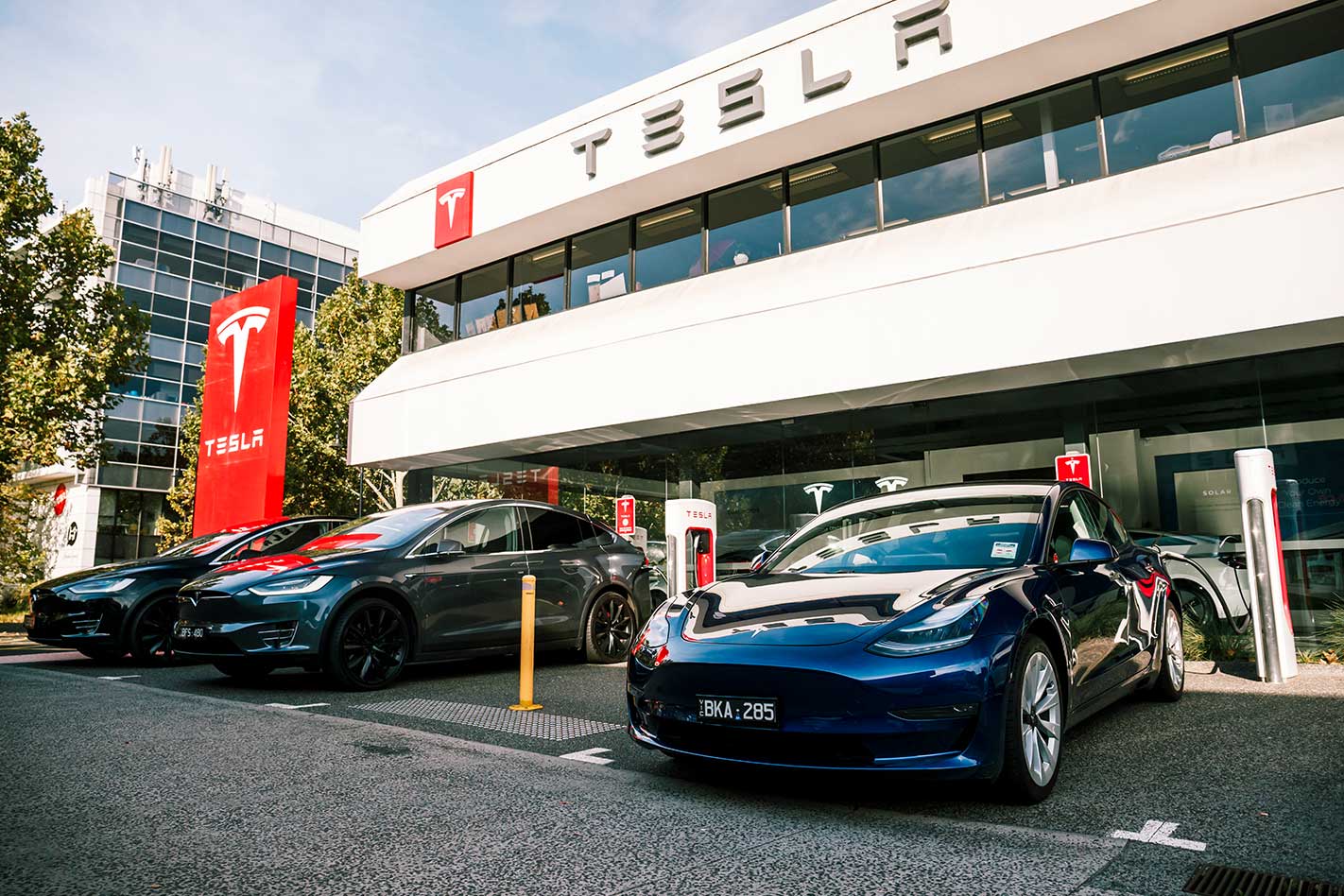
It’s not often you need to employ slipstreaming on the road, but these are desperate times, friends. The Tesla Model 3 Long Range is currently indicating five per cent battery and displaying a warning to stay below 75km/h if we want to reach our destination.At this point you’re probably thinking ‘oh great, another story about electric car range anxiety but no, while there is a degree of anxiety within this story it’s all the fault of the driver rather than the car.
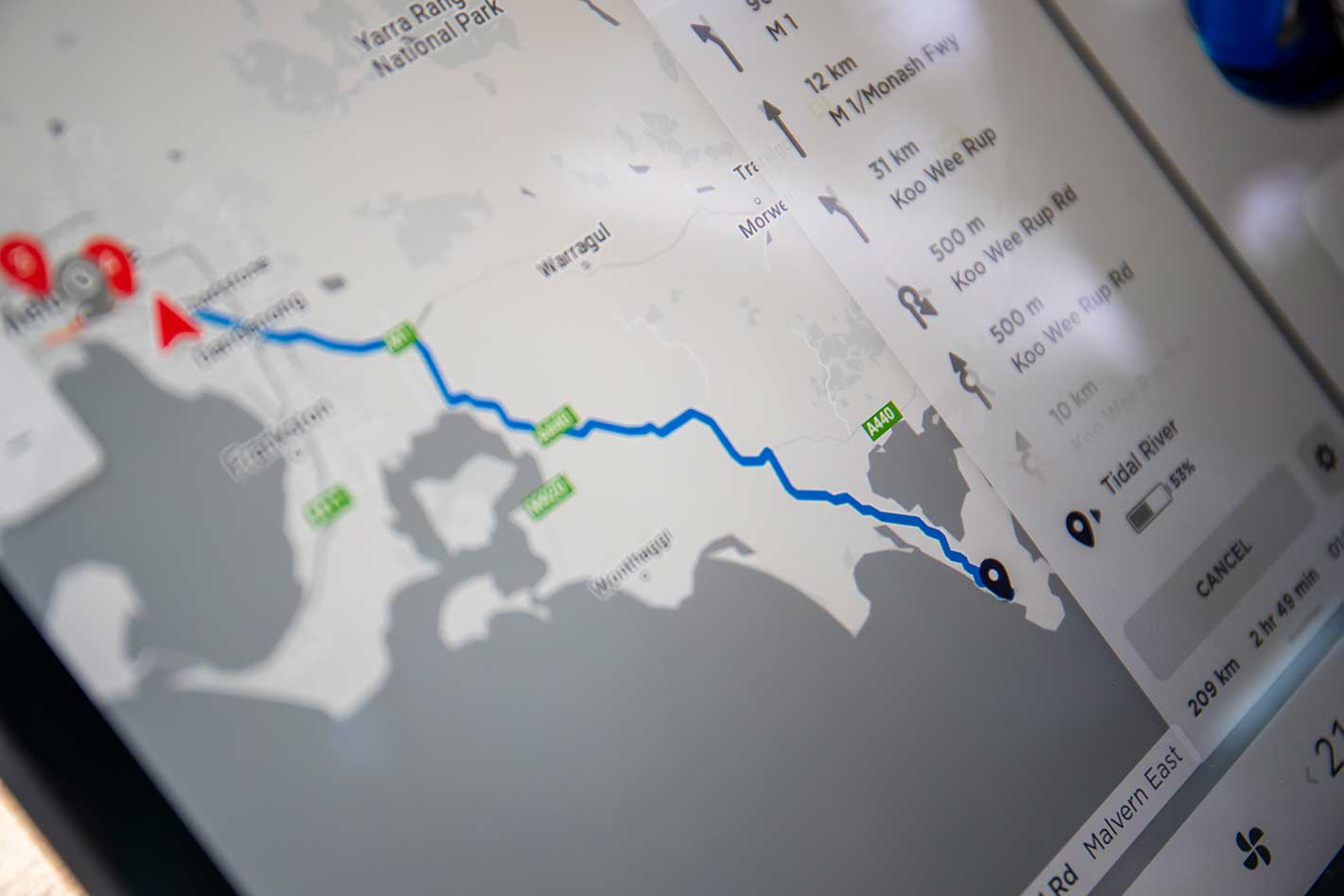
However, this isn’t an effort to eke every last kilometre out of a Tesla Model 3; instead we just want to find out how far you can realistically travel on a typical drive.
It wasn’t long ago that this journey would be fraught with potential headaches. When I first drove a Tesla in late-2014, the original Model S P85, the only option was to do a loop to and from the Tesla PR’s house; there were no chargers and the range was quite limited.
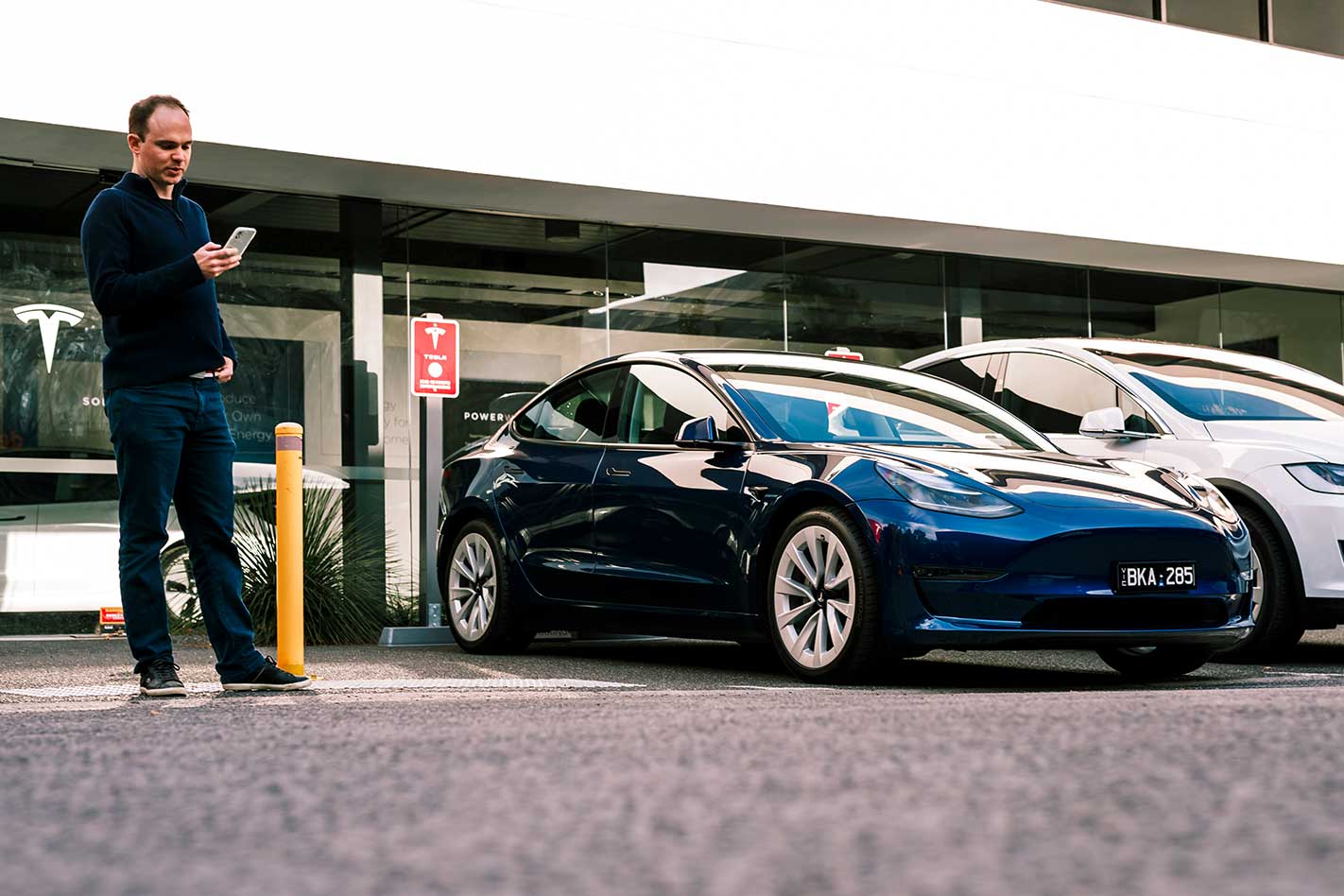
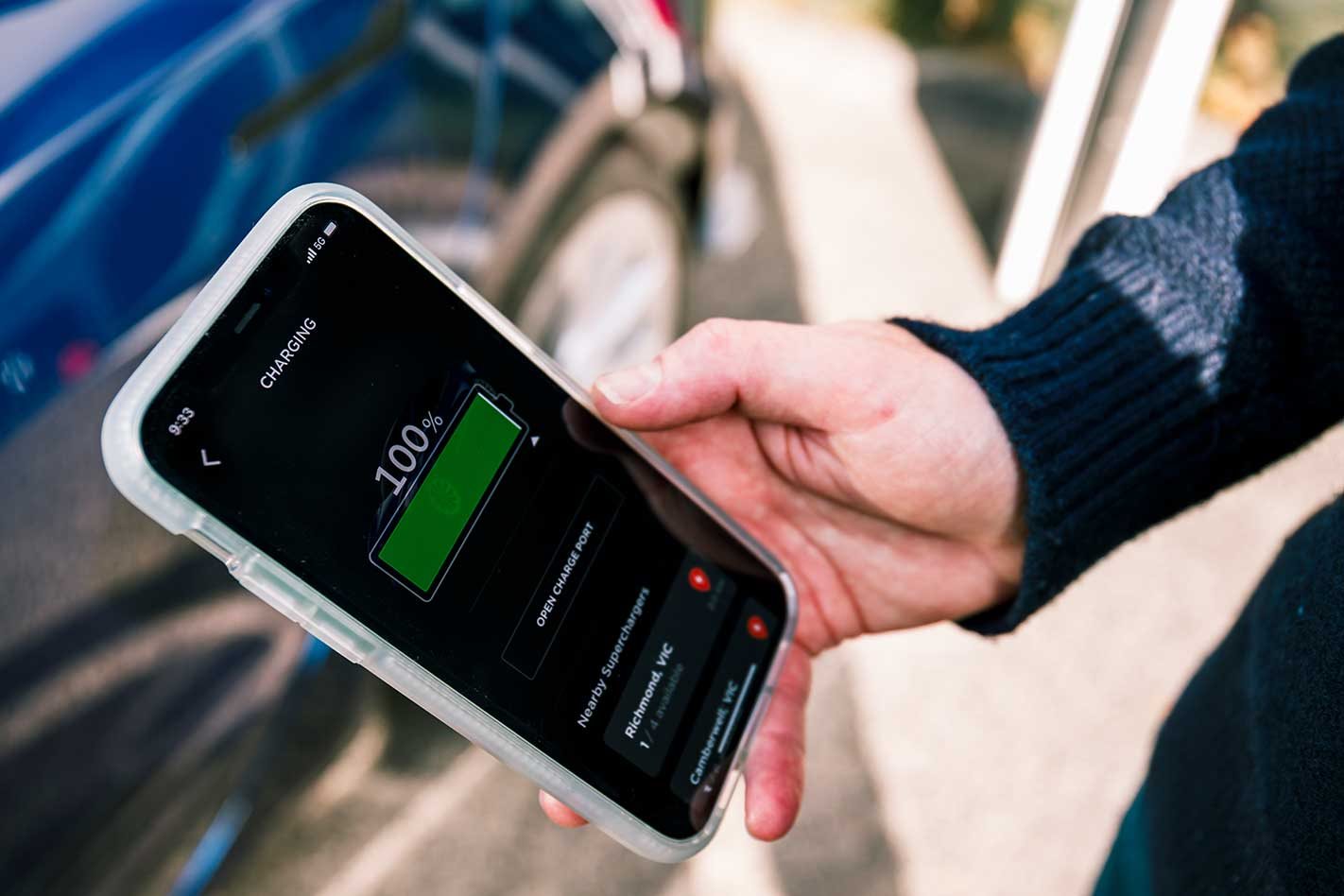
For example, while we weren’t planning to use them on this trip, a quick check on the Plugshare app showed that the pair of 22kW Tesla chargers at Fish Creek were currently unavailable, so we knew not to rely on them.However, as mentioned, our journey starts at the Melbourne Tesla service centre, where a Supercharger tops up the battery to 100 per cent in a matter of minutes.
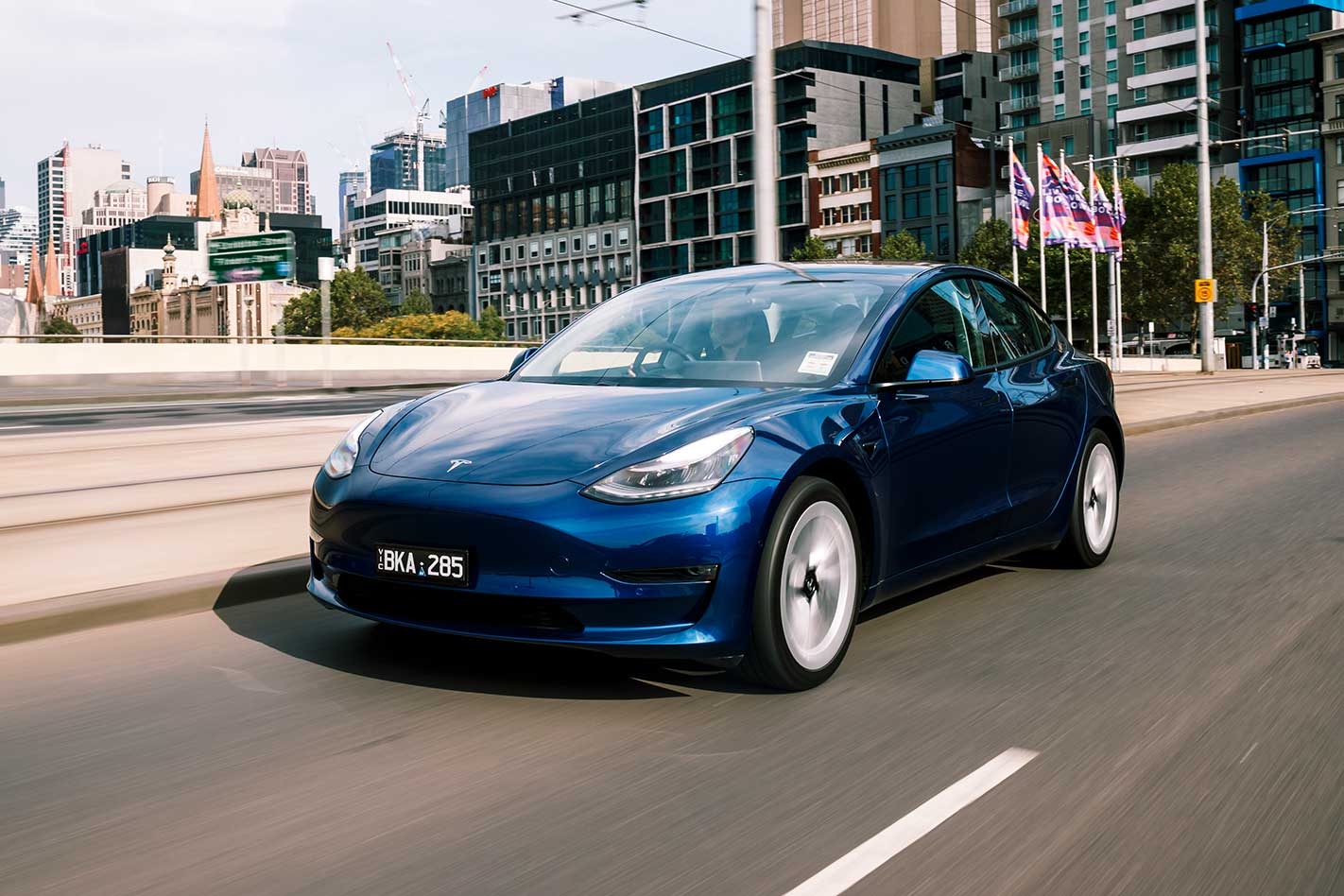
Add $1500 for metallic paint and $6826 in on-road costs and you’re left with an as-tested price of $91,751 driveway, making it a direct competitor to premium Euros like the BMW 330e, Audi A4 45 TFSI and Volvo S60 T8 R-Design.Once underway the Model 3 immediately impresses. It’s fundamentally a very relaxing way of getting around thanks to the smooth, effortless acceleration, low noise, excellent vision and strong regenerative braking effectively allowing for one-pedal driving.
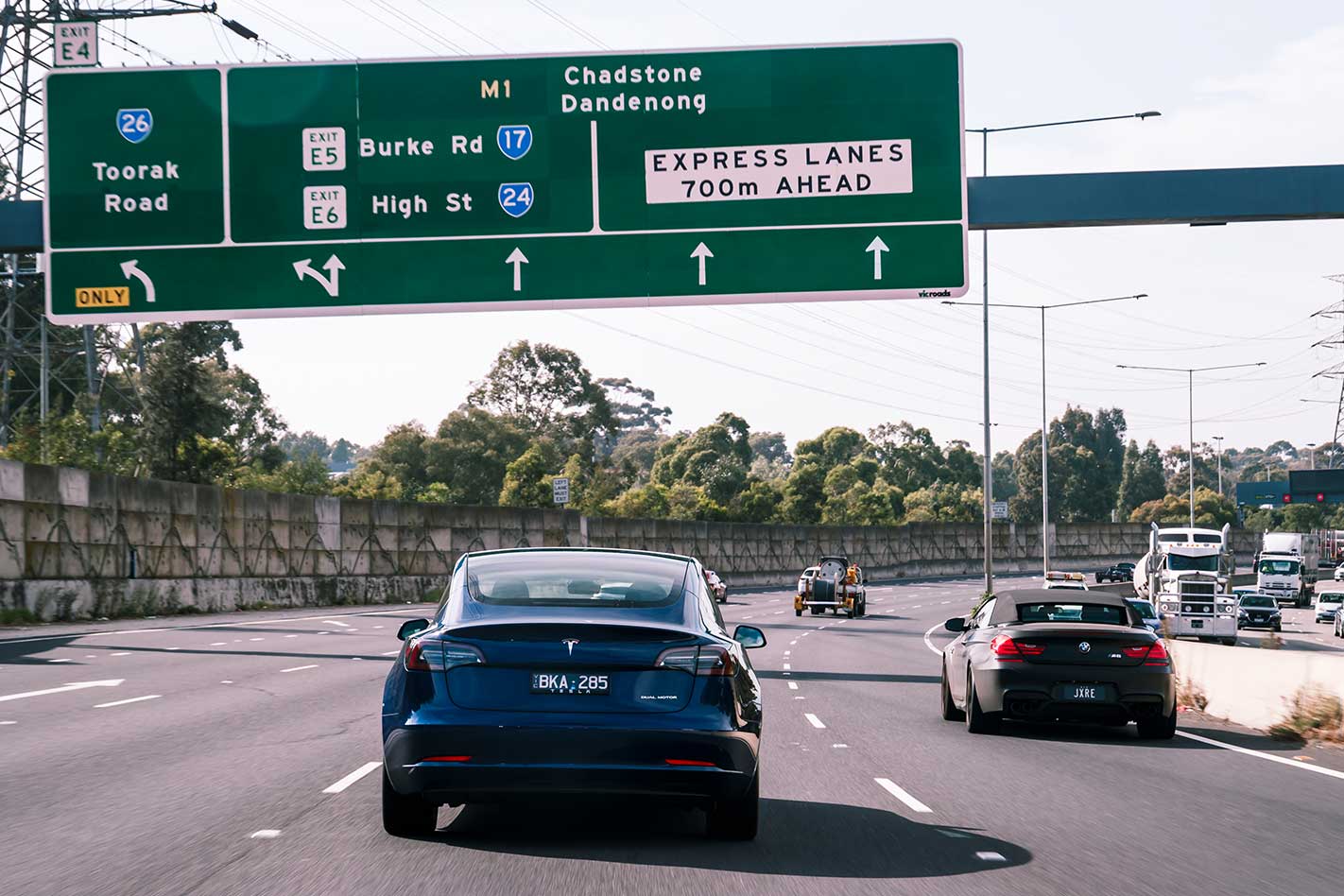
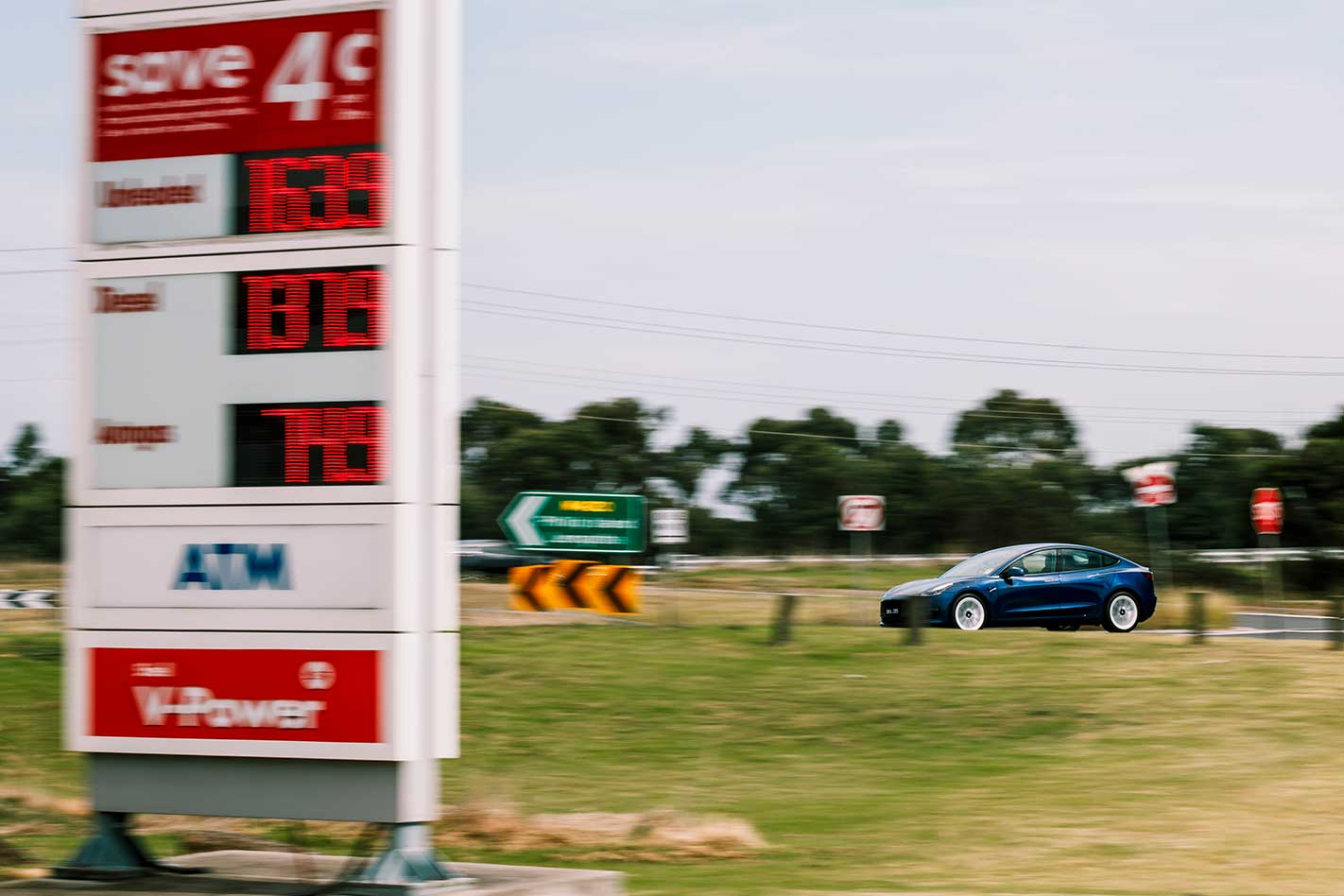
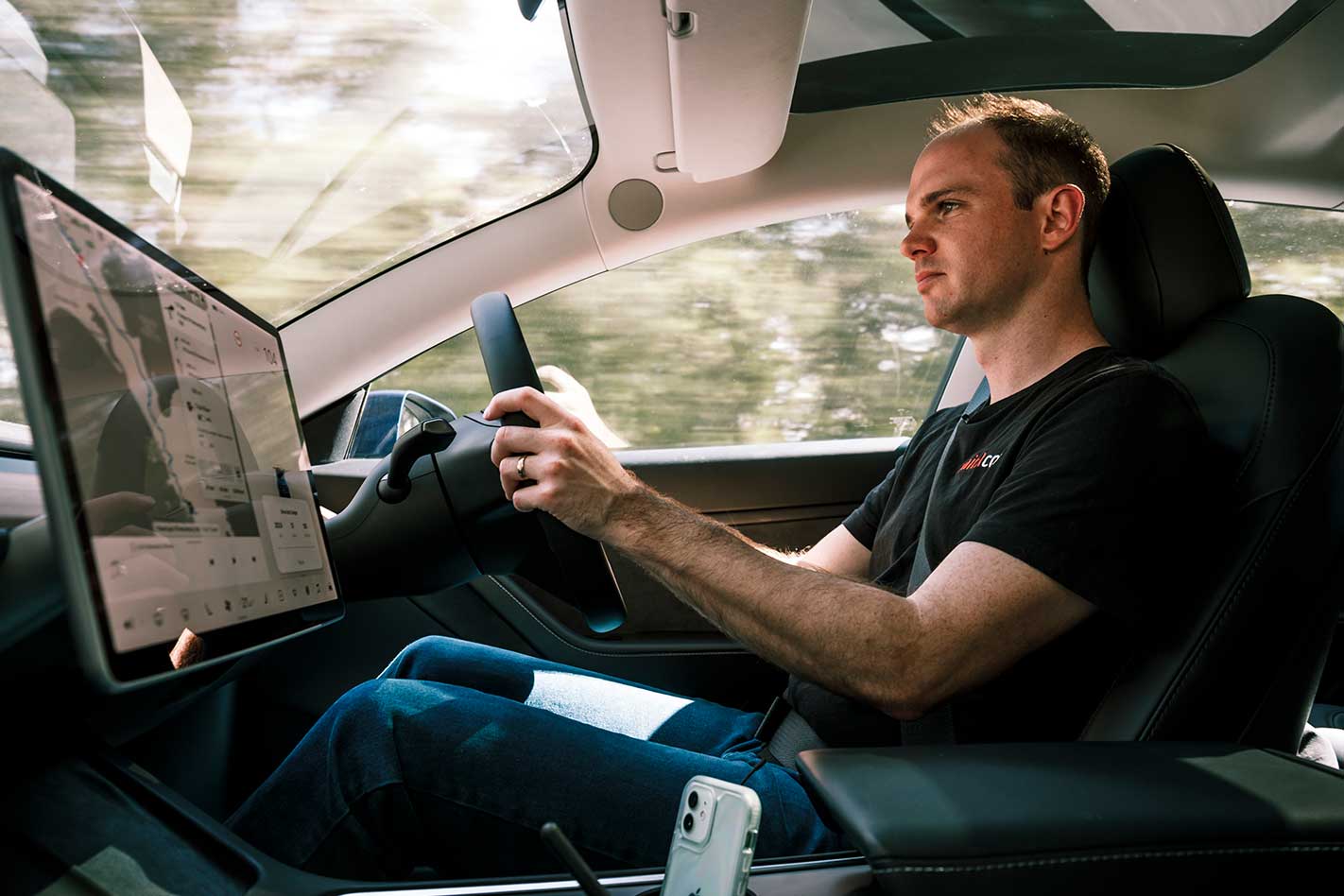
The floor-mounted batteries keep the weight low so it feels lighter than its 1844kg kerb weight and while there’s plenty of grip, the relatively soft suspension means the car moves around and requires input from the driver.The steering doesn’t offer much feedback but it’s light and accurate, as long as it’s kept in Comfort mode; Normal and Sport adding extra effort without added connection.
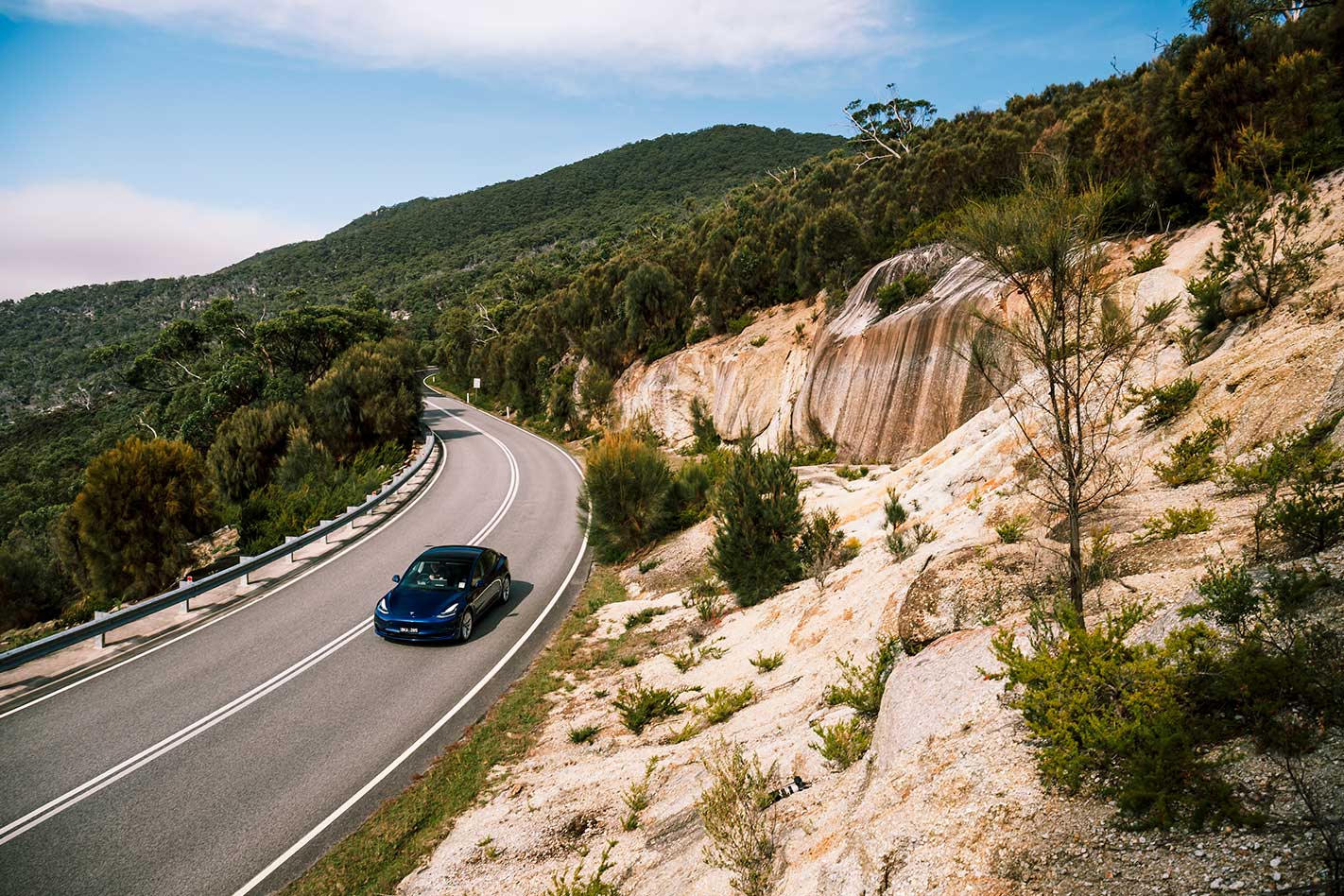
Precise outputs are hard to come by, Tesla preferring to publish 0-100km/h figures rather than power and torque numbers, but scouring the internet suggests figures of 258kW/510Nm for the Long Range.
However that, and the 4.4sec 0-100km/h claim, feel decidedly conservative given the way you’re slammed into the seat under full acceleration.
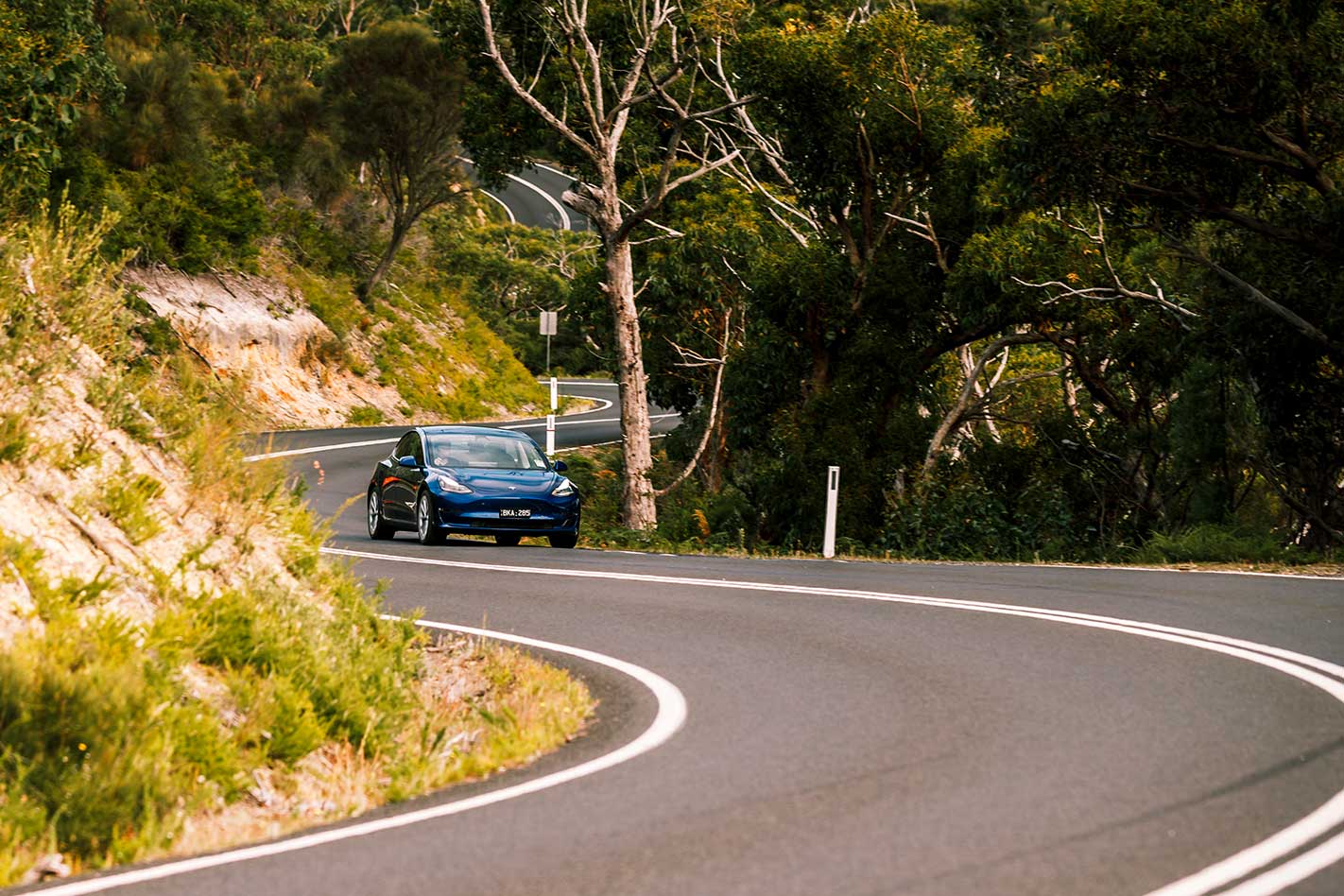
Apart from the obvious switch to a more economical driving style, there are a couple of measures that can be taken to extend range.
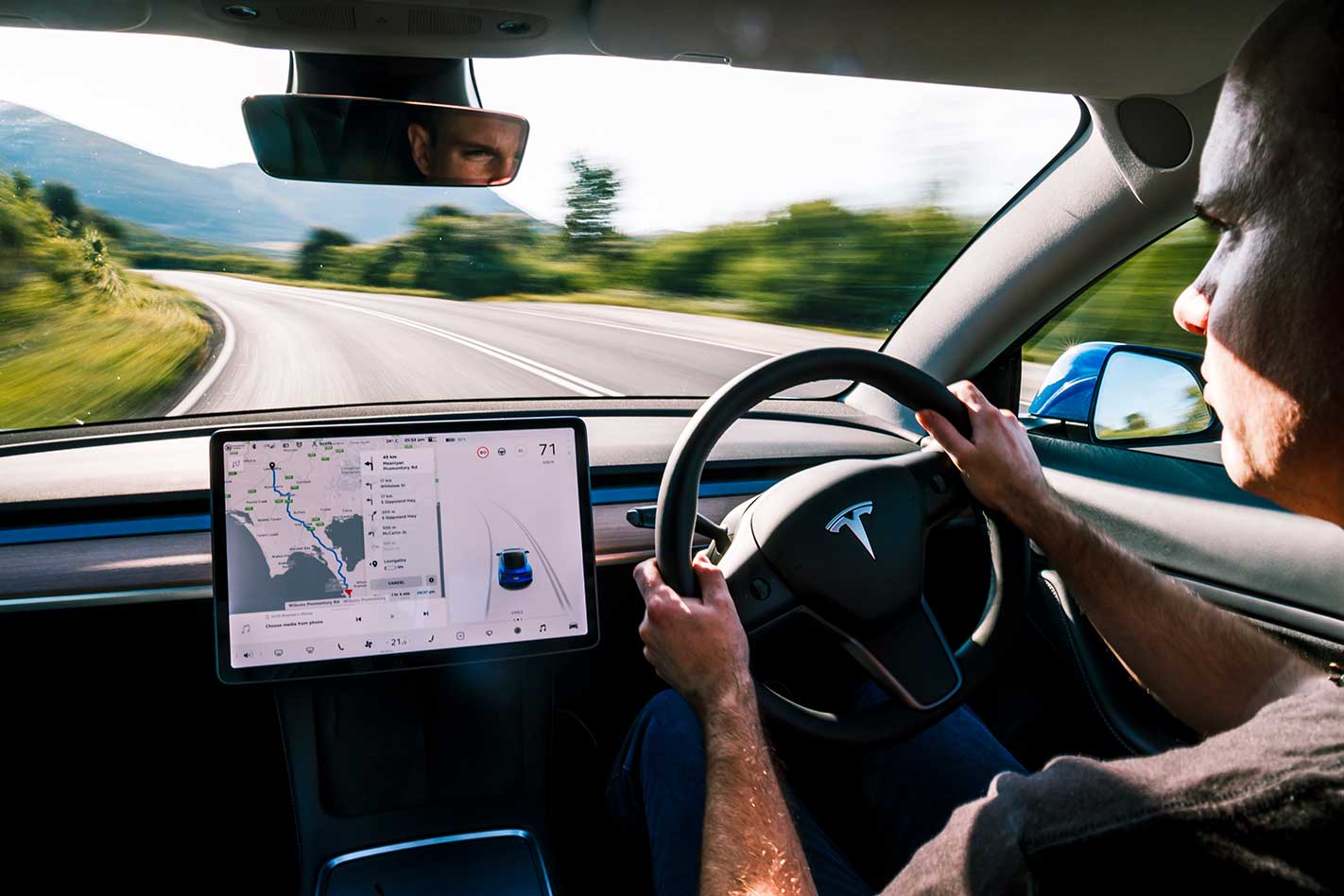
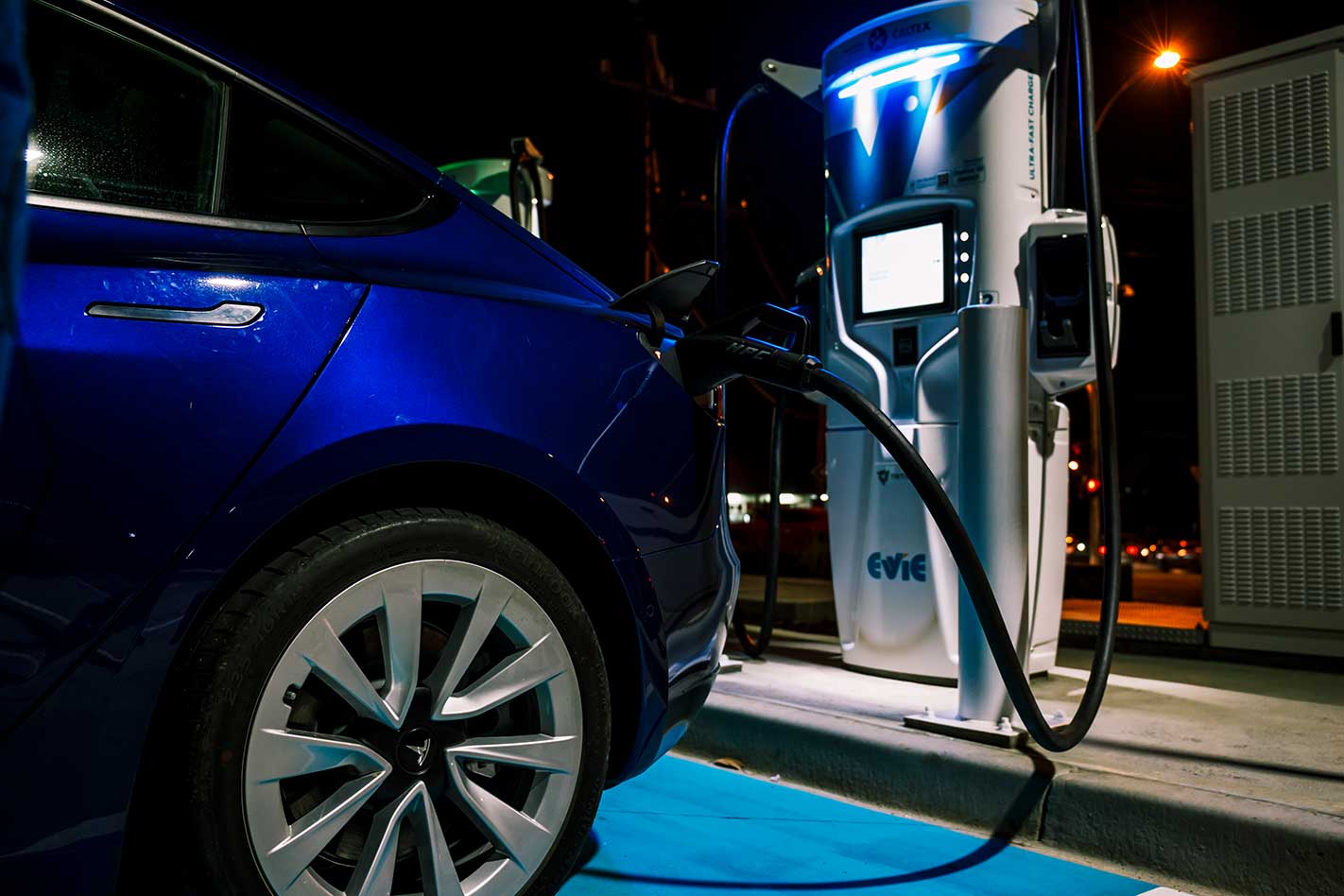
Without the need to produce the visual assets for this feature we would’ve made the return journey to Tesla quite easily, but that’s a moot point as there were numerous opportunities to top-up our battery along the way.
The lesson? Get out and drive your EV, even if you don’t know how to slipstream.