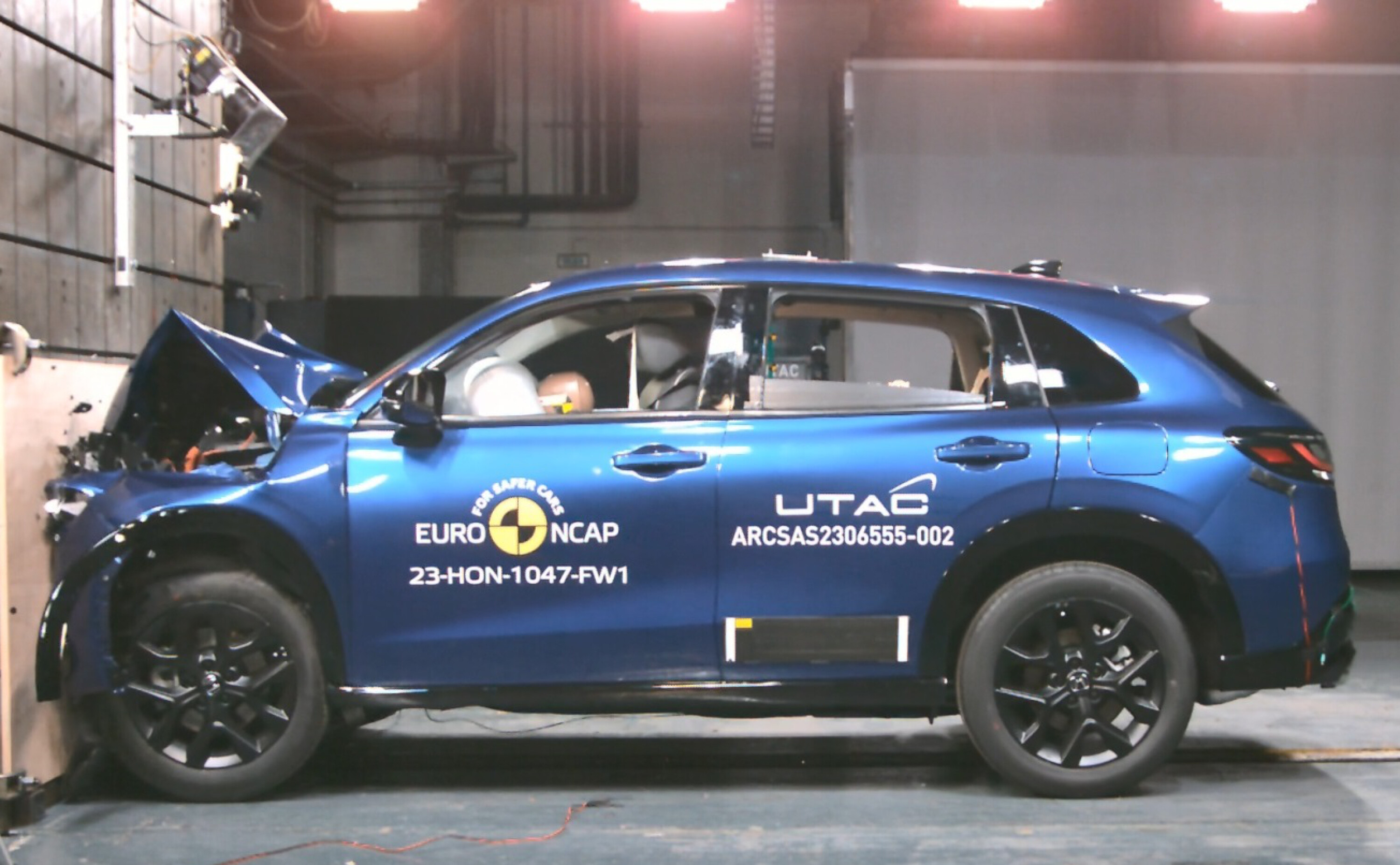
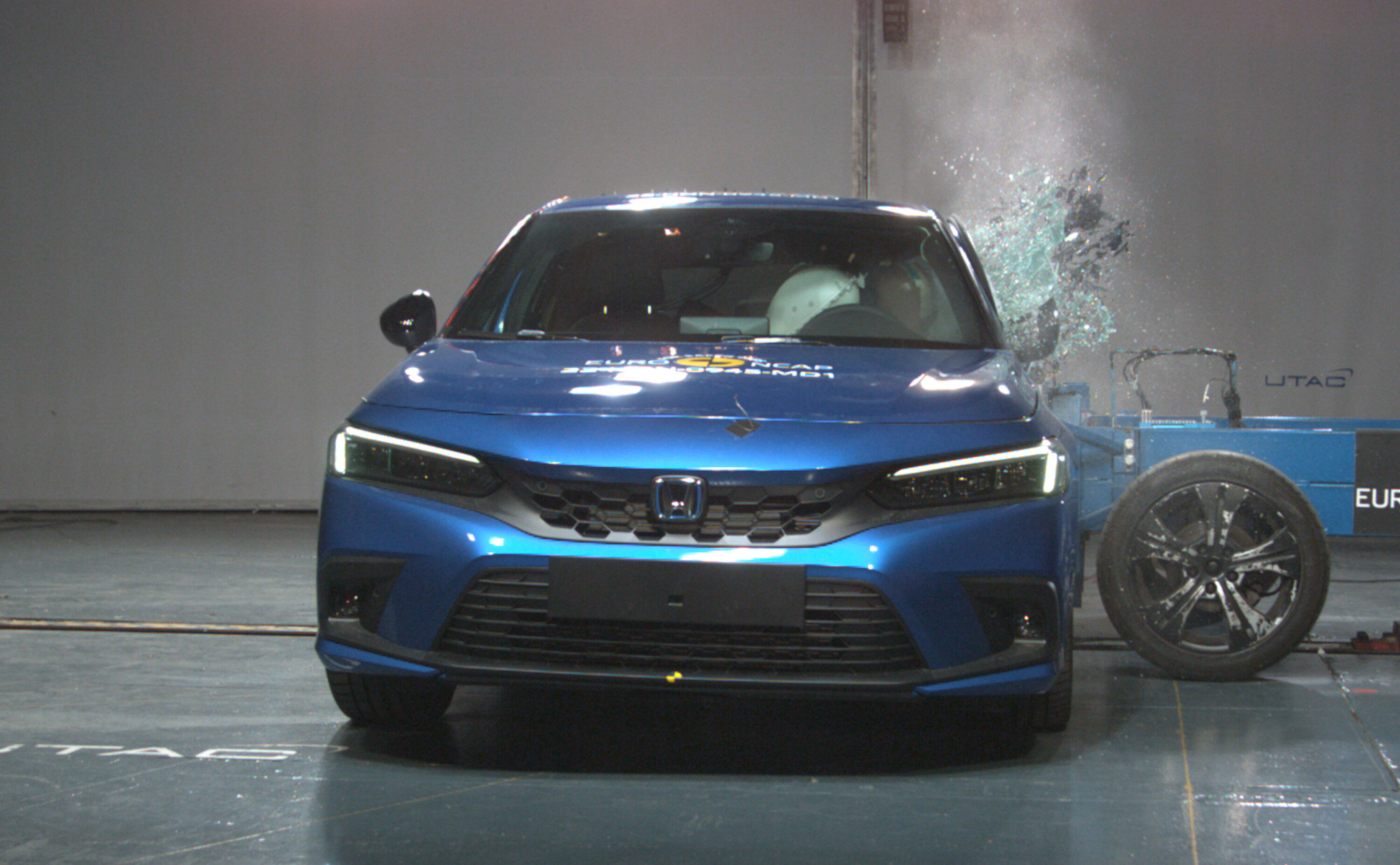
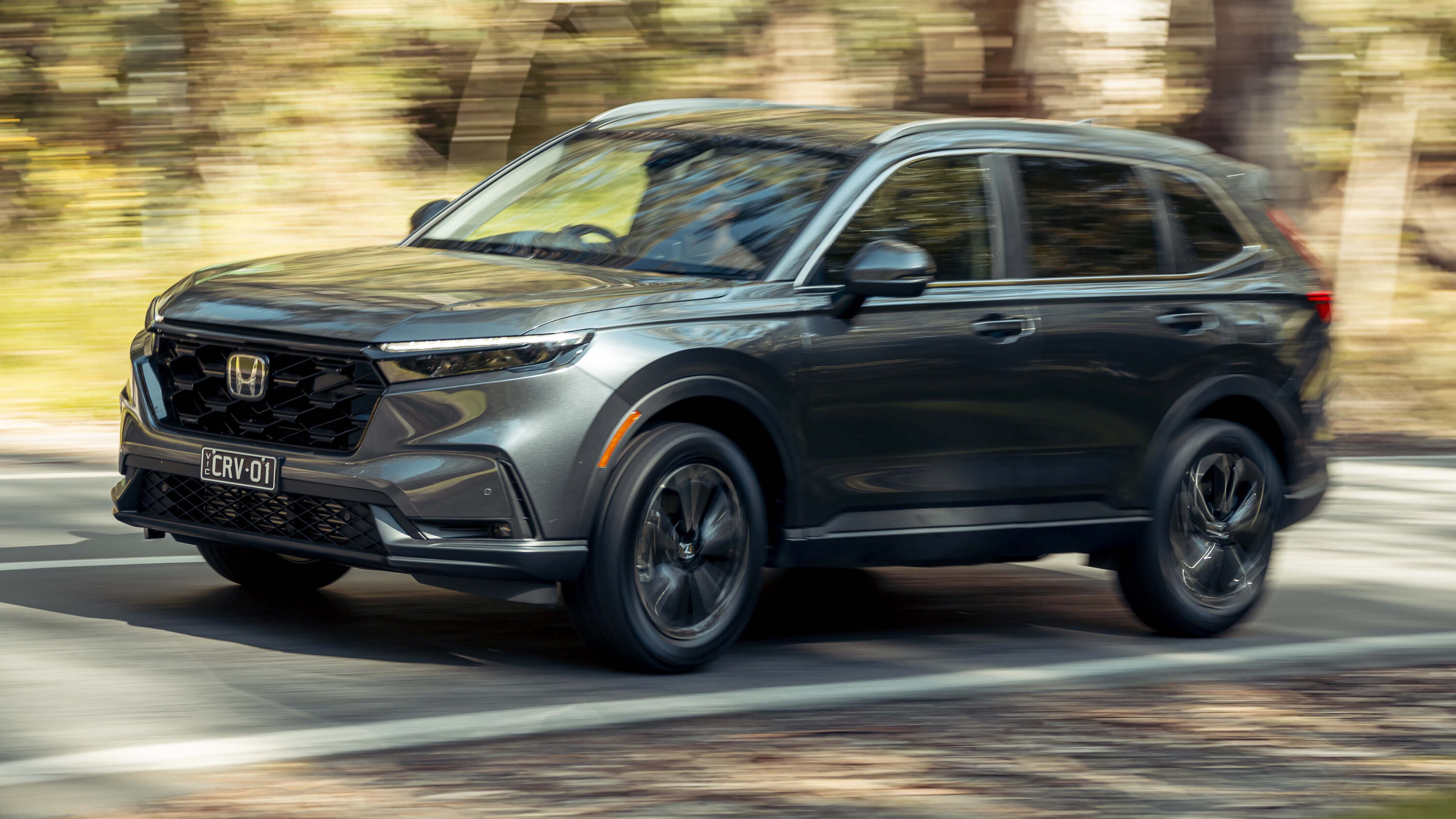
Timing for the release of ANCAP safety ratings for the latest Honda CR-V, ZR-V and Civic remains unclear as the safety organisation awaits additional information.
These results would be based on existing Euro NCAP testing conducted between 2022 and 2024, which saw a five-star score applied to some versions of the CR-V last week under the latest 2023-25 criteria and a five-star score for the Civic in 2022 under the less stringent 2020-22 criteria.
Some versions of the CR-V sold in Europe also received a four-star safety rating due to a safety assistance score below the 70 per cent requirement for a five-star result.
Euro NCAP notes four-star CR-V variants – not fitted with an optional ‘Honda Sensing 360’ safety package – lack corner radars that “significantly enhanced AEB [autonomous emergency braking] performance” for vehicle and pedestrian detection.
1
Honda Australia has confirmed our CR-V lacks the two front corner radars for enhanced AEB detection available in Chinese-built European versions, as local CR-Vs are sourced from a different factory in Thailand.
The lack of this enhanced AEB detection could limit the CR-V’s potential to receive a five-star safety rating in Australia.
These Euro NCAP scores only apply to hybrid and plug-in hybrid versions of the CR-V, ZR-V and Civic, as petrol-only models are not offered in Europe – except for the Civic Type R hot hatch.
“For ANCAP to… publish safety ratings relevant to AUS/NZ-specified models, we must ensure – through an evaluation of additional test results, crash simulations, technical drawings, data etc. – that the safety specification and safety performance of the vehicles tested by Euro NCAP are applicable to locally-supplied vehicles,” said an ANCAP spokesperson.
1
“We’re currently working through this process with Honda.”
A Honda Australia spokesperson said safety was a top priority for the brand.
“We are working closely with ANCAP and are currently awaiting the most up to date information in relation to the recent testing of CR-V, Honda ZR-V and Civic.
“As soon as we have any further information in relation to this testing, we will share this with you.”
The only Honda vehicle sold in Australia with a current ANCAP rating is the HR-V, which scored four stars in 2022.
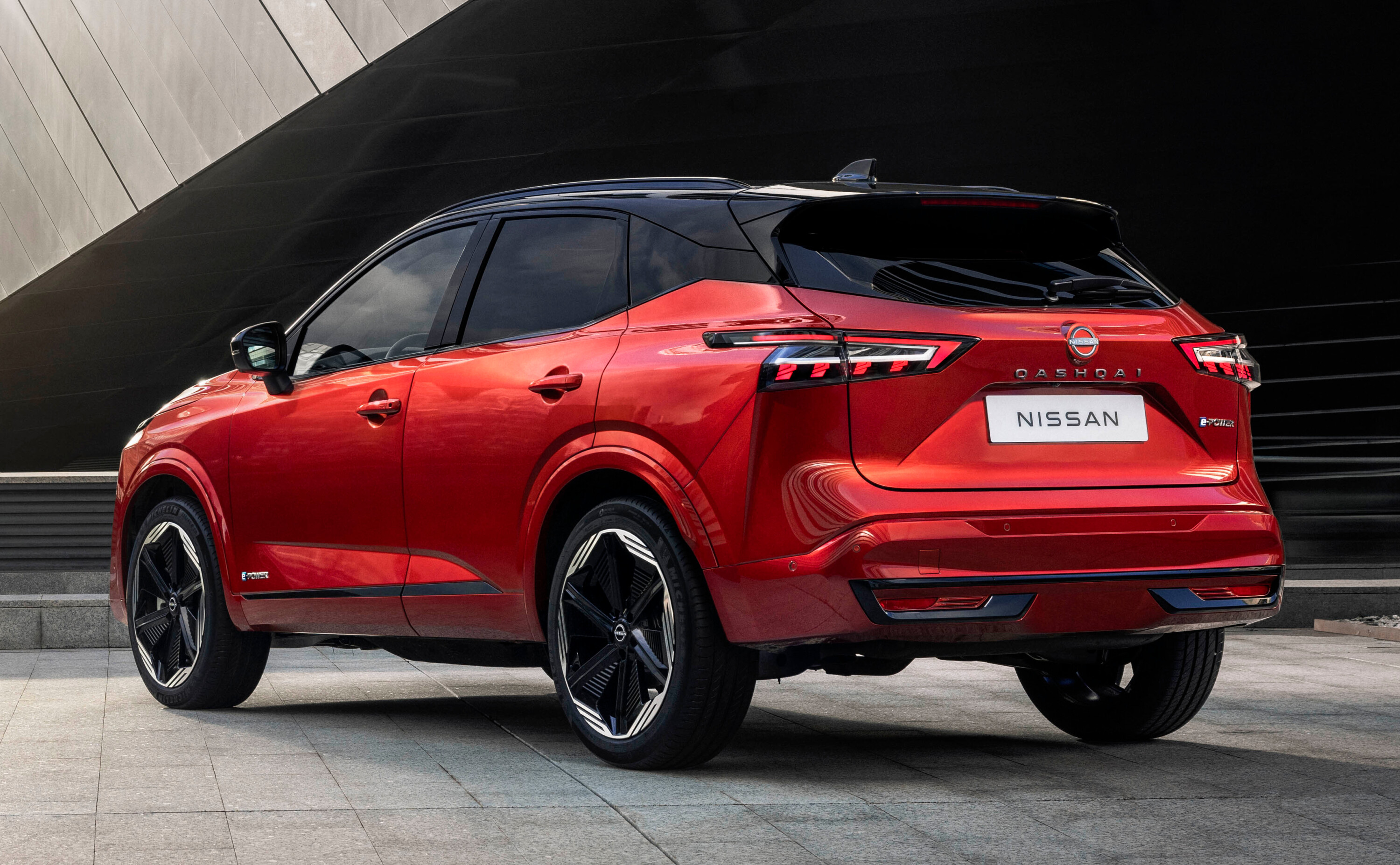
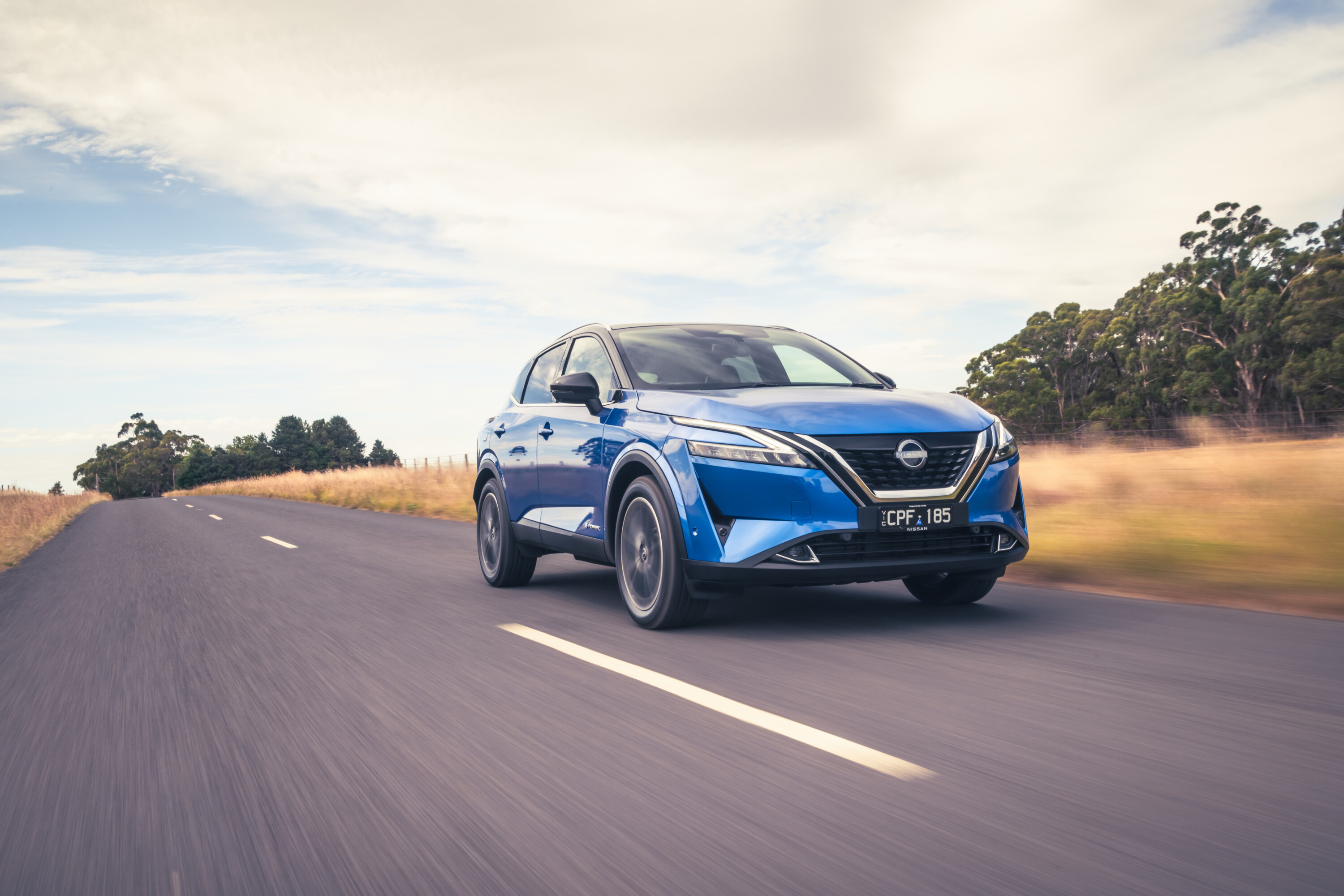
“We’re very excited by the facelifted Qashqai, which has just been unveiled. We anticipate arrivals towards the end of 2024,” said Nissan Australia.
1
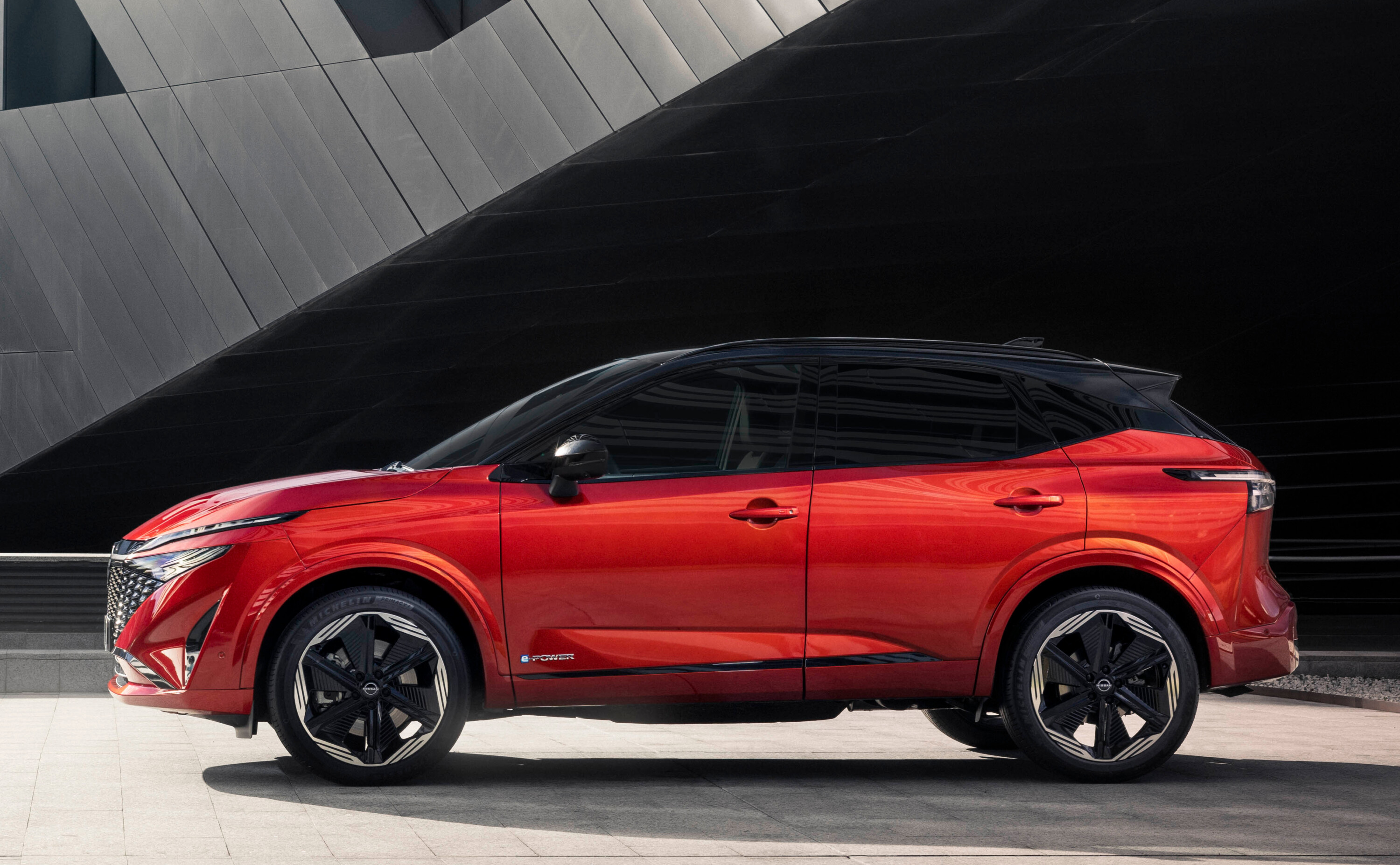
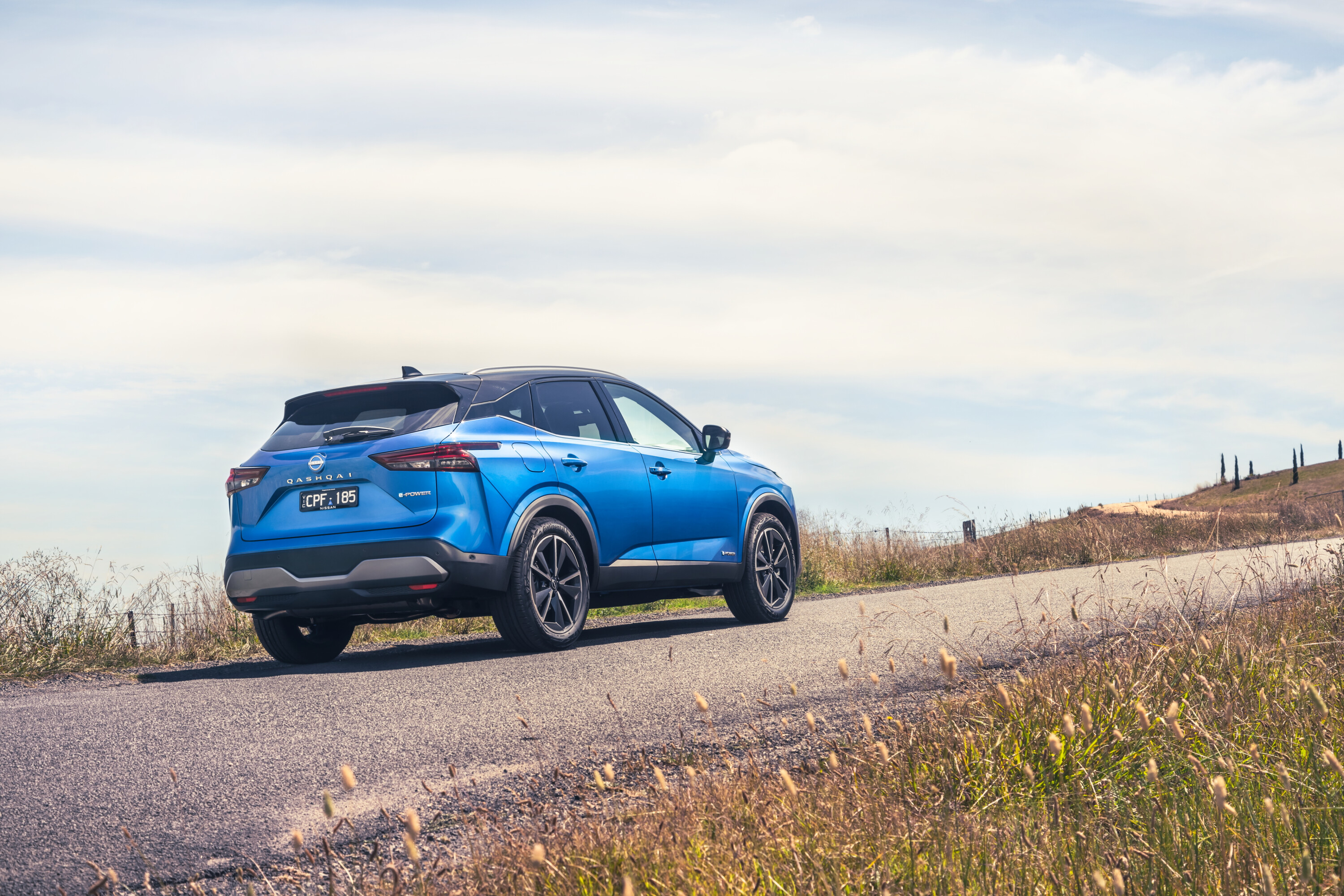
Revisions applied to the Qashqai include a redesigned front end with new-look split headlights, a triangular grille “inspired by the patterns of ancient Japanese armour scales” with comma-shaped elements, and an updated lower bumper.
The upper DRL section of the headlights is inspired by the smaller Juke and includes sequential indicators and an illuminated Nissan badge at its edge for some variants, while the main section is now available with an adaptive high beam for increased visibility in low-light conditions and in fog.
Other changes include clear-look tail-lights with an updated internal design and available sequential indicators, a reshaped gloss-black rear bumper, and body-coloured exterior trim for the new ‘N-Design’ variant in Europe.
There are also new 18-, 19- and 20-inch alloy wheel designs, and three new colours: Pearl White, Pearl Black and Deep Ocean
1
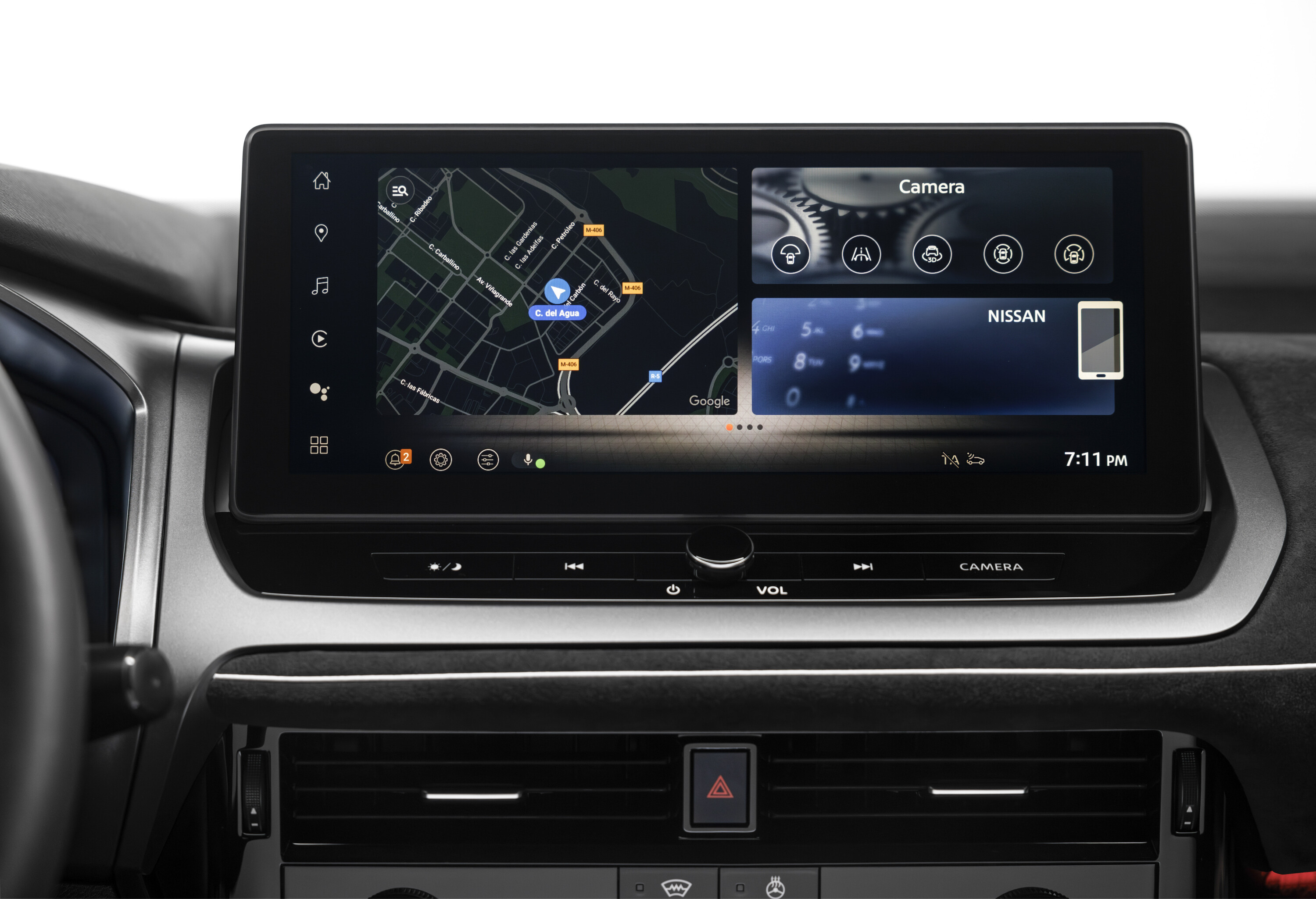
Inside, the Qashqai features a new, more powerful Android Automotive-based infotainment system with Google Built-In, allowing drivers to log into their own Google account and access certain services, such as Maps and Assistant.
Google Assistant – activated with the ‘Hey Google’ voice command – allows drivers to control certain vehicle functions, such as the climate control or satellite navigation.
The Google Play store is available for third-party downloads, such as Spotify and YouTube Music.
However, it is unclear if Nissan Australia will offer its vehicles with Google services as it does not offer ‘NissanConnect’ with a built-in data SIM to connect to a 4G or 5G network.
1
NissanConnect also supports remote vehicle functions to close the windows, lock the car, or immobilise and track it in case of suspected theft from the direction of law enforcement authorities.
An updated 360-degree camera is included within the infotainment system with clearer external cameras, a 3D function to visualise the car from the front, rear, sides or corner – in addition to the existing ‘bird’s eye view’ – and an invisible bonnet view to avoid curbing the wheels.
Active safety systems have also been revised with a recalibrated autonomous emergency braking system, intelligent speed limit assist, and a custom driver assist mode to allow them to set their preferences at each start-up.
1
The Qashqai will also be available with a parking spot memory function to save frequently visited locations, allowing the car to automatically manoeuvre into the spot – as seen in recent BMW, Mercedes-Benz and Volkswagen vehicles.
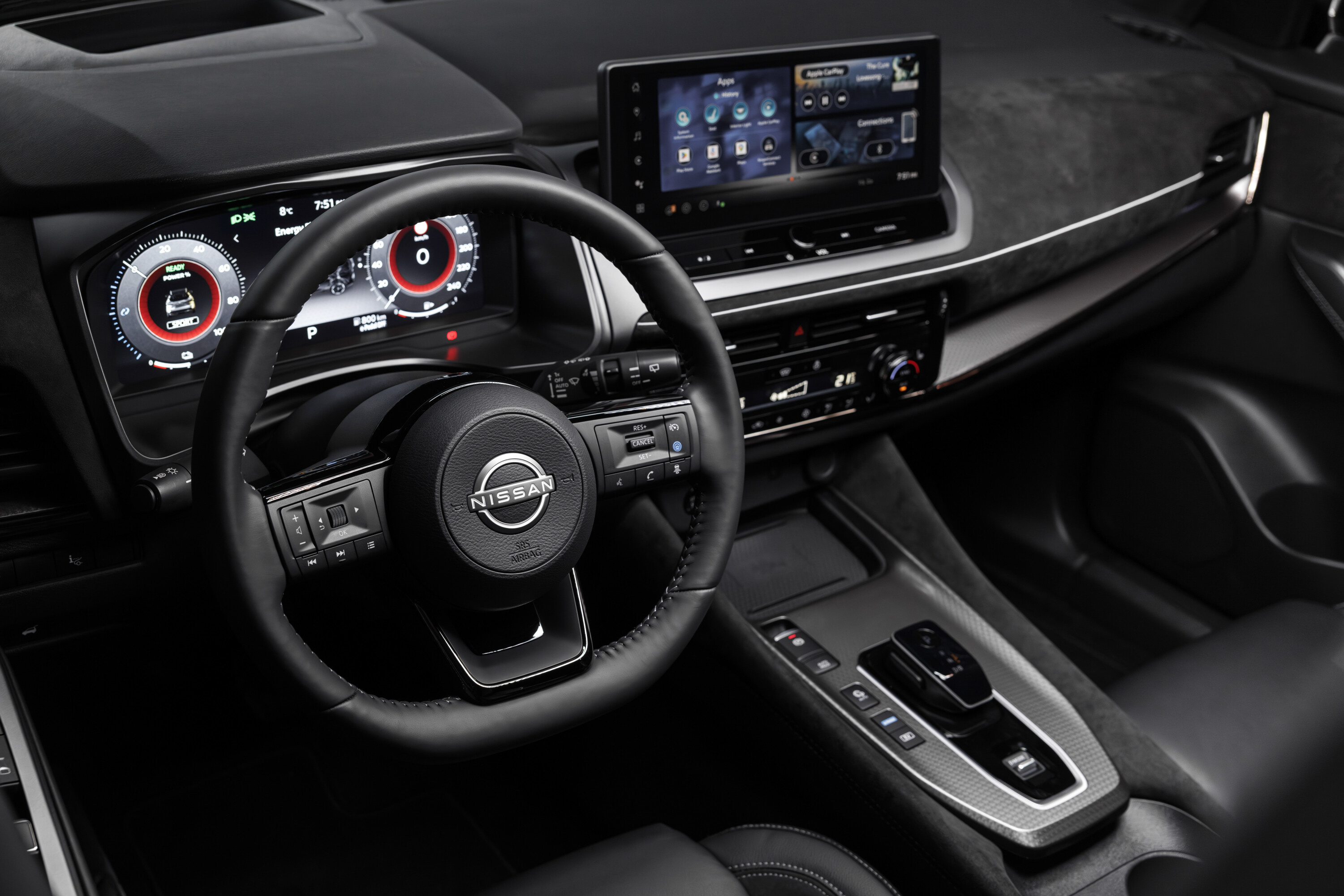
It also has revamped graphics in the 12.3-inch digital instrument cluster, with a ‘minimal’ mode to limit distractions, an energy flow monitor in ‘normal’ mode for E-Power hybrid variants, and different colours for each drive mode: pale grey for Normal, red for Sport and green for Eco.
High-spec variants are now available with Alcantara trim on the dashboard, doors, centre console lid and knee pads, while there are also new patterned materials around the gear selector and a revised decoration insert between the upper dashboard and glovebox to replace the current woodgrain look.
Some variants also have updated seat trims – including a new brown accent for the seat base and shoulders – while Nissan has added configurable ambient lighting strips in the front and rear of the Qashqai’s cabin.
There have been no changes to the Qashqai’s powertrain lineup for the facelift. It is available with a 110kW/250Nm 1.3-litre four-cylinder turbo-petrol or a 140kW/330Nm 1.5-litre three-cylinder E-Power hybrid in Australia.
The facelifted 2025 Nissan Qashqai will arrive in Australia later this year. More details – including pricing and features – are due to be confirmed closer to its launch.
Local testing is ramping up for GMC Yukon’s Aussie arrival in 2025
Yukon is bigger than LandCruiser, has eight seats and V8 power
First GMC model locally since Acadia rebadged for Holden
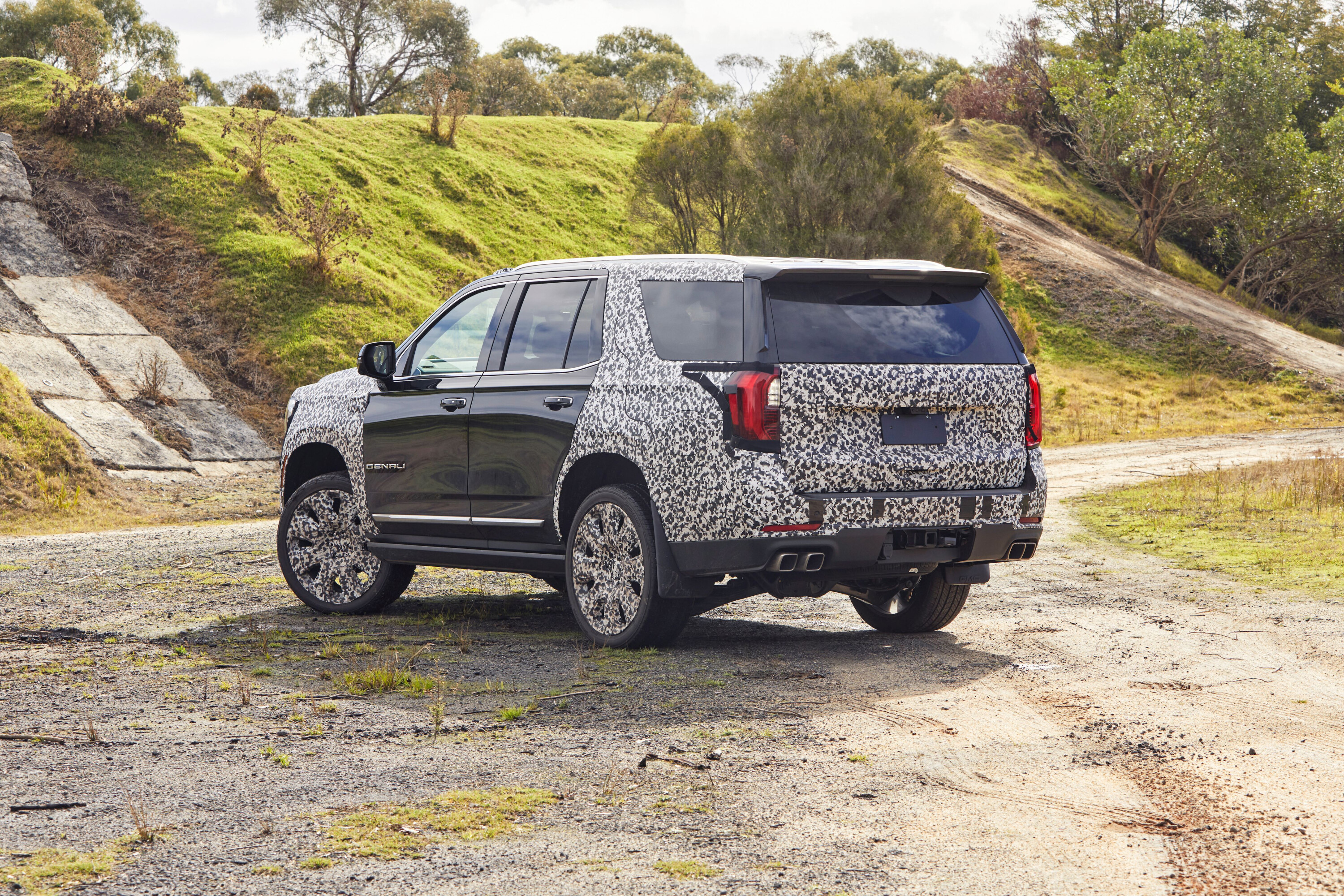
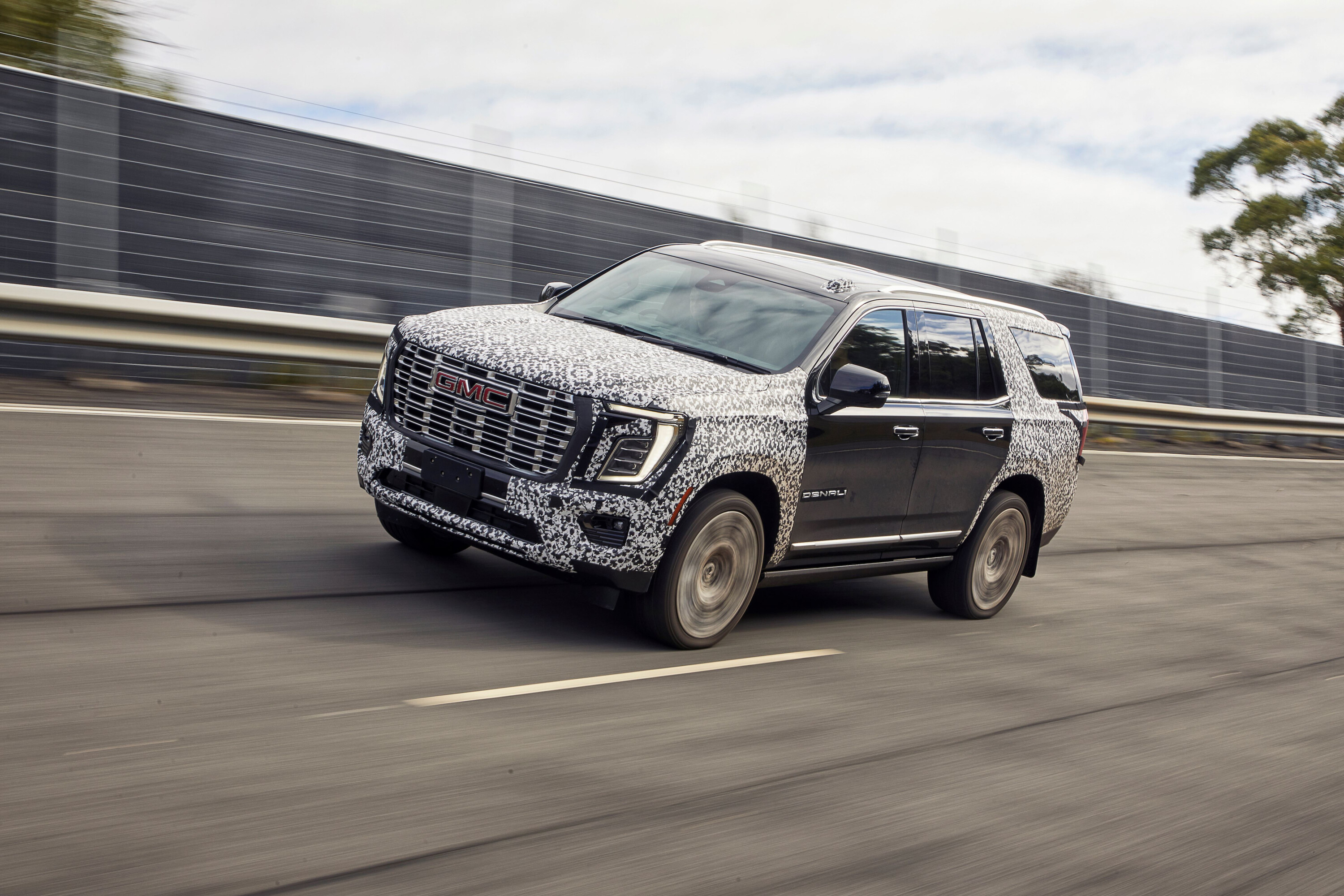
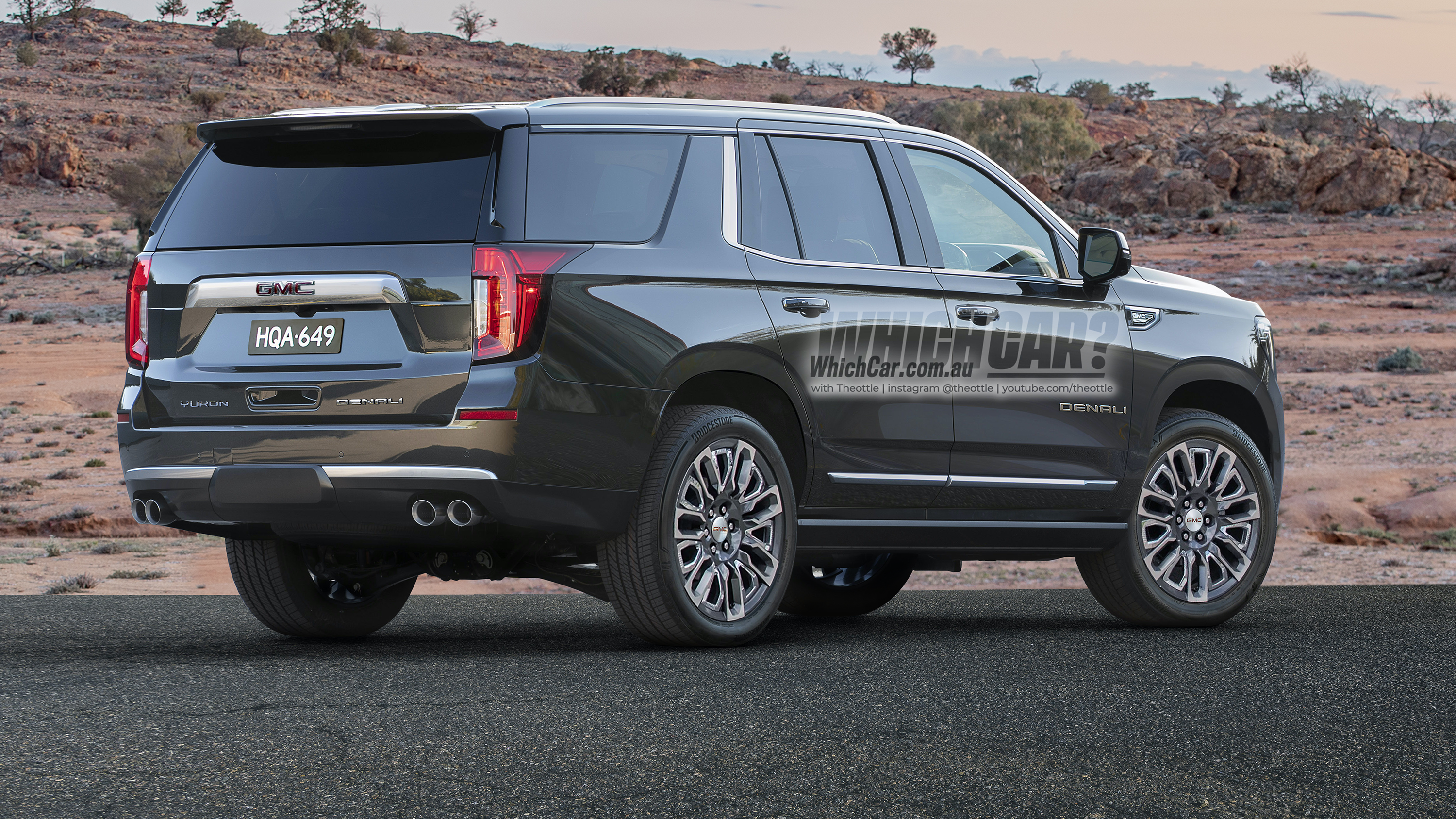
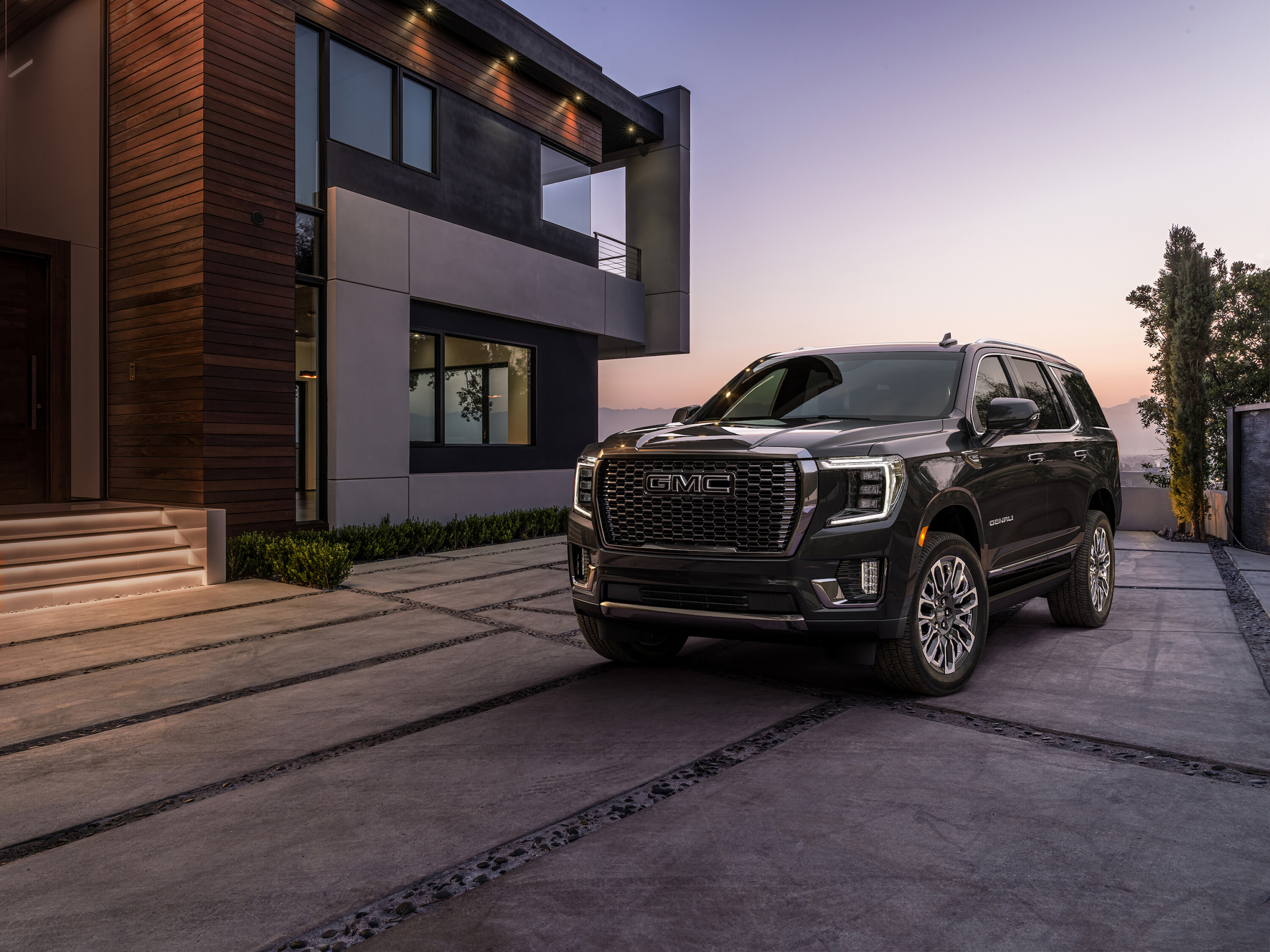
The first official shots of a right-hand drive 2025 GMC Yukon have been released by GMSV, which show a facelifted version of the big SUV on Aussie soil.
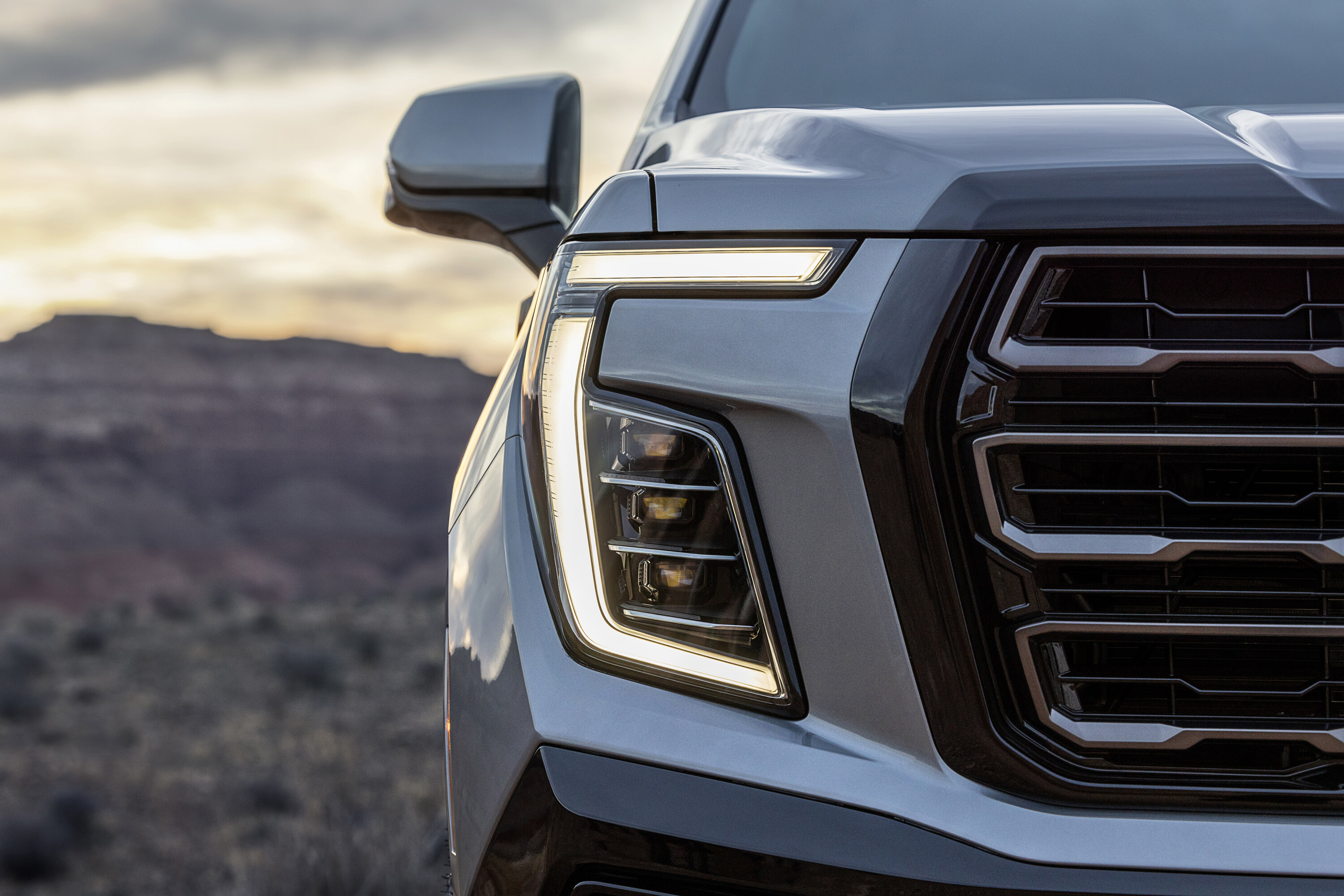
GMC dropped the first teaser image of the upcoming Yukon facelift in America earlier this week, which showed a new headlight design and front grille on a mid-spec AT4 model.
1
Today’s pictures, however, show GMSV already has its hands on the updated model to undergo local testing and development work.
Set to launch here in the first half of 2025, the full-size GMC Yukon will be a rival for popular off-road SUVs like the Toyota LandCruiser and Nissan Patrol.
Unlike those off-roaders, however, which use a monocoque design, the Yukon rides on a ladder-frame chassis shared with the Chevrolet Silverado.
4
The Yukon will join GMSV’s growing Aussie line-up and will be converted to right-hand drive at the Walkinshaw Automotive Group’s facility in Melbourne.
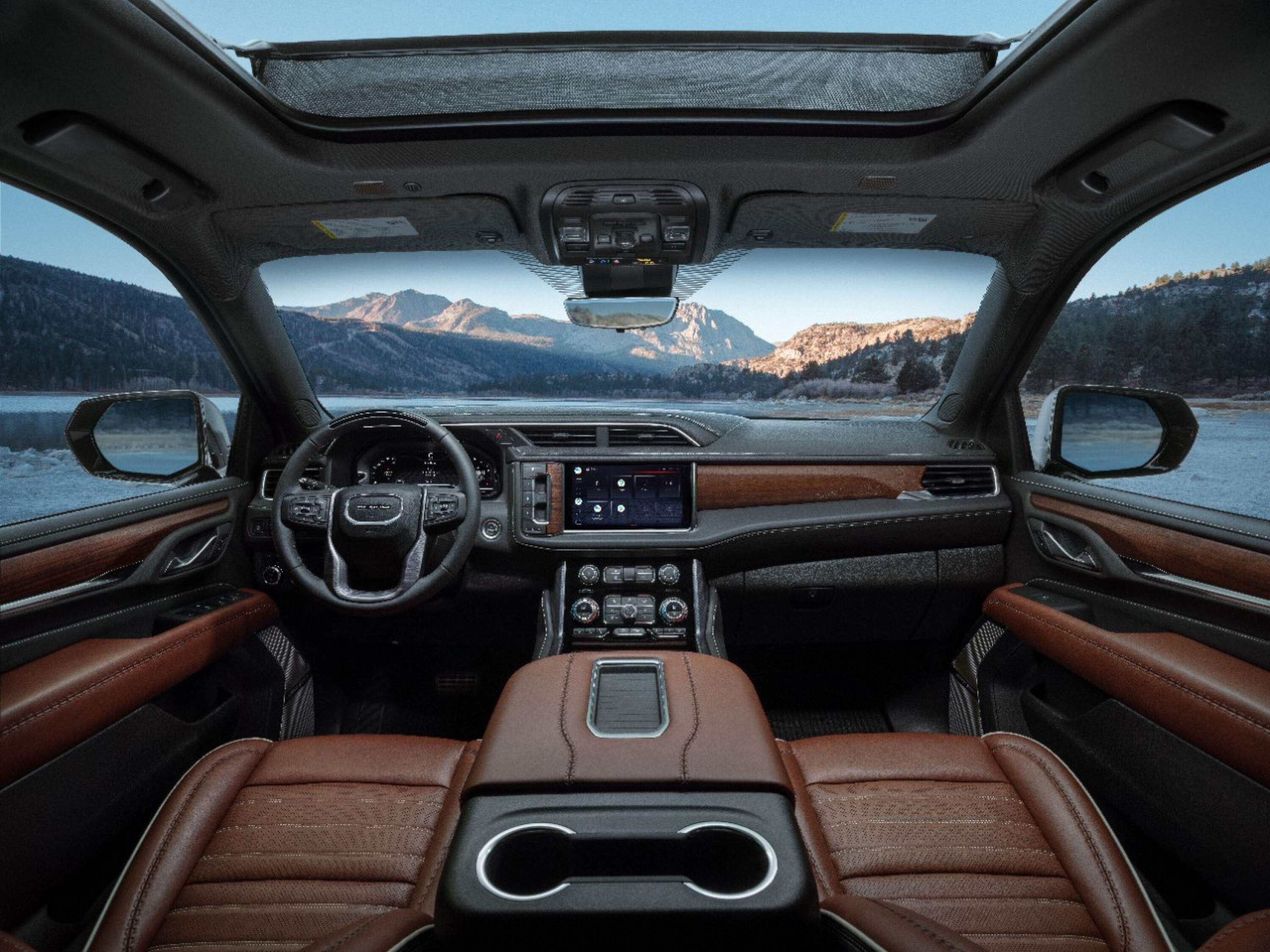
Only the top-spec Yukon Denali will be sold here — meaning prices could creep higher than $150,000 — which should mean a long-list of standard features and an eight-seat layout.
“It’s exciting that another vehicle is joining the GMSV line-up – one that features a full complement of eight-seats and offers great towing capability,” said GM’s managing director for Australia and New Zealand Jess Bala.
1
“Vehicle development post-remanufacturing is progressing extremely well and we’re on track to deliver the new model to customers in first-half of 2025.
“Now that the camouflage has come off, we’ll be able to embark on more extensive on-road, local right-hand-drive development and testing.”
November ’23: The GMC Yukon will take on the Toyota LandCruiser 300-series in Australia from early 2025 as General Motors continues to expand its presence locally.
GMSV will import the high-spec Denali model for local conversion to right-hand drive by the same Walkinshaw operation that looks after the Silverado’s switch from LHD.
It will become the first GMC on local roads since the smaller Acadia seven-seater was rebadged as a Holden in 2018 to replace the underwhelming Captiva.
Yukon competes in a busy space in North America, rivalling models including the F-150-based Ford Expedition, Lincoln Navigator, Nissan Armada (Patrol), as well as stablemates from Chevrolet, the Suburban and Tahoe.
As with rivals such as the Expedition, which is based on the F-150, the body-on-frame Yukon shares its ‘T1’ platform with pick-ups, including the Silverado and GMC Sierra, while featuring an independent rear suspension.
1
The Yukon’s eight-seater status will give it a distinction in Australia.
The Toyota LandCruiser no longer offers more than seven seats, while the related Lexus LX offers a choice of four- to seven-seat layouts.
The Yukon announcement was made on GMSV’s third anniversary in Australasia, with the umbrella brand’s success since 2020 – notably with 8000 Silverados remanufactured at Walkinshaw’s Dandenong facility – prompting the business-case exploration of other US models.
“We’ve had a lot of success with the Silverado here and, in talking to dealers, talking to customers, we think there’s a real opportunity for a full-size premium SUV like the Yukon,” GM Australia and New Zealand managing director Jess Bala told Wheels.
“The [GMC] Yukon is a bit of an icon over in the US … It’s an amazing premium SUV.
1
“It seems like the great next step for GMSV, and also just shows our commitment to that umbrella brand and constantly looking for the right portfolio opportunities for the customers here in ANZ.”
The 5.3-metre-long GMC Yukon is available with a choice of drivetrains in the US, including a 3.0-litre turbo diesel. The Australian Yukon will be powered exclusively by a 6.2-litre petrol V8 producing 313kW and 624Nm, mated to a 10-speed auto with dual-range transfer case.
The rear-drive Yukon has the highest towing rating at 3720kg, though the four-wheel-drive Denali model will still offer Aussies about 3630kg – well below the Silverado’s 4.5-tonne figure but setting a new local benchmark for an SUV.
Toyota’s LandCruiser 300, Nissan’s Patrol, Lexus’s LX and Land Rover’s Defender 130 all share a 3500kg braked towing figure.
GM says the Yukon’s towing capabilities, in addition to its eight-seat layout, will form a crucial part of its “multi-dimensional” appeal locally.
“There are not many premium SUVs that are eight seats and sit in that space of being that vehicle that a family can use to go from school to the outback in,” said GM International’s director of communications, Lauren Indiveri.
1
The GMC Yukon Denali 4WD costs the equivalent of $126,000 as a starting point in the US
“This is where we see an opportunity for Yukon to really come in and sit in that GMSV portfolio – where towing is a huge part of who we are as a business – with Silverado as well, of course.
“That capability of Yukon is something special that we’re going to offer here. You still get a family vehicle, but you can also go and tow and hitch up your caravan or your boat or whatever and off you go.”
How much will the GMC Yukon cost in Australia?
With the Yukon’s arrival at least 14 months away, pricing and full specs are unlikely to come before late 2024.
The GMC Yukon Denali 4WD costs the equivalent of $126,000 as a starting point in the US. Using the Silverado LTZ as a guide – $103,000 converted and $121,000 RRP – our best guestimate is a circa-$150K price for the Denali.
1
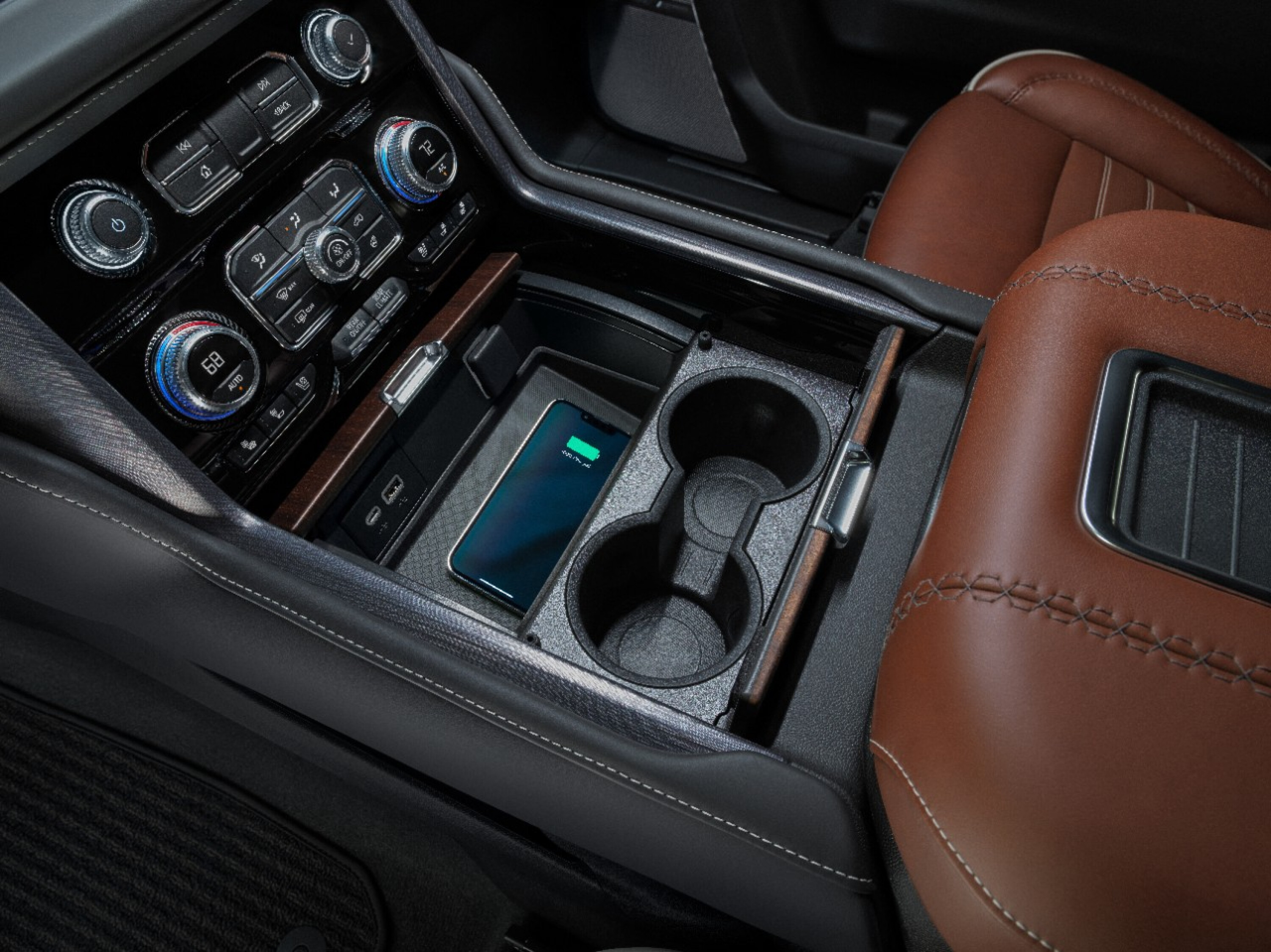
In the US, standard Yukon Denali features include 20-inch wheels, Magnetic Ride Control dampers, 360-degree camera (with up to 13 camera views in total), 15-inch head-up display, heated and ventilated front seats, heated steering wheel, heated rear outboard seats, and a 10.2-inch infotainment touchscreen with Google Built-In.
A vast array of options includes 22-inch wheels, panoramic sunroof, air suspension with extra ground clearance, and dual rear-cabin infotainment touchscreens. An optional Enhanced Trailering Tech pack incorporates extra cameras and guideline assistance.
The Yukon is also available as a longer-wheelbase XL that can hold nine occupants, though this is not planned for Australia at this stage.
“I think the beauty of GMSV as an umbrella brand is that it allows us to do those more niche offerings,” said GM ANZ managing director Bala. “Niche premium offerings with different brands, because that’s how we’ve stood up that business.
“I think customers recognise that we’re bringing in the right vehicles for the market here for the customer needs. So, if it was to be down that [GMC] path or a different GM brand, there needs to be a rationale and a good customer offering behind it before we would do it.”
See our links below for more on GM’s Australian offerings
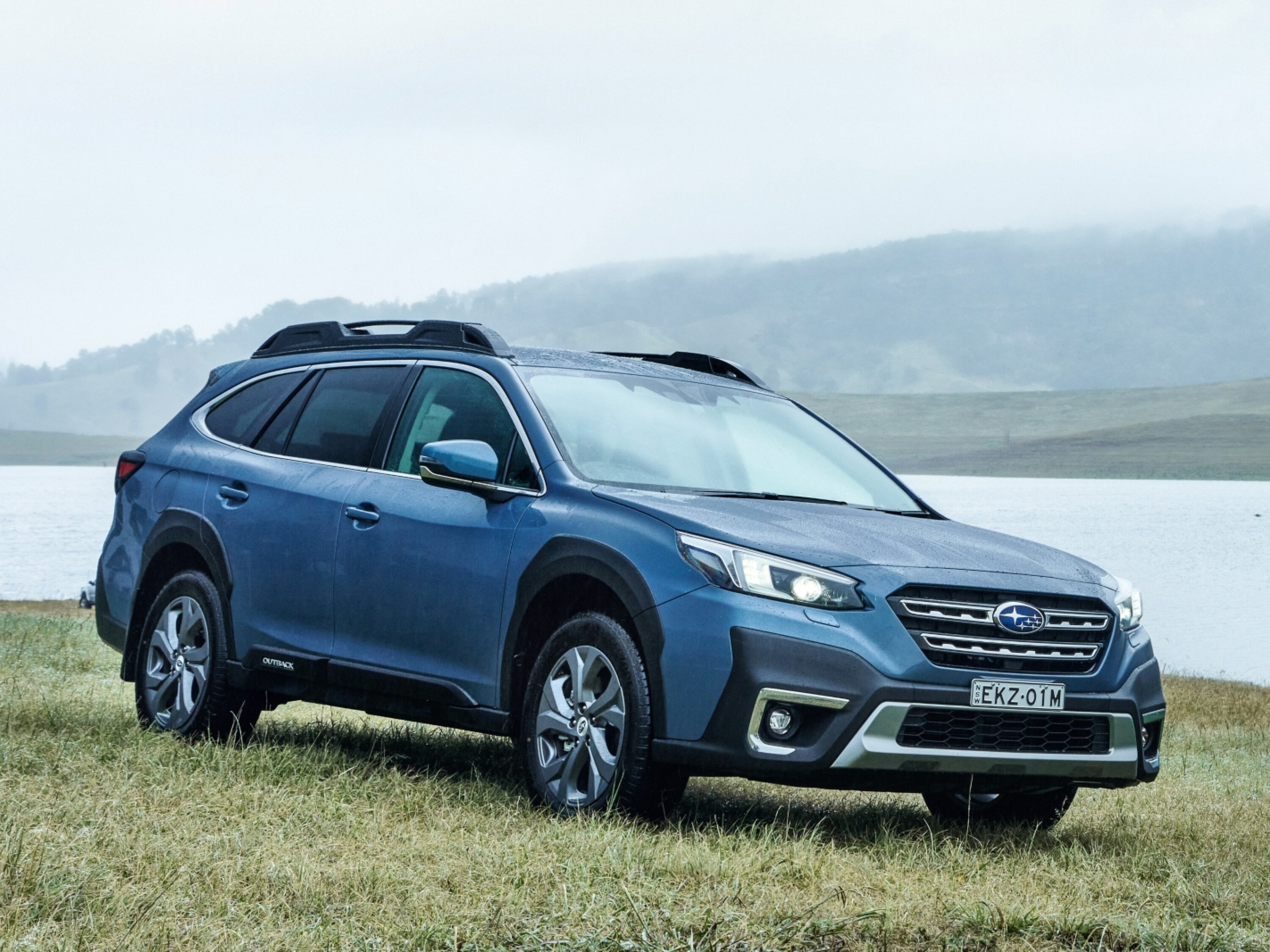
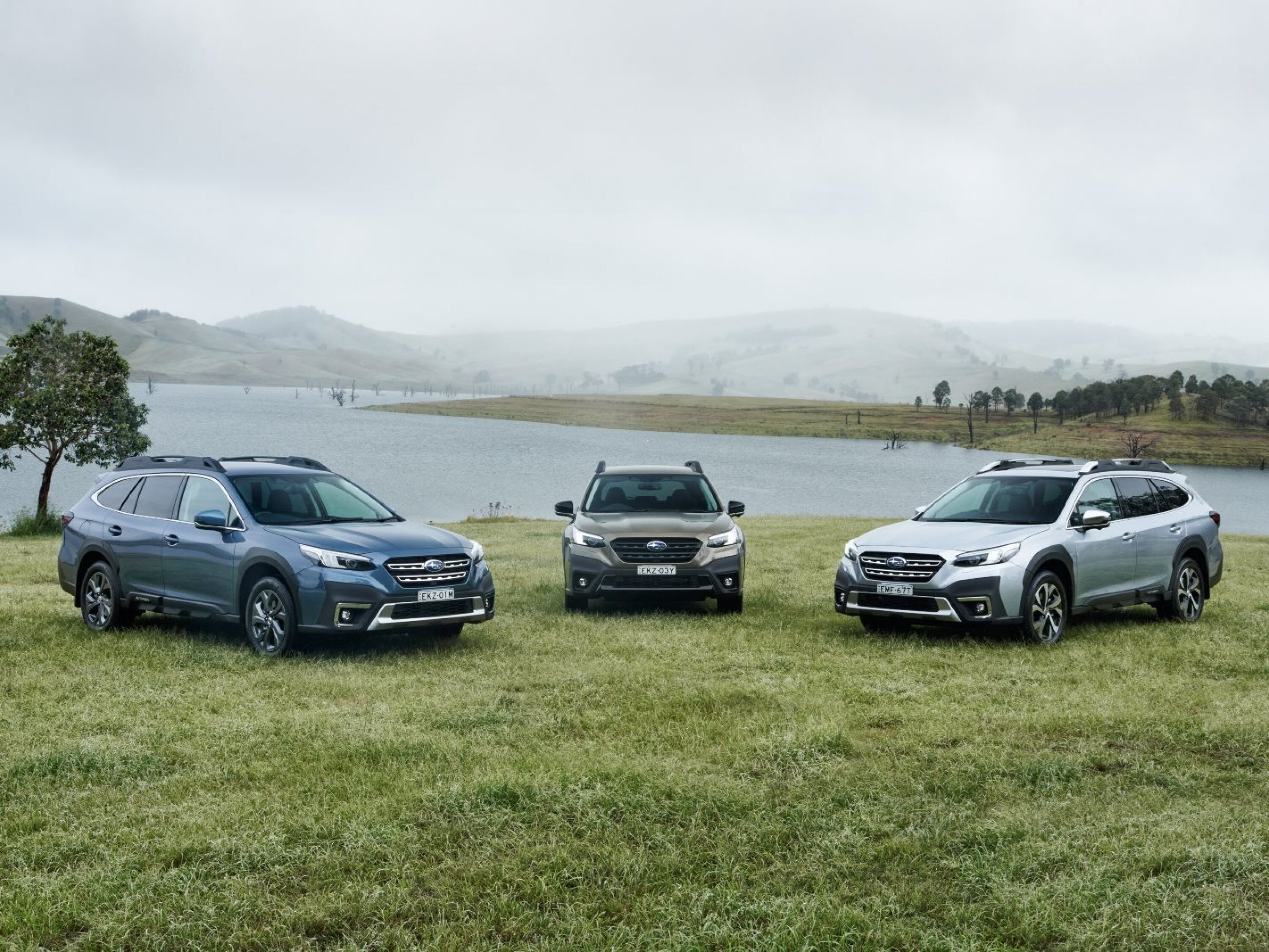
In Australia, the Subaru Outback is well-regarded for its dual capacity to handle both city driving and rugged, off-road conditions. Introduced in the mid-1990s, it has built a solid reputation for being reliable and safe.
The Outback appeals particularly to families and those who enjoy outdoor activities, thanks to its all-wheel drive, spacious interior, and robust safety features.
Its design thoughtfully balances comfort with functionality, making it ideal for everyday use as well as adventurous outings. Although positioned as an SUV the Outback feels more like a wagon with added height.
Over the years, it has become synonymous with durability and versatility, capturing the essence of the Australian love for exploration and practicality.
Pricing & Features
The Subaru Outback AWD, with its robust feature set and competitive pricing, starts at $43,890 before on-road costs are added.
1
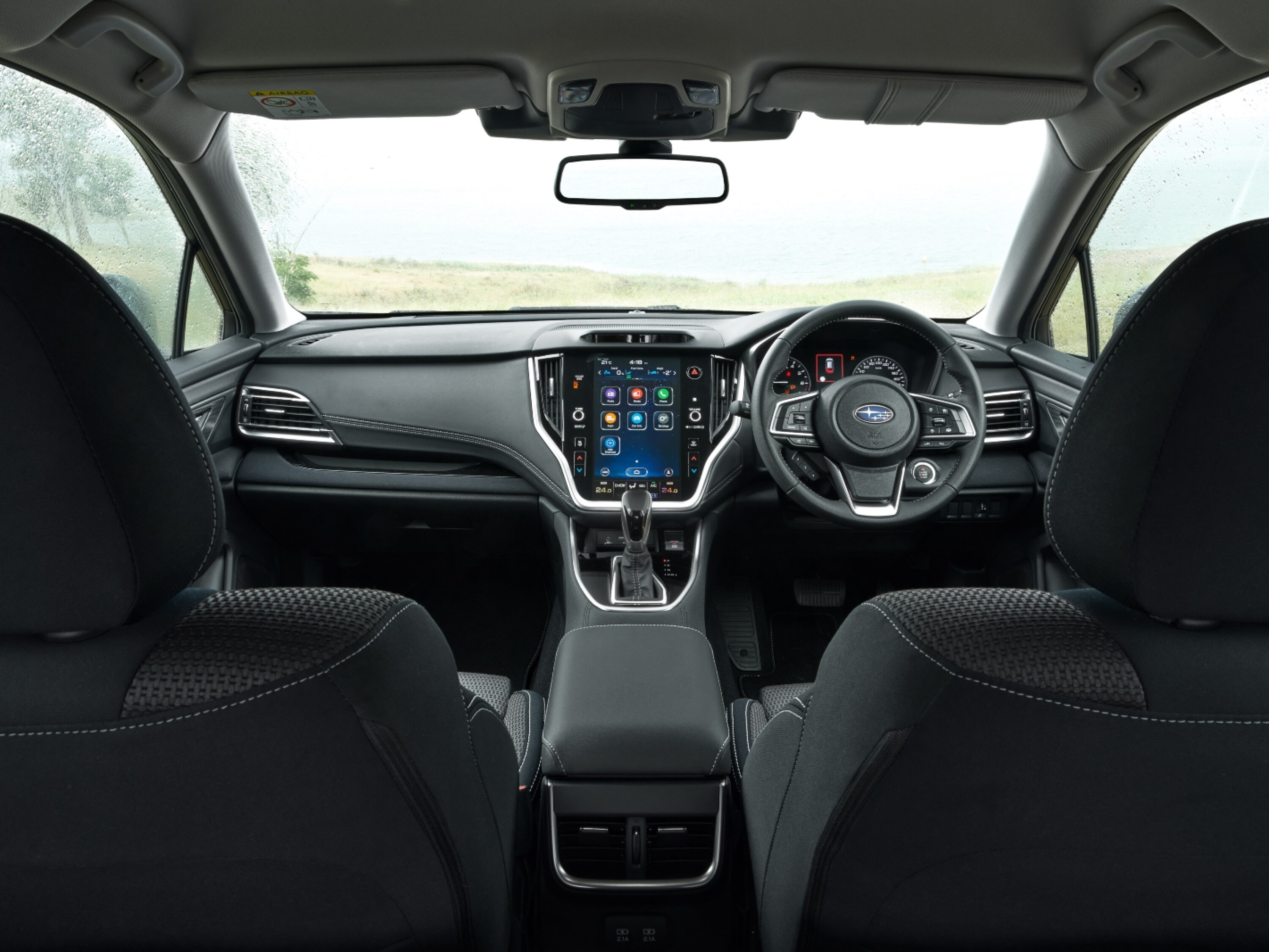
The entry-level Outback AWD includes 18-inch alloy wheels and an expansive 11.6-inch portrait touchscreen featuring wireless Apple CarPlay and wired Android Auto. Enhancements such as rain-sensing wipers, six speakers, LED headlights and black roof rails add both functionality and an outback aesthetic appeal.
The Outback is equipped with a 2.5-litre e-Boxer four-cylinder petrol engine producing output of 138kW and 245Nm of torque. It’s mated to a continuously variable transmission, and obvious for a Subaru, an all-wheel drive system.
Sport variants in the range come with a more powerful turbocharged 2.4-litre offering.
1
Safety
The 2024 Subaru Outback boasts a five-star ANCAP safety rating, a testament to its robust safety features, following tests conducted in 2021.
The Outback model excels in various safety metrics, achieving an adult occupant protection score of 88% and a child occupant protection score of 91%.
1
It is equipped with comprehensive safety equipment as standard, including Autonomous Emergency Braking (AEB) for forward and reverse scenarios with pedestrian, cyclist, and junction assist, autonomous emergency steering, blind-spot monitoring, rear cross-traffic alert, driver attention monitoring, lane departure warning, lane-keep assist, and traffic sign recognition.
Key Rivals
The Subaru Outback faces competition from both medium SUVs and other crossovers such as:
The 2024 Subaru Outback AWD should definitely be considered for those in the market for a compact SUV that doesn’t compromise on safety, efficiency, or off-road capability.
More powerful options are available higher up the range if you’re wanting a bit of extra punch from a turbocharged engine. It can also be thirsty at times.
Aside from these points, its array of features tailored for a capable and adventurous lifestyle makes it an attractive option for modern drivers seeking a reliable and sustainable vehicle.
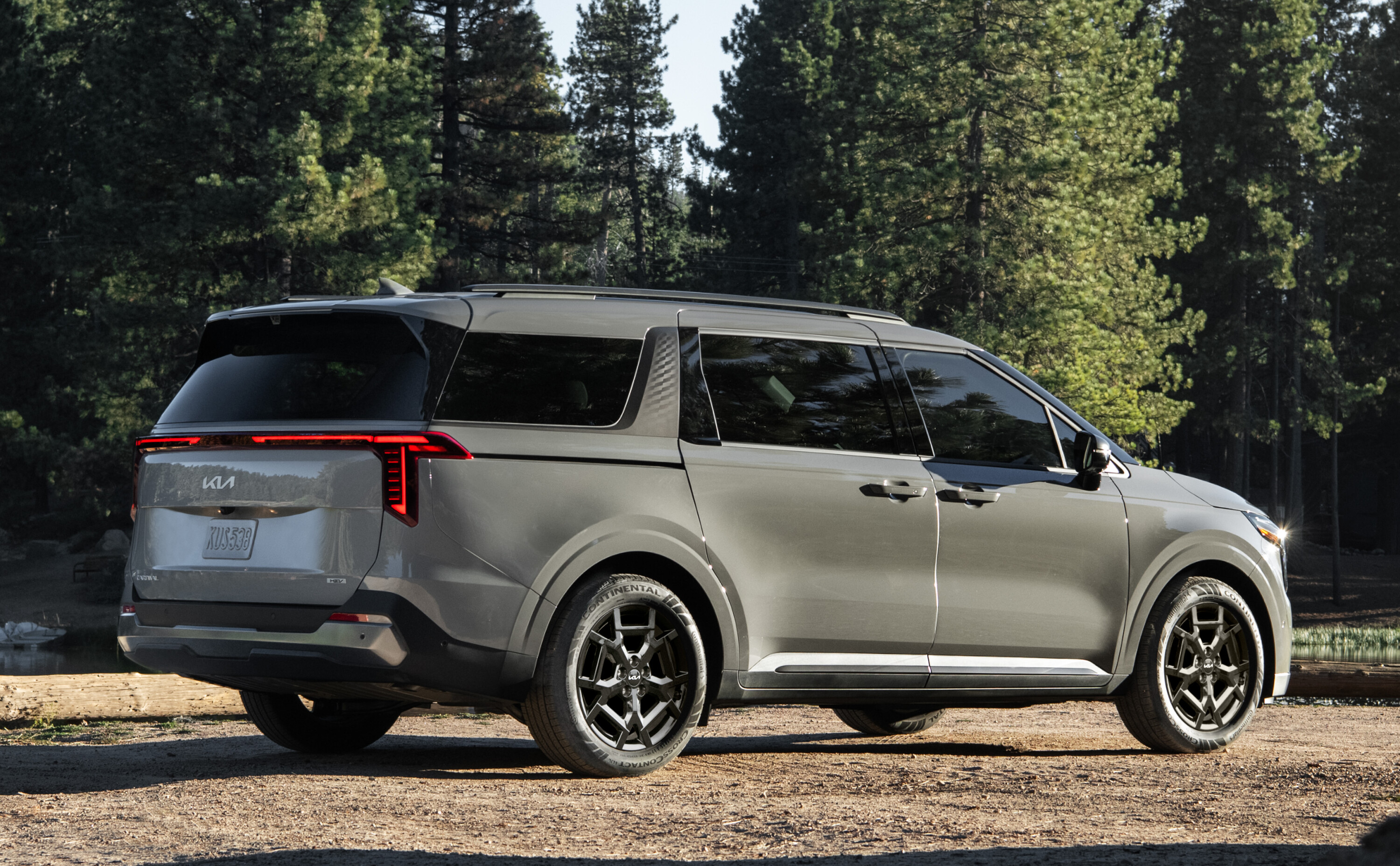
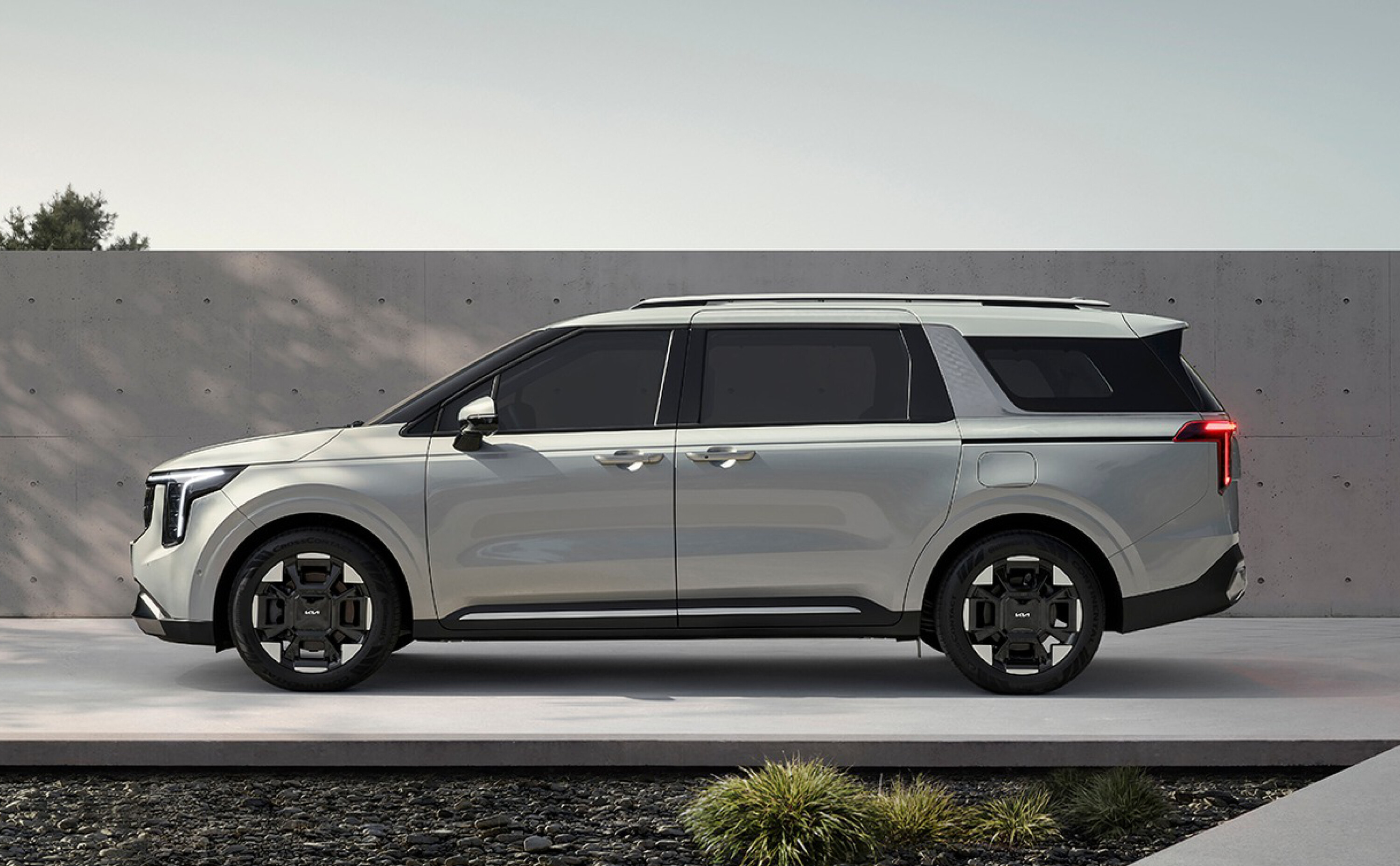
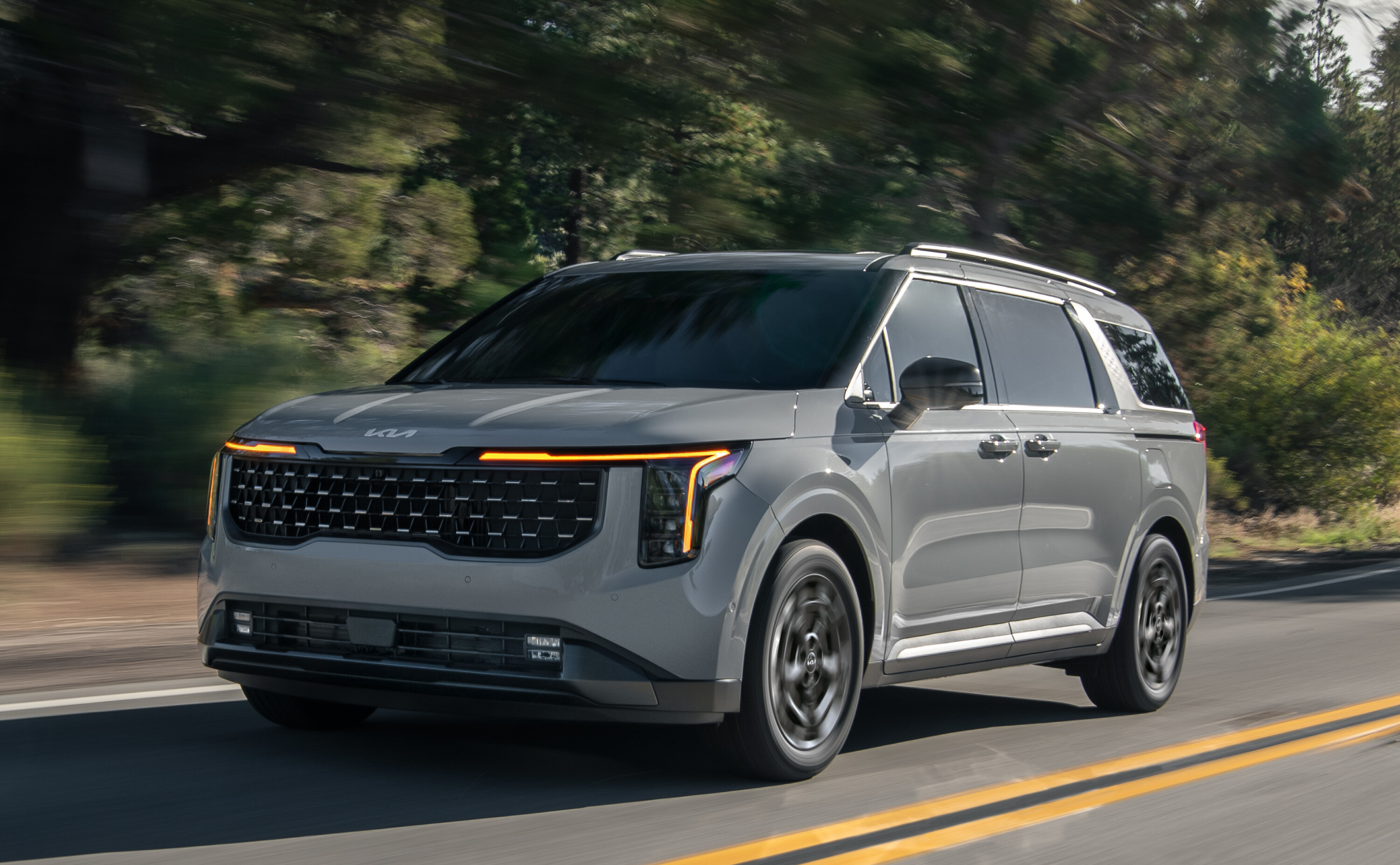
Prices for the facelifted 2025 Kia Carnival people mover have been confirmed ahead of its Australian launch.
The latest Carnival – designated as a model-year 2025 vehicle – is between $2670 and $5390 dearer than the pre-facelift version with diesel and petrol versions now in showrooms set to be joined by a hybrid model next month.
As detailed in late 2023, revisions are set to include an updated exterior design similar to the latest Sorento, Picanto and EV9, new alloy wheel designs, improved ride comfort, more active safety systems, and a front-centre airbag to help prevent head clashes in serious side-impact collisions.
1
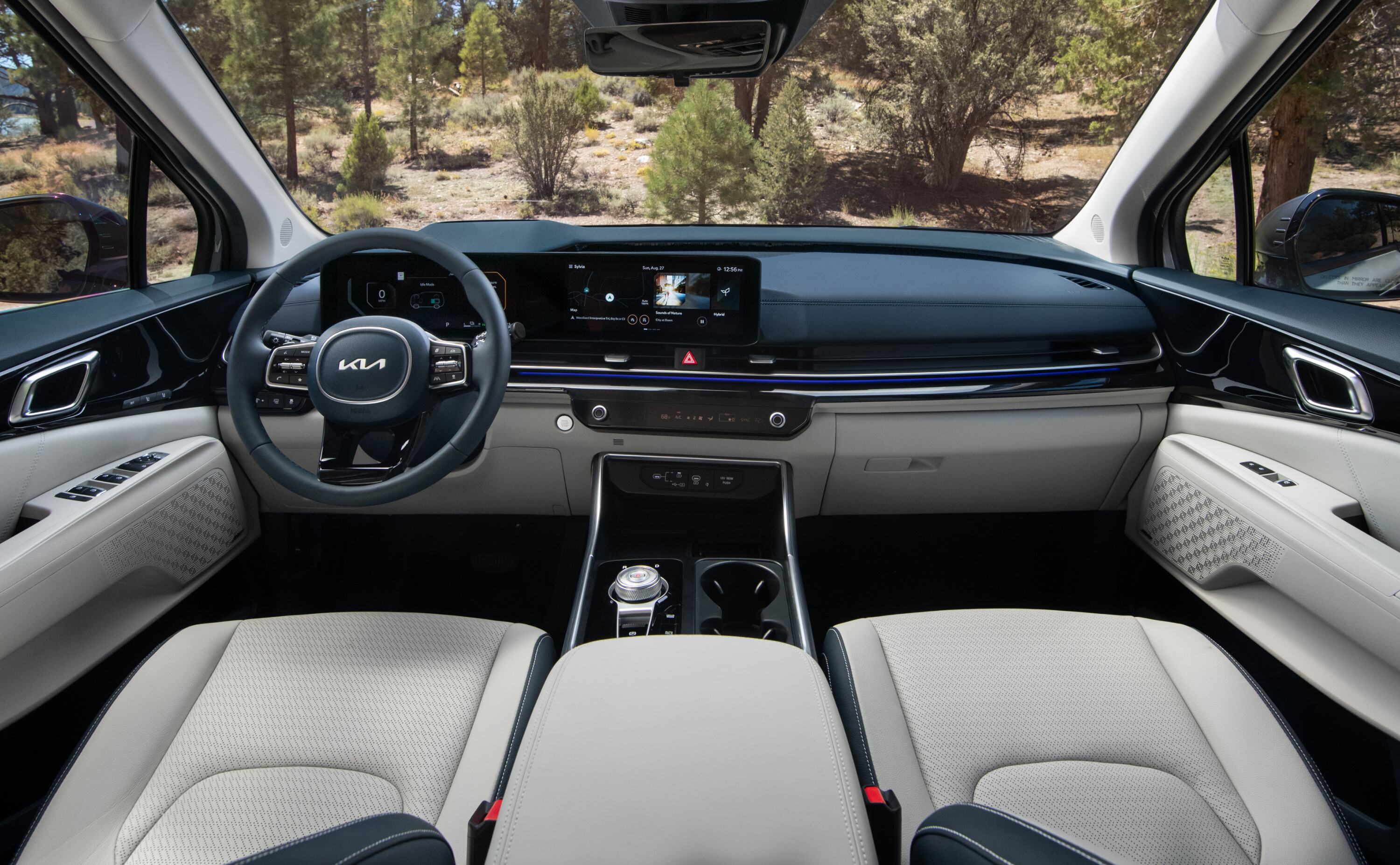
Inside, the Carnival has a new-look dashboard with a curved display panel featuring Kia’s latest ‘ccNC’ infotainment system with support for wireless Apple CarPlay/Android Auto and over-the-air software updates.
It also has a switchable climate/audio touch panel like the EV6, Niro and Sportage, and configurable ambient lighting that extends from the dashboard into the door panels.
The entry-level Carnival S now features an eight-speaker audio system (up from six) with surround sound, front parking sensors, rear occupant alert, trailer sway control, and digital instrument cluster.
1
Base versions of the facelifted Carnival will feature a 4.0-inch multi-information display with digital gauges, with top-of-the-range models upgraded to a full-digital 12.3-inch unit.
This is an improvement over the pre-facelift Carnival, which featured a 4.2-inch display and analogue gauges across the Australian line-up despite the availability of a 12.3-inch unit overseas.
Kia Connect smartphone functionality has been introduced as standard equipment across the line-up.
All other Carnival variants have been renamed to reflect most other Kia vehicles sold in Australia, with the mid-spec Sport and Sport+ replacing the Si and SLi, respectively.
The Carnival Sport will include partial leather upholstery over the previous Si’s cloth, while the Sport+ will feature rain-sensing wipers, a digital rear-view mirror and side parking sensors.
A blind-spot view monitor is now standard on Sport+ and above.
A flagship GT-Line will replace the Platinum, while a ‘GT-Line Lite’ variant will slot between the Sport+ and GT-Line to replace the Special Edition, which was introduced in 2023 without certain supply-constrained features to reduce wait times for customers waiting for the range-topping Platinum.
Above the previous Special Edition it replaces, the GT-Line Lite adds an auto up/down window for the driver’s side only (instead of for all four windows) as well as an eight-way electric adjustment for the driver’s seat
1
The flagship GT-Line brings a 12-speaker Bose audio system, power-adjustable memory-function front passenger and drivers seats, ventilated front seats, auto up/down front and rear windows, and a heated steering wheel with paddle shifters.
The GT-Line also adds remote smart parking assist and a head-up display over the previous Platinum.
Some variants are also expected to receive a blind-spot view monitor and Kia Connect smartphone functionality.
A new colour across the Carnival line-up is ceramic grey, which replaces ceramic silver and silky silver.
Available exclusively in flagship GT-Line trim is a 183kW/367Nm 1.6-litre turbo-petrol hybrid powertrain. At $76,210 before on-road costs it is the first electrified people mover sold in Australia with a price tag below $100,000.
Mazda’s Chinese division has teased a new all-electric sedan ahead of its debut at the Beijing Auto Show next week.
The sedan, which could wear an ‘EZ-6’ badge following recent trademarks in China, will become the brand’s first electric vehicle built from the ground up – but it won’t be an authentic Mazda, limiting its export potential.
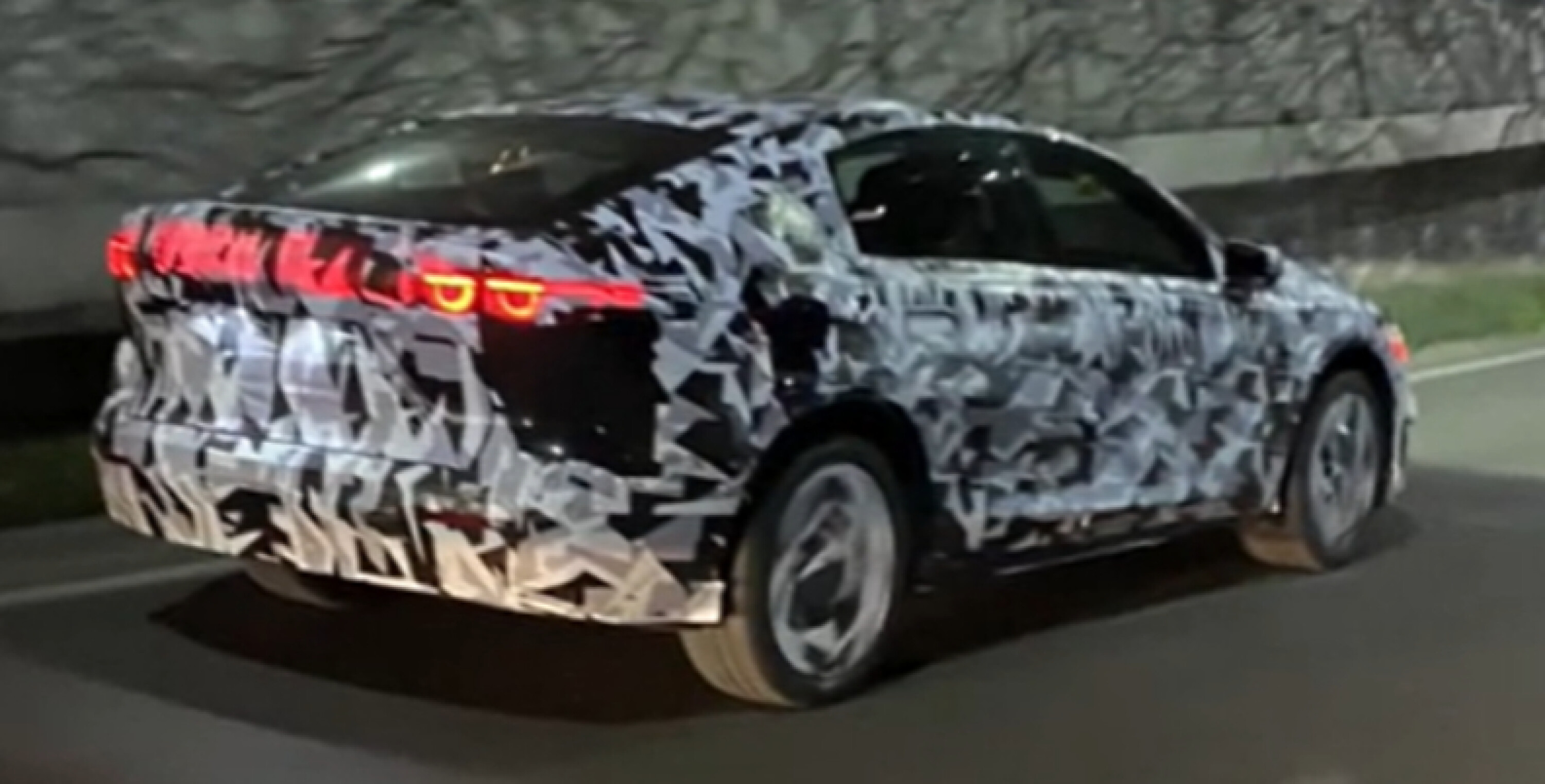
Recent spy shots from China confirm the ‘EZ-6’ – codenamed J90A internally – will be heavily based on the Deepal SL03 built by Mazda’s Chinese joint-venture partner Changan, with identical dimensions.
1
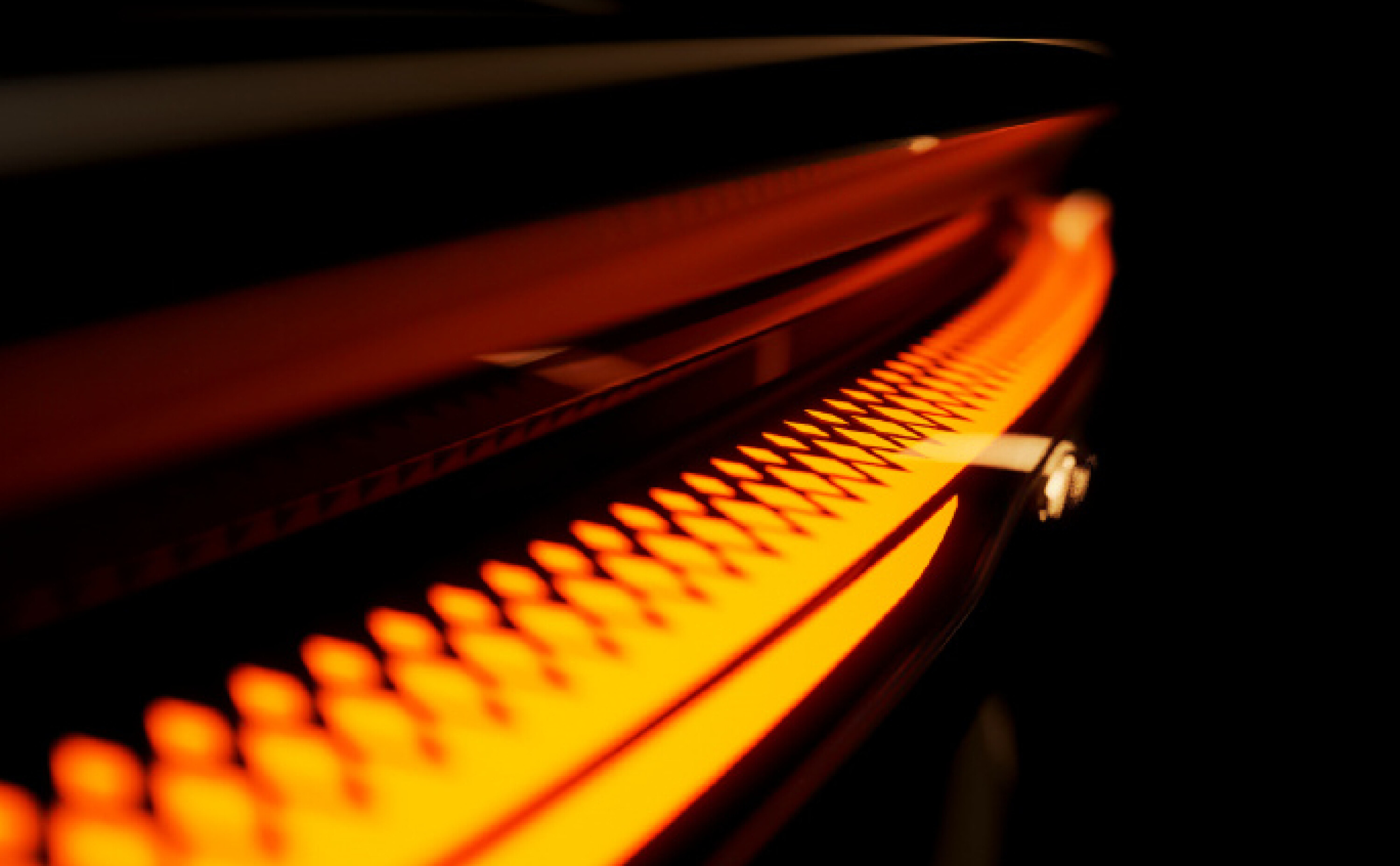
However, it appears Mazda’s Tesla Model 3 rival will adopt some of its own styling traits, such as a circular LED signature within the tail-lights, different headlights, and unique alloy wheels.
It is likely the Mazda ‘EZ-6’ will also be offered with an extended-range petrol-electric powertrain, while an SUV derivative – codenamed J90K and likely badged ‘EZ-60’ – could arrive later based on the midsize Deepal S7, which has similar dimensions to the Tesla Model Y.
In China, the electric Mazda EZ-6 is expected to replace the current Mazda 6, which ended production for that market in December 2023.
This points to an all-electric successor for the Mazda 6 for other markets – such as Australia, Japan, Europe and North America – which could be based on Mazda’s own ‘SkyActiv Multi-Solution Scalable Architecture’ instead of the China-specific ‘EPA’ platform underpinning the Mazda EZ-6 and Deepal SL03.
An electric successor to the current Mazda 6 – which has been on sale for 12 years – would provide Mazda with a rival to the Tesla Model 3, Polestar 2 and BYD Seal.
It would also compete with premium midsize electric cars like the BMW i4 and soon-to-arrive Mercedes-Benz CLA EV.
Globally, Mazda offers two electric vehicles – the MX-30 EV and the China-only CX-30 EV.
The MX-30 Electric was axed in Australia in late 2023 due to “Mazda Corporation’s strategy to welcome a range of new electrified models between now and 2025 – including hybrid electric vehicles, PHEVs and BEVs”.
A recent survey conducted by the Australian Motor Heritage Foundation has revealed the economic expenditure of historic vehicle owners across the country.
Snapshot
Close to 970,000 historic vehicles nationwide – costing owners around $10,240 per vehicle, per year.
Three largest areas of expenditure are mechanical repairs, parts and accessories, and bodywork.
Historic vehicle sector generating 79,000 jobs and $6.2 billion in wages and salaries annually..
Historic vehicles are maintaining and encouraging local manufacturing, training and skills.
Inspired by the landmark 2020 HERO-ERA study undertaken in the UK, the Australian survey, conducted by The Mercurius Group, queried over 6000 respondents across 800 motoring clubs across Australia as part of a nationwide Economic Value Study. The results were surprising, including an approximated $10 billion annual expenditure on historic vehicles.
“In carrying out this study, we have shown that the historic vehicle movement is a large and vibrant part of Australia’s society and economy”, said the Australian Motor Heritage Foundation.
4
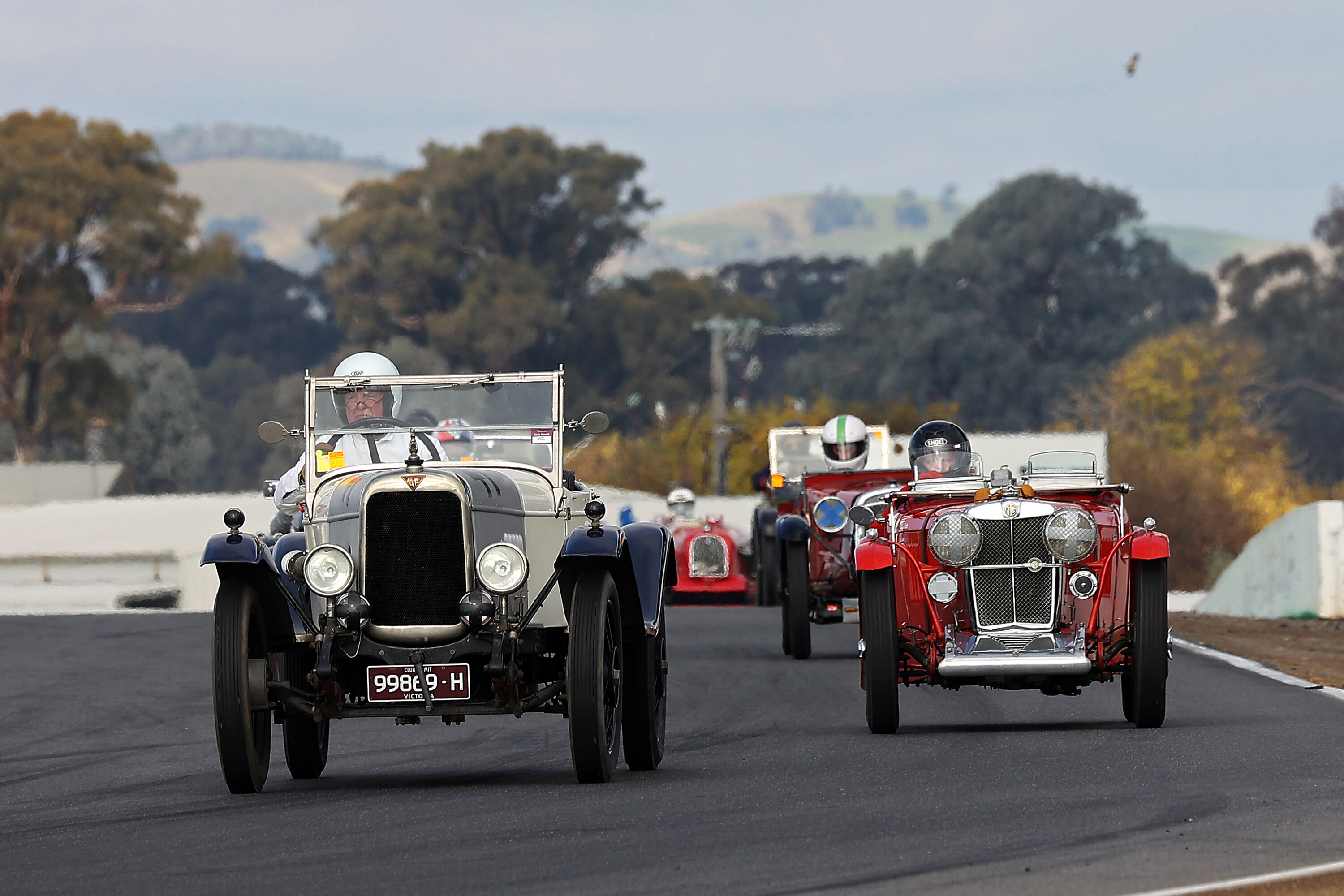
“Historic” vehicles are defined by two categories: those 15-30 years old are defined as classic vehicles, and vehicles over 30 years old are defined as heritage vehicles.
Enthusiast owners of approximately 970,000 historic vehicles in Australia spend an average of $10,240 on each vehicle, per year – 12.5% more than people who own daily driven cars.
The historic fleet represents 4.4% of Australia’s total vehicle fleet of 21 million. Around half of the survey respondents own one historic vehicle, with the other half owning two or more.
Until now, there has not been a comprehensive survey of this nature conducted.
1
“The findings of this report have certainly highlighted the significance of the historic vehicle sector to both the community at large and the economic sector.” – Hugh King, Chairman of the Australian Motor Heritage Foundation.
“The response from Australia’s motoring club members has been unprecedented; the economic modellers have never had so large a data pool to work with, proving motoring enthusiasts care as passionately about their historic vehicles as they do having their voices heard,” Mr King added.
“In carrying out this study, we have shown that the historic vehicle movement is a large and vibrant part of Australia’s society and economy.”
1
The survey also revealed the total economic impact of $25.2 billion, with the sector creating nearly 79,000 jobs, generating $6.2 billion in wages and salaries annually.
Stavros Yallouridis, CEO of the Motor Traders’ Association of NSW said: “Despite the end of local vehicle manufacturing, Australia maintains a rich and diverse automotive industry, which employs hundreds of thousands of people across a range of roles… The automotive sector is one of the backbones of our economy and is also at the heart of our communities.
“This survey, and the enthusiastic response, highlights the necessity for Australia to back its automotive sector with world-class training, local skills development and career pathways.”
4
Are you the owner of a historic or classic vehicle?
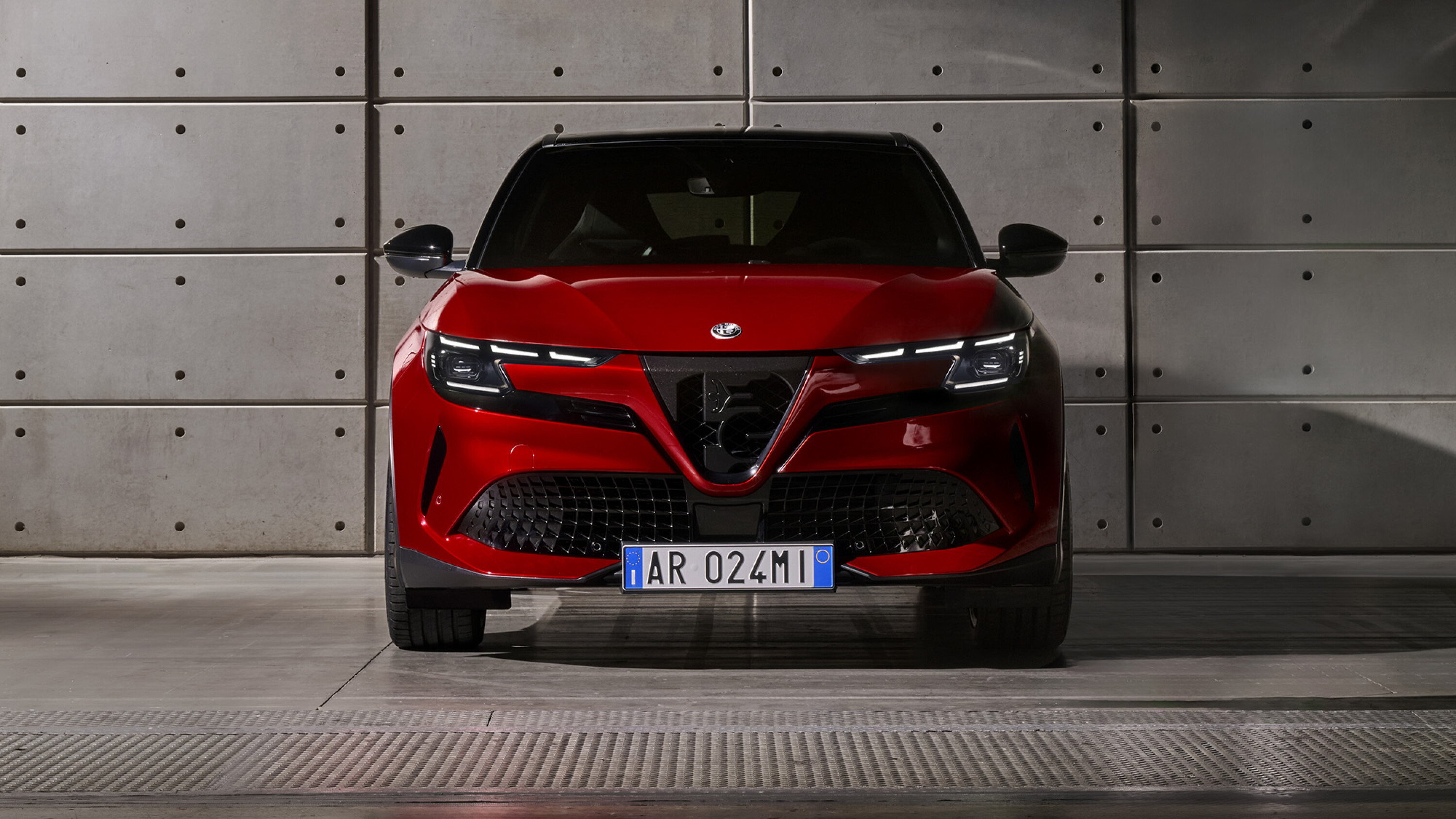
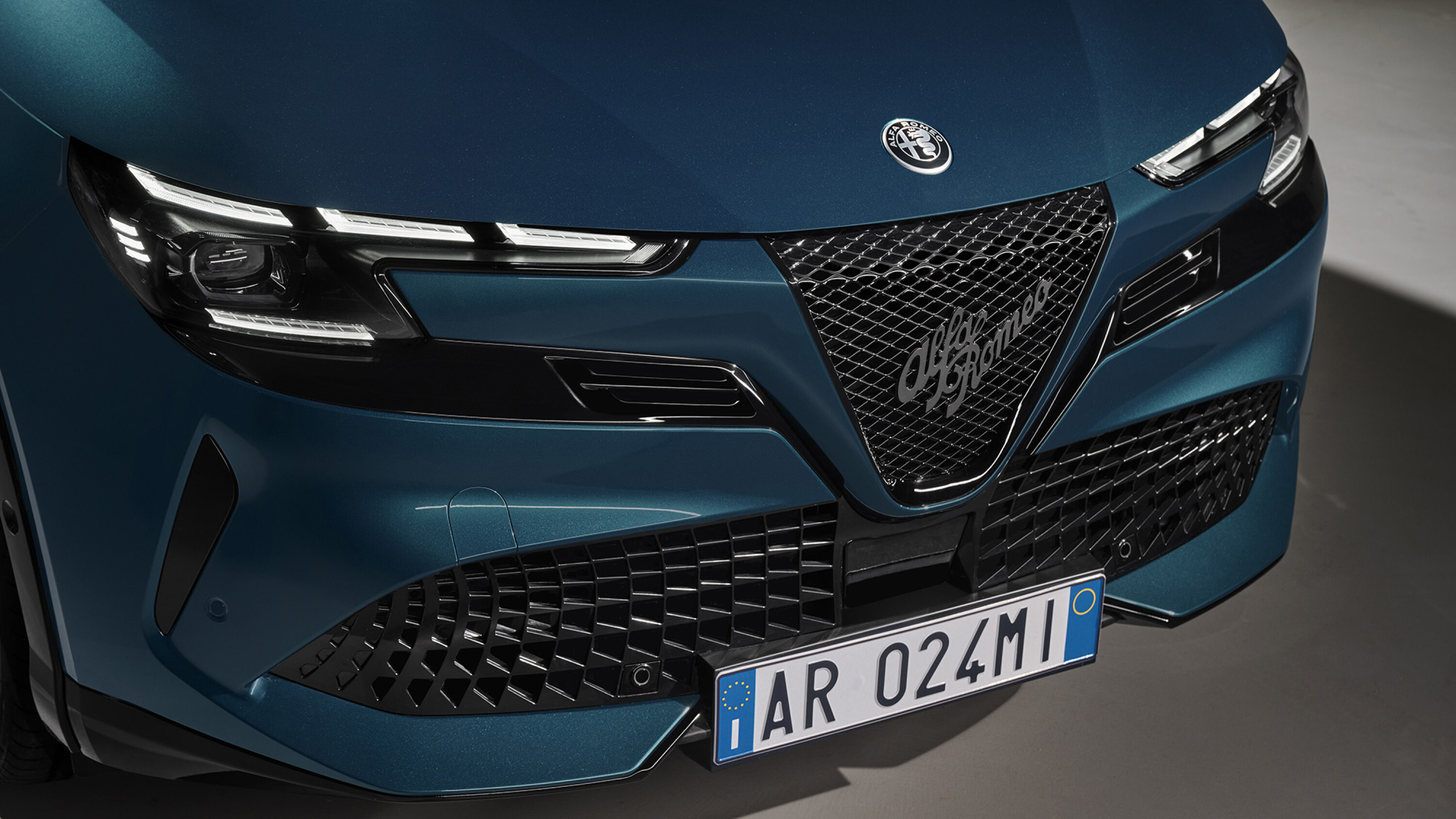
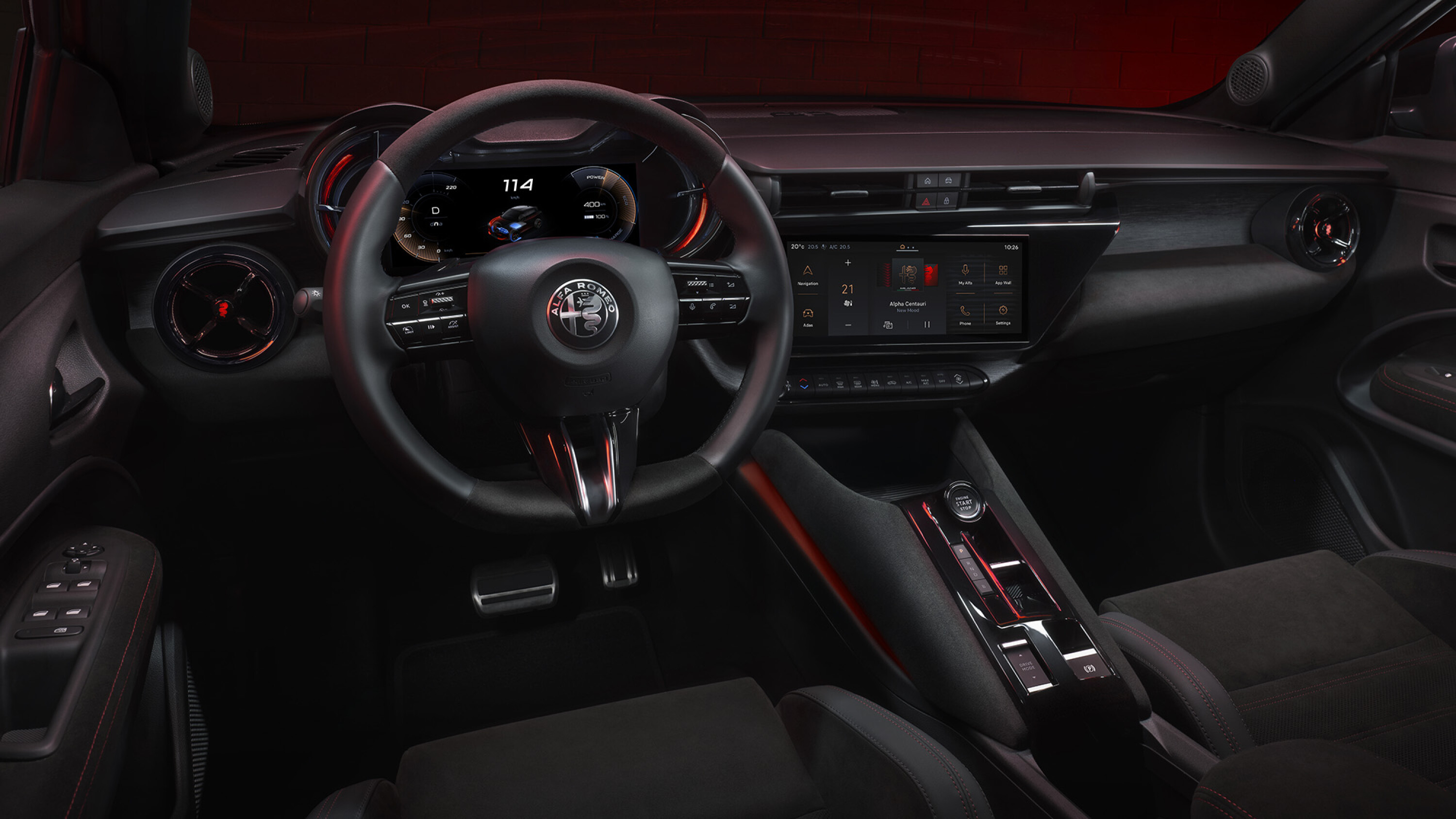
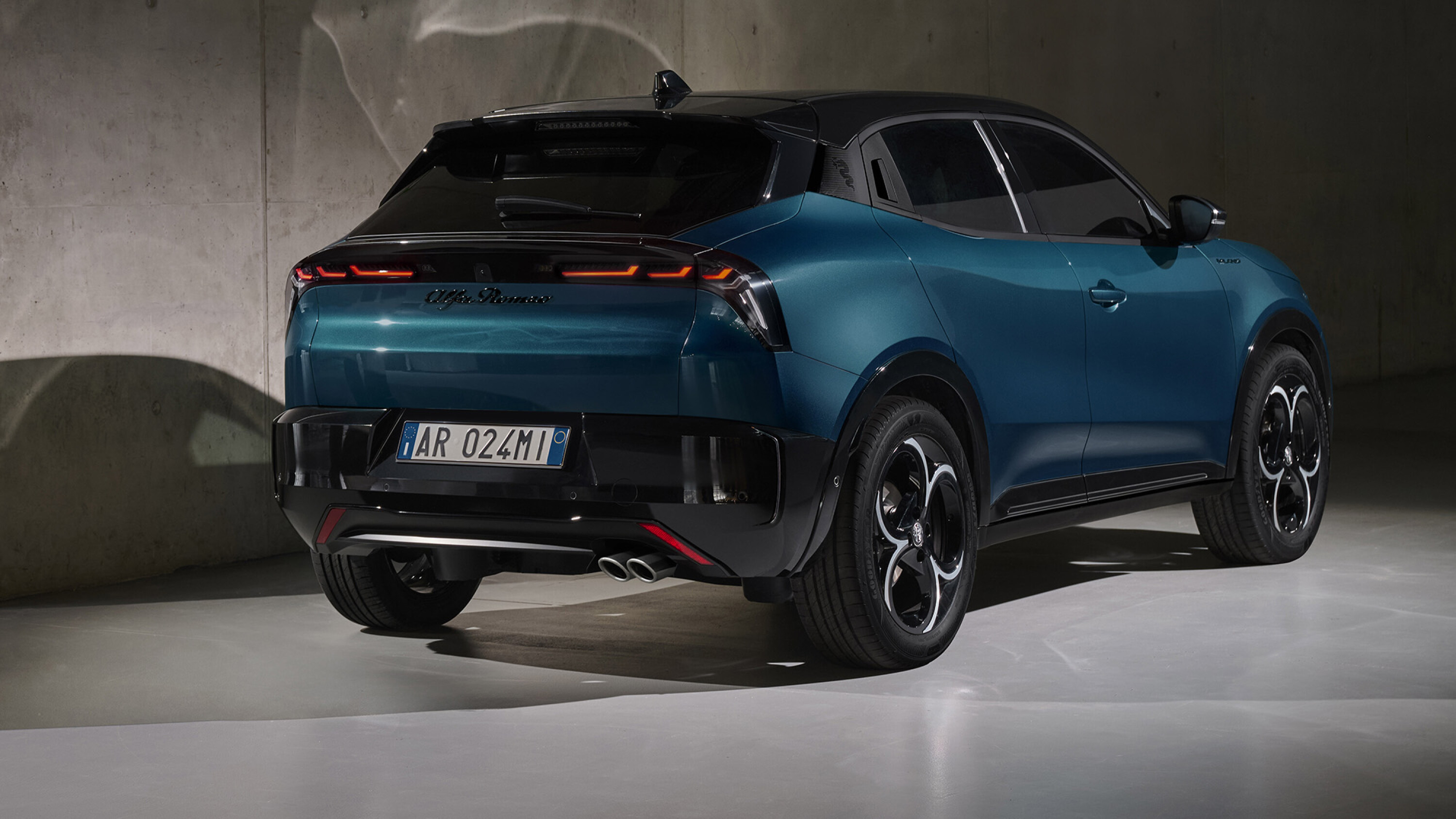
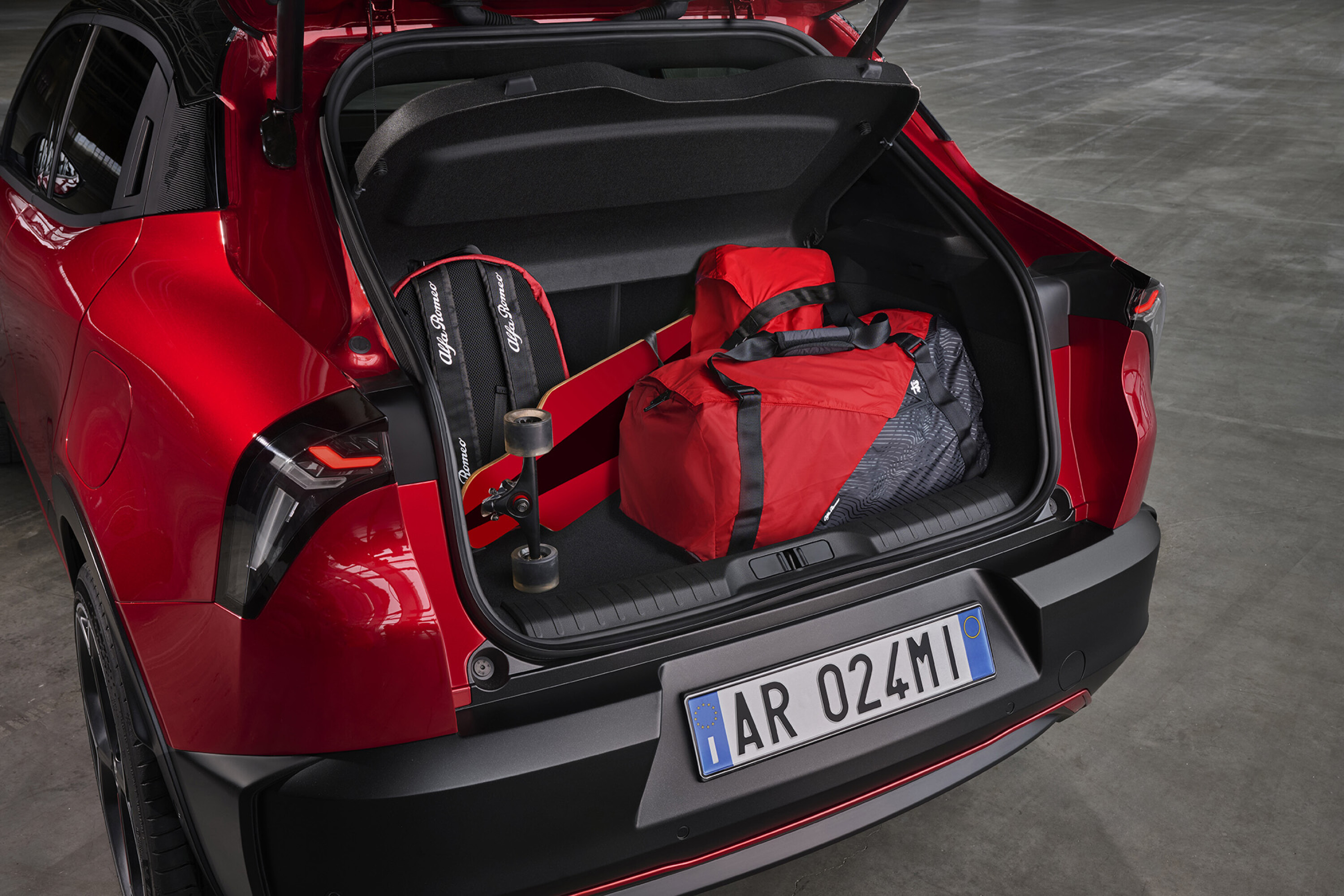
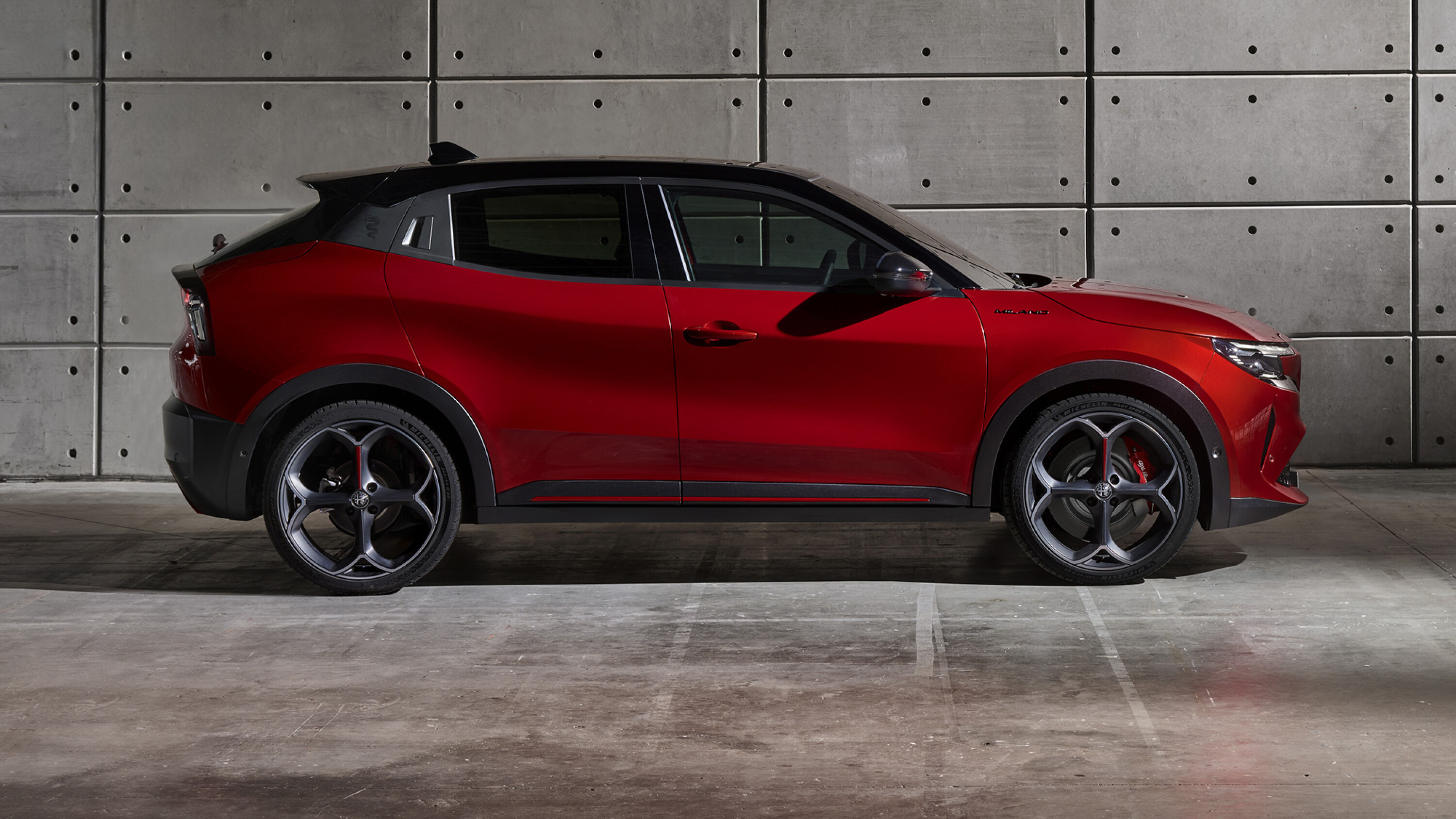
Alfa Romeo turns a new page in its style book with this week’s reveal of the Junior compact SUV, launching in Europe soon with petrol and electric options. Australians will get a look at it too – in late 2025.
If you don’t need petrol range or the greater interior space, you might want to skip the only recently launched Alfa Romeo Tonale in favour of the compact new Junior.
4
✋ APRIL 16: Stop the presses! Milano name banned by Italian govt
If you had read this story when it was first published on April 11, you might recall Alfa’s new compact SUV was named Milano – honouring the brand’s heritage, having been founded in Milan in 1910.
However, following a decision by the Italian government to ban the name Milano, Alfa Romeo has decided to call its new model Junior, after the GT 1300 Junior unveiled in 1966. Alfa parent Stellantis says Junior was a favourite name among fans when it canvassed fans in the lead-up to the Milano name’s reveal.
In the meantime, we’ll look forward to a brisk trade in Milano badges on eBay.
JUMP AHEAD to see the full Alfa Romeo announcement, or continue reading for details on the compact SUV formerly known as Milano.
1
STORY CONTINUES (with Milano renamed Junior)
It’ll be quite the wait for Junior to reach Australia, with the local Stellantis office confirming it’ll be sometime in the second half of 2025 before buyers get the chance to plant one in their driveway.
The very closely related Jeep Avenger will make its Australian debut in the fourth quarter of 2024, priced from $53,990 – learn more about that one at the story linked below.
Back to the Junior…
Alfa Romeo calls this “a symbolic ‘welcome back’ to fans of the Giulietta and Mito”, two fairly well-regarded hatches that didn’t quite get the long-term upgrade commitments they deserved.
But, with Alfa now a part of the wealthy Stellantis family, the Junior will likely be better served at the table.
To that end, Alfa Romeo promises “best-in-class driving dynamics”. Class rivals are limited in number, in terms of likely price, but the larger Volvo EX30 will be among them – along with the mechanically (and historically) related Abarth 600e, for a bit of sibling rivalry.
1
Power, battery, charging and driving range
Like the Fiat and Abarth 600e models, ‘Elettrica’ versions of the Junior open with a 112kW model and leaps to 177kW for the hero Junior Veloce.
Both variants use a 400V electric system and a 54kWh battery pack.
The electric Alfa Romeo Junior claims a driving range of up to 410 kilometres on the combined WLTP test cycle, but Alfa reckons those sticking to urban environments will see as good as 590 kilometres.
1
Charging from 10 to 80% on a 100kW station is promised to take “less than” 30 minutes.
There’s a petrol-powered ‘Ibrida’ version of the Junior, too, matching a 100kW 1.2-litre turbo petrol three-cylinder engine with a 21kW electric motor and a six-speed dual-clutch auto.
MINI MATCH-UP
Measurements
Alfa Romeo Junior
Alfa Romeo Tonale
Volvo EX30
Length
4170mm
4530mm
4233mm
Width
1780mm
1840mm
1836mm
Height
1500mm
1600mm
1550mm
Wheelbase
2562mm
2637mm
2650mm
Weight
1560kg*
1525kg
1830kg
Boot
400L
500L (hybrid), 385L (PHEV)
318L
* Junior weight estimated, based on Avenger & 600e
When will the Alfa Romeo Junior come to Australia?
For now, Stellantis has confirmed only that we’ll see the Junior here in the second half of 2025, “with engine variants, pricing and spec released later in the year”.
1
How much will the Alfa Romeo Junior cost in Australia?
With the Jeep Avenger priced from just under $54K and the Abarth 500e priced from a smidge under $59K, the more premium Alfa Romeo Junior’s Australian pricing could easily start in that high $50,000 to low $60,000 window.
1
Will the petrol-powered Alfa Romeo Junior come to Australia?
Stellantis hasn’t said if we’ll get the petrol version of the Junior, but as we’re only getting the electric Avenger, it would seem unlikely – especially with Alfa Romeo phasing petrol out of its global line-up by 2027.
APRIL 16: Alfa Romeo parent Stellantis announces Milano is now Junior
In Alfa’s own words
MILANO NAME IS NOT OKAY? JUNIOR THEN!
During one of the most important weeks for the future of Alfa Romeo, an Italian government official declared that the use of the name Milano – chosen by the brand for its recently unveiled new compact sports car – is banned by law.
Despite Alfa Romeo believing that the name meets all legal requirements, and that there are issues much more important than the name of a new car, Alfa Romeo has decided to change it from Milano to Junior in the spirit of promoting mutual understanding.
The name Milano, a public favourite, was chosen to pay tribute to the city where our history began in 1910. This was not the first time that Alfa Romeo has asked for the public’s opinion when choosing the name of a car. It was previously done in 1966 with the Spider 1600 when the name chosen by the public was Duetto.
The Alfa Romeo team would like to thank the public for the positive feedback, the Italian dealer network for their support, journalists for the enormous media attention given to the new car and the Italian government for the free publicity brought on by this debate.
With a unique story and an endless list of names to choose from, the name change was not an issue. It was a pleasure to go over the list of names selected as favourites from the public’s suggestions, one of which was Junior.
Jean-Philippe Imparato – CEO Alfa Romeo: “We are perfectly aware that this moment will remain engraved in the history of the brand. It’s a great responsibility but at the same time it’s an exciting moment. The choice of the name Junior is completely natural, as it is strongly linked to the history of the brand and has been among our favourites and among the public’s favourites since the beginning. As a team, we are choosing once again to share our passion for the brand and make the product and our customers the priority. We decided to change the name, even though we know that we are not required to do so, because we want to preserve the positive emotion that our products have always generated and avoid any type of controversy. The attention to our new sports compact that we’ve received the past few days is quite exciting as we had an unprecedented number of visits to the online configurator, causing the website to crash for a couple hours.”
Stefano Odorici – President of the Italian Alfa Romeo Dealers Association: “Alfa Romeo is an inclusive brand, which welcomes and generates passion and positive emotions. You can clearly see it when I look into the eyes of our customers when they come to see, test, purchase and collect Alfa Romeo cars in our dealerships. For this reason, we welcome the decision taken by the company to change the name of the car from Milano to Junior in light of the latest news, which could affect the enthusiasm and the enormous attention that the new car is receiving from our customers recently. Junior, like Milano, are both beautiful names that have their roots in the history of the brand. It is no coincidence that they were immediately among the public’s favourites.”
Origin of the name Junior
Following the success of the Giulia and its Giulia Sprint GT coupé version, designed by Giugiaro for Bertone, the goal for Alfa Romeo is to attract a new, younger audience eager for a brilliant, exclusive car without excessive purchase and running costs.
On September 26, 1966, the GT 1300 Junior was unveiled in Balocco and, despite the lack of the name Giulia, it was the leader of a new Alfa Romeo generation. Similar versions of the Spider range will also be identified with the Junior.
The main mechanical variant was the adoption of the 1,290cc twin-cam engine, which – thanks to the single power supply and new timing – delivered 89 hp and a top speed of over 105mph (169 km/h)˜, only slightly less than that of the 1600, as well as the fact it could deliver high-level performance and driving pleasure. The bodywork was also updated with a dedicated and more youthful trim.
With sales of over 92,000 units, the GT 1300 Junior soon became the overall best seller in the line-up and a true status symbol of its time.
According to the Kiel Institute for the World Economy – a German economic research institute regarded as one of the world’s most influential policy think tanks – Chinese carmaker BYD has built its rapid growth in part on far greater government support than other brands typically enjoy.
The report comes after an announcement in September 2023 that the European Union had launched an investigation into unfair subsidies boosting the success of Chinese EVs in EU markets, followed by the news in March this year that the EU had collected “sufficient evidence” to potentially impose retroactive tariffs.
Kiel says China’s overall subsidies to its automotive and related industries range between “three to nine times that of other OECD countries such as the USA or Germany”.
BYD’s leap in technology and production capacity – particularly in Western markets where it seemed to appear out of nowhere to dominate sales charts – is said to have been driven by it being a “major beneficiary” of support out of Beijing.
That support is only growing, too, with BYD said to have received direct subsidies “amounting to approximately EUR 220 million in 2020” (AU$361m), growing to AU$3.45 billion in 2022. For local context, Holden received around $2 billion in subsidies between 2000 and 2012.
It’s been hard-going for European brands, too, with an EU-funded scheme to offer up to 6750 euros (AU$11K) in rebates to EV buyers dropped in December 2023 by way of a controversial court ruling [↗] – leaving Volkswagen, Stellantis and Mercedes-Benz to fulfil the rebates themselves.
And yet, with China being a leading supplier of EV batteries, the price of European-made EVs could be even higher.
“China’s subsidy policy has been a controversial issue for years: European industries often struggle to compete with Chinese counterparts on price,” says Dirk Dohse, Research Director at the Kiel Institute. “However, without China’s subsidised technology, products crucial for Germany’s green transformation would become more expensive and scarce as well.”
Dohse said that “over 99 percent of listed companies” in China received direct government subsidies in 2022 – support which can enable significantly lower wholesale and retail prices for everything from counterfeit Apple watches to the growing number of well-regarded Chinese mobile phones, computers and cars.
The report continues, noting that support beyond financial benefits – ”such as preferential access to critical raw materials, forced technology transfers from foreign investors, and favourable treatment in public procurement and administrative procedures” – have allowed Chinese manufacturers to catch up with brands based in other regions, who typically spend years and billions of dollars on expensive research and strict government compliance rules before their products can go on sale.
But, rather than forge ahead with any potential tariffs as threatened in March, the Kiel Institute is urging the EU to negotiate with Beijing for the removal or reduction of any subsidies particularly harmful to the European economy.
“Given China’s current macroeconomic weakness, its relative strength in green technology sectors, and its tensions with the US, the authors see a realistic chance of successful negotiations,” the Institute said.
A new European Commission report shows that while its estimates for true ‘real world’ emissions from petrol and diesel cars have been proven, PHEVs are “currently not realising their potential” – by about 3.5 times the claims of their manufacturers.
Using data collected from mandatory on-board fuel consumption monitors (OBFCM) installed in all new EU-market liquid-fuelled cars since January 2021, the Commission put the results down to PHEV vehicles “not being charged and driven fully electrically as frequently as assumed”.
Of the on-board data collection, the European Commission says: “This on-board data has to be collected by the vehicle manufacturers – either through data transmission over-the-air, or when vehicles are brought in for repairs or services – and sent annually to the Commission.
“In April 2022, the Commission received data for 10.6% of the cars and 1.0% of the vans, which had been first registered in the EU in 2021. In this first year of data collection, the fleet coverage was below expectations for most manufacturers. Further steps are needed to significantly improve monitoring in the coming years.”
“For vans, the 2021 dataset was insufficient for an in-depth analysis. The dataset was small because, for most vans, it was only mandatory to be equipped with on-board fuel consumption monitoring devices as of 2022.”
Despite the limitations described above, the Commission says the real-world data collected so far for cars provides valuable preliminary insights for ICE (internal combustion engine) vehicles and PHEVs alike.
Petrol & diesel cars
Emissions around 20% higher than claimed
According to the report, the average gap observed between the real-world and the official type-approval average CO2 emissions and fuel consumption of new cars registered in 2021 was 23.7% for petrol cars and 18.1% for diesel cars (1-1.5 L/100km or 28-35 g CO2/km).
The Commission said the gap between WLTP laboratory claims and its real-world data was anticipated, “as there are different factors affecting real-world emissions which cannot all be fully replicated in a laboratory test, such as the traffic conditions, landscape, road conditions, ambient temperature, use of air-conditioning and on-board electronics, and driver behaviour”.
Readers may recall that the Australian Automobile Association (AAA) has been running its own tests on the fuel consumption of vehicles sold here, in compliance with European Union legislation, arriving at results that showed some popular cars use up to 20% more fuel than claimed.
The AAA says its testing was carefully designed to produce accurate and repeatable consumption data that minimises the influence of human factors like driving style and different traffic levels.
Fuel type
real-world CO2 (g/km)
WLTP values (g/km)
Gasoline
180
145
Diesel
181
153
Plug-in hybrid
139
40
Plug-in hybrid electric vehicles (PHEV)
For PHEVs, the European Commission’s report points to data showing CO2 emissions 3.5 times higher (4 L/100km or 100g/km CO2) on average.
As noted above, the Commission says this confirms most PHEVs are not being charged regularly enough to enable frequent pure-electric driving, or even proper hybrid-like efficiency, with the small petrol engine effectively dragging an electric motor and battery pack around.
Importantly, the Commission notes that even though carmakers are required to report efficiency and emissions data from all new vehicles, compliance has been “rather poor”.
JLR sent data from 43% of its customer cars, with Mercedes-Benz and Volvo reporting 27% and 24% respectively – but most brands reported data on 5% or less of their fleets.
“While this first data is not yet broad or representative enough to draw firm conclusions, it does provide valuable preliminary insights for car emissions,” the report said.
Regardless, the current results are potentially a disastrous hit to the marketing and reputation of PHEV technology, which, used as intended, could result in emissions levels as low as 20g/km of CO2 emissions – at least as tested to WLTP standards.
It’s this sort of claimed efficiency that has led to PHEVs being held up as an ideal interim technology for buyers not ready or able to transition to battery-electric vehicles.
They’ve likewise proven useful to brands, with the WLTP-approved low emissions claims of PHEVs making for a convenient path to complying with strict emissions targets. The same strategy will likely lead to more PHEVs being offered in Australia, once the New Vehicle Efficiency Standard (NVES) comes into effect.
In February 2023, European lobby group Transport & Environment said: “Plug-in hybrids are sold as the perfect combination of a battery for all your local needs and an engine for long distances. But real-world testing shows this is a myth.”
Currently, the markedly low emissions claims for PHEVs is derived from a “utility factor” to calculate CO2 emissions, which assumed PHEV owners spent around 70-85% of their driving time in full-electric mode.
“Assumptions used for calculating the WLTP test result do not hold in real-world conditions,” the European Commission report notes.
To account for this, the European Commission says it has recalculated the utility factor to a 50-50 split for private vehicles from 2025, with fleet cars to be assessed by the same split from 2027. “These changes […] may need to be further adjusted based on real-world data,” the Commission said.
The Commission says buyers should still be glad that World harmonised Light vehicle Testing Procedure (WLTP) replaced the older New European Driving Cycle (NEDC) test in 2018, with the more advanced testing having halved the gap between tested and real-world emissions.
PHEVs in Australia
Year to date (end of March 2024), Australia has seen 3426 PHEV sales – up significantly from 1461 for the same period last year.
The number of PHEVs available in Australia is a longer list than some might realise, ranging from the popular Mitsubishi Outlander PHEV and Eclipse Cross PHEV models to more recent arrivals like the Cupra Formentor, Mazda CX-60 and Alfa Romeo Tonale.