
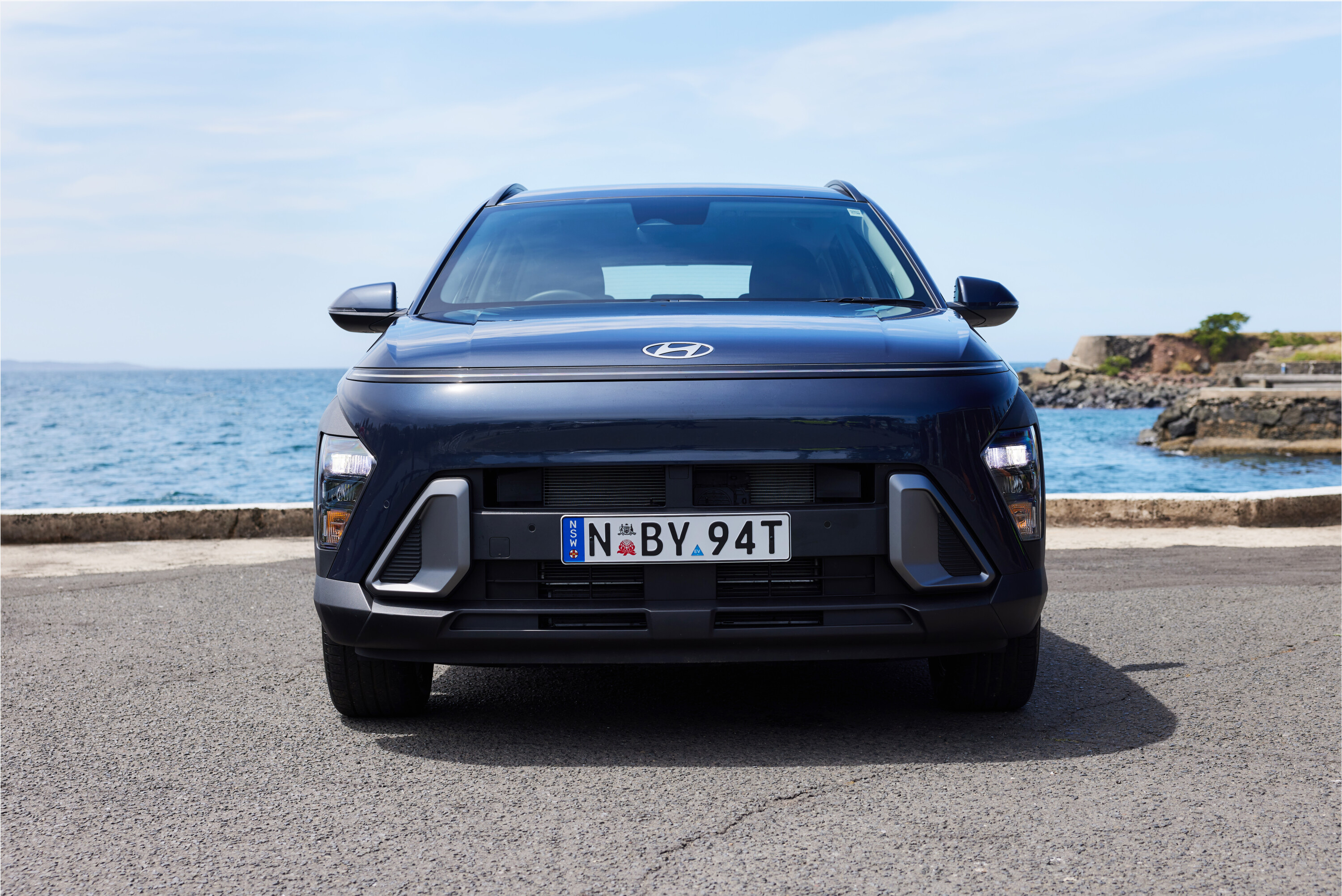
Finally. The Kona Hybrid, detailed back in June, has now properly touched down in Australia. It stands to be an important addition to the new-generation range, and probably the most popular.
The Kona Hybrid is the second petrol-electric model in Hyundai’s current line-up, following the Santa Fe Hybrid while beating the upcoming i30 Sedan Hybrid and long-awaited Tucson Hybrid to market.
It also joins existing petrol-powered Kona models, and would have launched alongside the new Kona Electric – except that Hyundai Australia is still working out the pricing with its Korean masters.
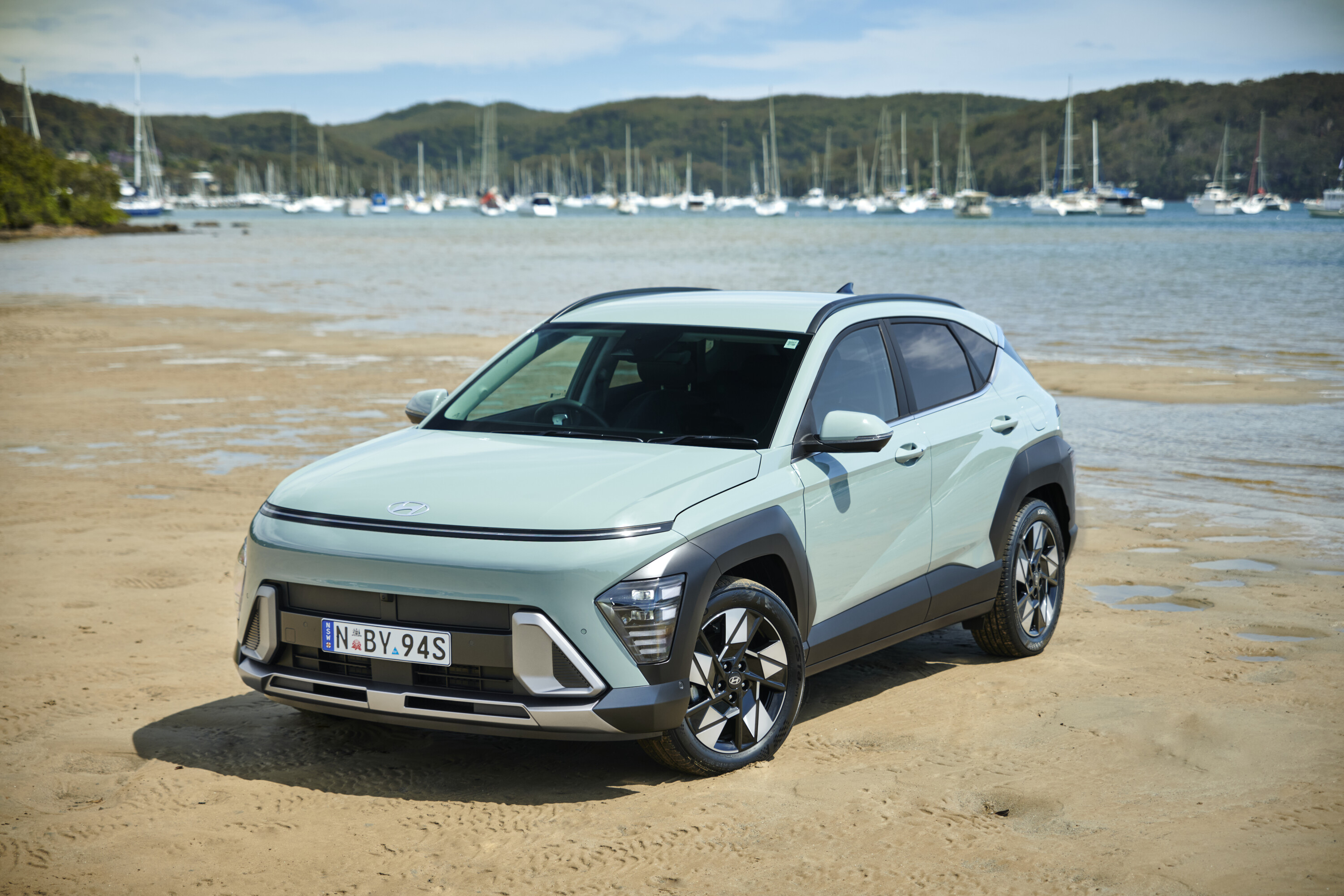
How much is it, and what do you get?
Available in four trim grades, all front-wheel drive, the new Kona Hybrid starts from $36,000 – marking a $4000 premium over the petrol model.
Keeping things simple, the Kona Hybrid’s trim grades and equipment list mirror the petrol models, meaning what you got with the regular model’s launch in June, you also get here with the Hybrid.
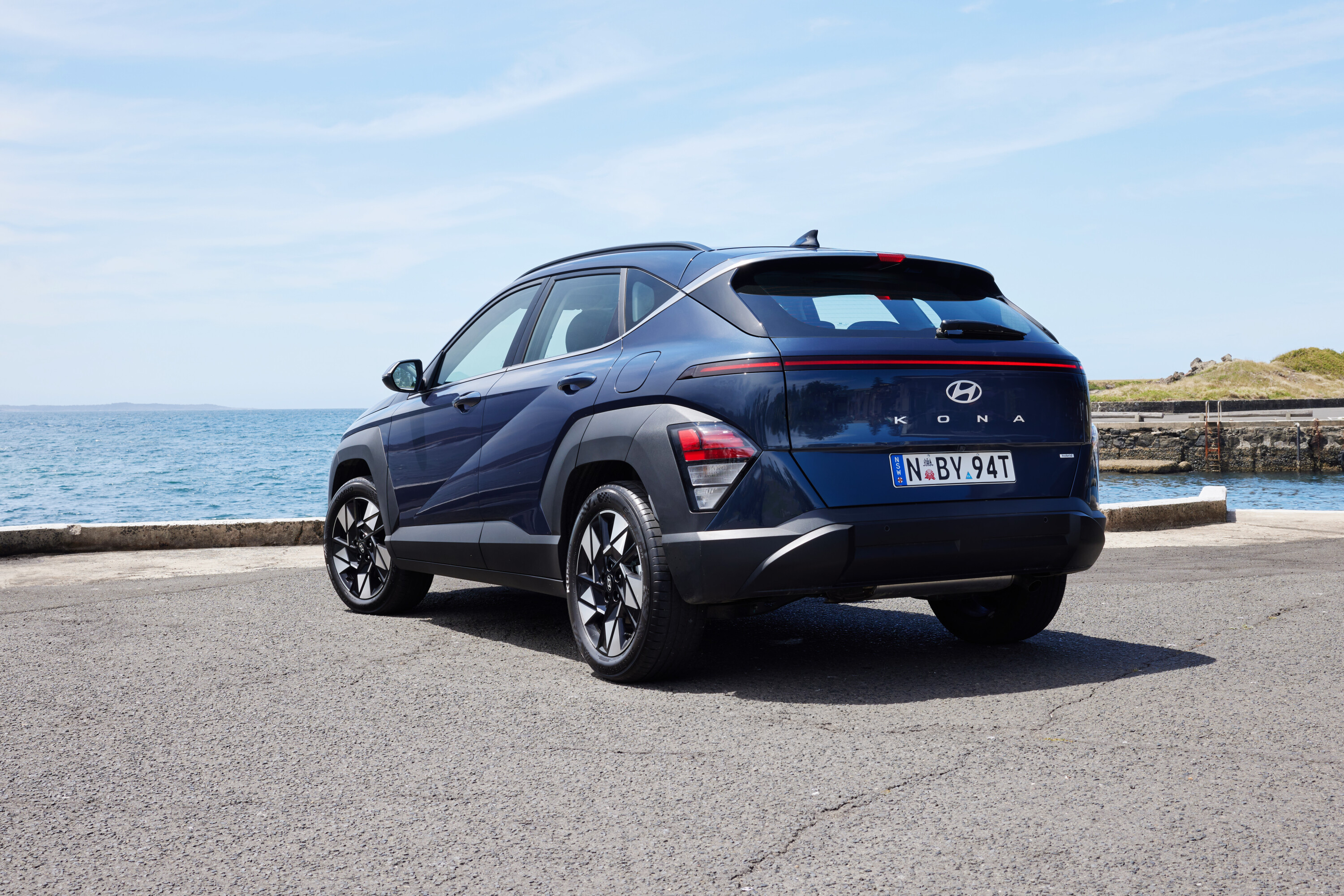
What’s good?
Highlights across the petrol and hybrid range include 18-inch alloy wheels, a 12.3-inch main display, Hyundai’s Bluelink remote connectivity service with over-the-air (OTA) updates, plus dual-zone climate control, heated and auto-folding side mirrors, LED daytime lighting at both ends, a 15W wireless phone charger and wireless Apple Carplay and Android.
The Kona Hybrid builds on that with regenerative braking and torque-vectoring control, a column-mounted gear selector and the massive open cup-holder that move enables.
Kona petrol models, for reference
| Model | Pricing | Change (vs. 2023 Kona) |
|---|---|---|
| Kona | $32,000 | up $5100 (over base) |
| Kona N Line | $36,000 | new |
| Kona Premium | $39,500 | up $1200 (over Highlander) |
| Kona N Line AWD | $40,000 | up $2900 (over N Line AWD) |
| Kona Premium N Line | $42,500 | new |
| Kona Premium N Line AWD | $46,500 | up $3300 (over N Line Premium AWD) |
| Prices exclude on-road costs | ||
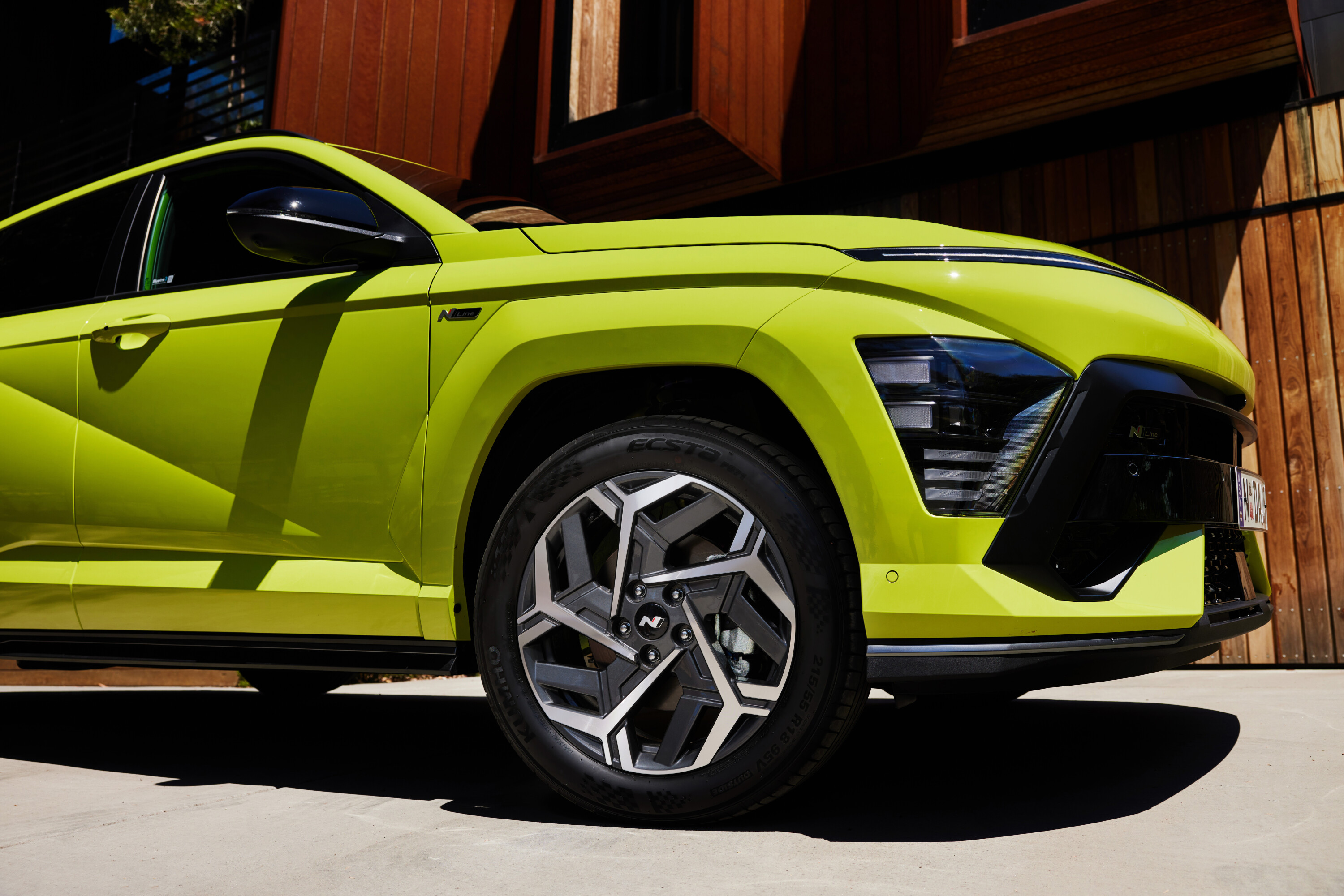
Features: Petrol & Hybrid alike
| 2024 Hyundai Kona features | |
|---|---|
| 18-inch alloy wheels | Keyless entry and push-button start |
| 12.3-inch display | LED headlights (reflector-type), tail-lights and DRLs |
| 4.2-inch semi-digital instrument cluster | LED cabin lighting |
| Wireless Apple CarPlay and Android Auto | Dual-zone climate control with rear vents |
| Hyundai Bluelink connected-car service | Rear-centre fold-down armrest |
| Over-the-air remote software updates | Remote start |
| DAB+ digital radio | Heated, auto-folding side mirrors |
| Six-speaker audio system | Front and rear parking sensors |
| 27W USB-C charge ports (3x front, 2x rear) | Manual height-adjustable driveru2019s seat with two-position power lumbar support |
| 15-watt wireless phone charger | Manual height-adjustable passenger seat |
| Black cloth upholstery | Tyre pressure monitoring |
| Leather-wrapped steering wheel and gear shifter | Roof rails |
The hybrid’s shift-by-wire system means it’s a little different inside
| 2024 Hyundai Kona Hybrid specific features | |
|---|---|
| Virtual engine sound system | Column-mounted shift-by-wire gear selector |
| Adjustable regenerative braking (to a complete stop) | Paddle shifters |
| Torque vectoring control | Open-type centre console |
| Low-speed audible pedestrian alert | Driver-only fan function |
| 2024 Hyundai Kona Premium adds | |
|---|---|
| 12.3-inch driver display | Eight-way power-adjustable passenger seat |
| Wired Apple CarPlay and Android Auto | Remote smart parking |
| Connected satellite navigation | Zero-gravity position relaxation seat function |
| Built-in voice recognition | LED headlights (projector-type) |
| Eight-speaker Bose audio system | LED turn signals and full-width front strip |
| Blind-spot view monitor | Rain-sensing wipers |
| 360-degree camera system | 64-colour ambient interior lighting |
| Reverse auto emergency braking | Side parking sensors |
| Hands-free electric tailgate | Acoustic laminated windshield |
| Black leather upholstery | Silver-plated skid plates |
| Heated and ventilated front seats | Rear privacy glass |
| Heated outer-rear seats | Auto-dimming rear-view mirror |
| Heated steering wheel | Dark grey body cladding |
| 10-way power-adjustable driveru2019s seat | Auto-tilting side mirrors in reverse |
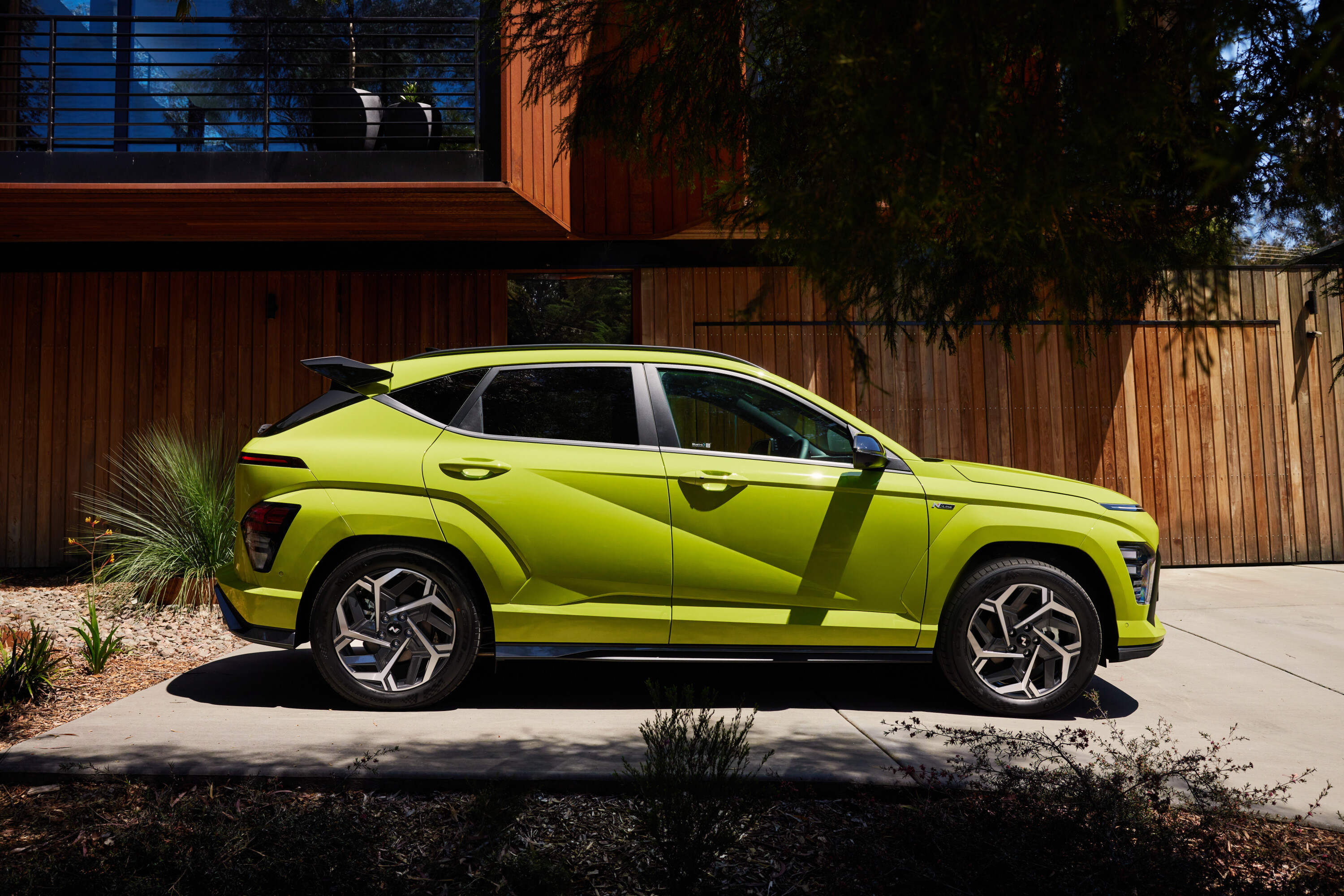
The N Line pack adds a number of sports-styled features, available on all petrol and petrol-electric hybrid models
| 2024 Hyundai Kona N Line kit | |||
|---|---|---|---|
| EXTERIOR | INTERIOR | FEATURES / TECH | |
| Bumpers/skid plates/side skirts | Leather appointed/Alcantarau00ae interior | LED dual projector beam headlights | |
| Wing-type gloss black rear spoiler | Steering wheel w/perforated grips | LED u2018Seamless Horizonu2019 front | |
| Badges / N wheel centre caps | Active Red air vent/seat highlights | parking light | |
| 19-inch alloy wheels, 235/45 tyres | Dark Metal interior trim highlights | LED front/rear turn signals | |
| Chrome twin tip exhaust | Black headlining | 12.3-inch full digital instrument cluster | |
| Black mirror caps/beltline garnish | Alloy pedals | Electro-chromatic interior mirror | |
| Body coloured cladding | Sport scuff plates | Rain sensing wipers | |
| Specific for 1.6 GDi Hybrid: | Additional for 2.0 MPi: | *NOTE: above convenience features already std. on KONA Premium trim | |
| 18-inch N Line alloy wheels | Shift By Wire/paddle shift/open console | ||
Hyundai’s SmartSense safety suite is also featured in both trim grades, detailed further down in the safety section of this story.
Interior quality, comfort, space and storage
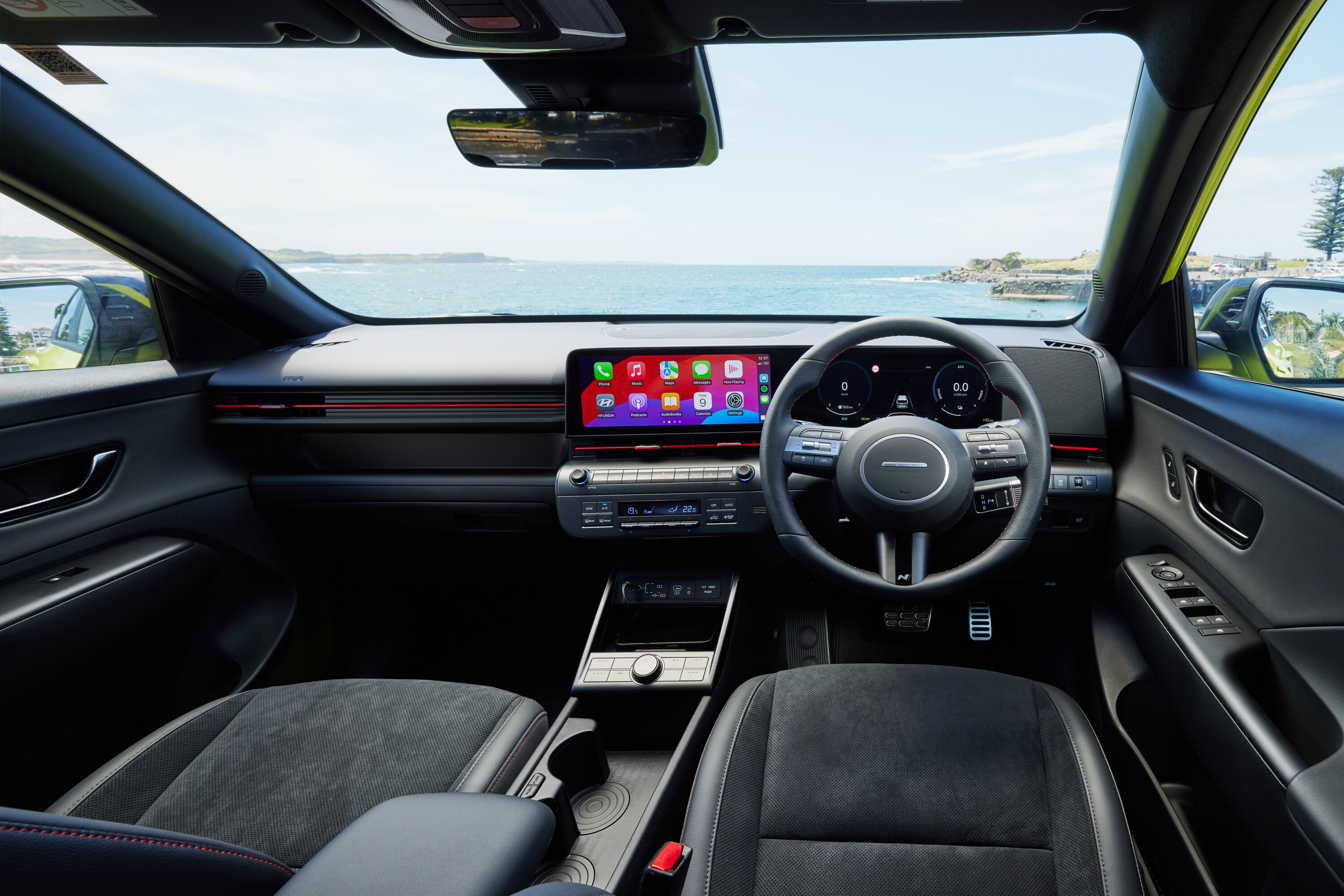
Despite lacking in soft-touch surfaces, the new Kona’s cabin is a stylish and thoughtfully arranged space.
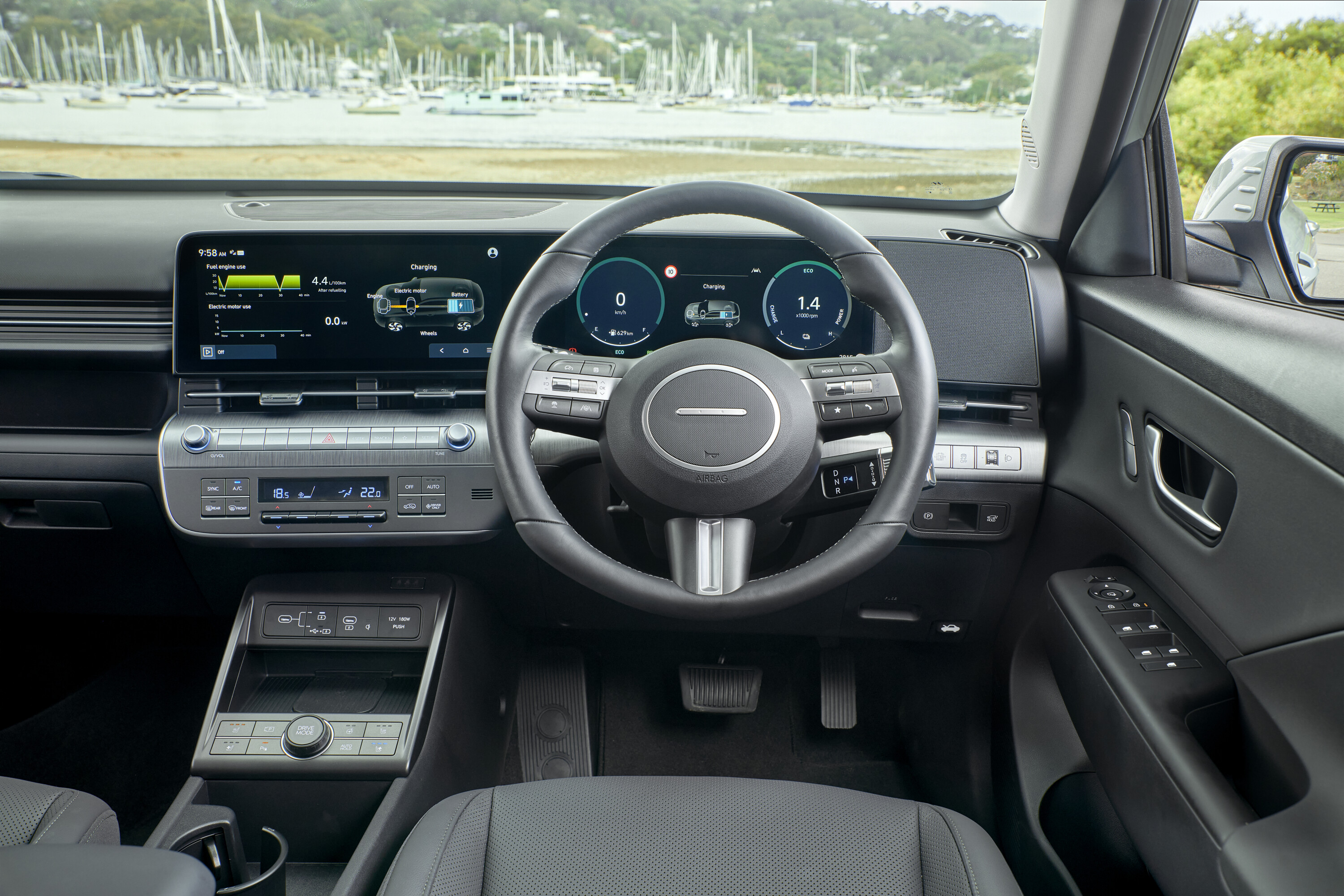
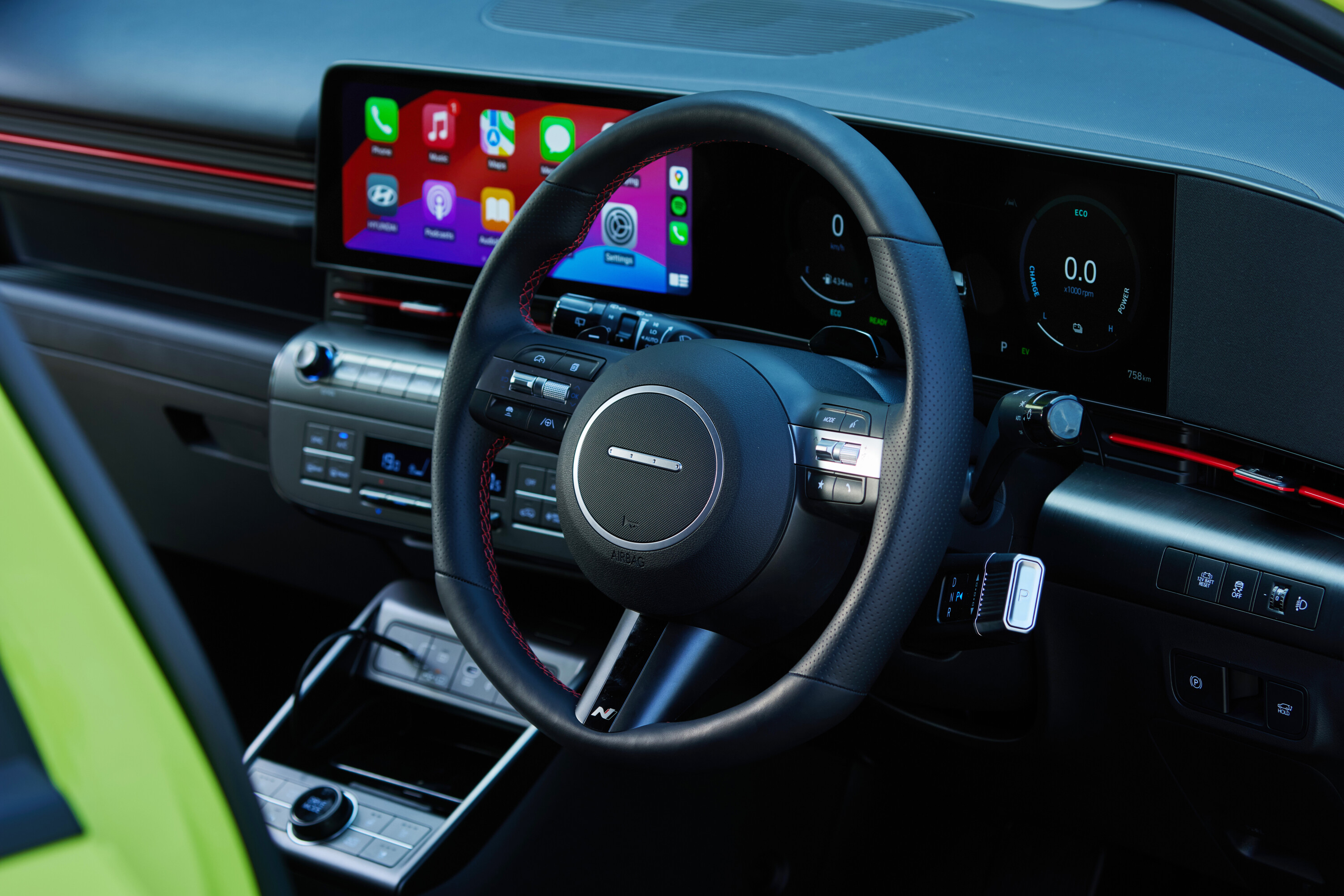
Stepping into the new Kona, you’re greeted with a modern and sensible design. The bright, fast and huge 12.3-inch main screen is matched to a steering wheel and dash featuring a familiar range of critical function and convenience controls – something of a rarity in this age of all-screen cabins.
Spring for the Premium model and you get a second 12.3-inch display behind the steering wheel, where the base model gets retro-futuristic ‘digital analog’ gauges and a 4.2-inch screen.
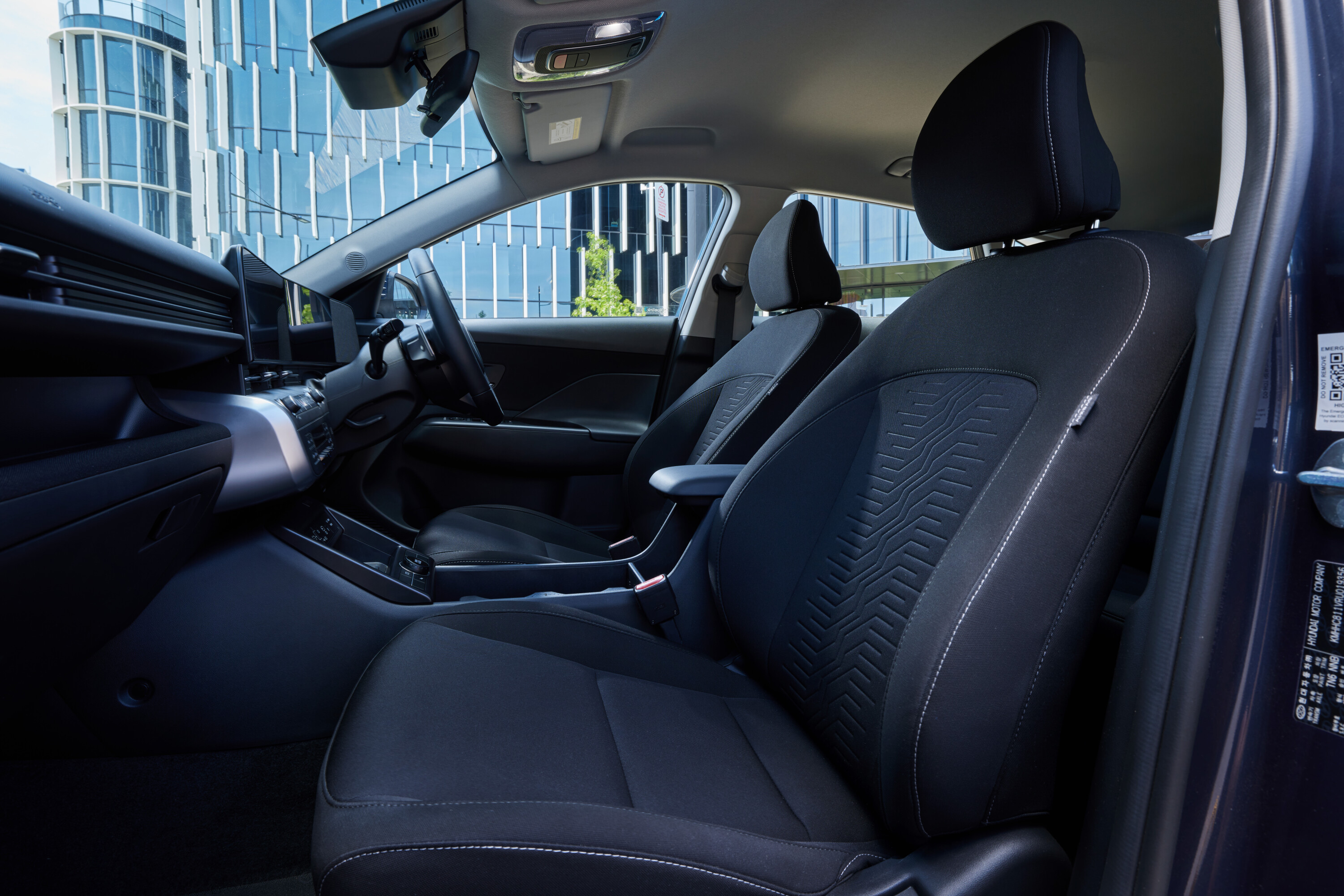
Unlike the first Kona, this new model is properly practical small SUV, its longer wheelbase well-suited to carrying a family of four in better than reasonable comfort.
The new Kona shares its platform with the i30 Sedan and Kia Niro, but its dimensions differ somewhat, with a wheelbase of 2660 millimetres – 60mm longer than before, but still 60mm shorter than the related vehicles.
Overall length grows by 150mm to 4355mm, and width is up 25mm to a new 1825mm. Hyundai says this results in a second row that offers 77mm more legroom and 11mm greater headroom, making it a segment leader in these dimensions.
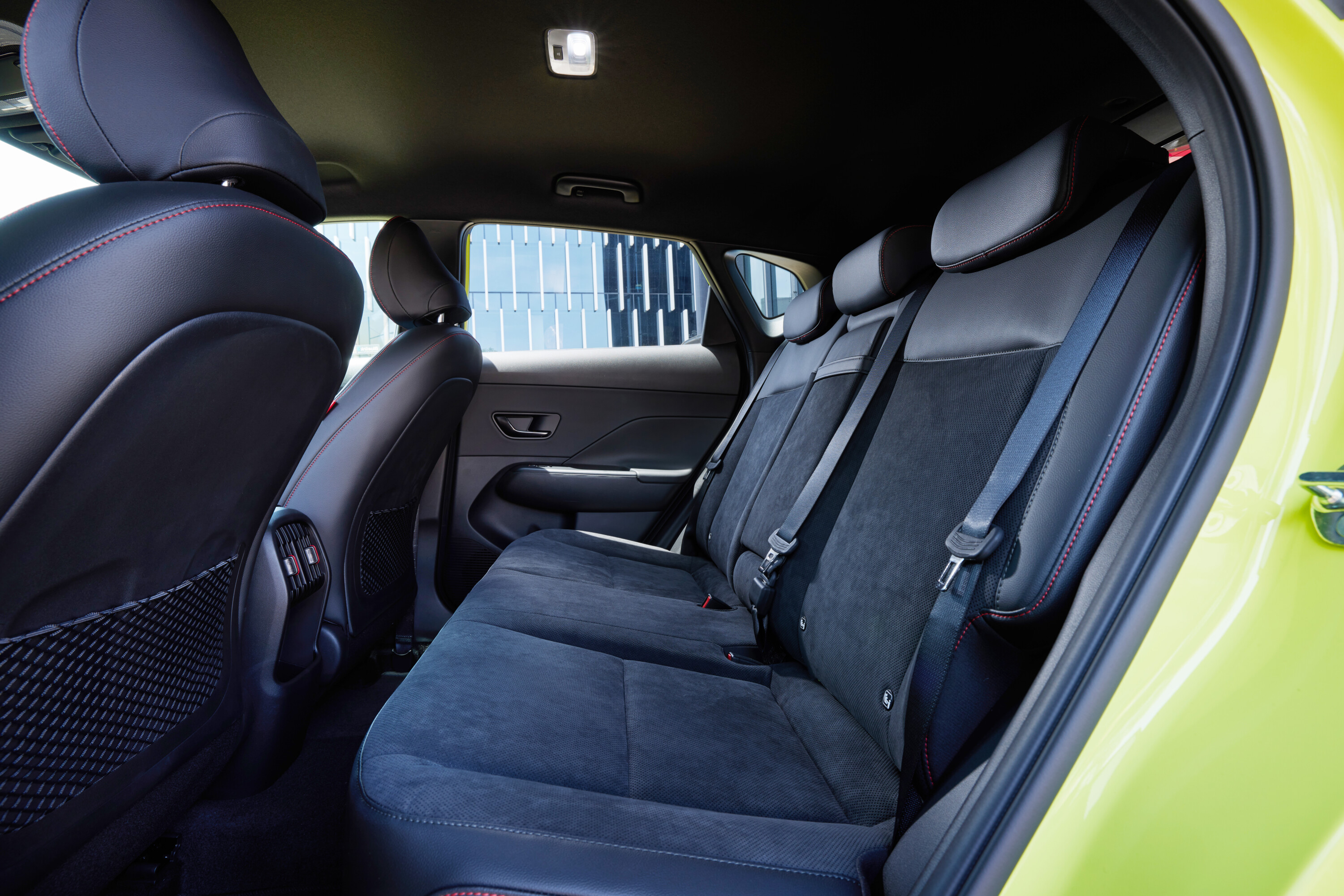
Comfort in both rows is good, with firm but supportive seats, cloth-trimmed in the entry model and ‘leather’-upholstered in the Kona Premium
For context, the popular Toyota Corolla Cross rides on a 2640mm (-20mm) wheelbase and measures 4460mm in overall length (+105mm), with an identical 1825mm width.
Comfort in both rows is good, with firm but supportive seats, cloth-trimmed in the entry model and ‘leather’-upholstered in the Kona Premium. Occupants in the front get well-bolstered backrests, along with a laidback “zero-gravity weightless posture” Relaxation position in the Premium to rest as desired. (More of a ‘stuck at a public charger for an hour’ EV feature really.)
Owners of the entry hybrid miss out on powered seats, with that function exclusive to the Kona Premium. Not uncommon for base models, but this could’ve been an opportunity to wow buyers.
The new Kona’s longer wheelbase, along with scalloped front seatbacks and a flat rear bench, means adults in the second row have fairly generous leg and knee space.
Toe room under the front seats is likewise good, while the flat floor means any middle passenger will only be squashed from the hips up. Take your victories where you can get them… and the rear seats recline, too.
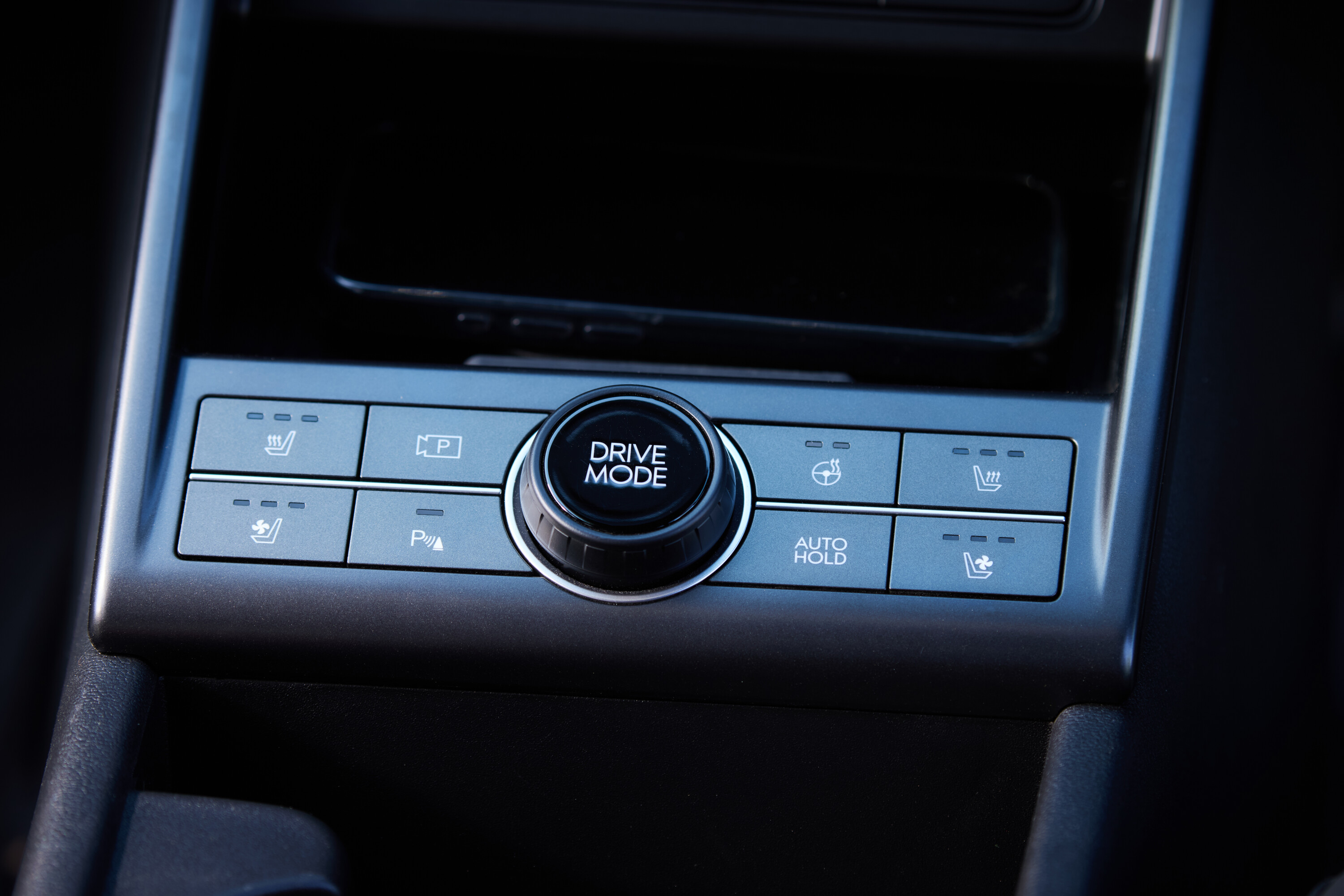
Storage in the Kona’s cabin is plentiful. The front row offers a cubby beneath the HVAC controls for 15W fast and cooled wireless phone charging or bits-and-pieces, while the cup-holder rings can be retracted to create a large open storage area – thanks in great part to the gear shifter moving to a column behind the steering wheel.
The centre console has no deep closed cubby, however, and lifting the armrest reveals only more open space.
There’s a long slim bench above the glove box, although its hard-plastic surface makes it fairly useless for storing anything while driving. The glovebox itself is deep, however, and the door bins are likewise large with plenty of space for a one-litre drink bottle and other items besides.
Occupants in the second row get a pair of small cup-holders in the fold-down centre arm rest, decent door bins and a map holder in the front seatbacks.
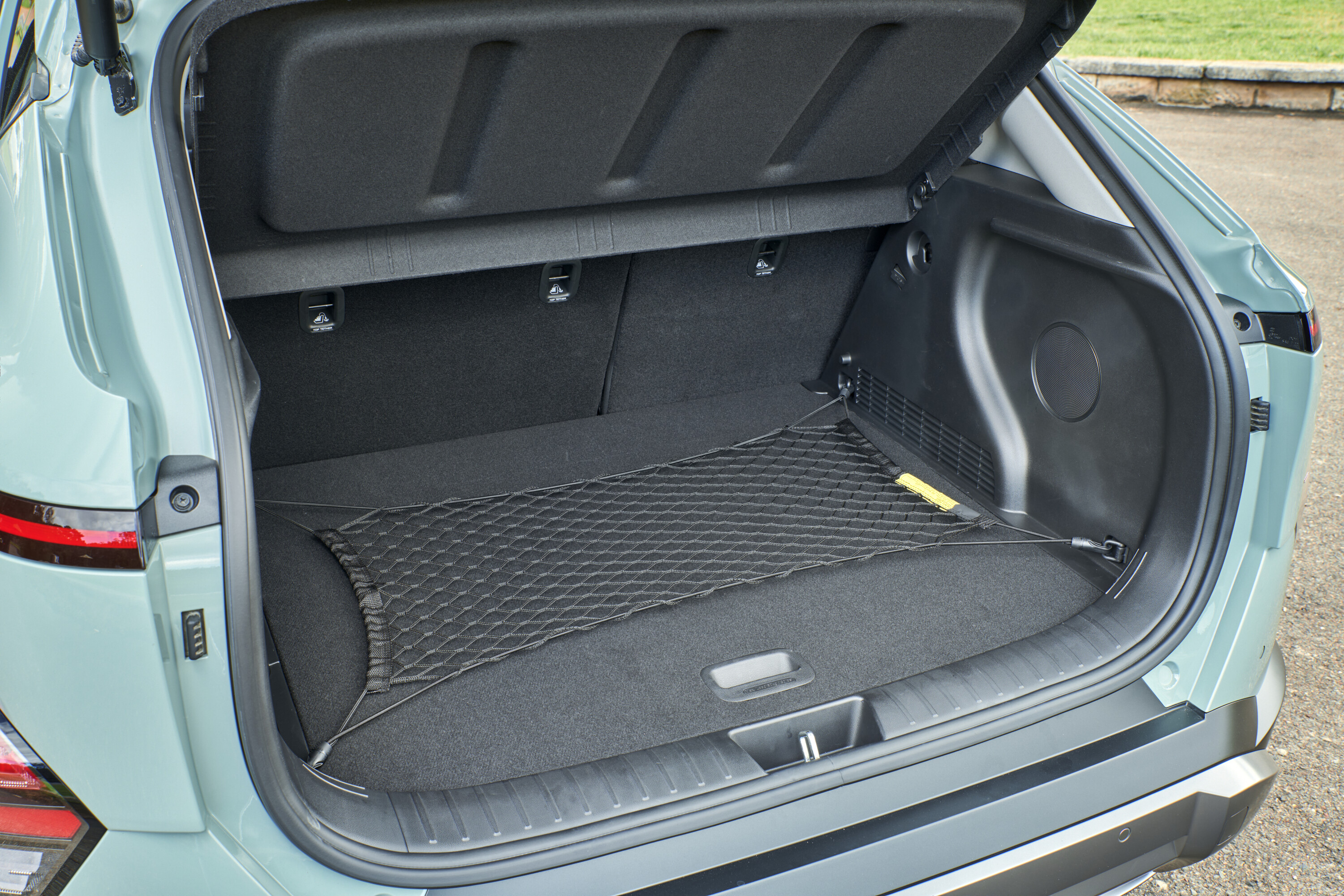
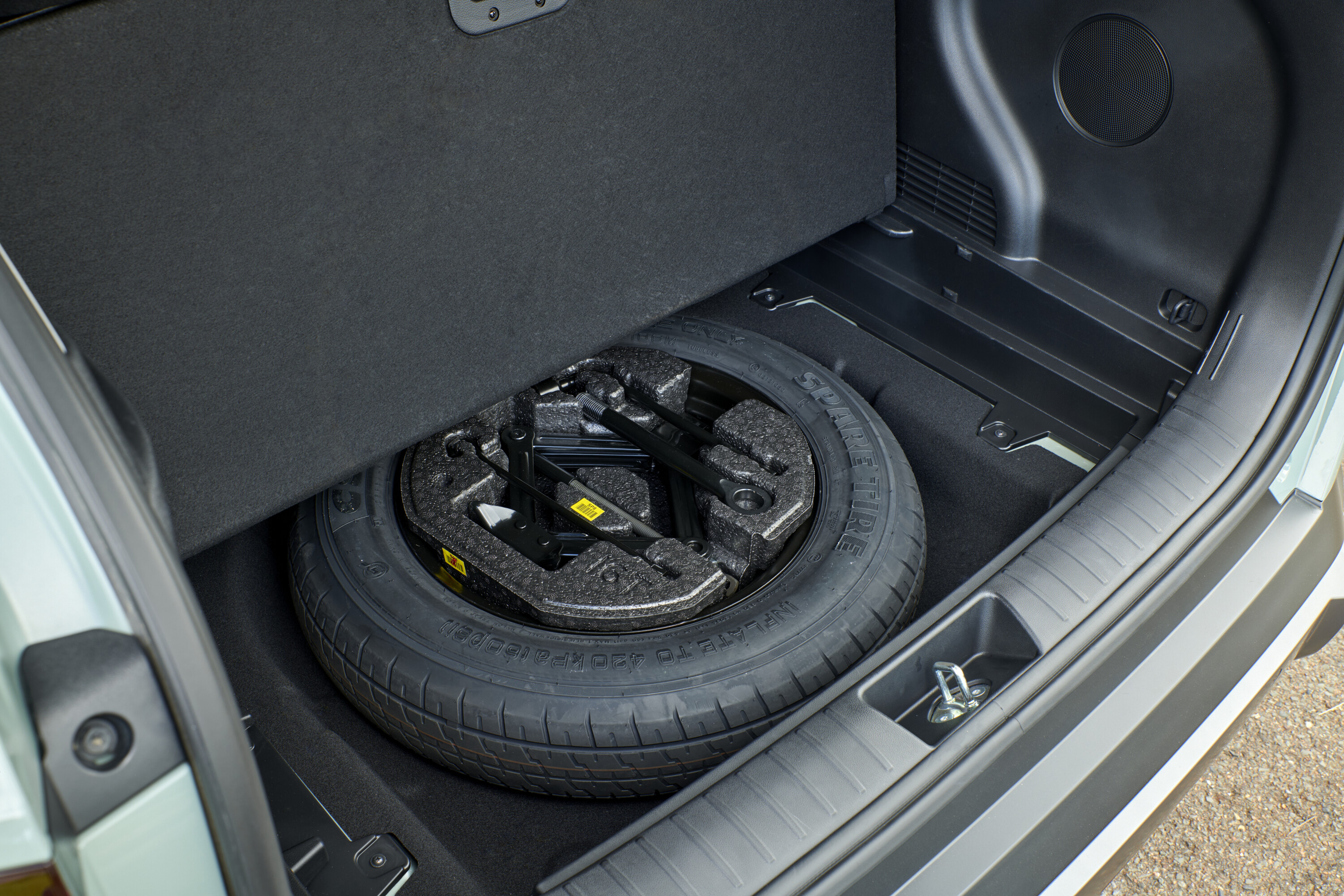
2024 Hyundai Kona Hybrid boot space
As with the petrol models, the new Kona Hybrid offers a decent 407 litres of boot space with the 60:40-split folding rear seats upright, expanding to 1241 litres when laid flat.
This area is a touch smaller than most rivals in the small-SUV segment, but Hyundai is eager to remind that its second-row legroom is best in class – so you can prioritise what matters to you most. Regardless, the new Kona’s boot improves on the old model by 33 litres. Access to the boot is also made easier than before, thanks to a wider opening and a lower lip at the floor.
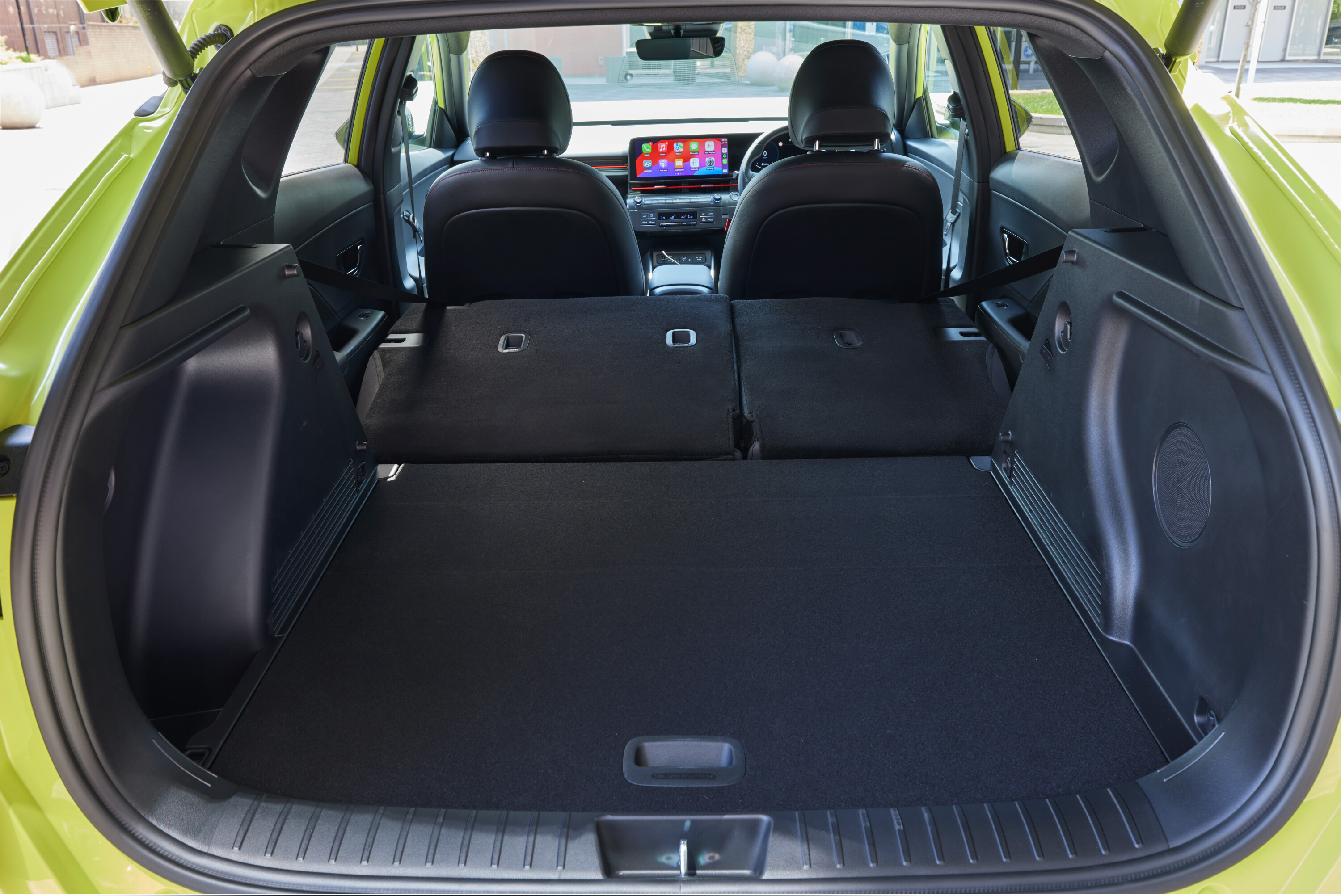
Mini matchup: Boot space
| MODEL | BOOT (litres) | WHEELBASE |
|---|---|---|
| Hyundai Kona (all) | 407 / 1241 | 2660mm |
| Kia Niro Hybrid | 425 / 1392 | 2720mm |
| Toyota Corolla Cross FWD | 414 / N/A | 2640mm |
| Kia Seltos | 433 / 1393 | 2630mm |
| Mazda CX-30 | 317 / N/A | 2655mm |
| Nissan Qashqai | 429 / 1425 | 2665mm |
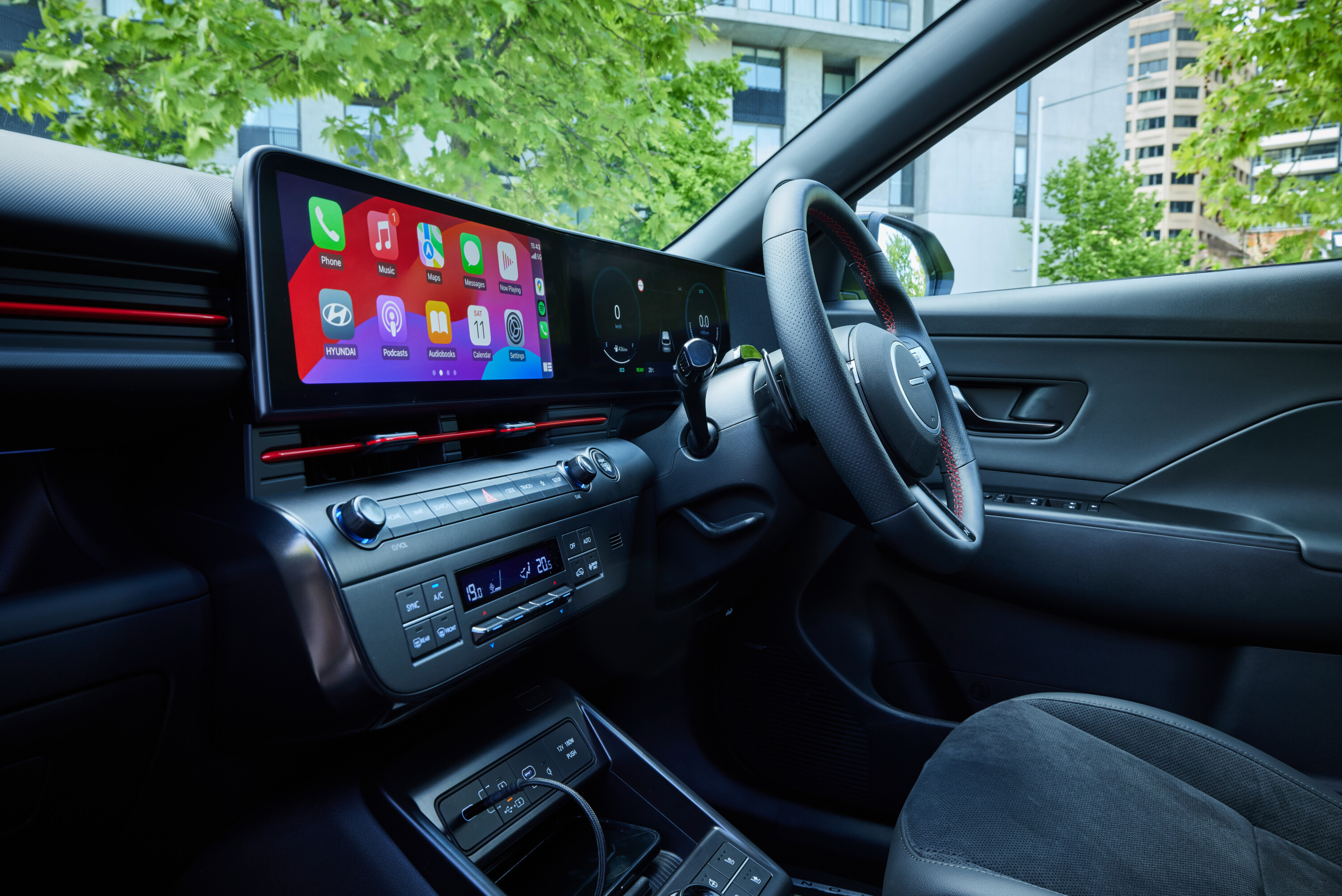
Technology in the cabin
Hyundai has come a long way with its in-car technology, packing an infotainment system now comfortably at the head of the class for feature richness, simplicity and power.
The new system boasts four times the computing power and 15 times the display processing power of Hyundai’s previous system, seen in the current Tucson and Santa Fe among others. The specifics of that are irrelevant to most users, except to say that touching and typing on the display feels like using a high-end Apple or Android tablet, with rapid responses to input and speedy transitions between pages.
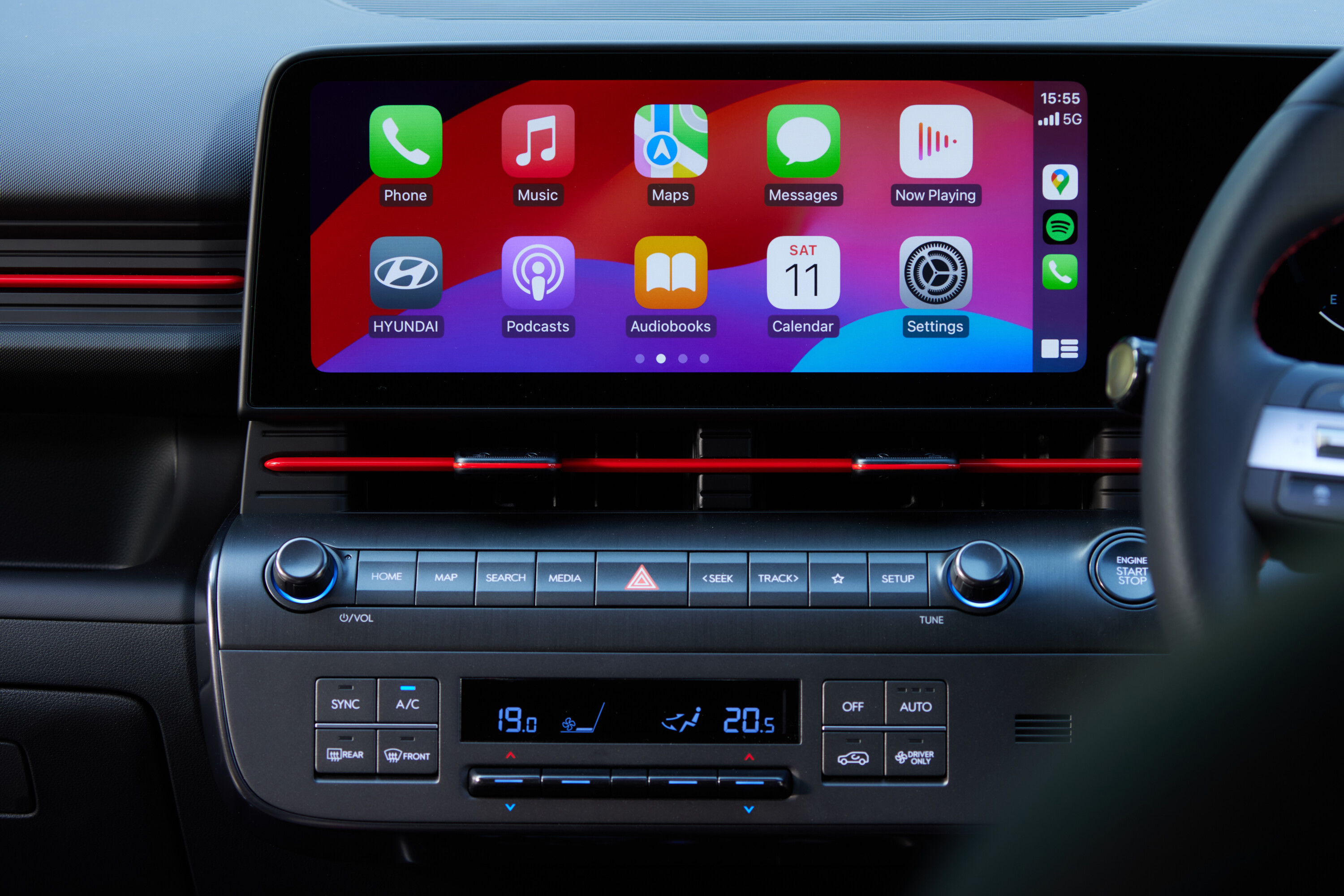
Controls for the Kona’s most frequently used features are almost all physical switches and dials, including the HVAC, media, cruise control and camera controls. Insert victory dance here.
Hyundai’s Bluelink connected services platform is also featured, allowing remote status monitoring and control of key features like door locks, windows, climate control, lights, horn, and trip planning. In this latest generation, Bluelink also enables over-the-air updates for safety, braking, performance, driver assist and mapping.
Both rows get fast 27W/3A rapid-charge USB-C charging ports. Apple Carplay and Android Auto are both featured and operate smoothly, but while wireless in the base model, in the Premium they remain a wired feature. Hyundai says it has a vehicle in Australia right now, testing with wireless connectivity, and hopes to roll out an OTA update in the coming weeks or months.
What is it like to drive?
The Kona Hybrid enters the range as the most fuel-efficient of the three petrol options, aimed squarely at Toyota’s popular Corolla Cross Hybrid.
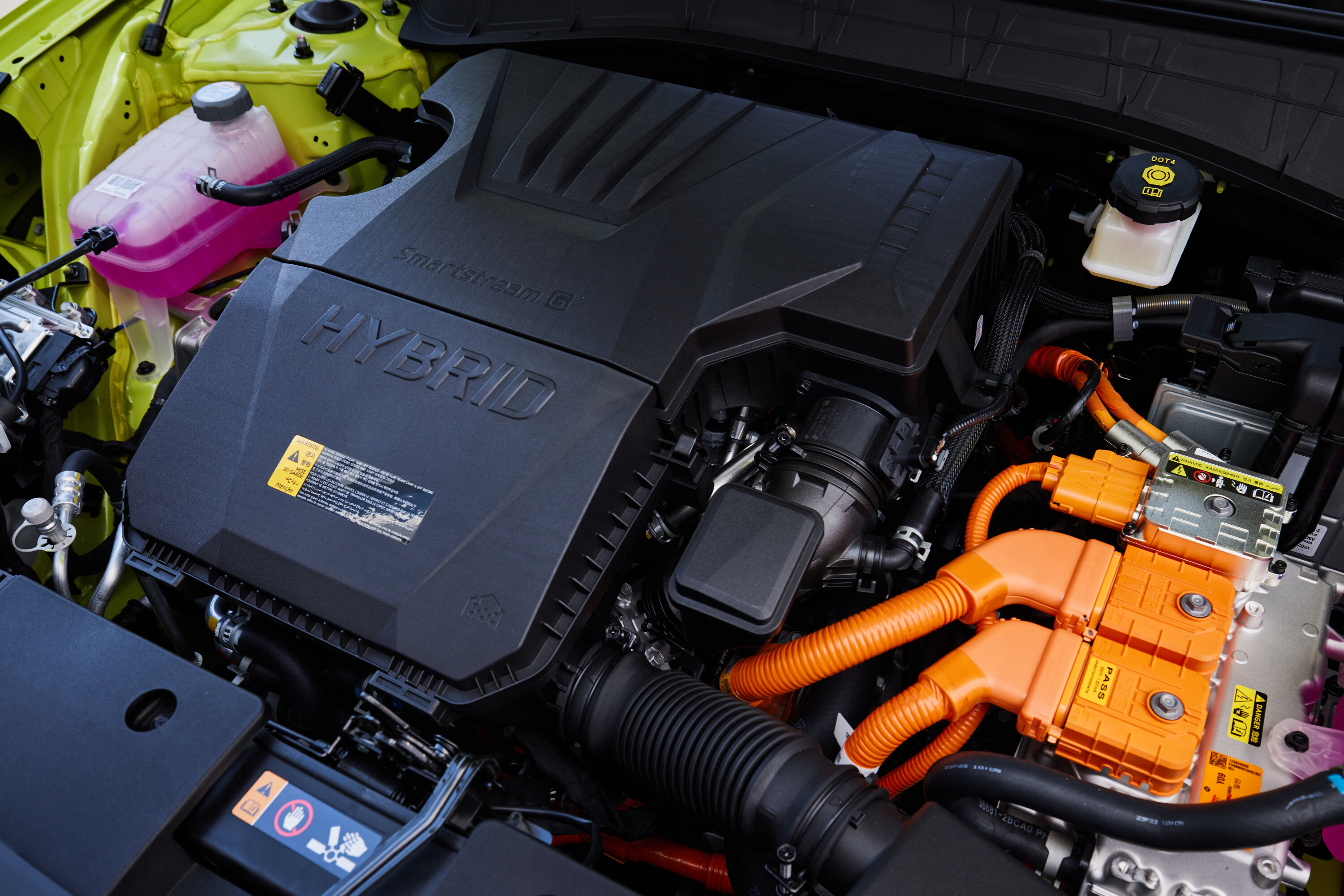
Power comes from a familiar system in the Hyundai family, marrying a 77kW/104Nm 1.6-litre four-cylinder engine to a 32kW/170Nm electric motor between the engine and gearbox, for a combined 104kW and 265Nm.
Available only in front-wheel drive, the hybrid gets a six-speed dual-clutch automatic and multi-link independent rear suspension. This review is no twin-test comparison, but it’s worth noting the Corolla Cross keeps IRS for its more expensive AWD variants only, and each gets a CVT auto only.
Acceleration off the line and on the roll is responsive but also drops off quickly, ultimately having very little power to offer – so mind you’ve got a good long run-up if overtaking on country roads. Braking is strong, at least, and easily modulated with good top-of-pedal feel.
The petrol-electric relationship here is very neatly refined, with the electric motor capable of powering the Kona at highway speeds, while the petrol engine kicks in fairly seamlessly when needed and keeps the noise down as it’s running.
Hyundai’s scheduled drive route through regional Canberra took in plenty of winding roads, and while this wasn’t the Electric model’s ideal playground (can’t talk about that yet, embargoes and all), the Kona Hybrid was largely unfussed.
Hyundai doesn’t do a full local tuning program, but ride and comfort is nonetheless well refined, as it is with the regular petrol models – handling poor surfaces and undulations well enough to leave little cause for complaint of poor comfort, while firm enough to entertain more spirited drivers.
Steering is responsive and accurate in turns, with a good and confident straight-ahead feel on the highway. Enthusiasts will lament the lack of feedback, but this is increasingly common in newer cars, and not something most motorists will detect.
Of course, the Kona wasn’t designed to be driven in anger – even in style-focused N Line form – and with most buyers it never will be. Ride and comfort is overall good in the entry model, with its region-specific (but not Australian-tuned) suspension package and 18-inch wheels wrapped in thick-walled if narrow-bodied 215/55 rubber, helping it maintain composure across most surfaces.
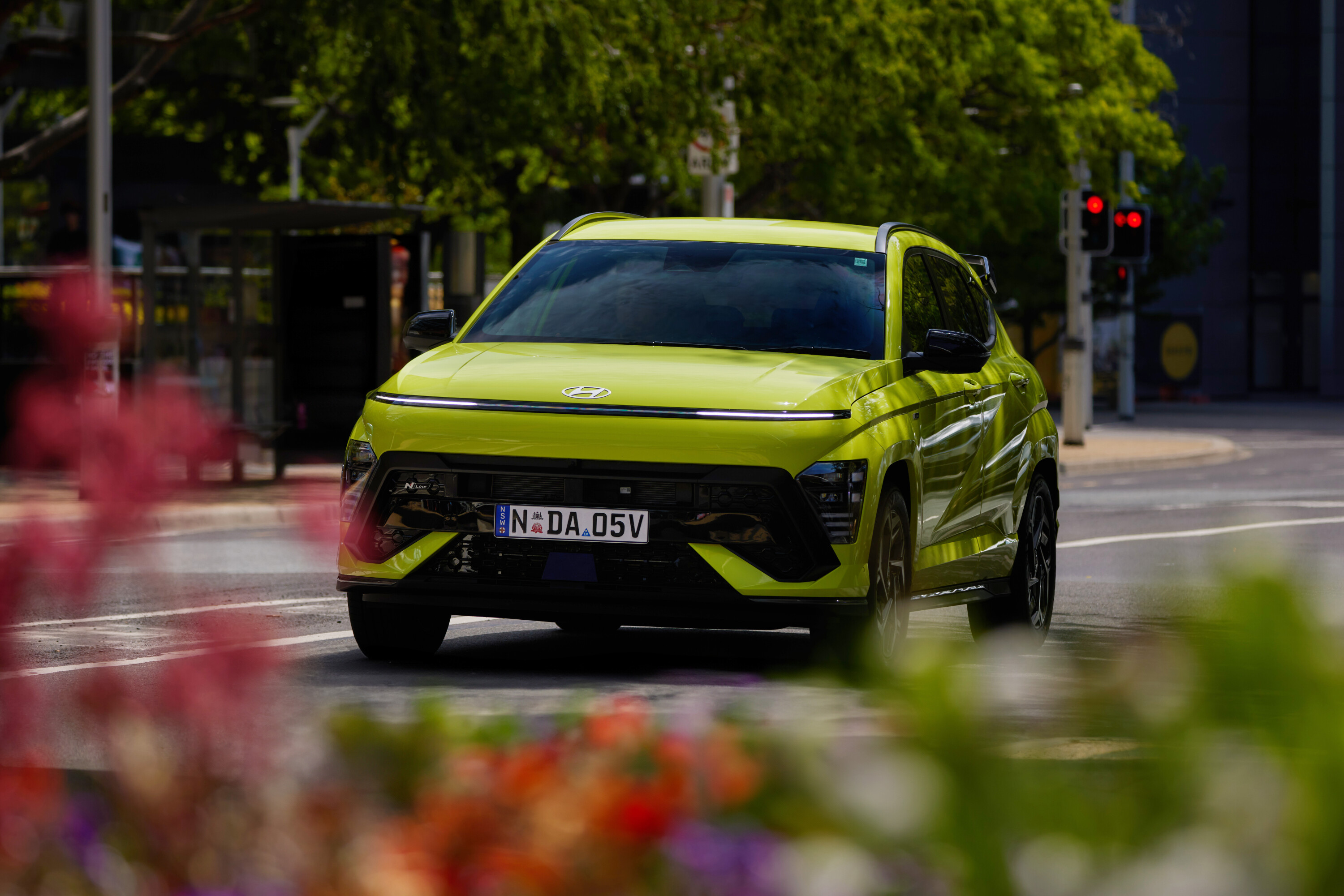
The N Line’s 19-inch wheels and 235/45 tyres sacrifice some comfort for style points, but not by much – and it really does look the business in that sporty spec.
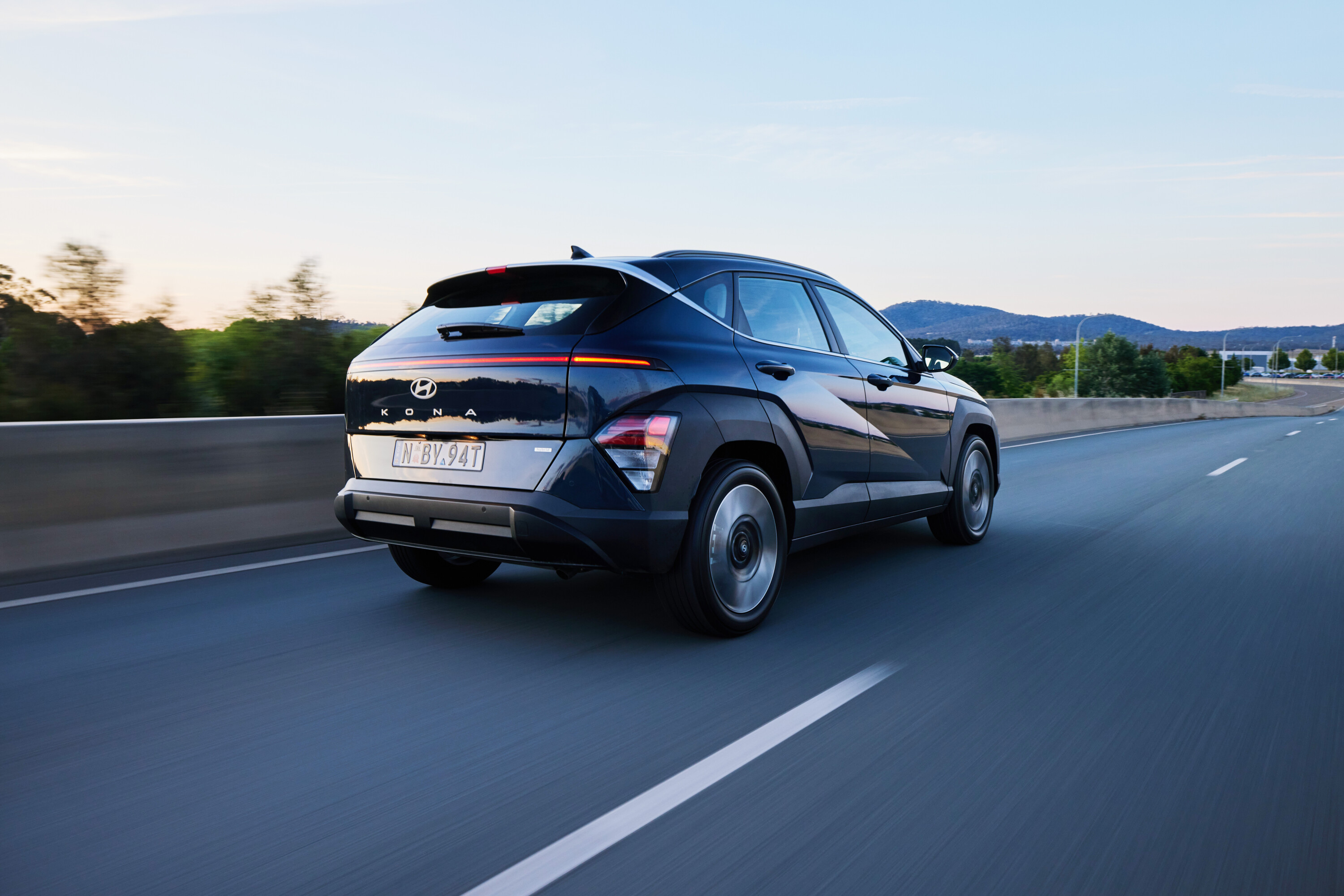
The Hybrid is also equipped with a full EV-style regenerative braking system, allowing you to slow your entry into corners without touching the brake pedal.
The system allows you to reduce reliance on the brake pedal while also feeding energy back into the battery.
Wind and road noise, a more prominent companion with the often ‘combustionless’ running in electrified vehicles, is well enough damped. Only a back-to-back test with the Corolla Cross Hybrid would say for certain, but upgrading to higher-quality tyres on your first replacement would only help.
How is it on fuel?
Fuel consumption is listed at a low 3.9L/100km combined. Our long and varied drive loops on the day saw my shared car return an indicated 5.7L/100km, which I consider a solid result for a launch event.
In true daily driving, Hyundai’s claimed figure should be in reach, but we’ll be better able to assess that when we’ve had more time with the car.
Toyota’s Corolla Cross Hybrid lists a claim 4.3L/100km in front-wheel-drive form, while our week with the GX spec returned 4.8L/100km.
| 2024 Hyundai Kona fuel economy | |||
|---|---|---|---|
| 1.6-litre hybrid FWD | 3.9L/100km | 89g/km | new |
| 2.0-litre petrol FWD | 6.6L/100km | 149g/km | down 0.4L/100km |
| 2.0-litre petrol N Line FWD | 6.6L/100km | 154g/km | new |
| 1.6-litre turbo-petrol AWD | 7.6L/100km | 174g/km | down 0.7L/100km |
How safe is it?
The new Kona has not yet been awarded an ANCAP or Euro NCAP safety rating (expected in December), but it does come with strong credentials – featuring seven airbags including a front centre airbag, and a suite of advanced driver aids under the Hyundai SmartSense banner.
| 2024 Hyundai Kona active safety features | |
|---|---|
| Autonomous emergency braking (vehicle, pedestrian, cyclist, motorcycle, junction-turning, direct oncoming) | Traffic sign recognition |
| Lane-keep assist | Intelligent speed limit assist |
| Lane following assist | Driver attention alert |
| Blind-spot alert | Driver monitoring camera |
| Rear cross-traffic alert | Leading vehicle departure alert |
| High beam assist | Safe exit warning |
| Adaptive cruise control | Rear occupant alert. |
| 2024 Hyundai Kona Premium adds | |
|---|---|
| Blind-spot view monitor | 360-degree camera system |
| Low-speed reverse AEB | Remote smart parking assist. |
| Side parking sensors | |
As with all cars with these types of systems, properly assessing their capability requires a lot of closed-road conditions – but what I can tell you is that, for whatever the extent to which these systems can protect you, they’re bloody annoying in the meantime.
With all of its active safety systems running, this Hyundai throws more beeps and boops at you in one trip than R2-D2 does in all of Episode 4 – and I can’t help but wonder if driving people to madly disabling alerts isn’t undoing the benefits of their intended function.
To its credit, Hyundai’s commitment to safely accessed controls and visible displays is commendable. Where some brands – like Tesla and now Volvo with its small EX30 – aren’t bothering with a dedicated driver display or even a head-up to display, the Kona has not only its two huge 12.3-inch screens, but also a giant 12-inch head-up display. No chance of missing the speed limit or any visual alerts.
2024 Kona warranty and running costs
The new Kona is covered by Hyundai’s 5-year / unlimited-kilometre vehicle warranty.
These terms are now fairly standard for the Australian car market, with only a few offering less than unlimited kilometres, and again only a handful offering better than five years on the vehicle.
Services come around every 12 months/15,000km (10,000km for the 1.6L turbo) and, as always, the company offers a five-year capped price servicing regime as well as a lifetime projection of service costs.
The first five services cost $399 whether you go turbo or stick with the 2.0-litre in the base model, but the turbo’s services are due every 10,000km. It’s not especially cheap but lines up with just about everything apart from the Corolla Cross.
| 2024 Hyundai Kona Hybrid servicing costs | |||||
|---|---|---|---|---|---|
| Km | 15k | 30k | 45k | 60k | 75k |
| Cost (incl. GST) | $399 | $399 | $399 | $399 | $399 |
VERDICT
As with the previous Kona, which was a popular offering for much of its life, there’s a lot to like with this new generation – and even more so in new Hybrid form.
Competition is strong in the Corolla Cross, but while much of Toyota’s range is evolving with stylish and confident themes, the Kona has the edge in that regard.
Likewise, Toyota’s experience with hybrid technology is pioneering and industry leading, but Hyundai has learned fast and its own hybrid powertrains have impressed media and market alike. That continues here with the Kona.
The Kona Hybrid could do with a little more guts, but at this end of the class, it’s all about fuel efficiency – and when affordability is also in the picture, you can really only have one or the other.
You’ll pay more to get into the Hyundai than the Toyota, but the Kona Hybrid has come in with a strong base model specification – arriving as a rival to the Corolla Cross GXL rather than the entry GX, and is thus priced accordingly.
Both cars are worth a drive, and both have their strong suits, but the Kona Hybrid is at least worth its salt as a small and fuel-efficient SUV with space enough for a family of four and the safety suite to match. But bloody hell, those beeps and boops…
The 2024 Hyundai Kona Hybrid small SUV has arrived in Australia, with customer deliveries underway.
Pricing for the electrified Kona was announced in June when petrol variants launched, but the hybrid – along with 2.0-litre N Line and Kona Electric models – didn’t arrive until later in 2023.
Hyundai Australia is still to confirm local details for the all-electric Kona due later this month.
To read our Kona Hybrid launch review, click the featured article linked below.
Available in the same two variants as the 2.0-litre Kona, the Kona Hybrid sports a 1.6-litre non-turbo four-cylinder matched to an electric motor.
It delivers an impressive 3.9L/100km fuel consumption rating in combined testing, similar to the Toyota Yaris Cross and Corolla hybrids.
Even with a small 38-litre fuel tank, the Kona Hybrid has a theoretical driving range of almost 1000 kilometres. It incurs a $4000 premium over the FWD petrol variant, with the sportier N Line Option Pack also available in hybrid.
With a 32kW/170Nm motor sandwiched between the 77kW/104Nm petrol motor and six-speed dual-clutch automatic transmission, the Kona Hybrid delivers a 104kW and 1.6-litre turbo-matching 265Nm total system output.
Despite its front-drive layout, the hybrid also introduces multi-link independent rear suspension.
This powertrain is shared with the related Kia Niro small SUV, which is almost $9000 dearer with less standard equipment in entry-level form. The flagship Kona Premium Hybrid undercuts the Niro GT-Line by around $7000.
2024 Hyundai Kona Hybrid pricing
Prices exclude on-road costs.
| Model | Pricing |
|---|---|
| Kona Hybrid | $36,000 |
| Kona Hybrid N Line | $40,000 |
| Kona Premium Hybrid | $43,500 |
| Kona Premium Hybrid N Line | $46,500 |
The 2024 Hyundai Kona Hybrid is on sale now. For full details on the latest Kona line-up, including full pricing and detailed specifications, click the featured article linked below.
In a strange twist of events, Australia is the first country where punters will be able to buy Chery’s heavily updated Tiggo 7 Pro.
It’s been on sale in non-Pro configuration in South Africa and other export markets, but we’re told Australia is the first place this safety and tech-filled medium SUV will hit dealerships.
It’s the second car from Chery after the brand’s nine-year hiatus in Australia, though this time around things are a little different. The local team is packed with executives who have experience at both established brands, such as Subaru and Kia, and a challenger brand that turned around its fortune in Australia, MG.
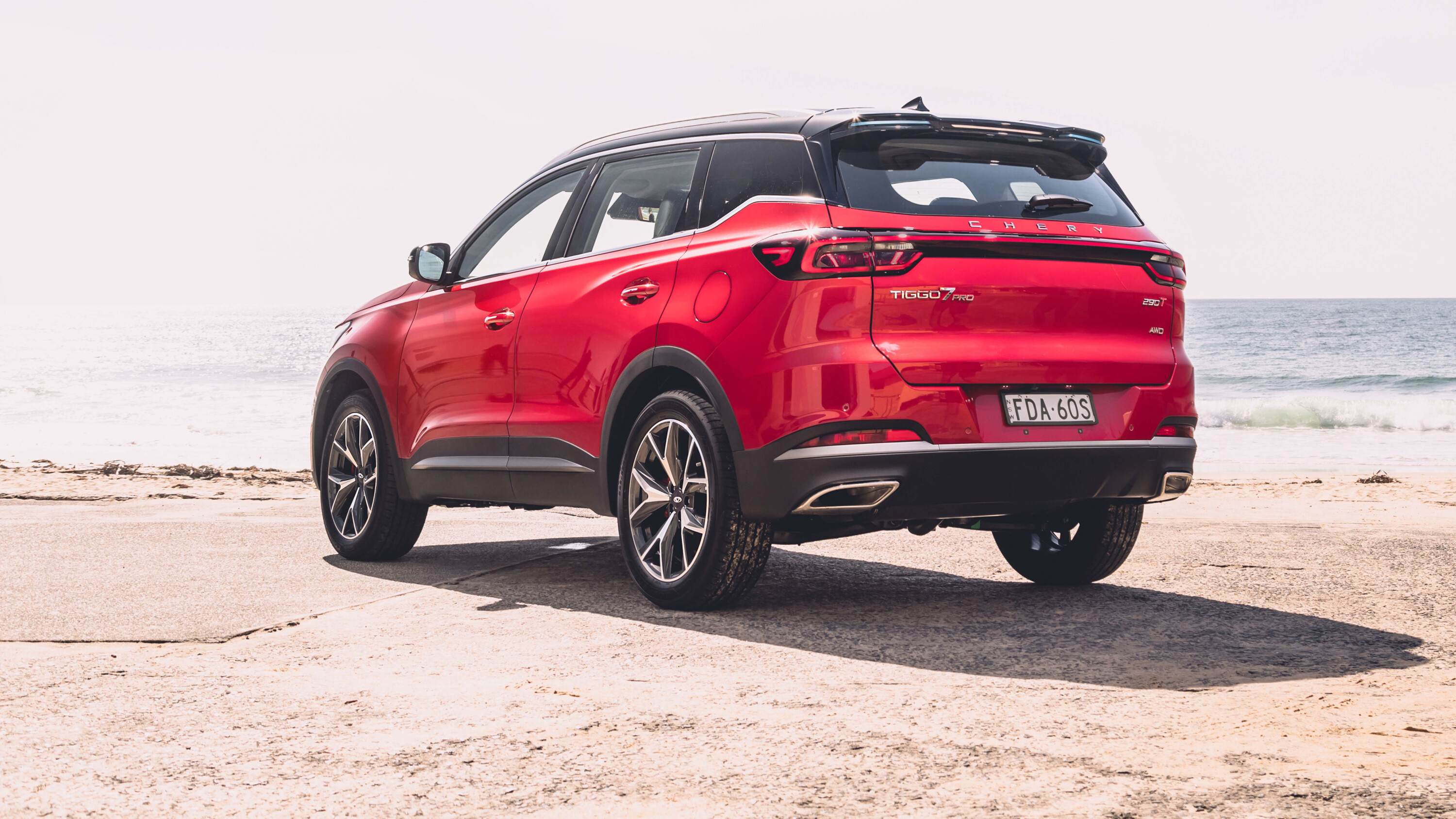
The five-seat Tiggo 7 Pro range runs from $39,990 to $45,990 and joins the Omoda 5 small SUV at Chery dealers immediately.
The Omoda 5 has found 4335 homes this year, so clearly buyers are willing to overlook the safety systems that we found so frustrating (which Chery is working to improve) as a trade-off for great value technology.
Today, we find out whether the Tiggo 7 Pro stacks up against popular rivals, such as the Hyundai Tucson and Kia Sportage.
JUMP AHEAD
- How much is it, and what do you get?
- How do rivals compare on value?
- Interior comfort, space, and storage
- What is it like to drive?
- How much fuel does it use?
- How safe is it?
- Warranty and running costs
- VERDICT
How much is it, and what do you get?
The Tiggo 7 Pro range starts at $39,990 drive-away for the front-wheel drive Urban. There are rivals out there offering lower outright prices, but the Elite isn’t exactly stripper spec.
| 2024 Chery Tiggo 7 Pro Urban features | |
|---|---|
| 18-inch alloy wheels | Panoramic sunroof |
| LED exterior lighting | Wireless phone charger |
| Full-size spare | Multi-colour ambient lighting |
| Eight air bags | Wireless CarPlay and Android Auto |
| 18 advanced driver aid systems | 12.3-inch infotianment touchscreen |
| Driver monitoring system | 12.3-inch digital driver’s display |
| Artificial leather seats | eight-speaker Sony sound system |
| Heated front seats | GPS satellite navigation |
| Dual-zone automatic climate control | Hello Chery’ intelligent voice command |
Moving up to the mid-spec Elite ($41,990 drive-away) brings a 360-degree camera, power tailgate and more.
| 2024 Chery Tiggo 7 Pro Elite features | |
|---|---|
| 360-degree camera | Optional black roof |
| Auto-folding mirrors | Air quality management system |
| Power tailgate | Negative ion air freshener |
| Light-up sill covers | Cargo blind |
Along with ventilated seats, the $45,990 drive-away Ultimate packs all-wheel-drive and 19-inch alloys.
| 2024 Chery Tiggo 7 Ultimate features | |
|---|---|
| 19-inch alloy wheels | Memory mirrors |
| All-wheel drive | Auto-dimming rearview mirror |
| Six drive modes (Eco/Sport/Normal/Snow/Mud/Off-road) | Ventilated front seats |
| Red front brake callipers | Memory driveru2019s seat |
How do rivals compare on value?
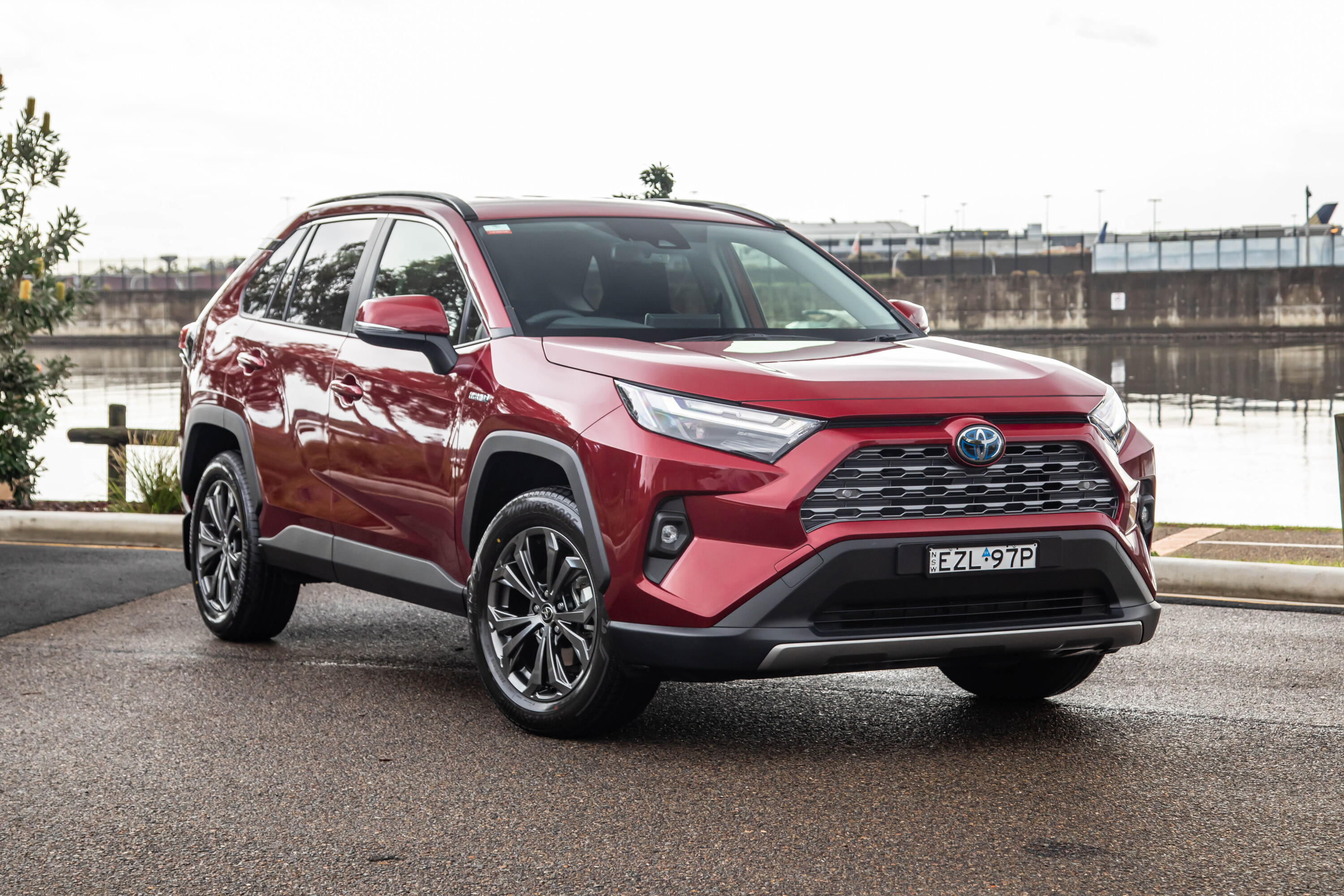
The Tiggo 7 Pro sits in an interesting mid-ground between rivals, not offering the extreme cut-price position of a top-spec Haval H6 Ultra AWD ($40,990 drive-away) yet still a lot more affordable than a flagship Toyota RAV4 Cruiser AWD ($56,230 before on-road costs) and Hyundai Tucson Highlander N Line AWD ($54,640 before on-road costs).
So there’s a conundrum for buyers – and that can only be answered by driving all vehicles back-to-back. Investigating residuals is important, too. For reference, there’s no figure on the Tiggo yet but Redbook puts the Omoda‘s value at about 50 per cent after three years, and the Haval H6‘s 52 per cent. The RAV4 and Tucson, meanwhile, are about 62-65 per cent depending on trim.
That means when it comes time to get rid you’ll only get about $23K for the Tiggo 7 Pro compared to closer roughly $37K for a Tucson Highlander.
Interior comfort, space and storage
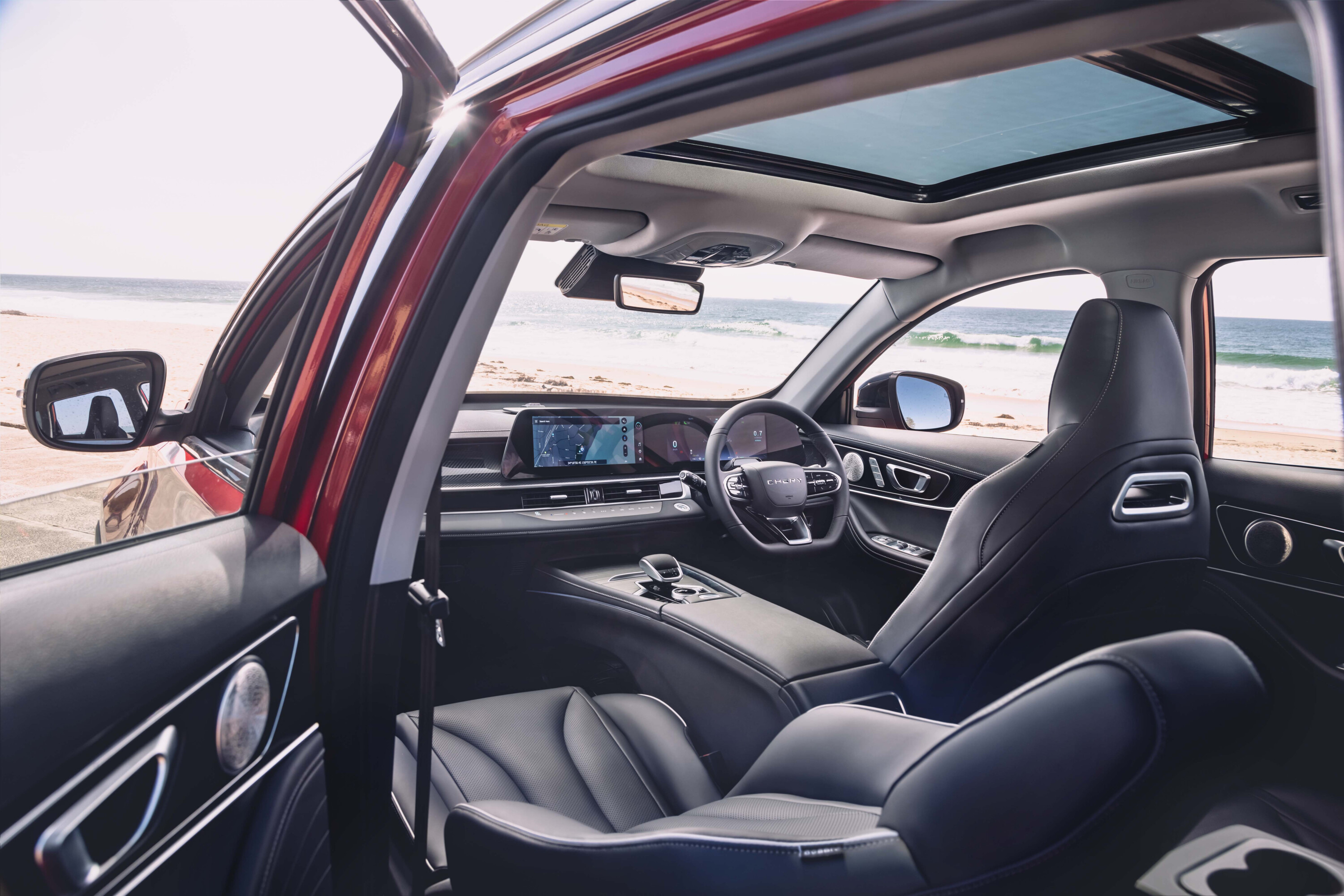
If the outside reminds you of a Ssangyong Rexton, the Tiggo’s interior details are almost shameless copies of Mercedes-Benz right down to the intricate laser-cut speaker grilles, the door inlays, seat memory settings, and start/stop button.
But if you’re going to copy someone, Mercedes isn’t a bad place to start, though perhaps the most unnerving aspect is the plastic graining that’s almost identical to that of a C-Class to the eyes, if not to the touch.
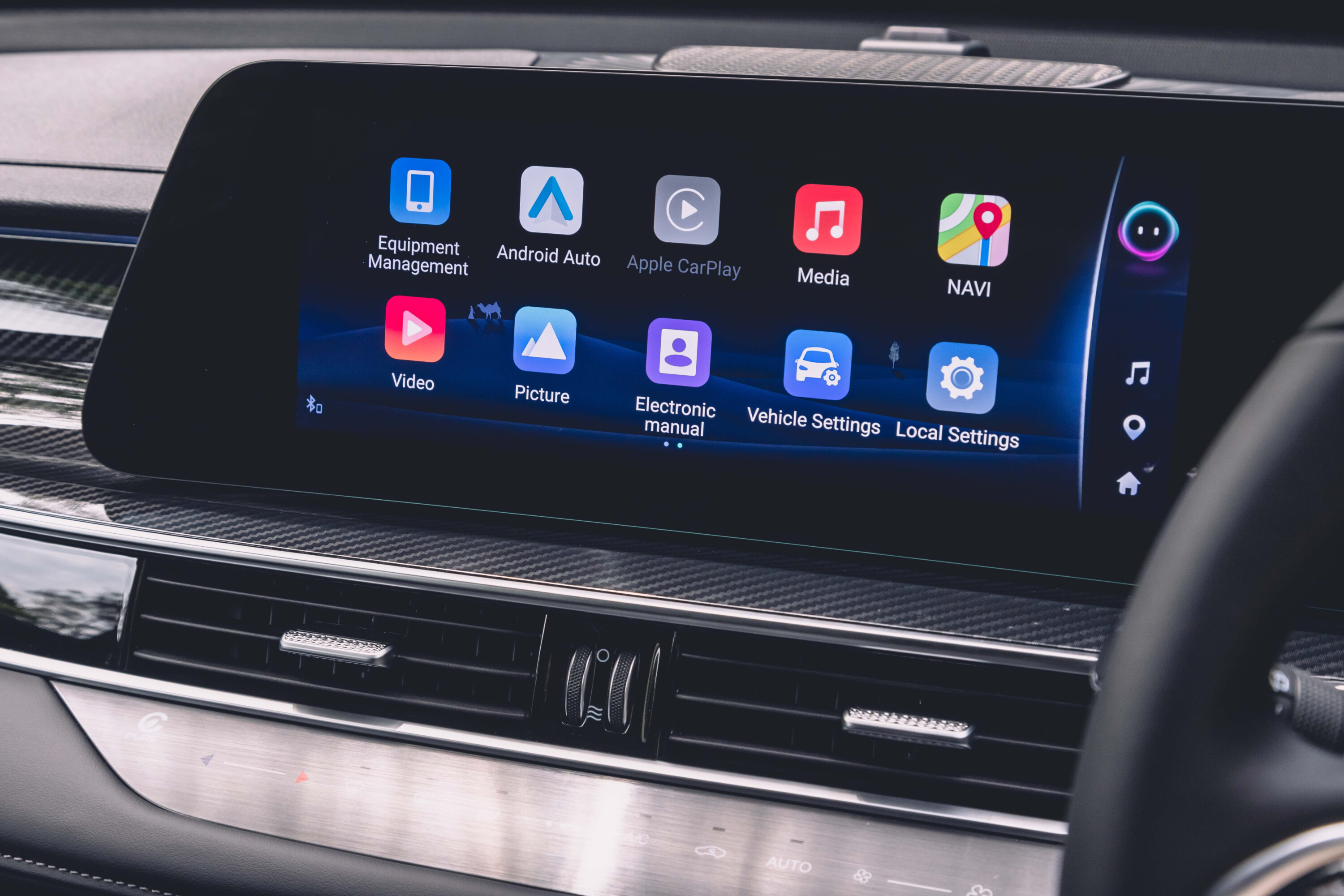
However, at its core the Tiggo’s technology is all Chery, and that’s important because this is the ace up this Chinese brand’s sleeve. You’ve got over 400 voice commands that can understand simple robotic instructions to more human prompts such as “can I have some fresh air”.
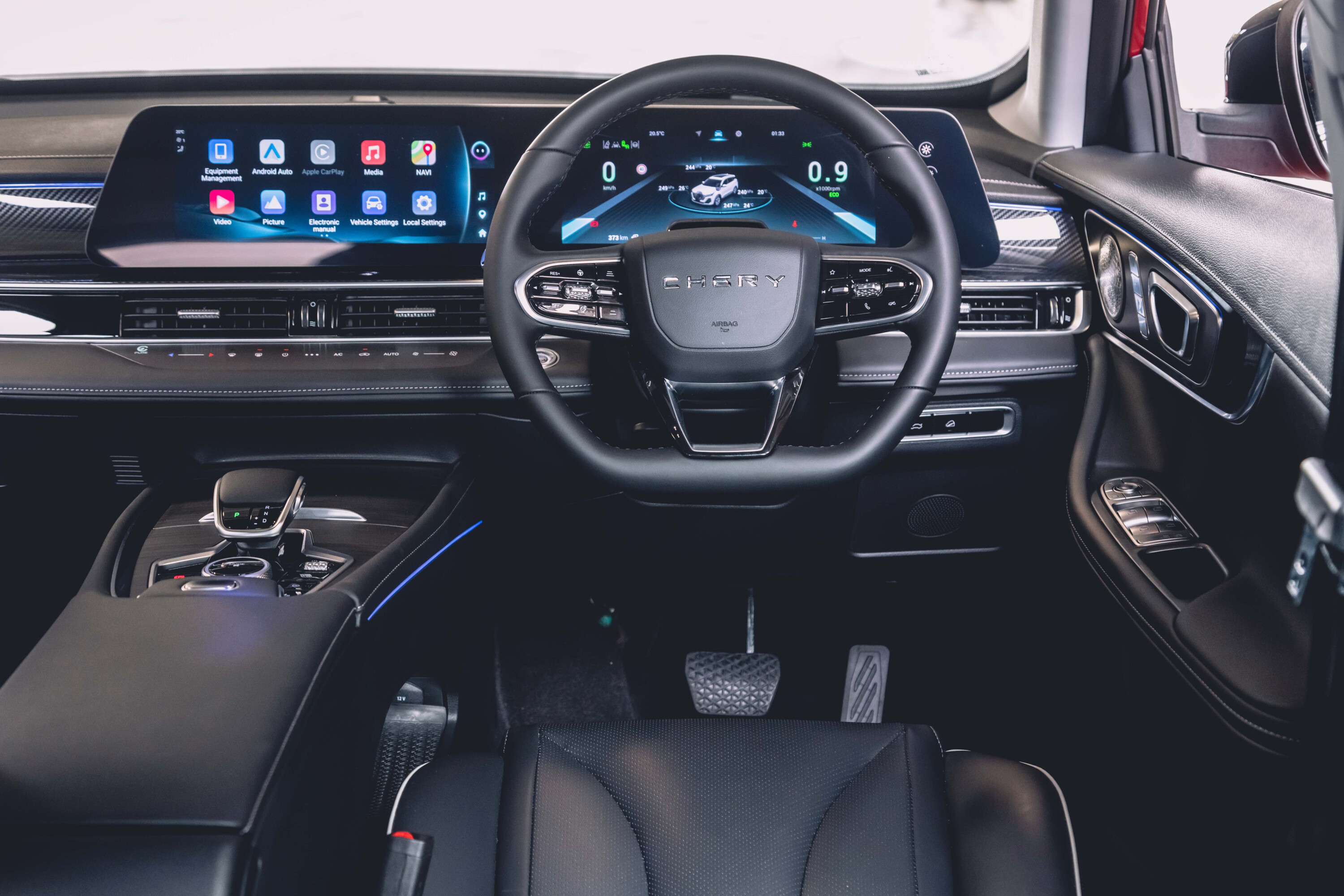
The menus found in the 12-inch touchscreen are logical, too, and far eclipse the convoluted systems you find in a Haval H6, feeling about as well thought-out as a Kia Sportage’s.
Practicalities are excellent with flexible door pockets that grip a one-litre bottle snuggly. A flying bridge centre console has storage below perfect for small handbags or snacks, above there are two cup holders, a deep central bin, and a grippy rubberised wireless charging pad that works neatly with cable-free Apple CarPlay/Android Auto. There’s still USB-A and USB-C charging points in the front, too.
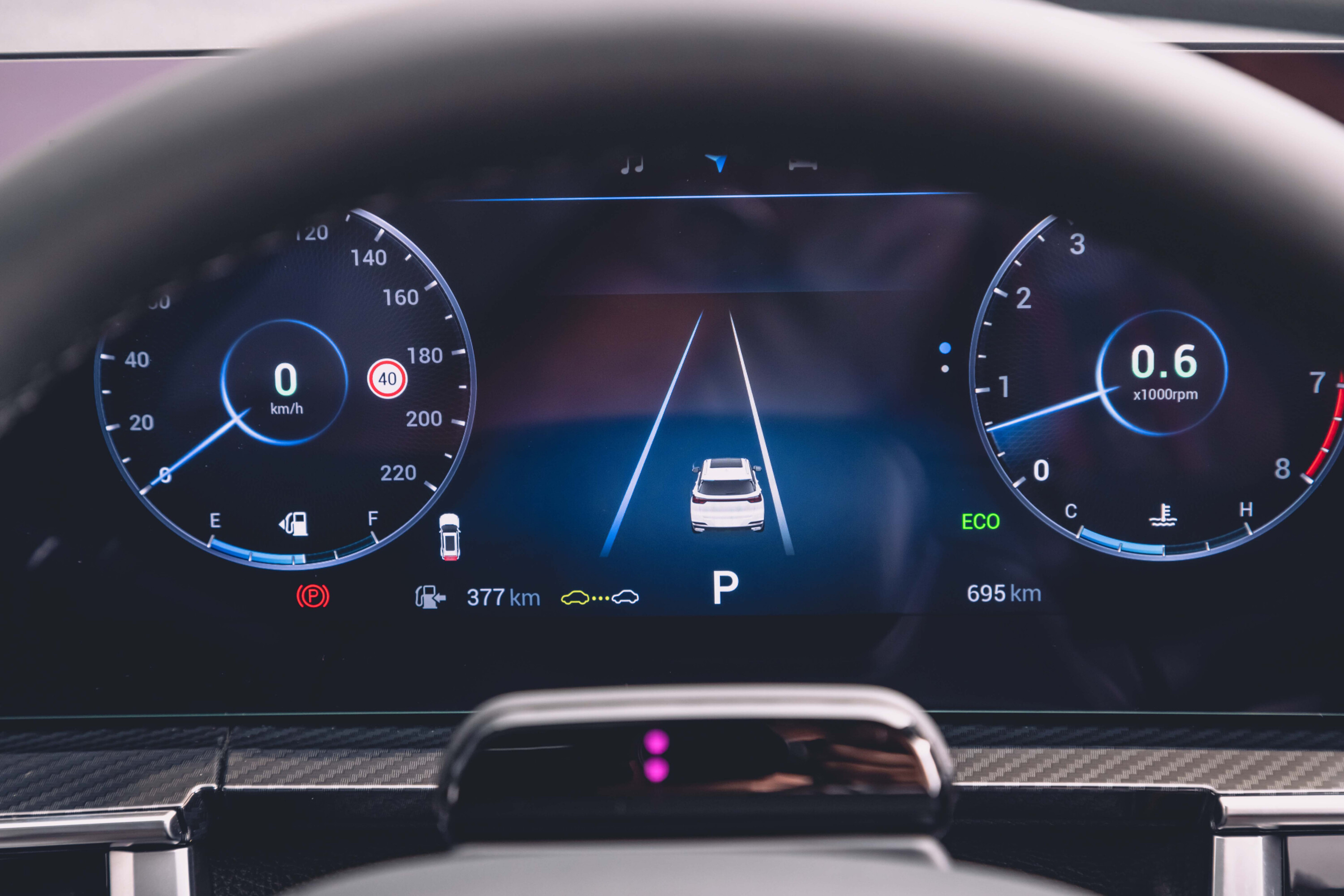
The digital driver’s display communicates most information legibly, though there are some details (green to show adaptive cruise or lane-trace is engaged) that get lost in the peripherals behind the steering wheel.
It can display a full map using the Tiggo’s in-built navigation just like Volkswagen’s benchmark setup.
All grades from the base up get heated power-adjust seats. The driver gets six-way and the passenger four ways, losing height adjust which isn’t ideal for taller people. They are comfortable, although the vinyl upholstery doesn’t breathe like real leather. Luckily the top-spec Ultimate gets eat cooling thrown in.
Moving rearwards, the Tiggo’s relatively short 4513mm length and 2670mm wheelbase don’t impact room. There’s space for two six-foot-plus adults in the outboard seats and enough width to accommodate a third person in the centre position.
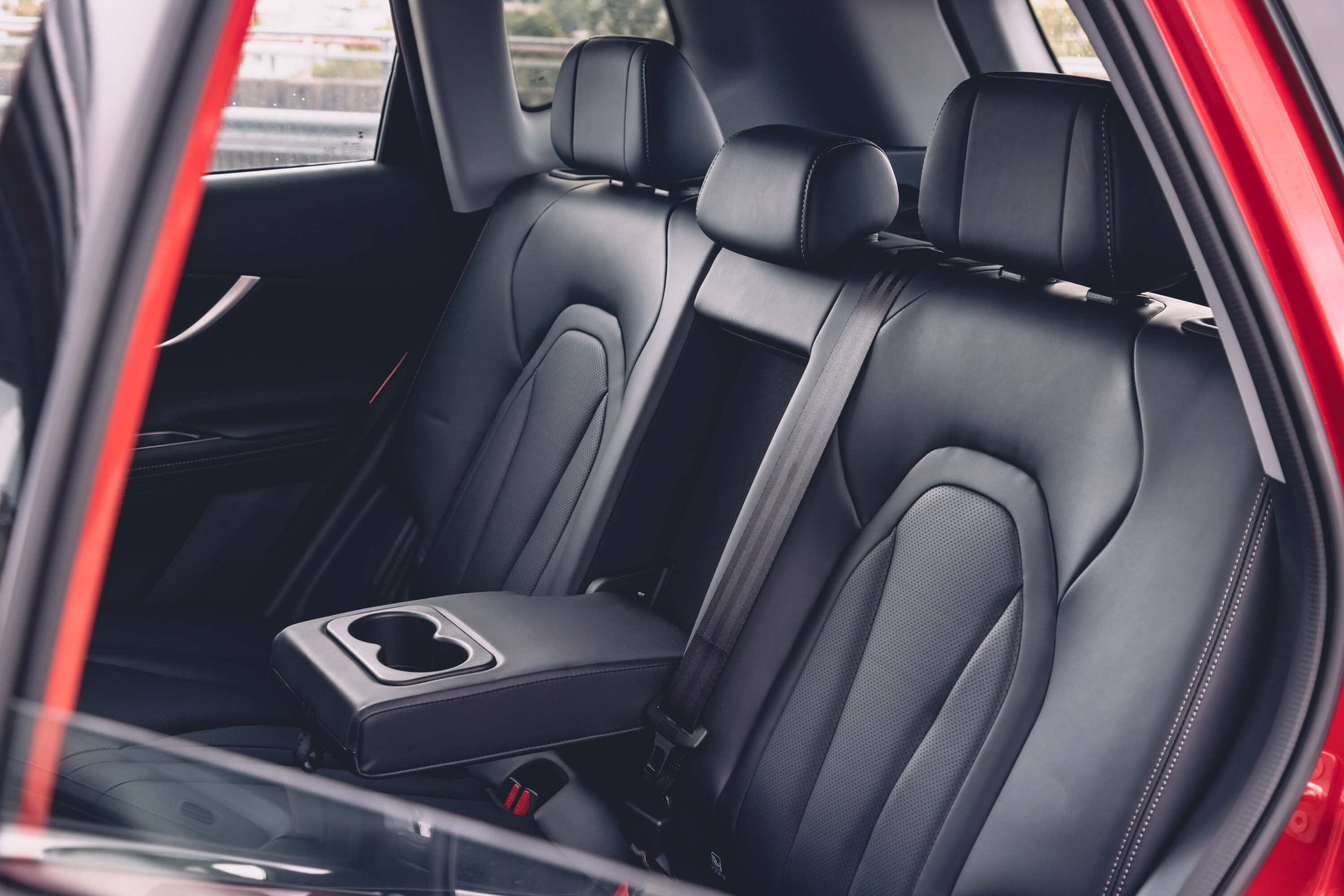
You’ll find as much legroom here as any rival bar the Nissan X-Trail or Mitsubishi Outlander.
Three top tether points are standard with Isofix points on outboard seating positions. For more grown-up passengers, amenities include two vents and a USB charge point. The only real shortcoming is the scratchy black plastic door cards that don’t match the rest of the interior’s remarkably high-quality presentation.
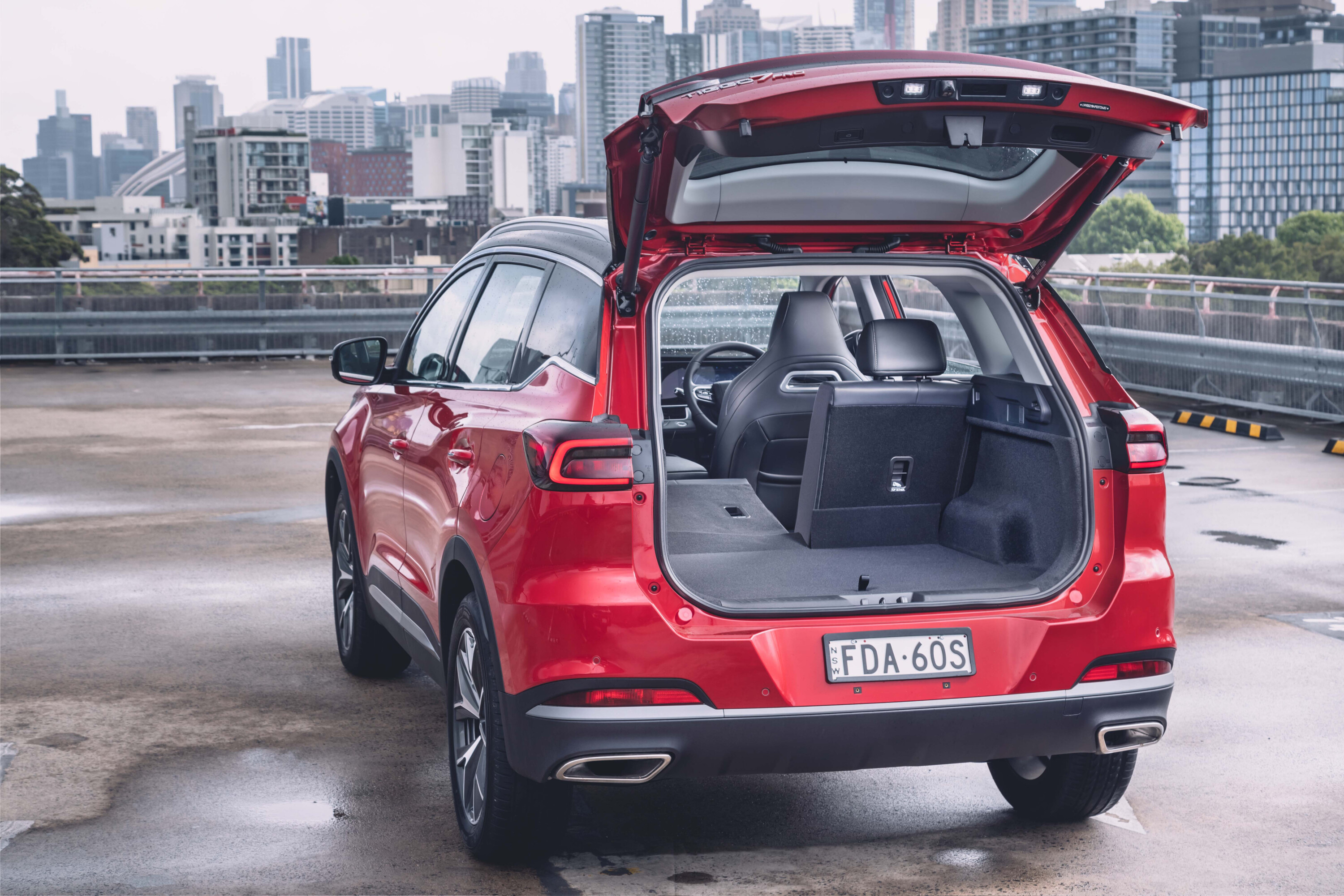
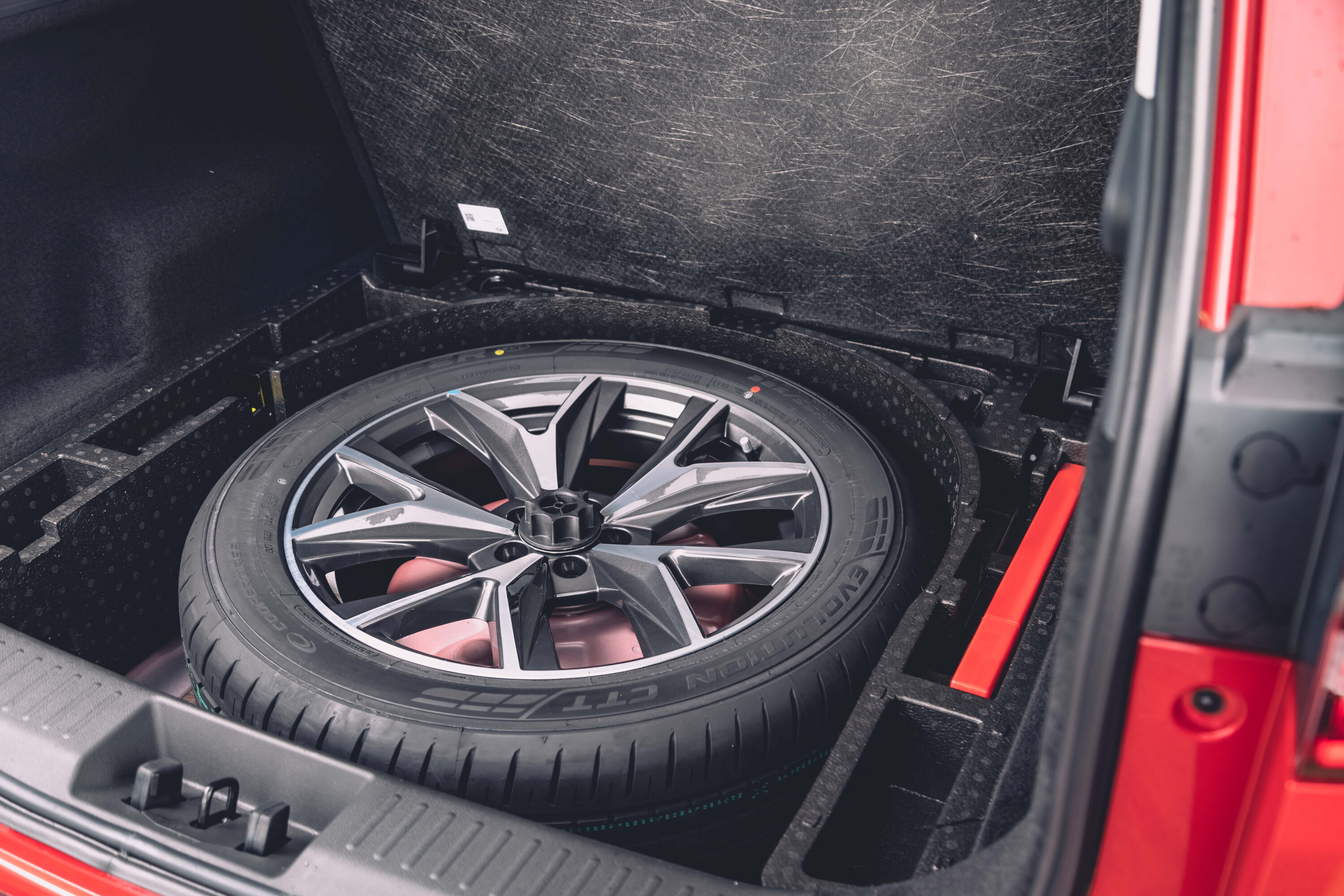
On paper the Tiggo’s boot is large, measuring 626L. In reality, it looks about the same size as a Hyundai Tucson, though without quite such a wide aperture. There’s a full-size spare wheel beneath the single-level floor, a cargo blind, a 40:60 split-folding backrest, and boot light.
What is it like to drive?
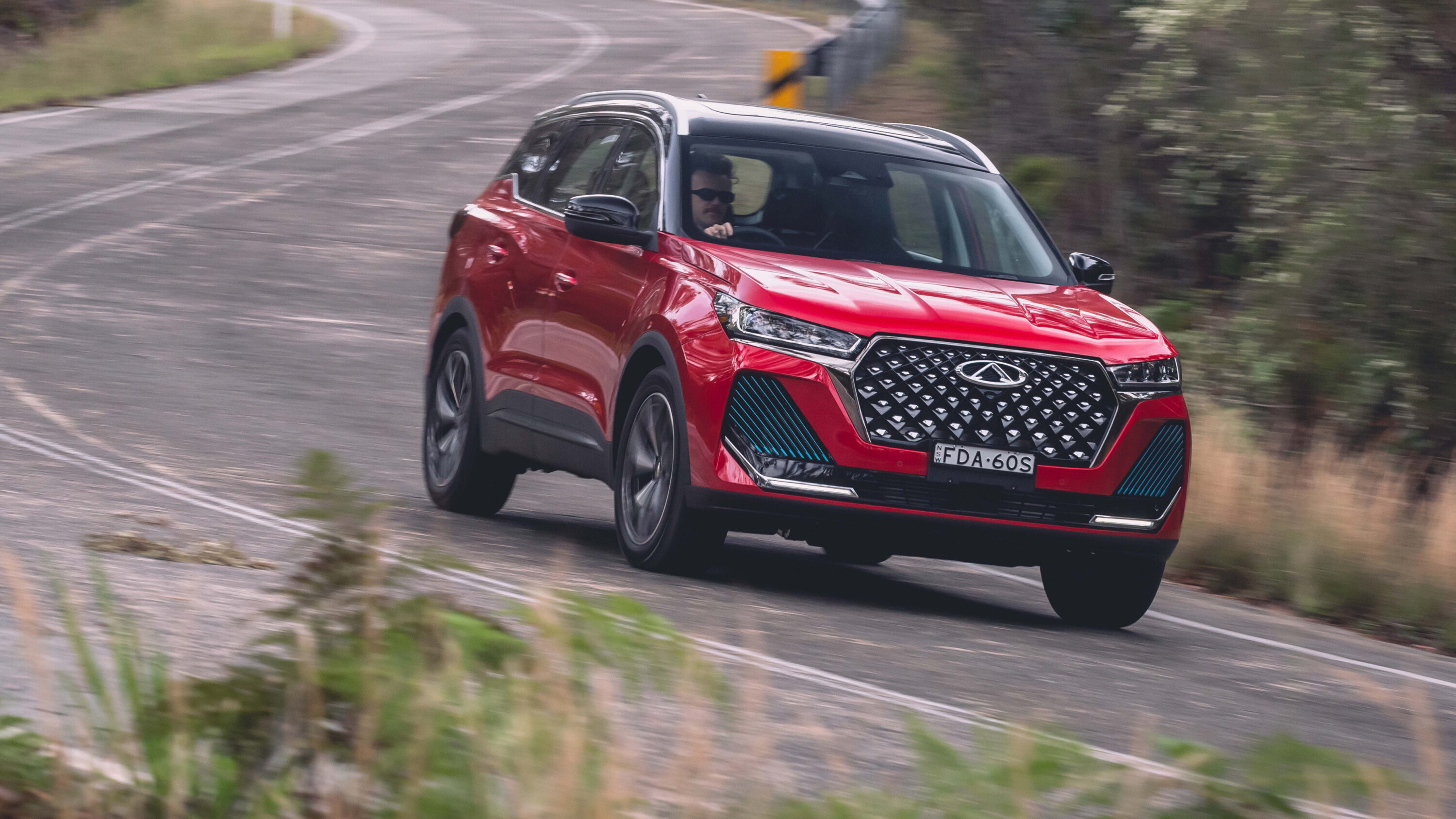
We’re off to a good start. The 1.6-litre turbo-petrol four-cylinder fires to life without much protest and the seven-speed dual-clutch gearbox mostly does what you want.
The ‘290T’ badge on the back of the Tiggo 7 Pro references its China-market 290Nm torque figure, but under global standards outputs are rated at 137kW (instead of 147kW) and 275Nm. An odd quirk, but not one that detracts from reasonable acceleration.
Chery claims 0-100km/h in 9.5 seconds for the front-drive trims and 9.9 seconds for the all-wheel drive Ultimate. Those numbers sound about right and acceleration occurs smoothly.
The auto start/stop system makes for the occasional awkward take-off as the dual-clutch stumbles into first gear if rushed.
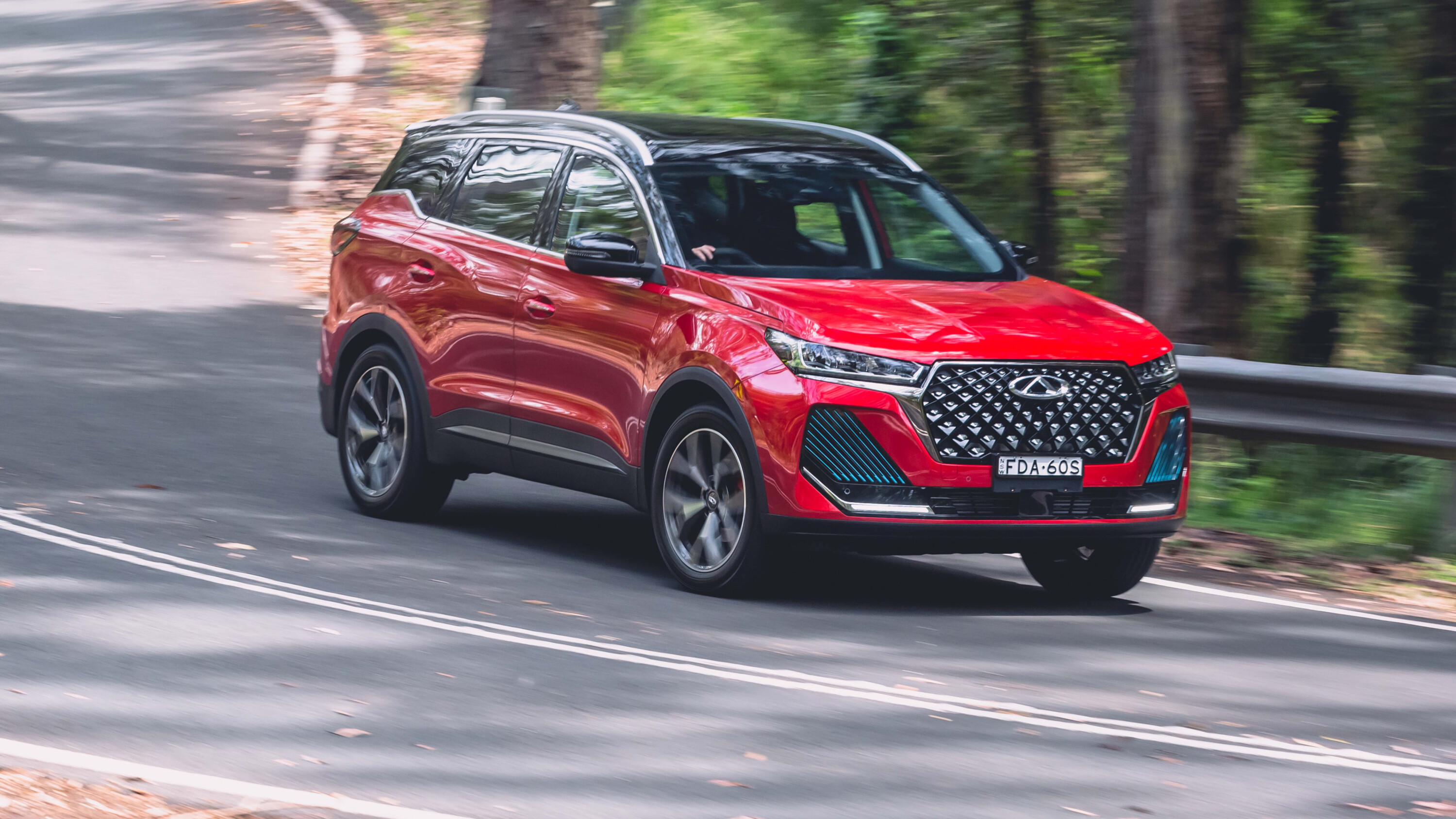
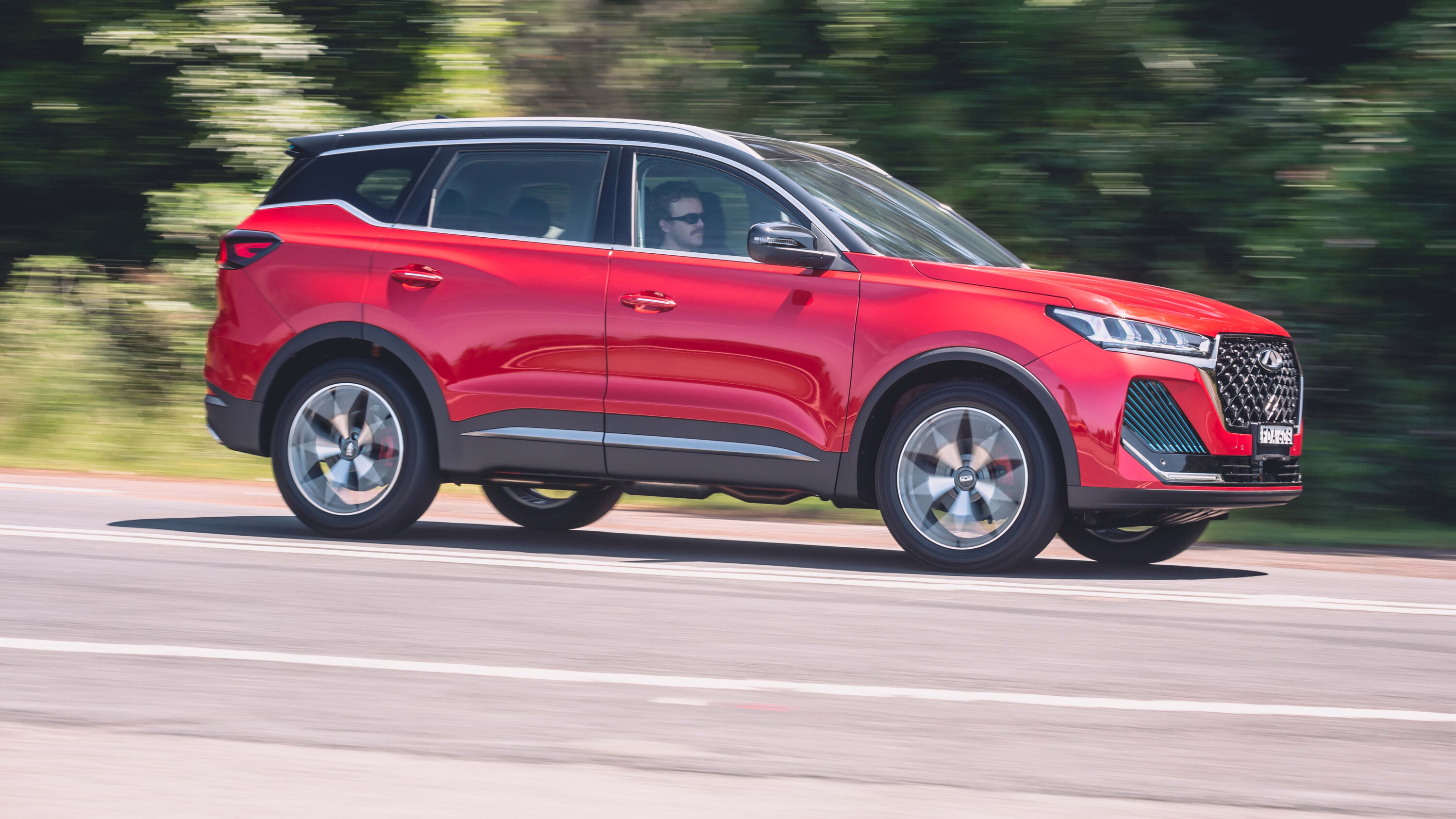
The Tiggo 7 Pro feels like a larger SUV from behind the wheel than measurements suggest with a commanding driving position and good vision out, save for the thick A-Pillars.
It’s based on Chery’s T1x architecture found under the larger Tiggo 8 Pro, with no relation to the Omoda 5.
Ride comfort on Sydney’s bumpy roads is adequate on the Ultimate’s 19-inch alloys if a little on the firm side over small bumps. As the car unloads over rises there’s a moment of float, too; both of these are symptoms of stiff springs.
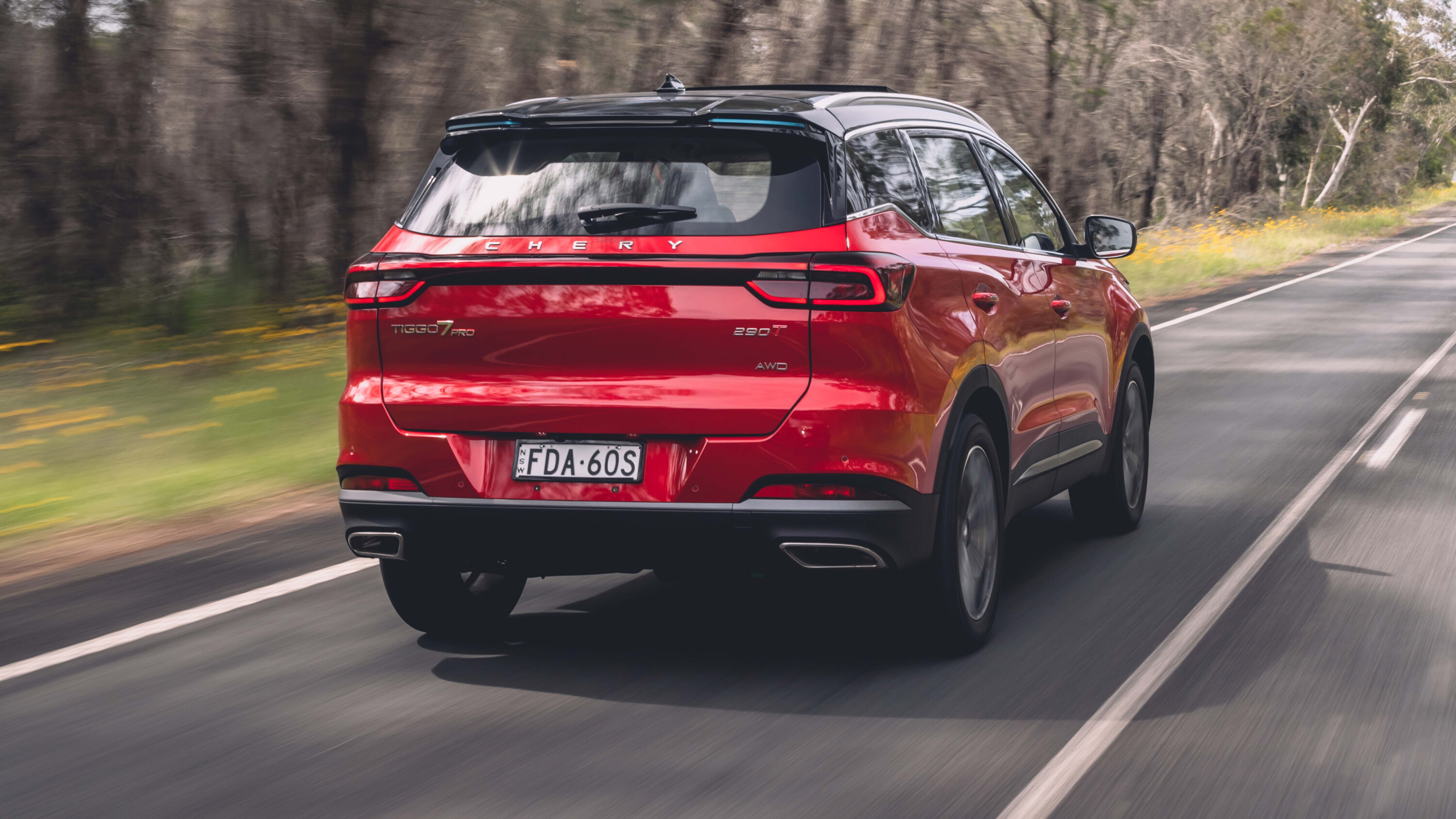
The Elite and Urban’s 18-inch alloys do a better job insulating occupants from bumps.
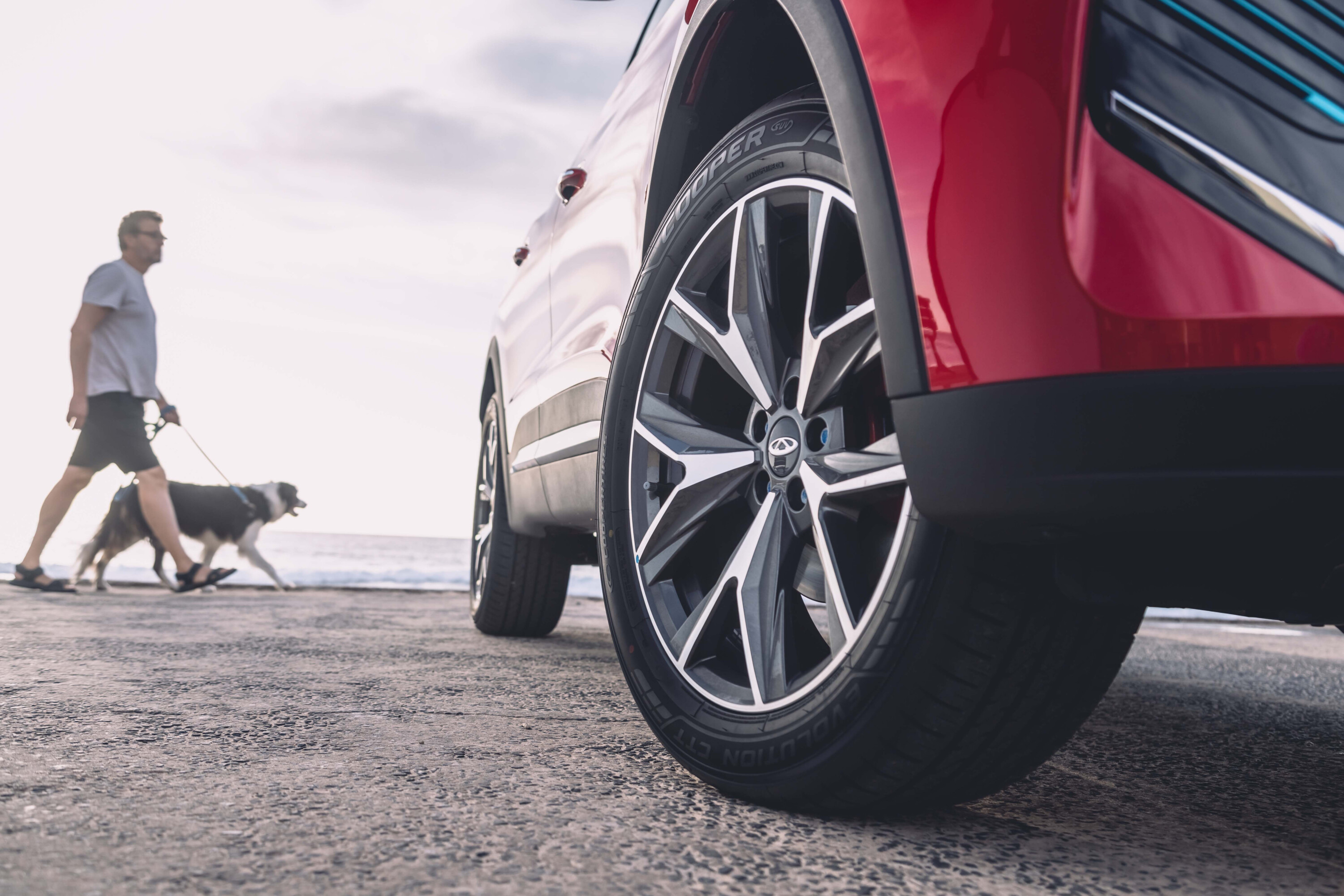
Regardless of ride quality, the Tiggo 7 Pro’s noise insulation is great. There’s precious little wind noise or tyre roar from the 225/55 R19 Cooper Evolution CTT rubber on the range-topping Ultimate.
It may be light and easy around town, but the Tiggo’s steering doesn’t inspire confidence as we arrive at a twisty section of road heading into Sydney’s Royal National Park.
With a firm chassis minimising body roll through corners, it’s difficult to judge how much you’re working the Tiggo 7 Pro’s rubber. The default stance is gentle understeer that becomes progressively more pronounced. Safe, but we’d appreciate more poise and adjustability.
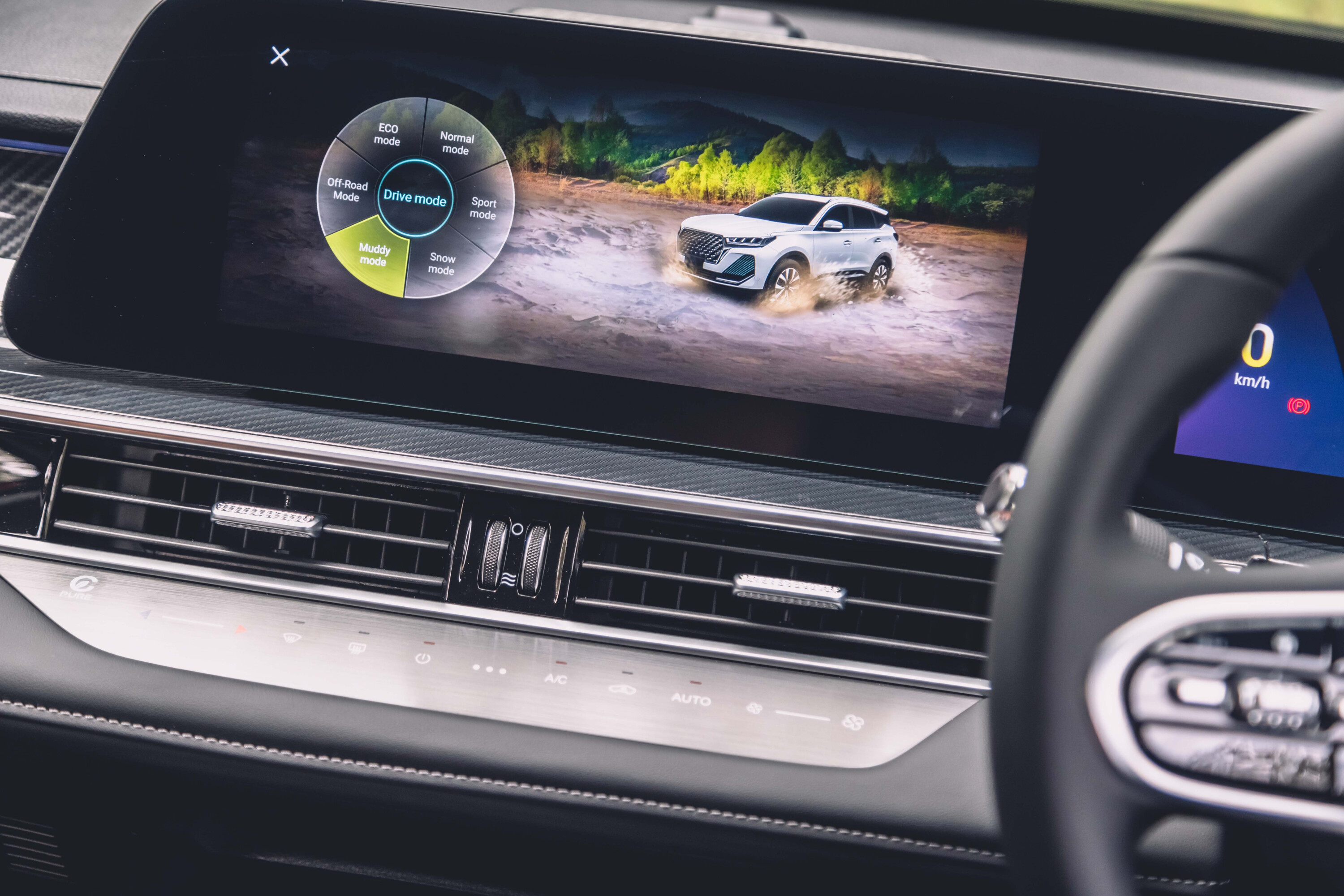
There are three drive modes (Eco, Normal and Sport) in the lower trims and six for AWD Ultimate, which adds Snow, Muddy and Off-road modes. We found Normal best, with Sport adding no real substance and Eco dulling the throttle too much.
As you twiddle the rotary selector to choose each mode (there’s thankfully no touchscreen interaction needed) it barks back which mode you’ve selected in a very computery voice.
Speaking of sounds, we found the digital indicator chime to be quite unpleasant. But that’s a minor gripe. Our initial experience is promising enough, then.
How safe is it?
Chery, like rival Chinese brands, is all about safety on paper. The Tiggo 7 pro hasn’t received ANCAP’s five-star blessing yet but the carmaker has worked closely with the independent crash-testing body to ensure it has all the tech needed, including eight airbags.
It’s also got AEB with pedestrian, cyclist and motorcycle detection, blind-spot monitoring, rear cross-traffic alert, lane-departure warning, lane-centring, drive-attention monitoring, safe-exit assist and more.
Though these systems have proven to be more annoying than useful in the past, the Tiggo 7 Pro is an encouraging improvement when it comes to lane-keep assist with fewer false-positive experiences than in early Omoda 5s.
The Tiggo uses cameras only, with no radar sensors (unlike the Omoda 5 which has both). Unfortunately, the systems don’t function anywhere near as smoothly as those found in Volkswagens, Subarus, and Toyotas.
On the return from Austinmer via the M1, the Tiggo’s systems showed their issues when setting the adaptive cruise control and lane-centring assist. At a posted 110km/h, the steering becomes thick and heavy – as if the columns set in drying concrete – making it difficult to adjust for cambers and crosswinds on the motorway.
Then, as the system detects a vehicle in the left lane, the cruise nervously slows the car back to 100km/h, before realising its mistake and gassing quite aggressively back up to, and then overshooting the 110km/h speed limit in the process like a drowsy cab driver.
We also need to discuss the prominent driver-attention monitoring system with its camera behind the steering wheel.
It requests your eyes with an audible beep if it reckons you’re distracted. Thing is, if you do a head check to spot a vulnerable road user – a cyclist or motorcycle, for example – it’ll assume you’re looking away “driver distracted for a long time” it insists.
And any time the systems detect a change in surrounding circumstances, the driver’s display jumps away from the map to a display showing the vehicles around you, which takes your attention off the road, and then the system scalds you again.
Chery says it’s effectively using Australia as a beta test for tough non-Chinese road conditions as it expands into other markets. But do we want to be the Guinea pigs? To avoid a sullied reputation it might have been wiser for Chery to tune first, and launch second.
How much fuel does it use?
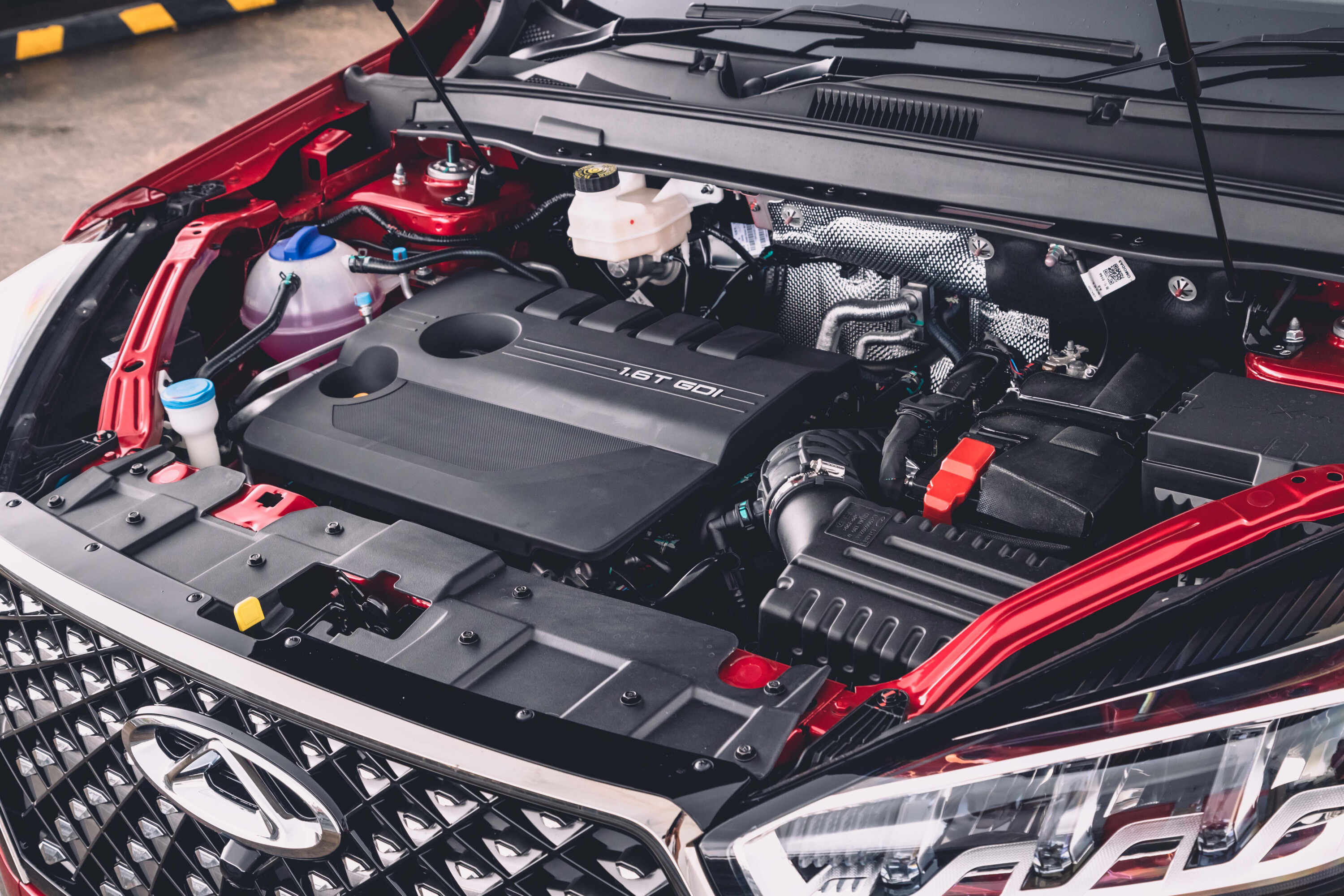
Efficiency is good, considering the Tiggo 7 Pro is a fairly simple set-up. In front-drive form, the Euro VI complaint engine returns 7.0L/100km in the ADR combined consumption cycle and we saw that exact number on the trip computer.
The thirstier all-wheel drive (that offsets compromised range with a 6L larger 57L fuel tank) is rated at 7.8L/100km in the same test. We saw 8.1L/100km on a twistier route through the countryside.
The Tiggo 7 Pro requires premium 95 RON or higher unleaded petrol.
Warranty and running costs
Chery wants to offer peace of mind for customers and is adamant it has the dealer and local support needed to deal with warranty claims and accident repairs rapidly, carrying nearly $12 million worth of spare parts for Tiggo and Omoda models.
The Tiggo 7 Pro is covered by a seven-year/unlimited-kilometre warranty, seven years of capped-price servicing and buyers get seven years of roadside assistance thrown in with the purchase.
Full service pricing for seven years has not been confirmed, but the first five trips to a Chery dealer will cost $280 per visit – just $20 each more than a Toyota RAV4.
VERDICT
There’s little arguing that the Tiggo 7 Pro is a more complete vehicle than its Omoda 5 relative, but it still feels half-baked – and that’s never a good way to release a car.
There’s hope that the optimistic and experienced executives at Chery’s helm will continue to iron out the brand’s kinks, yet until we sample a product with driver aids that are as consistent and smooth as Toyota, Hyundai, and Subaru’s, it’s difficult to recommend a Tiggo 7 Pro.
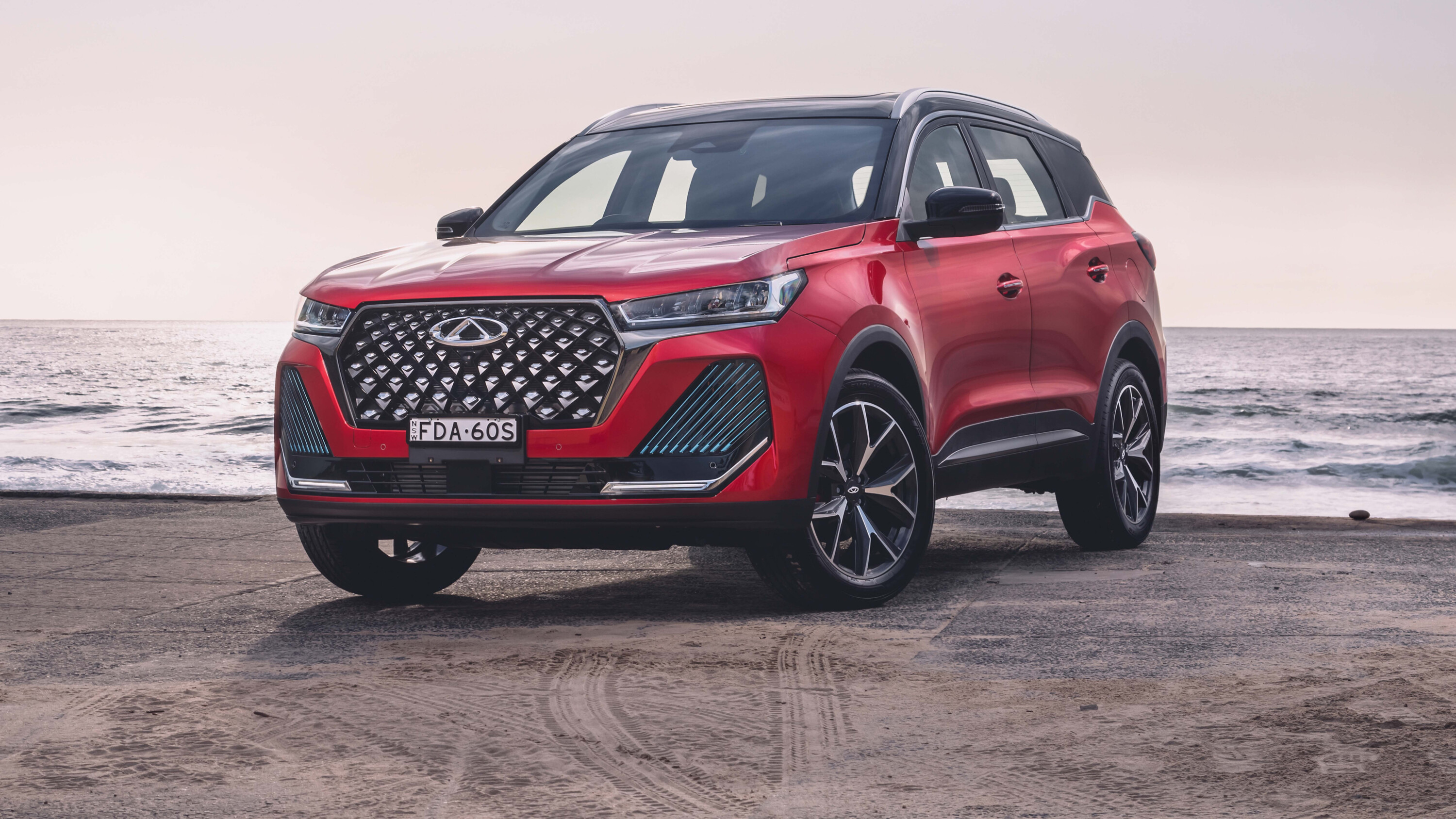
And that’s a shame because it’s got the ingredients of a great family SUV: refined fuel-efficient petrol engine, spacious and practical cabin, affordable price tag, and stellar after-sales promises.
It all works to make this a very enticing SUV on the forecourt. Our advice? Take the Tiggo for an extended test drive on a lumpy freeway before you whip out the checkbook.
| Chery Tiggo 7 Pro Ultimate AWD | |
|---|---|
| Price (drive-away) | $45,990 drive-away |
| DRIVETRAIN | |
| Engine | 4cyl, 1.6-litre, turbo-petrol, direct-injected |
| Compression ratio | 9.9:1 |
| Drive | All-wheel |
| Power | 137kW (@5500 rpm) |
| Torque | 275Nm (@2000-4000 rpm) |
| Gearbox | 7spd dual-clutch automatic |
| CHASSIS | |
| L/W/HB | 4513/1862/1696mm |
| Wheelbase | 2670mm |
| Track (F/R) | 1570/1570mm |
| Weight (tare) | 1601kg |
| Boot | 626-1672L |
| Fuel/tank | 95 RON/57L |
| Economy (combined ADR81/02) | 7.8L/100km |
| Suspension | Front: Struts | Rear: Multi-link independent |
| Steering | Electric power-assisted steering |
| Front brakes | Ventilated disc |
| Rear brakes | Solid disc |
| Tyres | Cooper Evolution CTT |
| Tyre size | 225/55R19 |
| SAFETY | |
| ANCAP rating | Unrated |
| 0-100km/h | 9.9 seconds (claimed) |
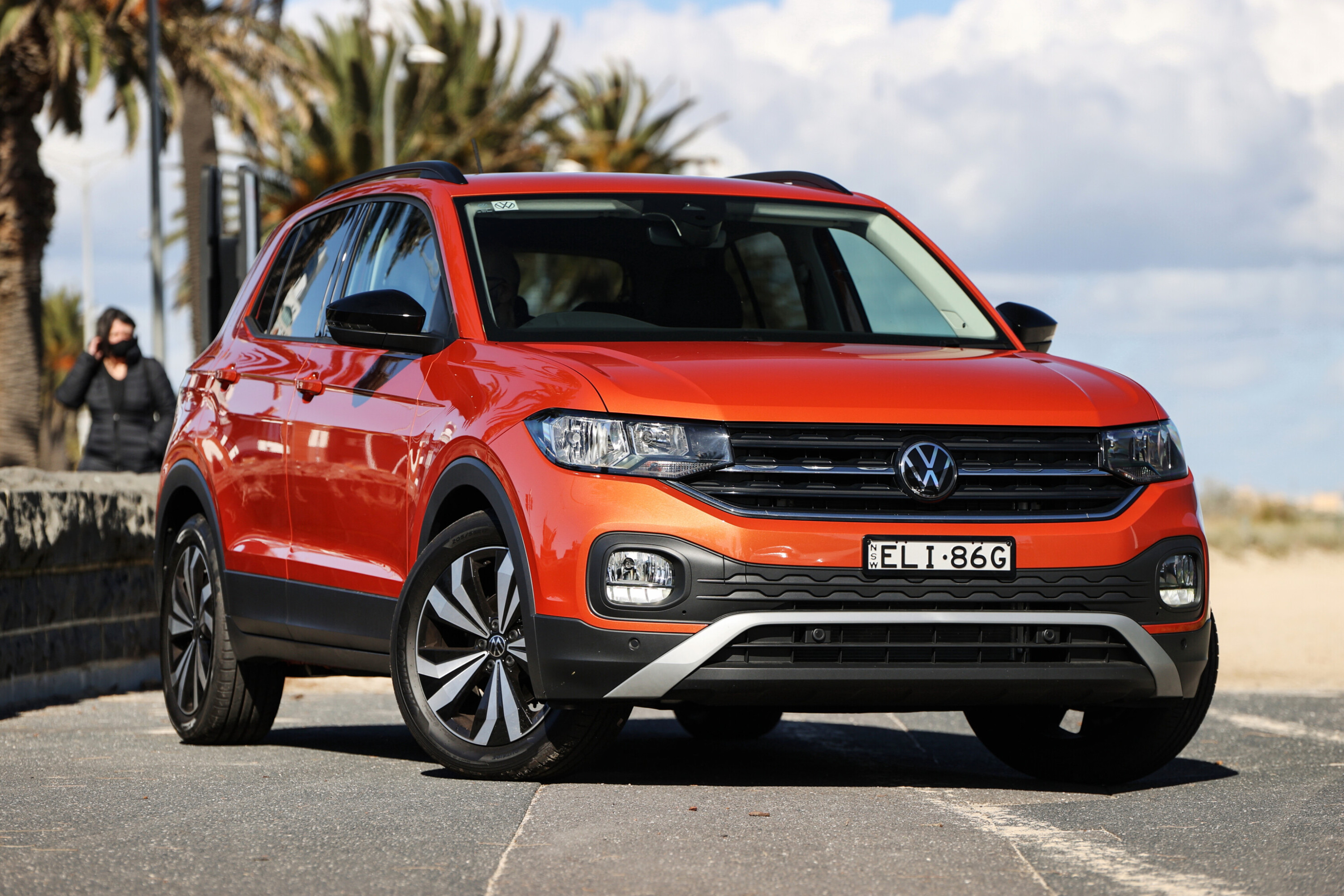
The Volkswagen T-Cross, a newcomer in the competitive light SUV market, made its debut in 2020.
Based on the popular Polo hatchback, this model aims to carve out a niche with its fresh design and urban agility.
A significant update is anticipated in late 2024, highlighting its evolution in a rapidly growing segment.
Pricing and Features
The T-Cross positions itself as a gateway to Volkswagen’s SUV lineup, offering two main variants – the Life and Style.
Both variants are front-wheel drive and come with an automatic transmission.
The Life, priced at $30,990 before on-road costs, is the more affordable option, designed to appeal to budget-conscious buyers. In contrast, the Style variant, with additional features, is available for $33,490 before on-roads.
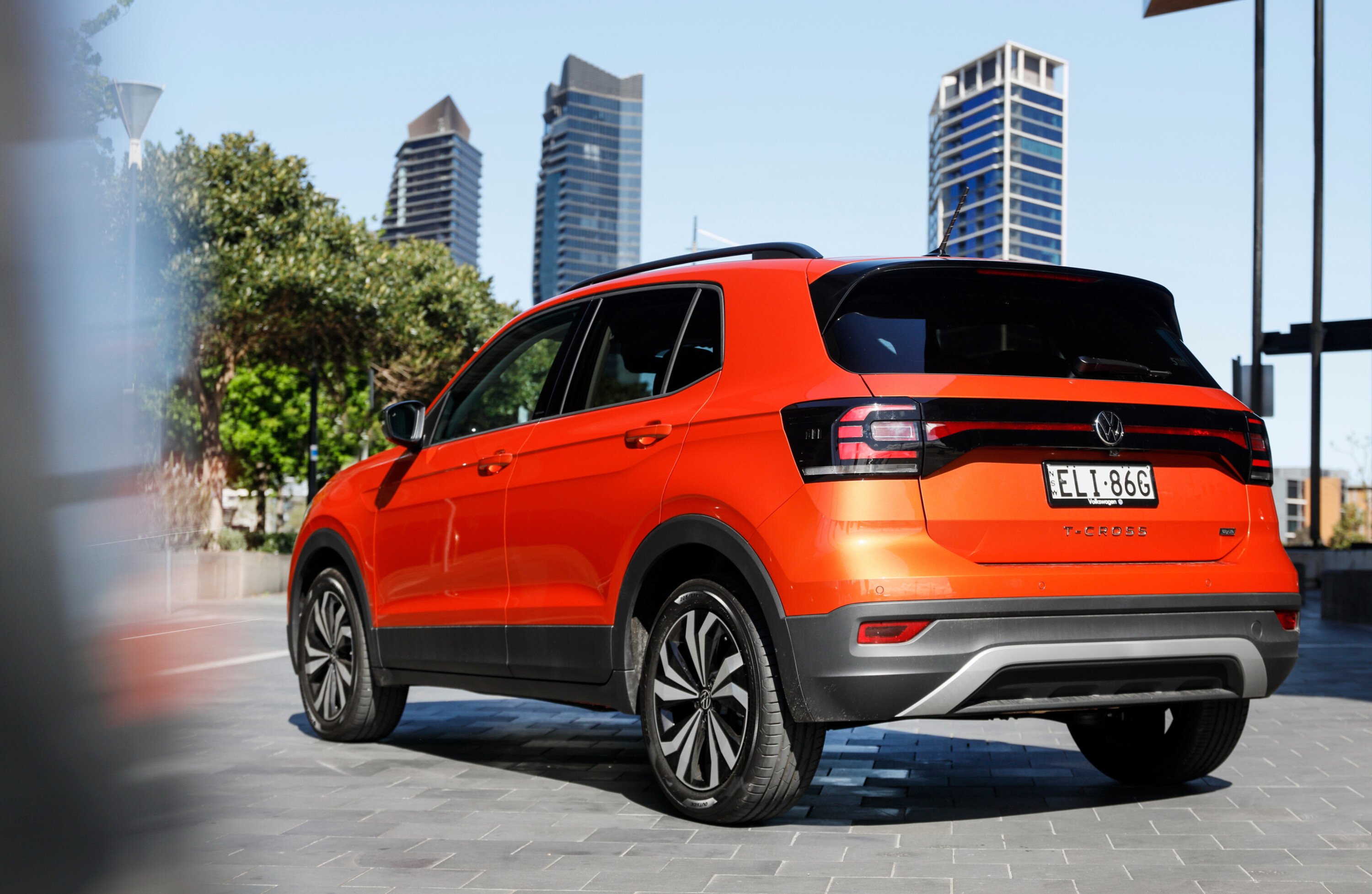
At the heart of both variants is a small yet capable 1.0-litre 3-cylinder petrol engine, delivering 85kW of power and 200Nm of torque, paired exclusively with a 7-speed automatic transmission. This engine setup ensures a balance between performance and efficiency, ideal for city driving with a combined fuel consumption of 5.4 litres per 100km.
| Volkswagen T-Cross standard features | |
|---|---|
| 8.0-inch touchscreen | Apple CarPlay/Android Auto |
| Six-speaker sound system | CD player |
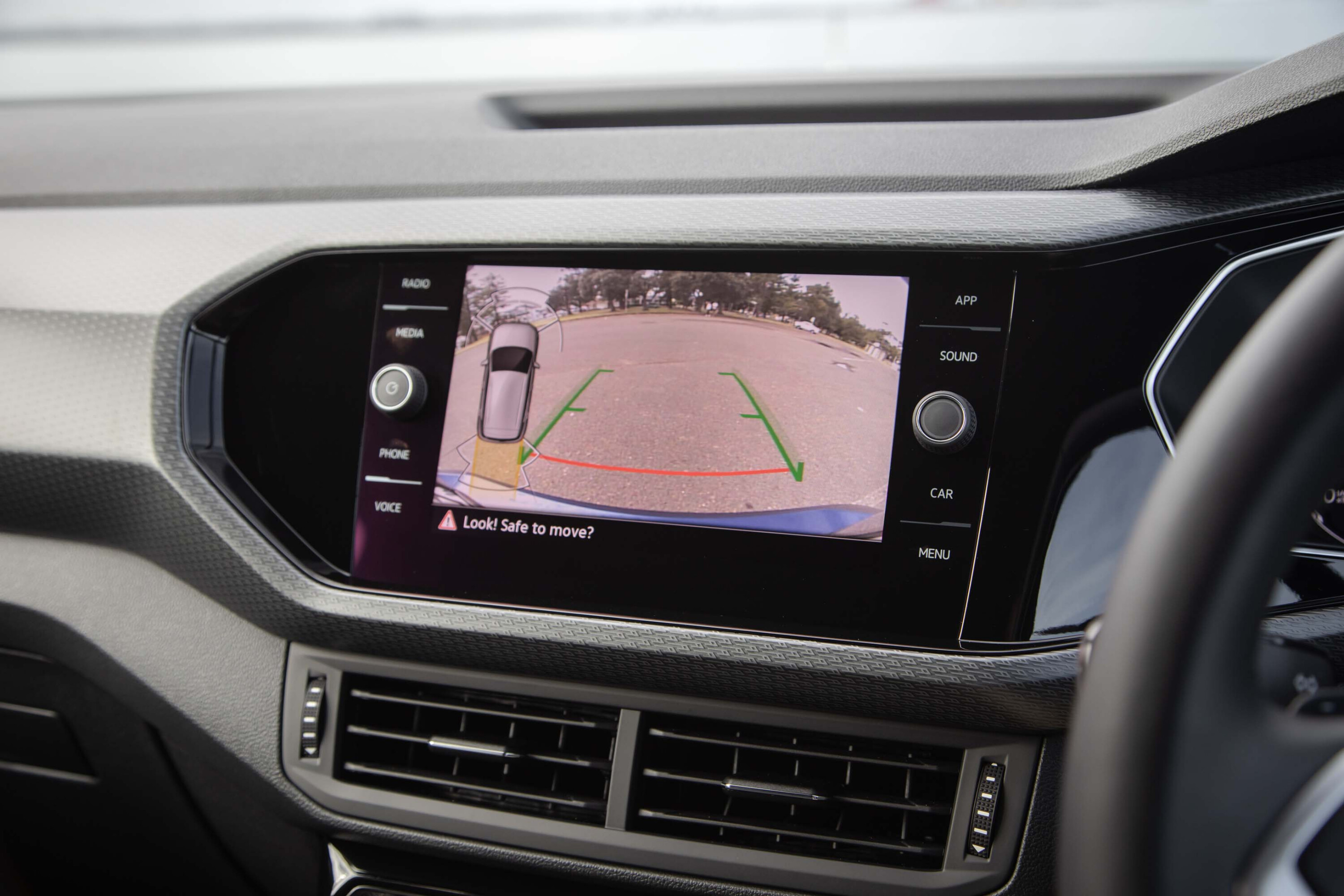
| Bluetooth | Reversing camera |
| Front and rear parking sensors | Autonomous emergency braking |
| Lane-keep assist | Lane departure warning |
| Driver fatigue detection | Vehicle distance warning |
| Cruise control with speed limiter | Tyre pressure monitoring |
| Rain-sensing windscreen wipers | Dusk-sensing headlights |
| Auto-dimming rear-view mirror | Air conditioning |
| Leather wrapped steering wheel | |
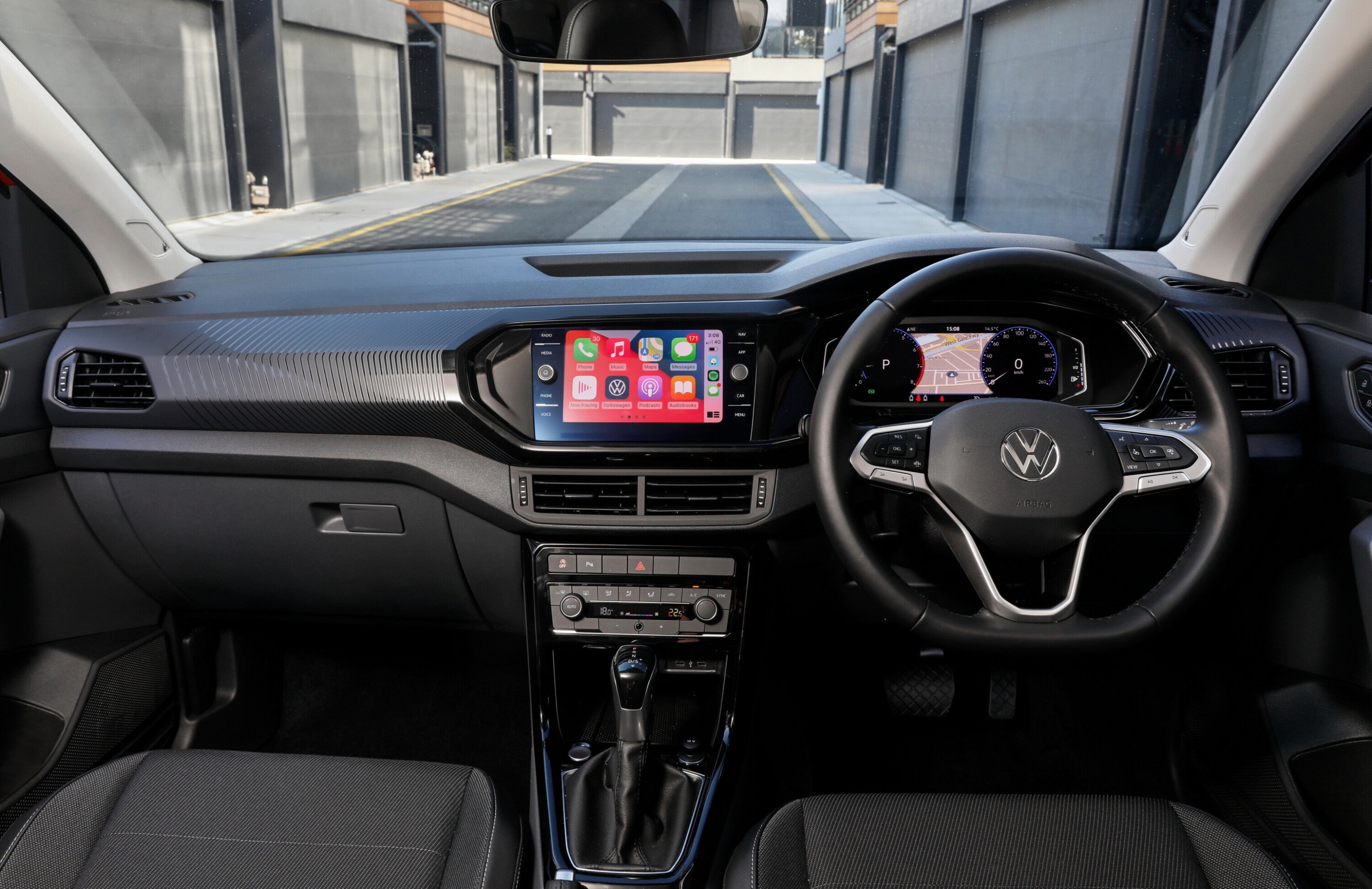
The T-Cross Life shines in its exterior design, boasting bold lines and a charismatic front facade. It comes equipped with 16-inch alloy wheels and LED Daytime Running Lights, giving it a contemporary and distinctive look. This design appeal is a significant factor in its market competitiveness.
The dashboard is ergonomically designed, featuring an 8-inch touchscreen infotainment system that supports Apple CarPlay and Android Auto.
Unfortunately it still gets halogen headlights which only slightly contradicts its premium brand positioning.
For an additional $2200, you can add a Sound and Vision Package.
| Sound and Vision Package | |
|---|---|
| Beats premium sound system | Upgraded infotainment system |
| Digital instrument cluster | Satellite navigation |
| Voice controls | Wireless phone charger |
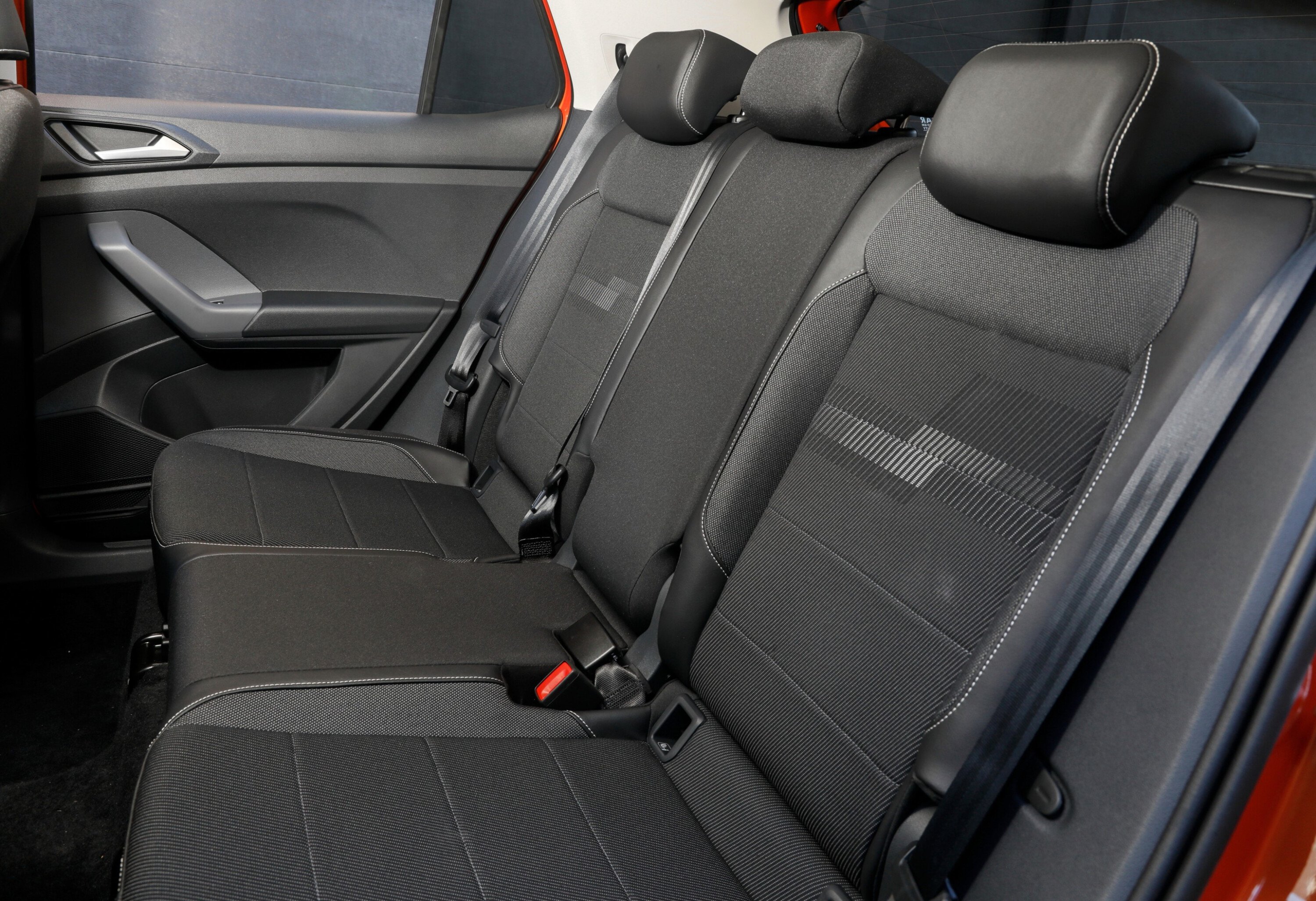
Solid white is the only no-cost paint choice, while other solid, pearl and metallic colours as $600-$900 options.
Safety
Safety is a key focus for the T-Cross Life, which boasts a five-star ANCAP safety rating.
It features an array of driver assistance technologies, including front and rear parking sensors, autonomous emergency braking with pedestrian and cyclist detection, and lane-keep assist.
Missing specs on the Life are adaptive cruise control, rear-cross traffic alert and blind-spot monitoring– only available if you fork out the extra cash for the Style.
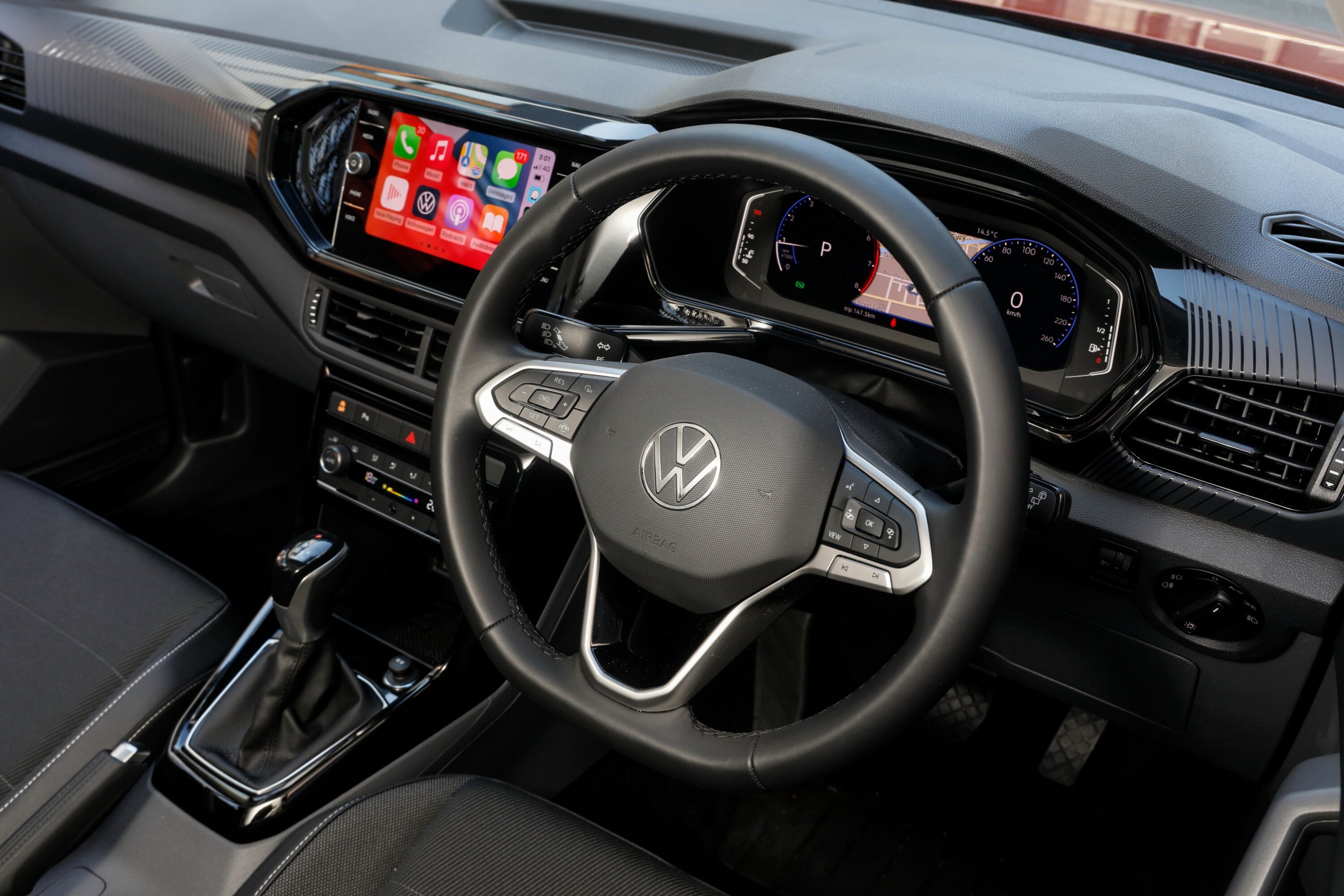
Key Rivals
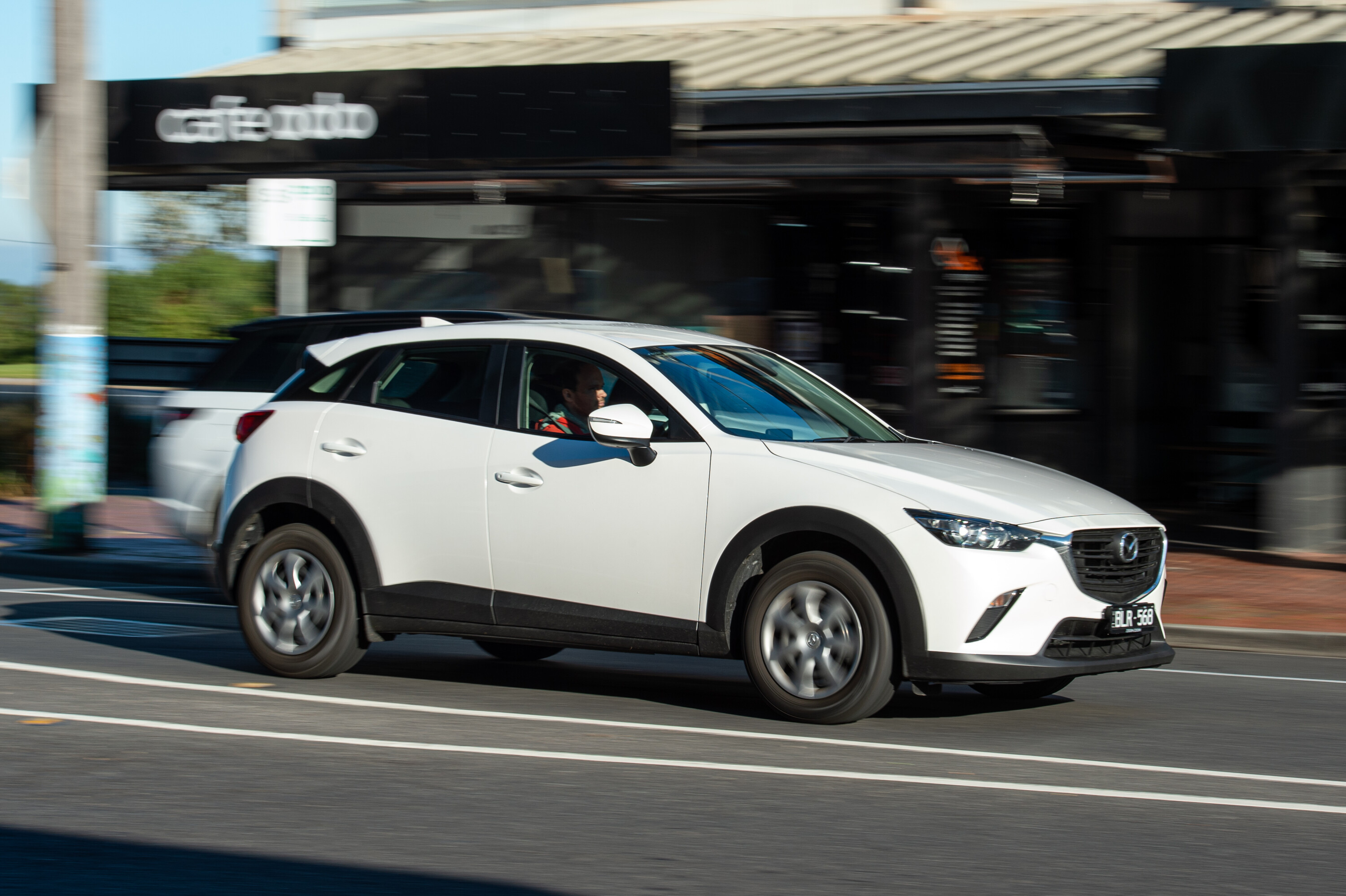
The T-Cross faces stiff competition from other light SUVs like the Kia Stonic, Hyundai Venue, Mazda CX-3, Ford Puma, and Toyota Yaris Cross.
These models, along with the T-Cross, represent a shift in consumer preference towards light SUVs over traditional light cars such as the Mazda 2 and Toyota Yaris.
Should I Put It On My Shortlist?
The 2024 Volkswagen T-Cross Life is an excellent choice for those seeking a compact, economical SUV for everyday use.
Its combination of practical features, efficient performance, and modern design makes it a strong contender in the light SUV segment, offering great value for city dwellers and daily commuters.
While 85 TSI Style and Life models are closely matched, the Style variant easily justifies the upgrade with its additional features. Features like adaptive cruise control and enhanced active safety technologies contribute substantially to the price difference.
The Life will suit a tighter budget while the Style will add some very welcome safety, if you can spend the extra cash.
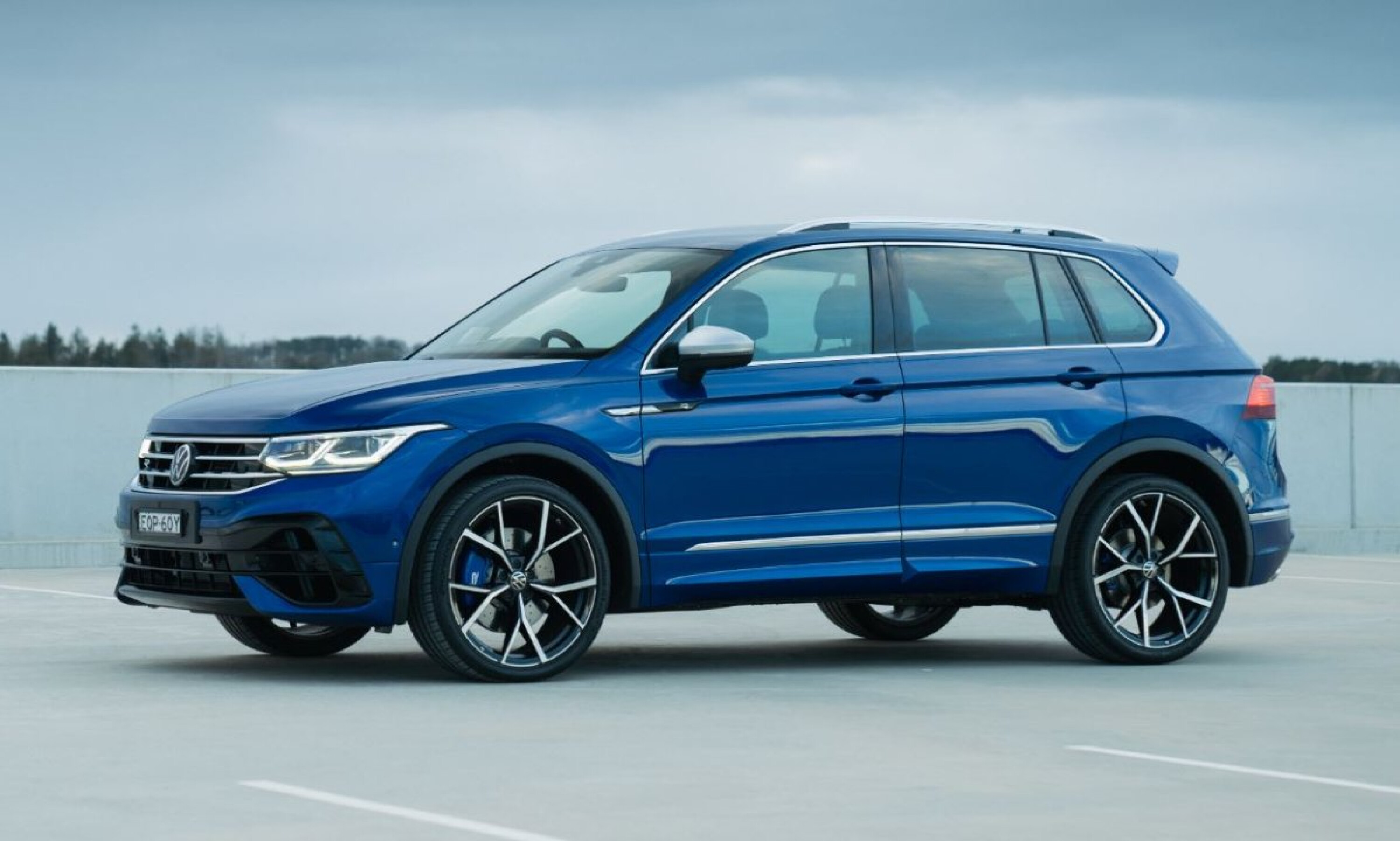
With the third-generation Volkswagen Tiguan looming large, the current Tiguan R will bow out next year.
Australia may be Volkswagen’s number one market for high-performance medium and small SUVs, but even that’s not enough to keep the 235kW/400Nm Tiguan R in production.
“Unfortunately, though, we do need to say farewell to Tiguan as we transition into Tiguan [gen-three]”, said head of product, passenger vehicles Michelle Rowney at Volkswagen’s 2023 brand day media event.
“But the good news is we will still be on sale with Tiguan R until around June next year”, she added.
The five-seat SUV remains priced at $70,490 before on-road costs and is in stock in Australia. That said, with shrinking inventory, a dealer will be the best place for a delivery estimate.
Volkswagen has not confirmed whether it will produce a high-performance version of the third-generation Tiguan yet, and the cooking range won’t arrive in Australia until 2025.
With the Touareg R adopting a plug-in hybrid powertrain, it’s possible the smaller Tiguan could do the same in the future, given Europe’s ever-tighter emissions regulations.
Our original story, below, continues unchanged.
March 9: Tiguan R back in stock
Stock levels of the 2023 Volkswagen Tiguan R will improve this year, as Germany doubles down its focus on Australia as one of the R sub-brand’s biggest markets.
On an order pause since February, the Wolfsburg factory is quickly catching up with demand for the Tiguan R ($70,490 before on-road costs), and order books are now open again in Australia.

“In the last couple of weeks, we’ve had confirmation the R division is sending us a lot more Tiguan Rs,” VW Australia product and PR manager Dan DeGasperi told Wheels.
“I spoke to our sales and delivery division a few days ago, and their words were ‘we’re smashing through Tiguan orders at a huge rate’, to the point where in about a month’s time, we will have caught up with all existing Tiguan R orders.
“From about the second quarter you should start to see a real upswing in [Tiguan R] supply. To give you an idea of 2023 versus 2022 figures, we anticipate about 10 times more stock in 2023,” DeGasperi added.
As always, speak to your preferred dealer as they will be best placed to advise on specific stock levels and wait times for your area.
In addition to greater supply of full-fat Tiguan R variants, Volkswagen is bringing 300 examples of de-specified Grid trims to satiate appetites.
It’s not all rosy for Tiguan, though. Due to stronger stock levels than cooking Tiguans, the T-Roc small SUV range is also tipped to displace the mid-sizer as the German brand’s most popular model in Australia.

2023 Tiguan R pricing and features
The Tiguan R features a 2.0-litre turbo-petrol four-cylinder producing 235kW and 400Nm. It sends grunt to all four wheels via an on-demand AWD system featuring a trick twin-clutch rear differential, just like the Golf R.
It rivals the Skoda Kodiaq RS, but not a whole lot else in the mainstream scene. The Tiguan R could also be considered a taller alternative to a Skoda Octavia RS, or a cut-price Audi RSQ3.
| Volkswagen Tiguan R standard features | |
|---|---|
| 21-inch u2018Estorilu2019 alloy wheels | Matrix LED headlights |
| Nappa leather upholstery | Power adjust, heated front seats with memory |
| Tri-zone climate control | 9.2-inch infotainment touchscreen |
| Head-up display | 10.25-inch digital driveru2019s display |
| Adaptive cruise control with stop & go | Harman Kardon sound system |
Snapshot
- 2024 Volkswagen Touareg R pricing and features
- Plug-in hybrid R-badged SUV is the most-powerful VW ever
- Priced from $129,900 before on-road costs
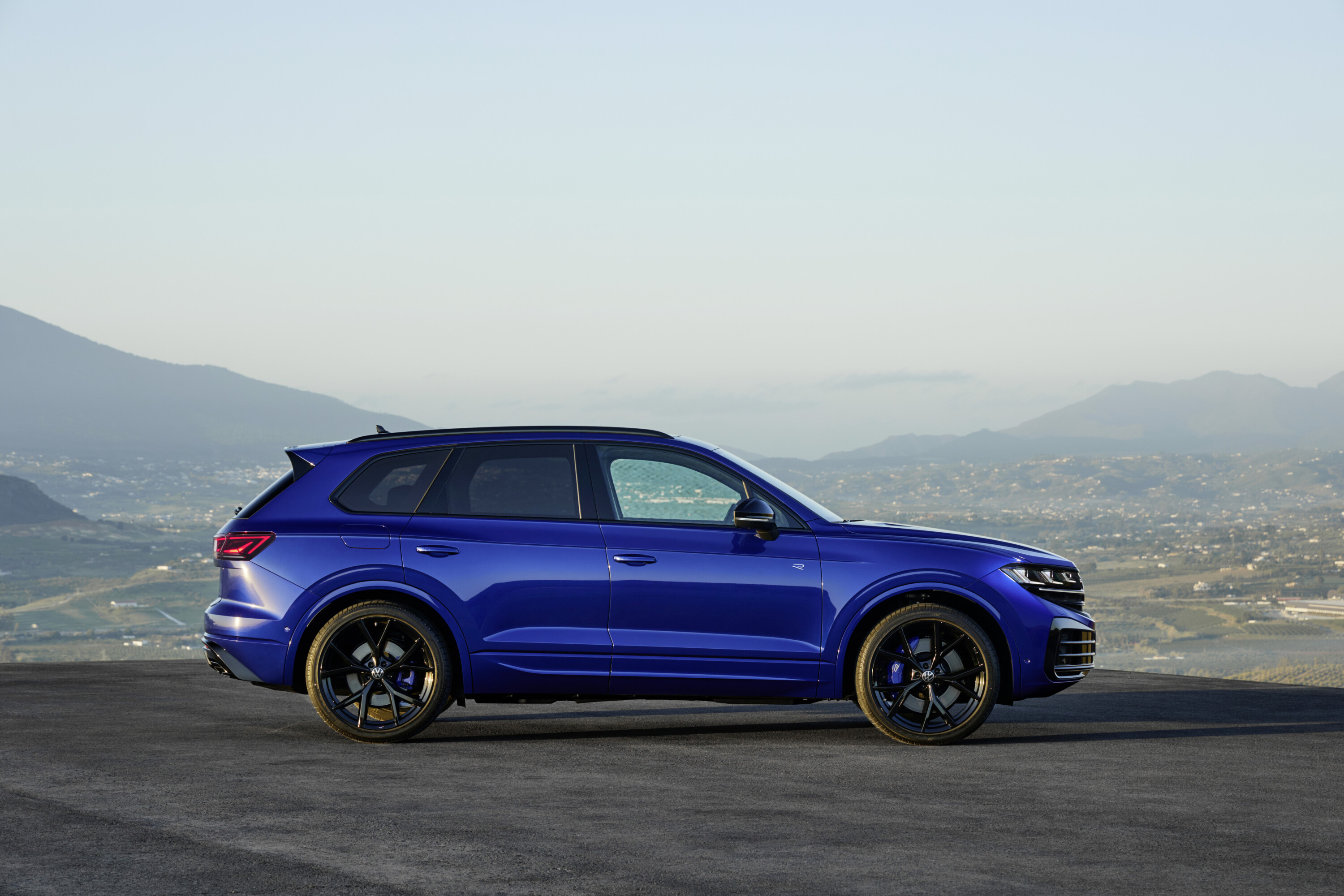
Volkswagen Australia has confirmed full details for its new flagship performance model, the plug-in hybrid Touareg R.
Due in Australia in March, the 2024 Volkswagen Touareg R is priced at $129,900 before on-road costs – matching 2008’s V10 twin-turbo diesel first-gen Touareg R50, which would cost around $180,000 today when adjusted for inflation.
It also costs between $6500 and $10,000 less than the short-lived current-gen Touareg V8 310TDI R-Line and Wolfsburg Edition models sold in Australia between 2020 and 2021.
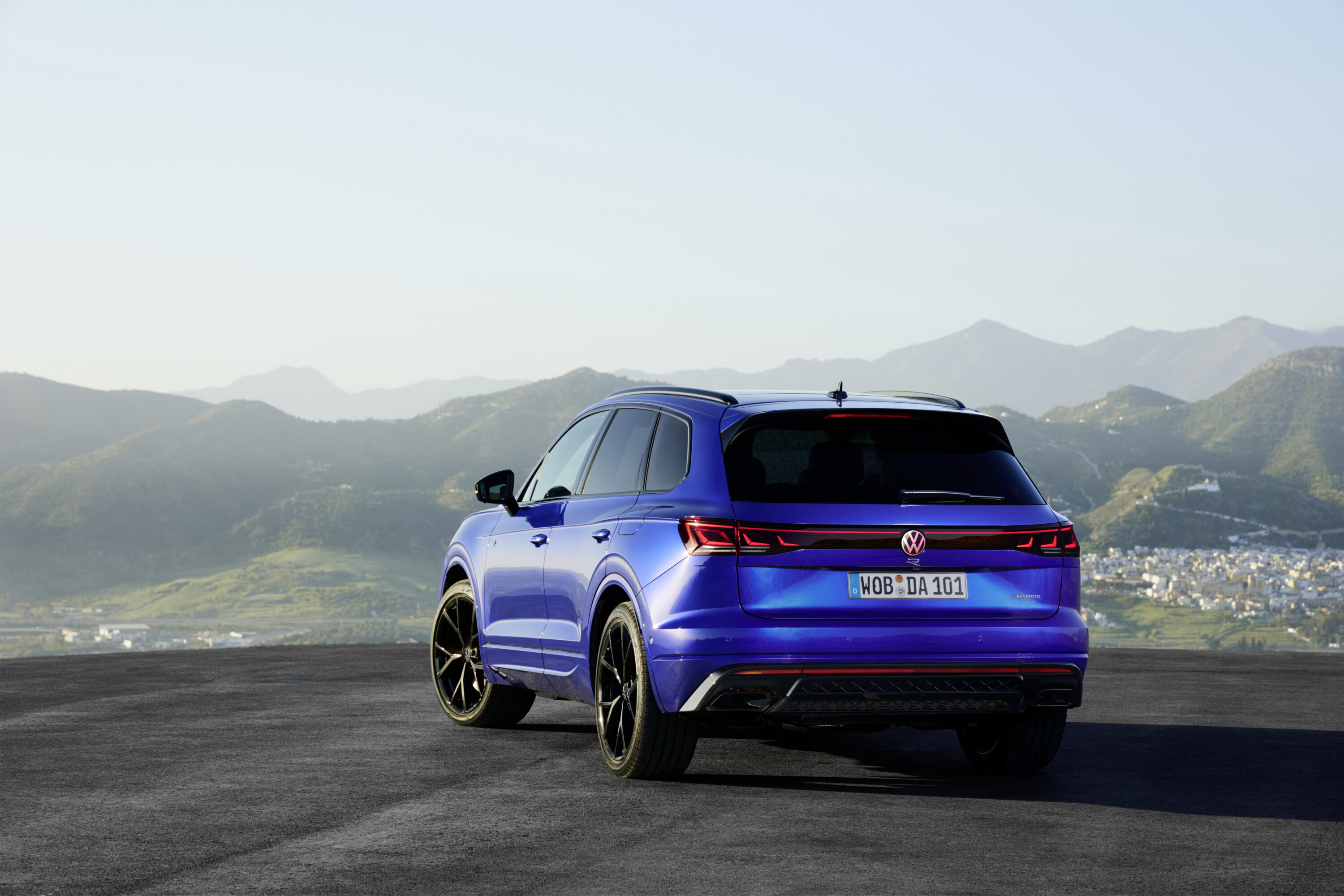
The headline R model is Volkswagen’s first plug-in hybrid for Australia, with 2024 also set to see the arrival of the all-electric ID.4, ID.5 and ID.Buzz models locally.
It will be joined by a facelift for the wider Touareg line-up, with local details for the existing V6 diesel options – likely retaining 170kW/500Nm and 210kW/600Nm tunes – due to be announced at a later date.
Compared to diesel Touareg models, the R features a 250kW 3.0-litre turbo-petrol V6 borrowed from the related Audi Q7 55 TFSI, matched to a 100kW electric motor.
In total, the Touareg R produces 340kW and 700Nm – identical to a pre-update Porsche Cayenne E-Hybrid – with a claimed 5.1-second 0-100km/h time.
It is the most powerful series production Volkswagen ever, beating older Phaeton and Touareg models – though can’t match the maximum torque of 900Nm or 4.9-second 0-100km/h sprint of the 310TDI V8.
Using electrification to boost performance opposes Volkswagen’s previous method of fitting the largest engine possible to the 2007-10 Touareg R50, which featured a hefty 257kW/850Nm 5.0-litre twin-turbo diesel V10 and a 6.7-second 0-100km/h time.
With a 14.3kWh lithium-ion battery pack, it has a claimed 51-kilometre electric-only driving range and a combined 3.3L/100km fuel consumption.
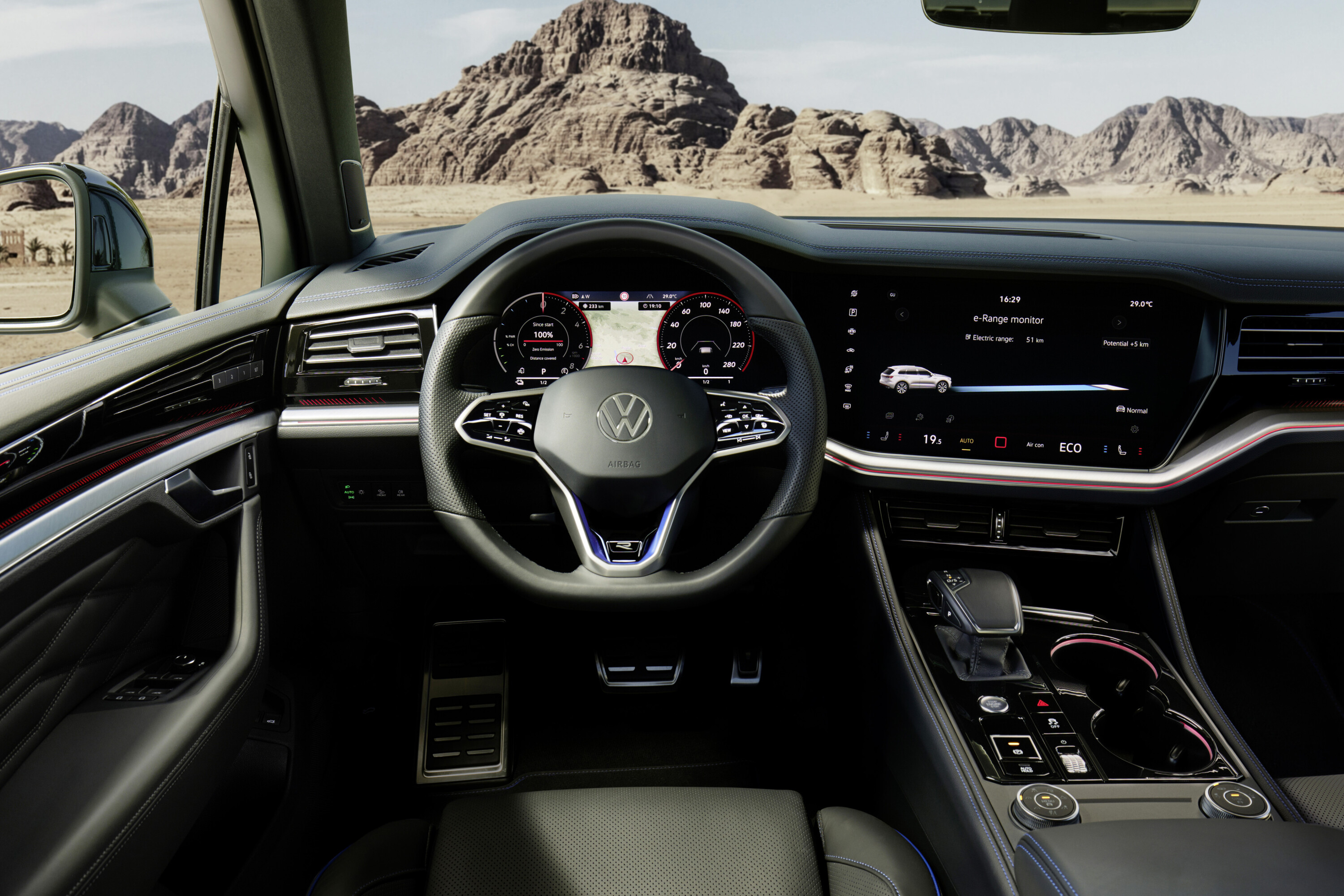
“Customers could theoretically get lower – or close to zero petrol – usage with regular charging. When the EV-only driving range concludes, the Touareg R operates as an ‘e-hybrid’ that still remains more efficient than previous V8 and V10 models,” said Volkswagen Australia.
The Touareg R retains a 3500-kilogram towing capacity, but boot space is reduced from 810 to 610 litres.
Above the existing 210TDI R-Line, the Touareg R boasts a night vision camera, while the facelifted large SUV will debut traffic sign recognition locally for Volkswagen – excluding the Ford-based Amarok ute.
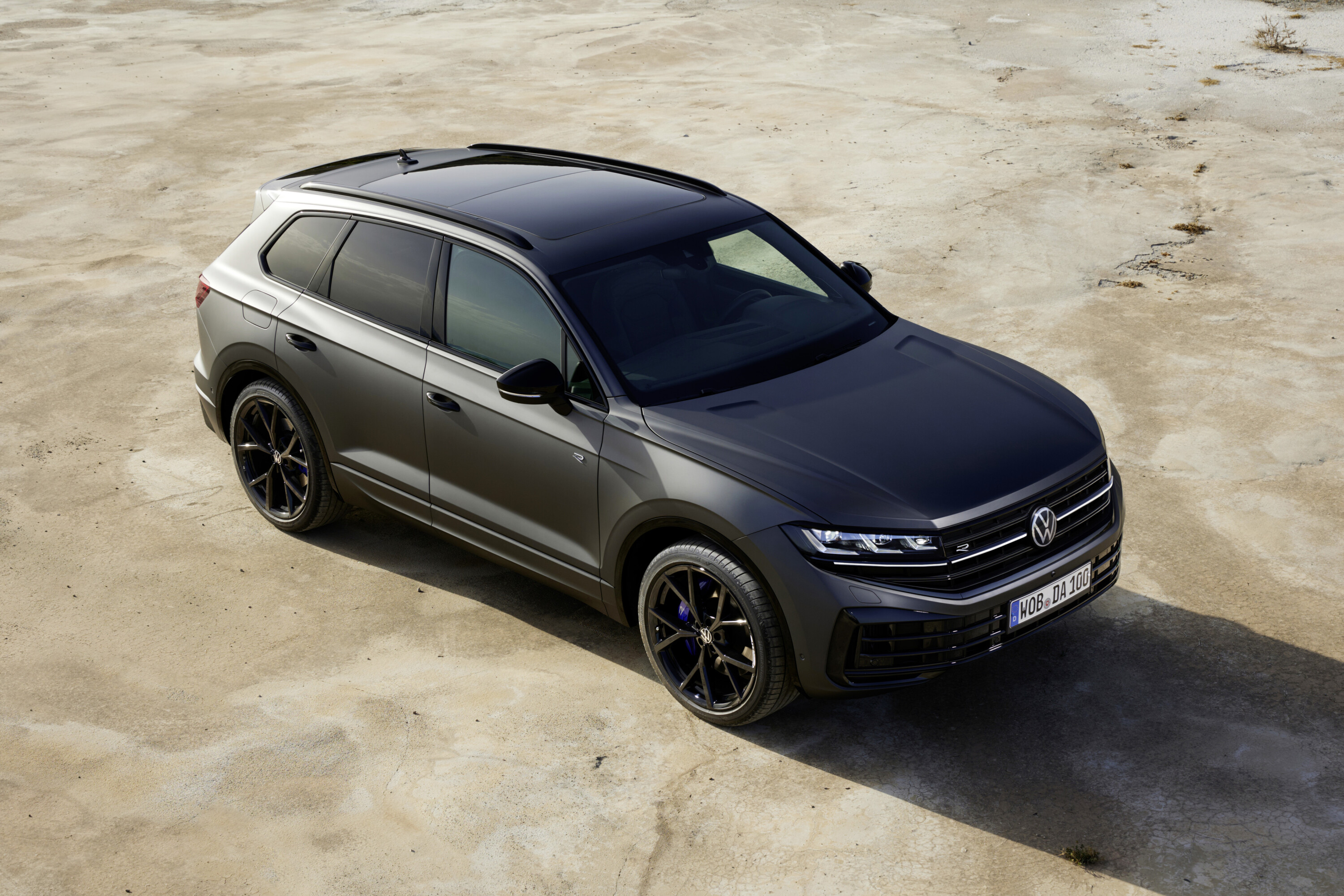
2024 Volkswagen Touareg pricing
Prices exclude on-road costs.
| Model | Pricing |
|---|---|
| 170TDI diesel | $TBC |
| 210TDI Elegance diesel | $TBC |
| 210TDI R-Line diesel | $TBC |
| R plug-in hybrid | $129,900 |
2024 Volkswagen Touareg features
| 2024 Volkswagen Touareg R features | |
|---|---|
| 22-inch alloy wheels (gloss black) | Pantera black puglia leather upholstery |
| 15-inch Discover Premium infotainment system | Power-adjustable front seats with memory function |
| Wireless Apple CarPlay and Android Auto | Power-adjustable steering column with memory function |
| 14-speaker, 730-watt Dynaudio sound system | R sports steering wheel |
| Five USB-C charge ports | Illuminated front scuff plates with R logo |
| Head-up display | Brushed aluminium decorative inserts |
| 12-inch digital instrument cluster | Autonomous emergency braking (vehicle, pedestrian, cyclist, reverse) |
| Air suspension | Lane-keep assist |
| Mode 2 and Mode 3 charging cables | Lane departure warning |
| Blacked-out exterior trim | Active lane centring |
| Black sports exhaust | Emergency assist |
| Hands-free electric tailgate | Proactive occupant protection |
| Power-latching doors | Blind-spot alert |
| Panoramic sunroof | Front and rear cross-traffic alerts |
| Night vision camera | Adaptive cruise control |
| Matrix LED headlights with adaptive high-beam | Traffic sign recognition |
| Quad-zone climate control | Tyre pressure monitoring |
| Heated front and outer rear seats | |
The Volkswagen Group has announced a 10 billion euro (AU$16.6 billion) three-year savings program for the ‘uncompetitive’ VW brand, resulting in job losses.
Volkswagen passenger vehicles CEO Thomas Schäfer said bluntly that VW’s cars are “no longer competitive” due to high costs and low productivity.
“With many of our pre-existing structures, processes and high costs, we are no longer competitive as the Volkswagen brand,” said Schaefer at a staff meeting at the German brand’s headquarters in Wolfsburg, according to Reuters [↗], signalling likely personnel cuts and other measures that will be announced later this year.
I think the statement is completely right to really build awareness within our team.

At Volkswagen Australia’s 2023 brand day, we asked new managing director Karsten Seifert how the changes would manifest locally. “I think the statement is completely right to really build awareness within our team [of the coming transformation]”, he replied.
“Being really in a huge transformation time, we see that we have to adapt some of our processes, actions, and really to go a step further”, he said, referring to the brand’s 2024-2025 plan to launch multiple new vehicles.
“I mentioned already speed is an issue we have as a group [in development], we have to be a little bit quicker and to get much faster compared to our competitors”, said Karsten.
I can guarantee you that [Australia is] the most effective team globally
“But I think we are so far away from being completely uncompetitive”, he added. “We have great products at the moment, we just talked about what is coming up for Australia, then we have also great competitors in the market, and we have to see that and to recognise that and to respect that as well.”
Schäfer’s direction is a breath of fresh air for Volkswagen, with executives able to acknowledge issues and begin to address them.
However, according to Volkswagen Australia passenger vehicles managing director Michal Szaniecki, the local arm isn’t so uncompetitive – and perhaps there’s something for global to learn.
“You asked about this implication for our Australian market specifically and I can guarantee you that we are the most effective team globally in the [VW passenger vehicle] world already”, said Szaniecki.
“We practically made optimisations within our portfolio as well”, says Szaniecki, noting the $129,990 price of the Touareg R is below the V8 from 2020. “We very much appreciate the transparency of our leader right now to look into the global functions and fix them because we are looking forward to the changes.”
The brand has posted a 43.9 per cent improvement in sales this year headed by the T-Cross and T-Roc small SUVs. There’s also been continued interest in high-performance (and high-margin) R and GTI models.
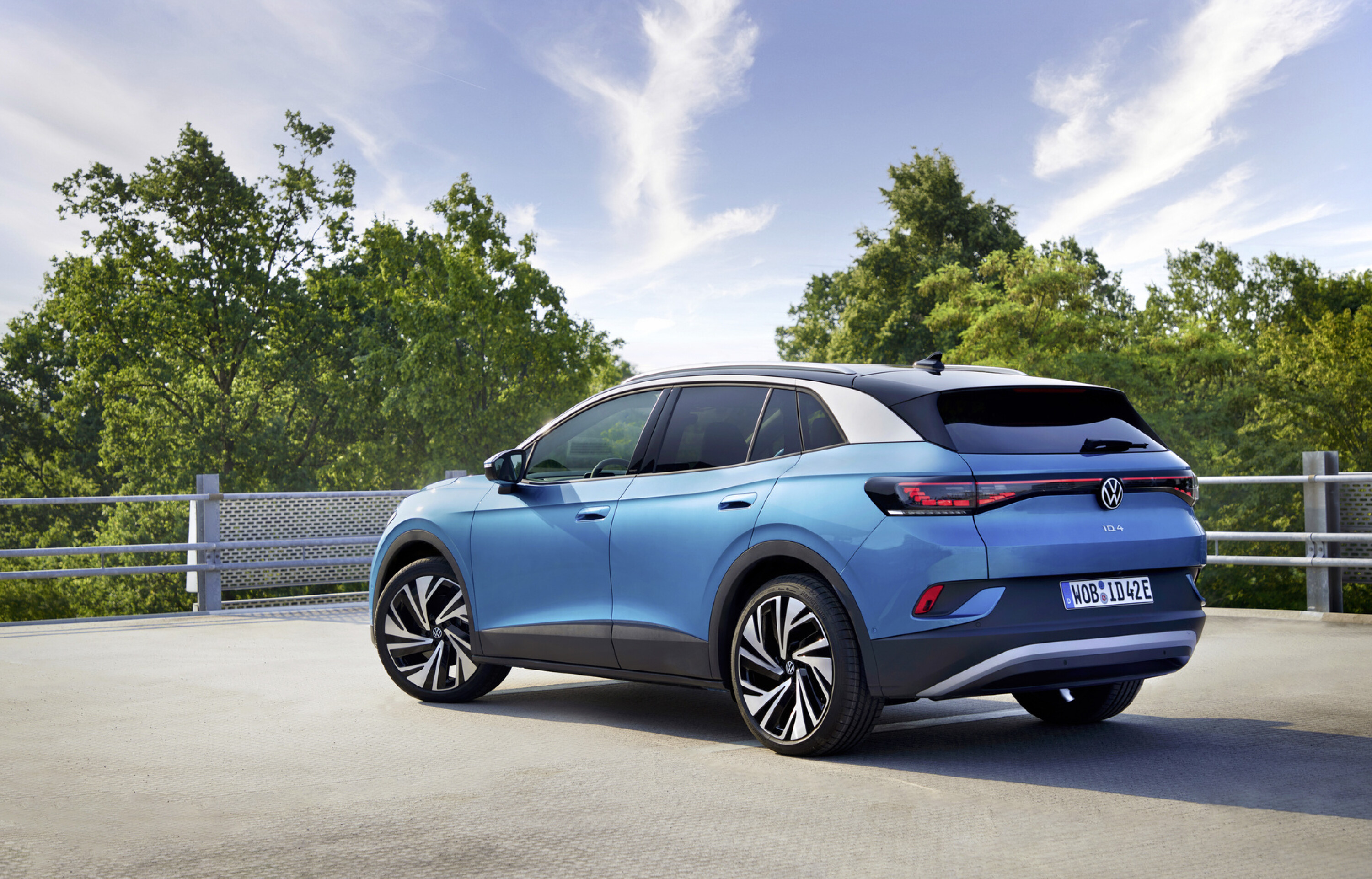
VW’s electric offensive will begin in July with the ID.4 and ID.5 medium SUVs, followed by the ID.Buzz later in the year. Of the 10 to 12 per cent market share VW is expecting EVs to account for next year, it reckons 18 per cent of its sales will be battery-powered.
Aside from new products, we can expect a more nimble Volkswagen when it comes to battery and motor performance updates to keep pace with Tesla, BYD, and MG’s rapid developments.
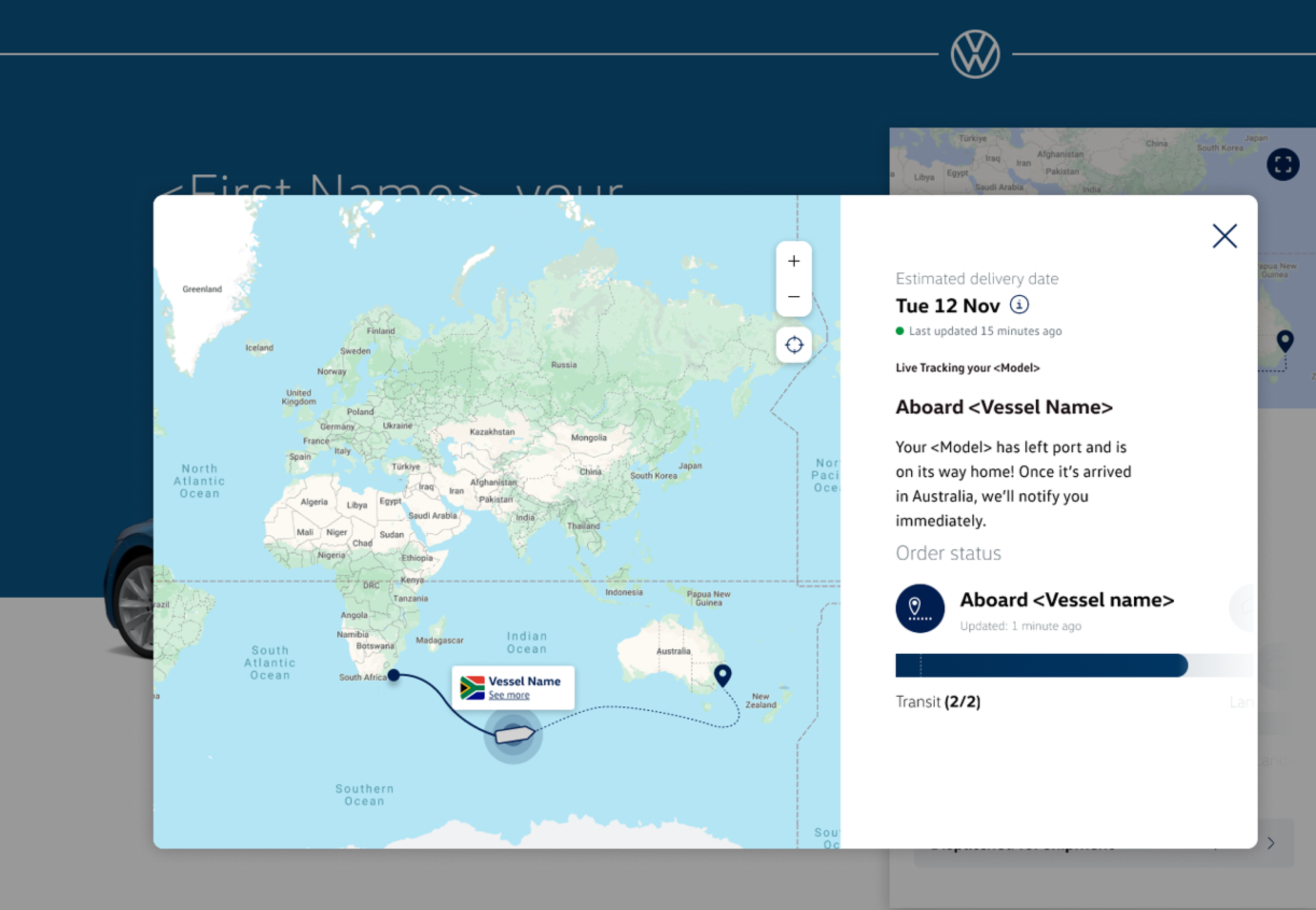
There’s also more to come for the consumer experience, including detailed consumer-facing ship tracking that’ll be a first in Australia when it launches in Q1 2024. Volkswagen is focusing on being a ‘one-stop-shop’ for electric vehicles, making the transition for ICE owners easier than ever.
When a customer buys an ID.4 online, for example, Volkswagen’s Welcome Experience ecosystem carries the process from configuration, to purchase, to tracking, then home installation.
Manufacturers offering wall chargers isn’t new, but VW’s augmented reality assistant is. The brand is also working with a solar panel provider for discounted home installations included with ID vehicles.
The 2024 Volkswagen T7 Multivan is due in Australia in the fourth quarter of next year, the brand has confirmed.
Volkswagen Australia has announced initial details for the latest T7 Multivan, confirming it will maintain a flexible seven-seat configuration, two-tone colour options, and diesel powertrains.
The T7 Multivan is the first completely new model in two decades – and is underpinned by a platform borrowed from Volkswagen’s latest passenger vehicles, rather than a commercial van.
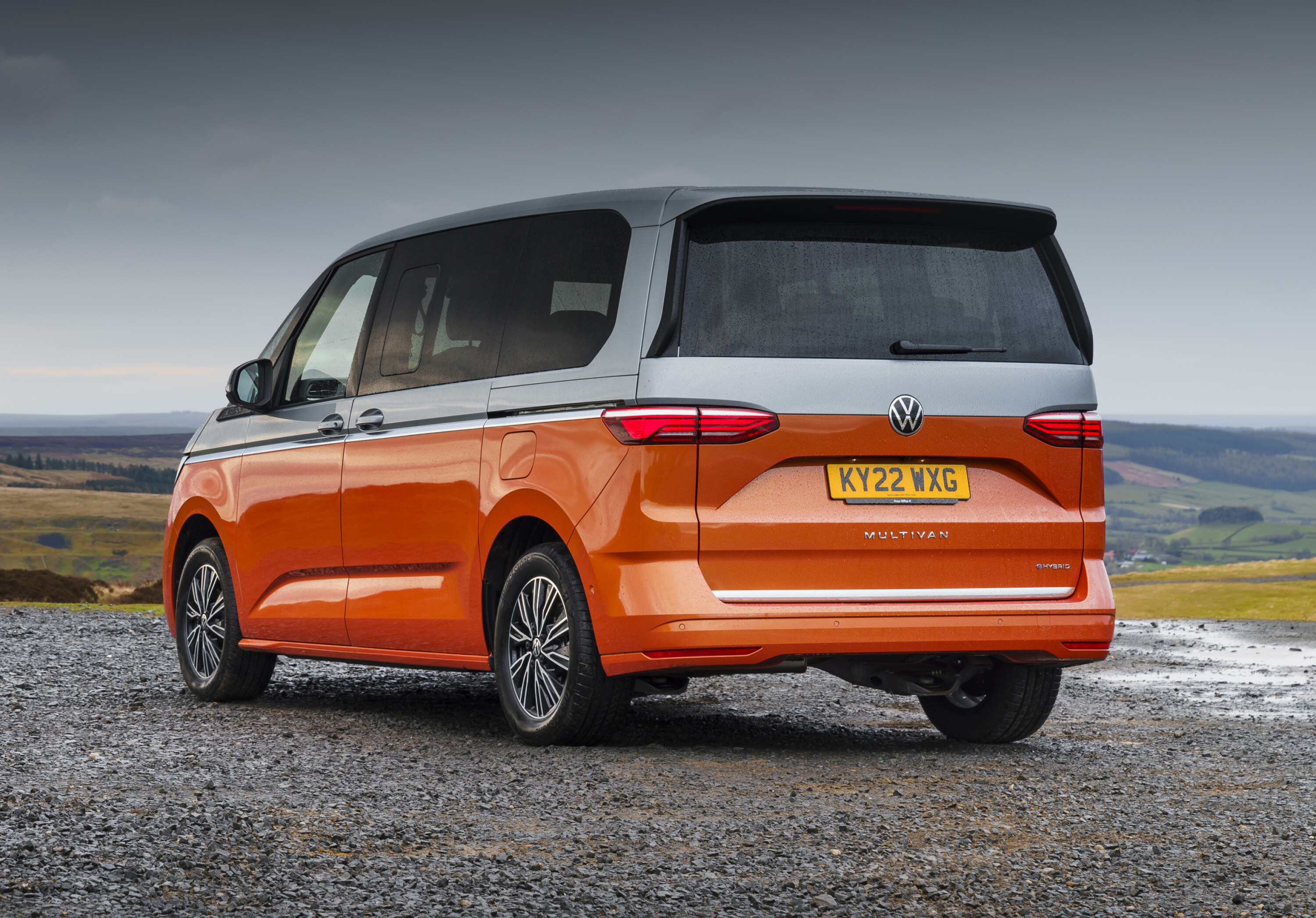
Like the monocoque Kia Carnival and Hyundai Staria, the T7 Multivan is based on a passenger car platform. In the T7’s case, it’s the same MQB Evo kit that underpins the Golf hatch, Tiguan mid-size SUV and Caddy small van.
The separately developed next-generation Transporter delivery van and Caravelle people mover models (heavily related to the latest Ford Transit Custom van) are expected to debut in 2024.
The T7 Multivan will be offered in two variants in Australia at launch: Life (replacing Comfortline Premium) and Style (replacing Highline).
Both variants will be powered by a 110kW/360Nm 2.0-litre turbo-diesel four-cylinder matched to a seven-speed dual-clutch automatic transmission and front-wheel drive.
Volkswagen Australia said an additional engine variant is due in 2025 – likely an all-wheel drive diesel. That said, a plug-in hybrid offered overseas could be on the cards.
“The plug-in hybrid would be an awesome thing to have, obviously, in this market, and we just have to see how we go with the business case on that,” said local Volkswagen Commercial Vehicles director Ryan Davies in November 2022.
The T7 Multivan plug-in hybrid is powered by the same powertrain as the now not-for-Australia Golf GTE and Tiguan E-Hybrid, pairing a 110kW/250Nm 1.4-litre turbocharged four-cylinder with an 85kW electric motor to develop a combined 160kW.
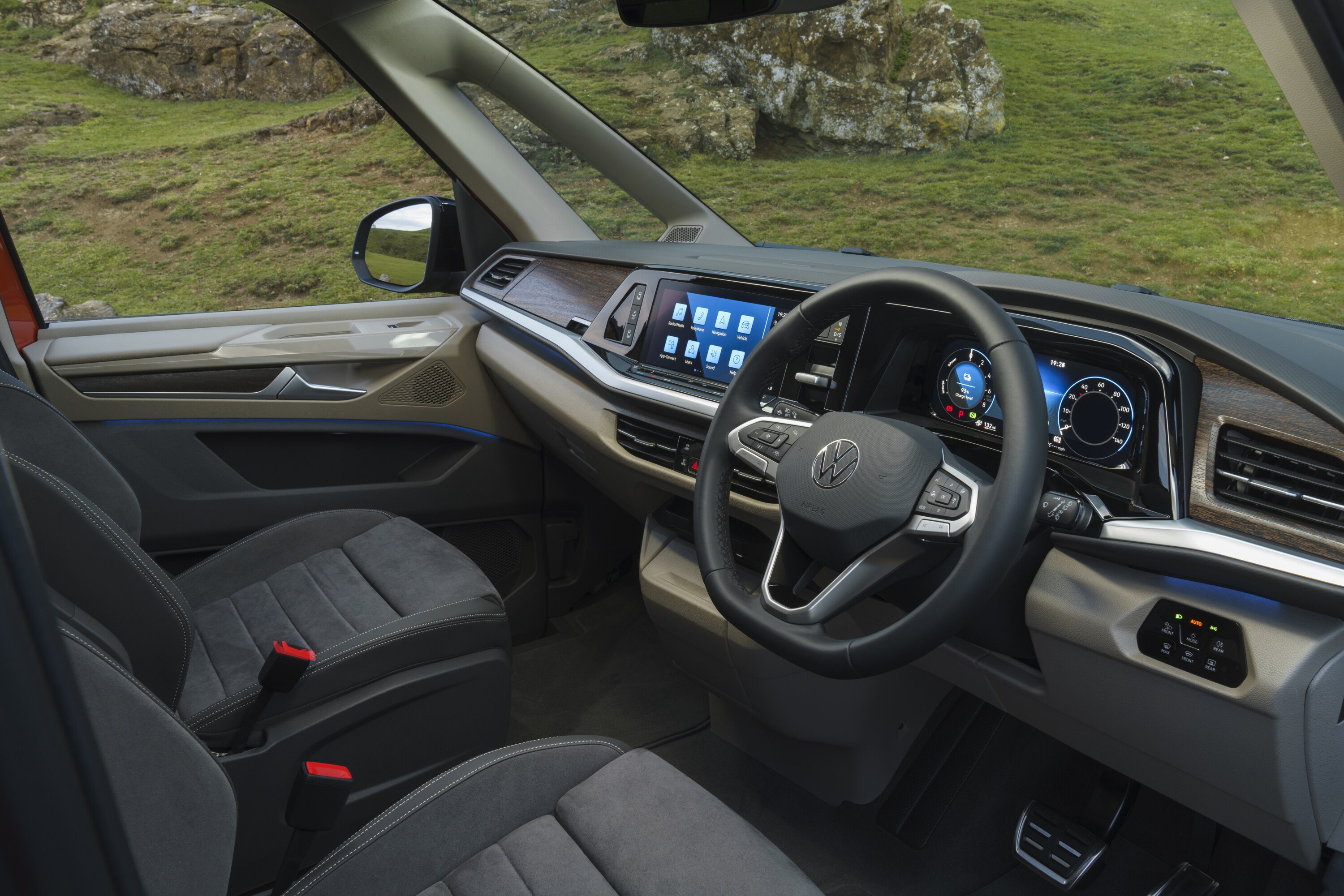
Available equipment includes 17-inch alloy wheels, a 10-inch infotainment system, a wireless phone charger, 18-way adjustable heated comfort seats, individually heated rear seats, and a panoramic glass roof.
The Style will add ambient interior lighting, matrix LED headlights, an illuminated grille, ‘easy open’ electric doors and tailgate, automatic parking, and a 360-degree camera system.
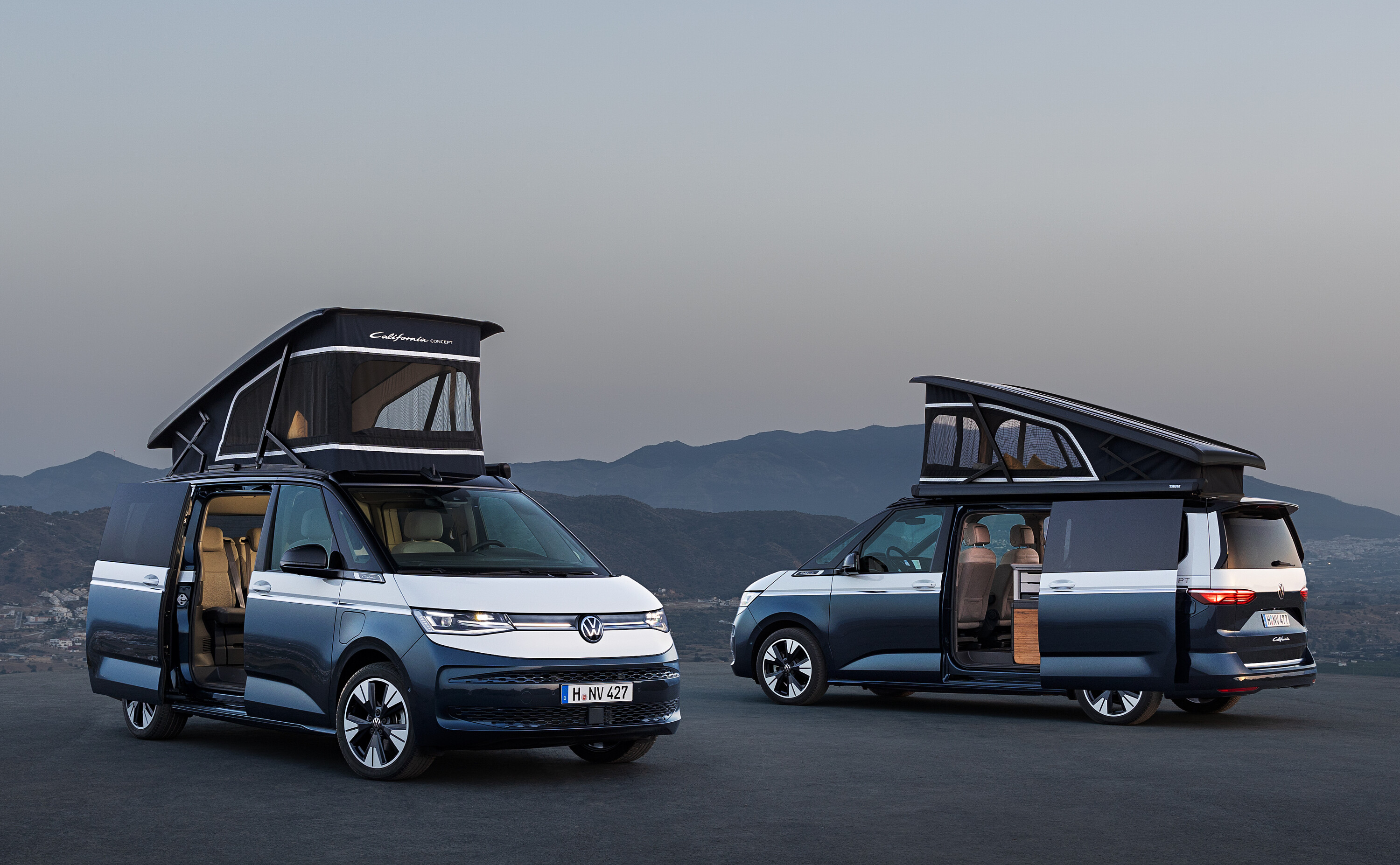
A five-star ANCAP safety rating is expected to mirror New Zealand variants, while it features the latest active safety technology suite and a new front-centre airbag.
Rear seat flexibility has improved with a new rail system, individually heated seats, and a customisable 2/2/3 seat configuration. The seats are now 25 per cent lighter, and there’s a multi-function table.
A new-gen Volkswagen T7 California will follow later, offering a four-seat configuration with a kitchen and dual sliding doors for the first time. The five-seat variant will remain available.
It will include a fridge, induction cooktop, additional storage, a double bed, and a second pop-up double bed.
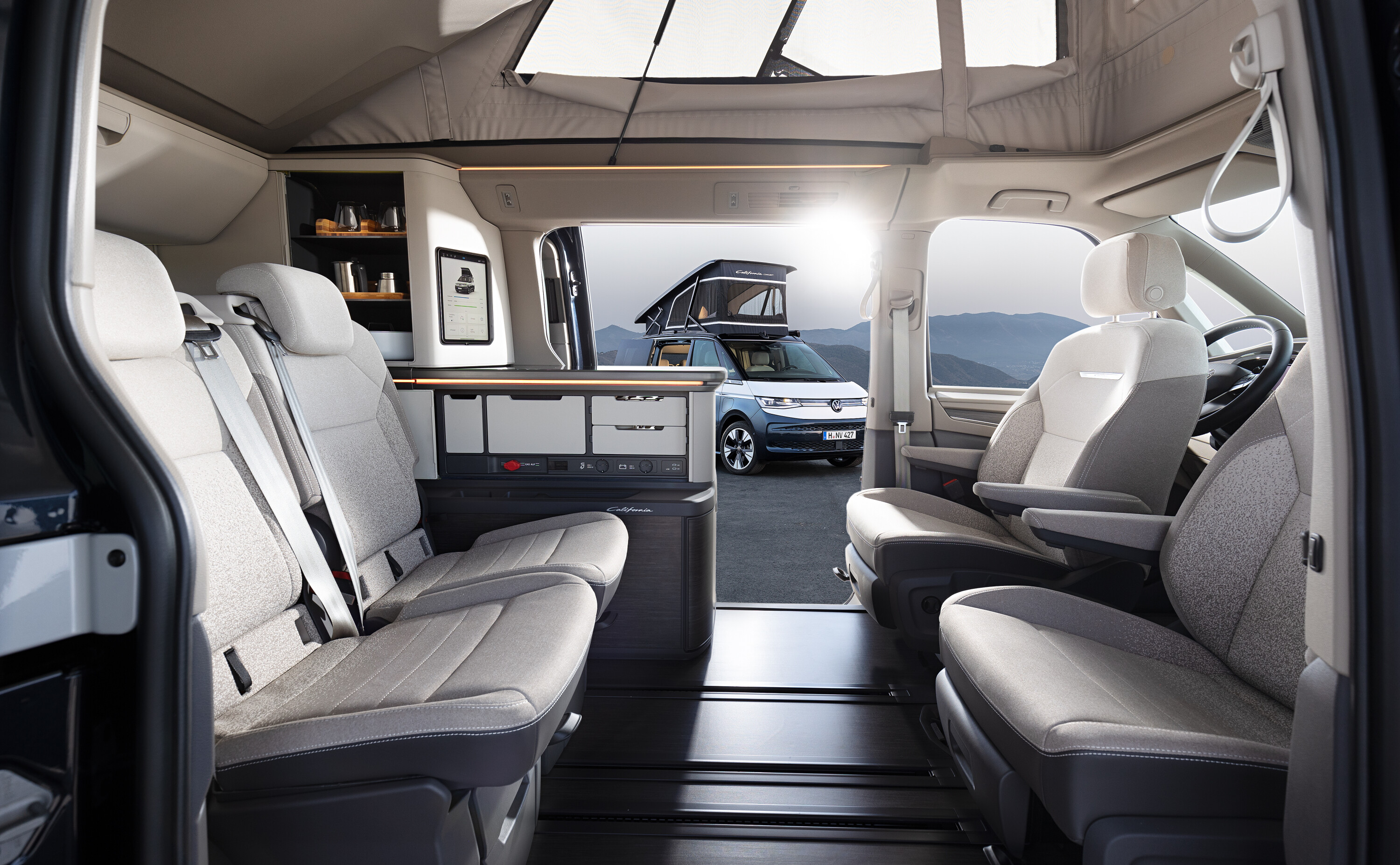
“We’re expecting big things for [the California], when they’ve got both options of five seater without the kitchen, and then the four seater with the kitchen,” said Ryan Davies this week.
“This year was the really the year of the Amarok for us and we’re pleased with how that’s all transpired, but next year, what you can see is it’s going to be the year of the van.”
The 2024 Volkswagen T7 Multivan will be joined by the all-electric ID.Buzz people mover, ID.Buzz Cargo van – both due in Australia in the fourth quarter of next year – and the updated Crafter large van, while Ford-based Caravelle and Transporter models will arrive in Q1 2025.
November 30: 2024 Dacia Duster revealed, likely for Australia as a Renault
The 2024 Dacia Duster has debuted in Europe – and it’s likely to reach Australia as a Renault later in 2025.
Billed as a “shockingly affordable” alternative to the likes of the Mazda CX-30 and Toyota RAV4, the latest Duster uses a low-cost version of the CMF-B platform found under the Renault Captur and Nissan Juke.
New additions include mild- and full-hybrid powertrains, a revised design, a 10.1-inch infotainment system and 7-inch digital instrument cluster, an available four-wheel-drive system with five drive modes, and tougher exterior materials.
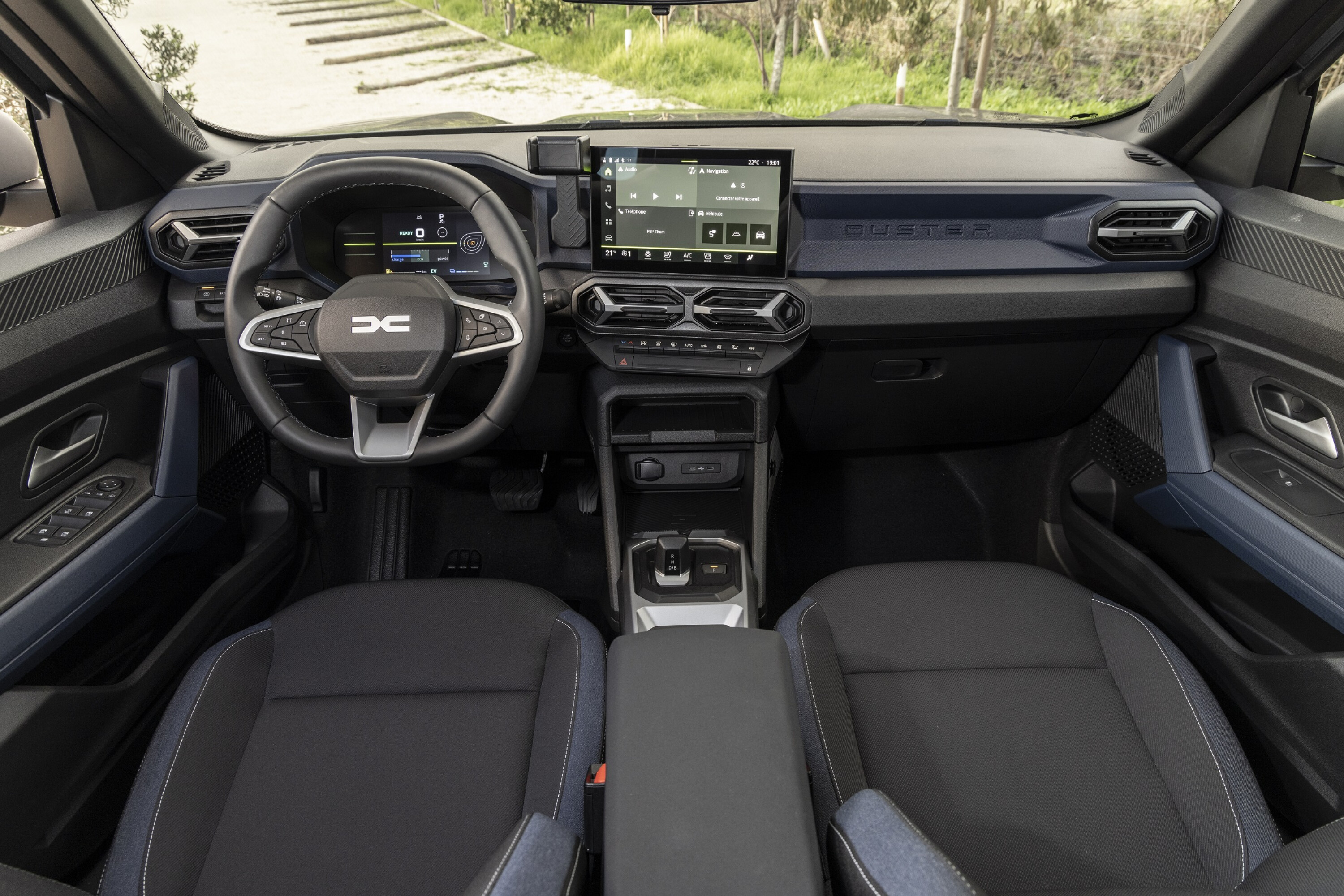
In Europe, the Duster adds basic active safety technology to meet regulations, including autonomous emergency braking, lane-keep assist, lane departure warning, traffic sign recognition, speed limit assist, driver attention alert, emergency stop signal, and emergency calls.
Our earlier stories, below, continue unchanged.
February 27: Renault-badged Dacias on track for 2025 launch
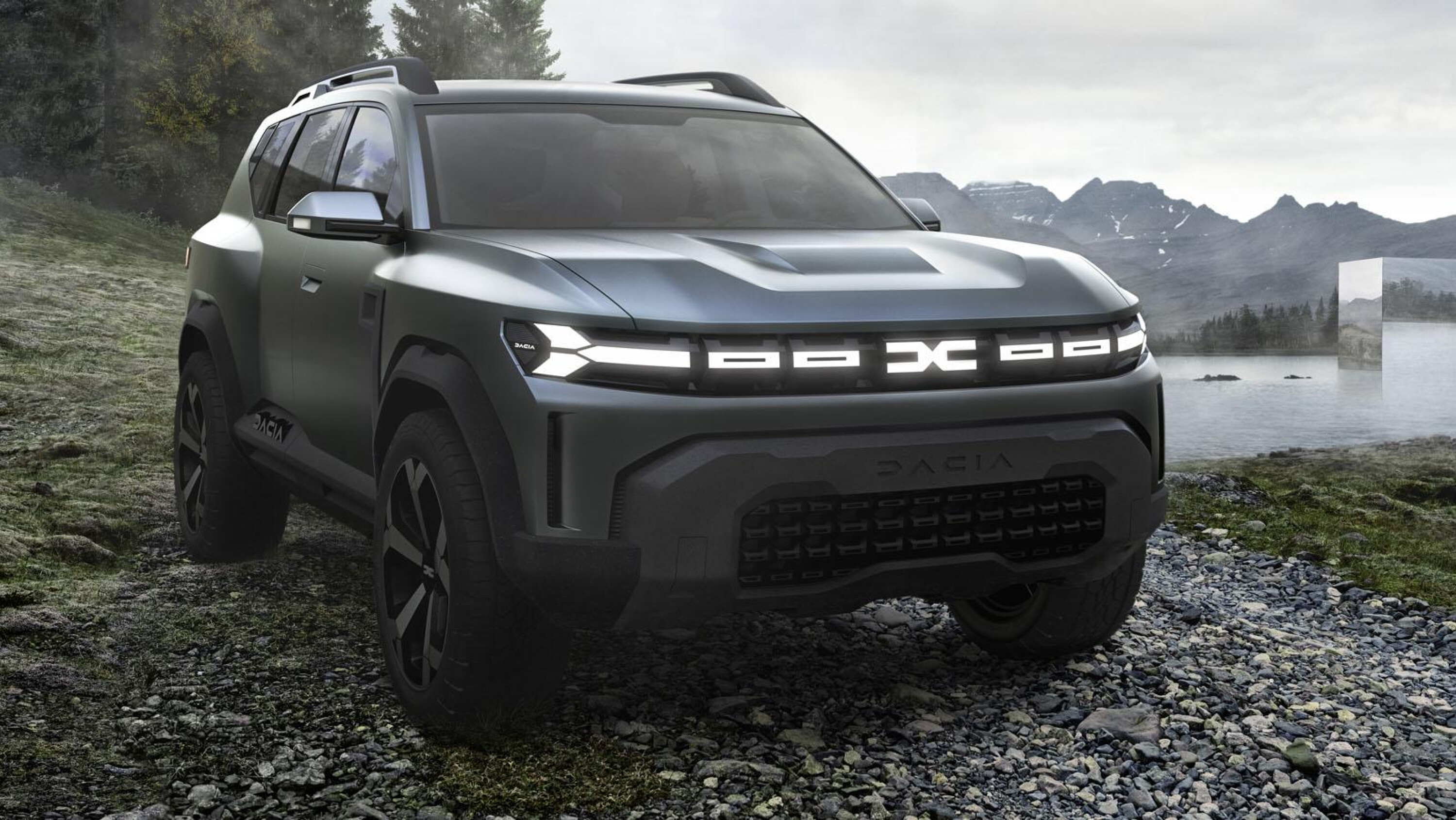
Renault Australia general manager Glen Sealey has confirmed Dacia is on track for a local launch in 2025 with Bigster and next-gen Duster to wear Renault diamonds locally.
But it’s unlikely that lower-end Dacias will succeed in Oz, owing to trade agreements with China keeping prices for price-driven rivals such as Haval, MG, and Chery low.
“The problem with the rest of the range, to be honest, is when you look at Dacia in Europe it offers excellent value. But the reality is, Chinese brands are paying 10 per tax to get into Europe, and Dacia isn’t.
“For Dacia to come here, we have to pay five per cent duty, because they’re coming from Europe, and the Chinese are coming here free”, Sealey explained.
“So when you look at it, that’s a 15 per cent differential and, if you convert that 15 per cent, that really doesn’t make us any money here”, said Sealey, confirming that low-end Spring, Jogger, Sandero, and Logan won’t come to Oz.
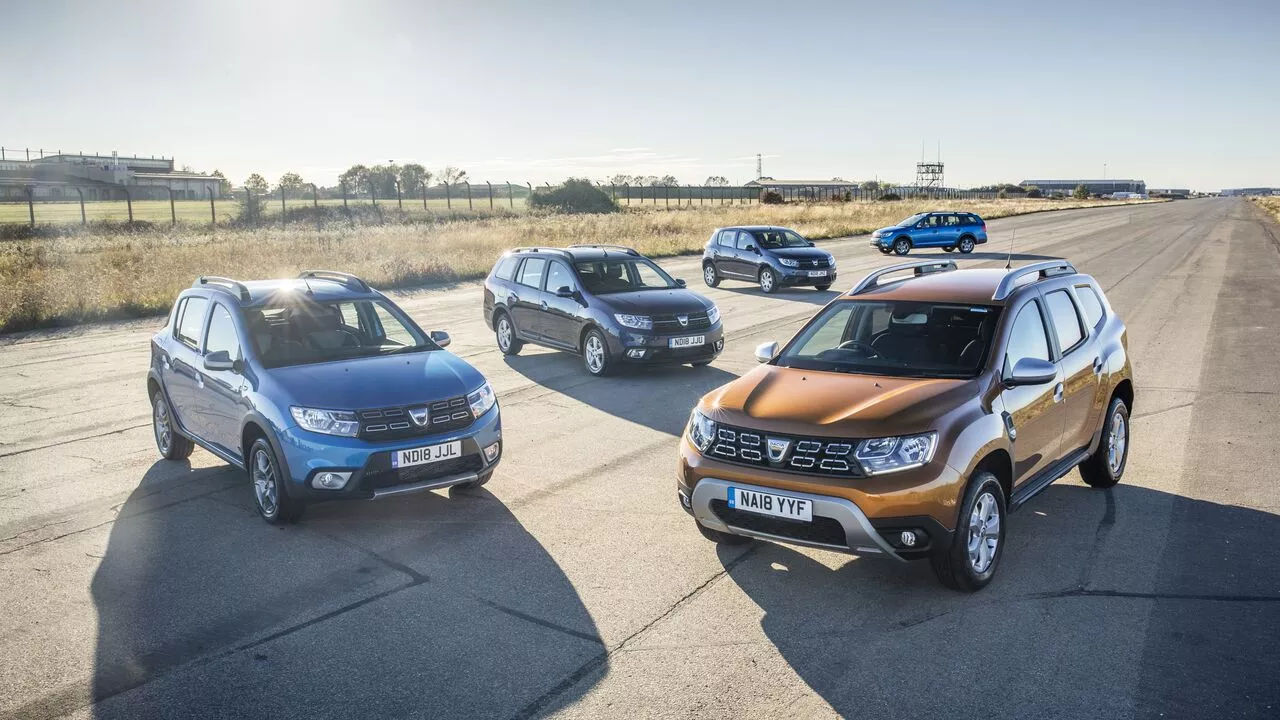
October 28, 2022: Budget-focused SUVs from Dacia are set to land in Australia from 2025, rebadged under the Renault brand locally.
The compact Duster and midsized Bigster SUVs are planned as the initial models for now, giving Renault a “shockingly affordable” alternative to the likes of the Mazda CX-30 and Toyota RAV4.
Denis Le Vot, fast-talking CEO of the Renault Group-owned and Romania-based Dacia, says that, for his brand, less is more.
“You will not find in our cars today an electric seat. Zzz, zzz, zzz, you know. This we consider not essential,” he told Wheels.
“Our job is to make choices, so we choose for the client. We don’t offer everything. We just keep what is essential.”
One Dacia essential is the recycled Renault technology that provides the basis for its all-small five-model line-up.
JUMP AHEAD

Some versions of the Sandero, the VW Polo-sized hatch Renault Group says has been Europe’s best-selling car to private buyers since 2017, even come without an infotainment screen.
Instead there’s a place in the middle of the instrument panel to secure a smartphone. “Why do we pay for a screen when we don’t need it?” asks Le Vot.
There’s been a recent image revamp at Dacia. As well as a new logo, the brand is aiming to make stripped-back simplicity cool. Using unadorned and eco-friendly recycled plastics is part of the future look, but there’s no place for some traditional materials.
“We don’t have chrome on our cars,” Le Vot says. “We finished with the chrome outside. We don’t have leather.”
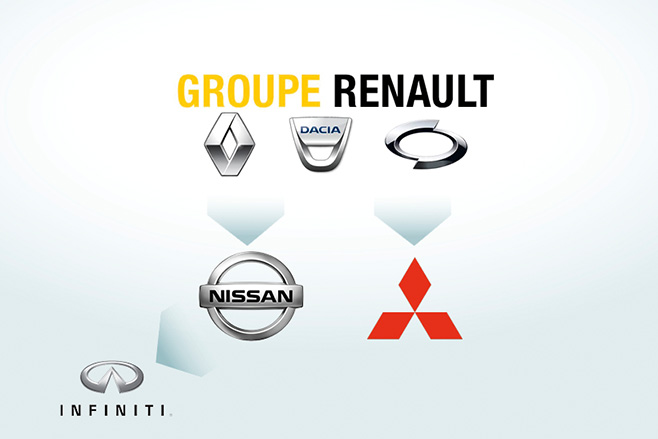
The latest Sandero opens the company’s new ‘Essential But Cool’ era, but it’s the new SUVs still to come from Dacia that have caught the attention of distributor Ateco.
A replacement for the ruggedly good-looking Duster will go into production in the second half of 2024. Similar in size to the Honda HR-V, it’s currently produced with both front- and all-wheel and a variety of three- and four-cylinder engines, some of them dual-fuellers able to burn both petrol and LPG.
The next-gen Duster will be the same size as the existing model for a simple reason. “We do that because we come with the Bigster on top,” Le Vot explains, referring to the production version of Dacia’s 2021 SUV concept.
That name makes sense because this roughly Toyota RAV4-size vehicle will be the biggest Dacia ever. Due in 2025, it will be aimed at a different customer than the 250mm-or-so shorter Duster.
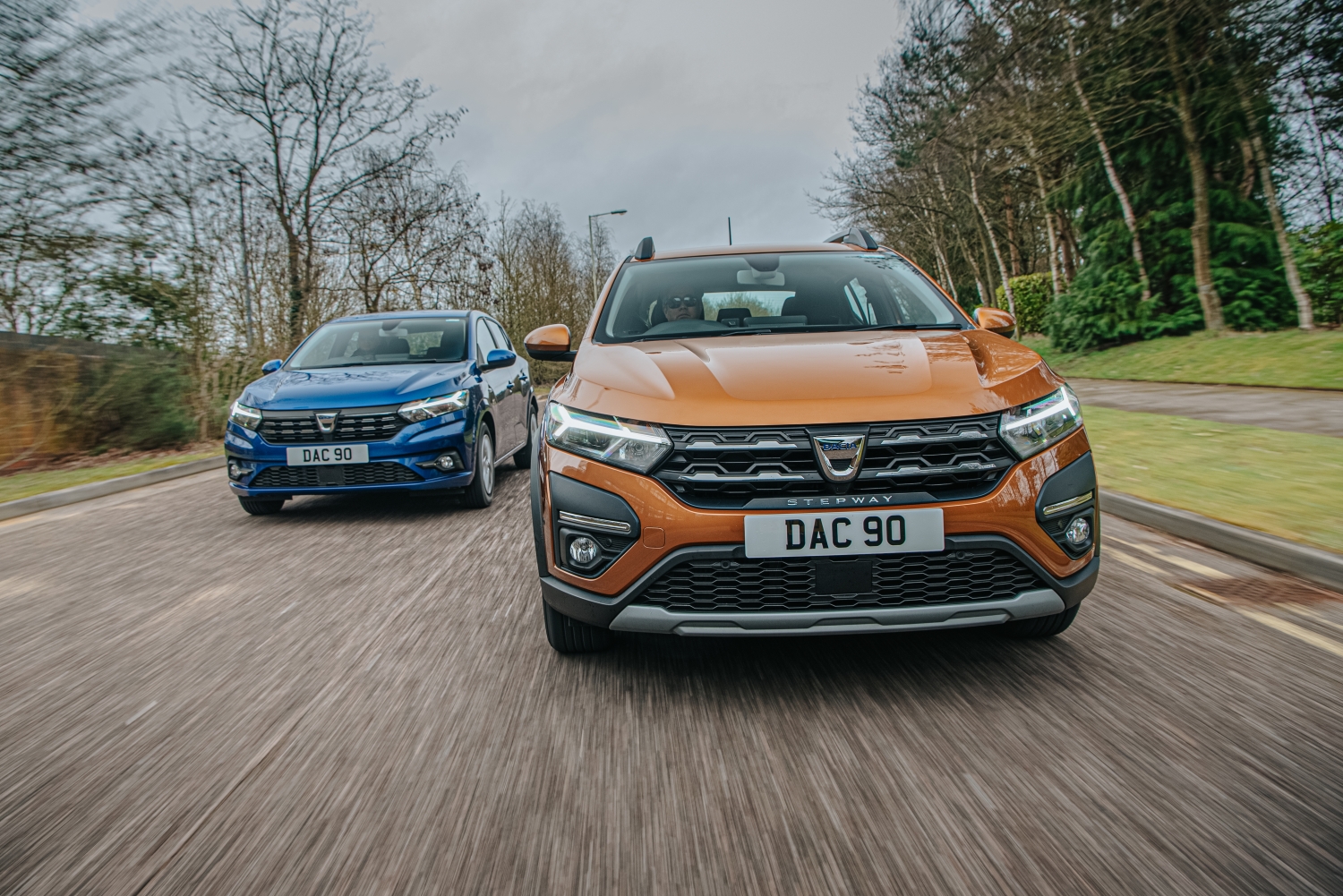
“It will be more a little like… if I was American, I would say full-size SUV,” says Le Vot. “More the highway car; bigger, more spacious, and less rough and tough.”
“These new-generation products are excellent, and well suited to the Australian outdoor lifestyle,” adds Glen Sealey, general manager of Renault’s local importer Ateco, referring to Duster and Bigster. “Therefore we have our hand up.”
In other right-hand-drive markets outside Europe, including India and South Africa, Dacia products are branded Renault, he says. “We would follow the same path.”
What should Australians expect from Duster and Bigster? ‘Shockingly Affordable’ is a slogan Dacia has used in Europe, and this isn’t stretching the truth.
Duster prices in Italy, for example, open at the equivalent of $25,500, undercutting obvious rivals by a hefty margin.
The price advantage might not be so marked in the fiercely competitive Australian market, but Dacia exists specifically to cater for those on a tight budget.

“Inside the Renault Group, Dacia is making the job of being here for the people that decide not to spend too much money on the car,” is the way Le Vot puts it. The brand will always prioritise price over progress.
“Dacia will come to be in a way, if I may say, the champion of the [internal-combustion engine] ICE, he says. “Because we have l-o-o-o-ng time between now and 2035.” That’s the year much of Europe aims to ban sales of ICE passenger vehicles.
“There is a need for renewal of the fleet of cars, and at the price of electric vehicles today not everyone can afford that.”
Electrification will also present Dacia with opportunities, Le Vot believes. “When the mainstream goes electric, they will leave holes in the demand all around the segments.”
And when Dacia cannot avoid electrifying its line-up, there will be plenty of well-proven Renault EV tech to choose from.
“My job is to make the right choice at the last moment,” Le Vot says. “But only at the last moment, because the more you wait the more clever you are.”
An exact return date for Dacia to Australia has not yet been locked in, but last year Ateco boss Neville Crichton told Carsales that Dacia offers a real opportunity in Australia. “It will happen. Absolutely. We’re talking to them right now about the details,” he said. “Dacia will fit below Renault.”
Dacia’s model plans for Australia
Duster
For Oz? Yes, but next-gen model, probably 2025
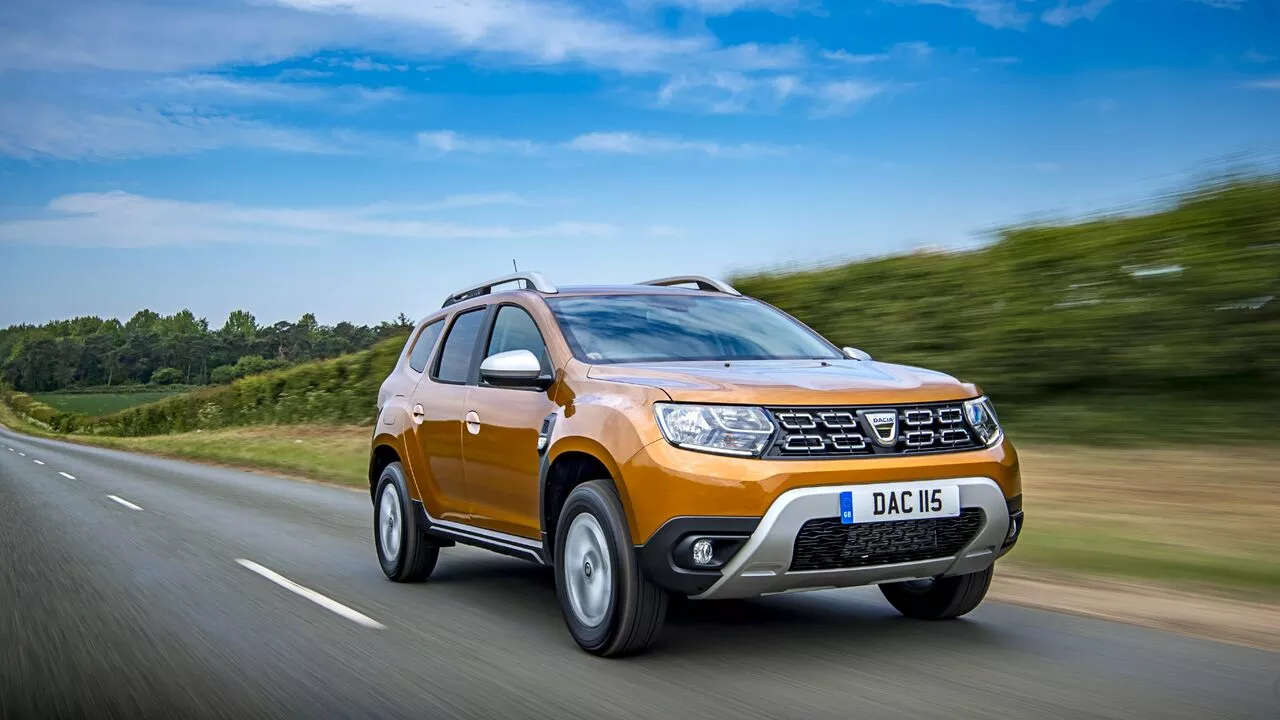
You’re looking at the current Duster, a good-looking small front-drive and all-wheel drive SUV facelifted only last year (2021), but Australian distributor Ateco will wait for the all-new and so-far-unseen model due for production in late 2024. Its look will draw on the aesthetic of the Manifesto concept. So far Dacia has sold 2 million Dusters.
Bigster
For Oz? Yes, but 2025 earliest (concept shown below)
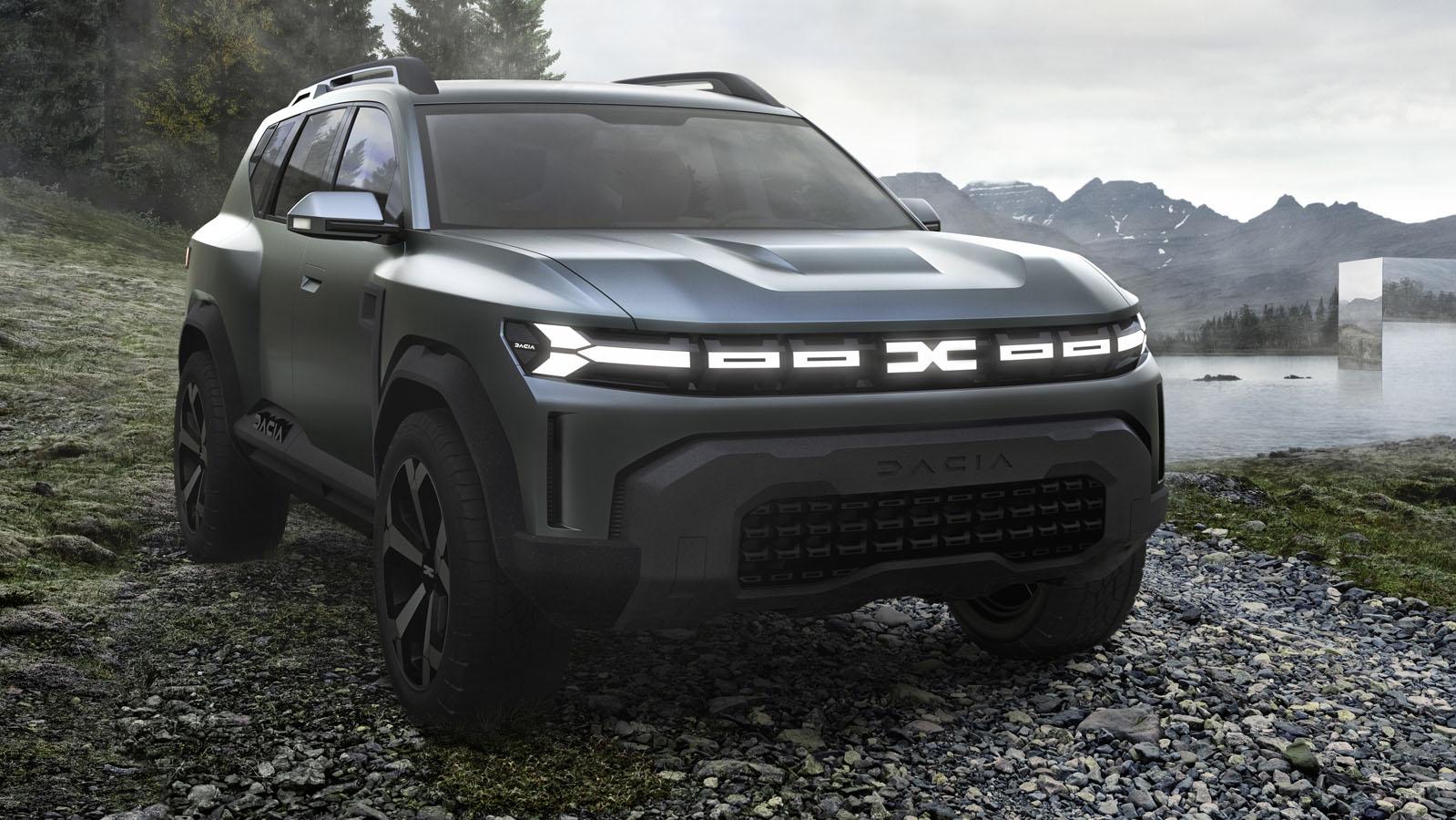
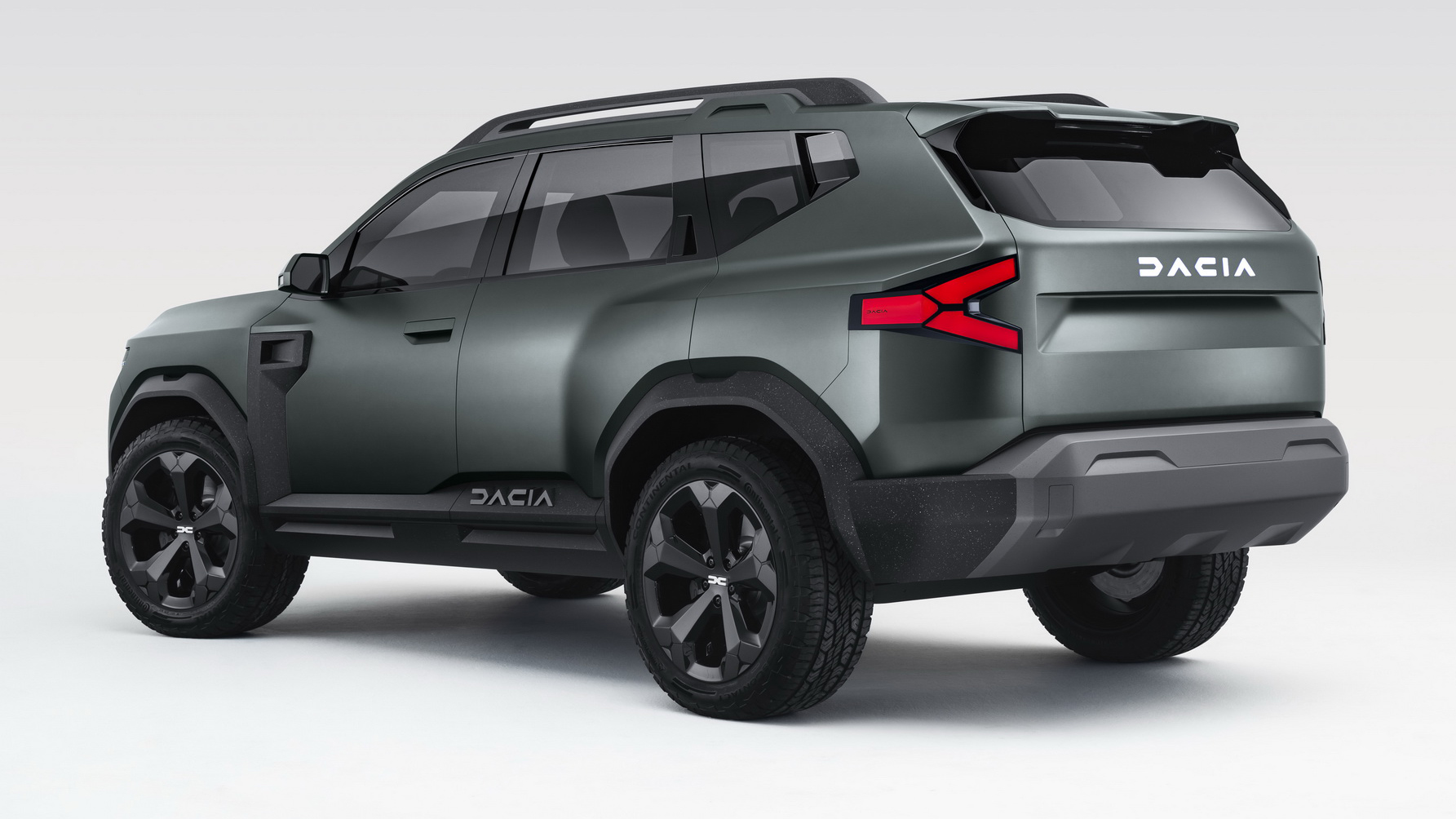
Due to go on sale in Europe in 2025, the Bigster is a very big deal for Renault Group’s Romanian value brand. This SUV will take Dacia places it’s never competed before. Few facts are available, but expect it to be 4.6 metres long (similar to RAV4), and count on it offering seven-seat interior and hybrid drivetrain options.
Jogger
For Oz? No
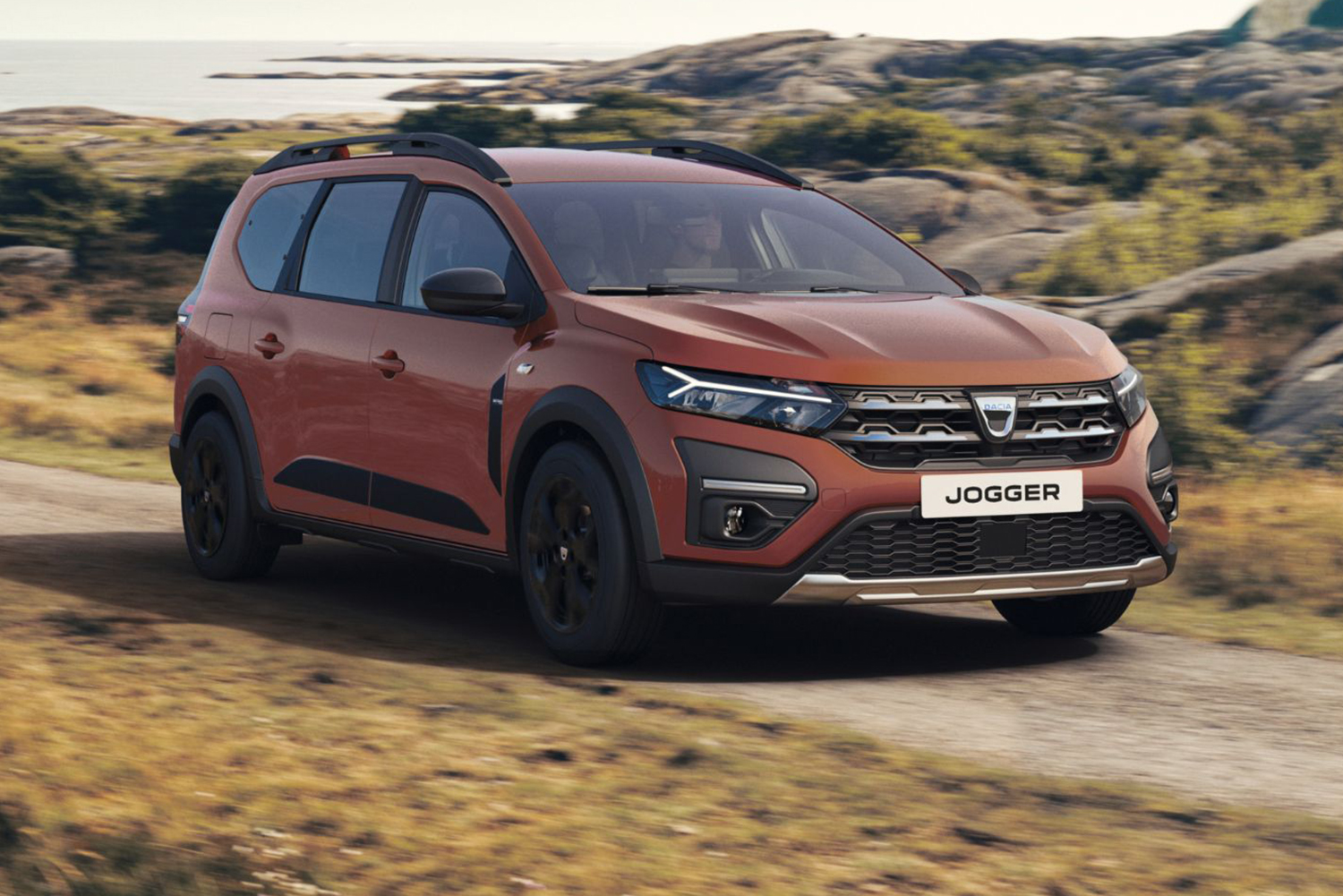
Having launched this year (2022), the Jogger is the most modern-looking Dacia. Deliberately designed to blur the lines between wagon, MPV and SUV, it’s sold in five- and seven-seat forms and is closely related to the Sandero/Logan. It has a lowly one-star Euro NCAP rating, but in 2023 will become the first Dacia to offer a hybrid drivetrain.
Sandero
For Oz? No
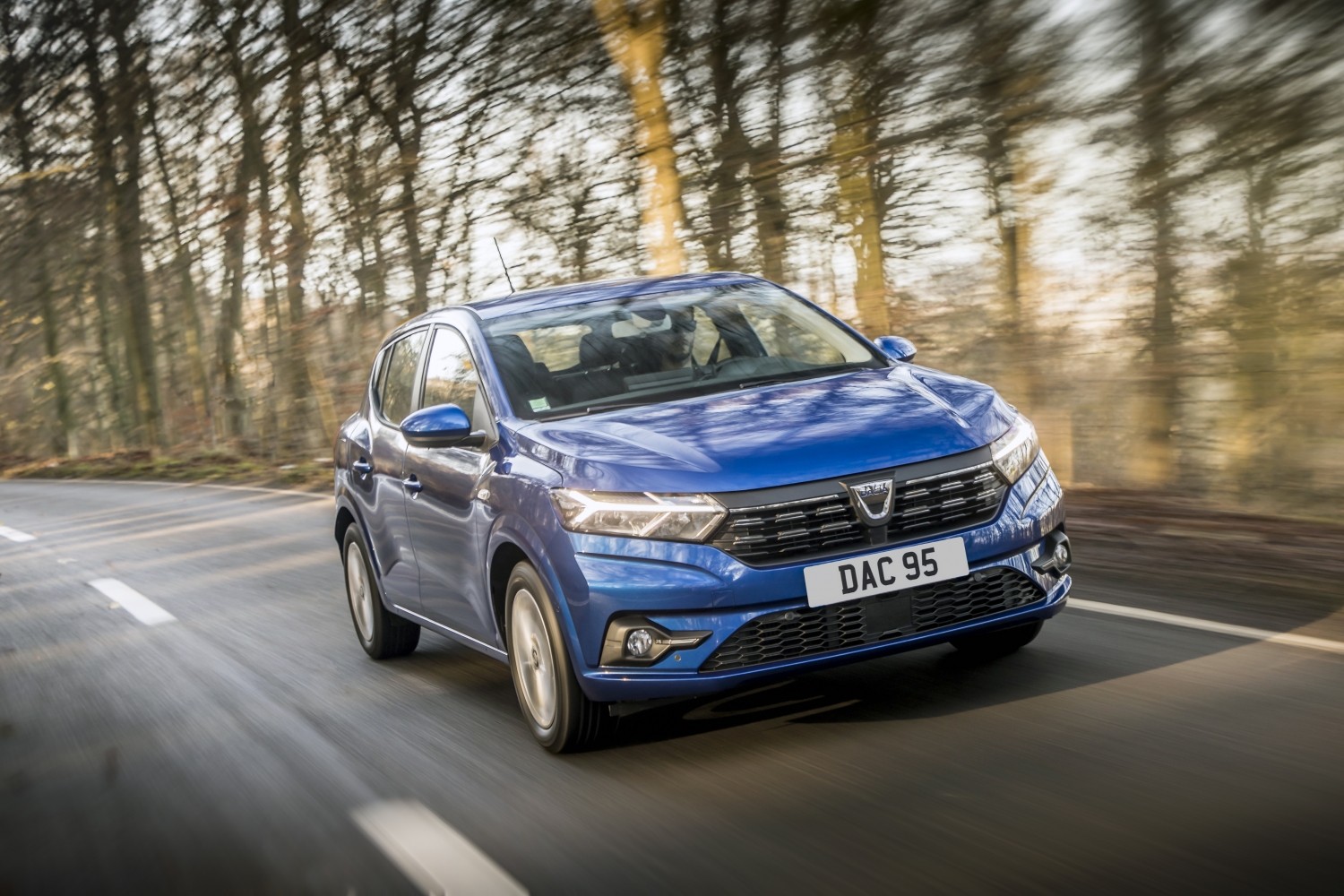
Dacia’s best-seller by far. Third generation of this small front-drive hatch is powered by petrol and dual-fuel petrol-LPG 1.0-litre atmo and turbo triples. There’s a high ride-height version, too, the Stepway. Shrinking small-car demand in Australia and poor two-star Euro NCAP rule it out.
Logan
For Oz? No
Sedan version of the Sandero hatchback, basically. The latest Logan wears a nameplate launched in 2004, making it the longest-lived badge in Dacia’s current line-up. As well as Romania, the small front-driver is built in Morocco and Turkey. In 2021 The Logan scored the same low Euro NCAP result as the Sandero.
Spring
For Oz? No
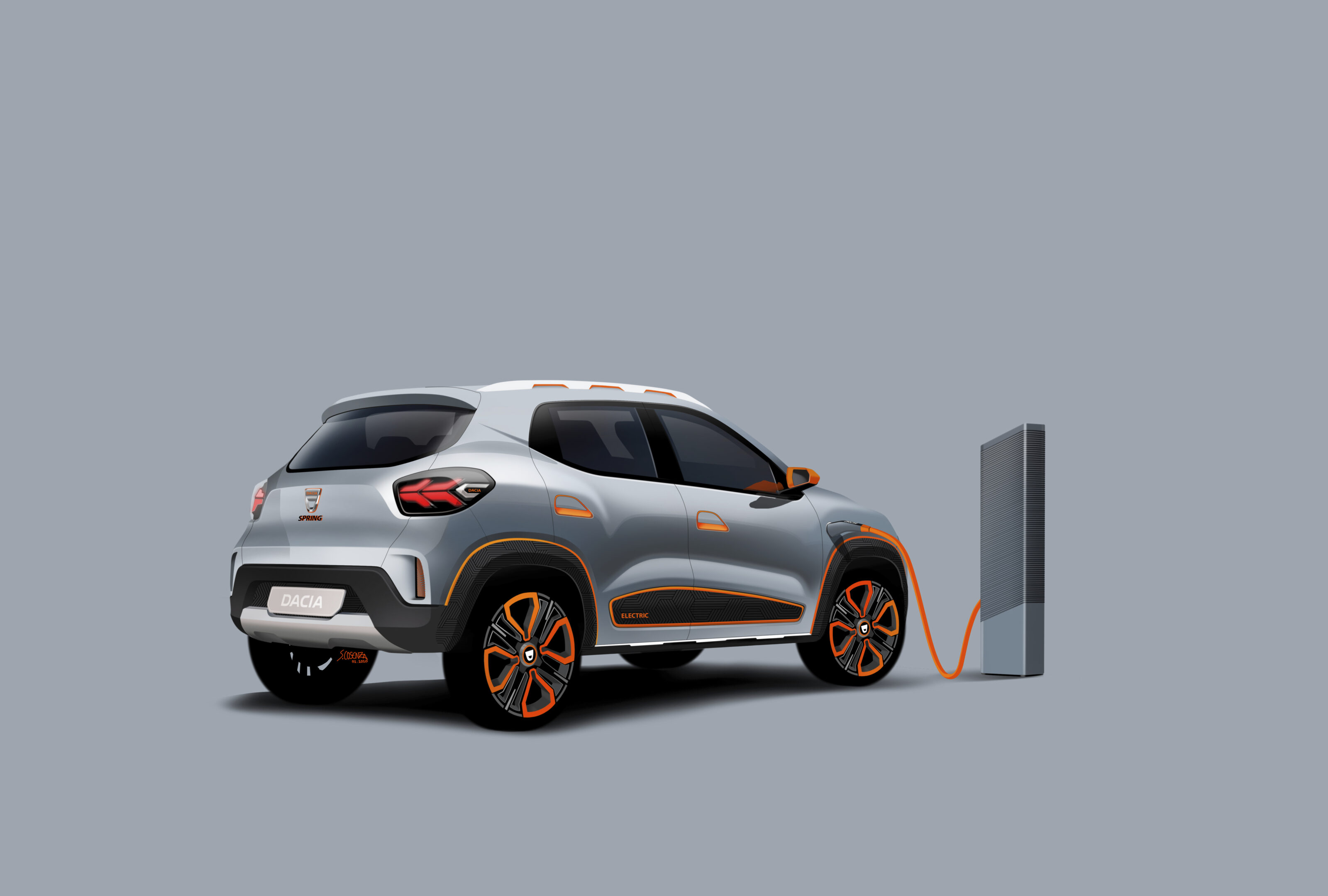
Very cheap and very small, this four-seat, Chinese-made, Renault-based, front-drive EV is so popular with European city-dwellers and urban car-sharing outfits that it’s quickly become Dacia’s third-best seller. But its 33kW motor, 230km range, 125km/h top speed and 2021 Euro NCAP one-star result severely limit its appeal elsewhere.
Manifesto
Concept only
Dacia doesn’t plan to build anything like the Manifesto concept buggy. This 2022 concept car instead highlights the brand’s “unrivalled vision for an essential, robust, cool, affordable and environmentally efficient car”. It doesn’t attempt to conceal its recycled plastic parts, and the single headlight is a cost-saver.
In and out in under three minutes, that’s the dream. Just to be clear, I’m talking about giving your EV’s driving range a massive shot in mere moments.
Snapshot
- EV battery swapping, a forgotten dream, is on the comeback
- Volvo parent Geely is now diving into the concept
- LDV has previously said it wants to do battery swaps in Australia
Chinese EV manufacturer Nio (styled NIO) is joining forces with Geely – compatriot carmaker and giant parent company of Volvo, Polestar and Lotus – to expand the reach of its EV battery swapping technology.
This collaboration could have a significant impact on the EV market in China if not globally, by jointly developing standards, advancing technology, and models capable of utilising the technology.
Geely becomes the second major carmaker to align with Nio in the battery swapping realm – the other being Changan Auto, which focuses primarily on the Chinese market and has no major stake in any of the brands currently sold in Australia.
The Nio-Geely partnership is based on a “co-investment, co-construction, shared, cooperative” model, aiming to streamline battery asset management, construct standardised swapping infrastructure, and design vehicles compatible with both companies’ systems.
Below: Nio’s map of battery swap locations in China, totally 2103 so far.
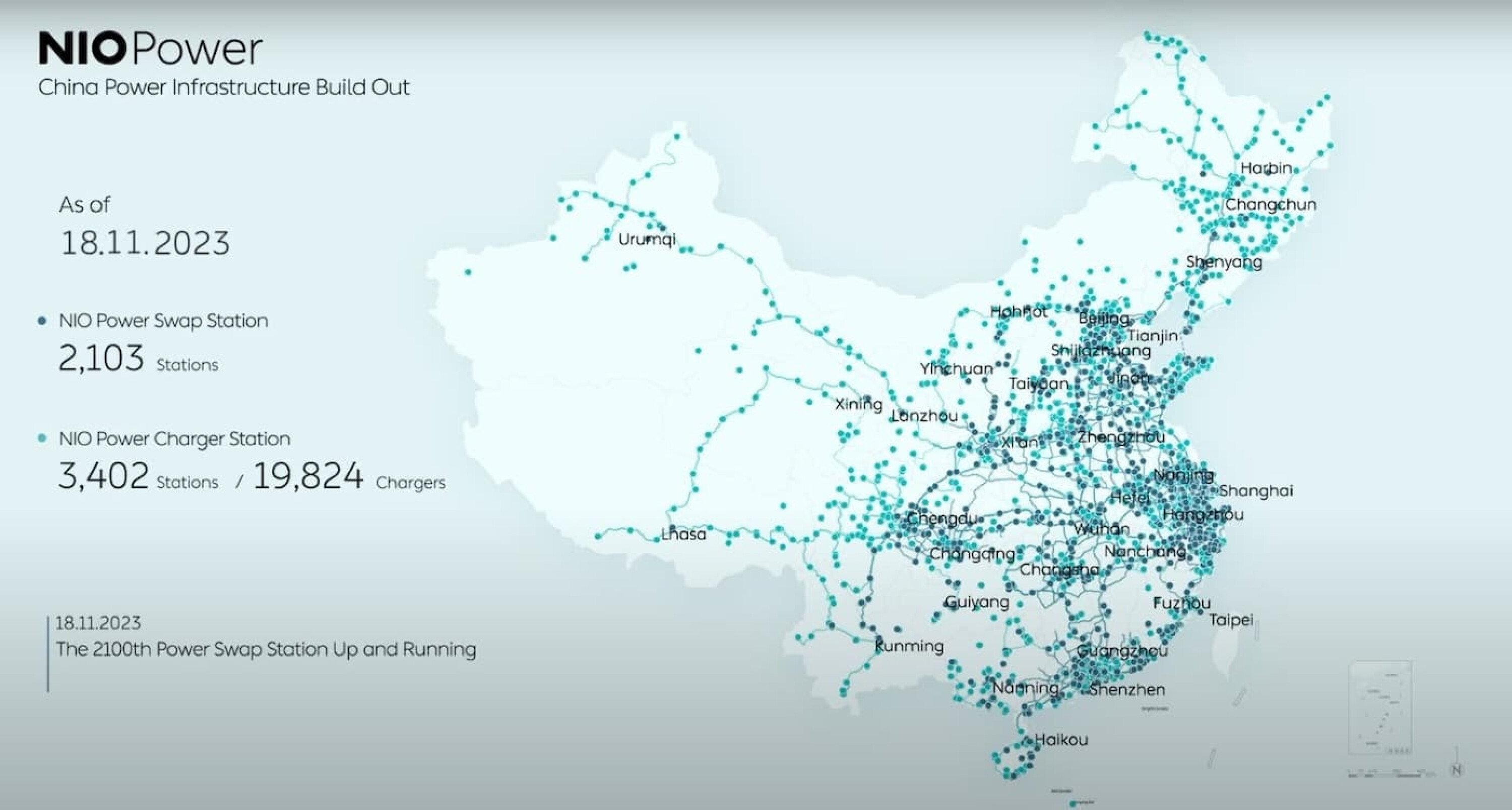
This initiative is particularly significant considering the potential of battery swapping to ease pressure on power grids during peak recharging times. Analysts and executives, however, note that the full practicality of this method hinges on further standardisation of batteries.
Nio, a prominent proponent of battery swapping, plans to nearly double its swapping stations in China within the current year. Geely, on its part, had announced plans in 2021 to establish 5,000 battery swapping stations worldwide by 2025, with 300 already operational. The partnership with Nio is expected to further bolster these efforts.
While shares of Nio saw a slight dip following the announcement, the long-term implications of this partnership could be substantial for both companies. As Nio and Geely forge ahead, their joint venture could set new benchmarks in the EV industry, potentially attracting more collaborations in the future.
Will we see EV battery swapping in Australia?
We certainly could, given the money being thrown around by the Chinese brands – but realistically that market is comfortably big enough for this to be a profitable venture without ever expanding beyond its own borders.
This means we may never see the concept introduced into local Volvo, Polestar or Lotus models – although if any company has the resources and budget to gamble on a potentially game-changing battery-swapping network, it’s… well, all of the Chinese brands.
Nio and Geely aren’t the only ones looking at this concept, either, with LDV – known as Maxus in China – currently running a battery-swapping trial with the electric LDV Mifa 9 in its home market. The business has told Australian media that it sees potential for it to come here.
“In China, Saic Motor Group is building battery swapping stations, we are also planning to apply this technology to Mifa vehicles here in Australia”, added Xie. The $106,000 LDV Mifa 9 people mover has 430km WLTP driving range and with 120kW DC fast-charging can go from 30-80 per cent charge in 36 minutes.
