
This story, first published in December 2022, has been updated to reflect confirmed Australian plans.
Snapshot
- Toyota announces minor MY24 changes for GR Corolla with new colour for Australia
- Additional North American suspension and chassis tweaks not confirmed for Oz
- Morizo not returning in the USA though Circuit Edition fills the hole
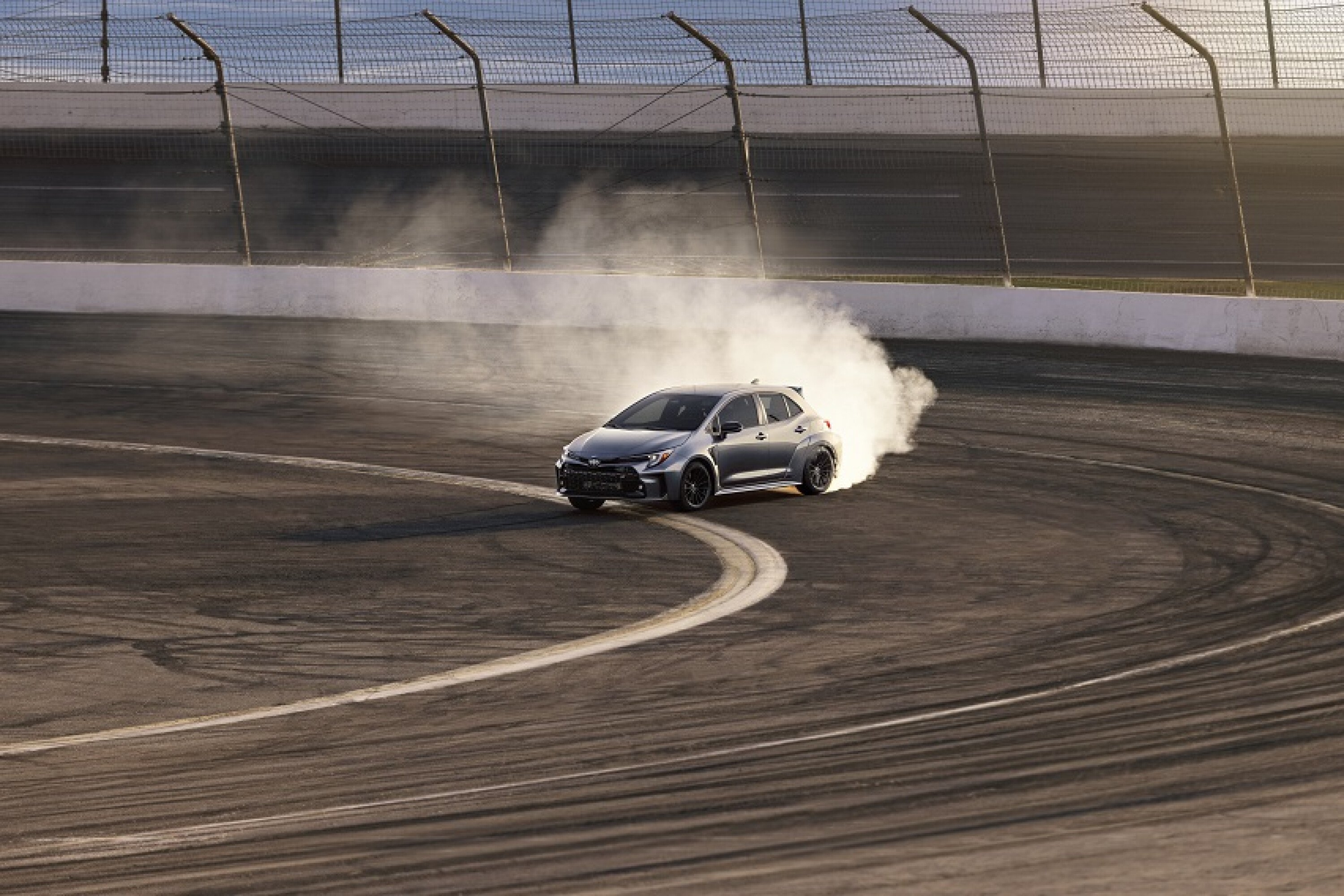
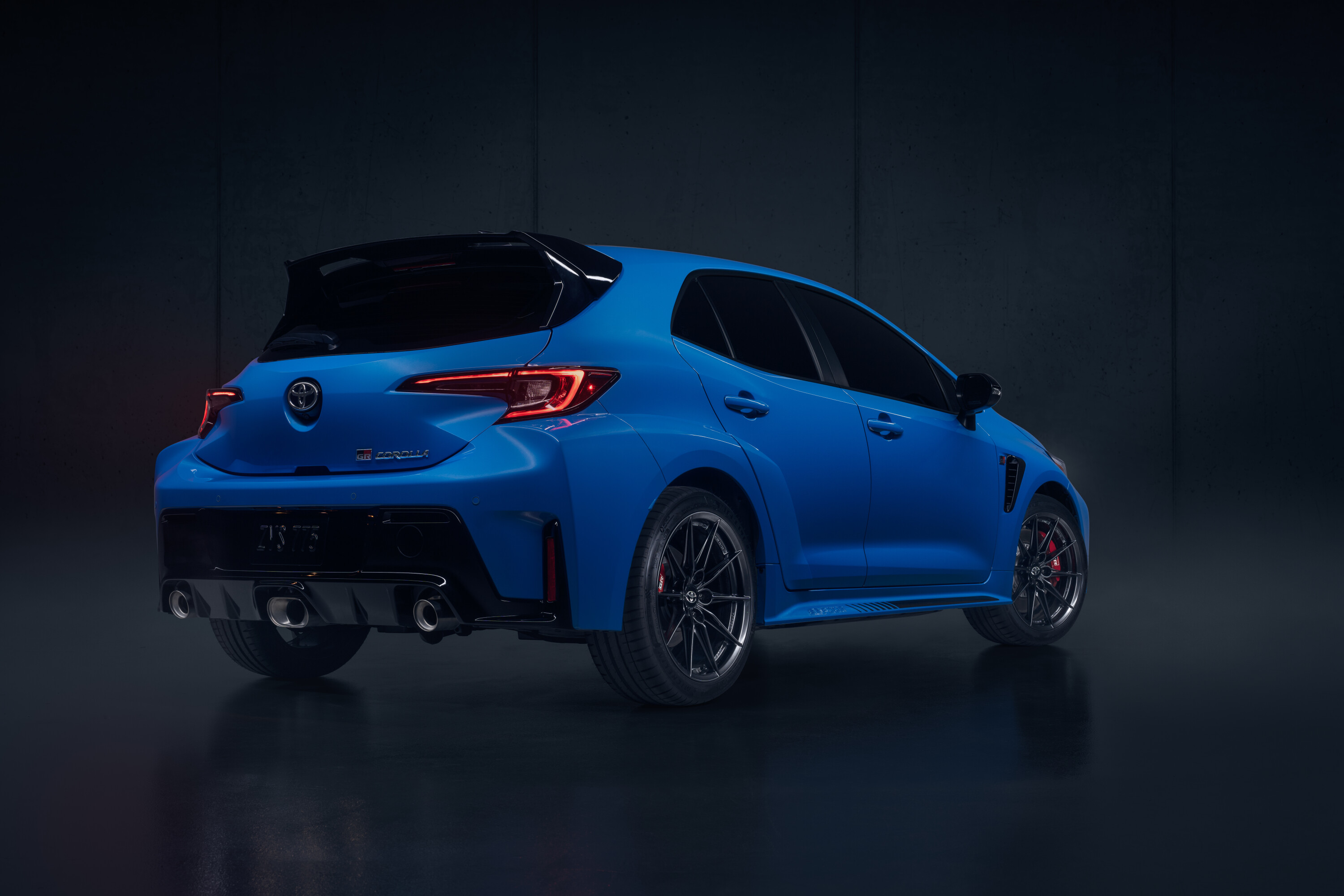
Toyota has added a new pain option for the 2024 GR Corolla ($64,190) known as ‘Eclectic Blue’ locally.
The new exterior hue is paired with matching interior trim highlights on local GTS variants and becomes the fifth colour in addition to Glacier White, Liquid Mercury, Ebony, and Feverish Red. There’s no word on price changes for the all-paw hot hatch.
Local changes follow MY24 updates applied to North American market GR Corollas, though a Toyota Australia spokesperson indicated there are no plans yet to introduce those tweaks locally.
Small tweaks were made to the suspension, steering, and battery grounding of the rally-inspired four-wheel drive hot hatch in North America. The changes come around a year after the car’s launch, though rather than reflecting shortcomings it tells the story of insatiable engineers. Prices also climbed in the United States though only by a marginal US$200 (AU$315).
1
It also sounds like the first allocation of Morizo editions may indeed be the only one as the track-focused version is dropped in the United States – though the returning Circuit pack could provide relief.
Speaking to Wheels, the Toyota Australia spokesperson reiterated that 25 Morizos are coming here and that the brand will “continue to seek further advice about the potential for additional production”.
1
What’s changed?
Perhaps showing what a good spec the Australian GR Corolla GTS is, the Yanks have stolen our single specification and added it to mix between their Core – without Torsen front and rear diffs – and diff-equipped Circuit pack.
We’ll come back to that because all GR Corollas have been treated to some very minor changes. Toyota’s press release claims changes to the rear suspension settings and ‘mounting bolt changes’ in the steering system.
There’s also some extra aluminium in the front and rear bumpers to improve aerodynamic performance and reprofiled brake ducting. The updates are yet to be confirmed for Australia.
1
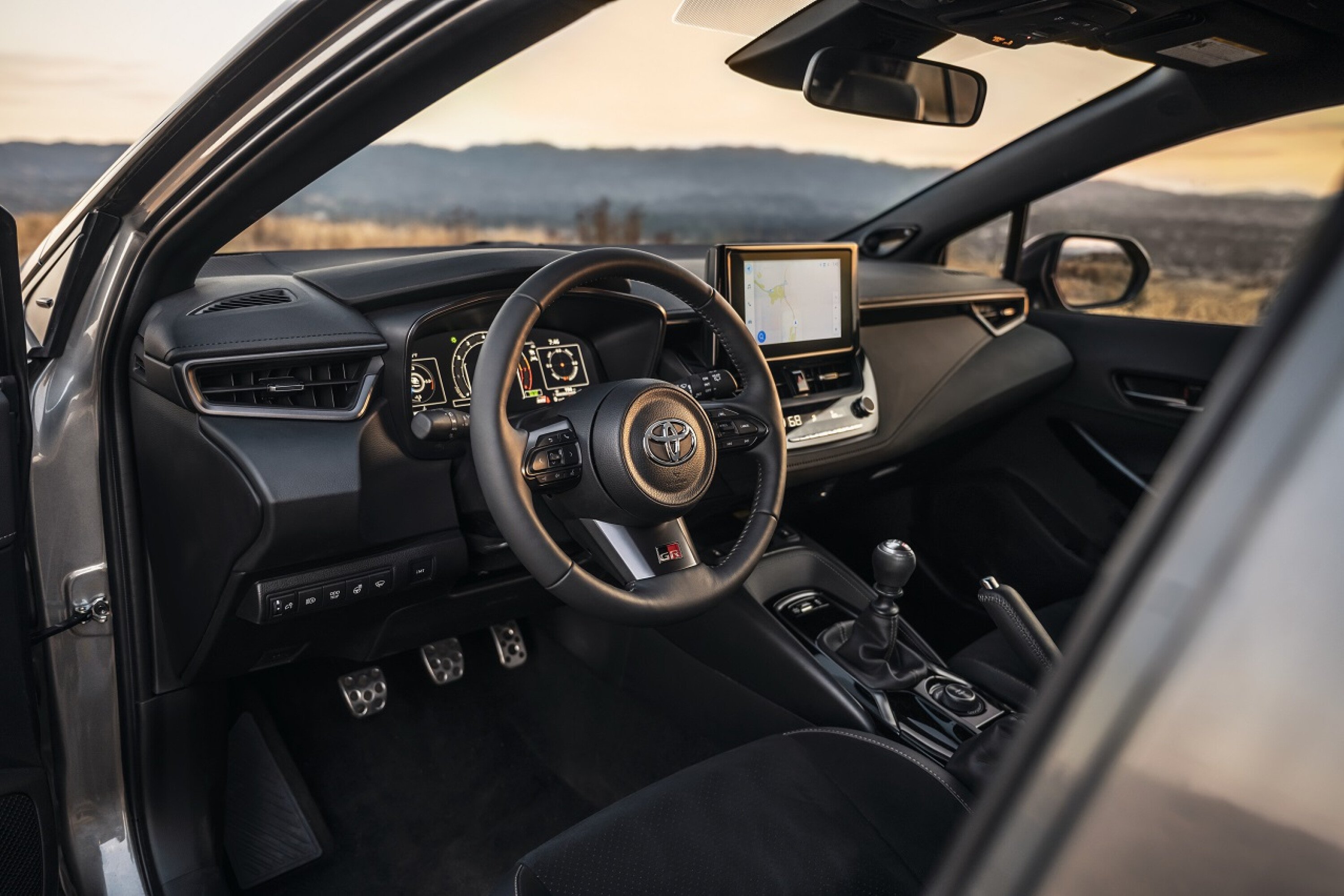
As for the new Premium trim in the US, it’s just like our GR Corolla featuring ‘Brin Naub’ suede cloth upholstery on heated front seats paired with a heated leather-appointed steering wheel, red brake calipers, eight-speaker JBL stereo, wireless charging pad and a pair of limited-slip rear differentials.
With the Morizo edition potentially on shakey ground, we’d love to see the five-seat US-spec Circuit Edition offered locally. It’s effectively a Morizo-lite with the same 18-inch forged BBS alloys joining a bulging bonnet, forged carbon fiber roof, flared guards, and more aggressive gloss black rear spoiler.
There are no changes to the 221kW/370Nm ‘G16E-GTS’ 1.6-litre turbo-petrol three-cylinder, adjustable GR-Four all-wheel drive system or six-speed manual transmission (though an eight-speed auto has been rumoured down the track).
3
Performance parts straight from Toyota dealers
Plenty of GR Yarises and Corollas have already been treated to extensive modification by the aftermarket, and Toyota’s keen to get in on the action.
Like BMW’s M Performance range, Toyota Gazoo Racing will offer hop-up parts for the GR Corolla through official channels by the end of the year – at least in the United States. Australian plans are as yet unknown.
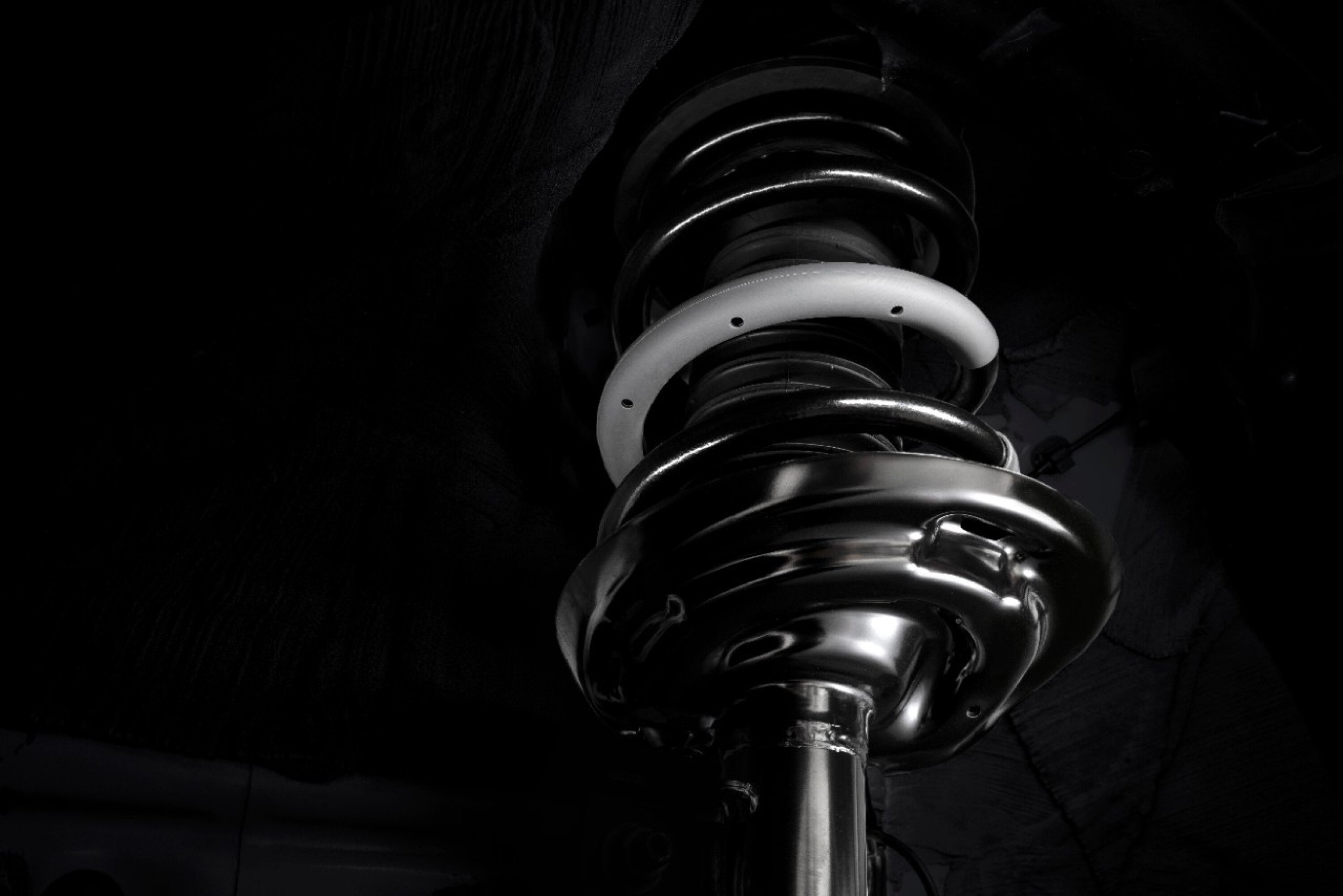
Owners will be able to order OEM-approved lowering springs and higher-performance dampers for a more focused ride. The Circuit pack rear wing will also be available to order for owners of ‘Core’ and ‘Premium’ trims.
As yet, there are no plans to offer these hop-up parts in Australian dealers.
MORE
Everything Toyota
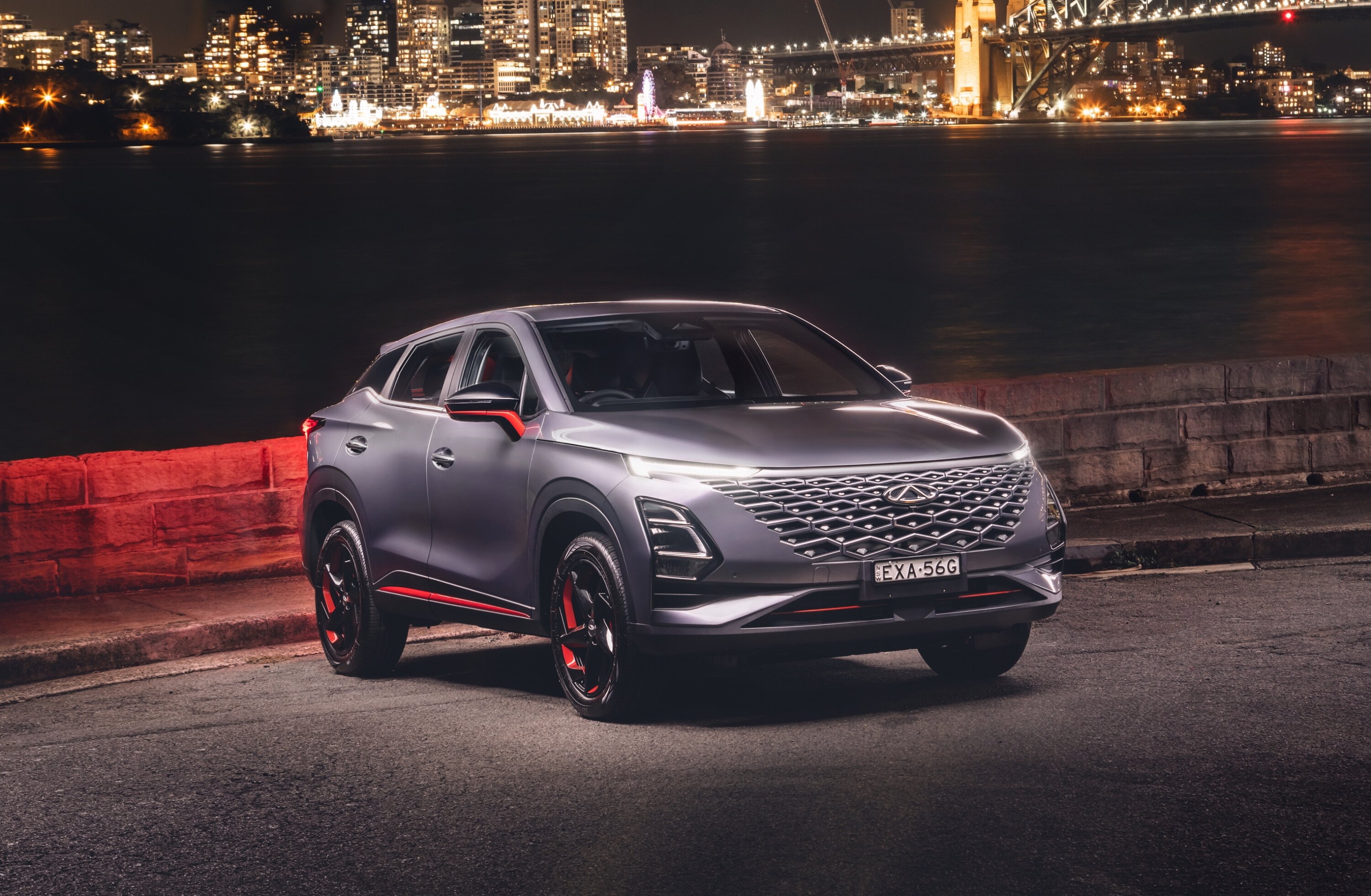
The 2023 Chery Omoda 5 marks the triumphant return of the Chinese automaker to the Australian market after a hiatus that began in 2014.
The success of this re-entry hinges on the Omoda 5.
1
Leading Chery’s lineup, the Omoda 5 precedes the recently launched, larger Tiggo 7 Pro and will be followed by the even bigger Tiggo 8 Pro later in the year.
With a new platform, updated engine options, an advanced tech package, a seemingly plentiful stock supply and a starting price below $30k before on-road costs, it’s a package that’s hard to overlook.
Pricing and features
The Omoda 5, as Chery’s entry into the compact SUV segment, offers quite a bit for its price.
Available in two grades the BX and better specced EX, the range is priced from $29,900 to $32,900 for the EX – both before on-road costs.
Both grades share the same 108kW/210Nm 1.5-litre turbo petrol engine, paired to a continuously variable transmission.
1
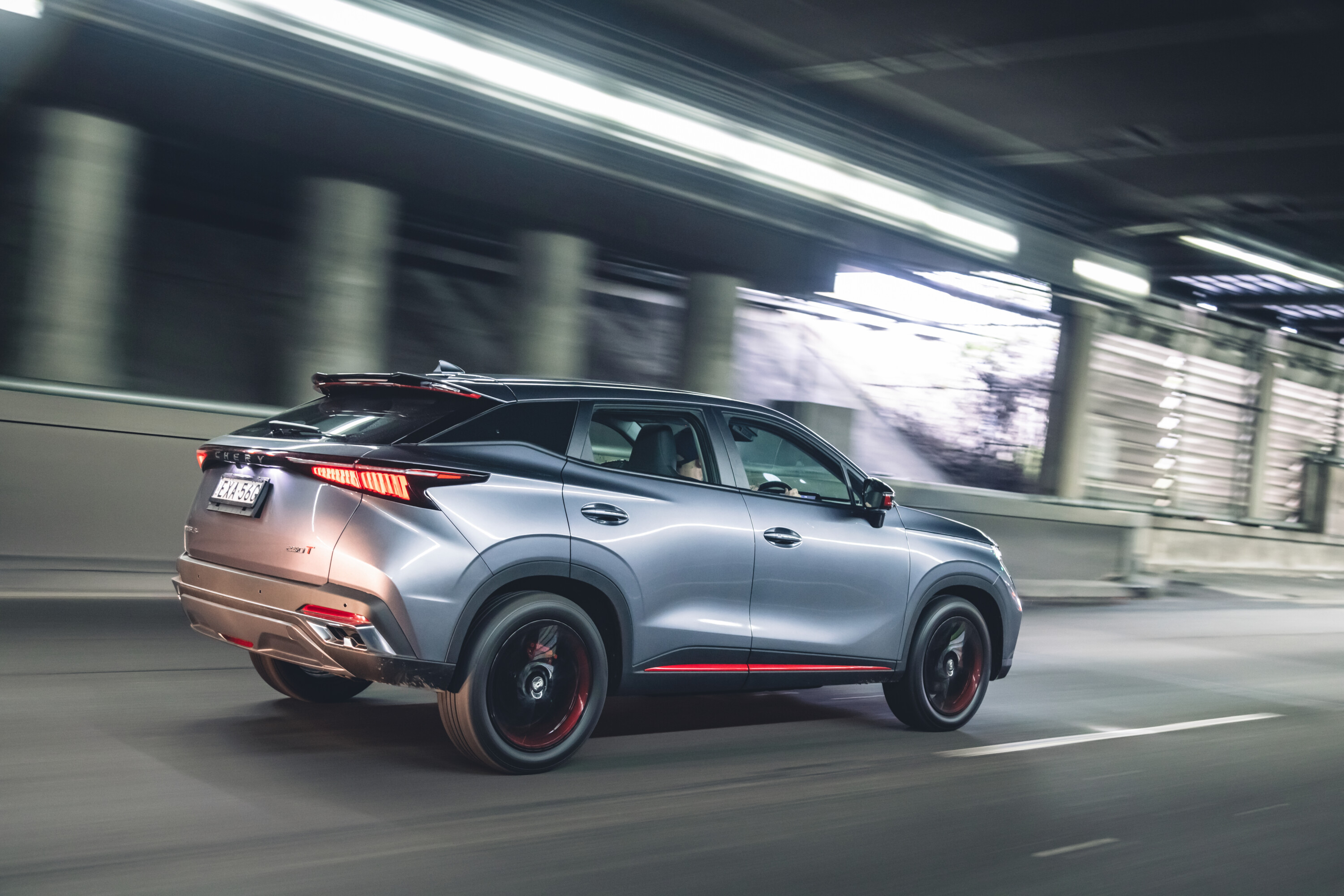
Its design, characterised by sharp lines and LED a dominating front grille, gives it a modern and mean appearance.
There’s plenty of commendable spec on the entry level BX, including:
| Chery Omoda 5 standard features | |
|---|---|
| u2018Hello Cheryu2019 voice control | Ambient lighting |
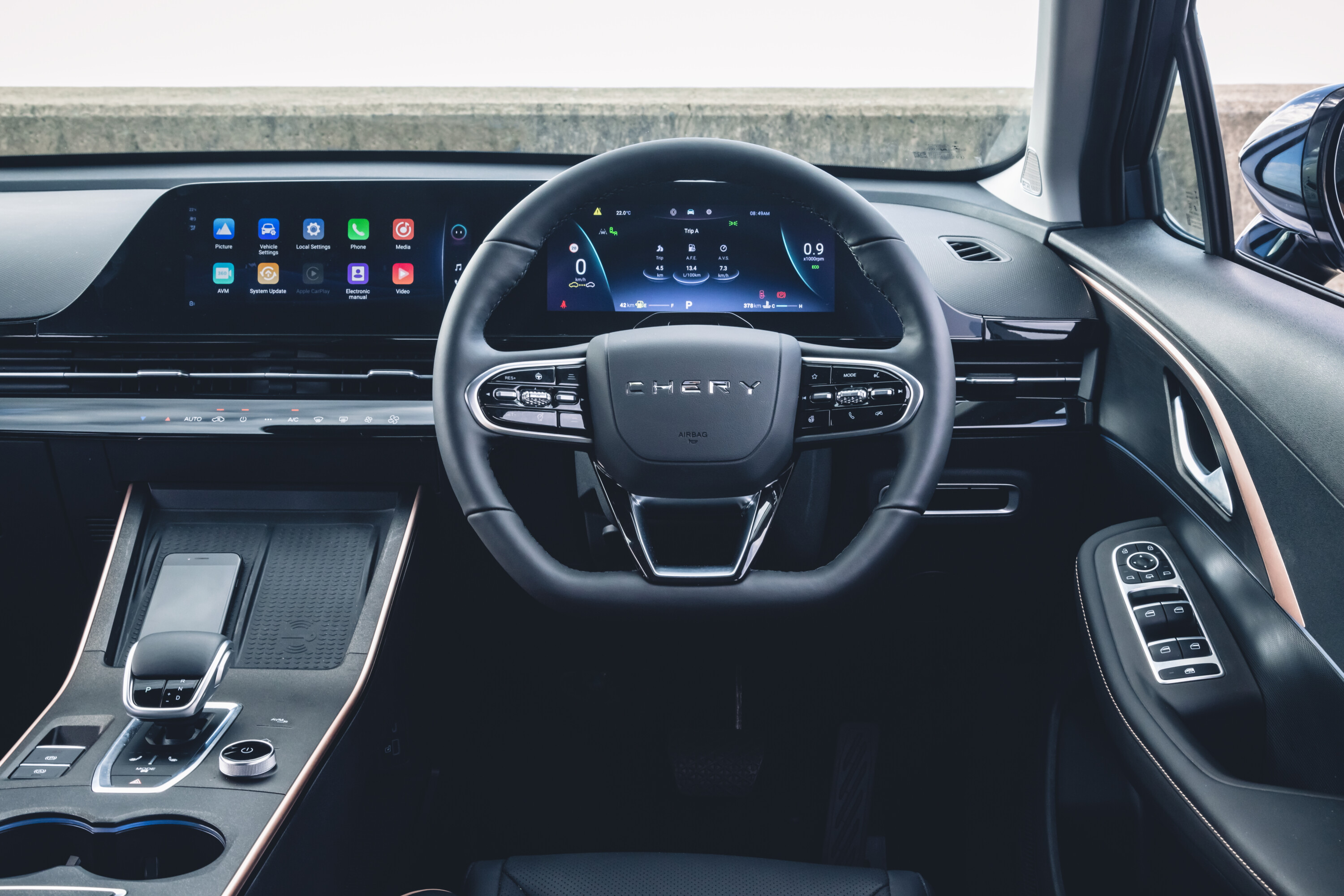
| 10.25-inch digital driveru2019s display | Dual-zone climate control |
| 10.25-inch touchscreen | LED headlights |
| 18-inch alloy wheels | Tyre Pressure Monitoring System |
| 6-way power driveru2019s seat | Vinyl upholstery |
| 8-speaker Sony audio system | Wireless Apple CarPlay, wired Android Auto |
| Acoustic windscreen | Wireless smartphone charging |
For an extra $3k you can move up to the EX, adding:
| 360-degree camera | Power tailgate |
| Heated steering wheel | Puddle lights (logo) |
| Opening sunroof | Red accented wheels, mirrors, brake calipers |
| Power adjust passenger seat | Seat heating |
The Omoda 5 is available in seven colours with premium paint costing $500.
1
Safety
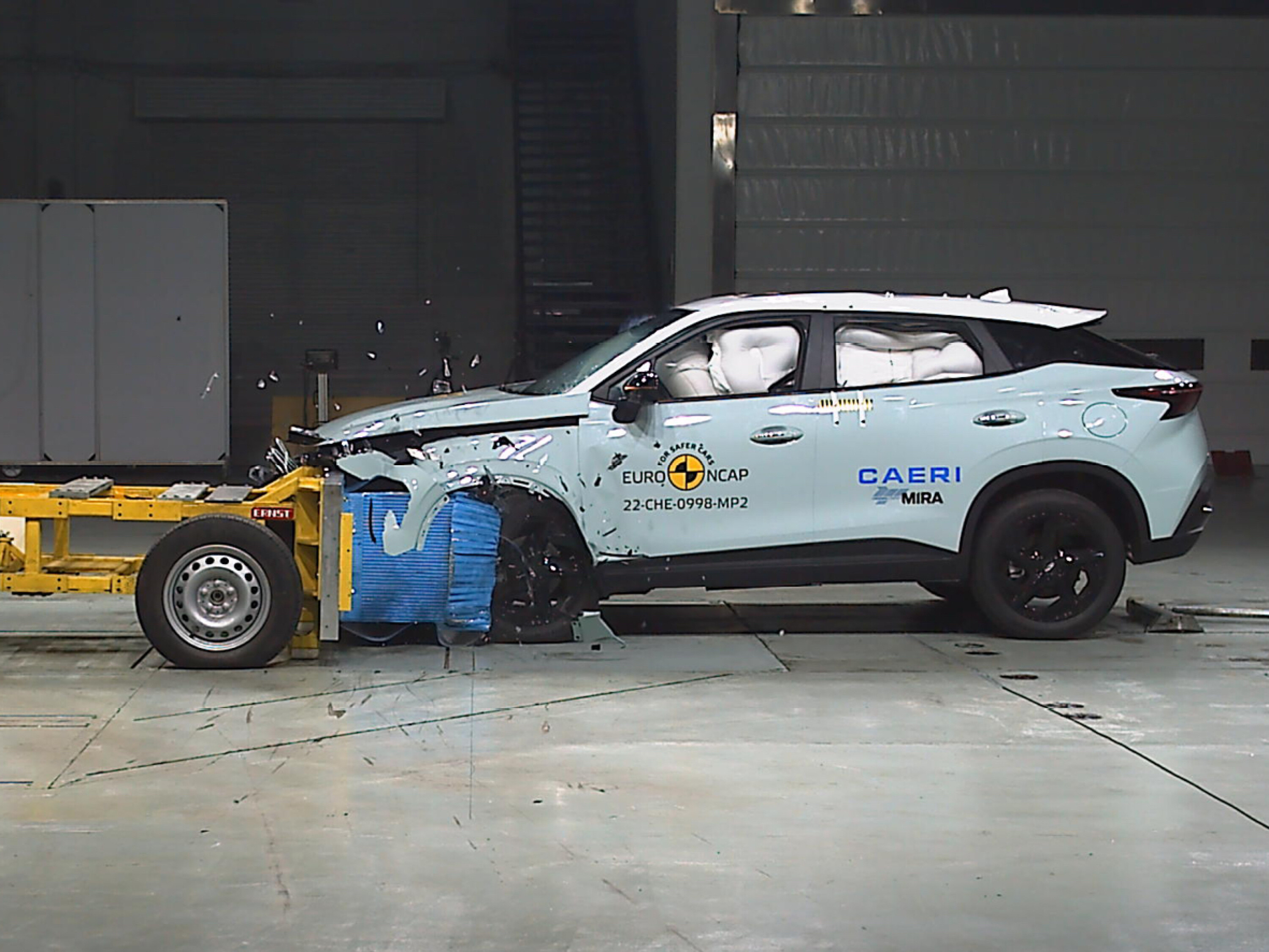
Tested locally in 2022, the Omoda 5 received a five-star ANCAP safety rating.
This included a commendable 87% score for adult occupant protection and 88% child occupant protection result.
While reviewing the vehicle earlier this year we observed the lane-keep assist to act erratically. Since then Chery has issued a software update since our last contact with the Omoda 5 to correct the issue.
1
Key rivals
The small SUV segment is already bustling with options, including some more affordable offerings such as the:
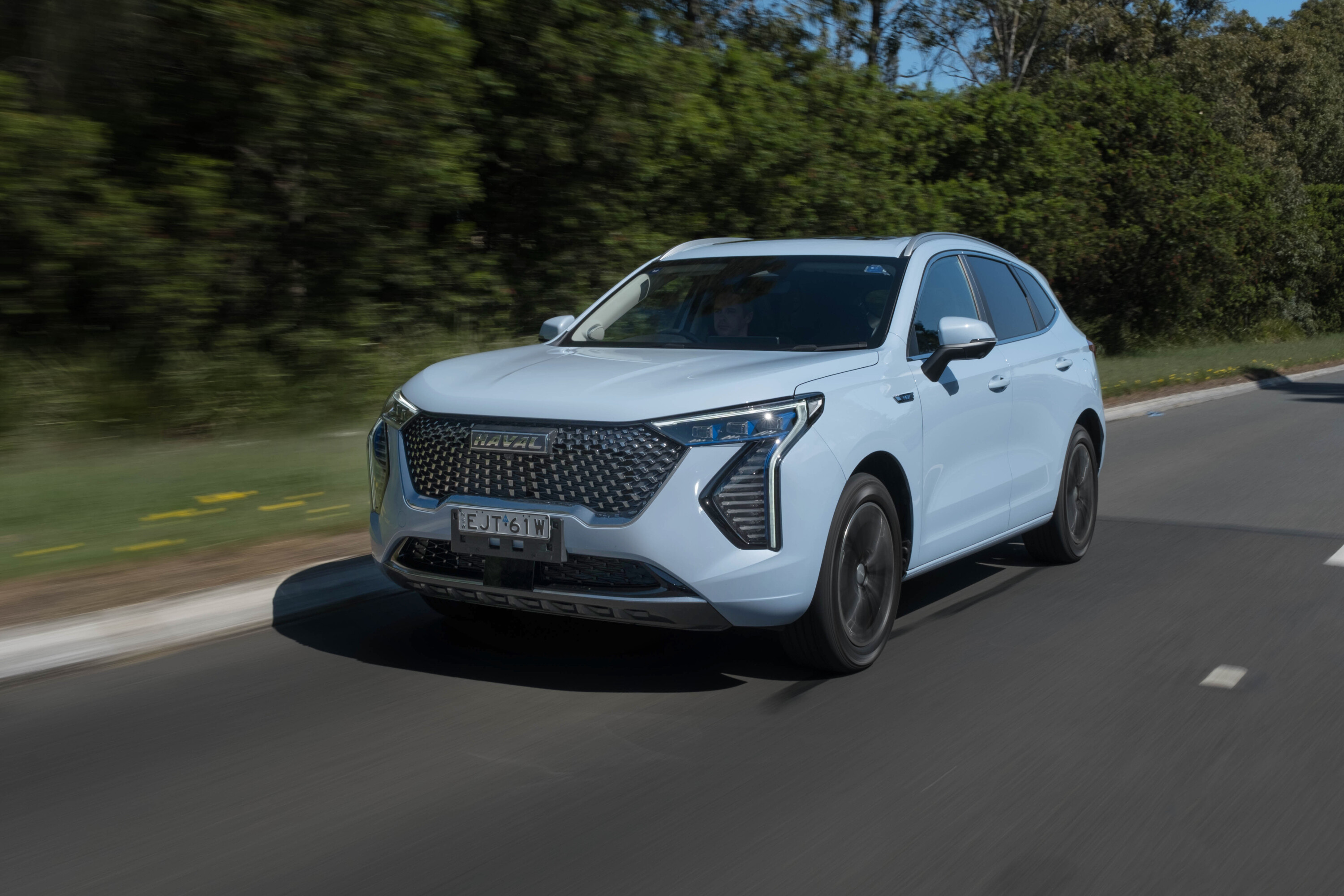
1
Should I put it on my shortlist?
When it comes to value for money, there’s no denying that Chery has gone all in with the Omoda 5.
With segment favourites like the Toyota Corolla Cross and Mazda CX-30 steadily climbing the price ladder, the offerings from incoming Chinese manufacturers like Chery become even more enticing.
For those in the market for a stylish, feature-rich SUV that doesn’t break the bank, the Omoda 5 stands out as a compelling choice, showcasing the future of Chinese automotive engineering and design.
Australia’s trend towards SUVs over the past few years has created an opportunity for manufacturers to introduce high-ride versions of much loved small classics.
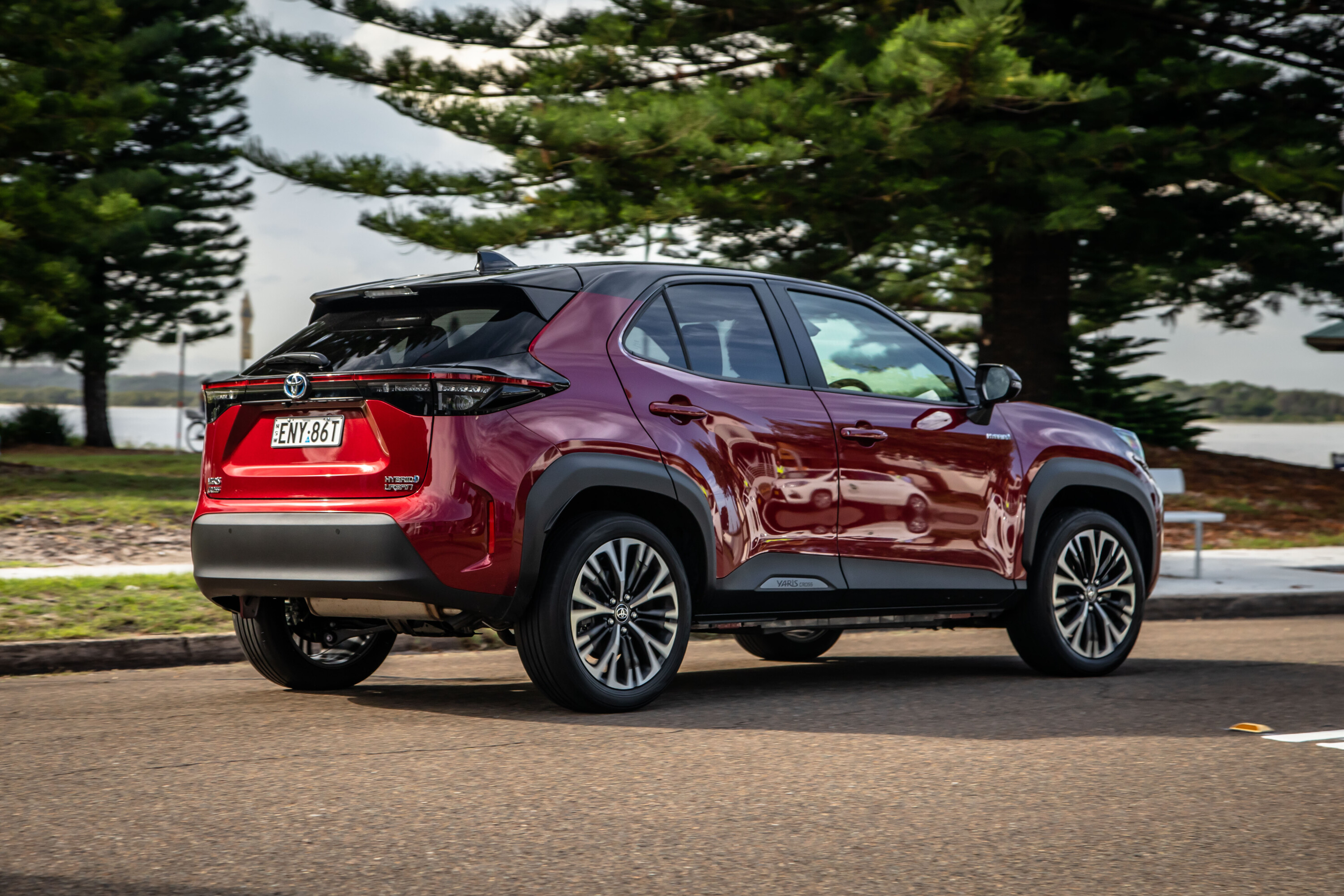
In come the Yaris Cross.
As the name would suggest, the Yaris Cross is a crossover vehicle based on the incredibly popular Yaris hatchback.
The added comfort of an SUV comes from a higher view point on the road, and ease of entry and exit. You’re also often getting an increased cargo capacity, legroom and headroom.
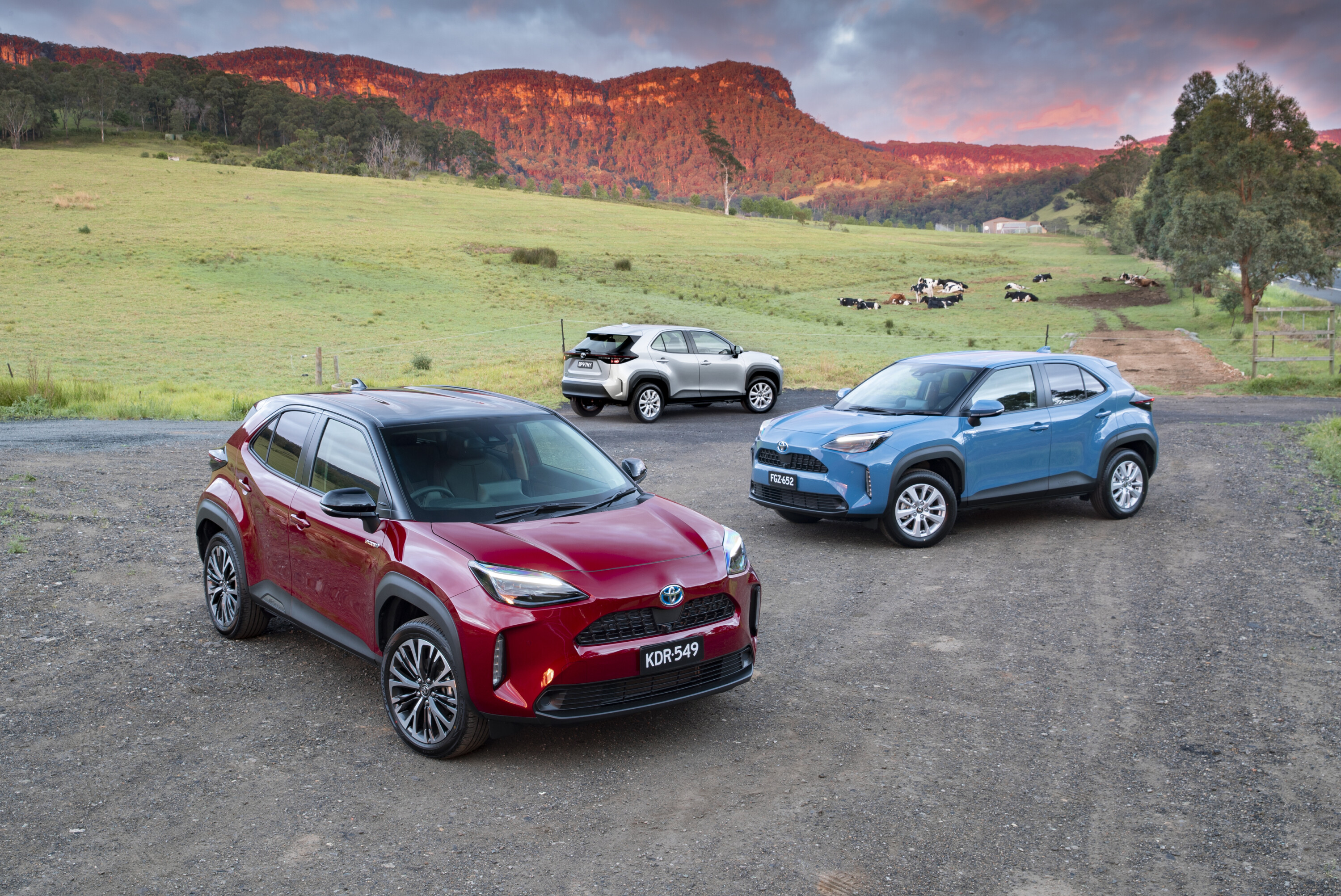
1
The light and small SUV segments are some of the fastest growing in Australia right now, and Toyota aren’t the only brand to jump on the bandwagon.
So let’s find out what you’ll pick up in the current-generation Yaris Cross.
Pricing and features
The entry-level Yaris Cross GX starts from $28,000 before on road-costs.
An extra $2000 can get you into a hybrid, and further $3k adds all-wheel drive.
The petrol vehicle is powered by a 1.5-litre three-cylinder petrol engine, which delivers a maximum power output of 88kW and a peak torque of 145Nm. This power is transmitted to the front wheels through a Direct Shift CVT transmission.
The 1.5-litre hybrid powertrain produces a combined 85kw and 120Nm and can get as low at 3.8L/100km for fuel economy. Buyers also have the choice of a front-wheel drive or electric all-wheel drive.
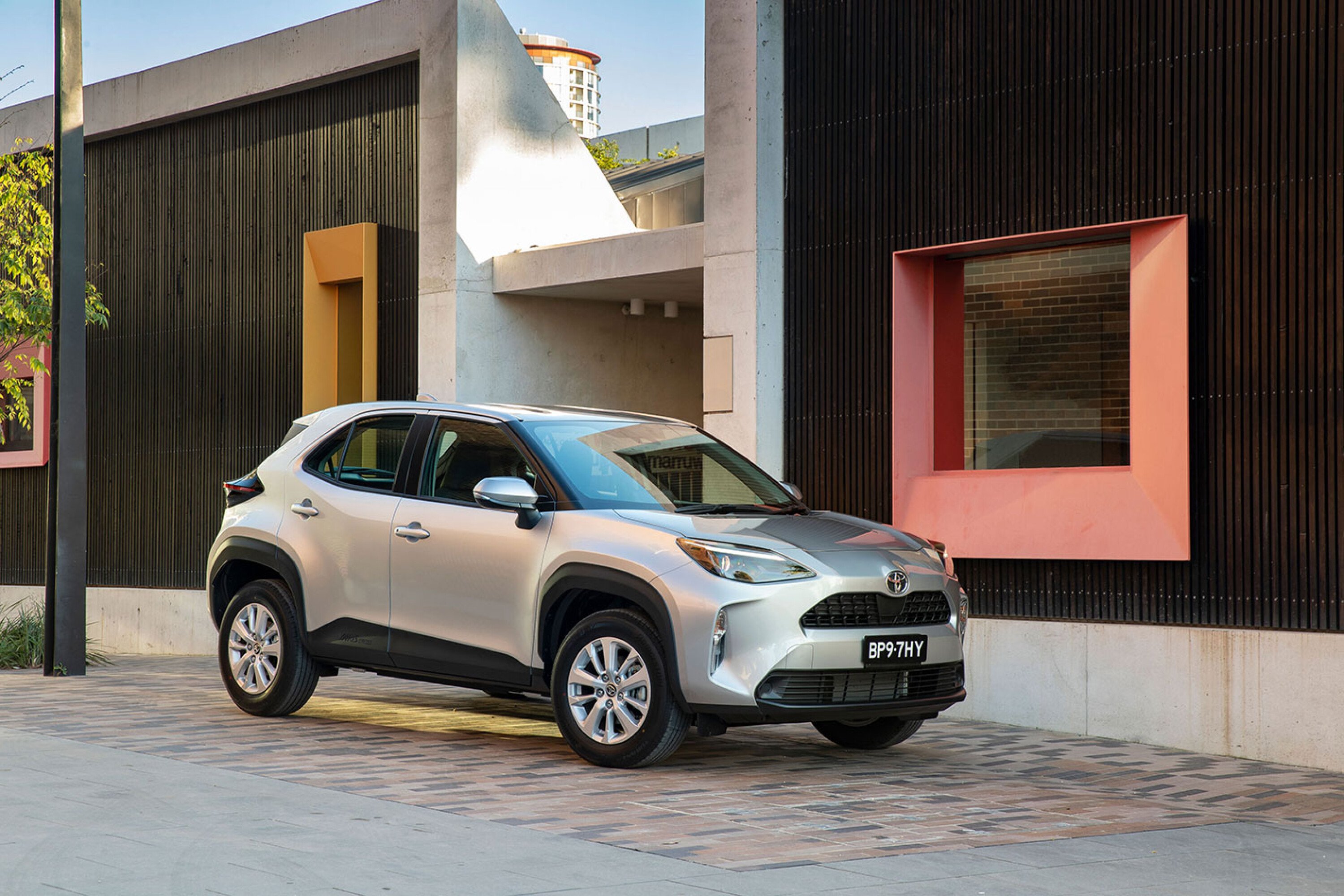
1
The Yaris Cross kicks off Toyota’s SUV range, before the Corolla Cross, C-HR and larger RAV4.
There are currently four variants on offer: GX, GXL, Urban and the range-topping GR-Sport.
Yaris Cross’ base offers 16-inch alloy wheels, a 7-inch infotainment system, Apple CarPlay and Android Auto, active cruise control, leather-accented wheel, keyless entry and start, cloth seats, and halogen projector-type headlights.
The family SUV is available in eight exterior paint colours, with metallic coming in as a $600 option.
With the Yaris Cross only $3200 more than the Yaris hatch, it’s not hard to see how compelling the step up is.
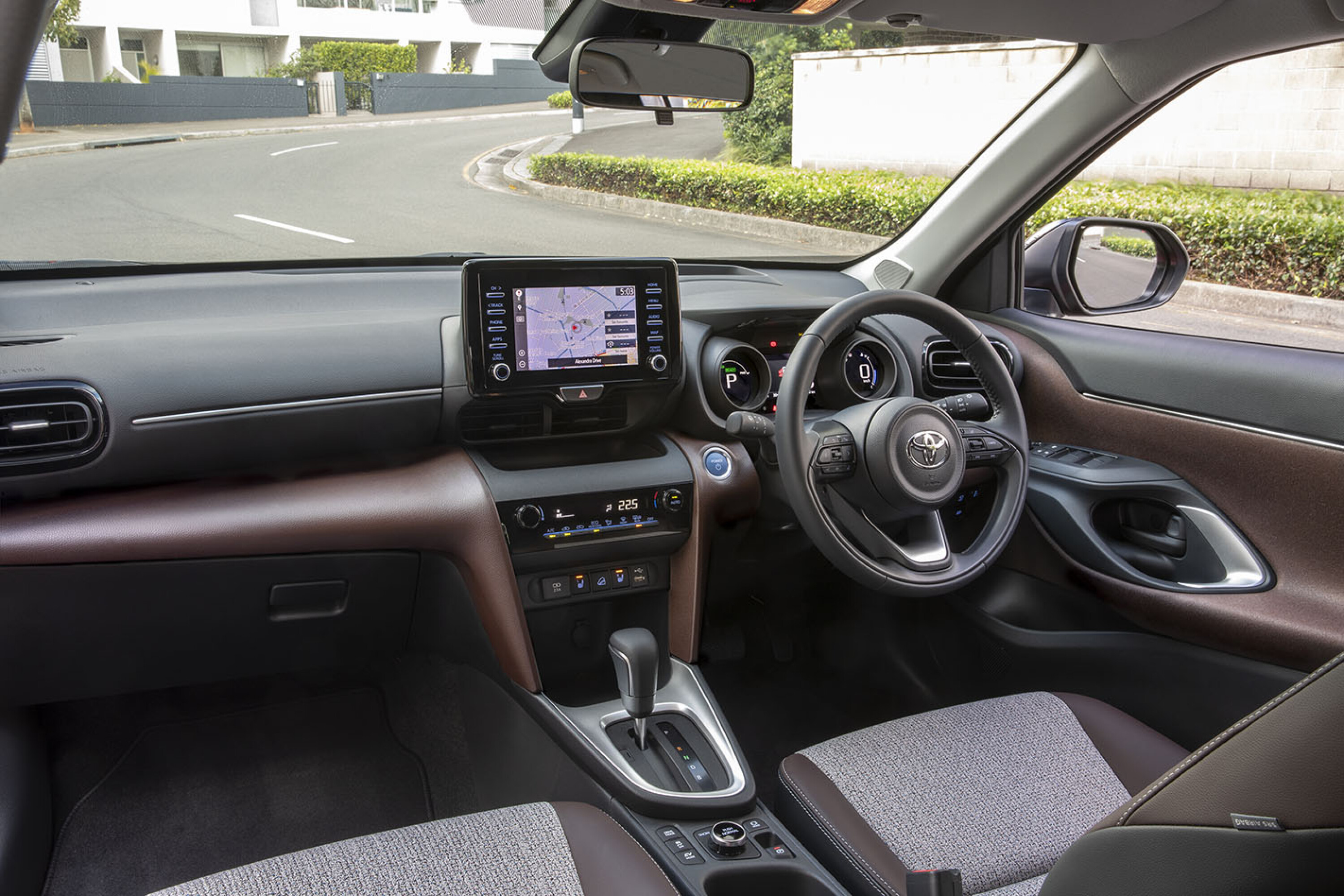
1
Safety
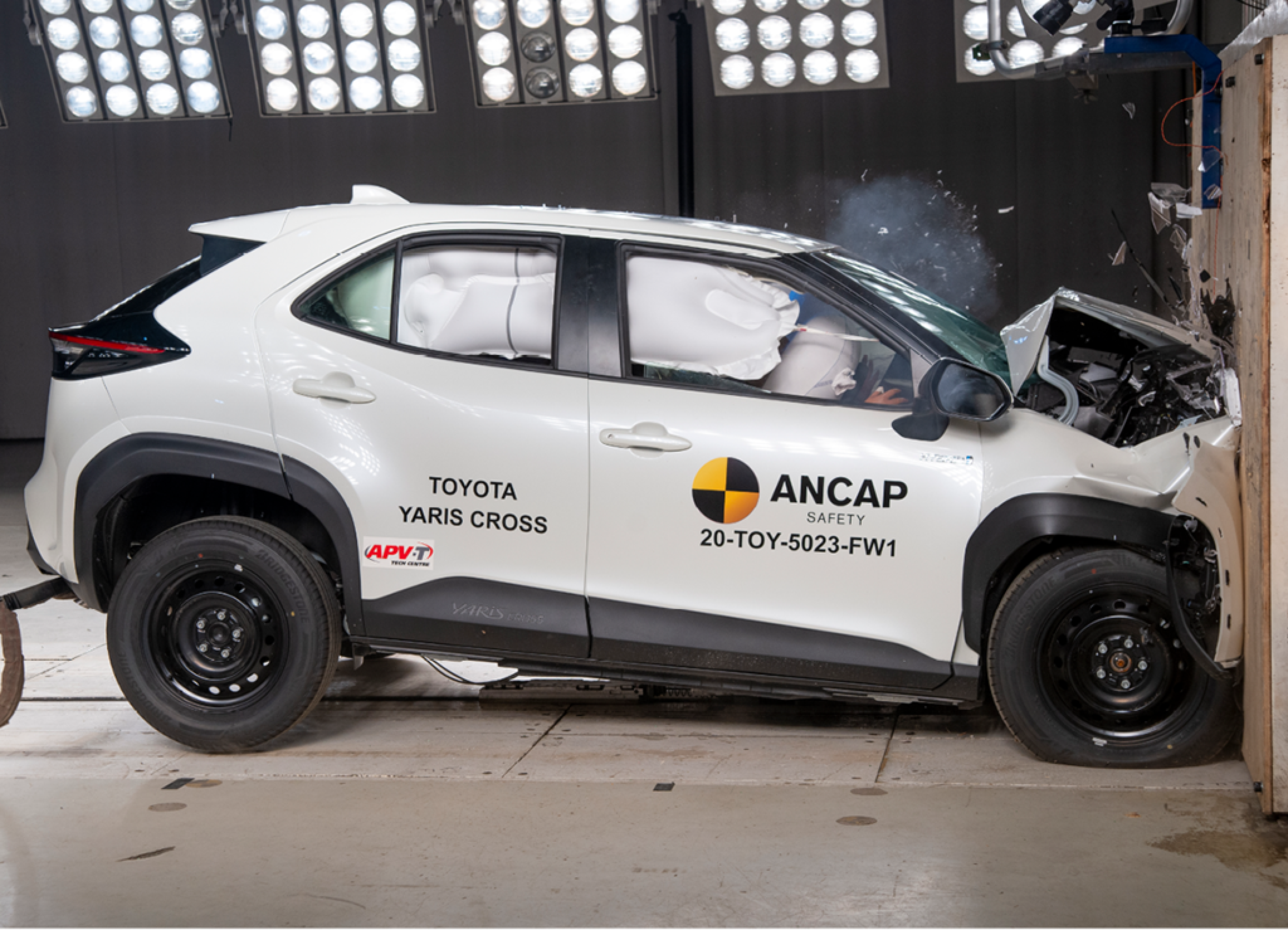
The Toyota Yaris Cross received a five-star ANCAP rating with testing conducted in 2021.
Impressively, the light car scored an 86% score for both adult and child occupant protection.
Buyers pick up 8 airbags and a reversing camera.
1
Toyota Safety Sense suite of features is available across the range, which includes active cruise control, autonomous emergency braking, intersection turn assist, lane keep assist, lane-departure warning and fatigue reminders.
Front and rear paring sensors, rear cross traffic alert, a panoramic view monitor and blind spot monitors are reserved for GXL and above.
Key rivals
Many major manufacturers have added a light SUV to their line-up, such as:
1
Should I put it on my shortlist?
As a hybrid offering, the Yaris Cross is a highly competitive option for someone looking for a small city runabout thanks to its stellar fuel economy and compact proportions.
It fits the equation for people looking for a small and nimble car with the added height of an SUV, without jumping into a large car.
While it may not have the bells and whistles of higher-end models, the GX offers a balanced mix of essentials in a package that’s perfect for city life. If you’re looking for an SUV that’s nimble, efficient, and backed by Toyota’s legacy, the Yaris Cross GX is worth a look.
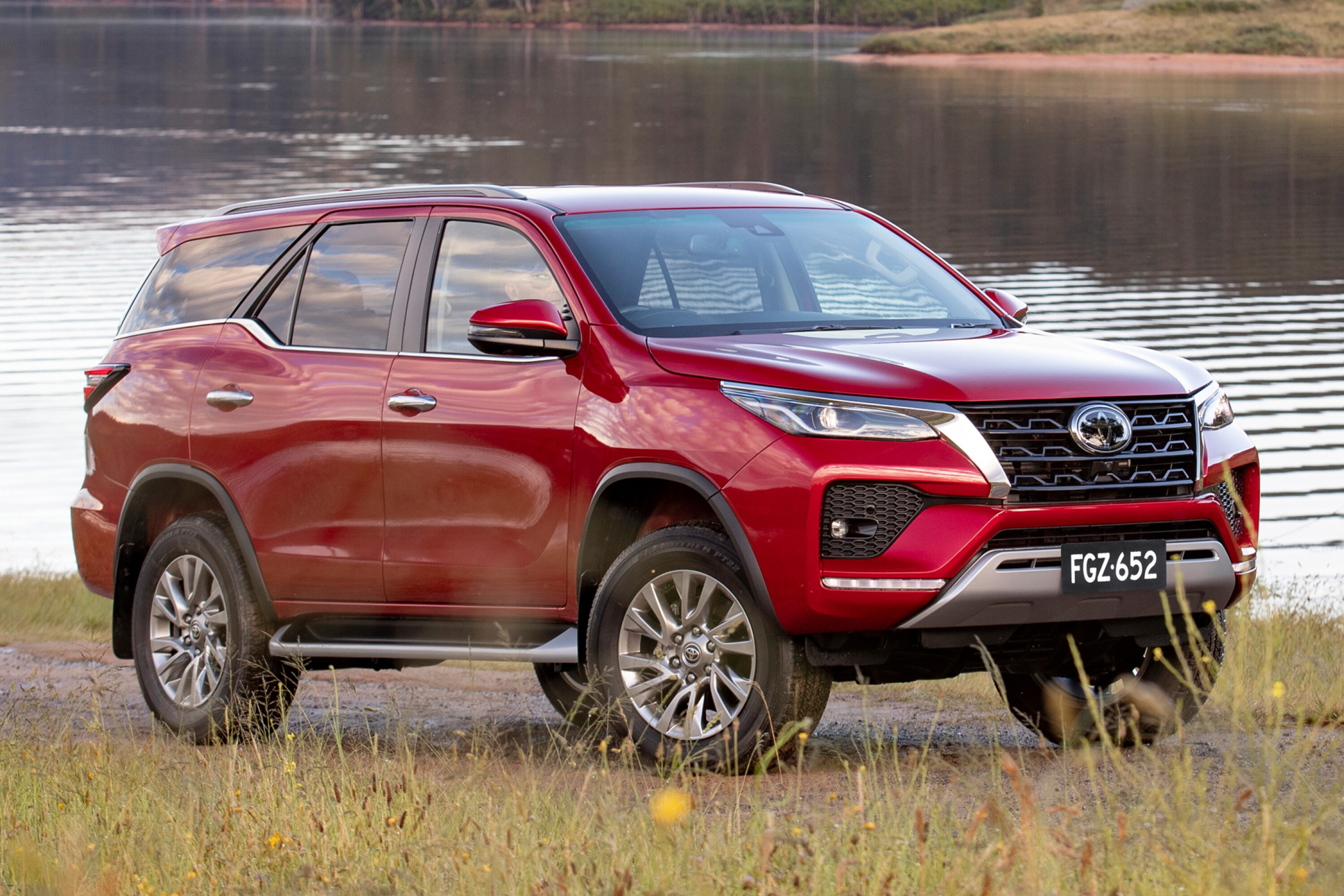
The Toyota Fortuner has solidified its reputation as a distinctive model since its introduction in 2015, renowned for its reliable and rugged nature, capable of conquering both urban roads and challenging off-road terrains.
This substantial SUV, constructed on the foundation of the best-selling Hilux ute, is exclusively offered in a seven-seat configuration.
The Fortuner GX, serving as the entry-level choice in the lineup, embodies a fusion of durability, practicality, and Toyota’s renowned reliability.
1
Within Toyota’s SUV range, the Fortuner positions itself between the city-focused Kluger and the higher-priced Prado and LandCruiser models, catering to families seeking an off-road-capable vehicle.
However, in a competitive segment filled with numerous contenders, let’s explore what the range-topping Fortuner variant has to offer.
1
Pricing and features
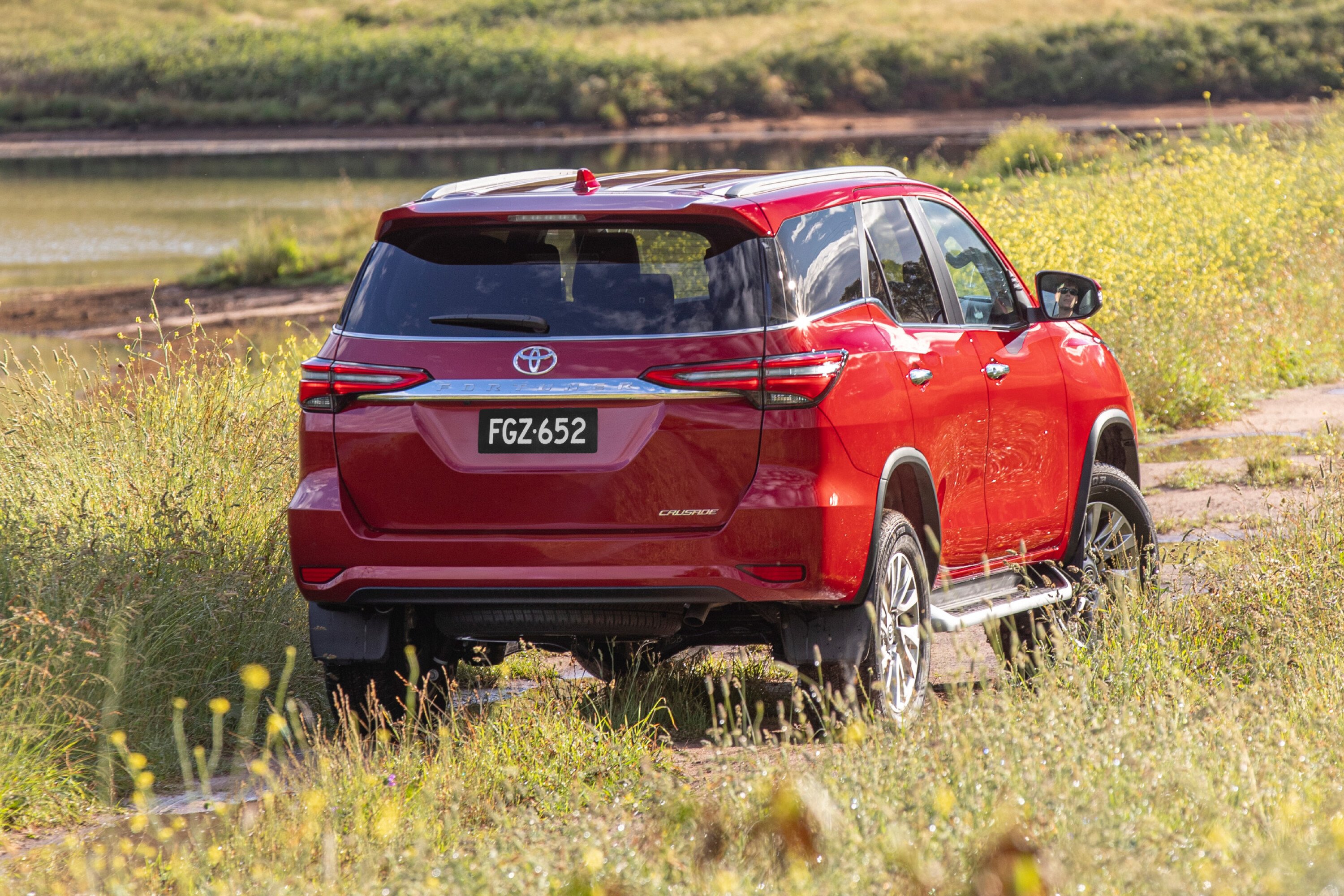
Sitting as the most premium variant in the range, the Fortuner Crusade is available at $66,755 before on road-costs.
All grades are equipped with the same 2.8-litre diesel engine, producing 150kW and 500Nm of torque, while achieving a combined fuel economy rating of 7.6L/100km. Buyers are limited to the standard part-time 4WD setup.
1
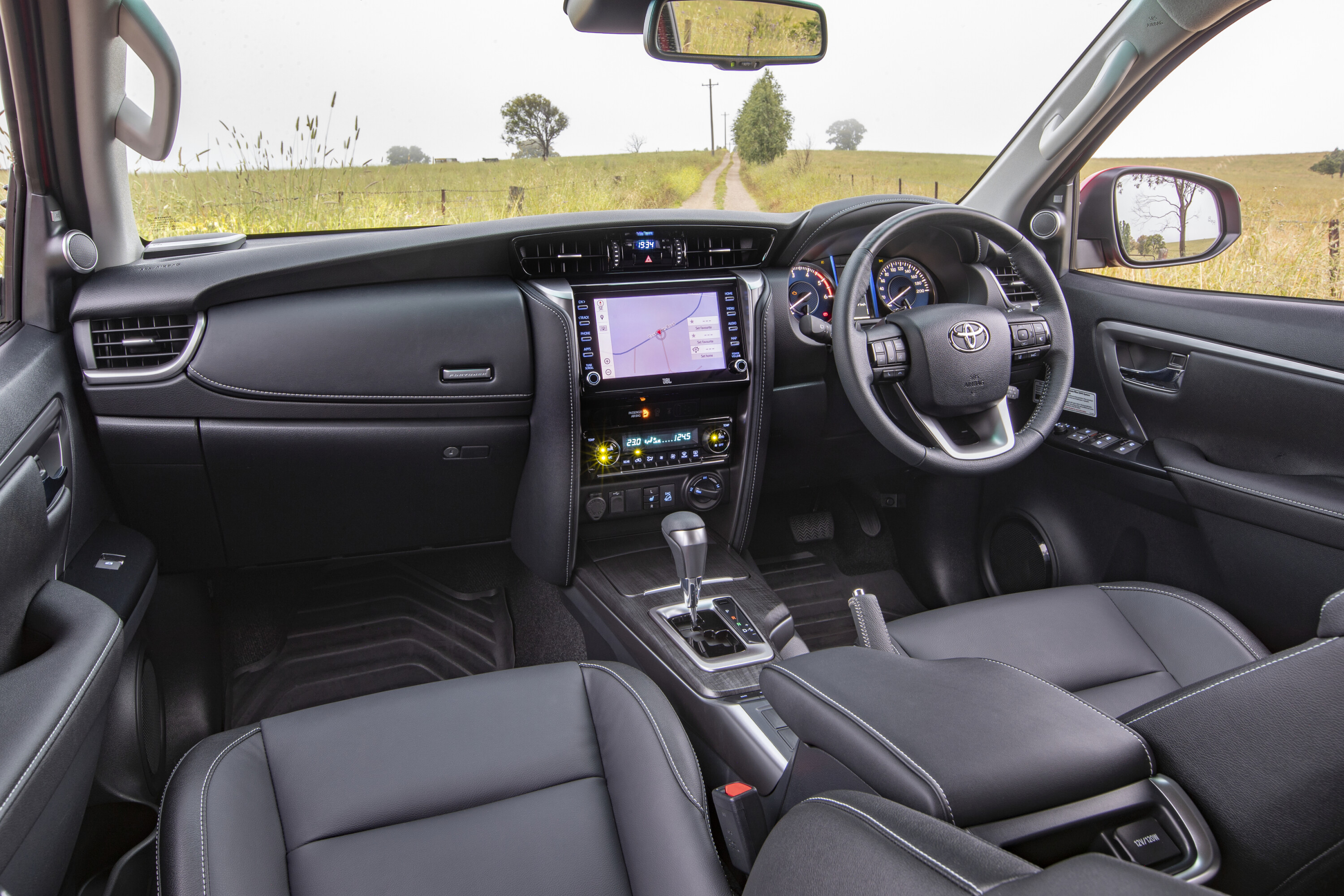
The Fortuner’s impressive off-road capabilities stem from a straightforward set of features, including a low-range setting for its six-speed automatic transmission, a rear differential lock, and a substantial 216mm of ground clearance. Additionally, it seamlessly transitions between two-wheel-drive and four-wheel-drive modes.
In real-world driving scenarios, the Fortuner typically maintains an average fuel consumption of around 11 liters per 100 kilometers, spanning various driving conditions. During relaxed highway cruising, it can even achieve as low as 9.0 liters.
The braked towing capacity has remained consistent at 3100kg across the range since the 2021 update.
1
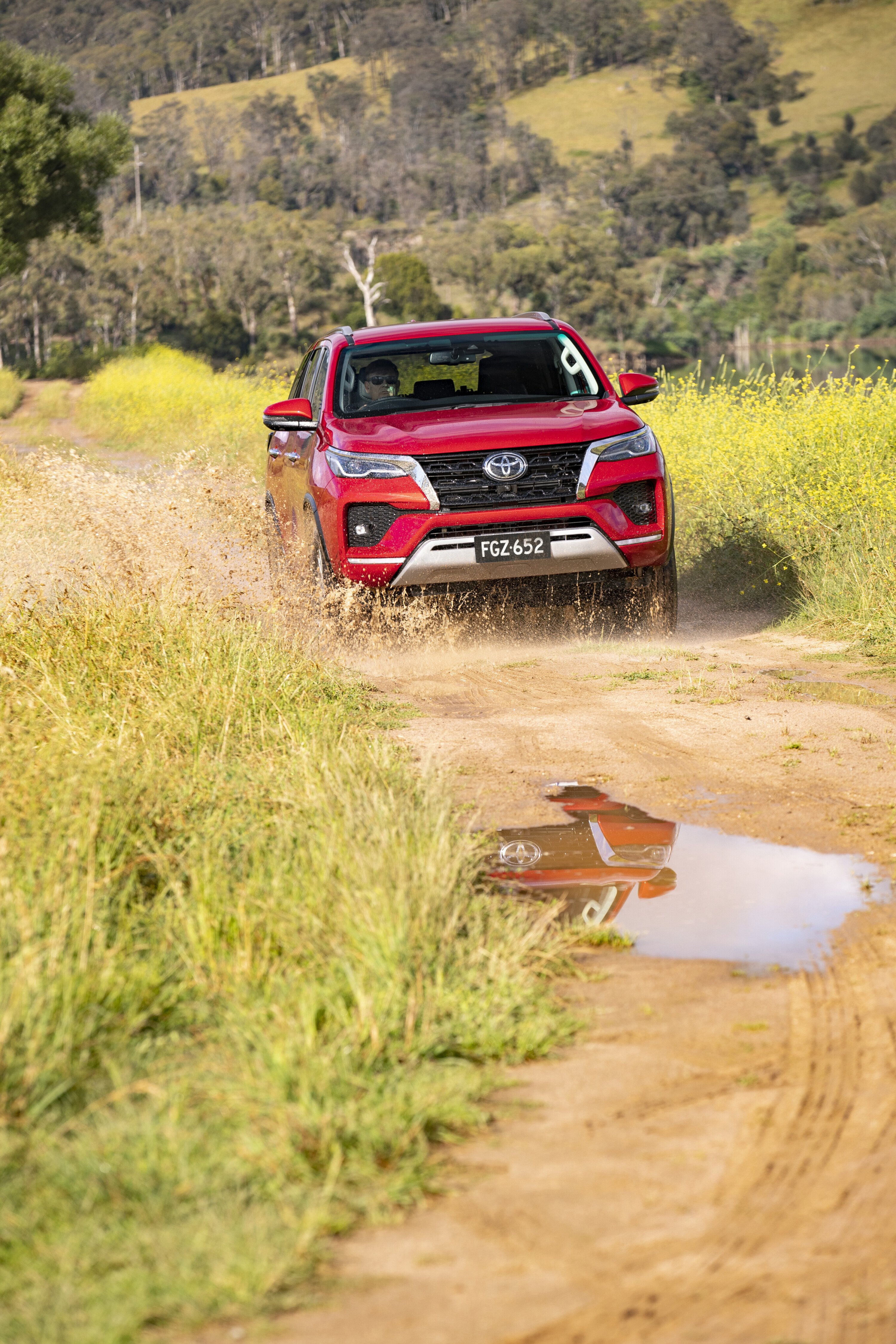
Standard features from the GX includes an 8-inch touchscreen equipped with Apple CarPlay and Android Auto compatibility, keyless entry and start and LED daytime running lights (DRLs) and headlamps.
Stepping up into the GXL adds chrome coloured door handles, rear privacy glass, roof rails, LED fog lamps, wood-grain look steering wheel, sat nav, dual zone climate control and paddle shifters.
And at the pinnacle, the Crusade offers:
- 18-inch alloy wheels
- 11 JBL speaker audio system
- Door courtesy lamps
- Leather accented seats
- Front heated seats
- Electrochromatic rear view mirror
- Power back door
Safety
The entire Toyota Fortuner range received a five-star rating after testing conducted in 2019.
This encompasses high scores, with a remarkable 95% rating for adult occupant protection and an 84% rating for child occupant protection.
The Toyota Safety Sense suite of features is available across the range, which includes high speed active cruise control, lane departure alert and road sign assist.
1
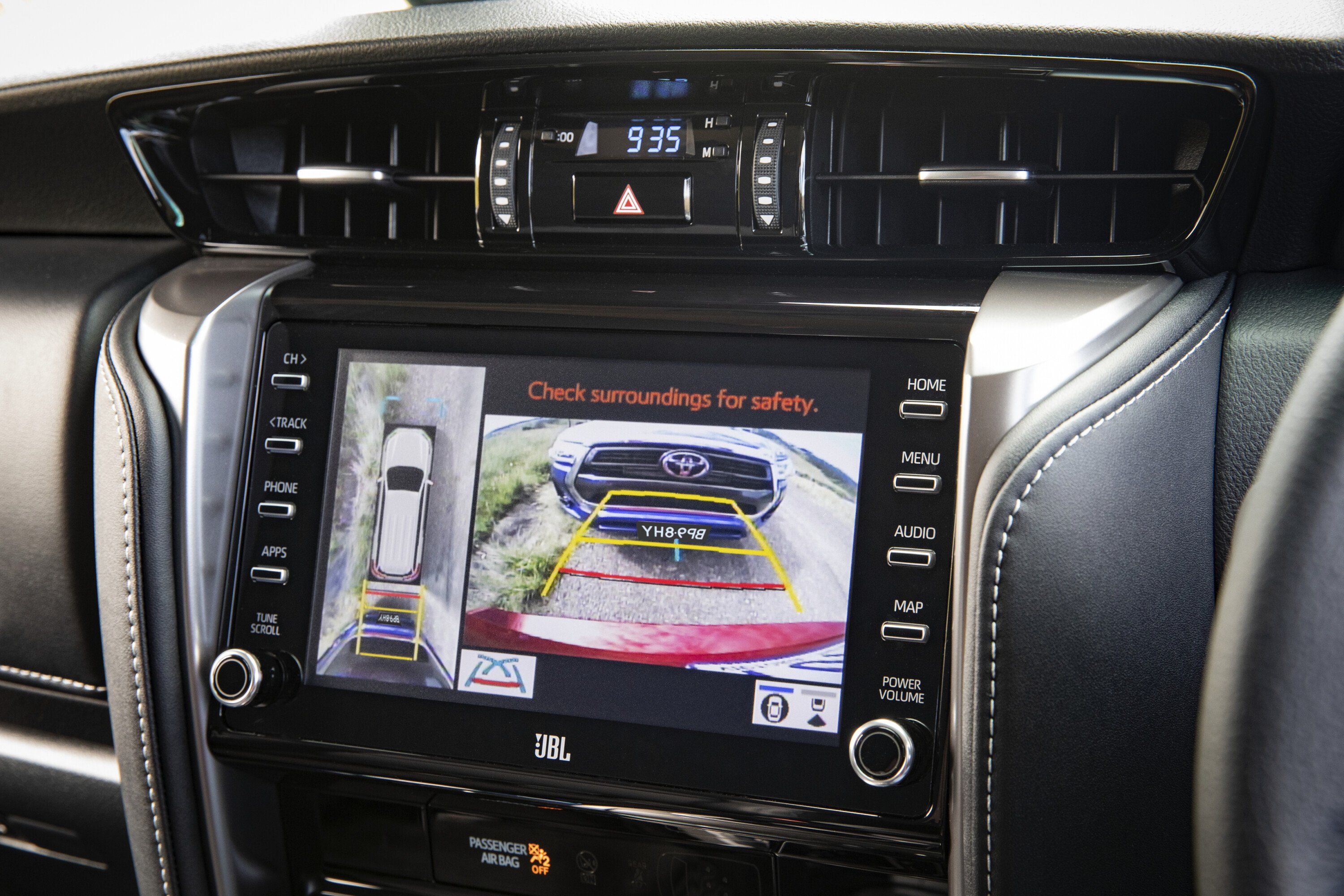
Buyers also benefit from the inclusion of seven airbags, vehicle stability control, downhill assist control, a reversing camera, and front and rear parking sensors.
The top-tier Crusade variant packs in additional advanced safety features, such as rear cross-traffic alert, a panoramic view monitor and blind spot monitors.
Key rivals
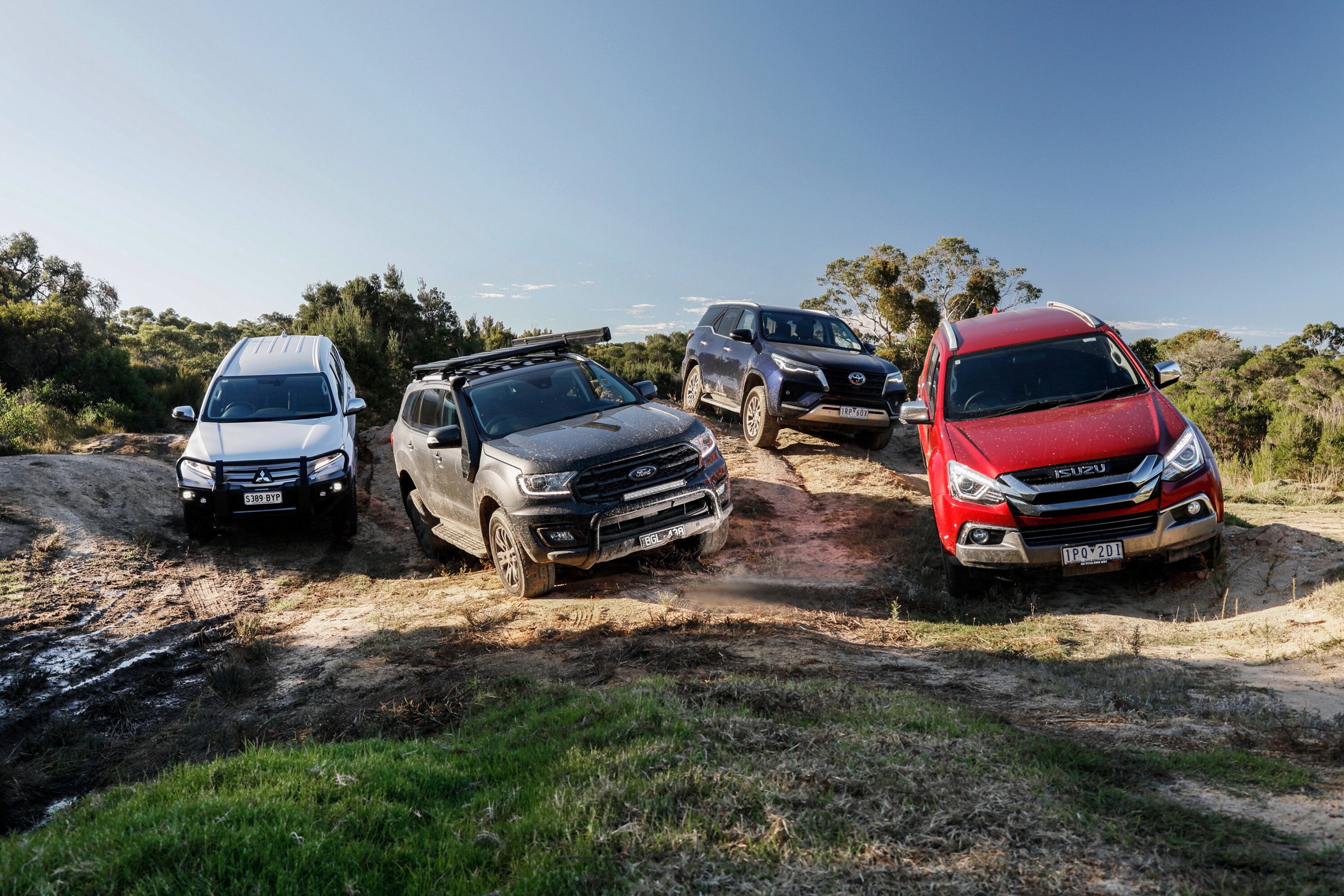
Competitors include other popular ute-based large SUV’s:
1
Should I put it on my shortlist?
The 2023 Toyota Fortuner is a reliable option for individuals seeking a robust SUV that maintains its essential attributes.
For a vehicle of this size, the more desirable features are exclusive to the top of the range Crusade such as rear cross traffic alert and blind spot monitor.
The Crusade packs in all you’d need in a family SUV, with the creature comforts of a luxurious car.
Snapshot
- 2024 Mitsubishi Outlander pricing and features
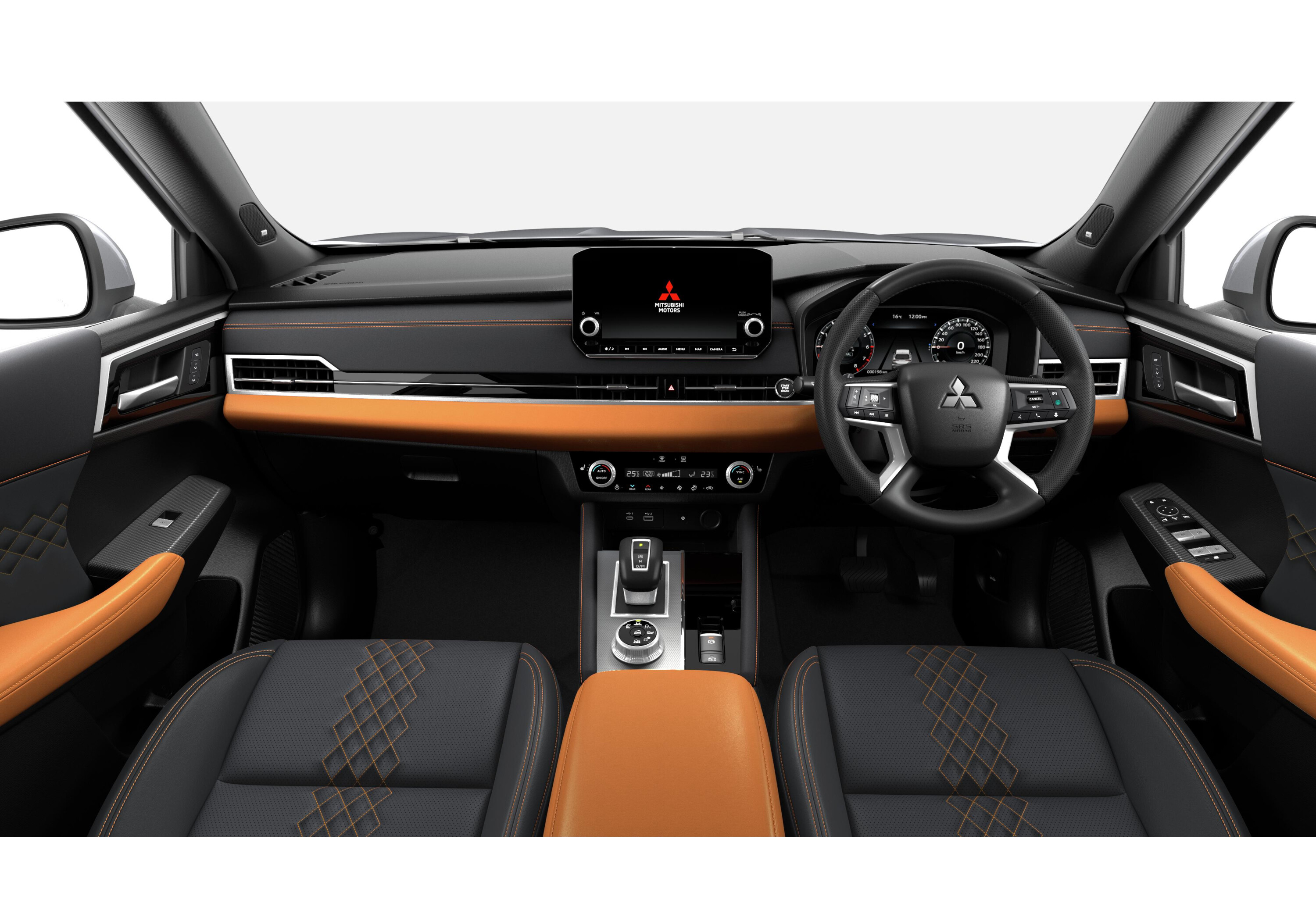
- Graphite Grey paint and more two-tone options for Exceed Tourer petrol and PHEV
- LS Black Edition becomes standalone trim; ES AWD dropped from range
- Prices climb by between $1500 and $1800
The 2024 Mitsubishi Outlander will begin arriving in Australian dealers in November this year.
Changes are minor compared to last year’s tweaks, with a new paint colour, the Black Edition’s permanence, and a few safety improvements building on the enhanced MY23 suite.
It also means the Outlander is more expensive to the tune of $1500 in lower ES petrol trims up to $1800 for the flagship Exceed Tourer PHEV. The ES AWD has been dropped from the lineup, too.
Safety tweaks that apply range-wide include ‘always on’ dusk-sensing headlights and an LED rear foglight.
1
There’s also a rear seat alert to let the driver know if they’ve left a child inside the car.
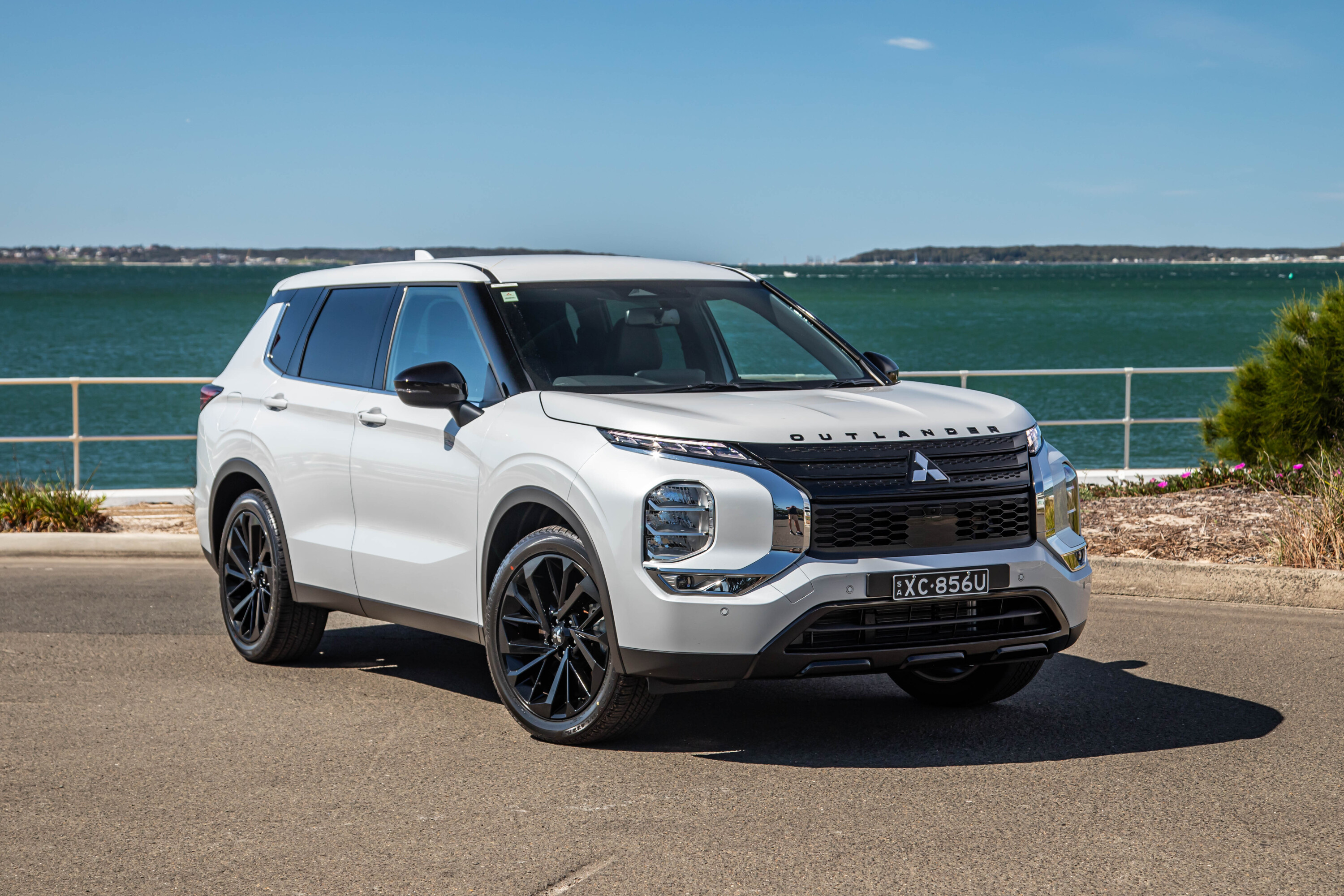
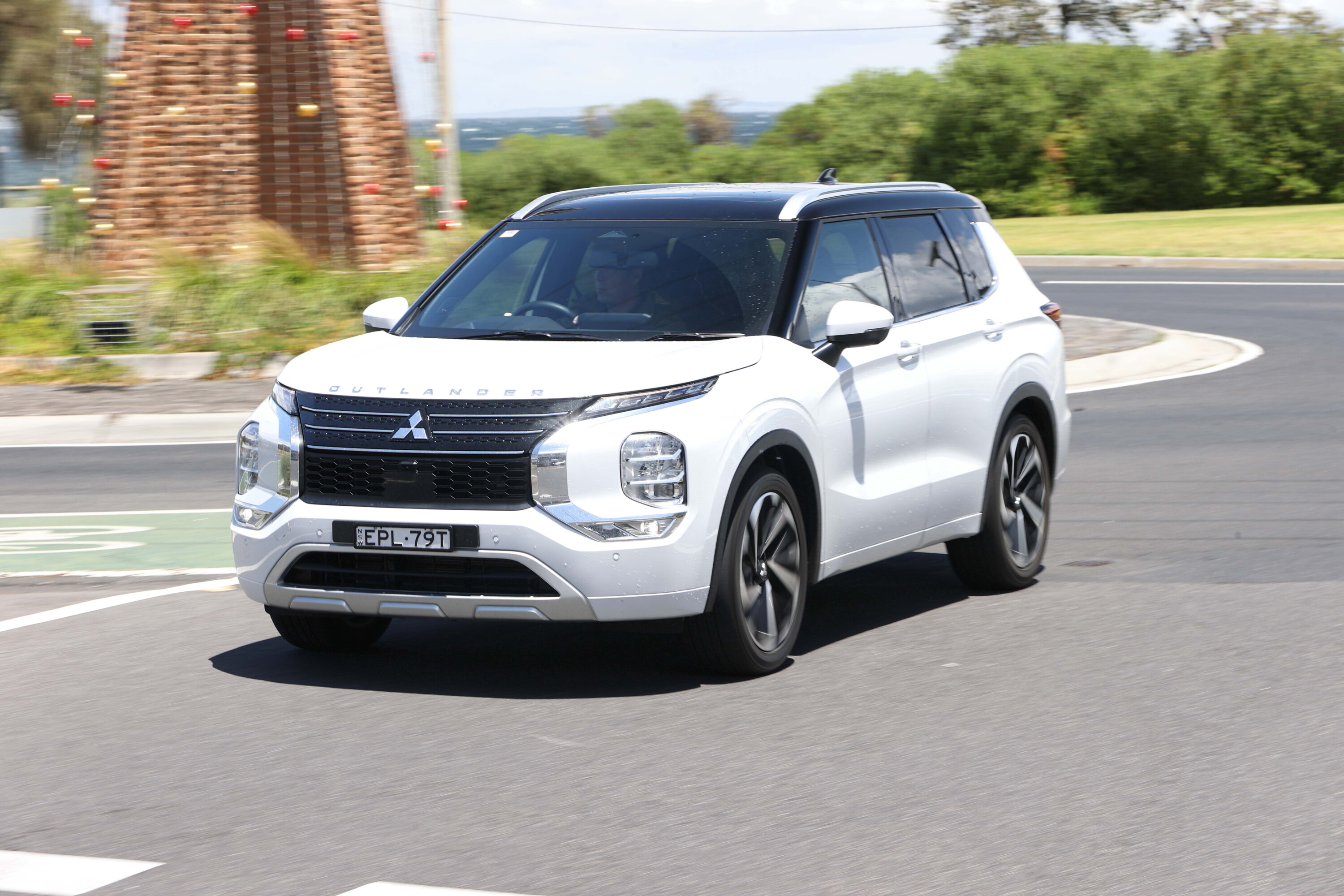
Graphite Grey is a new colour that replaces the old Titanium metallic and is available across all grades, while the flagship Exceed Tourer picks up two new colourways: Graphite Grey with a contrasting Black Mica roof, or Black Diamond with a Sterling Silver roof.
As of September, the Mitsubishi Outlander (17,762 YTD) displaced the stalwart Mazda CX-5 (16,895) as the second most popular medium SUV behind the Toyota RAV4 (22,388).
1
JUMP AHEAD
- Pricing
- Features
- Options
- Colours
- Engine, drivetrain, and fuel economy
- Safety
- Dimensions
- Warranty and servicing
- Availability
2023 Mitsubishi Outlander pricing
| Variant | Pricing (before on-road costs) | Change |
|---|---|---|
| ES five-seat FWD | $37,740 | Up $1500 |
| LS seven-seat FWD | $41,240 | Up $1500 |
| LS Black Edition seven-seat FWD | $42,990 | Up $1500 |
| LS seven-seat AWD | $43,740 | Up $1500 |
| Aspire seven-seat FWD | $44,840 | Up $1600 |
| Aspire seven-seat AWD | $47,340 | Up $1600 |
| Exceed seven-seat AWD | $52,640 | Up $1650 |
| Exceed Tourer seven-seat AWD | $55,190 | Up $1700 |
2023 Mitsubishi Outlander PHEV pricing
| Variant | Pricing (before on-road costs) | Change |
|---|---|---|
| Outlander PHEV ES five-seat | $57,290 | Up $1800 |
| Outlander PHEV Aspire five-seat | $63,790 | Up $1800 |
| Outlander PHEV Exceed seven-seat | $69,290 | Up $1800 |
| Outlander PHEV Exceed Tourer seven-seat | $71,790 | Up $1800 |
1
2023 Mitsubishi Outlander features
ES
| 18-inch alloy wheels | Dual-zone climate control |
| 8-inch infotainment system | Six-speaker sound system |
| Wired Apple CarPlay and Android Auto | Second-row air vents |
| AM/FM/DAB+ radio | Front and rear parking sensors |
| 7.0-inch semi-digital instrument cluster | Reversing camera |
| Cloth upholstery | Push-button start |
| 40/20/40 split-fold rear seat | Full-size spare wheel. |
| Rear seat alert | Dusk-sensing headlights |
ES PHEV
| In addition to ES | |
|---|---|
| 9.0-inch audio display with satellite navigation | Splash-free window washer system. |
| Wireless Apple CarPlay/wired Android Auto | 12.3-inch digital driver display |
LS
| In addition to ES PHEV | |
|---|---|
| LED front fog lamps | Auto-dimming rear-view mirror |
| Keyless entry | Heated, auto-folding side mirrors |
| Privacy glass | Roof rails |
| Cargo blind | Rain-sensing wipers |
| Leather-wrapped steering wheel and gear shifter | Sliding rear seats |
| Silver front and rear bumper garnish | Rear USB-A ports (x2) |
| Space-saver spare wheel (in lieu of full-size spare) | Analogue dials |
LS Black Edition
| In addition to LS | |
|---|---|
| 20-inch alloy wheels (black) | Black headlining |
| Suede-cloth upholstery with synthetic leather inserts | Black centre console panel |
| Black side mirrors | Metallic paint |
| Black grille, front and rear bumper garnishes | Deleted: roof rails |
Aspire
| In addition to LS | ||
|---|---|---|
| 20-inch alloy wheels | Heated front seats | |
| 10.8-inch head-up display | Adaptive headlights | |
| Suede-cloth upholstery with synthetic leather inserts | Power tailgate (PHEV: with one-touch open and hands-free operation) | |
| Power driveru2019s seat | PHEV: AC power supply (V2L) u2013 two 1500W, 240V, three-pin outlets | |
Exceed
| In addition to Aspire | |
|---|---|
| 12.3-inch digital instrument cluster | Pull-up rear sunshades |
| 10-speaker Bose audio system | Quilted leather appointed seat trim (in a choice of black or light grey) |
| Mi-Pilot semi-autonomous driving system | Front sequential LED indicators |
| Power passenger seat | Three-zone climate control |
| Driveru2019s seat memory function | Electric tailgate with hands-free function |
| Panoramic tilt and slide sunroof | Colour coded lower body accent (front, side and rear) |
| Seven-seat configuration | B- and C-pillars with gloss black paint |
| Illumination in front door trim | PHEV: Heated steering wheel |
Exceed Tourer
| IN ADDITION TO EXCEED: | |
|---|---|
| Massaging front seats | Two-tone exterior colour |
| Two-tone high grade leather interior (black and saddle tan) | PHEV: heated rear seats |

1
Colours
| White (solid) |
| Cosmic blue (pearlescent) |
| Sterling silver (metallic) |
| Graphite Grey (metallic) |
| White diamond (prestige) |
| Red diamond (prestige) |
| Black diamond (prestige) |
| White diamond with black mica two-tone (Exceed Tourer only) |
| Sterling silver with black mica two-tone (Exceed Tourer only) |
| Graphite Grey with black mica two-tone (new; Exceed Tourer only) |
| Black Diamond with Sterling Silver two-tone (new; Exceed Tourer only) |
1
Engine, drivetrain and fuel economy
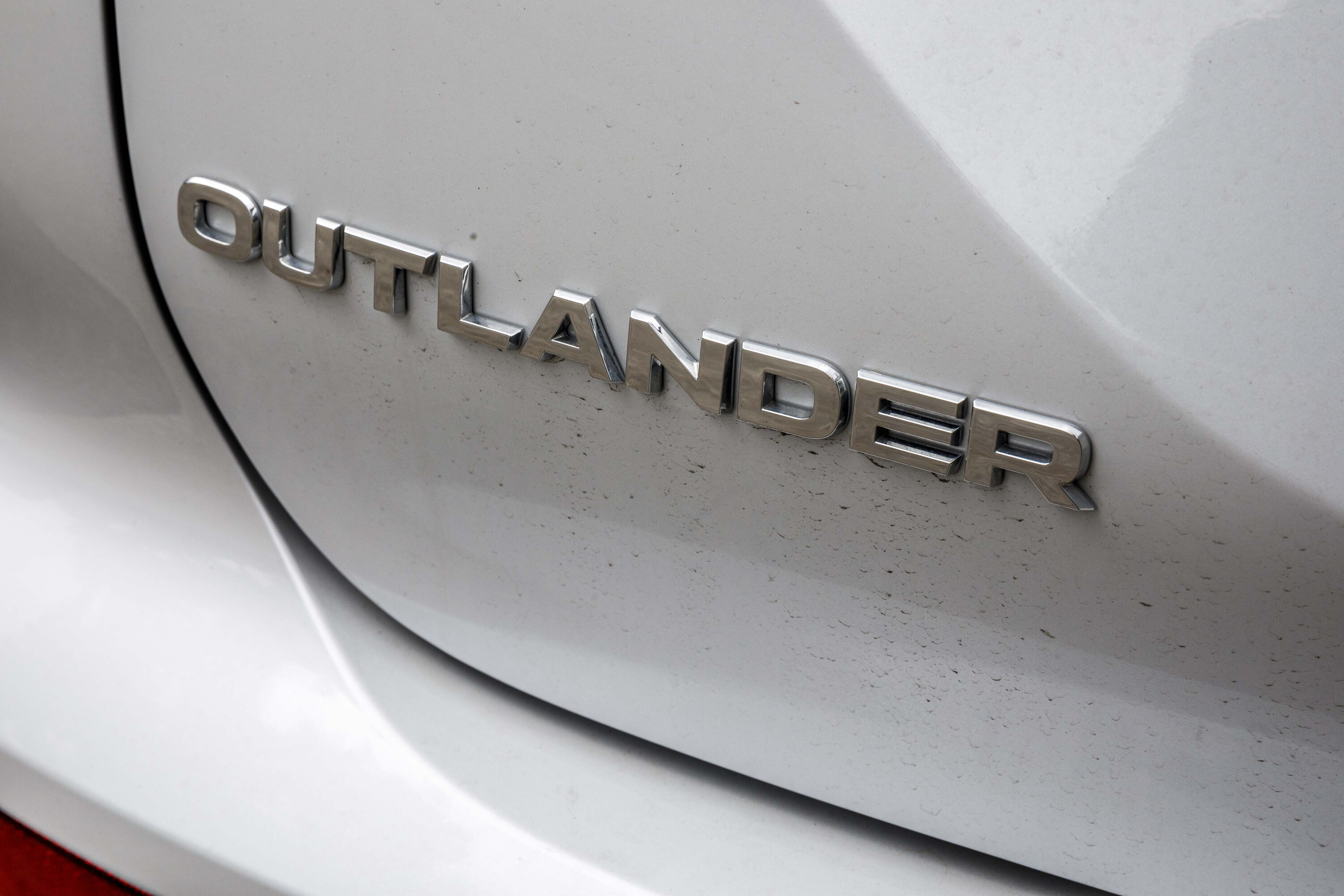
The Mitsubishi Outlander uses a 2.5-litre four-cylinder, producing 135kW and 245Nm paired with a CVT automatic. Buyers can choose front-wheel drive on the ES, LS and Aspire, and AWD is available from LS upwards throughout.
There are six drive modes available in the AWD versions (five in the 2WD), which the company calls Super All Wheel Control (S-AWC).
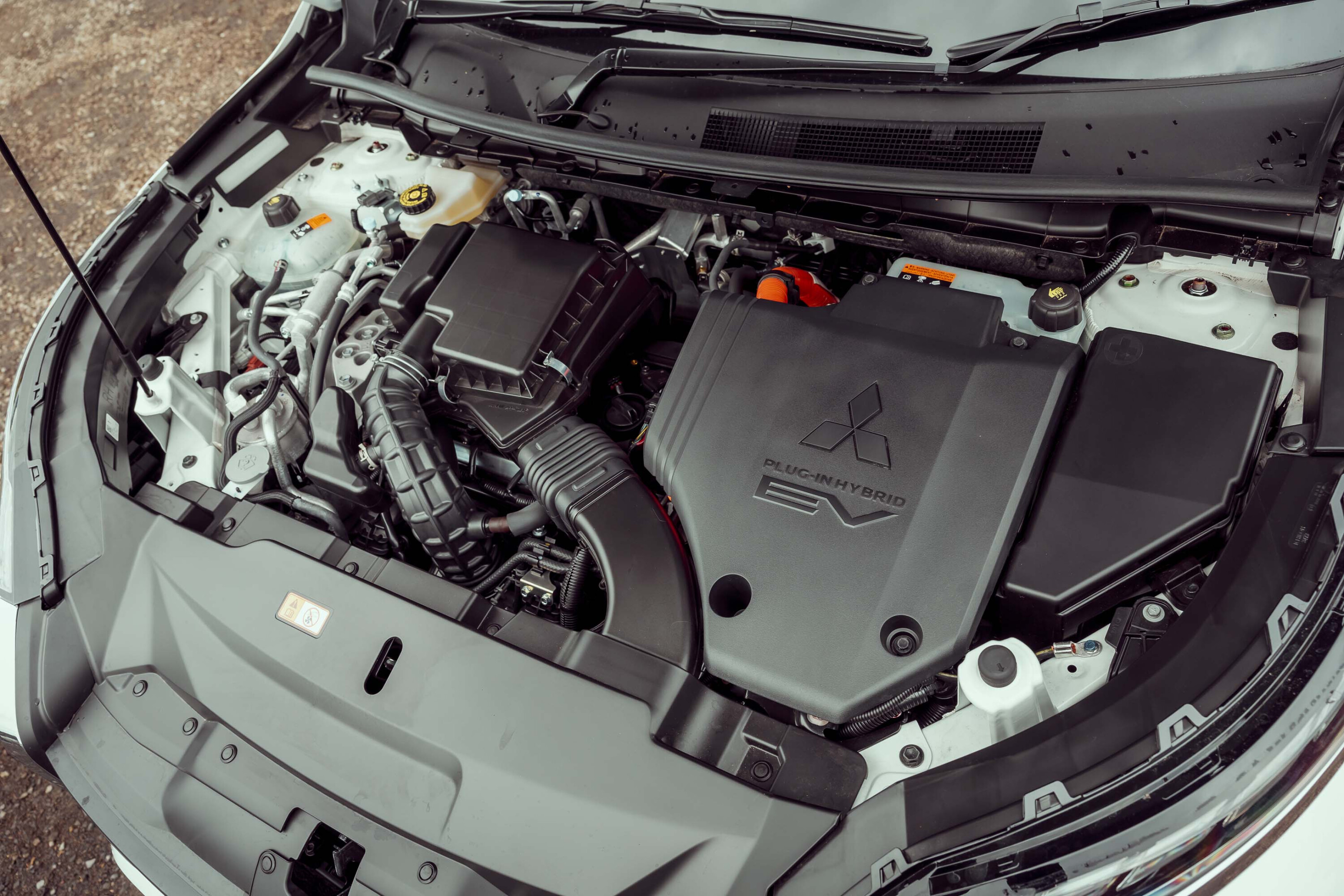
The plug-in hybrid mates a 98kW 2.4-litre Atkinson cycle petrol four-cylinder with a pair of electric motors on the front and rear axles for total system outputs of 185kW and 450Nm.
A 20kWh battery pack equates to 85km electric-only driving range in WLTP testing, and its rated at 1.5L/100km in the combined ADR fuel efficiency cycle.
1
A range-topping plug-in hybrid powertrain is also available. For more information, click here.
ADR rated fuel economy
| ES FWD | 7.5L/100km |
| LS/LS Black Edition/Aspire FWD | 7.7L/100km |
| ES AWD | 7.8L/100km |
| LS/Aspire/Exceed/Exceed Tourer AWD | 8.1L/100km |
| PHEV | 1.5L/100km |
1
Safety
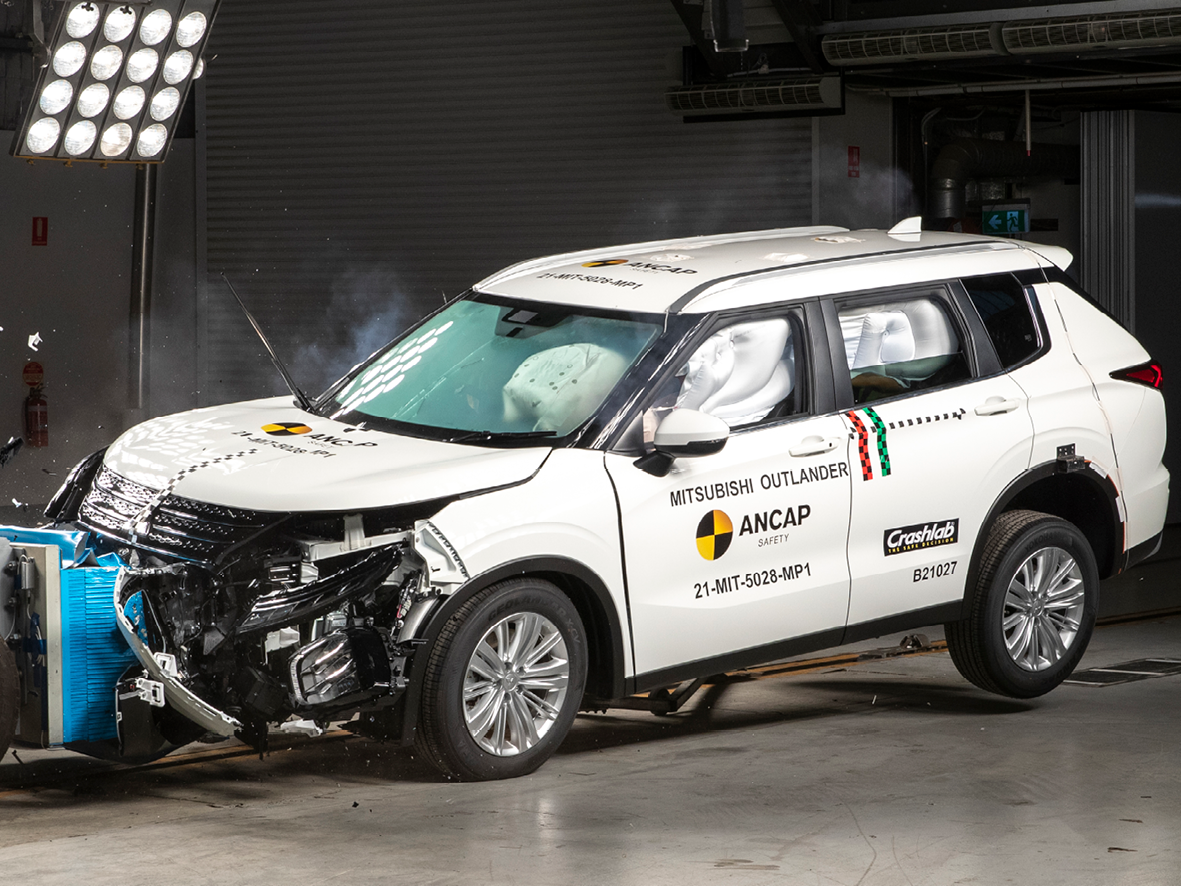
The Mitsubishi Outlander is covered by a five-star ANCAP safety rating, based on testing conducted in 2022. This score applies to all variants.
It received a score of 83 per cent for adult occupant protection, 92 per cent for child occupant protection, 81 per cent for vulnerable road user protection, and 83 per cent for safety assist.
Eight airbags (dual front, side, curtain, driver’s knee, and front-centre) are fitted across the range.
Each variant includes the following active safety equipment as standard:
| Autonomous emergency braking (vehicle, pedestrian, cyclist, junction, reverse) | Blind-spot alert |
| Forward collision warning | Rear cross-traffic alert |
| Lane-keep assist | Traffic sign recognition |
| Lane departure warning | Driver attention alert |
| Emergency lane assist | Automatic high beam (new) |
| Rear occupant alert (new) |

1
Dimensions
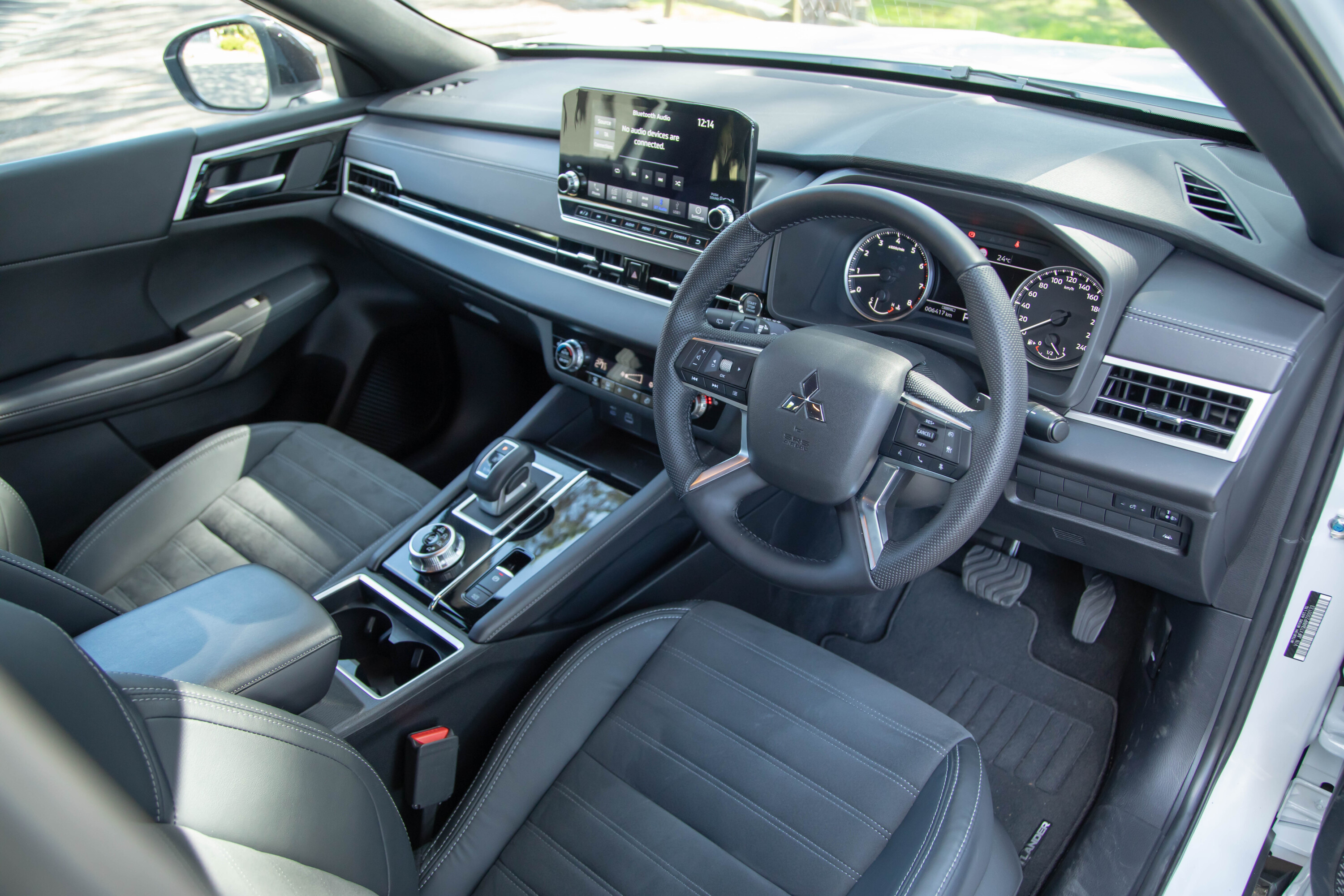
The Mitsubishi Outlander is 4710mm long, 1862mm wide and 1745mm tall and rides on a 2706mm wheelbase.
2023 Mitsubishi Outlander boot space
With the rear seats up, the five-seat Mitsubishi Outlander has a 485-litre boot capacity. Folding the second row increases luggage capacity to 1466 litres.
Seven-seat examples have 163L of storage behind the third row, extending to 478L and 1461L (or 1473L for Exceed and Exceed Tourer), respectively.
1
Warranty and servicing
The Mitsubishi Outlander is covered by the brand’s 10-year/200,000km ‘Diamond Advantage’ warranty.
This reverts to a five-year/100,000-kilometre period if the vehicle is serviced outside the Mitsubishi dealer network.
Maintenance for the Outlander is required every 12 months or 15,000 kilometres, whichever comes first.
Capped-price servicing is available for ten years, priced at $199 each for the first five trips to the mechanic.
Availability
The MY24 Mitsubishi Outlander began rolling off its Japanese production line last month, with the first deliveries expected in November.
For information on Mitsubishi’s wait times, click here.
Snapshot
- Mazda Connected Services coming to Australia
- Due to launch in the updated MX-5 in the first half of 2024
- Further details to be confirmed early next year
Mazda Australia has confirmed it’ll launch connected services for selected vehicles in 2024.
The service – confirmed for the updated MX-5 due in early 2024 – will be enabled in Australia in the first half of next year.
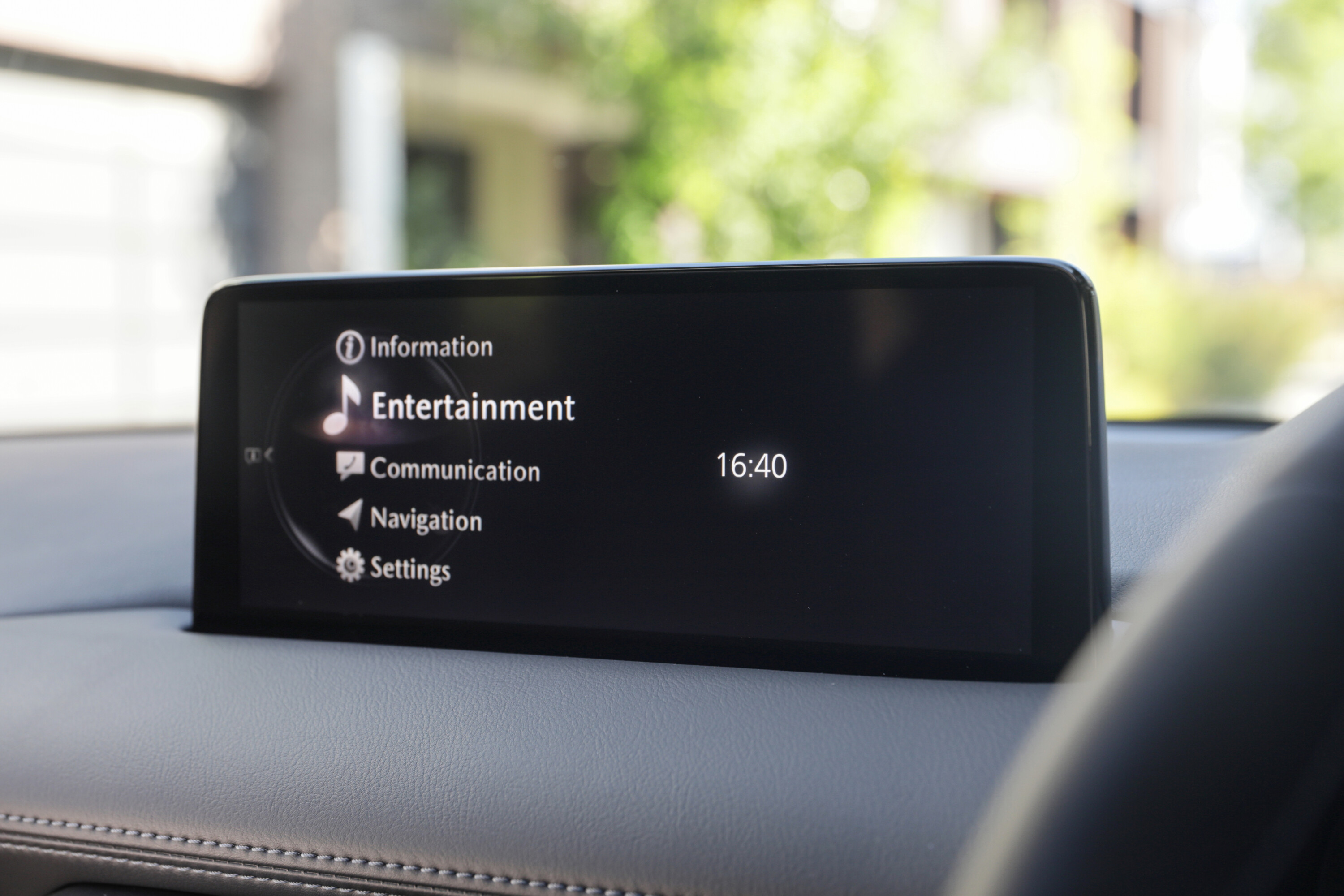
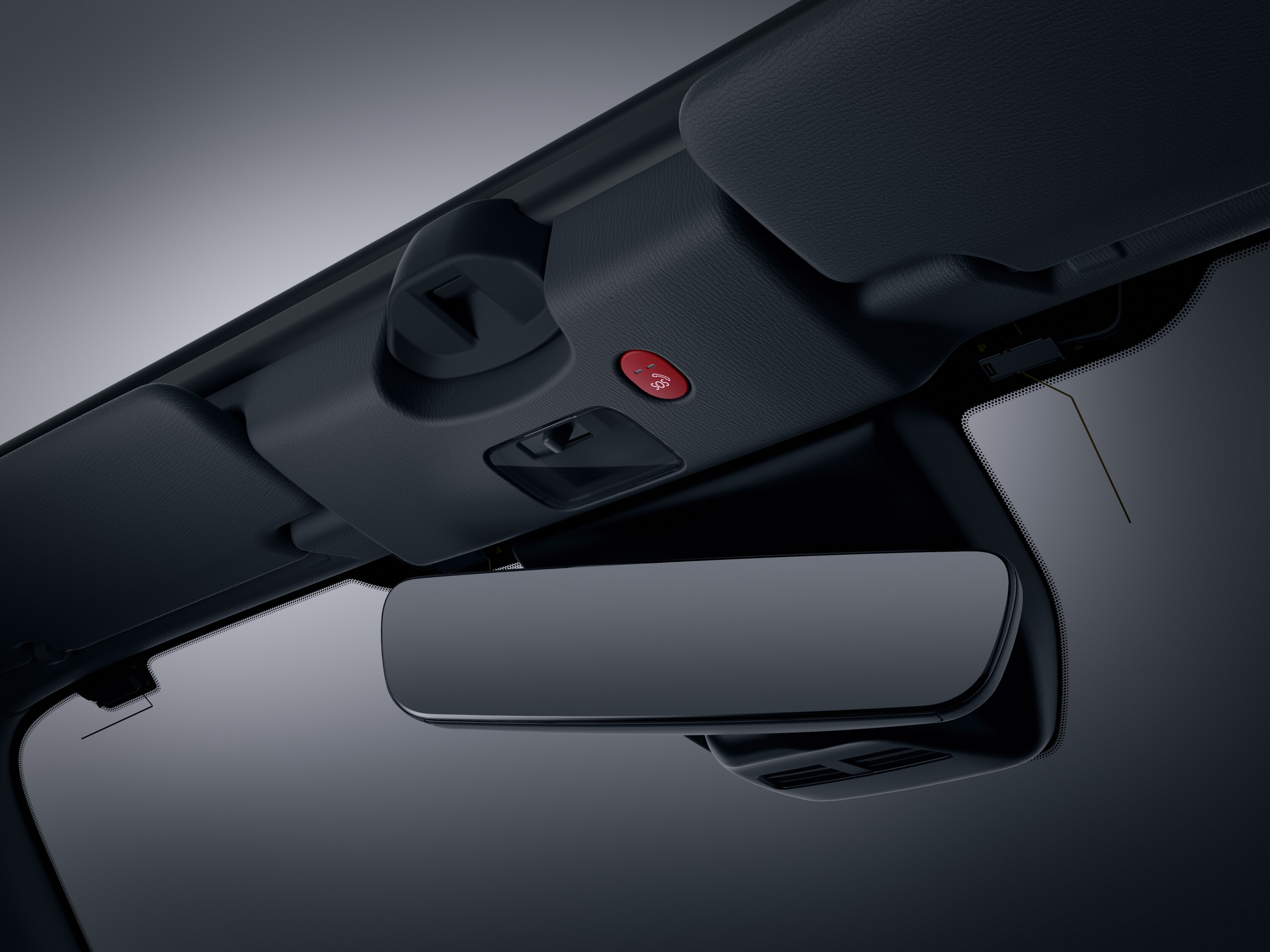
“The MX-5 becomes the first Mazda in the Australian range to support Connected Services functionality, which can connect the vehicle to the emergency services to dispatch an ambulance in case of an accident and allow vehicle status to be checked via a smartphone app,” said Mazda Australia.
1
Additional vehicles supporting Mazda Connected Services are expected to be announced later, potentially including the yet-to-be-revealed CX-80 premium SUV and imminent updates for the CX-30 and CX-5, ahead of a wider roll-out across Mazda’s line-up.
A Mazda Australia spokesperson said further details on the Connected Services roll-out will be confirmed “from Q1 next year”.
In the United States, Canada and Japan, the ‘MyMazda’ smartphone application allows owners to find their vehicle, remote start, lock and unlock, activate the hazard lights, or honk the horn. It also provides an overview of the vehicle’s fuel or battery level, oil level, odometer reading, and status alerts including malfunction information.
For electrified vehicles such as the MX-30 EV and CX-90 PHEV, the application also allows owners to remotely stop a charging session and set the climate control to pre-condition the cabin.
1
Destinations can be sent to vehicles with built-in satellite navigation. An in-car WiFi hotspot and over-the-air software updates are also available, but it is unclear if this will be offered in Australia.
The roll-out of Mazda Connected Services in Australia follows similar services becoming available from Toyota, Ford, Hyundai, Kia and Honda in recent years.
Toyota Connected Services, launched in 2020, has similar functions. It operates on a subscription model with a 12-month or three-year complimentary period, depending on the vehicle.
Hyundai, Kia and Honda offer connected services free of charge for a vehicle’s warranty length, at seven years for Kia and five years for Hyundai and Honda.
FordPass Connect is free for the life of the modem, according to Ford Australia. However, connected traffic updates are only available for three years.
The push for connected technology in mainstream vehicles follows luxury brands BMW and Mercedes-Benz, with ‘My BMW’ and ‘Mercedes me connect’ available on vehicles dating back to 2014.
Electric vehicle manufacturer Tesla offers connectivity, allowing drivers to stream music and video, view satellite maps and live traffic updates, browse the internet, and perform karaoke while driving – for $9.99 per month, as part of its Premium Connectivity subscription.
Under now-defunct Holden, US car giant General Motors launched its optional OnStar telematics system in Australia with Holden Assist branding in the early 2000s, offering similar features to the connected services offered today.
It was discontinued by 2009 due to low take-up and poor network connectivity in Australia at the time.
MORE
Everything Mazda
Snapshot
- MY24 MX-5 detailed with host of minor changes
- Steering, throttle response, ESC, LSD function have all been tweaked
- Improved in-car technology with new central display
- Debuts connected services for Mazda in Australia
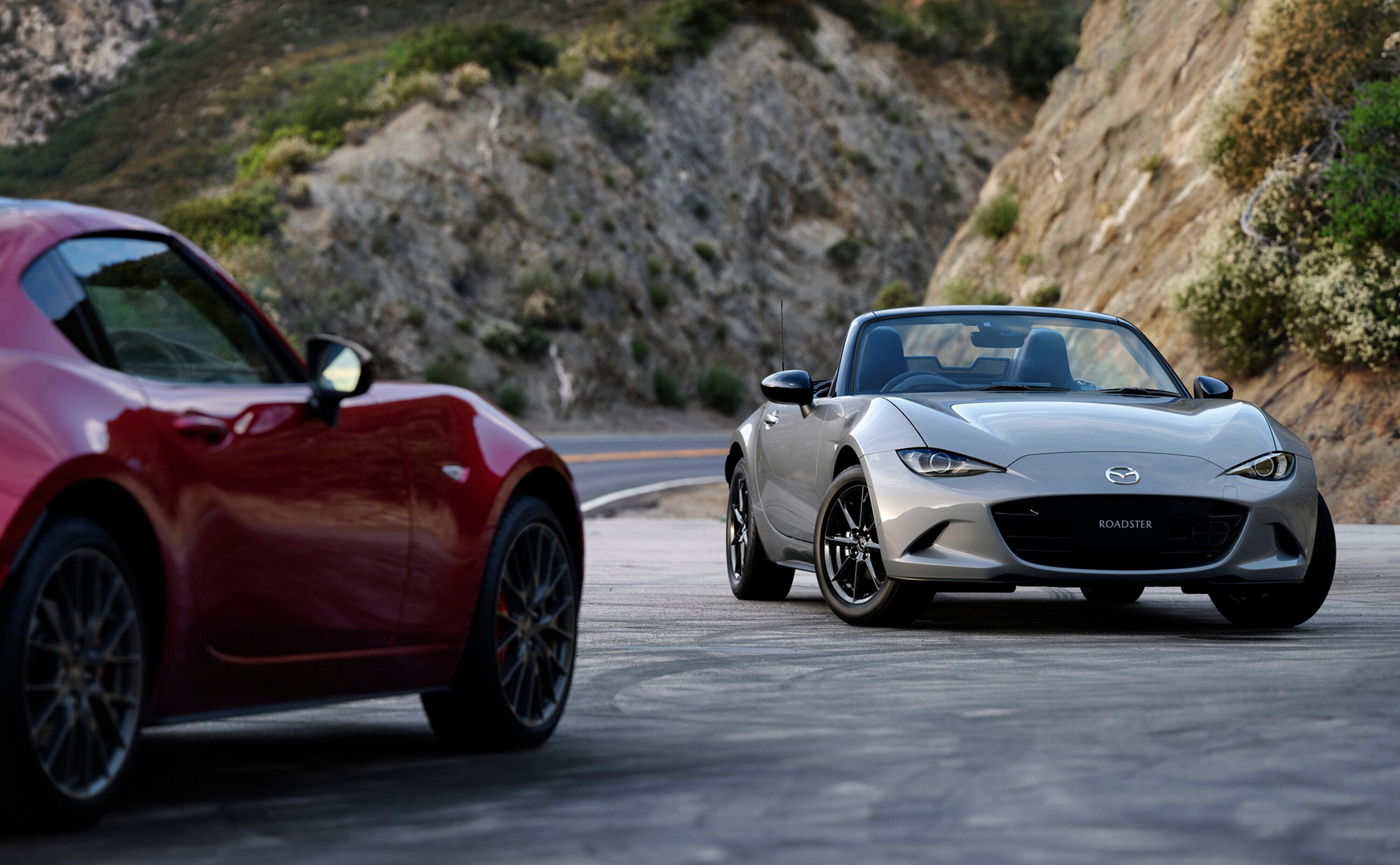
Mazda has detailed the 2024 MX-5 sports car with a host of minor tweaks ushering the two-seater to market in the first quarter of next year.
Rather than visual or trim tweaks, Mazda engineers have looked deep beneath the eight-year-old ‘ND’ MX-5’s sheet metal to subtly improve the roadster and RF models – especially those with the six-speed manual transmission.
Along with the enhancements is a $2310 increase in the base Roadster 2.0-litre’s price, with other variants also climbing to reflect additional equipment. The range stays the same as before, with the Bilstein-equipped GT RS still available.
“It may be our most analogue-feeling car when it comes to dynamics, but the 2024 MX-5 also brings with it the latest connectivity and safety updates, ensuring the overall package is also at the cutting edge technologically”, said MD Mazda Australia Vinesh Bhindi.
1
Mazda has developed a new LSD for the MX-5, the ‘asymmetric’ differential (otherwise known as a 1.5-way diff’) has had its locking force under braking adjusted for greater stability on turn-in.
Additionally, manual cars get a new ‘DSC-Track’ mode that allows a touch more slip for fun on the racetrack without having to fully ditch the safety net of ESC.
Further, smaller tweaks include improved throttle response that’s now ‘more natural’, according to Mazda, and makes low-speed operation smoother. There’s less friction in the electronically-assisted power rack for “more nimble and precise operability.”
Those changes apply exclusively to manual cars, with automatics continuing largely unchanged when it comes to the driving experience.
1
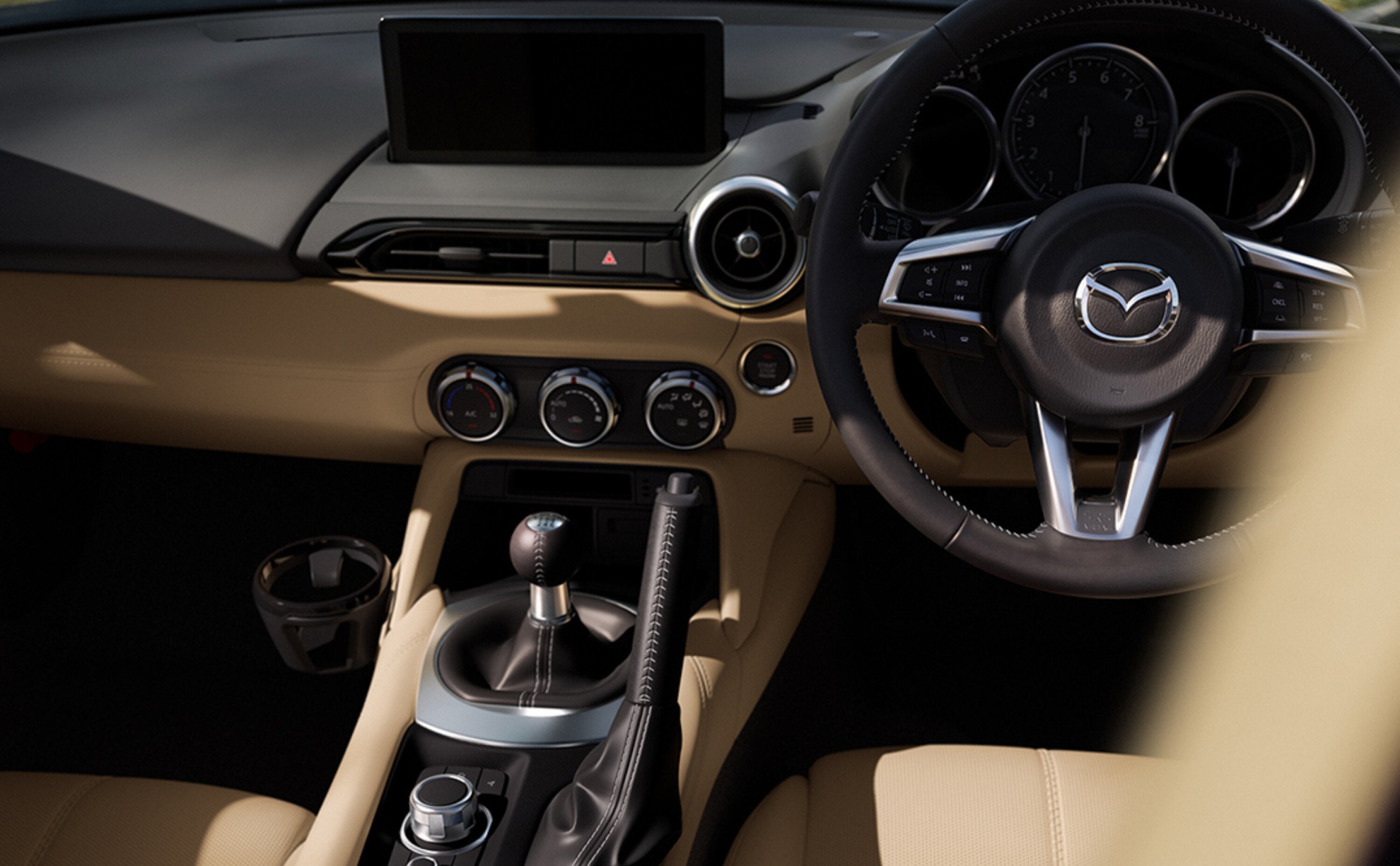
Inside, though, there’s a new 8.8-inch display that replaces the old 7.0-inch item and features – for the first time – Mazda Connected Services. That means an SOS call button and the ability for owners to check vehicle status using a smartphone app.
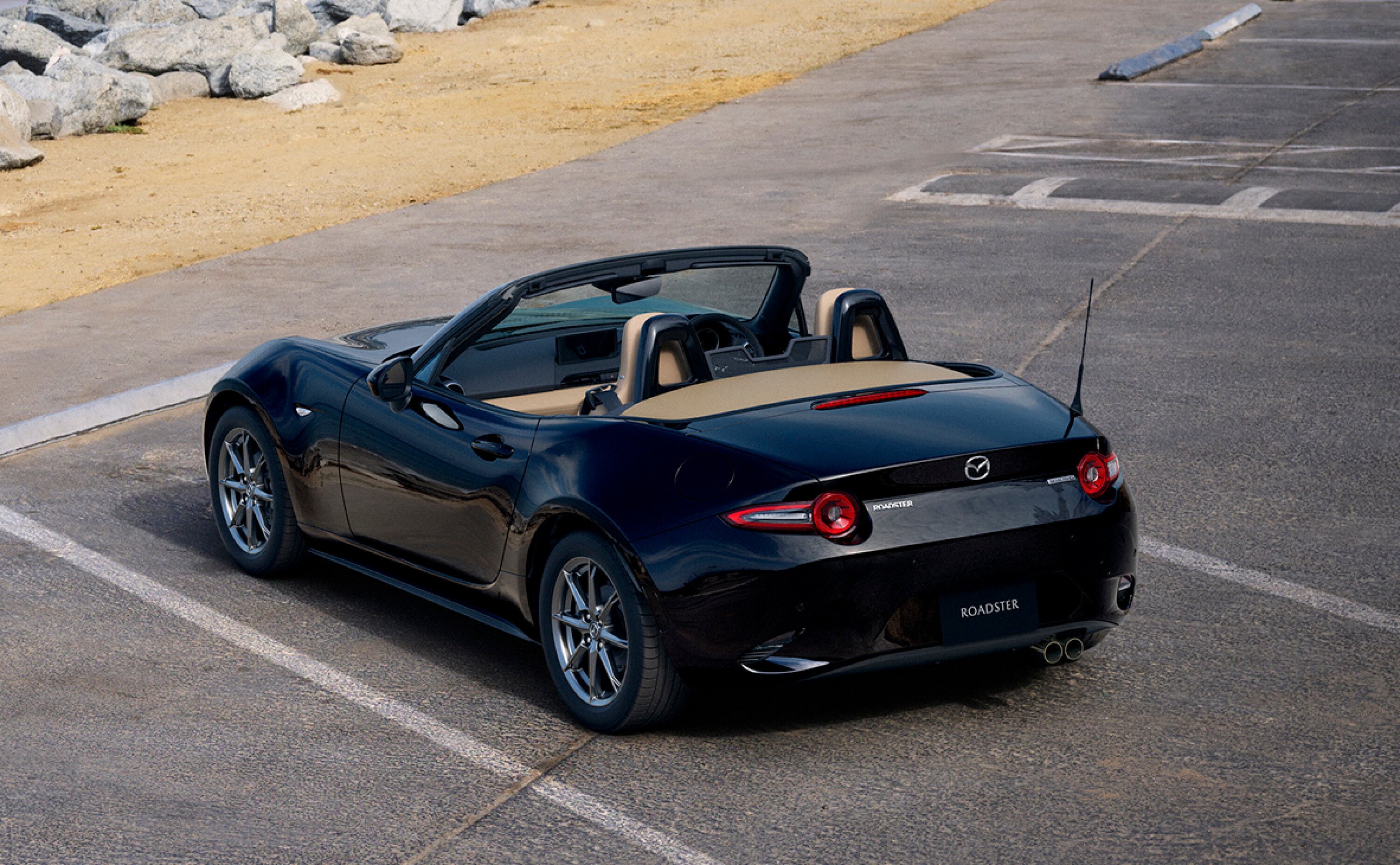
The comfort-focused RF GT grade is now available with a black roof with contrasting tan leather upholstery with an automatic transmission exclusively. Japanese MX-5s are also fitted with adaptive cruise control, though this isn’t confirmed for Australia.
New 17-inch alloy wheels feature and Aero Grey metallic joins the seven-strong colour palette for 2024. Mazda has also very slightly changed the MX-5’s LED headlight and taillight signatures.
1
Otherwise, the MX-5 is largely unchanged with a 2.0-litre petrol four-cylinder up front developing 135kW and 205Nm driving the rear wheels.
The MX-5 roadster and RF, rivals for the Toyota GR86 and Subaru BRZ, will arrive in Australian dealerships in the first quarter of next year.
| 2024 Mazda MX-5 pricing | ||
|---|---|---|
| Variant | Price (before on-road costs) | Change |
| MX-5 Roadster manual | $41,370 | Up $2310 |
| MX-5 RF manual | $46,100 | Up $2730 |
| MX-5 Roadster GT manual | $48,490 | Up $2800 |
| MX-5 Roadster GT auto | $49,990 | Up $2300 |
| MX-5 Roadster GT RS manual | $51,490 | Up $2800 |
| MX-5 RF GT manual | $52,990 | Up $3220 |
| MX-5 RF GT auto | $54,490 | Up $2720 |
| MX-5 RF GT auto (blk roof, tan leather) | $55,510 | (New model) |
| MX-5 RF GT RS manual | $55,990 | Up $3220 |
MORE
Everything Mazda
Skoda has rolled out the second generation of its large SUV, the Kodiaq, in Europe overnight.
While it retains its Volkswagen Group MQB platform underpinnings, the latest Skoda Kodiaq adopts a brace of new safety tech, as well as a plug-in hybrid option.
Bigger and sleeker than the version that came before it, the new Kodiaq will drop into Australia late in 2024 with a single variant from launch, a 150kW petrol-powered AWD seven-seater.
This variant will rely on the group’s ubiquitous EA888 2.0-litre turbocharged four-cylinder petrol engine, mated to a seven-speed dual-clutch transmission.
4
Skoda Australia says it will focus on this single variant at launch and will “evaluate further opportunities” to add to the range.
This could potentially include the 1.5-litre petrol/electric plug-in hybrid, which is a first for the Czech brand.
Matching a combined output of 150kW with a 25.7kWh battery, the Kodiaq PHEV offers a claimed electric range of more than 100km.
3
More room, softer design
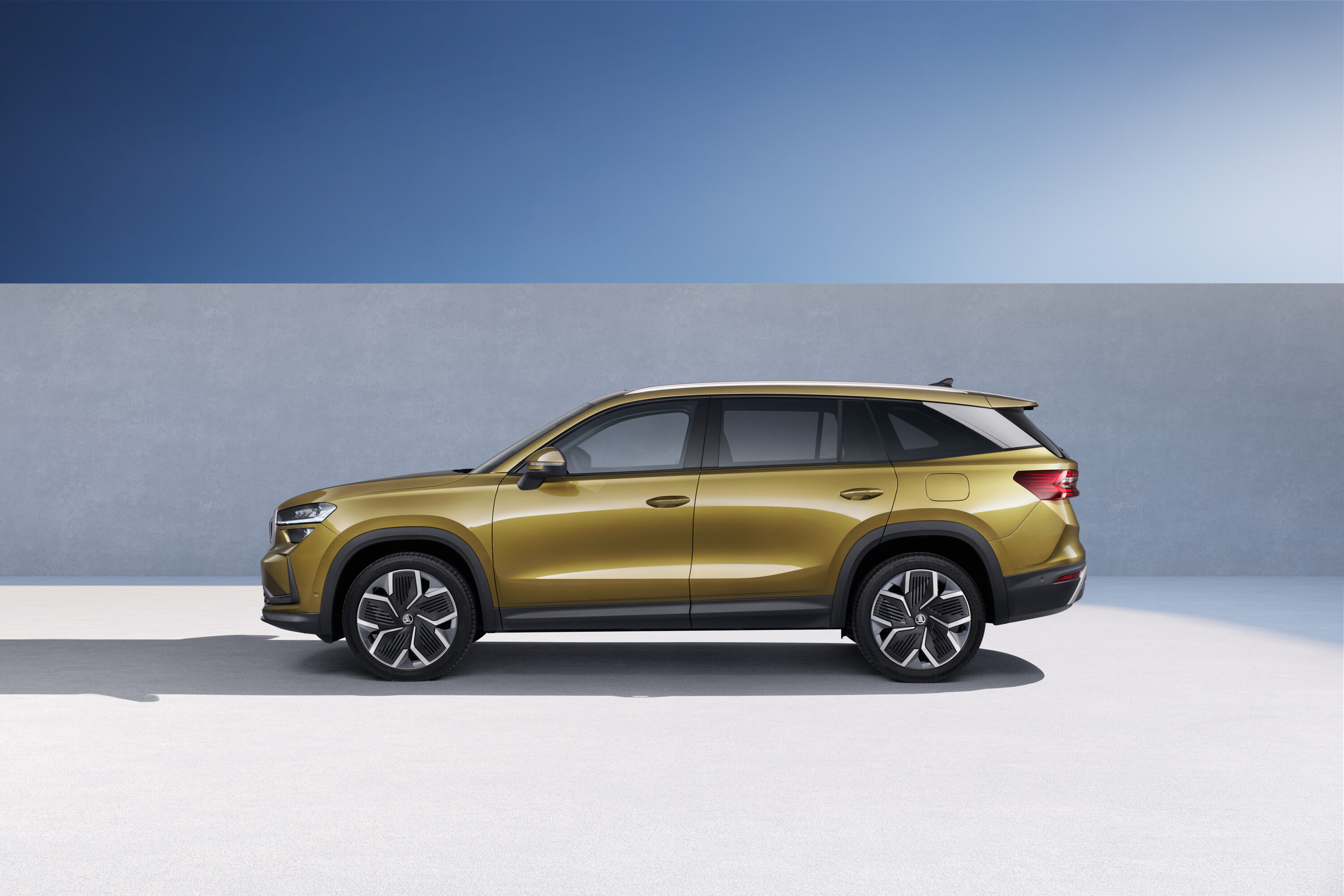
On the outside, the Kodiaq adopts a softer, more stylised design, with a more shapely nose treatment, a swept roof and a more straightforward rear-end treatment, complete with a diffuser.
The distinctive ‘four-eye’ headlight design remains, with new Top LED Matrix headlight units standard across the range.
Skoda claims the new lamps offer 50 per cent more light segments and 15 per cent more light output than previously.
1
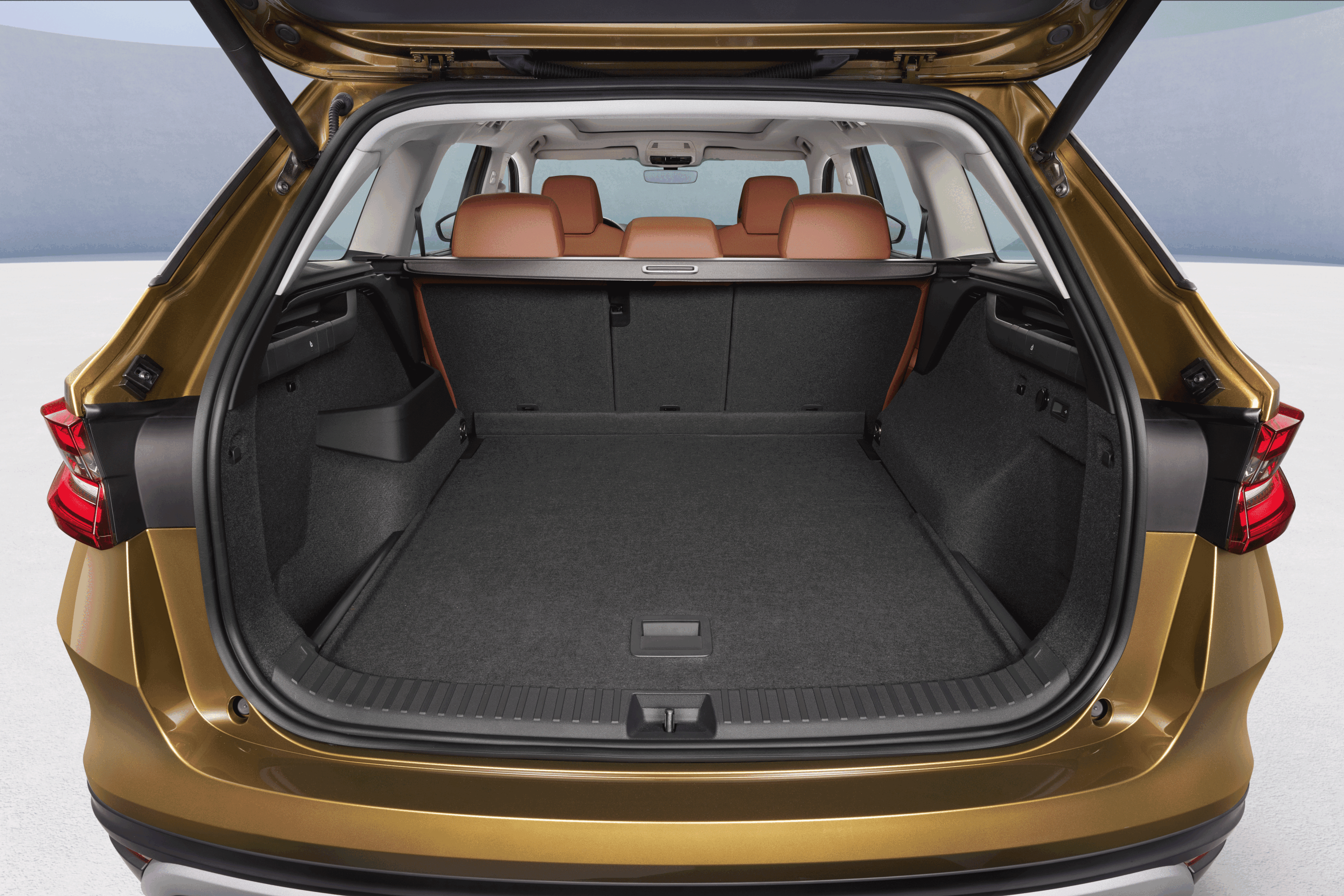
The 2024 Skoda Kodiaq is 60mm longer, now coming in at 4758mm long. This has the effect of improving luggage capacity.
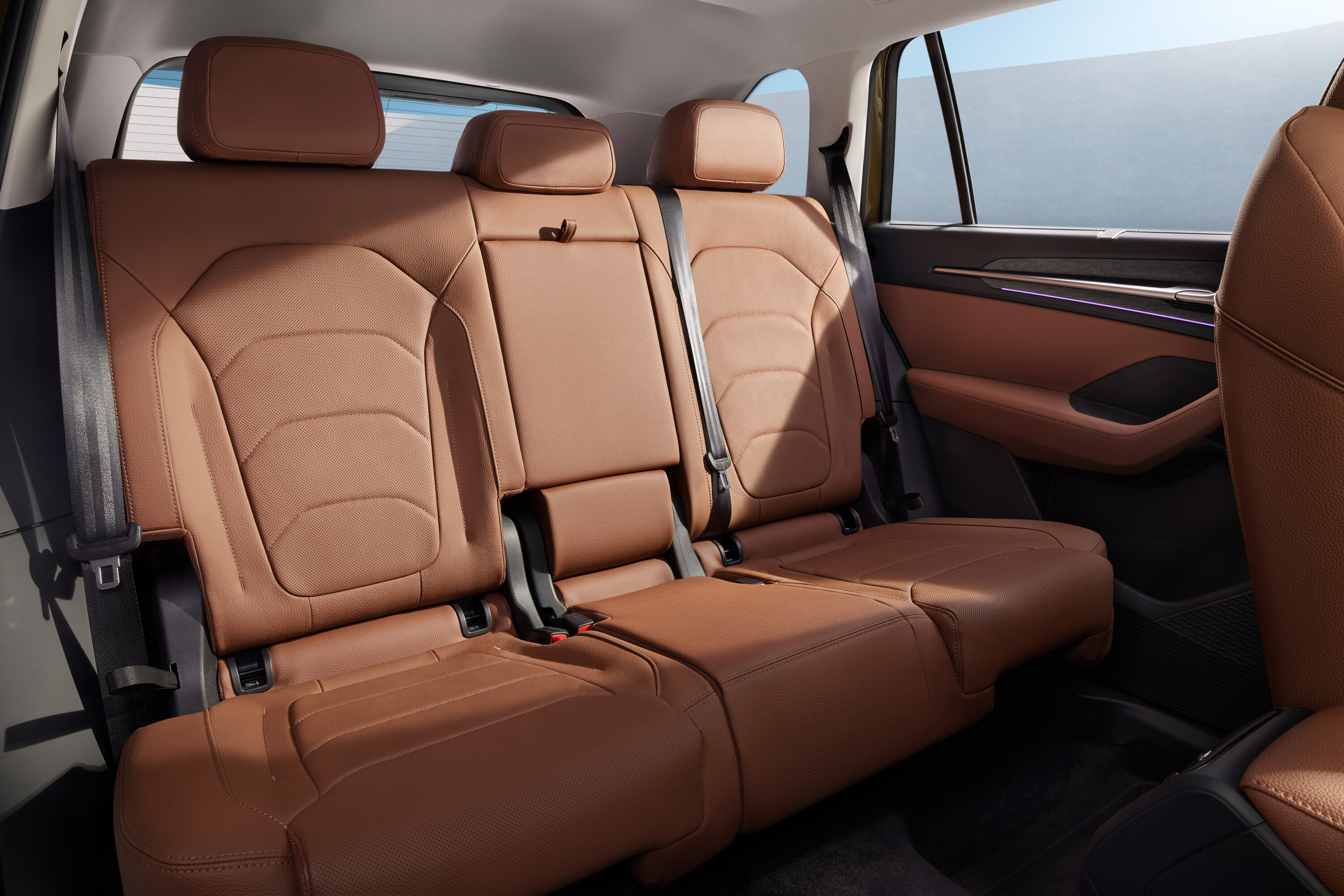
With all three rows of the seven-seater in place, capacity jumps by a claimed 70 litres to 340 litres, while dropping the third row nets 845 litres (up a claimed 80 litres).
It’ll be offered in Selection and Sportline grades, and if Skoda Australia’s experience with high-specced variants is anything to go by, our version of the Kodiaq will be stuffed to the gills with gear.
1
Big screen and big dials
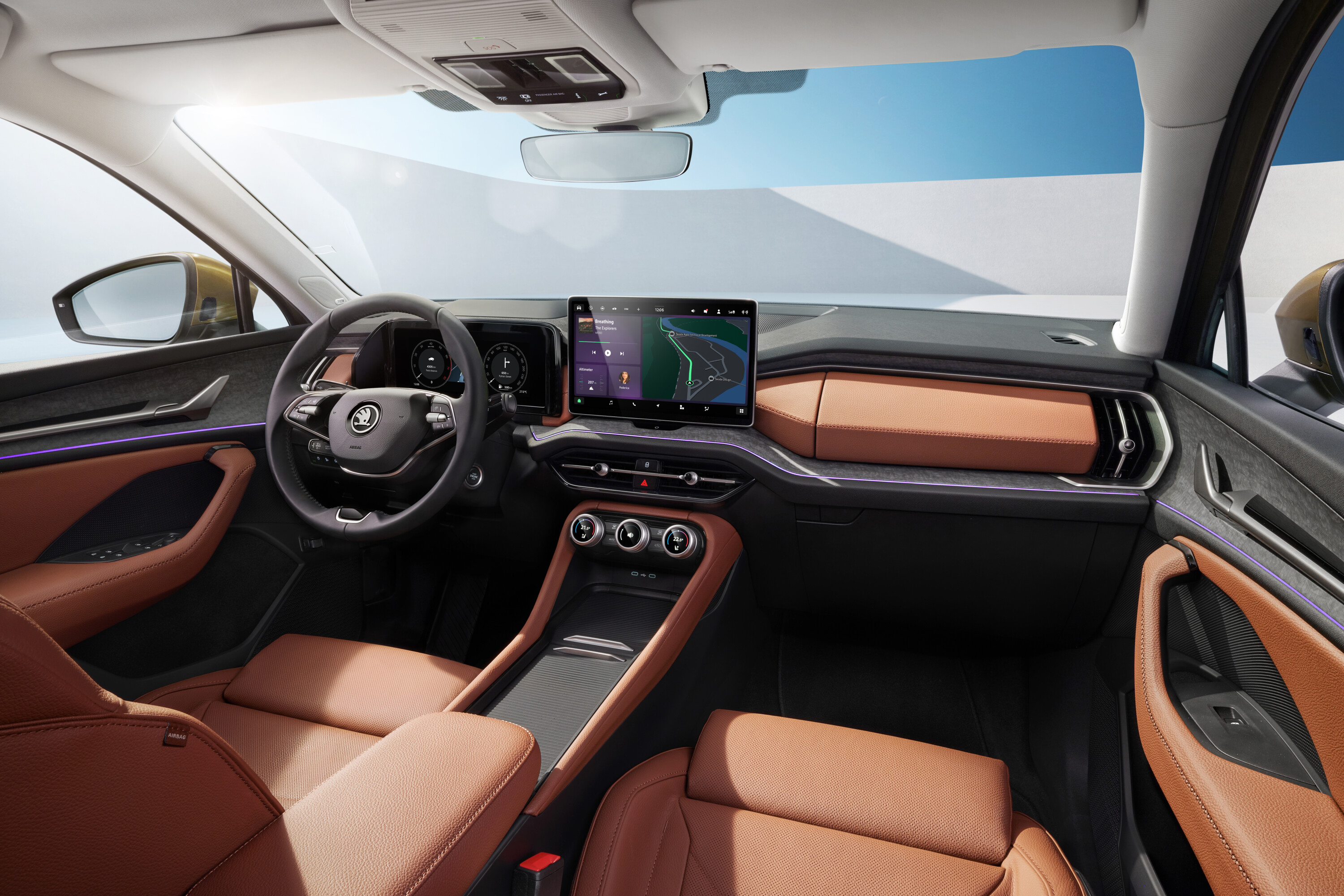
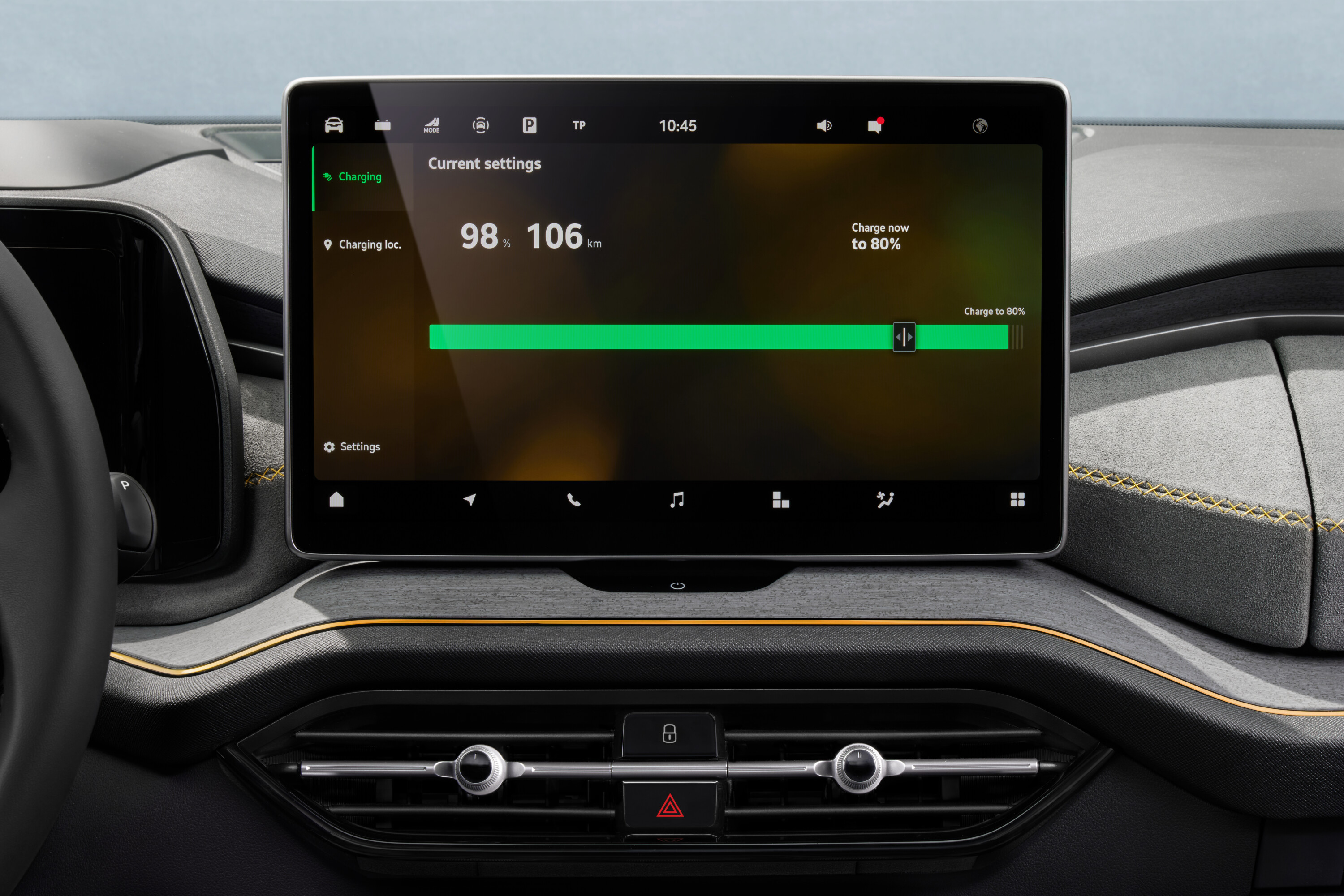
Speaking of gear, a new floating 13-inch infotainment screen takes pride of place in the made-over cabin, with multi-function rotary dials and push-button steering wheel controls thankfully doing away with at least some of the haptic controls that have blighted other VW Group products of late.
A new Phone Box can charge two mobiles at once at 15W and also provides a cooling function to keep charging temps in check.
There are also four USB-C ports scattered throughout the cabin, plus an additional port behind the rear-view mirror for dash cams.
The gear shifter has also been relocated to the steering column, freeing up real estate between the front seat occupants.
5
Updated safety and remote parking
The safety suite aboard the new Kodiaq is comprehensive and includes Turn Assist, Collision Avoidance Assist, Crossroad Assist, Exit Warning, Automated Emergency Braking (pedestrian rear) and Intelligent Park Assist.
Optional features include Trained Parking, which adds the ability to record approaches to up to five parking spaces and replicate them on demand.
Remote Parking, meanwhile, lets a driver control the car from up to five metres away via a smartphone app.
Debut of DCC Plus
On the suspension side, the Kodiaq can be specced with a brand new chassis control system known as DCC Plus, which adds the ability to individually control bump and rebound damping within the shock from the driver’s seat.
Previously, both damping jobs were controlled by a single valve. The new system doesn’t, however, mean a ride height drop for the Kodiaq.
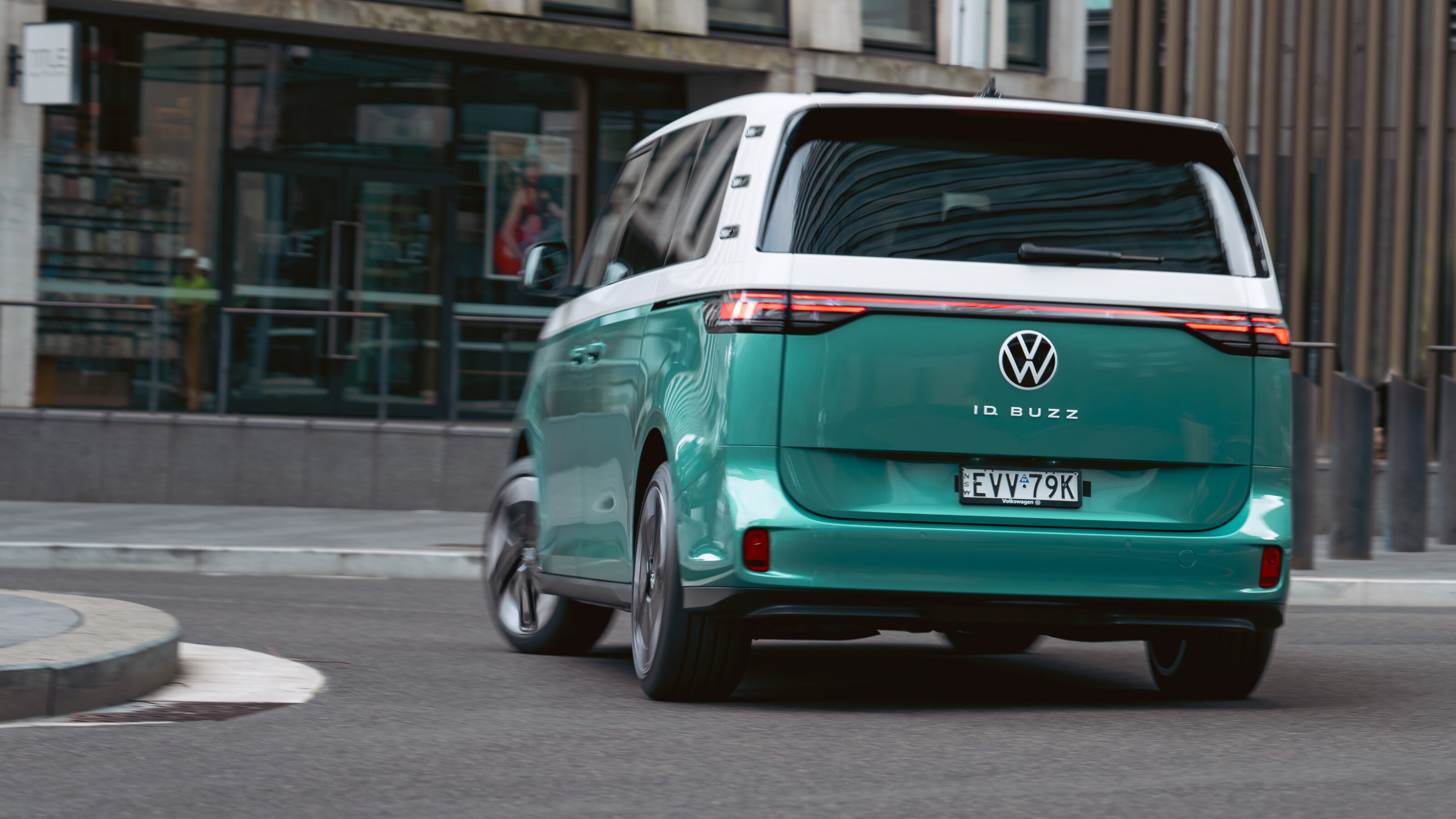
Volkswagen Australia has opened expressions of interest for the ID.Buzz electric van ahead of the first local arrivals in December 2024.
Pricing and features are yet to be confirmed, so for now, VW is aiming to gauge how much buzz there is for the van locally.
Volkswagen will offer several body styles (detailed here) with demand dictating market share.
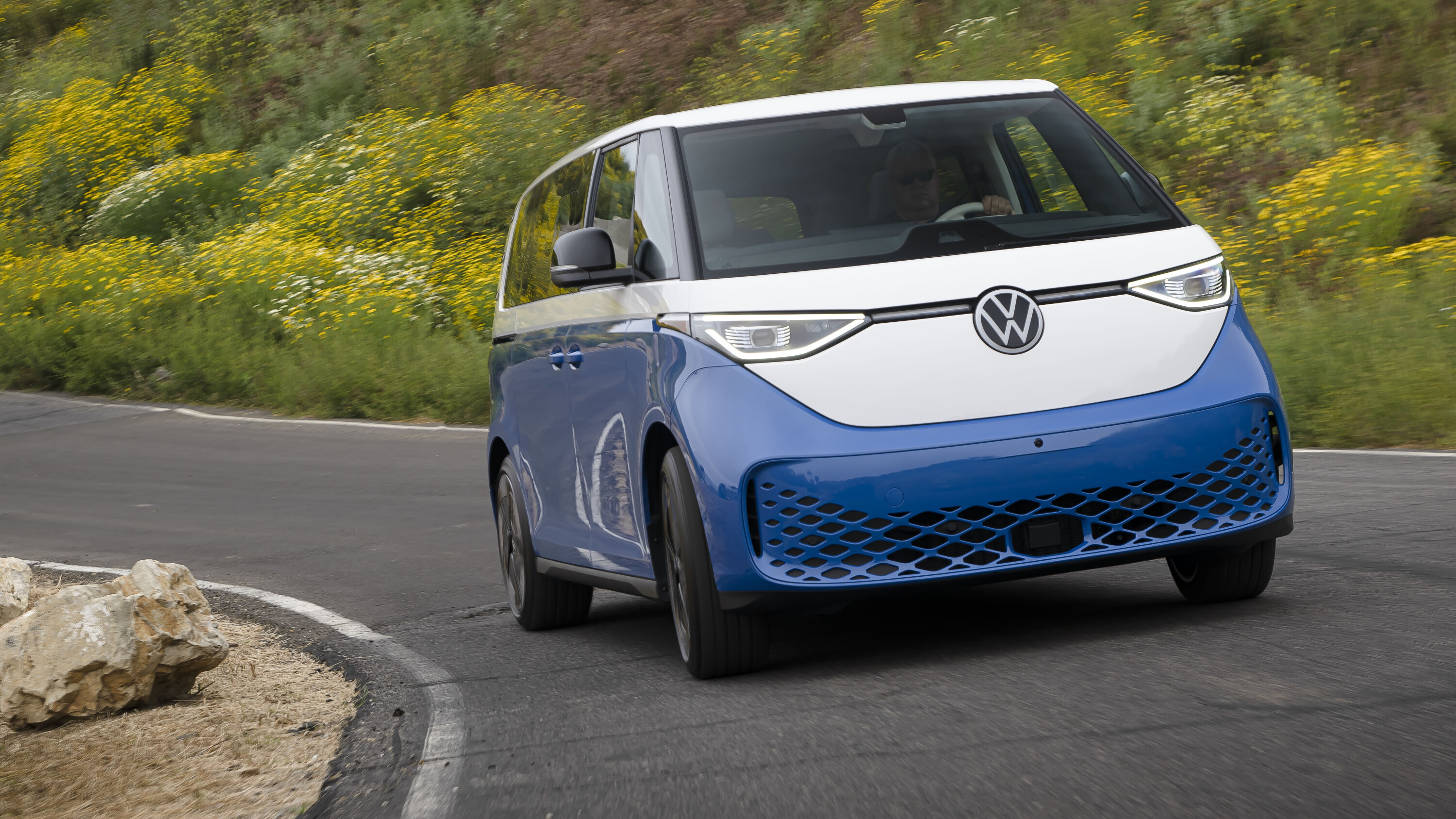
Part of the ID.Buzz’s roadshow will be its Australian public debut at the Volkswagen Cronulla Surf Masters championship on 21 October.
Alongside the surfing event will be a Kombi Rally, with classic VW vans on display at Peryman Square, Cronulla, in Sydney’s south.
1
With the van gaining Australian technical approval and production start date from head office, the ID.Buzz is getting steadily closer to our shores.
“There is nothing on the road that melds love-brand heritage with new-age technical sophistication quite like the ID. Buzz,” said Volkswagen Commercial Vehicles director Ryan Davies.
“In three weekends’ time, Aussies can see the first ID. Buzz on our shores at the Volkswagen Cronulla Surf Masters and they are now able to register their interest for the five-seat, seven-seat or Cargo van body styles at the Volkswagen Australia website.”
“We anticipate the coolest battery electric vehicle may quickly become the hottest ticket in town for families, retirees, tradies, surfers and the environmentally conscious all told”, said Mr Davies.
Our original story, below, continues unchanged.
1
June 2023: ID.Buzz Australian deliveries to begin in late 2024, early 2025
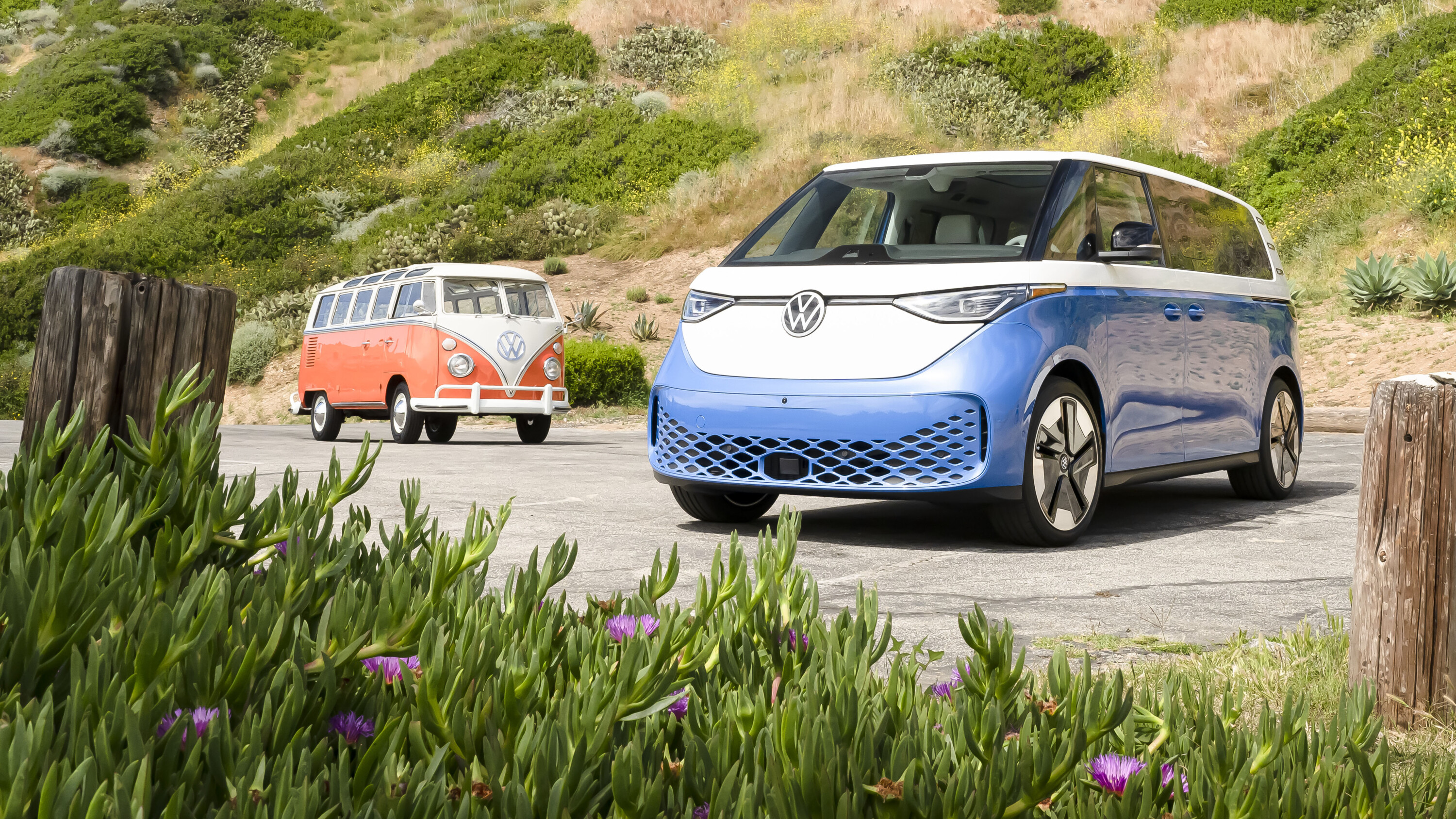
Australia-bound builds of the funky, retro-inspired Volkswagen ID.Buzz will hit the assembly line in late 2024, the brand has confirmed today.
The news follows a whirlwind media tour in Sydney last year, when Volkswagen confirmed it was waiting on final approval to launch the cargo-carrying and people-moving pair in Australia.
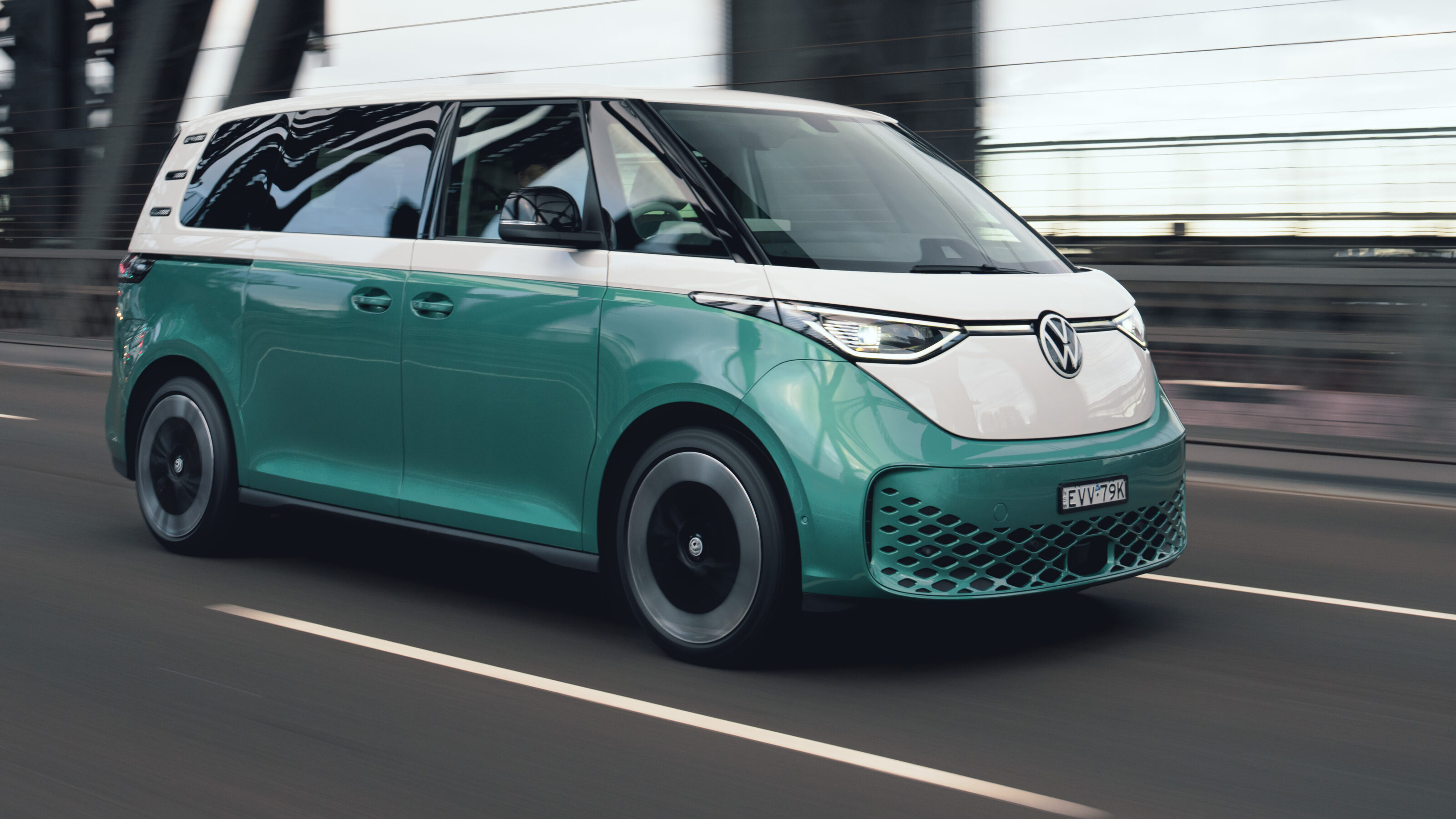
Following the ID.Buzz’s global reveal in March 2022, the vans were featured at VW Australia’s end-of-year event where Wheels was given a chance to walk around, touch, poke, feel and ask plenty of questions about the Kombi’s rebirth in an electric era.
1
The local Volkswagen Commercial Vehicles business had been keen to secure those vehicles for some time – initially hatching a plan to straight-up buy a pair from the UK before being offered two evaluation vehicles by head office.
Today’s long-anticipated news is joined by confirmation that the local ID range will properly fire up in 2024, with the ID.4 and ID.5 medium SUVs and the facelifted ID.3 electric small car all due here next year.
That’s later than the brand hoped, but they’ll at least launch with critical updates – especially the sub-$60k ID.3 hatch, now coming to its mid-life facelift.
Related video
ID.Buzz will come in high-spec trims
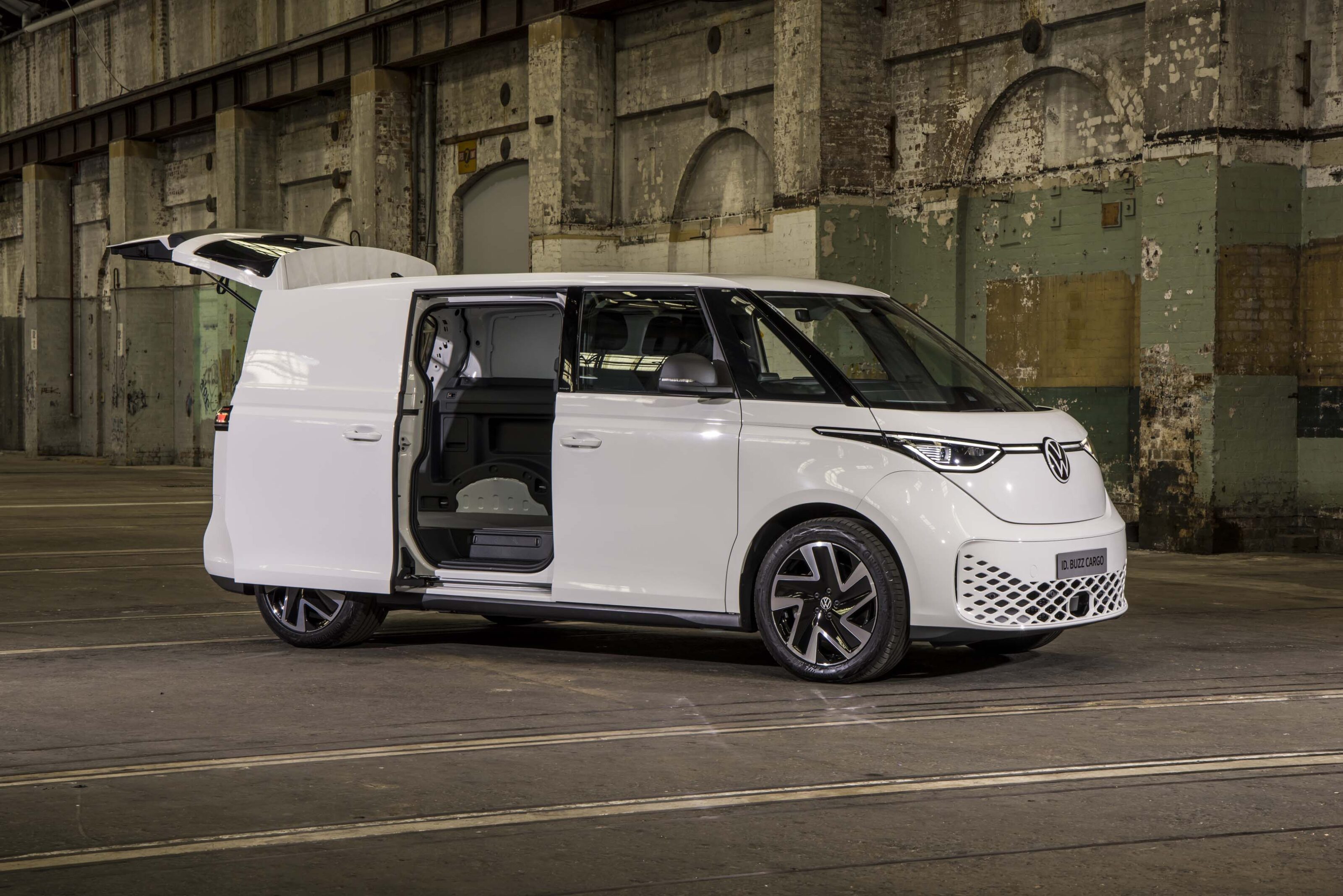
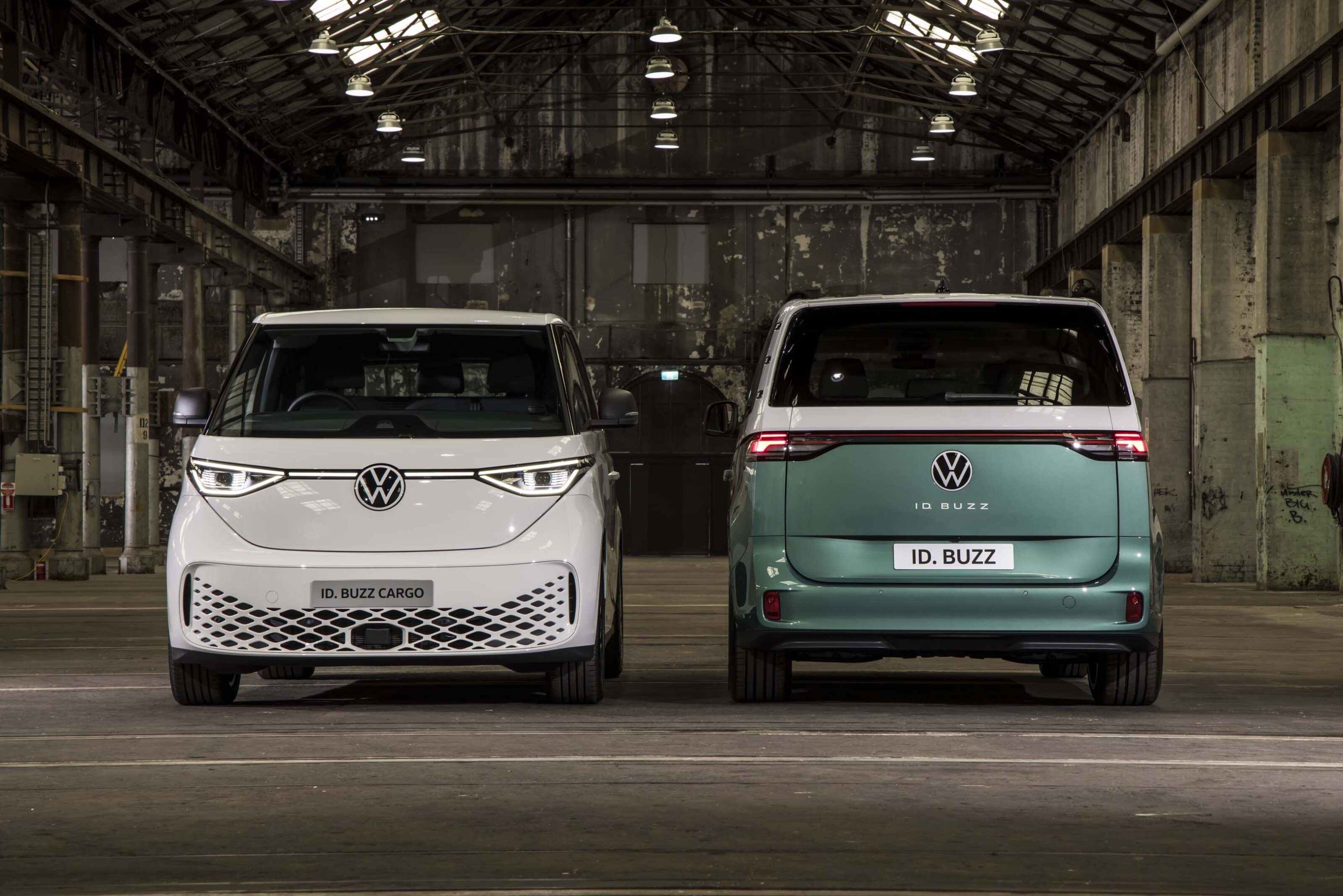
The vans shown to Australian media in December included a Pro grade people-mover, and ID.Buzz Cargo Commerce Pro. Both are top-spec models, reflecting Australia’s penchant for high-end trims.
“The vehicles on show are really specced up so that we can look at every single offering in this particular car and make an informed decision moving forward, rather than bringing a low-spec car and saying: ‘I wonder what this [placeholder button] did?’”, said head of marketing and product, Volkswagen Commercial vehicles, Nathan Johnson.
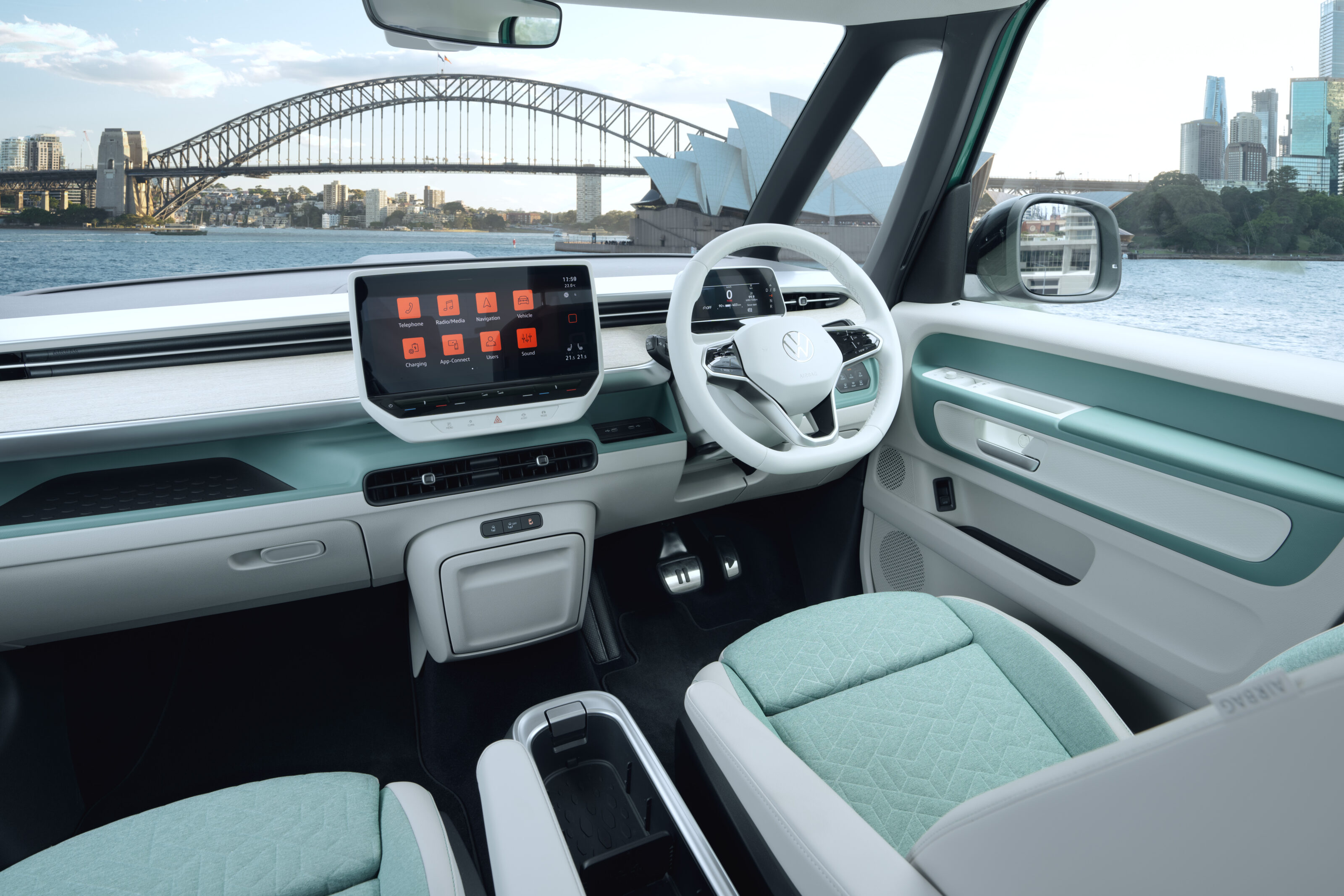
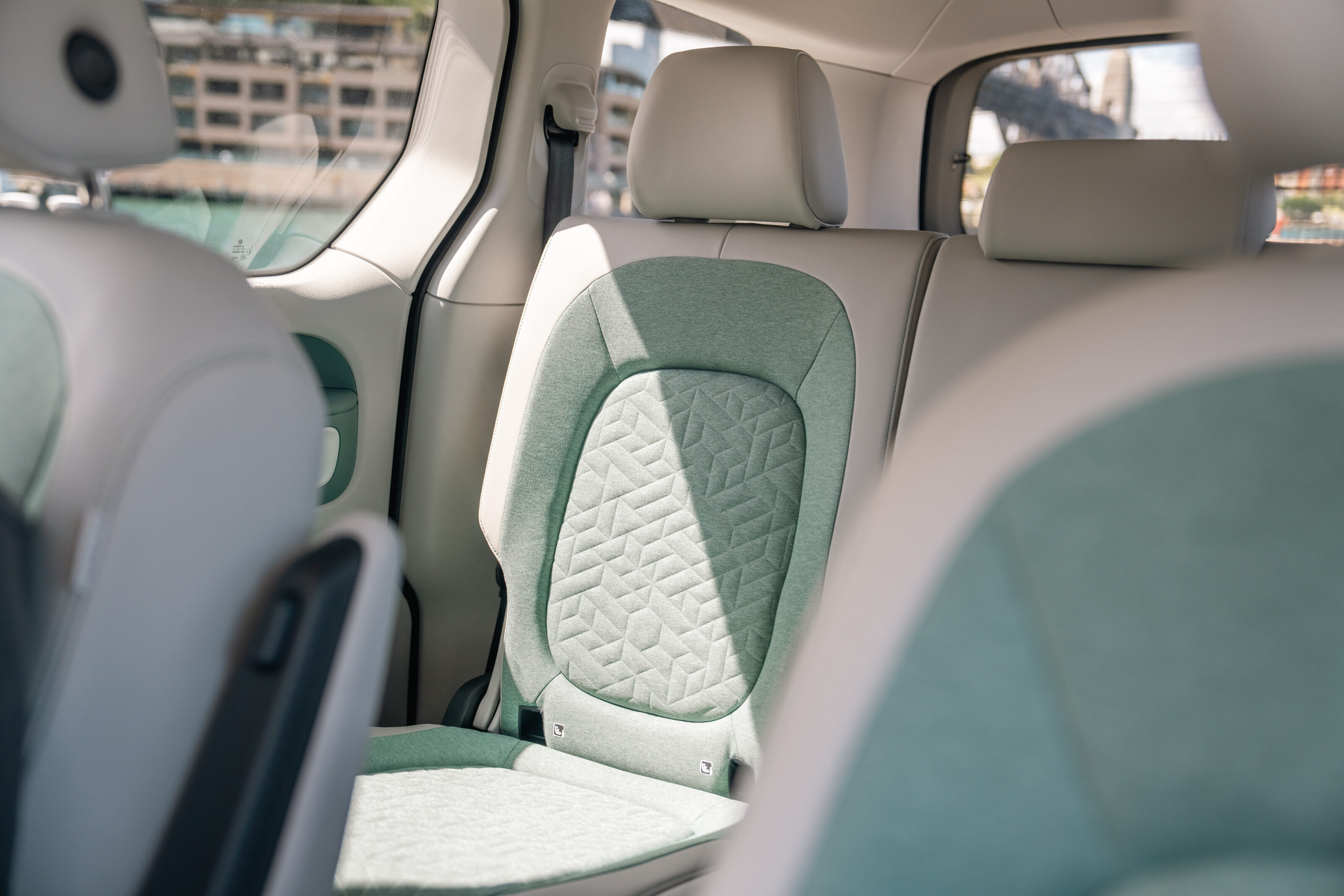
Inside the bayleaf green two-tone ID.buzz Pro is colour-matched cloth upholstery with white leather accents, a 10-inch infotainment touchscreen with wireless Apple CarPlay, an ID digital driving display and matrix LED headlights.
Further clever features inside include the ‘Buzz Box’, a removable centre console with pull-out drawers, bottle-opener and ice scraper.
2
Final specification for Australia will be locked in closer to its local launch, but expect our cars to be have a high level of equipment.
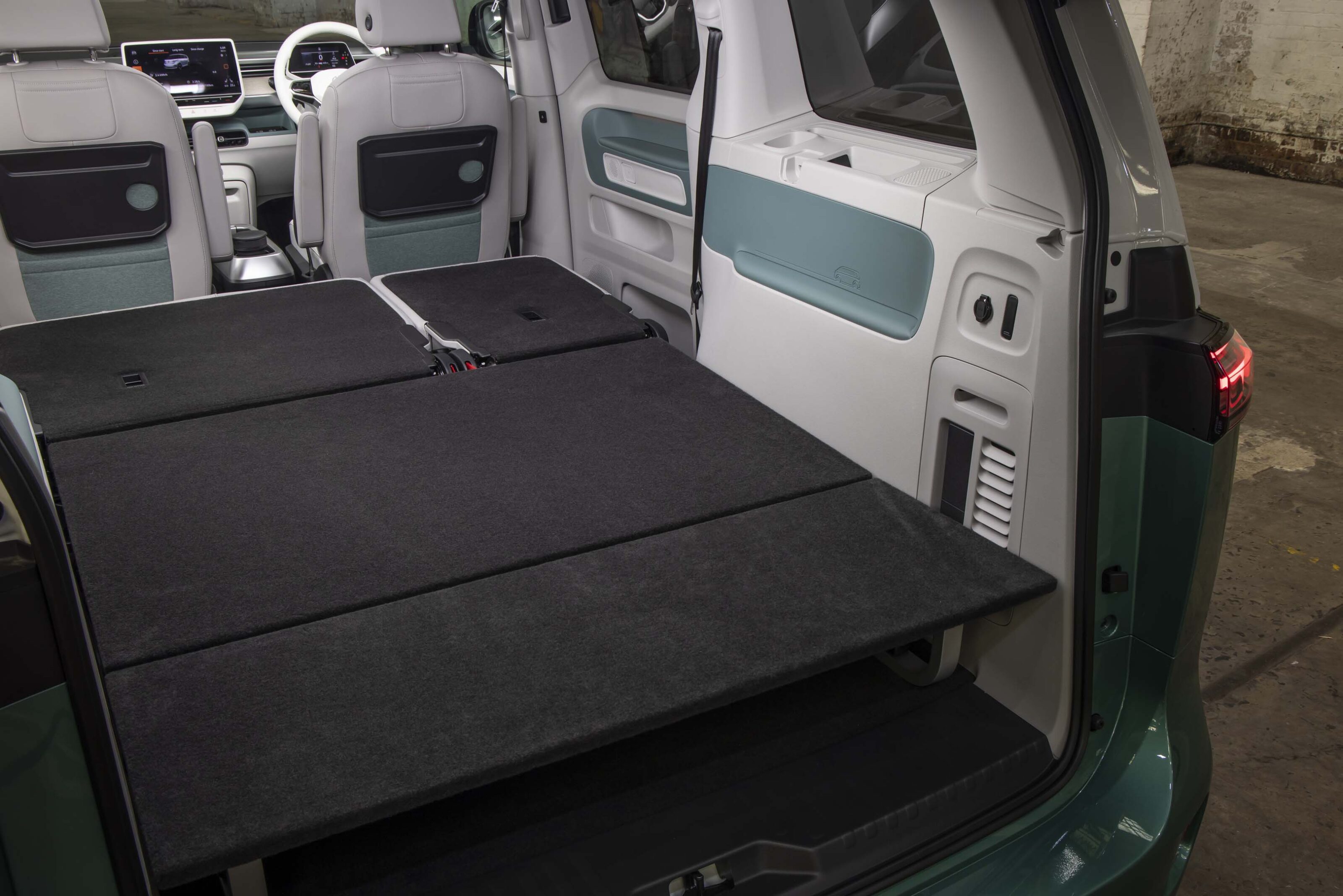
As for the Cargo, it gets more practical black cloth upholstery with a black steering wheel, but the same infotainment system and digital cockpit. The Buzz Cargo has a 650kg payload, with space in the back for a pair of euro palettes.
“The ID.Buzz is a people mover that stops traffic, people stop, stare and smile. It’s an incredible blend of style and function that will capture the imagination of Australians – and is reflected by our ambitious sales volumes,” said Volkswagen Commercial Vehicles boss Ryan Davies.
1
“We expect the ID.Buzz Cargo to sell at least as well, and it’s incredibly appealing for sole traders who want to reduce their emissions in the most fun way possible. This is a proper, ‘from the ground up’ tradies’ BEV – not a tacked-on reverse engineering of an existing diesel vehicle.”
Davies’ comment there can be interpreted as a sporting swipe at the LDV eT60 and Mercedes-Benz EQV – and at Ford, which is launching its EV-converted E-Transit and E-Transit Custom vans in Australia.
It’s a cheeky quip, given VW and Ford are now deeply entwined in a tech- and platform-sharing partnership, but the unrelated ID.Buzz and E-Transit models do not currently form part of the program. (The new Amarok is based on the Ford Ranger, and Ford’s new ID.4-sized Explorer EV is built on VW’s MEB electric platform.)
June 3, 2023: Long-wheelbase revealed, Australian arm keen
1
STORY CONTINUES
Volkswagen ID.Buzz power and driving range
The ID.Buzz range is underpinned by Volkswagen’s dedicated MEB electric platform, hosting a 77kWh battery pack with driving ranges of 423 kilometres (WLTP) for the people-mover, and 425km (WLTP) for the cargo.
Driving range with a full payload is likely to be shorter for ID.Buzz Cargo owners, but Volkswagen said it’s happy with what’s been achieved.
“The average person who’s going to be buying the ID.Buzz will be travelling 20-30kms a day. And potentially charging at home. These more commercial-purpose cars; it’s not common that people are doing over 300-400 a day. So we see that as plenty”, Davies said.
1
Fast-charging is capped at 170kW (DC) for a 5-80 per cent rejuice time of around 30 minutes. AC home-charging, meanwhile, maxes out at 11kW.
Outputs are reasonable, and the same as a Volkswagen ID.4, with 150kW of power and 310Nm of torque via a single rear motor.
VW Australia noted that Australian demand for an AWD model is likely to be strong, and there are more ID.Buzz variants in development with potential for larger batteries, a longer wheelbase and more power – including GTX variants.
The ID.Buzz’s vehicle-to-load capacity is currently capped at a 300W three-pin socket, however Nathan Johnson said demand for greater on-board outputs is under evaluation for the Australian market.
1
When will the ID.Buzz reach Australia?
Exact launch timing will be confirmed in the future, but with Australian production beginning in late 2024, an early 2025 launch is likely.
By the time it gets here, we might also see the ID.Buzz launch in an updated form, adding more features and possibly an even greater driving range.
1
ID.Buzz pricing for Australia
As an Australian release is still nearly two years away, VW has been reluctant to discuss price – but the ID.Buzz isn’t likely to be cheap.
Looking at UK pricing, an equivalent Pro people-mover would cost around AU$115,000 at a direct conversion rate. Not absurd next to an LDV Mifa 9, but certainly steeper than a Kia Carnival.
Final pricing could potentially be lower than $100K, given that the UK typically pays more for vehicles, but don’t expect a cheap-as-chips van.
⚡ More EV stories to help you choose the best car for your needs
MG has confirmed pricing for the MG 4 XPower, with the 320kW/600Nm all-paw hot hatch commanding $59,990 before on-road costs.
Snapshot
- MG 4 XPower priced for Australia at under $60K
- Electric hot hatch on price parity with combustion rivals
- Able to sprint from 0-100km/h thanks to twin motors outputting 320kW and 600Nm
More than matching the rear-drive 170kW Cupra Born‘s asking price, the XPower’s claimed 3.8-second 0-100km/h sprint puts it in straight-line competition with the 294kW Audi RS3 ($89,869) and is enough to comfortably eclipse the 4.8-second Volkswagen Golf R ($68,990).
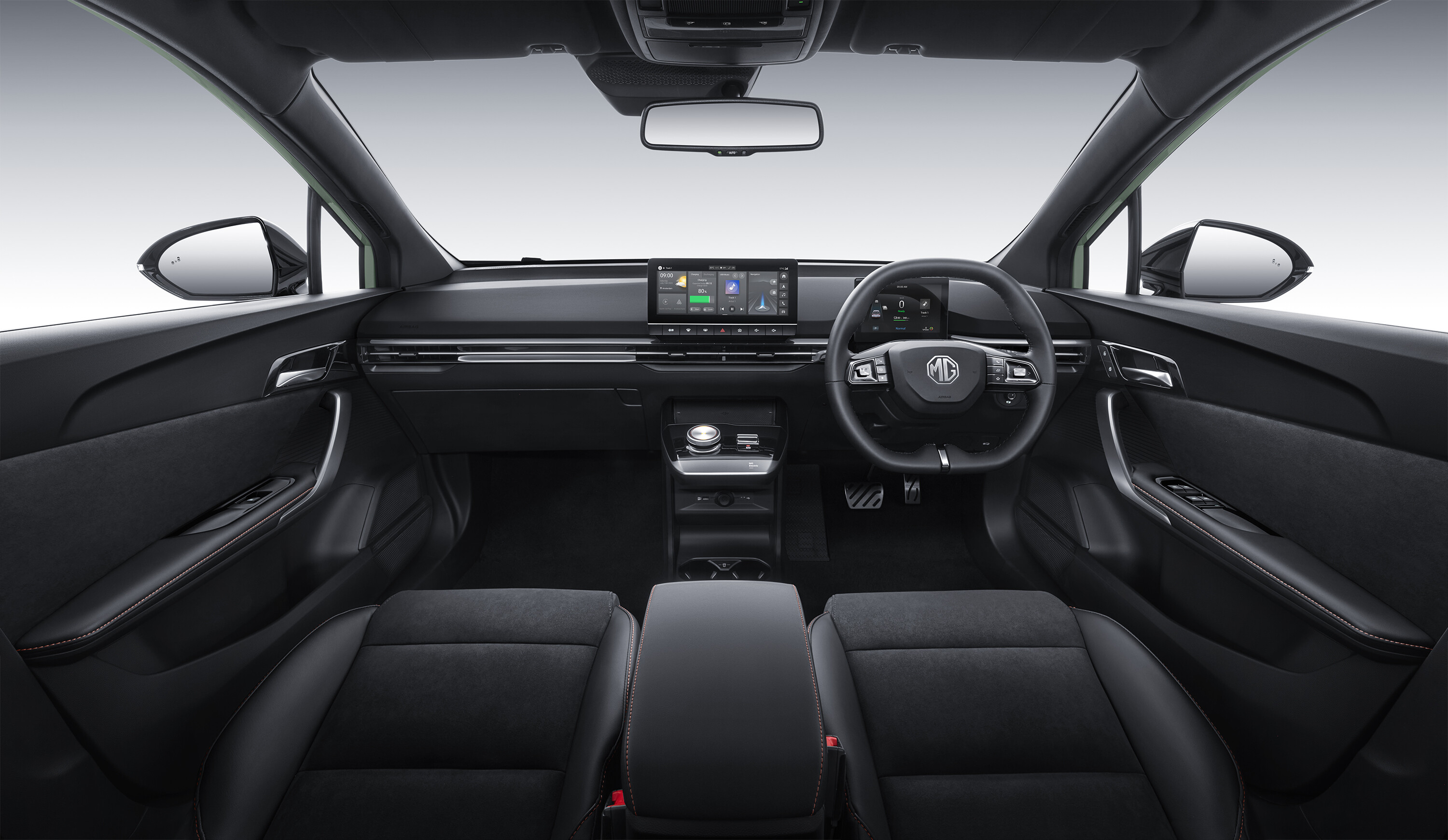
A performance vehicle is about more than outright speed, of course, so MG has taken the regular 4’s Modular Scalable Platform underpinnings and stiffened the suspension with firmer dampers, springs, and anti-roll bars.
It also gets a locking differential for its rear-biased (150kW front/170kW rear) twin motor setup. You can read more details about the MG 4 XPower in our original story, below.
1
“We expect [the MG4 XPower] will appeal to customers looking for a true performance car with plenty of technology and space to match. The MG4 Xpower EV also retains the generous safety equipment levels, as well as practical hatchback features, of the award-winning MG4 range.”
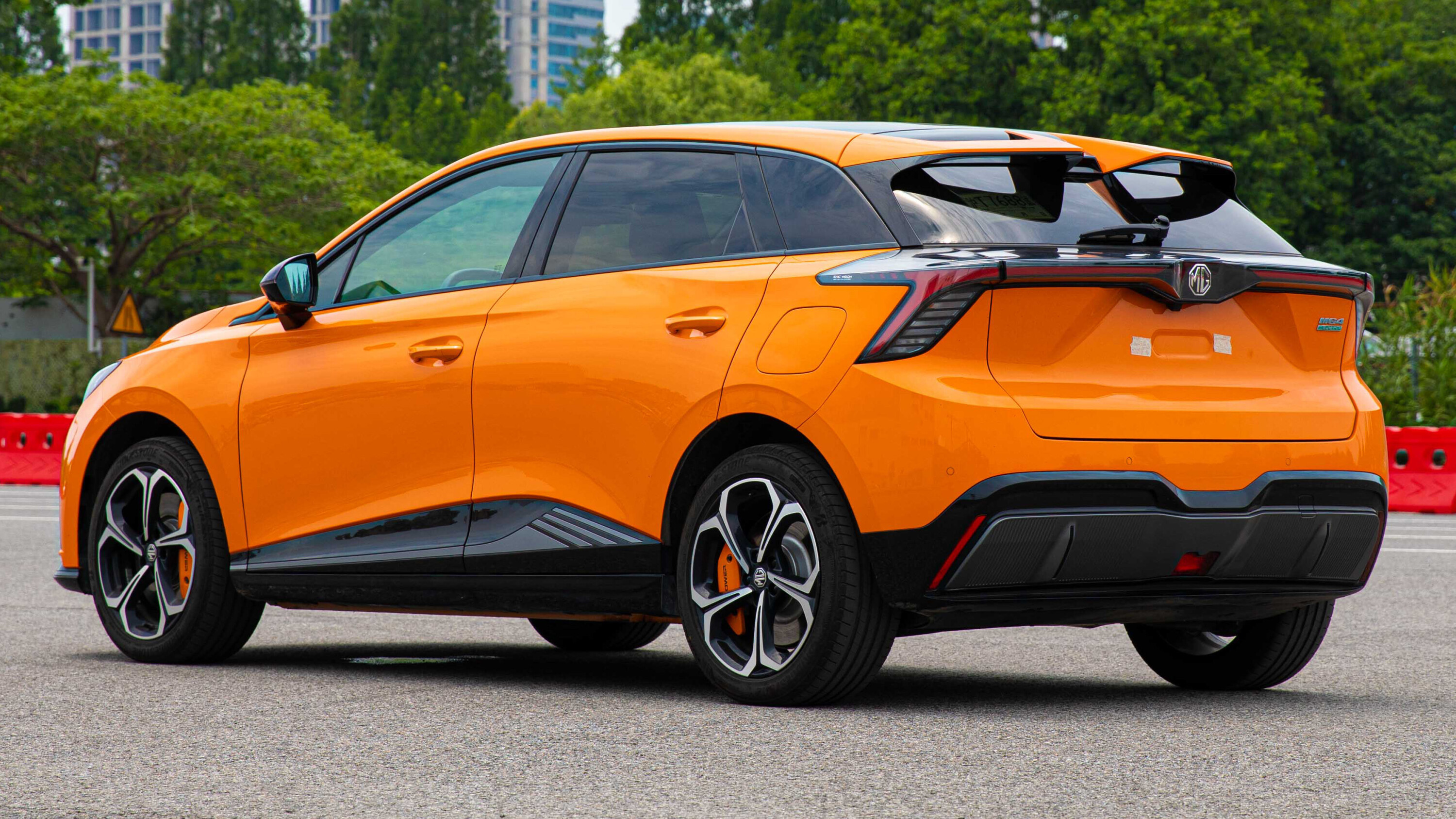
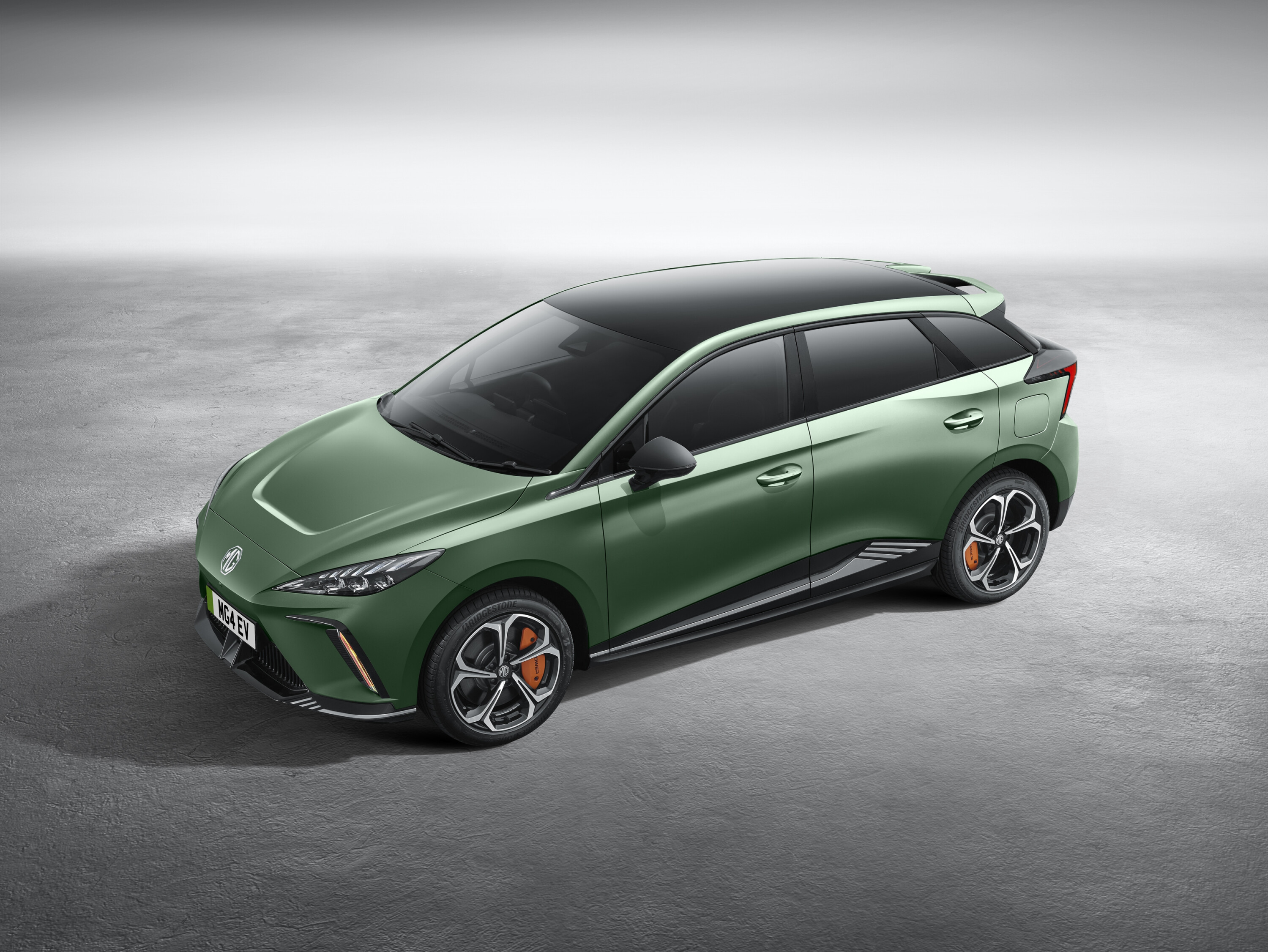
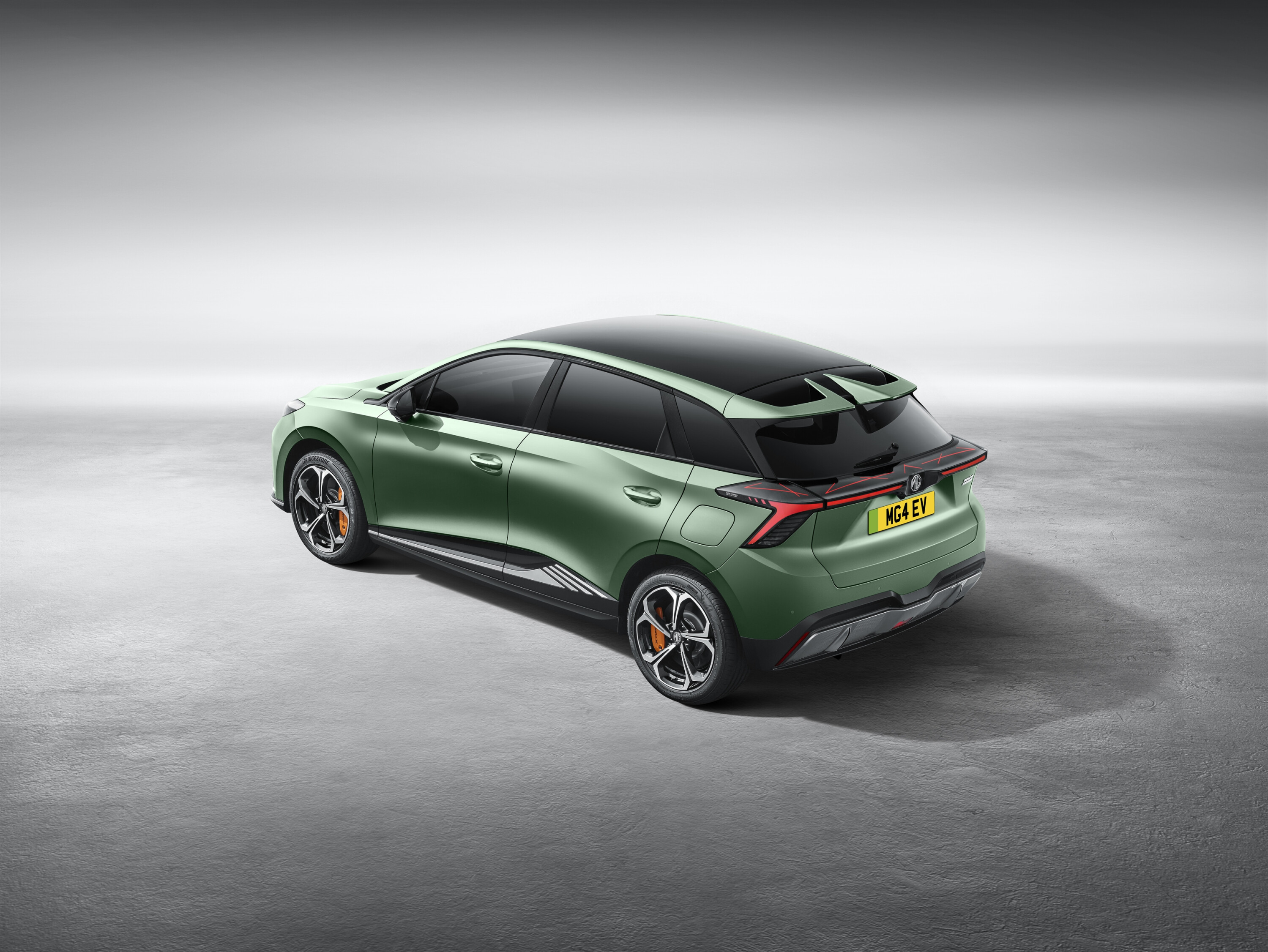
Telling the XPower apart from the Essence and Excite trims are 18-inch alloy wheels shod in Bridgestone Turanza tyres, a contrast black roof, ‘XPower’ orange brake calipers, and a unique Hunter Green paint colour.
Featuring the mid-sized 61.7kWh (64kWh gross) NCM battery pack, the all-wheel drive XPower loses out on range compared to the rear-drive cookin models. It’s rated at 385km driving range in WLTP testing against 435km for the Essence.
Owers will be able to replenish to battery at up to 140kW (DC), for a 10-80 per cent charge time (39-308km driving range) in as little as 26 minutes. The MG 4 XPower is available to order from MG dealers now.
1
Our original story, below, continues unchanged
July 2023: MG 4 XPower is the brand’s most powerful model yet
The MG 4 XPower has been confirmed as MG’s most powerful model yet, delivering sub-four-second performance with a 320kW AWD electric drivetrain.
Snapshot
- Electric performance to rival AMG A45 and Audi RS3
- Upgraded drivetrain, suspension and brakes
- Expected to join MG 4 range in Australia later this year
MG’s new range-topping MG 4 electric hatch will make its public debut at next week’s Goodwood Festival of Speed, following its initial reveal in August 2022 as a Chinese model called the Mulan Triumph Edition.
The XPower brings significantly more power than the current flagship model, the 180kW Essence Long Range, to mix it with petrol hot hatches such as the Mercedes-AMG A45 and Audi RS3.
Front and rear electric motors produce 320kW and 600Nm in total, with a launch control system aiding a claimed 0-100km/h acceleration time of 3.8 seconds.
1
A Dynamic Cornering Control System adds a locking e-differential and torque vectoring on all four wheels, while the XPower’s suspension has been stiffened by 25 per cent compared with regular MG4s, including stiffer anti-roll bars.
MG says the steering is also faster, and larger 345mm ventilated discs enhance stopping performance.
Full one-pedal driving isn’t possible with the regular MG 4, but the company says the XPower’s regenerative braking system has been tweaked to offer this feature “in some situations”.
Other distinguishing features for the XPower include an exclusive Racing Green exterior colour (pictured), two-tone option with black roof, unique-in-range 18-inch alloy wheels, and orange ‘XPower’ brake calipers.
1
When will the MG 4 XPower come to Australia?
The MG 4 XPower goes on sale in the UK in July and is set to join the new MG 4 range in Australia later this year – following the regular model’s third-quarter local launch.
The MG 4 range will start from $38,990, rising to the $55,990 Essence.
Priced in the UK from the equivalent of A$69,000, the XPower would be expected to undercut the Tesla Model 3 Performance – a larger and faster vehicle priced from just under $83,400.
Wheels has just driven the MG 4 XPower in China – read our first-drive review on Friday July 7! (Find it on our MG 4 page here.)
More EV stories to help you choose the best car for your needs
- ? EV news, reviews, advice & guides
- ❓ Short & sweet: Your EV questions answered
- ⚡ New EVs: Everything coming to Australia
- ? Australia’s EVs with the longest driving range
- ⚖️ Best-value EVs by driving range
- ? How much do EVs cost in Australia?
- ? How much more expensive are EVs?
- ⚖️ Number crunching: Is it time to switch to an EV?
- ♻ Should you buy a used EV?
- ?️ Are EVs more expensive to insure?
- ? Costs compared: Charging an EV vs fueling a car
- ? EV charging guide
- ? Are there enough EV chargers in Oz?
- ?? EV servicing explained
- ? EV battery types explained
- ? When do EV batteries need replacing?
- ? Hydrogen v EVs: What’s best for Oz?
- ? How sustainable are EVs, really?
