
Skoda has revealed its new 100 concept car, which traces its heritage back to the original Skoda 100 sedan first produced in 1969. Over one million units of that car were built during its eight-year life, and it remains one of Skoda’s most iconic models to date because of its affordable “people’s car” status. The new Skoda 100 sedan concept features a sharp, angular design that brings a futuristic twist to a shape from the 1960s.
According to Paclt, the key motivation for choosing the Skoda 100 was the model’s popularity, which he remembers from his childhood. “I wanted to work with a car that people know well—and that many once owned themselves. The Skoda 100 appealed to me with its clean, timeless lines, which resonate strongly with the current Modern Solid design direction,” he says.
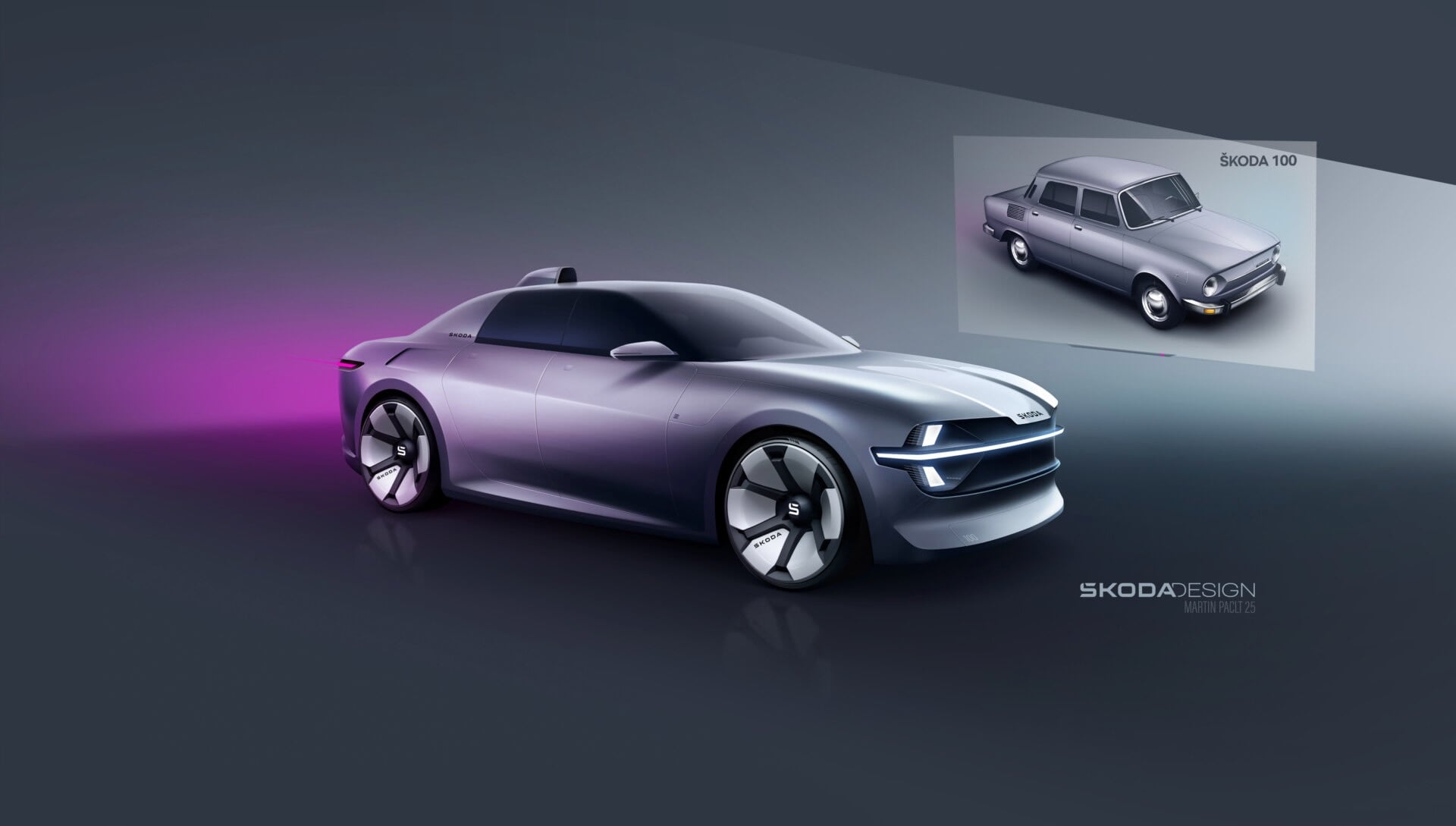
Skoda has been looking to its classic cars for inspiration recently with several concepts as part of its ‘Icons Get a Makeover’ series. So far we’ve seen a two-door coupe, a 21st century interpretation of the Favorit and the cool 110R Concept.
The new 100 concept follows this trend, but there’s some influence from Skoda’s current models too. “I drew from the proportions of the Superb, and the resulting concept turned out slightly larger,” said Paclt.
The stand-out part of the concept’s design comes towards the back. The original Skoda 100 was rear-engined and Paclt wanted the concept’s rear-drive layout to have an impact on its looks. “I wanted to create a concept with a certain degree of realism,” said Paclt.

That can be seen in the cooling: there’s a roof-mounted intake in the place of a back window and to the side there’s more air intakes, similar in positioning to the original car’s. Around the rear the full-width slats mimic the cooling required for the original Skoda 100’s 1.0-litre four-cylinder engine.
As with the other creations within the Icons Get a Makeover series, the 100 sedan concept isn’t destined to make production. However, with Paclt previously involved in the design of the Kodiaq, Karoq and many other production Skodas, we’ll wait and see what influence he and the 100 sedan concept will have on future models.
Remember the Tesla Model Y? Of course you do, it’s the best-selling electric car ever made and has sold well over 50,000 units in Australia alone. And even with the controversy the brand’s head has created in recent times, the Tesla Model Y has enjoyed big sales globally.
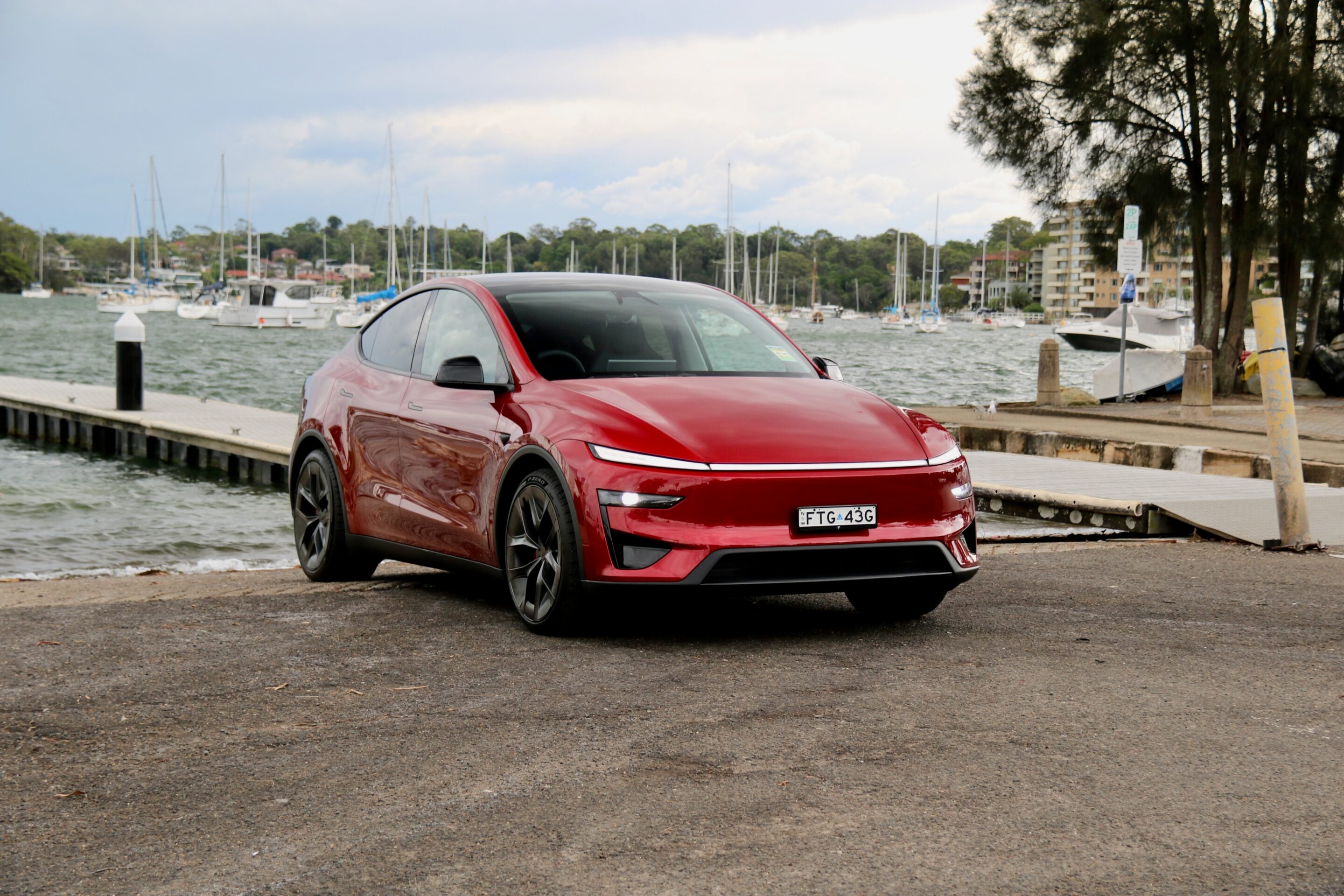
Following on from the big ‘Juniper’ mid-life update to the Model Y that lobbed earlier this year, Tesla has turned up the styling wick on the Performance mid-size SUV variant to make it stand out more than before.
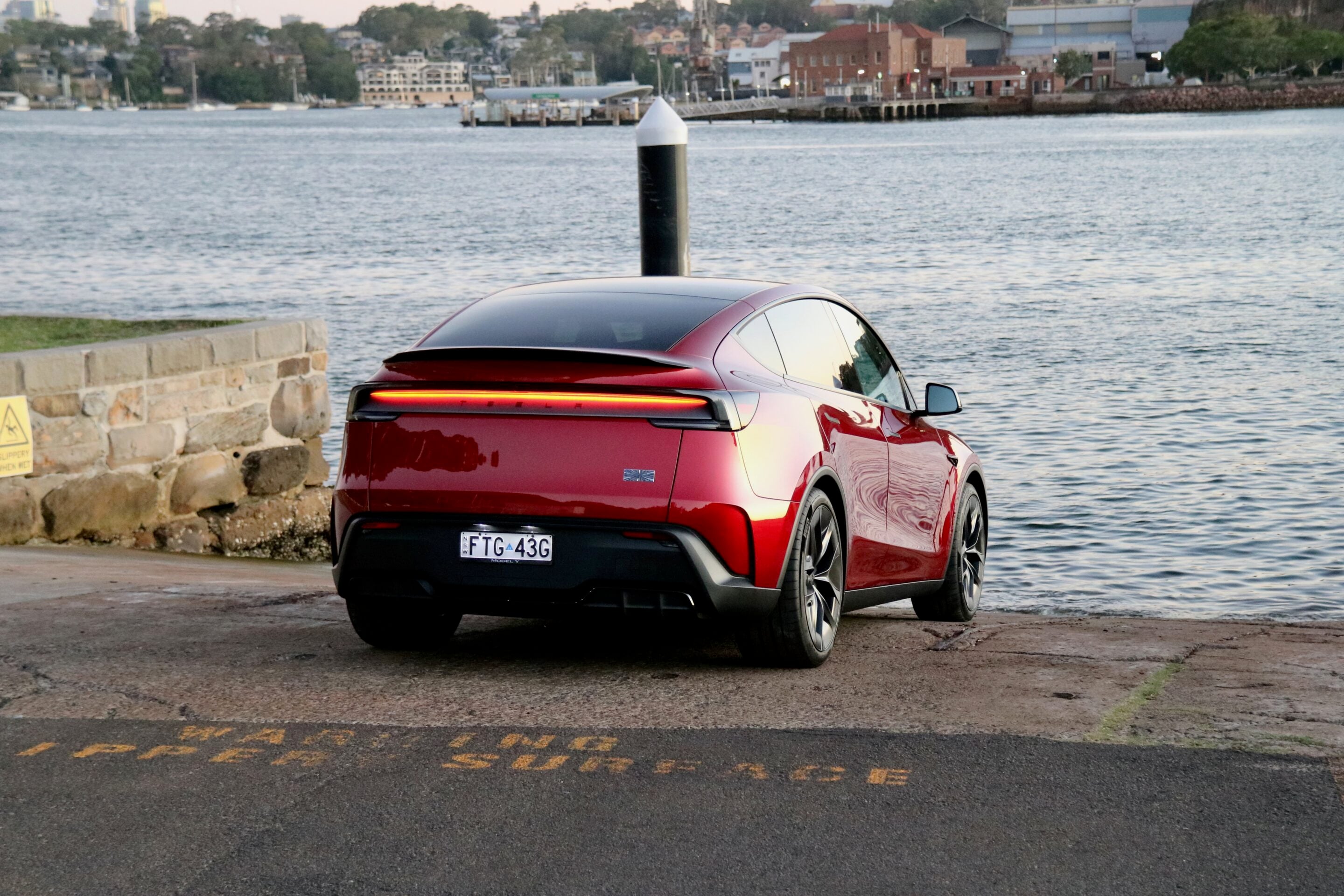
Immediately noticeable are the huge 21-inch alloy wheels – the design is called ‘Arachnid’ if you were wondering – wrapped in serious 255/35 front and 275/35 rear Pirelli P Zero tyres. There’s a subtle bodykit to stand apart from lesser Ys, complete with a surprisingly real carbon-fibre rear lip spoiler. All in all, it looks far more sporting than the previous Model Y Performance.
What’s the interior like?
The cabin of the Model Y Performance hasn’t seen as many changes as the exterior but it’s still a very practical space now filled with numerous small changes that combine to make a large difference. The extra layers of material finishing compared with the pre-updated Model Y are noticeable: the plastics used are softer, there’s suede in places prone to rattles – like the wireless charger area – and even the seat controls look and feel more expensive.
Racier details, such as the new carbon dashboard trim and selectable ambient lighting, also add a classier feel inside. The new sports front seats are also successful in conveying the Y Performance’s sportier vibe. Plus, they’re more adjustable than before with seat cushion extension adjustment, and feature the cool hyperspace logo of the Tesla Performance models below the headrest. The seats are also – finally! – ventilated so that the inevitable heat from the glass roof won’t hit quite so hard.
The Performance uses a slightly larger touchscreen than lesser Model Y models. At 16-inches, it still dominates the dashboard and it uses the same software as other Tesla models, but now it’s even larger than before. As before, it’s absolutely packed with features from inbuilt navigation to apps like Spotify and Netflix – though no Apple CarPlay or Android Auto – and as before, the layout is fairly easy to use but it may take a lot of familiarisation at first.
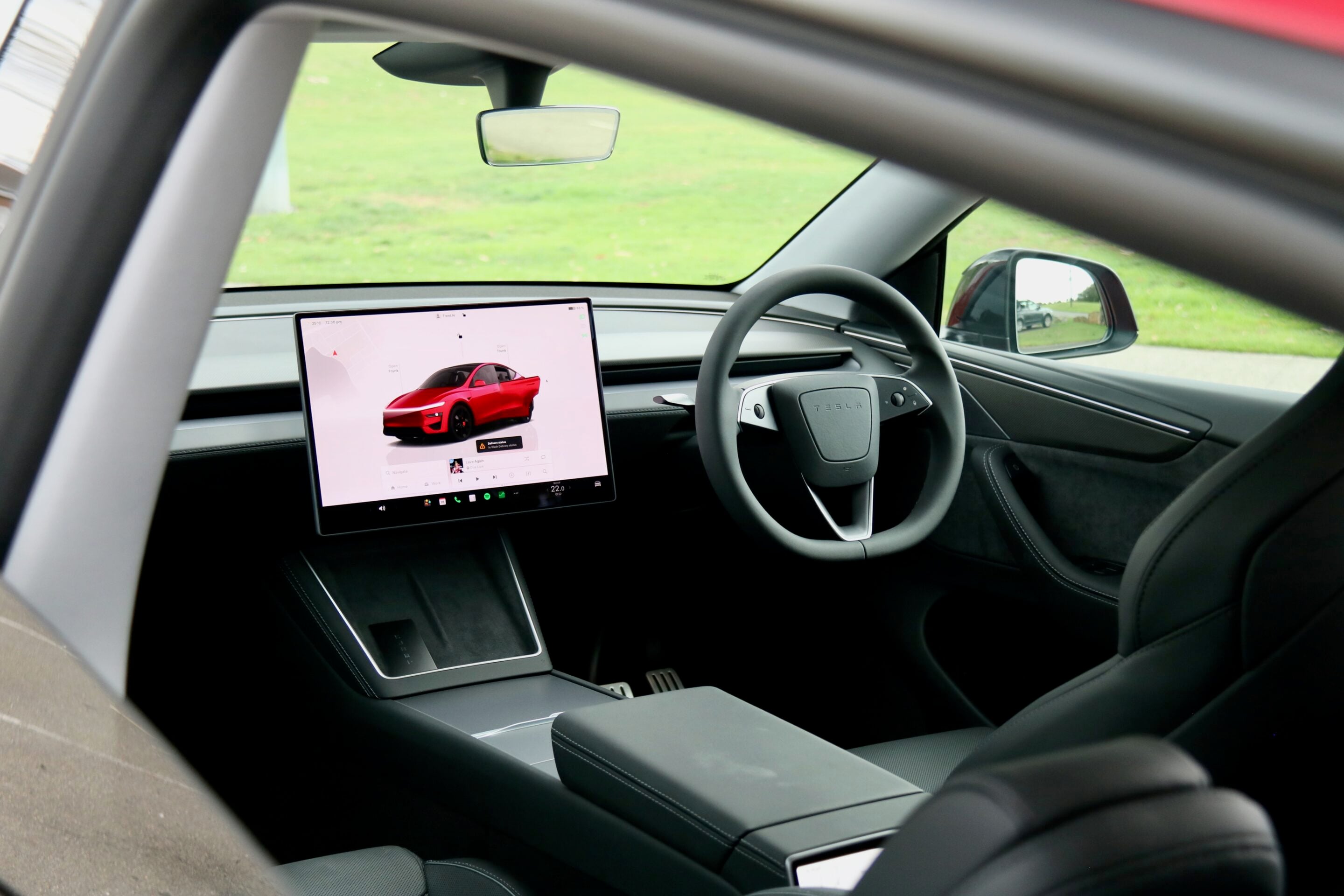
Like the pre-updated Model Y, there’s no speedometer in front of the driver or head-up display. That’s a big no-no in a speed-focused country like Australia, and indeed in such a quick vehicle, it could take you up to licence-losing speeds in seconds. Sure, the speedometer is located on the driver’s side of the screen, but you have to look downwards off the road to see it.
The rear seat base is marginally longer now for extra comfort and two taller adults will be very comfortable, with a third fitting at a pinch. It’s a roomy space, but spaciousness is further enhanced by the flat floor and ample foot room, even for those with big feet. The new 8.0-inch rear touchscreen that controls the rear temperature and features apps such as YouTube will also likely be a godsend for parents on road trips. Tesla knows its market very well there.
Boot and storage
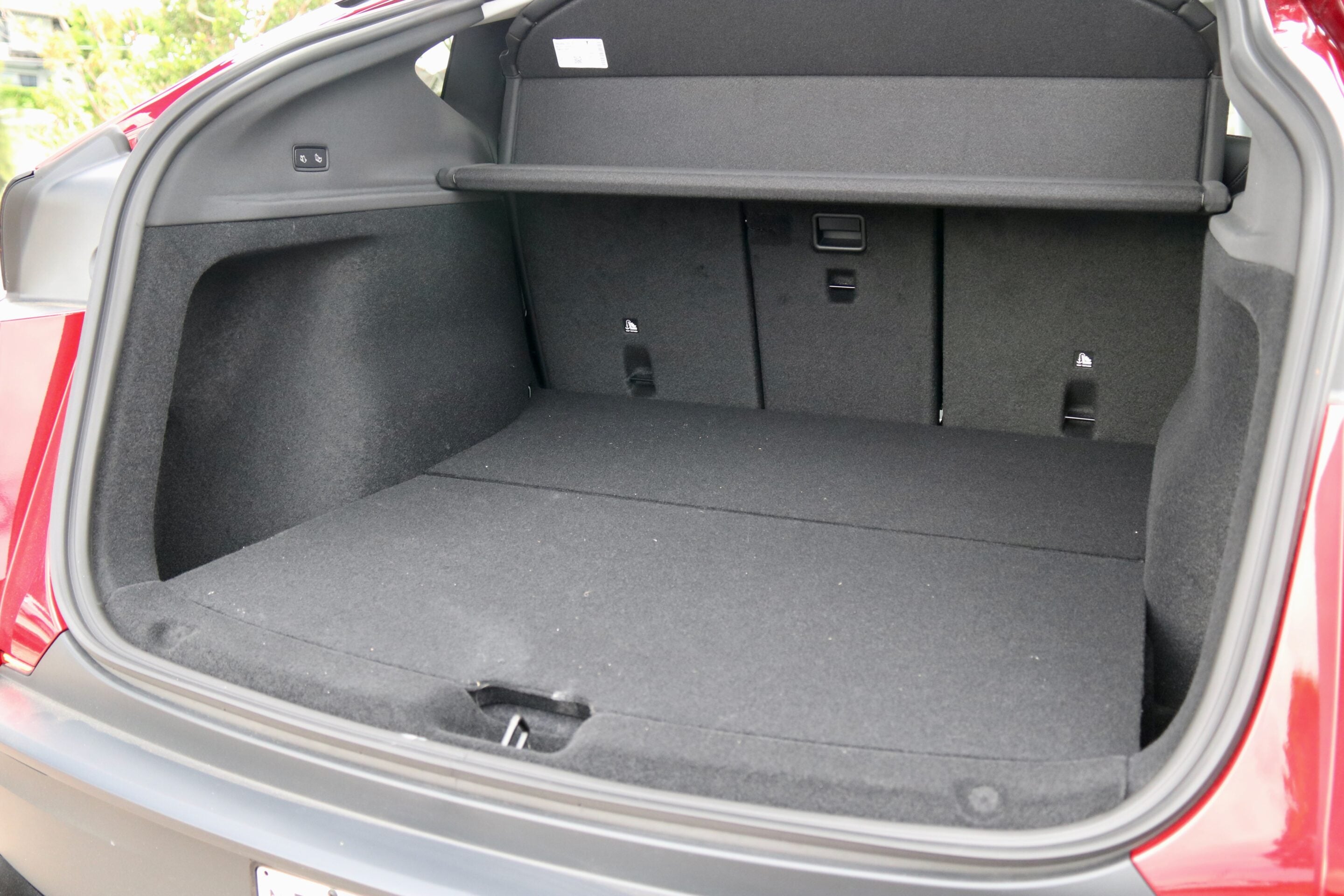
As before, the Model Y’s boot is quite large at 938 litres with the seats up (including a huge under floor section) that opens up to 2022 litres with the rear seats folded. Handily, the rear seats fold and raise electrically for extra convenience. The front boot adds another 117 litres of space, and it now features drainage for those wanting to use their Model Y for tailgate parties or in case the milk from your weekly groceries leaks from how fast you’re driving.
The changes that you can see to the Tesla Model Y Performance add up to a big difference compared with the old model. The styling is more modern and more sporting, and it gets more attention from those around you, but how about the changes underneath?
How does the Model Y Performance drive?
Firstly, there’s more power. It certainly didn’t need it, but Tesla has gifted it anyway. Some sources claim it makes the same 343kW as the Model 3 Performance, while others say up to a massive 461kW. From the driver’s seat, it feels like the latter. This car is quick.
Whatever the case, it launches to 100km/h in just 3.5 seconds, 0.2 seconds faster than the older model, and it hits a top whack of 250km/h. As you’d expect, in its fastest ‘insane’ driving mode, the Model Y Performance feels searingly and sick-inducingly quick. Yet it’s also quite efficient: we returned a 17.4kWh/100km result in our time with it. It charges at up to 250kW as well, and Tesla’s ‘Supercharger’ charging network is impressive, too.
The dynamic package has also been overhauled with new adaptive dampers the stars of the show. The previous Model Y Performance was criticised for its too-firm and non-forgiving suspension, and on that front, the new model is far better. The ride is more supple, forgiving and comfortable in standard mode, a touch firmer and a bit brittle at times in the firmer setting, but still entirely liveable. The brakes are reportedly no larger than a standard Model Y, but still perform well and pedal feel is good. It’s also been made even quieter inside and road noise is only really heard on coarse chip surfaces.
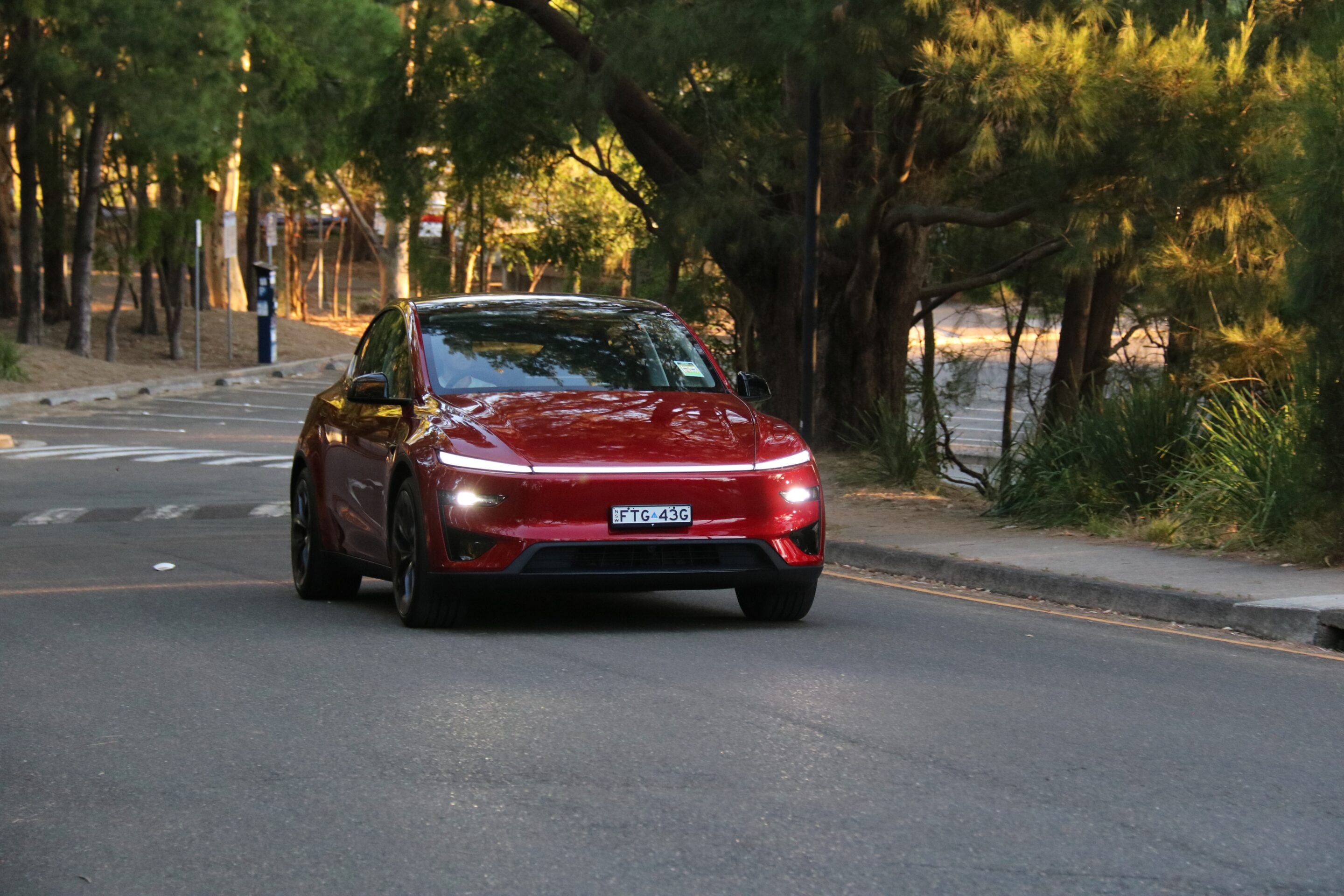
The power delivery feels as though it’s changed slightly with the update, with what feels like more front bias than before. While it’s still a heavy beast that relies heavily on its front wheels in the corners, it’s still capable of scary speeds through the twisties. While a Hyundai Ioniq 5 N still bests the Model Y Performance for involvement, the Tesla is still reasonably fun to drive.
So that’s the Tesla Model Y Performance: a searingly fast, hugely capable and nicely improved performance version of one of the world’s best-selling cars. It’s still wonderfully practical, loaded with plenty of wow factor features and has access to the best charging network out there currently. It’s the default choice for those wanting a performance electric SUV, and while the Juniper update has made it much more talented than before, there are now more rivals to consider like the Zeekr 7X.
There are still jarring factors about the Model Y that some rivals do better, like its comparatively short warranty, glass roof with no cover that makes the cabin quite hot, lack of speedometer in front of the driver and that 99.9 per cent of features are controlled through the touchscreen. But all things considered, and just how well it drives now, there’s no doubt that the Model Y Performance is still one of the best of its type and it’s now even better.
Tesla Model Y Performance specifications:
| Model | Tesla Model Y Performance |
|---|---|
| Price | $89,400 plus on-road costs |
| Motor | Dual, all-wheel drive |
| Transmission | Single-speed |
| Peak power | 461kW (est.) |
| Peak torque | 741Nm (est.) |
| 0-100km/h | 3.5 seconds (claimed) |
| Top speed | 250km/h |
| Battery | 82kWh (est.) NMC |
| Peak charging speed | 250kW |
| WLTP range | 580km |
| Energy consumption (on test) | 17.4kWh/100km |
| L/W/H/WB | 4796/1982/1611/2980mm |
| Boot | 938 litres (seats up)/2139 litres (seats folded + frunk) |
| Tare mass | 2033kg |
| Warranty | 4-year/80,000km (vehicle), 8-year/192,000km (drive battery) |
| On sale | Now |
Tesla Model Y Performance standard features:
- 21-inch alloy wheels
- Adaptive dampers with two settings
- Chill, standard and insane driving modes
- Dusk/rain-activated automatic all-LED lighting
- LED front and rear daytime running lights
- Rain-sensing automatic wipers
- Smartphone/key card access and start
- Heated/auto-folding/auto-dimming exterior mirrors that drop in reverse
- Auto-dimming rear mirrors
- Panoramic glass roof
- Electric tailgate
- Tri-zone automatic climate control
- 14-way electric front seats with memory
- Electric steering column adjustment
- Heated and ventilated front seats
- Heated leather steering wheel
- Heated rear seats
- Synthetic leather upholstery
- Carbon fibre and suede interior trims
- 16-inch touchscreen with live services
- Over-the-air software updates
- Bluetooth calling/audio streaming
- Inbuilt apps such as Spotify, Apple Music and YouTube Music
- Inbuilt games
- Tesla smartphone app for climate, location and other settings
- 16-speaker sound system
- Colour-selectable interior ambient lighting
- Twin wireless phone chargers
- 4x USB-C charging ports
- 8.0-inch rear seat entertainment/climate screen
Model Y Performance safety features:
- 7x airbags
- Autonomous emergency braking
- Adaptive cruise control with ‘autopilot’ highway self-driving capability
- Lane keeping assistance with lane departure warning
- Blind-spot monitoring (through the screen)
- Blind-spot view cameras
- Traffic sign recognition
- Driver attention monitoring
- Adaptive high beam
- Front and rear parking sensors
- Front, side and rear cameras
- Automatic rear braking
- Tyre pressure monitoring
The Model Y range achieved a five-star ANCAP safety rating earlier in 2025 with impressive scores of 91 per cent for adult occupancy protection, 95 per cent for child occupancy protection, 86 per cent for vulnerable road user protection and 92 per cent for safety assistance.
Model Y Performance options:
- Black and white interior: $1500
- Full self-driving (supervised): $10,100
While most of the attention in the new car market goes towards SUVs of various sizes, if you’re searching for a practical, efficient and good value-for-money runabout, a small sedan is still a viable option.
The pluses? They’re good to drive, easy to park, spacious and – if you choose one of the hybrid models here – cost efficient to run. So which small sedan is best to buy: the Toyota Corolla Ascent Sport sedan hybrid or the Hyundai i30 Sedan hybrid?
Pricing
The Corolla Ascent Sport hybrid sedan gets off to an immediately good start because its $32,585 plus on-road costs starting price is $665 less than the entry-level i30 Sedan hybrid ($33,250 +ORC). Premium paint is $20 cheaper for the Corolla at $575, while both Toyota and Hyundai offer a five-year/unlimited km that can be extended with dealer servicing through the warranty period (Toyota gifts you an extra two years of mechanical warranty if done so, while Hyundai gives you another two years of full vehicle warranty).
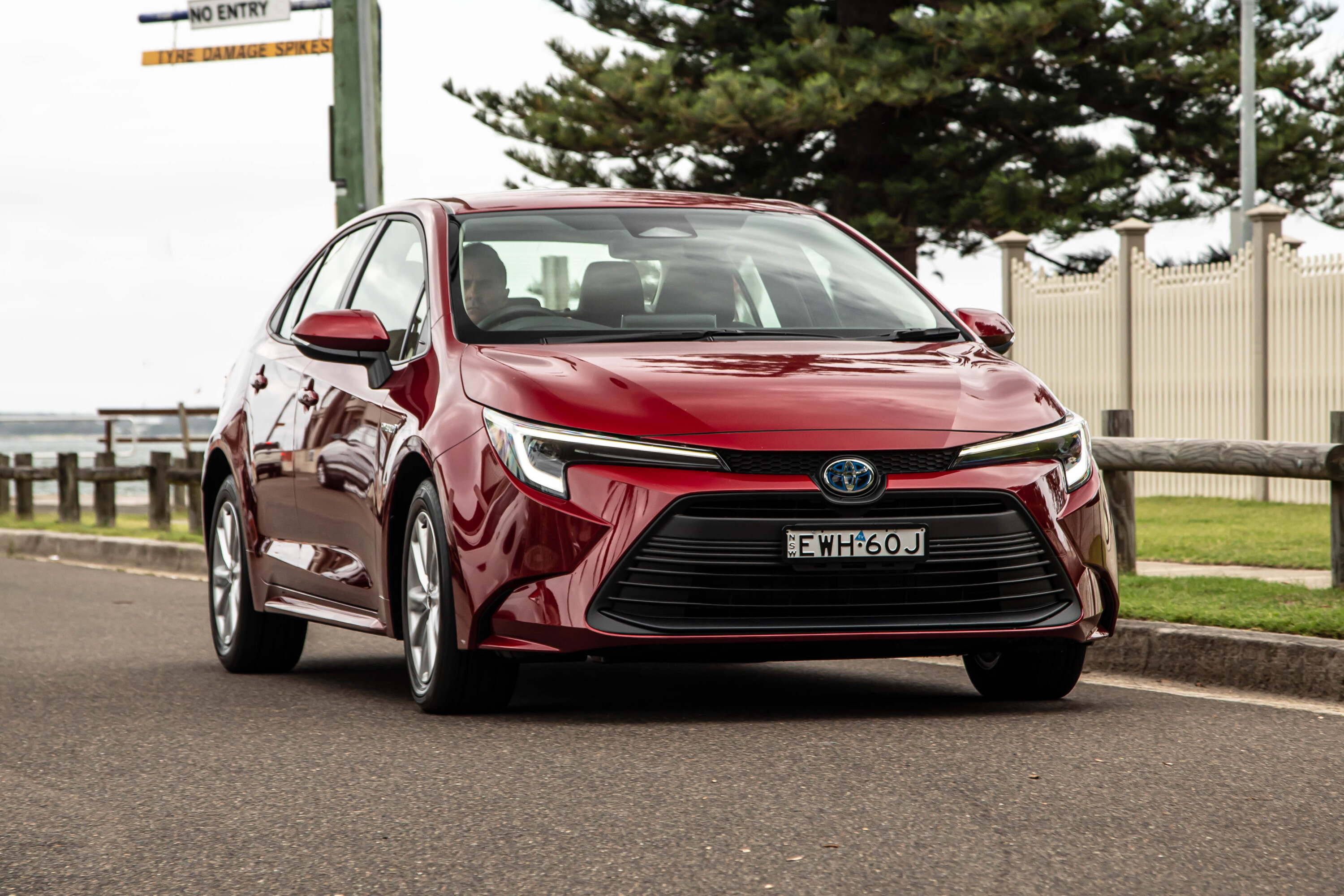
Both the Corolla and i30 Sedan feature annual/15,000km service intervals, but the Corolla’s servicing is almost half the price of the i30 Sedan’s at just $1250 for five years. The i30 Sedan features 12 months of roadside assistance as standard that’s extended by another 12 months with each dealer service, whereas Toyota disappointingly gives you none at all – buyers must pay a minimum of $99 annually if they want it.
| Toyota Corolla Ascent Sport sedan hybrid | Hyundai i30 Sedan hybrid | |
|---|---|---|
| Starting price | $32,585 plus on-road costs | $33,250 plus on-road costs |
| Premium paint | + $575 | + $595 |
| Warranty | Five-year/unlimited km (+ two extra years of mechanical warranty if serviced at a Toyota dealer) | Five-year/unlimited km (+ two extra years if serviced at Hyundai) |
| Service intervals | Annually/every 15,000km | Annual/every 15,000km |
| Five-year service cost | $1250 ($250 per year) | $2426 ($485 per year) |
| Roadside assistance | None ($99+ per year) | 12 months, extended another 12 months with each dealer service |
Dimensions
In a tale quite common with pretty much all modern cars, both small sedan offerings are much larger than their predecessors and are even larger than most medium cars were in the early 2000s. That means that both the Corolla and i30 Sedan are practical, but the Hyundai’s extra 80mm of length affords it a genuinely roomy rear cabin that even taller folks will be comfortable sitting in.
For boot space, it’s a very close call with the Toyota trailing the Hyundai by just four litres. Both boots are really just big boxes with little in the way of extra storage or hooks to hang bags off. Both cars also feature 60:40-split folding rear seats if more space is needed.
| Toyota Corolla Ascent Sport sedan hybrid | Hyundai i30 Sedan hybrid | |
|---|---|---|
| Length | 4630mm | 4710mm |
| Width | 1780mm | 1825mm |
| Height | 1435mm | 1420mm |
| Wheelbase | 2700mm | 2720mm |
| Weight | 1430kg | 1360kg |
| Luggage space | 470 litres | 474 litres |
Standard features
Despite both the Corolla Ascent Sport and i30 Sedan being entry level models in their respective line-ups, they are well featured for the money. Shared features include 16-inch alloy wheels, automatic LED headlights, heated mirrors, automatic climate control, 8.0-inch touchscreens, wireless smartphone mirroring and six-speaker sound systems.
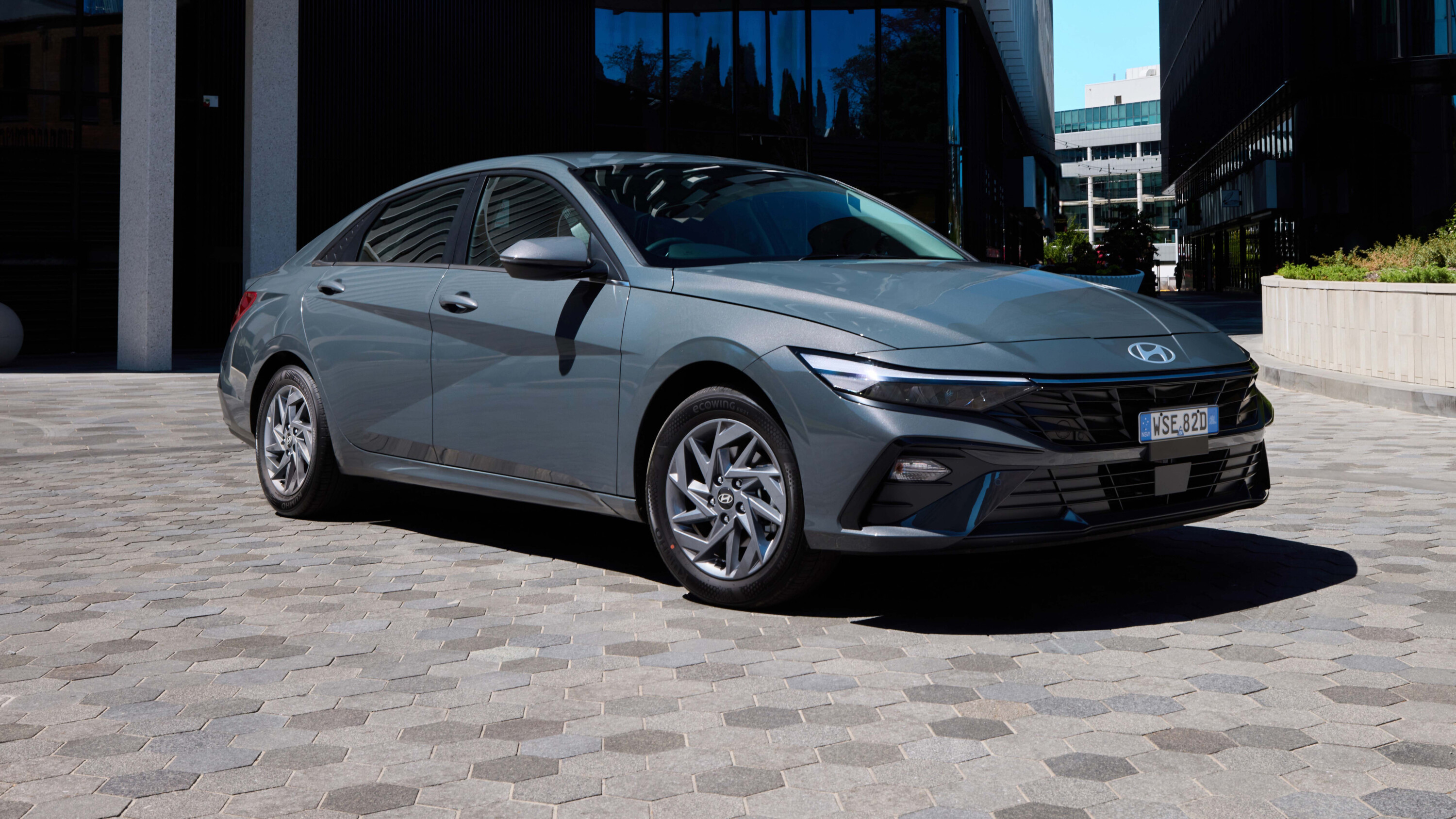
Over the i30 Sedan, the Corolla adds cloud-based sat-nav, DAB+ digital radio reception, keyless entry with push button start and a 12.3-inch digital driver’s display. But the i30 adds rain-sensing automatic wipers, parking sensors, a leather-wrapped steering wheel, an extra zone of climate control, rear air vents, a wireless phone charger and two USB-C charging ports for the rear seat.
| Toyota Corolla Ascent Sport sedan hybrid | Hyundai i30 Sedan hybrid | |
|---|---|---|
| Wheels | 16-inch alloy | 16-inch alloy |
| Headlights | LED projector | LED reflector |
| Wipers | Manual | Rain-sensing automatic |
| Seat adjustment | Six-way manual driver, four-way manual passenger | Six-way manual driver, four-way manual passenger |
| Upholstery | Cloth | Cloth |
| Steering wheel | Urethane | Leather |
| Push button start | Yes | No |
| Climate control | Single-zone automatic | Dual-zone automatic with rear vents |
| Stereo | Six-speaker | Six-speaker |
| In-car charging | 1 x USB-C (front) | 1 x USB-C (front), wireless charger (front), 2 x USB-C (rear) |
Performance and fuel economy
Both the Corolla Ascent Sport hybrid and i30 Sedan hybrid use four-cylinder petrol engines combined with electric motors and small batteries to provide low emissions driving. The Corolla’s 1.8-litre engine is 200cc larger than the Hyundai’s, but remarkably, they both achieve 3.9L/100km on the combined cycle for fuel consumption.
The i30 Sedan produces 1kW more power than the Corolla (104kW versus 103kW), and it also uses a six-speed dual-clutch transmission that feels more normal to drive than the Corolla’s eCVT. Based on their combined fuel consumption, Corolla drivers will eke slightly more out of a tank of fuel – the i30 Sedan hybrid’s is one litre smaller – though that will depend on what sort of driving they’re doing.
| Toyota Corolla Ascent Sport sedan hybrid | Hyundai i30 Sedan hybrid | |
|---|---|---|
| Engine | 1.8-litre four-cylinder hybrid | 1.6-litre four-cylinder hybrid |
| Peak power | 103kW | 104kW |
| Combined fuel consumption | 3.9L/100km | 3.9L/100km |
| Transmission | eCVT | Six-speed dual-clutch |
| Claimed emissions | 90g/km | 92g/km |
| Fuel type/tank size | 43 litres/91RON regular unleaded | 42 litres/91RON regular unleaded |
Safety
These small sedan rivals will be bought by a whole range of customers, so safety is an important issue to consider. The i30 Sedan was tested by Australia’s safety authority ANCAP and received a three-star rating, but the Corolla is actually currently unrated by ANCAP because it was tested so long ago (it received a five-star rating in 2018). Therefore, it’s difficult to know how they compare in crash testing, but they are both well equipped when it comes to safety.
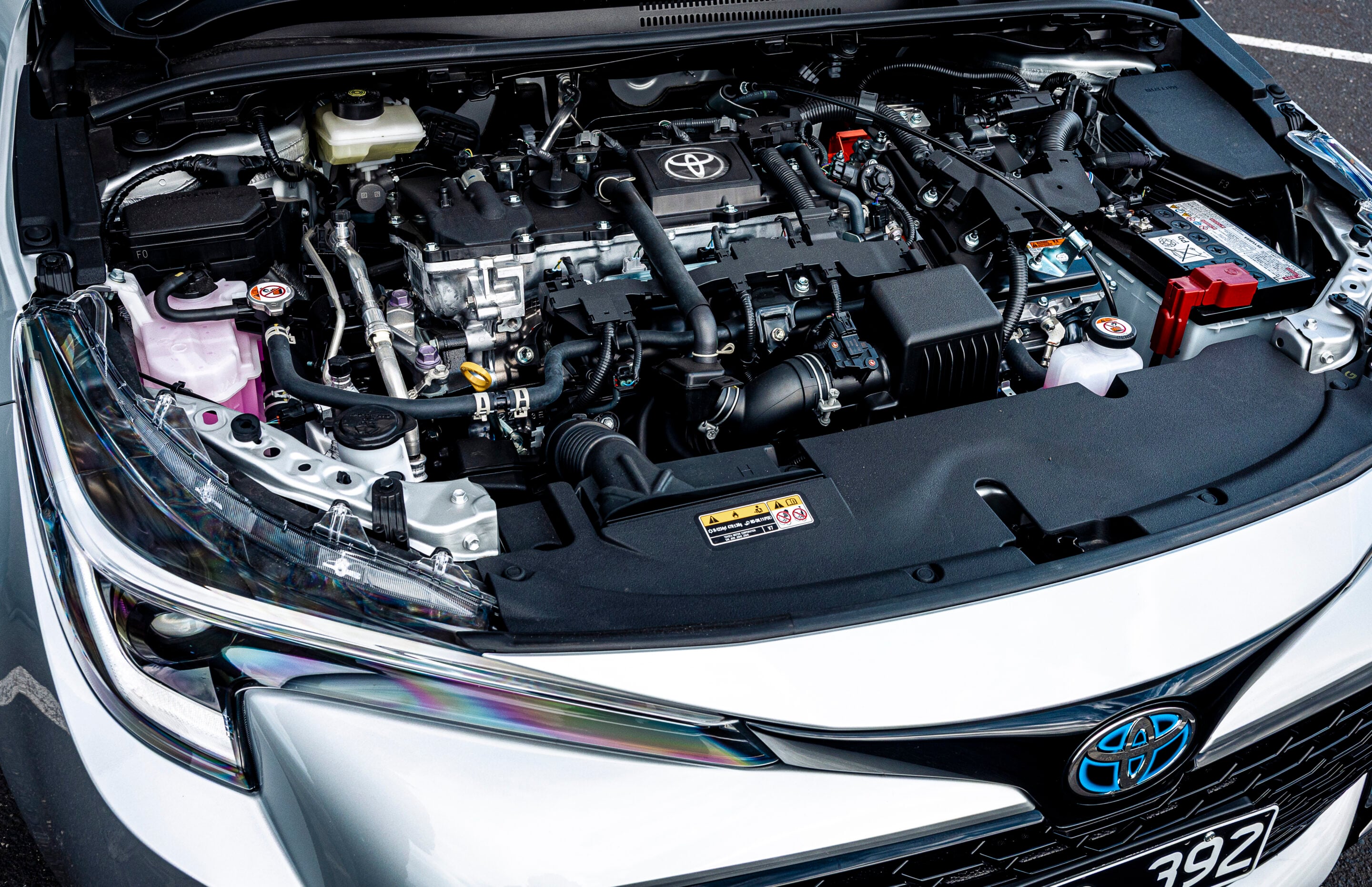
Shared safety features between the two include autonomous emergency braking, adaptive cruise control, lane keeping assistance, driver attention monitoring and a reversing camera. However, neither feature blind-spot monitoring with rear cross-traffic alert as standard – they are available as part of a $1000 Convenience Package on the Corolla, but i30 Sedan buyers must step up to the upper-spec Elite to get them. The Corolla has seven airbags to the i30 Sedan’s six, but the i30 Sedan features front and rear parking sensors.
| Safety | Toyota Corolla Ascent Sport sedan hybrid | Hyundai i30 Sedan hybrid |
|---|---|---|
| Airbags | Seven | Six |
| Adaptive cruise control | Yes (all speed) | Yes (with stop and go) |
| Autonomous emergency braking | Yes (with pedestrian and daytime cyclist assistance) | Yes (with pedestrian, cyclist, motorcycle and intersection assistance) |
| Lane-keep assist | Yes (with adaptive lane guidance) | Yes (with adaptive lane guidance) |
| Blind-spot monitoring | No (available as part of $1000 Convenience Package) | No |
| Rear cross-traffic alert | No (available as part of $1000 Convenience Package) | No |
| Driver attention monitoring | Yes | Yes |
| Parking sensors | No | Front and rear |
| Reversing camera | Yes | Yes |
| ISOFIX | Outboard rear seats | Outboard rear seats |
Technology
Thanks to its most recent updates, the Corolla edges out the i30 Sedan on the tech front thanks to its impressive 12.3-inch digital driver’s display and 8.0-inch touchscreen with live services, including cloud-based sat-nav with live traffic. The i30 Sedan also features an 8.0-inch touchscreen, but with no live services in the entry-level model. Both feature wireless smartphone mirroring, while the Corolla only features one USB port – the i30 Sedan has three and a wireless phone charger too.
| Toyota Corolla Ascent Sport sedan hybrid | Hyundai i30 Sedan hybrid | |
|---|---|---|
| Driver’s display | 12.3-inch digital | 4.2-inch with analogue gauges |
| Touchscreen | 8.0-inches | 8.0-inches |
| Satellite navigation | Yes (cloud based with live traffic) | No |
| Radio | AM/FM/DAB+ | AM/FM |
| Smartphone mirroring | Wireless and wired Apple CarPlay and Android Auto | Wireless and wired Apple CarPlay and Android Auto |
Conclusion: Corolla or i30 hybrid?
Those wanting something smaller and more fuel efficient than an SUV will be a winner with either of our small sedan battlers: the Toyota Corolla Ascent Sport hybrid sedan or Hyundai i30 Sedan hybrid. They’re not only more practical than vehicles like their Kona and Corolla Cross siblings, but better to drive, better value for money, more efficient and better looking.
The Corolla is priced less than the i30, and offers some equipment advantages like a fully digital driver’s display, keyless entry with push button start and inbuilt sat-nav. But the i30 Sedan is better equipped overall, including more family/ride share-friendly features like rear air vents and charging ports. It’s also more spacious than the Corolla and better to drive because of its proper transmission. There’s no wrong choice here, but our small sedan money would be going to the i30 Sedan hybrid.
Subaru Australia has announced local pricing and specifications for the 2026 Subaru Outback, which is due to join the range soon. Now in its seventh generation, the Outback has grown slightly, including 50mm more height than before, while Subaru says it is more spacious and more practical than ever.
For the first time, Subaru’s Wilderness off-road sub-brand will also be joining the local range as part of the Outback line-up. Pricing for the new Outback starts at $48,990 plus on-road costs, or $4800 more than the previous model.
As we discovered when it was revealed in April 2025, the seventh-generation Subaru Outback is slightly larger than before and less wagon-like in appearance. The interior has gained a new dashboard layout with a new 12.1-inch touchscreen, with the former portrait-style screen shelved for the new model. The interior appears to have been elevated and modernised.

The new Outback measures 4880mm long, 1880mm wide, 1715-1735mm tall and uses a 2745mm long wheelbase, making it 10mm longer, 5mm wider, minimum 50mm taller and the same distance between the wheels as the previous model. Its bootspace with the rear seats up is now 530 litres, an increase of eight litres, and its kerb weight is now 90kg heavier from 1705kg thanks to the larger sizing and new standard features.
For the first time in Australia, Subaru is also launching its Wilderness sub-brand, which adds more off-road chops to the Outback (and both Crosstrek and Forester in overseas markets, but they’re yet to be confirmed for Australia), including a raised ride height, new suspension tuning with electronic dampers, off-road themed exterior styling, more standard features and Wilderness badging.
Two familiar – but upgraded – drivetrains will be available in the Australian-spec Outback: a 137kW/254Nm 2.5-litre petrol or 194kW/382Nm 2.4-litre turbo-petrol engines for Wilderness models, with both using updated CVT automatic transmissions and Subaru’s symmetrical all-wheel drive system.
The 2.5-litre engine is rated at 8.2L/100km on the combined fuel consumption cycle (up from 7.3L/100km), and the 2.4-litre turbo is rated at 9.7L/100km (+ 0.7L/100km). The claimed CO2 emissions for the 2.5L are 183g/km (+ 15g/km) and 228g/km (+ 24g/km) for the 2.4T. Both engines can use 91RON regular unleaded fuel and all Outbacks use a 63-litre fuel tank.

The 2.5-litre hybrid drivetrain in the new Forester doesn’t feature as part of the launch line-up, but is rumoured to join the Outback range at some stage.
The new Outback’s colour options include ‘Crystal White Pearl’, ‘Crystal Black Silica’, ‘Ice Silver Metallic’, ‘Magnetite Grey Metallic’, ‘Deep Emerald Pearl’, ‘River Rock Pearl’, ‘Crimson Red Pearl’, ‘Brilliant Bronze Metallic’, ‘Sapphire Blue Pearl’ and ‘Geyser Blue’. All but the white and black hues attract a $660 upcharge, which itself is also new to the Outback.
The Outback is covered by a five-year/unlimited km warranty with 12 months of roadside assistance. Five years/75,000km of capped price servicing costs $2251.21 ($450 per year) for the 2.5-litre engine and $2347.31 for the 2.4-litre turbo ($469 per year).
2026 Subaru Outback pricing (plus on-road costs):
| Outback 2.5 AWD | $48,990 |
|---|---|
| Outback Premium 2.5 AWD | $53,490 |
| Outback Touring 2.5 AWD | $56,990 |
| Outback Wilderness 2.4T AWD | $59,690 |
| Outback Wilderness Apex 2.4T AWD | $62,690 |
2026 Subaru Outback equipment:
- 18-inch alloy wheels
- Dusk-sensing automatic LED headlights
- Rain-sensing automatic wipers
- Roof rails
- Keyless entry with push button start
- Heated and electric-folding mirrors
- Dual-zone automatic climate control with rear air vents
- Synthetic leather upholstery
- Leather steering wheel
- 10-way electric driver seat adjustment
- Heated front seats
- 12.3-inch digital driver’s display
- 12.1-inch touchscreen with wireless Apple CarPlay and Android Auto
- Six-speaker sound system
- 4x USB charging ports
- Electric tailgate
- X-Mode off-road driving modes
2026 Subaru Outback safety features:
- 9x airbags
- Autonomous emergency braking
- Adaptive cruise control
- Adaptive lane guidance
- Lane keeping assistance
- Driver attention monitoring
- Blind-spot monitoring
- Rear cross-traffic alert
- Front and rear parking sensors
- Reverse automatic braking
- Reversing camera
- Emergency assist

Outback Premium model adds:
- Satellite navigation
- 360-degree camera
- 12-speaker Harman Kardon sound system
- Sunroof
- Heated steering wheel
- 8-way front passenger electric seat adjustment
Outback Touring model adds:
- Nappa leather upholstery (available in black or tan)
- Ventilated front seats
- Heated outboard rear seats
- Wireless phone charger
- Auto-folding mirrors with passenger side dropping in reverse
- Driver monitoring for automatic seat and mirror adjustment
- Gloss finish for the 18-inch alloy wheels
- Active lane change assistance
Outback Wilderness adds (to Outback 2.5 AWD):
- Unique exterior styling
- Turbocharged 2.4-litre petrol engine
- Water-repellent synthetic leather seat trim with Wilderness logo
- Raised suspension with 240mm ground clearance
- Electronic dampers
- Two-mode X-Mode off-road driving modes
- Auto-dimming rear mirror
- Heated steering wheel
- Wireless phone charger
Outback Wilderness Apex adds (to Wilderness):
- Satellite navigation
- 360-degree camera
- 12-speaker Harman Kardon sound system
- Sunroof
The 2026 Subaru Outback is available to order now ahead of the first local deliveries commencing soon.
ANCAP (the Australasian New Car Assessment Program has announced that it will refresh its vehicle safety rating criteria for 2026 in a move designed to strengthen how it evaluates the safety of new cars.
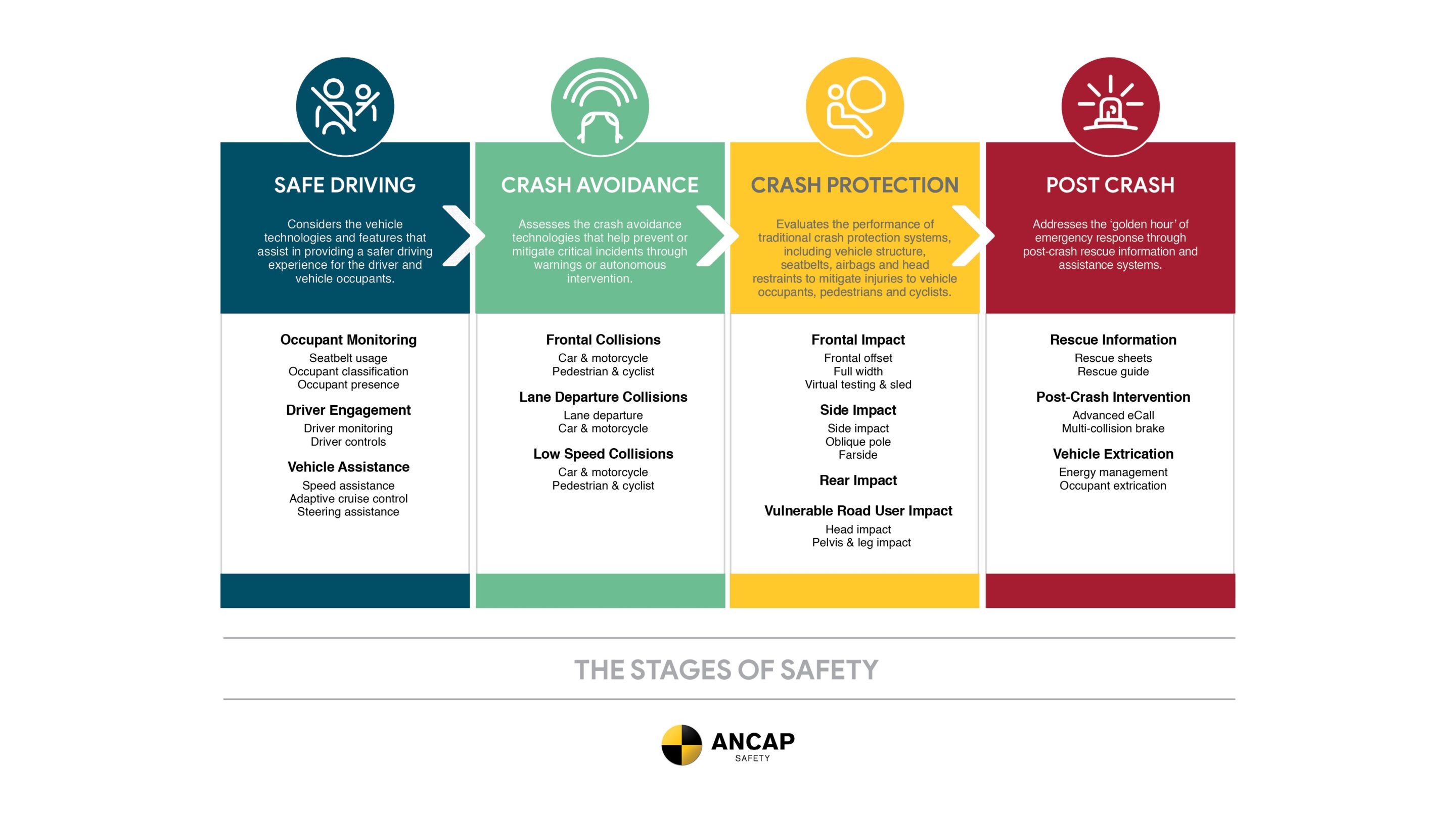
Instead of the current adult protection, child protection, vulnerable road user protection and safety assist ratings, ANCAP will now assess across its new ‘Stages of Safety’: safe driving, crash avoidance, crash protection and post-crash.
ANCAP re-examines the star rating criteria every three years with a “sole focus on reducing vehicle-related deaths and serious injuries.” The 2026-2028 protocols “further strengthen the rigour and relevance of the tests, rewarding vehicles that perform well across all stages of safety – before, during and after a crash.”
“You’ve spoken and we have listened. The ‘Stages of Safety’ approach will allow ANCAP to incorporate useful feedback, enhance existing tests and incorporate new areas of focus,” ANCAP Chief Executive, Carla Hoorweg said. “This new approach also provides a structure that can adapt to the technological developments that will shape the automated driving future.”
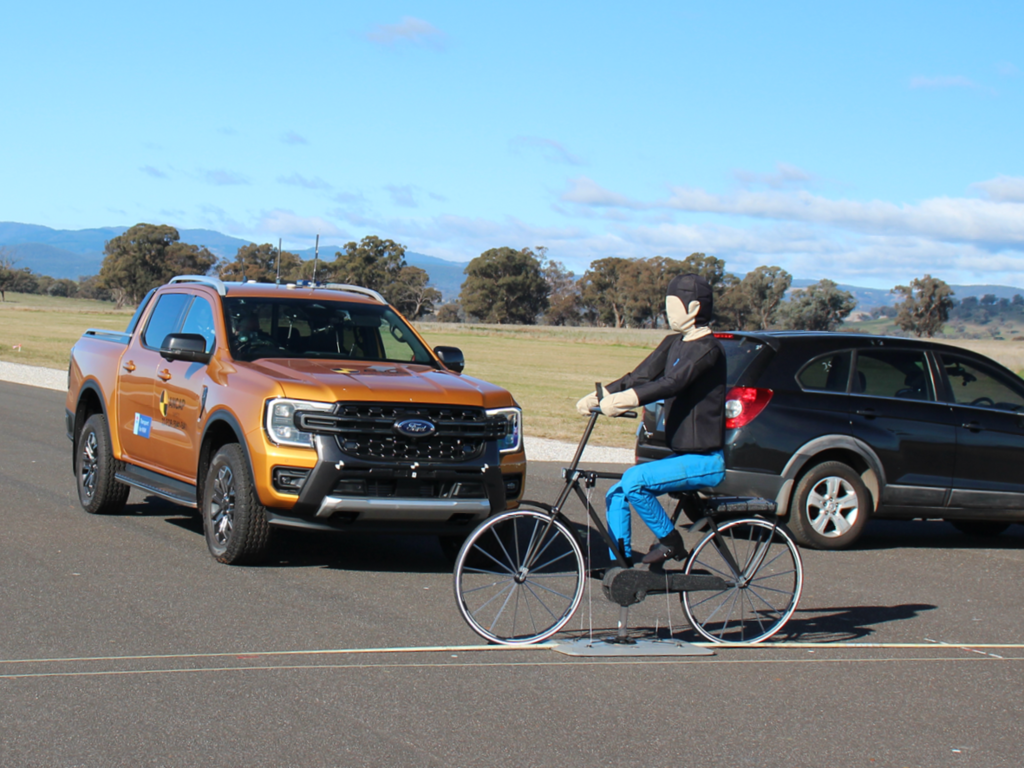
Several changes have been made to ANCAP’s safety testing specifically in response to consumer feedback. Active driver assistance systems – often criticised for their abrupt or irritating interventions – will be rewarded for smooth, intuitive operation, as well as technical performance.
Part of its testing will focus on electrically-operated door handles that sit flush with bodywork when not in use should remain operable after any crash, electric cars that isolate their high-voltage battery after a serious crash and vehicles that can notify first responders of the crash.
As part of the new testing regime, ANCAP will place greater emphasis on the availability and performance of eCall systems. More than 40 per cent of all new vehicles sold in Australia in 2024 featured technology capable of automatically connecting with emergency services following a crash, known as ‘eCall’. But in neighbouring New Zealand – a market with broadly similar new car offerings – it’s less than 10 per cent.
ANCAP will also perform more real-world road testing of vehicles to examine how well a vehicle’s technology reads and responds to road conditions, and will give ANCAP more detailed insights into a driver’s experience beyond the test track.
ANCAP 2026 stages of safety:
The four assessment areas evaluated from 2026, known as the ‘Stages of Safety’, are:
- Safe driving: Considers the vehicle technologies and features that assist in providing a safer driving experience for the driver and vehicle occupants.
- Crash avoidance: Assesses the crash avoidance systems that help prevent or mitigate critical incidents through warnings or autonomous intervention.
- Crash protection: Evaluates the performance of traditional crash protection elements, including vehicle structure, seatbelts, airbags and head restraints to mitigate injuries to vehicle occupants, pedestrians and cyclists.
- Post crash: Addresses the ‘golden hour’ of emergency response through post-crash rescue information and assistance systems.
Each of the four stages will be scored out of 100 points and – as is currently the case – expressed as a percentage for consumers apparently seeking that next level of information beyond the simple star rating, according to ANCAP. Minimum thresholds will also continue to apply for each stage and that will determine the car’s overall star rating.
The first results from ANCAP’s new testing regime will be released sometime in 2026.
The dual-cab ute market around the world is looking more like a swinger’s club than an automotive segment right now. Sure, the concept of model-sharing is hardly new, but for a market sector to have embraced the concept of not just partner-sharing, but actual bed-hopping, seems pretty radical in the context of what are otherwise pretty conservative companies. Then again, globalisation can’t be ignored, nor can the corporate-survival instincts behind design, development and engineering cost-sharing be underestimated.
Of course, it’s not just the concept of keys-in-the-bowl that’s raising eyebrows, it’s also the potential for disaster that lurks around every model-sharing corner. Everybody can recall an example of where this process has led a car maker completely up the wrong path, in the process tearing up money at every step along the way. Mercedes-Benz X-Class, anyone?
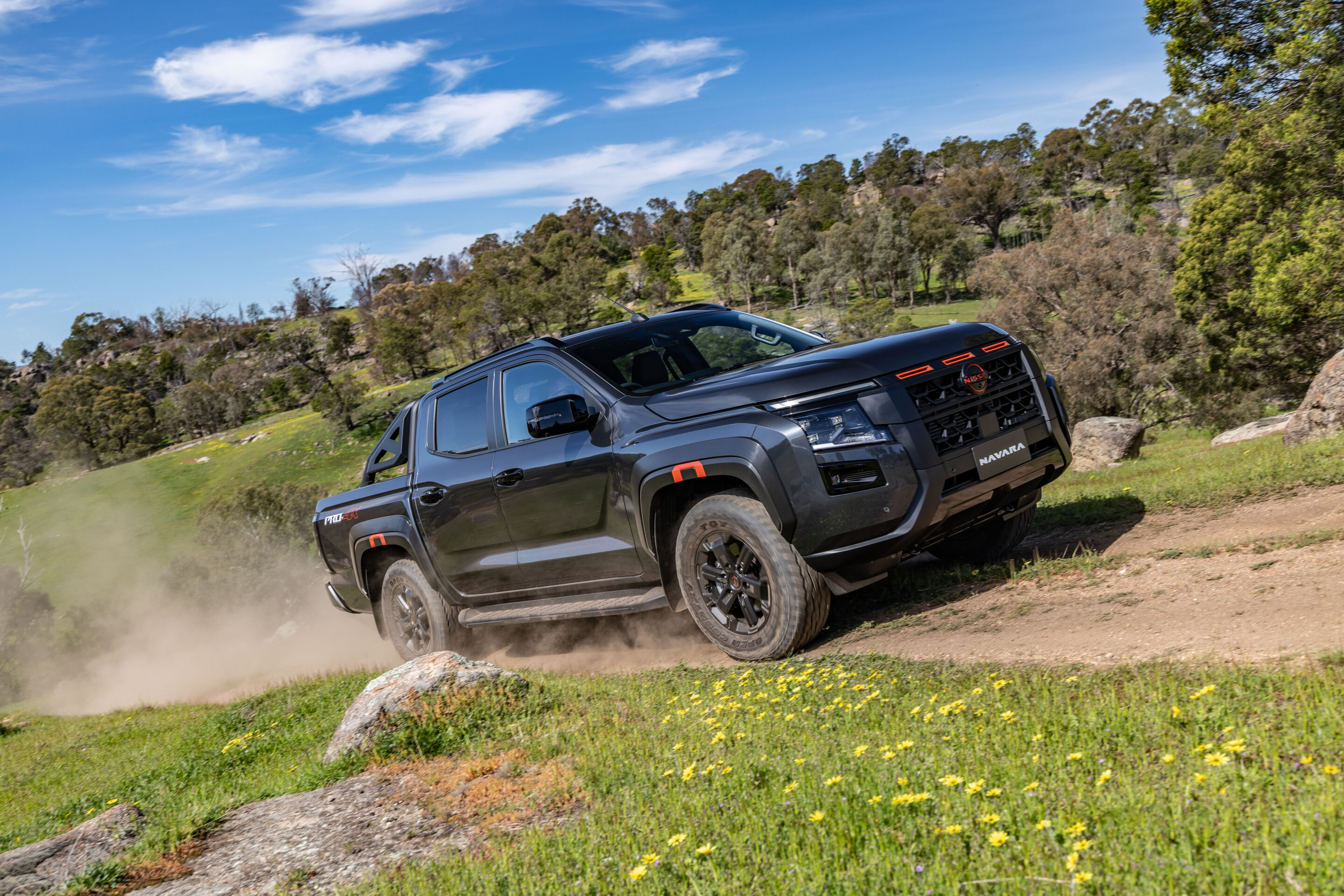
All of which suggests that Nissan – as the willing engineering provider of the doomed X-Class experiment – should understand better than most the perils of a free-love arrangement. And yet here we are, apparently full circle, but with the boot on the other foot as Nissan and Mitsubishi sneak off to the garden shed to return with flushed faces and a brand-new Navara dual-cab made from the genetic material of the current, but still very new, Mitsubishi Triton.
Okay, so sharing development costs makes great sense, but so does protecting your fan-base. In this case, the Navara has sold more than 500,000 units across four generations since the mid-80s in Oceania (Australia and New Zealand). Not to mention the buyers of dual-cab utes tend to be a bit rusted on in terms of their brand allegiances. The question being; exactly what will those half-million think of a Navara largely designed and engineered by Mitsubishi, built in a Mitsubishi factory (Thailand) and sharing every exterior sheet-metal panel with the Triton.
The big “Yeah. But” comes in the form of local engineering input into the Navara’s suspension. Carried out by Melbourne-based Premcar, which also has its fingerprints on a couple of the best off-road Nissans ever made (the Patrol an Navara Warrior franchise), the aim has been to retune the basics for a Navara-based flavour and continue to offer the faithful something on which to hang their flags of loyalty (even if the Navara’s purity ring is lost in the long grass behind that garden shed).
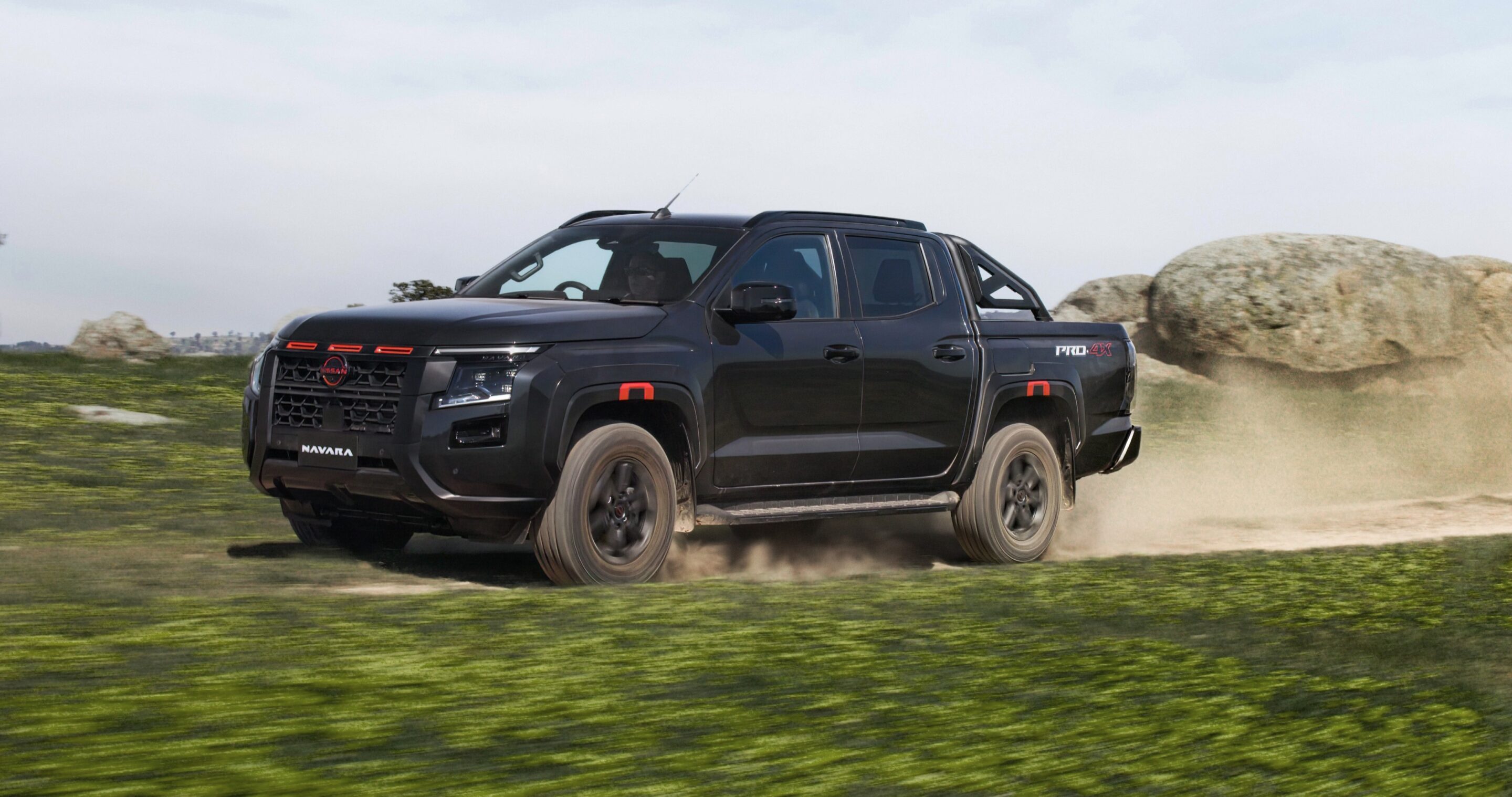
Premcar’s engineering boss, Bernie Quinn, told us that the basic Triton chassis (Nissan calls it an `Alliance platform’) was actually pretty good to start with, so changes could be restricted to dampers. That included a switch to twin-tube units (single-tubes tend to get hammered to death in rocky country, says Bernie) and a damper tune that was the result of 18,000km of outback testing, 137 individual damper codes and 550 different internal shims. Springs, bump-stops and bushes remain as per the Triton original, and there’s three distinct tunes for those depending on model and tyre fitment.
What I can’t tell you with any authority is what specific forms the Navara will take when it lobs into local showrooms sometime in the first quarter of next year. Nissan was very tight-lipped about the nitty-gritty, but the smart money says there will be at least an entry-level model, an ST-X and Pro-4X specification and, of course, a Premcar-brewed Warrior version. Prices? Anybody’s guess. But what you won’t see is a two-wheel-drive, single-cab or cab-chassis variant. It’s four-wheel-drive, dual-cab, styleside or nothing at this stage, which is what 90 per cent of Navaras now are and is, therefore, simply a matter of Nissan following the money. As companies looking to stay in business will do.
Mechanically, it’s all Triton, really, so bank on a 2.4-litre bi-turbo-diesel producing 150kW and 470Nm which is not only identical to the Triton, but right about the middle of what the average dual-cab is serving up. A six-speed automatic transmission is standard, while a rear diff-lock will be optional. And, thankfully, you can count on Mitsubishi’s celebrated Super-Select 4WD system that incorporates a switchable centre diff-lock and the ability to run on bitumen in four-wheel-drive. Not all (many) dual-cabs offer this, and for towing a three- tonne excavator on a wet road, 4-Auto is worth its weight in Big-M.
The cabin is a big improvement, which is handy, because both the previous Triton and the Navara needed an interior upgrade. That goes for the tech with a nine-inch central info screen and a seven-inch dashboard unit, wireless charging, full wireless connectivity, a 360-degree camera system, digital radio and plenty of USB charge ports.
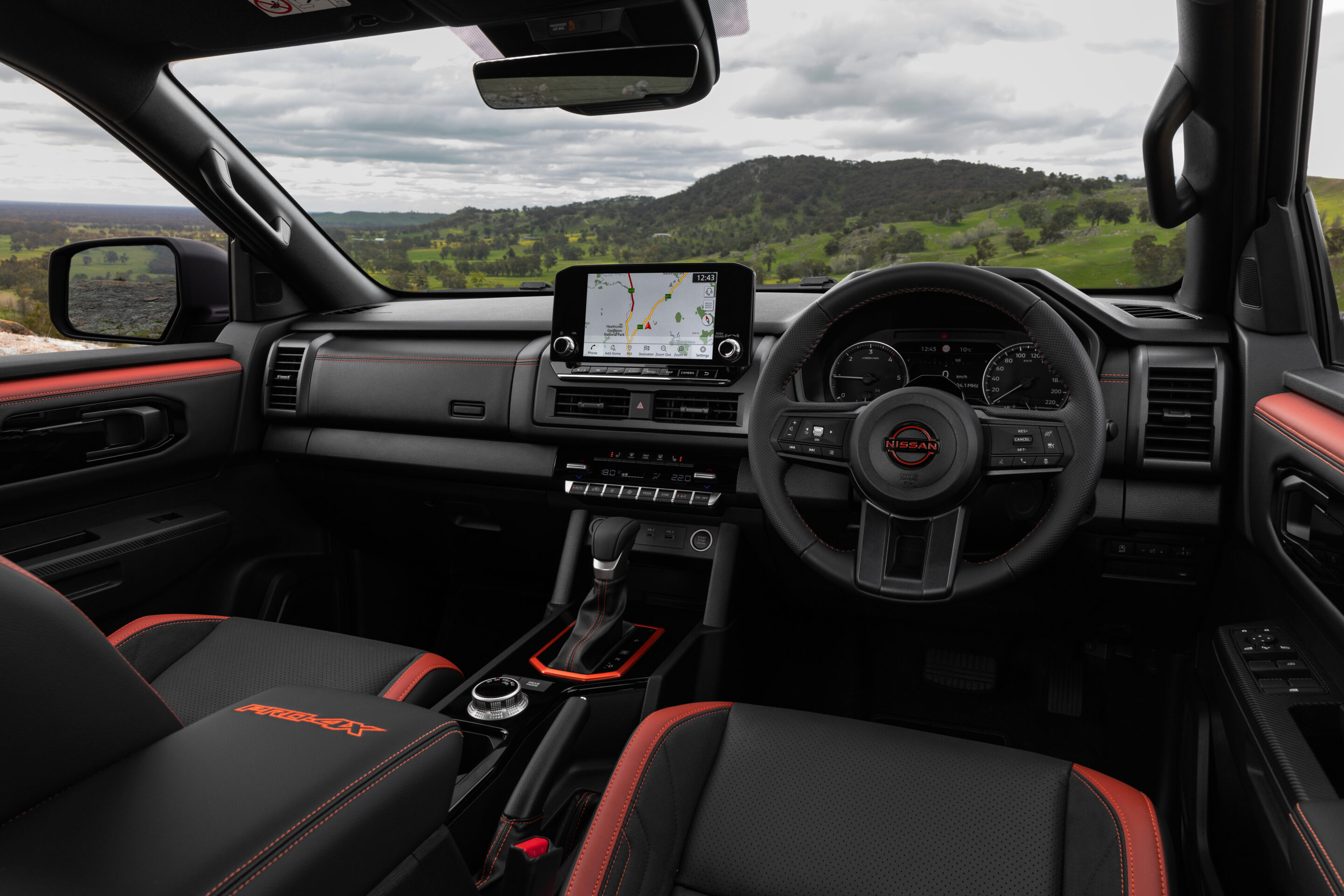
But crucially, the cabin is wider than ever which, if you sit in the current Navara, you’ll know represents a big improvement. The front seats are actually very good and even the rear seat has a decent cushion, although a bit of adjustment for the rear backrest might have been a nice idea. Overall, of course, if you’ve spent much time in the current Triton, the Navara is going to be a familiar place, right down to the twin gloveboxes (nobody wants gloves strewn everywhere).
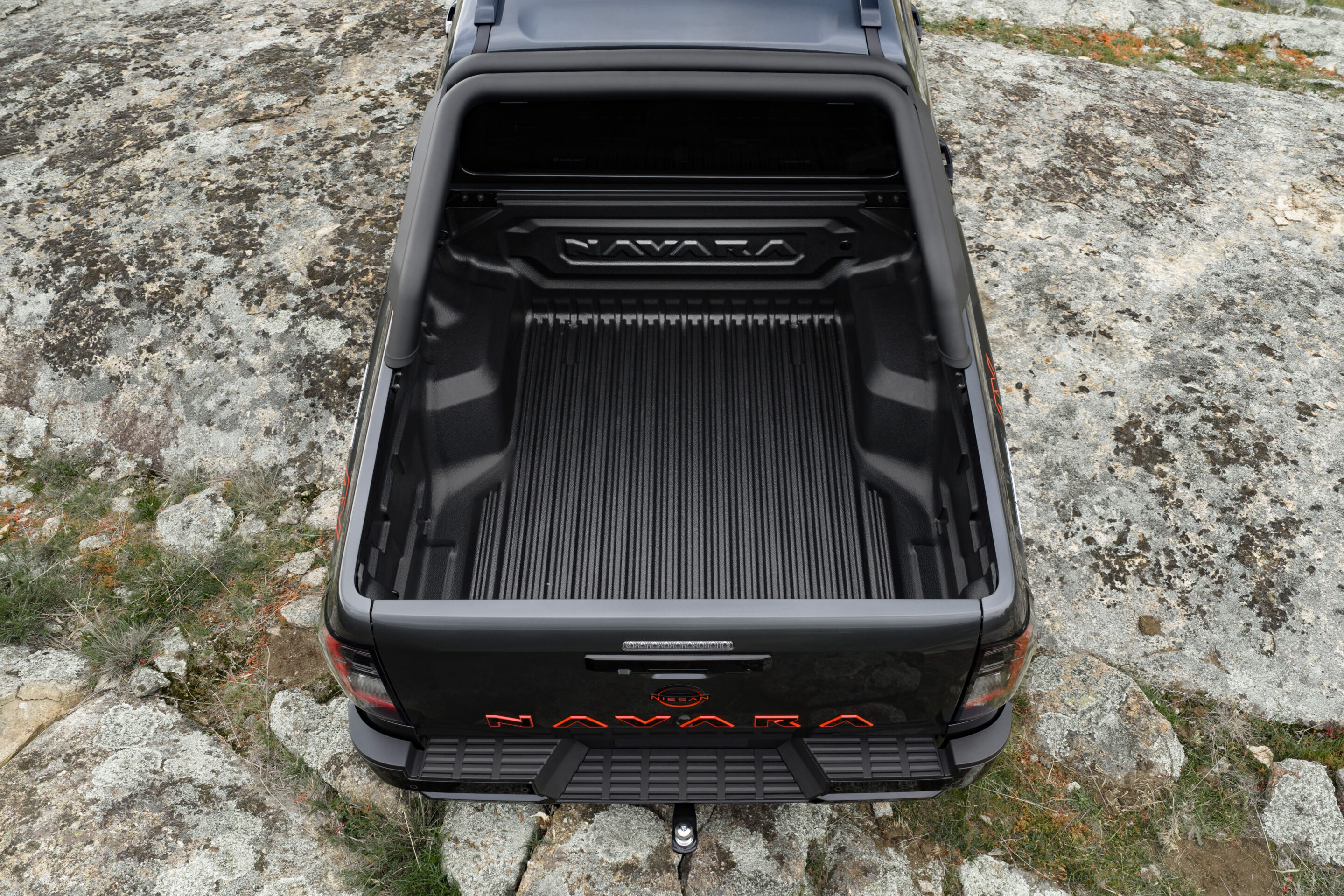
Overall, the Navara is a bigger vehicle in every direction apart from overall height, and it’s now a useful 46mm longer in the tray. It’ll legally haul the industry-standard 3500kg and depending on model and specification (whatever those turn out to be) the payload will be between 950 and 1047kg.
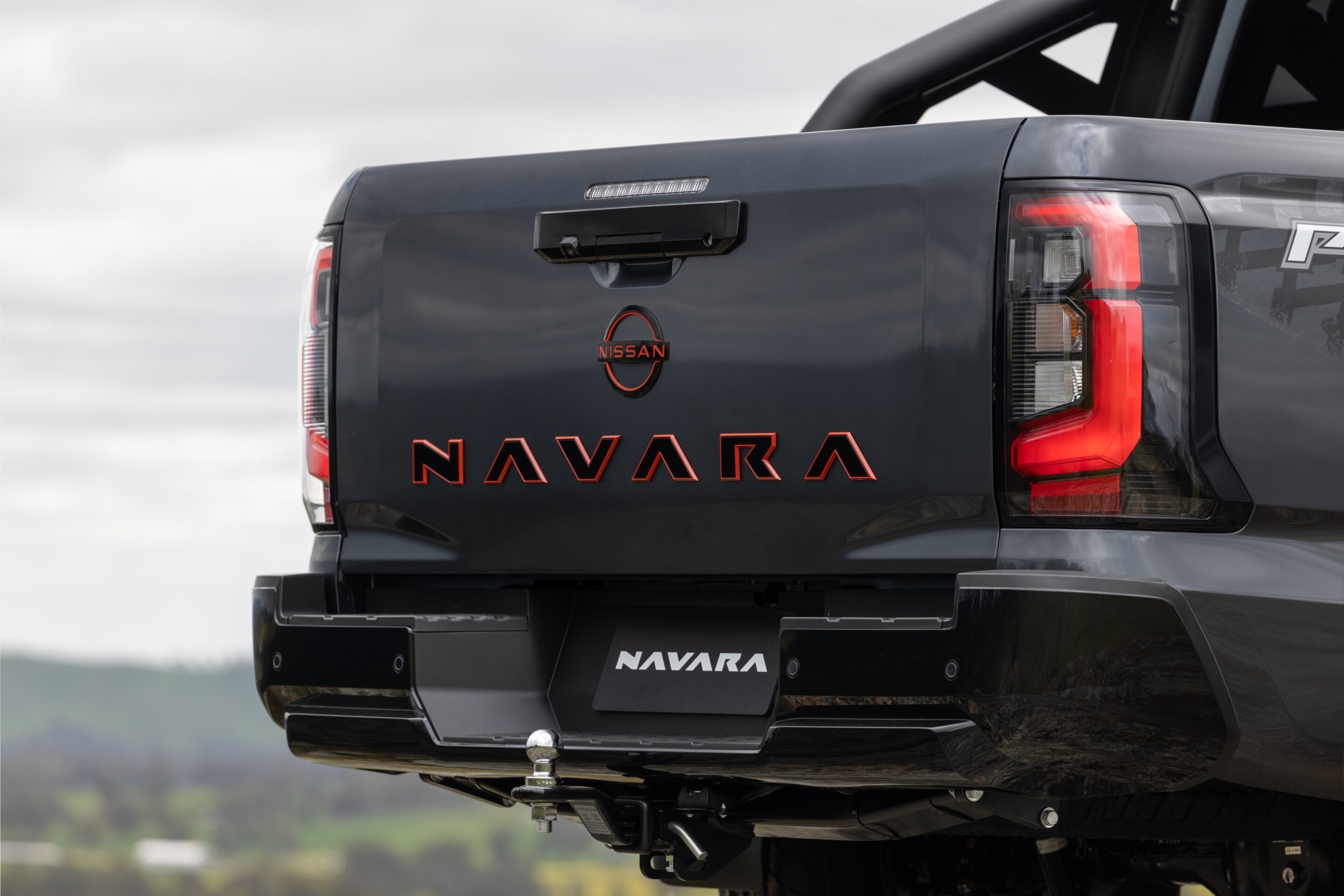
But doesn’t it look just like a Triton? Actually, not as much as you’d imagine. Sure, the doors, bonnet, tailgate, tray sides and glasshouse pressings are carried straight over from Mitsubishi, but just to prove that it’s a car’s face that we remember, the Navara is distinguished by a very Nissan visage. That starts with the Nissan corporate V-shaped grille bars and continues with the Navara-signature three slots in the leading edge of the bonnet. Okay, okay, the slots are actually in the grille, not the metal hood, but you get the idea.
We’ll need a back-to-back drive to really pick the dynamic differences, and our test drive at the global unveiling consisted of about 15 minutes on dry, well-formed tracks with a few steep hills and drop-offs. To be honest, the most dangerous part of the drive was area itself which – apparently – is home to about 70 per cent of South Australia’s snakes. So the story goes, but the thought was enough to prevent anybody venturing off those tracks.
Despite the low-speed nature of our drive, it was immediately obvious that the Navara is likely to boast a pretty good secondary (small bump) ride. It was never skittish or intrusive, and even amping up the pace to the maximum you’d ever use on such terrain, it stayed composed and refused to induce any nasty feedback, and not a single thump made it through to the cabin. Exactly what that means for towing, highway speeds or hand-to-hand urban work remains a complete mystery; one that won’t be solved until early next year.
We’ll know a lot more then, of course, including little details like model line-ups, specifications and prices. But even then, the one thing we won’t know is whether a Triton badged as a Nissan will delight or trigger the Navara faithful. Either way, that’s #swingerlife for you.
Specs
| Model | Nissan Navara |
|---|---|
| Price | Yet to be released |
| Peak power | 150kW |
| Peak torque | 470Nm |
| Transmission | Six-speed automatic |
| Fuel tank | 75 litres |
| Fuel consumption (combined) | 7.7 litre per 00km |
| Dimensions (l/w/h/wb) | 5320mm/11865-930mm/1795mm/3130mm |
| Kerb weight | 2120-2140kg |
| Tub dimensions | 1555mm long X 1545mm wide |
| Warranty | 5 years/unlimited km |
| On sale | Q1, 2026 |
The global reveal of the Jaguar XJ220 was not proceeding to plan.
The sleek show car’s V12 engine had seized on Friday and the car had to be pushed onto the British motor show stand at 3am on Saturday, October 18, 1988 ahead of the event opening at 11am. Given that there were only five of the 48-valve 6.2-litre engines in existence, twenty per cent of the total supply of these motors had just been welded into an expensive paperweight.
Nevertheless, the car was a huge hit with show visitors. Ferrari’s new F40 was on display next to Jaguar’s stand, but few paid much attention to the Italian car. An attractive model appeared on the Ferrari stand, shedding clothes in the hope that the throngs of people would migrate from the Jaguar display.

It seems strange to think now, but after the launch of the techno-fest Porsche 959, the F40 was viewed as a hastily cobbled-together and somewhat cynical cash-in on the company’s 40th birthday. What a gift hindsight is. It was thoroughly overshadowed by the behemoth Jaguar, despite the fact that the XJ220 never turned a wheel under V12 power, either before or after the event. Despite stories of blank cheques being handed to Jaguar staff, there were no plans to put the vehicle into production. It was a concept loosely based on how Jaguar might go racing within the framework of the FIA Group B rule set. Cynics might call it motor show fluff. And then it wasn’t.
But before we get into the whys and wherefores of that, a brief rewind on how the XJ220 had arrived under the spotlights at the NEC. The story is, for the most part, fairly well known. TWR had been handling Jaguar’s motorsport entries, winning the 1983 European Touring Car Championship in 1983 with the XJS and the 1988 24 Hours of Le Mans and World Sports Car Championship with the XJR-9. However, that car’s V12 engine was set to run afoul of new motorsport emissions rules and the company had earmarked its successor, the XJR-10, to use a version of the Austin Rover V64V engine, a V6 powerplant that had been developed for the MG Metro 6R4 rally car, itself left high and dry by a change in the rallying rule set. It was, it should be noted, a powerplant that TWR had acquired the rights to use, when it was clear that it would no longer be used in the 6R4.

Enter Kim Randle, Jaguar’s Director of Engineering. In order to win on Sunday and sell on Monday, Randle reasoned that the cars representing Jaguar on track ought to look like the cars in showrooms. Over the Christmas break in 1987, Randle built what he describes as a CAD model – “cardboard assisted design” – in quarter scale of a potential Group B racer. This rough mock-up of the chassis and hard points was taken into the design studio where two designs were generated. The first, the work of Cliff Ruddell, looked more like a typical endurance sports car and was rejected. The other, by Keith Helfet, had far more Jaguar in its genes.
Using Helfet’s body design, Randle assembled a team of 12 volunteers, the so-called Saturday Club, to create a concept, guided by Group B regulations. It featured the mid-mounted 48v V12, four-wheel steering, all-wheel drive and a targeted top speed of 220mph (350kmh), and was thus named XJ220. Randle approached FF Developments to engineer a four-wheel drive system, something which Jaguar had no in-house expertise with. A clever system ran power from the rear transaxle through the V of the engine using a quill drive, whereupon it would join an inverted front differential. The chassis was built from bonded aluminium, with a wheelbase of 2845mm and the entire vehicle tipped the scales at 1560kg, some 200kg lighter than the lowest-spec XJS.
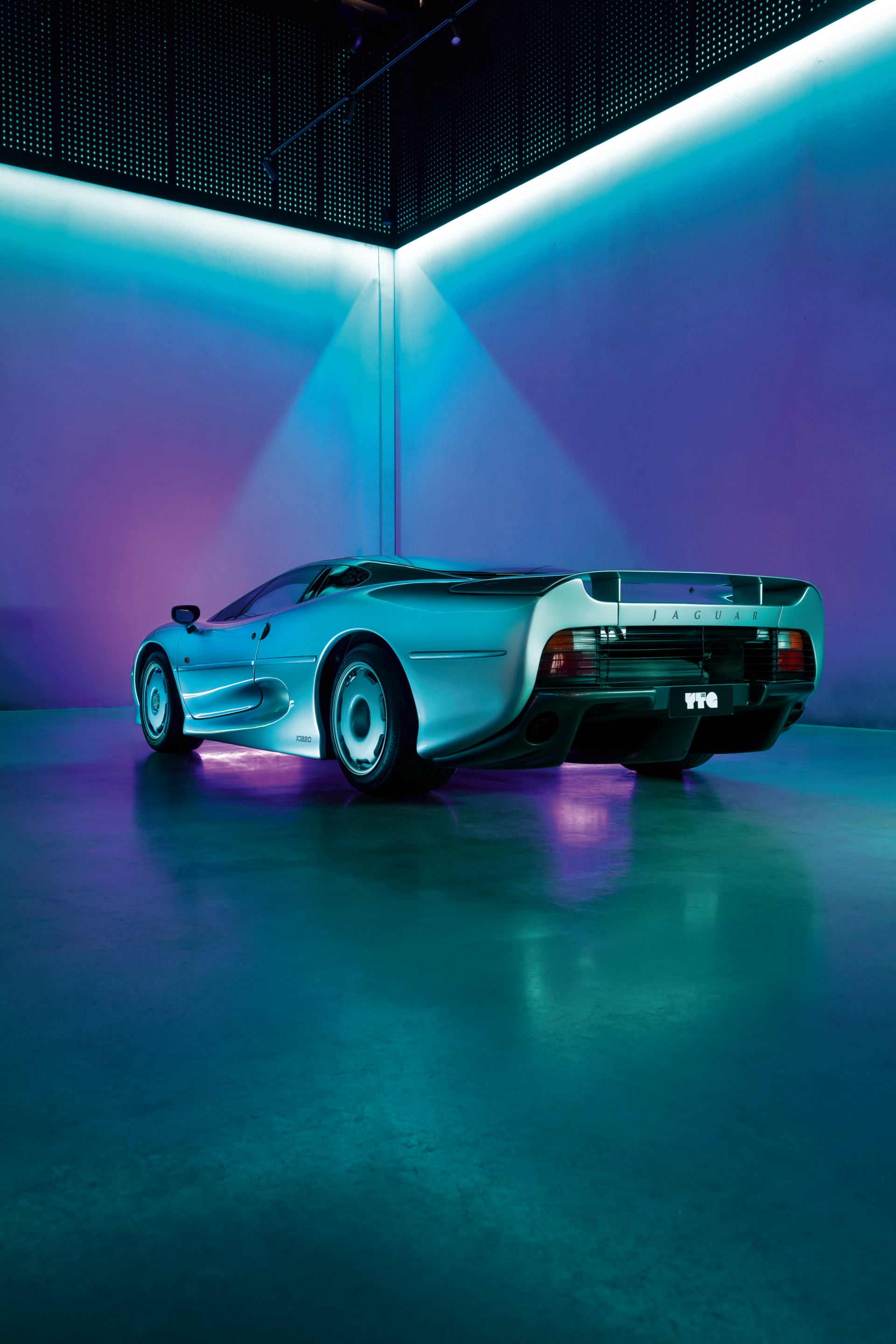
Looking back now, it’s easy to see why the XJ220 show car monopolised the public’s attention. It was an incredible looking thing, long and low, with a glass roof and rear deck displaying the engine’s dozen trumpets. The Connolly leather-trimmed cabin looked production-ready and the sleek silver bodywork looked sculpted by air, testament to the hours of work the team had spent in the wind tunnel at MIRA.
Such was the reception to the car that Jaguar became intrigued as to whether the XJ220 could be offered as a production car. It didn’t take the company long to come to the conclusion that they didn’t have the in-house resources to build the XJ220. An existing alliance with TWR, called JaguarSport, would be the best solution, with JaguarSport then spinning off a separate company called Project XJ220 Ltd. In mid-1989, TWR appointed Mike Moreton to run the project. An ex-Ford Motorsport man, who had helped head up both the Sierra RS500 Cosworth and RS200 projects, Moreton’s first job was to establish what the project costs would be and from there Jaguar could assess whether there was a viable business case for XJ220 production.
It was clear that the writing was on the wall for the V12. The XJ220 needed to shed both weight and complexity, and its two key rivals, the Porsche 959 and the Ferrari F40, had both opted for downsized (sub-3.0-litre) turbocharged engines. Of course, this decision was in no way influenced by TWR owning the rights to the ex-Metro 6R4 powerplant which just so happened to fit the bill. Out went the proposed height-adjustable suspension, the scissor doors and the rear-steering along with the active aerodynamics. Because of the physically shorter engine, the wheelbase could be reduced by a hefty 205mm and the body shrunken somewhat, cutting weight and boosting agility.

It’s suggested that there was a bit of empire building when it came to the decision to ditch the all-wheel drive system. With FF Developments out of the picture, TWR had control of the project. In truth, Moreton realised that developing this novel four-wheel drive system to a production specification would have pushed the project timeline way beyond what Jaguar would accept. FF Developments were contracted in any case to work on the gearbox and rear axle.
The V64V engine would need a bit of help in order to make the power required to propel the XJ220 to its target top speed. As it stood, it was a naturally-aspirated 90-degree V6 with four valves per cylinder, displacing 2991cc. The decision for the Metro 6R4 to do without the turbochargers adopted by its Group B rivals sacrificed top-end power for low-end tractability and response, but it wouldn’t suffice for the XJ220. The engine was bored and stroked to 3498cc and fitted with two Garrett T03 turbochargers. Given that it had changed quite so markedly, Jaguar gave the engine its own designation, the JRV-6 unit.
A rather persistent urban myth that seems to have developed around this engine was that it originated from a cut-down Rover V8 powerplant. This stemmed from the fact that a six-cylinder version of the Rover V8 was used in the very first 6R4 test mules merely to assess packaging requirements. Instead, the actual V64V engine was a custom build, with a block designed by ex-Cosworth engineer David Wood, while Cosworth was largely responsible for the top end build.
Early iterations of Jaguar’s version, the JRV-6 unit, were tested using an otherwise plain-bodied Ford Transit van, a vehicle that subsequently gained fame when it was wheeled out for the Goodwood Festival of Speed. It’s now owned by the Goodwood trust and still draws the crowds each year at the festival.
Next we have to kill another enduring XJ220 myth, and it’s probably the one that’s been most damaging to this car’s legacy. Buyers signed up for a car with a V12 engine and all-wheel drive and got something with a V6 and rear-wheel drive. As a result, there was a huge legal stoush as many attempted to cancel their orders. It’s a great story but it’s not even close to being true.

When Jaguar greenlit production of the XJ220 in December 1989, buyer contracts stipulated very clearly that this would be a rear-drive car powered by a V6 engine. Jaguar asked for a deposit of £50,000 (A$102,312) + VAT, and nested within the contract was an important, but innocuous-looking clause. The price of the car would be index-linked, which would see the invoice raise from the mooted £290,000 (A$593,414) at the time of contract signing, to £361,000 (A$738 698) by February 1990 and then up to a massive £403,000 (A$824,640) when the first production-ready cars were available in June 1992.
Jaguar attempted to make good on the 220mph (354km/h) top speed claim. Chassis 004 had already achieved a top speed of 212.3mph (341.7km/h) at Fort Stockton, Texas in early 1991, driven by Andy Wallace, but Jaguar felt more was to come. Martin Brundle was enlisted to drive chassis 009 in June 1992 at the Nardo ring in Italy, and achieved exactly the same top speed, with Brundle noting that there was nothing left to give. The XJ220 was running into its 7400rpm rev limit.
The engineers reprogrammed the Zytek ECU to allow for a 7900rpm rev limit and gutted the catalytic converters, the exhaust modification alone liberating around 38kW. Brundle went foot to the boards again, recording a top speed of 217.1mph (386.4km/h), which made the XJ220 the world’s fastest production car, a record that stood for almost four years, finally beaten by the 240.1mph (386.4kmh) of the McLaren F1 in March 1998. Given that tyre scrub on the outside lane of the Nardo banking at 300km/h accounts for 10km/h of top speed, that particular XJ220 would have been a 220mph car on the straight. Whether that counts for anything versus a customer-spec car is open to question.
Jaguar also took the XJ220 to the Nürburgring Nordschleife for high-speed track testing. It’s worth noting that this was five years before the Nissan Skyline R33 GT-R set its ‘legendary’ 7m59.88s lap of the track with Dirk Schoysman at the wheel. Jaguar believed that the quickest mark at that point was an 8m14s lap set by a Honda NSX. In October 1991, Le Mans winner John Nielsen piloted an XJ220 to a 7m46.37s lap time, a record for a production car that would stand for eight years. In a not entirely uncommon incident of foot-shooting, Jaguar didn’t realise the promotional gold that this achievement represented. It took Nissan’s marketing department to create the idea that the Nürburgring lap time was the gold standard of sports car capability and that its Skyline was the record holder.
Then macroeconomics happened. The Soviet Union collapsed, oil prices soared, US credit was squeezed and the whole bubble that surrounded speculation on supercars burst, and burst far quicker than anyone expected. Between 1991 and 1993, the UK felt the bite of the early 1990s recession. The XJ220 deposit holders realised that they were about to realise a stack of negative equity; their new cars instantly worth about half what they were about to pay. Some customers tried to wriggle out of their contracts, prompting a legal challenge, which Jaguar easily won. It should be noted that Jaguar weren’t the only ones in this predicament.
The mooted production run of 350 cars was never realised, the company finding just 281 buyers for the XJ220. That’s still an 80 per cent fulfilment rate, which was far better than the 71 McLaren F1s that were sold against its intended production run of 300 (for a 24 per cent fulfilment rate). Again, hindsight.
It’s fair to say that the XJ220 had a traumatic birth, then. The production car was built at the Bloxham plant, meeting the body-in-white which was constructed at Abbey Panels in Coventry. The production-spec car was first displayed at the 1991 Tokyo Show and Tom Walkinshaw insisted on waiting until the first 10 cars were with owners before okaying press drives.

We had to wait until September 1992 for the XJ220 to grace the cover of Wheels, with a cover line that would prove to be a favourite of Wheels subeditors down the years; ‘Off The Clock’. Mark Fogarty became the first Aussie journo to drive the XJ220, in this case both on road and at the Salzburgring circuit.
“The physical effort needed to steer and stop the XJ220 is the closest you’ll ever come to the exertion of racing a Group C sports car,” he said. It’s clear he was no great fan of the way the car sounded though. “Aurally, this engine is no masterpiece. It clatters and rattles into life, at idle sounding very coarse and primitive. Once under way, the note improves, taking on a low, guttural growl. But even at full noise in fifth, there’s no spine-tingling scream or yowl, nothing remotely sonorous. It’s a purposeful roar, much like the muted Le Mans turbo racer from which the motor is derived.”
If Fogarty was unimpressed by the soundtrack, there was very little cause for complaint about the potency of the V6 engine. “The figures suggest it would bend bitumen: 404kW at 7200rpm and 644Nm at 4500 revs. And when you press the pedal, you get instant, constant go,” he noted. “No discernible turbo lag, no sudden explosion of power. From first to fifth gear, the acceleration is relentless, gathering force and still surging at 225km/h, a maximum dictated by the road conditions,” he said, and it was clear from the figures that the XJ220 had the legs on both the Ferrari F40 and the new Lamborghini Diablo.
“The engine is blessed with a brilliant chassis,” he continued. “The combination of a taut body, compliant yet uncompromising equal length wishbone suspension, tenacious tyres and ground effects aerodynamics glues all that grunt to the ground. And it rides with a suppleness that is remarkable in itself, all the more so because it has been achieved in concert with race car-like handling and roadholding… It’s as close to a neutral handler as you can get, with some understeer setting in at the limit.”
That opinion contrasted quite markedly with the next XJ220 drive we featured in Wheels. Taking place on the cold, wet Castle Combe circuit in the UK, journalist Mark Gillies emerged wide eyed and chastened. “The thing feels bloody fast and its performance is memorable,” he said. “The handling is too, but for all the wrong reasons. If there’s a more evil device on our roads, I wouldn’t like to find it – the 220 suffers from immense initial understeer followed by violent, snappy, pendulous oversteer. There is a momentary point of neutrality…. but house-trained the Jag is not. You’re unlikely to find this out on the road because your bravery runs out before the gumball Bridgestones yield to the laws of physics, but there’s only so much that tyre technology can mask in the wet.” Sounds like a case of choosing your moments.
And timing was what scuppered the XJ220 from a commercial perspective. After building 282 cars, production wrapped up at Bloxham in April 1994, the facility being transferred to Aston Martin to handle assembly of the DB7. Some of the production run had yet to find owners, with the final handful of unsold XJ220s offered at £127,550 (A$260,999) plus VAT in 1997. In another developmental oversight, Jaguar had never homologated the car for sale in the US, potentially its biggest market, and the vehicle was only approved under the restrictive Show or Display exemption in 2001. It wasn’t because the car was exclusively right-hand drive. In fact, there are more left-hand drive cars than right-hookers, with just 69 cars having their steering wheel on the right. Jaguar just didn’t have the resource to allocate to US type approval during development.
Our final test in the XJ220 came in the March 1995 issue and it was a test that seemed tailor-made for the big Jag. It lined up on Kemble runway against the Porsche 911 Turbo, the Lotus Esprit S4S, the Ferrari F40, the Ferrari F512M, the Aston Martin Vantage and the Dodge Viper. Andrew Frankel was the man tasked with sinking the slipper and the results were eye-opening. Rather predictably, it came down to a shootout between the XJ220 and the F40. The Ferrari logged a terminal speed at the mile marker of 286.1km/h yet the Jaguar squeaked ahead at 290.1km/h, its superior aerodynamics meaning that it overcame a power-to-weight deficit against the Ferrari (276kW/tonne versus 324kW/tonne). One notable absentee was the McLaren F1, and Frankel claimed that from previous performance data he possessed, the F1’s terminal speed over the mile would have been a mighty 317km/h, but doubted whether there would have been enough runway left for it to stop safely thereafter.

The 1994 McLaren F1 subsequently eclipsed the XJ220’s performance in almost every regard. The McLaren was worthy of the superlatives then, plaudits that have meant that these cars are now worth somewhere in the region of $50m. The Jaguar never scaled those lofty heights of acclaim and that reflects in prices today. Due to its rarity and troubled genesis, the XJ220 is a tricky car to value, but prices have been firming of late, with good US cars now starting to climb above USD$600,000. That said, auction prices will fluctuate significantly based on mileage, provenance and condition. Aussie cars are a far rarer proposition, and the one that features here, for sale by Young Timers Garage in Melbourne, ought to hover somewhere around seven figures. That’s still less than a quarter of the price of the Ferrari F40 which, as well as being slower, is also more than four times more commonplace, with 1311 units built. There’s probably a great MBA dissertation on the supply and demand affecting these two cars.
Fast, flawed and undoubtedly fascinating, the Jaguar XJ220 achieved so much. It was the fastest production car in the world, the quickest car around the Nürburgring, and even to this day is possessed of the sort of road presence that has escaped many so-called hypercars. Love it or hate it, the XJ220 is never anything less than an event. It offered a blend of qualities that has never quite been replicated and, as the years pass, perhaps collectors will come to realise quite what a rare and beautiful thing it is. It celebrated a moment for Jaguar that we may never see again; one of giddy and limitless possibility. Its time will no doubt come.
The even rarer XJ220S
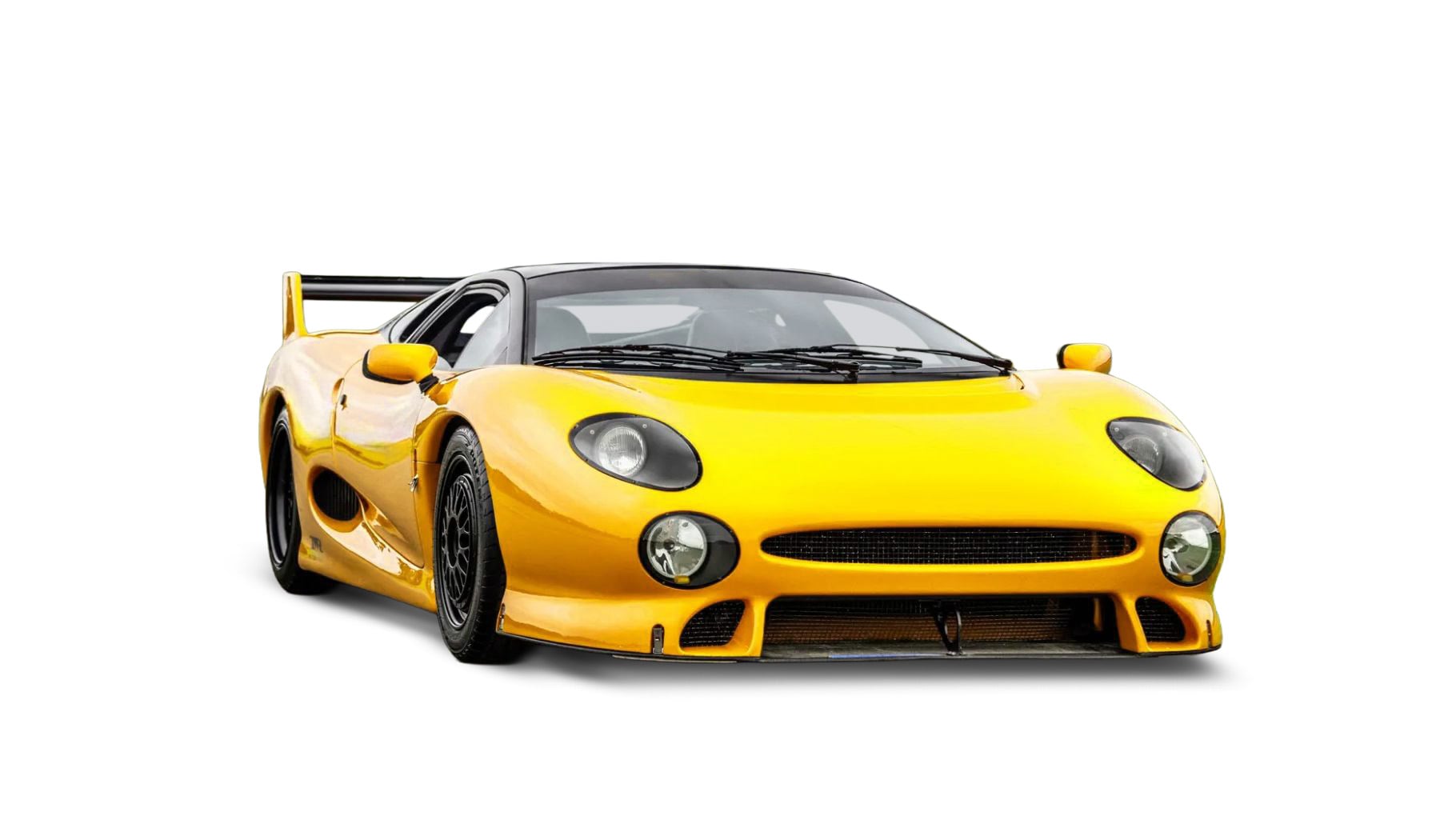
Jaguar built six roadgoing XJ220S models, in effect a road-legal version of the XJ220-C racer which won the Grand Touring class at Le Mans in 1993 before having the win stripped due to not running catalytic converters. It features a composite body, fixed headlights and a stripped out cabin featuring Kevlar bucket seats. Power stepped up from 404kW to a hefty 507kW and weight dropped from 1470kg to 1151kg. Just as it looked as if Jaguar had a world-beating competition car on its hands, the McLaren F1 GTR happened.
Specs
| Model | Jaguar XJ220 |
|---|---|
| Engine | 6222cc V12, DOHC, twin-turbo |
| Power | 405kW@7000rpm |
| Torque | 644Nm@4500rpm |
| Transmission | Five-speed manual |
| Power to weight | 276kW/tonne |
| L/W/H/WB | 4930/2009/1150/2640mm |
| Weight | 1470kg |
| 0-100km/h | 3.6sec |
| Top speed | c.352km/h |
| Price now | $800k-$1.2m |
The article originally appeared in the December 2025 issue of Wheels. Subscribe here and gain access to 12 issues for $109 plus online access to every Wheels issue since 1953.
While most of us our interested in the practicality, fuel economy and longevity of cars, the quest to produce cars that can push the boundaries of speed goes on apace. When the former world’s fastest car, the Ferrari F40 hit a top speed of 322km/h (200mph) in 1987, many thought that thanks to aerodynamics, cars couldn’t go much faster… but of course, they did.
The Bugatti Veyron hit a major new milestone when it hit 407km/h in 2005 but unbelievably, cars just continue to get faster at the top end. Here are the five current fastest cars in the world:
1. Yangwang U9 Xtreme: 496.2km/h

BYD’s premium arm shocked us earlier this year, setting the record for the world’s fastest car at a massive 496.22km/h (or 308 mph) with the U9 Xtreme electric hypercar at the ATP test track in Germany. Four electric motors, each capable of spinning at 30,000rpm, produce an eye-watering 2176kW (2,959hp).
In addition to its speed run, the U9 Xtreme also holds the record for the fastest fully electric production car to lap the Nürburgring race track in Germany, with a time of 6:59.157. It reportedly hits 100km/h in under 2.0 seconds, all while costing around A$400,000 in China – a bargain compared to some cars on this list.
2. Bugatti Chiron Super Sport 300+: 490.4km/h
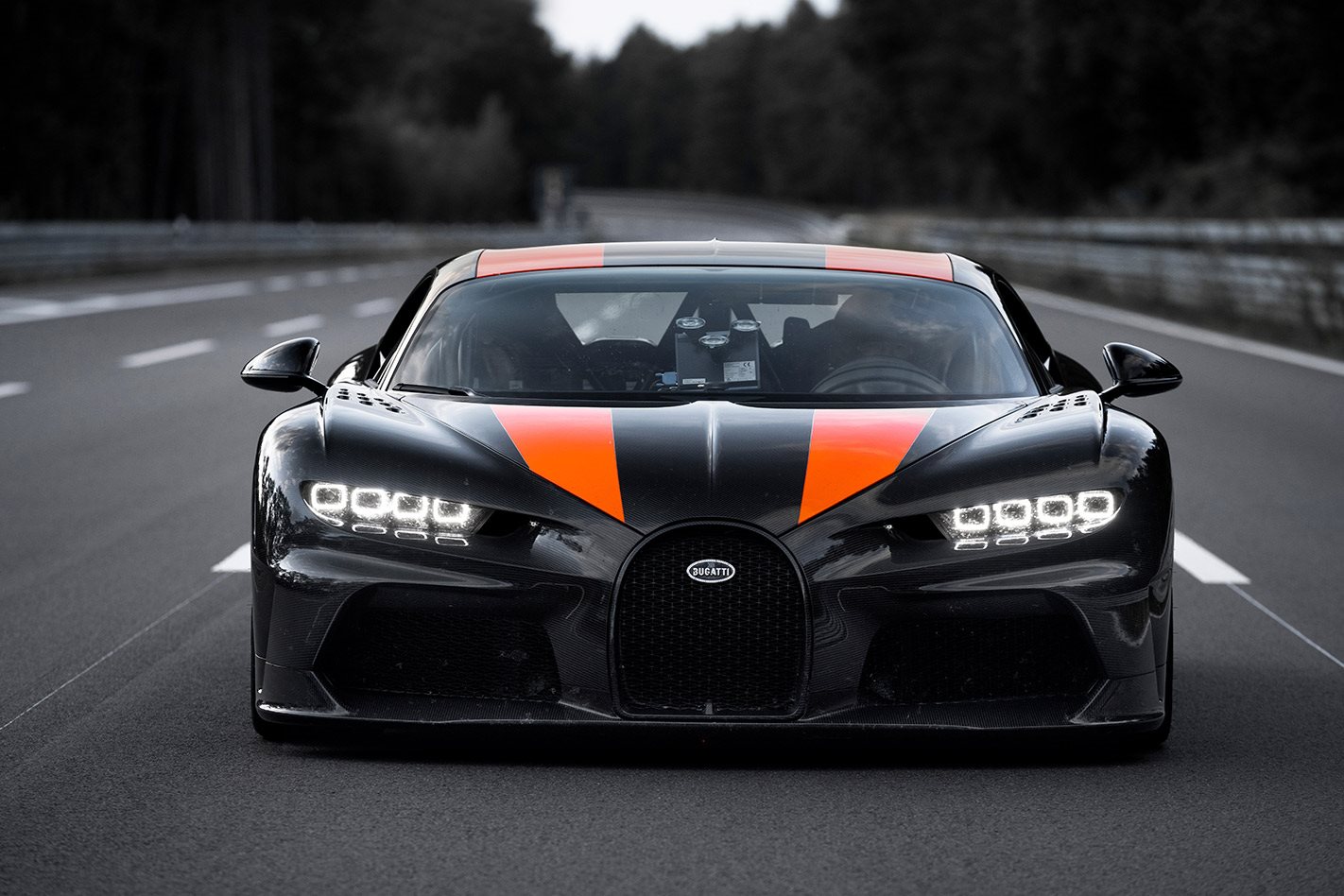
Based on the regular Bugatti Chiron, the Super Sport 300+ was an even faster and more focused version of the Chiron, which was already one of the world’s fastest cars. It made 75kW more power than the ‘regular’ Chiron at and was launched by Le Mans winner and Bugatti test driver Andy Wallace with a casual 490.4km/h in Germany back in 2019.
Power comes from a quad-turbocharged 8.0-litre W16 engine making 1160kW of power, enabling it to sprint from 0-200km/h in just 5.8sec and 0-300km/h in a scarcely believable 12.1sec. Only 30 units of the Super Sport 300+ were produced and priced at around €3.5 million (A$6.3 million).
3. SSC Tuatara: 455.3km/h
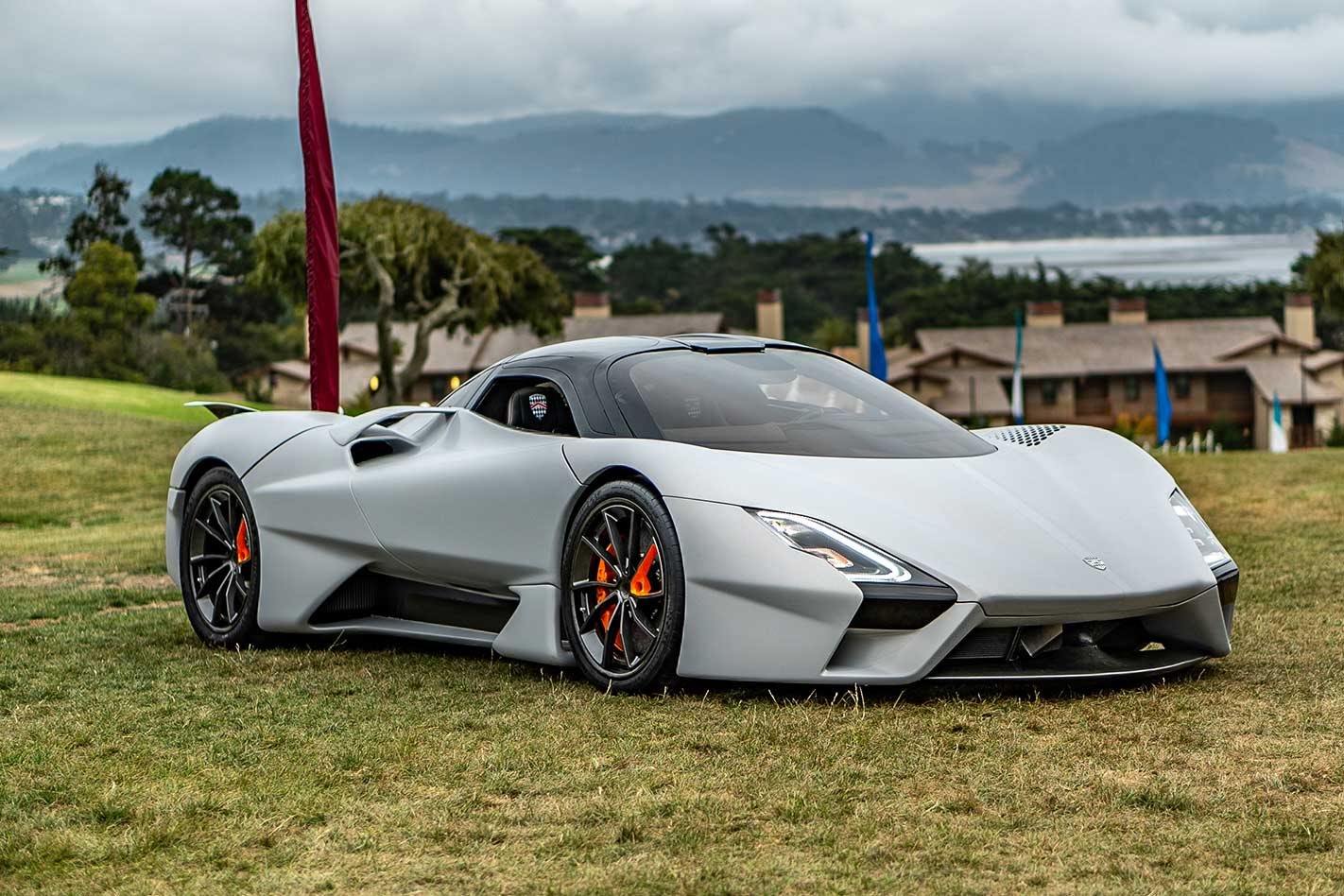
In case you’ve not heard of it, the SSC Tuatara is an American hypercar made by SSC North American (formerly Shelby SuperCars). Power is sent to the rear wheels from a 5.9-litre twin-turbo V8 engine that makes a huge 1304kW of power, yet only weighs around 1250kg.
SSC claims that it hit a top speed of 331.15mph (532.9km/h) and was the world’s fastest car, but that was disputed. The Tuatara then made another attempt in 2021, hitting an average speed of 282.9mph (455.4km/h) over two runs. Pricing for the Tuatara starts at US$2 million, and only 100 units are planned to be built.
4. Bugatti W16 Mistral: 453.8km/h

The Bugatti Mistral is officially the world’s fastest convertible, achieving a top speed world record of 453.8km/h in 2024. It marked the final use of the French brand’s famed W16 engine, which first went into production with the Veyron, and was replaced with the hybridised V16 in the Tourbillon.
Just 99 units of the Mistral were made, and all were already sold out before it was revealed. Pricing for the Mistral started at a cool €5 million (almost A$9 million).
5. Hennessey Venom F5: 437.1km/h
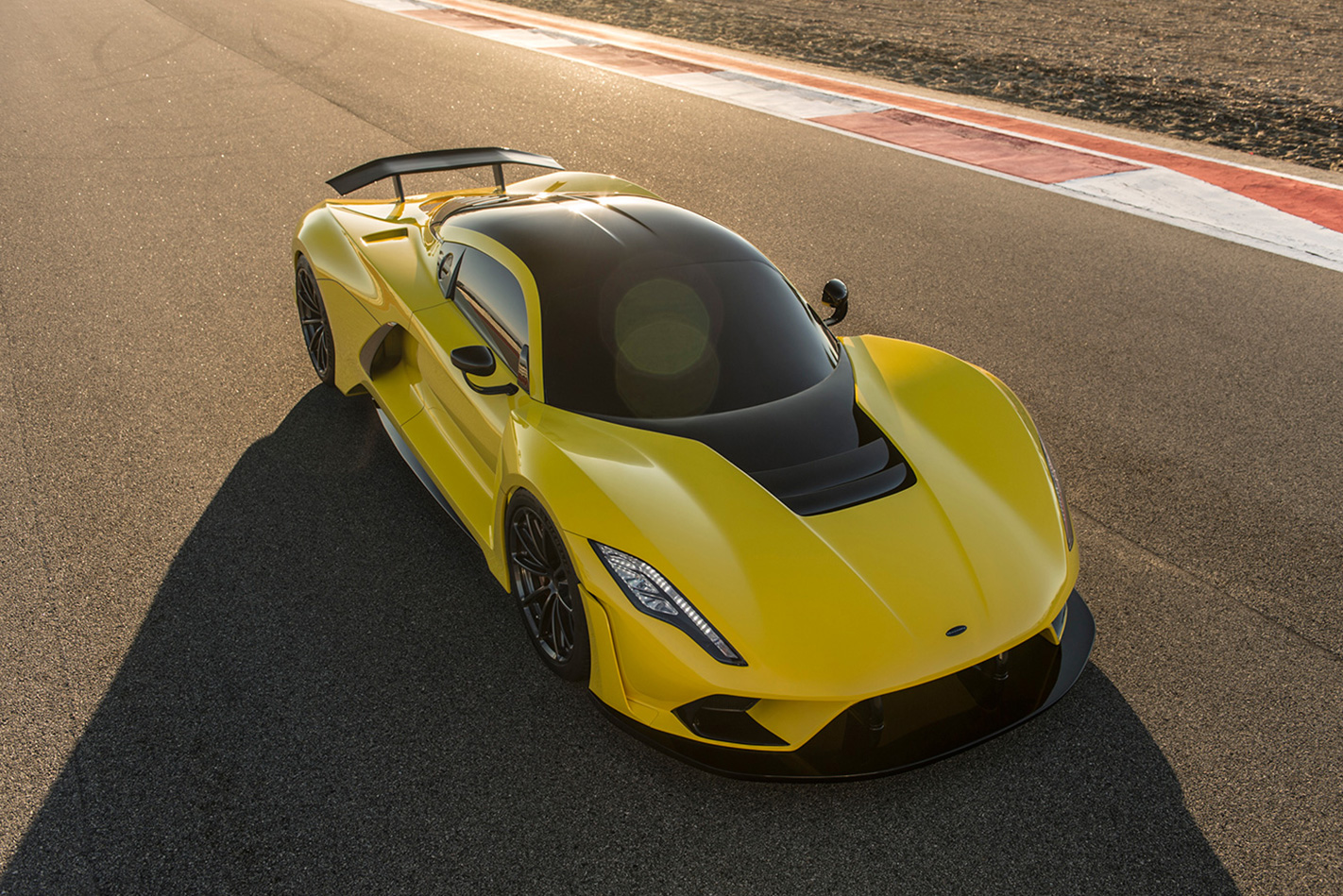
Featuring a twin-turbocharged 6.6-litre V8 that makes a huge 1355kW of power and gearbox-shredding 1617Nm of torque, the Venom F5 sprints from 0-400km/h in just 15.5sec, which is half the time of the Bugatti Chiron.
Weighing less than 1360kg (tare), Hennessey also promises a top speed of 550km/h, although 437.1km/h is as fast as it has gone so far. Pricing starts at around US$2.1 million (A$3.3million ) for the base coupe and hits around $3 million for the roadster.
The beloved Suzuki Jimny three-door is back on sale in Australia after a sudden production pause was required to upgrade its active safety systems to comply with Australian standards.
Now fully compliant with current Australian design rules thanks to an upgraded autonomous emergency braking system, the updated Jimny matches its five-door Jimny XL sibling. Suzuki has also upgraded its feature list, with pricing starting from $31,990 plus on-road costs for the entry-level Lite.
Australian Jimny three-door production was paused for 2025 as its autonomous emergency braking system did not meet Australian design rules. AEB was fitted as standard but not to the level required for compliance. The Indian-made Jimny XL, however, is fitted with the more sophisticated AEB system and was not taken off sale.
The new ADR rule affected many products sold locally, including the Mitsubishi Eclipse Cross and Pajero Sport, Mazda6 and even more of Suzuki’s products, including the Ignis and S-Cross SUVs.
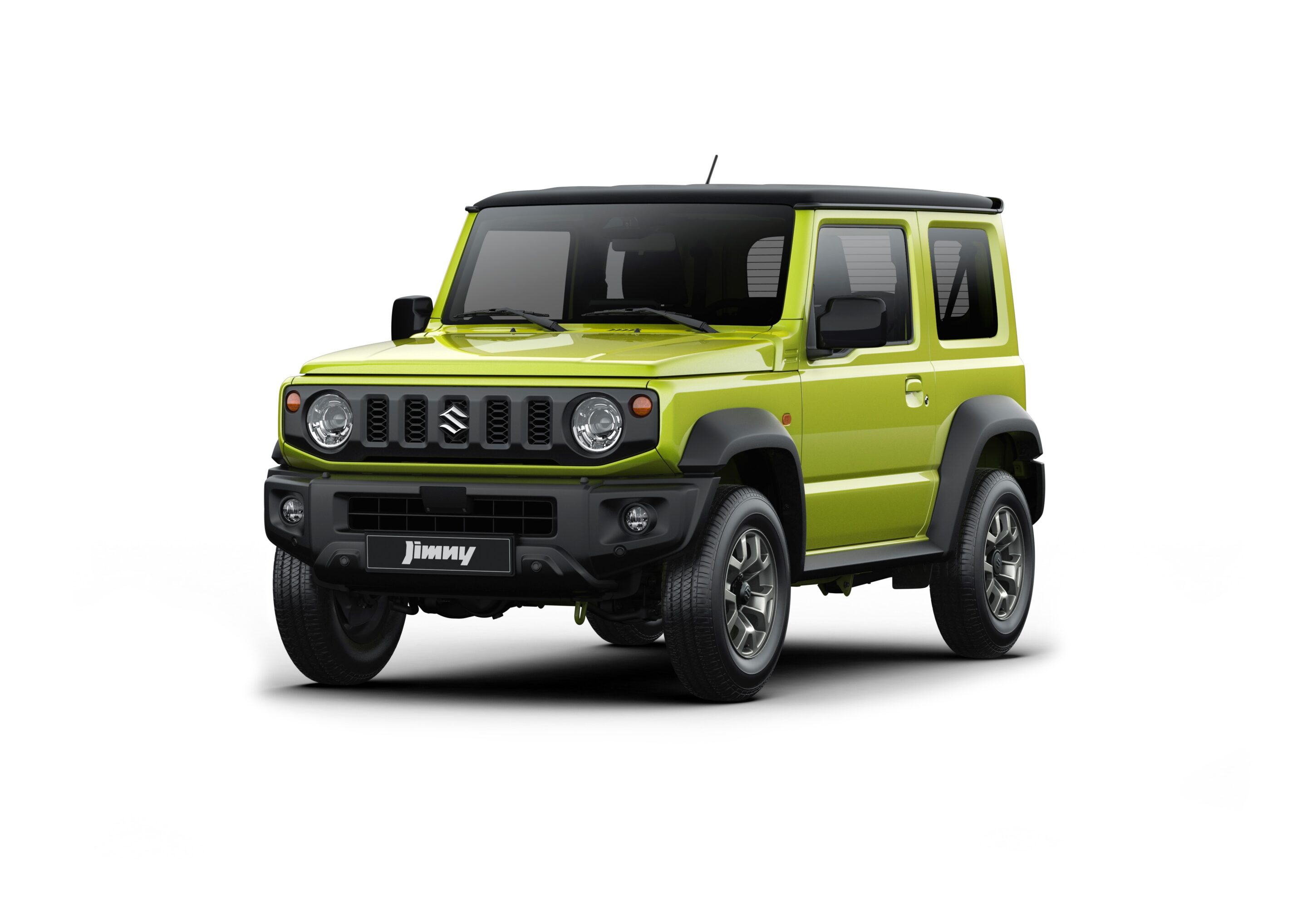
Unlike those cars, however, Suzuki has engineered the system for the three-door Jimny, allowing it to be re-sold in Australia. Pricing starts at $31,990 +ORC for the entry-level Lite (+$1500 compared to the pre-updated model), $33,990 +ORC for the mid-spec Jimny manual (+$2000) and $36,490 +ORC for the top-spec Jimny automatic (+$2000).
In addition to the upgraded AEB system, Suzuki has also given the Jimny three-door more standard features. The entry-level Jimny Lite now features a 7.0-inch touchscreen with Apple CarPlay and Android Auto, deleting its former basic radio with a CD player, and the Jimny manual and automatic now feature a larger 9.0-inch touchscreen that is already available on the Jimny XL.
Front and rear parking sensors are now available, as is adaptive cruise control (likely only for the automatic model) and lane departure prevention.
That’s on top of the standard features of the pre-updated Jimny manual and automatic, including AEB, lane departure warning, dusk-sensing automatic LED headlights, automatic climate control, a leather-wrapped steering wheel and electric-folding mirrors. The Jimny Lite is more basic in its equipment, but still includes power mirrors and windows and air-conditioning.
2026 Suzuki Jimny three-door pricing (plus on-road costs):
| Jimny Lite manual | $31,990 |
|---|---|
| Jimny manual | $33,990 |
| Jimny auto | $36,490 |
New features for the 2026 Suzuki Jimny:
- Jimny Lite: 7.0-inch touchscreen with Apple CarPlay and Android Auto
- Jimny: 9.0-inch touchscreen with Apple CarPlay and Android Auto
- Front and rear parking sensors
- Dual Sensor Brake Support II (DSBS II)
- Lane departure prevention
- Adaptive cruise control
The updated Suzuki Jimny three-door is now in production for Australia with the first examples due in Australia in early 2026.
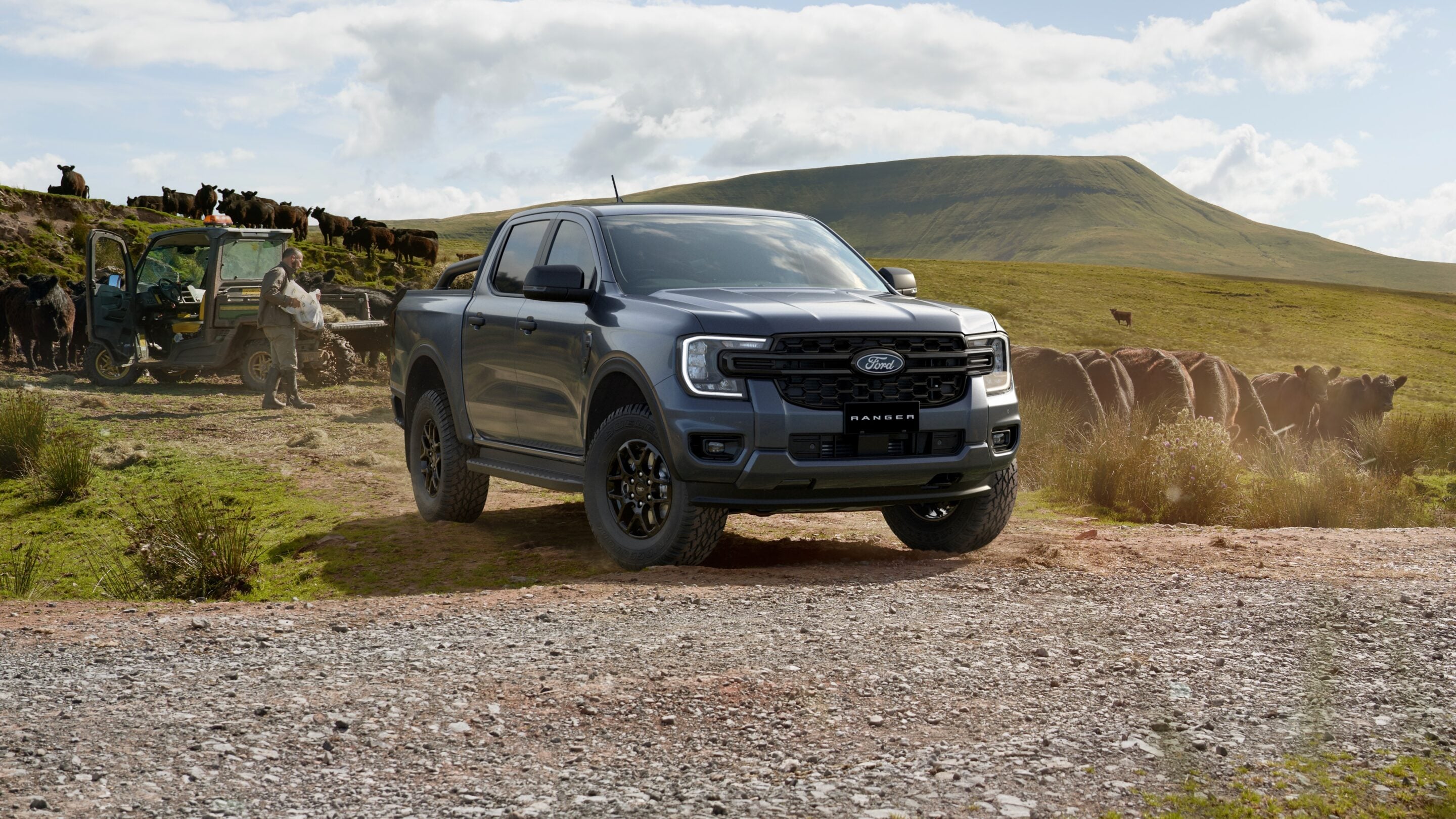
Ford Australia has revealed pricing and specifications for the upgraded MY26.5 Ranger line-up, which includes changes such as shelving the former bi-turbo 2.0-litre diesel engine, new available models, more standard features across the range and new colour options.
Pricing starts at $37,130 plus on-road costs for the entry-level XL Cab Chassis, which is unchanged compared with the current model despite its new added standard equipment. The order books for the MY26.5 Ford Ranger are now open ahead of the first deliveries commencing in mid-2026.
Of most significance for the Ranger models is that Ford is simplifying the engine range with the 2.0-litre bi-turbo diesel engine no longer available. As previously announced, the 125kW/405Nm 2.0-litre single-turbo diesel – now upgraded with a new timing chain and an updated fuel injection system – continues as the entry-level engine but the 184kW/600Nm 3.0-litre V6 turbo-diesel is now available across more of the line-up to cover the former bi-turbo variants.
The 2.3-litre turbo-petrol plug-in hybrid and 3.0-litre turbo V6 petrol engines are unchanged, while all models are now equipped with a 10-speed automatic transmission as standard.
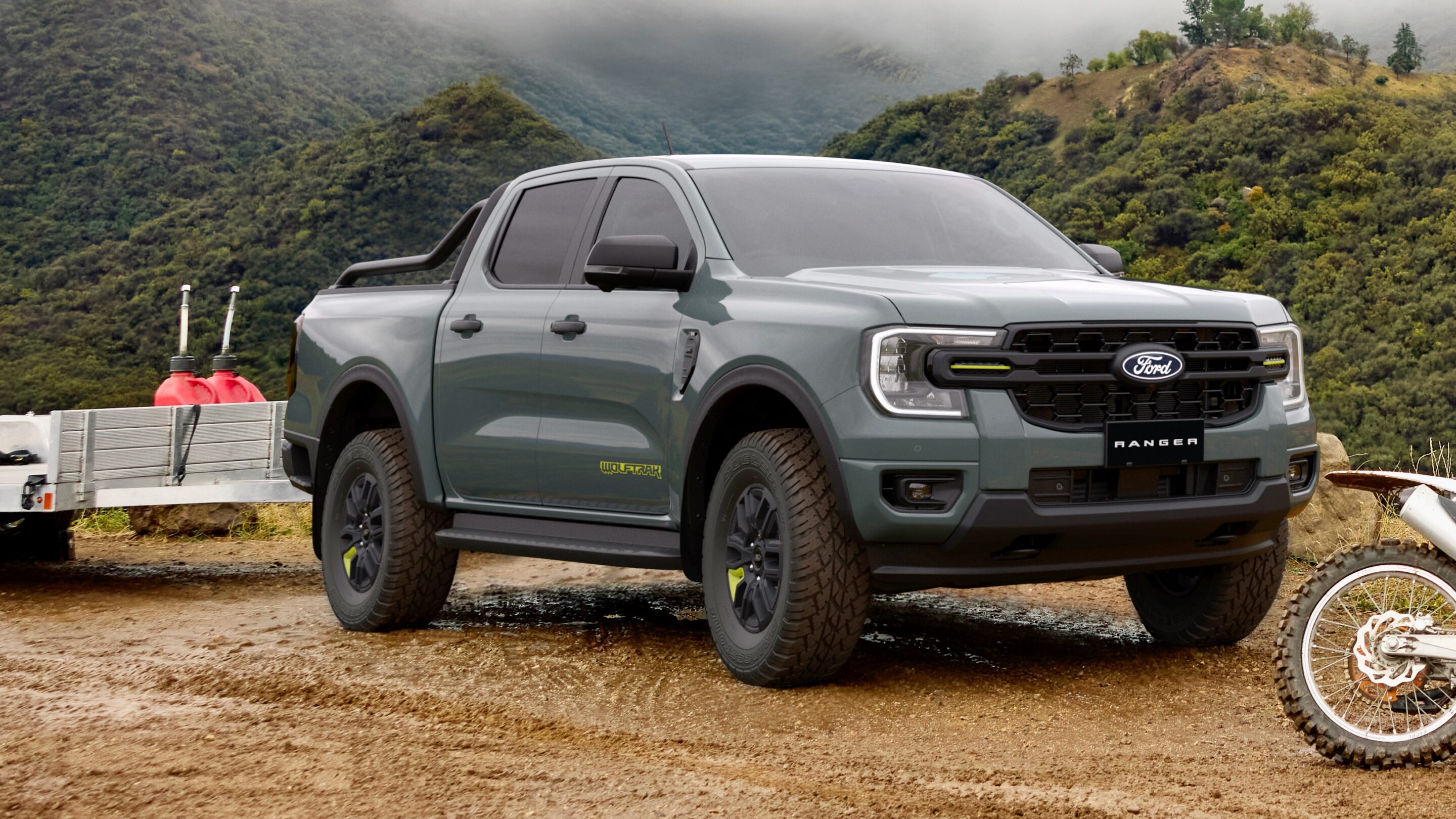
Elsewhere in the line-up there are minor changes: the Ranger Sport is no longer available, but the Black Edition is now a permanent model, available with the V6 diesel engine. The former Ranger Tremor has returned to the range with its off-road focus, while there’s a new Ranger Wolftrak model that sits above the XLT, featuring equipment such as black 17-inch wheels with all-terrain tyres, green exterior highlights, vinyl upholstery with Wolftrak logos and availability of a unique ‘Traction Green’ colour.
As part of the changes to the Ranger line-up, Ford has also added more standard equipment to various models. The XL, for example, adds the larger 12-inch touchscreen, dual-zone automatic climate control (with rear vents for double cab variants), while selecting the XL V6 also adds 17-inch steel wheels, rear disc brakes and an e-shifter with selectable driving modes.
The XLS adds side steps, carpet flooring with a driver’s floor mat and 17-inch alloy wheels with all-terrain tyres, while the Wildtrak now features new 18-inch alloy wheels, Matrix adaptive high beam and a 10-speaker B&O sound system.
Importantly, Ford has also upgraded the safety levels for cab chassis variants with blind-spot monitoring, rear cross-traffic alert, a digital reversing camera, lane change warning, rear parking sensors and reverse automatic braking now standard.
MY26.5 Ford Ranger pricing (plus on-road costs):
| XL Single CC 2.0L 4×2 | $37,130 (unchanged) |
|---|---|
| XL Super CC 2.0L 4×2 | $39,630 (unchanged) |
| XL Double PU 2.0L 4×2 | $43,530 (unchanged) |
| XL Single CC 2.0L 4×4 | $45,600 (- $2630) |
| XL Super CC 2.0L 4×4 | $48,100 (- $1130) |
| XL Double CC 2.0L 4×4 | $50,000 (+ $770) |
| XL Double PU 2.0L 4×4 | $51,400 (+ $270) |
| XL Single CC 3.0L 4×4 | $52,100 (new, $600 cheaper than 2.0L bi-turbo predecessor) |
| XLT Double PU 2.0L 4×2 | $52,990 (- $3700 versus 2.0L bi-turbo predecessor) |
| Black Edition Double PU 2.0L 4×4 | $53,490 (now permanent) |
| XL Super CC 3.0L 4×4 | $54,500 |
| XL Double CC 3.0L 4×4 | $56,500 (+ $3770 versus 2.0-litre bi-turbo predecessor) |
| XL Double PU 3.0L 4×4 | $57,900 (+ $3270 versus 2.0-litre bi-turbo predecessor) |
| XLS Double PU 3.0L 4×4 | $58,450 (+ $570 versus 2.0-litre bi-turbo predecessor) |
| Black Edition Double PU 3.0L 4WD | $59,990 (new) |
| XLT Super PU 3.0L 4×4 | $63,790 (+ $1900 versus 2.0-litre bi-turbo predecessor) |
| XLT Double CC 3.0L 4×4 | $66,590 (new) |
| XLT Double PU 3.0L 4×4 | $67,990 (+ $800) |
| Wolftrak Double PU 3.0L 4WD | $70,990 (new) |
| Tremor Double PU 3.0L 4WD | $75,090 (new) |
| Wildtrak Double PU 3.0L 4WD | $75,090 (+ $3500) |
| Platinum Double PU 3.0L 4WD | $80,890 (unchanged) |
| Raptor Double PU 3.0L EcoBoost | $90,690 (unchanged) |
MY26.5 Ranger options:
- Prestige paint: $750
- XL Towing Pack: $1950
- XL Wheel Cap: $50
- XL 2.0L 17-Inch Wheel Pack: $950
- XLT Touring Pack (3.0L Cab Chassis): $750 (3.0L Cab Chassis) – $1500 (3.0L Pickup)
- Tremor Touring Pack: $1050
- Auxiliary switch bank: $450
- Cargo Management System: $450
- Wildtrak 20-Inch Wheel Pack: $800
- Power roller shutter: $3900
- Flexible rack system: $1990
- Lift and slide canopy (factory-fitted): $4500
- Dual lift canopy (factory-fitted): $4700
- Commercial canopy (factory fitted): $4700
The MY26.5 Ford Ranger line-up is now available to order ahead of the first deliveries commencing from around July.
